Carnivore and Echelon were apparently developed and implemented in the 1990s, long before 9/11/2001 and
long before the current debate
over wiretaps
and domestic surveillance.
Much of the information on this page is obsolete by now, and the technology that was used has most likely
been replaced by something more effective, with another name. But it is interesting to know that the
federal government has been working on the idea of monitoring every electronic communication — nationwide
if not worldwide — for at least 20 years.
Einstein is a more recent development than either Carnivore or Echelon, but
like the other two, Einstein has stayed out of the mainstream press. Among other things, the
system will monitor visits from Americans — and foreigners — visiting .gov Web
sites.
I think I can tell already where Einstein is headed: it will make it more difficult — if not
hazardous — for someone to compile a list like this, just
to explore and document the width and depth of the overgrown federal government.
Einstein sounds a lot like a
program called Snort, which is available at no cost. So
whatever amount Uncle Sam spent on Einstein was probably a complete waste of money.
US government's
$6bn super firewall doesn't even monitor web traffic. The US government's firewall, named Einstein, is not as
smart as its name would suggest. [...] Among the extraordinary pieces of information to emerge are the fact that the
system — which has cost $5.7 b[illio]n to develop — does not monitor web traffic for malicious content,
just email. It can't uncover malware on a system and it doesn't monitor cloud services either. The system also carries
out only signature-based threat assessment and intrusion detection i.e. it's a dumb terminal waiting to be told what to find rather
than looking for unusual activity. And that means it is wide open to zero-day attacks. If that wasn't enough, the
department behind the system — the Department of Homeland Security (DHS) — hasn't included anything to
measure the system's own performance so it doesn't even know if it's doing a good job or not. And it is failing to ask
for or share information with other agencies, effectively making it blind.
Every day, we
have to prove we have 'nothing to hide'. For this writer, the political effect of 9/11 was
immediate, personal and direct. Six days before the towers came down, the European Parliament had
passed 25 recommendations for securing domestic and international satellite communications from the
Anglo-American surveillance system known as Echelon. I had uncovered and first reported on the
Echelon network in 1988. It took a decade more for its significance to become widely known, mainly
because of further investigation and revelations by New Zealand investigator Nicky Hager in his book
Secret Power. Although now widely mis-described in web chat as a generalised surveillance
octopus, Echelon's purpose and hardware was quite specific.
FBI wants
widespread monitoring of 'illegal' Internet activity. The FBI on Wednesday [4/23/2008] called
for new legislation that would allow federal police to monitor the Internet for "illegal activity." The
suggestion from FBI Director Robert Mueller, which came during a House of Representatives Judiciary Committee
hearing, appears to go beyond a current plan to monitor traffic on federal-government networks. Mueller
seemed to suggest that the bureau should have a broad "omnibus" authority to conduct monitoring and surveillance
of private-sector networks as well. The surveillance should include all Internet traffic, Mueller said,
"whether it be .mil, .gov, .com — whichever network you're talking about."
Einstein is the
network monitoring tool used by the United States federal government's Department of Homeland Security (DHS). Einstein
is used to automatically monitor and analyze Internet traffic when it moves in and out of federal computer networks,
filtering packets at the perimeter. … Participating agencies have used Einstein in network gateways since 2004. In
conjunction with the Trusted Internet Connection (TIC) initiative launch in 2008, DHS mandated that all federal agencies
must use Einstein.
Congress worries that .gov monitoring will spy
on Americans. A new Bush administration plan to capture and analyze traffic on all federal
government networks in real time is generating privacy worries from congressional Democrats and Republicans
alike. At a hearing convened here Thursday by the U.S. House of Representatives Homeland Security
Committee, politicians directed pointed questions to Department of Homeland Security officials about their
plans to expand an existing "intrusion detection" system known as Einstein.
Doubletalk alert:
Visiting a web site is not an intrusion.
Einstein keeps an eye on agency networks.
DHS officials named the program Einstein because they think their monitoring program is smart. Since 2004,
Einstein has monitored participating agencies' network gateways for traffic patterns that indicate the presence
of computer worms or other unwanted traffic. By collecting traffic information summaries at agency gateways,
Einstein gives US-CERT analysts and participating agencies a big-picture view of bad activity on federal networks.
Einstein and U.S.
cybersecurity. At a hearing last week on Capitol Hill, officials faced close, skeptical questioning
about the program, an intrusion detection system that will automatically monitor and analyze Internet traffic
into and out of federal computer networks in real time — allowing officials at the Department of
Homeland Security to scan for anomalies that might represent hackers or other intruders trying to gain access
or steal data.
House legislators
rip Bush's Cyber Initiative plan. The initiative is a long-range plan to upgrade the security of
the federal government's networks and comprises a number of separate proposals, most notably an overhaul and
expansion of the government's intrusion detection system, known as Einstein. Currently, Einstein is simply
a passive traffic-monitoring system that records basic data such as the originating IP address of a packet, its
size and where the packet came from and where it is headed.
Carnivore
Carnivore is an e-mail wiretap system being developed and used by the FBI to read messages being
circulated amongst suspected criminals and terrorists... and everybody else. There is a great deal of
concern being expressed nationwide, and not just by privacy fanatics, because it is likely that such
eavesdropping occurs before there is any other evidence that the affected individuals have done anything
illegal. It would be much less of an issue were it not for a little technicality called the
Fourth Amendment. The FBI is relying on the public (and the mainstream news media) to ignore charges
such as the ACLU's statement that Carnivore represents "an unprecedented power grab that threatens the privacy
of all Americans."
There is good news about Carnivore, however. Recently I attended a meeting of
local computer security experts (legitimate professionals, really, not the guys at the 2600
meeting) and the moderator of the program offered his opinion that "Carnivore is
not very effective."
If you really think somebody is reading your email — or if you think Facebook and Twitter
(or the FBI) are
scanning every account — looking for trigger words or
anything else, ˙ɯǝɥʇ ɹoɟ ʇlnɔᴉɟɟᴉp ʇᴉ ǝʞɐW It won't do any good to write your email in tiny letters.
D0N7 JU57 L4Y 0U7 Y0UR M3554635 1N PL41N 73X7 F0R 3V3RY0N3 T0 533.
EVENT HESLI GHTES TRESI STANC EMIGH TMAKE THEML OOKEL SEWHE REFOR ANEAS IERTA RGET.
Gur crbcyr jub jnag gb gnxr njnl lbhe evtugf ner zbfgyl choyvp fpubby fghqragf jub ner pbzcyrgryl onssyrq ol phefvir jevgvat, nanybt pybpxf, naq ebgnel-qvny cubarf. Gurl jbhyq arire svther guvf bhg.
QnV0IGlmIHlvdSBoYXZlIHRvIGVzY2FsYXRlIHlvdXIgb2JmdXNjYXRpb24gdG8gdGhpcyBsZXZlbCwgaXQgbWlnaHQgYmUgdGltZSB0byB1c2UgcmVhbCBlbmNyeXB0aW9uIHRvb2xzLg==
Decryption of the following message is left to the reader as an exercise:
DCS1000: The Device Formerly Known as
Carnivore: Despite some reports indicating that the name is an acronym for "data collection system," an FBI
spokesperson told Reuters that it "doesn't stand for anything."
Carnivore changes name, enters witness protection
program: Carnivore, the FBI's controversial Internet communications monitoring system, is undergoing a makeover.
First, the FBI is going to pull out its teeth, and re-christen Carnivore DCS1000, which, in our esteem, is just a little too close to
HAL2000…
FBI axes Carnivore, eats investment. The FBI has abandoned
its custom-built Internet surveillance technology, dubbed Carnivore, and is now using commercial software to eavesdrop on computer
network traffic during investigations of suspected criminals, terrorists and spies. In addition, it's asking Internet service
providers to conducting wiretaps on targeted customers, when necessary. … The FBI didn't disclose how much it had spent on
Carnivore, but outside experts estimate expenditures at somewhere between $6 illion and $15 million.
Carnivore was an
Internet surveillance system developed for the U.S. Federal Bureau of Investigation (FBI) so that they could monitor the
electronic transmissions of criminal suspects. Critics, however, charged that Carnivore did not include appropriate
safeguards to prevent misuse and might violate the constitutional rights of the individual. The Electronic Privacy
Information Center (EPIC) reported in early 2005 that the FBI had replaced Carnivore with other, unspecified surveillance
software from commercial sources. Such software usually includes a packet sniffer.
FBI retires its Carnivore. FBI surveillance experts have
put their once-controversial Carnivore Internet surveillance tool out to pasture, preferring instead to use commercial
products to eavesdrop on network traffic, according to documents released Friday [1/14/2005].
FBI Abandons Web Surveillance
Technology. The FBI has effectively abandoned its custom-built Internet surveillance technology,
once known as Carnivore, designed to read e-mails and other online communications among suspected criminals,
terrorists and spies, according to bureau oversight reports submitted to Congress.
[That's a misleading headline. The FBI hasn't abandoned
their web surveillance technology, they have just changed to
another make and model of software.]
Read this: Feds raid orchid-grower's home: George
Norris said he believes his troubles may stem from the US Fish and Wildlife Service's use
of CARNIVORE, a government system that can tap into computer e-mails. "They showed
me page three of a five-page e-mail from several years ago where I was being offered smuggled
plants," he said. "They did not show me pages four and five, which were my answer to this
fellow, telling him we would not buy any such plants that were undocumented. This was so
old that I don't even remember this e-mail.
Editor's Note:
Please see the George Norris subsection on
this page for more details
on this case.
Inside DCSNet, the FBI's Nationwide
Eavesdropping Network. The $10 million DCS-3000 client, also known as Red Hook, handles
pen-registers and trap-and-traces, a type of surveillance that collects signaling information —
primarily the numbers dialed from a telephone — but no communications content. DCS-6000,
known as Digital Storm, captures and collects the content of phone calls and text messages for full wiretap
orders. A third, classified system, called DCS-5000, is used for wiretaps targeting spies or terrorists.
FBI turns to broad new wiretap method.
Instead of recording only what a particular suspect is doing, agents conducting investigations appear to be
assembling the activities of thousands of Internet users at a time into massive databases, according to current
and former officials. That database can subsequently be queried for names, e-mail addresses or
keywords. … "What they're doing is even worse than Carnivore," said Kevin Bankston, a staff attorney at the
Electronic Frontier Foundation who attended the Stanford event. "What they're doing is intercepting
everyone and then choosing their targets."
FBI's Carnivore-lies may have blown bin
Laden inquiry. Fundamental design flaws in the FBI's infamous Carnivore packet sniffer have led
to the destruction of evidence related to a suspect possibly involved in Osama bin Laden's Al Qaeda network
which had been obtained legally under a Foreign Intelligence Surveillance Act warrant, the watchdog group EPIC
has learned.
Carnivore is a surveillance tool for
data networks. At the heart of the project is CarnivorePE, a software application that listens to all
Internet traffic (email, web surfing, etc.) on a specific local network. Next, CarnivorePE serves this
data stream to interfaces called "clients." These clients are designed to animate, diagnose, or interpret
the network traffic in various ways. Use CarnivorePE to run Carnivore clients from your own desktop, or
use it to make your own clients.
Echelon: The US government has long conducted
extensive eavesdropping overseas, as part of the National Security Agency's foreign intelligence collection
activities. This foreign surveillance occurs outside the normal limitations of the Constitution.
With the globalization of communications, the overseas snooping activities of the US and its allies have
attracted renewed attention and concern.
Congress Passes "Roving Wiretaps," Expands Surveillance Authority.
Oct 1998, in a closed-door manuever, controversial "roving wiretap" provisions were added to the Intelligence authorization bill and
passed by the Congress. Prevoiusly, wiretapping law allowed tapping of a particular person's phones. The new provisions
dramatically expanded current authority by allowing taps on any phone used by, or "proximate" to, the person being tapped —
no matter whose phone it is. Such a broad law invites abuse. In 1996, the full House of Representatives had rejected these
provisions after an open and vigorous debate. But in 1998, behind closed doors, a conference committee added the provisions to
the important Intelligence Authorization Conference Report.
Carnivore, Altivore, Echelon: In terms of
privacy concerns as well as raw technological power, Carnivore looks like a toy compared to Echelon. Echelon is almost certainly
the world's most sophisticated network monitoring system and, if rumors are to be believed, anyone who feels uncomfortable with the
secrecy surrounding Carnivore should feel downright paranoid where Echelon is concerned.
Where Carnivore Lives: The FBI has already
employed Carnivore in a number of cases. By law, the details of these investigations have generally not been released
publicly. The only ISP positively identified as cooperating with such an investigation, in fact, is Earthlink.
Independent Technical Review of the Carnivore System: Carnivore is
a software-based Internet Protocol (IP) packet sniffer that can select and record a defined subset of the traffic on the network to
which it is attached. Packets can be selected based on IP address, protocol, or, in the case of email, on the user names in
the TO and FROM fields. In limited cases, packets can be selected based on their content. Packets can be recorded 'in
their entirety (full mode) or recording can be limited to addressing information (pen mode), i.e., IP addresses and
usermames.
Why Carnivore Is Bad For You: The
FBI can hardly be trusted to conduct their investigations with proper handling and precision, but even if they
could, Carnivore/DCS1000 will end up hurting innocent people. The amount of guesswork involved in a
sweeping search like the type Carnivore/DCS1000 does insures that many "dead ends" and "bad leads" will be
pursued. What this means is that the FBI will inevitably end up investigating (including search, seizure,
intimidation, prosecution, etc.) innocent people.
Confounding Carnivore: How to Protect Your
Online Privacy. Ever since the FBI confirmed the existence of their Internet wiretapping device — a
device which they named Carnivore — cyberprivacy activists have been up in arms. Carnivore promised
to be their worst nightmare: a technology that could track and record every email sent, every Web page browsed,
every chat room visited.
Carnivore, Altivore, Echelon:
Three big names in the world of network monitoring. In terms of privacy concerns as well as raw
technological power, Carnivore looks like a toy compared to Echelon. Echelon is almost certainly the
world's most sophisticated network monitoring system and, if rumors are to be believed, anyone who feels uncomfortable
with the secrecy surrounding Carnivore should feel downright paranoid where Echelon is concerned.
Carnivore, Sniffers, and
You: The Carnivore network diagnostic tool (sniffer) may be peeking at your email. This
article offers the scoop on the FBI's latest crime-fighting tool.
Sniffer —
A Definition: Network sniffers monitor data without altering its content. Sniffers are now commonly
used by governments, corporations, by hackers, and by students.
FBI's Carnivore hunts in a pack.
Carnivore, the FBI's controversial e-mail snooping program, is part of covert surveillance triad known inside
the bureau as the "DragonWare Suite," according to recently declassified documents. The documents also
outline how the DragonWare Suite is more than simply an e-mail snooping program: It's capable of
reconstructing the Web surfing trail of someone under investigation.
The Backdoor, the Rogue Agent, and the Mishap:
the Hidden Dangers of Carnivore. This paper is intended to provide convincing reasons, beyond the
4th Amendment argument, why Carnivore is a law enforcement tool that we all should reject.
Carnivore FAQ (Sample: It is important
to note that Carnivore is a passive wiretap. It does not interfere with communication. Some news reports falsely
claim that Carnivore interposes itself into the stream, first grabbing data, then passing it along.
The Legal Authorities of the National Security
Agency: U.S. Representative Bob Barr asserts, "While Americans remain solidly in support of a
strong foreign intelligence gathering capability, they are not willing to do so at the expense of their
domestic civil liberties."
Colleges
Protest Call to Upgrade Online Systems. The federal government, vastly extending the
reach of an 11-year-old law, is requiring hundreds of universities, online communications companies
and cities to overhaul their Internet computer networks to make it easier for law enforcement
authorities to monitor e-mail and other online communications.
Carnivore and Reno: Janet Reno's
answers to questions about Carnivore in her weekly press conferences at the Justice Department.
Clinton Favors Computer
Snooping: The Clinton administration wants to be able to send federal agents armed with search
warrants into homes to copy encryption keys and implant secret back doors onto computers.
Congress, Privacy Rights Activists Blast
Carnivore: Fears that the FBI is going too far with its technological invasions of communications
systems were hardly soothed when Dr. Donald M. Kerr, the director of the FBI's laboratory division revealed
what the bureau plans for the future.
FBI Shows Off Carnivore: FBI
officials defended Carnivore by telling hand-picked media representatives that the system is necessary "because
some smaller ISPs do not have the capability to provide the data that law enforcement needs quickly," the
Washington Post reported.
Feds Deny Asking ISPs to Watch
E-mails: Last month, the European Union passed a resolution that would require all ISPs to store
for up to seven years e-mail message headers, Web-surfing histories, chat logs, pager records, phone and fax
connections, passwords, and more. Already, Germany, France, Belgium, and Spain have drafted laws that
comply with the directive. Technology experts say the U.S. federal government may try to do the same
thing using the vast law enforcement allowances provided under the USA Patriot Act.
Carnivore: Interview
with Rep. Bob Barr (R - Ga.): When the FBI launched its latest crime-fighting project, known by
the name Carnivore, a lot of people worried that this new system could be dangerous - not for crooks, but for
innocent people.
Outside Review of Carnivore Planned:
The Justice Department is moving swiftly to get an independent evaluation of the FBI's Carnivore e-mail intercept
system, even as the system is denounced by congressional Republicans and civil libertarians as a threat to
privacy on the Internet.
Excellent! The Fourth
Amendment and Carnivore: The Carnivore system appears to exacerbate the over collection of
personal information by collecting more information than it is legally entitled to collect under traditional
pen register and trap and trace laws.
Now It's Carnivore 2.0 ... Even 3.0:
The Federal Bureau of Investigation is now describing its Carnivore software that peeks into e-mail accounts
without individual computer users' being aware as just "the tip of the iceberg."
White House Wants Cyber-Snoop
Rules: The Clinton-Gore administration will propose legislation putting e-mail surveillance on
legal footing akin to phone taps — but leaving the FBI's "Carnivore" spying intact.
FBI: Federal Bureau of
Intrusion? "Carnivore" sifts through all online communications, such as e-mail or website traffic
looking for illegal activity. The problem is that it collects all communications, legal and illegal, thus
violating the privacy of citizens who are just innocently and legally conversing online with family or friends
or who happen to be surfing the Net.
GOP Wants to Pull Carnivore's Teeth:
What has upset so many people who use the Internet to communicate is the new high-tech FBI device — called
"Carnivore" because it finds the "meat" of e-mail messages. It enables law enforcement officials to sort
through every bit of everybody's e-mail messages to find those of questionable legality.
Testimony of Robert Corn-Revere, April 6,
2000: "I believe it is vital for Congress now to examine the Fourth Amendment implications of
electronic surveillance on the Internet and the World Wide Web. As the United States Supreme Court
explained in 1997, the Internet is a unique and wholly new medium of worldwide human communication."
Some of the technical aspects of
Carnivore: Recent press reports have disclosed the existence of an FBI Internet wiretap device,
known as "Carnivore". This is troubling for many reasons, not the least of which is that it is unclear
just what the software and hardware does or how it works. In the U.S., there are serious legal
restrictions on the use of wiretaps by police agencies. The Supreme Court has consistently held that
wiretaps qualify as searches under the Fourth Amendment.
Government Privacy
Violators: These days it's hard to find a politician without some plan to impose
new privacy regulations on business. The physicians should first try to heal themselves. Our
various levels of government have a long and undistinguished record of disrespecting our
personal privacy.
Report Says Carnivore Is Tame; Critics
Skeptical: The FBI developed Carnivore in 1997 to monitor the activities of suspects who communicate using
e-mail, much the way the agency uses wiretaps and pen registers to monitor telephone calls and capture caller information.
Privacy advocates have expressed concern the tool is too powerful, too invasive and a potential danger to
civil liberties.
Carnivore - E-mail Invasion "I hope that
you will research this subject more. Contact your ISP and urge them to refuse to accept Carnivore on their
system. It is not a question of whether you have anything to hide. Your right to privacy is at
stake. If this is allowed it can only snowball."
Help Kill the Carnivore!: Carnivore is a
hardware-software device that the FBI secretly developed at its lab in Quantico, Va. Almost immediately after
the existence of this project was disclosed in a July 11 Wall Street Journal article, public outrage
began to mount.
Ashcroft to Chew On Carnivore: John Ashcroft,
President Bush's pick for attorney general, says he'll take a long, hard look at Carnivore if he gets the job.
[January 2001]
FBI Drags its Heels on Carnivore Papers:
Get a court order to monitor a specific POP mailbox — but don't skim all the messages hoping to find something
interesting.
Putting a Leash on Carnivore:
House Majority Leader Dick Armey, R-Texas, says Internet surveillance can undermine "the minimum expectation that individuals
have that their personal electronic communications will not be examined by law enforcement devices unless a
specific court warrant has been issued.'
Why Carnivore/DCS1000 Is Bad For You:
Here are some reasons why Carnivore/DCS1000 is bad for America, and, more specifically, bad for
you. [For example,] it's Unconstitutional.
EPIC Sues to See Carnivore
Code: The Electronic Privacy Information Center has accused the FBI of sandbagging its requests
for documents pertaining to the FBI's Carnivore e-mail snooping system.
Congress Isn't Swallowing
Carnivore: Officials from the FBI and the U.S. Department of Justice faced a skeptical — and
at times downright hostile — House Judiciary Committee during an oversight hearing on the constitutional
issues raised by the FBI's Carnivore electronic monitoring program.
A kinder, gentler
Carnivore? Any organization agreeing to review Carnivore is forbidden from publishing any
independent comments about the program.
Armey of One Takes on Carnivore:
One year after hearings in which the Clinton Administration vigorously defended the FBI's email-tapping Carnivore
surveillance system, Rep. Dick Armey, R-Texas, is asking the new attorney general to reopen the debate.
Carnivore Panel Called Insiders' Stacked
Deck: "This Department of Justice proposal has confirmed my fears," Armey said. "This
important issue deserves a truly independent review, not a whitewash."
FBI Gives a Little on Carnivore: The
FBI says it will conduct a privacy audit of a controversial surveillance system, but the agency won't release key
information about how Carnivore works.
Privacy Eaten Away by
Carnivore: It seems that we, the American public should trust the FBI to look at only those email
messages that directly have a bearing on a particular investigation and completely ignore all other email messages,
no matter how inflammatory they may seem.
Will Crypto Feast on Carnivore? Do you
encrypt your email before you send it? Probably not. Most electronic mail traverses the Internet as unscrambled,
easy-to-read packets of text.
ACLU: Law Needs Carnivore Fix: An FBI
spokesman said the notion that it would look at more emails than the agency is entitled to under the law is a misunderstanding of
the system's purpose and operation.
U.S. to Track Crypto Trails: Over 2,450,000
telephone conversations were legally intercepted in 1999, according to government statistics.
Carnivore Eats Your
Privacy: critics say the practice of intercepting the network traffic of all users, even for a
brief period of time, could run afoul of federal privacy laws and even the U.S. Constitution's prohibition on
unreasonable searches and seizure.
Carnivore Can Read Everything. "We've
been led to believe that the purpose of Carnivore is to filter and pinpoint the particular communications that the FBI is
authorized to obtain. If that's true, then why are they testing the system's ability to store and archive everything?"
Letter to Reps. Canady and Watt: The ACLU
urges the heads of the Constitution Subcommittee of the House Judiciary Committee to take action on Carnivore.
Invasion of Your Privacy Has Just
Begun: 'Carnivore, the most recent example of FBI snooping software, is reported to be able to
scoop up all of targeted individuals' Internet traffic, including e-mail. Carnivore is only one project
aimed at destroying America's privacy. In fact, the FBI under the Clinton administration developed an
entire series of hardware and software devices intended to monitor U.S. citizens.'
New documents disclose extent
of FBI's Web surveillance: The FBI records show the agency used its controversial Carnivore system
13 times between October 1999 and August 2000 to monitor Internet communications, and a similar device,
Etherpeek, another 11 times."
Feds Fail to Protect Privacy of E-mail:
The federal government has yet to implement a Supreme Court decision protecting your e-mail privacy. That has prompted House
Majority Leader Dick Armey to fire off a letter to Attorney General John Ashcroft urging that the court be obeyed and that your
privacy be protected. Zeroing in on the FBI's 'Carnivore' program, the high court said devices that allow police
technology to erode the privacy guaranteed in the Fourth Amendment is unconstitutional.
Urge Congress to Stop the FBI's Use of Privacy-Invading
Software: In traditional wiretaps, the government is required to minimize its interception of
non-incriminating - or innocent - communications. But Carnivore does just the opposite by scanning through tens
of millions of emails and other communications from innocent Internet users as well as the targeted suspect.
Mueller Noncommittal on
Carnivore: FBI Director Robert Mueller has refused to commit to an independent review of the
agency's Carnivore surveillance system.
Feds Fail to Protect Privacy of
E-mail: The federal government has yet to implement a Supreme Court decision protecting your
e-mail privacy. That has prompted House Majority Leader Dick Armey to fire off a letter to Attorney
General John Ashcroft urging that the court be obeyed and that your privacy be protected. Zeroing in on
the FBI's "Carnivore' program, the high court said devices that allow police technology to erode the privacy
guaranteed in the Fourth Amendment is unconstitutional.
Invasion of Your Privacy Has Just Begun:
Carnivore, the most recent example of FBI snooping software, is reported to be able to scoop up all of targeted individuals'
Internet traffic, including e-mail. Carnivore is only one project aimed at destroying America's privacy. In fact, the
FBI under the Clinton administration developed an entire series of hardware and software devices intended to monitor U.S.
citizens.
The trouble with 'deep packet inspection'.
The data is already dismal when it comes to people peeking at your Internet travels. Twenty percent of
U.S. companies hire employees specifically to snoop at employee e-mail and 41 percent perform some kind
of e-mail monitoring, according to a survey published earlier this year by Proofpoint. Two-thirds of
companies monitor Web surfing, and 12 percent even monitor outside blog activity. Even if your
company doesn't watch you as a matter of policy, employees might be sneaking a peek anyway.
Spooks told to get used to
encrypted VoIP. A British security firm has urged the government not to impose heavy-handed
interception regulations on VoIP providers, ahead of the forthcoming consultation on communications data.
Cellcrypt, based in London, develops and sells a smartphone application that allows companies to make encrypted
VoIP calls internationally. The software can be pushed to handsets over the air, offering near-instant voice
security for workers in the field.
Senate Panel to Probe Allegations NSA
Illegally Wiretapped American Phone Calls, E-Mails. Senate Intelligence Committee Chairman Dianne
Feinstein says she will investigate indications of new wiretap violations by the National Security Agency.
The Justice Department confirmed Wednesday [4/15/2009] that it had reined in the NSA's wiretapping activities in
the United States after finding out the agency had improperly accessed American phone calls and e-mails.
N.S.A.'s Intercepts Exceed Limits Set by
Congress. The National Security Agency intercepted private e-mail messages and phone calls of Americans in
recent months on a scale that went beyond the broad legal limits established by Congress last year, government officials
said in recent interviews.
This was written in 1999: The Echelon attack. Internet activists last week
tried to overwhelm National Security Agency eavesdroppers by flooding the Echelon spy system with fabricated
messages about terrorist plots and bombs. The idea never posed a real threat to the NSA, but the electronic
protest helped raise awareness of the fact that the government is snooping on every man, woman and child in the
country through this system.
Tempest
Electronic voting machines vs Tempest
technology. Tempest is a code word for electromagnetic snooping. It's usual for military electronics to be
"Tempest hardened" in order to shield them from high-tech spying, disruptive interference, and EMPs. It isn't an exaggeration
these days to consider an election to be a military target. In any case, a non-Tempest-hardened voting machine is likely to
leak emissions that give a suitably-equipped passer-by the details of each voter's preferences.
Cell phones as TEMPEST analyzers.
Professor Yuval Elovici, head of Ben Gurion University's Cyber Security Lab, has demonstrated
software that allows a cell phone to spy on the activities of a nearby computer even though there
is no connection between the phone and the computer.
Soft Tempest: Hidden Data Transmission Using
Electromagnetic Emanations. It is well known that eavesdroppers can reconstruct video screen
content from radio frequency emanations. The authors discuss techniques that enable the software on a
computer to control the electromagnetic radiation it transmits. This can be used for both attack and defense.
Tempest was the name
of a classified (secret) U.S. government project to study (probably for the purpose of both exploiting and guarding against)
the susceptibility of some computer and telecommunications devices to emit electromagnetic radiation (EMR) in a manner that
can be used to reconstruct intelligible data. Tempest's name is believed to have been a code name used during
development by the U. S. government in the late 1960s, but at a somewhat later stage, it became an acronym for
Telecommunications Electronics Material Protected from Emanating Spurious Transmissions.
The Complete, Unofficial TEMPEST Information Page. The
general principle is that computer monitors and other devices give off electromagnetic radiation. With the right
antenna and receiver, these emanations can be intercepted from a remote location, and then be redisplayed (in the case of a
monitor screen) or recorded and replayed (such as with a printer or keyboard).
This section is about Project Echelon,
[1]
[2]
[3]
[4]
[5]
[6]
[7]
which is a government eavesdropping system along the lines of Carnivore, but on a world-wide scale.
What is Echelon? "Only in a 'police
state' is the unrestricted interception of communications permitted by government authorities."
Skype Users Beware: Big
Brother May Be Listening. [Scroll down] Immediately after the bust, the European Commission opened an
investigation. Alain Brun, the head of data protection at the Commission, told reporters, "The suspect [i.e., Clinton
staffer] worked at the U.S. National Security Agency, where he learned of an agreement between Skype and Echelon to enable
a 'spy' mode on all Skype products." What has yet to be explained is: What did Hillary Clinton's staffer need
this information for? And where has this former Clinton staffer gone?
Inside Echelon: During
the 1980s, the NSA developed a "fast data finder" microprocessor that was optimally designed for
this purpose. It was later commercially marketed, with claims that it "the most comprehensive
character-string comparison functions of any text retrieval system in the world". A single
unit could work with "trillions of bytes of textual archive and thousands of online users, or
gigabytes of live data stream per day that are filtered against tens of thousands of complex
interest profiles."
ECHELON: America's Secret Global Surveillance
Network. In the greatest surveillance effort ever established, the US National Security Agency
has created a global spy system, codename ECHELON, which captures and analyzes virtually every phone call, fax,
email and telex message sent anywhere in the world.
Echelon is an
officially unacknowledged U.S.-led global spy network that operates an automated system for the interception and relay of
electronic communications. Monitored transmissions are said to include up to 3 billion communications daily,
including all the telephone calls, e-mail messages, faxes, satellite transmissions, and Internet downloads of both public
and private organizations and citizens worldwide.
Echelon is a term associated with a global
network of computers that automatically search through millions of intercepted messages for pre-programmed keywords or
fax, telex and e-mail addresses. Every word of every message in the frequencies and channels selected at a station
is automatically searched.
Echelon: Someone Is Listening. Every
phone call you make, every email or fax you send may be monitored — and probably is. Surprise! It's our own
government.
ECHELON is a term associated with
a global network of computers that automatically search through millions of intercepted messages for
pre-programmed keywords or fax, telex and e-mail addresses. Every word of every message in the
frequencies and channels selected at a station is automatically searched.
Echelon Exists, and You're
Busted. Don your tinfoil hats, folks, because the hush-hush NSA project ECHELON just had a
little light shined on it.
A Most Unusual Collection Agency.
During the Cold War there were hundreds of secret remote listening posts spread around the globe. From
large stations in the moors of Scotland and mountains of Turkey that were complete with golf ball-like
structures called "radomes" to singly operated stations in the barren wilderness of Saint Lawrence Island
between Alaska and Siberia that had only a few antennae, these stations constituted the ground-based portion
of the United States Signals Intelligence (SIGINT) System or "USSS."
Carnivore, Altivore, Echelon:
In terms of privacy concerns as well as raw technological power, Carnivore looks like a toy compared to Echelon.
Echelon is almost certainly the world's most sophisticated network monitoring system and, if rumors are to be believed,
anyone who feels uncomfortable with the secrecy surrounding Carnivore should feel downright paranoid where Echelon is
concerned.
Somebody's listening. American,
British and Allied intelligence agencies are soon to embark on a massive, billion-dollar
expansion of their global electronic surveillance system. According to information
given recently in secret to the US Congress, the surveillance system will enable the agencies
to monitor and analyse civilian communications into the 21st century. Identified for
the moment as Project P415, the system will be run by the US National Security Agency.
Echelon's Architect: Echelon
now has a big brother. Meet Bruce McIndoe, lead architect for
Echelon II, the 'most productive intelligence program' in history.
The Echelon attack. Internet
activists [in October 1999] tried to overwhelm National Security Agency eavesdroppers by flooding the Echelon
spy system with fabricated messages about terrorist plots and bombs. The idea never posed a real threat
to the NSA, but the electronic protest helped raise awareness of the fact that the government is snooping on
every man, woman and child in the country through this system.
Exposing The Global Surveillance System.
Designed and coordinated by NSA, the ECHELON system is used to intercept ordinary e-mail, fax, telex, and
telephone communications carried over the world's telecommunications networks. Unlike many of the electronic
spy systems developed during the Cold War, ECHELON is designed primarily for non-military targets:
governments, organizations, businesses, and individuals in virtually every country. It potentially affects
every person communicating between (and sometimes within) countries anywhere in the world.
My parents were spies. I
grew up just outside RAF Chicksand (at the time an American base, despite the "RAF"). It's most distinctive
feature was a giant double circle antenna we used to call "The Elephants Cage" which didn't appear on any maps. It
was common local knowledge amongst kids that it was part of a global spy network and if you ever said "bomb" on the phone
it would start taping you. Hence whenever using the phone we used to say "bomb" a lot. Don't ask me where we
got this from, but it looks like it's turned out to be at least partially true.
Somebody's listening: This
network of monitoring stations is able to tap all international and some domestic
communications circuits, and sift out messages which sound interesting.
Echelon Watch: The goal of EchelonWatch is not to
disband legitimate intelligence operations but to insist that they be subject to proper oversight.
Echelon — Rights Violation in the Information
Age: Now that the cold war is over, covert agencies around the world are increasingly turning
their SIGINT assets, most notably a vast global electronic spy system known as Echelon, against civilian
targets. It's enough to give any decent rights-respecting individual nightmares.
Echelon: Big brother
without a cause? Critics accuse the United States' intelligence community and its English-speaking
partners of waging what is in effect a new Cold War. At stake are international contracts worth billions
of dollars, and at the disposal of the spymasters is an intelligence gathering system of immense power.
Report Downplays Echelon Effect.
A global surveillance system known as Echelon does exist and has the ability to eavesdrop on telephone calls, faxes
and e-mail messages, a European Parliament committee has concluded.
Q&A: What you need to know about
Echelon. Civil rights groups who monitor Echelon say it can be used to intercept almost any electronic
communication, be it a phone conversation, mobile phone call, e-mail message, fax transmission, net browsing history,
or satellite transmission. The wildest estimates of its capabilities report that it can sift through up to 90% of
all internet traffic.
Echelon Panel Calls It a
Day: "I think it's very good that the report states clearly that Echelon exists, so the work
we've done is not in vain."
Echelon excesses:
There is a strong belief in intelligence circles that Brian Regan may have been the first spy nabbed by "Echelon," the
highly classified information gathering and dissemination network operated by the U.S. National Security Agency
and its global partners.
E-mail users warned over
spy network: Computer users across Europe should encrypt all their e-mails, to avoid being spied
on by a UK-US eavesdropping network, say Euro-MPs.
US spy system under attack: The
Echelon system, originally set up during the Cold War, is known to be capable of intercepting private telephone conversations,
faxes and e-mails worldwide.
Louder Call for Echelon Probe: Fresh
outrage in Japan over alleged U.S. satellite-based spying, coupled with European pressure on the same subject, could
add urgency to calls for Congress to engage in a serious investigation of the so-called Echelon system.
England leads the way
DARPA to begin mysterious 'Project
GANDALF'. The Gandalf program is an advanced technology and development and demonstration
program that is seeking solutions to … radio frequency (RF) geolocation and emitter identification using
specific emitter identification (SEI) for specific signals of interest. The ultimate goal of the Gandalf
program is to enable a set of handheld devices to be utilized to perform RF geolocation and SEI on RF signals
of interest to the Gandalf program. The specific goals and performance objectives associated with RF
geolocation and SEI for the Gandalf system are classified.
Big British Brother:
[The National Post's] editorial board traditionally has argued that, in the post-9/11 age, law-enforcement
and security services should enjoy broad powers to investigate and apprehend terrorists. But even we
are appalled by a British proposal, revealed over the weekend, to monitor the telephone, cellphone, text
message, e-mail and Web surfing activity of every citizen in the U. K. in the name of homeland security.
'Black
box' will store all traffic on Net. Fears were growing today over government plans to store
details of all internet traffic in the UK using new "black box" technology. Home Office officials have
told senior telecommunications figures of proposals to use the Interception Modernisation Programme to retain
raw data of every phonecall, email and internet visit, which would be transferred to a database controlled by
the Government. The information would be used to fight terrorism and serious crime.
Every
phone call, email or website visit 'to be monitored'. The proposals will give police and security services
the power to snoop on every single communication made by the public with the data then likely to be stored in an enormous
national database. The precise content of calls and other communications would not be accessible but even text
messages and visits to social networking sites such as Facebook and Twitter would be tracked.
Fusion Centers
13
Ways The American Police State Squanders Your Tax Dollars. [#13] $1.4 billion for
fusion centers. These fusion centers, which represent the combined surveillance and intelligence efforts
of federal, state, and local law enforcement, have proven to be exercises in incompetence, often producing
irrelevant, useless, or inappropriate intelligence, while spending millions of dollars on "flat-screen
televisions, sport utility vehicles, hidden cameras, and other gadgets."
Has
the Dept. of Homeland Security become America's standing army? Data collecting agencies spread throughout the country, aided by the
National Security Agency, fusions centers — of which there are at least 78 scattered around the U.S. —
constantly monitor our communications, collecting and cataloguing everything from our internet activity and web searches to text
messages, phone calls and emails. This data is then fed to government agencies, which are now interconnected: the
CIA to the FBI, the FBI to local police. Despite a budget estimated to be somewhere between $289 million
and $1.4 billion, these fusion centers have proven to be exercises in incompetence, often producing irrelevant,
useless or inappropriate intelligence, while spending millions of dollars on "flat-screen televisions, sport utility
vehicles, hidden cameras and other gadgets."
We know the
whereabouts of the "lost" IRS emails. Access to any of those records can be had with a simple directive from
the President of the United States. The facility where the records are stored, along with the private emails, text
messages, google searches and 20 trillion domestic phone calls since 2001 is owned and operated by America's National
Security Agency which, among other things, is responsible for the monitoring of American citizens and storing any and all
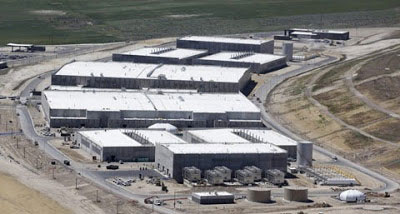
digital interactions captured on private and public telecommunications lines. The NSA's most advanced intelligence
monitoring facility is located at Camp Williams and is called the "Utah Data Center." If the emails ever existed, whether
they were deliberately wiped or accidentally lost, the National Security Agency undoubtedly has a digital record of them.
Fusion Centers: Expensive and Dangerous to Our
Liberty. A domestic surveillance system established after the terrorist attacks of September 11 collects and shares intelligence
on a mass scale about "the everyday activities of law-abiding Americans, even in the absence of reasonable suspicion," according to a new
report. [...] "Until 9/11, police departments had limited authority to gather information on innocent activity, such as what people say in
their houses of worship or at political meetings," the report explains. "Police could only examine this type of First Amendment-protected
activity if there was a direct link to a suspected crime. But the attacks of 9/11 led law enforcement to turn this rule on its head."
New NSA data center reported
plagued by meltdowns. A huge new data-storage facility for U.S. spying is plagued by chronic electrical surges that have prevented the center's
opening, documents and officials say.
NSA hunger demands 29 petabytes of data a day.
As the National Security Agency (NSA) spying furore rumbles on, the agency has claimed to be looking at only 0.00004 percent of the world's total internet
traffic. In a document on the nsa.gov website, the agency said that the internet carries 1,826 Petabytes of information per day, and that its
activity "touches" 1.6 percent of that data — approximately 29 petabytes, or 29 million gigabytes, of data each day. Of
that number, the agency says 0.025 percent is selected for review.
America Under
Barack Obama. [Scroll down slowly] McCarthy's regime was ended by Senators who realized
that he had gone too far. What we have now may be more insidious. What we have now in America is a
surveillance society. We have no idea how much the government knows and how much the CIA even knows
about average citizens. The government is not supposed to be doing this in this country. They
listen in on our phone calls. I am not exaggerating because I have studied this a long time. You
have to be careful about what you do, about what you say, and that is more dangerous than what was happening
with McCarthy, but the technology the government now possesses is so much more insidious.
Information Sharing and Fusion Centers:
Many State and major urban areas have established information fusion centers to coordinate the gathering,
analysis, and dissemination of law enforcement, homeland security, public-safety, and terrorism information.
As of September 1, 2007, over 66 of these centers are operating or are being established in States and
localities across the country.
Federal Support For and Involvement In State and Local Fusion Centers.
The Subcommittee investigation found that DHS-assigned detailees to the fusion centers forwarded "intelligence" of uneven quality — oftentimes
shoddy, rarely timely, sometimes endangering citizens' civil liberties and Privacy Act protections, occasionally taken from already-published public
sources, and more often than not unrelated to terrorism. The Subcommittee investigation also found that DHS officials' public claims about fusion
centers were not always accurate. For instance, DHS officials asserted that some fusion centers existed when they did not.
Explosive findings about DHS operations in congressional report.
An explosive 141-page investigative report was quietly released just after midnight by the U.S. Senate Permanent Subcommittee on Investigations,
Committee on Homeland Security and Governmental Affairs is an indictment of the practices and procedures of the U.S. Department of Homeland Security.
[...] Of the 386 unclassified reports reviewed during this investigation, only 94 were found to relate "in some way" to potential terrorist
activity, or the activities of a known or suspected terrorist. Of those 94 reports, the usefulness of those reports were deemed
as "questionable."
DHS Fusion Centers Spend Much,
Learn Little, Mislead a Lot. A network of 77 "fusion" intelligence centers, set up around the country under the auspices of the federal
Department of Homeland Security, has over the past decade uncovered little information that could be useful in defending the nation against terrorism.
It also created numerous reports on the legal, everyday of activities of ordinary Americans, according to a Senate report released Tuesday.
Senate Permanent Subcommittee on Investigations Federal Support for Fusion Centers
Report. The Subcommittee investigation found that DHS-assigned detailees to the fusion centers forwarded "intelligence" of uneven
quality — oftentimes shoddy, rarely timely, sometimes endangering citizens' civil liberties and Privacy Act protections, occasionally
taken from already-published public sources, and more often than not unrelated to terrorism.
Report: Napolitano misled Congress on
terrorism 'fusion' centers. Homeland Security Secretary Janet A. Napolitano repeatedly misled lawmakers about one of her department's
signature initiatives, the special centers where state and local police share information about terrorism with their federal counterparts, a key
lawmaker who helped author a damning report on the project said in an interview Thursday [10/4/2012]. A bipartisan report from the Senate
Permanent Subcommittee on Investigations states that Ms. Napolitano and her department failed to report to Congress serious problems with the
so-called "fusion center" program.
Nothing is Private Under the False Flag of Terrorism.
In a possible preparation for the ability of the CIA to spy on American citizens with their household items, the NSA's Utah Data Center is located in
the Utah desert in the foot hills of the Wasatch mountain range. This is the centerpiece of the Global Information Grid; a military project that
collects yottabytes of data. They are listening to every conversation, reading every post, intercepting every text message under the false flag
of terrorism. The facility has the technological ability to record and analyze every communication in the world. From emails to phone
calls to text messages to chats; nothing is private anymore.
Smile
for Those Surveillance Cameras, Trapwire is Watching You. Bloggers and a myriad of other independent media
sources are abuzz with news of Wikileaks latest revelation, but you probably won't hear much about it in the main stream
media, at least for now. The topic of discussion is a facial recognition and surveillance system being used across the
country by the name of Trapwire. [...] And perhaps this system would not appear so ominous were it not for the Obama
administration's determination to use the National Defense Authorization Act against American citizens without the benefit of
due process. Trapwire was developed by Abraxas, a Northern Virginia company staffed with elite from America's
intelligence community. Former senior intelligence officials who run Abraxas have developed a super-sophisticated
surveillance system that makes most modern facial recognition technology seem antiquated. And according to messages
hacked from over 5 million emails by Anonymous, the capabilities and scope of Trapwire have largely gone unnoticed by America
at large. Every few seconds, data picked up at surveillance points in major cities and landmarks across the United
States are recorded digitally, encrypted, and immediately delivered to Abraxas' fortified central database center at an
unidentified location for use by a variety of government and private intelligence concerns.
TrapWire Training Courses
Reveal Possible Purpose for its Creation. TrapWire is a massive and technologically advanced surveillance system that has the capacity
to keep nearly the entire population of this country under the watchful eye of government 24 hours a day. Using this network of cameras and
other surveillance tools, the federal government is rapidly constructing an impenetrable, inescapable theater of surveillance, most of which is going
unnoticed by Americans and unreported by the mainstream media.
Stratfor emails reveal secret, widespread TrapWire surveillance
system. Every few seconds, data picked up at surveillance points in major cities and landmarks across the United States are recorded
digitally on the spot, then encrypted and instantaneously delivered to a fortified central database center at an undisclosed location to be aggregated
with other intelligence. It's part of a program called TrapWire and it's the brainchild of the Abraxas, a Northern Virginia company staffed with
elite from America's intelligence community.
Everything You
Need to Know About TrapWire. [Scroll down] There is certainly something to worry about in the pervasive post-9/11 mentality that
TrapWire represents: The obsession with preventing terrorist attacks through constitutionally dubious profiling and surveillance. But
TrapWire on its own doesn't seem to be anywhere near the level of, say, the NSA's warantless wiretapping program.
Unravelling TrapWire. [Scroll down] One thing that makes
TrapWire a particularly interesting company is that its president, chief of operations and director of business development are all former employees
of the Central Intelligence Agency. [...] Abraxas Corporation, the company that originally created TrapWire under its subsidiary Abraxas Applications,
also has significant ties to the CIA. The company was founded by Richard "Hollis" Helms in 2001, two years after he left the CIA where he had
worked for nearly 30 years.
Trapwire: It's Not the Surveillance, It's the Sleaze.
Ever since WikiLeaks began releasing a series of documents about the surveillance system Trapwire, there's been a panicked outcry over this supposedly
all-seeing, revolutionary spy network. In fact, there are any number of companies that say they comb through video feeds or suspicious activity
reports in largely the same way that Trapwire claims to do. What's truly extraordinary about Trapwire was how it was marketed by the private
intelligence firm Stratfor, whose internal e-mails WikiLeaks exposed.
Trapwire: Big Brother Now Monitors Your Every Move.
The latest Wikileaks data-dump reveals that the government now has the ability to grab video from far-flung surveillance cameras located in stores,
casinos and other businesses around the country. It uses sophisticated facial recognition software to identify people of interest captured by
the ubiquitous cameras numbering in the millions. The software, Trapwire, is a significant breakthrough for the surveillance state.
Wikileaks reveals
"TrapWire," a government spy network that uses ordinary surveillance cameras. According to documents leaked on Wikileaks, a company
run by ex-CIA agents has created a piece of technology, called TrapWire, that siphons data from surveillance cameras in stores, casinos, and other
businesses around the country. TrapWire then analyzes this data for, well, people of interest. Are we living in a total surveillance
state without even realizing it?
Heartbleed:
Is it a bug or a feature?
Stories on this subject are all over the map. The government denies knowing about it until just recently. Others
say the government has been using it as a tool and a weapon for years. If even half of the material on this page is
true, I'm inclined to believe the non-government sources.
Obama
administration denies knowing about Heartbleed before this month. The Obama administration is denying
that the National Security Agency or any other part of the government knew about a flaw in the way that many websites
send sensitive information, known as the Heartbleed bug, before it was discovered earlier this month.
The
NSA denies it knew of the Heartbleed bug. The NSA is disavowing its knowledge of the Heartbleed security
vulnerability after a Bloomberg report suggested that the spy agency had exploited it for at least two years.
"NSA was not aware of the recently identified vulnerability in OpenSSL, the so-called Heartbleed vulnerability,
until it was made public in a private-sector cybersecurity report," NSA spokesperson Vanee Vines told The [Washington]
Post. "Reports that say otherwise are wrong." The White House and the Office of the Director of National
Intelligence echoed that statement Friday, saying neither the NSA nor any other part of the U.S. government knew about
Heartbleed before April 2014.
Obama
Lets N.S.A. Exploit Some Internet Flaws, Officials Say. Stepping into a heated debate within the nation's
intelligence agencies, President Obama has decided that when the National Security Agency discovers major flaws in Internet
security, it should — in most circumstances — reveal them to assure that they will be fixed, rather
than keep mum so that the flaws can be used in espionage or cyberattacks, senior administration officials said Saturday.
But Mr. Obama carved a broad exception for "a clear national security or law enforcement need," the officials said, a loophole
that is likely to allow the N.S.A. to continue to exploit security flaws both to crack encryption on the Internet and to
design cyberweapons.
NSA
Said to Exploit Heartbleed Bug for Intelligence for Years. The U.S. National Security Agency knew for at
least two years about a flaw in the way that many websites send sensitive information, now dubbed the Heartbleed bug,
and regularly used it to gather critical intelligence, two people familiar with the matter said. The agency's
reported decision to keep the bug secret in pursuit of national security interests threatens to renew the rancorous
debate over the role of the government's top computer experts.
How
the NSA shot itself in the foot by denying prior knowledge of Heartbleed vulnerability. The
National Security Agency has eyes and ears everywhere. At least, so we thought. In 2012, during
a classified but widely-known operation at Fort Meade, MD, government crypotographers and developers
downloaded the OpenSSL source code, as it does with dozens of other software published on the Web.
The operation's objective was to find weaknesses in the library and exploit those vulnerabilities as
part of wider efforts by the intelligence agency to conduct mass-scale surveillance. After the
code was downloaded and compiled, the developers were soon able to pinpoint a programming flaw in the
code, which would have allowed the agency to collect usernames and passwords far quicker, more efficiently,
and at a lower cost than its bulk data collection programs, notably its fiber cable tapping operation named Upstream.
Domestic surveillance
It is amazing to me that the people who seem to be most outraged by "domestic spying" are the same
people who want the government to keep getting bigger and more powerful every year.
It is naïve to expect complete privacy when talking on the phone. The chances are pretty
good that your phone conversations are just between you and the person you called, but there are no
guarantees. When you use a cordless phone or a cell phone, you are talking on a two-way
radio, and your expectations should be appropriately lower.
But a list of the phone numbers you have called is a long way from a wiretap. Long-distance
phone carriers have been keeping lists like that for years. And if it will help catch and convict
dangerous criminals, why not let the three-letter agencies sift through the records? And the
answer is simple: When the feds have put away all the mass-murderers and terrorists, they'll
keep looking for smaller and smaller fish in the sea of phone records, especially with people like
Hillary Clinton and Janet Reno at the highest levels of the government. For example, if your
brother-in-law is arrested for selling marijuana, and then the police discover that you have called
his house about a hundred times (for various reasons), you could have a big problem.
Incidentally, if you are really concerned about "domestic spying", you should think twice about putting
a toll road access tag on your car.
There was a flurry of new information about domestic surveillance in June, 2013, related to an information leak
by a young man named Edward Snowden. He now has his own subsection,
located here. In the
section immediately below, there are still several excerpts that mention Mr. Snowden, but
the focus is not specifically on him.
More About
Intelligence Agencies (CIA/DNI) Spying. Because of the excessive secrecy surrounding CIA operations, little is
known about its domestic activities. In its 1947 charter, the CIA was prohibited from spying against Americans, in part
because President Truman was afraid that the agency would engage in political abuse. But the law didn't stop the CIA
from spying on Americans. During the 1960s, in clear violation of its statutory mission to co-ordinate foreign
intelligence operations only, the CIA ventured into the domestic spying business through "Operation Chaos," in which it spied
on as many as 7,000 Americans involved in the peace movement.
Every
Tragedy Caused by Government Is Done with the Best of Intentions. President Bush's "war on terror" in response
to the worst attack on U.S. soil since Pearl Harbor not only led to two of the longest wars in U.S. history without producing
clear-cut long-term victories but also initiated a mass surveillance state that is now used against Americans by the FBI,
NSA, and U.S. military to target constitutionally protected political beliefs.
Reassessing
Orwell to Understand Our Times. Orwell's Big Brother has become a reality in the NSA's tracking and recording
all email, text and telephone communication in the United States. But Big Brother has a new dimension with social media
and consumer giants, Google, Facebook, and Amazon, knowing almost everything about people's preferences through their
artificial intelligence peering into peoples' "telescreen" computers and smartphones.
Squeaky clean, huh? Obama forgot about
these 25 scandals. [#16] NSA Spying on Americans: In June 2013, former NSA contractor Edward Snowden
revealed the U.S. government was collecting an enormous amount of data on millions of Americans with the cooperation of
telecommunication companies and European governments. The director of national intelligence, James Clapper, had
testified to Congress just the opposite, the year before. When Snowden's revelations became public, Clapper said he had
misspoken, not lied. Obama claimed laws and safeguards prevent the NSA from collecting information without a warrant,
but WND has reported many sources, including a Democrat congressman, said that is not true.
10 Ways Big Government
Harms You. [#1] Big government invades your privacy. Unfortunately the NSA spying scandal is not a
singular event nor is the fundamental issue going to be resolved by a simple changing of NSA policy by the President, the
courts, or the congress. The bigger government becomes the more its appetite increases to monitor what its citizens are
doing, what they are saying and even what they are thinking. From Sun Tzu to Julius Caesar, from FDR to Barack Obama,
political leaders have been keeping track of their citizenry for centuries. The problem heightens as the government
gets larger because as big government tries to control more, it is increasingly susceptible to dissent and subversion.
A sense of paranoia develops that feeds upon itself. Leaders inside the expanding state have reason to believe that
somebody is fomenting rebellion against their rule.
The
surveillance state is here, and to stay. If great Washington scandals come in threes, as disasters are said to
do, we're there. First there was Watergate, regarded as the granddaddy of them all. A third-rate burglary at the
Watergate Hotel grew to a scandal big enough to cashier a president. This was followed a decade later by Iran-Contra,
an attempt by Reagan administration rogues to exploit trouble in one country to fix a problem in another, and now there's
what may be the most far-reaching scandal of all. The administration of Barack Obama, eager to advance the interests of
Hillary Clinton, who was to be the front for his otherwise constitutionally forbidden third term, sought court approval to
spy on a suspected colluder with Russians, and in doing so advanced the surveillance state that will now spy on everybody.
What Touches Classified is
Classified. In the three thousand years of the history of espionage and of criminal investigations, a primary element has
been the practice of reading other peoples' mail. Wiretapping, steaming open envelopes, forging letters to get an incriminating
response — these are ploys of reality as well as fiction. Google and AT&T are said to have helped the National Security
Administration scan our emails for code words and other data. Who we write to in itself can help reveal what we are
up to. Your mail is being monitored.
Government
Plays a Dangerous Game with Mass Surveillance. The Fourth Amendment was designed to guard against the harms
government invasions of privacy wreak on a free people. It protects our homes and our private conversations, including
those online, because these are where we should feel most protected from government interference. Absent a warrant or
an emergency, it has no right to violate this reasonable expectation of privacy. Unfortunately, that's not the America
we live in today.
Here
Are The Major Scandals That Took Place When Robert Mueller Was FBI Director. [#3] NSA Warrantless Surveillance
(2001-2013): illegal collection of domestic phone records and internet communications that were sent or received by US
citizens, in violation of Fourth Amendment protections against warrantless search and seizure, followed by potential perjury
committed by Director of National Intelligence James Clapper, who denied the practices under oath; the 2013 Snowden
revelations proved that the 2004 story about Comey and Mueller stopping illegal surveillance practices meant absolutely
nothing in reality[.]
Surveillance. On any given
day, the average American going about his daily business will be monitored, surveilled, spied on and tracked in more than 20
different ways, by both government and corporate eyes and ears. With all branches of the government stridently working
to maintain its acquired powers, and the private sector marching in lockstep, The Rutherford Institute is sounding the alarm
in an effort to warn the American people about the ubiquitous surveillance state. Whether you're walking through a
store, driving your car, checking email, or talking to friends and family on the phone, you can be sure that some government
agency, whether the NSA or some other entity, is listening in and tracking your behavior. This doesn't even begin to
touch on the corporate trackers that monitor your purchases, web browsing, Facebook posts and other activities taking place
in the cyber sphere.
Getting Rid of Comey
Is Only the Start. Numerous times during its history, the FBI has taken a keen interest in veterans groups
after they come back from overseas. In some instances the bureau has gone as far as raiding the homes of veterans who
espouse unpopular political beliefs. If the brave men and women who risk their lives defending Americans' sacred
liberties aren't safe from FBI overreach can the average citizen feel safe? No, they cannot. Partnering with
local law enforcement agencies the FBI has created physical infrastructure to listen in on calls across the country, without
a warrant, or probable cause. Local communities from coast to coast are under constant surveillance, many without even
realizing it. Even if you manage to live in an area where the FBI is not partnering with local authorities to listen in
on your phone calls, which is unlikely, you may still be targeted if you utilize social media. A striking case which
laid bare the FBI's understanding of its own power came when they publically demanded that Apple create a "backdoor" for its
consumer products which would allow them to break into anyone's phone at any given time. The audacity of a government
agency demanding that a company make its products less safe rightfully enraged the public, but many soon forgot after the
crisis was averted.
10 Conspiracy
Theories That Turned Out To Be True. [#10] The US Government Illegally Spies On Its Own Citizens: Even
after it was revealed that the NSA has been illegally eavesdropping on us and collecting our cell phone metadata for over a
decade, people still hedged on the meaning of it. Yes, they are analyzing our transmissions, but it's under the
auspices of national security. "In a post 9/11 world" certain liberties must be sacrificed for the sake of security,
right? It turns out that is patently untrue. Not only is there no evidence that the NSA has protected us from
terrorism, there is growing evidence that it makes us more vulnerable. Thanks to revelations about the NSA and their
Prism project, we know that the scope of the NSA's eavesdropping is even beyond what we originally believed.
10 More Crazy Conspiracy Theories That Became
Conspiracy Facts. [#10] CIA monitors U.S. citizens via their smart devices: Early in 2017, the organization
Wikileaks began releasing their first post-2016 election cables with a series of explosive data dumps regarding the CIA's cyber
hacking abilities and exploits. It is called Vault 7. Updated serially in "Year Zero," "Dark Matter," "Marble,"
"Grasshopper," "HIVE," "Weeping Angel," and "Scribbles," the documents show the unprecedented collection of cyber vulnerabilities,
exploits, and hacking abilities consolidated within the agency that many believe constitute wide-ranging breaches of civil
liberties. Chief among these breaches is domestic surveillance and extrajudicial cyberhacking, which the Wikileaks
documents confirm are taking place in an abundance of forms.
The
Illusion of Freedom: The Police State Is Alive and Well. [Scroll down] In fact, the American police state has continued to advance at the same
costly, intrusive, privacy-sapping, Constitution-defying, relentless pace under President Trump as it did under President Obama. [...] The surveillance state hasn't
stopped spying on Americans' communications, transactions or movements. On any given day, whether you're walking through a store, driving your car, checking email,
or talking to friends and family on the phone, you can be sure that some government agency, whether it's your local police, a fusion center, the National Security
Agency or one of the government's many corporate partners, is still monitoring and tracking you.
The
chickens have come home to roost. In our misguided efforts to keep the country safe, we have neglected to keep
it free. We have enabled a deep state to become powerful enough to control a powerful president. We have placed
so much data and so much power in the hands of unelected, unaccountable, opaque spies that they can use it as they see
fit — even to the point of committing federal felonies. Now some have boasted that they can manipulate and
thus control the president of the United States by selectively revealing and concealing what they know about anyone,
including the president himself. This is a perilous state of affairs, brought about by the maniacal passion for
surveillance spawned under George W. Bush and perfected under Barack Obama — all with utter indifference to
the widespread constitutional violations and permanent destruction of personal liberties.
Obama
Says He's Had A Scandal-Free Administration. Here Are 11 of His Scandals. [#5] The NSA conducted mass
surveillance against American citizens without a warrant. Thanks to leaking from former government contractor Edward
Snowden, it was revealed that the National Security Agency had been conducting mass surveillance against American
citizens — a clear violation of the Fourth Amendment. In 2015, the NSA eventually ended their bulk data
collection of phone records.
September
11: Remembering Lives and Liberties Lost 15 Years Ago. [The attacks on 9/11/2001] changed our country in
ways that have significantly undermined our cherished liberties. The indignity of imposing TSA security theater at
airports is the least of it. Security checkpoints are everywhere requiring citizens to show ID and undergo screenings
by metal detectors in order to enter practically all public and many private buildings. But even worse are the secret
erosions of our rights as citizens not to be surveilled by our government. We now know that the federal government
is engaged in pervasive unconstitutional domestic spying on essentially all Americans. The monetary costs of "Homeland
Security" are estimated to run about $75 billion per year. The "black budget" of the federal government's
"intelligence community" exceeds $52 billion annually. The percentage of it that is spent on spying on Americans
is not clear, but is certainly billions, if not tens of billions. Since the September 11 atrocities,
94 Americans have been killed in domestic attacks by violent jihadists, which are the kind of attacks against
which our elaborate security apparatus purports to protect us.
This Is Not
Your Government. So, here we are: the government regularly and with specific intent violates the 4th
Amendment. What are you going to do about it? They are listening to your phone calls, reading your emails,
scanning your Facebook and other social media sites, all in the name of deterring terrorism, but they cannot even stop
something like San Bernardino or Orlando. We have traded liberty for security and every warning we have ever been
given has been ignored and the consequences are being suffered. It is common knowledge that the government is
monitoring all of these aspects of our lives and it is met with a shrug.
There
Will Be No Second American Revolution: The Futility Of An Armed Revolt. [Scroll down] Even government agencies
with largely administrative functions such as the Food and Drug Administration, Department of Veterans Affairs, and the Smithsonian have
been acquiring body armor, riot helmets and shields, cannon launchers and police firearms and ammunition. In fact, there are now
at least 120,000 armed federal agents carrying such weapons who possess the power to arrest. Rounding out this profit-driven
campaign to turn American citizens into enemy combatants (and America into a battlefield) is a technology sector that is colluding with
the government to create a Big Brother that is all-knowing, all-seeing and inescapable. It's not just the drones, fusion centers,
license plate readers, stingray devices and the NSA that you have to worry about. You're also being tracked by the black boxes in
your cars, your cell phone, smart devices in your home, grocery loyalty cards, social media accounts, credit cards, streaming services
such as Netflix, Amazon, and e-book reader accounts.
The
FBI Has Quietly Collected 434,000 Iris Scans Of US Citizens. Working together with local police departments, U.S. Border Patrol,
and the Pentagon, the FBI has discreetly amassed 434,000 iris scans. The surveillance technology, used primarily by airports and private
security companies, was pitched in 2013 as a way to help police departments catch criminals in a safer and more efficient manner. At that
point, the FBI already had 30,000 scans and was looking to coordinate with local and national agencies to develop a searchable database of scans
taken by police departments across the nation. The iris scan, which can be taken from a distance and requires no physical contact, was to
be taken upon arrest and submitted whether charges were pressed or not.
U.S.
Defense Contractor To Blanket Earth With New Surveillance Technology. Google has received vast criticism for its Google Earth,
Google Maps and Google Streetview systems that have essentially removed the inherent right to privacy and transferred it to the whim of corporate
terms and conditions. However, this would seem to pale in comparison to what is being announced from the largest U.S. defense contractor,
Lockheed Martin, working in tandem with commercial space imagery vendor, DigitalGlobe. According to Lockheed, they are making final
preparations for a next-generation global imaging satellite called DigitalGlobe WorldView-4. If all remains according to plan, the new
satellite will be launched into orbit from Vandenberg Air Force Base as early as September 15, 2016.
Engineered
Chaos And Fear The New Norm In America As Many Assume The "Reality" Of Staged Events. There was a time when
there was actually a sense of normality all around us and there was a sense of justice and accountability at the government
level even if it was mostly the perception of it. [...] There was even a time when you could comfortably plan on traveling pretty
much anywhere in the world, especially here in the United States for business or pleasure without having to deal with the prospect
of "terrorism" or another psyop mass shooting, terror truck drivers, snipers or lockdowns. You also didn't have to worry
about a violent police state, checkpoints, surveillance cameras, killer robots, government spying and 24/7 fear, death and
destruction being put out by the mainstream media news. There was a sense of order, in other words, that many of us still
remember and we remember exactly what it felt like. Obviously you can't miss something or yearn for the days you've never
experienced. This disconnect that the younger generation has to what some may refer to the good old days is important in
the grand scheme of things because this chaos is all they know and it is a grand example of learned helplessness. For the
first time in modern American history we have a generation that doesn't know what order, calmness and peace looks like.
A
Week in the Life of the American Police State. The following incidents constitute a typical week in the life of
the American police state. [#1] Not content with merely spying on our emails and phone calls, the NSA wants to spy on
thermostats, refrigerators, and pacemakers. [#2] Reinforcing fears about how easily surveillance technology can be abused by
government officials, local police in California are using money acquired through asset forfeiture to buy surveillance
equipment that was then used to blackmail city council members. [#3] Small-town police departments continue to militarize
their forces, acquiring military equipment such as BearCat armored vehicles and SWAT teams at an alarming rate. [#4] According
to the Government Accountability Office, the majority of people in the government's criminal face-recognition database have never
committed a crime. [...] [#7] The Second Circuit Court of Appeals recently ruled that as long as the government shows "good
faith," it can search your digital files as much as it wants. [#8] The FBI and other government agencies have been hiding
cameras in city utility poles in order to carry out warrantless, covert surveillance on Americans.
Fruit
of the Poisonous Tree. Roy Olmstead had been convicted for bootlegging on the basis of words he used in
overheard telephone conversations. Because he had used a phone at his place of work that the government had tapped
without breaking and entering his workplace, the high court ruled — despite the fact that the government had not
obtained a warrant — that he had no right to privacy. [Justice Louis] Brandeis dissented. Over time,
the Brandeis dissent became the law. The Fourth Amendment, which protects the privacy of all in our "persons, houses,
papers, and effects," was interpreted to cover telephone conversations and eventually emails and text messages. So
today, if the government wants information contained in those communications, it needs to obtain a search warrant, which the
Fourth Amendment states can only be given by a judge — and only upon a showing of probable cause of evidence of a
crime contained in the communications it seeks.
The
NSA doesn't even know how many Americans it's spying on. The National Security Agency (NSA), which is behind
some of the world's most sophisticated mass surveillance operations, can't say how many Americans it's spying on in these
endeavors. That's not because it's a secret, though that might be a reason too. It's because the agency's
operations are so vast that it can't even figure out the number.
Saint
or Sinner, Government Eyes Are Watching Every Move You Make. We now find ourselves in the unenviable position
of being monitored, managed and controlled by our technology, which answers not to us but to our government and corporate
rulers. Consider that on any given day, the average American going about his daily business will be monitored,
surveilled, spied on and tracked in more than 20 different ways, by both government and corporate eyes and ears. A
byproduct of this new age in which we live, whether you're walking through a store, driving your car, checking email, or
talking to friends and family on the phone, you can be sure that some government agency, whether the NSA or some other
entity, is listening in and tracking your behavior.
It's
Time to Put an End to the NSA's Bulk Collection of Americans' Metadata. The authors of
our Bill of Rights included the Fourth Amendment because they knew that one of the best protections
against tyranny is to limit the government's power to search its citizens. Specifically, the
Framers wanted to ensure that the federal government could not issue broad general warrants that
would empower the executive branch to indiscriminately rummage through the private lives of American
citizens — in other words, to spy on them. Unfortunately, that is exactly what the
National Security Agency is doing today.
Advisor:
Obama, NSA use internet to silence critics like Tea Party. The Obama administration is expanding its online data
search of Americans to find potential civil unrest — like the 2010 Tea Party movement — and squash it before
they take root, a prominent financial advisor has warned clients. David John Marotta compared the administration's efforts to
those used by former FBI Director J. Edgar Hoover against his critics and 1960s activists. Targeting activists isn't
anything new. J. Edgar Hoover made it his life's work. What has changed is the vigor with which the government
has assumed its own activism against certain groups, he said.
What
the Future of Government Surveillance Looks Like. [Scroll down] These
partnerships make no sense when the primary goal of intelligence is government vs. government
espionage, but are obvious and appropriate when the primary goal is global surveillance of the
population. So while the German government expresses outrage at the NSA's surveillance of the
country's leaders, its BND continues to partner with the NSA to surveil everyone else. The
endgame of this isn't pretty: It's a global surveillance network where all countries collude
to surveil everyone on the entire planet.
Agents
performing warrantless searches are the hallmark of totalitarianism. When Edward Snowden revealed the nature and extent of the
domestic spying that the government unleashed upon us post-9/11 and made us all aware of its use of the Patriot Act to do so, the authors
of the Patriot Act expressed outrage and anger. What was the government doing? The government was secretly gathering data on all
of us and using warrants that were not based on probable cause and that did not specifically describe the place to be searched or the person
or thing to be seized. When members of Congress realized that they, too, were being spied upon, the outrage grew. That outrage and
anger metastasized into a new law enacted earlier this year, called the USA Freedom Act, which took effect this week. That law, its
supporters have argued, will tame the National Security Agency into constitutional compliance and keep its 60,000 agents and contractors out
of our private affairs. In fact, it is now worse.
The
Truth About USA Freedom. [Scroll down] The proponents of the NSA's warrantless domestic spying program
also vastly oversell its effectiveness. The program was still in operation when terrorists struck Paris and had expired just
four days before the San Bernardino attacks. If this program was so essential, why did it not stop these attacks?
Furthermore, just as Obama can't identify a single mass shooting that his gun control proposals would have stopped, supporters
of warrantless domestic spying can't point to a single attack the NSA's domestic program prevented.
CISA
Is Now The Law: How Congress Quietly Passed The Second Patriot Act. Why was the CISA included in the omnibus package,
which just passed both the House and the Senate? Because any "nay" votes [...] would also threaten the entire budget of the
federal government. In other words, it was a question of either Americans keeping their privacy or halting the funding of the
US government, in effect bankrupting the nation. And best of all, the rushed bill means there will be no debate. The bottom
line as OTI's Robyn Green said, "They've got this bill that's kicked around for years and had been too controversial to pass, so they've
seen an opportunity to push it through without debate. And they're taking that opportunity." The punchline: "They're
kind of pulling a Patriot Act." And when Obama signs the $1.1 trillion Spending Bill in a few hours, as he will, it will be
official: the second Patriot Act will be the law, and with it what little online privacy US citizens may enjoy, will be gone.
Related topic:The Department of Justice vs Apple Computer, a case in which the government is attempting
to compel a cell phone manufacturer to unlock the encryption in a dead terrorist's cell phone — and all other phones in that product line.
UK's
Reddit Fine Forces Users Into Mass Biometric Surveillance. The Information
Commissioner's Office fined Reddit £14.47 ($19.56) million this week for failing to properly
verify the ages of children using the platform. Because Reddit let users self-declare their
age at signup, a method the ICO called trivially easy for children to bypass, the regulator
concluded Reddit "did not have a lawful basis for processing the personal information of children
under the age of 13." Children's data was used "in ways they could not understand, consent to or
control," Information Commissioner John Edwards said. The UK's data protection regulator says
it's protecting children. What it's actually building is a mandatory identity verification
system that turns anonymous internet use into a surveillance exercise for every adult in the country.
Across
the US, people are dismantling and destroying Flock surveillance cameras. Last week,
in La Mesa, a small city just east of San Diego, California, observers happened upon a pair of
destroyed Flock cameras. One had been smashed and left on the median, the other had key parts
removed. The destruction was obviously intentional, and appears perhaps even staged to leave
a message: It came just weeks after the city decided, in the face of public protest, to
continue its contracts with the surveillance company. Flock cameras are typically mounted on
8 to 12 foot poles and powered by a solar panel. The smashed remains of all of the above
in La Mesa are the latest examples of a widening anti-Flock backlash. In recent months,
people have been smashing and dismantling the surveillance devices, in incidents reported in at
least five states, from coast to coast.
Big
Brother Is Here, and It's China. Over the past decade, many Americans have
voluntarily shared their private lives and personal information with the Chinese government through
digital platforms and connected devices. They do so through cloud computing, mobile
applications, and internet-connected security cameras, which create unprecedented volumes of
sensitive personal data, some of which fall under the jurisdiction of the Chinese government.
TikTok is the most widely known example. Policymakers and experts have warned that its data
practices and ownership structure create risks that user information could be accessed under
Chinese law. The U.S. government has restricted its use on government phones and mandated
divestment. Danielle Pletka of the American Enterprise Institute warns that large-scale
personal data collection can create vulnerabilities for blackmail or coercion if such data is
accessed by a hostile foreign government. Even lawful but private behavior could potentially
be exploited.
Police
are finding suspects based on their online searches as courts weigh privacy concerns.
Criminal investigators hoping to develop suspects in difficult cases have been asking Google to
reveal who searched for specific information online, seeking "reverse keyword" warrants that
critics warn threaten the privacy of innocent people. Unlike traditional search warrants that
target a known suspect or location, keyword warrants work backward by identifying internet
addresses where searches were made in a certain window of time for particular terms, such as a
street address where a crime occurred or a phrase like "pipe bomb."
FBI
Gathered Intel On 1,000 Journalists, Politicians, Religious Organizations On Flimsy Grounds.
The FBI examined more than 1,000 religious organizations, members of the press, public officials, and
political candidates in so-called "assessments" that require no evidence of a crime, according to a
confidential and closely guarded report exclusively obtained by Racket News. The January 2026
government report — which directs recipients to destroy its contents when no longer
needed — spells out new details of the FBI's private digging into the personal lives of
Americans not accused of any criminal wrongdoing.
Wray
FBI opened 1,200 'assessments' of sensitive figures like politicians, journalists and clergy.
The FBI opened 1,200 probes related to politicians, journalists, religious leaders, academics and
others tied to "sensitive investigative matters," using a special investigative tool that requires
no factual predicate to launch, according to a Government Accountability Office report. The
GAO report, which was obtained by Just the News, was published last month but not made
public, and it was titled FBI Investigative Activities: Oversight Efforts of Opening and
Conducting Assessments Should be Strengthened. The report, which assists in congressional
oversight of the executive branch, provided details on the roughly 127,000 FBI "assessments" in all
opened from 2018 to 2024, the vast majority of which were eventually closed without accusations of
wrongdoing or criminal charges against those targets being scrutinized. The 57-page report
did not include any names of those targeted for assessment.
Britain
is becoming a surveillance state, but no one seems to care. Shabana Mahmood's
announcement that facial recognition is to be rolled out across the nation is no vague statement of
aspiration. Part of wider policing reforms and backed by the promise of fifty more
camera-topped vans, the Home Secretary's announcement signals the government's determination to
make mass surveillance part of daily life. Combined with the current consultation on facial
recognition, it also confirms that Britain is becoming a surveillance state without any real
thought or debate. The focus of the public consultation on a new legal framework for the use
of biometric surveillance technologies by law enforcement agencies is framed in 'when did you start
beating your wife?' terms. It assumes that the people of a liberal democracy have already
consented to a national surveillance system which will profoundly change the relationship between
state and citizen.
Virginia
Court Upholds Norfolk Police License Plate Camera Use. A federal court in Virginia
has ruled that the network of 176 automated license plate reader (ALPR) cameras deployed by Norfolk
police does not amount to unconstitutional surveillance. The 51-page opinion by US District
Judge Mark Davis concluded that the system's limited scope does not violate residents' Fourth
Amendment rights, even though it operates without warrants. Judge Davis wrote that "at least
in Norfolk, Virginia, the answer is: not today," referring to whether the city's use of the
technology had crossed into unconstitutional territory. While acknowledging the potential for
future overreach, he stated that the Norfolk program "captures only the public movements of
vehicles that happen to pass by locations on a public street in view of an ALPR camera." The
case, brought by the Institute for Justice on behalf of two Norfolk residents, challenged the
cameras as a "dragnet" surveillance system. Plaintiffs argued that the constant collection of
location data could reveal "the whole of a person's movements." But Davis disagreed, finding
that the 75 clusters of cameras scattered across 66 square miles were not pervasive enough to
constitute "too permeating police surveillance."
Democrats
Want To Fly Spy Drones Over Your Property — For The Environment, Of Course.
Virginia Democrats are advancing legislation to grant an environmental department permission to use
"unmanned aircraft systems" without a warrant "for the implementation and enforcement" of some
green programs. [Advertisement] The legislation, introduced January 13, would
amend an existing bill, which currently lists some exemptions for Virginia government bodies to use
drones without a warrant, including for cases involving missing children or suspects at
large. The amendment would allow the Virginia Department of Environmental Quality to control
"unmanned aircraft systems" without a warrant in order to enforce programs spanning from water and
wetlands protection to erosion and sediment control, according to the amendment. "'Unmanned
aircraft' means an aircraft that is operated without the possibility of human intervention from
within or on the aircraft," the bill text reads. "'Unmanned aircraft system' means an unmanned
aircraft and associated elements, including communication links, sensing devices, and the
components that control the unmanned aircraft."
In England: The
Blob doesn't want the police to use data. After spending a year trying to empty our
overcrowded prisons, the Labour government has now decided its best bet is to catch criminals
before they strike. Police AI technology will use 'predictive analytics' to 'identify and
target the 1,000 most dangerous predatory men who pose the highest risk to women and girls in
England and Wales', reports the Daily Telegraph. A Home Office white paper is set to announce
a series of police reforms including expanding the use of AI by forces across the country.
Some £4 million has been earmarked to create an interactive AI-driven map of England and
Wales crime hotspots by 2030, among other projects being trialled by police chiefs. Rather
sinisterly, this follows Home Secretary Shabana Mahmood bragging last month to Tony Blair, now an
AI evangelist, of her dreams 'to achieve, by means of AI and technology, what Jeremy Bentham tried
to do with his Panopticon. That is that the eyes of the state can be on you at all times.'
Labour certainly kept that one out of the manifesto.
Starmer
is hell-bent on destroying your right to a private life. Sir Keir Starmer is about to
turn your smartphone into a government surveillance device with access to all your private messages
in real time. This is the terrifying endpoint for the Online Safety Act (OSA), legislation
that serves as a weapon against British citizens that was passed by the Tories, and is now being
enriched by Labour. Section 121 of this Orwellian Act grants Ofcom the power to compel
messaging platforms like WhatsApp and iMessage to deploy "accredited technology" for scanning
messages sent with end-to-end encryption. Officially, it's targeted at child sexual
exploitation and abuse material and terrorism content. Who could object to stopping these
most heinous crimes? But make no mistake: this is "client-side scanning". Messages will be
analysed on your device, before encryption, meaning true end-to-end privacy evaporates. Every
text, photo, or voice note you send could be inspected in real time — not just flagged
ones, but all of them.
GOP
Sen claims Biden FBI placed 'innocent Americans' under surveillance, including Catholic
teacher. Kentucky GOP Sen. Rand Paul alleged Tuesday that the Biden
administration's FBI placed "innocent Americans" on terrorist watchlists by using "false tips,"
including a Catholic school teacher suspected of being at the Jan. 6 riot in 2021. The
revelation comes on the fifth anniversary of the riot, which saw supporters of President Donald
Trump march to Capitol Hill to protest the certification of the 2020 election without investigating
the claims of the alternate electors. Trump pardoned approximately 1,500 protesters on his
first day in office. Paul claimed that one of the Americans who was targeted by the Biden
administration's FBI was Christine Crowder, a Catholic teacher who was not at the Capitol during
the demonstration, but was in Washington, D.C., for a Trump rally earlier that day.
Mass
Surveillance Was Fine, Until Immigration Law Was Enforced. American cities did not
stumble accidentally into mass surveillance. They chose it. Over the past decade,
thousands of municipalities quietly installed automated license plate reader systems that record,
store, and analyze the daily movements of ordinary people. They did so deliberately, with
minimal public debate, and with striking indifference to the constitutional implications.
This architecture was celebrated as modern, data driven, and compassionate. It was defended
as the price of safety. Privacy objections were waved aside as abstract or paranoid.
The public was assured that responsible officials would use the tools wisely. That confidence
collapsed the moment enforcement priorities changed. When President Trump returned to office
and began enforcing federal immigration law, the same cities that had embraced ubiquitous tracking
suddenly discovered that surveillance might be dangerous. Not dangerous to citizens, but
dangerous to illegal aliens living in their jurisdictions. Cameras that had been praised as
essential to public safety were now denounced as tools of oppression. Contracts were
suspended. Cameras were covered. Systems were disabled. Sanctuary cities that had
constructed a surveillance state recoiled when that state threatened to enforce the law.
Dallas
Police Propose Expanding AI Facial Recognition to Minor Crimes. Dallas Police are
considering a plan that would extend facial recognition searches to more routine offenses,
expanding Clearview AI's use beyond serious crimes. The department wants to use the system
for cases such as trespassing and package theft, moving biometric surveillance into investigations
that previously relied on traditional methods. The partnership with Clearview AI began in
mid-2024. Since then, police have used the technology 156 times and say it has helped lead to
25 arrests. Officials described the tool as "vital" during a presentation to the
Community Police Oversight Board. If the new proposal moves forward, officers would be able
to search Clearview's massive online image database to identify suspects in minor cases. The
company's system collects billions of photos from public websites and social media, creating a
searchable map of faces taken from the open internet. This practice has drawn steady concern
from those who see it as a quiet normalization of mass identification.
The Editor says...
If face recognition, AI, and license plate readers work as well as everyone seems to think they do,
there is no reason to bother us with Amber Alerts ever again,
and it should be impossible to drive around town with no visible license plates.
11
Signs That Our World [Mostly England] Is Rapidly Becoming A Lot More Orwellian. [#1]
UK authorities are rolling out "a country-wide facial recognition system" that will use AI facial
recognition cameras to watch the entire population. ["]On Thursday, officials in the UK
pledged to roll out a country-wide facial recognition system to help police track down
criminals. The country's ministers have launched a 10-week consultation to analyze the
regulatory and privacy framework of their AI-powered surveillance panopticon — but one
way or another, the all-seeing eye is on its way. There's just one tiny wrinkle: the AI
facial recognition cameras have a tendency to misidentify non-white people. New reporting by
The Guardian notes that testing of the AI tech conducted by the National Physical Laboratory (NPL)
found that it's "more likely to incorrectly include some demographic groups in its search
results" — specifically Black and Asian people.["]
Westerners'
Abusive Relationship with Their Governments. In the United Kingdom, members of
parliament are demanding mandatory digital identifications that make it easier to track citizens at
all times. Instead of admitting that they wish to continue constructing a totalitarian
surveillance State, British authorities claim that the IDs are necessary to combat mass illegal
immigration. In other words, the same government officials who destroyed social cohesion by
flooding the country with migrants now want to capitalize upon a government-created problem and
expand the national security surveillance State. [...] Similarly, the European Union has gone all
in on monitoring private electronic messages without first establishing any kind of probable cause
or seeking a judicial warrant. The Eurocrats' justification for their gross intrusion into
citizens' private lives is that they are trying to battle the proliferation of child
pornography. European authorities settled on this convenient excuse because the arrival of
unvetted Islamic "asylum seekers" across the continent has set off an epidemic of Islamic men
sexually molesting young girls and boys.
EU
States Complete Brussels' Surveillance Network. The EU is working at full speed to
complete its online surveillance-and-informant network. By the end of the year, all EU member
states are required to present so-called "Trusted Flaggers" — institutions tasked with
identifying "problematic" content — to Brussels for accreditation. Politicians
from Germany's Christian Democratic Union appear especially eager. Hendrik Wüst, CDU
politician and Minister President of North Rhine-Westphalia, is a child of the current
zeitgeist. As the leader of Germany's most populous state, he views it as his mission not
merely to preach the dominant ideology of the CO2-neutral society, but to enforce it
rigorously. Together with his Green coalition partner, he works tirelessly to transform what
was once Europe's industrial heartland into an economic wasteland, perfectly aligned with the
ideological fantasies of Brussels' chief engineers.
On
Orwell's Trail: Is the EU Eliminating Digital Privacy? Both the European
Parliament and the Council of Ministers are expected to discuss newly formulated proposals to
create an EU agency that would force messaging services like WhatsApp or Signal to scan messages
before they are sent and report possible child-pornographic content. They won't say it
outright — but everyone understands the real purpose: political dragnet
surveillance. Brussels is mobilizing heaven and earth to suppress opposition voices and
dismantle their networks with maximum force. A comprehensive communication-scanning regime
would allow national authorities to identify political opponents far more quickly — a
tool capable of making life hell for anyone inconvenient to those in power. What the EU
Commission under Ursula von der Leyen is planning here amounts to the digital execution of the
sanctity of correspondence.
The Editor says...
As usual, the cover story is that they're looking for terrorists, pedophiles, traffickers, pornographers,
and drug dealers. If that's all they ever do, there would be few objections. But "mission
creep" starts right away, and the government uses their surveillance tools to see who the troublemakers
are, potentially or currently.
'Big
Brown is Watching You': Brampton keeps speed cameras for surveillance purposes!Rebel News returned to Brampton, Ont., for a follow-up on the suspicious real estate deal at
175 Sandalwood Pky. W. Provincial legislation on Nov. 14 rendered this building a white
elephant. In 2023, the City of Brampton bought the former Alectra Utilities building for an
inflated $77.9 million, despite it selling for only $32.5 million in 2020. This
non-descript structure inexplicably appreciated by $45.4 million in just three years.
Toronto Star reporter Kevin Donavan revealed the council approved the office building's
purchase after closed-door meetings. The city paid $10 million above the property's
independent third-party appraisal. Why the high price? The seller, Bikram Dhillon, CEO
of BVD Group (trucking, petroleum, real estate), may be linked to Mayor Patrick Brown. Adding
to the suspicion: Dhillon was named "Brampton Citizen of the Year" just one month before the
2023 sale closure. A likely coincidence.
Border
Patrol quietly tracking drivers using hidden plate readers: AP. The Border
Patrol is quietly monitoring millions of American drivers and detaining people through a
surveillance program that flags "suspicious" travel patterns. The predictive intelligence
program, revealed through an Associated Press investigation, has led to drivers being stopped,
searched and sometimes arrested. It records license plates from a network of cameras and an
algorithm analyzes where vehicles came from, where they're headed, and which routes they
take. When the system flags a license plate, federal agents may alert local law
enforcement. The Border Patrol has built an interior surveillance system that tracks ordinary
Americans for anomalies — not just known suspects. Launched roughly a decade ago
to combat border-related crime, the program has expanded significantly over the past five years.
How
Britain became a surveillance state. In the aftermath of the horrific knife attack on
the Doncaster to London train earlier this month, there were understandable calls for security to
be increased on British rail networks. Transport Secretary Heidi Alexander said the
Government would be investing in improved CCTV in stations and pointed towards the launch of a
consultation on more facial recognition technology which could also be deployed in stations.
The shadow home secretary Chris Philp has also spoken in favour of the routine use of live facial
recognition technology in crime hotspots. All of which seem like eminently sensible
proposals. But in the rush to record everything we do, is it also worth pausing for a moment
and asking whether this proliferation of cameras is actually increasing security and stopping
crime — or just making people feel that we might be safer? Recent research
estimated there were nearly one million private and publicly-owned CCTV cameras in London
alone. That's one camera for every 10 people, or 1,500 cameras per square mile.
Walk between the tube stop and the office, stop by a coffee shop, or go out and get your lunch, and
it's estimated that your image may be captured hundreds of times. Outside China, the UK has
become one of the most watched countries per capita on earth.
Wikileaks
uncovers TrapWire surveillance. In short, TrapWire is surveillance software used by
both private industry and the U.S. government and its allies oversees, allowing both public and
private sector users to help in counter-terrorism and anti-crime efforts. The software uses
algorithms and data from a variety of surveillance sources — including CCTV and
human-input from spotted 'suspicious' behavior — to, in essence, 'predict' potentially
criminal activity. One leaked Stratfor-owned document, describes it as follows:
["]There are a variety of new tools, such as TrapWire, a software system designed to work
with camera systems to help detect patterns of pre-operational surveillance, that can be focused on
critical areas to help cut through the fog of noise and activity and draw attention to potential
threats.["] While ordinary CCTV cameras are often 'passive' and monitored by humans,
TrapWire-connected cameras, such as 'pan-tilt-zoom' cameras, are able to track people, along with
license plate readers, called Automatic Number Plate Recognition (ANPR) from place to place.
How
to Block Facial Recognition Cameras. Facial recognition technology has become
increasingly prevalent in public and private spaces, raising concerns about privacy and surveillance.
To protect your identity and outsmart AI cameras, consider the following methods: [...]
WHO
Unveils AI System to Monitor Global Online Conversations for 'Misinformation'. The
World Health Organization (WHO) has rolled out a sweeping new surveillance initiative that allows
the global body to monitor online conversations, media posts, and digital trends in real
time. The WHO insists that the new system will help to crack down on "misinformation" and
promote "pandemic preparedness." According to the WHO, the system will be used to shut down
conversations deemed to be "misleading" while allowing others considered "safe" to continue.
The new system is called Epidemic Intelligence from Open Sources 2.0 (EIOS).
Senate
Bill 1462: Putting Alexa in the Woods. The premise sounds noble: early wildfire
detection, faster response, safer forests. The reality? A nationwide surveillance grid
dressed up in green camouflage. Cameras on towers, drones overhead, mesh networks buried in
the soil, all feeding into proprietary artificial intelligence run by private companies and
subsidized by federal tax dollars. We are being told to trade liberty for
"safety" — again. Colorado has already become a test case. Xcel Energy
partnered with Pano AI to install 21 surveillance towers across the state, claiming to cover more
than 1.5 million acres. Think about that: more than Delaware in size, scanned minute by
minute, 24 hours a day. Colorado is an outdoors state. People move
here — and visit here — because they want freedom. They want to hike
trails, ride mountain bikes, fish streams, and pitch tents under the stars. What they don't
want is to wonder whether a spinning camera on a ridgeline is tracking them, whether their kids'
campfire songs are being recorded, or whether an AI system in Silicon Valley has logged their
license plate on a dirt road. But that is exactly where we are.
Email
Surfaces Showing Mary McCord Sending FBI Information on Her Surveillance of Oathkeepers Group
Following 2020 Election Result. Obviously, readers here are well aware of our
research files on former DOJ-NSD head, Mary McCord, and her various tentacles of operations against
Donald Trump before and after the 2016 election. To enhance this ongoing effort, Twitter user
"pepesgrandma" shares an email exchange from Mary McCord to the FBI in December of 2020 following
the election. Apparently, Mary McCord was conducting surveillance of an Oathkeeper chat room
and sending information to the FBI following the November 2020 election, and in the runup to
the January 6, 2021 protest. [Screenshot of email] This is interesting on a variety of
levels, because we have documented Mary McCord working on the Trump-Russia fabrication [FISA
warrant], the CIA [Ukraine] impeachment fabrication [as key staff], the January 6th Committee
fabrication [again staff], and the Jack Smith fabrication. Now we see Mary McCord actively
setting up the "insurrection narrative" ahead of the J6 protests. It appears Mrs. McCord
then forwarded the email to someone [REDACTED], likely within the J6 Committee or Jack Smith
investigation on Sept 24, 2021.
Congress
collected 30 million lines of phone data in Trump J6 probe, raising civil liberty
concerns. Congressional investigators collected a stunning 30 million lines of
phone data mapping contacts between conservatives and the Trump White House in the name of
investigating the Jan. 6 Capitol breach, a massive dragnet that raises civil liberty concerns
about the lack of limits on the ability of lawmakers to snoop on Americans' private phone
calls. The mountainous collection of phone records were revealed to the FBI led by Chris Wray
in late 2023 by former Rep. Adam Kinzinger, a GOP member on the Democrat-run House Jan. 6
select committee. The cache was offered to the bureau on the eve of the 2024 presidential
election as evidence without requiring a warrant, according to an FBI document memorializing the
offer that was reviewed by Just the News. The memo says Kinzinger told the FBI that the
phone data had been collected by then-former Rep. Denver Riggleman, an ex-Republican who was a
staffer on the Capitol riot committee and who later helped Hunter Biden's legal team in its efforts
to cast doubt on the laptop belonging to Joe Biden's son.
Labour
accused of developing a surveillance state as it pushes 'sinister' digital ID cards for children as
young as 13. Children as young as 13 could be forced to have digital ID cards under
'sinister' plans to expand the role of the state in people's lives. A petition against
digital ID signed by almost three million people has been dismissed by ministers who vowed to press
ahead with imposing them before the election. In a formal response, the Department for
Science, Innovation and Technology said the government would introduce ID cards for everyone aged
16 and over by the time of the next election. And, in a significant extension of the scheme,
the department said ministers will now consult on bringing in so-called 'Brit Cards' for children
as young as 13. The response also suggests that the scheme will expand far beyond the original
proposal to tackle illegal working — with ID cards potentially needed to access a wide
range of public services. It states that digital ID will eventually become people's 'boarding
pass to government'.
ICE
Wants to Build Out a 24/7 Social Media Surveillance Team. United States immigration
authorities are moving to dramatically expand their social media surveillance, with plans to hire
nearly 30 contractors to sift through posts, photos, and messages — raw material to be
transformed into intelligence for deportation raids and arrests. Federal contracting records
reviewed by WIRED show that the agency is seeking private vendors to run a multiyear surveillance
program out of two of its little-known targeting centers. The program envisions stationing
nearly 30 private analysts at Immigration and Customs Enforcement facilities in Vermont and
Southern California. Their job: Scour Facebook, TikTok, Instagram, YouTube, and other
platforms, converting posts and profiles into fresh leads for enforcement raids. The
initiative is still at the request-for-information stage, a step agencies use to gauge interest
from contractors before an official bidding process. But draft planning documents show the
scheme is ambitious: ICE wants a contractor capable of staffing the centers around the clock,
constantly processing cases on tight deadlines, and supplying the agency with the latest and
greatest subscription-based surveillance software.
Canada's
Descent Into Tyranny: John Carpay Warns Trudeau's New Laws Will Censor Speech, Spy on
Citizens, and Punish Dissent. John Carpay, founder and director of the Justice Centre
for Constitutional Freedoms (JCCF), warns that three Canadian federal bills now before
Parliament — C-2, C-8, and C-9 — would give Ottawa sweeping new powers to
monitor, censor, and punish citizens under vague definitions of "security" and "hate." In a
detailed interview with RAIR Foundation USA, Carpay cautioned that the measures would erode
transparency, criminalize dissent, and allow secret government orders against individuals. He
also warned that the Trudeau-era Bill C-63, the so-called "online harms" act, is expected to
be reintroduced — legislation he says would let the state police speech and silence
critics in the name of "safety."
Big
Auto Wants Your Data. Trump and Congress Aren't Having It. Congress is not
going to allow Big Auto to sideline consumer privacy and safety while getting subsidized massively
by the federal government. That is because, in late September, by an overwhelming vote of 50
to 1, Chairman Brett Guthrie's (R-KY) House Energy & Commerce Committee joined the Senate Commerce,
Science, and Transportation Committee in passing the AM Radio for Every Vehicle Act. This
legislation is in response to some automakers removing AM radios from new model vehicles despite
pleas from America's public safety community not to do so. Advisors to President Trump have
argued they continue doing so for financial reasons — because they want to force
increased traffic onto their infotainment systems, which collects drivers' personal information and
sells it to third parties. "They'd rather force consumers to use their infotainment
devices — which collect and sell their third-party data — than protect
American lives," Corey Lewandowski, President Trump's 2016 campaign manager and senior adviser to
his 2020 and 2024 campaigns, stated.
The Editor says...
[#1] AM radio is almost completely useless. Rush Limbaugh delayed its death for a while, but AM radio
is a broadcasting junkyard now, where minority ownership and foreign-language programming is all that matters.
In the Dallas / Fort Worth market, there are dozens of audible stations, but there are only about eight stations
that anybody actually listens to. [#2] In an intense thunderstorm, AM radio is so
full of static crashes, you can hardly hear what's being said, except on a 50,000-watt station, and
a station with that kind of power will be issuing warnings for 50 other counties.
Tornado warnings for other counties are about as interesting as TV news coverage of a fatal car
wreck with which you have no connection. It's just filler, that makes the news announcers
sound like they're aware of everything. [#3] If you're collecting data about my
listening habits, you'll come up with nothing. I haven't turned on the radio in my car
(intentionally -- it comes on when I set the clock) since that day in November, 2023, when I
heard the non-stop Christmas music had started early. And the stuff that the radio stations
consider "Christmas" music is really just black dance music that focuses on (ahem) short-term
intimate hookups, and has nothing to do with angels, wise men, or tradition. Or
music! All the "music" sounds like it was written with a rubber stamp and
generated with Garage Band in about 10 minutes.
Why
Is Austin Trying To Sneak Purchase AI Cameras Without Giving Citizens A Say? If you
live in the City of Austin, today the City Council will be hearing testimony on a sneaky proposal
to buy AI-enabled surveillance cameras that they scheduled without giving mere citizens a chance to
comment. Louis Rossmann has the details: [Video clip] [...] There's a case to be
made for surveillance cameras in public places in crime hot spots, but not ones using unproven AI
technology. And these bulky, solar-powered things aren't going in crime hot spots, they're
going in public parks. True, there was been a plague of drug-addicted transients living in
parks since former mayor Steve Adler invited them into the city, but these expensive, stationary
things seem particularly unsuited to combing the parks for illegal campers; you'd be better off
hiring more park employees to do that for the same money. Or, better yet, hiring more APD
officers, as the city still hasn't fully recovered from the damage done by the "defund the police" madness.
Warrantless
Use of License Plate Reader Cameras Is Unconstitutional. Over the past two decades,
Americans have been subject to one revelation after another of how little privacy we actually have,
with both government and industry engaging in varying degrees of surveillance. This week, the
Institute for Justice (I.J.), a public-interest law firm, announced the Plate Privacy
Project — "a nationwide campaign to push back against the arbitrary and unrestrained use
of automatic license plate reader (ALPR) cameras in thousands of American communities," per an I.J.
press release. While they may sound like the stuff of science fiction, ALPRs are very real
and increasingly common. "These systems are a combination of high-speed cameras and optical
character recognition technology that can identify license plates and turn them into
machine-readable text," according to the Electronic Frontier Foundation (EFF). Cameras can be
mounted on poles at traffic stops or just along the roadside, while mobile versions can be affixed
to police cars. Once captured, all information is uploaded to a central database "along with
the time, date, and GPS coordinates." I.J. notes that ALPRs "can scan up to 2,000 plates per
minute, essentially guaranteeing every vehicle is captured."
Big
Brother is watching you — but this homeowner made him back down. Last
month, Charlie Wolf attended a meeting of the Greers Ferry, Ark., city council to complain about a
license-plate camera that he said was violating the Fourth Amendment by regularly taking pictures
of his driveway and front yard. Greers Ferry Police Chief Kallen Lacy acknowledged Wolf's
"distress" but rejected his legal analysis, saying "over 5,000 cities" across the country use
such cameras, "so there is no constitutional violation there." Despite Lacy's assurance, the
widespread acceptance of automated license-plate readers as a crime-fighting tool only magnifies
the privacy concerns they raise. They enable routine surveillance of a sort that would have
troubled the Fourth Amendment's framers. "Unlike red-light cameras or speed cameras that are
triggered by specific violations," the Institute for Justice notes, ALPRs "photograph every vehicle
that drives by and can use artificial intelligence to create a profile with identifying information
that then gets stored in a massive database. "Once that happens, officials can search the
database for any vehicle they wish, all without a warrant."
British
Police [have been] Caught Using Passport Photos for Facial Recognition. British police have
been quietly tapping into the nation's passport photo database for hundreds of facial recognition
searches, sparking fierce warnings from privacy campaigners about the scale of state surveillance
creeping into everyday life. What began as a rare request has rapidly become routine.
Figures obtained through freedom of information requests by Big Brother Watch show that in 2020,
just two searches of passport records were carried out. By 2023, that number had surged to
417, with a further 377 recorded in the first ten months of last year. Use of the immigration
photo database, compiled from images collected by Border Force, has also soared, climbing sevenfold
over the same period to 102 searches in 2023. This quiet expansion allows officers to run
retrospective facial recognition checks on CCTV or doorbell footage without leaving their desks.
EU
May Soon Start Scanning All Private Messages. The European Union's headlong rush into
soft totalitarianism continues apace. Drooling with envy over China's social credit system,
European powers are constantly looking for ways to restrict the ability to speak privately with one
another. [Advertisement] [Tweet] [Partial transcript of tweet] Speaking publicly
about any dissent with the powers-that-be is already banned in many instances, so it's on to the
new frontier of private messaging. Throw in digital currency, the Digital Services Act, and
more stringent Net Zero policies, and everybody's ability to live a private life free from
bureaucrats' control over any aspect will have disappeared.
EU
proposal to scan all private messages gains momentum. A controversial European Union
proposal dubbed "Chat Control" is regaining momentum, with 19 out of 27 EU member states reportedly
backing the measure. The plan would mandate that messaging platforms, including WhatsApp,
Signal and Telegram, must scan every message, photo and video sent by users starting in October,
even if end-to-end encryption is in place, popular French tech blogger Korben wrote on
Monday. Denmark reintroduced the proposal on July 1, the first day of its EU Council
presidency. France, once opposed, is now in favor, Korben said, citing Patrick Breyer, a
former member of the European Parliament for Germany and the European Pirate Party. Belgium,
Hungary, Sweden, Italy and Spain are also in favor, while Germany remains undecided. However,
if Berlin joins the majority, a qualified council vote could push the plan through by mid-October,
Korben said.
The Editor says...
If they were undertaking this mass surveillance to intercept the sinister plans of Islamic terrorists, I'd support the idea.
But it's more likely the EU is doing this for the benefit of the Muslims, to find out who their enemies are.
German
police expands use of Palantir surveillance software. The surveillance software
called Gotham, developed by US company Palantir, is billed as an all-rounder: gigantic amounts of
data are brought together at lightning speed. It only takes a few seconds to satisfy a police
officer's curiosity: name, age, address, fines, criminal record. In combination with
selected cellphones and the contents of scanned social media channels, a comprehensive profile of
any person appears in an instant. With the help of artificial intelligence (AI), the
surveillance program developed by the US technology company seems to make the dreams of police and
intelligence agencies come true.
Facebook
Surveilled 33M Users' Phones for Years. It looks like Facebook bought an app just to
spy on us. Facebook once bought a VPN app for $120 million and turned it into a
surveillance tool that spied on more than 33 million users' entire phones for years. [Tweet]
This app helped Zuckerberg buy WhatsApp for a whopping $19 billion and break Snapchat's
encryption. [Advertisement] According to Alex Vacca, FB bought an Israeli VPN app called
Onavo. It promised to "secure your data" and reduce mobile data usage. [Advertisement]
When Facebook bought it in 2013, Zuckerberg said the app would help them connect more people to
the internet. Facebook even promised to keep Onavo running as a standalone brand. But
Onavo operated as a VPN that routed all your phone's internet traffic through Facebook's servers
before sending it anywhere else. Facebook could see:
• Every app you opened
• How long you used it
• Which websites you visited
• And at what time you used each app
An
Arkansas Town Agrees To Remove a License Plate Camera Aimed at a Couple's Home. Flock
Safety, an eight-year-old company based in Atlanta, promotes its license plate readers (LPRs) as
tools that can "stop crime in its tracks with evidence that drives action." Charlie and Angie
Wolf had a less benign take on the Flock Safety Falcon LPR camera that was installed directly
across the street from their home on Lone Pine Road South in Cleburne County, Arkansas, on
May 13. The retired couple viewed the camera, which regularly took photos of their driveway
and front yard, as an invasion of privacy, since it was recording their movements and those of
anyone who happened to visit them. The Wolfs are hardly alone in expressing concern about the
privacy implications of LPR cameras. But local officials in Greers Ferry, the tiny town that
had contracted with Flock Safety to install the camera on Lone Pine Road South and four others,
were unfazed by the couple's objections. They repeatedly rejected the Wolfs' request that the
city move the LPR camera. Those officials had a change of heart after the Institute for
Justice detailed the Fourth Amendment issues raised by the camera in a July 17 letter to the
Greers Ferry City Council.
Here we have the unexpected conflation of two unrelated issues: Sacramento
Cops Shared License Plate Data With Anti-Abortion States. "Sacramento County drivers
are likely unaware that, as they travel on county streets and highways, their vehicles are being
tracked by an intricate network of stationary and mobile cameras." That was the conclusion of
a report released last week by the Sacramento County Grand Jury, a 19-member panel billed as "the
independent watchdog over public entities" within the California county. Worse yet,
Sacramento authorities are not only collecting drivers' information but sharing it with law
enforcement agencies in other states — including states that criminalize
abortion — all without a warrant.
Biometric
Surveillance Quietly Expands Into U.S. Sports Venues. Biometric surveillance is no
longer confined to airports, border checkpoints or high-security zones. Increasingly, it is
being tested and normalized on fairways, courts and stadium concourses across the United
States. At this year's U.S. Open in Oakmont, Pennsylvania, the United States Golf Association
(USGA) has quietly expanded the use of facial recognition for event entry, once again partnering
with British tech firm FortressGB and facial authentication company Wicket. Spectators now
have the option to register their face ahead of time and glide through entry points without
presenting a physical ticket for a "frictionless" experience. However, critics warned that
this framing, selling biometric scanning as a mere convenience, masks a more complex and unsettling
shift: the normalization of facial surveillance in public leisure spaces, where expectations of
anonymity and privacy have traditionally been higher. The golf tournament isn't alone in its
embrace of this trend.
Biden
Admin Surveilled Musk's Contacts After [Musk Bought] Twitter. Gavin Newsom and
leading Democrats have spent the last few days fulminating about "authoritarianism" by Donald Trump
for sending National Guard and Marine units to protect federal law enforcement agents and
sites. What will they have to say when they discover that the Departments of Homeland
Security and Justice spied on an industrialist supporter of the opposition party?
[Advertisement] Oh, wait, Trump didn't do that. Joe Biden did that. For two years,
according to the Wall Street Journal, Merrick Garland and Alejandro Mayorkas surveilled Elon Musk
and his contacts to check out "influence."
Trump's
Palantir-Powered Surveillance Is Turning America Into a Digital Prison. Call it what
it is: a panopticon presidency. President Trump's plan to fuse government power with
private surveillance tech to build a centralized, national citizen database is the final step in
transforming America from a constitutional republic into a digital dictatorship armed with
algorithms and powered by unaccountable, all-seeing artificial intelligence. This isn't about
national security. It's about control. According to news reports, the Trump
administration is quietly collaborating with Palantir Technologies — the data-mining
behemoth co-founded by billionaire Peter Thiel — to construct a centralized,
government-wide surveillance system that would consolidate biometric, behavioral, and geolocation
data into a single, weaponized database of Americans' private information. This isn't about
protecting freedom. It's about rendering freedom obsolete. What we're witnessing is the
transformation of America into a digital prison — one where the inmates are told we're
free while every move, every word, every thought is monitored, recorded, and used to assign a "threat
score" that determines our place in the new hierarchy of obedience. This puts us one more step
down the road to China's dystopian system of social credit scores and Big Brother surveillance.
Palantir
goes domestic, and Big Brother is officially here. I can't quite shake the feeling
that Donald Trump is that controlled opposition hero, and this story has me all the more
unsettled: Trump is reportedly funneling hundreds of millions of dollars to software giant
Palantir, building out a massive domestic surveillance and data collection network, which includes
American citizens. [...]
The
Patriot Act: America's Trojan horse for tyranny. The Patriot Act was the lie
that opened the gates. And now, in 2025, as documents, whistleblowers, and independent
investigations slowly peel back the layers of that dark day, it becomes harder and harder to ignore
the possibility that the whole thing — from the missing NORAD response to the curious
collapses of steel towers — was a staged pretext to install the surveillance
state. Was Bin Laden just a distraction, with the real target being us? The Patriot Act
opened the backdoor to hell: Warrantless wiretaps, bulk data collection, secret courts (FISA)
rubber-stamping government spying, metadata hoarding by the NSA, backroom deals with Google, AT&T,
Apple, and every other tech giant with their hands in your pocket and your private life. [...] The
surveillance state is unconstitutional, un-American, and utterly unacceptable. We the People
never consented to this. It's time to strip it down to the studs. The NSA has no right
to scan your calls. The FBI has no business reading your texts. The CIA should not be
embedded in your iPhone.
German
Spy Agency Officially Classifies AfD Party as 'Extremist'. Germany's domestic
intelligence agency has officially classified the right-wing party Alternative for Germany (AfD) as
extremist. Having regarded the AfD as a suspected extremist movement since 2021, the Federal
Office for the Protection of the Constitution (BfV), on May 2 designated the populist party as
"right-wing extremist," following an "intensive and comprehensive expert examination." This
means that intelligence services now have the right to keep it under surveillance.
New
Florida bill could give residents the right to shoot down spying drones. If you've
ever fantasized about blasting an intrusive drone out of your sky, you might be in luck, at least
in Florida. A bill advancing through the state Senate would allow property owners to use
"reasonable force" to stop drones conducting surveillance within 500 feet of their property.
Senate Bill 1422, sponsored by state Sen. Keith L. Truenow (R), aims to give residents
more control over their airspace.
The Editor says...
In an urban residential situation, your airspace is directly over your property — not your neighbor's
property. Therefore this new law will encourage people to open fire straight up, even though someone
spying on you is unlikely to fly directly over your property. In Texas, gunfire can sometimes be heard inside
the big cities, but discharging a firearm with the city limits is prohibited — if that matters to anyone.
'Mass
surveillance': Conservatives sound alarm over Trump admin's REAL ID rollout.
Conservatives are speaking out against the Trump administration's plans to finally enact
long-expected REAL ID laws in a bid to crack down on illegal immigration. "If you think
REAL ID is about election integrity, you're going to be sorely disappointed. Someone has
lied to you, or you're engaged in wishful thinking. Please don't shoot the messenger,"
Rep. Thomas Massie, R-Ky., wrote on X earlier this week. Responding to Department of
Homeland Security (DHS) Secretary Kristi Noem's video announcing the May 7 REAL ID deadline,
the former vice presidential candidate and Alaska Gov. Sarah Palin questioned in a lengthy
post: "Or what?? Evidently, existing ID requirements for American citizens just aren't
adequate now, so Big Brother is forcing us through more hoops for the 'right' to travel within our
own country."
Smart
Cities: Are They Worth It? At the core of a smart city lies a network of
interconnected devices that continuously collect and share data. Sensors embedded in
streetlights, public transportation, waste bins, and even wearable devices gather vast amounts of
information about citizens' activities, movements, and behaviors. This data is then analyzed
in real time to optimize city operations, improve services, and predict trends. [...] However, the
sheer volume of personal data generated in these environments raises significant concerns.
One immediate issue is the extent of surveillance inherent in smart cities. Technologies such
as facial recognition, smart cameras, and location tracking are increasingly deployed in public
spaces to monitor security threats, traffic violations, and criminal activity. While often
touted as tools to enhance safety, these tools also enable pervasive monitoring of individuals,
prompting critics to denounce them as a breach of privacy. The ability to track every
movement and identify individuals in real time poses profound ethical questions.
FBI
Caught Spying on Lawful Gun Owners — You Won't Believe Why. The ATF and
FBI have been monitoring gun purchases made by California residents to bust them for violating the
state's assault weapons ban. Gun Owners of America (GOA) recently revealed that the ATF and
FBI have been using the National Instant Criminal Background Check System (NICS) to surveil lawful
gun owners to help the Golden State enforce their gun control laws. In a recent "Minute Man
Moment" episode, GOA's Ben Sanderson broke down the operation, noting that the FBI, initially
tasked with targeting violent gangs and cartels, has instead been "using unconstitutional
investigations, not to enforce federal, but state gun control laws." Sanderson explained that
federal and state law enforcement officials can request the gun purchasing records of American
citizens, including those legally purchasing firearms. When granted permission —
which is typical — they can monitor an individual's purchases for six months without a
warrant or judicial review. They are not required to inform the individuals they monitor.
SB25-086
tramples the Constitution in the name of control. In our political age where virtue
signaling often masquerades as policymaking, Colorado Senate Bill 25-086, charmingly titled
Protections for Users of Social Media, stands as a masterclass in misdirection. Behind its
disarming language and so-called concern for user safety lies a deeply troubling expansion of
government power — one that threatens to obliterate the digital boundary between
individual freedom and state surveillance. Let me be frank: SB25-086 is not about
protection — it's about control. At the heart of the bill is a brazen and
unconstitutional attempt to enlist private companies into a pseudo-judicial surveillance
apparatus. It requires social media platforms to monitor and analyze the online behavior of
Coloradans for potential violations of state law — including gun laws — and
take action within 72 hours. If they determine a violation may have occurred, the
platform must ban the user and prevent them from rejoining — no trial, no judge, no
appeal. This is nothing short of delegated state power without due process.
Is
Stargate a Gateway to the Digital Gulag? On January 20th and 21st, President
Donald Trump took two actions that were so conflicting that the second nullified the gains of the
first. Worse, it boosts the Great Reset advanced by the global elite and may herd Americans
into the sort of digital gulag in which communist China confines its citizens. [...] On
January 21, his first full day in office, flanked by Larry Ellison of Oracle, Masayoshi Son of
Softbank, and Sam Altman of OpenAI, Trump unveiled Stargate, a project in which the three CEOs will
spearhead investments of $500 billion in artificial intelligence (AI) and mRNA
technology. He pledged support for the nationwide data silos Stargate entails, describing
them as an urgent need. Ellison, Son, and Altman are all titans of the World Economic Forum
(WEF), through which billionaire George Soros and his ilk operate. Ellison's vision leaves no
doubt about the purpose of the data collected, stored, and processed. He foresees a society
where AI-powered real-time surveillance will be an integral part of daily life. A vast
network of interconnected cameras, citizens' bodycams, police bodycams, vehicle dashcams, and
security systems, will monitor everyone, everywhere, always.
Gabbard's
Senate Critics Are More Interested In Protecting America's Spy Agencies Than Fixing
Them. President Trump's pick to lead the Office of the Director of National
Intelligence, Tulsi Gabbard, has never been shy about sharing her criticisms of America's
surveillance state. So, it came as no surprise when some of its biggest defenders grilled her
on the subject during her Thursday Senate confirmation hearing. While testifying before the
Senate Intelligence Committee, Gabbard was repeatedly pressed by senators to offer a full-throated
defense of the Foreign Intelligence Surveillance Act (FISA), which intel agencies abused to spy on
unsuspecting Americans and surveil Trump's 2016 campaign. As The Federalist's Logan Washburn
recently reported, "Section 702 of the legislation allows federal agencies to collect
communications of noncitizens, outside the country, without a warrant." It furthermore "supposedly
bars the government from spying on Americans," Washburn noted, "but the CIA was caught in 2022
using the law — which Congressional Republicans reauthorized last year — to
spy on Americans."
Defund,
Disrupt, Dismantle. America's four-year Weekend at Brandon's is over. Now the
clean-up and heavy lifting begin. If confirmed by the U.S. senate to lead the Department of
Homeland Security (DHS), Kristi Noem should make her first task to purge the spy network of the
leadership that routinely ignores genuine terror threats and instead chooses softer, easier targets
to investigate and surveil, including innocent Americans for things like posting conservative memes
and satire online, praying in public, and voicing concerns at school board meetings about
curricula. Similarly, DHS's misconceived stepchild and sub-agency CISA (the Cybersecurity and
Infrastructure Security Agency) needs to be dramatically culled, if not abolished outright.
CISA's sole objective is to censor truthful information that the federal government doesn't want
the public to know about and to get rich while doing it.
Tulsi
Gabbard Now Supports FISA-702 In Order to Get Confirmed as Director of National Intelligence.
As the story is told, and it aligns with every scintilla of researched data on the darkest and deepest elements
of the Deep State, DNI nominee Tulsi Gabbard has reversed her position and will now support FISA-702, the
warrantless searches of American communication and electronic metadata. Apparently the FISA process
and the 702 aspect (specific to American citizens) is the line in the sand the Senate Select Intelligence
Committee has drawn. If Tulsi Gabbard does not support it, her confirmation is in doubt. As a
result, she has reportedly reversed her position and now supports it. This is absolutely par for the
course. It should be remembered, in the last reauthorization of FISA-702 congress exempted themselves
from the warrantless search and surveillance system used by the U.S. Intelligence Apparatus. Congress
forbids the FBI or any entity with access to the NSA database, from being allowed to use the process to
search themselves or their staff. However, every other American does not enjoy this same
protection. After spending years asking every representative of consequence why they support the
FISA-702 process, I can tell you every one of them says they believe it is needed because the IC tells
them there are just too many domestic terror threats that need to be monitored. It is impossible
to find a person in DC who will forcefully try to stop FISA-702 reauthorization.
Pay
Attention to Any New Surveillance Cameras While Driving — Breakthrough Technology Could
Be Targeting You. Traffic cameras have been the bane of Britons for many a year
now — but our neighbors across the pond have recently upped the battle, and the
technology is coming over to America, as well. According to a Dec. 21 report from NBC
News, police departments in the United States have become the latest to use an AI-powered traffic
camera system made by an Australian company named Acusensus. The system, called "Heads Up,"
doesn't just check speed or running traffic lights like in other locales. Instead, they look
for violations, like failure to wear a seat belt or texting while driving. "The Heads Up
cameras take pictures of every vehicle that passes by them, capturing images of their license
plates, as well as their front seats. AI analyzes the images and determines how likely it is
that a violation occurred, assigning each one a 'confidence level,'" NBC News reported.
The Editor says...
If they're looking for rental trucks with an ISIS flag in the back window
[1]
[2]
[3]
[4]
[5],
I'm all for it. But it's far more likely they're just finding excuses to write tickets and
raise money. Everything the government does is about raising or spending money, while making it look
like an enormous public service.
TSA
Facial Recognition Scanning Spreading, Part of Planned 'Across The Board' Biometric
Future. I don't fly that much, but I did notice in the last few months that when
approaching the TSA agent checking i.d. the request was not just for your i.d. The agent
asked me to step in front of a screen which took some sort of image. It wasn't an 'order' but
it wasn't a request, it was just taken as matter of fact, part of the routine. I hadn't
noticed it in the past. But with a lot of other travel worries on my mind, I thought it odd,
but didn't really think about it much at all. Apparently you can opt-out of the scan, but
that wasn't presented as an option. Reportedly the scanners have a disclosure of the option
to opt-out, but I didn't see it (I also didn't look for it). TSA also is promoting the
voluntary use of facial recognition to speed check-in: [...] Crowd facial recognition is growing
around the world, with China the leader in using it for social control.
The Editor says...
If you have flown on a commercial airline since the TSA started doing this, you won't gain anything by
"opting out" now, because they've got the picture they wanted. But you will drawn attention
to yourself if you try to opt out. The TSA isn't looking for Islamic terrorists. They're
looking for non-conformists who won't comply and submit to whatever the government demands.
The
Spies Who Hate Us. Brownstone Institute has been tracking a little-known federal
agency for years. It is part of the Department of Homeland Security created after 9-11. It is
called the Cybersecurity and Infrastructure Security Agency or CISA. It was created in 2018 out of
a 2017 executive order that seemed to make sense. It was a mandate to secure American digital
infrastructure against foreign attack and infiltration. And yet during the Covid year, it
assumed three huge jobs. It was the agency responsible for dividing the workforce between
essential and nonessential. It led the way on censorship efforts. And it handled
election security for 2020 and 2022, which, if you understand the implications of that, should make
you spit out your coffee upon learning. More than any other agency, it became the
operationally relevant government during this period. It was the agency that worked through
third parties and packet-switching networking to take down your Facebook group. It worked
through all kinds of intermediaries to keep a lid on Twitter. It managed LinkedIn, Instagram,
and most of the other mainstream platforms in a way that made you feel like your opinions were too
crazy to see the light of day.
Department
Of Homeland Security Illegally Targeted Covid Dissent, New Documents Suggest. The
idea that intelligence and security agencies like the Department of Homeland Security (DHS) and
others have been involved in the surveillance and censorship of the American people is a conspiracy
theory, according to the New York Times, the Washington Post, and other media outlets.
Dr. Jay Bhattacharya, President-elect Donald Trump's nominee to lead the National Institutes
of Health (NIH), was not a victim of government censorship, says NBC News. There was simply
no "Censorship Industrial Complex" or government-coordinated activity that targeted American
citizens' speech and violated the First Amendment, mainstream journalists and commentators
agree. But there was and is a Censorship Industrial Complex.
Kash
Patel Wants The FBI Out Of The Spying Game — Here's Where He Could Start.
The Federal Bureau of Investigation (FBI) has an array of surveillance tools at its
disposal — but they've been weaponized, and Kash Patel will have an opportunity to fix
them. Patel, President-elect Donald Trump's pick to lead the agency, has an opportunity to
reform the bureau and regain the trust of Americans, former agents told the Caller. Trust in
the FBI — particularly among Republicans — has plummeted over generations.
[Illustration] From spying on the Trump campaign and relying on a since-debunked dossier to
raiding Trump's Mar-a-Lago and surveilling school board parents, the FBI's reputation as a "premier
law enforcement agency" has suffered. Former special agent Chris Piehota said outgoing FBI
Director Chris Wray bragged about the agency's reputation directly to him. Piehota told Wray
the FBI's "two primary currencies with the American people are its credibility and its competence."
"[Wray] said, the FBI was always seen as highly credible. Its word was inviolable at one point,"
Piehota said. "And I think that's fallen off a bit." However, Kash Patel's nomination is
an opportunity for reform, former agents said.
Secret
Service Says You Agreed To Be Tracked With Location Data. Officials inside the Secret
Service clashed over whether they needed a warrant to use location data harvested from ordinary
apps installed on smartphones, with some arguing that citizens have agreed to be tracked with such
data by accepting app terms of service, despite those apps often not saying their data may end up
with the authorities, according to hundreds of pages of internal Secret Service emails obtained by
404 Media. The emails provide deeper insight into the agency's use of Locate X, a powerful
surveillance capability that allows law enforcement officials to follow a phone, and person's,
precise movements over time at the click of a mouse. In 2023, a government oversight body
found that the Secret Service, Customs and Border Protection, and Immigration and Customs
Enforcement all used their access to such location data illegally. The Secret Service told
404 Media in an email last week it is no longer using the tool.
FBI
Spied on Kash Patel, Secretly Vacuumed Up His Emails and Phone Records. The FBI spied
on Trump's nominee for FBI Director Kash Patel, according to the Justice Department's Inspector
General report. Last month, President Trump officially nominated Kash Patel for the role of
FBI Director in his next Administration. Kash Patel played an important role exposing the
Russiagate hoax when he spearheaded the House Intelligence Committee's investigation into the
Hillary-funded Steele dossier under Devon Nunes.
Report:
DOJ Corruptly Spied On Congress Members, Staffers, And Media In 4-Year Inquiry That Resulted In No
Charges. A new report shows the creepy tactics the Department of Justice (DOJ)
employed to secretly spy on certain members of Congress, media personnel, and congressional
staffers who were investigating the DOJ. The DOJ conducted four criminal investigations between
2017 and 2020 into unauthorized disclosure of classified information. The DOJ launched these
investigations "while House and Senate oversight committees were investigating the Department of
Justice and the FBI for their role in the Russia-collusion hoax," as Margot Cleveland reported for
The Federalist. Despite unprecedented and indefensibly invasive investigations, the DOJ "did
not charge anyone in these investigations with unauthorized disclosure of classified information,"
according to a DOJ Office of Inspector General report. All four investigations are now
closed. The report, titled "A Review of the Department of Justice's Issuance of Compulsory
Process to Obtain Records of Members of Congress, Congressional Staffers, and Members of the News
Media," was released on Tuesday.
What
the FBI Knows about You. During the Biden administration, the FBI and the Treasury
Department's Financial Crimes Enforcement Network (FinCEN) brazenly pushed the boundaries of
privacy and the Constitution to infringe upon the rights of Americans. Much of this activity
appears to have been politically motivated, with a particular focus on Trump-supporting
conservatives. [...] According to a Dec. 6 interim report from the House Judiciary Committee,
the FBI has been using federal laws like the Bank Secrecy Act, "often without legal process," to
conduct these invasive operations. The committee reviewed over 48,000 "nonpublic documents,"
revealing that the FBI has been scouring private financial data to potentially target, identify,
and label certain Americans as threats to national security. [...] The searches are meant to build
a behavioral profile, one that could end up putting the individual on unwarranted watchlists,
including lists that track potential domestic terrorists. The surveillance seems to have
begun following the Jan. 6 Capitol Hill protests, according to a June 12 letter from
representatives Jim Jordan and Thomas Massie to JP Morgan Chase CEO Jamie Dimon. It then
metastasized to much more.
Feds
Use Bank Loophole To Surveil Americans' Financial Data Without Warrants, House Judiciary
Says. Federal law enforcement exploited the Suspicious Activity Report system to
access and surveil Americans' private financial data without warrants or probable cause, according
to a report from the House Judiciary Committee. The FBI "manipulated" the SAR filing process
by pressuring banks to file reports on individuals the FBI deems "suspicious," making financial
institutions "de facto arms of law enforcement," the interim report released Friday said.
SARs do not require any legal process, granting officials "virtually unchecked access" to
"confidential and highly sensitive information." The Republican-led oversight committee
accused the FBI of circumventing the Bank Secrecy Act, which specifies that it is a bank's
responsibility to file a SAR when it identifies a "suspicious transaction relevant to a possible
violation of law or regulation." The Friday report has shed "new light on the decaying state
of Americans' financial privacy and the federal government's widespread, warrantless surveillance
programs," the committee said.
Liberty
Under Siege: The Largest Mass Surveillance Effort in American History. Before
January 6th, 2021, financial surveillance in the United States was largely limited to a
well-defined framework designed to combat money laundering and terrorism. Judicial oversight
and clear legal protocols acted as key safeguards, ensuring that government access to citizens'
financial information respected the rule of law. However, after the Capitol protests, these
boundaries have shifted dramatically. Under the Biden administration, the purpose of
surveillance has shifted from securing national interests to a tool for targeting political
dissent — particularly individuals linked to Donald Trump and the "MAGA" movement.
Take, for instance, the scrutiny faced by those who attended rallies or made donations to
conservative causes; their financial transactions, travel records, and even personal communications
have increasingly come under the federal microscope. The U.S. House Committee on the
Judiciary has exposed just how far-reaching this financial scrutiny has become. Their interim
report revealed that federal agencies searched databases using terms like "MAGA" and "TRUMP" to
identify potential threats.
Tracking
you based on your phone and movements:. [Scroll down] Cell phones have
become de facto snitches, offering up a steady stream of digital location data on users' movements
and travels. For instance, the FBI was able to use geofence data to identify more than 5,000
mobile devices (and their owners) in a 4-acre area around the Capitol on January 6. This
latest surveillance tactic could land you in jail for being in the "wrong place and time." Police
are also using cell-site simulators to carry out mass surveillance of protests without the need for a
warrant. Moreover, federal agents can now employ a number of hacking methods in order to gain
access to your computer activities and "see" whatever you're seeing on your monitor. Malicious
hacking software can also be used to remotely activate cameras and microphones, offering another
means of glimpsing into the personal business of a target.
Confected
emergencies and the new world order. [Scroll down] Before the 9/11
emergency, for example, the state's relatively modest civillian security forces could not have
maintained control of an entire population in the event of widespread protest against authoritarian
government action. Following the changes introduced in the aftermath, their span of control
is now dramatically wider. There is now high acceptance of coercive and intrusive
near-paramilitary security arrangements, for example in airports, and the willingness to submit to
them. Without any of us authorising it, or even noticing it, the UK is now the most highly
surveilled country in the world. Public opinion has shifted notably from defending civil
liberties to demanding increased restrictions, as people perceive these measures will reduce their
exposure to risks about which they have been deliberately sensitized.
The
surveillance state has arrived... and it's being implemented by our cities and towns.
My old colleagues at World Net Daily have an interesting story up today about the city of Norfolk,
Virginia. City officials have transformed Norfolk into a virtual lock-down surveillance
society with more than 172 high-resolution, internet-connected cameras monitorying practically all
human movement. Of course Norfolk is not terribly unique in this regard and we have a full
report below, including a Top 10 list of most surveilled American cities. Multitudes of
cities of all sizes across the U.S. are jumping on the technocracy bandwagon and setting up hidden
surveillance cameras on every corner. They're on light poles, bridges and overpasses,
stoplights, buildings, you name it. Some are equipped with speakers so they can also listen
in on what's being said. They claim it's for our "safety." What makes Norfolk unique is a
group of citizens is fighting back. They've filed a lawsuit against the city, which is
something that needs to happen in every city that implements this technology. A lawsuit has
been filed that accuses elected officials in Norfolk, Virginia, of using a network of 170 cameras
to impose a warrantless surveillance scheme on residents and visitors.
The Editor says...
While I am generally opposed to wholesale domestic surveillance and facial-recognition systems, I will admit that
facial recognition has potentially beneficial applications; for example, to detect anyone who appears at a
polling place more than once, especially on Election Day. Anyone who goes to the polls more than once
should be the subject of intense scrutiny. No attempt should be made to identify anyone until and unless
they are a repeat visitor. The same is true of "drop boxes" for absentee ballots. First of all,
there is no reason for one person to deposit more than one or two ballots, and no reason to make a deposit at
3:00 a.m. Photograph everybody, then see who has deposted dozens of suspect ballots.
Identifying the "mules" is entirely possible in the 21st century.
The
U.S. Government Is Dramatically Expanding The Use Of Facial Recognition Technology.
Do you want to live in a society where you are required to have your face scanned wherever you
go? If not, you may want to speak up now while you still can. As you will see below,
the U.S. government is aggressively expanding the use of facial recognition technology for
identification verification purposes. For now, the use of facial recognition technology will
be optional. But as we have seen before, once a voluntary option is adopted by enough people
our leaders have a way of making it mandatory. Of course it isn't just our government that is
pushing facial recognition technology. It is popping up throughout our society, and given
enough time it would literally be everywhere.
Waging
War Against Their Own. [Scroll down] This is beyond any 18th-Century
definition of tyranny, exceeded by the level of surveillance currently used by the government to
monitor the citizens. This is a government holding its citizens to be enemies, codified by
the Patriot Act, and even having passed such a hostile act, it is not the fault of the people, but
an egregious act of war against the people, their rights and their freedoms. The last time
that happened, the American people rose up to displace the offending system and the same should be
happening right now. I understand it will take some enormous break in tradition, much like
the Pandemic, though more likely a combination of threats to the people intended to drive them into
the arms of the criminal government.
France:
What Happened to You, Man? On Monday, October 21, 2013, the U.S. ambassador to
France, Charles Rivkin, was summoned to the French Foreign Ministry in Paris on urgent business.
Le Monde published excerpts of revelations from whistleblower Edward Snowden showing that
across thirty days, the U.S. National Security Agency intercepted "70.3 million recordings of
French citizens' telephone data," revealing surveillance on a "massive scale." French Prime
Minister Jean-Marc Ayrault demanded "clear answers" and insisted the U.S. work with France in
"creating the conditions of transparency so these practices can be put to an end." Secretary
of State John Kerry happened to be in Paris when the Le Monde story broke. Ahead
of a meeting with "Monsieur Kerry," Foreign Minister Laurent Fabius seethed the surveillance was
"totally unacceptable" and "we have to make sure, very quickly, that this no longer happens."
A week later, Kerry admitted U.S. spying "reached too far." [Paywall]
Big
Brother Takes to the Skies. Intensifying the Minority Report vibe in an
already dystopian 21st century, police departments across the country are deploying drones in a
variety of capacities. One concept is called "Drone as a First Responder" (DFR). How's it
work? When it gets a 911 call, the police department sends an Unmanned Aerial Vehicle (UAV)
with a camera to the scene to check for dangers and acquire situational awareness. It's a
practice that dates back half a dozen years. "DFR programs have been growing in popularity since
first launched by the Chula Vista Police Department in 2018," according to the Electronic Frontier
Foundation (EFF). "Now there are a few dozen departments with known DFR programs among the
approximately 1,500 police departments known to have any drone program at all, according to EFF's
Atlas of Surveillance, the most comprehensive dataset of this kind of information." DFR raises
many red flags. For example, the drone, while traveling to the site of the alleged offence,
is likely to surveil and record everything in its path, according to the EFF. The practice
could lead to "mission creep," policing of low-level infractions that previously wouldn't have
attracted any attention because they wouldn't have been seen.
Context
for FBI Discussion. The FBI relationship with Antifa is exactly what we have
previously discussed on these pages. There is no way for Antifa to operate as a domestic
extremist group, without the expressed support and willful blindness of the FBI. Quite simply
if the FBI wanted to stop the violent and extremist activity of Antifa, they could do that
easily. Remember, the objective of the FBI raid on Mar-a-Lago was to re-secure
what they perceived as physical evidence President Trump controlled showing how the DOJ and FBI action
in 2016 was targeting him using the power of their law enforcement and intelligence agencies.
In the background, the origination of all the DOJ/FBI/IC targeting goes back to the '15/'16 FBI
exploitation of the NSA database; this is not a contested discussion issue — it's just
continually forgotten. The FBI was using their access to the NSA metadata of all Americans,
to conduct surveillance on political candidates that might be a threat to the power structures that
exploited the secrets within the electronic records of all Americans. The FBI was, almost
certainly still is, conducting domestic surveillance and tracking Americans just like the German
Stasi or Soviet KGB.
Rand
Paul Wants Answers From TSA About Alleged Surveillance Abuses. Sen. Rand Paul of
Kentucky is attempting to get to the bottom of the Transportation Security Administration's
watchlist and blacklist programs following several high-profile cases and whistleblowers
scrutinizing these TSA systems. "Recent disclosures from whistleblowers raise serious concerns
that these mechanisms may have been improperly employed to target individuals based on their
political views and participation in constitutionally protected activities, rather than legitimate
security threat," the Kentucky Republican wrote to TSA Administrator David Pekoske in a Wednesday
letter shared with The Daily Signal. Former Hawaii Rep. Tulsi Gabbard is reportedly
among the victims of this effort to surveil and control the travel of individuals on the basis of
their political beliefs.
The
Worm Turns: House, Senate Investigate TSA Surveillance of Tulsi Gabbard. Two
weeks ago, former presidential candidate Tulsi Gabbard found out she'd been placed on the TSA's
"Quiet Skies" watch list, and put under "Special Mission Coverage" surveillance by Federal Air
Marshals. A Lieutenant Colonel in the Army Reserves who enlisted and served in Iraq after
9/11, Gabbard was almost speechless at reports of her placement on a terror list. She felt
"the deepest sense of betrayal," she said, adding: "It cuts to the core." Since then, multiple
Air Marshals came forward as whistleblowers and their firm, Empower Oversight, sent letters to
eight House and Senate Committees of jurisdiction. Each was asked to "get to the bottom" of
why Gabbard was surveilled and look into Quiet Skies more generally. Today, Racket
learned members of at least three of those Committees decided to investigate, giving deadlines to
Transportation Security Administrator David Pekoske to answer a range of queries, and not just
about Gabbard.
Did
ATF Spy On Gun Owners At GOA's Convention? Did the unlawful Bureau of Alcohol,
Tobacco, Firearms and Explosives actually spy on gun owners at Gun Owners of America's recent
convention? [Video clip]
Surveillance
state! NFL deploys facial recognition tech at ALL 32 stadiums. The National
Football League is the latest organization to turn to facial authentication to bolster event
security, according to an announcement this week. All 32 NFL stadiums will start using the
technology this season, after the league signed a contract with a company that uses facial scans to
verify the identity of people entering event venues and other secure spaces. The facial
authentication platform, which counts the Cleveland Browns' owners as investors, will be used to
"streamline and secure" entry for thousands of credentialed media, officials, staff and guests so
they can easily access restricted areas such as press boxes and locker rooms, Jeff Boehm, the chief
operating officer of Wicket, said in a LinkedIn post Monday. [...] Some teams also have extended
their use of the technology to scan the faces of ticket holders. The Cleveland Browns,
Atlanta Falcons and New York Mets all have used the company's facial authentication software to
authenticate fans with tickets, according to Stadium Tech Report.
The
Truth About FISA — Section 702 Explained. FISA, which stands for the
Foreign Intelligence Surveillance Act, is a term that's often mentioned on Twitter and other news
sources, particularly after Congress voted on reauthorizing Section 702 in April of this
year. But there's also been a lot of confusion surrounding FISA and the various FISA
provisions themselves. Just what is FISA Section 702 and how, exactly, does it really
work? How is it differentiated from the other provisions of the FISA Act and why has it been
abused so often by the federal government? Unfortunately, as we'll later see, abuses of the
FISA system by the government are only getting worse. And there's no reason to expect there
will be any improvement. In our opinion, the FISA system is broken beyond repair.
Federal
Air Marshal Whistleblowers Report Tulsi Gabbard Actively Under Surveillance via Quiet Skies
Program. In an exclusive breaking story, several Federal Air Marshal whistleblowers
have come forward with information showing that former U.S. Representative and Presidential
candidate Tulsi Gabbard is currently enrolled in the Quiet Skies program. Quiet Skies is a
TSA surveillance program with its own compartmentalized suspected terrorist watchlist. It is
the same program being weaponized against J6 defendants and their families. Quiet Skies is
allegedly used to protect traveling Americans from suspected domestic terrorists. The photo
below is a screenshot from the actual Target Package used by the FAMS to surveil Gabbard.
Surveillance
Capitalism and PsyWar. Surveillance capitalism is a novel economic system that has emerged in
the digital era. It is characterized by the unilateral claim of private human experience as
free raw material for translation into behavioral data. In this version of capitalism,
predicting and influencing behavior (political and economic) rather than producing goods and
services is the primary product. This economic logic prioritizes extracting, processing, and
trading personal data to predict and influence human behavior by exploiting those predictions for
various economic (marketing) and political objectives. In many cases, surveillance capitalism
merges with PsyWar tools and technologies to power the modern surveillance state, giving rise to a
new form of Fascism (public-private partnerships) known as techno-totalitarianism. Leading
corporations employing the surveillance capitalism business model include Google, Amazon and Facebook.
Big
Brother is Watching You; So Where is the outrage? [Video clip] [Transcript:] The
totalitarianism we warned of is happening. The European Union is at this moment forcing big tech
companies to secretly engage in mass censorship. Google and Facebook are, apparently, going along
with it. Only Elon Musk's X, among the major platforms, is resisting. [...] Most terrifying is the
apparently direct involvement of government intelligence and security agencies, and their intermediaries,
in demanding censorship. This is all happening at the very moment that the same governments,
including our own, warn of Russian disinformation through spam accounts that hardly anybody ever sees.
Don't be fooled by what is happening. Governments and former intelligence officials in Europe,
Australia, Israel, Brazil, and Ukraine and other nations are not only demanding censorship but also
often spreading their own disinformation. For example, the EU claims that there is more false
information on X than on other platforms, and more censorship would reduce it. This is false.
Hernando
County Commissioner Calls For Transparency, Demands Explanation For Using "Chinese Spy
Cameras". Cameras are everywhere, and privacy is not expected when you are outside
and in a public area. However, when the government uses 'spy cameras' to track your every
move, people say it violates their right to privacy. That's exactly what Hernando County
Commissioner Steve Champion said during a recent Board of County Commissioners (BOCC) meeting
regarding the use of surveillance cameras by the Hernando County Sheriff's Office. [...] Flock
Safety cameras are a type of automated license plate recognition (ALPR) system designed to capture
vehicle license plates and associated data as they pass by. [...] The use of Flock cameras raises
privacy concerns, as they collect data on individuals' movements without their knowledge or
consent. Critics argue that such extensive surveillance can have a chilling effect on freedom
and anonymity in public spaces.
The
Communist Plan That Has Subverted Our Intel Agencies. [Scroll down]
According to [former CIA agent J. Michael] Waller, two "cultural revolutions" took place in the
intel agencies after 9/11. The first, born of necessity under President George W. Bush, started
by watching and listening to the public. The 9/11 attack was seen as the result of intelligence
failure, justifying more aggressive intelligence gathering. The Patriot Act, the expanded
Foreign Intelligence Surveillance Act (FISA), and the new Transportation Security Administration
(TSA) made this possible. Financial transactions came under greater scrutiny to detect
terrorist funding. Intel coordination was centralized under the Office of the Director of
National Intelligence (ODNI), Big Tech was drawn in to help, and the FBI was doubled and armed to
paramilitary proportions. Strangely, while Americans were subject to increasing scrutiny and
inconvenience, Bush took pains to choose an anodyne name — Global War on
Terror — for the fight against the jihadists and to insist that Islam was "good and
peaceful" and that Arabs and Muslims should not be harassed.
Biden
Govt Used J6 & Mar-a-Lago Raid To Justify More Spying on Political Opponents. America
First Legal has published documents revealing that the Department of Homeland Security's intel
group advocated spying on Americans critical of the government post-January 6th. The
Homeland Intelligence Experts Group initially considered it "inappropriate" to gather intel on
Americans before January 6. However, internal meeting notes later showed discussions about
expanding efforts to monitor individuals deemed Domestic Violent Extremists (DVEs), many of whom
were described as supporters of the former president, using January 6th as a catalyst.
Members of the Homeland Intelligence Experts Group also called for federal monitoring of certain
websites as potential domestic extremism threats.
The
US Postal Service Helps Surveil Americans. According to The Washington Post, the US
Postal Service has been giving information about thousands of Americans' letters and packages to
law enforcement every year for at least ten years. The postal service provides law
enforcement with the names, addresses, and other details from the outside of boxes and envelopes
without a court order. The Washington Post, in response to a congressional probe, looked at a
decade's worth of records. Postal Service officials have received more than 60,000 requests
from federal agents and police since 2015 and they rarely say no. Postal inspectors recorded
more than 312,000 letters and packages between 2015 and 2023.
The
Biden Administration Is Facilitating a Rogue President's Ability to Spy on Opponents.
In recent years, I have written extensively about how a U.S. president with autocratic ambitions
could abuse emergency powers — special legal authorities that become available to the
president during a declared emergency — to undermine democracy. But one of the
greatest current threats to democracy comes from a power that is available to the president every
day: the ability to collect highly sensitive information about Americans without a warrant.
What's more, the Biden administration recently won a legislative battle to ensure that the next
president will have robust access to warrantless surveillance powers. Surveillance is one of
the most powerful tools an authoritarian government can deploy, as it can be used to identify and
punish those who oppose the government.
The
West's War on Critical Thinking. In the aftermath of 9/11, the passage of the Patriot
Act, the creation of the Department of Homeland Security, and the formation of the Office of the
Director of National Intelligence ushered in a new era of widespread domestic surveillance in
direct conflict with the Fourth Amendment's requirements for particularized warrants first
establishing probable cause that a crime has been committed.
Microsoft
Announces Feature That Saves a Screenshot of Your Computer Every Few Seconds. What Could Go
Wrong? Attempts to normalise ever more intrusive 'SMART' technologies have taken a
concerning turn with Microsoft's recent announcement of the Recall feature planned for its Copilot+
Windows 11 PC range. Whilst not marketed as a surveillance capability, a system which
automatically takes a screenshot of the user's activity every few seconds, and saves it as a
permanent record, opens up worrying possibilities. Microsoft's argument for this capability
is that it avoids people having to remember where they put a file, or which webpages they were
viewing, and by scanning these stored images with machine learning algorithms, and by utilising the
capabilities of Large Language Models, Recall can help users to 'recall' those things which most
people can remember whilst relying solely on that hardware which resides inside their own skulls.
The Editor says...
This new feature will never be made available to the police or the FBI. Unless they ask.
Illinois
sued over proliferation of license plate reading cameras. Summons have been sent to
the Illinois State Police, Attorney General Kwame Raoul and Gov. J.B. Pritzker in a case
challenging the use of automatic license plate reading cameras across the state. On Thursday
in the Northern District of Illinois federal court, the Liberty Justice Center filed the
lawsuit. Reilly Stephens, counsel on the case, said the ALPRs are virtually everywhere.
"Every time you drive on one of these expressways, they are tracking every time you go past one of
these cameras," he said. "They're feeding that into a national database which is shared by
thousands of law enforcement agencies across the country." [Advertisement] In January of
this year, ISP said they were increasing the use of technology to "target and track criminal
activity." "Automated License Plate Readers (ALPRs) capture a visual of vehicle license plates
and anytime a wanted or suspected vehicle is detected by an ALPR, an alert is issued and law
enforcement are better able to locate and track the vehicle," the agency said.
Obama
never kept his word on warrantless wiretaps. Literally less than 72 hours
after being sworn in in January 2009, Barack Obama was in federal court arguing he had the
right to spy on us. Did you know that? Perhaps you did and you forgot. Seemed a
worthwhile thing to bring up in light of all we've learned these last several years. [...] As
Sundance at The Conservative Treehouse has rightly observed on many occasions, the George W. Bush
presidency formalized the spying-on-us-all architecture post 9/11 with the Patriot Act, but
it was the Barack H. Obama presidency which injected and animated the progressive virus to
weaponize it against the regime's enemies ... and the viral particles, like viral particles
do, have mutated and multiplied. They say "personnel is policy"? Well, Obama planted
thousands of his ideological allies throughout every agency then made them nearly
impossible to fire, and the Biden regime is, even as we speak, installing mechanisms to make
them even more impervious to dismissal should, God forbid (to them!), Trump win this November's
election. If there's anything we've learned from these people, it's that they never sleep.
Now
We Are Supposed to Cheer Government Surveillance? They are wearing us down with
shocking headlines and opinions. They come daily these days, with increasingly implausible
claims that leave your jaw on the floor. The rest of the text is perfunctory. The
headline is the takeaway, and the part designed to demoralize, deconstruct, and disorient. A
few weeks ago, the New York Times told us that "As It Turns Out, the Deep State Is Pretty
Awesome." These are the same people who claim that Trump is trying to get rid of democracy.
The Deep State is the opposite of democracy, unelected and unaccountable in every way, impervious
to elections and the will of the people. Now we have the NYT celebrating this.
And the latest bears notice too: "Government Surveillance Keeps Us Safe." The authors are
classic Deep Staters associated with Hillary Clinton and George W. Bush. They assure us that
having an Orwellian state is good for us. You can trust them, promise. The rest of the content
of the article doesn't matter much. The message is in the headline.
European
Politicians Declare War On Text Message Privacy. In recent weeks, Public has
documented how ruling European politicians appear to have weaponized government intelligence
agencies to discredit and censor their political enemies. Now, Public has learned that the
European Union is close to winning new legislation that would allow it to monitor all private
digital conversations, from text messaging to emails. The new law would give EU police the
power to read all messages on Gmail, WhatsApp, and other mail and text messaging services.
[Paywall. No, thanks.]
We're
Not Safe from Government Peeping Toms. We are no longer safe in our homes, not from
the menace of a government and its army of Peeping Toms who are waging war on the last stronghold
of privacy left to us as a free people. The weapons of this particular war on the privacy and
sanctity of our homes are being wielded by the government and its army of bureaucratized,
corporatized, militarized mercenaries. Government agents — with or without a
warrant, with or without probable cause that criminal activity is afoot, and with or without the
consent of the homeowner — are now justified in mounting virtual home invasions using
surveillance technology — with or without the blessing of the courts — to
invade one's home with wiretaps, thermal imaging, surveillance cameras, aerial drones, and other
monitoring devices. Just recently, in fact, the Michigan Supreme Court gave the government
the green light to use warrantless aerial drone surveillance to snoop on citizens at home and spy
on their private property.
Columbia
crackdown led by university prof doubling as NYPD spook. Rebecca Weiner is a Columbia
U. professor who also serves as intelligence director of the NYPD. Mayor Eric Adams credits her
with spying on anti-genocide student protesters and directing the militarized raid that dislodged
them from campus. The violent crackdown carried out on Columbia University students
protesting Israel's genocidal assault on the Gaza Strip was led by a member of the school's own
faculty, New York City Mayor Eric Adams has declared. During a May 1 press conference,
just hours after the New York Police Department arrested nearly 300 people on university
grounds, Adams praised adjunct Columbia professor Rebecca Weiner, who moonlights as the head of the
NYPD counter-terrorism bureau, for giving police the green light to clear out anti-genocide
students by force.
Data
Centers Hiding In 'Spy Country' Northern Virginia Will Need Reactor's Worth Of Power.
Since the beginning of the digital age, most of the world's internet data has flowed through
massive data centers in Northern Virginia. The area is known as "Data Center Alley" because
it's home to the world's largest concentration of data centers. Some call the area 'spy
country' because of the number of data centers used by the Central Intelligence Agency and other
intelligence agencies. Given the exponential proliferation of smartphones, streaming
services, smart devices, and now generative artificial intelligence, the power demanded by data
centers in Northern Virginia will need nuclear reactors worth of power, if not much more, according
to utility Dominion Energy. On Thursday, Chief Executive Officer Bob Blue told investors on a
company earnings call that "economic growth, electrification, and accelerating data center
expansion" is boosting power demand across the area.
Spies
are the foundation of the American police state. Why does any country —
particularly a democratic one — require 18 different intelligence agencies? It
doesn't, of course, unless these cells of fetid political surveillance are also working with the
growing list of armed security forces in America to rob people of their democratic rights and
freedoms. Nazi Germany only had two intel agencies: the Abwehr, which was the state's
military intelligence arm and the notorious Sicherheitsdienst, or SD, which was the Nazi party's
own intelligence agency attached to the SS and under the command of Reinhard Heydrich, one of the
most evil and ambitious men in the Third Reich. Yet the U.S. actually brags about having so
many intelligence groups that most Americans have lost count.
Now
We Are Supposed to Cheer Government Surveillance? They are wearing us down with
shocking headlines and opinions. They come daily these days, with increasingly implausible
claims that leave your jaw on the floor. The rest of the text is perfunctory. The
headline is the takeaway, and the part designed to demoralize, deconstruct, and disorient. A
few weeks ago, the New York Times told us that "As It Turns Out, the Deep State Is Pretty
Awesome." These are the same people who claim that Trump is trying to get rid of democracy.
The Deep State is the opposite of democracy, unelected and unaccountable in every way, impervious
to elections and the will of the people. Now we have the NYT celebrating this. And the
latest bears notice too: "Government Surveillance Keeps Us Safe." The authors are classic Deep
Staters associated with Hillary Clinton and George W. Bush. They assure us that having an
Orwellian state is good for us. You can trust them, promise. The rest of the content of
the article doesn't matter much. The message is in the headline.
FBI
Director Forecasts Major Terror Attack, Lies about Monitoring Protests. In a
wide-ranging interview with NBC published Tuesday, FBI Director Chris Wray forecasted a terrorist
event in America similar to ISIS-K's alleged attack on Russia last month, when members of the
Islamic group killed nearly 140 people at a concert hall in the suburbs of Moscow. "We are
increasingly concerned [about] the potential for some kind of coordinated attack here in the
homeland, which may be not that different from what you saw against the concert hall in Russia a
few weeks ago from ISIS-K," Wray told NBC's Lester Holt. Wray didn't mention that Russia has
accused the U.S. of being behind the ISIS-K attack. While such an accusation may seem absurd
to some, recent investigative journalism has shown that ISIS-K is led by a NATO contractor. [Tweet]
SSCI
Chairman Mark Warner Lies About FISA-702 Fundamentals. This statement by Senate
Intelligence Committee Chairman Mark Warner is so fraudulent in narrative construct it's almost
ridiculous. "SEN. WARNER: Let's remember what 702 is. It is the ability for the United States
government to surveil, listen in, on non-Americans foreigners who are abroad." Absolutely
nothing about this statement is accurate. Foreigners do not have U.S constitutional
protection. All foreign communications can be intercepted without issue, without FISA.
FISA-702 authority only pertains to Americans. The term "702" is specifically referencing
private communication with/by an American. [Video clip]
Congressional
Testimony On Section 230 Was So Wrong That It Should Be Struck From The Record. A few
months ago, we wondered if Wired had fired its entire fact-checking staff because it published what
appeared to be a facts-optional article co-authored by professional consistently wrong Jaron Lanier
and an academic I'd not come across before, Allison Stanger. The article suggested that
getting rid of Section 230 "could save everything." Yet the article was so far off-base that
it was in the "not even wrong" category of wrongness. I'm not going to review all the reasons
it was wrong. You can go back to my original article for that, though I will note that the
argument seemed to suggest that getting rid of Section 230 would both lead to better content
moderation and, at the same time, only moderation based on the First Amendment. Both of those
points are obviously wrong, but the latter one is incoherent.
Down
with Big Brother: Warrantless Surveillance Makes a Mockery of the Constitution.
The government long ago sold us out to the highest bidder. The highest bidder, by the way,
has always been the Deep State. [...] Just as the USA Patriot was perverted from its stated intent
to fight terrorism abroad and was instead used to covertly crack down on the American people
(allowing government agencies to secretly track Americans' financial activities, monitor their
communications, and carry out wide-ranging surveillance on them), Section 702 has been used as an
end-run around the Constitution to allow the government to collect the actual content of your
conversations (phone calls, text messages, video chats, emails and other electronic communication)
without a warrant. Now intelligence officials are pushing to dramatically expand the
government's spying powers, effectively giving the government unbridled authority to force millions
of Americans to spy on its behalf. Basically, the Deep State wants to turn the American
people into extensions of Big Brother.
Speaker
Mike Johnson Believes "History Will Judge Well" Extending Warrantless Searches and Giving Ukraine
Unlimited Funds. Many of the most professional political class in Washington DC just
flat out believe the echo-chambering bubble created by the intelligence apparatus inside the
beltway. [...] They are so detached from comprehending anything adverse to their worldview, they
genuinely believe what they are saying is factually accurate and true. It's not; all of it is
total nonsense, but the pressure from the intelligence apparatus is so strong and encompassing,
these politicians cannot fathom it's wrong. To be sure, there are some like Mitch McConnell,
Chuck Schumer, John Cornnyn, [sic] John Thune etc. the UniParty leadership, that know the IC narrative
is completely false; they know what they are doing is corrupt and wrong, but they dare not challenge
the administrative state apparatus that controls them. However, in the case of Johnson and
others like Scalise, he really doesn't know. He's a believer in this fraud.
Congress
Passes FISA-702 Extension, Allowing Warrantless Document Searches and Electronic Surveillance of
Americans. The Fourth Amendment to the United States Constitution says: "The right of
the people to be secure in their persons, houses, papers, and effects, against unreasonable searches and
seizures, shall not be violated, and no warrants shall issue, but upon probable cause, supported by oath
or affirmation, and particularly describing the place to be searched, and the persons or things to be
seized." Late last night, early this morning (after midnight), the United States Senate passed a
FISA reauthorization bill that directly and specifically violates every tenant of the 4th Amendment.
Senate
reauthorizes warrantless spy powers just after midnight deadline. The Senate passed a
controversial extension of the federal government's warrantless spying powers just after a midnight
deadline on Friday over objections from Democrats and Republicans who opposed the incidental
collection of US citizens' data as part of the authority. In a 60-34 vote, Democrats and
Republicans voted to reauthorize Title VII of the Foreign Intelligence Surveillance Act (FISA)
until 2026, sending the legislation to President Biden's desk for a signature. The White
House issued a statement in strong support of the legislation, called the Reforming Intelligence
and Securing America Act, before it passed the House last week in a 273-147 bipartisan vote.
The FISA authority was set to expire on April 19, which proponents had warned would end
critical intelligence-gathering efforts through a provision known as Section 702.
Speaker
Johnson Caves on Spying on Americans Without Warrants. Unfortunately, Speaker Johnson
is caving again. He goes from giving in on spending bills, and possibly the border, to
warrants for FISA. Some Republicans voted warrantless FISA down. They insisted on the
warrants since the Intelligence agencies have abused them over and over. They even spied on
President Trump and his campaign. FISA expires next week. In this clip, he sounds too
easily swayed. The GOP can't lose him since they have a barely negligible majority; hopefully,
he will do well in fundraising. We can't count on Republicans. [Tweet with video clip]
Supercharged
Spying Provision Buried In "Terrifying" FISA 702 Reauthorization. On Monday, the
House finalized procedural business on a bill to reauthorize the nation's warrantless surveillance
powers under the Foreign Intelligence Surveillance Act (FISA), which Sen. Ron Wyden (D-OR)
called "one of the most dramatic and terrifying expansions of government surveillance authority in
history." [...] I'll explain how this new power works. Under current law, the government can
compel "electronic communications service providers" that have direct access to communications to
assist the NSA in conducting Section 702 surveillance. In practice, that means companies like
Verizon and Google must turn over the communications of the targets of Section 702 surveillance.
(The targets must be foreigners overseas, although the communications can — and
do — include communications with Americans.) Through a seemingly innocuous change
to the definition of "electronic communications surveillance provider," an amendment offered by
House intel committee (HPSCI) leaders and passed by the House vastly expands the universe of
entities that can be compelled to assist the NSA. If the bill becomes law, any company or
individual that provides ANY service whatsoever may be forced to assist in NSA surveillance, as
long as they have access to equipment on which communications are transmitted or
stored — such as routers, servers, cell towers, etc.
Lawmakers,
Privacy Experts Sound Alarm on Most 'Terrifying Expansions of Government Surveillance' in History
in Spy Powers Bill. Lawmakers and privacy experts on both sides of the political
spectrum are sounding the alarm on a provision in a spy powers reform bill that one senator
described as one of the "most terrifying expansions of government surveillance" in history.
Eighty-six House Republicans last Friday voted for the Reforming Intelligence and Securing America
Act (RISAA), a bill that would reauthorize Section 702 of the Foreign Intelligence Surveillance Act
(FISA). Section 702 is a government surveillance authority that is meant to target foreign
adversaries, but often surveils Americans' communications without a warrant.
86
Republicans Vote To Allow Warrantless Spying Of Americans With FISA. Eighty-six House
Republicans voted against an amendment to the FISA reauthorization bill, which would have added a
warrant requirement to prevent the U.S. government from spying on Americans without their
knowledge. FISA, the Foreign Intelligence Surveillance Act, recently grabbed headlines
nationwide after conservatives pointed to the intelligence community's illegal surveillance of the
then-candidate Donald Trump's campaign during the 2016 election. This surveillance,
authorized by FISA, has been criticized for its role in perpetuating the "Russiagate" narrative
against Trump's presidency. House Republicans believed the amendment, introduced by
Republican Arizona Rep. Andy Biggs, would serve as a guardrail against the intelligence
community's abuse of power. Among the Republicans who voted for the legislation without the
inclusion of Biggs' amendment are Speaker Mike Johnson, Majority Leader Steve Scalise, Majority
Whip Tom Emme and Texas Rep. Dan Crenshaw.
K-12
Public Schools' Digital Policies Are Ripe for Persecuting Conservative Students. Many
of the district's students and parents are unaware that Fairfax County Public Schools offers
administrators, counselors, and teachers a program called Lightspeed Systems. It is
essentially an unrestricted power for multiple school employees to surveille students' computer
screens in real time. While his classmates were taking their test, the teacher was spending
her time figuratively watching over the student's shoulder to see what he was reading.
Lightspeed is a new program in Fairfax County Public Schools and its use has not been codified into
the district's Acceptable Use Policy. An Acceptable Use Policy in a K-12 educational setting
outlines guidelines and expectations for the appropriate use of technology resources within the
school community. It serves as a framework to ensure that students, teachers, staff, and
other stakeholders understand their rights and responsibilities when using digital devices,
networks, and online services.
FISA
Reform Failed Because The Whole Point Of Section 702 Is To Spy On Americans. A group
of 19 Republican lawmakers on Wednesday [4/10/2024] joined with Democrats to block a bill that
would have reauthorized the federal government's spying authority with a few minor tweaks. At
issue is Section 702 of the Foreign Intelligence Surveillance Act, which allows warrantless
surveillance of foreigners but is also routinely used to spy on American citizens. As it
stands now, the law, which is set to expire April 19, allows U.S. intelligence agencies to spy
on foreign nationals based overseas, but it also lets the FBI comb through the massive amounts of
data the intelligence community collects and gather information about American citizens.
These are known as "backdoor searches," and an unlikely coalition of conservative Republicans and
left-wing Democrats want to change how these searches are conducted. Specifically, they want
to require that the FBI obtain a warrant before searching Section 702 data for information about
Americans — a reasonable reform. The intelligence community, and the members of
the House Intelligence Committee over whom they have influence, oppose this. Why? The
most straightforward answer is that the main purpose of the intelligence community's
surveillance programs isn't to spy on terrorists or foreign adversaries overseas, it's to spy on
American citizens. So of course the intelligence community opposes FISA reforms
that would make it harder to spy on Americans.
Congress
Is Lying to You About FISA. The first lesson we're going to learn is that a lot of
powerful people in the Congress are liars. They lie without shame, in fact, with pride.
And they do so at the behest of or because of blackmail instituted by the intel agencies. And
at the head of that list would be the chairman of the House intel committee, Mike Turner of
Ohio. We're going to play a clip from Mike Turner of Ohio saying exactly the opposite of what
is true here. Is Mike Turner reassuring you that face, it would never, under the face of law,
the U.S. government would never be allowed to spy on you without a war, because that's
unconstitutional. It never happened. It never will happen.
'Almost
Orwellian': Feds black out nearly all emails about trucker surveillance proposal. A
Department of Transportation component slammed the brakes following semi-furious opposition to its
proposal for "on demand" law enforcement surveillance of commercial vehicles a year and a half
ago. It took another six months to turn over the records after a FOIA lawsuit to compel their
release, a day before they were due in court Thursday, with no indication yet from FMCSA when it
would release a final rule. The Federal Motor Carrier Safety Administration had internal
conversations about those public comments over several months, including via personal email, at the
same time it was stalling a Freedom of Information Act request for its communications about the
"constitutional implications" of the electronic-tracking advance notice of proposed rulemaking (ANPRM).
Oakland
[is] Installing Hundreds of Police Cameras. Liberals [are] Outraged. It seems
as if the closure of In-N-Out Burger in Oakland, California was a bridge too far. Crime was
already out of control in Oakland, particularly retail theft and carjacking. Now Governor
Gavin Newsom and Mayor Sheng Thao are finally ready to do something about it. Or at least
they're going to throw some money at the problem and give the appearance of doing something.
The Governor announced yesterday that they have entered into a contract with Flock Safety to
install nearly 500 security cameras around the city. The cameras will primarily monitor
vehicular traffic. Unfortunately, the usual list of anti-police suspects immediately showed
up to complain about a rising police state, racism, and all the rest of the accusations we
typically hear any time anyone tries to do something about crime.
How
smart cars exposed the dark side of driving. Starting at just under $49,000, the
Cadillac XT6 is billed as a marriage of "luxury, speed, power and handling" in promotional
brochures. The seven-seater SUV boasts a sunroof, heated front seats, a surround sound
speaker system and a reported top speed of 132 miles per hour. It is also —
like many other cars today — essentially a computer on wheels, full of technology and
sensors that constantly monitor performance and watch out for hazards. While that sounds like
a good thing, for Romeo Chicco it has turned into a nightmare. Three months ago, when the
American motorist was trying to renew his car insurance, he discovered his vehicle had been spying
on him. Worse still, it had passed on his information to insurance providers, which were now
seeking to nearly double his premium.
Google
and Meta Function as Extensions of the US Intelligence Community. Name redacted has
published an expose on X exposing the enormity of government censorship and the willing subjugation
of America's largest tech companies. For those of us censored and suspended for years, we
hardly knew or understood the enormity of what the individual was up against.
Feds
are now hunting down Americans who simply viewed "certain" YouTube videos. We've all
cracked jokes about how our "Google searches" might one day land us behind bars, not realizing we
were pretty much on the nose. Welcome to Biden's version of 1984. A recent report reveals
that if you tuned into certain YouTube videos last year, the feds are now curious about who you
are. A US federal court has ordered Google to reveal the identities of tens of thousands of
viewers who watched specific videos within a set period. Let freedom ring, right? Day
by day, it feels like we're inching closer to a North Korea-style surveillance state, and it
doesn't seem like it's going to ease up. Securing the White House in 2024 is critical, but
even then, we have to wonder: have we crossed a point of no return?
If
you watched certain YouTube videos, investigators demanded your data from Google. If
you've ever jokingly wondered if your search or viewing history is going to "put you on some kind
of list," your concern may be more than warranted. In now unsealed court documents reviewed
by Forbes, Google was ordered to hand over the names, addresses, telephone numbers, and user
activity of Youtube accounts and IP addresses that watched select YouTube videos, part of a larger
criminal investigation by federal investigators. [...] Privacy experts, however, are worried about
the kind of precedent the court's order creates, citing concerns over the protections of the first
and fourth amendments. "This is the latest chapter in a disturbing trend where we see government
agencies increasingly transforming search warrants into digital dragnets," executive director of
the Surveillance Technology Oversight Project Albert Fox-Cahn told the publication. "It's
unconstitutional, it's terrifying, and it's happening every day."
Google
Has Been Ratting Out YouTube Viewers to the Feds. You really need to keep an eye on
the Department of Injustice these days because you never know what they're up to. The latest
example comes to us from Forbes this week. It involves Google and a collection of YouTube
videos that have attracted the attention of the feds. It's not just the creators of the
videos who are of interest, however. Forbes uncovered warrants showing that the FBI had
demanded user data on everyone who watched particular videos. We're talking about tens of
thousands of viewers in some cases. It remains unclear how many of these cases resulted in
Google turning over the user's data, but it's almost certainly a non-zero number. The company
has yet to offer specifics about compliance, but they claim to be making changes that will make it
more difficult for user data to be vacuumed up on a massive scale in that fashion.
The
FBI's Otherwise Illegal Activity. How deeply is law enforcement interfering in the
daily lives of American citizens? For example, it was recently reported that the FBI labeled
Americans who "support the biological basis for sex and gender distinction as potential domestic
terrorists." Then what? What does the FBI, and those who cooperate with the FBI, do to
such Americans? Does the FBI label FBI employees who support biology as potential
terrorists? Or, is the FBI saying that no FBI employees support the biological basis for sex
and gender distinction? The FBI and local police keep their specific actions, methods, and
technologies mostly secret; thus, one cannot say with certainty what occurs after the FBI labels a
person as a potential domestic terrorist. Americans might study the history of the FBI and
local police cooperating with the FBI for hints about what might occur after being labeled as a
potential domestic terrorist.
Elon
Musk's SpaceX Building Global Satellite Surveillance Network for U.S. Intelligence Agency.
According to a recent Reuters report, Elon Musk signed a $1.8 billion contract in 2021 with
the National Reconnaissance Office (NRO) to launch a system of orbiting surveillance
satellites. According to the report, "if successful, the sources said the program would
significantly advance the ability of the U.S. government and military to quickly spot potential
targets almost anywhere on the globe." [...] Knowing that for a period of about ten years beginning
in 2012, USG/DHS essentially operated inside the platform of Twitter for the purposes of
controlling public opinion, I find it very challenging to believe the relationships with DHS, FBI,
HHS and USIC — along with the Pentagon and State Dept, just ended after Musk purchased
the platform. One could make a compelling argument the purchase of Twitter held an ancillary
benefit and protected the USIC from revelations that would not be controlled by any other
process. Long before the "Twitter Files" were released under tight controls, the structure of
Jack's Magic Coffee shop was increasingly visible. Beyond the Twitter Files, the COVID-19
pandemic revealed just how much control the government held over the platform. A
$1.8 billion USG contract buys a lot of symbiosis and influence.
New
America: Guilty Until Further Notice. This article continues a discussion on
the U.S. government's use of neuroscience and directed energy to develop weapons which can secretly
affect the brain and body from a remote location without requiring surgically implanted neural
technologies. Government scientists during the Obama-Biden Administration described plans for
large remote surveillance systems which determine a person's intentions, potentially including
surveilling and affecting brain activity. Importantly, U.S. government scientists suggested
the remote detection of covert intent technologies and their planned "larger systems of systems"
could have dual uses in the civilian economy, including "crowd control, antidrug and anticrime
operations, border security, and ensuring the security of government and private personnel and
property." Emphasis should be on the use of remote and secret technologies for "anticrime
operations" in the previous quotation; the U.S. government suggested using remote and secret
technologies which potentially affect the human brain and/or body to prevent crime, not necessarily
to solve crimes already committed.
FBI
Colludes With Banks in Fascist-style Surveillance Operations. Last Thursday, the
Select Subcommittee on the Weaponization of the Federal Government held a three-hour hearing on a
congressional investigation into how the FBI worked with big banks to surveil Americans —
all without warrants, and much without reasonable suspicion. This type of collusion between
private companies and government is the core of fascism as defined by Benito Mussolini.
[Video clip]
Alaska
high court rules against warrantless ariel surveillance of private ciitizen. Alaska
law enforcement agencies do not have the right to conduct aerial surveillance of private property
with high powered telephoto technology without first obtaining a search warrant. This was the
March 8 ruling of the Alaska Supreme Court in the case, State of Alaska v. John William
McKelvey. Back in 2012 the Alaska State Troopers received a tip that McKelvey had a grow
operation on his property located in rural Fairbanks. After initially flying over the
property and taking photos with a telephoto lens, the Troopers then obtained a search
warrant. The central issue in this case concerned the validity of the search warrant and
whether the Troopers' use of aerial photos violated the Fourth Amendment of the U.S. Constitution
and the Alaska Constitution's rights to privacy and freedom from unreasonable searches.
According to the Alaska Supreme Court's ruling, the State Constitution protects Alaskans from law
enforcement aerial surveillance by requiring a warrant prior to taking pictures of private property
from the sky.
Canadian
vending machines were secretly using facial recognition software; nobody would have known except
for a display error. A vending machine at the University of Waterloo malfunctioned
and displayed a rather worrisome error to the users. No one was aware that the vending
machines, which sold snacks like chocolate bars and chips, were using facial recognition software.
'We wouldn't have known if it weren't for the application error. There's no warning here,'
said River Stanley, a fourth-year student, who investigated the machines for an article in the
university publication, mathNEWS. As news of the facial recognition software error spread
around campus, students started covering a small hole on the machines where it was suspected that
the camera was housed. Stanley said.
The
Benefits of Hardship. While the Patriot Act broadened the toolkit for tracking down
foreign threats, its nefarious use as a domestic surveillance weapon took a sledgehammer to
Americans' privacy. [...] In the wake of 9/11, President Bush and Vice President Dick Cheney
erected an unconstitutional infrastructure that could be used to spy on Americans' communications
and financial transactions. They enlarged the welfare state, created whole new departments
and agencies, increased debts and deficits, expanded federal intrusion into local education and
family life, and squandered a great deal of goodwill both at home and abroad. Instead of
championing conservative principles and constitutional governance, the Bush-Cheney White House
championed American empire abroad, while sacrificing rights and freedoms at home.
The
Day They Turned the Spies on Us. Mike Benz, a former State Department official,
argues that over the decades since World War II the U.S. has developed a huge intelligence system
to spy and spread propaganda and influence elections in foreign countries. In about 2016 the
U.S. government converted these intelligence systems elections to spy and censor and manipulate
elections right here in the U.S. [...] The idea that the government is spying on us right here at
home would be nothing but a conspiracy theory but for The Twitter Files. If nothing else,
Matt Taibbi & Co. clearly showed that the intelligence community was directing traffic during the
late COVID unpleasantness through direct communication with social media companies and the
disinformation/misinformation/malinformation ideology of the nation's Cybersecurity &
Infrastructure Security Agency. [...] It's not just Trump. It's the entire populist
nationalist movement that has to be stopped. Because? You can understand the point of
view of the global ruling class.
IRS
Official Tells O'Keefe Media Group Reporter That the IRS uses AI to Spy on Americans' Bank
Accounts. O'Keefe Media Group has infiltrated the IRS! According to Alex Mena,
an IRS official with the criminal investigations unit in New York, who met with O'Keefe Media
Group's undercover journalist, the IRS uses artificial intelligence technology to spy on American
citizens and company bank accounts without a warrant or evidence to uncover what they consider
fraud. According to the source, the IRS is "going after the small people" and "destroying
people's lives." All of the agents are "like robots," said Mena. This is quite ironic,
as The Gateway Pundit recently reported that O'Keefe Media Group exposed the No Mas Muertes (No
More Deaths) organization, a nonprofit and ministry of the Unitarian Universalist Church of Tucson,
for smuggling illegal immigrants from the border in Arizona. This 501(c)(3) organization
holds a tax-exempt status for hundreds of thousands of dollars in donations, but the IRS is
targeting innocent Americans!
Congress
Aims to Extend Warrantless Surveillance for the Foreseeable Future. Late last year,
Congress extended Section 702 of the Foreign Intelligence Surveillance Act (FISA) and, in doing so,
secured "the nation's warrantless surveillance powers" until April 2024. With that month fast
approaching, House Republicans have unveiled a new package to reauthorize those same powers, within
limits. As the Hill reports, the new package "focus[es] on more reforms at the FBI to address
misuse of the powerful spy tool," but the deal does not include requirements for a warrant, which
is "deemed a red line for the intelligence community but nonetheless a top priority for privacy
advocates in Congress." The new measure "would severely limit the number of FBI personnel who
can query the database, forcing more oversight from some 550 supervisors or lawyers before agents
can tap into the database to gain information on Americans." The bill aims to "protect members of
Congress or other high-profile officials" by requiring consent before a "defensive briefing."
The FBI will be required to "notify a member of Congress, with some limitation, if they have been
queried in the 702 database."
Treasury
Dept. Admits to Using Political Search Terms to Surveil Citizens' Bank Transactions.
On Friday, the U.S. Department of the Treasury confirmed, in a letter to Senator Tim Scott (R-SC), that
the Treasury has been using political watchwords in searches during surveillance of the financial
transactions of American citizens. Senator Scott is the ranking Republican on the Senate Banking
Committee. [...] The Department of the Treasury is arguably in violation of the Fourth Amendment in this
process, as they are flying in the face of the people's rights "...to be secure in their persons, houses,
papers, and effects, against unreasonable searches and seizures." [...] None of that was applied here;
it looks an awful lot like the Treasury Department indulged in a fishing expedition, seeking anyone who
was even tangentially related to the January 6th, 2021, hooliganism at the Capitol.
Yellen
dodges on whether Treasury Department moved to surveil Americans' legal purchases.
Treasury Secretary Janet Yellen sidestepped questions about whether her department ordered
surveillance of consumer purchases and transactions. Yellen was asked Tuesday during a
hearing whether the Treasury Department instructed financial institutions to monitor legal
purchases for signs of "extremism," as claimed in a House Judiciary Committee letter last month.
"Has Treasury — including FinCEN or federal banking agencies like the Fed, FDIC,
OCC — instructed financial institutions to search Americans' legal transactions in
attempts to surveil their purchases?" Republican Missouri Rep. Ann Wagner asked Yellen.
"Well, we received the letter from you, I believe, on this topic, and we intend to investigate and
to respond," Yellen responded.
San
Francisco Police Spent 193 Hours Over 3 Months Watching Private Surveillance
Footage. In 2022, the San Francisco Board of Supervisors passed an ordinance that
would allow the city's police department to access footage from private security cameras under
certain circumstances. A new city report sheds light on just how much the police have used
the privilege. Between 2021 and 2022, news reports depicted a wave of "smash-and-grab" retail
thefts across California. San Francisco Mayor London Breed complained that city policy did
not allow police to access security camera footage during emergency situations. "Where there were
multiple robbery crews hitting multiple stores, [police] couldn't even access those cameras, which
is ridiculous," Breed said in December 2021. "There is a balance to be had, I know," she
noted. "But right now, if our officers cannot use cameras during a mass looting event, then that
policy is out of balance."
How
Much Government 'Bio-Surveillance' Is Okay? Throughout history, tyrannical
governments have taken freedoms from their citizens openly. In a country such as America,
though, government employees might try to take away freedoms and leisure somewhat secretly, or
disguised as something good. An example might be U.S. federal laws on "biosurveillance,"
which allow for "real-time, all-hazards biosurveillance capabilities" and collection of data on
humans and threats to humans. Such laws on using real-time biosurveillance capabilities for
"all-hazards," which apparently means what it says — every type of potential harm to
humans — have multiple potential interpretations. Could some interpretations be
used by government employees to support the use of some of the most intrusive technologies
possible? For example, could biosurveillance laws support the use of radio wave surveillance
technologies (types of radar) that "see into" homes and have been used by the FBI?
Annoyed
With Clear, the Company That Fast-Tracks Its Customers Through Airports? Like some
10 million others, I am a member of TSA PreCheck, the federal program through which Americans
can access faster airport security lines while keeping their shoes on and their laptops in their
bags as they pass through the scanner. Applying for TSA Pre, as it's often called, requires
providing fingerprints and undergoing a background check, as well as paying $78 every five
years. When TSA Pre first rolled out in 2013, its efficiency suggested genuine
progress. But that feels like a long time ago. At Virginia's Dulles Airport recently, I
idled in a lengthy TSA Pre queue as the handful of people in another line to my left got far
speedier service. This was thanks to Clear Secure, a publicly traded company. Clear
Secure's identity-verification product, CLEAR, is entirely separate from TSA Pre; its members
typically pay over $100 per year to have their retinas and fingerprints scanned at airports.
After a member's identity is confirmed, Clear Secure workers usher them straight to a TSA agent,
ahead of everyone else.
Reaction to the article above: CLEAR wants to scan
your face at airports. Privacy experts are worried. In case it's not obvious,
CLEAR is a scam, a way to pay extra money to cut ahead in the TSA line and slow everyone else
down. It has nothing to to do with improved security or simplified processes (that's TSA
precheck), just pay to go ahead of the proles: [Link to the article above] Having said
that, the face scanning genie left the bottle quite a long time ago. I have NEXUS, which is
similar to Global Entry, get approved as a low risk traveler so you can go through immigration faster.
NSA
Purchases Internet Metadata To Spy on You Without a Warrant. The National Security
Agency (NSA) is the latest intelligence agency spying on Americans without a warrant by buying
access to their data. That revelation comes from a letter released last week from
Sen. Ron Wyden (D-Ore.) to Director of National Intelligence Avril Haines. "As you know,"
Wyden wrote, "U.S. intelligence agencies are purchasing personal data about Americans that would
require a court order if the government demanded it from communications companies." Now, Wyden
writes, the snoop in question is the NSA, which is "buying Americans' domestic internet metadata."
Such information "can reveal which websites they visit and what apps they use," according to a
press release from Wyden's office.
Biden
regime expanding intrusive facial recognition scans to all 430 'federalized'
airports. Joe Biden's Transportation Security Administration is moving forward with
plans to expand facial-recognition technology at 430 U.S. airports despite the fact that a bill has
been introduced with bipartisan support calling for the government to end the invasive policy of
stealing the biometric data of millions of airport passengers. The TSA announced it will
install enhanced Credential Authentication Technology (CAT) devices at the airports, an upgrade
from previous units used in a pilot program at nearly 30 U.S. airports. "TSA uses facial
recognition algorithms developed by top-performing vendors," the agency says in its press
release. This is a system powered by artificial intelligence. In the press release, TSA
makes it sound like it is willing to jump through any hoop to protect passengers' privacy, when we
know this is an outright lie. In another document, Homeland Security, under which TSA is a
sub agency, admits they are collecting personally identifiable data on people at airports.
Houston
Man Files Lawsuit After Being Arrested When Facial Recognition Misidentified Him as a Robber.
At a time when technology increasingly intersects with law enforcement practices, the story of
Harvey Eugene Murphy provides a cautionary tale about the potential pitfalls of using various
technologies that can lead to injustice. Murphy has filed a lawsuit against Sunglass Hut's
parent company after a store's facial recognition program falsely identified him as a robber.
As a result, he was arrested and jailed, which led to him being sexually assaulted.
Study:
Thousands of Companies Are Monitoring Every Facebook User. A recent study by Consumer
Reports, in collaboration with The Markup, has unveiled the extensive scale of data tracking aimed
at Facebook users. Some users in the study were tracked by as many as 7,000 companies.
A recent study from Consumer Reports engaged 709 volunteers who provided archives of their Facebook
user data. Astonishingly, Consumer Reports discovered that 186,892 different companies
transmitted data about these users to Facebook. On average, data from each participant was
shared by 2,230 companies, with some users' data being shared by over 7,000 companies. This
examination highlighted a lesser-known form of tracking known as server-to-server tracking, where
personal data is transferred directly from a company's servers to Meta's servers, alongside the
more visible method involving Meta tracking pixels on company websites.
Biden's
Financial Crimes Unit Hunted MAGA Americans. Rep. Jim Jordan, Chair of the
Weaponization Committee, notified Noah Bishoff, former Director of a division of the Financial
Crimes Enforcement Network (FinCEN), that they wanted to interview him about his hunt for
terrorists in bank transactions involving MAGAs, Trump, religious items, and small arms.
After January 6, 2021, FinCEN is accused of distributing materials of "typologies" of persons
they wanted financial information on. They were looking for terms like "Trump" and "MAGA" in
Zelle payment messages. They warned financial institutions of "extremism" indicators that
include "transportation charges, such as bus tickets, rental cars, or plane tickets, for travel to
areas with no apparent purpose" or "the purchase of books (including religious texts) and
subscriptions to other media containing extremist views." The letter continued: "In other
words, FinCEN urged large financial institutions to comb through the private transactions of their
customers for suspicious charges on the basis of protected political and religious expression."
They even looked for terms like "Small Arms, Sporting and Recreational Goods and Supplies, Cabela's,
Dick's Sporting Goods, among many others.
Alarming
Surveillance: Government May Have Tracked Your Transactions at These Common
Stores. The House Judiciary GOP had some troubling questions they posed on X.
[Tweet] "Shop at Bass Pro Shop recently? How about Cabela's? Bought a bible?
If so, the federal government may be coming after YOU." House Judiciary Committee Chair Jim
Jordan explained in a troubling letter to Noah Bishoff, the former Director of the Office of
Stakeholder Integration and Engagement in the Strategic Operations Division of the Financial Crimes
Enforcement Network (FinCEN) in the Treasury Department. [Tweet] They also looked at other
things like "'transportation charges, such as bus tickets, rental cars, or plane tickets, for
travel areas with no apparent purpose" and "the purchase of books (including religious texts) and
subscriptions to other media containing extremist views." What qualifies as "extremist views"
here? As Jordan said, the government seemed to be looking into potentially protected
political and religious expression.
Feds
Used J6 To Conduct Mass Surveillance On Bank Transactions Flagged With Terms Like 'Trump,' 'MAGA':
Jim Jordan. Federal law enforcement instructed financial institutions to use search
terms such as "MAGA" and "Trump" when searching private transactions, Republican Ohio Rep. Jim
Jordan said Wednesday. Jordan, chairman of the House Judiciary Committee and Select
Subcommittee on Weaponization, wrote a letter describing how the federal government flagged terms
like "MAGA" and "Trump" to see if those phrases were used by Americans when they conducted
financial transactions following the Jan. 6th Capitol riot. The letter is addressed to
Noah Bishoff, former Director of the Office of Stakeholder Integration and Engagement in the
Strategic Operations Division of the Financial Crimes Enforcement Network (FinCEN). The letter
was first reported by Fox News.
The
Deepest Part of the Swamp [is] The FBI. [Scroll down] The CIA possessed a
device for surveillance and meddling in elections. The computer and its software were called
Hammer and Scorecard. The CIA has no charter to be used for domestic objectives; therefore,
it is illegal to use it for domestic purposes. Never-the-less, In February 2009, the
Obama administration commandeered The Hammer and Scorecard. Notwithstanding, onetime director
of the FBI, Robert Mueller, spent $5 million to fund the expansion of the Hammer to be used to
spy on Americans and 'other' domestic purposes, according to whistleblower Dennis Montgomery.
Your
Vehicle Is Spying On You, And Now They're Going To Start Installing ChatGPT In New VW
Models. Be careful what you say while you are driving your vehicle, because you are
being watched. Today, we live in a giant surveillance prison in which virtually everything
that we do is being monitored, tracked, recorded and analyzed. In this day and age, you
should just assume that nothing that you do is ever private. When I was much younger, if I
really wanted to have a private conversation with someone I thought that taking a long drive with
that person was a great way to do that. But those days are long gone.
Lobstermen
Sue State Agency for Mandating Installation of 24-Hour Electronic Location Monitoring System on
Their Boats. A group of five Maine lobstermen are suing Maine Department of Marine
Fisheries (MDMR) Commissioner Patrick Keliher over new rules mandating that all federally permitted
lobster boats be equipped with a 24-hour electronic location monitoring system. These
mandated devices — provided by the MDMR — identify a vessel's location every
sixty seconds while in motion and once every six hours when stationary. Using one of these
devices, a boat's position is able to be accurately determined within 100 meters, or 328.1 feet.
The Editor says...
[#1] How many "electronic location monitoring system[s]" exist, other than GPS? If you're talking
about GPS, just say so. [#2] An inexpensive GPS receiver can determine its position within
two or three meters. The estimated accuracy of 100 meters was probably provided by the
State of Maine, in an effort to mask the state's surveillance accuracy. [#3] There is no need
to ask why the State of Maine wants to track the position of every fishing boat. If they implement
this rule without objection, the system will be expanded to track every boat. Then it will expand
to include every truck, then every car and motorcycle, and eventually every person. Insidious
government programs always start small and expand incrementally.
The
Beneficial Ownership Information Reporting rule and the surveillance state. The 2021
National Defense Authorization Act created the Beneficial Ownership Information (BOI) reporting
rule to ostensibly target money laundering. Beginning January 1, 2024, the Act mandates
U.S. companies, regardless of size, to register their beneficial and controlling owners with the
Treasury's Financial Crimes Enforcement Network (FinCEN). FinCEN claims the corporate ownership
database will be used exclusively to identify anonymous shell companies involved in money
laundering and terrorist activities. Once again, like the Patriot Act, it grants surveillance
powers violating the Constitution. There is no provision for judicial oversight to protect
individual rights as if that ever mattered.
147
Worthless Republicans Vote to Reauthorize FISA Program So DOJ-FBI Can Spy on President Trump
Again. 147 worthless Republicans voted on Thursday to reauthorize the FISA program
abused by the FBI to spy on candidate and then President Donald Trump the entire time he was in
office. No one was ever jailed for the injustice, and the FBI, of course, hid this illegal
act from the American public. According to Rep. Eli Crane, "FISA 702 is a violation of
the 4th Amendment. Additionally, this bill continues to entangle us in forever wars abroad
and even managed to abandon heroes from Northern Arizona, including the Navajo Nation, that
sacrificed for our country during WWII." [Tweet] According to Rep. Matt Rosendale, "FISA
Section 702 has allowed the FBI to spy on U.S. citizens more than 278,000 times without a
warrant! FISA should not be combined with our national defense, and it is UNACCEPTABLE that
the D.C. Cartel is bypassing regular order to jam Members by forcing them to vote on two unrelated
bills in one vote."
Pharmacies
Providing Medical Info to Law Enforcement w/o Warrant. A Senate Finance Committee
inquiry has found that the country's biggest pharmacies are handing over customer medical records
to law enforcement agencies without requiring warrants. Senate Finance Committee Chair Ron
Wyden, D-Ore., revealed this in a Tuesday letter to Health and Human Services Secretary Xavier
Becerra, raising concerns about the situation. "All of the pharmacies surveyed stated that they
do not require a warrant prior to sharing pharmacy records with law enforcement agents, unless there
is a state law that dictates otherwise." Wyden said in the letter, referencing Amazon, Cigna,
Optum Rx, Walmart, Walgreens Boots Alliance, CVS Health, The Kroger Company and Rite Aid
Corporation. "Those pharmacies will turn medical records over in response to a mere subpoena,
which often do not have to be reviewed or signed by a judge prior to being issued."
The
Perversion of FISA and FISC. When Congress passed The Foreign Intelligence
Surveillance Act of 1978, it sought to provide judicial and congressional oversight of foreign
intelligence surveillance activities while maintaining the secrecy necessary to effectively monitor
national security threats. In theory, FISA sets out procedures for physical and electronic
surveillance and collection of foreign intelligence information. Initially, FISA addressed
only electronic surveillance, but was significantly amended to include programs monitoring Internet
communications, trap and trace devices, physical searches, and business records. This bill
also set-up the United States Foreign Intelligence Surveillance Court (FISC). This is a
special U.S. Federal court that holds nonpublic sessions to consider issuing search warrants under
FISA. Proceedings before the FISC are ex parte. "Ex parte" means that
the government is the only party present. So individuals being tried in Foreign Intelligence
Surveillance Court are not even aware that they are being judged and they have no right to an
attorney. This includes US citizens who may have had information gathered up in the FISA
net. These are often large data sweeps through their Internet communications monitoring,
AI/machine learning — algorithmic searches as well as trap and trace devices. FISA violations
occur at a rate of more than 4,000 per year and these illegal data collection practices and
warrants must end.
46
Deep State Officials Including Rosenstein, Clapper and Morell Urge Congress to Expand Domestic
Surveillance. For those confused. There are two bills to modify the FISA702
reauthorization in the House. (1) HR 6611 from the House Intel Committee and
(2) HR 6570 from the House Judiciary Committee. The intel committee bill expands
domestic surveillance authority under the modifications; the judiciary committee bill requires the
DOJ to get a search warrant before they can look at the incidental collection of American citizens.
Both bills came out of committee and were scheduled for a floor vote tomorrow, which has been cancelled
due to public outcry (good job). Speaker Mike Johnson initially planned to let both bills
get voted tomorrow and the bill with the most votes advances to the Senate.
Who, other than the FBI, would have any use for such data, AND the ability to steal it? 23andMe
confirms hackers stole ancestry data on 6.9 million users. On Friday, genetic testing
company 23andMe announced that hackers accessed the personal data of 0.1% of customers, or about
14,000 individuals. The company also said that by accessing those accounts, hackers were also
able to access "a significant number of files containing profile information about other users'
ancestry." But 23andMe would not say how many "other users" were impacted by the breach that the
company initially disclosed in early October. As it turns out, there were a lot of "other
users" who were victims of this data breach: 6.9 million affected individuals in total.
In an email sent to TechCrunch late on Saturday, 23andMe spokesperson Katie Watson confirmed that hackers
accessed the personal information of about 5.5 million people who opted-in to 23andMe's DNA
Relatives feature, which allows customers to automatically share some of their data with
others. The stolen data included the person's name, birth year, relationship labels, the
percentage of DNA shared with relatives, ancestry reports and self-reported location.
The Editor says...
I never report my location, and yet my web browser seems to have a pretty good idea of where I live.
CIA
Google Spent $26 Billion To Hide This Phone Setting From You. There's a setting on
your phone and web browser that Google is desperate to keep you from discovering. How
desperate? In 2021 alone, Google paid Apple, Samsung and others $26.3 billion to keep it
buried. That's more money each year than McDonald's makes selling burgers. This setting
affects who gets to track your location and watch what you look up online. It affects the
usefulness of the information you see and how much of your screen is taken up by ads.
CIA
Spying Lawsuit: Do Americans Have Privacy Rights When Abroad? The Dissenter
Newsletter, which posts about cases of whistleblowers and their struggle against governments
and corporations, stood out for its first-hand reporting when its journalist Kevin Gosztola
reported the update on last year's story of a lawsuit brought against the CIA and its former
director Mike Pompeo. Last year, the lawsuit by two American journalists along with a couple
of attorneys against the CIA and its former head Mike Pompeo made headlines in some major media
outlets. The four Americans claimed that CIA under Pompeo spied on them when they visited
Wikileaks publisher Julian Assange in 2017 and 2018 at the Ecuadorian embassy in London, where
Assange had been granted asylum. A video of an attorney representing the plaintiffs serving
Pompeo the lawsuit papers at an event made rounds on Twitter/X in November 2022. [Tweet]
Special
Counsel Jack Smith Demands X/Twitter Give Info on All Americans Who Interacted with Donald
Trump. Special Counsel Jack Smith, in a search warrant sent to X, formerly Twitter,
requested a vast swathe of information about the account of former President Donald J. Trump, as
well as information on the millions of accounts that interacted with it — even those
that liked a tweet by Trump in the timeframe of October 2020 to January 2021. The heavily
redacted search warrant requests a list of all users who liked or retweeted posts from Trump
between October 2020 and January 2021, including "all associated logs and metadata," which could
cover location data. This extraordinarily expansive request would result in data on millions
of American users being turned over to the DOJ.
Special
Counsel Jack Smith Requested Details of All Donald Trump Twitter Followers. In
response to a media lawsuit for information being withheld by the DOJ, a heavily redacted search
warrant was revealed. Within the warrant issued to Twitter-Xcorp, Special Counsel Jack Smith
demanded the information on every account that engaged with the Donald Trump Twitter account.
The ridiculously overbroad warrant and demand for information, was initially fought by Twitter;
however, it appears the courts ultimately demanded compliance and Twitter acquiesced. That is
a stunning amount of information included in the search warrant. [...] While the release of the
warrant is initially surprising, it should not come as a great surprise to know the Biden
government wants to generate a list of what they would consider subversives to the interests of the
state. Previously, the Obama/Biden administration, through the DOJ, used the IRS to assemble
a list of people and entities against their interests. Once that revelation came to light, as
a result of a whistleblower, the Obama/Biden administration then began a process of using the NSA
database to monitor political opposition. Ultimately, that led to the targeting of candidate
Donald Trump in 2016 and the later targeting of President Trump after his inauguration.
FBI
tells Newsweek that Trump supporters are enemies of the state and must be secretly tracked,
monitored, investigated. According to an October 4 report in Newsweek, "the federal
government believes that the threat of violence and major civil disturbance around the 2024 U.S.
presidential election is so great that it has quietly created a new category of extremists that it
seeks to track and counter: Donald Trump's army of MAGA followers." Notice the term
"army." There's a sinister purpose behind that word. The government, in cooperation with
its corporate partners at Newsweek, are trying to paint a picture of an organized military force
ready to go to war with Trump as its leader. As a member of the conservative movement in
America, I can tell you that it is the most unorganized, disjointed and fragmented movement in the
country. It is not in any way monolithic and as such poses no threat to the government or
anyone else. But this is who our government has targeted for monitoring and tracking.
They're not worried about the Chinese men of military age pouring over the open border at a rate of
2,000 to 4,000 per month under Biden. They're not worried about Iranian sleeper cells.
NO, they're worried about American citizens on the Trump team who want to see their candidate in
the White House.
Biden's
DOJ Targets Trump Supporters on Twitter — Demands List of All Users Who Retweeted,
Liked, or Mentioned President Trump's Twitter Account. Political hitman Jack Smith
ordered Twitter-X to turn over information on President Trump's popular Twitter account during his
continued fishing expedition into President Trump. Jack Smith and the Biden DOJ also demanded
information on all Twitter-X users who retweeted President Trump, liked President Trump's tweets,
or mentioned President Trump's account in their tweets. Merrick Garland is going to target
all of the Trump supporters in their continued witch hunt against President Donald Trump.
This is what tyranny looks like.
Hemisphere,
an 'invasive' surveillance program, has tracked trillions of phone records for Americans each
year. Congress is demanding answers from the Biden administration about a secret
spying program that tracks more than a trillion phone records from innocent and unsuspecting
Americans each year. The under-the-radar system, known as Data Analytical Services or
'Hemisphere,' has been in operation for over a decade. It allows federal, state, and local
law enforcement agencies to tap into the phone records of U.S. citizens who have not been accused
of any crime. Under the Hemisphere program the White House Office of National Drug Control
Policy (ONDCP) pays phone service provider AT&T to hand over phone records as far back as 1987.
DEA's
Domestic Surveillance 'Mission Creep'. Normally, when Americans see a story
mentioning the Drug Enforcement Administration (DEA), they expect it to deal with the nation's
endless (and futile) war on drugs. And most of the time, the news about or coming from the
DEA concerns illicit drug trafficking, arrests, and prosecutions. But during the 2020
national protests against the murder of George Floyd by Minneapolis police, the DEA got publicity
for another mission its leadership generally doesn't want to discuss: domestic
surveillance. On June 2, 2020, BuzzFeed News reporters Jason Leopold and Anthony Cormier
broke the story that the Justice Department (DOJ) had authorized the DEA to go outside of its
normal legal boundaries of drug enforcement. The DEA was authorized "to enforce any federal
crime committed as a result of protests over the death of George Floyd." The mission included
"covert surveillance," according to the DEA memo obtained by BuzzFeed. That authority was
supposed to expire after two weeks, but after pursuing litigation using the Freedom of Information
Act (FOIA), an investigation by the Cato Institute has thus far failed to confirm that the DEA's
covert surveillance operations were, in fact, terminated by mid-June 2020.
Oh... so that's who those guys are. Air
Marshals National Council Director Reveals Marshalls Are Quietly Following Every Person Who Flew to
DC Around January 6, 2021. Sonya Labosco, Director of the Air Marshalls National
Council said Air Marshalls are quietly following Americans who flew into the DC area around
January 6, 2021. Labosco said Air Marshalls are no longer going after terrorists or the
bad guys because they are now stalking and following every single person who flew into the DC area
around January 2021 even if they did not go to the US Capitol. "We're not flying right
now. The only missions that we are doing are 'Quiet Skies' missions and those are missions
that are following the January 2021 people," Labosco said. "So we're either on the border for
illegal immigrants or we're following folks from January 2021. We're not doing our regular
missions where we're out there looking for the bad guys so for now most flights you're not gonna
have Air Marshalls." The Fox News host was stunned: "What do you mean that you're following
January 2021 people? What does that mean? Labosco said their primary mission is to
stalk every single person who flew into the DC area even if they never went to the Capitol and were
never charged with any crimes. "That means our primary mission is a little group called 'quiet
skies' — it's a mission called quiet skies that we're following people that flew into
the national capital region in January 2021 and they did not have to go to the Capitol or the rally
and you've been put on a specific list that TSA has now assigned Air Marshalls to follow these people
who have not had any type of criminal investigation — they haven't committed a crime, but
yet three years later we are following the same individuals day in and day out," Labosco said.
Surveillance
Tech Companies Are Writing Press Releases For Cops. Worse, News Agencies Are Publishing
Them. There's nothing new about cop shops letting their tech providers write their
press releases for them. Law enforcement officers love power but often think nothing of
surrendering their autonomy to the providers of the snooping tools. For years, Harris
Corporation — the maker of Stingray devices — told cops what they could or
couldn't say about their use of the tech, tying them up (often with the help of the FBI) with
non-disclosure agreements. Ring — the biggest name in front-door
surveillance — has given cops cameras to hand out in exchange for expanding its customer
base and allowing Ring to man the PR front. And there's nothing new about so-called
journalists acting as stenographers for cops. When something happens that suggests police
misconduct, some journalists do nothing more than publish PD press releases and/or seek comment
only from law enforcement PR reps or police union representatives.
NY Gov
Admits Out Loud to Social Media Surveillance, Government Will "Reach Out" if They Catch You Using
"Hate Speech". Big Sister is now watching. George Orwell predicted a future of
a dystopian surveillance state where words are monitored, unacceptable speech is censored, and a
person's existence can be denied for ideological thought crimes. Unfortunately, we are now in
a time where acceptable speech is decided by both elected and unelected bureaucrats over what is
permitted online. New York Gov. Kathy Hochul announced Monday that the state is "very
focused" on collecting data from social media platforms as part of an effort to counter online
"negativity" and "hate speech" after a rise in antisemitic attacks. [Tweet]
The
U.S. Government is Secretly Stealing Newborn Babies DNA — Is This Tied to Creating a
Biometric Digital ID? A lawsuit has been filed by the Institute for Justice over a
state program in New Jersey that has been obtaining, and secretly holding onto, blood from newborn
babies. The Institute for Justice explained in a press release it is representing two sets of
parents in the case. The state claims it can use the DNA from the babies' blood samples for
any reason, without informed consent from parents. The case charges that state law in New
Jersey demands that when babies are born, blood be taken and tested for various diseases.
This same demand exists in all states. But, according to the attorneys representing the
parents, what makes New Jersey different is that, "after the testing is over, New Jersey's
Department of Health keeps the leftover blood for 23 years. The state does not ask parents
for their consent to keep their babies' blood, failing to even inform parents that it will hold on
to the residual blood.
Senate
Republicans Launch Investigation Into Justice Department for Spying on Congressional Staffers.
Every time we think we're done with the Justice Department's Spygate and Russia collusion controversy, it
pulls us back in. It appears that at this point, we are the political versions of Michael Corleone,
who can't seem to escape what is one of the most egregious scandals in American political history.
Republicans on the Senate Judiciary Committee are reportedly delving deeper into allegations that the
Justice Department conducted a number of covert surveillance operations on congressional staffers during
the period when the agency was embroiled in the Trump-Russia investigation hoax.
Keep
Your Head on a Swivel. [Scroll down] Neither the FBI nor the larger
Intelligence Community is motivated by the prospect of saving American lives. Why would the
U.S. government see Americans as expendable? The most straightforward answer is that it does
not serve the American people but is instead interested exclusively in expanding its own
powers. What 9/11 confirmed for the Intelligence Community is that even its worst failures
can be used to institute unconstitutional laws, such as the Patriot Act, that serve to broaden
government authority. In the subsequent two decades, the federal government has created a
complex surveillance system that enables it to spy on every citizen of the United States. Not
only has freedom been foolishly traded for the promise of security, but also that promise proved
to be a lie.
House
GOP Crafting Major FISA Reform to Block Snooping on Americans' Phone Records Without Warrants.
House Judiciary Committee Republicans are pressing ahead with sweeping reforms to the government's FISA
surveillance powers that among other things would would prohibit the FBI from searching through Americans'
phone records without a court-approved warrant. The effort is on track to be wrapped up by
the end of the year when several Patriot Act powers expire. Republicans and Democrats are coming
together on this matter in rare bipartisan cooperation, lawmakers told Just the News. [...] Jordan said
he was focused on what is known as the Section 702 system "where they can create this database" of
phone communications metadata that currently can be searched by agents without a warrant.
Your
smart speaker data is used in ways you might not expect. Smart speakers offer amazing
convenience — from playing your favorite tunes to re-ordering toilet paper —
with only a simple voice command. But that convenience can come with a steep cost in privacy
that many consumers aren't even aware they're paying. We've all had the uncanny experience of
searching for something on the internet and then suddenly ads for that very thing are popping up
everywhere we look online. It's no coincidence, said Umar Iqbal, an assistant professor of
computer science and engineering at the McKelvey School of Engineering at Washington University in
St. Louis. "My collaborators and I uncovered that Amazon uses smart speaker interaction
data to infer user interests and then uses those interests to target personalized ads to the user,"
Iqbal said. "That's something that Amazon was not upfront about before our research."
The
Creepy All-Seeing Eye of 'Geofencing'. As worshippers gathered at the Calvary Chapel
in 2020, they were being watched from above. Satellites were locking in on cellphones owned
by members of the nondenominational Protestant church in San Jose, California. Their location
eventually worked its way to a private company, which then sold the information to the government
of Santa Clara County. This data, along with observations from enforcement officers on the
ground, was used to levy heavy fines against the church for violating COVID-19 restrictions
regarding public gatherings. "Every Sunday," Calvary's assistant pastor, Carson Atherly, would
later testify, the officers "would serve me a notice of violation during or after church service."
Calvary is suing the county for its use of location data, a controversial tool increasingly deployed by
governments at all levels — notably in relation to the U.S. Capitol riot on Jan. 6, 2021.
While enabling law enforcement to more easily identify potential offenders, the practice, called
"geofencing," has also emerged as a cutting-edge privacy issue, raising constitutional issues
involving warrantless searches and, with Calvary Chapel, religious liberty.
UK
government keeping files on teaching assistants' and librarians' internet activity.
The government has been monitoring the social media accounts of "dozens" of ordinary teaching
staff, including teaching assistants, and is keeping files on posts that criticise education
policies, the Observer has learned. Two weeks ago, this newspaper revealed how the Department
for Education is monitoring the social media activity of some of the country's leading education
experts. Now evidence has emerged that the monitoring is much more widespread, covering even
the lowest paid members of staff. Ordinary teaching and support staff said this weekend that
they were "gobsmacked" and angry after discovering that the department had files on them.
Many outraged educators have rushed to submit subject access requests [SARs] compelling the DfE to
release any information it holds under their name, after discovering there were files up to 60
pages long about their tweets and comments challenging government policy or the schools
inspectorate, Ofsted.
State
governments collect the DNA of nearly every newborn baby in the U.S.. Most new
parents have no idea that by the time they leave the hospital with their newborn, a sample of their
child's blood has already been sent to the state government. Depending on the state, the
government may store and use their child's blood for anywhere from months to
indefinitely — and not only is it legal, it's actually mandated by law. Each
American state has its own newborn screening program through which healthcare professionals who
deliver babies are required to collect a blood sample in order to test for rare genetic or
metabolic diseases. Only in two states, Maryland and Minnesota, are healthcare practitioners
even required to obtain parental consent. Wyoming law technically requires parents' "written
consent," but is worded vaguely enough that in practice, it amounts to a system that must be
opted-out of rather than opted into.
22
Years of Blowback from the USA Patriot Act. [Scroll down] Allowing the
government to spy on the citizenry will not reduce acts of terrorism, but it will result in a
watched, submissive, surveillance society. Not only did the USA Patriot Act normalize the
government's mass surveillance powers, but it also dramatically expanded the government's authority
to spy on its own citizens without much of any oversight. Thus, a byproduct of this post
9/11-age in which we live, whether you're walking through a store, driving your car, checking
email, or talking to friends and family on the phone, you can be sure that some government agency
is listening in and tracking your behavior. This doesn't even begin to touch on the corporate
trackers that monitor your purchases, web browsing, Facebook posts and other activities taking
place in the cyber sphere. We have all become data collected in government files.
The
Cult of Our Betters. [Scroll down] The most closely held freedom to destroy is
your privacy. That threatens them. They know and understand that they cannot succeed
without knowing your innermost secrets. If control is desired, there must be perfect
knowledge about those you wish to enslave. Individual privacy is a dagger to the heart of
COOB. To that end, governments allow and partner with large tech companies to collect and
monetize data on their subscribers. How many understand that virtually all the big mega-media
companies read all your mail and rob you of your privacy, even mining your contacts
simultaneously? That allows them to create individually accessible data points defining your
life in over two hundred searchable metrics, which can be bought for the right price or used to
support secret government FISA Court warrants. It can also be for an international warrant, a
Justice Department warrant, or even your local prosecutor. Remember, your information is
commercial property for sale to any number of companies and groups, and your control or ability to
opt out is limited in practice.
Surveillance
at School Expands Through Alliance of Administrators and Tech Companies. Millions of
American children are being insensibly softened to the boundless scope of a federal surveillance
state. From hallway cameras to cameras in classrooms, American children from age 4 or 5 to 18
grow up under the never-blinking eye of the federal government. Additionally, they are told
that but for this monitoring they would be at greater risk of violence at school. This will
result in Generation Z regarding federal surveillance as no more noticeable than a cloud on a rainy
day. It is this desensitization that has drawn the attention of a new report on the growth of
the schoolhouse surveillance state and the effect such an atmosphere will have on this generation.
Previously
secret Homeland Security report on illegal use of smartphone location data now
public. A Homeland Security report on the illegal use of smartphone location data by
multiple government agencies — including the US Secret Service — has now been
made public. The report concludes that three separate US agencies broke the law by breaching
privacy protections. [...] We've known for at least three years that the US Secret Service and
other government agencies were purchasing smartphone location data harvested from a wide range of
apps. [...] US Customs and Border Protection was identified as another agency purchasing this
data. The questionable legality of this was raised at the time, by Democratic Senator Ron
Wyden, who said that it violated the 4th Amendment.
FBI
Quietly Created New Category of Extremism Ahead of 2024 Election to Include Trump-MAGA
Supporters. The FBI is beyond repair. As the 2024 election season heats up the
FBI has created a new terrorism category to include Trump supporters. This is taking place at
the same time the Biden regime is targeting President Trump with over 91 indictments on bogus
criminal acts in several states. And it occurs as the demented President screams about MAGA
during his public speeches. [...] FBI whistleblower Steve Friend weighed in on the latest admission
by the Deep State. Steve Friend calls for the indictment and arrest of every single FBI and
DOJ executive who took part in this scam and to abolish the FBI! "Glad to see Newsweek
reporting that everything I blew the whistle about is accurate. The FBI used January 6th
to manipulate and artificially boost its domestic terrorism stats."
Fifth
Circuit to DHS: Shut down Big Brother. Looks like another federal court doesn't
support the idea that Homeland Security's writ includes America's "cognitive infrastructure." In a
unanimous ruling yesterday, the Fifth Circuit expanded bars on the Biden administration's Big
Brother censorship activities, blocking the Cybersecurity and Infrastructure Security Agency (CISA)
from any speech-policing communication with private-sector media platforms. This comes from a
further review of Missouri v Biden, which the Supreme Court will also take up in an
ill-advised appeal by the administration to an earlier ruling: [...]
Homeland
Security Publishes Guidance for Using Artificial Intelligence as Tool for Surveillance, Monitoring
and Tracking of American Citizens. You might ask, why is the Dept of Homeland
Security (DHS) in the business of conducting widescale surveillance, monitoring and tracking of
American citizens. Unfortunately, if you are asking that question, then you likely don't know
the first, fourth and fifth amendment to the U.S. constitution were usurped by the 2001 Patriot
Act. George W Bush and Dick Cheney created the domestic surveillance system under the
auspices of DHS and the Office of the Director of National Intelligence. Barack Obama and Joe
Biden then took that DHS surveillance system and modified the dials (Justice Dept., FBI) so the
surveillance only applied to their ideological enemies. [...] I find it very interesting the DHS
memo was issued on August 8th, but only published for the general public yesterday. July and
August were when I first identified AI spider crawls were already underway.
Your
Car Reports on Your Activities, Even Those in the Back Seat. While you've got your
eye on the road, your car has its spyware on you — and is reporting your every move back
to Detroit, Tokyo, or Stuttgart. According to a new study by the Mozilla Foundation, "cars
are the worst product category" the organization has ever reviewed for privacy, collecting and
reporting "how fast you drive, where you drive, and what songs you play in your car," and even
whatever details they can glean about your sex life.
Almost
all major businesses now use monitoring software to track workers' keystrokes and web
searches. Most businesses now use monitoring software to track workers' activity
while on the clock, a new study has shown - with several such as JPMorgan tracking and penalizing
employees even while in the office. In a survey of some 1,000 business leaders across the
country, ResumeBuilder.com found 96 percent of respondents working at organizations with
either a remote or hybrid workforce said their firms used some form of employee-monitoring
software. Only 10 percent of those companies were doing so before the pandemic, the
survey found - as firms like Google, Amazon, and Meta continue to commit to crackdowns for not
spending sufficient time in their offices.
Globalists
Resurrect Roman Censor to Police Public Morals. Western governments embrace
widespread censorship today because they have gained tremendous leverage over our property.
They do not need to conduct a census or inspect our farms to determine the size of our homes or the
numbers of our various livestock. They simply conduct warrantless searches of our financial
transactions, recorded debts, and digitized savings — while monitoring our movements and
business activities. They do not need to formally assess our qualification for certain
honors. They simply conduct warrantless searches of our phone calls, text messages, emails,
and social media histories to determine whether we are "worthy" of receiving State-bestowed group
privileges or social-credit-score-enabled ranks. They do not need to chastise us for
breaching "woke" public morals. They simply "cancel" us from the online public square and
deny us access to the digital infrastructure connecting the modern world.
U.S.
government to deploy surveillance software to detect 'problematic sentiment and
emotion'. The U.S. Customs and Border Protection (CBP), under the umbrella of the
Department of Homeland Security (DHS), has purportedly partnered with AI tech firm Fivecast
to deploy social media surveillance software that, according to its proprietor, can detect
"problematic" emotions of social media users and subsequently report them to law enforcement for
further action. [...] What could go wrong? If the government is going to utilize surveillance
software to more precisely ascertain our sentiments and emotions on social media, and then
determine if they are "problematic," how else will it use it? What other methods will it
deploy to keep us from stepping out of line? And who determines what is "problematic," anyway?
Don't
Look Up! 'Orwellian' AI Traffic Cameras Raise Privacy Concerns. Existing traffic
cameras set up across America to find speeding and red light scofflaws are being replaced by
smarter, artificial intelligence-fueled versions equipped with upgraded software that for the first
time gives the government the ability to monitor behavior inside of private vehicles, raising the
alarm of privacy advocates. "The public should be rightly concerned," Electronic Frontier
Foundation Senior Policy Analyst Matthew Guariglia told The Epoch Times. "Congress has
completely abdicated their responsibility to protect people's privacy." The Biden
administration's 2022 $2.2 trillion infrastructure legislation has led to a dramatic rise in
new traffic cameras after federal guidance issued after the bill became law allowed many states to
invest in surveillance equipment. Previously, transportation funds allocated to states were
limited to fund infrastructure projects, such as repairing roadways and bridges, with the spending
of federal funds for cameras only permitted for school zones. However, the Biden
administration authorized states to utilize up to 10 percent of the bill's $15.6 billion
highway safety funds to purchase cameras and other "automated traffic enforcement"
tools — and many did just that.
New
York Police to Use Drones to Monitor Backyard Labor Day Parties. Kaz Daughtry, the
assistant NYPD Commissioner made the announcement during a security briefing on J'ouvert, an annual
Caribbean festival. Daughtry's plan to use police drones to monitor backyard barbecues got
immediate backlash from civil liberties groups. "It's a troubling announcement and it flies in
the face of the POST Act," said Daniel Schwarz, a privacy and technology strategist at the New York
Civil Liberties Union, referring to a 2020 city law that requires the NYPD to disclose its surveillance
tactics, according to AP. "Deploying drones in this way is a sci-fi inspired scenario."
NYC
migrant shelter neighbor says he's 'a prisoner in my own neighborhood,' after cops install
surveillance cameras outside his house. A Staten Island man who lives next door to a
controversial school-turned-migrant shelter says cops seem more focused on keeping tabs on
residents than the site as police beefed up security in the area Tuesday. Scott Herkert, 53,
told The [New York] Post he was baffled as he watched city workers install surveillance cameras
outside his house Tuesday — rather than the shelter at the former St. John Villa
Academy in Arrochar that has already sent hundreds of ticked-off locals to the street in protest.
"I'm in a fishbowl," he said. "I don't recognize my country anymore. They're doing
things in secret, and now I'm the one under a microscope for standing up for what I worked hard
for." "I'm a prisoner in my own neighborhood now," Herkert added.
Biden
Admin Sought Power to Spy on TikTok Users, Moderate Content. In yet another sign of
the Biden Administration's determination to control, censor, and spy on American social media
users, the draft of a proposed deal between Chinese-owned TikTok and the Biden administration shows
the latter requesting extraordinary authority over the platform. The proposed deal, outlined
in a 100-page draft obtained by Forbes, would give the U.S. government the power to examine
TikTok's servers with no notice — something that could potentially allow the government
to spy on American users.
U.S.
Government Now Using AI to [Interpret] 'Sentiment and Emotion' in Social Media Posts.
Customs and Border Protection (CBP), under the umbrella of the Department of Homeland Security
(DHS), has reportedly been partnering with an AI tech firm called Fivecast to deploy social media
surveillance software that, according to its proprietor, purportedly detects "problematic" emotions
of social media users and subsequently reports them to law enforcement for further action.
California
Church Sues Government Over Alleged 'Spying' on Worshippers. On Tuesday, a California
church that had previously been ordered to pay over $1.2 million in fines to the state government
filed a lawsuit in federal court, claiming that the local government spied on its
worshippers. Fox News reports that the Calvary Chapel San Jose, led by Pastor Mike McClure,
alleges that officials in Santa Clara County utilized the Colorado-based company SafeGraph to
engage in "an invasive and warrantless geofencing operation to track residents" without their
knowledge. The lawsuit was filed on the church's behalf by the advocacy group Advocates for
Faith & Freedom. "Geofencing" refers to a location-based tool that is often used by the
government to track someone through their cell phone data. In this case, the lawsuit alleges,
the local government spied on cell phones located in the vicinity of the church to determine who
were regular church-goers.
Citibank
Subpoenaed For Providing Biden DOJ With Private Customer Information After J6. House
Judiciary Committee Chairman Jim Jordan (R-OH) issued a subpoena to Citibank over allegations that
the company provided private information of customers involved in the January 6 Capitol Hill
protests to the weaponized Department of Justice. The subpoena came after Jordan declared the
bank was not cooperating with the Committee's requests to turn over crucial documentation.
"The Committee and Select Subcommittee have obtained evidence showing that at least one major
financial institution provided the FBI with private financial data without legal process," Jordan
wrote to Sunil Garg, CEO of Citibank North America. "Bank of America (BoA) provided the
FBI — voluntarily and without any legal process — with a list of individuals
who made transactions in the Washington, D.C., metropolitan area with a BoA credit or debit card
between January 5 and January 7, 2021." Jordan's letter also stated that individuals who
previously bought a firearm with a BoA product were moved to the top of that list —
regardless of the time or place of the firearm purchase. The Committee alleges that the bank
shared individuals' private information regarding their accounts with the FBI despite having no
criminal past.
Utah
and Oregon Now Require GPS Trackers on EVs in Lieu of Registration Fee, Tax Drivers by the
Mile. State governments have historically generated revenue to maintain roads,
traffic lights, and the like by adding a tax at the pump. Owing to the federal
government-prodded transition to electric vehicles (EVs) to combat something called "climate
change," states stand to lose out on this source of revenue as EVs obviously don't require gasoline
to operate. Utah's novel solution is to charge a "per-mile fee" for EVs with a government GPS
tracker attached to monitor movement. [...] For a little added Orwellianism, the
DriveSync® app also assigns a "driving score" based on how fast the slave citizen
accelerates, brakes, corners turns, and drives. The app records bad driving behavior and
shows it to the slave citizen on a digital map.
The Editor says...
The same tracking system can also tell the government where you go, and how many times you've been there before.
In fact, that information might be the main idea, not the tax revenue. Of course, your cell phone tells them
where you are, too, because you never go anywhere without it, do you?
Devin
Nunes: David Weiss is Another John Durham Protective Silo - The Deep State Operation Tracks
Back to Obama Weaponizing Intel and DOJ. This interview segment is almost as if Devin
Nunes reads here. The former House Intel Committee chairman outlines the appointment of David
Weiss as another DC silo creation similar in construct to John Durham. Obviously, Nunes is
correct. Additionally, as Nunes accurately outlines the entire weaponization process traces
back to when Barack Obama took office and unleashed the apparatus of the intelligence agencies to
target domestic political opposition. At the same time, Obama's AG Eric Holder created the
DOJ National Security Division and then weaponized surveillance under the auspices of FARA and FISA
Courts to target one side of the political dynamic. [Video clip] Elevator Speech:
[#1] The Patriot Act turned the intel surveillance radar from foreign searches
for terrorists to domestic searches for terrorists.
[#2] Obama/Biden then redefined what is a "terrorist" to include their political opposition.
The
Stifling Effect Of Living In A Surveillance State Like The USA. How different would
the script of your life be if you knew your every word might end up as part of some government
dossier? How much could you embrace freedom and focus on having fun, sowing your wild oats,
finding your passion, or risking failure to pursue some crazy dream if you were constantly
wondering what some government bureaucrat with the power to throw you in prison or destroy your
business or take away your kids might think? And that's true even if you didn't do anything
illegal. And that's the problem. Since 2013's Snowden revelations, we've known the
government is actively collecting reams of data on virtually all of us. Back then, even the
NY Times called it a "Threat to Democracy." The government, against virtually the entire
Bill of Rights, was and currently is looking at everything Americans do.
Woman
Sues City For Arresting Her While Pregnant Based On False Facial Recognition. A woman
sued the city of Detroit following her arrest while eight months pregnant based on an alleged false
facial recognition match, according to several reports. Porcha Woodruff, 32, filed the
lawsuit in the U.S. District Court for the Eastern District of Michigan, alleging wrongful arrest,
The New York Times (NYT) reported. Woodruff was arrested for robbery and carjacking back in
February while eight months pregnant and getting her two daughters ready for school, per The NYT.
Woodruff, a licensed aesthetician and nursing school student, reportedly asked the officers, "Are
you kidding?" given her state of pregnancy. The carjacking victim had reportedly picked up a
woman on the street and had sex with her in a liquor store parking lot. Afterwards, the
victim allegedly gave up his car at gunpoint at a gas station to a man who was allegedly waiting to
pick up the same woman, The NYT noted.
America
and the Common Characteristics of Authoritarian Regimes. [#13] The Omnipresent
State: The regime wants to ensure that it is present and can monitor every aspect of the
citizenry. It could be a dietary restriction, that sounds innocuous. It could be the
monitoring of communications or financial transactions citing a terror threat. This often
leads to self-censorship on the part of citizens. The regimes of Iran, Singapore, China,
Singapore, the UAE, Vietnam, and Yemen have invasive surveillance policies.
Home
Office secretly backs facial recognition technology to curb shoplifting. Home Office
officials have drawn up secret plans to lobby the independent privacy regulator in an attempt to
push the rollout of controversial facial recognition technology into high street shops and
supermarkets, internal government minutes seen by the Observer reveal. The covert strategy
was agreed during a closed-door meeting on 8 March between policing minister Chris Philp, senior
Home Office officials and the private firm Facewatch, whose facial recognition cameras have
provoked fierce opposition after being installed in shops. In a development that ignores
critics who claim the technology breaches human rights and is biased, particularly against
darker-skinned people, minutes of the meeting appear to show Home Office officials agreeing to
write to the Information Commissioner's Office (ICO) advocating the merits of facial recognition
technology in tackling "retail crime".
NSA
Reportedly Opposes Congress' Attempts to Curb Its Spying on US Citizens. US National
Security Agency (NSA) officials have been making attempts to thwart an effort by American lawmakers
to effectively prevent the agency from tracking US citizens domestically without a warrant.
The amendment in question, brought forth by House Representatives Warren Davidson and Sara Jacobs,
would essentially bar US agencies such as the NSA and the Defense Intelligence Agency from
"purchasing data that would otherwise require a warrant, court order, or subpoena" to procure,
according to a US media outlet that first reported on this matter. The amendment has already
been approved by the House during the consideration of the National Defense Authorization Act
(NDAA), though it remains to be seen which policies are going to be included in the Senate version
of this bill, the media outlet points out.
FBI
Carried Out Warrantless Monitoring on Man Who Posted Guns for Sale on Facebook. A
Texas man who posted on Facebook that he was selling his own guns was placed under warrantless
surveillance by the Bureau of Alcohol, Tobacco, Firearms and Explosives (ATF). The ATF investigated
the man, found no evidence, yet gave his information to the FBI to monitor him for at least six
months. According to internal documents reviewed by The Epoch Times, two ATF special agents
interviewed the Hispanic man who admitted to "advertising" his personal firearms for sale on
Facebook. He stated that he had a "habit" of purchasing new guns, tinkering with them, losing
interest, and subsequently selling them. The man told the agents that he never made a profit.
"I kept waiting for the part where ATF identified something illegal, and it never came," Eric Olson,
a lawyer for Gun Owners of America (GOA) told The Epoch Times.
This
AI Watches Millions Of Cars Daily And Tells Cops If You're Driving Like A Criminal.
In March of 2022, David Zayas was driving down the Hutchinson River Parkway in Scarsdale. His
car, a gray Chevrolet, was entirely unremarkable, as was its speed. But to the Westchester
County Police Department, the car was cause for concern and Zayas a possible criminal; its powerful
new AI tool had identified the vehicle's behavior as suspicious. Searching through a database
of 1.6 billion license plate records collected over the last two years from locations across New
York State, the AI determined that Zayas' car was on a journey typical of a drug trafficker.
According to a Department of Justice prosecutor filing, it made nine trips from Massachusetts to
different parts of New York between October 2020 and August 2021 following routes known to be used
by narcotics pushers and for conspicuously short stays. So on March 10 last year, Westchester
PD pulled him over and searched his car, finding 112 grams of crack cocaine, a semiautomatic pistol
and $34,000 in cash inside, according to court documents. A year later, Zayas pleaded guilty
to a drug trafficking charge.
The Editor says...
If all they're doing to capturing drug dealers, few others will object to this system. But we've
seen how this goes. The Patriot Act was supposed to be a tool to detect and thwart Islamic
terrorist attacks, but now it's a tool for spying on political opponents. Don't give tools
like this to the local cops without some oversight on the ways they use those tools.
Millions
of cars daily analyzed by artificial intelligence for 'suspicious' behavior.
Dystopian surveillance is here and providing a growing market for tech entrepreneurs. Police
agencies are daily using artificial intelligence to identify "suspicious" patterns of behavior in
millions of random cars caught on surveillance cameras connecting with databases of ownership, and
enabling searches and arrests. In an era with politicized law enforcement, what could go
wrong? [...] [A recent] article describes the growing number of companies providing AI-powered
systems of surveillance that can be hooked up to not just traffic and police cameras, but to
private surveillance cameras that opt in to the system. Connect all of these cameras to
public and private databases, and we have a recipe for police to repress political opposition that
even Big Brother himself couldn't dare dream of. Imagine cops knowing that you're headed in
the direction of a rally for, say, Donald Trump and that you rarely drive that way.
A
Specific Type of Continuity. As we have exhaustively outlined on these pages, the
outcome of the Patriot Act was to create a system where every American was now viewed by our
federal government through the prism of the citizen being a potential terrorist threat. The
federal government aligned all of our institutions and systems accordingly. DHS was created
to monitor American behavior, the TSA was created to scan American travelers, and the FBI was
enhanced with resources to conduct surveillance despite our Fourth Amendment protections within our
Constitution. Instead of the U.S. Govt protecting U.S. citizens from foreign threats, the
Patriot Act changed the mission of government to protect itself from potential citizen
threats. In essence, We the People became the suspects, and all of the constitutional
viewpoints within the FBI and Dept of Justice were modified to create monitoring systems.
Is
the FBI illegally spying on private homes and buildings? Members of Congress recently
questioned the FBI Director about, among other things, surveillance of Americans. Congress
reportedly described such surveillance as illegal. It is not clear if Congress is aware that
the FBI might not care if FBI employees do illegal things. (It is also not clear if Congress
really cares whether FBI employees do illegal things, but that is a different subject.) The FBI
apparently allows itself (and others, [...]) to commit crimes which are described as "otherwise
illegal activity."
Fighting
back against Smart Cities. So-called "smart city" technology includes ultra-high
resolution, internet-connected cameras, license-plate readers, facial-recognition scanners and
speakers. It will set the framework for digital eyes and ears to spy on citizens 24/7,
uploading personal data in real time to be perused and analyzed by law enforcement, financial
decision-makers and other third-party stakeholders. [...] The tools of the surveillance state,
however, are not just being installed in major cities and international airports. Kootenai
County in North Idaho is also up against a smart city plan. And the city of Jackson, Wyoming,
last week became the latest to install AI-powered mass surveillance cameras. [...] The purpose is
not to save lives but to control behavior and effectively cripple Americans' longstanding freedom
of movement. The long-term plan is to entirely automate all transportation, using driverless
cars, kill switches and social-credit scoring systems to define and limit the extent to which
individuals are allowed to travel. Essentially, all transportation will be public transportation.
We're
All Suspects Under the Government's Precrime Program. We're all being targeted
now. We're all guilty until proven innocent now. And thanks to the 24/7 surveillance
being carried out by the government's spy network of fusion centers, we are all now sitting ducks,
just waiting to be tagged, flagged, targeted, monitored, manipulated, investigated, interrogated,
heckled and generally harassed by agents of the American police state. Although these
precrime programs are popping up all across the country, in small towns and big cities, they are
not making us any safer but they are endangering individual freedoms. Nationwide, there are
upwards of 123 real-time crime centers (a.k.a. fusion centers), which allow local police agencies
to upload and share massive amounts of surveillance data and intelligence with state and federal
agencies culled from surveillance cameras, facial recognition technology, gunshot sensors, social
media monitoring, drones and body cameras, and artificial intelligence-driven predictive policing
algorithms. These data fusion centers, which effectively create an electronic
prison — a digital police state — from which there is no escape, are being
built in partnership with big tech companies such as Microsoft, Google and Amazon, which helped to
fuel the rise of police militarization and domestic surveillance.
A
State of Martial Law: America Is a Military Dictatorship Disguised as a Democracy.
It's not just the drones, fusion centers, license plate readers, stingray devices and the NSA that
you have to worry about. You're also being tracked by the black boxes in your cars, your cell
phone, smart devices in your home, grocery loyalty cards, social media accounts, credit cards,
streaming services such as Netflix, Amazon, and e-book reader accounts.
How
to Fix the FBI. [Scroll down] While Section 702 surveillance is targeted
only at foreigners located outside the U.S., it does sweep in some communications involving persons
in the U.S., and the FBI has improperly dipped into the 702 database more than 278,000 times to
gather information on Americans for purposes having nothing to do with national security. The
subjects of these improper FBI searches have included Jan. 6 rioters, Black Lives Matter
protesters, visitors to the FBI headquarters, and even donors to congressional campaigns, among others.
France
To Allow Police To Spy On Citizens Through Phone Cameras and Microphones. French
police will be granted the power to spy on citizens by accessing their smartphone cameras and
activating device microphones, according to a justice reform bill agreed on by lawmakers last
Wednesday. French news outlet Le Monde reported that while the bill only applies to
suspects in crimes that are punishable by a minimum of five years in jail, the move has been widely
condemned as a heavy-handed authoritarian "snoopers" charter.
Nationwide
AI Mass Surveillance System Takes Root In Another State. The town council of Jackson,
Wyoming, agreed in a close vote last month to install the 30 solar-powered license plate
recognition (LPR) cameras along their streets and traffic lights, which feeds into a centralized
surveillance system managed by the private company Flock Safety. The town is the first in the
state of Wyoming to install the cameras. Council members who agreed to the measure expressed
reluctance with their decision. Councilman Jonathan Schechter indicated his belief that the
cameras marked a negative trend down an undesirable path. "I don't like this particular arc of
this particular part of history," said Schechter. "I'm screaming 'stop' as I vote 'yes.'"
The cameras in Jackson are part of the "Falcon" line, which sends instant alerts to law enforcement.
There are different models of the AI surveillance technology, each named after birds: Raven, an
audio device for detecting sounds of crime such as gunshots, breaking glass, sawing metal, and
screeching tires; Wing, which combs through thousands of hours of footage for specific vehicle
identifiers for police; and Condor, which provides a live feed with zooming capabilities.
A
spy in your pocket. You knew it was coming. I knew it was coming. But
cell phones are so darn convenient that we have been crossing our fingers and hoping it wouldn't
happen. You phone will be (already is?) spying on you. Well, the future is here in
France. A bill just passed that will allow the government to secretly turn on your phone's
camera and microphone without your knowledge. As of now, the power to do this legally will be
restricted by the need for a judge's assent, but if you think that this limitation will be
respected and that it never will change, I have news for you: your privacy is gone. [Tweet]
[...] The list of abuses the FBI has engaged in over the past few years is impressive.
Illegal searches, lying to the FISA court, opening an investigation into a presidential
candidate/president based upon no evidence, intimidation of activists... [Tweet with
video clip] Books will be written about the corruption of the intelligence apparat in
the United States in the past decade or two, and the US has more legal protections for citizens
than most countries. But the abuses of power go unpunished, and when they do they
multiply. Now France is openly sanctioning turning your expensive cell phone into a snitch,
and you can bet that governments around the world have been doing this for a long time without
anybody knowing.
Secret
map on your cell that shows you everywhere you've been — and how to disable it. Years
ago you might've been branded a conspiracy theorist for claiming your cellphone is tracking
you — but not anymore. Your iPhone has been keeping track of everywhere you've
ever been, and you can view it in map form with a few clicks. It can be quite a handy feature
if you are forgetful. For example, your phone can automatically generate directions home or
find your parked car.
WHO
Declares 'Infodemic,' Announces 'Misinformation' Surveillance Program. The World
Health Organization (WHO), funded primarily by the CCP and Bill Gates tag team, has been very busy
getting its so-called "pandemic treaties" into place, which in effect hand over national control of
a state's public health response to unaccountable multinational bureaucrats — whose
interests, not unimportantly, are not shared by the populations over which they exercise
authority. Relatedly, the WHO also succeeded recently in instituting "vaccine passports"
across the European Union. Dovetailing with both of those projects of social control is the
organization's declaration of war on something called an "infodemic."
Bombshell
report finds Pentagon's new surveillance tools can 'pinpoint' private citizens. In a
shocking report published by The Intercept on June 17, details have emerged of a U.S. national
security surveillance strategy to covertly track, locate and identify anyone expressing dissent or
even dissatisfaction with the actions of the U.S. military and its leadership. The measures,
undertaken by the Army Protective Services Battalion, fall under their remit of safeguarding top
generals from "assassination, kidnapping, injury or embarrassment."
The
feds are buying mountains of your personal data and one day could use it against you.
Federal agencies are secretly accumulating mountains of data that could be used for "blackmail,
stalking, harassment and public shaming" of American citizens. That allegation doesn't come
from a pink-haired civil-liberties fanatic — it's in a new report for the nation's chief
spymaster, Avril Haines. The Fourth Amendment recognized Americans' right "to be secure ...
against unreasonable searches and seizures." But Washington is mothballing that lofty standard
for a new motto: "Those who have nothing to hide have nothing to fear." The latest federal
surveillance tsunami is being spurred by purchases of commercially available information (CAI) that
private companies vacuum up from data from smartphones, computers and other digital devices and trackers.
Military
Monitors Social Media for Mean Posts About Generals. The U.S. Army's Protective
Services Battalion (PSB), the Department of Defense's equivalent of the Secret Service, now
monitors social media to see if anyone has posted negative comments about the country's
highest-ranking officers. Per a report by the Intercept, the PSB's remit includes protecting
officers from "embarrassment," in addition to more pressing threats like kidnapping and
assassination. An Army procurement document from 2022 obtained by the Intercept reveals that
the PSB now monitors social media for "negative sentiment" about the officers under its protection,
as well as for "direct, indirect, and veiled" threats. [...] Per the report, the Army intends not
just to monitor platforms for "negative sentiment," but also to pinpoint the location of posters.
The Editor says...
The Army brass must think we're really stupid. If
somebody was plotting an assassination, would they talk about it on social media? Or even on the phone?
US
Government Has Been Secretly Stockpiling Dirt On Americans Via Data Brokers. The US
Government has been purchasing troves of information on American citizens from 3rd party data
providers, according to Wired, which cites privacy advocates who say this constitutes a "nightmare
scenario." [...] The government has been using 'craven interpretations of aging laws' to bypass
privacy rights, as prosecutors have increasingly ignored limits traditionally imposed on domestic
surveillance. "I've been warning for years that if using a credit card to buy an American's
personal information voids their Fourth Amendment rights, then traditional checks and balances for
government surveillance will crumble," according to Sen. Ron Wyden (D-OR). During a March 8
hearing, Wyden pressed Haines to release the panel's report -- after Haines said it should "absolutely"
be read by the public. On Friday, that's exactly what happened after the Office of the Director
of National Intelligence (ODNI) released it amid a battle with the Electronic Privacy Information
Center (EPIC) over various related documents. "This report makes it clear that the government
continues to think it can buy its way out of constitutional protections using taxpayers' own
money," said EPIC law fellow, Chris Baumohl.
The
CIA Is Begging Congress to Please Keep Spying on U.S. Citizens Legal. High-level
officials from the CIA, FBI, and NSA are testifying before the Senate Judiciary Committee today,
asking Congress to continue allowing the agency to spy on the communications of US citizens.
They are urging Congress to reauthorize Section 702 of the Foreign Intelligence Surveillance Act
(FISA) — one of the nation's most hotly contested government surveillance
programs. Intelligence agencies have long cited the powerful 2008 FISA provision as an
invaluable tool to effectively combat global terrorism, but critics, including an increasing number
of lawmakers from both parties, say those same agencies have morphed the provision into an
unchecked, warrantless domestic spying tool. The provision is set to expire at the end of
this year. Federal agents urged lawmakers to reauthorize 702 without adding new reforms that
could potentially slow down or impair operators' access to intelligence.
US
Intel Is Stockpiling Dirt on All Its Citizens. Wired reports that the United States
government has been secretly amassing a large amount of sensitive and intimate information on its
own citizens. A group of senior advisers informed April Haines, the DNI, more than a year ago
that they are accumulating data on the most minute details of Americans' lives. In late 2021
Haines told her advisers to untangle a web of secretive business arrangements between commercial
data brokers and you, US intelligence community members, reports Wired.
Report:
Intelligence Agencies Buying 'Sensitive and Intimate' Data of American Citizens.
Arecently-declassified report alleges that multiple U.S. intelligence agencies have been actively
"flouting the law" by gathering massive collections of "sensitive and intimate" data on American
citizens. According to the New York Post, the claims were made in a report to Director
of National Intelligence (DNI) Avril Haines, which was only recently declassified and is now being
amplified by watchdog groups and privacy advocates. The report details a loophole that has
allowed intelligence agencies, including the FBI, DHS, and NSA, to simply buy large troves of cell
phone data for tracking purposes without needing a warrant. If the information was paid for,
the report notes, then it is technically considered "publicly available." The government only
needs to ask for a warrant if they are asking to access a cell phone's location, and thus would
raise Fourth Amendment concerns necessitating a judge's approval.
U.S.
Spy Agencies Buy Vast Quantities of Americans' Personal Data, U.S. Says. The vast
amount of Americans' personal data available for sale has provided a rich stream of intelligence
for the U.S. government but created significant threats to privacy, according to a newly released
report by the U.S.'s top spy agency. [Paywall]
The
'Wrongthink' case against Biden could help end federal policing of public speech.
It's not every day that a federal judge asks attorneys representing the president if they've read
their "1984." Yet Judge Terry A. Doughty did just that last month, invoking the dystopian
novel in questioning lawyers for President Biden, Dr. Anthony Fauci, Homeland Security
Secretary Alejandro Mayorkas and other officials about their Orwellian conduct. These are the
defendants in perhaps the most consequential First Amendment case you've never heard of. That
case, Missouri v. Biden, has exposed arguably the most extensive mass-surveillance and
mass-censorship regime in the history of mankind. In so doing, it has set in motion events
that could lead to that regime's collapse.
WHO
to Use 'Listening Surveillance Systems' to Monitor Americans' Speech for 'Misinformation'.
Congress is launching an investigation into the World Health Organization (WHO) after details
emerged of the United Nations health body's disturbing Orwellian plan to combat so-called
"misinformation." The WHO's pandemic prevention initiative, the Preparedness and Resilience
for Emerging Threats (PRET), pushes plans to use "social listening surveillance systems" to monitor
the public's speech for "misinformation." However, PRET has been met with a backlash as more
people start to push back against unelected bodies who are trying to suppress speech and
potentially override sovereignty. PRET aims to "guide countries in pandemic planning,"
according to documents from the UN agency.
Was
the Durham Report a distraction to cover up something even worse? Some recent events
have caused me to pause and ask some questions about why now. When multiple "bad" items are
reported in tandem, I am often left to ask: is this really the thing, or is it perhaps a
distraction? In the same timeframe during which the Durham report was released, we also saw a
report released on the FBI FISA abuses. We are supposed to be happy that only 278,000
unauthorized (illegal) warrantless searches occurred in 2020 and accept that the FBI has resolved
this situation. Interesting... a system created to keep tabs on foreign threats is being used
to illegally spy on American citizens at an alarming rate. And the most absurd item in the
story is that we are to believe that the FBI has new processes in place that resolve this. I
would not be surprised if we learn later that they redefined the definition of searches to cut down
on the number of illegal searches (think redefining gain-of-function research to say we aren't
funding it).
FBI
Collected License Plate Numbers of Parents Attending School Board Meetings. During
Thursday's hearing by the House Judiciary Select Committee on the weaponization of the federal
government, FBI whistleblower Stephen Friend testified that he was ordered to write down the
license plate numbers of parents who attended school board meetings. Friend — a
12-year veteran of the bureau — was suspended after he refused to take part in a
SWAT-style raid on a January 6 suspect who was facing misdemeanor charges last summer. "I have
an oath to uphold the Constitution," Mr. Friend, a 12-year veteran of the bureau, told his
supervisors when he declined to participate in the raid on August 24, 2022. "I have a moral
objection and want to be considered a conscientious objector." On Thursday, U.S. Rep. Matt
Gaetz (R-FL) questioned the FBI whistleblowers on the bureau's "terrorism symbol guide." The
agents told Gaetz that voicing support for the second amendment, the Betsy Ross flag and writing
"2A" were all among the FBI's designated domestic terrorism symbols. Gaetz then turned his
attention to Friend and asked about school board meetings.
FISA
Court Report: FBI Continued to Abuse Surveillance Tool After Trump-Era Abuses. The FBI
continued to abuse a powerful digital surveillance tool even after the Bureau promised reforms
following its Trump-era abuses, according to a newly-unsealed Foreign Intelligence Surveillance
Court document. The FBI misused Section 702 of the Foreign Intelligence Surveillance Act
(FISA) more than 278,000 times, the Washington Post reported, "including against crime victims,
January 6 riot suspects, and people arrested at protests in the wake of the police killing of
George Floyd in 2020." In one particularly egregious case, they reportedly relied on Section 702 to
spy on 19,000 donors to a congressional candidate. Section 702 is a provision of the FISA
Amendments Act of 2008 that "permits the government to conduct targeted surveillance of foreign
persons located outside the United States, with the compelled assistance of electronic
communication service providers, to acquire foreign intelligence information." The law,
created in the aftermath of the Sept. 11, 2001 terror attacks, allows National Security Agency and
FBI employees a to search a vast database of electronic communications and other information.
FBI
misused controversial surveillance tool to investigate Jan. 6 protesters. The FBI
improperly searched the personal communications of Americans who participated in the Jan. 6 attack
on the Capitol and the 2020 protests over police violence, newly declassified documents show.
The inappropriate searches of data intercepted under the Foreign Intelligence Surveillance Act
(FISA) were originally detailed in a classified April 2021 certification issued by the court that
oversees the statute and found roughly 300,000 abuses logged between 2020 and early 2021. The
Biden administration on Friday also shared a second, significantly redacted document that detailed
a technique for the FBI to conduct physical searches for the first time under FISA.
FBI
Misused Surveillance Tool More Than 278,000 Times Including Against Jan. 6 People, BLM,
Political Donors. The FBI has a surveillance tool that it can use to deal with
foreign intelligence questions. The tool is supposed to be used to target foreign actors, not
Americans, and you are supposed to have an evidentiary basis for using it. According to a
Foreign Intelligence Surveillance Court order that came down in April 2022, but was released with
redactions on Friday, the FBI misused that database more than 278,000 times. The order was
released by the Office of the Director of National Intelligence. [...] The report explained that 13
people connected to Jan. 6 were "inappropriately queried" to see if they had foreign
ties. In the case of BLM people, the FBI searched for 130 of them in the database during the
2020 riots. Over 19,000 donors to a congressional campaign were also looked into, as well as
victims of crimes, including "individuals listed in police homicide reports." The latter
included "victims, next-of-kin, witnesses, and suspects." They didn't reveal who the
congressional campaign involved.
FBI
obtained Americans' bank records without subpoena: Whistleblowers. The Federal Bureau
of Investigation obtained the financial records of Americans' from Bank of America "without any
legal process" following the January 6, 2021 riot, according to an interim staff report from
the House Judiciary Committee and Select Subcommittee on the Weaponization of the Federal
Government. The report containing allegations from FBI whistleblowers is the subject of a
select committee hearing on Thursday. "Just like FBI whistleblowers [Garret] O'Boyle and
[Stephen] Friend, retired FBI Supervisory Intelligence Analyst George Hill provided the Committee
with detailed allegations of FBI civil liberties abuses," read the report, which was released ahead
of Thursday's hearing. "Specifically, he testified that following the events at the Capitol on
January 6, 2021, Bank of America (BoA) gave the FBI's Washington Field Office a list of
individuals who had made transactions in the D.C., Maryland, Virginia area with a BoA credit or
debit card between January 5 and January 7, 2021. He also testified that individuals who
had previously purchased a firearm with a BoA product were elevated to the top of the list provided
by BoA," it also read.
New
York to Track Residents' Food Purchases and Place 'Caps on Meat' Served by Public
Institutions. New York City will begin tracking the carbon footprint of household
food consumption and putting caps on how much red meat can be served in public institutions as part
of a sweeping initiative to achieve a 33% reduction in carbon emissions from food by 2030.
Mayor Eric Adams and representatives from the Mayor's Office of Food Policy and Mayor's Office of
Climate & Environmental Justice announced the new programs last month at a Brooklyn culinary center
run by NYC Health + Hospitals, the city's public healthcare system, just before Earth Day. At
the event, the Mayor's Office of Climate & Environmental Justice shared a new chart to be included
in the city's annual greenhouse gas inventory that publicly tracks the carbon footprint created by
household food consumption, the Gothamist reported.
FBI
Audit Reveals 8,000 Unjustified Searches of Americans' Communications. The FBI
conducted thousands of queries on digital data collected on U.S. citizens in 2021 and 2022 despite
having no warrant and no justification under the FBI's own rules, according to an internal report
released on May 10. The audit, conducted by the FBI Office of Internal Auditing (OIA), was
intended to examine the agency's compliance with rules for querying data the government routinely
collects on U.S. citizens under Section 702 of the Foreign Intelligence Surveillance Act of 1978
(FISA). FISA allows the government to collect electronic data including phone calls, text
messages, and emails of foreigners overseas, even if the communications involve a U.S. citizen.
U.S. agencies can then search that data in connection with national security investigations.
American Despotism.
The United States surveillance state, with no analytics to assess mountains of data, uses
intelligence not for the public but for the kleptocrats' interests: to spy on conservative
media and political enemies, including President Trump. The FBI not only peddled the
fraudulent Steele dossier, it has long wasted taxpayer money for its agents to infiltrate
unimportant dissident groups, entrap their members in silly plots, and then imprison them. In
the farcical plot to kidnap Michigan Governor Whitmer, five of the "militiamen," those who
concocted the plot, were FBI agents or informants entrapping those they arrested. [...]
Unsurprisingly, the FBI payroll funded the leaders of the Proud Boys and the Three Percenters who
called for violence at the January 6 capitol riot. Homeland Security labels the riot an
"insurrection" to justify its increased surveillance over political dissidents even as it declares
"white supremacy," meaning Trump supporters, the country's greatest terrorist threat.
RFK
Jr. Lays Out 3-Step Plan to Dismantle Deep State Censorship. Democratic
presidential candidate Robert F. Kennedy Jr. has announced his intent, if elected, to neutralize
the ability of U.S. intelligence agencies to spy on its own citizens. In a tweet posted
Friday morning [5/5/2023], Kennedy posited that the "surveillance state" has taken a number of
steps to silence dissent of U.S. foreign policy and prosecution of whistleblowers. He
promised to replace officials instructing tech companies to suspend users identified as problematic
to national interests, end prosecutions of whistleblowers by the Department of Justice, and rescind
policies that permit spying on American citizens.
Largest
Mass-Surveillance and Mass-Censorship Program in American History Uncovered. Just the
News reports that the law firm America First Legal has filed a federal lawsuit alleging that
private parties conspired with the government to target millions of Americans for pervasive
censorship and surveillance. In its introductory statement, the lawsuit asserts that the
so-called "Election Integrity Partnership" and "Virality Project" constitute "probably the largest
mass-surveillance and mass-censorship program in American history." The Election Integrity
Partnership and Virality Project collaborated "closely with state and federal government
officials," per the lawsuit. The defendants are monitoring and censoring social media
platforms under their pressure, directives, and coercion. The complaint was filed
predominantly on behalf of Jill Hines, co-director of the consumer and human rights nonprofit
Health Freedom Louisiana, and Jim Hoft, founder and chief editor of the news website The Gateway
Pundit. According to the lawsuit, both parties have been subjected to "extensive censorship"
and continue to be subjected to it.
Over
One Million Secret FBI Searches [were] Made in Error: Watchdog. More than one million
secret searches of Americans conducted by the FBI were made erroneously, a watchdog testified to
Congress on April 27. Around 30 percent of the approximately 3.4 million searches were
done in error, Department of Justice Inspector General Michael Horowitz testified. "It's
obviously very concerning that there's that volume of searches," Horowitz told a U.S. House of
Representatives subcommittee, adding that he was particularly concerned with the high error
rate. The searches in question were conducted by FBI personnel with authority under the
Foreign Intelligence Surveillance Act (FISA). The bill enables U.S. authorities to gather
information on U.S. citizens suspected of being involved with possible spies or terrorists.
Some 3.39 million searches were conducted by the FBI in 2021, U.S. intelligence officials have
said. That was up from just 1.2 million in 2020.
DOJ
Inspector General Reveals More than 10,000 Federal Employees Have Access to NSA Database for
Surveillance Inquiries. Office of Inspector General Michael Horowitz testified
yesterday that more than 3.4 million search queries into the NSA database took place between Dec. 1st,
2020 and Nov. 30th, 2021, by government officials and/or contractors working on behalf of the federal
government. These search queries were based on authorizations related to the Foreign Intelligence
Surveillance Act (FISA). Approximately 30% of those 3.4 million search queries were outside
the rules and regulations that govern warrantless searches, what the politically correct government calls
"non-compliant searches." Additionally, IG Horowitz also admitted that somewhere north of 10,000
federal employees have access to conduct these searches of the NSA database; a database which contains
the electronic data of every single American, including emails, text messages, social media posts,
instant messages, direct messages, phone calls, geolocation identifiers, purchases by electronic funds,
banking records and any keystroke any American person puts into any electronic device for any reason.
More
Than 10,000 Government Workers Can Conduct 'Backdoor' Surveillance on Americans.
Inspector General Michael Horowitz was unable to provide a clear answer when questioned by
Republican Florida Representative Matt Gaetz about the number of federal government officials
authorized to conduct backdoor searches on Americans using the Foreign Intelligence Surveillance
Act (FISA). Under FISA Section 702, intelligence agencies have the authority to conduct
targeted surveillance on non-U.S. individuals outside the country, but this power has been misused
on Americans in the past. According to the 2022 Transparency report by the Office of the
Director of National Intelligence, there were a staggering 3.4 million backdoor searches conducted
in 2021. These figures highlight the potential for abuse of FISA, and raise concerns about the
privacy of American citizens. Some Republicans in both the House and Senate have expressed
opposition to the reauthorization of FISA, citing previous abuses that were exposed, in part, by
Inspector General Michael Horowitz.
New
York City to Track Personal Food Choices Using Credit Card Data. Remember the crazy
right-wing conspiracy theory alleging that our food purchases will be tracked to reduce our CO2
consumption? That one is turning out to be true! Yesterday, New York City announced its
plan to track the "food choices" of New Yorkers using credit card data from individual store
purchases. According to the mayor, tracking individual food choices is a step towards
"reducing the CO2 output" of New Yorkers. [...] You would think such a plan would only be made
after a conversation with New Yorkers, right? After all, the mayor of New York is supposed to
serve New Yorkers, not the other way around. However, the reality is that there was no
consultation and no "conversation" because New York's mayor Eric Adams is sure that people do not
even want to have a "conversation" about interrogating their food choices.
NYC's
Vegan Mayor Eric Adams to Limit Amount of Meat People Can Eat to Combat Climate Change.
New York City's vegan mayor Eric Adams wants to limit the amount of meat people can eat in an effort
to combat climate change. Adams wants to reduce food-based gas emissions by 33% in the next
7 years. "Food is the third-biggest source of cities' emissions right after buildings and
transportation. But all food is not created equal. The vast majority of food that is
contributing to our emission crises lies in meat and dairy products," Adams said. "According
to new data released by the city, 20% of the Big Apple's greenhouse gas emissions come from food
production and consumption. The mayor is now vowing to reduce the city's food-based emissions
at agencies by 33% in the next seven years and challenging the private sector to follow suit."
The Editor says...
[#1] That's okay, the tourism industry in New York is dead already. [#2] Since the mayor is opposed
to eating, because it's wrecking the earth, would he prefer to oversee a city with no restaurants?
Time
to Deal with Root Causes, Not Symptoms. [Scroll down] There have been many
stories of domestic surveillance conducted by federal agencies, as well as the weaponizing of those
agencies against political enemies of the Democrat Party. Republicans in the House of Representatives
are beginning to expose some of the abuses, but nobody is talking about dealing with the root cause that
enabled the spying on Americans: The Patriot Act of 2001. Few people know that "Patriot" is
an acronym that stands for "Providing Appropriate Tools Required to Intercept and Obstruct Terrorism."
And that euphemism means domestic surveillance! The events of 9/11 stampeded Congress to unanimously
pass the Act, which refocused the vast intelligence collection apparatus built to track the actions of potential
adversaries onto US citizens for the first time — all in the interests of "anti-terrorism."
The result was weakened bank secrecy laws, new types of warrants on the flimsiest of excuses, and information
collection by signals intelligence and electronic surveillance systems focused on Americans on our home
soil. Other increases in the government's surveillance powers are discussed [elsew]here. Since
2001, the domestic surveillance apparatus has been politically weaponized to go after Democrat-defined
terrorists, including "white supremacists," nationalists, and Trump supporters (refer to the continuing
FBI investigations of J6 protestors). A big part of the solution is to repeal the key root cause
that opened the door for politicization of federal surveillance capabilities against Americans.
Time to repeal the Patriot Act.
The
West Declares War on Itself. Politicians may feign obedience to the will of the
people, but it is the people who will be forced to obey. Power, once obtained, is not
relinquished voluntarily. A federal government that has expanded in both size and authority
well beyond anything the Founding Fathers conceived will not cut its own workforce, strip itself of
powers stolen from the people and the states, rein in exorbitant tax and spend policies, or submit
to constitutional checks and balances long since discarded. A national security surveillance
State will not publicly admit that its obscene domestic spying network violates the heart of the
Fourth Amendment's prohibition against warrantless searches. [...] If America today feels less like
a free country and more like an eavesdropping system run by the NSA, CIA, FBI, and other espionage
agencies, that's because it is.
IRS
Looking to Buy Internet-traffic Monitoring Technology. The IRS is in the market for
technology that would give them the ability to monitor Americans' online activity. The
monitoring system sought by the IRS has already been sold by the manufacturer to the FBI and the
Department of Defense. [...] Vice says the product description page claims that Recon can "trace
malicious activity through a dozen or more proxies and VPNs to identify the origin of a cyber
threat." Now, the IRS would likely claim that they want to monitor internet traffic in order to
prevent hackers from gaining access to the the agency's servers, and thus to protect the private
data of millions of Americans from being stolen. Anyone who has kept up with just how
committed the tax collectors are to identifying and targeting groups and individuals of a
conservative bent would realize that there's little to no chance that the IRS intends to use the
Recon technology to defend data. The more likely purpose for the purchase is to keep track of
the online traffic of those they want to audit for being patriotic.
IRS
Wants to Buy Internet Mass Monitoring Tool. The IRS wants to purchase an internet
monitoring tool from a company that has sold products to sections of the U.S. military and the FBI,
according to public procurement records. The company, called Team Cymru, provides access to
"netflow" data, which can show activity on the wider internet, such as which server communicated
with another. This is information that may ordinarily only be available to the company
hosting the server or the internet service provider carrying the traffic. The news shows
federal agencies' continued interest in Team Cymru's data and products. The procurement
records show the IRS also wants to buy subscriptions from a variety of cybersecurity companies,
suggesting the intended use case may be defensive in nature. In essence, Team Cymru's
products let cybersecurity professionals monitor activity outside of their own networks and observe
what is happening on the wider internet. This may benefit defenders in identifying hackers'
infrastructure, but multiple cybersecurity professionals have previously expressed concern to
Motherboard about the sale of netflow data.
AI
Firm Scrapes 30 Billion Social Media Photos, Hands Them to Law Enforcement. One of
the most notorious privacy-breaching tech companies in operation, Clearview AI, has, according to
its CEO, scraped 30 billion social media photos, packaged and curated them, and passed them
along to the surveillance state authorities to do with what they will (in the dark, with no
oversight, naturally, as the Founders warned such authorities would if left unchecked).
Clearview's collaboration with law enforcement reportedly includes handing over information to help
identify and prosecute the January 6 "insurrectionists" currently being hounded by the FBI.
Let's assume for the sake of argument that all of the social media images that Clearview gave to
the police depicted Americans. With 30 billion images divided by the current American
population of roughly 330 million, that's 90.9 images, on average, of every man, woman, and
child in the United States that Clearview gifted the police state with — irrespective of
whether or not they were ever suspected of criminal activity.
FBI
Associates Slang Like 'Based' With 'Extremism,' Docs Show. An investigation launched
by The Heritage Foundation's Oversight Project found in early April that the FBI associated common
social media language with "violent extremism." Using a Freedom of Information Act request,
The Heritage Foundation accessed a glossary of terms used by the FBI to flag indications of
"involuntary celibate violent extremism" or "racially or ethnically motivated violent extremism,"
according to documents posted on Twitter. Phrases such as "LARPing," "red pill," and "based"
were all considered part of racial and ethical-extremist language, according to the documents.
The FBI also listed terms like "red pill; black pill," "rope," and "chad," as part of
linguistics used by involuntary celibate violent extremism, or "incels." The document further
argues that incels are those possibly wanting to "commit violence in support of their beliefs that
society unjustly denies them sexual or romantic attention, to which they believe they are entitled."
The Editor says...
Thanks for the tip. I have added these words to the list
of Carnivore Trigger Words.
Nashville
DA Spends $32K on Cameras to Spy On Public, Employees. Nashville District Attorney
Glenn Funk's office is under investigation by the Tennessee Attorney General for recording audio of
visitors and employees without their knowledge, and spending $32,000 on cameras, according to an
Open the Books investigation. The DA's office bought $32,000 worth of cameras and supportive
equipment from October 2020 to August 2021 from vendor Southern Contracting, and records show some
of the cameras have audio capabilities.
Republicans
lay the groundwork for 2025 indictments. [Scroll down] Godfather Biden is
just one of many targets. While Ted Cruz gallantly leveled Department of Homeland Security
Secretary Alejandro Mayorkas over his open borders policy, House members were digging into the Go
To Jail stuff on his turning his agency into one that spies on all Americans in America.
Politico reported, "Congressional Republicans are launching an investigation into an
under-the-radar domestic intelligence-gathering program within the Department of Homeland Security.
"House Homeland Security Chair Mark Green (R-Tenn.), as well as Reps. Dan Bishop (R-N.C.) and
August Pfluger (R-Texas), two subpanel chairs, on Monday warned DHS Secretary Alejandro Mayorkas that
the program 'raises serious concerns about the Department's overreach of its statutory mandate and
potential violations of Americans' fundamental civil liberties.' 'There appears a pattern of
mission creep and overreach by the Department emerging at the expense of Americans more than foreign
actors who threaten the homeland,' the three GOP lawmakers wrote in a letter to Mayorkas." The
story said, "The probe comes after Politico reported last week that, under the program, officials are
collecting information by questioning people within the United States and that employees within DHS'
intelligence office have raised concerns that their work could be illegal, according to a broad
tranche of internal documents."
A.I.,
Brain Scans and Cameras: The Spread of Police Surveillance Tech. A brain wave reader
that can detect lies. Miniaturized cameras that sit inside vape pens and disposable coffee
cups. Massive video cameras that zoom in more than a kilometer to capture faces and license
plates. At a police conference in Dubai in March, new technologies for the security forces of
the future were up for sale. Far from the eyes of the general public, the event provided a
rare look at what tools are now available to law enforcement around the world: better and
harder-to-detect surveillance, facial recognition software that automatically tracks individuals
across cities and computers to break into phones. Advances in artificial intelligence, drones
and facial recognition have created an increasingly global police surveillance business.
Israeli hacking software, American investigation tools and Chinese computer vision algorithms can
all be bought and mixed together to make a snooping cocktail of startling effectiveness.
The
Patriot Act on steroids: D.C. Uniparty wants to use anti-TikTok legislation as Trojan horse for censorship
and surveillance. TikTok is indeed a pestilence upon our society. But there are
right ways to go about minimizing this "digital opium" and its impact on our lives, and other means
that will allow the American government to leverage the situation to further curtail our individual
rights. And unsurprisingly, the latter idea is making lawmakers in the beltway beyond giddy
this week. The Restricting the Emergence of Security Threats that Risk Information and
Communications Technology (RESTRICT) Act (S.686), which was introduced in the Senate earlier this
month, would do much more than just ban TikTok. This bill is no mere "TikTok ban," it is a
mechanism for a massive, sweeping surveillance and censorship overhaul. The RESTRICT Act goes
far, far beyond potentially banning TikTok. It gives the government virtual unchecked
authority over the U.S. communications infrastructure. The incredibly broad language includes
the ability to "enforce any mitigation measure to address any risk" to "national security" today
and in any "potential future transaction." The Senate legislation currently has 19 cosponsors,
all of whom are Uniparty members in good standing.
Is
Your Homeowner's Association Playing Big Brother Without Your Knowledge? Apparently,
it is not only local governments that will engage in tyranny. Homeowner's associations (HOAs)
have also been found to participate in some questionable practices. In some cases, they have
essentially formed their own mini surveillance states, monitoring residents — sometimes
without their knowledge. [...] Communities across the United States are experiencing increased
surveillance without the knowledge or consent of many residents, thanks to a partnership between
police departments and private surveillance company Flock Safety, a startup founded in Atlanta in
2017 and currently valued at around $3.5 billion. The company has strategically focused
on homeowners associations (HOAs) to become one of the largest surveillance vendors in the United
States. HOAs are a prime target for Flock due to their large budgets and potential access to
private gated areas that are normally out of reach for law enforcement.
Left/Right
Alliance Could End Massive Domestic Spying Program. A once highly controversial and
radical law, enacted in 2008, that empowers the U.S. government to spy without warrants is once
again up for renewal. The Biden administration is demanding that the spying law be not just
renewed, but renewed with no reforms or safeguards of any kind. The entire Democratic
establishment is predictably in line, as always, behind the Biden administration's demands.
But what makes all this interesting and noteworthy — and potentially
newsworthy — is that the same left-right populist coalition that just united to vote in
favor of Matt Gaetz's resolution to withdraw troops from Syria is starting to align again against
renewal of the spying powers, meaning that, as so often happens, the establishment wings of the two
parties will have to unite in defense of the U.S. Security State if Biden's demands for more powers
are to be met. In other words, if Joe Biden is to win and get the spying powers he's demanding,
he'll need Republican establishment votes, presumably in large numbers, in order to do it.
CDC
Bought Phone Data to Monitor Americans' Compliance With Lockdowns, Contracts Show.
The U.S. Centers for Disease Control and Prevention (CDC) purchased data from tracking companies to
monitor compliance with lockdowns, according to contracts with the firms. The CDC paid one
firm $420,000 and another $208,000. That bought access to location data from at least 55 million
cellphone users. The contracts, approved under emergency review due to the COVID-19 pandemic,
were aimed at providing the CDC "with the necessary data to continue critical emergency response
functions related to evaluating the impact of visits to key points of interest, stay at home
orders, closures, re-openings and other public heath communications related to mask mandate, and
other merging research areas on community transmission of SARS-CoV-2," the contracts, obtained by
The Epoch Times, state. The CDC said it would be using the tracking data to "assess
home-by-hour behaviors (i.e. curfew analysis) by exploring the percentage of mobile devices at home
during specific period of time."
The FBI
Just Admitted It Bought US Location Data. The United States Federal Bureau of Investigation has
acknowledged for the first time that it purchased US location data rather than obtaining a
warrant. While the practice of buying people's location data has grown increasingly common
since the US Supreme Court reined in the government's ability to warrantlessly track Americans'
phones nearly five years ago, the FBI had not previously revealed ever making such purchases.
The disclosure came today during a US Senate hearing on global threats attended by five of the
nation's intelligence chiefs. Senator Ron Wyden, an Oregon Democrat, put the question of the
bureau's use of commercial data to its director, Christopher Wray: "Does the FBI purchase US
phone-geolocation information?" Wray said his agency was not currently doing so, but he
acknowledged that it had in the past. He also limited his response to data companies gathered
specifically for advertising purposes.
Unconstitutional
spying on Americans: Will it ever end? Last week, the Biden administration asked
Congress to permit its agents to continue to spy on Americans without search warrants. The
actual request was to reauthorize Section 702 of the Foreign Intelligence Surveillance Act of 1978.
FISA requires warrants from the FISA Court for all domestic spying. Section 702 is a
2008 amendment to FISA. It expressly authorizes warrantless spying of foreign persons.
The Supreme Court has characterized spying as surveillance and surveillance as a search under the
Fourth Amendment. That amendment requires search warrants issued by judges and based upon
probable cause of crime demonstrated to the judges under oath and specifically describing the place
to be searched or thing to be seized for the surveillance to be lawful. Since FISA Court
warrants — issued by a secret court in Washington, D.C. — are not based on
probable cause of crime, and since Section 702 does away altogether with the warrant requirement
when foreign persons are even peripherally involved, both FISA and its Section 702 are unconstitutional.
FBI
Whistleblowers: Threat Tags Were Used to Target Conservatives. In the latest stunning
testimony from whistleblowers at the FBI, it has been alleged that the bureau actively used
intelligence threat tags to label multiple groups of conservative activists as potential domestic
terror threats. According to Just The News, one such whistleblower told the House
Judiciary Committee over the weekend that a terrorist threat tag originally created to target
far-left activists who threatened conservative Supreme Court justices after the overturning of Roe
v. Wade was ultimately flipped to the opposite purpose, and instead became a marker for
pro-life activists that the FBI considered dangerous for simply protesting at abortion clinics.
The
Right To Be Let Alone: When The Government Wants To Know All Your Business. There was
a time when the census was just a head count. That is no longer the case. The American
Community Survey (ACS), sent to about 3.5 million homes every year, is the byproduct of a
government that believes it has the right to know all of your personal business. If you
haven't already received an ACS, it's just a matter of time. A far cry from the traditional
census, which is limited to ascertaining the number of persons living in each dwelling, their ages
and ethnicities, the ownership of the dwelling and telephone numbers, the ACS contains some of the
most detailed and intrusive questions ever put forth in a census questionnaire. At 28 pages
(with an additional 16-page instruction packet), these questions concern matters that the government
simply has no business knowing, including questions relating to respondents' bathing habits, home
utility costs, fertility, marital history, work commute, mortgage, and health insurance, among other
highly personal and private matters.
DHS
has a program gathering domestic intelligence — and virtually no one knows about
it. For years, the Department of Homeland Security has run a virtually unknown
program gathering domestic intelligence, one of many revelations in a wide-ranging tranche of
internal documents reviewed by POLITICO. Those documents also reveal that a significant number
of employees in DHS's intelligence office have raised concerns that the work they are doing could
be illegal. Under the domestic-intelligence program, officials are allowed to seek interviews
with just about anyone in the United States. That includes people held in immigrant detention
centers, local jails, and federal prison. DHS's intelligence professionals have to say
they're conducting intelligence interviews, and they have to tell the people they seek to interview
that their participation is voluntary. But the fact that they're allowed to go directly to
incarcerated people — circumventing their lawyers — raises important civil
liberties concerns, according to legal experts.
While
you are watching your TV, your TV is watching you. In February 2018, an analysis by
the reputed magazine Consumer Reports announced that their testing revealed that the increasingly
ubiquitous "smart TV" was capable of "watching" the viewer and keeping a detailed record of the
viewer's TV watching patterns and related behaviour. As more of smart devices find a place in
the average home, there are other gadgets that can work in tandem with smart TVs to perform the
task of "watching." Consider, for instance, the Alexa device that responds to voice commands
to perform simple tasks, including connecting with a smart TV to control the smart TV. All such
devices and functions rely on the fact that these devices always "surveil" their environment —
watching with built-in cameras, listening with built-in microphones, and capturing data with built-in
sensors. Real people occupy the space that is under the surveillance of these devices.
Charter
Boat Captains Don't Have To Share Their Location Data With the Government, Court
Rules. Boat-tracking regulation is a warrantless search, court says. Can the
government force charter boat captains to continuously transmit their location information to the
authorities? It seems preposterous, but the Department of Commerce and the National Oceanic
and Atmospheric Administration (NOAA) this privacy-infringing protocol in 2020. The rule required
charter-boat captains to install — at their own expense — onboard monitoring
systems that regularly relayed their boats' GPS locations to the government. A group of
charter boat captains represented by the New Civil Liberties Alliance (NCLA) sued, saying the rule
violated rights to due process, privacy, and freedom of movement, among other things.
Twitter
Coordinated with Intel Agencies. Over the course of some 15 "Twitter Files"
exposés, independent journalists also revealed the tech giant worked closely with
intelligence agencies, resulting in the censorship of more speech. As Matt Taibbi put it:
["]The files show the FBI acting as doorman to a vast program of social media surveillance
and censorship, encompassing agencies across the federal government — from the State
Department to the Pentagon to the CIA.["] "Requests poured in from FBI offices all
over the country, day after day, hour after hour: Las Vegas, Los Angeles, Baltimore," Taibbi wrote,
with Twitter "taking requests from every conceivable government agency, from state officials in
Wyoming, Georgia, Minnesota, Connecticut, California, and others to the NSA, FBI, DHS, DOD, DOJ,
and many others." And although Twitter's new owner, Elon Musk, could only share Twitter's
internal communications, that material showed the CIA — referred to under the euphemism
"Other Government Agencies" in the emails — "ended up sharing intelligence through the
FBI and FITF [Foreign Influence Task Force] not just with Twitter, but with Yahoo!, Twitch,
Cloudfare, LinkedIn, even Wikimedia."
Facial
Recognition Comes to a TSA Checkpoint Near You. Facial recognition technology has come a long way in
recent years, spurred in equal parts by convenience and the priorities of government snoops. Now, if you plan to
go a long way via air travel, you can expect to be required to stare into a camera as a computer algorithm scans your
features to make sure you're no imposter. The TSA is trying out facial recognition technology at airports as a
means of ensuring that travelers are who they claim to be and speeding security lines. It's, maybe, an improvement
for impatient travelers, but even more so for the never-satisfied security state.
Madison
Square Garden's facial recognition mess. Back in 2018, the parent company of Madison Square Garden and
Radio City Music Hall in New York City (MSG) began using facial recognition software tied into its security cameras at
those venues. They claimed that the system would help them identify suspected domestic terrorists and other
security threats. At the time, that sort of made sense, because those are both large arenas that pack
in a lot of people, so either could be a tempting terror target. But since then, it has come to light that MSG has
been identifying and prohibiting access to more people than just ISIS wannabes. They have singled out attorneys
from every law firm representing plaintiffs who have brought lawsuits against the venues. Others have reportedly
been locked out as well. Now New York's Attorney General has sent them a warning letter and they may have a date
in court with her before long.
11,000 Police
Surveillance Cars With 360-Degree Cameras and "Perimeter Alerts" To Patrol NYC. The Wausau Police
Department is already using Ford's 360-degree police surveillance vehicles to quietly surveil everyone.
According to Yahoo News the New York City Police Department (NYPD), which employs more people than the FBI, has
announced it is turning all their police vehicles into 360-degree surveillance vehicles. To put the public's mind
at ease of having 11,000 spying police vehicles monitor everyone, the NYPD has decided to put QR codes on their new
patrol cars. If and when the public finally cares about losing their privacy, all they have to do is scan a police
vehicle's QR code. This will bring them to a carefully worded law enforcement website that will reassure them
that the government really cares about their privacy and that 360-degree surveillance cameras are for the public's
safety. When a concerned citizen approaches a 360-degree police surveillance vehicle, they may be surprised to
find out what is really happening inside. Ford's Police Interceptors come with a factory-installed version
of"Surveillance Mode" or a built-in "Police Perimeter Alert" that automatically analyzes people for officer perceived
threats. Because nothing says public safety like an AI that automatically analyzes people for so-called
threatening behavior.
Will
Jordan's Subcommittee Be Able to Achieve What the 'Church Committee' Couldn't? Important and laudable as
it was at the time (1975), we must conclude that the Senate's vaunted "Church Committee," under Sen. Frank Church
(D-Idaho), ultimately failed in its mission to reform the CIA, FBI, IRS, and the National Security Agency (NSA) anywhere
near permanently. [...] I hesitate to use Wikipedia, given its reflexive bias, but its summary of what the Church group
found seems accurate: "The most shocking revelations of the committee include Operation MKULTRA involving the
drugging and torture of unwitting US citizens as part of human experimentation on mind control; COINTELPRO involving the
surveillance and infiltration of American political and civil-rights organizations; Family Jewels, a CIA program to
covertly assassinate foreign leaders; Operation Mockingbird as a systematic propaganda campaign with domestic and
foreign journalists operating as CIA assets and dozens of US news organizations providing cover for CIA activity.
"It also unearthed Project SHAMROCK, in which the major telecommunications companies shared their traffic with the NSA
(while officially confirming the existence of this signals intelligence agency to the public for the first time)."
Does any of this sound familiar? More exactly, what part of this doesn't sound familiar?
U.K.
Government spied on citizens over Covid views. Since his first COVID related video simply titled,
"Coronavirus" on January 26, 2020, [Dr. John] Campbell has produced nearly daily videos covering every aspect of
the virus and the pandemic. For three years, subscribers have watched Campbell interpret every piece of scientific
data that's been released concerning both the virus and the jabs. Methodically showing viewers news highlights
fresh from his printer, and accentuating text with his fountain pen, his rational calmness and "concerned father"
demeanor have established him as a trusted and steady source of valuable information. Lately, he's questioned the
safety and efficacy of COVID "vaccines" with video's such as, "Immunology of mRNA vaccines" and "Excess deaths in all
age groups." He's crafted his words carefully so as not to alarm YouTube censors. Monday night, he began his
latest video by saying he wasn't sure if he was going to post it or not. These are heavy words from the laid-back
Campbell. Nervously scratching his head, he continued to tell his viewers that, "it turns out there's been a
covert military operation observing UK citizens during the pandemic."
British
army Psyops battalion monitored UK citizens. The Sunday Mail lifted the lid — a
bit — on how the COVID "emergency" prompted the government to expand domestic surveillance on politicians,
journalists, and ordinary UK citizens — using their military psyops Brigade. In effect, the program was
a military operation targeting domestic dissidents, although from what we know the military component was using
surveillance technology, while whatever active measures were taken to manipulate information were taken through other
channels. Most of those measures remain shrouded in mystery.
UK military spied
on lockdown critics — media. The UK Ministry of Defence has been closely monitoring the social
media accounts of public figures critical of the government's Covid-19 policies since the start of the pandemic, a
whistleblower told the Daily Mail newspaper on Saturday. The claim counters repeated official denials that the
government is carrying out any such surveillance. The military's secretive 77th Brigade compiled dossiers on
anyone with a sizable following who questioned the lockdowns, mandates, and predictions of doom that characterized
London's response to the novel coronavirus outbreak, according to the source, who worked for the unit during the pandemic.
Why
Preserve a 'World Order' without Freedom? It is increasingly obvious that the Intelligence Community has
used the PATRIOT Act and other patently unconstitutional tools at its disposal to spy expansively on American citizens
here at home for their "own good." Social media accounts, private email, search engine histories, banking
transactions, location tracking, and countless other pieces of personal data are collected and monitored by the U.S.
government with neither warrants nor established probable cause while politicians, judges, and private companies
willingly participate in these grotesque violations of Americans' privacy and maintain the cynical pretense that
Americans' rights and freedoms remain protected. It has become fashionable now for lawmakers to demand
accountability for the social media site TikTok because it is finally being correctly acknowledged as both an
intelligence-gathering net and propaganda fire hose for the Chinese Communist Party. The irony, though, is
that Facebook, Twitter, YouTube, and Google Search provide the U.S. government with identical tools. The D.C. Deep
State does not mind if Americans are spied on and psychologically manipulated by government actors; on the contrary, it
seeks a total monopoly on such influence operations.
Feds
adapting AI used to silence ISIS to combat American dissent on vaccines, elections. The government's
campaign to fight "misinformation" has expanded to adapt military-grade artificial intelligence once used to silence the
Islamic State (ISIS) to quickly identify and censor American dissent on issues like vaccine safety and election
integrity, according to grant documents and cyber experts. The National Science Foundation (NSF) has awarded
several million dollars in grants recently to universities and private firms to develop tools eerily similar to those
developed in 2011 by the Defense Advanced Research Projects Agency (DARPA) in its Social Media in Strategic
Communication (SMISC) program. DARPA said those tools were used "to help identify misinformation or deception
campaigns and counter them with truthful information," beginning with the Arab Spring uprisings in the the Middle East
that spawned ISIS over a decade ago.
Do we have
rights any more? In the past few days I have run across two different stories about how the government has
been expanding its monitoring of citizens. The first was a report from the Brennan Center for Justice, a
left-leaning non-profit fighting for its vision of the rule of law under the constitution. Many of their issues
don't float my boat, and like the old ACLU, they might infuriate me while also invoking admiration for their consistent
stands on the issues that matter to them. The second was a report in the Wall Street Journal about how an Arizona
non-profit set up by the Arizona Attorney General monitors millions of money transfers and shares the data with law
enforcement without any legal oversight. Both pieces highlight the expansion of the surveillance state in the US,
and how "innovate" the government can get when circumventing constitutional limits on the surveillance of
Americans. The Brennan Center report focuses on the problem with "fusion centers," which were set up after 9/11 to
facilitate the sharing of information among state and local governments about potential threats. As with all such
agencies and organizations, the initial idea sounds benign and even worthy of support. The reality is often much different.
US
government scooped up information on money transfers without a warrant. International money transfers are
far from private according to findings by The Wall Street Journal and Sen. Ron Wyden (D-OR). Regular readers
will know Reclaim The Net covered the start of this investigation almost a year ago. Law enforcement in the US can
access international money transfer details without a warrant through a controversial surveillance program the Arizona
attorney general's office approved in 2014. The program resulted in the creation of a money transfers database
managed by the Transaction Record Analysis Center (TRAC). The database contains the full names and amounts
transferred for transactions above $500 between the US, Mexico, and 22 other jurisdictions via international money
transfer services like MoneyGram and Western Union. Money transfer services like PayPal, Venmo, Cash App, Apple
Cash, and Zelle do not provide data to TRAC.
360
Degree Surveillance: How Police Use Public-Private Partnerships to Spy on Americans. In this age of
ubiquitous surveillance, there are no private lives: everything is public. Surveillance cameras mounted on utility
poles, traffic lights, businesses, and homes. License plate readers. Ring doorbells. GPS
devices. Dash cameras. Drones. Store security cameras. Geofencing and geotracking.
FitBits. Alexa. Internet-connected devices. There are roughly one billion surveillance cameras
worldwide and that number continues to grow, thanks to their wholehearted adoption by governments (especially law
enforcement and military agencies), businesses, and individual consumers. With every new surveillance device we
welcome into our lives, the government gains yet another toehold into our private worlds. Indeed, empowered by
advances in surveillance technology and emboldened by rapidly expanding public-private partnerships between law
enforcement, the Intelligence Community, and the private sector, police have become particularly adept at sidestepping
the Fourth Amendment.
Some
Information Is More Equal Than Others. Individual data ownership is a major, underappreciated issue in the
21st century. [...] Information about where we have been, what we have bought, etc., may today be found not only on our
phones but throughout the information environment we inhabit: emails, social media, and location data all bear
witness to our innermost actions. Much of this data is used to benefit private companies and government, who have
an interest in harvesting ever more of it. Attempts to keep individual information from being commercialized by
"data monarchs" has been criticized as "injecting enormous friction into free flow of information ... a significant
amount of data sharing serves important public interests and values. The friction and disruption from any system
of payments for data would undermine these interests and values ... with little benefit for individual privacy."
Iran
Says Face Recognition Will ID Women Breaking Hijab Laws. Last month, A young woman went to work at
Sarzamineh Shadi, or Land of Happiness, an indoor amusement park east of Iran's capital, Tehran. After a photo of
her without a hijab circulated on social media, the amusement park was closed, according to multiple accounts in Iranian
media. Prosecutors in Tehran have reportedly opened an investigation. Shuttering a business to force
compliance with Iran's strict laws for women's dress is a familiar tactic to Shaparak Shajarizadeh. She stopped
wearing a hijab in 2017 because she views it as a symbol of government suppression, and recalls restaurant owners,
fearful of authorities, pressuring her to cover her head. But Shajarizadeh, who fled to Canada in 2018 after three
arrests for flouting hijab law, worries that women like the amusement park worker may now be targeted with face
recognition algorithms as well as by conventional police work.
Arrest
In Idaho Murders Is A Reminder That Your DNA Is Not Private Or Safe. On Friday, police finally arrested a
suspect in the savage stabbing and murder of four University of Idaho students in November. According to law
enforcement, 28-year-old criminology graduate student Bryan Christopher Kohberger was identified through DNA sourced
from a public genealogy database. Kohberger's arrest is a relief to Americans across the country, particularly the
victims' families and the traumatized Moscow, Idaho community. However, it is also a reminder that DNA technology
is a dangerously unaddressed issue that poses a threat to personal freedoms, privacy, and safety. In 2018, DNA
famously helped catch Joseph James DeAngelo Jr., a serial killer, sex offender, and burglar, who terrorized Californians
for more than a decade in the 1970s and '80s. Investigators found DeAngelo via distant relatives who had used
GEDmatch, a free genealogy site where users find relatives by uploading their DNA test results.
NYC
Mayor Declares "Big Brother is Protecting You". New York City Mayor Eric Adams responded to criticism over
increasing the use of facial recognition technology by declaring, "Big Brother is protecting you!" Adams made the
comments in response to elected officials who expressed concerns that using such technology could lead to an
all-pervasive surveillance state. Blaming his predecessor Bill de Blasio, Adams asserted that New Yorkers felt
they were living in a "state of lawlessness" and that his priority was to "stabilise" the situation. Facial
recognition technology uses surveillance cameras to flag up individuals who appear on databases of criminal suspects
when they enter certain public locations, although the technology is far from perfect.
World
governments using COVID-19 tech to expand global surveillance. What he didn't know was that the feared
internal security agency, the Shin Bet, was using mass surveillance technology mobilized for coronavirus contact
tracing, against Israeli residents and citizens for purposes entirely unrelated to COVID-19. In the pandemic's
bewildering early days, millions worldwide believed government officials who said they needed confidential data for new
tech tools that could help stop coronavirus' spread. In return, governments got a firehose of individuals' private
health details, photographs that captured their facial measurements and their home addresses. Now, from Beijing to
Jerusalem to Hyderabad, India, and Perth, Australia, The Associated Press has found that authorities used these
technologies and data to halt travel for activists and ordinary people, harass marginalized communities and link
people's health information to other surveillance and law enforcement tools. In some cases, data was shared with
spy agencies.
Sen.
Wyden Demands Answers From FBI on Hacking of Americans' Phones. Sen. Ron Wyden (D-Ore.) has called
for the FBI to provide public disclosures about the extent of its hacking of the phones of U.S. citizens and the
criteria that the bureau uses in determining when to put specialized software to use to manipulate a person's
phone. In a Dec. 20 letter to FBI Director Christopher Wray, the senator expressed a number of concerns
related to the agency's acquisition of — and later, its purported decision to not use — highly
specialized Pegasus software developed by the Israeli firm NSO Group for the purpose of hacking phones. The tool
can be used to infiltrate a person's phone and extract its contents without the owner's knowledge.
AP:
You'll never guess what governments are doing with all of that pandemic tracking tech! I'm so old that I
remember when media outlets would have considered "extreme" any allegations that governments would abuse
pandemic-tracking tools. And yet, here we have the Associated Press reporting its scoop today that reveals
precisely that outcome. After first insisting that individual privacy had to be set aside in an emergency, the AP
seems shocked, shocked to find that governments like being able to track and snoop on its subjects —
er, citizens: [...] The AP spends a lot of time on China, but Beijing's tyranny began long before COVID
arrived. The Xi Jinping had begun integrating its tech tools, surveillance systems, and domestic intelligence into
a "social credit" system that virtually locked down its populations years prior to the physical lockdowns that finally
produced a revolt this year. More interestingly, the AP takes note of the same encroaching domestic surveillance
in other nations, countries with democratic values such as India, Israel, and Australia, which had some of the harshest
lockdown measures in the Western world. Their use of health apps turns out to be more like Big Brother, too.
A Twitter data tracker inhabits tens of
thousands of websites. Tens of thousands of websites belonging to government agencies, Fortune 500
companies and other organizations host Twitter computer code that sends visitor information to the social media giant,
according to research first reported by The Cybersecurity 202. And virtually none of them have used a Twitter feature
to put restrictions on what the company can do with that data, said digital ad analysis firm Adalytics, which conducted
the study. The presence of Twitter's code — known as the Twitter advertising pixel — has
grown more troublesome since Elon Musk purchased the platform.
Not
Big Brother, but Close: A Surveillance Expert Explains Some of the Ways We're All Being Watched, All the
Time. A group of researchers studied 15 months of human mobility movement data taken from 1.5 million
people and concluded that just four points in space and time were sufficient to identify 95% of them, even when the data
weren't of excellent quality. That was back in 2013. Nearly ten years on, surveillance technologies permeate
all aspects of our lives. They collect swathes of data from us in various forms, and often without us
knowing. I'm a surveillance researcher with a focus on technology governance. Here's my round-up of
widespread surveillance systems I think everyone should know about. [...]
FBI
tracked Jan. 6 protesters' location even if phones were in airplane mode: report. Government entities can
track individuals' smartphone geolocation data even when there's no cell service or if phones are in airplane mode,
according to technology website Wired. The confirmation came in a report about the FBI's tactics to find
participants in the riot at the U.S. Capitol on January 6, 2021. In a November 28 report, Wired investigative
science and technology reporter Mark Harris highlighted evidence uncovered from January 6 court records. According
to the filings, FBI officials served a bevy of so-called "geofence warrants" to Google to access smartphone location
data belonging to individuals suspected of taking part in the riot.
FBI
Dragnet for Google Data Pertaining to Jan. 6 Should Concern Us All. We saw an unprecedented effort by the
government to go after those who were at the Capitol on Jan. 6, with the FBI investigating hundreds of people and
employing all kinds of tactics to arrest them. Not only did the FBI have informants who were involved, but they
also employed some unusual methods. Among the tactics in their huge investigatory effort was the "biggest-ever
haul of phones from controversial geofence warrants, court records show." According to a filing in one of the
Jan. 6 cases, Google gave up information to the FBI on 5,723 devices that had been in or near the Capitol
during the riot. Geofence warrants allowed them to get anyone in the area using digital services. There
weren't that many people who were inside the Capitol. About 900 have been charged. So those warrants were
grabbing people who had not been inside the building — they were potentially grabbing information on
dissenters and/or random people who were just in the neighborhood.
Google
Gives Location Data of 5,000+ Phones to Feds for Unconstitutional Jan. 6 Patriot Crackdown. A new article
from Wired has revealed that Google gave the location data of at least 5,000 phones to the federal government to help
them crack down on patriots in their overreaching and unconstitutional probe over the Jan. 6 election fraud protest.
A court filing has shown that Google identified 5,723 mobile devices for the feds in order to help them charge peaceful Capitol
protesters at Jan. 6. Meanwhile, shady provocateurs caught on video inciting violence, such as Ray Epps,
remain free. Jan. 6 was the Reichstag event needed for the feds to initiate war in the domestic home front against
dissidents and patriots, and Big Tech is fully on board for these treasonous affronts against the people.
A Peek Inside
the FBI's Unprecedented January 6 Geofence Dragnet. The FBI's biggest-ever investigation included the
biggest-ever haul of phones from controversial geofence warrants, court records show. A filing in the case of one
of the January 6 suspects, David Rhine, shows that Google initially identified 5,723 devices as being in or near the US
Capitol during the riot. Only around 900 people have so far been charged with offenses relating to the
siege. The filing suggests that dozens of phones that were in airplane mode during the riot, or otherwise out of
cell service, were caught up in the trawl. Nor could users erase their digital trails later. In fact,
37 people who attempted to delete their location data following the attacks were singled out by the FBI for greater
scrutiny. Geofence search warrants are intended to locate anyone in a given area using digital services.
Because Google's Location History system is both powerful and widely used, the company is served about 10,000 geofence
warrants in the US each year. Location History leverages GPS, Wi-Fi, and Bluetooth signals to pinpoint a phone
within a few yards. Although the final location is still subject to some uncertainty, it is usually much more
precise than triangulating signals from cell towers. Location History is turned off by default, but around a third
of Google users switch it on, enabling services like real-time traffic prediction.
Americans
Should Pay Close Attention To The FBI And Zero-Click. Here's Why. During the Trump administration,
the FBI paid $5 million to an Israeli software company for a license to use its "zero-click" surveillance software
called Pegasus. Zero-click refers to software that can download the contents of a target's computer or mobile
device without the need for tricking the target into clicking on it. The FBI operated the software from a
warehouse in New Jersey. Before revealing any of this to the two congressional intelligence committees to which
the FBI reports, it experimented with the software. The experiments apparently consisted of testing Pegasus by
spying — illegally and unconstitutionally since no judicially issued search warrant had authorized the use of
Pegasus — on unwitting Americans by downloading data from their devices.
Massachusetts
Illegally Installed Covid Spyware on Android Users' Phones. A federal lawsuit alleges that the
Massachusetts Department of Public Health installed Covid spyware on the Android smartphones of millions of state
residents to code and trace their movements without their knowledge. The state hid the application from users, the
lawsuit says, by ensuring that it did not launch a shortcut on the phone's homescreen. The lawsuit says the move
violates the federal and state constitutions, and asks for an injunction to stop the state from spying on both their
residents and those from other states who also fell victim to the scheme.
Is
Facebook sharing user information with the FBI illegally? Is Facebook secretly giving the FBI user
information in violation of the the Electronic Communications Privacy Act of 1986? Maybe, according to FBI
director Christopher Ray. He can't say for sure. Oh. Really? The allegations that the FBI is
doing a lot of shady things are not exactly new, although they are only sporadically covered in the MSM. After all, the
MSM likes censorship — as long as it isn't censorship of themselves. So if the FBI is helping censor us
bad people, that is probably a good thing. [Indeed], the MSM didn't even mind when one of their own was called a
spy and had his phone records seized — he was a Fox News guy, so big deal. Besides, Obama did it so
that makes it OK.
FBI
deployed unconstitutional 'zero-click' Pegasus surveillance software. During the Trump administration, the
FBI paid $5 million to an Israeli software company for a license to use its "zero-click" surveillance software
called Pegasus. Zero-click refers to software that can download the contents of a target's computer or mobile
device without the need for tricking the target into clicking on it. The FBI operated the software from a
warehouse in New Jersey. Before revealing any of this to the two congressional intelligence committees to which
the FBI reports, it experimented with the software. The experiments apparently consisted of testing Pegasus by
spying — illegally and unconstitutionally, since no judicially issued search warrant had authorized the use
of Pegasus — on unwitting Americans by downloading data from their devices.
Security
Cameras Make Us Feel Safe, but Are They Worth the Invasion? San Francisco, long a capital of progressivism
and a haven for techies, is about to embark on a citywide surveillance experiment that privacy experts warn could set a
dangerous precedent. It signifies an important moment in which anyone who owns a security camera, including
popular devices like Amazon's Ring and Google's Nest Cam, should pause to reflect on some critical questions: What are
we actually getting from these cameras? What are we giving away? Are the trade-offs worth it? First,
let me explain what's happening in San Francisco. This week, the city will put into effect its new camera
ordinance, which is aimed at helping the police investigate crimes. The legislation, crafted by the city's mayor,
London Breed, gives the police the right to request access to the live footage of privately owned internet
cameras. In the past, the police could request recorded footage from the owners of internet cameras, or they could
ask the tech companies for the data. The police say having access to live footage will enable them to respond to
crimes happening in real time.
Leaked Documents
Outline DHS's Plans to Police Disinformation. The Department of Homeland Security is quietly broadening
its efforts to curb speech it considers dangerous, an investigation by The Intercept has found. Years of internal
DHS memos, emails, and documents — obtained via leaks and an ongoing lawsuit, as well as public
documents — illustrate an expansive effort by the agency to influence tech platforms. The work, much of
which remains unknown to the American public, came into clearer view earlier this year when DHS announced a new
"Disinformation Governance Board": a panel designed to police misinformation (false information spread unintentionally),
disinformation (false information spread intentionally), and malinformation (factual information shared, typically out
of context, with harmful intent) that allegedly threatens U.S. interests. While the board was widely ridiculed,
immediately scaled back, and then shut down within a few months, other initiatives are underway as DHS pivots to
monitoring social media now that its original mandate — the war on terror — has been wound down.
Report:
Twitter and Facebook Had Regular Meetings with DHS on Censoring Americans. Executives from Facebook and
Twitter, including the recently-fired head of trust & safety Vijaya Gadde, held regular meetings with the Department of
Homeland Security (DHS) to discuss censorship on a wide range of topics, including the withdrawal from Afghanistan,
coronavirus, and "racial justice," according to leaked documents. The information came to light via leaks to the
Intercept, as well as documents and minutes revealed through Missouri Attorney General Eric Schmitt's lawsuit filed against
the Biden Administration that alleges government collusion with Big Tech to suppress Americans' First Amendment rights.
Leaked
DHS Documents Show Portal Connections Where Govt Officials Backchannel Instructions to Social Media Engineers and
Conduct Surveillance. [Scroll down] DHS gets domestic surveillance tools under the guise of 'national
security'. Meanwhile, massive social media companies get financial offsets for the extreme data processing costs
associated with millions of simultaneous users. That's the mutual benefit behind "Jack's Magic Coffee
Shop." Previously people called it a 'conspiracy theory', I didn't care, still don't, it just makes the
most sense; Occam's Razor applies. Today, all that was almost certain is now brought forth with buckets of
evidence showing how social media enterprises have direct portals to DHS to transmit information and receive
instructions. It's a public-private partnership, just like it always appeared.
Signal says it will
leave India if the government bans encrypted messaging. Signal is one of the apps competing in the
security and privacy-first market, offering users who put these features first encrypted communication. Another
thing Signal promises is not to collect huge amounts of data, that could then be abused by any number of malicious
actors — from hackers to governments. When governments and law enforcement criticize this kind of app
or service, the argument usually comes down to those allegedly promoting less security both for a country as a whole and
individuals — since criminals can also use them to safely communicate. And as of late, another
narrative in favor of undermining encryption — that of the need to stop the spread of "misinformation" —
has also been gaining in popularity in those circles. These governments, naturally, don't go into how individuals and
societies are threatened by government overreach when messaging and chat apps are unencrypted and open to data harvesting
and warrantless mass surveillance.
The
Civilization That Knew Too Much. [Scroll down] The digital revolution has provided the troubled
states with the technical means to spy their population's activity while simultaneously giving that same public the
awareness of how often they are being spied on. Wherever one looks, whether Russia, China, Iran, the EU, Latin
America or the US, this duality is evident: there is conflict within societies as well as friction between
civilizations fueled by a popular awareness of identity, grievance and controversy that could not have existed
twenty years ago. The underlying cause of both is that trust-based governance and institutional arrangements which
were viable in the information-poor environment of the 20th century are hopelessly inadequate in the information-rich 21st.
The
Politicization of the Department of Justice. Now, it is bad enough to have a politically-neutral
surveillance state controlled by the national security crowd and their DOJ cousins. But take that panopticon and
put it in the hands of an executive branch willing to weaponize its reams of information against its perceived political
enemies, and we've got a frightening problem on our hands. Laws such as the Patriot Act were designed to fight the
unique problem of terrorism. But they quickly morphed into a mechanism by which the government keeps constant tabs
on law-abiding Americans and threatens to disrupt their lives if they dare act contrary to those in power. And
it's within this world of omnipotent oversight and control that the U.S. Department of Justice now operates. They
have all the tools of the surveillance state at their disposal, and the only thing standing in their way is an
independent judiciary willing to enforce our constitutional rights.
Biden
Executive Order Abolishes Constitutional Safeguards Against Spying on Americans. Joe Biden unilaterally
abolished protections preventing the federal government from spying on Americans without a warrant. A presidential
memorandum on an executive order issued on October 7, entitled "Enhancing Safeguards for United States Signals
Intelligence Activities," admits that the EO removes the "the safeguards for personal information collected through
signals intelligence established by Presidential Policy Directive 28 of January 17, 2014 (Signals Intelligence
Activities) (PPD-28)...." After expressly revoking the previously enacted protections against collection of domestic
surveillance data without a warrant, the Biden order declares that "Signals intelligence activities shall be authorized
by statute or by Executive Order, proclamation, or other Presidential directive and undertaken in accordance with the
Constitution and with applicable statutes and Executive Orders, proclamations, and other Presidential directives."
Only two of the items in that list — statutes and the Constitution — have the force of law in the
United States. The latter of those two legal documents explicitly declares in fact that "All legislative Powers
herein granted shall be vested in a Congress of the United States...." That very clear language not only grants
exclusive power to Congress to make laws for the union, but by implication denies such authority to the president of the
United States! Therefore, Mr. Biden, your executive orders, proclamations, and directives are of no legal
effect in the union.
These Are
The World's Most-Surveilled Cities. This may come as a surprise, but it wasn't until 2007 that the global
urban population overtook the rural population. At that time, the two groups were split nearly 50/50, with around
3.3 billion people apiece. Today, the percentage of people living in urban areas has grown to over 55%, and is
expected to reach 68% by 2050. Due to this trend, many of the world's largest cities have become home to tens of
millions of people. In response to such incredible density, governments, businesses, and households have installed
countless security cameras for various purposes including crime protection.
Gates
Foundation gives $200 million to help establish global digital ID system of surveillance. The Bill and
Melinda Gates Foundation recently pledged $1.27 billion toward the United Nations' openly pro-abortion 2030 Agenda
goals, with $200 million going directly to aid in the creation of an invasive global digital ID system. According
to a September 21 press release published on the Gates Foundation's website, the $200 million package will be used to
create an infrastructure that "encompasses tools such as interoperable payment systems, digital ID, data-sharing
systems, and civil registry databases" that purports to make countries "more resilient to crises such as food shortages,
public health threats, and climate change, as well as to aid in pandemic and economic recovery." The 2030 Agenda was
adopted by the UN in 2015 and establishes a set of 17 goals that are rooted in Marxist theory. These goals, set to
be achieved by 2030, aim to control the population through abortion and contraception, reduce fossil fuel consumption
supposedly for the sake of the climate, and instigate a global ID system in which people's every move will be tracked
and monitored.
China
is using half of all security cameras in the world. There are more than a billion surveillance cameras in
operation around the world and more than half of them — roughly 540 million — are in China.
The Chinese Communist Party is actively working towards having a comprehensive profile on every single one of its
1.4 billion citizens. They're making this goal possible by using the staggering number of active surveillance cameras
in the nation, according to research from an investigation by the New York Times and ChinaFile. For every 1,000
Chinese citizens, there are at least 372 cameras tracking their every move.
Big
Brother watching? Government agencies buying cell phone, internet data to track Americans. In a
little noted trend, law enforcement agencies at every level of government are increasingly buying data from private,
third-party data brokers on Americans' phone and internet activities in order to track them, often without a
warrant. While proponents say this practice provides critical help for investigations, critics argue it poses a
serious violation of civil liberties that needs to be addressed through legislation. One of the latest revelations
about this controversial public-private partnership came from the Electronic Frontier Foundation, a nonprofit dedicated
to "defending civil liberties in the digital world." EFF recently obtained a trove of records through Freedom of
Information Act requests on local and state police departments, as well as federal entities, purchasing a cellphone
tracking tool that can monitor people's movements going back months in time. The tool, Fog Reveal, is a product of
the company Fog Data Science, which claims it has "billions" of data points about "over 250 million" devices that
can be used to learn where people work, live, and associate.
Postal
Service surveilled protesters with pro-gun, anti-Biden agendas. The U.S. Postal Service monitored
protesters across the country, snooping on Americans focused on issues involving guns and President Biden's election,
according to records obtained by The Washington Times. Postal inspectors tracked the actions of gun rights
activists gathering in Richmond, Virginia; people preparing to demonstrate against police in Louisville, Kentucky, after
an investigation into the police shooting of Breonna Taylor; and far-right groups headed to the District of Columbia
after Mr. Biden's election. Cato Institute senior fellow Patrick Eddington obtained the heavily redacted
records detailing the postal inspectors' spying from September 2020 through April 2021, including through covert social
media surveillance called the Internet Covert Operations Program (iCOP).
Postal
Service monitored protests in 2020 and 2021: Report. The Postal Service surveilled protests in 2020 and
2021, specifically ones that were pro-gun and against President Joe Biden, a new report alleges. The report from
the Washington Times cites redacted documents obtained by Patrick Eddington, a senior fellow at the Cato
Institute, from September 2020 to April 2021 that allegedly show postal inspectors tracking protests in various
locations across the country. The service reportedly monitored a number of protests through its social media
surveillance program, the Internet Covert Operations Program. A document shows the various bulletins posted using
intelligence obtained through the program warning of protests and keeping tabs on any plans for protesting.
New
York City subway trains [will be] getting security cameras. Security cameras, which are already ubiquitous
on New York's streets, will soon be installed in all of the city's nearly 6,400 subway cars as officials work to rebuild
riders' faith in the system's safety. The Metropolitan Transportation Authority plans to put two cameras in each
train car in a project expected to take three years to complete, Gov. Kathy Hochul said Tuesday as she announced
the effort at a rail yard in Queens. "You think Big Brother's watching you on the subways? You're absolutely
right," said Hochul, a Democrat.
Connections,
Facebook Spies on Private Messages and DHS Uses Private Chats Against J6 Detainees. This 'surveillance
system' has been of great interest to CTH for several years, in part because it is a key aspect of the domestic
intelligence system now operating as a functioning part of the Fourth Branch of Government. The overwhelming
majority of the investigative resources within the Dept of Homeland Security (DHS) are used in this whole of
network monitoring system. I cannot emphasize the importance of the connections enough. Surveillance of
domestic communication, to include surveillance of all social media platforms, is now the primary mission of DHS. The
information is gathered by social media, funneled by direct portals into the DHS network then distributed to DOJ-NSD and
FBI officials as well as the Office of the Director of National Intelligence. This communication surveillance
network is what DHS, created as an outcome of the Patriot Act, is all about.
Big
Tech Whistleblower Exposes Twitter's Close Relationship With The Chinese Communist Party. A former Twitter
executive testified to the U.S. Congress on Tuesday regarding concerns about Twitter's data security issues. His
testimony and the following Q&A with senators revealed many problems relating to the safety and security of user data,
but the most disturbing revelation was Twitter's relationship with China. Peiter Zatko, the former head of
security at Twitter, was fired by the company in January of this year. Zatko filed a whistleblower complaint with
the Securities and Exchange Commission (SEC) last month, alleging the company "prioritized profits over security" and
exposed Twitter users worldwide to data privacy and security risks.
Facebook
spied on private messages of Americans who questioned 2020 election. Facebook has been spying on the
private messages and data of American users and reporting them to the FBI if they express anti-government or
anti-authority sentiments — or question the 2020 election — according to sources within the
Department of Justice. Under the FBI collaboration operation, somebody at Facebook red-flagged these supposedly
subversive private messages over the past 19 months and transmitted them in redacted form to the domestic terrorism
operational unit at FBI headquarters in Washington, DC, without a subpoena. "It was done outside the legal process
and without probable cause," alleged one of the sources, who spoke on condition of anonymity. "Facebook provides the
FBI with private conversations which are protected by the First Amendment without any subpoena."
Facebook
Worked With FBI to Spy on Americans Who Questioned 2020 Election. According to Department of Justice
sources, Facebook has been spying on the private messages and data of Americans who questioned the 2020 election results
and reporting them to the FBI. Since the election, Facebook has worked in conjunction with the FBI to report on
"subversive" private messages, sending them to the FBI's domestic terrorism operational unit, supposedly in redacted
form, a direct violation of Americans' First and Fourth Amendment rights. "It was done outside the legal process and
without probable cause," one of the sources told the New York Post. "Facebook provides the FBI with private
conversations which are protected by the First Amendment without any subpoena." According to the Post,
"These private messages then have been farmed out as 'leads' to FBI field offices around the country, which subsequently
requested subpoenas from the partner US Attorney's Office in their district to officially obtain the private
conversations that Facebook already had shown them."
The
FBI's Apex Bureaucracy Is Dangerous. Twenty years after the post-9/11 PATRIOT Act architecture redefined
Americans' constitutional rights without amendment ratification or public permission, perhaps it is time for Americans
to insist that federal officers once again deign to establish probable cause and execute valid warrants before they go
snooping where they have not been invited. Maybe it is time for citizens to recognize that with their silence and
compliance, they have handed away a mountain's worth of personal liberty for an anthill's hollow promise that they would
remain secure. Any way you slice it, nothing about the expansive, entrenched, and cumbersome national security
Deep State that exists today is remotely conducive to Americans' constitutional rights or personal liberties. The
surveillance state buttressed by the DOJ and FBI justifies its enduring need to violate Americans' privacy by
disseminating waves of fear to the public and pretending that its existence, however unsavory, is critical for
Americans' personal survival. It is far past time for Americans to recognize this ruse as the con it is and
reclaim their inherent freedoms.
US
government finally unseals long-hidden rulings on mass surveillance. The US
government has finally released previously classified rulings from the Foreign Intelligence
Surveillance Court (FISC), which have revealed how the secretive court interprets the Foreign
Intelligence Surveillance Act (FISA), a law that allows mass surveillance of foreigners. FISC
was created by Congress in 1978 to act as a warrant court that approved the surveillance of
individual foreign targets. However, after 9/11, the court's role expanded and it started
approving mass surveillance programs, some of which illegally collected data of foreigners and US
citizens. In 2015, Congress passed the USA Freedom Act, which required the government to make
public all significant rulings by the FISC. However, the executive branch argued that the USA
Freedom Act did not apply to FISC rulings issued before the passing of the law in 2015.
Not
Just The FBI: Institutions Across The Board Have Forfeited America's Trust. In 2007,
programs that were developed to target terrorists quickly morphed into domestic spying
programs. The NSA began capturing and monitoring Americans' electronic communications and
metadata through the PRISM program. Both John Brennan and James Clapper denied the government
was monitoring American citizens and openly lied to Congress. They were never charged with
perjury, and not a single person who authorized this program was ever held accountable for this
direct assault on the Fourth Amendment. Journalists have also been routinely monitored by
federal agencies making a mockery of the First Amendment. [...] What about the U.S. Postal
Service's iCOP program, where postal inspectors were monitoring people's social media accounts and
forwarding posts to the Department of Homeland Security? Again, no accountability.
Federal courts have also admonished the FBI on several occasions for illegally accessing the NSA's
repository for information on Americans. Multiple intelligence and federal law enforcement
agencies continue to monitor and collect the data of American citizens, including the FBI, the CIA,
and ICE. The Bureau of Alcohol, Tobacco, Firearms, and Explosives (ATF) has amassed millions of
records on legal firearm owners even though a gun database is strictly prohibited by Congress.
New
Jersey is accused of keeping a database of DNA from babies, to use for solving crimes and more. New Jersey
police are facing a lawsuit on suspicion of obtaining blood samples taken from babies for disease screening purposes and
doing this without a warrant to use the results of DNA analyses to help in investigations against the parents. The
legal action was launched by the New Jersey Office of the Public Defender (OPD) and the first hearing is set to take place on
September 8. The Office initially tried to learn more about the practice through public records law requests, but these
were denied on two occasions. Blood samples are taken from babies at birth to screen for diseases, and all states store
them — some, like California, New York, Michigan, and Minnesota for a very long time — sometimes
decades. Needless to say that newborns cannot give consent for their blood samples to be used in police investigations,
but what's even more jarring is that parents are also not informed about the possibility of the samples/DNA of their children
being used in this way — nor are they asked for permission, i.e., given a chance to opt-out.
GCHQ
experts back scanning of encrypted phone messages to fight child abuse. Companies could police encrypted
messaging services for possible child abuse while still preserving the privacy and security of the people who use them,
government security and intelligence experts said in a discussion paper published yesterday [7/20/2022]. Ian Levy,
technical director of the UK National Cyber Security Centre (NCSC), and Crispin Robinson, technical director for
cryptanalysis at GCHQ, argued that it is "neither necessary nor inevitable" for society to choose between making
communications "insecure by default" or creating "safe spaces for child abusers". The technical directors proposed in a
discussion paper, Thoughts on child safety on commodity platforms, that client-side scanning software placed on mobile
phones and other electronic devices could be deployed to police child abuse without disrupting individuals' privacy and security.
The
J6 Motive — The Political Surveillance of American Citizens. After 9/11/01 the electronic
surveillance system that was originally created to monitor threats from abroad was retooled to monitor threats inside our
country. That is when all of our electronic 'metadata' came under federal surveillance. That inflection point,
and the process that followed, was exactly what Edward Snowden tried to point out. What Barack Obama and Eric Holder
did with that new construct was refine the internal targeting mechanisms so that only their political opposition became the
target of this new national security system. The problems we face now as a country are directly an outcome of two very
distinct points that were merged by Barack Obama. (1)\ The post 9/11 monitoring of electronic communication of American
citizens; and (2) Obama's team creating a fine-tuning knob that it focused on the politics of the targets.
RCMP
admits to remotely turning on phone cameras, mics of criminal suspects. The RCMP has admitted for the first
time that it has been using spyware to infiltrate the cell phones of Canadians, including by remotely turning on the camera
and microphone of suspect's phones and laptops. The RCMP says those tools were only used in serious cases when other,
unintrusive measures were not successful.
The Editor says...
The only difference between the RCMP and the FBI is that the RCMP admits they're listening to your cell phone,
and the FBI brushes off such an idea as a conspiracy theory.
RCMP admits
they hack Canadians' devices to spy on them. According to Politico, the RCMP claim they only use such spyware
in the most "serious cases," such as when there are national security concerns. However, this is the first time the
RCMP has openly admitted that they infiltrate mobile devices to collect data, despite having access to the technology for
years. Their admission came after a Conservative MP questioned what government programs are used to gather data on
Canadians last week. "This is a kind of capability that they have done everything possible to keep incredibly quiet,"
said UofT senior research associate Christopher Parsons. "This is a remarkable finding and, for the first time,
publicly reveals that the RCMP is using spyware to infiltrate mobile devices, as well as the broad capabilities of their
spyware." Parsons continues, saying that many security experts have been aware of these capabilities but that this
is the first time the RCMP has admitted it.
Norway
Is Tracking What Everyone Buys, And Biden Wants To Follow Suit In The United States. A report published at the
end of May by NRK, the Norwegian Broadcasting Corporation, notes that the official statistics bureau of Norway will soon
track most grocery store purchases made in the Scandinavian country, a development that should serve as a warning to
Americans about the growing trend in Western nations to expand surveillance and tracking of everyday citizens. In an
article titled "Statistics Norway demands to know exactly what Norwegians buy in the grocery store," reporter Martin Gundersen
wrote that Statistics Norway has "ordered the grocery chains NorgesGruppen, Coop, Bunnpris and Rema 1000 to share all
their receipt data with the statistical agency." Gundersen further reports that Nets, a payment service provider that
processes about 80 percent of all in-store payments, "has also been required to share detailed information on all transactions."
Norway
launches new monitoring scheme to track all food purchases of private citizens. Statistics Norway (SSB), which
operates the Nordic country's data collection operations, now has a new task that involves tracking the food purchasing
habits of Norwegians. According to reports, the SSB will force all private companies — not just public
ones — to hand over data on what foods people in Norway are buying, and in what quantities. NRK says that
the SSB, which collects, produces and communicates statistics related to the Norwegian economy at the national, regional and
local levels, will essentially become a Big Brother entity to surveil, track and report on what Norwegians are doing at the
grocery store. "In Norway every citizen is linked to their fødselnummer (birth number), and thus the SSB is
well-informed about what individuals earn, their taxes due and their criminal records," reports Free West Media.
Houston
Forces Private Businesses to Install 24/7 Citywide Digital Surveillance Cameras for Warrantless Access by
Police. The Rutherford Institute is calling on the City of Houston to address glaring constitutional concerns
relating to a recently adopted ordinance that requires private businesses to install citywide digital surveillance cameras
that can be accessed by police without a search warrant. The Exterior Security Cameras Ordinance, adopted by the
Houston City Council on April 20, 2022, requires private businesses to purchase and install digital surveillance cameras that
carry out round-the-clock, citywide surveillance on the populace while "allowing" police to access the footage at any time,
for any reason, and without the need of a court-issued warrant. In a letter to the Houston City Council, Rutherford
Institute attorneys warn that the City's thinly veiled attempt to evade oversight and accountability for Fourth Amendment
violations by forcing a quasi-private/public arrangement on private businesses regarding the ownership and governance of
digital surveillance cameras will not likely hold up to judicial scrutiny. "By placing the burden of round-the-clock,
citywide surveillance on private businesses, the City of Houston is clearly attempting an end-run around the Fourth
Amendment's warrant requirement as it relates to surveillance by government officials," said constitutional attorney
John W. Whitehead, president of The Rutherford Institute[.]
Norwegian
Government is Collecting Details of Personal Supermarket Purchases Through Bank Card Transactions. Norway is a leading
country when it comes to digital ID. It is already an almost "must" to be able to live life: for online banking and
many other things, wrote Swedish journalist Peter Imanuelsen. Now Norwegian authorities want even more control over
citizens. The Norwegian State Statistics Bureau ("SSB") already knows where people live and their income and now, they
also want to monitor Norwegians' grocery store purchases. They want to know every single food item that consumers buy.
Did you
take part in the Freedom Convoy? Maybe you were wiretapped like this retired cop. We're going to get to
the bottom of this and we're going to try to make this right. This isn't China or Venezuela where it's perfectly
acceptable for the government to spy on political dissidents. We're going to come out this from four different
angles. First, we have to tell the story. Because the story of the Ontario government wiretapping political
dissidents is so outrageous that if we didn't have the proof documents, no one would believe it. Then, we've got a
petition that we will deliver to the attorney general of Ontario, and the federal public safety minister — if we
find out the federal government was involved in this also.
Report
Shows FBI Spied on 3.3 Million Americans Without a Warrant, GOP Demands Answers. Top House Republicans are
demanding answers from the FBI after court-ordered information came to light showing that the federal agency had collected
the information of over 3 million Americans without a warrant. In a May 25 letter to FBI Director Christopher
Wray, Reps. Jim Jordan (R-Ohio) and Mike Turner (R-Ohio) asked Wray to explain why his agency had wiretapped and
gathered personal information on over 3.3 million Americans without a warrant. Limited authority to gather foreign
intelligence information is granted by the Foreign Intelligence Surveillance Act (FISA). Specifically, section 702
of the bill says: "the Attorney General (AG) and the Director of National Intelligence (DNI) may jointly authorize the
targeting of (i) non-U.S. persons (ii) who are reasonably believed to be outside of the United States (iii) to
acquire foreign intelligence information."
Largest
US high-tech facial recognition software rolled out at Miami Airport. By 2023, all of Miami International
Airport's (MIA) more than 130 gates will be equipped with facial biometric recognition technology, making it the "largest
implementation of biometrics at a US airport". Critics fear that this surveillance could undermine privacy. "MIA says
it will merely require passengers to step in front of a camera at a boarding gate and have their identity verified," reported
Biometric Update magazine. As early as 2017, the MIA started a pilot project with biometric output technology in
cooperation with the US Customs and Border Protection Agency (CBP). In 2019, a biometric output technology was introduced
in cooperation with the information technology company SITA, CBP and Lufthansa.
CE
has assembled a 'surveillance dragnet' with facial recognition and data, report says. Immigration and Customs
Enforcement, or ICE, "now operates as a domestic surveillance agency," according to a new report by Georgetown Law's Center
on Privacy and Technology based on a two-year investigation. The report details how, since the agency was established
in post-9/11 legislation, ICE has moved beyond cooperating primarily with other law enforcement agencies to assemble an
infrastructure that enables it to pull detailed information on Americans, immigrants and non-immigrants alike, with data from
private data brokers and state and local governments. ICE's "surveillance dragnet" also uses facial recognition,
especially the scanning of driver's license photos for immigration enforcement, according to the report, which involved
hundreds of Freedom of Information Act Requests and reviews of the agency's contracting and procurement records.
Between 2008 and 2021, ICE spent about $96 million on biometrics, a category that also includes fingerprinting and DNA
testing, according to the report.
FBI
opened multiple investigations into protesting parents, GOP lawmakers say. The FBI has opened multiple
investigations into parents protesting education policies, including a father who was upset over mask mandates, according to
new whistleblower revelations. The FBI's activities were publicly revealed in a letter Wednesday from Republicans on
the House Judiciary Committee to Attorney General Merrick Garland. The specifics of the FBI's investigations were disclosed
to lawmakers by whistleblowers. Garland directed the FBI and the Department of Justice to form a joint task force in
October 2021 to investigate threats against school board members after the National School Boards Association asked the Biden
administration in a September 2021 letter to investigate parents protesting at school board meetings as domestic terrorists
under the Patriot Act.
Sen.
Johnson Opens Probe Into CDC Tracking Americans Through Phone Location Data. Senator Ron Johnson (R-WI) is
investigating the CDC for tracking million of American through phone location data. "Just because data exists, doesn't
mean that the government should be using it to track Americans, I would think that that really raises some very serious
constitutional issues," Senator Ron Johnson told John Solomon [...]. The Centers for Disease Control and Prevention
used phone location data to track millions Americans in 2021. The CDC monitored curfew zones, churches, schools,
neighbor-to-neighbor visits and trips to pharmacies through SafeGraph, a controversial data broker.
The
CDC Spied on Americans by Purchasing Location Data for Tens of Millions of Phones. "I always feel like
somebody's watching me," sang Rockwell in his catchy '80s hit. If you feel the same way, you're probably right. A
Vice Motherboard report published Tuesday claims that the Centers For Disease Control (CDC) bought cell phone data for tens
of millions of phones owned by Americans to track compliance with COVID lockdown orders and vaccination efforts. You
know things have jumped the shark when a government organization ostensibly set up to control disease resorts to spying
on Americans.
FBI:
Russian cyberthreat fueled almost 2M warrantless searches of Americans' data in 2021. The threat of cyberattack
from Russia fueled more than half of the FBI's 3.39 million warrantless searches of Americans' data last year, according to a
government report. The warrantless searches, legal under the Foreign Intelligence Surveillance Act, were up sharply
from approximately 1.32 million reported in 2020, according to the report, published Friday by the Office of the Director of
National Intelligence. Almost all of the increase can be traced to one Russian cyberthreat to critical U.S.
infrastructure in 2021. The FBI's response to the threat accounted for approximately 1.9 million searches.
The
CDC paid $420,000 to track tens of millions of cell phones and see who went to schools and churches in the pandemic.
The US Centers for Disease Control and Prevention paid for location data harvested from millions of cell phones to track compliance
with COVID-19 lockdown measures, according to a new report. The CDC paid $420,000 for a year of access to the cell phone
location data from the data brokerage SafeGraph, according to documents reported by Vice News on Tuesday [5/3/2022]. The
data was aggregated, meaning that it was intended to show general trends rather than the movements of specific phones, however
the move still set off alarm bells with some privacy advocates.
CDC
Tracked Millions of Phones to See If Americans Followed COVID Lockdown Orders. The Centers for Disease Control
and Prevention (CDC) bought access to location data harvested from tens of millions of phones in the United States to perform
analysis of compliance with curfews, track patterns of people visiting K-12 schools, and specifically monitor the
effectiveness of policy in the Navajo Nation, according to CDC documents obtained by Motherboard. The documents also
show that although the CDC used COVID-19 as a reason to buy access to the data more quickly, it intended to use it for more
general CDC purposes.
Biden's
Ministry of Truth will spy on American citizens. In a disturbing development for freedom of speech, the Biden
administration announced that it will collaborate with social media to crack down on any information that is critical of
Biden's vaccination policy. Disinformation, said Tucker Carlson, "seems to be anything the Biden administration does
not want the people to know including, for example, how effective the COVID vaccines actually are and what the potential side
effects might be from taking them." You would no longer be allowed to text such information to other people. Your
private conversations would be controlled by Joe Biden and the Democrats. "The Biden administration considers
censorship applicable to private speech," said Carlson. To add insult to injury, we have a new development that frankly
is beyond my comprehension. The president has created an information czar to spy on American citizens. Biden is
establishing what he calls the Disinformation Governance Board as part of the Department of Homeland Security.
The
FBI may have conducted as many as 3.4 million searches of Americans' electronic data without a warrant last
year. The Federal Bureau of Investigation may have conducted as many as 3.4 million searches of Americans'
elecronic [sic] data without a warrant last year. The Wall Street Journal first cited the number Friday [4/29/2022], saying
it came from an annual report published by the Office of the Director of National Intelligence. The report doesn't
allege that the FBI was illegally or improperly searching American data, but still could alarm members of Congress over
privacy concerns.
Biden
Regime Announces Creation of "Disinformation Governance Board" Under the Authority of Homeland Security with a Lunatic in
Charge. Following Elon Musk's purchase of Twitter last week, which was a triumphant victory in the ongoing war
over free speech, the Biden Regime announced the creation of a "Disinformation Governance Board" that will be tasked with
silencing anything deemed to be misinformation that's related to homeland security. And, yes. It's just as
dystopian and creepy as it sounds. The new board will operate under the authority of the Department of Homeland
security with a special focus on Russia and "irregular migration," according to the Post Millennial.
Former
Intel Officials Want Efforts to Break Up Big Tech Stopped. Former Obama era intelligence officials, those who
helped construct, organize and assemble the public-private partnership between intelligence data networks and supported
social media companies, have written a letter to congress warning that any effort to break up Big Tech (Twitter, Facebook,
Instagram, Google, Microsoft, etc.) would be catastrophic for the national security system they have created. Citing
the information control mechanisms they assembled, vis-a-vis the ability of social media networks to control and approve what
is available for the public to read and review, the intelligence officials declare that any effort to break up the private
side of the intel/tech partnership will only result in less ability of the intelligence apparatus to control public
opinion. They willfully admit that open and uncensored information is adverse to the interests of the intelligence
state and therefore too dangerous to permit. They specifically argue, if the modern system created by the partnership
between the U.S. government and Big Tech is not retained, the national security of the United States is compromised.
Pentagon
Throws Privacy Out the Window as They Launch Surveillance Balloons in the Midwest. Irrespective of privacy
concerns from The American Civil Liberties Union of South Dakota, the Pentagon has decided to launch solar powered balloons
across six different states this Friday. These balloons are intended to be a persistence surveillance system in order
for the Pentagon to track narcotics and Homeland Security threats. This is according to the filing with the Federal
Communications Commission. The Federal Communications Commission authorized these balloons to be launched into high
altitude on July 12th. This is considered an experimental special temporary authorization. About two dozen
balloons will be carrying radars that can track vehicles over 25 square miles beneath them in the states of Iowa, Minnesota,
Wisconsin, Illinois and Missouri. [...] It is unknown if this is just a test or if it is actually a real time investigation.
Additionally, it is unknown what information will be recorded exactly, what will happen to the information that is gathered during
this event, and who will have control of the information after this event. Information such as what vehicles are driving to
where and at what time.
Project
Veritas: DOJ Secretly Spied on Journalists' Apple and Google Accounts. Project Veritas on Wednesday
[4/13/2022] revealed the DOJ secretly spied on journalists' Apple and Google accounts. "Apple and Google have come
forward to disclose that between November 2020 and March 2021, the Department of Justice issued nine secret subpoenas and
warrants to them for the private information of Project Veritas journalists." Project Veritas reported. The DOJ also
compelled Apple and Google to keep quiet about the spying. The DOJ was able to access journalists' browsing history,
payment information and other personal information, James O'Keefe said.
Ten
Steps to Totalitarianism. Does anybody still think totalitarianism can't happen here? Ask yourself how
many of these steps we've already galloped past. [... #10] Digital Identity Tracking: What started with Obamacare and
socialized medicine and quickly expanded with Democrat cities' experimentation with COVID-19 digital passports is set to go
into overdrive with the introduction of central bank digital currencies. If government-issued cyber-monies replace the
relative anonymity of physical cash, then no purchase, donation, or investment can be free from the prying eyes of the
State. Combined with government control over health care and the imposition of mandatory digital IDs, the State will
have created the perfect surveillance system. When all human activity is monitored and social credit scores are the
norm, personal choice disappears.
Post
office social media surveillance program found to be illegal. A review conducted by the Postal Service Office
of Inspector General found that the Postal Service surveillance program iCOP exceeded its legal authority by surveilling
Americans during protests between 2018 and 2021. In 2021, Yahoo News reported the existence of the secret program,
prompting outrage from lawmakers and constitutional experts who noted the program operated without oversight from
Congress. Soon after the Yahoo News' report, Congress requested the Inspector General's office to launch an
investigation into iCOP (Internet Covert Operations Program). "We determined that certain proactive searches iCOP
conducted using an open-source intelligence tool from February to April 2021 exceeded the Postal Inspection Service's law
enforcement authority," the March 25, 2022, Inspector General report stated.
Project
Veritas scandal sparks scrutiny of federal courts' secret spying warrants. The recent covert seizures of
Project Veritas emails has led to new criticism from conservatives and civil rights groups alike of law enforcement's use of
Big Tech companies to spy on the communications of journalists and media organizations. The Trump-era Department of
Justice, which was investigating the theft of Ashley Biden's diary during the 2020 election campaign, forced Microsoft to
turn over emails from nine accounts associated with Project Veritas, according to court filings from the project that
Microsoft confirmed. Project Veritas, an investigative reporting project led by James O'Keefe and known for its
controversial sting operations over the years, claims the government spying on it using gag orders is an infringement of the
First Amendment and retribution for O'Keefe's investigations.
Court
Won't Hear Merits of EPIC Suit Challenging Secret Postal Service Surveillance Program. A federal district court
on Friday dismissed EPIC's lawsuit challenging a secret surveillance program run out of the law enforcement wing of the
Postal Service, reasoning that EPIC did not suffer a "cognizable injury in fact" from the Service's unlawful refusal to
disclose information about the program. In EPIC v. USPS, EPIC is seeking to enforce privacy protections in
the E-Government Act of 2002 against the Postal Inspection Service. In recent years, agents from the Internet Covert
Operations Program (iCOP) have used facial recognition, social media monitoring tools, and other advanced surveillance
technologies to infiltrate online communities and monitor protests. The Postal Inspection Service used these tools
without undertaking and publishing a privacy impact assessment, as required by the E-Government Act of 2002.
The
O'Keefe Project: All is in order edition. We only learned this week that the FBI and Southern District
prosecutors have had James O'Keefe and Project under surveillance in the case of Ashley Biden's diary roughly since President
Biden was sworn in. I wrote about the related court orders [on] (March 22) and [on] (March 23). This surveillance
was in addition to the raids executed by the FBI this past November and subsequently leaked to the friends of the national
security establishment at the New York Times. I take it that the government is out to get Project Veritas.
Yesterday [3/24/2022] the government responded to the motion filed by O'Keefe and Project Veritas this past Wednesday. [...]
According to the government, they dotted every "i" and crossed every "t." All is in order. I can only
say that if I were Judge Torres, I would feel that the government has been inexcusably disingenuous and that if I were James
O'Keefe I would be worried about what comes next.
NYPD
Sued Over Illegal Collection And Storage Of Citizens' DNA. The NYPD's DNA database is comprised of an
ever-growing number of genetic profiles of thousands of innocent New Yorkers, including children, a lawsuit alleges.
The Legal Aid Society, in a suit filed Monday [3/21/2022] in Manhattan Federal Court, is asking a judge to declare
unconstitutional the "practice of secretly taking, analyzing and maintaining peoples' DNA in its suspect index." The public
defenders group seeks an order the NYPD expunge those DNA files and records. There are 31,826 DNA profiles in the
database at last count, according to the suit. The database, which is maintained by the Office of the Chief Medical
Examiner, has been the subject of much debate the past few years.
Project
Veritas says feds secretly accessed its emails. A group that has singled out journalists and Democrats in
undercover operations contends that prosecutors misled a federal court and sought unwarranted gag orders during a federal
investigation of the group's ties to the alleged theft of a diary belonging to President Joe Biden's daughter Ashley.
In November, the FBI conducted predawn raids at the home of Project Veritas founder James O'Keefe and the homes of two other
individuals who worked with the group. The agents acted with warrants that allowed them to seize phones and computers
to search for evidence of trafficking in interstate property. The raids generated controversy in some circles because
Project Veritas identifies itself as a news organization and the use of search warrants against journalists and news outlets
is extremely rare due to Justice Department policies and a federal law passed in 1980 to limit such investigative steps.
The
O'Keefe Project: Surveillance edition. I infer from yesterday's New York Times story that the FBI is
working with prosecutors in in the Office of the United States Attorney for the Southern District of New York to nail James
O'Keefe and Project Veritas. Given the bylines of Michael Schmidt and Adam Goldman on the Times's coverage, I see the
Times as the public relations arm of the operation. The SDNY first obtained a warrant and grand jury subpoena for
documents from Microsoft in November 2020, some two weeks after the election. The FBI has had Project Veritas under
some form of surveillance since January 2021. The surveillance has been conducted under previously sealed search warrants
and court orders prohibiting Microsoft from disclosing it to Project Veritas. Eight Project Veritas journalists (and the
organization's human resources officer) have been subject to the surveillance.
DOJ
collected Project Veritas emails but didn't reveal it to federal judge overseeing case. An attorney for Project
Veritas sent a letter to District Court Judge Analisa Torres accusing the Department of Justice of sidestepping her prior
rulings designed to protect the journalistic and attorney-client privileges of the organization. Microsoft recently
revealed that the DOJ had previously seized Project Veritas documents from a cloud account using a warrant which was not
revealed to the court and which Microsoft was forbidden from revealing until recently. At the base of all of this is
the FBI investigation into how Project Veritas wound up in possession of Ashley Biden's diary.
DOJ
collected Project Veritas emails but didn't reveal it to federal judge overseeing case. An attorney for Project
Veritas sent a letter to District Court Judge Analisa Torres accusing the Department of Justice of sidestepping her prior
rulings designed to protect the journalistic and attorney-client privileges of the organization. Microsoft recently
revealed that the DOJ had previously seized Project Veritas documents from a cloud account using a warrant which was not
revealed to the court and which Microsoft was forbidden from revealing until recently.
A
Great Reset Is Already Underway in Utah. [Scroll down] Abuse here is not just likely; it's inevitable,
Clapper's faux reassurances notwithstanding. Ironically, the Bluffdale paradigm and curtailment surveillance was born
out of the ashes of Islamist 9/11 infamy. The literal response to Islamic religious fanaticism is now virtual digital
fascism. Who wins that fight? To be sure, Orwellian spying is possible only with industrial-scale
collaboration. The Davos crowd was in on the meta-mega-collection paradigm caper from the start. Here, the
tradeoffs are obvious: big data in exchange for a laissez-faire internet. Uncle Sam now has access to communications
and internet "back doors" across the world, and that includes all commercial and domestic digital scat at your house, coast
to coast.
DHS
Collected Americans' Financial Records in Bulk: Sen. Wyden. The Department of Homeland Security
(DHS) has collected Americans' financial records in bulk, according to Sen. Ron Wyden (D-Ore.). Wyden revealed the
existence of a DHS financial surveillance in a March 8 letter to the department's inspector general, calling for an
investigation into the previously unknown activities. Wyden said he recently learned that Homeland Security
Investigations (HSI) — a law enforcement component of DHS — was operating an "indiscriminate and bulk
surveillance program that swept up millions of financial records about Americans." "After my staff contacted HSI about
the program in January 2022, HSI immediately terminated the program," Wyden wrote to DHS Inspector General Joseph Cuffari.
The senator said his office was briefed by HSI on Feb. 18 — the first time Congress has been told about the program.
States
sue Biden admin over FBI surveillance of parents protesting school boards. Thirteen states have signed on to a
Freedom of Information Act lawsuit seeking Biden administration records on any FBI surveillance of parents protesting school
boards. Indiana Attorney General Todd Rokita, a former member of Congress, has taken the lead in the lawsuit against
President Biden, Attorney General Merrick Garland and Education Secretary Miguel Cardona, citing a failure of U.S. officials
to honor FOIA requests. The Indiana attorney general previously demanded all communications and records relating to the
FBI's decision to investigate violent threats against local education officials. "We just want the facts," Rokita told
Fox News Digital.
A
School District Spied on Parents and Reported Social Media Activity to Their Employers. Apparently, we have a
school district that spied on parents, compiled a dossier of their social media activity, and reported such activity to the
employers of these problematic parents. And by 'problematic', I mean, they were politically conservative. This
little spy game was conducted by Rochester Schools, which is located outside Detroit. Elena Dinverno, a parent, filed a
lawsuit in 2021. The Center Square has more, but this operation is straight-up insane. Dinverno alleges that the
school district's harassment led to her employment being terminated.
Rochester
Schools collect dossier, call employers on critical parents. Rochester Community School (RCS) officials were
sued for compiling a dossier on parents who commented negatively on the school's virtual learning policy. One official
even called a parent's employer, which possibly resulted in the parent's termination. Parent Elena Dinverno sued the
district in 2021, claiming school officials called her place of work in the fall of 2020, and told her employer Dinverno was
part of a group threatening the school district. She was fired in December 2020. The Detroit News first reported
the story. A lawsuit filed on May 3, 2021, claims Dinverno advocated on two separate Facebook groups to reopen schools
in-person: "RCS Parents for In-Person Education" and "Conservative Parents for Rochester." Dinverno asked other
parents for video testimony of how virtual school was hurting kids.
Supreme
Court Sees Nothing Wrong with Prolonged, Warrantless Spying of One's Home by Police Using Hidden Cameras. The
U.S. Supreme Court has refused to stop police from using hidden cameras to secretly and warrantlessly record and monitor a
person's activities outside their home over an extended period of time. In refusing to hear an appeal in Travis Tuggle
v. U.S., the Supreme Court left in place a lower court ruling which concluded that no "search" in violation of the
Fourth Amendment had occurred because the private activity recorded by the hidden surveillance cameras took place in public
view. The Rutherford Institute and the Cato Institute had filed an amicus brief in Tuggle warning that without adequate
safeguards in place, there would be no turning back from the kinds of intrusions posed by such expansive, ever-watching
surveillance technology capable of revealing intimate details of a person's life.
Court Chides
F.B.I., but Re-Approves Warrantless Surveillance Program. For a second year, the nation's surveillance court
has pointed with concern to "widespread violations" by the F.B.I. of rules intended to protect Americans' privacy when
analysts search emails gathered without a warrant — but still signed off on another year of the program, a newly
declassified ruling shows. In a 67-page ruling issued in November and made public on Monday [9/20/2021], James E.
Boasberg, the presiding judge on the Foreign Intelligence Surveillance Court, recounted several episodes uncovered by an
F.B.I. audit where the bureau's analysts improperly searched for Americans' information in emails that the National Security
Agency collected without warrants. Rather than a new problem, however, those instances appeared largely to be
additional examples of an issue that was already brought to light in a December 2019 ruling by Judge Boasberg. The
government made it public in September.
CIA
spying on Americans and their collaborators. In the past month, this column has twice addressed the unbridled
propensity of federal intelligence agencies to spy on Americans without search warrants as required by the Fourth Amendment
to the U.S. Constitution. These agencies believe that the Fourth Amendment — which protects the individual
right to privacy — only regulates law enforcement and does not apply to domestic spying. There is no basis
in the constitutional text, history or judicial interpretations for such a limiting and toothless view of this constitutional
guarantee. The courts have held that the Fourth Amendment restrains the government. Period. Last week,
Congress got burned when the CIA released a heavily redacted summary of its current spying in the United States.
The
CIA Got Caught Spying On Americans Again. It's Time For Congress To Make Them Stop. Nearly a decade ago,
Edward Snowden dropped a series of bombshell revelations on the world, chief among them revealing the presence of the PRISM
program: a constitutionally dubious surveillance program under which the National Security Agency, Federal Bureau of
Investigation, and Central Intelligence Agency gather and search through the emails, internet calls, photos, and chats of
Americans without obtaining a warrant, usually through the backdoor of America's major tech companies. In response,
Congress passed the USA Freedom Act in 2015, a bill that amended the Foreign Intelligence Surveillance Act (FISA) to ban the
bulk collection of Americans' telephone records and internet metadata under Section 215 of the PATRIOT Act. In its
place, Congress authorized more targeted measures subject to transparency, declassification, and reporting requirements.
CIA
has secret program that collects Americans' data, senators say. The CIA has a secret, undisclosed data
repository that includes information collected about Americans, two Democrats on the Senate Intelligence Committee said
Thursday. While neither the agency nor lawmakers would disclose specifics about the data, the senators alleged the CIA
had long hidden details about the program from the public and Congress. Sens. Ron Wyden of Oregon and Martin
Heinrich of New Mexico sent a letter to top intelligence officials calling for details about the program to be
declassified. Large parts of the letter and documents released by the CIA were blacked out. Wyden and Heinrich
said the program operated "outside the statutory framework that Congress and the public believe govern this collection."
Maryland
Legislature Considers Creating 'Advisory Council' to Collect Data on Homeschoolers. If we have learned anything
about left-wing cultural revolutionaries over the past few years and decades, it's that they insist that all conform to their
view of "diversity." All are welcome, except for those who disagree. That's why it's so troubling to see
government authorities rope in, and attempt to control, people attempting to maintain their independence. Maryland
Delegate Sheila Ruth, a Baltimore County Democrat, recently proposed legislation in the Maryland House of Delegates that
would create a deeply worrisome "advisory council" to watch over and gather data on homeschool families. The 16-seat
council would be staffed by four political appointees, four government officials, and eight members of the homeschool
community. It would "gather information on the needs of homeschool parents and homeschool umbrella schools," and would
effectively sweep homeschool parents under the wing of a government agency.
IRS
Wants Bio Data from Phones & Computers for ID Which Can Then Be Used As Evidence. The new IRS face-scanning
system will require taxpayers to use their phones or computers to submit biometric data. And according to the IRS,
"Mobile phones are used as a piece of identity evidence themselves" noting that "Geolocation can be gleaned from the Mobile
Network Operators (MNOs) in the event of an investigation into a user."
U.S.
accused of procuring Israeli spyware that surveils through smartphones. The U.S. intelligence community is
accused of acquiring spyware technology from the Israeli tech firm NSO Group that could snoop on just about anyone through
their smartphone. The alleged procurement of the technology came before the Biden administration blacklisted the tech
last year. NSO Group's Pegasus product allows access to a smartphone user's messages, camera, and microphone without
action by the victim, according to the Pegasus Project, an investigation organized by the news outlet Forbidden Stories.
Pegasus has attracted attention from surveillance-focused watchdogs and from governments interested in becoming users.
FBI
considered using Pegasus spyware for US domestic surveillance. A new report uncovers how Israel used the NSO
Group's infamous Pegasus iPhone hacking tool, and how the FBI secretly bought it. It has previously been reported that
Israeli police have used the Pegasus spyware against its own citizens, and done so without legal oversight. Now the New
York Times has released the results of a year-long investigation into the company behind the Pegasus spyware, including how
the US considered using it and a more advanced tool. According to the full report, and a New York Times summary
of it, the FBI secretly bought Pegasus spyware in 2019. The NSO Group also reportedly gave the agency a demonstration of
Phantom, a newer tool which was able to hack American phone numbers.
The
Vaccine Passport Pathway to a Social Credit System. Simply put the vaccine programs are really population
control programs, because by pushing vaccines the elites are pushing vaccine passports which are the first step to creating
digital ID numbers on a software platform where every subject's personal information will eventually end up. Control of
information means control of the subjects. The real-life model for this is the Chinese social credit system. This
system is, through the totalitarian perspective, a brilliant combination of national digital identification numbers combined
with high surveillance technology all controlled by advanced artificial intelligence. Each Chinese subject is branded
with a digital number and the surveillance state can follow his employment, medical, criminal and schooling records, his
online browsing records, his voiced political views, and even the places he visits through GPS positioning technology.
If the subject so much as jaywalks across a street, it will likely be picked up by one of the millions of surveillance
cameras installed in Chinese cities and run through face recognition software.
Fight the
American Stasi with Mockery. In a 2019 article for The Atlantic, "The Lingering Trauma of Stasi
Surveillance," Charlotte Bailey explores how many of the thousands of Germans who were victims of the The Ministry for State
Security — commonly known as the Stasi — still suffer from psychological trauma. [...] The Stasi,
Bailey writes, "wiretapped, bugged, and tracked citizens. It steamed open letters and drilled holes in walls. It
had nearly 200,000 unofficial informers and hundreds of thousands more occasional sources providing information on their
friends, neighbors, relatives, and colleagues. [...] The record of your permanent digital footprint and the growing power of
tech companies such as Facebook, Google, and YouTube mean that just a few companies have more information about you, and
power over you, in 2022 than the Stasi could ever have imagined. With an entire spy apparatus available on their
phones, students snitch on each other.
China
harvests masses of data on Western targets, documents show. China is turning a major part of its internal
Internet-data surveillance network outward, mining Western social media, including Facebook and Twitter, to equip its
government agencies, military and police with information on foreign targets, according to a Washington Post review of
hundreds of Chinese bidding documents, contracts and company filings. China maintains a countrywide network of
government data surveillance services — called public opinion analysis software — that were developed
over the past decade and are used domestically to warn officials of politically sensitive information online.
Do
Democrats Want to Build Back Better, or Do They Want a Coup? In the so-called Build Back Better (BBB)
legislation, the leftist cult now in power (albeit marginally) wants to double the size of the IRS by adding 86,000
agents. The net result of this incredible increase is not to increase oversight, but to weaponize the IRS as an
instrument of public intimidation. Just as conservative political organizations were targeted by the IRS during the
Obama administration, the present desired expansion will allow for more harassment and fines of individuals in our new
surveillance society. Does anyone really think surveillance of individuals in our society and world is just
paranoia? Haven't we seen, if we message a friend on Facebook or in an email about looking for insurance, that,
suddenly, ads for insurance start appearing on our Facebook accounts? The surveillance society is already here.
It's just a question of the extent to which that expertise will be applied to monitoring our daily lives. The doubling
of the IRS, I propose, is a giant step toward extending the surveillance state.
Internal
Amazon Documents Show Alexa Owners Aren't Using Devices. According to a recent report, Amazon is aware that
many owners of its Alexa devices are not using them after as little as two weeks of use. According to internal
documents viewed by Bloomberg, as many as 25 percent of Amazon's smart home assistants become expensive paperweights just
weeks after being activated. A recent report from Bloomberg reveals that Amazon knows that users of its Alexa devices
are not utilizing the full capabilities of the smart home assistant, and often are becoming bored with the device as quickly
as two weeks after getting it.
The Editor says...
If you get tired of it, don't just ignore it. Pull the power cord, so it won't keep listening and/or recording everything you say.
The
AP would like to know why DHS is tracking journalists. Over the weekend, we learned that a special unit of
Customs and Border Protection had been using sensitive government databases (designed to track terrorists) to monitor several
American journalists, congressional staffers, and potentially even some members of Congress. One CBP agent who accessed
the system in this fashion shrugged off any complaints about the process, saying it was totally routine. But that
didn't stop a rapidly evolving uproar among journalists claiming that this type of activity represented an infringement of
the First Amendment. One of the journalists whose name showed up on the list was a Pulitzer Prize winner with the
Associated Press, so the AP quickly took the question to the Department of Homeland Security demanding answers.
Watchdog:
Federal anti-terror unit investigated journalists. A special Customs and Border Protection unit used sensitive
government databases intended to track terrorists to investigate as many as 20 U.S.-based journalists, including a Pulitzer
Prize-winning Associated Press reporter, according to a federal watchdog. Yahoo News, which published an extensive
report on the investigation, also found that the unit, the Counter Network Division, queried records of congressional
staffers and perhaps members of Congress. Jeffrey Rambo, an agent who acknowledged running checks on journalists in
2017, told federal investigators the practice is routine.
Eighty
House Republicans Vote for More Government Spying. Our lack of privacy, not to mention the increased ability of
the government to spy on us, has been ratified by eighty — count 'em eighty — House Republicans,
including minority leader Kevin McCarthy (who wants us to see him as a viable replacement of, an actual savior from, Nancy
Pelosi) and Burgess Owens of all people (Et tu, Burgess? Who can we rely on now?) What these GOP members of what
seems more and more like the People's Congress of Cambodia under Pol Pot have voted for en masse, joining one hundred
percent of the Democrats (something suspicious right there), is a bill to fund a Federal Vaccination Database. Known as the
Immunization Infrastructure Act (H. R. 550), this baby would provide $400 million of your dollars and mine for an
"immunization system data modernization and expansion" of "a confidential, population-based, computerized database that records
immunization doses administered by any health care provider to persons within the geographic area covered by that database."
In other words, it's a handy way to get the "wrong" people fired, ostracized or whatever, while getting their children
kicked out of school.
House
passes federal vaccine database bill, 80 Republicans betray their voters — again. Yesterday
[12/2/2021], the House of Representatives passed a bill called H. R. 550 that would facilitate the creation of a federal
vaccination database. The purpose would be to track the vaccination status of all U.S. citizens. To call this
bill a danger to the personal freedoms of every citizen is an understatement. The bill states that $400 million of
taxpayer money will be used to "direct the Department of Health and Human Services (HHS) to take actions to improve data
sharing and other aspects of immunization information systems. These are confidential, population-based databases that
maintain a record of vaccine administrations." [...] To sum it up, the bill provides sweeping powers to CDC and compels
public and private health care providers at both state and local levels to share information with the central government.
The
Frogs Have Begun Fleeing the Government's Boiling Pot. The federal government spies on every email, text, and
call you make. It uses your phone's location services to pinpoint where you are at all times. It knows which I.P.
addresses are associated with online comments that have been deemed "politically incorrect." Its partnerships with
Amazon and Walmart let it know what you're reading and buying. Its partnerships with Google and Facebook let it know
what you're thinking. Its partnerships with Twitter and Hollywood allow it to censor unapproved messages before too
many brains have the opportunity to consider new thoughts. Its alliance with credit card companies allows it to track
all your financial transactions and thereby understand your habits, preferences, choices, and addictions. Its alliance
with cellular companies allows it to monitor all your movements, contacts, and associations. And all of these consumer
comforts that are used by the "national security" surveillance state to watch everyone in real time constantly measure every
American's potential for subversiveness, even when that American is engaged in the most mundane things during the
course of an ordinary day.
Los
Angeles Police Tried Out Social Media Surveillance Software To Spy On The Public. The Los Angeles Police
Department (LAPD) partnered with a data analytics company to spy on social media profiles, according to internal LAPD
documents. In 2019, the LAPD engaged in a four-month trial with data collection and surveillance software company
Voyager Labs, according to documents requested by the Brennan Center for Justice and first reported by The Guardian.
The software offers the ability to surveil and analyze massive amounts of data collected from social media profiles,
according to communications between Voyager and the LAPD.
The
FBI Just Admitted Something Terrifying and No One Seems to Be Noticing. Why [...] was there an FBI drone
directly over the [Rittenhouse] shooting? Have we even considered the ramifications of what that actually means?
Our government, for any reason that they perceive to be a threat, can conduct mass surveillance of you without a
warrant? Certainly, this was a public place and the courts have ruled that surveillance can be conducted in public
without a warrant, however, there were local police resources. Why would the FBI be conducting this surveillance if
they had no way of stopping or preventing what was happening, from occurring? Regardless of the legality of it, should
we as citizens become comfortable with the idea that this is normal? [...] And probably most importantly, how did you end up
directly over this shooting that night, despite all the other areas in the city where bad things were happening? While
I have never been a conspiracy theorist and abhor conspiracy theories, it seems wildly coincidental that of the several dozen
square block area of Kenosha where there was violence going down that night, that you end up directly over the one shooting
that is going to cause a national debate? I can't be the only one here thinking that's awfully convenient.
US
government ordering Google to provide users' search data: report. The US federal government is secretly
ordering Google and other search engines to track and provide data on anyone who searches certain terms through "keyword
warrants," according to a new report. In recent years, only two such warrants have been made public, but accidentally
unsealed court documents obtained by Forbes show the government has been making these requests far more frequently. The
unsealed warrant stemmed from a 2019 federal investigation in Wisconsin, where investigators were searching for men they
believed had taken part in trafficking and sexually abusing a minor. In an effort to track them down, officials ordered
Google to provide any information on users, including account names, IP addresses and CookieIDs, that searched the victim's
name, two spellings of her mother's name and her address over 16 days throughout the year.
Accidental
leak reveals US government has secretly hit Google with 'keyword warrants'. The U.S. government is using
'keyword warrants' to uncover the identity of anyone who searches Google and other search engines for certain search terms
that may be related to a crime, according to a new report. The controversial practice, which is already drawing civil
liberties concerns about sweeping government overreach, was revealed on Tuesday [10/5/2021] in 'accidentally unsealed' court
documents obtained by Forbes. Keyword warrants — which have been secretly employed for at least several
years — are drawing backlash as many argue they violate an individual's constitutional protections against
unreasonable search and seizure.
FBI
Director: Ban Encryption to Counter Domestic Extremism. FBI Director Christopher Wray said on Sept. 21
that restrictions on encrypted chat services are needed to combat domestic terrorism — a claim that has been disputed
by a wide array of tech companies, industry associations, and privacy groups, as well as other government agencies. Wray
made the remarks during the Senate Committee on Homeland Security's counterterrorism hearing. "I can't overstate the impact
of default encryption and the role it's playing, including on terrorism," Wray said in response to a question from Sen. Jacky
Rosen (D-Nev.) about what tools Congress can give law enforcement to counter domestic extremism. "The information that will
allow us to separate the wheat from the chaff, in terms of social media, is being able to — with lawful process —
get access to those communications, where most of the meaningful discussions of the violence is occurring."
The Editor says...
[#1] If all the FBI wants to do is combat bona fide terrorists and anarchists, especially Islamic terrorists, I wish them all the best. But
recent history shows they're much more interested in right-wing rednecks than suicidal Muslims. The FBI is mainly interested in protecting
the government, not the citizens. There's a big difference. [#2] Just wait til you see the government's new definition of
"encryption." No, I haven't heard anything, but it's obvious that if the government bans encryption, that ban will be expanded (by changing
the dictionary) to include everything
from ROT13
to Base64
to the Morse Code.
U.S. citizens have the right "to be secure in their persons, houses, papers, and effects, against unreasonable searches and seizures," and sometimes
my "papers and effects" include email, and sometimes my email is cryptic, if not encrypted. Keeping my personal communications from prying
eyes is the difference between a first-class letter and a postcard.
Rand
Paul urges end to FISA-authorized snooping on Americans. Sen. Rand Paul of Kentucky announced his
opposition to using FISA warrants on American citizens, specifically political candidates, during an exchange Tuesday with
FBI Director Christopher Wray. At a Senate Homeland Security Committee hearing, Paul questioned Wray about the
surveillance of American citizens via the Foreign Intelligence Surveillance Act (FISA). "The problem is the system can
be abused," Paul said. "We should obey the Constitution. I don't think Americans nor political candidates should
be investigated using a foreign intelligence surveillance court." Wray responded to the senator's comments saying he
believed FISA warrants were constitutional and that they have a "difference of opinion on how to characterize" its legality.
[...] FISA was enacted into law in 1978 at the height of the Cold War. Attempts to reform or abolish it would take an
act of Congress.
Court
rules cops violated Constitution by filming man for 3 months. A police force can't set up a camera to peer over
the top of a man's privacy fence, then record him for months, before finally filing criminal charges against him.
That's the ruling from the state supreme court in Colorado, where the decision freed suspect Rafael Tafoya from what was
expected to be a significant prison sentence. According to a report in Courthouse News, officers in Colorado Springs
set up a special camera on top of a utility pole next to Tafoya's home after a "tip" from an anonymous source. Without
a search warrant, they watched him and his property, recording events there, for months.
The Freedom to Be Left
Alone. What must animate a "free society" is the understanding that you are not only free of the unwanted gaze
from others, including the state, but that you and your fellow citizens must avoid looking into the private lives of
others. A free society minds its own business. That would be the opposite of what we see in modern America.
This is a land of the perpetual and promiscuous busybody. Gossip may be the national pastime, but it is the crude art
of not minding your own business that defines the American. Everywhere you go in America, you are hounded by busybodies
poking into your affairs. Everyone feels she has a right and duty to know everything about you and what you are doing.
Is
Apple Gearing Up for China-Style Internet Control in the U.S.? Recently, Apple announced that it will deploy a
new algorithm, NeuralMatch, to monitor iMessages and images on its devices. The ostensible purpose is to scan for
photos containing nudity sent by or to children and also for photos of nude or seminude children. [...] But, well-intentioned
as the motive may sound, this is a matter of grave concern for privacy. Once such surveillance is begun, it opens the
gates for other tech firms to follow suit, and worse, for warrantless scans for nefarious government purposes. Coming
as it does from Apple, this is a curious development in the U.S. For although Apple has bent over backward to please the
Chinese government on its surveillance and censorship needs, it has vehemently resisted assisting the U.S. government.
It has refused to unlock cellphones for criminal investigations and prosecutions, citing concerns about protecting the data
and privacy of its customers. It has received — and objected to — at least 10 requests from
federal courts for extracting data from locked iPhones. But now, in a complete turnabout, if Apple thinks (or its
algorithm decides) that certain images are illegal, it will cooperate with the authorities.
10
Govt Agencies Want To Expand Use Of Facial Recognition Technology. Federal agencies have planned to expand the
use of facial recognition technology in the next few years. According to a Government Accountability Office report on
Tuesday, 10 federal agencies would begin implementing artificial intelligence technology in more aspects of their work.
The report indicated many of the agencies already use facial recognition to give employees access to their the buildings or
computers. However, the agencies have wanted to expand such technology to track crime and investigate people of interest.
Synopsis from the Risks Digest. The
Chinese smart city that knows people's personal habits. Chongqing (population ~16M in 2019) is wired with ~300K
cameras that continuously surveils the population, applying facial recognition to ensure public order, and to suppress the
free expression of ideas that might challenge the supremacy of political governance priorities. [Video clip]
The
Pentagon has a laser that can identify people from a distance — by their heartbeat. Everyone's heart
is different. Like the iris or fingerprint, our unique cardiac signature can be used as a way to tell us apart.
Crucially, it can be done from a distance. It's that last point that has intrigued US Special Forces. Other
long-range biometric techniques include gait analysis, which identifies someone by the way he or she walks. [...] An
individual's cardiac signature is unique, though, and unlike faces or gait, it remains constant and cannot be altered or
disguised. A new device, developed for the Pentagon after US Special Forces requested it, can identify people without
seeing their face: instead it detects their unique cardiac signature with an infrared laser. While it works at
200 meters (219 yards), longer distances could be possible with a better laser. "I don't want to say you could
do it from space," says Steward Remaly, of the Pentagon's Combatting Terrorism Technical Support Office, "but longer ranges
should be possible."
Apple's
Plan to "Think Different" About Encryption Opens a Backdoor to Your Private Life. Apple has announced impending
changes to its operating systems that include new "protections for children" features in iCloud and iMessage. If you've
spent any time following the Crypto Wars, you know what this means: Apple is planning to build a backdoor into its data
storage system and its messaging system. Child exploitation is a serious problem, and Apple isn't the first tech
company to bend its privacy-protective stance in an attempt to combat it. But that choice will come at a high price for
overall user privacy. Apple can explain at length how its technical implementation will preserve privacy and security
in its proposed backdoor, but at the end of the day, even a thoroughly documented, carefully thought-out, and narrowly-scoped
backdoor is still a backdoor.
The Editor says...
Apple's excuse — that they're only looking for child pornography — is a thin wrapper to make us think their
intentions are honorable. If the mechanism is in place to sift through your words and pictures, it will soon be used to find
"deadbeat dads," tax evaders, gang members, and anybody who's wanted by the FBI. At that point, if Apple still hears no objections,
there can be no doubt that they will start using this wholesale surveillance technology for left-wing political purposes.
Chinese
Regime Has Stolen Enough Data to Compile 'Dossier' on All Americans: Former Official. A former U.S.
national security official warned that the Chinese Communist Party (CCP) is stealing data to compile a "dossier" on every
American adult and may use coercive means to influence private citizens and political leaders. During a Senate
Intelligence Committee hearing this week, former Trump deputy national security adviser Matthew Pottinger said the CCP has
stolen Americans' sensitive data via illicit methods, including cyber theft and hacking. "Assembling dossiers on people
has always been a feature of Leninist regimes, but Beijing's penetration of digital networks worldwide, including using 5G
networks ... has really taken this to a new level," Pottinger said, referring to former Soviet dictator Vladimir Lenin.
Senate
Infrastructure Bill Seeks to Make Breathalyzers, Interior Cameras Mandatory. The U.S. Senate is currently
considering a $1 trillion bipartisan infrastructure bill that's primarily targeting the ailing highway system, with tens of
billions left over to spend on advancing the nation's EV charging infrastructure and incorporating more eco-friendly modes of
public transportation. But there's also some really kooky shit that you need to be made aware of before this passes
into law. Along with new regulations that would mandate the inclusion of collision detection systems and automatic
emergency braking, where the car calls your bluff and applies the wheel-stoppers independently of your actions, provisions
have been made that would also require some kind of in-car breathalyzer. The stated aim is to reduce incidents of drunk
driving. However, the proposed system may also include driver-monitoring cameras, totally undermining any nobility the
cause might otherwise have had. Complaining about regulatory overreach is kind of my beat and the last few years have
kept me truly busy. But this is on a whole other level as the nanny state runs amok — and we're just getting
started.
That
Senate Infrastructure Bill Shreds Privacy in the Sanctuary of Your Own Car and Blows Up the Budget. The U.S.
Senate plans to take a vote on the infrastructure bill on Saturday, according to the best available reports for you
late-to-the-party fact-checkers. The bill as it's currently written is fiscally disastrous, according to the
Congressional Budget Office (CBO), and removes what's left of any vestige of privacy in your own private vehicle. [...] That
"mass surveillance" is part of a system to keep track of where and how much you drive, as if that's any of their
beeswax. But they'll use it against you eventually. No doubt it would have Fourth Amendment implications. [...]
The bill requires that breathalyzers — which detect too much alcohol but not weed or other substances —
be installed in all vehicles. [...] But look at what has to happen for it to "work." Cockpit cameras check to make sure
your sober buddy isn't blowing into the contraption for you, and facial recognition software will "track face and eye
movements in case you're planning to get drunk while driving."
Are
The Tech Giants Afraid of Something? Over the past three weeks, some of the most powerful tech companies in the
world have taken a number of steps — unprecedented even by their standards — to monitor their
users. On July 26, a consortium of tech companies including Facebook, Google, Microsoft, Twitter, Reddit, Verizon,
Airbnb, and Mailchimp announced it would shift the focus of their joint counter-terrorism program, the Global Internet Forum
to Counter Terrorism (GIFCT). Previously dedicated to tracking Islamic extremists, the coalition would now focus its
attention on material shared online by "white supremacists" and "far-right militias." The next day, PayPal, the leading
online payments processor, announced a partnership with the far-left Anti-Defamation League to uncover and disrupt payment
flows to those who are allegedly profiting from, according to Reuters, "antisemitism, Islamophobia, racism, anti-immigrant,
anti-Black, anti-Hispanic and anti-Asian bigotry." In addition to sharing its data with the far-left ADL, PayPal said
it would share data with law enforcement.
Apple
Will Scan iPhones for Illegal Child Abuse Images, Sparking Privacy Debate. Apple announced Thursday is it
planning to scan all iPhones in the United States for child abuse imagery, raising alarm among security experts who said the
plan could allow the firm to surveil tens of millions of personal devices for unrelated reasons. In a blog post, the
company confirmed reports saying that new scanning technology is part of a suite of child protection programs that would
"evolve and expand." It will be rolled out as part of iOS 15, which is scheduled for release sometime in August.
Apple, which has often touted itself as a company that promises to safeguard users' right to privacy, appeared to try and preempt
privacy concerns by saying that the software will enhance those protections by avoiding the need to carry out widespread image
scanning on its cloud servers. "This innovative new technology allows Apple to provide valuable and actionable information
to [the National Center for Missing and Exploited Children] and law enforcement regarding the proliferation of known CSAM," said
the company, referring to an acronym for child sexual abuse material.
'Privacy
Company' Apple Plans To Monitor All US iPhones For Evidence Of Child Porn. As the old saying goes: If you
aren't doing anything illegal, then you have nothing to fear from surveillance. Smartphones already act like tracking
devices broadcasting the whereabouts of their owners, but Apple is about to open the door to far more advanced forms of
smartphone-based voluntary surveillance by launching a new program designed to detect and report iPhone users who are found
to have child pornography — known by the academic-speak acronym CSAM — which stands for Child Sexual
Abuse Materials. According to a handful of academics who were offered a sneak preview of the company's plans —
then promptly spilled the beans on Twitter, and in interviews with the press.
News
Outlets That Criticized Trump for Targeting Reporters [are] Mostly Silent About 'Unmasking' of Tucker Carlson.
The New York Times, The Washington Post, and CNN strongly objected and protested when the Trump administration obtained
reporters' phone records as part of an investigation into the leak of classified information. Yet those same news
organizations aren't willing to stand with popular Fox News Channel host Tucker Carlson, who the National Security Agency
"unmasked" during the early months of the Biden administration. The New York Times is "very concerned about government
surveillance of journalists," a spokeswoman said when asked this week about the Carlson revelations. Just last month,
the Times' executive editor, Dean Baquet, said the Trump administration's action "profoundly undermines press freedom." [...]
After an internal investigation, the Biden administration's National Security Agency admitted that Carlson's identity was
"unmasked" and leaked, as first reported July 23 by The Record, a news site focused on cybersecurity, and later by
other news outlets.
Former
Head NSA Lawyer: Tucker Carlson's Allegations Merit Further Investigation. The National Security Agency's
reported internal review of Fox News host Tucker Carlson's spying allegations suggests that the matter should be investigated
further, according to a former NSA general counsel. Citing two unnamed sources familiar with the matter, The Record
reported last week that the NSA's internal review found that government officials indeed "unmasked" Carlson's identity in
classified documents — supporting some of the claims the Fox News host has made against the agency. "The
nation's top electronic spy agency found that Carlson was mentioned in communications between third parties and his name was
subsequently revealed through 'unmasking,' a process in which relevant government officials can request the identities of
American citizens in intelligence reports to be divulged provided there is an official reason, such as helping them make
sense of the intelligence documents they are reviewing," The Record reported.
Grassley
presses FBI to explain its monitoring of conservative women's group. Sen. Charles E. Grassley is pressing
the FBI to explain the reasoning for its newly revealed probe into the conservative group Concerned Women for America, The
Washington Times has learned. The FBI's review of the pro-life women's organization has prompted an outcry from the
group's leadership and others concerned about law enforcement and intelligence community surveillance of Americans. The
FBI determined in July 2016 that there was nothing to investigate regarding Concerned Women for America after a "charity
assessment" for potential "embezzlement of non-profit organizations/corporate fraud," according to a document that the FBI
revealed in response to a Freedom of Information Act request from the Cato Institute.
The
NSA WAS monitoring Tucker Carlson. National Security Agency (NSA) sources say they found no evidence to support
Tucker Carlson's claims that he was being spied on by the agency, according to a report, but they admit his identity was
'unmasked' in communications between third parties. The unmasking can be approved only by senior officials. The
report didn't identify the two parties allegedly having a conversation that mentioned Carlson; it also didn't identify who
approved the alleged unmasking. Two people familiar with the matter told cybersecurity news outlet The Record that a
review confirmed the NSA did not target the Fox News host's communications, but that he had been swept up in the agency's
monitoring of communications between other people.
NSA
Reportedly Admits To Unmasking Tucker Carlson's Identity. The National Security Agency (NSA) under the Biden
administration allegedly unmasked Fox News host and Daily Caller co-founder Tucker Carlson's identity, according to a Friday
report by The Record. According to the report, the NSA admitted that Carlson's name was unmasked after it was mentioned
by a third party during intelligence gathering. [Tweet] "The NSA has just completed its internal review of the
matter," Fox News host Brit Hume said. "The NSA now admits that it unmasked Tucker's identity after an intelligence
intercept. By law, the identities of American citizens are concealed when they're caught up during foreign intelligence
gathering. They can only be unmasked in extraordinary circumstances."
Company
tied to Obama Foundation spying on Americans' online activity — for the government? We have seen
over the past several months the Biden administration putting out continuous dog whistles about "white supremacy," going so
far as to claim that "domestic white extremism" is the biggest threat to our country since... well since forever. Newly
discovered information however shows to what extent the administration and the Pentagon are going in trying to "root out"
alleged extremism. According to numerous sources including Fox News, the Pentagon is apparently working with a company,
Moonshot CVE which has ties to — surprise, surprise — the Obama Foundation — is currently
working on data which would provide military leaders which military bases and branches have the most troops searching for
so-called "domestic extremist" content. So what does Moonshot consider to be a "search for domestic extremist content?"
How about if you put the following into your web browser: "The truth about Black Lives Matter." According to
Moonshot, that along with a number of other seemingly innocent searches shows signs of either interest in or engagement with
white supremacism, according to Defense One.
New
Report Raises Even More Questions About NSA Spying on Tucker Carlson. A cyber security media outlet called The
Record is reporting that the NSA, after an investigation of themselves, say that they weren't targeting or spying on Tucker
Carlson. Oh, goodie, I'm always comforted when government agencies investigate themselves. Especially given the
sketchy statement that they put out when the issue exploded last month. [Tweet] Attorney Harmeet Dhillon went through some
of the problems with the statement. [Tweet] What they are admitting, at least according to this report, was that his name
came up in a discussion and his name was unmasked when some government official asked for it to be. Fox was furious at the
report. [...] But as Dhillon says this just raises more questions. Why were they unmasking his name? This doesn't
pertain to his messages, so what about that? And what justification would there be for leaking to the media.
Hint: there isn't one, unless you are trying to harm him in media, which goes back to the point Tucker originally
made — that this was done with purpose to hurt him.
Regime
Spokesperson Very Defensive About Americans Knowing the White House is Reviewing Their Social Media. The Biden
regime is becoming increasingly unstable as they attempt to keep control over the American people. During a terse
exchange today, spokesperson Jen Psaki attempts to justify the White House surveillance of American speech saying the
Facebook platform users should be "more concerned" with people dying from COVID than having their community speech monitored
by the federal government. When questioned about the U.S. Federal Government now openly admitting Big Brother is
watching you, the regime defender responds: "They are more concerned about that, than people dying across the country
because of a pandemic where misinformation is traveling on social media platforms?" Continuing with, "That feels
unlikely to me, if you have the data to back that up I'm happy to discuss it." Fox News journalist Peter [Doocy]
asked the regime to name the 12 people on Facebook the White House has identified as problematic for the interests of the
state; however, the spokesperson refused to name them, obviously and transparently fearing a lawsuit.
House
Republicans Demand Information From NSA About Allegations The Agency Illegally Spied On Tucker Carlson. A group
of House Republicans sent a Tuesday [7/13/2021] letter to the National Security Agency (NSA) demanding information about
allegations the agency illegally spied on Fox News host and Daily Caller co-founder Tucker Carlson. The Daily Caller
first obtained the letter, which was spearheaded by Republican Texas Rep. Louie Gohmert and Republican Florida
Rep. Bill Posey. In the letter, the lawmakers call on the NSA to provide them with information about allegations
that the agency was spying on Carlson in regards to communication with U.S.-based Kremlin intermediaries pertaining to a
potential interview with Russian President Vladimir Putin, Axios reported. The Axios report referenced two sources
"familiar with Carlson's communications." In late June, Carlson said that the NSA was spying on him, and reading
confidential texts and emails in order to try and take his show off the air.
Bidenites
dispatch DNC operatives to police private SMS texts for COVID 'misinformation'. In what looks like a confluence
from hell, the Democratic National Committee plans to police your SMS messages for "misinformation" about COVID
vaccines. It sounds like a bad joke, or a right-wing conspiracy theory. But nope, it's right there in Politico:
["]The White House has decided to hit back harder on misinformation and scare tactics after Republican lawmakers and
conservative activists pledged to fight the administration's stated plans to go "door-to-door" to increase vaccination rates.
The pushback will include directly calling out social media platforms and conservative news shows that promote such tactics.["]
Biden
Allies and DNC Instructing Cell Phone Carriers to Filter and Censor Text Message Content. Yes, you read that
correctly. Fact checking your SMS text messages through your carrier, your cell phone or internet provider. This
is a rather remarkable escalation in totalitarian censorship instruction. Not only will Big Tech social media networks
(Google, YouTube, Facebook, Twitter) censor, delete, and look into any content placed in their "private sector" domain, but
the implication is now that AT&T, Verizon, Comcast, T-Mobile etc. etc. will deploy monitors and fact-checkers to control what
you are allowed to say in text messages to your friends and family. We have noted in past discussion that ISP providers
have been enlisted to use their control nodules to steer and restrict internet travel; even placing landing warnings on
websites that are arbitrarily deemed dangerous to approved government messaging. However, taking the leap to control
the content of all communication platforms is another level entirely.
Rand
Paul seeks Tucker Carlson investigation. Sen. Rand Paul (R-Ky.) is requesting an investigation into
allegations by Tucker Carlson that the National Security Agency was spying on him, Axios has learned. The senator sent
a letter to Gen. Paul Nakasone of the National Security Agency, casting doubt on the NSA's public denial of spying on
Carlson and defending the Fox News host as a journalist who should be protected by the First Amendment. Paul, who sits
on the Senate Committee on Homeland Security and Governmental Affairs, wrote that he is "open-minded" to believe the NSA may
be telling the truth.
Rand
Paul Demands Investigation Into Allegations US Intelligence Spied on Tucker Carlson. The National Security
Agency's head should investigate whether officials spied on Tucker Carlson, Sen. Rand Paul (R-Ky.) said. "I write
to demand that you investigate the National Security Agency's (NSA) alleged spying and unmasking of Tucker Carlson, as well
as any leaks of his private emails from the NSA to other reporters," Paul wrote in a recent letter to Gen. Paul
Nakasone, the NSA head. Carlson, the most popular cable news host in the country, alleged on his Fox News show last
week that his identity was unmasked by the NSA after he tried arranging an interview with Russian President Vladimir
Putin. Carlson also alleged that the NSA leaked some of his emails to media outlets. Unmasking refers to
intelligence officials revealing the identity of a person.
CPAC:
Richard Grenell Urges Federal Action Over Alleged 'Unmasking' of Tucker Carlson. Former Acting Director of
National Intelligence (DNI) Richard Grenell on July 10 said federal action should be taken against the individual or
individuals who allegedly "unmasked" the identity of Fox News host Tucker Carlson to the National Security Agency
(NSA). Speaking on Saturday [7/10/2021] at a Conservative Political Action Conference's (CPAC) in Dallas, Texas,
Grenell said two violations were potentially committed, based on the claims from Fox News host Carlson. Carlson claimed
Wednesday during his popular cable television show, "Tucker Carlson Tonight," that his identity was "unmasked" by the NSA,
which conducts surveillance on foreign targets, after he attempted to schedule an interview with Russian President Vladimir Putin.
The
NSA's spying on Tucker Carlson is the tip of the iceberg. Well, everyone could see it coming. It turns
out that the National Security Agency (NSA) didn't just eavesdrop "incidentally" on the emails and text messages of Tucker
Carlson, one of the few journalists in America willing to stand up to the Deep State. Anyone with half a brain could
see the lizard-like lawyering in the NSA's "non-denial denial." As Bill Clinton famously put it, "it depends on what the
meaning of the word 'is' is." "Tucker Carlson has never been an intelligence target of the Agency," the NSA statement
read, dodging the question of whether it had obtained and read his emails and texts, "and the NSA has never had any plans to
try to take his program off the air." Again, from what we know of lying government lawyers, the tenses are
crucial: the NSA never "had" any plans.
License
to monitor: National strategies, the Capitol Police, and Tucker Carlson. On 15 June, the Biden
administration published its new National Strategy for Countering Domestic Terrorism. At the time, commentary outlets
including Liberty Unyielding recognized the "Strategy" as a pretext for vilifying and ultimately criminalizing a huge segment
of the American population. In that earlier treatment, I focused on the process of vilification and how the media would
factor into it; e.g., seeking to discredit factual reporting by raising "questions" about it (without proving anything
against it), and then making the leap from that to calling the disfavored factual reporting "disinformation." But
another use for the "Strategy" is now emerging — notably a mere two to three weeks after the Strategy was
published — and needs highlighting so people can see the link clearly. The Strategy for Countering Domestic
Terrorism will be used to justify a lot of things. When the wording is inspected, the reader can readily discern
what they are. We're already seeing the evidence that such justifications will be used, and how.
The
Biggest Question: Who Illegally Unmasked Tucker Carlson? [Scroll down] This is of paramount concern
because unless he was the direct target of surveillance, a possibility that the NSA has categorically denied, then someone
very high up in the food chain would have had to request his unmasking and subsequent leaking of his communications to the
press. For background, Axios published an article yesterday referencing the electronic communications the NSA has
between Carlson and U.S.-based liaisons with Putin's people. It drew much attention, not only because it verified the
most viable scenario for the existence of the leaked emails was the NSA spying on him or someone with whom he was
corresponding. The whole scenario gets trickier when we consider that any reports regarding the communications would
require Carlson's identity to be masked. Unmasking him, particularly in the timeframe in question, required someone
very powerful at the White House. The list of people who have that type of clout is very short.
Tucker Carlson
Says NSA Is Leaking The Contents Of His Emails To Journalists. Tucker Carlson claimed Wednesday [7/7/2021] that
the National Security Agency (NSA) leaked the contents of his emails to journalists as part of an effort to target his show
and take it off the air. Appearing on Fox Business' Mornings With Maria with host Maria Bartiromo, the Fox News host
and Daily Caller co-founder said that he was contacted by a journalist who read back to him the contents of his emails that
he says were leaked by the NSA.
The
NSA Leaked Details of Their Tucker Carlson Surveillance to Allied Deep State Media. This is a great example of
how the Intelligence Branch of the U.S. government now operates. Not only did the NSA conduct surveillance of Tucker
Carlson's electronic communication, but the NSA also leaked Carlson's emails to allied intelligence media (Axios, CNN, New
York Times, Washington Post) who operate as PR firms on behalf of the Intelligence Branch. [Video clip]
Tucker
Carlson got the General Mike Flynn treatment. When Tucker Carlson first said that the National Security Agency
(NSA) was spying on him, various leftist media outlets had a good laugh. However, that laughter became a bit forced
when the NSA issued a letter that merely denied "targeting" Tucker. The obvious implication was that the NSA had gotten
to him as an incidental person while targeting someone else. The NSA also didn't bother to explain how it was that it
unmasked Tucker. There's no laughter now. It's clear that the NSA did spy on Tucker, that it illegally unmasked
him, and that it even more illegally leaked to one or more media outlets the information it gathered. On Wednesday
night [7/7/2021], Tucker explained that he was trying to do what many other outlets have successfully done, which was to get
an interview with Vladimir Putin.
Tucker Carlson
was trying to set up Putin interview amid claims of NSA spying, report says. Tucker Carlson emailed Russian
"intermediaries" in the United States about an interview with Vladimir Putin before he claimed the National Security Agency
was spying on his communications, according to reports. Quoting "sources familiar with the conversations", Axios said
Carlson was in talks with the US-based Kremlin contacts to secure an interview with the Russian president when US government
officials learned of the efforts. The report comes after Carlson said on Fox News earlier on Wednesday that his emails
were leaked to journalists in an "effort to discredit me".
The
NSA Does Not Deny Reading Tucker Carlson's Emails. [Scroll down] The NSA's non-denial of Carlson's
allegations therefore raises some serious questions. Why did the NSA not flatly state it never accessed Carlson's
communications? Were Carlson's communications "unmasked" at the request of White House officials? Susan Rice
admitted she unmasked Trump campaign aides during the Obama administration and now serves in the Biden White House. Has
Rice resumed her previous efforts to weaponize NSA reporting against the political enemies of another Democratic
president? A more troubling question is whether this story, if true, indicates that NSA did not actually halt its
"upstream collection" of emails, as it claimed in 2017. So in response to the NSA statement, I admit that I may have been
wrong and Carlson may be right. The NSA only denied Carlson was an intelligence target. It did not deny reading
his emails or violating his privacy rights.
Are
US Spy Services Monitoring the Opposition's Communications? Fox News host Tucker Carlson has reported during
the last week about a whistleblower who told him that the National Security Agency (NSA) has been monitoring his electronic
communications with the intention of leaking them to get his show taken off the air. While most of the prestige press
has dismissed Carlson's claims, the whistleblower may have struck just the tip of the iceberg — it's possible that
along with Carlson much of the leadership of the American opposition movement is also under surveillance. The NSA
denied that Carlson is "an intelligence target of the Agency." It explained on its Twitter account that the "NSA has a
foreign intelligence mission. We target foreign powers to generate insights on foreign activities that may harm the
United States. With limited exceptions ... NSA may not target US citizens without a court order that explicitly
authorizes the targeting." As absurd as it sounds, it's not hard to imagine U.S. officials presenting phony evidence to
a secret court to try to show that an American TV star is actually a foreign spy. They did it when the former host of
"Celebrity Apprentice" ran for president in 2016.
Tucker
Carlson Pushing Back Against NSA Surveillance. Tucker Carlson used his TV broadcast on Wednesday night
[6/30/2021] to continue pushing-back against NSA operational data collection that appears to have caught him in their
surveillance dragnet. However, what Carlson (and many others) have yet to reconcile is the totality of control held by
the newest branch of government, the Intelligence Branch. CTH has been contacted by numerous interested stakeholders in
the larger dynamic. Tomorrow we hope to be able to give readers an explanation of exactly how each traditional branch
of government; including the administrative agencies within them; have been taken over by a methodical expansion of the
Intelligence Community. Everything is now controlled by the Intelligence Branch, and the underlying mechanisms of
government have abdicated, perhaps even abandoned, their oversight.
Microsoft
Honcho Testifies That the DOJ Routinely Abuses Secrecy Orders to Seize Data From American Citizens. A Microsoft
executive on Wednesday [6/30/2021] testified that the Department of Justice routinely abuses "secrecy orders" in order to
seize data on thousands of American citizens without letting them know. Tom Burt, Microsoft's corporate vice president
for customer security and trust, made the accusations during a House Judiciary Committee hearing examining leak probes and
prosecutorial abuse. The hearing followed recent revelations that the Justice Department secretly seized the records of
several news organizations while investigating leaks under both the Trump and Biden administrations — a practice
that became increasingly routine during the Obama administration.
The greatest conspiracies are open
and notorious. [Scroll down] In my life, I've had enough of both the practice and the theory. In my
work for the United States National Security Agency, I was involved with establishing a Top-Secret system intended to access
and track the communications of every human being on the planet. And yet after I grew aware of the damage this system
was causing — and after I helped to expose that true conspiracy to the press — I couldn't help but
notice that the conspiracies that garnered almost as much attention were those that were demonstrably false: I was, it
was claimed, a hand-picked CIA operative sent to infiltrate and embarrass the NSA; my actions were part of an elaborate
inter-agency feud. No, said others: my true masters were the Russians, the Chinese, or worse — Facebook.
Tucker
Carlson Says the NSA Is Spying on Him. Sadly, It's Plausible. Tucker Carlson now says a "whistleblower"
in the NSA tipped him off that the agency was planning to leak emails and texts to get him off the air over a story he's
working on. Sounds rather fantastical. We've seen no evidence or corroboration of the accusation. My
initial instinct should be to dismiss conspiratorial claims about domestic espionage. As it happens, though, I've been
alive for the past two decades. And history tells us it is wholly conceivable that intelligence and law-enforcement
agencies would spy on a television personality. They spy all the time. They do it illegally. They do it for
partisan reasons. They do it to lawmakers. They do it to journalists.
Of course they deny it! Is there another option? NSA denies leaking
scheme to take Tucker Carlson off the air. The National Security Agency insisted Tucker Carlson "has never been
an intelligence target" after the Fox News host claimed the Biden administration spied on him. The NSA has a "foreign
intelligence mission," a spokesperson said Tuesday [6/29/2021] in response to Carlson's claims the night before that a
government whistleblower told his team the agency was spying on their communications and "planning to leak them in an
attempt to take this show off the air." "This allegation is untrue," the NSA spokesperson said. "Tucker Carlson
has never been an intelligence target of the Agency and the NSA has never had any plans to try to take his program off the air."
NSA
Responds to Tucker Carlson Claim of Surveillance, The Generic and Very Political Non-Denial Should Alarm Everyone.
Last night Fox news host Tucker Carlson reported on a whistleblower contact from within the intelligence community who
informed him the NSA was conducting electronic surveillance of his private communication (email and text messages).
Tonight the NSA responded via Twitter: [Tweet] Techno Fog noted something most of us would also note the
NSA statement is an obtuse non-denial. [...] First, notice the time of the tweet message. Exactly 8:00 pm to coincide
with the beginning of Tucker Carlson's broadcast. That's typical political operative snark, which wouldn't be too
surprising if it were not the fact this is from the actual National Security Agency. Many people in/around the
intelligence apparatus have noted and confirmed to me that most of the modern human resources, within the working analytical
part of the intelligence apparatus, are immature, solitary and emotionally stunted individuals. Accepting things as
they directly appear, this subtle snark is actual confirmation.
Whistleblower
Told Tucker Carlson Biden Admin's IC is Illegally Monitoring His Electronic Communications. In what may be an
early example of the saying "What's sauce for the goose is sauce for the gander," Tucker Carlson reported on his show Monday
night that he has received notice — AND EVIDENCE — that internal communications among the staff of his
show are being monitored by the Intelligence Community of the Biden Administration. This would be the first reported
instance that I'm aware of regarding a Biden Administration official leaking information to a news media outlet calling
attention to allegedly illegal/objectionable conduct taking place inside the Administration.
Fox
News Host Tucker Carlson Reveals NSA Conducting Surveillance on His Electronic Communication, Texts and Emails.
As disturbing as this statement is, considering the prior admissions of warrantless wiretapping by the FBI using the NSA
database, this does not come as a surprise. Remember, for five consecutive years the U.S. intelligence community has
admitted to the FISA court they continually conduct illegal searches of U.S. citizen data, using the NSA database, and they
admit to illegally extracting information which is illegally shared with interests outside the intelligence community.
Tonight [6/28/2021] on Tucker Carlson the Fox News Host outlined how an NSA whistleblower contacted him and told him the NSA
was conducting electronic surveillance of his communication. To verify the authenticity of the claim the whistleblower
told Carlson what the content of his private text messages and emails contained. While alarming in part, again this
should not be surprising. [Video clip]
Tucker
Carlson Announces Whistleblower Confirmed the NSA is Plotting to Leak Info and Get His Show Pulled Off Air.
Tucker Carlson has revealed that a whistleblower told his show that the National Security Agency is spying on him and
plotting to leak information in an effort to have him pulled off the air. Carlson announced the shocking news on Monday
evening's episode of Tucker Carlson Tonight. "The NSA is monitoring our electronic communications and is planning
to leak them in an attempt to take this show off air," Carlson said, admitting that it is a shocking claim and normally he
would be skeptical of it, as it is illegal for the NSA to spy on American citizens. However, Carlson explained that the
whistleblower even provided details about a story that the show was working on, which someone would only know from looking at
his personal texts and emails.
NSA
Agrees to Release Records on FBI's Improper Spying on 16,000 Americans. The National Security Agency (NSA) has
agreed to release records on the FBI's improper spying on thousands of Americans, the secretive agency disclosed in a recent
letter. The agreement may signal a rift between the NSA and the FBI, according to attorney Ty Clevenger.
Clevenger last year filed a Freedom of Information Act (FOIA) request on behalf of The Transparency Project, a Texas
nonprofit, seeking information on the FBI's improper searches of intelligence databases for information on 16,000
Americans. The searches violated rules governing how to use the U.S. government's foreign intelligence information
trove, U.S. District Judge James Boasberg, an Obama nominee who currently presides over the Foreign Intelligence Surveillance
Court, wrote in a 2019 memorandum and order that was declassified last year.
FBI built fake phone company in global wiretapping
operation of historic proportions. The United States Federal Bureau of Investigation built a fake telephone
service provider for a secret worldwide operation that officials described on Monday as "a watershed moment" in law
enforcement history. The operation, known as TROJAN SHIELD, began in 2018 and involved over 9,000 law enforcement
officers in 18 countries around the world. When the existence of TROJAN SHIELD was announced in a series of official
news conferences yesterday, officials said the operation had "given law enforcement a window into a level of criminality
[that has never been] seen before on this scale". The operation centered on the creation of an entirely fake telephone
service provider, known as ANØM. The fake firm advertised cell phones that were specially engineered to provide
peer-to-peer encryption, thus supposedly making it impossible for government authorities to decipher intercepted messages or
telephone calls between users.
USA
Today fights FBI subpoena for readers' data from report on shooting that killed two agents. USA Today is
fighting an FBI demand for information related to readers who accessed a report on the newspaper's website earlier this year
about a shooting in which two agents were killed during a search at a Florida apartment. The FBI made the request via
subpoena to USA Today's owner, Gannett, in April. The agency sought information including the IP addresses and
mobile identification information of people who accessed the Feb. 2 article about the agents during a 35-minute window.
After Gannett objected to disclosing the subpoenaed records, the FBI confirmed on May 25 it had received the response, and
the company moved to quash the subpoena as unconstitutional, according to a May 28 court filing in the U.S. District Court
for the District of Columbia.
The New Domestic
War on Terror Has Already Begun — Even Without the New Laws Biden Wants. Pending Domestic War on
Terror legislation favored by the White House — sponsored by Rep. Adam Schiff (D-CA) — would
simply amend the old War on Terror laws, which permitted a wide range of powers to fight foreign terrorist organizations, so
as to now allow the U.S. government to also use those powers against groups designated as domestic terror
organizations. Just as was true of the first War on Terror, this second one would thus vest the government with new,
wide-ranging powers of surveillance, detention, prosecution and imprisonment, though this time for use against U.S. citizens
on U.S. soil. Even while that legislation is pending, the U.S. government is already waging an aggressive new domestic
war on terror that has largely flown under the radar. Grave warnings from DHS are now just as common, vague and
unreliable — but also fear-inducing — as they were in the days of Tom Ridge. Domestic
surveillance is also on the rise.
House
Democrat, Republican leaders demand investigation of Postal Service spying. The House Oversight Committee on
Tuesday [5/25/2021] urged an inspector general to investigate the extent of the U.S. Postal Service's surveillance of
Americans' social media accounts. The Postal Service's law enforcement arm previously confirmed to lawmakers' staffs
that the agency's Internet Covert Operations Program or iCOP had monitored social media for "inflammatory" posts and shared
details about the accounts and posts with other federal law enforcement agencies, according to lawmakers. "These
activities raise serious questions about the scope of the program, the extent of sharing of information among law enforcement
agencies, and whether [U.S. Postal Inspection Service] has the authority to conduct such an operation," the committee's top
Democratic and Republican wrote in a letter to Postal Service Inspector General Tammy L. Whitcomb.
Your Car Is Spying
On You, and a CBP Contract Shows the Risks. U.S. Customs and Border Protection purchased technology that
vacuums up reams of personal information stored inside cars, according to a federal contract reviewed by The Intercept,
illustrating the serious risks in connecting your vehicle and your smartphone. The contract, shared with The Intercept
by Latinx advocacy organization Mijente, shows that CBP paid Swedish data extraction firm MSAB $456,073 for a bundle of
hardware including five iVe "vehicle forensics kits" manufactured by Berla, an American company. A related document
indicates that CBP believed the kit would be "critical in CBP investigations as it can provide evidence [not only] regarding
the vehicle's use, but also information obtained through mobile devices paired with the infotainment system." The
document went on to say that iVe was the only tool available for purchase that could tap into such systems.
Report:
USPS 'Internet Covert Operations Program' Is 'Much Broader in Scope Than Previously Known'. Last month, Yahoo
News ripped the lid off of a government surveillance program run by a division of the USPS. The program monitors, scans, and
collects information on social media postings considered "inflammatory" enough to pass along to other government
agencies. It includes posts promoting the coordination and planning of upcoming political demonstrations. The
program's existence came out after the news outlet obtained a copy of a March USPS bulletin that was "distributed through the
Department of Homeland Security's fusion centers." It warned of the possibility of violence at upcoming protests though
they acknowledged they had no reliable intelligence to suggest any alleged threats were legitimate.
1 in 10
police departments can now access videos from millions of consumers' Ring security cameras. Nearly one in 10
U.S. police departments have access to videos from millions of privately owned Amazon Ring devices. Ring's Active
Agency Map shows the home security camera company now has partnerships with more than 1,800 police departments in the U.S.
out of nearly 18,000 total departments across the country. The company's "Neighbors" app notifies Ring users when
neighbors or local law enforcement agencies send out public safety alerts.
USPS
Uses Facial Recognition and Other High-Tech Tools To Monitor Social Media. Is every federal agency a
surveillance unit now? With a plethora of law enforcement and intelligence agencies deputized to monitor American
communications, it seems insane to think that the U.S. Postal Service (USPS) would also be enlisted for this task. But
indeed it has been, as Yahoo News revealed earlier this year. Now, new details have emerged about the postal
service's Internet Covert Operations Program (iCOP), including the fact that the agency has been using facial recognition
software from Clearview AI and has a specific program to monitor people posting about protests. As part of the iCOP
program, postal service employees have been monitoring Americans' social media posts and sharing things they deem suspicious
with law enforcement agencies. "Yet the program is much broader in scope than previously known and includes analysts
who assume fake identities online, use sophisticated intelligence tools and employ facial recognition software," writes
Yahoo News' Jana Winter.
Facial
recognition, fake identities and digital surveillance tools: Inside the post office's covert internet operations
program. The post office's law enforcement arm has faced intense congressional scrutiny in recent weeks over
its Internet Covert Operations Program (iCOP), which tracks social media posts of Americans and shares that information with
other law enforcement agencies. Yet the program is much broader in scope than previously known and includes analysts
who assume fake identities online, use sophisticated intelligence tools and employ facial recognition software, according to
interviews and documents reviewed by Yahoo News. Among the tools used by the analysts is Clearview AI, a facial
recognition software that scrapes images off public websites, a practice that has raised the ire of privacy advocates.
The U.S. Postal Inspection Service uses Clearview's facial recognition database of over 3 billion images from arrest photos
collected from across social media "to help identify unknown targets in an investigation or locate additional social media
accounts for known individuals," according to materials reviewed by Yahoo News.
Pentagon
Surveilling Americans Without a Warrant, Senator Reveals. The Pentagon is carrying out warrantless surveillance
of Americans, according to a new letter written by Senator Ron Wyden and obtained by Motherboard. Senator Wyden's
office asked the Department of Defense (DoD), which includes various military and intelligence agencies such as the National
Security Agency (NSA) and the Defense Intelligence Agency (DIA), for detailed information about its data purchasing practices
after Motherboard revealed special forces were buying location data. [...] Netflow data creates a picture of traffic flow and
volume across a network. DNS records relate to when a user looks up a particular domain, and a system then converts
that text into the specific IP address for a computer to understand; essentially a form of internet browsing history.
Wyden's new letter to Austin urging the DoD to release that answer and others says "Information should only be classified if
its unauthorized disclosure would cause damage to national security. The information provided by DoD in response to my
questions does not meet that bar."
Washington
Post says US secretly obtained reporters' records. The Trump Justice Department secretly seized the phone
records of three Washington Post reporters who covered the federal investigation into ties between Russia and Donald Trump's
2016 presidential campaign, the newspaper said Friday. The disclosure sets up a new clash between the federal
government and news organizations and advocates for press freedom, who regard the seizures of reporters' records as
incursions into constitutionally protected newsgathering activity.
Lara
Logan: Surveillance of Americans 'much, much worse' than most realize, only benefits 'tyrannical elite'.
Fox Nation host Lara Logan warned on Wednesday that Big Tech surveillance of Americans is "much worse" than most people
think, while adding that we are quickly becoming a "monitored class" of people much like what occurs in totalitarian regimes
like China. In an interview with Fox News host Pete Hegseth said Logan, who hosts "No Agenda" on the network's
streaming service, is currently working on a documentary that will air in June detailing just how widespread the surveillance
is, and why it's a problem for Americans who live under Constitution that supposedly protects their privacy. "I can
honestly tell you that with everything in me it is much, much worse than anybody realizes. Most people have no idea how
valuable our information is," Logan began.
Russiagate
the Model. On Monday, reports surfaced that the Joe Biden administration may use private firms to collect
intelligence on its critics, recategorized by the White House as "domestic terrorists." What makes them dangerous, according
to Biden surrogates, is that they believe — like many of the participants in the Jan. 6 events who have been held
for five months in Washington, D.C. jails without bail — the 2020 election was compromised. Do Biden aides
believe that using outside contractors to circumvent laws against spying on Americans will shore up the president's
legitimacy? No, the aim is to prevent the America First movement from mobilizing. To kill it before it grows,
according to reports, the private firms licensed by the government, will "gather large amounts of information that could help
[U.S. intelligence] identify key narratives as they emerge." The basic premise of this Biden initiative should sound
familiar — it's Russiagate's first plot point.
House
Republicans Demand Answers from FBI on FISA Abuse Revelations. House Republicans have called on FBI Director
Christopher Wray to provide a "detailed accounting" of every instance since 2019 that the agency has used warrantless
surveillance authority to obtain information unrelated to national security, while accusing the FBI of "illegal spying
activities." Reps. Jim Jordan (R-Ohio) and Andy Biggs (R-Ariz.), in a joint letter to Wray, cited a 67-page
opinion from the Foreign Intelligence Surveillance Court (FISC), which they said shows the FBI has been "seriously and
systematically abusing its warrantless electronic surveillance authority" by overstepping the limitations under section 702
of the Foreign Intelligence Surveillance Act (FISA). Section 702 allows the attorney general and the director of national
intelligence to jointly authorize warrantless surveillance of non-U.S. citizens residing outside the United States, subject to
certain constraints. These include requiring investigators to adopt "targeting procedures" to make sure the information
obtained under Section 702 warrantless surveillance is indeed limited to noncitizens and to prevent the "intentional
acquisition" of communications within the United States. Section 702 also requires a FISA court order for a
review of query results in criminal investigations that aren't related to national security.
Rep.
Jim Jordan Calls for Hearings into DHS Using Non-Profits to Spy on Republicans. Fox News host Laura Ingraham
warned Monday [5/3/2021] that the Department of Homeland Security is using private messaging apps to spy on Americans to look
for domestic extremist chatter. She cited a CNN report that said DHS is "limited in how it can monitor citizens online
without justification and is banned from activities like assuming false identities to gain access to private messaging apps
used by extremist groups such as the Proud Boys or Oath Keepers." Therefore, according to CNN, DHS might partner with
non-profit groups that "periodically use covert identities to access private social media groups like Telegram, and others
used by domestic extremist groups," which "thrusts DHS into a potential legal gray area even as it plugs an intelligence gap
that critics say contributed to the failure to predict the assault on the Capitol."
CNN:
Biden Admin Considering Using Private Firms To Conduct Warrantless Surveillance Of U.S. Citizens. President Joe
Biden's administration is reportedly considering working with private firms to monitor "extremist chatter by Americans
online" because the federal government is legally limited to what they can do without a warrant. The report said the
federal government is also banned from using false identities to gain access to private messaging apps and groups. The
government can scan public social media profiles. "The plan being discussed inside DHS, according to multiple sources,
would, in effect, allow the department to circumvent" laws that limit what the federal government can do in surveilling U.S.
citizens without a warrant, CNN reported. "A source familiar with the effort said it is not about decrypting data but
rather using outside entities who can legally access these private groups to gather large amounts of information that could
help DHS identify key narratives as they emerge."
Biden
Administration considering outsourcing domestic spying to private companies to get around laws that prohibit domestic
spying. [Scroll down] See, the problem they are trying to address is that whole cumbersome civil
liberties thing. Constantly gumming up the works. Apparently these private messaging apps are not used by
extremist groups like Antifa. Besides, Antifa is not extremist. Also, it's not a group. [...] Using private
agents you pay as opposed to public agents you also pay, gets around the bother of having to first get permission from a
judge in the judicial branch of government the purpose of which is to provide a check on the unbridled power of the executive
branch, and in doing so, provides unbridled power to the executive branch.
Biden
team may partner with private firms to monitor extremist chatter online. The Biden administration is
considering using outside firms to track extremist chatter by Americans online, an effort that would expand the government's
ability to gather intelligence but could draw criticism over surveillance of US citizens. The Department of Homeland
Security is limited in how it can monitor citizens online without justification and is banned from activities like assuming
false identities to gain access to private messaging apps used by extremist groups such as the Proud Boys or Oath Keepers.
Spy
Plane Identified Circling the Arizona Veterans Memorial Coliseum Where the Election Audit Is Taking Place. A
spy plane was identified flying over the Maricopa County audit. What information are they after? Sunday morning
[5/2/2021] we were alerted to the fact that a plane was circling around the Arizona Veterans Memorial Coliseum last
week. We received only the picture above. We followed up and found more information on this plane and additional
information on other events where a plane circled the sky in a similar fashion. One such incident was in San Bernadino
after the shooting spree by Islamic terrorists Farook and Malik. But we looked further into this flight above in
Arizona and found the plane used was owned by the City of Phoenix.
Chinese
smart TVs are snooping on their owners. Hundreds of millions of Chinese consumers had a surprise discovery last
week: Their TV sets know a lot more about them than they'd ever thought, or ever agreed to. It turns out
Beijing-based Gozen Data, a leading Chinese TV viewership analytics firm, has been collecting personal data in real time
using smart TVs — without users' consent. The practice was first exposed when a user on V2EX, an online
forum for tech enthusiasts, noticed their Skyworth-brand smart TV had become slow and analyzed the code of back-end programs
to figure out why. What they found was a program that scans the user's Wi-Fi every 10 minutes and uploads a wide range
of information to Gozen Data's website.
Gaetz,
House Republicans introduce bill to defund Postal Service covert operations program. Rep. Matt Gaetz
(R-Fla.) and a group of other House Republicans on Friday introduced legislation to end funding for an arm of the U.S. Postal
Service that carries out online surveillance. The legislation was rolled out in response to a March bulletin, reported
by Yahoo News earlier this month, distributed by the Postal Service's Inspection Service's Internet Covert Operations Program
(iCOP). The bulletin cited iCOP concerns about potential "significant" protests planned for March 20 based on "online
inflammatory material" and posts on social media platforms Parler and Telegram. "iCOP analysts are currently monitoring
these social media channels for any potential threats stemming from the scheduled protests and will disseminate intelligence
updates if needed," the agency wrote in the bulletin.
USPS
admits it IS spying on Americans: Law enforcement arm is snooping on social media posts and 'working with other
agencies'. The U.S. Postal Service admitted during a Wednesday meeting to spying on citizens with its law
enforcement arm, claiming it worked with other agencies to track Americans' social media posts. Chief Postal Inspector
Gary Barksdale briefed lawmakers on the Oversight Committee regarding the program known as iCOP, or Internet Covert
Operations Program, but could not provide a date for when it was initiated. 'The Chief Postal Inspector was wildly
unprepared for this briefing,' GOP Representative Nancy Mace of South Carolina told DailyMail.com following the meeting with
Barksdale. The inspector was called for a briefing after iCOP was first made public in a report last week.
Postal
Service 'wildly unprepared' to answer allegations it spied on Americans: Rep. Nancy Mace. The U.S.
Postal Service failed to answer lawmakers' questions in a Wednesday briefing about its alleged spying on Americans, according
to Rep. Nancy Mace, South Carolina Republican. Chief Postal Inspector Gary R. Barksdale briefed lawmakers on
Wednesday about its "Internet Covert Operations Program (iCOP)" that allegedly monitored Americans' social media posts.
Mr. Barksdale could not give a date for when the program started and denied that it was even a program but said an
'executive' was overseeing it, according to Ms. Mace's office. "The Chief Postal Inspector was wildly unprepared
for this briefing," said Ms. Mace in a statement to The Washington Times.
Declassified FISA
Opinion Shows More FBI Abuses. A FISA Court opinion and order declassified today reveals continued FBI abuses
of "raw FISA-acquired information." After a DOJ National Security Division review, the FISA Court noted "the FBI's failure to
properly apply its querying standard when searching Section 702-acquired information was more pervasive than was previously
believed." This opinion includes these findings: April 2019 - July 2019: An FBI technical information specialist
was involved in "Compliance incidents" by conducting 124 queries of Section 702-acquired information on (1) Volunteers who
had requested to participate in the FBI's "Citizens Academy"; (2) Persons who needed to enter the field office to perform
repairs; and (3) Persons who reported they were victims of a crime.
FISA
court doc shows FBI looked for domestic terrorists without warrants, report. The FBI has without court orders
looked through troves of National Security Agency foreign communications for information on American "racially motivated
violent extremists," according to a news report based on a recently declassified report. The agency conducted the
reviews despite being warned several years ago by the Foreign Intelligence Surveillance Court, which approves warrants for
such investigations, that such inquiries were constitutionally alarming, according to the Daily Beast. The FBI's
warrant-free queries, known as backdoor searches, were related to criminal investigations including those on "domestic
terrorism involving racially motivated violent extremists."
The Editor says...
Why limit the search to those who are racially motivated? Aren't other motivations just as dangerous? Terrorists
motived by Islam, for example. Antifa terrorists motivated by anti-capitalism. Eco-terrorists motivated by
militant environmentalism. In general, violence and hate speech come from the left.
The Postal Service
Is a Spy-Op Now. Why is the U.S. Postal Service (USPIS) reading Americans' social media posts? Now
there's a question for someone to ask Biden administration Press Secretary Jen Psaki. The news broke this week when
someone leaked a "Situational Awareness Bulletin" to Yahoo News. Dated March 16, 2021, this two-page "intelligence
summary" reported that USPIS's Internet Covert Operations Program (iCOP) had monitored "multiple social media platforms"
including Facebook, Parler, Twitter, and Telegram. What caught their eye? Postings and conversations related to
possible March 20 protests at state capitals and in Washington, D.C., against Biden's election, 5G cellular, and
tyranny. The agency did not say it was investigating any of the individuals surveilled. Rather, the USPIS
document said iCOP had shared the "inflammatory" postings with the Department of Homeland Security's fusion centers, which
merge intelligence across a variety of federal and state agencies.
If you really think somebody is reading your email,
some handy tips about low-level encryption can be found here.
FBI
turn to high-tech facial recognition, undercover operations to nab Capitol invaders. The number of U.S. Capitol
invaders charged with crimes has topped 400, Justice Department records show, and in a recent case the FBI disclosed new
twists in identifying and ensnaring a suspect. A Washington Times review of scores of law enforcement affidavits
justifying an arrest show this pattern: Agents examine thousands of videos and photos taken inside the Capitol on Jan. 6.
In old-school detective work, officers pick out a target and compare Capitol images to online posts from that day or
previous days based on tips from the invaders' friends, co-workers and even family. To seal the deal, FBI agents openly
approach the suspect in a phone call or home visit. The targets in many cases readily admit to their actions. It
is difficult to deny wronging when caught on camera.
The
US Postal Service Surveillance Scandal is Targeting Trump Supporters, Not All Americans. Journalist Lee Smith
hits the sweet spot in his discussion of the U.S. Postal Service conducting surveillance on Americans. As Smith notes
the targeting is not to identify the political ideology of "all Americans", rather the objective is surveillance of people
who likely did not vote for Joe Biden. [Video clip] Again it is important to repeat, this type of activity
is one long continuum. The IRS was previously used; federal contractors for the FBI have previously been used; allied
Big Tech companies have been used; and now the United States Postal Service is running a covert surveillance program against
Americans that sounds suspiciously like the prior DHS announcement.
Congress
Presses Postal Service After Report Agents Are Monitoring American Social Media Accounts. Members of Congress
on Thursday [4/22/2021] asked Postmaster General Louis DeJoy to provide information about an alleged group in the U.S. Postal
Service (USPS) that has been monitoring Americans' social media accounts. The United States Postal Inspection Service
is the law enforcement arm of the Postal Service. The inspection service has a group called the Internet Covert
Operations Program (iCOP) that has been monitoring activity on social media, including posts on Parler and Telegram,
according to Yahoo News, which says it obtained a March government bulletin on the matter. "If the reporting is accurate,
iCOP raises serious questions about the federal government's ongoing surveillance of, and encroachment upon, Americans'
private lives and discourse," House Oversight Ranking Member James Comer (R-Ky.) and House Judiciary Ranking Member Jim
Jordan (R-Ohio), along with 30 other Republican lawmakers, wrote to DeJoy.
We
Discovered Where the Post Office Likely Got Their List of Conservatives to Spy On. Today we found out that the
US Postal Service is spying on Americans who just happen to be conservative. We noted that the law enforcement arm of
the US Postal Service, the US Postal Inspection Service (USPIS), is secretly monitoring and collecting Americans' social
media posts, according to documents obtained by Yahoo News. The spying program is known as iCOP, or Internet Covert
Operations Program, and involves goons trolling through social media sites to look for "inflammatory" posts — and
then sharing the information with other government agencies. Last we checked, "inflammatory" language was covered by
the First Amendment.
The
Postal Service is running a 'covert operations program' that monitors Americans' social media posts. The law
enforcement arm of the U.S. Postal Service has been quietly running a program that tracks and collects Americans' social
media posts, including those about planned protests, according to a document obtained by Yahoo News. The details of the
surveillance effort, known as iCOP, or Internet Covert Operations Program, have not previously been made public. The
work involves having analysts trawl through social media sites to look for what the document describes as "inflammatory"
postings and then sharing that information across government agencies.
Shedding
light on fairness in AI with a new data set. Facebook AI has built and open-sourced a new, unique data set
called Casual Conversations, consisting of 45,186 videos of participants having nonscripted conversations. It serves as
a tool for AI researchers to surface useful signals that may help them evaluate the fairness of their computer vision and
audio models across subgroups of age, gender, apparent skin tone, and ambient lighting. To our knowledge, it's the
first publicly available data set featuring paid individuals who explicitly provided their age and gender
themselves — as opposed to information labeled by third parties or estimated using ML models.
Devin
Nunes warns intel chiefs against targeting Americans, 'particularly Republicans'. Republicans are putting the
Biden intelligence chiefs on notice that their agencies are moving dangerously close to spying on Americans in the U.S.
They raised concerns on Thursday [4/15/2021] at a House Permanent Select Committee on Intelligence hearing featuring President
Biden's five top intelligence officials, including Director of National Intelligence Avril Haines and FBI Director Christopher A.
Wray. The fears stem from both the past and the present.
Appeals
Court Hearing: Pelosi/Schiff Argue Congress Can Secretly Subpoena Phone Records of Citizens. Judicial
Watch today [4/12/2021] released a transcript of the March 24 oral argument before the U.S. Court of Appeals for the District
of Columbia Circuit challenging a lower court ruling upholding the secrecy of controversial secretly-issued congressional
subpoenas for phone records by Rep. Adam Schiff, Chairman of the U.S. House Permanent Select Committee on Intelligence,
relating to the impeachment of President Trump. The appeals court hearing came after a lower court ruling in the
Freedom of Information Act (FOIA) lawsuit, Judicial Watch v. Adam Schiff and U.S. House Permanent Select Committee
on Intelligence (No. 1:19-03790)), requesting subpoenas issued by the Committee on or about September 30, 2019.
The Judicial Watch lawsuit sought the controversial impeachment-related subpoenas for phone records, including those of Rudy
Giuliani, President Trump's lawyer. Schiff and the Committee are being represented by the Office of General Counsel for
the House of Representatives. The phone records led to the publication of the private phone records of Giuliani, Congressman
Devin Nunes, journalist John Solomon, Trump attorney Jay Sekulow, attorney Victoria Toensing, and other American citizens.
I wish this article was completely off-topic, but I don't think it is. Senators
Offer to Let NSA Hunt Cyber Actors Inside the US. A bipartisan group of senators offered to help expand the
National Security Agency's authorities allowing the spy agency to hunt domestically for signals intelligence against foreign
adversaries that U.S. officials have said are behind a string of recent attacks, like the recent SolarWinds hack.
Several members of the Senate Armed Services Committee on Thursday voiced their support for expanded authorities for the NSA
and U.S. Cyber Command to conduct more intelligence gathering domestically, something that the Biden administration already
is exploring, according to Gen. Paul Nakasone, who leads both agencies. Committee members heaped praise on
Nakasone for his efforts to secure the 2020 elections from foreign interference. The NSA and Cyber Command conducted
some two dozen operations to protect U.S. infrastructure and target adversaries in the runup to November, Nakasone said.
Senators
on Armed Services Committee Promote Expansion of NSA Domestic Data Gathering and Surveillance — NSA Response:
"The Fourth Amendment is a "Key Obstacle" You Need to Remove. OK, before I blow a blood pressure cuff on this issue,
please keep in mind the warnings provided on these pages about DHS now starting to assemble lists of dissident citizens under the
guise of domestic extremists. Also remind yourself the same DHS and FBI are now using private contractors embedded in Big Tech
to scour public information on social media and provide feedback to help DHS assemble those lists. Now, we take that
foundation and build it one step further. This well-written report about the recent Senate Armed Services Committee discussion
with the National Security Agency (NSA) needs to be absorbed with the prior information as context. These paragraphs are
alarming in the extreme: [...]
Magic
Kingdom Uses COVID-19 As An Excuse To Install Facial Recognition. Sadly, Walt Disney World has joined the ranks
of airports and corporations using COVID-19 as an excuse to install facial recognition. According to the Disney Tourist
Blog, Walt Disney World will [test] facial recognition at Magic Kingdom. [...] Walt Disney World has been treating families
like suspected criminals at a TSA checkpoint so it's the next logical step for them.
Amazon
is reportedly telling delivery drivers they must give 'biometric consent' so the company can track them as a condition of the
job. Amazon is telling its delivery drivers to sign a consent form that allows the company to track them based
on biometric data as "a condition of delivering Amazon packages," Motherboard's Lauren Kaori Gurley reported on Tuesday
[3/23/2021]. Thousands of drivers across the US must sign the "biometric consent" paperwork this week, and if they
don't they'll lose their jobs, according to Motherboard. The form, which was viewed by the outlet and published in the
report, states that Amazon would be allowed to use "on-board safety camera technology which collects your photograph for the
purposes of confirming your identity and connecting you to your driver account." The system would then "collect, store, and
use Biometric Information from such photographs." The technology specifically would track a driver's location and
movement, like how many miles they drive, when they brake and turn, and how fast they are driving.
China
using 'emotion recognition technology' for surveillance. China has been ramping up surveillance known as
"emotion recognition technology" in order to monitor human feelings — and help them with law enforcement,
according to reports. Emotion recognition technology tracks traits such as facial muscle movements, vocal tone and body
movements in order to infer a person's feelings, the state-run Global Times reported. "Emotion recognition is
definitely the direction of humanity's future tech development," Ma Qingguo, who is head of the Academy of Neuroeconomics and
Neuromanagement at Ningbo University, told the outlet. Some Chinese experts boast that the new technology is up to 95
percent accurate at detecting people's emotions.
Drones
With 'Most Advanced AI Ever' Coming Soon To Your Local Police Department. Three years ago, Customs and Border
Protection placed an order for self-flying aircraft that could launch on their own, rendezvous, locate and monitor multiple
targets on the ground without any human intervention. In its reasoning for the order, CBP said the level of monitoring
required to secure America's long land borders from the sky was too cumbersome for people alone. To research and build
the drones, CBP handed $500,000 to Mitre Corp., a trusted nonprofit Skunk Works that was already furnishing border police
with prototype rapid DNA testing and smartwatch hacking technology. Mitre's unmanned aerial vehicles didn't take
off. They were "tested but not fielded operationally" as "the gap from simulation to reality turned out to be much
larger than the research team originally envisioned," a CBP spokesperson says. But the setback didn't end CBP's sci-fi
dreams. This year, America's border police will test automated drones from Skydio, the Redwood City, Calif.-based startup
that on Monday [3/1/2021] announced it had raised an additional $170 million in venture funding at a valuation of $1 billion.
Instagram
Will Now Monitor Your Private Messages To Watch For 'Hate Speech'. Instagram announced in the past week that
they will begin policing private direct messages in their latest crackdown on so-called "hate speech" on their platform, a
report says. In line with the recent racial abusive comments that are "targeted at footballers in the U.K." after
losing a match, the social media platform Instagram announced Wednesday that they will be imposing stricter measures in order
"to help prevent" the further spread of abuse and hate speech in direct messages, Daily Wire reported.
In
San Diego, 'Smart' Streetlights Spark Surveillance Reform. A homicide detective looked up from the scene of a
fatal shooting in San Diego's Gaslamp District in August 2018 and saw something unusual: The streetlight glowing
overhead didn't look like a normal streetlight. That's because it wasn't. The LED light on the pole was also
equipped with an optical sensor. As it illuminated the city, it was capturing 24-hour video footage of the scenes
beneath it. "We had no idea what the quality of video would be, or what it would capture," said Jeffrey Jordon, who
leads special projects and legislative affairs for the San Diego Police Department. "The first time we saw it we were
like, '[Indeed], that's really good video.'" The San Diego Police Department knew that the city had been recently
outfitted with a few thousand such "smart" streetlights, installed to monitor car and foot traffic, Jordon says. But
until that moment, he said the department had not yet thought to ask the city for the light's recordings.
The
future of "smart" cities is in street lights. Cities are rushing to replace their legacy street lights with
"smart" LED fixtures that could one day be able to find you a parking space, monitor air quality, and announce an oncoming
thunderstorm. Despite a bumpy and controversial start to some smart street light programs, cities are saving tons of
money on energy by banishing traditional bulbs — and may soon be able to turn a profit by monetizing data from
smart LED sensors or leasing space on light poles. There's been lots of hype about "smart cities," where connected
technology helps governments serve us better — but also lots of money wasted on expensive projects that fizzled or
caused public outcry over police use of camera surveillance.
Is
the FBI Already Engaged in a Coverup in the Nashville Bombing? [Scroll down] There is nothing delusional
or irrational at all in thinking 5G, 4G, or any G before or since, including the earliest iterations of cellular, is being
used to spy on Americans. It's a fact. It is and has been. Indeed, it has been known since the publication
of James Bamford's book "The Puzzle Palace" that the National Security Agency and others have the capability to spy on
virtually every citizen of this country — and that was close to 40 years ago (1983)! And it's only gotten
worse since. I'm sorry to say it, but anyone who thinks he or she has any privacy is a fool. Even the current
president was spied upon. Edward Snowden, as I indicated in my previous column, made it clear just how deeply
implicated AT&T is in this activity. In fact, that company may well be the government's principal private industry ally
in clandestine work, helping to connect it with other cellular companies. If I know that, why wouldn't Warner, an IT
professional, know that? [...] I believe they are once again covering up here, creating a distraction from the actual motive,
because the one thing they don't want to be investigated — well, one among many — is the alliance
between private industry and our intelligence agencies, coupled with the realization we all live now in an Orwellian
surveillance culture, not dissimilar to that in China.
Harris
Poll: Most Americans Concerned Govt Tracking Them Through Cellphone. Fifty-five percent of American
adults are concerned that the government is tracking them through location data generated from their cellphones, according to
a new Harris Poll survey, The Wall Street Journal reported on Wednesday [11/25/2020]. The survey also revealed that 77% of
respondents said the government should get a warrant to purchase the kind of detailed location information that data brokers
regularly buy and sell on the commercial market. The government is currently buying such data for criminal law
enforcement and border-security purposes, but without any court oversight, according to the Journal.
Mississippi
Cops Can Now Use Your Ring Doorbell Camera To Live Stream Your Neighborhood. The Jackson, Mississippi police
department is piloting a 45 day program that allows them to live stream private security cameras, including Amazon Ring
cameras, at the residences of its citizens. It's no surprise that Amazon's Ring cameras were the only brand named for
the pilot program, as EFF pointed out, since they have over 1,000 partnerships with local police departments. The
program allows Ring owners to patch their camera streams to a "Real Time Crime Center" - i.e. a dispatcher on desk duty whose
new favorite way of passing the time is to watch you bring out your garbage twice a week in a bathrobe.
Michigan
Governor: Up To Six Months In Prison If Businesses Don't Surveil Customers For Contact Tracing. The
Michigan Department of Health and Human Services (MDHHS) is requiring restaurants, barbershops, tattoo parlors, recreational
facilities, and entertainment establishments to record the names, contact information, and visit times of all customers to
"aid with contact tracing." Any establishment that does not comply is threatened with a maximum $200 fine and a misdemeanor
charge punishable with up to six months in prison. The order, announced Friday [10/30/2020], comes as Michigan's
Democratic Gov. Gretchen Whitmer and her administration began backtracking on the state's latest reopening plan and
tightening COVID-19 restrictions, citing rising hospitalizations and deaths. Other states including New York have
implemented similar contact tracing rules, requiring restaurants to record diners' information in the case of an
outbreak. In addition to scaling back the number of people at gatherings at indoor venues from 500 to 50, the
order also advised against shouting and screaming at events, claiming that cheering could spread the virus in the air
30 times more than speaking.
A
'Persistent Eye in the Sky' Coming to a City Near You? "Gorgon Stare will be looking at a whole city, so there
will be no way for the adversary to know what we're looking at, and we can see everything." That same persistent eye in
the sky may soon be deployed over U.S. cities. At the time he made that comment about surveillance drones over
Afghanistan, Maj. General James Poss was the Air Force's top intelligence officer. He was preparing to leave the
Pentagon, and move over to the Federal Aviation Administration. His job was to begin executing the plan to allow those
same surveillance drones to fly over American cities. This plan was ordered by Congress in the 2010 National
Defense Authorization Act. It directed the Departments of Defense and Transportation to "develop a plan for providing
expanded access to the national airspace for unmanned aircraft systems of the Department of Defense."
Portland Bans Facial Recognition
Technology to Protect Peaceful Rioters. Portland has some really, really strange things going on. On
Wednesday [9/9/2020], amid a record-setting season of chaos, arson, vandalism, and violence in the streets, the city decided
to ban the use of facial-recognition technology by local law enforcement. [...] What's the technology good for? Well,
it "could help with tasks ranging from solving crime to checking student attendance at school." But it "comes with
fundamental privacy issues." In addition to the cops, "private entities in places of public accommodation" are now
barred from using it as well. That means businesses that serve the public — restaurants, grocery stores, etc.
Portland
Bans Police Using Facial-Recognition Technology. On Wednesday [9/9/2020], the city of Portland —
which has been decimated by rioters the last three months — banned the use of facial-recognition technology by
local police. "Its decision to prevent both local government and businesses from employing the technology appears to be
the most sweeping ban yet by an individual city," CNN reported, adding: ["]The new rule prevents 'private entities
in places of public accommodation' in Portland from using it, too, referring to businesses that serve the general
public — a grocery store or a pizza place, for instance. It does not prevent individuals from setting up
facial-recognition technology at home, such as a Google Nest camera that can spot familiar faces, or gadgets that use
facial-recognition software for authenticating users, like Apple's Face ID feature for unlocking an iPhone.["]
60
Percent of Police Drones Are Chinese Made. Chinese manufacturers produced more than three in five drones used
by local and state law enforcement, potentially exposing sensitive geographic and personal data to the Chinese
government. Chinese tech companies have sold or gifted drones to more than 970 law enforcement and first responder
agencies across the country, presenting a massive national security risk, according to a new report by John Venable and Lora
Ries, senior research fellows at the conservative Heritage Foundation. The authors of the report warn that the Chinese
government can compel these companies to cough up sensitive data collected in the United States. The technology could
help Beijing identify vulnerabilities in U.S. critical infrastructure and track down the location of American civic leaders.
New
York Cops stationed at tunnels and bridges to scan license plates. Travelers coming into New York City from 35
COVID-19 hotspot states were met at road entry points Wednesday under a program announced earlier in the day by Mayor Bill de
Blasio. At a press conference on Wednesday morning, de Blasio said those who do not self-isolate for 14 days once they
arrive in the city from those locations could face a $10,000 fine. He failed to explain how he would enforce the
order. Pictures taken by DailyMail.com show police officers stationed at the Goethals Bridge toll plaza Wednesday
evening. The sheriff's department scanned plates and pulled people over, onlookers say.
California
Police, Amazon Ring Partnerships Raise Concerns. As nationwide protests force a deep examination of police
tactics and funding, technology companies say they are re-evaluating their relationship with law enforcement as well.
Amazon has halted police use of its facial recognition technology for one year and the website Nextdoor has stopped
forwarding tips to police. Now, privacy groups and activists are scrutinizing the relationships between Amazon and
local police departments that allow law enforcement to request access to video recordings from doorbell cameras installed in
private homes. Amazon's expanding network of law enforcement "partners" for its Neighbors app remains intact, an
arrangement that critics say is designed to boost sales of its Ring cameras and capitalize on fears of property crime.
Social media and news channels are filled with stories of package thieves and other incidents captured on Ring cameras, which
acts as a form of marketing for the products.
Apple
Suddenly Catches TikTok Secretly Spying On Millions Of iPhone Users. As I reported on June 23, Apple has fixed
a serious problem in iOS 14, due in the fall, where apps can secretly access the clipboard on users' devices. Once the
new OS is released, users will be warned whenever an app reads the last thing copied to the clipboard. As I warned
earlier this year, this is more than a theoretical risk for users, with countless apps already caught abusing their privacy
in this way. Worryingly, one of the apps caught snooping by security researchers Talal Haj Bakry and Tommy Mysk was
China's TikTok. Given other security concerns raised about the app, as well as broader worries given its Chinese
origins, this became a headline issue.
Study
Finds Some Governments Already Using Contact Tracing Apps For Mass Surveillance. For months, privacy experts
like Edward Snowden were warning about governments using virus contact tracing phone apps to conduct mass surveillance on
citizen populations. As most of us know, governments are already spying on domestic citizens, but if they have access
to data from the contact tracing apps, it gives them yet another tool that helps to give them a clearer picture of everyone's
day-to-day activities.
Liberals
Still Think Obama Was the 'Best President Ever,' Here Are 14 Reasons Why That's Ridiculous. [#8] He literally
spied on millions of Americans. Fans of the book 1984 got a real treat during the Obama years. Potential terror
suspects may not have been under the eye of the federal government, but everyday citizens were. The NSA surveillance
program experienced exponential growth on Obama's watch, altering surveillance methods away from terror suspects and toward
mass surveillance. According to the ACLU, there was a 64 percent growth in electronic spying by the United States
government during Obama's first term. The Obama administration argued in federal court in 2012 that the public has no
"reasonable expectation of privacy" regarding their cell phone location data and that the government can obtain these records
without a warrant. Further blemishing Obama's record on civil liberties, his administration green-lighted a giant
government database of information on millions of citizens who weren't even suspected of terrorism or any crime at all.
Obama
Used National Security to Spy on Americans Opposed to Islamic Terrorists. We know when Obamagate ended, but we
don't know when the policy of spying on Americans began. The tangled roots of the domestic surveillance of political
opponents by the NSA predate the alarmism about Russia. Tracing them back into the fetid swamp takes us not toward
Moscow, but to Tehran. The first public revelation that the White House was spying on high level members of the
political opposition came in 2015. Members of Congress had been eavesdropped on as part of an operation to sabotage
Prime Minister Netanyahu's campaign against the Iran Deal. The Israeli leader and his entire country had earlier been
targeted by a massive spy campaign to stop Israel from taking out Iran's nukes. But the new wave of surveillance was no
longer just against a potential Israeli attack on Iran, but was part of a political campaign to win the domestic argument to
aid Iran and legalize its nuclear program.
Recommendation:
Do Not Install or Use Centralized Server Coronavirus (COVID-19) Contact Tracing Apps. As I write this, various
governments are rushing to implement — or have already implemented — a wide range of different
smartphone apps purporting to be for public health COVID-19 "contact tracing" purposes. The landscape of these is
changing literally hour by hour, but I want to emphasize MOST STRONGLY that all of these apps are not created equal, and that
I urge you not to install various of these unless you are required to by law — which can indeed be the case in
countries such as China and Poland, just to name two examples. Without getting into deep technical details here, there
are basically two kinds of these contact tracing apps. The first is apps that send your location or other contact-related
data to centralized servers (whether the data being sent is claimed to be "anonymous" or not). Regardless of promised
data security and professed limitations on government access to and use of such data, I do not recommend voluntarily
choosing to install and/or use these apps under any circumstances.
America
is awash in cameras, a double-edged sword for protesters and police. On Saturday night, as protests were still
taking place in city streets across the country, the Dallas police department put out a call for help on Twitter. It
asked anyone who had video from the protests showing "illegal activity" to upload it to its anonymous tip app, iWatch
Dallas. What it got was a different kind of protest, in the form of a flood of videos and images of K-pop stars
performing. The department later tweeted that the app was down because of technical difficulties. In the tense
and escalating standoffs between law enforcement and protesters that have now spread to more than 100 cities in the wake of
George Floyd's killing in Minneapolis police custody, photos and video footage are being collected and wielded by all
sides. And there is no shortage of cameras to pull from.
IBM
Bails Out Of "Racist" Facial Recognition Software Development. The field of companies racing to develop
reliable facial recognition software just became a bit less crowded. IBM CEO Arvind Krishna made the announcement this
week that his company would no longer work on such projects while simultaneously sending a letter to Congress asking them to
take action. But what action is he looking for? Congress isn't particularly well known for its coding
skills. No, Krishna isn't pulling his company out of the game because the technological challenges are too
daunting. He's bailing out because the software is racist, you see. And he wants Congress to shun such
applications as well.
The
Rule of Doctors Threatens Trump's Reelection, American Well-Being. Sports entrepreneur Mark Cuban, whose
principal claim to fame is that he owns a basketball team, came up with the gimcrack idea of hiring and training millions of
the newly unemployed to act as contract tracers, snooping around the sick to find out with whom they've come into
contact. Thus far, no one has suggested the East Asian solution (South Korea, Singapore, Hong Kong), which involves
cellphone monitoring via apps and quarantining visitors for 14 days with the mobile phone equivalent of an ankle bracelet,
but you can bet that's coming.
8
Genius Ways to Trick Surveillance Systems. Today's databases are jam-packed with, well, our data, from our
license plate numbers to our fingerprints to photos of our actual faces. But that doesn't sit right with some hackers,
who take issue with all the ways we can be tracked and surveilled through technology. So the world's best black hats
have come up with a clever solution to defeat databases: feed them with faulty data to make the systems less effective and
more expensive. Here are some of their most resourceful methods for fooling surveillance systems, and how you can
follow suit.
Your cell phone is being followed wherever you take it. Apple
data from Memorial Day weekend shows driving is back to pre-pandemic levels. The number of Americans venturing
out over the Memorial Day weekend has spiked to levels not seen since the coronavirus pandemic brought the United States to a
grinding halt more than two months ago. Cellphone data from Apple's COVID-19 mobility trends report shows that the
number of people out driving across the US increased by more than 25 percent on Saturday [5/23/2020] alone. The number
of people out walking also increased on Saturday to levels not seen since mid-March when stay-at-home orders were put in place
across most of the country. In some states — like Missouri and Mississippi — the levels of driving
at the weekend increased to levels not seen this year.
The Left Is What
It Once Loathed. Compare the current progressive view about civil liberties against the old liberal positions
of the past. Surveillance and spying on U.S. citizens? Remember liberal Senator Frank Church of Idaho and his
1975 post-Watergate select Senate investigative committee? It found the CIA, FBI, and NSA improperly over three decades
had tapped into the phones of Americans, opened their mail, and worked with telecommunications companies to monitor the data
of supposedly suspect politicians, actors, celebrities, and political activists. "Collusion" with the communists and
the Russians was often the pretense to surveil American citizens. Consider Church either a bastion of civil liberties
protection or a dangerous firebrand who weakened the CIA and FBI. But the point is that the Left's position had once
mostly been that the government's unelected deep-state intelligence officers simply had too much power to trust.
Dan Bongino
Finds Out There's a Fourth Way the Government Can Spy on a Citizen. [Scroll down] The government is
surveilling Kislyak. They're receiving transcripts of his phone calls. How do they know who he's speaking
with? FBI officials know Flynn would be vacationing in the Dominican Republic at the end of December. It would be
easy for Obama officials to identify a Kislyak call to the Dominican Republic. How can Obama officials guarantee that
Kislyak will call Flynn while he's there? They might announce sanctions against Russians or they might expel 35 Russian
diplomats and close two Russian compounds for interference in the 2016 presidential election. Which is exactly what
they did. To be precise (and this distinction will become clear shortly), on December 28, Obama signed Executive Order
#13757 which enacted sanctions on several Russians and Russian entities. On the next day, December 29, 2016, Obama
announced the closing of two Russian compounds and the expulsion of 35 Russian diplomats. Odd timing, is it not?
Why did they wait so long after Election Day?
Inside
the Media's Desperate Cover-Up of 'Obamagate'. Obama's Director of National Intelligence James Clapper, now a
CNN contributor, told his viewers that it is "routine" to unmask Americans who are communicating with foreigners under
surveillance. Yahoo News told its readers unmaskings are "routine." New York Times reporter Charlie Savage tweeted
the practice is so "routine" that under President Trump, the National Security Agency handled 10,000 unmasking requests last
year and 17,000 requests in 2018 — an average of 37 per day over the two years." [...] What all of these
Obamagate deniers are about is a determined effort to journalistically cover-up what arguably is the biggest scandal in American
history — a silent coup attempt against a President of the United States by a collection of dirty cops and dirty bureaucrats.
Was
Obama systematically spying on everyone who could threaten his legacy? [Scroll down] First, I am indebted
to Mary Theroux, of the Independent Institute, who alerted me to the National Security Agency's collection and storage
capacity. Its Utah Data Center, completed in May 2019 at a cost of $1.5 billion, is located at Camp Williams, near
Bluffdale, Utah. The structure covers somewhere between 1 [and] 1.5 million square feet, with 100,000 square feet
dedicated to the data center and the remainder for technical support and administration. The Data Center's storage
capacity is estimated to exceed exabytes, plural. If you're wondering, a single exabyte is equal to one quintillion
bytes (or 10 to the 18th power of bytes). That's a lot of information. Mary Theroux pointed out that there is no way
that the U.S. can scan this information in real time. That is, there's nothing in this massive database that will alert
our intelligence agencies to a planned terrorist attack. Instead, this database exists as a repository to hunt down
information after the fact. In that regard, it gives the government power that Lavrentiy Beria only dreamed
about. Lavrentiy Beria was the head of the secret police under Stalin.
Report: John Brennan Used Private Contractors
to Unmask Trump Officials. [Scroll down] "Unmasking" an American is a major breach of people's
privacy — attaching a name to a call that shouldn't have been eavesdropped on in the first place, not
without a warrant. So you're supposed to have a very strong intelligence or law enforcement pretext for doing so.
Instead, the Obama administration just stared unmasking every call made by Trump personnel "inadvertently" spied on by
Obama's minions. They did this so that the information could be leaked. In his last days in office, Obama
also changed the rules about who was allowed to see "unmasked' names. Previously, the secret must be closely
held — again, to keep some privacy for Americans wrongly spied on. But Obama changed the rules so that the
names could be propagated far and wide in government, with hundreds, possibly thousands, of people having access to unmasked
names which are supposed to be a closely-held secret. He did this so that anyone who wanted to leak the names to the
press could not be caught — if just one or two people know the names, it would be easy to determine the leakers,
and prosecute them.
ACLU
attempts to block Baltimore surveillance planes from flight. There was a rather amazing bit of good news coming
out of Florida this weekend. As of yesterday, there have been no murders recorded in the city of Miami for seven
straight weeks. If that sounds like an underwhelming statistic to you, we should put it in context and note that this
is the first time that's happened since 1957. The ongoing pandemic is being credited by the police as the largest factor
driving this happy news. I brought up that story mostly to draw a contrast with another city where things aren't going
nearly as well. That would be Baltimore, Maryland. To be sure, the murder rate in Charm City is down from the
same period last year (finally). After averaging more than one murder per day through the first six weeks of the year, even
some of the gang bangers seem to be staying at home. But there have still been 85 murders on the year, with four more
recorded in the past week.
Documents
Reveal Feds Are Excited To Create A Mass Surveillance Network. A FOIA request by the Electronic Privacy
Information Center revealed how excited the National Security Commission on Artificial Intelligence (NSCAI) is about using
CCTV cameras to create a national surveillance network. An NSCAI presentation titled "Chinese Tech Landscape Overview"
discusses China's facial recognition CCTV camera network in glowing terms. "When we talk about data resources, really
the largest data source is the government.'" The presentation discusses how the Chinese government profits from
encouraging companies to use facial recognition on visitors and employees. [...] In America things are not all that
different. In the United States, the Feds encourage private companies like Clearview AI, Amazon Ring and Flock Safety
to use facial recognition and automatic license plate readers to identify everyone.
Adam
Schiff's surveillance state. Lawmakers are debating ways to prevent the Federal Bureau of Investigation from
abusing its surveillance authority again. While they're at it, they have an obligation to address their own privacy
transgressor, Rep. Adam Schiff. That's the gist of a pointed letter from Federal Communications Commissioner
Brendan Carr, which landed Thursday at the House Intelligence Committee. Chairman Schiff spent months conducting secret
impeachment hearings. His ensuing report revealed that he'd also set up his own surveillance state. Mr. Schiff
issued secret subpoenas to phone carriers, to obtain and publish the call records of political rivals. Targets included
Rudy Giuliani and another attorney of the president, the ranking Republican on the Intelligence Committee (Rep. Devin
Nunes) and a journalist (John Solomon).
Why
FISA Should Be Abolished! It's time to put "foreign" back into the Foreign Intelligence Surveillance
Act. The Russia Hoax exposed FISA to the world; all the lies and deceptions that were sold to the FISA court to spy on
Trump campaign associate, Carter Page, is proof. As a result, Americans have lost trust in the FISA court... because
they have lost faith in the FBI & DOJ to present evidence honestly in surveillance warrant applications. There are only
two real solutions. 1) Abolish FISA or, 2) Enact Senator Rand Paul's proposal that it can no longer be used
against Americans. Republicans are reluctant to renew FISA because of the chronic and pervasive abuse. Democrats,
who supposedly care more than anyone about civil liberties, should also be against it.
State
proposes spy cameras to charge 'presumed guilty' citizens. [The Virginia] legislature is considering the
deployment of automated cameras and radar to "bring speeding charges for which the accused is presumed guilty." The
Rutherford Institute is denouncing House Bill 1442, which would authorize "photo speed monitoring devices." "At a time
when the Commonwealth of Virginia is struggling with critical issues on almost every front, it is a poor reflection on the
General Assembly that one of its top legislative priorities — authorizing the installation and deployment of
automated speed cameras throughout the state — involves a backdoor means of generating revenue for localities and
police agencies at the expense of the citizenry's rights to privacy and due process," said constitutional attorney
John W. Whitehead, the institute's president. "To the detriment of all, House Bill 1442 will further extend
the government's pervasive and oppressive surveillance of citizens."
Trump's
Presidency Reveals 7 Undeniable Facts About The Swamp. [#7] As a result of what became known as Edward
Snowden's 2013 Global Surveillance Disclosures, American and British initiatives were exposed including PRISM and
Tempora that revealed cooperation with governments around the world working in connection with multi-national
corporations including Microsoft, Facebook, Apple, Google, British Telecommunications, and Verizon. Moreover, backdoor
data-gathering programs such as XKeyscore were unveiled along with other various ways by which government spooks could
intercept phone calls, text messages, and private data from commonly used internet platforms like Yahoo. Just as
technological breakthroughs in computing and the proliferation of "smart" communication and entertainment devices gave rise
to government spying, it was not a very large leap of understanding to see how easy it would be to blackmail and control not
only citizens, but government administrators, politicians, officials, and even judges, around the world.
Rogue
NYPD cops are using facial recognition app Clearview. Rogue NYPD officers are using a sketchy facial
recognition software on their personal phones that the department's own facial recognition unit doesn't want to touch because
of concerns about security and potential for abuse, The [New York] Post has learned. Clearview AI, which has scraped
millions of photos from social media and other public sources for its facial recognition program — earning a
cease-and-desist order from Twitter — has been pitching itself to law enforcement organizations across the
country, including to the NYPD. The department's facial recognition unit tried out the app in early 2019 as part of a
complimentary 90-day trial but ultimately passed on it, citing a variety of concerns. Those include app creator Hoan
Ton-That's ties to viddyho.com, which was involved in a widespread phishing scam in 2009, according to police sources and reports.
New
Jersey cops told to halt all use of controversial facial-recognition technology. The state attorney general is
ordering all New Jersey police to stop using a powerful new facial-recognition technology that's pulling millions of photos
from social media. The order was issued Friday [1/24/2020] to county prosecutors, concerning a New York-based company
called Clearview AI. "Like many people, I was troubled," state Attorney General Gurbir Grewal said about the company's
techniques, which were first reported by The New York Times.
The Role
of Facial Recognition for Law Enforcement. Faces have unique qualities that allow individuals to be recognized
through computer algorithms that have developed to the point where software is being used by law enforcement to help identify
perpetrators of crime. As its use becomes widespread, the technology is raising concerns about privacy and
security. Sens. Chris Coons (D-Del.) and Mike Lee (R-Utah) are attempting to address these issues in their
legislation, S. 2878, the Facial Recognition Technology Warrant Act of 2019, which was introduced on November 14,
2019. This bipartisan legislation would impose limits on use of facial recognition technology by federal law enforcement
agencies and require a warrant before this technology could be used for surveillance activities. Since 2013, Citizens Against
Government Waste has supported modernizing laws that would require a warrant to access email content and data stored in the
cloud, including the Electronic Communications Privacy Act (ECPA) of 1986. However, efforts to update ECPA have stalled with
the current Congress. The legislation introduced by Sens. Coons and Lee does not address access to email content
and data accumulated and retained using new technologies beyond facial recognition algorithms and technology.
Mysterious
drones are flying around the Midwest, Great Plains, and no one has answers. Local and federal authorities are
investigating confirmed reports of mysterious drone sightings in northeastern Colorado and Nebraska that appeared in the
night sky this week. Sheriff's offices in Lincoln, Washington and Sedgwick counties have been getting calls this week
about the unknown winged devices after initial reports came out of Phillips and Yuma counties, sheriffs said. The
drones have 6-foot wingspans and fly between 7 and 10 p.m. in gridlike patterns 150 to 200 feet in
the air in groups of six to 10, the Denver Post reported.
A
Big And Bizarre Drone Mystery Is Unfolding In Rural Colorado. [Scroll down] Based strictly on the
descriptions conveyed, it sounds like someone or some group is testing a broad-area surveillance capability with
lower-end autonomous drones. This could include something as simple as having a group fly a series of planned routes
and return with the information gathered via autopilot. By doing so, a group of small, relatively inexpensive
drones can cover a large area quickly instead of single, far more expensive assets that could take more time and offer less
redundancy. Such a capability could be used for search and rescue, mapping, and general intelligence gathering.
This also doesn't require man-in-the-loop control that would necessitate line-of-sight connectivity.
Here
are the FISA Court Documents Revealing How the Obama-Comey FBI abused surveillance powers. In a little-publicized
opinion issued on April 26, 2017, FISC Judge Rosemary Collyer scalded Obama-era intelligence agencies for rampant abuse of
NSA databases. These agencies, including the FBI, routinely accessed the communications (emails, texts, etc.) of American
citizens. Nearly 90 percent of all such queries were deemed violations of various laws, starting with the Fourth
Amendment prohibiting illegal searches. And no one, to my knowledge, has ever been held accountable.
The DNA database used to find the Golden State Killer is
a national security leak waiting to happen. A private DNA ancestry database that's been used by police to catch
criminals is a security risk from which a nation-state could steal DNA data on a million Americans, according to security
researchers. Security flaws in the service, called GEDmatch, not only risk exposing people's genetic health information
but could let an adversary such as China or Russia create a powerful biometric database able to identify nearly any American
from a DNA sample. GEDMatch, which crowdsources DNA profiles, was created by genealogy enthusiasts to let people search
for relatives and is run entirely by volunteers. It shows how a trend toward sharing DNA data online can create privacy
risks affecting everyone, even people who don't choose to share their own information.
UNH
poll infers 70% favor giving FBI all NH license photos. A survey released by the University of New Hampshire
claims to show that an overwhelming majority of residents support sharing driver's license photos with the Federal Bureau of
Investigation for inclusion in a national facial recognition database. New Hampshire officials do not share Department
of Motor Vehicle photos with the FBI, but 21 states do support of the agency's efforts to build a massive database of over
400 million photos.
Gartner
Predicts 11.2 Million 5G IoT Surveillance Cameras by 2022 and 49 Million Units for Connected Cars by 2023.
Don't like being watched? Concerned about all the accidents and warnings associated with automated vehicles?
Worried that the Telecom Industry has provided NO scientific evidence that 5G is safe and many doctors and scientists say it
isn't? [...] Opposition and litigation regarding forced 5G installation is increasing in the U.S. and worldwide. It's
going to take more than common sense to stop this insanity.
Christopher
Wray Has Some Explaining to Do. A constitution is a piece of paper. The powerful must respect and submit
to it or it has no power. In America, our Constitution is supposed to protect Americans from government snooping.
While the framers might have feared overzealous constables with powdered wigs and silk stockings, the protection against
unreasonable searches and spying is even more relevant today. With our most private secrets stored online, Americans
are more vulnerable than ever to spying by our own government. Over the past few weeks, we found ourselves distracted
by the Ukraine farce, courtesy of the CIA and its allies in the media and Congress. You likely missed the release of a
series of bombshell rulings that partially laid bare illegal spying on Americans by the FBI.
The
government can now activate your phone camera to stream live video of whatever you are seeing. A New Jersey
police department recently implemented new technology that allows 911 operators in the area to stream live video from
callers' smartphones with the touch of a button. While callers will still have to give their consent to such
monitoring, some media outlets have dubbed the technology a slippery slope towards automatic surveillance, whereby Big
Brother will one day have immediate access to people's smartphones without their consent. In the meantime, some police
departments plan to utilize 911eye, as it's called, a product of Capita Secure Solutions and Services, for permission-based
surveillance during emergencies, which will allow first responders to see exactly what callers are seeing before they arrive.
Rashida
Tlaib, in contentious tour, tells Detroit police chief to hire only black analysts for facial recognition
program. Democratic Rep. Rashida Tlaib told Detroit's chief of police that he should hire only black
people as analysts to run their facial recognition software because, she claimed, non-black people think they all look
alike. The suggestion came Monday as Chief James Craig gave Tlaib a tour of the Real Time Crime Center, where the
department uses facial recognition technology to find suspects. Craig was showing Tlaib how the software works, and how
analysts use it to identify and locate individuals. But the tour quickly turned contentious as the freshman Michigan
congresswoman made repeated requests that were shot down by the chief.
No
One Noticed When Clinton and Obama Abused Whistleblowers. [Scroll down] President Obama promised to be
different. In his official campaign documents, candidate Obama presented himself as a whistleblower's best friend, this
in high relief to his predecessor who "stifled" the "courage and patriotism" of those who dared speak out. As Thomas
Drake can attest, Obama fell rather spectacularly short of his promises. Drake, an Air Force veteran and NSA analyst,
objected, as did others, to an NSA data collection program known as TrailBlazer. Drake testified honestly when the
accusations of waste, fraud, and mismanagement reached the Inspectors General office in the Department of Defense. The
Inspectors General report substantiated Drake's testimony, but that did not stop NSA management from persisting with
TrailBlazer and punishing Drake with a purgatory of petty assignments. In November 2007, Drake's life took a turn for
the Kafkaesque when a dozen FBI agents raided his house for allegedly leaking info about the NSA's warrantless wiretap program.
Facial
Recognition for a Free Travel Ticket in China? Welcome To Orwell's 1984. China wants to give its
prisoners (populace) the ability to pay with their faces to ride subways; this will be combined with its social credit
program — which already tracks the communist nation's citizens traveling — and if points are too low,
it prevents travel. [...] In Shenzhen, China, home of OnePlus, Huawei and internet giant Tencent, the city has released a new
government system for elderly Chinese. This new program will allow residents of China over the age of 60 to register
for free subway rides, using just their face as their ticket. If you think this is just a one-off, you would be utterly
wrong. This form of facial recognition is already being experimented in other cities including Jinan, Shanghai and
Nanjing according to the South China Morning Post.
Baltimore
To Fight Crime By Airplane Surveillance Of Entire City. The head of an aerial surveillance company is pitching
Baltimore officials on flying not one but three camera-laden planes above the city simultaneously, covering most of the city
and its violent crime, he said in emails obtained by The Baltimore Sun. A pair of Texas donors have stepped forward to
help fund three planes and extra police, 40 local analysts and oversight personnel if there is city buy-in, the records and
interviews show. The effort aims to "demonstrate the effectiveness" of such an all-seeing surveillance system in
fighting crime in the city. [...] Each plane would be capable of recording up to 32 square miles at a time, and each
would fly 45 to 50 hours a week, McNutt said.
Secret
FBI Subpoenas For Personal Data Go Far Beyond Previously Known. Secret subpoenas issued by the FBI for personal
data go far deeper than previously known, according to new documents obtained by the Electronic Frontier Foundation through a
Freedom of Information Act (FOIA) lawsuit, according to the New York Times.
Orwellian
Nightmare: Six US Cities Make List Of Most Surveilled Places In The World. A new report from Comparitech,
a technology research firm, details how an Orwellian society, very similar to what was written in George Orwell's (non-fiction)
novel 1984, is playing out across cities in the US. According to Comparitech, six US cities made the top 50 list of the most
surveilled places in the world. Why? Because closed-circuit television (CCTV) cameras in the US have increased
from 33 million in 2012 to nearly 62 million in 2016 and could double or triple from there in the next five years.
Both government and private sources operate these cameras in cities.
Detroit
Police Commission Board Approves Use Of Facial Recognition Technology Despite National Backlash. The Detroit
Board of Police Commissioners voted to approve the Detroit Police Department's use of controversial facial recognition
technology on the public, Courthouse News reported. According to the directive, police would be limited to using
the system when officers have "reasonable suspicion" of home invasions and violent crimes involving incidents like shootings,
sexual assaults and carjacking. Further, the system doesn't have assess to check immigration status on individuals and
was restricted from accessing live surveillance streaming video or any security camera device. Outside agencies would
be allowed access to the information if needed after proper paperwork is filed.
This
Company Built a Private Surveillance Network. We Tracked Someone With It. In just a few taps and clicks,
the tool showed where a car had been seen throughout the U.S. A private investigator source had access to a powerful system
used by their industry, repossession agents, and insurance companies. Armed with just a car's plate number, the
tool — fed by a network of private cameras spread across the country — provides users a list of all the
times that car has been spotted. I gave the private investigator, who offered to demonstrate the capability, a plate of
someone who consented to be tracked.
Don't
Smile for the Camera. Our federal government's 60,000-person strong domestic spying apparatus already captures
every keystroke — even those which we think we have deleted — on every device used to transmit digital
data on fiber optic cable in the United States. That covers every mobile, desktop and mainframe device. The
government, of course, will not acknowledge this publicly. Yet some of its officials have told as much to me
privately. They have also told me that they believe that they can get away with this so long as the data captured is
not used in criminal prosecutions. Why is that? The last thing the feds and rogue police want is for government
agents to be compelled to answer under oath how they acquired the evidence they are attempting to introduce. Yet the
admission of spying assumes that the right to privacy, which is guaranteed in the Fourth Amendment to the Constitution, is
protected from governmental invasion only for criminal prosecution purposes.
Rutherford
Institute Launches Inquiry Into Government Use of Drivers' License Photos to Build Facial Recognition Database, Track
Citizens. Pushing back against the expansion of secret government surveillance programs at the expense of
individual privacy, The Rutherford Institute is asking the State of Illinois to disclose information about its participation
in the federal government's scheme to establish a massive facial recognition database by collecting the drivers' license
photographs of millions of Americans. In a Freedom of Information Act (FOIA) request made on behalf of Illinois
resident Dmitry Feofanov, The Rutherford Institute is seeking details about the federal government's facial recognition
program, which allows government agents to track citizens whenever they are in public. The request comes after it was
disclosed in July 2019 that the FBI and Immigration and Customs Enforcement (ICE) have mined information kept by state DMVs
to create a massive database of biometric photos and personal information without the consent of citizens.
California
Bill Would Ban Facial Recognition Tech On Body Cams. A proposed bill banning facial recognition features on
police body cameras is waiting for California Governor Gavin Newsom's stamp of approval. According to reports, the
state's legislature voted in favor of the controversial law Thursday [9/12/2019]. Supporters of the bill say the
devices would be helpful to crack down on crime, but critics warn the new age technology comes with flaws. This comes
as several studies have shown facial recognition technology to be inaccurate, especially when trying to identify minorities,
women and in some cases even well known lawmakers.
Dem
senator worries Amazon's Ring doorbell could cause increased racial profiling. Sen. Edward Markey expressed worries
Thursday [9/5/2019] that Amazon's video doorbell Ring and its partnership with law enforcement could lead to increased racial profiling,
particularly with people of color. Mr. Markey wrote a letter to Amazon's chief executive saying he was "alarmed to learn that
Ring is pursuing facial recognition technology" and offering police departments access to Rekognition, their face-matching program.
The Massachusetts Democrat added the technology raises "serious privacy and civil liberties concern" that "could easily create a
surveillance network that places dangerous burdens on people of color" in areas where Ring has partnered with police officials.
The Editor says...
The creation of a Big Brother surveillance state is alarming enough. There is no need to inject a racial component
into this issue.
The
Surveillance State Is Here and Now. The Police State with full Surveillance State capability is not coming; it
is already here. And private citizens are purchasing and installing the apparatus used to build it. Amazon-owned
Ring, which sells video doorbells and other security cameras, announced last week that it has "partnered" with more than 400
police departments across the United States to create the Neighbors Active Law Enforcement Map using the video feeds from
doorbells bought, paid for, and installed by private citizens. [...] On the darker side of the equation, your ever-connected
spy-cam is also accessible by the Amazon employees and the police, if your local department has joined Ring's "partnership"
program. All of your comings and goings, all of your friends comings and goings, and all of the traffic in front of
your home — and within the range of the camera — are part of the data now available to police without
so much as applying for a search warrant.
Your
Apple Watch May Be Used to Decide Whether You Can Own a Gun. The Trump administration is reportedly considering
a proposal that would see the federal government partnering with Google, Amazon, and Apple in order to use their smart home
devices to capture data on users — and then use that information to determine whether users exhibit signs of
mental illness and a potential for violent behavior. The Washington Post published the report, citing sources
within the administration. Although it did not specify whether the president himself approves of the proposal, it was
apparently brought to the White House by the Suzanne Wright Foundation.
Doorbell-camera
firm Ring has partnered with 400 police forces, extending surveillance reach. The doorbell-camera company Ring
has quietly forged video-sharing partnerships with more than 400 police forces across the United States, granting them access
to homeowners' camera footage and a powerful role in what the company calls the nation's "new neighborhood watch." The
partnerships let police automatically request the video recorded by homeowners' cameras within a specific time and area,
helping officers see footage from the company's millions of Internet-connected cameras installed nationwide, the company
said. Officers don't receive ongoing or live-video access, and homeowners can decline the requests, which Ring sends
via email, thanking them for "making your neighborhood a safer place."
American
And Chinese Cities Lead The World In Spying On People. It is no longer speculation, American law enforcement
has been lying to the public about the expansion of CCTV camera surveillance. A recent report released by CompariTech
confirmed what I have been warning people about for years: American law enforcement has become a world leader in spying
on its citizens. [...] CompariTech measured the amount of CCTV cameras per 1,000 people in a city and two U.S. cities made
the Top 20. "Atlanta has 7,800 cameras for 501,178 people or 15.56 cameras per 1,000 people and Chicago has
35,000 cameras for 2,679,044 people or 13.06 cameras per 1,000 people." But that only scratches the surface of
American police surveillance.
The
opposite of journalism: CNN is encouraging government officials to lie. In March 2013, U.S. Director of
National Intelligence James Clapper lied under oath before the Senate Intelligence Committee. Sen. Ron Wyden,
D-Ore., asked Clapper, "Does the NSA collect any type of data at all on millions, or hundreds of millions of Americans?"
Clapper responded with a flat denial. "No, sir. ... Not wittingly. There are cases where it could, inadvertently
perhaps. But not wittingly." This was a blatant lie, told knowingly and willingly, in public and under oath.
Just months later, Edward Snowden's leaks proved it. Clapper had been exposed, and he could have been prosecuted,
if not for the chummy Washington culture in which the powerful protect one another.
Unmasking
the unmaskers. In early 2009, Department of Justice officials acknowledged that broad authority granted by the
previous Bush Administration had resulted in government "overcollection" of domestic communications by the National Security
Agency. Under President Barack Obama, the FBI, CIA, and other agencies' searches of names or phone numbers of U.S.
citizens in surveillance metadata exploded from 9,500 in 2013, to 30,355 in the election year of 2016.
Pentagon
testing mass surveillance balloons across the US. The US military is conducting wide-area surveillance tests
across six midwest states using experimental high-altitude balloons, documents filed with the Federal Communications
Commission (FCC) reveal. Up to 25 unmanned solar-powered balloons are being launched from rural South Dakota and
drifting 250 miles through an area spanning portions of Minnesota, Iowa, Wisconsin and Missouri, before concluding in central
Illinois. Travelling in the stratosphere at altitudes of up to 65,000 ft, the balloons are intended to "provide a persistent
surveillance system to locate and deter narcotic trafficking and homeland security threats", according to a filing made on behalf
of the Sierra Nevada Corporation, an aerospace and defence company.
LAPD
Spied On Left-Wing Activists During Trump Protests. The LAPD ordered a confidential informant to secretly
record the group Refuse Fascism, the documents show. Transcripts of the interaction were obtained in a criminal case
against activists who were charged with trespassing after blocking traffic on a California freeway amid anti-Trump
protests. The operation was spearheaded by the LAPD's Major Crime Division in October 2017 ahead of potential mass
demonstration to mark the first anniversary of Trump's election. The informant was equipped by police with a hidden
recording device and assigned the informant to attend Refuse Fascism meetings at a local church "in an attempt to elicit
information regarding the closure" of the freeway and to express interest in being involved "in any such future activities",
police wrote.
Israeli
security company reportedly has tool that spies on Apple, Google and Facebook cloud data. An Israeli cybersecurity company has
developed spyware that can scrape data from the servers of Apple, Google, Facebook, Amazon and Microsoft products, according to The Financial
Times. The report says NSO Group's proprietary smartphone malware, Pegasus, harvests not only data stored on a device, but also any
information stored in the cloud, including a user's location data, archived messages and photos. NSO Group, who previously installed
malware in Facebook's WhatsApp, denied that it markets software capable of capturing data in the cloud. It's unclear if it has developed
the tools internally.
When
Does the Deep State Morph into the Police State in Our Country? The East German state police agency, the Stasi,
was granted virtually unlimited power to monitor and spy on the lives of their citizens with the objective of maintaining
absolute control over all aspects of the personal and professional lives of its people. The Stasi was renowned for
being highly proficient and effective in its ability to subjugate East Germany's citizens. This movie is a warning to
Americans about the dire consequences of increasing the powers of the state.
NSA
collected phone data it was not authorized to obtain. The NSA's much maligned phone data collection program was
dealt another blow Wednesday [6/26/2019], after it emerged it had collected call and text records it wasn't authorized to
obtain — the second time such an incident has occurred. The error, which took place last October, happened several
months after the agency said it had purged hundreds of millions of metadata records it had over-collected since 2015,
following a similar incident.
State GOP Learns to Love
Big Brother. In Great Britain, officials are arresting people who refuse to submit to a random face scan.
Their facial-scan system has proved wildly inaccurate, often leading to aggressive police actions against people
misidentified as suspects. You can't walk around any British city without being monitored by police cameras
somewhere — something that has turned once-free citizens into the kind of sheep who have to be careful about
anything they say or do lest it trigger a police visit. American cities are trying to follow this police-state model,
emboldened by tech companies that will earn a fortune by opening up this taxpayer-funded marketplace. California
agencies want body cameras not only to record police encounters — something that protects the public from abusive
officers and officers from unfounded abuse allegations — but to alert the authorities if the person's face matches
that of a suspect on some growing database. The problems are obvious.
Review:
Google Chrome has become surveillance software. It's time to switch. You open your browser to look at the
web. Do you know who is looking back at you? Over a recent week of web surfing, I peered under the hood of Google
Chrome and found it brought along a few thousand friends. Shopping, news and even government sites quietly tagged my
browser to let ad and data companies ride shotgun while I clicked around the web. This was made possible by the web's
biggest snoop of all: Google. Seen from the inside, its Chrome browser looks a lot like surveillance software.
They
are Watching Us — All the Time. During the Obama presidency, Americans discovered that his
administration's intelligence agencies were spying on us. In fact, Director of National Intelligence James Clapper lied
to Congress about it, for which he was never charged — but then, he's a Democrat, the laws don't apply to
them. Eventually, he came clean, admitting that all Americans were being spied on, all the time, with spy agencies
keeping a record of all phone conversations, texts, and emails made by every American. This was merely a precaution in
case they ever needed to prosecute any of those who disagreed with Barry. Yet, I believe that the tech industry not
only does the same thing (spying) but does it better.
The
Omnipresent Surveillance State: Orwell's 1984 Is No Longer Fiction. 1984 portrays a global society
of total control in which people are not allowed to have thoughts that in any way disagree with the corporate state.
There is no personal freedom, and advanced technology has become the driving force behind a surveillance-driven society.
Snitches and cameras are everywhere. People are subject to the Thought Police, who deal with anyone guilty of thought
crimes. [...] Incredibly, as the various nascent technologies employed and shared by the government and corporations
alike — facial recognition, iris scanners, massive databases, behavior prediction software, and so on —
are incorporated into a complex, interwoven cyber network aimed at tracking our movements, predicting our thoughts and controlling
our behavior, the dystopian visions of past writers is fast becoming our reality.
Report: Obama
seriously violated the 4th Amendment. A new report reveals that the government routinely violated American 4th
Amendment protections under the Obama administration while snooping through overseas intercepts. Administration
officials only revealed the illegal actions as the previous president headed out the door. That's according to a report
out from Circa, which confirms suspicions that American privacy suffered greatly under President Barack Obama.
Faces in
the crowd. The Lockport (N.Y.) City School District was poised to test a facial recognition security system for
students and staff this week until a late-breaking memo from the New York Department of Education temporarily halted the
program. The district told parents the goal was to enhance student safety, but the proposal drew criticism from
concerned local residents and the New York Civil Liberties Union (NYCLU). The system would have provided surveillance
at schools and issued an alert when the cameras detected someone whose face appeared in a database of flagged individuals.
The NYCLU asked the New York Department of Education to intervene, stating that schools should be "safe spaces" where students
are not "constantly surveilled."
The Case
for Prosecuting Comey and Brennan. Just imagine a snooping government making a word-searchable transcript of
audio and digital recording of video passively transmitted from your phone. What could a curious agent, with access to
a feed from the two cameras in your phone, record while simultaneously viewing your private life in both directions?
Such data could give unlimited power to influence and blackmail elected officials, private citizens, judges, law enforcement,
journalists, and so on. When Americans see a public official or an influential journalist suddenly reverse a
position or do something otherwise deemed illogical, speculation often runs to question whether "somebody has something on"
that official. We should worry about the potential abuse of a database containing essentially unlimited source material
that easily could be used to gain power over our fellow Americans.
FISA
Court exposes Obama's abuse of NSA to spy on Americans. The Obama White House used the most sensitive intrusive
surveillance systems of the NSA to spy on Americans. A ruling by FISA Court Presiding Judge Rosemary Collyer finds that
85% of NSA database requests under FISA section 702 authority at the DOJ were illegal or noncompliant. Surveillance
systems, including PRISM, spying on hundreds if not thousands of Americans. Including Donald Trump and those around
him. Moreover, Collyer finds, that the Department of Justice showed an appalling "lack of institutional candor".
The
"Secret Research Project" — an IRS List, an NSA Database, and Resulting "Files" on Americans. In
April 2017 Judge [Rosemary] Collyer wrote a highly critical FISA Court opinion following discoveries by Director Admiral
Rogers of government contractors accessing the NSA database, and extracting illegal search results from the electronic
records of every American. The scale of abuse was incredible and the surveillance issues had been covered up
for years. Collyer cited the Obama administration as having "an institutional lack of candor" in their responses to her
and the FISA court. The judge focused her criticism after a review of the period 2012 through April 2016.
Waking
up in a virtual jail with no recollection of how you got there. China's growing surveillance state has made the
news again. The NYT described a "God's-eye" — perhaps better described as a State's-eye — view of
Chinese society as seen from the millions of networked devices that are blanketing the country. [...] The combination of
ubiquitous sensors and database fusion has allowed the Communist Party to create "virtual cages" for millions of people.
It's easy with Internet of Things technology to turn off an individual's credit card, phone, car, refrigerator, etc., should
he stray into a proscribed zone.
Huawei's
An Asset All Right — But It's Not Our Asset. China's 1.4 billion people are encircled, monitored and
censored in their digital communications by the "Great Firewall of China." Anyone who dares dissent openly from the Party
line risks prison. China's rulers are now enlisting technology to enhance the usual pervasive domestic surveillance with an
Orwellian system designed to control everyone in its sights by assigning scores, rewards and penalties for "social credit."
Police
Facial Recognition Systems Have Registered Over 117 Million Americans. Massive nationwide study in 2006 reveals
that thirty-six percent of Americans are in a facial recognition database, and the number is growing rapidly. Law
enforcement is mostly unregulated and agencies are free to drift toward a police state reality.
Listen to Joe diGenova.
If diGenova's track record holds, a legal rain of ruin is about to befall the deep state operatives who tried to steal the
2016 election and, failing that, to unwind the result. And if, in fact, the enormous surveillance powers of our
intelligence agencies were usurped by the Obama administration to spy for years before the election on the opposing political
party, then the implications go far beyond just one election and one presidential candidate. If that happened, then
there can be no doubt that, when candidate Obama promised to "fundamentally transform America," he really meant it. If
Obama's "fundamental transformation" involved not only the atrocious harassment and intimidation of the Tea Party patriots by
his Internal Revenue Service, but also included surveillance state spying on the Republican Party generally, there must be no
question about whether the deep state actors should be punished for their actions.
Can We Give James Clapper The
Roger Stone Treatment Yet? On March 12, 2013, Gen. James R. Clapper, Jr., President Obama's
director of the Office Of National Intelligence, testified under oath before the Senate Intelligence Committee.
Responding to a question from Oregon Sen. Ron Wyder on whether the U.S. government was collecting "any type of data
at all" from American citizens, Clapper paused and said, "No, sir. ... Not wittingly." Three months later, when
Edward Snowden dumped millions of stolen government documents into the public domain, it became abundantly clear that Clapper
lied. The U.S. government was, in fact, vacuuming up details about virtually every electronic communication
by every American citizen. When asked directly about his answer to Wyden, Clapper said that his response was "the least
untruthful" answer he could give.
The
Feds 9,000 "Opportunity Zones" Will Allow Law Enforcement To Spy On 35 Million People. Is there no end to Big
Brother's desire to turn America into a mirror image of China? An article in Go Erie, revealed how the Feds are
classifying parts of cities as "Opportunity Zones" or as I call them "Opportunity Surveillance Zones" (OPS ). The U.S.
Treasury Department and the Internal Revenue Service are using Opportunity Zones to help law enforcement turn sections of
cities into federally funded surveillance zones. Mayor Joe Schember's administration is using federal grants to turn
Erie, Pennsylvania into an OPS.
Report:
ICE Agents Given Access to Private License Plate Database. The more important lead story of this article is
buried within the outcome story of ICE agents using a private license plate database to capture illegal aliens. [...] Use a
private-sector database to track down people for missed property tax payments; or use the database to track lawful gun
owners; or use the database to stop a traveler from entering an airport until they pay an unpaid parking fine, and hey, no
biggie. But start using that private database to arrest illegal aliens, and Whoa, now the ACLU says we've got a problem.
Facial
recognition's 'dirty little secret': Millions of online photos scraped without consent. Facial recognition can
log you into your iPhone, track criminals through crowds and identify loyal customers in stores. The technology —
which is imperfect but improving rapidly — is based on algorithms that learn how to recognize human faces and the hundreds
of ways in which each one is unique. To do this well, the algorithms must be fed hundreds of thousands of images of a diverse
array of faces. Increasingly, those photos are coming from the internet, where they're swept up by the millions without the
knowledge of the people who posted them, categorized by age, gender, skin tone and dozens of other metrics, and shared with
researchers at universities and companies.
18 Real Attacks
on the 'Rule of Law'. [#1] Unmasking: Obama Administration officials "unmasked" hundreds of Americans who
were caught up in government surveillance of foreign nationals. It's illegal for the government to spy on Americans
without a warrant. So when an American is heard speaking to a target of a legal foreign wiretap, the government is
supposed to take action to shield the American from the effect of the surveillance. Without those safeguards, it's just
the government spying on an American citizen without a warrant. Hundreds of Americans were outed (unmasked) by former
United Nations Ambassador Samantha Power and other Obama officials in the closing months of Obama's tenure, despite the fact
that Power as the U.S. ambassador to the U.N. had no reason to be perusing the private conversations of American citizens.
'Inherently
invasive': FBI counter-hacking operations raise red flags over privacy. To catch a hacker, sometimes you have
to be a hacker. But when it's the FBI doing the hacking, civil liberties groups get worried. The agency's
revelation this week that it joined a computer botnet attack piggybacking on the malware's signal to track its activities has
raised new questions about what is acceptable in cybersecurity. The problem, the civil liberties advocates say, is that
the FBI collected IP addresses and "ancillary" information from computers it traversed as it tried to map the Joanap malware.
How
To Use Encrypted USB Memory Sticks. To protect your data on your USB stick, you should encrypt your data.
There are two methods to encrypt data on a USB stick — hardware and software. Hardware encryption is a
special USB stick that includes additional chips in the USB stick to encrypt your data. Software encryption uses a
normal USB stick and does the encryption though software on the computer.
Border Patrol and the
TSA [were] allowed to secretly spy on everyone's social media accounts. The U.S. Border Patrol (CBP) and the TSA claim
they need to secretly spy on everyone's social media accounts so they can understand a person's relationship with their friends, family
and the government. According to a DHS report published last month, nothing can stop the Border Patrol or the TSA from secretly
spying on everyone's social media accounts. "In order to conduct a complete investigation, it is necessary for DHS/CBP to collect
and review large amounts of data in order to identify and understand relationships between individuals, entities, threats and events,
and to monitor patterns of activity over extended periods of time that may be indicative of criminal, terrorist, or other threat."
Understanding a person's relationship with "entities" is just a euphemism for the government. The Feds want to know if you are
anti-government an activist or a protester.
Schools
in China introduce 'smart uniforms' with GPS chips to track students' movements and stop napping. Schools in
China have created uniforms with tracking chips to monitor students' whereabouts and stop them playing truant. The
so-called "smart uniforms", which have been criticised on social media, record the time and date a student enters the school
and a short video parents can see through a mobile app. Eleven schools in the southwest province of Guizhou have
introduced the uniforms, developed by local tech firm Guizhou Guanyu Technology. Skiving off classes triggers an alarm
to notify both teachers and parents of the student's absence and an automatic voice alarm is activated if a student leaves
school without permission.
The Editor says...
That's a little extreme, although I've worked with some people who always seemed to be someplace other than their work station,
and could have used a little of this automatic supervision.
Connected cars accelerate
down data-collection highway. Automakers are collecting valuable pieces of information thanks to the internet
connections, cameras and sensors built into most vehicles in recent years. The online access makes it possible for cars
to be unlocked remotely if the keys are lost. It's how safety features can be upgraded wirelessly and maintenance
schedules adjusted based on performance. But these digital peepholes are also offering a windshield-size view of
people's lives. That's creating the potential for intrusive marketing pitches and government surveillance.
Before
and After: What We Learned About the Hemisphere Program After Suing the DEA. In late 2013, right as the
world was already reeling from the Snowden revelations, the New York Times revealed that the AT&T gives federal and local
drug enforcement investigators access to a phone records surveillance system that dwarfs the NSA's. Through this
program, code-named Hemisphere, police tap into trillions of of phone records going back decades. It's been five long
years of privacy scandals, and Hemisphere has faded somewhat from the headlines since it was first revealed. That was
long enough for officials to rebrand the program "Data Analytical Services," making it even less likely to draw scrutiny or
stick in the memory. Nevertheless Hemisphere remains a prime example of how private corporations and the government
team up to help themselves to our digital lives, and the lengths they will go to to cover their tracks.
Hemisphere: Law Enforcement's Secret Call Records
Deal With AT&T. For almost 10 years, federal and local law enforcement agencies across the country have engaged
in a massive and secretive telephone surveillance program known as "Hemisphere." Publicly disclosed for the first time in
September 2013 by the New York Times, the Hemisphere program provides police access to a database containing call records going
back decades, combined with a sophisticated analytical system. The program involves a private-public partnership with
AT&T. "Hemisphere" came to light amidst the public uproar over revelations that the NSA had been collecting phone
records on millions of innocent people. However, Hemisphere wasn't a program revealed by Edward Snowden's leaks, but
rather its exposure was pure serendipity: a citizen activist in Seattle discovered the program when shocking presentations
outlining the program were provided to him in response to regular old public records requests.
Facebook's
Deepest, Dirtiest Secret. Facebook is a for-profit surveillance company disguised as a social media
company. Once you invite it into your life, it will suck as much data as it can from you. If you're on
Facebook — or if you use Facebook-owned WhatsApp or Instagram — you're sharing the most intimate
details of your private life with advertisers and political campaign strategists. If that doesn't alarm you, consider
that Facebook is also an unofficial arm of the Deep State's surveillance apparatus. Leaked documents from the National
Security Agency (NSA) revealed this back in 2013. As the result of secret court orders, Facebook — along
with Google, Microsoft, and Yahoo — routinely hands over users' account details to the U.S. government spooks.
Homeland
Security Will Let Computers Predict Who Might Be a Terrorist on Your Plane — Just Don't Ask How It Works.
You're rarely allowed to know exactly what's keeping you safe. When you fly, you're subject to secret rules, secret
watchlists, hidden cameras, and other trappings of a plump, thriving surveillance culture. The Department of Homeland
Security is now complicating the picture further by paying a private Virginia firm to build a software algorithm with the power
to flag you as someone who might try to blow up the plane. The new DHS program will give foreign airports around the
world free software that teaches itself who the bad guys are, continuing society's relentless swapping of human judgment for
machine learning.
Chinese
businesswoman accused of jaywalking after AI camera spots her face on an advert. Chinese police have admitted
to wrongly shaming a famous businesswoman after a facial recognition system designed to catch jaywalkers mistook an advert on
the side of a bus for her actual face. Dong Mingzhu, president of Chian's biggest air conditioning maker, had her image
flashed up on a public display screen in the city of Ningbo, near Shanghai, with a caption saying she had illegally crossed
the street on a red light. But Ningbo's facial recognition cameras had actually only caught an advert featuring her
face on the side of a passing bus — a fact quickly spotted by Chinese citizens, who shared pictures of the alert
on Weibo, a social network similar to Twitter.
Surveillance
cameras equipped with thermal imaging allow police to identify people by their gender, body size and color of their
skin. BriefCam's Video Synopsis version V allows police and retail stores to use surveillance cameras to
identify individuals and cars in real-time. "BriefCam is the industry's leading provider of Video Synopsis®
solutions for rapid video review and search, real-time alerting and quantitative video insights. By transforming raw
video into actionable intelligence." What is really disturbing about the video is no one knows where it is being
used and by whom. BriefCam's limited disclosures, claim it is being used by top law enforcement agencies and governments
but that's it.
Sheriff's
Dept.: The 1,079 Privileged Jailhouse Calls We Intercepted Was Actually 34,000 Calls. A few months back, the
Orange County Sheriff's Department admitted it had been listening in on privileged conversations. Calls from inmates to
lawyers were being swept up along with everything else by service provider Global Tel Link. This violation of state law
(among other things) jeopardized dozens of prosecutions. In all, GTL's so-called "technical error" resulted in the
interception of more than 1,000 privileged calls. The Sheriff's Department claimed it told GTL to fix the problem, but
didn't appear to have been terribly bothered by this evidentiary windfall... some of which made its way into the hands of
prosecutors. It made several disappointed noises about its provider when confronted in court, but its quasi-proactive
"knock it off" — directed towards GTL — didn't explain its lack of proactivity when it came to informing
criminal defendants and their legal reps their cases may have been compromised by attorney-client privilege violations.
Feds
Also Using 'Reverse Warrants' To Gather Location/Identifying Info On Thousands Of Non-Suspects. Because nearly
everyone carries a tracking device on their person these days, it's become a whole lot easier for the government to find out
where everybody's been. It's TinEye but for people, and it appears to be a new go-to tool for law enforcement.
What used to be officers canvassing the area where a crime took place is now a warrant sent to Google to obtain location data
and identifying info for all people and devices in the area. These so-called "reverse warrants" first started coming to
light earlier this year. The Raleigh Police Department (NC) was serving warrants to Google in hopes of figuring out who
to suspect of committing crimes, rather than having a suspect in mind and working forward from there. The warrants were
of the "general" variety, guaranteed to give the RPD location/identifying info of hundreds of non-suspects who just happened
to be in the area. There's some evidence Google has pushed back against these warrants, but it hasn't been enough to
deter law enforcement from continuing to use Google as one-stop shopping to bulk location/identifying info. This
practice isn't limited to the local boys.
Obama-era
CIA peeked at congressional staff emails. The CIA during the Obama administration intercepted and analyzed the
email of some congressional staffers, the agency publicly confirmed this week, releasing declassified notifications from 2014
that contained details of the snooping. The emails dealt with CIA whistle-blowers, and the agency said they were snared
during "routine counterintelligence (CI) monitoring of government computer systems." The agency then prepared a report
on the information in the emails — apparently sensitive conversations about protecting whistle-blowers looking to
report malfeasance by the agency.
That
sign telling you how fast you're driving may be spying on you. The next time you drive past one of those road
signs with a digital readout showing how fast you're going, don't simply assume it's there to remind you not to speed.
It may actually be capturing your license plate data. According to recently released US federal contracting data, the
Drug Enforcement Administration will be expanding the footprint of its nationwide surveillance network with the purchase of
"multiple" trailer-mounted speed displays "to be retrofitted as mobile LPR [License Plate Reader] platforms." The DEA is
buying them from RU2 Systems Inc., a private Mesa, Arizona company. How much it's spending on the signs has been
redacted. Two other, apparently related contracts, show that the DEA has hired a small machine shop in California, and
another in Virginia, to conceal the readers within the signs. An RU2 representative said the company providing the LPR
devices themselves is a Canadian firm called Genetec.
That
Radar Speed Road Sign Might Be Saving Your License Plate for Later. Zooming down the highway past a radar speed
sign can serve as a reminder you're going a little to hard on the gas pedal, but it can also get your license plate number
siphoned into a massive data dragnet used by the Drug Enforcement Agency (DEA). A new report in Quartz details an
extensive new government contract between the DEA and RU2 Systems, a manufacturer of Radar Speed Display Trailers, and other
contractors based in California, Virginia and Canada.
Shanghai airport automates check-in
with facial recognition. It's now possible to check in automatically at Shanghai's Hongqiao airport using
facial recognition technology, part of an ambitious rollout of facial recognition systems in China that has raised privacy
concerns as Beijing pushes to become a global leader in the field.
Welcome to
the Quiet Skies. Federal air marshals have begun following ordinary US citizens not suspected of a crime or on
any terrorist watch list and collecting extensive information about their movements and behavior under a new domestic
surveillance program that is drawing criticism from within the agency. The previously undisclosed program, called
"Quiet Skies," specifically targets travelers who "are not under investigation by any agency and are not in the Terrorist
Screening Data Base," according to a Transportation Security Administration bulletin in March.
Facebook's
creepy new speakers are freaking people out. Facebook is rolling out its first-ever tech gadget —
and it's every bit as creepy as you'd expect. The social-networking giant on Monday unveiled a new line of
voice-activated home speakers with screens that enable video chats with friends and family — but critics said they
sound more like Big Brother spy devices. In addition to collecting data on users' commands with Alexa-powered
artificial intelligence software, the Portal and Portal+ speakers are equipped with cameras that can follow users around a
room and enhance the sound of their voices when they talk.
What
happened to the FBI's quest for web browsing data? Senate leaders eagerly championed FBI Director James Comey's
2016 request for more power to seize Internet browsing histories without court oversight in national security
investigations. But after coming just two votes from victory, the FBI's "number one legislative priority" hasn't
received much attention. [...] Experts were reluctant to speak on the record about why they believe the fight stalled.
One policy advocate who opposed expanding national security letter authority told the Washington Examiner that it is
important to discern whether the FBI is relying on other authorities or methods to get this information without a court order.
We
Are Living Nineteen Eighty-Four. George Orwell's 1949 dystopian novel Nineteen Eighty-Four is no longer
fiction. We are living it right now. Google techies planned to massage Internet searches to emphasize correct
thinking. A member of the so-called deep state, in an anonymous op-ed, brags that its "resistance" is undermining an
elected president. The FBI, CIA, DOJ, and NSC were all weaponized in 2016 to ensure that the proper president would be
elected — the choice adjudicated by properly progressive ideology. Wearing a wire is now redefined as simply
flipping on an iPhone and recording your boss, boy- or girlfriend, or co-workers.
Turning the
Tide on Police Surveillance. The stories seem non-stop. The NSA, FBI, and other federal agencies are
spying on us in new ways and with new programs or authorities. But surveillance that is most overlooked, but is equally
as pervasive, is how state and local police spy on their own residents. In Baltimore, the police department secretly
deployed Stingrays to track the phone calls of residents in primarily black neighborhoods. In New Orleans, the police
entered into a six-year contract with data mining firm Palantir to conduct predictive policing. When residents found
out, their opposition was so fierce that within two weeks, the city canceled the agreement. And in cities and towns all over
the country, police departments are tracking people's movements with surreptitiously installed automatic license plate readers.
Public
Transit Becomes Another Tool for Total Government Surveillance. Richmond, Virginia's new bus-rapid-transit
system, the Pulse, has been beset with controversy. The original price tag of $49 million has risen to around
$65 million. Some community leaders and City Council members thought its footprint didn't go far enough.
The system was supposed to be up and running months ago, and businesses along the affected Broad Street corridor have
complained about the way the drawn-out construction has kept customers away. City marketers like to say Richmond
is "easy to love," but loving the Pulse takes more effort. Now there's another reason to harbor a resentment against
it: surveillance.
You
May Be Secretly Watched by the TSA on Your Next Airplane Flight. A government surveillance program that
secretly monitors Americans on domestic flights, even if they are not suspected of any crime and have no ties to terrorism,
is being questioned by civil liberties advocates and the general public. The program — called "Quiet Skies"
by the Transportation Security Administration (TSA) — has been in existence since 2010, when Barack Obama was in
the White House. But it was disclosed to the general public this past weekend via reporting by The Boston Globe.
Flying the quiet skies. Federal air marshals
have begun following ordinary US citizens not suspected of a crime or on any terrorist watch list and collecting extensive
information about their movements and behavior under a new domestic surveillance program that is drawing criticism from
within the agency. The previously undisclosed program, called "Quiet Skies," specifically targets travelers who "are
not under investigation by any agency and are not in the Terrorist Screening Data Base," according to a Transportation
Security Administration bulletin in March. The internal bulletin describes the program's goal as thwarting threats to
commercial aircraft "posed by unknown or partially known terrorists," and gives the agency broad discretion over which air
travelers to focus on and how closely they are tracked.
The cameras that know if you're happy - or
a threat. Facial recognition tech has been around for decades, but it has been progressing in leaps and bounds
in recent years due to advances in computing vision and artificial intelligence (AI), tech experts say. It is now being
used to identify people at borders, unlock smart phones, spot criminals, and authenticate banking transactions. But
some tech firms are claiming it can also assess our emotional state. Since the 1970s, psychologists say they have been
able to detect hidden emotions by studying the "micro expressions" on someone's face in photographs and video.
Algorithms and high definition cameras can handle this process just as accurately and faster, tech firms say.
Six
Reasons Why Barack Obama Is the Worst President in History. [#5] Obama's surveillance state: According to
the ACLU there was a 64 percent growth in electronic spying by the United States government during Obama's first term.
The Obama administration argued in federal court in 2012 that the public has no "reasonable expectation of privacy" regarding
their cell phone location data and that the government can obtain these records without a warrant. Further blemishing
Obama's record on civil liberties, his administration green-lighted a giant government database of information on millions of
citizens who weren't even suspected of terrorism or any crime at all. In May 2017, we also found out that Obama's
National Security Agency had been conducting illegal searches on Americans for years and was rebuked by the Foreign
Intelligence Surveillance Court (FISC). We didn't hear about it sooner because the Obama administration
covered it up.
Amazon's
Facial Recognition Wrongly Identifies 28 Lawmakers, A.C.L.U. Says. Representative John Lewis of Georgia and
Representative Bobby L. Rush of Illinois are both Democrats, members of the Congressional Black Caucus and civil rights
leaders. But facial recognition technology made by Amazon, which is being used by some police departments and other
organizations, incorrectly matched the lawmakers with people who had been charged with a crime, the American Civil Liberties
Union reported on Thursday morning [7/26/2018]. The errors emerged as part of a larger test in which the civil liberties
group used Amazon's facial software to compare the photos of all federal lawmakers against a database of 25,000 publicly
available mug shots. In the test, the Amazon technology incorrectly matched 28 members of Congress with people who had
been arrested, amounting to a 5 percent error rate among legislators.
Amazon's
face ID tool mismatched 28 members of Congress to mugshots: ACLU. A facial recognition tool that
Amazon.com Inc (AMZN.O) sells to web developers wrongly identified 28 members of Congress as police suspects, in a test
conducted by the American Civil Liberties Union (ACLU), the organization said on Thursday [7/26/2018].
Facebook
As The Ultimate Government Surveillance Tool? Earlier this month it came out that among Facebook's myriad
algorithmically induced advertising categories was an entry for users whom the platform's data mining systems believed might
be interested in treason against their government. The label had been applied to more than 65,000 Russian citizens,
placing them at grave risk should their government discover the label. Similarly, the platform's algorithms silently
observe its two billion users' actions and words, estimating which users it believes may be homosexual and quietly placing a
label on their account recording that estimate. What happens when governments begin using these labels to surveil,
harass, detain and even execute their citizens based on the labels produced by an American company's black box
algorithms? One of the challenges with the vast automated machine that is Facebook's advertising engine is that its
sheer scale and scope means it could never possibly be completely subject to human oversight. Instead, it hums along in
silence, quietly watching the platform's two billion users as Big Brother, silently assigning labels to them indicating its
estimates of everything from their routine commercial interests to the most sensitive and intimate elements of their personality,
beliefs and medical conditions that could be used by their governments to manipulate, arrest or execute them.
NSA
Began Deleting Phone Records In May, Cited Authorization Issues. The National Security Agency is permanently
erasing years of phone records due to alleged authorization errors. In a statement Thursday [6/28/2018], the agency
cited the Title V Surveillance Act as the reason they started erasing call details. Officials added, irregular
technical errors found in phone data were an additional reason the clean-up is taking place.
CEO
of facial-recognition company calls police use "irresponsible". Last month, controversy erupted around news
that at least two police departments have deployed or tested Amazon's Rekognition platform. Facial-recognition algorithms
have been shown to be less accurate at identifying people of color, often because their images are underrepresented in the
datasets that algorithms are trained on.
Sales
Tax, Cell Phones, and the Court. [Carpenter v. United States] concerns a warrantless collection of cell phone
location data. The defendant, Carpenter, had his cell phone records acquired by the government, which it used to prove that he
led a series of robberies of (ironically) cell-phone stores. Carpenter argues that this collection amounts to GPS tracking, and
is therefore a search. The government argues, however, that this cell phone location data was freely shared by Carpenter with a
third party, his service provider. The Court typically considers information shared with a third party (such as bank records)
to lose any privacy protections. The Justices, by a 5-4 margin, decided that principle doesn't extend to cell phone location
records. Justice Roberts, joining the Court's liberal Justices, delivered the Court's opinion. Unusually, three of four
dissenting Justices wrote a separate dissenting opinion. Still, at points, those dissents agreed with each other. The
majority logic starts from the premise that someone has a particularly powerful privacy claim at stake when someone can track their
movements. Specifically, when it can be tracked constantly and easily. From here, the Court reaches its conclusion by a
single step. Constant surveillance, even in the form of voluntary cell phone use, is always a search. It does not matter
how the government gets that information: even if the data is being collected by a private company during business transactions, the
person being tracked always expects privacy from the government.
The Wiretap Rooms.
Atlanta, Chicago, Dallas, Los Angeles, New York City, San Francisco, Seattle, and Washington, D.C. In each of these cities,
The Intercept has identified an AT&T facility containing networking equipment that transports large quantities of internet
traffic across the United States and the world. A body of evidence — including classified NSA documents,
public records, and interviews with several former AT&T employees — indicates that the buildings are central to an
NSA spying initiative that has for years monitored billions of emails, phone calls, and online chats passing across U.S.
territory. The NSA considers AT&T to be one of its most trusted partners and has lauded the company's "extreme
willingness to help." It is a collaboration that dates back decades. Little known, however, is that its scope
is not restricted to AT&T's customers.
Supreme
Court says warrant necessary for phone location data. Carpenter v. United States is the first case
about phone location data that the Supreme Court has ruled on. That makes it a landmark decision regarding how law
enforcement agencies can use technology as they build cases. The court heard arguments in the case on
Nov. 29. The dispute dates back to a 2011 robbery in Detroit, after which police gathered months of phone location
data from Timothy Carpenter's phone provider. They pulled together 12,898 different locations from Carpenter, over
127 days. The legal and privacy concern was that police gathered the four months' worth of Carpenter's digital
footprints without a warrant. A Sixth Circuit Court of Appeals judge ruled that cellphone location data isn't protected
by the Fourth Amendment, which forbids unreasonable search and seizure, and therefore didn't require a warrant.
Orlando International Airport to
scan faces of US citizens. Florida's busiest airport will be the first in the nation to require a face scan of
passengers on all arriving and departing international flights, officials said Thursday, a move that pleases airport
executives but worries privacy advocates.
Police
use spying doorbells to create digital neighborhood watch networks. It seems like all I have been writing about
lately, is how police are using cam-share programs to create city-wide surveillance networks. When I first heard about
'Ring' a smart doorbell with a video camera, I didn't think much of it. I mean how could the police state turn what
appeared to be an innocuous smart device into another surveillance tool? Enter Amazon, who recently purchased Ring for
$1 billion dollars. Fast forward a few months and Amazon announces that Ring is on a mission to work with law
enforcement across the country.
New Technologies Nurturing
Big Brother. Centralized control over all financial activity has reached the point where there is talk of abandoning cash for all-0electronic
transactions, the better to flesh out the state's dossiers on all of us. Various security measures allow eavesdropping on our telephone conversations,
monitoring our internet access, and taking photos of us in public places. [...] Money was created as a vehicle to grease the wheels of commerce, a way to
transact business without having to trade two swords for a horse. And money provided an accurate method of valuing disparate objects: a pair
of shoes is worth three chickens, but you no longer need the chickens to acquire the shoes. [...] Money's only purpose is to facilitate free trade.
But in a Big Brother state, free trade will wither and die, eliminating the need for money.
The
NSA Continues to Abuse Americans by Intercepting Their Telephone Calls. One of the few positive things in the
ill-named USA FREEDOM Act, enacted in 2015 after the Snowden revelations on NSA domestic spying, is that it required the
Director of National Intelligence to regularly report on its domestic surveillance activities. On Friday [5/4/2018],
the latest report was released on just how much our own government is spying on us. The news is not good at all if you
value freedom over tyranny. According to the annual report, named the Statistical Transparency Report Regarding Use of
National Security Authorities, the US government intercepted and stored information from more than a half-billion of our
telephone calls and text messages in 2017. That is a 300 percent increase from 2016. All of these intercepts
were "legal" under the Foreign Intelligence Surveillance Act (FISA), which is ironic because FISA was enacted to curtail the
Nixon-era abuse of surveillance on American citizens.
Liberals
Upset That License Plate Readers Are Used To Find Illegal Aliens. The battle of public safety and law
enforcement versus privacy concerns isn't going away any time soon. Much of the debate these days revolves around
increasingly affordable and available technology allowing the use of publicly mounted (or drone-based) cameras which can
record both automobile license plate numbers and even human faces. Scanners and facial recognition software can
interpret this data and assist law enforcement agencies in locating suspects more quickly and accurately. But this has
some people highly upset.
Spy
agency NSA triples collection of U.S. phone records: official report. The U.S. National Security Agency
collected 534 million records of phone calls and text messages of Americans last year, more than triple gathered in
2016, a U.S. intelligence agency report released on Friday [5/4/2018] said.
NSA
admits to collecting more than 534 million phone calls and text messages from Americans last year. The U.S.
National Security Agency collected more than 534 million records of phone calls and text messages from American
telecommunications providers last year, tripling the amount of data it collected in 2016, according to a report released
Friday [5/4/2018]. Service providers like AT&T and Verizon are providing much of the data. That includes records of
phone calls received and made, but not the actual contents of what was said, according to the report from the office of the
Director of National Intelligence. The report does not explain why the increase in data collection was so large.
DHS
expands police spying by adding surveillance cameras to bus stops. Not content with surveillance cameras on
buses, the police state has now begun adding them to bus stops. Last month an article in WTVR 6 revealed that the
Greater Richmond Transit Center (GRTC) is installing more than one hundred surveillance cameras at bus stops. What
should really concern everyone is the amount of cameras being installed at each bus stop.
How
Federal Surveillance and "Parallel Construction" Undermine the Rule of Law. When we talk about NSA spying, most
people's eyes glaze over. They just don't think it will have any impact on them. After all, the surveillance
agency only spies on foreigners and terrorists, right? And if some Americans' data ends up in NSA databases in the
process, well, that doesn't really matter. It's the price we pay for security. But in fact, federal surveillance
and the investigative practices it fosters undermines and subverts the fundamental rule of law in the United States.
State and local law enforcement agencies use the reams of data the NSA collects to prosecute Americans. Most of these
cases have nothing to do with terrorism or national security. In fact, the vast majority relate to the so-called "war
on drugs." In the process, these state and local cops shred due process, obliterate the Fourth Amendment and make a mockery
out of the "rule of law."
Las
Vegas Installs 37 DHS Surveillance Cameras on the Strip. What happens in Vegas will be recorded by cameras
provided by the Department of Homeland Security. All along the storied Las Vegas Strip, 37 surveillance cameras watch
and record every movement. Such an expensive purchase might surprise citizens of Sin City given that the Metropolitan
Police Department is in the middle of a hiring freeze and has laid off dozens of officers all over the city.
Obama Staffer:
Facebook Knew Presidential Campaign Improperly Seized Data, Looked the Other Way. Facebook is embroiled in a
political controversy over the manner its social data was utilized by the Trump campaign, but a former Obama campaign staffer
argues the social media company has been allowing this type of behavior since at least 2012. The social media giant is
being lambasted for failing to verify that data from an estimated 50 million users was deleted by the Steve Bannon-led
firm, Cambridge Analytica. However, a former Obama campaign staffer has come forward to claim that Facebook turned a
blind eye to the same issue in 2012.
FBI
Paid Best Buy Technicians to Inform Them about Illegal Content on Customer Devices. The FBI recruited computer
technicians at Best Buy to inform them about illegal content on personal devices customers brought in for repairs, new Bureau
documents show. The informants were discovered after Best Buy's Geek Squad technicians at a Kentucky repair shop found
thousands of child-pornography images on California doctor Mark Rettenmaier's computer. The documents from the ensuing
court case showed that eight informants were cooperating with the FBI to turn over illegal content.
Best Buy Gave Obama
FBI [a] Tour of [a] Geek Squad Facility [and the] FBI Paid Employees As Informants. Well isn't this
interesting? The FBI was given it's [sic] own private tour of the Best Buy "Geek Squad" computer repair facilities
during the Obama and Comey days. This was done back in September of 2016, at the height of the election season.
We'll wait (and wait and wait) to see if Mr. Magoo Jeff Sessions or his boss Rod Rosenstein do anything about this.
Police are
creating a national surveillance network using COMTEC, Project Green Light etc. Detroit officials have been
using the Macomb County Communications and Technology Center (COMTEC) to spy on everyone since 2013. According to an article
in the Macomb Daily News, law enforcement and DoT officials are using CCTV cameras to spy on everyone. [...] But this year things
changed for the worse; law enforcement soon made it mandatory for businesses to pay the police to let them spy on everyone.
Super-secret
spy court raises alarm over feds' snooping. It's a mysterious court that hides behind a hulking vaulted door
and impenetrable concrete walls — and it's where the federal government makes some of its most secretive decisions
concerning Americans' basic liberties. If you dare ask where the secret court is located, employees at the E. Barrett
Prettyman Federal Courthouse in Washington, D.C. — where the court reportedly relocated in 2009 — won't
tell you. That's because the super-secret court is far beyond the reach of any journalist or curious American
citizen. Fortified with biometric hand scanners, wooden and metal doors and walls reinforced by concrete, it's the room
where it all happens: Eleven powerful court judges approve wiretaps, data collection and government requests to monitor
suspected terrorists, spies and even American citizens. And they're given sweeping power under the Foreign Intelligence
Surveillance Act, or FISA.
Amazing
New Breakthrough to Reduce Mass Shootings. As fun as it is to ridicule the FBI for devoting massive resources
to chasing down Hillary Clinton's oppo research while blowing off repeated, specific warnings about school shooter Nikolas
Cruz, we've put a lot on the agency's plate. We're hauling in nearly 2 million manifestly unvetted Third World
immigrants every year, leading to a slew of FBI "Watch Lists" with a million names apiece. In 2015, Director James
Comey said that there were ISIS investigations in all 50 states — even Idaho and Alaska! And that's just one
terrorist organization. Maybe the FBI brass would still be a bunch of incompetent, PC nincompoops if we weren't dumping
millions of psychotic and terrorist foreigners on the country. But even the most efficient organization would have
trouble keeping track of the Nikolas Cruzes when our immigration policies require approximately one-third of the country to
be constantly watching another third of the country.
An
emerging police state that spies on Americans? The left yawns. Ever since the McCarthy era, hasn't it
been a cultural norm from the left to holler about the U.S. becoming a police state? A police state that spies on
innocent Americans? [... But then] We had the Internal Revenue Service spying on and repressing internal dissidents, which
were not people who sought to harm us, as the left's heroes did, but who called themselves the 'Tea Party' and campaigned for
lower government spending. The IRS and its minions such as the notorious Lois Lerner, who looks every bit like the
warden she was, spied away, admitted their political motivation, and got off scot-free, retiring to their multi-million-dollar
beltway manions as their reward. And from the principled left? Silence.
Critically
important: FISA, the NSA, and the 4th Amendment. [Scroll down] Jump now to the National Security
Agency. It has no criminal investigative purpose. Instead, it was formed in the 1950's with a mandate to capture
signal intelligence for foreign intelligence and counterintelligence purposes. Almost seventy years later, modern
communication systems mean that the NSA sucks up a goodly portion of the world's electronic communications, including those
of Americans within our borders. We know that last bit because, in 2013, James Clapper, then-Director Of National
Intelligence, appeared before Congress. When asked, "Does the NSA collect any type of data at all on millions, or
hundreds of millions of Americans?" Clapper's response was swift and sure: "No, sir. ... Not wittingly."
It later came out that in fact the NSA does, quite wittingly, sweep up electronic communications from hundreds of millions of
Americans and that Clapper knowingly committed perjury with his answer. But as is true for everyone else in the Obama
administration who committed criminal offenses, Obama's DOJ and FBI declined to pursue criminal charges against him.
NSA Deletes "Honesty"
and "Openness" From Core Values. The National Security Agency maintains a page on its website that outlines its
mission statement. But earlier this month, the agency made a discreet change: It removed "honesty" as its top
priority. Since at least May 2016, the surveillance agency had featured honesty as the first of four "core values"
listed on NSA.gov, alongside "respect for the law," "integrity," and "transparency." The agency vowed on the site to "be
truthful with each other." On January 12, however, the NSA removed the mission statement page — which can
still be viewed through the Internet Archive — and replaced it with a new version. Now, the parts about honesty
and the pledge to be truthful have been deleted. The agency's new top value is "commitment to service," which it says
means "excellence in the pursuit of our critical mission."
Paul
Craig Roberts Slams The NSA: "It's A Blackmail Agency". The main function of the National Security Administration
is to collect the dirt on members of the house and senate, the staffs, principal contributors, and federal judges. The dirt
is used to enforce silence about the crimes of the security agencies. The blackmail mechanism was put into gear the minute
the news reported that the House Intelligence Committee had assembled proof that the FBI, DOJ, and DNC created Russiagate as a
conspiracy to unseat President Trump. Members of Congress with nothing to hide demanded the evidence be released to the public.
NSA deleted
surveillance data it pledged to preserve. Since 2007, the NSA has been under court orders to preserve data
about certain of its surveillance efforts that came under legal attack following disclosures that President George W. Bush
ordered warrantless wiretapping of international communications after the 2001 terrorist attacks on the U.S. In addition, the
agency has made a series of representations in court over the years about how it is complying with its duties. However,
the NSA told U.S. District Court Judge Jeffrey White in a filing on Thursday night [1/18/2018] and another little-noticed submission
last year that the agency did not preserve the content of internet communications intercepted between 2001 and 2007 under the program
Bush ordered. To make matters worse, backup tapes that might have mitigated the failure were erased in 2009, 2011 and 2016, the
NSA said.
Senate
renews surveillance law that collects email from an unknown number of Americans. The Senate voted Thursday [1/18/2018] to
renew for six years a surveillance program that collects the content of an unknown number of Americans' email, text messages, photos and
other electronic communication without a warrant. The Senate voted 65-34 to renew the controversial law, known as Section 702
of the Foreign Intelligence Surveillance Act. The action came after Senate leaders narrowly won a vote Tuesday night to allow the
renewal bill to move forward. The House approved the legislation last week, and President Trump is expected to sign the bill before
the law expires at midnight Friday.
Lawmakers
want James Clapper prosecuted for surveillance testimony before statute of limitations runs out. Some lawmakers
would like to see the Justice Department prosecute former spy chief James Clapper for inaccurate testimony to Congress about
domestic surveillance before it's too late. Privacy-conscious critics say looming five-year statutes of limitation for
perjury and making false statements — establishing a March 12 deadline for charges — make an urgent
case for action, and that nonprosecution would set a dangerous precedent that impedes oversight and executive-branch
accountability. Clapper, director of national intelligence from 2010 to 2017, testified during a March 2013 Senate
Intelligence Committee hearing that the NSA was "not wittingly" collecting "any type of data at all" on millions of
Americans. Months later, former NSA contractor Edward Snowden revealed secret court orders forced phone companies to
turn over all U.S. call records on an "ongoing, daily basis."
House
Committee to vote on voiding Fourth Amendment rights. While the country was being treated to a mega-dose of
tweets proclaiming Trump's "genius" over the weekend, so-called conservatives (i.e. Trumplicans) in the House of
Representatives were making plans to hold a vote on a bill that will void the Fourth Amendment rights of every American.
Scheduled for this week, the House Rules Committee will meet to consider a bill re-authorizing Section 702 of the Foreign
Intelligence Surveillance Act (FISA) which, according to Rep. Justin Amash (R-MI) "allows the government to conduct
warrantless searches on Americans and maintain massive troves of our data."
Not
Smiling About DHS Facial Recognition Program. Now that the US Department of "Homeland Security" is well on its
way to achieving more power than even Hitler's Reich Minister of Propaganda, Joseph Goebbels, ever dreamed of, they are
positioning themselves for the ultimate Orwellian horror: their ability to know where each and every one of us is, at any
time, no matter where on earth we go. DHS recently announced they are adding $1 billion to fund a facial recognition
program that will scan the faces of Americans who board airplane flights exiting the country. Too bad this is as illegal
as it is ineffectual.
DHS
Announces Program to Illegally Scan Our Faces. Both Congress and the Department of Homeland Security have never
justified the biometric scanners at airports that could cost Americans $1 billion in 2018. As TSA agents continue to
prove their incompetence in the "War on Terror," the Department of Homeland Security is now allocating $1 billion in taxpayer
funding to create a facial recognition program that will illegally scan Americans' faces. A study conducted by Georgetown
Law's Center for Privacy and Technology looked at the biometric scanners that are creating an inventory of the faces of individuals
leaving the country at airports across the United States. While they are only at certain major airports right now, the full
implementation of these scanners could cost Americans up to $1 billion.
CIA
and NSA first sought to exploit commercial databases in mid-80s. Open Source Intelligence (OSINT) is the least
famous, least exciting, and most prevalent form of intelligence, covering any sources that are theoretically open to anyone,
such as newspaper articles, published books, or social media posts. With the ubiquity of the internet, the use of such
commercial databases is beyond routine for both the Intelligence Community and the government at large, but there was a time,
however, where the mere interest was not only cutting edge, but problematic.
10
times the intel community violated the trust of US citizens, lawmakers and allies. No matter where you stand
politically, a growing body of facts raises the question: Is there systemic corruption or misfeasance at work inside
America's intelligence agencies? By that, I don't mean people stealing money. I mean officials who are stealing
our privacy — using the tools of intelligence-gathering and law-enforcing, which are meant to protect Americans,
to instead spy on them, to gather information that isn't the government's business (at least not without a court's approval).
And, in some instances, it appears, to punish or silence those with whom they disagree — personal and political foes,
in and out of government — rather than to pursue and protect Americans from the country's real enemies. Perhaps
more alarming is the growing evidence that suggests some officials at all levels in intelligence and justice agencies are
operating in a way that is clearly intended to serve their own political beliefs and interests — not the public's
interests.
The
State Government Agency That Spied on Citizens. The 88-page report by Wisconsin Attorney General Brad Schimel
details the notorious "John Doe" investigations that went after almost every conservative, nonprofit organization in
Wisconsin (the state chapter of Club for Growth among them) for supposed violations of campaign finance laws. Except
that there were not any actual violations of the law, according to the Wisconsin Supreme Court. The court shut down the
prosecutions in 2015, calling the legal theory under which the prosecutors were pursuing the case "unsupported in either
reason or law." The state's highest court used the word "amazing" in describing the "breadth" of documents seized by
prosecutors through numerous, wide-ranging subpoenas and search warrants. This included "virtually every document
possessed by the [targets] relating to every aspect of their lives, both personal and professional, over a five-year span."
The report from Schimel, a Republican, has an unbelievable list of 218 subpoenas and search warrants issued in the
investigation — and this is only a "partial" list.
Fusion
GPS Dossier cabal was using spy tradecraft to evade leaving electronic footprints for NSA surveillance. The
National Security Agency (NSA) picks up and records almost all electronic communications, thereby effectively wiretapping
telephone conversations, email, and practically everything else we send out electronically. When a FISA court permits
"unmasking" of American citizens, that universal wiretapping capability can be used to spy on their conversations. It
now appears that an elaborate plot was crafted to generate phony accusations of dirty ties to Russia that would be used to
get a FISA Court warrant to "unmask" members of the Trump campaign, and thereby enable spying on that campaign. We do
not know how many members of that campaign were "unmasked" (i.e., spied on), but there are suggestions that the list
ended up quite long.
NSA
Whistleblowers: NSA Collects 'Word for Word' Every Domestic Communication. PBS interviewed NSA
whistleblowers William Binney and Russell Tice this week. Binney is the NSA's former director of global digital data,
and a 32-year NSA veteran widely regarded as a "legend" within the agency. Tice helped the NSA spy with satellites for
20 years. Binney and Tice confirmed that the NSA is recording every word of every phone call made within the United States.
iPhone
Apps Can Secretly Turn On Your Camera And Take Pictures At Any Time. A new warning has been issued to iPhone
users. Apps downloaded to the smartphones can turn on the phone's camera and take pictures at any time, and it's doing
it secretly. Felix Krause, an Austrian developer who works for Google, built an app that was able to take pictures of
its user every second and upload them, without the app or the phone ever notifying the user.
LAPD Drones Threaten Privacy.
Today, the Los Angeles Police Department (LAPD) civilian police commission voted to approve proposed guidelines for a
one-year unmanned aerial vehicles (UAVs) pilot program. According to the LAPD's guidelines, UAVs will not be equipped
with lethal or nonlethal weapons and will only be deployed in a narrow set of circumstances. The guideline also
requires officers to obtain a warrant before using a UAV "when required under the Fourth Amendment or other provision of the
law." This looks all well and good, except that the Fourth Amendment and California law provide little protection when it
comes to aerial surveillance. The Fourth Amendment protects "persons, houses, papers, and effects" from "unreasonable
searches and seizures." Many Americans could be forgiven for thinking that this constitutional provision would act
as a shield against warrantless aerial surveillance. Sadly, this is not the case.
Cities
are getting paid to turn street lights into spying SmartNodes. SmartNodes will soon replace street lights,
because they are equipped with cameras, microphones, speakers etc., all-in-one light pole. The city of Los Angeles,
Calfornia is working with Phillips Lighting and ENE-HUB to turn 110,000 street lights into a one-of-a-kind citywide SmartNode
surveillance network.
6 Dangerous Electronics
& Apps Secretly Spying On You In Your Home. [#2] Smart TVs: While smart TVs allow you to connect to the
Internet directly, they can also be used to collect your data. For example, a new technology called TVision Insights
allows companies to monitor TV watchers' viewing habits. This means that they can literally watch you as you watch TV.
They even record data on where your eyes are looking, when you're distracted, and what emotions you're conveying. In
early 2015, Samsung warned its customers: "Please be aware that if your spoken words include personal or other
sensitive information, that information will be among the data captured and transmitted to a third party."
To see your gestures, the TV will have to watch you continuously.
Do you really want that? End
of the TV remote could be nigh as scientists invent technology to change channel using gestures. The television
remote could become a thing of the past according to scientists who have developed a new technology that allows the device to
be controlled through gestures instead. Computer scientists at Lancaster University have come up with a system that
makes it possible interact with screens simply by using body movements, or waving objects. Requiring only a simple
webcam, the "Matchpoint" works by displaying moving targets that orbit a small circular "widget" in the corner of the screen.
Revisiting
Orwell to Understand Our Times. Just two or three generations ago, most Americans understood that George Orwell's classics Animal
Farm and 1984 were written to explain how freedom is lost to totalitarianism and the intolerance that accompanies it. "Big Brother,"
a term still casually used to describe an all-knowing governing authority, comes right out of 1984. In the society that Orwell describes,
everyone was reminded that "Big Brother is watching you," by way of a constant surveillance through the pervasive use of "telescreens" by the ruling
class. [...] Orwell's Big Brother has become a reality in the NSA's tracking and recording of all email, text, and telephone communication in the United
States. But Big Brother has a new dimension with social media and consumer giants, Google, Facebook, and Amazon knowing almost everything about
people's preferences through their artificial intelligence peering into people's "telescreen" computers and smartphones.
Mystery Surrounds Metal
Towers Popping Up In Tunnels & Bridges. Mysterious metal towers are popping up at local tunnels, and soon
they'll start appearing at bridges, too. But even people on the MTA board in charge of the towers can't say why they're
being used or what's in them, CBS2's Dave Carlin reports. Jose Lugo said the tall metal towers quickly appeared up
after the Brooklyn Battery Tunnel tolls booths came down. "We don't really know what's the purpose of this," he told
Carlin. It's a $100 million MTA project shrouded in secrecy, with 18 of them for tunnels and bridges. So
what are they exactly?
The Editor says...
It doesn't matter if these devices are lights, riot control machines, automatic license plate readers, or surveillance cameras.
If the project costs $100 million and they won't tell anybody what it's for, it's not going to be good.
Sharyl
Attkisson explains what we are up against. Sharyl Attkisson is the bravest reporter of her generation, so much
of a threat to people with access to the capabilities of our intel agencies that she was spied upon and worse.
It
looks like Obama did spy on Trump, just as he apparently did to me. Nobody wants our intel agencies to be used
like the Stasi in East Germany; the secret police spying on its own citizens for political purposes. The prospect of
our own NSA, CIA and FBI becoming politically weaponized has been shrouded by untruths, accusations and justifications.
You'll recall DNI Clapper falsely assured Congress in 2013 that the NSA was not collecting "any type of data at all on
millions or hundreds of millions of Americans." Intel agencies secretly monitored conversations of members of Congress
while the Obama administration negotiated the Iran nuclear deal. In 2014, the CIA got caught spying on Senate
Intelligence Committee staffers, though CIA Director John Brennan had explicitly denied that.
Distrustful
U.S. allies force spy agency to back down in encryption row. In interviews and emails seen by Reuters, academic
and industry experts from countries including Germany, Japan and Israel worried that the U.S. electronic spy agency was
pushing the new techniques not because they were good encryption tools, but because it knew how to break them.
NSA
Blocks Release Of Loretta Lynch-Bill Clinton Airplane Tape For 'National Security'. The National Security
Agency (NSA) blocked the release of a purported tape of Bill Clinton and former Attorney General Loretta Lynch's private
airplane talk with a rare legal justification used to protect top national security secrets. The NSA's block of the
release of this information — citing one of President Obama's executive orders — undercuts Hillary
Clinton's claim that her husband and Lynch had a "purely social" conversation about grandkids and golf on June 27, 2016,
two weeks before Lynch dropped the Department of Justice investigation into Hillary Clinton's email scandal. Citizen
researcher Larry Kawa is pressing the government to release the contents of a taping system that is required to have been
installed on Lynch's government airplane. Kawa points to the Tempest system, a NATO-certified system by which the NSA
tracks and records sound that emanates within government structures.
End Warrantless
Deep State Spying: Don't Renew 702. As former NSA contractor Edward Snowden revealed to the world in
2013, the U.S. government routinely spies on its own citizens. "I, sitting at my desk, could wiretap anyone, from you
or your accountant, to a federal judge or even the president," Snowden told the journalists crowded into his hotel room
before the publication of his leaked documents. The leaks exposed lies from government officials about the mass
surveillance of American citizens, with former Director of National Intelligence James Clapper testifying before Congress
that the NSA didn't "wittingly" collect any data on millions of Americans. Four years after the Snowden leaks, the
government is still collecting Americans' private information. Though the NSA claims it ended bulk collection of
domestic phone calls, the agency is still operating several other far-reaching domestic spying programs.
Intel
kill switch ME code indicates connection to NSA. Security researchers studying the Intel Management Engine
discovered an undocumented kill switch in the code, as well as references to a National Security Agency program. Dmitry
Sklyarov, Mark Ermolov and Maxim Goryachy, security researchers for Positive Technologies, based in Framingham, Mass., found
the Intel kill switch that has the ability to disable the controversial Intel Management Engine (ME). Experts have been
wary of the Intel ME because it is an embedded subsystem on every chip that essentially functions as a separate CPU, with
deep access to system processes, and it could be active even if the system were hibernating or shut off.
How
California police are tracking your biometric data in the field. EFF and MuckRock teamed up in August to reveal
how state and local law enforcement agencies are using mobile biometric technology in the field by filing public records
requests around the country. With the help of members of the public who nominated jurisdictions for investigation, we
have now obtained thousands of pages of documents from more than 30 agencies. Because of the volume of records we've
received so far — docs continue to flow in faster than EFF and MuckRock's teams can read through them —
we're starting with California. Nine of the agencies have responded to our requests with documents, while many more claimed
they didn't have any records. Of those that did respond, most employed a digital fingerprinting device. Facial recognition
has also been widely embraced among agencies in San Diego County, with Santa Clara County law enforcement agencies close behind.
Obama-Comey
FBI Monitored Social Media On Election Day For Memes. You'll be glad to know that your tax dollars were wasted
on election day by both Obama and James Comey to monitor social media for "fake news" and memes. This despite the fact
everyone expected Hillary Clinton to easily win, with every poll saying as much. Even Obama and Comey had to believe
their own BS about Clinton easily winning in November. So then why would Obama and Comey have to monitor social media
for "fake news" and memes? Even more ironic, it's the fake news kings at CNN that claim this "exclusive" story.
CIA
Dumbo Project Created to Take Over Webcams, Microphones. Details of the CIA's Dumbo project, a system that manipulates
devices such as webcams and microphones on Microsoft Windows-operating systems, have been published by WikiLeaks. The program
also corrupts video recordings, according to the leaked documents. The whistleblowing organization released the files as part
of its Vault 7 series on the CIA's hacking capabilities. According to Wikileaks, the technology is intended for use where
the deployment of a special branch within the CIA's Center for Cyber Intelligence could be compromised. Dumbo can identify,
control and manipulate monitoring and detection systems on a target computer running the Microsoft Windows operating system, according
to the documents.
Newly
declassified memos detail extent of improper Obama-era NSA spying. The National Security Agency and Federal
Bureau of Investigation violated specific civil liberty protections during the Obama years by improperly searching and
disseminating raw intelligence on Americans or failing to promptly delete unauthorized intercepts, according to newly
declassified memos that provide some of the richest detail to date on the spy agencies' ability to obey their own rules.
Busted:
Vermont DMV Caught Using Illegal Facial Recognition Program. The American Civil Liberties Union of Vermont has
obtained internal Department of Motor Vehicles records describing a DMV facial recognition program that is banned by Vermont
state law and compromises the privacy and security of thousands of Vermonters. In a letter delivered yesterday to DMV
Commissioner Robert Ide, the ACLU demands an immediate end to the program, which was first implemented in 2012. Vermont
DMV records provided to the ACLU show the agency using facial recognition software (FRS) to search and share with other state
and federal government agencies the photographs and personal information of Vermont ID holders. That violates a 2004
state law barring the use of technologies that "involve the use of biometric identifiers."
NSA
Reneges On Promise To Tell Congress How Many Innocent Americans It Spies On. Technocrats are data hoarders and
will never divulge how much data they have collected, legally or illegally. The NSA and the entire intelligence network
have gone rogue on the American public and have become a key element in the impending Technocracy waiting to be established.
Vault
7, Internet Security, and Your Life on Display. When I talk with fellow engineers about the possibility that
the feds are sucking up every bit of data they can get their packet sniffers on, we all agree it is happening, to an unknown
extent. How amazing to now get an actual peek behind the overpriced GSA-schedule gray curtain. These disclosures
are disturbing in multiple ways, for example, that our tax dollars are funding the federal government's hacking of free
citizens' lives, all under the premise that they are only targeting criminals and spies. Most commentators find this
the greatest outrage. The most disturbing fact to me, as a tech insider and developer, is that the Swiss cheese computing
tools we use today are way more hole than cheese. Vault 7 is evidence of this. There are exploits in Vault 7
for nearly every modern computing platform, operating system, and communications method. Everything connected to the
Internet is broken.
NSA's
use of 'traffic shaping' allows unrestrained spying on Americans. A new analysis of documents leaked by
whistleblower Edward Snowden details a highly classified technique that allows the National Security Agency to "deliberately
divert" US internet traffic, normally safeguarded by constitutional protections, overseas in order to conduct unrestrained
data collection on Americans. According to the new analysis, the NSA has clandestine means of "diverting portions of
the river of internet traffic that travels on global communications cables," which allows it to bypass protections put into
place by Congress to prevent domestic surveillance on Americans.
Real
Scandals The Trump-Obsessed Media Are Ignoring. In late May, Circa News published a truly bombshell report
about how the National Security Agency had been conducting illegal searches on American citizens for years, "routinely
violat(ing) American privacy protections while scouring through overseas intercepts." In addition, the administration
"failed to disclose the extent of the problems until the final days before Donald Trump was elected president last fall."
Classified documents obtained by Circa showed that "one out of every 20 searches seeking upstream internet data on Americans
inside the NSA's so-called Section 702 database violated the safeguards Obama and his intelligence chiefs vowed to follow in
2011." [...] The three network news programs all ignored this report, and it got little attention by any of the other
mainstream news outlets.
First Arrest Made
From Cameras Linked to Public Facial Recognition Database. U.K. police recently made their first arrest using
facial recognition software following a series of trials at large-scale public events. According to authorities, the
man was arrested three days prior to the UAEA Champions League Final June 3rd while South Wales police were conducting
their most recent experiment with the high-tech surveillance. Cameras linked to facial recognition software were located
around the stadium, local train station, and designated police vehicles to monitor people in and around the city center.
Did
the FBI have evidence of a breach larger than Snowden? A lawsuit says yes. A former U.S. intelligence
contractor tells Circa he walked away with more than 600 million classified documents on 47 hard drives from the National
Security Agency and the CIA, a haul potentially larger than Edward Snowden's now infamous breach. And now he is suing
former FBI Director James Comey and other government figures, alleging the bureau has covered up evidence he provided them
showing widespread spying on Americans that violated civil liberties. [...] "This domestic surveillance was all being done on
computers supplied by the FBI," [Dennis] Montgomery told Circa in an interview. "So these supercomputers, which are FBI
computers, the CIA is using them to do domestic surveillance."
DEA
Deploying Powerful Spyware Without Required Privacy Impact Assessments. It's not just the FBI that can't seem
to turn in its privacy-related paperwork on time. The FBI has pushed forward with its biometric database
rollout — despite the database being inaccurate, heavily-populated with non-criminals, and without the
statutorily-required Privacy Impact Assessment that's supposed to accompany it. As of 2014, it hadn't produced this
PIA, one it had promised in 2012. And one that applied to a system that had been in the works since 2008. Unsurprisingly,
another federal law enforcement agency hasn't felt too compelled to produce PIAs for privacy-impacting programs.
Court
Criticizes Obama Admin for Illegal Spying on U.S. Citizens. [Scroll down] Writing the 99-page opinion for
FISC, Judge Rosemary Collyer castigated the Obama administration for failing to follow the Section 702 procedures designed to
ensure that the government does not violate Americans' civil rights as it is performing work that is vitally important to
national security. Collyer declared that the previous administration's cavalier violations of Section 702's
requirements created "a very serious Fourth Amendment issue." Collyer sharply criticized the National Security Agency's
inspector general and the NSA's Office of Compliance for Operations for their "institutional 'lack of candor,'" signaling
that in addition to ignoring legal constraints, the Obama administration was not being honest with the court about its
violations of federal law.
New
Revelations Shed Light On Extent Of NSA Spying Under Obama. Typically, when an American citizen is swept up in
NSA surveillance, they are supposed to be "masked" to protect their identity, but there are large loopholes in place that
allow the NSA to spy on Americans without a warrant or any probable cause whatsoever. When the NSA conducts what is
known as "upstream collection" of Internet communications, it is impossible to target a single email, instead sweeping up
"packets" of data containing several messages. The NSA is supposed to sift through the data packets and discard all but
the targeted email(s). That alone poses some privacy issues, as before they are discarded the NSA can momentarily see
the contents of the communications, but, when coupled with the NSA's targeting practices, the problem expands to a serious
violation of American constitutional rights.
Secret
court rebukes NSA for 5-year illegal surveillance of U.S. citizens. U.S. intelligence agencies conducted
illegal surveillance on American citizens over a five-year period, a practice that earned them a sharp rebuke from a secret
court that called the matter a "very serious" constitutional issue. The criticism is in a lengthy secret ruling that
lays bare some of the frictions between the Foreign Intelligence Surveillance Court and U.S. intelligence agencies obligated
to obtain the court's approval for surveillance activities. The ruling, dated April 26 and bearing the label "top
secret," was obtained and published Thursday [5/25/2017] by the news site Circa.
Vermont DMV Caught
Using Illegal Facial Recognition Program. The Vermont Department of Motor Vehicles has been caught using facial
recognition software — despite a state law preventing it. Documents obtained by the American Civil Liberties
Union of Vermont describe such a program, which uses software to compare the DMV's database of names and driver's license photos
with information with state and federal law enforcement. Vermont state law, however, specifically states that "The Department
of Motor Vehicles shall not implement any procedures or processes... that involve the use of biometric identifiers."
FISA
Court Finds "Serious Fourth Amendment Issue" In Obama's "Widespread" Illegal Searches Of American Citizens. In
describing the violations, the FISA court said the illegal searches conducted by the NSA under Obama were "widespread" and
created a "very serious Fourth Amendment issue." These new discoveries come from a recently unsealed FISA court document
dated April 26, 2017 and center around a hearing dated October 26, 2017, just days before the 2016 election, in which the
FISA court apparently learned for the first time of "widespread" and illegal spying on American citizens by the NSA under the
Obama administration.
Gowdy:
Surveillance Programs Won't Be Renewed Until 'Unmasking' Questions [are] Answered. Rep. Trey Gowdy (R-SC)
said this morning that key surveillance programs won't be reauthorized by Congress until questions about intelligence
"unmasking" are answered. At a House Intelligence Committee hearing yesterday in the Russia investigation, Gowdy asked
former CIA Director John Brennan about the issue.
Obama
intel agency secretly conducted illegal searches on Americans for years. The National Security Agency under
former President Barack Obama routinely violated American privacy protections while scouring through overseas intercepts and
failed to disclose the extent of the problems until the final days before Donald Trump was elected president last fall,
according to once top-secret documents that chronicle some of the most serious constitutional abuses to date by the U.S.
intelligence community.
Massive
increase in searches of NSA data on U.S. citizens during election year. Under President Obama, U.S. officials
vastly expanded their searches of sensitive data captured about Americans during NSA surveillance of foreign targets. [...]
Recently, the website Circa.com broke this major story. A few years ago, the same story would have made big
international headlines. But today's news environment is highly-managed, and the reporting didn't get as widely
circulated as one would expect.
Inspector
General's Report Shows Section 702 Isn't The Only Thing Being Abused By The NSA. There's more than Section 702
up for renewal at the end of this year. Most of the attention has been focused on Section 702 because it's used most
frequently for internet communications and data collections. Not only does the NSA make use of this collection, but other
agencies (FBI, CIA) are allowed unminimized access to NSA 702 data stores. With this many agencies reliant on NSA communications
interception, the sales pitches have been focusing on this particular authority. But there are other surveillance authorities
under Title VII: Sections 704 and 705, which allow the NSA to target US persons located outside of the country.
The numbers put up by these sections aren't as impressive as Section 702's (~3,000 selectors for 151 million records), but
704/705 isn't supposed to result in incidental collection. It's a US spy agency actively spying on US citizens.
Despite
"Freedom Act," NSA Collected 151 Million Phone Records in 2016. An April 27 report from the Office of the
Director of National Intelligence revealed that during 2016 the National Security Agency (NSA) collected some 151 million
phone records of Americans, despite passage of the USA Freedom Act of 2015. While that law supposedly ended the program
enabling the NSA to collect the phone records of Americans in bulk, it nonetheless allowed the NSA to continue accessing
records from phone numbers of suspected terrorists via court orders. The report revealed that the NSA still collected
151 millions [sic] phone records the next year under the new system, while obtaining court orders on only 42 individuals with
suspected terrorist ties.
The
Cloud Panopticon: Google, Cloud Computing and the Surveillance-Industrial-Complex. In June 2007, Privacy
International, a U.K.-based privacy rights watchdog, cited Google as the worst privacy offender among 23 online companies,
ranking the "Don't Be Evil" people below Microsoft, Apple, Amazon, eBay, LinkedIn, Facebook and AOL. According to the report,
no other company was "coming close to achieving [Google's] status as an endemic threat to privacy." What most disturbed the
authors was Google's "increasing ability to deep-drill into the minutiae of a user's life and lifestyle choices." The result:
"the most onerous privacy environment on the Internet." Indeed, Google now controls an estimated 70 percent of the online
search engine market, but its deep-drilling of user information — where we surf, whom we e-mail, what blogs we post, what
pictures we share, what maps we look at, what news we read — extends far beyond the search feature to encompass the kind
of "total information awareness" that privacy activists feared at the hands of the Bush Jr. administration's much-maligned
Total Information Awareness program.
Online Privacy Guide for
Journalists 2017. [Scroll down] Let's begin by listing what you can do when it comes to communicating
with a source, and storing sensitive information obtained thereof: [...] Always encrypt everything: Security
experts use simple math to make their point: As you raise the cost of decrypting your files (say, for intelligence
agencies like the NSA), you automatically increase the degree of effort expended on following you. If you're not
Chelsea Manning, Julian Assange, or Edward Snowden and if you weren't involved in active surveillance around Trump Tower
apartments, they may give up the effort even if your encrypted communications were stored. And should anyone decide to
track you despite your efforts, it will be more of a headache if you use strong encryption like AES (Advanced Encryption
Standard) and tools like PGP or openVPN, which are the strongest widely available encryption methods (VPN's are used by the
US government itself). But if you want bullet-proof security, you will need more than the AES encryption method.
Former
DNI James Clapper Denies Any Impropriety in 'Unmasking' U.S. Citizens During Surveillance. Former Director of
National Intelligence James Clapper categorically denied any political or "voyeuristic" motive to the "unmasking" of Trump
campaign associates when he addressed the Senate Judiciary Committee's Subcommittee on Crime and Terrorism Monday [5/8/2017].
"At no time did I ever submit a request for personal or political purposes or to voyeuristically look at raw intelligence,
nor am I aware of any instances of such abuse by anyone else," Clapper told the Committee in his initial address.
James
Clapper: Intel Community 'Unmasked' 1,934 U.S. Persons in 2016. Barack Obama's former Director of National Intelligence,
James Clapper, testified Monday before the Senate Judiciary Subcommittee on Crime and Terrorism that the intelligence community "unmasked"
1,934 U.S. persons in 2016. Clapper said the term "unmasking" is often misunderstood and that it is important to know the context.
Obama's
team 'asked for NSA secrets on more than 30,000 Americans in 2016 and circulated 6,000 intelligence reports without removing
their names'. Barack Obama's team used NSA technology to examine data gathered on tens of thousands of
Americans abroad during the election, it has emerged. Officials searched both metadata and the actual contents of
communications for the names of more than 30,000 US citizens, according to data released by the he Office of the Director of
National Intelligence this week. And more than 3,000 of the resulting intelligence reports were then circulated among
government departments without the names of the searched parties being redacted, sources with direct knowledge told Circa.
NSA
Halts Controversial Data Collection Program. In what is being called a "sudden and unexpected triumph" for
privacy advocates, the U.S. National Security Agency on Friday announced that it will no longer collect without a warrant the
digital communications of Americans who are mentioned by a foreign intelligence target. During the Obama years, warrantless
surveillance programs vastly expanded, giving the government more power than ever to monitor American citizens —
including political opponents — by collecting emails, texts, phone records, chats, locations, purchases, and other
private information en masse. Under the new rule, only communication to and from those targets will be collected.
N.S.A
Halts Collection of Americans' Emails About Foreign Targets. The National Security Agency has halted one of the
most disputed practices of its warrantless wiretapping program: collecting Americans' emails and texts to and from people
overseas that mention foreigners targeted for surveillance, according to officials familiar with the matter. National
security officials have argued that such surveillance is lawful and helpful in identifying people who might have links to
terrorism, espionage or otherwise are targeted for intelligence-gathering. The fact that the sender of such a message would
know an email address or phone number associated with a surveillance target is grounds for suspicion, these officials argued.
NSA Blimp
Spied in the United States. Back in 2004, a division of the NSA called the National Tactical Integration Office
fitted a 62-foot diameter airship called the Hover Hammer with an eavesdropping device, according to a classified document
published Monday by The Intercept. The agency launched the three-engine airship at an airfield near Solomons Island,
Maryland. And from there, the blimp was able to vacuum up "international shipping data emanating from the Long Island,
New York area," the document says. The spy equipment on the airship was called Digital Receiver Technology —
a proprietary system manufactured by a Maryland-based company of the same name — which can intercept wireless
communications, including cellphone calls.
Report:
School-Issued Computers 'Spy' on Children Without Parental Consent. A new report finds that, under the guise of
"personalized learning," school-issued computer devices — now distributed to one-third of K-12 students in schools
across the United States — are serving to collect and store an unprecedented amount of personal data on children
without their parents' notice or consent. A newly released investigation by Electronic Frontier Foundation (EFF)
reveals student use of technology in school has grown at a profound rate, especially with free or low-fee devices issued by
schools. The education technology industry, according to the report, is now valued at over $8 billion.
The Editor says...
Please note that laptop computers, which are obsolete after only a few years, are often paid for with 30-year municipal
bonds. So you're paying for outdated computers long after they're in the landfill.
Workplace
Surveillance Is the New Office "Perk". Whether through "voluntary" corporate wellness programs, smart badges
that record voices and GPS locations, or surveillance apps in their mobile phones and personal computers, Americans are
offering up more and more personal data at work. Most of them don't have much idea of where that data goes, or how it
will be used — and there aren't that many limits on what employers can find out about their employees, or what
they can do with the data. The more people who opt in now, the harder it will be to opt out in the future. And
it's about to get much worse.
Reports
in unmasking controversy were detailed, had info about 'everyday lives. The intelligence reports at the center
of the Susan Rice unmasking controversy were detailed, and almost resembled a private investigator's file, according to a
Republican congressman familiar with the documents. "This is information about their everyday lives," Rep. Peter
King of New York, a member of the House Intelligence committee said. "Sort of like in a divorce case where lawyers are
hired, investigators are hired just to find out what the other person is doing from morning until night and then you try to
piece it together later on."
How
California police are tracking your biometric data in the field. [Scroll down] Nine of the agencies have
responded to our requests with documents, while many more claimed they didn't have any records. Of those that did
respond, most employed a digital fingerprinting device. Facial recognition has also been widely embraced among agencies
in San Diego County, with Santa Clara County law enforcement agencies close behind. In addition, In addition, the Los
Angeles Sheriff's Department's biometrics system includes tattoo recognition, while the Orange County Sheriff's Department is
also investigating iris recognition.
Comey
warns there is no longer 'absolute privacy' in US. FBI Director James Comey said Wednesday that Americans
should no longer have the expectations of complete privacy. [...] "Even our memories aren't private," he said. "Any of
us can be compelled to say what we saw. In appropriate circumstances, a judge can compel any of us to testify in court
on those private communications. There is no place in America outside of judicial reach."
New
WikiLeaks reveal proof we are sliding down the slippery slope toward totalitarianism. The U.S. government must
get a grip on the massive opening that the CIA, through its misfeasance, nonfeasance and malfeasance, has created. If
Tuesday's WikiLeaks document dump is authentic, as it appears to be, then the agency left open electronic gateways that make
all Americans vulnerable to spying, eavesdropping and technological manipulation that could bring genuine harm. That
the CIA has reached into the lives of all Americans through its wholesale gathering of the nation's "haystack" of information
has already been reported. It is bad enough that the government spies on its own people. It is equally bad that
the CIA, through its incompetence, has opened the cyberdoor to anyone with the technological skills and connections to spy on
anyone else.
Spies
among us — Congress has created a monster that is coming for us. Those of us who believe that the
Constitution means what it says have been arguing since the late 1970s that congressional efforts to strengthen national
security by weakening personal liberty are unconstitutional, un-American and ineffective. The Foreign Intelligence
Surveillance Act (FISA), which Congress passed in the aftermath of President Richard Nixon's use of the CIA and the FBI to
spy on his political opponents, has unleashed demons that now seem beyond the government's control and are more pervasive
than anything Nixon could have dreamed of.
CIA
Turned Samsung Smart TVs into Listening Devices, WikiLeaks Dump Reveals. Hackers within the Central
Intelligence Agency have developed malware which can turn Samsung Smart TVs into listening devices, leaked documents
published by WikiLeaks Tuesday [3/7/2017] reveal. The malware, coined "Weeping Angel" — released as part of
WikiLeaks' "Vault 7" data dump — appears to have been created during a 2014 joint workshop with Britain's
equivalent spy agency MI5. The attack, which seems to require physical access to the TV and an infected USB drive, enables
a "Fake-Off mode" that allows the microphone to be accessed remotely even after the TV has been seemingly turned off.
The malware also suppresses the TV's LED lights, removing any suspicion that the device is still active.
The Editor says...
One would hope that the CIA was using this eavesdropping technology against our enemies, and always in foreign countries.
Raise your hand if you think the U.S. government spies on American citizens using the same technology.
Exclusive —
NSA Whistleblower: Agency 'Absolutely' Tapping Trump's Calls. Regarding [Michael] Flynn's case, [William]
Binney stated of the NSA: If they weren't behind it, they certainly had the data. Now the difference here is that FBI
and CIA have direct access inside the NSA databases. So, they may be able to go directly in there and see that material
there. And NSA doesn't monitor that. They don't even monitor their own people going into databases. So,
they don't monitor what CIA and FBI do. And there's no oversight or attempted oversight by any of the committees or
even the FISA court. So, any way you look at it, ultimately the NSA is responsible because they are doing the
collection on everybody inside the United States. Phone calls. Emails. All of that stuff.
[Emphasis added.]
How
CIA allegedly turns everyday devices into high-tech spy weapons. CIA software can secretly turn everyday
electronics like smartphones and high-tech TVs into listening devices to spy on unsuspecting users, WikiLeaks claimed in a
massive document dump Tuesday [3/7/2017]. Some of the computer programs target the iOS software that runs Apple iPhones as
well as Google's Android operating system, which does the same for phones built by Samsung, HTC and Sony, WikiLeaks said.
The "weaponized" software also reportedly provides techniques to defeat the encryption abilities of popular apps including
WhatsApp, Signal, Telegram and Wiebo, which claim to supply users with secure and private communications.
FBI
needs to explain why Flynn was recorded, Intelligence Committee chairman says. The chairman of the House
Intelligence Committee said Tuesday that the most significant question posed by the resignation of national security adviser
Michael Flynn is why intelligence officials eavesdropped on his calls with the Russian ambassador and later leaked
information on those calls to the press. "I expect for the FBI to tell me what is going on, and they better have a good
answer," said Rep. Devin Nunes (R-Calif.), chairman of the House Permanent Select Committee on Intelligence, which is
conducting a review of Russian activities to influence the election. "The big problem I see here is that you have an
American citizen who had his phone calls recorded."
Memo:
New York Called For Face Recognition Cameras At Bridges, Tunnels. The state of New York has privately asked
surveillance companies to pitch a vast camera system that would scan and identify people who drive in and out of New York
City, according to a December memo obtained by Vocativ. The call for private companies to submit plans is part of
Governor Andrew Cuomo's major infrastructure package, which he introduced in October. Though much of the related
proposals would be indisputably welcome to most New Yorkers — renovating airports and improving public
transportation — a little-noticed detail included installing cameras to "test emerging facial recognition software
and equipment." "This is a highly advanced system they're asking for," said Clare Garvie, an associate at Georgetown
University's Center for Privacy and Technology, and who specializes in police use of face recognition technologies.
"This is going to be terabytes — if not petabytes — of data, and multiple cameras running 24 hours
a day. In order to be face recognition compliant they probably have to be pretty high definition."
FBI
allegedly paid Geek Squad for evidence. Last May, the defense in a child pornography trial alleged that the FBI
used a member of electronics retailer Best Buy's tech support team, Geek Squad, to peer into the accused's computer on the
hunt for evidence of child pornography. Since then, the defense's lawyers revealed that the FBI had cultivated at least
eight of the company's IT handyfolk over a four-year period to serve as confidential informants, who all received some
payment for turning over data. Obviously, this raises serious questions about whether sending devices into the repair
shop forfeits a person's right to privacy or unreasonable search and seizure. The eight Geek Squad members in question
worked in the tech support branch's repair center in Brooks, Kentucky, servicing items sent in from all over the country.
Technically, users sign consent to search over to Best Buy when they hand their devices over to get fixed. This includes
fine print indicating that any evidence of child pornography would require the company to hand the device over to authorities.
Your
boss is watching you: Companies fit staff with tracking devices to they can follow their movements night and
day. Employers across Britain and North America are fitting their staff with wearable tracker devices to
monitor their fitness, productivity and stress levels 24 hours a day. At least four companies — including a major bank
and part of the NHS — are using 'sociometric badges' to measure the conditions of their staff. The credit card-sized
devices created by Humanyze include a microphone that analyses the tone, speed and volume, but not the content, of a person's
voice, scan for proximity to others and measure physical activity and sleep patterns.
Boston
police pause plans for $1.4-million social media surveillance program. The Boston Police Department on Friday [1/13/2017]
announced it was putting a hold on its plans to purchase $1.4 million worth of social media surveillance software, signaling a win for
civil liberties activists who said the program was poised to chill free speech and hindered other constitutionally-protected activity.
Local law enforcement had sought social media analytic technology capable of scouring the internet for potential threats, including the
ability to monitor platforms including Facebook, Twitter, Instagram and YouTube in real time for any data of interest to investigators,
according to an Oct. 2016 request for proposals.
Obama
Just Quietly Gave 16 Gov't Agencies Access To The NSA Data on US Citizens. In virtually its last gasp, the Obama administration
has quietly given the National Security Agency wider powers to share intercepted surveillance data with 16 other government agencies, including
the FBI, DEA and CIA, before applying privacy protections.
Government
requests for Facebook data up 27 percent. Governments worldwide requested Facebook users' data nearly 60,000
times in the first half of 2016, a 27 percent increase over requests made in the second half of 2015, according to a Facebook
bi-annual report published this week. In addition to government requests for user data, the report details which content
Facebook restricts for violating local laws. The company says it studies each request carefully to determine whether or not
it has merit, especially in emergency cases where imminent risk of serious injury or harm is involved. It ultimately handed
over data in 80 percent of cases.
UK mass surveillence is illegal, EU court says.
The UK government's "general and indiscriminate" retention of personal data is not permitted under EU law, the EU's Court of
Justice has ruled. UK Brexit secretary David Davis initially launched the case when he was a backbench MP in 2014,
challenging a law that allowed spies to intercept and store data relating to phone calls and online messages.
Federal
agencies can spy on phones with 400 cell-site simulators. The Department of Homeland Security and Justice
Department have spent collectively more than $95 million on secret cellphone tracking technology and own more than 400
cell-site simulators that can be used to zero in covertly on the locations of cellphones, according to a congressional
report. A report released Monday [12/19/2016] by the House Oversight and Government Reform Committee reveals a tally of
how many cell-site simulators federal agencies own and recommends that lawmakers adopt a national standard to govern use of the
devices by local and federal law enforcement agencies. With 194 cell-site simulators, the FBI has the most of any of the
agencies identified as owning the devices, which often are referred to by brand names including Stingray or Hailstorm.
Surveillance
"Reforms" Allow NSA Greater Access Than Ever to Phone Data. Even as surveillance hawks such as FBI Director
James Comey, CIA Director John Brennan, and joint chairs of the Senate Intelligence Committee Senators Richard Burr (R-N.C.)
and Dianne Feinstein (D-Calif.) continue to claim that terrorists and other criminals are using technology to "go dark,"
so America needs an increased ability to perform civilian surveillance, the reality is that the hawks have more access to more
data than ever before. And — as recent information confirms — many of the reasons for that
increased surveillance ability are the supposed "reforms" that were sold to the American people as a way to curtail that
surveillance. Those in power — especially those who have built their careers in government by expanding the
surveillance state — are not above using manipulation to increase their power by increasing that surveillance.
The recent surveillance "reforms" — particularly the misnamed USA FREEDOM Act — prove that point perhaps
better than anything else could.
Private
Eyes: The Little-Known Company That Enables Worldwide Mass Surveillance. Dozens of internal documents and
emails from Endace, obtained by The Intercept and reported in cooperation with Television New Zealand, reveal the firm's key
role helping governments across the world harvest vast amounts of information on people's private emails, online chats,
social media conversations, and internet browsing histories. The leaked files, which were provided by a source through
SecureDrop, show that Endace listed a Moroccan security agency implicated in torture as one of its customers. They also
indicate that the company sold its surveillance gear to more than half a dozen other government agencies, including in the
United States, Israel, Denmark, Australia, Canada, Spain, and India.
When AT&T
Profits Off Government Snooping, Shouldn't We Be Blaming the Government? It is easy to forget that Americans
had actually been clued in to the likelihood of domestic telecommunication surveillance by the National Security Agency (NSA)
long before Edward Snowden's leaks. Snowden helped us understand the massive scope and many particulars about which we
were unaware and really put the issue before the public in a way we hadn't seen before. But have we all forgotten Room
641A? That was the room in San Francisco where telecommunications company AT&T set up a system for the NSA to access the
company's internet traffic for surveillance. It was exposed by the Electronic Frontier Foundation and a former AT&T
technician all the way back in 2006, years before Snowden's leaks.
AT&T
Makes Money Mining, Selling Phone Use Data To Police Nationwide. There's been chatter in the air for years
about phone records and metadata, ever since civil rights advocates sued the NSA over its massive record-retention program
back in 2013. But new documents highlight that while federal surveillance might be sweeping, it's got nothing on the scope of
the private sector — and that selling data to investigators can be a profitable side-business. The Daily
Beast published new documents today showing that not only does AT&T collect and retain a staggering amount of data on
everything that happens in its network, but also that it has formed partnerships with law enforcement agencies all around the
country to sell access to that database for as much as a million dollars per year.
Study: 1 in 2 American Adults
Already In Facial Recognition Network. Conducted over a year and relying in part on Freedom of Information and
public record requests to 106 law enforcement agencies, the study, conducted by Georgetown Law's Center on Privacy and
Technology, found American police use of facial recognition technology is a scattered, hodgepodge network of laws and
regulations. "Looking at the sum total of what we found, there have been no laws that comprehensively regulate face
recognition technology, and there's really no case law either," Clare Garvie, an associate at the CPT, told Vocativ.
"So we find ourselves having to rely on the agencies that are using that technology to rein it in. But what we found is
that not every system — by a long shot — has a use policy."
GCHQ broke the law for
17 years... spying on UK citizens. For more than 17 years British security and intelligence agencies broke the
law, illegally collecting vast amounts of data about UK citizens without proper oversight. That's the judgement of the
Investigatory Powers Tribunal (IPT), the only court that hears complaints against MI5, MI6 and GCHQ, after human rights
campaigners at Privacy International launched a legal complaint in June 2015.
Police
Use Surveillance Tool to Scan Social Media. A Chicago company has marketed a tool using text, photos and videos
gleaned from major social media companies to aid law enforcement surveillance of protesters, civil liberties activists
say. The company, called Geofeedia, used data from Facebook, Twitter and Instagram, as well as nine other social media
networks, to let users search for social media content in a specific location, as opposed to searching by words or hashtags
that would be less likely to reveal an exact location. Geofeedia marketed its abilities to law enforcement agencies and
has signed up more than 500 such clients, according to an email obtained by the American Civil Liberties Union.
Local
Police Using CIA-funded Software to Track All Citizens' Social Media Posts. Stories from across the country have revealed that several
local law enforcement agencies — in Seattle, Chicago, Philadelphia, and Oakland among others — and corporations — the
Mall of America and McDonald's — have purchased surveillance software from a company called Geofeedia. The program will inform police
of the physical location from which you made your last social media post. It will provide the content of your posts, too. Twitter, Instagram,
and Facebook are all included in the surveillance sweep, and all the updates posted to any one of these popular services will be uploaded to one single
database available all day, every day, to police. Geofeedia's pamphlet promoting the service touts their intelligence platform's ability to provide
"targeted surveillance" and "perpetual monitoring" of social media posts. Literature produced by Geofeedia also promotes its software's ability to
track large crowds, including "protests," athletic events, and natural disasters.
Federal
Agents Can Secretly Read Every E-mail of Every American. Not only is the federal government able to read every e-mail ever sent by every American
regardless of any reasonable belief that the target has committed any crime, they have these decisions upheld by secret courts where the owner of the e-mails
has no right to question the accusers. How did the federal government get this power? They were given it by federal judges who allowed the government
to define "premises" in a clever, crafty, and contemptuous way.
A Banana Republic, If We Choose to Keep It. Here's
what Americans have learned in the last two weeks alone. [...] Americans learned that Yahoo built a secret software system designed to search
every customer email for the purpose of providing specific information demanded by U.S. intelligence officials. Both Yahoo and
the NSA refused to comment on the matter. Reuters reported, "Experts said it was likely that the NSA or FBI had approached other Internet
companies with the same demand." No doubt.
Exclusive: Yahoo
secretly scanned customer emails for U.S. intelligence — sources. The company complied with a classified U.S.
government demand, scanning hundreds of millions of Yahoo Mail accounts at the behest of the National Security Agency or FBI,
said three former employees and a fourth person apprised of the events. Some surveillance experts said this represents
the first case to surface of a U.S. Internet company agreeing to a spy agency's request by searching all arriving messages,
as opposed to examining stored messages or scanning a small number of accounts in real time.
Federal
Agency Pushed Law Enforcement to Scan License Plates of Gun Show Attendees. The emails date back to 2010 and
were obtained by the Wall Street Journal (WSJ). According to WSJ, "[ICE] crafted a plan in 2010 to use
license-plate readers — devices that record the plate numbers of all passing cars — at gun shows in
Southern California, including one in Del Mar." ICE then "compared that information to cars that crossed the border, hoping
to find gun smugglers, according to the documents and interviews with law-enforcement officials with knowledge of the operation."
NYPD
Terrorism Expert: We Act on Information and Behavior; We Do Not Spy on 'Constitutionally Protected Activities'. John
Miller, deputy commissioner of Intelligence and Counterterrorism for the New York City Police Department, told Congress Wednesday [9/21/2016]
that the NYPD operates on information, behavior and actions in its counterterrorism efforts and does not place spies in the Muslim community
to watch people engaged in "constitutionally protected activities." "We operate under the Andrew guidelines, and the Andrew guidelines
specifically say that we operate on information, on behavior, on actions, but we do not place undercovers or spies or people into the community
to watch people who are engaged in completely constitutionally protected activities — whether that's at a restaurant, a house of
worship, or a meeting," Miller said.
Watched. Police forces
across the United States are stockpiling massive databases with personal information from millions of Americans who crossed
paths with officers but were not charged with a crime. A person can end up in one of these databases by doing nothing
more than sitting on a public park bench or chatting with an officer on the street. Once there, these records can
linger forever and be used by police agencies to track movements, habits, acquaintances and associations — even a
person's marital and job status, The Post and Courier found in an investigation of police practices around the nation.
What began as a method for linking suspicious behavior to crime has morphed into a practice that threatens to turn local
police departments into miniature versions of the National Security Agency. In the process, critics contend, police
risk trampling constitutional rights, tarnishing innocent people and further eroding public trust.
FBI
director: Cover up your webcam. The head of the FBI on Wednesday defended putting a piece of tape over
his personal laptop's webcam, claiming the security step was a common sense one that most should take. "There's some
sensible things you should be doing, and that's one of them," Director James Comey said during a conference at the Center for
Strategic and International Studies. "You go into any government office and we all have the little camera things that
sit on top of the screen," he added. "They all have a little lid that closes down on them. "You do that so that
people who don't have authority don't look at you. I think that's a good thing."
1970s spy satellite
'better than Google Earth'. Sorry to break it to you, but Google Earth ain't all that. In a pre-digital
era more than 30 years before Google Earth, an ultrasecret US satellite program spied on other countries by taking much
higher quality photos of the planet's surface. The intelligence community called this program Big Bird and Keyhole-9,
but its codename was Hexagon. "These were much better pictures than Google Earth," Phil Pressel told CNN's "Declassified."
'Pre-Search' Is Coming
to U.S. Policing. News that the city of Baltimore has been under surreptitious, mass-scale camera surveillance
will have ramifications across the criminal justice world. When it comes to constitutional criminal procedure, privacy,
and the Fourth Amendment, it's time to get ready for the concept of "pre-search." [...] Since January, police in Baltimore
have been testing an aerial surveillance system developed for military use in Iraq. The system records visible activity
across an area as wide as thirty square miles for as much as ten hours at a time. Police can use it to work backward
from an event, watching the comings and goings of people and cars to develop leads about who was involved. [...] But the
technology collects images of everyone and everything. From people in their backyards to anyone going from home to work,
to the psychologist's or marriage counselor's office, to meetings with lawyers or advocacy groups, and to public protests.
Homeland
Security Plans to Monitor YOUR Social Media Account. The process for visa-waiver applicants has been under fire
from US citizens and politicians alike. But one program in particular, monitoring the social media presence of foreign
visitors, is being targeted by a wide coalition of civil liberties groups. Twenty-eight organizations are banding
together to keep the Department of Homeland Security (DHS) out of visa-waiver applicants' Twitter feeds and other social
networking accounts. Citing a combination of invasion of privacy, potential for racial profiling and general
pointlessness, organizations such as the American Civil Liberties Union and the Center for Democracy and Technology are
hoping to get the DHS to nix the proposal.
How
the NSA snooped on encrypted Internet traffic for a decade. In a revelation that shows how the National
Security Agency was able to systematically spy on many Cisco Systems customers for the better part of a decade, researchers
have uncovered an attack that remotely extracts decryption keys from the company's now-decommissioned line of PIX
firewalls. The discovery is significant because the attack code, dubbed BenignCertain, worked on PIX versions Cisco
released in 2002 and supported through 2009. Even after Cisco stopped providing PIX bug fixes in July 2009, the company
continued offering limited service and support for the product for an additional four years. Unless PIX customers took
special precautions, virtually all of them were vulnerable to attacks that surreptitiously eavesdropped on their VPN traffic.
Powerful
NSA hacking tools have been revealed online. A cache of hacking tools with code names such as Epicbanana,
Buzzdirection and Egregiousblunder appeared mysteriously online over the weekend, setting the security world abuzz with
speculation over whether the material was legitimate. The file appeared to be real, according to former NSA personnel
who worked in the agency's hacking division, known as Tailored Access Operations (TAO). [...] Said a second former TAO hacker
who saw the file: "From what I saw, there was no doubt in my mind that it was legitimate."
Federal
Judge Rules Hidden Microphones In Public Do Not Violate Constitution. On Friday July 22, U.S. District Judge
Phyllis Hamilton issued a 17-page ruling which found the practice of placing recording devices on the steps of courthouses in
Oakland and Martinez, California to be "unsettling," but not in violation of the Fourth Amendment. The four defendants
in the federal criminal fraud case are accused of rigging real estate bids throughout Alameda and Contra Costa
Counties. In an attempt to eavesdrop on the conversations of the defendants, the Federal Bureau of Investigations
placed microphones in a light fixture on the steps of the Almeda County Courthouse and just outside the Contra Costa County
Courthouse, among other locations. The information gathered from the conversations was then used as evidence in grand
jury proceedings.
Home
Computers Connected to the Internet Aren't Private, Court Rules. A federal judge for the Eastern District of
Virginia has ruled that the user of any computer that connects to the Internet should not have an expectation of privacy
because computer security is ineffectual at stopping hackers. The June 23 ruling came in one of the many cases
resulting from the FBI's infiltration of PlayPen, a hidden service on the Tor network that acted as a hub for child exploitation,
and the subsequent prosecution of hundreds of individuals. To identify suspects, the FBI took control of PlayPen for two
weeks and used, what it calls, a "network investigative technique," or NIT — a program that runs on a visitor's
computer and identifies their Internet address. Such mass hacking using a single warrant has riled privacy and
digital-rights advocates, but Senior U.S. District Judge Henry Coke Morgan Jr. upheld the use of the warrant and even
stated that the warrant is unnecessary because of the type of crime being investigated and because users should have no
"objectively reasonable expectation of privacy."
As
Biometric Scanning Use Grows, So Does Security Risk. Without you necessarily realizing it, your unique
attributes — or "biometrics" — are being used to verify your identity. Every time you unlock your
smartphone, use a fingerprint scanner at the airport, or upload a photo with facial recognition to Facebook, your physical
attributes are scanned and scrutinized against a template. The use of biometrics has exploded in recent years, with
companies ranging from 24-Hour Fitness to NYU Langone Medical Center using this convenient technology to identify their customers.
Federal
appeals court considers constitutionality of NSA surveillance in terror case. Civil rights attorneys say
surveillance evidence used to convict a Somali-American man who plotted to bomb a 2010 Christmas tree-lighting ceremony was
gathered unconstitutionally through the U.S. government's warrantless foreign surveillance program. They laid out their
arguments Wednesday [7/6/2016] before a three-judge panel of the 9th U.S. Circuit Court of Appeals in downtown Portland —
directly across the street from the plaza where almost six years prior Mohamed Mohamud tried detonating a fake bomb that was
part of an undercover operation.
US Government Approved 100% Of
Wiretap Applications In 2015. A ten-year study of how state and federal law enforcement wiretaps suspects shows
that the government is extremely efficient at the practice, and is only getting better. The new report, conducted by
the Federal Judiciary, looked at the prevalence of the FBI and state and local police petitioning for a warrant to surveil
someone. Methods range from tracking their computer activity to bugging a home telephone or a room, though it
overwhelmingly — 96 percent of the time 2015 — meant tracking or listening to their cell phone
calls. It has become a common enough practice that in a ten-year span, a wiretap request has been denied only eight times,
and never more than twice in a year. According to the report, "No wiretap applications were reported as denied in 2015."
Federal
Court: The 4th Amendment doesn't apply to your home computer. In a dangerously flawed decision unsealed
today [6/24/2016], a federal district court in Virginia ruled that a criminal defendant has no "reasonable expectation of
privacy" in his personal computer, located inside his home. According to the court, the federal government does not
need a warrant to hack into an individual's computer. This decision is the latest in, and perhaps the culmination of, a
series of troubling decisions in prosecutions stemming from the FBI's investigation of Playpen — a Tor hidden
services site hosting child pornography. The FBI seized the server hosting the site in 2014, but continued to operate
the site and serve malware to thousands of visitors that logged into the site. The malware located certain identifying
information (e.g., MAC address, operating system, the computer's "Host name"; etc) on the attacked computer and sent that
information back to the FBI. There are hundreds of prosecutions, pending across the country, stemming from this investigation.
NJ
Transit keeps recordings of your conversations for a month, it says. NJ Transit officials have broken their
silence over what happens to surveillance recordings it makes of passenger conversations on light rail trains. In
April, the state American Civil Liberties Union and commuter groups demanded that NJ Transit disclose information about the
surveillance after an NJ Advance Media article revealed that the conversations of passengers on light rail trains were being
recorded. "Audio and video remain in the surveillance device for approximately 30 days, with new video and audio
overwriting (recording over) previous files," said Nancy Snyder, an NJ Transit spokeswoman. "It is our practice and procedure."
[The
Republican-controlled] Senate Falls One Vote Short of Giving FBI Access to Browser Histories Without a Court Order. Privacy-minded senators
on Wednesday [6/22/2016] blocked an amendment that would give the FBI power to take internet records, including browser histories and email metadata, without
a court order. But the victory may be fleeting. Just one vote kept the measure from clearing a 60-vote procedural hurdle, and political
arm-twisting may soon result in a second vote. Senate Majority Leader Mitch McConnell, R-Ky., switched his vote to "no" to allow reconsideration
in the near future. That made the final tally 58-38, with four senators not voting.
New
rule lets feds hack your computer anywhere, anytime. A proposal that Washington bureaucrats be given nearly
unfettered permission to hack into private computers, which WND reported earlier was being described as the ultimate "Big
Brother" move, is drawing strong opposition from privacy activists and members of Congress. "We're in the midst right
now of one of the biggest battles in the privacy world that we have faced," said U.S. Rep. Blake Farenthold, R-Texas,
on a website mobilizing opposition. "If we keep down this path, we're going to wake up in a few years in George Orwell's
1984. This is why, as we fight for security, any intrusion on privacy needs to be narrowly tailored and aggressively overseen."
House
reverses course, upholds NSA phone snooping as terrorist attacks shift debate. The fight is over snooping
programs targeting foreigners' communications under Section 702 of the Foreign Intelligence Surveillance Act, but which also
end up snaring Americans' emails and phone calls. Intelligence agencies claim the right to go through that data when
they are investigating terrorism and say it's critical to preventing plots or learning about the contours of attacks, such as
the one in Orlando, as they happen. Civil libertarians argue that the data shouldn't be collected in the first place and
say if agents are going to peer into it, they should get a warrant before looking at Americans' data under Section 702.
Congress
Must Shut the Backdoor on Section 702 Surveillance. The fight over NSA surveillance is about to heat up
again. This week, the House will consider a measure that would require the NSA and other government agencies to follow
due process and obtain a warrant to collect the communications of American citizens. Through an amendment to H.R. 5293,
the Department of Defense Appropriations Act of 2017, the House could defund warrantless government searches of the database
of information collected under Section 702 of the Foreign Intelligence Surveillance Act (FISA). The amendment, proposed
by Reps. Massie (R-Ky.), Lofgren (D-Calif.), and Poe (R-Texas), would prevent the NSA's backdoor spying on American
citizens through the use of U.S. person identifiers. The Massie-Lofgren-Poe amendment also prohibits government
agencies from requesting that U.S. companies build security vulnerabilities into their hardware or software in order to make
it easier for the government to access them. This would protect encryption, which has been undermined by the NSA's
breathtaking extension of surveillance.
Low
Tech: 3 Ways to Beat the NSA. [#1] Snail mail: Mail can be sent from any dropbox anywhere, with any
return address on it, with hidden messages enclosed, disguised as junk mail. Yes, Stasi thugs can read your mail, but
interpreting all the paper mail would take millions of employees while reading all the emails just takes a few mega-computers.
All the ultra-sophisticated electronic snooping in the world won't be able to physically open, read and check for encrypted
messages in all 660 million pieces of mail delivered in the United States every day.
The Editor says...
I would add only this: If you believe the government will someday sift through your email and paper mail,
you should start sending encrypted email and cryptic paper mail to yourself (or having someone in another state send it
to you) on a regular basis. That way, there will be a steady stream of encrypted messages already underway when
the time comes, and the government won't be able to tell when the important messages start. It's called traffic
analysis. An opponent may not be able to decrypt your messages, but they can see when the traffic starts and
stops. For example, you could send yourself a steady stream of artificial junk mail with QR codes and bar codes
all over it. VXNlIHlvdXIgaW1hZ2luYXRpb24u
Crafty
plan to give FBI warrantless access to browser histories axed. A sly attempt to grant the FBI warrantless
access to people's browser histories in the US has been shot down by politicians. Unfortunately, the Electronic
Communications Privacy Act (ECPA) Amendments Act of 2015, which would have brought in some privacy safeguards for Americans,
was cut down in the crossfire. The ECPA Amendments Act is very simple: it amends the 1986 Electronic Communications
Privacy Act, which gives cops and agents warrantless access to any email that has been read or is more than 180 days
old. That 30-year-old act made sense back in the day of 20MB hard drives and when we stored own emails on our own
computers: if we deleted something to save space or to simply destroy it, it was gone. But in today's cloudy
world, where we have no real control over our information, it has proven a privacy nightmare.
Judge
Nap Slams Congress Over Web Browsing Access That Promotes 'a Police State'. The FBI may soon enjoy the
authority to access the internet activity of any citizen without a warrant — a continuation of what Fox News
judicial analyst Andrew Napolitano described as a decades-old "assault" on the Fourth Amendment. Lawmakers are
considering proposed legislation this week that would grant the FBI that uninhibited access. Critics, including Google
and Facebook, have argued such changes would be a violation of Americans' privacy. But, in Napolitano's view, elected
officials will argue under the "facade" that it is necessary for the population's safety. [Video clip]
FBI
wants access to Internet browser history without a warrant in terrorism and spy cases. The Obama administration
is seeking to amend surveillance law to give the FBI explicit authority to access a person's Internet browser history and
other electronic data without a warrant in terrorism and spy cases. The administration made a similar effort six years
ago but dropped it after concerns were raised by privacy advocates and the tech industry. FBI Director James B. Comey
has characterized the legislation as a fix to "a typo" in the Electronic Communications Privacy Act, which he says has led
some tech firms to refuse to provide data that Congress intended them to provide.
The Editor says...
If they get this passed, you can be sure that the warrantless access won't stop with terrorism cases.
Facial
Recognition Software Spells The End Of Anonymity. Nearly 250 million video surveillance cameras have been
installed throughout the world, and chances are you've been seen by several of them today. Most people barely notice
their presence anymore — on the streets, inside stores, and even within our homes. We accept the fact that
we are constantly being recorded because we expect this to have virtually no impact on our lives. But this balance may
soon be upended by advancements in facial recognition technology. Soon anybody with a high-resolution camera and the
right software will be able to determine your identity. That's because several technologies are converging to make this
accessible. Recognition algorithms have become far more accurate, the devices we carry can process huge amounts of
data, and there's massive databases of faces now available on social media that are tied to our real names. As facial
recognition enters the mainstream, it will have serious implications for your privacy.
Seven
Giant Scandals That Barack Obama Just Couldn't Keep Undercover! [#3] NSA Spying: So Big Brother
spied. On American citizens. On the Press. Even on Washingtons own Viper pit called Congress. If it
wasn't for the nerdy guy in glasses with a very dumb sounding cadence (Edward Snowden), the public may have never known about
it... unfortunately the pale NSA employee had to flee and choose Russia of all places to call his new home. Good guy
turned bad? You decide for yourself.
Senate
bill would let FBI read your emails without a court order. Better watch what you put in email. The Senate
Intelligence Committee on Tuesday [5/24/2016] approved a bill that would make it easier for the government to read what
you're writing online. The 2017 Intelligence Authorization Act, if enacted into law, would let the FBI obtain email
records without a court order. All the agency would need is a National Security Letter, which lets the FBI get
information from companies about their customers without alerting the person being investigated. Currently, the FBI can
access phone records that way, but not emails. The bill is the latest move by the federal government to shore up its
powers when it comes to surveilling citizens. The government has been battling Apple and other tech companies for more
access to data stored on devices. Law enforcement argues it can't fight crimes unless it has access to information on
mobile gadgets. Technology companies and rights groups argue that features like strong encryption, which scrambles data
so it can be read only by the intended recipient, are needed to keep people safe and protect privacy.
Bill
would expand FBI's warrantless access to online records, senators warn. Two US senators have warned that a new
bill would vastly expand the FBI's warrantless access to Americans' online records. Although the text of the 2017
intelligence authorization bill is not yet available to the public, two members of the Senate intelligence committee have
said the bill could expand the remit of a nonjudicial subpoena called a National Security Letter (NSLs) to acquire Americans'
email records, chat or messaging accounts, account login records, browser histories and social-media service usage.
DHS/Police
are turning public CCTV cameras into surveillance cameras. Thanks to Purdue University and Homeland Security,
police can now access public CCTV cameras anywhere. Purdue researchers have developed a prototype system called 'Visual
Analytics for Command, Control and Interoperability Environments' (VACCINE) which allows law enforcement to tap into
thousands of CCTV cameras. This means police can spy on you in parking garages, college campuses, national parks,
highways etc., no place is safe from Big Brother.
Lawyer:
FBI used Best Buy informant to illegally search computers. An employee at Best Buy's nationwide computer repair
center served as a paid FBI informant who for years tipped off agents to illicit material found on customers' hard drives,
according to the lawyer for a Newport Beach doctor facing child pornography charges as a result of information from the
employee. Federal authorities deny they directed the man to actively look for illegal activity. But the attorney
alleges the FBI essentially used the employee to perform warrantless searches on electronics that passed through the massive
maintenance facility outside Louisville, Ky., where technicians known as Geek Squad agents work on devices from across the country.
Senators
move to block FBI from expanding hacking powers. Two US senators this week introduced a bipartisan bill meant
to protect Americans from government hacking. The Stopping Mass Hacking (SMH) Act from Sens. Ron Wyden (D-Ore.)
and Rand Paul (R-Ky.) would prevent the implementation of a federal court procedure known as Rule 41. Approved in
May, Rule 41 makes it easier for the Justice Department to obtain warrants for remote electronic searches. It also
allows judges to issue a single warrant authorizing government hacking of numerous devices around the world. "This is a
dramatic expansion of the government's hacking and surveillance authority," Wyden said in a statement. "Such a
substantive change with an enormous impact on Americans' constitutional rights should be debated by Congress, not maneuvered
through an obscure bureaucratic process."
The FBI has quietly been
hacking Americans for 20 years. Countless Snowden leaks have detailed the highly sophisticated tools used by
the NSA to collect data in bulk from unsuspecting people, including American citizens. But the NSA isn't the only
agency conducting spying operations. The FBI has been spying on US citizens as part of ongoing investigations for two
decades, yet many details about its data collection practices are still secret, despite all of the leaks in recent years.
Secret Gov't
microphones spying on citizens. Big Brother is watching you. It sounds increasingly like everyday life in
the United States — and they don't need a warrant to do it. That's according to reporter Jackie Ward from
San Francisco-Oakland Bay Area station KPIX, who on Friday revealed she had uncovered a secret government surveillance
program in the area that has citizens on edge.
Hidden
Microphones Exposed As Part of Government Surveillance Program In The Bay Area. Hidden microphones that are
part of a clandestine government surveillance program that has been operating around the Bay Area has been exposed.
Imagine standing at a bus stop, talking to your friend and having your conversation recorded without you knowing. It
happens all the time, and the FBI doesn't even need a warrant to do it. Federal agents are planting microphones to
secretly record conversations.
Philly
cops try to illegally disguise powerful surveillance SUV as Google Street View car... and fail badly. A Philadelphia
police surveillance SUV crudely disguised as the Google Maps car has left local residents baffled after it was spotted Wednesday
[5/11/2016] — and triggered an internal investigation. The large silver SUV, which has chunky black cameras on its roof
that can photograph thousands of license plates in a minute, looks nothing like the colorful cars that Google uses to create its
360-degree interactive Street View maps. But that didn't stop someone — presumably within the police — sticking
a pair of large, unconvincing Google Maps decals on its back windows in an apparent attempt to disguise the vehicle's true purpose.
House
of Representatives approves bill requiring warrants for email searches. The House of Representatives today
unanimously voted to approve the Email Privacy Act, which requires law enforcement officials to obtain a warrant before
accessing stored electronic communications, such as emails. The act updates the Electronic Communications Privacy Act,
which has been in place since 1986. Although that law provides some protections, digital privacy activists have long
criticized a part of it that ends warrant requirements for stored electronic communications after 180 days. The Email
Privacy Act does away with that provision, and unlike ECPA, the Privacy Act also makes it clear that a warrant is required
even if an email is already opened — an occasional point of contention between privacy groups and the government.
The
NSA won't tell Congress how many Americans it's spying on because our democracy is broken. Congress is trying
to learn more about the NSA's surveillance programs, and it's not going well. In a letter delivered today [4/22/2016]
to director of National Intelligence James Clapper, a group of 14 legislators (eight Democrats and six Republicans) asked for
a ballpark figure on how many Americans are having their data collected under Section 702 of the Foreign Intelligence
Surveillance Act. Section 702 is the legal justification for many of the NSA's most invasive programs, including PRISM.
But we still don't have an exact idea of how broad its reach is. So Congress asked! They passed FISA, after all,
so it's only right that they should know how it's being used. They don't need an exact number of Americans caught up in
PRISM, just a ballpark. Is it a thousand? A hundred thousand? 318 million? Take an educated guess.
The
new way police are surveilling you: Calculating your threat 'score'. As a national debate has played out
over mass surveillance by the National Security Agency, a new generation of technology such as the Beware software being used
in Fresno has given local law enforcement officers unprecedented power to peer into the lives of citizens. Police
officials say such tools can provide critical information that can help uncover terrorists or thwart mass shootings, ensure
the safety of officers and the public, find suspects, and crack open cases. They say that last year's attacks in Paris
and San Bernardino, Calif., have only underscored the need for such measures. But the powerful systems also have become
flash points for civil libertarians and activists, who say they represent a troubling intrusion on privacy, have been
deployed with little public oversight and have potential for abuse or error.
Encryption
gets its Gang of Eight. A pair of House committees is forming a bipartisan working group of eight lawmakers to
prepare for possible legislation addressing how the widespread use of encryption affects law enforcement investigations.
[...] The working group will attempt to develop bipartisan consensus in the House on an issue that has scrambled traditional
party lines, especially since Apple CEO Tim Cook pledged to fight a court order that his company break into a cellphone owned
by one of the San Bernardino terrorists.
Lawmakers
Want Big Brother to Get a Warrant Before Looking in Your Inbox. If the Email Privacy Act becomes law, the
inboxes of millions of Americans will get a security update overnight. The bill would prohibit the government from
accessing private email accounts without a warrant. [...] At issue is the 1986 Electronic Communications Act. Passed by
Congress before most Americans went online, that law considers emails older than 180 days abandoned and makes them subject to search.
'Unprecedented'
UN global data gathering to add huge amounts of information for governments to collect. Six months after giving
birth to a cluster of nebulous Sustainable Development Goals that aim to dramatically change the economic, social and
environmental course of the planet, the United Nations is working on a drastic renovation of global data gathering to measure
progress against its sweeping international agenda. The result that emerged late last week from the U.N. Statistical
Commission — an obscure body of national experts that calls itself the "apex entity of the international
statistics system" — is a document as sprawling, undefined and ambitious as the sustainable Development Goals, or
SDGs, themselves — which lay out 17 goals and 169 sometimes overlapping targets to transform global society.
Surprise!
NSA data will soon routinely be used for domestic policing that has nothing to do with terrorism. A while back,
we noted a report showing that the "sneak-and-peek" provision of the Patriot Act that was alleged to be used only in national
security and terrorism investigations has overwhelmingly been used in narcotics cases. Now the New York Times reports that
National Security Agency data will be shared with other intelligence agencies like the FBI without first applying any screens
for privacy.
With
Viber's Latest Update, Congress is Losing the Encryption Battle. WhatsApp, the popular online messaging
service, recently changed the landscape of the encryption debate after announcing that their entire platform, between all
devices, would offer end-to-end encryption. This announcement was made on the tail end of Apple's dispute with the FBI,
precisely about breaking into encrypted iPhones. This past week, Viber, another popular messaging app, announced that
their latest update would also include end-to-end encryption for all of its users. While this may just seem like
another example of encryption making its way onto popular apps, the case with Viber is particularly more salient in proving
just how futile it is for Congress to try to restrict encryption.
BlackBerry's Global
Encryption Key. Last week, there was a big news story about the BlackBerry encryption key. The news was
that all BlackBerry devices share a global encryption key, and that the Canadian RCMP has a copy of it.
FBI
director warns encryption makes information warrant-proof. Apple General Counsel Bruce Sewell questioned Tuesday whether the
FBI should have the right to force tech companies to create special software to help the government get into encrypted smartphones and other
devices. [...] FBI Director James Comey said Tuesday that Congress must decide if it wants Apple and other tech companies to have the power
to effectively bar law enforcement from obtaining evidence of crime and terrorism from encrypted smartphones and other electronic devices.
"The core question is this: Once all of the requirements and safeguards of the laws and the Constitution have been met, are we comfortable
with technical design decisions that result in barriers to obtaining evidence of a crime?" Comey asked the committee.
Obama
to Trash Reagan's Restrictions on Domestic Spying. At a secret meeting of the United States National Security
Council on Feb 25, President Obama approved a draft 21-page memo relaxing a Cold War Reagan-era directive called Executive
Order 12333 that restricted the number of government agencies that can access, without court order or Presidential approval,
the contents of phone calls, emails and data the U.S. National Security Agency vacuums up from around the world.
US
Congress locks and loads three anti-encryption bullets. US Congress is preparing no fewer than three new bills
over the ongoing encryption debate: one banning end-to-end encryption, one setting up a commission to review the issue, and a
third to make sure that it is Congress that gets to decide what happens next. Leading member of the Senate Intelligence
Committee Dianne Feinstein (D-CA) — who has been criticized for being too close to the NSA — has said
she will introduce a new bill that will impose limits on encrypted devices.
If
You Go Near the Super Bowl, You Will Be Surveilled Hard. A hundred million people will watch the game on TV.
Over the next ten days, 1 million people are expected to descend on the San Francisco Bay Area for the festivities. And,
according to the FBI, 60 federal, state, and local agencies are working together to coordinate surveillance and security at what is
the biggest national security event of the year. The Department of Homeland Security, the agency coordinating the Herculean
effort, classifies every Super Bowl as a special event assignment rating (SEAR) 1 event, with the exception of the 2002 Super
Bowl, which got the highest ranking because it followed the September 11 terror attacks — an assignment usually
reserved for only the Presidential Inauguration. A who's-who of agencies, ranging from the DEA and TSA to the US Secret Service
to state and local law enforcement and even the Coast Guard has spent more than two years planning for the event.
The
new way police are surveilling you: Calculating your threat 'score'. As a national debate has played out over
mass surveillance by the National Security Agency, a new generation of technology such as the Beware software being used in
Fresno has given local law enforcement officers unprecedented power to peer into the lives of citizens. Police officials
say such tools can provide critical information that can help uncover terrorists or thwart mass shootings, ensure the safety
of officers and the public, find suspects, and crack open cases. [...] But the powerful systems also have become flash points
for civil libertarians and activists, who say they represent a troubling intrusion on privacy, have been deployed with little
public oversight and have potential for abuse or error.
Obama
Spies on His Enemies in Congress. Remember when Obama, the guy with big plans to resettle America's neighborhoods,
clashed with Bibi Netanyahu for refusing to abandon construction and resettlement plans in East Jerusalem? The president was
so incensed that Netanyahu hesitated to comply with his demands that he left the prime minister sitting in a room alone while he went
upstairs to eat. That's when, out of fear of being wiretapped, Netanyahu and his delegation chose not to use White House phones.
As usual, Bibi's discernment was on target because recently it was revealed that Obama, concerned about his nuke deal with Iran, directed
the National Security Agency to spy on Israel, American Jewish groups, and friends of Israel in the U.S. Congress.
Obama's
NSA Spying on Congress Not a Story at AP — Until GOP Responds. The Wall Street Journal ran a blockbuster story Tuesday
afternoon ("U.S. Spy Net on Israel Snares Congress") about how the Obama administration's National Security Agency's "targeting of Israeli leaders
swept up the content of private conversations with U.S. lawmakers." In other words, the NSA spied on Congress. As talk-show host
and commentator Erick Erickson drily observed: "Congress began impeachment proceedings on Richard Nixon for spying on the opposing political
party." Whether or not Congress has the nerve to defend itself and the Constitution's separation of powers, what the Journal reported
is objectively a major story. Yet the Associated Press ignored it on Tuesday [12/29/2015], and most of Wednesday.
NSA
spying on US and Israeli politicians stirs Congress from Christmas slumbers. After two years of doing little
about the mass surveillance revealed by Edward Snowden, the US Congress has sprung into action in less than two days —
with investigations into the NSA spying on some the legislature's members. On Tuesday [12/29/2015] the Wall Street Journal
reported that conversations between members of Congress and senior Israeli politicians had been monitored by the NSA under the
orders of the White House. The surveillance of Israeli Prime Minister Benjamin Netanyahu and his advisors occurred during
negotiations into a deal with Iran over its nuclear power program.
Hackers
Catch Prison Phone Company Securus Recording Attorney Calls. In an example of Aaron Swartz's SecureDrop technology
working as intended, the Intercept received a trove of dumped Securus phone records recently. Securus, for those who
have never been jailed in the United States virtually anywhere, is a phone services leader in the justice industry. That
particular part of the prison industrial complex, communication, is worth about $1.2 billion annually.
NSA
stopped from indiscriminately collecting millions of phone records, but it's not enough. The National Security
Agency (NSA) is no longer allowed to collect and trawl the millions of phone calls made in the US each day, following an
order by President Barrack Obama last year. The move sees the end of mass collection of call records, to be replaced
with more targeted intelligence gathering. So, the NSA can still collect data, but not on the indiscriminate scale it
had been until today [11/29/2015].
F.B.I.
Director Repeats Call That Ability to Read Encrypted Messages Is Crucial. The F.B.I. director and the Manhattan district attorney
on Wednesday [11/18/2015] sought to reopen the argument that law enforcement and intelligence officials need to have access to encrypted information
on smartphones with court approval. The question seemed settled last month after President Obama decided not to push legislation requiring
American technology companies — notably Apple, Google and Facebook — to roll back smartphone encryption schemes that make
it almost impossible to read a target's communications, even if investigators have a court order. But the terrorist attacks in Paris may
have changed the politics on both encryption and a range of surveillance issues, with critics renewing their charge that the Obama administration
is not using all tools available to stop terrorism.
The Editor says...
The article immediately above appears in the New York Times, which naturally argues in favor of Big Government. Encryption is an
inconvenience to Big Brother, and a totalitarian government would naturally like to get your encryption keys and read your email, just
in case you're a terrorist. Or behind on your child support. Or you have outstanding warrants.
Battle against NSA spying in Courtroom 18.
On Thursday [10/8/2015], the fight to preserve democracy and hold government accountable to the people was unfolding in Courtroom 18 of
the U.S. District Court for the District of Columbia, four blocks from the Congress. I argued to the court our request for a preliminary
injunction to immediately halt the government from spying on you and hundreds of millions of other U.S. citizens. I am pleased to say
that I believe we are going to win this for the American people. We expect a decision within a week to 10 days.
Of
Course the Government Wants to Read Your Texts. Imagine, if you will, a law that said all doors had to be left
unlocked so that the police could get in whenever they needed to. Or at the very least, a law mandating that the government
have a master key. That's essentially what some in the government want for your technology. As companies like Apple and
Google have embraced stronger encryption, they're making it harder for the government to do the kind of easy instant collection
that companies were forced into as the government chased terrorists after 9/11. And how could you oppose that government
access? After all, the government keeps us safe from criminals. Do you really want to make it easier for criminals
to evade the law?
NSA
phone searches increased by 50 percent in 2013, report finds. The number of phone numbers searched under the
National Security Agency's phone-data surveillance program increased by 50 percent last year, according to a report that
otherwise provides scant new information on the numbers of Americans and foreigners subject to U.S. surveillance. The
report, by the Director of National Intelligence, focused on the mechanics of a network of surveillance programs that sweep
up millions of American phone records and gain indirect access to 75 percent of the nation's telecom infrastructure to
facilitate those searches. The report, the first such effort under new Obama administration guidelines pledging greater
transparency, was as notable for what it left out as what it provided.
NSA phone
searches increased by 50 percent in 2013, report finds. The number of phone numbers searched under the National Security
Agency's phone-data surveillance program increased by 50 percent last year, according to a report that otherwise provides scant
new information on the numbers of Americans and foreigners subject to U.S. surveillance. The report, by the Director of National
Intelligence, focused on the mechanics of a network of surveillance programs that sweep up millions of American phone records and
gain indirect access to 75 percent of the nation's telecom infrastructure to facilitate those searches. The report, the
first such effort under new Obama administration guidelines pledging greater transparency, was as notable for what it left out as
what it provided.
Apple
and Other Tech Companies Tangle With U.S. Over Data Access. In an investigation involving guns and drugs, the
Justice Department obtained a court order this summer demanding that Apple turn over, in real time, text messages between
suspects using iPhones. Apple's response: Its iMessage system was encrypted and the company could not comply.
Government officials had warned for months that this type of standoff was inevitable as technology companies like Apple and
Google embraced tougher encryption. The case, coming after several others in which similar requests were rebuffed, prompted
some senior Justice Department and F.B.I. officials to advocate taking Apple to court, several current and former law enforcement
officials said.
Med Board lets DEA sneak peeks at patient records. The
Drug Enforcement Administration has been sifting through hundreds of supposedly private medical files, looking for Texas doctors and
patients to prosecute without the use of warrants. Instead, the agents are tricking doctors and nurses into thinking they're
with the Texas Medical Board. When that doesn't work, they're sending doctors subpoenas demanding medical records without court
approval. The DEA can't even count how many times it has resorted to the practice nationwide. A spokesman estimated it
was in the thousands.
Appeals
court: NSA can resume bulk data collection. A court of appeals on Friday [8/28/2015] overturned a lower court's ruling that
the National Security Agency's bulk collection of phone records was illegal. The D.C. Circuit Court of Appeals ruled the
NSA may resume collecting data until the USA Freedom Act goes into effect in November, limiting government surveillance.
Hackers
can access EVERY call and message you send. Hackers are able to spy on smartphone users anywhere in the world.
The flaw is in a global telecom network called Signal System 7 that helps phone carriers across the world, including AT&T
and Verizon, route calls and texts. Experts say it is one of the biggest threat to privacy breaches the world has ever seen.
The Editor says...
If hackers can invade SS7 as a hobby, the engineers at the NSA can certainly do it for a living.
AT&T
Helped N.S.A. Spy on an Array of Internet Traffic. The National Security Agency's ability to spy on vast
quantities of Internet traffic passing through the United States has relied on its extraordinary, decades-long partnership
with a single company: the telecom giant AT&T. While it has been long known that American telecommunications companies
worked closely with the spy agency, newly disclosed N.S.A. documents show that the relationship with AT&T has been considered
unique and especially productive. One document described it as "highly collaborative," while another lauded the company's
"extreme willingness to help."
Federal
Agencies Fight for Warrantless Access to Emails. Back in 1986 — in a bygone era before email, the
modern Internet, Facebook, the widespread use of cellphones and sharing economy sites — the government passed the
Electronic Communications Privacy Act. And believe it or not, this is still the law that protects the privacy of your
electronic life in 2015. A petition demanding reforms to ensure that emails cannot be accessed without a warrant achieved
the necessary 100,000 signatures on the White House website to get a response. You see, right now, the ECPA considers
remotely stored digital files more than 180 days old to be abandoned and forces service providers to hand over those files
whenever law enforcement demands — without the need for a warrant. This means that all those old emails in your
inbox aren't granted basic due process protections.
"Smart
Cities" to Spy on You in Ways Orwell Never Imagined. [Scroll down] According to news reports, in London,
data gathered from cameras is cross-referenced with government lists of people who have paid their driving fees, allowing
violators to be identified and punished. Authorities in Amsterdam, Barcelona, Stockholm, and other cities are also openly and
purposely trying to become "smart." In South Korea and the United Arab Emirates, fully "smart" cities are being designed and
built from the ground up. With facial-recognition software now extremely advanced, and billions of people around the world
posting their data and pictures online through social-networking services, hand-held "smart" technology has already created
potentially totalitarian tools far beyond anything George Orwell could have imagined in his worst nightmares.
NSA
secretly tapped Google, Yahoo data centers worldwide, new report claims. Massive cloud
networks from companies like Google and Yahoo cache and serve up much of the data on the
Internet — and the NSA has secretly tapped into the unencrypted links behind those
company's enormous servers, according to a new report from the Washington Post. By tapping
into that link, the NSA can collect data at will from hundreds of millions of user accounts, the
Post reported — including not just foreign citizens and "metadata" but emails, videos and
audio from American citizens. Operation MUSCULAR, a joint program of the NSA and its British
equivalent GCHQ, relies on an unnamed telecommunications provider outside of the U.S. to offer
secret access to a cable or switch through with Google and Yahoo pass unencrypted traffic between
their servers.
NSA
phone searches increased by 50 percent in 2013, report finds. The number of phone
numbers searched under the National Security Agency's phone-data surveillance program increased by
50 percent last year, according to a report that otherwise provides scant new information on
the numbers of Americans and foreigners subject to U.S. surveillance. The report, by the
Director of National Intelligence, focused on the mechanics of a network of surveillance programs
that sweep up millions of American phone records and gain indirect access to 75 percent of the
nation's telecom infrastructure to facilitate those searches.
Former
National-Security Officials Now See the Peril of Weakening Encryption. FBI Director
James Comey, Director of National Intelligence James Clapper, and NSA Director Mike Rogers continue
to lament the ability of people to secure the privacy of their communications with end-to-end
encryption that even governments cannot break. But the push for laws mandating "backdoor access,"
or built-in security flaws for the state to exploit, has run into some unexpected opponents: former
national-security officials on the other side of the revolving door.
FOIA
Documents Reveal Massive DEA Program to Record American's Whereabouts With License Plate Readers. If
license plate readers continue to proliferate without restriction and the DEA holds license plate reader data for
extended periods of time, the agency will soon possess a detailed and invasive depiction of our lives (particularly
if combined with other data about individuals collected by the government, such as the DEA's recently revealed bulk
phone records program, or cell phone information gleaned from U.S. Marshals Service's cell site simulator-equipped
aircraft). Data-mining the information, an unproven law enforcement technique that the DEA has begun to use
here, only exacerbates these concerns, potentially tagging people as criminals without due process.
NSA
to Destroy Data Collected From Mass Phone Surveillance. On November 29, 2015, the
National Security Agency (NSA) will stop accessing "historical metadata" collected under Section 215
of the Patriot Act, the Office of the Director of National Intelligence announced in a press release
on Monday [7/27/2015]. The practice of bulk telephone metadata collection, the once-secret
practice uncovered by leaker Edward Snowden, briefly came to an end in June when provisions of the
post-9/11 Patriot Act expired. On June 29, however, the Foreign Intelligence Surveillance Court
gave the NSA the go-ahead to resume its controversial bulk collection of telephone metadata for six
months — the amount of time allotted by Congress in the USA Freedom Act. This block is
meant to give the NSA time to switch to its narrower surveillance program. After November, the
agency must receive approval from the FISA Court before requesting records from phone companies on
an as-needed basis.
Exclusive:
U.S. tech industry appeals to Obama to keep hands off encryption. As Washington weighs
new cybersecurity steps amid a public backlash over mass surveillance, U.S. tech companies warned
President Barack Obama not to weaken increasingly sophisticated encryption systems designed to
protect consumers' privacy. In a strongly worded letter to Obama on Monday [6/8/2015], two industry
associations for major software and hardware companies said, "We are opposed to any policy actions or
measures that would undermine encryption as an available and effective tool."
Obama
lawyers asked secret court to ignore public court's decision on spying. The Obama
administration has asked a secret surveillance court to ignore a federal court that found bulk
surveillance illegal and to once again grant the National Security Agency the power to collect the
phone records of millions of Americans for six months. The legal request, filed nearly four hours
after Barack Obama vowed to sign a new law banning precisely the bulk collection he asks the secret
court to approve, also suggests that the administration may not necessarily comply with any potential
court order demanding that the collection stop.
Head
of U.S. Marshals Service Resigns Amid Investigation Of Domestic Surveillance Programs. An underreported story today
comes amid the resignation of Stacia Hylton, the head of the U.S. Marshals Service. The timing of the resignation could not
be more transparently tied to a growing investigation into domestic surveillance programs operated without oversight, and potentially
unconstitutional. For the past several years stories have been quietly surfacing about the USMS using stealth cell phone captures
via drone and fixed unit operations known as "Stingray Devices". Stingray technology secretly captures cell phone communication,
data, voice and text from users without their knowledge.
NSA
reportedly collaborated with Britain to steal cell phone codes. Britain's electronic
spying agency, along with the NSA, reportedly hacked into the computer networks of a Dutch company
to steal codes, which allowed both governments to spy on mobile phones worldwide. The documents
given to journalists by Edward Snowden did not offer details on how the agencies used the eavesdropping
capabilities. However, it certainly shows how the NSA and Britain's spy organization will push the
limit of their surveillance prowess.
Why
We Can't Trust the NSA (And Why That's a Crisis). No matter where you stand on the
debate over renewing the USA Patriot Act, understand that the greatest threat to democracy is not
the rise of ISIS, Iran, and "lone wolf" attacks. While those are real and present dangers, the
greater threat is this: Americans no longer trusting the people and institutions protecting them.
A 50-year slide in the public's faith in government, which began with the dishonesty of the Vietnam
War, continues with the duplicity of the post-9/11 "war on terrorism." One example: The National
Security Agency began secretly collecting phone records of millions of Americans after the September 11,
2001, attacks and gained reauthorization, again in secret, by a special court under Section 215 of the
Patriot Act.
Bill
ending NSA phone data collection heads to Obama. Congress on Tuesday [6/2/2015]
rejected some of the sweeping intelligence-gathering powers it granted national security officials
after the 9/11 terrorist attacks, with the Senate voting to end the government's bulk collection of
private telephone records and to reform other surveillance policies. The bill, known as the USA
Freedom Act, passed on a 67-to-32 vote, against the will of Senate Republican leaders who wished to
preserve existing spy programs.
US
officials warn [there is] no way to monitor ISIS' online encrypted messages. With ISIS
distributing its propaganda and recruiting messages to as many as 200,000 people on social media
worldwide, U.S. officials warned Wednesday [6/3/2015] there is no way to monitor their online
encrypted communications. The officials, appearing before the House Homeland Security Committee,
said while there are only several thousand hardcore ISIS propagandists, technology was complicating
efforts to monitor them. "There are 200-plus social media companies. Some of these companies
build their business model around end-to-end encryption," said Michael Steinbach, head of the FBI's
counterterrorism division. "There is no ability currently for us to see that" communication, he said.
The Editor says...
If true, the claims made by the government in the article immediately above prove that the widespread
use of encryption would completely stymie government surveillance of email if we all used it.
NSA architect:
Feds won't stop spying on citizens. A former high-ranking official at the U.S. National Security
Agency said Sunday night the NSA will continue to spy on American citizens irrespective of any action taken by
Congress on the Patriot Act. William Binney, known to many as the architect of the NSA who became a
whistleblower against the agency during the administration of George W. Bush, made the comment on
Aaron Klein Investigative Radio.
NSA
bulk phone records collection to end despite USA Freedom Act failure. Even as the
Senate remains at an impasse over the future of US domestic surveillance powers, the National
Security Agency will be legally unable to collect US phone records in bulk by the time Congress
returns from its Memorial Day vacation. The administration, as suggested in a memo it sent
Congress on Wednesday, declined to ask a secret surveillance court for another 90-day extension of
the order necessary to collect US phone metadata in bulk. The filing deadline was Friday [5/22/2015],
hours before the Senate failed to come to terms on a bill that would have formally repealed the NSA
domestic surveillance program.
House
Votes to End N.S.A.'s Bulk Phone Data Collection. The House on Wednesday [5/13/2015]
overwhelmingly approved legislation to end the federal government's bulk collection of phone
records, exerting enormous pressure on Senator Mitch McConnell of Kentucky, the majority leader, who
insists that existing dragnet sweeps continue in defiance of many of those in his Republican Party.
Under the bipartisan bill, which passed 338 to 88, the Patriot Act would be changed to prohibit
bulk collection by the National Security Agency of metadata charting telephone calls made by Americans.
In addition, the legislation would bar permitting bulk collection of records using other tools like
so-called national security letters, which are a kind of administrative subpoena.
Intel
chief 'absolutely' forgot about NSA data sweep program, attorney says. The National
Security Agency's massive data collection program has prompted lawsuits, internal reviews and a
fierce congressional debate over whether to scrap it. But Director of National Intelligence
James Clapper apparently forgot the program even existed during a key hearing two years ago.
NSA's
phone spying program ruled illegal by appeals court. A U.S. spying program that
systematically collects millions of Americans' phone records is illegal, a federal appeals court
ruled on Thursday [5/7/2015], putting pressure on Congress to quickly decide whether to replace or
end the controversial anti-terrorism surveillance. Ruling on a program revealed by former
government security contractor Edward Snowden, the 2nd U.S. Circuit Court of Appeals in Manhattan
said the Patriot Act did not authorize the National Security Agency to collect Americans' calling
records in bulk.
Top
federal court rules against NSA's phone records program. A federal court has decided
that the National Security Agency's bulk, warrantless collection of millions of Americans' phone
records is illegal. The sweeping decision from the Second Circuit Court of Appeals on Thursday
[5/7/2015] represents a major court victory for opponents of the NSA and comes just as Congress
begins a fight over whether to renew the underlying law used to justify the program.
White
House report offers more on NSA spying on Americans' calls, with Patriot Act set to expire. With
debate gearing up over the coming expiration of the Patriot Act surveillance law, the Obama administration on
Saturday [4/25/2015] unveiled a 6-year-old report examining the once-secret program to collect information on
Americans' calls and emails. The Office of the Director of National Intelligence publicly released the
redacted report following a Freedom of Information Act lawsuit by the New York Times. The basics of the
National Security Agency program had already been declassified, but the lengthy report includes some new details
about the secrecy surrounding it.
Jeb
Bush: NSA Snooping 'The Best Part of the Obama Administration'. Plenty of Republicans
(Rand Paul especially) have been railing against the NSA's bulk metadata collection for a while now,
but not only does Jeb Bush support it, he thinks it's the best thing about the Obama administration.
Bush was defending NSA surveillance months ago as "hugely important program to use these technologies to keep
us safe." Today, he was on Michael Medved's radio show, and was asked directly what he considers the best
part of the Obama administration. Bush said, "I would say the best part of the Obama administration would
be his continuance of the protections of the homeland using the big metadata programs."
The Editor says...
The government's job is to keep us free. Whether we are safe or not is left up to the states, or to us individually.
State
Dept. contractor allegedly paid by Chinese agent to spy on Americans — yet no charges filed. Newly unsealed
court documents obtained by Fox News show a State Department contractor allegedly was paid thousands by an individual thought to be a
Chinese agent in exchange for information on Americans — but despite an FBI probe, the Justice Department declined to
prosecute. A November 2014 FBI affidavit, filed in the U.S. District Court for the District of Maryland, shows the bureau
investigated the contractor for her admitted contact with individuals she believed to be Chinese intelligence officers.
McConnell
introduces bill to extend NSA surveillance. Senate Majority Leader Mitch McConnell introduced a bill Tuesday night
[4/21/2015] to extend through 2020 a controversial surveillance authority under the Patriot Act. The move comes as a
bipartisan group of lawmakers in both chambers is preparing legislation to scale back the government's spying powers under
Section 215 of the Patriot Act.
Marxists and Crony Capitalists Driving
the Information Highway Bus. By the time self-acclaimed whistleblower Edward Snowden
blew the cover on the National Security Agency (NSA) forever more known as 'Spies are Us', it was
already way too late for the privacy of online online private citizens. Privacy, like commonsense
and government altruism, doesn't live here anymore. Before NSA, we were already big-time
data-based with every nuance and details of our private lives spied upon and standby stored by
Google, FaceBook and other unsavory social networks on the take. Blowback from the
Snowden-exposed NSA has über dominated the Big Brother spydom we've been talking about ever since.
Public outrage was guaranteed mostly because the NSA is a billion dollar government agency.
Wikipedia Is
Suing the NSA. Wikipedia filed a lawsuit on Tuesday [3/10/2015] challenging the
constitutionality of the National Security Agency's mass surveillance of Internet communications, a
sudden and striking challenge that comes nearly two years after Edward Snowden's disclosures first
began. The online encyclopedia's suit against the NSA and the Justice Department claims that the
U.S. government's mass surveillance regime threatens freedom of speech under the First Amendment and
the Fourth Amendment's protection against unreasonable search and seizures.
The
law and unintended consequences. Discovering such bugs in the mess of code that underpins the
internet is not unusual. But unlike most flaws, this one — dubbed FREAK (for "Factoring RSA Export
Keys") — is not an accident. Rather, it is a direct result of the American government's
attempts to ensure, two decades ago, that it could spy on the scrambled communications of foreigners.
That is an idea which, following Edward Snowden's revelations about the long reach of Western spy agencies,
is back in the news again.
The NSA spied on everyone — other
than Hillary Clinton. From the 'Believe it or Not Department' of the cunning Obama administration:
America's National Security Agency (NSA) retrieves and stockpiles millions of incoming and outgoing emails of government
agencies and from the public at large — but not any coming in or going out from Hillary Clinton's private home
email accounts! [...] During the Benghazi scandal, for which the Obama administration has yet to come clean, Clinton was
the only one in the whole of America with guaranteed privacy from NSA.
NSA
authorization to collect bulk phone data extended to June 1. A U.S. secret court has
extended until June 1 the controversial bulk collection of private phone records of Americans by the
National Security Agency. The government said it had asked for reauthorization of the program as
reform legislation, called the USA Freedom Act, was stalled in Congress. The bill would require
telecommunications companies rather than the NSA to hold the bulk data, besides placing restrictions
on the search terms used to retrieve the records. An added urgency for Congress to act comes
from the upcoming expiry on June 1 of the relevant part of the Patriot Act that provides the legal
framework for the bulk data collections.
DHS
Funds Installation of White Boxes That Can Track Population of Entire City. Strange
new off-white boxes popping up in downtown Seattle use wi-fi networks that can record the last 1,000
locations of a person using their cellphone's MAC address, but the Department of Homeland Security —
which funded the network to the tune of $2.7 million dollars — has refused to address the nightmare
privacy implications of a system that could lead to the permanent tracking of an entire city's population.
Hillary
Clinton: people felt betrayed by NSA surveillance programmes. Hillary Clinton has
softened her criticism of Edward Snowden and said that people felt betrayed by the National Security
Agency's mass surveillance programmes. The former secretary of state dialled down her previous
rhetoric about the whistleblower and hardened her tone towards the NSA while addressing a conference
on women in Silicon Valley. The presumptive Democratic frontrunner for the 2016 presidential race
also endorsed the Federal Communications Commission's (FCC) plan for net neutrality regulations, [...]
Hack
gave U.S. and British spies access to billions of phones: Intercept. U.S. and British
spies hacked into the world's biggest maker of phone SIM cards, allowing them to potentially monitor
the calls, texts and emails of billions of mobile users around the world, an investigative news
website reported.
Lawmakers
Move to Shield Americans' E-mails From Government Snooping. Remember that e-mail you
got from your significant other six months ago — the one you read, replied to, and
deleted? Probably not, but if it's still stored on a server somewhere, as it may well be, Uncle Sam
thinks it's fair game for his agents' prying eyes — and they don't even need to get a
warrant to sneak a peek. Under the Electronic Communications Privacy Act (ECPA) of 1986,
electronic communications left on remote servers — "in the cloud," in today's parlance —
for more than 180 days are considered abandoned and therefore not protected by the Fourth Amendment's
requirement that government agents obtain a warrant before searching and seizing them.
Is
our Constitution just a worthless piece of paper? Last week, we learned how deep the
disrespect for the Constitution runs in the government and how tortured is the logic that underlies
it. In a little-noted speech at Washington and Lee Law School, Gen. Michael Hayden, the former
director of both the CIA and the NSA, told us. In a remarkable public confession, he revealed that
somehow he received from some source he did not name the authority to reinterpret the Fourth Amendment's
protection of privacy so as to obliterate it. He argued that the line between privacy and unbridled
government surveillance is a flexible and movable one, and that he — as the head of the
NSA — could move it. This is an astounding audacity by a former high-ranking
government official who swore numerous times to uphold the Constitution.
Homeland
Security to be put in charge of info sharing. President Obama will announce a new
executive order on the sharing of cybersecurity threats and information at Friday's [2/13/2015] cybersecurity
summit at Stanford University, the White House said. Most importantly to Silicon Valley, the
president's proposal is expected to cement the role of the Department of Homeland Security, rather than
the National Security Agency, as the government lead for information-sharing with the private sector.
"Hopefully the rules will prohibit the use of the information shared being used for surveillance," said
Greg Nojime, a senior counsel with the Center for Democracy and Technology in Washington D.C.
ACLU
Report: Feds Using Mobile License Plate Readers To Scan Gun Show Vehicles For Database. According to
emails obtained by the American Civil Liberties Union, federal authorities planned to monitor gun show parking lots
with automatic license plate readers. The insight comes from a damning report released by the ACLU this week
on a secretive program by the U.S. Drug Enforcement Administration to build a massive database of license plates[']
images collected by automated license plate reader devices.
DEA
and ATF cooperated to record gun show attendee license plates. According to emails
obtained by the American Civil Liberties Union, federal authorities planned to monitor gun show
parking lots with automatic license plate readers. The insight comes from a damning report
released by the ACLU this week on a secretive program by the U.S. Drug Enforcement Administration
to build a massive database of license plates images collected by automated license plate reader
devices. As part of this investigation, emails released through the Freedom of Information Act
detailed a planned cooperation between the DEA's National License Plate Recognition initiative and
the Bureau of Alcohol, Tobacco, Firearms and Explosives to scan and record the plates and vehicle
images of gun show attendees.
FOIA
Documents Reveal Massive DEA Program to Record American's Whereabouts With License Plate Readers. The
DEA is currently operating a National License Plate Recognition initiative that connects DEA license plate readers
with those of other law enforcement agencies around the country. A Washington Post headline proclaimed in
February 2014 that the Department of Homeland Security had cancelled its "national license-plate tracking plan,"
but all that was ended was one Immigrations and Customs Enforcement solicitation for proposals. In fact, a
government-run national license plate tracking program already exists, housed within the DEA. (That's in addition
to the corporate license plate tracking database run by Vigilant Solutions, holding billions of records about our
movements.) Since its inception in 2008, the DEA has provided limited information to the public on the program's
goals, capabilities and policies. Information has trickled out over the years, in testimony here or there.
But far too little is still known about this program.
U.S. Spies on Millions
of Drivers. The Justice Department has been building a national database to track in
real time the movement of vehicles around the U.S., a secret domestic intelligence-gathering program
that scans and stores hundreds of millions of records about motorists, according to current and
former officials and government documents. The primary goal of the license-plate tracking program,
run by the Drug Enforcement Administration, is to seize cars, cash and other assets to combat drug
trafficking, according to one government document. But the database's use has expanded to hunt for
vehicles associated with numerous other potential crimes, from kidnappings to killings to rape suspects,
say people familiar with the matter.
As
You Drive, So You Are Watched. Simply put, I am quite happy to live in a world in
which, in the course of acting locally and in response to a discrete threat, the state is able to
thwart the plans of those who would harm the innocent people. At the same time, I do not want
to live in a world in which the state films everybody in public as a matter of unprovoked routine.
As so often, the key here is necessity. Can the security forces intrude upon my liberties in a genuine
emergency? Absolutely. Should they be watching or recording the movements of private citizens
absent a specific, time-limited, and easily explicable reason to do so? No, they should not.
DEA
Has Abandoned Plans to Track Cars at Gun Shows. The head of the Drug Enforcement
Agency announced yesterday [1/28/2015] that the agency had abandoned plans to use surveillance
cameras to photograph license plates appearing in the vicinity of gun shows. [...] Why would the
government even think it should "keep track" of law-abiding citizens participating in a purely legal
social activity? Cameras are everywhere now, on police cruisers, utility polls, traffic lights and
mounted in front of private businesses. Does the government have the right to catalog and monitor
innocent comings and goings?
High
tech government spying vs. your Constitutional right to privacy. We already knew that
the NSA, our 60,000 domestic spies, has captured and retained the contents of nearly all emails,
text messages, telephone calls, bank statements, utility bills and credit card bills of all
Americans since 2009. We already knew that Obama has used CIA drones to kill Americans overseas and
claims that he somehow can do so legally and secretly notwithstanding the express prohibitions in the
Constitution. [...] Prior to 2001, the DEA intimidated, coerced and bribed telecom providers into
making their telephone lines available to its agents. Since 2001, it has no doubt taken advantage of
the provisions of the so called Patriot Act that permit federal agents to write their own search warrants to
custodians of records, in direct contravention of the Constitution, which requires warrants from judges.
WikiLeaks
demands answers after Google hands staff emails to US government. Google took almost
three years to disclose to the open information group WikiLeaks that it had handed over emails and
other digital data belonging to three of its staffers to the US government, under a secret search
warrant issued by a federal judge. WikiLeaks has written to Google's executive chairman, Eric
Schmidt, to protest that the search giant only revealed the warrants last month, having been served
them in March 2012. In the letter, WikiLeaks says it is "astonished and disturbed" that Google
waited more than two and a half years to notify its subscribers, potentially depriving them of their
ability to protect their rights to "privacy, association and freedom from illegal searches".
Justice
Department Reportedly Spies on Millions of Cars to Build National Database. The U.S.
Department of Justice secretly spies on millions of cars by gathering and storing information about
motorists in order to build a national database to track movements, according to a new report in the
Wall Street Journal. The database was originally used by the Drug Enforcement Administration
to hunt vehicles involved in drug crimes by tracking license plates, but according to the WSJ, the
program expanded to hunt for criminals sought for crimes that were non-drug related.
CIA
finds no wrongdoing in agency's search of computers used by Senate investigators. An
internal CIA panel concluded in a report released Wednesday [1/14/2015] that agency employees should not be
punished for their roles in secretly searching computers used by Senate investigators, a move that
was denounced by lawmakers last year as an assault on congressional oversight and a potential breach
of the Constitution. Rejecting the findings of previous inquiries into the matter, the CIA review
group found that the agency employees' actions were "reasonable in light of their responsibilities
to manage an unprecedented computer system" set up for Senate aides involved in a multiyear probe of
the CIA's treatment of terrorism suspects.
NSA
has VPNs in Vulcan death grip — no, really, that's what they call it. The
National Security Agency's Office of Target Pursuit (OTP) maintains a team of engineers dedicated to
cracking the encrypted traffic of virtual private networks (VPNs) and has developed tools that could
potentially uncloak the traffic in the majority of VPNs used to secure traffic passing over the
Internet today, according to documents published this week by the German news magazine Der
Speigel. A slide deck from a presentation by a member of OTP's VPN Exploitation Team, dated
September 13, 2010, details the process the NSA used at that time to attack VPNs —
including tools with names drawn from Star Trek and other bits of popular culture.
No
Warrant Needed to Track Cellphones in Public Places, FBI Says. It is well known that
law enforcement agencies sometimes use "stingrays" — devices that mimic cellphone
towers — to collect everything from cell users' locations to their call logs. But the
details of such use, including when and how stingray technology is employed, remain shrouded in secrecy.
Now, two members of the Senate Judiciary Committee have reached out to Attorney General Eric Holder to
question an FBI policy that makes major exceptions to requirements that search warrants be acquired
before employing stingray technology.
FBI
says search warrants not needed to use "stingrays" in public places. The Federal
Bureau of Investigation is taking the position that court warrants are not required when deploying
cell-site simulators in public places. Nicknamed "stingrays," the devices are decoy cell towers that
capture locations and identities of mobile phone users and can intercept calls and texts. The FBI
made its position known during private briefings with staff members of Senate Judiciary Committee
Chairman Patrick Leahy (D-Vt.) and Sen. Chuck Grassley (R-Iowa). In response, the two lawmakers
wrote Attorney General Eric Holder and Homeland Security chief Jeh Johnson, maintaining they were
"concerned about whether the FBI and other law enforcement agencies have adequately considered the
privacy interests" of Americans.
NSA
phone searches increased by 50 percent in 2013, report finds. The number of phone
numbers searched under the National Security Agency's phone-data surveillance program increased by
50 percent last year, according to a report that otherwise provides scant new information on the
numbers of Americans and foreigners subject to U.S. surveillance. The report, by the Director of
National Intelligence, focused on the mechanics of a network of surveillance programs that sweep up
millions of American phone records and gain indirect access to 75 percent of the nation's telecom
infrastructure to facilitate those searches.
Christmas
Eve Document Dump Reveals NSA Wrongdoings. While many Americans were sitting down for
Christmas Eve meals and celebrations, the National Security Agency released redacted documents in
which the agency admits to having "incorrectly acquired" surveillance data and violating the law
over the past 12 years. The documents, which detail many instances of wrongdoing from
2001 to 2013, were released following a Freedom of Information Act lawsuit brought forth by the
American Civil Liberties Union.
NSA
spy program targets mobile networks worldwide. The NSA has conducted a covert campaign
to intercept internal communications of operators and trade groups in order to infiltrate mobile
networks worldwide, according to the latest revelations from documents supplied by Edward Snowden.
Verizon's
New, Encrypted Calling App Plays Nice With the NSA. Verizon is the latest big company
to enter the post-Snowden market for secure communication, and it's doing so with an encryption
standard that comes with a way for law enforcement to access ostensibly secure phone conversations.
Verizon Voice Cypher, the product introduced on Thursday with the encryption company Cellcrypt, offers
business and government customers end-to-end encryption for voice calls on iOS, Android, or BlackBerry
devices equipped with a special app. The encryption software provides secure communications for
people speaking on devices with the app, regardless of their wireless carrier, and it can also connect
to an organization's secure phone system.
Operation
AURORAGOLD: How the NSA Hacks Cellphone Networks Worldwide. In March 2011, two weeks before
the Western intervention in Libya, a secret message was delivered to the National Security Agency. An
intelligence unit within the U.S. military's Africa Command needed help to hack into Libya's cellphone
networks and monitor text messages. For the NSA, the task was easy. The agency had already
obtained technical information about the cellphone carriers' internal systems by spying on documents sent
among company employees, and these details would provide the perfect blueprint to help the military
break into the networks.
Why
nanny statists hate the Fourth Amendment. California Attorney General Kamala Harris weighed in on the
wrong side in this year's unanimous Supreme Court decision that the Fourth Amendment prohibits warrantless searches
of cell phones by police. Nanny statist Ms. Harris more recently issued a regulation that allows her to
unilaterally violate both the Fourth and First Amendments of some of her critics. The nanny state is government
with a big stick. The "stick" is the threat of penalties such as fines, imprisonment, or for activities subject
to license, the loss of the license. With government doing so much harm these days, it is becoming clearer that
nanny statists such as Kamala Harris are actually the biggest threat to the civil liberties of the greatest number of
people of all races, creeds and conscience.
House
Quietly Passes Monstrous, Privacy-Invading Intel Bill. Privacy-crushing language was quietly incorporated
into the intelligence authorization bill that passed the Senate on Tuesday and the House on Wednesday [12/10/2014].
Critics say the legislation "blesses the warrantless collection, dissemination and five-year retention of everyday Americans'
phone and Internet communications." A surprised Rep Justin Amash (R-MI) rallied to block the Intelligence Authorization
Act at the last minute, saying it would give congressional backing to an antiquated decree that gives the president broad
surveillance authority. Amash described the measure on his Facebook page as "one of the most egregious sections of
law I've encountered during my time as a representative" and warned the measure "grants the executive branch virtually
unlimited access to the communications of every American."
NSA
spy program targets mobile networks worldwide. The NSA has conducted a covert campaign
to intercept internal communications of operators and trade groups in order to infiltrate mobile
networks worldwide, according to the latest revelations from documents supplied by Edward Snowden.
The U.S. National Security Agency ran two hitherto undisclosed operations, the Wireless Portfolio Management
Office and the Target Technology Trends Center, operating under the aegis of a program called Auroragold,
according to an article Saturday [12/6/2014] in The Intercept, which also published related documents.
Stonewalled:
A Conversation with Sharyl Attkisson. What directly happened to [Sharyl Attkisson]
regarding government surveillance could be a plot straight out of a Vince Flynn or John Grisham
novel. Unfortunately, the bad guys are not Islamic terrorists but those in government today. Instead
of using guns and bombs, they use intimidation and harassment. Attkisson has been targeted by a government
agency or official that infiltrated her computer and cell phone and placed classified information on it.
They are not listening to terrorists plotting to kill Americans, but are trying to find out what information
this CBS reporter has that will be damaging to them.
This is what a police state looks like: More
Federal Agencies Are Using Undercover Operations. The federal government has
significantly expanded undercover operations in recent years, with officers from at least 40 agencies
posing as business people, welfare recipients, political protesters and even doctors or
ministers to ferret out wrongdoing, records and interviews show. At the Supreme Court, small
teams of undercover officers dress as students at large demonstrations outside the courthouse and
join the protests to look for suspicious activity, according to officials familiar with the
practice. At the Internal Revenue Service, dozens of undercover agents chase suspected tax
evaders worldwide, by posing as tax preparers, accountants drug dealers or yacht buyers and more,
court records show.
IRS
is monitoring comment threads on conservative blogs. The Internal Revenue Service,
which claims to be so understaffed that it can't bother to collect unpaid taxes, or search backup
tapes for Lois Lerner's "missing" emails, apparently has plenty of time to read the comment threads
on conservative blogs that have been critical of the agency (Hi there, IRS agents!).
Utah
lawmaker concerned over NSA spying on American citizens proposes cutting off the water supply to
agency facility. A Utah lawmaker concerned about government spying on its citizens
wants to cut the water supply to a National Security Agency data storage facility outside Salt Lake
City. Republican representative Marc Roberts told a legislative committee meeting that he was
concerned about privacy and surveillance conducted by the centre, and a number of residents who
spoke at the meeting agreed.
Senate
kills NSA surveillance reform bill. Senate lawmakers on Tuesday voted to block a bill
that aimed to rein in federal surveillance of electronic communications, all but killing prospects
for the legislation to become law this year. The Senate voted 58-42 against moving forward on the
USA Freedom Act, failing to garner the requisite votes despite an unusual coalition of Democrats and
Republicans eager to end the government's bulk collection and retention of the public's phone records.
Senate
fails to advance legislation on NSA reform. The Senate failed Tuesday evening to
advance legislation on bipartisan surveillance reform, dealing a significant setback to the Obama
administration's plans to end the National Security Agency's mass collection of Americans'
communications records. Although advocates vowed to continue to press for curbs, prospects are
uncertain, some officials said privately as a GOP-controlled Congress takes over in January and as
public attitudes might begin to shift because of renewed fears of terrorism.
Operation Dirtbox.
The public reaction to Snowden and its political reflection were interesting for what they mean
about America and what it portends. Much of the public political conversation was immediately
negative, with commentators, news readers, and professional politicians of both major parties
attacking him as a traitor. Democratic members of congress were no better than their Republican
counterparts. Liberal luminaries such as Al Franken tried to pacify dissenters by saying that the
NSA was only acting to protect us, and Hillary Clinton lectured the fugitive about 'coming back to
face the music.' President Obama was on television, uncharacteristically awkward in reassuring the
country that the NSA "isn't listening to your phone calls," which he knew to be false. Politicians
are in some ways just like everyone else: they are uncomfortable with anything which might
inconvenience them or even cost them their jobs.
Operation Dirtbox.
On Friday [11/14/2014], the Denver Post and other papers ran the story that the Justice
Department is directing a massive spy operation which can suck up close to every cell phone
communication in America. They've done this by installing fake communications towers on a fleet of
Cessnas, beginning in 2007. Devices known as 'dirtboxes,' from the initials DRT of the Boeing
unit which produces them, mimic cell towers of large telecom firms and trick cellphones into
reporting their unique registration information. Investigators can harvest data from tens of
thousands of calls in a single flight. The planes are said to cover most of the country. According
to the Post article by Devlin Barrett, "people with knowledge of the program wouldn't discuss the frequency or
duration of such flights, but said they take place on a regular basis."
Dirtbox
Devices: 5 Fast Facts You Need to Know. Americans are outraged by news of "dirtbox
devices." Under this Justice Department program, planes are scanning the cell phones of ordinary
Americans. While this program is designed to capture fugitives and criminals, many Americans feel
that these dirtbox devices are an invasion of privacy. Here's what you need to know about the
dirtbox device program.
'Dirtbox' planes masquerade as
cell towers to collect smartphone data in sophisticated spying ops. It's no secret
anymore that governmental agencies in the U.S. and other countries have access to sophisticated
tools that allow them to track and collect data from smartphones and other devices without users
knowing anything is happening, and The Wall Street Journal has uncovered yet another such
operation which uses a special "dirtbox" technology installed in special planes that can mimic cell
phone towers and fool smartphones into believing they're connecting to a genuine carrier tower.
US government planes collecting phone data,
report claims. Devices that gather data from millions of mobile phones are being flown
over the US by the government, according to the Wall Street Journal. The "dirtbox" devices mimic
mobile phone tower transmissions, and handsets transmit back their location and unique identity data, the
report claims. While they are used to track specific suspects, all mobile devices in the area will
respond to the signal. The US Justice Department refused to confirm or deny the report.
Americans'
Cellphones Targeted in Secret U.S. Spy Program. The Justice Department is scooping up
data from thousands of mobile phones through devices deployed on airplanes that mimic cellphone
towers, a high-tech hunt for criminal suspects that is snagging a large number of innocent
Americans, according to people familiar with the operations.
Maybe Big
Data should play smaller role in our politics. In the run-up to the midterms, the
Democrats sent out letters to presumed Democratic voters in an effort to shame them into voting.
[...] "We will be reviewing voting records ... to determine whether you joined your neighbors who
voted in 2014." The letter ends with a creepy, if not outright threatening, warning:
"If you do not vote this year, we will be interested to hear why not." Am I the only one [who]
thinks it's bizarre that we spend so much time fretting over how much government agencies can know
about us, but we don't seem to care a bit about how much the politicians who run those agencies know
about us?
NSA
surveillance limits: The focus turns to courts. While Congress mulls how to curtail
the NSA's collection of Americans' telephone records, impatient civil liberties groups are looking
to legal challenges already underway in the courts to limit government surveillance powers.
Where
Is the Investigation Into Financial Corruption at the NSA? Earlier this year, when
Keith Alexander resigned as head of the National Security Agency, he began trying to cash in on
expertise he'd gained while in government, pitching himself as a security consultant who could
protect Wall Street banks and other large corporations from cyber-attacks by hackers or foreign
governments. Early reports focused on the eye-popping price tag for his services: He reportedly
asked for $1 million a month, later decreasing his rate to $600,000. [...] What, exactly, was he
selling? The explanation Alexander offered in an interview with Foreign Policy only raised
more questions.
How
The NSA Has Turned Into A Giant Profit Center For Corrupt Insiders. Last week, two
very important stories came out; one from Reuters and the other from Buzzfeed. They both zero in on
how current NSA employees are using their expertise and connections to make big money in the private
sector while still working at the NSA.
Google
Chairman: 'We're Going to End Up Breaking the Internet'. Google Chairman Eric Schmidt
warned Wednesday that the Internet will soon undergo massive upheaval if governments refuse to alter
the way they spy on other countries. Speaking at an event in California hosted by Sen. Ron Wyden,
Schmidt said the Internet will splinter into walled-off fragments unless digital surveillance
practices of the National Security Agency and foreign intelligence agencies are reformed.
FBI
Chief: Citizens Should Be 'Deeply Skeptical' of Government. [James] Comey, 53, who
became FBI chief in September 2013, cautioned that courts must grant law-enforcement agencies
permission to telephones if the information is deemed to be critical to a criminal case or national
security. His comments come in light of numerous leaks since last year by former NSA contractor
Edward Snowden revealing that agency's extensive telephone and Internet surveillance programs and cell
phones introduced last month by Apple Inc. that were designed to avoid surveillance by law enforcement.
Child-porn conviction is tossed: Navy surveillance
is blamed. Navy criminal investigators repeatedly and routinely peeked into the computers of private citizens in Washington
state and elsewhere, a violation of the law so "massive" and egregious that an appeals court says it has no choice but to throw out the
evidence against an Algona man sentenced to 18 years in prison for distribution of child pornography.
NSA/GCHQ/CSEC Infecting Innocent Computers
Worldwide. HACIENDA is a GCHQ program to port-scan entire countries, looking for
vulnerable computers to attack. According to the GCHQ slide from 2009, they've completed port scans
of 27 different countries and are prepared to do more. The point of this is to create ORBs, or
Operational Relay Boxes. Basically, these are computers that sit between the attacker and the
target, and are designed to obscure the true origins of an attack.
The NSA and GCHQ Campaign
Against German Satellite Companies. Treasure Map is a vast NSA campaign to map the
global internet. The program doesn't just seek to chart data flows in large traffic channels, such
as telecommunications cables. Rather, it seeks to identify and locate every single device that is
connected to the internet somewhere in the world — every smartphone, tablet, and computer —
"anywhere, all the time," according to NSA documents.
The
Surveillance Engine: How the NSA Built Its Own Secret Google. The National Security Agency is secretly
providing data to nearly two dozen U.S. government agencies with a "Google-like" search engine built to share more
than 850 billion records about phone calls, emails, cellphone locations, and internet chats, according to
classified documents obtained by The Intercept.
Should
Businesses Be Concerned about NSA Snooping? After news hit the wires regarding the PRISM surveillance program,
multiple companies spoke up, insisting that they refused to comply with NSA requests for customer data. [...] In a world that
is run increasingly by data, how do everyday business owners face the idea that the government might request private consumer
information? Business leaders must come to terms with whether they'll comply and risk being exposed during whistleblowing
operations, or refuse compliance protect consumer trust.
DEA
paid Amtrak $854,460 for passenger lists it could have gotten for free. The Drug
Enforcement Administration paid an Amtrak secretary $854,460 over nearly 20 years to obtain
confidential information about train passengers, which the DEA could have lawfully obtained for free
through a law enforcement network, The Associated Press has learned.
Yahoo Is Making It Harder for the NSA to
Read Your Emails. Yahoo announced Thursday [8/7/2014] it will encrypt its email service by early
next year, joining Google and Microsoft in an effort to create an email system that prevents
government officials and hackers from reading users' messages. It's a major step for Yahoo in the
wake of the Edward Snowden leaks, and it reflects the commitment of the major technology companies
to securing users' data.
Visit the Wrong Website, and the FBI
Could End Up in Your Computer. Security experts call it a "drive-by download": a
hacker infiltrates a high-traffic website and then subverts it to deliver malware to every single
visitor. It's one of the most powerful tools in the black hat arsenal, capable of delivering
thousands of fresh victims into a hackers' clutches within minutes. Now the technique is being
adopted by a different kind of a hacker — the kind with a badge. For the last two years,
the FBI has been quietly experimenting with drive-by hacks as a solution to one of law enforcement's
knottiest Internet problems: how to identify and prosecute users of criminal websites hiding behind
the powerful Tor anonymity system.
CIA
Director Brennan Should Resign. CIA director John Brennan did the right thing Thursday
in apologizing to the Senate Select Committee on Intelligence (SSCI) for CIA monitoring of computers
being used by the committee's staff for an investigation of the Bush-era enhanced-interrogation
program. Nevertheless, heads must roll at the CIA over this scandal, including Brennan's.
While what the CIA did was not illegal, its actions were the result of reckless decisions by agency
officials in response to misconduct by SSCI staff members. The CIA should have handled this matter
by raising it quietly with SSCI chairwoman Dianne Feinstein. The agency didn't need another scandal
at a time when all U.S. intelligence agencies were under fire in the aftermath of the Snowden leaks.
Public
servants acting as public masters. "Nothing could be further from the truth. I mean,
we wouldn't do that." That was CIA Director John Brennan's answer in March when Sen. Dianne
Feinstein, D-Calif., charged the CIA with breaking into computers used by Senate investigators
looking into CIA misconduct. It turns out that the CIA would do that — and, in fact,
had done so. Brennan's reassurances were false, and CIA spooks had been hacking into the committee
investigators' computers looking for documents they thought the investigators shouldn't have,
violating a promise not to. So, first Brennan broke a promise. Then, he either lied,
or showed that he doesn't control his own agency, which in many ways would be worse.
Obama
remains confident in CIA head John Brennan despite Senate spying. President Obama
remains confident in CIA Director John Brennan's leadership despite an independent investigation
that concluded that the agency had overreached its authority by spying on Senate staffers. White
House spokesman Josh Earnest said the findings had not diminished Brennan's standing in the administration.
When asked whether it damaged his authority or credibility in any way, Earnest said: "Absolutely not."
CIA
confesses: Yeah, we hacked the Senate's computers. In March, Sen. Dianne Feinstein
(D-CA) revealed that CIA Director John Brennan told her that the intelligence agency he leads had
improperly accessed Senate computers and secretly removed classified documents while the agency's
War on Terror interrogation tactics were under investigation. Feinstein alleged that Brennan told
her the CIA took that action because the agency believed the Senate might have accessed documents that
they were not authorized to see. In a statement, Brennan said the Senate Intelligence Committee
chairwoman had leveled "spurious allegations about CIA actions that were wholly unsupported by the
facts." While he confessed that the agency had made mistakes, the CIA director insisted that
there was no merit to the charge that the agency had spied on members of Congress.
Why
Obama Should Roll Heads at the CIA. Heads should roll at the CIA, but not for the obvious
reasons. Let's review the cacophony of issues raised by the brutal post-911 interrogation program,
including the CIA's lies, cover-ups, and a Constitution-bending spying operation against Senate staffers.
The
government wants to wiretap online communications — or in some cases hack them. In 1994, the government
passed the Communications Assistance for Law Enforcement Act, which mandated that phone companies make their systems wiretap-ready.
Richard "Dickie" George, a former NSA technical director until he retired in September 2011, recalled how in the mid-1990s, "in the early
days of CALEA," the NSA tested several commercial phone systems with intercept capabilities and "we found problems in every one."
Making the systems hack-proof, he said, "is really, really hard."
A Government
Feared and Distrusted. Deep in the desert of Utah is a government data center. The
center, comprised of long, low buildings spanning 1.5 million square feet, is filled with super-powered
computers storing unbelievably massive amounts of information gathered secretly. What information is being
collected? Information about you, Joe Average citizen. Your phone calls and emails are being stored,
all in the name of protecting our country from potential terrorists #8212; terrorists like you, even though
your call or email is as banal as, "Honey I'll be home in 30 minutes."
Meet
Executive Order 12333: The Reagan rule that lets the NSA spy on Americans. Even after
all the reforms President Obama has announced, some intelligence practices remain so secret, even
from members of Congress, that there is no opportunity for our democracy to change them. Public
debate about the bulk collection of U.S. citizens' data by the NSA has focused largely on Section 215
of the Patriot Act, through which the government obtains court orders to compel American telecommunications
companies to turn over phone data. But Section 215 is a small part of the picture and does not
include the universe of collection and storage of communications by U.S. persons authorized under
Executive Order 12333.
In
NSA-intercepted data, those not targeted far outnumber the foreigners who are. Ordinary Internet users,
American and non-American alike, far outnumber legally targeted foreigners in the communications intercepted by the
National Security Agency from U.S. digital networks, according to a four-month investigation by The Washington Post.
Nine of 10 account holders found in a large cache of intercepted conversations, which former NSA contractor Edward Snowden
provided in full to The Post, were not the intended surveillance targets but were caught in a net the agency had cast for
somebody else.
Most
online accounts investigated by NSA belong to ordinary Internet users, report claims.
Conversations intercepted by the National Security Agency are far more likely to have taken place
between ordinary Internet users than legally targeted terror suspects, according to a published
report. The Washington Post reported late Saturday [7/5/2014] that while some intercepted
messages were a source of valuable intelligence, many more missives contained nothing more than
intensely personal details of people's lives, including more than 5,000 private photos. In
most cases, the information was retained despite being marked as useless by NSA analysts.
Senator:
FISA snares American communications. The Privacy and Civil Liberties Oversight Board, which began operating
just last year, said the intelligence the government collects under Section 702 of the Foreign Intelligence Surveillance
Act is valuable in the fight against terrorism and, at its root, the government uses it properly to go after foreign
nationals outside the U.S. But at the edges, the program is scooping up data about Americans, the board said in a
nearly 200-page report that recommended some changes to get a handle on how often the program strays across
constitutional boundaries.
NSA
Internet spying program an 'effective tool,' bipartisan privacy board says. Under a
provision of the 1978 Foreign Intelligence Surveillance Act known as Section 702, the NSA uses court
orders and taps on fiberoptic lines to target the data of foreigners living abroad when their
emails, web chats, text messages and other communications traverse U.S. telecommunications systems.
The Editor says...
Nobody objects, as far as I know, to the feds listening to phone calls in other countries, or setting up wiretaps in the Middle
East. The problem here is that wiretaps in this country can easily be used against Americans. And really, how many
other countries make their telephone and internet connections through the United States?
Cellphone
operator reveals scale of gov't snooping. Government snooping into phone networks is
extensive worldwide, one of the world's largest cellphone companies revealed Friday [6/6/2014], saying that
several countries demand direct access to its networks without warrant or prior notice. The
detailed report from Vodafone, which covers the 29 countries in which it operates in Europe, Africa
and Asia, provides the most comprehensive look to date at how governments monitor mobile phone
communications. It amounts to a call for a debate on the issue as businesses increasingly worry
about being seen as worthy of trust.
British
Spy Agencies Are Said to Assert Power to Intercept Web Traffic. In a broad legal
rationale for collecting information from Internet use by its citizens, the British government has
reportedly asserted the right to intercept communications that go through services like Facebook,
Google and Twitter that are based in the United States or other foreign nations, even if they are
between people in Britain.
5
Obama Officials Who Lied, Then Lied About Lying. Director of National Intelligence
James Clapper. Clapper testified before Congress in 2012 that the NSA was not collecting "any type
of data at all on millions or hundreds of millions of Americans." Clapper later said he had
misspoken, after information from Edward Snowden proved that he had been lying.
Judge
Orders NSA To Stop Destroying Evidence — For The Third Time. U.S. District
Court Judge Jeffrey White's ruling came at the request of the Electronic Frontier Foundation, which
is in the midst of a case challenging NSA's ability to surveil foreign citizen's U.S.-based email
and social media accounts. According to the EFF, the signals intelligence agency and the
Department of Justice were knowingly destroying key evidence in the case by purposefully
misinterpreting earlier preservation orders by multiple courts, multiple times.
Internet
Giants Erect Barriers to Spy Agencies. Just down the road from Google's main campus
here, engineers for the company are accelerating what has become the newest arms race in modern
technology: They are making it far more difficult — and far more expensive —
for the National Security Agency and the intelligence arms of other governments around the world to
pierce their systems. As fast as it can, Google is sealing up cracks in its systems that Edward J.
Snowden revealed the N.S.A. had brilliantly exploited.
Cellphone operator
reveals scale of gov't snooping. Government snooping into phone networks
is extensive worldwide, one of the world's largest cellphone companies revealed Friday [6/6/2014], saying that
several countries demand direct access to its networks without warrant or prior notice.
How
the NSA's Secret Elite Hacking Unit Works. Snowden documents leaked to Der Spiegel in
December 2013 describe a different type of NSA program from the sort that is usually publicized.
Rather than revealing software developed by the agency in order to access computers, these
revelations describe a secret elite hacking unit, dubbed Tailored Access Operations, or TAO.
How
the NSA Can Get Onto Your Computer. Many of the NSA's programs revealed in the
Snowden leaks describe the agency's ability to target specific pieces of software. But as The
New York Times and others reported earlier this year, there is a suite of programs, codenamed
QUANTUM, which allows the NSA access to a much wider variety of computers.
Your Selfie Is A Mugshot For
The NSA. The selfie phenomenon is undoubtedly making the NSA's job easier by
producing a mountain of tagged online data to feed its facial recognition algorithms. A report in
The New York Times, based on documents from 2011 obtained by the NSA whistleblower Edward Snowden,
reveals that the US security agency's reliance on facial recognition technology has grown
significantly under the Obama administration — coinciding with a rise in popularity of
taking and tagging self portraits on online social networks. The newspaper reports that the
agency has turned to new software to process the flood of images being included in digital
communication including social media, email, messaging, videoconferencing and other types of
online comms.
NSA
is 'creating huge facial recognition database by taking millions of images off the
internet'. The NSA is building a comprehensive facial recognition database through
the intercepting of millions of photographs posted online everyday, according to a report from the
New York Times published Saturday [5/31/2014]. According to the report, which cites top-secret
documents leaked by former NSA contractor Edward Snowden, the NSA intercepts 'millions of images
per day', which translates into approximately 55,000 'facial recognition quality images.' According
to a 2011 document cited in the report, this is regarded by the agency as 'tremendous untapped potential'.
New
federal database will track Americans' credit ratings, other financial information.
As many as 227 million Americans may be compelled to disclose intimate details of their families
and financial lives — including their Social Security numbers — in a new
national database being assembled by two federal agencies. The Federal Housing Finance Agency and
the Consumer Financial Protection Bureau posted an April 16 Federal Register notice of an expansion
of their joint National Mortgage Database Program to include personally identifiable information
that reveals actual users, a reversal of previously stated policy. FHFA will manage the database
and share it with CFPB. A CFPB internal planning document for 2013-17 describes the bureau as
monitoring 95 percent of all mortgage transactions.
"Original"
NSA Whistleblower Says Home Raid Was Retribution. "We were a clear demonstration that
official channels didn't work," said William Binney, one of a trio of National Security Agency
employees who tired to "blow the whistle" on the NSA's domestic surveillance activities more than a
decade before Edward Snowden delivered classified documents from the agency's files to The
Guardian. Binney, now retired, resigned from the NSA in 2001. A year later he and two of
his former colleagues asked Congress and the Department of Defense for an investigation of the agency for
wasting money and violating privacy rights with a massive data collection program called "Trailblazer," the
successor to an earlier program dubbed "Stellar Wind." Binney believes that's the reason why the
FBI five years later staged an armed raid of his home.
Afghan
anger at US monitoring 'nearly all' phone calls. Afghanistan on Sunday expressed
anger at the United States for allegedly monitoring almost all the country's telephone
conversations after revelations by the Wikileaks website. Wikileaks editor Julian Assange said on
Friday that Afghanistan was one of at least two countries where the US National Security Agency
"has been recording and storing nearly all the domestic (and international) phone calls".
Glenn
Greenwald to publish list of U.S. citizens that NSA spied on. Glenn Greenwald, one of
the reporters who chronicled the document dump by National Security Agency leaker Edward Snowden
via the U.K. press, now said he's set to publish his most dramatic piece yet: The names of those in
the United States targeted by the NSA. "One of the big questions when is comes to domestic spying
is, 'Who have been the NSA's specific targets?' Are they political critics and dissidents and
activists? Are they genuinely people we'd regard as terrorists? What are the metrics and
calculations that go into choosing those targets and what is done with the surveillance that is
conducted? Those are the kinds of questions that I want to still answer," Mr. Greenwald told The
Sunday Times of London.
Guilty
until proven innocent in the age of ubiquitous electronic surveillance. Upon taking office, President Obama
issued a memorandum on the subject of transparency: "My Administration," he said, "is committed to creating an
unprecedented level of openness in Government. We will work together to ensure the public trust and establish
a system of transparency, public participation, and collaboration. Openness will strengthen our democracy and
promote efficiency and effectiveness in Government." Apparently, though, in spite of this stated goal, the
Obama administration has been doing quite the opposite. Instead of sharing information openly with the
American people, they've been collecting information, in secret, about the American people, building the largest
domestic spying infrastructure known to man.
This is slightly off-topic — I hope. Facebook
App Soon to Record All Sounds Entering User Smartphones. A recent "improvement" to the Facebook mobile app is being praised
by tech bloggers, but it seems the bigger, more sinister side of the upgrade is being ignored. In the "coming weeks," the social
media behemoth will roll out a service that, according to an announcement on its blog, will give users: ["]the option to use your phone's
microphone to identify what song is playing or what show or movie is on TV.["]
Bill ending
NSA bulk data collection clears U.S. House. The measure, which passed 303-121, would end the National
Security Agency's practice of gathering in bulk information on calls made by millions of Americans and storing them
for at least five years. It would instead leave such records in the custody of telephone companies and they
could search those databases at the NSA's request.
The
NSA records EVERY cell phone call in the Bahamas. The NSA is listening in on every
cell phone call made within or to the Bahamas, according to revelations contained with the
documents leaked by whistleblower Edward Snowden. As part of a program codenamed SOMALGET, the
National Security Agency is recording millions of communications in the nation of 370,000 and
they're even able to replay a given conversation for a month after it happens.
Cisco
CEO asks Obama to curtail surveillance, according to reports. Cisco chief executive
John Chambers has sent a letter to President Obama calling for rules ensuring that both the needs
of national security and his IT firm's product integrity are met, according to reports. The
Financial Times and Re/code are reporting that Chambers sent a letter dated May 15 to Obama,
warning that confidence in an open Internet is being "eroded by revelations of governments'
surveillance" and asking him to create new standards of conduct about how the government collects
data. Ars Technica reported last week that a document included in National Security Agency files
released with Glenn Greenwald's new book "No Place to Hide" describes how the NSA intercepts
servers and networking gear and covertly installs firmware on them before they are shipped out.
There is a photo purporting to show NSA employees opening Cisco boxes.
Internet Subversion.
In addition to turning the Internet into a worldwide surveillance platform, the NSA has
surreptitiously weakened the products, protocols, and standards we all use to protect ourselves.
By doing so, it has destroyed the trust that underlies the Internet. We need that trust back.
NSA Metadata Snooping
Challenged. Metadata is transmission and billing information about whom you called, from what phone
number, when, and for how long. This can include your location, because billing records note which cell
tower your mobile phone is connecting through. George Orwell's book 1984 was meant as a warning.
But it is shocking how many people view 1984 as a "how to" manual or blueprint for expanding their
power and influence over the country. The book projects into the future how society has been heading
towards a totalitarian society governed by pervasive government surveillance.
Attkisson
to Beck: I was warned that I was 'probably being monitored'. In an interview today [4/30/2014] with Glenn
Beck, former CBS News investigative reporter Sharyl Attkisson again addressed the issue of her compromised computers,
saying she was "outraged" that someone would attempt to hack them. She also noted that she'd been warned that
she was "probably being monitored" and that this particular tip came before the revelations from National Security
Agency whistleblower Edward Snowden and the news that the Associated Press's phone records had been seized.
A
Phone Company Fought the NSA — And the NSA Won. An unnamed phone company recently resisted a
National Security Agency demand for access to its subscribers' data, according to court documents declassified
Friday [4/25/2014]. But on March 20, the Foreign Intelligence Surveillance Court rejected the company's
motion and ordered it to continue turning the records over to the NSA. The government redacted the name of
the company and other information from the documents. It was apparently the first time any phone company
tried to fight the NSA's controversial mass-surveillance program. A federal judge wrote last year that
no phone company had resisted the program, which the NSA claims is authorized under Section 215 of the
Patriot Act.
Shocking details of rampant racism, sexism prompt Rep. Sean Duffy to ask if it's
time for CFPB's Richard Cordray to resign. Consumer Financial Protection Bureau Director Richard Cordray's
agency has been slammed in recent months for refusing to divulge to Congress details of its lavish spending on a new
headquarters. The CFPB has also been exposed by the Washington Examiner for running an NSA-like surveillance
program that compromises the privacy of hundreds of millions of Americans' most intimate financial dealings.
Cordray's agency has even been taken to court by the Examiner in conjunction with the nonprofit group Judicial
Watch for chronically refusing to make public even the most basic details of its spending of tax dollars.
U.S. confirms
warrantless searches of Americans. The Obama administration has conducted warrantless searches of Americans'
communications as part of the National Security Agency's surveillance operations that target foreigners located outside
of the U.S., the administration's top intelligence official confirmed in a letter to Congress disclosed Tuesday [4/1/2014].
Obama's NSA
overhaul may require phone carriers to store more data. President Barack Obama's plan for overhauling
the National Security Agency's phone surveillance program could force carriers to collect and store customer data
that they are not now legally obliged to keep, according to U.S. officials.
NSA still wants to collect records without
probable cause. Except for the definition and mechanism of proving treason, no area of the Constitution
addressing the rights of all persons when the government is pursuing them is more specific than the Fourth Amendment.
The linchpin of that specificity is the requirement that the government demonstrate probable cause to a judge as a
precondition to the judge issuing a search warrant. The other specific requirement is identity: The
government must identify whose property it wishes to search or whose behavior it wishes to monitor, because the
Fourth Amendment requires that all warrants specifically describe the place to be searched or the person or thing
to be seized. [...] The Foreign Intelligence Surveillance Act (FISA) court has been issuing general warrants to the
National Security Agency (NSA) since 1978, but it was not until last June that we learned that these general warrants
have been executed upon the telephone calls, text messages, emails, bank records, utility bills and credit card bills
of all persons in America since 2009.
The
Surveillance State Is Well Protected and Winning. The New York Times reported today [3/25/2014] that
the White House will ask Congress to end the National Security Agency's open-ended collection of data about Americans'
calling habits. Under the proposal, the bulk records would stay in the hands of phone companies, which would
not be required to retain the data for any longer than they normally would. The NSA could seize specific records
only with a judge's permission.
Navy
database tracks civilians' parking tickets, fender-benders, raising fears of domestic spying.
A parking ticket, traffic citation or involvement in a minor fender-bender are enough to get a person's name
and other personal information logged into a massive, obscure federal database run by the U.S. military. [...]
LinX is a national information-sharing hub for federal, state and local law enforcement agencies. It is
run by the Naval Criminal Investigative Service, raising concerns among some military law experts that putting
such detailed data about ordinary citizens in the hands of military officials crosses the line that generally
prohibits the armed forces from conducting civilian law enforcement operations.
Gates
Foundation Lobbies For Feds To Collect Data On College Graduates Lives. A study released by the
Gates Foundation is promoting a system that would track the careers of college graduates long after they receive
their degrees, attacking the National Association for Independent Colleges and Universities for promoting laws
that prevent up-close surveillance of students by the government.
Rand
Paul gets standing ovation at Berkeley: 'Your right to privacy is under assault'. Delivering a rare speech for a
Republican at this bastion of liberalism, Kentucky Sen. Rand Paul on Wednesday was given multiple standing ovations by the
left-wing audience after railing against government surveillance and warning the students: "Your right to privacy is
under assault." "I am here to tell you that if you own a cell phone, you're under surveillance," he told the crowd.
Paul's address at the Berkeley Forum on the campus of the University of California at Berkeley focused on the National Security
Agency's collection of telephone metadata and the debate over privacy.
NSA surveillance program reaches 'into the past' to retrieve, replay phone calls.
The National Security Agency has built a surveillance system capable of recording "100 percent" of a foreign country's
telephone calls, enabling the agency to rewind and review conversations as long as a month after they take place, according
to people with direct knowledge of the effort and documents supplied by former contractor Edward Snowden. A senior manager
for the program compares it to a time machine — one that can replay the voices from any call without requiring that
a person be identified in advance for surveillance. The voice interception program, called MYSTIC, began in 2009.
NRA:
Federal surveillance policies could lead to gun registry. The National Rifle Association has filed a
friend-of-the-court brief in a case in federal court in New York challenging the federal government's data surveillance
techniques, arguing the data collection violates the First Amendment and could undermine federal privacy laws that
prohibit the formation of a registry of firearms or gun owners.
Lies, Spies, Leaks and DiFi.
These days it's a commonplace to diagnose a clash between two parts of our government and conclude that both are wrong.
The case at bar this week is the uncharacteristically rancorous fight between the CIA and Senate Select Committee on Intelligence
Chairman Sen. Dianne Feinstein (D-Cal).
Privacy advocates call Feinstein's rant on CIA
spying hypocritical. Those who have long complained that neither Congress nor the intelligence community have done enough
to safeguard the rights of private citizens find it ironic that, for months, the spy agency and the Intelligence Committee charged with
its oversight have waged a behind-the-scenes battle accusing each other of improper snooping. The Justice Department is weighing whether
to investigate CIA claims that Intelligence Committee staffers accessed material they shouldn't have seen while reviewing millions of
documents at a Virginia facility. Those same advocates find the complaints of Feinstein, who has been one of the intelligence
community's staunchest supporters, as especially disingenuous.
Sen. Feinstein's Awakening. Here again is the
problem of surveillance professionals operating within a highly technologized surveillance state: If they can do it they will do it.
If they are able to take an action they will sooner or later take it, whether or not it's a good thing, even whether or not it is legal.
Defenders of the surveillance state as it is currently organized and constituted blithely argue that laws, rules, traditions and long-held
assumptions will control or put a damper on the actions of those with the power to invade the privacy of groups or individuals. They
are very trusting people! But they are wrong.
Issa Rips CIA
Over Feinstein Spying Allegations: 'Treason'. House Oversight Committee Chairman Darrell Issa said he is incensed about
allegations the CIA spied on the Senate Intelligence Committee, calling it "treason." "I think Senator Feinstein is as outraged
as anyone and I share her outrage. I think the violation of the Constitutional separation of powers should be an offense of the
highest level — virtually treason," Issa told Breitbart News on Tuesday [3/11/2014]. "Spying on the executive
branch — spying on Congress or violating the separation of powers as to the Supreme Court or as to Congress is effectively
treason.
New study shows NSA phone
metadata can reveal everything about your life. New research published by Stanford Univeristy Wednesday reveal phone and Internet
metadata collected by the NSA can expose far more information about an individual than the agency admits, including, "medical conditions, financial
and legal connections, and even whether they own a gun." Two of the school's computer science graduate students were able to uncover the
sensitive personal details of individuals from phone data details, like the numbers of callers and recipients, the location of callers, phone serial
numbers and the length of conversations — all of which are data the signals intelligence agency collects in bulk both domestically and
internationally. Of the 33,688 unique numbers called by the study's 546 study volunteers, students were able to positively identify a specific
individual in 18 percent of those calls.
'Heads Should Roll!': Lawmakers Irate Over
Alleged CIA Spying. Tempers are flaring in Washington as one branch of government appears irate with another. Amidst
allegations that the Central Intelligence Agency (CIA) has been spying on Congressional staffers, a spat between the Executive Branch and
the Legislative Branch appears to be brewing. California Democrat Senator Dianne Feinstein is leading the charge as she ranted on
Tuesday [3/11/2014] about the 2010 removal of documents from secure machines used by Senate Intelligence Committee staff.
CIA says it doesn't spy on the
Senate. The most serious fight between the Central Intelligence Agency and Congress to erupt during the Obama administration went very
public on Tuesday as the Senate's top overseer of the CIA accused the agency of blocking an investigation into interrogation practices and possibly
violating the Constitution. In an extraordinary speech on the Senate floor, Intelligence Committee Chairwoman Dianne Feinstein (D-Calif.) said
CIA personnel illicitly snooped on Senate staffers by examining computers they used as part of a long-running review of the agency's treatment of
terrorism suspects under President George W. Bush.
Feinstein
publicly accuses CIA of spying on Senate computers. Sen. Dianne Feinstein, the head of the Senate Intelligence
Committee, escalated a behind-the-scenes dispute with the CIA by publicly accusing the spy agency of secretly searching a
Senate computer system, an act she said undermines congressional intelligence oversight and may have violated the law.
Senator: CIA improperly searched computer
network. The head of the Senate Intelligence Committee said Tuesday the CIA improperly searched a stand-alone computer
network established for Congress in its investigation of allegations of CIA abuse in a Bush-era detention and interrogation program
and the agency's own inspector general has referred the matter to the Justice Department for possible legal action.
Destructive Missions, Partially Accomplished. First,
there are the ongoing revelations about the government's accumulation of digital mountains of personal information on citizens' daily lives.
If there's a positive result from this, it would be that many Americans have become a bit more careful about their data trail. But the good news
ends there. Our emails, Facebook posts, text messages and other communications are subject to easy scrutiny by government minders and anyone
else to whom those apparatchiks might feel like conveying information. The chilling effect on everyday speech, expression and interactions is a
statist's dream come true. Just wait until they integrate the Obamacare and Common Core data.
White
House co-hosts MIT workshop as part of project on 'collecting, analyzing, and using' big data. The Obama White House is co-hosting a
Massachusetts Institute of Technology (MIT) workshop on "big data" as part of an administration effort to analyze how to collect and use complex data
for public policy. It comes as little surprise that the White House is analyzing "big data" collection considering the effectiveness of the 2012
Obama campaign's personality-tracking voter targeting database created through its "Project Dreamcatcher." The information from that database
is now held by Obama's nonprofit advocacy group Organizing for Action.
Judge Rules NYPD Spying on Muslims
Didn't Hurt While It Was Secret. A federal judge in Newark has tossed a lawsuit brought by eight Muslims who claimed the NYPD's
post-9/11 surveillance of their mosques, schools, and other community locations violated their civil rights. Instead, U.S. District Judge
William Martini ruled that there was no harm done until the Associated Press reported on the program (earning itself a Pulitzer Prize along the
way). "The Associated Press covertly obtained the materials and published them without authorization," he wrote.
DHS
cancels national license plate tracking plan. Homeland Security Secretary Jeh Johnson on Wednesday [2/19/2014] ordered the
cancellation of a plan by the Immigration and Customs Enforcement agency to develop a national license-plate tracking system after privacy
advocates raised concern about the initiative. The order came just days after ICE solicited proposals from companies to compile a
database of license-plate information from commercial and law enforcement tag readers. Officials said the database was intended to
help apprehend fugitive illegal immigrants, but the plan raised concerns that the movements of ordinary citizens under no criminal suspicion
could be scrutinized.
The Editor says...
The system is only there to catch illegal immigrants! How could you possibly object to that? Think ahead: Suppose the system
works perfectly and every illegal immigrant is captured and deported (Ha!). Their surveillance system will still be in place, and the
bureaucrats will need to think of something to do with it — probably hunting for "deadbeat dads," and people with outstanding warrants.
HHS Seeking Access to 'Full Twitter Historical
Data'. The Department of Health and Human Services (HHS) is seeking a "social media analytic tool" that will give the government
access to "full Twitter historical data," according to a solicitation released on Tuesday [2/18/2014]. The agency is seeking feedback
for a "possible future acquisition to provide near real time social media analysis." HHS said it wants to use the tool for "ongoing
monitoring" of public health issues. HHS provides a long list of requirements, including "access to real-time social media posts," and
"access to full Twitter firehose."
DNI: Phone surveillance would not have been 'shocking' if the NSA had come clean with the public soon after
9/11. The White House's director of national intelligence admitted on Monday [2/17/2014] that the National Security Agency and other federal
government departments should have been transparent with the American people when it first began collecting a broad swath of phone records. James
Clapper mused openly about how the PRISM program, authorized by Section 215 of the PATRIOT Act, was received by global media and the American public,
conceding that the scandalous outcome would likely have been different if the government had been less secretive.
At Newark Airport, the Lights Are On,
and They're Watching You. Visitors to Terminal B at Newark Liberty International Airport may notice the bright, clean lighting that now blankets
the cavernous interior, courtesy of 171 recently installed LED fixtures. But they probably will not realize that the light fixtures are the backbone of a
system that is watching them. Using an array of sensors and eight video cameras around the terminal, the light fixtures are part of a new wireless network
that collects and feeds data into software that can spot long lines, recognize license plates and even identify suspicious activity, sending alerts to the
appropriate staff.
DHS Building National License Plate Reader Database.
The Department of Homeland Security (DHS) is seeking to build a national license plate reader database, according to a recent job posting for government
contractors. The posting, first reported by Ars Technica, seeks a contractor to build a national license plate recognition database for DHS and
Immigrations and Customs Enforcement (ICE) agents. Automated license plate recognition (ALPR) technology uses cameras to identify cars, alert police
departments if they match a license plate on a "hot list," and track their movements.
The Editor says...
This sounds like a cover story planted in the malleable news media, to announce the formation of something that already exists. I would be
very surprised if such a system hasn't been in place for several years already.
Spy Chief: We Should've Told You We
Track Your Calls. Even the head of the U.S. intelligence community now believes that its collection and storage of millions of call records was
kept too secret for too long. The American public and most members of Congress were kept in the dark for years about a secret U.S. program to collect and
store such records of American citizens on a massive scale. The government's legal interpretation of section 215 of the Patriot Act that granted the
authority for this dragnet collection was itself a state secret.
NSA spying undermines
separation of powers. [M]ost Americans figure, probably rightly, that the NSA isn't likely to be interested in their stuff.
(Anyone who hacks my e-mail is automatically punished, by having to read it.) There is, however, a class of people who can't take
that disinterest for granted: members of Congress and the judiciary. What they have to say is likely to be pretty interesting
to anyone with a political ax to grind. And the ability of the executive branch to snoop on the phone calls of people in the other
branches isn't just a threat to privacy, but a threat to the separation of powers and the Constitution.
'Rand
Paul v. Barack Obama' lawsuit hits federal court with 350,000 plaintiffs. Kentucky Sen. Rand Paul is making good on his promise
to sue the Obama administration over what he calls 'precisely the kind of overreach we fought a revolution over.' His targets are the
National Security Agency, the FBI and other federal government offices that snoop on private communications at home and abroad.
Rand Paul Suing President Obama. Rand
Paul's political action committee just announced that the Kentucky senator is suing President Obama. [...] "I am filing a lawsuit against
President Barack Obama because he has publicly refused to stop a clear and continuing violation of the 4th Amendment," Paul said in a
statement. "The Bill of Rights protects all citizens from general warrants. I expect this case to go all the way to the
Supreme Court and I predict the American people will win."
Secret court approves phone surveillance
changes. National intelligence chief James R. Clapper said Thursday [2/6/2014] that the Foreign Intelligence Surveillance Court
had approved two limits on how the government can use huge volumes of data it collects about Americans' phone use. The new restrictions were
among reforms promised last month by President Barack Obama to the controversial anti-terror surveillance program of the National Security Agency.
The Editor says...
How can any of us verify what the secret court really said? And why is there a secret court in an ostensibly free country?
NSA Defender Explains How Even Though NSA Spies On Americans, It's OK To Say They
Don't. Benjamin Wittes of the Brooking Institution has become the go-to non-government NSA apologist. One
of his most recent articles is a true work of rhetorical artistry, in which he tries to explain why saying "the NSA doesn't
spy on Americans" is acceptable shorthand for the fact that the NSA spies on pretty much every American. It's a master
class in political doubletalk. First, it's the law's fault. The law, you see, is too complicated for mere mortals
not working for the NSA to understand, so that makes it okay to lie.
Federal
consumer bureau data-mining hundreds of millions of consumer credit card accounts, mortgages. Officials at the Consumer Financial
Protection Bureau are conducting a massive, NSA-esque data-mining project collecting account information on an estimated 991 million American
credit card accounts. It was also learned at a Congressional hearing Tuesday [1/28/2014] that CFPB officials are working with the Federal
Housing Finance Agency on a second data-mining effort, this one focused on the 53 million residential mortgages taken out by Americans
since 1998.
Obama Team Stonewalls Democrat on
Spying Questions. Ron Wyden wanted direct answers on government spying programs during Wednesday's Senate Intelligence Committee hearing.
He didn't get many. Director of Intelligence James Clapper, CIA Director John Brennan, and FBI Director James Comey largely avoided giving details
on the agencies' spying activities, instead promising to provide more information as soon as possible. In several cases, Wyden gave deadlines for
them to answer his questions. Wyden, an Oregon Democrat, is a vocal critic of the National Security Agency's program of gathering the phone data of
millions of Americans.
US privacy watchdog advises NSA spying is 'illegal'. The
Privacy and Civil Liberties Oversight Board advised by a 3-2 majority that the programme should end. In a major speech last week,
President Barack Obama said he was ordering curbs on the use of such mass data. But he said the US must continue collecting data
to prevent attacks.
Independent review board says NSA phone data program is illegal and should end. An
independent executive branch board has concluded that the National Security Agency's long-running program to collect billions of Americans'
phone records is illegal and should end. In a strongly worded report to be issued Thursday [1/23/2014], the Privacy and Civil Liberties
Oversight Board (PCLOB) said that the statute upon which the program was based, Section 215 of the USA Patriot Act, "does not provide an adequate
basis to support this program."
White
House Rejects Gov't Report that NSA Bulk Data Grab Is Illegal and Useless. The Privacy and Civil Liberties Oversight Board
(PCLOB) has released a scathing report listing off the various ways that the National Security Administration's meta data sweeps are
illegal. [...] The board also rejected the notion that the NSA's data mining program is somehow "necessary" to fix the supposed intelligence
gap that occurred from a failure to detect Al Qaeda in the U.S. prior to 9/11 — something that has been claimed many times to
necessitate the program [...]
Four Questionable Claims Obama
Has Made on NSA Surveillance. [#1] There have been no abuses. [...] At press conferences in June, August and December,
Obama made assurances that two types of bulk surveillance had not been misused. In fact, the Foreign Intelligence Surveillance Court has
reprimanded the NSA for abuses both in warrantless surveillance targeting people abroad, and in bulk domestic phone records collection.
In 2011, the FISA Court found that for three years, the NSA had been collecting tens of thousands of domestic emails and other communications
in violation of the Fourth Amendment.
What would Patrick Henry do with the NSA?
In his speech of Friday last, President Obama laid out some nifty new review processes to see to it that the NSA behaves — our
"reviewers" will now have "reviewers." And therein lies the problem: government cannot be the judge of the extent of its own powers,
that is what has led to this moment.
A
new 'crypto-war' breaks out, as citizens and criminals learn to hide from government. [Scroll down] Smari
McCarthy — whose eclectic activities include working with Julian Assange in the early days of Wikileaks and keeping
the internet going in remote parts of Afghanistan — is part of a small group of developers building a free, user-friendly
email service that has PGP encryption built in by default. I interviewed McCarthy recently for my forthcoming book. He
calculated that it currently costs 13 cents per day to spy on every internet user in the world. His plan is to push that
to $10,000 by getting more people to use PGP. "
Rand Paul Mocks Obama's NSA Speech: 'If
You Like Your Privacy, You Can Keep it'. Sen. Rand Paul responded today [1/17/2014] to Obama's NSA speech in which Obama announced plans to reform the
National Security Agency (NSA) surveillance program, which has been unconstitutionally spying on Americans, in direct violation of the Fourth Amendment.
Senator Paul, in a statement reiterated that he will continue to fight for his Fourth Amendment Restoration Act as well as his lawsuit against the Obama NSA.
Data Spying in the States: Public Safety or
Invasion of Privacy? Last month, USA Today reported that at least 125 police agencies in 33 states have used a
variety of spy-worthy tactics and technologies to obtain information about thousands of cell phones and their users. The
newspaper's investigation found that one in four law enforcement agencies use a tactic known as a "tower dump" to get the identity,
activity and location information of any cell phone that connects with a particular cell tower in a specific timespan.
Additionally, 25 law enforcement agencies used federal grants to purchase a piece of equipment developed for military and
intelligence gathering purposes known as a "Stingray," which mimics a cell tower, allows police to track the movements of a specific
cell phone and captures data from a cell phone, such as the phone numbers dialed and text messages received.
NSA
can't say if it collected data on lawmakers, officials. The National Security Agency said it is lawfully unable to search
its database to determine if it has swept up phone records from members of Congress or other elected officials. NSA Director
Keith Alexander said, however, nothing the agency does can be fairly described as "spying on Members of Congress" or U.S. politicians,
according to a letter dated Jan. 10.
The Editor says...
If the NSA "is lawfully unable to search its database," then why does the database exist?
NSA collects
millions of text messages daily in 'untargeted' global sweep. The National Security Agency has collected almost 200 million
text messages a day from across the globe, using them to extract data including location, contact networks and credit card details, according to
top-secret documents.
Obama Picks Soros Crony to Lead NSA
Probe. When President Obama needs help, he can always turn to one of the Soros inner circle. In a speech on Jan. 17,
Obama announced that his new Presidential Counsel John Podesta will lead a "comprehensive review of Big Data and privacy," following the NSA
privacy scandal that has dogged his administration. What he didn't mention was that Podesta is the founder of the liberal Center for
American Progress. CAP has gotten $7.3 million from liberal billionaire George Soros since 2000 and was one of the keystone
liberal think tanks founded after the Democrats lost the 2004 election.
The Real Purpose of
Oakland's Surveillance Center. City leaders have argued that Oakland needs a massive surveillance system to combat violent crime,
but internal documents reveal that city staffers are also focused on tracking political protesters.
Cruz: Why didn't NSA spying stop Boston and Ft. Hood terror attacks? In
Tuesday's "Hearing on the Report of the President's Review Group on Intelligence and Communications Technologies" Texas Senator
Ted Cruz grilled Obama NSA witnesses as to the effectiveness of the massive spying operation, which failed to stop the tragic
terrorist attacks at both Fort Hood and the bombings in Boston. Richard A. Clarke, Michael J. Morell, Professor
Geoffrey R. Stone, Cass R. Sunstein and Professor Peter Swire were asked by Cruz if government surveillance programs
have focused too much on gathering information on law-abiding citizens and too little on the actual "bad guys."
Obama's NSA
Speech: More mush from the proto-tyrant. Obama is behaving like a tyrant, but doing it sneakily, with the connivance
of a mainstream media that refuses to present to their audience the alarming stories of what is really going on. The low
information majority is blissfully unaware that the organs of state power are being mobilized to suppress Obama's political
opponents. In this context, the NSA domestic spying apparatus is and remains a grave threat.
N.S.A. Devises Radio
Pathway Into Computers. The National Security Agency has implanted software in nearly 100,000 computers around the world
that allows the United States to conduct surveillance on those machines and can also create a digital highway for launching cyberattacks.
While most of the software is inserted by gaining access to computer networks, the N.S.A. has increasingly made use of a secret technology
that enables it to enter and alter data in computers even if they are not connected to the Internet, according to N.S.A. documents, computer
experts and American officials.
NSA has hacked into 100,000 computers around the world some of which are not connected to the
internet. The National Security Agency has implanted software in nearly 100,000 computers around the world — but
not in the United States — that allows the U.S. to conduct surveillance on those machines, The New York Times reported Tuesday
[1/14/2014]. The Times cited NSA documents, computer experts and U.S. officials in its report about the use of secret technology
using radio waves to gain access to computers that other countries have tried to protect from spying or cyberattacks.
The Editor says...
That sounds like the kind of leakage that Tempest was supposed to prevent.
The NSA Even Spies on Congress. Last week,
Sen. Bernie Sanders, I-Vt., wrote to Gen. Keith Alexander, director of the National Security Administration (NSA), and asked plainly whether
the NSA has been or is now spying on members of Congress or other public officials. The senator's letter was no doubt prompted by the
revelations of Edward Snowden to the effect that the federal government's lust for personal private data about all Americans and many foreigners
knows no bounds, and its respect for the constitutionally protected and statutorily enforced right to privacy is nonexistent.
NSA statement does not deny 'spying' on members of
Congress. The National Security Agency on Saturday released a statement in answer to questions from a senator about whether it "has spied,
or is ... currently spying, on members of Congress or other American elected officials", in which it did not deny collecting communications from legislators
of the US Congress to whom it says it is accountable.
Rand Paul to Lead Class-Action Lawsuit
Against Obama over NSA Spying. Sen. Rand Paul (R-KY) is leading a class-action lawsuit with hundreds of thousands of Americans
against President Barack Obama's National Security Agency (NSA) over its spying on the American people, Breitbart News has learned.
Secret spy court
says NSA can keep collecting every American's phone records. A secretive U.S. spy court has ruled again that the National Security
Agency can keep collecting every American's telephone records every day, in the midst of conflicting decisions in two other federal courts about
whether the surveillance program is constitutional.
This is how the NSA gets
unrestricted access to your iPhone. The National Security Agency has already demonstrated that it is willing to go to great
lengths to swipe information from unsuspecting targets, from bulk-tapping phone records to more absurd stuff like monitoring potential
threats in World of Warcraft. The latest revelations, however, paint an increasingly troubling portrait of the NSA's surveillance
capabilities, particularly if you're an iPhone owner. Back in September, German newsmagazine Der Spiegel reported that the NSA had
gained access to BlackBerrys, Androids, and iPhones. And now we have a better idea of how backdoor access is unlocked.
Apple denies knowledge of NSA's
'complete' access to iPhone. Apple on Tuesday [12/31/2013] vehemently denied suggestions from a security analyst that the company
may have helped the NSA to develop backdoor access to the iPhone. The statement came from security research Jacob Appelbaum, who
revealed the existence of a secret program code-named DROPOUTJEEP by which the National Security Agency (NSA) appears to have nearly total
access to the Apple iPhone.
The NSA Intercepts
Laptops Purchased Online to Install Malware. According to a new report from Der Spiegel on the National Security Agency's
top team of hackers, the agency intercept electronics purchased online before delivery to install malware and other spying tools.
NSA's
elite hacking unit intercepted computers ordered online and installed Spyware. NSA spies have intercepted computer deliveries,
exploited hardware vulnerabilities, and even hijacked Microsoft's internal reporting system all in the name of stealing data from some of
their toughest targets. These latest revelations to emerge about the undercover work of the National Security Agency focus on the work
carried out by an elite team of hackers known as Tailored Access Operations (TAO).
NY
judge rules NSA phone surveillance is legal. A federal judge on Friday [12/27/2013] found that the National Security
Agency's bulk collection of millions of Americans' telephone records is legal and a valuable part of the nation's arsenal to counter
the threat of terrorism.
The Black Chamber. Terrorism has made it
necessary to the surveil persons communicating with, or commingled with US persons. Hampering intelligence is not so nearly as
important as ensuring pre-crime never becomes crime. [Cass] Sunstein's recommendations have charted out a process that will cost
billions yet do nothing to improve the situation for US persons, though they will be a tremendous boon to foreign agents. The main
structural problems that need to be fixed are the incentive structure among US intelligence agencies. What really matters is the
commingling to the intelligence function with the criminal system. Intelligence should be permitted relatively unfettered access
if the criminal justice system is not its de facto handmaiden.
Into Year 6, Obama admits he's
clueless. [Scroll down] And that ever-lowering standard seems to apply to everything, including the U.S. government spying
on Americans. Asked about how he can justify a program that a federal judge said "had failed to cite a single instance in which analysis
of the NSA's bulk metadata actually stopped an imminent attack," he countered: "There have not been actual instances where it's been alleged
that the NSA in some ways acted inappropriately in the use of this data." Well, perfect. No one has yet proven the clandestine
program that no one knew about has trampled on Americans' constitutional rights. Good enough!
The Air of Unreality in NSA Reform. Grope
through the Styrofoam pellets of rhetoric that surround the 46 recommendations in the report issued last week by the president's Review Group on
Intelligence and Communications Technologies, and you will discover that the authors "have not uncovered any official efforts to suppress dissent
or any intent to intrude into people's private lives without legal justification." The panel's investigation of the National Security Agency
found — as the Foreign Intelligence Surveillance Court found before them — that the occasional unintentional violations of
guidelines were stopped once they were detected.
Susan Rice Defends James
Clapper And The Indefensible. The diplomat who blamed four American deaths in Benghazi on a video claims the denials by the director
of national intelligence of blanket surveillance of Americans were inadvertent false representations.
Obama
can't point to a single time the NSA call records program prevented a terrorist attack. National Security Agency defenders, including
President Obama, continue to cite the terrorist attack on Sept. 11, 2001 when defending the program that scoops up domestic call records in bulk.
But asked specifically, on Friday [12/20/2013], if he could identify a time when that program stopped a similar attack, President Obama couldn't.
That's because the program hasn't prevented a second 9/11.
Susan
Rice: NSA Officials Didn't Lie, They 'Inadvertently Made False Representations'. National Security Advisor Susan Rice appeared on Sunday
night's 60 Minutes with Lesley Stahl, and one of the issues she addressed was the continued fallout from the Edward Snowden NSA leaks. Rice
argued that NSA officials didn't lie about intel dragnets, they just "inadvertently made false representations." This statement comes as House
Republicans are demanding a criminal probe for Director of National Intelligence James Clapper for his flat-out denial in March, three months before the
Snowden leaks began, that the NSA collects data on hundreds of millions of Americans (a denial that Clapper later categorized as the "least untruthful"
answer he could have provided).
When '60 Minutes'
Checks Its Journalistic Skepticism at the Door. [V]iewers expect the show to bring its A game, and deserve it, when it
takes on a huge issue like the N.S.A., to serve as a stand-in for the American people and ask the uncomfortable questions.
White House Tries to
Prevent Judge From Ruling on Surveillance Efforts. The Obama administration moved late Friday [12/20/2013] to prevent a federal judge in
California from ruling on the constitutionality of warrantless surveillance programs authorized during the Bush administration, telling a court that
recent disclosures about National Security Agency spying were not enough to undermine its claim that litigating the case would jeopardize state secrets.
Feds declassify Bush-era
surveillance docs. Federal intelligence officials are declassifying eight documents about the origins of controversial surveillance
systems created under former President George W. Bush. The Office of the Director of National Intelligence (ODNI) announced on Saturday
[12/21/2013] that it had declassified the court documents dating from 2007 to this year, which the federal government had used to justify keeping
the surveillance program secret.
Mr. Obama's Disappointing Response. By
the time President Obama gave his news conference on Friday, there was really only one course to take on surveillance policy from an ethical, moral,
constitutional and even political point of view. And that was to embrace the recommendations of his handpicked panel on government spying —
and bills pending in Congress — to end the obvious excesses. He could have started by suspending the constitutionally questionable (and
evidently pointless) collection of data on every phone call and email that Americans make. He did not do any of that.
No greater act of loyalty
to the Constitution. Some government officials have taken cover in the 1979 Supreme Court decision Smith v. Maryland, which held
that there is no reasonable expectation of privacy in non-content information held by a third party. Yet others contend that current
technology can use phone data to reveal everything about a person's life — from religious activities to personal health information.
This being so, is it possible that the Supreme Court could overturn precedent?
How much did NSA pay to put backdoors in RSA crypto? Try
$10m — report. The mystery of why RSA would use a flawed, NSA-championed algorithm as the default random number generator for
several of its encryption products appears to be solved, and the answer is utterly banal, if true: the NSA paid it to. Reuters
reports that RSA received $10m from the NSA in exchange for making the agency-backed Dual Elliptic Curve Deterministic Random Bit Generator
(Dual EC DRBG) its preferred random number algorithm, according to newly disclosed documents provided by whistleblower Edward Snowden.
Officials'
defenses of NSA phone program may be unraveling. From the moment the government's massive database of citizens' call records was exposed this year,
U.S. officials have clung to two main lines of defense: The secret surveillance program was constitutional and critical to keeping the nation safe.
But six months into the controversy triggered by former NSA contractor Edward Snowden, the viability of those claims is no longer clear. In a three-day
span, those rationales were upended by a federal judge who declared that the program was probably unconstitutional and the release of a report by a White House
panel utterly unconvinced that stockpiling such data had played any meaningful role in preventing terrorist attacks.
Obama's
own review of the NSA is a victory for libertarians — and maybe terrorists. Try as it might, the White House just cannot put the
Edward Snowden story to rest: the leaks keep on dribbling out and this week the US District Court in Washington ruled that the bulk collection of phone
records is "Orwellian" and likely to be unconstitutional. That (slightly histrionic) opinion will certainly be subject to appeal and review —
ultimately by the Supreme Court — but whatever the eventual result, it means that the White House no longer has any hope of parking this story,
as it might have hoped when it first broke.
Judge smacks Obama secrecy in unique FOIA
case. In a Freedom of Information Act victory, a federal judge has slapped the Obama administration for its secretive ways and ordered
officials to turn over a bland-sounding foreign policy document. Chastising what she called "the government's unwarranted expansion of the
presidential communications privilege at the expense of the public's interest in disclosure," U.S. District Judge Ellen Seal Huvelle ruled the
Presidential Policy Directive on Global Development is not exempt from FOIA.
NSA shouldn't keep phone database, review board recommends. A panel appointed by President Obama to
review the government's surveillance activities has recommended significant new limits on the nation's intelligence apparatus that include ending the National
Security Agency's collection of virtually all Americans' phone records. It urged that phone companies or a private third party maintain the data instead,
with access granted only by a court order.
NSA Lawsuit Attorney: Ignore White House
Panel. The five-member panel released a 303-page report Dec. 18 containing 46 recommended changes to intelligence practices.
"It's a ruse," Klayman tells U.S. News. "This is an age-old government practice: When caught with their hand in the cookie jar, they come
up with a 'solution.'" The practice is somewhat similar to advocating a law outlawing murder after killing someone, he says.
White
House task force recommends curbs to NSA surveillance. America's spy chiefs should hand control of the country's sweeping telephone data record
collection to private telecommunications companies, according to a task force set up by President Barack Obama to review the controversial surveillance
programme. The panel of five experts also recommended that future eavesdropping of foreign leaders should only be approved by a president, not
intelligence officials, if "rigorous" tests were passed.
Merkel compared NSA to Stasi in heated encounter with
Obama. In an angry exchange with Barack Obama, Angela Merkel has compared the snooping practices of the US with those of the Stasi, the
ubiquitous and all-powerful secret police of the communist dictatorship in East Germany, where she grew up. The German chancellor also told
the US president that America's National Security Agency cannot be trusted because of the volume of material it had allowed to leak to the whistleblower
Edward Snowden, according to the New York Times.
A Powerful Rebuke of Mass Surveillance.
For the first time since the revelation of the National Security Agency's vast dragnet of all Americans' telephone records, a federal court has ruled that
such surveillance is "significantly likely" to be unconstitutional. In a scathing 68-page opinion peppered with exclamations of incredulity, United
States District Judge Richard Leon, of the Federal District Court of the District of Columbia, found that the seven-year-old phone-data collection
program — which was established under the Patriot Act and has been repeatedly reauthorized by a secret intelligence court —
"almost certainly" violates the Fourth Amendment's prohibition against unreasonable searches.
Why Did
60 Minutes Let the Head of the NSA Fool Its Audience? [Scroll down] This is a classic technically-accurate-but-wildly-misleading NSA
answer. As best as I can understand the thought process behind Alexander's evasions, it's something like this: No, the NSA isn't "tunneling"
or "going into a facility." It is copying data flows as they pass between facilities. No, the NSA isn't "targeting Google" or Yahoo "as
an entity." Its "targets" — per the highly particular NSA meaning of that word — are users who communicate via Google and Yahoo.
Judge: NSA phone program likely
unconstitutional. A federal judge ruled Monday that the National Security Agency program which collects information on nearly
all telephone calls made to, from or within the United States is likely unconstitutional. U.S. District Court Judge Richard Leon found
that the program appears to violate the Fourth Amendment ban on unreasonable searches and seizures. He also said the Justice Department
had failed to demonstrate that collecting the information had helped to head off terrorist attacks.
Court Finds
Administration Trampled Fourth Amendment. A federal court condemns the government's "collection and retention of personal data on virtually
every single citizen." This time it's the Fourth Amendment the president is violating.
Larry Klayman crows on NSA win: 'We hit the mother
lode'. [Larry] Klayman, the conservative legal activist well-known in Washington political circles a decade ago for his no-holds-barred court
battles against the Clinton administration, was thrust back into the spotlight Monday after he obtained the first major ruling from a federal judge that the
National Security Agency's surveillance program was constitutionally flawed.
Rand Paul Plots NSA Class-Action Lawsuit
Options. After months of consideration, Sen. Rand Paul, R-Ky., is moving closer to filing a lawsuit in federal court against National Security
Agency surveillance programs. A senior Paul staffer says U.S. District Court Judge Richard Leon's Monday [12/16/2013] decision that NSA opponents have
standing to sue over the bulk collection of phone records makes Paul "much more likely" to file his own lawsuit.
U.S. Judge Slams Surveillance of Phones. A federal
judge ruled that the National Security Agency's collection of phone records "almost certainly" violates the U.S. Constitution, setting up a larger legal battle
over long-secret counterterrorism programs. U.S. District Judge Richard Leon's sharply worded opinion Monday labeled as "almost Orwellian" the NSA's bulk
phone-surveillance program, one of several shots the judge took at the spying and its legal justifications.
The Judge and the NSA. Federal Judge Richard Leon
has become a sudden political celebrity after his remarkable opinion holding that antiterror surveillance is unconstitutional and, even more remarkably, enjoining
the entire program. If only his legal reasoning were as compelling as his new repute.
NSA Ruling Marks Larry Klayman's Biggest Legal
Success. Deciding on a lawsuit brought by Mr. Klayman, U.S. District Court Judge Richard Leon ruled that the NSA program "almost certainly"
violated constitutional protections against unreasonable searches, setting the stage for a higher-court fight over the issue and giving new momentum to
efforts in Congress to rein in such surveillance.
Second
Federal Judge 'Skeptical' About Legal Case for NSA Phone-Record Collection. Attorneys for the American Civil Liberties Union appeared in U.S.
District Court Friday [12/13/2013] to argue for a preliminary injunction that would halt the National Security Agency's collection of all Americans' phone
records. Judge William Pauley did not set a time frame for when he might announce his decision — but as he reviews the case, NSA opponents
may have cause for optimism. ACLU legal fellow Brett Max Kaufman, one of the attorneys in court for the hearing, said Pauley seemed skeptical of the
government's reliance on the Supreme Court's 1979 Smith v. Maryland decision.
Disarming Surveillance. [Scroll down] One
of the worst proposals would effectively cripple the NSA's ability to collect, store and analyze telephony records, or the time, duration and originating and
terminating numbers for phone calls. This program was authorized by Section 215 of the Patriot Act and collects a vast amount of information, even
if the database is only searched narrowly on the basis of specific facts as approved by judges on the Foreign Intelligence Surveillance Court, or FISC.
The minimization procedures are strict enough that the NSA only used the 215 program to make 300 queries in 2012.
The Editor says...
As I've said many times, I don't care if the federal government reads emails to and from Islamic terrorists anywhere in the world. The objection
that we sensible people have to the NSA's technique is that they scoop up all the metadata in the country in order to sift through it looking for
"terrorists" — a term with a flexible definition: Today that term refers to Islamic towel-heads with pressure cookers and dynamite,
and tomorrow it could include well-armed patriots who just want to overthrow a tyrant and get out from under tyranny.
'NSA
uses Google cookies to track targets,' reveals latest Snowden leak. The National Security Agency has been accused of using
Google cookies to pinpoint targets the government wants to hack. In a NSA presentation slide released by Edward Snowden and seen by the
Washington Post, the agency appeared to be using internet tracking techniques usually used by advertisers.
By cracking cellphone code, NSA has capacity for decoding private conversations. The cellphone encryption
technology used most widely across the world can be easily defeated by the National Security Agency, an internal document shows, giving the agency the means to
decode most of the billions of calls and texts that travel over public airwaves every day. While the military and law enforcement agencies long have been
able to hack into individual cellphones, the NSA's capability appears to be far more sweeping because of the agency's global signals collection operation.
The Editor says...
They aren't "the public airwaves" any more. The FCC sells RF bandwidth to cell phone companies.
Spooks off the Leash. Apparently
having decided to embark upon a course of self-parody, the National Reconnaissance Office [...] sent out a press release sharing the logo
for its new spy-satellite program, NROL-39. The image is that of an evil-looking giant octopus with its tentacles encircling the
entire planet over the motto: Nothing Is beyond Our Reach.
Cellphone data spying: It's not
just the NSA. Local police are increasingly able to scoop up large amounts of cellphone data using new technologies, including
cell tower dumps and secret mobile devices known as Stingrays.
Tech companies call for an end to NSA
online snooping. Eight U.S. technology firms called for an end to online mass snooping by U.S. intelligence agencies Monday [12/9/2013]
as new revelations emerged that the National Security Agency has even monitored Americans playing online computer games like "World of Warcraft."
Citing concerns about civil liberties, top executives from AOL, Apple, Facebook, Google, LinkedIn, Microsoft, Twitter and Yahoo said in an open
letter to President Obama and Congress that the bulk collection of online communications by intelligence agencies should cease.
What
has a shadowy US government spy agency just shot into space? Despite ongoing anger about how the U.S. government is snooping on people
around the world, one agency is still keen to boast about its spying — with a creepy cartoon octopus and an alarming logo. A
top-secret rocket carrying spy satellites for the National Reconnaissance Office launched from the central California coast late on Thursday [12/5/2013],
and it had a large badge emblazoned on the side[.] The new logo features a huge and sinister octopus, with just one angry eye visible,
as it wraps its tentacles round the globe. Written underneath is: 'Nothing Is Beyond Our Reach.'
Patriot Act
author: Obama's intel czar should be prosecuted. Rep. James Sensenbrenner Jr., the original author of the Patriot Act, says Director
of National Intelligence James Clapper should be prosecuted for lying to Congress. "Lying to Congress is a federal offense, and Clapper ought
to be fired and prosecuted for it," the Wisconsin Republican said in an interview with The Hill.
NSA
'tracks mobile phones around the world'. America's National Security Agency is tracking mobile phones around the world,
according to the latest leaks from whistleblower Edward Snowden. Almost five billion records a day are being gathered which allow
intelligence officials to track individuals and map their relationships in ways previously unimaginable, the classified documents suggest.
The records and interviews with US officials, seen by the Washington Post, are said to show that the information feeds into a vast database
which stores information on hundreds of millions of devices, providing agents with a mass surveillance tool.
Administration to review
facial recognition technology. The Obama administration on Tuesday said it plans to review the privacy implications of facial recognition
technology. Lawmakers and privacy advocates have expressed fears that tech companies and government agencies are using facial recognition
technologies to track people, often without their knowledge. The Commerce Department said it recognizes those concerns and will work with
tech groups, privacy advocates and online advertising trade associations to identify them.
NSA
tracking cellphone locations worldwide, Snowden documents show. The National Security Agency is gathering nearly 5 billion records a day
on the whereabouts of cellphones around the world, according to top-secret documents and interviews with U.S. intelligence officials, enabling the agency
to track the movements of individuals — and map their relationships — in ways that would have been previously unimaginable. The
records feed a vast database that stores information about the locations of at least hundreds of millions of devices, according to the officials and the
documents, which were provided by former NSA contractor Edward Snowden. New projects created to analyze that data have provided the intelligence
community with what amounts to a mass surveillance tool.
With Tens of Millions of
Phone Records Grabbed — It's the Government, Stupid. The National Security Administration (NSA) has been forcing Verizon to turn
over phone record data on millions of Americans. Will the federal government use this unbelievably massive data grab against the American people
they are supposed to serve — but instead increasingly lord over?
Latest Big
Government Data Grab: Justice Sues to Get It Without Warrant. Do You Want the Government Buying Your Data From Corporations? Our
government collects a lot of information about us. Tax records, legal records, license records, records of government services received — it's
all in databases that are increasingly linked and correlated. Still, there's a lot of personal information the government can't collect.
Either they're prohibited by law from asking without probable cause and a judicial order, or they simply have no cost-effective way to collect it.
But the government has figured out how to get around the laws, and collect personal data that has been historically denied to them: ask corporate
America for it.
Google's
Faux Outrage over NSA Spying. Google Inc. clearly does not have the coercive sovereign power that the NSA has. However,
the evidence shows that it has a similar spying habits, legal positions, and attitudes; and that it also has had a decade-long record of
cooperation with U.S. intelligence services.
N.S.A. May Have Hit Internet Companies at a Weak
Spot. The recent revelation that the National Security Agency was able to eavesdrop on the communications of Google and Yahoo
users without breaking into either company's data centers sounded like something pulled from a Robert Ludlum spy thriller. How on
earth, the companies asked, did the N.S.A. get their data without their knowing about it? The most likely answer is a modern spin
on a century-old eavesdropping tradition.
Official
releasing what appears to be original court file authorizing NSA to conduct sweeps. The director of national intelligence on
Monday night released what appeared to be the original court document authorizing the National Security Agency to conduct sweeping
collections of Americans' communications records for counterterrorism purposes. [...] The documents also describe the NSA's failure
to abide by court-imposed rules to protect Americans' privacy, and show that the agency was more interested in collecting cell site
location data than it had previously acknowledged.
Americans' personal data shared with CIA, IRS, others
in security probe. U.S. agencies collected and shared the personal information of thousands of Americans in an attempt to root out
untrustworthy federal workers that ended up scrutinizing people who had no direct ties to the U.S. government and simply had purchased certain books.
Federal officials gathered the information from the customer records of two men who were under criminal investigation for purportedly teaching people
how to pass lie detector tests. The officials then distributed a list of 4,904 people — along with many of their Social Security
numbers, addresses and professions — to nearly 30 federal agencies, including the Internal Revenue Service, the CIA, the National
Security Agency and the Food and Drug Administration.
C.I.A. Is Said to Pay AT&T for Call Data.
The C.I.A. is paying AT&T more than $10 million a year to assist with overseas counterterrorism investigations by exploiting the company's vast
database of phone records, which includes Americans' international calls, according to government officials. The cooperation is conducted under
a voluntary contract, not under subpoenas or court orders compelling the company to participate, according to the officials.
The Hemisphere Project. [Scroll down] Smaller government
agencies got into the spy game as well. The New York Times reported recently that for at least six years, law enforcement officials
had been working on a counter-narcotics program called the Hemisphere Project, a partnership between federal and local drug officials and
AT&T, which gives the government routine access to an enormous database containing the records of decades of Americans' phone calls — the
scale and longevity of which is unequalled, even by the NSA's collection. The program apparently began in 2007 and has been carried
out in great secrecy. While the NSA stores the data for nearly all calls in the United States for five years, AT&T supplies law
enforcement with phone data from as far back as 1987. Approximately four billion call records are added to the database every
day. And unlike the NSA data, the Hemisphere data includes information on the locations of callers.
Obama's 1984. [Edward] Snowden was charged by federal
prosecutors for violating the Espionage Act of 1917, while Obama went on national television to claim that "we don't have a domestic spying
program" and "there is no spying on Americans." However, the many thousands of documents that Snowden leaked revealed a complex web of
spy programs which intercepted Internet and telephone conversations from over a billion users in dozens of countries. The intrusive secret
data-mining didn't end there. A top-secret communications surveillance program called PRISM enabled the U.S. intelligence community to
access the servers of nine Internet behemoths such as Google, Yahoo, YouTube, Skype and Facebook for a wide range of digital data. That
NSA service grew exponentially under Obama at the same time he was trumpeting the end of Bush's War on Terror.
How the Government Spied on Me.
More recent revelations of National Security Agency spying suggest that the government's invasion of citizens' privacy is increasingly common.
Millions of innocent Americans should be very concerned about Washington's massive surveillance apparatus, which seems to know no bounds.
Government 'Mining' Social Media for Information on
Health Behavior. The National Library of Medicine (NLM) is "mining" Facebook and Twitter to improve its social media footprint and to assess how
Tweets can be used as "change-agents" for health behaviors. The NLM, a division of the Department of Health and Human Services (HHS), will have software
installed on government computers that will store data from social media as part of a $30,000 project announced last week.
Rep. Joe Wilson Vindicated. [A]s we look back on
5 years of Barack Obama, we see that Obama and his Administration do lie. And they lie a lot. [...] The President and the National Director of
Intelligence reassured the American people time and time again that the phone calls and emails of Americans were not being monitored and recorded as part
of our intelligence programs. We know that to be false and, further, we now know that our electronic spying is international in scope and technologically
sophisticated.
Thousands march on Capitol Hill to
protest NSA monitoring . Protesters marched Saturday in Washington, D.C., to protest government surveillance programs revealed this year by
Edward Snowden on the 12th anniversary of the law that made them legal. Carrying signs reading: 'Stop Mass Spying,' 'Thank you, Edward
Snowden' and 'Unplug Big Brother,' people gathered at the foot of the Capitol to demonstrate against the online surveillance by the National Security Agency.
NSA spied on 124.8 billion
phone calls in just one month: watchdog. The National Security Agency monitored nearly 125 billion phone calls in just one month, according
to a number of new reports. And while the majority of calls reportedly originated in the Middle East, an estimated 3 billion of the calls originated
in the U.S.
Stop Watching You? Why? Congress should indeed provide transparency,
accountability and reform of the NSA's mass domestic surveillance that collects and stores the phone records and Internet activity of people in the United States.
There is no reason for the NSA to be conducting surveillance on such a massive basis; it is a symptom of the pervasive refusal to face the reality and magnitude of the
jihad threat. Because the NSA cannot admit that there is a particular threat coming from people who would be likely to frequent mosques and Islamic centers,
it has to conduct surveillance on virtually everyone.
State Department Will Not Answer If The NSA Spied On
Obama. Following yesterday's [10/23/2013] allegation that the NSA had been spying on German Chancellor Angela Merkel, State Department
Deputy Press Secretary Marie Harf was asked if the NSA had tapped President Obama's phone. Harf seemed to find the question rather amusing, but
was unable to give the reporter a definitive yes or no answer on the matter.
Reining in the snoops. The Obama administration is doing all it
can, short of dispatching a squad of park rangers to barricade the justices' parking spaces, to prevent the Supreme Court from reviewing the National Security Agency's
domestic spying enterprise. The administration's lawyers insist that lower courts can deal with the spy program, since the issue is too new to bother the high court
with it. This is an argument too clever by half, since the administration further argues that lower courts have no jurisdiction in the first place. At issue is
the government collusion with telephone companies in gathering the "metadata" for every telephone call placed in the United States.
Your life, under constant surveillance.
Historically, surveillance was difficult and expensive. Over the decades, as technology advanced, surveillance became easier and easier.
Today, we find ourselves in a world of ubiquitous surveillance, where everything is collected, saved, searched, correlated and analyzed. [...] The
result of all this is we're now living in a world where both corporations and governments have us all under pretty much constant surveillance.
Turns out, the NSA is also
collecting all your Contacts, IM lists and group-chat pals. Last June when Edward Snowden had just begun releasing his IED's, Intelligence
Exposing Devices, Americans were shocked to learn that Obama's National Security Agency was collecting the telephone numbers of pretty much every single call
made by any American. Of course, being Americans and federal employees with top secret clearances, it would never occur to anyone to abuse that
authority, except for the guys who tracked their exes and new loves. But that's an exception, you understand. Then we learn that the NSA is
also collecting pretty much every single email sent by pretty much any American. All in the interests of triangulating terrorists and any domestic
connections, you understand.
I'm From the Government and I'm Here to Spy on You. The big portals
showing the masses what the government is really up to all came last April, and until Obama's gone from the White House, civilian life will never be
the same. It was last April when a judge in Texas denied a request by the Federal Bureau of Investigation for what he described as a warrant to
remotely "hack a computer suspected of criminal use", raising questions about the legal requirement for the government to use computer hacking techniques
in investigations. (Wall Street Journal, April 23, 2013). "By "surreptitiously installing software" — a technique typically
associated with computer hackers — investigators are able to infiltrate computers and gather extensive information, according to a document
in the case.
NSA
collects millions of e-mail address books globally. The National Security Agency is harvesting hundreds of millions of contact lists
from personal e-mail and instant messaging accounts around the world, many of them belonging to Americans, according to senior intelligence officials
and top-secret documents provided by former NSA contractor Edward Snowden. The collection program, which has not been disclosed before, intercepts
e-mail address books and "buddy lists" from instant messaging services as they move across global data links.
NSA Collects Online Address Books and
Buddy Lists. Senior intelligence officers and leaked documents from National Security Agency whistleblower Edward Snowden reveal
that the NSA is amassing millions of contacts via online address books and instant-messaging buddy lists. The program, under NSA's Special
Source Operations branch, collects more than 250 million contacts in its database per year. A single day's data found that the agency
accumulated 444,743 email address books from Yahoo, 105,068 from Hotmail, 82,857 from Facebook, 33,697 from Gmail and 22,881 from miscellaneous
providers, the Washington Post reports.
Growing Backlash to
Government Surveillance. From Silicon Valley to the South Pacific, counterattacks to revelations of widespread National Security Agency
surveillance are taking shape, from a surge of new encrypted email programs to technology that sprinkles the Internet with red flag terms to confuse
would-be snoops.
Obamacare
Marketplace: Personal Data Can Be Used For 'Law Enforcement and Audit Activities'. Maryland's Health Connection, the state's Obamacare marketplace,
has been plagued by delays in the first days of open enrollment. If users are able to endure long page-loading delays, they are presented with the
website's privacy policy, a ubiquitous fine-print feature on websites that often go unread. Nevertheless, users are asked to check off a box that
they agree to the terms.
Congress now is expected to revise NSA, FISA court
operations. Twenty-two standalone bills have surfaced on Capitol Hill since Snowden's leaks in June, ranging from minor changes to massive
policy overhauls for the NSA and its metadata collection programs. The sheer number signals a collective agreement from lawmakers that some kind of
legislative response is needed to curb growing public concern over the nation's intelligence practices.
NSA director admits to misleading public on terror
plots. In so many words, NSA director Keith Alexander admitted Wednesday [10/2/2013] that the Obama administration had issued misleading
information about terror plots and their foiling to bolster support for the government's vast surveillance apparatus. During Wednesday's [10/2/2013]
hearing, Senate Judiciary Committee Chairman Patrick Leahy pushed Alexander to admit that plot numbers had been fudged in a revealing interchange: [...]
Secret NSA documents show campaign against Tor encrypted network. On Nov. 1, 2007, the
National Security Agency hosted a talk by Roger Dingledine, principal designer of one of the world's leading Internet privacy tools. [...] According
to a top-secret NSA summary of the meeting, Dingledine told the assembled NSA staff that his service, called Tor, offered anonymity to people who
needed it badly — to keep business secrets, protect their identities from oppressive political regimes or conduct research without
revealing themselves. In the minds of NSA officials, Tor was offering protection to terrorists and other intelligence targets.
NSA using Firefox flaw to snoop on Tor users.
An NSA presentation released by Edward Snowden contains mixed news for Tor users. The anonymizing service itself appears to have foxed US and UK
government snoops, but instead they are using a zero-day flaw in the Firefox browser bundled with Tor to track users. "These documents give Tor
a huge pat on the back," security guru Bruce Schneier told The Register. "If I was a Tor developer, I'd be really smiling after reading
this stuff."
NSA and GCHQ target Tor network that protects
anonymity of web users. Top-secret NSA documents, disclosed by whistleblower Edward Snowden, reveal that the agency's current successes
against Tor rely on identifying users and then attacking vulnerable software on their computers. One technique developed by the agency targeted
the Firefox web browser used with Tor, giving the agency full control over targets' computers, including access to files, all keystrokes and all online
activity.
NSA director
admits agency trawls Twitter and Facebook. The director of the National Security Agency admitted today [10/2/2013] that the agency collects
data from social networks and other private databases to hunt terror suspects but is not using the information to build dossiers, or personal files, on
Americans. NSA Director Gen. Keith Alexander testified during a Senate Judiciary Committee hearing Wednesday that not all social network searches
are authorized by a secret Foreign Intelligence Surveillance court, but the agency's actions are proper and audited internally.
The
NSA has been creating maps of American citizens' social networks. The NSA has been graphing American's social networks and plotting them
as they do organized crime since at least 2010, according to the latest published Edward Snowden leak. The highly secretive intelligence agency
has been mapping out American citizens' social connections — identifying associates, determining locations, and logging who they talk
to — by taking advantage of loosened rules previously meant to restrict surveillance actions.
N.S.A. Gathers Data on Social Connections of U.S.
Citizens. Since 2010, the National Security Agency has been exploiting its huge collections of data to create sophisticated graphs of some
Americans' social connections that can identify their associates, their locations at certain times, their traveling companions and other personal information,
according to newly disclosed documents and interviews with officials.
Sen. Ron Wyden, D-Ore., asked if NSA ever collected or planned to collect cellphone data. Official sidesteps questions on NSA and
cellphones. The head of the National Security Agency sidestepped questions Thursday [9/26/2013] from a senator about whether the NSA
has ever used Americans cellphone signals to collect information on their whereabouts that would allow tracking of the movements of individual callers.
Declassified
documents show NSA listened in on MLK, Muhammad Ali and Art Buchwald. Amid raging anti-Vietnam War protests that bedeviled two presidential
administrations, snoops at the National Security Agency tapped the overseas communications of war critics including Martin Luther King Jr., Muhammad Ali,
Sen. Frank Church (D-Idaho), and even Washington Post humor columnist Art Buchwald, according to newly declassified NSA documents released Wednesday [9/25/2013].
The Many Ways the Government Is Spying On Us. For example, the government is
photographing the outside information on every piece of snail mail. The government is spying on you through your phone ... and
may even remotely turn on your camera and microphone when your phone is off. As one example, the NSA has inserted its code into
Android's operating system ... bugging three-quarters of the world's smartphones. Google — or the NSA — can
remotely turn on your phone's camera and recorder at any time.
Why NSA
Surveillance Will Never Foil Mass Murders. In July, NSA director Keith Alexander claimed that the wholesale surveillance
of American electronic communications had "disrupted" 54 terrorist plots. Later, in testimony before the Senate Judiciary Committee,
Alexander's deputy, John Inglis, admitted that in reality only one such "plot" was thwarted thanks to the bulk collection of phone records.
Given their pathological habit of lying — even under oath — it is impossible to know how many, if any, planned
attacks on the United States have been avoided.
NSA disguised itself as Google to
spy, say reports. If a recently leaked document is any indication, the US National Security Agency — or its UK
counterpart — appears to have put on a Google suit to gather intelligence.
Independent
Review of NSA Surveillance Not Exactly 'Independent'. A panel of so-called independent experts appointed by President Obama to
review the federal government's surveillance programs "has effectively been operating as an arm of the Office of the Director of National
Intelligence, which oversees the NSA and all other U.S. spy efforts," according to a report from the Associated Press.
The Man In Charge Of The NSA
Modeled His Office After The Bridge Of The Starship Enterprise. These are the voyages of the NSA, as it enters every computer and
pries whatever data can be stolen and recorded in perpetuity. Its ongoing mission: to explore the internet and all TCP/IP packets, to
seek out new emails, phone records, backdoors, webcams and bank accounts, to boldly go where no man with or without a search warrant has gone before.
Close ties
between White House, NSA spying review. [W]ith just weeks remaining before its first deadline to
report back to the White House, the review panel has effectively been operating as an arm of the Office of the
Director of National Intelligence, which oversees the NSA and all other U.S. spy efforts.
NSA Spying Is Lawless and Destructive.
Not to worry, the government's apologists offered, this is only telephone macro-metadata, meaning information about who spoke to whom, when they
talked and for how long, and where they were when they talked, but not what they actually said to each other. When Gen. Keith Alexander,
the head of the NSA, stated under oath at a House hearing that his spies lack the authority to capture content, he avoided addressing whether they
have the ability to do so, because he knows they do.
Four Washington Scandals That Still Matter Despite the Distractions.
[E]ver since the first Edward Snowden disclosures back in May, Obama has been on the defensive on the issue of domestic surveillance. Often, the president's
statements have turned out to be untrue or deceptive when new revelations come out. And four months after the first ones, they continue, with effects both
domestically and abroad. In July, the House voted on an effort to defund the NSA's illegal domestic activities, the Amash Amendment. It failed by a
remarkably small margin of seven votes.
Justice Dept. watchdog never probed
judges' NSA concerns. The Justice Department's internal ethics watchdog says it never investigated repeated complaints by federal judges that the
government had misled them about the NSA's secret surveillance of Americans' phone calls and Internet communications. Two judges on the court that
oversees the spying programs separately rebuked federal officials in top-secret court orders for misrepresenting how the NSA was harvesting and analyzing
communication records.
Phone companies remain silent over legality of NSA data
collection. America's top telecommunications companies are refusing to say whether they accept that the bulk collection of their customers' phone
records by the National Security Agency is lawful. The phone companies are continuing to guard their silence over the controversial gathering of metadata
by the NSA, despite the increasingly open approach by those at the center of the bulk surveillance programme. On Tuesday [9/17/2013] the secretive foreign
intelligence surveillance (Fisa) court declassified its legal reasoning for approving the NSA telephone metadata program periodically over the past six years.
IRS spied on tea party after granting
tax-exempt status. Republicans investigating the IRS targeting scandal said Wednesday [9/18/2013] that the agency continued to conduct secret
surveillance on tea party groups even after approving them for tax-exempt status. Acting Commissioner Danny Werfel said he shut down the monitoring
program after he found out about it, and said he has halted all audits of tax-exempt organizations based on political activity as he tries to get a handle
on the embattled agency.
The Editor says...
Foot-dragging and extra scrutiny for one group, while giving another group speedy service and sure approval, is one thing. Spying on people
is an entirely different matter. It's bad enough that the IRS is being used as a weapon for
political purposes, but now it appears it is just another domestic surveillance agency — motivated by left-wing politics, and lacking the usual
"national security" candy coating.
Is there a con man in the Oval Office?
The media headlines should be about the NSA scandal aimed at violating the civil rights and invading the privacy of every American citizen.
But with Syria hogging the media spotlight, we have all forgotten that Obama listens to every phone call, watches every email. Big Brother
rules our lives. Obama has turned out to be worse than Bush when it comes to civil liberties, but with Syria in the headlines, we don't hear
a word about the NSA scandal anymore.
NSA
Needs To Give Its Rank-and-File New Talking Points Defending Surveillance. It would appear that the NSA's latest PR trick is to get out beyond the
top brass — James Clapper, Keith Alexander, Michael Hayden and Robert Litt haven't exactly been doing the NSA any favors on the PR front
lately — and get some commentary from "the rank and file." ZDNet apparently agreed to publish a piece from NSA mathemetician/cryptanalyst Roger
Barkan in which he defends the NSA using a bunch of already debunked talking points.
Senators Wyden & Udall Ask... If
The NSA Is So Confused About Its Own Capabilities, Why Do We Trust Them With All That Data? As you may remember, one of the points made by the NSA
in its defense was that its surveillance systems were so complex that no one person actually understood them all. That leads to a rather obvious
question... If the NSA can't even keep track of how its systems work, how can we trust them to know that the system isn't being abused (or that it's
accurately doing what the NSA claims)[?]
FISA
Court Pretends Every Member Of Congress Was Told Details Of Bulk Surveillance, Even Though They Weren't. Part of the FISC's explanation is that
Congress explicitly approved this type of activity. The FISC notes that Congress reauthorized this program in 2011, even knowing specifically that it was
used to justify bulk metadata collection on all phone calls. The FISC points out that while national security programs may have details kept secret from
Congress, that wasn't the case here.
The NSA Is Also Grabbing Millions Of
Credit Card Records. In addition to everything else it's collecting, the NSA also has millions of international credit card transactions stashed
away in its databases, according to documents viewed by Spiegel.
NSA Spies on International
Payments. The United States' NSA intelligence agency is interested in international payments processed by companies including Visa, SPIEGEL has
learned. It has even set up its own financial database to track money flows through a "tailored access operations" division.
MN
State Rep Joins 17 Others In Suing State For Illegally Accessing Drivers License Data. You know you've gone too far in abusing access to the
public's data when you've got a local politician doing something more than yelling about it on the campaign trail. Earlier this year, a report by state
auditors discovered that more than half of Minnesota's 11,000 law enforcement agents had misused the Driver and Vehicle Services (DVS) database.
Freedom of the Press is now an Entitlement?
Diane Feinstein and a few other well meaning Senators are in the process of defining who qualifies for 1st Amendment rights, or privileges as she put it, as
the Senate Judiciary Committee attempts to iron out a "shield law for reporters or journalists" from having to divulge their sources. This rush for an
immediate fix regarding the press has nothing to do with a recent scandal in which the NSA ran rough shod over individual rights or private records and which
the Justice Department claimed to have no knowledge; no there's no connection, move along.
E-ZPasses
Get Read All Over New York — Not Just At Toll Booths. After spotting a police car with two huge boxes on its trunk —
that turned out to be license-plate-reading cameras — a man in New Jersey became obsessed with the loss of privacy for vehicles on
American roads. The man, who goes by the Internet handle "Puking Monkey," did an analysis of the many ways his car could be tracked and
stumbled upon something rather interesting: his E-ZPass, which he obtained for the purpose of paying tolls, was being used to track his
car in unexpected places, far away from any toll booths.
How NSA's cyber sabotage puts us all at risk.
[J]ust last week, the New York Times, Guardian and ProPublica revealed that the National Security Agency has leveraged its "cooperative relationships with
specific industry partners" to insert vulnerabilities into Internet security products.
You Are Being Tracked: How License Plate Readers Are Being Used to Record Americans' Movements.
A little noticed surveillance technology, designed to track the movements of every passing driver, is fast proliferating on America's streets.
Automatic license plate readers, mounted on police cars or on objects like road signs and bridges, use small, high-speed cameras to photograph
thousands of plates per minute. The information captured by the readers — including the license plate number, and the date, time,
and location of every scan — is being collected and sometimes pooled into regional sharing systems.
NSA Leak Leaves
Crypto-Math Intact but Highlights Known Workarounds. When a New York Times report appeared Thursday [9/5/2013] saying the
National Security Agency had "circumvented or cracked much of the encryption" protecting online transactions, computer security professionals
braced for news of breakthroughs undermining the fundamentals of their field. However, cryptography experts tell MIT Technology Review
that a close reading of last week's report suggests the NSA has not broken the underlying mathematical operations that are used to cloak online
banking or e-mail.
Texas law gets tough on public, private
drone use. More than 40 state legislatures have debated the increasing presence of unmanned aircraft in civilian airspace, with most
of the proposals focused on protecting people from overly intrusive surveillance by law enforcement.
NSA surveillance program almost shut down by judge in
2009. A federal judge who oversaw a secret U.S. spy court almost shut down the government's domestic surveillance program designed to fight terrorism after he "lost
confidence" in officials' ability to operate it, documents released Tuesday show. U.S. District Judge Reggie Walton issued a blistering opinion in March 2009 after discovering
government officials had been accessing domestic phone records for nearly three years without "reasonable, articulate suspicion" that they were connected to terrorism.
Declassified
court documents highlight NSA violations. The National Security Agency for almost three years searched a massive database of Americans' phone call records
attempting to identify potential terrorists in violation of court-approved privacy rules, and the problem went unfixed because no one at the agency had a full
technical understanding of how its system worked, according to new documents and senior government officials. Moreover, it was Justice Department officials who
discovered the problem and reported it to the court that oversees surveillance programs, the documents show, undermining assertions by the NSA that self-reporting is
part of its culture.
Five Revelations From New NSA Documents.
Ever since Edward Snowden hit the front pages in early June with his leaks to the U.K.'s Guardian newspaper and other media outlets, it's been known that
the National Security Agency had a huge surveillance program collecting data about nearly every American's phone calls. And officials have conceded
that the operation of that program wasn't always perfect. Documents released Tuesday [9/10/2013] fill in some of the blanks.
The NSA Machine: Too Big for Anyone
to Understand. The National Security Agency set it in motion in 2006 and the vast network of supercomputers, switches and wiretaps began gathering Americans' phone
and Internet records by the millions, looking for signs of terrorism. But every day, NSA analysts snooped on more American phone records than they were allowed to.
Johns Hopkins University Falls Victim to the
NSA Chilling Effect. What does a DIY t-shirt with a dumb joke on it have in common with a thoughtful article written by a noted researcher at Johns Hopkins
University? Both were pulled offline out of fear that they crossed the government's hazy lines demarcating acceptable behavior. The researcher's name is Matthew
Green. [...] The news outlet asked Green to speculate on how and if the NSA might be able to decrypt network data. The ensuing reports, Green writes, indicate that "the
worst possible hypothetical I discussed appear to be true."
A Few Thoughts on Cryptographic Engineering. If you haven't read the ProPublica/NYT
or Guardian stories, you probably should. The TL;DR is that the NSA has been doing some very bad things. At a combined cost of $250 million per year, they
include:
1. Tampering with national standards (NIST is specifically mentioned) to promote weak, or otherwise vulnerable cryptography.
2. Influencing standards committees to weaken protocols.
3. Working with hardware and software vendors to weaken encryption and random number generators.
4. Attacking the encryption used by 'the next generation of 4G phones'.
5. Obtaining cleartext access to 'a major internet peer-to-peer voice and text communications system' (Skype?)
6. Identifying and cracking vulnerable keys.
7. Establishing a Human Intelligence division to infiltrate the global telecommunications industry.
8. And worst of all (to me): somehow decrypting SSL connections.
The NSA Is Breaking Most Encryption on the Internet.
The new Snowden revelations are explosive. Basically, the NSA is able to decrypt most of the Internet. They're doing it primarily by cheating,
not by mathematics. [...] Remember this: The math is good, but math has no agency. Code has agency, and the code has been subverted.
iSpy: How the NSA Accesses Smartphone
Data. The US intelligence agency NSA has been taking advantage of the smartphone boom. It has developed the ability to hack into iPhones, android
devices and even the BlackBerry, previously believed to be particularly secure.
Internet experts want security revamp after NSA revelations.
Internet security experts are calling for a campaign to rewrite Web security in the wake of disclosures that the U.S. National Security Agency has developed the capability to
break encryption protecting millions of sites.
Obama administration had restrictions on NSA reversed in 2011. The Obama administration secretly won permission from a
surveillance court in 2011 to reverse restrictions on the National Security Agency's use of intercepted phone calls and e-mails, permitting the agency to search deliberately for
Americans' communications in its massive databases, according to interviews with government officials and recently declassified material.
Surveillance and Arrogance. President Obama has
said that he welcomes a debate over the proper place of surveillance in a digital society. Perhaps such a debate would be fruitful and informative, and both sides would
contribute toward some kind of mutually acceptable compromise. The president has also claimed, essentially, that the government should be able to decide unilaterally
what information is available to facilitate that debate. When someone like Edward Snowden makes information available independently, the administration has argued, we
are all less safe. Those two arguments seem contradictory, since for a debate to be meaningful, everyone needs to be able to adduce evidence.
Patriot Act
author says NSA's bulk data collection is "unbounded in its scope". In one of the most prominent legal challenges to government
intelligence gathering since the Edward Snowden disclosures, the American Civil Liberties Union (ACLU) has filed a lawsuit against four top Obama
Administration officials. The case, known as ACLU v. Clapper, asks a federal judge to declare the entire metadata sharing program
unlawful, halt it, and purge all related records.
US won't let Microsoft,
Google reveal more data on FISA orders. Microsoft and Google have not been able to convince the Department of Justice (DOJ) to let
the tech companies reveal how many Foreign Intelligence Surveillance Act (FISA) orders they must comply with.
Is the collection of metadata really as harmless as Big Brother claims? In ACLU lawsuit,
scientist demolishes NSA's "It's just metadata" excuse. Unlike the actual contents of calls and e-mails, the metadata about those
calls often can't be hidden. And it can be incredibly revealing — sometimes moreso than the actual content. Knowing who you're
calling reveals information that isn't supposed to be public. Inspectors general at nearly every federal agency, including the NSA, "have
hotlines through which misconduct, waste, and fraud can be reported." Hotlines exist for people who suffer from addictions to alcohol,
drugs, or gambling; for victims of rape and domestic violence; and for people considering suicide. Text messages can measure donations
to churches, to Planned Parenthood, or to a particular political candidate. [Professor Edward] Felten points out what should be obvious to
those arguing "it's just metadata" — the mostimportant piece of information in these situations is the recipient of the call.
Google argues for right to continue scanning Gmail.
Google's attorneys say their long-running practice of electronically scanning the contents of people's Gmail accounts to help sell ads is legal, and have
asked a federal judge to dismiss a lawsuit that seeks to stop the practice.
NSA and GCHQ unlock privacy and security on the internet.
The agencies, the documents reveal, have adopted a battery of methods in their systematic and ongoing assault on what they see as one of the biggest threats to
their ability to access huge swathes of internet traffic — "the use of ubiquitous encryption across the internet". Those methods include covert
measures to ensure NSA control over setting of international encryption standards, the use of supercomputers to break encryption with "brute force",
and — the most closely guarded secret of all — collaboration with technology companies and internet service providers themselves.
Through these covert partnerships, the agencies have inserted secret vulnerabilities — known as backdoors or trapdoors — into commercial
encryption software.
N.S.A. Foils Much Internet Encryption. The agency
has circumvented or cracked much of the encryption, or digital scrambling, that guards global commerce and banking systems, protects sensitive data like trade
secrets and medical records, and automatically secures the e-mails, Web searches, Internet chats and phone calls of Americans and others around the world, the
documents show. Many users assume — or have been assured by Internet companies — that their data is safe from prying eyes, including those
of the government, and the N.S.A. wants to keep it that way. The agency treats its recent successes in deciphering protected information as among
its most closely guarded secrets, [...]
The Editor says...
You might as well concede and stipulate that the NSA can crack your encrypted email messages, unless you are using an encryption scheme of your own
design — and even then, in almost every case, because your computer is no match for theirs. In order to exchange
encrypted email with someone else, you must use a well-known off-the-shelf method of encryption like PGP. (Otherwise
you would have to distribute your proprietary home-brewed encryption system to all your correspondents.) Eventually,
the government will crack your password, if they think it's worth the trouble to discover the contents of your messages,
so the encryption only delays the inevitable. If that delay amounts to several years, it might be long enough to justify the
use of encryption.
The only thing that would keep the government from reading everybody's email would be the universal encryption of all email
messages, no matter how routine, and an option in every email program (application) to send out encrypted dummy messages (containing strings of random
numbers and letters), to some dead-end destination, every day. Even that wouldn't last long, because encryption would then be outlawed, and the
most stubborn and persistent users of encrypted email would get a visit from the local SWAT team, a show trial, and a prison sentence.
NRA Signs On to ACLU
Lawsuit, Claims NSA Starting 'National Gun Registry'. The National Rifle Association (NRA) joined the American Civil Liberties Union's (ACLU)
lawsuit against the National Security Agency (NSA) Wednesday, claiming the federal agency's "database of phone numbers amounts to 'a national gun registry.'"
According to The Hill, the NSA "acknowledged that it collects records on virtually all U.S. phone calls." The NRA and ACLU see tyranny in this.
Fears of gun registry prompt NRA to back lawsuit against
surveillance. The National Rifle Association said on Wednesday [9/4/2013] it supports a lawsuit brought by civil rights groups to strike down
the U.S. government's broad telephone surveillance program, citing potential violations of gun owners' privacy rights.
Obama defends NSA's surveillance.
President Obama on Wednesday defended the National Security Agency's surveillance at home, responding to a question from a reporter in Sweden, where the
public has voiced concerns about the program. "I can give assurances to the publics in Europe and around the world that we're not going around
snooping at people's e-mails or listening to their phone calls," he said at a press conference in Stockholm.
The Editor says...
That would be easier to believe if Mr. Obama had a reputation as an honest man, which he does not. And once again, there is no way to verify
such a statement because it involves a secret(ive) government agency. You and I would never get inside the NSA building (maybe not even
the parking lot), and probing for evidence to support Mr. Obama's rash pronouncement would lead to nothing but trouble.
Judge undoes key ruling on expanded
surveillance. A federal judge in a Chicago terrorism case has undone a key ruling where she found the government need not divulge whether its
investigation relied on expanded phone and Internet surveillance programs — opening the sensitive issue back up to debate.
Drug Agents Use Vast Phone Trove,
Eclipsing N.S.A.'s. For at least six years, law enforcement officials working on a counternarcotics program have had routine access, using subpoenas,
to an enormous AT&T database that contains the records of decades of Americans' phone calls — parallel to but covering a far longer time than the
National Security Agency's hotly disputed collection of phone call logs. [...] Hemisphere covers every call that passes through an AT&T switch —
not just those made by AT&T customers — and includes calls dating back 26 years, according to Hemisphere training slides bearing the logo of
the White House Office of National Drug Control Policy.
Nowhere to run, nowhere to hide.
Hacked off at the South Carolina Department of Revenue? You should be. The DOR's stunning incompetence allowed our financial records — and
Social Security numbers — to be stolen in the murky cyber realm last year. Creeped out by the National Security Agency? You should be.
The NSA's "counter-terror" pretense grabs huge volumes of personal email and phone records. What's worse? The clueless DOR's failure to protect
tax data or the overzealous NSA's mission to invade privacy?
Clapper to Publish
Numbers of Secret Spying Orders. The nation's top intelligence official said Thursday [8/29/2013] that he'll now release figures
every year on how many new top secret court orders and national security letters are issued and how many people are targeted because of them.
The Editor says...
Who is going to verify General Clapper's figures?
The
Staggering Power of NSA Systems Administrators. If NBC's reporting is accurate, Alexander's assurance that "we can
audit the actions of our people 100 percent, and we do that," is a lie. To be more precise: We've long known that
the NSA doesn't audit all its employees 100 percent, since what Edward Snowden took is still unknown. NBC suggests
that the NSA isn't even capable of fully auditing systems administrators.
Maybe I Do Have Something to Hide.
Were the representatives of the American colonies at the First Continental Congress wrong to meet in secret to discuss a response to the Intolerable
Acts? Should they have allowed representatives of the British government to attend the meetings, take notes, and collect the names and
correspondence of all those in attendance? After all, "One who hasn't done anything wrong has nothing to hide."
NSA paid millions to cover Prism compliance costs for tech
companies. The National Security Agency paid millions of dollars to cover the costs of major internet companies involved in the Prism surveillance
program after a court ruled that some of the agency's activities were unconstitutional, according to top-secret material passed to the Guardian.
NSA Pays for Data. Google Among Those Reimbursed
for Data Info The National Security Agency has paid millions of dollars to reimburse technology firms for complying with requests for user data, according to
documents from former NSA contractor Edward Snowden shared with the Guardian newspaper.
NSA
employees spied on their lovers using eavesdropping programme. The employees even had a code name for the practice —
"Love-int" — meaning the gathering of intelligence on their partners. Dianne Feinstein, a senator who chairs the Senate intelligence
committee, said the NSA told her committee about a set of "isolated cases" that have occurred about once a year for the last 10 years. The
spying was not within the US, and was carried out when one of the lovers was abroad. One employee was disciplined for using the NSA's resources
to track a former spouse, the Associated Press said.
NSA analysts knowingly broke surveillance
rules. The National Security Agency acknowledged Friday that some of its analysts knowingly violated the agency's rules, after the
incidents were included in an inspector general report. "Over the past decade, very rare instances of willful violations of NSA's authorities
have been found, but none under FISA or the Patriot Act," the NSA said in a statement.
NSA Staffers Have Spied on Lovers.
National Security Agency officers on several occasions have channeled their agency's enormous eavesdropping power to spy on love interests, U.S. officials said.
The practice isn't frequent — one official estimated a handful of cases in the last decade — but it's common enough to garner its own
spycraft label: LOVEINT.
NSA Analysts Knowingly Broke Rules.
The National Security Agency acknowledged Friday that some of its analysts knowingly violated the agency's rules, after the incidents were included in an
inspector general report. "Over the past decade, very rare instances of willful violations of NSA's authorities have been found, but none under FISA or
the Patriot Act," the NSA said in a statement.
Is America Inching Toward a Police State? [In his new book,
John W. Whitehead] talks about the often criticized "fusion centers" — data collection agencies created after the terrorist attacks of Sept. 11
that fall under DHS supervision. These centers, with help from the NSA, monitor everything from web searches to text messages, emails, and phone calls.
This data is then passed on to government agencies like the CIA and the FBI. As of 2009, the government has admitted to having at least 72 fusion centers.
Shortly following the creation of fusion centers, their focus shifted from this exclusive interest in the dissemination of terrorism-related intelligence to one of
"all hazards" to the public — a broad term used to describe virtually anything that may be deemed a threat to the public.
NSA Critics, Right All Along.
Barton Gellman's explosive story in last Thursday's Washington Post revealed an unnerving audit of the National Security Agency that showed,
among other things, that the federal government "broke privacy rules thousands of times per year" in conducting extensive and "unauthorized surveillance
of Americans or foreign intelligence targets in the United States, both of which are restricted by statute and executive order." Thus was put
convincingly to bed the now-obselete notion that the NSA's claim on the privacy of the righteous was merely declaratory.
NSA collected thousands of
US communications. One of the documents that intelligence officials released Wednesday came because a court ordered the National Security Agency
to do so.
Secret Court Rebuked N.S.A. on Surveillance.
A federal judge sharply rebuked the National Security Agency in 2011 for repeatedly misleading the court that oversees its surveillance on domestic soil, including a
program that is collecting tens of thousands of domestic e-mails and other Internet communications of Americans each year, according to a secret ruling made public
on Wednesday [8/21/2013].
FISA
Court: An NSA email program that went on for years found unconstitutional. I will ask the question again; if there is oversight, who
has been disciplined for this outrageous breach of American liberties? Who's been fired? Who's been suspended? Did anyone even get
a sternly worded letter placed in their permanent file? The simple reason the NSA pulls this [nonsense] is that they can get away with it.
EPA critic to NSA: Hey, want to share? A
conservative gadfly who has made a crusade of uncovering embarrassing emails at the Environmental Protection Agency wants to tap a new potential
evidence trove: the National Security Agency's electronic snooping program. Attorney Chris Horner has filed a Freedom of Information Act request,
asking the NSA to turn over any information it might have gleaned from former EPA Administrator Lisa Jackson's personal Verizon email account.
What You Need to Know on New Details of NSA Spying.
Although the system is focused on collecting foreign communications, it includes content of Americans' emails and other electronic communications, as well as
"metadata," which involves information such as the "to" or "from" lines of emails, or the IP addresses people are using. At key points along the U.S.
Internet infrastructure, the NSA has worked with telecommunications providers to install equipment that copies, scans and filters large amounts of the traffic
that passes through.
NSA
collected 56,000 emails that had nothing to do with terror. The nation's top intelligence official is declassifying three secret U.S. court
opinions that reveal yet more details about how the National Security Agency has spied on Americans, it was announced on Wednesday [8/21/2013].
The shocking documents show how the NSA inadvertently scooped up as many as 56,000 emails annually over three years, even though they were written by people
with no connection to terrorism.
Obama Asks SCOTUS for Warrantless Cellphone
Searches. Last week, the Obama administration asked the Supreme Court to rule that the Fourth Amendment allows for warrant-less cell phone searches.
The administration filed a petition asking the SCOTUS to hear a 2007 case in which information was retrieved from a cell phone that was used to obtain evidence
against the defendant.
Scandals costing us American exceptionalism.
Meanwhile, new revelations of NSA lawbreaking have come out. As the Washington Post reported, the NSA violated privacy rules thousands of times per
year. It appears that despite assurances that there was no domestic spying program, the NSA was, in fact, hoovering up vast numbers of phone calls, emails,
etc. in order to spy on Americans. (New White House talking point: Hey, it's not a domestic spying program, it's just a program that does a
lot of domestic spying!)
New Details Show Broader NSA Surveillance Reach.
The National Security Agency — which possesses only limited legal authority to spy on U.S. citizens — has built a surveillance network
that covers more Americans' Internet communications than officials have publicly disclosed, current and former officials say. [...] In some cases, it retains
the written content of emails sent between citizens within the U.S. and also filters domestic phone calls made with Internet technology, these people say.
Time for Answers from the NSA. The Washington Post opened
a can of worms last Friday when it reported that, in 2012, an internal NSA audit found that the agency had violated privacy rules 2,776 times within just one
year. The audit counted only violations at NSA's Washington facilities — nearly 20 other NSA facilities were not included.
Next Up: Privacy Moms. As for the National Security Agency, I suspect
it is probably gathering huge amounts of data and doing very little useful work with it. See Mark Steyn's "Idiot Big Brother." But we've learned from
the IRS scandals that bureaucrats sitting around with nothing to do can easily be conscripted into harassing and spying on the administration's opponents, particularly
if the opponents are Republicans. So let's junk the NSA. Next time we need an NSA we'll get the Big Data boys from Silicon Valley to mash up something
overnight, just like they did for the Obama campaign.
The NSA leaks ended the power of Obama officials to ration access. No
self-respecting journalist believes what they say. The White House credibility deficit.
In his address about Egypt's military coup — or whatever bowdlerizing euphemism is permitted this week in Washington — Obama
condemned the notion that "security trumps individual freedom." Really? After his press conference announcing an oversight commission
for the NSA, it emerged that the NSA's truth-challenged director of national intelligence, James Clapper, would apparently oversee the oversight.
The White House had to explain the joke, and then said Clapper would merely facilitate. [...] That is the punchline of the Snowden affair: when we
can't trust what government tells us, we come to trust those whom government doesn't trust. Thus, we no longer necessarily care what the official
line is and who delivers it.
What We Lose if We Give Up Privacy.
They log your calls here, they can listen in, they can read your emails. They keep the data in mammoth machines that contain a huge collection
of information about you and yours. This of course is in pursuit of a laudable goal, security in the age of terror. Is it excessive?
It certainly appears to be. Does that matter? Yes. Among other reasons: The end of the expectation that citizens'
communications are and will remain private will probably change us as a people, and a country.
Dems Warn NSA Violations Just 'Tip of a Larger Iceberg'.
A pair of civil-liberties Democrats whom the White House tried to appease in a closed-door meeting warned today that fresh reports of thousands of privacy violations by
the National Security Agency are just the "tip of a larger iceberg." On Thursday [8/15/2013], the Washington Post published its report of a May 2012 audit leaked
by former contractor Edward Snowden that found 2,776 violations over the previous year of executive orders and Foreign Intelligence Surveillance Act provisions
governing spying on Americans or foreign targets in the U.S. These included both computer and operator errors.
Lavabit Founder Says He Had 'Obligation' to
Shut Service. Ladar Levison was not yet 20 years old when Congress passed the Patriot Act after the Sept. 11 terror attacks.
It gave him a start-up idea: an e-mail service for what he thought of as "a tech-savvy crowd" that cared about privacy. "I've always sort of
believed it's important for Americans to have private conversations with other Americans," Mr. Levison said in a telephone interview Monday, "and not fear
that their conversations were being monitored by the government." His start-up thrived for nearly 10 years until Thursday [8/15/2013], when he
abruptly shut it down, leaving little more than an ominous note on the site.
What if the president lied to us?
With the latest major revelation about National Security Agency surveillance, there's a huge taboo question that needs to be put out on the table:
Has President Obama been deliberately lying about the NSA, or have his statements just been repeatedly "wrong"?
NSA abuses contradict Obama and
congressional claims of oversight. Since the public learned in June about sweeping National Security Agency programs, government officials from
President Obama on down have insisted the nation's surveillance programs are subject to layers of oversight. [...] However, the latest revelation that the NSA
violated privacy rules thousands of times, as documented in an internal report — an internal report withheld from at least one leader in Congress
responsible for oversight — proves the president and several others in Washington were wrong.
Just
before Snowden Leaks, Obama fired most of his intel advisers. Remember last week's press conference, where President Obama insisted
that he had already kicked off the process of a major review of the way we do intelligence and surveillance in this country — and about how he was
going to set up an "outside" review group to look all this over? The same review group that will be set up by and report to James
Clapper (but, the White House assures us, not run by him)? Right, so a few people pointed out that President Obama already has an independent
group that's supposed to do that thing: called the President's Intelligence Advisory Board (PIAB).
NSA oversight overstated, overrated.
On Thursday [8/15/2013], the Washington Post's revelation of thousands upon thousands of National Security Agency violations of both the law
and supposed privacy protections included this fascinating detail: A "large number" of Americans had their telephone calls accidentally
intercepted by the NSA when a top-secret order to eavesdrop on multiple phone lines for reasons of national security confused the international
code for Egypt (20) with the area code for Washington (202).
Sen. Feinstein Threatens Press Freedom.
The NSA's indiscriminate collection of telephone metadata is of dubious utility and faces dubious oversight from the hamstrung Foreign Intelligence
Surveillance Court. Yet [Senator Dianne] Feinstein, a senior member of the judiciary committee as well, insists the agency does nothing illegal.
They have nothing to hide, so please stop asking what they are hiding. Now, after taking shots at the Second, Fourth, and Fifth Amendments,
she has set her sights on the First.
New NSA Revelations Stir
Congressional Concern. New revelations from leaker Edward Snowden that the National Security Agency has overstepped its authority thousands of times
since 2008 are stirring renewed calls on Capitol Hill for serious changes to NSA spy programs, undermining White House hopes that President Barack Obama had quieted
the controversy with his assurances of oversight.
What is really going on at the NSA?
The [Washington] Post reported, "The National Security Agency has broken privacy rules or overstepped its legal authority thousands of times each year since Congress
granted the agency broad new powers in 2008, according to an internal audit and other top-secret documents." [...] [B]ut the hysteria is disproportionate to
what we know. That is the NSA's fault because it has tried to get by with generalities and platitudes. However, an internal audit is a sign that
there were efforts to reduce or eliminate the error rate.
Court:
Ability to police U.S. spying program limited. The leader of the secret court that is supposed to provide critical oversight of the government's vast
spying programs said that its ability to do so is limited and that it must trust the government to report when it improperly spies on Americans. The chief judge
of the Foreign Intelligence Surveillance Court said the court lacks the tools to independently verify how often the government's surveillance breaks the court's rules
that aim to protect Americans' privacy.
WH Tried to Interfere with WaPo's NSA Story.
The Washington Post's article detailing the fourth amendment abuses by the NSA got some push back from the administration who attempted to "edit" the article
before publication. The internal audit referenced in the article was obtained by the WaPo from Edward Snowden. The details of the audit indicated
repeated and growing privacy violations by the NSA, violations which included obtaining thousands of American citizen's communications records and using methods
of information collection that were later deemed unconstitutional by a court.
Senate to hold hearings on NSA privacy violations.
The Senate's most senior lawmaker said Friday that the intelligence community is still not being truthful about its snooping activities and how they may be picking up
communications from Americans, and vowed to hold hearings when Congress returns from its summer vacation. "The American people rely on the intelligence community
to provide forthright and complete information so that Congress and the courts can properly conduct oversight," Sen. Patrick J. Leahy, Vermont Democrat, said.
"I remain concerned that we are still not getting straightforward answers from the NSA."
Lawbreaking at the NSA: Bring On a
New Church Committee. Under cover of secrecy, government agents will commit abuses with impunity for years on end, and only intrusive Congressional
snooping can stop them. Why is another Church Committee needed now? For more than a decade, the NSA has repeatedly engaged in activity that violated
the law and the Constitutional rights of many thousands or perhaps millions of Americans.
With Tens of Millions of Phone Records Grabbed —
It's the Government, Stupid. We're all James Rosens, now. The National Security Administration (NSA) has been forcing Verizon to turn over
phone record data on millions of Americans. Will the federal government use this unbelievably massive data grab against the American people they are
supposed to serve — but instead increasingly lord over?
Latest Big Government Data
Grab: Justice Sues to Get It Without Warrant. [A] Secret lawsuit in Manhattan filed last month asks judge to force Google to cough up user data without
a search warrant. A different court has already ruled that the process is unconstitutional. When the Obama Administration wants information on We the
Peasants, they keep kicking down doors until they get it.
Obama faces Dem backlash over latest NSA revelations.
The Obama administration faced a backlash from congressional Democrats on Friday [8/16/2013] following revelations that the National Security Agency broke privacy
rules and overstepped its authority thousands of times since 2008.
Yes, the NSA Violated Surveillance Privacy Rules — at
Least 2,776 Times. We may now also know a little more detail about the one incident where the Foreign Intelligence Surveillance Court discovered
the NSA violating the rules. The Electronic Frontier Foundation has sued to get this information, which is scheduled to be released next week.
The NSA is Commandeering the Internet. It turns out that the NSA's
domestic and world-wide surveillance apparatus is even more extensive than we thought. Bluntly: The government has commandeered the Internet.
Most of the largest Internet companies provide information to the NSA, betraying their users. Some, as we've learned, fight and lose. Others cooperate,
either out of patriotism or because they believe it's easier that way. I have one message to the executives of those companies: fight.
Report: NSA spying broke
privacy rules many times. The National Security Agency has broken privacy rules or overstepped its legal authority thousands of times each year since
Congress granted the agency broad new powers in 2008, The Washington Post reported Thursday [8/15/2013].
NSA
broke privacy rules thousands of times per year, audit finds. Most of the infractions involve unauthorized surveillance of Americans or foreign intelligence
targets in the United States, both of which are restricted by statute and executive order. They range from significant violations of law to typographical errors that
resulted in unintended interception of U.S. e-mails and telephone calls.
Insider's
View Of The Administration's Response To NSA Surveillance Leaks. [General] Hayden's remark goes to the heart of what I continue to find most offensive
about the Administration's handling of the NSA surveillance programs, which is their repeated insinuation that anyone who raises concerns about national security
programs doesn't care about national security.
How the president uses language as a cover for the abuse of
power. On Aug. 9, with his approval rating at a near all-time low of 41 percent, facing sharp scrutiny over the National Security
Agency's dragnet data-collection plan, Obama held a press conference where he insisted: "I want to make clear once again that America is not interested
in spying on ordinary people." At the same time, Obama's Justice Department released a white paper defending the proposition that the PATRIOT Act
allowed the covert collection of all Americans' phone records for a period of seven years because, under the language of Section 215, they're "relevant
to an authorized investigation" of international terrorism.
The Debate Obama Never Wanted. Edward
Snowden has put words in President Obama's mouth. Words like transparency, reform, openness, and debate. This is not necessarily cause for
celebration or condemnation. It is, however, a fact. That the White House refuses to acknowledge this is testament to the policy-altering
effect of Snowden's leaks of classified documents about the National Security Agency's wide-ranging Internet and phone surveillance programs.
Obama privately derides controversy over NSA
surveillance. President Barack Obama privately derided the controversy over the blockbuster June 6 revelation of the National Security
Agency's far-reaching capabilities as "noise rather than something that's real and meaningful," said Education Secretary Arne Duncan. Duncan revealed
Obama's dismissive attitude to the dramatic claims by a former defense contractor, Edward Snowden, in a Washington Post report on a White House program to
increase Internet use in schools.
The Lies Aren't What Makes Obama's NSA Stance So
Awful. President Obama's repeated comments that "there is no spying on Americans" and that "we don't have a domestic spying program," as he told Jay
Leno, were contradicted by two revelations at the end of last week. On Thursday, the New York Times reported that the NSA is "searching the contents of vast
amounts of Americans' e-mail and text communications into and out of the country," looking not only for Americans who communicate with foreigners under
surveillance but also for those who mention information about them.
Former Ron Wyden aide challenges
Obama's surveillance claims. A former senior aide to Sen. Ron Wyden, D-Ore,. in a searingly critical essay has called out the Obama
administration and the president himself for saying Friday that he welcomed a public debate on the government's surveillance programs and the privacy
concerns they provoke.
Senate intelligence panel could seek to declassify
documents; it just doesn't. Outspoken members of the Senate Intelligence Committee have said frequently that they wanted to warn the
public about the National Security Agency's sweeping collection of telephone records but the program's highly classified nature prevented them from
making public reference to the programs. That, however, is not the full story. Buried in the pages of Senate Resolution 400, which
established the Senate Select Committee on Intelligence in 1976, is a provision that allows them to try. Across those nearly 40 years,
it's never been used.
Double talk from the spymasters.
Since Mr. Snowden's June 6 revelations about massive NSA spying, we have learned that all Americans who communicate via telephone or the Internet (and
who doesn't?) have had all of their communications swept up by the federal government for two-plus years. The government initially claimed that the NSA
has gathered only telephone numbers and billing data. Now we know that the NSA has captured and stored the content of trillions of telephone conversations,
texts and emails, and can access that content at the press of a few computer keys.
What
NSA reforms? President Obama's message about the government's massive electronic surveillance programs came through loud and clear:
Get over it. The president used more soothing words in his pre-vacation news conference Friday, but that was the gist. With
perhaps the application of a fig leaf here and a sheen of legalistic mumbo jumbo there, the snooping will continue.
Classic
Obama charade: Appoint a crony to investigate himself. James Clapper, Obama's Director of National Intelligence, will digest
his groups' findings on what national intelligence has been doing under James Clapper and James Clapper will report them to his boss Obama,
who's already said publicly there are no abuses. We're going way out on a mid-summer limb today to predict that Clapper will absolve
Clapper and his community of any abuses and Obama will agree. Completely. Probably sometime during the holiday season when,
like now, fewer people are paying attention.
The NSA-DEA police state tango. In the latest post-Snowden bombshell
about the extent and consequences of government spying, we learned from Reuters reporters this week that a secret branch of the DEA called the Special Operations
Division — so secret that nearly everything about it is classified, including the size of its budget and the location of its office — has
been using the immense pools of data collected by the NSA, CIA, FBI and other intelligence agencies to go after American citizens for ordinary drug crimes.
Law enforcement agencies, meanwhile, have been coached to conceal the existence of the program and the source of the information by creating what's called a
"parallel construction," a fake or misleading trail of evidence. So no one in the court system — not the defendant or the defense attorney,
not even the prosecutor or the judge — can ever trace the case back to its true origins.
Double talk from the spymasters.
The government initially claimed that the NSA has gathered only telephone numbers and billing data. Now we know that the NSA has captured and
stored the content of trillions of telephone conversations, texts and emails, and can access that content at the press of a few computer keys.
All of this happened in the dark, with the permission of President Obama, with the knowledge and consent of fewer than 20 members of Congress
who were forbidden from doing anything about it by the laws they themselves had written, and based on secret legal arguments accepted by a secret
court that keeps its records secret even from the judges who sit on the court.
NSA snooping far more intense
than previously thought. As each revelation about NSA snooping is published, you have to wonder where the bottom is on this scandal.
In truth, we're nowhere near it yet. The New York Times is reporting that the NSA is vacuuming up huge amounts of data collected from Americans
who send emails overseas and Americans overseas who send emails back home. No warrant, of course, and that 2008 FISA "reform" statute, where
the NSA says they get the authority, is looking worse all the time.
Obama
doesn't understand distrust of government surveillance, but vows to address it. Before taking another week off on Martha's Vineyard,
President Obama held a news conference, announcing preemptive moves to restore public trust shattered by the recent stream of revelations about
broad government surveillance of civil society and its myriad communications. Obama again assured the country there were ample checks in
place to prevent official abuse, but said the sensational manner in which these classified secrets have leaked out piece by piece has unnecessarily
raised fears and caused many to ask questions.
Barack Obama pledges greater surveillance transparency.
President Barack Obama has promised "appropriate reforms" to guarantee greater oversight of controversial US surveillance programmes.
At a White House news conference, he proposed "safeguards against abuse", including amending legislation on the collection of telephone data.
Mr Obama also urged appointing a lawyer to challenge the government at the nation's secretive surveillance court. He has been defending the
programmes since they were leaked in June.
Documents shed light on U.S. surveillance programs.
The Obama administration released two documents on Friday describing the scope of National Security Agency data collection programs, a bid to
quiet criticism they violate privacy rights. An NSA memorandum describes the beginnings of the agency's collection of so-called telephone
metadata of nearly every American under a provision of the Patriot Act, and the agency's monitoring of foreign Internet traffic.
The Mother of All Scandals. No one knows much about the NSA mess.
But already there are some disturbing developments. How can Director of National Intelligence James Clapper outright lie under oath without consequences after
he assured the Congress that the agency did not monitor the communications of American citizens? After the president's press conference last week, an embarrassing
paradox arose: the president promised all sorts of new NSA reforms. But why now, and for what reason the sudden worry?
Obama's Bill Clinton
Moment: 'We Don't Have a Domestic Spying Program'. Like Clinton's famous sidestep [...] this is clever. It's not false if you use the
words in a certain way and only in that way: If spying is narrowly construed to mean, say, warrantless wiretaps on Americans, then it's apparently
true that there's no domestic spying program. But it's also not really true, and it suggests a sort of smirking contempt on the president's part for
his interlocutors, and citizens.
Put On a Smiley Face. Nidal Hasan — the Fort Hood mass murderer now on
trial — began his court martial defense with the statement that the evidence will show he is guilty. What the evidence will also show, by omission, is how our
government institutions ignored the sort of evidence the NSA is supposedly looking for in its global search of telephone data, emails, and other electronic communication.
Breaking Through Limits on Spying.
It was bad enough in 2008 when Congress allowed the agency to spy without a warrant on e-mails and text messages between Americans and foreign
targets of an investigation. That already strained the Fourth Amendment's protections against illegal searches, but lawmakers decided it
was justified as part of a terror investigation. It turns out, as Charlie Savage revealed in The [New York] Times on Thursday [8/8/2013],
that the N.S.A. went far beyond those boundaries. Instead, it copies virtually all overseas messages that Americans send or receive, then
scans them to see if they contain any references to people or subjects the agency thinks might have a link to terrorists.
Local cops operate in collusion with Big Brother: NSA tips off law enforcement, asks them to keep the practice secret.
Just days after the NYT wrote about the NSA denying other federal intelligence agencies access to their surveillance tools comes the disclosure that
a US Drug Enforcement Administration unit called Special Operations Division (SOD) has been channeling information collected by the NSA to law
enforcement agencies in order to help them start investigations of suspected criminals. The SOD, whose existence is little known to the
greater public, is a sort of middleman that receives information regarding traditional criminal activities and suspected perpetrators gathered
by the NSA via wiretaps, informants, intelligence intercepts, and decides how much of it to share with which field offices and agents.
NEW Spying Scandal — Is This One the Last Straw?
The NSA is spying on you and sharing this information with the DEA. The DEA is then sharing this information with local law enforcement.
If you get arrested because of this, abandon all hope because [#1] Law enforcement is hiding where the evidence came from[, and #2] This means
you cannot effectively challenge the evidence in court. But it gets worse... The DEA unit responsible for this program — the ominous
sounding Special Operations Division — is a secret organization. It cannot be investigated by defense attorneys or called into court.
Even the location of the Special Operations Division is classified.
Government Police
Raise Issues on Liberty. Earlier this year, agents from the Department of Homeland Security, presenting themselves as national
"police," were deployed across the country to "monitor" Tea Party activists who were peacefully protesting the Obama administration regarding
the targeting of conservative groups by the IRS. From California to Florida, armed DHS functionaries, according to protesters in attendance,
were turned out to intimidate and spy on them. These DHS agents arrived in large Homeland Security vehicles that were emblazoned with large
letters reading "police" and were dressed in "police" uniforms. Exactly who are these DHS "police?" They are part of the Federal
Protection Service (FPS), a division of the National Protection and Programs Directorate of the DHS.
ObamaCare Poses a Massive Privacy
Risk. As far back as December 2012, Obama administration officials were insisting that the data hub at the center of the ObamaCare
exchanges was nearly finished. Yet all the while, they were pushing back deadlines or missing them altogether, to the point where, unless
ObamaCare's launch is delayed, millions of people's privacy will be at risk. Obama officials may, in fact, have flat-out lied to lawmakers
about the data hub's progress.
N.S.A. Said to Search Content of Messages to and
From U.S. The National Security Agency is searching the contents of vast amounts of Americans' e-mail and text communications into and out
of the country, hunting for people who mention information about foreigners under surveillance, according to intelligence officials. The N.S.A. is
not just intercepting the communications of Americans who are in direct contact with foreigners targeted overseas, a practice that government officials
have openly acknowledged. It is also casting a far wider net for people who cite information linked to those foreigners, like a little used e-mail
address, according to a senior intelligence official.
NYT: No spying on Americans? Au contraire.
On Tuesday, Barack Obama insisted that the US government isn't spying on Americans by surveilling the contents of their communications. Less
than two days later, the New York Times makes hash of that claim. The NSA, reports Charlie Savage, sifts through the content of "vast
amounts" of electronic communications between Americans and people abroad in their search for links to terrorism, and not just the metadata.
Obama: 'We Don't Have a Domestic
Spying Program'. President Obama tells comedian Jay Leno that "We don't have a domestic spying program." He made the
comment during a taping of Leno's TV show. Obama also says the U.S. is not overreacting by closing some U.S. embassies for a week.
The president tells Leno, "The odds of dying in a terrorist attack are a lot lower than they are of dying in a car accident, unfortunately."
Made-up Threat Rehabilitates the Big Brother.
The U.S. State Department issued a global alert about the terrorist threat allegedly posed by Al-Qaeda in Yemen. The USA announced the closure of
its missions in the Middle East and Africa, and their example was followed by France, Britain, and Germany. However, this was only an attempt to justify
the activities of the National Security Agency.
Exclusive: U.S. directs agents to cover up program
used to investigate Americans. A secretive U.S. Drug Enforcement Administration unit is funneling information from intelligence
intercepts, wiretaps, informants and a massive database of telephone records to authorities across the nation to help them launch criminal
investigations of Americans.
Report: NSA info withheld from members of
Congress. The House Intel Committee is stonewalling Congress's efforts to access information about the National Security Agency's
bulk data collection program affecting millions of Americans, the Guardian reports. Both Virginia Republican Representative Morgan Griffith
and Democratic Florida Representative Alan Grayson have tried to obtain information about the NSA's phone and Internet surveillance programs first
disclosed by former NSA contractor Edward Snowden.
DEA Surveillance: Turning
Citizens Into Criminals. The government says spying on U.S. citizens is acceptable since it's merely a means of fighting
foreign terrorists. But what if the government used espionage in investigations of common criminals? It seems that's really
happening. According to a Reuters exclusive, "A secretive U.S. Drug Enforcement Administration (DEA) unit is funneling information
from intelligence intercepts, wiretaps, informants and a massive database of telephone records to authorities across the nation to help them
launch criminal investigations of Americans."
Other Agencies Clamor for
Data N.S.A. Compiles. The National Security Agency's dominant role as the nation's spy warehouse has spurred frequent
tensions and turf fights with other federal intelligence agencies that want to use its surveillance tools for their own investigations,
officials say. Agencies working to curb drug trafficking, cyberattacks, money laundering, counterfeiting and even copyright
infringement complain that their attempts to exploit the security agency's vast resources have often been turned down because their
own investigations are not considered a high enough priority, current and former government officials say.
Recovering lost freedom. The
government's ability to track 316 million Americans without a warrant rests on a flimsy premise upheld Tuesday [7/30/2013] by
the 5th U.S. Circuit Court of Appeals. The judges, intentionally or not, move us into the shadow of the total surveillance
society. Throughout history, totalitarian regimes dreamed of tracking at will the exact whereabouts of enemies of the state.
This power is now reality; police officers and bureaucrats can tap into the GPS-style location technology built into every cellphone,
with no warrant required.
We're living '1984' today. It appears that the police
now have a device that can read license plates and check if a car is unregistered, uninsured or stolen. We already know that the
National Security Agency can dip into your Facebook page and Google searches. And it seems that almost every store we go into these
days wants your home phone number and ZIP code as part of any transaction.
Laws
Are Not Enough. [Scroll down] Is there more to the story? Does the NSA apply other barriers to abuse? The agency hints
that it does. Responding to the report on XKeyscore, the NSA assures us that "there are multiple technical, manual and supervisory checks and
balances within the system to prevent deliberate misuse." That's nice, but hints won't do. None of the topics we're asking about —
storage, access, justification, audits — poses any threat to national security. Tell us exactly how you're protecting us.
We'll be the ones who decide what's enough.
FBI Taps Hacker Tactics to Spy on Suspects.
Law-enforcement officials in the U.S. are expanding the use of tools routinely used by computer hackers to gather information on suspects,
bringing the criminal wiretap into the cyber age. Federal agencies have largely kept quiet about these capabilities, but court documents
and interviews with people involved in the programs provide new details about the hacking tools, including spyware delivered to computers and
phones through email or Web links — techniques more commonly associated with attacks by criminals.
Google Pressure Cookers and Backpacks,
Get a Visit from the Feds. Michele Catalano was looking for information online about pressure cookers. Her husband, in the same time frame,
was Googling backpacks. Wednesday morning [7/31/2013], six men from a joint terrorism task force showed up at their house to see if they were terrorists.
Which prompts the question: How'd the government know what they were Googling?
Big Transparency for the NSA.
'Big data" is one name for the insight that collecting all the information in a massive database will uncover facts that collecting only
some of the information cannot. This is not news to Gen. Keith Alexander, director of the National Security Agency. Gen. Alexander
is a zealous advocate of getting it all whenever practically and legally possible. He sees increased agility in uncovering terrorist
connections by acquiring vast databases of telephone records, including those of American citizens.
NSA
training guide shows how analysts like Snowden read American email exchanges and chatroom history without a warrant. With only thin
justifications, NSA agents have been spying on Americans online without a warrant — reading emails, chats and browsing histories.
Today, The Guardian broke down the process by which NSA analysts tap internet activity by publishing a training guide used to introduce new analysts
to X-Keyscore. Described as the 'widest-ranging' database, X-Keyscore allows analysts to wiretap basically anyone.
XKeyscore: NSA tool collects 'nearly everything a user
does on the internet'. A top secret National Security Agency program allows analysts to search with no prior authorization through vast
databases containing emails, online chats and the browsing histories of millions of individuals, according to documents provided by whistleblower
Edward Snowden. The NSA boasts in training materials that the program, called XKeyscore, is its "widest-reaching" system for developing
intelligence from the internet.
Warrantless Cellphone Tracking Is Upheld.
In a significant victory for law enforcement, a federal appeals court on Tuesday said that government authorities could extract historical location data
directly from telecommunications carriers without a search warrant. The closely watched case, in the United States Court of Appeals for the Fifth
Circuit, is the first ruling that squarely addresses the constitutionality of warrantless searches of historical location data stored by cellphone service
providers.
U.S. Outlines N.S.A.'s Culling of Data for All Domestic Calls.
Senators of both parties on Wednesday sharply challenged the National Security Agency's collection of records of all domestic phone calls, even as the
latest leaked N.S.A. document provided new details on the way the agency monitors Web browsing around the world.
Momentum Builds Against N.S.A. Surveillance.
Representatives Jim Sensenbrenner, Republican of Wisconsin, and Zoe Lofgren, Democrat of California, have begun work on legislation in the House
Judiciary Committee to significantly rein in N.S.A. telephone surveillance.
The
NSA's two new spying facilities storing your data is seven times the size of the Pentagon. The NSA is now building a
facility that will make it more than seven times the size of the Pentagon, making the secretive compounds the biggest in the country.
In addition to building a $1.9 billion data center in Utah, crews also started construction on a computing center that is expected to
cost $792 million near Baltimore.
Feds tell Web firms to turn
over user account passwords. The U.S. government has demanded that major Internet companies divulge users' stored passwords, according
to two industry sources familiar with these orders, which represent an escalation in surveillance techniques that has not previously been disclosed.
If the government is able to determine a person's password, which is typically stored in encrypted form, the credential could be used to log in to
an account to peruse confidential correspondence or even impersonate the user.
Blinded by the war on terrorism.
"This is a great time to be a white-collar criminal." An assistant U.S. attorney I know startled me with this remark in 2002. The bulk of
her FBI investigators, she explained, had been pulled off to work on terrorism, which left traditional crime investigations sorely understaffed.
Little has changed since then. For more than a decade, the U.S. government has been focused on one type of threat above all others:
terrorism. This obsession has not only been used to justify an erosion of Americans' privacy, it has opened them to other dangers and,
paradoxically, made it easier for terrorists to achieve success.
White House attacks plans to curb NSA data collection. With a key
vote coming up, President Barack Obama's spokesman said curbs on the NSA would "hastily dismantle" a vital counter-terrorism tool. NSA chief
Gen Keith Alexander spent Tuesday lobbying Congressmen to vote against the proposed measure. Critics say NSA phone data collection is an
unwarranted invasion of privacy.
Your Place in the Database. Regarding the
American surveillance state, it seems that the truth comes out a little at a time. We learned about the FBI's Carnivore in the 1990s,
which the copied internet data of people whom the agency deemed "reasonably suspicious." [...] We found out about NSA domestic wiretapping from
a brave AT&T whistleblower in 2006. [...] For me, the most stomach-churning signpost on our nation's road to tyranny has been the completion of
the Utah Data Center. The center holds data on the scale of yottabytes. One yottabyte could account for 30 million gigabytes
per U.S. man, woman, and child. It's a staggering capacity.
The Dangerous ObamaCare Data
Hub. Under the guise of expanding Americans' access to healthcare, "the federal government is planning to quietly enact what
could be the largest consolidation of personal data in the history of the republic," Stephen T. Parente and Paul Howard asserted in
a USA Today column. That consolidation is called the Federal Data Services Hub, and it is being assembled as part of ObamaCare's
insurance exchange implementation.
Obamacare data hub
a 'honey pot' for ID thieves, warn critics. The data hub President Obama's health care team is creating to exchange personal
health and financial information on Obamacare users will be a ripe target for computer hackers and identity thieves, charge critics who
claim it hasn't been tested for security flaws. "It's the greatest collection of private identification information ever assembled
on Americans that will be put into one place," said Rep. Patrick Meehan, who chairs a House cybersecurity subcommittee. "It is every
bit of sensitive information one would need to know to completely take over the identification of a person," said the Pennsylvania lawmaker.
Secret
U.S. Court Extends NSA Authority to Collect Phone Metadata. A chief U.S. intelligence official affirmed Friday [7/19/2013]
that the National Security Agency (NSA) has been granted authority to continue collecting phone records of millions of Verizon customers.
The verdict from the court, authorized by the U.S. Foreign Intelligence Surveillance Act (FISA), renewed the controversial data-collection
campaign that has posed serious threats to Americans' right to privacy and, in turn, the U.S. Constitution. In an action propelled by
a disclosure in June of the NSA's collection of Verizon metadata, the Office of the Director of National Intelligence (ODNI) released a
statement asserting that the program has been renewed.
Should 3rd Amendment prevent government
spying? If the government places a surveillance device in your home, is that sufficiently like quartering troops there to trigger
Third Amendment scrutiny? What if it installs spyware on your computer or your cable modem? What if it requires "smart meters" that
allow moment-to-moment monitoring of your thermostat settings or toilet flushes?
Obamacare's Branch of the NSA.
President Obama has had a poor record of job creation, but at least one small economic sector is doing well: community organizing.
The Department of Health and Human Services is about to hire an army of "patient navigators" to inform Americans about the subsidized
insurance promised by Obamacare and assist them in enrolling. These organizers will be guided by the new Federal Data Hub, which
will give them access to reams of personal information compiled by federal agencies ranging from the IRS to the Department of Defense and
the Veterans Administration.
Cops
usually need warrant to get cellphone locations, NJ Supreme Court rules in Middletown case. The state Supreme Court has ruled that
police need a warrant to get cellphone location data in most cases. With Thursday's [7/18/2013] ruling, the court overturned an appellate
decision, which said that a defendant in a Middletown burglary case did not have an expectation that the location information would be private.
A Government of Voyeurs. The news this week that
governments across America have tracked and scanned tens of millions of license plates into databases shocks only in that it doesn't shock.
During the summer that we discovered PRISM, the Mail Isolation Control and Tracking program, and that the attorney general believes reporter James
Rosen a "flight risk," one comes to expect as much. Call it, in the words of the president who launched many of the surveillance state's most
intrusive programs, "the soft bigotry of low expectations." His successor who pledged to undo that overreach has instead doubled down on it.
A
Parody of Liberal Faith in Bureaucrats. Rest easy, America. Before, federal bureaucrats weren't focusing on the marital status of their
coworkers. Now they've been instructed to monitor all of them constantly.
Lies and the Lying Spiers Who Tell Them. Documents leaked
by former NSA contractor Edward Snowden have consistently contradicted the bureaucratic line, forcing revisions that reliably conflict with
subsequent revelations. And these are lies, as surely as the sky is blue. No amount of tortured rhetoric or blatant falsehood can
change the fact that, on a daily basis, the NSA archives the location of every domestic person who uses a phone, or that it reads innumerable
citizens' private Internet communications without intervening judicial review. The documents that reveal this were published weeks ago,
but intelligence leaders are essentially betting the public will not fully grasp them.
The NSA slide you haven't seen. The overall heading of the slide is "FAA 702
Operations" — a reference to a 2008 law that enabled collection on U.S. soil of communications of foreigners thought to be
overseas without an individual warrant from a court, including when the foreigners are communicating with someone in the United States.
The law says the collection may be for a foreign intelligence purpose, which includes terrorism, nuclear weapons proliferation or cyber-security.
The slide also shows a crude map of the undersea cable network that carries data from either side of North America and onto the rest of the
world. As a story in Sunday's Post made clear, these undersea cables are essential to worldwide data flows — and to the
surveillance capabilities of the U.S. government and its allies.
Security-Enhanced Android: NSA Edition.
Tech giants listed as part of the National Security Agency's Prism spying program have gone to some lengths to convince the world they aren't in bed
with the U.S. government. Google has filed a request with the U.S. Foreign Intelligence Surveillance Act court asking permission to disclose
more information about the government's data requests. So there's a certain irony that NSA programmers are now refining code that Google has
approved for the company's mobile operating system, Android.
DNI Clapper Won't Resign Over
Misleading Congress on NSA Surveillance. Director of National Intelligence James Clapper has no plans to resign following
disclosures to the Senate Intelligence Committee that he misled Congress on widespread National Security Agency electronic surveillance of
Americans.
They're up in arms of
the NSA database, but what about ObamaCare and health records? Self-proclaimed civil libertarians are up in arms over the
National Security Agency's massive database containing information about whom we call and what we do on the Web. Defenders of the
program say, "So what?" Unless you're a terrorist, no one in the government will ever bother to access that information.
That's not good enough, say civil libertarians.
Is FISA Out of Line? The American
surveillance apparatus has come under more scrutiny than ever before in the wake of the Edward Snowden revelations. On Saturday [7/6/2013],
the New York Times expanded on this theme with a new piece arguing that the FISA courts, which review the constitutionality of the
government's data collection programs, have effectively become a "parallel Supreme Court" with little oversight from the public or the rest
of the legal system.
How to Change One-Party Bifurcation into a Two-Party
System. Most of us don't like being spied on — and any "spy" who reveals universal, systematic spying by a government
on its citizenry is a hero to us. Upon reflection, we don't really buy the "but government only wants to keep us safe" argument.
The chances that highly dangerous terrorists have already slipped across our southern border in large numbers are immensely greater than the
chances that vital intel will be lost if NSA doesn't monitor our email. Our security officers were warned by Russian intelligence about
the Tsarnaevs and did absolutely nothing preemptive.
NSA recruitment
drive goes horribly wrong. On Tuesday, the National Security Agency called at the University of Wisconsin on a
recruitment drive. Attending the session was Madiha R Tahir, a journalist studying a language course at the university.
She asked the squirming recruiters a few uncomfortable questions about the activities of NSA: which countries the agency
considers to be "adversaries", and if being a good liar is a qualification for getting a job at the NSA.
Privacy group to petition
Supreme Court to kill NSA spy program. The Electronic Privacy Information Center said Thursday [7/4/2013] it will petition the
U.S. Supreme Court to abolish the law that lets the National Security Agency collect data on Americans' telephone calls. The Domestic
Surveillance Project, an arm of the EPIC, will file the petition on Monday, Raw Story reported. Domestic Surveillance Project Director
Amie Stepanovich said, "EPIC truly believes that this Foreign Intelligence Surveillance Court exceeded its authority, is not acting in
accordance with the law and needs to be overturned — and cannot be allowed to continue conducting this surveillance," Raw Story
reported.
Data Mining and Elections.
The Obama administration has been collecting enormous amounts of communications and other data on Americans. The justification which is offered
(and which is being accepted on both sides of the aisle) is the need to monitor this information to protect us in the age of modern terrorism.
The most credible complaint we hear is that they're gathering data on their political opposition. The IRS scandal gives weight to this thought.
But an overlooked motive will play a pivotal role in 2014: this data-mining effort, in significant part, is a vehicle for getting votes.
Trust Your Government, Lose Your Liberties.
It sounded like a well-crafted conspiracy theory. "The National Security Agency developed a pilot program in the late 1990s that would have
enabled it to gather and analyze massive amounts of communications data ... The mass collection of relatively unsorted data, combined with system flaws
that sources say erroneously flag people as suspect." The excerpt above is from a Baltimore Sun article published on May 18, 2006.
Accusations that our government engaged in unconstitutional searches and seizures were dismissed by many, especially on the right, as an attack
on the administration of George W. Bush by anti-war, lefty crackpots.
An opposing viewpoint: The NSA Program in Real-World Perspective.
The Supreme Court has long held constitutional the disclosure by phone companies to law enforcement of to-and-from numbers on phone calls.
In 1979, the Court upheld police installation of a pen register that recorded all phone numbers called from a suspected robber's home —
without search warrant. The reasoning: the Fourth Amendment does not protect a person's right to keep private information that person
has voluntarily conveyed to a third party. When a person makes a call, it is known the number being called, as well as the caller's number,
is necessarily conveyed to the phone company and its employees.
The Editor retorts...
Every time you use a cell phone, your approximate location is known to the cell phone provider. With a little effort, your exact location can
be determined by comparing signals from multiple cell phone receiver sites. But that doesn't mean you've given the provider permission to
reveal your current location (or the number you called) to anyone who asks for it. Similarly, the telephone company that administers a
land-line (POTS) telephone can listen in on it at any time, but — for almost a century — the customers have had a reasonable expectation
that the telephone company would not do so en masse, nor would they disclose the contents of private conversations for a fee.
France 'runs vast electronic spying operation using NSA-style
methods'. An investigation by the French daily [Le Monde] found that the DGSE, France's external intelligence agency, had spied on the French public's
phone calls, emails and internet activity. The agency intercepted signals from computers and phones in France as well as between France and other countries,
looking not so much at content but to create a map of "who is talking to whom", the paper said. Le Monde said data from emails, text messages, phone records,
accessing of Facebook and Twitter, and internet activity going through sites such as Google, Microsoft or Yahoo! was stocked for years on vast servers on three
different floors in the basement of the DGSE headquarters.
Government tracking all snail-mail, no warrant
required. The United States Postal Service photographs every piece of mail it processes under a program that started after the anthrax attacks of 2001,
according to a report Wednesday in the New York Times. That's 160 billion purchases, letters, bills, gifts — everything you've ever mailed or
had mailed to you in the past decade or more is on record somewhere with the government under the Mail Isolation Control and Tracking program, The Times reports.
European firms 'could quit US internet providers over NSA
scandal'. European businesses are likely to abandon the services of American internet providers because of the National Security Agency surveillance
scandal, the European commission has warned. Neelie Kroes, the commission vice-president who speaks on digital affairs, predicted that providers of
cloud services, which allow users to store and access data on remote servers, could suffer significant loss of business if clients fear the security of their
material is under threat.
Gov't Collects Logs Of Every
Piece Of Mail Sent in The United States, NYT Reports. If the government collecting tons of metadata on phone and online communications
has made you consider sticking with the Postal Service, then you may want to read this first. The New York Times reports today [7/3/2013] on
how government law enforcement agencies are collecting logs on every single piece of mail sent within the United States. USPS computers take photos
of the outside of every piece of mail (they need a warrant to actually read the contents) and send them to the agencies that request the information.
U.S. government tracks your snail mail, too.
The United States Postal Service photographs and records the information on the outside of every piece of mail sent in America — 160 billion
every year — the New York Times reported Wednesday [7/3/2013]. Under the auspices of a program called Mail Isolation Control and Tracking,
the USPS stores the details of physical correspondences in a way that some have characterized as analogous to the National Security Agency's collection
of telephone "metadata." Unlike the details of the much-publicized NSA program, however, many aspects of the USPS system, called "mail covers,"
remain unclear.
France operates spy network like PRISM,
report says. According to Le Monde, data on "all emails, SMSs, telephone calls, Facebook and Twitter posts" are collected and stored in a
massive three-floor underground bunker at the DGSE's headquarters in Paris.
The 'Privacy vs. Security' Canard. One of the
standard claims of those who would defend "well-intentioned" police-state practices such as the NSA's universal secret monitoring of telephone and
e-mail data is that the enhancement of "security" provided by these programs warrants the sacrifice of "some privacy." That argument is being
worked to a frazzle of late, as the Obama administration and others seek to justify the ever-growing litany of revelations about the levels of
surveillance to which the U.S. federal government is subjecting everyone. This framing of the issue as "privacy vs. security" is a canard
which loads the dice in tyranny's favor.
U.S. Postal Service Logging All Mail for Law Enforcement.
Leslie James Pickering noticed something odd in his mail last September: a handwritten card, apparently delivered by mistake, with instructions for
postal workers to pay special attention to the letters and packages sent to his home. "Show all mail to supv" — supervisor —
"for copying prior to going out on the street," read the card. It included Mr. Pickering's name, address and the type of mail that needed to be
monitored. The word "confidential" was highlighted in green.
Spying Scandal: Obama Owes
Us an Explanation. Americans tend to be more open-minded than Germans about Big Data — at least for now. The kind of
mass data collection being conducted around the world by the NSA could eventually backfire for President Obama at home, however.
DNI chief Clapper
apologizes for 'erroneous' answer on NSA surveillance. Director of National Intelligence James Clapper has apologized for telling
Congress the National Security Agency doesn't gather data on millions of Americans. The apology comes after former NSA contractor Edward
Snowden gave top-secret information to newspapers that last month published stories about the federal government collecting the data from phone
calls and such Internet communications as emails. Clapper apologized in a letter to Senate Intelligence Committee Chairwoman Dianne Feinstein
that was posted Tuesday [7/2/2013] on the website of Clapper's office.
Does
the US think that only Americans have a right to privacy? The whole American political class — not
just the Obama administration — is tying itself into self-contradictory knots over the Snowden affair. And
it is a great misfortune that this has now become "the Snowden affair": i.e., about the man himself, rather than the
shocking information that he has disclosed. But this is where we are, so let's look closely at what seems set to be
the latest Ugly American chapter of US diplomatic relations with the world.
Clapper under pressure despite
apology for 'erroneous' statements to Congress. The US director of national intelligence, James Clapper, has attempted to head
off criticism that he lied to Congress over the extent of government surveillance on American citizens, with a letter to senators in which
he apologised for giving "erroneous" information. Two weeks after telling NBC news that he gave the "least untruthful answer possible"
at a hearing in March, Clapper wrote to the Senate intelligence committee to correct his response to a question about whether the National
Security Agency "collected data on millions of Americans".
Germans Loved Obama. Now
We Don't Trust Him. [Scroll down] Germans have experienced firsthand what happens when the government knows too much
about someone. In the past 80 years, Germans have felt the betrayal of neighbors who informed for the Gestapo and the fear that
best friends might be potential informants for the Stasi. Homes were tapped. Millions were monitored. Although these
two dictatorships, Nazi and Communist, are gone and we now live in a unified and stable democracy, we have not forgotten what happens
when secret police or intelligence agencies disregard privacy.
How the NSA is still harvesting your online data.
A review of top-secret NSA documents suggests that the surveillance agency still collects and sifts through large quantities of Americans' online
data — despite the Obama administration's insistence that the program that began under Bush ended in 2011. Shawn Turner, the Obama
administration's director of communications for National Intelligence, told the Guardian that "the internet metadata collection program authorized by the
Fisa court was discontinued in 2011 for operational and resource reasons and has not been restarted."
Senators Ask if NSA Collected Gun Data. Senators are
questioning whether the National Security Agency collected bulk data on more than just Americans' phone records, such as firearm and book purchases.
A bipartisan group of 26 senators, led by Sen. Ron Wyden (D., Ore.) asked Director of National Intelligence James Clapper to detail the scope and
limits of the National Security Agency's surveillance activities in a letter released Friday [6/28/2013]. "We are concerned that by depending on
secret interpretations of the PATRIOT Act that differed from an intuitive reading of the statute, this program essentially relied for years on a secret
body of law," the senators wrote in the letter. The NSA's surveillance program has come under intense scrutiny following a leak revealing the
agency harvested the phone metadata of millions of American citizens.
Verizon
Was Ordered To Turn Over Millions of Americans' Phone Records To NSA. Glenn Greenwald at The Guardian has an incredible
scoop: a court order from the secretive Foreign Intelligence Surveillance Court instructing Verizon to turn over metadata from
all calls originating in the U.S. over a three-month period (ending July 19, 2013) to the National Security Agency (NSA) on a
daily basis.
Declassified gov't report details
decades of NSA computer spying. The clandestine National Security Agency is partly responsible for the modern PC era, a newly declassified
document reveals, thanks to decades of custom computers built for one thing: espionage. Declassified by the NSA on May 29 and posted
online on Monday, the 344-page report "It Wasn't All Magic: The Early Struggle to Automate Cryptanalysis, 1930s-1960s," details the unknown high-tech
history of computers so secretive even their code names were kept confidential. Until now. It's a never-before seen history of code-breaking,
spying and its role in the birth of the computer.
NSA collected US email records in bulk for more than two
years under Obama. The Obama administration for more than two years permitted the National Security Agency to continue collecting vast
amounts of records detailing the email and internet usage of Americans, according to secret documents obtained by the Guardian. The documents
indicate that under the program, launched in 2001, a federal judge sitting on the secret surveillance panel called the Fisa court would approve a bulk
collection order for internet metadata "every 90 days". A senior administration official confirmed the program, stating that it ended in
2011. The collection of these records began under the Bush administration's wide-ranging warrantless surveillance program, collectively known
by the NSA codename Stellar Wind.
An everyman's guide for going invisible on
the internet. Let's get this out of the way first: It's impossible to go 100 percent invisible online if you use the internet in any
capacity. We still don't completely understand the scope and power of the NSA's surveillance capabilities, and it's highly unlikely that any single
individual, no matter how resilient their encryption protocols, could withstand a rigorous investigation by the U.S. government. Still, there
are ways ordinary users can better protect their privacy online.
Feds
collecting personal, confidential data on consumer's credit cards, bank transactions. The Obama administration, already under fire for the
IRS scandal and National Security Agency snooping of the computers and cellphones of Americans, is also spending millions to have private contractors
conduct a dragnet for confidential and personal credit and bank transactions without a warrant. Newly obtained documents from the Obama-created
Consumer Financial Protection Bureau reveal that the administration has OK'd a project to accumulate the personal financial data of some 5 million
and share it with other agencies to build a "nationally representative panel of credit information on consumers for use in a wide range of policy research
projects." The documents obtained by public watchdog group Judicial Watch and provided to Secrets also indicate that those picked in the dragnet
will be chosen randomly, meaning every American is subject to the raid on their information.
The personal side of taking on the NSA: emerging
smears. When I made the choice to report aggressively on top-secret NSA programs, I knew that I would inevitably be the target of all
sorts of personal attacks and smears. You don't challenge the most powerful state on earth and expect to do so without being attacked.
As a superb Guardian editorial noted today: "Those who leak official information will often be denounced, prosecuted or smeared. The
more serious the leak, the fiercer the pursuit and the greater the punishment."
The IRS, the NSA, and Obama's Dirty Tricks.
[Scroll down] The NSA — the National Security Agency — admitted that it has been involved in spying on Americans. Their huge
Utah data center is a storage house of personal information on almost all Americans. This information can be used to attack political opponents, and
Barack Obama has not been reluctant to attack opponents for their personal behavior, even when the information is illegally/improperly obtained.
Is it Really about Surveillance or is it About the Government?
You need to keep in mind that the government is collecting or has access to about everything you do. A short list is DNA, retinal scans, facial recognition,
finger prints, phone calls, emails, internet cookies and the like. Do you trust your government with all this information? When you log on to the
internet browser or the server there is always a footprint as to where you have been.
How much damage has Prism done to
US tech giants? The fallout from the Prism leak continues. As people digest what the leaks mean, ripples are going out into the business
community. Firms were moving towards free, American, reliable cloud-based services; now things are screeching to a halt, as they think "do we want the NSA
having access to this?" It's more than just idle fear.
ACLU to Obama: 'We are tired of
living in a nation governed by fear'. Under President Obama, the United States is "a nation governed by fear," the American Civil Liberties Union
says in an open letter that echoes the criticisms Obama has made of George W. Bush's national security policies.
Email snooping corralled in Texas; other states
may follow. Texas has become the first state in the nation to require law enforcement to obtain a warrant to read people's email, and privacy
advocates are hoping the move will help quicken the passage of a similar proposal in Congress. Texas Gov. Rick Perry signed the privacy bill last week.
For
secretive surveillance court, rare scrutiny in wake of NSA leaks. Wedged into a secure, windowless basement room deep below the Capitol Visitors
Center, U.S. District Court Judge John Bates appeared before dozens of senators earlier this month for a highly unusual, top-secret briefing. The
lawmakers pressed Bates, according to people familiar with the session, to discuss the inner workings of the United States' clandestine terrorism surveillance
tribunal, which Bates oversaw from 2006 until earlier this year.
Obama Moved For Broad Domestic
Surveillance Early. President Obama, who campaigned against George W. Bush's surveillance policies, bolstered the National Security Agency's
domestic spying powers astoundingly early in his presidency. Was it really to protect us?
How Skype developed a secret program called 'Project Chess'. The web-based calling service Skype
allegedly developed a secret program called 'Project Chess' to make it easier for the government to spy on its users. The program, set up about five
years ago, studied the legal and technical issues in making Skype's calls available to law enforcement officials, according to the New York Times.
Skype has also reportedly been involved in the Prism program since February 2011.
Mysterious privacy board touted by Obama has deep
government ties. The body charged by President Obama with protecting the civil liberties and privacy of the American people exists in shadows
almost as dark as the intelligence agencies it is designed to oversee. The Privacy & Civil Liberties Board (PCLOB) was due to meet Obama at the White
House on Friday afternoon [6/21/2013] at 3pm in the situation room to discuss growing concerns over US surveillance of phone and internet
records — or, at least, that's what unnamed "senior administration officials" said would happen.
Obama meets with privacy watchdog panel — in
private. President Obama's Friday meeting with a newly reformed privacy watchdog panel will take place behind the closed doors of the White House
Situation Room, according to administration officials. It's the president's first sit-down with the recently constituted and little-known Privacy and
Civil Liberties Oversight Board, created nearly a decade ago but dormant for the entirety of the Obama presidency.
Napolitano: NSA Testimony on
Surveillance Programs 'Bogus'. Former state court Judge Andrew Napolitano said on Tuesday [6/18/2013] that officials from
the National Security Agency "answered questions professionally" in their testimony before Congress — "but I still think it's
bogus." "There was none of this as we got from Attorney General [Eric] Holder and FBI Director [Robert] Mueller," Napolitano told
Neil Cavuto on Fox News.
Bombshell:
Fmr. Intelligence Agent Accuses NSA, Obama Of Lying, Alleges Broader Spying Programs. On Friday [6/21/2013], MSNBC anchor Craig
Melvin interviewed former U.S. Air Force intelligence Agent Russell Tice about the revelations surrounding the National Security Agency's
monitoring of Americans' digital and electronic communications. Tice accused a variety of administration officials, including President
Barack Obama, of disseminating outright falsehoods in their efforts to explain those programs. He added that those programs are far
broader than any government official has said up to this point.
Meet the 16 People Responsible
for Protecting Your Privacy. There are two groups specifically appointed with the task of ensuring that the government doesn't exceed its
mandate in its push to fight terror activity and other crime. The first is the Foreign Intelligence Surveillance Court, a secret court comprised
of judges with heavy background in prosecution. The second is a civilian panel which the president is meeting with for the first time today
[6/21/2013]. Feel better?
Bush-Era
NSA Whistleblower Makes Most Explosive Allegations Yet About True Extent of Gov't Surveillance. Russ Tice, a former intelligence
analyst and Bush-era NSA whistleblower, claimed Wednesday [6/19/2013] that the intelligence community has ordered surveillance on a wide range
of groups and individuals, including high-ranking military officials, lawmakers and diplomats. He also made another stunning allegation.
He says the NSA had ordered wiretaps on phones connected to then-Senate candidate Barack Obama back in 2004.
Revealed: the top secret rules that allow NSA to use US
data without a warrant. Top secret documents submitted to the court that oversees surveillance by US intelligence agencies show the
judges have signed off on broad orders which allow the NSA to make use of information "inadvertently" collected from domestic US communications
without a warrant. The Guardian is publishing in full two documents submitted to the secret Foreign Intelligence Surveillance Court (known
as the Fisa court), signed by Attorney General Eric Holder and stamped 29 July 2009.
Lawyers
eye NSA data as treasure trove for evidence in murder, divorce cases. The National Security Agency has spent years demanding that companies
turn over their data. Now, the spy agency finds the shoe is on the other foot. A defendant in a Florida murder trial says telephone records
collected by the NSA as part of its surveillance programs hold evidence that would help prove his innocence, and his lawyer has demanded that prosecutors
produce those records.
FBI
under pressure to explain drone use, as Obama names new director. As President Obama nominates a new FBI director, the
bureau is coming under rising pressure from lawmakers to explain the limits of its recently disclosed drone fleet. Civil
liberties-minded senators on both sides of the aisle have fired off sharply worded letters and statements in recent days criticizing
the FBI for deploying surveillance drones without clear guidance on how to protect privacy rights.
The Truth Behind the Spying. [Scroll
down] There may be those who still think that the government spy program, PRISM, is actually about seeking out terrorists but I'm not that
naïve nor is it even about seeking out criminal activity. Why does the government want our telephone data? Criminals and terrorists
communicate via untraceable prepaid cell phones. They do not sign up for cell service,; ordinary law abiding citizens do. The miscreants
are under the radar always.
Rand Paul: DNI Clapper 'Just Decided to Lie'.
Appearing on The Mike Church Show on Sirius XM Patriot 125, Senator Rand Paul (R-KY) said that Director of National Intelligence James Clapper
had lost all credibility on the National Security Agency's snooping on American citizens.
No Cones of Silence in the Surveillance State. Originally designed to spy on foreigners and track the
foreign correspondence of suspected terrorists, today the National Security Agency digitally frisks U.S. citizens, capturing and storing their communications data
for as long as five years. Under the 1978 Foreign Intelligence Surveillance Act and the post-9/11 Patriot Act, the NSA now claims the authority to
systematically — and without warrants or court orders — sweep "metadata" into its dragnet, sourced from private telecom and server
companies that enjoy immunity from civil liability or criminal prosecution.
We're all potential suspects
and should be treated as such, apparently. Earlier today [6/19/2013], a Washington Examiner editorial warned that "if phone records are useful
now in stopping terrorist attacks, how long before politicians and bureaucrats decide archiving the entire phone call would be even more useful? How
long before the limitations and safeguards now in place are set aside?" Within a few hours, King provided an illustration of precisely what the
[Washington] Examiner editors fear. Responding to a question by Fox News' Bill Hemmer about why the government needs everyone's phone numbers and
not just suspects', King said, "Because if you don't have all of them, the system is incomplete."
Have there been any prosecutions if the NSA detected and stopped 50 terrorist plots? You know the answer. Will the Real Traitor Please Stand Up?
[Scroll down] Gen. [Keith B.] Alexander swore to uphold and defend the U.S. Constitution. Gen. Alexander shredded the Constitution and then deceived
the U.S. Congress and the public about it on June 18. On June 18, the NSA Director told us that "these programs" stopped specific threats of
terrorism. Approximately 50 acts of terrorism were prevented. Whoa, there, cowboy! Yellow penalty flag on the field! We're not
talking about "these programs" — but about one program in particular.
Living in Fear: Welcome to Fascist America.
I don't want to admit it, but it's true. Every phone call I make, every email I send, every text I message, every article I write including
this one, I imagine being bugged or recorded. [...] Just today I was going to follow up on some information about the wretched prevarications
surrounding Benghazi and hesitated. Should I email the source? Telephone? Send a letter? Snail mail would take too
long. What about buying one of those throwaway phones at Radio Shack? But then I would be compromising the recipients of my calls.
I would be implicating them.
The
NSA state of secrecy must end. The "war on terrorism" has gone on for 12 years, and while President Obama says it must end sometime, there is no
end in sight. Secret bureaucracies armed with secret powers and emboldened by the claim of defending the nation have proliferated and expanded.
The surprise of legislators at the scope of NSA surveillance shows that checks and balances have broken down.
Liberty, Security, Privacy, Big Brother, and the
Concept of the Common Good. The once mocked conspiracy theory of the all-knowing Big Brother state has shown itself to be far more of an
ugly reality than a silly fantasy. He who has called the War on Terror basically over has now been forced to admit that his administration has
vastly expanded the concept of the security state in the name of 'public safety.' The 'trust us' stance of government is no longer a working
defense for such actions as this administration, and the federal agencies under its control, have shown that they simply cannot be trusted.
Government Secrets and the Need for Whistleblowers. We don't
know a lot about how the government spies on us, but we know some things. We know the FBI has issued tens of thousands of ultra-secret
National Security Letters to collect all sorts of data on people — we believe on millions of people — and has been
abusing them to spy on cloud-computer users. We know it can collect a wide array of personal data from the Internet without a warrant.
We also know that the FBI has been intercepting cell-phone data, all but voice content, for the past 20 years without a warrant, and can
use the microphone on some powered-off cell phones as a room bug — presumably only with a warrant.
Big Brother is Listening:
Granting DHS Domestic Spying Capabilities Will Open Citizens to Arrest. [F]ar from apologizing for the betrayals of the public's trust, the Obama
Administration has thrown another log onto the fire of public outrage. According to a Reuters report, the Obama Administration is considering granting the
Department of Homeland Security the same kind of powers the NSA has used to monitor the phone usage of millions of Americans who have done nothing more to arouse
suspicion than use a cell phone.
Why you should worry about the NSA. My concerns
are twofold. First, the law under which President George W. Bush and now President Obama have acted was not intended to give the
government records of all telephone calls. If that had been the intent, the law would have said that. It didn't. Rather,
the law envisioned the administration coming to a special court on a case-by-case basis to explain why it needed to have specific records.
I am troubled by the precedent of stretching a law on domestic surveillance almost to the breaking point. On issues so fundamental to
our civil liberties, elected leaders should not be so needlessly secretive.
Witch
Hunting, 2013: NSA, IRS, Justice. The NSA gathers data on hundreds of millions of US citizens, without a warrant, through
the corporate bend-over by Verizon (and who knows which other companies?), and then says that "surveillance has led to the thwarting of
terrorist plots in the US and 20 other countries" as some kind of justification. The NSA hasn't made any kind of case for the
efficacy of these dragnets in the supposed thwart-ings. There is no cause and effect; only a logically-unsupportable post hoc
argument is offered.
Growing
Distrust Of Obama Makes It Tough To Judge NSA Scandal. The belated recognition of this administration's contempt for the
truth, for the American people and for the Constitution of the United States, has been long overdue. But what if the NSA program
has in fact thwarted terrorists and saved many American lives in ways that cannot be revealed publicly?
The Editor says...
If that were indeed the case, there would be a long trail of arrests and trials resulting from the government's successful investigations — unless the
secrecy of the wholesale data collection was more valuable than the prosecution of several dozen known (low-level?) terrorists. This brings up
another question: If the FBI uncovered a plot to commit a violent act of terrorism and intercepted (arrested) the people involved, something
would happen to those would-be terrorists. The captured criminals would now be accumulating in "indefinite detention" somewhere.
(And it would have to be some place where they couldn't get together and deduce the common reason for their capture, i.e., cell phone
tracking.) Is that happening, or is the claim of dozens of preempted terrorist attacks simply untrue?
Government compromises our
trust. It looked bad last week, but it looks much, much worse now. The federal government has been spying and lying.
The only comfort is that, apparently, it's been largely incompetent at both: Nobody believes the lies, and the spying wasn't
even able to catch the Tsarnaev brothers.
Exposure
of NSA surveillance draws attention to Mueller remark about real time email tracking. With the growing scrutiny of government
databases and the extent of domestic surveillance, new questions are being raised about a program FBI Director Robert Mueller once said could
pull in emails from U.S. citizens on domestic soil "as they come in." Mueller's comments came during a routine Senate Judiciary
Oversight Committee hearing in March 2011. He said "technological improvements" to an existing database meant the agency would
not miss important investigative leads found in email traffic.
Surveillance programs divide Democrats.
Revelations about the Obama administration's expansive domestic surveillance programs have opened a chasm between Democratic elected
officials and their progressive base — one that could be tricky for the party's future presidential hopefuls to bridge.
"Officials" never lie. Officials: NSA Doesn't Collect
Cellphone-Location Records. The National Security Agency sweeps up data on millions of cellphones and Internet
communications under secret court orders. But as it mounts a rigorous defense of its surveillance, the agency has disclosed
new details that portray its efforts as tightly controlled and limited in scope, while successful in thwarting potential plots.
On Sunday [6/16/2013], officials said that though the NSA is authorized to collect "geolocational" information that can pinpoint the
location of callers, it chooses not to.
The Editor says...
I find it difficult to believe that the NSA walks right up to an imaginary line, but never crosses it. Of course they deny pinpointing
specific cell phones' locations, but denial is what the NSA does best. Until recently they probably denied the existence of the agency
itself.
President Obama: NSA Spying
Programs 'Transparent'. President Obama said that two National Security Agency programs recently revealed through leaked
secret documents were "transparent" and, in an interview with PBS's Charlie Rose on Sunday [6/16/2013], he dismissed concerns that the
programs were vulnerable to abuse by government officials.
The False Excuse of National Security.
Does the Obama Administration actually want to fight terrorism all that much? Or are they primarily interested in gathering vast
amounts of information about American citizens? Do their actions tell us where their attention is focused? The proof, they say,
is in the notorious pudding. The government is being highly successful in invading the privacy of Americans and increasing control
and surveillance. The government is not doing so well fighting terrorism. The actual behavior of the government points to
development of a 'Big Brother" surveillance state and exposes national security as a phony excuse.
A Warped Prism. [Scroll down] There's
also the problem of self-imposed filters, which we know exist in the NSA as they do in the TSA, Homeland Defense, Justice, and every
other branch of government. Namely, that we're not supposed to look at Muslims, Arabs, or Middle Easterners in search of terrorists.
It's a trap — don't fall for it. Instead, closely watch evangelicals, Catholics, Tea Party members, and the
like — and don't forget the nuns. This explains how the Tsarnaevs and Nidal Hassan, independent quanta of evil, slipped
through the ultimate information system totally undetected. So the PRISM program is ultimately worth little, the billions spent
on it as wasted as if the Manhattan Project had been intent of building a bomb using phlogiston.
NSA snooping: Facebook reveals details of data requests. Facebook
received 9,000-10,000 requests for user data from US government entities in the second half of 2012. The social-networking site said
the requests, relating to between 18,000 and 19,000 accounts, covered issues from local crime to national security. Microsoft meanwhile
said it received 6,000 and 7,000 requests for data from between 31,000 and 32,000 accounts. Leaks by a former computer technician
suggest the US electronic surveillance programme is far larger than was known.
Massive San Antonio NSA Data Center Raises Eyebrows.
Even as reports break about the size and scope of the National Security Agency's vast data storage center in Utah, new details are emerging
about a second massive NSA center in San Antonio, Texas. [...] Originally, the NSA was much more transparent about the project, actually
holding a job fair to promote their expansion in San Antonio. But from 2007 on, the news about the site has been nonexistent.
Pentagon bracing for
public dissent over climate and energy shocks. Top secret US National Security Agency (NSA) documents disclosed by the Guardian
have shocked the world with revelations of a comprehensive US-based surveillance system with direct access to Facebook, Apple, Google,
Microsoft and other tech giants. New Zealand court records suggest that data harvested by the NSA's Prism system has been fed into the
Five Eyes intelligence alliance whose members also include the UK, Canada, Australia and New Zealand. But why have Western security
agencies developed such an unprecedented capacity to spy on their own domestic populations?
Keywords: STELLARWIND, MAINWAY, MARINA, NUCLEON, PRISM. U.S. surveillance targets Internet, phone metadata. On March 12, 2004, acting
attorney general James B. Comey and the Justice Department's top leadership reached the brink of resignation over electronic
surveillance orders that they believed to be illegal. President George W. Bush backed down, halting secret
foreign-intelligence-gathering operations that had crossed into domestic terrain. That morning marked the beginning of
the end of Stellarwind, the cover name for a set of four surveillance programs that brought Americans and American territory within the
domain of the National Security Agency for the first time in decades. It was also a prelude to new legal structures that allowed
Bush and then President Obama to reproduce each of those programs and expand their reach.
Obama is Abrading the Social Fabric.
[Scroll down] In any event, with the FBI having ignored specific warnings from the Russians about the Boston bombers and the
administration announcing it will provide military support for the Syrian rebels just as they in turn announce their affiliation
with Al Qaeda, the need for this elaborate record-gathering becomes ever less clear. From the outside it seems as if in Syria,
Libya, Afghanistan, Iran, and Egypt we are doing everything in our power to strengthen our enemies. What's the point then
creating this expensive apparatus to permit listening to their communications as if we still regarded them as enemies?
NSA can
'listen to U.S. phone calls' without a warrant, according to congressman. The National Security Agency can listen to
domestic phone calls without a warrant, according to a disclosure by Representative Jerrold Nadler, a New York Democrat, made during
a briefing to members of Congress last Thursday [6/13/2013]. Listening to phone calls without a warrant is illegal — but
according to Mr Nadler, the NSA does not obtain a warrant to listen to calls.
Nadler Backtracks: NSA Does
Need Court Order. It turns out that the surveillance of Americans may be even more dangerous and unsupervised than had been
heretofore acknowledged — but the powers that be aren't willing to admit it. The National Security Agency (NSA) admitted in a secret
briefing that its analysts can decide to listen to Americans' phone calls without legal authorization. Rep. Jerrold Nadler, a New
York Democrat, revealed that during the briefing to members of Congress, the NSA allowed that phone calls could be monitored "simply based
on an analyst deciding that." This means low-ranking analysts may be listening to Americans willy-nilly.
NSA admits
listening to U.S. phone calls without warrants. The National Security Agency has acknowledged in a new classified
briefing that it does not need court authorization to listen to domestic phone calls, a participant said. Rep. Jerrold Nadler,
a New York Democrat, disclosed on Thursday that during a secret briefing to members of Congress, he was told that the contents of a
phone call could be accessed "simply based on an analyst deciding that."
The
'scandalanche' & the data-mining. The data-mining program first started at least seven years ago, under the
authorization of the Patriot Act — after a similar Pentagon-based data-collection program was killed in 2003. Fact is,
the NSA — once so secret that its very existence went officially unacknowledged — has been quietly monitoring Americans for
years. Indeed, domestic monitoring without a warrant was explicity OK'd in the 2008 amendments to the Foreign Intelligence
Surveillance Act, so long as the ostensible purpose was to track plots originating outside the country.
How did mainstream
media get the NSA PRISM story so hopelessly wrong? If you don't understand the technical workings of these surveillance
programs, you can't understand whether they're working as intended, you can't identify where the government has overstepped its bounds,
and you can't intelligently debate the proper response. The fact that the government has maintained rigid secrecy compounds the
problem. [...] The basic facts in that story aren't news. We've known since at least 2006 that the U.S. security establishment
is collecting details of phone calls and mining that data to identify calling patterns consistent with terrorist activity.
Senators
skip classified briefing on NSA snooping to catch flights home. A recent briefing by senior intelligence officials on
surveillance programs failed to attract even half of the Senate, showing the lack of enthusiasm in Congress for learning about classified
security programs. Many senators elected to leave Washington early Thursday afternoon [6/13/2013] instead of attending a briefing with James
Clapper, the Director of National Intelligence, Keith Alexander, the head of the National Security Agency (NSA), and other officials.
Surveillance and Its Discontents.
The ObamaCare mandate-tax that commands Americans to buy a private product is far more offensive to the Constitution than NSA reading the
emails of terrorists overseas. The regulatory agencies claim — and use — the power to seize property and
control individual conduct. The very administration of the entitlement state depends on tracking (Social Security numbers),
data-processing (Medicare benefits) and individual scrutiny (tax audits). The IRS knows far more about American citizens than
the NSA does, and while there is much speculation about the potential for surveillance abuse, we now have real evidence of corruption
at the IRS. So which is the greater scandal?
Sens.
Wyden & Udall: We Have Seen No Evidence NSA Surveillance Has Prevented 'Dozens Of Terrorist Events'. During
yesterday's [6/12/2013] Congressional hearings on the NSA, agency head General Keith Alexander claimed that the NSA's massive
surveillance program has successfully prevented "dozens of terrorist events," but did not go into specifics. Today
Democratic senators Ron Wyden and Mark Udall called on Alexander to clarify those remarks, saying in a joint statement
that neither of them have seen any evidence to support what he said.
Metadata
helps find terrorists — and Obama voters. Great cries of shock and disillusionment are echoing across many
precincts of President Obama's political base, particularly among academics, civil libertarians, nonprofit activists and media
celebrities. The howls of distress stem from the chief executive's stunning reversal on the scope and constitutionality of
domestic surveillance programs at the National Security Agency and elsewhere in the federal government. Although he vociferously
opposed these programs while campaigning for president in 2008 and before, Obama began singing quite a different tune once he began
working in the Oval Office.
The Way They Are. [Scroll down] The Obama
administration has already engaged in systematic and widespread hiring of left-wing political activists into career government positions
at the Department of Justice and presumably elsewhere. Taking this into account, it is merely logical to assume that over the past
four years many of the administration's activist worms have found their way into the woodwork at NSA and its contractors. Given
recent revelations, it is also common sense to suspect that at least some federal and private sector people with "PRISM access" clearance
are individuals willing and able to use and abuse their power for political purposes.
Americans who cherish freedom must push back
against government surveillance. On Thursday, I held a news conference announcing my intent to pursue legal action
against the federal government for infringing on Americans' Fourth Amendment rights. The National Security Agency's collection
of Verizon's client data probably only scratches the surface. A court order that allows the government to obtain a billion
records a day and does not name an individual target is clearly beyond the scope of the Fourth Amendment, which states clearly that
warrants must be specific to the person and the place.
Fearless Fosdick at work.
The Obama administration and its well-meaning defenders, including several Republican members of Congress, argue that just because
the government can discover intimate details about everyone's life, beliefs, politics, sexual orientation, health, diseases and sexual
infidelities doesn't mean it would, with the click of a computer mouse, ever identify and mark this person for personal attention.
(We trust the IRS, don't we?) If the snoopery were as innocent as these defenders claim, the government wouldn't have gone to so
much trouble — in "the least most untruthful manner" — to hide what it was doing.
U.S. Agencies Said to
Swap Data With Thousands of Firms. Thousands of technology, finance and manufacturing companies are working closely with
U.S. national security agencies, providing sensitive information and in return receiving benefits that include access to classified
intelligence, four people familiar with the process said. These programs, whose participants are known as trusted partners,
extend far beyond what was revealed by Edward Snowden, a computer technician who did work for the National Security Agency.
Privacy Isn't All We're Losing.
The U.S. surveillance state as outlined and explained by Edward Snowden is not worth the price. Its size, scope and intrusiveness,
its ability to target and monitor American citizens, its essential unaccountability — all these things are extreme.
The purpose of the surveillance is enhanced security, a necessary goal to say the least. The price is a now formal and agreed-upon
acceptance of the end of the last vestiges of Americans' sense of individual distance and privacy from the government.
How Yahoo Fought
PRISM — And Lost. Yahoo, one of the companies named as part of the NSA's PRISM data collection program,
didn't go quietly, according to a New York Times scoop posted late Thursday [6/13/2013]. The company was behind a
2008 court challenge to fight a court order requiring the company to give them data without a warrant, which they lost.
That, according to the Times, ushered the company into PRISM.
Lawmakers tire of
playing '20 questions'in surveillance briefings. Some members of the Congress say that getting straight answers from
intelligence agencies about top-secret surveillance is like playing the game "20 Questions," where answers come only if a
questioner knows exactly what to ask.
Spying on Americans:
the Legal Status of Emails. This topic has several main issues. At the top of the list is President Obama's
outrageous statement that Americans may need to give up some freedom for security from terrorism. The president has no right
to decide what degree of freedom Americans can have. The freedom Americans have is defined not by any one elected official
but by the Constitution. The Fourth Amendment of the Constitution has very precise language that directly applies to the
NSA's seizure of personal information.
The Founders warned us. [Scroll down]
I was reminded of this exchange the other day when an author and one of the strongest backers of the Patriot Act, Rep. F. James Sensenbrenner
Jr., reacted angrily to the news that the Obama administration has been secretly monitoring, compiling and analyzing phone records from literally
millions of Verizon customers and other cellphone and email user — all in the name of national security. Even early champions
such as Mr. Sensenbrenner never contemplated the broad seizure of data now being justified under laws they passed in the name of national security.
Blame Wyden, not
Clapper, for 'lie' to Congress on NSA surveillance. Outrage is brewing on the Left and Right over charges that Director
of National Intelligence James Clapper lied to Congress about NSA data collection. But the outrage is misdirected.
What is outrageous is not that Clapper tried to protect classified information in an open session, but that Senator Ron Wyden
asked him the question in open session the first place. Wyden, an opponent of the NSA program, asked Clapper in front of
television cameras: "Does the NSA collect any type of data at all on millions or hundreds of millions of Americans?"
Wyden knew the answer. He knew the answer was classified. He knew that Clapper could not answer it in open session.
Yet he asked it anyway.
Lindsey
Graham Says He Would Suggest Censoring The Mail, If He 'Thought It Necessary'. Yahoo's Chris Moody reports that outspoken
security hawk Sen. Lindsey Graham (R-SC) would propose censoring American postal mail if he thought it a "necessary" method to protecting
the United States from future terror attacks. The senator compared the hypothetical situation to World War II, in which all
Americans had a "mentality" that their way of life was "at risk," and thus surveillance was necessary.
The Editor says...
Brilliant idea, Senator. The Postal Service can barely deliver the mail, with machines reading the zip codes to sort it all out.
Senator Graham's idea would bring mail delivery to a standstill — with the exception of unsolicited junk mail.
Intelligence chief
Clapper: I gave 'least untruthful' answer on U.S. spying. Director of National Intelligence James Clapper is really
struggling to explain why he told Congress in March (see video above) that the National Security Agency does not intentionally collect
any kind of data on millions of Americans. His latest take: It's an unfair question, he said, like "When are you going to
stop beating your wife?" And it seems to depend on the meaning of "collect." "I responded in what I thought was the most
truthful, or least untruthful, manner by saying 'no,'" Clapper told NBC News on Sunday [6/9/2013].
Obama administration under
pressure as US senators demand end to secrecy. A bill, to be introduced in the Senate on Tuesday, would force the US
government to disclose the opinions of a secretive surveillance court that determines the scope of the eavesdropping on Americans'
phone records and internet communications. Separately, a leading member of the Senate intelligence committee came close to
saying that James Clapper, the US director of national intelligence, misled him on the scope of government surveillance during a
March hearing.
Sharpton: You Can't Blame Obama for
Secret Surveillance. Rev. Al Sharpton said Monday that President Barack Obama is not to blame for the National Security
Agency's secret surveillance program — former President George W. Bush is, because laws allowing it were enacted under
his administration. These are laws put into effect under President Bush. There are plenty of Democrats who are upset about
this too. I do not agree with the Patriot Act, but you can't blame President Obama for it," Sharpton said on MSNBC's "PoliticsNation."
Director
of National Intelligence James Clapper jokes about reading people's emails at black-tie dinner. Foot-in-mouth-prone
Director of National Intelligence James Clapper spoke at a black-tie dinner honoring former CIA and National Security Agency chief
Michael Hayden on Friday night and — just days after admitting that he'd provided false testimony to Congress in regards
to the Prism program — started cracking jokes about reading people's emails.
Yahoo, Google, Facebook and more
face fight to salvage reputations over NSA leaks. Google. Apple. Facebook. Microsoft: they are the brands that want
the world to trust them with personal information, emails, photos, documents — yet they are now facing a battle to maintain
that trust after disclosures that the US government was given access to their customers' data online via the Prism programme operated by
the NSA. The companies involved — Microsoft, Yahoo, Google, Facebook, PalTalk, AOL, Skype, YouTube, Apple —
vigorously deny giving the Obama administration backdoor access to users' internet information, but the potential damage to their brand
reputation has left the companies floundering for a way to respond.
Google
wants to tell you more about the info spy agencies are seeking. Google is asking the Obama administration for permission
to disclose more information about requests it gets from national intelligence agencies for its users' emails and other online
communications. The technology giant made the request in a letter to Atty. Gen. Eric H. Holder Jr. and FBI Director
Robert S. Mueller III on Tuesday [6/11/2013]. Google is trying to counteract damaging media reports that the company
allows the National Security Agency access to users' online communications.
Liberty vs security.
The row over government surveillance that is convulsing America has inevitably prompted questions about Britain's own online snooping.
That is only natural: GCHQ is by far the largest (and most secretive) of our intelligence organisations, and its links with the
National Security Agency are practically umbilical — central not just to the Special Relationship, but to keeping us safe from
terrorists and foreign hackers.
NSA
Debate Pits Far Left, Right Against the Middle. Revelations of massive government collections of Americans' phone and
email records have reinvigorated an odd-couple political alliance of the far left and right.
Obama tracking whatever you say and do. You're Americans?
[Scroll down] Under the court order, "the information is classed as 'metadata,' or transactional information, rather than
communications, and so does not require individual warrants to access" ("NSA collecting phone records of millions of Verizon
customers daily," Greenwald, The Guardian, June 5). Furthermore, the Verizon court order is covered by "the so-called
'business records' provision of the Patriot Act ... That is the provision which (Sen. Ron) Wyden and (Sen. Mark) Udall have repeatedly
cited when warning the public of what they believe is the Obama administration's extreme interpretation of the law to engage in
excessive domestic surveillance."
Let's Rescue Metadata From the Spy
Agencies. Once the civil libertarians have had their say, let's hope the really interesting questions start being asked.
What is surveillance of telecommunications metadata really costing us? Remember, this is not the same as listening to phone calls
and reading emails, but collecting the outward characteristics of various electronic transactions and seeing how they relate to other
transactions. Does it yield actionable warnings? Is it really a cost-effective contribution to security? And the most
interesting question of all: If meta-surveillance is worth doing, who says the national-security types who have taken ownership of
the technology are the best ones to extract the social gains from it?
What we know about the NSA's
secret data data warehouse in Utah. The long, squat buildings span 1.5 million square feet, and are filled with
super-powered computers designed to store massive amounts of information gathered secretly from phone calls and emails.
The
Fuse Has Been Lit: Seven Critical Points on Uncle Sam's Spying Program. First, if the PRISM program and all the rest
of the government's surveillance programs were so good and necessary, then why didn't the feds catch the Tsarnaev brothers, who earlier
this year blew up the Boston Marathon? Or Major Hassan, the 2009 Fort Hood mass-murderer? Or the "underwear bomber," also
from 2009, who nearly succeeded in blowing up the passenger jet flying into Detroit? Second, if and when everything is
revealed about PRISM and all the rest, it's likely that we will learn of important and inculpating connections between the National
Security Agency (NSA), on the one hand, and many civilian agencies, on the other.
How can Google (or anyone) prove something is not happening in the
super-secret NSA, or prove that the NSA can't do something extraordinary? Exclusive:
Google to DOJ: Let us prove to users that NSA isn't snooping on them. There is a "serious misperception"
about the National Security Agency's PRISM program, Google chief legal officer David Drummond said in an exclusive
interview with Fox News. On Tuesday [6/11/2013] the company pushed back against the layers of secrecy surrounding
the agency's alleged blanket snooping on American citizens. "We were as shocked about those revelations as anyone,"
Drummond told Fox News, in an interview with Fox News' Chief Intelligence Correspondent Catherine Herridge.
Obama-knows-best
goes bust. "Trust me" is President Barack Obama's preferred mode of action in times of crisis — and his
go-to comment to nervous staffers has always been some version of "Relax, I got this." But that message is an increasingly
hard sell for Obama in his second term, following revelations that the man who once railed against the Bush administration over
civil liberties abuses has himself surreptitiously quarterbacked the greatest expansion of electronic surveillance in U.S. history.
CNN's
Jake Tapper Dismisses GOP Rep. Peter King's 'Slippery Slope' Demand NSA Journalists Be Prosecuted. On Tuesday [6/11/2013],
Rep. Peter King (R-NY) told CNN host Anderson Cooper that he believed the journalists who broke the story relating to the National
Security Agency's communications monitoring programs should be prosecuted. CNN host Jake Tapper addressed this claim on the
network's morning show Starting Point where he dismissed King's claim saying that it was simply not a feasible course for the
government to pursue.
Ted Cruz: Obama targeting
enemies, can't be trusted. Texas Sen. Ted Cruz on Tuesday decried the spread of unaccountable federal agencies like the IRS
and National Security Agency caught prying into American lives, charging that President Obama's promise that his administration isn't
snooping on citizens can't be trusted. What's more, Cruz said that by spreading a broad net to include average Americans in its
search for terrorists via the NSA, the administration missed catching actual U.S. enemies such as the Boston Marathon bombers and the
Fort Hood, Texas killer.
Philadelphia
Couple Join Class-Action Lawsuit Against NSA's Verizon Spying. A Philadelphia couple has joined the first class-action
lawsuit against the Obama administration over the National Security Agency's collection of millions of customer phone records from
Verizon. The plaintiffs are calling the domestic spy operation a breach of privacy. Filed in federal court in Washington, DC
on Sunday, the lawsuit names a host of heavy hitters including President Obama, the NSA, and the Department of Justice.
NSA
revelations only 'the tip of the iceberg,' says Dem lawmaker. The federal surveillance programs revealed in media reports
are just "the tip of the iceberg," a House Democrat said Wednesday [6/12/2013]. Rep. Loretta Sanchez (D-Calif.) said lawmakers
learned "significantly more" about the spy programs at the National Security Agency (NSA) during a briefing on Tuesday with counterterrorism
officials. "What we learned in there," Sanchez said, "is significantly more than what is out in the media today."
White
House: If lawmakers didn't know about NSA program, that's their fault. Congressional ignorance about the National Security
Agency's phone record collection exists because lawmakers skipped briefings on the program, according to President Obama's spokesman, who
maintained that the program had sufficient congressional oversight. "I think it's been amply demonstrated that with regards to both
sections of the Patriot Act and the programs that exist under those authorities that members of Congress were briefed or had the
opportunity to be briefed on them," White House Press Secretary Jay Carney told reporters during the gaggle today [6/12/2013].
Sensenbrenner:
Obama Administration's NSA Assurances 'a Bunch of Bunk'. Representative Jim Sensenbrenner, who introduced the PATRIOT Act
on the House floor in 2001, has declared that lawmakers' and the executive branch's excuses about recent revelations of NSA activity are
"a bunch of bunk." In an interview on Laura Ingraham's radio show Wednesday morning, [6/12/2013] the Republican congressman from
Wisconsin reiterated his concerns that the administration and the secret Foreign Intelligence Surveillance Act court have gone far beyond
what the PATRIOT Act intended. Specifically, he said that Section 215 of the act "was originally drafted to prevent data mining" on
the scale that's occurred.
NSA
Built Back Door In All Windows Software by 1999. In researching the stunning pervasiveness of spying by the government
(it's much more wide spread than you've heard even now), we ran across the fact that the FBI wants software programmers to install a
backdoor in all software. Digging a little further, we found a 1999 article by leading European computer publication
Heise which noted that the NSA had already built a backdoor into all Windows software.
The domino effect begins: Atty. In Fla. Robbery Case Seeks
NSA Phone Records. The lawyer for a man on trial in a South Florida armored car robbery is seeking cellphone records
possibly produced by a recently revealed National Security Agency surveillance program, according to federal court documents.
Fox's
Brit Hume Dismisses NSA Uproar As 'Misplaced Hysteria'. Appearing on FoxNews.com Tuesday afternoon [6/11/2013], Fox
senior political analyst Brit Hume dismissed the uproar over the National Security Agency's snooping revelations as "misplaced
hysteria," adding that he sees no "abuse" whatsoever in what has been revealed. If anything, he said, NSA leaker Edward
Snowden is the one who committed an abuse. "Of the abuses that [Snowden] claims exist in this program," Hume continued,
"his explanation has been vague to the point of non-existent." He then told host Chris Stirewalt he doesn't see anything
wrong with what has been revealed about the NSA's surveillance programs.
I suppose we will have to take his word for it because apparently it's all secret. NSA chief:
Surveillance programs thwarted 'dozens of terrorist plots'. The director of the National Security Agency portrayed the
collection of millions of U.S. telephone records each day as a limited program designed to thwart terrorist plots, but made it clear
that the NSA needed only a "reasonable suspicion" of a terrorist link to search the vast databank, not a separate court order.
Obama's 2007
Promise: 'No More Illegal Wiretapping of American Citizens'. His administration would not "spy on citizens who are not
suspected of a crime, " then-Senator Obama promised in a Woodrow Wilson International Center, Council on Foreign Relations speech on
August 1, 2007: "I will provide our intelligence and law enforcement agencies with the tools they need to track and
take out the terrorists without undermining our Constitution and our freedom.["] [Video clip]
It's The U.S.
Constitution, Stupid! The Obama administration has thrown out all the rules, insisting that when you are looking for a needle
in a haystack, it's OK to seize the haystack, keep it permanently on record and to look for whatever needle they want at any time they want.
They say they're looking for terrorists but can't find or stop those they have in plain sight. Such sweeping surveillance did not catch
the "underwear" bomber who, thanks to sheer luck and alert passengers, failed to bring down an airliner over Detroit. It did not catch
the Tsarnaev brothers as they freely traveled to the terrorist haven they called home before bombing the Boston Marathon. It did not
stop Maj. Nidal Hasan before he slaughtered U.S. soldiers and civilians at Ft. Hood. It has not found those responsible for the
attack in Benghazi.
Washington's
dark secrets. The secret court that apparently authorized this program operates nothing like the judicial branch contemplated
by the Constitution as a check on abuses of governmental power and a neutral evaluator of whether governmental conduct complies with the
Constitution. Its decisions are made in secret and not generally subject to appellate review. And there is no role built into
the system for someone to counter the government's arguments.
ACLU Sues U.S. Over Phone Data Collection.
The National Security Agency's broad collection of U.S. phone customer data received its first significant legal challenge since the
disclosure of the program last week. The American Civil Liberties Union filed a lawsuit in federal court Tuesday, alleging that
the National Security Agency was violating the ACLU's constitutional rights. The ACLU said it is a customer of Verizon
Communications Inc.'s Verizon Business Network Services and it said metadata from the ACLU's phone calls are being collected.
A.C.L.U. Sues to Bar 'Dragnet'
Collection of Phone Records. The American Civil Liberties Union on Tuesday [6/11/2013] filed a lawsuit against the Obama
administration over its "dragnet" collection of logs of domestic phone calls, contending that the once-secret program — whose
existence was exposed by a former National Security Agency contractor last week — is illegal and asking a judge to both stop it
and order the records purged.
The Editor says...
The Muslim terrorists know the government monitors phone calls and correlates the numbers. That's why they
buy a thousand cell phones at a time and use them only once.
Is the American
surveillance state out of control? This week's Telegram is a highly charged debate about America and security.
Tim Stanley says the information released by Edward Snowden shows an Obama administration exercising "weird and creepy" control over
its citizens. Dan Hodges says the libertarian Left and Right are in an "unholy alliance", trying to scare voters about legitimate
security measures.
US allies "stunned" at
scope of NSA surveillance. Who can blame them? As the scope of the NSA surveillance programs became a little
clearer since their exposure last week, the ostensible targets abroad turned out to be a little unhappy with Uncle Big Brother, too.
Hoyer: No
comparison between Obama, Bush secret surveillance. Rep. Steny Hoyer (D-Md.) on Tuesday defended the Obama administration's
domestic spying programs, arguing that, unlike the secret surveillance under President George W. Bush, the current programs
appear legal.
Progressives, Democrats
must stand with New York Times against Obama on NSA phone records collection. The events of the past month — from
the Associated Press subpoena to the James Rosen search warrant to the revelation that our government has been indiscriminately collecting
phone records data — have forced liberals to make a choice between complacency and outrage, between keeping silent because one of
our own is in the White House and calling him out on betraying the principles for which we have fought for so long.
Two
times the government used its anti-terrorism powers to target Americans not engaged in terrorism. The revelations detailing
the extent of the National Security Agency's espionage capabilities raises the specter that their powers could be misused to target Americans
who have nothing to do with terrorism. In fact, allegations of such misconduct already exist. Here are two examples where
anti-terrorism powers granted to law enforcement were allegedly used to target American citizens not engaged in terrorism.
Even law-abiding
people should oppose surveillance. [W]hy should law-abiding citizens mind federal surveillance? The answer begins with
this distressing reality: None of us scrupulously obeys the law. Technically speaking, we're all criminals. Federal and
state criminal statutes have multiplied like rabbits over the decades, and so now everyone breaks the law, probably every day. [...] Citizens
that the federal government wants to indict, the federal government can indict if it monitors them closely enough. That's why it's so
disturbing to learn that the federal government doesn't need to obtain a warrant on us in order to get our emails and phone records.
The Totalitarianism
at the Heart of the Obama Scandals. [Scroll down] Then of course the National Security Agency was caught recently
collecting the telephone records of millions of Verizon customers. But the intrusive secret data-mining didn't end there.
Through a top-secret communications surveillance program called PRISM, instituted during the War on Terror years of the Bush
administration, the U.S. intelligence community can access the servers of nine Internet behemoths such as Google, Yahoo, YouTube,
Skype and Facebook for a wide range of digital data. That NSA service has grown exponentially under Obama, which is curious
since he declared the War on Terror to be over.
Was President Obama the leaker?
[Scroll down] But the Obama administration didn't release the details on these programs. In fact, they've pursued an energetic war on the kinds of
leaks that have led to details on these programs. So for Obama to say he "welcomes" this debate is a bit rich. He did everything
in his power to keep it from happening. He may still try and throw the people who did create this debate in jail. Unless, of
course, he actually was the leaker.
The Patriot Act is merely a fig leaf to cover what tyrants would do anyway. Document:
Sen. Obama Opposed 'Government Fishing Expeditions' Under Patriot Act. A "Dear Colleague" letter signed by then-Senator Barack
Obama (D-IL) in 2005 urged an end to "government fishing expeditions" under Section 215 of the Patriot Act to gather records on American
citizens indiscriminately. The letter was also signed by eight other Senators, including John Kerry (D-MA) and Chuck Hagel (R-ND), who
currently serve in President Obama's Cabinet as Secretary of State and Secretary of Defense, respectively.
Big Brother Really Is Watching Us.
When Americans expressed outrage last week over the seizure and surveillance of Verizon's client data by the National Security Agency,
President Obama responded: "In the abstract, you can complain about Big Brother ... but when you actually look at the details,
I think we've struck the right balance." How many records did the NSA seize from Verizon? Hundreds of millions. We
are now learning about more potential mass data collections by the government from other communications and online companies.
These are the "details," and few Americans consider this approach "balanced," though many rightly consider it Orwellian.
Verizon's Top Secret Deal With
Pentagon Was Made Public in Regular, Annual Filing With SEC. The Verizon explanation is not in the vague and cryptic
memo the company issued last week after the Guardian exposed its program. It came, instead, in the company's annual filing
with the Securities and Exchange Commission, included in Verizon's annual report to shareholders.
What If
China Hacks the NSA's Massive Data Trove? In the wrong hands, it could enable blackmail on a massive scale, widespread
manipulation of U.S. politics, industrial espionage against American businesses, and other mischief I can't even imagine.
The plan is apparently to store the data indefinitely, just in case the government needs it for future investigations. Don't
worry, national security officials tell us, we won't ever look at most of it. Do you trust the government to keep it secure,
forever, if others try to look?
Rasmussen:
Only 30% of Americans Trust the Government over Surveillance. According to a new Rasmussen poll, only 30% of Americans trust
the government to use the Constitution as a guide for surveillance issues, while 52% of respondents do not. When asked whether they
believed Barack Obama when he said the government was not listening to their phone calls, 68% of those polled said that it was at least
somewhat likely that Obama was not telling the truth.
All
the Infrastructure a Tyrant Would Need, Courtesy of Bush and Obama. To an increasing degree, we're counting on having
angels in office and making ourselves vulnerable to devils. Bush and Obama have built infrastructure any devil would lust after.
Behold the items on an aspiring tyrant's checklist that they've provided their successors [...]
Where's the evidence that data mining saves lives?
We know that complete strangers are looking at our Facebook pages. Should we be surprised that the government is too?
Probably not. But you might be surprised to find out that all this information the NSA and other agencies are collecting is not
very useful for stopping terrorists, which is why it's being collected in the first place. To date, there have been practically
no examples of a terrorist plot being pre-emptively thwarted by data mining these huge electronic caches.
White
House Plays Down Data Program. The Obama administration tried Saturday [6/8/2013] to marshal new evidence in defense
of its collection of private Internet and telephone data, arguing that a secret program called Prism is simply an "internal
government computer system" designed to sort through court-supervised collection of data, and that Congress has been briefed
13 times on the programs since 2009.
The horses have escaped the barn, and now Big Brother now tries to deny there were any horses. U.S. Official Releases Details of
Prism Program. A top U.S. intelligence official on Saturday declassified some details about the purpose and
operations of an effort that obtains information from U.S. Internet companies as part of foreign-surveillance efforts.
James R. Clapper, director of National Intelligence, issued a statement and fact sheet to correct what he characterized
as "significant misimpressions" in articles by the Washington Post and Guardian newspapers, which asserted that the government
had direct access to computer systems of nine technology companies. The papers based their reports on a presentation from
the National Security Agency that used a previously undisclosed term Prism.
Total surveillance society: The government
claims the right to read everything. We knew this administration didn't like the Second Amendment. We
knew it has reservations about the First Amendment, and now we learn that it has dispensed with the Fourth Amendment.
The only amendment the administration really likes is the Fifth. The more we learn about the government's extraordinary
ability to read emails, listen to telephone calls and track individual movements, the more frightened everyone should be.
New code names, such as Prism, the National Security Agency program that directly mines all information from Gmail, Facebook
and other services, have replaced Echelon and Carnivore as scare words.
It's A Small Step From
Obama's Surveillance To Orwell. President Obama says his domestic surveillance practices are "modest encroachments on privacy."
Sure. And, as in Orwell's "1984," "Freedom Is Slavery" and "Ignorance Is Strength." Barack Obama is now not only following George Orwell's
model in his newly uncovered domestic spying practices; he's copying one of the most shocking aspects of the dystopian society Orwell conjured:
telling people the exact opposite of the truth with a straight face. He boasted an executive branch with "the toughest transparency rules of any
administration in history."
What the feds can learn from
your digital crumbs. If you've signed into Google and searched, saved a file in your Dropbox folder, made a phone call using Skype, or
just woken up in the morning and checked your email, you're leaving a trail of digital crumbs. [...] Raytheon's Rapid Information Overlay Technology
(or RIOT) software was built to make some of this searching easier. Its government customers use it to compile case files of location data
scraped from checkins on Twitter, Facebook, Foursquare and other public social outlets.
The Totalitarian Left is Back. Nothing in the
Patriot Act authorizes the government-wide abuse of power by the IRS, EPA, FBI, DOJ, and other agencies with the coercive powers against Americans and
foreigners. The fault is not in the Patriot Act, but in Obama's Chicago-style one-party machine style of governance. And rather than
defending our freedoms, the leftist media colluded with abuse of power until after the election of 2012. The New York Times is the
biggest gear in the Obama Machine and they know it.
Admitting
the NSA is out of control is just the first step. Members of Congress are expressing their concern and outrage over the latest revelations
of widespread data gathering by the NSA. It is astonishing that they have only just discovered this problem; it has a history going back
50 years, and they voted for much of the legislation which enabled this kind of widespread violation of citizen rights.
The NSA Squirrel! The NSA snooping revelations create a huge fuss that
distracts the press and prevents the public (especially conservatives) from learning the grueseome details of the 1000 page Schumer-Rubio immigration
disaster now on the Senate floor — yet doesn't hurt Obama's approval ratings like the IRS scandal does.
The NSA's secret tool to track global surveillance
data. The Guardian has acquired top-secret documents about the NSA datamining tool, called Boundless Informant, that details and even maps
by country the voluminous amount of information it collects from computer and telephone networks. The focus of the internal NSA tool is on counting
and categorizing the records of communications, known as metadata, rather than the content of an email or instant message.
Obama Ordered
List of Foreign Targets for Cyberwar Attack. The Guardian has uncovered a Presidential Policy Directive in which Obama ordered national
security and intelligence officials to compile a list of overseas targets for U.S. cyber attacks. The directive — number 20 —
was issued in October 2012 but never published.
It's about to get very ugly. [Scroll down] "If anyone thinks
that what's going on right now with all of this surveillance of American citizens is to fight some sort of foreign enemy, they're delusional.
If people think that this 'scandal' can't get any worse, it will, hour by hour, day by day. [..."]
Justice Department
Fights Release of Secret Court Opinion Finding Unconstitutional Surveillance. In the midst of revelations that the government has
conducted extensive top-secret surveillance operations to collect domestic phone records and internet communications, the Justice Department was due
to file a court motion Friday [6/7/2013] in its effort to keep secret an 86-page court opinion that determined that the government had violated the
spirit of federal surveillance laws and engaged in unconstitutional spying.
Tech Companies
Concede to Surveillance Program. When government officials came to Silicon Valley to demand easier ways for the world's largest
Internet companies to turn over user data as part of a secret surveillance program, the companies bristled. In the end, though, many cooperated
at least a bit. Twitter declined to make it easier for the government. But other companies were more compliant, according to people
briefed on the negotiations.
PRISM
Biggest Contributor to Obama Intel Briefings. The National Security Agency's top-secret slide presentation detailing the PRISM system that
collects the contents of emails, video and web chat, and photos states that PRISM is the biggest contributor of information to President Barack Obama's
daily intelligence briefing, known officially as the President's Daily Brief (PDB). In the last year, PRISM data was cited in Obama's
PDB 1,477 times.
Prism: first they came for
the online extremists. Why worry when the government isn't ever going to be bothered about what you personally do? But what you do
online, who you choose to email, what you choose to watch, what you read, listen to and comment on, doesn't matter until the day it suddenly does.
You can raise your eyebrows at wholesale surveillance efforts until it's you that ends up wrongly flagged on a watch list or monitored closely because
of your political beliefs or those of people you are acquainted with.
Lawmakers rebut Obama's data defense.
President Barack Obama's chief defense of his administration's wide-ranging data-gathering programs Friday: Congress authorized them, with "every member"
well aware of the details. Not so, say many members of Congress — Democrats and Republicans alike.
Dem. Senator
disputes Obama's claim that Congress was briefed. Sen. Jeff Merkley (D-Ore.) on Friday disputed a claim President Obama made at a
press conference only moments earlier, when the president said that every member of Congress had been briefed on the National Security Agency's
(NSA) domestic phone surveillance program. Merkley said only select members of the House and Senate Intelligence Committees had been briefed
on the program, and that he was only aware of it because he obtained "special permission" to review the pertinent documents after hearing about it
second-hand.
Mystery
deepens: Are tech behemoths participating in PRISM voluntarily? Go look at this post at TechCrunch rounding up reaction
from Google, Facebook, Apple, etc. All of them deny giving the feds "direct access" to their servers; some of them claim never
to have even heard of PRISM until WaPo's story yesterday. "But wait," you say, "what if they're being slippery in their statements and they
actually gave the feds indirect access to their servers?" That's possible. Other people have noticed that loophole too.
Massive secret surveillance
betrays Americans. By any measure, the government's secret seizure of hundreds of millions of Americans' phone records over the past seven years
is outrageous. But it shouldn't be the least bit surprising. When a panicked Congress, driven by a panicked electorate, hands the government nearly
unlimited power to collect people's records — then makes sure the intrusion will be kept secret — overreach is guaranteed.
President Obama Doesn't
Welcome Debate, He Actively Thwarts It. President Obama kept the data collection in question a highly classified state secret. If it were
up to the White House, we wouldn't know of the program's existence, ever. As a consequence, there would have been no debate about its appropriateness.
If Obama values debate, he doesn't value it as much as keeping secrets that inevitably make debate impossible.
How to Keep the NSA at Bay:
The Tricks From Privacy Experts. You think because you live in the suburbs and you work at an insurance company that Big Brother will never
come for you? [...] What if they transpose a digit or two and mix you up with a suspected terrorist and break down your door in the middle of the night and
shoot your dog?
US officials
long denied massive data trawling. For years, top officials of the Bush and Obama administrations dismissed fears about secret government
data-mining by reassuring Congress that there were no secret nets trawling for Americans' phone and Internet records.
Now It's Credit Cards and Correspondence; What
Next? The initial revelations about NSA's collection of metadata on telephone calls has triggered an avalanche of stories about previously unknown,
or only suspected, surveillance projects. First the Washington Post reported (maybe inaccurately) on the PRISM project; then the Wall Street Journal reported
that the NSA also collects "purchase information from credit-card providers;" today it came out that the post office photographs the front and back of every piece
of mail, and preserves the images for criminal/terrorist investigations. Who knew?
Feds: Postal Service photographs every piece of mail it processes. Ricin Suspect Was Tracked Via Mail
Scanners. [Scroll down] According to FBI Agent James Spiropoulos, investigators accessed a Postal Service computer system that
incorporates a Mail Isolation Control and Tracking (MICT) program which photographs and captures an image of every mail piece that is processed."
Agents were able to obtain front and back images of about 20 mail pieces that had been processed "immediately before the mail piece addressed
to Mayor Bloomberg."
NSA taps in to internet giants' systems to mine user data, secret files
reveal. The National Security Agency has obtained direct access to the systems of Google, Facebook, Apple and other US internet giants, according
to a top secret document obtained by the Guardian. The NSA access is part of a previously undisclosed program called Prism, which allows officials to
collect material including search history, the content of emails, file transfers and live chats, the document says.
U.S. intelligence mining data from nine U.S. Internet companies in broad secret program.
The National Security Agency and the FBI are tapping directly into the central servers of nine leading U.S. Internet companies, extracting audio
and video chats, photographs, e-mails, documents, and connection logs that enable analysts to track foreign targets, according to a top-secret document
obtained by The Washington Post.
Mark Levin
On NSA Tracking: "We Have The Elements Of A Police State Here". On Thursday's broadcast of Fox News Channel's "Your World with Neil Cavuto,"
conservative talk show host Mark Levin reacted to recent revelations that the National Security Agency had been collecting the phone records of millions of
Verizon customers. He said that the NSA news in addition to other openings for intrusion by the federal government are the makings of a "police state."
New Phone Record Seizures Raise
Fundamental Issues. First we learn the federal government is harassing anti-big-government organizations and spying on journalists.
Now we find it collecting all phone records of over 100 million Americans. Is this "limited government"?
Sources: NSA sucks in data from 50 companies.
In a statement, Director of National Intelligence James Clapper said that programs collect communications "pursuant to section 702 of the Foreign
Intelligence Surveillance Act," and "cannot be used to intentionally target any U.S. citizen, any other U.S person, or anyone within the United States."
He called the leaks "reprehensible" and said the program "is among the most important" sources of "valuable" intelligence information the government takes in.
Apple, Google Deny Giving NSA 'Back
Door' Access To Systems, Claim 'Never Heard Of PRISM'. In light of revelations about the top secret PRISM program used by the FBI and NSA to mine data
from users of nine of the largest American Internet companies, two of those companies are now denying any cooperation with the government on such a program.
Spokespeople for both Apple and Google have released statements that indicate if the government is obtaining data from their systems it is doing it without the
companies' involvement.
'Fascism!':
The Five's Beckel Explodes At Obama Administration Over 'Deplorable' NSA Phone Records Grab. "I think it is one of the most outrageous
examples of the stepping on the Constitution I've heard," Beckel began. "They have no right to the phone records... It is illegal, it is
unconstitutional and it is deplorable. I didn't like it when they did it during the Bush administration and I don't like when they're doing it now."
"They have taken this PATRIOT Act, which I think was the most dangerous act passed, and they have taken it and abused it," Beck added.
US
Declassifies Phone Program Details After Uproar. President Barack Obama declared Friday [6/7/2013] that America is "going to
have to make some choices" balancing privacy and security, launching a vigorous defense of formerly secret programs that sweep up an estimated
3 billion phone calls a day and amass Internet data from U.S. providers in an attempt to thwart terror attacks.
'No
Such Agency' spies on the communications of the world. The National Security Agency, nicknamed "No Such Agency" because of its ultra-secrecy,
is the government's eavesdropper-in-chief. Charged primarily with electronic spying around the globe, the NSA collects billions of pieces of intelligence
from foreign phone calls, e-mail and other communications. But in the past two days, the focus has shifted to its role in compiling massive amounts of
the same information on millions of ordinary Americans.
U.S. Collects Vast Data Trove. The National Security
Agency's monitoring of Americans includes customer records from the three major phone networks as well as emails and Web searches, and the agency also has
cataloged credit-card transactions, said people familiar with the agency's activities.
Phone Record Gathering Story Blown
Out of Proportion. Now, we begin to see the wages of having an administration that abuses its awesome powers, then, as night follows day, stonewalls
and misleads Congress and the public. Crucial national security measures, which operate on the forgiving assumption that government officials will conduct
themselves honorably, are put at risk. The Washington Post publishes a wildly exaggerated report this morning about the government's collection of
telephone records for national security purposes. Mind you, I said collection of telephone records, not wiretapping of telephone
conversations, a critical distinction.
Thank You for Data-Mining. Well, another day,
another Washington furor. This one is over a National Security Agency phone data monitoring program, but unlike the other White House scandals there
seems to be little here that is scandalous. The existence of the program was exposed years ago and such surveillance is a core part of the war on terror,
if we can still use that term.
How Outraged Should You Be About the
NSA Grabbing Your Phone Logs? Washington is reeling after a court order was uncovered last night showing Verizon has secretly been handing over reams
of customer phone records to the National Security Agency on a daily basis. The records don't contain the content of phone calls — so, just to be
clear, this isn't wiretapping — but they do contain information such as phone numbers, the location and duration of calls, and subscriber and handset ID
numbers, all of which fall under the category of "telephony metadata."
The Editor says...
I beg to differ: To wiretap someone's phone is "to make a connection to a telegraph or telephone wire in order to obtain information
secretly."* If I put a device across my neighbor's phone wires and recorded the numbers
they called, without recording the voices on the line, I can assure you the District Attorney would still call it a wiretap.
Dems: Obama admin spying
'un-American, 'alarming'. Bay State Democrats are slamming the Obama administration's actions as "un-American" for secretly collecting
phone records from millions of average citizens, demanding the federal government stop its sweeping spy programs. "This is absolutely un-American
as far as I'm concerned, and I'm a strong supporter of the president," said U.S. Rep. Michael Capuano, D-Somerville.
The Editor says...
Well, Mr. Capuano, you voted for the guy, I didn't. If it is "un-American" and Obama's doing it, and you are "a strong supporter
of the president," then you are a strong supporter of that which is un-American. Unless you'd like to lead the charge for
impeachment, you should spare us your outrage.
Scope of phone records seizure causes
alarm; data collection goes beyond Verizon. The Obama administration on Thursday defended its secret seizure of the phone
records of millions of U.S. citizens as part of counterterrorism efforts, while privacy advocates blasted the move as illegal and a debate
erupted in Congress over the intended scope of a key surveillance law. In a new development, the National Security Agency and the
FBI are tapping into the central servers of nine leading U.S. Internet companies in real time, obtaining audio and video chats,
photographs, e-mails and other information, various news outlets reported. The program is code-named PRISM.
Obama administration pushes
back on NSA document leaks. On top of a Guardian newspaper report that revealed how authorities were collecting phone records from millions, a
Washington Post report detailed another program that scours major Internet companies including Google and Facebook for data. A former senior NSA official
confirmed to Fox News that the program was started in 2007 by the FBI and NSA and allows them to tap into top U.S. Internet companies to pull audio, video and
other data.
Fear the cyber enemy within or without? What is more
troubling — governments that apparently disregard the privacy of our phone calls and online activity in the interests
of national security, or governments that seem to put a higher priority on hi-tech inward investment than on protecting national
security? In the past 24 hours, we have had alleged examples of both.
Time to Dial Up Some
Healthy Skepticism. It's important to emphasize that the NSA isn't listening to the content of these calls.
Indeed, it couldn't if it wanted to, given the sheer volume of conversations. It'd be like one person trying to eavesdrop on
every single conversation in a packed football stadium.
The Editor says...
How is anyone outside the government able to state with any certainty that "the NSA isn't listening to the content of these calls"?
A week ago, nobody knew they were keeping track of the phone numbers being called, so if the NSA is recording as many calls as they
can, it's obviously still secret, but that doesn't mean it isn't happening.
Report:
U.S. Agents Tapping Servers of Leading Internet Companies. The U.S. government is reportedly mining data from at least
nine leading Internet companies through a secret program code-named PRISM that is aimed at sifting through foreign communications traffic
to track potential terrorists. On the heels of a report earlier this week revealing the U.S. is collecting phone records from
Verizon (VZ), the news is likely to raise the heat in a renewed debate about the government's surveillance authority.
If Mr. Obama had a closer relationship with the truth, I might give him the benefit of the doubt. Obama:
Surveillance programs involve 'modest encroachments' on privacy, help fight terror. President Obama defended the
government's internet surveillance as a "modest encroachment" on the privacy of Americans, but he maintained that the programs
initiated by George W. Bush help keep Americans safe, adding that he increased oversight of the surveillance.
We
should be shocked at the American tapping scandal, and shocked that Obama doesn't seem to care. You know all those
bearded survivalist types holed up in places like Idaho with their paranoid anti-government conspiracy theories? Suddenly
they're looking rather less paranoid. The rest of us, by contrast, are rushing to adjust our world view. The revelation
that the U.S. Government systematically taps online communications challenges the way we think about freedom, the way we think about
privacy, the way we think about the Internet and, not least, the way we think about America.
Dem.
Senator Contradicts Obama: 'I Had No Idea' About PRISM. Appearing on MSNBC's Now with Alex Wagner, Sen. Jeff Merkley
(D-OR) said that he was never briefed on the National Security Agency's sweeping PRISM program which databases electronic communications
data. Merkley said that he had no idea about the program and he suspects that a small number of members of the congressional
intelligence committees were the only individuals informed of the program.
Your Computer is Bugging Your House.
The computer you are sitting at right now probably has a microphone. It probably also has a camera looking at you this moment.
Is it sending sound and pictures from inside your house to the PRISM program at NSA? Who knows? But one thing is for
sure — the technology is sitting there, on your desk. Welcome to Winston's world.
Obama
sponsored bill that would have made Verizon order illegal. President Obama co-sponsored legislation when he was a member
of the Senate that would have banned the mass collection of phone records that his administration is now engaged in. The SAFE
Act, introduced by former Sen. Larry Craig (R-Idaho), would have amended the Patriot Act to require that the government have "specific
and articulable facts" to show that a person is an "agent of a foreign power" before seizing their phone records.
Libertarians to Obama: Can You Hear Me
Now? [Scroll down] First reported [in The Guardian] and then subsequently confirmed by a lack of denial and background
confirmations, the Obama administration has been mining the data of America's largest wireless provider, Verizon, which boasts some
115 million mobile subscribers. The feds also seem to have been combing through phone records of the company's 14 million
landlines, mostly in the Mid-Atlantic region. But the massive cell network is the real data trove for federal agents.
Obama: Phone, Internet
data collection not 'Big Brother'. President Obama, speaking publicly for the first time about his administration's mass
collection of phone and Internet data, said Friday that the programs have made a difference in tracking terrorists and are not tantamount
to "Big Brother."
The Editor says...
Everybody wants the government to track terrorists, and either lock them up or deport them. But the rubbery language being used
to defend the PRISM program talks about tracking "potential terrorists," which could be anyone who disagrees with the government and
its heavy-handed tactics. The same terrorist-tracking computer systems are probably being used (or soon will be) to find people who
cheat on their taxes, grow marijuana in their basements, or don't pay child support. That's the way law enforcement people are when
they get bored: No offense is too petty to overlook.
Obama:
If you can't trust government, we're going to have some problems. President Obama this afternoon addressed recent reports
of the National Security Agency secretly obtaining phone records and private data for surveillance. During his speech he indicated
that Americans needed to trust the system of government set up to thwart abuse. "If people can't trust not only the executive
branch but also don't trust Congress, and don't trust federal judges, to make sure that we're abiding by the Constitution with due
process and rule of law, then we're going to have some problems here."
Is
this where your personal information will be stored? The personal data and private online conversations that the
National Security Administration is accused of mining could be stashed in a one million square-foot, $1.9 billion facility
in the Utah Valley. Concerns over what the government will store at the Utah Data Center have been reinvigorated by the
revelation that U.S. intelligence agencies have been extracting audio, video, photos, e-mails, documents and other information
to track people's movements and contacts.
Obama
defends NSA's secret 'data-mining' and tries to dismiss it as 'a modest encroachment'. President Obama delivered a
passionate defense on Friday [6/7/2013] of national security programs that secretly acquire information about Americans' phone
calls, saying criticism of them is all 'hype.' 'My assessment and my team's assessment was that [the programs] help us
prevent terrorist attacks and that the modest encroachments on privacy that are involved in getting phone numbers or duration [of calls]
without a name attached... It was worth us doing.' Obama made the remarks at a press conference in response to revelations
about two separate programs used to spy on American citizens and foreign nationals.
Why
PRISM is Different and Scarier Than Other NSA Spying. The metadata collected by the National Security Agency from Verizon
and other phone companies is an aggregation of phone numbers and lengths of calls, and does not harvest the content of the calls.
PRISM, first disclosed Thursday night by The Washington Post and The Guardian, is different. According to the intelligence official
who leaked the information to The Post: "They quite literally can watch your ideas form as you type."
New
York Times Editorial Board: 'The Administration Has Now Lost All Credibility'. Reacting to the news that the
administration's National Security Agency has been collecting the phone records of every American customer of at least one
telephone service provider, the New York Times minced no words in a scathing editorial criticizing the practice and the
lack of forthrightness from the White House. "The administration has now lost all credibility," the Times editorial
read. "Mr. Obama is proving the truism that the executive will use any power it is given and very likely abuse it."
Update: New York Times quietly
changes published editorial to make it less [critical] of Obama. The New York Times edited its damning editorial condemning the Obama administration
for collecting phone call data from Americans to make it less stinging shortly after the editorial was published online Thursday afternoon. The editorial
originally declared that the Obama "administration has lost all credibility" as a result of the recently revealed news that the National Security Agency and the
Federal Bureau of Investigation have been secretly collecting call data from American users of Verizon under the authority of the Patriot Act.
Obama's agenda scorched
in firestorm. [Scroll down] In recent weeks, it has fueled outrage over the targeting by the Internal Revenue Service
of conservative Tea Party groups seeking non-profit status, and over the use of secret subpoenas and search warrants against the
Associated Press and Fox News in Justice Department investigations of news leaks. Now the headlines are focused on governmental
monitoring that touches not just reporters but, apparently, just about anyone who makes a phone call. Thursday began with explosions
over a story in The Guardian in London of a broad secret U.S. warrant for phone records from Verizon.
Mark Levin: 'We have the
elements of a police state'. On Thursday's [6/6/2013] broadcast of Fox News Channel's "Your World with Neil Cavuto,"
conservative talk show host Mark Levin reacted to recent revelations that the National Security Agency had been collecting the phone
records of millions of Verizon customers. He said that the NSA news in addition to other openings for intrusion by the federal
government are the makings of a "police state." "I tell you what I make of this — we have the elements of a police
state here, and I'm not overstating it," Levin said.
NSA
collecting daily phone logs of millions of Verizon customers. It's beginning to look like the Obama administration is
not at all interested in targeting domestic surveillance in any way that might attempt to mitigate its violations of privacy or
increase its odds of actually finding people doing something illegal. Attorney General Eric Holder's Department of Justice
cast a wide net in his search of AP phone logs, was the picture of intrusiveness in the James Rosen case, and now NSA is targeting
millions of Americans for daily data collection?
Report: NSA is
Collecting Phone Records of Verizon Customers. The U.S. National Security Agency is reportedly collecting millions of
Verizon (VZ) phone records after the government obtained a top-secret court order requiring the carrier hand over call data on all
phone calls in its systems. The White House on Thursday didn't back away from the report in the U.K.'s <>i>Guardian, with
a senior Obama administration official defending the practice in general terms.
GCHQ
'has been accessing intelligence through internet firms'. The Guardian newspaper claimed that it had obtained documents
that show that GCHQ, based in Cheltenham, has had access to the system since at least June 2010, and generated 197 intelligence
reports from it last year. Intelligence reports from GCHQ are normally shared with Britain's security services MI5 and MI6.
NSA's
Verizon Spying Order Specifically Targeted Americans, Not Foreigners. The National Security Agency has long justified its
spying powers by arguing that its charter allows surveillance on those outside of the United States, while avoiding intrusions into the
private communications of American citizens. But the latest revelation of the extent of the NSA's surveillance shows that it has
focused specifically on Americans, to the degree that its data collection has in at least one major spying incident explicitly
excluded those outside the United States.
President Obama's Dragnet.
[Scroll down] The administration has now lost all credibility. Mr. Obama is proving the truism that the executive
will use any power it is given and very likely abuse it. That is one reason we have long argued that the Patriot Act,
enacted in the heat of fear after the 9/11 attacks by members of Congress who mostly had not even read it, was reckless in its
assignment of unnecessary and overbroad surveillance powers. Based on an article in The Guardian published Wednesday
night [6/5/2013], we now know the Federal Bureau of Investigation and the National Security Agency used the Patriot Act to
obtain a secret warrant to compel Verizon's business services division to turn over data on every single call that went
through its system.
Verizon
providing all call records to U.S. under court order. The National Security Agency appears to be collecting the telephone
records of tens of millions of American customers of Verizon, one of the nation's largest phone companies, under a top-secret court order
issued in April. The order appears to require a Verizon subsidiary to provide the NSA with daily information on all telephone
calls by its customers within the United States and from foreign locations into the United States.
Verizon
scandal: Barack Obama's national security state is now beyond democratic control. Of course, it isn't the first time
that a US administration has spied on its own people. The origins of this particular order lie first in the 1978 Foreign Intelligence
Surveillance Act and then in Section 215 of the Patriot Act, backed by George W Bush and passed by Congress after 9/11.
Normally, domestic surveillance only targets suspicious individuals, not the entire population, but in 2006 it was discovered that
a similarly wide database of cellular records was being collected from customers of Verizon, AT&T and BellSouth. There was
plenty of outrage and plenty of lawsuits, but the National Security Agency never confirmed that the programme had been shut down.
Al
Gore calls Obama administration's collection of phone records 'obscenely outrageous'. Former Vice President Al Gore
on Wednesday night leveled some rare and harsh criticism at the Obama administration, attacking its reported collection of phone records
for millions of Americans. The Guardian's Glenn Greenwald reported Wednesday evening that the National Security Agency has used a
secret court order issued in April to collect the records of all phone calls made on the Verizon network.
Thank
You, Unknown Patriot, for Exposing the Spying on Verizon Customers. The federal government forced Verizon to turn over
information on the phone calls of millions of innocent Americans and forbade them from telling anybody about it, The Guardian
reports. Kudos to Glenn Greenwald, Ewen MacAskill, and Spencer Ackerman for the impressive scoop, and for posting the evidence
here. Who helped the journalists obtain that "top-secret" court order? Hopefully, that's going to stay secret for
a long time. As Charlie Savage and Edward Wyatt note in the New York Times, "The order was marked TOP SECRET//SI//NOFORN,
referring to communications-related intelligence information that may not be released to noncitizens. [...] In other words, it was
likely leaked by someone who took a personal risk exposing it.
Senators: NSA phone
sweeping has been going on since 2007. The leaders of the Senate Intelligence Committee on Thursday said senators were
informed of the administration's sweeping surveillance practices, which they said have been going on since 2007. "Everyone's been
aware of it for years, every member of the Senate," said Sen. Saxby Chambliss (Ga.), the ranking Republican on the Senate Intelligence
Committee.
Obama administration defends
phone record collection. The Obama administration on Thursday defended its collection of the telephone records of millions
of Americans as part of U.S. counterterrorism efforts, re-igniting a fierce debate over privacy even as it called the program critical to
warding off an attack.
NSA
out of control: We the people at fault. Today, the front page of every major national news website is featuring reactions
to Glenn Greenwald's explosive report on the FISA court order that "requires Verizon on an "ongoing, daily basis" to give the NSA
information on all telephone calls in its systems, both within the US and between the US and other countries." That means that
the government is collecting information on every call made on Verizon's service, regardless of probable cause or any suspicion that
the parties have committed a crime. The Fourth Amendment was written specifically to prohibit this activity by the government.
But they're doing it, unapologetically.
GOP Sen. Graham says
he's 'glad' NSA is collecting phone records. Sen. Lindsey Graham said Thursday that he is "glad" that the National
Security Agency is collecting millions of telephone records — including his own — from one of the nation's
largest telecommunications companies in an attempt to combat terrorism. Mr. Graham said that he is a Verizon customer and has no
problem with the company turning over records to the government if it helps it do its job. The South Carolina Republican said
that people who have done nothing wrong have nothing to worry about because the NSA is mining the phone records for people with
suspected ties to terrorism.
Sen.
Rand Paul slams government phone spying. Sen. Rand Paul said that it is "an astounding assault on the Constitution"
for the National Security Agency to secretly collect telephone records from millions of Verizon customers. The Kentucky
Republican and likely 2016 presidential candidate suggested that the NSA's data collection of Verizon customers, detailed in a
report Thursday [6/6/2013] in The Guardian, a British newspaper, violates Fourth Amendment protections against unreasonable
search and seizure.
From Verizon's 'Can you hear me now' to NSA's "Yes, every
eavesdropped word". When "Big Brother is Watching You" was the cold war mantra of the day, there were no cellphones,
no iPads, no satellite communications of any kind in the hands of the unwashed masses. Today Big Brother is not watching you,
he's stalking and harassing you — right in the place you call home. There's nowhere to hide; nowhere to run to
and no one to turn to in a world where a government that has learned how to slip being held accountable has all the tools
on its side.
How Extensive is the NSA Domestic Surveillance of U.S.
Media? Is it legal? Just like the Posse Comitatus laws prohibit the use domestically of the military and militarized
weapons inside the United States or against U.S. citizens, reserving those authorities and tools to policing agencies, the NSA's
tools are restricted domestically from use against U.S. citizens and businesses. A fact which is apparently lost on the
Obama administration, as we already see in Jewel vs. NSA, as the Electronic Frontier Foundation is meticulously documenting.
NSA
reportedly collecting phone records of millions, though officials had denied holding 'data' on Americans. Director of
National Intelligence James Clapper was asked at a March hearing whether the National Security Agency collects any data on millions
of Americans. "No sir ... not wittingly," Clapper responded, acknowledging there are cases "where inadvertently, perhaps" the
data could be collected. NSA Director Gen. Keith Alexander also told Fox News last year that the agency does not "hold data
on U.S. citizens."
The Editor says...
Now that we know the government collects phone records, how is it possible to believe the assurances that the government doesn't listen
to the phone calls of ordinary Americans? More broadly, how many other "internet conspiracy theories" are actually true?
Author of
Patriot Act says NSA phone records collection 'never the intent' of law. The author of the Patriot Act said Thursday
[6/6/2013] that a secret program under which the Obama administration was collecting phone records from millions of Americans is
"excessive" and beyond the scope of the law. Rep. Jim Sensenbrenner, R-Wis., who wrote the 2001 law, was among a host of
lawmakers on both sides of the aisle who raised alarm over the practice.
The Editor says...
If you can't foresee unintended consequences, you shouldn't write laws.
Revealed: NSA collecting phone
records of millions of Americans daily. The National Security Agency is currently collecting the telephone records
of millions of US customers of Verizon, one of America's largest telecoms providers, under a top secret court order issued in April.
The order, a copy of which has been obtained by the Guardian, requires Verizon on an "ongoing, daily basis" to give the NSA
information on all telephone calls in its systems, both within the US and between the US and other countries.
NSA
Collecting Phone Records of Millions of Americans Daily. Well here's another scandal ready for the Obama
administration. It was revealed today that the National Security Agency is currently collecting the telephone
records of millions of US customers of Verizon. This top secret order was issued in April.
Privacy of World Citizens Wiped Out by USA. The
ribbon-cutting ceremony invite, sent to a select group of Utah politicians and dignitaries for the massive Utah Data Centre in
Bluffdale, Utah, was as mysterious as the facility itself. Canada Free Press (CFP) could find no pictures, no accounts of
the event anywhere on the Internet today even though an earlier media release said reporters would be there. The bigger-than-the-CIA
National Security Agency (NSA) had previously stated that the facility would start operations in September, 2013.
Obama
Scandal Brush Fires Spread. [Quoting Cal Thomas: "]Remember it was conservative President Bush who wrote an
executive order authorizing the National Security Agency to intercept the communications of Americans by e-mail and phone without
a warrant. That's worse than the AP phone record intrusion."
The Stasi IRS? It's often been said the Internal Revenue
Service is the most feared bureaucracy in the United States. Little wonder. [...] Deep in the subterranean bowels of the IRS, there are
electronic folders full of deeply personal, private information about nearly every American and every tax exempt organization. We now
know this treasure trove of information is exponentially expanding and has been put to the use for the aims of a corrupt administration
interested in crippling political opposition such as the Tea Party movement. The harassment of the Richmond Tea Party group, which
applied for tax exempt status, exemplifies the badgering many conservative groups have received over the last few years.
Your Phone
Records May Have Been Seized, Too — But You'll Never Know. Members of the press and defenders of civil liberties are
rightfully outraged over the Justice Department's seizure of phone records from Associated Press reporters. But for those familiar with
the strange new world of digital surveillance, the secret acquisition of phone logs and emails is only an unusually public example of something
that is disturbingly widespread, highly secret[Scroll down] and completely legal.
Are all telephone calls recorded and accessible to
the US government? The real capabilities and behavior of the US surveillance state are almost entirely unknown to the American public
because, like most things of significance done by the US government, it operates behind an impenetrable wall of secrecy. But a seemingly spontaneous
admission this week by a former FBI counterterrorism agent provides a rather startling acknowledgment of just how vast and invasive these surveillance
activities are.
DOJ Won't Require Warrants for Email, Chat
Seizures. In blatant violation of the Fourth Amendment protections against unreasonable search and seizure, the Department
of Justice has apparently declared that they do not require warrants for grabbing Americans' emails and Facebook chats. The
ACLU has gotten hold of the documents from the FBI and DOJ that show that a subpoena, which comes from a prosecutor, is all that
is necessary to seize emails and chats.
ALL
Digital Communications In The United States Are Being "Captured" By Government Surveillance Systems. You may be reading
this article in the privacy of your own home, but somewhere in a National Security Agency control center your every move is being
tracked. What time you logged on this morning, the web site you visited, how long you stayed and even what you said in the comments
section — all of it — has been cataloged and possibly even flagged for suspicious activity.
Biometric Database of All Adult Americans Hidden in
Immigration Reform. The immigration reform measure the Senate began debating yesterday would create a national biometric
database of virtually every adult in the U.S., in what privacy groups fear could be the first step to a ubiquitous national identification
system. Buried in the more than 800 pages of the bipartisan legislation is language mandating the creation of the innocuously-named
"photo tool," a massive federal database administered by the Department of Homeland Security and containing names, ages, Social Security
numbers and photographs of everyone in the country with a driver's license or other state-issued photo ID.
Automated License Plate Readers Threaten Our
Privacy. Law enforcement agencies are increasingly using sophisticated cameras, called "automated license plate readers" or
ALPR, to scan and record the license plates of millions of cars across the country. [...] Photographing a single license plate one time on
a public city street may not seem problematic, but when that data is put into a database, combined with other scans of that same plate on
other city streets, and stored forever, it can become very revealing.
CIA,
Other Spy Agencies Could Be Snooping on You and Your Bank Accounts. The Central Intelligence Agency, National Security
Agency, and other United States government spy agencies could receive full access to huge amounts of financial data on Americans and
others who do banking in the United States, according to a report from the Reuters news agency. Reuters reports its personnel
have read a March 4 Treasury Department document that describes a developing plan by the Obama administration to allow government
spy agencies to obtain, track and analyze the financial records of anyone with a bank account in the United States. The CIA and
other spy agencies have never been allowed to operate inside the nation's borders except in rare case-by-case instances.
Ruling
Protects Bank, Phone, Other Records from FBI 'Security Letters'. A federal judge in San Francisco has declared "national
security letters" from the Federal Bureau of Investigation to banks, phone companies, and other businesses to be unconstitutional.
The March 15 ruling by U.S. District Judge Susan Illston declared the letters do not "serve the compelling need of national
security." The FBI has been issuing thousands of letters annually on its own authority and with no judicial review to obtain
confidential customer information. The letters also order the companies not to disclose the demands for information to targeted
customers or others. The FBI began issuing the letters after the USA Patriot Act became law in 2011.
Are all telephone calls recorded and accessible
to the US government? The real capabilities and behavior of the US surveillance state are almost entirely unknown to the American public
because, like most things of significance done by the US government, it operates behind an impenetrable wall of secrecy. But a seemingly spontaneous
admission this week by a former FBI counterterrorism agent provides a rather startling acknowledgment of just how vast and invasive these surveillance
activities are.
Big Government Mind-Readers.
A massive new NSA data center in Utah is under construction, which will be awfully handy for Big Government or anyone else who seeks the
power that comes with control over information and the gateways to the networks it uses — all in one convenient, central
location. So far, many questions about NSA's "spy center" have gone unanswered as "classified" and "secret."
FBI Pursuing Real-Time Gmail Spying Powers as "Top Priority" for 2013. Despite the pervasiveness of law enforcement
surveillance of digital communication, the FBI still has a difficult time monitoring Gmail, Google Voice, and Dropbox in real time. But that may change soon,
because the bureau says it has made gaining more powers to wiretap all forms of Internet conversation and cloud storage a "top priority" this year.
National Databases: Collecting Student-Specific Data is unnecessary and
Orwellian. Home School Legal Defense Association has long opposed the creation of a national database of student-specific data.
We believe that such national databases threaten the privacy of students, could be abused by government officials or business interests that may
gain access to the data, threaten the safety of young people if their data is breached, and are not necessary in order to educate young people.
Police
Militarization, Abuses of Power, and the Road to Impeachment. Ironically, while SWAT teams probably got their
biggest boost initially from conservatives, many fear law enforcement is becoming a tool to enforce leftist ideology.
University criminal justice programs turn out graduates indoctrinated in liberal theology, which carries into modern law
enforcement bureaucratic culture. Today this trend is reflected in reports coming out of the Department of Homeland
Security, the military, and various law enforcement "fusion" centers, that identify gun-owners, patriots, ex-military,
Christians, pro-life activists, and tea party members as "potential domestic terrorists."
Why Data Mining Won't Stop Terror. In the post-9/11 world, there's
much focus on connecting the dots. Many believe data mining is the crystal ball that will enable us to uncover future terrorist
plots. But even in the most wildly optimistic projections, data mining isn't tenable for that purpose. We're not trading
privacy for security; we're giving up privacy and getting no security in return.
US
plan calls for more scanning of private Web traffic, email. The U.S. government is expanding a cybersecurity
program that scans Internet traffic headed into and out of defense contractors to include far more of the country's private,
civilian-run infrastructure. As a result, more private sector employees than ever before, including those at big banks,
utilities and key transportation companies, will have their emails and Web surfing scanned as a precaution against cyber attacks.
Obama's Tyranny: Petty or Something More
Sinister? We have a Department of Homeland Security that has become one of the largest bureaucracies in the history of our
government in the space of 11 years. There is very little accountability and DHS has extraordinary powers to infringe the constitutional
rights of our citizenry. Drones, computer monitoring, and wiretaps are all allowed under the Obama Administration's overwhelming control of
the mechanisms of state. Just the other day, DHS announced plans to scan even more private e mail traffic. There is a simple
word for all of this; tyranny.
How Many Millions of Cellphones Are
Police Watching? In response to a congressional inquiry, mobile phone companies on Monday finally disclosed just how many
times they've handed over users' cellphone data to the FBI and other law enforcement agencies. By the New York Times' count,
cellphone companies responded to 1.3 million demands for subscribers' information last year from law enforcement. Many of the
records, such as location data, don't require search warrants or much court oversight. Both police and cell service providers had
long resisted releasing details on the scope of cellphone surveillance.
Judge strikes down federal surveillance law. A federal judge has ruled unconstitutional
national security provisions that permit federal investigators to access customer information from some companies without court
approval. The provisions 'suffer from significant constitutional infirmities,' and violate the First Amendment and separation of
powers, Judge Susan Illston of the District Court for the Northern District of California wrote in an order on Thursday [3/14/2013].
Judge rules secret FBI national
security letters unconstitutional. A federal judge has struck down a set of laws allowing the FBI to issue so-called national
security letters to banks, phone companies and other businesses demanding customer information. U.S. District Judge Susan Illston said
the laws violate the First Amendment and the separation of powers principles and ordered the government to stop issuing the secretive letters
or enforcing their gag orders, The Wall Street Journal reported.
Federal Judge Finds National Security Letters
Unconstitutional, Bans Them. Ultra-secret national security letters that come with a gag order on the recipient are an
unconstitutional impingement on free speech, a federal judge in California ruled in a decision released Friday [3/15/2013]. U.S.
District Judge Susan Illston ordered the government to stop issuing so-called NSLs across the board, in a stunning defeat for the Obama
administration's surveillance practices. She also ordered the government to cease enforcing the gag provision in any other cases.
However, she stayed her order for 90 days to give the government a chance to appeal to the Ninth Circuit Court of Appeals.
Homeland
Security Releases Binder Detailing Internet Monitoring. The binder includes an extensive list of key words and search terms
carefully watched by analysts in multiple agencies including the Directorate for National Protection and Programs, Directorate for
Science and Technology, Office of Health Affairs, the Transportation Security Administration (TSA), the Federal Emergency Management
Agency (FEMA) and others.
Congress Has Enough Time to Keep Spying on You, Forever.
You will be utterly unsurprised to learn that the same United States Senate that hasn't passed a (legally required) budget resolution since 2009, that
legislates via perpetual self-made crises and lards nearly all laws with brazenly fictitious sunset provisions and distant spending cuts, has managed to
fit into its busy schedule of anti-gun press conferences and drunk-driving arrests an "unusual special session" to reauthorize the FISA Amendments Act
of 2008 before the law turns into a pumpkin on Jan. 1.
Senate Approves Warrantless Phone Tapping for Next Five
Years. In 2007, the Senate voted to grant blanket immunity to companies like AT&T, which conspired with the NSA to monitor American
digital conversations without government oversight after 9/11. Today's vote continues that immunity, and provides further carte blanche for
the American intelligence-gathering apparatus. Phone calls, texts, and emails are all fair game — and a judge doesn't have to give
the OK, so long as it's in the name of counterterrorism. Which is a very easy guise.
Remember When the Left Used to Freak Out About News Like This? The One
campaigned in 2008 under a platform of getting rid of Bush's policies in this area (and almost every other area for that matter), but in fact
warrantless wiretaps have skyrocketed under Obama.
Why We
Should All Care About Today's Senate Vote on the Warrantless Domestic Spying Bill. The FISA Amendments Act continues to be controversial;
key portions of it were challenged in a case before the U.S. Supreme Court this term. In brief, the law allows the government to get secret FISA
court orders — orders that do not require probable cause like regular warrants — for any emails or phone calls going to and from
overseas. The communications only have to deal with "foreign intelligence information," a broad term that can mean virtually anything.
Congress Approves
the FISA Warrantless Spying Bill for Five More Years. Today, after just one day of rushed debate, the Senate shamefully voted on a
five-year extension to the FISA Amendments Act, an unconsitutional law that openly allows for warrantless surveillance of Americans' overseas
communications. Incredibly, the Senate rejected all the proposed amendments that would have brought a modicum of transparency and oversight to
the government's activities, despite previous refusals by the Executive branch to even estimate how many Americans are surveilled by this program or
reveal critical secret court rulings interpreting it.
Prez wants to spy on US. Can you imagine what
would have happened if the Bush administration had implemented "no-probable-cause" searches like these? Actually they tried to. The
Republican Congress stopped it. So Obama's doing it the "executive order" way: He's launched widespread spying on we the people,
directly from the White House, without going through our elected representatives. And where are the liberals? Where are Michael "War
Crimes" Moore and Keith "Bush Is A Fascist" Olbermann?
New Anti-Crime Cameras Being Installed
Downtown. Officials said 38 anti-crime cameras will soon be installed in downtown Los Angeles. In the coming weeks, this new
equipment will replace cameras which have been broken or failing for years.
Federal
Judge OKs Installation of Surveillance Cameras Without a Warrant. On October 29, a federal district court judge ruled that police can
enter onto privately owned property and install secret surveillance cameras without a warrant. The judge did set forth a few guidelines that
must be followed before such activity would be permissible, but the fact that such a scenario is accepted as constitutional by a federal judge is a
serious setback for privacy and for the Fourth Amendment.
DHS Fusion Centers Spend Much,
Learn Little, Mislead a Lot. A network of 77 "fusion" intelligence centers, set up around the country under the auspices of the federal
Department of Homeland Security, has over the past decade uncovered little information that could be useful in defending the nation against terrorism.
It also created numerous reports on the legal, everyday of activities of ordinary Americans, according to a Senate report released Tuesday.
Federal Support For and Involvement In State and Local Fusion Centers.
The Subcommittee investigation found that DHS-assigned detailees to the fusion centers forwarded "intelligence" of uneven quality — oftentimes
shoddy, rarely timely, sometimes endangering citizens' civil liberties and Privacy Act protections, occasionally taken from already-published public
sources, and more often than not unrelated to terrorism. The Subcommittee investigation also found that DHS officials' public claims about fusion
centers were not always accurate. For instance, DHS officials asserted that some fusion centers existed when they did not.
Senate Permanent Subcommittee on Investigations Federal Support for Fusion Centers
Report. The Subcommittee investigation found that DHS-assigned detailees to the fusion centers forwarded "intelligence" of uneven
quality — oftentimes shoddy, rarely timely, sometimes endangering citizens' civil liberties and Privacy Act protections, occasionally
taken from already-published public sources, and more often than not unrelated to terrorism.
Explosive findings about DHS operations in congressional report.
An explosive 141-page investigative report was quietly released just after midnight by the U.S. Senate Permanent Subcommittee on Investigations,
Committee on Homeland Security and Governmental Affairs is an indictment of the practices and procedures of the U.S. Department of Homeland Security.
[...] Of the 386 unclassified reports reviewed during this investigation, only 94 were found to relate "in some way" to potential terrorist
activity, or the activities of a known or suspected terrorist. Of those 94 reports, the usefulness of those reports were deemed
as "questionable."
In Cell Phone Privacy Case, Government's
Arguing a Theory of the Fourth Amendment 'That No One's Ever Heard Of'. A federal appeals court in New Orleans is set to hear a case
on whether the government can take possession of an individual's cell phone records from their carrier without a search warrant. A federal court
has already denied the government's bid to obtain the records without a warrant. Judge Andrew Napolitano weighed in on Fox Business Network this
morning [10/1/2012], saying the government's argument represents a new theory of the Fourth Amendment "that no one's ever heard of in 230 years."
Justice Department's Warrantless Spying Increased 600 Percent in a
Decade. The Justice Department use of warrantless internet and telephone surveillance methods known as pen register and trap-and-trace has
exploded in the last decade, according to government documents the American Civil Liberties obtained via a Freedom of Information Act claim.
ACLU: Obama Has Quadrupled Warrantless
Wiretaps. The ACLU released a report this week that shows that under Obama and his Attorney General Eric Holder, warrantless wiretapping and
monitoring of American's electronic communications is "sharply on the rise."
Govt May Now Collect,
Catalog, and Store All Private Information. Imagine that the U.S. government had the power to scour the reams of public records and collect and
collate every bit of personal information about every citizen of this country. Now imagine that any of the various intelligence and security agencies
within the government could combine that data with any other information about a person that has been posted to a social media website or compiled by one of the
many data aggregating companies that keep tabs on all of us. Finally, imagine that all this data could be passed among these agencies and that the ability
of anyone inside or outside the government to challenge this surveillance was all but eliminated.
Feds Sue Telecom for Fighting
Warrantless Search. The Justice Department is suing a telecommunications company for challenging a request from the Federal Bureau of
Investigation for customer information — despite the fact that the law authorizing the request explicitly permits such challenges. [...] Clearly
the Justice Department is unaccustomed to having to defend its attempts to obtain customer data on its own say-so; and it isn't taking this fight
lying down.
Covert FBI Power to Obtain Phone Data Faces Rare
Test. Early last year, the Federal Bureau of Investigation sent a secret letter to a phone company demanding that it turn over
customer records for an investigation. The phone company then did something almost unheard of: It fought the letter in court.
The U.S. Department of Justice fired back with a serious accusation. It filed a civil complaint claiming that the company, by not handing
over its files, was interfering "with the United States' sovereign interests" in national security. The legal clash represents a rare and
significant test of an investigative tool strengthened by the USA Patriot Act, the counterterrorism law enacted after the attacks of Sept. 11,
2001.
National Reconnaissance Office
accused of illegally collecting personal data. One of the nation's most secretive intelligence agencies is
pressuring its polygraphers to obtain intimate details of the private lives of thousands of job applicants and employees,
pushing the ethical and legal boundaries of a program that's designed instead to catch spies and terrorists. The
National Reconnaissance Office is so intent on extracting confessions of personal or illicit behavior that officials have
admonished polygraphers who refused to go after them and rewarded those who did, sometimes with cash bonuses, a McClatchy
investigation found.
Is
US government reading email without a warrant? It doesn't want to talk about it. In March, the American Civil Liberties
Union caused a nationwide stir when the advocacy group released the results of its year-long investigation into law enforcement use of
cellphone tracking data. After issuing hundreds of Freedom of Information Act requests, the ACLU learned that many local police
departments around the country routinely pay mobile phone network operators a small fee to get detailed records of historic cell phone
location information. The data tell cops not just where a suspect might have been at a given moment, but also create the
possibility of retracing someone's whereabouts for months.
NSA chief defends agency
against domestic spying charges. The head of the National Security Agency on Monday denied reports that NSA's new data center
in Utah would collect and store data about Americans, including their e-mails and web-browsing habits. The $2 billion data center
in Bluffdale, Utah, will house massive supercomputers capable of storing and analyzing vast quantities of data when it comes online next
year, but U.S. Army Gen. Keith B. Alexander reiterated NSA's insistence it does not unlawfully conduct surveillance of Americans.
Supreme
Court to Decide Whether NSA Domestic Wiretapping Is Beyond the Law. On Monday [6/4/2012], the Supreme Court of the United States
granted a petition to hear a lawsuit calling for an end to another case challenging the constitutionality of the government's warrantless
wiretapping program. This Orwellian (and unconstitutional) surveillance scheme was established in the wake of the attacks of September 11,
2001, and was explicitly authorized by an act of Congress passed in 2008.
Senators Demand DOJ Release Secret Spy Court Rulings.
Two Democratic senators urged the Obama administration Thursday [3/15/2012] to declassify secret court rulings that give the government far wider
domestic spying powers under the Patriot Act than intended. The 10-year-old measure, hastily adopted in the wake of the 2001 terror attacks,
grants the government broad surveillance powers with little oversight that can be used domestically.
DHS
Conducts 'Drive-by' Surveillance. What's Next? [Scroll down] The Electronic Privacy
Information Center, or EPIC, has made public a series of government contracts that reveal that the Department
of Homeland Security has been paying millions of dollars to develop and implement several radical programs
that allow for an even broader, even spookier form of covert surveillance, namely "drive-by" surveillance
from innocuous looking vans. In its own words this allows the Department of Homeland Security to
conduct "covert inspection of moving subjects," which includes people, places, and things. According
to a former Homeland Security officer who spoke on the condition of anonymity, DHS has been conducting this
"drive-by" surveillance of American citizens since at least 2007, using a technologically advanced vehicle
called a Z Backscatter Van, or ZBV for short.
As
application approvals drop, work on secret wiretaps grows, U.S. government sources say.
Even as the Justice Department reports a two-year decline in the number of wiretap applications approved
by a secret U.S. intelligence court, the workload of Justice Department lawyers assigned to request and
oversee such sensitive surveillance activities appears to be growing.
Fall back, Big Brother.
Americans can be excused for a slight paranoid feeling that someone is following them. Omnipresent
surveillance cameras, especially in Chicago, record our daily movements. If we use our cell phones, we
announce where we are. Our online communications can be monitored or resurrected from the distant past.
Congress is thinking about installing data-gathering "black boxes" in every car. And now two U.S.
senators — Chuck Schumer (D-N.Y.) and John Cornyn (R-Texas) — have introduced a bill to
require people to produce identification before buying pre-paid cell phones.
Don't squeeze the telecoms.
Certain Democratic senators are doing their Pavlov's dog routine again, responding to the bell of the trial lawyers who
finance their campaigns. In this instance, they are reopening a fight to make telecommunications companies liable
for trillions of dollars for complying with a presidential directive to assist in a "warrantless surveillance" program
against suspected terrorists.
Abolish
the DHS. Many of the contracts that DHS considers a success have funded a growing federal
assault on privacy. The fishing village of Dillingham, AK (pop. 2,400), is too small for a streetlight,
but thanks to a homeland security grant, it now has 80 surveillance cameras. The town of Ridgely, MD
(pop. 1,400), got a grant for cameras as well. "It was difficult to be able to find something to use the
money for," said Ridgely's police chief, but "if you don't ask, you aren't going to get a thing."
Illegal wire-tapping
suit now in Obama's court. President-elect Barack Obama dismayed civil liberties groups last
summer when he voted to authorize President Bush's clandestine wiretapping program after publicly denouncing
it. Now, thanks to a ruling by a San Francisco federal judge, Obama must take a stand on whether the
Bush administration violated Americans' rights when it intercepted their phone calls and e-mails without
seeking a court's permission.
With CCTV everywhere no wonder we're all scared stiff. The
proliferation of surveillance equipment such as CCTV cameras (of which we have more than the rest of Europe
put together) only makes people more worried of the very things the cameras are designed to tackle:
crime and terrorism. It is ironic that something which is supposed to put our minds at rest has
exactly the opposite effect.
How
£500m of CCTV cameras does 'next to nothing' to cut crime. The millions of CCTV cameras on Britain's
streets have done virtually nothing to cut crime, Home Office research has revealed. Cameras in town centres,
housing estates and on public transport 'did not have a significant effect', a report concluded.
A Look Inside the
Surveillance Society. Is England a police state? It's hard not to think so given that the nation's
public spaces brim with 4.2 million surveillance cameras. Indeed, the United Kingdom seems an extreme
case. They use 20 percent of the world's closed-circuit television (CCTV) cameras but monitor only
one percent of its population.
Britain To Put CCTV
Cameras Inside Private Homes. As an ex-Brit, I'm well aware of the authorities' love of surveillance and
snooping, but even I, a pessimistic cynic, am amazed by the governments latest plan: to install Orwell's telescreens
in 20,000 homes. £400 million ($668 million) will be spend on installing and monitoring CCTV cameras in the
homes of private citizens. Why? To make sure the kids are doing their homework, going to bed early and eating
their vegetables.
US court: Monitoring
Muslims was constitutional. A federal appeals court says it was constitutional for the United
States to require visitors from two dozen Arab and Muslim countries and North Korea to register with immigration
authorities. The 2nd U.S. Circuit Court of Appeals in Manhattan issued its ruling Wednesday [9/24/2008]
in cases brought by several men who claimed their constitutional rights were violated.
Domestic
spying far outpaces terrorism prosecutions. The number of Americans being secretly wiretapped or
having their financial and other records reviewed by the government has continued to increase as officials
aggressively use powers approved after the Sept. 11 attacks. But the number of terrorism prosecutions
ending up in court — one measure of the effectiveness of such sleuthing — has continued
to decline, in some cases precipitously.
Surveillance Showdown:
Would any sane country purposefully limit its ability to spy on enemy communications in time of war? That
is the question Congress must answer as it takes up reform of the Foreign Intelligence Surveillance Act.
Privacy activists, civil libertarians and congressional Democrats argue that both foreign and domestic
eavesdropping must be subject to judicial scrutiny and oversight, even if this means drastically reducing the
amount of foreign intelligence information available to the government, without ever acknowledging the costs
involved. It is time the American people had an open and honest debate on the relative importance of
privacy and security.
A diffeerent kind of domestic surveillance... Camera convicted him
but raised battle over privacy. Farmers beware: Big Brother may be watching. Eastern Shore
soybean farmer Steve VanKesteren learned that the hard way when he was charged with taking two red-tailed hawks, a
violation of the federal Migratory Bird Act. The evidence against him was a video recording showing him dispatching
the birds with an ax. Game wardens had put a hidden camera in a tree, pointed at VanKesteren's soybean fields, after
receiving a complaint about protected birds getting caught in predator traps.
Bush
Asks Congress to Extend NSA Program. President Bush today [9/19/2007] called on Congress to make permanent
a law that gives the government broad authority to eavesdrop without warrants on phone calls, e-mail and other
communication between people in the United States and suspected terrorists abroad. The president wants
Congress to extend the law, set to expire in February, that allows spy agencies to intercept the
communications of suspected terrorists that pass through U.S. switching facilities.
Phone Companies
Refuse to Provide Data on Spy Program. Three of the largest U.S. telephone companies declined
to answer lawmakers' questions about Bush administration efforts to spy on Americans' phone calls and e-mails,
saying the government forbade them from doing so.
NSA Style
Eavesdropping Thwarts 9/11 Anniversary Terror Attack. It appears that the very methods of phone
call monitoring the Democrats have made their life's mission to impede have once again saved the day. …
Unfortunately, there's no reason to believe that Democrat leaders the likes of Senate Judiciary Committee
Chairman Pat Leahy will be any less likely to rebuke the use of "secret" (is there any other effective
kind?) wiretaps now than before. Even at the cost of American lives.
Listening In:
When the German government announced arrests this week in a terrorist plot against American and German
targets inside Germany, one telling detail got little notice: Two of the suspects were identified,
in part, based on telephone conversations intercepted by American intelligence.
House
approves foreign wiretap bill. The House handed President Bush a victory
Saturday, voting to expand the government's abilities to eavesdrop without warrants on
foreign suspects whose communications pass through the United States.
Victory for Bush Administration in Spying Case.
A federal appeals court ordered the dismissal Friday [7/6/2007] of a lawsuit challenging President Bush's
domestic spying program, saying the plaintiffs had no standing to sue. The 2-1 ruling by the 6th Federal
Circuit Court of Appeals panel vacated a 2006 order by a federal judge in Detroit, who found that the
post-Sept. 11 warrantless surveillance aimed at uncovering terrorist activity violated constitutional
rights to privacy and free speech and the separation of powers.
The Editor is quick to point out...
The word "privacy" is not in the Constitution.
Wiretap Tales.
Democrats and former Deputy Attorney General James Comey put on quite a Senate show Tuesday [5/15/2007] over
the National Security Agency's wiretapping program. With New York's Chuck Schumer directing, the players
staged a full length docudrama to create the impression that the Bush Administration broke the law in
reauthorizing the program to eavesdrop on al Qaeda. … News stories have suggested a pattern of White
House misdeeds to accomplish an ultimately illegal end. The transcript tells a different story.
Wiretap Debacle:
The U.S. homeland hasn't been struck by terrorists since September 11, and one reason may be more aggressive
intelligence policies. So Americans should be alarmed that one of the best intelligence
tools — warrantless wiretapping of al Qaeda suspects — has recently become far less
effective and is in danger of being neutered by Congressional Democrats.
The Editor says...
I disagree insofar as the notion that no terrorist attacks have taken place in America
since 9/11/2001 is easily disproven.
Networks Distort Terrorist Surveillance
Into 'Domestic Spying'. The announcement Wednesday from Attorney General Alberto Gonzales, that
the Foreign Intelligence Surveillance Court (FISA) would now approve of surveillance actions under the
"Terrorist Surveillance Program," prompted a return to the bad network habit of describing as "domestic
spying" and "domestic eavesdropping" the effort to monitor communication between people inside the United
States and suspected terrorists abroad.
Let's Have a
FISA Fight. Here's something I never thought I'd say: Three cheers for Chris Dodd!
With his bid for the Democrats' presidential nomination canceled for lack of interest, Connecticut's senior
senator is back to doing what he does best: making the United States vulnerable to foreign threats.
The editors of the Wall Street Journal report that Dodd is blocking a deal to overhaul the dangerously
obsolete Foreign Intelligence Surveillance Act (FISA).
FBI turns to broad new wiretap method.
Instead of recording only what a particular suspect is doing, agents conducting investigations appear to be
assembling the activities of thousands of Internet users at a time into massive databases, according to current
and former officials. That database can subsequently be queried for names, e-mail addresses or
keywords. … "What they're doing is even worse than Carnivore," said Kevin Bankston, a staff attorney at the
Electronic Frontier Foundation who attended the Stanford event. "What they're doing is intercepting
everyone and then choosing their targets."
Did the Clinton
Administration Engage in "Domestic Spying" Against Princess Diana? The first thing to remember
in trying to evaluate reports that U.S. intelligence services wiretapped Princess Diana is that British press
accounts can be notoriously unreliable. … But if the reports out now are accurate, the Diana case could
raise questions for veterans of the Clinton administration similar to those facing the Bush administration today.
Gonzales attacks
ruling against domestic spying. Attorney General Alberto Gonzales contended Saturday that some
critics of the Bush administration's warrantless surveillance program were defining freedom in a way that
presents a "grave threat" to U.S. security. Gonzales was the second administration official in two days
to attack a federal judge's ruling last August that the program was unconstitutional. Vice President Dick
Cheney on Friday [11/17/2006] called the decision "an indefensible act of judicial overreaching."
Court
says eavesdropping program can continue. The government can continue to use its warrantless
domestic wiretap program pending the Justice Department's appeal of a federal judge's ruling outlawing the
program, an Appeals Court in Cincinnati ruled on Wednesday [10/04/2006]. The ruling overturned District
Judge Anna Diggs Taylor's decision last week to deny a lengthy stay in the case, which is expected to end up
with the Supreme Court.
A Perverse and Dangerous
Ruling. By striking down the Terrorists Surveillance Program (TSP) Judge Anna Diggs Taylor has
hopefully opened the eyes of the American public to the Leftist political insurgency that is undermining the
United States' ability to defend itself against future terrorist attacks.
Senate Panel Rejects Democrat's Attempt to Rein In Wiretapping
Program. Senate Republicans blocked Democratic attempts to rein in President Bush's domestic
wiretapping program Wednesday [9/13/2006], endorsing a White House-supported bill that would give the
controversial surveillance legal status.
A terror plot is exposed by
the policies many American liberals oppose. British antiterrorism chief Peter Clarke said at
a news conference that the plot was foiled because "a large number of people" had been under surveillance,
with police monitoring "spending, travel and communications." Let's emphasize that again: The
plot was foiled because a large number of people were under surveillance concerning their spending,
travel and communications. Which leads us to wonder if Scotland Yard would have succeeded if the
ACLU or the New York Times had first learned the details of such surveillance programs.
More FISA
Fear-Mongering: The New York Times strikes again. In Times parlance, such
monitoring of international enemy contacts, routinely carried out by every wartime president in history,
somehow becomes "domestic spying" when George W. Bush employs it against an enemy that has managed to
attack the United States — and, according to the intelligence community's latest assessment, is
working feverishly to do it again.
White House invokes secrets
privilege in eavesdropping cases. The Bush administration has asked federal judges in New York
and Michigan to dismiss a pair of lawsuits filed over the National Security Agency's domestic eavesdropping
program, saying litigating them would jeopardize state secrets.
The ACLU v. National Security. The
fundamental defect of the case of ACLU v. NSA is that it is wholly contrived. Faked from beginning to
end. The claim of standing is for conduct that simply does not exist.
To connect the dots, you have to
see the dots. The jihadists are not "primitives". They're part of a sophisticated
network: They travel the world, see interesting places, meet interesting people — and
kill them. They're as globalized as McDonald's — but, on the whole, they fill
in less paperwork.
Information
Please. It's not 1942. It's 2006, and these three phone giants are about to be
excoriated for cooperating with the war on terror. Senate Judiciary Committee chairman Arlen
Specter has demanded that ATT, Verizon, and BellSouth testify under oath about their assistance to
the National Security Agency's counterterrorism programs; 50 House Democrats are demanding a criminal
investigation by special counsel.
Excellent! Terrorist Surveillance and the
Constitution: While the totality of the executive powers and actions is meant to be checked and
balanced by the other two branches, the notion that every single executive activity, particularly in the
national security area, has to be checked either by Congress or by the judiciary, is absurd.
Dialing and the Democrats: No sooner had the
man who ran the National Security Agency for years been nominated to head the CIA than USA Today rushed out
details of our efforts to use technical means to find terrorists using the phones. And no sooner had
USA Today disclosed details of an apparent attempt by the National Security Agency to defend Americans
from terrorists than the Democratic Party and its leading politicians and interest groups went on the
attack. Not against the terrorists but against President Bush.
TV Jumps on Stale NSA Database Story. Like the TV
coverage, USA Today's story insinuated that the existence of the database was a major violation of Americans'
privacy rights and evidence that the President was lying last December when he described the NSA's eavesdropping
on suspected terrorist communications as limited and targeted.
The Editor says...
Just for reference, here is the USA Today article:
NSA has massive database of
Americans' phone calls. The three telecommunications companies are working under contract
with the NSA, which launched the program in 2001 shortly after the Sept. 11 terrorist attacks, the
sources said. The program is aimed at identifying and tracking suspected terrorists, they said. The
sources would talk only under a guarantee of anonymity because the NSA program is secret.
A Smelly NSA "Scoop" at USA Today. It
appears the basic flaw in the story, as suggested by the entire Verizon statement, is the assumption that
phone companies passed along records of local calls to the NSA when the company says such records may not
even exist in most cases.
The database double
standard. Here is the most insincere question a liberal TV news star can ask: How can
President Bush turn around his poll numbers? … The media's crocodile tears are not even laughable,
just nauseating. Pushing down the president's approval rating seems to be their daily task.
Media Crank Call: Ever since USA
Today broke a story on May 11 about the National Security Agency's secret review of millions of phone
records, the media and civil libertarians alike have gotten their knickers in a twist. But here's the
problem: the story isn't news, it isn't accurate, and it isn't (or shouldn't be) troubling.
Update — USA Today backpedals. USA Today: Call Database Not So
Broad. USA Today acknowledged in a "note to our readers" Friday [6/30/2006] that it could not
establish that BellSouth or Verizon contracted with the National Security Agency to provide it with customer
calling records, as it previously reported.
On the other hand... Is the NSA's
phone call database legal because the President says so? As USA Today pointed out when
it revealed the existence of this program, phone numbers can readily be linked to names and addresses
using publicly available information. The claim that there's really nothing personal or private
about the phone call records — which tell the NSA who calls whom, when, and for how
long — is therefore a tenuous basis for defending the legality of data collection that
ordinarily requires a court order or the customer's consent.
Secret Mistakes. It's no
secret: Critics of the Bush administration's prosecution of the war on terror have grown increasingly
livid with each leaked report of alleged civil liberties abuses. Less known, but no less true, is that
the latest round of criticism has relied on discredited data.
Data-mining
is the President's Duty. The latest outbreak of controversy over Bush administration efforts
to protect our nation from terrorist attack starkly demonstrates that the left and civil liberties extremists
are determined to alter the system the Framers bequeathed us in fundamental and dangerous ways.
Connecting dots:
NSA needs phone records. Despite the nonsense that the politically motivated
mainstream media and the left have been spouting on the NSA program, this critical
counterterrorism effort isn't intrusive, illegal — or unnecessary.
Loose
lips sink ships. Intentional, or even unintentional, leaks dry up productive
intelligence-gathering techniques; Americans are placed at risk. … Have we as a nation forgotten
the basics of the art of war? Are we so misguided as to believe that the ACLU will protect us
better than the NSA in this era of terrorism?
The Truth About
Secrets: Virtually every aspect of the war on terror has been met with a lawsuit. Recently
the Center for Constitutional Rights (CCR) and the ACLU sued the federal government over the NSA's surveillance
of international phone calls involving persons inside the United States. They seek court orders ceasing
and disclosing the surveillance.
Hysteria at the
ACLU. You would never know from all this heavy breathing that the data supplied to the NSA
consisted of phone numbers only, stripped of any identifying names or addresses. Or that the calls
themselves weren't actually monitored — no one was wiretapping any conversations. Or that the
Supreme Court has ruled that the government doesn't need a warrant to collect phone records, since information
voluntarily disclosed to a third party (such as the phone company) isn't protected by the Fourth Amendment.
Point of no
return: There is a large and gleeful audience in the Arab world for these gross brutalities,
just as there was glee and cheering among the Palestinians when the televised destruction of the World Trade
center was broadcast in the Middle East. Yet what are we preoccupied with or outraged about? Whether
the American government should intercept the phone calls of these cutthroats to people in the United States.
Telephoning the Enemy: By its own court
filings, the Council on American-Islamic Relations conclusively established its multiple communications with
persons suspected of connections with terrorists.
FISA judges say Bush is
within the law. A panel of former Foreign Intelligence Surveillance Court judges yesterday
[3/28/2006] told members of the Senate Judiciary Committee that President Bush did not act illegally when
he created by executive order a wiretapping program conducted by the National Security Agency (NSA).
House panel blocks probe of NSA
cost. The House Intelligence Committee on Thursday [3/30/2006] rejected a proposal to withhold
money from the National Security Agency if the White House did not reveal information about the cost of the
agency's warrantless surveillance program.
Point of no
return. The way the question is posed by many in the media and in politics, you would
think our intelligence agencies were listening in on you talking on the phone to your aunt Mabel.
Be serious! There are more than a quarter of a billion people in the United States. Intelligence
agencies have neither the manpower, the time, the money, nor the interest to listen in on you and
your aunt Mabel.
Censure Feingold. Unlike
Sen. Russell Feingold, the Wisconsin Democrat seeking to censure President Bush for ordering the
interception of communications in and out of the U.S. involving persons with suspected links to
al Qaeda, Democratic President Franklin Roosevelt had no qualms about warrantless eavesdropping
to protect the U.S. against attack. Neither did Harry Truman. There is a difference,
however, between the eavesdropping Roosevelt and Truman authorized and the eavesdropping Bush is
doing. Roosevelt and Truman did it in peacetime without congressional authorization. Bush
is doing it during a war that Sen. Feingold voted on Sept. 14, 2001 to authorize.
Feingold Calls Warrantless Wiretaps an
Impeachable Offense. "I think it is right in the strike zone of what the Founding Fathers
talked about when they talked about high crimes and misdemeanors," said Feingold, who introduced a
resolution on Monday [3/13/2006] to censure the president for his authorizing the National Security
Agency's electronic terrorist surveillance program.
[Where was Mr. Feingold's great concern about high crimes and misdemeanors seven or eight years ago?]
Do the Democrats know we're at
war? Many that oppose President Bush are claiming that he has authorized illegal wiretapping
and should be impeached. These actions have been wrongly termed "domestic spying" or "domestic
surveillance." From my view, these terms are purposefully wrong. The use of the wrong terms
is directly tied to the media and unhinged Democrats.
You're under
surveillance. In the midst of all the hypocritical and self-righteous talk about the fact
that the National Security Agency actually listens to calls from known or suspected terrorists talking
to someone in the United States or vice versa, is the fact that every single American is under surveillance
these days. It begins with the Social Security number that is issued to newborn infants!
If al Qaeda phones,
tell them we can't take the call. The issues at the center of this dispute are in fact
intellectually interesting, having to do with separation of powers, legal rules versus legal discretion,
and competing interpretations of the Fourth Amendment and Article II of the Constitution. But
let us here consider something that tends to fall outside legal considerations — effective
management.
Springtime for
Nixon. Liberals in the 1970s began suggesting that virtually all American spying is
unconstitutional. Soviet and Chinese spies were to be expected, but we shouldn't "be like
them." A similar double standard exists today in much of the big media and among certain liberal
politicians of both parties. The enemy does what it wants without restraint. We put shackles
on ourselves and are shocked when those without any attack us. Then we ask, "What went wrong?"
Security
choices: Democrats ought to be concerned by polls that show most Americans want the
government to intercept al Qaeda communications, even — perhaps especially — those
involving persons living here, as were all of the 9/11 attackers before they flew airplanes into our
buildings.
Leaks Damage U.S.
Intelligence Efforts. In the most recent case addressing this issue, the 1980 Truong case,
the Court upheld the Executive Branch's warrant-less electronic surveillance in the United States for
foreign intelligence purposes. The Court explicitly recognized a foreign intelligence exception
to the warrant requirement based on the President's constitutional authority and responsibility to
protect national security. Incidentally, the President under whose authority that warrant-less
search, or eavesdropping, was conducted was Jimmy Carter.
Has the New York Times
Violated the Espionage Act? The President, for his part, has not only stood firm, insisting
on both the legality and the absolute necessity of his actions, but has condemned the disclosure of
the NSA surveillance program as a "shameful act." In doing so, he has implicitly raised a question that
the Times and the President's foes have conspicuously sought to ignore — namely, what is,
and what should be, the relationship of news-gathering media to government secrets in the life-and-death
area of national security. Under the protections provided by the First Amendment of the Constitution,
do journalists have the right to publish whatever they can ferret out?
Jimmy Carter allowed surveillance
in 1977. In 1977, Mr. Carter and his attorney general, Griffin B. Bell, authorized warrantless
electronic surveillance used in the conviction of two men for spying on behalf of Vietnam. The men,
Truong Dinh Hung and Ronald Louis Humphrey, challenged their espionage convictions to the U.S. Court of
Appeals for the 4th Circuit, which unanimously ruled that the warrantless searches did not violate
the men's rights. In its opinion, the court said the executive branch has the "inherent authority" to
wiretap enemies such as terror plotters and is excused from obtaining warrants when surveillance
is "conducted 'primarily' for foreign intelligence reasons."
The opposite
of intelligence: If anyone can show me that the National Security Agency, under order from
President Bush or top aides, eavesdropped on Hillary Clinton or Ted Kennedy or some prominent partisan
critic, I'll change my tune and see what this administration is doing as a threat to civil liberties.
Amnesiac
America: Not that the president and commander-in-chief needed congressional permission
to defend the country, thanks to the foresight of those who wrote the Constitution. But in a joint
resolution passed three days after the September 11th attacks, Congress made the point explicitly,
recognizing that "the President has authority under the Constitution to take action to deter and
prevent acts of international terrorism against the United States."
'Domestic'
abuse: I hereby expressly consent to the NSA eavesdropping on any telephonic, Internet
or other electronic forms of communications I may have — whether I initiate or am on the
receiving end of the communication — with any person or persons the government has
reasonable basis to conclude is a member of al Qaeda, affiliated with al Qaeda or a member of an
organization affiliated with al Qaeda.
NYT Still Struggles to Understand NSA Program; Ignores
History. What is so hard to grasp here? Terrorism is a clandestine business. Should
we be calling the terrorists we're monitoring to let them know they are being monitored? Have there
been any wrongful deaths, convictions or violations in connection with the NSA program? No. Do the
American people support it? Yes.
Civil
liberties v. al Qaida nukes: Despite their best efforts to turn President George
Bush's authorization of the NSA program into a criminal case, it turns out that no laws were
broken, and most Americans actually want their government to track communications between
domestic Islamist groups and al Qaida principals around the world — not to mention
capturing or killing the latter.
The President
is honoring his oath. Are critics of President Bush's electronic-surveillance practices
concerned with the Constitution? Or are they just using any excuse they can find to accuse
him of abusing his power? If they are concerned with constitutional issues, why didn't they
object to President Clinton's advocacy of warrantless searches — even for physical searches as
opposed to electronic surveillance — for national security reasons?
Stuck
in the '70s. The press and partisan attacks on NSA surveillance of suspected terrorists'
calls to the United States has not convinced most Americans that their rights are in peril.
Bush hits foes who
say spying broke the law. President Bush yesterday [1/23/2006] took direct aim at
Democratic critics on Capitol Hill who charge that a secret spy program he ordered in 2002 is
illegal, saying, "If I wanted to break the law, why was I briefing Congress?"
Live and let
spy. If we must engage in a national debate on half-measures: After 9-11, any president
who was not spying on people calling phone numbers associated with terrorists should be impeached for
being an inept commander in chief.
And so what
if you are? Here's what happened. After 9/11, authorities found a bunch of e-mail
addresses and phone numbers in the phones and computers of confirmed terrorists. They tracked
down those leads. Most of the people the NSA started eavesdropping on — about 7,000 — lived
overseas, and their phone calls were to other foreigners living abroad.
Spying on Americans Seems to be OK if
Democrats Do It. The New York Times, which is currently scourging the
Bush Administration over concerns it's "abusing" surveillance powers, blythely ignored
evidence of greater "abuse" of such powers by the Clinton Administration.
Under Clinton, the NY Times
called surveillance "a necessity". The controversy following revelations that U.S.
intelligence agencies have monitored suspected terrorist related communications since 9/11 reflects
a severe case of selective amnesia by the New York Times and other media opponents of President
Bush. They certainly didn't show the same outrage when a much more invasive and indiscriminate
domestic surveillance program came to light during the Clinton administration in the 1990's.
Nut-shelling
Privacy Issues. Some good friends on the Right and many nutcases on the Left are raising
issues about our privacy in the wake of reports that the feds are listening in on cell phones and reviewing
emails in the war on terrorism. … We don't have to join forces with the ACLU to stand up for
individual liberty. Clearly they don't care about the concept of "rights" unless it serves
their decidedly hard-left agenda.
Are you scared
of Alito? In the matter at hand, there isn't a substantial public outcry, measured as
squeals or yells from citizens imposed upon. This is so because not enough citizens are subject
to surveillance to bring on anything like a national alarm. To begin with, those who are subject
to special surveillance are overwhelmingly non-citizens. A second reason for the general
tranquility is that there is not much of a record of abuse.
Gonzales to back
wiretapping in Senate testimony. Attorney General Alberto R. Gonzales will testify next month
before a Senate committee on the legal justifications behind a domestic eavesdropping program approved by
President Bush.
The Editor says...
While the word "wiretap" is used by the dumbed-down news media for the benefit of the poorly
educated masses, the interception of
telephone calls by the feds is done without making connections to actual wires. This
issue is about eavesdropping on international phone calls, and almost all international calls
are carried by microwave and satellite links which are easy to listen in on.
Why We Don't Trust
Democrats With National Security. The Democratic Party has decided to express indignation at
the idea that an American citizen who happens to be a member of al Qaeda is not allowed to have a private
conversation with Osama bin Laden. If they run on that in 2008, it could be the first time in history
a Republican president takes even the District of Columbia.
'Warrantless' searches
are not unprecedented. Previous administrations, as well as the court that oversees
national security cases, agreed with President Bush's position that a president legally may authorize
searches without warrants in pursuit of foreign intelligence.
Spies
like us. Try as I might, I can't muster outrage over what appears to be a reasonable
action in the wake of 9/11. As a rule, I'm as averse as anyone to having people "spying" on
me. I'm also as devoted to protecting civil liberties as any other American. But the
privilege of debating our constitutional rights requires first that we be alive. If federal
agents want to listen in on suspected terrorists as they plot their next mass murder, please allow
me to turn up the volume.
Liberal
judge: Federal District Judge James Robertson, who resigned from the Foreign Intelligence
Surveillance (FISA) court in protest over secret wiretaps ordered by President Bush, is regarded in
Washington legal circles as one of President Bill Clinton's most liberal and partisan judicial
appointments.
The
Left's privacy hypocrites. The hindsight hypocrisy of the civil-liberties absolutists never
ceases to amaze. And their selective outrage over privacy violations never ceases to
aggravate. … The left believes the government should do whatever it takes to fight
terrorists — but only when the terrorists look like Timothy McVeigh. If
you're on the MCI Friends and Family plan of Osama bin Laden and Abu Zubaydah, you're
home free.
The
anti-anti-terrorists: The current hysteria over the president's authorization of
some domestic intercepts by the National Security Agency reminds me of similar reaction by liberals to the
Cold War. Instead of recognizing communism as a clear and present danger to freedom and liberty here
and abroad, many liberals decided the real threat to those values came from anti-communism itself.
None Dare Call it
Hypothetical. In Washington, D.C., a local talk-radio host poses a provocative
question: What if international terrorists were plotting a Super 9/11 that would kill
not just 3,000 Americans — mere child's play for these nuts — but might
wipe 30,000, 300,000, or even "a city of 3,000,000 off the face of the planet"? Would
the president then be justified in a few technically illegal wiretaps to detect them in
time? The question practically answers itself.
Secret court
modified wiretap requests. Government records show that the administration was encountering
unprecedented second-guessing by the secret federal surveillance court when President Bush decided to
bypass the panel and order surveillance of U.S.-based terror suspects without the court's
approval. A review of Justice Department reports to Congress shows that the 26-year-old
Foreign Intelligence Surveillance Court modified more wiretap requests from the Bush administration
than from the four previous presidential administrations combined.
Let Bush, NSA do their
jobs. Like it or not — and you can bet the Defeatist Party does
not — Bush was right on when he insisted in a recent press conference that he
most certainly does have the constitutional authority to order such warrantless surveillance,
an opinion he has based correctly and, in no small part, on the permission slip Congress signed
when lawmakers authorized him to conduct the war on terror.
On the other hand... One branch of
government is so much more efficient than three. [President] Bush has shown an alarming
tendency to cut the legislative and judicial branches out of decisions about how to prosecute a war on
terrorism that will continue long after he leaves office. This combination of unilateralism with
a perpetual state of emergency is a recipe for tyranny.
Wiretaps fail to make a
dent in terror war; al Qaeda used messengers. The Bush administration's surveillance
policy has failed to make a dent in the war against al Qaeda. U.S. law enforcement sources
said that more than four years of surveillance by the National Security Agency has failed to
capture any high-level al Qaeda operative in the United States. They said al Qaeda
insurgents have long stopped using the phones and even computers to relay messages. Instead,
they employ couriers.
The
Agency That Could Be Big Brother. Thirty years ago, Senator Frank Church, the
Idaho Democrat who was then chairman of the select committee on intelligence, investigated
the [NSA] and came away stunned. "That capability at any time could be turned around
on the American people," he said in 1975, "and no American would have any privacy left, such
is the capability to monitor everything: telephone conversations, telegrams, it doesn't
matter. There would be no place to hide." He added that if a dictator ever took over, the
N.S.A. "could enable it to impose total tyranny, and there would be no way to fight back."
Clinton
Lawyer Claims Bush Doesn't Have Same Powers He Asserted Clinton Had. There's a new
lexicon that's developed, "domestic spying," which is contemptible. It's not what this is
all about. The press has done an intentionally miserable job at explaining this program
and the law and the history surrounding the program.
MRC Study: Evening News Shows Claim NSA Spies
on "Americans," Not "Terrorists". Over at www.mrc.org, we've just posted a new study
of how ABC, CBS and NBC have covered the NSA surveillance story. It's just as awful as you
expected — most network stories were framed around the idea that the program is
probably illegal and a shocking violation of Americans' civil liberties.
Sometimes
in Polling, It's All in the Question. What does the public think about the Bush
administration's wiretapping program? It depends on how you ask the question. A half
dozen polls on the issue have turned up different conclusions, and a key distinction appears to be
the way pollsters identify the people who might have their emails and phone calls monitored as
part of an effort to fight terrorism. Recent poll questions have referred to "suspected
terrorists," "people in the United States" and "American citizens."
US
sues New Jersey over phone company subpoenas. The U.S. government has sued the New Jersey
Attorney General's office on grounds of security concerns to prevent it from asking telephone companies
if they gave customer call records to the National Security Agency.
Justice Department's Warrantless Spying Increased 600 Percent in a
Decade. The Justice Department use of warrantless internet and telephone surveillance methods known as pen register and trap-and-trace has
exploded in the last decade, according to government documents the American Civil Liberties obtained via a Freedom of Information Act claim.
ACLU: Obama Has Quadrupled Warrantless
Wiretaps. The ACLU released a report this week that shows that under Obama and his Attorney General Eric Holder, warrantless wiretapping and
monitoring of American's electronic communications is "sharply on the rise."
Say good-bye to
privacy thanks to Stellar Wind. The American republic, or any society so desiring emancipation to have its citizens
live free and unfettered lives, must allow liberated and confidential communication. Liberty and human dignity demand
nothing less. All of this is about to change.
New
Details on NSA's 'Spy Center' and Secrets From Domestic Eavesdropping Operation 'Stellar Wind'. [Scroll down]
Wired also includes a former NSA official going on the record for the first time on the secret, domestic spying program
Stellar Wind and its role in data communication collection, which when the Bluffdale facility is complete will be stored there.
Former senior NSA "crypto-matematician" William Binney, who helped develop NSA's spying capabilities before leaving in 2001, explains
how the NSA deliberately violated the Constitution, which was the reason why he left, in setting up warrentless wiretapping to the
extent that they did. Wired reports that much of NSA's wiretapping practices now were made legal under the FISA
Amendments Act of 2008.
NSA keeping details about data center quiet.
The agency building 1 million square feet of enclosed space, including 100,000 square feet of space just for
computers that will gather and digest intelligence information, continues to do what it does best —
keep secrets — when asked about the project. The NSA sent a short statement to the Deseret News
on Friday [3/16/2012], but only after Wired Magazine compiled a voluminous story published the same day.
NSA's Spy Program "Stellar Wind"
Exposed. The National Security Agency, awash with funds provided by Congress, is nearly finished constructing its Utah Data
Center as the collection point for data provided from around the country and around the world. Its purpose: "to intercept,
decipher, analyze and store vast swaths of the world's communications ... [including] all forms of communication, including the complete
contents of private emails, cell phone calls and Google searches."
NSA Building is the Largest Spy
Center Ever. NSA spy centerIn the little town of Bluffdale, Utah, between the Wasatch Range and the Oquirrh Mountains, the
National Security Agency (NSA) is building what will be the nation's largest spy center, reports Wired, a print magazine and online
publication reporting on technological developments and their effects, including electronic privacy.
Big Brother
FBI Data-Mining Programs Resurrect "Total Information Awareness". From the wholesale use of informants and provocateurs to
stifle political dissent, to Wi-Fi hacking and viral computer spyware to follow our every move, the FBI has turned massive data-mining of
personal information into a growth industry. In the process they are building the surveillance state long been dreamed of by
American securocrats.
The Stellar Wind is Blowing.
The former NSA official held his thumb and forefinger close together: "We are that far from a turnkey totalitarian state."
Data-Mining for Terrorists Not 'Feasible,' DHS-Funded Study Finds.
The government should not be building predictive data-mining programs systems that attempt to figure out who among millions is a terrorist, a
privacy and terrorism commission funded by Homeland Security reported Tuesday [10/7/2008]. The commission found that the technology would
not work and the inevitable mistakes would be un-American. The committee, created by the National Research Council in 2005, also expressed
doubts about the effectiveness of technology designed to decide from afar whether a person had terrorist intents, saying false positives could
quickly lead to privacy invasions.
NSA's Domestic Spying Grows As Agency Sweeps Up Data.
Five years ago, Congress killed an experimental Pentagon antiterrorism program meant to vacuum up electronic data about people in the U.S. to
search for suspicious patterns. Opponents called it too broad an intrusion on Americans' privacy, even after the Sept. 11 terrorist
attacks. But the data-sifting effort didn't disappear. The National Security Agency, once confined to foreign surveillance, has
been building essentially the same system.
FBI's
Data-Mining System Sifts Airline, Hotel, Car-Rental Records. Headquartered in Crystal City, Virginia, just outside Washington, the
FBI's National Security Branch Analysis Center (NSAC) maintains a hodgepodge of data sets packed with more than 1.5 billion government and
private-sector records about citizens and foreigners, the documents show, bringing the government closer than ever to implementing the "Total
Information Awareness" system first dreamed up by the Pentagon in the days following the Sept. 11 attacks.
Report: NSA's Warrantless Spying Resurrects Banned 'Total
Information Awareness' Project. Total Information Awareness — the all-seeing terrorist spotting algorithm-meets-the-mother-of-all-databases
that was ostensibly de-funded by Congress in 2003, never actually died, and was largely rebuilt in secret by the NSA, according to the Wall Street
Journal's Siobhan Gorman.
Homeland
Security Officials Caught Hiding Online Spying Program from Congress. Writers aren't the only
group to be watched by the never-blinking eye of Homeland Security. According to the report, "anchors,
newscasters, or on-scene reporters who are known or identified as reporters in their post or article or who
use traditional and/or social media in real time to keep their audience situationally aware and informed" may
also be spied on and have their "usernames and passwords" recorded for future reference. How many people
might be shoe-horned into one of those categories if the federal government decided it wanted to put them under
online surveillance?
List
reveals keywords feds monitor on Facebook, Twitter. Have you ever wondered if the government — or more
specifically, the Department of Homeland Security — is monitoring your Twitter or Facebook posts? If the answer's
"yes," give yourself a pat on the back because you're right and not simply paranoid. There's even a list of keywords for which
subcontractors hired by the DHS check social networks.
EPIC Obtains New Documents on DHS Media Monitoring, Urges
Congress to Suspend Program. EPIC has submitted a letter to Congress following a hearing on DHS monitoring of social
networks and media organizations. In the letter, EPIC highlights new documents obtained as a result of a FOIA lawsuit and
points out to inconsistencies in DHS' testimony about the program. Though DHS testified that it does not monitor for public
reaction to government proposals, the documents obtained by EPIC indicate that the DHS analysts are specifically instructed to
look for criticism of the agency and then to redirect reports that would otherwise be circulated to other agencies.
The
Department of Homeland Security Is Searching Your Facebook and Twitter for These Words. The Department of Homeland Security
monitors your updates on social networks, including Facebook and Twitter, to uncover "Items Of Interest" (IOI), according to an internal
DHS document released by the EPIC. That document happens to include a list of the baseline terms for which the DHS — or more
specifically, a DHS subcontractor hired to monitor social networks — use to generate real-time IOI reports.
FBI
Pursues Social Media Surveillance to Gather Intelligence. In a formal "request for information," the
Federal Bureau of Investigation (FBI) asked software companies for a digital tool that would systematically scan
the entire social media realm to find potential terrorist-related threats and intelligence information.
While hundreds of intelligence analysts are already probing overseas Facebook and Twitter posts, U.S. law
enforcement officials claim digital software could sift through more data than humans ever could.
Privacy May Be a Victim in Cyberdefense
Plan. A plan to create a new Pentagon cybercommand is raising significant privacy and diplomatic concerns,
as the Obama administration moves ahead on efforts to protect the nation from cyberattack and to prepare for possible
offensive operations against adversaries' computer networks. President Obama has said that the new cyberdefense
strategy he unveiled last month will provide protections for personal privacy and civil liberties. But senior
Pentagon and military officials say that Mr. Obama's assurances may be challenging to guarantee in practice...
The NSA Is still Listening to
You. This summer, on a remote stretch of desert in central Utah, the National Security Agency
will begin work on a massive, 1 million-square-foot data warehouse. Costing more than $1.5 billion,
the highly secret facility is designed to house upward of trillions of intercepted phone calls, e-mail
messages, Internet searches and other communications intercepted by the agency as part of its expansive
eavesdropping operations. The NSA is also completing work on another data warehouse, this one in San
Antonio, Texas, which will be nearly the size of the Alamodome.
Massive
FBI Data Mining Revealed, Set to Expand. Recently declassified documents obtained by Wired
magazine reveal a massive Federal Bureau of Investigation (FBI) data mining operation. It already
possesses over 1.5 billion records from government and private-sector sources. That figure is
expected by the FBI to balloon to over 6 billion within a few years. And it is not just
terrorists they are after.
Report on the Investigative
Data Warehouse. The Investigative Data Warehouse is a massive data warehouse, which the Bureau
describes as "the FBI's single largest repository of operational and intelligence information." As
described by FBI Section Chief Michael Morehart in 2005, the "IDW is a centralized, web-enabled, closed
system repository for intelligence and investigative data." Unidentified FBI agents have described
it "one-stop shopping" for FBI agents and an "uber-Google."
Is the
NSA's 'Perfect Citizen' the Ultimate Spying Tool? Could the NSA's new "Perfect Citizen"
actually be used for spying on every citizen in the U.S.? ... The NSA's new cyber-security program Perfect
Citizen will monitor nuclear power plants, train stations, and the electric power grid to safeguard against
cyber-assaults. ... According to [a] report, Raytheon was awarded a $100M contract to develop Perfect Citizen.
(Raytheon declined to comment to FoxNews.com, as did the NSA other than describing Perfect Citizen in
an official statement as a "research and risk-assessment" project that does not use sensors.)
10 ways your voice and data can be
spied on:
1. Wireless keyboard eavesdropping
2. Wired keyboard eavesdropping
3. Laptop eavesdropping via lasers
4. Commercial keyloggers
5. Cell phones as remotely activated bugs
6. Cell phone SIM card compromise
7. Law enforcement wiretapping based on voice print
8. Remote capture of computer data
9. Cable TV as an exploitable network
10. Cell phone monitoring
'Eavesdropper' satellite rides huge rocket
from Florida. The US National Reconnaissance Office has launched what is reputed to be the
largest satellite ever sent into space. The spacecraft was put into orbit on a Delta-4 Heavy rocket
from Cape Canaveral Air Force station on Sunday [11/21/2010]. The NRO gave no details about the payload
but it is understood the satellite will be used to eavesdrop on enemy communications.
Air Force Launches
Massive, Secret Spy Satellite. A powerful Delta 4 rocket roared to life and climbed away from
the Cape Canaveral Air Force Station Sunday evening on a high-priority mission to boost a National Reconnaissance
Office spy satellite into orbit. ... Once on station, the satellite presumably will unfold a huge,
lightweight antenna to tap into targeted military or civilian communications networks.
Monitoring America: How the U.S.
Sees You. Nine years after the terrorist attacks of 2001, the United States is assembling a vast domestic intelligence
apparatus to collect information about Americans, using the FBI, local police, state homeland security offices and military criminal
investigators. The system, by far the largest and most technologically sophisticated in the nation's history, collects, stores
and analyzes information about thousands of U.S. citizens and residents, many of whom have not been accused of any wrongdoing.
A hidden world,
growing beyond control. The top-secret world the government created in response to the terrorist attacks of
Sept. 11, 2001, has become so large, so unwieldy and so secretive that no one knows how much money it costs, how many
people it employs, how many programs exist within it or exactly how many agencies do the same work.
The NSA Is Building the Country's
Biggest Spy Center. Under construction by contractors with top-secret clearances, the blandly
named Utah Data Center is being built for the National Security Agency. A project of immense secrecy,
it is the final piece in a complex puzzle assembled over the past decade. Its purpose: to intercept,
decipher, analyze, and store vast swaths of the world's communications as they zap down from satellites and zip
through the underground and undersea cables of international, foreign, and domestic networks. The
heavily fortified $2 billion center should be up and running in September 2013.
NSA Won't Disclose How Many
Americans are Being Spied On. As the sprawling surveillance site being constructed by the National Security Agency (NSA) in Utah grows
larger and nearer completion every day, the domestic spy service remains tightlipped about just how much and what kind of personal electronic data they
have already collected and collated. Not only does the NSA refuse to provide such information, it insists that it cannot be forced to.
Is
US government reading email without a warrant? It doesn't want to talk about it. In March, the American Civil Liberties
Union caused a nationwide stir when the advocacy group released the results of its year-long investigation into law enforcement use of
cellphone tracking data. After issuing hundreds of Freedom of Information Act requests, the ACLU learned that many local police
departments around the country routinely pay mobile phone network operators a small fee to get detailed records of historic cell phone
location information. The data tell cops not just where a suspect might have been at a given moment, but also create the
possibility of retracing someone's whereabouts for months.
NSA chief defends agency
against domestic spying charges. The head of the National Security Agency on Monday denied reports that NSA's new data center
in Utah would collect and store data about Americans, including their e-mails and web-browsing habits. The $2 billion data center
in Bluffdale, Utah, will house massive supercomputers capable of storing and analyzing vast quantities of data when it comes online next
year, but U.S. Army Gen. Keith B. Alexander reiterated NSA's insistence it does not unlawfully conduct surveillance of Americans.
National Reconnaissance Office
accused of illegally collecting personal data. One of the nation's most secretive intelligence agencies is
pressuring its polygraphers to obtain intimate details of the private lives of thousands of job applicants and employees,
pushing the ethical and legal boundaries of a program that's designed instead to catch spies and terrorists. The
National Reconnaissance Office is so intent on extracting confessions of personal or illicit behavior that officials have
admonished polygraphers who refused to go after them and rewarded those who did, sometimes with cash bonuses, a McClatchy
investigation found.
The Most Powerful, Well Connected
Company You've Never Heard Of. Have you ever heard of a tech company called Neustar? Probably not, and that's just the way the
government wants to keep it. Neustar is a relatively new company that is playing a large, albeit secret, role in the expansion of the
surveillance state. According to published reports, Neustar handles the law enforcement surveillance and user data requests for over
400 telecommunications companies. To accommodate their clients' demands, Neustar maintains a database containing information on every cell
phone in the United States — including yours.
Govt May Now Collect,
Catalog, and Store All Private Information. Imagine that the U.S. government had the power to scour the reams of public records and collect and
collate every bit of personal information about every citizen of this country. Now imagine that any of the various intelligence and security agencies
within the government could combine that data with any other information about a person that has been posted to a social media website or compiled by one of the
many data aggregating companies that keep tabs on all of us. Finally, imagine that all this data could be passed among these agencies and that the ability
of anyone inside or outside the government to challenge this surveillance was all but eliminated.
Did Bush's Broadband Deregulation Upend His Own NSA
Wiretapping? As Congress prepares to reauthorize the controversial FISA Amendments Act of 2008 — which effectively
legalized the notorious warrantless wiretap program launched by President Bush — much about the law remains shrouded in secrecy:
The National Security Agency has refused to give legislators even a rough estimate of how many Americans' communications have been swept up
in the digital dragnet. Yet even four years after the FAA's passage, one of the biggest mysteries isn't how the law has been used, but why
it was necessary in the first place. One surprising — but surprisingly plausible — explanation points to the
unexpected consequences of broadband deregulation.
Whistle-Blower's Evidence, Uncut. Former AT&T technician
Mark Klein is the key witness in the Electronic Frontier Foundation's class-action lawsuit against the telecommunications company, which alleges
that AT&T cooperated in an illegal National Security Agency domestic surveillance program. In a public statement Klein issued last month,
he described the NSA's visit to an AT&T office. In an older, less-public statement recently acquired by Wired News, Klein goes into
additional details of his discovery of an alleged surveillance operation in an AT&T building in San Francisco.
FISA Fight. The Obama administration is pushing for the
reauthorization of a law allowing warrantless wiretaps and prolonging Freedom of Information Act (FOIA) requests despite
campaigning against such measures and promising to be the most transparent administration ever. In a statement of
administration policy released Monday [9/10/2012], the Obama administration announced it "strongly supports" reauthorizing
the FISA Amendments Act, on which the House is expected to vote Wednesday. The act "allows the Intelligence Community
to collect vital foreign intelligence information about international terrorists and other important targets overseas, while
providing protection for the civil liberties and privacy of Americans," according to the statement.
DOJ domestic phone,
email, Internet surveillance of Americans skyrocketed under Obama. A new report from the American Civil Liberties Union shows a dramatic
increase in the U.S. Department of Justice's electronic surveillance of Americans under the Obama administration. Documents obtained by the ACLU
through a Freedom of Information Act request revealed that under President Obama between 2009 and 2011, warrantless electronic surveillance requests by
the Justice Department to spy on phone communications increased 60 percent from 23,535 to 37,616. The number of people whose phone calls were
subject to such surveillance during that same time period tripled.
There's quite a bit we don't know about FBI investigations.
If there is any upside to the scandal that brought down the CIA director, it is probably that Americans have an extremely memorable reason
to be careful about what they put in an email. The Federal Bureau of Investigation has exposed the techniques its cyber forensics
unit uses to track down the sources of emails, and even, indirectly, has given the public a glimpse of the assumptions or thresholds they
use to widen the scope of any particular investigation. Some of the details are technical, but everyone should avail themselves of
the opportunity to learn about them.
How Did Feds Listen In on
Blagojevich? Court records from the investigation into Illinois Gov. Rod Blagojevich are filled
with recorded conversations of the governor allegedly offering to sell an appointment to President-elect
Barack Obama's former U.S. Senate seat. How did the government find out what he was saying?
Government Spying Out of Control. FISA
[the Foreign Intelligence Surveillance Act] gives the government unchecked authority to snoop on all Americans who communicate with any foreign
person, in direct contravention of the Fourth Amendment. The right to privacy is a natural human right. Its enshrinement in the
Constitution has largely kept America from becoming East Germany. Moreover, everyone in Congress has taken an oath to uphold the
Constitution, which could not be more clear: "The right of the people to be secure in their persons, houses, papers, and effects..." shall not
be violated, except via a warrant issued by a neutral judge upon the judge finding probable cause of crime.
Great news: Your permanent record
is now available on demand. Remember when government needed something called a warrant or even probable cause to look at your records?
Good times, good times. I'm nostalgic for the halcyon days of, er, February of this year, before the Attorney General of the United States
signed off on an order allowing the government to access pretty much everything it wanted in the name of counterterrorism.
U.S. Terrorism Agency to
Tap a Vast Database of Citizens. Top U.S. intelligence officials gathered in the White House Situation Room in March to debate a
controversial proposal. Counterterrorism officials wanted to create a government dragnet, sweeping up millions of records about U.S.
citizens — even people suspected of no crime. [...] The rules now allow the little-known National Counterterrorism Center to examine the
government files of U.S. citizens for possible criminal behavior, even if there is no reason to suspect them. That is a departure from past
practice, which barred the agency from storing information about ordinary Americans unless a person was a terror suspect or related to an investigation.
Attorney General Secretly Granted Gov. Ability to Develop and Store
Dossiers on Innocent Americans. In a secret government agreement granted without approval or debate from lawmakers, the U.S. attorney
general recently gave the National Counterterrorism Center sweeping new powers to store dossiers on U.S. citizens, even if they are not suspected of a
crime, according to a news report. Earlier this year, Attorney General Eric Holder granted the center the ability to copy entire government
databases holding information on flight records, casino-employee lists, the names of Americans hosting foreign-exchange students and other data, and to
store it for up to five years, even without suspicion that someone in the database has committed a crime, according to the Wall Street Journal, which
broke the story.
The government already controls too
much. Last week, a lengthy article in the Wall Street Journal detailed how the federal government's "little-known National Counterterrorism Center" can
now, under new authority, examine "the government files of U.S. citizens for possible criminal behavior, even if there is no reason to suspect them." It "can
copy entire government databases — flight records, casino-employee lists, the names of Americans hosting foreign-exchange students and many others,"
keeping "data about innocent U.S. citizens for up to five years ... to analyze it for suspicious patterns of behavior."
NYPD to probe internet to detect future
shooters. Senior officers from The New York City Police Department met late last week to discuss a plan to monitor internet sites in
search of clues that might prevent future mass-casualty shootings. The NYPD intends to create algorithms that scan the text of conversations in
chat rooms, social media and emails for clues on potential 'apolitical or deranged killers', according to an article in the New York Times.
CALEA Is Watching YOU! Eric Holder, his
Department of Justice (DOJ) and the Obama administration want to expand existing CALEA laws to require all services that enable communications
including encrypted e-mail transmitters like BlackBerry, social networking Web sites like Facebook and software that allows direct "peer to peer"
messaging like Skype to be technically capable of complying if served with a wiretap order.
Presumed Guilty in the Name
of Fighting Terrorism. [Scroll down] The change in the standards by which the NCTC now is able to troll data means every action a
person takes that is logged into a government database, is subject to scrutiny for criminal behavior. Probable cause or reasonable
suspicion — constitutional standards for invading a person's privacy by government snooping — are irrelevant in such a scenario.
We are all presumed guilty of engaging in potential terrorist acts.
Obama signs warrant-less
surveillance bill. U.S. President Obama Sunday [12/30/2012] signed a five-year extension of the law allowing warrant-less electronic
surveillance of suspected terrorists, the White House said.
President Obama Quietly Renews
Warrantless Wiretap Law for 5 Years. As everyone's attention is focused on the slew of taxes set to increase in 2013, President Barack
Obama has quietly signed into law a five-year extension to the warrantless intercept program that monitors the overseas activity of suspected spies
and terrorists.
The NSA's warrantless domestic spying program has turned
America into the most surveilled society. in history, eclipsing conditions of East Germans under the Stasi. Two
high-profile NSA whistleblowers, Thomas Drake and William Binney, have revealed the extent of the collateral damage to our rights
from the Big Brother surveillance dragnet. In their own words, the government is illegally monitoring (in real time) activities
not tethered to any suspicious or illegal conduct — for example, phone calls, purchases, email, text messages, Internet
searches, social media communications, health information, employment history, travel, and student records — and creating
dossiers on everyone (even senators, congressmen, and decorated generals).
Who (or What) Are They
Looking For? In response to the events of September 11, 2000 and after designating an axis of evil yet carefully
navigating around the question of Islam and its fanatics, the federal government in Washington rushed to increase surveillance
and security measures to guard against Al-Qaeda and the threat of terrorism. We, the citizens who are not responsible for
terrorism, are saddled 12 years later with the Department of Homeland Security, the Transportation Safety Administration
and a surveillance technology that is everywhere, all the time. Nine trillion dollars later are we more secure?
The United States is spying on its allies.
Not exactly a news bulletin, except to Barack H. Obama, who says he had no idea!
Obama orders curbs on NSA spying on U.N. headquarters.
President Barack Obama recently ordered the National Security Agency to curtail eavesdropping on the United Nations headquarters in New York as part of a
review of U.S. electronic surveillance, according to a U.S. official familiar with the decision.
Is Obama a Dupe or a Totalitarian, Megalomaniacal
Liar? [Scroll down] One could understand the NSA's propensity to listen to the conversations of those foreign leaders who wish us
ill. And one would expect that it would do so. But the urge to listen to the leadership of our allies serves no discernible
intelligence-gathering purpose. Rather, it fuels distrust between our nations and in the case of Merkel exacerbates memories of the all-seeing and
all-hearing Stasi, which was the East German version of the KGB that ruled that police state from the end of World War II until it collapsed in 1989.
[German Chancellor Angela] Merkel was raised in East Germany, and she has a personal revulsion at the concept of omnipresent state surveillance.
Officials Claim
Obama Unaware of Foreign Spying Program Until Revealed in the Press. Following an internal review, U.S. officials announced on Sunday
[10/27/2013] that they were ending a National Security Agency program which netted the communications of German Chancellor Angela Merkel as well as a
number of other world leaders. According to the Wall Street Journal's reporting on Sunday night, President Barack Obama was not aware of the
scale of the spying programs until they were uncovered in the press.
White House To Stop Spying on Allies, Dianne
Feinstein Promises. Continuing to play Obama like a fiddle, the Snowden revelations have done more to change US foreign policy in a few short
months, than all laws passed since the advent of the Patriot Act.
NSA monitored calls of 35 world leaders after US official
handed over contacts. The National Security Agency monitored the phone conversations of 35 world leaders after being given the numbers by an
official in another US government department, according to a classified document provided by whistleblower Edward Snowden. The confidential memo reveals
that the NSA encourages senior officials in its "customer" departments, such as the White House, State and the Pentagon, to share their "Rolodexes" so the
agency can add the phone numbers of leading foreign politicians to their surveillance systems.
Merkel calls Obama about 'US spying on her phone'. German Chancellor Angela
Merkel has called US President Barack Obama after receiving information that the US may have spied on her mobile phone. A spokesman for Mrs Merkel said
the German leader "views such practices... as completely unacceptable". Mrs Merkel called on US officials to clarify the extent of their surveillance
in Germany.
NSA
monitored calls of 35 world leaders, claims latest Snowden leak. The National Security Agency has monitored the phone conversations of at
least 35 world leaders after being given their numbers by an official in another government department, according to a classified document leaked by
whistle-blower Edward Snowden. The confidential memo reveals that senior officials in 'customer' departments such the White House and the Pentagon
were encouraged to share their 'Rolodexes' of contact details with the NSA. The agency then added the phone numbers of the foreign politicians to
their surveillance systems and started to monitor them.
The Editor says...
I don't really have a problem with the CIA and NSA spying on other countries. Even our allies sometimes communicate with countries that are
hostile to the U.S. It's the wholesale spying on Americans in North America to which I object.
The
Americans should be congratulated for bugging the phones of 35 world leaders. When the dust has settled on the media frenzy over allegations that
America's National Security Agency NSA) succeeded in bugging the mobile phones of 35 world leaders, surely the agency should given an award for undertaking
one of the most remarkable feats of intelligence-gathering of modern times, rather than subjected to universal condemnation.
White House OKd spying on allies, U.S. intelligence officials
say. The White House and State Department signed off on surveillance targeting phone conversations of friendly foreign leaders, current and
former U.S. intelligence officials said Monday [10/28/2013], pushing back against assertions that President Obama and his aides were unaware of the high-level
eavesdropping.
Obama
accused of misleading voters on Benghazi, Obamacare, Merkel. There's a pattern here. There are conflicting reports over whether or not Obama
knew about the tapping of Angela Merkel's phone. The Wall Street Journal says that he was "unaware" this was going on. The German newspaper Bild
am Sonntag says that he's the one who ordered the bugging in the first place. As TechCrunch points out, either narrative looks bad for the Prez.
If he did give the order then he's an authoritarian who snoops on his allies. If he didn't, then he's not entirely in control of his own administration.
White House
refuses to confirm Obama didn't know until a few weeks ago that NSA spied on German Chancellor's phones. The White House refused on Monday [10/28/2013]
to confirm a report that President Obama first learned this summer that the U.S. was spying on German Chancellor Angela Merkel's cell phones.
Press Secretary Jay Carney shied away from a perfectly teed-up chance to legitimize a Wall Street Journal story that also had Obama ending the National
Security Agency program immediately when he learned that the agency was surveilling foreign leaders. Carney's grilling came as Spanish media reported
that the NSA had also monitored millions of phone calls in Spain, and a German newspaper wrote that the U.S. had hacked into Mexican president Felipe
Calderon's emails in 2010.
Inspector Clouseau's White House: Obama was also unaware of phone taps on foreign leaders. Conventional
political wisdom in America is that as commander-in-chief, the president of the United States knows all and sees all. Barack Obama's press office
is constantly announcing his briefings on everything from global threats to hurricane preparations, wildfires and floods. Recent revelations about
the National Security Agency's ubiquitous monitoring of every phone call and email would seem to indicate that's Obama's goal too. But over recent
months the Obama administration has developed a peculiar pattern of behavior in this area. Obama himself and unidentified aides using news leaks
have boasted of the president's ignorance of things that an ordinary person outside the Oval Office bubble would think a chief executive should know.
Birds, Bees and NSA Spies. [Scroll
down] The German case is more sensitive even if the details remain unclear. Nobody doubts Mrs. Merkel's personal bona fides as a friend
of the U.S. But there are good reasons the U.S. would want to eavesdrop on German chancellors, going back decades.
It's not arrogance, just stupidity.
The Germans are in a frenzy over the disclosure that the National Security Agency (NSA) tapped Angela Merkel's private telephone, along with the telephones
of three-dozen other world leaders. It's an embarrassment of the second magnitude, and all Barack Obama knows about it is what he reads in the
newspapers. "Senior government officials" tell The Wall Street Journal that the spooks didn't tell the president about the wiretaps "because it
wouldn't have been practical to brief him on all of them." (He was working on his hook shot and couldn't be disturbed.)
NSA Scandal Shames the U.S. Media.
The American media are the biggest losers in the latest revelations in the National Security Agency scandal. Not because domestic journalists
could have been expected to discover closely-guarded state secrets such as a spy program that targeted foreign heads of state (still less to reveal
it, if they did not). Rather, the U.S. media's lack of interest in holding the Obama administration accountable is being exposed by the foreign
press.
Obama Throws Intel Community Back Under the
Bus. The revelations about NSA spying on allied leaders are now officially a scandal. No, that scandal isn't that the U.S. spies on
its allies — all nations do that and some go further than that. [...] No, the scandal is that, faced with embarrassing allegations, President
Obama is trying to throw General Keith Alexander, the head of the NSA, and the rest of the intelligence community under the bus by claiming that he had no
idea what was going on. Not surprisingly, anonymous leakers in the intelligence community are pushing back to shred the White House alibi.
Snowden II
More of the same.
US
spy worker stole 'astonishing quantity' of data: prosecutors. US prosecutors said they expected to file espionage
charges against a private contractor for the National Security Agency suspected of stealing an "astonishing quantity" of classified
information. Harold Martin III was arrested August 27 in Maryland and poses a "grave danger" to the United States,
prosecutors wrote in a filing ahead of a detention hearing set for Friday [10/21/2016] in Baltimore. Martin, who has now been
fired, worked for Booz Allen Hamilton — the same firm that hired the NSA whistleblower Edward Snowden.
NSA contractor to face espionage
charges for alleged data theft. Government lawyers on Thursday [10/20/2016] said they would prosecute a former National
Security Agency contractor accused of stealing classified information under an espionage law, a move carrying far more severe
penalties than previously announced charges.
It's
Time to Rename NSA the National INsecurity Agency. It's happened again. An employee at the National
Security Agency, our largest and most powerful intelligence service, has gone off the rails, stealing documents on an
unprecedented scale. When the case of Harold Thomas Martin III, an NSA contractor, broke earlier this month, I
explained that the fact the FBI caught him taking classified information home was a bad sign, since it's often a tell that
espionage may be involved. [...] Martin, who was arrested in late August, was not initially charged with espionage, rather
with mishandling classified information, a far less serious crime. An overweight nerd, he gave the impression of being
the sort of "weirdo" I described rather than a mole.
Ex-NSA
contractor committed 'breathtaking' theft of secrets, feds say. A former National Security Agency contractor's
theft of top secret government information was "breathtaking in its longevity and scale," federal prosecutors said in a court
filing Thursday [10/20/2016] aimed at keeping the man locked up as the case moves forward.
Has
the Russian Mole Inside NSA Finally Been Arrested? Six weeks ago in this column I explained that the National
Security Agency, our nation's most secretive spy service, almost certainly remains penetrated by one or more Russian
moles. Not only is Edward Snowden hardly the super-spy he's claimed to be, in truth he's no more than a patsy whose
purpose has been to distract attention from the real Russian intelligence penetrations of NSA. The idea that the Kremlin
has more moles lurking inside NSA made front-page news in August with the public appearance of Top Secret hacking tools
apparently stolen from the Agency. Embarrassingly, those were posted online by the mysterious "Shadow Brokers," which
gave every appearance of being yet another front for Moscow and its spy services. How had it obtained such closely
guarded secrets?
After
Edward Snowden, US government now fears it has new mole. The US government fears that
the US intelligence agencies have a second mole who is feeding top secret information to
journalists, it has been reported. The existence of a second high-level leaker — separate from
the former defence contractor Edward Snowden — has been mooted in intelligence and journalistic
circles for some weeks, but was confirmed by US officials, according to a report by CNN.
New Post-Snowden Leaks Reveal
Secret Details of U.S. Terrorist Watchlist. The U.S. government believes that someone
other than former National Security Agency contractor Edward Snowden has recently leaked secret
national-security documents to the media, an official confirmed Tuesday [8/5/2014]. The documents,
published by the Intercept on Tuesday [8/5/2014], detail the growth of federal terrorist watch lists.
They were drafted after Snowden fled prosecution in the U.S. for Russia, when he no longer had access to
classified intelligence networks.
Snowden III
Ditto.
Another
NSA Contractor Said to Have Stolen Nation's Most Classified Info. According to an indictment released Wednesday
[2/8/2017], the information stolen by Harold Martin, a former N.S.A. contractor who was arrested in August of last year, may
be far more damaging to the U.S. intelligence community than anything taken by Edward Snowden. On October 5, the
New York Times broke the story that the F.B.I. had arrested an employee of the intelligence community over suspicions
the worker had stolen highly classified computer code.
Edward Snowden:
Hero, traitor, genius, mad man? All of the above?
Snowden
Claims to Have Been in Contact with President Obama's White House. Edward Snowden said that from contacts he
has had with those in the White House and in President Obama's orbit, "we've come to understand that [Obama] was personally
wounded as a result of these disclosures," which prompted Snowden to seek asylum outside the country. This revelation
was made during the question and answer portion of Snowden's keynote address at Estoril Conference on migration on Tuesday
[5/30/2017]. Snowden also addressed the notion of President Obama pardoning him. Based on communications he had
with Obama's White House and those in the former president's orbit, Snowden realized he would not receive a pardon because
the information Snowden leaked significantly damaged Obama's legacy.
Report:
Russia Willing To Extradite NSA Spy Edward Snowden. President Obama previously requested Snowden's return,
Russia said no. Obama was angry. Now that President Obama is out of office Russia wants to give Snowden back, and
President Trump has never even asked for him. Apparently, Snowden has worn out his welcome.
The Editor says...
I suspect Donald Trump is exerting some kind of leverage on the Russians to get Snowden sent back, or else Snowden is being returned
to put gentle pressure on Trump. Either way, Snowden is a pawn.
Snowden
as Putin's Love Offering to Trump? Whiff of Fake News. [Edward] Snowden, you recall, is the little punk
who once had it made: Living in a Hawaiian paradise, he had a $100,000 a year Booz Allen Hamilton job, no college
degree, a security clearance, and as the cherry on top, a pole-dancing live-in girlfriend. He threw it all away and
fled the U.S. in 2013 with a massive treasure trove of U.S. intelligence in squirrelled away on laptops and thumb drives
taken illicitly. After that, he made a cockamamie claim about merely being motivated by concern about NSA spying on
Americans, which in fact was nothing but meta-data of no consequence to the average American.
Notorious
defendants hope to capitalize on Obama's record-setting leniency. Pressure is mounting on President Obama to
grant eleventh-hour mercy in the high-profile national security cases of accused Army deserter Sgt. Bowe Bergdahl,
exiled NSA whistleblower Edward Snowden and transgender military secrets leaker Chelsea Manning. Lawyers for
Sgt. Bergdahl and Manning have written to Mr. Obama in recent days requesting clemency, while a celebrity-studded
group including liberal billionaire George Soros is pushing for an unlikely presidential pardon for Mr. Snowden.
While it's common for lame-duck presidents to receive a flood of clemency requests before their term expires, the pleas in
these notorious cases are landing on the desk of a president who has set a record for leniency with more than 1,000
commutations, exceeding the previous 11 presidents combined.
Information
Warfare: Communist Takeover of U.S. Entertainment Industry. National security experts have determined
that [Edward] Snowden has done incalculable damage to the NSA and American national security. A former member of the Counsel
to the President's Intelligence Oversight Board has confirmed that people have already lost their lives thanks to Snowden and
"countless more are likely to lose theirs now that our enemies know our most closely guarded sources and methods of communications
intelligence collection." Snowden has caused devastation, security experts say, and he may very well be the most injurious
traitor in American history. That would make it illegal to profit from his crimes and the Department of Justice (DOJ) should
confiscate all money made by the violators.
Snowden
Is a Traitor and a Fraud, Period. At a time of extreme partisanship in our country and in the midst of what may
be the most contentious presidential election in U.S. history, a congressional committee did something extraordinary:
It issued a bipartisan and unanimous report on an extremely divisive issue. This issue is whether former National
Security Agency technician Edward Snowden, who stole 1.5 million classified documents and leaked thousands to the news media,
is a true whistleblower or a traitor. The report by the House Permanent Select Committee on Intelligence (where I
worked for five years) found what many of us have long argued: Snowden is not a whistleblower; he is a disgruntled
former intelligence employee who did enormous damage to U.S. national security.
Call Snowden's Bluff. It looks like it's time
for President Obama to call Edward Snowden's bluff. The fugitive spy has deigned to announce that he is, as summarized by the Associated Press,
"willing to be extradited to the United States if the federal government would guarantee he would get a fair trial." Let Attorney General Lynch
inform Mr. Snowden's lawyers that Congress and all 50 states have agreed to be bound in law to the condition in writing.
What
Edward Snowden has wrought. Think of Edward Snowden's vast leaks as a how-to guide for
head-choppers looking to keep their own heads far from U.S. bombs. Reported The New York Times
this week: "The Islamic State has also studied revelations from Edward J. Snowden, the former
National Security Agency contractor, about how the United States gathers information on militants. A
main result is that the group's top leaders now use couriers or encrypted channels that Western analysts
cannot crack to communicate, intelligence and military officials said." While ISIS leaders already
tried to practice operational security, there's little doubt that copious reporting on the work our
intelligence services do — within the Constitution — gives aid and comfort to
those who would do the United States harm.
US
should hang Edward Snowden, says former spy panel senator. The U.S. should publicly
hang leaker Edward Snowden if and when he falls into the government's hands, according to the former
top Republican on the Senate Intelligence Committee. "We need to hang him on the courthouse
square as soon was we get our hands on him," retired Sen. Saxby Chambliss (R-Ga.) — who
served as vice chairman of the powerful intelligence panel before stepping down from Congress last
year — said during an appearance at the University of Georgia this month. "I hope
none of you have any sympathy for him," he told students at the Terry College of Business.
Eric
Holder: The 'Possibility Exists' That Edward Snowden Could Come Home. In a subtle yet
remarkable shift in tone, former Attorney General Eric Holder said Monday that the "possibility
exists" that the Justice Department could forge a deal with fugitive leaker Edward Snowden that
could bring him home. Speaking to Yahoo News, Holder said "we are in a different place as a
result of the Snowden disclosures," adding that Snowden's revelations about the size and scope of
the National Security Agency's sweeping surveillance programs "spurred a necessary debate.["]
Eric
Holder claims US could strike deal with Edward Snowden to bring him back from exile.
Eric Holder believes America could strike a deal with former NSA contractor Edward Snowden to see
him return from exile in Russia to the United States. The former Attorney General, who charged
Snowden with three felony counts of espionage for leaking thousands of government papers to the
press, told Yahoo News it is a 'possibility' as he acknowledged the case prompted a 'necessary
debate' about secrecy.
'Edward
Snowden has blood on his hands': MI6 is forced to pull spies out of hostile countries.
MI6 has pulled its spies out of 'hostile countries' and America's intelligence agencies are on high
alert after Russia and China cracked encrypted files leaked by fugitive whistleblower Edward
Snowden. The top-secret documents contain information that could lead to the identification of
British and American spies, according to senior officials in Downing Street, the Home Office and the
security services.
Snowden's
Lies About Principle Snowball. Britain's MI-6 says that it has had to roll up its spy
networks in Russia and China based on the vast intelligence trove leaked by NSA contractor Edward
Snowden. So much for his claim he acted on principle.
The Snowden Story
Slowly Unravels. [Scroll down] Although Snowden has presented himself as a "spy"
at the heart of NSA's global espionage network, the mundane truth is that he was an IT contractor
who never actually worked on NSA's signals intelligence program. In his last assignment, Snowden
analyzed Chinese cyber capabilities against the United States — which may appear suspicious
given the recent unprecedented hacking of U.S. Government databases, an apparent Chinese operation —
but that job was on the Agency's defensive side, protecting sensitive government communications.
Snowden is no expert on NSA's collection of foreign communications.
Snowden is a Fraud.
As a prosecutor explained, Snowden provided "no evidence that he has his own knowledge" (keine
Hinweise dafür, dass er über eigene Kenntnisse verfügt). In other words, Ed
doesn't actually know what he's talking about. This is not news to anybody who understands how NSA
and the Allied SIGINT system actually work. Snowden was an IT guy, not a SIGINT analyst, and in
his final position he was working as a contracted infrastructure analyst for NSA's Information
Assurance arm, i.e. the Agency's defensive side, which protects classified U.S. communications
networks. Snowden was never a SIGINTer, working on the intelligence collection side of the house,
and he doesn't seem to understand how that complex system, built over decades, actually functions.
Apple co-founder says Snowden gave
up his life to reveal NSA surveillance. Apple co-founder Steve Wozniak gushed over
former National Security Agency contractor Edward Snowden, calling him a "total hero" and saying he
"gave up his life" to reveal the agency's surveillance programs. In a wide ranging interview with
Arabian Business, Wozniak spoke about surveillance, hacking, privacy and security, in addition to
Snowden. Wozniak was in Dubai this month for the Gartner Symposium, and when he was asked whether
he thinks Snowden is a hero or a villain, he was unequivocal. "Total hero to me; total
hero," Wozniak said.
Why
NSA surveillance is worse than you've ever imagined. Last summer, after months of encrypted
emails, I spent three days in Moscow hanging out with Edward Snowden for a Wired cover story. Over
pepperoni pizza, he told me that what finally drove him to leave his country and become a whistleblower
was his conviction that the National Security Agency was conducting illegal surveillance on every
American. Thursday [5/7/2015], the Second Circuit Court of Appeals in New York agreed with him.
Edward
Snowden Revealed In Chilling 'Citizenfour'. Seamless and as darkly riveting as any
John le Carré or Graham Greene thriller, Laura Poitras' Citizenfour puts an indelibly
human face on NSA whistleblower Edward Snowden, while ripping away any mask of pretense that the
most massive and sophisticated breach of privacy in American history had grounding in reality, let
alone the law.
NSA
losing interest in deal for Snowden. The Obama administration is increasingly less
inclined to make a deal to allow Edward Snowden to come back to the United States, according to a
top National Security Agency official. "As time goes on, the utility for us of having that
conversation becomes less," NSA No. 2 Rick Ledgett said this weekend at Aspen Security Forum in
Colorado, according to Politico.
Edward
Snowden urges professionals to encrypt client communications. The NSA whistleblower,
Edward Snowden, has urged lawyers, journalists, doctors, accountants, priests and others with a duty
to protect confidentiality to upgrade security in the wake of the spy surveillance revelations.
Snowden said professionals were failing in their obligations to their clients, sources, patients and
parishioners in what he described as a new and challenging world. "What last year's revelations
showed us was irrefutable evidence that unencrypted communications on the internet are no longer safe.
Any communications should be encrypted by default," he said.
Background
check firm faces fraud, bonus pay investigation. The background check company that vetted Edward Snowden and faces
fraud accusations from the Justice Department has refused a congressional request for details about executive bonus payouts and
the identities of some former officials.
Benny,
Ed and the death of treason. Call me old-fashioned, but I will never swoon over a
self-declared whistleblower who puts American lives at risk because he doesn't personally approve
of policies put in place to make us safer in an ever more dangerous world. Nor do I care that
Snowden leaked the secrets to the media, as if that having them publicly available made them less
dangerous. Indeed, Snowden has now provided cover to every spy who follows him. Rather than
deliver secrets directly to the Kremlin or Tehran, enemies of America can now follow the Snowden
protocol and simply email their dirty secrets to the New York Times.
A Ticker-tape Parade
for Treason? "For the foreseeable future," says President Obama, "the most direct
threat to America at home and abroad remains terrorism." Yet his remarks at the United States
Military Academy Commencement Ceremony included no acknowledgement that NSA traitor Edward Snowden
has made this kind of terrorism more likely. And there were no demands for Moscow to turn him over
to U.S. authorities to face espionage charges.
The attack
of the lawyers. [Scroll down] The Chinese threat to counter-expose US efforts
may involve Edward Snowden, whose last post was in Hong Kong. It is conjectured Snowden's target,
or at least the unit he worked with, was China. Now that Snowden is on the other side, he may have
a tale or two to tell. Moreover, the Daily Caller notes that Obama gratuitously took credit for
deploying the Stuxnet worm when he wanted to appear gung-ho against Iran, itself a confession of
offensive cyber-operations.
Edward Snowden: the
unacknowledged author of an NSA reform bill. It's called the USA Freedom Act, but a more fitting name might
be Edward's Law — as in Edward Snowden, the former National Security Agency contractor charged with violating the Espionage
Act. I'm referring to a bill cleared by the House Intelligence Committee that would end the NSA's bulk collection of
telephone metadata: information about the source, destination and duration of calls. The bill, identical to
a measure approved by the Judiciary Committee, addresses what was probably Snowden's most sensational revelation:
that the government was indiscriminately collecting the phone records of vast numbers of Americans under an expansive
interpretation of the Patriot Act. The database could then be "queried" or searched for matches when investigators
came into possession of a phone number thought to be related to foreign terrorism.
Former NSA contractor
Snowden expects to remain in Russia. Former National Security Agency contractor Edward Snowden, who
fled to Moscow last year after revealing details of massive U.S. intelligence-gathering programs, expects his asylum
status in Russia to be renewed before it expires this summer, his lawyer said on Wednesday [4/30/2014].
A Pitiful
Pulitzer Pick. The award of the Public Service prize to the Washington Post and
the Guardian for serving as a mouthpiece for Edward Snowden is an attempt by the journalistic
establishment to put its stamp of approval on the actions of one of the most destructive traitors in
U.S. history — a former NSA contractor who has done untold damage to American intelligence
gathering efforts against Russia, China, Al Qaeda, and other essential targets by revealing some of
the most secret information that the U.S. government possesses.
Snowden
Charade: Why the fugitive leaker got softball treatment at conference. Put aside that Ed Snowden did the interview against
the backdrop of an oversized Constitution, holding forth about the evils of American spying and the mendacity of top U.S. officials.
Put aside that the man interviewing him, Ben Wizner, is an ACLU official. He is also Snowden's legal adviser. Why on earth
would the South by Southwest conference allow this charade?
Edward Snowden nominated for Nobel peace
prize. Two Norwegian politicians say they have jointly nominated the former National Security Agency contractor Edward Snowden for
the 2014 Nobel peace prize.
Echoes of Marc Rich in Edward Snowden case.
Attorney General Eric Holder, FBI Director James Comey and new Obama White House counselor John Podesta all played roles in the Rich saga, wrestling with the complex
questions of what tactics and compromises officials should consider when an American is holed up overseas, beyond the reach of the U.S. justice system.
Snowden snow job. [N]o responsible federal
official would do anything other than laugh off pleas for clemency for self-exiled leaker Edward Snowden. He is being depicted as a martyr
who advanced the public's knowledge of privacy abuses. Nuts to that. Snowden gave America's enemies detailed security information,
including publishing the government's intelligence spending plan.
Snowden Lied About [His] China
Contacts. Yesterday, the New York Times urged the Obama administration to offer Edward Snowden "a plea bargain or
some form of clemency." The paper called the former NSA contractor "a whistle-blower" for his exposure of "the vast scope" of the
NSA's "reach into the lives of hundreds of millions of people in the United States and around the globe." Perhaps Snowden is what
the Times portrays him to be, a hero of sorts, yet the editors of the paper rushed to judgment. In their editorial they
did not even raise the possibility that he passed along vital national security secrets to China. It is likely he did so.
U.S. Loses Multibillion-Dollar
Contract Because of Administration Spying. The U.S. lost a fighter jet contract with Brazil worth $4.5 billion in the wake of the South
American country's anger over revelations that President Obama's intelligence agencies spied on the personal communications of President Dilma Rousseff.
Boeing was considered to be the front-runner for the contract with its F/A-18 Super Hornet until the leak from former National Security Agency contractor
Edward Snowden.
The Case for Arresting Glenn Greenwald.
If Edward Snowden can be charged with espionage and threatened with arrest if he returns to the U.S., why can't his associate, Glenn Greenwald,
be charged as well?
Snowden Snowed In. Mrs. O'Leary's cow was lost to history after it
ignited the Chicago Fire because the fire was vastly more important than the cow. Having ignited a global fire around the U.S. intelligence community,
NSA leaker Edward Snowden is inevitably being condemned to the same fate for the same reason. He isn't at all happy about it.
Just How Badly Has Snowden
Wrecked American Power? The damage done by the leaks to intelligence collection will be short lived, but the damage to American influence
could easily endure. The leaks have done more harm than we recognize. Snowden is the latest in a long line of American naïfs —
gullible, self-righteous, with a dislike for America that blinds them to the world's larger dangers. Like the unfortunate Bradley Manning, Snowden was
exploited by those whose intent is to damage American influence and power.
Edward Snowden: The Terrorists' Useful Idiot.
Britain's new MI-5 intelligence chief has blasted NSA leaker Edward Snowden's indiscriminate revelations as "a gift to the terrorists." How pathetic that we aren't seeing
the same clarity from the U.S.
Treason Chic. There is a word for men like Agee and Snowden — men
who betray their country, their country's allies, their comrades, and defect to a hostile state. It is an ancient one: traitor.
Fisa judge: Snowden's NSA disclosures triggered
important spying debate. The court that oversees US surveillance has ordered the government to review for declassification a set of
secret rulings about the National Security Agency's bulk trawls of Americans' phone records, acknowledging that disclosures by the whistleblower
Edward Snowden had triggered an important public debate.
Snowden impersonated NSA officials,
sources say. Edward Snowden accessed some secret national security documents by assuming the electronic identities of top NSA officials, said
intelligence sources. "Every day, they are learning how brilliant [Snowden] was," said a former U.S. official with knowledge of the case. "This
is why you don't hire brilliant people for jobs like this. You hire smart people. Brilliant people get you in trouble."
NSA Leaker "Outed" as Russian Agent.
The media have been given important new information in the case of NSA leaker Edward Snowden and don't seem to know what to do with it.
Snowden has been "outed" by the Russians as their agent. The Washington Post reports that "Before American fugitive Edward Snowden
arrived in Moscow in June — an arrival that Russian officials have said caught them by surprise — he spent several days
living at the Russian Consulate in Hong Kong, a Moscow newspaper reported Monday." In other words, the Russians were in on the
deception all along.
Britain's secret
listening post based in the Middle East is revealed in Snowden leaks. Britain is operating a secret listening post based in the Middle East which
collects emails, phone calls and web traffic on behalf of Western intelligence agencies, it has been reported. The existence of the facility reportedly
came to light following the leaks made by US fugitive Edward Snowden. The site accesses web traffic by tapping into underwater fibre optic cables connecting
the region to the internet. The location of the site has not been reported.
A lover and a mule. Let's be clear about the
material swiped by the ex-CIA employee Edward Snowden and marketed by the radical journalist Glenn Greenwald and the documentarian Laura Poitras: The Snowden
material was stolen. Yes, what Snowden put on thumb drives and took out of CIA computers were digital files, not jewelry or cash or weapons.
No matter. By the very definition of thievery, he is a thief, pure and simple: He took things that didn't belong to him.
US doesn't know what Snowden took,
sources say. More than two months after documents leaked by former contractor Edward Snowden first began appearing in the news media, the National
Security Agency still doesn't know the full extent of what he took, according to intelligence community sources, and is "overwhelmed" trying to assess the damage.
The Editor says...
I have an easy solution: Just tell us everything he might have walked out with, and could disclose any minute now, embarrassing the government,
and we'll sort it out.
Edward Snowden Leaks Again — And It's a
Bombshell. In 2008, the National Security Agency illicitly — if accidentally — intercepted a "large number" of phone calls from
Washington, D.C. because an error confused Egypt's country code — "20" — with, yes, "202." That fact, one of many startling ones from
Barton Gellman's new blockbuster Washington Post story based on documents given to him by Edward Snowden, is so catchy and memorable that I almost worry about it.
That is, I worry people will just think of that and fail to grasp that this was actually one of the more anodyne NSA abuses revealed by these newly disclosed
top-secret documents, including an internal audit.
Someone
within the US Senate edited Edward Snowden's Wikipedia page. A member of the US Senate was caught this week trying to make a
rather conspicuous edit to Edward Snowden's Wikipedia page. In a move sure to grind the gears of conspiracy theorists everywhere, a
member of the US Senate recently edited Snowden's Wikipedia page from describing him as a 'dissident' to a traitor, according to the entry's
changelog. The user's IP address was quickly traced back to the US Senate. It is not clear if the person is an active Senator,
a staffer or an intern, but the change certainly came from the Senate.
Iceland proposal would grant NSA leaker
Snowden citizenship. [Edward] Snowden is believed to be stuck in a Moscow airport transit area. At one point, he told the Guardian newspaper
that he was inclined to seek asylum in a country that shared his values — and that "the nation that most encompasses this is Iceland." But to apply for
asylum in Iceland, Snowden would have to reach the island nation's soil.
Is It Possible That Snowden Is A Hero?
Until I began reading Brad Thor's thriller, "Black List", I was undecided about whistleblower Edward Snowden. The plot of this novel is eerily
similar to the NSA scandal and involves an IT whiz who discovers that the government is collecting data on American citizens, not terrorists, to
control our lives and she steals the proof but is hunted down and killed. Maybe Snowden blew the whistle because the extent of the data
collection and how it is being used by this administration terrified him. The irony is that the book was published in 2012 before the IRS
and AP scandals.
The
Anti-American Far Left Rallies to Edward Snowden's Defense. Know Edward Snowden by taking a look at who his friends are.
As it becomes more and more obvious that Mr. Snowden is not a civil-libertarian whistle-blower, but someone committed to engaging in
espionage, his list of supporters is beginning to dwindle.
Obama admin bungled Snowden extradition.
The Obama administration's "smart diplomacy" wasn't able to get the paperwork done properly in extraditing Edward Snowden from Hong Kong.
At least that's the story the Hong King government is telling. [...] This should be a deep embarrassment for anyone with the chutzpah to claim
the label of smart diplomacy, but one has to go overseas to find it reported. My guess is that only conservatives will be informed of the
bungling, ghettoizing information that is is harmful to the Obama administration.
Breach. Intelligence agencies in China and Russia gained access to highly classified U.S.
intelligence and military information contained on electronic media held by renegade former National Security Agency (NSA) contractor Edward Snowden,
according to U.S. officials. The exact compromise of the secret data held on Snowden's laptop computers remains unknown but is the subject of an
ongoing damage assessment within NSA and other intelligence agencies, said officials familiar with the case.
Greenwald:
Snowden's Files Are Out There if "Anything Happens" To Him. As the U.S. government presses Moscow to extradite former National
Security Agency contractor Edward Snowden, America's most wanted leaker has a plan B. The former NSA systems administrator has already
given encoded files containing an archive of the secrets he lifted from his old employer to several people. If anything happens to
Snowden, the files will be unlocked.
Obama's turning point has arrived.
[Scroll down] Snowden then leaked the goods to the Washington Post and Britain's Guardian newspapers, and began a hide-and-seek game
that has taken him to Hong Kong and Russia so far, and perhaps to Cuba and Ecuador next. Even if the information Snowden released is
something the American people need to know, the way he did it belies his claim to be a hero. Whistle-blowers and patriots don't go to
these countries, spies and traitors do. And when they go they have to pay the price of admission — by turning over
information that country wants.
The Age of American Impotence.
At this writing, Edward J. Snowden, the fugitive National Security Agency contractor indicted on espionage charges, is in Moscow, where
Vladimir Putin's spokesman insists his government is powerless to detain him. "We have nothing to do with this story," says Dmitri
Peskov. "I don't approve or disapprove plane tickets." Funny how Mr. Putin always seems to discover his inner civil libertarian
when it's an opportunity to humiliate the United States.
Cold war: U.S. tells Russia to give
back Snowden, or else. Does this mean Snowden really did get on a plane to Russia? Because if it turns out he didn't and
the whole Russia-to-Cuba-to-Ecuador thing was just a ruse, then we should dismantle the NSA on principle. If they can't locate America's
most wanted man, who can't bear to be apart from his computer, after he's absconded with a treasure trove of intelligence, then they're not so
useful that we need to keep this eye in the sky afloat.
Snowden Snowballs
Into Colossal Embarrassment for Obama and his Foreign Policy. Buoyed by NSA leaker Edward Snowden's revelations of U.S.
intelligence activities and after reportedly milking the hard drives of four laptops he carried into his Hong Kong hotel, the Chinese
government defied a Washington extradition request and let Snowden leave the former British territory. Once safely at the airport in
Moscow, his U.S. passport revoked, Snowden had cover from Russia as he obtained financial and legal assistance from WikiLeaks and petitioned
Ecuador for asylum.
How Could
a Goofy Techie Expose Our Government's Incompetence? The goofy techie, of course, is Ed Snowden, and the question might
seem hard to answer if the Obama administration's incompetence were not on display for all to see. The international press, belatedly
catching on to the fact that our president is a fool, is having fun with the U.S. Thus, Reuters headlines, with a snicker:
"Questions turn to U.S. competence in Snowden saga." As well they might.
U.S. officials
don't know how much secret material Snowden took. U.S. intelligence agencies are worried they do not yet know
how much highly sensitive material is in the possession of former National Security Agency contractor Edward Snowden, whose
whereabouts are unclear, several U.S. officials said.
What Snowden Knew. I'm still a bit confused about the brouhaha surrounding
Edward Snowden. I'm not sure what he has said that is really new. I mean, what did we think was going on in all those mammoth NSA installations? [...] But
he may have done us a favor, putting an exclamation point on the activities of the NSA so there are no doubts. He also has made obvious the utter contempt
with which Russia and China treat the Obama administration.
Washington keeps getting worse for whistleblowers.
With espionage charges now laid against Edward Snowden, the former National Security Agency contractor who revealed government collection of data on all Americans'
phone calls, the Obama administration has initiated prosecutions of more than twice as many leakers as all previous presidential administrations combined.
U.S. files criminal complaint against Snowden over leaks:
report. The government has filed sealed criminal charges against former National Security Agency contractor Edward Snowden, who admitted leaking
secrets about classified U.S. surveillance programs, U.S. sources said on Friday [6/21/2013].
Ex-Contractor Is Charged in Leaks on N.S.A. Surveillance.
Edward J. Snowden, the former National Security Agency contractor whose leak of agency documents has set off a national debate over the proper limits of
government surveillance, has been charged with violating the Espionage Act and stealing government property for disclosing classified information to The
Guardian and The Washington Post, the Justice Department said on Friday [6/21/2013].
Scenarios for Snowden: Escape, arrest, asylum.
A narrow window of time is closing quickly for Edward Snowden, the former National Security Agency contractor who has infuriated the U.S. government
by leaking details of surveillance programs after fleeing the country. As FBI agents gather evidence against him, the 29 year old is racing to
find a permanent refuge while hiding out in Hong Kong on what's thought to be a 90-day tourist visa which could expire in early August.
Will the Real Traitor Please Stand Up?
[Scroll down] Many say Snowden helped our enemies. Hogwash. Anyone engaged in terrorism, espionage, or crime already knew that the
government can get a warrant — based on probable cause — to wiretap their phones and even plant a hidden microphone. This
changes nothing for people engaged in "probable cause" eligible behavior. And, they will never know if the government is on to them.
Snowden: A Fool, Not a Spy. It would make things so
much easier for everyone if Edward Snowden were working for China. And that's certainly a possibility. His decision to flee to Hong Kong — a
Chinese vassal — was an odd one, given that China is hardly a bulwark of transparency and civil rights. It's a bit like complaining that Boston is
too Catholic and then moving to Vatican City in protest.
The "Apolitical" Fantasy and the IRS.
The ongoing saga of Edward Snowden has at least been moving in the right direction for President Obama. Snowden may once have tried to position
himself as a whistleblower, but he has since devolved into ingratiating himself with authoritarian regimes by plying them with American national security
secrets. While Pete [Wehner] is correct that the NSA story seems to be hurting voters' opinion of Obama's trustworthiness, Americans are by now
realizing that they would be foolish to go the other extreme and place that trust in Snowden.
NSA Chief: Intel Leak Caused
'Irreversible and Significant Damage'. National Security Agency Director Gen. Keith Alexander told the House Intelligence
Committee on Tuesday [6/18/2013] that the NSA whistleblower that leaked classified information on the agency's surveillance program caused
"irreversible and significant damage" to the nation and helped America's enemies.
Snowden Continues to Discredit
Himself. Edward Snowden seems to be afraid that the CIA, NSA and other parts of the U.S. intelligence apparatus will mount a
massive campaign to discredit him. Actually, they don't have to bother. He's doing an excellent job of discrediting
himself. [...] In reality the programs he disclosed are focused primarily on foreigners and operate under strict safeguards to
avoid violations of Americans' privacy.
The Sickening Snowden
Backlash. Since Edward Snowden came forward to identify himself as the leaker of the National Security Agency
spying programs, the D.C. mandarins have been working overtime to discredit the man many view as a hero for revealing crucial
information the government had wrongfully kept secret. Apparently, if you think hiding information about spying on
Americans is bad, you are misguided. The real problem is that Snowden didn't understand that his role is to
sit and be quiet while the "best and the brightest" keep Americans in the dark about government snooping on private citizens.
NSA "Whistleblower" An Enemy Agent?
The fingerprints of America's enemies and adversaries are all over the disclosures about the NSA's terrorist surveillance program.
It is significant that NSA contract employee Edward Snowden would flee to Hong Kong — controlled by China — and
that he would select Glenn Greenwald, a far-left columnist, as his mouthpiece. [...] After first giving Greenwald and his then-secret
source tons of favorable publicity and softball coverage, the media seem to be having second thoughts, with CNN asking about Snowden,
"Is this guy a hero or a traitor?"
By
Revealing Prism, Snowden May Have Committed Treason. Like many others, we have raised constitutional questions about the
expansive nature of the so-called Prism program that collects data on more than 100 million Americans. That said, Snowden's
revelation of Prism and U.S. intelligence data-mining efforts to the left-wing British newspaper the Guardian broke the law.
As a government contractor with top-security clearance, he agreed not to reveal the secrets that were entrusted to him, under
penalty of U.S. law. He violated that.
Ron Paul fears US will use
a drone to take out Edward Snowden. Former Republican Rep Ron Paul has revealed he is worried about the welfare of Edward
Snowden, the NSA whistleblower who leaked the secret information about a classified U.S. government surveillance program. 'I'm
worried about somebody in our government might kill him with a cruise missile or a drone missile,' Mr Paul explained in an interview
this morning. 'I mean we live in a bad time where American citizens don't even have rights and that they can be killed, but the
gentlemen is trying to tell the truth about what's going on.'
Is
Edward Snowden's story unravelling? Why the Guardian's scoop is looking a bit dodgy. Now that the dust has settled after
the Edward Snowden affair, it's time to ask some tough questions about The Guardian's scoop of the week. Snowden's story is that he
dropped a $200,000 a year job and a (very attractive) girlfriend in Hawaii for a life in hiding in Hong Kong in order to expose the
evils of the NSA's Prism programme. But bits of the story are now being questioned.
Spy leaker Edward Snowden 'vows to fight extradition'.
The information leaked by Mr Snowden has undoubtedly angered the US government, but so far he has not been charged by the authorities,
nor is he the subject of an extradition request. Hong Kong has an extradition treaty with the US, although analysts say any
attempts to bring Mr Snowden to America may take months and could be blocked by Beijing.
Why I Don't Care About Edward
Snowden. The Snowden narrative matters mostly to White House officials trying to deflect attention from government
overreach and deception, and to media executives in search of an easy storyline to serve a celebrity-obsessed audience.
Edward Snowden and the
selective targeting of leaks. Edward Snowden's expansive disclosures to the Guardian and the Washington Post
about various National Security Agency (NSA) surveillance programs have only two corollaries in contemporary history — the
classified cache Bradley Manning allegedly released to WikiLeaks a few years ago and Daniel Ellsberg's dissemination of the voluminous
Pentagon Papers to the New York Times and other newspapers in 1971.
That's Officer
Obama, walking the electronic beat. Our constitutional republic is under attack. It has been wounded by the
rise of the national surveillance state. [...] We now know the NSA monitors the phone records, emails and Internet data of more
than 120 million Americans. For this, many Republicans and Democrats are calling him a "traitor." The ruling
class considers Mr. Snowden a digital Benedict Arnold. The opposite is true. He is a hero and patriot, who exposed
the rampant abuses of power at the heart of the Obama regime.
Did Snowden have an accomplice?
The world of the NSA, and the contractors who support it, is filled with young men and women — many of whom are or
once were enlisted military personnel — who may or may not have a college degree but have shown an aptitude for some
element of NSA work. All that said, we still don't know (at least publicly) exactly what Snowden's job was. So
questions remain about whether he should have had access to the materials he passed along to the Guardian and the Washington
Post. Or is there some "hole" in the NSA's internal IT system that allowed him to get around and get to materials he
should not have been able to see, let alone download?
NSA Leaker Had Legal Means to Reveal
Information. The inspector general for the Defense Department runs a hotline for military and intelligence officials to
report such conduct in ways that do not disclose classified information to the public. Experts on national security whistleblower
laws say Snowden could also have disclosed the information to members of Congress.
Edward Snowden: Whistleblower
or double agent? While some initially championed Edward Snowden, the 21st century mole holed up in Hong Kong, as a
martyr, there also appears to be a growing backlash against the former NSA contractor. And as the story slowly unfolds, one
key question stands out: is Snowden the heroic whistleblower he claims to be or something more sinister?
Snowden Used Banned Flash Drive to Smuggle
NSA Data. Edward Snowden, who has admitted leaking top-secret documents detailing the NSA's phone and Internet surveillance
programs, exceeded his authorized access to the agency's computer systems while managing to smuggle out classified documents on a portable
USB drive. The small data-storage device has been banned from use on secret military networks, including those of the National
Security Agency, for at least five years, The Washington Times reports.
NSA leaker Ed Snowden
used banned thumb-drive, exceeded access. Questions were raised Friday about security procedures at the ultra-secret National
Security Agency, after it emerged that Edward Snowden, the contract employee who leaked details of the agency's broad-scale data gathering
on Americans, exceeded his authorized access to computer systems and smuggled out Top Secret documents on a USB drive — a thumb-sized
data storage device banned from use on secret military networks. "He should not have been able to do either of those things" without
setting off alarm bells, said one private sector IT security specialist who has worked on U.S. government classified networks.
He spoke on condition of anonymity because of the sensitivities of his current employer.
Fox's
Brit Hume Dismisses NSA Uproar As 'Misplaced Hysteria'. Appearing on FoxNews.com Tuesday afternoon [6/11/2013], Fox
senior political analyst Brit Hume dismissed the uproar over the National Security Agency's snooping revelations as "misplaced
hysteria," adding that he sees no "abuse" whatsoever in what has been revealed. If anything, he said, NSA leaker Edward
Snowden is the one who committed an abuse.
Judge
Napolitano To Shep Smith: NSA Leaker An 'American Hero' Who Exposed 'Extraordinary Violations'. Appearing on Fox's
Studio B this afternoon [6/10/2013], senior judicial analyst Judge Andrew Napolitano gave a frank assessment of NSA leaker Edward
Snowden as "an American hero" who went great lengths to expose "extraordinary violations" of fundamental American values within the
government. "I describe this man has an American hero," the judge told host Shepard Smith, "willing to risk life and liberty in
order to expose to the American people one of the most extraordinary violations of the American principles, value judgments and the
Constitution itself in all of our history."
"Anybody who thinks it is
consistent with the Constitution for spies in the United States of America, working for the federal government, to spy on more than
half the country, does not understand the Constitution, does not accept our values, does not understand our history and ought not be
in office."
Edward
Snowden has exposed both the ambition and the incompetence of Obama's security state. "We hack everyone everywhere," Snowden
tells The Guardian, arguing that there's little material or moral difference between the US and China when it comes to privacy rights.
"You are not even aware of what is possible," he continues. "We can plant bugs in machines. Once you go on the network, I can
identify your machine. You will never be safe whatever protections you put in place." Snowden says that the NSA "routinely
lies" about the scale of the surveillance, all of which implies that Verizon is simply the tip of the iceberg.
IRS
Leaker Didn't Expose 8,000 Tax Files; It Was 400,000. Last year, Charles Littlejohn
was identified as the man who leaked President Trump's tax returns, and we were told that he had
stolen the tax records of about 7500 to 8000 tax returns. He handed the returns over to
leftist Pravda outlet ProPublica because of course he did. Littlejohn was hailed as a hero by
many, and the Biden administration charged him with one count for doing so. He was sentenced
to 5 years in prison for illegally accessing private tax data and leaking it, which is a big
no-no. [...] Well, now we learn that the real number was closer to 400,000, [...] The IRS has
information about everything in one's financial life, outsources access to outside contractors, and
then hides the scope of the breach to downplay their misfeasance.
Report:
Missouri Governor's Office Responsible for Teacher Data Leak. Missouri Governor Mike Parson made headlines last
year when he vowed to criminally prosecute a journalist for reporting a security flaw in a state website that exposed
personal information of more than 100,000 teachers. But Missouri prosecutors now say they will not pursue charges
following revelations that the data had been exposed since 2011 — two years after responsibility for securing the
state's IT systems was centralized within Parson's own Office of Administration.
CIA
has a secret surveillance program called 'Deep Dive' that has been collecting Americans' personal information for years. The
CIA has been collecting the personal information of Americans for years in a secret surveillance program that has no
congressional approval, according to a newly declassified letter released by a pair of Democratic senators said late Thursday
night. Sens. Ron Wyden of Oregon and Martin Heinrich of New Mexico are branding the collection 'warrantless
backdoor searches.' They sent a letter to top intelligence officials calling more details about the program to be
declassified and demanded immediate action. The program is 'entirely outside the statutory framework that Congress and
the public believe govern this collection, and without any of the judicial, congressional or even executive branch oversight
that comes from [Foreign Intelligence Surveillance Act] collection,' the senators wrote.
CIA
has secret program that collects American data: Senators. The CIA has a secret, undisclosed data
repository that includes information collected about Americans, two Democrats on the Senate Intelligence Committee
said. While neither the agency nor lawmakers would disclose specifics about the data, the senators alleged the CIA had
long hidden details about the program from the public and Congress. Sens. Ron Wyden of Oregon and Martin Heinrich
of New Mexico sent a letter to top intelligence officials calling for more details about the program to be
declassified. Large parts of the letter, which was sent in April 2021 and declassified Thursday, and documents released
by the CIA were blacked out. Wyden and Heinrich said the program operated "outside the statutory framework that
Congress and the public believe govern this collection."
Use
Of Controversial Phone-Cracking Tool Is Spreading Across Federal Government. U.S. Fish and Wildlife Service
frequently work to thwart a variety of environmental offenses, from illegal deforestation to hunting without a license.
While these are real crimes, they're not typically associated with invasive phone hacking tools. But Fish and Wildlife
agents are among the increasingly broad set of government employees who can now break into encrypted phones and siphon off
mounds of data with technology purchased from the surveillance company Cellebrite. Across the federal government,
agencies that don't use Cellebrite technology are increasingly the exception, not the rule. Federal purchasing records
and Cellebrite securities documents reviewed by The Intercept show that all but one of the 15 U.S. Cabinet departments, along
with several other federal agencies, have acquired Cellebrite products in recent years.
CIA
has been secretly collecting data on Americans in bulk, senators say. The Central Intelligence Agency has
conducted a secret, bulk surveillance program without congressional approval for years and two senators have called for new
information about the program that includes data on Americans, according to a statement on Thursday [2/10/2022].
Sens. Ron Wyden and Martin Heinrich, both Democrats on the Senate Intelligence Committee, posted an April 13, 2021
letter they sent to Avril D. Haines, the director of national intelligence, and William J. Burns, the CIA director, in an
effort to learn more about that program. Their letter to the top intelligence officials was partially declassified on
Thursday. The two accused the CIA of conducting the program "entirely outside the statutory framework that Congress
and the public believe govern this collection, and without any of the judicial, congressional or even executive branch
oversight that comes with FISA [Foreign Intelligence Surveillance Act] collection."
Newly
Declassified Documents Reveal Previously Secret CIA Bulk Collection. U.S. Senator Ron Wyden, D-Ore., and
Sen. Martin Heinrich, D-N.M., both members of the Senate Intelligence Committee, called for new transparency about bulk
surveillance conducted by the Central Intelligence Agency, following the release of documents that revealed a secret bulk
collection program and problems with how the agency searches and handles Americans' information. Wyden and Heinrich
requested the declassification of a report by the Privacy and Civil Liberties Oversight Board on a CIA bulk collection program,
in a letter sent April 13, 2021. The letter, which was declassified and made public today reveals that "the CIA has
secretly conducted its own bulk program," authorized under Executive Order 12333, rather than the laws passed by Congress.
NSA
watchdog worries analysts' searches may harm Americans' privacy. National Security Agency analysts failed to
follow court-approved procedures and internal policies for examining Americans' data when conducting searches under the
Foreign Intelligence Surveillance Act, according to an NSA inspector general report. The semiannual report to Congress,
published Monday, says an evaluation of NSA analysts' searches of communications aimed at foreigners did not always follow
the rules and Americans' privacy may suffer as a result. "The evaluation revealed several issues that, if not
addressed, have the potential to impact the effectiveness of the Agency's internal controls used to protect the civil
liberties and privacy rights of [U.S. persons]," reads the NSA inspector general report.
Capitol
Police examines backgrounds, social media feeds of some who meet with lawmakers. After the Jan. 6 insurrection,
the Capitol Police's intelligence unit quietly started scrutinizing the backgrounds of people who meet with lawmakers,
according to three people familiar with the matter. Politico also viewed written communications describing the new
approach, part of a host of changes that the department implemented after the Capitol attack. Examining the social
media feeds of people who aren't suspected of crimes, however, is a controversial move for law enforcement and intelligence
officials given the civil liberties concerns it raises. Among those who have been subject to new Capitol Police
scrutiny are Hill staffers, the three people said.
How
Did ID.me Get Between You and Your Identity? If you were writing a techno-thriller, you'd give your hero a
backstory like Blake Hall's. He's a Harvard MBA, an alumnus of McKinsey & Co.'s ultracompetitive summer associate
program, and comes from a family with a proud military tradition. He's a decorated Army Ranger who saw action in Iraq;
his dad was an Army brigade commander; his grandfather fought off a Nazi assault in World War II. [...] So this past June,
when he very publicly claimed that his company, ID.me, a player in the booming online identity-verification business, had
uncovered one of the biggest heists in U.S. history — a $400 billion theft of pandemic unemployment payments
perpetuated by cybercriminal gangs — it came with a certain veneer of credibility. Within minutes of Axios
publishing the interview with Hall, the $400 billion figure went viral. It generated news stories of a nefarious
dark web inhabited by Nigerian criminal syndicates out to massively defraud the U.S. government. It was seized on by
think tanks on both the left and right that are trying to reimagine the delivery of government benefits.
What
Could Possibly Go Wrong? The IRS Will Soon Require a Face Scan to Access Your Tax Records. No
problem. I can't think of a single reason why the Internal Revenue Service scanning my face before allowing me
to access my tax records is a bad idea. Not at all. It's not like we can't trust the IRS, right? [...] If
you created an online account to manage your tax records with the IRS, your login credential will no longer work later this
year. Instead, as first reported by Krebs on Security, the IRS will force users to sign in to the IRS website through
an account with third-party firm ID.me, and provide a government identification document with their photo alongside a
"selfie" to verify their identity, according to the IRS website.
Common
Office Desk Phone Could Be Leaking Info To Chinese Government, Govt Report Alleges. A major Chinese phone maker
could be putting U.S. consumers, companies, and even national security data at risk, and a U.S. senator wants to know what
the Commerce Department is going to do about it. As DefenseOne first reported, in a Sept. 28 letter obtained by Defense
One, Sen. Chris Van Hollen, D-Md., described a report that "raises serious concerns about the security of audio-visual
equipment produced and sold into the U.S. by Chinese firms such as Yealink."
Biden
administration planning lists of employees seeking 'religious' vaccine exemptions. An obscure federal agency
has proposed creating a database capturing the names and "personal religious information" of government employees who submit
"religious accommodation requests" to be exempted from the Biden administration's COVID-19 vaccine mandate. At least
seven other federal agencies, including five Cabinet departments, are apparently setting up similar "personal religious
information" databases, according to an analyst at the Heritage Foundation, a conservative think tank in the District.
The federal Court Services and Offender Supervision Agency for the District of Columbia, or CSOSA, published a "notice of a
new system of records" in the Federal Register on Tuesday [1/11/2022]. The agency, which supervises defendants awaiting
trial as well as parolees, aims to "reduce recidivism" and "integrate offenders into the community by connecting them with
resources and interventions."
China's driverless vehicles are
surveillance tools. So why are we bringing them here? Flying cars are still the stuff of Jetsonian
dreams, but self-driving cars are already here. But these semi-autonomous vehicles come with a host of issues.
For instance, they must be able to deal with the erratic driving behaviors of humans, as well as unexpected obstacles on the
road, such as a wild deer crossing the highway. But a critical though lesser discussed problem associated with
self-driving cars involves surveillance. These vehicles look likely to be used as surveillance tools, closely
monitoring our every move. Worse still, China, a country that has expanded mass surveillance and integrated it into
every part of Chinese life, is leading the self-driving revolution. "Self-driving cars will represent a new mode for
surveillance," says Luis F. Alvarez León, an assistant professor of geography at Dartmouth College, New
Hampshire. "Through a self-driving car's global positioning, system, navigational tools, and other data collection
mechanisms, companies will be able to gain access to highly contextual data about passengers' habits, routines, movements,
and preferences."
The Government Is Your Car's Next Passenger.
In a few short years, the government may be an omnipresent passenger in every new car. The 2,000-page infrastructure
bill, signed into law a few weeks ago, includes a mandate that newly manufactured cars keep a digital eye on their
drivers — and figure out whether or not they're in any condition to drive. This certainly sounds
well-intentioned, but as lamentable as drunk-driving deaths are, mandating technology that has yet to be invented raises
serious practical and privacy concerns. Section 24220 of the law, titled Advanced Impaired Driving Technology, directs
the secretary of transportation to issue a rule within three years requiring advanced impaired driving technology in all new
vehicles, although the rule may be delayed if the technology is not ready for implementation. Automakers have up to
three years after the rule is issued to comply.
Tax
& Spy: Treasury Department Buying App Data to Investigate Private Citizens. The US Treasury Department
wants your private app data in order to make it easier to monitor and track down tax dodgers and, well, anyone they suspect
isn't paying their fair share. According to the Intercept, the US Treasury Department has entered into a new agreement
with controversial firm Babel Street, which has a history of "helping federal investigators around the Fourth Amendment."
"The Treasury acquired two powerful new data feeds from Babel Street," the Intercept reports. "One for its sanctions
enforcement branch, and one for the Internal Revenue Service. Both feeds enable government use of sensitive data
collected by private corporations not subject to due process restrictions." If that sounds bad, it's because it is.
Al
Gore's Latest 'Solution' To Climate Change Is Mass Surveillance. Speaking from the private jet and super yacht
owners gathering, otherwise known as the COP 26 summit, Al Gore touted his latest solution to curb carbon emissions, mass
surveillance via satellites, sensors and artificial intelligence. In the interview with MSNBC's Andrea Mitchell, Gore
declared that technology created by the so called Climate TRACE coalition will monitor greenhouse gas emissions and root out
the culprits. "We get data consistently from 300 existing satellites, more than 11,000 ground-based, air-based,
sea-based sensors, multiple internet data streams and using artificial intelligence," Gore explained, adding "All that
information is combined, visible light, infrared, all of the other information that is brought in, and we can now accurately
determine where the greenhouse gas emissions are coming from." [...] Gore, who in 2008 said there would be no polar ice caps
left within five years, continued, "And next year we'll have it down to the level of every single power plant, refinery,
every large ship, every plane, every waste dump, and we'll have the identities of the people who are responsible for each of
those greenhouse gas emission streams." And what, pray tell will happen to these climate criminals Al?
Resist the Unique Patient Identifier!.
When I began fighting the unique patient ID in the 1990s, my opponents denied that medical identifiers would make it
impossible to ensure confidentiality of medical records. Now, they are saying we should support medical identifiers
because they allow government officials, employers, schools, airlines, and even stores and restaurants to discover what, if
any, vaccinations or other medical treatments we have or have not received. The result of the identifier will be a
medical caste system, where those who refuse to follow the mandates or advice of the "experts" are denied opportunities to
work, receive an education, or even go to church or enjoy a night out on the town. A unique patient identifier will
weaken health care by making individuals reluctant to share personal information — such as drug and alcohol use
and past sexual history — with health care providers. It will also discourage sick individuals from seeking
medical care for fear their physicians will discover they are unvaccinated, smoke, are overweight, or engage in other
unapproved behaviors. A unique medical ID could also be tied to government records of gun purchases. Someone with
"too many" guns could be labeled a potential mental health risk and harassed by law enforcement. This is especially
likely if the gun grabbers are successful in their push to enact "red flag" laws in every state.
The
Data Mining of America's Kids Should Be a National Scandal. On a recent Saturday night, Caroline Licwinko, a
mother of three, a law school student and the coach to her daughter's cheerleading squad, sat in front of her laptop and
tapped three words into an internet search engine: "Panorama. Survey. Results." Within three clicks,
Licwinko was in an online "dashboard" created by Panorama Education Inc., a government contractor hired by school districts
to gauge their students' "social and emotional learning." However, Panorama digs far deeper than whether students might feel
depressed or lonely, raising serious public policy questions. It asks all kinds of prying questions, including gender
and sexual orientation and views on racial issues. Licwinko and her husband, Eric, became concerned in September when
their sons' school, North Hunterdon High School, told parents they were sending students a Panorama survey. Although
they opted their sons out, as parents are ostensibly allowed to do, their sons were sent the survey anyway. What's
more, a school official confirmed to them, the private information of all students — including whether they
receive special education services and free and reduced meals — was sent across four state lines to Panorama,
based in Boston. Last week, Panorama refused to give the Licwinkos the data the company received on their
children. "They are data mining and psychologically profiling our kids. The questions they are asking are
absolutely inappropriate in a school setting," says Licwinko. "Schools have sold our children's privacy to a data
analytics company that is tracking attendance, behavior, and family's financial status."
Oops!
Oregon government "accidentally" leaks vaccination status of 40,000 state employees. The vaccination status of
more than 40,000 individual state employees in Oregon has been leaked to the media, supposedly by accident. Adam
Crawford, the director of the Oregon Department of Administrative Services External Relations, was supposed to email out a
generic datasheet showing vaccination rates and vaccine exemption rates for each executive branch state agency overseen by
Gov. Kate Brown. Instead, Crawford "mistakenly" sent out every individual state employee's current vaccination
status. "It's a mistake on my part," Crawford told The Oregonian / OregonLive, in a call. The
Oregonian / OregonLive is one of the news outlets that received the file, which included details about each state employee's
Wuhan coronavirus (Covid-19) vaccine verification, medical or religious exemption, or nothing if no information was ever submitted.
Public
School District Wants to Teach 8-Year-Olds about the 'Birds and the Bees'. As school board races across
Colorado are down to the wire, the thirteen-page Healthy Kids Colorado Survey (HKCS) for middle school students in Colorado's
9-R District surfaced, to the panic of many unsuspecting parents. Those parents were already questioning the district's
previously unknown policy on diversity, which was adopted in January with no public hearing. There is also a comparable
survey for high school students. Widely administered by the Colorado Department of Public Health and Environment
(CDPHE) every other year, the survey targets 6th-, 7th-, and 8th-grade students (ages 11-14) as voluntary and promises
to be "completely anonymous" with its answers "kept private." There appears to be no requirement for parental
permission, so presumably, the parents may remain unaware that the student has taken the survey, with no knowledge of the
invasion of their child's privacy (and constitutional) rights that have been violated.
Why
would anyone believe the IRS should be trusted with vast new snooping powers? Most of the media, along with
other Democrats, are campaigning to give the IRS huge amounts of additional money for their budget so that they can pretend
to pay for the two huge slush funds they are peddling for the tax agency. They want banks to report the receipts and
disbursements on any bank accounts where the annual deposit amount is more than $10,000. Catherine Rampell of the
Washington Post says that Republicans are only opposing this provision to massively intrude on the privacy of the public
because they support tax cheats. Somehow banks are supposedly able to sort the accounts to exclude wage income and
other exempt income, plus sort out the teachers and firefighers, who will oddly be exempt from the measure, from the massive
data dump of the banking system at the flick of a switch. That implies that the computer can determine those sources in
their data dump. It must be magic!
Democrats
to scale back Treasury's IRS bank reporting plan, raise threshold from $600 to $10,000. Senate Democrats are
set Tuesday [10/19/2021] to announce a scaled-down version of the Biden administration's proposal to crack down on Americans
it suspects are dodging taxes. The administration's original proposal was greeted with overwhelming opposition from
fiscal conservative groups, the banking industry and other over concerns about financial privacy. The initial plan,
conceived by the Treasury Department and Senate Democrats, would have allowed the Internal Revenue Service access to
information on bank accounts that had at least $600 worth of annual deposits or withdrawals. The new proposal will
still allow the IRS to access information on accounts that transfer or receive more than $10,000 annually. However, it
will exclude all wage income from counting toward the $10,000 threshold.
The
Democrats are determined to get into your bank accounts. Nancy Pelosi finally admitted that, faced with
Sen. Joe Manchin's and Sen. Kyrsten Sinema's laudable refusal to back down, the Democrats are not going to get
their $3.5 trillion spending bill. However, Pelosi insists that the bill will still allow the feds to track every
banking transaction over $600, something that manifestly violates the Fourth Amendment. After Pelosi admitted that
Democrats would have to trim their spending bill, she was asked whether the bill would continue to require banks to forward
to the IRS all $600 transactions in bank accounts. Her answer, emphatically, was "yes": [...] Put simply: The
plan will vastly expand the IRS's reach; impose huge reporting burdens on banks, driving up costs (which will increase fees
and further lower interest rates on consumer savings accounts); and allow the IRS to wander freely through people's bank
accounts looking for cash and crimes.
Pelosi
Plans to Keep the 'Spy on All Bank Accounts' Clause in the $3.5T bill. Democrats, now the party of the hardcore
Left, have a clause in the $3.5 trillion bill that will allow the government to look at any account making
transactions — like paying rent — of $600 or more. That takes in almost every American.
Politicians will be able to spy on everyone's account. They will know everything about you. At the same time,
they plan to hire up to 95,000 new IRS employees to look for people not paying their fair share. We have already seen
what these people do with power and how they use it against people who don't agree with them. What do you think they
will do with this kind of power? Will they cancel gun manufacturers? Abuse conservatives and when they run out of
them, abuse their own? I watched a recent Bill O'Reilly podcast in which he said it will never remain in the
bill. He's naive if he believes that. It's an important power grab for them. Speaker Nancy Pelosi, who has
been acting like a dicatator, was asked about it and she sounded pretty definite about it remaining in the bill. She
said the number is open to negotiations but not the clause.
Biden's Proposal
to Empower IRS Rattles Banks and Their Customers. When the Biden administration looked for ways to pay for the
president's expansive social policy bill, it proposed raising revenue by cracking down on $7 trillion in unpaid taxes, mostly
from wealthy Americans and businesses. To help find those funds, the administration wants banks to give the Internal
Revenue Service new details on their customers and provide data for accounts with total annual deposits or withdrawals worth
more than $600. That has sparked an uproar among banks and Republican lawmakers, who say giving the IRS such power would be
an enormous breach of privacy and government overreach. Banks and their trade groups are running advertising and
letter-writing campaigns to raise awareness — and concern — about the proposal. As a result,
banks from Denver to Philadelphia say they are being deluged with calls, emails and in-person complaints from both savers and
small-business owners worried about the proposal. JPMorgan Chase & Co. has issued talking points to bank tellers on
what to tell angry customers who call or come into a branch to complain.
Teachers
blast union for telling them to upload vaccination status of student's parents, their names and addresses. A
national teachers union training session that asks educators to log conversations with parents about the COVID-19 vaccine — into
a campaign app built for Alexandria Ocasio-Cortez's campaign — was blasted as a 'blatant effort to coerce, manipulate,
and even track information on students and their parents.' The recurring virtual training is hosted by vaccine equity group
Made to Save and is sponsored by the National Educators Association (NEA), and the American Federation of Teachers (AFT).
'Having the audacity to back this type of presentation shows that the NJEA, NEA, AFT, and any other organization involved clearly
does not regard educators as professionals or critical thinkers,' Jennifer Mess, a drama teacher for the Middletown Township
Public Schools in New Jersey, told Fox News.
Judge delivers
blow to city's spy-on-residents agenda. A federal judge has delivered a blow to an Illinois city's agenda to
spy on its residents through a mandatory inspection of their rental properties, refusing to dismiss the case as officials in
the city of Zion had wanted. At issue is an "inspection" program created by the city that demands that inspectors be
allowed to enter the rental homes of residents "without cause or their consent," in apparently violation of the Fourth
Amendment. The city has threatened landlords with fines of $750 per day if a tenant declines to allow city officials to
enter and inspect as they wish. Josefina Lazono and Robert and Dorece Pierce, a landlord and two tenants, had sued the
city over the violation of constitutional privacy protections, and the city now has failed to get the case thrown out.
Nebraska
becomes the first state to say they will not comply with Biden's snooping plan to have banks report every transaction over
$600 to the IRS. Nebraska is already promising to defy a Biden proposal that would require banks to hand over
data on transactions over $600 on individual bank accounts to the IRS. 'My message is really simple. The people of
Nebraska entrusted me to protect the privacy of these accounts and I am not going to comply with this. If the Biden
administration sues me, we will take it all the way to the Supreme Court. We are going to fight every step of the way,'
state treasurer John Murante told FOX Business. The proposal, backed by $79 billion in additional funding, would allow
the IRS to peer into the aggregate inflows and outflows of a bank account over $600.
IRS
would track all bank transactions over $600 under Biden plan; businesses revolt. A major component of President
Joe Biden's plan to raise revenue to pay for his trillions of dollars in new federal spending is now under fire from trade
associations across the country. The Biden administration has made clear its plan to beef up IRS auditing by expanding
the agency's funding and power. Biden's latest proposal would require banks to turn over to the Internal Revenue
Service bank account information for all accounts holding more than $600. In a sharp pushback against the proposal, more
[than] 40 trade associations, some of which represent entire industries or economic sectors, signed a letter to U.S. House
Speaker Nancy Pelosi (D-Calif.) and Minority Leader Kevin McCarthy (R-Calif.) raising the alarm about the plan. The
letter, which includes the support of several banking coalitions, calls on Congress to reject that requirement, saying it
violates customer privacy and would create an incredibly expensive and elaborate reporting requirement for the banks.
Biden
wants to get into your bank account. We've long been used to the fact that banks and credit unions must report
to the federal government any transactions greater than $10,000. This requirement goes back to 1970 when $10,000 was
equivalent to around $70,000 today. The law is a way to track criminal activity such as bank fraud. But how would
you feel if the government requires banks to report to the government — i.e., the IRS — every
transaction of $600 or more? Well, if Democrats pass their $3.5 trillion American Families Plan, that's exactly
what will happen.
Joe
Biden wants to spy on your bank account. Joe Biden wants to know what's in your bank account, and he'd like to
keep watching. That's the alarming issue Reason magazine has explored, noting that buried deep within Biden's
much-touted tax hikes for "infrastructure" American Families Act unveiled last April 28 is a sneaky Democrat plot called the
American Families Tax Compliance Agenda. That will force the IRS to hire 87,000 new IRS agents, all of them armed with
vast, new, and expanded surveillance powers. [...] Those powers include the "right" to continuously spy on Americans'
checking accounts through forced reporting requirements from banks on all cash flows. They will also spy on Americans'
PayPal and Venmo accounts in the name of knowing whether they are reporting their petty side income. It's definitely a
war on the little guy. The rich know how to hide their wealth, says Reason, so it's not going to be they who get caught
up in this federal fishing expedition and bankbook dragnet.
Insecure
wheels: Police turn to car data to destroy suspects' alibis. On June 26, 2017, the lifeless body of
Ronald French, a bearded auto mechanic with once-twinkling eyes, was mysteriously found in a cornfield in Kalamazoo County,
Michigan. French, a grandfather of eight who always tried to help people "down on their luck," his daughter Ronda
Hamilton told NBC affiliate WOOD of Kalamazoo, had disappeared three weeks before. According to the police report, a
cord had been wrapped around his neck, his face and his feet. He had been dragged behind a vehicle so forcefully that
he had abrasions along his back, and his skull had been partly flattened. The medical examiner attributed French's
death to "homicidal violence." But then his grieving family heard nothing about arrests. For more than two years,
Kalamazoo County sheriff's detectives investigated French's murder without making any arrests. Then, according to
police records obtained by NBC News, one of the detectives learned of an emerging field — digital vehicle
forensics — which focuses on extracting the treasure trove of data stored in an automobile's onboard computers.
Your
Credit Score Should Be Based on Your Web History, IMF Says. With more services than ever collecting your data,
it's easy to start asking why anyone should care about most of it. This is why. Because people start having ideas
like this. In a new blog post for the International Monetary Fund, four researchers presented their findings from a
working paper that examines the current relationship between finance and tech as well as its potential future. Gazing
into their crystal ball, the researchers see the possibility of using the data from your browsing, search, and purchase
history to create a more accurate mechanism for determining the credit rating of an individual or business. They
believe that this approach could result in greater lending to borrowers who would potentially be denied by traditional
financial institutions.
We
say "No" to mug shots at airports and borders. Today the Identity Project (IDP), Restore the Fourth, Privacy
Times, and the National Workrights Institute filed joint comments with U.S. Customs and Border Protection (CBP) in
opposition ot the CBP proposal to require mug shots (and possibly collection of other biometrics) from all non-U.S. citizens
at all border crossings and international airports and seaports. [...] As our comments discuss in more detail, the Privacy
Act allows the collection of information "describing how any individual exercises rights guaranteed by the First Amendment",
which includes records of travel and assembly, only in specified circumstances — none of which apply to
suspicionless mug shots at airports and borders.
How
Much Does the Government Know About You? According to the NSA, they're already tracking/plan to track
information like internet searches, emails sent and received, websites visited, blogging activity (including posts you read
and comment on), social media activity, photos viewed online, videos watched, phone call records, video calls, online
purchases, legal documents, financial information, travel documents, educational records, DNA, facial recognition, cable TV
shows watched and recorded, health records, and more. Their reasoning for collecting all of this data? "There is
no way to predict in advance which crucial piece of data will be the key to revealing a potential plot." [...] The NSA is
basically admitting that they collect a ton of information without much purpose or direction in the hopes that they can
connect the dots in situations where a crime is about to occur/has occurred.
State
Dept. officials [were] told they broke [the] law by monitoring Americans during [the] Ukraine scandal. State
Department officials were explicitly ordered in spring 2019 to stop tracking 13 prominent Americans' social media accounts
for information about the Joe Biden-Ukraine scandal because the monitoring violated federal law, according to emails that
were originally redacted to hide the concerns from the American public. "We are barred by law from actively monitoring
the accounts of American citizens in aggregate — and particularly from identifying and monitoring individual,
selected accounts," a State Department official wrote in an April 1, 2019 email to officials in Washington and the U.S.
embassy in Kiev[.] The unredacted emails, obtained by Just the News, raise new questions about the accuracy of State
Department officials' testimony during President Trump's impeachment proceedings. They also provide a window into how
the department used redactions in a Freedom of Information Act case to hide the potentially explosive information just weeks
before Election Day 2020.
Washington
state directs restaurants to log all eat-in customers in order to reopen. Restaurants in Washington state will
be required to keep a log of each dine-in customer to facilitate contact tracing during phase two of the state's coronavirus
reopening plans. As part of the requirements, the log must be maintained for 30 days and must include each customer's
telephone number and email address, and what time they came in to eat, according to officials. "If you have somebody
who has become sick and they were sitting right next to a person at a restaurant, to be able to identify that person could be
very valuable for their health to try to save their life, and so we put that in place," Gov. Jay Inslee said Tuesday
[5/12/2020].
The Editor says...
These mandatory lists of names, email addresses, and phone numbers will likely become "public records," and will then
create a gold mine for email spammers and telemarketers.
COVID-19
and the Normalization of Mass Surveillance. Governments, scientists, and product designers are racing to find
technological fixes for the spread of COVID-19. Some of these solutions — such as more efficient mass-production
of masks, more accurate and prevalent testing, and efforts to create a vaccine — are valid and vital, and defend
the health of citizens and strength of society without violating civil liberties. Masks can arguably even help promote
freedom by disguising protestors and flustering increasingly prevalent public facial recognition cameras. And there are
other key antiviral tactics that don't rely on cutting-edge technology: handwashing, social distancing, and contact
tracing. Contact tracing is the important practice of interviewing the sick to find out who they've met in recent days,
so that health authorities can warn them, so they can take proper precautions, isolate themselves, and seek medical help if
necessary. It is a resource-intensive practice, requiring tens of thousands of human "contact tracers" for large
populations. Silicon Valley has clamored that there must be ways to automate this process. At least two dozen
governments are already experimenting with or rolling out contact tracing phone apps.
Homeland
Security's Biometrics Database Is on Its Way to the Amazon Cloud. The Homeland Security Department is in the
midst of migrating its central biometric database — used to store, manage and disseminate biometric data on U.S.
citizens and foreign nationals — to the Amazon Web Services GovCloud, the first step in a major overhaul of the
decades-old legacy system. With significant advancements in biometric technologies — like iris and facial
scans — and computing technology, DHS decided it was time to upgrade its decades-old Automated Biometric
Identification System, known as IDENT, originally developed in 1994. In 2015, the Office of Biometric Identity Management
began work on the Homeland Advanced Recognition Technology, or HART, system, which will introduce new capabilities and shift
the entire system to the cloud.
Managing
knowledge too dangerous to exist. From the technical point of view the battle to preserve privacy is already
lost. While a given tracking app may not record your location that information is logged in other databases. When
that data is tied together anonymity vanishes. [...] Such information once gathered become potential hazards even if there
is no intention to misuse them. Like nuclear materials they are magnets for theft as are dual use biological
material. From 2013- 2015 the previous administration lost an entire federal personnel database to China. A
national contact tracing database could potentially contain movement patterns and related biometric information incomparably
more valuable. If you build it the hackers will come.
U.S.
Judge Blocks Twitter's Bid To Reveal Government Surveillance Requests. Twitter Inc will not be able to reveal
surveillance requests it received from the U.S. government after a federal judge accepted government arguments that this was
likely to harm national security after a near six-year long legal battle. The social media company had sued the U.S.
Department of Justice in 2014 to be allowed to reveal, as part of its "Draft Transparency Report", the surveillance requests
it received. It argued its free-speech rights were being violated by not being allowed to reveal the details.
What happened to the HIPAA laws? Judge
Forces McHenry County, Illinois Health Dept. to Provide Names of All COVID-19 Patients to Police. The McHenry
County, Illinois, Health Department (MCHD) had refused to provide the names of all coronavirus (COVID-19) patients to
police — but, on Friday [4/10/2020], Judge Michael Chmiel ruled the MCHD must do so. The McHenry County
state's attorney's office had sued MCHD to force it to begin supplying patients' names to local law enforcement, prompting
the judge's ruling, The Chicago Tribune reports: [...]
FBI's
coronavirus 'fitness app' slammed as a way to extract personal info. The FBI is helping gym rats looking to
stay in shape during the coronavirus lockdown by promoting a fitness app — but it requires users to provide their
GPS coordinates. The law enforcement agency urged people in a Monday tweet to "download the FBI's Physical Fitness Test
app to learn proper form for exercises you can do at home like pushups and situps." The catch is that the FBI FitTest
created in 2018 uses the "phone's GPS and accelerometer," which the FBI claims provides the user a "more realistic PFT
experience." The digital workout tool has been slammed on social media as a sneaky way for the government to extract
personal info amid the coronavirus pandemic.
New
web threat: Government plan to scan online messages. A privacy organization warns a bill in Congress
would violate privacy and security by requiring "every message sent" to be read by government-approved scanning
software. The Electronic Frontier Foundation said the EARN IT bill sponsored by Sens. Lindsey Graham, R-S.C.,
and Richard Blumenthal, D-Conn., would spell the end of encryption online. The bill's authors avoided the word
"encryption," EFF noted, but they proposed "legislation that enables an all-out assault on encryption."
Secret
Babel Street app is being used by Feds to track cell phone 'movement' — without warrants. As
supporters of President Trump wait on Attorney General William Barr and U.S. Attorney John Durham to hold people at the FBI
and Justice Department accountable for lying to the FISA Court to fraudulently obtain a surveillance warrant to spy on the
2016 Trump campaign, now comes a report that federal law enforcement agencies won't have to do that anymore. And
why? Because they've spent millions on a contract with a tech company in Virginia that has developed an app the Feds
are secretly using to track cellphone movements and, thus, the movements of any individual they choose. No warrant
necessary.
The FISA States of America.
The Justice Department brazenly disregards the Constitution when it comes to spying. Does FISA help prevent
terrorism? As I noted here, the government obtained more than 1,000 warrants in a one-year timeframe to spy on
Americans. That's a lot of spying on a lot of Americans. The Justice Department's lying to obtain these warrants
has become so brazen that the court now questions whether it can trust any of the affidavits the FBI submits to
justify its domestic surveillance. The fact that none of these lies are ever criminally punished further reinforces a
cycle of dishonesty within the process.
NSA
generated 434 million Call Detail Records from 14 FISA warrants. [Scroll down] The Freedom Act was passed
in 2015. It cost $100 million to generate "two unique leads". Only one resulted in an investigation. No
details were given on what that was. The last 20-pages of the Call Report are blacked out. Starting at Page 86.
Smart
Home Tech, Police, and Your Privacy: Year in Review 2019. If 2019 confirmed anything, it is that we
should not trust the microphones and cameras that large corporations sell us to put inside and near our homes. Thanks
to the due diligence of reporters, public records requesters, and privacy researchers and activists, consumers have been
learning more and more about how these "smart" home technologies can be hacked, exploited, or utilized by the police and
other law enforcement agencies.
The
Feds Don't Need To Tell You Or Get A Warrant To Collect Your Emails And Phone Records. [Scroll down]
These records included calls allegedly with Devin Nunes, R-Calif., the ranking minority member on the Intelligence Committee,
and John Solomon, a prominent journalist. Americans began querying how Schiff could have obtained the phone call
records for the report. Some speculated that a secret warrant had been sought for them, that someone at the carrier
(AT&T) had leaked them, that the National Security Agency had been tasked with obtaining them, or that a federal agency had
issued a "natsec" letter to acquire them for the intelligence committee. In reality, the government can obtain these
records without taking any such extraordinary measures — and no judge even need be involved for Congress to get
them. It can simply send a subpoena to the carrier.
Trump
Admin Proposes Using Facial Recognition On All Airport Travelers — Including Americans. The
Department of Homeland Security is proposing a rule that would allow the government to use facial recognition data to
identify everyone traveling to and from the country, including U.S. citizens. [...] "The Department of Homeland Security
(DHS) is required by statute to develop and implement a biometric entry-exit data system," the proposal reads. "To
facilitate the implementation of a seamless biometric entry-exit system that uses facial recognition and to help prevent
persons attempting to fraudulently use U.S. travel documents and identify criminals and known or suspected terrorists, DHS is
proposing to amend the regulations to provide that all travelers, including U.S. citizens, may be required to be photographed
upon entry and/or departure," the filing continues.
California
DMV Makes 50 Million Dollars a Year Selling Drivers' Info to Private Companies. A California Department of
Motor Vehicles document revealed that the government agency is generating $50 million a year by selling drivers' personal
information to private companies. According to a report from VICE, which received the document through a public records
request, revenue from selling information — which includes names, physical addresses, and car registration
information — has climbed from $41 million in fiscal year 2013-2014 to $51 million in 2018-2019.
In an email explaining the numbers, the California DMV did not specify which private companies have purchased the data, but
said the list may include insurance companies, vehicle manufacturers, and prospective employers.
The Surveillance Century:
Who Should Own Your Data? You may object that this and many other forms of security come at the expense of
individual privacy, but this has been going on for a long time. Back in 2013, the Washington Post reported that
"both the National Security Agency and the Federal Bureau of Investigation are said to have been secretly mining data
directly from the servers of at least nine top U.S.-based technology companies... this was all done since 2007 under a
highly-classified program dubbed 'PRISM.'" Almost everyone, it seems, both attacker and defender, has been reading
the public data. Yet the issue of data ownership and privacy has been largely confined to the political fringes.
How
Photos of Your Kids Are Powering Surveillance Technology. The pictures of Chloe and Jasper Papa as kids are
typically goofy fare: grinning with their parents; sticking their tongues out; costumed for Halloween. Their mother,
Dominique Allman Papa, uploaded them to Flickr after joining the photo-sharing site in 2005. None of them could have
foreseen that 14 years later, those images would reside in an unprecedentedly huge facial-recognition database called
MegaFace. Containing the likenesses of nearly 700,000 individuals, it has been downloaded by dozens of companies to
train a new generation of face-identification algorithms, used to track protesters, surveil terrorists, spot problem gamblers
and spy on the public at large.
If
You've Given Your Genetic Code To A DNA Database, US Police May Now Have Access To It. GEDmatch lets users
upload their raw genetic data, obtained from companies such as Ancestry or 23andMe, to be matched with relatives who have
also uploaded their data. Law enforcement's capacity to use GEDmatch to solve crimes became prominent in April last
year, when it was used to solve the Golden State Killer case. After this raised significant public concern around
privacy issues, GEDmatch updated its terms and conditions in May. Under the new terms, law enforcement agencies can
only access user data in cases where users have consented to use by law enforcement, with only 185,000 people opting in so
far. The terms of the warrant granted in Florida, however, allowed access to the full database — including individuals
who had not opted in. This directly overrides explicit user consent.
DOJ
allowing foreign police to see your private data. A privacy organization is lobbying Congress to stop an agreement that
will allow police in the United Kingdom to access the online private information of Americans without a search warrant. The
Electronic Frontier Foundation has posted an extensive report on the new law enforcement deal between the U.S. and the U.K. under
the CLOUD Act, which was signed into law by President Trump in 2018.
Your
DNA Profile is Private? A Florida Judge Just Said Otherwise. For police officers around the country, the
genetic profiles that 20 million people have uploaded to consumer DNA sites represent a tantalizing resource that could be
used to solve cases both new and cold. But for years, the vast majority of the data have been off limits to investigators.
The two largest sites, Ancestry.com and 23andMe, have long pledged to keep their users' genetic information private, and a
smaller one, GEDmatch, severely restricted police access to its records this year.
DMVs
Are Selling Your Data to Private Investigators. Departments of Motor Vehicles in states around the country are
taking drivers' personal information and selling it to thousands of businesses, including private investigators who spy on
people for a profit, Motherboard has learned. DMVs sell the data for an array of approved purposes, such as to
insurance or tow companies, but some of them have sold to more nefarious businesses as well. Multiple states have made
tens of millions of dollars a year selling data.
Clothing
Line Fools Big Brother Surveillance by Making You Look Like a Car. As Vice explains, "If you've ever
gotten a traffic ticket in the mail — sometimes complete with a photo of your vehicle, with yourself and
passengers looking stunned in the front seat — your car has likely encountered an ... ALPR." "Like many
surveillance technologies in American cities, ALPRs are everywhere, always watching," the site continues. "They're
attached to everything from public telephone poles to cop cars, but they're much more than speed trap cameras. ALPRs
are privately-owned systems that capture everything resembling a license plate within their purview, collecting up to a
thousand plates per minute. So while you're driving around, or traveling in a rideshare, these systems read the
vehicle's plates and collect its GPS location and registration information, as well as the date and time."
Cops
Are Giving Amazon's Ring Your Real-Time 911 Caller Data. Amazon-owned home security company Ring is pursuing
contracts with police departments that would grant it direct access to real-time emergency dispatch data, Gizmodo has
learned. The California-based company is seeking police departments' permission to tap into the computer-aided dispatch
(CAD) feeds used to automate and improve decisions made by emergency dispatch personnel and cut down on police response
times. Ring has requested access to the data streams so it can curate "crime news" posts for its "neighborhood watch"
app, Neighbors.
FBI,
ICE use driver's license photos for facial recognition tech. The FBI and ICE are reportedly using driver's license
photos for facial recognition without consent. According to reports Monday [7/8/2019], the two agencies compiled a facial
recognition database of millions of people living in the U.S. between 2014 and 2017. The database was designed to help
law enforcement agencies battle crime and deport illegal aliens. However, some congressional Democrats say facial
recognition could violate what they call the civil rights of illegals. Meanwhile, Republicans have raised privacy concerns.
FBI,
ICE use driver license photos without owners' knowledge or consent. Agents with the Federal Bureau of
Investigation and Immigration and Customs Enforcement have turned state driver's license databases into a facial-recognition
gold mine, scanning through hundreds of millions of Americans' photos without their knowledge or consent, newly released
documents show.
FBI,
ICE using state driver's license photos without consent for facial recognition searches: report. The FBI and
Immigration and Customs Enforcement (ICE) have reportedly been using driver's license photos for facial recognition searches
without license holders' knowledge or consent. The Washington Post reports the two agencies have used millions of
Americans' photos, largely from driver's licenses, for the purpose of facial recognition searches, citing internal documents
and emails from the two agencies that were obtained by Georgetown Law researchers over the past five years and shared with
the news outlet. The photos give the agencies a new layer of information on Americans and a new tool to potentially
track both criminals and those who have never committed a crime, according to the Post, which adds that Congress has not
authorized any such development of a facial recognition system.
Hassan Likely
Didn't Notify Constituents Whose Data May Have Been Exposed, Despite Pushing Law Requiring It For Companies.
Sen. Maggie Hassan's computer system was hacked in what prosecutors called the "largest data theft in Senate history,"
yet there is no evidence she informed constituents who may be at risk of identity theft as a result — despite
being one of the most vocal advocates for laws requiring hacking victims to do just that. The New Hampshire Democrat's
former IT aide Jackson Cosko was sentenced to four years in prison June 19 for pilfering essentially all the office's data by
paying another Hassan staffer to help him break into the office late at night.
FBI,
DHS Contacted Over Stealth Dem Effort to Gain Voter Data. A massive effort to obtain Michigan voter data
spearheaded by powerhouse Democratic group Priorities USA was so "unusual" that top officials in the state contacted the
Federal Bureau of Investigation and Department of Homeland Security over the matter, internal emails provided to the
Washington Free Beacon show. Michigan clerks began receiving "mystery" Freedom of Information Act (FOIA)
requests last year from an opaque limited liability company, the United Impact Group LLC, seeking a large assortment of voter
data from across the state, including ballots cast in the 2016 elections. The efforts were later linked to the
Priorities USA Foundation, the separate but affiliated nonprofit arm of Priorities USA Action, the largest outside liberal
super PAC.
FISA Motion Allowed
FBI To Share US Citizens' Info With Foreign Agencies. A 2012 Foreign Intelligence Surveillance Court motion
contained a little-noticed provision expanding the FBI's ability to share information with foreign officials, which could
have laid the groundwork for abuses against U.S. citizens, Rep. Louie Gohmert said. "This motion and order would
allow the FBI to collude with foreign governments about U.S. citizens," Gohmert, a Texas Republican on the House Judiciary
Committee, told The Daily Caller News Foundation. The potential for the U.S. government to spy on citizens —
including for potentially political purposes — by partnering with foreign governments has come under renewed
scrutiny following a pattern of Trump campaign associates being seemingly targeted abroad or by using their contacts with
foreigners.
Big Brother Wants
Your Genes. Uncle Sam wants you — or at least your DNA. That's the takeaway from the new "All of
Us" research program at the National Institutes of Health. The initiative aims to collect electronic health records and
DNA samples from at least one million Americans. Any person 18 or older is eligible to participate. Researchers
hope the donated data will help them better understand diseases and develop more personalized treatments. This new
effort is well-intentioned. But it could put donors' privacy at risk. Before parting with their DNA, citizens
should understand their privacy rights and know how that data will be used.
The government's
creepy obsession with your face. From the federal Department of Homeland Security down to local police
departments, governmental use of biometric facial recognition software has gained a startling amount of traction in recent
years. And these agencies are getting help from big business, to boot. For example, DHS is reportedly developing
a massive new biometric and biographic database with extensive data on citizens and foreigners alike. The Homeland
Advanced Recognition Technology (HART) database will reportedly include at least seven biometric identifiers, including face
and voice data, tattoos, DNA, scars, and other "physical descriptors" on as many as 500 million people. The agency has
been remarkably hush-hush on how HART will be utilized — but the possibilities are frightening. DHS expects
to launch the new database next fiscal year, according to internal documents. By the following year, they anticipate
having iris and facial matching capabilities, and by fiscal year 2021, the database is expected to be functioning in its full
capacity. This massive and intrusive initiative will grant a whole host of federal, state, and local agencies access to
intimate details about hundreds of millions of Americans and foreigners.
James
Clapper made 'unmasking' requests to identify U.S. citizens 'once every couple of weeks'. Former Director of
National Intelligence James Clapper said Thursday he would make "unmasking" requests to reveal the identity of a U.S. citizen
every "couple of weeks" during a more than six-year period. His comments about unmasking were made to conservative
radio host Hugh Hewitt, who asked about then-President Barack Obama's U.N. Ambassador Samantha Power's testimony in which she
said other people had used her name to make unmasking requests. Mr. Clapper said he did not know how that could
happen, and that during his time as DNI director, he would make an unmasking request "once every couple of weeks, something
like that, over the six and a half years."
Here are 1,366 well
sourced examples of Barack Obama's lies, lawbreaking, corruption, cronyism, hypocrisy, waste, etc.. [#456]
In November 2013, it was reported that the Obama administration had given the names, social security numbers, and other
personal information of thousands of bookstore customers to dozens of federal agencies, including the IRS, CIA, NSA, and
FDA. [...] [#537] In July 2012, the Obama administration illegally gave out the home addresses, phone numbers, GPS coordinates,
and medical histories of up to 100,000 agricultural workers.
Hillary
Clinton's email list, voter data, campaign software costing Democrats millions, report says. Democratic
campaign organizations have paid or pledged to pay more than $2 million for key parts of Hillary Clinton's 2016 campaign
infrastructure — including her email list and campaign software — as the party ramps up a costly
campaign to win back both houses of Congress this November, The Intercept reported Wednesday [4/25/2018]. According to
the report, the Democratic National Committee will pay Clinton's PAC Onward Together $1.65 million for access to her campaign
resources, including voter data. The Democratic Congressional Campaign Committee has paid more than $700,000 to rent
the email list. In contrast, then-President Barack Obama gifted his email list worth nearly $2 million to the DNC
as an in-kind contribution in 2015, the report added.
Devin Nunes Reveals Bombshell
'Secret Intel'. Those who staged a soft coup attempt against President Donald Trump aren't anywhere near
finished. There are liberal Americans who refuse to believe that Trump did not collude with the Russians to win the
presidency, but it's high time they are forced to see the truth before it's too late. You don't have to know all the
background information to understand the bombshell that Devin Nunes dropped on Fox News' Maria Bartiromo's show. Nunes
just got this bombshell from the DOJ after they refused to hand it over to the Houe Intel Committee for weeks. For the
FBI to start an investigation into anyone, they need a starting point, a possible crime. Law enforcement does not
investigate people, they investigate potential crimes that people commit. This is an extremely important concept to
understand. It's the foundation of our justice system.
Obama
bureaucracy left our private data more vulnerable than ever. Without your knowledge or permission, the Obama
administration collected and warehoused your most private bank records and continued to sweep them up — despite
repeated warnings the data wasn't being properly protected. Now there's a good chance your personal information could
be in the hands of identity thieves or even terrorists. The government isn't sure who has your information. It
only knows the Obama-era databases have been breached by outsider threats potentially 1,000-plus times. That's
according to a recent investigation of cyber-intrusions at the Consumer Financial Protection Bureau, where the sensitive
information is stored.
Comey
warns there is no longer 'absolute privacy' in US. FBI Director James Comey said Wednesday that Americans
should no longer have the expectations of complete privacy. [...] "Even our memories aren't private," he said. "Any of
us can be compelled to say what we saw. In appropriate circumstances, a judge can compel any of us to testify in court
on those private communications. There is no place in America outside of judicial reach."
This
Loophole Ends the Privacy of Social Security Numbers. Federal law is supposed to protect the privacy of your
Social Security number from government inquiries — but apparently that doesn't extend to a check on whether you've
paid back taxes and child support. In a decision with worrying implications for those who oppose a single national
identification number, a divided federal appeals court has rejected a lawyer's refusal to submit his Social Security number
along with his renewal of Maryland bar membership. The state says it needs Social Security numbers to make sure
lawyers' child support and taxes are up to date. The court's majority said that was enough to fit the Social Security
number under the federal law that allows states to use your number for tax purposes. That definition is so loose that
it enables states to ask for your Social Security number pretty much whenever they want — even when their records
have been hacked.
Senate [is]
one vote away from warrantless searches by FBI of Internet browsing history. The Senate is one vote away from voting away the Fourth
Amendment. In a 58 to 38 vote, a Senate amendment to the Commerce, Justice, Science and Related Agencies Appropriations Act, 2016
failed which would have allowed the FBI to conduct warrantless surveillance searches on individual's [sic] Internet browsing history for national
security purposes. The bill proposed by Senator John McCain (R-Ariz.) in the wake of the Islamist terrorist attack in Orlando, Fla. is a large
step in expanding the surveillance power of FBI in order to obtain records such as email addresses, telephone numbers, account numbers, login history,
payment sources including any card or bank account information, and local and long distance toll billing records.
House asks feds to stop mailing postcards
with Social Security numbers on them. The House passed legislation Monday [9/26/2016] aimed at stopping the
federal government from mailing letters to people that include their Social Security numbers — including in
envelops that have these vital numbers printed on the outside where anyone can see them. Lawmakers passed the bill,
from Rep. David Valadao, R-Calif., in an easy voice vote Monday afternoon. House Oversight and Government Reform
Committee Chairman Jason Chaffetz, R-Utah, noted that Valadao offered the bill when one of his constituents complained that
her Social Security number could be seen in a letter she got from the Social Security Administration.
Judge
blocks Seattle from revealing locations of FBI's hidden cameras on utility poles. A federal judge has issued a
temporary restraining order preventing Seattle City Light from disclosing the location of FBI cameras and other surveillance
equipment hidden on some of the city's utility poles. U.S. District Judge Richard Jones said in a written order Monday
[6/13/2016] that he reviewed classified material before issuing the order, finding that the bureau could be "irreparably
injured" if the information is released. Turning over the information could damage national security or "harm important
federal law enforcement operational interests as well as the personal privacy of innocent third parties."
Judge's
order could expose 10M California schoolkids' personal info, say critics. A federal judge's order earlier this
month that California public schools turn a trove of personal information on millions of children over to two nonprofits has
parents worried and privacy rights advocates outraged. The nonprofits, who advocate for special needs kids, say they need
the info to gauge compliance with federal law, but critics don't believe Social Security numbers, home addresses and other
sensitive records should be included. The ruling by Judge Kimberly Mueller of the Eastern District of California, applies
to all students enrolled in Golden State public schools at any time since 2008, a number estimated at 10 million.
U.S.
officials: Encrypted apps a "blind spot" for intelligence. U.S. law enforcement believes one blind spot is when
terrorists "go dark," hiding their online communications. Investigators say members of ISIS lure potential sympathizers to
social media apps and forums where the messages self-destruct or are encrypted. Law enforcement has been pressing the
technology industry for access to that data when national security is at risk, but so far privacy concerns have won out.
The Editor says...
I'd much rather take my chances with the Islamic terrorists than with Big Brother.
Can
Politicians Be Manipulated? It is not a secret that the government occasionally spies upon it citizens.
We know that Attorney General Robert Kennedy authorized the wiretapping of Martin Luther King Jr. It is a matter of
record that First Lady Hillary Clinton had more than 900 FBI files in her possession at one point during her time in the
White House. It is also a matter of record that Kathleen Willey's personal protected information was released to the
public. Also during the Lewinsky affair, officials at the Department of Defense leaked Linda Tripp's personal information
to the press. These may be considered isolated cases where a small number of individuals violated the law. These
things happen. However, what if government surveillance is more extensive? Perhaps Congresswoman Maxine Waters
let that particular cat out of the bag.
Secret IRS policy hides identity theft from victims.
Findings of the [WTHR] 13 Investigates report include:
• The IRS accepts millions of tax returns — and issues tax refunds — even when taxpayer documents show clear warning signs of identity theft
• Confidential IRS policies instruct IRS employees not to tell taxpayers when someone else uses their social security number to earn income
• The IRS allows illegal immigrants to "borrow" social security numbers that do not legally belong to them
• The IRS is discontinuing a program to notify taxpayers when their social security number is used by someone else to gain employment
New
Cybersecurity Bill Protects Companies as Government Snitches. A new bill passed this week will grant protection
from prosecution of for violation of privacy laws to companies who share private data. While it is allegedly limited to
specific types of information, the concerns of lawmakers and privacy groups is that this law will open the door to government
encroaching on the rights of the citizenry.
FBI
Director: Government Must Have Access to Your Encrypted Data. The director of the FBI
doesn't want you to use technology to encrypt your personal data. He said that for your safety the
feds should have unrestricted access to everything you store in a cloud or a hard drive, write in an e-mail,
or send in a text. Security, he says, trumps privacy. Besides, only a criminal has something to
hide. Actually, what FBI Director James Comey told the members of the Senate Judiciary Committee is
that in order to stay a step ahead of the bad guys, the g-men should have access to any available technology
to decode encrypted data. And that the government should be the arbiter of when decryption is necessary
or not.
The Editor says...
Next, they'll want a copy of the key to the front door of your house. You don't have anything to hide, do you?
Obama
collecting personal data for a secret race database. A key part of President Obama's legacy will be the
fed's unprecedented collection of sensitive data on Americans by race. The government is prying into our most
personal information at the most local levels, all for the purpose of "racial and economic justice." [...] This
Orwellian-style stockpile of statistics includes a vast and permanent network of discrimination databases, which Obama
already is using to make "disparate impact" cases against: banks that don't make enough prime loans to minorities;
schools that suspend too many blacks; cities that don't offer enough Section 8 and other low-income housing for
minorities; and employers who turn down African-Americans for jobs due to criminal backgrounds. Big Brother
Barack wants the databases operational before he leaves office, and much of the data in them will be posted online.
So civil-rights attorneys and urban activist groups will be able to exploit them to show patterns of "racial disparities"
and "segregation," even if no other evidence of discrimination exists.
We
all have good reason to block Uncle Sam's snoops. Testifying before the Senate Judiciary
Committee last week, FBI Director James Comey argued that data should never be transmitted or stored
in a way that frustrates government snooping. Comey warned that encryption is a boon to criminals
and therefore must be designed so that law-enforcement agencies can decode it when the need arises.
As a panel of computer-security experts pointed out in a report issued two days before that hearing, Comey's
argument founders on the practical difficulties of facilitating access by government officials without facilitating
access by "bad actors." Another problem: Sometimes the bad actors are government officials.
Don't
be fooled, America, your government is still lying to you. Under the Patriot Act, the
NSA installed its computers in every main switching station of every telecom carrier and Internet
service provider in the U.S. It did this by getting Congress to immunize the carriers and providers
from liability for permitting the feds to snoop on their customers and by getting the Department of
Justice to prosecute the only CEO of a carrier who had the courage to send the feds packing. In
order to operate its computers at these facilities, the NSA placed its own computer analysts physically
at those computers 24/7. It then went to the U.S. Foreign Intelligence Surveillance Court and asked
for search warrants directing the telecoms and Internet service providers to make available to it all the
identifying metadata — the times, locations, durations, email addresses used and telephone numbers
used — for all callers and email users in a given ZIP code or area code or on a customer list.
FBI
spy planes spotted over Phoenix. A Phoenix aviation photographer may have captured
photos of secret FBI spy planes at Deer Valley Airport. Chris Kennedy posted photos of the two
Cessna aircraft on Flickr. The registration records for the aircraft lead to two companies
identified by the Associated Press as dummy corporations set up by the Department of Justice.
And the spy planes appear to still be flying.
Sign
You're Doing Something Wrong: Front Companies. CIA setting up front companies to hide
covert operations abroad? Business as usual, no objections, that's what spooks do, and one hopes
(alas...) that, given the splendid budgets and resources with which we provide them, they'd do it
well enough to avoid detection by a couple of AP reporters. (Seriously: Nice work, AP!)
That's fine for spies. Domestic law enforcement doing the same thing at home? That is deeply
worrisome. Any time a law-enforcement agency engages in a campaign of mass public deception, it's
almost certainly doing something wrong.
FBI
Behind Mysterious Surveillance Aircraft Over US Cities. The FBI is operating a small
air force with scores of low-flying planes across the country carrying video and, at times,
cellphone surveillance technology — all hidden behind fictitious companies that are
fronts for the government, The Associated Press has learned.
Jacksonville
debuts high-tech streetlights — and they're watching you. They may be on
nearly every street that residents drive on, but Jacksonville's streetlights are about to get a
whole lot smarter. Through a pilot program with GE Lighting, JEA and the city, Downtown and
surrounding neighborhoods will be outfitted with about 50 data-collecting LED streetlights, as part
of the GE Intelligent City Initiative, announced Thursday morning [4/16/2015].
DEA
acknowledges massive phone call database. The Drug Enforcement Administration has
formally acknowledged that it maintained a sweeping database of phone calls made from the United
States to multiple foreign countries.
DEA
chief: US abandoned plan to track cars near gun shows. The Drug Enforcement
Administration abandoned an internal proposal to use surveillance cameras for photographing vehicle
license plates near gun shows in the United States to investigate gun-trafficking, the agency's
chief said Wednesday [3/25/2015].
Russian
researchers expose breakthrough U.S. spying program. The U.S. National Security Agency
has figured out how to hide spying software deep within hard drives made by Western Digital,
Seagate, Toshiba and other top manufacturers, giving the agency the means to eavesdrop on the
majority of the world's computers, according to cyber researchers and former operatives.
Why are a bunch of "3 letter agencies" gathering
intel on gun owners? The NSA is monitoring phone calls and data, the Internet is an
open book to the government and recently we learned that Uncle Sam has been tracking our vehicles.
According to the Wall Street Journal, "The Justice Department has been building a national database to
track in real time the movement of vehicles around the U.S., a secret domestic intelligence-gathering
program that scans and stores hundreds of millions of records about motorists." We are continually
assured this is for own safety; the government is not opposed to the citizens' rights, it is only looking
to protect us with the data.
License-plate
readers violate our principles. In 2008, the Drug Enforcement Agency created a program
to read and monitor vehicle license plates near border crossings in California, Arizona, and Texas.
Seeking cooperation from local officials, federal authorities explained that the system would be used
strictly to track the movement of contraband and money by Mexican drug cartels. Today, however, the
federal government gathers information from hundreds of cameras and scanners from California to New Jersey
to Florida. The resulting database tracks the movement of millions of vehicles — maybe
yours — throughout the United States.
Georgia
bill would regulate license plate readers used by police. Citing privacy concerns, House Republican
leaders filed legislation this week that would regulate the license plate readers police use. [...] Mounted on
police cars, road signs or traffic lights, the readers capture images of license plates as well as the date,
time and location of each scan. Police use that data to help spot stolen cars or suspects wanted on
criminal charges.
TSA
Disputes Claim That It Will Spy On Air Travelers' Social Media, Credit Card Activities. The
Transportation Security Administration (TSA) says language included in a draft agreement that was to allow
private contractors to scour air travelers' social media activities and credit card purchases before
approving them for expedited travel under the agency's PreCheck program was included "inadvertently."
The TSA recently filed a request for proposal which included the draft agreement with third-party vendors
the agency plans to hire to pre-screen PreCheck applicants. Under the agreement, companies hired by
TSA would plug "commercial data" into algorithms to determine whether travelers qualified as "low-risk,"
and, thus, eligible for PreCheck boarding at airports.
Passengers' Personal Data At Risk.
Remember a few years after 9/11 when the airlines started requiring you to use your full name as it
appears on a government issued ID, date of birth and gender when you buy a plane ticket? That's
so the TSA can check you against the Federal No-Fly List. But there is more than meets the eye.
[...] TSA now plans to release applicant's data to federal, state, tribal, local, foreign governments
and debt collectors.
Feds
Developing Technology to Detect Obesity from Your Picture. The federal government is developing a body
mass index (BMI) detector intended to be available to every American "anywhere and anytime," according to a grant
awarded by the National Science Foundation (NSF). The detector is expected to rely on the analysis of facial
and body imagery. The project has been awarded $200,113 thus far to create the system under the notion that
too many obese individuals are unaware of their BMI.
Are
Public Schools Collecting Too Much Data on Your Kids? Parents are increasingly
voicing concern that public schools are collecting massive amounts of personal data on students,
storing it and distributing it to third parties without their consent. Dawn Sweeney, a
Pennsylvania mother, has two children in public schools and home-schools her younger three. She had
planned to enroll them in public schools when they reached seventh grade, as she did with her two
oldest. But because of the data collection, she's now reconsidering.
Anti-Surveillance
Camouflage for Your Face. I had slathered the paint on my face in order to hide from
computers. The patterns in which I applied the paint were important: To the pixel-calculating
machinations of facial recognition algorithms, they transformed my face into a mess of unremarkable
pixels. In the computer's vision, my face caused a momentary burst of confusion. That's why the
patterns are called computer vision dazzle (or CV dazzle). When it works, CV dazzle keeps
facial-recognition algorithms from seeing a face.
Report:
87 Percent of Online Spying Comes from Governments. It's not surprising to learn that various
governments (not just the United States) account for the bulk of online mischief, but it's a bit sobering to
see the numbers laid out by a new Verizon investigative report, summarized by the UK Telegraph:
there has been a 300 percent increase in cyber espionage since last year's report, and government agents
are responsible for 87 percent of it. (11 percent came from organized criminals, which
I suppose leaves two percent traceable to random jackasses.)
The Editor says...
The remaining two percent could be stalkers and snoops, or they might
be supermarkets tracking your purchases
through the use of "loyalty cards."
White
House Updating Online Privacy Policy. A new Obama administration privacy policy released Friday [4/18/2014]
explains how the government will gather the user data of online visitors to WhiteHouse.gov, mobile apps and social media
sites, and it clarifies that online comments, whether tirades or tributes, are in the open domain.
It will soon be technically
impossible to be anonymous. Whether we like it or not (and often we do), we are getting ever more astonishingly accurate authentication links between
people and machines. It soon will be technically impossible to stay "anonymous". Data we emit as people as we do anything other than sit alone starving
in a cave will be collected and stored and processed as part of things working normally. That data will throw up patterns of behaviour that can be used for
both good and malign purposes, by both government agencies and private organisations.
Government 'Mining' Social Media for Information on
Health Behavior. The National Library of Medicine (NLM) is "mining" Facebook and Twitter to improve its social media footprint and to assess how
Tweets can be used as "change-agents" for health behaviors. The NLM, a division of the Department of Health and Human Services (HHS), will have software
installed on government computers that will store data from social media as part of a $30,000 project announced last week.
Privacy fears grow as Obama weighs expanded
gun-buyer database. Mental health advocates are worried that the privacy of people who have received treatment for their illnesses
could be jeopardized by a White House push to expand a database used to run background checks on gun buyers.
They're up in arms of
the NSA database, but what about ObamaCare and health records? [Scroll down] What I have a hard time understanding,
however, is how one can get worked up into a near panic about an overreaching national security apparatus while also celebrating other
government expansions into our lives, chief among them the hydrahead leviathan of the Affordable Care Act (aka ObamaCare). The
2009 stimulus created a health database that will store all your health records. The Federal Data Services Hub will record
everything bureaucrats deem useful, from your incarceration record and immigration status to whether or not you had an abortion
or were treated for depression or erectile dysfunction.
Justice
Department tries to force Google to hand over user data. A secret lawsuit in Manhattan filed last month asks judge to force
Google to cough up user data without a search warrant. A different court has already ruled that the process is unconstitutional.
Indiana
attorney general probing privacy breach of 'Obamaphone' users. The Indiana attorney general's office confirmed Monday [5/20/2013]
it is investigating a security breach in which Social Security numbers and other personal information were posted online for roughly
44,000 low-income Americans who applied for a federal program that provides discount Internet and phone service. The program
was nicknamed the "Obamaphone" during the 2012 election, though it actually started long before President Obama took office.
Indiana reportedly has the highest number of applicants, roughly 17,400, who were signed up by TerraCom Inc. and the affiliated
YourTel America Inc.
DOJ Won't Require Warrants for Email, Chat
Seizures. In blatant violation of the Fourth Amendment protections against unreasonable search and seizure, the Department
of Justice has apparently declared that they do not require warrants for grabbing Americans' emails and Facebook chats. The
ACLU has gotten hold of the documents from the FBI and DOJ that show that a subpoena, which comes from a prosecutor, is all that
is necessary to seize emails and chats.
Big Government Mind-Readers.
Like Big Brother, Big Government cannot read minds. But he can read your emails (at least, the IRS can, and apparently without
a warrant) and your social media. He can obtain your Google history and data. He knows which candidates you voted for
and how much you contributed to political campaigns. Big Government can calculate how much you're worth, what you earn,
spend, and owe, whether you pay bills on time, and how much you dropped in the offering plate at church. He knows what kind
of car you drive, where you drive it, and how quickly it guzzles gas. If you use public transportation, he can see what you
packed for the trip and then pat you down.
Obama's EPA And IRS Violate Our Constitutional
Rights. The Environmental Protection Agency has acknowledged that it released personal information on potentially thousands of farmers and ranchers to
environmental groups, violating their privacy rights and acting in collusion with private groups with private political agendas. In Nixonian fashion, the EPA
has provided these environmental groups with the dossiers of farmers it has gathered to help them create an enemies list of potential polluters. The agency
acknowledged the information included individual names, email addresses, phone numbers and personal addresses.
Why Are the Feds
Trying to Identify All Gun Owners in Missouri? They keep telling you they have noting but good intentions, that to worry about the feds
coming for your guns makes you part of "the black helicopter crowd." But then things like this happen: In Missouri, federal investigators
have demanded and obtained from the state government — apparently twice — the entire list of Missouri concealed weapon permit holders.
The Second Great Crypto War.
The first great conflict over cryptography and state power happened in the 1990s. In one corner were cryptographers
equipped with subtle math, digital technologies, and new ideas. In the other were the Clinton administration and its
National Security Agency (NSA), which sought to maintain and extend the federal government's control over cryptography.
They struggled over the concept that cryptography could be classified as munitions, over requirements to include NSA-friendly
chips in communication hardware, and, in general, over the shape of post-Cold War security. The geeks eventually defeated
the feds, freeing up crypto for public use.
Big Brother Has The Neatest Toys.
At the time of the revolution Libya had only about 100,000 Internet users and the government monitoring system was able to
filter all traffic (that was readable) for certain words or phrases. If something was not in plaintext, the French
monitoring software could identify what kind of data it was (encrypted, compressed, music or video, or whatever). The
system also kept a record of which users were on the Internet, when, and with what type of data. The monitoring effort
was no secret and rebels using the Internet were warned to be careful what they said and how they said it.
Electronic Privacy is the New 21st Century Battleground: Why We Must Fight
Back. With the advent of the Electronic Age mankind has seen increasing breakthroughs of communications and entertainment utterly
unthinkable a century ago. Along with these advances though comes the ability of government to increasingly track the emails, cell calls, and
online activities of countless Americans with increasing ease. In fact, we are being spied on routinely — a fact which is
occasionally noted but hardly ever protested in our increasingly complacent, civil-rights illiterate and government-trusting populace.
IRS to taxpayers: We don't need a
warrant for email snooping, GPS tracking. IRS attorneys have asserted in internal documents that the Fourth Amendment does not
protect email and that a warrant is not needed to plant a GPS location tracker on a car in its owner's driveway. In documents obtained
from the IRS by the ACLU under the federal Freedom of Information Act and posted on the website Wednesday, the agency's attorneys adopt an
extremely aggressive posture toward the requirements the Fourth Amendment might place on its criminal investigators who want to read email or
text messages, or use GPS location tracking.
EPA acknowledges
releasing personal details on farmers, senator slams agency. The Environmental Protection Agency acknowledged Tuesday [4/9/2013] that it
released personal information on potentially thousands of farmers and ranchers to environmental groups, following concerns from congressional
Republicans and agriculture groups that the release could endanger their safety.
Highway
patrol gave feds Missouri weapon permits data. Missouri's database of concealed weapon permits was twice given to federal authorities
investigating Social Security disability fraud in a move that has enraged lawmakers already angry over potential abuses in a new driver's licensing
system.
National Databases: Collecting Student-Specific Data is unnecessary and
Orwellian. Home School Legal Defense Association has long opposed the creation of a national database of student-specific data.
We believe that such national databases threaten the privacy of students, could be abused by government officials or business interests that may
gain access to the data, threaten the safety of young people if their data is breached, and are not necessary in order to educate young people.
EPA acknowledges
releasing personal details on farmers, senator slams agency. The Environmental Protection Agency acknowledged Tuesday that it released
personal information on potentially thousands of farmers and ranchers to environmental groups, following concerns from congressional Republicans and
agriculture groups that the release could endanger their safety.
Senate
GOP blasts EPA for release of private business info to environmental groups. Senate Republicans on the Environment and Public Works Committee
this week criticized the Environmental Protection Agency (EPA) for improperly releasing private personal and business information to environmental groups.
Sen. David Vitter (R-La.), the lead Republican on the committee, and other committee Republicans charged that the EPA answered a Freedom of Information
Act (FOIA) request last year by including business information that should have remained private.
Mayor Bloomberg admits
soon NYPD surveillance cameras will be on nearly every corner. Envisioning a future where privacy is a thing of the past,
Mayor Bloomberg said Friday [3/22/2013] it will soon be impossible to escape the watchful eyes of surveillance cameras and even drones in
the city. He acknowledged privacy concerns, but said "you can't keep the tides from coming in." "You wait, in five years, the
technology is getting better, they'll be cameras everyplace ... whether you like it or not," Bloomberg said.
The Editor says...
"Whether you like it or not"? Is that representative government, or an omnipotent nanny state?
13,753 Gov't
Requests for Google E-Mail Data in 2012, Most Without a Warrant. American government agencies — state,
local, and federal — made a record 13,753 requests to read emails or gather other information sent through Google's
Gmail and other services in 2012, more than half without warrants, according to statistics released by Google. The total
number of users about whom government agencies wanted information also set a record at 31,072, up from 23,300 in 2011, the first
year Google began reporting the data. The discrepancy comes because government agencies request information on multiple
users or accounts at the same time.
Obama's license to snoop.
Uncle Sam is downloading the contents of laptops, cellphones and digital cameras belonging to international travelers. The
widespread snooping may help agents discover whether someone illegally downloaded music before boarding a long flight, but it also
has chilling implications for personal privacy. A report released Jan. 29 by the Department of Homeland Security's internal
civil liberties watchdog saw nothing wrong with the searches.
Connecticut
Lawmaker Introduces Bill to Publish Names, Addresses of Gun Permit Holders. Connecticut State Representative Stephen D. Dargan
(D-New Haven), co-chairman of the state's Public Safety Committee, has introduced a bill that would make public the names and addresses of
gun permit holders in Connecticut under the state's Freedom of Information Act (FOIA).
Big Brother's Listening. The era of private
conversations on city buses — and even on San Francisco's iconic streetcars — may be coming to an end. Government officials
are quietly installing sophisticated audio surveillance systems on public buses across the country to eavesdrop on passengers, according to documents
obtained by The Daily. Plans to implement the technology are under way in cities from San Francisco to Hartford, Conn., and Eugene, Ore., to
Columbus, Ohio.
Public Buses Across Country Quietly Adding Microphones to Record
Passenger Conversations. Transit authorities in cities across the country are quietly installing microphone-enabled surveillance systems on
public buses that would give them the ability to record and store private conversations, according to documents obtained by a news outlet. The
systems are being installed in San Francisco, Baltimore, and other cities with funding from the Department of Homeland Security in some cases, according
to the Daily, which obtained copies of contracts, procurement requests, specs and other documents.
Great news: Your permanent record
is now available on demand. Remember when government needed something called a warrant or even probable cause to look at your records?
Good times, good times. I'm nostalgic for the halcyon days of, er, February of this year, before the Attorney General of the United States
signed off on an order allowing the government to access pretty much everything it wanted in the name of counterterrorism.
U.S. Terrorism Agency to
Tap a Vast Database of Citizens. Top U.S. intelligence officials gathered in the White House Situation Room in March to debate a
controversial proposal. Counterterrorism officials wanted to create a government dragnet, sweeping up millions of records about U.S.
citizens — even people suspected of no crime. [...] The rules now allow the little-known National Counterterrorism Center to examine the
government files of U.S. citizens for possible criminal behavior, even if there is no reason to suspect them. That is a departure from past
practice, which barred the agency from storing information about ordinary Americans unless a person was a terror suspect or related to an investigation.
Attorney General Secretly Granted Gov. Ability to Develop and Store
Dossiers on Innocent Americans. In a secret government agreement granted without approval or debate from lawmakers, the U.S. attorney
general recently gave the National Counterterrorism Center sweeping new powers to store dossiers on U.S. citizens, even if they are not suspected of a
crime, according to a news report. Earlier this year, Attorney General Eric Holder granted the center the ability to copy entire government
databases holding information on flight records, casino-employee lists, the names of Americans hosting foreign-exchange students and other data, and to
store it for up to five years, even without suspicion that someone in the database has committed a crime, according to the Wall Street Journal, which
broke the story.
Feds Want 'Black Boxes' in New Cars, But Who
Will Be Tracking You? [Scroll down] Lt. Gov. Timothy Murray of Massachusetts found out the hard way last year. He
crashed a car he was driving and told police that he was wearing a seatbelt and was not speeding at the time of the crash. However the
black box installed in his car revealed he was actually speeding at 75 miles per hour in a 65 mile per hour zone, before
accelerating to more than 100 miles per hour.
Nothing is Private Under the False Flag of Terrorism.
In a possible preparation for the ability of the CIA to spy on American citizens with their household items, the NSA's Utah Data Center is located in
the Utah desert in the foot hills of the Wasatch mountain range. This is the centerpiece of the Global Information Grid; a military project that
collects yottabytes of data. They are listening to every conversation, reading every post, intercepting every text message under the false flag
of terrorism. The facility has the technological ability to record and analyze every communication in the world. From emails to phone
calls to text messages to chats; nothing is private anymore.
Electronic Privacy is the New 21st Century Battleground: Why We Must Fight
Back. With the advent of the Electronic Age mankind has seen increasing breakthroughs of communications and entertainment utterly
unthinkable a century ago. Along with these advances though comes the ability of government to increasingly track the emails, cell calls, and
online activities of countless Americans with increasing ease. In fact, we are being spied on routinely — a fact which is
occasionally noted but hardly ever protested in our increasingly complacent, civil-rights illiterate and government-trusting populace.
If
There Needs To Be An Investigation, It Should Be About Why The FBI Was Reading Certain Emails. While some have noted the irony of General
Petreaus being taken down due to online surveillance methods that he should have been aware of, the case is bringing growing attention to an issue many
of us have been discussing for a while: how easy it is for law enforcement to snoop through your email.
Senate bill rewrite lets feds read
your e-mail without warrants. A proposed law scheduled for a vote next week originally increased Americans' e-mail privacy. Then law enforcement
complained. Now it increases government access to e-mail and other digital files.
The Editor says...
Cops are notorious for claiming, "We don't write the laws, we just enforce them." Such claims are completely untrue, as we see in
this case: The cops tell the state legislators what kind of laws they want, and the politicians put it in writing.
Update: Leahy scuttles his warrantless e-mail
surveillance bill. After public criticism of proposal that lets government agencies warrantlessly access Americans' e-mail, Sen. Patrick Leahy
says he will "not support" such an idea at next week's vote.
DHS Boss, In Charge Of
Cybersecurity, Doesn't Use Email Or Any Online Services. We've talked in the past about the problematic efforts to push for new cybersecurity regulations,
especially when little to nothing has been done to show the actual problem. There has been quite a turf war over who would "own" cybersecurity within the federal
government, with some wanting to give it to the Defense Department, where the NSA would control it (along with all your info), and others wanting to give it to the
Department of Homeland Security.
Petraeus case shows ease of government email snooping.
The scandal surrounding the sudden resignation of an adulterous CIA director has stunned the American public not just for its prominent cast of characters, but also
because of the ease with which authorities appeared to have traipsed through personal email accounts.
California vs. Texas. Certainly, many government workers are
working in legitimate government functions: police, courts, and prisons. But what are the others doing? They are creating regulations, checking
paperwork, inspecting businesses, and generally putting obstacles in the path of citizens living their lives and operating their businesses.
California has substantially more people erecting these arbitrary barriers than Texas. In short, California has more people snooping and prying
into the lives of its citizens than Texas does.
In Cell Phone Privacy Case, Government's
Arguing a Theory of the Fourth Amendment 'That No One's Ever Heard Of'. A federal appeals court in New Orleans is set to hear a case
on whether the government can take possession of an individual's cell phone records from their carrier without a search warrant. A federal court
has already denied the government's bid to obtain the records without a warrant. Judge Andrew Napolitano weighed in on Fox Business Network this
morning [10/1/2012], saying the government's argument represents a new theory of the Fourth Amendment "that no one's ever heard of in 230 years."
94 Million Exposed: The Government's Epic
Fail on Privacy. Believe it or not, this number — which was just revealed in the latest report from tech security firm
Rapid7 — is only the most conservative estimate. When you take into account the difference between reported data breaches, which is what
this report measures, and actual incidents, you are talking about a much, much bigger number. As bad as the numbers are, it gets worse.
Constitution
Day: 225 Years in Passage of Time; Light Years in Loss of Liberty. In increasingly sophisticated and insidious ways,
today's national government weaves a web of monitoring that allows the national intelligence apparatus to keep most citizens under
some form of surveillance nearly 24 hours a day. Add to that the passage by Congress and the signing by the president of
the National Defense Authorization Act — legislation that grants the president the unprecedented and unconstitutional
power to deploy members of the U.S. military to apprehend and indefinitely detain anyone he suspects of posing a threat to national
security. Finally, with the Supreme Court's decision to deem ObamaCare a constitutional exercise of Congress' taxing power,
all three branches of the federal government established in the document drafted in Philadelphia 225 years ago have colluded
in the creation of a government whose power is nearly immeasurable.
Obama
Admin. Argues for Warrantless Cellphone Tracking. In a document filed September 4 in the D.C. District Court,
the Obama administration argues that there is no "reasonable expectation of privacy" in a person's cellphone GPS data. The
president's lawyers argue that they do not need a warrant to request cellphone company records regarding a customer's movements
and location as tracked by their signal towers.
FBI to roll out $1 billion
public facial recognition system in 2014. They're watching you — or at least will be in a couple of years.
That's when the FBI is gearing up for a nationwide launch of a $1 billion project designed to identify people of interest, according
to the New Scientist. Dubbed the Next Generation Identification (NGI) program, the high-tech endeavor uses biometric data
such as DNA analysis, iris scans and voice identification to track down folks with a criminal history.
The Editor says...
That sounds harmless enough, but with a large enough database, the government could track anybody's movements — not just criminals.
The Most Powerful, Well Connected
Company You've Never Heard Of. Have you ever heard of a tech company called Neustar? Probably not, and that's just the way the
government wants to keep it. Neustar is a relatively new company that is playing a large, albeit secret, role in the expansion of the
surveillance state. According to published reports, Neustar handles the law enforcement surveillance and user data requests for over
400 telecommunications companies. To accommodate their clients' demands, Neustar maintains a database containing information on every cell
phone in the United States — including yours.
Feds Sue Telecom for Fighting
Warrantless Search. The Justice Department is suing a telecommunications company for challenging a request from the Federal Bureau of
Investigation for customer information — despite the fact that the law authorizing the request explicitly permits such challenges. [...] Clearly
the Justice Department is unaccustomed to having to defend its attempts to obtain customer data on its own say-so; and it isn't taking this fight
lying down.
Covert FBI Power to Obtain Phone Data Faces Rare
Test. Early last year, the Federal Bureau of Investigation sent a secret letter to a phone company demanding that it turn over
customer records for an investigation. The phone company then did something almost unheard of: It fought the letter in court.
The U.S. Department of Justice fired back with a serious accusation. It filed a civil complaint claiming that the company, by not handing
over its files, was interfering "with the United States' sovereign interests" in national security. The legal clash represents a rare and
significant test of an investigative tool strengthened by the USA Patriot Act, the counterterrorism law enacted after the attacks of Sept. 11,
2001.
National Reconnaissance Office
accused of illegally collecting personal data. One of the nation's most secretive intelligence agencies is
pressuring its polygraphers to obtain intimate details of the private lives of thousands of job applicants and employees,
pushing the ethical and legal boundaries of a program that's designed instead to catch spies and terrorists. The
National Reconnaissance Office is so intent on extracting confessions of personal or illicit behavior that officials have
admonished polygraphers who refused to go after them and rewarded those who did, sometimes with cash bonuses, a McClatchy
investigation found.
Is
US government reading email without a warrant? It doesn't want to talk about it. In March, the American Civil Liberties
Union caused a nationwide stir when the advocacy group released the results of its year-long investigation into law enforcement use of
cellphone tracking data. After issuing hundreds of Freedom of Information Act requests, the ACLU learned that many local police
departments around the country routinely pay mobile phone network operators a small fee to get detailed records of historic cell phone
location information. The data tell cops not just where a suspect might have been at a given moment, but also create the
possibility of retracing someone's whereabouts for months.
NSA chief defends agency
against domestic spying charges. The head of the National Security Agency on Monday denied reports that NSA's new data center
in Utah would collect and store data about Americans, including their e-mails and web-browsing habits. The $2 billion data center
in Bluffdale, Utah, will house massive supercomputers capable of storing and analyzing vast quantities of data when it comes online next
year, but U.S. Army Gen. Keith B. Alexander reiterated NSA's insistence it does not unlawfully conduct surveillance of Americans.
NASA
gets two military spy telescopes for astronomy. The secretive government agency that flies spy satellites has made a
stunning gift to NASA: two exquisite telescopes as big and powerful as the Hubble Space Telescope. They've never left the
ground and are in storage in Rochester, N.Y. [...] The telescopes have been declassified, though they remain sufficiently sensitive
that neither the NRO or NASA would provide a photograph of them.
The Editor says...
Last year's model, perhaps? These two have "never left the ground", they say, but how many others
just like them are in orbit right now?
NSA Has Your E-Mails and More,
Whistleblower Says. The internal spying regime, instituted under an NSA program known as "Stellar Wind," began sometime in 2001, [William]
Binney said. But after the scheme was implemented, he resigned from the agency in disgust. "At that point, I knew I could not stay because
it was a direct violation of the constitutional rights of everybody in the country," he said. The NSA, Binney explained, has also enlisted the
support of major companies such as AT&T to help spy on the American people.
Big Brother uses school children to troll for incriminating information State exam asks N.J. 3rd graders to write essay on
secret they had kept. Is it okay to ask a child to reveal a secret? Richard Goldberg doesn't think so. Goldberg,
the father of 8-year old twin boys, was dismayed to learn his third-grade sons were asked to write an essay about a secret they had and why
it was hard to keep. The unusual question, which Goldberg called "entirely inappropriate" was on the standardized tests given to public
school students in the third through eighth grade every spring.
Big
Brother just got scarier. A new camera technology from Hitachi Hokusai Electric can scan days of camera footage instantly,
and find any face which has EVER walked past it. Its makers boast that it can scan 36 million faces per second. The
technology raises the spectre of governments — or other organisations — being able to 'find' anyone instantly
simply using a passport photo or a Facebook profile.
The Editor says...
Maybe that's why criminals wear hoodies. In the summer.
Say good-bye to
privacy thanks to Stellar Wind. The American republic, or any society so desiring emancipation to have its citizens
live free and unfettered lives, must allow liberated and confidential communication. Liberty and human dignity demand
nothing less. All of this is about to change.
New
Details on NSA's 'Spy Center' and Secrets From Domestic Eavesdropping Operation 'Stellar Wind'. [Scroll down]
Wired also includes a former NSA official going on the record for the first time on the secret, domestic spying program
Stellar Wind and its role in data communication collection, which when the Bluffdale facility is complete will be stored there.
Former senior NSA "crypto-matematician" William Binney, who helped develop NSA's spying capabilities before leaving in 2001, explains
how the NSA deliberately violated the Constitution, which was the reason why he left, in setting up warrentless wiretapping to the
extent that they did. Wired reports that much of NSA's wiretapping practices now were made legal under the FISA
Amendments Act of 2008.
Big Brother
FBI Data-Mining Programs Resurrect "Total Information Awareness". From the wholesale use of informants and provocateurs to
stifle political dissent, to Wi-Fi hacking and viral computer spyware to follow our every move, the FBI has turned massive data-mining of
personal information into a growth industry. In the process they are building the surveillance state long been dreamed of by
American securocrats.
The Stellar Wind is Blowing.
The former NSA official held his thumb and forefinger close together: "We are that far from a turnkey totalitarian state."
NSA keeping details about data center quiet.
The agency building 1 million square feet of enclosed space, including 100,000 square feet of space just for
computers that will gather and digest intelligence information, continues to do what it does best —
keep secrets — when asked about the project. The NSA sent a short statement to the Deseret News
on Friday [3/16/2012], but only after Wired Magazine compiled a voluminous story published the same day.
The
CIA wants to spy on you through your TV. When people download a film from Netflix to a flatscreen, or
turn on web radio, they could be alerting unwanted watchers to exactly what they are doing and where they are.
Spies will no longer have to plant bugs in your home — the rise of 'connected' gadgets controlled by apps will mean
that people 'bug' their own homes, says CIA director David Petraeus. The CIA claims it will be able to 'read'
these devices via the internet — and perhaps even via radio waves from outside the home.
CIA Chief: We'll Spy on You Through Your
Dishwasher. More and more personal and household devices are connecting to the internet, from your
television to your car navigation systems to your light switches. CIA Director David Petraeus cannot
wait to spy on you through them. Earlier this month, Petraeus mused about the emergence of an
"Internet of Things" — that is, wired devices — at a summit for In-Q-Tel, the CIA's venture
capital firm. "'Transformational' is an overused word, but I do believe it properly applies to
these technologies," Petraeus enthused, "particularly to their effect on clandestine tradecraft."
Report: NSA's Warrantless Spying Resurrects Banned 'Total
Information Awareness' Project. Total Information Awareness — the all-seeing terrorist spotting algorithm-meets-the-mother-of-all-databases
that was ostensibly de-funded by Congress in 2003, never actually died, and was largely rebuilt in secret by the NSA, according to the Wall Street
Journal's Siobhan Gorman.
Data-Mining for Terrorists Not 'Feasible,' DHS-Funded Study Finds.
The government should not be building predictive data-mining programs systems that attempt to figure out who among millions is a terrorist, a
privacy and terrorism commission funded by Homeland Security reported Tuesday [10/7/2008]. The commission found that the technology would
not work and the inevitable mistakes would be un-American. The committee, created by the National Research Council in 2005, also expressed
doubts about the effectiveness of technology designed to decide from afar whether a person had terrorist intents, saying false positives could
quickly lead to privacy invasions.
NSA's Domestic Spying Grows As Agency Sweeps Up Data.
Five years ago, Congress killed an experimental Pentagon antiterrorism program meant to vacuum up electronic data about people in the U.S. to
search for suspicious patterns. Opponents called it too broad an intrusion on Americans' privacy, even after the Sept. 11 terrorist
attacks. But the data-sifting effort didn't disappear. The National Security Agency, once confined to foreign surveillance, has
been building essentially the same system.
FBI's
Data-Mining System Sifts Airline, Hotel, Car-Rental Records. Headquartered in Crystal City, Virginia, just outside Washington, the
FBI's National Security Branch Analysis Center (NSAC) maintains a hodgepodge of data sets packed with more than 1.5 billion government and
private-sector records about citizens and foreigners, the documents show, bringing the government closer than ever to implementing the "Total
Information Awareness" system first dreamed up by the Pentagon in the days following the Sept. 11 attacks.
Supreme
Court: Police Need Warrant for GPS Tracker. The government argued that attaching the tiny device
to a car's undercarriage was too trivial a violation of property rights to matter, and that no one who drove in
public streets could expect his movements to go unmonitored. Thus, the technique was "reasonable," meaning
that police were free to employ it for any reason without first justifying it to a magistrate, the government
said. The justices seemed troubled by that position at arguments in November, where the government acknowledged
it would also allow attaching such trackers to the justices' own cars without obtaining a warrant.
All
Hail Samuel Alito, Privacy Champion Extraordinaire! Yesterday [1/23/2012] the Supreme Court handed
down the most important privacy case of the Roberts era, U.S. v. Jones. The unanimous decision
is an occasion for dancing in the chat rooms. In holding that the government needs a warrant before
attaching a GPS device to a suspect's car to track his movements 24/7 for a month, all the justices rejected
the Obama administration's extreme and unnecessary position that we have no expectations of privacy when it
comes to the virtual surveillance of our movements in public places.
9
Things to Say Goodbye To: [#9] Privacy. If there ever was a concept that we can look back on
nostalgically, it would be privacy. That's gone. It's been gone for a long time anyway. There
are cameras on the street, in most of the buildings, and even built into your computer and cell phone.
Block Big
Brother's Internet snoops. Americans are moving more and more of our personal data onto the
Internet. ... What most Americans don't realize is that if the government wants to read your emails, look at
your pictures or gain access to any data that you have stored online for more than 180 days on sites
including Yahoo! Google Docs and online backup sites, it can do so without a search warrant.
Justice Dept. to Congress:
Don't Saddle 4th Amendment on Us. The Obama administration is urging Congress not to adopt
legislation that would impose constitutional safeguards on Americans' e-mail stored in the cloud.
As the law stands now, the authorities may obtain cloud e-mail without a warrant if it is older than
180 days, thanks to the Electronic Communications Privacy Act adopted in 1986.
Is
Your Gmail Safe From the G-Men? Does the Fourth Amendment's requirement that the government
obtain a warrant to search one's effects based on probable cause apply to e-mail communications? It all
depends on where those e-mails are being stored. Under the 1986 Electronic Communications Privacy Act
(ECPA), if the e-mail is downloaded to the recipient's computer and stored there, the Fourth Amendment applies.
If, however, the e-mail is being stored "in the cloud" (i.e., on a third-party server), then the Fourth
Amendment only applies for the first 180 days of storage.
The
worst homeland-security menace. How much of your freedom are you willing to give up in
the name of your personal safety? That question is prompted by the latest news about the Transportation
Security Administration, which has reportedly been contemplating expanding its controversial X-ray
body-scanning program from airports to public events, mass transit and possibly even the streets
where you live. According to documents obtained by the nonprofit Electronic Privacy Information
Center, the TSA in 2006 began planning pilot programs that, if ever fully implemented, would expand
its reach into the everyday lives of American citizens.
Infra-red
camera scheme put on hold over privacy concerns. A project in Boston designed to educate home
owners about energy efficiency has been put on hold due to privacy concerns. The city was due to have
a number of infrared cameras installed that would take aerial and street-level photos across approximately
four miles in order to show heat loss in homes during the winter months.
Your Papers, Please!
I recently received an e-mail from the St. Louis Association of Realtors detailing a new policy being implemented
by the Missouri Real Estate Commission (the official governmental board regulating real estate practices).
In the next licensing period anyone licensed to sell or rent real estate will have to be fingerprinted and their
fingerprints — along with a tougher background check — kept on file with both the state
police and the Federal Bureau of Investigation. Of course, I will have to pony up $52.20 for this singular
honor. Granted, other states have had this provision, but why implement it in Missouri now?
Fingerprint Registry in
Housing Bill. Fingerprints are considered to be among the most personal of information, and
fingerprint databases created and proposed in the name of national security have generated much debate.
Recently, "Server in the Sky" — a proposed international database of the fingerprints of suspected criminals
and terrorists to be shared among the U.S., U.K. and Canada — has ignited a firestorm of controversy. As
have cavalier comments by Homeland Security Secretary Michael Chertoff that fingerprints aren't "personal data."
Are
Borrowers Next? [Scroll down] I have still not been able to find any debate or justification
for it, but it seems now that fingerprint requirements are a simplistic way for polticians to argue that they
are getting tough about a particular problem, even if it's questionable how much fingerprinting will contibute
to solving the problem. Some commenters were right to note that this is an issue concerning federalism as
well as privacy. Through the CNET story, comments on the blog, and e-mails I have received, I learned about
other state fingerprint registries of questionable justification for various professions.
Oil change reignites
debate over GPS trackers. Yasir Afifi, a 20-year-old computer salesman and community college
student, took his car in for an oil change earlier this month and his mechanic spotted an odd wire hanging
from the undercarriage.
Homeland
Security head praises Chicago's security cameras. U.S. Homeland Security Secretary Janet Napolitano
on Thursday ranked Chicago's Big Brother network of well over 10,000 public and private surveillance cameras as
one of the nation's most extensive and integrated — and Mayor Daley wants to make it even bigger.
"Expansion of cameras citywide is one of the highest priorities that will help us here in the city of Chicago,"
Daley said with Napolitano at his side.
The Government Can Use GPS to
Track Your Moves. Government agents can sneak onto your property in the middle of the night,
put a GPS device on the bottom of your car and keep track of everywhere you go. This doesn't violate
your Fourth Amendment rights, because you do not have any reasonable expectation of privacy in your own
driveway — and no reasonable expectation that the government isn't tracking your movements.
Fall back, Big Brother.
Americans can be excused for a slight paranoid feeling that someone is following them. Omnipresent
surveillance cameras, especially in Chicago, record our daily movements. If we use our cell phones, we
announce where we are. Our online communications can be monitored or resurrected from the distant past.
Congress is thinking about installing data-gathering "black boxes" in every car. And now two U.S.
senators — Chuck Schumer (D-N.Y.) and John Cornyn (R-Texas) — have introduced a bill to
require people to produce identification before buying pre-paid cell phones.
Welcome to the New Total Security
State. The U.S. government now has at its disposal a technological arsenal so sophisticated and invasive as
to render any constitutional protections null and void. And these technologies are being used by the government to
invade the privacy of the American people.
GPS use voids conviction.
Ruling that federal agents erred in attaching a satellite tracking device to a vehicle without a search warrant,
a federal appeals court has reversed the life sentence of man accused of running a major Washington drug ring.
The U.S. Court of Appeals for the District of Columbia Circuit on Friday [8/6/2010] found that the government's use
of GPS technology to track defendant Antoine Jones' Jeep violated the Fourth Amendment.
Airport device follows fliers'
phones. Today's smartphones and PDAs could have a new use in the nation's airports: helping
passengers avoid long lines at security checkpoints. The Transportation Security Administration is looking
at installing devices in airports that home in and detect personal electronic equipment. The aim is to
track how long people are stuck in security lines.
U.S. eavesdropping agency says Perfect Citizen
is purely R&D. The program, dubbed Perfect Citizen, is "purely a vulnerabilities-assessment and
capabilities-development contract," Judith Emmel, a National Security Agency spokeswoman, said in an email to
Reuters. "This is a research and engineering effort," she said. "There is no monitoring activity involved,
and no sensors are employed in this endeavor." The Wall Street Journal, in its Thursday [7/8/2010] editions,
described Perfect Citizen as relying on sensors it said would be deployed in networks running critical
infrastructure such as the electricity grid and nuclear-power plants.
NSA Denies It Will Spy on
Utilities. The NSA is denying a report from the Wall Street Journal that a secret program
code-named "Perfect Citizen" will be monitoring civilian networks. That's from a rare public statement
by the ultra-secret agency responsible for spying on outsiders and defending classified networks. The
NSA, as a wing of the military, is largely prohibited from operating within the U.S.
Putting
Private Info on Government Database. Far more personal information on students than is
necessary is being collected by public schools, according to the Fordham Law School Center on Law and
Information Policy, which investigated education records in all 50 states. States are failing to
safeguard students' privacy and protect them from data misuse. Some states collect a lot of data that
has nothing to do with student test scores, including Social Security numbers, disciplinary records, family
wealth indicators, student pregnancies, student mental health, illness and jail sentences. A couple of
states record the date of a student's last medical exam and a student's weight.
CDC uses shopper-card data
to trace salmonella. As they scrambled recently to trace the source of a salmonella outbreak
that has sickened hundreds around the country, investigators from the Centers for Disease Control and
Prevention successfully used a new tool for the first time — the shopper cards that millions of
Americans swipe every time they buy groceries.
How much information
can the government demand from us? We don't have to give corporations [personal information].
We do so for our convenience. If I don't want a credit card company to track my spending habits,
I can pay cash. If I don't want Safeway to track my product purchases, I don't have to have a membership
number. I like the convenience of credit cards and I like the discounts that go with grocery store
membership cards, but I can quit playing the game at any time to preserve my privacy. The stakes are
different, though, when the government is involved. When it's the government demanding your
information, you have no leeway to say "no!"
Tracking Your Digital Trail. Since
the mid-1970s, market research firms and pollsters have worked to collect value and lifestyle ("VALS") data on children and
adults from any source capable of generating an analysis — popular magazines, surveys, telephone polls, school
questionnaires, psychological screening instruments, census forms, and even academic tests. ... A few parents were aware
that such tactics were encroaching upon educational settings, but viewed them as more an invasion of privacy than an
outright violation of their childrearing prerogatives. Until the other shoe dropped. Along came the
computer and the Internet.
Big
Brother? — Area cameras would record all license plates. If recent grant applications win approval, all
vehicles traveling on certain local traffic arteries would have their license plates automatically recorded and checked
against a U.S. criminal records database. A surveillance system would run every plate number through the National
Crime Information Center, a computerized index maintained by the FBI. If the number matches someone with an
outstanding warrant, or a criminal record, or perhaps just a person of interest in a local investigation, police
would be alerted.
Lower
Merion School District sued for cyber spying on students. Lower Merion School District officials
brag that they give every one of their 1,800 high-schoolers laptop computers to "ensure that all students have
24/7 access to school-based resources." Instead, they ensured they got a 24/7 sneak peek into students'
private lives by secretly monitoring webcams embedded in the laptops to spy on teens and their families at
home, according to a federal, class-action lawsuit filed this week in Philadelphia.
Federal
judge orders school district to stop spying on students. A Pennsylvania school district has been
ordered to disable equipment allowing officials to watch students using cameras on their laptops. The
order, issued Wednesday [2/24/2010] by a federal judge, will prevent school administrators from turning on cameras
installed on students' school-issued laptops remotely.
Big Teacher Is Watching You. My
laptop's webcam now has a postage stamp covering it. Does yours? This week, a district court judge in
Philadelphia, PA, had to do the unthinkable: issue an order preventing a school district from further remote
reactivation of webcams on laptop computers issued to nearly 2,000 high school students, a practice which has left
many students and parents wondering whether school administrators had unfettered access into their homes and lives.
When
schools spy on their students, bad things happen. Last week the Robbins family, whose son Blake
attends LMSD's Harriton High, filed a class-action suit against the district alleging that it's been spying on
its students via webcams on school-supplied MacBooks. The suit came about after Blake Robbins was called
into the assistant principal Lindy Matsko's office last November to discuss "inappropriate behavior" he was
displaying — at home. The proof? A snapshot of him taken with his laptop's Webcam.
Apparently Matsko thought Blake was popping pills. According to Robbins, he was merely eating candy:
Mike-N-Ikes.
Students'-eye view of Webcam spy case.
Students at Harriton High School in Lower Merion School District near Philadelphia are given Apple MacBook laptops
to use both at school and at home. Like all MacBooks, the ones issued to the students have a Webcam.
And, in addition to the students' ability to use the Webcam to take pictures or video, the school district can
also use it to take photographs of whomever is using the computer.
School
'Spycam' in Student's Home Sparks Outrage in Philly Suburb. A school district in suburban
Philadelphia apparently thought it had devised the perfect anti-theft device for the laptops it issued its
students — until parents discovered the plan involved secretly using a Web camera to snap photos
of their children, even in their bedrooms at home.
School
Snoops on Students at Home Via Computer Camera. The Lower Merion, Pennsylvania, school district
lent high school sophomore Blake Robbins an Apple MacBook laptop last fall, and then utilized security software
on the computer's webcam to take pictures of him in his home. The pictures involved him sleeping and getting
dressed, but the school district's information systems coordinator Carol Cafiero contends in a lawsuit that
Robbins had "no legitimate expectation of privacy" with the laptop.
The
American inquisition: Considering all those privacy statements I've received over the years, one may
reasonably conclude that everyone understands the importance of keeping personal information secure. ... So why
is it that government gets away with disregarding your right to privacy?
Taxes could get sky-high with aerial
technology. A new high-tech aerial photography system that can spot an illegal porch from
5,000 feet is being marketed to tax assessors as a way to grow revenue. Pictometry International
Corp. says it offers tax assessors 12 different views of every square foot of building or land in a jurisdiction
that buys their system. They call it "sophisticated visual intelligence." State Sen. Jeff Van Drew
has another name for it. "It's Big Brother," said Van Drew, D-Cape May, Cumberland, Atlantic.
Wisconsin court upholds
GPS tracking by police. Wisconsin police can attach GPS to cars to secretly track anybody's
movements without obtaining search warrants, an appeals court ruled Thursday [5/7/2009].
Courts Divided on Police
Use of GPS Tracking. If a police officer puts a GPS tracking device on your car, should he or she
have to get a warrant first? It's a simple question, but one, so far, without a clear legal answer. In
an example of how unsettled the issue is, in just the past week, appeals courts in two different states delivered
completely opposite rulings.
Big British Brother:
[The National Post's] editorial board traditionally has argued that, in the post-9/11 age, law-enforcement
and security services should enjoy broad powers to investigate and apprehend terrorists. But even we
are appalled by a British proposal, revealed over the weekend, to monitor the telephone, cellphone, text
message, e-mail and Web surfing activity of every citizen in the U. K. in the name of homeland security.
Britain To Put CCTV
Cameras Inside Private Homes. As an ex-Brit, I'm well aware of the authorities' love of surveillance and
snooping, but even I, a pessimistic cynic, am amazed by the governments latest plan: to install Orwell's telescreens
in 20,000 homes. £400 million ($668 million) will be spend on installing and monitoring CCTV cameras in the
homes of private citizens. Why? To make sure the kids are doing their homework, going to bed early and eating
their vegetables.
Britons Weary of Surveillance
in Minor Cases. It has become commonplace to call Britain a "surveillance society," a place where
security cameras lurk at every corner, giant databases keep track of intimate personal details and the government
has extraordinary powers to intrude into citizens' lives.
FBI compiling big database of
physical traits. The FBI has embarked on a $1 billion effort to build the world's largest
computer database of peoples' physical characteristics, a project that would give the government unprecedented
abilities to identify individuals in the United States and abroad. Digital images of faces,
fingerprints and palm patterns already are flowing into FBI systems….
FBI Spearheads
Biometric Program with Other Nations. The FBI is spearheading the creation of a biometrics program, called
'Server in the Sky,' with international partners using biometric information — such as irises and palm
prints — to create a worldwide database of criminals and terrorists.
[...and everybody else, while they're at it.]
Total Informational Awareness.
A project of the United States Department of Defense, Total Informational Awareness (TIA) is designed to gather
personal data on a grand scale, including emails, phone calls, financial records, transportation habits, and
medical information. Its proponents believe that by scanning and analyzing this massive pile of data,
government agents will be able to predict and prevent crime.
[If that is true, they would also be able to detect and prevent any opposition to Big Brother.]
Update: Homeland Security revives supersnoop.
Homeland Security officials are testing a supersnoop computer system that sifts through personal information on
U.S. citizens to detect possible terrorist attacks, prompting concerns from lawmakers who have called for
investigations. The system uses the same data-mining process that was developed by the Pentagon's Total
Information Awareness (TIA) project that was banned by Congress in 2003 because of vast privacy violations.
Safer homes, safer neighborhoods.
Police Chief Cathy Lanier wants to help parents and others who fear their own children or other family members might have a
gun in the home. As part of her Safe Homes initiative, the chief announced that officers would be going door-to-door
asking residents for permission to search their home and seize illegal property (guns, drugs, etc.) No warrants.
Just knock, ask, agree and the latex gloves begin searching.
The Editor says...
The usual shills will argue, "If you have nothing to hide, why would you object?"
Sounding the Alarm on Government-Mandated Data
Retention: By waving the red flag of fighting child pornography, seemingly intelligent and
usually well-meaning legislators appear ready to create the mother of all big-brother database laws, a
treasure trove of personal data that will ultimately be available for every fishing expedition under
the sun.
Additional information about Data Retention is
on this page.
And if you're worried about leaky interactive databases,
read this.
'Big
Brother' is the boss. When the Town of Babylon (New York) installed global positioning system
technology in most of its fleet of 250 vehicles in January, officials touted it as a way to improve
efficiency, particularly during emergencies such as snowstorms. However, the system also is being used
to monitor worker behavior — a realization that has left town employees increasingly nervous.
Living Under Surveillance: Telecom giant AT&T has
allowed the National Security Agency (NSA) to set up what could only be called a "spy room" on AT&T property to make
routine monitoring of phone calls easier. … Face-recognition software was successfully tested during Super
Bowl XXXV in Tampa, Florida, with approximately 100,000 faces being scanned and identified. … The FBI, apparently
unsatisfied with their success using data mining, is issuing so many National Security Letters (NSLs) —
administrative subpoenas that require no probable cause while simultaneously precluding the recipient from ever
disclosing that the letter was issued — that they plan to automate the process of tracking them.
Protecting
Yourself From Suspicionless Searches While Traveling: Only a judge can force you to answer
questions, and then only if the Fifth Amendment does not apply. While no Fifth Amendment right protects
the data on your laptop or phone, one federal court has held that even a judge cannot force you to divulge your
password when the act of revealing the password shows that you are the person with access to or control over
potentially incriminating files. See In re Boucher, 2007 WL 4246473 (D. Vt. November 29, 2007).
'Snooper's charter' to check texts
and emails. Local councils, health authorities and hundreds of other public bodies are to be
given the power to access details of everyone's personal text, emails and internet use under Home Office
proposals published yesterday [8/12/2008]. Ministers want to make it mandatory for telephone and
internet companies to keep details of all personal internet traffic for at least 12 months so it can be
accessed for investigations into crime or other threats to public safety.
NYC mayor: Get used to
surveillance. Residents of big cities like New York and London must accept that they are under
constant watch by video cameras, New York Mayor Michael Bloomberg said Monday [10/1/2007]. Bloomberg,
holding talks with his London counterpart Ken Livingstone, said such measures as London's "ring of
steel" — a network of closed-circuit cameras that monitors the city center — were a
necessary protection in a dangerous world.
D.C.
police set to monitor 5,000 cameras. D.C. officials are giving police access to more than 5,000
closed-circuit TV cameras citywide that monitor traffic, schools and public housing — a move that
will give the District one of the largest surveillance networks in the country.
Who's Listening In on You? Simply put, monitoring every
phone call, every e-mail message, and every instant message flowing through America will not result in a reasonable reduction
of the risk of terrorist attacks. Unless there are a lot more terrorists in the United States than even the most
pessimistic estimates would suggest, increased monitoring will result in little else but loss of privacy and increased expense.
(It would also result in a veritable cornucopia of business for security firms and technology providers, all paid for with
taxpayer money.)
U.S. to Expand Domestic
Use Of Spy Satellites. The U.S.'s top intelligence official has greatly expanded the range of
federal and local authorities who can get access to information from the nation's vast network of spy
satellites in the U.S. The decision, made three months ago by Director of National Intelligence Michael
McConnell, places for the first time some of the U.S.'s most powerful intelligence-gathering tools at the
disposal of domestic security officials.
Federal, local police bypass subpoenas, get
phone data from brokers. Those using data brokers include agencies of the Homeland Security and
Justice departments — including the FBI and U.S. Marshal's Service — and municipal police
departments in California, Florida, Georgia and Utah. Experts believe hundreds of other departments
frequently use such services.
England had the great idea to put up surveillance cameras almost everywhere (just like
in 1984) as a sure
way to eliminate crime. There's still just as much crime, but now the cops have
pictures of it. Unfortunately they also have pictures of everyday people minding their own
business.
This nonsense can happen here, too, if we let it.
Germany's
plan to take on NSA: Block eavesdroppers with classical music, and use typewriters.
Politicians in Germany have devised an ingenious solution to combat the threat of eavesdropping by
American spies: playing classical music during their meetings. MPs who sit on the spying
committee had become so concerned that US agents might listen in to their discussions that they had
ordered classical music to be played, to drown out the discussions. On arrival at the meeting,
The Suddetusche Zeitung reported that for "security reasons" MPs had to put their mobile phones and
computers into a large metal box to ensure that they were not subjected to outside surveillance.
U.K. Govt. Seeks Massive
Communications Surveillance Powers. "Unless you are a criminal, then you've nothing to worry about from this new law." How many
times have humans heard that old saw? Only as many times as governments have taken away more of their liberties in the name of fighting crime.
The latest politician to utter those infamous words is British Home Secretary Theresa May. Defending her government's plan to require
communications providers to store details of every e-mail, telephone call, and text message in the United Kingdom, May called the proposal "sensible
and limited" and denounced opponents as "conspiracy theorists ... with ridiculous claims about how these measures infringe freedom."
Britain will be
first country to monitor every car journey. Britain is to become the first
country in the world where the movements of all vehicles on the roads are recorded. A
new national surveillance system will hold the records for at least two years. Using a
network of cameras that can automatically read every passing number plate, the plan is to
build a huge database of vehicle movements so that the police and security services can analyse
any journey a driver has made over several years.
Britain risks becoming 'Orwellian society'.
An increase in closed-circuit television (CCTV) cameras risks turning Britain into an Orwellian society, a senior
police officer said in an interview broadcast today.
It's all just a façade. Tens
of thousands of CCTV cameras, yet 80% of crime unsolved. London has 10,000 crime-fighting CCTV
cameras which cost £200 million, figures show today. But an analysis of the publicly funded spy
network, which is owned and controlled by local authorities and Transport for London, has cast doubt on its
ability to help solve crime. A comparison of the number of cameras in each London borough with the
proportion of crimes solved there found that police are no more likely to catch offenders in areas with
hundreds of cameras than in those with hardly any.
Britain's
multi-billion-pound CCTV network 'an utter fiasco which has failed to cut crime'. Britain's
network of CCTV cameras has been branded "an utter fiasco" for failing to cut crime, despite billions of pounds
being spent on it. Detective Chief Inspector Mick Neville, who is in charge of closed-circuit television
for the Metropolitan Police Force, claimed only 3 percent of the capital's street robberies are solved
using security camera footage and criminals are not afraid of being caught on film.
80
percent of CCTV images 'ineffective'. Britain's surveillance society was exposed as ineffective
yesterday [10/19/2007] by a damning official report which revealed 80 percent of CCTV
footage is of poor quality and that the cameras are mostly used to trap motorists rather than
catch criminals. The Government and police chiefs want to extend the network which
monitors Britons — already the world's biggest with an estimated one camera for every
12 people — even further to cover all "public space".
Councils Told: Stop Spying
On The Public. Bosses have been warned by the head of the Local Government Association (LGA) that
they risk alienating the public for so-called snooping. They may also be stripped of the right to use
spying methods. But Sir Simon Milton defended councils that used surveillance to tackle fly tippers,
rogue traders and tax and benefit fraudsters. There has been growing anger about the methods used by
councils to probe minor crimes, such as dog fouling.
Electronic Visual Surveillance and the
Reasonable Expectation of Privacy: Public video surveillance has recently become one of the most
conspicuous manifestations of, and effective instruments in, the exercise of the state's police powers.
The development of surveillance technology, and its late convergence with state of the art computers, databases,
and telecommunication systems, has dramatically enhanced government's ability to perform its law enforcement
functions. But, it has equally increased the tension between the need of government to combat the daily
threats to public safety and the right of law-abiding citizens to be secure from the potential privacy abuses
of modern policing technology.
Surveillance Nation. News broke
this week that the [British] police have a series of databases recording the personal details of thousands
of people who attend protests or rallies, which are searchable by a number of officers and come complete
with color photographs assembled and printed onto "spotter cards" which are then distributed to enable
agencies to monitor attendees at events. Cost of this part of the surveillance state alone? Over
nine million pounds.
NJ Bill Would Prohibit Anonymous Posts on
Forums. Too much important opinion, including that leading to the founding of the country,
was published anonymously to permit the government to ban anonymous opinion. Even unto this day,
anonymous pamphleteering is an honorable activity at the core of the First Amendment. … I would
expect that such a statute, were it to be enacted, would be quickly challenged and almost as quickly
overturned.
TSA
Lied About Protecting Passenger Data. This is major stuff. It shows
that the TSA lied to the public about its use of personal data again and again and again.
IBM Becomes Speed Enforcer
in UAE. IBM will begin installing a "Smart Box" system in vehicles in the
United Arab Emirates next year, potentially generating millions in traffic fines for
the Gulf state.
Covert Video Cameras: Who's
Watching Me? The controversial news of the National Security Agency (NSA) conducting domestic
spying puts a spotlight on the issue of surveillance in general. Have you ever wondered, for instance in your
place of employment or at the local shopping mall, if you were being watched?
SFPD Officer Accused
of Using Airport Cameras to Ogle Women. A police officer is facing
possible disciplinary action for allegedly using surveillance cameras at San Francisco
International Airport to ogle women as they walked through the terminal, according to
San Francisco Police Commission documents.
Watching You: Systematic
Federal Surveillance of Ordinary Americans. To combat terrorism, Attorney
General John Ashcroft has asked Congress to "enhance" the government's ability to conduct
domestic surveillance of citizens. The Justice Department's legislative proposals
would give federal law enforcement agents new access to personal information contained in
business and school records. Before acting on those legislative proposals, lawmakers
should pause to consider the extent to which the lives of ordinary Americans already are
monitored by the federal government.
Schools Adjust to
Student-Tracking System. This month marks the first anniversary of a student tracking
system that has nabbed 155 individuals in its first year for various suspicious activities,
including using forged documents.
Warrants as a Security
Countermeasure. More and more, we are living in a society where we are all
tracked automatically all of the time. We can all be tracked by our cell
phones. E-ZPass tracks cars at tunnels and bridges. [In Dallas, they're
called Toll Tags.] Security cameras record us. Our purchases are tracked by
banks and credit card companies, our telephone calls by phone companies, our Internet
surfing habits by Web site operators. The Department of Justice claims that it needs
these, and other, search powers to combat terrorism.
Privacy from Government in a Transparent Society:
Individuals face a greater threat to their privacy from government than from the private sector. In
general, people have little or no control over what information is collected, how much is shared or how
securely it is stored. If a business refuses to keep private information about one's consumer preferences
secure, consumers can take their business elsewhere. But they hardly have the same opportunity when it
comes to the Department of Motor Vehicles or the IRS.
Is the IRS putting your private data at risk?
The Internal Revenue Service already takes your money. As if that weren't painful enough, it also seems
that the IRS doesn't adequately protect your private information, according to a recent report by the Treasury
Inspector General for Tax Administration. Curious? You should be.
Sweden
May Spy On E-Mails. Sweden's government presented a contentious plan Thursday [3/8/2007] to allow
a defense intelligence agency to monitor — without a court order — E-mail traffic and phone calls
crossing the nation's borders. The government insists only a fraction of the electronic communications
will be affected, but critics worry the program, designed to combat terrorism and other threats to national
security, is too far-reaching.
The Agency That Could
Be Big Brother. Thirty years ago, Senator Frank Church, the Idaho Democrat who was then chairman
of the select committee on intelligence, investigated the [NSA] and came away stunned. "That capability
at any time could be turned around on the American people," he said in 1975, "and no American would have any
privacy left, such is the capability to monitor everything: telephone conversations, telegrams, it doesn't
matter. There would be no place to hide." He added that if a dictator ever took over, the N.S.A.
"could enable it to impose total tyranny, and there would be no way to fight back."
ACLU Calls New "Secure Flight"
Passenger Profiling System Invasive, Inadequate and Ineffective. In comments filed with the
Department of Homeland Security, the ACLU has offered deep criticism of the "Secure Flight" airline passenger
screening program. The ACLU said that many of the privacy and civil liberties concerns identified in the
Computer Assisted Passenger Prescreening System (CAPPS II) remain with its successor, Secure Flight.
License Plate "Guns"
and Privacy: New Haven police have a new law enforcement tool: a license-plate
scanner. Similar to a radar gun, it reads the license plates of moving or parked cars and links
with remote police databases, immediately providing information about the car and owner. Right
now the police check if there are any taxes owed on the car, if the car or license plate is
stolen, and if the car is unregistered or uninsured. A car that comes up positive is towed.
Olympic
Spy Zeppelin Flies Into Greek Flak. Greek activists say a 200-foot surveillance
zeppelin patrolling Olympic Athens tramples on civil rights and have launched legal action to
ground it. The blimp, dubbed Big Brother by local media, carries a battery
of hi-tech sensors from spy cameras to chemical agent detectors and is part of Greece's
$1.2 billion security plan.
DOJ Seeks the Power To Disable PC
Security. The U.S. Department of Justice is to request government authorization to use covert
methods to disable security measures on PCs prior to criminal investigations, according to Friday's Washington
Post. The legislation is reportedly entitled the "Cyberspace Electronic Security Act".
Minneapolis approves gunfire
sensors. The Minneapolis City Council approved a new system (called "Shot Spotter") that detects
the sound of gunfire in the city, allowing police to respond more quickly to possible crimes. … The
system's sensors are hidden in units the size of a coffee can, and criminals cannot detect
them. "They have no idea where the system is deployed," says [Shot Spotter CEO James] Beldock.
[Nonsense. The sensors will be in fixed locations, and anyone with eyes should be
able to find them all.]
The Patriot Act
reduces privacy and undercuts judicial review. The assumption has been
that there was simply too much liberty and privacy in America — and that federal
law-enforcement agencies did not have enough power. To remedy that perceived problem,
policymakers rushed the USA Patriot Act into law. The Patriot Act was designed to reduce privacy
and increase security. It has succeeded in at least reducing privacy. Financial privacy
is essentially gone. The feds have turned banks, brokerage houses, insurers and other
financial institutions into state informers.
Big Brother is Watching You. The issues involved
have little to do with privacy, although Americans like to think of their cars as their own private little
domain. The issues involved are constitutional in nature, and have to do more with fairness than privacy.
Watching
Your Every Move: Comprehensive government databases and new invasive technologies
threaten our system of checks and balances, presenting an unprecedented potential for tyranny.
The Loss of Privacy: The
advance of technology poses a new threat to privacy. Today vast amounts of information
once considered personal and private are collected, shared and cross-referenced in massive
databases without the knowledge or consent of those affected. Included in the list are
school records, financial records, buying habits information, and medical records.
Carnivore: The Government Wants Your E-Mail. The
FBI has assured congress that only communications covered by warrants will be kept and any non-relevant
material destroyed, but what else are they going to say? Can you imagine a federal official testifying
before congress that "well, we think it's a neat way to find out who's misbehaving". These assurances
of honorable intent would be more comforting if they weren't coming from an agency that happily trotted over
hundreds of raw FBI files, many on political adversaries of the Clinton's, to the White House.
Minnesota Private Police Database Shut
Down. Some saw it as the sort of tool that could help police protect citizens, but others
decried it as a Big Brother network operating outside the bounds of state regulation.
Secret U.S. court OKs electronic spying. In
an unexpected and near-complete victory for law enforcement, the Foreign Intelligence Surveillance Court of Review
overturned a lower court's decision and said that Attorney General John Ashcroft's request for new powers was reasonable.
New Technology: Security Precautions or Privacy
Violations The Pentagon's already developing a system that can track and library every car and
driver in a city, a complex matrix of cameras and computers constantly sifting information about the traffic,
looking for suspicious activity.
IRS Tightens Controls Over Tax ID Numbers: After
raising concerns about potential security risks, the Internal Revenue Service on Wednesday [12/17/2003]
tightened restrictions on identification numbers issued to taxpayers who are ineligible for Social Security
numbers.
Vanishing Liberties: Where's the
Press? On March 18 [2003], the Associated Press reported that at John Carroll University, in a
Cleveland suburb, Justice Antonin Scalia said that "most of the rights you enjoy go way beyond what the
Constitution requires" because "the Constitution just sets minimums." Accordingly, in wartime, Scalia
emphasized, "the protections will be ratcheted down to the constitutional minimum."
Complexities Of Federal
Data Mining: Whether or not the powers of the federal government to mine data make us safer from
terrorism is open to serious question. The government has yet to prove its efficacy in fighting terrorism.
How Much Is Privacy
Worth? The Supreme Court will hear arguments over whether the government is automatically on the hook for
illegally releasing private data. The feds say individuals must prove harm before claiming compensation.
Plan to snoop on fliers takes
intrusion to new heights: The government now is proposing to take screening to an unprecedented level of
intrusiveness: rifling through extensive commercial and government data on all air travelers without their knowledge
or permission and using the information to assign each flier a security-risk ranking.
Privacy Villain of the Week: North Central Texas Council
of Governments. According to a report in the Dallas Star-Telegram, members of the North Central Texas Council
of Governments are pushing a plan to record and archive the movements of motorists in the Dallas-Fort Worth metroplex as
viewed on 159 traffic cameras. The highly dubious justification given for the move is a potential bioterrorist
attack at a football stadium that no one notices at the time. By recording everyone, the Council of Governments
can later decide what cities to quarantine.
More
Surveillance on the Way: The USA Patriot Act opened loopholes that let
electronic communications service providers give customer records to law enforcement
officials without a warrant. In lay terms, the folks that provide your email
account are an electronic service provider, and your actual emails
could fall into the category of customer records.
Conservatives
Go on the Offense: The privacy issue was discussed in terms of making certain
that any information the government can gather on law-abiding citizens in the name of national
security is information you would not mind falling into the hands of Hillary Clinton should
she someday become president or attorney general.
Why
the Pentagon Wants to Spy on Your Shopping: Did you realize
the Pentagon will soon know about every gun, book, magazine, Twinkie, condom and
everything else you buy? The reason for the massive database: to seek "patterns
indicative of terrorist activity," defense officials said [recently].
Watching
You: Systematic Federal Surveillance of Ordinary Americans Federal
data collection empowers the United States government to obtain personal
information about every American citizen: the checks he writes, the types of
causes he supports, what he says "privately" to his doctor. The result — and
often the purpose — is a profound erosion of individual autonomy.
Feds
Share College Students' Info: Student aid applicants, check the fine
print. That information you put on your application to the U.S. Department of Education
is being shared with the Pentagon, the Justice Department and other agencies, even
private companies like debt collectors.
The Number of the Beast:
Worldwide systems of pervasive surveillance might make it easier for the spies and for law enforcement, but
is that a sufficient excuse for the establishment of a secret police? As long as the existence and
purpose of these systems are denied by my government and held secret from me in the name of some bogus
national security, then they are wrong, and I object. A system
like Carnivore or
Echelon, well known to any conceivable enemy of the
state but kept hidden only from everyday citizens and operated outside of the purview of due process, has no
business in a free society. Yet somehow these defenders of our liberty expect us to lie down and accept
their lies and their invasion into our daily lives. That's what they are counting on.
Big Brother is watching you
read: Increasingly, the government is demanding that bookstores reveal what books their customers
have purchased. Bookstore owners and privacy advocates say that's scarier than a Stephen King novel.
Big Brother Wants to Watch You
Even More. Your phone bill records, your bank account, your medical records. All will be
exposed to more prying eyes if federal and (increasingly) international snoopers get their way.
Security
trumps privacy: In the name of thwarting terrorism, Americans
are more accepting than ever of technology that tracks their every move.
Liberty and
Privacy: Connections. If property is liberty's other half, privacy is its guardian. The
right to privacy is essential to the preservation of freedom for the simplest of reasons. If no one
knows what I do, when I do it, and with whom I do it, no one can possibly interfere with it. Intuitively,
we understand this, as witness our drawing the curtains and pulling the window shades down when prowlers are
about. The threat to freedom comes from both the criminal and the state, from any and all ways and means
in which others forcibly overcome our will. Just as we do not want burglars casing our homes, we should
fear the government's intimate knowledge of the many details of our daily lives.
Feds implement perpetual
census: Critics of [2000]'s decennial census "long form" may soon find a similar questionnaire
in their mailboxes as the U.S. Census Bureau begins implementing a revised version of the American Community
Survey.
Reveal Everything Just to Keep a
Driver's License: Driving may obligate you to tell bureaucrats minute details of your health
problems and other personal matters. Dean C. Eger of New Bern, N.C., was stunned
when he received a 10-page questionnaire this month from the state Division of Motor Vehicles. Some
of the 114 questions were to be answered by him, the others to be filled out by his physician. Failure
to answer in 30 days "will result in cancellation or denial of your driving privilege."
High-Tech Peeking Requires
Warrant: The Supreme Court ruled 5-4 across ideological lines (June 11, 2001) that police must
get warrants before using high-tech devices to search homes from the outside.
House Leadership Turns Up Heat on Privacy: House
Majority Whip Tom DeLay has urged the Bush administration to cut the U.S. from any participation in an international privacy-invading program being promoted
by Europeans. In a letter to Treasury Secretary Paul O'Neill, DeLay congratulates the Bush administration for refusing to go along with an attempt by the
Organization for Economic Cooperation and Development (OECD) to sanction low-tax nations for their supposedly "unfair" competition against the high-tax
welfare states.
EU
row on use of phone records: European Union ministers
approved a British-backed measure yesterday [6/27/2001] to allow the police access to
telephone, email and internet records.
Warning: Internet Privacy at
Risk: The effort to deprive you of the privacy that comes with the Internet — "the people's
medium" – is taking on worldwide Orwellian proportions.
Cyberbrother Is
Watching: Imagine not having to file an income tax form every year, or sending out change-of-address
notices or renewing your driver's license, because all the information concerning these personal matters is
part of a nationwide data bank. That world exists — it's called Finland.
Feds Buy Citizens' Most Personal
Information: Banned by law from snooping around in the private lives of American citizens, the
FBI, IRS and about 35 other inquisitive government agencies just go out and buy information about citizens
from huge personal data-gathering companies.
Where Does Privacy Begin? In
the continuing saga of government invasion of our personal privacy, today (02/20/2001) could be a landmark day.
"Wiretapped
nation": The British government's plan to wiretap the entire country is so outrageous it seems
to have been put forward just to see if anybody is paying attention.
Firestorm Hits Capitol Hill As Americans Protest 2000
Census: Phone lines are ringing off the wall in Congressional Offices as Americans express their
outrage over the intrusive questions on the 2000 Census form. Even the short form's "eight simple
questions" invade personal privacy as it asks if the home is owned or rented, who owns it and what is the
telephone number. All of this information is already available to the government through federal, state
and local records. What does such information have to do with assuring an official count of the nation,
as called for in the Constitution?
All That Data, All That Secrecy:
Big Brother may know who you are, but do you know who Big Brother is? If you showed up at the Federal
Trade Commission's workshop on the privacy implications of database marketing Tuesday, [3/13/2001] the answer
is probably still no.
How many of you remember when Social Security cards included a statement
that they were not to be used for identification? That was one of the
promises made when Social Security was established. Somehow that
disclaimer seems to have disappeared - new Social Security cards don't have it. Today
many states include a person's Social Security number on his or her driver's license, and
people are beginning to speculate about the Social Security number showing up
on the National ID Card, when
and if it materializes.
My Social Security Number: How Secure Is
It? When Social Security numbers were first issued in 1936, the federal government assured the
public that use of the numbers would be limited to Social Security programs. Today, however, Social
Security numbers are used for many purposes, including employee files, medical records, credit reports and
banking information. In fact, the Social Security number (SSN) is now required for dependents over one
year of age, and is the most frequently used recordkeeping number in the United States.
Data theft hit 80 percent of active military.
Social Security numbers and other personal information for as many as 2.2 million U.S.
military personnel — including nearly 80 percent of the active-duty force — were among the
data stolen from the home of a Department of Veterans Affairs analyst last month, federal officials said
yesterday [6/5/2006], raising concerns about national security as well as identity theft.
Stopping the Surveillance State:
For all intents and purposes, the Social Security number is now a national ID. The use of the Social
Security number has become so widespread that most Americans must produce a Social Security number to get a
fishing license, and members of Congress must show their Social Security number in order to vote on the House
floor.
Putting the SSN genie back in the bottle?
There were several stories in the news today about a delay in implementing new privacy-enhancing legislation in
Texas. All SSNs were to have been stricken from publicly-accessible documents, including title records,
deeds, tax liens and birth and death records, but in response to complaints that this work could not be
completed in time, Attorney General Greg Abbott issued a letter delaying the requirement by 60 days.
No problem with agencies sharing
data? A General Accounting Office report has claimed that privacy experts "have no problems" with
the collection and use of Social Security numbers by state motor vehicle agencies, though experts who spoke with
WorldNetDaily disagreed with the agency's assertion.
Feds are exempt from mortgage
privacy notices: An estimated 60 percent of the mortgage market is not required to send
customers those privacy notices other consumers have been receiving, by law. If your mortgage is covered
by Fannie Mae or Freddie Mac, you likely won't even be asked whether you wish to "opt out" of having your name,
personal financial information and Social Security number exchanged with other marketers or entities.
"Subtler and more far-reaching means of invading privacy have
become available to the government. Discovery and invention have made it possible
for the government, by means far more effective than stretching upon the rack, to obtain
disclosure in court of what is whispered in the closet."