|
|
|
|
Subsections on this page: Cell Phones are Everywhere Subsections on nearby pages: Domestic surveillance Section 1: Cell Phones are Everywhere Out of every 1000 calls made on cell phones, I would estimate that at least 925 are completely unnecessary, and another 50 are less than urgent and could be easily postponed. The typical cell phone user seems quite entertained by the sound of his or her own voice, which apparently is reason enough to place a call. Sometimes I suspect these solipsistic people are just talking to a dial tone, just to make themselves look important. You have probably noticed the number of narcissistic pinheads (unless you're one of them!) who can't make a trip to a grocery store, to a movie, to church, or anywhere else without hearing themselves talk on the phone. Some of them can't even sit through a traffic light without placing a call. In the worst case, there are those self-important egotists who do not and will not turn off their phones at a funeral or in church or at a meeting, even after being asked. ("Can I call you back? We're having a moment of silence!") Beside the annoyance to the people around the cell phone user, the widespread use of cell phones has had another adverse effect: Since almost everyone in town has a cell phone, pay phones are rapidly disappearing. It is quite naïve to expect complete privacy when talking on the phone. The chances are pretty good that your phone conversations are just between you and the person you called, but there are no guarantees. When you use a cordless phone or a cell phone, you are talking on a two-way radio, and your expectations of privacy should be appropriately low. My annoyance with cell phone users is mainly due to my failure to purchase one for myself. I can get by without one — why can't you? Obviously I'm not the first person to be negatively impressed by the ubiquitous cell phone. Many people have similar opinions... Mercedes-Benz will let you use an in-car camera in Microsoft Teams while driving. I like to drive without the distractions of my work life interrupting me, but if you're eager to stay connected then Mercedes-Benz is ready. You'll soon be able to join a Microsoft Teams call in some Mercedes-Benz vehicles and use the in-car camera to chat with colleagues while you're driving. Mercedes-Benz is the first car maker to enable in-car camera use for Microsoft Teams while a car is being driven, but there are some important safety caveats. While you can share a video stream of yourself merrily driving along, you won't be able to see any shared screens or slides while you're in motion. Usually video meeting apps like Teams, Zoom, or WebEx only work while a car is stationary, so this Mercedes-Benz functionality is clearly designed primarily for that colleague — you know the one — who always has to let everyone know they're working no matter what. Can't put the phone down for one minute. How crass. This behavior would be in bad taste at anybody's funeral. Selfies with a corpse. Many devout and respectful people did pass through to pay their respects ... but then there were the grinning selfie takers, who used their chance at a last glimpse of Pope Francis's body, his earthly person, as a prop for their own selfish ends, making it not about the pope, but about themselves, the pope's body being a mere 'nother landmark for them. One day it's them pulling the selfie stick out with a big toy Mickey Mouse, the next day, it's a waterfall, and now it's the pope's body, all for something to brag about, to show off to all their crummy little friends, to achieve fame and fortune as 'influencers.' Of course it's disgusting. The pope, who was so game to kindly take selfies with the selfie-lovers (and it's not always young people) to indulge them as an old softie, seems to have gotten a final insult from them as they continue in their self-indulgent selfie-taking, this time with his dead body. What a hideous way to pay him back for all he did for so many of them. Alarming Study Finds 25% Of Children Aged 3-4 Own Smart Phones. A study by the government's communications regulator in the UK has found that a quarter of children aged just 3-4 years old own smart phones. Yes, you read that correctly, 25% of children barely older than toddler age have an i-Phone or similar device. In fact, the study by Ofcom found that a quarter of all children under the age of 7 have a smart device, an increase of around 5 percent in one year. [Tweet] The data for children younger than 7 was provided by their parents, so the real number could be much higher if some parents chose to be liberal with the truth. The study found that close to 60 percent of 8 [to] 11 year olds own a phone, and when you get to the ages 12 [to] 17, essentially all children own smart phones. A Blackout In Which We Cancel The Culture. The average American spends more than half his waking hours looking at a screen, a computer, television, tablet, or the ubiquitous smartphone. A certain percentage of this is productive, work-related usage such as spreadsheets, word programs, and the like, but an enormous block of time is consumed by our need to be stimulated and entertained. What is often overlooked is that the stimulation and entertainment we consume changes us, and it changes the way we experience our lives. 18 Signs That The Social Decay In America Is Worse Than It Has Ever Been Before. [#16] One poll discovered that the average American spends 86 hours a month on a cellphone. 50 Numbers From 2019 That Are Almost Too Crazy To Believe. [#36] One very alarming survey found that the average American spends 86 hours a month on a cellphone. Indians' Best Friend: Their Smartphone. Divya Aggarwal greets the Mumbai morning at the sound of her phone's alarm and unwinds by watching Netflix on her phone in the evening. In between, the 35-year-old is constantly tapping out WhatsApp messages to her pals, video-chatting with her nephew or taking notes for work — all on her phone. At least Aggarwal has a decent excuse to stay attached to her device: She works for Twitter. Still, she knows it's not a healthy connection when she keeps picking her phone up constantly while out on dates or with friends — even though her companions are often doing the same. "I feel really bad about it, but that's the addiction level — you can't keep your phone down," she says. Aggarwal is far from alone, [...] Second grader wishes cell phones didn't exist because [his or her] parents are always on them. A second grader has made adults across the nation feel guilty after revealing they wished their parents would spend less time on their cell phones. The student's homework assignment went viral thanks to one teacher who noticed their heartbreaking answer to the prompt 'Tell me about an invention you don't like'. 'If I had to tell you what invention I don't like, I would say that I don't like the phone,' the student wrote. 'I don't like the phone because my panert are on their phone every day (sp).' Report: More Than Half of Millennials 'Seeking Relief from Social Media'. More than half of millennials are "seeking relief from social media," according to a report. The report, which references a December poll, discovered more than half of those surveyed between the ages of 18 and 24 admitted to "seeking relief from social media," while 34 percent "reported having deleted social-media accounts entirely." "Forty-one percent of respondents said they waste too much time on social media, and 35 percent agreed that people their age are too distracted by their online lives," the New York Post declared, adding that the most popular apps to quit were Facebook, Twitter, Instagram, and Tinder. Smartphones have turned us into tech-addicted zombies. Just as we ban smoking and drinking for under 16, because we want to shield young people from their harmful effects, we should do the same for smartphones. Most parents don't want their kids to have smartphones in the first place. But parents worry about the social stigma of their child being the only one without a phone. A total ban would help parents do what they want to do anyway. But just this week, we heard something that made me think: this isn't just about children. It's about adults too. Deliver Us from iPads. Pulling off a civilized dinner with a three-year-old — no screen, no headphones, no movie-as-a-muffler; just you and your child and whatever wits you have left about you — can be hard work. Everyone knows that. It's the reason why so many exhausted parents outsource the job to a screen. Pope Francis considers use of mobile phones at the dinner table as 'the start of war'. Families should put down their mobile phones at the dinner table and engage in conversation, Pope Francis said on Friday [2/17/2017], warning that a lack of dialogue between people and nations can lead to "war". "When there's no dialogue at home, when we're at the table and instead of talking everyone is on their phone ... it's the start of war, because there is no dialogue," the pontiff told students during a speech at a university in Rome. Pope urges faithful to consult Bible as often as cellphones. Pope Francis has called on the faithful to consult the Bible with the same frequency as they might consult their cellphones for messages. Francis urged a packed St. Peter's Square following his weekly Angelus blessing Sunday to give the Bible the same place in daily life as cellphones, asking: "What would happen if we turned back when we forget it, if we opened it more times a day, if we read the message of God contained in the Bible the way we read messages on our cellphones." It is as traumatic as you allow it to be. The Most Annoying Aspects of Our Tech-Crazed Culture. If just thinking that you left the house without your precious phone brings on a panic attack, you're not alone. Maybe they have become indispensible appendages that are more important to us than sex, but an entire population of distracted, disassociated zombies is not a good thing. It just isn't. Apple Patents Technology To Disable iPhone Cameras At Concerts. [T]hat might be OK — assuming the technology is used only at concerts and doesn't extend to, like, disabling phone cameras during instances of police brutality and/or sociopolitical/religious unrest. 9 Signs You've Become A Tool Of The Entertainment Industrial Complex. [#7] You're hopelessly hooked on smartphones and sweet apps, always carrying yourself about with 'text-neck,' living in a permanent blind-spot, never noticing your surroundings, chasing Pokemons, or whatever. [...] To be a tool for the entertainment industrial complex means that you are a non-combatant in the war for consciousness, and a non-threat to the powers that be. West Point cadet using cellphone during graduation march sparks backlash. A video showing a West Point cadet apparently using her cellphone Saturday during a march to the prestigious military academy's graduation ceremony has sparked backlash. A video posted to West Point's official Facebook page showed hundreds of cadets marching in step to "The Imperial March" from the "Star Wars" franchise. At about the 50-second mark, a female cadet is seen fixated on what appears to be her cellphone as she marches. How I quit my smartphone addiction and really started living. [Scroll down] I haven't had a cellphone for more than 18 months. I didn't just cancel cellular service and keep the smartphone for Wi-Fi fun, nor did I downgrade to a flip phone to "simplify"; I opted out entirely. There is no mobile phone in my life, in any form, at all. [...] When I check in, it's on my terms. [...] "My phone" has become "the phone". It's no longer my personal assistant; it has reverted back to being a piece of furniture — like "the fridge" or "the couch", two other items you also wouldn't carry around on your [person]. Do customers still want landlines? Telecom industry doesn't want anyone to hear the answer. The deregulation lobby operates on faith — the faith that government regulation is unnecessary because the magic of competition is all that's needed to keep consumer prices under control. But is it so? California has been running a sort of laboratory test of this theory since 2006, when the state Public Utilities Commission deregulated telephone landline prices. The PUC's rationale was that competition from wireless, cable phone service, and voice-over Internet protocol (VoIP) carriers such as Vonage had become strong enough to keep landline rates in check. Americans More Mobile Device-Obsessed Than Ever. Americans are more engaged with their mobile devices than ever — collectively looking at them 8 billion times a day — according to Deloitte's Global Mobile Consumer Survey. The report, in its fifth edition, examines behaviors and attitudes toward all things mobile device-related. Nearly half (48%) of the survey population check their phones up to 25 times per day. With about 185 million smartphone users in the U.S., this is where the "8 billion" figure comes into play. How Long Since Last Checking Your Cell? Most states have laws prohibiting manual use of cellphones while driving, and some places even ban texting while walking. Although the pedestrian in the video [in this article] paid no attention — and got a large surprise. Eighty-one percent of respondents say they keep their device near them "almost all the time" during waking hours. And 63% even keep the phones handy while sleeping. That could be because their phone is also their alarm clock. Or they have teenagers with a driver's license. Rich kids use the Internet to get ahead, and poor kids use it 'mindlessly'. Knowledge is cheap. A few taps on a smartphone and anyone can dive into the works of Plato and Einstein, watch a lecture at Harvard or Princeton, or look up a recipe for cauliflower pizza crust, without spending a penny. Yet for all these wonders, for all the wealth generated in the name by making information free, the Internet has done little to improve the prospects of poor kids growing up in America, Robert Putnam says in his new book, "Our Kids: The American Dream in Crisis." Social and mobile technologies, he says, do almost nothing to improve social mobility. Smartphone addictions: Why we need to unplug. Fox News' Andrea Tantaros tackled the topic in her show "Trending With Tantaros," speaking to Scott Brown, president of marketing and innovation firm The Company of Others. "We sit in these meetings and everybody's glued to their phone. They're just checking their phone and no one's listening and no one's contributing and no one's being present in the moment," Tantaros said. Brown agreed, saying, "I think we're completely addicted. ... We love our smartphones. We sleep next to them, we eat with them, we drive with them, we do everything we possibly can with them and in fact most of us check our smartphones 150 times a day." TrueCar says more than half of its web traffic now is mobile. Nearly one-third of all new car shoppers use a smartphone when shopping, Automotive News reported in October [2014]. One-third use a tablet, and 96 percent of shoppers use a desktop or laptop for automotive research, according to J.D. Power's 2014 automotive mobile site study. The cell phone addict can't leave it alone, even for a few minutes. Cell phone ownership hits 91% of adults. For the first time, the Pew Research Center's Internet & American Life Project has found that cell phone ownership among adults has exceeded 90%. Cell phones are now being used by 91% of adults, according to the survey conducted between April 17 and May 19 [2013] of 2,252 adults. Number of cellphones exceeds U.S. population: CTIA trade group. There are now more wireless devices being used in the United States than there are people, and Americans have doubled the amount of Internet data traffic they generate on smartphones, according to the trade group CTIA. The number of mobile devices rose 9 percent in the first six months of 2011, to 327.6 million — more than the 315 million people living in the U.S., Puerto Rico, Guam and the U.S. Virgin Islands. Wireless network data traffic rose 111 percent, to 341.2 billion megabytes, during the same period. Smartphone ownership reaches critical mass in the U.S.. In the U.S., 56 percent of adults are now smartphone owners, according to a study published Wednesday by Pew. This is the first time since Pew began tracking the numbers that the majority of the population owns a smartphone. Currently 91 percent of people in the U.S. own a cell phone and 35 percent have some sort of feature phone. People who can ignore texts or calls are likely to be more contented. If you are constantly on your mobile phone, most onlookers might think you have lots of friends and a busy social life. However, those attached to the phone are likely to be less happy than those who can resist a ring or a message alert, says a study. Avid mobile phone users also suffer from higher anxiety while students see their class work suffer with lower marks than those who are able to switch off. Surge in 'digital dementia'. Doctors in South Korea are reporting a surge in "digital dementia" among young people who have become so reliant on electronic devices that they can no longer remember everyday details like their phone numbers. South Korea is one of the most digitally connected nations in the world and the problem of internet addiction among both adults and children was recognised as far back as the late 1990s. I refuse to use a mobile phone and I'm all the happier for it. My technology obsessed friend Richard rang my landline this week to make final arrangements for his 49th birthday bash: 'Have you still not got a mobile phone yet?' he asked, his voice dripping with disbelief. No, I explained patiently (once again), I've not got a mobile and it's not a matter of 'still' or 'yet'. That isn't a Luddite's last stand against progress. I simply find life and work generally far easier without carrying what my 90-something aunt rather quaintly calls a 'portable telephone'. Texting: Can we pull the plug on our obsession? Ninety percent of American adults own cell phones and, whether talking or texting, it seems that 90 percent of the time, they are using them. "These days, the minute that people are alone, at a stop sign, at the checkout line in a supermarket, they panic, they reach for a phone," said MIT psychologist Sherry Turkle. She says high-speed connections have left us more disconnected than ever. "I studied families who are having breakfast together, and every member of the family is texting," said Turkle. Our Cell Phones, Ourselves. Americans spend, on average, about seven hours a month talking on their cell phones. ... How has the wireless telephone encouraged us to connect individually but disconnect socially, ceding, in the process, much that was civil and civilized about the use of public space? Cell phones do not make good friends. Despite Siri's best attempts at conversation with her iPhone owners, cell phones do not make good friends, nor do they aid in keeping them. Actually, they do just the opposite, according to a recent Baylor University study. Cell phones are "eroding our personal relationships," said the study's author, James Roberts, a marketing professor at Baylor University. Yet many young people — even those who [are] well aware of the destructive qualities of constant cell phone use — can't stay away. Mobile Phone Internet Use On Rise. Over half of all cell phone owners use their device to surf the Internet, according to a new survey out by Pew Internet & American Life Project. The survey found that 17 percent of cell phone owners do most of their online browsing through their phone, rather than a computer. Cellular Degeneration: The CTIA [Cellular Telecommunications & Internet Association] estimates that there are more than 195 million wireless subscribers in the U.S. — that's more than 70 percent of Americans. Research in Motion (RIM), the manufacturer of the BlackBerry, reports that more than 49,000 corporations worldwide use their services, supplying more than 3 million users with the addictive little device often referred to as "crackberry." For The Children's Sake, Put Down That Smartphone. Dr. Jenny Radesky is a pediatrician specializing in child development. When she worked at a clinic in a high-tech savvy Seattle neighborhood, Radesky started noticing how often parents ignored their kids in favor of a mobile device. She remembers a mother placing her phone in the stroller between herself and the baby. "The baby was making faces and smiling at the mom," Radesky says, "and the mom wasn't picking up any of it; she was just watching a YouTube video." Do you take your cell phone in the bathroom? Approximately 75% of people take their cell phones into the bathroom with them, according to a survey by the marketing agency 11Mark. Out of 1,000 people polled, 87% of Android users admitted to talking, texting, or surfing the web while in the restroom, reports MobileBurn.com. Is texting harming the art of interaction? Anna Schiferl hadn't even rolled out of bed when she reached for her cellphone and typed a text to her mom one recent Saturday. Mom was right downstairs in the kitchen. The text? Anna wanted cinnamon rolls for breakfast. Crackberry Crunch: Techno "addiction" is plainly becoming both a social phenomena and a growing social problem in our age. As such, it can only be a matter of time before nanny-governments — it being none of their business — insist on manufacturers devising warnings or even spamming us to that effect. Is technology stopping children from enjoying family vacation? [P]arents aren't forgetting their kids, but kids are barely remembering their family vacation because they're too busy on their electronic devices. Dr. Joshua Rosenthal, a psychologist, says kids constantly on their screens can actually ruin a vacation. When Two Phones Are Better. As Mary Alice Stephenson bounces between her two smartphones, sending emails with one and tweeting photos with the other, it often leads her to wonder: "Why can't the iPhone and the BlackBerry have a baby?" [...] A few months ago, she ditched her BlackBerry in favor of the iPhone but quickly became frustrated with the touch-screen keyboard and its autocorrect function. So, despite the hassle, she now always carries both. The Editor says... How mobile phones are turning into phantom limbs: 'Phantom limb' syndrome is suffered by many amputees, who feel strange and often painful sensations coming from their missing limbs. ... Recent experiments have shown how we can identify other people's limbs and even inanimate objects as being part of our body. For the most part this only happens in specialised situations, but there are tools that we use so often that we could consider them to be parts of ourselves — none more that mobile phones. Smartphones are taking over people's lives. They are often hailed as an essential component of modern life. But smartphones are taking over some people's lives, according to a study that has identified repetitive and obsessive use of the devices. Cellphones rival cigarettes as dangerous addictions. I know how important it is to be connected; I can see why the lady in the Super Store needs to call her sister who is also in the same supermarket. I eavesdropped, "Hi, I am getting grapes, how much did you pay yesterday at Remark?" ... The ability now to conduct business from anywhere can be both a blessing and a curse. It means that you have a bit of freedom from being tied to the office and that's good, isn't it? Not for everyone because it also means you are reachable even when you are out of the office, or on vacation. For whom the phone rings: There are those who use [cell phones] and, then, there are those of us who think that there is something awfully silly about people who can't go five minutes without having one glued to their ear. 25 years of cell phone service. Today [10/13/2008] marks the 25th anniversary of the first commercial wireless call. It happened Oct. 13, 1983, at Soldier Field, where Ameritech Mobile, now part of Verizon Wireless, made the call from a Motorola DynaTAC 8000X known as the "brick" phone. The phone cost $3,995, was 13 inches long, and weighed 1.75 pounds. More Customers Give Up the Cellphone Contract. "Frugal is the new chic," said Joy Miller, 33, a piano teacher in Aubrey, Tex. After almost a decade on contract plans with Verizon Wireless, Mrs. Miller and her husband decided this month to test-drive a few prepaid plans, including MetroPCS. "In today's economy, it's not cool to pay $120 a month for a phone. It's a waste of money." T-Mobile faced with a lawsuit on phone contract cancellation terms. [Scroll down] These phone payments, however, are the target of a lawsuit filed by T-Mobile customer Moshe Farhi, who claims that he had been misled by the no-contract advertising. The gist of the story is that he bought four handsets for $2600 in total for him and his family, and T-Mobile took service of the loan that allowed him to pay the phones on monthly installments. In three months, however, when he decided to terminate the service, T-Mobile said he would now own the remaining $2270 on his phones, due immediately. The lawsuit claims that T-Mobile never made clear to Farhi that he wouldn't continue the 24 monthly payments for the phones, but has to pay the remainder outright. Secretive North Korea opens up to cellphones. Secretive North Korea is expected to register the 1 millionth cellphone user on its new 3G network by the end of the year, barely four years after people were thrown into prison camps, or possibly even executed, for owning one. Verizon Wireless now has 68.7 million subscribers and generates $48.7 billion in annual revenue. Total wireless subscribers totaled 262.7 million, or 84 percent of the U.S. population, as of June, according to the International Association for Wireless Telecommunications. Nearly half, or 46 percent, of children ages 8 to 12 use cell phones, according to the Nielsen Co. * Section 2: The use of cell phones while driving Non-English Speaking Chinese Bus Driver with New York License Kills Truck Driver in Tennessee Crash. Earlier this week, Huang Yisong, a 54-year-old Chinese national, allegedly slammed a tour bus he was driving into the rear of a tractor-trailer while watching videos on his cell phone, the New York Post reported. Yisong failed an English-proficiency test administered by Tennessee Highway Patrol troopers. His immigration status is not clear at this time. The State of New York issued a non-domiciled CDL to Yisong. This is Why You Shouldn't Text and Drive. She's lucky she fell into the ditch with minor damage and not head-on into oncoming traffic, where she could have killed someone. [Video clip] Teen Wearing Earbuds And Riding An Electric Scooter Gets Hit By Tram. A teenager riding an electric scooter across a pedestrian crossing while wearing headphones was hit by a tram and fined thousands for the damage. Footage shows the light rail vehicle travelling along tracks between two carriageways as the 19-year-old crosses one side of the road near the Electrical Department of the West Pomeranian University of Technology in Szczecin, Poland. [Video clip] Teen drivers spend over one fifth of each trip distracted by phones. A new study offers a stark reminder of how pervasive cell phone use while driving is for young people, as findings demonstrate teen drivers spend an average of 21.1% of each trip viewing their mobile behind the wheel. In a questionnaire completed by more than 1,100 teen drivers across the US, the young motorists estimated that 26.5% of these glances were for two seconds or longer, a duration which dramatically increases their risk for a crash. Results, published in the peer-reviewed journal Traffic Injury Prevention, show the most common reason for the distraction was entertainment (65%), followed by texting (40%) and navigation (30%). Chick Who Crashed Her Car While On The Phone Is Determined to Recover The Phone Out Of The Crashed Car. This is what mobile phones have done to people. It's such an addiction, even near-death experiences won't change their habits. [Video clip] This Is Why You Should Never Be Checking Your Phone While Driving. Sounds like bro was having a bad day before hitting the dumpster. [Video clip — profanity warning.] The Editor says... This Is Why Texting While Driving Is A Stupid Idea. He's still alive but very unemployed. [Video clip] Artificial Intelligence police van detects drivers using mobile phones. A police spy camera van using Artificial Intelligence (AI) has detected hundreds of people using mobile phones at the wheel or not wearing seat belts. Hampshire and Isle of Wight Constabulary and Thames Valley Police carried out the operation from 17 to 21 July, targeting commercial vehicles. It took place on the A34 and the A303. Simon Gomer, head of the safer roads unit, said the technology showed how prolific the offences were. Driver looking down at tablet hits Delta Airlines worker on Atlanta airport tarmac. Delta employee Camdyn Davis is still recovering after being hit by a truck Saturday night while directing a plane on the tarmac at Hartsfield-Jackson International Airport. Video of the accident started surfacing online this week. In it, you can see Davis being hit from behind. Once the driver realizes what has happened, you see him running towards her, along with other workers. Atlanta Police said the driver told officers that he was not paying attention to where he was driving because he was looking down at his tablet. They said Davis was guiding the plane into Gate C-36 when it happened. Davis' family said she was taken to Grady Hospital with a concussion, fractured skull, neck and brain damage. [Video clip] Man's Face Finds Out The Hard Way Why You Shouldn't Text While Riding A Bike. Texting while you are driving is a bad idea. A cyclist learned this the hard way when he chose to focus on his phone instead of looking at the road. And as luck would have it, what happened next was captured on camera for the world to see. In a video shared by former American basketball player Rex Chapman, the cyclist, engrossed in messaging, was filmed crashing straight into a minivan that was parked on the side of the road. [Video clip] Truck distracted by phone crashes into tollbooth. Foggy day! [Video clip] The texting trucker. [Video clip] Driver cause fire at gas station. While apparently talking on his cell phone, a driver drove off while still attached to the gas pump. In the U.S., gas pumps have break-away devices to prevent this. [Video clip] Scooterist on his phone is struck by a car. In China. [Video clip] Chinese motorist distracted by phone drives car into river when crossing over bridge. A motorist distracted by his phone drove his car into a river when crossing over a bridge in southwestern China. In the video, shot in the county of Meitan in Guizhou Province on February 21, a white car is driven into a river after turning a corner on to a bridge. [Video clip] Here's the rest of the story: Driver on cell phone hits deputy directing school traffic. A sheriff's deputy in South Carolina has been hospitalized after being hit by a vehicle while working traffic control outside a school early Thursday morning, Oct. 24. The Kershaw County Sheriff's Office reports Deputy Chelsea Cockrell was directing traffic at Lugoff Elementary School shortly after 7 a.m. when the incident happened. Despite her vehicle's blue lights being on and wearing her bright yellow reflective jacket, witnesses say a man sped through school zone at approximately 40 mph, and hit Deputy Cockrell. Dangerous crash on Oklahoma highway highlights dangers of driving while distracted. The shocking moment is captured as a dangerous crash takes place on an Oklahoma highway on Monday (September 23) that highlights the risk of distracted driving. "This afternoon, while driving on I-235 near the Oklahoma State Capitol, I witnessed this white pickup, whose driver had been on his phone, crash at near highway speed into the unfortunate law-abiding driver in front of him, causing a chain reaction multi-vehicle accident. [...]" Texting tram driver causes derailment. [Video clip] Unlicensed driver was drunk, using cell phone when he struck and seriously injured pedestrian, cops say. A pedestrian was seriously injured early Saturday [9/14/2019] when she was struck by a car driven by a man who was drunk, using his cell phone and had no license, authorities said. The woman was walking east on Bay Way near Route 9 in Lacey around 4:50 a.m. when the vehicle hit her from behind and didn't stop, Lacy police said. Illinoisans Face Suspended License for Texting While Driving Under New State Law. House Bill 4846, which takes effect July 1, will count first-time incidences of driving while operating a handheld mobile device as a "moving violation." Under state law, moving violations appear on motorists' driving record, and drivers who receive three moving violations in a year see their driver's license suspended. Prior to HB 4846, state law treated first offenses of distracted driving as a "nonmoving violation," so only repeat offenses appeared on motorists' driving record. First-time moving and nonmoving violations both carry a fine of $75 dollars, which increases gradually with each additional offense. Georgia woman who killed 3, including baby, in crash at age 17 gets probation, no jail time. A Georgia woman who struck and killed three people, including a mother and her infant, will face no jail time after entering a guilty plea this week. Zoe Reardon was 17 when she killed 28-year-old Kaitlin Hunt, 3-month-old Riley Hunt and 61-year-old Kathy Deming in September 2017. Authorities filed no charges at the time because they found that Reardon had not been speeding and wasn't under the influence when she hit the three pedestrians with her SUV while they attempted to cross Arnold Mill Road in Woodstock, The Atlanta Journal-Constitution reported. The Editor says... Driver in deadly Woodstock pedestrian crash pleads guilty. Zoe Reardon, the 18-year-old driver accused in the deaths of three pedestrians in Woodstock on Sept. 9, 2017, pleaded guilty on Monday, receiving three years probation, more than $4,000 in fines and first offender status. [...] Reardon faced nine misdemeanor charges, including five counts of homicide by vehicle, distracted driving, two counts of failure to exercise due caution toward pedestrian and texting while driving. Her trial was to begin Monday, but both sides in the case were able to work out deal for the Atlanta teen to plead guilty. She pleaded guilty to three counts of homicide by vehicle and the texting while driving charge. Is Technology Bad for You? Smartphones are so engaging or addictive that people just can't put them down. The worst example of this is texting while driving. Just talking is distraction enough for some, but this talk problem has at least been alleviated with the popular Bluetooth hands-free app in most new vehicles today. Yet texting continues to cause accidents and deaths. And not all distraction is while driving. Boy, 5, ejected in rollover crash when mother distracted by cellphone, police say. A 5-year-old boy was ejected from a truck when his mother crashed on a California highway on Tuesday [9/18/2018] while she was on her cellphone, authorities told a local station. The boy survived, but sustained major injuries and was airlifted to a trauma center, the California Highway Patrol said. These road signs detect drivers using cellphones. Using your phone while driving in the UK? Expect a warning from a smart road sign, at least if you're in Norfolk. The county is introducing road signs that use scanners to electronically detect the radio signals transmitted when mobile phones are connected to a call — and then flash a symbol (on a sign further down the road) showing a cellphone with a line through it to the offending driver to remind him or her such behavior is a no-no. The scanners differentiate between radio signals from cellphones and Bluetooth signals, so drivers using a hands-free Bluetooth connection to talk on their phones won't get a warning, the Telegraph reports. But some phone users may get through, as the scanners won't pick up data connections from drivers using internet service on their phones. FaceTiming driver crashes into rock wall: cops. Police in New Hampshire say a woman's iPhone was open to a FaceTime call at the time her vehicle crashed into a rock wall. 8 Really Bad Laws That Went Into Effect Today. [#1] Touching your phone in Oregon: From this day [10/1/2017] forward, Oregon drivers are prohibited from touching their cellphones while operating their vehicles, except to make a single swipe intended to turn a phone off. While lawmakers passed the prohibition to make it easier for cops to enforce cellphone while driving laws, the "single swipe" exception is sure to muddy that. The law will apply to cellphones, tablets, and GPS devices, but not for police officers, of course. Deputies: Hit-and-run driver distracted by game on his phone. Pinellas County Sheriff's deputies arrested a man Sunday after he crashed his vehicle into two pedestrians while playing a video game on his phone, then fled the scene. Biggest Spike in Traffic Deaths in 50 Years? Blame Apps. The messaging app Snapchat allows motorists to post photos that record the speed of the vehicle. The navigation app Waze rewards drivers with points when they report traffic jams and accidents. Even the game Pokémon Go has drivers searching for virtual creatures on the nation's highways. When distracted driving entered the national consciousness a decade ago, the problem was mainly people who made calls or sent texts from their cellphones. The solution then was to introduce new technologies to keep drivers' hands on the wheel. Innovations since then — car Wi-Fi and a host of new apps — have led to a boom in internet use in vehicles that safety experts say is contributing to a surge in highway deaths. Police forced to get creative in battle to make drivers to put down their phones. In Bethesda, Maryland, a police officer disguised himself as a homeless man, stood near a busy intersection and radioed ahead to officers down the road about texting drivers. In two hours last October, police gave out 56 tickets. The Editor says... 8 Good Reasons to Quit Twitter. [#2] It's a Dangerous Distraction. Roughly 30 percent of users who Tweet while driving admit to doing it "all the time," and roughly 17 percent "safely" snap and post photos from behind the wheel, often of themselves, according to an AT&T survey. While few fatalities have been directly linked to Tweeting, the action bears little difference to texting while driving, which caused 1.3 million accidents in 2012. More recently, two students and a teacher were killed last December when a Tennessee school bus driver (also a fan of driving selfies) slammed into another bus while allegedly messaging a prostitute. Toughen Florida's texting-while-driving laws. The tragic accident on the Courtney Campbell Causeway that took the life of a young mother began with a distraction that is all too common in our daily lives: a text message. According to police, the driver looked down at her phone to see the text. That's all it took for her to veer into a concrete barrier and flip the car. She was partially ejected and died. Her 2-year-old child was ejected but survived. An adult passenger wearing a seatbelt survived without serious injuries. We're under no illusion that toughening the state's texting-while-driving laws will eliminate the tragic circumstances that took a young life this week. But it might make people think twice before taking their eyes off the road for a meaningless text. They might even leave their phones in their purse or pocket before starting the engine, avoiding the temptation altogether. Rise of Selfies Adds to Distracted Driving Problems Across the U.S.. Over the weekend, a driver in Maine injured several of his passengers after he attempted to take a selfie while behind the wheel. He now faces a distracted driving summons. On Saturday, August 29th, 29-year-old Jordan Toner of Hampden was driving himself and several friends through Orient, Maine, when one of his friends leaned in to take a selfie. Toner reportedly leaned into the frame for the picture, and ended up crashing into the tree. Driver in I-93 rollover accident charged with distracted driving under Hands-Free Law. A rollover accident on Interstate 93 in Canterbury on Monday night was caused by a distracted driver using a mobile device, police said. Two vehicles, a Honda Civic and a Toyota Tacoma, were involved in the crash on I-93 southbound about 9:30 p.m. Monday, said state police Trooper Micah Jones. The accident was caused by the driver of the Honda, he said, who was cited under the state's Hands-Free Law. Woman Charged in OC Distracted Driving Case Appears in Court. Jorene Nicholas' first trial ended in 2014 with a deadlocked jury. In court Wednesday, prosecutors showed jurors photos of a mangled Hyundai that belonged to 23-year-old Deanna Mauer. Nicholas is accused of killing Mauer in 2011. Prosecutors say Nicholas was using her cellphone while driving 85 miles per hour on the 405 Freeway. Traffic had stopped and she ploughed into Mauer's car in Westminster. Man takes "selfie" while driving, crashes into tree. Maine State Police said a driver attempting to take a "selfie" caused a car crash that left multiple people injured. The crash happened Saturday [8/29/2015] on Deering Lake Road in Orient. Police said 29-year-old Jordan Toner was driving with seven passengers when he leaned over to join the photo, ran off the road and into a tree. AAA:
Top 7 Reasons for Teen Driving Accidents. Suspect in crash that hurt family, killed dog had suspended license. Tiffani Monique Lowden, 38, of Whittier had her license suspended Sept. 29, 2012, for three vehicle code violations, according to the DMV. In April of that year, she was cited for driving while talking on a cellphone, failing to appear in court and failing to notify the DMV. New Studies Point Out Dangers of 'Talking" to Your Car. Two new studies have found that voice-activated smartphones and dashboard infotainment systems may be making the distracted-driving problem worse instead of better. Mass. State Police Crackdown on Distracted Driving. Massachusetts State Police are launching a crackdown on distracted driving, particularly texting while driving. Agency Aims to Regulate Map Aids in Vehicles. Getting directions on the road from Google Maps and other smartphone apps is a popular alternative to the expensive navigation aids included in some cars. The apps are also a gray area when it comes to laws banning the use of cellphones or texting while driving. Cell Phone Driving Bans, State by State. Many of us want the right to talk and text in our cars, but study after study shows that talking or texting while driving causes accidents. Distracted-driving laws result from battles between legislators, law enforcement, insurance companies, and individuals. Opponents of the laws claim that they're a way for law enforcement to beef up revenue from traffic fines at the expense of individual liberties. Cell Phones, Texting, and Driving: State Laws. Driver inattention is a primary or contributing factor in 25% of all accidents, but are cell phones a distraction? Some studies have found that the act of dialing or answering cell phones distracts drivers and contributes to increased accident rates. Others have found that the actual act of conversing is the main culprit, especially if the conversations are emotionally charged. Still others allege that driving while yakking is no more distracting than other common activities conducted in the car, like talking to passengers, eating, or changing the radio station. Distracted Driving Laws. This chart outlines state distracted driving laws. Some localities have additional regulations. Would a national ban on cellphones while driving make us safer? Probably not. Does banning cellphone use on the roads actually improve safety? Academic research on various cellphone bans suggest its unlikely. Driving While Using Cell Phone as Dangerous as Driving While Drunk. Drivers who use a handheld device are four times more likely to get into a crash serious enough to cause injury. The risk to the public is serious. At any given moment during the daylight hours, over 800,000 vehicles in the U.S. are being driven by someone using a handheld cell phone, according to research by the National Highway Traffic Safety Administration (NHTSA). The National Safety Council estimates that in a recent year, 21% of vehicular crashes (1,100,000) involved talking on either a handheld or handsfree cell phone. Both hand-held and hands-free mobile phones impair driving, with no significant difference in the degree of impairment. Drivers on Cell Phones are as Bad as Drunks. Three years after the preliminary results first were presented at a scientific meeting and drew wide attention, University of Utah psychologists have published a study showing that motorists who talk on handheld or hands-free cellular phones are as impaired as drunken drivers. Dangers of Conversation. Cell phone use has grown dramatically in recently years. In 1995, cell phone subscriptions covered only 11% of the United States population; in 2010, that number grew to 93%. This has led to a substantial increase in cell phone use while driving and distracted driving-related deaths. At any one time, 9% of drivers are talking on cell phones, making them 4 times as likely to crash. The Editor says... Woman posts about 'Happy' song on Facebook seconds before fatal Business 85 crash. Investigators believe a driver was posting to Facebook seconds before she crashed and died. The wreck happened Thursday morning [4/24/2014] on Business 85 in High Point. Investigators say 32-year-old Courtney Ann Sanford crossed the median and crashed head-on into a truck. The Car as Codpiece. Driving is an active verb. But observe the typical American driver. He is soporific passivity personified. He coasts along, lost in thought (or lost in chat). Eyes half-closed, mind half lit, he rarely pays much attention to things outside his immediate orbit — unless it's something edible. Forget about what's happening in the rearview. He target fixates on the bumper of the car head. He plods along in line with bovine serenity. [...] He's busy Bluetoothing it up, arguing with the wife, nattering to his kids. Study documents dangers of texting, dialing while driving. A sophisticated, real-world study confirms that dialing, texting or reaching for a cellphone while driving raises the risk of a crash or near-miss, especially for younger drivers. DUI Checkpoints: Yea or Nay? Motorists engage in secondary behavior during approximately half of their time on the road. Hands-free mobile phone conversations are legal all around the country, but slow reaction times by a significant 26.5 percent, according to a study from the UK. Eating slows reaction times by up to 44 percent. Drivers who text slow their reaction times by 37.4 percent. In contrast, drivers at the legal limit for alcohol in the UK, which is .08 BAC, only demonstrated a 12.5 percent increase in reaction time. The National Highway Administration finds this disparity to be even greater, surmising that driving a vehicle while texting is six times more dangerous than driving while intoxicated. NY troopers in big SUVs peer in on texting drivers. New York has given state police 32 tall, unmarked SUVs to better peer down at drivers' hands, part of one of the nation's most aggressive attacks on texting while driving that also includes steeper penalties and dozens of highway "Texting Zones," where motorists can pull over to use their devices. Washington Has A Habit Of Trying To Fix What Isn't Broken. The effort to ban cellphone use by drivers is based on a National Highway Transportation Safety Administration finding that says 3,000 were killed across the country last year in traffic accidents caused by distracted driving. But distracted driving is more than cellphone use. Distracted-driving fatalities are caused by activities that include talking to passengers, using electric razors, apply cosmetics, looking at a wreck in the next lane, trying to find an address and daydreaming. Where are the campaigns to shut down any of these practices? Texting driver gets wet in crash. A young man took a quick swim Wednesday [5/2/2012] after accidentally driving into the Flathead River while he was texting on his cellphone. According to Flathead County Undersheriff Dave Leib, the man drove his sport utility vehicle off River Road near Columbia Falls and straight into the river. Mathieu Fortin Releases Last Chat With Girlfriend, Sent While She Was Driving. A series of heartwrenching text messages is being used by the boyfriend of a car accident victim to warn people to pay attention when driving. Mathieu Fortin has created a Facebook page to get the word out in memory of Emy Brochu, who died Jan. 18 when her car slammed into the back of a tractor-trailer truck as it merged with traffic near Victoriaville, Que. 'Driving and facebooking is not safe! Haha' Taylor Sauer, a teenager who was texting every 90 seconds during her four-hour commute from Utah State University to her parents' home on January 14, made a fatal mistake while behind the wheel. Her prolific last text was 'Driving and facebooking is not safe! Haha.' Seconds later, she slammed into a tanker truck at 80 mph. Is 2012 the year to hang up the phone? The National Transportation Safety Board has called for a nationwide ban on the use of cell phones by drivers. This would include hands-free devices as well as hand-held phones. The reasoning is basic: Drivers distracted by phone calls are a danger; drivers who send or receive text messages while behind the wheel, or who play games or update social networks on their phones, are as potentially deadly as drunken drivers. Editor's note: This is slightly off-topic, but I go to work in the pre-dawn hours, and I've noticed many, many people tossing red-hot cigarettes out of their vehicles' windows as they fly down the freeways. One peculiar trend is that they seem to throw away their cigarettes as they approach highway intersections — as if that's the moment they really need both hands. One thing is certain: No matter how dry the roadside grass gets, and no matter how many warnings are issued about "HIGH FIRE DANGER" on those roadside warning signs, the smokers still persist in casually discarding lit cigarettes whenever they please.NTSB recommends full ban on use of cell phones while driving. A federal safety board called Tuesday for a nationwide ban on the use of cell phones and text messaging devices while driving. The recommendation is the most far-reaching yet by the National Transportation Safety Board, which in the past 10 years has increasingly sought to limit the use of portable electronic devices — recommending bans for novice drivers, school bus drivers and commercial truckers. There's No Reason To Ban Cellphone Use While Driving. A federal agency is calling for a nationwide ban on all cellphone use while driving. Once again, Washington busybodies are exaggerating a problem because it happens to be a behavior they don't approve of. NTSB Proposes Nationalized Cellphone, Texting Ban for Drivers. Renewing a tune it has sung over the past few years, the federal National Transportation Safety Board (NTSB) is once again proposing a nationwide ban on drivers texting and using cellphones. Why the Proposed Car Cellphone Ban Is Wrong. It has been said that we can't go a day without breaking the law. This one is for those who haven't broken any of the millions of others yet. The ruling class can always put your in jail for something. You're only exempt if you are a member of the ruling class. NTSB
cell-use ban proposal an overreaction, and a waste of time. The NTSB sounds as if they're just
recommending the bans on activity not connected to this accident as a means of banning all "distractions" in
vehicles. Well, good luck with that. Responsible driving is all about managing
distractions — other cars, road work, bad weather being significantly among them. While they're at it,
the NTSB might want to take a look at banning some other distractions to driving, too: The Nanny State Wants Your Cell Phones. On December 13, the National Transportation Safety Board announced that they would be recommending a complete and total ban on the use of cell phones and text-messaging devices while driving. Previously, the NTSB had recommended such bans only for novice drivers, school bus drivers, and some commercial truckers. This is a remarkably heavy-handed response. Every American is concerned about automobile safety, but the response to the problem should be commensurate. Feds want ban on portable electronic devices in cars. The National Transportation Safety Board on Tuesday [12/13/2011] recommended a nationwide ban on all portable electronic devices in cars except GPS units. The transportation board is moving away from its previous piecemeal approach aimed at convincing states one-by-one to enact laws barring texting and other forms of cellphone use in cars. More than 30 states have already banned either texting-while-driving or talking without hands-free devices, but the NTSB is now asking all 50, plus the District of Columbia, to ban everything other than devices "used for driving tasks," like a GPS. No cellphones, no texting by drivers, US urges. Texting, emailing or chatting on a cellphone while driving is simply too dangerous to be allowed, federal safety investigators declared Tuesday, urging all states to impose total bans except for emergencies. BlackBerry Outage Linked to Massive Drop in Traffic Crashes. According to data released last week by NYPD, distracted drivers were the leading cause of city traffic crashes in August. Of 16,784 incidents, 1,877 were attributed to "driver inattention/distraction," while an additional 10 were linked specifically to phones or other electronic devices. While NYPD reports make it impossible to decipher exactly how many city drivers are texting or talking before a crash — we'll go out on a limb and assume it was more than 10 — the recent BlackBerry service outage in Europe, Africa and the Middle East served to illustrate the extent of the problem in two cities. NTSB drops 'unacceptable' BlackBerry for iPhone. The National Transportation Safety Board is the latest federal agency to ditch its BlackBerry phones for Apple's iPhone — and it had a few scathing words about why it's making the switch. Research in Motion's BlackBerry devices "have been failing both at inopportune times and at an unacceptable rate," the agency wrote in a procurement request issued last week. 63 percent under 30 admit driving while on phone. The U.S. Department of Transportation and Consumer Reports magazine have released a poll that illustrates how widespread distracted driving is among young people and a plan to help fight it. LaHood Weighs Urging Ban on All Driver Phone Use in Cars. U.S. Transportation Secretary Ray LaHood says he believes motorists are distracted by any use of mobile phones while driving, including hands-free calls, as his department begins research that may lead him to push for a ban. LaHood, whose campaign against texting and making calls while driving has led to restrictions in 30 states, says his concerns extend to vehicle information and entertainment systems such as Ford Motor Co.'s Sync and General Motors Co.'s OnStar. LaHood: We're looking into technology to disable cell phones in vehicles. Transportation Secretary Ray LaHood said using a cell phone while driving is so dangerous that devices may soon be installed in cars to forcibly stop drivers — and potentially anyone else in the vehicle — from using them. "There's a lot of technology out there now that can disable phones and we're looking at that," said LaHood on MSNBC. LaHood said the cellphone scramblers were one way, and also stressed the importance of "personal responsibility." The Editor says... SecTrans Ray LaHood hates your cell phone. Basically, what LaHood is advocating is that new cars be outfitted with jamming devices for cell phones, in order to keep people from using them while they're in the car. Normally this would be the place where people write things like "This would be a good idea, in theory, but..." — except that, really, this isn't a good idea in theory, either. The Editor says... Let the backpedaling begin! Ray LaHood: Obama's Power-Mad Cell Phone Czar. America is in debt past its eyeballs. Unemployment remains stuck near double digits. Small and large businesses, unions and insurers are clamoring for Obamacare waivers in droves. Jihadists are making a mockery of homeland security. And border chaos reigns. So, what's one of the Obama administration's top domestic policy agenda items this month? Combating distracted drivers. Transportation Secretary is out of control. Ever since assuming his Transportation post early in 2009, [Transportation Secretary Ray] LaHood has been hell-bent to use the power of that position as a launching pad from which to target cell phone use in vehicles. And he is serious about it; efforts by his subordinates to downplay his words to the contrary notwithstanding. Facts and the Constitution pose no speed bumps for this effort to restrict the liberty of those who drive America's roads in privately-owned vehicles. A study published earlier this year by the Highway Loss Data Institute, for example, shows that cell phone bans in three states did not lead to fewer car accidents. Why stop with driving distractions like cell phones? Transportation Secretary Ray Lahood has decided that American adults can't be trusted to drive safely unless he tells us how. That means no more talking on the cell phone while tooling down the road. And soon it will also mean no bluetooth or other hands-free cell phone if the former Illinois RINO congressman gets his way, according to Bloomberg News. Hazard: Phone-Using Drivers Slow Traffic. Drivers talking on cell phones are probably making your commute even longer, concludes a new study. Motorists yakking away, even with hands-free devices, crawl about 2 mph slower on commuter-clogged roads than people not on the phone, and they just don't keep up with the flow of traffic, said study author David Strayer, a psychology professor at the University of Utah. Celebrity plastic surgeon 'was texting' when his car went off a cliff. Heidi Montag's plastic surgeon Dr Frank Ryan has been killed after apparently accidentally driving off a cliff while sending a text message. Alabama truck driver in Kentucky crash that killed 11 was on cell phone, report says. A state police report says the Alabama truck driver involved in a March crash that killed himself and 10 others in central Kentucky was talking on a cell phone. Police say Kenneth Laymon of Jasper, Ala., crossed the median of Interstate 65 in central Kentucky on March 26 and slammed into a van carrying Mennonites traveling to a wedding in Iowa. Blame longer commutes on cellphones. Motorists yakking away, even with hands-free devices, crawl about 2 mph slower on commuter-clogged roads than people not on the phone, and they don't keep up with the flow of traffic, said study author David Strayer, a psychology professor at the University of Utah. "The distracted driver tends to drive slower and have delayed reactions," said Strayer, ["]People kind of get stuck behind that person, and it makes everyone pay the price of that distracted driver." Miami tops auto club list for rude drivers. Stressed Miami drivers speed, tailgate and cut off other drivers so frequently that the city earned the title of worst road rage in a survey released Tuesday [5/16/2006]. AutoVantage, an automobile membership club offering travel services and roadside assistance, also listed Phoenix, New York, Los Angeles and Boston among the top five cities for rude driving. Study: Distraction Behind Most Car Crashes. Those sleep-deprived, multitasking drivers — clutching cell phones, fiddling with their radios or applying lipstick — apparently are involved in an awful lot of crashes. Distracted drivers were involved in nearly eight out of 10 collisions or near-crashes, says a study released Thursday [4/20/2006] by the government. Cell Phone Regulation Federalizes Traffic Law: Just when you thought there was nothing left for Congress to federalize, along comes a bill by Rep. Gary Ackerman, D-NY, and Sen. Jon Corzine, D-NJ, that would regulate how Americans use their cell phones while driving. Apparently no human action is too small or parochial for the federal government to police. So now Congress wants to play the role of local traffic cop, too. California Governor Signs Bill Banning Hand-Held Cell Phones While Driving. The measure will take effect July 1st, 2008 and will make it an infraction to use a hand-held cell phone while driving except to make a call to an emergency service provider. A first offense will be punishable by a $20 fine. Subsequent violations will carry $50 fines. It's similar to laws in New York, New Jersey, Connecticut and Washington DC. The Editor says... Law restricting cell use in cars takes effect today. Beginning today [3/1/2008], police in New Jersey can write $100 tickets to motorists they catch using hand-held cell phones behind the wheel. Cell phone use by drivers has been against the law in New Jersey since 2004, but it has been a secondary offense. A police officer could only write a ticket if the driver had been pulled over for speeding or running a stop light or some other infraction. The updated law makes talking or texting on a hand-held cell phone a primary offense. The Editor says... New Jersey's revised cell phone law: After reading it, it appears that talking not only on a hand held cell phone will earn you a ticket, but it now includes "electronic communication device" (read two way radio here), ... CB, FRS, etc. Just wait till some trucker or other good buddy is stopped and receives a ticket under this newly revised law, then the screaming will start. Full text of the New Jersey law. [Includes this exception] "For the purposes of this section, an 'electronic communication device' shall not include an amateur radio." The Editor continues... Cell phone bill upgraded to include all wireless communication devices. To ensure that drivers are not text messaging, calling, playing games or checking sports scores while driving, [Texas] Senate Bill 154 prohibits using all forms of wireless communication devices, not just cell phones, while a vehicle is moving, unless the driver is using a hands-free device. … Although any distraction may result in a driver's becoming inattentive to the task at hand, wireless communication devices may require drivers to look away from the road for longer periods while dialing, text messaging or checking messages. See? Hands-free devices are no better! California's Cell Phone Law Takes Effect. Well, today's the day that political expediency and anti-science stupidity combine for the banning of handheld cell phones while driving in California. … Even the Luddite who spent years pushing through this legislation admits that the science and studies are against him, but he's convinced that having both hands on the wheel is safer. Countries that ban cell phones while driving (List 1). Somewhat related: Woman charged with careless driving after crashing while eating bowl of cereal. Drivers have heard it's dangerous to drive while using a cellphone. But now police are warning about the hazards of grabbing breakfast behind the wheel. Driving into Cellular Madness. Driving requires all of your attention and you cannot hold a phone, talk to someone, and pay attention to the road at the same time effectively. There have been many studies done that have proven driving to be impaired while talking on a cell phone. Allstate report says girl teen drivers 'more distracted' than boys. The insurer's new report on teenage drivers notes that girls are more likely to text, call, and change their music than boys are. Tweet Less, Kiss More. Beyond the obvious safety issues, why does anyone want, or need, to be talking constantly on the phone or watching movies (or texting) while driving? ... This is all part of what I think is one of the weirder aspects of our culture: a heightened freneticism that seems to demand that we be doing, at a minimum, two or three things every single moment of every hour that we're awake. Why is multitasking considered an admirable talent? Texters, you'd be better off driving drunk. Studies show that driving while texting is more dangerous than driving under the influence. U.S. Withheld Data on Risks of Distracted Driving. In 2003, researchers at a federal agency proposed a long-term study of 10,000 drivers to assess the safety risk posed by cellphone use behind the wheel. They sought the study based on evidence that such multitasking was a serious and growing threat on America's roadways. But such an ambitious study never happened. And the researchers' agency, the National Highway Traffic Safety Administration, decided not to make public hundreds of pages of research and warnings about the use of phones by drivers — in part, officials say, because of concerns about angering Congress. Texting-while-driving truck driver crashes into swimming pool. The driver of a tow truck texting on one cell phone while talking on another Wednesday morning crashed into a car at Tonawanda Creek Road North near Willow Wood Drive, injuring a woman and her niece, Niagara County sheriff's deputies said. The flatbed tow truck then crashed through a fence and into a house before ending up in a swimming pool. Google and Apple Fight for the Car Dashboard. When Google hosted a boot camp [in Mountain View, California] this month for its Android operating system, there were some new faces in the room: auto manufacturers. They made the trip to learn about Android Auto, a new dashboard system meant to let a smartphone power a car's center screen. Tasks as varied as navigation, communication and music apps, all constantly talking to the cloud. And to the driver. A similar scene is playing out just a few miles down the road at Apple, where a rival system, CarPlay, has been developed for iPhone users. The Editor says... Car nearly ends up vertical after driver swerves ferociously in response to GPS. Police in Vermont say a car ended up almost vertical when the driver swerved quickly in response to her GPS ordering her to "turn around." [7/27/2016] Section 2A: Sending text messages while driving The Editor says... Texting and Driving. [Driving a commuter train, apparently. Location unknown.] [Video clip] New Jersey woman convicted of vehicular homicide for texting while driving. For the first time in New Jersey, a Monmouth County jury on Friday [11/22/2019] found a woman guilty of vehicular homicide for texting while driving. Prosecutors said Alexandra Mansonet, 50, was distracted by a text about dinner plans when she rear-ended another car, causing it to strike 39-year-old Yuwen Wang as she was crossing the street in September 2016. Wang died five days later. Mansonet's sentencing is scheduled for Jan. 31 and she'll remain free until then. She faces up to 10 years in prison and will have to serve at least 85 percent of her sentence before she is eligible for parole. Georgia dad rode over young son twice while texting, cops say. A Georgia man apparently was texting when he ran over his 22-month-old son — twice — in his driveway, ultimately killing the boy, police said. Columbus police Officer Chad Daugherty testified on Tuesday that 24-year-old Trenton Cook waited until his girlfriend's children went inside to pull into his driveway on May 8. That when he said Cook felt a bump and then another one while reversing. He discovered that he had run over the toddler, Zakai A. Cook. Truck driver was watching football game when he fatally hit biker, police say. A truck driver was watching a football game while he driving when he fatally struck a motorcyclist on a Pennsylivania highway in October, according to authorities. [...] Investigators also discovered that Souiyavong had bet on the game several hours before the accident and had been texting while driving. Florida woman, 19, dies in car crash after sending text to her boyfriend. A simple text message took the life of 19-year-old Angelina Holloway. Her death is now the focus of a new anti-texting and driving campaign in Citrus County. On April 18, 2016, while driving home, Angelina veered off of the road in Floral City and crashed her car into a tree. She died on impact. Texting, Driving, and Technical Laziness. Two stories have recently come to my attention. Both supposedly involve texting and driving. One was in Guam, the other in Ohio. The real story is that there is a simple technical fix to this problem, and no one is seriously discussing the obvious. In the Guam case, a slew of charges were originally thrown at the driver of a car that hit a cyclist, including running a red light and texting and driving. The driver plead down to a mere negligent driving, and was given a year in jail. If the driver's story is true, he might be guilty of nothing more than speeding; but was afraid to risk a trial. If the original charges were true, he was guilty of much more. Though it seems, even from a cursory read, that the police did not have the evidence and were inflating the charges. The victim's wife did not think that the driver belonged in jail, which speaks to the weakness of the case. Washington's DUI-E Law Now Makes It Illegal to Text, Smoke and Even Eat While Driving. The charge of "driving under the influence" used to only apply to drivers who were under the influence of drugs or alcohol — but it will now apply to drivers who text, eat, smoke, read or groom while driving in the state of Washington. The implementation of the Driving Under the Influence of Electronics Act was expedited from January 2019 to July 23 after Washington Governor Jay Inslee signed a partial-veto, and insisted that "public safety is better served by implementing this bill this year." Texas church bus crash: Driver admitted texting while driving, witness says. The driver of a pickup truck that crossed the center line and crashed into a church minibus in Texas told a witness that he had been texting while driving. Jody Kuchler told The Associated Press he was driving behind the truck and had seen it moving erratically prior to the Wednesday collision on a two-lane road about 75 miles west of San Antonio, near the town of Concan. Kuchler said the truck had crossed the center line several times while he followed it. Kuchler said he called the sheriff's offices for both Uvalde and Real counties while he followed the truck and told them "they needed to get him off the road before he hit somebody." Witness account highlights dangers of texting while driving. A witness says the driver of a pickup truck that collided with a church minibus in rural Texas, killing 13 people, acknowledged he had been texting while driving — highlighting the dangers of sending messages on smartphones while behind the wheel. Stop texting and drive. Did you know that according the U.S. Department of Transportation's National Highway Traffic Safety Administration, at any given moment, approximately 660,000 drivers are using cellphones or manipulating electronic devices while driving and 26 percent of all automobile crashed involve cellphone use? The National Safety Council has plenty of data, too. They report that one-third of American drivers admit to reading or sending text messages or emails while driving. Dashcams reveal horrors of teens texting and driving. AAA conducted video analysis of teenagers on the road and discovered that "distraction was a factor in nearly six out of 10 moderate-to-severe teen crashes." [Video clip] New Mexico's texting while driving law goes into effect on Tuesday. New Mexico drivers will be prohibited from using cellphones to send or view text messages while driving when a new law to prevent distracted driving goes into effect on Tuesday [7/1/2014]. In March, Gov. Susana Martinez signed Senate Bill 19, which penalizes drivers for texting while their vehicles are in motion. The bill becomes law on Tuesday [7/1/2014]. Drivers cited for texting while driving face a $25 fine for the first violation and $50 for subsequent violations. 'Texting Zones' at Thruway rest stops and service areas are focus of safety campaign. It's the pit stop — reimagined. Rest stops and service areas along the Thruway are being renamed "Texting Zones" to encourage drivers to pull over safely before they start tapping away on their smartphones. [...] There will be 91 Texting Zones statewide, including four along Interstate 90 in Erie County and one in Genesee County at the Pembroke service area. Ban On Texting While Driving Heads To Perry's Desk. Sending or reading text messages while driving would be outlawed in Texas under a bill passed by legislature and headed for Gov. Rick Perry's desk. Update: Florida's Texting-While-Driving Ban Is Law. Gov. Rick Scott signed a statewide ban on texting while driving into law Tuesday, making Florida the 41st state to enact a texting-while-driving ban for all drivers. The law makes it a secondary offense to read or send a text, email or instant message on a smartphone while driving. That means police have to first stop drivers for another offense like an illegal turn. Florida's seatbelt law also began as a secondary offense but is now a primary offense. Just How Dangerous Is Talking and Driving? The results of a July 2009 study by the Virginia Tech Transportation Institute (VTTI) found that texting while driving increased the probability of a crash by a factor of 20 times, but dialing a cell phone only increased the risk of accident by a factor of 2.8 times, while talking or listening to a cell phone conversation increased it 1.3 times. In comparison, reaching for an object while driving increases the risk of an accident by 1.4 times. Surveys show more drivers texting while at the wheel. Texting while driving is on the rise despite a rush by states to ban the practice, according to two new surveys released Thursday [12/8/2011], including a phone poll where nearly two out of 10 drivers acknowledge sending messages from behind the wheel, with the number much higher among younger drivers. Stronger ban on texting while driving starts Saturday. Maryland police will crack down on texting while driving and other negligent driving behaviors starting Saturday [9/30/2011], when a host of new Maryland transportation laws takes effect. Drivers also will face tougher laws for drunken driving and stiffer penalties when involved in fatal traffic accidents. Death By Texting: Michigan Man Gets Just 30 Days for Killing Grandmother. A Lapeer, Mich., man who police say caused a fatal crash while texting and driving has been sentenced to just one month in jail and 12 months of probation. It was the first case of its kind since the state passed a ban on texting while driving last August. Chicago aldermen want texting disabled if teens are driving. An influential group of aldermen today [5/4/2011] proposed an ordinance that would require all cell phones sold in Chicago to include a feature allowing parents to block their children from texting while driving. The legislation would require that all new cell phones and "mobile communication devices" purchased in the city beginning next year include the capability to disable the texting function if the device is used in a vehicle traveling more than five miles per hour. Study: Texting while driving more dangerous for truckers. Truckers who text while driving are 23 times more likely to crash or get into a near-wreck than an undistracted driver, while car drivers face the greatest danger when dialing their cell phones, a transportation study found. Text a driver in New Jersey, and you could see your day in court. [Scroll down] On Tuesday [8/27/2013], three appeals court judges agreed with it — in principle. They ruled that if the sender of text messages knows that the recipient is driving and texting at the same time, a court may hold the sender responsible for distraction and hold him or her liable for the accident. "We hold that the sender of a text message can potentially be liable if an accident is caused by texting, but only if the sender knew or had special reason to know that the recipient would view the text while driving and thus be distracted," the court said. Average teen sends 3,339 texts per month. If you needed more proof that texting is on the rise, here's a stat for you: the average teenager sends over 3,000 texts per month. That's more than six texts per waking hour. Verizon says: Don't Text & Drive. 89% of American adults think sending text messages or e-mails while driving is distracting, dangerous and should be outlawed. 39 states in the U.S. have laws that ban sending text messages while driving. Texting while driving now said cause of crash that killed infant. Kitsap County investigators believe texting and driving led to a crash that killed a 6-month-old boy. Little Enzo Williams sat in the back seat of his family's car which was stopped at a red light near Bremerton. And now, state troopers say the man accused of smashing his SUV into the back of the Williams' family car admits to texting on his cell phone right before the impact. Texting driver slams into Boise patrol car. Police say a texting driver slammed into the back of a parked Boise patrol car at about 60-65 miles per hour Saturday night on I-84 in Meridian. The force of the crash sent the cruiser sliding about 200 feet down the highway. It skidded to a stop just shy of another police car parked on the shoulder. Sixteen States May Ban Texting While Driving. Citing an alleged rise in automobile accidents, 16 states — including Kentucky, Maryland, Massachusetts, and New York — are considering legislation to ban text messaging, or "texting," while driving. The data supporting the allegations stem mostly from a study conducted by Nationwide Insurance, which estimates the number of texting-related accidents is increasing. An estimated 20 percent of U.S. drivers send text messages while behind the wheel, and 66 percent of 18- to 24-year-olds text when driving alone, according to the study. Teen Girl Falls In Open Manhole While Texting. It was an accident waiting to happen — an open sewer and a 15-year-old girl who was texting while she walked. Alexa Longueira, a high school sophomore, was walking along Victory Boulevard near Travis Avenue on Staten Island Wednesday evening [7/8/2009] when she felt the earth move and was plunged into smelly darkness. Distracted woman falls into shopping mall water fountain. We've all be warned about the dangers of texting and driving but for one woman she found, to her peril, that texting and shopping is also not a good idea. A shopping mall security surveillance video has shown how a woman became so distracted by her cell phone that she fell head first into a fountain, getting completely drenched. Should We Ban Walking While Wired? You've had the experience of walking along and negotiating around someone who is walking slowly, weaving, or bumping into other pedestrians for an obvious reason: He or she is talking on a cell phone, listening to an iPod, or texting on a Blackberry. And you've had the natural, inevitable response to this annoyance: demanding a law to prevent it. Distracted while strolling. I'm too old to need a crossing guard to look after me at public intersections, and if I did, I wouldn't pick New York state senator Carl Kruger (D-Brooklyn) to do the job. Kruger's the guy who wants to ban "distracted walking" by pedestrians on public roadways. According to The New York Times, the bill he's introduced in Albany "would ban the use of mobile phones, iPods or other electronic devices while crossing streets." Cell Phone Ban May Follow Massachusetts Trolley Crash. The head of the Boston-area transit authority said Saturday he'll ban all train and bus operators from even carrying cell phones on board after a trolley driver told police he was texting his girlfriend before a collision Friday. About 50 people were hurt in the underground crash in downtown Boston, though none of the injuries was life-threatening. Update; slightly off topic: NJ Drivers Face Fines For Texting On Cell Phones. New Jersey is one of four states where talking on a hand-held phone while driving is against the law. It's the first state where it is primary offense, meaning it is reason enough for police to pull a driver over. Ontario drivers could face $500 fines for using cellphones. Using a cellphone while driving could mean up to a $500 fine in Ontario under a proposed law that would see the province join other jurisdictions in banning the use of hand-held devices to talk, e-mail or send text messages while behind the wheel. Steer clear of rude and dangerous cell phone use. People who can't set their cell phones aside while driving can become more than discourteous, they can be dangerous. People who answer, dial or talk on their cell phones while driving are often putting too much of their concentration on their phones rather than their mirrors, speed and pedestrians in crosswalks. Another disturbing trend that has taken hold among many youths is texting while driving. Sixteen States May Ban Banning Texting While Driving. Citing an alleged rise in automobile accidents, 16 states — including Kentucky, Maryland, Massachusetts, and New York — are considering legislation to ban text messaging, or "texting," while driving. The data supporting the allegations stem mostly from a study conducted by Nationwide Insurance, which estimates the number of texting-related accidents is increasing. An estimated 20 percent of U.S. drivers send text messages while behind the wheel, and 66 percent of 18- to 24-year-olds text when driving alone, according to the study. Utah Gets Tough With Texting Drivers. In most states, if somebody is texting behind the wheel and causes a crash that injures or kills someone, the penalty can be as light as a fine. Utah is much tougher. After a crash here that killed two scientists — and prompted a dogged investigation by a police officer and local victim's advocate — Utah passed the nation's toughest law to crack down on texting behind the wheel. Offenders now face up to 15 years in prison. 28 percent of accidents involve talking, texting on cellphones. Twenty-eight percent of traffic accidents occur when people talk on cellphones or send text messages while driving, according to a study released Tuesday by the National Safety Council. The vast majority of those crashes, 1.4 million annually, are caused by cellphone conversations, and 200,000 are blamed on text messaging, according to the report from the council, a nonprofit group recognized by congressional charter as a leader on safety. Texting-driving lesson learned the hard way. Tyler Strandberg of Rocky Mount has a hard time getting her mind off her BlackBerry when she drives. She has wrecked three cars in the past three years. Each time, she was distracted from her driving because she was typing text messages or talking on the phone. "Sometimes I will zone out and forget I'm driving," said Tyler, 23. The Editor says... Banning texting while driving is a state matter. Driving is dangerous. That's easy to forget because we do it daily. It's common and completely comfortable. But comfort breeds distraction, even under ideal conditions. Insert text messaging and distracted driving increases exponentially. Texting A&M student ordered to pay $22 million. A jury that decided a Texas A&M student was texting while driving and caused a deadly wreck ordered him to pay $22 million in damages. U.S. Plans to Ban Texting by Truck and Bus Drivers. The Transportation Department proposed on Wednesday to make permanent a ban on text-messaging while driving interstate commercial trucks and buses, following up on its call to reduce distractions that lead to crashes. Texting and driving on rise in Southern California despite ban. The number of people who text while driving in Southern California has roughly doubled since a state law went into effect banning the practice, according to an Auto Club study released today. The percentage of people who text or use electronic devices such as smart phones while behind the wheel rose to 2.7 percent in the latest Automobile Club of Southern California survey of drivers, about double where it was when the state's ban went into effect in January 2009. Trying to Hit the Brake on Texting While Driving. People know they shouldn't text and drive. Overwhelmingly, they tell pollsters that doing so is unacceptable and dangerous, and yet they do it anyway. They can't resist. So safety advocates and public officials have called for a technological solution that does an end run around free will and prevents people from texting in the first place. That's where Scott Tibbitts comes in. [...] Mr. Tibbitts, 57, spent the last five years coming up with a novel way to block incoming and outgoing texts and to prevent phone calls from reaching a driver. Penalty for driving while texting in Long Island: a disabled cell phone. Motorists popped for texting-while-driving violations in Long Island could be mandated to temporarily disable their mobile phones the next time they take to the road. That's according to Nassau County District Attorney Kathleen Rice, who says she is moving to mandate that either hardware be installed or apps be activated that disable the mobile phone while behind the wheel. Could texting bans actually lead to more car crashes? "There's no question that texting while driving is distracting and dangerous," said Russ Rader, senior vice president of communications at the Insurance Institute for Highway Safety, the organization that produced the 2010 study. "Unfortunately, we have no evidence that these laws reduce crashes." Rader said the reasons for the unlikely increase in traffic accidents are unclear. "One theory is that drivers — these laws are well publicized — may be trying to conceal what they're doing so they're not spotted by a police officer. So they move the device down below window level, thus taking their eyes off the road," he said. Section 2B: Using a cell phone while walking The Car Rental. The shock of being in a foreign country began with the car rental. I don't know about you, but I like the deep throaty purr of a high performance gasoline engine. At least I can tell when the thing is running! Well over here in southern Europe, it seems the best you can get is a hybrid that makes NO noise — at least outside the car. I turned it on and apparently off multiple times and still try to put it in gear when it's off. This no noise "engine" seems particularly dangerous when encountering pedestrians who regularly walk into the street wherever they choose without even looking up from their phones. I would think they might be somewhat concerned with their own survival so they must not hear these approaching silent vehicles, right? Or do they just think they own the roads? I'm serious. They step into the middle of traffic without the slightest care. Many times I have had to stand on the brake and watch for a rear end collision when someone just stepped out in front of me. A Clueless Construction Worker On His Phone Narrowly Escapes Getting Crushed By A Falling Crane. Good thing he wasn't working but instead wasting time on his phone, otherwise, he would be somewhere he was supposed to be, busy. Odd that this highly skilled craftsman wasn't wearing a hardhat or a hi-visibility vest. Or ANSI Z87.1 safety glasses. [Video clip] Shocking footage shows train near-misses as 'distracted' walkers and cyclists sit on their phones on rail crossings. Shocking footage shows spine-chilling near misses on train lines in the UK — with young people risking their lives by being glued to their phones. It comes as experts have warned that Gen Z and Millennials are the age groups most likely to be hit on railways because of their handheld distractions. CCTV footage released by Network Rail has captured some of the near-miss moments where members of the public have been lucky to walk away unscathed. The art of walking. Recently trying to transfer from one rail platform to another, I got caught behind two people. The first young woman simply could not speed up because her eyes were glued to her screen rather than the open platform in front of her, though she was generally advancing in some forward direction. Managing to skirt her, I wound up behind the next young person with a metallic growth attached to his hand. The difference was that at least the first person feigned the appearance of being ambulatory. The second suddenly was struck by something he saw and, therefore, stopped in his tracks. [...] In simpler times, people assumed that one keeps moving, maintaining pace when walking in a crowd. You paid attention to those around you so that everyone got where he had to be. But that norm seems to be replaced by paying attention to whatever interests you at this moment, to having your mind somewhere else and not necessarily connected to what your body is doing. Crossing Guard Saves Student From Driver Who Was Texting On Her Phone. A crossing guard, who saved a student from being hit by a car on Friday, is being called a hero by the North East community. The heroic rescue, caught on camera, shows Corporal Annette Goodyear from the North East Police Department risk her life for a student crossing the street. [Video clip] Guy on phone walks right into shop glass door. The man walked into a store glass door shattering it into pieces. [Video clip] Woman busy looking at smartphone falls down flight of stairs. [Video clip] Woman falls onto subway train tracks while checking her phone. The incident at the Petrovsko-Razumovskaya station was caught on camera. The footage shows that the reason for it was the woman's excessive fascination with her own phone. [Video clip] Oblivious man with a cell phone falls on the subway rails. Buenos Aires, Argentina. [Video clip] NY next to target evil walking texters. There are few things that a Democratic state legislature can't write a new law about. Now, the New York Senate is working on a new statute to ban texting while walking. Unfortunately, New York is not the first United States locality seeking to subvert Darwin's survival of the fittest law. New York might make it illegal to text while walking. Crossing the street here can be challenging any time, and you might be even less likely to notice that honking cab or zooming bicyclist if you're looking at your phone. Now, it could become illegal to do so. A bill in the New York State Senate seeks to ban pedestrians from using portable electronic devices while crossing the road. Fines would range from $25 to $250. Phone-staring warning after Wellingborough 'hit-and-run'. A woman has warned of the dangers of looking at phones while crossing roads after being hit by a vehicle in a suspected hit-and run. Olivia Keane, 20, was knocked unconscious while walking across Butts Road in Wellingborough, Northamptonshire, on New Year's Eve. Police believe she was hit by a vehicle that failed to stop. Miss Keane cannot remember the details, but believes she was looking down at her phone at the time. Developers come up with ingenious solutions to surge of deaths caused by smartphone users being too engrossed in their phones to notice danger. Like zombies, they stumble down pavements and across roads, oblivious to the world. Engrossed by their portable devices, these 'smombies' — named for their obsessive attachment to their smartphones — are a risk to themselves and others. Ignorant of their surroundings they walk into oncoming traffic and lampposts, reports The Times. City officials rip Burke idea to fine pedestrians using cellphones in intersections. A pair of key Chicago aldermen want to fine pedestrians up to $500 if they're caught texting or using a cellphone while walking through an intersection, an idea that quickly drew skepticism from city transportation officials and a noncommittal response from Mayor Rahm Emanuel. The proposed ordinance, which would still have to pass the full City Council, calls for fines of $90 to $500 for each incident of using a mobile device while crossing a street or highway. Forget homicides, Chicago focuses on the menace of crosswalk texters. The Windy City's population is falling again this year as nearly two residents per day are blown away by gunfire or carved to death by knives. But as Rahm Emanuel is famous for saying in his Obama White House days, never let a good crisis go to waste. So Mayor Emanuel's machine City Council is focused on another critical urban issue: Pedestrians texting while crossing the street. Also talking on cells. Woman Fell To Her Death Because Of Smartphone Navigation App. A 53-year-old woman was killed while descending a 3,000-feet mountain after her husband used a smartphone app to navigate instead of a paper map which apparently showed the wrong path, the media reported. Jane Wilson and her husband Gary were looking for a safe route off Tryfan peak in Snowdonia, Wales at dusk when the fateful incident happened in March and was under investigation, telegraph.co.uk reported on Friday. Instead of a paper map, Wilson was carrying the smartphone app by Ordnance Survey — the national mapping agency for Great Britain and one of the world's largest producers of maps. The Sensible Safeguards Needed Now for Pokémon GO. While various of the problematic reports we've seen about PoGo can be chalked up to user inattention (plowing a car into a tree, driving off a cliff, etc.), many others cannot be blamed on the users alone, per se. To note but a sampling, these include PoGo being used to attract players to be robbed, a registered sex offender who was supposed to stay away from children using the game to partner with a young child, and very recently, two players who were shot at by a homeowner when they were prowling a residential neighborhood at 1 AM. An array of other trespass-related occurrences have been noted, including players entering restricted areas at a nuclear power plant. Of broader impact is the swarming of neighborhoods, parks, and other public places by far larger numbers of people than they were designed for — or that local authorities are prepared for — at all hours of the day and night. There are serious public safety concerns involved. How 'Pokemon GO' is taking tech into dangerous, uncharted waters. "Pokemon GO" may have taken the world by storm, but amid reports of the first fatal incident related to the craze, experts warn the game is taking tech into hazardous new terrain. [...] The free augmented reality game lets players 'capture' Pokemon, or digital creatures, at real locations using their smartphones, but has fueled fears over distracted pedestrians, dangerous trespassing and criminals preying on unsuspecting gamers. The "Pokemon GO" craze reportedly claimed its first fatal victim when an 18-year-old playing the game was ambushed in Guatemala. The teenager died after being shot, according to news reports. There have also been multiple reports of "Pokemon GO" players falling victim to robberies and assaults. Germany: City Installs In-Ground Traffic Lights For Pedestrians Using Cellphones. No need to yell "heads up" in Augsburg, Germany. After two near misses and one fatality, the city installed traffic lights in the ground for "smombies" — smartphone zombies. Germans stick traffic lights in pavements for addicts who can't take their eyes off phones. The German city of Augsburg is embedding warning lights in the pavement at traffic intersections to alert smartphone users who don't looking up before crossing the road. Rows of red LEDs have been embedded in the pavement after a 15-year-old girl was killed when she stepped in front of a tram while looking at her smartphone and listening to music. Two other people have been seriously injured in separate but similar incidents. The city authorities have installed the lights at two tram stops near the local university and will roll out the scheme if successful. It may soon be a crime to walk and text in New Jersey. The US state of New Jersey may keep the inattentive amongst us from walking into brick walls or plunging into manholes, [...] even if it has to throw us in jail or fine us to get the point across. The Associated Press reports that it's going to do this — in theory, at least — by banning walking while texting. A new measure recently introduced by New Jersey Assemblywoman Pamela Lampitt would ban distracted walking, forbidding pedestrians on public roads from using electronic communication devices unless those devices are hands-free. The Editor says... Constantly being on your cell phone is going to get you killed. Stupid is as stupid does, the saying goes. Today, stupid increasingly finds itself in emergency rooms, thanks to "distracted walking." Yep: More and more folks, preoccupied with phones, tablets and so on, are walking straight into fountains at the mall, as a security video has shown, or right off of train platforms — and even darting out on New York City crosswalks. [...] Keeping up with the times, the National Safety Council this year began including "distracted walking injuries" in its yearly report. By its count, these injuries are up from 500 incidents in 2000 to more than 2,000 in 2011. Distracted man falls from California cliff to his death. A Southern California man who went to the cliffs to watch a sunset Friday night [12/25/2015] plunged 60 feet to his death after he was distracted from using his electronic device, officials said Saturday. [...] Witnesses said the victim had trouble finding a parking spot and was looking at either a phone or camera when he fell off the cliff.
Pennsylvania man struck, killed by train was texting, police say. Police say a man killed by a commuter train in suburban Philadelphia was texting a friend when he was struck while walking on the tracks. Teen couple struck by California train: Tragedy points to growing problem. Pedestrian train accidents increased dramatically in 2013, according to the St. Louis Post-Dispatch. Through Aug. 31, there had been 352 pedestrian deaths compared with 281 during the same period in 2012, a 25 percent rise. The newspaper reported that the fatality rate in the first eight months of 2013 was the highest in a decade. [...] Meanwhile, USA Today has reported on the growing phenomenon of "distracted walking," with pedestrians losing a sense of their surroundings as they text and chat on mobile phones. Texting makes you walk like you're drunk. If you're texting while you're walking, you might as well be drunk. At the very least, texting while traipsing down the street makes you walk funny, according to a new study by researchers in Australia. "Our study showed that people deviated from a straight line when texting while walking," Siobhan Schabrun, who led the University of Queensland study, told FoxNews.com. Schabrun is a NHMRC Clinical Research Fellow at the University of Western Sydney who studies chronic pain, rehabilitation and neuroplasticity — the brain's ability to adapt. Texting while walking? Nevada assemblyman moves to ban it. Harvey Munford has heard a lot of talk about the dangers of texting while driving. Now the Nevada assemblyman wants to focus on what he considers an equally perilous scourge: texting while walking, especially across a busy street. Munford (D-Las Vegas) on Thursday introduced Assembly Bill 123, saying the new law could be applied not to just urban streets but to all state roads, even in residential neighborhoods. Nevada Lawmaker Attempts Ban on Texting While Walking. Last Thursday, Las Vegas Assemblyman Harvey Munford (D) received a committee hearing for Assembly Bill 123 to prohibit pedestrians from texting or reading cellular phones while crossing roads statewide, even in residential neighborhoods. Those caught violating the proposed bill would receive a written warning for a first offense, followed by a $100 fine and a $250 fine for a third. Section 3: Cell Phone Countermeasures As mentioned above, sometimes it appears that I'm the only person on the freeway who isn't talking on the phone while driving. There have been many times when I've wanted to disconnect the driver ahead of me from his phone conversation so he could concentrate on driving. It is fairly easy to spot the nearby drivers who are talking on the phone: They drive like drunks — they are slow, uncertain, wandering all over the road. Wouldn't it be great to find an easy way to disconnect them from their idle conversations, at least long enough to squeeze by on the highway? There is a way to block cell phone traffic, but actively jamming cell phone signals is illegal in the U.S. In my opinion, be it ever so humble, cell phone jamming should be permitted, at least in middle schools, high schools, libraries, jails and prisons. Jamming should also be permitted on private property such as restaurants, movie theaters, churches and museums. I predict jamming never will be legalized because the FCC will argue that police and fire departments need to be able to communicate everywhere, all the time. That's just a red herring. Most police and fire department radios operate on VHF and lower-UHF bands that would not be affected by cell phone jamming. On the other hand, I recall reading, years ago, that some public safety radio systems were nestled in amongst the cell phone frequencies when the FCC, beginning around 1994, required "police scanner" radios to have cellular phone frequencies (824 to 894 MHz) blocked. If there are public safety radios interspersed with cell phone frequencies, then they would be affected by wideband interference. Since so many people have been annoyed and inconvenienced by the ubiquitous abuse of cell phones, you would think that free market innovation would lead to simple solutions, and in many other countries, the solution is the portable cell phone jammer. The jammer sends out a blanket of noise in the same frequency range as the cell phone, and by raising the noise floor, makes it impossible for the phone to stay connected. The cell phone user doesn't know the cause of the interruption, in most cases, and just puts off the conversation until later. In Israel, museums and restaurants use full-time cellular blocking, because, as stated already, there are those people who just won't cooperate and turn their phones off. Unfortunately in the United States, the intentional interruption of a radio signal is prohibited (by the Communications Act of 1934, as amended). Jamming is only permitted in countries where the overall benefit to society is more important than some individual's hurt feelings. So, yes, the use of a cell phone jammer is illegal, yet there are those who are so irritated by cell phone addicts that they don't mind taking the risk of operating outside the law for a few seconds at a time in order to cut off someone else's conversation, especially when that conversation seems to go on and on, and seems to get louder and more frivolous with every passing minute. You could theoretically build your own cell phone jammer. Somewhat ironically, the people with the most technical expertise in the field of radio communication are the ones with the most to lose if they get caught with one of these gadgets (homemade or not). I have four FCC licenses that would probably be at risk of revocation if the government could prove that I jammed a cell phone conversation — no matter how well justified my actions were. Cell phone jamming products are widely available in other countries. Was This Wartime Technology Really Deployed Against Journalists Inside the DNC? Technology developed to jam cellphones during the Iraq War may be getting deployed against journalists reporting on protests against the political establishment in the United States. While police and government surveillance of protests, including monitoring of cellphone use, is well-documented, efforts to block signals at protests remains an oft-repeated, but never proven, rumor. It may be impossible to definitively prove that authorities are using cellphone "jamming" technology, but journalists working with both mainstream and independent media reported unusual difficulties accessing the internet during recent protests at the gates of the Democratic National Convention, consistent with the effects this very real technology could have. During the protests outside the DNC, which I covered for MintPress News, I experienced this personally, with my internet connection behaving suspiciously near the convention's security fences and entrance gates, often abruptly blocking my tweets and other communication. The same was true for every other journalist I spoke with who covered the protests. Florida Driver Fined $48,000 For Using Cellphone Jammer. The Federal Communications Commission fined a Florida driver $48,000 for using a cellphone jammer in his SUV during his daily commute. He was apparently annoyed with people using their phones while driving, so decided to jam their cell service, disrupting police communications. The case dates back to 2013, when police tracked Jason R. Humphreys down after the FCC received complaints from a wireless service called MetroPCS about interference in its mobile network. When authorities pulled Humphreys over, he admitted to using the jammer and said he was fed up with drivers using their phones while behind the wheel, according to reports that cited authorities. ISIS on the brink: UK special forces cripple jihadis' communications in 'black ops attack'. A highly sophisticated "jamming strike" rendered the warped jihadi group's communication network obsolete around their stronghold of Sirte on the Mediterranean coast. Defence sources said the secretive mission was led by the crew of an RAF Rivet Joint spy plane, who used VHF and UHF transmitters to disrupt ISIS radio frequencies. RAF radio experts disrupted the terror cell's communications hub by tuning into the enemy's preferred frequencies and using high-powered transmitters built into the aircraft to broadcast interference on the same wavelengths. Marriott Wants To Jam Your Wi-Fi For Your Own Good. Three months after Marriott got a $600,000 fine from the Federal Communications Commission for blocking Wi-Fi devices at its Gaylord Opryland Hotel and Convention Center in Nashville, the hotel chain is petitioning regulators to let it do pretty much the same thing on all its other properties, too. Marriott said it's not seeking to block Wi-Fi access from personal devices in its guest rooms or lobbies, just its meeting spaces and conference rooms — and solely for security purposes. Official: Cellphone service shut down in Boston. A law enforcement official, citing an intelligence briefing, said cellphone service had been shut down Monday [4/15/2013] in the Boston area to prevent any potential remote detonations of explosives. Chicago man arrested for using cellphone jammer on train. Dennis Nicholl, a financial analyst at the University of Illinois Hospital in Chicago, was arrested this past week for fulfilling the dreams of many commuters worldwide: silencing cellphone conversations. The epic saga began in late 2015, when Chicago residents noticed their calls being dropped or lacking service altogether while traveling on area trains. Chicago IT worker Brain Raida outed Nicholl as the cause after sharing a photo on Reddit of the man with the jammer in one hand and a can of beer in the other. The illegal device is capable of shutting down cellphone and radio signals throughout the vicinity. What is a Cell Phone Jammer? A cell phone jammer is a device that emits signals in the same frequency range that cell phones use, effectively blocking their transmissions by creating strong interference. Someone using a cell phone within the range of a jammer will lose signal, but have no way of knowing a jammer was the reason. The phone will simply indicate poor reception strength. Are Cell Phone Jammers Legal? With the ubiquitous use of cell phones, a backlash has occurred. While some people practice cell phone etiquette, many others noisily discuss their private, professional or mundane business in public areas, forcing everyone nearby to listen. On trains, subways, buses, in the grocery market, shopping mall and café, people are aggravating fellow citizens with their non-stop chit-chat. Man who admitted jamming cell phones: 'A lot of people are extremely loud'. Frustrated with fellow bus riders incessantly talking on their cell phones, a Philadelphia man began jamming the cell reception to silence their conversations. The NBC10 Investigators tracked down the cell phone zapper who targets talkers on a SEPTA bus route. Not only does he admit doing it, he thinks it's a good thing. Cell Phones — Here Come the Jammers. One of the Times news stories that has generated the most buzz this week has been this one, reporting on the increasing use of cell phone jammers to cut off conversations of annoying people blabbing on the cell phones in public places. The devices are illegal, since they interfere with protected radio frequencies, and we cannot endorse them — but we understand the frustrations of people who are buying them. Large majority of theater-goers favor cell phone jamming. New poll results published by UK's The Stage newspaper say that nearly three-quarters of all theater-goers in London favor the blocking of cell phone signal in theaters during live performances, with over 80 percent of the opinion that theater managers are not doing enough to quell rude cell phone usage during shows. The Joy in Jamming: The cellphone jammers express great joy initially at being able to silence chatterers. They also generally seem to feel some guilt, particularly over time. Word From on High: Jam Cell Calls. The four Roman Catholic Churches in this northern city began using the devices, from Tel Aviv-based Netline Communications Technologies, after an insurance salesman imported them as a personal favor for a priest. "There are still many people who don't understand that being at Mass is sharing a moment with God," said the Rev. Juan Jose Martinez, a spokesman for archdiocese. "Sadly, we had no other choice but to use these little gadgets." … "Those who bring cell phones to church are not committed to God," Escobedo said. "It's very distracting to be praying and suddenly hear birds chirping or techno music." Cell-phone jammers may soon be all over. The physics of jamming a cell phone are actually quite simple. Cell phones operate by sending signals along a range of the electromagnetic spectrum reserved for their use. All a cell-phone jamming device needs to do is broadcast a signal on those same frequencies, and it will interfere with any devices trying to transmit in that range. The net effect for a hapless cell-phone user? The phone's screen will simply indicate that no signal is available. Odds are most people won't even notice that their phones are being jammed. They'll just assume that they're in a dead spot — and feel annoyed. Car key to block mobiles while driving. A pair of US inventors are bringing to market a computerized car key that prevents people from chatting on mobile telephones or sending text messages while driving. Key2SafeDriving adds to a trend of using technology to thwart speeding, drunken driving, and other risky behavior proven to ramp-up the odds of crashing. They Be Jammin' in France. Mobile-phone jamming in public venues has become legal in France, and a survey published last week indicates that a large majority of French citizens support the measure. Cell phone jamming: Next time some loudmouth on the bus starts yapping on his cell phone, it's nice to know you have a few options, aside from joining the conversation or resorting to violence. Of course jamming is perfectly okay if Uncle Sam does it himself. The Editor quickly points out... Portable Phone Jammer: This $166 cell phone jammer is the size of a cell phone, has a 5-10 meter range, and blocks GSM 850, 900, 1800, and 1900 MHz. Personal Cell Phone Signal Blocker Device. Creates enough interference to block all cell phone signals around you (GSM/CDMA/DCS/PHS/3G). Really big cell phone jammers. Totally illegal in the U.S. Special message from Editor: Bring a cell phone jammer with you if you are going to carjack someone's GM vehicle. The Editor says... BART Defends Cell Phone Shutdown. San Francisco's Bay Area Rapid Transit is defending its order last August to shut down commuters' cell phone service. BART's actions attracted a considerable amount of negative attenion. Digital rights groups have spoken out against government agencies assuming the authority to shut down wireless coverage. "BART is a government agency, and the First Amendment prevents the government from censoring communications. Also, federal law — the Communications Act — outlaws both the government and carriers from interfering with wireless service," said Rebecca Jeschke, spokesperson for the Electronic Frontier Foundation. Officials block cellphone reception in San Francisco train stations. A decision by San Francisco Bay Area transit officials to cut off cell phone service at some of its stations to thwart a planned protest drew angry response Saturday from one transit board member who said she was shocked that officials acted as "this type of censor." The Editor says... Weeks later: Another two months later: FCC mulls whether police should be able to black out cellphones. The Federal Communications Commission (FCC) issued a request on Friday [3/2/2012] for public comment on whether government agencies should be allowed to block access to cellphone networks. ... After consulting with FCC officials, Bay Area Rapid Transit (BART), the San Francisco agency, issued a policy statement that it would only block cellphone service in "extraordinary circumstances," such as to prevent a bombing or violent protest. The FCC asked for comments on the circumstances that would justify a cell blackout and whether the blackout would be effective in protecting public safety. The agency also asked for comments on the risks involved in blocking wireless access, such as preventing people from being able to call 911. Philadelphia man jams cellphones on public transportation . Frustrated by noise pollution during his morning bus ride, a Philadelphia man decided to use a cellphone jammer to block other commuters' calls as he made his way to work during the past several weeks. Cellphone jammers, which typically cost $1000, can block signals in a room the size of a movie theater, ABC News reported in August. The devices are illegal in the United States. The police should give this guy a medal rather than a citation. More information about OnStar can be found here. Cell phones in jails and prisons Cell phones in a prison or jail can be a serious threat to jail security and can enable criminals to conduct their business as usual even while they are "up the river," whether permanently or not. In England: The Editor says... Atlanta Inmate Is Brutally Stabbed In His Cell, Then Dragged All Over The Prison Block While Recorded By Another Inmate. The entire block seems to be run by the inmates with no authority in sight. Last year, a [scathing] report was written by The Gaurdian about this prison: Conditions in the Fulton county jail in Atlanta "violate the constitutional and statutory rights of people incarcerated", a long-running federal investigation concluded on Thursday. "Killings, stabbings, and assaults are common in the Jail," according to a Department of Justice report. Contraband is pervasive, lethal violence goes uninvestigated — and is sometimes directly abetted by jail staff — and drug use is common, according to investigators in a 91-page report on Thursday. [Video clip] The Editor says... Collin County detention officer fired. On Tuesday, October 11, 2022, officials announced that Collin County detention officer Tyler Moody was arrested for providing an inmate with a contraband phone. He was also subsequently fired from his position by the Collin County Sheriff. A detention officer discovered a cellphone and charger in an inmate's cell in the Collin County Jail on Monday, October 10. According to officials, Tyler Moody confessed to supplying the inmate with the phone. Moody, who has been a detention officer since October 2019, was charged with a third-degree felony for bringing prohibited substances and items to a correctional or civil commitment facility. [Video clip] Drone loaded with drugs, phones flown into Fort Worth prison, investigators say. A man accused of flying a drone filled with drugs, phones, and mp3 players into a Fort Worth prison was arrested on Thursday. Bryant LeRay Henderson, 42, was arrested at his home in Smithville and charged with one count of attempting to provide contraband in prison, one count of serving as an airman without an airman's certificate, and one count of possession with intent to distribute a controlled substance, according to U.S. Attorney for the Northern District of Texas Chad E. Meacham. Tense Video From Inside Oklahoma County Jail Shows Prison Guard Being Held Hostage By Inmates. An inmate was fatally shot Saturday [3/27/2021] after a corrections officer was taken hostage at the Oklahoma County jail in Oklahoma, authorities said. "The person who had taken him hostage was shot by an Oklahoma City police officer," said Aaron Brilbeck, spokesman for the Oklahoma County Sheriff's Office. "He is deceased." The officer, who was not identified, was hospitalized for what was described as minor and non-life-threatening injuries, Brilbeck said, adding that the injuries did not occur during the shooting. [Video clip] The Editor says... Jamming in Jail. Illegal cell phones are smuggled into America's prisons by the thousands each year through a variety of means including drones, incoming vehicles, and facility staff. Due to the growing illegal market for the phones, individuals are paid an average of $50 to $1,000 to smuggle the contraband into state facilities. Phones go for even higher rates if the risks and security protocols at the facility are higher. Oklahoma has experienced numerous challenges and risks that contraband has inflicted on its prison system. According to the Oklahoma Department of Corrections, 52,039 contraband cell phones have been confiscated in the state's correctional facilities since 2011. Once inside prison walls, the phones are used to conduct criminal activities ranging from cash transfers for drugs and extortion, to ordering violence against individuals outside of prison. Prison staff are even subject to threats or violence outside of prisons by disgruntled inmates. Most recently Oklahoma experienced a statewide correctional facility lockdown from gangs ordering coordinated riots using contraband cell phones across the prison system. Sources: Martin Shkreli Thrown In Solitary Confinement After Claims He Ran Company From Prison. Earlier this month, the much-maligned pharmaceutical businessman and uber troll Martin Shkreli was put in solitary confinement at Federal Correctional Institution in Fort Dix, New Jersey, Forbes has been told by two sources with knowledge of the situation. That came after the Wall Street Journal described how he was using a contraband phone to run his pharma business from behind bars. The Bureau of Prisons (BOP) wouldn't confirm that Shkreli had been placed in solitary confinement, saying it would not release information about "an individual inmate's conditions of confinement." But it confirmed that the issues raised in the Journal article were "under investigation." The Editor says... This is why cell phone jamming should be implemented in every prison: Facebook Live video from inside jail means additional charges for detainee. A Colorado inmate who posted a Facebook Live video from inside his cell Thursday [9/13/2018] now faces additional charges, authorities said. Joseph Chavez, 22, stole a smartphone after he had been strip-searched in the jail's booking area, the Jefferson County Sheriff's Office told Fox 31 Denver. "Chavez and the other inmate were being processed for booking at the same time in the same location. How Chavez was able to steal items out of the other inmate's property bag is part of our procedural review," Jenny Fulton, a spokeswoman for the sheriff's office, told the station. Illegal Cellphones Are Being Used To Assassinate Police Officers And Their Families. [Scroll down] The hit was connected to the massive influx of contraband cellphones in Johnson's prison, where he'd worked for 15 years. Prisoners smuggle these phones into the correctional facilities so inmates running gang-related activities can still call the shots on the outside. They put them in inmates' rectums, hollowed-out Bibles, or footballs thrown over a fence, bandages and prosthetic legs, and anything else they can think of to get the phone to the inside. The problem is quickly becoming pervasive in America's prison system, and regulators are starting to catch on. But as the bureaucratic processes move at a snail's pace, corrections officers like Johnson have become targets for hitmen. The Editor says... Inmate posts brazen prison van selfies on way to jail. Police in West Virginia are investigating how a pre-trial felon suspected of armed robbery was able to share selfies taken with other inmates from inside a prison van online. Shane Holbrook was reportedly able to sign into Facebook for nearly 30 minutes, posting three pictures of himself in an orange prison jumpsuit on the social network. El Salvador seeks to block prison cell phones to beat crime crisis. El Salvador is proposing to order telephone companies to block cell phone signals inside prisons where a state of emergency has been declared, in order to prevent gang leaders from ordering murders or extortions while incarcerated. Countermeasures to Contraband Cell Phone Use in Prisons. RF Sniffers, triangulation, jamming, and micro-cell sites that act as telephone firewalls. Illegal Air Mail for Prisoners, via Drones. During the graveyard shift at 1:44 a.m., security cameras at the prison here picked up the blinking lights of an unidentified flying object approaching the facility's fence. A corrections officer was dispatched to investigate, but by the time she got there, all she could see was a man running away into the dense forest that surrounds the prison. It was not until dawn that officers found a package that included a cellphone, tobacco and marijuana tangled in the power lines outside the prison and a small drone that had crashed in the bushes nearby. Inmates used grandmother's coffin to smuggle marijuana, police say. Sheriff's deputies in Georgia say they foiled a bizarre smuggling scheme in which two jailed inmates used their dead grandmother's casket to help them smuggle drugs and other contraband [including a cell phone] back into the jail. Cell phone jamming would have prevented this: How do cell phones get into prisons? Swiss authorities jam illegal phones in prisons. Jamming equipment is being installed at three Swiss prisons for a trial period to stop inmates making phone calls from their cells using smuggled handsets. Prison bosses say there is growing concern that prisoners are using mobile phones to commit crimes, intimidate witnesses and plan escapes. Trying to Keep Cell Phones Out of Prison. Authorities in India recently confiscated more than 600 cell phones in a prison in the state of Gujarat. Not even high-security areas like Texas' death row are exempt. Cell-phone access can mean chaos. Brazilian officials say cell phones are used to organize and plan widespread riots that are endemic to their crowded prisons; Canadian prosecutors said a notorious drug kingpin continued business behind bars using his cell phone; and a man awaiting trial on a homicide charge in Maryland has been accused of arranging via cell phone the murder of a key witness in the case. Prisons' new fight: Cellphone smuggling. State corrections officials are linking networks of corrupt prison employees to thousands of illicit cellphones being smuggled to inmates in the nation's largest prison systems, according to the officials and public records. The workers, including guards, cooks and clerical workers, represent the most troubling source of the prohibited phones in an increasingly lucrative smuggling operation that also includes criminal gangs and prisoners' family members, state officials say. "It's only getting worse," says Texas prisons Inspector General John Moriarty. Here's a reason to put cell phone jammers in prisons: California prisons fight inmate cellphone proliferation. Contraband cellphones are becoming so prevalent in California prisons that guards can't keep them out of the hands of the most notorious and violent inmates: Even Charles Manson, orchestrator of one of the most notorious killing rampages in U.S. history, was caught with an LG flip phone under his prison mattress. Charles Manson caught with phone. Cult killer Charles Manson has been caught with a smuggled cell phone for the second time. Getting cellphones out of inmates' hands. How in the world did Charles Manson get hold of a cellphone? Apparently the same way thousands of other inmates have. Cellphones, it turns out, are ubiquitous in California's correctional facilities. Guards have confiscated 8,575 of them this year, according to the California Department of Corrections, up from 1,400 in 2007. Manson is perhaps the best-known inmate to flout the rules, but the easy access to the outside world, unmonitored by officials, is a serious problem that extends well beyond one infamous criminal. In Scotland... Why Sacramento Can't Get Cellphones Out of Prison. California prisons confiscated more than 10,000 cellphones last year. This year, officials at Corcoran State Prison found a cellphone with a camera in possession of convicted serial killer Charles Manson. It was the second phone found on Manson in two years. Borrowed cellphone slams prison cell shut. Dwayne Kennedy threw a man from a moving car in 1988, but that's not what's keeping him in prison today. It's not the inmate he stabbed 17 years ago either; the state parole board forgave him that. Instead, California prison officials are keeping Kennedy locked up for an extra five years — costing taxpayers roughly $250,000 — because guards caught him with a contraband cellphone he says he borrowed to tell his family he had just been granted parole and was coming home. The Wave Bubble Wave Bubble portable RF Jammer. Wave Bubble: the portable, undercover RF jammer. Zone of Silence: Limor Fried got the idea when a friend with whom she was eating dinner broke off their conversation to answer her cellphone. Fried got mad. Then she got even, in the way a graduate student at the MIT Media Laboratory, very well might. She built a gadget. She calls it the Wave Bubble because it creates a cellphone-free bubble of silence 4 meters in diameter. It does so by jamming the phones' radio-frequency bands with a junk signal of a few milliwatts. She's not the first to make a cellphone jammer. They are for sale over the Internet as well as on the streets of New York and other big cities. Restaurants, hospitals, and schools reportedly have been buying them. Protecting Your Personal Space. The FCC should take a clue from what is happening in other parts of the world. For example, in Japan, jammers are legal in concert halls to shut down the wireless "noise." Brazil and Spain use jammers in prisons to keep inmates from secret communications. In India, they are used to silence cell phone users in the Parliament and France has authorized the use of them in movie theaters (that gets my vote, for sure). Social Defense Mechanisms: Tools for Reclaiming Our Personal Space. In contemporary Western society, electronic devices are becoming so prevalent that many people find themselves surrounded by technologies they find frustrating or annoying. The electronics industry has little incentive to address this complaint; I designed two counter-technologies to help people defend their personal space from unwanted electronic intrusion.
Technocrats Want Us to Pray to Machines. [Scroll down] Looking at young people, a recently published longitudinal study conducted on 217 students at Dartmouth College found that over the past year their depression and anxiety rates have shot through the roof. Since last fall, two Dartmouth students have committed suicide. Two others perished from unknown causes. Of course, none have died from Covid. The methodology of the Dartmouth study is of particular interest. Each student installed a StudentLife app on his or her smartphone to collect "sensing data" lifted from GPS trackers, accelerometers, and lock/unlock status. This data was used to analyze the students' stress levels and sleep patterns, and to infer mood. To no one's surprise, the researchers concluded the Covid crisis wreaked havoc on the kids' mental health. You could ask any of their mothers and she'd probably tell you the same, but who needs maternal intuition when scientists have "smartphone sensing data"? 'Location Off Should Mean Location Off': Google Hit With Lawsuit Over Data Collection 'Schemes'. Arizona Attorney General Mark Brnovich says that Google continues to collect location data even after users turn off tracking on their smartphones and other devices, citing concerns from company employees about its data-collection practices, in the latest update of a lawsuit against the tech giant. According to documents that were submitted in court by Brnovich's office last week, emails that were sent among Google engineers expressed concerns about the company's location data collection efforts after an Associated Press report in 2018; the engineers suggested that they believed the AP article was correct. "So there is no way to give a third-party app your location and not Google? This doesn't sound like something we would want on the front page of the [New York Times]," one employee allegedly stated in a newly unredacted section. In Stores, Secret Surveillance Tracks Your Every Move. I worked as a senior software engineer for a year for one of these companies, on the core product. [...] This really is the bigger story, but the article has missed it. Apps really are random bits of software strangers run on your phone. Users have no idea which sketchy friend-of-a-friend-of-a-friend has just managed to get his API running on their phone. Simple solution to this: do not install apps on your phone. I'm not kidding. People have the expectation they are buying a phone — paying a lot of money for a phone — to put apps on it and use them, and that it must be possible to do this, because they've spent a bunch of money on it. This is not the case. The time when apps could be used on phones has passed. You cannot now buy a phone to run apps, because it is not safe to do so. This means phones no longer make sense. It is in fact I would say a tragedy of the commons. If you are going to do this [...] silly thing, don't do it in this [...] silly way. Root your phone first and get a firewall installed — and don't log into Google on your phone, not ever. Mom used phone tracking app after daughter missed curfew, found her pinned under car 7 hours later. A frantic mother used a phone tracking app to locate her daughter after the teen had crashed down a 25-foot embankment in North Carolina last week. Catrina Cramer Alexander used the Find My Friends app to track her daughter, Macy Smith, 17, of Mount Airy — which ultimately saved her life. These are the sneaky new ways that Android apps are tracking you. Google's operating system manages access to your personal information. But what happens when apps refuse to play by the rules? Hitman known as 'Iceman' who murdered UK crime boss 'Mr Big' caught by GPS running watch. A hitman accused of murdering a notorious crime boss dubbed "Mr. Big" in 2015 and his associate three years later was sentenced to life in prison after police were able to pinpoint his movements with his GPS-enabled running watch. Mark Fellows, 38, also known as "The Iceman," shot Paul Massey, who was nicknamed "Mr. Big," and his associate John Kinsella as part of a feud between rival gangs in Salford, United Kingdom, the BBC reported. [...] Detectives were able to get key evidence from Fellows, a cyclist and runner, after seizing his Garmin Forerunner watch and tracking the GPS locations, the BBC reported. GPS tracking device found under reputed NYC mobster's car after he was executed, feds say. Federal agents investigating a New York City mob-style hit found a GPS tracking device beneath the victim's car, according to reports. Reputed Mafia associate Sylvster (Sally Daz) Zottola, 71, was sitting in the car when he was slain at a McDonald's in the Bronx in October. His 41-year-old son survived an attempted gangland execution in July that was caught on camera. Prosecutors told a judge Friday [1/18/2019] that they have surveillance video showing some of Zottola's alleged killers coming and going at a location where the GPS device was activated six days before the murder, the New York Post reported Your Apps Know Where You Were Last Night, and They're Not Keeping It Secret. The millions of dots on the map trace highways, side streets and bike trails — each one following the path of an anonymous cellphone user. One path tracks someone from a home outside Newark to a nearby Planned Parenthood, remaining there for more than an hour. Another represents a person who travels with the mayor of New York during the day and returns to Long Island at night. Yet another leaves a house in upstate New York at 7 a.m. and travels to a middle school 14 miles away, staying until late afternoon each school day. Only one person makes that trip: Lisa Magrin, a 46-year-old math teacher. Her smartphone goes with her. An app on the device gathered her location information, which was then sold without her knowledge. It recorded her whereabouts as often as every two seconds, according to a database of more than a million phones in the New York area that was reviewed by The New York Times. While Ms. Magrin's identity was not disclosed in those records, The Times was able to easily connect her to that dot. Your Phone Is Tracking Your Every Movement. Here's What You Can Do About It. In a revealing New York Times expose, an investigation revealed that hundreds of apps are tracking our every move, many without asking permission or explaining what they are doing with the information. They know exactly where we are and where we have been at almost any moment in time. It's a broad surveillance effort, affecting over 200 million Americans, designed to gather more personal data and sell it to corporations, including advertisers, banks, insurance companies, health providers, and retailers. IBM, for example, is one of the key players in this industry. Examples in the article include apps tracking people into hospital operating rooms, school classrooms, and doctor's offices, with each individual being tracked thousands of times per day. While many in the industry claim the information is anonymous, it doesn't take much effort to connect a residence or office to its occupants. Cellphone Misadventure: With Or Without GPS On, They Can Still Track You. [This article sounds more like an indictment of car pooling than an article about losing and recovering a cell phone.] Why would anyone want a GPS jammer? Here's one reason. Courts Divided on Police Use of GPS Tracking. If a police officer puts a GPS tracking device on your car, should he or she have to get a warrant first? It's a simple question, but one, so far, without a clear legal answer. In an example of how unsettled the issue is, in just the past week, appeals courts in two different states delivered completely opposite rulings. Supreme Court to Decide Constitutionality of Warrantless GPS Monitoring. At the Obama administration's urging, the Supreme Court agreed Monday [6/27/2011] to review whether the government, without a court warrant, may affix GPS devices on suspects' vehicles to track their every move. The Justice Department told the justices that "a person has no reasonable expectation of privacy in his movements from one place to another," and demanded the justices undo a lower court decision that reversed the conviction and life sentence of a cocaine dealer whose vehicle was tracked via GPS for a month without a court warrant. Another reason to defeat GPS devices: Officer admits to hiding GPS device in woman's car. A former Costa Mesa police officer has admitted to hiding a Global Positioning System device in a woman's car without her knowledge, court records show. Aaron Paul Parsons pleaded no contest Monday to a misdemeanor charge of unlawfully using an electronic tracking device, according to Orange County Superior Court records. GPS monitoring of sex offenders for life? Supreme Court reverses N.C. case. The United States Supreme Court on Monday [3/30/2015] summarily reversed a North Carolina judicial decision upholding a program that allows state officials to use a GPS device to monitor the movements of repeat sex offenders 24 hours a day, seven days a week — for the rest of their lives. Supreme Court Rules Government GPS Trackers Can Break Fourth Amendment. The Supreme Court has confirmed in a ruling that if the government places a GPS tracker on someone's person or their belongings, the act counts as a search — something that remains protected by the Fourth Amendment. As part of a case referred to as Grady v. North Carolina, the Supreme Court heard about how Torrey Dale Grady — twice-convicted as a sex offender — was made to wear a GPS monitor at all times by North Carolina officials. In court, Grady challenged this, claiming it qualified as an unreasonable search. The Supreme Court agreed, [...] Oil change reignites debate over GPS trackers. Yasir Afifi, a 20-year-old computer salesman and community college student, took his car in for an oil change earlier this month and his mechanic spotted an odd wire hanging from the undercarriage. Feds to halt GPS tracking of terror-linked felon. The Department of Homeland Security has agreed to drop efforts to use GPS to track the whereabouts of a convicted felon with ties to Islamic terrorism who has been ordered deported but has nowhere to go. Technological Advancements: A Path To Freedom Or a Path To Serfdom. GPS is being used in many business now to track employees, in the scope of the fact that it is a private business and the end result is only related to said business, that may be permissible. When a Government Body starts to track a private citizen we move into a whole new arena. GPS Tracking Devices. Do you ever get that feeling that you're being followed? Maybe you are.
Some cell phone jammers available on the internet put out a signal that is so broad and sloppy that they indiscriminately jam every signal in the high UHF range, including GPS signals. Some devices are sold specifically as GPS jammers. These devices would be useful if you have a company car or rental car that has a GPS-based speed logger (similar to an airplane's "black box"). If you want to drive the car somewhere you're not supposed to go, like across state lines, or at a speed slightly faster than the posted limit, then you might want to disable the GPS receiver without tampering with the physical installation (disconnecting cables, removing fuses, etc.). Jamming GPS within 10 feet of your own car is one thing, but imagine the consequences if your jammer disrupts air traffic. Especially a jamming device that you have "modified" or "souped-up" for greater coverage. That's a sure way to get in lots of hot water, because the feds don't take such matters lightly. Jamming GPS over a wide area is something to be avoided. I advise against it. You might get away with creating a "wave bubble", but you are asking for trouble if you create a big cloud of unwelcome RF. A much better way to defeat the GPS receiver in a built-in Big Brother device is to wrap aluminum foil around the antenna; or, as mentioned above, remove the power fuse. Spoofing is an entirely different form of intentional interference. A GPS spoofer generates a set of counterfeit GPS signals that make nearby receivers indicate a location other than where they really are. Since GPS signals are complex, this requires expensive hardware, but because GPS signals are weak, it doesn't require much power. Have you read
the akdart.com disclaimer? GPS jammers for sale: [1] [2] [3] [4] [5] Information only: [A] [B] [C] [D] Incidentallly... Over 1,600 planes affected by mysterious GPS jamming across Europe. Planes flying over and near the Baltic Sea in northern Europe have faced technical issues due to jamming. A total of 1614 planes, mostly civilian, have reported problems since then. A map shared on X by an open-source intelligence account, which monitors interference, displays incidents spread across Poland and southern Sweden, reported lbc.co.uk. Although most incidents seem to be in Polish airspace, OSINT blogs have mentioned that planes flying in airspace belonging to Germany, Denmark, Sweden, Latvia, and Lithuania have also experienced interference problems. According to lbc.co.uk, there seems to be minimal to no interference in Belarus, a strong ally of Russia, or in Kaliningrad, the Russian province separated from the mainland by sea and land. FAA Warns That Mystery Military Tests May Cause Widespread GPS Disruptions. Starting June 7th, and continuing for the next month, the FAA has warned airplane pilots that GPS signals on the West Coast, and especially over California and Nevada, may be impacted. The reason why is not exactly clear, but as Gizmodo notes, the US military will be testing a device or devices that will potentially jam GPS signals for six hours each day. Officially the tests were announced by the FAA but are centered near the US Navy's largest installation in the Mojave Desert, China Lake, located "just down the road" from Area 51. The Navy has kept silent about the nature of the tests. This is Likely Why the Navy is Causing a Massive GPS Outage. The Defense Department is coming to terms with its acute addiction to GPS. Navigation on sea, in the air, and on the ground all largely rely on GPS. Many weapon systems, like cruise missiles and GPS-guided bombs, also rely on the technology, at least partially, to hit their intended targets reliably and accurately. These systems are largely paired with inertial navigation systems, so that if GPS is not available or degraded during flight, they can still find their final destination. But the reality is that, if the GPS lights go out so to speak, our fighting forces would be severely crippled. Six ways to disable a drone. [#3] Radio waves: Battelle's DroneDefender is a device that emits an electromagnetic field meant to disrupt the most popular GPS and ISM radio frequencies, which keep drones in the air. The DroneDefender can then take control and guide the drone safely down to the ground. It is not yet available for consumer use and is awaiting authorization from the Federal Communications Commission. Targeted jamming incident blinds GPS and BeiDou in east China's Nanjing. Powerful, targeted jamming caused a temporary blackout of satellite navigation systems, including GPS and BeiDou, in a major Chinese city, an industry association said on Friday. The disruption affected users in Nanjing, a city of nearly 10 million people and capital of the eastern province of Jiangsu, between 4pm and 10pm on Wednesday. Car navigation, food delivery, ride-hailing, and drone control apps relying on satellite positioning experienced a "systemic anomaly" during the period. Users reported severe position drifting and total loss of road data, affecting daily life and the economy. The disruption paralysed location-dependent services, causing ride-hailing orders to plummet by 60 percent and delivery efficiency to drop by 40 percent, while bike-sharing systems reported location errors of up to 57km (35 miles), according to local media. Widespread GPS Jamming Across Strait Of Hormuz. Earlier reports confirmed that six supertankers abruptly reversed course in the Strait of Hormuz. Now, new alerts indicate Iranian missiles have been spotted over Doha. This brings us to GPSJam — a site that publishes daily heat maps of GPS/GNSS disruptions impacting aircraft — which now shows widespread "high-interference" GPS jamming across the critical maritime chokepoint. This suggests further disruptions to maritime navigation in the waterway. [...] Iranian military officials and members of parliament warned that the U.S. will face severe consequences for its stealth bomber strikes on three of its nuclear facilities. While the exact nature of Iran's response remains uncertain, traders and analysts are hyper-focused on the potential for a partial — or even full — closure of the critical Strait of Hormuz, a maritime chokepoint that handles 20% of global energy flows. With Iranian retaliation strikes appearing imminent, supertankers navigating the narrow, critical waterway are increasingly making U-turns to avoid potential missile or drone attacks. DHS warning to cops: 830% increase in seizures of Chinese signal jammers. There's been an 830% increase in the amount of U.S. Customs and Border Protection seizures of Chinese-manufactured signal jammers since 2021, posing a threat to law enforcement operations, according to a new Department of Homeland Security warning. DHS issued the warning to law enforcement saying the increased amount of signal jammers being smuggled into the U.S. poses "a threat to public safety and civilian aviation." CBP "has seen a roughly 830% increase in seizures since 2021, despite Chinese companies' attempts to subvert inspection," it said. Signal jammers are often used "to disrupt a range of radio frequency channels, and pose a threat to emergency response, law enforcement and critical infrastructure," the warning states. Signal jammers are being used by a new organized theft ring that emerged under the Biden administration, South American Theft Groups (SATG). "South American illegal aliens jam calls to local police during home invasions or bank robberies in Florida, Illinois, Ohio, Pennsylvania, Texas, Vermont, and Virginia," DHS said. Soldiers jam drones with blocky Dronebuster guns. "The Dronebuster Block 3, and Dronebuster Block 3B were designed to interrupt the control of the drone by overwhelming the control frequency," reads the description from Flex Force. "This causes the drone to either stop and hover, or return to the operator, depending on the model of drone. The drone operator has no control of the drone while the command link is being overwhelmed with RF [Radio Frequency] energy." In other words, the gun can jam the drone to uselessness over radio frequency channels. Also, Dronebusters can overwhelm Global Navigation Satellite Systems, like GPS, though there are several others. That is important, as one of the main ways hobbyist drones can mitigate loss of control is by navigating to known home coordinates by GPS. Hand-held drone jammers are relatively new for militaries, with many developed over the 2010s and the 2020s. Cheap GPS jammers [are] a major threat to drones. With rotors whirring and airframes hurling through the air, drones can be very dangerous when flights don't go as planned. There's been much teeth gnashing over the FAA's measured approach to commercial drone policy adoption, but the fact is there are real dangers, including from bad actors using inexpensive GPS jammers. GPS signal jamming technology is evolving, decreasing in size and cost. Today, jammers can be bought online for as low as $50. Long a threat to military assets, jamming is now a commercial concern as commercial drone deliveries become a reality, and attacks are becoming pervasive globally. This threat now affects commercial, law enforcement, and defense drones on critical missions. NATO Fears Russia Jamming Its GPS Systems in a War. They Might Have a Solution. The U.S. Army is moving fast to develop navigation systems that feature jam-resistant GPS, or require no GPS at all. "The service further is already evaluating proposals for an upgraded second-generation version that will include an Inertial Navigation System as a fallback for times when GPS is completely unreachable," Breaking Defense reporter Sydney Freedberg, Jr. wrote. Russia to 'restrict' US-run GPS satellites. Russian authorities have "implemented measures" to restrict the use of satellite bases in its territories that serve the US-owned GPS network. The country's space agency said it would rule out "any military use" of the ground-based stations. The move comes amid Russian attempts to build a US base for its GPS rival, the navigation system Glonass, which have been blocked by the US government. However experts say the move will have no effect on GPS users worldwide. California turns to jamming tech to disable pesky drones. Legislators in California are considering jamming technology to disable drones that interfere with firefighting work even though federal regulations prohibit its use. A pair of bills introduced this week in the California legislature call for jail time and stiffer fines for misuse of drones, as well as allowing first responders to damage or disrupt drones that get in the way of their work. The legislation, proposed by Senator Ted Gaines and Assemblyman Mike Gatto, follows an incident in which drones interfered with firefighting operations recently in the Los Angeles region. Don't be this guy: Homemade GPS jammers raise concerns. [1/17/2003] Government officials and communications experts are assessing the public safety and security implications of a newly posted online article that provides directions for making cheap devices that can jam Global Positioning System (GPS) signals. Another GPS / GSM jammer: Wave Bubble. Built by Limor and presented on ladyada.net, this device is a self-tuning portable RF jammer that can can jam many different frequency bands without the need for a spectrum analyzer. Even though the earlier version ... has big antennas sticking out, the later version ... is more compact, small enough to fit inside a pack of cigarettes. GPS and GSM jammer: If the do-it-yourself version of the GPS jammer is above your skills you may be interested in this GPS and GSM jammer. This GPS / GSM jammer plugs into the cigarette lighter in your car and gives your paronoid self a peace of mind. It is manufactured by a company in Netherlands called DetectNu, however it is not showing in their online shop at this moment. GPS Jammers and Spy-vs.-Spy: Whether homemade or off-the-shelf, are GPS jammers a bona fide threat? Mario Casabona, president of ERI, thinks so. Writing in a paid "advertorial" that appeared in the December, 2002, issue of GPS World magazine, Casabona stated: "With the schematics you get on the Internet, you can build a jammer that's a real concern, and the U.S. military is particularly interested." Some experts are more sanguine, but still anxious. Iraq and GPS: Some Frequently Asked Questions. Even though military GPS receivers determine their position (and velocity and time) from the P(Y)-code, they generally have acquired the C/A-code first and then using information from that signal have zeroed in on the P-code. Most of the military-grade GPS receivers now in existence work on this principle. Automatic detection of GPS jamming: Modern GPS receivers include the capability to detect GPS interference and can provide reports showing higher than normal signal levels in the GPS band and lower than normal signal/noise ratio. This condition indicates the presence of a GPS threat. The JLOC system allows networked GPS receivers to send reports to the JLOC Master Station of detected interference, acting as JLOC sensors. GPS jamming incident in San Diego harbor in January 2007. The U.S. Navy was conducting a scheduled communications jamming training exercise in the Port of San Diego. Two Navy ships participated in the exercise for approximately two hours. … [Along with numerous other services, GPS was jammed] — unintentionally of course — and the jamming continued for approximately two hours. Sat-nav systems under growing threat from 'jammers'. Technology that depends on satellite-navigation signals is increasingly threatened by attack from widely available equipment, experts say. While "jamming" sat-nav equipment with noise signals is on the rise, more sophisticated methods allow hackers even to program what receivers display. The Government Can Use GPS to Track Your Moves. Government agents can sneak onto your property in the middle of the night, put a GPS device on the bottom of your car and keep track of everywhere you go. This doesn't violate your Fourth Amendment rights, because you do not have any reasonable expectation of privacy in your own driveway — and no reasonable expectation that the government isn't tracking your movements. Somewhat related... 4G network 'will create GPS dead zones across the US'. What would you rather have — a superfast data connection on your cellphone, or a reliable GPS signal to pinpoint your location? If a plan to install a network of base stations for the new 4G mobile wireless protocol goes ahead, it may mean you can have one but not the other. Planned 4G Service Could Cause Widespead GPS Jamming. A planned nationwide 4G broadband service threatens to cause "widespread, severe GPS jamming," according to a recent GPS industry study and reported by KNX Newsradio. GPS chaos: How a $30 box can jam your life. [Scroll down] Some are worried that we are now leaning too heavily on a technology that can all too easily fail — and it doesn't need a freak navy training exercise to cause havoc. Their biggest concern is a GPS jammer — a plastic device that can sit on car dashboards. These can be bought on the internet, and tend to be used by say, truckers who don't want their bosses to know where they are. Why We Don't Sell GPS Jammers: A GPS jammer is a device that causes signal noise and disruption and tricks the GPS receiver into believing that satellites are not operating correctly. GPS satellites are susceptible to tampering because they are widely available for public use, especially as the popularity of GPS devices grows and more people purchase them. We depend on these satellites for extremely important communications, from reasons ranging from turn-by-turn directions to military procedures. Because tampering with GPS satellites could have such serious national security implications, GPS jammers are illegal in the United States, yet there are still companies that sell them to the public. GPS Jammers are Now More Dangerous than Ever. GPS jammers, or anti-GPS devices as they are commonly sold, can be found online for as cheap as $30 and can be designed to be as small as a 12-volt car adapter or a cellphone; and can also be battery-powered for on-the-go jamming. The devices are marketed to concerned parties who feel like they're the target of unwanted GPS tracking, but oftentimes their actual applications are much more nefarious. Falcone's LightSquared Said to Disrupt 75% of GPS in Tests. Philip Falcone's proposed LightSquared Inc. wireless service caused interference to 75 percent of global-positioning system receivers examined in a U.S. government test, according to a draft summary of results. The results from testing conducted Oct. 31 to Nov. 4 show that "millions of fielded GPS units are not compatible" with the planned nationwide wholesale service, according to the draft seen by Bloomberg News. Broadband satellite backed by Obama bundler a bust. Phillip Falcone, a hedge fund manager and Obama campaign fund raiser, appears to have struck out on a $3 billion gamble to supply satellite broadband service to the bulk of the country. Called Lightsquared Inc., the company held out the promise of fulfilling one of President Obama's pet agenda items — making broadband widely available to the general public. The Defense Department has just conducted a test about how the satellite's signal will affect GPS devices and it doesn't look good for Obama's buddy. Obama Crony-Run LightSquared's Network Now Shown to Disrupt Plane Safety Gear. Late Friday afternoon [12/9/2011], Todd Shields at Bloomberg News broke a story about some guy, who happens to be an Obama and Democratic Party donor (but not disclosed), against whom the Securities and Exchange Commission is formally considering an enforcement action (also not disclosed ...), whose "wireless service caused interference to 75 percent of global-positioning system receivers examined in a U.S. government test." Though it generated a fair amount of center-right blog discussion over the weekend, the establishment press largely ignored the stunning result. Falcone's LightSquared Disrupts Plane Safety Gear in Testing. Philip Falcone's LightSquared service disrupted airplane safety equipment in U.S. tests of the proposed wireless network, government officials said. Signals from LightSquared equipment caused "interference with a flight safety system designed to warn pilots of approaching terrain," according a statement from the Defense and Transportation departments distributed today [12/14/2011] by e-mail. FCC moves to kill LightSquared over GPS interference concerns. The Federal Communications Commission (FCC) moved to reject LightSquared's planned wireless network on Tuesday [2/14/2012] after the president's top adviser on telecom issues said there is "no practical way" to prevent the network from disrupting GPS devices. Philip Falcone and his investment firm Harbinger Capital invested billions of dollars in LightSquared's plan to build a nationwide high-speed cellphone network, which now appears dead. LightSquared vows to fight FCC decision. Wireless start-up LightSquared plans to fight the Federal Communications Commission's (FCC) move to reject its proposed nationwide 4G network, a company official told The Hill. Jeff Carlisle, LightSquared's vice president for regulatory affairs, said the company will file a formal comment with the FCC urging the agency not to follow through on its proposal to "indefinitely suspend" LightSquared's authority to operate cell towers. Documents: LightSquared shaping up as the FCC's Solyndra. Documents and copies of communications obtained by The Daily Caller indicate that the Federal Communications Commission propped up broadband company LightSquared with favorable regulatory decisions and other special treatment, while driving its competition out of business. In August 2008, Wall Street hedge fund Harbinger Capital Partners, owned by longtime Republican political donor Philip Falcone, sought to buy a majority stake in the satellite company SkyTerra — the company that would later become LightSquared. ... Before Barack Obama became president, he was personally an investor in SkyTerra. LightSquared files for bankruptcy. LightSquared filed for bankruptcy on Monday [5/14/2012] after failing to negotiate a last-minute deal with its lenders to avoid default. U.S. drone captured by hacking into GPS, says Iranian engineer. An Iranian engineer has said that specialists in his country captured the U.S. spy drone by exploiting what they knew was its weakest point. They hacked into its GPS system and re-configured its coordinates to make it land at a chosen location. Digital Journal reports American officials have so far denied claims that the Iranians captured the drone through a cyber attack. They said the drone malfunctioned and its controllers lost contact with it. The Editor says... Iran spy drone GPS hijack boasts: Rubbish, say experts. Doubts that Iran managed to bring down an advanced US drone over the country last month using an advanced GPS spoofing attack have been raised by experts, who say that attacks of this type would be extremely tough to pull off. On the other hand...
Drone
journalists beware. The implications for disrupted GPS signal's to small drones might be a little more serious if
the craft are being operated in built up areas. GPS jamming equipment might become standard issue for local Police forces
for use during demonstrations or to befuddle any location based action. GPS jamming: a clear and present reality. A secret network of 20 roadside listening stations across the UK has confirmed that criminals are attempting to jam GPS signals on a regular basis, a conference at the National Physical Laboratory, in London, will hear later today [2/22/2012]. Set up by the government's Technology Strategy Board (TSB) and run by Chronos Technology of the Forest of Dean, UK, the Sentinel network has sensed an average of ten jamming incidents per month since September 2011. GPS chaos: How a $30 box can jam your life. Signals from GPS satellites now help you to call your mother, power your home, and even land your plane — but a cheap plastic box can jam it all. The Editor says... North Korean GPS blocking sparks cyber war fears. South Korea will lodge an official complaint with the UN over its reclusive neighbour after GPS-blocking by the North for over a week disrupted hundreds of flights, in what some officials are worried could be the first signs of a looming cyber war. Over 500 aircraft flying to or from South Korea's main airports of Incheon and Gimpo reported GPS signal failures from 28 April to 6 May, with the government tracing the blocking signals to the North Korean border city of Kaesong, The Korea Herald reported. Over 120 shipping vessels reportedly also had their signals jammed. North Korean jamming of GPS shows system's weakness. U.S. and South Korean military commanders will be on the lookout for North Korean efforts to jam GPS signals as they take part in exercises on the divided peninsula this week and next. North Korea repeatedly has jammed GPS signals in South Korea, which has "very serious implications" because U.S. and South Korean military system rely on the navigation system, said Bruce Bennett, a North Korea scholar for the California think tank Rand Corp. The jamming also underscores the vulnerability of a satellite-based tool on which civilian systems from car navigation to air traffic control rely upon. "Pardon Me, Soldier, but Would You Happen to Have the Atomic Time?" "If GPS is disrupted or jammed, a CSAC could provide precise time to the GPS receiver to enable rapid recovery or to protect receivers from GPS spoofing, a condition where false GPS signals are broadcast to fool GPS receivers with erroneous information. The hope is that the Soldier wouldn't even know that his GPS is being jammed." Information about using GPS as a hobby can be found here. Section 4: Shielding as opposed to jamming Neither a cell phone nor any other VHF or UHF radio can get a signal through an RF shield, that is, a conductive screen that encloses the radio on all sides. You can prove this to yourself with a simple experiment: tune a small portable FM radio to a local station with a strong signal. Then wrap the radio in aluminum foil, and you'll notice that the radio cannot pick up the signal. The radio signal can't get inside the foil. This effect was first described by Michael Faraday, who never even owned an FM radio. A shielded enclosure called a "screen room" or Faraday cage is used wherever a radio dead zone is needed for interference-free testing. The walls, ceiling and floor of a screen room contain copper screens that are connected together, and grounded as well. A movie theater with similar construction would be a cell-phone free zone, but it would also be a dead zone for all other radios. In the event of an emergency, police and fire radios would also be useless in such a room, unless someone opens a hole in one of the walls. Since shielding is passive, it is legal, undetectable, and requires no power. Its greatest disadvantage is that shielding is permanent — it can't be turned off. Sometimes entire buildings — mostly at military bases or defense contractors — are shielded for the purpose of either protecting the occupants (and their computers) from eavesdropping, or from the effects of electromagnetic pulse warfare (EMP). These are generally known as "Tempest hardened" facilities. Apparently it is not uncommon for these buildings to have 100 dB of isolation from the outside world, so it would be impossible to make a cellular phone call from within such a building. For additional material on this topic, use your favorite search engine to investigate terms like EMP, HEMP, TEMPEST, and High Altitude Exoatmospheric Nuclear Survivability. How to Prepare for the Coming Crackdown. [Scroll down] As we witnessed with Parler, no platform or app should be considered private — not Signal, not ProtonMail, despite them being advertised as encrypted. Again, if there's something you need to say that you don't want a public record of, you should not be using any means of technology to communicate it. Also, if we haven't learned it by now, our smartphones, their cameras and microphones, are windows into our most private spaces, into our very personal lives. While I personally believe my posts, my pictures and videos should be my data, even when posted in a public facing forum, that's obviously not the case. If I take a picture and hold it up in the middle of a city, that picture in my hand is still my personal property. I believe the same should hold true in our online forums, but that's not the case. If your computer, or Smart TV, occupies a central part of your house where you have honest and potentially controversial conversations, you may look at moving it to a more remote location. If you don't have a RFID or Faraday box for your phones when you have conversations around the dinner table, you might consider getting one, and practice using it now. If you don't have a small RFID or Faraday case for your smartphone, for when you're driving around and shopping, you might consider getting one. Australian man uses snack bags as Faraday cage to block tracking by employer. A 60-year-old electrician in Perth, Western Australia had his termination upheld by a labor grievance commission when it was determined he had been abusing his position and technical knowledge to squeeze in some recreation during working hours. Tom Colella used mylar snack bags to block GPS tracking via his employer-assigned personal digital assistant to go out to play a round of golf — more than 140 times — while he reported he was offsite performing repairs. Scientists developing cell blocking paint. Scientists are perfecting a paint that can switch between blocking and allowing cellular communication. The clever coating uses nanotubes filled with copper to do its magic, but the specifics weren't announced. A Transparent Sheet That Can Block Mobile Phone Signals: A new transparent film for windows has been developed which is claimed can block or seriously degrade radio signal penetration. While aimed at companies seeking to secure internal wireless communications, doubtless some organisations will investigate the possibility of using this to block mobile phone signals. The Editor says... Somebody has invented switchable shielding! NaturalNano Develops Cellphone-Blocking Paint. NaturalNano has used nanotechnology to develop a type of paint that stops cellphone signals. It's done by blending particles of copper that are inserted into nanotubes, and then mixing and suspending these tiny particles into a can of paint. Perhaps someday they'll sell Tyvek with an aluminum foil backing, for shielding purposes. Bar blocks cell-phone signals to be more social. A landlord in Sussex has built a "Faraday cage" around his bar to block mobile phone signals, in an attempt to encourage face-to-face conversation. Steve Tyler put silver foil in the walls and copper wire mesh in the ceiling of the Gin Tub in Hove. He said he was tired of people coming in and not socialising with each other or with anyone else in the building. The Editor says... This is an original compilation, Copyright © 2026 by Andrew K. Dart
Retired cop guns down man for texting at Florida movie: sheriff. The retired Tampa police captain accused of gunning down a man texting during a Mark Wahlberg war movie will be arraigned on a second-degree murder charge Tuesday [1/14/2014] in a Florida court. Movie theaters to ask for jamming rights. The movie theater business is currently in some trouble thanks to falling attendance quarter after quarter. Some owners believe that instituting cell phone signal jamming will help bring back the crowds.73% of Movie-Goers Agree, Cell Phone Chatter Most Annoying. While choices for this summer's best on-screen fare may differ, film-goers nationwide agree on their least favorite in- theater, off-screen performance — somebody yakking on a cell phone. In a recent survey of U.S. movie-goers, an overwhelming 73 percent indicated that talking on a cell phone in a theater topped the list of bad movie manners. The Editor says... The movie theaters are in trouble for more reasons than that. No, I'm not talking about the prices of popcorn and Milk Duds. The theaters charge very high tickets prices, and after you get inside the tiny, filthy, smelly theater, you have to watch commercials before the show starts. The movie never starts at the advertised time — that's when the trailers and commercials start — yet nobody complains. Nor does anyone complain when the film is all scratched up, out of focus on the edges of the screen, and wobbles from side to side. Even the "best" movies have shallow and predictable plots, illustrated by unrealistic computer-generated graphics. How many minutes of car chases, gunshots and explosions can you watch in a week and still retain your sanity? Theater owners want cell phones blocked. The National Association of Theater Owners wants the Federal Communications Commission to allow the blocking of cell phone signals in theaters. John Fithian, the president of the trade organization, told the Los Angeles Times [12/17/2005] theater owners 'have to block rude behavior' as the industry tries to come up with ways to bring people back to the cinemas. Much later, the same story showed up on Reuters: Movie theaters may ask to jam cell phones. Movie theater owners faced with falling attendance are considering asking federal authorities for permission to jam cell phone reception in an attempt to stop annoying conversations during films, the head of the industry's trade group said on Tuesday [3/14/2006]. Arrested for asking for quiet in cinema. An Australian tourist has been charged with assault after telling a Texas woman to stop talking on her mobile phone at the movies. Pauline Clayton was enjoying a matinee screening of Brokeback Mountain in a Texas cinema when her day suddenly turned ugly. The former Sunshine Coast councillor said about halfway through the movie, a mobile phone started ringing nearby, a woman answered it and started talking.
Delta Will Ban Calls On Planes Even If Feds Approve Them. The airline's frequent fliers believe that calls in the cabin would disrupt the travel experience, CEO Richard Anderson told employees in a memo [12/18/2013]. FCC to consider reversing ban on cell calls on planes. The Federal Communications Commission is reviewing its 22-year ban against in-flight cellphone calls, igniting concerns among frequent fliers about plane cabins becoming much noisier. At its meeting Dec. 12, the FCC will consider changing its rules to allow passengers access to mobile wireless services. The 1991 ban began because of concerns about jamming ground stations. 100 NY students kicked off flight after refusing to turn off cell phones. A group of about 100 high school students traveling from New York to Atlanta were thrown off a flight, along with their chaperones, after the pilot and crew lost patience with some kids who wouldn't sit down and put away their cellphones. FCC to Reconsider Ban on Cellphones in Airplanes. The FCC has announced that it would consider changing its rules to "facilitate" cellphone use in aircraft. This is welcome news. The phone ban was imposed in the early 1990s due to concerns that the then-new wireless technology would interfere with vital onboard safety equipment. However, in the years since, researchers have been able to come up with little or no evidence of a problem. Rather than protect safety, some say, the prohibition has merely served to protect firms than offer seatback phones. The Editor says... As I understand it, the actual problem with cell phones — using 20th century technology — was that with an altitude of a few hundred feet, a single cell phone could activate (i.e., tie up) several cell sites simultaneously. However, once your plane climbs above about 20,000 feet, you probably would not be able to communicate with a cell site long enough to make a call. This is because the nearest cell phone site is at least four miles away (straight down), probably much farther, and even if you are directly above the nearest cell tower, the antennas on that tower are focused slightly below the horizon, and they won't pick up your phone. FAA will not lift ban on in-flight cell-phone use. The Federal Aviation Administration said [recently] that the FAA's rules against the use of wireless devices while airborne will remain in place notwithstanding a proposal from the FCC to lift its ban on devices while on flight. EU Allows Mobile Phones on Airplanes. You can use your cell phone in the skies over Europe later this year under new rules that will allow air travelers to stay in touch — and raise the cringe-inducing prospect of sitting next to a chatterbox at 30,000 feet. But don't expect to use your phone on a U.S. flight anytime soon. … Phone service will be blocked during takeoff and landing, EU spokesman Martin Selmayr said. Verizon to End Airline Telephone Service. Verizon Airfone, whose handsets have graced the backs of airline seats for more than two decades, will end its phone service on commercial airliners before the end of the year. Verizon Communications, Airfone's parent company, has decided instead to focus on its faster-growing broadband, cellular and television businesses. Personal Electronic Devices on Commercial Aircraft: Phones transmit whenever they are turned on, whether they are being used for a call or not. It is notoriously difficult to assess the strength or structure of enclosed electromagnetic fields, such as those formed by a transmitter in a more-or-less Faraday cage, and all the electrical wiring of the aircraft is contained within the cage. Children's cell phones worry airlines. As the summer vacation season approaches, Japanese airlines are growing increasingly concerned about children bringing cell phones aboard because they contain a built-in crime prevention function that automatically restarts the phone if it is switched off. Cell Phone Use Aboard Planes: An international survey of frequent flyers proves what we already knew — that permitting in-flight cell phone use is an irritation most of us want to avoid. Why can't I use my cellular phone on an airliner? Cell phones on airliners interfere with the terrestrial cellular telephone network. Interference with a plane's avionics or navigation system is poorly documented and a secondary problem. Except to the Federal Aviation Administration, which usually favors no risks and consequently prohibits cell phone use on-board. ... Cell phones transmit in nearly straight lines. From an airplane a cell phone can connect to nearly any cell site in view below, causing much turmoil, especially with a jet moving 500 miles an hour, passing by one cell after another far more quickly than the systems were designed for. The real reason you can't use cell phones on airplanes. Cellular phone usage aboard airplanes is proliferating. Before the departure of any given flight, no less than four or five passengers (sometimes 20 or more) will have a cell phone glued to one ear. On the ground, the decision to allow mobile calls is left to the discretion of individual airlines. But government regulations prohibit cell phone use in flight. Contrary to what most passengers believe, the Federal Communication Commission (the government agency that regulates telephone usage), not the FAA, imposed the in-flight ban on cell phones in 1991. Cell phone calls on planes. The U.S. Federal Communications Commission prohibits the use of mobile telephones aboard any aircraft in flight. The reason given is that mobile phone systems depend on channel reuse, and operating a phone at altitude may violate the fundamental assumptions that allow channel reuse to work. Airlines ban cell phones — but why? American Airlines warns passengers that cell phones "may interfere with the aircraft's communication and navigation systems." Similar warnings come from Delta, United and Continental. British Airways links cellular interference to potential problems with compasses and even cabin pressure. What the airlines don't tell passengers is that there is no scientific evidence to support these claims. Why U.S. Airlines Still Won't Join the Mobile Mile-High Club. [Scroll down] The FCC received around 8000 comments, a large number of them from individuals opposed to the prospect of cellphone cacophony at 30,000 ft. The Flight Attendants Association also filed strong objections, saying it feared a sharp rise in rage incidents. Cell phones to take flight. As shown by the flurry of comments filed with the Federal Communications Commission in the past few days, there's a consensus building to relax rules that since 1991 have banned cell phone use on U.S. commercial flights. Now the hard work begins — deciding to what extent to ease the rules. Fliers Fear Cellular Blab, Hot-Air Planes. Airline passengers already are beginning to brace for the eventual introduction of cell phones on commercial flights. Listen to Richard Archambault, an architect from Schaumburg, Ill., who wants to plug his ears against the expected yelling into balky receivers. "People who don't hesitate to talk in restaurants or other taboo venues will take their disrespectful attitudes with them to the skies and turn a once-quiet place of refuge into a noisy, office-like environment to the detriment of all," Archambault said. Airborne Cell Phones? No Way! The U.S. Federal Communications Commission on Wednesday [12/15/2004] unanimously proposed lifting the ban if issues about safety and technical hurdles can be overcome. FCC officials said their mandate was to facilitate communications. But the potential of scores of passengers talking on mobile phones during a lengthy flight has many travelers worried that their last quiet haven from such conversations will evaporate. Study Warns Cell Phones Could Cause Airliner Crash. [Scroll down] Researchers crisscrossed the northeast United States on commercial flights, monitoring radio emissions from passenger use of cell phones and other electronic devices. ... The researchers found that on average one to four cell phone calls are typically made from every commercial flight in the northeast United States. Some of these calls are made during critical flight stages such as climb-out, or on final approach. Era of in-flight mobile phone use begins in Europe. Relatively unobtrusive data calls, like mobile e-mail and messaging, have been available for a while on airlines including Emirates, Qantas, JetBlue, Virgin America and Alaska Airlines. But last month, Emirates became the first airline to enable in-flight mobile voice services, on an Airbus A340 from Dubai to Casablanca. Southwest passenger cited for cell phone chatter. Southwest Airlines says a passenger who refused to get off his cell phone during a flight found Dallas police waiting for him. ... Southwest spokeswoman Brandy King says flight attendants had repeatedly asked the man to get off the phone while airborne. More details... Just plane rude: Schumer calls flight attendant who told him to turn off cell phone 'b***h'. Sen. Chuck Schumer apologized today after word got out that he called a flight attendant a "b----" for ordering him to follow the rules and turn off his cellphone before takeoff. And his political protégé, Sen. Kirsten Gillibrand, initially provided him with public cover. [...and the feminists are all completely silent, because he's a Democrat.] Word Prompts Apology From Schumer. Senator Charles E. Schumer apologized on Wednesday [12/16/2009] for using a crude term to refer to a flight attendant who had asked him to turn his cellphone off on a US Airways plane before takeoff. How your mobile phone could bring down a plane: The use of electronic devices such as mobile phones, tablets and iPods in mid-air may create a "perfect storm" of conditions that can have disastrous consequences, aviation experts have warned. As usual, the "safety" excuse is a sham and a farce. The use of your cell phone by the police and the government to obtain evidence against you Related
topics: Introduction by The Editor: Trump's Phone Got Seized by Special Counsel in Arctic Frost Spy Probe. As we continue to endure a Democrat-induced government shutdown, the investigation into the fishing expedition launched by Special Counsel Jack Smith remains ongoing. Sen. Chuck Grassley (R-IA) has uncovered disturbing details about how this probe, one of many, into Donald Trump and the 2020 election turned into a wholesale surveillance operation into the Republican Party and the conservative movement writ large. [Advertisement] Look up 'mission creep,' and this operation, Arctic Frost, should be in the appendix. Attorney General Pam Bondi revealed today that President Trump's government phone was handed over to Smith by the Biden administration: [Tweet] Eric Adams' unsealed documents shed new light on how NYC mayor wanted Turkey to fund reelection campaign with missed detail from original indictment. Mayor Eric Adams planned to collect campaign donations in Turkey for his 2025 re-election bid, according to newly unsealed documents from his high-profile corruption case. The extensive filing, obtained by The [New York] Post Friday night, showed that Hizzoner attended a lavish January 2022 dinner with two staffers, where he expressed interest in visiting Turkey to solicit additional funds from local businessmen for his mayoral race. [...] Though the 1,785 pages of court filings — made public after The Post and other outlets fought for access — shed some light on Adams' murky plans when federal prosecutors requested a warrant for the mayor's electronic communications during their investigation. The court filings also exposed Adams' alleged efforts to block federal investigators from accessing his personal cellphone after a September 2024 raid at Gracie Mansion uncovered a stash of electronics — including a satellite phone on his nightstand. Low IQ Lefty Who Tore Down Flags She Thought Were Israeli Arrested — Police Used Her Own Video to ID Her. Amber Matthews, a 23-year-old TikTokker from Montclair, New Jersey, has staked her claim for entry into the dumbest criminals of all-time Hall of Fame. Matthews not only mistakenly tore down Greek flags hanging outside an incredibly Greek restaurant in town named Efi's Gyro, all the while thinking they were Israeli flags. But the video she posted to social media was used by police to track her down and make an arrest. She essentially ID'd herself. The Fifth Circuit Shuts Down Geofence Warrants — And Maybe A Lot More. Once in a while there is a court ruling on the Fourth Amendment that just makes my jaw drop. The Fifth Circuit had such a ruling last Friday, United States v. Jamarr Smith. The case creates a split with the Fourth Circuit on one important issue, and it creates another split with the Colorado Supreme Court on an even more important issue. The new case is about the Fourth Amendment limits of geofence warrants, which are warrants to access location information for users who have opted into having Internet providers retain location history. The Fifth Circuit makes two important holdings. First, accessing any amount of geofence records is a search under an expansive reading of Carpenter v. United States. That's the issue that creates the split with the Fourth Circuit in United States v. Chatrie. As I noted just a few weeks ago, Chatrie held that accessing such records is not a search in the first place, at least if the records sought are relatively limited in scale. The Fifth Circuit expressly disagrees. Courts Close the Loophole Letting the Feds Search Your Phone at the Border. The Fourth Amendment still applies at the border, despite the feds' insistence that it doesn't. For years, courts have ruled that the government has the right to conduct routine, warrantless searches for contraband at the border. Customs and Border Protection (CBP) has taken advantage of that loophole in the Fourth Amendment's protection against unreasonable searches and seizures to force travelers to hand over data from their phones and laptops. But on Wednesday, Judge Nina Morrison in the Eastern District of New York ruled that cellphone searches are a "nonroutine" search, more akin to a strip search than scanning a suitcase or passing a traveler through a metal detector. Dad's Cell Phone Seized as Discrepancies Are Found in Case of 2-Year-Old's Hot Car Death. A cell phone belonging to the father of a deceased 2-year-old girl has been seized as part of a search warrant following shortly after the toddler's death. The toddler died in the Marana suburb of Tucson, Arizona, on Tuesday, after being left in a car amid triple-digit temperatures. New findings in the case have unveiled apparent discrepancies in the dad's original story. Initially the father said he left the toddler in the car with the engine running because she was asleep, but returned less than 60 minutes later to find the vehicle off and the young girl unresponsive. Baltimore Brings Back Controversial Cellphone Hacking System. Cellebrite is a dream come true for police surveillance. Plug in any cellphone, even a locked one, and get a full report of every file on its hard drive. Cellebrite, along with its main competitor, Grayshift, is one of the few companies offering this service. No wonder the Baltimore Police Department, like 6,900 other law enforcement agencies, bought a subscription. Where police saw a dream, however, courts saw a constitutional nightmare. In September 2022, the 5th Appellate Judicial Circuit in Maryland ruled that police must stop using "general and overbroad warrants" to scrape the entire content of people's cellphones. After the ruling, Baltimore police announced that they would suspend their use of Cellebrite and work with lawyers "to ensure the current search warrant template is in line with all requirements." Less than a year after the ruling, Baltimore cops re-upped their Cellebrite subscription, Reason has learned. Appeals Court Rules That Cops Can Physically Make You Unlock Your Phone. As we keep more and more personal data on our phones, iPhone and Android devices now have some of the most advanced encryption technology in existence to keep that information safe from prying eyes. The easiest way around that, of course, is for someone to gain access to your phone. This week, a federal court decided that police officers can make you unlock your phone, even by physically forcing you to press your thumb against it. In November 2021, Jeremy Payne was pulled over by two California Highway Patrol (CHP) officers over his car's window tinting. When asked, Payne admitted that he was on parole, which the officers confirmed. After finding Payne's cellphone in the car, officers unlocked it by forcibly pressing his thumb against it as he sat handcuffed. (The officers claimed in their arrest report that Payne "reluctantly unlocked the cell phone" when asked, which Payne disputed; the government later accepted in court "that defendant's thumbprint was compelled.") Yes, Warrants Allow a Search Through the Whole Phone. As regular readers know, one of the big issues in computer search and seizure law that I often write about is how to limit computer warrant searches. If everything needs to be searched to find the evidence, and information outside the scope of the evidence sought can be used in plain view, doesn't a search of a computer with a warrant result in a general search — the kind that the Fourth Amendment was enacted to prevent. My own answer to this puzzle is that the Fourth Amendment requires use restrictions for digital searches. The whole computer can be searched, but evidence outside the scope of the warrant cannot be used. In the last year or two, however, a few state courts have tried to limit computer searches through novel interpretations of the particularity requirement. I think this is wrong, and I thought I would explain why. Trump Private Investigator: New Phone Data Casts Serious Doubt on Fani Willis Relationship. Former President Donald Trump's Georgia attorneys hired a private investigator to obtain calls between the Fulton County district attorney and her special counsel, finding they allegedly made more than 2,000 calls and 12,000 texts in 2021, many months before their relationship allegedly started, according to a court filing. Trump attorneys Steve Sadow and Jennifer Little on Friday filed a court affidavit from a private investigator to provide a text and voice call history for the special counsel, Nathan Wade. Ms. Willis and Mr. Wade have been accused of engaging in an improper and secretive relationship in which Ms. Willis financially benefitted from public funds. Last week during testimony, the pair acknowledged they had a romantic relationship, asserting that the relationship started after she hired Mr. Wade in the Trump case. Both also denied that Ms. Willis financially benefitted from the arrangement. The report from the investigator, Charles Mittelstadt, said he used CellHawk, a geo-mapping and analysis program, to report that allegedly "more than 2,000 voice calls and just under 12,000 text messages [were] exchanged over the 11-month period in 2021" between the two. Trump Lawyers: Nathan Wade's Cell Phone Data Contradicts Testimony — 'Could Constitute Perjury'. Cellphone data obtained from AT&T through subpoena strongly suggests that Nathan Wade made 35 trips to Fulton County prosecutor Fani Willis's Hapeville neighborhood, contradicting his testimony of just ten visits, an affidavit filed Friday by Trump attorneys contends. The filing, if true, suggests Wade might have committed perjury. Fulton Superior Court Judge Scott McAfee will decide whether to admit the affidavit and the phone records into evidence. Willis is the lover of Wade — a fellow prosecutor she hired to prosecute former President Donald Trump in the election interference case. Trump and codefendant Mike Roman accuse Willis of maintaining an improper romantic relationship with Wade. Anything you have ever said can be used against you, years later. France To Allow Police To Spy On Citizens Through Phone Cameras and Microphones. French police will be granted the power to spy on citizens by accessing their smartphone cameras and activating device microphones, according to a justice reform bill agreed on by lawmakers last Wednesday. French news outlet Le Monde reported that while the bill only applies to suspects in crimes that are punishable by a minimum of five years in jail, the move has been widely condemned as a heavy-handed authoritarian "snoopers" charter. Feds May Need Warrants To Search Cell Phones at the Border After All. The role of smart phones as snitches is well-established, with people paying for their handy communications capabilities while the treacherous devices track us and reveal details of our lives. Even as the government spoofs cellphone towers to locate phone users, or purchases commercial data about our movements, border agents also insist they can, at will, search the phones of Americans returning home. But last month a federal judge ruled that a free pass to probe electronic devices is too broad, and that Americans enjoy some protections at the border of the sort they have elsewhere. In this latest case, United States v. Smith, Jatiek Smith, the subject of a federal investigation, was stopped at the airport in Newark on his return from Jamaica. As detailed by U.S. District Judge Jed S. Rakoff, federal agents "forced him to turn over his cellphone and its password. They reviewed the phone manually and created and saved an electronic copy of it as it existed as of that date and time — all without a search warrant." Trials and Tribulations. This week there was what I consider to have been extensive unwarranted attention given to the murder trial in South Carolina of Alex Murdaugh. Unwarranted because it seems to me this is at best a matter of local or regional interest. In the end, those who followed it learned one important lesson for all the coverage they saw or read: Do not carry your cell phone around when engaged in murdering your wife and son because, if you do, you leave a digital footprint easier to trace than Hansel and Gretel's breadcrumb trail. The electronic spies lurking in our pockets are now justice's greatest tools. It was the cell phone of Paul, Alex Murdaugh's murdered son, that exposed the smoldering deceit that his father had been telling for a year and a half. Alex, a 54-year-old disgraced attorney, had claimed he was nowhere near his doomed wife, Maggie, 52, and child, Paul, 22, when they were brutally gunned down on their sprawling, low country South Carolina estate in June of 2021. And ever since that fateful night, Alex maintained, to anyone who would listen, that he was at the main house napping and had no idea of the horrors that were playing out 1,100 feet away outside the family's kennels. Sen. Wyden Demands Answers From FBI on Hacking of Americans' Phones. Sen. Ron Wyden (D-Ore.) has called for the FBI to provide public disclosures about the extent of its hacking of the phones of U.S. citizens and the criteria that the bureau uses in determining when to put specialized software to use to manipulate a person's phone. In a Dec. 20 letter to FBI Director Christopher Wray, the senator expressed a number of concerns related to the agency's acquisition of — and later, its purported decision to not use — highly specialized Pegasus software developed by the Israeli firm NSO Group for the purpose of hacking phones. The tool can be used to infiltrate a person's phone and extract its contents without the owner's knowledge. With the FBI seizing phones and computers, Congress should act. Peter Strzok, one of the major players in the Russia hoax against President Trump, put out a tweet boasting about how many cell phones the FBI has taken from people who support President Trump or question the 2020 election. [...] As Mike Lindell said when his phone was taken, he runs everything through it: his business and his personal life. Heck, even his hearing aids are managed through his phone. Presumably, though, like the other people from whom the FBI has seized their electronics, Lindell can replace phones and computers and, if he's smart, he has backups in his home or on the cloud. What about those people, though, who lack the means instantly to replace a seized computer or telephone? What are they supposed to do when the FBI walks away with it and refuses to return it for days, weeks, months, or years? The Editor says... Fully Vaccinated Canadian Woman Is Ordered Into 2 Week Quarantine Because She Didn't Have An App On Her Phone. A fully vaccinated Canadian senior was given a 14-day quarantine order because she did not use the Trudeau Government's ArriveCAN app. "I shouldn't have to go through this, no Canadian should," she said. [Video clip] 86 Year Old Man In A Wheelchair Is Threatened With A 5k Dollar Fine In Toronto For Not Having An App On A Phone He Doesn't Own. This poor elderly man in a wheelchair was threatened with a 5k dollar fine by this Toronto airport worker for not having an ArriveCAN app since the 86-year-old doesn't own a mobile phone. The Canadian website states: You must use ArriveCAN to provide mandatory travel and public health information before and after your entry into Canada. ArriveCAN is not only keeping travelers safe but is part of our ongoing efforts to modernize cross-border travel. ArriveCan is used to verify the vaccine status of all those entering Canada. Anyone 12 and old needs proof of vaccination to enter Canada. RCMP admits they hack Canadians' devices to spy on them. According to Politico, the RCMP claim they only use such spyware in the most "serious cases," such as when there are national security concerns. However, this is the first time the RCMP has openly admitted that they infiltrate mobile devices to collect data, despite having access to the technology for years. Their admission came after a Conservative MP questioned what government programs are used to gather data on Canadians last week. "This is a kind of capability that they have done everything possible to keep incredibly quiet," said UofT senior research associate Christopher Parsons. "This is a remarkable finding and, for the first time, publicly reveals that the RCMP is using spyware to infiltrate mobile devices, as well as the broad capabilities of their spyware." Parsons continues, saying that many security experts have been aware of these capabilities but that this is the first time the RCMP has admitted it. FBI Ambushes Trump Election Lawyer John Eastman as He's Exiting Restaurant with His Wife, Seizes His Phone. The January 6 Committee sent the feds after Trump lawyer John Eastman because he dared to take action against the Democrats and their massive election fraud operation in 2020. Trump's election lawyer John Eastman said the FBI searched and seized his phone last week, according to a new court filing. Eastman filed a federal lawsuit in New Mexico on Monday and asked a judge to order the feds to return his property and block the January 6 investigators from accessing his phone. According to the court filing, John Eastman was exiting a restaurant with his wife and friend last week when FBI agents ambushed him and "forced" him to unlock his phone. Joe Biden's Weaponized FBI Seizes Phone of Nevada GOP Leader in Ridiculous Move. The weaponization of the FBI continues after what some would describe as Joe Biden's personal police force seized the phone of a Nevada GOP leader on Wednesday. That report comes via 8 News Now, a local station in the state. Per their sources, the FBI served a search warrant on Michael McDonald, the Republican chairman in Nevada. They seized his phone in relation to an "investigation" into the so-called "fake electors" scheme propagated after the 2020 election. You bet they are. Boston Police Use Asset Forfeiture Funds to Secretly Purchase Stingray Spy Device. Civil asset forfeiture is a pernicious policy in its own right. It is nothing more than legalized, institutionalized, government-sanctioned theft. Forfeiture laws flip due process on its head and create perverse "policing for profit" incentives. It's bad enough that police can take people's stuff, oftentimes without even charging them with a crime. But the damage done by this insidious policy is magnified when police use asset forfeiture money to fund the ever-growing surveillance state. Such was the case in Boston. In 2019, the Boston Police Department bought a cell-site simulator with a price tag of $627,000. But the BPD didn't have money in its budget for such an expenditure. It paid for the invasive and controversial surveillance tech with asset forfeiture money. Commonly known as "stingrays," cell-site simulators essentially spoof cell phone towers, tricking any device within range into connecting to the stingray instead of the tower, allowing law enforcement to sweep up communications content, as well as locate and track the person in possession of a specific phone or other electronic device. Geniuses Rob Some Phones From A T-Mobile, Don't Realize They Have Trackers, Get Arrested. Three people were arrested after robbing two T-Mobile stores in Lynnwood on Saturday night [1/29/2022], police said. Police said four people were involved in the robberies. However, one person has not been caught yet. [Video clip] Los Angeles Police Tried Out Social Media Surveillance Software To Spy On The Public. The Los Angeles Police Department (LAPD) partnered with a data analytics company to spy on social media profiles, according to internal LAPD documents. In 2019, the LAPD engaged in a four-month trial with data collection and surveillance software company Voyager Labs, according to documents requested by the Brennan Center for Justice and first reported by The Guardian. The software offers the ability to surveil and analyze massive amounts of data collected from social media profiles, according to communications between Voyager and the LAPD. Cracking the Encrypted Messages of Balkan Crime Gangs. When Serbian police arrested the leaders of a notorious crime gang in the first few days of February this year, in the search for evidence they seized 44 mobile phones equipped with an encrypted messaging app created by Canada-based Sky ECC. Sky ECC described itself as "a global leader in secure messaging technology", helping to keep a host of industries safe from identity theft and hacking. Law enforcement authorities in the United States and Europe, however, say it was created with the sole purpose of facilitating drug trafficking and had become the messaging app of choice for transnational crime organisations. Using equipment that President Aleksandar Vucic said Serbia had "borrowed from friends", police managed to access the app. Google location data helps feds arrest McKinney man for allegedly storming U.S. Capitol. A McKinney man accused of storming the U.S. Capitol was given away by his mobile phone, which placed him at the scene, giving agents clues they needed to identify and arrest him, federal court records show. Kevin Sam Blakely, 55, was captured in video footage standing inside and outside of the Capitol building during the Jan. 6 uprising and riot, according to an FBI complaint. Google location data has helped the FBI make numerous arrests of other alleged rioters across the country. He is at least the 14th North Texan to be charged in connection with the violent attack on the Capitol that left one officer dead and about 140 others injured. Federal authorities have called it an act of domestic terrorism. 7 Things That Used to Be "Crazy Conspiracy Theories" Until 2020 Happened. [#3] Mandatory GPS tracking of humans: "Don't be silly. Nobody is actually tracking you with your phone. You're not Jason Bourne." Whoops. 2020 proved that was a lie when they rolled out contact tracing apps to make sure you didn't breathe the same air as somebody who got a positive COVID test. Not only do sick or potentially sick people need to worry about being phoned or questioned by contact tracers, but there's also a whole new world of dystopian technology being rapidly developed. Trump Administration Cloned Cell Phones in Portland to Gather Intelligence about ANTIFA's Terror Operation. The feds are finally getting the picture that ANTIFA isn't a decentralized ideology, which the organization's propaganda claims. They are finally getting the picture that ANTIFA is organized, coordinated, well-funded, and well-trained to foment seditious domestic terrorism across the U.S. President Donald Trump's declaration of ANTIFA as a domestic terrorist organization, alongside the KKK, may be an indicator that the White House is getting ready to drop the hammer on left-wing terrorists at war with the Bill of Rights and Constitution. Federal intelligence officials cloned phones to surveil and map entire structure of Antifa / BLM terrorist operations in preparation for mass arrests. As you might recall, we've been reporting on Trump's plans to invoke the Insurrection Act after the election, deploying military troops on the streets to halt the extremist left-wing political coup attempt that's expect to be activated shortly after the election. Now, fascinating news has emerged that confirms US federal intelligence officials have, for months, been quietly identifying the participants and leaders of both Antifa and BLM terrorist organizations, including wealthy donors who are funding these operations. It turns out that Trump's DHS has been using sophisticated phone "cloning" hardware to impersonate the phones of Antifa and BLM extremists in order to eavesdrop on their phone calls and texts. Through this technology, they have assembled a complete organizational structure and hierarchy map of the leaders involved in today's left-wing terrorist operations. More importantly, this information is being readied for a nationwide takedown of illegal insurrectionists once the Insurrection Act is activated. Apple helps FBI track down protester accused of firebombing cop cars. Anyone who believes Apple and the FBI are at an impasse over investigations into the iPhone maker's criminal customers should think again. In Seattle, Apple has given the feds vital evidence from one of its iCloud users who was arrested for firebombing cop cars during the George Floyd protests in late May. The case shows how Apple is willing to help even where the context of the crime is controversial, namely the Black Lives Matter protests. That's despite President Trump and Attorney General William Barr lambasting the company for failing to help track down serious criminals while caving in to the demands of the Chinese government. Their comments came after Apple said it wouldn't help the government get into the physical iPhones of a Saudi national who shot and killed three on a Pensacola, Florida, naval base in December 2019. (The FBI hacked into the phones anyway.) China uses phone malware to spy on Uyghurs living abroad, cyber-investigator says. Chinese hackers are spying on Uyghur Muslims around the world, using malware that collects personal information from cell phones, a cybersecurity investigator told Just the News. The malware lurks inside phone applications that are popular among Uyghurs living in 14 countries, said Kristin Del Rosso, senior security intelligence engineer at Lookout, the San Francisco-based company that found the harmful software. The applications — codenamed GoldenEagle, SilkBean, DoubleAgent, and CarbonSteal — were found on one type of system, but could exist on others, Del Rosso said. Hey Google - Are You Following Me During the Pandemic? Most people aren't thrilled with the idea of having their whereabouts tracked — especially when they're not aware of it. But what if the likes of Google and others are doing it in the interest of the greater good — to help curb the deadly spread of the coronavirus? Alphabet-owned Google is indeed tracking your movements to see if you're going to the grocery store, the pharmacy, or a neighbor's house, or if you're doing what you're supposed to be doing and staying put amid one of the worst pandemics in more than 100 years. Google this week released preliminary reports showing movements within communities not just in the U.S. but across the world during the Covid-19 pandemic. According to the Community Mobility Report for the U.S., as of March 29, movement to retail and recreation areas — restaurants, cafes, movie theaters and the like — had decreased by 47%. CDC Is Now Tracking Millions of Americans by Using Cell Phone Data. Last week TGP reported that the CDC was asking tech giants for access to Americans' cellphone locations. That way the government could track the location of every American and see whether Americans are properly practicing "social distancing." The access was granted. And now the CDC and US government are tracking every American to combat the coronavirus pandemic. But don't worry. The government would never abuse such a program to spy on innocent Americans. Your smartphone will rat you out for not social distancing. So how's that whole social distancing thing working out for you? Many who have never worked from home before or who have lost their jobs are probably clawing at the walls by now and the temptation to go out and get together with friends must be growing by the day. That's probably a bad idea, particularly if you're in an area with a lot of people who have tested positive for the virus, but now there's another reason to be cautious. If you happen to have an iPhone, we recently learned that your own phone is checking to see if you're staying a safe distance away from other people with similar devices. And if you're not, your digital guardian angel will probably tell on you. Google tracked his bike ride past a burglarized home. That made him a suspect. The email arrived on a Tuesday afternoon in January, startling Zachary McCoy as he prepared to leave for his job at a restaurant in Gainesville, Florida. It was from Google's legal investigations support team, writing to let him know that local police had demanded information related to his Google account. The company said it would release the data unless he went to court and tried to block it. He had just seven days. "I was hit with a really deep fear," McCoy, 30, recalled, even though he couldn't think of anything he'd done wrong. He had an Android phone, which was linked to his Google account, and, like millions of other Americans, he used an assortment of Google products, including Gmail and YouTube. Now police seemingly wanted access to all of it. "I didn't know what it was about, but I knew the police wanted to get something from me," McCoy said in a recent interview. "I was afraid I was going to get charged with something, I don't know what." Gathering evidence to stop the spread of disease: Connected Cows. In a 2015 video Microsoft's Joseph Sirosh described the advantages of wiring up a herd of cows to the cloud application via a motion sensor. One of the farmer's problems is determining when a cow is in estrus so it can be artificially inseminated during the short period it is fertile. Motion sensors can pick up the abnormal restlessness of cows in heat with 95% accuracy leading to immense benefits for the Japanese farmers who implemented the system of connected cows. The Chinese Communist Party used the same system to inform and guide its quarantine during the recent Covid-19 outbreak. "China used locational and other data from hundreds of millions of smartphones to contain the spread of Covid-19, according to Chinese sources familiar with the program." Gathering evidence to save a life: Somewhat related: FBI reportedly can't get into Dayton mass shooter suspect's phone. The FBI has reportedly been unsuccessful this week in trying to crack the PIN on a phone belonging to the suspect in Sunday's mass shooting in Dayton, Ohio. FBI Deputy Director David Bowdich said if the suspect used a six- or eight-digit passcode, it could take months or years to break, The Hill reported Thursday [8/8/2019]. [...] The FBI has been able to unlock one of the alleged shooter's phones, a Samsung device, a Senate Democratic source told CBS News Thursday. However, the suspect, Connor Betts, of Bellbrook, Ohio, had multiple phones. It's unclear whether the other phones are Android or Apple devices. The Editor says... NSA collected phone data it was not authorized to obtain. The NSA's much maligned phone data collection program was dealt another blow Wednesday [6/26/2019], after it emerged it had collected call and text records it wasn't authorized to obtain — the second time such an incident has occurred. The error, which took place last October, happened several months after the agency said it had purged hundreds of millions of metadata records it had over-collected since 2015, following a similar incident. Robert Mueller exploited cellphone GPS to track Trump associates. Robert Mueller says he was able to pinpoint security company executive Erik Prince's precise location for several hours in January 2017 by matching his mobile phone signal to a cell site near Trump Tower in New York City. The special counsel's report discloses the use of this investigative technique, by which police determine a suspect's location via a cellphone's GPS signal. The Prince narrative is one instance in unredacted sections of the report in which Mr. Mueller's team explicitly discloses cellphone tracking. It's Easier to Track One Man Through His Cellphone Than a 110,000-Ton Aircraft Carrier. Recently the New York Times described how not just criminals but everyone is being tracked by Google. "Google is a dragnet for the police," wrote the NYT. "The tech giant records people's locations worldwide. Now, investigators are using it to find suspects and witnesses near crimes". [...] It turns out that people have been sending out tracking beacons for years. Google has "been tracking the location of almost every Android device owner for over a decade," according to ZDNet. New Documents Reveal DHS Asserting Broad, Unconstitutional Authority to Search Travelers' Phones and Laptops. The Electronic Frontier Foundation (EFF) and the ACLU today asked a federal court to rule without trial that the Department of Homeland Security violates the First and Fourth Amendments by searching travelers' smartphones and laptops at airports and other U.S. ports of entry without a warrant. The request for summary judgment comes after the groups obtained documents and deposition testimony revealing that U.S. Customs and Border Protection and U.S. Immigration and Customs Enforcement authorize border officials to search travelers' phones and laptops for general law enforcement purposes, and consider requests from other government agencies when deciding whether to conduct such warrantless searches. Google Tracks Your Location and Shares It With Police, Even When Your Phone is Off. Over the last two decades, cell phone use has become an everyday part of life for the vast majority of people around the planet. Nearly without question, consumers have chosen to carry these increasingly smart devices with them everywhere they go. Despite surveillance revelations from whistleblowers like Edward Snowden, the average smart phone user continues to carry the devices with little to no security or protection from privacy invasions. Americans make up one of the largest smartphone markets in the world today, yet they rarely question how intelligence agencies or private corporations might be using their smartphone data. Apple Gives Deep State Access To Roger Stone's iCloud Account, After Refusing To Violate Privacy of San Bernardino Terrorists. Three years after Apple refused to give the federal government access to the devices used by the San Bernadino terrorists who killed and injured dozens in a mass shooting event, the company has given the office of the Special Counsel complete access to Trump advisor Roger Stone's iCloud account, reports Apple Insider. Mueller has evidence from Roger Stone's iCloud account. Following former Trump campaign advisor Roger Stone's arrest last week, the office of Special Counsel Robert Mueller said Thursday [1/31/2019 (?)] that it has obtained numerous electronic devices belonging to Stone, as well as access to his iCloud account. The evidence collected, per CNN, includes "multiple hard drives containing several terabytes of information consisting of, among other things, FBI case reports, search warrant applications and results (e.g., Apple iCloud accounts and email accounts)." Also included in the evidence are bank accounts and the hard drives of the devices themselves. Another former Trump adviser, Paul Manafort also had evidence from his iCloud account lead to major legal trouble in connection with the Mueller investigation. Stone and Manafort were business partners for a time in the '80s. iPhone hacking tool Cellebrite being sold on eBay. Cellebrite UFED, an iPhone hacking tool made in Israel and widely used by the law enforcement authorities including the Federal Bureau of Investigation, Customs Enforcement and Immigration departments is surprisingly up for sale on eBay. This tool is mainly used for hacking or breaking open modern mobile phones such as iPhones and Androids for the sole purpose of obtaining data. The law enforcement authorities primarily use Cellebrite to extract data from Google smartphones and Apple devices. Jayme Closs kidnapping suspect's cellphone examined by authorities. Information stored in Jayme Closs' alleged kidnapper Jake Patterson's cellphone has been examined by authorities as they continue to piece together the timeline of the 21-year-old's actions that led to the 13-year-old being held captive for 88 days following her parents' murders. Authorities were examining a contact list, a log of incoming and outgoing calls, texts and other messages and social media communications found on Patterson's cellphone that could be used to "determine the chronological context" of what happened that led to Jayme's abduction, court documents filed Tuesday [1/29/2019] stated. Man sues feds after being detained for refusing to unlock his phone at airport. A Southern California man has become the latest person to sue the federal government over what he says is an unconstitutional search of his phone at the Los Angeles International Airport. According to his lawsuit, which was recently filed in federal court in Los Angeles, Haisam Elsharkawi had arrived at LAX on February 9, 2017 and was headed to Saudi Arabia to go on a hajj, the Muslim religious pilgrimage. Police: Woman remotely wipes phone in evidence after shooting. A cellphone seized by police as part of an investigation into a drive-by shooting last month was remotely wiped by its owner, authorities said this week. Police believe Juelle L. Grant, 24, of Willow Avenue, may have been the driver of a vehicle involved in an Oct. 23 drive-by shooting on Van Vranken Avenue, near Lang Street, so they obtained her phone, according to police allegations filed in court. No one was injured in the shooting. After police took her iPhone X, telling her it was considered evidence, "she did remotely wipe" the device, according to police. Police decrypt 258,000 messages after breaking pricey IronChat crypto app. Police in the Netherlands said they decrypted more than 258,000 messages sent using IronChat, an app billed as providing end-to-end encryption that was endorsed by National Security Agency leaker Edward Snowden. Update: Through a representative at the American Civil Liberties Union, Snowden said he had never heard of the app until recently and has never endorsed it. In a statement published Tuesday [11/6/2018], Dutch police said officers achieved a "breakthrough in the interception and decryption of encrypted communication" in an investigation into money laundering. The encrypted messages, according to the statement, were sent by IronChat, an app that runs on a device that cost thousands of dollars and could send only text messages. What To Do If Your Phone Is Seized By The Police. You're taken to the police station, you're booked, and your phone is confiscated. When you're let out, after a few hours or even a few days, your phone is handed back to you in a plastic baggie; the SIM card and SD card taped to the back. Someone has definitely gone through your digital belongings. What does it mean? Your digital belongings — phone, SIM, SD card data could have been copied and gone through. Your phone may have been turned on, apps and browsers opened. The cops might have access to any accounts your phone was logged into, this means they may have read personal communication, noted your personal accounts including email addresses, social media account names to follow, sent messages or made posts using your log in. The SIM card contains a lot of personally identifying information that ties the phone to its user. It can also contain contact lists as a series of pairs of name and phone number. This means that if your SIM card is searched, it's possible that the police will now identify and target the people you have in your address book. Police track the location of individuals through the location of their mobile phone and SIM card, your unique phone and SIM combination may now be used to locate you. Feds Also Using 'Reverse Warrants' To Gather Location/Identifying Info On Thousands Of Non-Suspects. Because nearly everyone carries a tracking device on their person these days, it's become a whole lot easier for the government to find out where everybody's been. It's TinEye but for people, and it appears to be a new go-to tool for law enforcement. What used to be officers canvassing the area where a crime took place is now a warrant sent to Google to obtain location data and identifying info for all people and devices in the area. These so-called "reverse warrants" first started coming to light earlier this year. The Raleigh Police Department (NC) was serving warrants to Google in hopes of figuring out who to suspect of committing crimes, rather than having a suspect in mind and working forward from there. The warrants were of the "general" variety, guaranteed to give the RPD location/identifying info of hundreds of non-suspects who just happened to be in the area. There's some evidence Google has pushed back against these warrants, but it hasn't been enough to deter law enforcement from continuing to use Google as one-stop shopping to bulk location/identifying info. This practice isn't limited to the local boys. Feds took woman's iPhone at border, she sued, now they agree to delete data. An American Muslim woman who two months ago asked a federal judge to compel border officials to erase data copied from her iPhone 6S Plus has settled her lawsuit with the government — federal authorities have now agreed to delete the seized data. The case, Lazoja v. Nielsen, involves what's called a Rule 41(g) Motion, otherwise known as a "Motion to Return Property." Normally, this rule is invoked for tangible items seized as part of a criminal investigation, not for digital data that can easily be copied, bit for bit. Here, the plaintiff, Rejhane Lazoja, asked the judge to return data that she already has — after all, federal authorities eventually returned her iPhone after 90 days, fully intact. iOS 12 stops police unlocking your iPhone. Apple is constantly working to improve the security on its devices and protect our data. This has led to improved encryption and a shift from simple passcodes to fingerprint and most recently facial recognition on its smartphones. The security measures are so good, police seizing an iPhone have to be careful not to look directly at it. There is one thorn in Apple's side when it comes to security, though, and that's the company Grayshift. Founded in 2016, it offers law enforcement agencies around the world an iPhone unlocking device called GrayKey. It works, or at least it did until now, and has won Grayshift many customers. However, that all changed with iOS 12. Apple's iOS 12 update breaks iPhone-cracking GrayKey forensic tool. GrayKey is unable to crack the passcodes of iPhones running the new software, sources in the forensic industry told Forbes. The only possibility is a "partial extraction," meaning the downloading of unencrypted files and metadata such as filesizes and folder structures. It's even unclear what Apple did to improve security. "It could be everything from better kernel protection to stronger configuration-profile installation restrictions," said Elcomsoft's Vladimir Katalov. The GrayKey hardware uses a form of "brute forcing" to run through iPhone passwords, and with previous iOS releases was somehow able to defeat Apple's safeguards against the tactic. It's now in use with law enforcement in multiple countries, including the U.S. and the U.K. New Zealand tells travelers: Cough up your phone passwords or pay the price. Next time you're in New Zealand be prepared to hand over your phone password or cough up about $3,300. Under a new law, the Customs and Excise Act 2018, Kiwi officials will be able to demand that travelers unlock any electronic device at the border, so it can be searched. Refuse and those same officials could potentially confiscate your phone. The updated law makes it clear that travelers must provide access. That could be in the form of a fingerprint, a PIN code or a password. Going to New Zealand? You may need to hand over your phone password. New Zealand's Customs and Excise Act 2018 came into effect at the beginning of October. Under the new law, customs officers can now ask travellers for their password, fingerprint or pin code at the point of entry in order to access their device. Those that do not comply could be faced with a fine up to NZ$5,000 (£1,250). Under previous laws, customs officers could ask to see digital devices, but were unable to request passwords. Aside from the fine, if you are asked to unlock your device and do not comply, it can now be seized and withheld for forensic testing and you could face prosecution. [...] While you can currently be searched at the border into various countries around the world, New Zealand is the first to introduce fines. The US has a different way of dealing with the non-compliant. Visitors to Donald Trump's America could have their device simply confiscated and find themselves refused access to the country. You can be turned around and sent on your merry way — possibly without a phone to let anyone know. Somewhat related: FBI makes suspect unlock iPhone X in first confirmed instance of forced Face ID. The incident occurred on Aug. 10, when the FBI searched the house of Grant Michalski in Columbus, Ohio during a child abuse investigation, Forbes reported on Sunday, citing court documents. Special agent David Knight ordered Michalski to face the iPhone, triggering Face ID. Michalski was ultimately charged with receiving and possessing child pornography. The search uncovered related Kik conversations, including a chat with someone who was really an undercover officer. Only some data was obtained from the iPhone however as the FBI didn't have Michalski's passcode, which put up roadblocks for forensic tools after the device had been locked for more than an hour. Supreme Court requires warrant for cellphone location data. Congratulations — a closely divided US Supreme Court has just ruled in Carpenter v. United States that you have a constitutional right to privacy in the locational records produced by your cellphone use. Law enforcement now cannot ask Sprint, AT&T, or Verizon, for cell tower records that reveal your whereabouts through your phone's interaction with those towers, at least without a warrant. Carpenter builds on two earlier decisions. In 2011, the Court required a warrant before police placed a GPS tracker on a vehicle to track its movements. In 2014, it forbade warrantless searches of cellphone during arrests. Whatever it's other flaws, the Roberts Court thus seems to understand electronic privacy's importance. But there are a couple of things to know before toasting the Court's high regard for privacy in the digital age. [...] FBI repeatedly overstated encryption threat figures to Congress, public. The FBI has repeatedly provided grossly inflated statistics to Congress and the public about the extent of problems posed by encrypted cellphones, claiming investigators were locked out of nearly 7,800 devices connected to crimes last year when the correct number was much smaller, probably between 1,000 and 2,000, The Washington Post has learned. Over a period of seven months, FBI Director Christopher A. Wray cited the inflated figure as the most compelling evidence for the need to address what the FBI calls "Going Dark" — the spread of encrypted software that can block investigators' access to digital data even with a court order. FBI Admits It Inflated Number of Supposedly Unhackable Devices. We've learned that the FBI has been misinforming Congress and the public as part of its call for backdoor access to encrypted devices. For months, the Bureau has claimed that encryption prevented it from legally searching the contents of nearly 7,800 devices in 2017, but today the Washington Post reports that the actual number is far lower due to "programming errors" by the FBI. Frankly, we're not surprised. FBI Director Christopher Wray and others argue that law enforcement needs some sort of backdoor "exceptional access" in order to deal with the increased adoption of encryption, particularly on mobile devices. And the 7,775 supposedly unhackable phones encountered by the FBI in 2017 have been central to Wray's claim that their investigations are "Going Dark." But the scope of this problem is called into doubt by services offered by third-party vendors like Cellebrite and Grayshift, which can reportedly bypass encryption on even the newest phones. US cell carriers are selling access to your real-time phone location data. Four of the largest cell giants in the US are selling your real-time location data to a company that you've probably never heard about before. In case you missed it, a senator last week sent a letter demanding the Federal Communications Commission (FCC) investigate why Securus, a prison technology company, can track any phone "within seconds" by using data obtained from the country's largest cell giants, including AT&T, Verizon, T-Mobile, and Sprint, through an intermediary, LocationSmart. The story blew up because a former police sheriff snooped on phone location data without a warrant, according The New York Times. The sheriff has pleaded not guilty to charges of unlawful surveillance. Senator wants to know how police can locate any phone in seconds without a warrant. A senator is demanding that the FCC investigate why a company, contracted to monitor calls of prison inmates, also allows police to track phones of anyone in the US without a warrant. The bombshell story in The New York Times revealed Securus, a Texas-based prison technology company, could track any phone "within seconds" by obtaining data from cellular giants — including AT&T, Sprint, T-Mobile, and Verizon — typically reserved for marketers. The report said former Mississippi County sheriff Cory Hutcheson used the service nearly a dozen times to track the phones of other offices, and even targeted a judge. Service Meant to Monitor Inmates' Calls Could Track You, Too. Thousands of jails and prisons across the United States use a company called Securus Technologies to provide and monitor calls to inmates. But the former sheriff of Mississippi County, Mo., used a lesser-known Securus service to track people's cellphones, including those of other officers, without court orders, according to charges filed against him in state and federal court. The service can find the whereabouts of almost any cellphone in the country within seconds. It does this by going through a system typically used by marketers and other companies to get location data from major cellphone carriers, including AT&T, Sprint, T-Mobile and Verizon, documents show. Supreme Court says warrant necessary for phone location data. Carpenter v. United States is the first case about phone location data that the Supreme Court has ruled on. That makes it a landmark decision regarding how law enforcement agencies can use technology as they build cases. The court heard arguments in the case on Nov. 29. The dispute dates back to a 2011 robbery in Detroit, after which police gathered months of phone location data from Timothy Carpenter's phone provider. They pulled together 12,898 different locations from Carpenter, over 127 days. The legal and privacy concern was that police gathered the four months' worth of Carpenter's digital footprints without a warrant. A Sixth Circuit Court of Appeals judge ruled that cellphone location data isn't protected by the Fourth Amendment, which forbids unreasonable search and seizure, and therefore didn't require a warrant. Supreme Court says government needed warrant to search cellphone tower records. The justices ruled for Timothy Carpenter, who is serving a 116-year sentence for his role in armed robberies in 2010 and 2011 at RadioShack and T-Mobile stores in and around Detroit. He was accused of being the ringleader of a gang stealing smartphones. One of the men arrested said Carpenter typically organized the robberies, supplied the guns and acted as a lookout. Authorities asked his cellphone carrier for 127 days of records that would show Carpenter's use of his phone. Such records indicate where a cellphone establishes connections with a specific cell tower and give a fair representation of the vicinity of the user. In Carpenter's case, the mass of information showed his phone at 12,898 locations, including close to where the robberies occurred when they took place. SCOTUS: Police State Surveillance Dealt a Setback, but Future Uncertain. Yesterday [6/22/2018], the Supreme Court handed down its decision in the case of Carpenter v. United States, reversing and remanding Mr. Carpenter's conviction for armed robbery. That conviction had been obtained in part by using detailed Cell Site Location Information (ACSLI), which the police acquired without a warrant and which showed Mr. Carpenter's whereabouts at the time of various crimes. This procedure, which allows law enforcement ready access to the whereabouts of every American with a cell phone every minute of his life, was authorized by Congress in the Stored Communications Act of 1986. In this case, the government obtained Carpenter's CSLI through use of a subpoena signed by a federal magistrate, which was based on "reasonable grounds" and a representation that the records were "relevant and material to an ongoing criminal investigation" — quite a departure from a warrant based on probable cause, as required by the Fourth Amendment. In this case, the government had argued that cell phone users "voluntarily convey" this information to their cell phone providers, even though few people even know what CSLI is or that it is being collected any time their phones are turned on, even when they are not using them. Cohen Prosecutors to Get Seized Phone Data by Wednesday. U.S. prosecutors in Manhattan will get a vast array of data seized from three phones belonging to President Donald Trump's personal lawyer Michael Cohen by Wednesday [5/30/2018], according to a filing from a retired judge reviewing materials taken by the FBI. FBI repeatedly overstated encryption threat figures to Congress, public. The FBI has repeatedly provided grossly inflated statistics to Congress and the public about the extent of problems posed by encrypted cellphones, claiming investigators were locked out of nearly 7,800 devices connected to crimes last year when the correct number was much smaller, probably between 1,000 and 2,000, The Washington Post has learned. Over a period of seven months, FBI Director Christopher A. Wray cited the inflated figure as the most compelling evidence for the need to address what the FBI calls "Going Dark" — the spread of encrypted software that can block investigators' access to digital data even with a court order. The FBI first became aware of the miscount about a month ago and still does not have an accurate count of how many encrypted phones they received as part of criminal investigations last year, officials said. Last week, one internal estimate put the correct number of locked phones at 1,200, though officials expect that number to change as they launch a new audit, which could take weeks to complete, according to people familiar with the work. Feds seized more than a dozen of Michael Cohen's phones. Manhattan federal prosecutors seized as many as 16 cell phones when the FBI raided the home, office and hotel room of President Trump's personal lawyer Michael Cohen. Prosecutor Thomas McKay made the astonishing revelation while telling a judge Thursday that the feds are on track to hand over seized materials to Cohen's lawyers by May 11. In explaining the process, McKay said the feds have already turned over the contents of four phones and one iPad. Police and the Feds Can Now Unlock Your iPhone without Apple's Help. In spite of what some law enforcement agencies say, it's becoming easier for them to unlock our mobile devices. Several reports now indicate that technology companies are providing police with ways to unlock an iPhone, the most secure of all popular mobile devices. Agencies have complained that Apple has prevented them from accessing iPhones during their investigations and say they have no other options. Android phones have always been less of a problem to unlock because there are many more manufacturers with varying levels of the Android OS, the apps are less secure, and most of the phones rarely get updated when a vulnerability is found. That was noted earlier this week when it was reported that Facebook scraped Android phone users' phone and message logs. Austin bombing suspect dead, apparently tracked down by surveillance state. A 24-year-old "white male" suspect in the bombing spree afflicting Austin, Texas is dead after blowing himself up in his car while being fired upon by police. Information is still very fragmentary, but according to reports on Fox News this morning [3/21/2018], police were led to him through the blanket surveillance capabilities that have come characterize American society in the wake of the "war on terror." A Whistleblower Just Exposed How the Government Spies on Your Cell Phone. A Stingray works by masquerading as a cell phone tower — to which your mobile phone sends signals to every 7 to 15 seconds whether you are on a call or not — and tricks your phone into connecting to it. As a result, whoever is in possession of the Stingray can figure out who, when, and to where you are calling, the precise location of every device within the range, and with some devices, even capture the content of your conversations. Both the Harris Corp. and the Federal Bureau of Investigations (FBI) require police to sign non-disclosure agreements (NDA) related to the use of the devices. Through these NDAs local police departments have become subordinate to Harris, and even in court cases in front of a judge, are not allowed to speak on the details of their arrangements. Due to this secrecy, very little has been known about how exactly the Stingrays work. Is Your Cell Phone Protected by the Constitution? If mobile technology reinvented the relationship you have with your phone, a case argued last month in the U.S. Supreme Court has the potential to transform the relationship the police have with it as well. Timothy Ivory Carpenter and his brother, Timothy Michael Sanders, were charged with committing a series of armed robberies in Michigan and Ohio from December 2010 to March 2011. Prosecutors presented evidence during the subsequent trial that when the crimes were perpetrated, the defendants were in the same location at the same time of the occurrences — or at least, their cell phones were. Cell-site location information ("CSLI") is intrinsic to every one of the more than 237 million mobile phones in the United States. This identification data, recorded and maintained by cellular companies, is needed to determine in every instant where to send and receive the information transmitted to and from the phone, so the device is constantly "pinging" or searching for the nearest cell tower. Police — acting without a warrant — obtained Carpenter's and Sanders's phone location information along with other evidence; the two men wound up being convicted of nine robberies. SCOTUS and the Spy in Your Pocket. For many of us, the information we carry around on a smart phone is the Rosetta Stone to decipher our lives. Our appointments, personal and business contacts, notes, favorite tunes, photographs, and many more windows into the inner recesses of our lives and livelihoods can be found there. Besides the incredibly personal and valuable information inside our smart phones, our cell phone service providers have plenty of our valuable information, such as with whom we have spoken and even a record of our locations. And under present law, police and prosecutors don't need a warrant issued after probable cause to obtain it from those companies and look at it. Is It Unreasonable to Expect Cellphone Privacy? A case that comes before the Supreme Court Wednesday [11/29/2017] may erode or solidify Justice Antonin Scalia's legacy. How the justices decide in Carpenter v. U.S. won't matter as much as how they reason. If they use the "reasonable expectation of privacy" test to decide whether the government can access cellphone users' location data without a warrant, Scalia's contributions to Fourth Amendment jurisprudence will be negated. But if the high court recognizes that data as owned in part by cellphone users, Scalia's legacy will be secured, along with the Constitution's safeguards against unreasonable search and seizure. The plaintiff, Timothy Ivory Carpenter, was convicted in 2014 of participating in a string of armed robberies in the Detroit area and sentenced to 116 years in federal prison. Investigators obtained court orders netting 127 days of Mr. Carpenter's cellphone records, showing that his phone was in communication with cell towers near the sites of four robberies. The court will decide whether investigators should have gained access to that data under a relatively low statutory standard requiring that the information be "relevant" to an ongoing investigation, or whether they should have asked a court for a warrant based on probable cause. Police are getting a lot of use out of cell phone extraction tech. Mobile phone forensic extraction devices have been a law enforcement tool for years now, and the number of agencies using them is only rising. As part of an ongoing investigation, we have finally been able to turn up some usage logs of this equipment, from Tulsa Police Department and Tucson Police Department. While the logs do not list the cause of the crime or any other notes about why the phone was being searched, it does list the make of the phone, the date, and the type of extraction. Police use of 'StingRay' cellphone tracker requires search warrant, appeals court rules. A device that tricks cellphones into sending it their location information and has been used quietly by police and federal agents for years, requires a search warrant before it is turned on, an appeals court in Washington ruled Thursday. It is the fourth such ruling by either a state appeals court or federal district court, and may end up deciding the issue unless the government takes the case to the U.S. Supreme Court or persuades the city's highest court to reverse the ruling. The case against Prince Jones in 2013 involved D.C. police use of a "StingRay" cell-site simulator, which enables law enforcement to pinpoint the location of a cellphone more precisely than a phone company can when triangulating a signal between cell towers or using a phone's GPS function. Civil liberties advocates say the StingRay, by providing someone's location to police without court approval, is a violation of an individual's Fourth Amendment right not to be unreasonably searched. Should the government be able to get its paws on your cell phone info? That's what the Supreme Court must decide. By agreeing to review a case called United States v. Carpenter, the high court is wading into particularly treacherous waters. The issue: Should an individual's presumed right to privacy outweigh the ability of our law enforcement to use modern technology to solve crimes? Amorous trysts are one thing. Taking your cell phone with you to rob a bank is something else. If the information that your cell phone transmits to your carrier confirms your presence at the bank while it's being robbed, is that something the police should know? Police are getting a lot of use out of cell phone extraction tech. First, let's go over what extraction devices are being used here. Tucson PD opted for the brand that is arguably the worldwide leader in mobile device forensics, the Israeli company Cellebrite. Tulsa Police Department however opted for a few different models — they purchased two different password breakers from Teel Technologies in 2015, and in March 2016 gave about $1,500 to Susteen for their SecureView extraction device (SecureView was the product Susteen created when the FBI requested they create a more advanced extraction device for them). It does its work instantly, and has an incredible reach into a phone's data. They renewed this contract in 2017. In August 2016 they also purchased the Detective extraction device from Oxygen Forensics. Oxygen is much less common than Cellebrite, from what we have found. Federal agencies can spy on phones with 400 cell-site simulators. The Department of Homeland Security and Justice Department have spent collectively more than $95 million on secret cellphone tracking technology and own more than 400 cell-site simulators that can be used to zero in covertly on the locations of cellphones, according to a congressional report. A report released Monday [12/19/2016] by the House Oversight and Government Reform Committee reveals a tally of how many cell-site simulators federal agencies own and recommends that lawmakers adopt a national standard to govern use of the devices by local and federal law enforcement agencies. With 194 cell-site simulators, the FBI has the most of any of the agencies identified as owning the devices, which often are referred to by brand names including Stingray or Hailstorm. Phone left at shooting scene leads to murder charge for WMU. A phone left at an apartment adjacent to Western Michigan University where a student was shot and killed was one piece of evidence that led to charges against a basketball player, according to court testimony. A Kalamazoo Department of Public Safety detective testified Monday, Dec. 12, to District Court Judge Richard A. Santoni that detectives used the phone in their investigation and found the number to be associated with 20-year-old WMU guard Joeviair Kennedy. AT&T Makes Money Mining, Selling Phone Use Data To Police Nationwide. There's been chatter in the air for years about phone records and metadata, ever since civil rights advocates sued the NSA over its massive record-retention program back in 2013. But new documents highlight that while federal surveillance might be sweeping, it's got nothing on the scope of the private sector — and that selling data to investigators can be a profitable side-business. The Daily Beast published new documents today showing that not only does AT&T collect and retain a staggering amount of data on everything that happens in its network, but also that it has formed partnerships with law enforcement agencies all around the country to sell access to that database for as much as a million dollars per year. Canadian man fined $500 for refusing to give cellphone password to customs officials. A Canadian man who was arrested and charged last year for failing to give authorities the password to his cellphone pleaded guilty Monday [8/15/2016] to violating the federal Customs Act and was ordered to pay a $500 fine. Alain Philippon of Montreal risked the possibility of prison time and upwards of $25,000 in penalties had he been convicted of "hindering" under section 153.1 of the Customs Act. Mr. Philippon, 39, was arrested in March 2015 after returning to Canada from the Dominican Republic. He was approached by officers with the Canada Border Services Agency upon arriving at Halifax Stanfield International Airport and was asked to provide authorities with access to his personal Blackberry. When he refused to give up the password needed to unlock the device, officials charged him with hindering, or preventing an officer from doing his job. Federal Judge Rejects Evidence Gathered With "Stingray" Warrantless Surveillance Tool. After several years of law enforcement agencies across the United States gathering evidence using a secret surveillance tool — and doing so without a warrant — a federal judge has struck down evidence collected by the U.S Drug Enforcement Administration. U.S. District Judge William Pauley in Manhattan ruled that the defendant's rights were violated when the DEA used a cell site simulator, also known as a Stingray, without a warrant in order to find the suspects home. The Electronic Frontier Foundation describes Stingrays as "a brand name of an IMSI (International Mobile Subscriber Identity) Catcher targeted and sold to law enforcement. A Stingray works by masquerading as a cell phone tower — to which your mobile phone sends signals to every 7 to 15 seconds whether you are on a call or not — and tricks your phone into connecting to it." As a result, whoever is in possession of the Stingray can figure out who, when, and to where you are calling, the precise location of every device within the range, and with some devices, even capture the content of your conversations. Woman Accuses Cop of Texting Himself Her Naked Selfie During Traffic Stop. A federal judge is allowing a Virginia woman to move forward with part of her lawsuit against a D.C. police officer, who reportedly took her cell phone during a traffic stop and then proceeded to text himself a 'naked selfie' of the young lady. Officer Terrence Richardson took Natalia Argota's phone while another officer conducted a field sobriety test on her back in 2012, according to court records. He began perusing the images on it, until he came to a "naked photo of [Ms. Argote] that she had taken for her boyfriend." Without Ms. Agote's knowledge or consent, according to court records, Officer Richardson attached a copy of the photo to a text that he sent himself from Ms. Argote's phone. Court Says Police Don't Need Warrants to Get Your Phone's Location Info. After two robbers were tracked down by police who used data obtained from their phone companies, the question arose of whether they can get that sort of information without a warrant. Aaron Graham and Eric Jordan were convicted after officers obtained data from Sprint that let them determine their location. Police used roughly 29,000 location records covering 221 days, obtained without warrant. Whether or not they should have had access to the records was an issue that went before the Fourth Circuit Court of Appeals. The Fourth Circuit had already upheld the convictions of Graham and Jordan. On Tuesday [5/31/2016], the court ruled after an en banc review (meaning all 15 judges looked at the case instead of the three-judge panel who first heard it) that police do not need a warrant for that information. State To Allow Cops To Snatch Your Phone After Being Stopped And Search It Using A "Textalyzer". New York was the first state to place restrictions on cell phone use while driving, which has prompted 46 other states to ban texting while driving over the last seven years. The issue of driving while distracted — especially texting — has undoubtedly become a huge problem. [...] New York legislators are seeking to expand the state's involvement in the issue, and this time with dire consequences for privacy rights. The proposed bill would allow cops to take a person's cell phone and connect it to a machine called the Textalyzer. Justice Department gets access to iPhone linked to Brooklyn drug case. The Justice Department said Friday [4/22/2016] it has withdrawn a request that sought a court order forcing Apple to assist in opening a locked iPhone 5s linked to a drug case in New York. According to a court filing, the Justice Department no longer needs Apple's assistance in unlocking the device because an individual provided investigators with the correct passcode Thursday [4/21/2016]. This ends months of litigation that has been unfolding in the Eastern District of New York tied to a locked iPhone 5s running iOS7 that belong to a convicted drug kingpin. First came the Breathalyzer, now meet the roadside police "textalyzer". We're all familiar with the Breathalyzer, the brand name for a roadside device that measures a suspected drunken driver's blood-alcohol level. It has been in use for decades. Now there's a so-called "textalyzer" device to help the authorities determine whether someone involved in a motor vehicle accident was unlawfully driving while distracted. The roadside technology is being developed by Cellebrite, the Israeli firm that many believe assisted the Federal Bureau of Investigation in cracking the iPhone at the center of a heated decryption battle with Apple. Under the first-of-its-kind legislation proposed in New York, drivers involved in accidents would have to submit their phone to roadside testing from a textalyzer to determine whether the driver was using a mobile phone ahead of a crash. FBI agrees to unlock iPhone, iPod in Arkansas homicide case. The FBI agreed Wednesday to help an Arkansas prosecutor unlock an iPhone and iPod belonging to two teenagers accused of killing a couple, just days after the federal agency announced it had gained access to an iPhone linked to the gunman in a mass shooting in California. FBI can't figure out how to unlock encrypted phone in San Bernardino investigation. FBI technicians have been unable to unlock encrypted data on a cellphone that belonged to the terrorist couple who killed 14 people in San Bernardino on Dec. 2, the FBI director said Tuesday [2/9/2016]. The failure, the second such case in recent months, has left investigators in the dark about at least some of the married couple's communications before they were killed in a shootout with police. "We still have one of those killers' phones that we haven't been able to open," FBI Director James B. Comey told the Senate Intelligence Committee. "It has been two months now and we are still working on it." L.I. woman gets $45G over Queens cop's racy picture, video grab. A woman who accused a Queens cop of invading her privacy by texting himself racy pictures and videos from her cell phone has settled her suit with the city for $45,000, the [New York] Daily News has learned. The settlement is the latest bad news for 12-year NYPD veteran Sean Christian. He pleaded guilty last year to departmental charges, was docked 45 vacation days and placed on dismissal probation. He was also told the city would not indemnify him, exposing him to civil liability. Undermining Encryption. Federal Bureau of Investigation director James Comey is perhaps the nation's leading critic of encryption. In numerous speeches and hearings, he has argued that when the police encounter encrypted data on a suspect's smartphone or online account, they often can't get the information they need to prevent crimes or catch criminals. Therefore, Comey has implored companies such as Apple and Google to design their platforms to ensure law enforcement can access a user's data even if she won't divulge her passcode. So far, major tech companies have resisted these demands — and for good reason. Today, an encrypted iPhone or Android device is typically accessible only with the user's passcode; neither the company behind the platform nor the wireless carrier holds the key. Introduce a mechanism for law enforcement to get around encryption, however, and it's all but certain that hackers, criminals, and spies will soon figure out how to exploit the same mechanism. Senators demand answers about IRS use of secret cellphone tracking systems. Two top senators are probing use by the Internal Revenue Service of secret cellphone tracking systems that are more often utilized by federal or local law enforcement agencies. IRS Commissioner John Koskinen admitted this week that the agency does use the technology, known as cell-site simulators, or StingRays. The admission came after a report by The Guardian that indicated the IRS has spent more than $71,000 to upgrade a version of the device and to receive training from a company that manufactures the devices. IRS possessed Stingray cellphone surveillance gear, documents reveal. The Internal Revenue Service is the latest in a growing list of US federal agencies known to have possessed the sophisticated cellphone dragnet equipment known as Stingray, according to documents obtained by the Guardian. Invoices obtained following a request under the Freedom of Information Act show purchases made in 2009 and 2012 by the federal tax agency with Harris Corporation, one of a number of companies that manufacture the devices. Privacy advocates said the revelation "shows the wide proliferation of this very invasive surveillance technology". IRS purchased fake cell towers to spy on Americans' mobile devices. What business could the Internal Revenue Service possibly have spying on Americans with fake cell phone towers? It seems like a ridiculous scenario, but a Freedom of Information Act document dump revealed that the IRS now possesses the technology to conduct dragnet spying operations on mobile devices. The Further Democratization of Stingray. Stingray is the code name for an IMSI-catcher, which is basically a fake cell phone tower sold by Harris Corporation to various law enforcement agencies. (It's actually just one of a series of devices with fish names — Amberjack is another — but it's the name used in the media.) What is basically does is trick nearby cell phones into connecting to it. Once that happens, the IMSI-catcher can collect identification and location information of the phones and, in some cases, eavesdrop on phone conversations, text messages, and web browsing. The use of IMSI-catchers in the US used to be a massive police secret. DRTBOX and the DRT surveillance systems. A similar device (also known as IMSI Catcher, Cell-site Simulator or Digital Analyzer) used by American law enforcement agencies for tracking and intercepting cell phones is called StingRay, which is manufactured by the Harris Corp. The price of a StingRay device is between $60,000, and $175,000. Harris also provides related equipment under the nicknames AmberJack, KingFish, TriggerFish and LoggerHead. Baltimore Police Often Surveil Cellphones Amid US Secrecy. The Baltimore Police Department has an agreement with the U.S. government to withhold certain information about secretive cellphone surveillance technology from the public and even the courts, according to a confidential agreement obtained by The Associated Press. Risks of committing a crime while carrying a cell phone. Former NFL player Aaron Hernandez is currently on trial for murder. The investigation and trial testimony was largely based on evidence that was derived from cell phone records. Authorities created a detailed time line of Hernandez leaving his suburban home, driving to Boston where he picked up the victim, driving to a deserted industrial park where the murder occurred and then returning home. This was based on text messages and cell tower pings from both Hernandez and the victim. Man arrested for refusing to give phone passcode to border agents. Alain Philippon arrived at Halifax Stanfield International Airport in Canada and was stopped by border agents. He had flown in from the Dominican Republic. As the Canadian Broadcasting Corporation reports, the agents wanted access to his cell phone. Philippon refused to give them the passcode and was arrested. A spokeswoman for the Canadian Border Services Agency confirmed me to that he has been "arrested under section 153.1 of the Customs Act for hindering." DHS Funds Installation of White Boxes That Can Track Population of Entire City. Strange new off-white boxes popping up in downtown Seattle use wi-fi networks that can record the last 1,000 locations of a person using their cellphone's MAC address, but the Department of Homeland Security — which funded the network to the tune of $2.7 million dollars — has refused to address the nightmare privacy implications of a system that could lead to the permanent tracking of an entire city's population. NSA authorization to collect bulk phone data extended to June 1. A U.S. secret court has extended until June 1 the controversial bulk collection of private phone records of Americans by the National Security Agency. The government said it had asked for reauthorization of the program as reform legislation, called the USA Freedom Act, was stalled in Congress. The bill would require telecommunications companies rather than the NSA to hold the bulk data, besides placing restrictions on the search terms used to retrieve the records. An added urgency for Congress to act comes from the upcoming expiry on June 1 of the relevant part of the Patriot Act that provides the legal framework for the bulk data collections. Pakistan Anti-Terror Laws Force 100M Cellphone Users to Be Fingerprinted. New anti-terror laws will see 100 million cellphone users in Pakistan forced to submit their fingerprints to a national database or get cut off from the network. The measures were imposed in response to the Taliban's recent school massacre in Peshawar and will see every cell user in the country compelled to link their SIM card to their fingerprint by April 12 or face disconnection. No Warrant Needed to Track Cellphones in Public Places, FBI Says. It is well known that law enforcement agencies sometimes use "stingrays" — devices that mimic cellphone towers — to collect everything from cell users' locations to their call logs. But the details of such use, including when and how stingray technology is employed, remain shrouded in secrecy. Now, two members of the Senate Judiciary Committee have reached out to Attorney General Eric Holder to question an FBI policy that makes major exceptions to requirements that search warrants be acquired before employing stingray technology. FBI says search warrants not needed to use "stingrays" in public places. The Federal Bureau of Investigation is taking the position that court warrants are not required when deploying cell-site simulators in public places. Nicknamed "stingrays," the devices are decoy cell towers that capture locations and identities of mobile phone users and can intercept calls and texts. The FBI made its position known during private briefings with staff members of Senate Judiciary Committee Chairman Patrick Leahy (D-Vt.) and Sen. Chuck Grassley (R-Iowa). In response, the two lawmakers wrote Attorney General Eric Holder and Homeland Security chief Jeh Johnson, maintaining they were "concerned about whether the FBI and other law enforcement agencies have adequately considered the privacy interests" of Americans. Justice Dept. Caught Scooping Up Civilian Data From Fake Cell Phone Towers. The Justice Department is using fake cellphone towers on planes to collect metadata from thousands of innocent Americans without a warrant. The program is meant to target criminals, but the broad nature of the surveillance means that any phone that happens to automatically lock on to the tower's signal will have its data collected, without any suspicion of criminal activity. Locational Privacy. When individuals are moving about in public and private spaces, they do not expect to be tracked wherever they go. However, this expectation is being challenged as cell phones and other electronic devices now collect and store location data throughout the day. [...] Over the last 10 years, law enforcement has stepped up its use of location tracking technologies, such as GPS trackers and cell phones, to monitor the movements of individuals who may or may not be suspected of a crime. Why nanny statists hate the Fourth Amendment. California Attorney General Kamala Harris weighed in on the wrong side in this year's unanimous Supreme Court decision that the Fourth Amendment prohibits warrantless searches of cell phones by police. Nanny statist Ms. Harris more recently issued a regulation that allows her to unilaterally violate both the Fourth and First Amendments of some of her critics. The nanny state is government with a big stick. The "stick" is the threat of penalties such as fines, imprisonment, or for activities subject to license, the loss of the license. With government doing so much harm these days, it is becoming clearer that nanny statists such as Kamala Harris are actually the biggest threat to the civil liberties of the greatest number of people of all races, creeds and conscience. Virginia judge: Police can demand a suspect unlock a phone with a fingerprint. A Virginia Circuit Court judge ruled on Thursday that a person does not need to provide a passcode to unlock their phone for the police. The court also ruled that demanding a suspect to provide a fingerprint to unlock a phone would be constitutional. The ruling calls into question the privacy of some iPhone 5S, 6, and 6 Plus users who have models equipped with TouchID, the fingerprint sensor that allows the user — and ideally only the user — to unlock the phone. Virginia Police Have Been Secretively Stockpiling Private Phone Records. The database, which affects unknown numbers of people, contains phone records that at least five police agencies in southeast Virginia have been collecting since 2012 and sharing with one another with little oversight. Some of the data appears to have been obtained by police from telecoms using only a subpoena, rather than a court order or probable-cause warrant. Other information in the database comes from mobile phones seized from suspects during an arrest. The feds' 'truthy' new chill on free speech. Earlier this week, the federal government's National Science Foundation (NSF), an entity created to encourage the study of science — encouragement that it achieves by awarding grants to scholars and universities — announced that it had awarded a grant to study what people say about themselves and others in social media. The NSF dubbed the project "Truthy," a reference to comedian Stephen Colbert's invention and hilarious use of the word "truthiness." The reference to Mr. Colbert is cute, and he is a very funny guy, but when the feds get into the business of monitoring speech, it is surely no joke; it is a nightmare. It is part of the Obama administration's persistent efforts to monitor communication and scrutinize the expressions of opinions it hates and fears. Government Sponsors Truthy Study of Twitter. Ajit Pai, a member of the Federal Communications Commission, just wrote an eye-opening op-ed on how the government is supporting a study of your tweet content. This time the agency of interest is not the NSA, it's the National Science Foundation (NSF) — an institution that was founded to "promote the progress of science; to advance the national health, prosperity and welfare; and to secure the national defense." According to Pai, the NSF has already spent $1 million to fund a project to collect and analyze your Twitter data — including (and perhaps focusing on) political data. Florida rules police can't track cellphones without warrant. Florida's Supreme Court has barred police from track suspects via cellphone signals without a warrant. "Because cellphones are indispensable to so many people are normally carried on one's person, cellphone tracking can easily invade the right to privacy in on'e home or other private ares," Chief Justice Jorge Labarga wrote Thursday [10/16/2014] in the 5-2 ruling, Reuters reported. FBI Chief: Citizens Should Be 'Deeply Skeptical' of Government. [James] Comey, 53, who became FBI chief in September 2013, cautioned that courts must grant law-enforcement agencies permission to telephones if the information is deemed to be critical to a criminal case or national security. His comments come in light of numerous leaks since last year by former NSA contractor Edward Snowden revealing that agency's extensive telephone and Internet surveillance programs and cell phones introduced last month by Apple Inc. that were designed to avoid surveillance by law enforcement. FBI Questions Apple and Google Over Privacy Features. The FBI director criticized Apple and Google Thursday [9/25/2014] for adopting new policies that will block police from accessing private data on phones and tablet computers. Director James Comey told reporters he is "very concerned" that the new features could thwart critical police investigations. The bureau has contacted both companies to learn more, he said. "What concerns me about this is companies marketing something expressly to allow people to place themselves beyond the law," Comey said, according to a transcript of the conversation provided by the FBI. FBI blasts Apple, Google for locking police out of phones. FBI Director James B. Comey sharply criticized Apple and Google on Thursday [9/25/2014] for developing forms of smartphone encryption so secure that law enforcement officials cannot easily gain access to information stored on the devices — even when they have valid search warrants. His comments were the most forceful yet from a top government official but echo a chorus of denunciation from law enforcement officials nationwide. Police have said that the ability to search photos, messages and Web histories on smartphones is essential to solving a range of serious crimes, including murder, child pornography and attempted terrorist attacks. The Editor says... Government Set Up A Fake Facebook Page In This Woman's Name. The Justice Department is claiming, in a little-noticed court filing, that a federal agent had the right to impersonate a young woman online by creating a Facebook page in her name without her knowledge. Government lawyers also are defending the agent's right to scour the woman's seized cell phone and to post photographs — including racy pictures of her and even one of her young son and niece — to the phony social media account, which the agent was using to communicate with suspected criminals. FBI gags state and local police on capabilities of cellphone spy gear. The FBI requires state and local police to keep quiet about the capabilities of a controversial type of surveillance gear that allows law enforcement to eavesdrop on cellphone calls and track individual people based on the signals emitted by their mobile devices, according to a bureau document released recently under a Freedom of Information Act request. The December 2012 document is a heavily redacted letter between the FBI and police in Tacoma, Wash., as the local department sought to acquire an IMSI catcher, sometimes described as a "fake cellphone tower" because it tricks individual phones into routing their calls and other data through the surveillance equipment. The unintended consequences of unsearchable smartphones. The idea of these new systems is that once the owner of the phone enters a passcode, there will be no technical way for Apple or Google to get at certain of its data. They won't be able to answer a search warrant for data on even if they want to. "It's not technically feasible for us to respond to government warrants for the extraction of this data," Apple's website says. Apple will no longer unlock most iPhones, iPads for police. Apple said Wednesday night [9/17/2014] that it is making it impossible for the company to turn over data from most iPhones or iPads to police — even when they have a search warrant — taking a hard new line as tech companies attempt to blunt allegations that they have too readily participated in government efforts to collect user information. The move, announced with the publication of a new privacy policy tied to the release of Apple's latest mobile operating system, iOS 8, amounts to an engineering solution to a legal quandary: Rather than comply with binding court orders, Apple has reworked its latest encryption in a way that prevents the company — or anyone but the device's owner — from gaining access to the vast troves of user data typically stored on smartphones or tablet computers. Apple: We can't, won't unlock devices for police. Even cops with a warrant to pull private user data off of someone's fancy new iPhone or iPad might be out of luck — Apple says that with the release of iOS 8, it's now not physically possible for even the company itself to access that info, reports the Washington Post. Supreme Court: No Cell Phone Searches Without a Warrant. The Supreme Court just ruled that police officers must obtain a warrant before searching through an arrestee's cell phone. This unanimous decision has huge implications as 12 million Americans are arrested every single year and most carry cell phones with vast amounts of personal information. Of course, this issue should be a no brainer. The Fourth Amendment, which clearly prohibits unreasonable searches and seizures, should still apply in today's digital age. Up until now, however, the law has been unclear about smart phones. Supreme Court Says Phones Can't Be Searched Without a Warrant. In a sweeping victory for privacy rights in the digital age, the Supreme Court on Wednesday unanimously ruled that the police need warrants to search the cellphones of people they arrest. While the decision will offer protection to the 12 million people arrested every year, many for minor crimes, its impact will most likely be much broader. The ruling almost certainly also applies to searches of tablet and laptop computers, and its reasoning may apply to searches of homes and businesses and of information held by third parties like phone companies. Supreme Court bans warrantless cell phone searches, updates privacy laws. The Supreme Court ruled Wednesday that police must obtain warrants before snooping through people's cellphones, delivering a unanimous decision that begins to update legal understanding of privacy rules to accommodate 21st-century technology. Police agencies argued that searching through data on cellphones was no different from asking someone to turn out his pockets, but the justices rejected that, saying a cellphone holds the most personal and intimate details of someone's life and falls squarely within the Fourth Amendment's privacy protections. Supreme Court rules cell phones cannot be searched without a warrant. Police need a warrant to search the cell phone of a person who has been arrested, absent special circumstances, a unanimous Supreme Court ruled Wednesday [6/25/2014]. "Modern cell phones are not just another technological convenience. With all they contain and all they may reveal, they hold for many Americans 'the privacies of life,'" Chief Justice John Roberts wrote. "The fact that technology now allows an individual to carry such information in his hand does not make the information any less worthy of the protection for which the Founders fought. Our answer to the question of what police must do before searching a cell phone seized incident to an arrest is accordingly simple — get a warrant." Supreme Court requires warrants for cell phone searches on arrest. The Supreme Court has decided the cell phone search cases together in Riley v. California, and the result is a big win for digital privacy: In a unanimous opinion by Chief Justice Roberts, the Court holds that searching a cell phone incident to arrest requires a warrant. In 1973, the Supreme Court had held in United States v. Robinson that the government can conduct a complete search of the person incident to arrest. But cell phones present a different situation, the Court rules. Cellphones Can't Be Searched Without a Warrant, Supreme Court Rules. In a major statement on privacy rights in the digital age, the Supreme Court on Wednesday unanimously ruled that the police need warrants to search the cellphones of people they arrest. Chief Justice John G. Roberts Jr., writing for the court, said the vast amount of data contained on modern cellphones must be protected from routine inspection. The old rules, Chief Justice Roberts said, cannot be applied to "modern cellphones, which are now such a pervasive and insistent part of daily life that the proverbial visitor from Mars might conclude they were an important feature of human anatomy." Government Secrets and the Need for Whistleblowers. We don't know a lot about how the government spies on us, but we know some things. We know the FBI has issued tens of thousands of ultra-secret National Security Letters to collect all sorts of data on people — we believe on millions of people — and has been abusing them to spy on cloud-computer users. We know it can collect a wide array of personal data from the Internet without a warrant. We also know that the FBI has been intercepting cell-phone data, all but voice content, for the past 20 years without a warrant, and can use the microphone on some powered-off cell phones as a room bug — presumably only with a warrant. "Officials" never lie. The Editor says... Obama Admin. Argues for Warrantless Cellphone Tracking. In a document filed September 4 in the D.C. District Court, the Obama administration argues that there is no "reasonable expectation of privacy" in a person's cellphone GPS data. The president's lawyers argue that they do not need a warrant to request cellphone company records regarding a customer's movements and location as tracked by their signal towers. Cellphones or trackers? Debate hasn't kept pace with technology. [Kelsey] Smith's death led Missouri Gov. Jay Nixon to sign a bill compelling cellular service providers to provide phone information for missing people in danger. But in recent years, as phones have taken on the roles of navigator, assistant, researcher and memory box, they've become pipelines to vast reserves of personal information easily derricked out by government investigators. Those investigators' powers have been little debated — publicly, at least — and even less understood. Further, phones are still thought of as essentially private devices. That could be about to change. That's No Phone. That's My Tracker. The device in your purse or jeans that you think is a cellphone — guess again. It is a tracking device that happens to make calls. Let's stop calling them phones. They are trackers. Most doubts about the principal function of these devices were erased when it was disclosed Monday [7/9/2012] that cellphone carriers responded 1.3 million times last year to law enforcement requests for call data. The Results from ACLU's Nationwide Cell Phone Tracking Records Requests. If you're living in one of the places where local law enforcement agents reported tracking cell phones, or for that matter anywhere else in the country, you might be wondering under what circumstances your law enforcement agents are getting access to cell phone location information. Given the intimate nature of location information, the government should have to obtain a warrant based upon probable cause to track cell phones. That is what is necessary to protect Americans' privacy, and it is also what is required under the constitution. But is that what the police do? Police requesting Americans' cellphone data at staggering rate. Police are monitoring Americans' cellphone use at a staggering rate, according to new information released in a congressional inquiry. In letters released by Rep. Edward J. Markey (D-Mass.), cellphone companies described seeing a huge uptick in requests from law enforcement agencies, with 1.3 million federal, state and local requests for phone records in 2011 alone. "We cannot allow privacy protections to be swept aside with the sweeping nature of these information requests, especially for innocent consumers," Markey said in a statement Monday [7/9/2012]. Why the Supreme Court GPS Decision Won't Stop Warrantless Digital Surveillance: Mobile phone service providers log the list of cell sites to which our cell phones connect throughout the day. Mobile apps, more than half a billion of which were downloaded in the U.S. during the last week of December alone, gather data on the usage patterns of our wireless devices. In addition, mobile apps often track device location to the accuracy of a specific residence or office building, undermining the oft-cited claim that the data gathered is not "personal." Smartphones Are Secretly Tracking Users' Movements & Keystrokes. The popular blog Talking Points Memo (TPM) has done yeoman's work in keeping on top of this shocking story. The culprit is a inconspicuous piece of code called Carrier IQ. Last month, several online technology news sources revealed the existence of what TPM calls "the whopper of all real-life tech conspiracies." The little piece of surveillance software remotely and real-time tracks the location of users, as well as every keystroke, every text message, and every word or phrase searched using the device's browser. All of this is recorded without even the tacit consent of users. Is the FBI Using Smartphone Spyware For Law Enforcement Purposes? The narrative continues over smartphone privacy issues involving the data logging program Carrier IQ, which was recently found to be installed on about 150 million handsets worldwide, including many popular Android, iOS, Nokia, and Blackberry devices. Controversy over the invasive software stemmed from allegations that Carrier IQ has the ability to record an array of device information, including keystrokes, text messages, web browsing, and user location, all without the user's knowledge or expressed consent. FISA Fight. The Obama administration is pushing for the reauthorization of a law allowing warrantless wiretaps and prolonging Freedom of Information Act (FOIA) requests despite campaigning against such measures and promising to be the most transparent administration ever. In Cell Phone Privacy Case, Government's Arguing a Theory of the Fourth Amendment 'That No One's Ever Heard Of'. A federal appeals court in New Orleans is set to hear a case on whether the government can take possession of an individual's cell phone records from their carrier without a search warrant. A federal court has already denied the government's bid to obtain the records without a warrant. Judge Andrew Napolitano weighed in on Fox Business Network this morning [10/1/2012], saying the government's argument represents a new theory of the Fourth Amendment "that no one's ever heard of in 230 years." Obama wants to track you. Under federal law, even the most basic cellphone must collect location information so that 911 services can respond appropriately. The Obama administration wants the ability to seize this data for its own purposes. Last month, the Justice Department filed a brief in the U.S. Court of Appeals for the 5th Circuit insisting the government had the right to gather 60 days' worth of tracking information from a cellphone without a warrant issued on probable cause. New Patriot Act Controversy: Hand over the cell. Principals in at least three suburban schools have searched students' cellphone text messages when they suspected the students of cheating, drug abuse or other school violations. Officials in the Douglas and Jefferson school districts say policies that allow them to search lockers, backpacks and cars parked on school grounds also authorize searches of cellphones when there is a "reasonable suspicion" of wrongdoing. Yes, as my wife can tell you from first-hand experience, text messages are used in high schools to cheat on exams. It is easily preventable, but not without major changes at the FCC. The most practical solution to the problem of cheating via cell phones would be to blanket the school buildings with wideband RF noise to jam all cellular calls — or build the schools with screened walls and ceilings to prevent signals from entering or leaving. Once in class, the kids don't need to be on the phone. With this system in place, they could make all the calls they want outside the building. 18 Signs That Life In U.S. Public Schools Is Now Essentially Equivalent To Life In U.S. Prisons. The following are 18 signs that life in our public schools is now very similar to life in our prisons.... [For example,] #1 Virginia Attorney General Ken Cuccinelli has announced that school officials can search the cell phones and laptops of public school students if there are "reasonable grounds for suspecting that the search will turn up evidence that the student has violated or is violating either the law or the rules of the school." Dear Mr. Security Agent, We have recently learned [...] that your law enforcement comrades can read every email we send or receive with no need for a pesky and outdated warrant. Today, our cell phones come complete with undisclosed "back doors" for law enforcement use, allowing them even to be switched on remotely, to serve as no less than a secret police microphone in our very own pockets. Privacy. In a hearing at the Third Circuit Court of Appeals, in an effort to overturn a lower court ruling, the Administration argued that a cell phone user has no expectation of privacy therefore the government can subpoena any and all cell phone records at any time for virtually any reason without the need for search warrant issued by a judge. Obama DOJ Wants Greater Power to Access Cellphone Records. Barack Obama's Justice Department is requesting that access to cellphone records be made more available to the government. Jason Weinstein, a deputy assistant attorney general in the Justice Department's criminal division, asserted that warrants for early stages of investigations "crippled" prosecutors and law enforcement officials and thus should be abolished. Police push for warrantless searches of cell phones. This is an important legal question that remains unresolved: as our gadgets store more and more information about us, including our appointments, correspondence, and personal photos and videos, what rules should police investigators be required to follow? The Obama administration and many local prosecutors' answer is that warrantless searches are perfectly constitutional during arrests. Blond beauty set to sue NYPD over sexy photos swiped from iPhone. A Long Island beauty says NYPD cops seized her iPhone and that one of them stole sexually explicit photos and videos meant for her boyfriend's eyes only. Pamela Held, 27, of Deer Park, is poised to sue the city and the Police Department, accusing a cop of invading her privacy by forwarding the provocative images from her iPhone. The steamy images of Held were sent to a personal cell phone that her lawyer said belongs to Officer Sean Christian. By cracking cellphone code, NSA has capacity for decoding private conversations The cellphone encryption technology used most widely across the world can be easily defeated by the National Security Agency, an internal document shows, giving the agency the means to decode most of the billions of calls and texts that travel over public airwaves every day. While the military and law enforcement agencies long have been able to hack into individual cellphones, the NSA's capability appears to be far more sweeping because of the agency's global signals collection operation. The Editor says... Cell Providers Collect Millions From Police for Handing Over User Information. Major U.S. cellphone providers received more than $20 million from law enforcement agencies in conjunction with more than 1.1 million user information requests in 2012, according to documents released Monday [12/9/2013] by Sen. Ed Markey, D-Mass. Five of the seven companies queried by Markey offered precise or ballpark figures for the revenue they received from law enforcement in 2012. NSA 'tracks mobile phones around the world'. America's National Security Agency is tracking mobile phones around the world, according to the latest leaks from whistleblower Edward Snowden. Almost five billion records a day are being gathered which allow intelligence officials to track individuals and map their relationships in ways previously unimaginable, the classified documents suggest. The records and interviews with US officials, seen by the Washington Post, are said to show that the information feeds into a vast database which stores information on hundreds of millions of devices, providing agents with a mass surveillance tool. NSA tracking cellphone locations worldwide, Snowden documents show. The National Security Agency is gathering nearly 5 billion records a day on the whereabouts of cellphones around the world, according to top-secret documents and interviews with U.S. intelligence officials, enabling the agency to track the movements of individuals — and map their relationships — in ways that would have been previously unimaginable. The records feed a vast database that stores information about the locations of at least hundreds of millions of devices, according to the officials and the documents, which were provided by former NSA contractor Edward Snowden. New projects created to analyze that data have provided the intelligence community with what amounts to a mass surveillance tool. Cops' Easy Access to Suspects' iPhone Info Raises Privacy Concerns. Those who think an iPhone is only for saving address book entries may be surprised to learn police are using the devices' saved data caches to catch criminals. Global Positioning Satellite technology on the phone enables police to pinpoint precise locations and compare that information with statements made by suspects. A simple text message, an ominous meaning. A message on a college student's cellphone was one of the first indications of the identity of one of the Boston Marathon bombers. Secret military device lets Oakland deputies track cellphones. Oakland County commissioners asked no questions last March before unanimously approving a cellphone tracking device so powerful it was used by the military to fight terrorists. Now, though, some privacy advocates question why one of the safest counties in Michigan needs the super-secretive Hailstorm device that is believed to be able to collect large amounts of cellphone data, including the locations of users, by masquerading as a cell tower. "I don't like not knowing what it's capable of," said county Commissioner Jim Runestad, R-White Lake Township, who has met in recent weeks with sheriff's officials about his concerns. Indiana attorney general probing privacy breach of 'Obamaphone' users. The Indiana attorney general's office confirmed Monday [5/20/2013] it is investigating a security breach in which Social Security numbers and other personal information were posted online for roughly 44,000 low-income Americans who applied for a federal program that provides discount Internet and phone service. The program was nicknamed the "Obamaphone" during the 2012 election, though it actually started long before President Obama took office. Indiana reportedly has the highest number of applicants, roughly 17,400, who were signed up by TerraCom Inc. and the affiliated YourTel America Inc. Obama Asks SCOTUS for Warrantless Cellphone Searches. Last week, the Obama administration asked the Supreme Court to rule that the Fourth Amendment allows for warrant-less cell phone searches. The administration filed a petition asking the SCOTUS to hear a 2007 case in which information was retrieved from a cell phone that was used to obtain evidence against the defendant. Cops: U.S. law should require logs of your text messages. AT&T, Verizon Wireless, Sprint, and other wireless providers would be required to capture and store Americans' confidential text messages, according to a proposal that will be presented to a congressional panel today [3/19/2013]. The law enforcement proposal would require wireless providers to record and store customers' SMS messages — a controversial idea akin to requiring them to surreptitiously record audio of their customers' phone calls — in case police decide to obtain them at some point in the future. Obama's license to snoop. Uncle Sam is downloading the contents of laptops, cellphones and digital cameras belonging to international travelers. The widespread snooping may help agents discover whether someone illegally downloaded music before boarding a long flight, but it also has chilling implications for personal privacy. A report released Jan. 29 by the Department of Homeland Security's internal civil liberties watchdog saw nothing wrong with the searches. Judge Protects Cellphone Data On 4th Amendment Grounds, Cites Government's Technological Ignorance. The feds, along with Los Angeles law enforcement agencies, have bypassed the protections of the Fourth Amendment by deploying roving cell phone trackers that mimic mobile phone towers. The FISA Amendments Act has been used as a "blank check" for wholesale spying on Americans and has been abused often enough that the Director of National Intelligence was forced to admit these Fourth Amendment violations publicly. Magistrate Judge Denies Court Order Application for Cell Tower Dumps. The decision is In re U.S. ex rel. Order Pursuant to 18 U.S.C. Section 2703(d), 2012 WL 4717778 (S.D. Tex. September 26, 2012) (Owlsey, M.J), and it rejects an application under the Stored Communications Act for records of all of the cell phone numbers in communication with four different cell towers used around the time and place of a specific crime under investigation. The decision relies primarily on Magistrate Judge Smith's decision now on appeal before the Fifth Circuit that held that cell-site data is protected under the Fourth Amendment and compelling it therefore requires a warrant. Court OKs searches of cell phones without warrant. The California Supreme Court allowed police Monday [1/3/2011] to search arrestees' cell phones without a warrant, saying defendants lose their privacy rights for any items they're carrying when taken into custody. Under U.S. Supreme Court precedents, "this loss of privacy allows police not only to seize anything of importance they find on the arrestee's body ... but also to open and examine what they find," the state court said in a 5-2 ruling. Video: How to Cop Proof Your Cell Phone. Michigan cops imposing a digital police state. Michigan State Police are accused of stealing driver's cell phone data on routine traffic stops. Michigan has become a digital police state. And if people in Michigan just stand by and let this digital totalitarian [nonsense] continue, it will probably come to your state too. We are a nation of copycats after all, governments in the United States like to take other people's ideas to control people and make them their own. Should Cops Be Allowed to Scan Your Phone During a Traffic Stop? According to an American Civil Liberties Union (ACLU) letter to the director of the Michigan State Police on April 13, that department has several forensic cellphone analyzers deployed in the field. Forensic analyzers are routinely used in police investigations to recover data from computers and other digital devices. Lately, cellphones have become valuable sources of evidence for police, since one phone can include almost all of an individual's private communications (SMS, recently dialed numbers, email, Facebook and Twitter posts) as well as location data from the device's GPS unit. Government tracks your iPhone, too. Apple drew heat last week after security experts revealed that the iPhone secretly tracks the movements of its users. While this revelation is troubling, it's only half as bad as how different government agencies are already keeping tabs on the public. According to security researchers Alasdair Allan and Pete Warden, a hidden file on the popular smart phone maintains a continuous history of whatever places the phone has been. Should a Speeding Ticket Require Forfeiting Your Smartphone Data? Whatever ever happened to the good ol' days where getting pulled over just meant you would get a speeding ticket, or if you're lucky, just a warning? Well, if it's up to the Michigan State Police, those days are not only long gone, but a speeding ticket is now reason enough to harvest all the information possible on you, including all of your e-mail, social networking, texting, personal photos, and virtually anything else you might have on your cell phone, or in many cases, your smartphone. Senators Ask Spy Chief: Are You Tracking Us Through Our iPhones? Two key senators want to know if the leader of the vast U.S. intelligence apparatus believes it's legal for spooks to track where you go through your iPhone. In a letter that Sens. Mark Udall (D-Colorado) and Ron Wyden (D-Oregon) will send later on Thursday, obtained by Danger Room, the senators ask Director of National Intelligence James Clapper, "Do government agencies have the authority to collect the geolocation information of American citizens for intelligence purposes?" Meet the 'Keyzer Soze' of Global Phone-Tracking. Chances are you've never heard of TruePosition. If you're an AT&T or T-Mobile customer, though, TruePosition may have heard of you. When you're in danger, the company can tell the cops where you are, all without you knowing. And now, it's starting to let governments around the world in on the search. Law enforcement to begin iPhone iris scans amid privacy concerns. Dozens of police departments nationwide are gearing up to use a tech company's already controversial iris- and facial-scanning device that slides over an iPhone and helps identify a person or track criminal suspects. The Most Powerful, Well Connected Company You've Never Heard Of. Have you ever heard of a tech company called Neustar? Probably not, and that's just the way the government wants to keep it. Neustar is a relatively new company that is playing a large, albeit secret, role in the expansion of the surveillance state. According to published reports, Neustar handles the law enforcement surveillance and user data requests for over 400 telecommunications companies. To accommodate their clients' demands, Neustar maintains a database containing information on every cell phone in the United States — including yours. Court Ruling Opens Phones To Warrantless Searches. Cell phone users might think that their phones can't be searched without a warrant any more than their homes can be. But one judge just gave cops engaging in warrantless cell phone searches a foot in the door. Judge Richard Posner of the seventh circuit court of appeals ruled Wednesday [2/29/2012] that the question of cell phone searches isn't whether law enforcement can open a phone and start snooping on its information without a warrant, but only how deep their warrantless search can go. Federal Appeals Court Strikes Down Warrantless Cellphone Tracking. A federal court ruled for the first time that cell phone location data enjoys the same reasonable expectation of privacy under the Fourth Amendment as other information already included under that provision of the Bill of Rights. On June 11 the 11th Circuit Court of Appeals held in the case of U.S. v. Davis that although the defendant, Quartavious Davis, will still be subject to nearly the entire 162-year sentence imposed by a lower court, the evidence against him that was obtained from a warrantless search of his cellphone location data was invalid as it violated the rights guaranteed by the Fourth Amendment. "In short, we hold that cell site location information is within the subscriber's reasonable expectation of privacy. The obtaining of that data without a warrant is a Fourth Amendment violation," the decision reads. Apple Boosts iPhone Security After Mideast Spyware Discovery. Hidden behind the link in the text message was a highly targeted form of spyware crafted to take advantage of three previously undisclosed weaknesses in Apple's mobile operating system. Section 38: The Department of Justice vs Apple Computer Introduction by The Editor: Recap: FBI overpaid $999,900 to crack San Bernardino iPhone 5c password. University of Cambridge senior research associate Sergei Skorobogatov has laid waste to United States Federal Bureau of Intelligence (FBI) assertions about iPhone security by demonstrating password bypassing using a $100 NAND mirroring rig. FBI director James Comey made the claim during the agency's bid to defeat the password lock screen protection on the San Bernardino shooter's iPhone 5c. The hacking effort erupted into a sparring match between the FBI and Apple, after the agency asked Cupertino to bypass the device's password protection. The agency reportedly paid a security firm more than US$1 million to concoct a bypass for the device. GrayKey iPhone unlocker poses serious security concerns. Ever since the case of the San Bernadino shooter pitted Apple against the FBI over the unlocking of an iPhone, opinions have been split on providing backdoor access to the iPhone for law enforcement. Some felt that Apple was aiding and abetting a felony by refusing to create a special version of iOS with a backdoor for accessing the phone's data. Others believed that it's impossible to give backdoor access to law enforcement without threatening the security of law-abiding citizens. In an interesting twist, the battle ended with the FBI dropping the case after finding a third party who could help. At the time, it was theorized that the third party was Cellebrite. Since then it has become known that Cellebrite — an Israeli company — does provide iPhone unlocking services to law enforcement agencies. FBI Drops Fight Over iPhone Encryption Court Order. Lawyers representing the federal government withdrew their request for a court order compelling Apple, a popular consumer electronics company, to provide a method of unlocking an iPhone involved in a national law enforcement investigation. In February, the U.S. District Court for the Central District of California ordered Apple to assist the Federal Bureau of Investigation (FBI) with its investigation into the December 2015 San Bernardino terrorist attack, by devising a way to unlock [a] deceased terrorist's iPhone without a password. Lawyers representing Apple argued against the court order, claiming the demand improperly expanded government power granted by the Judiciary Act of 1789, now called the All Writs Act (AWA), a law authorizing federal judges to "issue all writs necessary or appropriate in aid of their respective jurisdictions and agreeable to the usages and principles of law." James Comey: FBI spent over $1 million to unlock San Bernardino attacker's iPhone. The FBI paid a non-governmental third party over $1 million for technology that allowed the agency to unlock an iPhone 5C that belonged to San Bernardino gunman Syed Farook, according to a remark made by FBI director James Comey at a moderated discussion in London on Thursday [4/21/2016]. When asked exactly how much his agency shelled out for the technology, Comey told the audience at the Aspen Security Forum, "a lot. He added the figure is "more than I will make in the remainder of this job — which is seven years and four months — for sure." FBI Paid More Than $1.3M to Break into San Bernardino iPhone. Federal Bureau of Investigation Director James Comey said on Thursday [4/21/2016] the agency paid more to get into the iPhone of one of the San Bernardino shooters than he will make in the remaining seven years and four months he has in his job. [...] Without a raise or bonus, Comey will make $1.34 million over the remainder of his job. That suggests the FBI paid the largest ever publicized fee for a hacking job, easily surpassing the $1 million paid by U.S. information security company Zerodium to break into phones. Call it Fascism. The recent spat over unlocking an iPhone was all for show. Apple just wanted a clear definition of terms. This is not a bunch of civil libertarians versus Big Brother. Apple is rather notorious for tracking its customers. Apple iPhone unlocking maneuver likely to remain secret. The company that helped the FBI unlock a San Bernardino shooter's iPhone to get data has sole legal ownership of the method, making it highly unlikely the technique will be disclosed by the government to Apple or any other entity, Obama administration sources said this week. The White House has a procedure for reviewing technology security flaws and deciding which ones should be made public. But it is not set up to handle or reveal flaws that are discovered and owned by private companies, the sources said, raising questions about the effectiveness of the so-called Vulnerabilities Equities Process. FBI paid hackers to crack San Bernardino gunman's iPhone: report. The FBI reportedly paid professional hackers for a piece of hardware that enabled investigators to access an iPhone belonging to San Bernardino gunman Syed Farook. According to the Washington Post, the hackers alerted the bureau to the previously undiscovered software flaw in the iPhone 5C. They then used the information to create the tool that enabled the FBI to decipher the phone's four-digit PIN without triggering a security feature that would have erased the phone's data after 10 failed attempts. Last week, FBI Director James Comey said the bureau had "purchased a tool" from a third party to hack the phone, but did not elaborate further. The Post said investigators had not used the services of Israeli mobile forensics firm Cellebrite to crack the device, despite earlier reports in the Israeli media. FBI director says government 'purchased a tool' to access San Bernardino gunman's phone. The head of the FBI said Wednesday [4/6/2016] that the government had "purchased a tool" enabling investigators to access an iPhone belonging to San Bernardino gunman Syed Farook. The disclosure by James Comey in a speech at Ohio's Kenyon College was a departure from previous official statements, which had been vague in explaining the details of how the government broke into the phone last month. Brooklyn case takes front seat in Apple encryption fight. The Justice Department said Friday [4/8/2016] it will continue trying to force Apple to reveal an iPhone's data in a New York drug case, putting the Brooklyn case at the center of a fight over whether a 227-year-old law gives officials wide authority to force a technology company to help in criminal probes. FBI Begins Telling Congress How It Hacked iPhone. How exactly the FBI was able to unlock the iPhone used by one of the San Bernardino shooters remains a mystery to the public, but investigators have offered to disclose their technique to some top members of Congress. FBI v. Apple Case: Government Smoke and Mirrors. The [FBI] claims it "discovered" a "new" method that allowed investigators to access that data without forcing Apple to build a backdoor into the iOS platform. During the month-long showdown between the FBI and Apple over the issue of encryption, one expert after another came forward to debunk the FBI's claim that the only way into Syed Farook's phone was for Apple to build a backdoor. [...] Daniel Kahn Gillmor, writing for the ACLU, called the FBI's claim "fraudulent," and laid out a method for extracting the data from the phone without creating a backdoor and weakening the privacy of everyone else who uses encrypted devices. John McAfee, famous founder of McAfee Antivirus, offered to decrypt the phone himself without a backdoor. He also said that backdoors — far from being a solution — actually endanger national security. How the FBI Cracked the iPhone Encryption and Averted a Legal Showdown With Apple. An urgent meeting inside FBI headquarters little more than a week ago is what convinced federal law enforcement officials that they may be able to abandon a brewing legal fight with tech giant Apple, sources told ABC News today [3/29/2016]. [...] The FBI had been unable to review the phone's contents due to a security feature that — after 10 failed attempts to enter the 4-digit access code — would render the phone's files forever inaccessible. US govt says it has cracked killer's iPhone, legs it from Apple fight. The US Department of Justice (DoJ) says it no longer needs Apple to help unlock the iPhone 5C used by one of the San Bernardino killers. In a filing made Monday [3/28/2016] to the Central California District Court, prosecutors say they have extracted data from the smartphone belonging to slain San Bernardino killer Syed Farook, thus avoiding a risky legal showdown with Apple. Justice Department Withdraws Request in Apple iPhone Encryption Case. The Justice Department is vacating legal action asking Apple to help unlock an encrypted iPhone belonging to one of the San Bernardino shooters, federal officials said today [3/28/2016]. Melanie Newman, spokeswoman for the U.S. Department of Justice, said in a statement today that "it remains a priority for the government to ensure that law enforcement can obtain crucial digital information to protect national security and public safety." FBI able to hack San Bernardino phone; Apple case to be dropped. Law enforcement sources confirm to CBS News' Jeff Pegues that the FBI has been able toget into the iPhone used by the San Bernardino shooter Syed Farook. [...] The surprise development effectively ends a pitched court battle between Apple and the Obama administration. FBI unlocks terrorist's iPhone without Apple's help. The U.S. Justice Department says it has successfully accessed data stored on an encrypted iPhone used by one of the San Bernardino shooters, Reuters reported Monday [3/28/2016], citing a court filing. As such, the Justice Department asked a court to withdraw an order compelling Apple to assist. The technology company fought a court order obtained by the FBI last month that required it to write new software to disable passcode protection and allow access to the phone used by one of the shooters, Syed Farook. FBI has accessed San Bernardino shooter's phone without Apple's help. The Justice Department is abandoning its bid to force Apple to help it unlock the iPhone used by one of the shooters in the San Bernardino terrorist attack because investigators have found a way in without the tech giant's assistance, prosecutors wrote in a court filing Monday [3/28/2016]. In a three-sentence filing, prosecutors wrote that they had "now successfully accessed the data" stored on Syed Rizwan Farook's iPhone and that they consequently no longer needed Apple's court-ordered help getting in. The stunning move averts a courtroom showdown pitting Apple against the government — and privacy interests against security concerns — that many in the tech community had warned might set dangerous precedents. U.S. Withdraws Apple Case, Saying It Has Unlocked iPhone. The Justice Department said Monday that it had found a way to unlock an iPhone without help from Apple, allowing the agency to withdraw its legal effort to compel the company to assist in a mass-shooting investigation. The decision to drop the case — which involved demanding Apple's help to open the iPhone used by Syed Rizwan Farook, a gunman in the December shooting in San Bernardino, Calif., that killed 14 people — ends a standoff between the government and the world's most valuable public company. The case had become increasingly contentious as the company refused to help authorities, citing privacy issues. FBI using Israeli firm to crack San Bernardino iPhone without Apple. Cellebrite, an Israeli mobile forensic software company, is aiding the Federal Bureau of Investigation in its quest to unlock the iPhone used by one of the San Bernardino shooters, Israeli media reported. The FBI has been contracting with Cellebrite to break through a locked iPhone, "according to experts in the field familiar with the case," according to Ynet, online outlet of the Israeli newspaper Yedioth Ahronot. This would be a step in a much different direction in the FBI's ongoing battle with Apple over the device belonging to Syed Farook, one of the perpetrators of December's massacre in San Bernardino, California, that left 14 people dead. How the FBI might hack into an iPhone without Apple's help. For more than a month, federal investigators have insisted they have no alternative but to force Apple to help them open up a phone used by one of the San Bernardino shooters. That changed Monday [3/21/2016] when the Justice Department said an "outside party" recently showed the FBI a different way to access the data on the phone used by Syed Farook, [...] FBI: Attacker's phone possibly accessible without Apple help. In a stunning reversal on Monday [3/21/2016], federal prosecutors asked a judge to halt a much-anticipated hearing on their efforts to force Apple to unlock the phone. FBI Colludes with China vs. Apple, Threatens 'Source Code'. As Apple raged in court that the Founding Fathers "would be appalled" at the FBI's demand for a backdoor into the iPhone, it was leaked that FBI Director James Comey was meeting with China's head of state surveillance about source code access. Apple Inc, replied to the Department of Justice's most recent filing by stating that the FBI and the government have no right under law to use the 227-year-old 'All Writs Acts' to compel Apple to redesign its operating system to defeat its encryption by building a backdoor into its iPhones. Obama puts down his encrypted phone long enough to tell us: Knock it off with the encryption. Amid the row between Apple and the FBI over the unlocking of a mass murderer's iPhone, President Barack Obama has told the tech world to suck it up and do what the Feds want. Speaking today [3/11/2016] at hipster-circle-jerk SXSW in Austin, Texas, the United States' Commander in Chief said phones and computers cannot be unbreakable "black boxes," and that an "absolutist" view on encryption won't fly with the laws and courts of the land. Of course, the President and his staff, his military, his government agencies and his intelligence services all rely on tough and non-compromised encryption — but that's not for you. You're too busy "fetishizing" your smartphone, the leader of the free world said. Government Can't Let Smartphones Be 'Black Boxes,' Obama Says. President Barack Obama said Friday [3/11/2016] that smartphones — like the iPhone the FBI is trying to force Apple Inc. to help it hack — can't be allowed to be "black boxes," inaccessible to the government. The technology industry, he said, should work with the government instead of leaving the issue to Congress. "You cannot take an absolutist view on this," Obama said at the South by Southwest festival in Austin, Texas. "If your argument is strong encryption no matter what, and we can and should create black boxes, that I think does not strike the kind of balance we have lived with for 200, 300 years, and it's fetishizing our phones above every other value." DOJ 'may force Apple to turn over entire operating system source code' as the tech company resists court order to unlock terrorist's iPhone. The Department of Justice has added pressure on Apple, suggesting the tech giants may be forced to hand over the source code to the entire operating system if they do not assist investigators in unlocking the San Bernardino shooter's iPhone. Apple had previously claimed that the FBI could force them to turn iPhone cameras and microphones into surveillance devices to spy on users. In the latest episode of the ongoing face-off between privacy and national security, the Justice Department issued a court filing on Thursday that accused Apple of rhetoric which is 'not only false, but also corrosive' while suggesting they could up the stakes. There are ways the FBI can crack the iPhone PIN without Apple doing it for them. The iPhone 5c used by the San Bernardino killers encrypts its data using a key derived from a combination of an ID embedded in the iPhone's processor and the user's PIN. Assuming that a 4-digit PIN is being used, that's a mere 10,000 different combinations to try out. However, the iPhone has two protections against attempts to try every PIN in turn. First, it inserts delays to force you to wait ever longer between PIN attempts (up to one hour at its longest). Second, it has an optional capability to delete its encryption keys after 10 bad PINs, permanently depriving access to any encrypted data. The FBI would like to use a custom firmware that allows attempting multiple PINs without either of these features. To destroy your privacy, to destroy your life. The following is an excerpt from the March 1998 issue in which I discussed the loss of privacy through government infiltration of the encryption built into computers and telecommunications devices and government demands for backdoor access to all electronic devices. We are seeing this play out now in the controversy over the FBI's attempts to force Apple to create software allowing federal agencies to get into cell phones. They were using the same argument 18 years ago — they only want to protect us from "criminals and terrorists" — as they are using now. Apple vs. FBI is Just One Battle in Broader War on Privacy. Apple took a stand for consumers when it responded to an FBI request to break into San Bernardino shooter Syed Farook's iPhone by effectively telling the agency to go pound sand. In a letter to customers, Apple CEO Tim Cook wrote, "While we believe the FBI's intentions are good, it would be wrong for the government to force us to build a backdoor into our products." He is exactly right. Unfortunately, the case is just the latest battle in an ongoing effort to undermine important personal privacy tools in the name of law enforcement convenience. Apple, The FBI, And The Real Meaning Of The First Amendment. On Thursday, Apple filed a legal brief against a court order requiring it to develop a custom version of its iOS operating system so the FBI can hack into an iPhone that belonged to one of the San Bernardino terrorists. Apple makes some good arguments based on the federal statute that authorizes courts to issue orders of this type. But unfortunately, in a case with important privacy implications, Apple also makes a very dangerous legal argument that could lead to less privacy. Apple claims that the Constitution's First Amendment, which protects freedom of speech, prevents the government from requiring the corporation to write software code. But this twists the First Amendment. The First Amendment evokes the image of a controversial speaker, whose right to express herself is protected no matter how unpopular her views. It wasn't designed to shield corporations from following the law just because that might require writing code. Apple case exposes ongoing government rift over encryption policy. Even as the Department of Justice battles Apple in court over access to encrypted data, the Obama administration remains split over backing requirements that tech manufacturers provide law enforcement with a "back door" into their products, according to a dozen people familiar with the internal debate. FBI Director James Comey and the DOJ — who are fighting to access an iPhone tied to the San Bernardino attacks — have long tried and failed to convince other departments to join the broader battle against unbreakable encryption, the current and former government officials said. Facebook, Google, Twitter, AT&T to back Apple in court filings. A wave of tech companies that include the industry's biggest names filed court statements backing Apple in its battle with the federal government over access to a killer's iPhone. Twitter was one of 17 allied tech firms filing a federal court amicus brief Thursday, a group that includes Airbnb, LinkedIn and eBay. AT&T and Intel each did the same, along with the Electronic Frontier Foundation and 46 technologists, researchers and cryptographers. Husband of San Bernardino Shooting Victim Supports Apple in Legal Battle with FBI. The husband of one of the San Bernardino shooting victims has written a court letter in support of Apple in its legal tussle with the Justice Department. [...] After learning more about the case, [Salihin] Kondoker said he is now in favor of Apple and agrees with the tech giant that "this software the government wants them to use will be used against millions of other innocent people." Kondoker also said he does not believe there is "any valuable information on this phone." F.B.I. Error Locked San Bernardino Attacker's iPhone. The head of the F.B.I. acknowledged on Tuesday [3/1/2016] that his agency lost a chance to capture data from the iPhone used by one of the San Bernardino attackers when it ordered that his password to the online storage service iCloud be reset shortly after the rampage. "There was a mistake made in the 24 hours after the attack," James B. Comey Jr., the director of the F.B.I., told lawmakers at a hearing on the government's attempt to force Apple to help "unlock" the iPhone. F.B.I. personnel apparently believed that by resetting the iCloud password, they could get access to information stored on the iPhone. Instead, the change had the opposite effect — locking them out and eliminating other means of getting in. This is a different case, but it's still the same topic: What's really at stake in the Apple vs. FBI fight. After the San Bernardino massacre on Dec. 2, 2015, the FBI lawfully acquired the cellphone of one of the killers and persuaded a federal judge to authorize its agents to access the contents of the phone. Some of what it found revealed that the killer used the phone to communicate with victims and perhaps confederates and even innocents who unwittingly provided material assistance. Then the FBI hit a wall. It appears that the killer took advantage of the phone's encryption features to protect some of his data from prying eyes unarmed with his password. The cellphone was an iPhone, designed and manufactured by Apple, the wealthiest publicly traded corporation on the planet. Apple built the iPhone so that its users can store sensitive, private, personal data on the phone without fear of being hacked by friend or foe. The FBI is right, Apple should comply. Should Apple help the government gain access to the iPhone used by one of the San Bernardino terrorist killers? It seems a straightforward question, with an obvious answer. It has become more so in the last couple of days, with new details emerging to demonstrate just how reasonable investigators' requests really are. The FBI, backed by a lawful court order, is asking only for assistance in getting into this one phone. They are not asking Apple to hack the phone, nor to give them what they would need to get into all Apple phones. They just need Apple to turn off the "self-destruct" mechanism that prevents multiple attempts at guessing the password. Then investigators will use their own technology to do the guessing. The 5 biggest reveals from Apple's motion to dismiss the FBI's court order. On Thursday [2/25/2016], Apple filed a motion to vacate the court order compelling the company to create a hackable version of iOS that the FBI can use to break into the iPhone of San Bernardino shooter Syed Farook. In the filing, Apple's main argument is that its software is protected speech, and that the government's motion for Apple to fabricate software that contradicts its beliefs is a violation of its First and Fifth Amendment rights. We read through the 65-page filing, and spotted the following revelations. [...] Ted Olson: Government stance against Apple is "totally bogus". Apple has tapped attorney and former U.S. Solicitor General Ted Olson in its escalating battle with the FBI. Since the controversy first surfaced, the government has stressed unlocking the iPhone of one of the San Bernardino killers would be a one-time request. But Olson, one of the country's most respected and successful trial and Supreme Court lawyers, called the argument "totally bogus." "There's nothing to stop this government or another government from doing the same thing tomorrow or the next day or next week," Olson told "CBS This Morning" Tuesday [2/23/2016]. Apple's 'doomsday' defense is just demented. Apple wants to give the impression that the key to Farook's phone is the key to the kingdom, but it's not so. As Timothy Lee explains on the website Vox, the FBI doesn't need to defeat the encryption on Farook's phone and thus, in theory, endanger the encryption on other phones. It just needs to get into the phone. For that, it needs to get past the first line of defense, the device's passcode. Bill Gates Supports FBI Requesting Apple to Unlock Gunman's Phone. Microsoft Founder Bill Gates said he supported a request from the US Federal Bureau of Investigation, demanding that Apple unlock the phone of one of the perpetrators of the lethal shooting in San Bernardino, California. John McAfee blasts FBI for 'illiterate' order to create Apple iPhone backdoor. Computer programming expert John McAfee has said the FBI would have to put a gun to the heads of all Apple programmers to get what they say they want, and that anyone who understands the issue stands with Apple, in an exclusive interview with RT. "There is no question that what the FBI has asked Apple to do is create a backdoor," McAfee said to RT America's Ed Schultz. He disputed the bureau's argument that only one phone used by one of the San Bernardino mass shooters would be affected. Ex-NSA chief backs Apple on iPhone 'back doors'. Retired four-star general Michael Hayden, who as director of the NSA installed and still defends the controversial surveillance program to collect telephone metadata on millions of Americans, says he opposes proposals to force Apple and other tech companies to install "back doors" in digital devices to help law enforcement. In an emerging court battle over access to information on the iPhone owned by one of the San Bernardino attackers, Hayden says "the burden of proof is on Apple" to show that limited cooperation with investigators would open the door to broader privacy invasions. Apple is being asked not to decrypt information on the smartphone but rather to override the operating system so investigators could try an endless series of passwords to unlock it. Tech giant says government lost access to shooter's iPhone backup by changing passcode hours after the attack. Apple is firing back at the government saying they could have accessed the phone of the San Bernadino shooter had his password not been changed after the FBI seized the device. Apple executives pointed out that Syed Farook's iCloud account had been reset with a new passcode by his employer, the San Bernardino County Department of Public Health, who owned the phone just 24 hours after the shooting. Had that not happened his cloud would have been accessible if the phone was taken to a location where it recognized the Wi-Fi network according to ABC News. Demagoguery as Unskilled Labor. [Scroll down] Overlooked in the whole debate over whether Apple should build a backdoor to encrypted Iphones is the fact that the FBI accidentally locked the terrorist's phone to which it is now seeking access. Technology can't save us from human stupidity. What technology does is make incompetence in high places more expensive to ignore. FBI rebuts reports that county reset San Bernardino shooter's iCloud password without consent. The FBI on Saturday [2/20/2016] rebutted media reports that San Bernardino County technicians acted without the agency's consent when they reset the password for the Apple iCloud account belonging to one of the shooters involved in the Dec. 2 terror attack at a county facility that killed 14 people. "This is not true," FBI spokeswoman Laura Eimiller said in a statement released late Saturday night. "FBI investigators worked cooperatively with the county of San Bernardino in order to exploit crucial data contained in the iCloud account associated with a county-issued iPhone that was assigned to the terror suspect, Syed Rizwan Farook." FBI owes it to victims to access San Bernardino killer's phone, director says. FBI Director James Comey said late Sunday [2/21/2016] that the agency owed the victims of last December's San Bernardino terror attack a "thorough and professional investigation" in an effort to explain why law enforcement officials are trying to compel Apple to help them gain access to a cellphone owned by one of the gunmen. In a post on the Lawfare blog, Comey wrote that the FBI "can't look the survivors in the eye, or ourselves in the mirror, if we don't follow this lead." The Editor says... Common software would have allowed FBI to unlock San Bernardino shooter's phone. The county government that owned the iPhone in a high-profile legal battle between Apple Inc. and the Justice Department paid for but never installed a feature that would have allowed the FBI to easily and immediately unlock the phone as part of the terrorism investigation into the shootings that killed 14 people in San Bernardino, Calif. San Bernardino Shooter's iCloud Password Changed While iPhone was in Government Possession. The password for the San Bernardino shooter's iCloud account associated with his iPhone was reset hours after authorities took possession of the device. The Justice Department acknowledged in its court filing that the password of Syed Farook's iCloud account had been reset. The filing states, "the owner [San Bernardino County Department of Public Health], in an attempt to gain access to some information in the hours after the attack, was able to reset the password remotely, but that had the effect of eliminating the possibility of an auto-backup." Apple could have recovered information from the iPhone had the iCloud password not been reset, the company said. A Technical Perspective on the Apple iPhone Case. The legal dispute between Apple and the FBI might prove pivotal in the long-running battle to protect users' privacy and right to use uncompromised encryption. The case has captured the public imagination. Of course, EFF supports Apple's efforts to protect its users. The case is complicated technically, and there is a lot of misinformation and speculation. This post will offer a technical overview, based on information gleaned from the FBI's court motion and Apple's security documentation. US DoJ files motion to compel Apple to obey FBI iPhone crack order. The US Department of Justice has today [2/19/2016] filed a motion compelling Apple to comply with a court order to help the FBI break into a killer's iPhone. On Tuesday [2/16/2016], a magistrate judge in central California granted an order filed by the Feds that requires Apple to reprogram San Bernardino murderer Syed Farook's smartphone with a custom build of iOS. This tailored firmware must allow agents to quickly guess Farook's passcode, and thus unlock his device, without triggering an iOS feature that wipes the iPhone after 10 wrong PIN attempts. Judge Forces Apple to Help Unlock San Bernardino Shooter iPhone. A federal judge on Tuesday [2/16/2016] ordered Apple to give investigators access to encrypted data on the iPhone used by one of the San Bernardino shooters, assistance the computer giant "declined to provide voluntarily," according to court papers. In a 40-page filing, the U.S. Attorney's Office in Los Angeles argued that it needed Apple to help it find the password and access "relevant, critical ... data" on the locked cellphone of Syed Farook, who with his wife Tashfeen Malik murdered 14 people in San Bernardino, California on December 2. Apple rejects order to unlock gunman's phone. Apple will contest a court order to help FBI investigators access data on the phone belonging to San Bernardino gunman Syed Rizwan Farook. The company had been ordered to help the FBI circumvent security software on Farook's iPhone, which the FBI said contained crucial information. In a statement, Apple chief executive Tim Cook said: "The United States government has demanded that Apple take an unprecedented step which threatens the security of our customers." All-American Apple challenges US gov call for iOS 'backdoor'. Apple CEO Tim Cook has penned an open letter to Apple fanbois as the company refuses to decrypt an iDevice belonging to an alleged criminal. A judicial order declared that Apple had to help the FBI decrypt an iDevice belonging to one of the San Bernadino shooters. In response to this Cook wrote an open letter to the company's customers, telling them [...] the step is "unprecedented" and "threatens the security of our customers." "We oppose this order, which has implications far beyond the legal case at hand," said Cook, as he declared that the "moment calls for public discussion, and we want our customers and people around the country to understand what is at stake." Full Text of Apple CEO Tim Cook's Open Letter on FBI Court Ruling. We were shocked and outraged by the deadly act of terrorism in San Bernardino last December. We mourn the loss of life and want justice for all those whose lives were affected. The FBI asked us for help in the days following the attack, and we have worked hard to support the government's efforts to solve this horrible crime. We have no sympathy for terrorists. When the FBI has requested data that's in our possession, we have provided it. Apple complies with valid subpoenas and search warrants, as we have in the San Bernardino case. We have also made Apple engineers available to advise the FBI, and we've offered our best ideas on a number of investigative options at their disposal. We have great respect for the professionals at the FBI, and we believe their intentions are good. Up to this point, we have done everything that is both within our power and within the law to help them. But now the U.S. government has asked us for something we simply do not have, and something we consider too dangerous to create. They have asked us to build a backdoor to the iPhone. FBI Can Use Dead Suspects' Fingerprints To Open iPhones — It Might Be Cops' Best Bet. As Apple makes iPhones increasingly secure, the FBI has found it more difficult to get at data within suspects' iOS devices. Hence the All Writs Act 1789 order that landed earlier this week asking Apple to write a special version of iOS that could be installed on the iPhone of San Bernardino shooter Syed Farook. That unique operating system would allow the FBI to make unlimited guesses at his passcode, without any of the purposeful delays and data wiping normal users get as security measures. But Apple CEO Tim Cook bit back, claiming the creation of such a hacking tool would threaten the security of all iPhone owners. Apple Unlocked iPhones for the Feds 70 Times Before. Apple CEO Tim Cook declared on Wednesday [2/17/2016] that his company wouldn't comply with a government search warrant to unlock an iPhone used by one of the San Bernardino killers, a significant escalation in a long-running debate between technology companies and the government over access to people's electronically-stored private information. But in a similar case in New York last year, Apple acknowledged that it could extract such data if it wanted to. And according to prosecutors in that case, Apple has unlocked phones for authorities at least 70 times since 2008. (Apple doesn't dispute this figure.) In other words, Apple's stance in the San Bernardino case may not be quite the principled defense that Cook claims it is. In fact, it may have as much to do with public relations as it does with warding off what Cook called "an unprecedented step which threatens the security of our customers." Why I agree with Apple and Tim Cook. The federal magistrate wants Apple to redesign its software to make it less secure, less safe, and more easily hackable. Today, in an open letter, Apple is declining to do so. I agree with Apple. There are lots of terrible people out there from terrorists to child pornographers who might want an iPhone because they think the government will not be able to get access. But there are vastly more people out there who want to hack into my phone. The government cannot keep its own servers secure. If the government gets a backdoor to my phone, it will not be able to keep the backdoor to itself. I support Apple's relentless pursuit of consumer privacy. Bad people are always going to do bad things. But good people should not see their privacy reduced as a result. Why Apple should reconsider on San Bernardino court order. Several years ago I attended a dinner ceremony in New York honoring America's heroes in Federal law enforcement. At the time the NSA's surveillance program was under attack in the aftermath of the Snowden revelations. As I walked into the gala that night several reporters stopped me to ask for my thoughts on the NSA. My answer apparently surprised them because it ended up making headlines the next morning: "Ex-Homeland Secretary says 'I don't want the NSA looking at my emails.'" I didn't then, and I still don't. I objected to reports that an NSA surveillance program had given agency operatives the green light to look at the emails of American citizens without probable cause. It was an overreach of a program that began in the months after 9/11 when I served as advisor to the president on Homeland Security. Use the dead to open an iPhone? Apple vs. FBI is getting weird. The battle between Apple and the FBI is heating up after yesterday's "no" from CEO Tim Cook to a court order to unlock an iPhone used by the San Bernardino terrorists. [...] Forbes says that the FBI could resort to using the fingerprint from the phone owner's cadaver, or use a fingerprint copying hack that's been posted online and seems to work. But if the phone has been locked for more that 48 hours, the FBI will still need to know that passcode, which Apple says could take over 4 years to guess if it's complex enough. And those are the likely reasons the FBI have now come to Apple demanding they hack the phone. The Editor says... Legendary iPhone hacker weighs in on Apple's war with the FBI. I spent years working alongside a team of enthusiasts hacking each release of iOS to gain full control and package together user-friendly jailbreaking tools that were used by millions of people around the world. I have reversed engineered major bits of the iOS code base in the midst of vulnerability hunting in the past, and have run different security stress tests on different bits of the iOS system, including viability and timing passcode cracking. Since Apple's war with the FBI has taken center stage in the media following a federal judge's ruling that Apple must help the FBI break into an iPhone belonging to one of the San Bernardino shooters, I wanted to share some thoughts on the subject. After all, the FBI has laid a clever trap for Apple. Here are five key things that need to be clarified. [...] Why Apple's Tim Cook Is Right on Encryption. I predict that if the Justice Department has its way, encrypted information and communication you and most businesses depend on to be safe and secure could someday be hacked by cybercriminals, demanded by law enforcement agents or subpoenaed by a judge. I see one person standing in its way: Apple CEO Tim Cook. Apple Likely to Invoke Free-Speech Rights in Encryption Fight. Apple will likely seek to invoke the United States' protections of free speech as one of its key legal arguments in trying to block an order to help unlock the encrypted iPhone of one of the San Bernardino shooters, lawyers with expertise in the subject said this week. The company on Thursday [2/18/2016] was granted three additional days by the court to file a response to the order. Apple will now have until Feb. 26 to send a reply, a person familiar with matter told Reuters. Social media giants back Apple in dispute with FBI. Facebook and Twitter have come out in support of Apple's decision to fight a court ruling ordering it to unlock an iPhone used by the San Bernardino terrorists. FBI director James Comey has said his agents were locked out of one of the killer's phones since the mass shootings in December last year. The Justice Department filed court papers asking for Apple to load software on to the phone to bypass a self-destruct feature that erases all data after 10 failed attempts to guess the passcode. DOJ Escalates Battle With Apple Over San Bernardino Shooter's Phone. The Justice Department is pushing forward with its legal fight against Apple, urging a federal judge to compel the tech giant to help the FBI crack open a cellphone left behind by one of the San Bernardino, California, shooters. "Rather than assist the effort to fully investigate a deadly terrorist attack by obeying this court's [previous order], Apple has responded by publicly repudiating that order," prosecutors wrote in a new filing today [2/19/2016]. McAfee tells FBI he can open San Bernardino iPhone for free. John McAfee, a computer security pioneer, has offered to crack a phone belong to a San Bernardino shooter free of charge in just three weeks — if the agency drops its "back door" order to Apple, which he says is "the beginning of the end of the US." "I work with a team of the best hackers on the planet ," McAfee wrote in an op-ed on Business Insider. "I will, free of charge, decrypt the information on the San Bernardino phone, with my team." On Wednesday [2/17/2016], Apple rejected the FBI's request "to build a back door to the iPhone" used by one of the San Bernardino shooters. The iPhone 5C, used by Syed Rizwan Farook, has an auto-erase function which destroys all of its encrypted data if it detects a hacker. The 227-Year-Old Statute Being Used to Order Apple to Endanger Your Privacy, Explained. The FBI and Apple are fighting over modern technology using a very old law. A 227-year-old statute, created at the same time as the federal courts themselves, is now at the center of a showdown about privacy. The FBI wants Apple to write custom software that will help the FBI break into a seized phone. Apple doesn't want to do that, because it would be creating a serious security flaw in its own privacy protections, a flaw that could be exploited to hurt its millions of customers. Depending on how the All Writs Act is interpreted by a judge, Apple may have to comply. So what is the All Writs Act? "Writs" is just an old-timey word for "formal order." It was part of the Judiciary Act of 1789, which created the federal court system. George Washington signed it into law. Yeah, Apple Has A Point, But It Should Try To Help FBI. [T]he iPhone 5C has a very tough-to-crack encryption system. It also has a feature that will effectively lock up the phone if the wrong password is entered 10 times. The FBI wants Apple to give it the ability to override that feature so it can break into the phone. Sounds simple. But in fact, it isn't. To begin with, Apple isn't really being asked for one-time help in cracking into a phone. The FBI is essentially asking for a way to do it to all iPhones. It's not limited to investigating this terrorist case, for which, of course, there's broad public support. But if Apple can no longer ensure that its law-abiding customers' information is safe, why would anyone buy an iPhone? Should the government have untrammeled access to all your information at all times? DOJ files motion to compel Apple to comply in San Bernardino investigation. The Justice Department filed a motion Friday [2/19/2016] to compel Apple to comply with a federal court order demanding that the tech giant provide "reasonable technical assistance" in the government's investigation of the locked iPhone belonging to Syed Farook, the San Bernardino gunman. "Apple has attempted to design and market its products to allow technology, rather than the law, to control access to data which has been found by this Court to be warranted for an important investigation. Despite its efforts, Apple nonetheless retains the technical ability to comply with the order, and so should be required to obey it," the motion states. Why Apple's security battle with the FBI is a PR masterstroke. Apple's decision to fight an order to help hack the phone of a shooter in the deadly terror attack in San Bernardino, Calif., is a PR masterstroke, say marketing and technology experts. "Tim Cook and his team made the right choice in laying all the cards on the table," marketing expert and President of JRM Comms Jason Mollica told FoxNews.com, via email. "Apple let their customers and the general public know exactly what the situation was, how it could affect them, and why Apple could not support what the government was asking." Tommy Robinson's password Tommy Robinson Cleared of Terror Charges. This was all shades of nonsense from the get-go. Ezra Levant refers to the bizarre behaviour of the police during the arrest and the trial — [Multiple tweets with video clips] Tommy Robinson Acquitted After Refusing to Unlock Phone Under UK Terrorism Act. Picture the scene: a Bentley Bentayga, price tag somewhere north of what most people owe in student loans, idling in the Folkestone tunnel terminal, preparing to whisk its driver, one of the nation's most prominent political activists and political migraine for Keir Starmer's government, Tommy Robinson, off to sunny Spain. You'd expect smugglers of luxury goods, maybe. Or a footballer. Instead, it's Robinson, who found himself staring down the barrel of Britain's counter-terrorism laws, not because he had explosives or an AK-47 stashed under the seat, but because he refused to give the police his iPhone passcode. Yes, that's right. In a country where burglary barely gets a police visit unless the thief leaves behind a business card and a selfie, Kent's finest deployed the full blunt force of the Terrorism Act 2000[,] because a man in designer sunglasses said "not a chance, bruv" when they asked for his PIN. Tommy Robinson is found not guilty of terror offence after 'refusing to give police access to phone'. Tommy Robinson has been found not guilty of the terror offence of failing to provide police with the PIN to his mobile phone. Robinson, whose real name is Stephen Yaxley-Lennon, was on his way to Benidorm when he was stopped by officers at the Channel Tunnel in Folkestone. The 42-year-old was arrested under Schedule 7 of the Terrorism Act after police became concerned about 'his demeanour', Westminster Magistrates Court heard. Tommy Robinson Found Not Guilty of Terror Over a Pin Code. Tommy Robinson found not guilty of terror-related offense for failing to give police access to his phone. He didn't give them his pin code. The media keeps calling him far-right. However, they call everyone on the right, far-right, as they do here in the United States. He's far-right and tried for terror over his pin code but the authorities aren't far-left for charging him with terror over a pin code? Elon Musk paid for this defense. He literally had to go on trial for a terror offense for not giving the police his pin code. Robinson refused to give police his mobile phone pin code during a border stop. Tommy Robinson has the last laugh after politically motivated terrorism arrest: 'Free speech won!' Tommy Robinson has long drawn the ire and attention of British establishmentarians by raising hell about the fallout of mass immigration, the failure of multiculturalism in England, the threats posed by radical Islam, and the cover-up of the Pakistani rape-gang scandal. British Prime Minister Keir Starmer, various other politicians, and even some woke clergymen have condemned him; multiple social media platforms have banned him; and he was even told to stay clear of an entire city. The desperation to shut Robinson up or, at the very least, make him go away manifested last year in the form of an unjustified police stop, which resulted in his indictment on a terrorism charge under the British equivalent of the Patriot Act. To the likely chagrin of Robinson's detractors in parliament and to the delight of his supporters on the scene, Judge Sam Goozee of the Westminster Magistrates' Court cleared the 42-year-old activist on Tuesday, agreeing with the defense that the stop was unlawful and that police discriminated against Robinson because of what he stands for and his political beliefs. Tommy Robinson Acquitted of Terror Charge, Judge Says Prosecution Likely Political. British citizen journalist and anti-grooming gangs activist Tommy Robinson has been found not guilty after being charged with failing to comply with dubious counter-terrorism orders. The charges stemmed from a 2024 incident where Robinson was stopped by police at the Channel Tunnel while traveling to Spain and demanded access to his phone under counter-terrorism powers, with Robinson refusing to unlock it on the basis that he was protecting journalistic sources. "I find it concerning that the officers have no real recollection of questions asked of you... The officer also appeared confused about his [counter-terrorism] powers," Judge Sam Goozee said, suggesting that the stop appeared to be motivated by Robinson's political beliefs rather than legitimate suspicion. "I cannot put out of my mind that it was actually what you stood for and your political beliefs that acted for the principle reason for this stop," he said. Tommy Robinson Reportedly Faces Terror Charge Trial For Refusing To Unlock His Phone. Tommy Robinson faced trial Monday for terrorism after reportedly refusing to unlock his phone, claiming to protect "journalist material." Robinson, 42, was stopped and detained by British police en route to Benidorm, Spain, while at the Channel Tunnel on the British side, according to The Independent, citing a court appearance. The incident took place back in July 2024 and he was charged under his real name, Stephen Yaxley-Lennon, the BBC reported. He gave a not guilty plea at Westminster Magistrates Court. Citing Schedule 7 of the 2000 Terrorism Act, officers requested that Robinson provide the PIN to unlock his phone, according to The Independent. "Not a chance, bruv," he allegedly responded while saying he was a journalist and that his phone held information about "vulnerable girls."
Related topic: Domestic surveillance. Cell Phones! All you need to know to monitor them. Apple Buys Technology That Uses Your Phone's Camera to Gauge Emotional Response to Ads. When a company like Apple purchases a startup specializing in artificial intelligence, one sits up and takes notice. Such a purchase was announced this week, with the venerable computer manufacturer purchasing Emotient. The startup, founded in 2012, specializes in mapping facial characteristics to emotions to help marketers better understand consumer reactions to engagements. Your Phone Is Listening — Literally Listening — to Your TV. The TV is on in the background, and you're replying to a quick email on your phone nearby. You don't know it, but the devices are communicating. During a commercial, the TV emits an inaudible tone and your phone, which was listening for it, picks it up. Somewhere far away, a server makes a note: Both devices probably belong to you. This information about which devices belong to whom is immensely valuable to advertisers hoping to target ads specifically to you. How to Securely Remove All Data From Your Mobile Phone. Are you thinking about recycling or selling your old mobile phone? It's a good idea; but there are some serious security concerns you need to be aware of first. Whether you are recycling, selling, or giving your phone away, you need to make sure that all personal data is securely removed first. Simply deleting the information on the phone will not remove the data securely enough. Even factory resetting the phone may not do the job. Time after time, security experts have shown that the data removed by deleting and factory resetting is still easily recoverable using simple software that anyone can get and use. Easy-to-use tools such as PhotoRec can recover deleted personal information in just a few steps. This writer personally used PhotoRec to recover all the files and folders on a 1TB hard drive after mistakenly deleting all partitions and formatting the wrong drive. It took a while because of the size of the drive, but eventually everything was recovered. US court says 'pocket-dialed' calls are not private. A federal appeals court in Ohio has ruled that a person who accidentally "pocket dials" someone shouldn't expect any overheard conversation to be considered private. The case involves the chairman of the Airport Board in Kenton, Kentucky, which oversees the Cincinnati/Northern Kentucky International Airport. The chairman, James Huff, was on a business trip in Italy with his wife and a colleague when he accidentally pocket-dialed the secretary of the airport's CEO back in the U.S. Court: You Have No Right To Privacy When You Butt Dial Someone. Today in issues we never thought a court would weigh in on: if you accidentally pocket dial someone, pulling the move we all know as "butt dialing," don't expect anything you say during the call you don't know you're making to stay private. The U.S. Court of Appeals for the Sixth Circuit in Kentucky ruled yesterday [7/21/2015] that a person who butt dials another party during a conversation doesn't have a reasonable expectation of privacy. This, because everyone knows about such accidental calls and there are a lot of ways to prevent such a thing from happening. That means anyone who happens to be listening in on the call that came in on their phone isn't violating privacy laws by recording that conversation, the three-judge panel determined. Pocket-dialed 911 calls increasingly common. Police here in Ontario, Canada, have been seeing a substantial increase in the number of false-alarm calls to the emergency phone number 911 when no call was intended at all — "pocket dialing" ... In Toronto, about 10% of 911 calls in 2011 were pocket-dialed calls. NSA reportedly collaborated with Britain to steal cell phone codes. Britain's electronic spying agency, along with the NSA, reportedly hacked into the computer networks of a Dutch company to steal codes, which allowed both governments to spy on mobile phones worldwide. The documents given to journalists by Edward Snowden did not offer details on how the agencies used the eavesdropping capabilities. However, it certainly shows how the NSA and Britain's spy organization will push the limit of their surveillance prowess. Visa wants to track your smartphone to combat fraud. Visa will introduce a feature this spring that will allow its cardholders to inform their banks where they are automatically, using the location function found in nearly every smartphone. Having your bank and Visa know where you are at all times may sound a little like Big Brother. But privacy experts are applauding the feature, saying that, if used correctly, it could protect cardholders and cut down on credit card fraud. Spies Can Track You Just by Watching Your Phone's Power Use. Smartphone users might balk at letting a random app like Candy Crush or Shazam track their every move via GPS. But researchers have found that Android phones reveal information about your location to every app on your device through a different, unlikely data leak: the phone's power consumption. Researchers at Stanford University and Israel's defense research group Rafael have created a technique they call PowerSpy, which they say can gather information about an Android phone's geolocation merely by tracking its power use over time. That data, unlike GPS or Wi-Fi location tracking, is freely available to any installed app without a requirement to ask the user's permission. That means it could represent a new method of stealthily determining a user's movements [...] If You Hate Robocalls, You'll Really Hate This Idea. Despite laws that prohibit them, new technology and other protections, consumers still complain on a daily basis about robocalls and the inability to halt them. [...] Consumers have long had the support of government to try to control these calls, chiefly through the Telephone Consumer Protection Act, which actually allows consumers to file lawsuits and collect penalties from companies that pepper them with robocalls or text messages they didn't agree to receive. But now the Federal Communications Commission is considering relaxing a key rule and allowing businesses to call or text your cellphones without authorization if they say they called a wrong number. The banking industry and collections industry are pushing for the change. German researchers discover a flaw that could let anyone listen to your cell calls. German researchers have discovered security flaws that could let hackers, spies and criminals listen to private phone calls and intercept text messages on a potentially massive scale — even when cellular networks are using the most advanced encryption now available. The flaws, to be reported at a hacker conference in Hamburg this month, are the latest evidence of widespread insecurity on SS7, the global network that allows the world's cellular carriers to route calls, texts and other services to each other. Experts say it's increasingly clear that SS7, first designed in the 1980s, is riddled with serious vulnerabilities that undermine the privacy of the world's billions of cellular customers. Twitter to snoop on every app on your phone. Twitter has revealed it will start collecting information on all the apps users have on their phones and tablets. The social network said the move would allow it to target Twitter users with adverts tailored to them. In a post on its help centre web page, Twitter said it would target people who use its app on all mobile devices that run Apple's iOS and Google's Android operating systems. Verizon, AT&T tracking their users with 'super-cookies'. Verizon and AT&T have been quietly tracking the Internet activity of more than 100 million cellular customers with what critics have dubbed "supercookies" — markers so powerful that it's difficult for even savvy users to escape them. The technology has allowed the companies to monitor which sites their customers visit, cataloging their tastes and interests. Consumers cannot erase these supercookies or evade them by using browser settings, such as the "private" or "incognito" modes that are popular among users wary of corporate or government surveillance. How cellphones can predict where Ebola strikes next. Mobile phone calls, airline bookings, tweets, field reports, government announcements and population statistics are among the vast amount of information being collected, filtered and analyzed by sophisticated computer software tools around the world. The information is enabling data mining experts to predict where the virus could be headed next and how many people are likely to be infected. While many people are deeply suspicious about data collection — you can hardly blame them after Edward Snowden's revelations about the U.S. government's mass surveillance of Americans' telephone and email communications — it could be critical to containing Ebola. French president bans mobile phones from cabinet meetings. Keen to ensure his ministers are paying attention, the French president, François Hollande, has imposed a ban on mobile phones during cabinet sessions. Ministers will now be forced to leave their portable devices at the door when they join the French government's weekly cabinet meeting, government spokesman Stéphane Le Foll told reporters. "To focus on what we must do, the president has decided that there will be no more mobile phones in cabinet," Le Foll said. "Each of us will now have to talk and listen to what is said and will no longer be able to tap away at this magnificent tool," he said. Attention, Shoppers: Store Is Tracking Your Cell. Like dozens of other brick-and-mortar retailers, Nordstrom wanted to learn more about its customers — how many came through the doors, how many were repeat visitors — the kind of information that e-commerce sites like Amazon have in spades. So last fall the company started testing new technology that allowed it to track customers' movements by following the Wi-Fi signals from their smartphones. iPhone passcode cracking is easier than you think. A Swedish security firms shows that it can break into a passcode-protected mobile phone in a matter of minutes. Social apps 'harvest smartphone contacts'. Twitter has admitted copying entire address books from smartphones and storing the data on its servers, often without customers' knowledge. Access to the address book is enabled when users click on the "Find Friends" feature on smartphone apps. Two US congressmen have written to Apple asking why the firm allows the practice on its iPhone, as it contravenes app developer guidelines. Android glitch allows hackers to bug phone calls. Computer scientists have discovered a weakness in smartphones running Google's Android operating system that allows attackers to secretly record phone conversations, monitor geographic location data, and access other sensitive resources without permission. Tens of Millions of Smartphones Come With Spyware Preinstalled, Security Analyst Says. Over 100 million smartphones are tracking their owners' every step, Android developer Trevor Eckhart claimed, thanks to software that comes preinstalled on phones from most major carriers. During a security demonstration revealed on Monday [11/28/2011], Eckhart showed how software developed by Carrier IQ tracks virtually everything a user does — going as far as logging individual keystrokes and button presses. US Senator demands answers from Carrier IQ. Senator and former late-night funnyman Al Franken has called on Carrier IQ to explain why its diagnostic software, buried in the bowels of 141 million smartphones, isn't a massive violation of US wiretap laws. Cyber Threats to Mobile Phones. Smartphones' popularity and relatively lax security have made them attractive targets for attackers. According to a report published earlier this year, smartphones recently outsold PCs for the first time, and attackers have been exploiting this expanding market by using old techniques along with new ones. Malls track shoppers' cell phones on Black Friday. Starting on Black Friday and running through New Year's Day, two U.S. malls — Promenade Temecula in southern California and Short Pump Town Center in Richmond, Va. — will track guests' movements by monitoring the signals from their cell phones. While the data that's collected is anonymous, it can follow shoppers' paths from store to store. Why is Sprint installing junk apps on my Android phone? A few days ago I noticed a strange app on my HTC Evo Android smartphone. It's a demo version of a sci-fi shooter game called N.O.V.A. It wasn't preinstalled, I didn't download it, and I can't uninstall it. I checked to see what it does on my phone and was shocked to see the long list of permissions it has. Can cellular or cordless phones be eavesdropped upon? Eavesdropping on wireless phones implies intercepting the radio signal to listen to the call. Intercepting radio waves is easy, converting them back into sound requires the proper equipment. The type of phone you use, and the importance of your calls, as perceived by: nosy neighbors, spouses, business competitors, law enforcement, etc. all contribute to the likelihood of your call being overheard. The Editor says... Keep in mind that it isn't necessary to hear what was said on your phone in order to embarrass you. Sometimes all it takes is a list of the numbers you have called, and the date and time of those calls. In some cases that information is available (for sale). Businesses make $4M off NYC students by holding their cellphones during school. The city's ban on cellphones in schools is taking an amazing $4.2 million a year out of kids' pockets, a [New York] Post analysis has found. The students — who attend the nearly 90 high schools and middle schools with permanent metal detectors — pay $1 a day to store their phones either in stores or in trucks that park around the buildings. Wireless Technology: They'll Know Where You Are: Under the so-called Communications Assistance for Law Enforcement Act of 1994 (CALEA) police are given the authority to track the locations of any cell phone users even if they're not dialing 911. Cellphone led FBI to Times Square car bomb suspect arrest. The number from a disposable cellphone led FBI agents to the suspect arrested Monday night [5/3/2010] for allegedly driving a car bomb into Times Square on Saturday evening, according to a senior official. "They were able to basically get one phone number and by running it through a number of databases, figure out who they thought the guy was," the official said. Chain of Phone Numbers Led Investigators to Bomb Suspect. Investigators discovered the name of the suspect in the failed Times Square bombing because of a telephone number he provided when he returned to the United States from Pakistan in February, a law enforcement official said Wednesday [5/5/2010]. Hacker Spoofs Cell Phone Tower to Intercept Calls. A security researcher created a cell phone base station that tricks cell phones into routing their outbound calls through his device, allowing someone to intercept even encrypted calls in the clear. The device tricks the phones into disabling encryption and records call details and content before they're routed on their proper way through voice-over-IP. You Are Being Tracked. Cell phones are synonymous with life in the 21st Century. They do everything — display maps, send email, play games and music. They also do one other thing — track you. Every seven seconds, your cell phone automatically scans for the nearest cell tower which can pinpoint your location as accurately as within 50 meters. A GPS chip in your phone can reveal your location within a few yards. Protecting cell phone users' privacy. Numerous Web sites, such as Locatecell.com and CellTolls.com, are advertising that they can provide records of incoming and outgoing cell phone calls — for less than $100, in some cases. That kind of information is often used by law enforcement agencies in their investigations. However, the online availability of such data could be exploited by criminals, such as stalkers, abusive spouses or identity thieves, experts have warned. Phone calling records for sale instantly. Locatecell.com seems to have a good thing going. According to this Chicago Sun Times story: To test the service, the FBI paid Locatecell.com $160 to buy the records for an agent's cell phone and received the list within three hours, the police bulletin said. [...] Funny how this is a big surprise to the FBI. SIM Recovery Pro: You can now recover data and text messages from cellular phones using the SIM (Subscriber Identity Module) Recovery Pro. Using this device allows you to save, edit and delete your phone book and short messages. Aside from recovery and retrieve, even of deleted data, an added advantage is to back the information up on your computer. SIM Recovery Pro capabilities: Allows user to find deleted text. Allows user to view up to last 10 numbers dialed. Transfer data from one SIM card to another. Edit SIM card information on your computer. Back up phone numbers and SMS messages. Cell Phone Spy Data Extractor: Save, edit and delete your phone book and short messages (SMS) stored on your SIM card using the Recovery PRO software and SIM Recovery Pro Reader with your computer and ANY standard SIM card from a standard cell phone which supports removable SIM cards. "Is Your Cell Phone Bugged?" I'm pleased to announce a short free video (under six minutes): "Is Your Cell Phone Bugged?" While I'll admit that the production values are much closer to those of Ed Wood than of Cecil B. DeMille, I hope you'll still find this video to be interesting, or at least amusing. Cellphone carriers can listen in through your phone? According to the Financial Times by way of the Guardian, at least one UK cellphone carrier has the power to remotely install software over the air to users' handsets that would allow [the cellphone carrier] to pick up audio from the phone's mic when the device isn't on a call. Ninth Circuit OKs Feds Use of Cellphone as Roving Bugs. The Ninth Circuit of Appeals ruled on July 20 that agents of the federal government may use a cellphone as a microphone and record the conversations overheard even when the phone itself is not being used otherwise. [...] There are, of course, far reaching implications of such a decision. As we reported recently, a person will not know, and perhaps will never know, if he has been the target of surveillance on the part of the federal government. Assuming, as many a savvy American would, that the federal government is liable to eventually want to monitor and record your personal electronic communication, is there not an expectation that when the cellphone is off the surveillance is suspended? Not anymore. In the wake of the Ninth Circuit's ruling in Oliva, "roving bugs" are likely to become a favorite weapon in the ever expanding arsenal of the surveillance state. Mobile Cloak: The off switch for always-on mobile wireless devices and technologies. A simple method of making your wireless stuff invisible to any other wireless stuff or signal that would want to communicate with it. The Editor says... "Is Your Cell Phone Bugged?" I'm pleased to announce a short free video (under six minutes): "Is Your Cell Phone Bugged?" While I'll admit that the production values are much closer to those of Ed Wood than of Cecil B. DeMille, I hope you'll still find this video to be interesting, or at least amusing. Cellphone carriers can listen in through your phone? According to the Financial Times by way of the Guardian, at least one UK cellphone carrier has the power to remotely install software over the air to users' handsets that would allow [the cellphone carrier] to pick up audio from the phone's mic when the device isn't on a call. Editor's note: Swedish government expected to pass amended bugging law. After making some last-minute changes, Sweden's populist government was expected Wednesday [6/18/2008] to secure a parliamentary majority in favour of a comprehensive new bugging law. The new law permits the wide-ranging monitoring of mail and internet traffic inside and outside Sweden's borders and the tapping of international telephone calls to discover 'dangers from abroad' more quickly. 'Big Brother' snooping law stirs outrage in Sweden. Sweeping new powers under which the Swedish security services can monitor private phone calls, e-mails and text messages are expected to come into force this week under legislation that has prompted outrage in the country. Sweden Fails to Pass Sweeping Surveillance Bill. Swedish lawmakers voted late Wednesday to pass a controversial bill allowing all emails and phone calls to be monitored in the name of national security. The vote, which took place on Wednesday, June 18, proved to be one of the most divisive in Sweden in recent years. Swedish Parliament passes "Big Brother" surveillance bill. According to several Swedish newspapers, parliament has now passed the bill by a vote of 143 (for) to 138 (against). Although a number of small changes have supposedly been made to the bill, critics are still unhappy with its breadth. 'Orwellian law must be stopped'. [The] Swedish National Defence Radio Establishment) surveillance bill [will] be sent back to the parliamentary defence committee to enable the inclusion of certain "privacy guarantees". But in fact nobody has won. We have instead witnessed politicians hoodwinking their citizens. A monster with make-up is still a monster and "Swechelon", or Sweden's Echelon, must be stopped. Did someone mention Echelon? IPhone Can Take Screenshots of Anything You Do. Your iPhone is watching you. If you've got an iPhone, pretty much everything you have done on your handset has been temporarily stored as a screenshot that hackers or forensics experts could eventually recover, according to a renowned iPhone hacker who exposed the security flaw in a webcast Thursday [9/11/2008]. Digital Bread Crumbs: Following Your Cell Phone Trail. Cell phones leave a data trail, and it is becoming standard operating procedure for police departments and federal agents to use this data to locate and track people. Software Turns Your Cell Phone Against You. Malicious software for cell phones could pose a greater risk for consumer's personal and financial well-being than computer viruses, say scientists from Rutgers University. The scientists have made a particularly resilient malware, known as a rootkit, that can turn a cell phone's microphone, GPS and battery against the phone's owner. The Editor says... Caller ID Spoofing Puts Innocent Man In Jail. [Scroll down] At the time he was living on the second floor of an apartment building in Quincy. On the first floor lived a single woman. Court documents and audio recordings obtained by the I-Team show one night she started getting threatening sexually explicit voice messages one after another. ... The only problem was he didn't make any of them. Someone else did using a "caller ID" spoofing service. Colorado business owner fights back after falling victim to 'caller ID spoofing'. When Stayc Lafean launched a small towing company last month, spending $5,000 to print her new business phone number on trucks and advertisements, the Colorado woman never imagined she would fall victim to "caller ID spoofing" — a scam in which virtually untraceable parties use someone else's number to disguise the identity of their own and inundate cell phones and land lines with relentless telemarketing robo-calls. While federal law prohibits caller ID spoofing "for the purposes of defrauding or otherwise causing harm," so-called non-harmful spoofing isn't necessarily illegal. Court rules text message search legal. The Supreme Court had a common-sense message Thursday [6/17/2010] for workers with cell phones and other gadgets provided by their employers: Use your own cell phone if you've got something to text that you don't want your boss to read. Text messages become a growing weapon in dating violence. The text messages to the 22-year-old Virginia woman arrived during the day and night, sometimes 20 or 30 at once. Her ex-boyfriend wanted her back. He would not be refused. He texted and called 758 times. In New York, a 17-year-old trying to break up with her boyfriend got fewer messages, but they were menacing. "You don't need nobody else but me," read one. Another threatened to kill her. Senior Tory MP reveals how 'spy in the pocket' phones track your every move. The extent to which mobile phones act as 'spies in our pockets' has been exposed by a senior Tory MP. Former Shadow Home Secretary David Davis discovered how closely we can be watched when he asked his phone provider for the information it held on him — and found it could track his every move. Rand Paul gets standing ovation at Berkeley: 'Your right to privacy is under assault'. Delivering a rare speech for a Republican at this bastion of liberalism, Kentucky Sen. Rand Paul on Wednesday was given multiple standing ovations by the left-wing audience after railing against government surveillance and warning the students: "Your right to privacy is under assault." "I am here to tell you that if you own a cell phone, you're under surveillance," he told the crowd. Hackers build drone that steals Tons of sensitive smartphone data. Hackers in London have invented a drone capable of stealing data, including passwords and location, straight from your smartphone. Codenamed "Snoopy," the drone is deployed above busy city streets and searches out target phones with WiFi settings switched on, taking advantage of a common smartphone feature to continuously search for networks that a user has already approved and accessed. Mobile location data 'present anonymity risk'. Scientists say it is remarkably easy to identify a mobile phone user from just a few pieces of location information. Whenever a phone is switched on, its connection to the network means its position and movement can be plotted. This data is given anonymously to third parties, both to drive services for the user and to target advertisements. Identifying People from Mobile Phone Location Data. Turns out that it's pretty easy. Unique in the Crowd: The privacy bounds of human mobility. We study fifteen months of human mobility data for one and a half million individuals and find that human mobility traces are highly unique. In fact, in a dataset where the location of an individual is specified hourly, and with a spatial resolution equal to that given by the carrier's antennas, four spatio-temporal points are enough to uniquely identify 95% of the individuals. You're Broadcasting Traffic Reports without Even Knowing It. As navigation systems transition from showing us where to go to telling us what traffic looks like along the way, better real-time information can be a big selling point. Traffic-info providers synthesize information from a number of disparate sources, but traffic choppers are expensive relics of the Ron Burgundy era and sensors embedded in roadways are fragile and often unreliable. The key to perfecting real-time traffic information may soon (if not already) be you. Facebook accused of massive 'data grab' with new service that automatically uploads your phone pictures. Facebook has been accused of a massive 'data grab' after encouraging users to allow it to automatically synchronise photos from their mobile devices to the social networks servers. The social network from Friday began asking users of its mobile apps to activate its new Photo Sync, which will automatically upload each picture to a private album. Whether or not users decide share the photos on their public newsfeed, Facebook itself will still have access. New Malware Attacks Smartphone, Computer to Eavesdrop. A recently discovered new form of Android malware called DroidCleaner can not only infect your smartphone, but also targets your PC to spy on you. Cellphone apps are 'spying on children by giving advertisers their phone numbers and their exact locations'. The U.S. government is investigating whether software companies that make cellphone apps have violated the privacy rights of children by quietly collecting personal information from phones and sharing it with advertisers and data brokers. Japan's Philanderers Stay Faithful to Their 'Infidelity Phones'. Over the past few years, as many people rushed to trade in their old phones for smartphones, Japan's philanderers have remained faithful to one particular brand: Fujitsu Ltd.'s older "F-Series" phones, which feature some attractive stealth privacy features. The aging flip-phone — nicknamed the "uwaki keitai" or "infidelity phone" — owes its enduring popularity to customers who don't believe newer smartphones are as discreet at hiding their illicit romances. After GPS tracking banned by court, privacy fight turns to cell phone data. The D.C. nightclub owner at the center of a landmark Supreme Court case about GPS tracking is now also challenging prosecutors' extensive use of data from cell phone towers to monitor his location. The Supreme Court ruled earlier this year that police violated Antoine Jones' Fourth Amendment rights when they placed a GPS device on his Jeep and tracked the vehicle for a month without a valid warrant. iPhone keeps record of everywhere you go. Security researchers have discovered that Apple's iPhone keeps track of where you go — and saves every detail of it to a secret file on the device which is then copied to the owner's computer when the two are synchronised. The file contains the latitude and longitude of the phone's recorded coordinates along with a timestamp, meaning that anyone who stole the phone or the computer could discover details about the owner's movements using a simple program. If this you greatest complaint, your
life must be fairly comfortable. On the other hand... Android phones record user-locations according to research. Discovery comes as a senator has written to Apple demanding to know why iPhones keep a secret file of users' movements. Privacy Concerns About Apple's iPhones and iPads. Apple, Inc. finds itself amidst controversy once again, this time provoking the criticism of privacy watchdogs which are demanding an explanation as to why its iPhones and iPads are secretly collecting location data on their users. Other mobile service companies maintain similar records but require a court order to release the information. Apple Promises Fix for Location-Gathering 'Bug' on iPhone. Your iPhone isn't stalking you, but some of its intrusive location-gathering techniques are the result of bugs that will be fixed soon, according to Apple. Apple published a Q&A document on Wednesday [4/27/2011] to educate customers on how and why Apple is collecting location data, and the company admitted some of its techniques are flawed. Cell Phone Spy™ Reads Deleted Texts. The Cell Phone Spy™ USB SIM Card Reader you can view deleted text messages from a cell phone. The Cell Phone Spy™ allows you, a concerned parent, or loving spouse, to monitor your child or spouse's mobile interactions with others; because these days, it's not always obvious who they are talking to. This is an example of more direct action against cell phone users: Facebook Camera app really, really wants to know your location. Facebook's slick new camera app goes on strike if you don't give it access to your location. Vest scans nearby mobiles to track them and steal an owner's personal details. Security experts have discovered leaked surveillance brochures revealing what's believed to be the next generation of spy gadgets. The brochures are said to be for FinFisher, a surveillance program sold by Gamma Group, and include a wearable vest that captures the details of nearby phones and use this information to track their whereabouts. Health and fitness apps 'harvesting data'. The top 20 health and wellness apps, including MapMyFitness, Web MD Healh and iPeriod, have been sending information to up to 70 third-party companies, according to privacy group Evidon. The third parties, primarily advertising and analytics companies, use the information gathered from consumers who are tracking diseases, diets, exercise routines and even menstrual cycles to build profiles and target ads, the FT reported. Facebook App Soon to Record All Sounds Entering User Smartphones. A recent "improvement" to the Facebook mobile app is being praised by tech bloggers, but it seems the bigger, more sinister side of the upgrade is being ignored. In the "coming weeks," the social media behemoth will roll out a service that, according to an announcement on its blog, will give users: ["]the option to use your phone's microphone to identify what song is playing or what show or movie is on TV.["] How the NSA Can Get Onto Your iPhone. The Snowden leaks have given security experts a look into the NSA's techniques in a way they could only have previously dreamed about. But it's often difficult to understand, from their jargon-filled technical specifications pages exactly what the agency is capable of. We asked security expert Ashkan Soltani to break down the leaked document about the NSA's DROPOUTJEEP program, which describes the agency's ability to infiltrate the Apple iPhone. Cellphone operator reveals scale of gov't snooping. Government snooping into phone networks is extensive worldwide, one of the world's largest cellphone companies revealed Friday [6/6/2014], saying that several countries demand direct access to its networks without warrant or prior notice. How the NSA Could Bug Your Powered-Off iPhone, and How to Stop Them. Just because you turned off your phone doesn't mean the NSA isn't using it to spy on you. Edward Snowden's latest revelation about the NSA's snooping inspired an extra dose of shock and disbelief when he said the agency's hackers can use a mobile phone as a bug even after it's been turned off. Growing Backlash to Facebook's Ambient Sound Recording Feature. Seems not everybody is happy with Facebook's gift of a built-in ambient sound recorder. An Australian news site reports that "the feature has sparked an online backlash, with users mobilising [sic] in an effort to get the social media giant to kill off the development." The petition has over half a million signatures as of press time. Cell phones as TEMPEST analyzers. Professor Yuval Elovici, head of Ben Gurion University's Cyber Security Lab, has demonstrated software that allows a cell phone to spy on the activities of a nearby computer even though there is no connection between the phone and the computer. Cellphone operator reveals scale of gov't snooping. Government snooping into phone networks is extensive worldwide, one of the world's largest cellphone companies revealed Friday [6/6/2014], saying that several countries demand direct access to its networks without warrant or prior notice. The detailed report from Vodafone, which covers the 29 countries in which it operates in Europe, Africa and Asia, provides the most comprehensive look to date at how governments monitor mobile phone communications. It amounts to a call for a debate on the issue as businesses increasingly worry about being seen as worthy of trust. For sale: Systems that can secretly track where cellphone users go around the globe. Makers of surveillance systems are offering governments across the world the ability to track the movements of almost anybody who carries a cellphone, whether they are blocks away or on another continent. The technology works by exploiting an essential fact of all cellular networks: They must keep detailed, up-to-the-minute records on the locations of their customers to deliver calls and other services to them. Surveillance systems are secretly collecting these records to map people's travels over days, weeks or longer, according to company marketing documents and experts in surveillance technology. Mysterious fake cellphone towers found in Dallas, other cities. A security company says it found nearly 20 fake cellphone towers in cities. Dallas is one of them. Portable devices can fool a phone into thinking it is connected to a cellphone provider. Those Fake Cellphone 'Towers' You're Hearing About Aren't Necessarily Towers at All. A story has been taking the Internet by storm this week about an encrypted cellphone device that has uncovered 17 "fake" cell towers across America. There's just one problem: the "towers" aren't necessarily towers at all. The story seems to originate from a Popular Science article last week titled, "Mysterious Phony Cell Towers Could Be Intercepting Your Calls." It focused on how a fancy device called the CryptoPhone 500 (available for $3,500) can detect when your call has been routed through a "phony" tower. And in fact, the phone recently discovered "17 different phony cell towers known as 'interceptors.'" The story then spread to an obscure site and beyond. But what the original article never makes clear is that the "interceptors" are not necessarily physical towers, and such devices have been known about for several years. Fake Cell Towers Allow the NSA and Police to Keep Track of You. The Internet is abuzz with reports of mysterious devices sprinkled across America — many of them on military bases — that connect to your phone by mimicking cell phone towers and sucking up your data. There is little public information about these devices, but they are the new favorite toy of government agencies of all stripes; everyone from the National Security Agency to local police forces are using them. Mysterious Phony Cell Towers Could Be Intercepting Your Calls. Like many of the ultra-secure phones that have come to market in the wake of Edward Snowden's leaks, the CryptoPhone 500, which is marketed in the U.S. by ESD America and built on top of an unassuming Samsung Galaxy SIII body, features high-powered encryption. Les Goldsmith, the CEO of ESD America, says the phone also runs a customized or "hardened" version of Android that removes 468 vulnerabilities that his engineering team team found in the stock installation of the OS. His mobile security team also found that the version of the Android OS that comes standard on the Samsung Galaxy SIII leaks data to parts unknown 80-90 times every hour. Somebody's Already Using Verizon's ID to Track Users. Twitter's mobile advertising arm enables its clients to use a hidden, undeletable tracking number created by Verizon to track user behavior on smartphones and tablets. Wired and Forbes reported earlier this week that the two largest cellphone carriers in the United States, Verizon and AT&T, are adding the tracking number to their subscribers' Internet activity, even when users opt out. AT&T's outdated unlock policies cost it a loyal customer: me. Refuse to unlock my device for international travel? Goodbye forever. Americans' Cellphones Targeted in Secret U.S. Spy Program. The Justice Department is scooping up data from thousands of mobile phones through devices deployed on airplanes that mimic cellphone towers, a high-tech hunt for criminal suspects that is snagging a large number of innocent Americans, according to people familiar with the operations. AT&T drops 'super cookies' from cellphone data. AT&T Mobility, the nation's second-largest cellular provider, says it's no longer attaching hidden Internet tracking codes to data transmitted from its users' smartphones. Your cell phone number: To give or not to give. I was updating my company 401(k) information last week, and the website wanted me to provide my cellphone number. It didn't say why, nor did it explain how it would use that information. A conference I signed up for also wanted my cellphone number, again with no explanation or context. In both cases, I left the field blank, but it's getting harder to do so these days, as more and more services require a cellphone number, ostensibly to text confirmations such as for second-factor authentication or call if suspicious activity is detected on your account. NSA spy program targets mobile networks worldwide. The NSA has conducted a covert campaign to intercept internal communications of operators and trade groups in order to infiltrate mobile networks worldwide, according to the latest revelations from documents supplied by Edward Snowden. Verizon's New, Encrypted Calling App Plays Nice With the NSA. Verizon is the latest big company to enter the post-Snowden market for secure communication, and it's doing so with an encryption standard that comes with a way for law enforcement to access ostensibly secure phone conversations. Verizon Voice Cypher, the product introduced on Thursday with the encryption company Cellcrypt, offers business and government customers end-to-end encryption for voice calls on iOS, Android, or BlackBerry devices equipped with a special app. The encryption software provides secure communications for people speaking on devices with the app, regardless of their wireless carrier, and it can also connect to an organization's secure phone system. Operation AURORAGOLD: How the NSA Hacks Cellphone Networks Worldwide. In March 2011, two weeks before the Western intervention in Libya, a secret message was delivered to the National Security Agency. An intelligence unit within the U.S. military's Africa Command needed help to hack into Libya's cellphone networks and monitor text messages. For the NSA, the task was easy. The agency had already obtained technical information about the cellphone carriers' internal systems by spying on documents sent among company employees, and these details would provide the perfect blueprint to help the military break into the networks. World's largest SIM manufacturer investigating claims US and British spies stole its encryption keys. Gemalto, the world's largest supplier of SIM cards, says it's investigating claims that US and British spies hacked into its systems to steal encryption keys, reports Reuters. The Franco-Dutch company, which calls itself a "world's leader in digital security", also makes smart chips for bank cards and biometric passports. Hack gave U.S. and British spies access to billions of phones: Intercept. U.S. and British spies hacked into the world's biggest maker of phone SIM cards, allowing them to potentially monitor the calls, texts and emails of billions of mobile users around the world, an investigative news website reported. Bryant Park mines data about you from your phone. While hundreds of aspiring yogis strike their best tree-poses on the Bryant Park grass Thursday evening, the Bryant Park Corporation employs new technology to raid their cell phones for information about this crowd that travels to the park for a group stretch. "It's just like what we do every day in the park," park brand relations manager Matt Castellan said. "We take visitor counts every day with clickers." Except instead of the informal numbers and maybe truthful answers to casual questions that Castellan and other employees gather from guests, the PlaceIQ system provides a far more detailed snapshot of the 8 million annual visitors to the park.
If real-time cell phone tracking was being done by nosy individuals just for personal reasons, it would be called stalking. But for the moment, such information is only being used by the police. And we can always trust them, right? Think about it. Do you really want to IRS to know every place you've been for the last couple of years? Every place you've stopped more than once, or for more than an hour? Hmmm... Is there a secondary source of income that you haven't reported? Your cell phone knows too much. 11 Signs That Our World Is Rapidly Becoming A Lot More Orwellian. [#7] India wants to require that phone location services are always on so that the government can track people through their phones wherever they go. ["]You know what they say: If at first you don't succeed at mass government surveillance, try, try again. Only two days after India backpedaled on its plan to force smartphone makers to preinstall a state-run "cybersecurity" app, Reuters reports that the country is back at it. It's said to be considering a telecom industry proposal with another draconian requirement. This one would require smartphone makers to enable always-on satellite-based location tracking (Assisted GPS). The measure would require location services to remain on at all times, with no option to switch them off. The telecom industry also wants phone makers to disable notifications that alert users when their carriers have accessed their location. According to Reuters, India's home ministry was set to meet with smartphone industry executives on Friday, but the meeting was postponed.["] Pakistan Uses Geofencing to Track, Disable Digital IDs of Protesters. Pakistani authorities have moved to disable the national ID and passports of individuals linked to the unrest that unfolded on May 9, 2023, turning to geo-fencing technology to track the presence of mobile devices near demonstration sites. The protesters were protesting the arrest of the former Prime Minister of Pakistan, Imran Khan. The tactic draws on the country's highly centralized digital identity infrastructure, which is managed by the National Database and Registration Authority (NADRA). Following a wave of civil disorder earlier in the year, the state has turned its attention to restricting those it believes were involved, though officials have not released exact figures. The Fourth Circuit's Geofencing Case Ends Not With a Bang But A Whimper. Earlier this week, the Fourth Circuit handed down its en banc ruling in the closely-watched geofence warrant case that I have blogged about here at Volokh, United States v. Chatrie. The majority opinion is a very quick read. It consists entirely of the following: "PER CURIAM: The judgment of the district court is AFFIRMED." After that comes 124 pages of separate opinions, consisting of seven concurrences and one dissent. Stunning Cell Phone Report: Dem Rallies Using Eye-Popping Number of Fake Attendees, Claims Data Expert. After Vermont Independent Sen. Bernie Sanders and New York Democratic Rep. Alexandria Ocasio-Cortez discussed the size of their recent political rally in Denver, Colorado, a data expert and entrepreneur raised doubts about the size and supposed grassroots nature of the crowd. Sanders claimed that the Friday rally, which was part of a tour against government efficiency initiatives and the influence of technology billionaires like Elon Musk on the Trump administration, was his most attended event ever, according to a report from The Colorado Sun. "The video speaks for itself. 34,000 people out in Denver. Largest political rally there since 2008," Sanders wrote on social media alongside footage of the crowd. [...] But Tony Seruga, an entrepreneur and data expert, questioned the claim on social media, asserting that a substantial number of devices present at the rally in Denver were also present at other Democratic political events. According to GPS, there were only 20,189 devices at the rally, meaning the crowd size appeared to be smaller than what Sanders had claimed. Seruga said that "84% of the devices present had attended 9 or more Kamala Harris rallies, antifa/blm, pro-Hamas, pro-Palestinian protests," while "31% had attended over 20." Tracking you based on your phone and movements:. [Scroll down] Cell phones have become de facto snitches, offering up a steady stream of digital location data on users' movements and travels. For instance, the FBI was able to use geofence data to identify more than 5,000 mobile devices (and their owners) in a 4-acre area around the Capitol on January 6. This latest surveillance tactic could land you in jail for being in the "wrong place and time." Police are also using cell-site simulators to carry out mass surveillance of protests without the need for a warrant. Moreover, federal agents can now employ a number of hacking methods in order to gain access to your computer activities and "see" whatever you're seeing on your monitor. Malicious hacking software can also be used to remotely activate cameras and microphones, offering another means of glimpsing into the personal business of a target. The Fifth Circuit Shuts Down Geofence Warrants — And Maybe A Lot More. Once in a while there is a court ruling on the Fourth Amendment that just makes my jaw drop. The Fifth Circuit had such a ruling last Friday, United States v. Jamarr Smith. The case creates a split with the Fourth Circuit on one important issue, and it creates another split with the Colorado Supreme Court on an even more important issue. The new case is about the Fourth Amendment limits of geofence warrants, which are warrants to access location information for users who have opted into having Internet providers retain location history. The Fifth Circuit makes two important holdings. First, accessing any amount of geofence records is a search under an expansive reading of Carpenter v. United States. That's the issue that creates the split with the Fourth Circuit in United States v. Chatrie. As I noted just a few weeks ago, Chatrie held that accessing such records is not a search in the first place, at least if the records sought are relatively limited in scale. The Fifth Circuit expressly disagrees. One giant problem using geotracking to prove Trump directed 'insurrection'. The Department of Justice, in its strategy for prosecuting former President Donald Trump for supposedly masterminding an "insurrection" during the Jan. 6, 2021 "Save America" rally, has inadvertently bolstered — many would say confirmed — the case that Democrats rigged the 2020 presidential election. Prosecutors obtained a search warrant to access data from Trump's cellphone used in the White House, and after an unpublicized court battle ultimately obtained a massive cache of data culled from Trump's accounts, including location data. [...] But there's another underlying problem with the Justice Department's prosecutorial scheme. Democrats utterly dismissed the legitimacy of geotracking in "2000 Mules," the banned film documentary in which the conservative group True the Vote used the technology to showcase with precision how many times "community organizers" stuffed the ballot boxes in battleground states with illegal ballots for Democrats to systematically rig the election for Joe Biden in 2020. Your iPhone Is Tracking You, Even If You Ask It To Stop. When you unbox that shiny new iPhone or sleek MacBook, you're probably eager to dive right in and start exploring. But before you get too carried away, there's something you should know: those pre-installed apps that come with your device might not be as innocent as they seem. A startling new study by researchers Amel Bourdoucen and Janne Lindqvist from Aalto University in Finland is pulling back the curtain on the privacy implications of Apple's default apps like Safari, Siri, iMessage, and Find My. What they discovered is enough to make even the most dedicated Apple fan think twice. Leaked Cell Phone Location Data Reveals 200 Mystery Guests On Epstein's "Pedo Island". Data from nearly 200 mobile devices reveal the exact path taken by visitors to Jeffrey Epstein's notorious 'pedo island,' which was tracked to 80 cities around the world spanning 26 states or territories. The data, obtained by Wired, came from recently bankrupt company Near Intelligence, which allegedly traced the phones which went to and from Little Saint James island, where Epstein allegedly ran an underage sex trafficking network. Near Intelligence, which rebranded itself Azira amid an internal fraud scandal and other controversies, mapped out more than 11,000 coordinates from 166 locations. Some of the locations point to gated communities in Michigan, Florida, as well as homes in Martha's Vineyard and Nantuckett and a nightclub in Miami, according to the report. Fani and the Politics of the Ping. Before the "Insurrection" (the one where people forgot to bring guns), the smart people at the New York Times knew that cell phone pings could be used to track people with great precision. In a piece called, "How to Track President Trump," Stuart Thompson and Charlie Warzel described how they tracked one of Trump's Secret Service agents, by using cell phone technology. ["]The meticulous movements — down to a few feet — of the president's entourage were recorded by a smartphone we believe belonged to a Secret Service agent, whose home was also clearly identifiable in the data...We could also see other stops this person made, apparently more connected with his private life than his public duties.["] [...] After the "insurrection," Thompson and Warzel continued to believe in the tremendous power of the ping, and seemed happy that it was being used to round up Trump supporters. However, the reporters worried that cell phone technology could also be used improperly. [...] Do you get it? It's okay to use cell-phone tracking to round up the MAGA folks, but don't use it to track the thugs who killed 25 or more people while they gutted court houses and police stations, and caused a couple billion dollars in damage. Our Sneaky Phones. The government and private companies spy on us. My former employee, Naomi Brockwell, has become a privacy specialist. She advises people on how to protect their privacy. In my new video, she tells me I should delete most of my apps on my phone. I push back. I like that Google knows where I am and can recommend a "restaurant near me. I like that my Shell app lets me buy gas (almost) without getting out of the car." I don't like that government gathers information about me via my phone, but so far, so what? Brockwell tells me I'm being dumb because I don't know which government will get that data in the future. Did Google Just Defeat Every Geofence Warrant? Geofence warrants are warrants to obtain the location data that Google users let Google collect if they opt in to Google's location history service, which about a third of Google users do. Geofence warrants have been possible because, if you opt in, Google keeps a copy of the location history. And records are kept can be compelled, at least if the legal process is valid. All of which makes this Google announcement from yesterday of great interest. Google will no longer keep location history even for the users who opted in to have it turned on. Instead, the location history will only be kept on the user's phone. The Creepy All-Seeing Eye of 'Geofencing'. As worshippers gathered at the Calvary Chapel in 2020, they were being watched from above. Satellites were locking in on cellphones owned by members of the nondenominational Protestant church in San Jose, California. Their location eventually worked its way to a private company, which then sold the information to the government of Santa Clara County. This data, along with observations from enforcement officers on the ground, was used to levy heavy fines against the church for violating COVID-19 restrictions regarding public gatherings. "Every Sunday," Calvary's assistant pastor, Carson Atherly, would later testify, the officers "would serve me a notice of violation during or after church service." Calvary is suing the county for its use of location data, a controversial tool increasingly deployed by governments at all levels — notably in relation to the U.S. Capitol riot on Jan. 6, 2021. While enabling law enforcement to more easily identify potential offenders, the practice, called "geofencing," has also emerged as a cutting-edge privacy issue, raising constitutional issues involving warrantless searches and, with Calvary Chapel, religious liberty. Geofencing: How Calvary Chapel Almost Met Its Demise. If you've ever allowed an app like Uber or Google Maps to track your location, you may have unwittingly opened the door to intrusive government action waged against you. That's precisely what happened when officials from Santa Clara County, California, used geofencing against Calvary Chapel as part of an insidious effort to levy fines for breaking government-mandated curfews during the pandemic — a practice that nearly led to the house of worship's untimely demise. As the name implies, geofencing is a technique used to create a digital fence around a structure, park, or other defined location, allowing an entity to track who enters and exits the site. Santa Clara officials used that technology to monitor whether Calvary Chapel adhered to the county health department's year-long lockdown order. The church still owes millions of dollars in fines for allegedly breaching those restrictions. Fed up and relying on a 2021 Supreme Court ruling that effectively ordered California authorities to allow churches to resume indoor worship services, lead pastor Mike McClure filed a lawsuit against Santa Clara County and SafeGraph, the data company officials used to acquire the information obtained through geofencing. Previously secret Homeland Security report on illegal use of smartphone location data now public. A Homeland Security report on the illegal use of smartphone location data by multiple government agencies — including the US Secret Service — has now been made public. The report concludes that three separate US agencies broke the law by breaching privacy protections. [...] We've known for at least three years that the US Secret Service and other government agencies were purchasing smartphone location data harvested from a wide range of apps. [...] US Customs and Border Protection was identified as another agency purchasing this data. The questionable legality of this was raised at the time, by Democratic Senator Ron Wyden, who said that it violated the 4th Amendment. California county sued for using cellphones to track movements of church-goers. They're coming for you next: Santa Clara county in California is now being sued by Calvary Chapel San Jose and its pastor Mike McClure for using without warrant the GPS data from the cellphones of the church's members to track their movements without their knowledge. [...] Despite imposing a $1.2 million fine against the church for continuing its regular meetings during the COVID lockdowns, the county has yet to document any evidence that the church's defiance caused COVID to spread at all. If anything, the county's illegal data-gathering proved it did not, unequivocally. Of course, any rational person could have told the county this. The lockdowns did nothing to stop COVID, so there was no reason for the church to stop its Sunday services. In fact, the county's attempt to forbid religious services (while allowing many other group activities to go on), its totalitarian fining of the church, and its illegal surveillance all strongly suggest that county officials had no interest in stopping COVID, but were actually implementing an anti-religious campaign to suppress religious expression. Greenwich High School Surprises With New Digital ID And Surveillance App, Parents Not Informed Until After Students Told To Download App On Personal Phone. On September 14, 2023, Greenwich High School (GHS) students received a notification from Karen Foster, the Director of Student Activities, immediately requiring them to download the Minga app onto their phones because the school had decided to implement digital IDs in order to track them and to provide important announcements. Physical IDs will not be provided to students with phones. [...] Parents were not notified about this sweeping invasion of privacy until Friday evening — well after many students had already complied with this latest intrusion by Superintendent Toni Jones. California Church Sues Government Over Alleged 'Spying' on Worshippers. On Tuesday, a California church that had previously been ordered to pay over $1.2 million in fines to the state government filed a lawsuit in federal court, claiming that the local government spied on its worshippers. Fox News reports that the Calvary Chapel San Jose, led by Pastor Mike McClure, alleges that officials in Santa Clara County utilized the Colorado-based company SafeGraph to engage in "an invasive and warrantless geofencing operation to track residents" without their knowledge. The lawsuit was filed on the church's behalf by the advocacy group Advocates for Faith & Freedom. "Geofencing" refers to a location-based tool that is often used by the government to track someone through their cell phone data. In this case, the lawsuit alleges, the local government spied on cell phones located in the vicinity of the church to determine who were regular church-goers. Executed Russian sub commander may have been tracked on a fitness app. As with any news coming out of Russia, there's almost no telling what is true and what is not. What we do know for certain is that a former Naval officer and sub commander who Ukraine had accused of war crimes was killed this week while running through a park in Russia. [...] Was it an assassination by Ukrainian operatives? Ukraine has denied any connection to his death but the statement they did release early this morning was described as "unusually detailed" by some news outlets. [...] "Due to heavy rain, the park was deserted, so there were no witnesses who could provide details or identify the attacker." That's a lot of detail. How would they know the exact number of shots and the condition of the park unless they got it from someone who was there? It's almost like they want Russia to know they did it. On the other hand, Russian authorities say there were four shots and the Ukraine release says seven. Were the Ukrainians wrong or were the Russians lying. Either seems possible. A spy in your pocket. You knew it was coming. I knew it was coming. But cell phones are so darn convenient that we have been crossing our fingers and hoping it wouldn't happen. You phone will be (already is?) spying on you. Well, the future is here in France. A bill just passed that will allow the government to secretly turn on your phone's camera and microphone without your knowledge. As of now, the power to do this legally will be restricted by the need for a judge's assent, but if you think that this limitation will be respected and that it never will change, I have news for you: your privacy is gone. [Tweet] [...] The list of abuses the FBI has engaged in over the past few years is impressive. Illegal searches, lying to the FISA court, opening an investigation into a presidential candidate/president based upon no evidence, intimidation of activists... [Tweet with video clip] Books will be written about the corruption of the intelligence apparat in the United States in the past decade or two, and the US has more legal protections for citizens than most countries. But the abuses of power go unpunished, and when they do they multiply. Now France is openly sanctioning turning your expensive cell phone into a snitch, and you can bet that governments around the world have been doing this for a long time without anybody knowing. Secret map on your cell that shows you everywhere you've been — and how to disable it. Years ago you might've been branded a conspiracy theorist for claiming your cellphone is tracking you — but not anymore. Your iPhone has been keeping track of everywhere you've ever been, and you can view it in map form with a few clicks. It can be quite a handy feature if you are forgetful. For example, your phone can automatically generate directions home or find your parked car. 3 teens arrested in deadly Colorado rock-throwing spree. Police have arrested three suspects in connection with a rock-throwing spree that left one person dead in Denver, Colo. Last Wednesday [4/19/2023], 20-year-old Alexa Bartell died when a rock smashed through the window of her vehicle as she spoke to a friend on the phone while driving. [...] "The suspects went from place to place, throwing large rocks through the windshields of moving vehicles. We have not seen that before," said Jefferson County Sheriff's Office spokesperson Jacki Kelley. According to Kelley, the Jefferson County Sheriff's Department worked with multiple local police forces, including the Boulder County Sheriff's Department, the Arvada Police and the Westminster Police to identify and locate the suspects using "mobile device forensics." CDC got hold of our phone data to spy on our whereabouts during COVID lockdowns? We've seen this picture show before, in all the blather about the objective and claimed free-speech-guarding intentions of the Disinformation Governance Board, the FBI censorship recommendations to Twitter, the teachers' unions commanding the CDC what to "think" on school openings, the demonization of parents at school board meetings, the Obama-era "nudge" activity for our own good, the IRS obstruction of tea party groups, the Obama-era "unmaskings" of Americans in intelligence reports, and in all the COVID origin denials. There's always some gobbledygook about wanting to "better understand" the public, or to look for "patterns" and "compliance," or to "study" the public, or or to ward off "foreign influences," or to "protect democracy" in these wretched spin efforts once the Orwellian news of an overly intrusive government using powers it has no right to use, is out. CDC Bought Phone Data to Monitor Americans' Compliance With Lockdowns, Contracts Show. The U.S. Centers for Disease Control and Prevention (CDC) purchased data from tracking companies to monitor compliance with lockdowns, according to contracts with the firms. The CDC paid one firm $420,000 and another $208,000. That bought access to location data from at least 55 million cellphone users. The contracts, approved under emergency review due to the COVID-19 pandemic, were aimed at providing the CDC "with the necessary data to continue critical emergency response functions related to evaluating the impact of visits to key points of interest, stay at home orders, closures, re-openings and other public heath communications related to mask mandate, and other merging research areas on community transmission of SARS-CoV-2," the contracts, obtained by The Epoch Times, state. The CDC said it would be using the tracking data to "assess home-by-hour behaviors (i.e. curfew analysis) by exploring the percentage of mobile devices at home during specific period of time." Unnerving: 'Geofence' warrants threaten every phone user's privacy. The last time your phone asked you to allow this or that app access to your location data, you may have had some trepidation about how much Apple or Google know about you. You may have worried about what might come of that, or read about China's use of the data to track anti-lockdown protesters. What you probably didn't realize is Google has already searched your data on behalf of the federal government to see if you were involved with January 6th. But last month, the federal district court in DC issued an opinion in the case of one of the many defendants who stands accused of sacking the Capitol in the wake of the 2020 election. FBI tracked Jan. 6 protesters' location even if phones were in airplane mode: report. Government entities can track individuals' smartphone geolocation data even when there's no cell service or if phones are in airplane mode, according to technology website Wired. The confirmation came in a report about the FBI's tactics to find participants in the riot at the U.S. Capitol on January 6, 2021. In a November 28 report, Wired investigative science and technology reporter Mark Harris highlighted evidence uncovered from January 6 court records. According to the filings, FBI officials served a bevy of so-called "geofence warrants" to Google to access smartphone location data belonging to individuals suspected of taking part in the riot. China fights lockdown protests by targeting smartphones. Authorities in cities across China are using sophisticated surveillance methods to dampen anti-lockdown demonstrations, according to lawyers and protesters. Several sources told DW that police in large cities like Shanghai have been randomly checking people's phones on the street or on subways. Police have demanded people provide personal information and immediately remove apps like Telegram, Twitter or Instagram. Others have said they were called by police and had their phones searched by authorities. Biden Admin Issues Over 300,000 Smartphones With Tracking Devices To Illegal Immigrants. More than 300,000 smartphones used to monitor illegal immigrants were given to noncitizens by the Biden administration last month, according to data collected by Syracuse University's Transactional Records Access Clearinghouse. Issuing such cellular devices to illegal immigrants is part of an Immigration and Customs Enforcement program called the Alternatives to Detention, which essentially gives the individuals access to U.S. soil before their court dates. The smartphones, which cost taxpayers $361,218.08 per day, use facial recognition, GPS monitoring, and voice identification, according to ICE. Jon Feere, former DHS senior adviser and director of investigations at the Center for Immigration Studies, told the Free Beacon last month that the ATD program has already proven to be a "costly failure," noting that thousands of illegal immigrants have disappeared annually. The Editor says... How the Federal Government Buys Our Cell Phone Location Data. Over the past few years, data brokers and federal military, intelligence, and law enforcement agencies have formed a vast, secretive partnership to surveil the movements of millions of people. Many of the mobile apps on our cell phones track our movements with great precision and frequency. Data brokers harvest our location data from the app developers, and then sell it to these agencies. [...] Weather apps, navigation apps, coupon apps, and "family safety" apps often request location access in order to enable key features. But once an app has location access, it typically has free rein to share that access with just about anyone. That's where the location data broker industry comes in. Data brokers entice app developers with cash-for-data deals, often paying per user for direct access to their device. Developers can add bits of code called "software development kits," or SDKs, from location brokers into their apps. Once installed, a broker's SDK is able to gather data whenever the app itself has access to it: sometimes, that means access to location data whenever the app is open. In other cases, it means "background" access to data whenever the phone is on, even if the app is closed. Sen. Johnson Opens Probe Into CDC Tracking Americans Through Phone Location Data. Senator Ron Johnson (R-WI) is investigating the CDC for tracking million of American through phone location data. "Just because data exists, doesn't mean that the government should be using it to track Americans, I would think that that really raises some very serious constitutional issues," Senator Ron Johnson told John Solomon [...]. The Centers for Disease Control and Prevention used phone location data to track millions Americans in 2021. The CDC monitored curfew zones, churches, schools, neighbor-to-neighbor visits and trips to pharmacies through SafeGraph, a controversial data broker. The CDC Spied on Americans by Purchasing Location Data for Tens of Millions of Phones. "I always feel like somebody's watching me," sang Rockwell in his catchy '80s hit. If you feel the same way, you're probably right. A Vice Motherboard report published Tuesday claims that the Centers For Disease Control (CDC) bought cell phone data for tens of millions of phones owned by Americans to track compliance with COVID lockdown orders and vaccination efforts. You know things have jumped the shark when a government organization ostensibly set up to control disease resorts to spying on Americans. The CDC paid $420,000 to track tens of millions of cell phones and see who went to schools and churches in the pandemic. The US Centers for Disease Control and Prevention paid for location data harvested from millions of cell phones to track compliance with COVID-19 lockdown measures, according to a new report. The CDC paid $420,000 for a year of access to the cell phone location data from the data brokerage SafeGraph, according to documents reported by Vice News on Tuesday [5/3/2022]. The data was aggregated, meaning that it was intended to show general trends rather than the movements of specific phones, however the move still set off alarm bells with some privacy advocates. CDC Tracked Millions of Phones to See If Americans Followed COVID Lockdown Orders. The Centers for Disease Control and Prevention (CDC) bought access to location data harvested from tens of millions of phones in the United States to perform analysis of compliance with curfews, track patterns of people visiting K-12 schools, and specifically monitor the effectiveness of policy in the Navajo Nation, according to CDC documents obtained by Motherboard. The documents also show that although the CDC used COVID-19 as a reason to buy access to the data more quickly, it intended to use it for more general CDC purposes. Biden's Smartphones for Illegal Aliens Shouldn't Replace Detention. The announcement that the Biden administration is giving free smartphones to illegal aliens who recently crossed the border understandably has incensed Americans. It brings back memories of "Obamaphones." Although the "Bidenphone" has limited functionality and provides better immigration enforcement awareness than none at all, it underscores the better options of preventing illegal immigration and detaining those who do enter the country unlawfully. In a nutshell, the Biden administration doesn't want to detain deportable aliens because it knows that detention is more likely to lead to deportation. The open borders advocates have access to the same key data as the rest of the public found within the 2020 Department of Homeland Security Enforcement Lifecycle Report. The open borders crowd knows that if illegal aliens are detained and receive a final order of removal from an immigration judge, they'll be removed 98% of the time. The same DHS report also shows that unless a deportable alien is fully detained, 85% of them won't be removed from the U.S. Biden Admin Hands Smartphones to Illegal Immigrants. The White House confirmed Wednesday that it is giving smartphones to illegal immigrants who cross the southern border to "check in" with them, track them while they're in the United States, and make sure they attend their immigration hearings. Asked by Fox News reporter Peter Doocy at Wednesday's press briefing on how handing out the smartphones would deter more illegal immigrants from coming to America, White House Press Secretary Jen Psaki said that "we need to take steps to ensure that we know where individuals are and we can track — and we can check in with them." Psaki went on to describe that instead of keeping the border-crossers detained, the administration is using "three unique forms of technology to monitor participants enrolled in the program." The first of them is telephonic, which uses an immigrant's voice "to create a biometric voice print during the enrollment process. And when the participant has a check-in call, their voice is compared to the voice print," said Psaki. The Biden Admin is Giving Cell Phones to Illegal Immigrants In Order to 'Track' Them. White House press secretary Jen Psaki confirmed today a report that the Biden Administration is giving cell phones to illegal immigrants in order to "track" and "check in" with them. Fox News' Bill Melugin first reported on the situation yesterday as he said in a two-part tweet. In the first part, Melugin shared a video where a line of people were walking and reported, "NEW: We are in Brownsville, TX where we are once again witnessing the mass release of single adult migrants from federal custody." "This group was dropped off on a bus 2 hours ago and just left a NGO. I'm told several hundred are released here every day, mostly via parole," Melugin explained. Migrants are being handed cell phones so ICE can keep track of them. Republicans want Texas to declare an 'invasion' at the southern border to give permissions for state troopers and National Guard members to turn back migrants as the country braces for Title 42 to end next month. Immigration enforcement is giving migrants who are released into the U.S. smartphones with tracking apps installed so they can keep track of released illegal immigrants. Parole release migrants are being released into the country and are asked to turn themselves into Immigration and Customs Enforcement in a city of their choice and are being given government phones to track them. Texas AG Paxton Sues Google (Again). Texas Attorney General Ken Paxton is suing Google again, this time over location tracking. [...] This is a good time to remind you that if Google or Facebook has your email address or phone number (and they do), they have all your personal information and can track you no matter how many cookies or location tracking controls you turn off. And it's not just them: Any of their advertising partners that has your email or phone number can link you to your Google and/or Facebook profile. So any time you enter your email to, say, use Wi-Fi at a venue, it's a good bet they automatically have access to all the ad profile information Google and Facebook have gathered on you. And I suspect this information is tied to your phone in various ways, cookies or no cookies. Google must face Arizona lawsuit against tracking services, judge rules. An Arizona judge has refused to toss out a lawsuit brought against Google by the state's attorney general, which alleges that the Alphabet-owned tech giant uses unfair practices to obtain and utilize users' location data. "Great win for Arizona consumers today," Attorney General Mark Brnovich told FOX Business in a statement following the court's decision regarding his suit against Google. "For too long, the company has allegedly used deceptive and unfair practices to obtain users' location data to help fund its lucrative advertising business. We will not stand by as Big Tech continues to invade Arizonans' personal privacy." Big Brother's Watching: Canadian Officials Admit They Tracked 87% Of Canadian's Phones During COVID Without Them Knowing. Canada's privacy watchdog is probing federal officials' use of "de-identified" cellphone location data to measure the efficacy of COVID-19 public health measures. The Public Health Agency of Canada acknowledged last month it has been purchasing access to cellphone location data in order to analyze Canadians' movements during the pandemic. The agency has said the data is aggregated and "de-identified" — meaning it can't be used to pinpoint individual Canadians' locations or travel habits. The program's existence nevertheless raised concerns with privacy advocates and opposition politicians, who successfully forced an emergency Commons committee meeting on the issue. Canadian Officials Admit They Captured Private Cell Phone Data to Conduct Secret Pandemic Surveillance. Comrades, when we permit the government to gather private cell phone data, the government will always gather private cell phone data. In Canada the health officials have now admitted they captured, without legislative authority, the personal cell phone data and geolocation data of 33 million Canadians. As a result, and a little late all things considered, privacy issues are being raised about the Public Health Agency of Canada (PHAC) buying the location data of Canadian cellphone users to monitor their activity. The agency said it wanted to analyze the movement of people during the pandemic to ensure their safety and well-being. However, the implications of a totalitarian administrative state monitoring citizens under the guise of pandemic authority, does not make everyone feel comfy. German police use Covid-tracking data to hunt down witnesses to man's death by tracking restaurant customers' movements through vaccine passports. German police have been criticised for using Covid-tracking data to trace contacts from bars and restaurants as part of an investigation. The case, stemming from November last year, began after the fatal fall of a man while leaving a restaurant in the western city of Mainz. Police seeking possible witnesses made use of data from an app known as Luca, which was designed for users to register time spent in restaurants and taverns to track the possible spread of coronavirus. Massive Ballot Dropbox Bust Blown Wide Open. Heather Mullins talks about the breaking news story out of Georgia that surveillance video obtained from drop-box voting sites reveal the presence of dozens of ballot traffickers, dropping multiple ballots in direct violation of Georgia law. "This is huge... I came across a document a few months back ... They have basically been collecting a bunch of geospatial data ... that's basically cellphone pngs ... and creating software that can filter through this data and piece together what they now believe is ballot trafficking... In Georgia specifically, they have the corresponding drop box footage because under Georgia law they're supposed to be under surveillance. So now what they've been trying to piece together is to find the footage that corresponds with time stamps of these people that were going from drop box to drop box to drop box. ... In the state of Georgia, you're not allowed to harvest ballots; it's illegal, so this is a crime." [Video clip] South Australia Directorate Releases New Cell Phone COVID App to Monitor Quarantine Compliance. People wonder why they should be paying attention to what happens in Australia. Well, quite simply, if you can identify where the test facility is for technology to merge with totalitarian objectives, it becomes valuable to follow what they do — and then predict what the future might look like for you. Australia and New Zealand are testing the parameters of merging the objectives of the control state with technology and citizen compliance. A year ago, the leftists in U.S. media were cheering the COVID responsibility of Kiwis and Aussies. However, things are starting to take a very dark turn now. Even the ultra-far-left Atlantic Magazine is starting to become aware, and what they are seeing is becoming worrisome. Australian state begins use of app that dispatches police if you don't prove your location with selfie within 15 minutes of random check. Australia has transformed itself from a free society to a police state, using the Covid epidemic [as] an excuse. Already, the country has all but forbidden international travel, blocking not just the arrival of foreigners (and Australian citizens), but the departure of any of its citizens. Since it is an island continent, no Berlin Wall has been necessary, but that would presumably not be out of the question where the geography otherwise. A Catholic priest resigned after a news site used cell phone location data to track his phone. Yesterday [7/20/2021] a Catholic new site called the Pillar published a story which resulted in the resignation of Monsignor Jeffrey Burrill, the General Secretary of the US Conference of Bishops. [...] But non-Catholic news sites have mostly expressed concern about how the Pillar did what it did. If you can use cell data to out and oust a priest, you can probably do it to almost anyone. General Secretary of the U.S. Conference of Catholic Bishops resigns. A top Catholic Church official has resigned after it was alleged that he was a regular user of gay dating app Grindr and frequented LGBTQ bars. On Tuesday [7/20/2021], Monsignor Jeffrey Burrill resigned as General Security of the U.S. Conference of Catholic Bishops, after media reports alleged 'possible improper behavior' the National Catholic Reporter reported. Catholic news site The Pillar said it had analyzed data linked to his cellphone which alleged he had used Grindr. The use of the official's cell phone location data raises questions about how marketers, snoops and other interested parties can gain access to sensitive information — in this case, without the user's permission. Crossing the Digital Rubicon. Generally, people know how their lives are invasively monitored, their most intimate details packaged and sold as a commodity on markets they have little to no control over. Fatalistic shrugs of 'what can you do' and declarations of 'I can't live without my phone' ensue. Perhaps it is a fair trade. Detailed personal profiles are exchanged for handheld convenience along with dogged artificial intelligence analyzing what product or service will successfully secure our money — or even our loyalty. Brand loyalty is a highly-prized substance as franchise owners around the world attest. Other forms of allegiance are also highly-prized. Consider if your private personal details, even intimate psychological profiles, are instead exploited for coercion to an ideology. Despite promise, few in US adopting COVID-19 exposure apps. Six months ago, Apple and Google introduced a new smartphone tool designed to notify people who might have been exposed to the coronavirus, without disclosing any personal information. But for the most part, Americans haven't been all that interested. Harris Poll: Most Americans Concerned Govt Tracking Them Through Cellphone. Fifty-five percent of American adults are concerned that the government is tracking them through location data generated from their cellphones, according to a new Harris Poll survey, The Wall Street Journal reported on Wednesday [11/25/2020]. The survey also revealed that 77% of respondents said the government should get a warrant to purchase the kind of detailed location information that data brokers regularly buy and sell on the commercial market. The government is currently buying such data for criminal law enforcement and border-security purposes, but without any court oversight, according to the Journal. Contact tracing app at Michigan college is a surveillance-state nightmare. Make way for the U.S.S.A. — the United Surveillance States of America. And it's all due to COVID-19. A contact tracing app that administrators at a college in Michigan forced on all students as a condition of their presence on campus not only identifies the app user by name — not only pinpoints the app user by geographic location — not only generates a specific code that labels the app user as either "certified" or "denied," based on required coronavirus test results — but also sends an alert to school bureaucrats about "denied" students behaving against COVID-19 protocols. Administrators then, in turn, can lock these students' identification cards remotely and prevent them from accessing certain buildings and campus facilities. Think about that for a moment. An app that tattles; hmm, what could go wrong? NSA Warns Cellphone Location Data Could Pose National-Security Threat (WSJ). [Scroll down] "Location data can be extremely valuable and must be protected. It can reveal details about the number of users in a location, user and supply movements, daily routines (user and organizational), and can expose otherwise unknown associations between users and locations," the NSA bulletin warned. Among its recommendations, the NSA advises disabling location-sharing services on mobile devices, granting apps as few permissions as possible and turning off advertising permissions. The NSA also recommends limiting mobile web browsing, adjusting browser options to not allow the use of location data, and switching off settings that help track a misplaced or stolen phone. Apps often collect and share anonymized location data with third-party location data brokers who in turn sell their commercial products to government and corporate customers. Study Finds Some Governments Already Using Contact Tracing Apps For Mass Surveillance. For months, privacy experts like Edward Snowden were warning about governments using virus contact tracing phone apps to conduct mass surveillance on citizen populations. As most of us know, governments are already spying on domestic citizens, but if they have access to data from the contact tracing apps, it gives them yet another tool that helps to give them a clearer picture of everyone's day-to-day activities. Contact tracing is here, and it's even more frightening than imagined. [Scroll down] This is not friendly helpful government reach-out, folks. This is government coming to your home, coming to your doorstep, telling you to stay at home, out of medical concerns for self and others — and stripping you of your privacies and individual rights to choose, your rights to self-determine, your rights to make your most basic personal health decisions. And it's going to get worse with technology — with handy-dandy smartphone downloaded apps that do the hard part of data collection currently done by health office personnel. Beware the app. Avoid the app. Beware the entire government contact tracing program. Recommendation: Do Not Install or Use Centralized Server Coronavirus (COVID-19) Contact Tracing Apps. As I write this, various governments are rushing to implement — or have already implemented — a wide range of different smartphone apps purporting to be for public health COVID-19 "contact tracing" purposes. The landscape of these is changing literally hour by hour, but I want to emphasize MOST STRONGLY that all of these apps are not created equal, and that I urge you not to install various of these unless you are required to by law — which can indeed be the case in countries such as China and Poland, just to name two examples. Without getting into deep technical details here, there are basically two kinds of these contact tracing apps. The first is apps that send your location or other contact-related data to centralized servers (whether the data being sent is claimed to be "anonymous" or not). Regardless of promised data security and professed limitations on government access to and use of such data, I do not recommend voluntarily choosing to install and/or use these apps under any circumstances. The Rule of Doctors Threatens Trump's Reelection, American Well-Being. Sports entrepreneur Mark Cuban, whose principal claim to fame is that he owns a basketball team, came up with the gimcrack idea of hiring and training millions of the newly unemployed to act as contract tracers, snooping around the sick to find out with whom they've come into contact. Thus far, no one has suggested the East Asian solution (South Korea, Singapore, Hong Kong), which involves cellphone monitoring via apps and quarantining visitors for 14 days with the mobile phone equivalent of an ankle bracelet, but you can bet that's coming. Arizona Lawsuit Exposes Google's Complicated Location Tracking Settings. Arizona state attorney general Mark Brnovich filed a lawsuit against Google Wednesday, accusing the company of illegally collecting users' location data even after they tried to stop the tracking by adjusting Google's privacy settings. The lawsuit alleges that Google's products and software siphon location information and other data without users providing meaningful consent, and that Google's complicated settings frustrate consumers' attempts to stop the data collection. The state argues these practices violate the Arizona Consumer Fraud Act, which makes it illegal for companies to misrepresent their business practices. Arizona sues Google over tracking user location data without consent. Arizona sued Google this week, alleging the big tech company engaged in deceptive and unfair business practices to obtain users' location data for advertising purposes in order to gain a profit. The 50-page complaint alleges Google tracks the location of its users even if the consumer had disabled the tracker. After a roughly two-year probe, Arizona says Google also makes it confusing and increasingly difficult for a consumer to opt-out of the tracking and information collection. Your cell phone is being followed wherever you take it. Major changes ahead for American civil liberties are going to 'redefine us'. As the coronavirus pandemic continues to play out and Americans see many of their leaders adopting draconian lockdowns, mandating business closures, and implementing additional policies that seem to run afoul of the Constitution, scores are concerned about what a 'new normal' may look like. And not everyone is going to like it. [...] The technology to track people already exists and the concept already has a name: Contract tracing. However, the question isn't whether it can be done but whether it's legal to do so. Apple Sneaks COVID-19 Contact Tracing into Latest Phone Update. If you install updates on your phone without reading the details then you might get an unwanted surprise. The latest involves contact tracking technology. Contact tracing technology, in theory, will notify users when they have entered the presence of a person with the coronavirus. This project was begun in an effort "to protect people and get society back up and running," according to an April 10 announcement via Apple's newsroom. Even if this technology supposedly works, surveys have shown that three in five Americans are either unable or entirely unwilling to use the technology. Veteran and MMA champion Paul Lazenby condemned this update on Twitter: "Contact tracing slipped discreetly into your latest IOS update. No notice given, no attention drawn to it. I wonder how many people really understand what a terrifying sign this is." Despite Polling, Cell Phone Data Shows Americans Are Going Out Again. Over the past two weeks, a slew of polling has come out showing that Americans overwhelmingly support the coronavirus lockdown measures throughout much of the country. A recent poll in Massachusetts had 85 percent supporting the extension of restrictions through May 18. Nationally, according to a Forbes poll in late April, 87 percent of Americans favor continuing the lockdown. But cell phone tracking data is telling a different story. Apple looked at changes in routing requests on its phones and found that beginning in mid-March their users' mobility began dropping, hitting a nadir of -60 percent of the baseline in April. By May 4, that number had jumped up to -20 percent of the baseline. That's a 40 percent increase in travel. The Editor says... Data Privacy Advocates Alarmed By NHS's New 'Contact-Tracing' App. As both countries prepare to start unwinding the strict nationwide lockdowns imposed more than 6 weeks ago, the UK and France are collaborating on a new 'voluntary' surveillance app purportedly designed to help with 'contact tracing' for coronavirus patients. The Evening Standard reports ministers from both countries have been "liaising" on the development of the new technology, which is expected to be ready within two or three weeks. The Big Data grab: 'Contact tracing' being used as smokescreen for private data collection. If you think you're being tracked through your smartphones, you are partially right. If you think you're very likely being tracked by your smartphones in mid-May when Big Tech and the U.S. government partner to allow "contact tracing" in an effort to stop the coronavirus, you'd be absolutely correct. Unfortunately, this is only the beginning. In an article that was clearly intended to ease concerns over private information being collected by Big Tech and given to the federal government, Reuters rolled out three of the most outspoken privacy advocates on Capitol Hill to give their blessing to the contact tracing program. Here's How Apple and Google Plan to Track the Coronavirus Through Your Phone. Do Apple Inc. and Alphabet Inc.'s Google hold the key for tracking the spread of Covid-19 and possibly reopening the global economy? The tech giants on Friday [4/10/2020] said they will release tools for software developers to create so-called contact-tracing apps that record when smartphones come into close contact with each other. Such apps could warn users if they were nearby someone later diagnosed as positive for Covid-19. Google/Apple JV's Dystopian COVID-19 Tracker Could Be Straight Out Of Orwell's 1984. Apple and Google unveiled a rare partnership to add technology to their smartphone platforms that will alert users if they have come into contact with a person with Covid-19. People must opt in to the system, but it has the potential to monitor about a third of the world's population. [...] In the coming months, the two tech giants will add the technology directly into their operating systems so this contact-tracing software works without having to download an app. Apple's iOS and Google's Android have about 3 billion users between them. Google to issue reports on users' location data to help governments enforce social distancing. Google said Friday it will begin publishing reports created from Google Maps users' whereabouts to help governments make policy decisions regarding social distancing measures enacted to fight coronavirus. Karen DeSalvo, Google's chief health officer, said Friday the company will protect individuals' privacy by not revealing any one user's location, contacts or movement at any point. Dr. DeSalvo said the COVID-19 Community Mobility Reports will initially cover 131 countries and regions and they will expand to cover additional countries and regions in the coming weeks. Misleading NYT Map Suggests The South Is Uniquely Dangerous for Coronavirus. On Thursday [4/2/2020], The New York Times published a story suggesting that the South is uniquely dangerous for the spread of the coronavirus. Michael Barbaro, host of the Times podcast "The Daily," shared the map with the text, "In a word... The South." Yet both the NYT article and Barbaro's tweet ignored basic realities about American life that help explain the reasons behind the map — and show that the South is not a uniquely dangerous region during this crisis. In the article, "Where America Didn't Stay Home Even as the Virus Spread," James Glanz dissects cellphone location data from the data intelligence firm Cuebiq. Cuebiq tracked 15 million people's cellphone locations to map travel patterns across America. The resulting map does indeed suggest southerners continued to travel more than two miles even as states and local governments were issuing stay-at-home orders to slow the spread of coronavirus. Tennessee Governor Requires All Citizens To Remain at Home. Tennessee Governor Bill Lee will sign Executive Order 23 requiring that Tennesseans stay home unless they are carrying out essential activities as data shows an increase in citizen movement across the state. "Over the last few weeks, we have seen decreases in movement around the state as Tennesseans socially distance and stay at home," said Gov. Lee. "However, in recent days we have seen data indicating that movement may be increasing and we must get these numbers trending back down. I have updated my previous executive order to clearly require that Tennesseans stay at home unless they are carrying out essential activities." The Editor says... Total Surveillance Is Not What America Signed Up For. It is a federal crime to open a piece of junk mail that's addressed to someone else. Listening to someone else's phone call without a court order can also be a federal crime. The Supreme Court has ruled that the location data served up by mobile phones is also covered by constitutional protections. The government can't request it without a warrant. But the private sector doesn't need a warrant to get hold of your data. There's little to prevent companies from tracking the precise movements of hundreds of millions of Americans and selling copies of that dataset to anyone who can pay the price. [...] Your smartphone can broadcast your exact location thousands of times per day, through hundreds of apps, instantaneously to dozens of different companies. Each of those companies has the power to follow individual mobile phones wherever they go, in near-real time. That's not a glitch in the system. It is the system. Colleges are turning students' phones into surveillance machines, tracking the locations of hundreds of thousands. When Syracuse University freshmen walk into professor Jeff Rubin's Introduction to Information Technologies class, seven small Bluetooth beacons hidden around the Grant Auditorium lecture hall connect with an app on their smartphones and boost their "attendance points." And when they skip class? The SpotterEDU app sees that, too, logging their absence into a campus database that tracks them over time and can sink their grade. It also alerts Rubin, who later contacts students to ask where they've been. His 340-person lecture has never been so full. Google reveals major iPhone security flaws that let websites hack phones. Security researchers working in Google's Project Zero team say they have discovered a number of hacked websites which used previously undisclosed security flaws to indiscriminately attack any iPhone that visited them. Motherboard reports that the attack could be one of the largest ever conducted against iPhone users. If a user visited one of the malicious websites using a vulnerable device, then their personal files, messages, and real time location data could be compromised. After reporting their findings to Apple, the iPhone manufacturer patched the vulnerabilities earlier this year. Your iPhone Has a Hidden List of Every Location You've Been. Sure, many of us know that our iPhone generally tracks us when we use certain apps to enable it to share personalized information like the local weather, coffee shop recommendations, and more. But in a quick survey I ran with some friends, not one person (out of dozens of people that I surveyed) knew where or how to navigate to this specific screen that I'm talking about here. It's called the Significant Locations list. Alternative viewpoint: They sold people's cellphone location data to bounty hunters — these companies don't care about your privacy. Earlier this month, the tech-focused publication Motherboard proved that cellphone location data was being sold to third-party companies — including bounty hunters. One of the companies that profited from the sale of sensitive and highly revealing location data was the data broker Zumigo. Now, new information shows that that company lobbied for even less protection of consumer data — ironically justifying less protections on arguments about security. Other recent investigations on cellphone data have revealed the very real threats posed by inadequate privacy protections. The New York Times, for example, demonstrated that pings from a cellphone could, with a high degree of accuracy, track the daily movement of an individual — sometimes offering updates every minute or even every few seconds. That information could easily be traced to a single user based on where the phone was most nights. AT&T says it'll stop selling location data amid calls for federal investigation. AT&T said Thursday [1/10/2019] that it will stop selling its customers' location data to third-party service providers after a report this week said the information was winding up in the wrong hands. The announcement follows sharp demands by federal lawmakers for an investigation into the alleged misuse of data, which came to light when Motherboard revealed a complex chain of unauthorized information sharing that ended with a bounty hunter successfully tracking down a reporter's device. I Gave a Bounty Hunter $300. Then He Located Our Phone. Nervously, I gave a bounty hunter a phone number. He had offered to geolocate a phone for me, using a shady, overlooked service intended not for the cops, but for private individuals and businesses. Armed with just the number and a few hundred dollars, he said he could find the current location of most phones in the United States. The bounty hunter sent the number to his own contact, who would track the phone. The contact responded with a screenshot of Google Maps, containing a blue circle indicating the phone's current location, approximate to a few hundred metres. Queens, New York. More specifically, the screenshot showed a location in a particular neighborhood — just a couple of blocks from where the target was. [...] The bounty hunter did this all without deploying a hacking tool or having any previous knowledge of the phone's whereabouts. Tucker Reveals How Google Spies On You Constantly Through Your Phone. Fox News' Tucker Carlson revealed another exclusive report on Google's surveillance Wednesday [2/7/2018], and the new details are seriously creepy. In the investigation, Fox News' Brett Larson travels around Washington, D.C., with two cellphones in his pocket, one of them on airplane mode. Neither of the phones have SIM cards or Wifi connections. The phones tracked Larson's locations as he traveled, getting such information as when he got out of the car thanks to a time log that records your movements down to the second. GPS is off so you can't be tracked, right? Wrong. Don't want anybody tracking you through your smartphone? Just turn off "location services" or whatever your device calls your GPS, and you will vanish from the online radar screen, right? Of course not. That's never been entirely true — since your phone continues connecting with cell towers even with GPS turned off, anyone with access to that data can come reasonably close to locking in on your location. Recall, as Naked Security's Lisa Vaas reported just a few weeks ago, that lawyers for Timothy Ivory Carpenter, convicted in 2014 of a string of robberies in the Midwest, are arguing that the convictions should be thrown out because prosecutors relied in part on cell tower data for which law enforcement didn't obtain a warrant. Legal arguments aside, the point here is that, as Vaas noted, whether he had his GPS turned on or not was irrelevant. Supreme Court To Consider Fourth Amendment Implications Of Cell Site Location Info. We've been waiting a long time for the Supreme Court to tackle the Fourth Amendment implications of cell site location info. After putting it off for as long as possible (or so it seems...), the nation's top court is finally ready to handle yesterday's hotly-disputed tech/privacy issue. Sixth Circuit Appeals Court Latest To Say Real-Time Cellphone Location Tracking Not A Fourth Amendment Issue. The Sixth Circuit Appeals Court is the latest to weigh in on cell site location info. It joins every other circuit that has handled the issue in deciding the gathering of cellphone GPS data by law enforcement is not a search under the Fourth Amendment. This decision isn't too surprising considering the court reached the same conclusion last year in a similar case. The difference between the two is the latest case deals with real-time collection of GPS data, rather than historical GPS records. But that's the only difference. Mobile-Phone Privacy Case Draws U.S. Supreme Court Scrutiny. The U.S. Supreme Court agreed to take up a major constitutional test of digital privacy, agreeing to consider whether prosecutors need a warrant to obtain mobile-phone tower records that show someone's location over days or even months. Critics say prosecutors obtain massive amounts of data without ever having to meet the "probable cause" standards for a search warrant. The largest telecommunications providers receive tens of thousands of requests for location information a year under the 1986 Stored Communications Act, which doesn't require a warrant. The court will hear an appeal from Timothy Ivory Carpenter, who is seeking to overturn his conviction for taking part in nine armed robberies of Radio Shacks and T-Mobile stores in the Detroit area. At trial, prosecutors used data obtained from mobile-phone carriers to show that Carpenter was within a half-mile to two miles of the location of each of the robberies when they occurred. Senator calls for investigation of billboards that track shoppers' phones. A U.S. senator is calling for a federal investigation into an outdoor advertising company's latest effort to target billboard ads to specific consumers. Illegals leave Texas detention with free Samsung Galaxy 4 phone — for safety!. The government is giving immigrant families released from Texas detention facilities free cell phones. The criteria used to determine who will be offered the phones are those who are considered low flight risks and unlikely to pose a danger to the community, according to Fox News. So far, 25 families have been offered the phones, which aren't your run-of-the-mill phones — they're Samsung Galaxy 4 smartphones — and the program is understandably coming under fire. Federal program that issues smartphones to new immigrants raises questions. A federal government contractor is issuing smartphones to immigrant families released from two massive Texas detention centers as a way to ensure that they are able to contact case managers and reach their U.S. destinations. Officials described the phones as part of a less-restrictive alternative to detention programs designed to make sure that low-risk immigrant families with pending cases show up for court. The phones, they said, are not used to track or monitor immigrants but rather as a safety net. But immigrant advocates were skeptical of the new phones, and the program. The Editor says... Fired worker sues company over 24-7 tracking app. Myrna Arias didn't like the GPS app on her phone that constantly tracked her, so she uninstalled it. The problem: Arias' iPhone was issued by her employer, which required her to run the app constantly, and after she removed it, the California woman was fired. Now she's suing her former employer, money transfer service Intermex, for invasion of privacy, unfair business practices, and retaliation, among other things, Ars Technica reports. Worker fired for disabling GPS app that tracked her 24 hours a day. A Central California woman claims she was fired after uninstalling an app that her employer required her to run constantly on her company issued iPhone — an app that tracked her every move 24 hours a day, seven days a week. Plaintiff Myrna Arias, a former Bakersfield sales executive for money transfer service Intermex, claims in a state court lawsuit that her boss, John Stubits, fired her shortly after she uninstalled the job-management Xora app that she and her colleagues were required to use. The Editor says... How tech tracks missing people. While cellphone location technologies can quickly find people, the trail effectively ends when a device is out of power. Communications expert John B. Minor, who is based in Odessa, Texas[,] and who has assisted in suspected murder cases and attempts to locate lost hikers, describes the scenario as a race against time. "If the battery is exhausted, there is no general tracking," he told FoxNews.com. Justice Dept. Wants to Track All Cellphones Without a Warrant. In its relentless never-ending quest for more power to track and follow American citizens through their cellphones, the Department of Justice (DoJ) requested last week that Congress give them easier access to location data stored by cellphone service providers. [...] In other words, because the laws protecting privacy vary somewhat depending upon where an individual citizen lives, Congress should come along and override them all and provide a federal, looser standard, all in the name of security. Soon, Your Cell Phone May Be Tracking You. It's been ten years [or 14] since engineers, innovating by the seat of their pants, triangulated the signal of O.J. Simpson's cell phone to his Bronco, rolling down a Los Angeles freeway. But now, tracking a cell phone is becoming as easy as point and click. Services just beginning to appear will allow people to keep track of the location, within a few dozen feet, of a mobile phone handset. Big Brother on Your Tail. Suppose I approached you with a request. I want you to carry a small gadget that will automatically transmit your location to the police, allowing them to track your every movement 24 hours a day, 365 days a year. Chances are you would politely decline. Too late. You already accepted. That gadget, you see, is called a cell phone. For years, the cops may have been using it to keep close tabs on you without your knowledge, even if you have done nothing wrong. U.S. Cell-Phone Tracking Clipped. Federal law enforcement attempts to use cell phones as tracking devices were rebuked twice this month by lower court judges, who say the government cannot get real time tracking information on citizens without showing probable cause. Phones Will Soon Tell Where You Are. Would you want other people to know, all day long, exactly where you are, right down to the street corner or restaurant? Unsettling as that may sound to some, wireless carriers are betting that many of their customers do, and they're rolling out services to make it possible. The Editor says... Smart phone app busts suspected illegal immigrant. Just because you've lost your iPhone, doesn't mean it's gone for good. If you have the Find iPhone app you can track it down. Big Brother Is Tracking You. Many new cell phones come equipped with tracking devices that can pinpoint the location of the phone to within 30 feet. The feature offers lots of possibilities both to users and law enforcement. … Even the simplest phones now have enhanced 911 capability mandated by federal law, which can detect a caller's location within a broad area through triangulated radio signals sent to cell towers. Wireless providers to disable stolen phones. Major wireless service companies have agreed to disable cellphones after they are reported stolen under a strategy intended to deter the theft and resale of wireless devices. The Editor says... NYPD tracking cell phone owners, but foes aren't sure practice is legal. The NYPD is amassing a database of cell phone users, instructing cops to log serial numbers from suspects' phones in hopes of connecting them to past or future crimes. In the era of disposable, anonymous cell phones, the file could be a treasure-trove for detectives investigating drug rings and other criminal enterprises, police sources say. "It's used to help build cases," one source said of the new initiative. NYPD Tracking Phones and Owners. The capacity for tracking information is expanding so rapidly, it is truly breathtaking. The ability to correlate the numbers that make up so much of our lives is giving rise to dangerous threats to our right to live our own lives in peace. Suffice to say, the police gathering one more piece of personal information without our consent, and allegedly in the absence of the accusation of, let alone conviction for, a crime, makes all those affected a little less free. Airport device follows fliers' phones. Today's smartphones and PDAs could have a new use in the nation's airports: helping passengers avoid long lines at security checkpoints. The Transportation Security Administration is looking at installing devices in airports that home in and detect personal electronic equipment. The aim is to track how long people are stuck in security lines. Thief steals iPhone running real-time GPS tracking program. There are unlucky thieves, and then there is Horatio Toure. According to San Francisco police, the 31-year-old city resident rode a bicycle up to a woman Monday afternoon [7/19/2010] in the South of Market neighborhood, snatched an iPhone out of her hands, and then pedaled away. Problem was, the woman was carrying the phone as part of a company's demonstration of a real-time GPS tracking program. If the bandit would have taken a peek at the screen, he would have seen himself traveling across a map of San Francisco. How Long Does Your Wireless Carrier Retain Texts, Call Logs? According to data gathered by the Department of Justice, it can be as little as a few days or up to seven years, depending on your provider. AT&T, for example, retains information about who you are texting for five to seven years. T-Mobile keeps the same data for five years, Sprint keeps it for 18 months, and Verizon retains it for one year. Verizon is the only one of the top four carriers that retains text message content, however, and it keeps that for three to five days. Which Telecoms Store Your Data the Longest? Secret Memo Tells All. The single-page Department of Justice document, "Retention Periods of Major Cellular Service Providers," is a guide for law enforcement agencies looking to get information — like customer IP addresses, call logs, text messages and web surfing habits — out of U.S. telecom companies, including AT&T, Sprint, T-Mobile and Verizon. The document, marked "Law Enforcement Use Only" and dated August 2010, illustrates there are some significant differences in how long carriers retain your data. ... The document was unearthed by the American Civil Liberties Union of North Carolina via a Freedom of Information Act claim. 'No Wi-Fi': The Real Sign of Our Times. I popped into a coffeeshop the other day to get my brain jump-started, and I saw a sign that stopped me cold: "No Wi-Fi." ... Wireless Internet access has become so ubiquitous, so cheap, so convenient, that the odd establishment that for whatever economic or aesthetic reason declines to offer the amenity to its customers feels compelled to advertise the absence of what didn't exist only a few years ago. It's like a sign reading "No Public Restroom." Finally, A Bill Requires Police Get A Judge's Approval Before They Can See Your Texts Or Location. A month ago, we learned that more (and maybe many, many more) than 1.3 million people's cell phone data were handed over to US law enforcement agencies in 2011 alone. Text messages, caller locations, and records of who called whom and for how long had all been shared without a judges' approval — because, according to current law, no approval is needed. Last week, the Congressman who helped reveal how rampant and unregulated that sharing is introduced legislation to start restraining it. How Many Millions of Cellphones Are Police Watching? In response to a congressional inquiry, mobile phone companies on Monday [7/9/2012] finally disclosed just how many times they've handed over users' cellphone data to the FBI and other law enforcement agencies. By the New York Times' count, cellphone companies responded to 1.3 million demands for subscribers' information last year from law enforcement. Many of the records, such as location data, don't require search warrants or much court oversight. Both police and cell service providers had long resisted releasing details on the scope of cellphone surveillance. But the new disclosures from cellphone companies still leave a slew of unanswered questions. More Demands on Cell Carriers in Surveillance. In the first public accounting of its kind, cellphone carriers reported that they responded to a startling 1.3 million demands for subscriber information last year from law enforcement agencies seeking text messages, caller locations and other information in the course of investigations. Related page: Anything you have ever said can be used against you. Related topic: The proposed odometer tax.
Cell phones have become so cheap, and cell phone records have become so potentially embarrassing, that there is now a market for phones that can be used one time only. Just discovered: 'Chicago's most powerful alderman' used 'burner' cell phones. It is a sign of the depth of governmental corruption of our age in America that the distinctions between government and gangsterism are blurring. Now, news comes from Chicago that federal investigators who have already indicted Aldreman Edward M. Burke on 14 counts of corruption have discovered that "Chicago's most powerful alderman" used a series of "burner" cell phones that he assigned a staff member to buy for him. If you are not a viewer of police dramas, a burner phone is a cheap cell phone with an anonymous contract for pay-as-you-go cell phone usage. Burners enable drug dealers and other criminals to evade wiretap warrants because their ownership of the cell phone number is not available to authorities. It is a gangster tactic. Bentley bought multiple disposable 'burner' cell phones at Tuscaloosa Best Buy, employees say. Gov. Robert Bentley personally bought multiple inexpensive, disposable cell phones last year at a Best Buy in Tuscaloosa, according to current and former employees of the electronics store. The revelation that Bentley purchased disposable "burner" phones comes as he attempts to politically recover from allegations by former Alabama Law Enforcement Agency head Spencer Collier that Bentley had a sexual relationship with former top political adviser Rebekah Caldwell Mason. Collier told AL.com last week that while he worked for Bentley, the governor was a text message user and frequently changed cell phones. Bill Could Make 'Burner' Phones Illegal in the U.S.. Congresswoman Jackie Spier proposed a bill that will force everyone to register their personal ID before buying a cellphone, effectively banning 'burner' phones. A 'burner' is a pre-paid phone which can be bought anonymously and disposed of once used up. Spier argues that the measure would "close one of the most significant gaps in our ability to track and prevent acts of terror, drug trafficking, and modern-day slavery."
Stingray: Surveillance Tech Companies Are Writing Press Releases For Cops. Worse, News Agencies Are Publishing Them. There's nothing new about cop shops letting their tech providers write their press releases for them. Law enforcement officers love power but often think nothing of surrendering their autonomy to the providers of the snooping tools. For years, Harris Corporation — the maker of Stingray devices — told cops what they could or couldn't say about their use of the tech, tying them up (often with the help of the FBI) with non-disclosure agreements. Ring — the biggest name in front-door surveillance — has given cops cameras to hand out in exchange for expanding its customer base and allowing Ring to man the PR front. And there's nothing new about so-called journalists acting as stenographers for cops. When something happens that suggests police misconduct, some journalists do nothing more than publish PD press releases and/or seek comment only from law enforcement PR reps or police union representatives. Boston Police Use Asset Forfeiture Funds to Secretly Purchase Stingray Spy Device. Civil asset forfeiture is a pernicious policy in its own right. It is nothing more than legalized, institutionalized, government-sanctioned theft. Forfeiture laws flip due process on its head and create perverse "policing for profit" incentives. It's bad enough that police can take people's stuff, oftentimes without even charging them with a crime. But the damage done by this insidious policy is magnified when police use asset forfeiture money to fund the ever-growing surveillance state. Such was the case in Boston. In 2019, the Boston Police Department bought a cell-site simulator with a price tag of $627,000. But the BPD didn't have money in its budget for such an expenditure. It paid for the invasive and controversial surveillance tech with asset forfeiture money. Commonly known as "stingrays," cell-site simulators essentially spoof cell phone towers, tricking any device within range into connecting to the stingray instead of the tower, allowing law enforcement to sweep up communications content, as well as locate and track the person in possession of a specific phone or other electronic device. Installing Crocodile Hunter For Detecting Fake 4G Cell Sites. 4G based IMSI catchers such as the Hailstorm are becoming more popular with governments and law enforcement around the world, as well as spies, and even criminals. Until now IMSI catcher detection has focused on 2G IMSI catchers such as the Stingray which are quickly falling out of favor. In this talk we will tell you how 4G IMSI Catchers might work to the best of our knowledge, and what they can and can't do. We demonstrate a brand new software project to detect fake 4G base stations, with open source software and relatively cheap hardware. Telecom spying devices found near White House, other DC-area sites, DHS official says. Sophisticated surveillance devices that intercepted cellphone calls near the White House and other "sensitive facilities" around Washington, D.C., were discovered in an 11-month federal study last year, a federal official wrote in a May letter. The letter detailed a trial program that used a series of cellular network sensors to discover the use of International Mobile Subscriber Identity (IMSI) catchers, Ars Technica reported. Signs of sophisticated cellphone spying found near White House, U.S. officials say. A federal study found signs that surveillance devices for intercepting cellphone calls and texts were operating near the White House and other sensitive locations in the Washington area last year. A Department of Homeland Security program discovered evidence of the surveillance devices, called IMSI catchers, as part of federal testing last year, according to a letter from DHS to Sen. Ron Wyden (D-Ore.) on May 22. The letter didn't specify what entity operated the devices and left open the possibility that there could be alternative explanations for the suspicious cellular signals collected by the federal testing program last year. Rogue cellphone-tracking devices detected in Washington, feds say. For the first time, the U.S. government has publicly acknowledged the existence in Washington of what appear to be rogue devices that foreign spies and criminals could be using to track individual cellphones and intercept calls and messages. The use of what are known as cellphone-site simulators by foreign powers has long been a concern, but American intelligence and law enforcement agencies — which use such eavesdropping equipment themselves — have been silent on the issue until now. Four U.S. senators seek details on unusual cellular surveillance in D.C. area. Four U.S. senators on Wednesday [4/18/2018] urged the U.S. Homeland Security Department (DHS) to disclose additional information about unusual cellular surveillance activity that has been detected around the nation's capital. Homeland Security finds suspected phone surveillance devices in Washington. The U.S. government has acknowledged the existence in Washington D.C. of what appear to be devices that could be used by foreign spies and criminals to track individual cellphones and intercept calls and messages, the Associated Press reported Tuesday [4/3/2018]. In a March 26 letter to Sen. Ron Wyden, D-Ore., the Department of Homeland Security admitted that it "has observed anomalous activity in the [Washington D.C. area] that appears to be consistent with International Mobile Subscriber Identity (IMSI) catchers." DHS added that it had not determined the type of devices in use or who might have been operating them, nor did it say how many it detected or where. DHS Warns Of Unauthorized Spying Devices In Washington, D.C.. The Department of Homeland Security recently discovered a network of spying devices in Washington D.C. that are designed to intercept mobile phone calls. In a letter to Senator Ron Wyden, the DHS said the devices — known as 'stingrays' — track user location and can eavesdrop on cell phone conversations as well as messages. Rogue cellphone-tracking devices detected in Washington, feds say. For the first time, the U.S. government has publicly acknowledged the existence in Washington of what appear to be rogue devices that foreign spies and criminals could be using to track individual cellphones and intercept calls and messages. The use of what are known as cellphone-site simulators by foreign powers has long been a concern, but American intelligence and law enforcement agencies — which use such eavesdropping equipment themselves — have been silent on the issue until now. In a March 26 letter to Oregon Sen. Ron Wyden, the Department of Homeland Security (DHS) acknowledged that last year it identified suspected unauthorized cell-site simulators in the nation's capital. The agency said it had not determined the type of devices in use or who might have been operating them. Nor did it say how many it detected or where. US acknowledges potential unauthorized spying devices in DC. The Department of Homeland Security (DHS) is acknowledging for the first time that foreign actors or criminals are using eavesdropping devices to track cellphone activity in Washington, D.C., according to a letter obtained by The Hill. DHS in a letter to Sen. Ron Wyden (D-Ore.) last Monday [4/2/2018] said they came across unauthorized cell-site simulators in the Washington, D.C., area last year. Such devices, also known as "stingrays," can track a user's location data through their mobile phones and can intercept cellphone calls and messages. Stingray works because cell phones are promiscuous! Device used to trick cellphones into revealing location raises legal issue, lawmaker says. Cellular site simulators — known as "StingRay tracking" — basically are fake cell towers that use digital signals to trick a cellphone into revealing its location and other information. Law enforcement typically places the device near the location of a known suspect — but they also have been used at large gatherings such as rallies, where the digital information of hundreds, even thousands, is scooped up. And while law enforcement agencies turn to the courts for permission to deploy the devices, the requests typically are generic applications called "pen register applications," which only require the agency to affirm that the device will be used in a criminal investigation, without having to name a specific individual. That legal vagueness is what concerns lawmakers. Police secretly track cellphones to solve routine crimes. In one case after another, USA TODAY found police in Baltimore and other cities used the phone tracker, commonly known as a stingray, to locate the perpetrators of routine street crimes and frequently concealed that fact from the suspects, their lawyers and even judges. In the process, they quietly transformed a form of surveillance billed as a tool to hunt terrorists and kidnappers into a staple of everyday policing. The suitcase-size tracking systems, which can cost as much as $400,000, allow the police to pinpoint a phone's location within a few yards by posing as a cell tower. FBI would rather prosecutors drop cases than disclose stingray details. Not only is the FBI actively attempting to stop the public from knowing about stingrays, it has also forced local law enforcement agencies to stay quiet even in court and during public hearings, too. An FBI agreement, published for the first time in unredacted form on Tuesday [4/7/2015], clearly demonstrates the full extent of the agency's attempt to quash public disclosure of information about stingrays. The most egregious example of this is language showing that the FBI would rather have a criminal case be dropped to protect secrecy surrounding the stingray. 'Stingray' Phone Tracker Fuels Constitutional Clash. Stingrays are designed to locate a mobile phone even when it's not being used to make a call. The Federal Bureau of Investigation considers the devices to be so critical that it has a policy of deleting the data gathered in their use, mainly to keep suspects in the dark about their capabilities, an FBI official told The Wall Street Journal in response to inquiries. Cellphone data spying: It's not just the NSA. Local police are increasingly able to scoop up large amounts of cellphone data using new technologies, including cell tower dumps and secret mobile devices known as Stingrays. Data Spying in the States: Public Safety or Invasion of Privacy? Last month, USA Today reported that at least 125 police agencies in 33 states have used a variety of spy-worthy tactics and technologies to obtain information about thousands of cell phones and their users. The newspaper's investigation found that one in four law enforcement agencies use a tactic known as a "tower dump" to get the identity, activity and location information of any cell phone that connects with a particular cell tower in a specific timespan. Additionally, 25 law enforcement agencies used federal grants to purchase a piece of equipment developed for military and intelligence gathering purposes known as a "Stingray," which mimics a cell tower, allows police to track the movements of a specific cell phone and captures data from a cell phone, such as the phone numbers dialed and text messages received. Police Keep Quiet About Cell-Tracking Technology. Police across the country may be intercepting phone calls or text messages to find suspects using a technology tool known as Stingray. But they're refusing to turn over details about its use or heavily censoring files when they do. Pricey 'stingray' gadget lets cops track cellphones without telco help. Why would the well-heeled suburb of Gilbert, Ariz., spend a quarter of a million dollars on a futuristic spy gadget that sounds more at home in a prime-time drama than a local police department? The ACLU caused a stir Monday [4/2/2012] with its extensive report of cellphone surveillance by local police departments, which routinely request location information and other data from cellphone providers, often under vague legal circumstances. But one bit of information provided by Gilbert officials suggests that cops sometimes try to cut out the middle man. Has the Dept. of Homeland Security become America's standing army? Distributed to local police agencies as a result of grants from the DHS, these Stingray devices enable police to track individuals' cell phones — and their owners — without a court warrant or court order. The amount of information conveyed by these devices about one's activities, whereabouts and interactions is considerable. As one attorney explained: "Because we carry our cellphones with us virtually everywhere we go, stingrays can paint a precise picture of where we are and who we spend time with, including our location in a lover's house, in a psychologist's office or at a political protest." U.S. Marshals Seize Cops' Spying Records to Keep Them From the ACLU. Stingrays, also known as IMSI catchers, simulate a cellphone tower and trick nearby mobile devices into connecting with them, thereby revealing their location. A stingray can see and record a device's unique ID number and traffic data, as well as information that points to its location. By moving a stingray around, authorities can triangulate a device's location with greater precision than is possible using data obtained from a carrier's fixed tower location. The records sought by the ACLU are important because the organization has learned that a Florida police detective obtained permission to use a stingray simply by filing an application with the court under Florida's "trap and trace" statute instead of obtaining a probable-cause warrant. Why Are the US Marshals at the Center of All These Pen Registers? [Scroll down] While we don't yet know how many of the 9,000 requests the Marshals made in 2012 were for location data, the coincidence is mighty interesting. The Marshals do have cause to search for suspects' location. They claim they arrest over 300 wanted fugitives a day. That's where stingrays would be particularly useful, as they would help to identify the location of a known suspect. So how often are the Marshals using stingrays to do their work? And to what degree do they do so hiding behind even more obscure local pen register laws to do so? Dirtbox: Operation Dirtbox. The public reaction to Snowden and its political reflection were interesting for what they mean about America and what it portends. Much of the public political conversation was immediately negative, with commentators, news readers, and professional politicians of both major parties attacking him as a traitor. Democratic members of congress were no better than their Republican counterparts. Liberal luminaries such as Al Franken tried to pacify dissenters by saying that the NSA was only acting to protect us, and Hillary Clinton lectured the fugitive about 'coming back to face the music.' President Obama was on television, uncharacteristically awkward in reassuring the country that the NSA "isn't listening to your phone calls," which he knew to be false. Politicians are in some ways just like everyone else: they are uncomfortable with anything which might inconvenience them or even cost them their jobs. Operation Dirtbox. On Friday [11/14/2014], the Denver Post and other papers ran the story that the Justice Department is directing a massive spy operation which can suck up close to every cell phone communication in America. They've done this by installing fake communications towers on a fleet of Cessnas, beginning in 2007. Devices known as 'dirtboxes,' from the initials DRT of the Boeing unit which produces them, mimic cell towers of large telecom firms and trick cellphones into reporting their unique registration information. Investigators can harvest data from tens of thousands of calls in a single flight. The planes are said to cover most of the country. According to the Post article by Devlin Barrett, "people with knowledge of the program wouldn't discuss the frequency or duration of such flights, but said they take place on a regular basis." Dirtbox Devices: 5 Fast Facts You Need to Know. Americans are outraged by news of "dirtbox devices." Under this Justice Department program, planes are scanning the cell phones of ordinary Americans. While this program is designed to capture fugitives and criminals, many Americans feel that these dirtbox devices are an invasion of privacy. Here's what you need to know about the dirtbox device program. 'Dirtbox' planes masquerade as cell towers to collect smartphone data in sophisticated spying ops. It's no secret anymore that governmental agencies in the U.S. and other countries have access to sophisticated tools that allow them to track and collect data from smartphones and other devices without users knowing anything is happening, and The Wall Street Journal has uncovered yet another such operation which uses a special "dirtbox" technology installed in special planes that can mimic cell phone towers and fool smartphones into believing they're connecting to a genuine carrier tower. US government planes collecting phone data, report claims. Devices that gather data from millions of mobile phones are being flown over the US by the government, according to the Wall Street Journal. The "dirtbox" devices mimic mobile phone tower transmissions, and handsets transmit back their location and unique identity data, the report claims. While they are used to track specific suspects, all mobile devices in the area will respond to the signal. The US Justice Department refused to confirm or deny the report. Americans' Cellphones Targeted in Secret U.S. Spy Program. The Justice Department is scooping up data from thousands of mobile phones through devices deployed on airplanes that mimic cellphone towers, a high-tech hunt for criminal suspects that is snagging a large number of innocent Americans, according to people familiar with the operations. Section 7: Rude, annoying chatterboxes and the lack of simple courtesy The Erosion of Discourse. I just returned from a trip to New Orleans. Airports provide an excellent opportunity for people-watching. I noticed that many people (2 or 3 out of 5?) were carrying their cell phone in their hand, many scrolling as they walked. It seems as if our attention spans increasingly resemble that of a goldfish — short and easily diverted. There were some people engaging in conversation, but a great many people traveling in pairs and in small groups were, for the most part, staring into screens. I even saw a child, around 3 or 4 years old and in a stroller, swiping an electronic screen. This digital deluge has hijacked our focus. We're becoming separated from one another and it may be bringing about a societal crisis. I contend that it's eroding the very foundations of civil discourse that once defined our republic. Please Put the Smartphone Down. I know I'm not the first person to write about the overuse of smartphones (and other forms of technology) in daily life, and I won't be the last. But in my opinion, we have a real problem with human interaction in this country, one that could begin to be resolved if more people just did one thing: put down their smartphones and talked to the people right in front of them. I fully admit that in the past, probably up until about five or six years ago, I spent way too much time surfing the Internet and on social media, arguing with people whose minds would never be changed, and conversing on message boards with (mostly) well-meaning folks who I'd never met, whose posts sometimes would get miscontrued [sic] as criticism or mean-spiritedness because you're not seeing and hearing the person on the other side of the message. Addictive Social Media. I have no personal social media. I insist on it for sales and marketing teams in companies, but for me as an individual it holds zero interest or value. I have no Facebook, never used Twitter, and despite being a corporate executive, am not on LinkedIn. I do not even understand what TikTok is. Social media in general perplexes me. Everywhere I go, I see people with their faces in their iPhones or iPads. I used to wonder what I am missing, Is some earthshattering event happening that I am the only person missing out on? It was impossible for me to understand what everyone is glued to. Nothing in my life seemed empty or vacuous, everything seemed to be running along as normal and okay. So whatever I was missing out on escaped me. And no one I observed appeared to be racing ahead in their lives or careers, so it was an enigma. Is still an enigma. It troubled me to see someone walking across the street with a mini screen blocking their view, or a couple at a dinner table engrossed in something on their screens ignoring each other. Passengers Applaud as American Airlines Removes Wanna-Be Olympian Who Wouldn't Put Her Phone Away. Alec Baldwin is one of America's best-known jerks. In 2011, he was booted from an American Airline flight because he wouldn't turn off his phone. [...] If you fly enough, you've seen plenty of "Alec Baldwins" who refuse to follow rules. It's usually in first class but sometimes it's back with us commoners. People who have to be told to put their toys away are usually people who think they don't have to comply with rules either because they don't like the rules or because they think they are above the rules — like Alec Baldwin or, in today's case, a woman named Sha'Carri Richardson — a wannabe Olympian. Richardson was on track to run in the Summer Olympics but, because she can't follow rules, she was banned for a failed drug test. How three rude iPhone users ruined an evening. It was a busy night. I took the only remaining seat at the bar. Cristiano the bartender and I exchanged our usual pleasantries about why Real Madrid is one of the worst soccer teams in the world. (He disagrees.) I read for a few minutes, until loud music interrupted. No, it wasn't the restaurant's sound system. It was the man next to me, who was watching a surfing video on his iPhone. The volume was on full blast. Headphones were nowhere to be seen. [...] Absurdity arrived when two women on my other side suddenly pulled out an iPhone 8 Plus and began to play a vacation video. Yes, set to music. Yes, loud music. The Editor says... Do NOT read this in bed. It seems an overwhelming majority of Americans in relationships — and you know who you are — are going to bed with their cell phone. Oh, and there's a human partner there too. But the connection to the electronic world seems to be ruining the connection to the human world, literally. Distraction: an assessment of smartphone usage in health care work settings. Abstract: Smartphone use in health care work settings presents both opportunities and challenges. The benefits could be severely undermined if abuse and overuse are not kept in check. This practice-focused research paper examines the current panorama of health software applications. Findings from existing research are consolidated to elucidate the level and effects of distraction in health care work settings due to smartphone use. A conceptual framework for crafting guidelines to regulate the use of smartphones in health care work settings is then presented. Finally, specific guidelines are delineated to assist in creating policies for the use of smartphones in a health care workplace. If you want to stay single, keep on texting. A 2013 study out of Brigham Young University actually found too much texting even when you're already in a relationship isn't healthy, either. Quick "I love you" or scheduling texts are fine, even positive. But any attempt to conduct serious conversations via text quickly leads to "lower relationship quality." It's obvious why. Texting is divorced from tone and can easily lead to misinterpretation. Facebook is 'destroying how society works', former executive says. One of Facebook's earliest executives has said the social network is "destroying how society works" and that he feels "tremendous guilt" about his work. Chamath Palihapitiya, who joined Facebook in 2007, accused it of "programming" its users and said he no longer uses the website or allows his children to access it. "It literally is at a point now where I think we have created tools that are ripping apart the social fabric of how society works," he told an audience at Stanford University. "We are in a really bad state of affairs right now in my opinion, it is eroding the core foundations of how people behave by and between each other." Austin man sues date for texting during movie. A man is suing a Round Rock woman for texting during a movie date at the Barton Creek Square theater, according to a petition filed in small claims court in Travis County. Brandon Vezmar, 37, of Austin filed the claim Thursday against his date. He is asking for $17.31, which was the price of the movie ticket to a 3D showing of "Guardians of the Galaxy, Vol. 2," he told the American-Statesman Tuesday [5/16/2017]. The Editor says... The use of cell phones wouldn't bother anyone if they were used responsibly, by people with some sense of courtesy, consideration for others and self-control. Unfortunately those people are hard to find. What to do about cellphone psychos. Last week, Tony winner Patti LuPone snatched a cellphone from the ice-veined hands of a woman who just wouldn't stop texting during a performance of Lincoln Center's "Shows for Days" play. The masses have had cellphones for 15 years now, and they've had "smartphones" for nearly a decade. Everybody knows — or should know — that texting during a show is rude, and that talking on the phone in public for more than 15 seconds is also rude. So why do people keep doing this? The answer is that most people really don't, anymore. So you can tell a lot about the few people still doing it. Broadway star Patti LuPone snatches smartphone from texting audience member. Everything's not coming up roses for smartphone users — at least as long as Broadway actress Patti LuPone is concerned. During a Wednesday evening [7/10/2015] performance of the play "Shows for Days" at the Lincoln Center Theater in New York City, LuPone snatched a phone away from a texting audience member. Patti LuPone Snatches Phone From Audience Member's Hands During Lincoln Center Show. [Scroll down] Later, LuPone explained why she got fed up. "We work hard on stage to create a world that is being totally destroyed by a few, rude, self-absorbed and inconsiderate audience members who are controlled by their phones," LuPone said in a statement, according to Broadway.com. "They cannot put them down. When a phone goes off or when a LED screen can be seen in the dark it ruins the experience for everyone else — the majority of the audience at that performance and the actor on stage. Woman Texting During National Anthem At White House Correspondents Dinner Outrages America. Shortly after President Barack Obama arrived on the stage for the annual White House Correspondents' Dinner, the band began to play the National Anthem. [...] Then CNN cameras panned the crowd, showing dinner attendees with their hand over their heart — except for one woman who was buried in her cell phone. [...] The woman on her phone was Washington Post writer Helena Andrews. She responded on Twitter that she "was taking notes. On my phone. Because it's 2015." The Editor says... Put your mobile away. It's one of the modern world's most vexed issues: Is using a mobile phone at the supper table simply inconsiderate or is it downright rude? Now manners guide Debrett's has provided the definitive answer — not only is it rude at dinner, it's bad mannered in a whole host of everyday situations, including at the shop, in a cinema or indeed anywhere another person is present. Pope Francis: Turn Off the TV During Dinner. Pope Francis has come up with 10 tips for a happier life, and one of them is to turn off the TV during dinner. In the interview with Argentine weekly Viva, the pontiff says staying plugged-in during meals stops families from communicating with each other. The pope also says that parents have to make time to play with their children and enjoy art and culture, according to a Catholic News Service translation of the interview. Here's how to outwit the smartphones. A recent study of dining habits reveals how far standards have slipped. The majority of Britons no longer eat together as a family, but of those who do four out of ten can't see anything wrong with bringing their laptops, iPads and smartphones to the table and carrying on engaging with them. New York Philharmonic conductor dramatically halts performance after cell phone interruption. For many it is just one of the daily afflictions of the digital age. But when a mobile phone went off during a New York Philharmonic performance the conductor saw red, stopping the orchestra in its tracks. Orchestra music director Alan Gilbert was so appalled by the continuing distraction during one of the most poignant parts of the performance that he brought the musicians to a standstill. A Flight Attendant's 12 Tips for Cell Phone Use on an Airplane: I love my cell phone as much as the next person, and with the travel schedule that I have, it's frequently the only way anyone can get in touch with me. Still, there are certain basic courtesies that must be followed. Traveling can occasionally bring out the worst in people, resulting in the frequent "it's all about me" syndrome. Toss in cramped quarters, and discourteous cell phone manners, and you have a recipe for disaster. Man who yelled at phone user acquitted. A retired police officer who screamed obscenities at a train passenger who was talking on a cell phone and who hit the hand of another passenger who intervened was acquitted Tuesday of misdemeanor charges stemming from the confrontation. John Clifford, who is also a lawyer, was found not guilty after a two-day nonjury trial at which he acted as his own attorney. Minimizing the annoyance of the mobile phone. We are in real danger of a consumer backlash against annoying technologies. We already have seen the growth of mobile-phone free zones, of prohibition against phone use, camera use, camera phones, in all sort of public and private places. The mobile phone has been shown to be a dangerous distraction to the driver of an automobile, whether hands-free or not. If we do nothing to overcome these problems, then the benefits these technologies bring may very well be denied us because the social costs are simply too great. Rudeness in America: While vast majorities of Americans experience a range of rude behaviors at least occasionally in their daily lives, the one transgression that occurs most often is accompanied by a ring tone: People talking on cell phones, in public places, in a loud or annoying manner. Cell phone annoyance: Cell phone usage angers me. I'm not talking about the occasional phone call people must make to stay in touch. I'm talking about the cell phones going off in movie theaters, seeing a couple sit down to a great dinner in a restaurant and the one person is talking on the phone and ignoring the other sitting across from them. Cell Phone Rudeness. There are those who believe that when they press the little button to take or place a call, they are immediately enveloped with an Invisible Cone of Privacy. They believe that this enables them to stand in the middle of any public place and talk about any subject they want — no matter how personal, or how embarrassing — and no one else can hear them. The Wired Are A Rude Bunch. The constant pressure on workers to be accessible means manners often take a backseat. In consumer circles, lots of people apparently believe that because they can take or make a phone call, they should. Shocker: Rude Cell Phone Users Don't Think They're Rude. A new survey has found that nearly 90 percent of people encounter annoying cell phone users, but just 8 percent say their own cell phone use is sometimes rude. How to Squelch Your Inner Jackass: Mobile phones have helped to make a crass and vulgar society even more crass and more vulgar. Portability makes it possible for anyone to take a private conversation public and that's never a good idea. In its way, some moron babbling into a mobile phone is as obtrusive and obnoxious as the idiot who plays his boombox at full throttle in the park. Cell Phone Rudeness: I thought giving up my beloved cell phone would be difficult; but, after a few days without it, I felt like I had never even had one. Now, almost three years later, I can no longer imagine what it feels like to be reachable all the time. I do, however, notice the obsession other people seem to have with their cell phones. It often seems like they are drawn out of the world we all share into their own dimension, where they and their cell phones are the only things in existence. Just another way to be rude. I'm sure that many of you have experienced cell phone rudeness. Perhaps some of you are guilty of cell phone rudeness. I've found that there are three main ways to be rude with cell phones. We all know what number one is: It's using your cell phone when driving! Eight tips for reducing cell phone rudeness in public: Last week Ramsey accompanied a friend to a doctor's office. The waiting room was packed. ... Everyone looked miserable. For the most part the only sounds were moaning, sniffling and coughing. ... Suddenly the near quiet room was shattered by a male voice, yelling, "Hey Bubba, whatcha doing?" Rudeness in America, 2006: In the ranks of rudeness, cell phones reign. While vast majorities of Americans experience a range of rude behaviors at least occasionally in their daily lives, the one transgression that occurs most often is accompanied by a ring tone: People talking on cell phones, in public places, in a loud or annoying manner. Can we curb rude cell phone manners? Most cell phone culprits inherently are ill-mannered underachievers. Getting a phone call in a public place and carrying on a long, loud conversation gives these wannabes a feeling of importance. Manners and virtue in a modern world: Many people have no notion of propriety when in the presence of other people, because they are not actually in the presence of other people, even when they are in public. With everyone chatting on cell phones when not floating in iPod-land, "this is an age of social autism, in which people just can't see the value of imagining their impact on others." We are entertaining ourselves into inanition. Welcome to the culture of rudeness. Not for a long, long time have parents enforced the notion that children should be seen and not heard. All us fogies, even young ones, flinch when the kids talk at loud length on their cell phones at school, at play and in their living rooms. They turn the music up as high as it can go no matter where they are. Jackson Lee says she wasn't trying to keep away health plan foes. Congresswoman Sheila Jackson Lee ... denied she had attempted to dodge opponents by giving short notice and not widely publicizing her town hall meeting ... Occasional chastising punctuated the rest of the meeting, some comments accusing her of wasting time when introducing a state politician who had joined the crowd and other jeers when she talked on her cell phone while a constituent posed a question to her. Sheila Jackson Lee at the Town Hall. Queen Sheila, known more informally as haughty Rep. Sheila Jackson Lee (D-Texas), doesn't even have the decency to apologize for gabbing away on her cellphone during a healthcare townhall meeting and ignoring a concerned woman who was asking her a question. Why Sheila Jackson Lee Is the Least Respected Lawmaker in Congress: During a townhall meeting, Rep. Sheila Jackson Lee (D-Texas), stopped to take a call on her cellphone. Courtesy's Sad Substitute. For all the clackety-clack of the tracks and the distorted announcements crackling out of raspy speakers, trains are getting to be awfully quiet places. A decade ago Amtrak started designating "Quiet Cars" in which there was to be no cellphone yammering, no insect-like buzzing or muted thumping bleeding from headphones, no keening conversations. Now commuter lines are finally following suit. Manners and virtue in a modern world: Many people have no notion of propriety when in the presence of other people, because they are not actually in the presence of other people, even when they are in public. With everyone chatting on cell phones when not floating in iPod-land, "this is an age of social autism, in which people just can't see the value of imagining their impact on others." We are entertaining ourselves into inanition. For whom the phone rings: There are those who use [cell phones] and, then, there are those of us who think that there is something awfully silly about people who can't go five minutes without having one glued to their ear. Knowing people as I do, I know that 999 out of a thousand cell phone conversations are totally unnecessary. Miami tops auto club list for rude drivers. Stressed Miami drivers speed, tailgate and cut off other drivers so frequently that the city earned the title of worst road rage in a survey released Tuesday [5/16/2006]. AutoVantage, an automobile membership club offering travel services and roadside assistance, also listed Phoenix, New York, Los Angeles and Boston among the top five cities for rude driving.
Recently a number of municipal governments in north Texas (and elsewhere around the country, no doubt) have outlawed the use of cellular phones in school zones. Presumably, a city-wide ban on cell phones in moving vehicles would have been met with overwhelming opposition, but if the ban is only in school zones, and it's for the children," then what elected official can argue with that? There will be plenty of chances to expand and extend the prohibition later; for example, banning cell phones within 500 feet of a school zone. Or 1000 feet. In most cases the city ordinances have a provision that allows hands-free phones. But it's not the drivers' hands that are the problem. It's their minds! When the driver's mind is occupied with the problem of what to say next, or how to respond to what he or she has just heard on the phone, there is less concentration available for other tasks, like driving the car and not running over anyone. NYC teachers discover teens can't read clocks after school cellphone ban. New York City teachers have found that scores of teenagers can't read traditional clocks after a cellphone ban in schools statewide — because students figured the skill would be useless in the digital era, according to a report. "The constant refrain is 'Miss, what time is it?'" said Madi Mornhinweg, who teaches high school English in Manhattan. "It's a source of frustration because everyone wants to know how many minutes are left in class," she told Gothamist. "It finally got to the point where I started saying, 'Where's the big hand and where's the little hand?'" Cellphone bans help test scores in Florida, study shows. Students separated from their cellphones during the school day recorded fewer absences and better test scores in Florida, a new study found. Research from the National Bureau of Economic Research showed learners in the Sunshine State have rebounded from an initial increase in suspensions following its 2023 statewide cellphone ban. The most recent data pointed to a leveling out of disciplinary incidents and an increase in test scores — up by about two or three percentiles compared to pre-ban scores, according to the researchers. Schools turn to handwritten exams as AI cheating surges. The rise of artificial intelligence in education is forcing schools and universities to rethink everything from homework policies to how final exams are administered. With tools like ChatGPT now widespread, students can generate essays, solve complex math problems or draft lab reports in seconds, raising urgent questions about what authentic learning looks like in 2025. To fight back, some schools are turning to an unlikely solution: pen and paper. The old-school "blue book," a lined booklet used for handwritten test answers, is staging a comeback, according to reporting from The Wall Street Journal. And while it might seem like a relic of a pre-digital era, educators say it's one of the most effective tools they have to ensure students are actually doing their own work. Cellphone Ban Adopters Share How They Did It — and How It's Changed Students. Competing for the attention of tweens and teens is not a new battle for teachers. But as the use of cellphones by middle and high school students has surged in recent years, many teachers have begun to admit defeat. Tired of the immediate and near-constant disruptions that cellphones pose in classrooms, as well as the adverse effects they can cause beyond school buildings (from online bullying to increasing rates of anxiety and related mental health challenges), many school officials and policymakers have begun to crack down on their use during the school day. (Even so, there is not yet much research on whether cellphone restrictions in schools work.) About half of all states have passed legislation restricting or outright banning cellphone use by students during the school day, and more are likely to follow. In the rest of the country, some principals aren't waiting for legislators to give them the green light to curtail students' cellphone use during school. What Schools Look Like Without the Cellphone Distraction. Timothy Callahan knew his colleagues at the North Adams school district in Massachusetts were nervous about banning cellphone use in their schools. But Callahan, an assistant superintendent at the district, was confident there'd be a "reasonable" improvement in student discipline if they implemented the ban well. But even Callahan couldn't have predicted what the data showed. "A 10 percent reduction would've been a win," he said. "We saw a 75 percent drop in referrals in the last quarter of the 2024 school year, compared to the same quarter the previous year. It's almost completely attributable to the cellphone ban and [the use of] pouches," which hold students' devices during the school day. Nationwide proposal to remove cellphones from classrooms introduced. As cellphone bans in schools are gaining steam in dozens of states, one lawmaker is taking it to the federal level by proposing legislation leading to cellphone-free schools. Freshman Virginia Democratic Rep. Eugene Vindman has introduced the UNPLUGGED Act, which the lawmaker describes as the "first step in restoring quality education" by removing cellphones from classrooms. The movement to ban the technology from classrooms has gained bipartisan popularity by several state lawmakers. State leaders on opposite sides of the political, ideological spectrums appear to have found common ground, saying phones in the classroom are distractions and contribute to mental health issues. Phone-Free Schools: Banning Phones to Protect Schoolchildren. I count myself as one of the lucky ones to have grown up without the distraction of cell phones, social media, and the lure of the internet. That is why I am glad to see the growing movement to ban cell phones from schools. This movement is reinforced by Trump's new Health and Human Services (HHS) secretary Robert F. Kennedy, Jr. Kennedy recently announced he is working with various states to remove all cell phones from schools in what many are dubbing the "Bell to Bell" initiative. Secretary Kennedy believes cell phones are not only detrimental to a child's mental health, but have also been shown to cause physical damage to the health of children and adults. Get students off their devices and back to the basics. At a seminar last year, I sat in on a presentation on Artificial Intelligence (AI). After seeing the social media data reflecting how harmful it has been to our children, I asked about the safeguards for students. The response was, they "hoped" companies would be establishing safety protocols. It had been recently reported that several male students used inappropriate and harmful AI on their female co-students. This should be a warning to all. Parents may choose to withhold devices from their children, but now schools are exposing them to a full day of classroom technology, and steering away from textbooks, putting children at social and emotional risk. From elementary school to high school it is reported our children are exposed to upwards of 9 hours of screen time daily. School cellphone bans emerge in red and blue states as usage concerns grow. Cellphone usage has exploded in the 21st century, and schools have implemented a variety of regulations to control students being on the devices, but now, bans are sweeping the country. The use of cellphones in schools has only grown, and for teachers, it has become a significant problem. As lawmakers push forward laws empowering teachers and school administrators to restrict cellphone use in the classroom, here is why they are being supported and where they're being implemented. Various research has led to the push for cellphone restrictions in schools, raising the alarm about how the devices distract from students' learning in classrooms. The case for banning cell phones in schools. In an era where technology is the silent pulse of our daily lives, the question of its place in our educational institutions has never been more pressing. The debate over cell phone use in Massachusetts school classrooms is not just about policy; it's a reflection of our societal values, our educational philosophy, and our vision for the future of learning. [...] First, let's confront the elephant in the room: distraction. Classroom environments are battlegrounds for attention, where every notification, ping, or vibration from a cell phone can be the siren call that pulls a student away from learning. [...] The conversation regarding cell phones in schools often skirts the issue of mental health, but it's time we address it head-on. The constant connectivity offered by smartphones can be a double-edged sword, leading to increased anxiety, depression, and a phenomenon often referred to as "nomophobia" — the fear of being without mobile phone contact. Behind the Movement to Ban Cellphones in Schools. Mountain Middle School in Durango, Colorado, banned cellphones from classrooms a dozen years ago. Principal and executive director Shane Voss recalled that at the time, the constant texting and photo-snapping were too much to tolerate. "It was already a massive distraction before that, in 2010," he told The Epoch Times. "All of a sudden, everyone's got a camera in their pocket." Prior to the start of the 2012-2013 academic year, Voss asked his faculty if anyone could think of a reason to justify students having phones in the classroom. Not a single hand went up. With that, the school instituted a policy that required phones to be turned off and placed inside backpacks until the students exited the building at the end of the school day. The principal said he can count the number of total infractions during the policy's history on one hand. "The kids were actually yearning for this," Voss said, adding that students in recent years told him that they enjoy the mornings and afternoons without having to check their messages or social media updates. The Digital Revolution Is the Prime Enabler of Tyranny. Sweden and France now ban cell phones in school. Digitalization of youth has had serious adverse effects on physical and cognitive development. Having raised a generation of youth unable to function because they are digitalized-addicted, Sweden, France, and other European countries are eliminating cell phones from the school day. As I have often said, the digital revolution is the third worst thing that [foolish] humanity has brought upon itself other than nuclear weapons and American biowarfare laboratories. Mothers harassed with trying to keep up in a men's world substituted digitalization for motherhood. The consequences are dire. Grandparents report that their grandchildren instead of acquiring skills wasted their period of cognitive development playing video games and scrolling cell phones. Consequently, they are incapable of working or comprehending the requirements for their survival. Their world is a world of entertainment. Mobile phones [are] banned at 44 schools across UK. Mobile phones have been banned at 44 schools in England over concerns for pupils' health and learning. A national academy chain is thought to be the first of its kind to impose a blanket mobile phone ban for a total of 35,000 pupils. The Ormiston Academies Trust, which operates 44 state schools including 32 secondary schools, said there was a "responsibility for society to respond" to the scourge of mobile phones and social media fuelling self-harm and destructive behaviour. Tom Rees, Ormiston's chief executive, told The Guardian: "We are seeing huge and real concerns around mental health, post-pandemic... We're seeing a clear correlation between that and mobile phone and social media use, in particular. We've done enormous damage to kids with smartphones — we must ban them in schools. America's children are hurting. Behind in school after pandemic closures, many children are now struggling with another major barrier to learning — smartphone addiction. Two-thirds of Americans students say they are distracted by their digital devices during class. There's also a second-hand smoke effect: More than half of students are distracted by the devices of other students, according to a 2022 Program for International Student Assessment study. It's a complex problem. But one solution is embarrassingly simple — ban phones in America's classrooms. As a society, we don't allow alcohol or drugs in schools. Why should we allow highly-addictive phones to be used in the same setting? Keller ISD to Ban Student Cell Phone Use During School Day. The Keller Independent School District (ISD) will ban cell phones throughout the entire school day in the upcoming school year. Superintendent Tracy Johnson presented the proposed policy in a report at the school board meeting on Thursday, July 25. Johnson said that the majority of disciplinary incidents have been related to cell phone use by students. She cited their use for students to meet up to conduct drug deals in the bathroom, to bully and harass fellow students by recording them on video in compromising positions, and for recording fights and encouraging turf wars. The Editor says... Los Angeles Unified School District Bans Cellphones, Social Media. The Los Angeles Unified School District's board voted 5-2 in favor of banning cellphones and social media use during the day amid outcry from educators. The ban in Los Angeles public schools will go into effect come spring 2025 and goes beyond the previous district policy of only banning cellphones during class instruction while limiting social media to "educational purposes." The ban comes following a Pew Research Center showing that 72 percent of high school teachers in the United States believe cellphone use has become "a major problem in the classroom." As noted by CNN, the previous policy took effect in 2011 and became relatively toothless in the face of smartphone use exploding over the past decade. Florida Parents Reject 'Absurd' Active Shooter Narrative, Succeed In Keeping Cell Tower Off School Property. Good for these parents! Now, get your kids out of those indoctrination centers. Pasco County, Florida parents rejected the narrative that telecom companies had to install cell towers due to the possibility of an active shooter, and in the end, won the day. 'It's Insane': Big Telecom Pushes Bad Cell Tower Deals on 'Literally Hundreds' of Schools. Telecommunications companies are targeting school properties as prime locations for installing cell towers, antennas and other wireless infrastructure — and many schools are taking the bait, said attorney Robert Berg. Berg represents parents in multiple lawsuits challenging proposals for cell towers or wireless antenna placements at their kids' schools. Ohio releases model student cellphone policy for schools. Ohio's model cellphone policy for school districts throughout the state keeps phones out of students' hands completely for the entire school day. The state's policy comes after Gov. Mike DeWine signed House Bill 250 into law. It requires school districts to develop a cellphone policy and goes into effect in July. The bill unanimously passed both the House and Senate. "By removing the distraction of cellphones from classrooms, our schoolchildren will be free to flourish and will see improved academic engagement and social interaction," DeWine said. "Schools that implement this model policy will quickly see positive results by giving children a break from the nonstop notifications that have proven to be harmful to student performance and mental health." Arizona teacher retiring over frustration of students not putting down phones: 'Addiction' worse than drugs. An Arizona high school biology teacher had his last week of teaching after becoming exasperated with his students' constant smartphone usage in the classroom. Sahuaro High School's Mitchell Rutherford spoke to a local Tucson NBC affiliate early last week, saying that he has done everything he can to try and get his students to break their "addiction" to their phones, and is now giving up. "I have been struggling with mental health this year mostly because of what I identified as basically phone addiction with the students," Rutherford told the news station. Throwing Kids' Health Under the Bus? FCC Wants to Put Wi-Fi on School Buses. Parents, politicians and safe technology advocates are pushing back against a Federal Communications Commission (FCC) initiative to put Wi-Fi on school buses. Patricia Burke of Safe Tech International in an April 29 Substack post accused the federal regulatory agency for telecommunications of being "the bully boarding the bus." Burke cited evidence of eye damage from excessive screen time and the risk of exposing kids to increased cyberbullying and addictive social media apps via unsupervised internet access while riding to and from school. "It is time to stop throwing children's health, including eyesight and mental well-being, under the bus," Burke said. Last October the FCC announced it would allow money from its E-Rate program to fund the installation of Wi-Fi on school buses starting in fiscal year 2024. The E-Rate program is funded through taxes on consumers' phone bills, according to the U.S. Senate Committee on Commerce, Science, and Transportation. How a Connecticut middle school won the battle against cellphones. When Raymond Dolphin became assistant principal of a middle school in Connecticut two years ago, it was clear to him that the kids were not all right. The problem was cellphones. Students were using the devices in class, despite a rule against it. Social media was exacerbating nearly every conflict among students. When Dolphin walked the hallways or surveyed the cafeteria, he invariably saw heads bent over screens. So in December, Dolphin did something unusual: He banned them. This Florida School District Banned Cellphones. Here's What Happened. One afternoon last month, hundreds of students at Timber Creek High School in Orlando poured into the campus's sprawling central courtyard to hang out and eat lunch. For members of an extremely online generation, their activities were decidedly analog. Dozens sat in small groups, animatedly talking with one another. Others played pickleball on makeshift lunchtime courts. There was not a cellphone in sight — and that was no accident. In May, Florida passed a law requiring public school districts to impose rules barring student cellphone use during class time. This fall, Orange County Public Schools — which includes Timber Creek High — went even further, barring students from using cellphones during the entire school day. In interviews, a dozen Orange County parents and students all said they supported the no-phone rules during class. But they objected to their district's stricter, daylong ban. Mobile phones are to be banned in [British] schools. Mobiles are to be banned from classrooms, the Education Secretary will announce on Monday. Gillian Keegan will order schools to outlaw smartphones during lessons, and also in breaks, in a bid to end disruption and make it easier for pupils to focus. A government source said new guidance would be issued to schools across England requiring them to take action. This School Took Away Smartphones. The Kids Don't Mind. A boarding school is conducting a social experiment: a smartphone ban for all students and faculty. Buxton School, a 57-student high school in Williamstown, in northwest Massachusetts, had always prided itself on its close-knit community, where family-style meals are eaten at round tables and students and teachers share in chores. But as smartphones became ubiquitous, faculty members say that sense of community eroded. Students often looked down at screens during meals and even in class, where phones were prohibited. Teachers grew tired of being gadget police. Kids retreated to their rooms after class to scroll and text rather than gathering in student lounges. When the Covid-19 pandemic hit in 2020 and the school closed for a few months, class went virtual and things got worse. "We found our students had disengaged more and more from real life as their phones became their world," says John Kalapos, Buxton's associate head of school, who graduated from the school in 2013. The trend continued after students returned to campus, he says. Cell Phone Bans in Public Schools Are Trending Nationwide. Seven years ago, the former New York City Schools Chancellor said the city's decision to lift a ban on cell phones in schools was "common sense." Last week, the Philadelphia Board of Education approved a contract of up to $5 million with a company that makes locking phone pouches that allow educators to make classrooms phone-free. The two decisions and the years between highlight the ongoing debate about the proper place for phones in school in the digital era. Schools across the country continue to struggle with the devices more than 15 years after the release of the first iPhone. Concerns about distractions in class, fights in hallways and other behavior issues have prompted bans in some schools along with statewide legislation to address the issues. When a high school banned cellphones, it saw remarkable changes. There's something noticeably different at Nolan Catholic High School in Fort Worth this year. It's not new uniforms or facilities. It's the absence of something that accounts for what principal Oscar Ortiz calls a remarkable cultural shift. There are no cellphones in use during the school day. Students are required to keep them in backpacks inside their lockers. If students are caught using their phones, the devices are confiscated and must be retrieved by a parent or guardian after a small fine is paid. [...] Device denial is a difficult adjustment at first, but teachers report that students are already more engaged, livelier and more attentive. But what's truly extraordinary about the policy is the effect it's had on student culture. France bans smartphones and tablets from schools. Kids in France are now banned from using their smartphones in school in a bid to stop them being distracted or messing around in class. French lawmakers yesterday passed the law forbidding schoolchildren from going on their devices during breaks, in corridors, playgrounds or at lunchtime. The ban also applies to tablets, smartwatches and other connected devices, which must be turned off or left at home. This School Banned Cell Phones — and Everyone is Happy That They Did. It has been four years since this French school banned the use of cell phones — and while some people might have expected negative backlash, the students and teachers are quite happy with the regulation. According to The Guardian, the 290 teenager pupils at La Gautrais Middle School in Plouasne have displayed "more social interaction between children, more empathy and a readiness to learn at the start of lessons". Study: College Kids Spend A Fifth Of Class On Phones Instead Of Learning. According to a new study, college students are spending one-fifth of their time in class on their cell phones or digital devices when they should be learning. The study was done by the College of Journalism and Mass Communications at the University of Nebraska-Lincoln. Researchers say the main culprit is texting. Almost nine out of 10 students reported that texting was their main diversion during class. About three-quarters say they emailed or checked the time on their phones. Many NYC students [are] so tech-oriented they can't even sign their own names. Many Big Apple students, including the children of several state lawmakers, can't even sign their own names, it was revealed at an educational budget hearing in Albany today [1/27/2016]. "Not only is it sad, but it's a security issue," said Assemblywoman Nicole Malliotakis (R-SI/Brooklyn). She told Board of Education Commissioner MaryEllen Elia that students have become so tech-oriented that they never learn how to sign their John Hancock, which renders them unable to properly ink contracts, checks and credit cards. With School Ban Nearing End, New York City Works on How and When to Allow Cellphones. As New York prepares to lift its longstanding ban on cellphones carried by students in schools, it joins an increasing number of cities, including Chicago and Miami, where school leaders are yielding to the ubiquity of mobile phones and the futility of trying to keep them out of the classroom. In an era when many parents want constant access to their children and students live in a digital social milieu, banning cellphones from schools is increasingly seen as counterproductive. Florida teacher who jammed students' cellphones in classroom suspended 5 days without pay. A Florida science teacher has been suspended for running a signal jammer to prevent his students from using their cellphones in class. The Editor says... New 2010 laws: Cooking to texting. [Scroll down] Illinois becomes one of at least 18 states where it is illegal to send or receive text messages or e-mail while driving. Illinois is also making it illegal to talk on a cellphone while driving in a highway construction zone or school zone... The Editor says... Welcome to the culture of rudeness. Not for a long, long time have parents enforced the notion that children should be seen and not heard. All us fogies, even young ones, flinch when the kids talk at loud length on their cell phones at school, at play and in their living rooms. They turn the music up as high as it can go no matter where they are. Highland Park Passes School Zone Cell Phone Ban. The Highland Park town council has passed a ban for drivers using cell phones in certain areas. The ordinance bans drivers from using hand-held cell phones during school zone hours. Use Of Cell Phones Illegal In HP School Zones. Highland Park's cell phone ban in school zones is believed to be the first of its kind in Texas. The ban started Monday [12/3/2008], and Highland Park police say they have already ticketed eight people for breaking the law. Each ticket costs $75. The Editor says... On their cell phones-14 busted speeding in school zones. Oak Park police ticketed 14 speeding motorists last week — all of them talking on cell phones at the time — during continued enforcement of traffic laws around the village's schools. Dallas to consider limiting cell phone use in school zones. Dallas will consider limiting cellphone use in school zones, prompted Friday afternoon [1/11/2008] by a petition signed by five City Council members who want to formally discuss the issue. Such action in Dallas follows Highland Park and University Park both recently banning handheld cellphone use within school zones. Dallas Weighs Cell Phone Ban. Dallas will consider outlawing the use of cell phones in school zones similar to bans in two other North Texas cities. Ordinances in Highland Park and University Park ban cell phone use while in a school zone. The Dallas proposal would also outlaw text messaging. School Cell Phone Ban Causes Uproar. A ban on cell phones in the nation's biggest school system is creating an uproar among parents and students alike, with teenagers sneaking their phones inside their lunches and under their clothes, and grown-ups insisting they need to stay in touch with their children in case of another crisis like Sept. 11. The Editor says... High school limits student cell phone use. Cell phones are now allowed at Adlai E. Stevenson High School in suburban Chicago and a growing number of schools nationwide — but only sometimes. Some students complain the rules on phones and pagers, while better than an outright ban, don't always make sense. At Stevenson, students are allowed to use them only after school finishes at 3:25 p.m. and on weekends. The rest of the time, they must keep them off and out of sight. State court says city can ban cell phones in schools. The city ban on students having cellular telephones in public schools is rational and legal, a judge ruled Monday [5/7/2007] in support of a policy that parents have vigorously opposed. The Department of Education's ban has existed for years in the nation's biggest school system, but until last spring many students carried cell phones without risk of punishment. Cell phones at school: To ban or not to ban? According to a BBC report India has the fastest growing mobile phone market in the world, with more than 170 million subscribers. Every month around seven million new subscribers are added to the list and a large number of them are children. Cell phones in school: Necessity or nuisance? When Molly Baldwin begins her junior year at Maconaquah High School, she already knows her cellular phone has to stay in her locker. … The penalty for using a cell phone during school hours ranges from confiscation of the phone to expulsion.
Apps that keep parents in the dark. You may think you're one of the parents who has monitoring their teen's high tech conversations pretty well covered. More than 84 percent say they do. But teens are finding ways around your watchful eyes with new apps that let them text and share photos without you ever knowing. Cell Phone 'Sexting' A Problem, Teens Say. By texting, students keep their conversations secret because they're not talking on the phone. They can even use their phones in the classroom. "I'd rather text than talk on the phone," said 17-year-old Darrell Keyes. "I waste, like, 4,000 text messages in a month." But texting inappropriate photos can turn into a criminal matter. NYC's Ban on Cell Phones in Schools Sparks Challenge. Opponents of New York City's ban on cell phones in public schools plan to challenge the rule in court. Civil rights attorney Norman Siegel told amny.com that the ban has no rational basis and will not stand up to scrutiny. Siegel said there is no reason to prohibit phones, which can be turned off. This Kid's a Text Maniac. Greg Hardesty didn't LOL when he got his teen daughter's cellphone statement. ... The California man's 13-year-old daughter, Reina, racked up an astonishing 14,528 text messages in one month. The online AT&T statement ran 440 pages. The Editor says... One Third of American teenagers admit to sending more than 100 texts a day. A study has found that texting has become the most popular means of communication for teenagers, eclipsing phone calls, social networking sites and even face-to-face conversations. Woman gets 30 days in jail for texting in court. A Utah mother of four small children has been jailed on a judge's order to serve 30 days behind bars for allegedly sending a text message while she was watching a court proceeding. The report comes from her father-in-law, Dennis Jackson, who told WND of the series of events that left his daughter-in-law, Susan Henwood, imprisoned. My daughter racked up 14,528 text messages in one month. Given that she's had a cell phone for less than six months, and she is supposed to share the phone with her 14-year-old brother (and use it mainly for emergencies) — well, I'm speechless. ... But still... A 440-page phone bill? Thankfully, [her mother] signed up all of them for unlimited texting. If not, the 20 cents per text for Reina would have totaled $2,905.60. Fla. Woman Shocked by $200,000 Cell Phone Bill. A South Florida woman got a shock when she opened a recent cell phone bill: she owed $201,000. It was no mistake. Study: Many teens ignoring North Carolina cellphone ban. North Carolina adopted a cellphone ban for teen drivers in 2006, but a recently published study has found that many teens ignore the law and more are engaging in the highly hazardous practice of texting and driving. The results of the study by the Highway Safety Research Center at the University of North Carolina-Chapel Hill appear in the current issue of Accident Analysis and Prevention. It is based on the observation of 5,000 teen drivers leaving high school parking lots.
Meta Researchers Privately Compared Instagram to Addictive Drug, Bombshell Court Filing Shows. Meta knowingly downplayed the addictive nature of social media products that its own researchers privately compared to drugs as part of a broader effort to conceal the impacts of its platforms on teenage mental health, according to an explosive new court filing. [Advertisement] The brief was filed as part of a years-old lawsuit brought by school districts across the country alleging that social media companies including Meta, YouTube, TikTok, and Snap knowingly designed products that would addict teenagers and otherwise harm their mental health. A judge ordered the 5,807 page filing to be declassified on October 30. The filing includes troves of internal communications showing that Meta conducted numerous internal studies that confirmed Instagram and Facebook created negative outcomes for teens, including addiction, sleep deprivation, anxiety, depression, and body image issues. Soaring Memory Problems in Youth Linked to Unprecedented Wireless Radiation Exposure. A silent and pervasive public health crisis is unfolding, one that is impairing the cognitive development of an entire generation. A groundbreaking new study reveals an alarming, exponential surge in memory problems among children and teenagers, a trend that researchers have directly linked to the skyrocketing levels of wireless radiation from the smartphones, Wi-Fi and 5G technology that now saturate their daily lives. The data, drawn from nearly two decades of national health records in Norway and Sweden, presents a stark correlation that independent scientists argue can no longer be ignored by public health authorities. WHO Analysis of Wireless EMF Safety Challenged. A newly published, peer-reviewed paper raises vital questions about how safety limits for RF-EMF (radiofrequency electromagnetic fields) are set worldwide. Who gets to define what "safe" really means? Scatterbrains, Screens, and Our Moral Collapse. "Scatterbrain" is not just an insult or an idiomatic, figurative nominal compound. It is, in fact, a genuine physiological phenomenon. Compare brain scans of children who regularly read with those of children who primarily consume content on televisions or tablets, and you will find that the former set demonstrates increased growth of white matter, while the latter set displays underdevelopment and disorganization of white matter, particularly in the language and literacy areas of the brain. The cognitive demands involved in reading tend to enhance brain volume in the prefrontal, temporal, and insula regions, whereas higher screen use reduces cortical thickness and surface area in critical brain areas linked not just with language development, but with social skills like empathy and emotional expression. Google's New Foldable Phone Catches Fire During Stress Test. A dramatic moment unfolded on YouTube when tech blogger Zach Nelson, the creator of the popular channel JerryRigEverything, watched his Google Pixel 10 Pro Fold burst into flames during a live durability test. The shocking incident was captured in full on camera and has since gone viral across the tech community. Nelson, known for his extreme durability tests on smartphones, was in the middle of a stress test designed to check the flexibility of Google's latest foldable flagship. As he bent the phone's frame, the back panel cracked — and within seconds, the device exploded and caught fire, releasing thick smoke directly in his hands. Smartphone Study Authors Say Phones Should Be Regulated Like Alcohol and Tobacco. A global study finds that owning a cellphone before age 13 is linked to "alarming mental health declines," according to SciTechDaily. The study — "involving more than 100,000 participants" — found that cellphone ownership before the teen years was linked to an increased likelihood of "suicidal thoughts, heightened aggression, feelings of detachment from reality, difficulties with emotional control, and diminished self-worth" at ages 18 to 24. The authors of the study — which was published in the Journal of Human Development and Capabilities — are urging authorities to adopt policies "similar to those regulating access to alcohol and tobacco." Kids' Smartphone Addiction: Depression, Self-Harm, Shattered Attention Spans. "Attention spans are declining," says psychologist Jonathan Haidt. "Levels of anxiety, depression, self-harm were pretty stable ... all of a sudden, the rates go way up, especially for girls." His bestselling book (on bestseller lists for more than a year!) blames smartphones. "Once they get a smartphone ... time with friends plunges. One of the best things you can do as a kid is hang out with friends, joke around, have adventures. If your kids went through puberty on a smartphone with social media, they came out different than human beings before that." My son, Max, once worked for social media companies. Now he makes his living speaking to students about how phones hook them. He compares smartphones to casino slot machines: "All the things we love about social media, those are the reward in the slot machine ... we get that 'hit' once in a while. ... That's there to keep us scrolling for hours." Haidt agrees, calling smartphones a "gambling machine." They say some apps are worse than others. Alarming New Study Finds Smartphones Ruining Our Brains at Unprecedented Speed. Any parent with a kid addicted to TikTok or Instagram is familiar with the concern that it's ruining their brain. I'm of a certain age where I heard that refrain regularly from my Dad as I settled in each summer afternoon to watch reruns of Gilligan's Island, The Brady Bunch, and The Partridge Family. It was the Golden Age of reruns. But what was once hyperbole has turned into science, and the results are beyond alarming. The universal addiction to smartphones is actively ruining our brains — especially Generation Z — and at a pace that should absolutely freak everyone out. The Financial Times recently published a devastating analysis of American personality changes using data from the Understanding America Study, and the findings should stop you cold. This is the staggering number of hours New Yorkers spend on their phones each day: 'Nonstop loop of distraction'. Gothamites go the distance — especially on their devices, per new data on the US hots pots that rack up the most scrolling mileage every 365 days. "New York [has] an average daily screen time of 6 hours and 12 minutes, and annually scrolls 81.14 miles," researchers for Toll Free Forwarding, a virtual phone system, told The [New York] Post. But the long haul isn't all that laudable. [...] Still, most modernized folks find it hard to resist the distracting beeps, pings and dings of our electronics. The allure of those notifications, coupled with social media FOMO — a fear of missing out on titillating timeline trends on Instagram, X and TikTok — can hamper one's ability to focus on the everyday job demands. It's a digital addition that plagues people working nine-to-five from coast to coast. Don't give children under age 13 smartphones, new research says. Parents should avoid preteens' use of smartphones and social media, according to new research. A study released Monday [7/21/2025] found that using smartphones before age 13 could damage kids' mental health. Smartphone use by children younger than 13 was associated with suicidal thoughts, worse emotional regulation, lower self-worth and detachment from reality, especially among girls, according to the study, which was published in the Journal of the Human Development and Capabilities. For every year before age 13 that a person acquired a smartphone, their mental health and well-being were likely to be lower, the study found. That's likely because the kids who used smartphones before turning 13 accessed social media more and experienced sleep disruptions, cyberbullying and negative family relationships, according to the study. The data is based on self-reports in a survey of nearly 2 million people in 163 countries. Early smartphone use linked to poorer mental health in young adults. Owning a smartphone before age 13 is associated with poorer mind health and wellbeing in early adulthood, according to a global study of more than 100,000 young people. Published today in the peer-reviewed Journal of Human Development and Capabilities, the study found that 18- to 24-year-olds who had received their first smartphone at age 12 or younger were more likely to report suicidal thoughts, aggression, detachment from reality, poorer emotional regulation, and low self-worth. The data also shows evidence that these effects of smartphone ownership at an early age are in large part associated with early social media access and higher risks of cyberbullying, disrupted sleep, and poor family relationships by adulthood. A team of experts from Sapien Labs, which hosts the world's largest database on mental wellbeing, the Global Mind Project-where the data for this research was pooled from-are calling for urgent action to protect the mind health of future generations. Smarter phones, dumber people. Many young folks can't tell time on an analog clock[,] or do the simple math required to count back change from, say, an $18.47 purchase if a twenty-dollar bill was handed to them. A great many no longer like to deal with live human beings at all. And no longer know how to properly and effectively do so. Even if in the immediate vicinity of another person or family member, many choose to text them instead of looking them in the eye and talking to them. You can see this in a dentist office's lobby, a hospital waiting room[,] or at the family dinner table. It is a sad sight, indeed. Moreover, communication skills have deteriorated to such an extent that many youngsters can only communicate by prefacing every statement with "I feel like," and/or using emojis to convey their meaning. Acronyms and a sort of grunting have essentially replaced many words and phrases. Devolution is the order of the day. Artificial intelligence is advancing rapidly, even as human intelligence, capability, and decency are declining. Kids Are Trying To Make Their Laptops Explode On Purpose In Dangerous Viral Trend. An incendiary trend involving laptops and fueled by social media has gripped various school kids across the U.S., sparking fires, warnings, and juvenile criminal charges. Several teenagers have been tampering with their school-issued Google Chromebooks by inserting objects capable of conducting electricity into the laptops' charging ports, causing the laptops to short-circuit and burn, according to authorities. The illegal act is also a social media trend, they said. "I was two rooms away from the room with the challenge. I heard screaming," Tristan Peeples, 12, attending Wilson C. Riles Middle School in northern California, told news outlet KCRA 3 in an article published May 8. Peeples was discussing the TikTok challenge that a classmate had attempted. Teenagers With Mental Health Disorders Spend an Extra Hour on Social Media. Adolescents diagnosed with mental health conditions spend nearly an hour more on social media daily than their peers and are twice as likely to compare themselves negatively to others online, according to new research. The study, involving 3,340 adolescents in the UK, suggests troubling patterns for teens with anxiety and depression, who report having less control over their social media use and greater mood fluctuations depending on the comments and likes they receive on social media. "Our study doesn't establish a causal link, but it does show that young people with mental health conditions use social media differently than young people without a condition," said lead author Luisa Fassi, a researcher at the University of Cambridge's Medical Research Council Cognition and Brain Sciences Unit, in a press statement. Online networks like '764' target children for chilling violence. Parents, do you know what your kids are doing online? If not, the answer may terrify you. Last month, the FBI issued a warning about the growing threat of violent online networks targeting minors. Lurking on gaming platforms, social media or self-help forums, members of these networks lavish attention on their targets. After the grooming comes the demands: that victims carve occult symbols or the names of their abusers onto their bodies (a practice known as "fansigning"). That they share sexually explicit videos or mutilate their pets on camera. That they livestream their own suicides. When victims disengage, they're doxed and swatted, threatened with violence, blackmailed or extorted. Most victims are teens. Some are younger. Study: Cellphone radiation causes cancer in animals, WHO finds. A World Health Organization — backed review has found strong evidence that cellphone radiation causes cancer in animals, renewing debate over outdated safety standards and long-standing regulatory inaction. Published April 25 in Environmental International, the WHO-commissioned review found "high certainty" evidence linking cellphone radiation to malignant brain and heart tumors also seen in human studies. Frightening Video Shows a Cell Phone Exploding in a Woman's Back Pocket. A cellphone exploded in a woman's pocket inside a busy supermarket in a terrifying scene that was caught on video. Security camera footage showed the unidentified victim standing next to her husband while they were browsing items at the store in the Brazilian city of Anápolis on Saturday. The device is shown bursting into flames and covering her pants in flames. The woman frantically jumped and ran out of the store as her husband appeared to try to extinguish the flames, the video showed. [Video clip] Are Humans Abandoning the Physical World in Favor of Smartphones? Human beings are not brains in vats. We are not computer code. We are sensory, social creatures whose minds are inextricable from our bodies. Christine Rosen's The Extinction of Experience: Being Human in a Disembodied World proceeds from this truth to a sweeping condemnation of digital technologies. We have sacrificed essential human qualities, Rosen believes, for the seductive convenience of clicks, swipes, and ever-present smartphones. As a result, she argues, "Our understanding of experience has become disordered, in ways large and small. More and more people mistrust their own experiences. More and more people create their own realities rather than live in the world around them. We can no longer assume that reality is a matter of consensus." Conference on exposure of children to wireless radiation in schools. On 9th of November a conference will present a neglected aspect of the smartphone and children debate, namely the potential health risks of wireless radiation signals from smart devices, Wi-Fi and phone masts. It will highlight the disproportionate vulnerability of children, using scientific studies to illuminate this topic. Evidence will also be shared on the environmental impact on pollinators, such as bees as well as other diverse forms of flora and fauna. The current exposure limits will be discussed and deficits in their construction will be addressed. Teachers warn millions of kids can't sign their name anymore. The art of the traditional signature is becoming a thing of the past thanks to the rise of online contracts, e-signatures and PIN numbers. Surveys show that just a fifth of young adults aged 18 to 24 now have a personal signature, and a similar share of adults use their signature so infrequently, they can't produce the same one consistently. And that matches what teachers are seeing. [Video clip] What about addictive cartoons on TV that reduce a kid's attention span to a few seconds? US Surgeon General Calls for Warning Labels on Social Media to Combat Youth Mental Health Crisis. Due to continued reports of online platforms harming young Americans, the U.S. Surgeon General is calling for social media to carry warning labels. "Everyone knows someone harmed by social media, everyone knows a girl who's cutting herself out of anxiety," said social psychologist and best-selling author Jonathan Haidt. Haidt links the rise in mental health issues to the widespread use of smartphones and handheld devices. And the science would seem to back that up. Several studies show adolescents spending more than three hours each day on social media report high levels of anxiety and depression. Increase that to five or more hours and a suicidal risk factor comes into play. Teens already spend an average of four to six hours online each day, according to a Gallup Poll. These numbers are driving U.S. Surgeon General Dr. Vivek Murthy to call for drastic action. The Editor says... Will the United States Become a Third World Nation? According to one study with a sample of 400,000 respondents, while the average intelligence of Americans increased over the last century, a period of America's greatest accomplishments, since the 1990s it has fallen on three of the four major intelligence domains — logic, vocabulary and mathematical, and visual problem solving. Only for spatial reason have IQ scores risen. As one California psychologist put it, "We're all getting super lazy in our cognition because it's getting super easy to do everything." These statistical IQ data are confirmed by "soft" data on grade inflation pervasive in American education, the declining intellectual levels of popular culture like movies and TV, and the explosion of social media featuring child-like ideas and gimmicky images. Attention deficit order on a grand scale. Professors who began their careers in the 1960s now complain about their shrunken, dumbed down reading lists and dismal student papers. Remote tribe gets hooked on internet porn. Teenagers in a remote Brazilian tribe have become hooked on pornography months after they were given high-speed internet access via Elon Musk's Starlink. The indigenous Marubo people, who for hundreds of years have existed in small huts along the Itui River in the Amazon, were connected to the billionaire's satellite network in September. The community embraced the technology, marvelling at the life-saving ability to call for immediate help when grappling with venomous snake bites as well as being able to remain in contact with faraway relatives. But, since a group of men arrived at the camp with antennas strapped to their backs to connect the remote tribe of 2,000 people to the internet, there have been some less desirable consequences. Critics warn tribe members have become "lazy", reclining in hammocks all day glued to their phones to gossip on WhatsApp or chat to strangers on Instagram. The Editor says... For what it's worth... 44% of UK adults look at their smartphones every hour — more than the Americans, French and Germans. British adults are more addicted to using their phones than those in France, Germany and America, a poll has revealed. A representative poll of 8,000 people suggests that 44 percent of adults in the UK look at their phone every hour, compared to 29 percent in France, 25 percent in Germany and 41 percent in America. The study, conducted by the More In Common think tank, also found that 14 percent of adult Brits go no longer than 15 minutes without checking their phones. FCC Knew Phones Exceeded Radiation Limits, Hid Info From Public and Courts. The Federal Communications Commission (FCC) knew for years that certain popular smartphones exceeded the agency's safety limits for human exposure to wireless radiation when held close to the body, according to data obtained by the Environmental Health Trust (EHT) via Freedom of Information Act (FOIA) requests. Rather than going public with the testing results, the FCC hid them — even when important lawsuits concerning cellphone radiation's impact on people's health were underway. The outcome of such lawsuits might have been different, had the agency been honest about what it knew, said W. Scott McCollough, lead litigator for Children's Health Defense's (CHD) Electromagnetic Radiation (EMR) & Wireless cases. McCollough called the FCC's actions "scandalous." A new book has amplified fierce debate around teens, mental health and smartphones. A new book has embroiled the academic community in a heated debate over whether spending time on smartphones affects young people's mental health and, if so, how. Social psychologist Jonathan Haidt's "The Anxious Generation," published last week, argues that the smartphone-driven "great rewiring of childhood" is causing an "epidemic of mental illness." He suggests four ways to combat this: no smartphones before high school, no social media before age 16, no phones in schools; and prioritizing real-world play and independence. "I call smartphones 'experience blockers,' because once you give the phone to a child, it's going to take up every moment that is not nailed down to something else," Haidt told TODAY.com, adding, "It's basically the loss of childhood in the real world." Phones and social media have become a ubiquitous part of everyday life. But as much as researchers study their impact, there remains no easy answer to how exactly these technologies affect the mental health of kids and teens. Are phones really frying kids' brains? Not content with passing one of the most restrictive pieces of internet legislation in the Western world, the Government is now rumoured to be considering a ban on under-16s buying mobile phones. The proposal comes amid renewed debate surrounding the effects of social media and smartphone use on teenagers. On one side are those who are very concerned, such as New York University psychology professor Jonathan Haidt and Miriam Cates MP. On the other side are those who are unconvinced by the evidence. Then you have the cohort who are sceptical of the effectiveness of a ban, even if phones are doing our kids more harm than good. So who's in the right? Haidt's recent book, The Anxious Generation, has fuelled much of the recent discussion. In it he argues that the emergence of social media has had devastating effects on young people, especially teenage girls. According to Haidt, social media platforms such as Instagram have contributed to an increase in teen suicide, depression, and anxiety. But Candice Odgers, a professor of psychological science and informatics at the University of California, Irvine, is unconvinced. Maintain Your Brain. Generations ago it wasn't uncommon for educated people to memorize chunks of The Iliad, building up their minds by forcing them to do all the rewarding work associated with real reading: assembling images, keeping track of plot and character structure, juggling themes and challenging ideas even as you carried the story along. Then came mass media. Newspapers shortened attention span, movies arrived and did visual assembly for you, TV mastered mental junk food, MTV replaced story with montages of interesting nonsensical images, then finally the Internet came and made it possible to endlessly follow your own random impulses instead of anyone else's schedule or plot. [...] Inventions like TikTok, which I'm on record saying shouldn't be banned, are designed to create mentally helpless users, like H addicts. If you stand there scrolling and thinking Next! enough, your head will sooner or later be fully hollowed out. You'll lose the ability to remember, focus, and decide for yourself. There's a political benefit in this for leaders, but more importantly there's a huge commercial boon. The mental jellyfish is more susceptible to advertising [...] Don't Look at Your Phone in an Uber - Watch Where Your Driver Is Going. [Tweets and illustrations] Had that young lady not been on her game and had her head buried in her phone instead of watching the driver, this could have ended tragically. Pay attention. Too much time staring at mobile phones is putting children at risk of blindness, top eye surgeons warn. Top eye surgeons are warning that soaring numbers of children are in danger of going blind because of too much time staring at mobile phones and too little time outside. British children as young as four are wearing special contact lenses to counter the growing problem with doctors increasingly seeing teenagers with the worst possible score for short-sightedness. It is thought that the worrying increase is a result of children straining to look at mobile phones up close while not spending enough time focusing on further distances outside in daylight. Mark Zuckerberg looks to skirt liability in two dozen lawsuits blaming him for Instagram addiction. Mark Zuckerberg will attempt to wriggle out of being held personally liable in two dozen lawsuits accusing Meta of addicting children to the company's social media networks during a hearing in a California court Friday. Lawyers for Zuckerberg, the world's fourth richest person, are expected to make the case to dismiss any litigation against him, which would not impact the allegations against Meta, Bloomberg reported. Zuckerberg did not attend the hearing. The Facebook and Instagram parent company has come under fire for not doing enough to protect children from scams like "sextortion," where criminals trick kids into sending sexually explicit photos or videos and then threaten to release them unless they pay. Zuckerberg has publicly maintained that his platforms are safe — despite multiple lawsuits that Meta has put profits before safety when it comes to the mental health of children. Should US District Judge Yvonne Gonzalez Rogers decide to hold Zuckerberg personally liable in the lawsuits, the decision could serve as a model for other social media users looking to hold tech behemoth CEOs responsible in mass personal injury litigation. Social media is destroying a generation, and China knows it. I thoroughly enjoyed my time as a secondary school teacher before taking a career break when my children were small. But a decade on, I don't envy my former colleagues, many of whom face a constant battle in the classroom where they must compete with smartphones and social media for the attention of their students. Almost all secondary school pupils now own smartphones, yet it is increasingly clear that these devices are having a detrimental impact on the learning, relationships and overall health of our children. So I warmly welcome the Education Secretary's announcement that mobile phones should be banished from schools and the accompanying guidance as to how this might be achieved. This guidance is not statutory but it will provide support for school leaders, many of whom already have policies in place to restrict phones. Some commentators claim that headteachers have all the tools they need, but we cannot underestimate how difficult it is to keep phones out of all classrooms. Children — often supported by their parents — are loath to part with phones that are not only seriously expensive but also highly addictive. 'It's hijacking my brain': Young people addicted to social media desperate for help. Many people have compared the addictive nature of social media to cigarettes. Checking your likes, they say, is the new smoke break. Others say the unease over social media is just the next round of moral panic about new technologies. We are a pair of researchers who investigate how social media affects the mental health of young people. More than 75% of teens check their phone hourly, and half say they feel like they're addicted to their devices. More evidence that smart phones are destroying minds. [A recent] article is a detailed look at the growing body of evidence that now strongly suggests that the use of smart phones by young children is very bad for the development of their brains, and leads to numerous mental and physical issues later in life. The article describes numerous studies that have tracked a sudden rise in childhood behavioral problems, beginning in the early 2010s, when smart phones started to be ubiquitous. [...] This work confirms an earlier report about what one Minnesota middle school discovered when it banned smart phones while at school. Not only did behavioral problems decline — both inside and outside the classroom — but learning went up across the board. The article above notes however one serious problem that stands in the way of parents taking smart phones from their kids: The parents' own addiction to smart phones. Man sues Verizon as its Idaho cell tower emitted RF radiation that he claims triggered his heart disease. A 53-year-old man from Idaho has sued Verizon and other companies involved in the operation of the radiofrequency radiation-emitting cell tower installed next to his home which triggered more than 15 episodes of atrial fibrillation, a condition when the heart's natural pacemaker can no longer control the rhythm of the heart that causes one to have a highly irregular pulse rate. The lawsuit, funded by Children's Health Defense (CHD) and filed in the U.S. District Court for the District of Idaho Southern Division was of Henry "Hank" Allen, who said his electromagnetic sensitivity (EMS) makes him vulnerable to life-threatening cardiac episodes. His heart condition episodes began in April 2021, when the telecommunication company activated the tower. "It's becoming really clear that this massive deployment of wireless technology everywhere is functionally prohibiting a large number of people from being able to participate in society or even live safely in their own homes," W. Scott McCollough, lead litigator for CHD's Electromagnetic Radiation (EMR) and Wireless cases, told the Defender. "This case is designed to recognize the fact that wireless technology does indeed make a lot of people sick, and also to give them some much-needed relief." The Editor says... Are cell phones driving the fertility crisis? A new study says yes — or no. Kind of. It's complicated. We very much need to figure out the fertility crisis. We're on the verge of demographic collapse here. We all know it. At this point, we're at the "Pay-Women-to-Have-More-Babies" stage of disaster. [Tweet] Some people are given to wondering if the rise of cell phones has anything to do with it. And the answer may — or may not be — yes. Basically, we're not really sure. Huge number of states sue Facebook for being 'addictive to children'. Multiple lawsuits by a coalition of attorneys general from across the 50 states accuse Facebook parent Meta of deliberately choosing to make its social media programs addictive to children. A report in Courthouse News explains the allegations come from California AG Rob Bonta and 32 others in one lawsuit alone. The case in U.S. District Court in California charges Meta Platform Inc. and its platforms, Facebook and Instagram, "designed" the software to be "addictive to children and teens." In doing that, they allegedly violated the Children's Online Privacy Protection Act, California's False Advertising Law and California's Unfair Competition law. Survey shows 51% of U.S. teens spend an average 4.8 hours a day on social media. Just over half of U.S. teens said in a Gallup Poll published Friday that they spend at least 4 hours a day on social media sites such as Tok Tok, Instagram, Facebook, YouTube and X. Gallup found 51% of teens averaged 4.8 hours a day. "Across age groups, the average time spent on social media ranges from as low as 4.1 hours per day for 13-year-olds to as high as 5.8 hours per day for 17-year-olds," Gallup said in a statement. Sharp Rise In Small Cells After 5G Rollout: Concern For Microwave Syndrome. Wireless facilities, especially small cells, have started popping up like mushrooms after rain in both residential and commercial areas[.] In this series, we explore the invisible yet omnipresent electromagnetic fields that saturate our world, from common home electronics to 5G, and their potential effects on human health. Andrew Molnar never thought he would be one to get involved in local political activism. But he and his wife, Marie Molnar, are now leading the action to ensure that both the town and the city of Ithaca, New York, can control where wireless facilities are placed in the municipalities. France Orders Apple iPhone 12 Sales Halted Over Radiation. France's junior minister for the digital economy has declared that Apple is required to cease the sale of its iPhone 12 model in the country due to radiation levels surpassing permissible thresholds. The announcement was made in an interview with Le Parisien, published on Tuesday. The decision to ban iPhone 12 sales in France was communicated to Apple by France's radiation regulatory authority, ANFR, subsequent to conducting tests that revealed the smartphone's Specific Absorption Rate (SAR) slightly exceeded the legal limit, as conveyed by Jean-Noel Barrot to the publication. Apple has not yet responded to the ruling. The impact of prolonged computer use on oculomotor function. The increasing use of digital devices in all fields of occupation is resulting in a range of vision-related symptoms referred to as Computer Vision Syndrome (CVS), affecting close to 90% of individuals who spend at least three hours every day looking at a computer screen. Prolonged screen time has been associated with an increase in various ocular problems, such as eye irritation, strain, redness, and double or blurred vision. This also affects the individual's ability to concentrate and, subsequently, their productivity. The eye tracker has been an important invention for measuring the physiological and psychological aspects of an individual, with widespread applications in studying autism spectrum disorders, education, cognition, and mental state, as well as during criminal investigations. Physician Groups Beg For Help With Emergency Rooms Flooded By Children In Psychiatric Crisis. Emergency room doctors and pediatricians are pleading for help with a flood of children and teenagers showing up at emergency rooms due to mental health issues. A surge of mental health emergencies among children has overwhelmed emergency rooms, according to a joint paper released Wednesday by the American Academy of Pediatrics (AAP), American College of Emergency Physicians (ACEP) and Emergency Nurses Association (ENA). The children showing up in crisis are often suffering from emergencies related to anxiety, depression, and suicidal thoughts or attempts, the groups said. "The ER has become a de facto referral center for all of these problems, and there's too many of them for the emergency department to manage," said lead author Dr. Mohsen Saidinejad, who directs pediatric emergency medicine at the Ronald Reagan UCLA Medical Center. 4 People Dead In Alabama Performing TikTok Challenge Jumping Off Speeding Boats. A TikTok boat jumping challenge that sees people jump from the rear of the vessels while moving at high speed has been blamed for four deaths in Alabama. The challenge, which has been popularized on TikTok, involves individuals engaging in dangerous water activities. Those participating in the challenge launch themselves from the rear of a boat and into the wake behind it, as the boat continues to move. Now, officials in Alabama have said the new fad has claimed the lives of four people, after they broke their necks instantly. [Video clip] The Dangers Of 5G Towers & Satellites & Their Effects On Heavy Metals In The Body. The dangers posed with every roll out of new technology over the past two centuries have resulted in DNA damage to the body, as well as multiple flu-like symptoms. Whether it was radar, radio, telegraph or cell technology, sicknesses among the population resulted from their introduction. Now, we have been witnessing the introduction of fifth generation tech through cell towers and even satellites during the CONvid plandemic. The Editor says... Youth smartphone use connected to future mental health problems: Study. Children who had access to smartphones at younger ages have worse mental health outcomes as adults, a new study found. A Sapien Labs study last month of 27,969 global members of Generation Z found that the sooner a child was given access to a smartphone, the more likely it is they would have mental health problems in the future. "Kids flourish most engaging the real world — family and friends in person, exercise, volunteering, and religious activities," University of Virginia sociologist and senior fellow of the Institute for Family Studies W. Bradford Wilcox told the Washington Examiner. "They are more likely to flounder when they get caught in the virtual worlds offered by smartphones." The study notes that with each new generation — Gen Z being the first to be confronted with essentially unadulterated access to the internet — "overall mental wellbeing is systematically lower." Tennessee School District Sues Social Media Companies Over Growing Mental Health Crisis Among Students. A Nashville school district became the latest education system to sue several social media companies over growing mental health concerns among students, joining more than 40 nationwide districts demanding accountability from big tech. The Clarksville-Montgomery County School System (CMCSS) reportedly filed a lawsuit against Meta, Facebook, Instagram, TikTok, Snapchat, Google, WhatsApp, and YouTube due to the "damages and growing mental health crisis among students." "Over the past few years, we have observed and experienced a rise in mental health issues, threats of school violence, cyberbullying, inappropriate content, and other challenges, damages and disruptions linked to students' use of social media — and the lack of protections and controls thereof," CMCSS Director Dr. Jean Luna-Vedder said in a news release reported by local media. The Sneaky Way Big Tech Abuses Children. Adolescents (13 [to] 18) spend more than six hours daily on social media on average. This number is just below four hours for children (8 [to] 12). Eighty-five percent of children under 13 in the U.S. are watching YouTube. YouTube is the most popular app among children and adolescents, and TikTok is number two. Today, it is impossible for ordinary parents to supervise what their children do on the internet and social media. More accurately, parents do not even know what social media corporations and strangers using them worldwide do to their children. A child as young as ten can be targeted by anybody in the world via social media, with any purpose and with no risk for the perpetrator, while the parents are in the dark and law enforcement looks the other way. Never in human history has any society experienced such a situation. Top Scientists Find 'Substantial Scientific Evidence' RF Radiation Causes Cancer. Four of the world's top experts in environmental health are calling for prevention and precaution when it comes to public exposure to radiofrequency (RF) radiation. The scientists — including the former director of the U.S. National Toxicology Program (NTP) — last month published a preprint review of the most recent studies on the effects of electromagnetic radiation (EMR) and RF radiation on different life forms and humans, and the epidemiological evidence for cancer due to RF radiation from cellphone use. The authors concluded there is "substantial scientific evidence" that "RF radiation causes cancer, endocrinological, neurological and other adverse health effects" — and that the U.S. Federal Communications Commission (FCC) has failed to protect public health. Clueless New Yorkers want thousands of 5G towers in the city to be gone for being "unsightly," oblivious to their real purpose. In New York City, particularly in the borough of Brooklyn, city residents are suddenly seeing thousands of giant 5G towers being erected all over their neighborhoods. These residents want the towers gone because of their appearance and how they might affect property values. The gray, 32-feet-tall 5G towers began appearing all over the city almost overnight as part of LinkNYC, an ongoing project started by former Mayor Bill de Blasio to replace the city's payphones with free WiFi kiosks. The latest step of this project involves replacing some of those kiosks with next-generation 5G towers known as "NYC Link5G." The city plans to construct at least 2,500 of these towers all over the city, mostly in areas where cell service is considered relatively weaker, with the goal of eventually eliminating these so-called "internet deserts." [...] The 5G towers that have come online are offering city residents free public WiFi, much like the former Link NYC WiFi kiosks. The poles also come with keypads, speakers and audio jacks for people to make calls with, along with USB ports to charge devices and a 911 call button for emergencies. Most New Yorkers that have spoken with mainstream media outlets seem to be unaware of the health dangers associated with living close to 5G towers, and have instead lambasted the city because the towers are "imposing eyesores." Teen plummets to her death trying to retrieve her cellphone. A 15-year-old girl fell to her death earlier this month in Turkey after dropping her cellphone and trying to retrieve it, according to local reports. On Oct. 12, Melike Gün Kanavuzlar was on the fourth floor of a building in Ortaca, a city in southwestern Turkey about 115 miles from the scenic resort town of Bodrum, when she tried to recover the device. Woman rescued after falling in toilet trying to get phone. A woman who accidentally dropped her cellphone into the hole of an outhouse in a national forest and fell in while trying to retrieve it had to be rescued by firefighters in Washington state. Brinnon Fire Department Chief Tim Manly said the woman, who was at the top of Mount Walker in the Olympic National Forest northwest of Seattle, had been using her phone when it fell into the toilet on Tuesday [4/19/2022], The Kitsap Sun reported. Manly said she disassembled the toilet seat and used dog leashes to try and get the phone and eventually used the leashes to tie herself off as she reached for it. That effort failed and she fell into the toilet headfirst. Could have been worse. At least she had a phone! How Much Radiation is Emitted by Popular Smartphones? Smartphones have become an integral part of our everyday lives. From work and school to daily tasks, these handheld devices have brought everything into the palm of our hands. Most people spend 5-6 hours on their phones each day. And, as Visual Capitalist's Anshool Deshmukh and Sabrina Lam detail below, given that our phones emit a tiny amount of radiation, we're exposing ourselves to radiation for hours each day. But different phones emit different amounts of radiation. With the help of data collected by the German Federal Office of Radiation Protection, we visualize the radiation emissions of some popular smartphones in the market today. 5G Radiation Causes 'Microwave Syndrome' Symptoms, Study Finds. In the first study of its kind, Swedish researchers found 5G radiation causes typical symptoms indicative of "microwave syndrome." The study, published in the journal Medicinsk Access, also confirmed that non-ionizing radiation — well below levels allowed by authorities — can cause health problems. According to the study, a 5G base station installed on the roof of an apartment building caused extremely high levels of non-ionizing radiation in the apartment of the two persons living just below the station. Within a few days of exposure, the residents of the apartment developed symptoms of microwave syndrome. After moving to a place with lower radiation, the symptoms quickly decreased or disappeared. Nomophobia strikes fear in the hearts of the phoneless. Even more than dark subways or stale bagels, New Yorkers fear being phoneless. Nomophobia, the fear of being without your mobile phone, is the No. 1 "unusual fear" in New York, according to a new report citing Google search metrics. Hyper-connected New Yorkers "see their phones as an extension of themselves," said Kent State University professor Andrew Lapp, who studies addictions to cell phones and social media. Nuclear safety experts warn against wearing 'anti-5G' necklaces. New technology often raises questions about safety, and the 5G science being utilized in the newest generations of communications tech is no exception. But, confronted with a number of alarming claims, the World Health Organization has confirmed it is safe, and "that there is nothing fundamentally different about the physical characteristics of the radio signals produced by 5G compared with those produced by 3G and 4G," according to a new report. Nevertheless, there are those who disagree, and have been wearing "anti 5G" pendants to protect themselves from those emissions. Does Cellphone Radiation Affect Fertility? "Radio-frequency electromagnetic radiation [RF-EMR] from these devices could potentially affect sperm development and function," said the UK researchers behind the review in Environment International. The cellphone industry bristles at the "R-word," preferring the more innocuous-sounding "RF-EMFs" to radiation. However, it does have a point about "radiation" being used by snake-oil hucksters of "radiation protection" gadgets. Radiation isn't only found in atomic bomb gamma rays. The warm glow of sunshine on your face is also radiation. The question is: Does the specific type of radiation emitted by cellphones affect male fertility? After the "World Health Organization (WHO) officially declared that "cellphones ... [could possibly] cause brain cancer," many switched to hands-free devices, keeping their phones in their pants and using Bluetooth or other technology. Oral Arguments Tomorrow in CHD Challenge to FCC Rule Allowing 5G Antennas on Homes. As part of its unwavering commitment to fastrack 5G and wireless deployment, on Jan. 7, the Federal Communications Commission (FCC), the U.S. federal agency entrusted with regulating telecommunications, adopted an amendment to its "Over The Air Reception Devices" (OTARD) rule. The OTARD rule was never intended to regulate transmitting antennas, but via the rule amendment, the FCC allows the installation of fixed wireless base station antennas on private property (including homes) in order to provide wireless service to other properties. With the adoption of this amendment, the FCC has gone further than with any previous regulation in removing barriers for deployment while continuing to deny and disregard the health and safety impact of wireless radiation on the public. Study finds 5G technology a 'significant factor' in higher COVID case and death rates. A study recently published by the National Center for Biotechnology Information (NCBI) proposed that wireless communications radiation, including 5G, may contribute to COVID-19 symptoms. The evidence for the connection between COVID and 5G, as well as other forms of wireless communications radiation (WCR), consisted of two main findings: the statistical correlation between COVID-19 symptoms/mortality and area-specific WCR intensity, including that of 5G; and the overlap between WCR effects on the body, and COVID-19 symptoms. Young girl too busy on phone falls into hole. Apparently in China. [Video clip] Cell phones and cancer: New UC Berkeley study suggests cell phones sharply increase tumor risk. New UC Berkeley research draws a strong link between cell phone radiation and tumors, particularly in the brain. Researchers took a comprehensive look at statistical findings from 46 different studies around the globe and found that the use of a cell phone for more than 1,000 hours, or about 17 minutes a day over a ten year period, increased the risk of tumors by 60 percent. Whatever Happened to Reading? Reading code, computer printouts, operation manuals, milk cartons, instant messaging, emails, instruction sheets, promotional material, condo by-laws, Twitter and Facebook, online posts, political blogs and the like is not what is meant by reading in any significant sense. There is no inwardness, no temporality, no reflectiveness. Indeed, Nicholas Carr in The Shallows: What the Internet Is Doing to Our Brains is not so sure that reading has much of a future in the modern West. He cites the Nielsen Company's media-use survey revealing that American teens and adults spend "half their waking hours looking at screens [while] daily reading drops to less than three quarters of an hour a week." The effect on the nervous system is profound: "attention splinters, thinking becomes superficial and memory suffers." Part 2: Whatever Happened to Writing? I have begun to notice that many Internet writers and even notable scholars whom I've long respected have begun writing ever shorter paragraphs, culminating in the forlorn, one sentence taglet, a sort of stichometry catering to the growing problem of attention deficiency. Moreover, these sentences are often pimpled with typos, attesting to an author's lack of diligence [...]. Another common solecism is the jagged or wrenching transition from one sentence to another, obscuring the thought. Of course, everyone is prone to such errors, and this writer is not exempt — to err is human — but the question here is one of frequency, of an all too casual unawareness or lack of care. The best one can say of such writing is that it may be serviceable, but it does not stride on the page with athletic confidence. It exhibits neither grace nor muscle. FCC sued for dismissing evidence of serious health impacts from wireless tech. Two separate health advocacy organizations have sued the Federal Communications Commission (FCC) over its complete dismissal of evidence of serious health impacts from wireless technology devices and infrastructure, such as cell phones and cell towers. The cases have been brought after the FCC completely dismissed all evidence presented to it during a six year public inquiry which the FCC opened itself. The FCC, which is "an independent agency of the U.S. government that regulates communications by radio, television, wire, satellite, and cable across the United States," opened the inquiry in 2013, asking the public to submit comments to the inquiry's docket as to whether or not the FCC should review its 1996 Radio Frequency (RF) radiation guidelines. The inquiry was closed in December 2019. Not just MagSafe: Apple reminds users not to hold iPhones near pacemakers. This week, Apple published clarifications to its support documents to address consumer concern that, because of the presence of the MagSafe magnet system in new iPhones, the iPhone 12 and its 2020 peers are particularly unsafe to hold in close proximity to an Implantable Cardioverter Defibrillator (ICD) or pacemaker. [...] The warning also claims the iPhone 12 is not specifically more dangerous than other models. Several weeks back, Heart Rhythm Journal published results of a test wherein it repeatedly found that moving an iPhone 12 with MagSafe close to a patient's ICD interfered with the functioning of that lifesaving device. After that report, tech enthusiasts visited forums, Twitter, and Reddit to spread speculation that the iPhone 12 was particularly dangerous to people with pacemakers because of the introduction of MagSafe. Beware! Smartphones may make your headaches worse: AIIMS. [Scroll down] The smartphone users were more likely to take pain-relieving drugs for their headaches than non-users, with 96 percent of smartphone users taking the drugs as compared to 81 percent of non-users. Smartphone users took an average of eight pills per month compared to five pills per month for non-users, the study said. The Editor says... New Brain Scans Show Screen Time Makes Kids Dumber. Scientists recently published images of brain scans on young children that demonstrate the effects of reading versus using screens. In the scans of children who spent more time with books than screens (less than an hour of screen time a day), there was a concentration of white matter focused in the center of the brain. For the scans of children who spent more time with screens (more than an hour a day), this white matter was scattered. Try Grayscale Mode to Curb Your Phone Addiction. When it comes to finding ways to spend a little less time staring at our phone screens, plenty of options have been put forward: turning off notifications, downgrading to a 'dumb' phone, uninstalling all but the most essential apps, using time tracking tools to limit usage, and so on. You could even try wearing a watch. But there's one simple, effective method that you might not have ventured yet: Turning your phone's display to grayscale. Removing all color from the screen can be a more effective deterrent than you might think. It's a simple trick, but one that works on our brains, which are attracted to anything bright and shiny. Harvard Physicist: 'No Safe Way To Implement 5G'. According to the telecom industry, 5G, the "5th Generation" wireless network, is required to give people the wireless freedom they crave and need. Described by HP as "blazingly fast," 5G, which is 70 times faster than its predecessor, 4G, "will replace cable internet for good," allowing you to download a two-hour high-definition movie in three seconds flat. 5G is also being touted as necessary to enable the development and proliferation of self-driving cars and other future technologies. However, as noted in a May 2019 Forbes article, robocar designers are not, in fact, relying on 5G for their development, and the cars themselves do not actually need that kind of bandwidth to perform the required functions. The Editor says... Hawley: How Our Collapse Of Community Relationships Threatens Liberty. In September, the Senate's Joint Economic Committee issued a new report on the soaring numbers of what have come to be called deaths of despair. These are deaths from suicide, from alcohol, from drug overdoses. And the numbers are shocking. Suicides in this country are at their highest level since 1938. Alcohol-related deaths the highest since the start of World War One. And drug overdoses are at the highest level ever recorded. The numbers are even more startling for the young. The number of 15 to 24 year-olds committing suicide is greater than at any other time since the government began tracking the data over fifty years ago. For girls and young women, suicides rates have doubled during the 21st century. Doubled. Taken altogether, nearly 36,000 American millennials died "deaths of despair" in 2017 alone. The Editor says... Stuck In The Machine Zone: Your Sweet Tooth For 'Candy Crush'. If you have a smartphone — or if you've ever used the Internet — you've probably heard of Candy Crush Saga. It's a mobile game in which you line up pieces of colorful candy in rows to score points. The game is simple, but addictive. Very addictive. According to the game's maker, King Digital Entertainment, Candy Crush has more than 93 million users who play more than 1 billion times a day in total. Attorney Represents New Yorkers At Planning Board Meeting to Install Cell Towers Near Their Homes. Nearly 40 residents in Mahopac, NY don't want cell towers installed near their homes and they have hired a law firm to represent them. [...] The Federal Communications Commission (FCC) is supposed to protect the public by regulating the Telecom Industry. They have a long history of protecting telecom companies instead. Their efforts to win the insane "Race for 5G" requires hundreds of thousands if not millions of 4G and 5G mall cells being installed near homes and everywhere else. [Video clip] Millennials stressed from tech and social media overload. Burnout is now recognized as a legitimate medical diagnosis, according to the International Classification of Diseases from the World Health Organization. And it happens to all of us from time to time. But how do employees limit digital workplace-related stress and overcome the tech backlash that drives inefficiency? East Weymouth, Mass.-based online acupuncture supply company Lhasa OMS surveyed 2,010 millennials in June 2019 to learn more about their stress levels. It wanted to find out what impact stress has on their lives and their coping methods. America's Teens Keep Getting More Unhappy. Nearly 15 percent of American teenagers experienced major depression in 2018, new data show. This figure represents a sharp increase from just six years ago, with adolescent girls in particular seeing a substantial jump in their reported rates of depression. The report reflects yet another frightening indicator of America's teen mental health crisis. Depression Rates Rising Among Youngsters, Is Social Media Addiction The Cause? There is a concerning rise in the number of college students being affects by depression in the United States and social media addiction could be a reason for it, according to a study. According to a report by the Centers for Disease Control and Prevention (CDC), nearly 16 million American adults are affected by depression every year. In other words, one in every six adults may suffer from this mental disorder at some point in their life. The agency also stated that more than eight percent adults aged 20 and above in the country were affected by depression during the years 2013 to 2016. Debunked: The absurd story about smartphones causing kids to sprout horns. The Washington Post on Thursday [6/20/2019] published a story suggesting that the use of mobile devices is causing young people to sprout horns from their skulls. But a look at the scientific data behind the story finds that such a splashy takeaway is tenuous at best — and atrocious reporting at worst. The Post's story was primarily based on a study published back in February 2018 by two Australian researchers. It earned fresh attention last week after being mentioned in a BBC feature on how modern life is supposedly transforming the human skeleton. The study was published in Nature's open source journal Scientific Reports, which is supposedly peer-reviewed. But the study has significant limitations and flaws, and the Post breezed over them for a sensationalized story. What Screens Are Doing To Our Kids. Computer technology has the power to enrich our lives through unprecedented efficiency, convenience, and the unique opportunities it affords. Tablets and smartphones bring the world to our fingertips. Screens are commonplace and even necessary, with much of our work and schooling reliant on the Internet, and on-the-go families needing a way to easily keep in touch. Like any tool, however, this modern miracle presents a double-edged sword. Sadly, many parents are blind to the risks, leaving their kids open to dangers that range from emotional reliance and addiction to physical endangerment and sexual exploitation/victimization. No, Your Kid Isn't Growing Horns Because Of Cellphone Use. This week, the Washington Post grabbed plenty of attention for a story that claimed that kids are actually growing "horns" because of cell phone use. The story, which leans on 2016 and 2018 research out of Australia, was cribbing off of [a] more nuanced piece by the BBC on how skeletal adaptation to modern living changes are kind of a thing. The Post's more inflammatory take was accompanied by a wide variety of other stories proclaiming that today's children are growing horns and bone spurs because they use their [...] cellphones too much! How Smartphones Sabotage Your Brain's Ability to Focus. Our phones give us instant gratification. But there's a cost: loss of attention and productivity. WSJ's Daniela Hernandez goes on a quest to understand the science of distractions and what you can do stay be more focused and productive. [Video clip] Hundreds Of Respected Scientists Sound The Alarm About Health Effects As 5G Networks Go Up Nationwide. [Scroll down] Needless to say, there is a tremendous amount of money at stake, and the big cell phone companies are trying very hard to assure everyone that 5G technology is completely safe. But is it? [...] No studies have been done on the health effects of our new ultra-powerful 5G technology, and this has many scientists extremely concerned. The Editor says... GPS stalkers, lethal cell phones, incognito issues, and more. There has been a significant rise in cell phone use, and there's a significant rise in diagnoses of brain tumors. So is there a connection? If you've ever taken a stats course, you know the difference between "causation" and "correlation." None of the studies suggest that you should worry about cell phones causing abnormal growths in your body. That said, staring at a screen for hours on end can have its effects, and major neurologists have been critical of phones' long-term impact on your eyes and brain functions. Americans Hate Social Media but Can't Give It Up, WSJ/NBC News Poll Finds. Americans have a paradoxical attachment to the social-media platforms that have transformed communication, a new Wall Street Journal/NBC News poll finds, saying they regard services such as Facebook to be divisive and a threat to privacy but continue to use them daily. Why 5G Makes Me Reconsider the Health Effects of Cell Phones. What if transmissions to and from 5G cells, which will need to be everywhere, and much closer to us than traditional cell towers, pulsing out very-high-frequency radio waves at high power levels, pose real risks to human health? I've been impatient for years with people complaining about the health effects of wireless communications. The phrase "tinfoil hat" leaps to mind, I readily concede. But I am learning that hundreds of scientists and tens of thousands of others believe that the intensity of 5G represents a phase change and that 5G's effects on mankind should be studied closely before this technology is widely adopted. Are wireless earbuds dangerous? Scientists are growing increasingly concerned over the potential health risks of wireless technologies which, they say, national and international regulations 'fail' to limit. And new technologies are arriving every day, and customers can't buy them fast enough. Apple's wireless AirPods, for example, 'communicate with one another using a magnetic induction field, a variable magnetic field [one] sends through your brain to communicate with the other,' explains Dr Joel Moskowitz. Is 5G technology dangerous? Companies like Verizon and AT&T, have picked Houston to be one of the first cities to get 5G. However, some want to slow down the super-fast service due to health concerns. The Editor says... If Your Smartphone Is Covered With Germs, So Is Your Doctor's. Doctors check their Twitter feeds (or more likely, their Vanguard funds) in the john just like the rest of us. But unlike us, medical professionals' devices also pick up microbes from the health care environment. In fact, studies show that their phones are even nastier than those of people who don't work in health care. Hypochondriacs, consider this your trigger warning. More than half of clinical personnel say they use a phone or tablet on the job, and for good reason. A cellphone is a handy — some would argue essential — tool for carrying out medical tasks like calculating drug dosages, running through preop checklists, reviewing skills videos, performing vision tests, and offering consultations on the fly. Are Smartphones and Social Media Hurting Our Kids? [I]t is clear from research that something bad is happening to American adolescents, and that smartphone use has spread much faster than our understanding of its long-run impact on developing brains. There is almost certainly something wrong with America's teens. Data show that young people are increasingly at risk for depression, mental illness, and suicide. A survey of pediatric hospitals found that hospitalizations of 5- to 17-year-olds for suicidal ideation or attempts doubled between 2008 and 2015; the CDC's research indicates that suicide has increased especially among teenage girls. Is It Time to Ban Kids from Smartphones and Social Media? What would you say about a widely available consumer product that is highly addictive, facilitates and perhaps causes deeply anti-social behavior, leads to loneliness and aggression, delays and impairs cognitive development and according to some research may kill you in the long run? Sounds like a public health crisis. And maybe it is. It's not tobacco, it's not alcohol — it's far more widely available than either of those whose purchase and consumption is limited by law to adults. The product in question is the smartphone. Switch Off Government urges parents to limit their children's social media use to two hours at a time. Children should be limited to just two hours-a-time on social media, new official advice will declare next week. In the first formal guidelines ever, the Chief Medical Officer will pile huge pressure on web giants to introduce a cut-off for under-18s. Youngsters are becoming so obsessed with the internet they spend more time on YouTube than with friends. Children have become such screen addicts they are abandoning their friends and hobbies, a major report warns today [1/28/2019]. Researchers found under-fives spend an hour and 16 minutes a day online. Their screen time rises to four hours and 16 minutes when gaming and television are included. Youngsters aged 12 to 15 average nearly three hours a day on the web — plus two more hours watching TV. The study said YouTube was 'a near permanent feature' of many young lives, and seven in ten of those aged 12 to 15 took smartphones to bed. [The] Public [is] Waking up to [the] Fact that 5G has not been Proven Safe for Human Health. Despite the lack of testing to prove that 5G is safe, telecom companies and the Federal Communications Commission (FCC) are in agreement that no one should worry about health effects of 5G. Their advice to the American public is based on assumptions that were made in 1998. But, the research at that time was questionable because it only examined health concerns related to the heating effect of the microwave radiation. A Dark Consensus About Screens and Kids Begins to Emerge in Silicon Valley. The people who are closest to a thing are often the most wary of it. Technologists know how phones really work, and many have decided they don't want their own children anywhere near them. A wariness that has been slowly brewing is turning into a regionwide consensus: The benefits of screens as a learning tool are overblown, and the risks for addiction and stunting development seem high. The debate in Silicon Valley now is about how much exposure to phones is O.K. "Doing no screen time is almost easier than doing a little," said Kristin Stecher, a former social computing researcher married to a Facebook engineer. "If my kids do get it at all, they just want it more." When You Text Till You Drop. A new book by a California psychologist examines obsessions with smartphones and other devices — and suggests ways to overcome the neediness. For the first time, researchers say Facebook can cause depression. Spending too much time on "social media" sites like Facebook is making people more than just miserable. It may also be making them depressed. A new study conducted by psychologists at the University of Pennsylvania has shown — for the first time — a causal link between time spent on social media and depression and loneliness, the researchers said. It concluded that those who drastically cut back their use of sites like Facebook, Instagram and Snapchat often saw a marked improvement in their mood and in how they felt about their lives. Social media makes you lonely and depressed, study says. A University of Pennsylvania study has proven that reducing social media use to 10 minutes a day (like that's even possible) can help reduce depression and loneliness. Feeling depressed, lonely, disconnected? A new study from the University of Pennsylvania suggests prolonged exposure to social media might be the cause — which for some will come as little surprise, even though it seems to be the exact opposite of what social networks are supposed to do. Smartphones and Cognition: A Review of Research Exploring the Links between Mobile Technology Habits and Cognitive Functioning.. While smartphones and related mobile technologies are recognized as flexible and powerful tools that, when used prudently, can augment human cognition, there is also a growing perception that habitual involvement with these devices may have a negative and lasting impact on users' ability to think, remember, pay attention, and regulate emotion. The present review considers an intensifying, though still limited, area of research exploring the potential cognitive impacts of smartphone-related habits, and seeks to determine in which domains of functioning there is accruing evidence of a significant relationship between smartphone technology and cognitive performance, and in which domains the scientific literature is not yet mature enough to endorse any firm conclusions. Couple died in Yosemite fall while taking selfie, relative says. An Indian husband and wife who fell to their deaths from a popular overlook at Yosemite National Park were apparently taking a selfie, the man's brother said Tuesday [10/30/2018]. More than 250 people worldwide have died taking selfies, study finds. The next time you're standing at the edge of a scenic cliff or on top of a waterfall, take care before snapping a quick selfie. It could be the last thing you do. More than 250 people worldwide have died while taking selfies in the last six years, according to a new study from researchers associated with the All India Institute of Medical Sciences, a group of public medical colleges based in New Delhi. The findings, which analyzed news reports of the 259 selfie-related deaths from October 2011 to November 2017, were published in the July-August edition of the Journal of Family Medicine and Primary Care. Of the 259 deaths, researchers found the leading cause to be drowning, followed by incidents involving transportation — for example, taking a selfie in front of an oncoming train — and falling from heights. Other causes of selfie-related deaths include animals, firearms and electrocution. Bay Area city blocks 5G deployments over cancer concerns. The Bay Area may be the center of the global technology industry, but that hasn't stopped one wealthy enclave from protecting itself from the future. The city council of Mill Valley, a small town located just a few miles north of San Francisco, voted unanimously late last week to effectively block deployments of small-cell 5G wireless towers in the city's residential areas. Through an urgency ordinance, which allows the city council to immediately enact regulations that affect the health and safety of the community, the restrictions and prohibitions will be put into force immediately for all future applications to site 5G telecommunications equipment in the city. Selfie nearly turns deadly after man falls into Potomac River, rescued by witnesses. A man's attempt at a risky selfie above the swollen Potomac River nearly turned deadly Sunday [9/30/2018], when he slipped into the raging waters and had to be rescued by bystanders. The Montgomery County Fire and Rescue Service told FOX5 the incident happened after 5:30 p.m., when the man was taking a selfie on the Maryland side of the river near the Great Falls. Quest for extreme Instagram photos leads to spike in rescues in Southern California. There may be such a thing as doing it "for the 'gram," but the quest to have daredevil photos on Instagram is keeping first responders across Southern California busy as people keep risking their lives to do dangerous stunts for "likes." Last year, search-and-rescue teams with the Los Angeles County Sheriff's Department conducted 681 missions, the most in five years and a nearly 40 percent rise since 2013. California woman hiking in Michigan falls to death while taking selfie: officials. A California woman visiting the Pictured Rocks National Lakeshore in Michigan fell to her death this week while said to be taking a selfie, according to National Park Service officials. The woman — who has been ID'd as Tu Thanh Nguyen, 32, of Sunnyvale, California, according to WLUC-News — was hiking alone on Wednesday [9/19/2018]. Child drownings in Germany linked to parents' phone 'fixation'. German lifeguards have issued a warning that a growing number of child drownings this summer are linked to their parents' obsession with mobile phones. More than 300 people have drowned in Germany this year, with hardly a day passing during the current heatwave when a swimmer has not died. The German Lifeguard Association (DLRG) — the biggest organisation of its kind in the world, providing 40,000 volunteer lifeguards at German beaches, lakes and the coast — has made a direct connection between children getting into difficulty in the water and parents being too busy on their mobile phones to notice. The impact of smartphones and mobile devices on human health and life. According to Pew research center, the number of smartphone owners comprises 56% of American adults in 2013 and their average daily use of the device is about 195 minutes. The number of cellphone users increases every year. Various studies show the connection between cell phone usage and physical state of the users' health. Some studies report that users complain about a headache, hand tremor and finger discomfort. In his research, Berolo noted that mobile hand-held device users complain of discomfort at least on one area of upper extremities, back or neck. Opposing viewpoint: Teens and Dangerous Levels of Cell Phone Use. My inbox has been inundated with reports that our kids are literally dying because of excessive cell phone use. From an editorial in the Lancet to my local radio station, the news is alarming. In many cases, I'm told, our children are on their phones eight or more hours a day, with experts saying it should be limited to just two. Jean Twenge's new book Igen has been front and center insisting that we do something and do it quick. Kids are using their cell phones way too much and putting their mental health at terrible risk. National surveys are showing that kids today are more anxious than ever before, with spiking rates of depression and suicide. Twenge suspects that this uptick in problems (which every mental health professional knows is happening) occurred at just about the same time as cell phones became a common accessory for most teens. Cancer Link Confirmed in Largest Ever Cell Tower Radiation Study. As the rollout of the nationwide 5G cell network moves forward, many concerned scientists and public health experts are raising the alarm about the potential harms of bathing the environment in high frequency electromagnetic energy. This new technology would add another layer of electromagnetic radiation to an already dangerously inundated environment. Blue light from your smartphone could speed up blindness, study shows. An increase in exposure to blue light can accelerate blindness, a new study from the University of Toledo shows. Blue light causes poisonous molecules to develop in your eye's light sensitive cells, especially your photoreceptor cells, if you spend long periods of time using your smartphone, a laptop or a tablet. "We are being exposed to blue light continuously, and the eye's cornea and lens cannot block or reflect it," Dr. Ajith Karunarathne, assistant professor in the UT Department of Chemistry and Biochemistry, said in a press release. Karunarathne suggests wearing sunglasses that can filter out UV and blue light outdoors. It is also suggested that you look at your devices in the light and not in the dark. Is Technology Rewiring Our Children? Every day we see it in stores, restaurants, and on the streets as we walk — people staring vacantly at the screens in their hands instead of interacting with those around them. And all ages seem to have access to the screens that blind them to the real world around them. What are some of the dangers of this new way of living? Baroness Susan Greenfield, a British research scientist whose work focuses on brain physiology, cautions that social media and video games may create a society of individuals with grossly underdeveloped mental and emotional capacities. U.S. Adults Now Spend Nearly Half a Day Interacting With Media. The world has never been more connected, and U.S. audiences have never had as many options to access content as they do these days. In short, consumers in the U.S. seem like they can't get enough content, and the possibilities for marketers to reach them, while fragmented, is an opportunity that is just too good to pass on. According to the first-quarter 2018 Nielsen Total Audience Report, nearly half an adults' day is dedicated to consuming this content. In fact, American adults spend over 11 hours per day listening to, watching, reading or generally interacting with media. Link seen between ADHD and digital media: study. A study released Tuesday [7/17/2018] by the Journal of the American Medical Association suggests a direct relationship between computer screen time among teens and attention deficit hyperactivity disorder (ADHD). The two-year study looked at a group of more than 2,500 high school students from Los Angeles whose ability to pay attention waned as they became increasingly involved in digital media platforms over the duration of the experiment, the Los Angeles Times reported. Smartphones are ruining your kids' sleep, mental health. Your child's smartphone is ruining their sleep. Smart devices and screen time lead to insomnia, poor sleep quality and depressive symptoms among adolescents, according to a new study. An abstract from the study was published in an online supplement of the journal Sleep and presented this week at the annual meeting of the Associated Professional Sleep Societies, a joint venture of the American Academy of Sleep Medicine and the Sleep Research Society. Kids who spend more time on screens report more difficulty falling asleep, a harder time staying asleep and more depressive symptoms, the study of 3,134 adolescents found. Researchers observed reactions to four screen-based activities: social messaging, web surfing, TV/movies and gaming. They found gaming had the greatest effect on depressive symptoms. Only Apple can save humanity from smartphone enslavement. The issue of how constant connectivity and screen time is affecting our behavior and mental wellbeing has become increasingly pertinent in recent times. Rightly or wrongly, a growing section of the population is concerned about it. Earlier this month, Google announced a suite of tools (coming soon) to help people achieve balance in their digital lives, citing that 70 percent of users wanted help with regulating their digital wellbeing. Twitter is as addictive and destructive as a drug. Why does anyone, anywhere, still tweet? In a span of seconds, Roseanne Barr blew up her life this week, rage-tweeting racist and bigoted commentary. Just one day later, the Philadelphia 76ers announced they were investigating their team president and general manager Bryan Colangelo amid allegations he operated five secret Twitter accounts to gossip about and gaslight his own players. [...] If Instagram is the platform for presenting your fake enviable life and Facebook the hub of virtual friendship, Twitter is the repository of the id — the childish, brutal, needy, raw, unmediated id. It somehow brings out the worst of human nature, yet celebrities, athletes, politicians and journalists still use it. Man gets dangerously close to a river of lava to take photo. A man in shorts, T-shirt and flip-flops was seen on Sunday taking pictures of a sea of lava that has consumed a valley and woodland in the Puna District of Hawaii. The volcano that is oozing, spewing and exploding on Hawaii's Big Island became more hazardous - sending rivers of molten rock pouring into the ocean as well as hydrochloric acid and volcanic glass into the air. Our digital addictions are killing our kids. In August 2016, I wrote an editorial for The [New York] Post about "digital heroin," where I compared the addictive potential of screens — video games, social media, smart phones — to that of a drug like heroin. The article hit a nerve. Six million views later, the term "digital heroin" has entered the popular culture. As someone who has worked on the front lines of treating the opioid epidemic, I wasn't trying to make light of heroin and the scourge that kills 115 people a day. But I was trying to raise awareness that kids and adults hooked on their devices were suffering from a genuine addiction. Friends watch as man falls to his death taking selfie at tourist hot spot. Friends watched on in horror as a man plunged to his death after attempting to take a selfie at a popular Australian tourist site. The international student, said to be in his 20s, was "mucking around" with his friends when he fell 130-feet onto rocks at Western Australia's notorious tourist hot spot, The Gap. He was then swept out to sea. Apple iPhone Is Caught Bursting Into Flames On Camera In Las Vegas Store. The iPhone 6 was reportedly in a Las Vegas store to have the screen replaced after it cracked when the battery expanded from heat. The video shows a store employee sitting down the counter from the device with the iPhone simply lying on the counter when it bursts into flames with no warning whatsoever. [Video clip] Texas teen killed in crash after unbuckling seat belt to take selfie. The parents of a Texas teen who was killed last year in a car crash after taking off her seat belt to take a selfie are raising awareness on car safety. Kailee Mills, 16, of Spring, Texas, was in a car with her friends on Oct. 28, 2017, when the car went off the road. The car was just down the street from Mills' home before she unbuckled her seat belt to snap the photograph. The teenager was ejected from the vehicle and died. Man Mauled to Death by Bear While Trying to Take Selfie. A tour guide decided to take a selfie with a bear. For the record, the bear was having a bad day, and eventually so did the tour guide. [Video clip] Smartphone addiction similar to substance abuse: Study. Overuse of smartphones is just like any other type of substance abuse, say scientists who found that digital addiction makes people feel lonely, depressed and anxious. Smartphones are an integral part of most people's lives, allowing us to stay connected and in-the-know at all times. The downside of that convenience is that many of us are also addicted to the constant pings, chimes, vibrations and other alerts from our devices, unable to ignore new emails, texts and images. In a study published in the journal NeuroRegulation, researchers argue that overuse of smart phones is just like any other type of substance abuse. Profs claim #cellphones are addictive, short-circuiting our brains LOL. Have you been feeling lonely recently? Yeh, me too. Must be the weather. Spending all that time being busy on my cell messaging, phoning, tweeting, posting, arguing, browsing, counting calories and footsteps and watching the cutest dog videos — there was one where this little Westie walks on his back legs and oh, sorry. When the phone vibrates, we know it's time to leave for the dentist. But first it must tell us the weather and play one of our fave songs. Man dies after trapping his head in a movie theater seat. A man has died of a heart attack after reportedly getting his head trapped in a movie theater seat in Birmingham, England, as he tried to retrieve a dropped cellphone. [...] According to The Birmingham Mail, the man had dropped his cellphone between two "Gold Class" seats and was attempting to retrieve it when an electronic footrest came down on his head, wedging him underneath. Customers pay more to sit in the reclining Gold Class seats, described as "luxury seating." Rats On Cell Phones Run The Risk Of Cancer Or Something. So, there have been numerous scares in recent years about the accumulated health impacts of radiation from the communication devices that millions of us hold in our hands for long periods, frequently put by our ears for long periods and carry in shirt pockets next to our chests for long periods. There's even widespread concern about cell phone addiction, which of all the potential addictions out there seems like one of the lesser concerns to undergo weeks of rehab. Researchers on such things assembled recently to review the data and share observations. They agreed there's clear evidence that long-term exposure of rats to cell phones resulted in cancer in their hearts. Can Cellphones Cause Cancer? Experts Surprised By Latest Tests. The panel voted that the results from years of testing on mice and rats were more significant than originally thought. They say they found clear evidence that phone radiation caused tumors in the hearts of rats, which were similar to tumors in people. "In humans, it's seen in the vestibular nerve, in the ear, the acoustic nerve. We found it in the heart, although our animals were exposed in their whole body condition," John Bucher said. Identity Politics and the End of Meaning. No matter where you go in Blue State America, you will see people staring at, tapping and/or swiping their smartphone screens, often completely oblivious to what's going on in the real world around them. [...] Another negative side-effect of Snapchat and Instagram is "fear of missing out," or FOMO. Researchers like Jacqueline Rifkin of Duke University say this occurs when someone sees photos of "a missed social event on social media, which leads to both diminished enjoyment of one's current experience and greater expected enjoyment of the missed experience." In other words, FOMO is another symptom of the self-inflicted isolation and loneliness associated with addiction to social media. 9th Grade Students' Experiment Reveals a Dark Truth About WiFi. Curious about the shared experience, the group of girls designed an experiment to investigate the impact of wi-fi radiation on living cells. Specifically, they chose to use cress seeds. Taking 400 seeds, they separated them out across 12 different trays. Six of the trays were placed in each of 2 rooms. Both rooms were kept at the same temperature, and both sets of trays were given the same amount of water and access to sunlight throughout the experiment. The one difference between the two rooms, creating the basis for their experiment, is that the trays in one room were placed next to two Wi-Fi routers. The Wi-Fi routers broadcast the same type of radiation that can be observed coming from our cellphones, allowing the students to recreate the impact of sleeping with your phone on your bedside table, next to your head. The results? After 12 days it was shocking to see the difference between the two sets of trays. Smartphones really are dangerous for our kids. It's been 10 years since Apple co-founder Steve Jobs introduced the first iPhone. Today 92 percent of teens have a cellphone. Though smartphones have made it easier for us to communicate with each other in many different formats — including social media — they have paradoxically increased the risk of social isolation. This is especially true among teenage girls, who may look to Snapchat or Instagram only to discover that a party is going on that they were not invited to attend. And cyberbullying — something that didn't exist until a few years ago — has caused far too many teens terrible pain, making life miserable and driving some to suicide. No, Apple Is Not Responsible For Your Kids' Smartphone Addiction. [Scroll down] The letter goes on at great length citing research into the harmful effects of too much smartphone use — from increased risk of depression and suicide risk to sleep and learning problems. No doubt rampant overuse poses a problem for some children. But such grand proclamations about the impending disaster of our youth should be taken with a very large grain of salt. Experts have been predicting that one outside force or another was ruining the next generation of children, whether it was comic books — in the 1950s, the Senate Subcommittee on Juvenile Delinquency held hearings on the evils of comic books — rock music, television, video games. Yet somehow, most children manage to make it adulthood. Apple investors urge tech giant to help curb iPhone addiction among kids. Two of Apple's biggest investors sent an open letter to the tech giant on Saturday urging the company to take prompt action to curb what they see as a growing smartphone addiction among children. Amid numerous reports about a mounting health crisis — both physical and mental — related to the entrancing qualities of smartphones, activist investor Jana Partners LLC and the California State Teachers' Retirement System have asked Apple to create new ways for parents to restrict children's access to their iPhones. Smartphone addiction can lead to chemical imbalance in brain: Study. Smartphone and internet addiction can cause a chemical imbalance in the brain, especially in young people, according to new research released this week at the Radiological Society of North America. As scientists continue to evaluate the physical and emotional effects of an increasingly screen-dependent population, researchers in South Korea found that teenagers addicted to their smartphones had increased levels of two types of neurotransmitters involved in a number of emotional and cognitive functions. Woman dies while trying to take a selfie. A woman known for documenting her travels on social media fell to her death while trying to snap a selfie, according to reports. Toni Kelly, 20, a New Zealander living in London, died Nov. 14, two days after plunging out of a second-story window and suffering a severe brain injury, the Evening Standard reported. Have Smartphones Destroyed a Generation? [Scroll down] The more I pored over yearly surveys of teen attitudes and behaviors, and the more I talked with young people like Athena, the clearer it became that theirs is a generation shaped by the smartphone and by the concomitant rise of social media. I call them iGen. Born between 1995 and 2012, members of this generation are growing up with smartphones, have an Instagram account before they start high school, and do not remember a time before the internet. The Millennials grew up with the web as well, but it wasn't ever-present in their lives, at hand at all times, day and night. 14-year-old Texas girl dies when cell phone falls into bathtub. A 14-year-old Texas girl has died after a charging cell phone apparently fell into her bathtub. Madison Coe, of Lubbock, Texas, died at her dad's home in New Mexico Sunday, her family said. The family believes she was plugging in the charger or simply retrieving the already plugged-in device when the tragedy happened. Warning! Don't Watch Your Cell Phone in the Dark With One Eye. Why are young people, especially women, reporting cases of temporary blindness and other vision problems in record numbers? Doctors see a correlation with cell-phone use — especially watching the device in the dark with one eye closed or obscured. It's no joke, says the New England Journal of Medicine, which published a study calling the syndrome "transient smartphone blindness." NYC teen killed by oncoming subway after retrieving phone on tracks. A teenage girl standing on a subway platform in Queens dropped her cellphone onto the tracks and was fatally struck by a train after she jumped down to retrieve it, cops said. Dina Kadribasic, 13, died Sunday afternoon [4/2/2017] after being hit by a southbound R train at the 63rd Drive-Rego Park station on 63 Drive and Queens Boulevard, according to police. She had been trying to get back onto the platform from the track bed — where she had just collected her phone — when the train struck her around 2 p.m. Woman who tried to take selfie with a crocodile rushed to hospital with 'gaping wound'. A French tourist has been left with a "gaping wound" to her leg after trying to take a selfie with a crocodile. Benetulier Lesuffleur's trip to the Kho Yai national park in Thailand was cut painfully short when she tripped while trying to take the picture and was attacked. The 47-year-old ignored warning signs along the trail after seeing the crocodile. Samsung halts production of troubled Galaxy Note 7 phone. Samsung is putting the brakes on its beleaguered Galaxy Note 7 smartphone as fears spread that even replacement versions of the device can burst into flames. "We are temporarily adjusting the Galaxy Note 7 production schedule in order to take further steps to ensure quality and safety matters," a company spokesperson said. Production of the phone has been temporarily suspended, a person familiar with the matter told CNN on Monday [10/10/2016]. So the phone you bought might explode? What to do with a Note 7. What do I do first? Turn it off. Samsung is advising all consumers to power down the $900 smartphone immediately and contact the seller. While the company hasn't confirmed the new versions are prone to exploding, it's not taking any chances while it investigates. Why everything from Samsung phones to hoverboards is (literally) exploding. Samsung Electronics Co.'s new Galaxy Note 7, once hyped by the company's executives and product reviewers, turned out be a little too hot. Reports of the smartphones catching fire and exploding prompted the company to stop making and selling the phones, after a protracted recall period during which even the company's replacements were malfunctioning. Samsung's embarrassing episode come on the heels of a long year of exploding consumer devices: everything from hoverboards to e-cigarettes to laptops. Samsung changes production schedule of Galaxy Note 7 after controversy. Samsung's crisis with its Galaxy Note 7 smartphone hit a new low on Monday [10/10/2016] as the company confirmed that it has made changes to its production of the problem phones to ensure safety. FAA issues warnings about Samsung Galaxy Note 7 fire risk. The FAA has issued warnings about Samsung's Galaxy Note 7, less than a week after a global recall was issued for the devices over fears its batteries could burst into flames. The FAA is warning the public not to operate or charge the popular phones inside passenger cabins, and is also urging passengers not to stow them in checked luggage, reports Josh Elliott, of CBS News' digital network, CBSN. 3rd-degree Burns From 'Exploding' Iphone. A cyclist was left with painful burns to his right thigh after his iPhone 6 "exploded" in his pocket. Gareth Clear, 36, was out cycling on Sunday afternoon near Sydney, Australia, when he fell from him bike, suffering a few minor grazes. Students robbed while playing Pokemon Go at University of Maryland-College Park. University of Maryland students who aren't paying attention to their surroundings on campus are paying the price: Three were robbed last week while they were playing the Pokemon Go app on their cellphones. "You always see people looking at their phones, not paying attention," said Hugh Monahan, a recent University of Maryland graduate. "If you're not paying attention, you're going to be a prime target." Death by Pokemon? Public safety fears mount as 'Pokemon GO' craze continues. From driving accidents to distracted pedestrians and dangerous trespassing, the phenomenal success of Nintendo's "Pokemon GO" game is fueling public safety fears. "Death by Pokemon is coming," warns Gerry Beyer, Governor Preston E. Smith Regents Professor of Law at Texas Tech University School of Law. "Pokemon users will have all sorts of accidents as they use the program while walking, biking, driving, etc." Two men apparently playing the game had to be rescued after falling off a 90-foot ocean bluff in California Wednesday [7/13/2016], the San Diego Union-Tribune reports. What you need to know about cellphones, rats and cancer: Putting it into perspective. Nearly 92 percent of all Americans own cellphones, and for the last 20 years there has been much debate as to the long-term health effects of their use. Many studies in the past have found no relationship between the use of a mobile device and cancer. In fact, a very large study in Denmark looked at 358,000 cellphone users and compared their cancer rates to brain tumor data from a national cancer registry. The study did not find any link or association between device use and cancer rates. Another recent study published in May 2016 looked at the incidence of brain cancer in Australia from 1982 to 2013 and did not find an uptick in cancer cases with the introduction of cellphones. Rats! Cellphones might cause cancer after all. A new U.S. government report will undoubtedly revive the debate as to whether or not cellphones cause cancer. The findings revealed low rates of two types of tumors — gliomas, in the brain, and schwannomas, in the heart — were discovered in rats that had been exposed to radio frequencies emitted by cellphones. The two-year peer-reviewed study was conducted by the National Toxicology Program. In it, more than 2,500 rats and mice were exposed to GSM and CDMA radio frequencies (900Mhz for rats and 1900 Mhz for mice) each day for 18 hours — 10 minutes on, followed by 10 minutes off. Cancer was discovered only in male rats, and those exposed while in utero tended to show lower birth weights. Selfie-related deaths outnumber shark attack deaths in 2015. A tally of selfie-related incidents leading to deaths this year comes with a startling revelation — selfie deaths in 2015 outnumber deaths from shark attacks. The number of shark attack deaths compiled by website Shark Attack Survivors thus far in 2015 stands at eight, while the number of selfie-related deaths compiled by Mashable.com reached 12 this month after a Japanese tourist fell down the stairs at India's Taj Mahal while attempting to take a selfie. Colorado park stays closed because too many people are trying to take selfies with bears. Waterton Canyon, a Denver park, was closed on Aug. 28 after more bears and their cubs began foraging the woods. After more than two weeks, the park still hasn't re-opened, because too many people are trying to take selfies with the wild beasts. "We've actually seen people using selfie sticks to try and get as close to the bears as possible, sometimes within 10 feet of wild bears," said Brandon Ransom, Denver Water's manager of recreation. Teen Killed Taking Instagram Photo With Gun To His Head. There are few things dumber than pointing a gun at your own head. One of those dumber things is then pulling the trigger. Teen accidentally shoots self while taking selfie. A 19-year-old trying to take an Instagram selfie died Tuesday [9/1/2015]. The teen tried to take a picture of himself holding a gun to his head when the gun went off, according to the Houston Police Department. Pedestrian killed while talking on phone. A woman was talking on her cell phone when she was hit and killed by a car Friday afternoon [7/24/2015]. She was walking in the 4500 block of Travis Street when a car driving northbound, hit her, according to Dallas police. Selfies can kill, Russia says, so make sure you're only taking 'safe selfies'. How does one die while taking a selfie, you might ask? The stories are equal parts alarming and unbelievable. There was the woman who shot herself in the head while holding a pistol for a selfie (she survived), and then the very unfortunate incident in January in which two young men attempted to photograph themselves holding a hand grenade sans grenade pin. The selfie was the only thing to survive that decision making process. And if that wasn't bad enough, The Guardian reports yet another selfie mishap, in which a teen from the Ryazan region fatally photographed himself climbing onto a railway bridge, only to be electrocuted by live wires. Hold the phone, Central! Cellphone radiation can cause cancer: study. The scientists were right — your cell phone can give you cancer. There have long been whispers of a cancer connection from your cell — and a new study backs up the claims. "These data are a clear sign of the real risks this kind of radiation poses for human health," study author Igor Yakymenko said. Do Cellphones Cause Brain Tumors? Canadian officials are raising questions about the safety of cellphones and other devices that emit electromagnetic radio-frequency (RF) waves. RF energy was classified as "possibly carcinogenic" in 2011 by the International Agency for Research on Cancer, and although Health Canada says most studies don't show a link between cellphones and cancer, the Parliamentary Standing Committee on Health recently heard three days of testimony from the cellphone industry, medical experts, and advocacy groups. Study Suggests Wi-Fi Exposure More Dangerous To Kids Than Previously Thought. Uh-oh. Not another diatribe about the dangers of our modern communication systems? Obviously, these devices and the resulting fields are extremely (and increasingly) common in modern society. Even if we want to, we can't eliminate our exposure, or our children's, to RF/EMF. But, we may need to limit that exposure, when possible. That was among the conclusions of a report published in the Journal of Microscopy and Ultrastructure entitled "Why children absorb more microwave radiation than adults: The consequences." From an analysis of others studies, the authors argue that children and adolescents are at considerable risk from devices that radiate microwaves (and that adults are at a lower, but still significant, risk). Absorbed device users oblivious to danger. A man standing on a crowded Muni train pulls out a .45-caliber pistol. He raises the gun, pointing it across the aisle, before tucking it back against his side. He draws it out several more times, once using the hand holding the gun to wipe his nose. Dozens of passengers stand and sit just feet away — but none reacts. [...]"These weren't concealed movements — the gun is very clear," said District Attorney George Gascón. "These people are in very close proximity with him, and nobody sees this. They're just so engrossed, texting and reading and whatnot. They're completely oblivious of their surroundings." How iPads are turning young eyes old before their time by making us forget to blink. Increasing dependence on iPads, computers and smartphones has left many young people with an eye problem that usually affects those much older. Millions are developing 'dry eye', a condition that results in gritty, itchy, inflamed eyes, thanks to hours staring at a screen. Thanks again, Obama voters. Scaring cell users. There is "an increased risk for glioma, a malignant type of brain cancer, associated with wireless phone use," IARC announced in a press release, which then clarifies in a footnote 2: "chance, bias or confounding could not be ruled out with reasonable confidence." Hospital splashes cash on 'electro-allergy' room. Falköping hospital in southern Sweden recently spent just under a million kronor ($146,130) to have a room adapted to suit the needs of the "electro-oversensitive", despite the fact that the allergy hasn't been scientifically proven to exist. 'Electro-oversensitive' man in mobile phone blackout threat. A Swedish man who sometimes wears a silver-coloured suit to protect himself from mobile phone mast radiation had demanded that local officials in Dalarna in central Sweden create a "radiation-free zone" to protect his health that may leave half the county without mobile phone coverage. The Editor asks... The Cellular Telephone and its Discontents. In Sweden, where nearly 90 percent of the population has had a cellphone from a very early stage of the technology, national rates of brain tumor have not risen. Just because cellphones do not harm brains physically, however, does not mean that they do not do other forms of harm. So I say to users of cellphones: improve the average quality of human communication, do not make that call. Largest study on cellphones, cancer finds no link. The biggest study ever to examine the possible connection between cellphones and cancer found no evidence of any link, suggesting that billions of people who are rarely more than a few inches from their phones have no special health concerns. Mobile phone users suffering from 'text neck'. The affliction, caused by flexing the neck for extended periods of time, can be a forerunner of permanent arthritic damage if it goes without treatment. Cases of the repetitive strain injury are on the rise as smart phones and tablet computers such as the iPad become increasingly popular, experts said. In severe cases the muscles can eventually adapt to fit the flexed position, making it painful to straighten the neck out properly. Mobile phone use 'not linked to brain tumours', say experts. After decades of fear, using a mobile phone may not cause cancer after all, scientific research has claimed. An independent panel of experts has found "no convincing evidence of a link" between the technology and brain tumours. But the panel, from a leading cancer research centre, admitted the possibility of small or long-term repercussions could not be ruled out. Mobile phones can cause brain tumours, court rules. A landmark court case has ruled there is a link between using a mobile phone and brain tumours, paving the way for a flood of legal actions. Wireless interference a matter of life and death. Wireless systems used by many hospitals to keep track of medical equipment can cause potentially deadly breakdowns in lifesaving devices such as breathing and dialysis machines, researchers have reported. The wireless systems send out radio waves that can interfere with equipment such as respirators, external pacemakers and kidney dialysis machines, the study said. Will cell phones kill more than cigarettes? An internationally recognized, award-winning brain surgeon says cell phones could be a greater threat to worldwide public health than smoking or asbestos. Australian Dr. Vini Khurana says it is because far more people are using cell phones and at earlier ages, increasing their exposure to electromagnetic radiation. Mobile phone radiation fries sperm — study. Men who talk for hours on their mobile phones could be jeopardising their chance of fathering a child, Australian research suggests. An experiment on semen revealed evidence of DNA damage after 16 hours of exposure to radiation similar to the output of a mobile phone. The Editor says... Mobile phone radiation damages memory: study. Exposure to mobile phone radiation worsens the short-term memory of rats, according to a new Swedish study. A doctoral dissertation carried out at Lund University also found that groups of genes involved with behaviour and memory undergo changes due to repeated doses of radiation from mobile phones, the Sydsvenskan newspaper reports. Progressive Paradise. Under [Mayor Gavin] Newsom's reign, noted for imposing costly health care and "green" mandates, the city has experienced a serious business exodus that commenced long before the onset of the recession. City nannies hadn't done much since banning plastic shopping bags a few years ago. But nannyism gets pent-up too, so last month it released a gusher. First target: cell phones, whose sellers were required to calibrate the amount of radiation emitted and post it at the point of sale. Mind Control by Cell Phone: If cell phone signals boost a person's alpha waves, does this nudge them subliminally into an altered state of consciousness or have any effect at all on the workings of their mind that can be observed in a person's behavior? In [a recent] study, James Horne and colleagues at the Loughborough University Sleep Research Centre in England devised an experiment to test this question. The result was surprising. Not only could the cell phone signals alter a person's behavior during the call, the effects of the disrupted brain-wave patterns continued long after the phone was switched off. Mobile phone danger to unborn child: Use could cause behavioural problems Pregnant women who use mobile phones are more likely to have children with behavioural problems, a shocking study has found. Using handsets just two or three times a day is enough to raise the risk of hyperactivity and emotional problems. Letting children use mobiles before the age of seven also puts them at risk, scientists warn. The Editor says...Lousy parenting due to excessive use of the phone has nothing to do with the phone's wirelessness. Teen on cell phone killed by train. Police spokesman Paul Petersen said Angie Rodriguez was on her cell phone as she walked across the tracks near the 900 block of First Avenue and was struck just after 11:30. Padded Lampposts Tested in London to Prevent Cell Phone Texting Injuries. A London street is experimenting with padded lampposts to protect those not paying attention from banging into them, ITN reports. A study conducted by 118 118, a phone directory service, found that one in 10 people has been hurt while focusing on their cell phone instead of where they were walking, ITN reports. The Editor says... Texting May Be Taking a Toll. Spurred by the unlimited texting plans offered by carriers like AT&T Mobility and Verizon Wireless, American teenagers sent and received an average of 2,272 text messages per month in the fourth quarter of 2008, according to the Nielsen Company — almost 80 messages a day, more than double the average of a year earlier. How cell phones sap your brain: A study of Australian highway crashes published recently in the British Medical Journal found yakking on a cell phone while driving is four times likelier to lead to a serious crash, regardless whether the driver is talking to a handheld or hands-free phone. Researchers for the Insurance Institute for Highway Safety conducted the study, the first to link actual accident data with phone records, in Western Australia, because phone companies in the United States would not grant access to wireless records, citing privacy concerns. Man Killed By Lightning Strike on His Metal Selfie Stick. A man who was found dead in the Brecon Beacons mountains last weekend was killed by a lightning strike that hit his metal selfie stick, authorities say. Heavy mobile phone use a cancer risk. People who use a mobile phone for hours a day are 50 percent more likely to develop mouth cancer than those who do not talk on them at all, new research has shown. The study also suggests that mobile users who live in rural areas may be at an increased risk of cancer because handsets need to emit more radiation to locate fewer antennas. Children who use mobile phones are 'five times more likely to develop brain tumours'. The Swedish study indicated that under-16s are more at risk of radiation from mobile phones because their brains and nervous systems are still developing. Because their heads are smaller and their skulls are thinner the radiation penetrates deeper into their brains, it is believed. After presenting their findings, the scientists said that children under 12 should only use mobiles for emergencies. Mobile phones 'more dangerous than smoking'. Mobile phones could kill far more people than smoking or asbestos, a study by an award-winning cancer expert has concluded. He says people should avoid using them wherever possible and that governments and the mobile phone industry must take "immediate steps" to reduce exposure to their radiation. Study: Cell phone link to brain tumors. A groundbreaking, $30 million study into cell phones has found a link between long term use and brain tumors. The Editor says... Warning: Your Cell Phone May Be Hazardous to Your Health. Ever worry that that gadget you spend hours holding next to your head might be damaging your brain? Well, the evidence is starting to pour in, and it's not pretty. So why isn't anyone in America doing anything about it? Brain tumour link to mobiles. A long-awaited international study of the health risks of mobile phones has linked extended mobile phone use to an increased risk of developing brain tumours. The 10-year Interphone study, the world's biggest study of the health effects of mobile phones, found while there was no increased risk of cancer overall, those in the top 10 per cent of phone use are up to 40 per cent more likely to develop glioma, a common type of brain cancer. The Cellphone Panic. This week the International Agency for Research on Cancer, a respected WHO panel, touched off a media bonfire with its declaration that the radio-frequency electromagnetic fields that cellphones emit are "possibly carcinogenic to humans." Maybe this cancer menace will be validated one day, but the WHO seems to be using its public health platform to exaggerate minuscule risks and send a crowd into a burning theater. The agency promoted the sensationalistic coverage with a news conference, even though it has yet to release either its scientific monograph or the forthcoming summary in the Lancet Oncology. No evidence that mobile phones harm health: study. There is no convincing evidence that the use of mobile phones damages human health, a "comprehensive" review of scientific evidence said on Thursday [4/26/2012]. Studies have not demonstrated that the use of mobiles causes brain tumours or any other cancer, according to the review by the Health Protection Agency (HPA)'s independent advisory group on non-ionising radiation. Good thing you're not a mouse. On the other hand... Mobiles 'don't increase brain tumour risk'. There is no increased risk of brain tumours in people who have used a mobile phone regularly for 10 years, according to an international study including researchers at Stockholm's Karolinska Institutet. Cellphone Fear in San Francisco. A study involving essentially the entire adult populations of all four Scandinavian countries, 16 million people total, appeared in the prestigious Journal of the National Cancer Institute in December, finding that a dozen years of cellphone exposure did not at all increase brain tumor incidence. It also observed that if cellphones did cause tumors that would be enough time for them to start appearing in significant numbers. The National Cancer Institute's Dr. Robert Hoover agrees, telling me we should have "seen an increase in incidence by now." Stop Me Before I Call Again. Gavin Newsom is at it again. The San Francisco mayor's latest foray into annoying nanny statism is a proposal, reported in The Chronicle last week, to require the city's cell phone retailers to post the radiation levels of their products. ... Newsom wants to require cell phone companies to post warnings for an ostensible cancer threat that has not been established. English Hippies Want Local Wi-Fi Network Turned Off. Turn off that Wi-Fi network — it's disturbing our chakras. That's what many residents of Glastonbury, a lovely medieval town turned New Age hub in southwestern England, are demanding the local government do. Ever since the town's free municipal wireless broadband network went online in May, people have been complaining of, as an online petition puts it, "headaches, dizziness, nausea, severe tiredness, brain fog, disorientation and loss of appetite, loss of balance, inability to concentrate, loss of creativity" — all ailments an examining physician would find it difficult to prove or disprove.
Taxes And Fees On Wireless Phone Plans Surge To 18%. The cost of mobile phone service has been steadily declining over the past decade, as cellphone companies fiercely compete for business. But customers aren't seeing it in their phone bills, thanks to revenue-hungry federal, state and local governments. A new report from the Tax Foundation finds that the average combined federal/state/local taxes and fees on mobile phone service is 18%, up from 15% just seven years ago — a growth rate four times faster than general sales taxes. In nine states, the combined rate tops 20%. Cell Phones Often Taxed More Heavily than Alcohol or Cigarettes. Wireless consumers in the United States pay more than 17 percent in taxes and fees on average on their cell phone bills, including more than 11 percent in state and local charges, according to a new analysis by the Tax Foundation. In Nebraska, the combined federal-state-local average rate is nearly 24.5 percent, and in six other states — Florida, Illinois, Missouri, New York, Rhode Island, and Washington — it exceeds 20 percent. Fees, Taxes on Wireless Services Keep Climbing . Growing almost as fast as the wireless communications industry are the fees and taxes paid by wireless phone users. Even as revenue earned per wireless phone falls, taxes and fees climb. Michigan House Mulls 9-1-1 Fee for Prepaid Cell Phones. Michigan House Bill 5468, now under consideration, would change the way 9-1-1 fees are collected on prepaid cell phones in the state. Currently those fees are charged at wholesale, which leads to complications in apportionment and consistency. The bill would change the process so fees are charged at retail. [...] Several states, including Georgia and Hawaii, have used 9-1-1 collections to close budget deficits. Phone Taxes are Cell Hell. You can't hang up on the taxman. Eleven federal, state and city levies add as much as 33 percent to the cost of New Yorkers' cellphones, a [New York] Post analysis found. Tax Man's Target: The Mobile Phone. The use of company-issued mobile phones could trigger new federal income taxes on millions of Americans as a "fringe benefit," spurring efforts by the wireless industry and others to kill the idea. The Internal Revenue Service proposed that employers assign 25% of an employee's annual phone expenses as a taxable benefit. The IRS Phones Home. With federal spending in 2009 at 28% of the economy and deficits heading north, Democrats are eyeing tax increases on everything from soft drinks to electricity to health benefits to charitable contributions. But the palm for creativity goes to the Internal Revenue Service, which is contemplating a new tax on the use of business cellphones. The cell-phone tax burden. One thing all cell-phone bills have in common is a lengthy, confusing list of government taxes, surcharges and fees imposed at the local, state and federal level. These charges add up quickly. An average $48 monthly bill in Nebraska, for example, includes $11.35 in tithes to the bureaucracy. That's according to TaxAnalysts, a group that on Monday [2/14/2011] released a survey of the state-by-state burdens imposed on wireless communications. Obama Pushes Cell Phone Rate Hike, Without Congress. The president is pushing a plan to raise money by hiking cell phone fees and use the revenue generated to wire up local schools with high-speed Internet access. The idea of allowing states and towns to figure out how to pay for their own Internet access is evidently anathema to this administration, as is the idea that government should stay within its constitutional boundaries. He's also planning to do this without input from Congress, via the Federal Communications Commission, according to the Washington Post. Congress, not the executive branch, is empowered by the Constitution with the ability to levy or reject taxes. Bam's phone-y tax. Take note of the Obama administration's latest "for the children" initiative: expanding high-speed Internet for schools across the country. [...] Team Obama recognizes there's little appetite in Congress for another program. So it's not even going to try for legislation. Instead the plan is to stick AT&T with the bill. And Verizon, Sprint, T-Mobile, etc. [...] To the extent Americans notice the new fee, they are likely to direct their anger at the private carriers rather than the politicians. And where does that tax money go? You're paying for somebody else's cell phone. Cell Phones for the Poor on the Taxpayers' Dime. The federal government is now busy working with telecommunications companies to make sure everyone enjoys the comfort of cell phone ownership — even if they can't afford it. ... Does the federal government, in partnering with companies like Assurance Wireless, see owning a cell phone as a right? Welfare Creep in Laredo. [Scroll down] Poke around the Assurance Wireless web site a bit, and you find that this program, which is already available elsewhere and similar to existing programs, is made possible by the Universal Service Fund. That was set up in 1996, ostensibly to expand communications networks. At the time, some predicted that it would end up as some sort of welfare. And so it has. Got Food Stamps? Get Free Sprint Wireless Services. Can government subsidies help Sprint Nextel bounce back? Perhaps so, in a way you may not think. Sprint, which reported fourth-quarter earnings on Thursday, seems to be having success with its Assurance Wireless brand, a prepaid offering. Sprint launched the government-subsidized Assurance program in early 2010. Sprint now markets the Assurance brand in 22 states and Washington, D.C. Sprint expanded the Assurance brand to Pennsylvania today [2/14/2011]. Free cell phones for the needy drawing both cheers and jeers. In Pennsylvania, two programs offer free cell service: Assurance Wireless and SafeLink from Tracfone Wireless, which specializes in "no-contract" cellular service. The federal Universal Service Fund, which all telecommunications providers support as required by federal law, pays for the programs. Amy Storey, a spokeswoman for CTIA — The Wireless Association in Washington, said all U.S. wireless carriers charge consumers a fee to recover the cost of their contribution to the fund, which varies quarterly as determined by the Federal Communications Commission. Paying Telephone Customers Forced to Buy Cellphones for Others. Undoubtedly it was just an oversight on Thomas Jefferson's part when he wrote that man's unalienable rights include "life, liberty, and the pursuit of happiness" — but not free cellphones. Free cell phones are now a civil right. Pennsylvanians on public assistance now have a new 'civil right' — free cell phones. Meanwhile, the rest of us get to pay higher cell bills as a result. Recently, a federal government program called the Universal Service Fund came to the Keystone State and some residents are thrilled because it means they can enjoy 250 minutes a month and a handset for free, just because they don't have the money to pay for it. The Editor says... Texas member proposes ending federally subsidized cellphones. Rep. Blake Farenthold (R-Texas) this week proposed new legislation that would terminate part of a Federal Communications Commission (FCC) program that Republicans say is improperly used by phone companies to offer customers free cellphone service. Farenthold says his bill, the Lifeline Reform Act, would save about $500 million annually. "These 'free' cellphones come at cost to hardworking American taxpayers because the program is funded by a tax on phone service," Farenthold said. When you give away cheese, expect a flood of rats. Washington Footing the Cell Phone Bill for Millions of Low Income Americans. Last year, a federal program paid out $1.6 billion to cover free cell phones and the monthly bills of 12.5 million wireless accounts. The program, overseen by the FCC and intended to help low-income Americans, is popular for obvious reasons, with participation rising steeply since 2008, when the government paid $772 million for phones and monthly bills. But observers complain that the program suffers from poor oversight, in which phones go to people who don't qualify, and hundreds of thousands of those who do qualify have more than one phone. 49.5% of Americans Pay No Federal Income Tax. The number of Americans on food stamps has risen to a record 45.8 million. The previous record was 31 million in 2009. Likewise, the number of people using free government-provided cell phones has shot up exponentially. In 2008, the free cell phone program cost tax-payers $772 million, and in 2011 it cost $1.6 billion. (Those free cell phones are expensive.) Arkansas congressman wants to disconnect $1 billion free cell phone program. No one likes paying cell phone bills. What if you could get a free phone with a calling plan whose cost was paid by the federal government? What if you could have eight free cell phones? You can, and people do, Rep. Tim Griffin told The Daily Caller. The annual bill runs over $1 billion, and he's trying to stop it. Spending Off the Hook: Free Phones Costing Taxpayers $2.1 Billion Per Year. You're probably familiar with the food stamp program which grew from $35 billion in 2008 to $75 billion last year. But did you know that getting food stamps also makes you eligible for a free government cell phone? A program called Lifeline provides free phones and free monthly minutes to anyone on food stamps, WIC, Medicaid, Head Start, and several other government programs. And just like food stamps, Lifeline (aka "phone stamps") has been growing by leaps and bounds since 2008, at significant cost to taxpayers. Now Available: Free "Obama" Phones. If you are already receiving any public service, you are probably entitled to a Volksphone. There are upwards of 20 million people enjoying what they are told are "free Obama phones". The rest of us are forced to subsidize the Volksphone through hidden taxes assessed by the Obama Federal Communications Commission (FCC), through the universal service fund. [...] Obama's emissaries created the program, mandate the assessments on the telecommunications companies, who then pass the cost to us. Then candidate Obama can enjoy the fruits of the giveaway, while Chief Executive Obama can deny responsibility for levying the taxes. Who gets rich off 'free' government phones? One of America's fastest-growing wireless carriers is a company you've probably never heard of: Tracfone Wireless. It's the U.S. arm of a telecom empire controlled by the world's richest man, Carlos Slim, and it's the biggest player in an increasingly lucrative market: subsidized mobile phones for low-income Americans.
In England: The Editor says... Male Georgia Middle School Student Brutally Assaults A Female Student After He Stole He Phone And She Asked For It Back. A male middle school student was caught on video assaulting a female student. He took her cellphone, and when she asked for it back, he tossed her and kicked her in the head. Authorities say the girl was hit and suffered visible injuries; the student who recorded the incident shared the footage with school officials. [Video clip] Cell Phone Thief In Buenos Aires Picked The Wrong Russian Tourist To Steal From. New footage shows the moment a phone thief was hit by instant karma after trying to steal a phone from a tourist, seeing bystanders rush to her aid. Alexandra Doketova, 33, was on a bicycle in Buenos Aires, Argentina's capital, when two motorcycle bandits decided to make her their next victim. The pair rode up alongside her as she was stopped at a pedestrian crossing and one attempted to snatch the phone out of her hand. [Video clip] Man At Chick-Fil-A Loses His Mind, Thinks The Staff Stole His Phone. Absolute meltdown caught on camera. A man screams, "GIVE ME MY PHONE!" ... but no one around him even has it. [Video clip] Never steal a hacker's girlfriend's phone: How an expert exposed a global network of thieves. Hacker Martín Vigo was with his partner at a concert in Barcelona when her cell phone disappeared. He immediately sent a text message with his number in case anyone had found it. But it had been stolen. Two days later, Vigo received a text message from "iCloud," Apple's cloud service: "Find my iPhone 13 mini. It has been connected to the internet and located today. Last location." It included a link to a strange address: apple(.)device-maps.net. "The text message was awful: typos, a suspicious domain, and iCloud," says Vigo. But as a hacker, and with his partner without her cell phone, Vigo wasn't going to let that message go unnoticed. His weeks-long investigation coincided with a massive two-year police operation between 2022 and 2024 in six countries where 17 people were arrested: Spain, Argentina, Colombia, Chile, Ecuador, and Peru. CCTV Footage Shows Woman Getting Her $1,750 iPhone Stolen During A Facebook Marketplace Meet. A woman was robbed of her $1,750 iPhone during a Facebook Marketplace meetup at a condo in Mississauga, Ontario. Others say they have also been targeted by the same man. He is allegedly known for paying with counterfeit $100 bills. [Video clip] London Phone Thefts Hit Record High with over 116,000 Stolen Last Year. Mobile phone thefts in London soared to an all-time high last year, with nearly 330 being stolen every day on the streets of the British capital. [Advertisement] According to Metropolitan Police figures seen by the Daily Mail, a record 116,656 mobile phone thefts were recorded in 2024, or around 13 per hour. [Advertisement] This represented a rise of 1,300 over the previous year and more than a fifty per cent jump since 2017 when the figure stood at around 77,000. The dataset found that theives were more likely to target women, with 61,000 phone theft victims being women in 2024, compared to 48,000 male victims. Despite the soaring levels of phone thefts, London's police force — often criticised for spending valuable manpower hours policing supposedly offensive comments online — only managed to charge 169 suspects, seven of whom were let off with a warning. Oklahoma Sheriff: Three Illegal Aliens Arrested for Stealing Copper Wires from U.S. Cellular Antenna Site. Three men whom authorities say are illegal aliens were arrested in Purcell, Oklahoma, and charged for cutting apart and stealing copper coaxial lines from a U.S. Cellular antenna site. The McClain County Sheriff's Office said the men perpetrated the crime just after midnight on Thursday. Officers were called by a company employee who was investigating antenna signal loss and who reported the theft in progress, KOCO-TV reported. Los Angeles Looters Steal iPhones, Find Them Disabled by Apple's Anti-Theft Tech. Apple's advanced security measures are turning stolen iPhones into expensive paperweights for looters in Los Angeles. TechSpot reports that as riots aimed at federal immigration enforcement swept through downtown Los Angeles last week, several major retailers, including Apple, T-Mobile, and Adidas, fell victim to a wave of looting. Smashed windows and stolen goods left these companies counting the cost of the destruction. However, for those who made off with iPhones from Apple's flagship store, the thrill of the heist was short-lived as they quickly discovered the high-tech security features that render the devices useless once taken off the premises. Apple's retail locations are equipped with sophisticated anti-theft technology that disables display devices the moment they leave the store's Wi-Fi network. Proximity software and a remote "kill switch" ensure that demonstration iPhones become inoperable when taken beyond the designated area. Instead of a functioning smartphone, looters were greeted with a clear message on the screen: "Please return to Apple Tower Theatre. This device has been disabled and is being tracked. Local authorities will be alerted." Simultaneously, the phone sounds an alarm and flashes the warning, making it impossible to resell or activate elsewhere. FBI Issues Urgent Warning Over E-ZPass Text Scam That's Stealing Bank Details Across the US. A sophisticated scam has taken hold across the United States, prompting the FBI to issue an urgent warning over a widespread phishing campaign disguised as toll payment requests. The so-called 'E-ZPass scam' involves fraudulent text messages sent to mobile phone users, claiming they owe money for unpaid tolls. Victims who click the embedded links risk having their personal and financial data stolen. According to Forbes, the scam is being driven by Chinese cybercrime groups using SMS phishing tactics, or 'smishing'. Messages claim the recipient owes as little as $6.99 in outstanding tolls, then direct them to fake websites mimicking legitimate toll services such as E-ZPass. The FBI is now urging recipients to delete these messages immediately and not to interact with the links under any circumstance. Mobile phone theft reaches highest recorded level in London. Mobile phone theft rose to a record level in London last year as the number of handsets being snatched more than tripled in four years. A Freedom of Information (FOI) request to the Metropolitan Police has revealed that 70,137 phones were reported stolen in the capital in 2024, up nearly 40 percent from 52,428 the previous year. In 2020, only 20,000 phones were reported stolen. With new smartphones priced up to £1,200, the crime wave could be costing Londoners upwards of £70 million a year. The true scale of the theft is likely to be significantly higher because the data only records thefts that are reported to the police. Defeating Online Fraud. Recently, a friend expressed her frustration to me that the PA Turnpike was dinging her for unpaid tolls on her EZ-Pass account. Immediately recognizing fraud, I cautioned her not to respond but unfortunately, she already had. In a span of just 30 seconds, the first credit card she entered was "rejected" and she promptly entered two other credit cards, both of which were rejected. I told her she was being scammed and advised her to freeze all her credit cards. Minutes after she froze the accounts, she was notified that a fraudulent attempt was made on one of the cards — in California (we live in Pennsylvania). During my time in the legislature, my office was inundated with calls from constituents who fell victim to these online cybercrimes. [...] A complicating factor is that many of these fraudsters originate from abroad. Countries like Burma and Cambodia have become breeding grounds for these criminal enterprises. A coordinated, nationwide strategy with enforcement authority is needed to combat this behavior. The Editor says... Mother-of-two was arrested for theft after confiscating her own children's iPads. A mother of two was left to stew in a police custody cell for more than seven hours after she confiscated two iPads belonging to her children — and was accused of theft. Vanessa Brown, a 50-year-old history teacher, revealed the 'unspeakable devastation and trauma' she suffered after being taken to Staines police station. Ms Brown was searched and had custody photographs and fingerprints taken after taking away her daughters' devices in an attempt to ensure they were not distracted from their studies. Dark Web Tesla Doxxers Used Widely-Popular Parking App Data to Find Targets, Analysis Shows. A dark web doxxing website targeting Tesla owners and allies of Elon Musk appears to be compiled from hacked data originally stolen from a massive ParkMobile app breach in 2021, according to records obtained by a data privacy group. The site, known as DogeQuest, first appeared in March and publishes names, home addresses, contact details, and other personal information tied to Tesla drivers and Department of Government Efficiency staff. Marketed as a hub for anti-Musk "creative expressions of protest," the platform has been linked to real-world vandalism and remains live on the dark web. Federal investigations into DogeQuest are already underway, the New York Post first reported. Three Young Teens Arrested After Trying To Kill Their Mother For Turning Off The WiFi. The 14, 15, and 16-year-old girls allegedly attacked their mother in the house before chasing her into the street with kitchen knives and striking her on the head with a brick. Three teenagers in Texas have been booked into jail after they allegedly tried to take down their own mother on Monday — all over her shutting off the wi-fi. The sisters, aged 14, 15, and 16 years old, were allegedly chasing their 39-year-old mother around the house, with each of them brandishing a kitchen knife over the lack of internet access, according to Harris County Sheriff Ed Gonzalez in a statement, calling it a "coordinated plan." [Video clip] Portland Pro-Crime, Defund The Police Activist Gets Her iPhone Stolen And This Video Is Delicious. Independent journalist Kevin Dahlgren captured the moment the unidentified woman pleads with the vagrants who she believed had her phone. 'If you stole it from rich scum, by all means keep it and sell it, but I'm, like, really [lovely],' the woman said in the clip taken by photographer Tara Faul. 'If you guys come up with my iPhone, I will give you more than... Like, I'm an honest person,' she added. Dahlgren later reported that, despite her pleas, the woman did not get her phone back. The woman also claimed she would not call the police, according to the journalist. It's not clear what the woman was doing in the area or how her phone was stolen, but Dahlgren described her as a liberal activist. [Video clip] [Black] Thug Brutally Beats A [White] FedEx Delivery Man After Learning He Had Package Of Cell Phones. The footage was shared by a woman from her sister-in-law's home in Columbus, Ohio[.] She says the group is somehow getting tracking numbers for cell phones to target delivery drivers and steal packages from homes[.] [Video clip] A Man Is Brutally Murdered In Broad Daylight In A Dallas Parking Lot Over A Cell Phone. This is the sad state of big, liberal-run cities where life and property are worthless and can be taken at any moment in the blink of an eye. [Video clip] 12-Year-Old Girl Charged With Smothering Her 8-Year-Old Cousin To Death Over [an] iPhone. A 12-year-old girl in Tennessee has been charged with murder, accused of smothering her 8-year-old cousin as the younger girl slept. A relative said they had been arguing over an iPhone. A security camera recorded the killing, inside the bedroom they shared on July 15 in Humboldt, Tennessee, the county prosecutor said. The recording shows the older child using bedding to suffocate her cousin as the younger girl slept in the top bunk, Gibson District Attorney Frederick Agee's statement said. After the child died, "the juvenile cleaned up the victim and repositioned her body," Agee said. [Video clip] Tennessee Child Charged With Murder After Suffocating 8-Year-Old Cousin Over iPhone Dispute. A 12-year-old girl has been charged with first-degree murder after allegedly suffocating her 8-year-old cousin during a fight over an iPhone at their grandmother's house. According to authorities, the incident occurred on Monday in Humboldt, Tennessee, when the two girls were left unsupervised at the residence. Home security footage allegedly captured the 12-year-old using bedding to smother her younger cousin, Demeria Hollingsworth. The footage then shows the older girl cleaning up the scene and repositioning the body. The 8-year-old was found unresponsive later that day and pronounced dead at the scene. The 12-year-old, who will turn 13 next week, has been charged with first-degree murder and tampering with evidence. Woman used severed thumb of 'sugar daddy' to steal his money after his murder, DC police say. Police said that a woman used the severed thumb of a murdered man in order to gain access to his smartphone and steal his money from cash apps. The gruesome details in the death of Fasil Teklemariam were revealed in court documents, according to the New York Daily News. Washington, D.C., Metropolitan Police said that the remains of 53-year-old Teklemariam were found on April 5 in his apartment in the northwest part of the city. He was stabbed several times and also was missing a thumb. Although investigators said someone used cleaning products to try to cover up their involvement, a footprint was detected at the apartment. They also were able to identify suspects based on surveillance footage at the scene. Police said the suspects concealed their identities while walking up to the apartment building but not while inside. Annabel Croft reveals she was mugged by a phone snatcher on a bike in broad daylight outside King's Cross station. Annabel Croft today revealed she was mugged by a phone snatcher riding a bike outside London's King's Cross. The former tennis star, 57, said her mobile was stolen 'clean out of her hands' while she waited for a taxi outside the station. In an Instagram post, Ms Croft added that thankfully the snatcher dropped the phone as they sped off. London has been plagued by a terrifying spate of phone snatchings in recent months, where e-bike crooks use high-powered vehicles to steal the devices and make quick getaways. Figures have shown that a mobile phone is reported as stolen in London every six minutes. Watch As Illegals On A Moped Drag A Woman While Stealing Her Phone In NYC. Three migrants were arrested by the NYPD after they allegedly went on a crime spree that saw them stealing wallets and cellphones from at least 62 women across the city's five boroughs. Police say they arrested the migrants, all believed to be from Venezuela, in a safe house in the Bronx after executing a search warrant. The suspects were allegedly stealing the iPhones to use the Apple Pay feature and use the owners' credit cards to buy items. [Video clip] FBI Agent Indicted for Stealing Cell Phones During Home Raids. The Justice Department announced Wednesday that a 36-year-old FBI agent from Houston has been charged with theft of personal and government property and providing false statements. According to the indictment, unsealed Wednesday, Nicholas Anthony Williams has been an FBI special agent in the Houston Field Office since 2019. He served in both the criminal violent gang and counterterrorism squads. Williams is alleged to have taken money or property from multiple residences while executing search warrants as an FBI special agent from around November 2022 to March 2023. "Williams also stole multiple cell phones which were FBI property and provided false statements with regard to several fraudulent charges on his government-issued credit card," the DOJ said in a press release. 'Bank jackings' in Chicago see robbers drain victims' accounts with their phone apps. You know about carjackings. Now, you also need to be wary of "bank jackings." Millions of Americans whip out their phones to pay for everything from dinners to vacation rentals using banking apps like Zelle, Venmo and Cash App. But that convenience is fueling a new kind of robbery. In Chicago and other cities, gunmen have been forcing people to unlock their phones with their pass codes or technology that recognizes thumbprints and faces, according to police. Once in, the robbers drain victims' bank accounts. The payoff is often $1,000 or more — a lot more than criminals typically score by just stealing a wallet. In Chicago, the robbers often wear the kinds of masks that have been common since the onset of the COVID-19 pandemic. So, even when the police can trace where a money transfer ended up from someone's phone, the victim often can't identify the assailant. Stolen Phone from Trader Joe's Shopping Cart Results in $15K Bank Card Theft After Thieves Bypass Security Features. In a very disturbing event at a grocery store in Colorado, a woman faced the loss of more than just her cell phone to skillful thieves. The customer, Michelle, who asked to go only by her first name, was shopping at the Trader Joe's on South University Boulevard in Greenwood Village when she leaned over to grab something from the frozen food section as reported by Fox Denver 31. "(I) got bumped from the back, turned around and nobody was there. Took about 20 more steps and my phone was gone," Michelle said. Man Says He Handed Phone to Needy Little Boy, Soon Realized the Kid Hustled Him for $5,000. Unfortunately, one Milwaukee man discovered the hard way that even children who appear to be needy can sometimes actually have nefarious intentions behind their actions. According to local outlet WISN, Anyon Rettinger of Milwaukee was working on his car in his driveway when a boy about 12 years old approached him and asked if he could use Rettinger's phone. Rettinger claims that the boy told him he was running out of funds and was far from home, and he needed to text his parents asking for help. Out of kindness, Rettinger opened his phone and even watched the boy begin to write a text message, but when he wasn't looking, the child secretly went to his Apple Pay account and transferred $5,000 out. People Are Getting Robbed So Much In Mexico, They Buy Fake Cell Phones To Hand To Thieves. Armed robberies have gotten so common aboard buses in Mexico City that commuters have come up with a clever if disheartening solution: Many are buying fake cellphones, to hand over to thieves instead of their real smartphones. Costing 300 to 500 pesos apiece — the equivalent of $15 to $25 — the "dummies" are sophisticated fakes: They have a startup screen and bodies that are dead ringers for the originals, and inside there is a piece of metal to give the phone the heft of the real article. FBI warns against using publicphone charging stations. The FBI recently warned consumers against using free public charging stations, saying crooks have managed to hijack public chargers that can infect devices with malware, or software that can give hackers access to your phone, tablet or computer. [Tweet] "Avoid using free charging stations in airports, hotels or shopping centers," a tweet from the FBI's Denver field office said. "Bad actors have figured out ways to use public USB ports to introduce malware and monitoring software onto devices. Carry your own charger and USB cord and use an electrical outlet instead." The FBI offers similar guidance on its website to avoid public chargers. The bulletin didn't point to any recent instances of consumer harm from juice jacking. The FBI's Denver field office said the message was meant as an advisory, and that there was no specific case that prompted it. The Editor says... Female Pickpoket Is Busted By Police And You Will Not Believe How Many Phones She Stole. Anything can happen during the Brazilian carnival. The police detained either a thief, or the one who served as a warehouse for pickpockets. They claim that they were detained using one of the phones that they could trace. [Video clip] This is what happens when all your transactions go through your credit cards and your cell phone. Woman Stabs Roommate 6 Times Over Missing Cell Phone. A Miami woman was arrested over the weekend after she repeatedly stabbed one of her roommates, authorities said. The incident was reported Saturday night in the 5500 block of Northwest 12th Court. According to the suspect's arrest report, Abigail Seane Hennington, 20, lives at the home with another woman and a man and got into an argument with the woman after the woman said her cell phone was missing. [Video clip] Man looting Verizon Store for IPads. A man is filmed looting the [V]erizon wireless phone store while security stands by doing nothing. [Video clip] A Bunch Of Youths Jump On Displays At Electronics Store And Kick The Phones Off Before Stealing Them. A video shows the moment a group of youths trashed a Currys store in Highgate, Birmingham, England before making off with mobile phones. Members of the public shopping in the store filmed the shocking scenes in which the four young men run through the tech shop and help themselves to gadgets. [Video clip] Tourist shot in back after refusing robber on NYC street, police say. Two [New York City] robbery victims — including a tourist from Denmark walking on the Upper West Side — were shot over the weekend while standing up to violent muggers in separate incidents, police said. The 31-year-old European visitor was approached by an armed robber at West 103rd Street and West End Avenue around 3:30 a.m. Sunday who demanded he turn over his cell phone, cops said. The victim, who was on his way home from a party, refused to comply and attempted to walk away, authorities said. "He just kept walking, and the guy shot him," a police source said. The tourist, who was born in Argentina and is a resident of Denmark, suffered a gunshot wound to the back, cops said. He was taken to St. Luke's Hospital in stable condition. 8th Grader In Texas Sends Teacher To The Hospital Over Not Handing Over His Phone. A video has gone viral that shows an 8th grader at Bowie Middle School in Odessa attacking his teacher following a disagreement that appears to be over a cellphone. The ECISD says the student has been arrested but the district isn't treating this as an isolated incident. The district says student violence has been on the rise, and ECISD Superintendent Dr. Scott Muri believes he knows why. [Video clip] Man Loses His Phone And Now Wants To Fight Everyone At Chick-fil-A. This guy lost his phone but he claims someone at Chik-fil-A stole it and is ready to fight everyone behind the counter over it. The cops were called and the man later found his phone. No Arrest was made. [Video clip] America's Dumbest Criminal Just Tried To Rob A Cell Phone Store While Wearing An Ankle Monitor. A man with an ankle monitor who was already on parole for robbery has been arrested after allegedly committing an armed robbery at a cell phone store after he allegedly held up two employees at gunpoint and ran away with money from the cash register. The incident occurred at approximately 2:18 p.m. on Sunday when the Culver City Police Department in California received a call saying that an armed robbery had just taken place at a Boost Mobile store located at 4114 Centinela Ave. about three miles northeast of Los Angeles International Airport, according to the Culver City Police Department (CCPD). When officers arrived to investigate they spoke with the two victims who were Boost Mobile employees who told them what had just happened and provided authorities with video surveillance footage of the robbery. [Video clip] A Shocking Bait Phone Experiment. Self-explanatory video clip. Black Thug Brutally Beats White Woman Working At Wireless Store During Robbery. Police say the man caught on video brutally attacking a Cricket Wireless employee before getting away with phones and cash from a store in Phoenix has been caught three days later. The incident happened on June 4 at a Cricket Wireless on Bethany Home Road. Surveillance video released by the Phoenix Police Department shows the man approaching the employee, who then asks him if he needs help. "How can I help you?" the employee asked. The man starts to respond before violently attacking the employee. [Video clip]
Man Is Shot 3 Times For Not Giving His Cell Phone Password. An armed robber ambushed a man during a hold-up in Lincoln Park early Friday — then shot the victim twice. And, after ordering him to give up his phone password, he shot the man again in the head as the victim writhed in pain on the street. Chicago police said the victim is in his 20s and was critically wounded. It happened at the corner of Wayne and Webster avenues around 3:05 a.m. Manhattan McDonald's customer beaten on video by panhandling mugger says no one came to his aid. Everybody stood watching, and nobody bothered to help. A 53-year-old man, beaten unconscious and robbed while getting breakfast at a McDonald's in Midtown, recounted how none of the store employees or his fellow customers sprung to his aid as a relentless assailant pummeled him to the ground before stealing his phone and cash. "I said, 'Help, help, please call the cops,'" victim Melvin Dizon told the Daily News from his Bellevue Hospital bed Tuesday [3/29/2022]. "I was hoping people were going to help me, but they didn't ... they were just watching and they didn't get involved. I guess they're scared." Phone Store Refuses to Refund this Guy, Dude Snaps and Activated Hulk Mode on Everything in Sight. Sir, there are definitely better ways to go about getting a refund. [Video clip] Curtis Reeves, retired SWAT officer, acquitted in movie theater shooting. A jury in Florida has acquitted a retired police SWAT commander of murder for fatally shooting a fellow moviegoer during an argument over cellphone use. Deliberations in the trial began Friday, and the jury returned its verdict late that night. Defense attorneys contended that retired Tampa police Capt. Curtis Reeves feared for his life when he pulled his gun and shot Chad Oulson in the 2014 movie theater altercation. The prosecutor told jurors during closing arguments that Reeves killed Oulson because he threw popcorn in his face during the confrontation, angering him because it violated his self-image as an "alpha male." FBI warns: SIM-swapping attacks are rocketing, don't brag about your crypto online. The Federal Bureau of Investigation (FBI) is warning about a big uptick in scams using smartphone SIM swapping to defraud victims. Subscriber Identity Module (SIM) swapping is an old trick, but the FBI has issued a new alert about it because of a massive leap in reported cases in 2021 compared to previous years. Smartphones are critical tools for authenticating to online services, such as banks that use SMS for sign-in codes. It is a serious problem — if crooks can gain control of these services, they can access the victim's bank, email, social media, and bank accounts. Complaints to the FBI's Internet Crime Complaint Center (IC3) have skyrocketed in the past year. From January 2018 to December 2020, the FBI received 320 complaints related to SIM-swapping incidents with losses of approximately $12 million. In 2021, it received 1,611 SIM-swapping complaints with losses of more than $68 million, the FBI warned in a new public service announcement. Watch As Thug Kids Beat And Rob A High School Student Of Her Phone In Los Angeles. Just another day in hellhole South Central Los Angeles as a bunch of nasty ratchets beat a teenage girl walking home from high school for her phone. You can see one of the girls on top of the student pulling her hair and punching her in the face before she snatches the phone from her hand, then demanding the password. [Video clip] What do migrant surges and smash-and-grab lootings have in common? The sudden appearance of smash-and-grab mass lootings has left a lot of people perplexed. After all, who [...] would do that sort of thing? [...] The people who engage in organized smash-and-grab lootings have an entirely unrecognizable mentality. Sure, they're likely fatherless. And sure, they're likely religion-less, with zero exposure to morality. It's natural to wonder if these people were raised by wolves and kept in some sort of den to come out like vampires now that Chesa Boudin is running the district attorney's shop in San Francisco. The phenomenon doesn't add up. Actually, between basic absence of morality brought on by social chaos, and the knowledge that one will never be punished for one's crime, there's an intermediary cause, an activator of this phenomenon. According to The Hill, citing the Wall Street Journal: ["]Police say that some of the smash-and-grab robberies that recently took place in California and Minnesota were organized on social media and were carried out by people who did not know each other.["] [...] And yes indeed, these people are out there and they are activated by social media — Facebook, Twitter, Snapchat, TikTok, and others — openly slavering to be included in these loot fests, all made possible by social media. The Editor says... Bodycam Footage Of Cop Chasing Phone Thief Through NYC Subway Shows Off Some Epic Cardio. A teenager accused of stealing a phone from a subway rider and then trying to run away wasn't fast enough to escape a fleet-footed transit cop, authorities said. The NYPD released video footage from the sprinting cop's body camera showing the dramatic — and brief — chase through the Wilson Avenue station and then on a nearby street in Bushwick. The shaky video, which captured the chase from the officer's perspective, shows the teen zipping down the platform after allegedly grabbing the phone from its owner, practically flying down the stairs, and out of the station. [Video clip] Fake Priest Steals A Woman's Mobile Phone With His Bible. A fake priest was filmed breaking one of the 10 commandments by using a Bible to cover up a tourist's cellphone at a Mexican beach resort before stealing it. The elderly suspect can be seen in the shocking video footage approaching the restaurant table in the resort town of Playa Del Carmen, then engaging the woman and her son in a conversation. [Video clip] Armed Robber Picked The Wrong Market To Hold Up, Ends Up With Two Slugs In The Back. A 29-year-old robber was shot in the back twice remains hospitalized at the Hospital do Pronto Socorro João XXIII (HPS) after attempting a robbery at a cell phone store in Bairro Castelo, in Belo Horizonte. The case is seen as self-defense, and one of the proofs is the video recorded by the store's camera system. The footage clearly shows that the man enters the store, pretending that his cell phone is in trouble. He hands it over to the merchant, who, after checking the device, returns it to the man. As soon as he picks up the device, he pulls out a revolver and announces the robbery. [Video clip - somewhat graphic content.] Man dies after trying to stop thief who stole his laptop at Starbucks. A California man died of his injuries when he tried to stop a thief who snatched his laptop from a local Starbucks, according to local reports. The unidentified victim was working on his computer at an east Oakland branch of the coffee chain Tuesday morning — when someone grabbed the device and ran to a nearby SUV, authorities told KTVU. It was unclear if a driver was waiting in the car. How my iPhone landed me with a £476 fine and made me a criminal. The digital payments revolution was meant to make things better for the consumer. No more banknotes falling out of your back pocket; no more waiting days on end for cheques to clear; no more missing your train because the tourist at the front of the queue doesn't know how to use the ticket machine. Or it was for me, anyway — I'm fully signed up to the digital revolution, you see. Not only do I rarely carry cash, but I hardly ever leave the house with my wallet. I'm one of the estimated 8m Britons who use their smartphones to make contactless payments. But smart though my phone is, it is not infallible. Man's $1M Life Savings Stolen as Cell Number Is Hijacked. Rob Ross freaked out. One minute, the San Francisco man's investment accounts added up to a million dollars; the next moment they had a zero balance. [...] Ross was a victim of the "SIM Swap Scam." His story is a warning for everyone. If you have a mobile phone, you are a potential target in this fraud. Security video of violent cellphone store robbery. Nearly two dozen young men and boys are facing nearly 300 charges related to a violent cellphone robbery ring operating across the GTA. Police have released video of one of the unsolved cases, where an 83-year-old customer was assaulted with a baton FCC warns about 'one ring' robocall scam: Do not call numbers back. Don't call back phone numbers that ring once and hang up, the Federal Communications Commission (FCC) has warned. People throughout the U.S. have been receiving "One Ring" or "Wangiri" robocalls in bursts, according to officials. The calls are targeting specific area codes "often calling multiple times in the middle of the night." U-Illinois instructor smashes student's phone, gets up in his face; Student gets in trouble. A University of Illinois instructor got in a student's face in 2017 and smashed his cellphone. The university responded by disciplining the student, but not the instructor. Fleeing cell phone thief struck dead by Brooklyn subway train. A thief running off with a stolen cell phone met a grisly end Thursday when a subway train struck him dead in Brooklyn, authorities said. The 52-year-old bandit snatched a phone from a Metro PCS store on Ave. Z in Sheepshead Bay at about 3:30 p.m. He then ran into the Sheepshead Bay subway station to escape a pursuing store worker, sources said. Why is violent crime on BART on the rise? Feel safe on BART? Then you are in never-neverland. The Washington D.C. government transportation system and the Philadelphia system had massive decreases. San Fran had a 57% INCREASE. Like your cell phone? Do not take it on BART. Want to get a new phone? Either go to the Apple or Verizon store or leave your credit card at home and get your pick, for free, on BART. "According to BART Uniform Crime Reporting data, violent crime increased 57 percent between 2013 and 2017. According to data released in June, by the end of 2018, it's expected to be the highest it's been since 2013. Robberies make up the majority of the reported crimes and, in its category alone, are up nearly 40 percent since 2013. Cell phone thefts are defined as robberies. Criminals are asking to use your phone, then sending cash to themselves, police say. Police are warning of a scam unlike any we've heard before. Charlotte-Mecklenburg Police say criminals are preying on people's kindness, robbing them while standing just several feet away from them. The suspects have gotten away with thousands of dollars, targeting at least a dozen people in the Charlotte area. Georgia Tech student sues Sen. David Perdue after cell phone flap. A Georgia Tech student filed a civil battery complaint against Georgia Republican Sen. David Perdue on Monday [10/22/2018] following an incident last week in which the senator was caught on video grabbing the student's phone. The lawsuit, filed on behalf of Nathan Alan Knauf, a junior and computer science major at Georgia Tech, seeks a jury trial, damages, attorneys' fees and costs from Perdue. Smartphones driving violent crime across US. On Feb. 27th [2013] in the middle of the afternoon, a 16-year-old girl was walking through San Francisco's Mission district when she was ordered at gun point to hand over her cellphone. The robbery was one of 10 serious crimes in the city that day, and they all involved cellphones. Three were stolen at gun point, three at knife point and four through brute force. Incidents of cellphone theft have been rising for several years and are fast becoming an epidemic. IDG News Service collected data on serious crimes in San Francisco from November to April and recorded 579 thefts of cellphones or tablets, accounting for 41 percent of all serious crime. On several days, like Feb. 27, the only serious crimes reported in the daily police log were cellphone thefts. Three Types of Cell Phone Crimes. [#3] Cell Phone Destruction: It is a property crime to intentionally break someone else's cell phone. Nevertheless, this happen frequently. During domestic arguments, it is not uncommon for one partner to grab the other's phone and intentionally smash or break it. It is against the law to take someone else's phone and it is against the law to break someone else's phone. Man befriends 11-year-old on subway before stealing his iPhone. An intimidating creep chatted up an 11-year-old boy on a Bronx-bound train — and then stole the child's cell phone right from his hands, police said Thursday [10/11/2018.] The pre-teen boarded the D-train at 59 Street-Columbus Circle on Sunday shortly after 1 p.m. and sat down. The stranger, who was already on board, then sat next to him began chatting with the child. "Be quiet," he told the boy, "I'm going to be your buddy for today," police said. NBA star charged with criminal mischief after allegedly breaking fan's cellphone. NBA star J.R. Smith has reportedly turned himself in after being charged with criminal mischief for allegedly breaking a fan's phone outside a popular New York City bar last month. Police say the Cleveland Cavaliers guard was standing outside The Park, a rooftop bar in the Chelsea section, on July 29 around 2:45 a.m. when a 20-year-old fan began recording him. That's when Smith allegedly grabbed the phone and threw it into a nearby construction zone, breaking the screen He tried to buy an iPhone via Facebook. Now he's glad he brought a gun to the deal. Roberto Rodriguez, of Richardson, Texas, wanted an affordable iPhone for his 11-year-old daughter, so he turned to Facebook Marketplace. He had no idea before the exchange was over, though, he'd have to shoot two people. 20-person brawl breaks out at pizza restaurant over missing iPhone. This is the shocking moment a massive brawl broke out in a California pizza restaurant over a missing iPhone that turned out to have been in the lost and found the whole time. Police were called to John's Incredible Pizza Company in Newark's NewPark Mall on Saturday night after violence erupted. It broke out after a girl missing her phone had approached a group to see if they'd seen it but quickly descended into chaos, with video showing two large groups of people exchanging blows and screaming at each other. Teacher Is Stalked And Violently Attacked By Parents Of 4th Grader Whose Phone Was Taken In Class. Now I'm no seer or anything, but I'm going to venture an educated guess that this fourth-grader isn't going to go very far in life. [...] Because let's be honest, if you're willing to stalk and beat up a teacher who took your child's cell phone, you really shouldn't be allowed to have children. There is something wrong with your heart, your soul, and your brain if you think that is worth attacking someone. Pittsburgh Police are saying that 46-year-old Janice Watkins had confiscated the phone of one of her 4th grade students, because the school has a no-cellphone policy. Parent hit teacher in the face with brick after dispute: cops. Police say an elementary school teacher was hit in the face with a brick and dragged from her car in Pittsburgh after a dispute with the parents of one of her students. Pittsburgh teacher beaten after cellphone dispute at school. According to police, Daishonta Marie Williams, 29, was arrested Thursday morning. She is facing charges of aggravated assault, stalking, terroristic threats and recklessly endangering another person. Wednesday's incident started at Pittsburgh King PreK-8 School on the North Side. The district has a no-cellphone policy. The teacher, identified as 46-year-old Janice Watkins, confiscated a phone from a fourth-grade girl, who then allegedly bit her. Sources told CBS Pittsburgh the student's parents came to school with the mother allegedly telling the teacher she was "going to get even." Daishonta Williams: 5 Fast Facts. A 29-year-old Pittsburgh woman is accused of following her daughter's teacher home from school, pulling her out of her car and then assaulting her, including with a brick, in an incident authorities have called "horrifying." Daishonta Williams was arrested on charges including aggravated assault in the October 19 beating of 46-year-old Janice Davis Watkins, Pittsburgh Police said in a press release. Williams was upset over the way the school handled an earlier incident, in which the teacher took her daughter's cell phone away. Bronx subway rider hammers woman, 54, with cellphone and beats her face after getting bumped by victim's cart. A bump of a cart turned into a sudden beatdown, when a steamed straphanger used a cellphone to pummel a 52-year-old woman whose shopping cart went awry on a Bronx subway train, police said Friday [8/25/2017]. The drama began when Angela Frias' shopping cart rolled into her assailant on a Manhattan-bound 4 train after it left the Burnside Ave. station at about 2:40 p.m. on July 27. Burqa Bandit bags a bunch of iPhones in serial robberies. The suspect in a face-covering Islamic headbag walked into the Verizon Store on the 4300 block of Main Street and presented the sales clerk with a demand note, after which she got away with numerous Apple iPhones, then fled the location on foot. Police: Man beat women for cellphones during NYC robberies. On Friday [8/11/2017], police released a photo from surveillance footage of the man they say robbed at least five women in Brooklyn. Man Beating, Robbing Women for Cellphones in NYC Crime Spree: Police. In two of the robberies, the man punched the women in the face several times, police said. In one incident, he tackled a victim to the ground to steal her bag and slapped her buttocks, officials said. In three of the five robberies, he pointed a gun at the victim. Man Punches 14-Year-Old Boy in Face Then Steals $7 and Phone: NYPD. Police are searching for the man who went up to a teenage boy in Queens and punched him in the face before stealing $7 and a phone from him. The 14-year-old boy was walking near Astoria Boulevard and 44th Street in Astoria late last month when the suspect came up from behind him. The man punched him in his face and demanded his valuables, police said. The boy handed over $7 and his iPhone 4. Strangers Caught Taking Selfies From Stolen Phone In Highland Park. Police are investigating a strange purse snatching case after selfies of the possible suspects started popping up on the victim's Google account. Desiree Hernandez said her purse, containing her phone, wallet and keys, was rapidly stolen from her arms while she walked home early Saturday morning [4/30/2016] in Highland Park. "The passenger of the car just hung out and, like, grabbed my purse from me and just, like, snatched it from my hand," she said. Trio beats 62-year-old unconscious, steals his phone and cash in the Bronx. A violent trio beat a 62-year-old man so viciously for his phone and cash that he was knocked unconscious, police said. It happened about 9:30 p.m. on March 10 near East 220th Street and Bronx Park East. Three males attacked 62-year-old man, punching and kicking him until the victim fell unconscious onto the sidewalk. When the man was on the ground, the attackers stole his Android phone and unknown amount of cash, then ran away and left him in the roadway. Two Arrested for Brutal Strong-Arm Robbery in San Francisco. San Francisco police say they've arrested two men in connection with a brutal strong-arm cellphone robbery that took place last month on Stockton Street. According to authorities, a 54-year-old man was walking down the street while using his smartphone to look up a map for directions the night of October 26 when he was attacked. Surge in robberies on Capitol Hill alters residents' routines, lifestyles. A recent wave of street robberies has scared residents of this neighborhood that stretches out from the U.S. Capitol, spilling into Hill East and the Navy Yard neighborhood and up to the H Street corridor. Attackers have stolen not only cellphones and money, but also a sense of security. [...] Robberies have been a pervasive problem in the District for the past several years, fueled, according to police, by a desire for smartphones that can command top dollar in underground market Murdered for Her iPhone. Megan Boken was one of many slain by thieves going 'Apple picking.' But momentum is building to force manufacturers to install 'kill switches' that render stolen phones inoperable. Two people charged in fatal shooting of Newark mother during cell phone robbery. Two people have been charged in the fatal shooting of a young mother during a cell phone robbery last month in Newark. Massai Laboo, 22, and Lauren Whatley, 25, both of Irvington, are facing felony murder, robbery and weapons charges in the shooting death of 22-year-old Newark resident Ana Satian. Hundreds attend service for Clark Atlanta student killed buying iPhone. James Earl Jones Jr. was a scholar. [...] On Feb. 2, Jones posted on Facebook that he wanted an iPhone 6. One week later, he was attempting to buy the phone he saw advertised on Craigslist when he was shot and killed in Cobb County, according to police. Jones agreed to meet the alleged seller Monday night in a Marietta neighborhood. Instead, he was confronted by three men who shot him twice, robbed him of his Nike tennis shoes, and left him to die in the front seat of his car, police said. Jones, 21, was dead when officers arrived. iPhone GPS led investigators to suspects in killing of Washington & Jefferson football player. [Scroll down] Police reported little movement in the case since then, although they were busy tracking leads, including a GPS trail left by Mr. McNerney's iPhone, which was stolen from him that night, along with his wallet. While police are keeping details of the case close to the vest, they said they were led to the suspects through the phone's GPS system, which indicated that the phone was near the Houston Street home of Mr. Hankins and the McDonald house where Mr. Wells was staying at the time. Thief catches Ebola from stolen mobile phone. A luckless thief has caught the Ebola virus after nabbing a mobile phone from a hospital patient who was battling the disease. The 40-year-old thief crept past security at Kagadi Hospital in western Uganda on August 14 before swiping the phone from a man in the hospital's Ebola isolation ward. The patient later died in hospital from the hemorrhagic fever, according to reports. Lost cameras "phone home" to catch thieves. Alison DeLauzon thought the snapshots and home videos of her infant son were gone for good when she lost her digital camera while on vacation in Florida. Then a funny thing happened: her camera "phoned home." Equipped with a special memory card with wireless Internet capability, DeLauzon's camera had not only automatically sent her holiday pictures to her computer, but had even uploaded photos of the miscreants who swiped her equipment bag after she accidentally left it behind at a restaurant. Teen Allegedly Kills Man for Cell Phone Then Complains of Phone's Quality. On February 23rd 17-year-old Byron White allegedly killed a Seattle man for his cell phone then complained that the cell phone "was not a nicer model." According to The Seattle Times, White was charged as an adult on March 4th "in connection with the fatal shooting." Other charges include "second-degree unlawful possession of a firearm and second-degree attempted robbery." Seattle teen kills man for cellphone — then complains the device is too cheap: cops . A Seattle teen shot and killed a man for his cellphone — then went to a friend's house and complained the stolen gizmo wasn't nice enough, police say. Byron White, 17, now faces charges as an adult for killing David Peterson last month in the Washington city's Greenwood neighborhood. The Editor asks... Teen accused of poisoning grandmother's Easter Sunday collard greens. A teenage girl is in jail after authorities said she poisoned her grandmother's food on Easter Sunday. Tyt'ana Lisa-Nicole Johnson, 17, of Harrison Street, poured insecticide and termiticide into a cooking pot of collard greens while Gaylon Moody, 51, her grandmother, was at an Easter church service, according to arrest warrants. In a phone interview Thursday night, Moody said the incident happened because she took away Johnson's cellphone. When Hitting 'Find My iPhone' Takes You to a Thief's Doorstep. After a boozy Saturday night, Sarah Maguire awoke the next morning to find that her iPhone was gone. Her roommate's phone was gone, too. Were they at the bar, she wondered, or in the cab? Using the Find My iPhone app on her computer, she found that someone had taken the phones to a home in this Los Angeles exurb, 30 miles east of her West Hollywood apartment. So Ms. Maguire, a slight, 26-year-old yoga instructor, did what a growing number of phone theft victims have done: She went to confront the thieves — and, to her surprise, got the phones back. Man arrested for 'ridiculous' iPhone crime. A 45-year-old UK artist was arrested Friday [7/24/2015] on a London train for the dastardly crime of "abstracting electricity" — and according to arrestee Robin Lee, the crime is just as "ridiculous" as it sounds, the Evening Standard reports. Even though the outlets on the London Overground are clearly marked as being for cleaners only — a London Underground forum pointed out by the Guardian notes others using the outlets could cause a power surge — Lee decided to charge his iPhone while commuting and ended up getting nailed for it by an "overzealous community support officer," as Lee describes it. The Editor says... Thefts of cell phones rise rapidly nationwide. Nearly half of all robberies in San Francisco this year are cell phone-related, police say, and most occur on bustling transit lines. Selfie on stolen iPad helps Houston man ID suspects. A Houston man said he has his iPad to thank for identifying the men who he said stole thousands of dollars in cash and electronics from his truck. "I think they felt elated that they got away with such a big score," said Randy Schaefer. Selfie on stolen cellphone helps police identify suspected thief. A selfie of a smiling woman on a stolen cellphone may help California cops crack a violent street mugging. The selfie was uploaded to the 15-year-old victim's online cloud storage account, and El Cerrito police tell Fox affiliate KTVU-TV the victim recognized the person as the robber. Police said they received a number of calls in response to the photo identifying the suspect as Tasja Dowell, 18, of Richmond, Calif. Woman chases down, captures alleged cellphone thief. A dramatic photo captured the moment on Friday [8/15/2014] when a Brooklyn mugging victim became a crime fighter — as she busted the punk who allegedly snatched her cellphone and held him in a bear hug for the cops. Clara Vondrich, 36, was taking a business phone call while standing in front of a Williamsburg coffee shop on South Third Street at 1:20 p.m. when the teen approached her with two pals. The 13-year-old, whose name is being withheld by The [New York] Post because he is a minor, allegedly pushed her from behind, nearly knocking her to the ground. Crime Is Up and Bloomberg Blames iPhone Thieves. A rise in thefts of shiny Apple products accounted for the slight increase in the city's annual crime index, a statistic that covers a number of felonies, including murder, grand larceny and robbery, Mr. Bloomberg said on Friday morning [12/28/2012] during his weekly radio show. As of Monday, the Police Department recorded 3,484 more major crimes in 2012 than for the same period last year. The increase in Apple product thefts: 3,890. Paterson freshman charged with assault after classroom attack on teacher. A ninth-grader at John F. Kennedy High School in Paterson was arrested Friday and charged with assaulting a teacher in a classroom. The attack, captured on video, shows the teen slamming the 62-year-old educator to the floor in front of other students in an effort to get his cellphone back. Guards sought for news crews in Oakland. [Scroll down] "We're experiencing an increase in robberies where victims are targeted specifically for visible electronics." [Sgt.] Bolton said the department was "working on several different strategies designed to impact robberies." He declined to go into details, but said Oakland officers had arrested 61 street robbery suspects since August, including 31 who allegedly stole cell phones. The remote "kill switch" cuts down on cell phone thefts Feds refuse to reveal cellular kill-switch plan. The federal government has a plan to kill all cell-phone service in certain areas when officials decide it's necessary. But you aren't allowed to see the plan. And the fact that you cannot learn what might justify its use or who has the authority to push the kill button is the focus of a new case before the U.S. Supreme Court. Pulling the plug on local cellular service already has been done. In 2011, officials with the Bay Area Rapid Transit system in San Francisco cut off service inside four transit stations for three hours after a BART security officer shot and killed a homeless man and protests erupted in reaction. The shutdown order was made when a protest organizer sought to coordinate activists via cell phone. California State Senator Pushing for Smartphone 'Kill Switch'. A California state senator is pushing for legislation requiring smartphone makers to add "kill switch" technology to disable stolen devices, but wireless carriers and trade groups oppose his plan. [...] A Federal Communications Commission report says 30 percent to 40 percent of all robberies occurring nationwide involve cell phones, at a cost of more than $30 billion in 2012 alone, The San Francisco Chronicle reports. Cellphone 'kill switch' leads to sharp declines in theft. It was announced Tuesday that international efforts to implement "kill switches" in all smart phones, which allow mobiles to be turned off remotely, have led to major declines in the crime in three major cities. California Bill Would Require Antitheft Technology for Cellphones. A smartphone is sleek, compact and valuable, which makes it a perfect target for a thief. Californian lawmakers want to require cellphone companies to fix that problem. In the last year, officials in San Francisco and New York have pressured cellphone companies to adopt a so-called "kill switch" that would render a smartphone unusable after it was stolen, which would make it difficult for a thief to sell the device. The Editor says... Court keeps cellphone network 'kill switch' a secret. It only took one sentence for the United States Court of Appeals to keep the federal government's emergency plan to disable cellular service a secret. It was a very long sentence, but it got the job done. This ruling reinforces the Department of Homeland Security's attempts to block Freedom of Information Act requests that it feels will endanger public safety. California Bill Requiring Cellphone "Kill Switch" Could Apply to Wide Range of Mobile Devices. There's no question that cellphone theft is a huge problem, accounting for a significant and growing percentage of all robberies, especially in big cities. However, a California bill introduced on Friday [2/7/2014] to mandate that cellphones be equipped with a "kill switch" is written so broadly that it could apply to a wide range of devices, even Wi-Fi-only tablets. California lawmakers want to require 'kill switch' on smartphones. Citing skyrocketing thefts of smartphones and tablets, officials proposed Thursday that California become the first state to require the devices to be sold with "kill switches" that render them inoperable when stolen. [...] The theft of such devices now accounts for nearly one-third of robberies in the United States, according to the Federal Communications Commission. 'Kill switch' tech cut iPhone thefts by 40 percent in San Francisco. A report by New York State, along with San Francisco and London, found that iPhone theft was dramatically decreased once kill-switch tech, which allows users to remotely lock phones and wipe devices of information, was implemented. Now Google and Microsoft are joining the kill switch movement.
Feds Wonder: Did a Cyberattack Take Down America's Cell System? Well, the feds can't be the only ones wondering about the cause of today's massive cellular-system failure. All three major networks reported outages at roughly the same time, and although there were areas of uninterrupted service, the failures seems to be widespread. Having all three networks seemingly impacted suggested something other than a single point of failure or error. Unlike the rest of us, federal agencies can do something about their own curiosity. The Editor says... US Hit With Massive Outage Of Cell Network & Pharmacies, FBI Investigating Possible Cyber Attack. [Video clip only.] Major Cell Service Blackouts from Multiple Carriers Reported across America. Widespread blackouts of cell service have been reported across the country from multiple carriers, provoking fears of a major cyberattack. The website Down Detector is recording a surge in outage reports from users of AT&T, Verizon, T-Mobile, Consumer Cellular, Boost Mobile, US Cellular, and Straight Talk. The outage reports from across America started pouring in around 0345 ET. Geographically, a vast number of the outages have been reported across some major U.S. cities. AT&T Hit With Massive Outage, Verizon And T-Mobile See Spike But Not As Widespread. AT&T's network went down for many of its customers across the United States Thursday morning, preventing them from making calls, texting, or using the internet. Although Verizon and T-Mobile customers reported some network outages, they were far less widespread. T-Mobile and Verizon confirmed that their networks were unaffected by AT&T's service outage, and customers reporting outages may have been unable to contact AT&T customers. More than 64,000 AT&T customers reported outages to the digital-service tracking site DownDetector. That is not a comprehensive figure; it only includes self-reported outages. Cell Service Outages Reported Across US. The website Downdetector has detected a surge in outage reports from users of AT&T, Verizon, T-Mobile, Consumer Cellular, Boost Mobile, US Cellular, and Straight Talk. Outage reports for the carriers began around 0345 ET. Geographically, the outages have been reported across some major US cities. Users of Downdetector began reporting AT&T outages around 0345 ET. Downdetector users say AT&T outages are widespread across the southern part of the country.
Editor's note: Everyone Wants a Room Where They Can Escape Their Screens. James and Ellen Patterson are hardly Luddites. But the couple, who both work in tech, made an unexpectedly old-timey decision during the renovation of their 1928 Washington, D.C., home last year. The Pattersons had planned to use a spacious unfinished basement room to store James's music equipment, but noticed that their children, all under age 21, kept disappearing down there to entertain themselves for hours without the aid of tablets or TVs. Actor Idris Elba Shocked To See A New Wax Figure Of Himself Can Unlock His Phone With Face ID. Idris Elba was shocked that his new wax figure at Madame Tussauds London looked so much like him that it could unlock his smartphone via Face ID. On Friday (Dec. 19), Madame Tussauds London revealed that the actor had been immortalized in wax form forever. The figure, which is dressed in the outfit he wore last July when he met King Charles for a discussion about violent crime among youth, is a spitting image of the 53-year-old. [Video clip] Ban children from social media, says Britain's top paediatrician. Labour should follow Australia's lead and ban children under 16 from social media because of the anxiety, depression and insomnia it causes, one of Britain's most eminent paediatricians has said. Baroness Cass, a former president of the Royal College of Paediatrics and Child Health, has joined two other senior peers to table an amendment to the Government's schools bill that would require all tech and social media firms to introduce age controls barring children under 16 from becoming users. Australia introduced its social media ban on children under 16 earlier this month, which means they cannot set up new accounts and existing profiles are being deactivated across platforms including Tiktok, X, Facebook, Instagram, YouTube, Snapchat and Threads. Wireless espionage. At the National Nuclear Security Administration (NNSA), repeated discoveries of unauthorized phones, earbuds, and other wireless electronics inside restricted areas prompted sweeping crackdowns at nuclear weapons facilities. Meanwhile, leaked transcripts of high-level conversations with foreign officials show how easily sensitive discussions can be compromised when unauthorized or undetected devices are present. Even well-intentioned employees create risk. A smartwatch left in a secure area, a phone that is behind on patches, or a compromised personal device can become a conduit for espionage. A recent Samsung zero-day vulnerability illustrates how attackers can gain complete control of targeted phones without any user interaction. Once a phone is compromised, attackers can access data, activate microphones, and transmit communications over LTE, 5G, Wi-Fi, or Bluetooth, completely bypassing traditional security tools. Europe Is Dying. [Scroll down] All rights are property rights. The "lesson" that British authorities are trying to "teach" [Elizabeth] Kinney and other citizens is this: You do not own the thoughts in your head. You do not own the words you express. You do not own the private messages that you text to other private citizens. When your thoughts, words, and texts violate officially approved government "narratives" and ideologies, you will be punished. Freedom of speech and freedom of conscience do not exist under any government willing to use force to control how citizens think, speak, and text. In Kinney's case, British authorities have no problem re-traumatizing a woman who had already been physically abused by sending a dozen cops into her home and forcing her to be naked, vulnerable, and afraid in front of male officers. Instead, the Crown is upset that Kinney used a gay slur to describe someone not even directly participating in her text conversation with another woman. The Digital Gulag Is the Guillotine for a Sovereign Humanity. [Q]uietly, cash as we knew it is being phased out gradually and much behind our backs, and much with the slogans of convenience, convincing primarily young people, who have since birth been indoctrinated by a digitized world. They think it's super-cool, passing with hour wrist before a cashiers "cash-machine" that deducts the purchase amount directly from your bank account. No qualms. Most young people do not care. They grew up with a smartphone in their crib, so they would not bother their parents. Many of the older generations too, they believe the sloganism of comfort of their betraying governments. After all, it is so much safer walking around without cash. They do not think of the possibility of a major — manmade — blackout that would wipe out their bank account, the credit on their smartphones ("smart", as in betrayal), or their watch or wrist-chip... no conscience. Just a blind walk into the abyss. Gone. For good. No way out of the digital darkness — the digital gulag, the digital shackles. Of course, such a thing as wiping out a bank account will not happen to the elite. They are well-protected. That is one way of transferring assets from the bottom to the top. The masses in a digital lockdown. That has not quite happened yet, but it could happen any moment. Secret Service Discovers 'Massive Hidden Telecom Network' With Terrifying Implications. Just as the United Nations was preparing to begin its annual general assembly, which will be headlined by President Donald Trump on Tuesday, the United States Secret Service discovered a "massive hidden telecom network" in New York, with startling implications. [Advertisement] According to reports, the now-dismantled system included over 300 servers and 100,000 fake SIM cards that could have been used to overwhelm the 911 network and disable large portions of the city's cell tower network. [Excerpt from somewhere] As of this writing, no broader plot has been connected to the system. [Another excerpt] Color me skeptical that this was just some random person's really weird hobby. The authorities may not be willing to share publicly who built this system and why, but I'd suspect they have at least some answers, even as the forensic analysis of the servers continues. I also suspect those answers lead to a specific country and not a person. The smart money is on China because the smart money is always on China. The Editor says... UK phones [will] sound [simultaneously] in [an] emergency drill. Tens of millions of mobile phones across the UK will blare a siren sound at the same time on Sunday [9/7/2025] as part of government efforts to better prepare for national emergencies. The nationwide test comes as officials seek to strengthen the country's resilience amid more frequent extreme weather events and concerns around Russia's war in Ukraine. At 3:00 pm (1400 GMT), most of Britain's 87 million mobile phones and tablets will emit the noise and vibrate for about 10 seconds, the government has said. The Editor says... If you have de-Googled your phone, the EU's age verification rules will exclude you from using all apps for all services. In late June, the European Union launched a pilot project to test a prototype age verification app in five member states: Denmark, France, Greece, Italy, and Spain. The excuse? Protect children online. The app is built on the technical specifications of the upcoming European Digital Identity Wallet and is designed to be open-source, user-friendly and secure. However, as Take Back Our Tech notes, it is less secure than other options. Additionally, age verification can only be made using Google-approved Android devices or on iPhones, effectively requiring a Google or Apple account. What this means is: If you are in the European Union and have de-Googled your phone, you will not be able to verify your age. Facebook
Surveilled 33M Users' Phones for Years. It looks like Facebook bought an app just to
spy on us. Facebook once bought a VPN app for $120 million and turned it into a
surveillance tool that spied on more than 33 million users' entire phones for years. [Tweet]
This app helped Zuckerberg buy WhatsApp for a whopping $19 billion and break Snapchat's
encryption. [Advertisement] According to Alex Vacca, FB bought an Israeli VPN app called
Onavo. It promised to "secure your data" and reduce mobile data usage. [Advertisement]
When Facebook bought it in 2013, Zuckerberg said the app would help them connect more people to
the internet. Facebook even promised to keep Onavo running as a standalone brand. But
Onavo operated as a VPN that routed all your phone's internet traffic through Facebook's servers
before sending it anywhere else. Facebook could see:
Google has turned 2 billion smartphones into a global earthquake warning system — it's as effective as seismometers, tests show. Google has harnessed motion sensors on more than 2 billion smartphones to create an earthquake early-warning system that's as effective as standard seismometers, a new study reveals. Between 2021 and 2024, the company's Android Earthquake Alerts (AEA) system captured more than 11,000 quakes through smartphone accelerometers and issued more than 1,200 alerts to Android users across 98 countries. This system has led to a tenfold increase in the number of people with access to earthquake alerts, from 250 million in 2019 to 2.5 billion today. The researchers published their findings July 17 in the journal Science. 'Obama Phone' Scam: Florida CEO Headed to Prison, Must Pay $128 Million Fine After Defrauding Government. The owner of a Florida telecommunications company will spend the next five years in prison and his firm must pay a hefty fine regarding an "Obama phone" scam. Q Link Wireless LLC and its owner, identified as CEO Issa Asad, previously pleaded guilty to conspiring to commit wire fraud and steal federal funds from the Lifeline program that began in the 1980s, Fox News reported Sunday. The program offers subsidized cellphone services to lower-income people. In 2012, a video emerged of a protester outside a Mitt Romney event who claimed her neighbors received an "Obama phone," Breitbart News reported at the time. When asked why she supported Obama, the woman said, "Everybody in Cleveland low minority got Obama Phone. Keep Obama in President, you know? He gave us a phone, he's going to do more." 'Obama Phone'-Linked CEO Fined $128 Million and Sentenced to Five Years Imprisonment For Defrauding U.S. Government, Money Laundering. The CEO of a company that benefited immensely from the Lifeline program, commonly referred to as 'Obama phones' during the Obama administration, has been sentenced to five years in prison and, along with his company, ordered to pay $128 million in fines. Issa Asad, 51, of Southwest Ranches, FL, and his company, Q Link Wireless, were sentenced for a years-long scheme to steal over $100 million from the 'Obama phone' program dating back to 2012. Asad was also sentenced over charges of money laundering. Between 2013 and 2019, Q Link Wireless made $618,736,494 from the Lifeline program. According to the Federal Register, "approximately 21 percent of Q Link's payments during this period were due to its fraudulent scheme." From 2012 through at least 2021, "Q Link, directed by Asad, cheated the Lifeline program by making repeated false claims for reimbursement, taking and retaining Lifeline funds that it was not entitled to receiver, [sic] providing false information about its Lifeline customers, and deceiving the FCC about its compliance with program rules," according to a press release from the DOJ's Southern District of Florida. Disruptions of cellphone internet links in Russia are spreading. A snappy tune by a blogger that mockingly laments his poor internet connection in the southern Russian city of Rostov-on-Don has gotten over a half-million views on Instagram in two weeks. "How to say you're from Rostov without saying a word? Show one bar of cellphone service," Pavel Osipyan raps while walking around the city, smartphone in hand. "We have internet until 12 o'clock, and recently there's been no connection at all. No need to be angry, just get used to it already." When the Drones are Coming, They Turn Off the Internet. Turn off the internet in New York, Chicago, Los Angeles or any major metropolitan area — how would life be impacted? I can only imagine the reactions from a generation who has never known life without wi-fi. It would be a very good intellectual exercise to think carefully about what your life would be like without cell phone coverage or internet services. There are more than a few people who have never learned to read a clock with hands. In Russia when the drones are coming they turn off the internet and sometimes the electricity. Stores stay open; people do the ordinary things people do, the trains still run, the busses stay on schedule and you can still get a hot coffee and a sandwich just about anywhere, albeit sans Starbucks. [British] phones to blast out 'emergency alarm' in system test as the Government warns UK to prepare for war. The UK will test its emergency alarm system for the first time in two years, as the Government warns Britain to prepare for war. All UK devices will blast out an alarm tone later this year in a new test of the 'Emergency Alert System'. First launched in 2023, this system is designed to warn the public if there is a danger to life nearby. The Editor says... The Chinese Paint The Back Of Cell Phones Is Pretty Amazing. Can someone explain exactly how a puddle of colors blown with a little hair dryer made that amazing nature graphic on the back of the phone? [Video clip] Trump Org Announces New Mobile Phone Service. The Trump Organization announced Monday the launch of a new mobile phone service, Trump Mobile. "We've been working for a long time trying to deliver for the American people, trying to do something unique for people who have been underserved, and today we're here to introduce Trump Mobile," Donald Trump Jr. said Monday morning at an event at Trump Tower in New York. "A big part of what we've done right now in the world has been focused on technology for people who have been underserved, whether that's been in crypto or anything else, but one of the places where we felt there was lackluster performance was in the mobile industry." The sheer vacancy and danger of 'Influencers'. Through their videos, influencers want to control the actions and the emotions of others. [...] You have (mostly) young women who shoot videos of themselves throwing temper tantrums or getting semi-naked, usually dancing around for sheer titillation. You have the same women, sometimes in their cars, bellowing about how Donald Trump is "literally" a Nazi and a fascist, while chewing gum and earnestly leaning into the camera lens. There are a lot of grossly obese, blue-haired, profane, ignorant women aspiring to be influencers. Traipse through YouTube some day when you're curious. Where once young people aspired to serious accomplishments, all they now want is to be seen. The real women of "old" (20 years ago) wanted to be prosperous, to be well educated, to be good people, and to help others, and their own families. Today's influencers demonstrate it's all about them and only them. They personify the hedonistic me generation, the generation of toxic narcissism that wants attention at all costs. Many of them make a lot of money, but at what price? A Smuggled Smart Phone From North Korea Shows The Insane Levels Of Censorship And Command And Control The Regime Has. A smuggled phone has revealed the extreme extent of North Korea's censorship under Kim Jong Un, where everything South Korean is banned, phones autocorrect words, internet access is blocked, and authorities secretly monitor users. Everything South Korean is banned in Kim Jong Un's North Korea, a country that enforces strict censorship across all forms of media to shield its citizens from the realities of the outside world. A mobile phone smuggled out of the country has now revealed fresh insights into how one of the world's most extreme censorship regimes operates. [Video clip] Parents, Pay Attention! This Viral App Is Convincing Teens They're Trans. Parents be warned! Parents have found that their kids are using a new AI program that has kids "chatting" online with an AI version of themselves if they transition to a different gender. [Video clip] General Milley's Spectrum Hoarding Puts America in the Digital Slow Lane. Imagine if a government agency hoarded a massive stockpile of gold bars in a warehouse, refusing to sell or share them, all while the economy suffered from a shortage of currency. Meanwhile, other countries were busy minting new coins, investing in growth, and watching their industries flourish. You'd call that economic malpractice, right? Well, welcome to the world of U.S. wireless spectrum policy, where the Pentagon — at the urging of none other than former Joint Chiefs of Staff Chairman General Mark Milley — has been squatting on prime wireless real estate that could revolutionize the American digital economy. Instead of allowing this critical resource to fuel 5G and 6G innovations, Milley and his Department of Defense (DoD) allies have insisted on guarding it like a dragon hoarding treasure, arguing that national security would be jeopardized if the Pentagon relinquished even a portion of its controlled spectrum for commercial use. This isn't just bureaucratic obstruction — it's an "America Last" policy that actively disadvantages our economy while countries like China surge ahead. The Editor says... The time of the hoax. Our lives are daily buffeted by lies great and small. Hoaxes blow through our lives like a windstorm. Every morning at bootup, we are greeted by a blizzard of hoaxes: the cancellation of accounts we don't have, nonexistent accounts placed on hold, nonexistent payments dishonored, announcements by computer antivirus services we do not employ warning that our computers are in grave peril, a price increase for an extended Vehicle Service Plan we don't have, payments declined, invoices overdue, security alerts, etc. etc. — all fictitious. Digital Prisons. Manufacturers are embedding so-called "smart" technologies in homes and appliances. These allow users to remotely control furnaces, air conditioners, and other appliances by using their phones. They also send user information back to their manufacturers, so convenience is accompanied by a loss of privacy and anonymity. Internet service providers routinely track the websites their customers visit, and social media companies monitor the activities of their users. We exchange the loss of privacy and risks from hacking for the benefits of connectivity. We have become so accustomed to the conveniences of the digital universe that, when deprived of internet access, some people experience mental and even physical distress. Internet addiction has become a diagnosable ailment. The bait has been placed and accepted, now it's time to install the fence. This fence can be thought of as being formed by digital IDs, digital currencies, embedded microchips, and technologies such as "Neuralink". The FBI says your texts aren't secure. Do you need to stop? In the wake of a massive cyberattack linked to the Chinese government, FBI officials are renewing warnings that your private text messages aren't secure. The concern comes after a hacking operation, dubbed Salt Typhoon, gained access to private texts and phone conversations of an unknown number of Americans. The hacking group is reportedly associated with the Chinese Government. Sen. Mark Warner (D-VA), chair of the Senate Intelligence Committee, called it the "worst telecom hack in our nation's history," the Washington Post reported. Earlier this month, the FBI and other government cybersecurity officials recommended Americans switch from regular text messages to encrypted messaging apps if they wanted to protect themselves from Chinese hackers, NBC News reports. How Engineered Dependency Erases Our Autonomy. Picture this: Your smartphone dies while you're on a trip, and suddenly, you're helpless — unable to navigate, pay, or even access your hotel reservation. This isn't hypothetical; it's our reality. According to DataReportal's 'Digital 2024 Global Overview Report' the average person now spends over 7 hours daily on digital devices, with 47% reporting anxiety when separated from their phones. What once was a minor inconvenience has now become a crisis, revealing how deeply we've integrated technology into our daily existence — from ordering coffee to proving our identity. George Orwell envisioned a dystopia of forced submission, but he missed something crucial: people willingly surrendering their freedoms for convenience. It's no big deal, unless you have put all your eggs in one basket. California May Offer Discounted Cellphone Service to Illegal Aliens. The sanctuary state of California may soon offer discounted cellphone service to low-income foreign nationals who do not have Social Security Numbers (SSNs), including illegal aliens. A proposal before the California Public Utilities Commission would open up the state's "LifeLine" program, which subsidizes phone bills for low-income Californians, to residents who do not have SSNs, including illegal aliens. "... the California Universal LifeLine Telephone Service Program (California LifeLine) should extend eligibility to Californians without a Social Security Number (SSN). This decision establishes a process for Californians without an SSN to enroll in California LifeLine," the proposal reads. The Editor says... Marketing firm admits using your own phone to listen in on your conversations. Your long-held suspicions are confirmed, according to a report: Your phone really is listening to you. A marketing firm whose clients include Facebook and Google has privately admitted that it listens to users' smartphone microphones and then places ads based on the information that is picked up, according to 404 Media. Cox Media Group, the television and radio news conglomerate, admitted in a pitch deck to investors that its "Active Listening" software uses artificial intelligence to "capture real-time intent data by listening to our conversations," according to the report. "Advertisers can pair this voice-data with behavioral data to target in-market consumers," the company wrote in the pitch deck. The New Bread and Circuses. In ancient Rome, the government provided bread, oil, and wine to its urban population along with entertainment — chariot races or gladiatorial fights. Food and entertainment kept the people busy, content, with their eyes off the government. The distractions worked. [...] Today, "bread and circuses" has been updated to fast food and smartphones. The food's not free, but it is prepared, packaged, and just a phone call away. These meals on demand takes the worry out of dinner and give people more free time for their phones. And these phones are today's "circuses." These modern-day games are held in the Virtual Arena, AKA the internet. Here people can listen to music, watch sports or movies, shop online, play games, meet with friends, or duel with strangers any time day or night. This entertainment keeps the people "busy, content." It takes their eyes off the government. Apple files to dismiss DOJ antitrust case against its smartphone business. Apple has filed a motion to dismiss a case from the United States Department of Justice claiming that it monopolizes the smartphone market using anticompetitive practices making it harder to switch to another phone. Antitrust experts say this case, if won by the DOJ, could set dangerous precedent by granting the government power to more easily define companies as monopolies and practices as monopolistic, and determine what companies must do or cannot do to avoid the label. The United States Department of Justice and 16 Attorneys General — including California and the District of Columbia — filed a lawsuit in March alleging Apple illegally monopolizes the smartphone market, such as green boxes with "social stigma" for non-Apple text messages and Apple smartwatch incompatibility with other operating systems. FCC proposes rule requiring carriers to unlock all cellphones. The Federal Communications Commission proposed a new rule Thursday that would require carriers to make cellphones unlockable within 60 days after purchase. The move would give cellphone users "freedom to take their existing phones and switch from one mobile wireless service provider to another more easily, as long as the consumer's phone is compatible with the new provider's wireless network," the FCC said in a statement. Currently, most cellphones can't be unlocked from a carrier until a contract is up or the phone is paid off, preventing consumers from using the phone on another network. Members of Amazonian tribe hooked on porn, social media after gaining internet access: report. The Marubo people of Brazil's Amazon rainforest have long been among the most isolated on the planet, and as a result, their way of life was largely insulated from outside influence. In September 2023, however, that all changed for one village when internet was introduced via Elon Musk's Starlink. Before long, the 2,000-member community began witnessing an increase in issues typically reserved for western societies. Young people had become glued to their phones, gossip was being spread via social media, and many were developing addictions to pornography, the aggressive actions depicted in the content being experimented with in real life. Additionally, many elders in the tribe have feared that their largely oral traditions are at risk of being ignored by the next generation, and lost for good. Why are Gen Z and Millennials ditching their smartphones for dumb phones? Did you know the average user could spend up to 5.5 years of their life on social media? We're living in a time dominated by smartphones and constant connectivity. But more and more people are saying they want to reclaim their time by going back to the basics. This switch is fuelled by the desire for stronger mental wellbeing. In this episode, we'll explore how people are trying to break the addictive grip of social media and whether this is signalling a broader change in society's relationship with technology. [Video clip] Most Recent Apple iPhone Update Restores Deleted Pics, Leading to MAJOR Privacy Policy Questions. If you're an Apple product user, you need to be aware the most recent iOS update has a major issue: it seems, for some users at least, to restore old, deleted pics. [Advertisement] YIKES. [Tweet] Pictures deleted years ago. Double yikes. [Tweet] This makes it even worse. [Numerous additional tweets] The QR code society is no longer a conspiracy theory. Yesterday evening [5/13/2024] at 20:00 UTC, this alert was received by many residents of Paris[.] [Illustration: Screenshot?] The message was accompanied by a shrill ringtone even for cell phones that were turned in silent mode[.] Let's hope the French people continue the trend of taking to the streets in massive protests when the government starts going haywire[.] Meanwhile, QR code society is no longer a conspiracy theory[.] Verizon, AT&T, and T-Mobile's 'unlimited' plans just got a $10M slap on the wrist. Verizon, AT&T, and T-Mobile will pay a combined $10.22 million to a group of states to settle claims that the carriers lied to customers about their "unlimited" plans and "free" phone offers. The settlement, which follows an investigation from a coalition of 50 attorneys general, requires the three companies to make their advertisements more transparent. Under the terms of the agreement, Verizon, T-Mobile, and AT&T can only advertise their plans as "unlimited" if there are no limits on how much data someone can use during a billing cycle. The ads must "clearly and conspicuously" say that restrictions on speed may apply, as well as specify the amount of data customers can use before triggering the slowdown. Major U.S. Wireless Carriers Hit With $200 Million Fine. Multiple United States cell phone carriers have been collectively fined approximately $200 million by the Federal Communications Commission (FCC) for allegedly sharing customers' location data without their consent. According to FOX Business, the FCC issued the fine to AT&T, T-Mobile, Sprint, and Verizon, accusing the providers of sharing access to location information of customers "without consent and without taking reasonable measures to protect that information against unauthorized disclosure." America's fight to save handwriting from extinction. Several US states are trying to prevent handwriting from going extinct as classrooms increasingly swap pen and paper for tablets and computers. The US government removed the skill from the core curriculum in 2010 due to claims it was time-consuming and would not be useful in the age of technology, which meant schools could instead focus on typing classes. Handwriting is considered a fine motor skill that stimulates and challenges the brain. Still, with schools turning to technology instead, some teachers are complaining students can barely hold a pencil but can swipe and double-click on their devices. Your Smartphone and the Mafia. It is no mere coincidence that EVs have so much in common with smartphones in that both are excellent devices for controlling your driving by monitoring it — and charging you for it. (Double entendre intended.) No "dongle" required. The "dongle' being as old-fashioned as an eight track tape player. The insurance mafia no longer needs you to plug its device into your device. All it needs is for you to carry around your device — while you drive your device. The mob uses your phone to monitor how you drive your device. And makes adjustments to what it demands you pay the mob for the harms you've not caused on the pretext that the way you drive suggests an "increased" risk that you might cause harm. Never mind whether you never do. The object is to make sure you pay — as much as possible. These Digital Kiosks Snatch Your Phone's Data When You Walk By. Digital kiosks from Soofa seem harmless, giving you bits of information alongside some ads. However, these kiosks popping up throughout the United States take your phone's information and location data whenever you walk near them, and sell them to local governments and advertisers, first reported by NBC Boston Monday. [...] While data tracking is commonplace online, it's becoming more pervasive in the real world. Whenever you walk past a Soofa kiosk, it collects your phone's unique identifier (MAC address), manufacturer, and signal strength. This allows it to track anyone who walks within a certain, unspecified range. It then creates a dashboard to share with advertisers and local governments to display analytics about how many people are walking and engaging with its billboards. How Brussels botched Europe's 5G rollout. Bureaucrats in Brussels have long tried to sell Europe as the natural home of 5G. "5G is becoming a concerted global effort in which Europe is playing a leading role," the bloc's then-digital commissioner Günther Oettinger told telecoms executives at Mobile World Congress in Barcelona in 2015. Yet almost a decade later, that claim looks unfounded. While the US and Asia have made significant strides with their new mobile networks, Europe is a global laggard. "Europe is drastically falling behind on 5G," says Joakim Reiter, Vodafone's chief external and corporate affairs officer. "We're getting beaten by some middle-income countries that we normally would not consider to be competitors in this space of technology and innovation." Bangkok has a faster 5G network than the best-performing European capital Helsinki, while Guatemala has a better network than Sweden. Nissan EV Cars to Lose Functionality Due to 2G Switch-Off. Charging problems and battery lifespan have already 'flattened the curve' when it comes to EV take-up in the rush to Net Zero with the 2035 ICE vehicle ban looming on the horizon. If you're still thinking about the positives and the negatives, Nissan has inadvertently come up with a solution to help make your mind up. When the 2G network is switched off, owners of older EV Nissans will discover that the app which helps control remote functionality will stop working on August 1st 2024. That's because these cars use only 2G technology. The world would be a better place without Facebook. It's sometimes difficult to remember a time before Facebook, isn't it? [...] However, there was a time before Facebook and it was 20 years ago today: 4 February 2004 was the date when a young Mark Zuckerberg launched the site from his Harvard dorm. His second stab at the idea, this time he called it thefacebook.com and he sold it as a way for students to socialise online. Right from the start 'The Facebook' was notably successful: by the end of June that same year, Zuck's baby had 250,000 subscribers. By the end of the following year, it had an estimated six million users — and it was expanding at remarkable speed. Since then it has gone from notably successful to completely and outrageously successful, becoming one of the most triumphantly popular 'products' of all time. Your Car Stores Your Text Messages And Police Can Retrieve Them Anytime, After Federally Rejected Lawsuit. In a recent legal decision that's stirring debate, the U.S. Court of Appeals for the 9th Circuit ruled that cars storing text and call information from cell phones don't violate privacy laws. This ruling is at the center of a significant legal battle and reflects wider concerns about the erosion of personal privacy in the digital age. The lawsuit involved major car manufacturers like Ford, General Motors, Honda, Toyota, and Volkswagen. The plaintiffs argued that these companies violated the Washington State Privacy Act by programming cars to automatically download and store all text messages and call logs from connected cell phones. They claimed this happened without their knowledge, presenting a serious invasion of privacy. TikTok is spreading literal terrorist propaganda. In June 2020, 25 million people took to the streets in solidarity with BLM. It was coined the "Largest Movement in U.S. History." Then, starting on October 7, foot soldiers hit the pavement again, protesting on behalf of "Palestine" and Hamas terrorists. on October 28, 7,000 pro-Palestinian supporters took hostage the Brooklyn Bridge, demanding the elimination of Jewish state "By any means." On November 4, 300,000 people swarmed the Freedom Plaza in Washington, D.C. in support of "Palestine" and against America. Postsecondary institutions are also humming with Hamas sympathizers. Protest after protest consists of mainly students with a splattering of faculty. They're armed with keffiyehs, talking points for the media, and props, such as posters, swastikas, and "Palestinian" flags. These are held on and off campuses. [...] Whether it's the Democrat / Globalist driven BLM mobs or the pro-"Palestine'" ones, the level of organization, down to the detail, is sophisticated and unmatched. There are invite blasts on myriad social media platforms, such as TikTok, Instagram, X, and Facebook. [...] The masterminds behind the rent-a-crowds for BLM have improved their tradecraft for making terrorism aspirational to kids. How? TikTok. Why we are sleepwalking into tyranny. The world is heading quite rapidly toward tyranny. We are in a revolutionary period that will dramatically change civilization. Few people understand the gravity of our situation. Here are some of the reasons why the majority of people seem oblivious to the danger. [...] These are not conspiracy theories. The evidence is mostly out in the open. The people who are planning to be your future masters are not worried about stating their plans because the vast majority of people are distracted with their trivial amusements. They are busy watching ball games and movies and smartphone screens. Use 'Find My' phone apps. But don't trust them. Prosecutors say that a teenager and two friends set fire to a Denver home where he believed Apple's Find My app showed his stolen iPhone. The teen later realized that the location data pinpointed the wrong house, according to prosecutors. Five people in the house died, and two of the teens are facing murder charges. Last year, a SWAT team in Denver looking for a truck with stolen guns and an iPhone mistakenly raided the home of a 77-year-old woman. A lawyer for the woman, Ruby Johnson, says police relied on location data from the Find My app that took them to the wrong house. (The Denver Police Department declined to comment.) Location tracking information in Apple's Find My technology and similar software for Android phones can be incredibly useful, as are location trackers such as Tile and Apple AirTags that can help find your keys buried in the sofa cushions. But as the two cases in Denver show, those location identifying technologies are not always accurate and the consequences can be dire. The bottom line: You shouldn't entirely trust location identifying technology. Nepal to ban TikTok, alleges damaging social impact. Nepal said on Monday [11/13/2023] it would ban Chinese-owned TikTok, adding that social harmony and goodwill were being disturbed by "misuse" of the popular video app and there was rising demand to control it. TikTok, owned by Chinese tech company ByteDance, has already been either partially or completely banned by other countries, with many citing security concerns. More than 1,600 TikTok-related cyber crime cases have been registered over the last four years in Nepal, according to local media reports. Nepal's Minister for Communications and Information Technology Rekha Sharma said the decision to ban TikTok had been made at a cabinet meeting earlier on Monday. Amish Men Outed By Nationwide Emergency Alert, Shunned For Owning Cellphones. Amish men who secretly owned cellphones were reportedly outed by Wednesday's national Emergency Alert System test, causing them to be shunned by their peers. A formerly Amish man took to TikTok to reveal that the loud noise sounding the alert test reportedly exposed concealed cellphones of three supposed members of the religious community unwilling to abandon modern devices, according to DailyMail. "Guess what, I just got a couple of my Amish buddies shunned today by the Amish Church," Eli Yoder, an ex-Amish man, said. "Over the years there's been quite a few Amish men who reached out and wanted phones, so whenever they request to have a phone, I'll do everything I can to try to get them a phone." The Emergency Alert System test sounded off at 2:18 p.m. Wednesday, initiating an alarm noise from all radios, televisions and cellphones, according to the outlet. The federal government colluded with social media to control content. So what? Since the advent of the smartphone, social media usage has absolutely exploded, with American usage rocketing from 5% in 2005 to over 70% today. Some estimates indicate that as much as 38% of all internet time today is devoted to social media. Part of the reason for the meteoric rise is that access to the information is as simple as reaching in your pocket. It is estimated that Americans now spend about one third of their waking hours on their mobile phones — about 4.1 hours per day — with 7 of every 10 minutes spent on social media. Facebook, which also owns two other surging, social media firms, Instagram and WhatsApp, remains the social media king, commanding 53% of all usage. [...] While not matching Facebook in usership, Twitter is referenced by 70% of U.S. Journalists as the site they use most for their jobs. Along with its hashtag system, this gives Twitter a strong magnifying effect. [...] So how big of a deal is it that The White House, governmental agencies, and the most influential social media companies in the world all colluded to both push false narratives and censor true information from social media? The Smartphone Revolution: Will Digital IDs Redefine Government Interactions? Since 2019, Coloradans have been able to use a digital ID as a legal form of personal identification throughout the state. Users download an application to their smartphone, enroll in the service, and have their identity authenticated by taking photos or videos of a valid ID card or other government issued documents to prove that they are who they claim to be. Then that information is encrypted, and the user is granted a digital ID and an associated key or code that serves as an identifier. Coloradans can simply show their digital ID to verify their identity in much the same way as you would show your driver's license to a bartender to prove you are over 21. [...] Despite the potential benefits, there are some risks showing that letting this happen would be about as wise as strolling through a minefield while sporting a new pair of tap shoes. At the outset, there is the glaring issue of privacy. Implementing a centralized digital ID program means collecting and storing oodles of personal data. Politics and the End of Private Lives. Cancel culture, like most of our contemporary cultural revolution, began in China. In the aughts, rural Chinese migrated to massive mega-cities whose impossible population densities were matched by the growing interconnection of the internet. While three quarters of China's population is now on the internet, in 2006 it grew by a quarter to encompass only 10%. In these cramped quarters, physical and social, there was no room for the individual. The Chinese internet, unlike its American counterpart, was always centered around social media which is one reason why TikTok is eating Facebook, Twitter and YouTube's lunches. It was also always mobile. Chinese commuters on public transportation tapped in their grievances against neighbors, friends, family and random strangers. And mobs formed to take sides. India official drains entire dam to retrieve phone. A government official in India has been suspended after he ordered a reservoir to be drained to retrieve his phone. It took three days to pump millions of litres of water out of the dam, after Rajesh Vishwas dropped the device while taking a selfie. By the time it was found, the phone was too water-logged to work. Mr Vishwas claimed it contained sensitive government data and needed retrieving, but he has been accused of misusing his position. A Look at Society Shows an Orchestrated Decline. From selfies to TikTok, and from "live your truth" to "you do you", we've been instilled with narcissism. An apparent truism is that a healthy society must be concerned with the betterment of the whole; this cannot happen when our focus is on ourselves. Yet, that's precisely what our advertising screams at us, and we have "leaders" that never mention sacrifice, but just what they'll do for you. Then, we reward anti-societal behavior like homelessness, crime, and sloth with protected class status. Have you heard that obese people are now demanding special status? Where does it end? The opposite of narcissism is self-sacrifice. We see far too little of that today. In fact, we subsidize our narcissists. Teen drains family's savings of $64K — by buying mobile games. A teen in China drained her family's life savings on video games, buying a whopping $64,000 worth of pay-to-play mobile entertainment. Gong Yiwang, mom to the high-rolling 13-year-old, had no clue her daughter was charging her debit card until receiving a phone call from the school, according to Insider. The worried phone home prompted Yiwang to check her bank account, realizing her balance was now a measly 7 cents. Yiwang reportedly discovered that her teenage daughter went on a five-month spending spree from January to May, which totaled an estimated $16,800 on game accounts and nearly $30,000 on in-game purchases. We Are All Capitalists. Capital is anything used in production that is not a free gift of the earth like land or human effort like labor or entrepreneurship. That is a bit of a long economist way of saying capital is tools. So, if you favor using tools, you are a capitalist. Less abstractly, if you favor having a smart phone, a laptop, a car, or any other tool at work, then you are a capitalist. If you prefer to dig a hole with your hands rather than a shovel, a post hole digger or a machine, then perhaps you aren't a capitalist. There seem to be few people who really prefer to dig holes with their hands. [...] I bet a large percentage of the members of Occupy Wall Street, Antifa and BLM, and Bernie Sanders and AOC for that matter have smart phones which are necessary for their "jobs." I bet many members got these cell phones "free" for committing to a contract for some number of years with their cell phone company. The free phone has to be paid for and so the monthly price of the cell service must cover the price of the phone. The price of the cell service must also cover the time value of money to the company, i.e. interest, for the cell phone company to "give" the "free" phone today and be paid for it over time. Report Confirms Dozens of Senators Are Being Issued Taxpayer-Funded Satellite Phones in Preparation for a "Disruptive Event". A report confirms that United States Senators have been issued emergency satellite phones. CBS News reported these devices are part of a series of new security measures being offered to senators by Karen Gibson, Senate Sergeant at Arms. The official line of reasoning behind offering the satellite phones was "to ensure a redundant and secure means of communication during a disruptive event." CBS News also notes that the satellite phones were offered partially in response to the January 6, 2021 protests at the U.S. Capitol. The Editor says... In England: It's Getting Harder To Live Without A Smartphone, And That's A Massive Problem. The infrastructure for living without a smartphone in the West is slowly disappearing. Thanks to societal changes made during the pandemic-induced lockdowns of 2020, many temporary adjustments — QR code menus, digital boarding passes — have become permanent. Nowadays it's rare to go to a restaurant without grabbing your phone for access to a menu or for ordering takeout. Some concert venues actually require guests to show their tickets from their mobile devices. In my Washington, D.C. apartment building, tenants open door locks via Bluetooth technology through their phones. To travel internationally — especially during the height of Covid-19 travel restrictions — many were required to provide health attestation forms via QR code. But QR codes require a smartphone to download. "I'm suddenly surrounded by QR codes. There are now Airbnb doors I can't open, cars I can't start, menus I can't read. Paper menus have vanished; ordering food has become an ordeal," Jen Wasserstein, an immigration lawyer in Spain, writes for The Guardian. Her column describes the shame she endures as an iPhone-less individual for simply asking for directions or boarding a flight. Do we use social media — or does it use us? That's one of the fundamental questions posed by artist Dave Cicirelli in a series of works produced in different media — including social media, in real time — over the past decade. He creates what he calls "experiential art" because the audience must interact with it rather than passively contemplate it in order to make sense of it. [...] Cicirelli's work forces us to contemplate: Why is there so much fakeness in a world that places so much value on authenticity and transparency? How do we maintain our individuality when social media algorithms group us into simplistic categories and tribes? And has technology become a substitute for reality rather than something we use to express our true selves? The Perversion of Self Respect. Millennials and Gen Z individuals are our first digital generation and thus the first to suffer the harmful effects of daily distraction. Google, Apple, TicToc, and others insist on welding young eyes to their various screens through clever social engineering. This has changed all kinds of relationships for the worse. Most would agree that psychological and functional damage has occurred to families and relationships since this social media phenomenon took root. Too often, families sit down for dinner to the accompaniment of dings and chimes constantly distracting this precious 'together' time. Distraction has an even more insidious side, creating a lack of focus and an inability to think deeply or even clearly. This has been shown to affect the brain's development permanently. Children become much more susceptible to untruths, charlatans, and those who wish to lead your child astray. Now is the most dangerous period of time in our history to be young. The Moral Bankruptcy of Apple. One could argue the most revolutionary development in organizing protests has been a little device that can fit in the palm of a hand — the cellphone. It's a powerful tool for organizing, which fostered the Arab Spring and the Cuban uprising. But what if the makers of these handy devices take up with communist dictators? That couldn't possibly happen, could it? Across the globe, one has two choices when it comes to smartphones: Android (which is owned by Google) or Apple iOS. That's pretty much it. These two operating systems make up 98% of all smartphones worldwide. In the US, Apple has a larger share of the market — over 50% — which differs from the rest of the world, where Google reigns supreme. The recent unrest in China over draconian COVID restrictions has brought to light Apple's role in aiding and abetting the Xi regime in putting down the rebellion. How so? Actually, it wasn't all that hard. The most creepy iPhone setting needs to be adjusted. Every app on your iPhone comes with a certain set of permissions depending on what the app is used for. For example, Instagram will ask permission to access your camera and photos app so you can take and post pictures, while WhatsApp will ask for access to your microphone to send voice notes. Some apps take it further asking for your "precise" location. It's imperative to know what exactly they're asking you for. I'm sick and tired of video-chatting. I trust my toaster, but I don't take orders from it. Nor do I let my microwave micromanage my affairs. My TV's bossy, constantly telling me to vax and mask and I'll be saved, but I ignore it. [...] I bring this up because of the seemingly ever-present tyranny of technology these days. It's hard even to meet a friend in a different part of town if you don't bring your phone. And I do not like to carry a phone. What's the need? If I get in trouble on the street, they'll capture it on camera and decipher the footage six weeks later. Out of a concern for safety in a defund-the-cops era, we're constantly being filmed and photographed even walking on the street. Frankly, that camera on us everywhere is discomfiting. When I get one of these Teslaphones, you Musk call me sometime. The Editor says... Next On Europe's Doomsday List: Collapse Of Cell Phone Networks. It's not just heating that could be missing across Europe this winter: cell phones may be the next to go. That's because if power cuts or energy rationing knocks out parts of the mobile networks across the region, mobile phones could go dark around Europe this winter according to the latest doomsday reporting from Reuters. While everyone knows by now that Europe's chances of rationing and power shortages have exploded ever since Moscow suspended gas supplies, in France, the situation is even worse as several nuclear power plants are shutting down for maintenance. And the cherry on top: telecom industry officials told Reuters they fear a severe winter will put Europe's telecoms infrastructure to the test, forcing companies and governments to try to mitigate the impact (i.e., more bailout demands). The problem, as four telecoms executives put it, is that currently there are not enough back-up systems in many European countries to handle widespread power cuts, raising the prospect of mobile phone outages. After Seattle protests, texts from mayor's phone were deleted, court filing shows. A newly disclosed forensic analysis has found that 191 texts were manually deleted from an iPhone of former Mayor Jenny Durkan in the months after her administration's controversial response to racial justice protests in June 2020, according to the latest filings in a federal lawsuit. The previously unknown manual text deletions from Durkan's phone — along with other new details, including that "factory resets" were performed on phones of six other city officials in fall 2020, resulting in the deletions of thousands of other text messages — are among the revelations contained in the findings of an expert's 32-page report completed in April. The expert's report, along with a host of other exhibits, was filed in U.S. District Court in Seattle late Wednesday to bolster new arguments raised by attorneys for several businesses and residents suing the city for damages they say were caused by Seattle's weekslong tolerance of a sprawling protest zone two years ago. CBP sparks privacy fears after it's revealed that 2,700 of its officers have warrantless access to travelers' confiscated phones. Thousands of US government officials have unlimited access to as many as 10,000 devices which are seized from travelers moving across the country. Electronic devices such as cellphones, iPads and laptops taken from those going through airports, seaports and border crossings are being mined for data. The leader of the Customs and Border Protection told congressional staff that the massive database can be accessed by 2,700 CBP officers without a warrant. During a briefing, which took place in the summer, officials also said that the data is maintained for 15 years. It has raised alarms in Congress about what the government is using the information or, with many of the devices taken from people not suspected of any criminal activity. 'Effective Immediately' Do Not Wipe Phone Data: Pentagon Instructs All Personnel. The Pentagon has issued a memo asking personnel not to delete data on their phones, calling it a "solemn responsibility and legal obligation" of all federal employees, both military and civilian. In accordance with the Department of Defense (DoD) Instructions 5015.02 and 8170.01, personnel must retain text messages that are qualified as records as per the Federal Records Act, the Aug. 3 memo issued by Deputy Defense Secretary Kathleen Hicks said. All mobile device service providers in the DoD are now required to capture and save data on "DoD-provisioned mobile devices" once users turn them on. This order is "effective immediately." "Under the Federal Records Act, a record is recorded information that is made or received in connection with the transaction of public business that is preserved or appropriate for preservation by an agency," the memo stated. "This information provides evidence of government organization, functions, policies, decisions, procedures, operations, or other official activities, or is of value to the Department." The Murder of Wisdom? [Scroll down] As their rule and relevance are increasingly questioned, the credentialed class has gone to great lengths to defend itself. The Left's triumvirate of disinformation — the administrative state, corporate media, and Big Tech — has the ability both to promote its bogus narrative of superiority and sagacity, and to censor and cancel dissenting voices. Still, one cannot blame the entirety of wisdom's demise upon progressive, credentialed elitists. Loathing the hubris of these elitists, however, must not obscure the role of their accomplices in the murder of wisdom: ourselves. It is we who fixate upon our phones and computers far longer and with far greater frequency than previous generations watched television. Researchers Find Potential Way to Run Malware on iPhone Even When it's OFF. A first-of-its-kind security analysis of iOS Find My function has identified a novel attack surface that makes it possible to tamper with the firmware and load malware onto a Bluetooth chip that's executed while an iPhone is "off." The mechanism takes advantage of the fact that wireless chips related to Bluetooth, Near-field communication (NFC), and ultra-wideband (UWB) continue to operate while iOS is shut down when entering a "power reserve" Low Power Mode (LPM). While this is done so as to enable features like Find My and facilitate Express Card transactions, all the three wireless chips have direct access to the secure element, academics from the Secure Mobile Networking Lab (SEEMOO) at the Technical University of Darmstadt said in a paper entitled "Evil Never Sleeps." Dumbphone sales soar as people dump smartphones, social media and the global technocracy. People everywhere are dumping their "smartphones" and returning to "dumbphones," which are simpler, less digitally connected, and thus more appealing to people who are tired of social media and the global technocracy. Young people especially are snapping up "brick" and flip phones in order to be engage more with real people in real life as opposed to fake social media life. Seventeen-year-old Robin West of London told BBC News that she "doesn't have a smartphone" and has become somewhat of an anomaly among her friends. However, that sentiment is changing as the trend of ditching digital gains traction. "I didn't notice until I bought a brick phone how much a smartphone was taking over my life," West said. "I had a lot of social media apps on it, and I didn't get as much work done as I was always on my phone." "I'm happy with my brick — I don't think it limits me. I'm definitely more proactive." If your employer can install apps on it, do you really own your phone? Airlines warn 5G could jam their systems and lead to 350K delays a year. Airline executives are sounding louder alarms about the impending rollout of 5G service, warning that the cellphone frequencies could lead to 350,000 delays each year by jamming their in-flight systems. The ultra-fast so-called C-Band service is set to roll out nationally in big cities on Jan. 5, meaning any rules to limit its strength to address airline safety concerns need to happen soon. Southwest Airlines CEO Greg Kelly has said 5G is his company's "No. 1 concern" and an industry group said the new ultra-fast cellphone service could lead to more than $2 billion in flight delays each year.
Hacked: Firm that routes all major U.S. carriers' text messages reveals 5-year breach. A telecommunications firm that helps popular carriers like Verizon, AT&T and T-Mobile route text messages between one another and carriers abroad, Syniverse, recently disclosed that it was the victim of a five-year-long breach. In a Securities and Exchange Commission filing that was published last week, Syniverse disclosed that it learned in May about "unauthorized access to its operational and information technology systems by an unknown individual or organization." Syniverse routes billions of text messages each year. Although the firm says it notified law enforcement and carried out an internal investigation, they did not publicize the hacking, which they determined started in May of 2016. Therefore, hackers may have had unlimited access to people's text messages for the last five years. Instagram Is Bad for Teens — and Facebook Knows It. Facebook officials had internal research in March 2020 showing that Instagram — the social media platform most used by adolescents — is harmful to teen girls' body image and well-being but swept those findings under the rug to continue conducting business as usual, according to a Sept. 14 report in The Wall Street Journal. Facebook's policy of pursuing profits regardless of documented harm has sparked comparisons to Big Tobacco, which knew in the 1950s that its products were carcinogenic but publicly denied it into the 21st century. Those of us who study social media use in teens didn't need a suppressed internal research study to know that Instagram can harm teens. Plenty of peer-reviewed research papers show the same thing. Understanding the effects of social media on teens is important because almost all teens go online daily. A Pew Research Center poll shows that 89 percent of teens report they are online "almost constantly" or "several times a day." Is This Facebook's 'Big Tobacco' Moment? Facebook Inc. executives have long boasted that its platforms are safe, even as they invested in ways to keep teenagers hooked and hid what they knew about the side effects. Sound familiar? Critics say Big Tobacco once used the same playbook, and it's fueling a whole new level of outrage against the social media giant. Facebook consistently played down its own research that showed how photo-sharing app Instagram can harm the mental well-being of its youngest users, according to a report in the Wall Street Journal. Almost a third of young teen girls told Facebook they feel worse about their bodies after scrolling through the site, documents reviewed by the newspaper showed. Despite that knowledge, Facebook is dedicating more resources to reaching even younger consumers, including developing a children's version of Instagram. Pakistan province to block the SIM cards of unvaccinated citizens. In an unprecedented move to punish the vaccine-hesitant, the provincial government of Pakistan's Punjab province has decided to block the SIM cards of every citizen who refuses to get vaccinated against COVID-19. The wildly authoritarian decision was reportedly taken at a meeting led by provincial health minister Dr. Yasmin Rashid in Lahore on August 5. The action was largely in response to the Punjab Primary Health department's report that the province has failed to achieve its set target for COVID-19 vaccination. Reports indicate that, since the start of the vaccination drive on Feb. 2, approximately 300,000 people have failed to return to receive their second vaccine dose after receiving their first one. 'Privacy Company' Apple Plans To Monitor All US iPhones For Evidence Of Child Porn. As the old saying goes: If you aren't doing anything illegal, then you have nothing to fear from surveillance. Smartphones already act like tracking devices broadcasting the whereabouts of their owners, but Apple is about to open the door to far more advanced forms of smartphone-based voluntary surveillance by launching a new program designed to detect and report iPhone users who are found to have child pornography — known by the academic-speak acronym CSAM — which stands for Child Sexual Abuse Materials. According to a handful of academics who were offered a sneak preview of the company's plans — then promptly spilled the beans on Twitter, and in interviews with the press. QR Menu Codes Are Everywhere, and Tracking You More Than You Think. If you've returned to the restaurants and bars that have reopened in your neighborhood lately, you might have noticed a new addition to the post-quarantine decor: QR codes. Everywhere. And as they've become more ubiquitous on the dining scene, so has the quiet tracking and targeting that they do. That's according to a new analysis by the New York Times, that found these QR codes have the ability to collect customer data — enough to create what Jay Stanley, a senior policy analyst at the American Civil Liberties Union, called an "entire apparatus of online tracking," that remembers who you are every time you sit down for a meal. While the data itself contains pretty uninteresting information, like your order history or contact information, it turns out there's nothing stopping that data from being passed to whomever the establishment wants. [...] Because they're a touchless way to transmit information, restaurants, and retailers have adopted them en masse. And despite the fact that they're divisive for all sorts of very good reasons, most businesses seem to agree that they're here to stay, even once the COVID-19 crisis is finally over. Revealed: leak uncovers global abuse of cyber-surveillance weapon. Human rights activists, journalists and lawyers across the world have been targeted by authoritarian governments using hacking software sold by the Israeli surveillance company NSO Group, according to an investigation into a massive data leak. The investigation by the Guardian and 16 other media organisations suggests widespread and continuing abuse of NSO's hacking spyware, Pegasus, which the company insists is only intended for use against criminals and terrorists. Pegasus is a malware that infects iPhones and Android devices to enable operators of the tool to extract messages, photos and emails, record calls and secretly activate microphones. The leak contains a list of more than 50,000 phone numbers that, it is believed, have been identified as those of people of interest by clients of NSO since 2016. Chinese company Xiaomi now sells more smartphones than Apple. Beijing-based Xiaomi shipped more smartphones worldwide than Apple during the second quarter of this year — edging past the iPhone maker for the first time, according to a report. Xiaomi was responsible for 17 percent of all smartphone shipments during the April-through-June period, while Apple shipped 14 percent, according to the report by market analyst Canalys. Meanwhile, South Korean giant Samsung held onto the No. 1 spot, with 19 percent of shipments. The report comes as Apple pushes high-end devices like the iPhone 12, some of which come with sticker prices of more than $1,000. Exclusive: ICE Will Issue Cell Phones to Released Migrants. A law enforcement source within U.S. Customs and Border Protection says ICE Office of Enforcement and Removal Operations (ERO) officers are ramping up their release or "Alternatives to Detention" capabilities. Cell phones with tracking apps will eventually replace ankle monitoring bracelets, according to the source. The source, speaking on the condition of anonymity, says the phones will allow for GPS tracking and check-ins using facial recognition. The available supply of ankle bracelets will be issued until depleted — at which time the phones will circulate. DNC and Biden White House Pushing for Phone Carriers to Spy on Anti-Vaccine Text Messages. Numerous figures in the Democratic National Committee (DNC) and the Biden Administration are allegedly pressuring phone companies to illegally spy on the text messages and phone calls of American citizens who have concerns about getting a coronavirus vaccine, as reported by the New York Post. First reported by Politico, the shocking allegations claim that Biden Administration officials are frustrated by their failure to reach the self-imposed goal of vaccinating 70 percent of American adults by July 4th. To this end, Democratic officials are "planning to engage fact-checkers more aggressively and work with SMS (Short Message Service) carriers to dispel misinformation about vaccines." White House spokesperson Kevin Munoz told Politico that the Biden Administration is trying to keep "politics out of the effort to get every American vaccinated," which will allegedly "help our economy further recover." Beware: extremist content. [Scroll down] In the ancient days, when making a long unfamiliar trip, your wife would have a map and there would be a lot of yelling as wrong turns were made and steps retraced. Then there was the era of mapquest, plotting your route beforehand and printing it out. Now you use Waze and/or Google Maps, where a female or male voice guides you based on current traffic times. Technology should make trips easier, but it doesn't. At the outset, both Apps said it would take us 6 hours and 15 minutes to reach Newbury, New Hampshire. These technological innovations were only wrong by 2 hours and 15 minutes. As we traveled up the NJ Turnpike toward NY, my wife was running both apps simultaneously to find the fastest route. As we were coming to a junction one lady told me to stay to the right towards the Lincoln Tunnel and the dude on Waze told me to stay left towards the George Washington Bridge. This is not what you want to hear while traveling 75 miles an hour with eighteen wheelers on all sides. I may have loudly stated we needed to pick one app and shut the other off. Police Force Entire Airplane To Deplane After Passenger Refuses To Put Phone In Airplane Mode. This is a TikTok video gone viral showing police forcing an entire cabin full of passengers to deplane after a woman refused to stop Facetiming and put her phone into airplane mode. You can hear all the other passengers groan as the police inform everyone that they must get off the flight and gather back in the terminal. [Video clip] French police arrest a woman in Brittany over the Tour de France's worst-ever crash. A woman facing prison for causing one of the worst crashes in the history of the Tour de France has been arrested after four days on the run. The suspect — who has not been identified — was on Wednesday in custody in the Brittany town of Landerneau. Prosecutors launched a criminal inquiry following the collapse of an entire peloton on Saturday, when 21 cyclists including Britain's Chris Froome were seriously hurt. The woman was filmed standing by the side of the road and grinning at TV cameras while holding up a large sign saying 'Go! Grandma and Grandpa' in a mixture of French and German. She had her back to the approaching peloton and was hit in the left arm before spinning around. Google automatically installed a COVID-19 tracking app on phones in [Utah]. On June 15, Massachusetts launched its exposure notification app, MassNotify. Within two days, the app had 500,000 sign-ins equal to 7% of the state's population, reports The Boston Globe. Comparatively, Alabama's exposure notification app only had 150,000 downloads from August to November, says The Boston Globe. The reason for Massachusetts' success? Google automatically and silently installed the app on Android phones, reports The Verge. Dying for an iPhone. Jenny Chan, Mark Selden, and Pun Ngai spent a decade conducting undercover research at Foxconn's major manufacturing sites in the Chinese cities of Shenzhen, Shanghai, Kunshan, Hangzhou, Nanjing, Tianjin, Langfang, Taiyuan, and Wuhan for their book "Dying for an iPhone: Apple, Foxconn, and The Lives of China's Workers". What they describe is an Orwellian dystopia, one where global corporations have perfected the techniques for a disempowered work force. These vast worker cities are little more than labor penal colonies. Yes, it is possible to leave, but to incur the ire of the bosses, especially by speaking out or attempting to organize, is to be blacklisted for life throughout China's archipelago of industrial centers and cast to the margins of society or often prison. Workers live under constant surveillance. They are policed by company security units. They sleep in segregated male and female dormitories with eight or more people to a room. The multi-story dormitories have bars on the windows and nets below, put up to halt the spate of worker suicides that afflicted these factory cities a few years ago. "The workplace and living space are compressed to facilitate high-speed, round-the-clock production," the authors write. Woman Is Fined 385 Dollars For Speaking Too Loudly On Her Phone In Detroit. A Black woman from Michigan was issued with a $385 fine by police after she was "talking too loudly" on her phone. Diamond Robinson, who was handed the ticket on Thursday following a complaint from a neighbor, claims she was targeted because she is Black. Speaking to Fox 2 Detroit, Robinson said she was approached by the woman who asked: "Do you think you can get off your phone or talk lower?" Robinson told the outlet: "One of those things, she said, and I said 'get out of my face' and I proceeded to walk past her. She is saying... whatever she is saying — three minutes later, Eastpointe police pulls up." [Video clip] Oxford Secretly Used Millions Of Patients' Cell Phone Data For Vaccine 'Mobility Study'. In a flagrant violation of patients' medical privacy that has just come to light, the British government has admitted to collecting and using smartphone data to analyze their activity without disclosing it as part of a vaccination study. A report by the Independent Scientific Pandemic Insights Group on Behaviours claimed researchers from the University of Oxford discreetly used data from mobile phones as part of their study into how vaccination affected the lifestyles' of patients. The report was first cited by the Telegraph. SPI-B advises the Scientific Advisory Group for Emergencies, better known as SAGE, which is responsible for advising the government and has played a key role in the UK's battle against COVID. Mom Urges Parents to Put the Phone Down and Stop 'Missing Out' on Kids' Precious Moments. A mom of five had a wake-up call when she realized the time she had given her phone was depleting precious time with her children. In a plea for other parents to wake up and enjoy the precious moments of parenting, Regan Long penned a moving letter that has tugged at the heartstrings of netizens. The letter, which was semi-fictional and written from the point of view of Long's daughter "who is afraid you're missing out on all the good stuff," was intended to highlight examples of how often we find ourselves glued to our phones at the expense of our children. Long, a former teacher, is now a published author, household blogger, global entrepreneur, public speaker, and founder of The Real Deal of Parenting, sharing her insights on life, parenting, and motherhood from a Christian perspective. Israel Shared Iranian General Soleimani's Cell Phones With US Intelligence Before Drone Strike: Report. Israel shared three cell phone numbers used by Qasem Soleimani with U.S. intelligence in the hours before American drones unleashed Hellfire missiles on the Iranian general last year, Yahoo News reported Saturday [5/8/2021]. The revelation sheds new light on the role that Israel played in the killing of Soleimani, who the State Department says was responsible for hundreds of U.S. troop deaths as the head of the Revolutionary Guard's elite Quds Force. The drone strike occurred shortly after midnight on Jan. 2, 2020, as Soleimani and his entourage were leaving Baghdad's international airport. Feds Plan To Broadcast Government Propaganda To Streaming Platforms. NextGov recently reported that the Federal Communications Commission (FCC) wants to have the ability to interrupt streaming platforms like YouTube, Hulu, Netflix, Spotify and Pandora so they can broadcast "government safety alerts." [...] The new changes allows the President and the Administrator of the Federal Emergency Management Administration to issue government safety alerts. It also allows the government to create the State Emergency Communications Committee allowing state officials to issue local government warnings. Section 9201 allows the president to disseminate, notify or alert the public of missile threats against the United States, or threats to public safety. (Whatever that might be.) Where it starts to get interesting, or disturbing depending on your point of view, is section 9201 "Internet and Online Streaming Services Emergency Alert Examination[.]" It appears that government officials are worried that people are tuning out the mass media and watching less cable TV, thereby missing out on much of the government's version of events. Poison, Mutilate, and Sterilize. Only a vanishingly small number of American teenage girls thought they were boys until the media started hyping transgenderism around 2013. Unhappy pubescent girls shopped online for some explanation of their discontent and found en masse that the hot new one was transgenderism. [...] Transgenderism is, in effect, much like the eugenic sterilizations of a century ago, except now people at the top of society are doing it to themselves. Many traditional cultures have means by which pubescent girls can somewhat de-emphasize their sexuality for a few years until they make their debut in society in their later teens as a lovely young woman ready to be wooed. Maybe what our adolescent girls need is less gender-bending and more gender-pending in which anxious adolescent girls get to escape the social media spotlight until they are more ready. Thus, [Abigail] Shrier's first piece of advice is: Don't Get Your Kid a Smartphone. T-Mobile to Step Up Ad Targeting of Cellphone Customers. Wireless carrier tells subscribers it could share their masked browsing, app data and online activity with advertisers unless they opt out[.] A T-Mobile spokeswoman said the changes give subscribers advertising that aligns with their interests. "We've heard many say they prefer more relevant ads so we're defaulting to this setting," How to create a surveillance state. Thanks to the technology in our smartphones, each one of us has the capability to contribute, and many on the left seem to revel in the power. The rest of us must weigh every action we take, every word we say. If we say or do the "wrong" thing, we may no longer have the right to earn a living. If our vigilant self-censorship fails, an idle thoughtcrime might occur publicly. All it takes is a few ill advised words or actions, caught on video, to ruin us. Censorship is swift, aggressive, and irrational, without regard to either facts or effects. [...] The news reported that a San Jose gym that stayed open got dozens of complaints from "the public"' and was fined $500K. People are turning into self-righteous tattletales, and those in charge of the companies and social media platforms that created the means for recording and for tattling automatically side with the tattler, without any thought to due process. We no longer have the right to make our own decisions. Conspiracy Theorist Harasses Cell Tower Workers, Claims 5G Towers are 'Military Grade Radiation' Machines. Another day, another conspiracy theorist trying to stop cell phone companies from putting up 5G towers in their neighborhood. This woman believes it is 'military grade radiation' coming out of them. Despite no science backing that up. [Video clip] Apple and Google Control 99+% of the US Smart Phone Market. As of July 2020, here's the US smart phone marketshare data. There are three colors available on the chart. [Immediately below] One for Apple, one for Google and one for all other smart phones combined. You can not see the third color at all. That's probably because as of May 2020, the data is Apple 52.4% and Google 47%. For a duopoly grand total 99.4%. That is some serious market domination. So when Apple and Google both decided last Friday to remove Parler's apps from their respective app stores — Parler was instantly rendered a digital nonperson. (Sunday night came the coup de grace — Amazon and its Web Services removed Parler from their server farms and thus the Internet.) Of course, we are in the very early stages of the already-great-and-growing Digital Age. Everything that can be online is either online — or rapidly headed that way. So Intellectual Property — its creation, implementation and protection — is now even more important than ever.
China Engaged in 'Mass Surveillance' on Americans' Mobile Phones, Report Finds. The Chinese regime exploited vulnerabilities in the global mobile telecommunications network to conduct "mass surveillance" on Americans, according to a recent report by a cyber research firm. By analyzing signals data, the report by Washington-based Exigent Media found that Beijing, working through state-owned telecom operator China Unicom, was the leading source of attacks against U.S. mobile users over 3G and 4G networks in 2018. The regime exploited well-known network vulnerabilities, which allowed it to track, monitor, disrupt, and intercept communications of U.S. phone subscribers while they traveled abroad. The vulnerabilities are centered around the legacy mobile SS7 signaling system, described in the report as "a patchwork system enabling network operators around the world to communicate with each other for international roaming services." The Chinese cyberattacks targeted tens of thousands of U.S. mobile users from 2018 to 2020, Gary Miller, the report's author and a former mobile network security executive, told The Guardian. China Spied on Americans' Phones in Caribbean, Expert Finds. China allegedly used telecommunications networks in the Caribbean to spy on Americans traveling abroad, according to a network security expert's findings reported by the Guardian. Using a state-controlled tech giant, Chinese officials allegedly conducted surveillance attacks to track and intercept communications of mobile phone users without their knowledge. China has engaged in the practice since at least 2018, targeting 3G and 4G phone users, a former telecommunications security executive told the Guardian. The surveillance attacks largely occurred in countries such as Barbados and the Bahamas, affecting potentially tens of thousands of users, including U.S. citizens abroad. FCC orders US telecom companies to rip out Huawei equipment. US carriers and telecommunications companies receiving Universal Service funding are now required to remove all Huawei technology, by order of the federal government. The US Federal Communications Commission has ordered certain carriers to "rip and replace" all equipment produced by Huawei. It follows continuing investigations into claims that Huawei represents a threat to national security, and Huawei's application for a review of a similar ruling by the Public Safety and Homeland Security Bureau in June. "A laundry list of evidence before us compels this result," said FCC chairman Ajit Pal in a statement. "But to summarize some of the main points, Huawei has a long and well-documented history of close ties to the Chinese military and intelligence communities, as well as the Chinese Communist Party, at every level of the company — all the way up to its founder." Artificial intelligence model detects asymptomatic Covid-19 infections through cellphone-recorded coughs. Asymptomatic people who are infected with Covid-19 exhibit, by definition, no discernible physical symptoms of the disease. They are thus less likely to seek out testing for the virus, and could unknowingly spread the infection to others. But it seems those who are asymptomatic may not be entirely free of changes wrought by the virus. MIT researchers have now found that people who are asymptomatic may differ from healthy individuals in the way that they cough. These differences are not decipherable to the human ear. But it turns out that they can be picked up by artificial intelligence. In a paper published recently in the IEEE Journal of Engineering in Medicine and Biology, the team reports on an AI model that distinguishes asymptomatic people from healthy individuals through forced-cough recordings, which people voluntarily submitted through web browsers and devices such as cellphones and laptops. Are We Approaching the Real-Life World of Orwell's 1984? [Scroll down] A first step in the loss of freedom is the voluntary loss of privacy. In 1984, the populace of Oceania is constantly monitored by the Party via omnipresent telescreens. Today's smartphones are the counterparts of these invasive telescreens, tracking every user's location, consumer preferences, and personal habits. Orwell's protagonist, Winston Smith, represents humanity's last hope of regaining this lost freedom. Smith works as a clerk in the Ministry of Truth, where he forges historical documents to reconcile the Party's ever changing platform — obliterating all contradictory government policies and blundered predictions in a contraption called a memory hole. Today, technology allows mainstream media to seamlessly rewrite stories or instantaneously alter TV chyrons, creating an endless stream of fake news. This Ferrari got bricked because someone tried to upgrade it underground, where there's no cell reception. Dude comes straight from the dealership for a car-seat installation, but halfway through the car disables itself (I'm guessing some anti-tamper safeguard). Hilariously, the boys at Ferrari can't remotely fix it because there's no reception undergound. Elderly Chinese man throws phone into coin box on bus after driver said he can 'pay by phone'. An elderly man threw his phone into a coin box on a bus after the driver said he can "pay by phone" in central China. The CCTV video, filmed in the city of Zhengzhou in Henan Province on October 13, shows a 67-year-old man getting on a bus but he realised that he did not have any change to pay for the ticket. The bus driver then said to him: "You can pay by phone." The elderly man then threw his phone into the coin box. [Video clip] The Executioner's Face Is Always Well-Hidden. Consider your smartphone. The cybersecurity experts inside and outside governments assume, as a matter of course, that your smartphone is backdoored by every country where it was designed or manufactured and by every country where its software is designed or manufactured. And you put your phone in your pocket, from which the backdoor controllers, whoever and wherever they may be, suck out all the location, meta- and substantive data they request. You do not know — indeed, nobody knows — all the backdoors and spyware on your phone. But believe the experts when they assure you that your phone is compromised. A New Consciousness Is Replacing Education. [Scroll down] Even if students are home with "distance learning," do not assume that they are applying themselves in a determined, steadfast way. For vast numbers of students, schools and "education" are just serving as an expensive babysitting institution. Then, too, using their cell phones since childhood has inculcated a sense of power and knowing something at a very young age, although in fact vast numbers of students are barely literate. They can get the cartoon characters to leap or die at will on their puerile screens. Instead of playing outside and becoming socialized, and instead of doing homework and hitting the books, they are becoming — to coin a term — virtualized. Their reality is a split screen — people and things on one side lie outside the child and adolescent world, and mostly cannot be controlled. Then the cell phone and videogame reality over which they have almost total control is on the other side of the reality dichotomy. This amazing split between personal and physical reality and the reality of the virtual world is incipient schizophrenia. Hackers can eavesdrop on mobile calls with $7,000 worth of equipment. The emergence of mobile voice calls over the standard known as Long Term Evolution has been a boon for millions of cell phone users around the world. VoLTE, short for Voice over LTE, provides up to three times the capacity of the earlier 3G standard, resulting in high-definition sound quality that's a huge improvement over earlier generations. VoLTE also uses the same IP standard used to send data over the Internet, so it has the ability to work with a wider range of devices. VoLTE does all of this while also providing a layer of security not available in predecessor cellular technologies. Now, researchers have demonstrated a weakness that allows attackers with modest resources to eavesdrop on calls. Their technique, dubbed ReVoLTE, uses a software-defined radio to pull the signal a carrier's base station transmits to a phone of an attacker's choosing, as long as the attacker is connected to the same cell tower (typically, within a few hundred meters to few kilometers) and knows the phone number. President Trump, TikTok, and Big Tech. TikTok, popular with smart phone users under 25, has 100 million users in the U.S. Since its introduction in app stores less than three years ago, TikTok has been one of the most downloaded apps on smart phones. On the cutting edge of addictive social media apps, TikTok allows its users to produce and share elaborate and funny music video productions as long as 15 seconds which — if they go viral — can help to turbocharge the user's career into the online stratosphere and put money in his or her pocket. In both of his recent executive orders "addressing the threat posed" by TikTok and WeChat, the president named the International Emergency Economic Powers Act as his legal authority for the move, as well as the National Emergencies Act — effectively identifying TikTok's continued operation within the United States as a national emergency. The recent targeting of businesses based in China, especially in the tech sector, as a threat to national security, as the BBC reported on July 8, is based on "The director of the FBI [saying] that acts of espionage and theft by China's government pose the 'greatest long-term threat' to the future of the US." Word Salad in the Time of Coronavirus. [For example,] "Social Distancing." Why "social" distancing? Standing six feet apart is physical distancing. There's nothing social about locking yourself at home and not seeing other people. Meanwhile, we're communicating via "social" media, making us more physically distant than ever. It's a safe bet our health — mental and physical — would be in a better state if we did actually socially distance, that is, distance ourselves from Facebook and Twitter. While physical distancing more accurately describes what's being prescribed, it sounds anti-social. No one wants to be accused of being anti-social, though social media have made an entire generation anti-social if not downright sociopathic. Many young people are more comfortable with hundreds of "friends" they've never met than they are with interacting face-to-face with any one actual human being. Hacking a Power Supply. This hack targets the firmware on modern power supplies. (Yes, power supplies are also computers.) Normally, when a phone is connected to a power brick with support for fast charging, the phone and the power adapter communicate with each other to determine the proper amount of electricity that can be sent to the phone without damaging the device — the more juice the power adapter can send, the faster it can charge the phone. However, by hacking the fast charging firmware built into a power adapter, Xuanwu Labs demonstrated that bad actors could potentially manipulate the power brick into sending more electricity than a phone can handle, thereby overheating the phone, melting internal components, or as Xuanwu Labs discovered, setting the device on fire. Britain Set to Ban Huawei From 5G. Prime Minister Boris Johnson is set to ban Huawei from Britain's 5G network in a landmark decision that will anger Beijing but win plaudits from President Donald Trump as the United States grapples with China's rising economic and technological clout. The United States has pushed Johnson to reverse his January decision to grant Huawei a limited role in 5G, while London has been dismayed by a crackdown in Hong Kong and by the perception that China did not tell the whole truth over coronavirus. Did Your iPhone Secretly Install a COVID-19 Tracker? Users are reporting that the latest update for iOS (the iPhone's operating system) automatically installed coronavirus contact-tracing software onto their phones. The change appears to have come with update iOS 13.5 back in May and all subsequent updates. The tracking option was installed discreetly on users' phones without announcement. It can be toggled on and off by going to settings > privacy > health. Apple Suddenly Catches TikTok Secretly Spying On Millions Of iPhone Users. As I reported on June 23, Apple has fixed a serious problem in iOS 14, due in the fall, where apps can secretly access the clipboard on users' devices. Once the new OS is released, users will be warned whenever an app reads the last thing copied to the clipboard. As I warned earlier this year, this is more than a theoretical risk for users, with countless apps already caught abusing their privacy in this way. Worryingly, one of the apps caught snooping by security researchers Talal Haj Bakry and Tommy Mysk was China's TikTok. Given other security concerns raised about the app, as well as broader worries given its Chinese origins, this became a headline issue. Big Tech is Strangling Us. In 2017 Roger McNamee highlighted the fact that "the big Internet companies know more about you than you know about yourself, which gives them huge power to influence you, to persuade you to do things that serve their economic interests." Thus, in 2013 "a study found that average consumers check their smartphones 150 times a day. And that number has probably grown. People spend 50 minutes a day on Facebook. Other social apps such as Snapchat, Instagram, and Twitter combine to take up still more time. Those companies maintain a profile on every user, which grows every time you like, share, search, shop or post a photo. Google also is analyzing credit card records of millions of people." Man rescued from burning car while 20 people film it. Don't just record, save someone. That's the message hero Jim Angulo shared with the world after pulling a driver from a blazing vehicle wreck on Interstate 95 in Miami, Florida. "I saw 20 people with their cellphones out not doing nothing," he said. The victim had burns on his legs and was taken to the hospital to treat the injuries. [Video clip] WSJ Publishes "Highly Classified" Evidence Proving Huawei Spies For Beijing. Late last week, British media reported the details of a particularly tense phone call between President Trump and UK PM Boris Johnson. During the call, Trump effectively chewed out Johnson over the UK's decision to allow Huawei equipment to be used during the construction of "non-core" segments of the country's 5G network[.] Though Johnson tried to play down the significance of the decision, there's no question that he had willingly risked a serious break in his relationship with Trump and Washington. [...] It's possible Johnson might be willing to abandon Huawei, but such a decision is not without cost. Using Huawei's equipment would allow telecom companies to save money building the network, as parts by rivals Ericsson and Nokia are far more expensive than equipment made in China. Motorola Razr's hinge 'broke' after 27,000 folds in durability test. Since foldable phones are still far from common, a lot of potential buyers want to know how durable they are before shelling out money for one — especially because the available models are far from cheap. CNET has put the new Motorola Razr to the test by folding it repeatedly for thousands of times using a machine called Foldbot made by SquareTrade. The result? Its hinge started acting wonky by around 27,000 folds. To note, a 2017 study found that Americans check their phones 80 times a day. That means the Razr could start showing problems within a year. Federally Subsidized Smartphones Contain Chinese Spyware. Smartphones being given by the federal government to low-income people have Chinese spyware installed, spyware that can't be removed and that gives agents of Beijing considerable control over those subsidized phones. According to researchers quoted in various media reports of the discovery of the malware, the Android OS devices given to people participating in the federally funded and FCC-managed Lifeline Assistance program are pre-loaded with applications that give the Chinese access to private data, including contacts and texts, and that allow the company that developed one of the apps to remotely download additional apps to the phone without user participation. [...] Another app pre-installed on the UMX phones is the Settings app. The Settings app is critical to the function of the phone and as such cannot be removed without rendering the phone useless. Unlike other phones' native settings apps, the UMX Settings app — developed by the Chinese — grants the developer the ability to remotely install hidden ads onto the phone without user permission. Stanford researchers want to take screenshots of everything you do on your phone. The project, as described in the MIT Technology Review, will study digital screen time by taking screenshots of participants' devices at five-second intervals. [...] As the researchers wrote in Nature, the thousands of studies examining the effects of screen time and digital media have been limited by asking participants to self report, and not differentiating between their various activities. They suggest that no one actually knows what individual people see on their screens, which makes most research on the subject "incomplete, irrelevant, or wrong." 82nd Airborne Paratroopers Just Deployed Without Their Phones. Your Unit Could Be Next. As America's adversaries become more sophisticated, U.S. combat troops heading to the war zone may have to get used to leaving behind their phones, laptops and even personal gaming devices, military experts say. The Pentagon doesn't have a blanket policy barring service members from taking electronic devices on deployment, but combat commanders are beginning to prohibit them when going into the unknown. Sprint announces Virgin Mobile is shutting down and all current customers will be transferred to Boost Mobile. This week Sprint announced it will close Virgin Mobile, and beginning in February customers with existing contracts will be transferred to Boost Mobile. Sprint says existing Virgin customers were notified of the change in early January. To further explain the changeover, Virgin published an FAQ page on its website promising that customers wouldn't be charged any additional costs or experience any rate hikes as a result of the switch. The Hidden Military Use of 5G Technology. While the earlier technologies were perfected to create ever more advanced smartphones, 5G is designed not only to improve their performance, but mainly to link digital systems which need enormous quantities of data in order to work automatically. The most important 5G applications will not be intended for civil use, but for the military domain. Oblivious to the Armed Robbery. She's on the phone, while 20 feet away, armed robbers rob a store. [Video clip] One low opinion of high tech. [Scroll down] It is also admitted that interacting via screens is markedly different from face-to-face interactions. This distance and anonymity is where the danger lurks. Multiple studies show that people lie more, are more negative and are less cooperative when they use digital means of communicating. This clearly can have a toll on the mental health of those who come under attack. It also creates an overall shallowness of engagement people have with those around them — enhanced by the fact that the average American touches their smartphone some 2,600 times a day. It creates a sea of people around us who are present, but not really there. It also creates a world where we are expected to be available and to monitor work 24/7. 5G Is More Secure Than 4G and 3G — Except When It's Not. You've probably been hearing the hype about lightning-fast 5G for years now. And while the new wireless networks still aren't ubiquitous in the United States, 5G is slowly cropping up in cities from Boston and Seattle to Dallas and Kansas City. With the faster connection speeds will come increased security and privacy protections for users, as the wireless industry attempts to improve on the defenses of 3G and 4G. But while 5G researchers say that the new network will bring major improvements, it still has some shortcomings of its own. There are a few major security wins in 5G. Many relate to anti-tracking and spoofing features that make it harder for bad actors on a network to track and manipulate individual device connections. To do this, 5G encrypts more data, so less is flying around in the clear for anyone to intercept. 5G is also a much more software and cloud-based system than previous wireless networks, which will allow for better monitoring to spot potential threats. How the Loss of the Landline Is Changing Family Life. The early telephone's bulky size and fixed location in the home made a phone call an occasion — often referred to in early advertisements as a "visit" by the person initiating the call. (One woman quoted in Once Upon a Telephone recalls the phone as having the "stature of a Shinto shrine" in her childhood home.) There was phone furniture — wooden vanities that housed phones in hallways of homes, and benches built for the speaker to sit on so they could give their full attention to the call. Even as people were defying time and space by speaking with someone miles away, they were firmly grounded in the space of the home, where the phone was attached to the wall. Over the course of the 20th century, phones grew smaller, easier to use, and therefore less mystical and remarkable in their household presence. And with the spread of cordless phones in the 1980s, calls became more private. But even then, when making a call to another household's landline, you never knew who would pick up. Guess what loses its value faster than your car? Your smartphone. Cars are generally considered to be a poor investment, deprecating by an average of about 40% during the first three years. But that's nothing compared to smartphones. According to Flipsy, the leading online price guide for books, devices, and other items, the value of a smartphone plummets rapidly over the first three years. Depending on the model, smartphones lose between 38% and 76% of their original values over the first year. Gartner Predicts 11.2 Million 5G IoT Surveillance Cameras by 2022 and 49 Million Units for Connected Cars by 2023. Don't like being watched? Concerned about all the accidents and warnings associated with automated vehicles? Worried that the Telecom Industry has provided NO scientific evidence that 5G is safe and many doctors and scientists say it isn't? [...] Opposition and litigation regarding forced 5G installation is increasing in the U.S. and worldwide. It's going to take more than common sense to stop this insanity. Taking a bite out of the rotten fruit from the Apple iPhone tree. So, there I was, happy as a clam when, shortly after an automatic software update, my iPhone 6 could receive calls and texts only on my home network or other local wi-fi spots. I had no link to my cell carrier. So, off I went to its nearest carrier outlet, where two very helpful employees attempted to fix the problem, even replacing the SIM card. [...] End of the story? Nope. A few days later, my phone miraculously repaired itself and has remained fully functional. If someone at Apple didn't flip a switch, then I am a monkey's uncle. I've since turned off the automatic updates, but they are knocking. The government can now activate your phone camera to stream live video of whatever you are seeing. A New Jersey police department recently implemented new technology that allows 911 operators in the area to stream live video from callers' smartphones with the touch of a button. While callers will still have to give their consent to such monitoring, some media outlets have dubbed the technology a slippery slope towards automatic surveillance, whereby Big Brother will one day have immediate access to people's smartphones without their consent. In the meantime, some police departments plan to utilize 911eye, as it's called, a product of Capita Secure Solutions and Services, for permission-based surveillance during emergencies, which will allow first responders to see exactly what callers are seeing before they arrive. Why Do Young Americans Struggle Financially? It's Not the Economy's Fault. [Scroll down] [T]he United States economy is strong. So, by extension of that fact, the average young and working American should be economically successful as well. However, many are not. NBC reports that 77 percent of all Millennials are currently in debt, and 25 percent of all Millennials have over $30,000 in debt. While some young Americans must take out student loans for their college education, this is not the greatest cause of debt among Millennials. Credit card debt is the highest debt form for young Americans, with 46 percent of Millennials having some form of credit-related debt. [...] This is coupled with the fact that over 50 percent of Millennials either have less than $1,000 in a savings account, or no savings account at all. [...] The takeaway? Lay off the Starbucks, start a savings account, and stop blaming the American economy for a problem it didn't create. The Editor says... People who post selfies are seen as less likable and less successful, study finds. If you care what other people think of your social media posts, you may want to think twice before uploading selfies, according to new research from psychologists at Washington State University. In a study that will publish this fall in the Journal of Research in Personality, individuals who posted a lot of selfies were almost uniformly viewed as less likeable, less successful and more insecure than people who posted more "posies" — that is, traditionally posed photos that appear to be taken by someone else. How AT&T Insiders Were Bribed To 'Unlock' MILLIONS Of Phones. A 34-year-old citizen of Pakistan, who is alleged to have paid insiders at telecommunications giant AT&T to plant malware and otherwise misuse computer networks to unlock cellphones, was charged in a 14-count federal indictment unsealed yesterday [8/6/2019] following his extradition from Hong Kong to the Western District of Washington. Muhammad Fahd was arrested in Hong Kong on Feb. 4, 2018, at the request of the United States, and was extradited to the United States on Aug. 2, 2019. The second superseding indictment, filed in March 2018, alleges how Fahd recruited and paid AT&T insiders to use their computer credentials and access to disable AT&T's proprietary locking software that prevented ineligible phones from being removed from AT&T's network. Why are IQ scores dropping now and what's that mean? Initially, explanations centered on social factors such as the influx of less-educated immigrants and less-educated families producing more children. That was debunked as evidence emerged that IQ levels were declining in native-born children. And, interestingly, IQ scores were also dropping even in children from high IQ parents. No one knows for sure yet. But a suspected environmental cause or causes includes the growing dominance of lower-skilled jobs, which stimulate brains less, letting them get lazy and mentally flaccid from lack of exercise. Also perhaps less nutritious foods not building healthy, nimble brains, or my favorite, the vast contemporary array of electronic devices weakening our mental abilities to focus. People Be Getting Dumber. Stupid is the new smart. Observe the habits of travelers. In subway cars, on airplanes, and on buses, passengers once passed the time by reading newspapers, magazines, and books. Now they check social media, play video games, and text. SMH. [...] Schools around the country replace libraries with media centers featuring screens instead of books. The principal of Manhattan's Life Sciences Secondary School destroyed the books in her school. "They made an announcement that they were getting rid of the books because they were antiquated and outdated, and we should be using new technology," a teacher told the New York Post in 2017. "I hid some of my books to prevent them being taken." Her 'Sad Life': WaPo White House Reporter Whines About Covering President Trump. Ashley Parker, White House reporter for the Washington Post, whined online Thursday night [5/23/2019] about her "sad life" having to cover President Trump. Parker complained that her smartphone buzzed every four minutes and instead of it being a message from her husband it was (tweets by) President Trump. The Editor says... Workers Making Apple iPhones Start at $3.15 Per Hour — in China. The workers who assemble Apple iPhones make a starting wage of $3.15 per hour in the People's Republic of China, according to The New York Times. "Apple has said the starting pay for workers at the world's biggest iPhone factory, in Zhengzhou, China, is about $3.15 an hour," The Times reported in a story published two weeks ago. That $3.15 per hour is less than half the U.S. minimum wage of $7.25 per hour. That means a teenager working part-time serving Big Macs at a McDonald's in the American Midwest earns a far bigger hourly wage than a Chinese adult hired full-time to build iPhones in the People's Republic. How to stop pesky robocalls and texts to your cell phone. Are robocalls blowing up your smartphone? You're not alone. The Federal Communications Commission (FCC) says the agency's top consumer complaints involve robocalls — and now, the agency is deciding how to proceed in the fight against unwanted callers. The FCC announced Wednesday [5/15/2019] it will vote in June whether to allow wireless carriers to block spam calls by default. WhatsApp was hacked and attackers installed spyware on people's phones. WhatsApp was hacked, and attackers installed sophisticated spyware on an unknown number of people's smartphones. The Facebook subsidiary, which has 1.5 billion users, said it discovered in early May that "an advanced cyber actor" infected an unknown number of devices with the malware. The Financial Times, which first reported on the issue on Monday [5/13/2019], said bad actors exploited a vulnerability to install the surveillance technology by calling the target through WhatsApp, giving them access to information including location data and private messages. Even if the target didn't pick up, the malware was able to infect the phone. Bumbling burglars [accidentally] dial 911 on themselves, arrested after high-speed chase in Houston. A pair of bumbling burglars were arrested after apparently [accidentally] dialing 911 while fleeing the scene of a burglary at a Best Buy near Houston early Saturday [4/27/2019]. The men are alleged to have knocked off a Best Buy in Sugar Land, Texas, at about 3 a.m. While responding to an alarm at the store, dispatch received a 911 call in the area, Houston police said. But instead of a caller, they heard only background noise. Security analyst finds fake cell carrier apps are tracking iPhone location and listening in on phone calls. In yet another abuse of the enterprise distribution program, security analyst Lookout has identified apps that were pretending to be published by cell carriers in Italy and Turkmenistan. The apps were available for iPhone users to download through Safari as they were signed by an enterprise certificate. These apps used carrier branding and pretended to offer utilities for the users' cell plans when in reality they would ask for every permission they could to track location, collect contact, photos, and more, and had the capability to listen in on users' phone conversations. No, Zoo Animals Don't Want Selfies with You. Animals are dumb, but a lot of humans are even dumber. Check out this genius who thought a jaguar in an Arizona zoo was just another prop for her Instagram page. Phone numbers are the new Social Security numbers. Cellphone numbers have become a primary way for tech companies like Facebook to uniquely identify users and secure accounts, in some ways becoming a proxy for a national ID. That over-reliance on cellphone numbers ironically makes them a less effective and secure authentication method. And the more valuable the phone number becomes as an identifier, the less willing people will be to share it for communication. Texas bill would ban throttling in disaster areas. Earlier this week, a member of the Texas state legislature introduced a bill that would make it a crime for a telecommunications company, like Verizon or AT&T, to throttle internet service in declared disaster areas, according to KUT News. This Texas bill, HB 1426, doesn't go any further to codify net neutrality rules, only prohibiting carriers from restricting internet access in disaster areas. It does not ban behaviors like throttling in any other scenarios. Broke teen who sold kidney for an iPhone now bedridden for life. A Chinese man is now bedridden for life after he sold his kidney as a teenager to the black market to buy the latest Apple products. Wang Shangkun was 17 years old when he made the fateful decision. Shortly after the illegal surgery he began suffering from a decreased level of kidney function. Eight years on, the 25-year-old is now bedridden for life after his remaining organ failed. Ohio teen calls cops after father takes away her cell phone. She called police, but didn't get the answer she was hoping for. Officers in South Euclid, Ohio say they were dispatched to a home there Saturday for a theft report — only to arrive and find a 16-year-old who claimed her father stole her cell phone, something she believed she was entitled to have. Photos unlock 40% of Android phones with face recognition. Following the launch of the iPhone X, almost every Android manufacturer rushed to implement facial recognition on their smartphones. Some like Samsung and Huawei have implemented hardware-based solutions, but others rely on the selfie camera to simply detect faces — not such a good idea it turns out, with people faces plastered all over social media. Dutch non-profit Consumentenbond has worked with international partners to conduct an audit of 110 smartphones with facial recognition. Spoiler alert: 42 of them were unlocked with the kind of photo you'd find on social media or capture on security cams. Manhole Covers Hide Antennas. 5G is gearing up to be the most extensive implementation of mesh networking ever, and that could mean antennas will not need to broadcast for miles, just far enough to reach some devices. That unsightly cell infrastructure stuck on water towers and church steeples could soon be hidden under low-profile hunks of metal we are already used to seeing; manhole covers.
VitaminWater Wants to Pay You Not to Use Your Smartphone. VitaminWater wants to see if they can find someone willing to give up his or her smartphone for a full year in exchange for $100,000. Earlier this month, the beverage company announced its "Scroll-Free for a Year" challenge. They'll select one person and give that individual $100,000 if he or she can go 365 days without using a smartphone; and if the person can last more than half of the year without a device, the person will be eligible for a $10,000 prize. "This means you cannot physically operate, caress, hug or otherwise be physically affectionate with anyone's smartphone," the company's public statement, in part, read. Generation Z is scrapping smartphones for flip phones. Mackenzie Bergin, 22, was sick of staring at her iPhone. "Instagram was a dangerous pull," she tells The [New York] Post. "I just got lost in the void." The Brooklyn College student tried to kick the habit: She downloaded time-management apps and changed her display to black-and-white to make scrolling less enticing. But when her phone went on the fritz two months ago, she decided to take a more drastic step — and flipped back to an old-school gadget: an Alcatel 2051 flip phone. Selfie attempt results in damage to artwork by Salvador Dali and Francisco Goya. A picture is worth a thousand words, but what about a selfie? A group of women in Yekaterinburg, Russia, may find out soon after one of them tried to take a selfie on October 27 and accidentally knocked over a structure at the International Arts Center Main Avenue. The structure was carrying two works of art, according to the Russian Ministry of Internal Affairs (MIA) and state-run news agency TASS. Selfie saves innocent man facing 99 years behind bars. When cops showed up at Christopher Precopia's work at a lumberyard in Georgetown in September 2017 to arrest him for burglary with the intent to commit other crimes, he was stunned, KVUE reported. [...] On the night of the alleged attack, Precopia was actually 65 miles away at a hotel in Austin with his mom, Erin Precopia. Luckily, he decided to take a selfie of himself with his family that evening, which he posted on social media. Apple admits some iPhone X, 13in MacBook Pro models are borked. Apple has launched a pair of repair programs for the iPhone X and MacBook Pro, admitting that some units may suffer from borkage. In the case of the now-defunct iPhone X, Apple has admitted that some devices might experience "touch issues" due to a "component that might fail on the display module". Handsets may respond intermittently or not at all when users prod the screen, Apple admits, or the display could react when it hasn't been touched. The Editor says... This is how much your smartphone really costs over a lifetime. If you thought $1,000 for an iPhone X was a lot, you're in for a big surprise. According to new data from price comparison engine Flipsy, a typical smartphone, including equipment, usage bills and apps, costs a staggering $75,000 over a lifetime. That's in addition to the combined cost of all the worthless junk you'll buy impulsively because of something you saw on social media.Smartphone Battery Life May Be on the Decline Because Lithium Ion Batteries Can't Keep Up With New Technology. Overall smartphone battery life may be declining due to the increasing demands new technologies place on lithium ion batteries, according to smartphone testing done by The Washington Post. In a series of battery life tests where multiple smartphone models from the past few years were set at the same brightness and forced to reload the same sites, newer smartphones were not able to last as long as older devices. Samsung fined $5.7 million for slowing down phones, Apple style. A watchdog group called the Italian Authority for Market and Competition just issued South Korean electronics giant Samsung a fine for 5 million euros (~$5.7 million), via SamMobile. The cash penalty is due to the "Samsung slow down," i.e., the phenomenon of smartphones dropping in performance after receiving new updates. The independent investigation into Samsung's update practices for various smartphones concluded some updates "caused serious dysfunctions and reduced performance significantly, thereby accelerating the process of replacing them." Almost all Android apps send personal data to other companies like Facebook, Google and Amazon, study reveals. Data from the vast majority of apps is harvested and shared with Google, a comprehensive study of the Android ecosystem has revealed. Researchers from Oxford university analysed 959,000 apps from the UK and US Google Play stores, finding that almost 90 per cent of Android apps share data with Google. The study also revealed that around half of the apps transfer data to at least 10 third parties, such as Facebook and Twitter. The study's authors attribute the mass-data harvesting to the rise of "freemium" apps that rely on advertising and data sharing for revenue. Now Apps Can Track You Even After You Uninstall Them. If it seems as though the app you deleted last week is suddenly popping up everywhere, it may not be mere coincidence. Companies that cater to app makers have found ways to game both iOS and Android, enabling them to figure out which users have uninstalled a given piece of software lately — and making it easy to pelt the departed with ads aimed at winning them back. Adjust, AppsFlyer, MoEngage, Localytics, and CleverTap are among the companies that offer uninstall trackers, usually as part of a broader set of developer tools. Their customers include T-Mobile US, Spotify Technology, and Yelp. Critics say they're a fresh reason to reassess online privacy rights and limit what companies can do with user data. There are many whose lives are far too dependent on the phone: Police warn people against buying gun-shaped phone case. A California police department is warning people about a phone case that resembles a gun, saying that they should encourage others to avoid buying it or using it because it could potentially get someone shot. Aaron P. Sheehan, who identified himself as a police officer on his Facebook page, posted a few photos of the incognito phone case on Sept. 24. When tucked into a person's back pocket, the black phone cover looks just like the handle of a weapon, with no indication that it isn't the real thing. Nearly half of cellphone calls will be scams by 2019, report says. Nearly half of all cellphone calls next year will come from scammers, according to First Orion, a company that provides phone carriers and their customers caller ID and call blocking technology. The Arkansas-based firm projects an explosion of incoming spam calls, marking a massive leap from 3.7 percent of total calls in 2017 to more than 29 percent this year, to a projected 45 percent by early 2019. "Year after year, the scam call epidemic bombards consumers at record-breaking levels, surpassing the previous year and scammers increasingly invade our privacy at new extremes," Charles Morgan, the chief executive and head data scientist of First Orion, said in a blog post last week. Trump administration will send an alert to your phone next week. The Trump administration will send a message to all U.S. cellphones on Thursday to test a previously unused alert system that aims to warn the public about national emergencies. The messages will bear the headline "Presidential Alert", the Federal Emergency Management Agency (FEMA) said in a statement this week. Phones will make a loud tone and have a special vibration, said FEMA, which will send the alert. No, President Trump Is Not Going To Text You On Your Cell Phone. FEMA announced at the end of last week that a nationwide test of the EAS will be conducted this week. On Thursday, September 20, 2018, at 2:18 P.M EDT, the Wireless Emergency Alert (WEA) test will be conducted followed by the EAS test at 2:20 EDT. [...] The WEA test will sound like an Amber Alert or severe weather notification on cell phones. And, no, you cannot opt out. Verizon throttled fire department's "unlimited" data during Calif. wildfire. Verizon Wireless' throttling of a fire department that uses its data services has been submitted as evidence in a lawsuit that seeks to reinstate federal net neutrality rules. [...] Santa Clara Fire paid Verizon for "unlimited" data but suffered from heavy throttling until the department paid Verizon more, according to Bowden's declaration and emails between the fire department and Verizon that were submitted as evidence. Verizon Admits Throttling Firefighters' Data During Calif. Wildfires. Verizon Wireless has admitted fault for not restoring data speeds to firefighters, but denies net neutrality rules are related. Verizon came under fire in a lawsuit against the Federal Communications Commission (FCC), which is claiming the telecom giant slowed data speeds for California's Santa Clara Fire Department despite being told it affected their ability to provide emergency services. About a quarter of U.S. adults say they are 'almost constantly' online. As smartphones and other mobile devices have become more widespread, 26% of American adults now report that they go online "almost constantly," up from 21% in 2015, according to a Pew Research Center survey conducted in January 2018. What Does 5G Actually Do? It's become increasingly impossible to talk about spectrum policy without getting into the fight over whether 5G is a miracle technology that will end poverty, war and disease or an evil marketing scam by wireless carriers to extort concessions in exchange for magic beans. Mind you, most people never talk about spectrum policy at all — so they are spared this problem in the first place. But with T-Mobile and Sprint now invoking 5G as a central reason to let them merge, it's important for people to understand precisely what 5G actually does. Cellphone plans are getting more expensive for no reason. The consumer price index for wireless phone service, a government-calculated metric for the price of cell service, is up 0.3 percent in June 2018 compared to a year earlier. That might seem like an insignificant difference, but technology improvements and competition have traditionally pushed that metric down, not up; the last such increase was in July 2016, nearly two years ago. What's more, the price increase makes little sense when you consider the stage we're at with wireless network infrastructure. 4G LTE is now a mature technology, and wireless companies have stopped scrambling to build out entirely new networks. Apple pushes back on hacker's iPhone passcode bypass report. A security researcher's demonstration that purportedly bypassed a passcode on up-to-date iPhones and iPads has been pushed back by Apple. Matthew Hickey, a security researcher and co-founder of cybersecurity firm Hacker House, tweeted Friday [6/22/2018] about a potential way to bypass security limits, allowing him to enter as many passcodes as he wants — even on the latest version of iOS 11.3. Beyond ten wrong passcodes, the device can be set to erase its contents. Hickey said he found a way around that. He explained that when an iPhone or iPad is plugged in and a would-be-hacker sends keyboard inputs, it triggers an interrupt request, which takes priority over anything else on the device. Do You Have a Right To Repair Your Phone? Eric Lundgren, an e-waste entrepreneur who built the first electronic hybrid recycling center in the U.S., will begin a 15-month prison sentence this month after a six-year legal battle with the U.S. Department of Justice. In 2012, Lundgren plead guilty to conspiracy to traffic in counterfeit goods and criminal copyright infringement for copying and selling CDs for restoring the Windows operating system on broken PCs — CDs that Microsoft gives away for free. So why did Lundgren's crime result in a jail sentence? FCC dings T-Mobile $40M for faking rings on calls that never connected. T-Mobile will pay $40 million as part of a settlement with the FCC for playing ringing sounds to mislead customers into thinking their calls were going through when in fact they had never connected in the first place. The company admitted it had done so "hundreds of millions" of times over the years. The issue at hand is that when someone is trying to call an area with poor connectivity, it can sometimes take several seconds to establish a line to the other party — especially if a carrier itself does not serve the area in question and has to hand off the call to a local provider. That's exactly what T-Mobile was doing, and there's nothing wrong with it — just a consequence of spotty coverage in rural areas. Everything You Need to Know About 5G. [Synopsis by The Editor] This article includes an amusing video clip that explains some advancements in cell phone technology, but the bottom line is that cell phone providers are about to demand control of every radio frequency above 500 MHz. In the video clip (at the 1:43 mark), the frequencies above 6 GHz are labeled as "EMPTY." This is not true. In any big city, the frequency bands up to at least 20 GHz are well-populated by long-established services. Toddler locks mom out of her iPhone for 47 years. A two-year-old in China has locked his mom out of her iPhone for 47 years, according to news reports. Citing the website Kankanews.com, the South China Morning Post reported that the toddler in Shanghai locked his mother's iPhone for 25 million minutes after he repeatedly entered the wrong passcode on the device. Mac and iOS bug crashes apps with a single character. Apple only recently fixed a bug called "chaiOS" that would cause iMessage on iOS devices and Macs to crash with a simple link, and now it's got another, more widespread issue on its hands. As explained by Mobile World and replicated by The Verge, a lone Indian-language character is capable of crashing a number of messaging apps on iOS. The problem also extends to the Apple Watch and even Macs, all of which struggle to process the character specific to the Telugu language spoken in India. Juvenile Viciousness Is Here to Stay. Unlike in the era of Columbine, an amped-up, ubiquitous worldwide web can feed lethal fantasies and depraved dreams. As it happens, when New York schools were letting out yesterday, I was on the 86th Street crosstown bus in Manhattan. A zillion kids were on their way home, many of whom go to schools like Trinity or Collegiate, the cream of the crop. On the crowded bus, the crowd banging around them, two 12-year-olds stared into a backlit smartphone, oblivious, fully immersed in an electronic otherworld. In their tiny, magnificently staged realm, they were superheroes shooting and killing with glee. Hmm, I thought, boys will be boys. But where will this irresistible video kinetics — where many adolescent boys live — take mass character and personality? Driver's licenses could soon be replaced by cell phone apps. Your driver's license could be replaced by a cellphone app if a pilot program involving four states and the District of Columbia works out. "We see great utility in the future with mobile driver's licenses that don't exist today with the physical plastic cards," said Paul Grassi with the Commerce Department's National Institute of Standards and Technology. "With innovation occurring on mobile platforms it almost makes too much sense to add this as an option." NIST provided a $2 million grant to a cybersecurity company called Gemalto to design and test a digital license in a two-year pilot program. The Editor says... Democratic congresswoman caught playing 'Candy Crush' during SOTU. It's a scenario all gamers can relate to. You're deep into a game, maybe rescuing Princess Peach in "Super Mario Bros." or stopping your family from drowning in "The Sims." But then you have to stop gaming and go to work. Well, one Democratic congresswoman has come up with a solution — just keep gaming. Rep. Brenda Lawrence, D-Mich., was caught doing exactly that on her phone during President Trump's State of the Union on Tuesday [1/30/2018]. A photo, from Getty Images, appears to show Lawrence playing the addictive match-three game "Candy Crush Saga." New app could make children sitting ducks for predators. Children could be sitting ducks for potential predators. A new app connects users as young as 13 with adults, some without even knowing it. Linda Johnson works hard at Jack Sheehan's Dry Cleaners in West Palm Beach. Right now, she's saving up to buy something nice for her two grandchildren. "They're up in Minnesota, so I don't get to see them as much, but it's nice," said Johnson. She's trying to keep up in the ever-changing world of social media, not for friendship, but to make sure her little ones stay safe. Now, her focus is on the app SC Friends Finder. FCC Approves Enhanced Geo-Targeting for Emergency Alerts. Public safety officials have applauded the approval of advanced geo-targeting for wireless emergency alerts. The FCC has mandated that wireless operators must deliver WEA alerts to the target area specified by the alert originator, with no more than a one-tenth of a mile overshoot from November 2019. It also says that alert messages must remain available in a consumer accessible format on wireless devices for 24 hours, which will enable the public to better review emergency information. Here's What You Need To Know About That 'Nationalized 5G' Proposal. Sunday [1/28/2018] brought a big surprise in the form of a leaked proposal to create a secure, government-controlled "5G" network in the U.S. that would keep out the Chinese (in more ways than one). The document, leaked to Axios and largely verified by Reuters, was the product of a "senior National Security Council official" who recently presented it to senior officials from other agencies. The proposal may or may not already be dead in the water, but it looks like the White House will continue to push for certain elements of what was in there. That means it's worth taking a deeper look at what the memo called for. Liberty Alert: White House considers federal takeover of America's 5G wireless network. It was only yesterday [1/29/2018] that I shared with you some of the many ways Donald Trump is shredding our Constitutional rights in the name of "safety and security" and how, in his world, there's no national security problem so large that it can't be solved by Big-Brother-styled government. Since publishing that piece, we've been treated to another example of just how far down the 1984-road Trump is willing to take the country before we drive over a cliff. On Sunday, we learned that national security officials within the administration are considering a federal takeover of America's 5G wireless network in order to nationalize it as a means to combat Chinese spying on US phone calls. Isn't it a shame that Trump wasn't this concerned about spying when he reauthorized FISA 702 earlier this month. I guess when it's the government doing the spying, it's all good. If Trump Nationalizes 5G Wireless, It Will Be The Last 'G' We Ever See. National security officials in the Trump administration are reportedly considering a plan to have the government build the next-generation 5G wireless network in an effort to thwart China's advances. It is a terrible idea. But terrible ideas tend to thrive in the Washington swamp if they're not quickly uprooted. Sarah Sanders Announces Ban on Personal Cell Phones at the White House. White House press secretary Sarah Sanders announced a ban on personal cellphones and devices in the West Wing, in an apparent attempt to block leaks from the White House. "[S]tarting next week the use of all personal devices for both guests and staff will no longer be allowed in the West Wing," Sanders said in a statement to reporters. "Staff will be able to conduct business on their government-issued devices and continue working hard on behalf of the American people." She added that the new policy demonstrated the Trump administration's commitment to security. Every iPhone X earns Samsung $110, report says. Even though the iPhone X costs $1,000, it's unlikely to be a flop. This is an iPhone after all, and one that's meant to be the future of Apple's smartphone. Slow iPhone 8 sales are being linked to people waiting for iPhone X instead. That's a very good sign for the coming demand, which will far outstrip supply if production delays are to be believed. [...] As MacRumors reports, an analysis carried out by Counterpoint Technology on the bill of materials for the iPhone X found Samsung will make $110 per handset. America's Worst Phone — the Moto Z Droid — Just Got Worse. After a year of usage — and two replacement phones of the same ilk — I can now definitively state that the Moto Z is the worst smartphone of all time. How Google is secretly recording You through your mobile phone. Did you know that Google has been recording you without your knowledge? The technology giant has effectively turned millions of its users' smartphones into listening devices that can capture intimate conversations — even when they aren't in the room. Worst apps for draining battery: Facebook, WhatsApp and Snapchat among apps killing your phone usage time. The worst apps for draining your Android smartphone's battery life have been revealed in a new report. Perhaps unsurprisingly, highly popular and feature-rich apps including Facebook, Netflix, WhatsApp and Google Maps all feature in the list. The report, which was put together by Avast, also identifies the worst apps for hogging data traffic, eating into storage and draining overall performance. You can improve your phone's battery life by deleting some of the apps you don't need. A Gallery Selfie Gone Wrong Causes $200,000 in Damage. Simon Birch, a British multimedia artist based in Hong Kong, has been displaying his latest immersive exhibition at the 14th Factory pop-up gallery in Los Angeles. In one room were placed a series of crowns on pedestals of varying heights — all very close to one another. They were the very definition of selfie bait. So it was perhaps no surprise that a woman two weeks ago would get a bit too close to the art and, mid-selfie, lose her balance, sending pedestals and crowns crashing in a cascading domino effect. Damage estimate: Roughly $200,000, according to Mr. Birch. Video Games Aren't Good for You. For most of their history, video games were a fringe pastime, the loser kid brother to traditional entertainments like sports. Gamers were doughy nerds who subsisted on Doritos and Mountain Dew and feared women and sunshine. But over the past decade, video games have achieved something of a societal coup. Piggybacking off the rise of smartphones and social media, gaming has swung with lightning speed into total ubiquity. Businessmen play them on the subway. Kids play them in school. Korean teens become millionaires playing them. Your grandmother is probably still playing Candy Crush. Colorado group wants to ban sale of cellphones to kids under 13 years old. A Colorado group is looking to curb the sales of cellphones to children under 13 years old and officials in the state have cleared the language for a proposed ballot measure. Parents Against Underage Smartphones, the backers of the move, would now need about 300,000 voter signatures for the legislation to make the 2018 ballot. The ban would require cellphone retailers to ask customers about the age of the primary user of a smartphone and submit monthly reports to the Colorado Department of Revenue on adhering to the requirement. The Editor says... We Could Have Had Cellphones Four Decades Earlier. Before there were cellphones, there was the mobile telephone service, or MTS. Launched in 1946, this technology required unwieldy and expensive equipment — the transceiver could fill the trunk of a sedan — and its networks faced tight capacity constraints. In the beginning, the largest MTS markets had no more than 44 channels. As late as 1976, Bell System's mobile network in New York could host just 545 subscribers. Even at sky-high prices, there were long waiting lists for subscriptions. Cellular networks were an ingenious way to expand service dramatically. A given market would be split into cells with a base station in each. These stations, often located on towers to improve line-of-sight with mobile phone users, were able both to receive wireless signals and to transmit them. The Editor says... Investigators Think EgyptAir Crash May Have Been Caused by Pilot Charging iPad, iPhone in Cockpit. Investigators believe an EgyptAir plane which crashed a year ago killing all 66 people on board may have been caused by a pilot charging his iPad in the cockpit. EgyptAir Flight MS804 was jetting between Paris and Cairo in May 2016 when it disappeared from radar over the Mediterranean on May 19, crashing into the water between Crete and the coast of northern Egypt. [...] The inquiry will focus on whether an Apple iPhone 6S and an iPad Mini 4 known to have belonged to the plane's first officer caught fire after being plugged into the wrong socket. Brave student, 18, helped snare the rapist who attacked her by filming the entire assault on her mobile phone. A teenager helped snare the man who tried to rape her after she managed to record the brutal assault on her mobile phone. Student Lillian Constantine, 18, can be heard screaming and pleading with her attacker on the two-minute 47-second clip, recorded on her Samsung as she walked home in Ramsgate, Kent. It is thought to be the first time ever that a victim's own footage of an entire attack has helped put a rapist behind bars. Russian Military Apparently Using Cell Tower Spoofers To Send Propaganda Directly To Ukrainian Soldiers' Phones. We've often discussed the darker side of the repurposed war tech that's made its way into the hands of local law enforcement. Much like backdoored encryption (something some in law enforcement would like to see), rebranded war surveillance gear like Stingrays may sound great when touted by good guys, but we should never forget bad guys have access to the same equipment. Authorities ID 2 men killed in fight over cell phone; Corey McGhee sought. Authorities today [4/24/2017] released the names of two men shot to death in Midfield over the weekend during a dispute over a cell phone. [...] Midfield police Monday morning announced Corey Marcell McGhee, 32, is wanted on two capital murder charges. He was last seen possibly driving a rented champagne Chevrolet Equinox. Eighty percent of Oklahoma City children aged six to 12 don't know how to read a clock because they rely on smartphones and iPads. Four out of five Oklahoma City students can't read a clock according to a new study. Many toddlers these days are barely out of nappies before they are playing with touch-screen toys and fiddling with iPads. But it appears they are now paying the price — because when they arrive at school they have no idea how to read a clock. A study found that only one in ten children aged between six and 12 in Oklahoma City own a watch, Eerie News reports. The Editor says... Say 'Hello' to the Anti-Smartphone. It doesn't text. You can't check your email. [...] The Light Phone Opens a New Window. [It] is just that, a phone. Designed to rejuvenate those "aha" moments, the Light phone frees up your daily burden of buzzes, rings and alerts while still keeping in touch. The Editor says... Tesla driver gets stranded in the desert because his hi-tech car doesn't work without phone signal to operate 'keyless' ignition after he left his keys at home. A Tesla driver was left stranded after he stopped his electric car in the middle of the desert outside Las Vegas in an area without cell phone coverage. Ryan Negri started his car using his cell phone app instead of keys and drove six miles into the desert along with his wife Amy. When they decided to return home, Negri went to adjust the beds in the back of his car for his two dogs, so left the driver seat. Unfortunately, he had left the car's key at home and without cell phone signal, he could not restart the electric motor through the app. Tesla driver stranded because outside of cellphone coverage. Tesla driver started his car using smartphone app, drove outside of cellphone range, and got stranded when he stopped to readjust dogs' beds and could not restart the car. I call this a product defect. If the car goes outside of cellphone range without having been started with a key, it should assume that the driver has no key. Actually, the guy had a wireless connection to the car, so the app should have been able to use that to restart the car, but that was not supported. The app required the cellphone network. One of these days, a Tesla will be found in the desert with a couple of skeletons in the front seats. Trump will get power to text all Americans. President-elect Donald Trump will have access to a system that can send unblockable texts to every phone in the US once he takes the oath of office. Wireless Emergency Alerts are part of a program created by a 2006 act of Congress. WEAs can be targeted messages sent to all mobile phones in a particular area, like Amber alerts, or to all phones nationally, like an alert issued by the president, according to a report by New York Magazine's Select/All blog. The Trump office didn't immediately return a request seeking comment as to how the incoming president might use the system. The FCC, which provides a guide to the WEA program, also didn't respond to a request for comment. Kryptowire Discovers Mobile Phone Firmware that Transmitted Personally Identifiable Information Without User Consent or Disclosure. Kryptowire has identified several models of Android mobile devices that contained firmware that collected sensitive personal data about their users and transmitted this sensitive data to third-party servers without disclosure or the users' consent. These devices were available through major US-based online retailers (Amazon, BestBuy, for example) and included popular smartphones such as the BLU R1 HD. These devices actively transmitted user and device information including the full-body of text messages, contact lists, call history with full telephone numbers, unique device identifiers including the International Mobile Subscriber Identity (IMSI) and the International Mobile Equipment Identity (IMEI). Want to Really Make America Great Again? Stop Reading the News. How is anyone going to make America or themselves great again — if we're all glued to our devices and television screens? How can anyone maintain their sanity when everything you read, see, and hear is designed to make you stop whatever you're doing and consume because the world is supposedly ending? The Dangerous Consequences of 'Distracted Parenting'. Parental overuse of portable technology, especially smart phones and tablets, can pose a genuine threat to the welfare and development of children. The phenomenon is called "distracted parenting". It's far too common and, in some cases, outright dangerous. Distracted parenting is a form of escapism. Parents flee to social media sites, whether Facebook, Twitter, Pinterest or Instagram, in order to escape a banal existence or the grind of daily child care. Why People Hate Wireless Carriers: A Horror Story. You probably hate your wireless carrier. If you're like me, it isn't just a matter of cost or coverage; it's everything else that comes along with the package. The sneaky charges, the chipper but unhelpful support people, the constant shuffling between departments — the list of reasons goes on and on. If it's any consolation, you aren't alone. Here's the actual transcript of my most recent interaction with AT&T. 75 Million People Estimated Do Not Have Smartphone Passwords Set. According to Panda Security, a leading cloud-based security solutions company, said a new TransUnion's Cyber Security Survey indicated tens of millions of people in the US don't have have passcodes set on their smartphones. "Let us translate this for you — currently there are nearly 320 million people legally living in the USA with about 225 million of them being adults. More than two thirds of the adults living in the US have smartphones. If the statistics are right, a quick math shows there are more than 75 million people in the US whose smartphones don't have their passcodes set on. The 2016 Olympics In Rio Are A Hotbed For Hackers. A cybersecurity report reveals several fake WiFi hotspots have been set up in Rio de Janeiro, Brazil, in order to take advantage of the influx of people attending the 2016 Olympics. Skycure, a mobile security firm, found that places like Rio Galeão Airport are unaware they were inadvertently hosting several nefarious networks, according to Forbes. In other words, tourists arriving in the city are leaving themselves vulnerable to hackers once they turn on their phones or turn off airplane mode. Another report, published by Kaspersky Lab, discovered that 18 percent of the available networks were highly unsafe. Another 7 percent used antiquated encryption technology. New Phone Apps Help Illegal Aliens Hide from Law Enforcement. Amnesty advocates are encouraging illegal aliens to take advantage of new phone applications that are designed to help them avoid law enforcement in the communities in which they reside. These applications, available in both English and Spanish, track police roadblocks and checkpoints in order to enable illegal aliens to avoid possible encounters with law enforcement. The applications are crowdsourced, which means the data they contain are manually inputted by their users for everyone who has downloaded the applications to view. Users can broadcast where the checkpoints are located by manually placing a pin on a Google map. They also can add more specific information; including a specific address and exact time the checkpoint was spotted. Here's how secret voice commands in YouTube videos could hijack your smartphone. It turns out that a muffled voice hidden in an innocuous YouTube video could issue commands to a nearby smartphone without you even knowing it. The researchers describe the threat in a research paper to be presented next month at the USENIX Security Symposium in Austin, Texas. They also demonstrate it in this video. 11 Secret Codes That Unlock Hidden Features on Your Phone. Unstructured Supplementary Service Data (USSD) — sometimes known as "quick codes" or "feature codes" — is an extra-UI protocol, which allows people to use hidden features. Teen hit by train just to get her phone back. Like most teenagers, Chenelle Agnew is obsessed with her smartphone. So when it slipped out of her hands while she was standing on the Bergen Street subway platform in Brooklyn Thursday afternoon [6/9/23016], she did what any reckless teen would do. She jumped onto the tracks to get it. Then a train came barreling down on her. Luckily, the 17-year-old escaped with her life — and all her limbs intact. Dems on FEC shift from regulating Drudge to conservative cellphone texts. The Democrats on the Federal Election Commission, following efforts to muzzle conservative news sites and even an anti-Obama movie maker, voted in secret to regulate conservative text messages despite a staff recommendation that the agency drop the case. The three Democrats, in dismissing the advice from the FEC's own legal staff, voted to punish a Virginia firm that issued anti-Obama texts days before the 2012 presidential election, a move that would have set a sweeping precedent in advance of the upcoming election. Family feud erupts over iPhone recovered in search for Florida teen fishermen. The parents of two teenagers who vanished months ago while fishing off the coast of Florida engaged in a new legal battle over a recovered iPhone, with one family filing a restraining order Sunday [4/24/2016] to keep the phone away from the other family before law enforcement could examine it. Perry Cohen and Austin Stephanos disappeared last July. Each was 14 at the time. Their bodies were never found, but a Norwegian cargo ship spotted their 19-foot boat near Bermuda last month and recovered it. Onboard were Stephanos' phone and some fishing gear. Southern mom Shoots her 'disobedient' children's iPhones to smithereens. Taking away electronics is a common parental punishment, but this mother decided to take it one step further — and shoot up her children's iPhones with a rifle [sic - (actually a shotgun)]. 'I hereby denounce the effects that social media have on my children,' the mom shouts at the beginning of the video, a gun in her hand. 'Their disobedience and their disrespect.' She then points the gun and the camera moves to reveal that she's not about to shoot a pheasant or a bottle, but is aiming straight for an iPhone perched on a tree trunk. The Editor says... Tenn. rapist killed by runaway trailer while watching porn on cell phone. A violent sex offender distracted by pornography on his cell phone was struck and killed by a runaway trailer on a Tennessee street Wednesday [3/23/2016], according to a local report. Kevin C. Jordan, 55, died a block from his East Memphis home when a 15-foot trailer hauling a load of tires smashed into a fence, tree and the convicted felon, authorities said. NYPD Blames Man Reportedly Run Over by Cop on Cellphone for [his] Own Death. A New York Police Department legal filing asserts that a 61-year-old Spanish teacher who was run over and killed by a police van while crossing a street to which he had the legal right of way "caused or contributed, in whole or in part" to his own death, the StreetsBlog site reports. What's more, a witness reportedly told investigators that the officer driving the van that killed Felix Coss "was holding her cell phone up to her ear" when she turned into him. Do you have any idea what the words in your teenagers's texts mean? Salad and Netflix may seem like innocuous words. But in fact they are both code for sex that teenagers use to 'KPC' (keep parents clueless). Slang is nothing new — young people have been secretive about drugs, parties, and sex for decades. However, police are urging parents to read up on the latest — and incredibly creative — terms. Smartphone passcodes are protected by the Fifth Amendment, says US court. If someone wants to view your photos or contacts on your passcode-protected iPhone they may be able to gain access to the device with Siri. But if the federal authorities in the US want to see the contents of your phone in the old fashioned way — by asking you your password — they won't get any help from the judicial system. So says Judge Mark Kearney of the federal district court in Eastern Pennsylvania who recently ruled that passcodes on all such smartphones are protected by the Fifth Amendment of the US Constitution. Oregon man hit with $2 million cellphone bill. An Oregon man was told he owes Verizon more than $2 million for a cellphone bill — and the fiasco could cost him his home. "Yeah, it's been very stressful to say the least," Ken Slusher told FOX 12. [...] Slusher thought the issue was behind him until he began receiving letters from collection agencies. That led him to check his Verizon account balance and hear a disturbing figure: $2,156,593.64. Cell service out for thousands across the American Southeast. Cellular service appears to be down [8/4/2015] across every major provider throughout Tennessee, Alabama and Kentucky with Nashville, Chattanooga, and Knoxville being the hardest hit. According to the website Down Detector, more than 10,000 AT&T, 1000 Verizon, 7,000 T-Mobile and 300 Sprint customers are without internet or phone access. None of the affected companies have disclosed the reason for the outage yet, though they all have already issued vague statements about how they're working on the issue. Service returns after massive AT&T outage in Nashville area. Services have been restored [8/4/2015] for AT&T customers after an outage left thousands of users without access to internet, phone and TV services. WSMV engineers contacted AT&T and learned that there was a connectivity issue at a major hub that affected thousands across the southeastern United States. [...] The interruption in services was first reported around 2 p.m. Tuesday. Services did not begin to return until around 7 p.m. The Editor says... Texas mom arrested after children drowned. According to court documents, a witness reportedly said [Patricia] Allen was distracted by a cell phone and not watching her three children in the pool. Two other witnesses claim that Allen was not reacting when they arrived on the scene to see the three children missing. "[They] walked up to the pool and saw the mother sitting on the edge of the pool looking outward toward the deeper end of the pool and also observed that the water was still and calm, that there was no flapping or splashing or bubbles in the water," Irving Police Spokesman James McLellan reportedly said. Time Warner Cable owes $229,500 to woman it would not stop calling. Many people dislike receiving robocalls. Araceli King disliked receiving 153 of them from a single company. Time Warner Cable Inc must pay the insurance claims specialist $229,500 for placing 153 automated calls meant for someone else to her cellphone in less than a year, even after she told it to stop, a Manhattan federal judge ruled on Tuesday [7/7/2015]. King, of Irving, Texas, accused Time Warner Cable of harassing her by leaving messages for Luiz Perez, who once held her cellphone number, even after she made clear who she was in a seven-minute discussion with a company representative. Verizon and Sprint pay $158 million in fines for fraudulent phone charges. Verizon Wireless and Sprint have agreed to pay a combined $158 million to settle allegations that they hit cellular customers with unauthorized third-party charges, a practice known as "cramming." Most of the money will go toward giving customers refunds. The Federal Communications Commission and Federal Trade Commission announced the settlements today. Previously, federal regulators forced T-Mobile US and AT&T to pay $90 million and $105 million, respectively, over similar allegations. Tweeting To Order A Pizza Is Probably The Laziest Thing You Can Do. Starting on May 20th, there will be a new definition for a first-world problem. For those too lazy to order pizza delivered to their door via an app or talking to a human being on the phone, a new option will exist: tweeting a pizza emoji to @Dominos. In an interview with USA Today [5/12/2015], Dominos' CEO boasts about the frictionless order system being put in place: "It's the epitome of convenience... we've got this down to a five-second exchange." Pregnant women's ringing [cell phones] startle their [unborn babies], study finds. The ringing of their mother's mobile phone startles foetuses and disrupts their sleep patterns, a new study has discovered. "We wanted to see what these devices can do to the foetus," said researcher Boris Petrikovsky, a professor of obstetrics and gynaecology at Wyckoff Heights Medical Center in New York City. "What we figured out is that if you're a baby in utero and someone wakes you up every hour, you will not be a happy camper. The sound, and perhaps even vibrations, cause a lot of startle reflex, which disturbs the normal sleep cycle," he told CBS. The Editor says... Selfie-taking tourists shatter priceless Hercules statue. A couple of tourists are in hot water after climbing onto a priceless marble statue of the mythical Greek hero in the northern city of Cremona, Italy, the Daily Mail reported. The miscreants put too much weight on the statue at the Loggia dei Militi palace during their boneheaded bid to snap a photo of themselves — shattering the crown of the Statue of the Two Hercules. Experts will determine if the statue — which is considered the symbol of Cremona — can be repaired. The Editor says... Kill the Wireless Contract! Buy Your Own Phone. It's now surprisingly easy to live a fruitful mobile life, free of carrier contracts, thanks to unlocked phones. With one, you aren't bound to a carrier. You could switch from, say, AT&T to T-Mobile or Cricket Wireless, or even to Vodafone when you take that vacation to the Greek Isles. It's actually how most of the world buys mobile phones. The bad news: To get that freedom, it means paying more upfront. Emoticons in texts can rack up huge bills. People using the little icons that denote happy, sad or other emotions in their text messages could be racking up big bills, the BBC has learned. [...] In Scotland, a woman ran up bills totalling over £1,000 after adding emoticons to text messages. The issue revolves around how the handset interprets the icons, known as emoticons or emojis. In some cases, especially on older handsets, the emoticons are converted into MMS (multi-media service) messages, which can cost up to 40p each depending on the network. North Koreans say 'I do' with mobile phone. Young North Koreans are choosing the mobile phone over engagement rings as the symbol of their engagement, according to a dissident newspaper[.] Exchanging smart phones has surpassed the more traditional giving and receiving of rings, the Japan-based Daily NK reported, quoting sources within North Korea. LA Lakers 'Showtime' Threatened by Class Action Over Text Messages. On their home court at the Staples Center, the Los Angeles Lakers are known for giving their fans "showtime" in the form of exciting basketball. One fan, however, wants to give back to the team in the form of a class action lawsuit. Why is he suing the Lakers? During a game, the team offered fans the chance to have their custom text message displayed on the "Jumbotron." Because of the Telephone Consumer Protection Act of 1991, a law originally designed to stop telemarketers from systematically calling huge batches of numbers, this fan and others are able to sue the Lakers and the Clippers for getting any text sent back to them, even though they initiated the first text to participate in the offer. Flashlight program can be used to secretly record location of phone and content of text messages. Millions of people are being spied on by free apps they have installed on their mobile phones, security experts have warned. Many flashlight apps which allow a device to be used as a torch also secretly record the most sensitive personal information. This may include the location of the phone, details of its owner and their contacts, and even the content of text messages. Malicious Android Code Disguised As Images. A security flaw in Android means hackers can create malicious software that looks like an image. By wrapping up a photo or graphic with malware, it can be delivered in a way which gets past security apps and the Google Bouncer security scanner. Google kept the security flaw quiet until it had provided a patch for its software, however users who rarely update their phone's operating system are likely still at risk. The feds are making AT&T pay $105 million for loading wireless bills with bogus charges. For the second time this year, federal regulators are targeting a major wireless network over allegations that it added bogus third-party charges to consumers' cellular bills. On Wednesday [10/8/2014], officials said AT&T would pay $105 million to settle accusations that from 2009 to January 2014, the firm charged consumers extra for spammy services they didn't ask for, such as monthly ringtone subscriptions and horoscope text messages. The action marks the largest in the history of the Federal Communications Commission and also involved officials at the Federal Trade Commission and the attorneys general of all 50 states. Law Changed to Allow 'Unlocking' Cellphones. President Barack Obama signed a bill into law on Friday making it legal once again to unlock a cellphone without permission from your wireless provider, so long as the service contract has expired. Cellular tower climbing is one of the world's most dangerous professions. [E]very time there's a push to upgrade gear quickly, safety guidelines start to get ignored and contractor pressure builds, resulting in the death rate spiking accordingly. With cell carriers all rushing to outpace one another in terms of LTE upgrades, there has been yet another jump in deaths during the last year. According to the latest OSHA statistics, there were 13 cell tower worker fatalities in 2013, a total that was larger than in the previous two years combined. 2014 isn't off to a much better start, [...] What Disney World's Magic Band teaches us about mobile payments. It takes no less time to pull out a debit or credit card, swipe it, and enter a PIN as it does to position the Magic Band, hold it until the Mickey Mouse icon on the register glowed green, and enter a PIN. On a smartphone that connects directly to the sales terminal via NFC or Bluetooth, you might save a few seconds pulling out the phone versus digging a card out of your wallet, but you'll likely lose those seconds in the terminal's reaction time to the smartphone. If you're using a mobile app, you'll spend much more time navigating to, opening, and navigating within the app than you would pulling out a card. Man Escapes Fire, Dies After Going Back for Phone. A Texas man who escaped a burning building with his life but not his phone made the fatal mistake of going back for it, firefighters say. Rex Benson, 72, his adult daughter, and another man made it out of their Plano home when the fire started around 1am yesterday [2/27/2014], but the two men decided to brave the flames and go back in to retrieve their phones to call 911; a neighbor tells the Dallas Morning News he had to stop Benson's daughter from following them in. Calif. teen killed trying to retrieve phone from tracks. Yet another person has died after putting her phone's safety ahead of her own. Jenna Betti, 14, was killed by a freight train on Sunday [3/2/2014] when she tried to retrieve a phone she had dropped on the tracks in Martinez, Calif., reports the San Francisco Chronicle. 45-Year-Old Teacher Struck, Killed After Entering Roller Coaster's Restricted Area to Search for Lost Cellphone. A man who entered a restricted area at Ohio's Cedar Point amusement park to look for a lost cellphone has been struck by a roller coaster and killed. In 3.5 Years, Most Africans Will Have Smartphones. [M]ost of the smart money thinks I'm wrong by at least three years. Worldwide, according to Gartner, smartphone sales exceeded feature phone sales in 2013, for the first time — but Africa remains a different story. Informa UK's terrific Africa Telecoms Outlook (PDF) projects 334 million African smartphone connections in 2017, maybe 30% of the continent's population. Urban Poor Among Those Subsidizing Phones for Nation's Wealthiest Locales. Researchers are expressing skepticism toward Federal Communications Commission reforms that attempt to end waste in a federal phone subsidy program. Before the 2011 reforms, federal subsidies provided up to nearly $24,000 per year per phone line in certain high-income areas, including the island of Maui in Hawaii, Colorado resorts, and gated communities in Arizona. The subsidies have been going to approximately one-half of one percent of the nation's households. Maximum subsidies per line are smaller now but still far more than the actual costs to provide phone service. 100,000 Americans Sign WH Petition on Cellphone Unlocking. On January 26, 2013, the Librarian of Congress issued a ruling that made it illegal to unlock new phones. Unlocking is a technique to allow your phone to use a different carrier. Doing so could place you in legal liability for up to 5 years in jail and a $500,000 fine (specifically the Librarian of Congress allowed the existing exception to lapse). This prohibition is a violation of our property rights, and it makes you wonder, if you can't alter the settings on your phone, do you even own your own phone? Starting Today, It's Illegal to Unlock Your Cellphone. You likely have a cellphone that you bought from a carrier, like AT&T, Verizon or Sprint, and that phone only works on that carrier's cellular and data network — unless you "unlock" it. That is a software process that allows the phone to work on other carriers if you put in a new SIM card or want to take the phone to another carrier for service. Bloomberg news: Why Cell Phones Went Dead After Hurricane Sandy. After Hurricane Sandy, survivors needed, in addition to safety and power, the ability to communicate. Yet in parts of New York City, mobile communications services were knocked out for days. The problem? The companies that provide them had successfully resisted Federal Communications Commission calls to make emergency preparations, leaving New Yorkers to rely on the carriers' voluntary efforts. After Sandy, wired New Yorkers get reconnected with pay phones. It's worth noting that the push to eliminate POTS phone service — being lead [sic] by AT&T who wants everything to be VoIP (mainly to evade regulations on traditional phone service) could have enormous negative implications for emergency situations when cellular and Internet service fails. The reason most traditional POTS lines stay up is that they are connected by copper directly to the central office and powered from massive batteries there. When the Landline Is a Lifeline. AT&T and Verizon are pushing hard to shift traditional landline service, which has mostly operated over copper lines, to a system of Internet-based phones by around 2020. If the Federal Communications Commission approves the switch as is, it could come as a shock to the 96 million Americans who still rely on landlines. The change itself is inevitable: the old copper lines are aging and expensive to maintain. And the new system is already in use. As of December 2012, 42 million Americans had Internet-based phones. FCC Describes 911 and Cellphone Problems. I frequently remind people thinking about going cell-only with no landlines, that cell service is usually the first to become overloaded and fail during major disasters. Supreme Court to determine legality of reselling iphones, cars, textbooks. In a case that tests the boundaries of copyright law, merchants and consumers say they have the right to resell what they own, but content creators argue they should be protected from shady deals that undercut retail prices. Rabbi Chaim Kanievsky calls on followers to burn iPhones. AN influential ultra-Orthodox Israeli rabbi ordered his followers this week to burn their iPhones, the latest move by the insular community to keep the outside world at bay. The decree by Rabbi Chaim Kanievsky, 84, came ahead of Judaism's holiest day, Yom Kippur. It said that it was forbidden to own the smartphone, and those who already had one must burn theirs. Politics lurking in your cellphone. Here's the bad news if you're burning with frustration over the cellular minutes you just lost listening to a political pitch: The calls aren't going to stop. Go ahead and sign up on the Do Not Call Registry, but it won't help. Cellphones are the new frontier for political "robo-calling," and politicians work the system to make as many of these cheap and easy contacts as they like. Sadly, for owners of smart phone, most aren't smart enough to block the calls. North Korea threatens to punish mobile-phone users as 'war criminals'. North Korea has warned that any of its citizens caught trying to defect to China or using mobile phones during the 100-day mourning period for Kim Jong-il will be branded as "war criminals" and punished accordingly. How Siri is ruining your cellphone service. Siri's dirty little secret is that she's a bandwidth guzzler, the digital equivalent of a 10-miles-per-gallon Hummer H1. To make your wish her command, Siri floods your cell network with a stream of data; her responses require a similarly large flow in return. Obamas bring custom cellphone tower to vacation. While cell service can be iffy across Martha's Vineyard, the most consistent problems are in Chilmark and Aquinnah, the island's two outermost towns. Many residents and visitors said they considered the few weeks of better connections a kind of gift from the White House. Some described jumping when their phones went off in the library or post office, unaccustomed as they are to hearing them ring at all. How many ditch diggers carry smart phones? The Editor says... The Hot New Smartphone App From Your Labor Department. Following the President's cybernetic lead, the Department of Labor has entered The Matrix with a sweet new smartphone application, developed at taxpayer expense, that provides vital information to workers who are preparing to enter a hazardous work environment. More specifically, it's a "Heat Safety Tool" that displays the temperature and humidity level of your current location, calculates the heat index, and reminds you to drink plenty of water when it's hot outside. Has '4G' lost its meaning? Wireless carriers in the U.S. have turned 4G into a meaningless marketing term, and standards purists are none too pleased about it. With good reason: All four of the major U.S. wireless carriers are calling their faster wireless networks 4G, but the truth is that none of these networks meets the International Telecommunication Union's specifications for 4G. ... [But] some of the most influential wireless operators have chosen to ignore the ITU's specifications and instead are pushing forward with their own marketing labels. Cell phone ring tones spark copyright questions. When a music ring tone goes off in a restaurant or during a company meeting, it's often heard by more than just the intended recipient. But can that seconds-long clip of a song be considered a public performance of a musical work? Lost Without Your Mobile? Sounds Like a Case of Nomo-phobia. Fear of being out of mobile phone contact affects over 13 million people across the UK and is causing stress levels to soar, according to a report from the Post Office. The Post Office has coined a new term to describe this latest affliction to hit the ipod generation — "nomo-phobia". The term characterises a generation of mobile phone users who worry about being out of mobile phone contact with friends, family and colleagues. The term is an abreviation of No Mobile Phobia. Free Cell Phones Offered To Poor Tennessee Residents. A cell phone company is offering free wireless phones and 68 minutes of free air time to more than 800,000 low-income Tennessee residents in a program aimed at ensuring they can make a call in an emergency. On D.C. Streets, the Cellphone as Lifeline. To the usual trappings that help many homeless people endure life on the streets — woolen blankets, shopping carts or cardboard box shelters — add the humble cellphone. Today, it's not unusual for the homeless to whip out Nokia 6085 GoPhones (with optional Bluetooth and USB connectivity), stop at a public computer to check e-mail or urge friends to read their blogs. Cell phones for Alabama's poor hits roadblock. Most poor Alabamians will have to wait months, and perhaps longer, to get free, government-subsidized cell phones and cell phone service. The state board that oversees emergency 911 service on Friday told the Miami company behind plans for the free phones that the board lacks the authority to grant statewide certification that the phones are compatible with 911 systems. The certification is required by the Federal Communications Commission to qualify the company, TracFone Wireless, for federal subsidies. King Uncorks Clunker: The Cell Phone Clicky Noise Act. In a what-was-he-thinking move, Representative Peter King (R-NY) has recently introduced H.R. 414, the Camera Phone Predator Alert Act which is aimed at preventing "predators" from taking illicit photos of others in public with cell phones. The bill will force cell phone manufacturers to make the camera feature of a cell phone emit a noise so that it will be audibly obvious when a picture is taken. The Editor says... Random calls woo gamblers. The online bookmaking agency Sportsbet has started calling mobile phones randomly encouraging people to bet. When the phone is answered, a pre-recorded voice message says: "What are you waiting for? Hit six [on the keypad] for a $60 betting voucher. Go on, hit six for $60 and you could win big." Grandmother fights $10,000 phone bill. Opal Savage, a Charlotte grandmother and retired nurse, says she was shocked when her Verizon Wireless bill looked more like the down payment for a small house. The $10,539.72 bill was mostly for about six weeks of calls to Secret Encounters, an adult chat line based in St. Georges, Granada. … Savage believes the phone company had a duty to block the calls or call her when the bill reached into the thousands, in the same way some credit card companies deny suspect and out-of-the-ordinary transactions. A cellphone bill roams to the stratosphere. Santa Monica resident Aurelie Foucaut traveled last month to Paris with her two kids. During a brief stopover in Montreal, she made six calls on her BlackBerry to friends and family members, each lasting less than three minutes. Foucaut's wireless bill from T-Mobile arrived a few weeks ago. It included $59.77 in ordinary usage charges. It also included a $2,367.40 "data service roaming charge" for nearly 158 megabytes' worth of Internet access while in Montreal — the equivalent of downloading about 80 novels. Cell phone scammer preying on city's zoo. Someone is using cell phone text messages to monkey around with the Houston Zoo. Zoo officials have asked the FBI to investigate a possibly malicious texting campaign that has deluged the main switchboard with telephone calls, including 3,500 received on Sunday [5/4/2008] — about 10 times the normal volume. The calls are prompted when a cell phone user receives a cryptic text message, such as: "Somebody talking down on you, look for them." The text is followed by the zoo's main phone number…. The Editor says... Writing text messages could hurt a writer's command of standardized English. We had to LOL when we read how txt-msg lingo is replacing stndrd english in student academic pprs. 1 casualty of da trend is uz of capital letter to start a sentence. kids feel free to lowercase everything. pnktu8n is also dissed. tchaz try to help but its often 2 l8. Lock-in: Buying an iPhone isn't the same as buying a car or a toaster. Your iPhone comes with a complicated list of rules about what you can and can't do with it. You can't install unapproved third-party applications on it. You can't unlock it and use it with the cell phone carrier of your choice. And Apple is serious about these rules: a software update released in September 2007 erased unauthorized software and — in some cases — rendered unlocked phones unusable. "Bricked" is the term, and Apple isn't the least bit apologetic about it. Nationwide text message alert system approved. Federal regulators Wednesday [4/9/2008] approved a plan to create a nationwide emergency alert system using text messages delivered to cellphones. Text messages have exploded in popularity in recent years, particularly among young people. The wireless industry's trade association, CTIA, estimates more than 48 billion text messages are sent each month. The plan stems from the Warning Alert and Response Network Act, a 2006 federal law that requires upgrades to the nation's emergency alert system. FCC Approves Emergency Alerts Via TXT Messages. The FCC says in an effort to better warn you about emergencies a new text message warning system will be in place. The text messaging system comes in response to the Warning, Alert and Response Network Act (WARN Act) which required the FCC to establish new and effective ways of alerting the public to emergencies. Cellphone text-alert system OK'd. Federal regulators Wednesday [4/9/2008] approved a plan to create a nationwide emergency-alert system using text messages delivered to cellphones. Texting has exploded in popularity in recent years, particularly among young people. The wireless industry's trade association, CTIA, estimates more than 48 billion text messages are sent each month. ... Cellphone subscribers would be able to opt out of the program. The Editor says... Full text of H.R. 5556 [109th]: Warning, Alert, and Response Network Act. [Scroll down to the bottom] The Assistant Secretary for Communications and Information of the Department of Commerce may borrow from the Treasury beginning on October 1, 2006, such sums as may be necessary, but not to exceed $106,000,000, to implement this section. The Assistant Secretary shall reimburse the Treasury, without interest, as funds are deposited into the Digital Television Transition and Public Safety Fund. FCC approves rules that would create national cell phone alert system in U.S. U.S. federal regulators have approved a plan to create a nationwide emergency alert system using text messages delivered to cell phones. FCC: Presidential emergency alerts to be tested. [Scroll down] At the same time, said [Lisa] Fowlkes, the FCC is looking at how wireless broadband could also enhance the EAS as part of a recommendation that was in the FCC's National Broadband Plan from last year. The idea is to leverage broadband and the Internet for emergency alerting with the "Commercial Mobile Alert System (CMAS) being developed by FEMA and the wireless industry." The Editor says... GR8, Obama Is Texting Me. Friday, July 6 was the day many Americans were on an extended 4th of July vacation and paying more attention to barbecuing and lighting fireworks than the news. Obama seized the day to bypass Congress and release an executive order whereby he effectively gave himself control over the infrastructure that supports your smartphone, internet, radio, TV and satellite dish. This infrastructure includes "...wireline, wireless, satellite, cable, and broadcasting, and... transport networks that support the Internet..." according to the website for the Department of Homeland Security's National Communications Systems. The President argues that that he "must have the ability to communicate at all times and under all circumstances" for the sake of "national security and emergency preparedness (NS/EP)." There's one teensy weensy problem with this executive order: It's unconstitutional. Sunday morning Amber Alert woke up many, spurring irate comments and lots of questions. Oregonians were jolted awake at about 7:30 a.m. this past Sunday [9/6/2015] when an Amber Alert blared loudly from their cellphones. For some, it was their first experience with the abducted-child notification program and its guttural, jarring alarm. The alert — sent to many thousands of Oregonians across the state — prompted plenty of complaints, especially after an already grumpy bunch learned that the alert had been canceled about 45 minutes after it went out. Eugene police said a non-custodial mother accused of taking her 4-year-old son from his father saw the alert on her own cell phone and returned the boy. The Editor says... The vulnerabilities of this system have already been demonstrated: Amber alert wakes thousands of New Yorkers at 3:51 a.m.. Is it a needless interruption, or a valuable life-saving tool? Thousands of New Yorkers were awoken early Wednesday morning when their cell phones began blaring because of an amber alert notifying them of a missing child. The Editor says... Emergency Alert System to Be Announced in NYC. A new national emergency alert system that will send messages to cell phones during disasters will be launched in New York City by the end of the year. Emergency alert system set to launch. If you get an urgent message on your cell phone from President Obama later this year, it's not a prank. Under a new emergency notification system being announced tomorrow by Mayor Bloomberg and federal officials, anyone carrying an "enabled" mobile device within range of a cell phone tower would be alerted what to do in case of emergency. The
first five Presidential Emergency Text Messages. The nation's top cell phone carriers
(Verizon and AT&T) are already signed on for the system, but users can opt out of receiving the local alerts
and Amber alerts. However, no one will be able to opt out of the Presidential Alerts, which as
a result will eventually become compulsory for all cell phone users nationwide. Spammer-in chief? Remember the Emergency Alert System, with the annoying tone that periodically came across the radio when stations were testing it? This is the 21st-century version. Cell phones with a special chip — which will soon include all new phones — will automatically receive Amber Alerts and presidential and local emergency texts. "A PLAN alert will be accompanied by a unique attention signal and vibration," FEMA says. ... So maybe if President Obama gets an internet kill-switch, he can keep us entertained during the blackout with inspirational text messages. Amber Alerts on Your Cell Phone. Millions of Americans are about to be startled by alert messages on their cellphones next time a child is abducted nearby. A new national Amber Alert system has officially rolled out in the US and because the alerts are automatically active on most newer phones, the messages have already taken tens of thousands of people by surprise. Emergencia: FCC might require Spanish version of broadcast weather alerts. The Obama administration is considering whether to require that television broadcasts of emergency announcements be provided in different languages. [...] The rule would require certain stations to air all presidential messages in both English and Spanish. To a lesser extent, emergency broadcasts in certain areas may also be aired in other languages, such as French or Mandarin. Spanish is the primary language for more than 38 million people living in America, according to the U.S. Census Bureau. But many Spanish speakers do not speak English, so the FCC wants to ensure that they can be reached by emergency broadcast. The Editor says... Time to throw that old analog phone away. On Feb. 18, most analog phone service will cease to exist. The Federal Communications Commission (FCC) is no longer requiring that cellphone providers offer both digital and the older analog service after that date, so most are pulling the plug. What this means, explained Kirk Hatting of the Plymouth County Communications Center, is that the few people still using analog phones right now won't even be able to make any calls, not even 911, from their phone after Feb. 18. Running L8 But CU Soon. Luv, Mom. Maria de la Vega, the wife of AT&T Mobility's chief executive, regularly texts her two college-age boys. Although she was lured into text messaging to vote for "American Idol" contestant Bo Bice three years ago, she's now also texting her husband, sometimes when they are both at home to let him know dinner is ready. The Editor says... New Mobile Service Fights Speed Traps. The developer of Trapster, Pete Tenereillo, said the system, which requires punching in a few keys such as "pound-1" to submit information to Trapster's database, should comply with laws banning talking on cell phones. Tenereillo insisted he isn't encouraging motorists to break the law or drive dangerously, saying drivers who speed are bound to do so anyway. And he said police officials he's talked to haven't complained about the service because it inevitably encourages drivers to slow down. "Cellphone Users' Bill of Rights" Bad for Arizonans. "The wireless industry has been one of the fastest growing of modern times. That fast growth has been due to the fact that consumers have been driving demand and innovation while government has stayed out of the way," said Tracy King, vice president for public affairs at AT&T. "Consumers continue to call for newer innovations," King said, "and the race is on to find them. Government intrusion in the name of the consumer almost always results in one thing — a higher cost for that consumer." In Iraq... Cell phone shutdown angers Afghans. Taliban attacks on telecom towers have prompted cell phone companies to shut down service across southern Afghanistan at night, angering a quarter million customers who have no other telephones. Even some Taliban fighters now regret the disruptions and are demanding that service be restored by the companies. The communication blackout follows a campaign by the Taliban, which said the U.S. and NATO were using the fighters' cell phone signals to track them at night and launch pinpoint attacks. Busy Signals in Iraq. "The number you have called cannot be connected." Ever heard a recording like this on your telephone? … Now think about that kind of message being heard by virtually every cell phone subscriber in an entire country. That may be about to happen in Iraq. If it does, it could well derail progress made in recent months and have long-term adverse consequences for U.S. interests in the region. Cellphones challenge poll sampling. With more American households giving up their old-fashioned land lines and using cellphones for all calls, public opinion researchers are facing a challenge of how to make sure they are getting representative samples when conducting polls. Since the 1970s, pollsters have relied on sampling techniques that depend on talking with people on their home land line telephones. Study: Omitting cell phone users may affect polls. People with only cell phones may differ enough from those with landline telephones that excluding the growing population of cell-only users from public opinion polls may slightly skew the results, a study has concluded. The finding, in a report this week by the nonpartisan Pew Research Center, may increase pressure on polling organizations to include people who use only cell phones in their surveys. Oklahoma, Utah lead in cell-only households. Step aside high-tech California and uber-hip New York. If you're looking for the states that lead the nation in ditching landline telephones for wireless, you're looking for Oklahoma and Utah. At least 26 percent of households are now cell-only in Oklahoma and Utah, the federal Centers for Disease Control and Prevention estimated in a report released Wednesday [3/11/2009]. The Editor says... 9 Things to Say Goodbye To: [#5] The Land Line Telephone. Unless you have a large family and make a lot of local calls, you don't need it anymore. Most people keep it simply because they've always had it. But you are paying double charges for that extra service. Pay phones fade away at AT&T. The phone booth is a relic of an age nearly gone by. On Monday [12/3/2007], the venerable AT&T announced plans to phase out its pay-phone business by the end of 2008. The move affects AT&T pay phones in its traditional 13-state service area. BellSouth, acquired by AT&T in 2006, had previously exited the business. Engineer Apparently Sent Text Message Before Crash. Metrolink officials Saturday put the blame squarely on the engineer of the train for the deadly crash that has claimed at least 25 lives. They say he ran a red light. … One minute before the deadliest crash in Metrolink history, [a teenager] said he received a text message on his cell phone from the engineer…. Train Operator Sent 29 Texts on Crash Day. A train operator at the helm during a deadly collision in California last month sent 29 text messages while on the job that day — including one just 22 seconds before the crash, the National Transportation Safety Board announced Wednesday [10/1/2008]. Cell phone records examined by the safety board indicate that Metrolink train engineer Robert Sanchez was sending text messages on both his morning and evening shift the day of the accident. Three Percent Fee On Cell Phones Started 107
Years Ago Students get message: Leave phones at home. Schools across the USA are cracking down on students whose cellphones disrupt classes and make it easier to cheat. Starting Monday [1/29/2007], the 222 public schools here will enforce a ban prompted by fights that escalated into brawls when students used cellphones to summon family members and outsiders. Verizon customer calls phone alarm 'dangerous'. An Austin woman who dialed 911 recently discovered what she said could be a fatal flaw in some new cell phones. "I think it's a danger to everyone," she says. Carol, who asked that her last name not be used for fear of making herself or her land a target for vandals, called for help recently when she arrived at some vacant property she owns in east Austin and found her security chain gone. Verizon phones make an audible alarm when 911 is dialed. Just the thing for those hostage and robbery situations — I don't think: "The alarm is not ear-splitting, but it is loud enough to be heard at least several yards away." Verizon claims the FCC requires this. The FCC says it's not that stupid. New York Town Kills Cell Tower. In a move that broadband advocates fear is part of an increasing trend, a small grassroots group forced the town government in the Westchester County suburb of Lewisboro, New York to back out of a deal with the governing board of a local church that had agreed to serve as a site for a cellular tower. The antenna would have been mounted inside the church's steeple, making it rise about 50 feet higher into the air, and would have been invisible to the surrounding area, which had long been prone to dropped calls and dead zones. The Editor says... T-Mobile Sues City of Olathe Over Proposed Tower. T-Mobile Central is suing the city of Olathe to allow a 60-foot tower to be built next to a church. The Gathering Place Pentecostal Holiness Church agreed to allow the cell phone company to erect the pole, as long as T-Mobile added a beam that made the tower look like a cross. But city planners objected to the plan on the grounds that it represents a sign not allowed in a residential area. [Since when is a cross not permitted at a church?]
Bloomington imposes design rules for wireless antennas. A
year after passing an ordinance limiting the height of church steeples and bell towers, Bloomington has tweaked
its regulations by imposing design requirements to make it clear that the same bell tower can't be replicated
over and over again on church grounds all over town. It's not that churches have gone mad for bell
towers. The new rule is aimed at providers of cell phone service who are looking for places to hide
wireless antennas in residential areas. Cell Service Lets Parents Track Kids by GPS. Up until now, parents had to deal with a separate company or buy special equipment to track their children through their cell phones. Sprint Nextel Corp. becomes the first U.S. wireless provider to sell its own product when the Family Locator Service rolls out Thursday [4/13/2006]. Group wants Wi-Fi banned from public buildings. A group in Santa Fe says the city is discriminating against them because they say that they're allergic to the wireless Internet signal. And now they want Wi-Fi banned from public buildings. Arthur Firstenberg says he is highly sensitive to certain types of electric fields, including wireless Internet and cell phones. "I get chest pain and it doesn't go away right away," he said. The Editor says... Judge's jailing of 20 in cell phone flap upheld. A Niagara Falls City Court judge who jailed 20 defendants after a cell phone or wristwatch alarm went off in his court last year was acting within his judicial authority, a federal district judge has ruled. The most dangerous foods to eat while driving: Drinking coffee is dangerous behind the wheel. But imagine trying to enjoy a chili dog or some hot soup while stuck in traffic. Insurance.com, a Web site that compares auto insurance rates, has released its list of the most dangerous foods to consume on the road. Cellular user privacy at risk. If you own a cell phone, you should care about the outcome of a case scheduled to be argued in federal appeals court in Philadelphia tomorrow [2/12/2010]. It could well decide whether the government can use your cell phone to track you — even if it hasn't shown probable cause to believe it will turn up evidence of a crime. Cops love iPhone data trail. Detective Josh Fazio of the Will County Sheriff's Department loves it when an iPhone turns up as evidence in a criminal case. The sophisticated cell phone and mobile computer is becoming as popular with police as it is with consumers because it can provide investigators with so much information that can help in solving crimes. Green madness, &c. [Scroll down] Cellphones and laptops were illegal [in Cuba] until 2008. And even today, two years later, very few people have them: The cost of those items is out of reach. An American tried to alleviate this situation. He is Alan P. Gross, and he is now in a Cuban prison. Gross works for a subcontractor of the U.S. Agency for International Development. He went to Cuba to distribute cellphones and laptops to civil-society groups and to individuals. On December 4, he was at the airport, about to leave the country. And the regime arrested him as a spy. Nielsen survey: Blacks talk the most on cell phones. African-Americans are the chattiest group on cell phones, talking almost twice as long each month compared with whites, according to a Nielsen Company survey released this week. And the Southeast, including Alabama, had the highest average use of voice minutes in the nation. T-Mobile Claims Right to Censor Text Messages. T-Mobile told a federal judge Wednesday it may pick and choose which text messages to deliver on its network in a case weighing whether wireless carriers have the same "must carry" obligations as wire-line telephone providers. The Bellevue, Washington-based wireless service is being sued by a texting service claiming T-Mobile stopped servicing its "short code" clients after it signed up a California medical marijuana dispensary. In a court filing, T-Mobile said it had the right to pre-approve EZ Texting's clientele, which it said the New York-based texting service failed to submit for approval. AT&T named the worst mobile phone network in the U.S.. It will come as no surprise to its customers, but AT&T has been named as the worst mobile phone network in the United States. Cellphone users put it in last place because too many calls dropped off, leaving them frustrated and irate. The 7 Greatest Scientific Achievements Of The Last 50 Years. [#7] Cell phones: Phones have been around since the late 1800s, but cell phones only started to become widely available in the seventies. Today, by some estimates, more than 90% of Americans and more than 4.6 billion people worldwide have mobile phones. Anything that useful, that spreads that fast, has to be considered one of the greatest inventions of all time. Of course, it has also made it possible for jerks to talk on the phone in the movie theater, but every leap forward has a price. The Editor says... Your iPhone uses more energy than a refrigerator. A midsize refrigerator that qualifies for the Environmental Protection Agency's Energy Star rating uses about 322 kW-h a year, while your iPhone uses about 361 kW-h if you stack up wireless connections, data usage, and battery charging. The Editor says... For the foreseeable future, your smartphone battery won't last longer than a day. In a world of 24-month upgrade cycles, most people may have rattled through at least two generations of smartphones since iPhone changed the landscape. That means at least four years of the familiar battery drain experience. We need to give in and accept the truth: your smartphone does not and, for the forseeable future, will not have a battery that lasts longer than a day. Back to the Home page
|
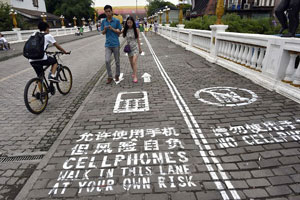

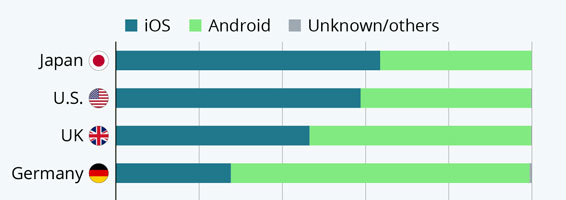

|
Document location https://akdart.com/cell.html Updated January 12, 2026. ©2026 by Andrew K. Dart |