Ethanol is one of those great ideas that aren't necessarily as harmless,
beneficial, feasible or affordable as its proponents claim. The production of ethanol requires a lot of
energy, and takes corn away from farmers and other consumers. Growing lots of corn depends on good
weather, which is not a given. Our country's supplies
of oil
and gas respond to political and economic
pressures, but at this point, crude oil is much easier to acquire than corn -- in quantities great
enough to run millions of automobiles and trucks.
Ethanol is a gasoline additive -- an extender -- but it is not superior to gasoline. The
combustion of ethanol does not produce nearly as much energy per gallon as gasoline. The
production of ethanol (as a replacement for gasoline) is not economically feasible without
government subsidies.
Ethanol can't be sent in an energy-efficient way through pipelines like gasoline can, because it would be
contaminated by moisture along the way. It must be shipped instead by trucks, barges and
railroads. In addition, all that extra corn farming means more fertilizer and pesticide use,
along with increased irrigation. More diesel fuel will be needed to run the tractors and the
harvesters.*
Recently, the price of corn has suddenly increased, which has driven up the price of soybeans and other
food crops. The rising price of corn is the reason for the sudden jump in the price of Cheetos,
Doritos, and everything else that rhymes with Fritos. There has been an outbreak of food riots
around the world because food is in short supply.
Ethanol stands as an example of just another exaggerated claim by utopian environmentalists who have come up
with several other supposedly good ideas that
may not be good at all.
India's
ethanol gambit: A muddled climate policy. India imports nearly 85% of its crude
oil, a major contributor to the country's trade deficit. Theoretically, ethanol made
domestically could replace some imported oil and reduce the imbalance. But the country's
Ministry of Petroleum and Natural Gas admits that the high cost of ethanol production will offset
any reduction in the cost of foreign oil. The bigger issue is mechanical. Engines and
fuel systems designed for lower ethanol concentrations may suffer long-term damage when exposed to
E20. Car makers have warned that vehicles manufactured before 2023 are not fully compatible.
Parts such as fuel pumps, injectors, and seals may degrade faster, increasing maintenance
costs. This burden falls disproportionately on India's middle- and lower-income populations,
who typically drive decades-old vehicles, unable to afford frequent replacements.
Do
not renew Renewable Fuel Standard. Twenty years ago, Al Gore and climate activism
were all the rage. As a part of trendy new efforts to reduce greenhouse gas emissions,
lawmakers established the Renewable Fuel Standard (RFS) requiring a certain minimum amount of
renewable fuels to be blended into the nation's transportation fuel supply every year.
Washington promised the standard would reduce emissions and protect the environment. In
reality, the RFS distorts the energy market by favoring certain "green" sources over others.
It guarantees biofuels like ethanol make up a minimum share of the energy sector, leaving American
oil and gas companies fighting it out for the rest. Americans don't have any more time for
these political games in the marketplace. They need more and more energy — to run
their homes, to drive to the office, and to work their jobs.
Government
will not offer bailout to UK's largest bioethanol plant. The UK's largest bioethanol
plant is set for closure with the loss of 160 jobs after the government confirmed it would not
offer a bailout deal to the facility in Lincolnshire. Owners Vivergo, a subsidiary of
Associated British Foods, had warned that the plant would close without government support, and
sources at the company have told Sky News the wind-down process is now likely to begin. An
ABF spokesperson, which also owns Primark, said the government's decision was "deeply regrettable"
and it had "chosen not to support a key national asset". They added that the government had
"thrown away billions in potential growth in the Humber and a sovereign capability in clean fuels
that had the chance to lead the world".
The Editor says...
Ethanol is no "cleaner" than any other hydrocarbon fuel. If the plant will have to "close
without government support," that means nobody wants what you're selling.
Did
the world's largest car company just make the world's biggest blunder? Ethanol is
hailed as an environmentally friendly fuel because it supposedly generates less carbon during
combustion. Ask any mechanic which fuel provides more engine power: ethanol or
gasoline. And let's not forget the inconvenient truth: producing ethanol requires massive
amounts of water, land, and energy. Some experts argue that when you factor in the entire
production process, ethanol may actually consume more natural resources than petroleum. But
who cares about the details when we're saving the planet?
Biden
Admin Reportedly Set To Greenlight Rule Change That Could Spike Gas Prices — But Not
Until After The Election. The Biden administration is expected to ease seasonal
restrictions on ethanol-gasoline blends but has delayed the change until after the 2024 election to
avoid a price spike, according to Reuters. The rule change stems from a 2022 request from the
governors of Illinois, Iowa, Minnesota, Missouri, Nebraska, Ohio, South Dakota and Wisconsin to
allow the sale of gasoline with 15% ethanol year-round, known as E15 gasoline, lifting current
seasonal restrictions that aim to reduce smog in the summer months, according to Reuters. The
Environmental Protection Agency (EPA) had originally set an effective date of April 28, 2024,
for the changes when the agency sent the proposal to the White House in December, but that is now
expected to be pushed back to 2025. Top oil refiners, including HF Sinclair Corp. and Philips
66, have warned against the change, saying that it would complicate fuel supply logistics and
increase the risk of area shortages, possibly raising prices, according to Reuters. The
ethanol industry has lobbied for the changes, saying that the environmental concerns are exaggerated.
It's
Time For Our Government To Divorce Itself From Its Bad Laws. Ethanol is an industry
that enjoys no natural market. The only reason the ethanol market exists is because of
government mandates. And who are the beneficiaries of this corporate welfare funded out of
your pocket? You? Of course not. No, it's mainly members of the
farm/finance/producers cabal in the form of the Renewable Fuels Association. This ethanol
boondoggle translated into a $41 billion industry in 2021 and is expected to grow to
$124 billion by 2030, money that comes out of your pocket and could be spent elsewhere if it
were not, literally, being set on fire. The worst part of the entire ethanol fiasco is the fact
that not only does it not achieve any of its stated — and oft-changing —
objectives but that it actually causes a wide array of unintended consequences, none of which are
good. Number one is the fact that it drives up the cost of one of the most important foodstuffs
in the world, corn, the price for which has more than doubled over the last 20 years.
The unnecessary expense of ethanol also drives up the price of virtually every other
thing in the economy, from food to transportation to plastics.
The
UK has switched to E10 petrol. Here's what it is and what it means. The US of A
is quite fond of blending ethanol with its petrol, supplementing the fossil-based fuel with some
farm-fresh booze in order to reduce its dependence on foreign oil. But that's America, where
farm subsidies prop up corn production to the point that they use it as a sweetener instead of
sugar. And for making each drop of petrol go further — handy when you're driving a
Yank-spec behemoth. The other argument is to reduce carbon emissions. The idea is that
ethanol has less carbon than petrol — just two carbon atoms per molecule to petrol's
average of eight — so burning it will release less carbon dioxide.
Mercola:
The Stupidity of Ethanol as "Green" Energy. Carbon neutrality is the holy grail of
the biofuel industry. It refers to a product that has net zero carbon emissions. In the
case of ethanol, the corn or soybeans grown to produce it would have to remove as much carbon
dioxide from the environment as is given off when the ethanol is burned. The manufacture and
use of ethanol in the U.S. has been allowed to expand based on the assumption that it's carbon
neutral and therefore far better for the environment than gasoline. However, a 2016 study1 by
professor John DeCicco, Ph.D., at the University of Michigan, showed that such assumptions were
categorically false.
Big Ethanol vs. Electric Vehicles.
One of the more entertaining spectacles in Washington these days is the industrial-policy
competition between the climate and ethanol lobbies. The Biden Administration this week
handed both sides a victory, yet as usual neither is satisfied. The Environmental Protection
Agency on Wednesday finalized its long-awaited renewable fuel standards for 2023 to 2025. The
standards dictate how much ethanol and other so-called biofuels must be blended into the nation's
fuel supply. Refiners have to buy credits if they don't meet quotas, which raises the price
of gasoline. Corn farmers, ethanol producers and Iowa politicians are irate becausethe EPA
didn't increase the mandated volume for conventional renewable fuels. "The rule is totally
inconsistent with this administration's climate agenda because everybody knows that both biodiesel
and ethanol is environmentally positive," Iowa Sen. Chuck Grassley said.
The
Nanny State Stains a Deck. When candidates run for public office — local,
state, or federal — they campaign on some careful blend of their résumés,
their personalities, and their political issues. [...] Candidates don't run on these regulatory
issues, and voters certainly never vote for candidates on the expectation that they will do such
things to them if elected. But it happens every day. For decades, the federal
government has mandated that automotive gasoline include a percentage of corn ethanol, which is
destructive to our vehicles' engines, causes an increase in the price refiners must charge for
their blends, and unnecessarily burns up a necessary food source, raising the prices of
staples (such as cornmeal) on the global market, contributing to the starvation of millions.
This regulation benefits nobody but a few lobbyists and bureaucrats and maybe a couple of politicians.
The
Nanny State Stains a Deck. When candidates run for public office — local,
state, or federal — they campaign on some careful blend of their résumés,
their personalities, and their political issues. [...] Candidates don't run on these regulatory
issues, and voters certainly never vote for candidates on the expectation that they will do such
things to them if elected. But it happens every day.
Ethanol
Subsidies Could Trip Up Debt Ceiling Negotiations. What could possibly be more
important than avoiding the federal government's first-ever debt default? For some Midwestern
Republicans, the answer might be ethanol subsidies. "A bloc of at least eight corn belt
Republicans are a hard 'no' on" House Speaker Kevin McCarthy's (R-Calif.) bill to raise the debt
ceiling unless proposed cuts to ethanol tax credits are removed from the package, Axios
reported Tuesday. That group reportedly includes all four members of Congress who represent
Iowa and at least four other Republican lawmakers from other "corn belt" states. Because
Republicans have a slim 222 [to] 213 majority in the House, any group of five lawmakers can
hold considerable leverage by threatening to vote against a bill. That's the same dynamic that
allowed a small breakaway faction of Republicans to hold up McCarthy's election as speaker in
January — but now there are stakes that actually matter, as the Treasury is tipping
dangerously close to a possible default if the debt limit is not raised in the coming weeks.
Carbon
Capture Is a Woke Fantasy. Private industry is currently developing new processes/technologies to capture
and sequester CO2 from ethanol fermentation plants. Plans are underway for Colorado and Nebraska to pioneer this
process, and to start burying CO2 from ethanol in 2024. Ethanol production is a big business, consuming more than
40% (!) of the U.S. corn crop. Last summer, to help lower gas prices, Biden increased the amount of ethanol that
must be added to gasoline from 10% to 15%. Ethanol's chemical composition is
C3H5OH —
almost a hydrocarbon itself, but for that outlying oxygen molecule. Ethanol is corrosive to car engines, and its
production results in a net loss of energy: "Adding up the energy costs of corn production and its conversion to
ethanol, 131,000 BTUs are needed to make 1 gallon of ethanol ... [which] has an energy value of only 77,000
BTU." The largest players in the CCUS business by far are the Darth Vaders of climate change: oil
companies. For decades, oil and gas producers have injected exhaust, like CO2, and water from well sites back into
the wells to pressurize the rocks and stimulate production. Today, however, carbon capture is being embraced by
oil companies on a massive scale.
The
Democrat War on Fossil Fuels. The Energy Independence and Security Act of 2007 (EISA) makes the business
of refining oil difficult. The law provides broad powers to the EPA. It "directs the EPA Administrator to revise
regulations to ensure that domestic transportation fuel sold or introduced into commerce, on an annual average basis,
contains a specified volume of renewable fuel." The George W. Bush Administration and a bipartisan majority
in Congress enacted the EISA providing authority to the EPA to dictate terms for the blending of renewable fuels in
refineries. In 2021, 13.9 billion gallons of ethanol were blended into gasoline. Unfortunately for
refiners, they were mandated by the EPA to blend 20.17 billion gallons. Since there was a shortfall in EPA
mandated ethanol consumption in 2021, refiners had to purchase Renewable Identification Numbers (RINs) credits to make
up the difference. Each gallon of ethanol produced as a biofuel for blending comes with a D6 RIN. Each
refiner/blender has a quota imposed by the EPA based on its annual mandate and the production capacity of the
refinery. If the refinery blends more than its quota, the surplus RINS may be sold as credits on the market.
If the refinery blends less than its quota, it must purchase RINS to make up the difference. If no RIN credits are
available on the market, they may be bought from ethanol producers. In 2021 refiners had to purchase RIN credits
for 6.27 billion gallons of ethanol and other biofuels they did not consume.
Biden's gas scam.
Just a couple of days ago on Larry Kudlow I again read "gas prices are down." Even the leading minds in the economy
have bought into this. But in reality, gasoline prices are not down. The whole gasoline affair is a
successful con that the Biden administration has so far pulled on Americans. The essence is this: for passenger
cars, which dominate the nation's highways and city streets, ethanol alcohol is not fuel. It takes up space in
your tank; over time, it corrodes the engine. Other than that, it evaporates. You will not get any mileage
out of ethanol; diluted ethanol is simply vodka, and if you fill your tank with vodka, it will not run. The
engines of our passenger cars are designed to run on petrol, a product made out of oil and not out of quickly fermented
wheat, sugar cane, and the like, as is ethanol. The difference in mileage is quite significant, ca. 25%. Nobody
notices because one cannot get pure gas anymore, and thus comparison of the mileage is eliminated.
Ethanol
and Biodiesel: Few Benefits, Many Problems. Accounting for its effects on fuel economy, air quality, and
food prices, biofuels likely produce net harms on balance.
• Ethanol and biodiesel are biofuels made from agricultural products.
• Ethanol has a lower energy density than gasoline, which means vehicles get fewer miles per gallon.
• Per unit of equivalent energy, ethanol produces more carbon dioxide than normal gasoline.
• Ethanol use in gasoline spiked after the banning of methyl tert-butyl ether (MTBE) and the passage
of the 2005 Renewable Fuel Standard program, from 1.5 percent of gasoline consumption in 2002 to 10.3 percent in 2020.
• Ethanol fuels produce more nitrogen oxides (NOx) and other air pollutants, which contribute to
worsening air pollution, especially in summer months.
Ethanol must go!.
In June, the Biden regime raised the amount of ethanol required to be produced in 2022 to 15 billion gallons. The
supposed reason was to "reduce our reliance on foreign oil," which we easily do could do by drilling for more oil. [...] The
claim that ethanol is a renewable fuel is not only dubious, it is a lie. In a study dating back to 2009, a Cornell
agricultural scientist found that an acre of U.S. corn yields about 7,110 pounds of corn for processing into 328 gallons
of ethanol. But planting, growing and harvesting that much corn requires about 140 gallons of fossil fuels. The
energy economics get worse at the processing plants, where the grain is crushed and fermented. As many as three
distillation steps are needed to separate 8 percent ethanol from 92 percent water. Adding up the energy costs of
corn production and its conversion to ethanol, 131,000 Btu are needed to make 1 gallon of ethanol. One gallon of ethanol
has an energy value of only 77,000 Btu. This means that 70 percent more energy is required to produce ethanol than the
energy that actually is in ethanol. Ethanol is not a renewable resource.
Halt
use of biofuels to ease food crisis, says green group. Governments should put a moratorium on the use of
biofuels and lift bans on genetic modification of crops, a green campaigning group has urged, in the face of a growing global
food crisis that threatens to engulf developing nations. Ending the EU's requirement for biofuels alone would free up
about a fifth of the potential wheat exports from Ukraine, and even more of its maize exports, enough to make a noticeable
difference to stretched food supplies, according to analysis by the campaign group RePlanet. About 3.3 m[illion] tonnes
of wheat were used in 2020 as feedstock for EU biofuels, and Ukraine's 2020 wheat exports came to about 16.4 [million] tonnes.
About 6.5 [million] tonnes of maize was also used for EU biofuels, compared with about 24 [million] tonnes exported
from Ukraine the same year.
Why
are we feeding crops to our cars when people are starving? There's nothing complicated about the effects of
turning crops into biofuel. If food is used to power cars or generate electricity or heat homes, either it must be
snatched from human mouths, or ecosystems must be snatched from the planet's surface, as arable lands expand to accommodate
the extra demand. But governments and the industries that they favour obscure this obvious truth. They distract
and confuse us about an evidently false solution to climate breakdown. From inception, the incentives and rules
promoting biofuels on both sides of the Atlantic had little to do with saving the planet and everything to do with political
expediency. [...] As biofuels raise demand for land, rainforests, marshes and savannahs in Indonesia, Malaysia, Brazil and
Africa are cleared. There's a limit to how much we can eat. There's no limit to how much we can burn. All
the major crop sources of biodiesel have a higher climate impact than the fossil fuels they replace. Rapeseed oil
causes 1.2 times as much global heating, soy oil twice as much, palm oil three times. The same goes for ethanol made
from wheat.
Biden
regime mandates more corn ethanol in gasoline to damage the engines of cars and trucks across America. Instead
of using abundant and easily obtained fossil fuels straight from the ground, the Biden regime's Environmental Protection
Agency (EPA) just mandated the highest level yet of corn-based ethanol to be mixed into the nation's fuel supply.
Despite the fact that growing corn for ethanol is highly destructive to the environment (i.e., chemical pesticides and
herbicides, excessive land use, genetic engineering, etc.), Biden and his cronies want more of it grown than ever before so
it can be dumped into your gas tank, destroying your car's engine. In 2022 alone, refiners will need to blend
20.77 billion gallons of ethanol, biodiesel and other "renewable" fuels into the gasoline supply. This, claims the
Resident-in-Chief, will help to stop inflation somehow.
You'll fill up more often, because ethanol yields less mileage per gallon. Biden
administration raises amount of ethanol that must be blended with gas. The Biden administration on Friday set
new requirements that increase the amount of ethanol that must be blended into the nation's gasoline supply but reduce
previous ethanol-blending requirements due to a plunge in fuel demand during the coronavirus pandemic. The
Environmental Protection Agency said it would set the 2022 levels for corn-based ethanol blended into gasoline at 15 billion
gallons. But even as the new rules increased future ethanol requirements, the EPA retroactively reduced levels for 2020
by 2.5 billion gallons and by 1.2 billion gallons for 2021, reflecting the lower amount of ethanol produced and decreased
sales of gasoline during a period when the virus led to a drop in driving.
Ethanol:
a Dumb idea or a Crime — or Both. Expanded use of ethanol — enabled by President Biden's
lifting a summertime ban on fuels with a 15 percent blend — is a poor answer to high gasoline prices and a refusal
to recognize the failures of the corn-based fuel additive. Reuters described the president's action as a win for the
corn lobby, but all others appear to be losers. Shortcomings of ethanol as an alternative to gasoline have been
reported continually since at least 2007 when the U.S. government expanded its requirement that distributors blend ethanol
with fuels to reduce dependence on foreign oil. The additive also has been touted as a way to reduce emissions of
carbon dioxide. "There is a great danger for the right to food by the development of biofuels," U.N. human rights
advocate Jean Ziegler said at the time. "It (the price) will be paid perhaps by hundreds of thousands of people who
will die from hunger." A year later he called the diversion of food crops to fuel production a "crime against humanity."
How
Long Can You Eat if Your Power Goes Out? U.S. fertilizer prices have risen dramatically, in some cases fourfold
in the last few years. This not only creates huge upward price pressures, but impacts usage, potentially impacting
yields. Also Union Pacific has reduced major U.S. fertilizer companies, like CF Industries, one of America's largest,
to shipping about 80% of their potential volumes. This can result in some of America's premier farmlands, the Corn
Belt, not getting adequate fertilizer during the critical spring planting season. Ironically, "Union Pacific has said
it is limiting rail traffic and hiring aggressively as part of a plan to improve service after grain and ethanol shippers
complained about shortcomings." So U.P. is limiting the food supply to further limit the food supply by converting more
corn into ethanol — a devil's twofer. And the Biden administration plans to increase ethanol limits. A
threefer.
New
Iowa law requires more ethanol in state's gasoline. Iowa is the first state in the nation to require most gas
stations to sell fuel with at least 15% ethanol under a bill signed Tuesday by Gov. Kim Reynolds. Reynolds signed
the bill on a farm near Prairie City, about 20 miles east of Des Moines. The Republican governor signed the bill on a
flatbed wagon backed by tractors and corn planters, highlighting what she called a victory for Iowa farmers and biofuels
advocates. The ethanol industry consumes about half of Iowa's corn crop, and the state leads the nation in corn and
ethanol production.
Biden
authorizes the emergency sale of ethanol-based E15 fuel this summer to combat soaring gas prices. The
Environmental Protection Agency issued an emergency waiver for a higher-ethanol gasoline blend on Friday, allowing summertime
sales of the fuel in an attempt to help lower gasoline prices at the pump. The move represents a temporary win for the
biofuels industry and corn farmers, as it will likely expand sales of corn-based ethanol, and a setback for oil refiners,
which view ethanol as competition. It also is an attempt to temper the pace of inflation which has surged to a 16-year
high and bring down gas prices that average $4.159 a gallon nationwide. Rising consumer prices are seen as a major
vulnerability for President Joe Biden's Democratic party leading into the November mid-term elections.
E15
fuel announcement will backfire. The Biden administration has announced the suspension of the rule that
prevented the sale of fuel containing up to 15% ethanol alcohol during the summer months. The current rack price
(wholesale price) of a gallon of ethanol is about 75% of the rack price of a gallon of pure gasoline, so the retail price of
E15 fuel should be cheaper than regular E10 fuel by about 10 cents per gallon, according to the White House.
The additional ethanol will replace some petroleum-based fuel, which will slightly reduce the demand for crude oil and
theoretically lower its price. E15 (also known as Unleaded88) fuel sales have been banned from June 1 to September 15
because alcohol is more volatile than gasoline. The concern was that ethanol evaporates more readily than gasoline in the
summer heat, and then the fumes contribute to smog. President Trump issued an executive order to allow the sale of E15
during the summer to please farmers, but courts overturned the order. This time, President Biden had the EPA issue an
emergency rule permitting summer sales of E15, but environmentalists may challenge this rule in court.
Biden
Infuriates Environmentalists, Oil Refiners By Allowing More Ethanol In Gas To Lower Prices. In his latest
attempt to ease the relentless pain at the pump, President Biden has pulled off something remarkable. He's managed to
infuriate climate activists and the oil and gas industry, all while jacking up demand for America's most vital agricultural
commodity: corn. The president is set to announce Tuesday during a visit to an ethanol plant in a remote town in
Iowa that the EPA will eliminate restrictions on high-ethanol-content gasoline to be sold during the summer months. The
decision hasn't yet been confirmed, but senior administration sources have leaked the news to WSJ and a handful of other
media outlets.
Joe
Biden Announces a Mind-Numbingly Stupid Move on Gas Prices. As has become typical during most Democrat
administrations in the modern era, gas prices have exploded during Joe Biden's tenure. The national average is hovering
around $4.10 a gallon, nearly double what it cost the day Biden was declared the winner of the 2020 election. And while
the White House would love to claim the rise is solely due to Vladimir Putin's invasion of Ukraine, the precipitous rise
began over a year before that. That's largely due to Biden's anti-energy policies. While campaigning for
president, he routinely promised to end the use of fossil fuels. As president, he's shut down pipelines and frozen
federal leases. The United States, after becoming energy independent under Donald Trump, is once again reliant on
foreign tyrants.
Children
of the Corn and the Fraud of Renewable Energy. [Scroll down] Since 2005, Congress has required oil
refineries to add ethanol, mostly from corn, to their gasoline. It's called the "Renewable Fuel Standard" (RFS). [...]
[Mario] Loyola explains how RFS is not only uneconomic, but is destroying the environment. Loyola asserts that "today's
corn-ethanol program is a glaring failure, and it is unconscionable that politicians of both parties are conspiring to keep
it alive despite knowing full well what its problems are." Ethanol has about one-third less energy than does gasoline.
So cars using ethanol get fewer miles per gallon. Flex-fuel vehicles that use E85 get up to 27 percent fewer
miles per gallon. A huge problem with corn ethanol as a fuel for ICE (internal combustion engines) is its EROI, i.e. its
energy return on investment. EROI is the amount of energy produced against the amount of energy used to produce it.
The formula for EROI is the energy output divided by the energy input. An EROI of 1.0 would mean that you're expending as
much energy to produce energy as the energy being produced, so it's would be a wash, a draw, and utter folly to produce energy
with such a low EROI. Corn ethanol has an EROI of 1.5 as compared to gasoline's 11. Because of corn ethanol's
low EROI, you're basically swapping one type of energy for another.
How
To Fix The Ethanol Industry. In the previous column, I described what I believe are the problems with the
nation's ethanol program. In a nutshell, the U.S. government creates demand for ethanol via federal mandate. This
mandate pits states, powerful public interests, and various political groups against each other. As a result,
proponents and opponents fight a never-ending war around these mandates. This means there is year-to-year uncertainty
that impacts ethanol producers. The ethanol mandate is unpopular in states that don't produce much ethanol, in the
refining industry, among environmental groups, and among many food manufacturers (who feel it artificially drives up the cost
of corn). Supporters of the mandate include large swaths of the Midwest, where ethanol supports numerous jobs —
both in the ethanol industry and among corn farmers. This support includes a powerful farm lobby, and a powerful
bipartisan block of farm state senators that consistently supports ethanol.
Stop
the Ethanol Madness. As a way to replace dwindling reserves of oil, ethanol subsidies had a certain brutal
logic, especially if oil prices were going to keep rising with no end in sight. But as a way to address climate change,
the program never made any sense. Corn ethanol may well be worse for the climate than fossil fuels, and the program
does significant damage to both the economy and the environment. Its sole beneficiaries are large agricultural
corporations — and the politicians who serve them. Corn ethanol is the mainstay of the nation's Renewable
Fuel Standard, which was created in 2005 when gasoline prices finally rose again, though that price shock, too, proved
fleeting. The RFS creates a complex web of targets for both corn ethanol and "advanced biofuels." To qualify as
"advanced," biofuels such as biodiesel (from sources such as palm oil and recycled cooking oil) and futuristic cellulosic
ethanol (from sources such as prairie grass and tree bark) must have a significantly lower greenhouse effect than corn
ethanol. The RFS program created both a gradually rising biofuel mandate, and within that mandate, a gradually rising
proportion of advanced biofuels (particularly cellulosic ethanol) relative to corn ethanol, such that advanced biofuels are
supposed to make up the majority of the mandated volume by 2022.
New
study casts doubt on ethanol's climate benefits. A new study is casting doubt on the climate benefits of using
ethanol as a fuel, finding that it may actually contribute more to global warming than gasoline. Researchers found that
emissions from changes in land use to account for the growing demand for corn make corn-based ethanol no cleaner than
gasoline. In fact, they determined that these changes likely make ethanol's emissions at least 24 percent higher than
those for gasoline, according to their study, which was published in the Proceedings of the National Academy of Sciences.
Now
is the Time to Get Serious About Nuclear Energy. Still another policy disaster Democrats have foisted on us is
ethanol. It is the most land greedy of the "green energy' alternatives. Ethanol is a witches' brew of politics,
taxpayer confiscation, mileage reduction, and small-engine destruction. We're creating giant land footprints in a
futile attempt to reduce our "carbon footprints." Land footprints are real problems in the here and now. Carbon
footprints are unproven, hypothetical problems in the distant future. We now devote fully one-fourth of our
corn-growing farmland to the production of ethanol. [...] Coercion is also a necessary part of the ethanol fiasco. In
California it's illegal to use ethanol-free gasoline on public roads. You can buy ethanol-free gasoline for your
lawnmower at only a few locations and at prices even higher than California's already highest prices in the country.
Federal mandates require virtually all gasoline to include 10 percent ethanol. There is pressure to increase that to
15 percent. Even the 10 percent gasoline reduces mileage because ethanol produces only 70 percent of the
energy produced by gasoline. Ethanol takes more energy to produce than it produces.
Environmental regulations strike again: Plans
for $2 billion Washington methanol plant 'effectively ended,' as company terminates lease. Plans for a more
than $2 billion Southwest Washington methanol plant are "effectively ended," according to a Friday [6/11/2021] statement from
Port of Kalama officials, as Northwest Innovation Works — denied a permit by the state this year — will
terminate its site lease. The project, years in the planning, suffered a big setback in January when the state
Department of Ecology rejected a request for a shoreline permit required to build the plant, which would have been one of the
Pacific Northwest's largest users of natural gas. Northwest Innovation officials, in a statement Friday, said in the
aftermath of that permit denial, Washington's "regulatory environment has become unclear and unpredictable." That
statement said the company is assessing "an appropriate path forward," and is developing other projects, including one to
produce hydrogen. The statement did not include information about possible sites for new projects.
Corn Is
the Latest Commodity to Soar. America's biggest cash crop has rarely been more expensive. Corn prices
have risen roughly 50% in 2021 and a bushel costs more than twice what it did a year ago. Corn has been one of the
sharpest risers in the broad rally in raw materials that is prompting companies to boost prices for goods and fueling concern
among investors that inflation could hobble the post-pandemic economic recovery. Lumber prices have shot to more than
four times what is typical, pushing up home prices and obliterating renovation budgets. Copper, a cog of industry found
throughout the home and in electronics, hit record prices Friday. Crude oil hasn't cost so much since 2018 and soybeans
are trading at their loftiest level since 2012.
Corn
Prices Rise 30 Percent So Far This Year. You've likely seen mentions of inflation popping up amid some
MSM discussions. Without a doubt you have seen significant price jumps at your local supermarket. The reason is
simple, JoeBama's economic policies are beneficial to the multinationals, crushing to the domestic U.S. economy and driving
massive increases in prices in a variety of sectors. As a consequence the leftist financial media (almost all financial
media) are churning out deflection points, but if you understand the background you can predictably see the cause and effect.
Not so Green.
[Scroll down] Then we have the biofuels scandals. This is UN-promoted stupidity where forests are logged in
America and shipped across the Atlantic to burn in a British power station; where native forests are cleared in Indonesia and
Brazil to grow palm oil for bio-diesel; and where food grains are distilled to make ethanol fuel for motor vehicles.
Nothing green about any of this.
Trump
Is Totally Caving On The Ethanol Question — Again. One of the more disappointing aspects of Donald
Trump's presidency, at least for me, has been his continued support for both the execrable Renewable Fuel Standard and the
ethanol lobby, particularly in Iowa. Sadly, in a pre-October surprise, the President has handed yet another gift to
those players while dealing yet another blow to America's drivers, boaters and the fossil fuel industry. This weekend,
Trump approved the use of gas pumps designated for 10% ethanol blends for E15, or 15% blends, subject to state approval.
The political component of this decision doesn't even make much sense, to say nothing of the confusion it will cause among
consumers and potential, costly damage to small engines and marine motors. And yet, here we are.
States
ask EPA for nationwide biofuel waiver to help oil refiners weather coronavirus. The governors of five U.S.
states have asked the Trump administration for a nationwide waiver exempting the oil-refining industry from the nation's
biofuel laws to help it survive a demand meltdown caused by the coronavirus outbreak, according to letters seen by
Reuters. The request places Republican President Donald Trump, who is seeking re-election in November, in a tough spot
between the oil and agriculture industries, two important constituencies. They are being particularly hard-hit by the
global pandemic as it decimates energy consumption, breaks transport supply chains and makes labor harder to come by.
Nearly
30% of ethanol plants idled, including four in Minnesota. Four Minnesota ethanol plants are idled and many more
have throttled back production as COVID-19 has sapped gasoline demand, crushing the biofuel industry. U.S. ethanol
production has hit an all-time low. Nearly 30% of the nation's 204 biofuel plants have been idled since March 1, while
many others have slashed production. "The fuel market is just telling us to shut down and not operate," said Randall
Doyal, CEO of Al-Corn Clean Fuel in the southern Minnesota town of Claremont. "Economically, its abysmal."
EPA
looks at suspending ethanol blending requirement. I'm not sure how much this will matter now that we're
basically out of places to store all of the oil that we're pumping, but it's still worth looking this proposal over.
Last week we discussed the possible opportunity available to us if the EPA would agree to at least suspend the mandates of
the Renewable Fuel Standard until the worst of the pandemic is behind us. Getting rid of it entirely would be
preferable, but that would require congressional action that the Democrats would never agree to and it's unclear if the
President could be convinced to support the idea even if they did.
Corn Squeezing. Every time Americans
fuel up their vehicles, they're unwillingly lining the pockets of the politically powerful agribusiness cartels —
as well as foreign ethanol cartels — to the tune of billions through a pervasive but hidden tax on fuel
that forces them to pay for ethanol mixed in with their gas. And soybeans with their diesel. It's
done under the auspices of something called the Renewable Fuels Standard — which is actually a Carter-era
mandate that requires that almost all the "gas" sold in the United States contain at least 10 percent not-gas
(ethanol alcohol, made from corn) in order to "conserve" the actual gas. Same with diesel, much of which is
made — by mandate — from soybean squeezings rather than oil. In fact, the RFS is probably the
single-greatest (and worst) example of corporate rent-seeking in the history of the United States. A mandated "market"
for a product — ethanol (and soybeans) that would have a hard time on the free market, if these
"renewables" had to sell on their merits.
The
Renewable Fuel Standard is killing the environment. According to the National Oceanic and Atmospheric
Administration, this year's "dead zone" in the Gulf of Mexico, where oxygen levels are so low that sea life is killed or
maimed, was larger than three U.S. states. One significant cause is agricultural runoff jettisoned from the Mississippi
River, which feeds the massive algal blooms whose decomposition depletes water oxygen. Like many other ongoing
environmental problems affecting the Midwest, this one is aggravated by the Renewable Fuel Standard. The RFS is
intended to promote the production of biofuels such as ethanol and biodiesel. Designers of the policy envisioned corn
ethanol leading initial growth in biofuel sales, followed by more advanced biofuel varieties that would be made from grasses
or crop wastes rather than food.
End the Failed
Renewable Fuel Standard Experiment. Since 2005, the federal government has required that refineries blend
increasing amounts of ethanol (grain alcohol) with gasoline. There are requirements for cellulosic, biodiesel, and
advanced biofuels, with the rest of the mandate typically being met by corn ethanol since it is the cheapest. The
stated goals of the RFS were to reduce reliance on foreign energy and to move toward cleaner fuel sources. It falls
short on both fronts. Worries about dependence on foreign oil were mitigated by the U.S. shale oil and fracking boom,
exemplifying the sort of innovation and market changes that central planners inevitably fail to account for. The RFS is
worse than unnecessary when it comes to reducing foreign energy consumption, which is itself a goal of dubious benefit.
The RFS works against this objective because meeting the excessive biodiesel mandate has actually required significant imports.
Trump
says farmers will be 'so happy' with new plan to boost ethanol. President Trump said Thursday he's preparing to
announce a "giant package" to boost demand for ethanol, responding to rising concerns in rural America about the
administration's exemptions for refineries from blending biofuels. [...] Agriculture Secretary Sonny Perdue told farmers and
producers in Illinois Wednesday that Mr. Trump will soon announce a plan to "mitigate" the loss of an estimated 4 billion
gallons of ethanol from refinery exemptions granted by the Environmental Protection Agency.
Trump
intervention triggered EPA's surprise biofuel waiver decision: sources. A phone call from US President Donald
Trump last week ended a nearly two-month-long review of the nation's biofuels program, three sources familiar with the matter
said, with the White House siding in favor of oil refiners over corn growers. Trump gave Andrew Wheeler, head of the US
Environmental Protection Agency, the green light for the regulator to announce it had granted 31 small refinery exemptions
out of the 40 applications, saying he wanted the issue off his desk, the sources said.
Corn at the Pump. We don't have
food scarcity in America. We have surpluses. American agriculture inspired an industry of farm equipment and
machinery that is supreme in the world. John Deere. New Holland. Massey Ferguson. So it seemed simple
enough to replace the oil we couldn't extract from the ground with a bi-product of the things we could make grow out of
it. That would be ethanol. And Americans surely did know how to make that. They had been doing it right
from the nation's beginning, turning American corn into American bourbon. Mostly legal. Sometimes not. In
which case it was called moonshine, the scientific and boring name for which is "ethanol." It also works with the
internal combustion engine. The car you drive burns the stuff. So do your lawnmower, chainsaw, and outboard.
With less satisfactory results. Ethanol is not generally kind to two stroke engines. A small engine mechanic
I know says the stuff doesn't just keep him in business. It pays for his vacations.
Trump lifts year-round
ethanol restrictions, could lower gas prices. The Trump administration on Friday [5/31/2019] announced
that it would allow for the year-round sale of gasoline with higher concentrations of ethanol. The action
addresses a rule the Environmental Protection Agency had in place preventing the sale of so-called E15 fuel, which
contains 15 percent ethanol and 85 percent gasoline, between June 1 and Sept. 15. The purpose was to
prevent air pollution and curb dependence on foreign petroleum, but the ban has stopped some retailers from selling E15
at all because of the need to change out pumps.
Waive
goodbye to ethanol. Markets thrive on competition. Unfortunately, this doesn't just apply to real
economic markets. It also applies to markets for bad ideas and political pandering. With approximately 200
Democrats now running for president (we lost count a few weeks ago), the bidding to bribe Iowa caucusgoers is becoming
intense. This is unfortunate not just because it is unseemly but also because the offers are coming at the expense of
the nation's well-being and the environment's health. The worst pander so far comes from Sen. Amy Klobuchar,
D-Minn. When she is not privately belittling her staff in ALL CAPS 4 a.m. emails, Klobuchar is attempting to
gain traction in Iowa by fattening the wallets of ethanol barons. Her specific plan is to stop granting waivers to small
refiners that let gasoline producers out of a small part of the requirement that they mix their product with large volumes of
ethanol, which is economically unnecessary and environmentally harmful.
Climate
and the fate of corn. Corn as a source of food for humans in the U.S. has a buffer in the 30% of the crop that
goes to the ethanol mandate. The focus on climate may also go from being a way to thrash the economy with carbon taxes
to its impact on food prices.
The
Absurdity of Using the Biosphere to Power the Technosphere. There are two main types of biofuel, bioethanol and
biodiesel. The primary sources of bioethanol are corn and sugarcane; the primary source of biodiesel is palm oil.
In both cases, the spread of plantations to grow these crops has devastated some of the most fragile ecosystems on the
planet. From cane ethanol in Brazil, to palm oil in Indonesia, thousands of square miles of rainforest are lost every
year to new plantations. In 2016, for a few brief weeks, the world paid attention to the problems being caused by
biofuel production. That was when forest fires raged across Indonesia, sending a toxic haze across thousands of miles,
making the air barely breathable for millions of people in Borneo, Java, Sumatra, Singapore and Malaysia. The cause of
these fires? Land owners burning rainforests to make room for palm oil plantations. The idea that achieving
alleged "carbon neutrality" is a sufficient benefit to offset the replacement of rainforest with monocrop plantations of palm
trees and sugar cane is ridiculous.
Midwest floods
threaten ethanol supply, could affect prices at the pump. As waters from last week's catastrophic floods in the
Midwest begin to recede, people are getting a chance to assess the damages in the region. Several people have lost
their homes, farms, and livestock. In Nebraska alone, farmers and ranchers face up to $880 billion in losses.
But, the consequences of the devastation are being felt beyond the heartland. Several railroad tracks are damaged,
affecting the shipment of ethanol and, in turn, potentially raising gas prices weeks before summer driving season.
Researchers:
Biofuels mandate may cause more harm than good with plowed-up land. Hundreds of thousands of acres of grasslands and
wild habitat in the Upper Midwest have been plowed up to plant corn and soybeans in the past decade because of demand created
by the government's ethanol mandate, according to a trio of academic researchers who argue that federal biofuels policy is causing
more environmental harm than good. Their study, released Thursday [3/7/2019], found that the shift has destroyed crucial
habitat for monarch butterflies and increased the use of chemical fertilizers, while causing the release of millions of tons of
carbon dioxide — equal to putting about 5 million more cars on the road each year.
How
ethanol threatens energy security. [I]t is disheartening to see the future of small refineries in increasing peril as
government officials wrestle over renewable fuel policies. The crux of the issue relates to federal requirements that compel
corn-based ethanol to be blended into motor fuels as a way to reduce American dependence on foreign petroleum imports. There
is also a laudable green energy component to the ethanol mandate, but it is arguable that as much carbon is emitted through ethanol
production as would be released by fuel combustion alone. The requirement to blend the fuel has been placed on the refineries
by law but most small refineries were built decades ago and lack the capability to produce the mix. As a result, a complicated
system of credits was created under the auspices of the Environmental Protection Agency (EPA), which are a lot like the infamous
cap-and-trade program.
Biofuels
mandate fueling wildlife crisis. More than 10 years ago, the National Wildlife Federation supported
passage of the federal Renewable Fuel Standard (RFS). We agreed with the aspiration to develop cleaner, more
sustainable fuels to help the country gain energy independence while promoting a healthier environment. We were
promised that no habitat would be lost, that the RFS would accelerate development of truly advanced, low-emission biofuels,
and that the program would be halted if adverse impacts occurred. Every one of those promises has been broken, repeatedly.
The ethanol quagmire.
As it does every fall, the U.S. Environmental Protection Agency announced it is mandating even higher levels of ethanol in
our transportation fuel supply while ignoring market realities and the negative impact of the federal Renewable Fuel Standard
on American consumers. The Renewable Fuel Standard, enacted under President George W. Bush in 2005 and expanded in
2007, requires ever-increasing amounts of biofuels to be mixed with fossil fuels each year until 2022. And the EPA has
been issuing mandates each November for more biofuels, particularly ethanol.
Ethanol
Is Bad Science And Bad Policy. It is energy and cost intensive to turn corn into fuel, which is why it cannot
survive without government mandates and subsidies. Though 1994 made ethanol a reality for environmentalists, it was the
Renewable Fuel Standard of 2005, by President George W. Bush and a Republican Congress, that really kicked the industry into
high gear. The Renewable Fuel Standard gave EPA the authority to create quotas for ethanol[,] which forced its use even
though it is less efficient than pure gasoline and results in lower miles per gallon. In 1993, before Vice President
Gore allowed EPA to mandate ethanol, it accounted for less than one-tenth of 1 percent of fuel. It's now 10 percent.
President Barack Obama also did the environment no favors by turning over 5 million acres of land designated for conservation
over to corn farmers to promote ethanol as "green" energy during his time in office, with another million acres of farmland that
switched to corn because the profits were guaranteed by taxpayers. Ethanol does not pass any standard for evidence-based
policymaking and the Trump administration should end 24 years of government wishful thinking by his predecessors rather
than increasing its use.
Trump
to move to allow year-round E15 gas sales. The Trump administration is moving to allow the sale of gasoline
containing 15 percent ethanol year-round, which would help farmers by increasing demand for corn, but faces opposition from
environmental groups and the oil industry. President Donald Trump is expected to make the announcement ahead of a rally
Tuesday in Iowa, the biggest corn-producing state in the nation. Current rules prevent the sale of fuel containing 15
percent ethanol, known as E15, during the summer because it can contribute to smog on hot days.
Want
to feed the world? Stop burning ethanol. The question was posed: "Just how much food value are we
burning up for the sake of this federally imposed silliness?" The answer was found in a paper by D.K. Albino,
published by the New England Complex Systems Institute: "The total amount of ethanol produced in the US in 2011 was
13.95 billion gallons, enough to feed 570 million people that year." Now, that number is so large that it
does not seem real. So your humble narrator made his own research to find "the real number."
EPA
finally admits ethanol mandate is causing environmental damage. The federal requirement to blend ethanol into
gasoline on the theory that it will reduce the hypothetical global warming that hasn't appeared yet has been a joke from the
start. By adding a huge amount of demand for corn, it did push up prices for that commodity, and made vast swaths of
the rural Midwest prosperous, though it has injured poor Mexicans and others who depend on corn for a substantial portion of
their nutrition and driven up the rice of feed used for animals, raising meat prices.
EPA Says Ethanol
Damages The Environment — Isn't It Time To Kill The Program? Amid all the media hoo-ha over
President Trump's latest tweets, tariffs and the Russia investigation, you might have missed a significant report —
the Environmental Protection Agency says ethanol made from corn and soybeans and added to our gasoline has become an
environmental disaster. So why do we continue to make it?
EPA Releases Long Delayed
Report on Ethanol and the Environment. An extensive report from the Environmental Protection Agency found that
including ethanol into the U.S. gas supply is wreaking havoc on the atmosphere and soil. In a study titled "Biofuels
and the Environment: The Second Triennial Report to Congress," the Environmental Protection Agency (EPA) determined
that ethanol derived from corn and soybeans is causing serious harm to the environment. Water, soil and air quality
were all found to be adversely affected by biofuel mandates. "Evidence since enactment of [the Energy Independence and
Security Act] suggests an increase in acreage planted with soybeans and corn, with strong indications from observed changes in
land use that some of this increase is a consequence of increased biofuel production," read a portion of the 159-page report.
EPA says
ethanol harms the environment. Beginning in the 1980s, the federal government has adopted mandates requiring
ethanol be mixed into gasoline in order to stretch out oil supplies and to save the environment. Now the Environmental
Protection Agency has finally admitted that ethanol does more harm than good. The agency finally released a 159-page
assessment, which included this passage, "Evidence since enactment of [the Energy Independence and Security Act] suggests an
increase in acreage planted with soybeans and corn, with strong indications from observed changes in land use that some of
this increase is a consequence of increased biofuel production."
Irony
Alert: EPA Finds Ethanol Is Environmentally Damaging. Amid growing demands from the corn lobby that the
government mandate even more ethanol be blended into the nation's gasoline supplies, new finding call such proposals into
question. One of the chief claims of the corn lobby is that ethanol is a more "green" type of energy because it's
renewable. From there, the argument is extended to claim that it's better for the environment all the way around.
But the conclusions of a study underlying the latest EPA report on the environmental impact of ethanol (seven years in the
making, dating back well into the Obama administration) concludes that the opposite is true. Ethanol produces
significant negative impacts on the environment, in some cases worse than the gasoline it's supposed to be replacing.
The ethanol
gravy train rolls on. Like most people I've spoken with, I have no innate, inflexible antipathy to ethanol in
gasoline. What upsets me are the deceptive claims used to justify adding mostly corn-based ethanol to this
indispensable fuel; the way seriously harmful unintended consequences are brushed aside; and the insidious crony corporatist
system the ethanol program has spawned between producers and members of Congress. What angers me are the legislative
and regulatory mandates that force us to buy gasoline that is 10% ethanol — even though it gets lower mileage than
100% gasoline, brings none of the proclaimed benefits (environmental or otherwise), drives up food prices, and damages small
engines. In fact, in most areas, it's almost impossible to find E-zero gasoline, and that problem will get worse as
mandates increase.
Is
Ethanol Cronyism on the Ropes? Congress created the requirement to blend plant-based ethanol into the nation's
fuel supply supposedly out of concern for greenhouse gas emissions, as well as out of a fear that consumers would become
increasingly reliant on foreign fuels just as global oil prices seemed to be skyrocketing. It was wrong on both
counts. The Government Accountability Office consistently projects that the RFS won't meet its goal to reduce
greenhouse gas emissions. In stark contrast, a 2016 University of Minnesota study finds that an unintended consequence
of the biofuel mandate is that it actually increases net greenhouse gas emissions. As the authors explain, the RFS
creates a "market rebound effect" whereby the mandated expansion of biofuel production increases the overall fuel supply.
This in turn lowers fuel prices, which encourages greater consumption. The lower emissions from biofuel use, based on
Environmental Protection Agency figures, aren't enough to offset the overall increase in fuel consumption. And this
analysis doesn't even get into the debate over the full life-cycle impact of ethanol production.
Here are 1,366 well
sourced examples of Barack Obama's lies, lawbreaking, corruption, cronyism, hypocrisy, waste, etc.. [#247]
The EPA has a very expensive ethanol mandate that applies to all oil refineries. However, in August 2013, it was
reported that Obama had given one oil refinery an exemption from this mandate. This exemption is illegal for two
reasons. First, the exemption was not approved by Congress. And secondly, the Constitution requires that
federal laws apply equally to everyone. In addition, Obama refused to say which refinery it was that received
this exemption, which is completely contrary to his repeated promises of "transparency."
In
concession to ethanol industry, Trump says he backs E15 gasoline year-round. President Trump on Thursday said
the administration will approve year-round sales of gasoline with 15 percent ethanol — a major policy shift for
the federal government that indicates the White House is looking to strike a deal between the biofuels industry and its critics.
Mr. Trump made the declaration in the Oval Office on Thursday morning [4/12/2018]. "We're going to raise it up to
15 percent ... makes a lot of people happy," the president said. "We're going to go to 12 months ... We'll go
from eight months to 12 months."
Quit Digging. EPA with the help
of corn state representatives dug a ditch when they created the ethanol mandate, the renewable fuel standard and then
created renewable identification numbers-RINs — as a mechanism to track compliance with blending
requirements. RINs worked to the advantage of companies with blending capabilities but created a big disadvantage for
independent refiners that had to buy RINs — blending credits. In addition, traders found a way, as they
always do, to turn RINs into a commodity that they could buy and sell and hence turn a profit. Recently, the largest
independent refiner on the east coast declared bankruptcy because of the high cost of RINs. According
Environmental
Illusion and a Public Swindle. According to environmentalists and the Renewable Fuels Association, the ethanol
mandate in the Clean Air Act as modified by the Energy Policy Acts of 2005 and 2007 has resulted in cleaner air and a
reduction in greenhouse gas emissions. In reality, the mandate has produced no real environmental benefits while
enriching corn farmers, large retailers, and ethanol manufacturers and imposing unnecessary and unreasonable costs on fuel
producers and auto manufacturers. It has also had a negative effect on food prices.
Environmental
groups back Ted Cruz, Republicans on overhaul of Renewable Fuel Standard. Green groups were among the loudest
champions for the federal government's sweeping ethanol mandate a decade ago, touting it as a near-magic fuel that could help
ease a climate crisis. But the Renewable Fuel Standard (RFS) that boosted ethanol use has fallen out of favor so badly
that environmentalists now see themselves on the same side of the debate as Republicans such as Sen. Ted Cruz, arguing
that the entire program is deeply flawed and must be completely overhauled. The intense opposition to the RFS from
environmental and conservation groups comes as the White House and congressional leaders work to craft the most serious
reforms the program has seen since it was established more than 10 years ago. As Republicans and oil-industry groups
bemoan the RFS as a job killer in the oil refining sector, environmentalists say their once-high hopes that ethanol could
reduce carbon emissions, preserve land and help fight climate change have been proven wrong.
Good
news: Dems admit ethanol mandate failed — Bad news: Trump promised to save it. Created
as a means to combat so-called climate change, the RFS required that ever-increasing amounts of ethanol be blended into
gasoline. And despite documented evidence of ethanol's damage to consumers and the environment, the RFS became little
more than another taxpayer-subsidized, crony-capitalist, corporate-welfare program where the federal government picks the winners
(Big Corn) and the losers (everyone else). In a sort of good news/bad news announcement last week, key Democrats
behind the biofuel push contained in the Energy Independence and Security Act of 2007 announced that they had "made a
mistake" with the ethanol mandate, and they introduced new legislation to fix it. "The law hasn't worked out as we
intended," said former California Congressman and Chairman of the House Energy and Commerce Committee Henry Waxman.
Following a joint call with reporters, Waxman joined current members of Congress, Rep. Peter Welch (D-VT) and Sen Tom
Udall (D-NM), to introduce legislation that will phase out corn-based ethanol.
The great
rethink of ethanol. For the first time in years, there is an emerging consensus that the biggest racket in
national politics deserves to end. Earlier this month, Sen. Ted Cruz, R-Texas, and 10 other Republican senators
held a luncheon summit at the White House with President Trump with the goal of drastically reforming the Renewable Fuel
Standard, the federal mandate that annually funnels $13.5 billion from the wallets of American fuel and food consumers into
the coffers of agribusiness giants. Before the national nightmare of Obamacare, there was the RFS, the most sweeping
and intrusive federal intervention in the American economy undertaken in modern history. Enacted under President George W.
Bush in 2005 and expanded in 2007, the RFS requires that biofuels, mainly ethanol, be increasingly mixed with gasoline in greater
proportions each year until 2022.
Time
for the ethanol lobby to be put out to grass, Sen. Grassley. The ethanol lobby is talking tough and
issuing ultimatums to the Trump White House. Its message, in brief, is "Don't mess with our federal mandate." If
the White House wants credibility in its free-enterprise talk and promises to drain the swamp, it should tell the ethanol
lobby to get lost. The fight began because refiners are finding it increasingly unaffordable to comply with the federal
ethanol mandate, and if it continues it might kill independent oil companies. The office of Sen. Chuck Grassley,
R-Iowa, came to the White House on Wednesday and sought to dictate terms, telling the executive it could provide whatever relief
it chose to those independent refiners, but it mustn't touch the mandate, officially called the Renewable Fuel Standard.
Get the EPA out of
the way of American exporters. When Americans think of exporting goods, they rarely, if ever, think of
ethanol. But America has a growing ethanol export industry being constrained by the Environmental Protection Agency
(EPA). A few minor changes to rules within the EPA can create a substantial increase in ethanol exports, which means
more work for everyone in the value chain for ethanol from the farmer to tanker. Creating more demand for your product
makes economic sense. The Renewable Fuel Standard (RFS) is a federal program that requires transportation fuel to contain
a minimum amount of renewable fuels. The program originated in the Energy Policy Act of 2005, H.R. 6. The RFS
was later amended with the passage of the Energy Independence and Security Act of 2007, H.R.6. The statute required the
U.S. to use four billion gallons of renewable fuel starting in 2006 reaching thirty-six billion gallons in 2022.
Filling the Swamp
Isn't Draining it!. The ethanol mandate originated in the 1990 Clean Air Amendments and was added as a way of
buying agriculture's support. It was not needed for clean air purposes then and it is not needed for greenhouse
emission reductions now. It's only benefit is to enrich corn farmers and ethanol manufacturers. At the time of
the Clean Air debate, the oil and auto industries urged Congress to set tailpipe emission standards and let the two
industries work together to meet them. Instead, Congress wrote a formula for gasoline into legislation. When the
ethanol mandate switched from being about clean air to climate change, advocates claimed that it would result in lower
greenhouse gas emissions. The evidence demonstrates the opposite.
Trump
Bends The Knee To King Corn. [T]oday's energy picture makes the ethanol mandate entirely obsolete. Thanks
to the fracking revolution, the U.S. is now awash in domestic supplies of oil and natural gas. Oil prices have dropped
and net imports are lower than they've been in more than 30 years. The U.S. could become a net exporter of oil within a
decade. So the idea that replacing some oil with ethanol is vital to national security or stable energy prices is a
relic of a bygone era. Nor is the RFS a win for the environment. In fact, various studies have shown that, when
you consider the entire life cycle of each energy source, ethanol is a bigger polluter than gasoline. A 2014 University
of Minnesota study, for example, found that "corn ethanol is about twice as damaging to the air quality as gasoline."
The Environmental Working Group has called ethanol "a disaster for the climate."
EPA
chief Scott Pruitt has 'epiphany,' sides with ethanol industry in key policy fight. After heavy pressure from
lawmakers and other stakeholders, EPA Administrator Scott Pruitt on Thursday night sided with pro-ethanol lawmakers and said
his agency will abandon many controversial changes to the nation's ethanol mandate — prompting a top biofuels
leader to claim that Mr. Pruitt apparently has had an "epiphany" over the past few days. In a letter to seven key
senators, Mr. Pruitt — who had been critical of ethanol during his time as Oklahoma attorney general —
shot down several major concerns about looming adjustments to the Renewable Fuel Standard (RFS), the federal law that requires
the blending of ethanol with gasoline. The letter comes just days after Sen. Charles E. Grassley, Iowa Republican
and perhaps the loudest pro-ethanol voice in Congress, threatened to hold up nominees for top-level EPA posts if Mr. Pruitt
didn't acquiesce to their demands on the RFS.
Study
finds: Corn better used as food than biofuel. Corn is grown not only for food, it is also an important
renewable energy source. Renewable biofuels can come with hidden economic and environmental issues, and the question of
whether corn is better utilized as food or as a biofuel has persisted since ethanol came into use. For the first time,
researchers at the University of Illinois have quantified and compared these issues in terms of economics of the entire
production system to determine if the benefits of biofuel corn outweigh the costs.
The Ethanol Boondoggle Will Continue.
Agriculture Secretary Sonny Perdue informed reporters this past weekend that one promise Donald Trump intends to keep is his
support for ethanol. At a farming event in Iowa with Republican Senator Chuck Grassley and Rep. Steve King, Perdue
said, "Ethanol is here to stay, and we're going to work for new technologies to be more efficient." Unfortunately, this
is one Trump campaign promise that would have been good to break. The Renewable Fuel Standard — known as the
ethanol mandate — is a classic example of what happens when the government interferes in the marketplace, with an
agenda to boot. Through presidential administrations both Republican and Democrat, the government has heavily subsidized
the production and distribution of ethanol, as well as required a certain amount of its use, in the hopes of making renewable
fuels the next great thing. That hope hasn't been realized.
Trump's
agriculture secretary, Sonny Perdue, declares that 'ethanol is here to stay'. For a few moments, President
Trump seemed like he might back away from the country's costly ethanol mandate. First, Trump tapped an ethanol opponent
to head up the Environmental Protection Agency. Then in February the president plugged market deregulation for the
renewable fuel industry instead of government subsidization. But those hopes officially came crashing down this weekend
when U.S. Agriculture Secretary Sonny Perdue fastened a little pin to his jacket lapel that read "Don't mess with the RFS."
Increasing
number of Americans are willing to drive farther, pay more for ethanol-free fuel. Ethanol's rise over the past
decade has given birth to an under-the-radar market: Americans who are willing to travel miles out of their way and pay
significantly more per gallon for ethanol-free fuel. Like locally sourced food or antibiotic-free chickens and eggs,
so-called E0, or "pure gas," has generated a cultlike following willing to pay a premium. More than 12,000 service
stations across the U.S. and Canada now offer E0, according to pure-gas.org and other groups that track fuel trends.
While federal mandates make finding pure gas somewhat difficult — the vast majority of stations in the U.S. sell
primarily E10, gasoline blended with about 10 percent ethanol — specialists say there is a dedicated market
for the product.
Renewable
energy tax cut rewrite may be uphill battle for GOP. In 2016, renewable energy received $10.9 billion in tax preferences,
compared to $4.6 billion for fossil fuels. A decade ago, fossil fuels got $8.2 billion while renewables pulled in only
$5.3 billion in tax preferences, according to Congressional Budget Office figures recently presented to Congress. The dynamic
began to shift in the early days of the Obama administration. The massive American Recovery and Reinvestment Act, along with ramped-up
production in the wind and solar power sectors, shifted tax preferences toward renewable energy; from 2008 to 2009, for example, tax preferences
for green fuels jumped by nearly $10 billion, from $7.4 billion to $17.1 billion. At the same time, tax preferences for
fossil fuels decreased from $5.5 billion in 2008 to $3.6 billion in 2009.
How
The Ethanol Mandate Is Killing The American Prairie. According to a report by the Organic Consumers Association, 95% of the
240 million acres of prairie land that once blanketed the middle of our country, from Texas to North Dakota, already is gone.
Only isolated pockets of prairie tall grass, some 35 million acres set aside for soil and wildlife conservation, remain. And
that — largely in the Great Plains — is at risk of being destroyed. Among the factors most responsible for this
tragic loss of our prairie heritage is the federal renewable fuel standard, a congressional mandate requiring refiners to mix renewable fuel
(mostly corn-based ethanol) with U.S. gasoline, diesel, jet fuel and heating oil products. The renewable fuel standard has generated a
huge surge in ethanol production, increasing from 9 billion gallons in 2009 to 15.9 billion gallons per year today, according to the
Energy Information Administration. By 2022 the total is projected to reach 36 billion gallons. Ethanol per se is not the
problem, however; Washington's lack of common sense is the problem.
Ethanol
Mandates Mean Big Profits for Big Oil. When the Energy Independence and Security Act of 2007 was signed into
law by then-President George W. Bush, it was well-intended: It would increase America's oil independence and reduce
dependence on foreign oil, it would produce cleaner air, and it would help farmers. The Act required refiners to add
ethanol to every gallon of gasoline they produced. If a refiner decided it couldn't (too costly) or wouldn't (internal
decision) do so, it would be required to buy ethanol credits. Those credits, called RINs (for Renewable Identification
Numbers), are now being traded and reaping hundreds of millions of dollars in gains for the big oil companies. According to
the New York Times, the Act has "inadvertently become a multi-billion-dollar windfall for some of the world's biggest
oil companies."
Green
Pixie Dust Energy Policies. [Scroll down] As to getting all US energy from "clean, renewable" sources by
2050, that is a ridiculous pipe dream. The United States currently plants corn on an area the size of Iowa, to produce
ethanol that accounts for 10% of its gasoline fuel blend. Replacing 100% of US gasoline and diesel with corn ethanol
would require cropland the size of Texas, Oklahoma, Kansas, Colorado and New Mexico combined! Plus massive amounts of
water, fertilizer, pesticides, tractor and truck fuel, and electricity for distilleries.
Ethanol
Harms Cars, the Economy, and the Environment. A new study from the University of Michigan confirms what pretty
much everyone knew all along. Researchers found that biofuels actually create more greenhouse gases than simply using
petroleum, because plants only absorb a fraction of the carbon dioxide released by burning the fuels in the first place.
Moreover, ethanol production and distribution is energy-intensive, throwing off even more greenhouse gases. "When you
look at what's actually happening on the land, you find that not enough carbon is being removed from the atmosphere to balance
what's coming out of the tailpipe," University of Michigan professor John DeCicco said. "When it comes to the emissions
that cause global warming, it turns out that biofuels are worse than gasoline."
Corn:
The Environmental Impact Statement. Is it possible the environmentalists have been praying at the wrong
altar? Is it possible that corn — as a fuel — is a worse pollutant than (gasp!) oil?
The
Rogue EPA's Shocking Disregard For The Law. Under the 2007 law, the EPA was supposed to produce a report every
three years on whether adding corn-based ethanol to our gasoline supply had any benefits — but the EPA didn't do
it. With its own inspector general saying it's breaking the law, the EPA — which did produce one report in
2011 — has now promised it will live up to the deal by producing a new study in 2017. Hey, it's only seven
years overdue! But the EPA says the next one will come out in 2024 — another clear violation of the law.
The
Rogue EPA's Shocking Disregard For The Law. In a report released this week, the EPA's own inspector general claims the
agency has not sufficiently studied the environmental impact of blending ethanol with gasoline, as required by law. The 2007
Energy Independence and Security Act, signed into law by President Bush, required the increased production of biofuels, in particular
ethanol, and mandated it to be blended with gasoline. It was a bad law to begin with, one that unfortunately was bipartisan in
nature. As any mechanic worth his salt will tell you, ethanol use can do serious damage to car and truck engines. More
seriously, an Associated Press investigative report in 2013 found that corn-based ethanol was having far nastier impacts on the
environment than predicted by the EPA and Energy Department.
Greens
Reconsider Biofuels Mandate. Environmentalists who once championed biofuels as a way to cut pollution are now
turning against a U.S. program that puts renewable fuels in cars, citing higher-than-expected carbon dioxide emissions and
reduced wildlife habitat. More than a decade after conservationists helped persuade Congress to require adding
corn-based ethanol and other biofuels to gasoline, some groups regret the resulting agricultural runoff in waterways and
conversion of prairies to cropland — improving the odds that lawmakers might seek changes to the program next year.
EPA
admits never studying effects of ethanol as required by law. When Congress passed the Energy Independence and
Security Act of 2007 it introduced the current levels of controversial and problematic mandates for ethanol fuel blending
which we've been wrestling with ever since. But it also provided a mechanism to monitor the effects of the ethanol
mandate on the environment and the economy which would be reported to Congress every three years.
Who
pays for our renewable fuel policy? America's wildlife. In 2007, with the best of intentions, Congress
passed the Renewable Fuel Standard (RFS) to reduce dependence on foreign oil, accelerate development of sustainable biofuels,
and reduce greenhouse gas emissions. Nine years later, we are living with the severe unintended consequences:
large-scale loss of wildlife habitat (especially native grasslands) and degradation of water quality. Simply put, the
RFS has been devastating for wildlife. This is a government-created crisis and it's time for reform.
Renewable
Fuel Standard: Stealing food to make unnecessary ethanol. The Renewable Fuel Standard (RFS) —
also known as the ethanol mandate — was passed by Congress in 2005 and expanded in 2007. Regardless of market
conditions, it required ever-increasing quantities of biofuel be blended into the nation's gasoline supply —
though the Environmental Protection Agency (EPA) does have the flexibility to make some adjustments based on conditions, such
as availability and infrastructure. At the time of its passage, it was unfathomable that a decade later Americans would
be consuming less gasoline, not more. Instead of requiring a set, or even growing, percentage of ethanol be used, the
law called for an increasing amount of gallons — which has created unforeseen complications. Since the law
was passed, due to increased fuel efficiency and a generally sluggish economy (meaning fewer people are driving to and from
work every day) we've been using less gasoline, not more. Requiring more and more ethanol in less and less gasoline is
not what the original law intended.
5 environmentalist
ideas that have spectacularly backfired. [#3] Ethanol: Perhaps no environmentalist policy has backfired as
vividly and completely as ethanol additives in gasoline. Initially touted by environmentalists as a way to clean up tailpipe
emissions, ethanol mandates have become a labyrinth of red tape strung up by an unholy alliance of food companies like Archer
Daniels Midland and Midwestern politicians trying to buy votes from corn farmers. The overall process of producing corn
ethanol is actually worse for the environment than gasoline. Cellulosic ethanol, another corn-based fuel additive that
was presented as a cleaner alternative to ethanol, has also been found to be dirtier than gasoline.
EPA
Just Declared War On Millions of Car Owners. The EPA's proposal to increase the amount of ethanol that must be
blended into gasoline is a trifecta of regulatory abuse. It will do nothing for the environment, it will do nothing for
energy security, and it could wreck millions of car engines. The decision stems from a misbegotten 2007 energy bill
signed by President Bush that requires ever-increasing amounts of ethanol to be included in gasoline. Not an increasing
percentage, but an actual amount. The EPA's proposal would require refineries to blend in almost 19 billion gallons of
ethanol and other "biofuels" by 2017, which is 700,000 gallons more than they do now.
EPA
seeks to boost ethanol in fuel supply. The Environmental Protection Agency (EPA) wants to increase the amount
of ethanol and other biofuels in the nation's fuel supply. But the volumes proposed Wednesday under the renewable fuel
standard (RFS) still fall under targets written into the 2007 law that created the program. That ended up angering both
the ethanol industry, which wants more of its product to be mandated, and the oil industry, which wants the program rolled back.
Study
Says Ethanol Harms Corn Counties. Opponents of the federal Renewable Fuel Standard (RFS) mandate, which
requires a certain amount of biofuels to be mixed with gasoline annually, often decry the requirement's impact on prices and
car engines, but a new study from researchers at Strata Policy (SP) and the Institute of Political Economy (IPE) at Utah
State University suggests RFS also harms the very farmers the ethanol mandate was designed to help. RFS was created by
Congress as part of the Energy Policy Act of 2005. The ethanol mandate was touted by RFS supporters as a way to boost profits
for farmers in corn-producing regions of the United States. According to the study by SP and IPE, the result has been
just the opposite. The researchers say American taxpayers have spent $58 billion for direct ethanol subsidies alone
since 1980, in addition to the costs added to the economy by the mandate.
Ted
Cruz has a thoughtful conversation with an Iowa ethanol farmer. It might be a bit of a stretch to say that Cruz completely won the man over, or
converted him into a supporter — much is made of the gentleman's wish that Cruz find the votes he needs among Iowa farmers, but that might have
just been polite best wishes, or even a dash of cynical humor. Still, Cruz acquitted himself well during the encounter, spending some five minutes in
patient, thoughtful conversation with someone who came to give him hell. Cruz made informed arguments, demonstrated a clear mastery of his subject,
turned a hostile encounter cordial, and kept the political balloon juice to a minimum.
Running on Empty.
Legally mandating that a certain percentage of fuel used be ethanol is a bad idea for several reasons: First, mandating
ethanol means more land must be plowed to grow corn for fuel. The Department of Energy estimates that if corn ethanol
replaced gasoline completely, we'd need to turn all cropland to corn — plus 20 percent more land on top of that.
Second, requiring ethanol fuel raises the price of corn — bad news for consumers who must pay more for food. Third,
although ethanol's supporters claim burning corn is "better for the environment," that's not true. Once you add the emissions
from growing, shipping and processing the corn, ethanol creates more pollution than oil. Environmental groups such as Friends
of the Earth, the Natural Resources Defense Council and the Clean Air Task Force now oppose its use. Finally, because corn is
grown in America, promoters said ethanol would make us more energy independent. Even if the "independence" argument were valid,
fracking accomplishes much more. (Anyway, it isn't a valid argument. Trade with Mexico and Canada is just fine. We
don't need total independence.)
Ted Cruz v. King
Corn — one righteous fight. Ted Cruz has dared to provoke the ire of one of the most ruthless,
vengeful political forces on the planet. And it's not Donald Trump. The Texas senator has crossed the ethanol
industry in Iowa, which is a little like getting on the wrong side of the Catholic Church in Vatican City. Cruz's core
theme is fighting the "Washington cartel," which would be a lot easier if its tentacles didn't extend all the way into the state
crucial to Cruz's presidential hopes.
Trump,
Cruz, Clinton, Carson, Paul, Christie and the ethanol boondoggle. Cars run on fuel. Politicians run on votes,
and they'll do almost anything to get them. That includes supporting mandates that force us to use ethanol, a fuel made from
corn that Iowa farmers grow. They support ethanol because Iowa is the first state to vote on presidential candidates.
Candidates want to look strong at the start of the race, so every four years they become enthusiastic ethanol supporters.
Even those who claim they believe in markets pander to Iowa's special interests. Donald Trump, who doesn't seem to have a
consistent political philosophy aside from bashing critics and foreigners, now has joined the ethanol-praising club.
Cruz
Right, Trump Wrong on Ethanol. It has been said that if we were getting so-called "alternative" energy from
potatoes instead of corn, the first primary/caucus would be held in Idaho instead of Iowa. As it is, ethanol from corn in the
first state where votes are actually cast in a presidential election has led to endless political pandering in support of a fuel
that consumes more energy than it provides, is difficult to transport, reduces car mileage, can damage auto enegines, and damages
the environment. Presidential contender Sen. Ted Cruz, Republican from Texas, chose not to pander Thursday night [1/28/2016]
in the Iowa debate, drawing the obvious conclusion that if ethanol were so cost-effective and beneficial, its use would not have
to be mandated.
A Soft Civil War. One wag whose
name I've unfortunately forgotten indicated Iowa should get the first primary in the nation or ethanol subsidies, but not both. The point is well
taken. With the exception of only Cruz to my knowledge, candidates desiring an early win and momentum promise to keep the subsidies going.
Ethanol is the Anchor Baby of our
Economic System. Energy is the lifeblood of a free economy. Much like immigration stands at the nexus of our culture, security and
fiscal solvency, energy stands at the nexus of the bread and butter economic issues — jobs, income, and cost of living. Rather than
allowing Americans to use our freedom to purchase the best form of fuel, the Washington cartel ethanol lobbyists have violated our sovereignty as
individual consumers and used the boot of government to mandate that we only purchase fuel blended with their ineffective product.
Do Emotions Trump Facts? With the Iowa caucuses
coming up, it is easy to understand why Iowa governor Terry Branstad is slamming Trump's chief rival, Senator Ted Cruz, who has
opposed massive government subsidies to ethanol, which have dumped tons of taxpayer money on Iowa for growing corn. Iowa's Senator
Charles Grassley has come right out and said that is why he opposes Senator Cruz. Former Senator Bob Dole, an establishment
Republican if ever there was one, has joined the attacks on Ted Cruz, on grounds that Senator Cruz is disliked by other politicians.
Levin
Explains Trump's Crony-Capitalist Iowa Ethanol Pander. Conservative Review Editor-in-Chief Mark Levin
explained why Donald Trump, the supposed anti-establishment candidate, is siding with the establishment on the ethanol
mandate. It has everything to do with trying to pander for votes. [Audio clip.]
Crony
Iowa Governor Hates Ted Cruz Because His Family Makes Big Money Off Ethanol. The Governor of Iowa wants Ted Cruz defeated.
He says Iowans would be hurt by Ted Cruz were he to get elected. Why? Cruz opposes the ethanol renewable fuel standard and wants to
phase it out. It turns out that Branstad's son is paid by the ethanol lobby and has been trailing candidates demanding they support ethanol.
What
has Donald Trump Done for Sarah Palin? Meaning, what has Trump done to promote the values that Palin's supporters have been
advocating for the past eight years? [...] The former Alaskan governor also promised Trump would stand up to "special interests" if
he becomes president. Well, wouldn't now be a wonderful time for Trump to start? There is only one special interest in Iowa,
where Trump and Palin rallied together last night: ethanol. Instead of pledging to put an end to the federal subsidies and
the mandates controlling that industry, Trump has blasted his rival Ted Cruz for having the audacity to do just that. Trump isn't
going to stop the influence of special interests; he is the special interest.
Trump calls for higher ethanol
mandate. Donald Trump said Tuesday [1/19/2015] that federal regulators should increase the amount of ethanol blended into the nation's gasoline
supply. Speaking at an event hosted by the Iowa Renewable Fuels Association, Trump, a real estate mogul and the front-runner for the Republican
presidential nomination, said the Environmental Protection Agency (EPA) ought to follow the ethanol volumes Congress set in 2007.
A
Profile In Courage In Iowa: Cruz Won't Bow To Ethanol Lobby. Ted Cruz is leading the Republican polls in the
Hawkeye State despite his opposition to the federal mandate requiring gasoline to be blended with 10% ethanol. He considers
the mandate to be a form of corporate welfare — which it is. The Agriculture Department program that requires
the blending is known as E10. The industry is now lobbying for a 15% mandate, or E15. At that level, ethanol could
seriously damage car engines while raising costs at the gas pump. Recent studies have also questioned whether there's any
environmental benefit to ethanol, and even many green groups oppose forcing people to put corn in their tank.
How
Congress Messed Up Ethanol. The year was 2007. America was importing more than half its oil. President
George W. Bush jumped aboard the bandwagon, saying that America was "addicted to oil" and promised to make fuel from switchgrass.
Congress responded with the Energy Independence and Security Act of 2007, which was mainly aimed at increasing the use of biofuels.
At the time, U.S. consumption of biofuels — almost all ethanol — was 4.7 billion gallons. The law mandated
that this consumption should rise gradually to 36 billion gallons by 2022. Moreover, over 21 billion gallons were to come
from non-cornstarch products — sugar, biodiesel or cellulose, fuels that barely existed at the time. This was indeed an
ambitious goal. The amount of corn ethanol was limited by the 10 percent "blend wall," whereby refiners and automakers argue
that if ethanol exceeds 10 percent of the gasoline mix it begins to damage engines by eroding aluminum parts in the fuel chain.
Back in 2007 when ethanol production was less than 1 percent of gasoline consumption this, didn't seem to make much difference.
But as farmers converted their land to corn production and output rose, it began to be a problem.
Limbaugh,
Levin weigh in on Trump's flawed ethanol stance. Last week I brought up the sticky question of how King Corn
was investing big dollars in going after Ted Cruz over his rejection of government subsidies for ethanol and the Renewable
Fuel Standard and the fact that Donald Trump had taken a very different position on the subject. In fact, he not only seemed
to come out in favor of ethanol subsidies, but used that as a line of attack against Ted Cruz. (One of the only candidates to
consistently be on the right, conservative side of this question.) Well, I wasn't the only one to notice this.
EPA
boosts amount of ethanol in gasoline supply. The Obama administration is boosting the amount of corn-based
ethanol and other renewable fuels in the U.S. gasoline supply despite sustained opposition by an unusual alliance of oil
companies, environmentalists and some GOP presidential candidates. The Environmental Protection Agency on Monday [11/30/2015]
issued a final rule designed to increase production of ethanol to be blended with gasoline through 2016, a decision that could
reverberate in Iowa's crucial presidential caucuses.
Obama's
EPA ignores congressional mandate for ethanol in gasoline. The Obama administration backed off its so-called
ethanol mandate Monday, dealing a blow to President Obama's promise of a green energy revolution just as he and other world
leaders opened a new round of historic climate change talks in Paris. The Environmental Protection Agency's latest round
of ethanol mandates — known as the Renewable Fuel Standard (RFS) and initiated during President George W. Bush's
time in office — came under fire from all sides, with proponents of ethanol blending saying the rules fall far short
of what the nation needs to continue cutting greenhouse gas emissions and from critics who say the entire system is flawed and
must be scrapped.
Last
Call for Ethanol. A federal program, once launched, is impossible to kill. It doesn't matter if the scheme wastes
money. It doesn't matter if the program doesn't work. It doesn't even matter if the program does the very opposite of what it
is supposed to do. Every government program enters the world with an army of fairy godmothers prepared to fend off any effort
to cut the cord. Hence, the staying power of ethanol.
Ethanol
Study Concludes the EPA's Biofuel Standard Created 'More Problems Than Solutions'. On the 10-year anniversary
of the federal Renewable Fuel Standard, a team of researchers released a study that concludes the policy created "more
problems than solutions." The report issued last week — "10-Year Review of the Renewable Fuels Standard" —
by Drs. Daniel De La Torre Ugarte and Burton English at the University of Tennessee's Institute of Agriculture takes a look at the
environmental, economic and industry effects of the RFS.
Green energy company fights for life after getting billions from
feds. Abengoa, a renewable energy multinational company headquartered in Spain, has been a favorite of the Obama
administration in getting federal tax money for clean energy projects. Since 2009, Abengoa and its subsidiaries, according
to estimates, have received $2.9 billion in grants and loan guarantees through the Department of Energy to undertake solar
projects in California and Arizona — as well as the construction of a cellulosic ethanol plant in Kansas.
Ethanol And Motorcycles. Pardon the bureaucrat
speak, but on May 29 the Environmental Protection Agency: "announced proposed volume requirements under the
Renewable Fuel Standard (RFS) program for the years 2014, 2015 and 2016, and also proposed volume requirements
for biomass-based diesel for 2017. The proposal would boost renewable fuel production and provide for
ambitious yet responsible growth over multiple years, supporting future expansion of the biofuels industry."
That's how your government speaks to you; Like they are Foghorn Leghorn and your name is "Boy."
Corn
Ethanol Is Worse Than Keystone. For years, environmental activists have opposed the
Keystone XL pipeline, claiming that development of Canada's oil sands will be "game over for the
climate." But if those same activists are sincere about climate change, why aren't they getting
arrested outside the White House to protest the use of corn ethanol? That's a pertinent question,
given a new analysis from the Environmental Working Group, which finds that corn ethanol produces more
carbon dioxide than Keystone XL would — presuming, of course, that the pipeline ever gets
built. Making the issue even more relevant, last Friday, the EPA outlined new requirements for
the minimum amounts of ethanol that retailers must blend into their gasoline.
Ben
Carson: Let's slash Big Oil to pay for ethanol. Well this is certainly disappointing. [...] Newly
announced presidential contender Ben Carson was out talking to the Cornhuskers and the inevitable subjects of
ethanol, the Renewable Fuel Standard (RFS) and subsidies for King Corn came up. The answer from the
esteemed neurosurgeon was dismaying even compared to some of the other pandering we've seen previously.
The Editor says...
Doctor Carson is apparently far smarter and nicer than almost any other politician, but he's not
going to be the President of the United States due to political inexperience. But even so,
this pandering to the ethanol lobby would a deal breaker for any Republican candidate.
Corn,
Scorn and Policy Porn. Imagine a government energy program that is such a disaster
that the Environmental Working Group and the American Petroleum Institute both oppose it. The
anti-poverty group ActionAid USA wants to get rid of it, as does the pro-business Competitive Enterprise
Institute. Sen. Dianne Feinstein, D-Calif., wants to end it. So does Sen. Pat Toomey,
R-Pa. They're both sponsors of the Corn Ethanol Mandate Elimination Act of 2015. Feinstein
pans the ethanol mandate as "both unwise and unworkable."
GOP
presidential hopefuls split over federal biofuels mandate. Free market conservatism
collided with farm-state jockeying this weekend in Iowa, where several GOP presidential hopefuls
said they support the federal fuel mandate that has boosted Iowa's all-important corn market — arguably
at the expense of consumers' wallets and engines. Wisconsin Gov. Scott Walker, former Florida Gov. Jeb
Bush and Sen. Lindsey Graham all told a Saturday [2/7/2015] gathering in Des Moines that they support the
federal Renewable Fuel Standard, or RFS, that has required corn-based ethanol to be blended into almost every
gallon of gasoline sold in the U.S.
If
Walker can't stand up to Iowans, how can he stand up to the Islamic State? Wisconsin
Gov. Scott Walker, R-Wis., was speaking to Iowa farmers over the weekend and, as the Washington
Examiner's Rebecca Berg reported, he shifted his position on ending the mandate that requires
gasoline to be blended with ethanol. Though he previously indicated opposition to the mandate,
now visiting Iowa as a likely presidential candidate, Walker said, "It's something I'm willing to go
forward on, continuing the Renewable Fuel Standard." The fact that he later floated the possibility
of phasing it out didn't help the damage that was done to his reputation. The ethanol mandate has
little rationale beyond being a big government regulatory handout to corn farmers, many of whom
happen to reside in a state with the first presidential nominating contest.
Ethanol: The GOP-Supported
Rip-Off. Can someone explain why the "party of limited government" continues, with a
straight face, to support ethanol? Republican Sen. Chuck Grassley of Iowa says about the
heavily subsided product, "Everything about ethanol is good, good, good."
How
biofuels contribute to the food crisis. Each year, the world demands more grain, and
this year the world's farms will not produce it. World food prices have surged above the food crisis
levels of 2008. [...] Demand for biofuels is almost doubling the challenge of producing more food.
Since 2004, for every additional ton of grain needed to feed a growing world population, rising
government requirements for ethanol from grain have demanded a matching ton. Brazil's reliance on
sugar ethanol and Europe's on biodiesel have comparably increased growth rates in the demand for sugar
and driven up demand for vegetable oil.
Biofuel
emissions "worse than fossil fuels" — report. Biofuels, widely seen as the
green way to reduce greenhouse gas emissions, may in some cases be worse for the climate than fossil
fuels, a report says. Not only will they cost motorists more than ordinary petrol and diesel and
increase fuel consumption: they will also make food more expensive. [...] Rob Bailey, the author of
the report, entitled The Trouble with Biofuels, says: "Current biofuels are at best an expensive way
of reducing emissions. "At worst they produce more emissions than the fossil fuels they replace and
contribute to high and unstable food prices. Policymaking needs to catch up with the evidence base."
Corn
Ethanol Is Of No Use. OK, can we please stop pretending biofuel made from corn is
helping the planet and the environment? The United Nations Intergovernmental Panel on Climate Change
released two of its Working Group reports at the end of last month (WGI and WGIII), and their short
discussion of biofuels has ignited a fierce debate as to whether they're of any environmental
benefit at all.
Ethanol
policy reform — the rare place where environmentalists and energy advocates agree. For
the past two years, the EPA has failed to meet the statutory deadline under the Renewable Fuel Standard (RFS),
requiring the agency to tell refiners how much ethanol to blend into the nation's motor fuels. In November
2013, the EPA did make an attempt to announce the proposed 2014 blend levels — which by then were
already months past the legally mandated deadline. The EPA surprised and pleased the RFS opponents when it
utilized its authority to adjust the mandate and took market conditions into consideration. The EPA set the
proposed 2014 standard to a level lower than 2013's, even though the law requires increasing amounts. Ethanol
producers, who were expecting the usual uptick, loudly opposed the reduction. They made so much noise, the EPA
agreed to reconsider. To date, the 2014 standards have not yet been announced.
Time
to Shuck the Big Corn Giveaway. By most reasonable measures, America's corn farmers
have had a fantastic year. Their 14-billion-bushel harvest represents the largest yearly haul of any
crop by any single country in world history. Corn farmers are the last people who should need your
tax money, but that's exactly what they're getting.
Methanol —
the Fuel in Waiting. It's the fuel that would make the best and most convenient
substitute for gasoline in automobiles and small trucks. It has about two-thirds the energy value of
gasoline, but its high octane rating pushes this up above 70 percent. It is a liquid at room
temperature and therefore would fit into our current gasoline infrastructure — as opposed
to compressed natural gas or electric vehicles, which require a whole new delivery system. It is
also much less cumbersome than corn ethanol, which now requires nearly half the annual corn crop
produced in the U.S. to provide only 3 percent of our energy needs. Methanol made from
natural gas would now sell for about $1 less per gallon than gasoline. Methanol can also be
made from food waste, municipal garbage and just about any other organic source.
Study
Links Ethanol to Higher Air Pollution. Ethanol may be increasing air pollution in
Brazil, scientists report in a peer-reviewed study. The study may have public policy implications in
the United States, where federal law requires the transportation fuel mix to contain approximately
10 percent ethanol. Sugar cane-based ethanol, which is heavily subsidized by the Brazilian
government, powers many of the cars in Brazil. However, a recent study of Sao Paulo air conditions
found ethanol-powered vehicles may be linked to the city's smog problem. When higher ethanol prices
induced drivers to switch from ethanol to gasoline, the city's smog levels declined, scientists found.
Ethanol is all about politics, not the environment. An
ethanol surprise in Iowa? [Scroll down] The real story is that desperate Democrats are doing
everything in their power in Iowa and other states to keep the U.S. Senate under their control. With
active cronyism between ethanol industry representatives and the White House, an October Surprise to
keep Iowa in the blue column is rumored. This surprise would be an increase in the amount of
ethanol required to be blended into gasoline this year. And it could be just the ticket to
get Iowa ethanol producers and corn farmers, who are harvesting a record-breaking crop, solidly
behind the Democratic candidate.
The
clean fuels' program is a hidden tax on gas. Many politicians on the West Coast have
fallen in love with untested policies and programs they say will help solve global warming. Many of
these policies are mind-bogglingly complicated. What, after all, is a low carbon fuel standard
(LCFS), or clean fuels program? And how exactly do programs like "cap and trade" work? And, perhaps
most importantly, how do these policies impact you, the consumer? Here's the dirty little secret the
politicians don't want to talk about: All of these policies are going to make it more costly to
produce gasoline and diesel.
EPA
faces '14 accusations on ethanol. Groups like the American Petroleum Institute (API)
always want the mandate to be lowered to increase the amount of crude oil in the supply, while some
green groups also want to abolish the mandate, but for other reasons. The Environmental Working
Group, for instance, argues that the Renewable Fuel Standard encourages farmers to cut down more
trees so they have more fields to grow corn — a process that may actual use more energy
and emit more greenhouse gases than traditional fuels. But the National Corn Growers Association
and other pro-ethanol groups want the mandate to be raised.
http://heartland.org/media-library/QPR/QPR-2014-1Q-web.pdf.
Ethanol and other biofuels remain substantially more expensive than gasoline despite the promises of renewable fuels advocates.
Ethanol delivers fewer miles per dollar while being more damaging to fuel systems and auto parts than gasoline. Nevertheless, the
federal government and many state governments heavily subsidize ethanol and other biofuels and require consumers to purchase billions
of gallons of these expensive products.
Study
Links Ethanol to Higher Air Pollution. Sugar cane-based ethanol, which is heavily
subsidized by the Brazilian government, powers many of the cars in Brazil. However, a recent study
of Sao Paulo air conditions found ethanol-powered vehicles may be linked to the city's smog problem.
When higher ethanol prices induced drivers to switch from ethanol to gasoline, the city's smog levels
declined, scientists found. Approximately 40 percent of automobiles in Sao Paolo run on
either gasoline or government-subsidized ethanol. When the percentage of those flexible-fuel
vehicles using solely gasoline rose from 14 percent to 76 percent, ozone pollution dropped by
20 percent, the researchers reported.
Ethanol from
Corn Residue Increases CO2 Emissions. Cellulosic ethanol made from corn residue emits more carbon dioxide than gasoline,
according to a newly published, federally funded peer-reviewed study. The findings are a severe blow to the biofuel industry, as
fuels must reduce carbon dioxide emissions by 60 percent relative to conventional gasoline to qualify as a renewable fuel for
federal subsidy programs.
Water
shortages leading right back to corn and ethanol. The central plains have seen some
relief this spring with bands of heavy rains moving through, but the 2014 season has been the
exception rather than the norm. The 2012-2013 drought season saw more and more people having
trouble accessing potable ground water, or even sufficient moisture for agriculture. It's long been
known that this problem is exacerbated by expanding corn production, driven by a need to feed the
government mandated ethanol market. But a recent study from an unusual source sheds some new light
on this situation.
Climate Change
Induced Corn-mageddon? According to NOAA's own data, long-term drought has all but disappeared in
the U.S. corn belt, and it is only getting wetter and wetter over time. And yes, that trend towards
massively anti-drought conditions in the corn belt is also massively statistically significant. We find
the exact same highly statistically significant trends towards far less drought in the corn belt since the late
1800s when we look at the 48-month, 36-month, 24-month, annual, May-October, or summertime PDSI. It is
absurd to suggest that droughts in the American corn belt are becoming more frequent or severe due to climate
change. The exact opposite is taking place.
Ethanol Nonsense.
2004 was a record year for U.S. production of both corn and soybeans. If the entire record corn
crop was converted to ethanol and the entire soybean crop was converted to biodiesel fuel, these
two alternative fuels would equal only 12 days of U.S. petroleum consumption!
The Plight of the Monarch Butterflies.
The milkweed plant likes dry and sunny places the like of which you used to find along hedge rows,
farm fields, countryside road ways, meadows and hills with poor soil. The "corn for fuel," i.e. the
"bio-ethanol" mandate of the U.S. has changed all that. It's not just bad for the monarchs, it's
bad all around, even for your car engine. In order to grow the large additional quantities of
corn required to add (after conversion to ethanol) to common gasoline, farmers started to plow
under the very last scrap of land not previously used for agricultural production. With that, the
milkweed and the monarchs are doomed.
A World Turning
Against Biofuels. The United Nations' Intergovernmental Panel on Climate Change has
suddenly reversed its support for biofuels. The panel now admits growing crops for fuel "poses
risks to ecosystems and biodiversity."
Solving the Midwest
Ethanol Problem. The roots of the ethanol industry's current problems go back to
1978, when the United States Environmental Protection Agency (EPA) set the maximum legal limit of
ethanol in motor gasoline at 10 percent ethanol. Three decades later the RFS deemed that
increasing amounts of ethanol had to be blended into the gasoline supply, but because US gasoline
consumption has been falling, the 10 percent limit of ethanol in the gasoline supply was
reached. As the gasoline pool was approaching that limit — commonly referred to
as the "blend wall" — the ethanol lobby requested that the EPA allow 15 percent
ethanol blends.
A Post-Mortem
of Big Corn's December Defeat. Last November, America's ethanol policy got a mite smarter. The EPA walked
back on some of the mandates it had in place for fuel refiners to blend in supposedly "green" ethanol, part of the country's
Renewable Fuel Standard. Since then, the ethanol lobby, affectionately (or not) called "Big Corn," has been railing
against the decision as one coerced by the far more insidious-sounding "Big Oil" lobby. But as Reuters reports in
an in-depth look back on the process, this was more complicated than just a tug of war between two special interest giants.
New Study:
Ethanol is Bad for Health and Environment. A new study appearing in the peer-reviewed
journal Environmental Science and Technology April 18 finds ethanol a health hazard that would
likely increase the number of respiratory-related deaths and hospitalizations. Ethanol is touted as
a "green" alternative to gasoline, but the author of the study, Mark Jacobson, says, "It's not
green in terms of air pollution." Jacobson is a civil and environmental engineering professor at
Stanford University, who studied atmospheric conditions in 2020 if all vehicles ran on ethanol.
Evidence Piles
UP Against Ethanol. Ever since the Arab oil embargo of the 1970s, ethanol has been
touted as a substitute for gasoline that would reduce our dependence on imports of foreign oil. But
ethanol was found to be a net energy loser. It requires more energy to produce than you can get
from burning the ethanol. Two studies by panels of the U.S. Dept. of Energy in 1980 and 1981 came
to this conclusion. Those studies were reviewed by 26 independent scientific experts, who
unanimously agreed with their findings. Many other studies since produced the same result.
Ozone
Levels Drop 20 Percent With Switch From Ethanol To Gasoline. A Northwestern University study by an
economist and a chemist reports that when fuel prices drove residents of São Paulo, Brazil, to mostly switch
from ethanol to gasoline in their flexible-fuel vehicles, local ozone levels dropped 20 percent. At the
same time, nitric oxide and carbon monoxide concentrations tended to go up. The four-year study is the
first real-world trial looking at the effects of human behavior at the pump on urban air pollution. This
empirical analysis of atmospheric pollutants, traffic congestion, consumer choice of fuel and meteorological
conditions provides an important tool for studying other large cities, such as Chicago, New York, London and
Beijing. Previous studies mainly have consisted of computer simulations of atmospheric chemical reactions
based on tailpipe emissions studies.
The Ethanol Disaster.
America's ethanol requirement destroys the environment, damages car engines, increases gas prices, and contributes
to the starvation of the global poor. It's an unmitigated disaster on nearly every level. Start with
the environment. After all, when the renewable fuel standard (RFS), which since 2005 has set forth a minimum
annual volume of renewable fuels nationwide, was first set, one of the primary arguments for mandating ethanol use
was that it was a greener, more environmentally friendly source of fuel that released fewer greenhouse gasses into
the atmosphere. This turns out to be complete hogwash. Researchers have known for years that, when the
entire production process is taken into account, most supposedly green biofuels actually emit more greenhouse
gasses than traditional fuels.
Fuels made from corn actually worse than gasoline, study says.
According to a new study, commissioned by the federal government, says that biofuels made from the leftovers
of harvested corn plants are actually worse than gasoline — when it comes to global warming in the
short term.
Partners
in Ethanol Crime. Ethanol is losing political steam on the left and right, but the
fuel retains a powerful patron in the Environmental Protection Agency. On Wednesday the EPA
retroactively reduced the 2013 gasoline-blending mandate for cellulosic ethanol to 810,185 gallons
from six million. If that sounds like a big cut, 810,185 gallons is precisely every last drop the
industry managed to produce. The 2014 mandate is nonetheless pegged at a preposterous 17 million
gallons. An even better measure of the EPA's tie-up with the ethanol lobby is the protracted delay
of rules meant to keep criminals out of the alternative fuels markets. Ethanol has always been a
scam on taxpayers but the mandate has proved to be an invitation for mass fraud.
It's
Final — Corn Ethanol Is Of No Use. Can we please stop pretending biofuel
made from corn is helping the planet and the environment? The United Nations Intergovernmental Panel
on Climate Change released two of its Working Group reports at the end of last month, and their short discussion
of biofuels has ignited a fierce debate as to whether they're of any environmental benefit at all.
Automakers continue
to quietly void warranties if you use E-15 gas. It seems to be a growing trend that motorists are shopping around for gas stations
which offer ethanol free gas, even if they have to pay a bit more per gallon to get it. Distributors are noticing, and more and more
stations are featuring this option.
Get the feds out of our gas
tanks. The U.S. Environmental Protection Agency has proposed reducing the amount of ethanol and other biofuels that must
be mixed into the nation's fuel supply. Fuel blenders would be required to use 15.21 billion gallons of biofuel in 2014,
down from 16.55 billion gallons last year. That's a good sign that the EPA finally recognizes the federal mandate for
ethanol is creating economic distortions. But the mandate should be cut much more significantly, with the ultimate goal that
it be eliminated.
EPA admits the ethanol mandate has
become unrealistic. A top Environmental Protection Agency official admitted in front of Congress that the federal ethanol blending
mandate has put undue requirements on oil companies. "We're recognizing that the blend wall has been reached," Christopher Grundler, head
of the EPA's transportation and air office, told senators in a hearing on the Renewable Fuel Standard (RFS). "Reaching the blend wall
clearly presents constraints to using higher ethanol quantities because of the infrastructure and other market limitations," Grundler said.
U.S. Senators introduce bill to eliminate corn ethanol
mandate. A group of 10 U.S. Senators introduced a bipartisan bill on Thursday [12/12/2013] to eliminate the corn ethanol mandate, arguing that
current law raises the cost of food and animal feed and damages the environment.
Price of Chicken Reaches All-Time High
in U.S.. The price for fresh whole chickens hit its all-time high in the United States in October, according to data
released last week by the Bureau of Labor Statistics. In January 1980, when BLS started tracking the price of this commodity,
fresh whole chickens cost $0.69 per pound. By this October 2003, fresh whole chickens cost $1.54 per pound.
The Editor says...
What is the primary ingredient in chicken feed? Corn.
Ethanol
takes policy blow from the Environmental Protection Agency. Once touted as a climate-friendly renewable alternative to foreign oil, the corn-based liquid
ethanol has been exposed as an environmental and economic mistake. Lured by federal subsidies, Midwestern farmers have devoted millions of acres to corn that
might otherwise have been devoted to soil conservation or feed-grain production.
Ethanol Is Net Energy
Loser. In his State of the Union speech, President Bush called for increasing ethanol
as a way of reducing petroleum consumption and dependence on foreign oil. It will do just the
opposite. Many studies over the years have concluded that it takes more energy for growing the
corn (for farm machinery, pesticides, fertilizers) and distilling the alcohol than you can get from
burning the ethanol that is produced.
In a first, EPA cuts ethanol standard.
In a move likely to anger corn farmers and their congressional representatives, the Obama administration Friday [11/15/2013] proposed the first-ever
cut in the amount of corn-based ethanol and other biofuels that must be mixed into the nation's gasoline, with the Environmental Protection Agency
concluding that the mandate set by Congress just six years ago is proving difficult and perhaps impossible for gas producers to meet. The move
could spark a fight from corn growers and those who have argued the ethanol mix was key to reducing the nation's dependence on foreign oil suppliers.
EPA proposes reducing biofuel mandate.
The Obama administration on Friday [11/15/2013] proposed to reduce the amount of ethanol in the nation's fuel supply for the first time, acknowledging
that the biofuel law championed by both parties in 2007 is not working as well as expected.
AP: Obama admin's
corn-ethanol policies are pretty terrible for the environment. As promised, the Associated Press has recently fallen out of favor with
Big Ethanol (tragedy strikes!) over their big report released today that finally, earnestly picks up on what opponents of the Renewable Fuel Standard
and other biofuels subsidies have been insisting for ages now: That corn ethanol is not the helpful climate-change panacea that its
advocates are incessantly, deliberately misrepresenting it as, and in fact, on net evaluation, the government's wildly political biofuels push has
brought about more long-term environmental harm than good.
Millions of Acres of Conservation Land Destroyed Due
to Ethanol. Congress passed a law requiring oil companies to blend billions of gallons of ethanol into gasoline in 2007. Last year farmers
planted 15 million more acres of corn in 2012 than it had before the mandate. In 2010, fuel became the number one use of corn in America.
Federal Ethanol
Policy: Bad for the Planet, Good for Lobbyists. The federal government's push for greater ethanol production, carried out in the name of
saving the planet, has done great harm to the environment. [...] [W]hen EPA models indicated that the ethanol mandate would not make fuel green enough to
satisfy the law, the agency was pressured into rigging the input assumptions to produce the desired results. By assuming a huge increase in crop
yields (and thus fewer new acres plowed) but a very small increase in corn prices, the EPA was able to claim that ethanol-blended gasoline would
produce 21 percent fewer carbon dioxide emissions than standard gasoline, beating the law's emissions-reduction target by just one percentage
point. Those rigged assumptions turned out to be dead wrong.
Industry
Takes Aim at AP Ethanol Investigation. A new Associated Press investigation, which found that ethanol hasn't lived up to some of the
government's clean-energy promises, is drawing a fierce response from the ethanol industry.
AAA urges EPA to reduce vehicle ethanol
mandates. AAA, the motor club that represents 53 million drivers, on Monday urged the Environmental Protection Agency to lower the amount of
ethanol required to be blended into gasoline for 2014. The group said more realistic targets in the Renewable Fuels Standard — approved by
Congress in 2007 — "would protect drivers by preventing a possible surge in gas prices or the increased use of potentially damaging E15 gasoline."
"It is just not possible to blend the amount of ethanol required by current law given recent declines in fuel consumption, and it is time for public policy to
acknowledge this reality," said Bob Darbelnet, president and CEO of AAA.
Big Ethanol's response to EPA's possible
RFS-rollback: Panic.. In what would be a pretty historical retreat, leaked draft documents last week revealed that the Environmental
Protection Agency might actually considering reducing their ethanol-blending requirements for the country's refiners through the Renewable Fuel Standard
as the industry has grown increasingly vocal about the inherent problems of hitting the "blend wall."
Liberal Dem: EPA biofuel program 'a flop'.
The federal requirement for gas refiners to mix biofuel in with conventional gasoline is a "flop," according to Rep. Peter Welch (D-Vt.), and should be eliminated. Welch
said that the renewable fuel standard, administered by the Environmental Protection Agency (EPA), drives up the cost of corn, which ends up raising prices for dairy farmers in
his state as well as other livestock producers. Plus, he said, the amount of energy required to produce the biofuel ends up hurting the environment. "It's been a flop,
and the amount of energy that goes into producing a gallon of ethanol is a lot. Twenty-eight gallons of water to produce a gallon of gas, 170 gallons, I guess, to
produce a gallon of ethanol," he said.
The Renewable Fuel Standard Is Another
Taxpayer-Funded Bailout. The Renewable Fuel Standards (RFS) mandates an ever-increasing floor of ethanol be mixed with gasoline. The bill,
which was expanded under President Obama, ensures a baseline level of demand for ethanol, distorting the market and sending the price of corn substantially
higher. That's because gasoline refiners have to purchase ethanol, regardless of the price. So, corn prices tripled, which has factored its way
into the prices of other agriculture products.
Wall Street Messes Up the EPA's Sandbox.
[Scroll down] America's gasoline consumption has declined over the last six years. Improvements in gas mileage —
mostly impelled by a higher plateau for gas prices — have helped. This year we are projected to consume only 134 billion
gallons, down 6 percent from 2007. But the ethanol mandate has remained at 13.8 billion gallons. Consuming that much will
push us over the 10 percent "blend wall" where ethanol begins to harm car engines. Car manufacturers will not honor warrantees on
cars that are fueled with more than 10 percent ethanol. Consequently, refiners are stuck with a mandate for buying more ethanol
than they use. But never fear — the EPA had already created a mechanism for greasing the market.
The Ethanol Debacle. The government mandated blend of ethanol in
every gallon of gasoline is a full-fledged disaster and neither Congress, nor the Environmental Protection Agency shows any indication of either
repealing or abandoning it.
Put a Corn Cob in Your Tank.
A strong candidate for the most expensive policy blunder of recent years would have to be the mandate to blend corn ethanol and other biofuels
into the nation's gasoline supply. This month even the Environmental Protection Agency essentially acknowledged that the program is
increasingly unworkable and costly to consumers. The EPA just won't do much to fix it.
High Gasoline Prices and RINs. By now, most people realize
that putting corn, a food, into the gas tank is immoral. It's also a terrible economic policy that steals money from consumers — money that
could be used to pay every day expenses or be used for investment. The law requires refineries to blend cellulosic ethanol into gasoline, or pay a
penalty. But cellulosic ethanol doesn't exist so penalties are paid that refiners must recover from their customers — you and me.
Ethanol industry has EPA as ally in battle against big
oil. The 2005 Republican-passed energy bill created the RFS, known as the "ethanol mandate," and the 2007 Democrat-passed energy bill expanded it. Under
the law, oil refiners must purchase a set quantity of ethanol every year. Thanks largely to cars' improving fuel efficiency, gasoline consumption has fallen steadily
over the past few years, so refiners aren't selling enough gasoline to blend with the ethanol. Under the complicated structure of the ethanol mandate, this will drive
up costs for refiners, and thus drive up the price of gasoline.
Imaginary optimism. Only in
Washington would it take eight months to come up with a production quota for an imaginary product. The Environmental Protection Agency,
which is all too real, announced this week the latest renewable-fuel standards, which were due in January. Now the oil companies must
produce 6 million gallons of cellulosic ethanol, down from last year's target of 11 million. That's still 6 million gallons
too many, because cellulosic ethanol exists only in the fertile imagination of green fanatics.
Washington's Latest Special Favor.
[Scroll down] This matters because for refineries to stuff ballooning amounts of ethanol into a static gas pool, they must blend it at levels
of more than 10%. Since the nation's auto makers have declared they will void the warranties of cars using gas with more than 10% ethanol,
refineries face lawsuits. Most have instead turned to buying federal renewable "credits" to make up for the ethanol they don't blend.
As demand for these credits skyrockets, so has the price — jumping from a few pennies a gallon last year to close to $1 a gallon today.
Oil refiner Valero has said the credits could raise its cost by a stunning $750 million this year, a hit that will be passed on to consumers.
Court Rules
Indiana Ethanol Plants Exceeded Pollution Limits. Federal pollution laws limit chemical process plants to 100 tons of air
pollutants each year. The ethanol plants in question, owned by Poet Biorefining, emitted substantially more than 100 tons of pollution
each year. Indiana Department of Environmental Management (DEM) officials reclassified the ethanol plants to avoid the definition of a
chemical process plant, allowing the ethanol plants to emit more than double the air pollutants applicable to chemical process plants.
Ethanol is Insane, and
Politicians Outside the Beltway Are Finally Fighting It. The fact that most ethanol is made from corn means that an increase in the ethanol
content of gas could create, or exacerbate, a variety of problems, like higher food prices and elevated levels of atmospheric carbon dioxide. [...] But
while federal support for ethanol appears to be as unstoppable as it is misguided, some individual states have shown the kind of backbone that could
lead us toward a smarter energy policy.
Ethanol Harms the Economy and the Environment.
Praised as a policy that would reduce dependence on oil and reduce greenhouse gas emissions, the Renewable Fuel Standard (RFS), which
requires refineries to blend ethanol into gasoline, has been fraught with unintended consequences [...]
Ethanol Use Creates a Spike in Global Food Prices.
At the turn of the 21st century, biofuels appeared to be a solution to mounting concerns over greenhouse gas emissions, climate change,
skyrocketing fuel prices and dependence on foreign energy. When Congress passed the Energy Policy Act in 2005 with a renewable fuel
standard provision mandating that producers add ethanol to gasoline, it is unlikely that lawmakers thought the act would increase hunger
and social unrest in the world's poorest countries. However, unintended consequences frequently accompany even the most
well-intentioned policies [...]
Ethanol Use Creates a Spike in Global Food Prices. When Congress passed the
Energy Policy Act (EP Act) in 2005 with a renewable fuel standard (RFS) provision mandating that producers add ethanol to gasoline, it is unlikely that lawmakers
thought the act would increase hunger and social unrest in the world's poorest countries. However, unintended consequences frequently accompany even the most
well-intentioned policies [...]
Story Ideas for a Press Turning Against Obama.
An astonishing 45 percent of our corn crop now goes into gas tanks to replace 4 percent of our oil. This massive diversion of crops
has driven up food prices around the world, causing food riots in 2008 and toppling the government of Haiti. The UN Food and Agriculture
Organization regularly calls biofuels "a crime against humanity."
Is
it time to end ethanol vehicle fuel mandates? Last week, Bob Goodlatte (R-Va.) and other lawmakers introduced legislation in the House of
Representatives calling for major changes in the Renewable Fuel Standard (RFS). The RFS is the reason why most US automobile fuel contains ten
percent ethanol.
Study: E15 Causes Engine Damage to
Automobiles. The Coordinating Research Council (CRC), a nonprofit organization that directs engineering and environmental studies
on the interaction between automotive equipment and petroleum products, found the 15 percent ethanol blend, known as E15, damaged engine
valves and other engine parts in many popular automobiles and light trucks.
Don't blame 'Big Oil' for high gas
prices. Blame 'Big Corn.'. [E]thanol and the Renewable Fuel Standards are terrible public policy — they are
contributing to increased incentives to export US fuel and finished petroleum products, which is reflected in higher prices at the pump
for American consumers.
The high price of 'Frankenol'.
Originally conceived to breathe life into the fledgling U.S. ethanol industry and reduce our dependence on foreign oil, continued tinkering
with the renewable fuel standard (RFS) has turned the program into a nightmare. The RFS requires refiners to blend increasing amounts
of ethanol into the nation's fuel pool annually. Last year, they were responsible for blending a minimum of 13.2 billion gallons.
This year, the figure stands at 13.8 billion gallons. By 2022, the RFS mandate will require 36 billion gallons.
Valero Says Ethanol Blending Costs To Double
or Triple This Year. Valero Energy Corp. said it will have to spend two or even three times as much as it did last year to
comply with the federal ethanol-blending requirement due to the high prices of credits it needs to buy under the law.
Think ethanol is environmentally friendly? Think again.
Driven in large part by government biofuel mandates on oil refineries, U.S. farmers converted more than 1.3 million acres of grassland
into corn and soybean fields between 2006 and 2011, according to a newly published study by scientists at South Dakota State University.
In corn-belt states like Iowa and South Dakota, about 5 percent of pastureland is being converted into cropland every year. This
pasture destruction not only will almost surely lead to higher beef and milk prices, but to serious environmental harm.
The ethanol bubble. When the price of a
commodity rises to stratospheric heights for no apparent reason, it's likely hysterical speculation. Only the government could come
up with a bubble in a commodity that's merely speculative. This week, the going price for a "renewable identification number" hit a
high of $1.10, which is up 3,500 percent from the 3 cents it would have fetched just a few months ago. Renewable
identification numbers are ethanol production credits created by the Environmental Protection Agency to help companies meet federal
quotas for the production of a fuel that doesn't actually exist.
Ethanol regs push us into "the blend
wall". Filed under the "we hate when we turn out to be right" category, domestic energy producers are facing some tough
choices in the coming months thanks for a one — two punch of ethanol and government regulations. A combination of the
drought this summer wiping out a fair portion of the corn crop and an unfunded mandate scheme by the federal government have resulted
in there not being enough affordable ethanol for producers to blend into E-10 fuel.
Don't Like Rising
Food Prices? End the Ethanol Mandate. Congress allowed direct ethanol subsidies to end in 2011, but the renewables standard
remains, and it is the bigger factor by far. Even if we just partially relaxed the renewables standard, corn prices could drop by as
much as 20 percent. The idea that ethanol is a "cleaner" fuel has proven false, and it's use does not reduce carbon dioxide
emissions — but then it has become clear that carbon dioxide in the atmosphere is not causing global warming, so there is no
reason for the mandate in any case. Carbon dioxide emissions have continued to increase, but there has been no warming of the
climate in 16 years. Another of those governmental "bright ideas" that didn't prove out.
EPA's fuel folly. [Scroll down]
In 2010, the first year of the mandate, EPA projected that 5 million gallons of cellulosic biofuels would be available.
In fact, there were none. In 2011, EPA increased the mandate to 6.5 million gallons. Again, the actual amount
available was zero. Undeterred, in 2012, EPA increased the required amount to 8.5 million gallons. The actual
available amount was 25,000 gallons. Since it is impossible to comply with the mandate to use this phantom fuel, EPA is
effectively taxing the industry. This tax is passed to consumers in the form of higher gas prices. EPA's overestimates
are part of an intentional strategy.
Another
Made Up Mandate on Energy that Doesn't Exist. The dream to "achieve" is cellulosic biofuel or ethanol — which
has an admirable goal of producing a renewable transportation fuel without impacting the world's food supply. Different from corn- or
sugar-based ethanol — which is technologically achievable (with questionable benefits) — cellulosic ethanol is
made from wood chips, switchgrass, and agricultural waste, such as corn cobs. The problem is the dream doesn't match reality.
Adding Ethanol To Our Fuel Will Cause Cars
To Break Down. Laws, regulations and public policies always have unintended consequences. Sometimes they create shortages, even of food.
Other times they bring on housing bubbles. And then, on occasion, they wreck our cars.
Study: New E15 gas can
ruin auto engines. The fuel industry's American Petroleum Institute tested the 15 percent ethanol gas
approved in 2010 and found it gums up fuel systems, prompts "check engine" lights to come on, and messes with fuel gauge
readings. "Failure of these components could result in breakdowns that leave consumers stranded on busy roads and
highways," said the industry report. Worse: API said the fuel problems — not found in E5 or E10
blends — aren't always covered by auto warranties.
Zero Dark Ethanol. Ethanol
is one of the only products in history that Congress subsidizes and mandates at the same time. That sounds pretty generous.
Obama's
Green Ethanol Bureaucrats Starve The Poor. At what point does environmental zeal descend into inhumane policy? Try the
ethanol mandate, which is now creating a wave of state-sponsored hunger in poor countries like Guatemala as food is diverted to fuel.
Court rejects EPA biofuel mandate. Cellulosic
biofuel is ethanol fermented from products other than corn, which is the major source of biofuel production in the United States. The U.S.
Court of Appeals for the District of Columbia ruled that the mandate for 2012, which would have held oil refiners accountable for purchasing
8.65 million of gallons of the biofuel even though none is commercially available for sale, was based on flawed projections.
Judge rules EPA can't mandate
use of nonexistent biofuels. The court sided with the country's chief oil and gas lobby, the American Petroleum Institute,
in striking down the 2012 EPA mandate that would have forced refineries to purchase more than $8 million in credits for 8.65 million
of gallons of the cellulosic biofuel. However, none of the biofuel is commercially available.
New EPA Mandated Ethanol Fuel Harms
Vehicles. The EPA's latest biofuel initiative may cause substantial damage to vehicles, but why let the effects of bad
policy get in the way of implementing unnecessary, burdensome policy? The EPA recently approved E15, a gasoline blend containing
up to fifteen percent ethanol. According to AAA, less than five percent of cars on the road are approved by automakers to use E15.
The AAA surveyed motorists and found that ninety-five percent hadn't heard of the new fuel. Not only are consumers unaware of E15,
but research indicates the newly approved biofuel may have damaging longterm affects on unapproved vehicles.
Iowa
corn yield, production fell 20% last year. Iowa farmers on Friday got the tally for the damage done to their 2012 corn
crop by the heat wave and drought: a 20 percent drop in yield and production. Iowa's average yield of 137 bushels
per acre for 2012, down from 172 bushels in 2011, was the lowest since 1996.
Obama's
Green Ethanol Bureaucrats Starve The Poor. At what point does environmental zeal descend into inhumane policy? Try the ethanol
mandate, which is now creating a wave of state-sponsored hunger in poor countries like Guatemala as food is diverted to fuel.
DoE doubling
down on feeding "green" ambitions and hiking third-world food prices. The Obama administration has roundly refused to scale back on
its relentless buoying up of the biofuels industry, despite the clamorous criticism of almost everybody except the ethanol lobby; once the
supposedly 'environmental' zealots of our bloated federal bureaucracy and their cronyish friends have decided on a policy, that's just all
there is to it, and no, we really do not [care] about the real-world unintended consequences.
AAA asks EPA to stop
sales of high-ethanol fuel. AAA urged the Environmental Protection Agency (EPA) to halt sales of gasoline with higher ethanol
concentrations Friday [12/7/2012], contending the fuel blend causes engine damage not covered under most auto warranties. EPA says that
cars made in the model year 2001 and later can handle E15, the fuel blend made up of 15 percent ethanol and 85 percent petroleum. But
automakers say EPA is only considering the fuel's impact on emissions control systems while disregarding the impact on the rest of the vehicle.
EPA's engine destroying gas may be coming soon.
Nine gas stations in the nation now have pumps with E15 gasoline. E15 is a blend of regular gasoline mixed with 15 percent ethanol.
The pumps are recognized by their black and orange labels. And that label is not something you want to ignore.
Ethanol
Mandate Turns King Corn Into A Pauper. In another sign of U.S. decline in the Obama era, the U.S.' share of corn exports
has shriveled in the global marketplace. Our biggest buyer, Japan, has cut its imports of U.S. corn from 2.702 million metric
tons last year to 1.968 million metric tons this year. Similar figures are seen with our other top customers in Taiwan and
China.
End of Ethanol. Once heralded as the key to kicking America's
foreign oil addiction by Republicans and Democrats alike, ethanol's political fortunes have faded and the industry's future is
unclear amid a growing chorus of critics.
Ethanol is Eating Up U.S. Corn Exports.
Foreign nations that previously relied on the U.S. for corn are growing more of their own or buying from other producing countries, says
Philip Abbott, a Purdue University economist. He predicted the trend will continue even if market conditions improve and U.S. corn
production increases.
EPA refuses to waive ethanol mandate.
The Environmental Protection Agency is rejecting requests from states and meat industry groups to waive regulations that require the blending of
ethanol into gasoline. EPA rejected petitions from nearly a dozen states, including Texas, Virginia, and Maryland, for waivers of the federal
Renewable Fuel Standard (RFS). "[T]he agency has not found evidence to support a finding of severe 'economic harm' that would warrant granting
a waiver of the Renewable Fuels Standard," EPA said Friday [11/16/2012].
New ethanol blend could
damage vehicles and void warranties, AAA warns. The AAA says the Environmental Protection Agency and gasoline retailers
should halt the sale of E15, a new ethanol blend that could damage millions of vehicles and void car warranties. AAA, which issued
its warning today, says just 12 million of more than 240 million cars, trucks and SUVs now in use have manufacturers' approval
for E15. Flex-fuel vehicles, 2012 and newer General Motors vehicles, 2013 Fords and 2001 and later model Porsches are the
exceptions, according to AAA, the nation's largest motorist group, with 53.5 million members.
EPA should consider
American drivers, not special interests. Reducing dependence on foreign oil is an important goal. However, the
EPA should not allow new fuels without assurances that it won't mean shorter engine life and more trips to the pump. As Americans
are trying to do more with less, Congress should ensure that the EPA considers the needs of American drivers who rely on their cars
every day, not certain special interest lobbies.
Corn Ethanol Will Not Cut Greenhouse Gas Emissions.
California regulators, trying to assess the true environmental cost of corn ethanol, are poised to declare that the biofuel cannot help the state reduce global
warming. As they see it, corn is no better — and might be worse — than petroleum when total greenhouse gas emissions are considered.
The EPA hearts Big Ethanol. I'm not even going to get started on the
vast — vast, I say — number of federal policies whose justification for existence is that they help protect small family farmers and/or
the environment, when in fact, they accomplish precisely the opposite. For now, I'll just pick the one — the Renewable Fuel Standard, which requires a
certain amount of fuel be blended with ethanol (which is generally made from corn) every year.
Obama's EPA Continues Handouts for
Rich Ethanol Farmers on the Backs of Consumers. The single most regressive market-distorting policy to ever emanate from Washington is the absurd
tendentious treatment of ethanol. Over the past decade, ethanol has been the poster child for the worst aspects of big-government crony capitalism. The
ethanol industry has used the fist of government to mandate that fuel blenders use their product, to subsidize their production with refundable tax credits, and to
impose tariffs on more efficient sugar-based ethanol from Brazil.
The EPA vs. State Economies. On Friday [11/16/2012], the
Environmental Protection Agency rejected petitions from the governors of Georgia, Texas, Arkansas, Delaware, Maryland, New Mexico, and North Carolina to suspend the
biofuel-blending requirements established by the federal renewable fuel standard (RFS) program. This program requires refiners to blend increasing quantities of
biofuel — mostly corn ethanol — into the nation's motor-fuel supply. The 2012 target is to blend 13.2 billion gallons of biofuel into
our gasoline, a quantity that ratchets up to 13.8 billion gallons in 2013.
New Study: Ethanol costs one million jobs. If President Obama still cares
about more U.S. jobs and high food costs he can now immediately gain on both. An economist in Indianapolis just calculated that the U.S. is losing a
million jobs this year — along with $30 billion in economic growth — because we shifted too much of our corn into ethanol.
California Ends Ethanol Subsidies.
Ethanol no longer qualifies for financial benefits under California's Alternative and Renewable Fuel and Vehicle Technology Program, in the wake of
legislation signed by Gov. Jerry Brown (D). Assembly Bill 523, authored by Assemblyman David Valadao (R-Hanford), eliminates all future
state funding for the production of ethanol derived from corn.
It Is Time to Stop Putting Food in Our
Cars. The ethanol mandate continues to do more harm than good — inflicting environmental damage, raising food
prices, and distorting energy markets.
Ethanol
Mandates Plague Developing Countries With Rising Food Prices. The expanding use of ethanol in U.S. oil
production, prompted by government mandates that require the use of biofuel in gasoline, is escalating the price of
corn while plaguing poor countries with rising food prices. Critics worldwide are now questioning the federal
government's ethanol mandates, as the use of American-produced corn for biofuel has added more than $6.5 billion
to the food import bills of developing countries, particularly in North Africa and Central America.
EPA may slash use of
ethanol in gasoline as corn crop wilts. The EPA may shift corn away from ethanol use to reduce demand on drought-impacted farms.
Only months ago, the EPA was pressing hard to expand the use of ethanol in the nation's gasoline supply, but in the wake of this summer's fierce drought,
the agency may soon reverse course and actually trim back because of shortages of corn used to produce the renewable fuel.
Cash-strapped farmers feed candy to cows.
Cattle farmers struggling with record corn prices are feeding their cows candy instead. [...] While corn goes for about $315 a ton, ice-cream
sprinkles can be had for as little as $160 a ton.
Biofuels and the
food that's going up in smoke. The growing use of energy from crops has driven up food prices and hunger, spurred enormous
corporate land grabs in poor countries, and probably made global warming worse. Now, however, there is the first sign of a rethink.
Ethanol Is a Threat to National Security. As a way to save the
planet, not many policies are worse than government-backed ethanol. It's bad for the economy, bad for the environment, doesn't reduce greenhouse
gases, and has led to rapidly rising food prices. Now a recent report links ethanol mandates to civil unrest, social upheaval, and even war.
As the report shows, rising food prices have been a significant contributor to global unrest, particularly in the Middle East. High food prices
have long been associated with riots and civil unrest.
Ethanol Mandate Waiver: Decks Stacked Against
Petitioners. The Governors of Georgia, Texas, Arkansas, Delaware, Maryland, New Mexico, and North Carolina have petitioned EPA Administrator
Lisa Jackson to waive the mandatory ethanol blending requirements established by the Renewable Fuel Standard (RFS). The petitioners hope thereby to
lower and stabilize corn prices, which recently hit record highs as the worst drought in 50 years destroyed one-sixth of the U.S. corn crop.
Corn is the principal feedstock used in ethanol production.
With E15, the ethanol
industry wins, but American consumers lose. Technology has advanced over the years to provide consumers today with high-tech
automobiles that run smoothly, efficiently and are easy to maintain. Americans feel confident when they pull into a gas station that
the fuel they're putting into their cars, and using in their outdoor power equipment, is safe and reliable. But, this is about to
change, if the Environmental Protection Agency (EPA) has its way.
Bacon, pork shortage 'now unavoidable,'
industry group says. Might want to get your fill of ham this year, because "a world shortage of pork and bacon next year is now unavoidable,"
according to an industry trade group. Blame the drought conditions that blazed through the corn and soybean crop this year.
Misbegotten Ethanol Policy. This year's drought should
highlight the importance of ending the corn-ethanol program. The USDA originally forecast a record crop of 14.8 billion bushels for 2012.
They have been cutting the forecast since the effects of the drought have become apparent. Now a prestigious consulting firm, Muse Stancil & Company,
forecasts a corn crop of only 10 billion bushels in 2012. A recent USDA forecast is for 10.8 billion bushels. There is concern in
China over potential food shortages. The August 30 edition of the China Daily newspaper ran a full-page spread on grains, their rising prices
and fear of shortages.
Global bacon,
pork shortage 'now unavoidable' in 2013. Bacon lovers are advised to start bulk buying the breakfast favorite or switch to an
alternative, as 'a world shortage of pork and bacon next year is now unavoidable,' warns an industry trade group. Annual production for
Europe's main pig producers fell across the board between 2011 and 2012, a trend that 'is being mirrored around the world', warns Britain's
National Pig Association.
Wait — maybe we haven't reached "peak bacon". There
Will Be No Bacon Shortage. How a British trade association press release sent the Internet into a senseless panic.
The government that can require you to buy medical insurance
can also require you to buy gasoline you don't necessarily need. EPA Mandates Motorists
Buy At Least 4 Gallons of Gas at Ethanol-15 Pumps. The Environmental Protection Agency (EPA) has mandated that all
consumers in the United States must purchase at least 4 gallons of gasoline when they go to the gas station, if they are
getting fuel from a pump that also offers a new E15 ethanol-gasoline blend.
What if you ride a motorcycle, or just need a gallon for your lawnmower? EPA
Institutes Minimum Gas Purchase Requirement For Some Stations. Representative Jim Sensenbrenner (R., Wis.) has a post on
the Hill's Congress Blog highlighting a bizarre new regulation from the EPA requiring some gas stations to sell at least four gallons of
gasoline at a time. It affects those that pump both E10 and E15 (gas with 10 percent or 15 percent ethanol) through the
same hose. Since E15 is pretty terrible for small engines and old cars (Sensenbrenner says it's "like metal in a microwave for a
small engine"), the theory is that when customers whose engines cannot handle it are buying gas, the four-gallon minimum would dilute any
residual E15 enough to keep it from damaging small engines.
The Editor says...
If E15 is that harmful, why isn't it sold from its own pump, like diesel fuel?
Levin: If You
Think The 'Broccoli Mandate' Can't Happen, Just Try To Buy Gas Under EPA's New Rule. Citing the EPA's new gas purchase mandate, Mark
Levin mocked skeptics who say the threat of a broccoli mandate is ridiculous. On last night's [9/17/2012] radio show, Levin compared a four
gallon new minimum-purchase rule by the Environmental Protection Agency (EPA) to the Obamacare health insurance purchase mandate and warnings that
a broccoli-purchase mandate could be next.
Big Bad Corn. [Corn] was first subsidized in the late '70s as a
fossil fuel alternative, but it's turned out to be inefficient source of fuel. Not only that, ethanol from corn actually increases the
greenhouse gases in the atmosphere at a higher rate than gasoline. Yet, the U.S. pays $10 to $30 billion [each year] in
farm subsidies to raise even more of it, with no clear benefit to consumers.
This is a radio talk show rumor, but I suspect it's entirely true. One Bushel Of Corn Per 10 Acres/Alert From Listener.
My wife saw on the farm show the other morning here in Kentucky that the farmers here in KY are only getting one bushel of
corn per 10 acres. It all turns to dust.
Ethanol makes the top ten list. It's now obvious that corn ethanol is too expensive to
burn, and burning it is driving world food prices too high. The tragedy is that corn ethanol isn't even needed! We've had no global warming trend in the
past 15 years, even though CO2 levels in the atmosphere keep rising. The UN is now reduced to pleading with the U.S. to suspend its ethanol
mandate — to prevent food price poverty for the world's poor.
EPA denies challenge to biofuels rule.
The Environmental Protection Agency (EPA) delivered a blow to the petroleum industry Monday [8/20/2012] by denying a petition that would have exempted
refiners from part of a biofuel blending mandate, according to documents obtained by The Hill. EPA shot down the American Petroleum Institute's
(API) challenge of the renewable fuel standard (RFS), according to Monday court filings with the U.S. Court of Appeals for the District of Columbia.
EPA determined that enough advanced biofuels — generally understood to be made from non-food products — existed to meet that portion
of the RFS for 2012.
Drought Recharges Ethanol Debate.
Last Friday's [8/10/2012] biannual report from the Agriculture Department has re-ignited debate on the wisdom of using ethanol in gasoline to reduce
emissions. Because of the drought, corn yield per acre this year will be the lowest since 1995, while the actual production of corn will be the
lowest since 2006. A congressional mandate to turn corn into ethanol in order to reduce emissions requires converting nearly 40 percent of
that harvest into 13.2 billion gallons of ethanol. That leaves precious little to feed cattle and people, driving up the price.
Since January the price of corn has jumped 22 percent, most of the increase since June.
How Ethanol Causes Joblessness. Our
indefatigable friend Bob Dinneen — the ethanol lobby's old reliable — is back with a nearby letter, and as always we're more
than happy to give him his say. But just as the Renewable Fuels Association president never lets any claim about his industry slip by
unchallenged, a word or two is in order about his line that ethanol lowers gas prices. Not least because Mr. Dinneen's trade group is
running an ad campaign across the Midwest asserting that the ethanol mandate reduced the price of a gallon of fuel by 89 cents in 2010 and
$1.09 in 2011.
The United States has plenty of oil, but a shortage of corn. The EPA is starving people. The
Energy Policy Act of 2005 gave us a regulation called the "Renewable Fuel Standard," that mandates that about 13.2 billion gallons of
ethanol must be blended in our gasoline this year to create the fuel with either 10 percent or 15 percent ethanol at the pumps.
By 2022, this mandate is raised to 36 billion gallons. The WSJ points out to us that, "These quotas are fulfilled almost entirely by
corn ethanol. Four of every 10 bushels in 2011 went into the stuff." So 40 percent of our corn harvest is used for fuel
instead of food and because of the increase on corn demand, the price of food goes up. But that's not all we pay for. Renewable
fuel producers in this country get a 45-cent-per-gallon federal subsidy and have a 54-cent-per-gallon tariff imposed on foreign imports.
To
protect ethanol, Obama seeks to inflate meat prices. Campaigning in Missouri Valley, Iowa, yesterday [8/13/2012], President
Obama announced yet another government spending program — this time designed to inflate meat prices in Midwest swing states.
"Today the Department of Agriculture announced that it will buy up to $100 million worth of pork products, $50 million worth of
chicken, and $20 million worth of lamb and farm-raised catfish," Obama explained to reporters in front of a drought-stricken cornfield.
"Prices are low, farmers and ranchers need help, so it makes sense," Obama explained. "It makes sense for farmers who get to sell more of
their product, and it makes sense for taxpayers who will save money because we're getting food we would have bought anyway at a better price."
None of this makes sense. In fact, Obama's move only harms American consumers while protecting a corrupt federal program.
The Editor says...
Having never worked in a profit-making business, Barack Obama does not understand how businesses work.
Even Ethanol Waiver Won't Crack Corn.
This close to an election, a U.N. demand for a change in U.S. domestic policy could end up simply entrenching it. But even if the government
listens to Friday's [8/10/2012] call to suspend the ethanol mandate, corn prices may not drop that much.
Ethanol vs. the World. In 2007 and 2008, food
prices spiked, resulting in much higher U.S. grocery bills and far more hunger in the poorest countries as the global supply chain buckled. The world
may now be on the cusp of a 2012 reprise amid the drought in the Midwest farm belt, the worst in 50 years. Luckily, there are plenty of simple,
modest things Washington can do to alleviate and even prevent another crisis.
200,000 Lives Annually Found to be at Risk From Ethanol-Fueled Malnutrition. As Corn Production Shrivels, EPA Stalls on Ethanol/Hunger Issue.
Today, the U.S. Agriculture Department released its much-anticipated crop data report, revealing sharply reduced corn supplies due to continuing drought
conditions. Corn yields are now estimated to come in at the lowest level in over 15 years, and the corn crop size will be the lowest in five
years. Coupled with the UN's warning yesterday about surging food prices and the risks of a global food crisis, this indicates that the impact of
ethanol fuel programs on world food supplies is worse than ever. These food-to-fuel programs use government mandates and subsidies to divert corn
and other grains from being used as food, pushing them into ethanol production instead.
Get Dense. The power density of
ethanol is so low that in 2011, to produce a quantity of motor fuel whose energy equivalent was just 0.6 percent of global
oil consumption, the American corn-ethanol sector had to convert a mind-boggling 4.9 billion bushels of grain into ethanol.
That's more corn than the combined outputs of the European Union, Mexico, Argentina, and India. It represents 40 percent of
all the corn grown in the United States — about 15 percent of global corn production and 5 percent of all the grain grown in
the world.
Corn for Food, Not Fuel. By suspending renewable-fuel standards
that were unwise from the start, the Environmental Protection Agency could divert vast amounts of corn from inefficient ethanol production back into the food
chain, where market forces and common sense dictate it should go. The drought has now parched about 60 percent of the contiguous 48 states.
As a result, global food prices are rising steeply.
The
Ethanol Mandate: Drought Only Compounds Inherent Catastrophic Consequences. Ethanol already consumes more corn than agriculture does.
Still, the federal Renewable Fuel Standard (RFS) which forces refiners to sell larger amounts of corn ethanol and other biofuels each year, continues...
regardless of weather, supply demand, or cost influences. These "volumetric targets" increase from 4.0 billion gallons in 2006, to 36 billion
gallons in 2022. While the amount of corn ethanol qualifying as "renewable" will max out at 15 billion gallons in 2015, it already consumes
about 40 percent of annual U.S. corn crops.
The Ethanol Mandate Is Worse Than The Drought.
The farm economy has withered along with the crops, and the American consumer, once again, will pay for it with higher food prices. One of the
hardest-hit commodities, corn, plays a critical role in our food chain.
Food
crisis fears mount as drought sees corn price hit record high. Fears of a potential repeat of the 2008 food crisis
mounted, after a US government report showed that US crops were being savaged by an intense drought. Corn prices hit a new
record high today on confirmation that the US crop would probably slump by 13pc to a 6-year low. The last time prices spiked
4 years ago food riots occured in Egypt, India, Indonesia, Mexico and many other countries.
US biofuel production should be suspended, UN says. The United
Nations (UN) food agency has called on the United States to suspend its production of biofuel ethanol. Under US law, 40% of the
corn harvest must be used to make biofuel, a quota which the UN says could contribute to a food crisis around the world. A
drought and heatwave across the US has destroyed much of the country's corn crop, driving up prices.
The ethanol mandate is raising food prices
and hurting the poor. In 2007 and 2008, food prices spiked, resulting in much higher U.S. grocery bills and far more
hunger in the poorest countries as the global supply chain buckled. The world may now be on the cusp of a 2012 reprise amid
the drought in the Midwest farm belt, the worst in 50 years. Luckily, there are plenty of simple, modest things Washington
can do to alleviate and even prevent another crisis. The problem is that these fixes are opposed by a minor industry that adds
little if any value to the economy, even counting its prodigious Beltway operations.
Renewable Fools Standard. The drought should mean an end to the
ethanol subsidy — the last thing the EPA and Obama will ever surrender. [...] Since 2005, the ethanol mandate has driven the average price of corn
from about $2 per bushel to almost $8 per bushel, according to a January 23, 2012 CRS report. But all of the supposed benefits of the mandate have not
appeared. According to that same report, our dependence on foreign oil hasn't been reduced at all, and there is no evidence that the ethanol mandate has
driven energy prices down.
Even in good weather, ethanol is a waste of corn. And now the weather isn't good. Corn prices hit record as crops shrivel. Almost 90% of the
United States' corn crops are in drought ravaged areas, according to the U.S. Department of Agriculture, and nearly 40% are situated in the
hardest hit spots. Corn prices have soared more than 50% during the past six weeks as the crops continue to shrivel in relentless dry
heat throughout the Midwest.
Even in a drought, some politicians won't let go of the pork. Johanns,
Nelson defend ethanol. It's hard to find any green grass on either side of the fence, and Mike Johanns is for doing
whatever it takes to get drought relief to ranchers in Nebraska and other states. But the state's Republican senator made it
clear in a conference call last week that he's not for pulling back on the federal ethanol mandate to conserve corn for livestock use.
A Drought Of U.S. Leadership. As
drought destroys the U.S. corn crop and drives prices skyward, the U.S. now buys corn from Brazil and faces the end of its prized role as the
world's top food supplier. It's time to scrap the ethanol mandate.
The Ethanol Chickens Come Home to
Roost. After a year full of victories for big government legislation in Congress, the forces of statism seemed to have met their
Waterloo with the farm/food stamp bill. The more people learned of the profligate food stamp spending and the market distorting, risk-inducing
agriculture programs contained in the bill, the more they spoke out against this monstrosity. Speaker Boehner has refused to bring the bill to
the floor so far. Seeing their political stock rapidly diminish, the bipartisan coalition of government-run agriculture took a page out of
Rahm Emanuel's playbook and decided not to let the crisis of the summer drought go to waste. They are using evocative imagery of dead crops and
the fear of higher food prices to shove this $957 billion behemoth through Congress.
End the Ethanol Madness. Economists are warning that
the current drought in the Corn Belt is going to result in higher food prices. That increase will hit consumers hard, reducing discretionary
spending and further weakening an already fragile economy. With every scorching day that passes, the catastrophe mounts. But, as usual,
the president is AWOL. There's not been one word from Obama about how to address a food crisis that everyone knows is coming. [...] But there
is one thing the president can do to alleviate the effects of the drought: suspend the nation's ill-conceived ethanol program. That program
now burns up 40% of the U.S. corn crop. If he had exercised leadership, Obama could already have taken action to suspend ethanol mandates.
A Hungry World
Population? Oh Well, Let Them Eat Ethanol! Here come the corn riots. Climate change policies — much more than the
vagaries of climate — are now beginning to create the instabilities that cooler heads have been warning about for years. [...] Which
brings us to ethanol. It comes from corn. The amount to be produced is a mandate, not a choice. It's 13.2 billion gallons
this year. Last year we burnt up 40% of our crop. This year, given the expected yield reductions, we could easily destroy over
half of our corn.
Kansas Gas Station is the
First to Offer E15 Ethanol-blend Fuel. Acting on the Obama administration's inexorable push for alternative fuel, a gas station in
Lawrence, Kansas, has become the first in the nation to offer E15 fuel, a blend containing 15 percent ethanol and 85 percent gasoline.
In addition to the Zarco 66 station in Lawrence, a second retail station in Ottawa, Kansas, is also preparing to offer the more-concentrated
hybrid fuel sometime in the near future.
U.S.
Corn-Crop Forecast Cut as Drought Dims Supply Outlook. The U.S. cut its corn-harvest estimate 12 percent
and said inventories next year will be smaller than forecast in June as the worst Midwest drought since 1988 erodes prospects
for a record crop. Farmers will harvest 12.97 billion bushels (329.45 million metric tons), down from a June
prediction of 14.79 billion, the U.S. Department of Agriculture said today in a report. Analysts expected
13.534 billion, based on the average of 14 estimates in a Bloomberg survey.
Ethanol producers feeling pinched. One of the engines
of the Midwest's agricultural economy has started to sputter. Production of ethanol, the corn-based fuel additive, is slowing as manufacturers struggle with record
low profit margins. Last month, Valero Energy Corp., one of the largest U.S. ethanol producers, temporarily closed two of its 10 plants.
EPA Fines Refineries for Not Using Substance That Does Not Exist. One of the countless
requirements the Environmental Protection Agency hobbles the economy by inflicting is the use of cellulosic ethanol by the millions of gallons
when refining oil. This flaky green rule, no doubt imposed to ease the imaginary plight of man-eating polar bears, is particularly onerous
because cellulosic ethanol is a theoretical substance that does not exist.
EPA fines oil
refiners for failing to use nonexistent biofuel. Do you fill your car's tank with gasoline that is part cellulosic ethanol,
an environment-friendly distillate of wood chips, corn cobs, and switch grass? Let me answer for you: No, you don't. You
couldn't if you wanted to. Petroleum products blended with cellulosic ethanol aren't commercially available, because the technology
for mass-producing cellulosic ethanol hasn't been perfected. None of which has stopped the Environmental Protection Agency from
imposing hefty yearly fines on oil refiners.
EPA
blasted for requiring oil refiners to add type of fuel that's merely hypothetical. Federal regulations can be maddening, but
none more so than a current one that demands oil refiners use millions of gallons of a substance, cellulosic ethanol, that does not exist.
"As ludicrous as that sounds, it's fact," says Charles Drevna, who represents refiners. "If it weren't so frustrating and infuriating,
it would be comical."
Obama: Candidate of the 1 Percent.
[Scroll down] The same goes incidentally for corn ethanol mandates, which have little to do with energy independence or environmental
protection and everything to do with the enrichment of elements of the 1 percent at the expense of the 99 percent. Subsidies
for corn ethanol hit working Americans hard and working Mexicans, for whom the tortilla is a basic food, even harder. There is nothing
socially responsible about mandating or subsidizing the use of hungry people's food as a biofuel to enrich deep-pocketed special interests.
Corn Ethanol and a Non-Warming Earth. The
earth has failed to warm at all for 15 years now, and American farmers are afraid of losing the "renewable fuel" mandate
for corn ethanol — which has given them record crop prices and incomes since 2007. So, they're proposing a
new entitlement designed to ensure that they'll never lose money again. Their proposed new federal farm bill would
guarantee that farmers' incomes don't decline — and if future farm prices rise even more, the Feds' guarantee
would ratchet up too.
Obama
EPA Rushes to Impose New Ethanol Mandate. Oral arguments began last week on another controversial Obama Administration
policy. It's not Obamacare in the Supreme Court, but the outcome will affect a major sector of the economy: energy. In
particular, the fuel most Americans use daily.
The folly of E15 anti-hydrocarbon policies. The Obama Administration's
anti-hydrocarbon ideology and "renewable" energy mythology continues to subsidize crony capitalists and the politicians they help keep in
office — on the backs of American taxpayers, ratepayers and motorists. The latest chapter in the sorry ethanol saga is a
perfect example, biofuels. Bowing to pressure from ADM, Cargill, Growth Energy and other Big Ethanol lobbyists, Lisa Jackson's Environmental
Protection Agency has decided to allow ethanol manufacturers to register as suppliers of E15 gasoline. E15 contains 15% ethanol, rather than
currently mandated 10% blends.
Alternative Energy
Industry Raking in Iowa Subsidies. The alternative energy industry has found a reliable benefactor in
the form of the Iowa legislature, which between 2003 and 2010 gave most of the state's economic development subsidies
to biofuels firms.
Unelected EPA
Bureaucrats Approve E15 Ethanol. Last week, "an unelected group of people" over at the Environmental
Protection Agency revised our national energy policy, approving a new gasoline blend with up to 15% ethanol, known
as E15, which may be available in pumps this summer. Currently, most gasoline sold in the U.S. is E10, containing
a maximum of 10% ethanol.
The Gas Price Kerfuffle: Obama's
Achilles Heel? [Scroll down] Another factor raising the cost of transportation is the congressional mandate for adding
ethanol, which has not yet been canceled. It is doubtful even whether modern cars with electronic fuel injection need an additive
like ethanol, which also reduces car mileage (since it has only 61% of the energy content of gasoline) — thereby adds a hidden
cost to posted price at the pump — does not cut CO2 emissions, and has sharply raised food prices globally. As much as 40% of the
U.S. corn crop now goes into ethanol production — and the Obama White House wants to raise the mandate from 10% to 15%!
The
ethanol threat to classic cars and bikes. The main, or perhaps only, benefit of ethanol (or methanol,
its close cousin) was its resistance to "knock", which means that an engine can have a higher compression ratio and
produce more power. ... Yet ethanol is also a powerful solvent that, without a suitable additive, attacks many fuel
system components including zinc and galvanised materials, brass, copper, aluminium, seals and hoses, cork,
polyurethane and epoxy resins. In other words, almost everything used in a vehicle made more than about
20 years ago. It's also hydrophilic, and water causes all sorts of additional problems.
Oil and Gasoline Prices.
[Scroll down] Ethanol has only 61% of the energy of gasoline, so it gets very poor mileage. Removing the
mandate which forces ethanol to be mixed with gasoline at the pump would result in cheaper gasoline, which would
travel farther and cost less per mile of travel. Ethanol production in 2010 was less than 10% of foreign oil
imports and can never replace foreign oil imports. Using ethanol emits more carbon dioxide into the air than
using gasoline. It's the ethanol, stupid. Ethanol is increasing gasoline prices.
Perry Targeted for
Opposing Ethanol Subsidies, Mandates. The ethanol industry is targeting Texas governor and Republican
presidential candidate Rick Perry for arguing government should not subsidize ethanol production or mandate a market
share for ethanol. Despite the attacks, Perry is holding firm in arguing government should not be picking winners
and losers in the energy marketplace.
Ethanol subsidies: Down but not out. The VEETC
added $5-6 billion annually to the federal deficit and the tariff propped up domestic ethanol prices by blocking
competition from Brazilian sugarcane ethanol. The demise of the VEETC and tariff is the ethanol lobby's first
loss of corporate welfare benefits in more than 30 years.
I Finally Understand
Democrats. In order to believe that Democrats have the answer today, you would have to believe:
• That ice ages and the warming periods in between were not caused by man's
influence on the earth but a half degree rise in average temperatures over 30 years is.
• That using the equivalent of two gallons of fossil fuel to produce one gallon
of ethanol makes sense because it is "renewable."
• That in spite of the fact that one third of the world is hungry it makes more
sense to use food for fuel than drilling for a fuel source that nobody can eat.
Obama Administration
Says No to Oil, Yes to Biofuels. Two days after President Barack Obama blocked construction of a
major oil pipeline, his administration is touting its efforts to expand domestic production of renewable energy.
Agriculture Secretary Tom Vilsack announced Friday [1/20/2012] that his agency has approved a $25-million conditional
loan guarantee to build a 55,000-square-foot biorefinery plant in Iowa. The Fiberight facility will produce
cellulosic ethanol by converting municipal solid waste and other industrial pulps into "advanced biofuels," the
news release said.
A
Fine for Not Using a Biofuel That Doesn't Exist. When the companies that supply motor fuel close the
books on 2011, they will pay about $6.8 million in penalties to the Treasury because they failed to mix a
special type of biofuel into their gasoline and diesel as required by law. But there was none to be had.
Outside a handful of laboratories and workshops, the ingredient, cellulosic biofuel, does not exist.
EPA Fines Companies Because They Didn't Use A Fuel
That Doesn't Exist. The Orwellian nightmare of running a business in the shadow of the Obama
Administration is nicely captured in this story from the New York Times, which explains why motor fuel
companies are about to be fined $6.8 million for failure to use a biofuel that does not exist.
Uncle
Sam and ethanol. For decades, the motor fuel brewed from corn has enjoyed an uninterrupted run of
corporate welfare. That's finally being curbed. But don't think Congress has entirely put economic
and fiscal realities in front of political calculations. The ethanol industry still has plenty of influence
and plenty of government-directed advantages in the market.
The
Hype Surrounding Renewable Energy. [Scroll down] If all current U.S. corn were to be dedicated
to ethanol (180-proof grain alcohol) it would displace, at most, about 14% of the gasoline we presently consume.
An attempt to produce enough ethanol to replace gasoline altogether would require that about 71% of all U.S. farmland
be dedicated to energy crops. Each additional acre of corn used to produce ethanol is one less that is available
for other crops such as soybeans and wheat, which have seen price increases of more than 240% over the past five years.
This, in turn, produces a ripple effect that raises costs of meat, milk, eggs, and other foods. About 35%
of the estimated 4.6 billion bushels of all U.S. corn grown this year was consumed by the ethanol industry,
producing nearly 14 billion gallons of alcohol.
Georgia ethanol plant sold, at
taxpayers' loss. The failed Range Fuels wood-to-ethanol factory in southeastern Georgia that sucked
up $65 million in federal and state tax dollars was sold Tuesday [1/3/2012] for pennies on the dollar to
another bio-fuel maker with equally grand plans to transform the alternative energy world.
Congress
Shucks Ethanol Subsidies, Not Mandates. Congress let the corn-based fuel's tax credits expire when it
adjourned, but continuing mandates for its use means pump prices will go even higher and the money saved will be
spent elsewhere.
Overcharged.
There may not have been a party in Times Square to celebrate, but two of the most wasteful subsidies ever to
clutter the Internal Revenue Code went out with the old year. Congress declined to renew either the
45-cent-per-gallon tax credit for corn-based ethanol or the 54-cent-per-gallon tariff on imported ethanol, so
both expired Dec. 31. Taxpayers will no longer have shell out roughly $6 billion per year for
a program that badly distorted the global grain market, artificially raised the cost of agricultural land and
did almost nothing to curb greenhouse gas emissions.
Ethanol
is a threat to Florida. The "Big Corn" industry has funded countless studies and lobbyists supporting
ethanol mandates. Their studies, however, do not account for all of the energy needed to grow, harvest and refine
ethanol. An independent Cornell University analysis proves that when all fossil fuel inputs are counted, ethanol
generates a 50 percent energy loss. It takes 1.5 gallons of gasoline to produce a single gallon of
ethanol. Ethanol will increase — not decrease — our reliance on foreign oil.
Congress
ends corn ethanol subsidy. The United States has ended a 30-year tax subsidy for corn-based ethanol that
cost taxpayers $6 billion annually, and ended a tariff on imported Brazilian ethanol. Congress adjourned
for the year on Friday [12/30/2011], failing to extend the tax break that's drawn a wide variety of critics on Capitol
Hill, including Sens. Tom Coburn, R-Okla., and Dianne Feinstein, D-Calif. Critics also have included
environmentalists, frozen food producers, ranchers and others.
Gingrich repeats his support for
ethanol fuel subsidies. Looking for votes in Iowa, former Republican House Speaker Newt Gingrich
touted his support for ethanol on Thursday and said it would be part of his all-American energy plan.
Gingrich said he voted for gasohol as a congressman during the Reagan administration. He said his later
support for ethanol subsidies was key to getting the program implemented.
Chris
Horner Testifies on the Folly of Green Energy Policy. [Scroll down] We do not know for sure
that Solyndra will put an end to politicians' profligate pouring of debt-financed wealth down this drain.
But, in the event this proves out, the half billion Solyndra cost us will also prove to have been worth it.
In the meantime, CEI supports educating Americans on the 'green jobs' and 'clean energy economy' theories, one
talking point at a time. Our elected policymakers must begin showing more restraint before embarking on
a vast compounding of the dilemma that ethanol supports have created, from which, politically, we apparently have
found no way out.
The Cellulosic Ethanol
Debacle. Years before the Obama Administration dumped $70 billion into solar and wind energy
and battery operated cars, and long before anyone heard of Solyndra, President Bush launched his own version of
a green energy revolution. The future he saw was biofuels. In addition to showering billions of
dollars on corn ethanol, Mr. Bush assured the nation that by 2012 cars and trucks could be powered by cellulosic
fuels from switch grass and other plant life. To launch this wonder-fuel industry, the feds under Mr. Bush
and President Obama have pumped at least $1.5 billion of grants and loan subsidies to fledgling producers.
Mr. Bush signed an energy bill in 2007 that established a tax credit of $1.01 per gallon produced.
All
Brazil's cars to use ethanol. Two thirds of all cars in Brazil are fuelled with ethanol, said
the chief executive of Petrobras, José Sergio Gabrielli, speaking last week at the World's 20th Petroleum
Conference, in Doha, Qatar. Gabrielli, head of the third-biggest Brazilian oil producer, said the company
is increasing its ethanol production and predicts all cars in Brazil will soon be running on ethanol, while also
exploring new oil fields.
Methanol Wins.
[Scroll down] First, I ran the car on 100 percent methanol. This required replacing the fuel-pump seal made of
Viton, which is not methanol compatible, with one made of Buna-N, which is. The new part cost 41 cents,
retail. In order to take proper advantage of methanol's very high octane rating (about 109), I advanced the
timing appropriately. This dramatically improved the motor efficiency and allowed the ordinarily sedate sedan
to perform with a significantly more sporty spirit. As measured on the dyno, horsepower increased
10 percent. With these modifications complete, I took my Cobalt out for a road test. The
result: 24.6 miles per gallon.
UN Official
Questions Biofuel Commitment. The warmist fraud continues to unravel, with the impracticality of
the biofuels program impressing even an important United Nations official. He is making a point that
skeptics have reiterated for years now, but for the UN, any recognition of reality is to be applauded, no matter
how tardy.
Livestock
farmers say ethanol eats too much corn. Livestock farmers are demanding a change in the nation's ethanol
policy, claiming current rules could lead to spikes in meat prices and even shortages at supermarkets if corn
growers have a bad year.
Avoiding the Corn Con.
Because of problems that could not be hidden with Not Quite Gas — especially physical problems in older
(pre-computer) cars, outdoor power equipment (two-stroke equipment such as chainsaws, especially) and marine
engines as well as problems arising from water build-up in tanks and lines (ethanol absorbs water from
atmospheric humidity, etc.) and a much shorter shelf life, which is an obvious concern for owners of antique
vehicles, as well as boats and power equipment that may sit for weeks/months at a time — it is once again legal
to sell real gas. ... Turns out, there are almost 4,500 ethanol-free filling stations around the U.S. and Canada.
Bachmann
Says She Opposes Ethanol Subsidies at Iowa Forum. Michele Bachmann said she opposes federal subsidies
for ethanol. Speaking at a presidential forum Tuesday [11/1/2011] in Pella, Iowa, she took some of the
nuance out of previous statements in which she has tread a careful line between supporting farmers and opposing
government handouts.
More corn
now going to ethanol than animal feed. Twice as much U.S. corn goes to feeding animals as it
does to directly feeding people, but there's another use for all that cheap grain: making ethanol.
It turns out that a lot of corn is used to make the biofuel. In 2010, for the first time, farmers
actually used more corn for ethanol than they did for animal feed.
Corn-fueled politics.
The Environmental Protection Agency (EPA) wants to shove more ethanol into your gas tank. Obama administration
bureaucrats have signed off on a crony-capitalist scheme to boost the corn content of gasoline from 10 percent
to 15 percent. This serves absolutely no purpose beyond enriching farm-state agribusiness giants.
In fact, it may even result in the voiding of millions of new-car warranties.
Lawmakers
seek to cut ethanol mandates. The biofuel usage mandates that underpin the ethanol industry
could be rolled back sharply under legislation introduced in the House today [10/5/2011]. ... "With the
increased use of food and feed stocks diverted for ethanol, the higher cost for these crops is passed on to
livestock and food producers," Rep. Bob Goodlatte, R-Va., who is cosponsoring the bill with Rep. Jim Costa,
D-Calif. "In turn, consumers see that increased price reflected in the price of food on the grocery
store shelves."
Achieving
$2 Gas. Methanol has only about half the energy per gallon as gasoline, but is
105 octane, which means it can be burned more efficiently. Taken together, these two
factors make methanol's current spot price of $1.38 per gallon roughly competitive with
$2 gasoline. ... Methanol can be made and sold profitably today for $1.38 per gallon.
At a 60 percent markup, its manufacture would be super-profitable, and massive amounts
of capital would rush in to expand production.
Faulty Ethanol Math.
In a press release this week, Todd Sneller, administrator of the Nebraska Ethanol Board claimed, "if all the
fuel sold in Nebraska in the past five years was E85, Nebraskans would have saved $2.6 billion."
Mr. Sneller might want to check his math.
The
Ethanol Industry and Competition. The ethanol industry benefits from the Renewable
Fuel Standard, which requires approximately 10 billion gallons of renewable fuels to be blended
into our gasoline each year. They benefit from a tax credit received by the gasoline blenders
for each gallon of ethanol blended into our fuel supply. They also benefit from a tariff on
foreign ethanol. And now, in the name of competition they have asked for continued support to
pay for infrastructure to encourage the sale of ethanol in gasoline stations.
The ethanol era is over.
For more than two decades, ethanol has been the third rail of Iowa presidential politics. John McCain
famously skipped the Iowa caucus in 2000 because of his anti-ethanol position. Times have changed.
These days, support for ethanol is not the touchstone in Iowa politics it once was. In this summer's
Ames straw poll, a remarkable 84 percent of voters backed candidates who are either questioning or openly
critical of current ethanol policy.
Stunted
corn crop could lead to higher food prices. Corn is the single-biggest driver of food prices,
says Bob Bresnahan, CEO of agriculture consulting firm Trilateral. It's used in everything from animal
feed to cereal. U.S. corn prices have surged about 70% since August 2010 to more than $7 a bushel
because of rising demand in emerging markets such as China and a Russian ban on wheat exports after a drought
last year. Wheat and corn are used interchangeably as feed for cows and poultry.
Obama the biofool.
Leftists see the military more as a playground for kooky ideas than as the primary responsibility of the federal
government. Consider the scheme President Obama announced Tuesday that will have the armed forces devote
a great deal of time, money and energy to switch to so-called advanced biofuels. Underneath the trendy
"green" label, however, is a classic example of pork-barrel politics.
Renewable
energy running scared. The ethanol, wind and solar industries are running scared from a
House proposal to reduce federal subsidies for renewable energy by 25 percent for fiscal 2012.
A surefire sign of the trouble with big government is that you run out of other people's money.
The Greens Just Love Us to Death.
The vote to end the $6 billion in subsidies to ethanol producers reminded me how much Greens love
us all. Surely only love could inspire taking corn and turning it into moonshine, and then mixing
it with gasoline. The result caused food riots in far off nations while raising the cost of a
gallon of gas every time we fill up at the pump. The ethanol mandates actually reduced the mileage
a gallon will provide.
Not that it really matters what they think... Car
manufacturers overwhelmingly oppose new EPA-approved E15 fuel. The automobile industry has responded to
a rule authorized by the Environmental Protection Agency (EPA) that allows E15 fuel — 85 percent
gasoline, 15 percent ethanol — to be sold at gas stations across the country. In short:
the response is anything but supportive. Car manufacturers like Ford, BMW, Toyota and Honda, expressed disapproval
of the E15 mixture intended to help ween [sic] the industry off foreign oil.
The
EPA's Ethanol Boondoggle. Congress may have finally recognized the absurdity of subsidizing the
ethanol industry, but, unfortunately for America, the Environmental Protection Agency (EPA) has its own agenda.
In January, the EPA issued a waiver that allowed E15 (gasoline with a 15 percent ethanol blend) to be
sold for vehicles with model years 2001 and later. This decision was made at the behest of the ethanol
industry, but it will come at the expense of American drivers.
EPA
approves E15 fuel label despite engine risk. The government has settled on a label for gas
stations selling a blend of gasoline and ethanol called E15, which contains more ethanol — grain
alcohol — than the E10 blend that's replaced pure gasoline at most stations. The
Environmental Protection Agency previously approved E15 — 85% gasoline and
15% ethanol — for use in vehicles back to 2001 models. The approved label is part of
the EPA's final rule spelling out about how E15 can be sold and what standards it must meet.
The New York Times finally realizes this is a problem. The Great Corn Con.
Feeling the need for an example of government policy run amok? Look no further than the box of cornflakes
on your kitchen shelf. ... Thanks to Washington, 4 of every 10 ears of corn grown in America —
the source of 40 percent of the world's production — are shunted into ethanol, a gasoline
substitute that imperceptibly nicks our energy problem. Larded onto that are $11 billion a year
of government subsidies to the corn complex.
Next-wave
ethanol falls short in EPA's new 2012 fuel standards. The Environmental Protection Agency
proposed federal renewable fuel standards for 2012 on Tuesday [6/21/2011] that acknowledge the next generation
of ethanol hasn't taken off nearly as quickly as Congress hoped several years ago. The agency on Tuesday
floated draft standards to comply with a 2007 law that mandates escalating annual increases in the amount of
renewable fuels blended into the nation's fuel mix, reaching 36 billion gallons in 2022.
The
Senate Vote on Ethanol. A stubborn Washington has taken a long time to finally come to its
senses and kill ethanol subsides. Once heralded as a great "green" initiative, studies soon proved
that diverting huge amounts of American farmland to the production of expensive corn-based ethanol actually
increased green house gases. America's best scientists warned stubborn senators that the nation's ethanol
policy was not achieving the desired results, even as it consumed massive amounts of taxpayer money.
Retire the
kernel, release the gas. Lawmakers on Capitol Hill have finally begun to feel queasy from
their nearly-decade-long corn-alcohol bender. The Senate's first step toward swearing off ethanol
came in the form of a 73-27 vote last week on an amendment that would kill the 45-cent-per-gallon ethanol
tax credit. Now that they've started to recover their senses, legislators shouldn't repeat their
past mistakes by overindulging in natural gas.
An Ethanol
Miracle. Yesterday [6/15/2011], the Senate voted to end ethanol's purchase on the federal
Treasury. The 73-27 vote on an amendment sponsored by California Democrat Dianne Feinstein — 33 Republicans,
38 Democrats and both independents in favor — was the kind of supermajority that usually waves through
new subsidies for the fuel made from blending corn and tax dollars.
Ethanol
Suffers Rare Loss in Senate. A broad bipartisan majority of the Senate voted Thursday [6/16/2011]
to end more than three decades of federal subsidies for ethanol, signaling that other long-sacrosanct
programs could be at risk as Democrats and Republicans negotiate a sweeping deficit-reduction deal.
The Hidden Cost of Ethanol
Subsidies. By mandating 40% of our corn crop be dedicated to ethanol, we've created domestic
shortages that may turn the U.S. into a net importer of corn and destroy our dominance in one more area
of the world economy.
The
Washington Cornhuskers. A bipartisan group of 73 Senators votes to end both the ethanol tax
credit and the tariff on imported ethanol. Maybe we can finally cut the federal deficit and stop putting
food in our gas tanks.
The bitter harvest
of ethanol. Food and energy prices are going to increase dramatically in the next 18 months;
a serious setback for any president, regardless of how well their message is spun by the MSM. The
re-election prospects of Barack Obama have become much more problematic due to the recent wet and cold weather
in the Midwest and the Northern Plains states. Voters vote their pocketbooks, especially when they are
making choices between rising food costs or new clothes for their growing kids.
Ethanol: A Tale of Two
Candidates. In a moment of candor after his political career had ended, former vice president
Al Gore averred that his support of ethanol was in part driven by "a certain fondness for the farmers
in the state of Iowa because I was about to run for president." Gore, it should be noted, cast the
tie-breaking vote in the Senate when he was vice president in 1994 to pass the first statute to mandate the
use of ethanol as an additive to certain reformulated gasoline blends.
In
Iowa, Romney backs ethanol subsidies. Likely GOP presidential candidate Mitt Romney on Friday [5/27/2011]
voiced his support for ethanol subsidies during his first visit of the year to Iowa. Asked about his
position on federal ethanol subsidies following a talk at the Greater Des Moines Partnership's Presidential
Forum Speaker Series, Romney said that ethanol is an important part of the nation's energy supply.
The Ethanol Mandate
to Nowhere. [Scroll down] Virtually the only feedstock with any commercial viability
right now is the lowly corn cob, ironic since cellulosic ethanol was supposed to be the path away from
corn ethanol. Consider, in Tennessee, the state legislature in 2007 invested $70 million in a
cellulosic ethanol plant designed to produce 5 million gallons per year of cellulosic ethanol from
switchgrass. That plant now produces only 250,000 gallons. And it is using corn cobs as feed
stock until at least 2011, even though the state is paying farmers $5 million a year to grow switch
grass. Moreover, as it turns out, using the "waste components of farming" as the New York Times
put it, has its own problems.
Corn-based
Ethanol: The Real Cost. First, the net energy ratio of corn-based ethanol (useful energy
divided by the energy required to produce a unit of ethanol) is at best 1.25 but in practice a lot worse.
Some have calculated a ratio less than one, meaning that it takes more energy to produce ethanol from corn than
the energy content of the fuel. Because of very large government subsidies the growth in corn-based
ethanol has been nothing short of meteoric. From 2000 to 2010, ethanol production in the United States
from the fermentation of corn, increased from 1.6 to 13.2 billion gallons per year. In 2011
this is expected to grow to almost 14 billion gallons. Congressional mandates have decreed that
by 2022, biofuels blended into the US gasoline pool will increase to 35 billion gallons per year.
Gas Prices
Are High Because the Liberals Want It that Way. [Scroll down] Increasing domestic exploration,
drilling, and production is the simple solution to what we are paying at the pump. Yet our president has
repeatedly misled us by alleging that there is no "silver bullet" for lowering gas prices. What the Obama
administration and his liberal machine have been doing is just the opposite — and it is beginning
to look intentional. President Obama follows the liberal playbook about energy independence —
code for wind and solar energy which won't fuel our automobiles, jets, ships, or the war machines he has sent
into Libya. He misleads the American people about ethanol leading to energy independence. It can't
and won't. Ethanol is not economically competitive. Corn ethanol costs an average of $2.53 to
produce — several times the 56 cents it costs to produce a gallon of gasoline. Instead, ethanol
simply raises the price of gasoline we pay at the pump.
Ethanol
mess with your car's engine? You may be on your own. The ethanol industry is getting a rare run
for its money in Washington in recent weeks as a number of lawmakers try to repeal the many tax breaks the fuel
additive has received for years. This has traditional critics of the industry stepping up their game,
including the Environmental Working Group. The nonpartisan nonprofit has issued reports critical of
ethanol in the past, and is weighing in this week with one that looks at concerns about the impact of
ethanol on engine maintenance.
Diesel
From Soybeans Sparks $560 Million Investment by ADM, Cargill. Archer-Daniels-Midland Co. (ADM), the
largest grain processor, and Cargill Inc. are spearheading a push to invest about $560 million in new biofuel
refineries in Brazil, a country that already has twice the capacity it needs. The U.S. agribusinesses have
joined Brazilian companies that are expanding facilities in a bet the government will double to 10 percent the
amount of biofuel that must be blended into petroleum-based diesel, driving up demand overnight.
Feinstein, GOP senator fight
subsidies for ethanol. Democratic Sen. Dianne Feinstein of California and Oklahoma Republican Sen. Tom
Coburn have joined forces with Tea Party activists in an attempt to kill $6 billion a year in ethanol subsidies,
taking on the corn lobby and anti-tax crusader Grover Norquist.
Time To Kill Ethanol
Subsidies. If Washington is truly serious about cutting the nation's mounting debt, there's
one way to show it: Eliminate the ridiculously expensive and wasteful ethanol subsidy.
Don't be EMO on Earth Day.
Green activism is often a threat to the very environment that activists are trying to save. The immediate
action of calling for biofuel, for example, does not achieve the long-term goal of cutting carbon emissions.
Subsidies for ethanol are currently so large that one-sixth of the world's corn crop is turned into fuel for
American cars. This increases food prices, which hurts the poor and entices other countries to burn
native forests to make way for agriculture.
Feed people, not
machines. [Scroll down] 40 percent of all corn produced will be used for fuel? As US and
global corn prices rise, millions of consumers will be forced to pay skyrocketing prices for meat, dairy
and poultry since corn feeds our cattle and chickens. This "green energy" plan, to use food crops
as an alternative to drilling for domestic oil, illustrates the monumental stupidity of the ethanol
programs. Unfortunately both political parties have extensive constitute bases that reap huge
profits from the taxpayer subsidies involved in agriculture and ethanol.
US
corn reserves expected to fall to 15-year low. Rising demand for corn from ethanol producers is
pushing U.S. reserves to the lowest point in 15 years, a trend that could lead to higher grain and food
prices this year.
Defund
Ethanol. It's easy to lampoon federal spending on turtle tunnels, bridges to nowhere or cowboy
poetry readings. It is harder to deal with subsidies and tax credits for things that do real damage to
our collective bottom line. Case in point: the tax credit for and mandated use of ethanol, the
corn-based additive to gasoline that was supposed to save the earth and gasoline and pave the way to energy
independence. It has achieved neither, and Sen. Tom Coburn, R-Okla., is trying to end this mother of
all corporate welfare programs.
Beef prices soar.
If you're already shocked by how much your favorite cut of beef costs at the supermarket, brace yourself
because prices will keep going up. Surging commodity prices already have consumers paying more for
groceries such as eggs, milk, cereal and meat. The price of beef in particular has shot through the
roof.
The Editor says...
Somehow the writer of this article managed to avoid mentioning ethanol, which I suspect is the
primary cause for the increase in the price of beef and many other foods.
Rising
Food Prices Fueling Global Problems. Corn affects most food products in stores. It is
used to feed cattle, hogs, and chickens that fill the meat aisles. It also sweetens most soft drinks
and many other foods.
EPA Pushes Ethanol on American Consumers.
As if our current ethanol requirements are not enough, the Environmental Protection Agency (EPA) has upped the
amount of ethanol that can be blended into gasoline from 10 percent to 15 percent for vehicles of
model year 2001 and newer. Some American consumers are astute enough to recognize that their mileage per
gallon of gasoline declined with the 10 percent blend currently in use, thereby increasing the frequency of
fill-ups. Now that trend will be increased if EPA has its way. Ethanol is 34 percent less
efficient than gasoline, does little to decrease our greenhouse gas emissions, is heavily subsidized, and has
been accused of increasing food prices both directly and indirectly through livestock feed costs.
Coburn
spars with Norquist over tax breaks for ethanol. Sen. Tom Coburn (R-Okla.) ripped conservative
activist Grover Norquist on Tuesday [3/29/2011] for defending tax breaks that benefit special interest groups.
In a letter to Norquist, the president of Americans for Tax Reform, Coburn said a tax break for ethanol producers
ultimately raised the tax burden for average taxpayers and should be done away with.
Mexican gangs target corn
crops. Organized crime gangs equipped with automatic weapons and tractor trailers are
branching out into raids on huge grain silos, in a sign of growing lawlessness in parts of Mexico's
north. Attacks on warehouses and cargo trucks have multiplied into a near-weekly affair in the
northwestern state of Sinaloa, where one of the worst cold snaps in decades wiped out corn and vegetable
plots last month, pushing up prices of the remaining harvest and making it more attractive to thieves.
The Energy Myth That
Won't Die. Ethanol remains a case study in poor choices and the negative effects of government
intervention in markets. The problems with alcohol-based "renewable" fuels are well-documented. ... Since
their ethanol program was conceived and implemented, Brazil has begun to aggressively develop newly-discovered
offshore petroleum reserves. Petroleum development would be unnecessary if the Brazilian ethanol experiment
had been successful. Environmentalists should note that the new Brazilian petroleum operations lie offshore
some of the world's most pristine beaches. The Brazilian experience with sugar-based ethanol has proven
that alcohol fuels can't compete effectively in markets fixed to favor them, much less in open markets.
Conservatives
for corporate welfare? [Scroll down] Ethanol distorts and manipulates the economy by
increasing the price of food and energy. While I'm pleased groups like Americans for Tax Reform, who
previously opposed the elimination of the subsidy are now neutral, their neutrality is supporting a de facto
tax increase on every American consumer. For instance, the Congressional Budget Office has said the "cost
to taxpayers of displacing a gallon of gasoline with a quantity of ethanol that provides the same amount
of energy as a gallon of gasoline is $1.78." How's that for efficiency?
Solving US Energy Problems:
[Scroll down] Taxpayers subsidize ethanol, starting with a $0.45 per gallon tax credit, amounting to $6 Billion
annually. Taxpayer funded grants and studies make ethanol much more expensive to taxpayers.
Using ethanol in a vehicle emits more total carbon dioxide into the air than using gasoline. Last
year, an additional 4 million tons of carbon dioxide went into the air because ethanol was used instead
of gasoline. Last year, ethanol production was only 5% of total US oil demand. It is impossible for
ethanol to ever replace imported oil. ... A gallon of ethanol contains only 61% of the energy of a gallon of
gasoline. No wonder it gets such poor mileage.
Scrap
the Ethanol Subsidy. Ethanol was touted as the green fuel of the future which would decrease
America's reliance on foreign oil. While our oil consumption keeps rising, government barriers to oil
exploration and extraction are preventing domestic oil production from keeping pace. We currently meet
51 percent of our oil demand by buying oil from abroad at a cost of about $300 billion every year.
Our foreign oil dependence is responsible for a major portion of the U.S. trade deficit and reminds us of all
the jobs and economic prosperity we fail to create at home. Yet ethanol subsidies have had no discernible
impact on increasing America's energy security.
U.S.
Ethanol Subsidies: A Bad Policy That Refuses to Die. U.S corn farmers and ethanol distillers
are among those celebrating passage of last week's tax bill. A little-noticed provision of the law
extends ethanol tax credits ($.45 per gallon, plus a bonus for small producers) and tariffs on ethanol
imports ($.54 per gallon), previously set to expire at the end of 2010. Should the rest of us also
celebrate? I think not.
Fearing EPA's Carbon Tax. Farmers,
along with the rest of us, could get hit with a triple jolt of regulatory shock if the Environment Protection
Agency goes forward with its announced controls on carbon emissions. Consumers are already paying heavily
for the federal mandate that puts a huge chunk of our corn crop, as ethanol, into our gas tanks instead of into
our meat, milk, and eggs. While food costs soar, along with fuel costs, it is a waste of good corn as it
contributes almost zero to our energy independence.
The
energy emperor's ethanol wardrobe looks mighty bare. Anyone looking at the ethanol subsidy
program should be reminded of the childhood story of the emperor's new clothes. While those who
support the program put forth various reasons for their support — that ethanol will reduce
greenhouse gases or curb our reliance on foreign oil — in reality, it is merely a wealth
transfer program from the general taxpayer to corn producers.
Ethanol
loses Big Oil, big advocates and maybe big subsidies. If you're wondering why your grocery
bill is so high, one place to look is your car. It's probably running on gasoline blended with
corn-based ethanol. Demand for the corn-based biofuel, because of government mandates and federal
subsidies to the ethanol industry, has contributed to a tripling of the price of corn over the past
decade, to about $7.00 per bushel.
'Absolute
madness' of biofuels. Last month, Peter Brabeck, the chairman of the Swiss food giant Nestle,
declared that using food crops to make biofuels was "absolute madness." The epicenter of that madness
is the U.S. corn-ethanol sector. This year, it will consume 40 percent of all U.S. corn -- that's
about 15 percent of global corn production or 5 percent of all global grain -- in order to produce
a volume of motor fuel with the energy equivalent of about 0.6 percent of global oil needs.
Ethanol industry buys a top seed and three key politicians.
Food prices here in America and around the world are rising quickly in great part due to the growing demands for
corn to make ethanol in order to satisfy government mandates for its use. Besides higher food prices,
however, this form of government bureaucrats picking winners and losers in the energy market is having
another unexpected consequence — boosting genetically modified food.
Ethanol
Output in U.S. Declines 0.9%, Energy Department Says. U.S. ethanol production fell 0.9 percent
to 900,000 barrels a day last week, according to the Energy Department. Stockpiles swelled 3.6 percent
to 19.6 million barrels, the highest level since July 16, the department reported today [2/9/2011] in
Washington. Production of conventional gasoline blended with ethanol fell 0.6 percent to 4.66 million
barrels a day. Refiners receive a 45-cent tax credit for every gallon of ethanol blended into the motor fuel.
US corn reserves
hit lowest level in 15 years. U.S. reserves of corn have hit their lowest level in more than
15 years, reflecting tighter supplies that will lead to higher food prices in 2011.
Green-energy
plant sucks up subsidies, then goes bust. To turn wood chips into ethanol fuel, George W.
Bush's Department of Energy in February 2007 announced a $76 million grant to Range Fuels for a
cutting-edge refinery. A few months later, the refinery opened in the piney woods of Treutlen County,
Ga., as the taxpayers of Georgia piled on another $6 million. In 2008, the ethanol plant was the
first beneficiary of the Biorefinery Assistance Program, pocketing a loan for $80 million guaranteed by
the U.S. taxpayers. Last month, the refinery closed down, having failed to squeeze even a drop of
ethanol out of its pine chips.
Will Ethanol Break the Muslim World After All?
Remember when Americans were lining up with cans of gasoline during the OPEC oil boycott? Arab Muslims
are now in the same boat, except with bread, rather than oil. ... We don't need to invade a country and then
occupy it for years at the cost of billions of dollars and thousands of lives. As it turns out, we can
topple regimes even faster with ethanol subsidies.
Why cattle markets
are having a cow. [Scroll down] Raising cattle is also more land intensive than farming chicken or pigs.
Cattle producers thus find their decisions complicated by factors like surging land prices — and
by America's insane embrace of corn-based ethanol as a motor fuel. The government's ethanol subsidy has
taken millions of acres out of feed production and put it into inefficient biofuel production, right at a time
when global food demand was lifting off. The "ethanol juggernaut" is part of what's behind the near
tripling of corn prices since 2006, [economist Derrell] Peel says.
Bernanke and ethanol sink
Egypt. In addition to Egypt, the people have taken to the streets to varying degrees in
Algeria, Jordan, Libya, Morocco, and Yemen. Local food riots have even broken out in rural China and
other Asian locales. While the mainstream media focuses on the political aspects of this turmoil, they
are overlooking the impact of rising inflation, driven mainly by record food prices. ... To be fair, not all
of the food inflation can be blamed on the Fed. A good part of this problem can also be placed at the
doorstep of bipartisan U.S. policies to subsidize ethanol.
Senate
panel to put ethanol under the microscope. The Senate Environment and Public Works Committee's
agenda this year includes new scrutiny of ethanol. A spokesperson for committee Democrats said a
hearing is in the offing but hasn't been scheduled yet. Whenever it occurs, the session will highlight
the ongoing Capitol Hill battle over the renewable fuel.
America and the Middle
East Food Riots. The January 2011 [wheat] futures price is $335.00 per metric ton, last year at this time
it was $157.00 per metric ton an increase of 113%. Not all of this increase is due to the inflationary
impact of the dollar, but when global yields are down due to weather factors this foolish US monetary policy
has made matters needlessly worse. The second factor in the overall global food situation is the American
decision to, in essence, burn food in its cars, a policy championed by the environmentalists since the 1990's.
In 2010 the United States produced 13.1 Billion bushels of corn, of that amount 4.2 billion bushels
went into ethanol (33% of total production).
The History of U.S. Alternative Energy Development Programs: A Study of
Government Failure. Underlying government alternative energy programs, including the current
ethanol program, is an implication of market failure. Presumably, a government program is needed
because the market is undersupplying innovation in energy technology, causing the country to lose out on
attainable gains to social welfare. Thus, the implication is that only through government intervention
can the market failure be corrected and the social benefits of alternative energy technologies be realized.
Obama
Policies Fuel Global Food Crisis Through Ethanol Mandates. Food prices are soaring all over the
world. The global food chain is reportedly stretched to the limit, fueled by the fact "that more than a
third of the corn produced in the U.S is now used to make ethanol." As a result of such "bio-fuels" subsidies,
one of the world's largest food producers predicts a "global food crisis." Unfortunately, the Obama
administration has long pushed ethanol subsidies, even though such subsidies have a history of spawning
famines and food riots overseas. For example, the costly climate-change legislation backed by the
administration contained massive ethanol subsidies.
What hath the
greenies wrought? The economic landscape is littered with solar ventures going belly up,
following the path of ethanol plants of a few years ago that started declaring bankruptcy as overexpansion
fueled by government mandates and subsidies took its eventual toll. But bureaucrats and politicians
have a short memory, farm states are important in Presidential elections, and Iowa is the Mecca for aspiring
Presidential candidates who must pledge fealty to the corn farmers. Some citizens are apparently more
important than others.
When
corn becomes pork. Partisanship and ideology may divide Washington politicians, but
pork and money for the folks back home can really bring them together. ... Take Iowa Republican
Rep. Steve King and that state's Democratic senator, Tom Harkin. They disagree on immigration,
healthcare, taxes, national security and spending, but there is one issue that brings them together.
They both support subsidies, tariffs and regulatory mandates to promote the use of ethanol produced
from Iowa corn.
McCain:
'Ethanol is a joke'. Sen. John McCain (R-Ariz.) sees an easy target in the drive to
cut spending while leaving no "sacred cow" untouched. "Ethanol is a joke," he said Sunday on
CBS' "Face the Nation," saying that programs promoting the corn-derived fuel are wasting money.
"And it's a multibillion dollar spending — all ag subsidies, sugar subsidies, all these
things, they have to be examined," he said.
EPA Approves More Ethanol in
Fuel for Cars. The Environmental Protection Agency has approved higher levels of corn-based ethanol
to fuel all cars manufactured in the last decade.
Food chain not stretched to limit —
yet. The cable network MSNBC is warning that the world food chain "has been stretched to the
limit" by rising world demand and a series of crop failures in several countries. The TV network's
warning is premature. The U.S., in fact, could ease the current global food price spike with one
administrative action — limiting the amount of U.S. corn that gets turned into corn ethanol.
Corn pops again. Corn is popping
again, thanks to the latest report of dwindling grain supplies. Corn futures rose 3% Wednesday [1/12/2011] after the
U.S. Agriculture Department predicted corn stocks would fall to their lowest level since 1996. The report is the latest
sign of stretched food supplies at a time when developing country economic growth is fueling seemingly insatiable demand for
agricultural goods.
Ethanol
subsidies against the ropes. Ethanol has as many different subsidies as it has negative side effects, and
today we get word about two of those subsidies that are currently on life support. First there's the 45-cent-per-gallon
credit for gas stations that buy ethanol to blend with their gasoline. That credit, in the face of expiration, was
extended last month by Congress, but only for a year.
Ethanol
costs rise: What's in the price pipeline? Ethanol, the alternative fuel made from corn,
may be a victim of its own success. Or rather, motorists who buy ethanol may be the victims. For
the first time since the push to use more ethanol in American vehicles began five or six years ago, ethanol
costs more than gasoline. E-85, a blend of 85 percent ethanol and 15 percent gasoline, has
recently been priced higher than regular gasoline at some area stations.
Ethanol —
Revolt Against King Corn Has Just Begun. The corn lobby defeated bipartisan efforts this year to
remove two of ethanol's political privileges, the 45¢ per gallon blender's tax credit and the 54¢
per gallon protective tariff against imported Brazilian sugarcane ethanol. However, roughly
60 organizations from across the political spectrum joined forces to challenge King Corn, and many are
resolved to work together to carry on the fight next year.
Automakers
Sue EPA Over E15 Fuel Blend. A coalition of automakers is suing President Obama's Environmental
Protection Agency (EPA), hoping to overturn that agency's decision to allow the sale of E15, a blend of
15 percent ethanol added to gasoline, for cars and light trucks manufactured since 2007. The
Engine Products Group (EPG) filed suit on Monday [12/20/2010] with the U.S. Court of Appeals for the
District of Columbia Circuit.
Ethanol Kickback: Corn-Fed Hypocrisy.
As with the Cornhusker Kickback and the Louisiana Purchase, the majority leader of the Senate seeks to buy
votes for a bill, this time the tax-cut compromise with support for ethanol credits for the rich.
Action
on Ethanol Will Tell Us if Congress Is Serious about Deficit Reduction. The government this year
has spent $6 billion to subsidize the blending of ethanol into gasoline — that works out to
about 45 cents a gallon — and also slaps a 54-cents a gallon tax on ethanol produced outside
the country, where producers usually use sugar or other crops to make ethanol less expensively and more
efficiently. That tax on foreign-produced ethanol helps enable our domestic producers to continue
producing ethanol as inefficiently as they like.
More ethanol on
roads, but trouble in garages? It seems like a great idea: Increase the amount of renewable
ethanol from grain at the gas station and decrease America's reliance on foreign oil. But a push to add
another 50 percent to the ethanol content of some automobile fuel has opened a barrel of worms.
Automakers say they don't know how it will affect their cars; power-equipment and boat manufacturers are predicting
calamitous mis-fueling; and gas station owners are looking at a slew of legal and logistical impediments.
Ethanol
and Budget Cuts: More Deeds, Less Words. Folks familiar with Iowan Senator Charles Grassley are
aware of his characterization as a deficit hawk, tough on waste, fraud and abuse, and yet, he's the last
hold-out on ethanol subsidies, an enormous source of government waste. Even Al Gore has faced the
inconvenient truth that ethanol "is not a good policy." Corn-based ethanol is expensive and has dubious
environmental benefits. Moreover, huge subsidies for corn-based ethanol drive up the cost of food as
large amounts of U.S. farm production is diverted to make expensive fuel.
Will
Congress Dethrone King Corn? In Washington, D.C., Corn is King. Corn farmers receive all
manner of farm subsidies: deficiency payments, direct payments, crop insurance premium subsidies, price
support payments, counter-cyclical program support, and market loss assistance. Total price tag?
More than $75.8 billion from 1995 to 2009, according to the Environmental Working Group.
Ethanol: Let
Protectionism Expire. After more than three decades, the U.S. ethanol blenders' tax credit and the
ethanol-import tariff that was put in place to offset it are set to expire at the end of the year. The way
things are looking, we may finally be rid of these indefensible and parochial market distortions. The ethanol
tax credit alone costs taxpayers over $6 billion per year.
You
Can Stop Paying for Al Gore's Mistake. In Greece earlier this month, Al Gore made a startling
admission: "First-generation ethanol, I think, was a mistake." Unfortunately, Americans have Gore to
thank for ethanol subsidies. ... In sum, Gore demonstrated that politicians are lousy at figuring out which
alternative fuels make the most sense. Now even enviros like Friends of the Earth have come to believe
that "large-scale agro-fuels" are "ecologically unsustainable and inefficient." That's a polite way of
saying that producers need to burn through a boatload of fossil fuels to make ethanol.
Ethanol
Subsidies: $10 A Gallon And $14 Million Per Job Created. Here's the bottom line for the
ethanol tax credits additive to the White House-GOP tax compromise:
• $6 billion in subsidies for 2011.
• $10 per extra gallon of ethanol.
• $14 million per extra job.
• $1.2 billion to attract one extra Senate vote.
Battle brewing over corn
ethanol subsidies. Ethanol subsidies, a decades-old source of revenue for corn farmers, are up for
renewal on December 31. Yet what has been a relatively easy "yes" vote in the past, is now facing some
major opposition.
Gore swears off ethanol Kool-Aid.
Frantically focused special interest groups have a habit of defeating their own goals, and hurting their own
self-interest, from an excessive pursuit of it. ... Environmentalist groups are another classic case of this.
They have routinely pushed programs that allegedly benefit the environment but, in reality, don't. For example,
they helped stop nuclear power 30 years ago, which surely exacerbated the very problem — global warming — that
so concerns them now. A number of prominent Greens now realize their error.
Al Gore's Green Blasphemy.
Back in 1994, vice-president of the United States Al Gore cast the tie-breaking vote that started us on the
long road of taking American farms out of food production and converting them to fuel production. While
conservatives and libertarians argued at the time that subsidizing ethanol production made no economic or
environmental sense, Gore and his green allies were certain that bio-fuels would solve all the nation's woes.
Sixteen years later, Mr. Gore has apparently seen the light, admitting that America's rush to embrace corn
ethanol has been something of a mistake.
Cars, Cattle and Ethanol. Why are
emissions from cattle eating grain classed as bad whereas emissions from cars burning grain ethanol are good? ... Over
the life of a car or a cow, they both produce the same carbon emissions.
Ethanol subsidies
set to expire at year's end. The end of the year is upon us and all eyes (and ears) are waiting
to see what the Congress will do about the tax picture. But there is another item on the end-of-year
horizon that is just as important a test for Congress. It is flying under the radar, so there is not
as much discussion about it, but it can be just as telling as the tax cut extension issue.
Oil,
grocery groups sue EPA over ethanol decision. The Grocery Manufacturers Association, the American
Petroleum Institute and other groups filed a lawsuit challenging the EPA's decision to allow more corn-based
ethanol in gasoline. Lobbying organizations representing companies that include Tyson Foods Inc. and
Coca-Cola Co. are part of the lawsuit filed today in the U.S. Court of Appeals for the District of Columbia
Circuit.
Ethanol
subsidies pose early test for the GOP. Republicans talk about ending wasteful government intervention.
Congressional Democrats say they want to protect the environment. And Barack Obama claims he's looking
for bipartisan cooperation and reform. All of these goals would be served by rolling back ethanol
subsidies.
Ear (Of Corn) Marks. The
Bush tax cuts aren't the only thing that expires at the end of the year. Also set to expire is the mother of all
corporate welfare: ethanol subsidies to Big Agriculture coupled with tariffs protecting domestic ethanol
production that benefit farm-state senators and congressmen but few others. Ethanol is the perfect
tax-spend-and-elect mechanism. Illinois-based Archer Daniels Midland, the nation's second-largest ethanol
producer, has operations in 119 congressional districts. The first presidential contest is in the corn state
of Iowa. We have said that if the road to the White House ran through Idaho, we might be making biofuels
from potatoes.
The Biofuels Scam.
Ethanol is highly corrosive. It absorbs water from the air like a sponge. It cannot be transported
in pipelines, necessitating delivery by (diesel) tanker trucks. If used in aircraft, water in the fuel
can cause engine failure at the colder high altitudes. If left in your lawn mower or chainsaw over the
winter, it causes serious rust problems. It lowers your car's mileage, negating any benefits from
"reducing our dependence on foreign oil." It causes rust in your fuel lines and engine. It burns
too hot in catalytic converters, causing premature failure.
Should
Ethanol Subsidies Be Gone (With the Wind)? [Scroll down] According to The Detroit News,
"Outside the ethanol industry, support for its extension is essentially nonexistent. Environmental
organizations, the meat and grocery industry, and anti-poverty groups have all come out against the ethanol
subsidies. And despite the industry's claims of bipartisan support for ethanol legislation, few members
of Congress outside of the Farm Belt are in favor of continued taxpayer support."
Global
Food Crisis Aggravated by Biofuels and Global Warming Legislation. A global food crisis is
"forecast as prices reach record highs." "Rising food prices and shortages could cause instability in
many countries as the cost of staple foods and vegetables reached their highest levels in two years."
"Global wheat and maize prices recently jumped nearly 30% in a few weeks while meat prices are at 20-year
highs." "Meanwhile, the price of tomatoes in Egypt, garlic in China and bread in Pakistan are at
near-record levels." Drought is one factor in the price spikes. Biofuels and ethanol subsidies and
mandates are another major factor.
Time to End the Ethanol Rip-Off.
Psst! Want to avoid $25-to-$30 billion in new deficit spending over the next five years? You do?
Okay, then email, fax or call your congressman and tell him you want to let the 45 cents-per-gallon Volumetric
Ethanol Tax Credit (VEETC) expire on December 31, 2010. In the same way you want Congress to
extend the Bush tax cuts that are due to expire the same day, letting the VEETC expire will end a subsidy to
ethanol producers.
More Ethanol to Be
Allowed in Cars. The Obama administration plans to allow higher levels of ethanol for gasoline
used by newer cars, a step that would benefit corn growers but which has been strongly opposed by auto makers,
livestock ranchers, oil refiners and some public-health advocates. As early as Wednesday [10/13/2010],
the Environmental Protection Agency plans to announce it will allow ethanol levels in gasoline blends to be
as high as 15% for vehicles made since 2007, up from 10% currently, according to two people familiar with
the matter.
Exxon
attacks EPA ethanol decision. ExxonMobil Corp. isn't happy with the Environmental Protection
Agency over its decision this week to allow increased levels of ethanol in gasoline for newer cars.
Refiners have long opposed policies that mandate or encourage increased blending of ethanol into gasoline.
EPA's
ethanol decision sparks controversy. On the face of it, having a federal agency get behind
renewable fuel seems like it should elicit cheers from environmentalists, and from pretty much anyone who is
leery of our dependence on foreign oil. Not quite. Here's what happened: The EPA issued a
partial waiver Wednesday [10/13/2010] allowing the amount of ethanol in automotive fuel to rise to 15%, from
10%, but for use only in cars no older than the 2007 model year. That was happy news for corn states and
the ethanol industry.
'Shocking'
corn prices: the other rising gold market. While gold bullion reaches record prices, golden
corn demands its share of attention. Food prices have skyrocketed worldwide, and will soon hit
consumers at grocery stores and restaurants.
Obama's
Job-Killing Regulations. Just last week, the Environmental Protection Agency (EPA) issued partial
guidance to increase ethanol content in gasoline to 15%, even though ethanol's supposed benefits have been
solidly debunked. Studies by the EPA have shown that ethanol increases carbon emissions, drives up
costs of corn and food products, hinders engine efficiency, and does little to make our nation more energy
independent. In short, the EPA's ethanol policy is a ploy, designed to prop up a failed industry, with
yet another multi-billion dollar bailout from taxpayers.
Getting Hosed at the Pump.
By the end of November 2010, the U.S. Energy Department is expected to complete tests to determine whether
increasing the ethanol blend in gasoline would have a detrimental effect on automobile engines and emissions
systems. Most gasoline sold in America now contains up to ten percent ethanol, a renewable product made
from plant materials, primarily corn. The inclusion of a prescribed total volume of ethanol in the
national supply of motor fuel is mandated by the federal government's Renewable Fuels Standard program.
After 30 years of federal subsidies, ethanol
can go it alone. Corn-based ethanol has been America's leading bio-fuel for more than 30 years
and has blossomed into a thriving business. American farms and refineries now generate half of all ethanol
produced around the globe. Despite being a mature and profitable industry, corn ethanol producers are lobbying
hard to extend perks they have enjoyed for three decades.
Corny Capitalism. Earlier
this year, the Environmental Protection Agency issued another one of those announcements read exclusively by
government bureaucrats and green policy wonks. The EPA decided to delay a decision to increase the
concentration of ethanol legal in gasoline from 10% to 15%. So-called E15 fuel would have to wait for
approval until November. It was a little-read regulatory decision that barely made a splash in the
media.
Ethanol in
your tank. Unless you have a penchant for reading gasoline station signs, you probably haven't
noticed that you've been pumping ethanol into your gas tank. For several months now, signs have been
posted at pumps saying the gasoline contains up to 10 percent ethanol, a renewable fuel made from
various plant materials, mainly corn.
The Ethanol Tax Credit — It's
Worse Than You Think. The nonpartisan Congressional Budget Office (CBO) recently issued a
report on how the corn-ethanol tax credit costs $1.78 to reduce one gallon of gasoline consumption and
$754 to reduce one ton of greenhouse gases. The Wall Street Journal immediately noted that "to put that
[latter] number in perspective, the budget gnomes estimate that the price for a ton of carbon under the
cap-and-tax program that the House passed last summer would be about $26 in 2019".
Survival of the
Fattest. The best refutation of the theory of the survival of the fittest is probably the corn
ethanol lobby, whose annual $6 billion in federal subsidies have managed to outlive both its record of
failure and all evidence and argument. So while we doubt another devastating study will result in any
natural selection, recent findings from the Congressional Budget Office deserve more attention all the same.
Faulty Ethanol Math.
In a press release this week, Todd Sneller, administrator of the Nebraska Ethanol Board claimed, "if all the
fuel sold in Nebraska in the past five years was E85, Nebraskans would have saved $2.6 billion."
Mr. Sneller might want to check his math. The pump price of E85 doesn't account for the decreased energy
content of ethanol when compared with gasoline. According to the AAA, the real price of E85 when adjusted
for MPG/Btu was $2.846 — 20.7 cents more than the price of regular gasoline.
Funding electrics
is a battery-dead idea. Just as the electric vehicle is being hailed as America's cure for oil
"addiction," the same was said not too long ago about biofuels. But mandating the production and use of
corn-based ethanol jacked up food prices, depleted scarce groundwater resources and cost consumers more to
fill up their cars. Despite generous federal and state subsidies, many ethanol producers have
gone out of business.
Ethanol
industry scrambles to keep incentives. The once-popular ethanol industry is scrambling
to hold onto billions of dollars in government subsidies, fighting an increasing public skepticism of
the corn-based fuel and wariness from lawmakers who may divert the money to other priorities.
A
Few Questions for President Obama. [Scroll down] Every seven million gallons of
corn-based ethanol requires billions in subsidies, cropland equivalent to Indiana, millions of gallons of
water and millions of tons of fertilizer, to make fuel that costs more but gets less mileage than gasoline.
Can someone explain how this is eco-friendly and sustainable? When this house of cards inevitably
collapses, as it has in Spain, will its congressional and administration creators be held responsible and
accountable, under the same standards they are applying to BP?
Prepare
to get burned by high price of meat. U.S. meat prices might rise to record levels this summer after farmers
reduced hog and cattle herds to the smallest sizes in decades, the result of surging feed costs linked to demands
for more ethanol.
The biofuel hoax is causing a world food crisis. Ethanol
(vodka minus H2O) and biodiesel (a.k.a. cooking oil) are made from food or inedible crops which displace normal
agricultural activity. Biofuel crops include corn, soybeans, rapeseed (canola oil), sugarcane, and palm
trees (palm oil), as well as experimental second generation crops such as switchgrass, jatropha, giant reed,
and algae. The majority of the world's corn is grown in the United States, and an ever increasing
percentage of that crop is ending up in gas tanks instead of stomachs. The corn required to fill the
18.5 gallon fuel tank of a Toyota Camry with ethanol could feed one human being for 270 days.
Stop 'Big Corn'. The
Environmental Protection Agency wants to dump more corn into your fuel tank this summer, and it's going to cost
more than you think. The agency is expected to approve a request from 52 ethanol producers known
collectively as "Growth Energy" to boost existing requirements that gasoline contain 10 percent ethanol
to 15 percent. The change means billions more in government subsidies for companies in the business
of growing corn and converting it into ethanol. For the rest of us, it means significantly higher
gasoline and food prices.
Energy Regulation in the
States. [Scroll down to page 22] Besides ethanol's checkered environmental
record, or perhaps directly because of it, ethanol producers are struggling financially. Even
though federal law creates a guaranteed market for billions of gallons of ethanol, many ethanol plants
have recently closed. As Rice University energy policy analyst Amy Myers Jaffe told the New
York Times, "The ethanol industry is on its back despite the billions of dollars they have gotten
in taxpayer assistance, and a guaranteed market." Ethanol production was economic when oil
prices were over $100 a barrel, but when the oil price fell, ethanol production became only
marginally economic.
The Threat of E15.
A few days ago the auto industry urged the EPA (Environmental Protection Agency) to delay raising the
allowable ethanol blend in gasoline from the current 10% to 15% — citing tests which indicate
that more ethanol will damage many car engines. EPA signaled last year that it would probably bend
to pressure from the ethanol industry and permit the higher blend rates. Ethanol producers like ADM
[Archer Daniels Midland] have been campaigning to reinforce the ethanol mandate by forcing oil companies
(and the motoring public) to consume more ethanol.
Biofuels should not be
subsidized. [Scroll down to page 16] In 2007, 6.5 billion gallons of ethanol
and 450 million gallons of biodiesel were produced in the U.S., about 5 percent of total U.S.
oil consumption. Most ethanol made in the U.S. comes from corn. Its production consumed
3.3 billion bushels of corn in 2007, nearly 25 percent of the entire U.S. corn crop (13.3 billion
bushels). Ethanol has been promoted as a fuel additive to reduce emissions, increase octane, and
extend the gasoline supply. E10 (a 10 percent ethanol and 90 percent gasoline blend) is
widely available. E85 is an alternative fuel (an 85 percent ethanol and 15 percent gasoline
blend) available mainly in corn-producing states; vehicles must be factory equipped or modified to use
this fuel.
To
reduce carbon emissions, feds plan to destroy everyone's engine with ethanol. The New York Times
reports that the automotive industry is resisting government plans to increase the amount of ethanol with
which oil companies can pollute their gasoline. The government wants to raise the maximum ethanol-gasoline
blend from 10 percent to 15 percent.
Drivers
Given Ethanol Instead Of Gas. Drivers who thought they were filling up with premium gasoline at a
Rockland County Costco might have actually been pumping ethanol fuel [E85] into their cars. The Office
of Consumer Protection says it has only received about 16 complaints so far but expects the number to
jump as media coverage of the incident spreads.
Green
Washington Wants Less-efficient Fuel. On April 1, the Obama administration's EPA issued final
rules forcing automakers to increase their vehicles' fuel economy by 40 percent in five years. The
next day, the very same EPA favorably reviewed an ethanol fuel mandate that would force autos to get up to
5 percent worse fuel economy. You can't make this stuff up.
Unintended
Consequences of Ethanol: Since ethanol has lower energy content per gallon more fuel is required to
travel the same distance, which will mean drivers will have to fill their gas tanks more frequently. In
fact, the Department of Energy (DOE) has begun assessing the use of ethanol blends and their effects on vehicle
performance. In their recent report, the DOE tested 13 different vehicles with ethanol blends up
to 20% and, on average, fuel economy of the vehicles decreased by over 7 percent.
Battling
'Climate Change' Creates Famine. [Scroll down] Overall, the amount of United States cropland used to grow basic
food commodities, that is crops other than corn and soybeans, has decreased by over 22 million acres since 1999. Do some
of the corn and soybeans produced enter the food chain? Sure they do. But the reason that more and more American farmers
are switching to growing these crops has nothing to do with feeding the world, it's all about making more money, courtesy of the American
taxpayer who ultimately pays the bill for the bio-fuel incentive programs that make growing energy crops more profitable than providing
nutrition to the globe.
More Ethanol Equals More CO2 Emissions.
As I showed in the prior article, based on the thermal energy content of gasoline and of ethanol, E10 has about
3.32 percent less energy per gallon than 100 percent gasoline. It would not be unreasonable then
to expect a miles per gallon drop of 3.32 percent with E10 vs. with E0. ... From my experience, and that of
many others, the mileage loss with E10 is well over 3.32 percent. I have measured a mileage decrease of
7.8 percent. Let's see what that does to the carbon dioxide emission comparison.
Ethanol
Causes More Ozone than Gas. Delivering a damaging blow to environmentalists' support for laws
requiring ethanol to be added to gasoline, a new study from researchers at Stanford University finds ethanol
combustion likely causes more surface-level ozone, a key pollutant monitored by the U.S. Environmental
Protection Agency, than does gasoline.
Green fuels cause more harm
than fossil fuels, according to report. Using fossil fuel in vehicles is better for the
environment than so-called green fuels made from crops, according to a government study seen by The
Times. The findings show that the Department for Transport's target for raising the level of
biofuel in all fuel sold in Britain will result in millions of acres of forest being logged or burnt
down and converted to plantations.
Ethanol:
Washington's unmeetable mandate. One of Barack Obama's favorite lines of attack on John McCain last
election was to criticize McCain for regularly voting against "renewable energy." If you check the 23 votes
Obama's campaign cited for this criticism you'll see that largely, Obama was attacking McCain for opposing ethanol
subsidies and mandates. Indeed, Obama wanted to require all new cars made in the U.S. to run flex-fuel —
another mandate forcing ethanol on U.S. consumers.
Senior
Republican on Ag Committee Sees Unintended Consequences of Ethanol. Since ethanol has lower energy
content per gallon, more fuel is required to travel the same distance, which will mean drivers will have to fill
their gas tanks more frequently. In fact, the Department of Energy (DOE) has begun assessing the use of
ethanol blends and their effects on vehicle performance. In their recent report, the DOE tested
13 different vehicles with ethanol blends up to 20% and, on average, fuel economy of the vehicles
decreased by over 7 percent.
Faulty Ethanol Math.
In a press release this week, Todd Sneller, administrator of the Nebraska Ethanol Board claimed, "if all the
fuel sold in Nebraska in the past five years was E85, Nebraskans would have saved $2.6 billion."
Mr. Sneller might want to check his math.
Job losses follow
Southern farmers' switch from cotton to corn. U.S. cotton production peaked in 2005 and
has been sliding since as farmers switch from growing fiber to food. The reasons are many:
Corn prices have been strong, and it's more profitable because it takes less labor to produce. Corn's
lower production costs also make it a less risky investment than cotton.
Be Careful
What You Wish For... Promotion of technologies based on theory rather than practice has been
a hallmark of the green movement. Every indication seems to be that their foolish promotion of ethanol
has been written out of their history, rather than being treated as a cautionary tale to learn from.
EPA
ruling boosts ethanol after fierce lobbying effort for corn-based fuels. The Environmental
Protection Agency (EPA) handed a victory to ethanol producers Wednesday [2/3/2010] by issuing final regulations
that conclude corn-based fuels will meet greenhouse gas standards imposed under a 2007 energy law.
Plan for 1,800-mile
ethanol pipeline unveiled. Plans were disclosed Wednesday [1/13/2010] for an 1,800-mile long
pipeline, running across Indiana and north of Indianapolis, to carry ethanol made in the Midwest to new
markets for the fuel in the eastern United States.
Rice
University analysis questions U.S. ethanol subsidies. Federal taxpayers forked over $1.95 a
gallon in ethanol subsidies in 2008 on top of the retail gasoline price, a new white paper from Rice
University's Baker Institute for Public Policy found. The 118-page analysis from the Houston-based
institute says the United States needs to rethink its policy of promoting ethanol.
Sins of
Emission. President Obama observed in Florida on Tuesday [10/27/2009] that his "clean energy
economy" will require "mobilization" on the order of fighting World War II, building the interstate
highway system and going to the moon. Of course, the only "mobilization" going on at the moment is
on behalf of ethanol, whose many political dispensations the biofuels lobby is finding new ways to preserve
even as the evidence of its destructiveness piles up.
A Lesson in Biofuels
from Tennessee. In 2007, to great fanfare and amid ever-greater expectations, a large-scale
demonstration project was initiated to turn switchgrass into biofuel. For an investment of $70 million,
the taxpayers of the state of Tennessee were promised a lucrative new industry that would benefit farmers
while creating thousands of other "green jobs." ... In fact, according to published reports, it would seem
that it is not producing any fuel at all. The 250,000 gallons of ethanol that it is producing have
been distilled from corn cobs — a process akin to one already quite common, if not notorious,
in the state of Tennessee.
UC scientist says
ethanol uses more energy than it makes. Ethanol, touted as an alternative fuel of the future,
may eat up far more energy during its creation than it winds up giving back, according to research by a UC
Berkeley scientist that raises questions about the nation's move toward its widespread use.
Ethanol policy threatens to starve the
world. Drought. War. Poverty. These are leading causes of hunger, according to
the United Nations. Soon we may add another. Ethanol. Across the globe, people are discovering
it's a new contributor to world hunger. Led by the United States, governments are paying companies billions
to make ethanol from corn and other crops. The result: these crops are diverted from the food supply,
creating artificial shortages and higher prices.
Why Ethanol Doesn't Reduce Oil Imports.
Even our biggest source of alternative fuel is taking very little bite out of our petroleum consumption. Much
more effective has been high prices and recession. In fact, I believe it unlikely that any combination of
biofuels will ever replace even 50% (net) of our present petroleum consumption.
Ethanol Hobbles
Baltimore Police Fleet. Baltimore officials are blaming an unusually high amount of ethanol in gasoline
for breakdowns in the city's police fleet last weekend. According to The Baltimore Sun, over 200 police cars
experienced engine problems after fueling up at a city-run pump, and more than 70 had to be "sidelined."
Carmakers
fight hike in ethanol at pump. A push by corn-producing states and alternative fuel proponents to increase
federal rules boosting the amount of ethanol mixed into gasoline is being fought by automakers because it would be costly
and could damage engines. By Dec. 1, the Environmental Protection Agency must decide whether to approve a request
to increase the amount of ethanol that can be mixed with most gasoline sold at pumps to as much as 15 percent.
Ethanol's Grocery Bill.
The Obama Administration is pushing a big expansion in ethanol, including a mandate to increase the share of
the corn-based fuel required in gasoline to 15% from 10%. Apparently no one in the Administration has
read a pair of new studies, one from its own EPA, that expose ethanol as a bad deal for consumers with
little environmental benefit.
Ethanol proposal may derail climate bill.
Ethanol has long been an energy third rail in Congress, with lawmakers — particularly those from the Midwest
and other states with large agricultural industries — clamoring to support the biofuel both to transition away
from foreign energy and to support rural economies. But in recent years, environmentalists, livestock producers
and grocery manufacturers have raised concerns about the fuel, claiming that it threatens to exacerbate global warming
and that it raises food prices.
Ethanol is bad for the economy, consumers
and the environment. The economic impact of ethanol subsidies is negative. One report by the
U.S. Agriculture department determined that every dollar spent subsidizing ethanol costs consumers more than
four dollars.
The Ethanol Bubble Pops in Iowa. In
September, ethanol giant VeraSun Energy opened a refinery on the outskirts of this eastern Iowa community. Among
the largest biofuels facilities in the country, the Dyersville plant could process 39 million bushels of corn and
produce 110 million gallons of ethanol annually. VeraSun boasted the plant could run 24 hours a day, seven
days a week to meet the demand for home-grown energy. But the only thing happening 24-7 at the Dyersville plant
these days is nothing at all. Its doors are shut and corn deliveries are turned away.
Reality Pricks Corn
Ethanol's Bubble. The vision of vast golden fields of corn supplying the fuel for our cars, once
the dream of environmentalists and farmers, is disappearing, its allure dimmed by science and reality.
Corn-based ethanol was seen as such an ideal solution for our transportation fuel that Congress leaped to write
it into law. In a swoon over ethanol in 2007, Congress mandated a fivefold increase in biofuels —
42 percent of it from corn — in 15 years.
Corn Ethanol Will Not Cut Greenhouse Gas
Emissions. California regulators, trying to assess the true environmental cost of corn ethanol, are
poised to declare that the biofuel cannot help the state reduce global warming. As they see it, corn is no
better —and might be worse —than petroleum when total greenhouse gas emissions are considered.
Such a declaration, to be considered later this week by the California Air Resources Board, would be a considerable
blow to the corn-ethanol industry in the United States.
Seven Myths
About Alternative Energy: [#2] "Renewable Fuels Are the Cure for Our Addiction to Oil."
Unfortunately not. "Renewable fuels" sound great in theory, and agricultural lobbyists have persuaded
European countries and the United States to enact remarkably ambitious biofuels mandates to promote farm-grown
alternatives to gasoline. But so far in the real world, the cures — mostly ethanol derived
from corn in the United States or biodiesel derived from palm oil, soybeans, and rapeseed in Europe —
have been significantly worse than the disease.
Why The Ethanol Import Tariff Should Be
Repealed: The question is whether the 54 cents per gallon tariff the United States places
on imported ethanol should be eliminated when: (a) U.S. farm acreage is being diverted from the
production of food crops to energy crops and record high corn prices are impacting the agriculture, food and
beverage industries; (b) American families and businesses are paying record high prices for fuel;
(c) U.S. oil companies are using ethanol merely as a blending component in gasoline rather than a
true alternative transportation fuel; ...
Owner of Nebraska ethanol plant
files bankruptcy. In its filing for Chapter 11 bankruptcy protection, the owner of the
Cambridge ethanol plant lists $80 million in assets and $66 million in liabilities. Mid-America
Agri Products closed the 44 million-gallon plant in January, citing unfavorable economic conditions in the
ethanol industry.
Wesley
Clark: Ethanol's field general. If ever there were an industry in need of a general, it's the
ethanol industry. Already under siege from food companies blaming biofuels for rising grocery prices,
ethanol companies are now seeing their profit margins crushed by falling prices for their product.
Compounding the problem, many environmentalists — who five minutes ago seemed to be in ethanol's
corner — have turned against the corn-based fuel.
Senior
Republican on Ag Committee Sees Unintended Consequences of Ethanol. Today Congressman Bob
Goodlatte was joined by many other Members of Congress in sending a letter to President Barack Obama,
Agriculture Secretary Tom Vilsack and Environment Protection Agency (EPA) Administrator Lisa Jackson urging
them not to approve the current request submitted to EPA to increase the ethanol blend in gasoline.
Raising the ethanol blend above 10% could result in serious economic consequences that could negatively
affect already struggling American consumers.
Environmentalist Economic
Strangulation. The super-green Obama administration plans to replace fossil fuels with
alternative fuels. The last time we went down this road, President Carter managed to blow several
billion dollars on failed attempts to produce economically viable synthetic fuels (remember "Synfuels?") and
foisted the ongoing ethanol boondoggle on us. Corn-based ethanol, even 30 years later, still
requires massive government subsidies, is useless for achieving energy independence. It consumes
nearly as much, and perhaps more, energy to produce it than it yields in our fuel tanks. It is also the
least environmentally friendly fuel we use, increasing emissions of volatile organic compounds (VOCs) that cause smog,
using up precious water supplies, and requiring the tilling of millions of acres of wildlife habitat.
American Corn Growers Association.
With its all-American name, the American Corn Growers Association (ACGA) brings to mind visions of Heartland
cornfields and a simple farm life straight out of Grant Wood's "American Gothic." But in reality, ACGA
represents a farming style more Cuban than American. Founded in 1987, ACGA masquerades as a representative
of the United States's many traditional corn growers. But the ACGA is really an organization that promotes a
radically anti-business view of agriculture. ACGA's president Keith Dittrich summarized the group's views
well in September 1999, when he said, "The fact is that an unregulated free market does not work for — nor
does it exist — in agriculture ... The only beneficiaries are the greedy multinational corporations."
The Great Ethanol Scam.
More than one major transportation-based industry in America besides Detroit is on the ropes. For the fourth time
in our history the ethanol industry has come undone and is quickly failing nationally. Of course it's one thing
when Detroit collapsed with the economy; after all, that is a truly free-market enterprise and the economy hasn't been
good. But the fact that the ethanol industry is going bankrupt, when the only reason we use this additive is a
massive government mandate, is outrageous at best.
Ethanol
Industry's 15% Solution Raises Concerns. The Environmental Protection Agency is preparing to
make an important and far-reaching decision this year that will affect more than 500 million gasoline engines
powering everything from large pickups to family cars to lawn mowers: whether to grant the ethanol
industry's request to raise the maximum amount of ethanol that can be added to gasoline.
The Editor says...
Like so many things the EPA does, this has practically nothing to do with environmental
protection — it is all about subsidizing the ethanol fad for as long as possible and
giving the EPA something to do.
The Federal
Government's Ethanol Bill Is $4 Billion. From what we're reading in a report released by the
Congressional Budget Office, ethanol can't become profitable on its own, it barely reduces our use of foreign
oil, its benefit to the environment is questionable and its cost to the government is massive —
$4 billion to be precise.
Adding fuel
to the fire? The Environmental Protection Agency, at the urging of some segments of the
agricultural industry, is considering a proposal to allow an increase of ethanol in gasoline to 15 percent,
from the current 10 percent maximum allowed nationwide. ... While ethanol appears to cause no harm in
cars, there have been reports of issues when it is used in marine engines. Martin Peters, spokesman for
Yamaha Marine, the world's largest outboard manufacturer, said the change could be troublesome for boaters.
Will California Shuck Corn
Ethanol? With 20-20 hindsight, the California EPA, by dropping ethanol for now as a cure-all for
climate change, is doing the right thing for the wrong reason. "Ethanol is a good fuel, but how it is
produced is problematic," Dimitri Stanich, public information officer for the California EPA, said in an
interview with World Net Daily. "The corn ethanol industry has to figure out another way to process
corn into ethanol that is not so corn-intensive." California could build more nuclear power plants,
but never mind. Ethanol is in fact not a good fuel.
Ethanol Bailout? The heavily
subsidized ethanol industry is the latest to seek a federal bailout. If there is any industry that deserves to go
bankrupt, it's this one. Time has come to stop putting food in our gas tanks.
Ethanol
Will Curb Farm Income Until Economy Rebounds, Economist Says. Ethanol helped drive two years of
record profits for grain farmers, but also will hold income down during a looming recession that has already
sliced crop prices in half, a University of Illinois economist says.
Ethanol's Backers Get Gassed.
A fortune was spent on ethanol development last year when gas prices were in the stratosphere. Now a lesson has been
learned: Worshiping the false god of ethanol carries a high price.
King
Corn cows Washington. President Obama has said science on his watch will not be "distorted or
concealed to serve a political agenda." But when it comes to the political agenda of agribusiness, his
own Cabinet, and his party, are letting science down to prop up corn-based ethanol.
Ethanol policies fuel
food-price rise. Federal ethanol-fuel policies forced consumers to pay an extra 0.5 percent to
0.8 percent in increased food prices in 2008, and the government itself could end up paying nearly $1 billion
more this year for food stamps because of ethanol use, according to a new government report. The report by the
Congressional Budget Office helps answer questions raised by Congress last year as food prices shot up, and some
lawmakers questioned the effects of government policies, such as the ethanol mandate.
Report:
Ethanol raises cost of nutrition programs. Food stamps and child nutrition programs are expected to cost up to
$900 million more this year because of increased ethanol use. Higher use of the corn-based fuel additive accounted
for about 10 percent to 15 percent of the rise in food prices between April 2007 and April 2008, according to the
nonpartisan Congressional Budget Office.
Obama's energy policy will
increase dependence on foreign oil. Ethanol subsidies began in 1979. Ethanol has had 30 years
of taxpayer-assisted experience. Ethanol is the only "feasible" alternative renewable biofuel in the competition.
All other biofuels lack the production potential that ethanol has. According to the latest data from the Renewable
Fuels Association, ethanol production is currently averaging 0.60 million barrels per day. At the subsidy of
51¢ per gallon, this amount of ethanol production costs taxpayers over $4 Billion in 2008. The ethanol
future looks much worse. The "Energy Independence and Security Act of 2007" required maximum ethanol production
of 2.35 million barrels per day by 2022. But, this amount of ethanol production will require the entire corn
crop in the US, every kernel of corn.
Everyone Hates Ethanol.
Congress and the ethanol lobby argue that if some outcome would be politically nice, it should be mandated
(details to follow). Then a new round of market interventions is necessary to fix the economic harm
resulting from the previous requirements, while creating more damage in the process. Ethanol is one
of the most shameless energy rackets going, in a field with no shortage of competitors.
USDA:
2008 Food Inflation Worst in 18 years. The Bureau of Labor Statistics reported that the Consumer
Price Index fell by a seasonally adjusted 0.7 percent in December, its third consecutive monthly decline,
after sliding 1.7 percent in November. The so-called core rate, which excludes volatile food and
energy costs, was unchanged. "For all of 2008, consumer prices grew just 0.1 percent while the core
rate rose 1.8 percent, the Labor Department reported."
Ethanol's Federal
Subsidy Grab Leaves Little For Solar, Wind and Geothermal Energy. As Congress and the incoming
Obama administration plan the nation's next major investments in green energy, they need to take a hard,
clear-eyed look at Department of Energy data documenting corn-based ethanol's stranglehold on federal
renewable energy tax credits and subsidies.
Corn-Fed Nation.
"All flesh is grass" says Scripture. Much of the too-ample flesh of Americans (three of five are overweight;
one in five is obese) comes from corn, which is a grass. A quarter of the 45,000 items in the average
supermarket contain processed corn. Fossil fuels are involved in the planting, fertilizing, harvesting,
transporting and processing of the corn. America's food industry uses about as much petroleum as America's
automobiles do. During World War II, when meat, dairy products and sugar were scarce, heart disease
plummeted. It rebounded when rationing ended.
Ethanol, Just Recently a
Savior, Is Struggling. Barely a year after Congress enacted an energy law meant to foster a huge national
enterprise capable of converting plants and agricultural wastes into automotive fuel, the goals lawmakers set for the
ethanol industry are in serious jeopardy. As recently as last summer, plants that make ethanol from corn were
sprouting across the Midwest. But now, with motorists driving less in the economic downturn, the industry is
burdened with excess capacity, and plants are shutting down virtually every week.
Higher
Ethanol blend to make your chainsaw go crazy? Picture a chainsaw calmly idling. But then
its blade suddenly starts spinning on its own, as if someone had goosed the throttle. The power
equipment industry warns that such a scenario could happen if the federal government agrees to increase
the percentage of ethanol mixed into gasoline.
Big Corn
and the Ethanol Hoax: Ethanol contains water that distillation cannot remove. As such, it
can cause major damage to automobile engines not specifically designed to burn ethanol. The water
content of ethanol also risks pipeline corrosion and thus must be shipped by truck, rail car or barge.
These shipping methods are far more expensive than pipelines. Ethanol is 20 to 30 percent less
efficient than gasoline, making it more expensive per highway mile. It takes 450 pounds of corn to
produce the ethanol to fill one SUV tank. That's enough corn to feed one person for a year.
Producers
want more ethanol in gas. Despite being pinched by the economic downturn, ethanol producers are
expanding so rapidly that they are pressing the government to overturn its 25-year-old rule that limits to
10 percent the amount of the corn-based additive that can be put into a tank of gasoline.
Biodiesel tax break backfires. Federal
subsidies to the U.S. biodiesel industry were supposed to help wean the nation from foreign oil, and a new law in 2009
will bolster the effort, but the money has fueled a controversial side business. Domestic producers of the
renewable fuel have been selling huge quantities of biodiesel in Europe and in other foreign markets, where prices
are often better, and then receiving a $1-per-gallon tax credit from Uncle Sam.
Dreams From My
Farmer. In 2008, ethanol's ravages started to make headlines — this "green fuel" was
contributing to record-high food prices and causing food riots in the developing world. It was exhausting
water supplies, driving up gasoline prices, and exacerbating smog. Environmentalists, who almost universally
oppose ethanol, even complained that its production process is driving up emissions from coal. … More
importantly, ethanol makes no substantive contribution to American energy independence.
Sweet ethanol deal for big NSW Labor
donor. The Rees Labor Government is set to approve a $400 million expansion of an ethanol plant put
forward by a company that is the biggest donor to the NSW ALP. As a result of the controversial expansion at its
flour processing plant near Nowra on the NSW south coast, the Manildra Group will be the beneficiary of revenue lost to
taxpayers nationally of $120 million a year.
Texas Is Fed Up
With Corn Ethanol. At what price will corn be so expensive that the federal government will
decide that it is time to stop driving up the price of food? … As we can see now, the diversion of our
corn supply from grocery stores to gasoline pumps has caused the price of corn to spiral out of control.
Corn prices were once driven by market forces. Today they are artificially driven up by a government
mandate.
Obama
Under Pressure Over Role of Ethanol in Energy Policy. Environmentalists agree with President-elect Barack
Obama on many points, but his policy on ethanol isn't one of them. In the ongoing debate over the future of the
country's energy policy, biofuels occupy a unique and precarious position: reviled in some quarters, championed
in others. Ethanol producers have enjoyed meteoric rises in the amount of ethanol they can make and sell, but
they also have been accused of harming the environment, prompting food riots abroad, and throwing away government
money on unsustainable endeavors.
Platform
Committee: No Ethanol Mandates. The last sentence in the economy section of the working
draft of the Republican platform states, "The U.S. government should end mandates for ethanol and let the
free market work."
E.P.A.
Won't Ease Ethanol Requirements in Gas. The Environmental Protection Agency rejected on Thursday
[8/7/2008] a request to cut the quota for the use of ethanol in cars, concluding, for the time being, that the
goal of reducing the nation's reliance on oil trumps any effect on food prices from making fuel from corn.
The E.P.A. administrator, Stephen L. Johnson, said that the mandate was "strengthening our nation's energy
security and supporting American farming communities," and that it was not causing "severe harm to the economy
or the environment."
Ethanol Insanity. Increased corn
consumption by the ethanol distilleries is showing up as price hikes in American supermarkets. In mid-July,
Consumer Price Index data showed that over the previous three months, food prices increased at an annualized
8 percent. The price of cereals and bakery products has increased by 10.4 percent over the
past year. And the U.S. Department of Agriculture recently estimated that the price of eggs could jump by
10 percent this year. All of this feeds inflation, showing its biggest annual increase since 1991.
The Immorality of Ethanol. Boosters
claim ethanol production doesn't raise food prices, but the numbers tell a different story. The ethanol
apologists refuse to face the facts. Soaring demand from the ethanol sector has helped push prices for
all grains dramatically higher. Over the past two years, corn prices have more than doubled and soybeans
have nearly tripled. ... With the ethanol scam, Congress has created a food-eating Frankenstein. The only
question now is: can it be killed?
Green
Ink: Ethanol Woes and Closing Arguments. Crude oil futures slipped to $66 on Monday [11/3/2008]
amid signs economic woes are spreading, Bloomberg reports: "Demand growth in the emerging markets seems
to be slowing down massively," says one analyst. Tough times for the ethanol industry, with the
bankruptcy announcement late Friday [10/31/2008] by VeraSun, one of the biggest U.S. ethanol producers,
in the WSJ.
The Folly of Food as
Fuel: Ethanol is an ineffective means of reducing reliance on imported oil. While domestic
production of ethanol doubled between 2003 and 2007, imports of oil and refined gasoline increased. A
deficit in refining capacity and an approaching surfeit of ethanol production capacity will not increase the
security of our gasoline supply or stability of gasoline prices. But what happens to a grain-based fuel
supply during the next major drought? Ethanol has two-thirds the energy value of petroleum-based
fuels. A vehicle requires three gallons of ethanol for the mileage of two gallons of gasoline.
Would today's consumers choose fuel 30% more expensive than gasoline?
Economic Damage From Ethanol
Mandate Will Continue. U.S. Environmental Protection Agency Administrator Stephen Johnson's
denial of Gov. Rick Perry's request for a 50 percent waiver of the federal ethanol mandate came and went
without much fanfare. But the economic damage from this market distorting policy will continue to
increase.
Gateway files
Chapter 11 bankruptcy. Gateway Ethanol has filed a Chapter 11 bankruptcy petition in the
United States Bankruptcy Court for the District of Kansas. The City of Pratt is one of several entities
listed as creditors in the case. Locally, Ninnescah Electric and SC Telcom are also listed as creditors.
Molson Coors
ethanol fueling DNC. Molson Coors may be a small player in the ethanol world, but at the Democratic
National Convention, it may as well be ExxonMobil. All of the estimated 40,000 gallons of ethanol being used
in DNC alternative fuel vehicles is coming from the brewer's unique ethanol distillery.
No Excuses For Not Drilling.
[Scroll down slowly] Why act so rashly in support of ethanol subsidies? Why, for more votes, of
course. Engineers knew years ago that it takes more energy to make ethanol than what we get out of
it. While people are starving in the world, it is immoral, unethical and obscene to make fuel to
sustain our precious standard of living with food that the world so desperately needs.
Which costs more, ethanol or gasoline? With
oil topping $135 a barrel, ethanol must be cheaper than gasoline, right? Not if you adjust for the
fact that ethanol has about 30% less energy content than gasoline by volume.
Seeding
the food crisis: As if a housing crisis, rising energy costs and a soft labor market weren't
enough to cause economic anxiety for the average American, now consumers are feeling the pinch of rapidly
escalating food costs. The United States has long prided itself in being the breadbasket of the world,
and Americans have traditionally paid a smaller share of their income on food than citizens of other developed
countries. But the days of cheap milk, bread, beef and poultry may well be over — and Uncle Sam
is partly to blame.
Let Them Eat Ethanol? They
don't have enough to eat. Five people are dead in Port Au Prince, Haiti after a week of food riots. Unions in
Burkina Faso have called a general strike to protest the high cost of grain. Food riots have rocked Egypt, Cameroon,
Indonesia, Ethiopia and other nations. In Manila, police with M-16s have supervised the sale and distribution of
subsidized grain. Hoarders have been threatened with life imprisonment. In Thailand and Pakistan, troops are
guarding fields and warehouses. In Egypt, the army has been called out to bake bread. Even in the United States,
a run on rice has caused big-box retailers Sam's Club and Costco to limit the amount of rice consumers can purchase per
visit….
Governor Rick Perry's request
to waive the federal ethanol mandate. "It takes 21 pounds of corn to produce one gallon of
ethanol. One person could be fed for an entire year from the corn that we're instead cooking for a single
pickup tank of E-85. "This year, the United States will convert 30 to 35 percent of its corn
harvest into ethanol. Federal mandates and subsidies for ethanol production are generating a supply
that will be far beyond what the United States is able to use.
Uprising Against
the Ethanol Mandate. Gov. Rick Perry of Texas is asking the Environmental Protection Agency to
temporarily waive regulations requiring the oil industry to blend ever-increasing amounts of ethanol into
gasoline. A decision is expected in the next few weeks. Mr. Perry says the billions of
bushels of corn being used to produce all that mandated ethanol would be better suited as livestock feed
than as fuel.
Food Crisis Starts Eclipsing Climate Change Worries.
With prices for rice, wheat, and corn soaring, food-related unrest has broken out in places such as Haiti, Indonesia, and
Afghanistan. Several countries have blocked the export of grain. There is even talk that governments could fall
if they cannot bring food costs down. One factor being blamed for the price hikes is the use of government subsidies to
promote the use of corn for ethanol production. An estimated 30% of America's corn crop now goes to fuel, not food.
Children of the Corn:
[Scroll down] Suppose, though, that ethanol is harmless to Third World food supply: It still costs
us plenty. The federal government has mandated that we use 9 billion gallons of it this year and
15 billion gallons by 2022. This forces people to use an inferior fuel, one costlier to make, to
ship, to run a car a mile on. Besides the up-ratcheting mandate, taxpayers must fund several tax credits,
the big one being about 51 cents a gallon to companies that mix the stuff into gasoline. This
cost about $2.5 billion in 2006.
Which costs more, ethanol or gasoline? With oil
topping $135 a barrel, ethanol must be cheaper than gasoline, right? Not if you adjust for the fact that
ethanol has about 30% less energy content than gasoline by volume. The American Automobile Association
monitors daily average national prices for gasoline and E-85, motor fuel blended with 85% ethanol and
15% gasoline. When the ethanol fuel-economy penalty is taken into account, E-85 cost $4.704 a
gallon….
Does federal ethanol policy subsidize oil consumption?
Far more corn grown in this country is now going toward fuel production, not food consumption, causing food prices to
escalate around the world. … What is left out of the debate is a significant contradiction in current biofuel
policy: tax credits subsidize petroleum-based gasoline consumption when used in conjunction with mandates.
Cellulosic ethanol — unintended consequences?
Greens were once keen on corn-ethanol and bio-diesel, but now many condemn these so-called first-generation biofuels
for contributing to deforestation, water pollution, and greenhouse gas emissions. Will their love affair with
cellulosic ethanol similarly grow cold?
Palm oil prices climbing faster than petroleum prices.
Plans to invest billions of dollars in biodiesel refineries across Southeast Asia have been put on hold as the prices
of key raw ingredients — particularly palm oil — have shot up amid surging food demand in
China and India.
Eat Your Fill of Beef Before Ethanol Prices it Out of Your
Budget. The Daily Livestock Report published by the Chicago Mercantile Exchange on Tuesday [5/20/2008]
noted troubling evidence of cattle herd liquidation. The report's author's, livestock economists Steve Meyer
and Len Steiner noted an increased pace of cattle slaughter this year amid steadily climbing feed costs.
Perry sees harm of ethanol.
Gov. Rick Perry stepped up his call Tuesday [6/24/2008] for a reduction in federal ethanol requirements, saying
they are putting "artificial upward pressure on corn prices," choking the life out of the state's $75 billion
livestock industry and increasing food prices for U.S. families.
Mechanics see ethanol damaging small engines.
Although the Web is rife with complaints from car owners who say ethanol damaged their engines, ethanol producers
and automakers say it's safe to use in cars. But smaller engines — the two-cycle utility engines
in lawnmowers, chain saws and outboard boat motors — are another story. Benjamin Mallisham,
owner of a lawnmower repair shop in Tuscaloosa, Ala., said at least 40 percent of the lawnmower engines
he repairs these days have been damaged by ethanol.
Minnesota
rides ethanol roller coaster. The recent flooding in Iowa is just the latest in a series of forces
shoving ethanol's main ingredient — corn — to record high prices that have squeezed if not
erased industry profits. It's quashed the ethanol boom of two years ago and left the industry in shambles,
with operators postponing building of plants, and even delaying indefinitely the start-up of plants that have
recently been completed.
Still
no ethanol production in Hawaii. More than two years after the state began requiring gasoline to be blended
with ethanol, Hawaii has yet to see local production of the fuel. … Ethanol proponents in Hawaii had projected local
production would begin by 2006, but so far no facilities have even broken ground.
Corn on the Mob: Indonesia is a land in turmoil,
home to massive volcanoes, tsunamis, and earthquakes. On Monday, January 14, it experienced a brand new type of
disturbance, the world's first food riot caused by another nation pandering to the global warming mob. Indonesians
took to the streets, demanding that their government to do something about the price of soybeans, a dietary staple.
All over the world, food prices are on the rise.
Will We
Suffer Global Famine, Again? Do today's soaring food prices and Third World food riots mean we're headed for
global famine? Not any time soon — if we suspend the biofuels mandates quickly. Unfortunately, if we
keep burning corn, wheat, and palm oil in our vehicles, there's no limit to the hunger, malnutrition, wildlife extinction
and political disruption we can cause. The problem is simple: Food demand is inelastic. People need about the
same number of calories whether they're expensive or cheap. But the demand for biofuels is almost without limit.
Amber Waves Of Pain: Senate
Republicans want to freeze ethanol mandates that don't cut the price of fuel or help the environment. Even farm-state
Democrats worry about the unintended consequences of putting corn in our cars.
Inconvenient truth: people will go hungry.
Heavy government subsidies for ethanol have steadily increased in the United States, diverting corn crops into the
production of fuel rather than being used as a food source for humans and animals — from cattle to
chickens. Consequently the cost of food products related to corn has skyrocketed.
The fallout from our ethanol
blunder: Congress mandated the addition of ethanol to gasoline and provided large subsidies to encourage
this. This was supposed to reduce carbon emissions and reduce dependence on foreign oil. It has not only failed
in its primary objectives, but is contributing to the threat of massive starvation around the world.
Dems 'Oil' Wet About
Gas Prices. Have you noticed that ever since the Democrats took control of Congress, oil and gas prices have
been going through the roof? The Dems won control of the House and Senate last year in part on the notion that sinking
billions of taxpayer dollars into corn-based ethanol would combat global warming; itself a dubious superstition that some
scientists say is part of the Earth's natural environmental changes over many eons.
The
Biofuels Backlash: Imagine our great, pleasant surprise to see that the world is suddenly
awakening to the folly of subsidized biofuels. All it took was a mere global "food crisis." Last
week chief economist Joseph Glauber of the USDA, which has been among Big Ethanol's best friends in Washington,
blamed biofuels for increasing prices on corn and soybeans.
Biofuel backlash: High prices,
pollution worries hit consumers. In the last year, the promise of renewable fuels has lost a lot of its luster.
Prices of biodiesel have almost doubled to about $6 per gallon, and many experts blame biofuel production for driving up
food prices worldwide. Prominent scientists have questioned whether growing crops for biofuels produces more greenhouse
gases than it prevents.
Wreaking Havoc on Global Economies. Policies
designed to deal with global warming or climate change, such as the biofuels debacle, are wreaking havoc with global
economies and poor peoples' lives. Sadly, none of these policies were necessary. They all emanate from the
incorrect idea that global warming and climate change are due to CO2.
Doubts grow over
ethanol. Sharply rising food prices may force Congress to reconsider the fivefold increase in
ethanol production it mandated just four months ago, some lawmakers say. Few members appear willing to
call for the outright repeal of the Renewable Fuels Standard (RFS), which requires that 36 billion gallons
of ethanol be produced by 2022. Of that, 15 billon gallons would come from corn. But the new
concerns represent a significant turn for a policy issue that was embraced by both congressional Democrats and
President Bush as a way to boost rural economies and domestic energy security.
Siphoning Off
Corn to Fuel Our Cars. Across the country, ethanol plants are swallowing more and more of the
nation's corn crop. This year, about a quarter of U.S. corn will go to feeding ethanol plants instead
of poultry or livestock.
Ethanol Fuel from Corn Faulted as 'Unsustainable Subsidized
Food Burning'. As many as three distillation steps are needed to separate the 8 percent
ethanol from the 92 percent water. Additional treatment and energy are required to produce the
99.8 percent pure ethanol for mixing with gasoline. Adding up the energy costs of corn production
and its conversion to ethanol, 131,000 BTUs are needed to make 1 gallon of ethanol. One gallon of
ethanol has an energy value of only 77,000 BTU.
Opposing viewpoint: Ethanol as cause of
food crisis 'flat-out wrong'. Agriculture Secretary Ed Schafer yesterday [5/9/2008] said U.N. and other
international aid officials are "flat-out wrong" to call U.S. ethanol production from corn a major factor in world food
shortages and riots. Mr. Schafer, a longtime proponent of biofuels, vehemently disputed efforts by the leaders
of the World Bank and the U.N. World Food Program to blame ethanol for rising world food prices. He said his
department calculates that competition between food and biofuels accounts only for up to 3 percent of food price
increases. "Only a very small portion of this problem is ethanol driven," Mr. Schafer said in an interview with
The Washington Times. Global food prices have risen 45 percent since mid-2007.
Ethanol
and Biodiesel: The Great Water Wasters. Jan F. Kreider from University of Colorado
and engeneer Peter S. Curtiss have found that the production of one gallon of corn based ethanol requires
170 gallons of water from growing it to converting it into ethanol and cellulosic ethanol requires
146 gallons of water. Much worse is soybean based biodiesel, which requires 900 gallons of
water per gallon of biodiesel. In comparison, one gallon of regular gasoline requires only 5 gallons
of water. Actually, the most water efficient fuel has been shown to be natural gas.
How many gallons of water does it take to make one gallon of ethanol? 3 3.7 4 4.2 3.5 to 6.0
Feeling blue over trying to be
green: Two papers, in the journal Science, rocked the biofuels world by claiming that plant-based fuels cause
more greenhouse-gas emissions than dirty, evil old oil. The reason is that it takes land to grow fuel. That
inevitably leads to the destruction of forests and grasslands, the studies say.
Farmers' choice about
corn key to consumers. As spring planting nears, farmers are making a choice that could affect what
Americans pay for everything from car fuel to chicken wings. If they choose to plant as much corn as possible,
prices that have soared to record highs above $5 a bushel could stabilize. But if many farmers rotate their
plantings to other crops such as soybeans, or the season is disrupted by bad weather or drought, the price of this
key ingredient could soar even further.
Cool, wet spring dampening corn crop hopes. In
a year of rising food prices and high fuel costs that are creating pressure to produce more ethanol, the country
could really use a perfect corn crop. So far, it isn't happening. And depending on the right mix of
sun, heat, rain and cool, it could drive prices up even further.
Just to be fair... Two dissenting opinions
The Hunger: The
Post article asserts that corn prices have "been climbing for months on the back of booming government-subsidized
ethanol programs." This has quickly become the conventional wisdom. But while free market types
(like me) are skeptical about both subsidies and tariffs, there is actually no evidence that these market
manipulations have been a major factor behind rising prices for corn or other grains.
The Bum Rap on Biofuels:
Now I'd like to break my silence and weigh in. I realize that some readers will dismiss everything I'm
about to say because I have a financial interest in biofuels. I'm hoping that at least some readers will
consider the possibility that — precisely because I have a financial interest in biofuels — I
keep an eye on this issue and may, perhaps, actually know what I'm talking about.
Ethanol is a waste of energy. No need for
debate. No need to heed the market. No need to explore viability or consequences. Executive
orders will do the trick. It seems elected officials need only insert dreamy words like "green" or
"renewable" into a sentence and the electorate swoons.
Ethanol's
Failed Promise: It is now abundantly clear that food-to-fuel mandates are leading to increased
environmental damage. First, producing ethanol requires huge amounts of energy — most of which
comes from coal. Second, the production process creates a number of hazardous byproducts, and some
production facilities are reportedly dumping these in local water sources.
Ethanol betraying
its promises. It is now beyond dispute that congressional mandates on ethanol use are having a number of
deleterious effects, soaring food prices chief among them. So given that, plus recent findings that greenhouse gas
emissions from ethanol and biofuels may actually be greater than those created by conventional gasoline, a natural question
arises: Which presidential candidate will first call for a change in U.S. ethanol policy?
The Editor says...
Here's a better question: Why can't the current president admit his mistake and scuttle the ethanol
subsidies?
Undoing America's Ethanol Mistake.
The Nobel Prize-winning economist Milton Friedman once said, "One of the great mistakes is to judge policies and programs by
their intentions rather than their results." When Congress passed legislation to greatly expand America's commitment
to biofuels, it intended to create energy independence and protect the environment. But the results have been quite
different. America remains equally dependent on foreign sources of energy, and new evidence suggests that ethanol is
causing great harm to the environment.
Environmental Activist Failures Highlight Earth
Day. The Earth Day propaganda machine will be in full swing today with alarmist stories of humans
destroying the environment. By virtually every measure — including air quality, water quality,
forest health, etc. — environmental health in the U.S. continues to improve each year. Just as
strikingly, science has demonstrated that the environmental activist groups' so-called "solutions" to
environmental problems often serve only to worsen the environment.
Food Riots Made in
the USA. In order to understand the steep rise in world food prices that set off food riots in
Haiti last week and toppled the government, you need to travel to Iowa. Right now, we're trying to run
our cars on corn ethanol instead of gasoline. As a result, we suddenly find ourselves taking food out of
the mouths of children in developing nations. That may sound harsh, but it also happens to be true.
Ethanol And Hunger: In America,
the federal government pushes the production of ethanol from corn with a rich mix of tax incentives and protectionism.
Refiners get a 51-cent tax credit for every gallon of ethanol they produce and are shielded from cheaper imported ethanol
with a 54-cent-a-gallon tariff. The result, totally by design, is that a huge swath of the U.S. corn crop that would
otherwise go to food for people and animals is diverted to ethanol.
Rush to biofuels leaves a world of emptier plates.
In early 2007, two University of Minnesota economists forecast that biofuels would sharply increase food prices by 2020, leading
to a steep rise in the number of empty bellies in the world. How wrong they were. Soaring rates of hunger didn't take a
generation. It took a year.
Hungry Like the
Ethanol Wolf. The federal government can do something right now to provide relief to Americans
facing higher food prices: Repeal the ethanol mandate. The diversion of one-third of the American
corn crop into ethanol production is a direct result of the 2005 law that required gasoline makers to buy
7.5 billion gallons of ethanol — a mandate that the 2007 energy bill President Bush signed
in December increases to 36 billion gallons by 2022.
Biofuels Meltdown. Last week
two studies published in Science announced what anyone might have suspected all along. … The two
studies may finally puncture the myth that anything is to be gained from burning crops for fuel. From
the very beginning, there was never any indication that turning corn into ethanol was improving our energy
independence. As that effort faltered, the myth arose that at least it was reducing carbon emissions.
Now it has been shown to do neither.
Ethanol: How the promise dwindled.
The cash crunch at Sacramento's Pacific Ethanol Inc. spotlights the swift decline of an industry battered by
too much supply, too-expensive corn and too many increases in plant construction costs. Ethanol -- hailed
by some as a "green" fuel that would reduce America's dependence on foreign oil -- is in a major slump here
and nationwide. Across California, profit margins are vanishing, new plants are being canceled
and some existing facilities are struggling.
How
Al Gore Fostered Famine, Food Riots, and Rising Greenhouse Gas Emissions: Ethanol subsidies have
led to hunger and food riots across the world, by diverting critical farmland from food production to fuel
production. While in the Senate, Al Gore, working with fat-cat lobbyists, "saved the ethanol" industry
by pushing through big taxpayer subsidies for ethanol. Artificially-high worldwide production of ethanol
now threatens to destroy many forests.
Bio-Foolishness:
Poverty, famine and violence are among the supposed products of global warming in the future. Yet these calamities are
with us today thanks to a key element of "green" policy, biofuels. This feel-good measure is becoming a real-world
disaster. The prices of wheat and rice this year will have doubled since 2004, according to World Bank projections.
Soybeans, sugar, soybean oil and corn are expected to be 56% to 79% costlier than in 2004. The bulk of the increases
have come in the past year and can be attributed to the West's push to turn these crops into fossil-fuel replacements like
ethanol.
No Starvation for Fuel!
"No Blood for Oil" is a spurious rallying cry on the left, but apparently it is acceptable for the poor in the third world
to starve so that American Eco-activists can feel self-righteous about driving "flex-fuel" vehicles.
Biofuels under fire at
International Energy Forum. Biofuels, once seen as a key factor in curbing greenhouse gas
emissions, are behind the current global food crisis, major oil producers and consumers charged at an
energy forum here on Monday [4/21/2008].
Starving The Poor By Pandering
To Big Ag. This is not a negation of the energy crisis and the need for alternative fuels.
Nor is it some silly pooh-poohing of pollution and all its ugly brood. What I take it to be is an appeal
for sanity, for common sense, for adult judgment and choices among difficult potential solutions.
The Case
for Ending Ethanol Subsidies: Using ethanol for energy was supposed to be a win-win
situation: the United States has so much corn, we were told, that it could use some to make gasoline,
thereby reducing its GHG emissions and also reducing its dependence on foreign oil. But in the real
world, unintended consequences are all too frequent. Take the linkage between ethanol and GHG emissions.
Scientists now believe that the production of ethanol actually creates more harmful emissions than it prevents.
Food or biofuel? Dumb question.
The world is learning that there are consequences to an American determination to develop "alternative" energy. But Americans
feel good about ethanol, right? So good that ethanol production has been subsidized to the point where corn for energy
has become more profitable than corn for food. Of course, that means less corn being sold for human consumption.
And fields that have long produced other crops, such as wheat, are being converted to producing corn for biofuel use, further
restricting food supplies.
W Goes Green? Apparently, the
president is considering how to push forward his "20-in-10" plan to reduce US consumption of foreign oil by
20% in 10 years. So far that has meant a massive increase in the biofuel requirements, principally
ethanol (mostly derived from corn, soy and palm oils). Where these mandates go, plows and chainsaws
follow. So do deadly food riots and increasing unrest.
Global warming
rage lets global hunger grow. The UN says it takes 232kg of corn to fill a 50-litre car tank
with ethanol. That is enough to feed a child for a year. Last week, the UN predicted "massacres"
unless the biofuel policy is halted.
Ethanol: More harm than good?
Research by Minnesota scientists is challenging the underpinnings of the biofuel rush. Ethanol and
similar products may do more harm than good because of the changes they bring to the landscape, some scientists
say.
Biofuels
Are Bad for Feeding People and Combating Climate Change. Converting corn to
ethanol in Iowa not only leads to clearing more of the Amazonian rainforest, researchers
report in a pair of new studies in Science, but also would do little to slow global
warming — and often make it worse. "Prior analyses made an accounting error," says one
study's lead author, Tim Searchinger, an agricultural expert at Princeton University.
"There is a huge imbalance between the carbon lost by plowing up a hectare [2.47 acres]
of forest or grassland from the benefit you get from biofuels."
Advisory Panel to EU Environment Agency: Suspend the
biofuel directive. Europe's well-meaning rush to biofuels, the scientists concluded, had
produced a slew of harmful ripple effects — from deforestation in Southeast Asia to higher
prices for grains. In a recommendation released last weekend, the 20-member panel, made up of some of
Europe's most distinguished climate scientists, called the 10 percent target "overambitious" and an
"experiment" whose "unintended effects are difficult to predict and difficult to control."
Scientists Ask EU to Drop Biofuel Targets. As
part of a battery of measures officially aimed at addressing climate change, the EU's governments agreed in
2006 that 10 percent of the bloc's transport needs should derive from agricultural crops by 2020.
In a new paper, the European Environment Agency's scientific committee describes the goal as "overambitious" and
recommends it should be suspended until a comprehensive study on the pros and cons of biofuels is completed.
Midwest floods
send corn prices soaring past $8 a bushel. Corn prices surged to a record Monday, with some
contracts briefly topping $8 a bushel for the first time as traders bet that a major swath of this year's
corn crop will be lost to Midwest flooding.
Cattle Farmers Pay Price for Ethanol
Boom. Record-high grain prices have been an economic boon for some Midwest farmers, but they're
causing headaches in the cattle and beef-packing industries. The higher cost of feed grain —
which is driven by the growing demand for ethanol — is squeezing many small feedlots.
World Bank Chief: Biofuels
Boosting Food Prices. Demand for ethanol and other biofuels is a "significant contributor" to
soaring food prices around the world, World Bank President Robert Zoellick says. Droughts, financial
market speculators and increased demand for food have also helped create "a perfect storm" that has boosted
those prices, he says.
The only factor in food inflation governments can
control. Food prices worldwide have risen dramatically in the past few years, due in part to a
similarly dramatic rise in the amount of corn used for ethanol production in the United States. Now, in
an effort to make food less expensive, experts are calling for limits on ethanol production, subsidies for
corn, and more incentives for biofuels made from nonfood sources.
Archer Daniels Meltdown. You
may have read about the high energy inputs necessary to squeeze corn and other materials and brew the mash into
alcohol for biofuels; that it takes more energy to make the stuff than you end up with; and that the energy it
takes to make it is mostly generated by burning petroleum. And you've probably heard about the way
increasing demand for alcohol fuels like E85 is driving up the cost of food.
Obama's Corn Fake:
Barack Obama says he represents change. He also criticizes John McCain for trying to drill our way to
energy independence to add to the profits of Big Oil. But it's Obama who's playing politics by trying to
plant our way to energy independence, buying votes with alternative fuel subsidies that benefit ethanol
producers such as Archer Daniels Midland.
Media Revelation: Ethanol is
Causing Inflation. Finally, the media are connecting the dots and realizing the push for alternative
energy is taking a toll on the American economy. The Labor Department reported on February 20 that the
Consumer Price Index (CPI), a key inflation reading, rose 0.4 percent in January, matching December's rise.
One of the culprits behind the spike — increased food costs because corn is being used for ethanol.
Food
Riots Spread in Haiti, and Across the World, Fueled by Ethanol Mandates. Food riots are occurring
across the world as the world's breadbaskets shift from producing food to producing ethanol, making food scarcer
and more expensive. Ethanol subsidies and mandates encourage this, even though ethanol production causes
an enormous amount of environmental damage, deforestation, and soil erosion, does not reduce net greenhouse gas
emissions, and causes inflation.
Dueling demands for corn. Ask John
Van Pelt his thoughts on ethanol, and he's likely to pull out his adding machine and let the numbers speak for themselves.
Van Pelt, the manager of a cattle feedlot in this town 50 miles south of Amarillo, is now paying $215 a ton for cattle
feed — double what he spent just three years ago. With 20,000 cattle in his yard, that works out to about
$25,000 per day, just in feed, and what could become several million dollars in added costs this year.
Skyrocketing
corn prices hit ethanol profits. The continuing surge in the price of corn, which is punishing
households with higher food prices, is cutting the profits of American ethanol producers and playing havoc
with an industry that was blamed for causing the grain shortage. The price of a bushel of corn soared
above $6 on the Chicago Mercantile Exchange last week, pushed higher by news that American farmers were
planting less corn.
Food Crisis: The Maze Behind Maize.
I enjoy baking, and "scratch" cornbread is my favorite kitchen oeuvre. I use stone-ground corn meal, and
the product is gluten-free — nix on the cup of wheat flour you'll find in many recipes. My cornbread hobby
isn't the only reason I watch the price of corn. Gauging Mexican political stability is another. Corn
(maize, as the Mexicans correctly call it) feeds Mexico. When corn prices rise, Mexico's poor must spend
more to buy their staple.
Study warns of
health risk from ethanol. If ethanol ever gains widespread use as a clean alternative fuel to
gasoline, people with respiratory illnesses may be in trouble. A new study out of Stanford says
pollution from ethanol could end up creating a worse health hazard than gasoline, especially for people
with asthma and other respiratory diseases.
The Ethanol Fallacy.
The idea is so appealing: We can reduce our dependence on oil — stop sending U.S. dollars to corrupt
petro-dictators, stop spewing megatons of carbon into the atmosphere — by replacing it with clean,
home-grown, all-American corn. It sounds too good to be true. Sadly, it is. … Our nation could
wind up with the worst of both worlds: an "alternative" energy that is enormously expensive yet barely
saves a gallon of oil.
Ethanol
Subsidies: A "Scam" That Causes Starvation. [Paul] Krugman, a liberal economist and critic
of the Bush Administration, has long advocated government regulations and incentives to reduce greenhouse gas
emissions. But it is apparent even to him that ethanol subsidies are a destructive waste of money that
will not reduce climate change.
Five
Myths About Going It Alone on Energy: The commercial viability of cellulosic ethanol is like the
Tooth Fairy: Many believe in it, but no one ever actually sees it. After all, even with heavy
federal subsidies, it took 13 years before the corn-ethanol sector was able to produce 1 billion
gallons of fuel per year. Two and a half decades elapsed before annual corn-ethanol production reached
5 billion gallons, as it did in 2006. But now Congress is demanding that the cellulosic-ethanol
business magically produce many times that volume of fuel in just 15 years. It's not going to happen.
Ethanol
Mandates Could Drive Up Food Prices, Enviros Say. Environmental groups are
backing away from federal biofuel and ethanol mandates. While renewable fuel sources may
reduce greenhouse gas emissions they also could raise food costs and cause shortages, critics
say. "We are witnessing the beginning of one of the great tragedies of history," Lester
Brown, president of the Earth Policy Institute, said in a statement. "The United States,
in a misguided effort to reduce its oil insecurity by converting grain into fuel for cars, is
generating global food insecurity on a scale never seen before."
Study: Biofuels May Disperse More Greenhouse
Gases Than Oil. Corn-derived renewable energy sources create more greenhouse gases than fossil fuels,
according to a study from an international team of scientists reported in the London Times.
Rapeseed biofuel 'produces more
greenhouse gas than oil or petrol'. Rapeseed and maize biodiesels were calculated to produce up to
70 percent and 50 percent more greenhouse gases respectively than fossil fuels. The concerns were
raised over the levels of emissions of nitrous oxide, which is 296 times more powerful as a greenhouse gas
than carbon dioxide. Scientists found that the use of biofuels released twice as much as nitrous oxide as
previously realised.
Studies
Say Biofuels May Increase Global Warming. Biofuels may do more harm than good in
the drive against "global warming," according to two new European studies. Most biofuels
cause more environmental damage than ordinary gasoline, according to a paper released this
month by a team of scientists led by Nobel Prize winner Paul Crutzen.
Nitrous Oxide. [Scroll
down] Crutzen et al. (2007) … calculated the amount of N2O that would be released to the atmosphere as a result
of using nitrogen fertilizer to grow crops to be converted to biofuels. As they describe it, "all past studies
have severely underestimated the release rates of N2O to the atmosphere, with great potential impact on climate
warming," and they found that when the extra N2O emission from biofuel production is properly calculated, "the
outcome is that the production of commonly used biofuels, such as biodiesel from rapeseed and bioethanol from corn
(maize), can contribute as much or more to global warming by N2O emissions than cooling by fossil fuel savings."
Greenhouse Affect: The
ink is still moist on Capitol Hill's latest energy bill and, as if on cue, a scientific avalanche is demolishing
its assumptions. To wit, trendy climate-change policies like ethanol and other biofuels are actually
worse for the environment than fossil fuels. Then again, Washington's energy neuroses are more
political than practical, so it's easy for the Solons and greens to ignore what would usually be called
evidence.
Biofuels 'do
more harm than good'. Controversial plans to make cars greener by using fuel made from crops
and animal fat will be thrown into doubt this week when MPs are expected to question whether they will do
more harm than good. Biofuels have been hailed as a green alternative to oil by some, but in the US,
where there are massive plants converting maize (corn), it has been criticised for making food more expensive
and being environmentally unfriendly.
Is Ethanol a Real
Solution to Our Energy Woes? The argument goes something like this — we have a lot of
corn and if we turn it into fuel (ethanol), we won't need to import so much foreign oil. But is this a
realistic solution? Will it significantly reduce our dependence on foreign oil? Does it make sense
for government (both state and federal) to spend billions of taxpayer dollars to subsidize ethanol? While
ethanol and newer biofuel innovations hold great promise, the answer to these questions is currently, "No."
Environmentalists Voice Ethanol
Concerns. On September 20, Environmental Defense — an environmental
activist group whose Web site encourages Americans to give up their gasoline-powered
automobiles to curb global warming — issued a study raising concerns about gasoline's
most viable competitor: ethanol. The group's report … claims the increasingly
widespread use of ethanol as an automotive fuel is severely straining Midwestern water supplies.
Ethanol: Government vs. the Environment.
Not only does ethanol hit taxpayers twice — first through subsidies and then through higher prices
for corn and related products such as milk — it also harms the environment.
Ethanol fuels fire concerns.
The nation's drive to use more alternative fuel carries a danger many communities have been slow to recognize:
Ethanol fires are harder to put out than gasoline ones and require a special type of firefighting foam. Many
fire departments around the country don't have the foam, don't have enough of it, or are not well-trained in
how to apply it, firefighting experts say. It is also more expensive than conventional foam.
Missouri Mandates
Ethanol in Gasoline. Although many pumps don't announce it, almost all the gasoline sold in
Missouri has contained a blend with 10 percent ethanol for at least the past several months. A law
taking effect Tuesday [1/1/2008] makes Missouri just the third state — behind Minnesota and
Hawaii — to implement a wide-ranging ethanol mandate. Because the corn-based fuel is cheaper than
gasoline, most of Missouri's gas stations quietly made the switch months in advance.
A Greatly
Expanded Ethanol Mandate. The new energy bill includes a bevy of new programs
aimed at creating a new industry based at ethanol made from sources other than corn, such as
forest and field waste, switchgrass, and agricultural waste. These second-generation
biofuels are far from a proven technology. According to a recent New York Times report,
"No fuel of the type in question has been produced commercially in the United States."
Millions
In Subsidies For Profitable Corn? Even dried-out corn is money in the bank for a
farmer who sells it to an ethanol plant. But what really has critics angry is that corn
farmers are also still getting automatic subsidy payments from the federal government.
Many get tens of thousands of dollars every year whether they need it or not. The total
cost to taxpayers is $2 billion a year.
Ethanol Loses Ground at U.N.
Climate Conference. Like many experts and economists, conference participants showed little
enthusiasm for first-generation biofuels produced from agriculture — primarily from corn-based
ethanol. Biofuels are hitting consumers at the pump, at the grocery store, and even at tax
time. Without a doubt, the extremely high cost of biofuel production outweighs its supposed
environmental benefits; biofuel production may actually harm the environment more than it helps.
Ethanol Bust
Makes Losers of Bush, Gates, D.E. Shaw. Ethanol, the centerpiece of President George W.
Bush's plan to wean the U.S. from oil, is 2007's worst energy investment. The corn-based fuel tumbled
57 percent from last year's record of $4.33 a gallon and drove crop prices to a 10-year high.
Ethanol
push could threaten water supplies. When it comes to solving the fossil fuel crisis, it seems
like every silver lining comes accompanied by a dark cloud. As attention turns more and more toward
using corn and other products to produce ethanol for fuel, experts warn that increased production of these
crops could pose a threat to the nation's water supplies.
Biofuels 'crime against humanity'.
The growth in the production of biofuels has been driven, in part, by the desire to find less
environmentally-damaging alternatives to oil. The United States is also keen to reduce its reliance on
oil imported from politically unstable regions. But the trend has contributed to a sharp rise in food
prices as farmers, particularly in the US, switch production from wheat and soya to corn, which is then turned
into ethanol.
Forget oil, the new global
crisis is food. At the centre of the imminent food catastrophe is corn — the
main staple of the ethanol industry. The price of corn has risen about 44% over the past
15 months, closing at $4.66 a bushel on the CBOT yesterday — its best finish since
June 1996. This not only impacts the price of food products made using grains, but
also the price of meat, with feed prices for livestock also increasing. … Biofuels
are expected to eat up about a third of America's grain harvest in 2007.
Rush for biofuels threatens
starvation on a global scale. Professor John Beddington put himself at odds with ministers who
have committed Britain to large increases in the use of biofuels over the coming decades. In his first
important public speech since he was appointed, he described the potential impacts of food shortages as the
"elephant in the room" and a problem which rivalled that of climate change. "It's very hard to imagine
how we can see the world growing enough crops to produce renewable energy and at the same time meet the
enormous demand for food," he told a conference on sustainability in London yesterday [3/6/2008].
'Yes,
we can grow corn' — but do we want to? Last May, the field was sown and last week, it
was harvested. "It settled the friendly debate between the farmers that, yes, we can grow corn," said
Brian Duggan, a crop physiologist with Oregon State University. Beyond that, though, Duggan wanted to
find out if it made sense for Jefferson County farmers to join the ethanol craze. What he ultimately
discovered was that someday ethanol might be lucrative and cost-efficient enough to cultivate in the farmlands
of Central Oregon. But, he said, that day isn't here yet.
Beware of Anti-Consumer Energy
Bills On Tap in Congress. Ethanol costs more than gasoline and provides fewer miles per gallon,
so the mandate has hurt consumers. Ethanol has also failed to deliver on its promise to reduce air
pollution and greenhouse gas emissions and decrease dependence on oil imports. At the same time, the
competition for corn between fuel and food uses has led to higher corn prices. ... If ethanol is as great
as its proponents claim, then there is no need for a federal law forcing Americans to use it.
Farmers in Global Warming Alarmists' Crosshairs.
Will ethanol revenue compensate for the sacrifices that will be demanded of farmers? The answer is not for
long. Corn is already obsolete as an ethanol feedstock. According to the Houston-based CLEAN Energy
group, Brazilian-grown sugarcane is more than five times more efficient at making ethanol than U.S.-grown corn.
Any serious ethanol market will funnel money to Brazil rather than to U.S. farmers.
Ethanol:
Time to steer away. Enthusiasm for the corn-based fuel may be good for the political environment,
but not for the physical one. A new paper by The Heritage Foundation's Ben Lieberman road-tests the
latest boondoggle from Washington and finds that its earth-friendly claims are seriously overblown. So,
too, is the notion that using more ethanol reduces oil imports and lowers prices at the pump. Worse,
increased ethanol use drives up other consumer costs.
The Many Myths
of Ethanol. When everyone in politics jumps on a bandwagon like ethanol, I start to wonder if
there's something wrong with it. And there is. Except for that fact that ethanol comes from corn,
nothing you're told about it is true.
The Great Corn Con: The Senate's preposterous new ethanol
bill. Senators congratulated themselves for their environmental foresight. The president,
a biofuels advocate, has enthusiastically endorsed the ethanol surge. But it's almost certainly a
fantasy, since no one in Washington seems to have thought for five minutes about where or how that much
ethanol could be produced.
Is Ethanol / E85 Fuel the
Solution? E85 fuel is not the solution. It is not even a part of the solution, it is a
part of the problem. Here's why, in a nutshell: All US vehicles can burn 10% ethanol (E10), but
the US does not even produce half as much ethanol as universal E10 would require. We make about
5 billion gallons of ethanol, but use 140 billion gallons of gas. E85 and "flex fuel" is a
loophole for the automakers to sell guzzlers without having to pay CAFE penalties. It makes the problem
worse. Ending the loophole probably means ending E85, because there is no other reason for it to exist.
An
Ethanol Reality Check. Ethanol is on a roll, increasingly promoted as a homegrown alternative
to oil from the Middle East. But is ethanol really the fuel of the future, or is it destined to remain
a niche product in the Midwest, subsidized by Congress for the benefit of farm-state politicians?
Crawford County ethanol plant
still doesn't add up for experts. According to [James] Dunn, who has been a member of the Penn
State faculty since 1977, five factors determine the profitability of an ethanol plant: the price of
gasoline; the price of corn; the price of distiller's grains; whether the distiller's grains produced by the
plant, which have a wet shelf life of three days in summer and six days in winter, can be sold wet; and the
cost of transportation. Drying the grain, the group learned, adds a substantial -- perhaps even
prohibitive -- expense to the overall production cost of corn ethanol.
Ethanol is a bad
idea. The use of corn-based ethanol will likely result in a far greater negative than the
positive that could result. ... The problem lies within the fact that, at this point, corn-based Ethanol
is the main source of renewable and alternative fuel. Increasing or mandating the use of ethanol will
drastically increase the demand for corn, which, as a result, will jack up its prices. It already has.
Bulging Grocery Bills Fed By
Global Forces. Demand for corn from the burgeoning ethanol industry in the United States helped
drive corn prices to a peak earlier this year, setting in motion a domino effect of price increases through
the food chain as livestock raisers, food makers and retailers tried to recover costs. Corn prices have
come off their high due to expectations for a huge crop this year, but prices remain historically elevated
because of inflation across the agriculture market. A bushel of corn that went for about $2 a couple of
years ago costs about $3.50 today.
The end of cheap food.
For as long as most people can remember, food has been getting cheaper and farming has been in decline. … Food
today is so cheap that the West is battling gluttony even as it scrapes piles of half-eaten leftovers into the bin.
That is why this year's price rise has been so extraordinary. … But the rise in prices is also the
self-inflicted result of America's reckless ethanol subsidies.
Ethanol: A Tragedy
in 3 Acts. If there were ever a time when the truth in advertising standards should be put back
into place, it's now -- during the current (third) attempt to convince the public that the massive
use of corn-derived ethanol in our gasoline supply will alleviate our need for foreign oil. Ultimately,
the answer to just one question determines ethanol's actual usefulness as a gasoline extender: "If
the government hadn't mandated this product, would it survive in a free market?" Doubtful -- but
the misinformation superhighway has been rerouted to convince the public its energy salvation
is at hand.
Ethanol
Hurts the Environment And Is One of America's Biggest Political Boondoggles. The whole point of
corn ethanol is not to solve America's energy crisis, but to generate one of the great political boondoggles
of our time. Corn is already the most subsidized crop in America, raking in a total of $51 billion
in federal handouts between 1995 and 2005 — twice as much as wheat subsidies and four times as much
as soybeans. Ethanol itself is propped up by hefty subsidies, including a
fifty-one-cent-per-gallon tax allowance for refiners.
Caution:
The article above appears in Rolling Stone and is replete with profanity. The quote shown here is
enough to get the point of the article, so don't bother reading the whole thing. The link is
provided only to show that I'm not making this up on my own.
Hawaii
ethanol law falls short of goals. Hawaii imported 55.4 million gallons of ethanol in the
12 months since the state began requiring most gasoline sold in the Islands to be blended with the
alternative fuel. … However, the mandate — which oil companies contend makes gasoline more
expensive — has not made the Aloha State any more energy independent. Lacking a local ethanol
source, oil companies have been importing the grain-based fuel from countries such as El Salvador.
'Green'
Energy Source a Major Polluter. Call it green pollution. The ethanol industry, which is
marketed as environmentally friendly and has been called a "cornerstone of America's energy policy," is
dirtying air and water supplies across the heartland, according to a Cybercast News Service investigation.
And industry watchers said pollution is going to get worse.
Ethanol stirring coastal concerns.
The recent passage of the mammoth energy bill could have unintended consequences for the Gulf of Mexico that have
nothing to do with oil and gas platforms. Under the law, production of ethanol is set to increase five-fold
to 36 billion gallons a year by 2020. Some environmentalists are worried that the shift to ethanol —
viewed as a home-grown alternative to foreign oil — could enlarge the northern Gulf's "dead zone," an
8,000-square-mile area so devoid of oxygen that fish, shrimp and other sea life cannot survive.
Corn boom could expand 'dead zone' in Gulf.
Because of rising demand for ethanol, American farmers are growing more corn than at any time since World
War II. And sea life in the Gulf of Mexico is paying the price. The nation's corn crop is fertilized
with millions of pounds of nitrogen-based fertilizer. And when that nitrogen runs off fields in Corn Belt
states, it makes its way to the Mississippi River and eventually pours into the Gulf, where it contributes to a
growing "dead zone" — a 7,900-square-mile patch so depleted of oxygen that fish, crabs and shrimp
suffocate.
Ethanol boom may fuel shortage of tequila.
Mexican farmers are setting ablaze fields of blue agave, the cactus-like plant used to make the fiery spirit
tequila, and resowing the land with corn as soaring U.S. ethanol demand pushes up prices.
What's next, a space shuttle fueled by ethanol? Indy 500's corn-fed cars.
When drivers round the curves on Sunday at Indianapolis Motor Speedway, they will be propelled by fuel produced
not in the Middle East, but Middle America. The Indianapolis 500 will for the first time feature cars
running entirely on ethanol, a clean-burning fuel derived from corn and other crops.
The Ethanol Mandate Should
Not Be Expanded. The new ethanol mandate is perhaps the most disappointing program in the
Energy Policy Act of 2005. Since taking effect in 2006, this measure has increased energy and food
prices while doing little to reduce oil imports or improve the environment. Based on this track
record, the Administration and Congress should now be debating the repeal of this ill-advised and
anti-consumer measure.
Ethanol's Bitter Taste:
The shine is off corn ethanol, and oh, what a comedown it has been. It was only in January that President
Bush was calling for a yet a bijillion more gallons of the wonder-stuff in his State of the Union address, and
Iowa's Chuck Grassley was practically doing the Macarena in his seat. And why shouldn't Mr. Grassley
and fellow ethanol handmaidens have boogied? They'd forced their first mandate through Congress, corn
farmers were rolling in dough, billions in taxpayer dollars were spurring dozens of new ethanol plants -- and
here was the commander-in-chief calling for yet more yellow dollars. All in the name of national
security, too!
Ethanol to Take Big Bite of
Record US Corn Crop. The surging fuel ethanol industry will gobble up 27 percent of this
year's US corn crop, challenging US farmers' ability to satisfy food, feed and fuel demand, the US government
said Friday [5/11/2007].
Bush's
ethanol dreams make corn a hot commodity. When Americans fire up their grills for late summer
barbecues over the next few weeks, a cloud will be hanging over them in the form of higher prices for steak,
chicken and ribs. The reason can be found in the rapid rise in the cost of corn, which is used not only
as food for animals that provide meat, but also as an important basic ingredient used in the production of
ethanol in the US. President George W. Bush unleashed the new popularity of ethanol when he set a
goal to lower US dependence on foreign oil. The price of corn has shot up to nearly double 2005 levels
in response to the increased demand.
Ethanol
plan not working so far. One year after the state began requiring motorists to use ethanol-blended
gasoline, none of the planned local ethanol plants have broken ground, and questions remain over whether Hawaii
can even grow the massive amount of crops needed to satisfy demands for the alternative fuel.
Rural boon
or corn-doggle? Call them Yuma's dot-corn guys. Like the dot-com entrepreneurs of the
1990s, they're gambling big bucks on the next big thing. But these farmers and investors are focused on
ethanol, an alternative fuel that uses corn as its base. ... The ethanol rush reminds farmer Brett Rutledge
of the Internet startups that made millions almost overnight, at least on paper. But many also went
bust. Rutledge wonders how many ethanol businesses can succeed — and how soon they'll start
spitting out cash. "It's funny," Rutledge says. "All of their money appears to be on paper."
Congress,
White House to Push Ethanol. Demand for ethanol for cars will attract enough support to lead to
passage of a major farm bill next year, despite disagreement on subsidy payments for farmers, a key Democrat
and the Republican agriculture secretary agreed Tuesday [12/12/2006]. Popularity of corn-based ethanol
has soared because of high oil and gas prices. But corn prices have risen so high, and surpluses have
dropped so low, that lawmakers want to find other crops to make ethanol and keep the industry growing.
The Corn
Threat: The original Bush plan had accommodated the ethanol lobby's request for a three-billion
gallon mandate — a provision justified by the "infant industries" argument, though by this time
ethanol was a 30-year-old "infant" supported by more than 16 statutes granting it preferences and
subsidies. Through the congressional obstruction period of 2002-04, when Bush's energy plan
was held political hostage, the renewable-fuels mandate was expanded to five-billion gallons in a
consensus handshake agreement among all parties — ethanol makers, oil refineries, corn growers,
and other stakeholders.
The Big Green Fuel
Lie: The ethanol industry has been linked with air and water pollution on an epic scale, along
with deforestation in both the Amazon and Atlantic rainforests, as well as the wholesale destruction of
Brazil's unique savannah land. ... Many biofuel crops, such as corn, are grown with the help of fossil fuels
in the form of fertilizers, pesticides and the petrol for farm equipment. One estimate is that corn needs
30 percent more energy than the finished fuel it produces.
Ethanol's
Growing List of Enemies: In the past year, corn prices have doubled as demand from
ethanol producers has surged. "This ethanol binge is insane," says [Paul] Hitch, who's
president-elect of the National Cattlemen's Beef Association (NCBA).
The biofuel myths: [One of
the myths is] Biofuels are clean and green. Because photosynthesis performed by fuel crops removes
greenhouse gases from the atmosphere and can reduce fossil fuel consumption, we are told they are green.
But ... Every ton of palm oil generates 33 tons of carbon dioxide emissions -- 10 times more than
petroleum. Tropical forests cleared for sugar cane ethanol emit 50 percent more greenhouse gases
than the production and use of the same amount of gasoline.
Spaghetti
is the latest victim of biofuel boom. The humble plate of spaghetti, Italy's favourite dish, is
set to soar in price, becoming the latest victim of the global rush on crops used for the biofuel industry.
The price of a packet of dried pasta in a supermarket will go up by a fifth from September, said Mario Rummo,
the president of the Italian pasta-makers' union.
Dethroning 'Big Oil' to crown 'Big Corn'.
It pays to be friendly with the majority party in Congress. The proof is in the new energy bill that
recently passed the House during the Democrats' "100-hour" agenda. The CLEAN Energy Act of 2007, a contrived
political acronym for "Creating Long-Term Energy Alternatives for the Nation," has been portrayed as
ending preferences for so-called "Big Oil" — a familiar victim on the left-wing's whipping
post. In truth, what the bill does is raise taxes to subsidize a lesser-known but growing
conglomerate: "Big Corn".
Corn Plunges 5%
as U.S. Farmers Plan the Most Acres Since 1944. Corn prices fell the maximum allowed by the
Chicago Board of Trade after a government survey showed U.S. farmers plan to sow more of the grain than
analysts expected this spring and the most since 1944. Soybeans also dropped. Corn acres will rise
15 percent from last year to 90.454 million, the U.S. Department of Agriculture said.
Forget ethanol; save
corn for bourbon. Grandpa cooked corn into sour mash whiskey in a process nearly identical to
the one used today to produce ethanol. But while the feds chased Old Pap up hills and down hollers to
stop him from running off a batch or two of home brew, the government this year will provide more than
$7 billion in subsidies to encourage a massive expansion of ethanol production. I think Jim Beam
could do more good with that corn and money than the purveyors of E-85.
Study
Shows Ethanol Won't Solve Energy Problems. Ethanol is far from a cure-all for the nation's
energy problems. It's not as environmentally friendly as some supporters claim and would supply
only 12 percent of U.S. motoring fuel … even if every acre of corn were used.
Should Greens Reconsider Ethanol
Mandates? Unfortunately, the American public does not yet understand the massive land requirements
of U.S. corn ethanol, nor the unique conditions that have allowed sugar cane ethanol to make a modest energy
contribution in Brazil. The United States might have to clear an additional 50 million acres of
forest — or more — to produce economically significant amounts of liquid transport fuels." So
much for tree-hugging. Environmental activists would have us clear-cut U.S. forestland (which,
to layer the irony, is supposed to help sequester carbon dioxide) for the sake of unsettled science
and global warming alarmism.
Ethanol Hypocrites. Only
yesterday, we were hearing about the glories of ethanol as a renewable resource superior to oil because of its
low carbon emissions. Fill up with ethanol — help end global warming. Bill Clinton was big
on this, lobbying against offshore oil drilling in California in favor of big-government ethanol programs.
But now that [President] Bush, on a visit to Brazil on Thursday [3/8/2007], is launching a major alliance to
develop ethanol, nobody in that camp is applauding. Instead, we hear how sugar production for ethanol is
trashing the otherwise forgotten rain forest and now adds to global warming.
One year later... Clinton Link In Brazil
Ethanol Probe. A team from Brazil's Labor Ministry found "degrading" living conditions for
133 sugarcane workers employed by an ethanol company whose investors include former President Clinton and
other high-profile financial players. At five sites inspected, workers "complained they were suffering
from hunger and cold, and all of the locations were overcrowded and with terrible sanitary conditions,"
according to a statement issued Friday [3/7/2008] by Jaqueline Carrijo, who led the inspections last month.
Bush Hails Biofuels Pact in
Brazil. At a mega fuel depot for tanker trucks, President Bush heralded a new ethanol agreement
with Brazil Friday as way to boost alternative fuels production across the Americas. Demonstrators upset
with Bush's visit here worry that the president and his biofuels buddy, Brazilian President Luiz Inacio Lula
da Silva, really have visions of an OPEC-like cartel on ethanol.
New prospect for US: a glut of ethanol
plants. Ethanol production could pull so much corn out of the food supply by 2008 that US corn
exports could plummet. The food-fuel competition could push corn prices so high that some ethanol
producers in the fledgling industry, which many deem vital to US energy security, would merely break
even — or, if corn gets pricey enough, actually lose money.
Demand for ethanol driving up meat
prices. Strong demand for corn to use in ethanol plants is driving up the cost of livestock and
will raise prices for beef, pork and chicken, the Agriculture Department said Friday [3/9/2007]. Meat and
poultry production will fall as producers face higher feed costs, the department said in its monthly crop report.
Ethanol fuel, which is blended with gasoline, is consuming 20% of last year's corn crop and is expected to gobble
up more than 25% of this year's crop.
Ethanol: The Other Energy
Scandal. If only taxpayers could get some of their money back from a far bigger corporate energy
fraud that continues unabated in Washington.
Environmentalism
versus the Poor -- Again. The current pro-ethanol fad in the United States apparently is a factor
in making poor Mexicans cut back on corn tortillas, a dietary staple, says a January 27 Washington Post
article by Manuel Roig-Franzia.
Tortilla crisis hits the poor as clean
fuel drives up corn price. Tens of thousands of farmers, trade unionists and consumers gathered
in Mexico City's central square this week to protest against the rising price of the staple of the Mexican diet
since pre-Hispanic times. "No corn, no country," protesters chanted as they massed for the first big
demonstration against [President] Calderón. Workers on the minimum wage could now spend a third
of their earnings on tortillas alone.
Ethanol and its unintended
consequences: Many Democrats and some Republicans applauded President Bush's State of the
Union proposal for a 20 percent reduction in gasoline use over the next 10 years, largely through
greater reliance on ethanol. Mr. Bush's idea, however, is adding corn-based fuel to protests in
Mexico City. Existing federal laws that mandate ethanol in U.S. gasoline have diverted trainloads of
corn from America's food supply-chain to ethanol factories. This boosted U.S. corn prices nearly
80 percent in 2006.
Global warming's friendly
fire. Environmental fundamentalism is making the lives of the poor even worse in Mexico after
triggering a huge rise in the price of corn — the chief component of the tortilla — thanks
to a government-induced increase in the demand for ethanol in the United States. This constitutes
poignant evidence that the drive for carbon reduction can be costly.
Study warns of ethanol's effect on corn
prices. Soaring demand for corn to make ethanol could trigger higher U.S. food prices and riots
in low-income countries as grain supplies tighten, according to a report released Thursday [1/4/2007]. The
government has vastly underestimated the amount of corn needed to fuel the demand for ethanol, according to the
report from Lester Brown, a researcher and president of the Earth Policy Institute, an environmental think tank
in Washington. Corn is the main ingredient for ethanol, which is mixed with gasoline to make motor fuel.
A bushel of corn produces about 2.8 gallons of ethanol.
Clinton
Shills For Bad Energy Policy. Bill Clinton's back, now touting tax hikes for ethanol to
California voters. "If Brazil can do it, so can we," he said, claiming an ethanol switch ended
Brazil's need for foreign oil. Once again, he's telling whoppers.
Food-crop biofuels given thumbs
down. Producing biofuels such as ethanol from food crops isn't worth the effort. That's
the conclusion of a new and painstaking study published this week in the Proceedings of the National Academy
of Sciences. Researchers should instead concentrate either on producing ethanol from indigestible plant
material such as cellulose, or on synthetic hydrocarbon fuels.
Experts
say Ethanol's Water Demands are a Concern. City officials in Champaign and Urbana took notice
when they heard that an ethanol plant proposed nearby would use about 2 million gallons of water per
day, most likely from the aquifer that also supplies both cities. "There was concern about impacting a
pretty valuable resource," said Matt Wempe, a city planner for Urbana. "It should raise red flags."
Shell Says Biofuels From Food
Crops "Morally Inappropriate". Royal Dutch Shell, the world's top marketer of biofuels,
considers using food crops to make biofuels "morally inappropriate" as long as there are people in the
world who are starving, an executive said on Thursday [7/6/2006].
Ethanol
Benefits Makers, Legislators Who Support Their Cause. More than two decades and tens of
billions of dollars in subsidies, tax credits and fuel mandates have done little other than to further
enrich Archer-Daniels Midland (ADM), the multibillion dollar agri-giant that produces more than
70 percent of the ethanol used in America. In return, ADM has been a major campaign
contributor to key farm state legislators in both political parties.
The Editor says...
Incidentally, the Department of Agriculture awarded $3,797,129,674 in federal contracts in fiscal year 2006,
including $184,309,956 to the Archer Daniels Midland
Company.*
A Congressional Waste of Energy: One
of the reasons why an energy bill has taken so long to craft is that every special interest imaginable
has stuck its oar in. For instance, both House and Senate versions of the current bill contain
measures to mandate the addition of ethanol to gasoline. Ethanol, largely derived from corn,
costs much more than the equivalent amount of gasoline and provides less energy (which explains why
Archer Daniels Midland and other ethanol producers need Washington to force its product on the driving
public). Gas prices have been rocketing over the past year and the ethanol provisions can only
make matters worse.
Another
Gallon of Pork: Pork comes in all shapes and sizes. Some of it is
made out of corn. Specifically, ethanol. This is an environmentally correct
fuel source that's not quite all it's cracked up to be. Either as an energy
saver or as a pollution saver.
Who Really Benefits From Ethanol? Ethanol
illustrates the workings of the political process when there is an entrenched, well-organized
beneficiary, heterogeneous opponents with less at stake, and technical information that makes
it difficult for general voters to assess the issue. Unless a constituency emerges in
whose interest it is to expose ethanol, or unless the costs of the subsidy rise substantially,
this agricultural support program will continue.
House, Senate Vote to Double
Ethanol Fuel Requirement. The U.S. Senate on June 5 [2003] approved by
a 67-29 vote a measure to double the ethanol requirement in the nation's gasoline. Senate
opposition to the measure came from East and West Coast legislators, who objected to the price
hikes expected to result. Their opposition surprised some observers, who noted the
senators are typically willing to ramp up fuel prices by restricting the recovery of oil and
other natural resources. Meanwhile, the Senate continues to debate an energy bill that
will provide billions of dollars in subsidies for even more costly energy sources with dubious
environmental benefits, such as wind and solar power.
Ethanol mandate sparks Democrats'
opposition. Senate Democrats Feinstein, Clinton, Boxer and Schumer vehemently
oppose the mandate. The foursome offers several telling objections. [For example]
the ethanol mandate amounts to a "new gas tax" that could raise fuel costs 9.6 cents per
gallon in California, 7.1 cents per gallon in New York, and 4.0 cents per gallon
even in the Midwest states where 98 percent of the nation's ethanol is produced. [And
this] mandate is flagrant corporate welfare, transferring billions of dollars from working
families to a handful of big companies.
Wait a minute -- she's changing her mind. Sen.
Clinton pitches ethanol energy plan. Democratic Sen. Hillary Rodham Clinton on
Tuesday [5/23/2006] called for cutting U.S. dependence on foreign oil in half by nearly 8 million
barrels a day by the year 2025 — a goal she said can be met with more ethanol-based fuel and
a $50 billion research fund.
Hillary
Clinton plugs increased ethanol use. Sen. Hillary Clinton, who once opposed requiring motorists
to use corn-based ethanol in their cars, proposed Tuesday to dramatically boost use of the alcohol fuel.
Naturally the Farm Bureau Supports
the Ethanol Mandate. Ethanol production is important to American agriculture
because it uses farm commodities, particularly corn, thus increasing demand for the
commodity. Diesel fuel using soybeans and other farm product conversions are rapidly
expanding the potential to increase commodity prices and reduce reliance on fossil fuels.
It's Time to End the Ethanol Tax
Credit. If ethanol is as valuable as its proponents say, then the free market
should determine its value without the distortion of a subsidy or a tax credit. And if
ethanol is less valuable than other alternatives, a subsidy weights it unfairly.
Ethanol FAQ: A primer on
ethanol as a fuel additive, the origins and purposes of the fuel oxygenation requirement, and
a balanced consideration of the benefits and hazards of reformulating gasoline with ethanol.
Ethanol Requirements: No
tanks. All lawmakers have to do is require that gasoline contain a given percentage
of ethanol, and our gas-price problems won't be as bad. Or so the theory goes. The problem
is, we've been doing this for years, and it's not working so well. In fact, it's part of the
reason gasoline prices are so high.
New Ethanol Plants to Be
Fueled by Cow Manure. The new facilities may have a big impact on the growing debate over the
value of ethanol — a liquid fuel distilled from food starches such as corn — as a
supplement or alternative to gasoline. Critics have long argued that traditional ethanol production
consumes nearly as much fossil fuel energy as it saves, once all the energy costs of growing and processing
corn are factored in.
Colorado Legislature Debates Ethanol
Mandate. Free-market analysts are also split on ethanol, producers of which receive subsidies
and tax credits from the federal government. Some analysts, such as Heartland Institute Science Director
Jay Lehr, believe ethanol is a long-term winner with or without favorable government treatment. Others,
like the Cato Institute's Jerry Taylor, feel government is unfairly picking winners and losers in an economic
matter best left to free markets.
Ethanol as gas replacement: Hope or
hype? At the University of California at Berkeley, geoengineering professor Tad Patzek …
says the American public has been force-fed the ethanol myth. "The first thing that is untrue about it
is that people think it's going to solve our energy problems," he said. "It will not. The second
thing that is untrue about it is that people say it's sustainable — it absolutely is not."
Farming for Ethanol Would Have Serious
Consequences for Forests, Food Production. To make ethanol a significant U.S. fuel source will
require clearing a tremendous amount of forestland and turning it into farms. Supplying just
10 percent of our auto fuel with domestically produced ethanol right now would require us to
burn up 55 percent of the corn crop currently being produced on 78 million high-yield U.S.
acres. From an economic standpoint, I believe America's current corn land is best employed in
supplying corn flakes, tacos, and chicken feed for the world's families.
Taxpayers
Should Be Alarmed by Proposals at Hawaii Biofuels Summit. As a retired scientist I was dismayed
by the lack of worthwhile engineering, scientific, or economic data being presented. Little quantitative
data was provided. For example we consume today nearly 400,000,000 gallons of gasoline per day in the
United States. What fraction of this daily total gasoline used, will all of the biomass fuels being
contemplated replace, 2 percent, 5 percent, 10 percent? How much energy, land, water,
fertilizers, and new infrastructure will be needed to do this? And will it be worth it? And
says who? One got the impression in the meeting that engineering and economic successes in biofuels
were foregone conclusions for the future of this effort.
Ethanol Pollution Surprise:
Factories that convert corn into the gasoline additive ethanol are releasing carbon monoxide, methanol and some
carcinogens at levels "many times greater" than they promised, the government says.
Ethanol fuel from corn
faulted as 'unsustainable subsidized food burning' in analysis by Cornell scientist. Neither
increases in government subsidies to corn-based ethanol fuel nor hikes in the price of petroleum can overcome
what one Cornell University agricultural scientist calls a fundamental input-yield problem: It takes
more energy to make ethanol from grain than the combustion of ethanol produces. At a time when
ethanol-gasoline mixtures (gasohol) are touted as the American answer to fossil fuel shortages by corn
producers, food processors and some lawmakers, Cornell's David Pimentel takes a longer range view.
Archer Daniels Midland: A Case Study In Corporate
Welfare. Thanks to federal protection of the domestic sugar industry, ethanol subsidies, subsidized
grain exports, and various other programs, ADM has cost the American economy billions of dollars since 1980 and
has indirectly cost Americans tens of billions of dollars in higher prices and higher taxes over that same
period. At least 43 percent of ADM's annual profits are from products heavily subsidized or protected
by the American government. Moreover, every $1 of profits earned by ADM's corn sweetener operation costs
consumers $10, and every $1 of profits earned by its ethanol operation costs taxpayers $30.
Ethanol Background and Public
Policy Issues: Ethanol is expensive relative to gasoline, but it is subject to a federal tax
exemption of 5.3 cents per gallon of gasohol (or 53 cents per gallon of pure ethanol). This
exemption brings the cost of pure ethanol, which is about double that of conventional gasoline and other
oxygenates, within reach of the cost of competitive substances. In addition, there are other incentives
such as a small ethanol producers tax credit. It has been argued that the fuel ethanol industry could
scarcely survive without these incentives.
The domino effect is coming to the grocery store: Corn
Prices Driving Up Ranchers' Costs. The demand for ethanol has doubled the price of corn. But
with the third largest corn crop on record, prices should be going down. "Cattle or horse feed that once
had a lot of corn in it, now it's being substituted with oats and barley," said feed store retailer Sandy
Olah, "and those prices are going up." It's the corn prices that are hurting cattle ranchers. ... Corn
prices have gone from $2 to $4 per bushel.
The Meat Tax: Those
who want to end global warming and our reliance on foreign oil often propose a massive "carbon tax" to make
crude less appealing. Don't look now, but you're already paying it. By heavily subsidizing the use
of ethanol, a fuel additive less efficient than gasoline and costlier to produce, Congress has, in effect,
enacted a tax hike.
Green
Myths: Enviro 'Facts' that Aren't. Alternative fuels can be as land-hungry as agriculture.
The typical 1,000 megawatt coal or nuclear plant might sit on a few acres. To generate the same amount of
electricity with renewables would require 60,000 acres for a utility-scale wind farm, or about 11,000 acres of
photovoltaic cells capturing the sun's light. Ethanol, too, can't be produced in the massive quantities
required to make a significant dent in our gasoline consumption — and its production depends on vast tracts
of farmland, too.
Biofuel repertoire expanded.
Ethanol has a number of problems, not least its low energy density, its volatility and its water-absorbing nature.
A potential alternative is 2,5-dimethylfuran (DMF) with a 40% higher energy density, a boiling point 20°C higher
than ethanol and a dislike for water. But DMF has proven hard to make economically from crops and their sugars.
Until now that is.
(Ethanol is marketed in small quantites
as Everclear.)
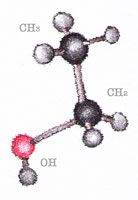
 Recently, the price of corn has suddenly increased, which has driven up the price of soybeans and other
food crops. The rising price of corn is the reason for the sudden jump in the price of Cheetos,
Doritos, and everything else that rhymes with Fritos. There has been an outbreak of food riots
around the world because food is in short supply.
Recently, the price of corn has suddenly increased, which has driven up the price of soybeans and other
food crops. The rising price of corn is the reason for the sudden jump in the price of Cheetos,
Doritos, and everything else that rhymes with Fritos. There has been an outbreak of food riots
around the world because food is in short supply.