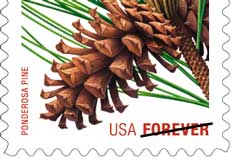

Forever Stamp Fact Sheet.
Current prices for domestic and international services.
Note: Links on this web site are provided as a public service.
This web site does not accept paid advertising.
|
|
|
| Effective date | Per ½ Ounce |
| March 3, 1863 | 3¢ | |
| October 1, 1883 | 2¢ |
| Per Ounce |
| July 1, 1885 | 2¢ |
|
|
| November 3, 1917 | 3¢ | |||
| July 1, 1919 | 2¢ |
| Postcards |
| Sometime in 1898 | 1¢ |
| July 6, 1932 | 3¢ |
| January 1, 1952 | 2¢ |
| August 1, 1958 | 4¢ | 3¢ |
| January 7, 1963 | 5¢ | 4¢ |
|
| January 7, 1968 | 6¢ | 5¢ |
| May 16, 1971 | 8¢ | 6¢ |
| March 2, 1974 | 10¢ | 8¢ |
| Each Additional Ounce |
| September 14, 1975 | 10¢ | 9¢ | 7¢ |
| December 31, 1975 | 13¢ | 11¢ | 9¢ |
| May 29, 1978 | 15¢ | 13¢ | 10¢ |
| March 22, 1981 | 18¢ | 17¢ | 12¢ |
| November 1, 1981 | 20¢ | 17¢ | 13¢ |
| October 1, 1983 |
| February 17, 1985 | 22¢ | 17¢ | 14¢ |
| April 3, 1988 | 25¢ | 20¢ | 15¢ |
| February 3, 1991 | 29¢ | 23¢ | 19¢ |
| January 1, 1995 | 32¢ | 23¢ | 20¢ |
| January 10, 1999 | 33¢ | 22¢ | 20¢ |
| January 7, 2001 | 34¢ | 21¢ | 20¢ |
| July 1, 2001 | 34¢ | 23¢ | 21¢ |
| June 30, 2002 | 37¢ | 23¢ | 23¢ |
| January 8, 2006 | 39¢ | 24¢ | 24¢ |
| February 26, 2007 |
| May 14, 2007 | 41¢ | 17¢ | 26¢ |
| May 12, 2008 | 42¢ | 17¢ | 27¢ |
| May 11, 2009 | 44¢ | 17¢ | 28¢ |
| April 17, 2011 | 44¢ | 20¢ | 29¢ |
| January 22, 2012 | 45¢ | 20¢ | 32¢ |
| January 27, 2013 | 46¢ | 20¢ | 33¢ |
| January 26, 2014 | 49¢ | 21¢ | 34¢ |
| May 31, 2015 | 49¢ | 22¢ | 35¢ |
| April 10, 2016 | 47¢ | 21¢ | 34¢ |
| January 22, 2017 | 49¢ | 21¢ | 34¢ |
| January 21, 2018 | 50¢ | 21¢ | 35¢ |
| January 27, 2019 | 55¢ | 20¢ | 36¢ |
| August 29, 2021 | 58¢ | 20¢ | 40¢ |
| July 10, 2022 | 60¢ | 24¢ | 44¢ |
| January 22, 2023 | 63¢ | 24¢ | 48¢ |
| July 9, 2023 | 66¢ | 24¢ | 51¢ |
| January 21, 2024 | 68¢ | 24¢ | 53¢ |
| July 14, 2024 | 73¢ | 28¢ | 56¢ |
| July 13, 2025 | 78¢ | 29¢ | 62¢ |
| July 12, 2026 | 82¢ | 29¢ | 65¢ |
Postage rates: My father — a freelance bookkeeper for many years — kept a list like this, and I made a copy of his list sometime in the 1970's, and then kept updating it myself every time there was a rate increase. Eventually I converted it into this HTML document.
Links to the US Postal Service web site are constantly changing, so there may be a number of broken links below. Please bear with me while I weed them out.
Postage Rates and Historical Statistics.
Rates for Domestic Letters, 1863-2011.
Rates for Domestic Letters, 1792-1863.
Significant Dates in USPS history.
Timeline of Significant Dates in Post Office History.
Information about the most recent (proposed) increase came from the Exigent Price Filing FAQ page
Information about "A" through "H" stamps came from the US Postal Rate Commission.
ZIP is an acronym for Zone Improvement Plan, according to Unicover.
ZIP Code began July 1, 1963, according to The Postal Service History Page.
History of post card rates came from the US Postal Rate Commission, which has this to say about post card rates: "The post card rate has remained at 20 cents since 1995. On January 10, 1999, however, a one cent charge for the card itself was implemented, in addition to the postage. Putting a 20 cent stamp on a private card avoids the one cent card charge."
Airmail rates are not shown here; however, it is worth noting that domestic airmail was eliminated as a separate subclass of mail service, effective May 1, 1977.*
ZIP+4 was announced in 1978 and implemented October 1, 1983 according to Unicover.
The Editor says...
ZIP+4 was supposed to make mail delivery faster and hold down costs. Is
delivery any faster? (It's called "snail mail" for a reason.) Since
nine-digit ZIP codes were introduced, there have been more than a dozen rate increases.
Domestic Mail Rate History: This document shows that ZIP+4 does hold down the cost of postage... but only for commercial bulk-rate customers. In other words, it makes unsolicited junk mail easier to send, but it doesn't reduce the cost of a first-class letter at all.
Along the way I also found a
complete Glossary of postal terms
[PDF file] and a Postage Rate Calculator.
Broken link repaired 6/15/2009 --
thanks to Nils Carlson.
Complete Guide to Nondenominated Postage.
Broken link repaired 12/7/2008 --
thanks to David Kaufman.
New: Inflation-adjusted postage rates, in 2008 dollars.
You could make your own chart by using the On-line Inflation Calculator.
Updated 5/29/2010: A reader by the name of Rob Haeseler sent in a correction: The second line of the chart above was in error, and instead of March 3, 1883, the effective date for the two-cent rate was October 1, 1883. Hearing no objections, the table has been modified accordingly.
Updated 4/5/2011: A reader by the name of Steve Elwood noted that I had the wrong postcard rate on the last line of the table. It should be (and now it is) 29 cents, not 30 cents, according to this table.
Added 1/20/2012: If you are using historical postage rates in classroom instruction, you might also appreciate this handy tool to adjust prices for inflation.
Added 9/5/2015: The current postage rates are listed on the USPS web site.
News items regarding rate increases
The latest:
Pay Nearly $1 For A Stamp? USPS Pushes For 90-95 Cent First-Class Rate Hike. Americans could soon pay nearly a dollar to mail a first-class letter as the U.S. Postal Service seeks higher rates to address deepening financial losses. Postmaster General David Steiner told a House Oversight Committee hearing that the agency wants to increase the price of a first-class stamp from the current 78 cents to between 90 cents and 95 cents. The Postal Service posted a $9 billion loss in 2025 and faces the risk of running out of cash within 12 months if no changes are made. "As you all know, there are only three things that any company can do to improve financial performance — sell more products, raise prices, or cut costs," Steiner said in his testimony. "... On the pricing side, we need to look for higher prices on both our package and mail products."
USPS looks to raise price of "forever" stamp to 78 cents, as part of rate increase proposal. The U.S. Postal Service is seeking a rate increase this summer that includes hiking the cost of a first-class stamp from 73 cents to 78 cents. The request was made Wednesday to the Postal Regulatory Commission, which must OK the proposal. [...] Former U.S. Postmaster General Louis DeJoy previously warned postal customers to get used to "uncomfortable" rate hikes as the Postal Service seeks to become self-sufficient. He said price increases were overdue after "at least 10 years of a defective pricing model." [...] [President] Trump has said he is considering putting USPS under the control of the Commerce Department in an effort to stop losses at the $78 billion-a-year agency, which has struggled at times to balance the books with the decline of first-class mail.
US Postal Service seeks to hike stamp prices to 78 cents. The United States Postal Service said on Wednesday it wants to raise the price of first-class mail stamps to 78 cents from 73 cents effective July 13. The proposal, which must be approved by the Postal Regulatory Commission, would raise overall mailing services product prices by 7.4%.
U.S. Postal Service Recommends New Prices for July. The U.S. Postal Service today filed notice with the Postal Regulatory Commission (PRC) of mailing services price changes to take effect July 13. The new rates include a 5-cent increase in the price of a First-Class Mail Forever stamp from 73 cents to 78 cents. The proposed adjustments, approved by the governors of the Postal Service, would raise mailing services product prices approximately 7.4 percent.
USPS to increase the cost of postage stamps — again. If you're running low on stamps, you might want to buy a book sooner rather than later. The U.S. Postal Service (USPS) is expected to raise the price of its postage stamps again, which would be the second time in 2024 that the cost of stamps has increased. Starting July 14, a first-class mail "Forever" stamp will reportedly cost 73 cents each — a 5% jump from its current price of 68 cents.
U.S. Postal Service Recommends New Prices for July 2024. Today [4/9/2024], the U. S. Postal Service filed notice with the Postal Regulatory Commission of mailing services price changes to take effect July 14, 2024. The new rates include a 5-cent increase in the price of a First-Class Mail Forever stamp from 68 cents to 73 cents.
USPS wants to hike stamp prices for 2nd time in 6 months. The United States Postal Service is seeking to raise the price of stamps by mid-summer. Sound familiar? It's set to be the second hike of postage prices since the start of the year and the fifth in two years. USPS has been repeatedly increasing rates of many of its mailing services over the past few years to keep up with inflation and the growing cost of doing business.
US Postal Service seeking to hike cost of first-class stamp to 73 cents. The U.S. Postal Service signaled plans Tuesday for a rate increase that includes hiking the cost of a first-class stamp from 68 cents to 73 cents, part of an overall 7.8% increase to take effect this summer. The request was made to the Postal Regulatory Commission, which must approve the proposed increase that the Postal Service contends is necessary to achieve financial stability.
Bidenflation strikes: If you waited to buy your 'Forever' stamps, you're out of luck. [Scroll down] And now you know why every business or every organization is begging you to switch to online bill delivery and offering you all types of goodies if you do. You also know why you, an over-30-something, are now paying your bills online, fees included, to avoid high-priced stamps and questionable delivery resulting in late payment fees. You've even become accustomed to receiving online wedding and other gala (and not so gala) invitations, announcements, etc., tucked among the daily multi-platform, multi-multi messages jamming your computer and/or cell phone. Faster and cheaper can't be beat. Oh, and not so by the way, for those of you with long memories, which includes 21-year-olds, in 2021, when President Joe Biden (D) took office, the price for a first-class forever stamp was 55 cents, so today's first-class stamp price increase comes to 23.5 percent in just three years. A fine example of Bidenomics in action. Get used to it; more to come.
In England:
Britons
rush to buy stamps before 16 percent hike kicks in tomorrow. Britons have their last
chance to stock up on stamps today before record price increases. A first-class stamp rises
by 16 percent from 95p to £1.10 tomorrow, meaning their cost has trebled from 34p in 2007,
massively outstripping inflation as 34p 16 years ago is worth only 53p today. Second-class
stamps go up by 10 percent to 75p from 68p. Post Offices saw even longer queues than normal
last week after Money Saving Expert's Martin Lewis urged Brits to buy first and second-class stamps
now as they can still be used after the price hike.
July 2022 Postage Price Changes. On April 6, 2022, the United States Postal Service® filed notice with the Postal Regulatory Commission (PRC) of price changes to take effect July 10, 2022. On June 9, 2022, the PRC announced the approval of changes, which include a two-cent increase in the price of a First-Class Mail Forever stamp from 58 cents to 60 cents.
The Editor says...
The last time the U.S. experienced unusually high rates of inflation, circa 1975 to 1990, the price of a postage
stamp doubled about every 20 years. We are now entering a period of inflation at least as high as it was in the
late 20th century. This makes Forever Stamps an even better bargain.
Earlier:
Postage Rate Increase. There will be no changes to the First Class Mail letter rate in January 2022. [...] Starting in July 2022, First Class Mail will have scheduled postage rate increases occurring two times per year — in January and in July.
Postal Service raises stamps to 58 cents as part of restructuring plan. The U.S. Postal Service on Friday [5/28/2021] announced plans to raise the price of first-class stamps from 55 to 58 cents, the latest step in Postmaster General Louis DeJoy's 10-year plan to make up for billions in financial losses within the agency. The Postal Service said in a press release that it had filed a notice with the Postal Regulatory Commission requesting the price changes, which are set to take effect Aug. 29. Under new commission rules adopted in November, the Postal Service is allowed to continue its annual inflation-based price increases, as well as additional rises in rates based on the increasing number of delivery points mail carriers must reach each week, The Washington Post reported.
U.S. Postal Service Proceeds with Request for Postal Rate Change. As part of "Delivering for America," its 10-year plan to achieve financial sustainability and service excellence, the United States Postal Service filed notice today with the Postal Regulatory Commission (PRC) requesting price changes to take effect Aug. 29, 2021 that are in accordance with approvals provided by the PRC last year. The proposed price changes would raise overall Market Dominant product and service prices by approximately 6.9 percent.
U.S. Postal Service Announces New Prices for 2019. The United States Postal Service filed notice with the Postal Regulatory Commission (PRC) today [10/10/2018] of price changes to take effect Jan. 27, 2019. The proposed prices, approved by the Governors of the Postal Service, would raise Mailing Services product prices approximately 2.5 percent.
US Postal Service wants 5-cent increase for first-class stamps. The US Postal Service is seeking to increase the price of its first-class stamp by 5 cents to 55 cents to help stem its mounting red ink. [...] The price of each additional ounce would go down, from 21 cents to 15 cents.
Stamp Prices Could See Biggest Hike in Postal Service History. The U.S. Postal Service is seeking a record price hike on stamp prices as it faces continued pressure from President Donald Trump over a revenue shortfall. Under the proposal, the cost of a Forever stamp, or mailing a one-ounce letter, would jump from 50 cents to 55 cents. That's the biggest increase in history, topping 1991's four-cent increase to 29 cents. If approved, it would be the third annual increase in a row. [...] If approved, which is expected, the new rates will go into effect on Jan. 27, 2019.
Postal service proposes price increase for stamps. The U.S. Postal Service is seeking to increase the price of its first-class stamp by 5 cents to 55 cents to help stem its mounting red ink. If approved by regulators, the 10 percent increase to the cost of mailing a 1-ounce letter would be the biggest since 1991. The price of each additional ounce would go down, from 21 cents to 15 cents.
Postage Rates Goes Down on Sunday. Beginning Sunday [4/10/2016], the price of a first-class stamp drops two cents, to 47 cents.
Forced Price Reduction to Worsen USPS Financial Condition by $2 Billion Per Year. Absent Congressional or court action to extend or make permanent an existing exigent surcharge for mailing products and services — including the Forever stamp — the Postal Service will be required to reduce certain prices on Sunday, April 10, 2016. This mandatory action will worsen the Postal Service's financial condition by reducing revenue and increasing its net losses by approximately $2 billion per year.
USPS Will Cut Postage Rates This Weekend, Isn't Happy About It. If you've been stocking up on Forever stamps since the last price hike at the beginning of 2014, we have some bad news: those the price of first-class stamps will fall by 2¢ down to 47¢ this weekend. That might perhaps causing slight annoyance for consumers, but will hurt the U.S. Postal Service financially. The price cut, you see, wasn't their idea. The price cut came from the government entity that regulates the postal service, the logically named Postal Regulatory Commission. The original price hike for letters back in 2014 was actually a surcharge enacted to help the postal service's cash flow, and the PRC ordered that the postal service roll back that surcharge. The Postmaster General estimates that the price cuts for domestic and international letters will cost the USPS $2 billion per year.
U.S. Postal Service Reduces Postage Rates for Regular Mail. On April 10, 2016, the U.S. Postal Service will reduce postage rates for regular mail — for the first time in 97 years. Small businesses have become conditioned to hearing about postage rates going up. But, in a move called "historic" certain postage rates are being reduced. The biggest news is that First-class mail will go down by two cents. The postage rate reductions affect letters, large envelopes or flats, and postcards. The reductions amount to more than four percent and are a result of removing the 2014 Exigent Surcharge.
Postage prices set to go down, and the USPS isn't happy. The price of mailing a letter will fall for the first time in nearly a century this Sunday. And the U.S. Postal Service, which was ordered to cut the price by its regulator, is not happy about that. USPS said the decline in the cost of a postage stamp, from 49 cents to 47 cents, will cost it $2 billion this year, and make it more difficult for it to compete and provide the service its customers demand.
Information on the 2016 USPS Postage Rate Increase. (It doesn't affect anything on this page.)
Postal Rate Basics. New rates for Mailing and Shipping Services take effect January 26, 2014.
Regulators approve hike in cost of first-class stamps. Postal regulators on Tuesday [12/24/2013] approved a price hike of 3 cents for a first-class stamp, bringing the charge to 49 cents a letter.
Price to go up on first-class stamps. The higher rate will last no more than two years, allowing the Postal Service to recoup $2.8 billion in losses.
The Editor says...
To my great astonishment, it really was a temporary rate increase!
Postal Service chief on proposed postage rate hike: "We have little choice". Postmaster General Patrick Donahoe told senators Thursday that the cash-strapped Postal Service had "little choice" in proposing to raise the price of mailing a letter to 49 cents. Donahoe's appearance Thursday before the Senate Homeland Security and Governmental Affairs Committee came one day after the post office said it wanted to raise the price of a first-class stamp by 3 cents. He's pressing lawmakers to act quickly on legislation to fix his agency, which expects to lose $6 billion this year.
Postal Service wants to increase cost of stamps, to 49 cents. As part of the rate increase request, the cost for each additional ounce of first-class mail would increase a penny to 21 cents while the price of mailing a postcard would rise by a cent, to 34 cents.
Postal Service proposes 3-cent rate hike for stamps. First-class postage stamps could rise to 49 cents starting in 2014 under a Wednesday [9/25/2013] proposal by the cash-strapped U.S. Postal Service. The increase would raise about $2 billion in additional revenue a year. Under the plan, first-class mail postage would rise 3 cents, or 6.5%. Pricing for other mail, including postcards and packages, would also rise on Jan. 26.
Stamp price jumps to 49 cents on Monday. The U.S. Postal Service will increase the cost of a stamp on Monday to 49 cents from the current 46 cents. [...] The 49 cent stamp price is guaranteed for two years.
The end of Saturday deliveries:
In my opinion, if delivery days are to be reduced, it would be far better to eliminate Monday deliveries, because most federal
holidays are observed on Mondays, and on those days there is already no mail.
U.S. Postal Service to cut Saturday delivery. No more Saturday mail. That's the solution reached by U.S. Postal Service officials to trim $2 billion from the budget, to be formally announced Wednesday [2/6/2013]. The USPS will halt Saturday mail delivery service, starting in August, according to The Associated Press.
Post Office to end Saturday deliveries. You take sixteen billion, and what do you get? Another day shorter and lighter in debt — or so the Post Office hopes. The USPS went into the red in 2012 by an astounding $16 billion, and needs to find ways to cut costs. CBS News reports this morning that they will trim one-sixth of their deliveries by ending 150 years of Saturday service for first-class mail.
Do you care that the US Postal Service will end Saturday mail delivery? To cut costs, the US Postal Service has announced that it will end Saturday delivery of first-class mail beginning in August. It will continue to deliver packages, and post offices that are open now will remain open and mail will be delivered to PO boxes. Do you care that you will no longer receive home deliver on Saturdays?
Goodbye Saturday mail? Postal Service plans cuts. The Postal Service said Wednesday [2/6/2013] that it plans to cut back to five-day-a-week deliveries for everything except packages to stem its financial losses in a world radically re-ordered by the Internet.
Cummings: Postal Service cuts would hurt minority groups, single mothers. The U.S. Postal Service's decision to eliminate Saturday delivery could disproportionally hurt minority groups, according to Rep. Elijah Cummings (D-Md.), the ranking member on the House Oversight Committee. "You're talking about just this reduction ... from six days to five days will cut anywhere from 25,000 to 30,000 employees. And with regard to Asian, African-Americans, and Hispanics, they comprise about 40 percent of the Postal Service employees," Cummings told Melissa Harris-Perry on MSNBC Friday night.
Quick! What can we do for a diversion?
US Postal Service to
launch fashion range. The US Postal Service is to launch a clothing and accessories range just days after revealing it was ending Saturday
deliveries in a bid to stem losses of $40m (£26.1m) a day.
Haute couture by the postman. We first thought this was a dispatch from The Onion: The U.S. Postal Service announced Tuesday [2/19/2013] that it will enhance its "cool" with the rollout of a line of apparel and accessories, targeting the young. The Postal Service, near bankruptcy, expects young hipsters to show up, perhaps in flash mobs, to order the latest in government-issued fashion. They can be the first on the block in a "Rain, Heat & Snow" brand shirt or jacket.
Dire Straits — USPS Floundering. Those were the exact words of the United States Post Office's (USPS) Postmaster General (PMG) Patrick Donahoe earlier this week during a hearing before the Senate Homeland Security and Governmental Affairs Committee. The hearing came just days after the USPS announced that it will move to terminate Saturday delivery of first class mail on August 5, 2013.
Congress Thwarts Post Office's Plan to Eliminate Saturday Delivery. The Postal Service is an independent agency, which means it is not funded by tax dollars. Instead, USPS functions like a business, making about $15 million in revenue each day on sales of postage, products, and services. Congress does not allocate money to support the mail service, but still holds legislative control over it.
Saturday mail delivery should stay - U.S. The U.S. Postal Service must deliver the mail six days a week, said Congress' watchdog arm in a Thursday [3/21/2013] legal opinion. The legal opinion from the nonpartisan agency throws new questions on the Postmaster General Patrick Donahoe's plans to stop delivering first-class mail, but keep delivering packages and express mail on Saturdays.
Postal Service backs off plan to suspend Saturday delivery service. The U.S. Postal Service on Wednesday said it will delay a cost-cutting plan to end Saturday mail delivery, following congressional action that blocked the effort — as the agency suggested it might have to turn to rate increases and layoffs as an alternative. In a tersely worded announcement, the agency's board of governors said it was "left no choice" but to delay the plan after Congress passed a temporary federal spending bill last month that stopped the plan.
50-Cent Stamp, Other Postal Changes Coming. The United States Postal Service may raise the price of first class postage to 50 cents. The U.S. Post Office, facing financial losses of up to $18.2 billion a year by 2015, wants to charge more for postage, more for services, and to suspend Saturday delivery. The 50-cent stamp would represent an 11 percent increase in postal rates.
Postal Service seeks 50-cent stamps. A nickel boost in the first-class stamp price to 50 cents is part of the U.S. Postal Service's latest plan to stop bleeding red ink. The Postal Service released the 5-year business plan to Congress late Thursday in part to push Congress to pass legislation to help them get through ongoing financial woes.
Postal Service seeks 50-cent stamp prices. Mired in red ink, the U.S. Postal Service is warning it will lose as much as $18.2 billion a year by 2015 unless Congress grants it new leeway to eliminate Saturday delivery, slow first-class mail by one day and raise the price of a postage stamp by as much as 5 cents.
Postal Service Seeks 50-Cent Stamps to Prevent 'Taxpayer Burden'. The U.S. Postal Service wants Congress to help it raise the price of a first-class stamp to 50 cents, an 11 percent increase, as part of its strategy to avoid annual losses as high as $18.2 billion by 2015.
Postal Service says stamp prices are going up. Stamp prices are going up by 1 cent starting in January, the U.S. Postal Service said Tuesday [10/18/2011]. The cost of a first-class stamp — also known as a Forever Stamp — will climb to 45 cents on Jan. 22, the first price increase in more than 2½ years, USPS said. The cost of sending magazines, standard mail and some package services will also rise, but prices for Express Mail and Priority Mail will stay the same.
US Postal Service to Increase Stamp Prices in 2012. The US Postal Service (USPS) announced Tuesday it will increase postal stamp prices by one cent, starting in 2012. The cost of a first-class stamp will rise to 45 cents starting Jan. 22, marking the cash-strapped agency's first price hike since May 2009.
U.S. Postal Service lifts stamp price by 1 cent. The cash-strapped U.S. Postal Service announced on Tuesday a one-cent increase in the cost of mailing a letter, starting in January. The new prices lift the cost of a first-class stamp to 45 cents starting on January 22, 2012, the first increase in more than two years.
Post office announces 1-cent increase in first-class stamp, other rate increases. The cash-strapped U.S. Postal Service announced Tuesday that it will increase postage rates on Jan. 22, including a 1-cent increase in the cost of first-class mail, to 45 cents.
Prior increases:
USPS raises price of stamps. The U.S. Postal service is now charging Americans a penny more for stamps and postcard mailings. The price of a first-class stamp for domestic mail rose Sunday [1/27/2012] from 45 cents to 46 cents, while postcards cost 33 cents to send.
U.S. Postal Service Announces New Prices and Services for 2013. Beginning early next year, the Postal Service will introduce a First-Class Mail Global Forever Stamp. The new stamp will allow customers to mail letters anywhere in the world for one set price of $1.10, and is among new mailing and shipping services filed with the Postal Regulatory Commission today [10/11/2012].USPS announces postal rate increases for 2013. The U.S. Postal Service will increase postal rates effective Jan. 27 by an average 2.57%. First-class postage will increase by one cent, to 46 cents; standard mail of various sorts and sizes — used most often by commercial mailers — will see a 2.72% average increase.
Postage rates to cost a penny more in 2013. In 2013, sending a letter will cost an additional cent as postage rates are set to increase on Jan. 27, according to the U.S. Postal Service. The increase will make first-class mail postage cost 46 cents, the Associated Press said. The Postal Service will also begin a new global "forever" stamp, the AP said, which will let customers send letters first-class to anywhere in the world for a flat rate of $1.10.
Mailing a letter to cost a penny more in 2013. The cash-strapped U.S. Postal Service said Thursday [10/11/2012] that it will raise postage rates on Jan. 27, including a 1-cent increase in the cost of first-class mail to 46 cents.
Postal rates going up, but not for basic letters. The basic [44¢] rate is for the first ounce, and the price for each extra ounce will rise from 17 cents to 20 cents.
Postal Service close to going broke. Americans can still send and receive mail, but the U.S. Postal Service may not have much left in the bank after this week, as it's set to announce billions of dollars in losses as early as Thursday [9/30/2010]. It's also waiting for postal regulators to announce Thursday whether they approve of a proposed 5.6 percent postage-rate increase, to start in January.
Request denied!
Postal
Service Denied 2 Cent Rate Hike. Burdened by a weak economy and the use of electronic
communications, the Postal Service is studying options to keep itself viable after its request for
a 2 cent increase in rates was denied.
Postal Service Rate Increase Denied. The panel that regulates the U.S. Postal service denied a proposal to increase postage rates Thursday [9/30/2010], blaming the agency's business model for its recent financial hardships. In a news conference the Postal Regulatory Commission said the Postal Service had failed to justify the requested 5.6 percent increase.
Postal rate hike request denied. Postal regulators Thursday [9/30/2010] denied requests by the U.S. Postal Service to raise postage rates in January beyond the rate of inflation, ruling that the mail agency's recent financial woes were caused by a flawed business model and not the recent recession.
Postal Rate Increase Denied. No postage rate increase this coming January. This is good news for online sellers and presumably a nightmare for the USPS which needs to find $5.5 billion this year as they are required by law to pre-fund retiree health benefits.
Post office trying again to raise price of stamps. The post office is trying again to get a rate increase next year.
U.S. Postal Service fights once more for rate hikes. The U.S. Postal Service has appealed a recent decision by The Postal Regulatory Commission to reject proposed postal rate hikes. In a statement, the U.S. Postal Service says it is requesting a review of the commission's interpretation of the law that governs how prices are set and is asking again for permission to increase rates.
Post Office trying to get postage rate increase again. The post office is trying again to get a rate increase. The agency announced Friday that it is appealing the Postal Regulatory Commission's rejection of its requested increase. The post office had asked for a 2 cent increase in January in the price of first class stamps, which now cost 44 cents.
Postage rates may still go up. The price of postage stamps may still increase to 46 cents next year. The U.S. Postal Service plans to appeal a regulator's decision to deny permission to raise rates by 2 cents. The Postal Service will appeal the Sept. 30 ruling by the Postal Regulatory Commission to the U.S. Court of Appeals for the District of Columbia, asking the court to review the regulator's interpretation of the 2006 postal reform act.
Postmaster General Recommends Cutting Back Mail Delivery to Five Days. Massive deficits could force the post office to cut out one day of mail delivery, the postmaster general told Congress on Wednesday [1/28/2009], in asking lawmakers to lift the requirement that the agency deliver mail six days a week. If the change happens, that doesn't necessarily mean an end to Saturday mail delivery. Previous post office studies have looked at the possibility of skipping some other day when mail flow is light, such as Tuesday.
Postmaster General: Mail days may need to be cut. Massive deficits could force the post office to cut out one day of mail delivery, the postmaster general told Congress on Wednesday [1/28/2009], in asking lawmakers to lift the requirement that the agency deliver mail six days a week.
The Editor states the obvious...
Reduced service for the same price is the same as a price increase.
Postmaster's pay to be probed. Congress will hold a hearing next month into why Postmaster General John E. Potter has gotten a nearly 40 percent pay raise since 2006 and was awarded a six-figure incentive bonus last year, even as the U.S. Postal Service faces a multibillion-dollar shortfall that threatens a day of mail delivery.
Collectors Discover Flag Stamp Has 14 Stripes. When an astute stamp collector recently discovered that one of the Old Glorys in the U.S. Postal Service's "Flags 24/7" series appears to have 14 stripes, it was bound to send a wave of excitement through the philatelic community. "Is there any icon better-known to Americans than their own flag?" said Fred Baumann, a spokesman for the American Philatelic Society. "This is something somebody should have caught along the way."
Post Service slashes 25,000 jobs this year. The U.S. Postal Service has slashed 25,000 jobs this year as it struggles to reduce a massive budget deficit. Postmaster General John Potter said Monday that agency employment is below 635,000, down from about 800,000 in 1999. Thousands of carrier routes have also been eliminated as mail volume declines.
Idaho Courier Survives Postal Cost-Cutting. When the Postal Service began scouring the map to help close a potential $6.5 billion budget deficit, an auditor's eye settled on central Idaho. The agency had been spending $46,000 a year for a challenging small-plane route that served about 20 addresses secluded in the roadless wilderness of the northern Rocky Mountains.
Postage rates go up Sunday, except for basic first-class letters. The unchanged 44-cent rate still covers the first ounce of a letter, but each additional ounce will cost 20 cents, up from 17 cents currently.
Stamp prices going up again -- 46-cent rate asked. Buy those Forever stamps now.
Postage stamp price hike expected. Prepare to pay more to send mail. The U.S. Postal Service is requesting to increase the price of a stamp by two cents to 46 cents. But that's not the only item that could be getting more expensive. Postal officials announced a wide-ranging series of proposed price increases Tuesday [7/6/2010].
Stamp prices going up 2 cents to 44 cents in May. The post office will get an extra 2 cents worth when you mail a letter starting in May. The U.S. Postal Service announced today that the price of a first-class stamp will rise to 44 cents on May 11. That gives plenty of time to stock up on Forever Stamps, which will continue to sell at the current 42-cent rate until the increase occurs. They will remain valid in the future regardless of rate hikes.
Stamps for U.S. letters to rise to 44 cents in May. The price of a one-ounce first-class stamp will rise to 44 cents on May 11, the U.S. Postal Service said on Tuesday [2/10/2009].
Editor's note:
Some news items on the day of the announcement included glaring errors, as shown below:
Postage Rates Go Up on May 1 (sic). The price of a first-class stamp will go up 2 cents to 44 cents on May 1, (sic) 2009, the Postal Service announced. Prices for other mailing services — Standard Mail, Periodicals, Package Services (including Parcel Post), and Extra Services — will also change.
USPS Jacks Up Price of First-Class Mail Stamps. The United States Postal service announced price hikes for mailing services today, including a 2-cent increase in the price of a First-Class Mail stamp. Those stamps will be 44 cents with the price increase. The changes will go into effect on May 11, which is in line with the annual review of postal mailing prices that are adjusted each may. (sic)
As postage hike looms, the thrifty are buying Forever stamp. Between the economy and the rising cost of postage, people are looking for ways to cut corners, and that has resulted in an increase of sales of the post office's Forever stamp.
Forever Stamp Fact Sheet.
Current prices for domestic and international services.
Note: Links on this web site are provided
as a public service.
This web site does not accept paid advertising.
In 2007 this was big news:
USPS
Announces The "Forever" Stamp: Is It Worth Your $0.39? Yesterday [2/26/2007], the United
States Postal Service announced the introduction of a "forever" postage stamp. Here's how it works:
whenever you buy a first class postage stamp, it will no longer be marked with a cash denomination on it like
current stamps are. Instead, it will merely say "First Class" on it. Once you buy it, you can
use it at any point in the future.
Think twice before hoarding 'forever' stamps you might never use. The stamps are called "forever" because they will be good for any future single-piece first-class envelope weighing an ounce or less, no matter how prices might change in the future.
Additional information — Some of which is now outdated:
2-cent increase in stamp prices urged. A postal regulatory commission recommended a 2-cent increase in the cost of mailing a letter today and urged the Post Office to introduce a "forever" stamp valid for first-class postage even when rates rise. The recommendation to increase postage to 41 cents was a penny less than the postal service had requested.
PRC Issues Recommendations on the Postal Rate Case. On Feb. 26 the Postal Regulatory Commission (PRC) issued its recommendations on the rate case filed by the U.S. Postal Service last May. For the most part, the PRC agreed with the changes proposed in the case, though it did recommend raising the cost of a first-class stamp by two cents, to $0.41, rather than three cents.
Other news, notes and commentary
According to the access logs here at akdart.com, many people are linking to this page (that's good!) and some are using it as an educational tool in schools, which is wonderful. This chart seems to be an easy way to show kids what inflation does to the value of a dollar. If you would like to dig deeper, compare these postage prices to the US Consumer Price Index from 1913 to today.
Thanks to a reader named Marilyn who sent in this information:
"According to 'The Source -- A Guidebook of American Genealogy' by Loretto Dennis Szucs and Sandra Hargreaves Luebking, there are postcard postage rates earlier than 1926. In their 1997 edition, page 13: 'Penny postcards were manufactured after 1898, when postal regulations established the penny postcard rate, while cards requiring two cents of postage date from 1873 to 1898.' My postcards have 1¢ stamps on them up through 1928." She also says postcards have 2¢ stamps on them beginning in 1929.
This seems to contradict the information on the Postal Rate Commission's web page, so I have included only the 1898 date in the table above.
Thanks also to Jim Cropper, evidently quite a stamp collector, who referred me to the USPS Rate Case filings, which show the Proposed Price Adjustments for Spring 2007, and the USPS Postal Bulletin, available cover-to-cover in Adobe PDF format bi-weekly.
Updated 2/29/2008:
Today I received an informative email from Lewis Bussey, president of the United Postal Stationery Society. Since he is evidently an authority on postal rate history, and since there is plenty of room on this page, I'll include his comments verbatim:
|
Dear Mr. Dart, The domestic post card was authorized to be mailed at the same rate as government postal cards on July 1, 1898. Post cards were of course available well before 1898, but previously they were charged the higher letter rate, not a flat 2¢. This 1898 1¢ card rate continued until November 2, 1917 (the "war tax" increase) when the rate was effectively increased to 2¢. On July 1, 1919, the rate was reduced back to 1¢. However on April 15, 1925, the "postal" card rate stayed 1¢ and the "post" card rate increased to 2¢. This condition continued until July 10, 1928, when both "postal" and "post" card were again charged 1¢. On January 2, 1952, the card rate went to 2¢ and has been increasing every since (except as you note from September 14, 1975 to December 31, 1975 when the rate actually decreased from 8¢ to 7¢). Most of the card rates (domestic including charges for pre-sorting and automation, and also international rates) are tabulated in the United Postal Stationery Society's 2005 United States Postal Card Catalog. Best Regards- |
Thank you, Mr. Bussey!
Updated 9/26/2008:
Doug Hardt writes,
|
The "Each Additional Ounce" column is somewhat misleading in that letters are limited to 3½ ounces or less. Ounces 2 and 3 each cost 17 cents but anything over 3 up to 3½ is another 17 cents. [Source] |
Thanks, Doug!
Coin-operated stamp machines are being eliminated
Thieves Target Postal Stamp Machines. You may have noticed easy access to stamps missing from your neighborhood postal station. That's because crooks have turned their attention to breaking into stamp vending machines for the cash inside.
Post Office to Eliminate Stamp Machines. Postage stamps can be purchased by mail, at the supermarket, even from many bank cash machines. But there's one place you won't be able to get them in a few years … vending machines at the post office. The U.S. Postal Service plans to eliminate its 23,000 vending machines by 2010, the agency said in a recent internal memo.
U.S. Postal Service removing stamp machines. [Postmaster Rusty] Field said the Carroll Reece station on North State of Franklin Road does have an automated postal center, but it requires the use of a credit or debit card. U.S. currency won't do at the post office automated center. With plastic a person can also buy stamps online or over the telephone, and those who don't have anything in their wallet but cash can still wait in line and buy stamps from a postal clerk.
Stamp machines are convenient. Many of us have had the experience: We have a piece of mail that needs to go out immediately, so we go to the post office after normal operating hours. Mail still can be deposited in the outer lobby — and, thank heaven, there's a machine available to sell us a stamp. Not anymore. The U.S. Postal Service is removing all stamp vending machines. They're getting old and it is difficult to keep them in operation, say officials.
Stamp machines sent packing. Postmaster Donald Hopper said the U.S. Postal Service is removing 23,000 machines nationwide by 2010. Hopper said the postal service no longer makes new machines and maintenance costs are too high to keep them. Local postal employee Brian Moore, who's in charge of maintaining the machines, said they account for approximately 600 transactions per week.
Postal Service removing all stamp machines. Need stamps for those holiday cards? Don't go to the post office, unless you're prepared to stand in line or pay with a credit card. Stamp vending machines, where customers can buy a single 41-cent stamp or a book of stamps with coins or dollar bills, are on their way out.
The Editor says...
That will make the long lines at the window just a little longer.


|
Document location https://akdart.com/postrate.html Updated May 9, 2026. ©2026 by Andrew K. Dart |