|
|
|
|
The Auto Industry / UAW Bailout is merely a political payback for the United Auto Workers union which has spent a lot of its members' money on politicians over the years. The members of the UAW have priced themselves into oblivion by paying people too much to do menial assembly line work. Average wages and benefits currently total about $69 an hour per GM worker. 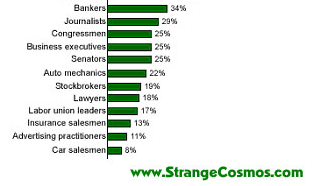 The automobile industry would thrive if the manufacturers built good cars at an affordable price. They would also have more customers if the dealerships dealt with their customers honestly. Have you tried to buy a new car lately? Used car salesmen are among the most hated professionals in America, and new car salesmen are no different except that the cars they sell are in better shape. The not-so-friendly service department charges $80 per hour for labor. The dealerships and the salesmen have nothing to do with the UAW, except to show that if ever there was an industry that deserved to go bankrupt, this is it. Unfortunately our government nannies are bent on "bailing out" the auto industry, which will only postpone the inevitable (bankruptcy) and, depending on where they get the money, will cost the taxpayers a lot of money, sooner or later. Probably sooner. UAW signals Alabama Mercedes-Benz plant may be next in push to unionize. With the ratification of a four-year contract, 3,200 workers at Volkswagen of America's plant in Chattanooga, Tennessee are card-carrying UAW members. And now, the union expects to use this long-fought victory as a springboard to bolster recruitment efforts among the 25,000 non-union workers in the United States. In February, UAW president Shawn Fain told delegates at the union's annual political conference in Washington D.C. that the end of the nearly two years of negotiations with VW provides momentum to the union's efforts to organize other workers, particularly in the South. Michigan Union Workers Hail Donald Trump's Auto Tariffs: 'We Can't Thank You Enough'. Michigan union workers are hailing President Donald Trump's tariffs on foreign-made cars, telling a crowd in the Rose Garden on Wednesday evening that the president's economic nationalist agenda will revitalize communities gutted from decades of free trade policies. During the speech, Trump brought up a man named Brian — a leader in the United Auto Workers (UAW) — who said the 25 percent tariffs on all foreign-made cars will drive an economic boom in areas like Macomb County, Michigan, and save American industry. Anti-Trump UAW president backs tariffs on foreign-made cars: 'They could bring work back in very short order'. United Auto Workers president Shawn Fain said Sunday that President Trump's looming 25% tariff on foreign-made cars could swiftly boost American manufacturing jobs. Fain, a prominent anti-Trump campaigner ahead of last year's election, said that the levies could benefit workers and used remarkably similar language as the White House on how carmakers could onshore jobs. "We have excess capacity" at manufacturing plants, Fain said, using near identical framing as the White House. "They could bring work back in very short order." The Editor says... Union Employees Strike Against the UAW, Accuse it of Union-Busting. Employees at the United Auto Workers, the sixth-largest union in America, have gone on strike against the union this week in Manhattan, but you wouldn't know it from the legacy media's silence. UAW Staff United, which represents hundreds of employees across 34 locals, announced its strike Monday, and Thursday marks the fourth day of picketing in New York City. According to UAW Staff United (USU), the strike comes "in response to the bad-faith bargaining committed by the UAW throughout our negotiation process and the retaliatory termination of a union leader." United Auto Workers union endorses Kamala Harris for president. The United Auto Workers (UAW) union on Wednesday announced its governing board voted to endorse Vice President Harris for president. "Our job in this election is to defeat Donald Trump and elect Kamala Harris to build on her proven track record of delivering for the working class," UAW President Shawn Fain said in a statement. "We stand at a crossroads in this country. We can put a billionaire back in office who stands against everything our union stands for, or we can elect Kamala Harris, who will stand shoulder to shoulder with us in our war on corporate greed." Mercedes-Benz workers in Alabama vote against union in major blow to UAW. U.S. workers at a Mercedes-Benz plant in Alabama handed a stinging loss to the United Auto Workers on Friday, rejecting the union in a vote it had expected would build on a win at a Tennessee Volkswagen plant and push it deeper into the U.S. South. It marked the first big loss for UAW organizers after a series of victories, including double-digit raises for Detroit workers and the union's expansion to a VW factory in Chattanooga last month. That leaves the next steps unclear for the union, which is in the midst of a $40 million campaign targeting other automakers including Toyota and Tesla. Where did she get $100 million? UAW President Shawn Fain Makes a Plea for Pro-Hamas Protesters on College Campuses. The president of the United Auto Workers, Mr. Shawn Fain, thought it would be a good idea to hop into the debate and the actions currently occurring at numerous college campuses throughout the U.S. Of course, those actions occurring, which are mostly protests, are in favor of those who live in Gaza who grabbed hostages last October 7th and started a conflict in the Middle East that rages on today. [...] Keep in mind that Shawn's job as the president of the United Auto Workers is to ensure that workers who mostly work at auto plants are happy. I don't see how [...] his members who are working [...] to send their kids to college and have their studies interrupted or even shut down and, in some instances, their lives put in danger, is a good position to take for the union. VP Harris Arrives in Michigan for a Campaign Stop With a UAW Job-Killing Package. The campaign season is well underway and I now can officially declare that I think Michigan might be in play for the 2024 Presidential election. This is not an easy statement for me to make. The vast majority of the time Michigan is a deep blue state but the Biden-Harris team has done such a [bad] job the past three-and-a-half years it's put Michigan into a swing state category. Thanks, Joe. Luckily the person whom Joe Biden picked as his vice presidential running mate back in 2020 — who also happens to be a woman, a minority, and a laugh-a-minute word salad machine — will be visiting Michigan Monday to offer more taxpayer-financed incentives to move the automotive companies into electric vehicles. Volkswagen workers vote for union in Tennessee — a major win for organized labor. Workers at a Volkswagen plant in Chattanooga, Tennessee, voted overwhelmingly to join the United Auto Workers, becoming the first Southern autoworkers outside of the Big Three to do so in a region long resistant to unionization, the labor group announced late Friday. The UAW declared victory as votes continued to be tallied, with its unofficial count at 2,628 for joining the union and 985 opposed, or 73% to 27%. "Volkswagen thanks its Chattanooga workers for voting in this election," the company said in a statement acknowledging that workers had voted in favor of union representation. "We will await certification of the results by the National Labor Relations Board," the company added. The NLRB confirmed that the VW workers had voted to join the UAW. The results will be certified if no objections are filed within five days. The losers in Biden's America. Donald Trump caught flak this past week for using the term "bloodbath." Of course, lying media misrepresented what he said as referring to a bloodbath "in the streets" if he loses the election in 2024. Sadly, many (many) Democrats were duped, many of whom likely still believe the lie. Auto workers, though, should take heed of what Trump really said: if Joe Biden imposes draconian emissions standards in America (which he is doing), and if China builds E.V. car plants in Mexico (which it is), and imports those cars without tariffs, there will be a bloodbath in your industry. The Big 3 lost billions last year due to current E.V. mandates. If you work in the industry, and want to continue to work in the industry, buck your union "management's" call to support the Democrats and Joe Biden. UAW, Ford reach deal to avert local strike at Kentucky truck plant. The United Auto Workers union and Ford said Wednesday they reached a tentative deal, averting a strike over local issues at the automaker's Kentucky truck plant. UAW said the deal addressed issues related to "skilled trades, health & safety, and ergonomics" at the plant, which it identified as Ford's most profitable, that had workers prepared to walk off of the job if necessary. UAW Local 862's Evan Palmer said the main issues in the local negotiations focused on getting a minimum nurse staffing in the plant and improving the culture in skilled trades. UAW President: 'A Great Majority' of Union Workers 'Will Not Vote' for Biden. United Auto Workers (UAW) President Shawn Fain said "a great majority" of American union workers in the auto industry "will not vote for" President Joe Biden against presumptive Republican presidential nominee former President Donald Trump. [...] Fain's remarks came immediately after he announced the UAW was endorsing Biden for reelection this year against Trump, despite the White House's green energy agenda, which would crush the American auto industry with plant closures, outsourcing, and millions of jobs lost. Biden's record on trade and China, similarly, has been in stark contrast to the interest of American auto workers. Treasury Secretary Janet Yellen, for example, has made it clear that the Biden administration is "not attempting to decouple from China." At the same time, China now leads the world as the largest exporter of cars partially thanks to the Chinese Communist Party (CCP) dominating electric vehicle (EV) supply chains. UAW Sharpening the Knives: Eyeing Tesla, Toyota, VW. Well, you knew United Auto Workers president Shawn Fain was going to be feeling invincible after laying siege to the D-3 this fall. He got most of what he wanted after successfully pulling off a simultaneous multi-pronged attack on all of the major car manufacturers at once. You also know [quite] well that the major auto makers who remained union-free were going to beef up their offerings to their workers, simply because they had a good sense of what number was next on the UAW's dance card. [...] Elon Musk has been winning battles against labor unions lately, scoring two big ones in recent weeks. In Sweden, he's momentarily triumphed over what he called an "insane" war against the company by a whole galaxy of labor union rogues banding together against his non-union repair shops. Reaching out to union members. There are few if any grievance groups more wedded to the Democrat Party than unions. [...] Take the UAW contract recently ratified by Ford and General Motors. Much of what workers were fighting for was increased pay, due in large part to Bidenflation. Workers' pay in all industries hasn't kept up with inflation. While on the surface one might say that it is a good thing to bring workers' wages on par with inflation, it will drastically increase the cost of the products they produce, placing further upward pressure on inflation. Ford and GM, at the time of their negotiating with the UAW, announced massive losses, due in large part to Joe Biden's Electric Vehicle mandates. Auto companies are being forced to increase production of EVs as consumers are signaling that they don't want EVs. It will not end well for Detroit and expect to see a government auto-industry bailout before the end of Joe Biden's term, increasing inflation further still. Joe Biden Chose Billionaires and Green Radicals Over Auto Workers. "President Biden is the most pro-union president in history" has become the White House's go-to response to the recent strike that had upturned American auto manufacturing. [...] The White House took a victory lap for "solving" a crisis that was Biden's own making. At a press conference Monday, the president called the deal "yet another piece of good economic news showing something I've always believed." But it was Biden's own policies, seeking to radically transform the American auto industry at the behest of environmental activists and their corporate cronies, that spurred on the strike. But Joe has never been one to let the facts get in the way of a good narrative. The strikes backed Biden into a corner. On one side, you had the unholy alliance of auto executives and green radicals, and on the other, the blue-collar voters Biden likely needs for reelection. This was destined from the start to be a political mess, so the President dusted off his most trusty tactic: Lying. Biden would claim that he was the savior of it all. United Auto Workers reach tentative deal with GM, ending 6-week strike. The United Auto Workers (UAW) reached a deal on Monday with the last of the Big Three automakers, ending their strike that started in September, according to multiple reports. The UAW reached a tentative deal with General Motors, ending the strike that began when the union workers' current contracts expired on Sept. 14, according to the Associated Press. The other two automakers targeted by the strikes — Ford and Stellantis — reached a tentative deal on Wednesday and Saturday, respectively, after the targeted strike resulted in over 40 different facilities between the Big Three automakers being shut down by worker walk-outs. Clinton's labor secretary is the bad penny that always turns up. Robert Reich, who once held the Secretary of Labor position under Bill Clinton, [...] conveniently fails to mention that the basic reason the workers are asking for huge wage increases and renegotiations is because Biden's energy and other policies have greatly increased inflation and wage growth hasn't kept up. For examples, the UAW wants a huge raise (40% over four years which amounts to 46% compounded), pay for 40-hour workweeks despite only putting in 32 hours of work, cost-of-living increases, and "beefed-up" retirement benefits — that will be great for reducing productivity and increasing inflation. If Reich and other Democrats really cared about real wages and workers, they would have supported Trump's policies of lower taxes, fewer regulations, and energy independence — real wages for everyone, including union workers, were rising rapidly because inflation was low. But Democrats didn't support those policies. They sought to disrupt and destroy Trump every day. The UAW should be going on strike against Biden, not Ford and GM. The UAW didn't save the American automobile industry in 2008, it helped nationalize it. And the Obama and Biden administrations used that leverage over the automobile industry to promote the Silicon Valley and environmentalist agenda of eliminating cars and replacing them with EVs. Electric vehicles mark the death knell of the middle class. For Wall Street, EV companies like Tesla, funded by government fines on ordinary car manufacturers and buyers, offer the promise of getting in on the ground floor of a booming stock. Tesla has been followed by a series of other tech EV firms like Rivian (heavily backed by George Soros) that are not financially viable. Rivian, at one point, was spending $220,000 to make cars that it sold for $81,000. But environmentalists are in love with EVs because they will end mass ownership of automobiles. The Biden administration, following the lead of Democrat states, is moving to end most sales of real cars by the 2030s. By 2032, 67% of cars are meant to be electric. And since 53% of Americans can't afford EVs, that means most of the country won't be able to own cars. UAW's Real Enemy Is Forced EV Conversion. Speaking at a convention in April, United Auto Workers President Shawn Fain identified what he considered the union's "one and only true enemy — multibillion-dollar corporations and employers that refuse to give our members their fair share." He may be attacking the wrong enemy. The UAW is now engaged in a strike of historic proportions against America's big three auto manufacturers: GM, Ford, and Stellantis (owner of Chrysler). But it's the Democratic Party's climate activists who pose the most significant threat to American auto workers today — the forced transformation of the U.S. auto industry from gas to electric-powered vehicles (EVs). As for the strike, the UAW's demands include a stunning 40% pay raise over the next four years. According to CEO Jim Farley, that increase would put Ford "out of business." Yet, in a response that hardly seems miserly, Ford has offered a 20% increase over the life of the contract and an immediate 10% increase. Fast Times at The UAW Picket Line. The Biden administration has repeatedly tried to paint itself as "the most pro-union" administration in US history. While he did vocally support unionization efforts at Amazon warehouses and issued an executive order authorizing the creation of a labor task force to protect unionization efforts, he also infamously forced rail worker unions to take a deal with rail companies they voted against. GM's Mary Barra not worth $30 million. It was in 2008 that General Motors went broke and was bailed out by the taxpayers (we eventually got back about $40 billion of the $50 billion we put in) thanks to years of outrageous UAW union contracts. It seems GM CEOs did not have the courage to stand up for their shareholders and the company eventually went under. Now the UAW is back again, demanding the automakers pay their workers a 40% increase and go to a 32-hour work week. They also want to go back to "defined benefit" pension plans, that wrecked the Teamster's pensions a few years ago. When the current GM CEO said this was ridiculous, the union said she was also massively overpaid, getting about $30 million a year. Both sides could be right. Barra claims she gets all that money based on her "performance." Not sure how GM measures this. UAW Files Complaint Against Tim Scott for Suggesting Auto Workers Be Fired. United Auto Workers (UAW) has filed a labor complaint against Sen. Tim Scott (R-SC) after he suggested that auto workers be fired for lawfully striking against General Motors (GM), Ford, and Stellantis. Thousands of UAW members are currently on strike against the Big Three, pushing to secure a new labor contract that includes wage increases to keep up with inflation and commitments that their jobs will not be eliminated by President Joe Biden's Electric Vehicles (EVs) agenda. General Motors lays off 2,000 workers at Kansas assembly plant after workers at facility in Detroit went on strike. General Motors announced 2,000 layoffs and closed their Kansas plant on Wednesday, claiming there is 'no work' due to a strike at another plant. The car manufacturer said the corresponding strike involving 13,000 workers in Detroit, who downed tools last week, had led to the fresh job cuts. GM also said it would not provide supplemental unemployment benefits 'due to the specific circumstances of this situation.' The Auto Union is About to Wreck the American Car Industry — Again. The United Auto Workers Union is demanding an unprecedented 40 percent increase. The automakers have offered 20 Percent. Any worker in America would see a 40 percent increase in pay as a lot. Using the current pay at $50,000 per year, a 40 percent increase would put the new pay at $70,000. A 20 percent increase would increase the average annual wage to $60,500. The smaller increase is more than the inflation rate. That means it would be a positive gain for the worker. But wait! The UAW wants a drop in the work week from 40 hours to 32 hours. That is essentially a full day off. That moves the hourly pay from around $28 today to approximately $43. That would be closer to a 65 percent increase in the hourly pay. Stellantis tells UAW they'll reopen that plant the union's so hep on. This may not be shaking out the way the United Auto Workers envisioned after all. Yeah, their president got to talk tough, and they walked out with a new strategy, striking all 3 major automakers at the same time, one facility at a time. Striking a blow for the little guy may wind up costing lots of little guys. Part of the union demands to carmaker Stellantis (Jeep and Chrysler among a myriad of other brands) pre-walkout included reopening the Belvidere, IL assembly plant. It closed down in February of this year as Jeep Cherokee sales dried up. The facility is massive. What's Behind the UAW Strike. At issue are the continued low wages and benefits offered autoworkers — even as their employers rake in record profits, thanks in no small measure to largesse from the Biden administration, which has been funding a hoped-for transition from gas-powered to electric vehicles. At the end of August, for example, the Biden Administration announced that $12 billion in taxpayer dollars would be showered on the auto industry, along with $3.5 billion to battery manufacturers, in order to expedite the planned obsolescence of gas-powered vehicles and the factories that produce them. Yet somehow these monies, and previous such unlooked-for giveaways, have failed to trickle down to the people who actually make the cars. This, in a nutshell, is the UAW's beef. The UAW, being a wholly owned subsidiary of the Democratic Party, is not objecting to the radical Left Democrat agenda item of ending the production of gas-powered vehicles; they're just upset that their workers are unequal partners with government and corporate leaders in the sellout. Biden accuses Big Three automakers of making 'record profits' that must be 'shared fairly' with UAW strikers. President Biden on Friday delivered brief remarks on the United Auto Workers strike that began Thursday night, accusing auto companies of refusing to share their profits with workers. In a televised statement, Biden said the Big Three automakers were making "record profits" that "have not been shared fairly, in my view, with workers." "No one wants a strike," Biden said. "But I respect workers' right to use their options under the collective bargaining system. Autoworkers sacrificed so much to keep the industry alive and strong, especially through the economic crisis and the pandemic. Workers deserve a fair share of the benefits they helped create for an enterprise." Former Union President Says Auto Workers 'Feel Abandoned By The Democratic Party'. Auto workers in Michigan are preparing to go on strike for higher wages at three major U.S. carmakers as the United Auto Workers (UAW) union criticizes President Joe Biden's handouts for the electric vehicle industry. The UAW says workers at General Motors, Ford, and Stellanits deserve a pay raise of 36%, and unless the union can come to an agreement with the automakers by midnight Thursday, the auto workers will go on strike. Not all of the UAW's criticisms are directed at Detroit's three major automakers; the union is also upset with the Biden administration and the Democratic Party for its subsidies to the electric vehicle industry, warning that the rush to push EVs is overlooking the security and protection of the American auto worker. Biden's Electric Vehicle Obsession Became a Major Roadblock in Auto Worker Negotiations. Joe Biden and the Democratic Party's obsession with electric vehicles has indirectly created a significant roadblock in the ongoing labor negotiations between United Auto Workers and America's car manufacturers. We're on the verge of an unprecedented work stoppage in Detroit that could cost billions. The contract is set to expire at 11:59 PM tonight. It's not just that issue, but it's one where automakers appear to be sticking to their guns. Union workers want a 40 percent pay increase, while car manufacturers like Ford, General Motors, and Stellantis wish to use their record profits to shore up electric vehicle production. The union has somewhat backed off on that demand, now asking for something in the mid-30s regarding salary increases. Some new EV models are expected to be rolled out soon — a labor strike could torpedo the rollout. Another issue is that auto workers feel abandoned by Joe Biden and the Democrats. Now, That's An Interesting Detail in the Ongoing Auto Workers Union Negotiations. The potential shipping stoppage over UPS workers revolting over the lack of a new deal is ancient history, but now it's the auto workers' turn. On Thursday, United Auto Workers will go on strike as their current contract expires with the big three, Ford, General Motors, and Stellantis (formerly Chrysler), in Detroit. Ironically, one pet project of the Left and their environmental allies is a roadblock in the ongoing negotiations: electric cars. The automakers want to use a chunk of their profits to increase production while their workers demand a pay raise. The Wall Street Journal added that the UAW hopes to use these talks to reclaim the ground they were forced to concede during the financial crisis, specifically job security provisions and retirement benefits, which were forced to take a backseat. There have been strikes before, and it's cost billions. The U.A.W. Strike Threat Poses a Tricky Political Challenge for Biden. With just three days until their current contract expires, nearly a hundred and fifty thousand members of the United Auto Workers (U.A.W.) union are preparing to walk out from their jobs at the Big Three automakers: Ford, General Motors, and Stellantis (the parent company of Chrysler). Negotiations are ongoing, but in recent days Shawn Fain, the U.A.W. president, dismissed the companies' initial contract offers as grossly inadequate. "If we don't get our justice, I can guarantee you one thing — come this Thursday at midnight, there will be action," Fain said. Recent years have seen a resurgence of labor activism, with strike threats from railway workers, UPS drivers, and other groups seeking to raise their wages and improve their employment conditions. The auto workers have asked for a four-day workweek at full pay and a forty-six-per-cent wage increase over four years, as well as cost-of-living adjustments and better retirement benefits. But their contract dispute also involves some fundamental issues about the future of the auto industry. UAW:
46% pay raise sounds about right for starters. The United Autoworkers contract
expires on 14 September, and they are gearing up for a walk out, giving auto makers no wiggle room
for contract tapdancing. They've also change their tactics. Where they used to pick one
of the three big guys, and leave the other two hanging while they worked that one deal, not so
anymore. [...] So, what exactly is the union going to the table with as far as demands go?
United Auto Workers Call Out Biden's Green Agenda for Cutting Wages, Showering Automakers with Billions. The United Auto Workers (UAW) is going after President Joe Biden's so-called "green energy" agenda for its wage-cutting outcomes while showering billions in American taxpayer money on the three largest automakers in the nation: Ford, General Motors (GM), and Stellantis. As part of Biden's Inflation Reduction Act, passed last year, automakers are set to enjoy a massive windfall via tax credits for electric vehicles (EVs) made in the United States, Canada, and Mexico. Biden's War with Prices. America experimented with wage and price controls back in the 1970s, and the results weren't good. We speak of wages and prices as though they were two different things. But a wage is a price, the price of labor and services rendered; it's just one of the costs of doing business. In his SOTU, Biden said: "Let's... raise the minimum wage to $15 an hour." But often, the value added to a business by the work of some individuals just isn't worth $15. Minimum wage laws are the government dictating a price, which jacks up other prices, like for a cheeseburger. In the sphere of wages, government intrudes into price in a variety of ways. The bailouts of GM and Chrysler were partly about the government propping up the price of UAW labor. Mandated employee benefits jack up the price of labor, which gets passed along to the consumer. Ford Cancels Ohio Investment and Shifts to Electric Vehicle Production in Mexico. The United Auto Workers are angered about a decision by Ford to move production of a new electric vehicle from Avon Lake, Ohio, into Mexico. Ford previously agreed to spend $900 million on a new product line for the Ohio plant; however, according to the UAW the location has shifted. One way of looking at this change in direction from Ford relates to the cost of producing electric vehicles. First, it is far less expensive in Mexico (labor, environmental regulation, energy costs, etc); secondly, an outlook the new Biden administration will not strongly enforce USMCA compliance measures against U.S. multinational firms. The UAW supported Joe Biden, but his policies will likely undermine their workers. Unfortunately, this was all too predictable. Partly because Biden-Harris owe Wall Street too much, and the multinationals are once again in control over the U.S. economy. Biden-endorsing union furious, warns workers Ford plans to move new production to Mexico. America's labor unions keep learning the hard way that a vote for a Democrat politician is often a vote for job-killing policies. [...] Note that UAW has three vice presidents, including Cindy Estrada and Terry Dittes. Last September, Dittes claimed Biden was "very grounded in the struggles that UAW members and their families are facing today." But with Biden now in office, it appears that Gamble, Kariem, Dittes, Estrada and the workers they represent are having to pay a steep price for their endorsement. "UAW Vice President Gerald Kariem in a letter to members Friday said [Ford] told the union it was relocating manufacturing of a next-generation vehicle to Mexico without a clear explanation," The Wall Street Journal reported Wednesday [3/17/2021]. Former UAW Union Boss Indicted on $1 Million Embezzlement Scheme. In August of last year federal authorities raided the homes of United Auto Workers (UAW) President Gary Jones who was under investigation in a nationwide corruption sweep. Today an indictment was unsealed charging Jones with embezzling more than $1 million in union funds. His former deputy was arrested in September. Oberlin College students, staff and community members protest layoffs of UAW workers at the school. A large crowd comprised of Oberlin College students, employees and community members gathered Feb. 19 inside the campus' King Hall to protest the institution's recent announcement that 108 college workers could lose their jobs. The protest, consisting of roughly over [sic] 800 people, took place during an Oberlin College faculty meeting. The situation started with a Feb. 18 statement by Oberlin College President Carmen Twillie Ambar where she said "Oberlin (College) has notified the United Auto Workers that we are formally considering contracting with outside vendors for dining and custodial services currently provided by college employees." The Editor says... Federal probe reveals United Auto Workers bosses spent '$60,000 of union dues on cigars — part of $1M in misused funds. Former United Auto Workers President Gary Jones reportedly dropped $13,000 in union funds at an Arizona cigar shop in a single day, according to a federal complaint. The complaint, filed in September against another union leader, mentions that an official purchased a dozen $268 boxes of Ashton Double Magnum cigars and a dozen boxes of Ashton Monarchs, costing about $275 each. In return, the official, reported to be Jones, was sent a thank you note from the Arizona cigar shop. United Auto Worker: 2020 Democrats' Will 'Destroy Union Jobs'; Trump 'Only Person Defending' American Workers. A 25-year union worker with Ford Motor Company says President Donald Trump is "the only person defending" American auto workers while 2020 Democrats propose an environmental agenda that will "destroy union jobs" for the middle class. In an op-ed for the Detroit News, United Auto Worker (UAW) member and Ford employee Melinda Rowe called out 2020 Democrats for their "zero-carbon" agenda that will further decimate the United States' auto industry in states like Ohio and Michigan. The Green New Deal agenda of Democrat presidential candidates like Sen. Elizabeth Warren (D-MA), Rowe writes, would mean more profits for multinational automaker CEOs and fewer jobs for American auto workers: UAW looks to Ford now that GM deal is done. General Motor's four-year deal will now be used as a template in bargaining with crosstown rival Ford Motor, the union's choice for the next round of bargaining, followed by Fiat Chrysler. "We can confirm the UAW today notified Ford it plans to negotiate with us next," Ford said in a statement. [...] A contentious 40-day strike that crippled GM's U.S. production came to an end Friday [10/25/2019] as workers approved a new contract with the company. UAW workers ratify contract with GM. After a bruising six-week strike that was deeply costly to General Motors and 46,000 UAW workers, the union said Friday that its membership ratified a new four-year contract with GM by a 57% to 43% margin, bringing the strike to a close. The UAW made the declaration after the voting ended at 4 p.m. Friday [10/25/2019]. Corrupt UAW Executives and the General Motors Strike. According to a report in the Detroit News, UAW corruption was responsible for the General Motors strike. UAW Secretary/Treasurer Gary Casteel and Danny Tull, the former deputy to UAW Gary Jones, are co-operating with US Federal investigators in providing information of over $1 million allegedly spent on luxuries for UAW officials. The article cites unnamed sources and a Federal Court Affidavit by the US Labor Department. The allegations directly implicate UAW President Jones. Investigators uncovered sworn witnesses that allege that Jones spent UAW dues on golf clothing in Palm Springs, and that money was also spent on high-end retreats, cigars, and liquor, among other luxuries. Jones' charity, 5 Game Changers Charity Fund, was allegedly ordered to hide the expenses[.] UAW leaders took their GM members off the job because they lacked the credibility to sell a contract without a walkout. Narrative Fail — Striking Michigan UAW Workers Support Trump and See Through Democrat Impeachment Scheme. Everything about this short news segment has to be devastating to democrat candidates, party leadership, DC politicians and the DNC as a whole. CNN went to Michigan to interview striking United Auto Workers (GM) about the current state of politics and impeachment of President Trump. Man-o-man, do the results cut the legs out from the professional political apparatus. First, in a seismic overall political shift the striking UAW workers support President Trump, not democrats. Why? Because President Trump has been calling out GM CEO Mary Barra for not negotiating a win/win. There is no economic reason for a strike. Second, the striking workers can see through the insufferable political agenda of the Democrats. This outcome is devastating to the democrats overall. Here's what GM is offering UAW workers on strike. GM is making big money, $8 billion last year alone, and workers want a bigger slice. [...] Automakers don't want higher fixed costs. The union also wants new products for the four factories slated to close. GM currently has too much U.S. factory capacity, especially to build slower-selling cars. The companies want to close the labor cost gap with workers at plants run by foreign automakers. GM pays $63 per hour in wages and benefits compared with $50 at the foreign-owned factories. [...] Union members have great health insurance plans and workers pay about 4 percent of the cost. Employees at large firms nationwide pay about 34 percent, according to the Kaiser Family Foundation. From coercion to corruption to collapse: The UAW's predictable demise. The life cycle of labor unions is predictable, the late economist Sylvester Petro once wrote. Because they are born not out of mutual exchange, but out of state-backed coercion, American unions inevitably face eventual demise triggered by their own corruption. The aged United Auto Workers union may be approaching that moment of extinction. After a four-year federal investigation into UAW bribes, kickbacks, and crony labor negotiations, the government has secured prison sentences for eight people connected to the union, Fiat Chrysler, and Automobiles NV, according to the Detroit News. The feds raided six locations, including the home of UAW President Gary Jones, and say they have evidence of blatant corruption, including "wads" of cash and files that confirm long-held suspicions that the union's leaders spent workers' dues on vacations, private villas in Palm Springs, and other luxuries. Feds Launch Raids on Homes of UAW Brass. Happy Labor Day? Federal authorities raided the homes of present and past union leaders in what appears to be a widening probe into corruption at the United Automobile Workers (UAW). [...] UAW leadership in a corrupt relationship with auto executives? In the 1930s, the ancestors of those execs hired goons (and local police) to beat up striking workers. Now they appear to have a nice, cozy sweetheart relationship. FBI, IRS Raid UAW President Gary Jones's Home. A raid by the FBI and IRS was conducted Wednesday at the Canton Township, Michigan, home of United Automobile Workers (UAW) president Gary Jones, federal authorities confirm. According to the Detroit News, the raids are part of an ongoing corruption investigation into auto industry efforts to influence union negotiations. FBI and IRS agents raid Detroit home of UAW president. FBI and IRS agents, in a growing investigation of corruption in the US auto industry, carried out raids in at least four states, including at the homes of United Auto Workers President Gary Jones in Michigan and California home of former President Dennis Williams in California. Investigators are probing into bribes, kickbacks and attempts by auto executives to influence labor negotiations with the UAW, a person with knowledge about the raids told DailyMail.com. [...] The union has been building a retirement home for Williams on the 1000-acre retreat facility, which was paid for with interest from a $721 million 'strike fund' mostly made up of workers dues, according to the News. Corrupt UAW Official Was DNC Superdelegate. A disgraced union official may have to submit his ballot to the 2020 Democratic National Convention from prison. Former United Auto Workers vice president Norwood Jewell became the highest ranking labor official to plead guilty to violating federal labor law. Jewell admitted to receiving luxury goods and lavish golf trips from the Chrysler executives he was supposed to be negotiating against. He is now staring at a possible five-year prison sentence, though the Detroit News has reported that prosecutors are seeking only 15 months of jail time. Even with the reduced sentence, Jewell may still be in federal prison when the Democrats' presidential nominating convention begins in Milwaukee. Union Workers Stand with Trump: 'Don't Let GM Off the Hook' for Plant Closures. The United Auto Workers — which represents thousands of American workers at General Motors — is standing with President Trump in his recent call for GM CEO Mary Barra to reopen the corporation's idled Lordstown, Ohio assembly plant. This week, Trump called on Barra to reopen the recently closed GM Lordstown assembly plant. The closing of the plant resulted in the immediate layoff of about 1,600 American workers and since 2017, about 4,500 American workers in Ohio have lost their jobs at GM. President Trump Rightly Tells General Motors and UAW to Get Their Act Together. Calling attention to the brutally obvious is a key element to President Trump's use of Twitter. In this example President Trump (the business executive) highlights how GM is shutting an Ohio auto-plant at the same time multiple auto manufacturers are expanding operations in the U.S. Top Ten Union Corruption Stories of the Year. [#5] Several persons convicted and sentenced in UAW-Chrysler play-for-pay scandal. The fallout from indictments of several officials of the United Auto Workers and Fiat Chrysler Automobiles was heavy last year. Back in 2015, Chrysler executives had offered money from the company-funded National Training Center to UAW negotiators in return for the union dropping certain demands during collective bargaining sessions. Such arrangements long have been illegal under the Taft-Hartley Act. An investigation by the FBI, IRS and Labor Department exposed this scheme. At least a half-dozen persons were convicted and sentenced last year in the scandal, which involved some $4.5 million of bribery, fraud, embezzlement and tax evasion. UAW Official Pleads Guilty to Receiving Bribes in Chrysler Scandal. As if it wasn't difficult enough keeping up with the guilty pleas in the ongoing United Auto Workers-Fiat Chrysler corruption scandal, another name now can be added to the list. On Monday, July 23, Nancy Adams Johnson, for a while the second-highest ranking official at the UAW, pleaded guilty in U.S. District Court for the Eastern District of Michigan for accepting tens of thousands of dollars in illegal payments from certain Chrysler executives in return for dropping certain contract demands. She also abused her union credit card. Ms. Johnson had been charged in March in a five-count indictment following a joint investigation by the FBI, the IRS and the U.S. Labor Department's Office of Labor-Management Standards and Office of Inspector General. Top Ten Union Corruption Stories of the Year. [#7] It was a lucrative scam while it lasted for former Fiat Chrysler Vice President Al Iacobelli, late United Auto Workers Vice President General Holifield, and Holifield's wife, Monica Morgan. Iacobelli wrote checks from a Chrysler-funded joint company-union training center account to a nonprofit controlled by Holifield, who in turn funneled the funds to a pair of businesses controlled by his wife, who in turn used about $1.2 million to prop up the businesses and finance shopping sprees. That didn't even include what Iacobelli stole. A joint probe by the FBI, IRS and the Labor Department put an end to this scheme. More Perfect Unions. Chattanooga, home to a Volkswagen manufacturing plant with more than 1,500 hourly workers, is the Waterloo of 1930s-style organized labor. VW decided to support the United Auto Workers (UAW) in what would have been the first successful campaign to organize employees of a foreign auto manufacturer in the American South. For two years, management coordinated public statements with the union and let organizers into its facilities to meet with workers. The majority of workers gave organizers signed cards signaling support. But when the secret ballots were counted in February 2014, the unionization drive lost, 712 to 626. What workers understand, but labor organizers apparently do not (or will not), is that the NLRA's model of hyper-adversarialism offers them much less upside than it once did and lots more downside, guaranteeing a conflict-ridden relationship with their employer and producing only short-term "gains" that, over time, reduce workers' value and opportunities. The UAW does what it does best, spend money and lose elections. Last week, workers at a Nissan plant in Canton, Mississippi overwhelmingly rejected years of campaigning from the UAW to receive union representation. In a 2,224 to 1,307 vote, 63 percent of workers chose to represent themselves, continuing a strong direct relationship between the company and its employees. Considering the membership in unions has dropped to a record low this year, unions like the UAW are frantic to combat the growing right to work trend. Union Files Federal Complaints After Nissan Workers Overwhelmingly Reject Representation. The United Auto Workers union has turned to federal labor regulators to boost its campaign in the south after workers overwhelmingly rejected its bid to unionize a Mississippi plant. Nissan workers in Canton voted 2,244 to 1,307 against unionization, dealing a blow to the UAW's bid to establish a footprint in right to work Mississippi. The union filed a slew of unfair labor practice complaints to the National Labor Relations Board (NLRB) as the two-day secret ballot election drew to a close on Friday. The complaints allege that the company's management violated federal labor law by threatening to close the plant or otherwise cut wages, benefits, or jobs if workers voted to join the union. That Nissan UAW Vote Was Kind Of A Big Deal. This is starting to turn into a repeating pattern, at least in the south and most right-to-work states. When a business gets up and running, creating a significant number of manufacturing jobs, the unions begin moving in and attempting to force votes to convert the plants into union shops even if the workers seem to be quite content with the working conditions and compensation they've negotiated with management. That happened once again at the Nissan plant in Mississippi, where a bitterly fought campaign led to a unionization vote this past week. And once again the workers said "no thank you" to the union label by a better than two to one margin. Nissan workers soundly reject UAW representation in Mississippi. Workers at Nissan's plant in Canton, Miss., soundly rejected UAW representation after a multiyear union organizing campaign, delivering a major blow to the union's organizing efforts in the South. Sixty-three percent of workers who voted, or 2,244 out of 3,551, cast their ballot against the UAW in an election that spanned two days. "With this vote, the voice of Nissan employees has been heard. They have rejected the UAW and chosen to self-represent, continuing the direct relationship they enjoy with the company," Nissan said in a news release. Tesla's Elon Musk claims UAW behind reports of employee union push. Elon Musk, the billionaire head of Tesla, defended his company against reports that factory workers were "talking about unionizing," saying that the man claiming to be an overworked employee is likely being paid by the UAW. Jose Moran, who says he is an employee at Tesla's Fremont, Calif. factory, wrote in a post on Medium that the company expects "excessive mandatory overtime" and employees make between $17 and $21 an hour, not the $25.58 he says is the average in the auto industry. UAW seeks to join Trump in effort to dismantle NAFTA. For years, the UAW has railed against NAFTA and other free trade agreements while Republicans have generally supported free trade deals. [...] UAW President Dennis Williams said Thursday the union hoped to work with the incoming President-elect Donald Trump to change, fix or dismantle the North American Free Trade Agreement. "I am prepared to sit down and talk to him about trade. NAFTA is a problem. It is a huge problem to the American people," Williams said today [11/10/2016] in Detroit. United Auto Workers endorses Clinton over Trump. The United Auto Workers Union endorsed Hillary Clinton on Wednesday [5/25/2016], touting the Democratic front-runner as the "best choice for our members and our nation in the November election." The endorsement could be seen as a slight to presumptive Republican nominee Donald Trump, who is expected to make a significant push for working class workers in states like Michigan, Pennsylvania and Ohio, areas with high concentrations of UAW workers. Trump, the head of UAW said, did not return a questionnaire to the union. "Hillary Clinton understands our issues on trade, understands the complexities of multinational economies and supports American workers, their families and communities," Dennis Williams, UAW president, said in a statement. "Mr. Trump clearly does not support the economic security of UAW families." Volkswagen Will Take UAW Vote to Court. Volkswagen is pushing back against the UAW campaign to unionize a subset of workers in right-to-work Tennessee in a case that is bound for federal court. The company says it will appeal a National Labor Relations Board ruling that would allow skilled maintenance workers to organize. The NLRB, which oversees all union elections, approved the December election results in April. Volkswagen spokesman Scott Wilson said the union should not be able to cherry pick and divide workers within the plant in order to organize the factory piecemeal. The company plans to appeal the NLRB decision in federal court. Labor Department issues new rule to prop up unions. [Scroll down] One of the biggest examples in recent history was the fight by the UAW to unionize the workers at the Chattanooga VW plant. The initial effort failed in 2014, but not for a lack of effort on the part of the unions. [...] I was down there on the ground in Chattanooga for large portions of that fight and I can tell you that the union advocates (who were not employees at the plant, by the way, but paid UAW staffers sent in from outside) were everywhere. They freely went in and out of the plant, speaking to not only the workers, but the management. They showed up in local bars buying rounds of drinks and talking up the UAW. They were lobbying the heck out of everyone in the state legislature and pitching to every local news reporter who would give them the time of day. Were they required to "disclose" the identity and activities of all these people? Of course not. They could simply run roughshod over the locals, pretending they were simply concerned citizens. Socialist Bernie Sanders Woos Muslims During Visit to Dearbornistan. "When he talks about shutting the door of America to Muslims, all he's talking about is scapegoating minorities," Democratic presidential candidate Bernie Sanders told a diverse crowd of local residents at the UAW Local 600 hall in Dearborn. "We will not accept that bait." Local 600 Vice President Tony Richard told The Arab American News that Sanders' speech resonated well with not only the local UAW, which represents 9,000 Ford workers, but with the Detroit community and local Muslim residents as well. Detroit-to-Mexico Shift Predicted After Auto Union's Big Victory. The most lucrative contract negotiations for the United Auto Workers in more than a decade won't add a lot to carmakers' costs, even though each company committed $2 billion or more for raises, bonus money and benefits. In exchange for improving pay and health care, General Motors Co., Ford Motor Co. and Fiat Chrysler Automobiles NV can boost production of a few cheaper, lower-margin passenger cars in Mexico, where employees average about $5 an hour compared with as much as $29 an hour in U.S. factories. United Auto Workers reaches tentative labor deal with General Motors. The United Auto Workers has struck a tentative labor deal with General Motors, avoiding a strike that would have dented the company's U.S. production and clearing the path for members to vote on the proposal, which sets pay and benefits for the next four years. Trans-Pacific Partnership Trade Deal Framed To Destroy Thousands of UAW Jobs. The TPP Trade Deal is looming closer to becoming a finalized reality. Current negotiations center around Auto Manufacturing, and Japanese negotiators have constructed an outline that would devastate what remains of the U.S. Auto industry. Unfortunately the K-Street lobbyists, funded by Wall Street through the U.S. Chamber of Commerce, have already greased the legislative skids to all but guarantee the elimination of thousands of jobs. Chamber of Commerce President Tom Donohue gave Senators $18 million in bribe money to insure passage. UAW rejects Fiat Chrysler contract; strikes loom. Fiat Chrysler Automobiles NV's U.S. workers soundly rejected a four-year contract the automaker had agreed with the UAW, the union said on Thursday [10/1/2015], setting the stage for at least localized strikes against the automaker. The tentative agreement was voted down by 65 percent of the 40,000 unionized workers who work at the 37 plants of Fiat Chrysler, the smallest of the three major Detroit automakers. UAW chooses Fiat Chrysler as target in contract talks. The United Auto Workers union said Sunday that it chose Fiat Chrysler as its target company in ongoing contract negotiations with Detroit automakers. Fiat Chrysler Has a Lot Riding on UAW Talks. As contract negotiations with the United Auto Workers enter the home stretch, Fiat Chrysler Automobiles (FCAU) has more at stake than its larger peers. One of the central issues in this summer's talks is a two-tier wage structure that has been in place for eight years. Anyone hired after 2007 is paid up to $19 an hour as Tier 2 employees, while veteran workers in Tier 1 receive around $28 an hour. Many in the industry believe the system helped automakers control costs and add thousands of employees at U.S. factories. The Show Me the Money State. Missouri's second highest elected official blasted Democratic Gov. Jay Nixon for accepting lucrative union campaign donations after vetoing right to work legislation. Nixon received $50,000 from the United Auto Workers union just days after vetoing legislation that would have ended the practice of coercive unionism in the state. Republican Lt. Gov. Peter Kinder demanded a refund, criticizing the seeming quid pro quo. SC Gov. Haley predicts workers at planned Volvo plant will drive UAW away. Volvo's choice of right-to-work state South Carolina for its $500 million assembly plant puts the Swedish car maker on a collision course with the United Auto Workers, but Gov. Nikki Haley predicts the union will be the latest labor organization to find itself unwelcome in the Palmetto State. United No Longer. Alabama factory workers voted for the fifth time in two years to break ties with the UAW on Tuesday [5/19/2015]. Workers at NTN-Bower voted 74-52 to boot the union off the premises of the manufacturer, making it the third time anti-union employees have beaten UAW Local 1990 in the last 18 months. Local 1990 did not respond to request for comment. UAW fails (for now) to strip VW employees of secret-ballot election. Given their very public (and political) push for the hallucinogenically-devised scheme known as "card check," if unions had their way, employees' right to vote in secret-ballot elections on whether or not to be unionized would be eliminated. Although card check failed as a matter of public policy several years ago, unions still often try to push their way into companies without employees voting on the matter. Such is the case of the United Auto Workers (UAW) at Volkswagen in Chattanooga, TN, this week. UAW teachers branch joins boycott of Israel. A local branch of the United Auto Workers has become the first U.S. labor organization to join the international movement to boycott Israel, according to liberal groups. UAW Local 2865, which represents teaching assistants at the University of California, voted to join it on Dec. 4, saying that Israel was engaging in "ongoing human rights violations" against the Palestinians. The Kentucky County That Builds the Corvette Is About to Become Right-to-Work. The momentum for right-to-work measures at the local level across the country might be gaining steam: Kentucky's Warren County — which includes Bowling Green — just passed a local right-to-work ordinance. A 5-1 bipartisan majority of the country legislature voted to make union dues voluntary for private-sector workers. The measure comes up for a second and final reading next week. If it passes, then unions will lose the ability to compel workers in Warren County (home to a sizeable GM plant) to pay union dues — at least until the inevitable court challenge. UAW Organizes Desperate Measures. United Auto Worker union bosses are seeking help from concerns outside the United States in their desperate attempt to bring Volkwagen workers under their thumb. UAW Puts Out List of 'Scabs' in Tennessee. The United Auto Workers distributed a list of "scab" workers to members at a plant in right to work Tennessee in an effort to intimidate non-union workers, according to one longtime GM employee. UAW Local 1853 published a "Scab Report," listing the names and work stations of more than 40 workers at the Spring Hill General Motors plant. The list has found its way into the plant, according to a photo obtained by the Washington Free Beacon. "The following individuals are NON-dues paying workers. They have chosen to STOP paying Union Dues and still reap the rewards of your negotiated benefits," the sign says. "If you work near one of these people listed please explain the importance of Solidarity and the power of collective bargaining." United Auto Workers: Chattanooga's Creepy Stalker. Chattanooga was in that position in February of this year with the United Auto Workers (UAW). Ever since Volkswagen opened its American manufacturing headquarters in Chattanooga in 2011, the UAW has been the city's heavy-breathing suitor. Give them this: the union has been very persistent. Despite roadblocks, UAW finds a new path in the South. In a move that is unusual but not unprecedented, the United Auto Workers union has sidestepped its loss in a worker vote in February and created a local union to represent workers at the Volkswagen plant in Tennessee. And what's surprising, considering decades of fierce anti-union efforts from the other foreign-transplant automakers in the South, this time the union has the tacit approval of Volkswagen itself. Large majority of car manufacturing now in right-to-work states. Even before Michigan passed a right-to-work law in 2012, U.S. car manufacturing was drifting south to places like Tennessee that had long had the law. A study shows just how far the shift has happened: An estimated 70 percent of domestic car and car parts manufacturing is now located in right-to-work states. That is the finding of a National Institute for Labor Relations Research analysis released Monday [6/16/2014]. Right-to-work laws prevent unions and businesses from negotiating contracts that require all of the business' employees to either belong to the union or at least pay it a fee. Currently 24 states have versions of the law. Unaccountable UAW Bosses Avoid Secret-Ballot Vote In Order To Hit Members With A 25% Dues Hike. After dumping up to $5 million on the failed effort to unionize workers at Volkswagen's Chattanooga plant — and untold millions more on the efforts to unionize other 'transnationals' in the U.S. — as expected, United Auto Workers' bosses got their way on Tuesday [6/4/2014] by getting UAW convention delegates in Detroit to pass a 25% dues hike on the UAW's 390,000 members. However, in a move that holds UAW convention delegates unaccountable to their local union members (or the members' wishes), Bob King and his fellow UAW bosses conducted a voice vote — as opposed to a secret-ballot vote, or a roll-call vote. The UAW, Neo-Nazis, and Jesse Jackson: Chattanooga's Successes Bring Unwanted Guests. People genuinely like to live here, and Chattanoogans have rolled out the welcome mat for folks to come share in the fun. Whether you're a tourist, an entrepreneur, or an established business looking to open a new location, you can expect to be greeted with enthusiasm and open arms. However, Chattanooga is now learning that local successes also attract unwanted guests — and they've been showing up quite often as of late. The first wave of undesirable visitors came in the form of the United Auto Workers (UAW). UAW drops NLRB case to organize Volkswagen. The United Auto Workers has dropped its challenge of a vote to organize workers at Volkswagen's only U.S. plant that went against the union. The National Labor Relations Board was set to start a hearing Monday [4/21/2014] on the UAW's complaint that Republican politicians improperly interfered before the Feb. 14 vote at the Chattanooga, Tenn. plant, which the union lost 712 to 626. Labor Fascism in Chattanooga. As the labor movement tells the story, two months ago, the silly, ungrateful Volkswagen factory workers in Tennessee foolishly rejected the generous invitation of the company and the United Auto Workers to welcome the Detroit-killing union with open arms. In an election supervised by the federal National Labor Relations Board (NLRB), the workers in VW's Chattanooga plant rejected UAW representation by a vote of 712 to 626. Amazingly, the UAW and the automaker both refuse to take the workers' "no" for an answer. The two sides are acting in unison to overturn the democratically expressed will of the workers. The UAW against democracy, free speech in Chattanooga. The United Auto Workers (UAW) lost its bid to organize Volkswagen's Chattanooga, Tennessee auto factory on February 14th. The VW employees voted 712-626 against UAW representation in what can only be described as one of the most epic failures in the history of organized labor. The financial and political fallout of the loss has received much commentary. But the union's post-election actions have been, if anything, just as consequential: The UAW has filed an objection with the National Labor Relations Board (NLRB), claiming the election had been tainted by statements from Tennessee politicians during election week. Workers request VW not help auto union if feds order re-vote. The VW workers allege that a prior "neutrality" agreement between the company and UAW regarding the election violated the National Labor Relations Act because the union gave "things of value" in exchange for the company making it easier to organize its Chattanooga workers. Essentially, the complaint argues that the union bribed the company by offering it favorable terms for an eventual contract — a situation that would benefit the union leaders and the company, but not the workers. Unions Request a "Do-Over" in Failed Chattanooga Union Vote. What do you do when a union vote doesn't go your way? Well, if you are the United Auto Workers union, you ask for a "re-do". The UAW has asked the National Labor Relations Board to reconsider their failed attempt to unionize Volkswagen workers in Chattanooga, because [...] they think it was unfair that anti-union voices were allowed to make their case on TV, highway billboards, and newspaper columns. In other words: the UAW feels they were unfairly outgunned by free-speech. The United Auto Workers's worker problem. The activist Florence Reece wrote the union ballad "Which Side Are You On?" in the midst of Kentucky's so-called Harlan County War in the 1930s. Posed this question late last week by the United Auto Workers, employees of Volkswagen's Chattanooga, Tenn., plant answered that they don't want to be on the side of a union that is slipping into irrelevance. Once a 1.5 million-member behemoth, the UAW has seen its membership decline to a fourth of what it was in the late 1970s. Auto workers union appeals defeat at VW plant in Tennessee. The United Auto Workers on Friday challenged last week's close vote by workers at a Volkswagen plant in Chattanooga, Tenn., that rejected the UAW's bid to represent them. In an appeal filed with the National Labor Relations Board, the union asked the federal labor agency to consider holding another vote at the plant, arguing that "interference by politicians and outside special interest groups" had swayed the election. The union's request, known as an objection to the election, could lead to a new election. The Editor says... The Suicide of Unions. The recent vote by workers in Tennessee not to set up labor councils at Volkswagen operations is another stunning defeat for unions. The power of these unions, once among the most feared in American politics, has imploded in the last three years. UAW May Have Spent Nearly $8,000 Per Vote At VW. In the aftermath of the United Auto Workers stunning defeat last Friday night, an interesting statement in this article in Automotive News sheds some light on just how much the United Auto Workers may have spent to unionize Volkswagen workers in Chattanooga. Why the Tennessee Volkswagen Workers Voted Against the UAW. "The United Auto Workers union suffered a crushing defeat Friday, falling short in an election in which it seemed to have a clear path to organizing workers at Volkswagen's plant in Chattanooga, Tenn.," the Wall Street Journal reported Saturday. [...] One cannot emphasize the magnitude of this loss. What it clearly spells out is the irrelevance of the old industrial unions in today's world. They have become nothing less than reactionary institutions. It is no longer the heyday of the union movement, which once was necessary and helped create a middle class in our country in the 1930s and '40s. The UAW's Waterloo. The United Auto Workers Union suffered a devastating defeat on Friday, when its attempt to organize the workers at the Volkswagen plant in Chattanooga failed on a vote of 712-626 (53-47 percent). The company had agreed not to resist the organizing effort and gave the union access to the plant and its workers. If the union couldn't win an election under those conditions, it is a powerful sign of how weak, indeed toxic, unions have become in recent years. If the UAW couldn't win this election, it seems doubtful it can win any election. UAW crashes in Volkswagen unionization defeat. The United Auto Workers Union lost a hugely important unionization election vote at Volkswagen's Chattanooga, Tennessee assembly plant, going down to defeat in a 712-626 vote (53%-47%), with roughly 165 workers, or 11%, not voting. Thus, in fact, only 41.65% of the total workforce voted in favor of unionization. VW Workers in Chattanooga Reject Auto Workers Union. The United Auto Workers union suffered a crushing defeat Friday, falling short in an election in which it seemed to have a clear path to organizing workers at Volkswagen AG's plant in Chattanooga, Tenn. The setback is a bitter defeat because the union had the cooperation of Volkswagen management and the aid of Germany's powerful IG Metall union, yet it failed to win a majority among the plants 1,550 hourly workers. VW workers in Tennessee stun UAW, reject union by 712-626 margin. The UAW suffered a devastating defeat at Volkswagen's plant here as workers rejected union representation by a 712-626 margin. The defeat, which came despite Volkswagen's neutrality, tarnishes UAW President Bob King's legacy and could make it next to impossible for the union to extend its reach beyond domestic automakers. Volkswagen workers reject UAW. Volkswagen workers in Chattanooga, Tenn., have rejected the United Auto Workers, shooting down the union's hopes of securing a foothold at a foreign-owned auto plant in the South. The vote was 712 to 626, said the UAW, which blamed the loss on "politicians and outside special interest groups." The Editor says... Workers at Tennessee Volkswagen factory reject United Auto Workers union. Workers at a Volkswagen factory in Tennessee have voted against union representation in a devastating defeat for the United Auto Workers union's effort to make inroads in the South. The 712-626 vote released late Friday [2/14/2014] was surprising for many labor experts and union supporters who expected a UAW win because Volkswagen tacitly endorsed the union and even allowed organizers into the Chattanooga factory to make sales pitches. UAW Crushed. What Comes Next? At Vokswagen's Chattanooga factory, the UAW was actually welcomed by the employer. No union-busting propganada sessions. VW, which already has a powerful union back home in Europe, wanted to set up German-style "works councils," where rank and file employees could have a say in production decisions. But, according to many U.S. labor lawyers, it needed a union partner — otherwise, under the Wagner Act the works councils would be considered an illegal "company union." The UAW seemed ready to be that partner. The growing silence of 'union radio'. The golden age of unions is long gone — and for the radio shows that focus on labor and workers rights, every day is a struggle just to stay on the airwaves. There are a number of talk radio shows around the country covering — and funded by — organized labor that are still up and running, but like the labor movement as a whole, what remains is a far cry from the time when unions and the concerns of workers were a dominant part of the media landscape. UAW Drive Falls Short Amid Culture Clash in Tennessee. Now that workers have rejected the UAW in a close vote, attention turns to whether the GOP can fulfill its promises that keeping the union out means more jobs will come rolling in, the next great chapter in the flourishing of foreign auto makers in the South. Bias alert: GM doesn't owe $450 million in retiree benefits, U.S. judge rules. A federal judge said General Motors Co is not required to pay $450 million to cover medical benefits for retirees, in a defeat for the United Auto Workers union. Tennessee autoworkers claim they were tricked by the UAW. Autoworkers at a Tennessee Volkswagen plant say they've been tricked into supporting a drive to bring in the union. Workers at the two-year-old Chattanooga plant informally indicated support for bringing in the United Auto Workers, a decision that could pave the way for letting the powerhouse labor organization represent workers in collective bargaining. However, since Tennessee is one of 24 so-called "Right to Work" states, plant employees don't have to sign up or contribute dues. Fraud alleged in auto plant 'card check' union organizing bid. Eight workers at a Chattanooga, Tenn., Volkswagen plant have alleged that United Auto Workers officials used "misrepresentations, coercion, threats, and promises" in an attempt to organize the plant. In charges filed with the National Labor Relations Board Wednesday, the eight allege that union officials lied to them, claiming that signing union cards did not count as a vote to join. In fact, the cards were presented by the union to the company as proof the workers wanted to organize. The workers further allege that the UAW resisted giving the cards back after they learned of their true purpose. The workers were told they had to appear in-person at the union's office to get the cards back. VW Employees Claim UAW Misled Them. Volkswagen (VW) workers are claiming that the United Auto Workers (UAW) union used "misleading tactics" in its push to unionize a plant in right-to-work Tennessee. UAW regional director Gary Casteel said on Sept. 12 that a majority of 2,500 workers at VW's Chattanooga, Tenn. plant signed cards endorsing union organization. Workers came out less than two weeks later alleging that UAW organizers misled employees about what they were signing, according to a complaint filed to the National Labor Relations Board (NLRB). Obama's Gangster Government. In spring 2009, we got our first glimmers of this modus operandi. In arranging the Chrysler bankruptcy, administration officials brushed aside the rights of secured creditors in order to pay off the United Auto Workers. University of Pennsylvania law professor David Skeel pointed out that this violated the standard rules of bankruptcy law established, interestingly, during the New Deal. Debunking Obama's "Big Three". The GM bailout was a financial mistake. GM should have gone through a standard bankruptcy to allow it to restructure properly. Instead, when GM had its IPO the United Auto Workers union cashed out big time. This group, the same group largely responsible for the initial demise of GM in the first place was given 17.5% to 20% ownership of the company (depending on how you count Chrysler and GM percentages). Why? It's the Chicago way. UAW President Bob King Uses Occupy Rhetoric in Lansing Speech. At the gathering of the institutional left tribes in Lansing, Michigan this morning [12/11/2012], United Auto Workers president Bob King thanked the usual left players, including Planned Parenthood and the environmentalist movement, in a speech that also utilized the rhetoric of the Occupy Wall Street movement. Troubling Auto-Rescue Plunder (TARP). Remember that "trillion-dollar bank bailout" that President Bush pushed four years ago? The Congressional Budget Office now says that (1) it cost just $24 billion, nowhere near a trillion; (2) taxpayers made money from the banks; and (3) the vast majority of the money went to auto companies. Don't call it a trillion-dollar bank bailout. Call it the $20-billion UAW payoff.A White House That Punishes Adversaries, Pays Off Friends. Did the Obama administration stiff a group of non-union workers and pay off a political ally in the 2009 auto bailout? Yes, it did, says the chairman of the House Ways and Means Committee. Unelected Unions. New hires do not get asked if they want union representation. They must accept it as a condition of employment, inheriting the representatives that previous employees voted for. Almost all union members received general representation this way. Look at General Motors. The United Auto Workers organized GM in 1937. None of the union's current Michigan members voted for it. Their fathers or grandfathers did. Government of unions, by unions, for unions. In 2009, the U.S. government bailed out the auto industry, ostensibly to save the livelihoods of thousands of Americans who work for automakers and their supporting companies. Sounds nice, except that this federal largesse was not distributed equally. In fact, some employees who were also members of the powerful, politically influential United Auto Workers (UAW) union got far, far better treatment from Uncle Sam than their nonunion brethren. Obama's $25 Billion Government Motors Lemon. On Tuesday [8/14/2012], GM fell $0.26, or 1.3%, to $20.21. At that price, the government would lose another $995 million on its GM bailout. The report notes the government still has 500 million shares of GM and needs to sell those shares at $53 each for the government to break even on the bailout. Worse yet, the entire financial loss suffered by taxpayers is the result of a massive and planned redistribution of wealth from them to the auto unions that form a key part of Obama's base and re-election drive. In its analysis, the Heritage Foundation says all the taxpayer losses occurred because the administration manipulated bankruptcy law to shelter the United Auto Workers' compensation. UAW Race Baits in Mississippi Union Drive. As more and more localities declare their independence from budget-destroying unions, the United Auto Workers is reaching into its bag of liberal magic tricks to help break[ ]up non-union plants in the Deep South. It's the last gasp of the UAW that knows it must perish if it is not successful in breaking into non-union shops operating in the U.S., such as foreign automakers Nissan, Toyota and Volkswagen. Obama's union bailout. Administration officials could have ensured that the bailout didn't cost you and me a dime. All they had to do was require the United Auto Workers to accept standard bankruptcy concessions. Instead, the UAW got special treatment. Subsidizing the UAW's above-market pay and benefits was expensive. The union workers at GM and Chrysler are among the highest-paid workers in the country. About $26.5 billion of what the government paid for the bailout went toward making sure these workers could continue to enjoy compensation that many Americans can only dream about. Obama's United Auto Workers Bailout. President Obama touts the bailout of General Motors and Chrysler as one of the signature successes of his administration. He argues that the estimated $23 billion the taxpayers lost was worth paying to avoid massive job losses. However, our research finds that the president could have both kept the auto makers running and avoided losing money. The preferential treatment given to the United Auto Workers accounts for the American taxpayers' entire losses from the bailout. Had the UAW received normal treatment in standard bankruptcy proceedings, the Treasury would have recouped its entire investment. The administration's special treatment of UAW cost taxpayers $26.5 billion. On Wednesday morning, The Heritage Foundation released a paper by Center for Data Analysis Senior Fellow James Sherk on the cost of the 2009 auto bailout. The Treasury Department estimates that the auto bailout will end up costing taxpayers $23 billion and, according to Sherk, all of those losses are the result of the Obama administration's special treatment of the United Auto Workers (UAW) union. In the paper, Sherk pegs the eventual cost of that special treatment at $26.5 billion — $3.5 billion more than the auto bailout's estimated net cost. Auto Bailout or UAW Bailout? Taxpayer Losses Came from Subsidizing Union Compensation. The U.S. government will lose about $23 billion on the 2008-2009 bailout of General Motors and Chrysler. President Obama emphatically defends his decision to subsidize the automakers, arguing it was necessary to prevent massive job losses. But, even accepting this premise, the government could have executed the bailout with no net cost to taxpayers. It could have — had the Administration required the United Auto Workers (UAW) to accept standard bankruptcy concessions instead of granting the union preferential treatment. The extra UAW subsidies cost $26.5 billion — more than the entire foreign aid budget in 2011. The Administration did not need to lose money to keep GM and Chrysler operating. The Detroit auto bailout was, in fact, a UAW bailout. The Enigma That Is Barack Hussein Obama, Part Three. The Bondholders are considered "secured creditors" in the legal process and held a first payout provision in bankruptcy law after vendors as creditors. When all is said and done the UAW ended up with a huge stake in GM, which is in deference to federal antitrust laws. Chrysler faired better as they had an outside Suitor, FIAT purchased their assets, although the UAW ended up with a 55% stake in Chrysler. The GM bondholders only ended up with 29 cents on the dollar, even though they were secured creditors, which shows the coercion Obama and his henchmen will go to protect their union allies. UAW Freezes Rival Out of Rebound. So robust is the recovery in the U.S. auto industry that virtually all the union workers who were laid off by Detroit auto makers during the crisis years can have their jobs back, if they want them. Even General Motors Co.'s Lordstown, Ohio, complex, long known for its money-losing small cars and its bad labor climate, is running 24 hours a day, with more than 4,000 workers churning out hot-selling Chevy Cruze compacts. But here in Moraine, the GM assembly plant closed for good. Buying Obama: How the UAW Got the Best Investment Returns in History. The Wall Street Journal has an excellent expose by Sharon Terlep about how Obama's economic policies end up as bad investments — for the rest of us. You know? The 99 percent non-bailout people. OK, it's really not about that. It's about how even the worst union workers and plants under the UAW bailout got bailed out, while great workers at productive plants got the shaft — because they weren't UAW shops. Obama's vs. Unions. Obama and his party are heavily dependent on Big Labor dues to stay in power, and saving the UAW was a crucial piece of the 2009 federal takeover of the Detroit auto industry. But look outside union strongholds like the upper Midwest, and Obama's claimed support of the working man is highly selective. Obama [is] a contemptuous bully. This president rewards his friends and punishes his enemies (his words) — with little concern for the rule of law. In the bailouts and restructurings of General Motors and Chrysler, the president forced some of the companies' secured creditors to take 30 cents on the dollar while giving much more generous terms to the United Auto Workers. Secured creditors are those who lend money to a strapped company only because they are guaranteed to be paid off first in the event of bankruptcy. But the Obama administration has contempt for such economic realities, to say nothing of the law. Poll Shows Even In Michigan Unions Are Despised. It probably started with the U.S. taxpayer bailout of the auto industry. A September 2009 Gallup poll indicated that for the first time since it began asking the question in the 1930s, less than half of Americans — just 48% — approved of labor unions. The numbers have slid ever since, with a Pew poll in February 2011 showing only 41% had a favorable opinion of unions. Obama to UAW: 'Trying to Climb to the Very Top' Is 'Greed,' Not What America's 'About'. President Obama — in a speech to the United Auto Workers union — said that "trying to climb to the very top" was not what America is "about," saying that it was "greed" and that in reality "we're all in it together." "America's not just looking out for yourself, it's not just about greed, it's not just about trying to climb to the very top and keep everybody else down," Obama said at the UAW's annual National Community Action Program Legislative Conference in Washington, D.C. The Editor says... Obama climbed "to the very top", didn't he? Auto bailout helped Obama's friends, at taxpayers' expense. To chants of "Four more years! Four more years!", President Obama gave an impassioned defense of his auto bailout Wednesday [2/29/2012]. In front of a raucous crowd at the United Auto Workers conference in Washington, D.C., Obama said, "It wasn't popular. And it wasn't what I ran for president to do. ... But now, three years later, that bet is paying off." Obama got one thing right in that statement: Spending billions of tax dollars bailing out the auto companies rendered uncompetitive by the UAW and federal regulatory burdens wasn't popular. And it still isn't. Obama's Union Speech a 'Load of You-Know-What'. Speaking before the United Auto Workers union in Washington, Obama, champion of the working man, challenged auto bailout "naysayers" to "come around" and admit that "standing by American workers was the right thing to do," as bailouts "saved" the auto industry. (You have to wonder whether downtrodden citizens appreciate just how close they came to having to roller-skate to work.) "They're out there talking about you like you're some special interest that needs to be beaten down," Obama told cheering union members. And those who claim that bailouts were just a labor payback are simply peddling a "load of you-know-what." I do know what, Mr. President. Obama gambles with our money: Obama in speech to UAW convention: 'I placed my bet on the American worker'. President Barack Obama delivered a rousing, combative speech Tuesday [2/28/2012] to UAW members, chastising his would-be Republican rivals for opposing a government intervention he said helped save the American auto industry and promising to battle on to protect the rights of workers. Obama Slams Romney In Auto Worker Speech on Michigan Primary Day. President Obama took two swipes at Republican presidential candidate Mitt Romney in front of auto workers in Washington on Tuesday -- on the same day that Romney is fighting for a crucial win in his home state of Michigan. In front of the friendly union crowd, Obama took a more campaign-style approach to his remarks, with a casual delivery and often booming statements in the microphone that pumped up the auto workers. Audience members often interjected his speech with cries of support and chants of "four more years, four more years!" The Editor says... Wow. It is amazing that the auto workers want another four years like the last four. Or maybe the union bosses told them to cheer, and they were just following orders. Was UAW No-Strike Clause Another GM Bailout Deception? Back during the days of General Motors' bankruptcy proceedings, media reports cited the many "sacrifices" made by the politically favored UAW. I have long wondered what these many sacrifices were, as UAW members seem to be doing pretty well since the GM bankruptcy. How about repaying the bailout money instead of padding the nests of the unionized hourly workers? GM bonuses could pump millions into Lansing area. Thousands of local General Motors Co. hourly workers will see average bonuses of $7,000 next month as the Detroit carmaker shares its record 2011 profit. And those checks could pump millions of dollars into the Lansing area's economy. The record bonuses are the result of a $7.6 billion profit for GM, which recently underwent massive restructuring after accepting a government bailout, along with filing for — and emerging from — bankruptcy in 2009. 15 Questions The Mainstream Media Would Ask Barack Obama If He Were A Republican: [#3] Unions invested a lot of time and money in helping to get you elected. In return, they gained majority control of Chrysler, the taxpayers lost 14 billion dollars on General Motors, and General Motors received a special 45 billion dollar tax break. What do you say to people who view this as corruption on a scale never before seen in American history? UAW, Occupy and Obama Hang Themselves Together. Bob King, head of the United Auto Worker's Union, got together with 500 of his fellow travelers over the weekend in a vanity-channeling of Dr. King by praising Occupy Wall Street and the UAW's largest shareholder, Barrack Obama. In this, King (Bob) seems to be operating out of a liberal playbook that looks to associate Occupy with King (Martin Luther). It's called "Occupy the Dream." I'm not sure if the irony is intentional or just accidental. UAW Thugs Appeal Extortion Conviction ... And Get A Stiffer Sentence. Two UAW officers, Danny Douglas and Jay Campbell, agreed in 1997 to end an 87 day strike at a Michigan GM plant — but only if GM agreed to hire Campbell's son and the son-in-law of another UAW official to high paying jobs for which they were unqualified. For this, Douglas and Campbell were tried and found guilty of extortion. The judge, who could have sentenced the pair to up to 30 years, instead gave them a gentle slap on the wrists of six months house arrest and two years probation. Not satisfied with even this, Douglas and Campbell appealed their conviction. UAW Picks Targets for Suicide Bombing of US Economy. The UAW has seen its numbers of workers shrink over the last two decades as domestic manufacturers GM, Ford and Chrysler wrestled with high labor and benefit costs compared to foreign manufacturers operating in the US. In fact, GM's recent financial problems were, in part, caused by pension and health plan liabilities to UAW workers, necessitating a federal government bailout. In the $95 billion GM bankruptcy, $50 billion of it was benefit liabilities to UAW workers. Pro-Union Is Not Pro-Worker. For Joe Biden to incorrectly and belligerently suggest that being pro-union means being pro-worker is pure flawed logic. He obviously has never worked as a supplier to a large union company or worked as an employee in a company supplying a union company. In my experiences helping groups avoid bankruptcy, the tier-1 and tier-2 suppliers to the auto industry and their employees, many of whom are UAW members as well, have suffered horribly at the hands of the big three (GM, Chrysler, and Ford) and the big one (the UAW). $58-an-Hour UAW Workers Kill $16K Ford Bonus as Stingy. As the UAW rank-and-file continues to vote on the contract offer hammered out between management and UAW honchos, the Detroit Free Press reports that at least one local has rejected the offer, even though it includes a $6,000 cash bonus, a $3,700 profit sharing bonus and at least another $1,500 cash for each of the four years on the contract for a total of $15,700 on top of wages and benefits. A Disastrous Presidency. The administration diverted TARP funds to rescue GM and Chrysler, while flipping the order of secured and unsecured creditors. Obama may have saved the UAW, but at what cost? The UAW was made whole, while some secured creditors had to take fifteen cents on the dollar. Will any investor ever purchase secured debt from GM again? If secured creditors don't have primacy in bankruptcy, what is the point of being a secured creditor? Crunch time at America's richest union. Two years after the wrenching restructuring of the U.S. auto industry and the bankruptcies that remade General Motors and Chrysler, the UAW is facing its own financial reckoning. America's richest union has been living beyond its means and running down its savings, an analysis of its financial records shows. Will the UAW run out of money? I understand how the UAW could be in the middle of an existential crisis: the Detroit carmakers that employ its members are facing very strong competition from auto companies that assemble cars in the U.S. but don't have to pay UAW salaries and pensions and don't have to deal with UAW work rules. ... But I don't understand why the UAW would collapse just because of its own impending internal financial crisis... Take from the rich, give to the rich. [Scroll down] So we have a president whose administration is as pure as sewer sludge. This is far from being the only looting of the Treasury by this administration and the previous one in its last stages. TARP and the UAW bailout are two quick examples of shady billion-dollar deals. Sarah Palin calls it crony capitalism. She is being polite. It is corruption. Top 10 Things Obama Could Have Done Differently. Whoever else is to blame, the UAW's demands for pay and work rules clearly contributed to the need for a taxpayer-subsidized auto bailout. To make sure that future unions were deterred from driving their industries into bankruptcy, Obama demanded cuts in basic pay of ... exactly zero. Look for the Union Label... Courtesy of the Smoking Union Brand. It is simply amazing how obnoxious the UAW is, and how shameless. It drove two of the three U.S. automakers into bankruptcy by its ceaseless efforts to extract ever more ridiculous increases in compensation for ever more obscene decreases in work. It reached the acme of asininity when the union forced the automakers to pay workers who should have been laid off when their plants closed — and this to sit around in cushy halls and play cards. GM, Chrysler dominate 'worst cars' list. Thank goodness we put up $80 billion to bail out GM and Chrysler. They are now building such wonderful cars that they have achieved total dominance of the Forbes "Worst Cars on the Road" list, which we could also call the "Bottom Eleven." GM and Chrysler account for nine of the cars among the bottom eleven. In other news, the UAW is grateful for your generosity in keeping their union from disappearing. It appears you've achieved little else with your donation. Obama Unions a Microcosm of Liberalism: Parasites Devouring Their Host. [Scroll down] We can't understand the failure of unionism until we study Detroit losing its manufacturing base because of labor's short-sightedness. Detroit collapsed because of the insane dictates of labor unions, who were never happy until they extracted the last penny from their capitalist bosses. But now the city has lost half its population from a high of 2 million, and the infrastructure is in tatters. 5 Reasons Unions Are Bad For America. How is it that GM and Chrysler got into such lousy shape that they had to be bailed out? There's a simple answer: The unions. The massive pensions the car companies paid out raised their costs so much that they were limited to building more expensive cars to try to get their money back. They couldn't even do a great job of building those cars because utterly ridiculous union rules prevented them from using their labor efficiently. America created the automobile industry, but American unions are strangling it to death. Top 10 Labor Union Outrages. When U.S. taxpayers bailed out the automakers, the United Auto Workers got a major stake in the car companies even though it was union-negotiated Cadillac health care plans that put automakers at a competitive disadvantage in the first place. While the government bailout money has yet to be paid back, union auto workers are getting record bonuses this year. Still your father's UAW? In his speeches since being elected UAW president, Bob King has been like an erratic driver, swerving from one side of the road to another. Sometimes he speaks in unthreatening tones, defending freedom of speech and assembly. Minutes later, he can revert to the confrontational rhetoric that so damaged both Detroit and the UAW. Sputnik Moment — or GM Moment? The cars GM built — Cadillac, Oldsmobile, Chevrolet, Buick and Pontiac — were the best in their class. But in the second half of the 20th century, something happened. General Motors' executives repeatedly caved in to United Autoworkers' demands for wages, health benefits and pensions the company could not afford over the long term. Small and inexpensive foreign cars were allowed into the U.S. market and, as their quality improved, began to flood the U.S. market. GM executives failed to see what was happening, and if they saw it, to act upon the new reality. UAW doesn't care what you think. United Auto Workers (UAW) President Bob King recently pledged $60 million of his union's money to pressure foreign automakers into unionizing their employees. He has acknowledged that the UAW is in trouble and its very survival is at stake. At a recent conference in Washington, he said, "If we don't organize these transnationals, I don't think there's a long-term future for the UAW — I really don't." UAW's King: Union's survival at stake. United Auto Workers President Bob King told members tonight [1/17/2011] the union's very survival is at stake in its efforts to organize foreign workers — and said it has limited options in contract talks with Detroit's Big Three. The UAW Ultimatum. First, came the Japanese — Datsun, Toyota and Honda. Then, came the Germans — Mercedes and BMW. Then others came as well. Each foreign competitor having taken more and more of the UAW's slice of the pie. Somewhere along the way, it finally dawned on the UAW's leaders that foreign imports were cleaning their clock — and, worst of all, setting up their own UAW-free shops right in the union's own backyard. By then, though, it was too late. UAW to Target Foreign-Owned Car Plants in U.S.. The head of the United Auto Workers said Wednesday the union will begin a campaign in January to organize hourly factory workers at foreign-owned car plants in the U.S. Bob King, elected to head the UAW last summer, said in an interview he received approval from his union's board of directors last week on a set of principles to be presented to the targeted companies. Eliminate Public Sector Unions! When unions continuously make excessive demands on their employers, it drives up the costs of the company which are then passed on to the consumers. Take, for example, car companies. For decades, GM and Chrysler have been unable to compete with foreign auto makers because the foreign companies can make better quality cars at lower cost due to the fact that they are not on they hook for outrageous employee benefits. In the UAW (United Auto Workers, car union) handbook, there are over 5,000 pages of rules and regulations and if just one is violated, it can shut down the whole assembly line, greatly reducing efficiency and therefore competitiveness by American auto workers. Michigan: You're in the union now, like it or not . Imagine — one morning you wake up, and find you've been forced to join the United Auto Workers against your will because of a special deal cut your Democratic governor cut to reward the union for its political activity. That's the reality for thousands of Michigan day care providers. Some of them are suing. The UAW Still Doesn't Get It. I guess when the White House essentially gives you an auto company it's easy to become emboldened and unrealistic. But, the United Auto Workers really seems to be making a giant mistake in Wisconsin. The union turned down a contract extension at Oshkosh, the super-hot maker of military vehicles, saying it was appalled at the offer it received from Oshkosh management: • 3.5% pay hike • $750 signing bonus • No healthcare premium increases • Incremental increases in pension and fringe benefits The extension was offered for a year, and that angered union leaders looking for more long-term security. How To Go Extinct. The members of a United Auto Workers local decide they'd rather shut their Indiana GM plant than take a pay cut to keep their jobs. It's their choice, but it's also about as intelligent as a dodo. In the Tank for Big Labor. [Scroll down] The president's bailouts of General Motors and Chrysler subverted bankruptcy law by giving preferential treatment to the United Auto Workers over the automakers' secured creditors. Bondholders ended up with a smaller stake than the UAW members of both companies, even though they had lent money under the contractual understanding that they would be compensated first in the event of bankruptcy. Obama's Hard Choices for Other People. Obama may speak of tough choices but he has been remarkably unwilling to make them, or to force his close allies to do so. Democrats structured the stimulus bill to help prop up public employee unions and Obama continues to plead for more stimulus. The president angrily lashed out at automobile debt holders, including state pension funds, that complained he was giving the United Auto Workers a sweetheart deal. Will Obama listen to anybody? Large and growing majorities opposed Obamacare in public opinion survey after survey, yet Obama and his congressional allies wrote the bill behind closed doors, made multiple corrupt bargains to gain votes, and passed it anyway. When General Motors bondholders opposed Obama's takeover, he flouted age-old bankruptcy law while effectively nationalizing the automaker and handing it over to the United Auto Workers union. UAW meets as union looks to claw back from crisis. United Auto Workers delegates will gather in Detroit this week to elect new leaders as the union emerges from the U.S. auto industry's near-death experience with fewer workers, lower wages and an uncertain set of bargaining chips. Union Audacity: Yes We Will! [Scroll down] It is worth reminding Americans that public service employees and the Democrat party are joined at the hip. The Obama administration has made it crystal clear that they intend to "spread the wealth around" with unions as both the primary distributors and beneficiaries. And despite the fact that most Americans don't realize it, Obama and company are willing to subvert the law to do so. This is precisely what occurred when Chrysler and GM were bailed out. Primary credit holders were shoved aside in direct contravention to bankruptcy laws so that the United Auto Workers union could be moved to the head of the line. This despite the fact that bloated union benefits were the primary impetus for car companies going bankrupt in the first place. Note to Doctors: Now I'm "Entitled" To Your Services. [Scroll down] But thinking about this situation more broadly, one has to ask "what is fair?" ... Is it "fair" that Barack Obama and Joe Biden and Nancy Pelosi and Harry Reid and every elected member of Congress and their respective staff members and members of the United Auto Worker's union are all exempt from the heavy handed mandates of Obamacare, while the mandates are imposed on the millions of the rest of us? Is this the "change" we were "hoping" for? Obama's Progressive Goose and Our Conservative Gander: When two-thirds of the U.S. auto industry, for years encumbered by unreasonable union demands, finally went belly up, President Obama put GM and Chrysler under direct government control. Big Labor is one of the president's most important and valuable allies deserving a handsome payoff. So he gave a piece of the action to the UAW in spite of its prominent role in steering both auto companies into the ditch. Labor Unions and the News Media. Union ownership of a company is no guarantee that the unions won't bankrupt it. The United Airlines employee stock ownership plan meant that UAL was eventually owned by its unions, but that didn't stop them from driving it into Chapter 11. ... Having run General Motors and Chrysler into the ground, the United Auto Workers now owns a sizable chunk of both companies — after President Obama bailed them out and made sure the UAW was taken care of first. Does this mean that the union will now look out for the profitability of those companies? Don't count on it. Unions, Lenin, and the American Way (Part III). [Scroll down] Next is the American auto industry, which has become a gigantic union-run welfare agency whose byproduct happens to be automobiles. An article by Brent Littlefield in Pajamas Media describes the reasons: "An unbelievable $1,500 of the cost of each domestic vehicle pays for UAW (United Auto Workers) health insurance. That's more than was spent on the steel. As a result, Americans shop elsewhere: U.S. automakers produce less than 50 percent of the vehicles Americans now buy." Bread and Circuses and Obamacare. We've come full circle from the automakers' bailout. As I wrote last November, these bailouts were not to benefit the companies but to preserve from the effects of bankruptcy the gold-plated retirement and health care programs that had driven the automakers to fail. Now two key labor leaders — Gerald McEntee of AFSCME and Richard Trumka of the AFL-CIO — have said that they will oppose the Baucus bill because it taxes the "Cadillac" healthcare plans. UAW Has Reason to Celebrate This Labor Day. The United Auto Workers (UAW), which donated more than 99 percent of its $25.4 million to Democratic federal candidates in the past 20 years, had a particularly good year, at least compared to other stakeholders as General Motors and Chrysler struggled and were forced into a government-managed bankruptcy by the White House. Tincture of Lawlessness. The administration proposes that Chrysler's secured creditors get 28 cents per dollar on the $7 billion owed to them, but that the United Auto Workers union get 43 cents per dollar on its $11 billion in claims — and 55 percent of the company. This, even though the secured creditors' contracts supposedly guaranteed them better standing than the union. Labor in the Driver's Seat. How does the Obama administration love organized labor? Let us count the ways it uses power to repay unions for helping to put it in power. It has given the United Auto Workers majority ownership of Chrysler. It has sent $135 billion of supposed stimulus money to state governments to protect unionized public-sector employees from layoffs and other sacrifices that private sector workers are making. It has sedated the Labor Department's Office of Labor-Management Standards, which protects workers against misbehavior by union leaders. Obama's Jalopy Co. The problems began last December when the Bush administration, rather than risking taking GM into Chapter 11 and streamlining its bloated union and corporate structure, blinked in a high-stakes game of chicken with the United Auto Workers union and loaned the company $14 billion. ... Well, seven months and a Democratic president later, GM has entered bankruptcy. Guess what? It's on UAW terms and at even greater cost to taxpayers. Who Drove the Chevy Off the Levy? How on earth did this happen? General Motors, the 100-year-old car company that once employed more than 500,000 workers and had a 50 percent market share, just crumbled into bankruptcy. The government now runs it. ... [Years ago,] Under pressure from American lawmakers, the Japanese built plants on American soil, where they used American workers to produce high-quality cars at a lower cost. If it wasn't clear and unmistakable before, it should have become clear and unmistakable then. Obama-UAW theft, payoff. President Obama and his advisers are determined to turn control of Chrysler Corp. over to the United Auto Workers in spite of the fact that concessions to the union are largely responsible for the automaker's inability to make a profit. Still, the UAW and other unions were among Obama's biggest supporters and are ready to collect. You Break It, You Buy It. Now that it's getting majority control of Chrysler, will the United Auto Workers union be willing to enact the kind of genuine workplace reforms that will allow the giant automaker — in President Obama's words — not only to "survive, but to thrive"? We'll see — because that would mean repealing the crippling excesses that helped bring the Detroit giant to bankruptcy. Excesses like mandating overtime pay after just five or six hours of work a day. Gangster government gives Chrysler to UAW. Give President Barack Obama credit — he at least made the proverbial offer Chrysler's secured creditors couldn't refuse. The way Obama strong-armed creditors who rightfully expected to be treated justly under the law was right out of Juan Peron's playbook. Like the Argentinian strong man, Obama muscled the owners and creditors out of a productive private company and gave it to union leaders, who will then fill his campaign coffers in gratitude for his generosity. UAW Trust To Get 17.5% Of GM Shares. General Motors Corp. will give the United Auto Workers union 17.5 percent of its common stock, $6.5 billion of preferred shares and a $2.5 billion note to fund a trust that will take over retiree health care costs starting next year. The funding for the trust was outlined in a summary of concessions that the company and union have agreed to as GM tries to restructure outside of bankruptcy. UAW Fades as Union Shrinks in Size, Power. The United Auto Workers could emerge from the government-led restructurings of General Motors Corp. and Chrysler LLC in a relatively solid financial position: The trust funds for retired union members' health care will own big stakes in both car makers, and veteran workers will continue to make an average of $28 an hour. But from a political standpoint, the union will be left with dramatically reduced clout, and a limited ability to resist future job and benefits cuts. Geithner: The Fox Guarding the Henhouse? What is going on in this country? The government is about to take over GM in a plan that completely screws private bondholders and favors the unions. Get this: The GM bondholders own $27 billion and they're getting 10 percent of the common stock in an expected exchange. And the UAW owns $10 billion of the bonds and they're getting 40 percent of the stock. Taxpayers may bail out fat UAW benefits. Bankruptcy is normally capitalism's most effective engine of creative destruction, a necessary cleansing mechanism to free up capital and labor for more productive application. But with Obama administration intervention to package a Chapter 11 filing for Chrysler (and maybe GM soon enough), money from taxpayers who enjoy nothing comparable to the lifetime health care benefits, layoff protection, and retirement pay of the UAW, will be funneled to the UAW's labor aristocrats. GM Bankruptcy Probable as Obama Shields UAW Benefits. General Motors Corp. may be more likely to end up in bankruptcy based on the Obama administration's willingness to place Chrysler LLC into court protection to safeguard union health-care benefits. With GM and its biggest bondholders at odds over resolving $27 billion in unsecured claims by a June 1 deadline, the Chrysler model indicates that President Barack Obama may resort to bankruptcy to end any impasse over that debt... UAW Said to Get 55% Chrysler Ownership, Board Seats. The United Auto Workers union's retiree health-care fund will own 55 percent of Chrysler LLC in exchange for cutting in half the automaker's $10.6 billion cash obligation to the trust, people familiar with the matter said. Under the terms of the contract, the trust would get representation on the company's board of directors, said two people briefed on the deal, who asked not to be named because the matter is private. Sunbeams from Cucumbers. At the Academy of Obama, professors and others devise plans for extracting a new and improved automobile industry from a semi-sort-of-bankruptcy arrangement that — if it survives judicial scrutiny; that is not certain — will give the United Auto Workers 39 percent of General Motors, with the government owning 50 percent. During future contract negotiations, will the union's adversary be an administration that the union helped to put in power? The UAW will own 55 percent of Chrysler, so perhaps the union will sit on both sides of the table in negotiations. Congressman Urges Obama to Remove UAW's President. A Florida congressman is urging President Obama to be "even-handed" and ask United Auto Workers (UAW) President Ron Gettelfinger to relinquish his job — just as Obama forced the General Motors CEO to resign. Rep. Connie Mack (R-Fla.) said both auto industry bosses "share equal blame" for GM's financial woes. GM Bankruptcy? Tell Me Another. President Obama rightly says "sacrifices" must be made if GM is to emerge as a viable company. But there's one sacrifice he won't make: his re-election chances, by leaving the fate of the UAW truly up to a bankruptcy judge. Pulling the Plug On GM Would Help Both Auto Industry And Michigan. Many will of course blanch at the presumed loss of jobs that would result from GM's death, but judging by the high level of unemployment in Michigan, it would be more realistic to say that GM's continued existence under weak management has served as a capital repellant such that capital and jobs will continue to flee the state if GM is saved with the money of others. Worse, business history, from ships to farming to mining, shows that sectors reliant on government help are invariably weakened as opposed to strengthened. UAW deal limits overtime, raises, bonuses. Concessions with the union are a condition of the $17.4-billion in government loans that the auto makers have received so far. Base wages for UAW workers will remain the same, but the deal limits supplemental pay that laid-off workers receive while they collect unemployment benefits, said the people, who spoke on condition of anonymity because union members have not been told about the terms. 'Car Czar' Could Dictate Models and Prices of U.S. Automakers. The House-passed $14-billion bailout bill for U.S. automakers would give a presidential "designee" the potential power to tell the automakers what cars they could make and the price at which they could sell them. The bill — formally titled the Auto Industry Financing and Restructuring Act — passed the House Wednesday, but appeared stalled in the Senate yesterday. The act would grant sweeping powers to a federal "Car Czar" — an individual the bill merely refers to as "the President's Designee." No More Bailouts. If our government's economic experts really knew what they were doing, they wouldn't be frenetically experimenting with the people's money, treating billions like nickels. ... The auto bailout and future proposed gargantuan government interventions must be rejected. Small Business to Get Short Shrift from Obama Administration. As the Ford Motor Company prepares to cash its first multi-billion dollar corporate welfare check and hand part of it over to the union, it's easy to forget that almost exactly a century ago, this multi-billion dollar behemoth with 240,000 employees was just another young small business with big dreams about to launch its next product. Obama's Auto Industry Repair Dream Team. No reasonably intelligent politician wants to become the Obama administration's car czar. That's because if one or more of our venerable Detroit automakers bite the dust under a czar's watch, it's his or her fault. Since the new president has appointed key administration and cabinet officials to press his aggressive green agenda, there are few advocates for good business judgment to pick from. And probably fewer who have spent time in the driver's seat of a car. Remember the DeSoto? Interestingly enough, when one looks at where German, Japanese and Korean carmakers have located their factories in the United States, it's clear that they have avoided the "big labor" Democratic states. This aspect of the latest Detroit bailout — that it will have to continue many of the higher labor costs and inefficiencies — may cause it to fail, and the U.S. auto industry along with it. The UAW's Money-Squandering Corruptocracy. Nero fiddled while Rome burned. The UAW golfed. While carmakers soak up $17 billion in taxpayer bailout funds and demand more for their ailing industry, United Auto Workers bosses have wasted tens of millions of their workers' dues on gold-plated resorts and rotten investments. The labor organization's money-losing golf compound is just the tip of the iceberg. United Auto Workers Union Worth $1.5 Billion in 2007. The United Autoworkers Union (UAW) had a total net worth of $1.5 billion for fiscal year 2007, according to financial disclosure forms on file with the U.S. Department of Labor. The vast majority of the that (sic) net worth — $1.2 billion — was reported by the national UAW headquartered in Detroit. The remaining $300 [million] belongs to over 200 local UAW chapters spread across the country, several of which are worth upwards of $1 million. Treasury to Ford: Drop Dead. When the Bush Treasury decided to bail out Detroit, GM and Chrysler quickly said yes to the taxpayer cash, but Ford Motor Co. said it didn't need the money and declined. Ford's reward for this show of self-reliance? Treasury is now helping GM again by giving it a credit pricing advantage against Ford in the marketplace. Domestic Automakers in ICU. The three domestic automakers employ 150,000 factory workers in the U.S. That's about 30 to 36 thousand more than really needed. Current wage rates and benefits, including pension costs for all current and future retirees, add $1600 to the manufacturing cost of each vehicle. Those are facts, and core problems. UAW Vows to Fight Salary Concessions. The nation's automakers are preparing to ask for wage and benefits concessions from their workers in early January to meet the conditions of a $17.4 billion federal aid package, but labor officials say they will seek to renegotiate the terms of the bailout rather than make those sacrifices. The remarks by union leaders have set up yet another contentious battle in the auto industry. Bush Bailout Plan For Automakers Will Test Obama's Union Loyalties. Given the depressed auto market, a positive cash flow cannot be accomplished soon, and GM and Chrysler will be asking for more federal loans when they table their plans by March 31. If the auto market stays depressed into 2010, Ford will likely seek assistance. Given the likely duration of the recession, loans of well over $100 billion will be needed. Much of those could prove gifts, with the loans never truly repaid. Why not just file for bankruptcy? President-elect Barack Obama and Democrats are facing the first important test of their promise of change, and they are about to land heavily on the side of the status quo in the most embarrassing and contemptible way. In their hyperventilated drive to "save" General Motors (read: the United Auto Workers union), they are deploying our wallets to save a failed business, when real "change" would be bankruptcy, from which would emerge a better and more competitive enterprise. Hank's Deals on Wheels. Hurry to your local GM dealer, because Hank Paulson has a deal for you. Within hours of receiving a $5 billion lifeline from the U.S. Treasury on Monday, GMAC — the financing arm of General Motors — slashed its car-loan rates and lowered its lending standards to help GM sell, sell, sell. As of Tuesday, GMAC was offering 0% financing on several models — hey, if 0% is good enough for Ben Bernanke, it's good enough for you — and said it would extend credit to buyers with credit scores as low as 621 — right on the edge of subprime territory. The median credit rating is 723. Your Tax Dollars at Work in GMAC. There are 34 bowl games, which is why you might not have noticed Tuesday's Bailout Bowl (Ball State vs. Tulsa, by the way), in which you could have seen your tax dollars at work. Or at play. The game's real name was the GMAC Bowl. GMAC is known as the "financing affiliate" of General Motors. GMAC Bailout Highlights Bush Administration's Lawlessness. Last week, the Treasury Department bought a $5 billion stake in GMAC as part of a plan to transform the lender, formerly the financial arm of General Motors, into a bank holding company. The New York Times reported that GMAC wanted to become a bank mainly so it could be considered a "financial institution" and thereby qualify for money from the $700 billion Troubled Asset Relief Program. Yet the Treasury used TARP funds to invest in GMAC. In other words, if the Times has the story right, GMAC received TARP money so it could be eligible for TARP money. Corporate Jets and Congress. Most of us seem to hate the idea that our corporate executives are able to fly without the normal burdens of lines, delays and bureaucratic hassles. We resent the whole business and our politicians know that so they pile on. Corporations are so intimidated that no corporate jet carries any form of public identification. It is impossible to tell from looking at these planes who owns them. Auto Bailout Won't Prevent Bankruptcy. This column is about the automobile industry. But I want to begin it with three numbers, because they define the environment in which the fate of the Big Three must be discussed. The first is $13.84 trillion. That's the estimated value of all the goods and services produced in the United States last year. The second is $7.6 trillion. That, according to the Bloomberg News Service, is the current amount for which taxpayers could be on the hook for the bailouts to date of financial institutions. It's more than half the value of the gross domestic product. The third is $4.6 trillion. That, according to Jim Bianco of Bianco Research, is the inflation-adjusted cost of World War II. Nationalizing Detroit: In the Washington mind, there are two kinds of private companies. There are successful if "greedy" corporations, which can always afford to pay more taxes and tolerate more regulation. And then there are the corporate supplicants that need a handout. As the Detroit auto makers are proving, you can go from being the first to the second in the blink of an election. Auto Industry to be all but nationalized if bailout goes through. There is nothing "temporary" about this attempt to bailout Detroit. This is as close to the permanent nationalization of an industry we have every gotten if Obama gets his way. No UAW Bailout. Detroit is in a nose dive, no doubt about that. So is a $50 billion government bailout the answer? President-elect Barack Obama thinks so, and House Speaker Nancy Pelosi points in the same direction with her call for extending "emergency and limited financial assistance" under the $700 billion bailout plan enacted last month. Democrats clearly want something big and something soon for the Big Three. The Voting Is Far From Over. What the political types in Washington are discussing right now is not really a bailout of the automakers. It's a bailout of the United Auto Workers. It's a union bailout. It's payback for the millions of dollars and thousands of hours union volunteers have poured into (almost exclusively Democrat) political campaigns. These politicians are trying to save union jobs at the current inflated rate ... nothing less. Detroit Automakers a Relic of the Past. The issue is whether the federal government should bail out, with a capital injection the size of what would have been unthinkable four months ago, General Motors and perhaps the other two U.S.-based auto manufacturers, Ford and Chrysler. As one born and raised in Detroit and its suburbs, who once lived next door to Big Three factory workers and later went to school with the children of Big Three executives, I have mixed feelings about this proposal. Union Workers at Big Three Automakers Average $73 an Hour. Economists in Michigan, the long-time home of the auto industry, say they don't support the proposed multi-billion dollar bailout of Big Three automakers Chrysler, GM and Ford. One reason why, they say, is the ultra-high labor costs for union workers employed by the Big Three. It costs over $73 per hour on average to employ a union auto worker, according to University of Michigan at Flint economist Mark J. Perry. "Is it right to tax the average worker making $28.50 to bailout workers whose labor cost is over $73 an hour?" Perry asked. As GM Goes, So Goes the GOP. Are Republicans aware of what they are about to do? When workers, execs, engineers, dealers, salesmen and suppliers are all factored in, the Big Three employ 3 million people who contribute $21 billion a year to Social Security and Medicare, and $25 billion in federal income taxes. Add in all the businesses that depend on the auto industry, and we are talking about one-tenth of the U.S. labor force. As columnist Tom Piatak of Chronicles and Takimag.com writes, 850,000 retirees, and their families, depend for pensions and health care on the Big Three. If they go under, the burden falls on us. The Editor says... There will still be automobiles if the Big Three go belly-up, and more demand than ever for parts and service. (The Cubans are still using American cars from the 1950s.) And if some new company builds good affordable cars, they will reap the benefits. Obama Hears a Giant Sucking Sound. His friends advise Barack Obama to launch a "New" New Deal. Maybe that's because the old New Deal is sinking fast. Fannie Mae was a New Deal creation, subsidizing the securitization of mortgage debt. FDR's successors piled on the subsidies for housing debt and incentives directed at low-income borrowers. Kaboom. Then there's the UAW, born in 1935. For decades the UAW steadily traded away domestic auto market-share to imports and transplants to keep its aging membership toiling away toward their golden pensions and collecting wages and benefits twice those of their competitors. Chrysler sales drop 53 percent; others not much better. Chrysler said Monday its December sales dropped 53 percent because of the recession and fewer fleet sales, while Toyota Motor Corp. reported a 37 percent slide and Honda Motor Co. said its sales tumbled 35 percent. Ford Motor Co.'s U.S. sales fell 32 percent in December. General Motors Corp. and Nissan Motor Co. both posted 31 percent declines. In Detroit, Failure's a Done Deal. "Nothing," said a General Motors spokesman last week, "has changed relative to the GM board's support for the GM management team during this historically difficult economic period for the U.S. auto industry." Nothing? Not even the evaporation of almost all shareholder value? ... The statement uses the 11 words after "team" to suggest that the company's parlous condition has been caused by events since mid-September. That is as ludicrous as the mantra that GM is "too big to fail." It has failed; the question is what to do about that. Auto Bailouts Will Give Us Detroitsky. He hasn't even been sworn in yet, and Barack Obama is starting to reveal what his mantra about "change" really means. It means that we will reject the discredited old model of free-market capitalism and embrace the very promising, progressive new model of Soviet-style central planning. That is the upshot of Obama's proposal for a $50 billion bailout of the Detroit automakers. It is actually a plan for de facto nationalization which will turn the Big Three into permanent wards of the state whose purpose is not to make a profit but to serve the "social goals" set by government. Who Killed Detroit? To hear the media tell it, arrogant corporate chiefs failed to foresee the demand for small, fuel-efficient cars and made gas-guzzling road-hog SUVs no one wanted, while the clever, far-sighted Japanese, Germans and Koreans prepared and built for the future. I dissent. What killed Detroit was Washington, the government of the United States, politicians, journalists and muckrakers who have long harbored a deep animus against the manufacturing class that ran the smokestack industries that won World War II. Automakers Forced to Pay 85- to 95-Percent of Wages to Union Members Who Are Not Working. The Big Three automakers are forced to pay 85- to 95-percent of union wages and benefits to members of the United Auto Workers union who aren't working -- even if their plants have been closed. Industry analysts say union labor agreements that obligate the Big Three to pay millions of dollars to workers who are no longer working are a major reason why the automakers are in trouble -- a problem that no short-term bailout can fix. GM Downsizing Jet Fleet, CEO Still Flies High. General Motors said today that it is putting two of its five corporate jets out of service because the planes are not being used enough. The top three executives at GM, however, will continue to use the private luxurious jets for all of their business and personal travel, despite a flurry of criticism over the perk following an ABC News report this week. Should Taxpayers Bail Out GM's Retirees? General Motors' recent 10Q financial report, filed with the Securities Exchange Commission, details the company's slide towards insolvency, indicating GM had only $16.9 billion in ready cash reserve in place as of September 30. But buried in the same voluminous report is another note, indicating that GM has tucked away another $13.5 billion, in trust, to pay for health care for current and future blue-collar retirees, covered by the United Auto Workers labor contracts with the automakers. The Big Three: Assigning Blame. The Big Three are terminal because their labor costs are too high. Toyota, Honda, or Volkswagen can manufacture automobiles profitably in the United States because their labor costs are lower. The difference is 100 percent due to the United Auto Workers union and the above-market compensation packages that its monopoly bargaining power has extracted from the Big Three for years. Let the automakers crash. Former House Majority Leader Dick Armey wanted everyone to know: The U.S. government should not bail out the ailing auto industry. They "have failed to keep up in the competitive auto industry," said Armey, who for years represented North Texas in Congress. "High labor costs and inflexible work rules, as well as a failure to overcome negative consumer sentiments, have combined to bring the Detroit-based auto manufacturers to their knees." No Detroit Bailout. That the Big Three CEOs flew into Washington, D.C., on sleek company jets to beg for a $25 billion taxpayer bailout should not be surprising. After all, these are the same companies infamous for spending half a billion dollars a year to maintain a "jobs bank" for thousands of unneeded UAW employees to sit around and watch television or play cards. ... But America is in no mood to reward a legacy of poor management and unrealistic, inflexible union contracts. Recent Musings: I know even less about cars than I do about economics, so I have no way of knowing if American cars are as good as those produced by the Germans and the Japanese. But I did hear recently that when pensions and benefits are factored in, a UAW union member makes about $78-an-hour. That works out to about $156,000-a-year. I'm not suggesting that an American factory worker isn't worth it, but how can the company paying out that kind of money possibly sell a car at a competitive price? Mean Street: Why GM Is Doomed. you're a U.S. taxpayer you ought to read GM's "Restructuring Plan for Long-Term Viability." By the end of next year, you'll own a good chunk of this company, so you might as well familiarize yourself with what's going on there. On first read, you'll think that's too rash a judgment. The document is well-reasoned and thoughtfully crafted. There are lots of numbers "proving" GM's commitment to restructuring. But at its core, it's propaganda aimed directly at warming the hearts of Congress. It is not a viable business plan. Union-Caving Doesn't Merit Taxpayer Help. With the Big Three facing serious financial troubles and General Motors on the verge of bankruptcy, the American taxpayers, via Congress, are being asked for a bailout. Instead, maybe it's time that GM faces reorganization through bankruptcy court, just like the thousands of other failing businesses that seek protection through Chapter 11. Bailout Mania Screeches To A Halt. It seems that the alternative mode of transportation taken by the Big Three CEO's to Washington D.C. didn't deliver a different result. At least not now. It appears that the public has had it and Congress is intensely "skeptical" — the new favorite term for "not going to explain to the folks back home why taxpayers should throw more money down a rathole" — about a bailout. Get Back in Your Jets and Go Away. GM is an absolute basket case and no one seems to want to ask the guy in charge how he let his company get into a situation where it needs an $18 billion dollar hand-out from the taxpayers to stay in business. What about the GM Board of Directors. Where have they been. Taking turns flying around on the corporate jets? Prepackaged Failure. Congressional Democrats are desperate to bail out the Big Three — but even more desperate to bail out the automakers' unions. After all,the UAW spent more than $11 million in the last election cycle to elect Democrats. They're owed. In recent days, talk of a "prepackaged" bankruptcy has come to the fore. ... It's not the worst idea. But it doesn't stand a chance because the unions reject it out of hand. As UAW President Ron Gettelfinger put it, prepackaged bankruptcy is "not a viable option." Translation: Unions would have to make big, and permanent, concessions. Bridge Loan to Nowhere. This week, the Detroit Three were back, plans in hand and determined to show that they were appropriately chastened. In the interim, their need for taxpayer cash grew to $34 billion from $25 billion — and GM said it needs $4 billion just to make it to Christmas. But instead of viability, what they've come up with is green political correctness. ... All three restructuring plans are heavy on promises to build the "green" cars that a Democratic Congress wants built. Let Ford Save Ford. With the Motor City Meltdown entering its third week as Washington's leading melodrama, it occurred to us that not all sources of bailout money have been tapped to jack up Detroit. What about the Ford Foundation? The foundation has an astounding $13 billion in assets. 27 Reasons to Say 'No Bailout!' Senate Republicans in Washington won't have to look far for reason to torpedo the $14 billion auto bailout reportedly all but inked between President Bush and congressional Democrats. In fact, here are 27 good ones — plus change. Auto Bailout Bill Lists Environmental Goals above Boosting U.S. Auto Sales. The draft legislation that would enshrine in federal law the agreement that President Bush and the Democratic Congress have made to bailout U.S. automakers lists the environmental purposes of the bill above the purpose of increasing sales of American-made automobiles. $73 an Hour: Adding It Up. The calculations show, accurately enough, that for every hour a unionized worker puts in, one of the Big Three really does spend about $73 on compensation. So the number isn't made up. But it is the combination of three very different categories. Bankrupt Bailout. As the Big Three get closer to securing billions in aid from Congress, what was once called a "bailout" has turned into a plan to nationalize the car companies. Bankruptcy is still the better idea. $14 billion auto bailout dies in Senate. A $14 billion emergency bailout for U.S. automakers collapsed in the Senate Thursday night [12/11/2008] after the United Auto Workers refused to accede to Republican demands for swift wage cuts. The collapse came after bipartisan talks on the auto rescue broke down over GOP demands that the United Auto Workers union agree to steep wage cuts by 2009 to bring their pay into line with Japanese carmakers. Big Three Automakers Hand Keys to the Government. A burst of bailouts that has led to increasing federal control and ownership of big businesses has set off alarm bells among free-market critics who fear that it's putting America on a slippery slope to a government-run economy. The recent bailout bill to rescue U.S. automakers from insolvency — which proposed giving a government "car czar" unprecedented powers over the companies — was the latest move that had critics sounding the alarm. United Auto Workers Lash Out at GOP Senators Over Bailout Collapse. The head of the United Auto Workers union lashed out Friday at Senate Republicans — Tennessee Sen. Bob Corker, in particular — blaming them for scuttling the $14 billion auto bailout package approved earlier in the week by the House. GOP objections stalled the measure in the Senate Thursday night [12/11/2008]. Republicans put pressure on the powerful autoworkers union as they tried to squeeze out concessions in exchange for their support. UAW Is Driving Detroit Off a Cliff. Senate Republicans — led by Bob Corker of Tennessee — had proposed a bipartisan, compromise bill that would not only have saved the bailout, but put the Big Three on the road to long-term recovery. As of 8 pm Thursday [12/11/2008], the Senate buzzed with anticipation that a deal was imminent. And then the United Auto Workers snuffed it. Corker's amendment demanded concessions from the UAW as tangible evidence that the industry was willing to make fundamental structural reforms before risking taxpayer money on loans to failing businesses. But the UAW refused to accept pay parity with non-union foreign automakers by the end of 2009. Rewarding Failure. A chart making the rounds on the Internet tells it all: Last year, Toyota made 9.37 million vehicles. GM, virtually the same number. Yet, Toyota made a profit of $38.7 billion on its global operations, or $1,874 per car, while GM lost $38.7 billion, or $4,055 a car, almost entirely due to its operations in the U.S. Even so, the UAW vowed to make no big changes unto 2011, when their current deal expires. That basically would lock in the Big Three's lack of competitiveness for at least three more years, requiring billions and billions more in bailouts or bankruptcy. Bankruptcy Is the Perfect Remedy for Detroit. While Washington tries to arrange a bailout, the Detroit Three auto makers and their union, the United Auto Workers, keep insisting that bankruptcy would be the kiss of death. Not so: a Chapter 11 bankruptcy filing will likely result in a stronger domestic industry. UAW Gave $1 Million+ to Pro-Bailout Congressmen. Over the past month, accusations have been flying against several Southern senators who oppose a $14 billion bailout for the beleaguered big three automakers and support the the alternative of Chapter 11 bankruptcy. These senators, critics say, are representing the interests of foreign automakers that donate heavily to their campaigns. But what has been largely ignored is the other side of the equation — the influence of the United Auto Workers (UAW) on the members of Congress that voted for the bailout. Unions Fight to End American Capitalism. While Americas trade unions are hardly conspiring to bring capitalism down about our ears, trade union leadership couldn't care less about the current economic crisis. They're still pushing for their perks. The union leadership is no longer in business to create decent jobs — the union leadership is in business to boost its own power. Take the Big Three automakers, for example. Next Under the Bus: UAW? Should we, the people, be tithed to save the grand old American auto manufacturers of Detroit, and the unknown number — the figure three million is being kicked around — of other jobs that depend on them in some secondary way? The generality of opinion among conservatives, which I share, is that we should not. For all our disagreements, there are come core issues we are unanimous about, and one of them is that government should not be running businesses. Amtrak and the Postal Service are quite enough socialism for us — too much, for most of us. Union Workers at Big Three Automakers Average $73 an Hour. Economists in Michigan, the long-time home of the auto industry, say they don't support the proposed multi-billion dollar bailout of Big Three automakers Chrysler, GM and Ford. One reason why, they say, is the ultra-high labor costs for union workers employed by the Big Three. It costs over $73 per hour on average to employ a union auto worker, according to University of Michigan at Flint economist Mark J. Perry. "Is it right to tax the average worker making $28.50 to bailout workers whose labor cost is over $73 an hour?" Perry asked. Give Unions a Bitter Pill to Cure the Big Three. The Big Three US auto makers need more than an injection of $25 billion from the federal government. Because of their ongoing losses, they would burn through that money in less than a year and would soon be back for more. General Motors, Ford and Chrysler can make excellent cars, but they cannot sell them at prices that are competitive with the prices of cars produced in the United States by Toyota and others or with the prices of cars imported from Europe and Asia. The basic reason is the labor costs imposed by union contracts. In Detroit, Failure's a Done Deal. Congress could help the Detroit Three by allowing them, when meeting CAFE (corporate average fuel economy) standards imposed by Congress, to count fuel-efficient cars they import from their overseas factories. Congressional Democrats oppose that because those imports are not made by members of the United Auto Workers. Those Democrats, their rhetoric notwithstanding, really care most about the union. "Saving the planet" comes second and last comes the health of the auto companies. The Big Three: Assigning Blame. The Big Three are terminal because their labor costs are too high. Toyota, Honda, or Volkswagen can manufacture automobiles profitably in the United States because their labor costs are lower. The difference is 100 percent due to the United Auto Workers union and the above-market compensation packages that its monopoly bargaining power has extracted from the Big Three for years. Some autoworkers can get paid without leaving home. For more than two decades, many autoworkers who lose their jobs have been able to enjoy one of the best unemployment benefits in the nation: receiving nearly full paychecks without even leaving home. Since the 1980s, the industry's "jobs bank" has allowed thousands of laid-off workers to get paid for staying home or sitting in a union hall. The Big Three's real union problem. Even if a deal for a $15-billion to $17-billion preliminary bailout comes together this weekend to keep carmakers afloat into 2009, they will continue to be dogged by their most significant competitive disadvantage: a high-priced, unionized workforce. After all, hasn't it always been the central goal of labor unions to maximize the per capita wage bill — including medical and retirement benefits — paid out to its membership? Maybe the UAW is simply too good at what it does. Who's Losing the U.S. Car Business? Right after the UAW vetoed a compromise, bankruptcy-lite, Detroit-little-three rescue plan put together by Tennessee Republican Bob Corker, UAW president Ron Gettelfinger played the blame game by blasting Corker and the Republican party for "singling out" union workers to shoulder the burden of reviving the U.S. car business. In truth, the UAW is to blame. Your union dues at work... Autoworkers Union Keeps $6 Million Golf Course for Members. The United Auto Workers may be out of the hole now that President Bush has approved a $17 billion bailout of the U.S. auto industry, but the union isn't out of the bunker just yet. Even as the industry struggles with massive losses, the UAW brass continue to own and operate a $33 million lakeside retreat in Michigan, complete with a $6.4 million designer golf course. And it's costing them millions each year. Make UAW Sell its Championship Golf Course Before a Bailout. Golf Digest named Black Lake as one of top "upscale public courses." And Michigan Golf described the course as a "classic" that includes "wide, well-groomed fairways [that] provide ample room for big hitters." But some big hitters get special privileges at Black Lake. Tee times can be reserved up to two weeks in advance by UAW execs, compared to only three days for non-UAW duffers. Cost to play Black Lake is $95 per round. The 10 Republican Senators Who Voted for the UAW Bail Out: Brownback (R-KS) Bond (R-MO) Collins (R-ME) Dole (R-NC) Domenici (R-NM) Lugar (R-IN) Snowe (R-ME) Specter (R-PA) Voinovich (R-OH) Warner (R-VA) News and commentary about the UAW before the bailout Auto workers launch $3 million ad campaign for Obama. The United Auto Workers union launched a $3 million advertising campaign on Tuesday [10/7/2008] to spur Democrat Barack Obama's presidential campaign, with less than a month to the U.S. election on November 4. The ads, which feature UAW members talking about lost health care benefits and the loss of manufacturing jobs, will run on television, radio and Web sites in the key manufacturing states of Indiana, Michigan, Ohio and Pennsylvania. As expected, UAW endorses Obama for president. The United Auto Workers union has given its expected endorsement to Democrat Barack Obama, while criticizing Republican John McCain as an heir to President Bush's policies. UAW Membership Drops Below 500,000. United Auto Workers union membership has fallen below 500,000 for the first time since World War II, reflecting the massive restructuring undertaken by Detroit's automakers. The union reported Friday [3/28/2008] in a filing with the Labor Department that it had 464,910 members by the end of 2007, compared with 538,448 at the end of 2006. They have to be told? UAW tells workers to stop vandalizing non-Ford cars. A United Auto Workers official is warning workers to stop vandalizing non-Ford cars and trucks parked at the automaker's Kansas City Assembly plant, according to a leaflet posted online. UAW boss: The worst is upon us. Since the last UAW convention four years ago, the three Detroit automakers have cut production of new cars and trucks by 1 million vehicles, while nonunion plants have increased production by more than 1.1 million. The UAW's Slow Death: No longer can the UAW bring Detroit to its knees. In its heyday, the UAW had more than 1.5 million members; today, it claims only 640,000 active workers, and its major goal in negotiations with the big car companies is to keep that number from shrinking. But the battle ultimately may be a losing one — and the union is largely to blame. Chrysler offers $100,000 buyouts to UAW plant workers in Metro Detroit. Chrysler employs about 12,000 United Auto Workers members at its 10 Metro Detroit manufacturing sites. Any worker with more than 1 year experience — and very few Chrysler factory workers are of that short tenure — is eligible to accept a $100,000 buyout. Thanks to the Auto Workers Union. Thanks to the UAW, GM has so-called Monday-morning automobiles. That is, automobiles poorly made for no other reason than because they happened to be made on a day when too few workers showed up, or too few showed up sober, to do the jobs they were paid to do. The tragedy that is General Motors: To compensate [for high labor costs and heavy bureaucracy], GM uses cheaper materials and specs down components. Consequently, GM vehicles are less attractive, and their five-year reliability records lag behind vehicles sold by Toyota and Honda. Check out the cheesy interiors of recent Chevy offerings, and the reliability data published in Consumer Reports. Only a fool would pay as much for a GM product as for a product from Toyota or Honda. 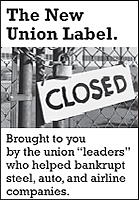
Clueless Labor Leaders: As a result of its United Auto Workers-brokered "job security" agreement, in 2005 Delphi paid around 4,000 workers (almost 10 percent of its U.S. workforce) not to work. The Detroit News reports that this arrangement is projected to cost Delphi $630 million over the next four years. Automakers Forced to Pay 85- to 95-Percent of Wages to Union Members Who Are Not Working. The Big Three automakers are forced to pay 85- to 95-percent of union wages and benefits to members of the United Auto Workers union who aren't working -- even if their plants have been closed. Industry analysts say union labor agreements that obligate the Big Three to pay millions of dollars to workers who are no longer working are a major reason why the automakers are in trouble -- a problem that no short-term bailout can fix. Freightliner Faces Federal Prosecution. The Regional Director for the National Labor Relations Board has filed a formal complaint and agreed to prosecute Freightliner LLC for federal unfair labor practices after an autoworker suffered retaliation for questioning a pattern of special treatment given to United Auto Workers union officials by the company. Jump to the page about Nationalizing General Motors and Chrysler. Jump to Pork barrel politics. Jump to Biased reporting about the economy. Back to the Home page 
|
|
Document location https://akdart.com/uaw.html Updated April 16, 2026. ©2026 by Andrew K. Dart |