Electronic Voting, Voter Fraud, and Other Election Day Issues
People who can't figure out how to mark a paper ballot (or use a punch card ballot) really shouldn't be voting. How hard could it be? Even if English isn't
your native language, it shouldn't be a great challenge to recognize your favorite candidate's name (or the party name) on a ballot.
As we've seen in places like Louisiana and Chicago and Florida, when there's a close contest and the Democrat is losing, it is likely someone will "find" a
bunch of "lost" ballots in a warehouse somewhere that are just what the losing candidate needs to pull into the lead. If you think such shenanigans are
a problem now, just wait until the ballots don't even exist, and all it takes is the manipulation of a few bytes in a computer to change the outcome of an
election. Who will be able to say with any certainty that a fair election took place? Unfortunately, when that day comes, I predict that it will
result in widespread voter apathy rather than a revolt. And if there is a massive public outcry, it could be that the "solution" will be
a National ID Card.
...or a barcode on your
forehead.
Please note that some of the material on this page relates to voting problems in general, not just to electronic voting, but these are problems which will not
be solved (as some claim) by switching over to electronic ballots.
Rebecca Mercuri
wrote her PhD thesis on the subject of electronic voting, and it is well
worth reading." She says,
"I am adamantly opposed to the use of fully electronic or Internet-based
systems for use in anonymous balloting and vote tabulation applications. The
reasons for my opposition are manyfold, and are expressed in my writings as well
as those of other well-respected computer security experts. At the present time,
it is my strong recommendation that all election officials REFRAIN from procuring
ANY system that does not provide an indisputable paper ballot."
Another issue that threatens the American election system is the presence of perhaps 30 million illegal aliens,
with more arriving every day. (The news media says there are 11 million of them, but they've been using that
number for the last 25 years or more, as if that's a mathematical constant. Don't believe it.) Many
of the poorly-educated and deliberately mis-informed newcomers think they are allowed to vote in U.S. elections, but
that is a privilege available to U.S. citizens only. Until the last ten years, the concept of restricting the
vote to citizens was universally understood, but the public schools no longer teach civics, government, history, or
the Constitution. One way to greatly reduce the likelihood of non-citizens voting in U.S. elections is to conduct
the elections — i.e., print the ballots — exclusively in English. If anyone complains,
let them prove their citizenship on the spot, or be gone.
The Editor says...
Voting by mail, voter impersonation, dead voters, illegal alien voters, ballot harvesting, voter ID, and duplicate voting, are all
separate issues. In counties that use electronic voting booths at numerous polling places, the biggest problem is that
the vote tally at the end of the day is stored on a removable (USB) memory card, which can then be taken someplace by a
corrupt official to be altered. Obviously voting machines need to have tamper-proof voting machine memory cards.
Voting machines in Dallas County and many other places currently use a USB thumb drive to store the results of a day's voting. This
device can be taken by a corrupt election judge to a secret location to be edited (on anybody's computer!) and altered before turning it in to the
central counting room. Allow me to propose a solution: [#1] The memory device should not use a standard connector that
everybody's computer has. Certainly not USB, RS-232, Firewire, or Thunderbolt. [#2] When Election Day's voting is finished,
and the voting machine is told to finalize the results, the machine should blow a fuse — inside the removable memory
device — which will turn it into a read-only memory -- except for a memory partition big enough to hold the data
for point #3, which is next. At the same time, it should make a copy of the day's results in a separate memory
unit partition within the same memory card, accessible only through some elaborate means known only to a few.
In addition, the voting machine itself should make a copy of the final results, without telling anyone. [#3] Thereafter, the removable
memory device should record the MAC address of every computer that reads the memory card or attempts to write to it, along with a hash code
(written obscurely somewhere) to make alterations impossible. [#4] Attempts to write to the device after the fuse is blown
(in step 2) should be fruitless, but recorded anyway. [#4A] Alternatively, let the hacker read an write at will, generating
evidence against himself, while leaving the secret copies unchanged. [#5] It is not necessary to tell the poll workers
how the system works — only that there are security features included to prevent tampering with the data. The number of
people who know how it all works should be tightly limited; however, sooner or later some of the details will leak out.
By that time, an even better system can be implemented. If the technical details can be kept secret for two or three election
cycles, that would probably be enough to catch several corrupt officials and make their lives difficult from that day forward.
Will
New Election Evidence Damage the Supreme Court? A peaceful transfer of power depends on
the minority believing that an election does in fact represent the will of the majority.
Unfortunately, the conduct of the 2020 election created suspicion rather than confidence.
• A pandemic was used to justify rule changes that loosened election controls.
• The MSM hid relevant information from the voters until after the election.
• Standard electoral procedures were ignored, clearing a path for fraud.
• "Flexible" ballot acceptance criteria were applied to ensure that
every vote was counted — even the illegal ones.
• "Mules" dumped arm-loads of ballots into drop boxes under cover of night.
• Ballots were handled without chain of custody, making their source a mystery.
• A critical ballot-counting facility was evacuated for a crisis that never happened.
• Poll-watchers were barred from watching.
• Boxes of ballots were "discovered" in places they should have never been.
• Photocopies and ballots that apparently hadn't arrived in required envelops were allegedly counted.
• Some precincts reported more ballots than registered voters.
• Windows were covered while the counting was underway.
• Counting that should have been done in hours continued for days.
• Election boards refused to cooperate with audits.
What happened in the 2020 election may turn out to be the biggest electoral scandal in U.S. history.
If so, it was made worse by the inaction of the branch of government whose duty it was to ensure fairness:
our courts.
Cringing
our way through the "Dumb Ages". In November 2020, among voters who cast early
votes in Atlanta, Philadelphia, Phoenix and Wisconsin, 100 percent happened to vote for Joe
Biden. Among the hundreds of thousands of votes tallied between 1 and 3 a.m., Donald
Trump managed to secure maybe two votes. According to the claque of Democratic dunces in the
U.S. Congress, hundreds of thousands of voters in six swing states decided to instantly change
their votes from Hillary Clinton to Donald Trump after reading unusually persuasive posts on
Facebook, posts authored by 20 English-as-a-second-language Russians operating out of a Moscow
basement. The political memes that swung the entire U.S. presidential election cost the
Russians only about $30,000.
Elective
Priorities. [#1] Each precinct provides a voting venue on a small and manageable scale and
there is no reason that a local precinct cannot count and publish the precinct vote. Large, centralized
ballot collection and counting facilities only incentivize stuffing, miscounting, and fraud.
Precinct level vote counts limit the degree to which a precinct can cheat to 100% of their recorded
registered voters. [...] [#2] We must ban mail-in ballots. Period. Convenience is no
excuse for permitting fraud — and there can be no use of the postal system to transport
ballots. [...] [#3] The last few elections have shown Americans are wary of voting machines.
The left is so paranoid about revealing their mechanized fraud they've imprisoned Tina Peters, a
septuagenarian county clerk Gold Star Mom for investigating their machinations. We must
institute a tangible, verifiable, and infallible means of recording voter choice — on
one of mankind's earlier technological innovations: paper. [...] [#4] Obviously, illegals must
be excluded from the vote but there are also some citizens who must be assessed for their
contributions — or lack thereof. Some citizens are by their detrimental inaction,
demonstrably unable to make rational choices in the best interest of society. Habitual welfare
dependents, the drug-addled, mentally ill, and persistent predators should be put in a separate
category of citizenry and withheld from the franchise through passage of a social misfit amendment.
A
Secret That the DNC Must Never Reveal: Why They Lost the 2024 Elections.
America has a lot of secrets: the nuclear launch codes, what's going on at Area 51, Bigfoot,
why the Denver International Airport seems so odd, whatever happened to D.B. Cooper, and exactly
what evidence convinced several U.S. government agencies that the most likely cause of the Covid-19
pandemic was a lab leak. And over at the Democratic National Committee, they're locking up
the biggest secret of all: why the Democrats lost the 2024 election. [...] You see, the DNC spent a
decent amount of time and money on a comprehensive review, and it has decided that the best way to apply
the lessons from that review is to not let anyone ever see it. Apparently, the autopsy did not
conclude that excessive secrecy at the highest levels of the Democratic Party was a problem.
Voter
Fraud: The Only Issue That Matters in 2024. Just the other day, Kamala Harris's
Department of Justice — in a can't-make-it-up act — sued the state of
Virginia for removing illegals from its voter rolls! The last time I kept track of such
desperate — and illegal — measures was just a few years ago. Here is
just a tiny sampling of the vote-rigging methods, used exclusively by Democrats, that I discovered.
• In a Florida primary, more than 35,000 mail-in ballots were rejected, and over
100,000 ballots were rejected in California.
• Georgia authorities reveal 1,000 people double-voted in primary using absentee ballots.
• More than 534,000 mail ballots were rejected during primaries across 23 states —
nearly a quarter in key battlegrounds for the fall.
• In North Carolina, voters reported receiving two ballots in the mail.
• A top PA lawmaker called on the state to immediately expunge the names of 11,198
non-citizens whom the state confirmed are registered to vote despite not being eligible.
• FBI Found Discarded Military Mail-in Ballots Cast for Trump
• Election Watchdog Finds 350,000 Dead Registrants on Voter Rolls in 42 States.
• GA Investigating 1,000 Cases of Voter Fraud
• The Public Interest Legal Foundation (PILF) of Indiana found the following:
there may be as many as 350,000 dead people still registered to vote in U.S. elections. New York, Texas,
Michigan, Florida, and California accounted for 51 percent of the dead registrants; 40,000 likely duplicate
voters may have voted twice; many state registrars have been forbidden to cull their voter rolls by
the courts because hysterical Democrats claim that some voters might be disenfranchised.
Nevada's largest county sent out more than 200,000 mail-in primary ballots to the wrong addresses,
while 84,000 mail-in presidential primary ballots cast in N.Y. City were disqualified.
How
TDS Destroyed the Democrats. Ballot harvesting in the six key swing states was
particularly easy because those states did not require the voter to provide ID. Nevertheless,
Democrats worried that some of the phony ballots might be detected by means of signature matching
(signatures on ballot envelopes are matched to those in registration records). To eliminate that
problem, Michigan, Georgia, and Pennsylvania scrapped signature matching, although they did it in
different ways.
• In Michigan, the Secretary of State declared that employees were to "presume"
signatures on ballot envelopes matched those in registration records. A few months after the 2020
election, a judge ruled that Secretary Jocelyn Benson acted illegally.
• In Pennsylvanian, the state Supreme Court declared that a voter's ballot could
not be rejected simply because his signature didn't match. The voter could sign as "Mickey Mouse."
It didn't matter.
• In Georgia, the largest county, Fulton, did not attempt to match signatures
at all. Since the vast majority of Fulton voters are Democrats, the absence of signature
matching in Fulton probably won the state for Biden.
In those three states there were millions of mail-in voters, with no ID, and no signature
matching. Was that enough to ensure a Democrat victory? Not necessarily. To be
certain of winning, Democrats in key counties took one more step: They prevented observation
by Republican poll challengers. In Wayne County (Detroit) and Fulton County (Atlanta) they
verbally and physically threatened the observers. In Philadelphia County the state Supreme
Court ruled that observers could be kept at least 15 to 18 feet from the processing
tables. That made observation impossible.
How
the Democrats can steal 2024. The majority of informed Americans believe that the
election of 2020 was at the very least tampered with, and at most, stolen from Donald Trump.
I agree with them. After "mules" delivering contrived and phony ballots to drop boxes
throughout the country, Joe Biden somehow became president. After machine "malfunctions" and
outright collapses, an unknown number of ballots, perhaps even hundreds of thousands, were either
uncounted, or flipped from Republican to Democrat. After votes cast by dead people appeared,
somehow the election was lost for Trump and every American who voted for him. After election
site intimidation tactics, votes were prevented from being cast at all. After officials
declared an "emergency" at some polling places they were closed down, and voting stopped.
After cases of pre-filled ballots came out after closing time — perhaps
millions? — and were run through counting machines more than once, Biden "won."
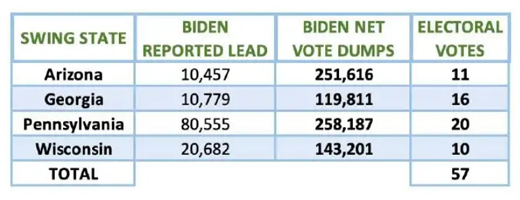
After counters stopped the vote mid-count for several hours, Democrats "found" enough votes for
Biden; the vote count took a sudden and statistically impossible jump in his favor.
American
Democracy Is in Extremis. The 900-pound gorilla lurking in every voting place in America as we enter the
last month before the midterm elections is the fact that the national political media are continuing to repeat, almost
in unison, that any possible dispute over the legitimacy and authenticity of the 2020 presidential election result has
been resolved. The evidence for this claim has been the failure of the many actions undertaken by Rudolph Giuliani
on behalf of then President Donald Trump, and Sidney Powell acting independently but in the same interest, which made
exaggerated claims and sought unrealistic remedies from the courts. The national political media were
approximately 95 percent hostile to Trump according to independent media surveys by Pew Research and the Harvard
Shorenstein Center on Media, Politics, and Public Policy. They reckoned that by debunking the Giuliani-Powell
efforts, they would discredit all concerns about the authenticity of the election result. There
were 19 actions challenging the constitutionality of the voting and vote counting changes, supposedly to facilitate
voting in the pandemic, particularly in the swing states of Arizona, Georgia, Michigan, Nevada, Pennsylvania, and
Wisconsin. Most important was the action of the attorney general of Texas against those states, and he was joined
in his complaint by 18 other state attorneys general, directly to the U.S. Supreme Court as the forum for inter-state
lawsuits. This action alleged violation of the constitutional obligation of all states to ensure through their
state legislatures, and not the executive or judiciary in those states, that presidential elections are fairly conducted
within their jurisdictions. None of these cases was heard on its merits, a fact which received almost no
publicity. Process objections were raised: lateness, wrong courts — everything was shuffled off
until the clock ran out.
How Much Longer for COVID Scare Tactics?
[Scroll down] For the Democrats, COVID has always been about political control, a means to an electoral end, a method to remove President Trump by any way possible.
Transmissibility and the requirement for social distancing gave rise to the oh-so-essential need for mail-in balloting for the 2020 presidential election.
That led to astonishing — and quite intentional — voter fraud, including:
• Numerous counties where the voter participation rate somehow exceeded 100% of registered voters
• Late-night ballot discoveries where thousands of Biden votes (and virtually no Trump votes) were miraculously added to the totals
• Documented — but unacted upon — instances of duplicate ballots and mail-in ballots without verified signatures
• Unconstitutional voting rule changes in many states, including allowing mail-in and absentee ballots to come in and be counted several days after Election Day
None of this has been disputed or disproved by the Democrats or the liberal media. It's either simply been ignored, dishonestly dismissed,
or they cite the blatherings of a random never-Trump Republican as "proof" that the election was on the up-and-up. Unfortunately and undeniably,
the Democrats got away with it. They desperately want to keep this system in place and they see COVID as their ticket to do so.
Gen.
Flynn Exclusive: 10 Indisputable Facts on the 2020 Election That Argue for Audits. The one seminal event that
continues to fester like a boil on the American psyche is this past Nov. 3, 2020, presidential election. Why does it
continue to fester? It festers because people of all stripes and backgrounds believe there were elements of election
fraud, misrepresentations of the truth, dishonesty due to lawfare and, in certain cases, severe obstruction by politicians at
all levels of government. In the days following the presidential election, there were vast claims of a "conspiracy
theory" that the election was somehow stolen in the middle of the night. In fact, many people believe the "theft"
actually occurred during the days prior and subsequent to Election Day. According to some accounts, the theft occurred
as a result of machine configurations and settings, misappropriated and fraudulent mail-in ballots, false or fake paper used
for ballots, multiple scans of the same ballot, ballots in excess of the number of registered voters and much more. The
claims of fraud in this election seemed never-ending. These "conspiracy theory" claims continue to be challenged and
debated across the United States without any serious examination of the facts surrounding the election itself. [...] What I
want to offer for both believers and non-believers are some facts. These facts and the data behind them come from
research and analysis of information gathered directly from federal, state and county websites. These facts compare
past elections to November 2020, and all that is required to understand them is simple common sense. I will offer some
analysis and thoughts at the end, but as we continue to move forward in our country, we the people need to be fact-driven and
knowledgeable about what occurred.
What
if We Find The Fire From the Smoke of Election Fraud? As much damage as Covid did — and far worse,
the "lockdowns" it was used to inflict — that's nothing compared to the damage another "conspiracy" has done and
will do. That, of course, is the "thoroughly debunked" notion that the election of 2020 was stolen, and that Joe Biden
is in the Oval Office today because of election fraud. But of course that's just some tin hat conspiracy theory.
We've been told that "There's no evidence of election fraud" and Trump "Lost Nearly 60 Election Fights In Court." The
latter of course is fiction. Given that we heard similar things for the last year about the origins of Covid, the
question is, what happens when proof unequivocally demonstrates that the election was indeed stolen? The smoke for that
conclusion has been around since the wee hours of November 4th. The stopped counting in key states on election
night. Mark Zuckerberg's wholesale purchase of the voting apparatus in key states and counties. The unconstitutional
changes to voting laws that crisscrossed the country — many empowered by the politicization of Covid. And then
of course there is TIME magazine piece that laid out in black and white the "inside story of the conspiracy to save the 2020
election", chronicling widespread coordination of everyone from the Democrat party, Silicon Valley, BLM, unions, the Chamber
of Commerce and various other players to get rid of Donald Trump.
The
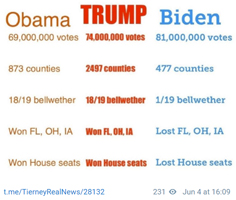
Most Important Question About the 2020 Election. The anomalies: In 132 years, no president has received
more votes in his run for reelection and lost. Yet Donald Trump received 10 million more votes in 2020 than in
2016 — and lost. Trump won 18 of the 19 counties both Democrats and Republicans regard as the "bellwether"
counties that virtually always go with the outcome of presidential elections. Yet he lost. He won four bellwether
states — Florida, Ohio, Iowa and North Carolina. Yet he lost. Republicans held onto all the House
seats they were defending and gained another 13 seats. Yet, Trump lost. Add the following to the anomalies:
Unprecedented efforts were made in some states to change election laws. Mostly Democratic states sent out tens of millions
of ballots or applications for absentee ballots to people who never requested them. Voting began in some states six weeks
before Election Day. People have submitted sworn affidavits at great personal cost and with possible perjury charges that
they witnessed ballot tampering on election night. But all these things would matter little if Democrats involved in
ballot-counting felt morally compelled to count votes honestly.
Next
Step in Democracy's Destruction? Enduring Election Fraud. Well in advance of the election, the Democratic
Party hierarchy and their allies calculated that even with the support of media outlets that function as the propaganda arm
of the left, even with Trump's unpopularity amongst segments of the population and even with the deliberate destruction of
the economy on the pretext that it was necessary to fight COVID-19, they could not defeat Donald Trump. His supporters
were highly enthusiastic. Joe Biden's were lukewarm at best. It was necessary then to do two things. First,
it needed to made possible for even those tepid Biden supporters, those who would never get off the couch to go to their
polling place, to vote from the comfort of their living rooms by doing nothing more than licking a stamp. That meant
the massive implementation of no-excuse mail-in voting. Second, since even then it was likely Biden would fall far
short, the door needed to be opened to electoral fraud on a massive scale. They needed to gut the system of all checks
that were in place to determine the validity of ballots received in the mail. So, while Trump's supporters and the GOP
apparatus slumbered, the Democratic Party and its allies went out and made this happen.
Some
Hard Truths We Face as Patriotic Americans as We Near January 6th: Americans have absorbed the truth that the institutions long
depended upon for redress are compromised. For years we had always suspected this, but in the aftermath of the 2020 presidential election
this has been confirmed with much dismay and sadness. [...] Here are 25 hard truths Americans can no longer rationalize away:
[#1] A presidential election was stolen from President Donald J. Trump in the most brazen and in your face way possible.
[#2] The government elites in all three branches, and in both parties, appear to be in on or complicit in the steal either by omission or commission.
[#3] The strings of our government are being pulled by China and other global interests that have no qualms about tearing down our time-honored values of freedom of speech, freedom of association, and freedom of religion.
[#4] The Supreme Court, except for Clarence Thomas and Samuel Alito has allowed partisanship, virtue signaling and cowardice to influence the merits of the cases they have deigned to accept or reject.
[#5] There is no Democrat and Republican Party, only a UniParty. Both parties are merely two sides of the same coin, dedicated to selling out the country to China for power and enrichment.
[#6] News is not what the corporate media delivers, only leftist/globalist propaganda that rarely speaks ill of China or George Soros. [...]
[#8] If Joe Biden is sworn in as president, he will make a mockery of American ideals of honesty, integrity, and fair play. [...]
Farewell
to a Dreadful Year. Against this backdrop we held an unprecedented presidential election. COVID provided
the pretext for the country to adopt a new system of voting. While it was deemed entirely safe for people to cram into
a Wal-Mart, voting in person was deemed to be so unsafe that a new regime of mail-in voting was adopted, at the urging of the
Democrats. Hans von Spakovsky, an election law expert at the Heritage Foundation, previewed all of the potential
problems with mail-in voting back in August: mail-in ballots are more vulnerable to being altered, stolen, or forged; they
run the risk of being miscarried or not delivered by the postal service; and they run the risk of not being not being
postmarked, making it impossible to determine if they were mailed on time. For the Democrats, of course, these
irregularities were a feature, not a bug. [...] It was little wonder that millions of Americans concluded that the election
was a farce.
The
Ridiculous and Outmoded Way America Holds Elections. This year, I took up the challenge to "put your money
where your mouth is" by becoming a Republican election poll worker in my precinct in Ohio. Having now worked 17
straight hours on the inside of the election process, checking in and processing voters, as well as being one of the two
persons responsible for delivering my precincts votes to the local Board of Elections, one irrefutable fact emerges from that
experience: the way in which we hold our national elections is ridiculous and inexcusable. This is
the untold story of the 2020 elections and a question everyone needs to ask. [...]
Is Voter Fraud Real?
What is the greatest threat to free and fair elections in America? Here's a hint: it's not Russia, or any other
foreign power. It's not a person, either. It's something much more subtle, and much more dangerous.
[Video clip]
Voting
against mob rule. Most of the Founders were scholarly, erudite men. Our founders were not only writers
but readers of the great teachers of bygone eras. Not only did they search the Bible, but the classic works of teachers
and students of Grecian and Roman governmental innovation. • Nowhere in the Bible is authorization for
man to enjoy the right to govern himself through majority rule. • The most infamous vote for justice
(or injustice) was in the ballot to save Barabbas over saving God himself. • The execution of Christ
is one of history's most significant examples of "mob rule." • When humanity received the Ten
Commandments, there was no vote on its legitimacy As they were writing the Constitution and its Amendments, the writings
of Socrates, Plato and Aristotle were fresh in the founder's minds. In reading their work, no Constitutional amendments
uses the phrase "right to vote." Not in the original text nor the Bill of Rights.
The
Plan to "Make America, American Again". California Dems made sure the people of Mexico and other foreign
countries understood the borders were open, no one would ever be sent back, and Democrats would give them every form of
welfare for free. Then they gave illegals drivers licenses. They registered illegals automatically at DMV. They
made sure there was no Voter ID at the polls. Recognize the plan? Gavin Newsom gave it away. This is now the
national plan for Democrats. Make the whole country into California.
Cloward-Piven
Strategy. [Scroll down] All three of these organizations — ACORN, Project Vote and Human
SERVE — set to work lobbying energetically for the so-called Motor-Voter law, which President Bill Clinton
ultimately signed in 1993. At the White House signing ceremony for this bill, both Richard Cloward and Frances Fox Piven were
in attendance. The new law eliminated many controls on voter fraud, making it easy for voters to register but difficult
to determine the validity of new registrations. Under the new law, states were required to provide opportunities for
voter registration to any person who showed up at a government office to renew a driver's license or to apply for welfare or
unemployment benefits. "Examiners were under orders not to ask anyone for identification or proof of citizenship,"
notes Wall Street Journal columnist John Fund in his book, Stealing Elections. "States had to permit
mailing voter registrations, which allowed anyone to register without any personal contact with a registrar or election
officials. Finally, states were limited in pruning 'deadwood' — people who had died, moved, or been
convicted of crimes — from their rolls.
Five
Truths About Elections. [#2] Elections are the fulcrum on which our unique system of government balances,
therefore our elections are crucial. They are also under attack. Whereas the Russians don't seem to have been
very effective, if, in fact, they were tinkering with our presidential choices, forces inside America are working hard to
make elections pointless. The integrity of the voting process itself must be protected. We learned that in the
hanging-chad election. Without assurance that our votes are not being canceled out by infected voting machines, or
dead, illegal, or felonious voters, we lose our ability to choose our future. Without the enforcement of election laws,
we make a mockery of the whole system.
Voter
fraud exists — Even though many in the media claim it doesn't. For example, to improve the accuracy
of Georgia's records, state legislators last year required that information on a voter registration application match a
"driver's license, state ID card or Social Security record." Inconsistencies can cause a voter's registration to be flagged
as "pending" while the discrepancy is investigated. Brian Kemp, the GOP candidate for governor and current secretary of
state in Georgia, is being accused of "voter suppression" because of this law. But a "pending" status does not prevent
anyone from voting as long as he or she has a government ID that substantially matches the registration application. In
any event, every voter can cast a provisional ballot that will be counted once the registration information is
verified. As the secretary of state told radio host Erick Erickson, there are 75,000 pending voters among a record
total of 7 million registered in the state. Of these, 9,224 are minors under 18; 2,935 used a fake address; 3,393 are
not citizens, and 5,842 were already registered. Of the remaining applications, 75 percent submitted erroneous Social
Security information. Almost a quarter of those "sloppy forms" came from a registration effort by the New Georgia
Project, a group founded in 2014 by Stacey Abrams, the Democratic nominee for governor.
Voter
Fraud Is Not a Myth. Democrats keep claiming that voter fraud is a myth. But voter fraud has mattered in
plenty of American elections. Take Lyndon Johnson's election to the U.S. Senate in 1948, when LBJ won by manufacturing
enough fake votes to turn a 20,000-vote deficit into an 87-vote win. Others point to voter fraud in Illinois and Texas
during the 1960 presidential election; indeed, we may never know whether Kennedy actually "won." Chicago was infamous for
counting the votes of dead people. In 1982, U.S. Attorney Daniel Webb found that at least 100,000 fraudulent votes were
cast. In 1994, Democrats obtained control of the Pennsylvania state Senate through large-scale voter fraud using
absentee ballots. In 2008, illegal voting made a decisive difference in a U.S. Senate race, giving Al Franken a seat
from Minnesota — one could argue that Franken's vote allowed Obamacare to get through the Senate. Make no
mistake: Voter fraud is still a problem — even in the 2016 election cycle. Take these cases discovered
during just the last month and a half: [...]
What Leftists
Stand For: [#16] They believe that illegals should be counted along with Americans when
apportioning House seats. [#17] They can't win elections, so they import immigrants and illegal aliens who
will vote for them. [#18] They want to give convicted child-molesters, murderers, rapists, and major
drug-dealers the right to vote. [#19] They work hard to keep the folks in the military from voting.
[#20] They support policies that increase people's dependence on government in order to get more votes, even
though that subjects people to miserable lives.
The Clinton Record.
[Scroll down] Look at the evidence and decide for yourself:
• A 2012 report by the Pew Center on the States found that 24 million voter registrations — one-eighth
of all registrations nationwide — were either invalid or inaccurate, including more than 1.8 million dead people who were still
registered. • A 2014 study found that two years earlier, some 155,692 registered voters in North Carolina
alone had first and last names, birth dates, and final-four Social Security Number digits that matched those of voters who
were registered in other states. • The same study also found that 35,570 people who had actually voted
in North Carolina, had first names, last names, and birth dates that matched those of voters who had cast ballots in other states.
• In 2008, Democrat Al Franken won a highly controversial U.S. Senate race in Minnesota by just 312 votes.
It was later discovered that 1,099 felons — all legally ineligible to vote — had cast ballots in the election, almost exclusively for Franken.
• A 2006 study found that 77,000 dead people were listed on New York's statewide database of registered voters, and
that as many as 2,600 of them had somehow managed to cast ballots from the grave.
• In Milwaukee in 2004, approximately 5,300 more ballots were cast, than voters who
were recorded as having shown up at the polls.
• In 2008, election officials nationwide had to discard at least 400,000 bogus voter
registrations submitted by ACORN, the now-defunct criminal operation masquerading as a "community organization."
• In 2011, a Colorado study found that of the nearly 12,000 non-citizens who were
illegally registered to vote in that state, about 5,000 had taken part in the 2010 general election.
• In ten Colorado counties in 2012, voter registrations outnumbered the total voting-age
population by between 4% and 40%.
The foregoing examples represent only the barest tip of a colossal election-fraud iceberg.
Timely news and commentary:
Peter
Ticktin For US Attorney General! Since President Trump's 2020 loss, Florida-based
attorney Peter Ticktin, who's been his friend since both were 15-year-olds at New York Military
Academy, has worked on the issue of election fraud. Ticktin told Jerome Corsi, ["]I
knew that night, like most of us with brains, that stopping the count, which never happened before,
while Donald Trump was ahead, in 4 swing states, on the night of the election was at least
suspicious. Then, the next morning, after a straight vertical line graph for Biden caused
Biden's win and we were all expected to believe that the election was fair. We all knew
something terrible happened.["] In 2022, Ticktin, who is the named partner of the
Ticktin Law Group in Deerfield Beach, Florida, has represented Trump in a lawsuit against Democrat
party solons for their actions related to the Russia Hoax, began investigating the events of
January 6, 2021. Ultimately, he concluded that it had been a set-up, planned in advance,
probably by the same forces that had rigged the election.
DOJ's
Harmeet Dhillon Details Just How Much a 'Mess' Voter Rolls Are. Assistant Attorney
General for Civil Rights Harmeet Dhillon told "Sunday Morning Futures" host Maria Bartiromo that
federal officials discovered tens of thousands of dead people and non-citizens on voting
rolls. The Trump administration has sued multiple states for failing to turn over voter rolls
to the Department of Justice, which is seeking to ensure compliance with the National Voter
Registration Act, the Help America Vote Act, and other federal laws aimed at protecting the right
to vote. Dhillon told Bartiromo that, even in states trying to comply with the laws, issues
concerning voting eligibility were still being identified.
The National Popular
Vote Compact Just Signed by Abigail Spanberger is an Unconstitutional Timebomb. On
April 14, 2026, Virginia Governor Abigail Spanberger signed House Bill 965 into law, making
the Commonwealth the 19th jurisdiction to join the National Popular Vote Interstate Compact.
The compact now commands 222 electoral votes and requires 48 more to activate. When it
activates, each member state will be obligated to award its electors, by statute, to the candidate
who wins the national popular vote, regardless of how that state's own voters actually voted.
Virginians, in other words, may cast ballots for one candidate in November and watch their 13
electoral votes delivered in December to the other. The compact does not merely change the
rules of presidential elections. It proposes to change what a state's vote means, and it
proposes to do so without amending the Constitution.
Gerrymandering and
the Tyranny of Big Cities. I've written an analysis of the April 21st
redistricting vote here in Virginia. At that time, I made the urgent and emphatic point that
this is an egregious power grab on the part of Democrat Governor Abigail Spanberger and the
Democrat majority in our legislature. Not content with their good fortune in the most recent
electoral cycle, they now insist that this should be made permanent by rigging our congressional
districts in their favor — and permanent it will be, despite the dishonest framing of
the measure as temporary. We've seen how this works too many times in the years since the
left has taken control of the culture.
Far-Left
Union [Introduces a] New Ad Promoting Mail-In Voting: 'Keep It, Protect It, Expand It.' The
left-wing American Postal Workers Union, representing 200,000 members, will air a 30-second TV
ad campaign encouraging Americans to vote by mail. The ad comes amid attempts by President
Donald J. Trump to combat illegal voting via fraudulent absentee ballots. This campaign comes
amid ongoing debates about mail-in voting, with President Trump recently signing an executive order
to create a nationwide list of verified voters and restrict absentee ballot distribution.
Trump has regularly criticized mail-in voting as a source of fraud. The ad campaign will
first air in Ohio before expanding to other states. The union's move comes amid a coalition
of Democratic-led states, advocacy groups, and political organizations launching legal challenges
against Trump's executive order, arguing it violates the Constitution by interfering with states'
authority over elections. However, Jonathan Smith, president of the American Postal Workers,
claims the TV ad was created before President Trump issued his executive order.
The EU Didn't
Just Influence Hungary's Election, It Engineered the Outcome. Consider a thought
experiment. Imagine the US Congress paid a freshman representative his full salary, gave him
immunity from criminal prosecution, and then quietly arranged for him to skip 98% of all floor
votes so that no voter could ever discover what he actually believed. Now imagine that same
representative ran for governor on the promise that he was "just like the incumbent, minus the
corruption," while powerful institutions spent billions creating the conditions for his
victory. You would call that election interference. When the European Union did
precisely this in Hungary, the Western press called it democracy. On April 12, 2026,
Péter Magyar and his Tisza Party won 138 of 199 seats in the Hungarian parliament, ending
Viktor Orbán's 16-year tenure. Within 17 minutes of the result, European Commission
President Ursula von der Leyen declared that "Hungary has chosen Europe." Alexander Soros,
chair of the Open Society Foundations, posted that "the people of Hungary have taken back their
country." The speed of those statements tells you something important. Brussels was not
reacting to the election. It was receiving confirmation of a project years in the making.
Ruling
Allows Fulton County to Block Republican Election Board Nominees. The Georgia Court
of Appeals has ruled that the Fulton County commissioners may reject Republican nominees to the
county's election board, finding the board appointments are "inherently discretionary." For
years, the Democrat-controlled Fulton County Board of Commissioners has been fighting the local GOP
over who gets to sit on the Fulton County Board of Registration and Elections. In
May 2025, the commissioners rejected the Republican Party's nominees, Julie Adams and Jason
Frazier. Later that summer, Superior Court Judge David Emerson ordered the county to seat
both nominees. When the commissioners refused, Emerson issued a follow-on ruling, ordering a
$10,000-a-day contempt fine — but Democrats refused to budge.
Release the Swalwell Files!
[Scroll down] The context is everything, and the context is the 2026 California
gubernatorial election. It's still primary season, and California has this crazy thing called
a "jungle primary" in which all candidates in all political parties are tossed into a single
primary election, and the two candidates who emerge with the highest percentage of the primary vote
advance to the general election. The purpose of this process is to ensure that it will always
be two Democrats in the general election, and no Republican can ever even get in the way as a
general election candidate. (Great "democracy" they have there in the Golden State, isn't
it?) Well guess what? They ended up with eight Democrat candidates and two GOP
candidates in the primary, and depending on what poll you consult, it is possible that two
Republican candidates might emerge as the two top primary winners, guaranteeing a Republican
governor emerges in the general election. In other words, the distorted, undemocratic system
installed in California by the Democrat majority is backfiring on them, and now they are scrambling
to save themselves [...]
Group
says NY registered millions of individuals without required ID. A non-profit
government watchdog is claiming that New York is refusing to fix numerous violations, including its
voter registration form. Restoring Integrity and Trust in Elections (RITE) is accusing the
New York State Board of Elections (NYSBOE) of failing to address a number of issues that could
compromise the integrity of their elections. "After the board failed to correct most of the
violations, RITE and [Representative Claudia] Tenney are demanding the board hand over
comprehensive records and data to identify additional shortcomings in the state's voter
registration system," Fox News reported. Two of the violations noted by the organization
reportedly "violate the Help America Vote Act (HAVA)" which means they are not in compliance with
federal law.
Voted
Fraud: In 2020, a man requested 106 mail-in ballots for city residents without their
knowledge. A Texas Democrat engaged in massive vote fraud. What if
Mr. Mohamed had used multiple P.O. Boxes instead of just one? What if the election
workers hadn't been so observant? It is shocking that it was this easy for him to obtain over
a hundred ballots to vote. In December 2024, Mohamed was convicted for 106 votes of
vote fraud and sentenced to four years in prison. We noticed this case because Mohamed is now
running for mayor in Carrollton, Texas.
Election
Day and Election Reforms (Not Week, Month, Season). The United States Supreme Court
is finally ruling on an issue (Watson v. RNC) that should have been decided long ago:
the dissonant practice of accepting ballots after the Election Day deadline. This case could
indeed shift the 2026 midterms in Republicans' favor, since Democrats often win by broad and unjustified
election expansion, which opens the door to cheating, stuffing, and undoing the vote. More election
cases are coming before the United States Supreme Court, and the conservative majority looks more
inclined to bring the much-needed order and common sense back to our elections.
How
The Democratic Party Became One Giant "Learing Center". The events of 2020 solidified
the Democratic Party as a full blown "Learing Center." To understand the plot, a useful place
to start is an extraordinary article published by Time magazine in February 2021. The author,
Molly Ball, laid out in exquisite detail what the article's headlined described as "The Secret
History of the Shadow Campaign That Saved the 2020 Election." The word "saved" is
misleading. "Rigged" would be more accurate. [...] In the run-up to the election, the major
media not only refused to investigate the rigging in progress, but they also conspired to suppress
those who tried. Then still with Project Veritas, James O'Keefe did an excellent job of
showing how the many gears of this well-funded cabal meshed. In late September 2020,
Project Veritas went public with its research into industrial strength "granny farming" in
Minneapolis's large Somali community. [...] Like their friends at the Quality Learing Center,
Democrats grew reckless in their abuse of the system. In 2020, they thought it quite natural
that the decrepit hack they ran for president should get 16 million more votes than Hillary
Clinton had in 2016, and they punished those who thought otherwise.
Election
Fraud is a Serious Problem for the Midterms. Election integrity is not some paranoid
concern. It is a real, documented, ongoing challenge that persists even in jurisdictions that
have made serious efforts to secure the vote. Nowhere is that reality more evident than in
Florida. Over the past several years, its Republican statehouse has enacted some of the most
comprehensive election integrity reforms in the country. [...] These reforms reflected a
recognition that integrity is not a static achievement. It requires constant oversight and
enforcement. In 2023, Florida added another layer of protection. Election officials
were required to undergo formal signature-matching training. Third-party voter registration
groups faced stricter deadlines and accountability measures. Clear procedures were
established for maintaining and updating voter rolls. The state continued to refine its
system, focusing on both prevention and detection.
Democrats
Sue to Stop Trump's Latest Election Integrity Effort. Democrat officials from
23 states and the District of Columbia announced Friday they're suing to block President
Donald Trump's recent executive order regulating mail-in and absentee ballots. The suit was
slated to be filed in the U.S. District Court for the District of Massachusetts. A copy of
the lawsuit wasn't available as of press time. Trump doesn't have the constitutional
authority to control elections, California Attorney General Rob Bonta told reporters during a news
conference Friday morning. Bonta, a Democrat who's co-leading the coalition of plaintiffs,
noted the authority rests with states and Congress, not the federal executive branch.
The Editor says...
When is "press time" on the internet?
Tina
Peters' 9 Year Prison Sentence Has Been Thrown Out in Massive Victory for the 70-Year-Old
Election Integrity Advocate and for America. How do you get a nine-year prison
sentence for something that gets someone else 20 days if you don't have any prior
record? Simple: You have the Wrong Political Beliefs and you're in the state of
Colorado. Thankfully, even Coloradans — particularly the state's appeals
court — seem to believe that's a bit harsh, and that means that former Mesa County Clerk
Tina Peters could be out of prison sooner rather than much later. On Thursday, the appeals
court threw out the original sentence handed down to Peters, an election integrity advocate, in
2024 for allowing a conservative activist access to parts of the Mesa County system in an attempt
to see if there had been fraud in the 2020 election.
Court
Overturns Colorado Clerk's 2020 Election-Tampering Sentence. A Colorado court of
appeals on Thursday overturned the nine-year sentence handed down to Tina Peters, the Mesa County
clerk who was found guilty of election tampering after she granted an unauthorized man access into
the county's election system in an effort to find proof of fraud in the 2020 presidential
election. [Advertisement] While the three-judge panel upheld Peters's conviction, it
overturned her nine-year sentence because it was "based in part on improper consideration of her
exercise of her right to free speech." The panel found the judge who sentenced Peters
violated her rights by calling her a "charlatan" and a snake-oil saleswoman who trafficked in false
claims that the 2020 election was rigged against President Trump. "The trial court's comments
about Peters's belief in the existence of 2020 election fraud went beyond relevant considerations
for her sentencing," the judges wrote. "Her offense was not her belief, however misguided the
trial court deemed it to be, in the existence of such election fraud; it was her deceitful actions
in her attempt to gather evidence of such fraud."
Tina
Peters Gets Resentencing Hearing. Tina Peters had her moment before this appeals
court panel back in January, and it was obvious to observers and the Associated Press that there
were serious issues with how the trial judge at the district court level had handled the
sentencing. [Lengthy excerpt] [Advertisement] While the Colorado Court of
Appeals ultimately upheld Peters' convictions, the three judges deciding the appeal were quite
clear that they felt the District Court trial judge, Matthew Barrett, had overstepped during
sentencing, allowing Peters' First Amendment rights to be violated and used in determining her
sentence. The first paragraph in today's NBC News report calls Peters an 'election denier'
again for good measure.
Appeals
court tosses sentence of Colorado elections clerk. A Colorado appeals court on
Thursday threw out the sentence of Tina Peters, a former elections clerk, who was convicted in an
election data case. Peters was sentenced to nine years in prison in August 2024 on seven
of the 10 counts for which she was charged.
Colorado
appeals court tosses out sentence of Tina Peters. The Colorado Appeals Court issued a
decision Thursday morning that threw out the current prison sentence of Tina Peters, but affirmed
her conviction on several felony charges. Peters, the former Mesa County Clerk, has been
serving a nine-year prison sentence for her role in orchestrating a breach of her county's election
equipment. In August 2024, she was convicted of several felonies for allowing fellow
election deniers access to local voting systems in search of voter fraud following President Donald
Trump's loss in the 2020 election.
Trump
Signs Executive Order Limiting Mail-In Ballots. President Donald Trump signed an
executive order that limits who can submit a mail-in ballot in elections. Trump signed the
order "to strengthen election integrity by ordering citizen verification." "The Order directs
the Secretary of Homeland Security, in coordination with the Social Security Administration, to
compile and transmit to each State a State Citizenship List of confirmed U.S. citizens who will be
18 or older at the time of the next upcoming Federal election and reside in that State," according
to the fact sheet. Mail-in ballots are not going anywhere. It's worth doing something
to prevent fraud.
Trump
signs executive order creating a verifiable national voter list. President Donald
Trump signed a new executive order ensuring states can cross-check voter data with federal records
and establishing a new verification system for mail-in ballots. White House Staff Secretary
Will Scharf summarized the order in the Oval Office on Tuesday evening. The federal
government will provide data on eligible voters to state election officials, "allowing them to
properly verify that everybody voting in their elections is legally able to vote." Until now,
states have managed their own lists, but under the second Trump administration, the federal
government has requested access to state lists and performed audits on voter data. The
federal government will also be leveraging the power of the struggling U.S. Postal Service to
double-verify the legitimacy of mail-in ballots.
Blue
States Withhold Voter Rolls From DHS While Giving Them To Leftist Orgs For Free.
Democrat senators claim it is an unconstitutional invasion of privacy that the SAVE America Act
requires states to share voter rolls and requisite identifying information with the federal
government in order to check for noncitizens, but many of their states already share the same data
with left-wing third party organizations. Sen. Jack Reed, D-R.I., argued against the
bill on the Senate floor, stating, "States would be required to report their full voter rolls to
Department of Homeland Security and certify that there are no non-citizens on their list. And
the federal government can require, then, states to purge their voter roles of any suspected
non-citizens." [Advertisement] "The Leadership Conference on Civil and Human Rights has
said that DHS's desire to turn the SAVE program into a de facto national citizenship registry
raises significant civil liberties concerns," he stated, appearing to argue against the federal
government being able to know who is in the country illegally or which noncitizens are attempting to vote.
Riverside
Sheriff Chad Bianco's Ballot Investigation [is] on Hold. Almost a week ago, I
detailed how California Democrats were having a rough stretch. They'd just been subjected to
the sight of two Republicans atop the poll for their own engineered jungle primary, which was
specifically set up to exclude Republicans from ever seeing elected office in the state
again. [Advertisement] [Tweet] And then word came that gubernatorial candidate
and Riverside County Sheriff Chad Bianco had bested the CA Attorney General's attempt to wrest back
some 650,000 ballots he'd seized as part of a voting irregularity investigation. Vote totals
and ballots counted had almost a 46,000 vote difference between them, and the sheriff wanted
answers that no one was willing to give him, which was particularly concerning, as this ballot
decided Prop 50 — the controversial congressional redistricting question. So
Bianco'd taken it upon himself to get ahold of the boxes and set his investigators to counting
individual pieces of paper to see where the discrepancy had come about. He did so with a
judicial warrant and authorization in hand, which is what foiled CA AG Rob Bonta's initial flagrant
attempt to impede.
126-Year-Old
Voters Found Casting Ballots in California. A viral report is raising fresh concerns
about election integrity after evidence surfaced showing that individuals in California listed as
being over 126 years old were recorded as voting in the last presidential election. The
revelations, circulated on social media by independent journalist Nick Shirley's mother, Brooke
Shirley, have reignited calls for stricter voter verification measures, particularly voter ID
requirements. In a widely shared video, Brooke Shirley, known online as Brooker Tee Jones,
pointed to voter records showing individuals born in 1900 still appearing as active voters who are
apparently still casting ballots.
Obama
Lies to Sway an Election. Stealing an Election as We Watch showed how Phony
Moderate Governor Spanberger and her cohorts in the Virginia assembly are attempting to put one
over on Virginia voters in connection with an ongoing special election that is intended to
authorize an unprecedented amendment to the Virginia Constitution. [...] One of the tricks by which
the fraudsters hope to unfairly rig the election results is by putting misleading language on the
special election ballot, which says that the amendment will "restore fairness in the
upcoming elections." Who could oppose restoring fairness? In fact, it's effect will
be the opposite. If successful, the constitutional amendment would accelerate Virginia's
headlong rush to replace Californian as the worst governed state in the Union. It attempts to
override current law which provides that congressional districts are to be drawn by a 10-member
Redistricting Commission that by law must be split 50-50 between Democrats and Republicans.
Instead, the proposed amendment requires Virginia's congressional districts to be designed by one
party only — Virginia's overwhelmingly Democratic General Assembly.
Who
Really Won Pennsylvania's Federal Elections? No one knows. No one can
know. The system is broken, it failed to serve and protect Pennsylvania citizens, and there
is still an active coverup. When Attorney General (now Governor) Josh Shapiro of
Pennsylvania, the State's top law enforcement official, allowed Pennsylvania's 2020 elections to be
certified despite flagrant violations of law, he abandoned his statutory responsibility to enforce
Pennsylvania law, allowed the State to violate Federal law, and failed to protect his own citizens
from those breaking election laws concerning mail in ballots, signature verification, chain of
custody failures, and violations of state reconciliation requirements. This was blatantly
against Pennsylvania law but ignored by a partisan executive branch and state judiciary.
Who
Hijacked the Texas 2026 Democrat and Republican Primary Elections? The enemy is
INSIDE the gates of our election system, manipulating all of us. The Texas 2026 primary
elections show clear evidence of intolerable manipulation for BOTH the Democrat and Republican
primaries. The data does not lie. Undeniable patterns of vote and voter injections and
deletions were first identified in our Texas 2022 Election analysis. We reported that for the
first time after the 2024 General Election. That pattern just repeated during the early
voting period of the 2026 primaries. In the Democrat election, Unite4Freedom's expert
analysis identified 37,039 voter IDs with "oscillations." That means a voter ID
appeared, disappeared, and reappeared, sometimes multiple times during the early voting period.
In the Republican election, we identified 87,336 voter IDs with "oscillations."
What
Will It Take? [Scroll down] Any legislation, from any body, that is
designed to hinder, harm or otherwise destroy the compact between the people and the state will be
widely supported by those in office. This is currently the status in the US where the SAVE
Act, an ID required to vote legislative act is being stonewalled by those in office despite 82%
support among the people, that's conservatives, independents and liberals. Higher among
conservatives, yet a few Republican Senators consistently vote against it.
Palm
Beach Shocker: Gop Stronghold Flipped by 797 Votes After Democrat "Tech Nerd" Steals
Encrypted Voter Key. A long held Republican district in Palm Beach county, flipped
Democrat by 797 votes after John Panicci, a "huge tech nerd" stole e an encrypted access key
from a voter registration terminal. Surveillance photos reportedly captured the act.
The district had previously been held by a Republican who won by a much larger margin in 2024.
Democrat Emily Gregory defeated Trump-endorsed Republican Jon Maples by roughly 797-800 votes
(51.2% to 48.8%, out of about 33,400 votes cast in a low-turnout special). Republicans
are demanding a full recount in Florida. [Advertisement] A Democrat elections office
volunteer got CAUGHT stealing election materials. More Democrat cheating exposed. Bring
back paper ballots. The destruction of our country must end.
Palm
Beach Elections Volunteer Arrested for Stealing Computer Equipment and Encrypted Access Key Ahead
of Special Election Won by Democrat. A Palm Beach, Florida, elections volunteer was
arrested for stealing computer equipment encrypted access key ahead of a special election where a
Democrat won by 800 votes. John Panicci was arrested on Friday for taking sensitive
computer equipment and other supplies on March 19 ahead of the March 24 special
election. As previously reported, a Democrat flipped a Florida state house district that
includes President Trump's Mar-a-Lago estate. Emily Gregory won state house district 87 in
last Tuesday night's special election.
Ranked
Choice Voting Is a Trap Designed to Kill Conservatism. There is a game conservatives
keep losing. It does not happen on Election Day, exactly. It happens in the design of
the rules, in the architecture of the ballot, in the quiet procedural choices that determine which
candidates can survive long enough to face a real electorate. Ranked choice voting,
especially the instant-runoff version now operative in Alaska and Maine, is one of those
architectural choices. And it is worth being precise about why it is so dangerous, because
the strongest case against it is not the one most often made. Start with what RCV actually
does. A voter marks candidates in order of preference, first, second, third. If no
candidate clears 50% of first-choice votes, the candidate with the fewest first-choice votes is
eliminated, and those ballots are redistributed to whichever candidate is marked next. This
repeats, round by round, until someone clears the threshold. The system is sold as a tool for
producing majority winners, for reducing negative campaigning, and for letting voters express their
true preferences without fear of wasting a vote. These are the talking points. The
reality is different, and the difference matters enormously for conservatives.
Georgia
Senate passes revamped legislation requiring hand-marked ballots. Three weeks after
the Georgia Senate failed to pass a bill requiring hand-marked ballots for the November elections,
a revamped House bill with the same requirement was approved. In its original form, House
Bill 960 would have added a 12th Superior Court judge to the Gwinnett Judicial Circuit. The
amended bill presented by Sen. Greg Dolezal, R-Cumming, on Friday contained some of the same
language as Senate Bill 568, which failed on crossover day. House Bill 960 still requires
hand-marked ballots for the November 2026 general election and requires a manual recount of
some elections. The new version reduces the $10,000 fine that election boards were facing for
each ineligible voter to $100. Election officials will also be required to have preprinted
ballots at each voting location and publish a voter turnout list by 11:59 p.m. on Election Night.
Don't
Count Ballots After Election Day. The U.S. Constitution reserves to state
legislatures the authority to prescribe "the times, places, and manner of holding federal
elections." True — but the Constitution empowers Congress to set the date.
In 1824, Congress chose the Tuesday after the first Monday in November as Election Day, and it's
been the same ever since. But in recent years the meaning of Election Day has been
eroded — its finality and certainty upended by state laws allowing absentee ballots to
be counted days later. At stake is a national treasure of civic virtue, long understood as
the one day on which the whole electorate's votes get counted, and everyone knows the
results. The justices' decision will have national impact and could potentially affect
November's midterms. New York's law allows a ballot postmarked by Election Day to be counted
as many as seven days later — and worse yet, it deems a ballot lacking a postmark to "be
presumed to have been timely mailed or delivered." That's crazy: It invites cheating.
Minnesota
elections office subpoenaed in federal probe involving non-citizens on voter rolls.
The Minnesota Secretary of State's Office has been served with a federal grand jury subpoena
seeking access to certain voter records as part of an investigation into whether non-citizens may
have registered or voted illegally, according to sources cited in a report. The probe, led by
the U.S. Department of Justice in coordination with the Department of Homeland Security, marks an
escalation in a broader dispute between federal authorities and several states over access to voter
data and election oversight. No criminal charges have been filed so far. Investigators
are looking for information that is linked to more than 125 individuals, a source said. The
subpoena is the latest development in an ongoing push by federal officials to examine voter rolls
and verify eligibility, an effort that has drawn resistance from state leaders who argue that
sharing sensitive voter information raises legal and privacy concerns.
Cult
Classics. Now consider those figures and factions in the Republican Party who won't
lift a finger to allow election reform. Thune, McConnell (what little is left of him),
Murkowski, Tillis, maybe Collins. What possible calculus judders their brains? They are
about to be drowned in a tsunami of revelation about organized ballot fraud in Arizona, Georgia,
Pennsylvania, Michigan, and Wisconsin. How will they explain that? Maybe "election
denial" wasn't a thing all along. Thune's game is plain stupid. He's engineering his
own downfall as majority leader as he attempts to usher the SAVE Act into a ditch. Our
election procedures are patently insane, and only the insane fail to notice. So, failing to
notice is an option, at least.
Mail-in
Voting, SCOTUS Static, and the Death of the Deadline. If you need further proof that
Americans can and will argue about absolutely anything, I present to you the controversial concept
of the deadline. While half the country understands this to be — by its
literal dictionary definition — "a date or time before which something must be done,"
the other half thinks it should mean "you know, if you're close, you probably tried, so you're good."
You'll never guess which side favors the flimsier definition when it comes to voting by mail.
Texas
2026 Primary Election Steal In Real Time! Unite4Freedom's (U4F) data team measured
clear evidence of election malfeasance over the past two election cycles — in 2022 and
2024. Preliminary analysis of early voting data in the Texas 2026 Primary Election shows the
same pattern of additions and deletions; the stealing of the primaries is well underway. The
only way to defeat this is by a massive turnout overwhelming the fraud. U4F has the largest
highly qualified election data analytics team in the nation, led by cybersecurity, workflow, and
election subject matter experts and Chairman of U4F Harry Haury. We have already found that
almost TENS OF THOUSANDS of ballots were deleted from the statewide 2026 primaries in Texas's early
voting period that ended on February 28, 2026.
Minnesota
Election Judge Pleads Guilty to Letting Unregistered Voters Cast Ballots in 2024 Election.
In another devastating blow to the Democrats' endless claims that there's no election fraud, a
Minnesota election judge has now pleaded guilty to a felony for deliberately allowing unregistered
voters to cast ballots on Election Day. Timothy Michael Scouton, 65, of Nevis, Minnesota, the
head election judge in rural Badoura Township, Hubbard County, admitted in court on Monday that he
allowed 11 unregistered individuals to vote without meeting the most basic legal
requirements. Scouton was responsible for ensuring that all voting procedures complied with
Minnesota law. Instead, prosecutors say he accepted ballots from voters who had not completed
legally required registration forms, a fundamental safeguard in the election process.
Election
integrity matters. For leftist activists, the idea of voting eligibility has somehow
become oppressive in a country where you need a government issued ID to board a plane, buy a
six-pack, and purchase Sudafed at a drug store. Yet, verifying who is elected president is
somehow a human rights violation. It is a beguiling double standard: bureaucracy for beer is
fine, but bureaucracy for ballots is tyranny. Enter the Safeguard American Voter Eligibility
(SAVE) Act — this year's version being the SAVE America Act — which would
require proof of U.S. citizenship when registering to vote and would mandate photo identification
when casting a ballot. A 2025 Pew Research Center survey found that 83% of Americans,
including 95% of Republicans and 71% of Democrats, support mandatory photo ID for voting in
federal elections, nationwide. In today's splintered political climate, such a level of
consensus is rarer than bipartisan applause on Capitol Hill during a state of the union
speech. This is not a fringe issue; it is a national consensus hiding in plain sight.
If elections matter, then verifying who participates in them should not be treated like an
ideological crisis.
Georgia
Court Says Democrats Can Ignore Republican Election Board Members. On March 20,
the Georgia Court of Appeals delivered a staggering blow to the principle of bipartisan election
oversight. In Fulton County Board of Commissioners v. Fulton County Republican
Party, the court effectively granted the board's partisan majority broad discretion to reject
GOP nominees. By reversing a lower court's order to seat duly nominated Republican Board of
Registration and Elections members, the court hasn't just sided with the Fulton County Board of
Commissioners, it has undermined the very safeguards meant to ensure genuine bipartisanship in
Georgia's largest county.
O'Keefe
Catches Skid Row Fraudsters Paying Homeless People to Forge Signatures on Ballots.
Paid activists in Los Angeles, California, have been caught on hidden camera paying homeless people
on skid row to forge signatures of registered voters on ballot initiatives. O'Keefe Media
Group (OMG) released part Two of its undercover investigation into the Democrats' blatant election
fraud operation in L.A. on Tuesday. President Trump shared the report on Truth Social,
commenting "terrible!" [Screenshot] California's Republican gubernatorial frontrunner Steve
Hilton commented on X: "They paid homeless people cash and drugs on Skid Row to forge your
signature. Your name. Your vote. Stolen by a crackhead with a
clipboard — while Gavin Newsom looked the other way."
Court
Slaps Down Dem AG Bid to Block Recount of Seized Ballots Amid 45K Vote Discrepancy. A
California Court of Appeal has denied Democratic Attorney General Rob Bonta's emergency effort to
shut down Riverside County Sheriff Chad Bianco's ongoing recount of roughly 650,000 seized
ballots. [Advertisement] Bonta had raced to the 4th District Court of Appeal earlier
this week in a frantic bid to block Bianco's court-authorized investigation into a glaring
45,896-vote discrepancy in the November 2025 special election on Gov. Gavin Newsom's
Proposition 50 redistricting scheme. Prop 50 allows the state legislature to, in short,
redraw congressional maps to favor Democrats until the 2030 census. According to county
records reviewed during the sheriff's probe, only 611,428 ballots were actually cast in the special
election in Riverside County, yet officials certified a staggering 657,322 votes —
creating a massive, glaring, and questionable gap.
Stealing
an Election as We Watch. The Phony Moderate, Governor Abigail Spanberger, and her
Democrat allies are trying to steal an election. But not just a single election. That
would the child's play. Their play is to rig the system to steal one election and then use it
to scoop up other congressional seats. They hope to accomplish this by misrepresenting the
nature of a Democrat-sponsored amendment to Virginia's Constitution, all in the name of
"fairness." The title includes the proposition that Phony Moderate Governor's efforts
are, in effect, to "steal" an election. Democrats consistently sneer and attempt to
deplatform anyone who has the temerity to suggest that maybe, just maybe, Joe Biden's and the Dems
stole the 2020 election. [...] I begin with a short explanation why it is both fair and accurate to
refer to "stolen" elections in a way not traditionally done. As with skinning cats, there is
more than one way to steal elections, and the new form of electoral thievery takes a variety of
forms. The old-fashioned tactics of phony voter registrations, forged ballots, votes case by
dead people, and litigation over hanging chads have been supplemented by new forms of asymmetrical
election warfare.
Supreme
Court Voices Skepticism About States Accepting Mail-In Ballots After Election Day.
The U.S. Supreme Court appeared skeptical on Monday about the legality of state laws permitting
election officials to accept mail-in ballots after Election Day. The moment came during oral
arguments for Watson v. RNC, which deals with a challenge to a Mississippi law
authorizing absentee ballots to be accepted up to five days after Election Day so long as they are
postmarked before or on the day of the contest. Mississippi appealed to the high court after
the 5th Circuit Court determined that the state statute is preempted by federal laws designating an
official Election Day. [Advertisement] Mississippi Solicitor General Scott Stewart
opened Monday's discussion by arguing that the federal Election Day statutes "adopt a simple
rule: States must make a final choice of officers by Election Day." He contended that
they do not prohibit states from accepting ballots after Election Day so long as they are
postmarked before or on that day. Several of the court's Republican appointees immediately
pushed back on those claims.
Justice
Alito just made it clear: He wants ONE Election DAY. Dems have been playing
fast and loose with our elections for quite a while now. They keep testing every gimmick they
can think of. Whatever they can do to make voting drag on longer, feel less secure, and leave
more room for "funny business." Of course the one thing they don't want to do is the most
obvious: voter ID. Their schemes are always sold as some kind of better "access" or
more "convenience," but what they're really doing is turning a civic act into a chaotic, messy
process that Americans don't trust. That's why this latest Supreme Court case matters so
much. Election Day is supposed to mean something. It is supposed to be the day people
vote, the day the rules are clear, and the day the country starts getting answers. Instead,
we have been stuck with this absurd system where ballots keep showing up after the election,
strangers can handle stacks of votes, and the public is just expected to smile and pretend this all
looks perfectly normal. It doesn't. It looks sloppy, and after the circus of 2020,
people are right to be fed up.
Supreme
Court justices skeptical of counting late-arriving ballots. The Supreme Court's
conservative justices on Monday seemed particularly skeptical of arguments by the state of
Mississippi that mail-in ballots arriving after Election Day should still be counted.
Mississippi counts ballots that arrive up to five days after Election Day. At least
17 states and the District of Columbia count ballots that arrive late, with at least two
allowing them to arrive up to two weeks after Election Day. The case before the high court is
Watson v. Republican National Committee. Mississippi's Secretary of State Michael
Watson is a Republican who oversees state elections. [Advertisement] Justice Amy Coney
Barrett pressed Mississippi Solicitor General Scott Stewart about the security of mail-in ballots
and what prevents someone from designating their neighbor to deliver a ballot. "That
submission to mail to a common carrier is different in kind than, say, submitting it to a relative
or a neighbor," Stewart answered. "What's the difference?" Barrett asked, "They're not
government officials."
'Free
Tina!': Trump Calls to Release Imprisoned County Clerk Convicted in 2020 Election Case.
President Donald Trump on Monday called for the release of Tina Peters, a former Colorado county
clerk who was convicted for giving a man linked to MyPillow CEO Mike Lindell access to a voting
machine. "For years, Democrats ignored Violent and Vicious Crime of all shapes, sizes,
colors, and types. Violent Criminals who should have been locked up were allowed to attack
again," Trump posted on Truth Social. "Democrats were also far too happy to let in the worst
from the worst countries so they could rip off American Taxpayers. Democrats only think there
is one crime — Not voting for them!" "Instead of protecting Americans and their Tax
Dollars, Democrats chose instead to prosecute anyone they can find that wanted Safe and Secure
Elections," he went on. "Democrats have been relentless in their targeting of TINA PETERS, a
Patriot who simply wanted to make sure that our Elections were Fair and Honest. Tina is
sitting in a Colorado prison for the "crime" of demanding Honest Elections. FREE TINA!"
In addition to this, Trump has also recently posted on Truth Social about Peters saying she "was
given a nine year jail sentence in Colorado because she caught the Democrats CHEATING on the
Presidential Election of 2020."
Dem
AG Files Emergency Writ to Halt Recount of Seized Ballots in Newsom-Backed Scheme.
Democratic Attorney General Rob Bonta has reportedly filed an emergency writ with the Court of
Appeals to halt Riverside County Sheriff Chad Bianco's audit of a staggering 45,896-vote ballot
discrepancy from last year's special election on Governor Gavin Newsom's controversial
Proposition 50 redistricting scheme. [Advertisement] Why the desperate Hail Mary
to block transparency on an effort to explain how officials certified 657,322 votes in a
county where only 611,428 ballots were actually cast? That's a massive gap in numbers.
And you'd think the top law enforcement officer in the state would be somewhat curious as to how
that might have happened. Instead, Bonta has repeatedly attempted to intimidate and derail an
independent investigation into whether Newsom's redistricting power grab was passed through
questionable — or possibly rigged — means. The emergency writ would
appear to be a dramatic escalation in these intimidation tactics.
Supreme
Court sounds skeptical of late-arriving ballots, a Trump target. The Supreme Court 's
conservative majority on Monday sounded skeptical of state laws that allow the counting of
late-arriving mail ballots, a persistent target of President Donald Trump. A ruling, likely
to come by late June, that bars counting ballots arriving after Election Day would send officials
scrambling in 14 states and the District of Columbia, just a few months before the 2026
midterm congressional elections to change their ballot rules. An additional 15 states
that have more forgiving deadlines for ballots from military and overseas voters also could be affected.
Democrats
Rattled After California Sheriff Seizes 650,000 Ballots in Election Integrity Crackdown.
Riverside County Sheriff and California gubernatorial candidate Chad Bianco has seized more than
650,000 ballots from last November's election as part of an investigation into potential
discrepancies in the county's vote count. The probe follows allegations from the Riverside
Election Integrity Team that the county's tally may have been inflated by more than
45,000 votes. "This investigation is simple: Physically count the ballots and
compare that result with the total votes recorded," Bianco said at a Friday press conference.
He said the review will determine whether the results are accurate.
Trump
Says No Deal Should Be Made on DHS Funding Until [the] SAVE Act [is] Passed.
President Donald Trump said that while Democrat lawmakers want to make a deal to fund the
Department of Homeland Security (DHS), he feels there should be no deal made "until they approve"
the Safeguarding American Voter Eligibility (SAVE) Act. [Advertisement] In a post on X,
Hannah Brandt, a Washington, DC, Correspondent for NewsNation, shared that during a phone call with
Trump, she asked him, "How long he's prepared to have" U.S. Immigration and Customs Enforcement
(ICE) agents at airports. Brandt's question to Trump comes after he announced over the
weekend that if Democrats do not agree to fund DHS, he will place ICE agents at airports where
"they will do Security," including arresting illegal aliens. [The same advertisement again]
'Not
a Rational Conclusion': Sen. Lee Completely Exposes Dems' Argument on the Constitution and
Voting. Some things are easy to comprehend, even for the smallest of children.
Our elders teach us that cheating is wrong, period. Dishonesty is not okay. And when we
become adults, at least when most people do, we understand that our republican system of government
protects us by the grace of God through the inalienable rights set forth in the U.S.
Constitution. Among the most cherished of those rights are the voting protections afforded to
U.S. citizens. The last two words are important. [Advertisement] As readers may
know, the U.S. Senate is debating the SAVE America Act on Saturday, meant to put in place common
sense safeguards of those rights. One area that the Democrats harp on over and over again is
requiring an official photo ID to register, and to show up to vote at the polls.
There's
Something Really Screwy Going on in the Georgia 2020 Election Fraud Investigation. If
you thought the effort to get to the bottom of the 2020 election fraud wouldn't meet resistance,
you were sorely mistaken. Nearly 100 boxes of 2020 election materials are unaccounted for in
Fulton County, and the people who should have answers are doing everything they can to avoid giving
them. [Advertisement] Here's what we know. On January 28, the FBI raided the
Fulton County Elections Hub and Operations Center, hauling out ballots, tabulator tapes, and ballot
images from the 2020 recount. By the bureau's count, they left with 656 boxes. While
that's a lot of boxes, it's a lot lower than the 750 boxes county officials had previously claimed
existed. "The substantive request in the subpoenas would require a review of all materials
retained from the 2020 election, which have been archived in approximately 750 boxes," Michael
Tyler, a lawyer representing the county, wrote in a Nov. 15, 2024, petition.
"Petitioners estimate temporary staff of approximately 20 full-time people will need to be retained
to review the documents." Less than two months later, the number decreased to 700.
FBI
Seizure Confirms 2020 Election Evidence Is Missing from Fulton County. A stunning
discrepancy uncovered after an FBI raid in Fulton County, Georgia, is raising serious questions
about missing 2020 election evidence, with officials warning that nearly 100 boxes of critical
materials may have inexplicably vanished. Federal agents seized election records during a
January 28 operation. However, the numbers aren't adding up. [Advertisement]
According to court filings, the FBI removed approximately 656 boxes of election-related materials
from Fulton County. But previous filings from the county itself claimed there were roughly
750 boxes tied to the 2020 election. That gap has triggered alarm from Georgia State Election
Board Vice Chair Janice Johnston, who says the discrepancy cannot be brushed off. "That's
almost 100 boxes of evidence," Johnston said.
Review
of 50-60 Million Records Uncovers Thousands of Ineligible Registrations.
Assistant Attorney General for Civil Rights Harmeet Dhillon has revealed that a massive DOJ review
of between 50 and 60 million voter records has uncovered hundreds of thousands of ineligible
registrations, including over 300,000 dead people still listed as active voters and tens of
thousands of non-citizens who have already cast ballots in federal elections. As The Gateway
Pundit has reported extensively, Dhillon's team has been waging war on dirty voter rolls since President
Trump took office. Back in December 2025, we told you how an initial review of just
47.5 million records found 260,000+ dead voters and thousands of illegals registered to vote.
Sheriff
Chad Bianco Accuses AG Rob Bonta of Intimidation in Prop 50 Ballot Discrepancy Investigation.
Riverside County Sheriff Chad Bianco, a leading 2026 Republican gubernatorial candidate, held a
press conference Friday morning to expose what he described as repeated attempts by Attorney
General Rob Bonta to intimidate and derail his office's investigation into a massive 45,896-ballot
discrepancy in the November 2025 Proposition 50 special election. Bianco detailed a
stunning mismatch uncovered through an audit of handwritten logs maintained by the Riverside County
Registrar of Voters: county records show just 611,428 ballots cast. Yet Secretary of State
Shirley Weber certified 657,322 votes to the state — a gap neither Bonta nor Weber
has ever publicly questioned or investigated. "This investigation is very simple," Bianco
stated. "Our investigation will determine the validity of that alleged discrepancy... We will
do that by physically counting the ballots. This is not a recount to determine how many votes
were for or against Prop 50." [Tweet with video clip]
A
Rigged Election by Any Other Name in Virginia. Back in 2020, Virginia voters went to
the polls and chose to take redistricting out of the hands of politicians by passing a
constitutional amendment creating the Virginia Redistricting Commission (VRC). The amendment passed
with 65 percent support. It won majority support in every county except one. The
result following the 2020 census was a map that largely reflected the political makeup of the
Commonwealth: five "safe" Democrat seats, four "safe" Republican seats, and two competitive
seats. Currently, the split is six Democrats to five Republicans. By any objective
metric, that's a fair map. Democrats have won most statewide races in Virginia in recent
years, but only by small-to-moderate margins. Republicans consistently win 45-48 percent
of the vote and, as Glenn Youngkin showed in 2021, they can still win statewide if the political
conditions and candidate are right. But Democrats are now attempting to ram through an
amendment to the Virginia Constitution that would abolish the VRC and create a map that would
almost certainly result in a 10-1 Democrat advantage. Objective analysis shows that it would
be the most extreme gerrymander in the entire country.
'Not
a done deal': Democrats start to sweat over Virginia's redistricting referendum.
After putting an aggressive redraw of the state's congressional map before voters, some Virginia
Democrats are growing uneasy about its prospects for passage one month out from the special
election. [Promo] Virginia Democrats entered 2026 riding a wave of momentum, comfortably
flipping the governorship and expanding their majority in the state House in last fall's
elections. And heading into the April contest, they hold massive fundraising and ad spending
advantages. [Advertisement] But recently, the realities of waging a unique campaign in
a state that isn't nearly as Democratic as California, where voters approved a redrawn map through
a similar process last year, have begun to set in. Some supporters of the Virginia referendum
acknowledge the challenge of convincing voters to back a gerrymandered map when Democrats, who
several years ago backed the formation of the state's bipartisan redistricting commission, have
criticized Republicans for similar moves. Virginia voters are also not accustomed to going to
the polls in April, when Democrats scheduled the special election, making turnout particularly unpredictable.
Three
Women Indicted on 37 Counts in Alabama Ballot Fraud Scheme. Three Alabama women
have been indicted on a staggering 37 combined criminal counts tied to an alleged ballot fraud
scheme that may have altered the outcome of a local election. According to Alabama Attorney
General Steve Marshall, Monroe County residents Sarah Bennett (60), Sharon Denson (67), and
Samantha Kyles (46) were arrested and charged in connection with the August 26, 2025, Frisco
City municipal election. The charges are severe: • 17 counts of
ballot harvesting • 20 counts of unlawful use of absentee
ballots Prosecutors allege the trio falsified absentee ballot applications and verification
documents, while also illegally collecting and submitting ballots on behalf of multiple
individuals, a direct violation of Alabama election law. The criminal case follows a civil
lawsuit filed by former Frisco City Mayor Allen Lang, who lost the election and is now challenging
the results.
Thousands
Of Noncitizens On Voter Rolls In One County Underscore Need For SAVE Act. In Fairfax
County, Virginia, election officials quietly remove noncitizens from the voter rolls almost every
month. In the past four years alone, the county has canceled 1,912 voter registrations
belonging to individuals who identified themselves as noncitizens. None were discovered
through a verification system; they surfaced only when the registrants voluntarily disclosed their
status. This vulnerability exists by design, not by accident. American election law
does not permit verification of citizenship at the time of voter registration. Under the
National Voter Registration Act of 1993, states must accept and use the federal mail-in voter
registration form created by the Election Assistance Commission. That form includes a
checkbox for affirming citizenship and requires a signature under penalty of perjury, but it does
not allow states to request documentation verifying citizenship. Virginia, like every other
state, must operate within this framework.
Supreme
Court Gears Up To Decide If Elections End On Election Day. Does Election Day actually
mean Election Day? That's the key issue the U.S. Supreme Court is going to consider when it
holds oral arguments in a pivotal elections case next week. Known as Watson v. RNC,
the legal dispute centers around a challenge to a Mississippi law allowing election officials to
accept mail-in ballots up to five business days after Election Day so long as they are postmarked
on or before the day of the contest. The issue of accepting late-arriving ballots has become
a prominent issue in elections in recent years, with more than a dozen states permitting such a
practice. In the case before SCOTUS, the justices will decide whether these state statutes
violate existing federal laws that establish an election day for federal races. Speaking
with The Federalist, Honest Elections Project Executive Director Jason Snead predicated that a
favorable decision from the high court rendering them unconstitutional would go a long way in
upholding the law and boosting Americans' confidence and trust in elections.
Muckraker
Investigates California's Election Fraud: Foreigners From Africa Encourage Ballot Petition
Fraud. This is the second time this week that undercover journalists have exposed a
cash for ballots scheme in California. The O'Keefe Media Group on Tuesday released part one
of its investigation into a California elections fraud cash for ballots scheme. Earlier this
week James O'Keefe and his team of journalists went undercover on Skid Row in Los Angeles posing as
homeless people. [Advertisement] 'Petitioners' told the undercover journalists that
they are paid between $7-$10 per signature. Some of them earn up to $1,000 per day.
"California NGOs Encourage Fake Addresses To Homeless People To Sign Petitions & Register Voters, A
State & Federal Felony. Footage Shows 28 Instances Of Cash Changing Hands For Ballot
Signatures & Voter Registration Forms," they said.
Fulton
County Numbers Don't Match After FBI Seizure. Officials from Fulton County, Georgia,
wanted to quash a subpoena from the Georgia State Board of Elections because providing
"approximately 750 boxes" of material would be too burdensome. Yet, when the FBI came
knocking in a Jan. 28 raid, federal agents left with 656 boxes (653 by one count), prompting a
top Georgia election official to wonder about the gap in the number. "That's almost 100 boxes
of evidence," Janice Johnston, vice chair of the Georgia State Election Board, told The Daily
Signal. She referenced one county affidavit that only estimated "over 700 boxes" at the
county elections hub. She said, "Even 50 [extra] boxes would be a lot of evidence." [Tweet]
Poll
Shows Two Republicans Leading CA Governor's Race. Here's something I doubt many
people had on their bingo card. A new poll released today shows two Republicans leading the
California race for governor. [Excerpt] [Advertisement] Steve Hilton was quick to
capitalize on the results, highlighting the fact that he is currently outperforming both Katie
Porter and Eric Swalwell. [Tweet] Sheriff Bianco hasn't posted about this poll yet but
has a similar post up based on a poll last month which showed him in the lead. [Tweet]
The funniest part of this is that California has what's called a jungle primary system. That
means the primary itself is held without regard to party. Whichever two candidates get the
most votes become the candidates who compete in the general election in November.
Oops:
CA Dems' top-two governor primary backfires as two Republicans lead. Cali Dems
thought they had everything all figured out. They had a plan, and it was working like a
finely oiled machine. Until it suddenly wasn't. Years ago, Dems rolled out the
"top-two" primary system with one assumption baked in for good measure: no matter what happens, two
Democrats would likely always make it to the general election. It was supposed to lock in
control, sideline Republicans, and keep everything nice and predictable. And for a while,
sure, it worked. But these kinds of machines only work if your side stays disciplined.
You need a clear front-runner, maybe two, and everyone else falls in line. But that's not what's
happening now. Instead, Dems have flooded the field with garbage candidates, and now the votes
are splitting every which way but loose. Meanwhile, Republicans are quietly holding steady.
Voting
Laws Around the World — Most Countries Require ID, No Illegal Aliens, and No Ballot
Harvesting. The Democrats oppose voter ID laws and are in favor of mail-in
voting, while calling Republicans fascists for not agreeing with them. However, a review of
voting laws around the world shows that the overwhelming majority of countries, at least 176
nations and jurisdictions, require voter ID. Many have no mail-in voting at all, while
others allow only very limited domestic mail-in voting restricted to those who are hospitalized,
and no country allows illegal aliens to vote. While a small number of countries permit
long-term legal residents to vote in local elections under strict residency conditions, even fewer
allow non-citizen residents to vote in national elections.
James
O'Keefe: Bribing the Homeless to Sign Petitions. James O'Keefe Went Undercover
as a Homeless Person on Skid Row in Los Angeles and got video of signature gatherers paying people
sign petitions and register to vote. As he notes in the video, this appears to be a felony
and he saw it happen dozens of times. [Advertisement] ["]The petitioner, Brenda
Brown, hands cash money to the homeless person, not only for signing the California ballot
initiative, but also as payment for them to register to vote... That is a federal felony.
And it didn't just happen once. It happened over and over and over again. We personally
witnessed and covertly filmed this happening at least 28 times over the span of our
investigation and that is just in Los Angeles. Many of the homeless have zero understanding
of what it is that they're actually signing...["]
The Editor says...
This is the kind of investigative work that the news media refuses to, because it ultimately embarrasses crooked Democrats.
Why
Did The Biden Administration Cover Up Intelligence On Chinese Interference With Our Elections?
John Solomon is reporting on previously suppressed information indicating that, as early as 2020,
we knew the Chinese were trying to interfere in our elections and that this intelligence was
covered up. The burning question is, of course, why that happened. [Video clip]
[...] This is particularly troubling because the date of this report dovetails with the cover-up of
the actions of the Chinese-affiliated election service company Konnech. In 2022, the election
security firm True the Vote broke the story that a company called Konnech in Michigan was storing
data on American election workers on servers in China. True the Vote leaders Catherine
Engelbrecht and Gregg Phillips were, of course, ridiculed by the so-called mainstream press.
Then, Los Angeles arrested the head of Konnech and charged him with violations of U.S. laws on the
handling of personally identifiable information by storing it on servers in China. The
ridicule stopped. Even the New York Times had to issue a retraction. Then more
information came in, and the picture got a lot worse.
Illegal
immigrants from Africa, India and China are voting in US elections — here's how they're
doing it. A Mauritanian illegal immigrant marked for deportation since 2002 has
continued to live in the US and is a registered Democrat who has voted in every election since
2008, authorities claim. Mahady Sacko, 50, who goes by the nickname "Sacko Scorpion," was
busted last week in Philadelphia for allegedly falsely claiming citizenship to cast a 2024
ballot. He was picked up in a joint operation between Immigration and Customs Enforcement
(ICE) and the FBI, which charge he "falsely represented that he was a US citizen in order to vote
and register to vote" in the last presidential election, according to a press release. Sacko
denied the charges when called by The [New York] Post, claiming, "Everything is a lie! They
are lying about me!" before hanging up. He has yet to enter a plea in his case.
The
Election Fraud Debate: How Are Votes Really Stolen? With the SAVE America Act
facing Senate consideration this week, it is perhaps a good time to talk about what election fraud
really is. Most people have a vision in their heads of corrupt city pollworkers, waiting for
lulls on election day when there are no witnesses, and sneakily casting ballots on behalf of names
on the voting rolls whom they know to have died or moved away, or have never existed at all.
This does still occur. The method is tried and true, and we know it happens, because
virtually every cycle, there are a few prosecutions for this crime, somewhere in the country.
But in a country this large — some 340 million people, spread out over
50 states — there are a lot of different ways to vote, so there are bound to be
different ways to commit vote fraud.
O'Keefe
Media Group Releases Undercover Video Exposing a California Elections Fraud Cash for Ballots
Scheme. The O'Keefe Media Group on Tuesday released part one of its investigation
into a California elections fraud cash for ballots scheme. James O'Keefe and his team of
journalists went undercover on Skid Row in Los Angeles posing as homeless people.
'Petitioners' told the undercover journalists that they are paid between $7-$10 per
signature. Some of them earn up to $1,000 per day. "California NGOs Encourage Fake
Addresses To Homeless People To Sign Petitions & Register Voters, A State & Federal Felony.
Footage Shows 28 Instances Of Cash Changing Hands For Ballot Signatures & Voter Registration
Forms," they said.
From
Benedict Arnold to John Thune: How History Gets Written.
[Scroll down] The United States is at a precipice. If we learned anything from
2020, it's that there is a massive cheating machine running through the heart of America.
Across the country, Americans watched as that election was literally hijacked. For four
years, anyone who suggested the country had been the victim of a coup d'état was called a
conspiracy nut and an insurrectionist. Today, we know it's true, and a vast majority of
Americans — tellingly, including Democrats, who will likely lose votes —
support Voter ID and the SAVE America Act. The reality is, if Congress does not pass the
SAVE America Act, America will go the way of Virginia and New York City, where a small,
concentrated elite will convince a majority of the population they are moderates and then govern
like Communists once they get in office. A free United States will not survive another wave
of elections where just enough fraudulent votes are manufactured that "moderate" Democrats are
installed, who then rule as tyrants. And once the American Republic has collapsed and the
country is thrown into a hot civil war, history will wonder how the greatest nation in the world
shattered into a million pieces without anyone stopping what was so obviously a fatal condition.
Video
shows Arizona center processing ballot in manner that alarmed Congress' monitors.
Video footage captured by congressional observers shows a third-party election vendor in Arizona's
largest county processing live ballots and performing signature verification in 2024 far away from
the official Maricopa County election center where bipartisan monitors witness such activities, a
discovery that prompted the observers to file a formal report alleging "alarming" concerns.
The video obtained by Just the News depicts a visit by one Republican and one Democratic
congressional staffer to a third-party printing company responsible for conducting signature
verification on ballots during the 2024 election.
Confirmed!
'Tens of thousands' of noncitizens on voter rolls across U.S.. Federal officials have
confirmed their ongoing review of state voter rolls already has revealed that "tens of thousands"
of noncitizens are registered to vote, and "hundreds of thousands" of dead people still are on the
rolls. Harmeet Dhillon, the assistant attorney general for civil rights, said in an interview
with Just the News that her office is working diligently on cleaning up the election system and
improve its integrity, but often is blocked by state elections offices and some federal judges who
are opposed politically to that. "It's really frustrating that we're being prevented from
doing our job," she explained.
ICE
Arrests Illegal Alien Who Voted in 7 Federal Elections. Immigration and Customs
Enforcement (ICE) and the FBI just arrested an illegal alien who has been voting in American
federal elections since 2008. Mauritanian illegal alien Mahady Sacko not only is present in the
country in violation of federal laws, he also cast votes in no fewer than seven federal elections
in violation of our laws — since no matter what Democrats think, only citizens are
allowed to vote. The Department of Homeland Security (DHS) issued a March 9 press
release confirming Sacko's arrest and his multiple crimes. And the fact that legislation to
ensure only citizens can cast votes is proving so controversial with Democrats and some RINOs right
now tells us that this illegal alien was not an exception or a one-off. He is one example of
a much larger problem.
A
Panicked Chuck Schumer Says SAVE Act Would Purge Millions From Voter Rolls. Chuck
Schumer is promoting the SAVE Act without even realizing it. While speaking to the press this
week, the clearly panicked senator said that the SAVE Act would purge millions of people from the
voter rolls. Does he mean illegal aliens and dead people? It's probably safe to assume
he does. This is exactly why millions of patriotic Americans support the SAVE Act, Chuck.
Top
DOJ prosecutor says tens of thousands of noncitizens on voter rolls, dozens illegally voted.
The top Justice Department prosecutor for civil liberties and voting rights tells Just the
News that her ongoing review of state voter rolls has proven tens of thousands of noncitizens
made it into a position to cast ballots and that hundreds of thousands of dead or departed
residents were not properly removed from state election systems. "It's really frustrating
that we're being prevented from doing our job," Assistant Attorney General for Civil Rights Harmeet
Dhillon said Tuesday night, criticizing state election offices and federal judges who are blocking
her office from her historic effort to obtain and review every state's voter roll ahead of the 2026
midterm elections.
Jeffries
Admits DHS Funding Fight Is About ICE Securing Voting Places. House Minority Leader
Hakeem Jeffries basically admitted that the Democrats' disgusting shutdown theatrics are all about
fury over Immigration and Customs Enforcement (ICE) preventing illegal aliens from taking American
jobs and blocking them from voting in our elections. [Advertisement] If the main demand
from Democrats is that ICE not be at hospitals, schools, and polling stations, we know this is
really about them keeping their cheap labor and illegal voters. Yes, Democrats want to
protect illegal alien students, too, but mainly because that is the next generation of them rigging
the population — and therefore, Congress and the Electoral College — in their
favor. And by claiming that federal immigration officers should not be in "sensitive
locations," as if enforcement of federal law should be dependent on making foreign criminals feel
good, Jeffries let the cat out of the bag.
Democrats'
War On Election Integrity Exposes Their Dirty Secret. During last week's contentious
hearing of the Senate Homeland Security and Government Affairs Committee, Delaware Sen. Chris
Coons asked then-Homeland Security Secretary Kristi Noem, with great concern, "Will you rule out
the deployment of ICE or CBP officers to polling places this November?" The secretary's
answer was sharp and to the point. "Do you plan on illegal aliens voting in our
elections?" [Advertisement] Once again, Democrats are saying the quiet part out
loud. The people who have told us for years that illegal aliens never vote, and that voter
fraud doesn't exist, are terrified of anyone actually checking to see if that is true.
Sen. Coons' fears are echoed by former Washington Gov. Jay Inslee, who said in a recent X
post, "Senate Dems need to put into the approps bill a prohibition on ICE agents being near polling
places. This is a must-have." And just days after achieving a trifecta in state
government, Virginia Democrats introduced legislation to do exactly what Inslee said —
never mind that it's completely unconstitutional.
FBI
secretly seizes election records from Arizona's largest county as voting probe expands.
The FBI is expanding its criminal probe into suspected election irregularities, secretly obtaining
a large tranche of voting records from Arizona's largest county with a recent grand jury subpoena,
multiple people familiar with the probe told Just the News. The sources, who spoke only
on condition of anonymity because of the secrecy of the grand jury probe, said FBI agents are
receiving terabytes of electronic election data from Maricopa County, about a month after the
bureau first disclosed an investigation into election irregularities by raiding a warehouse near
Atlanta and seizing ballots from the 2020 election conducted in Fulton County, Georgia's largest
metropolis. The subpoena comes five years after the GOP-led Arizona state Senate conducted a
lengthy investigation into the 2020 election and concluded there were significant
irregularities. On Monday, Arizona State Senate President Warren Petersen confirmed his body
received a subpoena for 2020 election records.
'Great':
Trump, Lake Celebrate Report That FBI Seized Arizona Election Records. President
Donald Trump celebrated a report that the FBI obtained election records from Arizona's largest
county, a move that follows a federal raid last month on a Georgia county's elections
department. Maricopa County, the site of the reported FBI raid, has been a contentious
jurisdiction for elections, particularly after Joe Biden beat Donald Trump narrowly in the state in
2020. Trump wrote "Great!!!" in a Truth Social post about the report of the FBI demanding
election records. The state Senate conducted a forensic audit of the 2020 election returns in
Maricopa County. State Senate President Warren Petersen, a Republican, confirmed the Senate
complied with a federal subpoena for records related to the audit. "President Trump is 100%
correct," Petersen posted on X. "Late last week I received and complied with a federal grand
jury subpoena for records relating to the Arizona State Senate's 2020 audit of Maricopa
County. The FBI has the records. Any other report is fake news."
Before
FBI subpoena, congressional observers flagged commingled ballots at Maricopa County center.
Before the FBI subpoenaed election records involving Arizona's largest county this month,
congressional staffers dispatched to monitor Maricopa County's vote-counting process in 2024
reported "alarming" concerns that completed mail-in ballots were stored in the same room as blanks
and were sorted by a third-party printing company that had no government officials or partisan
observers on site, according to a copy of the observer's report obtained by Just the News.
The concerns about one of Maricopa's third-party run centers were detailed in a memo written
during the 2024 presidential election in which Trump won, including in Arizona. That memo
memorialized the observations of a Republican staff member sent by the House Administration
Committee with a Democratic colleague to monitor election procedures in the county. The memo,
which was reviewed by Just the News, is one of the pieces of evidence that the FBI recently
reviewed before it sent a recent subpoena for Maricopa County voting records from the state Senate.
Feds
Secretly Obtain 'Gigabytes' of Election Data From Maricopa County in Probe of Alleged
Irregularities. Maricopa County, Arizona, has frequently been the target of
complaints that election irregularities are common there, especially during the 2020 and 2024
elections. Now, a new report says that the FBI has secretly obtained gigabytes of electronic
election data from the Grand Canyon state after a grand jury issued a subpoena for the
records. [Advertisement] [Excerpt from somewhere] Republican Kari Lake, who ran
unsuccessful campaigns for governor in 2022 and Senate in 2024 and is now serving as Senior Adviser
at the U.S. Agency for Global Media (USAGM), has long contended that the state is rife with
election fraud. She's more than happy to hear about the investigation: [Tweet]
'Gigabytes
of data': Election-integrity investigations now include FBI's secret seizure of Arizona
evidence. Long have there been suspicions that election integrity in America isn't
what it should be. That came to a head in 2020 during the presidential race when Joe Biden
was named the winner in multiple swing states where there was evidence of integrity failures.
President Donald Trump famously refused to say the results were accurate, and while he peaceably
turned over the authority of the White House to Democrats, he also returned four years later to win
another election and reclaim it. The investigations into those circumstances have been going
on ever since, and now they're being expanded with the FBI's secret seizure of election records
from Arizona's largest county, where some of that misbehavior was alleged.
Paxton
Is Doing More To Pass The SAVE Act Than Cornyn, And He's Not Even In Congress Yet.
Texas Attorney General Ken Paxton said he would consider dropping his senatorial bid if Congress
would lift the filibuster in order to pass the SAVE America Act. Paxton and Sen. John
Cornyn are headed to a runoff in May after neither candidate secured a majority of the vote during
Tuesday's primary. The SAVE America Act would require documentary proof of citizenship to
register and voter ID to cast a ballot in federal elections. The legislation is
overwhelmingly popular, with polling showing roughly 80 percent of Americans —
including a large number of Democrats — support voter ID and citizenship
requirements. "The Save America Act is the most important bill the U.S. Senate could ever
pass, and I'm committed to helping President Trump get it done," Paxton said Thursday in a post on
X. "I would consider dropping out of this race if Senate Leadership agrees to lift the
filibuster and passes the SAVE America Act." [Tweet]
Michigan's
Dirty And Dead-Ridden Voter Rolls Escape Scrutiny. It appears the dead will continue
to rest in peace on Michigan's dirty voter rolls. The U.S. Supreme Court this week summarily
denied a request to review two lower court decisions that rejected an election-integrity watchdog's
lawsuit seeking to force Michigan's far-left Secretary of State Jocelyn Benson to remove the names
of deceased people from the voter files. In a release denying certiorari for dozens of cases,
the court did not explain why it decided not to hear the Public Interest Legal Foundation's
challenge. PILF's lawsuit, first filed in 2021, accused the swing state of violating the
National Voter Registration Act (NVRA) in failing to adequately scrub thousands of deceased
registrants from its voter rolls. As The Federalist has reported, PILF asserts that the U.S.
Sixth Circuit Court of Appeals erred in its 2024 ruling affirming a lower court opinion that found
Benson made "reasonable efforts" to remove the names of the deceased. What constitutes
reasonable? PILF argued Benson's efforts weren't good enough.
North
Carolina's Two-Vote Race Is Exactly Why The SAVE Act Is So Necessary. The North
Carolina Republican primary for state Senate District 26 is currently separated by two votes.
Yes, two votes. [Advertisement] Phil Berger is currently trailing Sam Page, with the
former having 13,075 votes and the latter having 13,077. When elections are decided on
razor thin margins like this, every single vote matters, which is why it's important that the only
votes cast and counted are votes that are legitimate and legal. It's precisely why
legislation like the SAVE America Act is so important. Noncitizen voting is already illegal,
but the current law is largely toothless. Prospective voters simply check a small box on the
federal registration form attesting under penalty of perjury that they are a United States
citizen. In other words, it's the honor system. Now it's not to say that any
noncitizens illegally cast a ballot in this race, to be clear. But it is to say that when the
margin is two votes, simply trusting voters were truthful on their registration form is not a
sufficient safeguard.
Our
Election System is Designed to Maximize Cheating. In order to ensure anything we
decide as a society by voting — elections, referendums, budgets, etcetera —
is a fair and accurate reflection of the voting public, the system has to be able to safeguard the
principles of one person/one vote and the secret ballot. If the system doesn't do that, the
public will never have confidence that the outcomes of elections are valid or the office holders
and policies decided by ballot are legitimate (the ones where they are on the losing side, anyway).
If this dynamic is allowed to persist, then the fabric of our society shreds — as we are
too often witnessing today. For a free society to function properly, our voting system
needs to make it easy for eligible voters to vote, and difficult for anyone to cheat. It's a
balance, and right now Vermont's system is way out of balance — favoring the cheaters.
Wisconsin
Voter Records Raise Red Flags. According to a new report, more than
41,000 voter-registration records in Wisconsin cannot be reconciled with data maintained by
the Wisconsin Department of Transportation (DOT) — raising renewed concerns about
voter-roll maintenance in the Badger State. An analysis by the Wisconsin Institute for Law &
Liberty, one of the more prominent liberty-defending institutions in the country, found
discrepancies between Wisconsin's statewide voter-registration list and DOT records, including:
• 24,733 name mismatches;
• 11,174 individuals with no driver's license record;
• 3,110 date-of-birth mismatches;
• 2,069 records with no match at all;
• 680 combined name and date-of-birth mismatches; and
• 18 records containing invalid data.
The
Incarceration of "Sacrificial Lamb" Tina Peters by the Deep State. The persecution,
prosecution, and incarceration of Tina Peters was nothing more than legal maneuvering via lawfare
to illegally authorize and enable the transfer of guilt by Deep State Traitors onto Tina as their
"sacrificial lamb". During a Mesa County Commissioners meeting a few years back, two of the three
Commissioners were caught on a hot microphone referring to Tina as the "Sacrificial Lamb".
I
Hate Mail-In Voting — and Here's Exactly Why Republicans Need to Go All in on It Immediately.
Republicans, unfortunately, have an unfounded aversion to mail-in voting simply because it's been a
foundational part of the Democrats' strategy for decades. Many seem to feel like adopting it
will create a perception that they're the same. And to be honest, considering the fact that a
large percentage of Republicans are operating as Republicans in name only, I kind of understand
where they're coming from. [Advertisement] But the truth is that far too often, we're
losing elections that we absolutely should be winning because Republicans are more concerned with
optics than they are with victory. That's not just a loss for Republicans, it's a loss for
the average American and for the future of our country. I don't like mail-in voting any more
than you do. I believe our elections should last for one day, be conducted with traditional
paper ballots, and counted on the same day. But that's not the system we have right now.
Judicial
Watch: 5.8 million names removed from voter rolls. Judicial Watch says its legal
efforts have helped remove 5.8 million ineligible names from voter rolls nationwide.
Judicial Watch President Tom Fitton discussed the figure during an appearance on "Real America with
Dan Ball," where he addressed voter roll maintenance efforts and the SAVE Act. The watchdog
group has filed lawsuits and reached legal settlements in multiple states aimed at requiring
election officials to comply with federal voter list maintenance laws.
Sen.
Tom Cotton: Democrats Oppose SAVE Act to 'Cheat' in Elections. Sen. Tom
Cotton (R-AR) said the Democrats' opposition to the SAVE America Act is because "they want to make
it easy to cheat in our elections" in an exclusive statement to Breitbart News.
[Advertisement] The proposed legislation, also known as the Safeguarding American Voter
Eligibility Act, would require people to prove their American citizenship with a U.S. passport or
birth certificate to register to vote, and to provide photo ID at the polling station.
Endorsed by President Donald Trump, the election integrity bill passed the U.S. House of
Representatives last week with the support of just one Democrat, Rep. Henry Cuellar (D-TX).
In the Senate, the act faces a steeper hill to climb due to the 60-vote threshold to bypass the
filibuster. Currently, Republicans say they have 50 senators on board while Democrats say
they will block the bill.
The
Great Displacement In Virginia Could Decide The Course Of The Whole Country. Virginia
Democrats have planned a statewide referendum with perhaps the most diabolically Orwellian question
in the history of modern democracy. "Should the Constitution of Virginia be amended to allow
the General Assembly to temporarily adopt new congressional districts to restore fairness in the
upcoming elections, while ensuring Virginia's standard redistricting process resumes for all future
redistricting after the 2030 census?" Obviously, relatively disengaged voters will see this
question and go, "Restore fairness? Sure, I vote yes." So let me break down what it
actually means. [...]
From
Silver State to Stolen State: Nevada's 2020 Election Heist Exposed. A bombshell
X post that has racked up thousands of views in hours lays bare the mechanics of
what many Nevadans have long suspected: the 2020 presidential election in the Silver State was
compromised by a deliberate, pandemic-fueled overhaul of voting rules by state Democrats that
opened the floodgates to widespread fraud in 2020 and subsequent elections. The post from
@TheSCIF details a catastrophic surge in mail-in ballots — from just 6,300 in 2016 to
more than 690,000 in 2020. Citing the COVID-19 emergency as cover, Nevada Democrats unilaterally
rammed through universal mail-in voting, unlimited ballot harvesting, unsecured and unmanned ballot
drop boxes, extended ballot tabulation, and stripped away basic registration safeguards.
[Tweet with video clip]
CA
Dems Rush to Block ICE Near Polls for the Midterms — It Doesn't Take a Genius to See
Why. California Democrats, seemingly eager to shield their sanctuary state from
federal immigration enforcement, have introduced legislation that would effectively create a no-ICE
zone around polling places ahead of the critical 2026 midterms. [Advertisement]
There's also the very crucial race for governor of California coming up in 2026. Republicans
Chad Bianco and Steve Hilton consistently rank first or second in the latest polling. The
legislation, sponsored by state Sen. Tom Umberg (D) and co-authored by Sen. Sabrina
Cervantes, is being pitched as a defense against supposed voter intimidation from the Trump
administration's ICE crackdown. Which voters would that be? Which "voters" would be
targeted by ICE (U.S. Immigration and Customs Enforcement) immigration enforcement efforts? A
true mystery. [...] You'd think the people you want blocked from the midterm polls would be
criminal illegal aliens, not law enforcement. [Tweet with video clip]
Colorado
Appeals Court Denies Tina Peters Bond — 70-Year-Old Gold Star Mother to Remain in
Prison. Last month, the Colorado Court of Appeals heard the appeal of 70-year-old
former Mesa County Clerk Tina Peters. Peters is serving over 9 years following her
August 2024 conviction at La Vista Correctional Facility in Pueblo, Colorado. Peters was
condemned to this medium-security prison, despite Peters' being a non-violent, first-time
offender. On Wednesday, Peters was denied bond by the very same court. In Colorado, a
defendant has 49 days to seek review of a decision denying bond from a district court.
Peters' bond appeal came "more than fifteen months after the district court issued the order," the
ruling states. The appellate court has not yet ruled on the merits of Peters' arguments, but
rather only on the bond issue thus far. According to her counsel's arguments last month,
Peters is being held among "murderers, child molesters, and drug dealers" in Colorado prison
because Colorado only has four minimum security facilities and all four are exclusively for men.
Judge
Blocks Virginia Dems' 'Unconstitutional' Power Grab — For Now. A Virginia
judge granted the Republican National Committee a temporary restraining order that halts Virginia
Democrats' gerrymandering efforts to redraw the state's congressional districts ahead of the
upcoming midterms. The Republican National Committee brought a lawsuit Wednesday to stop what
the organization describes as an unconstitutional last-minute power grab by Virginia
Democrats. Filing a motion for a temporary restraining order and preliminary injunction, the
RNC asked the court to block the implementation of the proposed constitutional amendment.
According to local media, Tazewell County Circuit Court Judge Jack Hurley Jr. granted the RNC
motion on Thursday. [Advertisement] As The Federalist's Breccan Thies reported on the
proposed constitutional amendment, Virginia Democrats are "rigging the statewide vote ... with
proposed ballot language that euphemistically describes the lopsided redistricting map as a plan
'to restore fairness.'"
Michigan
2020 Election Fraud. Michigan 2020 election fraud reveals dead people voting, ballots
with no names, fake addresses, and voters with birthdates in 1921 but registered to vote in 1900,
21 years before they were even born? Thousands of ballots with ZERO of the voters in the
electronic or updated supplemental registration books, which are allegedly off by over 100K
registered voters. Ballots being run through machines multiple times, 30K to 40K voters
allegedly all registering to vote 1 to 2 days before the election, voter turnouts over 100%,
38,000 4 am ballot dumps at the TCF center, election workers taping up and blocking the windows
from challengers[, etc.] The writing is on the wall, the 2020 election was stolen beyond
a shadow of a doubt.
Nick
Shirley Investigates How Bad Voter Fraud Is In California And What He Found Is Insane! Dogs Are
Even Voting! Investigative journalist Nick Shirley uncovered what many critics say
is hard proof that the Golden State has become the epicenter of voter fraud in America. In
one jaw-dropping discovery, Shirley found 108 people registered to vote at a single California
residence, a statistic that raises serious questions about the integrity of the state's voter
rolls. In one case, a woman reportedly set out to prove just how broken the system is and
succeeded with ease. She registered her dog to vote. Not only was the registration
accepted, but the dog allegedly went on to vote in two separate elections. Another case
exposed an even darker absurdity. A woman was found to have voted four times after she was
already dead. No voter ID. No in-person verification. No meaningful
safeguards. This is the reality of California's elections. [Video clip]
NYC
Elections Office Allegedly Accepts Illegal Applications Without Reporting Them. An
undercover investigation has raised fresh concerns about election integrity after a New York City
elections worker was secretly recorded, allegedly admitting that non-citizens are able to register
to vote without being reported to authorities. In a video released online, an individual
posing as a non-citizen claims to have visited the New York City Board of Elections to test whether
safeguards were in place to prevent illegal voter registration. According to the footage, the
elections worker acknowledged that non-citizens occasionally attempt to register and suggested such
applications are not flagged or reported. "Once in a while... we have people come in here...
and they register, they weren't a citizen," the worker can be heard saying on the recording.
When asked whether that information is reported, the worker allegedly responded, "That's not my job
to report anyone," adding that the office "accept[s] anything that comes over the counter."
[Video clip]
Largest
'Precinct': Why Some Mail Ballots Travel Across State Lines Before Counting Begins.
The U.S. Postal Service system of handling and delivering mail ballots often leads to rejected or
late ballots, election security advocates contend. The Election Integrity Network issued two
recent reports on the handling of mail ballots by postal employees and the use of regional mail
processing centers across state lines. The reports claim that current practices could either
result in delayed ballots or confusion over postmarks during an election. In the 2022
election, 549,824 mail ballots were rejected, about 1.5% of all absentee/mail-in ballots, the U.S.
Election Assistance Commission found. Common reasons for rejected ballots include
non-matching signatures and missed deadlines.
The
Democrats' Sleazy Redistricting Is Something the Founding Fathers Never Anticipated.
Democrats are changing maps of congressional districts in order to wipe out Republicans in
Congress. While it's atrocious, they are getting away with it since the Founding Fathers did
not anticipate this level of cheating, so failed to place checks against it in the
Constitution. [Advertisement] The Supreme Court cannot step in and end the practice
because they determined in 2019 that it is a nonjusticiable political question prohibiting judicial
intervention; the Founding Fathers assigned redistricting to state legislatures with oversight by
Congress under the Elections Clause. How did we get to this situation? California just
rigged its congressional seats to massively favor Democrats. Democrats currently hold 43 of
52 congressional seats in California, but the move gives them four or five more. They did
this by taking away power from the independent redistricting commission and giving it to the
Democratic-controlled California State Legislature instead. It was accomplished through the
Orwellianly named "Election Rigging Response Act," a proposition passed by voters who likely
thought they were voting for the opposite.
Massive
Voter Fraud Discovered In California. Nick Shirley has done it again. First in
Minnesota, and now in California. And I realize that no one is really surprised to
"discover" massive voter fraud in California, but the big story here is actual facts and figures
are now being released. It's all coming out! Including, 125+ year old people still receiving
(and filling out!) Mail-In Ballots or even people who moved away from the state decades ago. [Tweet]
Making U-turns is what Mr. Starmer does best. Starmer
U-turns on cancelled elections. Sir Keir Starmer has abandoned plans to cancel local
elections for 4.6 million people following a campaign by The Telegraph. Elections in 30
local authorities will now go ahead in May, reversing a decision to delay them until 2027 and
marking the latest about-turn for the Prime Minister. The decision followed The Telegraph's
Campaign for Democracy, which called for the delayed elections to go ahead this year. The
Government had justified the delays by claiming that a looming reorganisation of local authorities
would make elections expensive, complicated and unnecessary. However, it was accused of
disenfranchising voters to avoid a wipeout by Reform UK on May 7. The policy
reversal — which emerged two hours after Sir Keir had suggested he was done with
about-turns — was announced in a letter from Steve Reed, the Local Government Secretary,
ahead of a legal challenge by Reform in the High Court later this week.
Nobody
Trusts Elections — That's the Crisis. One of the most corrosive realities
in contemporary American electoral politics isn't polarization, misinformation, or even foreign
interference. It is something more basic: a majority of Americans no longer trust the
integrity of their elections. This is not a fringe belief limited to one party or
ideology. According to polling from Rasmussen Reports, ahead of the 2024 presidential
election, 62 percent of likely voters were "concerned that cheating will affect the outcome of
the 2024 election." This skepticism crosses party lines and has persisted over the
years. The pattern is clear: whichever party loses a presidential election claims the winning
party cheated.
Maricopa
County Recorder Exposes 60 Non-Citizen Voters Amid DHS Secretary Noem's Scathing Rebuke of
Arizona's Election Failures. Following DHS Secretary Kristi Noem's scathing rebuke of
Arizona's election security and failures, Maricopa County Recorder Justin Heap announced Friday
that his office has identified 60 non-U.S. citizens who illegally cast ballots in prior county
elections, using a newly expanded federal database to verify voter eligibility. The findings,
part of a broader citizenship audit prompted by ongoing disputes over voter registration processes,
come on the heels of a fiery press conference by Secretary Noem, who lambasted Arizona's election
infrastructure as an "absolute disaster" and the nation's worst offender in securing the ballot
box. [Video clip]
Redistricting
Betrayal in Virginia. Five years ago, two-thirds of Virginia voters passed a
referendum that ostensibly eliminated partisan gerrymandering from the congressional redistricting
process that follows each decennial census. This amended the commonwealth's constitution such
that redistricting would thence forth be carried out by the Virginia Redistricting Commission (VRC)
rather than state politicians burdened by conflicts of interest. This bill of goods was sold
to the Old Dominion's voters as "election reform" by a very expensive public relations campaign run
by various Democrat-affiliated activist groups. It was obvious that the VRC would be
jettisoned when it no longer served Democrat interests. Sure enough, the moment the Democrats
gained a governing trifecta they set about neutralizing the VRC. Just days before the 2025 general
election, they passed a resolution whereby the commonwealth's constitution would be amended again
to allow a mid-decade redraw by the legislature. They obviously intended to radically
gerrymander the districts, ignored various procedural rules, state laws, and its constitution.
Maricopa
County Recorder Exposes 60 Non-Citizen Voters Amid DHS Secretary Noem's Scathing Rebuke of
Arizona's Election Failures. Following DHS Secretary Kristi Noem's scathing rebuke of
Arizona's election security and failures, Maricopa County Recorder Justin Heap announced Friday
that his office has identified 60 non-U.S. citizens who illegally cast ballots in prior county
elections, using a newly expanded federal database to verify voter eligibility. The findings,
part of a broader citizenship audit prompted by ongoing disputes over voter registration processes,
come on the heels of a fiery press conference by Secretary Noem, who lambasted Arizona's election
infrastructure as an "absolute disaster" and the nation's worst offender in securing the ballot
box. [Video clip]
Key
political voice in Georgia urges state to take over Fulton County elections after FBI raid.
Georgia state Sen. Greg Dolezal, a leading voice on election integrity and a Republican
candidate for lieutenant governor, is urging the state government to temporarily take over vote
counting in Fulton County in the aftermath of an FBI raid that seized 2020 election ballots.
"We passed a law in 2021 that set the triggers in place for the state election board to take over
the elections for a temporary period of time if a county proves they're incapable of following
Georgia law. And if there's ever a county that's proven it, it's Fulton County," Dolezal told
[Just the News] on Friday. "Today, Fulton County has hundreds of people still on their voter
rolls that show they were born in the year 1900, and they have thousands of people registered to
vote at illegal voting locations: parking lots, homeless shelters that have been closed for a
decade, UPS stores, and storage units.
Fifth
Circuit Upholds Texas Ban on Paid Ballot Harvesting in Major Election Integrity Win.
The Fifth Circuit just handed Texas a major win on ballot harvesting, reversing a lower court and
allowing the state's ban on paid in-person ballot harvesting to take effect.
[Advertisement] The ruling clears the way for enforcement of a key provision in S.B. 1, the
2021 election integrity law signed by Gov. Greg Abbott (R). The statute targets compensated
political operatives who interact with voters while they are physically handling ballots. The
law defines "vote harvesting services" as: "in-person interaction with one or more voters, in
the physical presence of an official ballot or a ballot voted by mail, intended to deliver votes
for a specific candidate or measure." That definition is neither abstract nor
open-ended. It zeroes in on in-person conduct that occurs in the presence of a ballot and is
intended to influence how that ballot is cast. The statute does not sweep in general
political advocacy. It addresses direct interaction with a voter while the ballot itself is
being handled.
Watchdog
Says Fulton County Had More Votes Without Ballots Than Biden's 'Win'. Among the 2020
election evidence the FBI seized in Fulton County comes the revelation that over 17,000 digitally
tallied votes apparently have no actual ballots to match. So says a Georgia election
watchdog. [Advertisement] This is tremendously important because Joe Biden "won"
Georgia in 2020 by a mere 11,000 votes. The allegation not only casts doubt on the 2020
presidential election results, but also on the security of our election systems ahead of a crucial
midterm election. Not only Georgians but all Americans should be concerned about this case
and the strong possibility that Biden actually did not win that state in 2020. And what about
other states? If even one county in a single state had election-altering issues, the high
likelihood is that others did as well. In fact, in my own state of Arizona, there is evidence
that there were multiple illegal ballot types being counted in the 2020 results, among other
serious problems. And if these problems are not addressed, they will come back to bite us in
another election.
Fulton
County affidavit unsealed; GA watchdog says 17,852 mostly Biden votes have no ballots.
The affidavit for the FBI warrant to seize Fulton County's ballots from the 2020 election was
unsealed by a federal court in Georgia on Wednesday and revealed a slew of major irregularities.
Independent journalist Liz Harrington posted the unsealed affidavit on X. The FBI last month executed
a search warrant on Fulton County's Election Hub and Operation Center seeking physical paper ballots,
ballot images from the Nov. 3, 2020, original count (and subsequent counts), all tabulator tapes
from the 2020 election, and voter rolls used for the 2020 election. Approximately 656 boxes
were taken by the FBI to an undisclosed location. The Gateway Pundit reported earlier this week
that the Director of Registrations and Elections, Nadine Williams, had previously submitted a sworn
affidavit stating that there were "over 700 boxes" of election records.
FBI
Confirms Vote-Counting Irregularities In Georgia 2020 Election. Last month, FBI
agents executed a search warrant in Union City, Georgia, marking a sharp escalation in scrutiny
surrounding Fulton County's handling of the 2020 election. The FBI has now reportedly
substantiated major irregularities in vote counting from Fulton County, Georgia, during the 2020
election and is now investigating whether those errors were deliberate violations of federal
law. An affidavit filed by FBI Special Agent Hugh Raymond Evans last month, which was
unsealed Tuesday, lays out five categories of confirmed problems in Fulton County's handling of
ballots, raising questions that have simmered for over five years since Trump and his allies raised
questions about the election in Georgia and other states where irregularities were alleged.
Panic
Ensues After Trump Orders CIA To Give 2020 Election Intel To 'Stop The Steal' Lawyer.
President Donald Trump has instructed the CIA and other spy agencies to hand over intelligence
related to the 2020 election, a bunch of (presumably panicked) US intelligence officials told
Politico and NBC News. The records are to be handed over to Kurt Olsen — now a temporary
government employee in the White House — who four years ago was involved in the "Stop the Steal"
campaign to determine whether Joe Biden won the 2020 election via cheating.
FBI
has 'substantiated' irregularities in Georgia 2020 vote counts, probing if they were
intentional. The FBI has "substantiated" some major irregularities in how votes were
counted in Georgia's largest urban area in the aftermath of the 2020 election and is probing
whether those failures were intentional efforts to violate federal election law, according to a
bombshell affidavit unsealed by a federal court on Tuesday. FBI Special Agent Hugh Raymond
Evans first filed the affidavit last month to establish probable cause for a raid that seized about
700 boxes of Georgia 2020 elections ballots from a storage warehouse in the Atlanta area, after
getting a referral from Trump White House election integrity czar Kurt Olsen. The affidavit
included information gleaned from FBI interviews with about a dozen unnamed witnesses recounting
various allegations that dated back to the disputed 2020 election in Georgia in which Joe Biden was
narrowly declared the winner over Donald Trump.
Fulton
County Suing to Prevent FBI Examination of Ballots, and 40+ Boxes Missing. If I were
a more cynical man, I would think that the election officials in Fulton County have something to
hide. As a Pollyanna, though, I am certain that it means nothing at all that Fulton County is
suing to stop the FBI from examining the evidence that could prove or disprove whether shenanigans
that likely cost Trump the 2020 elections took place in that county. [Advertisement]
Liberals believe that the 2020 election was "the most secure in history," which is about as
ridiculous as praising the Quality Learing Center for its curriculum and stewardship of public
money. There were, in fact, few speed bumps to even slow down election fraud, and despite
many lawsuits being filed, there were no efforts to check whether election laws were followed or
ballot security enforced. In many states, the elections weren't even run by the Secretaries
of State, having handed the process over in all but name to the Zuckerbucks nonprofits.
Fulton County has spent years hiding the ballots, and even tried to destroy them well before the
legal time requirement. The county has violated court orders to keep them hidden and has
already admitted that they broke the law in how they counted and verified the vote totals.
Republican
Senator Lisa Murkowski Vows to Defeat the SAVE Act, Voter ID and Election Bill. It
should not come as a surprise to see the Senator who lost her 2010 primary, then refused to leave
congress and ran as a write in candidate; then supported changing the state voting system to a
ranked choice structure; who then lost again in 2022 but ultimately won because Democrats all
listed her as their second choice in the new structure; come out against anything that would lead
to stronger voting requirements. Alaska Senator Lisa Murkowski has now pledged to vote
against the SAVE Act. The SAVE Act would bar states from registering a person to vote unless
they provide documents or evidence proving U.S. citizenship. It would also require all
Americans to present ID when they go to vote. The SAVE Act is supported by President Trump
and strongly opposed by GOPe members of the UniParty.
DOJ
Releases FBI Affidavit Underpinning Seizure and Search Warrant of Fulton County Election Records.
The Dept of Justice has unsealed the FBI affidavit that outlines the probable cause for the search
and seizure of Fulton County, GA, 2020 election records. The affidavit, filed by FBI Special
Agent Hugh Evans, outlines witness abnormalities in the records of the 2020 presidential election
conducted in Fulton County, Georgia. Including a Georgia State Election Board member observed
ballot images from 2020 that were modified in January 2024. [Screenshot] The FBI
raid targeted the county's election warehouse, resulting in the seizure of paper ballots, voter
data, election records, and other materials from the 2020 general election. "If these
deficiencies were the result of intentional action, it would be a violation of federal law
regardless of whether the failure to retain records or the deprivation of a fair tabulation of a
vote was outcome determinative for any particular election or race," Evans wrote.
FBI
Search Of Georgia Election Hub Triggered By Claims Of "Pristine" Ballots And Data Gaps.
A newly unsealed federal affidavit has pulled back the curtain on the FBI's decision to search the
Fulton County Election Hub, revealing a criminal investigation into potential violations of federal
election laws. The search warrant, executed at the Campbellton Fairburn Road facility,
authorized agents to seize a massive trove of evidence. This includes all physical
ballots — ranging from absentee to emergency ballots — as well as tabulator
tapes, voter rolls, and digital ballot images produced during the original count and subsequent recounts.
FBI
Confirms Vote-Counting Irregularities In Georgia 2020 Election. Last month, FBI
agents executed a search warrant in Union City, Georgia, marking a sharp escalation in scrutiny
surrounding Fulton County's handling of the 2020 election. The FBI has now reportedly
substantiated major irregularities in vote counting from Fulton County, Georgia, during the 2020
election and is now investigating whether those errors were deliberate violations of federal
law. An affidavit filed by FBI Special Agent Hugh Raymond Evans last month, which was
unsealed Tuesday, lays out five categories of confirmed problems in Fulton County's handling of
ballots, raising questions that have simmered for over five years since Trump and his allies raised
questions about the election in Georgia and other states where irregularities were alleged.
Here
Are The Top 5 Takeaways From Georgia's Suspect 2020 Election. More than five years
after Fulton County, Georgia, became the epicenter of suspect election administration, it appears
federal law enforcement officials are taking a long overdue closer look at what really went down in
the rigged 2020 election. [...] Judge J.P. Boulee gave the Department of Justice until
5 p.m. Tuesday to publicly disclose the affidavit justifying the FBI's seizure of some
700 boxes of ballots, tabulator tapes, electronic ballot images, and Fulton County's voter
rolls. [Advertisement] Elected officials from the Democrat stronghold have expressed
outrage over the raid and the federal investigation into election they insist President Donald
Trump unequivocally lost to then-Democrat presidential candidate Joe Biden. While that may be
the case, a shadow of "irregularities" has hung over Fulton County election administration since a
post-Election Day surge of unexpected ballots gave Biden enough votes to win the critical swing
state. And no amount of spin from liberal voter election groups, Democrat politicians, and
the usual useful idiots in corporate media has been able to cover the cloud.
Federal
Judge Orders Fulton County Ballot Seizure Documents Unsealed. A federal judge has
ordered the government to unseal key documents tied to the FBI's warrant-authorized seizure of 2020
election ballots from a Fulton County, Georgia, election facility, forcing long-withheld details
into public view. Judge J.P. Boulee of the U.S. District Court for the Northern District of
Georgia gave the government until Tuesday to file the search-warrant affidavit, allowing only
limited redactions for the names of nongovernmental witnesses. The ruling comes as Fulton
County officials continue fighting to regain possession of the seized ballots. Board of
Commissioners Chair Robb Pitts and the Fulton County Board of Registration and Elections filed suit
against the federal government seeking the return of the materials, initially doing so under seal.
Yes,
a Pakistani Citizen, Living in Pakistan, Voted in CA's 2020 Election. Over the
weekend a video clip posted by RNC Research of the Sheriff of San Joaquin County saying, "You're
able to register and cast a vote if you don't live in the country," and stating that a Pakistani
citizen voted in a California election went viral. [Advertisement] [Tweet with
video clip] Many social media users were wondering if this actually happened and if what
he said about the "honor system" of registering to vote online in California is correct; yes, it
did, and yes, he's correct. Shakir Khan, a Pakistani immigrant and now-former city councilman
from Lodi, California, was arrested in February, 2023 and charged with 14 felonies related to
election fraud. RedState covered the news at that time; the original story can be viewed
here. Khan pleaded no contest to those charges in January 2024, but recently made a
motion to have that plea set aside and is petitioning the court for mental health diversion.
The
second American Civil War. We allowed anarchists in the form of Antifa and other
organizations to form whose goals were to take down our country and capitalism. They tested
the waters, sometimes seizing police stations or portions of cities as autonomous zones.
Behind the scenes, the Democrats allied with these factions. Their unrest contributed to the
Republicans' defeat in 2020, if that indeed happened. They used mail-in ballots and other
means to corrupt the voting process. Sanctuary cities, places where local governments defied
federal law enforcement, became accepted, setting the stage for future conflict. Next came
the direct assaults. A sitting president declared the opposing political party a threat to
democracy. Churches and school board meetings became federal targets. They arrested the
former president on trumped up charges, hoping to jail him before the next election. The full
weight of federal law enforcement was aimed at a single political entity. They tried to get
him removed from the ballots, so that voters could not even get a chance to vote for him. They
created false stories about him that their controlled media pushed out as facts. When all that
failed, they tried to kill him twice. Once Trump was reelected, the war entered a new stage.
Judge
rejects Democrats' plea for early voting sites at 3 North Carolina universities. A
federal judge refused Sunday to help in attempts to open early voting sites at three public North
Carolina universities, declining requests to overrule decisions by Republican-controlled elections
boards leading up to the state's upcoming primary. U.S. District Judge William Osteen
rejected arguments by the College Democrats of North Carolina and some students that they were
likely to win a recent lawsuit because decisions by GOP board members placed undue burdens on the
right to vote. The decision by Osteen — nominated to the bench by President George W.
Bush — to deny a preliminary injunction or a temporary restraining order can be appealed.
The
SAVE Act: Why Are Senate Republicans Dithering? In almost all midterm congressional
elections, the President's party loses seats in the House of Representatives. The only
exceptions occurred in 1902, 1934, 1998, and 2002. This obviously means the razor thin Republican
House majority — and thus the GOP's governing trifecta — will be in
considerable peril next November. This being the case, common sense dictates that certain
crucial bills should be prioritized by Congress and sent to President Trump's desk for signature
post haste. Considering the insecure and chaotic manner in which federal elections are
conducted in blue states, the SAVE Act clearly falls into the must pass category. Yet the
Republican leadership in the Senate continues to vacillate. They should follow the example of
the Republican House leadership, who seem to understand how important it is to get an election
integrity bill across the finish line. They have twice passed the SAVE Act, which would
require states to obtain documentary proof of citizenship that complies with the REAL ID
Act of 2005 before registering a person to vote in a federal election.
So
You Wanna Be a Democrat? If Democrats don't lie about what they truly believe and
plan to do, why, they'd never win another election. So, while pretending to care about the
citizenry, they come up with every cockamamie scheme in the world to cheat during elections:
early voting, late voting, absentee voting, cured voting, harvested voting, and my personal favorite:
no-ID-required voting. If the spineless GOP-majority Congress that President Trump is desperately
trying to herd like a bunch of truculent cats in suits ever passed a law requiring photo ID to
vote, the Democrat party would implode in a cloud of smoke. When it comes to elections,
donkeys just gotta cheat.
Democrats'
Campus Voting Plea Gets a Judicial Smackdown. Democrats push hard for every possible
advantage in elections, but courts sometimes draw a line. U.S. District Judge William L.
Osteen Jr. delivered a ruling that defined those lines by rejecting a Democratic demand for early
voting sites on three North Carolina university campuses. His ruling carried an unmistakable
tone of impatience toward a case that tried to dress political convenience as constitutional
necessity. [...] The College Democrats of North Carolina argued that without on-campus sites,
students would need to travel off campus to vote, imposing time and transportation burdens on young
voters. That's the premise Judge Osteen rejected, making clear that elections aren't built to
require perfect comfort; they just need access, order, and equal application of the law.
Voter
fraud begins at the border, not the ballot box. Get ready for Congress to waste its
time fighting over the SAVE Act, with both sides pretending it would do far more evil or good than
makes any sense at all. Don't get us wrong: Requiring photo ID to vote is a no-brainer,
the rule around the world from Albania to Zambia — but it wouldn't actually be a major
factor in cleaning up US elections. Of course Democrats are absurd in pretending it's Jim
Crow 2.0 (a line they used in denouncing a Georgia law that led to increased minority
turnout), as evil as pre-1965 literacy tests or poll taxes. Hogwash! Participating in
society — having a bank account, entering a school building, getting a Social Security
card — requires photo ID. If the barriers to getting it were really so high, be
assured we'd be hearing about it.
Could
It Be That the 2020 Election Fraud Will Be Exposed? The Left is beginning to panic
about Tulsi Gabbard's investigation into the massive election fraud in 2020. They have good
reason to. For the first time since then, I actually have hope that the fraud will be exposed
for all to see. I would say that the evidence produced will be undeniable, but the left will
always deny what they find inconvenient. [Advertisement] [Tweet with
video clip] But still, by the time Gabbard is done, a lot more people will believe what
has been pretty obvious for a long time: that the election was not simply rigged by illegal rule
changes and a massive effort to manipulate the process to produce an absolutely unprecedented
number of votes (does anybody really believe that Joe Biden was so much more popular than Barack
Obama that he got nearly 10% more votes than he without manipulating the process? Really?!),
but outright stolen. [Tweet with video clip]
FBI
raid reignites Georgia election integrity storm. Since November 2020, there have
been outbursts of outrage to a steady murmur of disbelief. Georgia is always on our
mind. From a busted pipe in State Farm arena, Ruby Freeman... voting machines, drop boxes,
ballots and no chain of custody — many believe their outbursts and murmurs have been
largely ignored. Courts said you don't have standing, meritless claims at the expense of a
growing throng demanding election integrity, nothing less than free and fair elections.
Courts and elected officials have subverted the will of the people, searching for answers. A
grassroots effort in Georgia has never stopped, never relented. They got some laws changed,
but not enough. Only to have outrage over voter ID for mail-in ballots that forced Major
League Baseball to move its All-Star Game because of claims of racism. Remember that?
Meanwhile, characters like Secretary of State Brad Raffensperger and Gabriel Sterling denied any
wrongdoing. Governor Brian Kemp has his own issues, but they all refused to cooperate then or
since the 2020 election.
Trump
prods Congress to nationalize election integrity, but Supreme Court may deliver first.
President Donald Trump is facing some conservative backlash after calling on congressional Republicans
to "nationalize" election integrity in states he claims are plagued by corruption. But two of his
biggest wishes — ending racially gerrymandered districts and banning ballot counting after
Election Day — could be delivered instead by the Supreme Court. Trump first floated
the idea of nationalizing elections during a podcast interview Monday with Dan Bongino, the president's
former deputy FBI director. In the interview, Trump urged Republican lawmakers to take control
of election administration in as many as 15 states, though he did not identify which states he
had in mind. He argued that federal intervention is warranted when states fail to ensure
fair and transparent elections. "The Republicans should say, 'We want to take over,'" Trump
said. "We should take over the voting, the voting in at least many — 15 places.
The Republicans ought to nationalize the voting."
FBI
Atlanta Chief Warned Fulton County Before Raid, Compromising the Case. FBI Atlanta
Chief Paul Brown tipped off Fulton County election officials about a looming raid — even
providing a shopping list of what agents intended to seize — before being removed just
days ahead of the warrant's execution. Instead of demanding records from the lawful
custodian, Brown bizarrely asked a potential target to "voluntarily produce" critical
evidence — pole tapes, voter tally records, batch sheets — with no
deadline. There is no legitimate justification for this letter. It compromised the
investigation, telegraphed law-enforcement strategy, and reeks of institutional rot. This is
not law enforcement doing its job; it's criminal and put the case in jeopardy and underscores how
deeply compromised the bureau has become.
FBI's
Fulton County Election Raid: Better 6 Years Late Than Never. The FBI's
Jan. 28 raid on Fulton County, Georgia's election offices was sorely needed. It should
have happened in 2020. Americans should be proud of this country but ashamed of its Fourth
World voting system. While Republican Gov. Ron DeSantis has modernized Florida's
elections, Republican Gov. Brian Kemp has light years to go before Georgians can feel equally
confident about its votes. Greater Atlanta is the black hole in which election integrity goes
to die. "Fulton County's voter rolls are, have been, and continue to be a complete mess,"
Republican State Senator Greg Dolezal says in a jaw-dropping new video on X. In the Peach State,
"it is illegal to be registered to vote from anywhere other than your primary residence." As
of Jan. 5, "about 70 people are registered to vote right here," Dolezal marvels at a UPS
Store. Dolezal visits 850 Oak Street. "There are 19 people registered to vote at
this abandoned house," he explains. Its windows are broken or boarded up. A brown and
green blob of weeds and ivy slowly devours the front porch. Nineteen people do not live
there. Nonetheless, that's where they are registered to vote.
Democrats
Hate The SAVE Act Because They Want Illegals To Vote. Democrats' recent hysteria over
the Safeguard American Voter Eligibility (SAVE) Act has unsurprisingly manifested in claims that
it's "Jim Crow 2.0" and a threat to democracy itself. But cut through the hysterics and
you'll find that Democrats' opposition to the SAVE Act is based on something far simpler:
They hate anything that interferes with their long-running effort to control elections and
consolidate power. The SAVE Act would amend the 1993 National Voter Registration Act (NVRA)
to require documentary proof of citizenship to register to vote in federal elections.
[Advertisement] It's not a literacy test or a poll tax. It's just asking would-be
voters to prove that they're citizens of the country of the election they are participating in
because currently, the only thing standing between a noncitizen and our "free and fair" elections
is a small square box on the federal registration form asking applicants to attest under penalty of
perjury that they are a citizens. In other words, the honor system.
Schumer,
Jeffries Demand List for DHS Reform Includes No Immigration Enforcement Near Polling Places.
Democrats are always telling on themselves, no matter what the issue is, and that's certainly been
the case with their militant opposition to the Trump administration's immigration enforcement
operations, which have taken place in problem blue cities and states across the country over the
past year. One "tell" in particular that helps make the GOP's points in favor of passing the
SAVE Act has come from a number of Democrats in recent months. Among them was California
Gov. Gavin Newsom (D), who in August said that the ICE agents who showed up outside of an
event he held were a "preview" of what was to come at polling places and "in front of voting
booths," that ICE would be sent there by President Trump to "intimidate people." That
prompted then-Acting U.S. Attorney Bill Essayli (Central District of California) to ask the following
question: ["]The only people who should be concerned when they see a border patrol agent
are illegal aliens. Why would they be at voting booths and polling places, Governor?["]
Sen.
Tuberville says 6 lawmakers serving in Congress didn't legitimately win their elections.
Ever since the 2020 fiasco, Americans have been told to stop asking questions about
elections. Questioning outcomes is somehow "dangerous" to the Dems' precious democracy.
If you ask for clarity or an investigation, it's treated like some kind of traitorous
sabotage. And yet, the doubts haven't gone away. In fact, they've only grown since
2020, and nowadays, talking about it is encouraged. [Two advertisements] President
Trump has been openly signaling that major developments related to the 2020 election are coming,
particularly out of Georgia.
How
the Senate Can Pass the SAVE Act Today, Despite the Filibuster. The modern US Senate
operates under a belief that is nearly universal and almost entirely false. Major
legislation, we are told, requires 60 votes to pass. Without those votes, the chamber is
paralyzed. Bills stall. Leaders shrug. The minority is said to have spoken.
This belief is repeated so often that it has taken on the status of constitutional fact. I
assumed it was true. It is nothing of the kind. There is no rule of the Senate, no
clause of the Constitution, and no settled historical practice that requires 60 votes for the
passage of ordinary legislation. The 60 vote threshold is not law. It is not
structure. It is not even tradition in any deep sense. It is a managerial norm that
arose from convenience, risk aversion, and a post Reid Senate that prefers predictability to
deliberation. It persists only because leaders choose to treat it as binding.
[Video clip] This matters now because Senate Republican leadership has an opportunity to
prove otherwise.
Schumer
Threatens To Shut Down Government So Republicans Can't Stop Noncitizens From Voting.
Senate Minority Leader Chuck Schumer (D-NY) threatened Monday to shut the government down unless
Republicans drop their efforts to secure elections and keep noncitizens from voting. Schumer said
in a post on X: "The SAVE Act is nothing more than Jim Crow 2.0. It would disenfranchise
millions of Americans. Every single Senate Democrat will vote against any bill that contains
it. Speaker Johnson should tell SAVE Act Republicans to stand down or else this shutdown will
be on them." [Advertisement] The Safeguarding American Voter Eligibility (SAVE) Act
would amend the 1993 National Voter Registration Act to require documentary proof of citizenship to
register to vote in federal elections. While the House previously passed the legislation
(including with the support of four Democrats) it has stalled in the Senate. But as Congress
debates a new spending bill ahead of a possible shutdown, Senate Majority Leader John Thune suggested
there could possibly be efforts to vote on the SAVE Act as a standalone bill in the Senate.
Biden
Installed Radical 'Vote From Home' Activist Who Shaped 2020 Election Changes To Postal Board
Overseeing Ballot Delivery. Joe Biden quietly placed a radical mail-in voting
advocate with deep influence over the administration of the fraud-rife 2020 election on the U.S.
Postal Service Board of Governors. That's the body that governs the Postal Service and
oversees the ballot delivery infrastructure. Meet Amber McReynolds. The appointment
received little public attention. But McReynolds' record makes it one of the most
consequential election-related personnel decisions of the Biden presidency. The USPS Board of
Governors is not symbolic. It sets postal policy, oversees election mail, and appoints the
Postmaster General. In modern elections, that means it sits at the center of ballot delivery nationwide.
Senate
GOP Can Fix Elections, Boost Trump, And Wreck Dems With The SAVE Act. What if I told
you Senate Majority Leader John Thune, R-S.D., has the power and the votes — right
now — to save Republicans' congressional majorities, President Trump's second-term
agenda, and maybe the republic itself, all while poleaxing Democrats on the short side of an 84-15
issue? It sounds like fantasy. But like the Lady of the Lake from Arthurian legend,
2026 is offering up to the GOP a political weapon almost as powerful as Excalibur itself: an
extended Democrat talking filibuster of national voter ID legislation. Requiring voters to
prove their citizenship is one of the most popular ideas in the country, with 84 percent of
Americans supporting and only 15 percent opposed. That's why 36 states and most of
the world's developed countries already have it on the books.
The
SAVE Act Is Popular, and Democrats Are Terrified of It. In a sane world, the rules
for voting would be simple and with very few exceptions: one verified citizen, one vote, on one
day. Making exceptions in special cases would of course be allowed, but for the vast majority
of people, these requirements are not onerous, and they are required to ensure confidence in the
fairness of elections. [Advertisement] In fact, that is a bare minimum, along with using
paper ballots. The SAVE Act, which is before Congress, doesn't even go this far. It
merely requires proof of citizenship and voter ID, and it is freaking the Democrats out.
The
Knives Are Out for Tulsi Gabbard As She Closes in on 2020 Election Fraud. Director of
National Intelligence Tulsi Gabbard is onto something. And the right people are terrified.
[...] To recap, the Wall Street Journal ran an "exclusive" on Monday that seemed to claim Gabbard
had done something. However, a fair reading of the article doesn't make it very clear what
she did or didn't do. [...] The coordinated campaign across the nation's three most prestigious
print outlets to discredit DNI Gabbard and her investigation into what is increasingly looking like
a totally fraudulent 2020 election is eerily similar to how the Deep State worked to sandbag
President Trump during his first term. [...] While none of the hits on Gabbard, up until this
point, are enough to force her resignation, I do think The New York Times gives us some insight
into the long game the Deep State is pursuing. First, there is evidence out there, lurking in
the backrooms of Fulton County, GA, and some other jurisdictions where large numbers of Biden
ballots mysteriously appeared after the polls closed. The problem is how to prevent them from
ever being subjected to public scrutiny.
Deep
State Targets DNI Tulsi Gabbard After Her Involvement in 2020 Fulton County Election Fraud
Investigation. Last week DNI Tulsi Gabbard joined federal agents who raided the
records warehouse for the Fulton County Georgia Board of Elections. According to FOX News,
the raid at the facility was ongoing on Monday. Agents retrieved documents, phones, and
computers after a judge signed a warrant. Now the claws are coming out for Tulsi
Gabbard. According to Eric Daugherty, since Tulsi got involved with the Fulton County 2020
fraud investigation a major smear campaign has erupted in the Wall Street Journal to take her
down. The WSJ used "anonymous sources."
Manatee
County Elections office implementing Clear Ballot audit system. The Supervisor of
Elections Office will conduct post-election audits for all election contests, beginning with the
upcoming primary election that concludes on Aug. 20. On July 25, Interim Supervisor
of Elections James Satcher issued a press release that noted Manatee County is the 37th Florida
county to implement the Clear Ballot audit system. "When I was appointed by
Gov. DeSantis, I reached out to other counties to ask what advice they had to enhance the
security and integrity of our elections, and the number one suggestion was the Clear Ballot
system," Satcher stated in the press release. "A third-party, independent audit of 100% of
our election results is going to help secure our elections and increase voter confidence and trust
in the election process."
Court-Approved
FBI Operation Targets Fulton County Elections Office. Federal agents with the FBI are
carrying out a court-authorized action at a Fulton County elections office in Atlanta, Georgia,
according to major news outlets. The activity was reported to involve executing a search
warrant tied to records connected to the 2020 presidential election, which was won by former
President Joe Biden. Authorities have not yet confirmed the specific nature of the warrant or
the documents involved. The action is widely understood to be tied to the Department of
Justice's lawsuit seeking access to sealed 2020 election ballots and related materials that
election officials have refused to release. Fulton County has consistently argued that those
records are under court seal and cannot be released without proper legal authorization.
Minnesota
Has Most Proven Cases of Voter Fraud in Nation. Minnesota's election system stands as
one of the worst in the nation, and its "vouching" policy is a prime example of why confidence in
election security remains fragile. A new Fox News investigation reveals just how risky the
vouching system is. Under the state's rules, one registered voter can "vouch" for up to eight
others, meaning these unverified individuals can walk into a polling place on Election Day,
register, and vote without ever proving identity, citizenship, or residency. That policy
creates an open door for confusion, mistakes, and fraud. Scandalously, state officials have
done nothing to fix it. After all, they see it as a feature rather than a bug.
Arizona
Republicans, Led by Kari Lake, Demand DOJ Investigation into Maricopa County's 2020 Election
'Sabotage' Amid Georgia FBI Raid. Prominent Arizona Republican officials, including
former gubernatorial candidate Kari Lake, have signaled that Maricopa County's administration of
the 2020 presidential election should be the focus of federal scrutiny amid Fulton County's FBI
raid. The renewed calls in Arizona come as federal agents executed a court-authorized search
warrant at the Fulton County, Georgia, election office on January 28, 2026, seizing
approximately 700 boxes of 2020 election ballots and related records as part of an ongoing inquiry
into election-related matters, as reported by The Associated Press. The AP reported that the
seizure follows an October 6 subpoena requesting "all used and void ballots, stubs of all
ballots, signature envelopes, and corresponding envelope digital files from the 2020 General
Election in Fulton County," which the county failed to respond to, per the Department of
Justice. In 2020, Joe Biden won Maricopa County by about 6,000 votes, of the more than
2 million votes cast. Statewide, Biden won by less than 12,000 votes out of more
than 3.3 million cast. In 2022, Kari Lake lost her GOP gubernatorial bid against Katie
Hobbs by approximately 17,000 votes, or less than one percent of votes cast.
FBI
Director Kash Patel Outlines "Probable Cause" in Georgia Election Data Warrant. FBI
Director Kash Patel appears on Fox News to discuss the ongoing efforts of the FBI amid national
headlines. The first topic is the DOJ and FBI executing a search warrant in Fulton County,
Georgia. Director Patel then moves on to discussing the FBI operations in the Minnesota fraud
schemes, drawing attention to the arrests in Minneapolis last summer for the rampant fraud
identified within HHS programs. Director Patel notes the expanded use of surveillance both in
the govt and private sector is helping to drive down the crime rates in various states. [Video clip]
Federal
judge strikes down parts of Trump executive order on citizenship verification for voter
registration. A federal judge on Friday struck down key portions of President Donald
Trump's executive order aimed at tightening citizenship verification for voter registration and
absentee ballot applications, ruling the White House overstepped its constitutional
authority. U.S. District Judge Colleen Kollar-Kotelly said the Constitution gives states and
Congress, not the president, the power to set rules for federal elections. Kollar-Kotelly
blocked provisions in the executive order that would have required documentary proof of American
citizenship on federal voter registration and absentee ballot forms.
This
May Be the Most Important Piece of Legislation of Our Lifetimes. House Republicans
just dropped what might be the most important piece of legislation of our lifetimes. The Make
Elections Great Again (MEGA) Act hit the floor on Thursday, and it's a full-throttle effort to
secure elections in ways Democrats have long fought against. [Advertisement] For
starters, the MEGA Act would require a photo ID to vote and mandate proof of citizenship to
register nationwide. The bill also directly targets practices that became major flashpoints
in 2020 that undermined confidence in the 2020 election. This legislation mandates that
mail-in ballots must arrive by the close of polls on Election Day to be counted, with one exception
for military personnel overseas. Several states currently allow ballots postmarked by
Election Day to be accepted later, which delays results in vote-by-mail-heavy states like
California. That would end under this bill.
Report:
SOMEONE may have started 2020 election race in Georgia with a head start! Ever since
the 2020 election there's been controversy over the Georgia ballot count. President Trump
charged that that election race was stolen from him, and Joe Biden used it to take the White
House. Security measures appeared absent, totals didn't align and more. But just
recently it has been revealed that more than 300,000 ballots weren't verified, but were
counted. And now the FBI has conducted a raid and has taken custody of those ballots for a
full review. [Advertisement] But one interesting fact emerged from a recent meeting of
the Georgia State Election Board. It's now known that the "tapes" used to verify ballot
counters started their counts at zero cannot be found. That means one candidate possibly
started election day with a lead before any ballots were counted.
Tiny
Wisconsin Town Takes On Lawfare Goliath In Battle For Paper Ballots. Even after being
sued into submission in a relentless lawfare campaign, the tiny northern Wisconsin town of
Thornapple has notched a victory for election integrity. The win comes after President Joe
Biden's weaponized Department of Justice unleashed an army of attorneys on the Rusk County
community of 711 residents. [Advertisement] Dane County Circuit Court Judge Jacob Frost
in late December dismissed an appeal from Thornapple voter and left-wing activist Erin Webster that
sought to stop Thornapple township from using hand-marked, paper ballots for its elections.
Webster, chairwoman of the Rusk County Democratic Party, claimed her right to vote was "impaired"
and that her right to run as a candidate was "injured" by the town's switch in 2023 from electronic
voting machines to traditional paper ballots. In his order granting the town's motion to
dismiss, Frost disagreed with Webster's claimed pain. The judge said the plaintiff lacked
standing to appeal a Wisconsin Elections Commission's ruling last year that denied her complaint
because Webster was not an aggrieved party. In short, Webster didn't show how she was
impaired or injured by Thornapple's election method. But even if the Democratic Party
official's right had been hindered, Frost asserts that her claim would still fail because she has
no "legal right to choose the Town's method of counting ballots."
It
Was Stolen:. Kash Patel finds 2020 Election Fraud. [Video clip]
Investigators
Can't Find Tapes Showing Fulton County's 2020 Ballot Count Started At Zero, Board Says.
A 2020 election scandal in Fulton County, Georgia's most populous county, continues to grow with new
details revealed in a State Election Board (SEB) meeting last Wednesday — and now, a week
later, with an FBI raid seeking election documents from the county. Fulton County was notoriously
plagued with issues like long lines and voting machine malfunctions in the 2020 primary election,
problems The New York Times described as "a full-scale meltdown." The problems continued through
November's Election Day and beyond, prompting concerns about votes being counted without proper
supervision, among other things. The county's repeated failures in 2020 so degraded trust
in Fulton County's ability to administer elections that the election director was forced to resign.
FBI
raids Fulton County election office in 2020 election fraud probe. The FBI on
Wednesday executed a search warrant on the Fulton County, Ga., election headquarters to obtain
voting records related to the 2020 election. According to Democratic Georgia state
Sen. Josh McLaurin, who is running for lieutenant governor and is at the scene, the FBI is
interested in about 700 boxes of ballots from the 2020 election. He told The Center Square he
got the information from speaking to Fulton County elections office personnel. Fulton County
Commissioner Mo Ivory said the feds removed pallets of boxes Wednesday. At the back of the
warehouse, agents could be seen loading boxes into rental trucks backed up to loading docks.
The Editor says...
This should have been done years ago.
The
Key Reason Democrats Stop at Nothing to Block Deportations. In a recent interview
with Fox News, former ICE Acting Director Jonathan Fahey said that "Democrats fight each
deportation as if it's a Democratic vote." Rarely have truer words been uttered. The
American Redistricting Project, a nonprofit group focused on "constitutional redistricting, and
election transparency," published its 2030 Apportionment Forecast on Tuesday — and what
it revealed was remarkable. Based on the Census Bureau's July 1, 2025, population
estimate — released Tuesday morning — the ARP apportionment map shows
California losing four congressional seats. Illinois, Minnesota, New York, Oregon,
Pennsylvania, Rhode Island, and Wisconsin would each lose one seat, for a total of 11 seats lost
among blue states. Meanwhile, the map shows red and purple states gaining those same 11
seats. Texas would pick up four new districts, Florida would gain two, and Arizona, Georgia,
Idaho, North Carolina, and Utah would each gain one.
If
Illegal Aliens Don't Vote in Virginia Elections, Then Why Are Democrats Trying to Ban ICE From
Polling Places? With Democrats pushing a number of progressive policies now that they
are in control of Virginia, a Virginia state Democrat is working to ban immigration agents from
operating near polling places. Democrat Virginia Del. Alfonso H. Lopez introduced the
bill, which has been described as a "safeguard." The bill, HB 1442, would amend the Code of
Virginia to prohibit law enforcement from "any act for the purpose or in furtherance of enforcement
of federal immigration laws" within 40 feet of a polling place. The move has left
Republicans wondering why a Democrat would move to prevent immigration law enforcement at polling
places if Democrats believe illegal immigrants are not voting in Virginia elections.
Search
Warrant Revealed — DNI Tulsi Gabbard and FBI Deputy Director Andrew Bailey on the Ground
in Fulton County. [Scroll down] The Justice Department sent a letter to
the county election board Oct. 30 citing the federal Civil Rights Act and asking for all
records responsive to the October subpoena from the State Election Board. Lawyers for the
county election board responded about two weeks later, saying that the records are held by the
county court clerk. They also attached a letter the clerk sent to the State Election Board
saying that the records are under seal in accordance with state law and can't be released without a
court order. Wednesday's operation also follows a December 2025 admission by Fulton
County elections officials that they did not properly sign tabulator tapes after the 2020 election,
which is a violation of state regulations. The county also noted it had misplaced other
tabulator tapes and documents related to the controversial election. The admission was made
by county attorney Ann Brumbaugh during a Dec. 9, 2025, meeting of the State Elections Board.
FBI
Raids Fulton County Election Hub Days After Trump Vows Prosecutions for 2020 Election.
Federal Bureau of Investigation (FBI) agents were spotted searching the Fulton County Election Hub
and Operation Center, the county's central election facility, reportedly in connection with matters
related to the 2020 presidential election. [Advertisement] The action comes just one
week after President Trump, speaking at the World Economic Forum (WEF) in Davos, Switzerland,
predicted that prosecutions were imminent over what he described as the "rigged" election.
Fox News Digital reports that "agents were seen entering" the Election Hub, something they describe
as "a new facility that state officials opened in 2023 that was designed to streamline their
election processes." A post on X further indicated the FBI was "executing a search
warrant." The outlet notes that while it "was not immediately clear what the FBI agents were
investigating," sources have advised them that "the probe is related to the 2020 election."
RedState reached out to FBI Director Kash Patel's office regarding the matter. A spokesperson
declined to comment but said they were "not waving off" the report. [Tweet]
FBI
Executes Sealed Search Warrant on Fulton County, Georgia, Elections Office. This is
an interesting development. The FBI executed a federal search warrant today at the election
offices of Fulton County, Georgia. Previously, the DOJ sued Fulton County to force them to
turn over records from the 2020 election. Details of the search warrant parameters are not
immediately available. [Video clip] CNN has a brief story on the matter:
"The FBI is serving a warrant Wednesday at an elections office in Fulton County, Georgia, as it
probes alleged voter fraud in the 2020 election."
Judge:
Virginia Democrats' Gerrymandering Ploy Is Illegal And Voided. A Virginia judge has
shot down efforts by state Democrats to gerrymander the commonwealth in their party's favor ahead
of the 2026 midterm elections. In his Tuesday decision, Tazewell County Circuit Judge Jack
Hurley ruled that Democrat lawmakers unlawfully rushed a constitutional amendment
proposal — which would allow them to redraw the state's congressional map —
through the General Assembly. As The Federalist's Breccan Thies recently reported, Democrats'
proposed map "could nuke up to four Republican-held seats" and create "a potential [congressional]
delegation of 10 Democrats and one Republican." Under the Virginia Constitution, proposed
amendments must first be passed by both chambers of the General Assembly in two consecutive
legislative sessions. Should they receive such approval, these measures are then submitted to
voters for consideration "not sooner than ninety days after final passage by the General Assembly,"
and must receive majority support from the electorate to ratify the state's founding document.
Ex-Vikings
captain says Minnesota Dems hate ICE because 'we're deporting their voters'. Former
Minnesota Vikings captain and University of Minnesota football star, Jack Brewer, has accused
Minneapolis authorities of protecting illegal migrant "thugs" in the city, and said Democrats in
the state only opposed ICE's actions because they were "deporting" their supporters. "There
is something wrong in Minneapolis. We need a city-wide behavioral health assessment.
People have completely lost reality," the former Golden Gophers defensive back told Fox News
Digital. "I hope President Trump sends in the National Guard. We need curfews. We
need real consequences for attacking law enforcement. These men and women should be able to
do their jobs and go home to their families safely," Brewer said, amid ongoing violent
demonstrations in Minneapolis. "We're deporting their voters. That's part of what's
happening, and it's blowing up their whole plan," added Brewer, [...]
After
running as moderate, Spanberger era opens in Virginia with heavy dose of leftist proposals.
Though Democrat Gov. Abigail Spanberg ran as a moderate during her 2025 campaign, her tenure in Virginia has opened with her party offering a heavy dose of far-left legislation that would completely upend the state's current status as a relatively moderate battleground. [...] Though this list is far from exhaustive, here are some of the most radical.
HB 968: Requires the use of ballot scanning machines in elections and explicitly bans hand counts "for any reason or purpose not specifically authorized for by law."
HB 773: Postpones the deadline for receiving absentee ballots and extends the deadline to cure ballot errors after the election.
HB 82: Extends the deadline for receipt of absentee ballots until three days after the election.
HB 1321: Removes a requirement that the state Board of Elections send law enforcement to obtain vote tallies if a county or city does not send them by six days after the election.
HB 111: Bars the state registrar from removing voter registrations except by request of an individual voter or direct reports from the Department of Elections.
HB 965: Commits Virginia to an interstate compact requiring that its electoral votes go to the winner of the national popular vote.
HB 493: Requires localities to let disabled voters send their absentee ballot through the internet.
HB 162: Establishes public campaign financing for local elections.
Raffensperger's
Georgia Election Gaslighting Must End. For years, Americans were told to stop asking
questions. In Georgia, as in much of the country, anyone who raised concerns about the 2020
election was mocked, dismissed, or accused of undermining democracy itself. Legitimate
questions were treated as heresy. Skepticism was labeled extremism. And accountability
was replaced with gaslighting. At the center of that effort in Georgia was Secretary of State
Brad Raffensperger. He repeatedly assured voters there were no problems — no
violations, no misconduct, nothing to see — publicly stating there was "no sign of
widespread fraud" during Georgia's election process, refuting claims of irregularities in a letter
to Congress, and again asserting that officials had not found systemic fraud. Raffensperger
went further, insisting that questioning the election process itself was dangerous. He
accused politicians of "giving false hope" and "ginning up anger over unsubstantiated allegations
of systemic voter fraud," as The Hill described his comments. He went so far as to call such
questioning "emotional abuse." He repeatedly insisted there was "no basis" for
concerns — a narrative that has since collapsed.
That
Virginia Election Had Consequences: State Lurches Far Left. Virginians were
sold a "moderate" Democrat as the Democratic Party's gubernatorial candidate, and what they have
gotten is a radical Democrat with an aggressive left-wing agenda that not coincidentally will make
Virginia more chaotic and voter fraud much easier. Abigail Spanberger, by the way, is an
alumnus of the Obama-era "reformed" CIA. Personnel is policy. [Advertisement]
[Tweet] Republicans didn't focus too much on Spanberger because they saw the gubernatorial
race as lost from the beginning, and perhaps it was given that Northern Virginia is dominated by
the federal government and the money gusher that spurts out of the swamp. [...] Spanberger, though,
is a radical, and unfortunately, not nearly as stupid as Tim Walz. She is moving quickly to
lock in Democrats' ability to control the election infrastructure, including ensuring that
elections can be rigged. [Tweet] [Excerpt] [Advertisement] Paper ballots
are used for a reason. Theoretically, the paper is controlled to ensure that ballots are
genuine; it is easy to tell if ballots are pre-filled, and there is much less opportunity to change
vote totals as actual human beings are doing the counting while political opponents monitor each
other. It's why most democratic countries use paper ballots and hand counting, and they
usually do it within hours of the polls closing.
'Driver's
Licenses for All': Minnesota's Dangerous Surrender of the Rule of Law. Now that the
nation's attention has turned to Minnesota and its massive welfare fraud — fraud so
large (referred to as "industrial-scale" by the assistant U.S. attorney, possibly as much as
$9 billion) that Democratic Gov. Tim Walz felt compelled to end his bid for
re-election — we should take the opportunity to investigate the possibility of a
different kind of fraud. This kind of fraud was made possible by Walz's signature on the
so-called "Driver's Licenses for All" law, which enabled illegal immigrants in Minnesota to receive
driver's licenses from the state. Let's be clear about what this policy represents.
It's not compassion. It is not common sense. It is not public safety. It is an
open invitation to chaos, fraud, and the further erosion of confidence in our civic institutions.
Tina
Peters: Free at Last? We know that Democrat politicians and judges can be
vicious and corrupt, but with regard to Tina Peters, they outdid themselves. Tina Peters has
been sitting in a Colorado state prison since October 2024. During the 2020 election, Tina
Peters was the top election official in Mesa County Colorado. In October 2024, the
70-year-old widow was sentenced to nine years in prison by District Court Judge Matthew
Barrett. Given the lengthy sentence, you might think that Peters molested a child, pushed
someone onto a subway track, or stole $50,000 from a Mesa County bank. You'd be wrong.
To Colorado Democrats, her crimes were much more serious. They included: •
Accurately exposing enormous errors in two consecutive county elections •
Expressing her view that America's election controls were too weak Basically, Peters made
a copy of the county election database and put it into the hands of two data experts —
Walter Daugherity and Jeffrey O'Donnell. For making the copy and giving it to the data
experts, Peters was charged with several felonies and misdemeanors.
Voter
Fraud Alarm: 449,000 Non-Citizens Reportedly Excused from Jury Duty in California, Raising Red
Flags on Voter Rolls. In a state already notorious for its lax election laws and
ballooning non-citizen population, a resurfaced claim is reigniting fierce debate over voter
integrity: Did nearly half a million Californians dodge jury duty by admitting they aren't
U.S. citizens — while somehow remaining on the voter registration lists? The
allegation, which has circulated for years but gained fresh traction on social media this weekend,
points to a potential massive loophole in California's "Motor Voter" system, where DMV interactions
automatically register eligible voters but, critics argue, fail to weed out the ineligible.
The claim traces back to data from California's Judicial Council, which reported around 449,000
individuals disqualified from jury service in a single fiscal year due to non-citizen status.
Proponents of the narrative assert these same people were pulled from voter rolls for jury pools,
exposing widespread non-citizen registration. [Tweet]
Were
nearly half a million registered California voters disqualified from jury duty in one year because
they were not citizens? No. Though around 450,000 residents have been
disqualified from jury duty because of their citizenship status over prior one-year periods,
according to California officials, there is no evidence that the individuals were all registered
voters. State officials have repeatedly refuted the claim that the noncitizen residents were
registered to vote. California pulls from multiple sources to select residents for jury duty,
not just voter registration databases. The state also relies on lists of residents who pay
taxes or hold a driver's license or other state identification, neither of which require U.S.
citizenship. All states and the federal government require jurors to be United States
citizens. Only U.S. citizens are eligible to vote in federal elections and most state and
local elections.
Not
ONE military ballot matched a registered voter in Michigan. Not one. Every
single ballot reviewed was marked for Joe Biden. Zero Trump votes. Not a single
one. An IT contractor and poll challenger at TCF Center says the military ballots were eerily
identical — same paper, same ink, same markings. Like Xerox copies. She
estimates handling 30,000+ ballots that night. Many were scanned multiple times. When
challenges were raised, supervisors shut it down and threatened to remove challengers for asking
questions. [Tweet]
Colorado
Appellate Court Judges Eviscerate Colorado's Case Against Tina Peters' in Appeals Hearing.
Yesterday was a good day for former Mesa County Clerk Tina Peters, who's appeal was heard in
Colorado by a three judge appellate panel. Peters was sentenced to a nine-year sentence in
October 2024 for 'crimes' committed while upholding her obligations under federal law to
secure election records. The charges Peters was convicted of include three counts of
attempting to influence a public servant (bureaucrats from the Secretary of State's office), one
count of conspiracy to commit criminal impersonation, first-degree official misconduct, violation
of duty, and failure to comply with an order or requirement from the Secretary of State. The
appeal was "based on core legal and constitutional errors," according to a press release from
Peters' legal team. Those claims were federal Immunity/Supremacy Clause, insufficient
evidence, denial of due process, unconstitutional sentencing, and pardon jurisdiction.
Could
This Undo 2020 Changes?: SCOTUS Greenlights Lawsuits Against Mail-In Ballot Rules.
The Supreme Court held Wednesday that candidates for office can challenge rules governing elections
in court. In a 7-2 decision, the majority held that Republican Illinois Rep. Michael
Bost has standing to challenge state rules that allow mail-in ballots to be counted up to
14 days after Election Day. "Candidates have a concrete and particularized interest in
the rules that govern the counting of votes in their elections, regardless whether those rules harm
their electoral prospects or increase the cost of their campaigns," Chief Justice John Roberts
wrote in the majority opinion. "Their interest extends to the integrity of the
election — and the democratic process by which they earn or lose the support of the
people they seek to represent." Justices Sonia Sotomayor and Ketanji Brown Jackson dissented.
Behind
the Protesters are the Ballot Harvesters. The situation in Minnesota is that the
electorate is probably slightly Republican. So how do our liberal friends manage to keep
Minnesota blue? Perfectly simple. Minnesota goes Democrat because of the monolithic
Somali vote, and the monolithic Somali vote is maximized by ballot harvesting. But Somali
clan lords don't harvest the Somali vote for Democrats for free. They require just
compensation for their heroic service. And that's where the Somali fraud scandal comes
in. The Walzes and the Freys need to keep those Somali clan lords well fed with government
grants in order to get the Somali vote delivered to the Democrats at each election and so they can
continue in power.
Oregon
election system faces scrutiny as state moves to address 800,000 inactive voters: 'Astounding'.
Oregon election officials are set to begin removing hundreds of thousands of inactive voters from
the state's registration rolls, a move that comes after years of inaction, mounting public
pressure, and lawsuits filed against the state in recent months. Oregon's Democratic
Secretary of State Tobias Read, in a press release Friday, outlined two new directives he said will
"restart" the "routine cleanup of outdated, inactive voter registration records" in accordance with
state law to address the roughly 800,000 inactive voter records that are being maintained by
election officials. The first directive orders counties to immediately cancel long-inactive
voter registrations that already met the legal requirements for removal before 2017. These are
registrations where election mail was returned as undeliverable, voters failed to respond to
official notices, and they did not participate in multiple federal elections. State officials
estimate roughly 160,000 registrations fall into this category and should have been removed years ago.
Election
Integrity Activists Push Indiana Lawmakers To Outlaw 'Disastrous' Ranked-Choice Voting.
More than two dozen election integrity activists and groups are calling on Indiana state lawmakers
to prohibit the use of "disastrous" ranked-choice voting in elections. A bill to do so now
heads to the state Senate after passing out of committee Monday morning. "There's been a
decade-long push by the left to replace traditional American elections with ranked-choice
voting. The bad news is that open socialists are running and winning in ranked-choice voting
havens like Maine and New York City," Emma Garelick, visiting fellow at Foundation for Government
Accountability Action, told The Federalist. "The good news is that 17 states around the
country have banned ranked-choice voting from ruining their elections, and Indiana is poised to be the 18th."
CMS
Chief Dr. Oz Confirms SNAP and Medicaid Are Being Weaponized for Massive Voter Fraud in Blue
States. In a bombshell interview with Laura Ingraham, Centers for Medicare & Medicaid
Services (CMS) Administrator Dr. Mehmet Oz laid bare a systemic, government-enabled pipeline
in Democrat-run states that links taxpayer-funded welfare enrollment to voter registration.
According to Dr. Oz, federal laws tying voter registration to welfare programs like Medicaid
and SNAP are being exploited to register illegal aliens or non-citizens, effectively stealing
elections by building partisan voter bases. Dr. Oz specifically pointed to Minnesota as
a prime example of how the system is being exploited, accusing state officials of making it 'easy
for fraudsters to make out like bandits.' According to Oz, lax oversight has allowed massive
abuse of Medicaid dollars, money that should be reserved for the disabled, children with autism,
and families genuinely in need.
25
Noncitizens Voted In Alabama, Officials Find After Trump Gave States Access To Alien Database.
Alabama's Republican Secretary of State Wes Allen announced Tuesday that his office found 186
noncitizens who were registered to vote, 25 of whom had allegedly cast ballots illegally.
Allen's office used the Systematic Alien Verification for Entitlements (SAVE) program to
cross-reference voter rolls in his state with federal records. SAVE is a U.S. Citizenship and
Immigration Services (USCIS) tool designed for federal, state, and local governments so they can
ensure illegals and other noncitizens are not leeching public benefits from American
taxpayers. Allen has directed the "immediate removal" of all 186 noncitizens from the
rolls. [Advertisement] "Our elections must be decided by American citizens and only
American citizens," Allen said in a press release. "While liberal organizations and media
outlets claim noncitizen voting is not a problem, my office has proven otherwise. Under my
watch, illegal registration and illegal voting by noncitizens will not be tolerated in
Alabama. My office will continue to identify these violations, refer them to law enforcement,
and ensure the full force of the law is applied."
More
cases of illegal voting are coming to light as GOP scrubs voter rolls. Jose Ceballos
never attained U.S. citizenship, yet voting records show he managed to cast ballots in at least two
dozen elections dating back to 2006. He may have been voting before that, but that is as far
back as the Kansas secretary of state's records go. That Mr. Ceballos was serving as
mayor of Coldwater, a town near the Oklahoma border, makes the case all the more astonishing.
His case arose just weeks after Ian Roberts, then the superintendent of public schools in Des
Moines, Iowa, was arrested as an illegal immigrant. It quickly became clear that he had been
registered to vote in Maryland for years despite having worked outside the state since at least
2015. He last re-registered to vote in Maryland a year after that, in December 2016.
Five
years after 2020 election, Georgia is still ground zero for election integrity
problems. Five years after the 2020 presidential election, GOP-led Georgia is still
facing repercussions from Fulton County's issues, as the state is also under scrutiny by the
Justice Department for voter roll maintenance. Georgia continues to face election integrity
issues as more information regarding the 2020 election has come to light, while the state pushes
back against federal oversight. Last month, Fulton County informed the State Elections Board
that tabulator tapes were not properly signed after the 2020 election, in violation of state
regulations, Atlanta News First reported. Also, the county explained that it had
misplaced other tabulator tapes and documents from that election. The tabulator tapes are
essentially receipts printed from ballot tabulation machines used to verify that the number of
voters matches the number of votes. According to Georgia regulations, a poll manager and two
witnesses must be present for the printing, checking, and signing of each tape from the machines.
5 Years
Too Late, Fulton County Proves Trump's Call To Raffensperger Right. Fulton County,
Georgia, recently made an admission that should have commanded national attention. During a
hearing before the Georgia State Election Board, county officials acknowledged that approximately
315,000 early ballots cast in the 2020 presidential election were unlawfully certified yet were
nonetheless included in Georgia's final, official results, in a race Joe Biden was officially
declared to have won by just 11,779 votes. The admission arose from a challenge filed by
David Cross, an election integrity activist, who alleged that Fulton County violated Georgia
election law in its handling of early voting. Under state statute, each ballot scanner is
required to produce tabulation tapes at the close of voting, and poll workers must sign those tapes
to certify the reported totals. These signed tapes are not merely an administrative
safeguard. They are central to determining whether the vote count itself is legitimate.
40
Examples of Fake News in 2025. [#15] Illegal Voting by Non-Citizens:
Reporting on President Trump's executive order requiring proof of citizenship to register to vote,
NBC News claimed "there is no evidence" that non-citizens vote in "significant numbers."
IN FACT, a rigorous study conducted by Just Facts found that roughly 1.0 [to] 2.7 million
non-citizens illegally voted in 2024. Furthermore, repeated attempts to debunk the study
epically failed, including those by NPR, the New York Times, the BBC, Snopes, and a cadre of scholars.
Know
Your Rolls: Dhillon Drops the Hammer, DOJ Sues 22 States Over Voter Roll
Verification. Assistant Attorney General for Civil Rights Harmeet Dhillon announced
Monday that the Department of Justice has launched 23 lawsuits against 22 states for not
complying with federal voter roll verification requirements. [Advertisement] Two states
were already in the crosshairs. In mid-September, the DOJ's Civil Rights Division sued Oregon
and Maine and their Secretaries of State for failing to provide information on voter list
maintenance procedures and electronic copies of statewide voter registration lists. "States
simply cannot pick and choose which federal laws they will comply with, including our voting laws,
which ensure that all American citizens have equal access to the ballot in federal elections,"
Dhillon said. "American citizens have a right to feel confident in the integrity of our
electoral process," Dhillon added, "and the refusal of certain states to protect their citizens
against vote dilution will result in legal consequences."
In
Minnesota, they also steal votes. Sometimes election fraud is hiding in plain
sight. On Election Day, a person can get registered to vote in Minnesota without providing
any identification: no drivers license, Social Security number, or ID of any kind. She simply
has to know a Minnesota registered voter who will "vouch" for her by swearing that she is a
resident of his precinct. Others can get registered in the same way, and from the very same
"voucher." For example, if Jim is a registered Minnesota voter who vouches for Mabel, he can
also vouch for Mary, Susan, and others — up to 8 in total. There is only one other
limitation: "Chain vouching" is not permitted. That is, a person who is registered via
the vouching process cannot, in turn, register 8 additional people.
Scott
Presler just found potential massive voter fraud in Minnesota. Minnesota allows one
person to "vouch" for 8 migrants so they can vote as part of "same day" registration: "No
proof of residency or voter ID required." 2024: 296,000 same day registration! If they
work at a residential facility? You have NO limit to the amount of "residents" you can vouch
for. This has to be repealed. [Tweet]
The
Left's Top 25 Lies Of 2025. [#10] SAVE Lies: Nearly every House Democrat voted
against a bill requiring documentary proof of U.S. citizenship to register to vote in federal
elections. Dems insist there is no need for the SAVE (Safeguard American Voter Eligibility)
Act because federal law already makes it a felony for a noncitizen to vote in federal elections.
But that's a flawed honor system, to say the least. Noncitizens are showing up on state voter
rolls across the country. Dems made their usual specious claims that the SAVE Act would
disenfranchise voters and be a hardship, in particular, for recently married women who have changed
their names. Their disinformation campaign was readily assisted by the Pravda Press.
Primary
Sabotage? Niqab-Wearing Muslim Woman Who Has Voted Democrat Since at Least 2008 is the Only
'Republican' Running for North Carolina Senate. In a move that has shocked
conservatives across social media, a niqab-wearing Muslim woman named Lakeshia M. Alston has filed
to run as a Republican for North Carolina State Senate District 22 in the 2026 election.
Alston is the only Republican in the race so far, and her history screams lifelong Democrat.
The shocking move has led many to question if this is an infiltration tactic from the left,
designed to disrupt GOP primaries and hand victories to Democrats in the general election. [Tweet]
Blue
states created an election trimester for ballots, now Trump conservatives are pushing
back. With constant pressure from liberal activists, some states now dispatch mail-in
ballots 45 to 60 days before Election Day and allow the counting of such absentee votes as
many as three weeks afterward, creating an election trimester that causes vote tallies to wildly
fluctuate days after polls close and increasingly erodes Americans' trust. But conservatives
are now fighting back, first with an executive order by President Donald Trump requiring all
ballots to be counted on election night, followed by a challenge to Mississippi's counting process
that has not reached the U.S. Supreme Court and then the Ohio legislature's vote to require all its
ballots to arrive on election night to be tallied. "It's common sense that ballots should
arrive by Election Day," Ohio Secretary of State Frank LaRose told Just the News this week
after his state became the 35th to require mail-in ballots to arrive by Election Night in order to
be counted. Previously, the state had a four-day grace period for ballots to arrive after
Election Day.
Massive
election fraud report changes everything. Democrats spent four years hysterically
defending the 2020 election as "the most secure election in history," but during an otherwise
boring hearing of a little-known state government board, the entire election scandal exploded live
on TV. And The Horn has the footage. It happened during the December 9
hearing of the Georgia State Election Board (SEB). Georgia, one of the key swing states that
tipped the election to Joe Biden over President Donald Trump, had a razor-thin margin of victory,
fueled by a mysterious surge of Democratic ballots "found" in the middle of the night. Poll
workers are supposed to print a tape at the beginning of each election showing the voting machines
started off with zero votes — that no votes had been left over from a previous election
or "pre-loaded" for this one. At the end of each day, they're supposed to generate three
slips, which will be signed by the poll workers verifying the results (or stating why they won't
certify this result). But it turns out, all but one advance voting district had no signed
slip — no chain of custody proving that the votes they submitted were real.
Scott
Adams Says All Three of These Conspiracy Theories Are Now Facts. Scott Adams said he
now views several long-debated conspiracy theories as established facts, including claims about the
2020 presidential election, alleged actions by intelligence officials, and the federal government's
handling of COVID-19 vaccines. [Advertisement] In remarks shared publicly, Adams said
his thinking has shifted from skepticism to certainty on a number of issues he believes are no
longer open to debate. "I was thinking today of all the, I guess, conspiracy theories that
are now considered just a fact," Adams said. [Advertisement] Adams said that, in his
view, there is no longer any doubt that the 2020 presidential election was rigged.
Urgent
Motion To Vacate Jurisdiction in Tina Peters' Appeal, Citing Presidential Pardon, Demanding
Immediate Release. In the motion, Peters argues that the Colorado Court of Appeals
lacks jurisdiction to adjudicate the appeal because a full and unconditional presidential pardon
issued on December 5, 2025 extinguished all punishment and legal consequences arising from her
election-related conduct. The state's position is that the President lacks the authority to
pardon state crimes. The motion contends that the Supremacy Clause bars state prosecution
because the Peters' actions were undertaken to comply with federal election-record preservation
requirements under 52 U.S.C. &§20701, asserting that continuing enforcement of the conviction
violates federal constitutional law and seeks an immediate determination of lack of jurisdiction
and the release of Tina Peters from custody.
From
question to confrontation: Peters' legal team forces Colorado courts to choose.
One day after the constitutional question facing Colorado courts came into focus, attorneys for
former Mesa County Clerk Tina Peters moved to force an answer. Late Tuesday, Peters' legal
team filed an urgent motion asking the Colorado Court of Appeals to determine whether it still has
jurisdiction to proceed at all, given a presidential pardon and what her attorneys argue are
unresolved violations of federal election law. The filing marks a shift from explanation to
escalation. Yesterday's reporting centered on the unresolved authority question now hanging
over the case. This motion is the defense's attempt to compel the court to decide it.
It follows a Dec. 8 federal court order that declined to resolve Peters' constitutional
claims, citing the need for Colorado courts to address them first.
Should
Congress seat elected officials from states where illegals can vote? States conduct
elections within each state, within the bounds defined in the Constitution. States may
have voting qualifications different from what the Constitution establishes for national offices
for their state offices, and for counties and cities established under state laws. However, a
state may not diverge from the Constitution, which limits the privilege to vote for national
office to citizens. [Advertisement] Clearly, states must thus determine the
citizenship status of all those wishing to vote, to ensure that no non-citizen votes for national
offices. If states do not prevent aliens without citizenship from voting for national
office, national office election results from those states are invalid, and should be
rejected. States which deliberately allow non-citizens to vote for national offices should be
treated as insurrectionist. [Advertisement] I think this means that the U.S. Congress
must not seat members from states where illegal aliens were allowed to vote.
After
Raffensperger downplays 2020 GA election 'errors,' Republicans call for federal investigation.
Georgia Secretary of State Brad Raffensperger's downplaying of a 2020 election blunder as a mere
"clerical error" has done little to quiet a growing backlash within his own party. Far from
accepting Raffensperger's explanation that Fulton County's failure to properly sign tabulation
tapes "does not erase valid, legal votes," 2020 election skeptics are calling for a federal
investigation into what they view as a massive coverup. One state senator called for arrests
and charges of treason. The tabulation tapes in question included 315,000 votes —
exponentially more than the 11,780 votes mentioned by President Donald Trump in his fateful recorded
phone call to Raffensperger in January 2021. The issue came to light at a December meeting of
the Georgia State Election Board. New procedures were put in place to ensure the mistake doesn't
happen again, Ann Brumbaugh, an attorney for the Fulton County Board of Registrations and Elections,
told the State Election Board after not contesting the claim.
Judge
Finally Allows Access to Fulton County 2020 Physical Ballots and Related Documents.
It has been 1,071 days since the Georgia Supreme Court remanded the VoterGA.org lawsuit back
to the lower courts after determining Garland Favorito's voter integrity group did, in fact, have
standing. That lawsuit was asking the court to unseal the physical paper ballots and allow
inspection. [Social media post] Last year, the Georgia State Election Board also sought
to unseal the physical paper ballots when it issued a subpoena to Fulton County demanding the
ballots, ballot stubs, envelopes, and digital images. Fulton County's Board of Registration
and Elections, without a vote from the board, filed a lawsuit challenging that subpoena.
Today, Judge Robert McBurney granted the State Election Board access to the physical ballots and
related documents; however, the Board would be on the hook for the estimated $400,000 in "document
costs," as estimated by the county. Fulton County has until January 7th to provide the
State Election Board with the estimated costs.
5 Years
Too Late, Fulton County Proves Trump's Call To Raffensperger Right. Fulton County,
Georgia, recently made an admission that should have commanded national attention. During a
hearing before the Georgia State Election Board, county officials acknowledged that approximately
315,000 early ballots cast in the 2020 presidential election were unlawfully certified yet were
nonetheless included in Georgia's final, official results, in a race Joe Biden was officially
declared to have won by just 11,779 votes. The admission arose from a challenge filed by
David Cross, an election integrity activist, who alleged that Fulton County violated Georgia
election law in its handling of early voting. Under state statute, each ballot scanner is
required to produce tabulation tapes at the close of voting, and poll workers must sign those tapes
to certify the reported totals. These signed tapes are not merely an administrative
safeguard. They are central to determining whether the vote count itself is legitimate.
2020
GA Election Fraud is Confirmed. A few days ago, the Federalist reported that
Fulton Co., Georgia, had over 300,000 illegal early vote ballots during the 2020 election.
The votes were illegal because they were unsupported by poll worker signatures (contrary to Georgia
law). In other words, the vote totals were miraculously born without a mother or father.
Independent analysts have known of this evidence for years. Indeed, a reference to the phony
2020 votes is included on page 108 of my book (Debunked?), which was published three
years ago: "All but two of the early vote tabulator closing tapes for 350,000 votes were
unsigned. Thus, there was no chain of custody for those files." I had obtained that
information from VoterGA, a nonprofit organization specializing in Georgia elections. Despite
strong evidence, this claim of fraud (and many other claims) was completely ignored by the legacy
media until Fulton made a strategic blunder: It finally admitted that it doesn't have any
tabulator signatures supporting 315,000 early votes. Before that, the legacy media could
simply dismiss the claim as a conspiracy theory.
The
Fulton County 2020 Election Bombshell. If you have struggled to find any reason to
support the Democratic Party, you are by no means alone. A new Quinnipiac poll revealed last
week that 73 percent of voters disapprove of the way the Democrats in Congress are handling
their job. Yet, somehow, the party's candidates managed to overperform its 2024 margins in
all five House special elections this year. How did they work this miracle? One clue
can perhaps be found in the recent revelations about election "irregularities" in Fulton County,
Georgia. During a recent hearing of the Georgia State Election Board (SEB), an attorney for
the county admitted that 315,000 illegally certified votes were included in the final results of
the 2020 election. The gory details of this skullduggery were first reported by Brianna Lyman
in the Federalist last week on the same day the Quinnipiac poll was released. The
facts, which are now no longer in dispute, throw a white hot spotlight on the urgent need for
Republicans in Congress to pass a national election integrity law — even if that means
killing the filibuster — that the President can sign into law well before the 2026 midterms.
Michigan
Election Integrity Warriors Stop 'Disastrous' Ranked-Choice Voting Drive. Michigan's
"disastrous" ranked-choice voting drive is dead — for now. And Wolverine State
election-integrity warriors can take a bow for killing it. Organizers of Rank MI Vote, the
group behind a campaign to bring the alternative voting system that liberals love to the purple
state, is "pausing signature gathering efforts," Bridgemi.com reported. [Advertisement]
The petition drive was a long way from reaching the 446,198 signatures needed to bring a RCV
constitutional amendment question to the November 2026 ballot. "We were sensing the RCV
folks were losing momentum," Darlene Hennessy, a Wayne County volunteer who led Michigan Fair
Elections Institute's opposition movement, said in an MFEI post. "When it came out they were
short 200,000 signatures for their petitions, we were pretty confident of this eventuality."
Institute founder and chairwoman Patrice Johnson celebrated the victory. "Our resources were
limited, but we organized early and our leaders uncovered an army of Michiganders eager to join our
opposition once they learned the truth about Ranked Choice Voting," she said.
Let's
Return to Election Day. It used to be the first Tuesday after the first Monday
of November. It started it some places as early as 6 a.m. and closed in most around
9 p.m. In 15 hours, Americans voted. It also used to be that the votes got
counted that night and, usually by midnight, almost always by dawn, we knew who was president,
senator, congressman, governor, state legislator, mayor, and dogcatcher. Ah, those days gone
by! Why do I remember them? Because, apparently, it was a slow news weekend, so the
New York Times felt the need to post a scare story on its Sunday front page: what will a
Supreme Court case do to extended voting? The Court will hear Watson v. Republican
National Committee. It's a Mississippi case about whether a state may accept mail-in
ballots received after election day. The Magnolia State counts ballots that arrive up to five
days after the election. (They must be postmarked by election day). Mississippi contends it
is within its rights under federal law as long as there is a designated election day. The
Court should strike Mississippi's approach down.
That
Thing We Were Told Didn't Happen During the 2020 Election Happened After All. Some
Republicans have argued for years that the 2020 presidential election was stolen. The truth
is, we'll never get a clear answer on everything that went on during that year, but there was
undoubtedly some questionable and shady stuff. Anyone who believes in democracy and election
integrity should work tirelessly to make sure nothing like that ever happens again.
[Advertisement] That's why this story is so [bad] and alarming. It shows that one
county in Georgia failed to follow the rules in 2020, and that the state's electoral
votes — as well as the Senate race — could have gone in a different
direction. Officials in Fulton County, Georgia — home of the state's capital,
Atlanta — admitted they "violated" election rules in 2020 and accepted more than 300,000
early ballots that lacked poll worker signatures. [Tweet]
This
Week's Underreported News. The cost of the stolen funds in Minnesota is now estimated
at $9 billion dollars and Tim Walz is being held to account for this theft on his watch.
(Similar Somalian migrant fraud is being uncovered in Maine.) Of course, there's more than a slim
possibility that officials overlooked this overt, substantial theft, in exchange for votes, often
cast just as fraudulently. Speaking of vote fraud, the vote cheating in 2020 is tardily being
officially examined. Fulton County, Georgia officials admit that over 315,000 illegal votes
were counted in a state where Biden "won" by less than 12,000. I think in coming months
congressional investigators and DoJ teams will be documenting how millions of illegal votes got
counted in 2020 — something that should provide impetus for moves to tighten sloppy
election rules and oversight. Along with the confected "pandemic" and arguments for mail-in
ballots purportedly to protect lives during it, these departures from sound practice by Democrats
made the 2020 election an illegal farce, particularly in the swing states.
The
Imprisonment of Tina Peters Is a Warning to Us All. America is not fractured because
of partisanship. That explanation is too shallow — and false. The country is
in turmoil because it is in the middle of a regime-level conflict over who governs and who
obeys. The real war is authoritarian power versus individual sovereignty. Everything
else — left versus right, red versus blue, progressive versus conservative —
is camouflage layered over that deeper struggle. Tina Peters is not a sideshow. She is
the point. Peters served as a county clerk in Colorado with a legal duty to preserve election
records. When she was informed that the election system was to be updated through a "Trusted
Build", she created a backup. Her concern was simple: once data is destroyed,
accountability becomes impossible.
DOJ
sues Georgia Secretary of State Raffensperger for voting records. The U.S. Department
of Justice is suing Georgia Secretary of State Brad Raffensperger for access to the state's voter
rolls. The Justice Department said information provided by Raffensperger's office did not
include all of the information requested, including the voter's full name, date of birth,
residential address, state driver's license number or the last four digits of their Social Security
number. Raffensperger said he shared the state's maintenance practices and public voter roll
data with the Justice Department on Dec. 8. "Georgia has the cleanest voter rolls in the
country because we verify citizenship through the federal SAVE database, use SSA data to remove
dead voters, and share data with other states to identify and remove voters who have moved,"
Raffensperger said in a statement. "We look forward to working together to eliminate the
federal barriers that prevent even cleaner voter rolls. Hardworking Georgians can rest easy
knowing this data was shared strictly in accordance with state law that protect voters' privacy."
Georgia
315k Vote Bombshell Blows a Big Hole in 2020's 'Most Secure Election' Lie. A Georgia
State Election Board investigation substantiated that Fulton County violated election rules in 2020
by failing to have poll workers sign required tabulation tapes for early votes in 36 out of 37
advanced voting precincts, affecting approximately 315,000 ballots. [Advertisement]
These unsigned tapes broke the chain-of-custody and certification requirements under Georgia law,
which mandates signed tapes as the sole legal proof of authentic vote totals. During a board
meeting on December 9th, Ann Brumbaugh, attorney for the Fulton County Board of Registration
and Elections, contends that Fulton County does "not dispute that the tapes were not signed."
Oof. So much for the "most secure" and "most audited" election in the history of the
world. No worries, however. Brumbaugh contends that their processes and procedures have
rectified the situation since. "It was a violation of the rule. We, since 2020, again,
we have new leadership, and a new building, and a new board, and a new standard operating
procedures. And since then, the training has been enhanced."
Mike
Benz proves CNN was in on the 2020 coverup. For years, Americans were shamed for even
asking questions about the 2020 election. They were told questioning the "fairest election"
in all the land made them dangerous, unhinged, or somehow anti-democracy. The media and the
left treated the most sane curiosity as a threat. "Believe in the process," they said.
"Don't ask questions," they warned. And if you dared to disobey, you were branded an election
denier and kicked out of polite society [...] [Advertisements] But here's the thing: the
very reasonable and understandable questions never went away, because the 2020 story never made
sense. The sudden explosion of mass mail-in ballots, late-night vote dumps, and the way the
map flipped after Election Day. And now, after 2024, a new question has become impossible to
ignore: where did all those supposed Biden voters go? Did they just disappear in a
poof? The skepticism surrounding 2020 was never irrational. Especially when the same
people who demanded unquestioning trust spent years shamelessly denying every election outcome that
didn't float their boats. What was once taboo to even discuss is now being examined openly by
analysts, journalists, and national security experts. And one of the most detailed
explanations of how the narrative around 2020 was managed is now coming from Mike Benz.
Fulton
County: 'We Don't Dispute' 315,000 Votes Lacking Poll Workers' Signatures Were Counted In
2020. Earlier this month, Fulton County admitted that approximately 315,000 early
votes from the 2020 election were illegally certified but were nonetheless still included in the
final results of that election. The admission came during a Dec. 9 hearing before the
Georgia State Election Board (SEB) stemming from a challenge filed by David Cross, a local election
integrity activist. Cross filed a challenge with the SEB in March 2022. Cross alleged
that Fulton County violated Georgia statute in the handling of advanced voting ahead of the
November 2020 election, counting hundreds of thousands of votes even though polling workers
failed to sign off on the vote tabulation "tapes" critical to the certification process. And
Fulton County admitted to it. Ann Brumbaugh, attorney for the Fulton County Board of
Registration and Elections, told the SEB in the hearing that while she has "not seen the tapes"
herself, the county does "not dispute that the tapes were not signed."
Tina
Peters [is] Still [being] Held as [a] Political Prisoner as Evidence on Voting Machines
Mounts. Since President Trump issued the pardon, Tina [Peters] has been kept in a new
solitary confinement portion of the prison. She has a detail of four special Department of
Corrections officers that accompany her everywhere. She's grateful because she has a new four
inch mattress instead of the two inch mattress she had before, in her cell, and she has a
microwave. But she still has four corrections officers accompanying her everywhere she
goes. She still has her cough, and she has not had the necessary PET CT scan that's
recommended for people like her with a cough and a history of lung cancer.
Free
and Fair? Tina Peters was County Clerk in Mesa County, western Colorado, at the time
of the 2020 elections, which Donald Trump won in her county by a 63-percent margin, though "Joe
Biden" won the state. In May, 2021, during a so-called "trusted build" update of her county's
Dominion ballot tabulation machine software, Tina Peters sought evidence that the machines were
capable of being manipulated by wireless internet. She made copies of the hard drives and
published passwords online, exposing proprietary software and sensitive system information.
She was indicted in 2022 on 13 counts and convicted in August of 2024 on seven counts.
Judge Matthew Barrett threw the book at her, handing the then-69-year-old grandmother a nine-year
stretch in state prison. His spoken remarks at sentencing included: "You are no hero..."
"You're a charlatan who used, and is still using your prior position to peddle snake oil that's been
proven to be junk time and time again..." "You're as defiant as any defendant this court has ever
seen..." "Prison is where we send people who are a danger to all of us, whether it be by the
pen or the sword or the word of the mouth."
The Editor says...
If I had been railroaded for blowing the whistle on a massive criminal conspiracy, I would also
be "defiant" in the courtroom if the judge wasn't buying my defense.
President
Trump Had Every Right to Pardon Tina Peters Because Biden's Federal Agencies Were All Over the Tina
Peters Case. The Federal Government was totally involved in Tina Peters'
investigation and arrest, which is a key reason President Trump has the right to pardon Tina
Peters. Former Mesa County, Colorado Election Clerk Tina Peters broke no state or federal
laws by backing up her Election Management Server (EMS) hard drive, having it analyzed, and even
publishing the results. If she had, the federal and Colorado state governments would have
legally come down on her for doing so, especially during the Biden administration. In other
words, not one state or federal charge resulted from Tina's actions backing up her county's
server. Because they had nothing, Colorado (likely at the behest of the DOJ) had to manufacture
imaginary felonies and misdemeanors against Clerk Peters and then prosecute her in the state courts.
Trump
Says He Is Pardoning Former Colorado County Clerk Tina Peters. President Donald Trump
said on Dec. 11 that he is pardoning Tina Peters, a former Colorado county clerk convicted of
election machine tampering in the aftermath of the disputed 2020 election. The presidential
pardon of the Republican former officeholder appears to be symbolic. The Pardons Clause of
the U.S. Constitution says the president has the power to "grant Reprieves and Pardons for Offences
against the United States." The clause also allows presidents to grant preemptive pardons to
individuals who have not yet been convicted of federal offenses. Peters was convicted in
Colorado state court in August 2024 of election-related charges, such as allowing unauthorized
access to voting machines, and sentenced to nine years of incarceration. Peters previously
said on her website that her efforts as Mesa County clerk were aimed at upholding election
integrity by "creating a forensic backdrop" of a county election server. Trump wrote in a
Truth Social post that Peters is incarcerated in a Colorado prison "for the 'crime' of demanding
Honest Elections."
President
Trump Grants Tina Peters Pardon. President Trump on Thursday granted Tina Peters a
full pardon. Tina, a Gold Star Mother who is in poor health, is now serving nine years in a
Colorado state prison for challenging the 2020 elections. The left wants her dead. Tina
Peters has been found guilty on state charges and is serving time in a state prison, so the
presidential pardon will not result in her immediate release. Last week, a magistrate judge
dismissed Tina Peter's habeas corpus petition seeking an early release from prison. President
Trump's close friend, former schoolmate, and attorney, Peter Ticktin, recently wrote in a letter
that Tina Peters has been attacked three times by other inmates. "For years, Democrats
ignored Violent and Vicious Crime of all shapes, sizes, colors, and types. Violent Criminals
who should have been locked up were allowed to attack again. Democrats were also far too happy to
let in the worst from the worst countries so they could rip off American Taxpayers," Trump said.
President
Trump Grants Tina Peters Pardon, However State Officials Call Pardon Invalid. Tina
Peters is a gold star mom who was a former Mesa County, Colorado, clerk during the 2020
election. Mrs Peters, age 70, is serving a nine-year prison sentence in Colorado state prison
after her politically motivated conviction for attempting to influence a public servant and
criminal impersonation for aiding an unauthorized person in copying voting-machine hard-drive data
during a 2021 software update. Mrs. Peters and her lawyers have repeatedly stated she
was attempting to preserve evidence of false voter data in the Colorado 2020 election. The
judge who sentenced Peters stated she had white "privilege" in delivering the exceptionally harsh sentence.
The
Clinton Voter Fraud Machine Flooded Illegal Ballots for Decades. The mask is
off. The deep state operatives in Pennsylvania — that battleground fortress we
fought tooth and nail to reclaim — have finally confessed to a treasonous betrayal that
reeks of the swamp's foulest underbelly. For decades, non-citizens, including illegals
flooding our borders like an unchecked invasion, have been handed the keys to our sacred ballot
box. And it all traces back to one man: Bill Clinton, the slick architect of the 1993
"Motor Voter" law that turned our election integrity into a sieve. This isn't some fever
dream from the resistance — it's official, on-record admission from Pennsylvania's own
bureaucrats. [...] And get this: The state mailed challenge letters to over 11,000 suspect
voters, then hired shadowy private attorneys to "clean house" — all while stonewalling
the public with "attorney-client privilege" smoke screens. These aren't civil servants;
they're election insurgents, hiding the bodies of their fraud factory.
Safeguarding
the Vote: Trump Administration Further Modernizes Citizenship Verification. An
immigration think tank is calling for Congress to consider mandating the use of a citizenship
verification for voter registration after the Department of Homeland Security announced plans to
make the Systematic Alien Verification for Entitlements more user-friendly for state and local
election offices. Last week, the DHS settled a case with four states — Florida,
Indiana, Iowa, and Ohio — to overhaul the citizenship verification system. The
report, which the Center for Immigration Studies published Monday, characterizes the 1993 National
Voter Registration Act as "fatally flawed," claiming that it "not only facilitates vote fraud but
also results in legal aliens mistakenly voting and putting themselves at risk."
Partisan
Gerrymandering? Not a Problem. Last week's Supreme Court order upholding
Texas's revised congressional districts unleashed a torrent of complaints about how supposedly
partisan the Court has become. Adam Liptak, the New York Time's Supreme Court analyst who can
be counted on to give any decision a leftward spin, published a piece on December 6
proclaiming the Court was "all in" on partisan gerrymandering. Well, so am I. The difference
between Adam Liptak and me is that I see politics. And politics are normal. Indeed,
politics ought to be done by politicians who are elected because of their policies (notice a
similarity in those words?), not by unelected judges. Politics is not necessarily nefarious
nor unconstitutional, as Liptak infers. Representation is an inherently political act.
Always has been, always will be.
Sidney
Powell Vindicated: Chinese Communist Party produced "a large amount" fraudulent
ballots. FBI Director Kash Patel has turned over to Congress an intelligence report
confirming that the Chinese Communist Party produced "a large amount" of fraudulent U.S. driver's
licenses and fraudulent ballots — using data collected from millions of TikTok
accounts — that allowed "tens of thousands of Chinese students, illegal aliens and
immigrants sympathetic to the Chinese Communist Party to vote for Joe Biden in the 2020 election
despite not being eligible to vote in the United States," which amounted to a rigged
election and a coup to overthrow the true lawfully-elected President of The United States,
Donald J Trump. Sidney Powell was right about everything.
They stole the 2020 presidential election from us. It was the greatest crime in
American political history and makes Watergate look like small potatoes. Now where do
all of the patriots who were persecuted and thrown in prison for fighting back against the election
theft go to get their lives back and when do the arrests start? [Video clip]
Europe
Is Dying. [Scroll down] There are only a handful of reasons this kind of
European totalitarianism hasn't similarly consumed the United States: (1) America's First
Amendment, (2) Americans' more resilient love for personal liberty and hostility toward
overreaching government, and (3) the Democrats' inability to flood the 2024 election with enough
fraudulent mail-in ballots to pull off back-to-back steals. Democrats have been criminalizing
"hate speech" for decades. The Biden administration actively censored Americans' online
speech and attempted to erect a permanent "Disinformation Governance Board" within the Department
of Homeland Security. Europe's totalitarian assaults on free speech are therefore an ongoing
national security threat to the United States. "Protecting" people from "hate speech" has always
been a government-contrived Trojan horse for censoring dissent and controlling the flow of information.
DOJ
Finds 260K Dead People, Thousands of Non-Citizens Registered to Vote. In a bombshell
revelation, Assistant Attorney General for the Civil Rights Division Harmeet Dhillon announced that
over 260,000 dead people and thousands of noncitizens are confirmed to be registered to vote in the
U.S. after a review of thirty states that have worked voluntarily with the DOJ to clean their voter
rolls. The DOJ is now purging the invalid registrations from the voter rolls before the 2026
midterm election. In a video posted on social media, Dhillon provided the receipts and a
warning to states, like California, who refuse to turn over their voter rolls to the DOJ. At the
time of Dhillon's announcement, the DOJ has reviewed 47.5 million voter records.
The
Somali margin. Stop the fraud or win elections. This is the choice now facing
Democrats in Minnesota. Want to guess which one will prevail? The ethnic-Somali
population in Minnesota (including refugees and 2nd generation) numbers around 107,000, according
to census data. Thirty-five (35) years ago, that number was zero. Nearly all are
citizens. The total foreign-born population in Minnesota sits around 500,000, most of whom
are naturalized American citizens. Even allowing for persons who have not yet reached voting
age, we have sizable voting blocs here that lean heavily towards the Democrats. The last
statewide election was held in November 2022. [...] All four races were decided by
single-digit-percentage margins. The two closest races were within 1%. It's entirely
fair to observe that the Democrats prevailed in 2022 through foreign-born votes. The two
closest contests were decided with Somali votes. The next statewide election is next year, 2026.
Trump
sues another six states over voter registration rolls. The Trump administration is
suing another six states — five with Democratic leadership and one with a Republican
governor — on accusations of violating federal law by refusing to hand over their voter
registration rolls. The lawsuits filed Tuesday by the Justice Department ask the court to
force Delaware, Maryland, New Mexico, Rhode Island, Vermont and Washington to hand over their voter
registration lists.
Dems
Keep Proving That They're Terrified of Fair Elections. I've said for the last few
elections that Republican candidates always have to be outside the margin of the Magic Mail-In
Ballot Machine to win. That was an update on my old "outside the margin of ACORN."
Remember them? The point there obviously being that Republicans have to overperform to
nullify whatever shenanigans the Democrats might be up to. Democrats, of course, deny it
all. Yet, whenever Republicans want to introduce transparency or guardrails to the election
process, they vehemently resist. They hide behind cries of "racism," which is the surest sign
that they're up to something. (How do you know you're winning an argument with a
Democrat? He calls you a racist.) Dodgy voter rolls are one of the easiest ways to
muck up the works of a fair election. That's how dead people can remain active participants
in the electoral process. Voter rolls are currently a hot topic in the Department of Justice.
US
DOJ Sues California & 11 States for Failing to Provide Voter Registration Rolls.
In September the U.S. Justice Department Civil Rights Division filed federal lawsuits against six
states for failure to produce their statewide voter registration lists upon request:
California, Michigan, Minnesota, New York, New Hampshire, and Pennsylvania. As the Globe said
at the time, "That the DOJ is hauling California, Michigan, Minnesota, New York, New Hampshire, and
Pennsylvania into court for hiding their voter rolls is monumental, and specifically the
accountability Americans have been clamoring for." Today, the Justice Department's Civil
Rights Division did it again, but filed federal lawsuits against six additional states —
Delaware, Maryland, New Mexico, Rhode Island, Vermont, and Washington — for failure to
produce their statewide voter registration lists upon request.
Large
Scale Voter Fraud Rocks Michigan. Serious questions are mounting in Michigan as state
lawmakers raise alarms over what they describe as large-scale voter registration
irregularities — including tens of thousands of new registrations flagged with invalid
Social Security numbers and a voter roll that reportedly exceeds the state's adult population by
roughly half a million names. State Sen. Johnson has publicly warned that Michigan's
election system is "wide open for abuse," pointing directly to the Help America Vote Verification
System (HAVV) — the database intended to confirm the accuracy of voter registration
information. According to Johnson, roughly 100,000 people registered to vote in Michigan
last year, and 36% of them — about 36,000 applicants — submitted invalid
four-digit Social Security number matches, yet were still allowed to complete registration.
Wisconsin's
Lib-Led Supreme Court Stacks The Congressional Map Deck. While milquetoast
Republicans experience a collective tummy ache over the "fairness" of mid-decade redistricting,
Democrats nationally are feasting on power-grabbing gerrymanders. The latest outflanking
comes — not surprisingly — from Wisconsin's liberal-controlled Supreme
Court. [Advertisement] Just before the Thanksgiving holiday, the Badger State's court
of last resort ordered the creation of judicial panels to hear two lawsuits seeking to undo
Wisconsin's existing congressional maps, in which six of eight House seats are held by
Republicans. Interestingly, the district lines were drawn by a committee whose members were
appointed by Wisconsin Gov. Tony Evers, a far-left Democrat. The Evers maps benefitted
Democrats, but didn't go far enough for a Democratic Party salivating over a potential
congressional power grab with the help of the liberal-led Supreme Court. In a move oozing
with partisanship, the court's liberal justices selected some of the more far-left lower court
judges in the state to serve on the two panels.
Michigan
Election Worker Witnessed Widespread Voter Fraud. The tamper proof seal on bags of
ballots were changed not once, but twice. He was told it doesn't matter if the seals were
broken, just run them though for counting. "All we were doing was removing the ballots from
the bag, counting the number of ballots in the bag, and then sending them right back through the
voting machines... The first issue that I had was the first bag that came to my table, they
walked it over, and on those ballot bags, they have a tamper-proof evidence seal. And what I
noticed on the first bag is that the tamper-proof evidence seal was changed twice and I immediately
raised my hand like, 'OK, this is an issue. Something's going on here.'... I brought it to
everybody's attention and I just got told, literally I was told that it doesn't matter."
There's a purpose for the seal. It's a chain of custody seal and he was told that it doesn't
matter — and he actually has it on video. [Video clip]
Lawsuit
Claims Leftist Benson Is Breaking Michigan Election Law. Michigan Secretary of State
Jocelyn Benson is violating the state's constitution and breaking the law through a directive
allowing individuals who have never resided in Michigan to vote in the Great Lakes State's
elections, a lawsuit filed Friday by the Michigan GOP and the Republican National Committee
alleges. The complaint, exclusively obtained by The Federalist, takes issue with the
secretary of state's guidance on overseas voters who generally fall under the Uniformed and
Overseas Citizens Absentee Voting Act. The lawsuit asks the court to block Benson's edict and
issue a declaratory judgment that the secretary's guidance is contrary to the law.
[Advertisement] It's a do-over, so to speak, of a similar lawsuit filed less than a month
before last year's presidential election. In that case, Judge Sima Patel of the state's Court
of Claims tossed the complaint. Patel, appointed to the bench by leftist Gov. Gretchen
Whitmer, cited the election integrity-killing laches doctrine in scolding Republicans for bringing
the complaint too close to the election.
Eric
Swalwell Wants to 'Max Out Democracy' With New Method of Voting, Gets Instantly Roasted.
Eric Swalwell sometimes flies under the radar among members of Congress who operate daily with a
double-digit IQ. Often, it's members of the so-called Squad who earn that accolade. They get
the spotlight, and rightly so. [Advertisement] But the congressman proves his mettle
time and time again, spitting out ideas indicating he's clearly two beers short of a
six-pack. Swalwell, the Democrat Representative who has served California's 14th
congressional district, recently announced he was jumping into the Golden State's gubernatorial
race. He announced his laughable campaign with the less humorous Jimmy Kimmel because, of
course. Things got infinitely funnier when, speaking with CNN over the weekend, Swalwell
offered one of his initial brilliant ideas for the 2026 election. He wants Californians to
have the option to vote by phone. We're not kidding.
Swalwell
Wants Californians Voting by Phone in 2026 Race. Rep. Eric Swalwell has
officially launched his campaign for governor of California, and in classic Swalwell fashion, he
immediately stepped on a rake. While most candidates roll out their campaigns talking about
crime, affordability, education, or the mass exodus out of California, Swalwell decided the urgent
issue facing the state is... letting people vote by phone. [...] Yes, he wants Californians to
pick their leaders the same way America chose winners on American Idol.
The Editor says...
[#1] Does the plan include a (900) number as a poll tax? [#2] If "Larry" the Indian telemarketer
can call my landline with a fake phone number that looks very similar to my own, I'm sure the Chinese commies
can do the same thing when it's time for "Doodad Pro" to vote.
[1]
[2]
[3]
[4]
[5]
Alito
lets Texas reinstate gerrymandered House map that could give GOP 5 more seats. Texas'
redrawn GOP-friendly congressional districts are back, for now. Justice Samuel Alito
temporarily restored the state's new map — expected to net Republicans up to five seats
in the 2026 midterms — while the Supreme Court weighs a lower court's decision to toss
that map altogether. [Advertisement] Alito's move allowing Texas officials to continue
to prepare for primary elections under the new map came just after the state asked the Supreme
Court for an urgent ruling to revive the redistricting plan adopted at the urging of President
Donald Trump. The emergency appeal filed Friday evening urged the high court to put a hold on
a lower court's decision Tuesday that found racial considerations likely unconstitutionally tinged
the new map. Texas' petition formally asked the justices to weigh in on a matter that could
determine control of the House in next year's midterm elections. A longer-term ruling by the
high court restoring Texas' new map would make Democrats' path to retaking the majority more difficult.
Wisconsin
Democrat AG declared 2020 alternate electors weren't illegal, then prosecuted case
anyway. The Wisconsin Justice Department initially concluded the Trump 2020
reelection campaign's plan for alternate electors after losing the presidential race was not
illegal. But after U.S. Justice Department special counsel Jack Smith brought federal charges
against Donald Trump, Wisconsin's Democratic attorney general followed suit with charges against
campaign members just ahead of Trump's successful 2024 reelection bid. [Advertisement]
After losing the 2020 race to Democratic challenger Joe Biden, the Trump campaign filed a series of
legal challenges in multiple states — including Wisconsin — in which Trump
appeared to have lost. Republicans put together slates of "alternate" electors in multiple
states, again including Wisconsin, allegedly in case Trump's legal challenges prevailed.
Trump also allegedly wanted then-Vice President Mike Pence to cite "dueling" electors from GOP
states and to reject certifying Biden's win, which Pence did not do. After receiving a legal
complaint from left-wing advocacy groups calling for a state-level investigation, the Wisconsin DOJ
issued a lengthy memo in early 2022 that concluded "Wisconsin law does not prohibit an alternate
set of electors from meeting" and that "based upon the text of the relevant statutes, and in light
of the facts, historical precedent, and related federal authorities, this memorandum concludes that
the Complaint does not raise a reasonable suspicion that Respondents [the alternate Republican
electors] violated Wisconsin election law."
SCOTUS
Must Stop Mail-In Voting Madness. One of the suppurating sores that still bedevil our
body politic in the aftermath of COVID-19 is the ongoing abuse of mail-in voting. Absentee
ballots have long been available to a small number of voters, of course. But, during the
pandemic, many states used public safety as a pretext to dramatically expand eligibility for
mail-in voting and to extend the deadlines for receiving these ballots. Now, at least
30 states continue to count such votes long after Election Day has come and gone. This
inevitably creates concerns about election integrity. Consequently, it was only a matter of
time before the U.S. Supreme Court would be required to decide if post-election vote counting
violates federal law.
50
Examples of Fake News in 2024. MSNBC's Jen Psaki claimed that "non-citizens can't
vote" because it's "a crime." In fact, non-citizens can and do vote because federal law
doesn't require proof of citizenship to register to vote. As a result, about 2 [to]
5 million non-citizens are now illegally registered, half of these people vote, and 73 [to]
82% of them vote for Democrats. Desperate attempts to debunk these facts by a host of media
outlets and fact checkers have repeatedly failed.
With
Jocelyn Benson Set To Referee Her Own Race For Governor, Michigan GOP Asks DOJ To Monitor
Election. On Thursday 22 GOP members of the Michigan House and Senate sent a letter
to Attorney General Pam Bondi requesting that the Department of Justice (DOJ) send election
monitors to provide oversight for Michigan's 2026 primary and general elections. One of their
major causes of concern? Michigan's secretary of state, Democrat Jocelyn Benson —
the state's chief election official and consistent opponent of election integrity — is
running for governor, and in 2026 she will oversee her own election results when she appears on the
ballot. [Advertisement] There is recent precedent for the lawmakers' suggested move,
with the DOJ having monitored polling sites in six jurisdictions in California and New Jersey this
month for the Nov. 4 election. "Transparency at the polls translates into faith in the
electoral process," Bondi said in a statement announcing the plan.
The Editor says...
Obviously the quick and easy solution to this problem is to pass a state law prohibiting the Secretary of State,
or anyone who has any part in the vote-counting process, from running for Governor. How hard could it be?
Still
more fallout from allegations of 2020 election fraud. Ed Martin's "Final Pardon
Statement ... on the Comprehensive Pardons for Contingent Electors and Affiliates" argues for a
complete and unconditional presidential pardon for everyone involved in organizing, voting as,
advising, or publicly supporting the 2020 "contingent/alternate" elector slates. Martin, who
is the U.S. pardon attorney, frames their effort as a lawful, constitutional safeguard for an
election "marred' with state-level irregularities and egregious censorship. The 15-page
letter asserts that the justice system was weaponized to prosecute citizens performing protected
federal functions. As a result, dozens of electors, attorneys, and allies faced unjust
indictments or professional sanctions. Citing Article II (Executive Branch) and the Twelfth
Amendment, Martin says contingent electors were a constitutionally protected stopgap while
litigation and legislative reviews were pending in seven states (WI, MI, AZ, PA, GA, NM, NV).
He also challenges the "Trump lost all his cases" narrative, noting that there were only two
evidentiary hearings among myriad lawsuits: "In the most brazen example of judicial
fecklessness, the Chief Judge of Fulton County, Georgia, was slow to appoint a judge eligible under
Georgia law to hear the evidence in the election contest filed by President Trump." [...] Martin
portrays 2020 as a break with longstanding practice on many fronts. Using the pandemic as an
excuse, Martin asserts, partisan officials bypassed state legislatures, rapidly expanded mail-in
voting without adequate safeguards or infrastructure, and ignored bipartisan warnings about
vulnerabilities. He cites reported failures in signature verification, chain of custody,
observation, and record-keeping; allegations of double-scanned or missing ballots; problematic
registration activity; machine and data-handling issues; and pressure to certify despite disputes.
Michigan's
Dead Voters: Several Voted "In-Person," Others Voted "Absentee" — One Voted
41 Years After He Died. Michigan's defiant Democrat Secretary of State, Jocelyn
Benson, is back in the news, as she's involved in yet another effort to make Michigan elections
less transparent. This time, Benson is making the news for refusing the DOJ's demands to turn
over unredacted voter rolls. The term-limited secretary of state, Jocelyn Benson, whose 2026
campaign for governor is being funded in large part by members of George Soros's family, cites the
need to protect voters' US Social Security numbers from the federal government that literally
issues the Social Security numbers. Jocelyn Benson doesn't think Michigan voters are smart
enough to understand her motives. Benson claims she's denying the DOJ access to Michigan's
voter rolls because she doesn't want them to see MI driver's license numbers. It's more
likely she is protecting the State Department from exposure when the DOJ discovers the number of
non-citizens registered to vote once they obtain a Michigan driver's license.
A
Double-Barreled Shotgun for the GOP? Republicans have rightly made voter ID a
hot-button issue, but even more important than voter ID is the potential for fraud in mail-in
balloting. The latter is notoriously insecure because of chain-of-custody issues. This
flaw in mail-in balloting is recognized by the vast majority of free countries around the world, in
which mail-in balloting for the general populace is banned. (Most countries don't regard COVID and
its aftermath as an excuse for corrupting elections.) Moreover, in the U.S., most abuses of mail-in
balloting occur in densely urban areas — Democrat strongholds. An easy and crucial
remedy, short of abolishing general-citizenry mail-in ballots (i.e., for people who aren't invalids
or serving in the military, among other groups unable to show up at a local voting precinct on
Election Day), involves the timely and expeditious cross-checking of voter rolls. This can be
done by comparing voter rolls with other public databases. For example, we can examine
property records. If the address where a voter or any cohort of voters supposedly resides
happens to be a Walmart or a parking lot, that's prima facie election fraud. If
ballots are being sent to that address, we can assume they're fake ballots, unless proven otherwise
(hard to do with a parking lot or a Walmart).
Texas
AG Paxton Files Lawsuit Against Nonprofit for Illegally Registering Immigrants to Vote.
Texas Attorney General Ken Paxton (R) has announced his office is suing JOLT Initiative, Inc., a
nonprofit organization accused of orchestrating illegal voter registration efforts. The
lawsuit alleges that JOLT engaged in activities designed to undermine election integrity in Texas
by registering illegal immigrants to vote. According to the attorney general's office, JOLT
operatives stationed outside Texas Department of Motor Vehicles locations provided instructions
that violated state election laws. The group's volunteer deputy registrars allegedly
solicited people to submit unlawful voter registration applications, potentially enabling illegal
immigrants without proper identification to register.
Supreme
Court Set to Decide if Mail-In Ballots Can Be Counted After Election Day. The Supreme
Court agreed Monday to hear a case challenging state laws that allow mail-in ballots received after
Election Day to be counted. The case originated in Mississippi, where the Republican National
Committee challenged a law allowing mail-in ballots that are received up to five business days
after Election Day to be counted. The ballots must also be postmarked by the election's
date. The 5th U.S. Circuit of Appeals ruled in favor of the RNC last fall, deciding, "Federal
law requires voters to take timely steps to vote by Election Day. And federal law does not
permit the State of Mississippi to extend the period for voting by one day, five days, or
100 days. The State's contrary law is preempted." [Advertisement] The
appeals court cited the Constitution's Article II, Section 1, clause 4, and wrote, "'The
Congress may determine the Time of chusing the Electors' for president." In addition,
Congress passed a law in 1845, establishing "uniform time" for appointing presidential electors as
the Tuesday after the first Monday in November.
Texas
Puts Stop to Alleged Illegal Voting Scheme — That Thing Democrats Claim Isn't Happening.
Texas Attorney General Ken Paxton announced that he's putting an end to the unlawful registering of
illegal aliens to vote in the state, something the Left and Democrats have claimed was not
happening following the open borders under former President Joe Biden. [Advertisement]
In a press release posted on Monday on X, Paxton said he was suing "radical open-borders group JOLT
Initiative, Inc. ("JOLT") for its role" in what he labeled "orchestrating a systematic, unlawful
voter registration scheme" designed to "sabotage Texas election integrity" and "allowing illegals"
to vote. [Tweet]
Michigan
elections chief proposes voter roll rules making fraud easier, watchdog warns.
Michigan Secretary of State Jocelyn Benson (D) has proposed election rules regarding voter roll
maintenance that an election integrity activist warns will make fraud easier.
[Advertisement] Benson, who is running for governor, proposed election rules that make
cleaning voter rolls more difficult, warns Michigan Fair Elections Institute (MFEI) founder Patrice
Johnson. She says the proposed rule change lengthens the number of years before an inactive
registration can be considered for removal. The new rules come as the Justice Department is
suing the state, along with five others, for its alleged poor voter roll maintenance. One of
the proposed rules that Benson sent to the state's Joint Committee on Administrative Rules (JCAR)
for review is extending the number of years to remove an inactive voter to 20. The rule states that
"reliable information" that a voter has moved is when a voter has failed "to vote for 20 years
or more, or for a timeframe as provided in the act."
That
lingering stench of fraud from Tuesday's election. You'd think Democrats, like
terrorists, would up their game once revelations of their tactics became widely known. But
apparently they haven't — the same old fraud reports are showing up again, in scattered
reports from the wake of this week's elections in California, New Jersey, and Pennsylvania:
["]Conservatives are now pointing to inconsistencies in the New Jersey gubernatorial race
after nearly 500,000 new voters appeared from 2021 to 2025, more than double the state's population
growth over four years, with almost all of them going to Democrats.["]
Something
Doesn't Add Up in New Jersey's Election Results — and Pollsters Know It.
Something strange happened in New Jersey on election night, and the numbers just don't add
up. Republican Jack Ciattarelli lost the gubernatorial race to Democratic Representative
Mikie Sherrill by a stunning 56% to 43% margin, a blowout that left pollsters scratching their
heads and conservatives asking hard questions about what really went down in the Garden
State. [Advertisement] This was supposed to be a competitive race. Trump only
lost the state by six points a year prior, and, if you were following this race, you know that
Ciattarelli had momentum heading into Election Day, picking up endorsements from local Democrats
and labor unions along the way. This was the only gubernatorial contest where the GOP had a
realistic shot at flipping a seat, and the polls suggested it was within reach. And now
Quantus Insights, one of the most accurate pollsters of the 2024 elections, is asking some
uncomfortable questions.
Thousands
of Ballots Discovered in Maricopa County Three Days After Election: 'Going To Be Mistakes'.
An election official in Maricopa County, Arizona, on Friday downplayed the discovery of roughly
2,288 ballot envelopes that were misplaced by poll workers and discovered days after the
election. Two bins containing the envelopes with ballots were improperly left in a ballot
drop box on Election Day, according to ABC 15, and were discovered three days later. The
sealed bins were processed and tabulated within hours of their discovery. Of those, about 30
envelopes showed evidence of signature verification issues, according to AZ Central, and it was
unclear how many remained unresolved and uncounted by the deadline. Despite the fumbling of
well over 2,000 Maricopa County residents' votes, Jennifer Liewer, the county's Deputy Elections
Director, seemed unfazed by the error. "Humans run our elections, our community members run
our elections, and there are going to be mistakes that are made," she shrugged.
The Editor says...
These are the same people who yell, "Count every vote!" when they are trailing. By all means,
count these newly discovered ballots, in the presence of multiple observers, and let's see who
would have won if they had been included. Also, have someone inspect the new ballots to see if
they were all filled out by the same person and mailed from the same place at the same time.
Illegal
Alien(?) Elected Mayor of Saint Paul, and Mayor of Kansas Town Noncitizen Who Has Been
Voting. We keep being told that illegal aliens don't vote. It is, after all,
illegal. And it is such a non-issue that even thinking about checking eligibility to vote is
a racist, sexist, heteronormative fascist thing to do. Insert whatever insult you like.
[Advertisement] Of course, the response to this is obvious: how could you possibly know
whether illegal aliens vote? If you do everything in the world to make it impossible to find
out — to gather actual data — it's obvious that you are covering something
up. It's like the crime statistics in some major cities — juke the numbers,
downgrade felonies to misdemeanors, and refuse to investigate crimes, and you can make a lot of
crime disappear. The thing is, anybody with a lick of sense knows that some number —
that number is unknown, obviously, since we never check — of illegal aliens vote.
Woman
Who Straight Up Claimed To Be Illegal Wins Mayoral Election In St. Paul, Minnesota.
A woman who previously declared she was living in the U.S. illegally won the election to become the next
mayor of St. Paul, Minnesota. Democratic State Rep. Kaohly Vang Her emerged victorious
late Tuesday night in the St. Paul mayoral election, defeating incumbent Democratic Mayor Melvin
Carter after a tabulation of second-choice votes, according to election results. Her, who was
born in Laos and entered the U.S. as a refugee, once claimed during a public debate that she and
her family were illegal migrants, but later walked those claims back.
Kansas
mayor hit with criminal charges for allegedly voting as noncitizen in several elections.
Kansas leaders brought criminal charges Wednesday against Joe Ceballos, the mayor of a small city
in rural Kansas, alleging he voted in several elections but is not a U.S. citizen. Kansas
Secretary of State Scott Schwab and Kansas Attorney General Kris Kobach, both elected Republicans,
announced that they brought six charges in Comanche County against Ceballos, a lawful permanent
resident from Mexico, for voting in elections in 2022, 2023 and 2024. Ceballos is the mayor of
Coldwater and previously served as a city councilman.
Ohio
grace period for mail-in ballots could end. Legislation working its way through the
Ohio General Assembly would put an end to mailed ballots through the U.S. Postal Service being
counted after Election Day. Republicans, easily passing the measure in the Senate, call it a
win for election integrity. Democrats call it more voter suppression. Senate Bill 293
would require all mail-in ballots to be received at county boards of election on Election Day,
eliminating a four-day grace for ballots postmarked on or before Election Day.
On
the Five-Year Anniversary of 2020 Election, Michigan Court Moves the Goalposts on the Attorneys Who
Exposed Antrim County's Machines. On November 3, 2025 — the five-year
mark of the 2020 election — the Michigan prosecution of attorneys Matt DePerno and
Stephanie Lambert took a troubling turn. The Oakland County Circuit Court order, People of
the State of Michigan v. Stefanie Lambert (Case No. 2023-285759-FH), leaves no question where
the balance tilts. Judge Jeffrey Matis denied every defense request — fifteen in
all — and granted the prosecution's positions in full.
The
Warning in Wisconsin: Secure Elections or Surrender the Midterms. Today's
elections are more than just a test of candidates; they are a test of whether our electoral system
remains trustworthy. In Wisconsin, a swing state that decided both the 2016 and 2020
elections by razor-thin margins, new evidence suggests that voter registration integrity has
quietly eroded since the last presidential cycle. More than 41,000 active voter registrations
in Wisconsin cannot be matched to the state's Department of Transportation database. That
means tens of thousands of voter names, birthdates, or ID numbers do not align with official state
records. These mismatches have nearly doubled since 2020, growing from about 23,000 to
41,000. Even if some of these discrepancies stem from clerical errors, the scale is alarming.
It signals not just an administrative problem but a structural vulnerability that could be
exploited, or, at minimum, destroy public confidence in the fairness of elections.
Harmeet
Dhillon wants the election integrity dirt in Georgia. Assistant attorney general
Harmeet Dhillon's October 30 letter from the DOJ's Civil Rights Division to the Fulton County
Board of Elections marks a hopeful step for a small group of Georgia citizens. It comes after
years of efforts to obtain 2020 election records from state officials. Having supplied
extensive documentation, they deserve answers. [...] Dhillon further asserts that the DOJ seeks to
"ascertain Georgia's compliance with various provisions of the National Voter Registration Act
(NVRA) and the Help America Vote Act (HAVA), both federal regulations, citing Crook v. S.C.
Election Commission. Dhillon also directly acknowledges the difficulties election
integrity advocates in Georgia have repeatedly experienced in their attempts to obtain the records
that are rightfully theirs to inspect. "Transparency appears to have been frustrated at
multiple turns in Georgia." Dhillon writes. "The State Election Board has cited
'unexplained anomalies in vote tabulation and storage relate to the 2020 election' in a letter to
you [Fulton County] dated November 7, 2024." She goes on to acknowledge correspondence on
August 1, 2025 "from voter transparency advocates of multiple instances of government
obstruction of transparency requests, including high-resolution ballot scans, signature
verification documentation, and various metadata requests."
Voting
Machines Down in Three Red Districts of New Jersey as Election Day Heats Up. Voting
machines went down in three districts of New Jersey early Tuesday, which is Election Day, according
to Early Vote Action's Scott Presler. [Advertisement] Just before 8:00 a.m.,
Presler reported via X that three red districts in Cumberland County saw their machines go
down. [Advertisement] "In 3 RED districts in Cumberland County, NJ, the machines are
down. On the phone w/ legal right now," he wrote: [Advertisement] Other
conservatives on the social media platform highlighted the news and urged people not to skip out on
voting. "Election machines have gone down in multiple locations across CUMBERLAND COUNTY,
NJ — where Republicans are outperforming their 2024 turnout by double digits, Scott
Presler says. Isn't that suspicious. STILL VOTE! DO NOT let it deter you!"
Eric Daugherty of Florida's Voice News said: [Tweet]
Bomb
threats force closures at some New Jersey polling places; juvenile arrested in North
Brunswick. Several voting locations received threatening emails, just as polls were
getting ready to open Tuesday morning. One of them was in the tiny, unassuming borough of
Lake Como, Monmouth County. As voters strolled in and out of the only polling location for
one of the smallest towns in the state, there was a sense of relief — once the all-clear was
given. "There's four people in there voting? It's the smallest town. I have no
idea why they would pick Lake Como, no idea," said Lia Diana, of Lake Como. Police say
borough employees received an emailed threat just before 5 a.m. The polling location
moved about 12 blocks to Belmar Municipal Court for a short time, but after a sweep, Lake Como's
polls reopened. [Tweet]
'Swatting'
hoax hits Election Day: FBI probes 'terroristic' emails to polling locations in NYC,
NJ. Some polling locations were targeted by bomb threats on Election Day, but
officials said that no voting was disrupted because of the incidents. The New York Police
Department and the Federal Bureau of Investigation said they were investigating an "elaborate
swatting attempt" at some New York City polling locations. Police sources said that
"terroristic" threats were sent via email about the polling locations at Washington Heights, the
West Village, and Midtown. At the same time, New Jersey police were responding to bomb
threats in at least seven counties.
Pennsylvania:
Reports of Election Shenanigans at Polling Stations. In news that is disturbing but
not unexpected, Pennsylvanians have already reported problems preventing them from casting their
votes at polling stations on this Election Day. [Advertisement] Machines reportedly
went down in a Republican area of Philadelphia, the town of Slippery Rock Borough, where the
Republican mayor is running for reelection, and other areas across the state. Realtor Laureen
Trent shared messages from voters reporting issues in Conemaugh, Cambria County, Ferndale, Portage
Rotary, South Fork, and Croyle Township, among others. [Tweet]
Judge
Blocks Trump from Requiring Proof of Citizenship on Voter Registration Forms. A
federal judge blocked President Donald Trump's efforts to protect election integrity by requiring
proof of United States citizenship on voter registration forms, finding that Trump "lacks the
authority to direct such changes." [Advertisement] In a decision by U.S. District Judge
Collen Kollar-Kotelly on Friday, Kollar-Kotelly "sided with Democratic and civil rights groups that
sued the Trump administration" after the President issued an executive order in March entitled
"Preserving and Protecting the Integrity of American Elections," according to the Associated
Press. Kollar-Kotelly, who was appointed by former President Bill Clinton, claimed in her
decision that "the proof-of-citizenship directive is an unconstitutional violation of the
separation of powers," and argued that "on matters related to setting qualifications for voting and
regulating federal election procedures," the U.S. Constitution doesn't give a "direct role to the
President in either domain," according to the outlet.
Ohio
Sec. of State Refers 1,084 Cases of Suspected Fraudulent Voter Registration to DOJ.
Ohio Secretary of State Frank LaRose says he's found 1,084 alleged cases of noncitizens who appear
registered to vote and is referring them to the U.S. Department of Justice (DOJ) after county
prosecutors failed to act. LaRose said his office has also uncovered instances of
167 people who have allegedly voted in a federal election as far back as 2018. "In these
cases, the county prosecutor has decided for whatever reason not to take them up. In some
cases they've been referred to the attorney general as well, and we're sending them along to the
federal government to see if they want to prosecute these cases," LaRose said. LaRose had
asked county prosecutors to act on 633 cases of suspected voter fraud last year but prosecutors
took up just 12 of them, saying the others lacked evidence to pursue indictments.
Democrats
Caught in North Carolina Cash-for-Votes Scandal — Just the Tip of a Nationwide
Scheme. The North Carolina Republican Party is demanding an investigation into what
appears to be a cash-for-votes operation in New Hanover County. Text messages allegedly
offered voters $100 to cast ballots for three Democrat candidates in Wilmington's City Council
race. If confirmed, this would mark one of the most blatant examples of election corruption
in recent state history — and it mirrors a scandal that erupted in Gary, Indiana.
Was
there a Democrat cash-for-votes scheme being run in Wilmington, North Carolina? It
appears that the No Kings marches a couple of weekends ago weren't just about letting the world
know that America has no kings. Instead, there's a strong possibility that, at least in
Wilmington, North Carolina, they were also a place for wheeling, dealing, and buying votes.
Yes, buying votes. The North Carolina GOP received evidence that people at the local No Kings
rally were promising march attendees that they would receive $100 if they cast their votes for
specific Democrat members of the Wilmington City Council. As of now, all names are redacted,
so we don't know who was allegedly involved in the scheme. Even without the names, though,
what you see is pretty disturbing: [Tweet]
DOJ
Sues Eight States Over Dirty Voter Rolls as Harmeet Dhillon Cracks Down. Assistant
Attorney General for Civil Rights Harmeet Dhillon announced this week that the Department of
Justice has filed lawsuits against multiple states for failing to comply with federal requests to
review their voter rolls, part of an effort to ensure that only eligible U.S. citizens are
registered to vote. [Advertisement] "We've been asking states to produce the data of
their voter rolls, to be able to make sure that they only have citizens on the rolls and that they
don't have duplicates and have people voting in multiple jurisdictions," Dhillon told Just The News.
Kamala
says her campaign manager told her "it looks like we need 200,000 more votes that we can't
find". The phrasing here is ... interesting. [Tweet with video clip]
Normally, you'd hear a candidate say something like, "We need to turn out 200,000 more voters in
key swing states," or "it doesn't look like we have the 200,000 votes we need." But "we
need an additional 200,000 votes that we can't find"? [Advertisement] Lest
we forget, Trump was impeached (the second time) and later indicted as a result of a phone
call in which he told Georgia Secretary of State Brad Raffensberger to "find 11,780 votes" to
potentially swing the 2020 presidential election away from Joe Biden. Democrats said that
this was some horrifying assault on democracy itself when Trump did it.
More
Fraudulent Voter Rolls Found in a Red State — Will This Cleanup Change the Midterms?
As my colleague Becky Noble reported, there seems to be a lot of voter fraud being uncovered in red
states. Verifiable proof has been uncovered in places like Texas and Arkansas that not only
were illegal aliens and duplicate registrations found on voter rolls, but votes were cast in prior
elections under those individuals' names. So much for Democrat claims that this never
happens. [...] Republican Ohio Secretary of State Frank LaRose has recently discovered that the
numbers are a lot more than infinitesimal. [...] Wonder how many among that number are in Clark
County, OH, where the overrun of Haitian migrants in the city of Springfield upended the city and
overwhelmed essential services for its citizens. In the 2024 election, this became a
Trump-Vance campaign talking point, one for which they were roundly mocked by the Democrats and
legacy media.
New
Hampshire Man LOSES Right to Vote After Pleading Guilty to Repeatedly Stealing and Damaging Trump
Yard Signs. A New Hampshire man has lost his right to vote after repeatedly
vandalizing and stealing Trump campaign signs from his neighbor's property, another glaring example
of left-wing intolerance toward free speech and political expression. According to the New
Hampshire Attorney General's Office, Nick Moorhead, 55, of Northfield, pleaded guilty in Franklin
District Court to "unlawfully removing political signs." Moorhead admitted to targeting a
local resident's Trump sign multiple times, an act that clearly wasn't a one-off impulse but a
pattern of politically motivated harassment, Boston 25 News. Court documents reveal that
Moorhead was caught on camera on August 27 and 28, 2024, removing the Trump sign from the
homeowner's yard and damaging it.
The
2024 Cheat and What's Being Done About It. After engineer and data scientist Kim
Brooks worked on cleaning the voter rolls in Georgia for a year, she realized she was on a
stationary bicycle. She'd clear a name for various reasons, dead, felon, stolen ID, living at
a seasonal campground for twenty years, duplicate, moved out of state, 200 years old, etc.,
and back it would come within a month. At that juncture she realized that a program within
the Georgia voter registration database was methodically adding back fake names. She looked
deeper. For new registrants, the culprit was principally Driver's Services creating new
registrations and in this case, the manufacturer was a person, or persons. Within the
government office, someone was stealing names and duplicating, even tripling that person's vote and
then forging their signature. Sometimes it was someone who just died, or a teacher who
had no voting record. In the case of a nurse who died in 2022 with three registrations, she
was registered to vote in two counties, and all three of her voted in the 2022 election and the
2024 primary.
Nearly
One in Five California Votes Are Unverifiable. Unite4Freedom (U4F), a leading
national organization dedicated to election transparency and civic education, has unveiled its
latest Phantom Voter Study. Presented by Chairman Harry Haury during high-energy meetings
with community leaders and volunteers across California, the report exposes a haunting flaw in the
state's election system: nearly 20% of votes cannot be verified. [...] A staggering 18.4% of
California's voters are "phantoms" — either nonexistent or ineligible under the
law. That translates to 2,965,861 inadmissible ballots, a massive bloc capable of flipping
statewide races. These findings, drawn from official certified election records, demand
urgent scrutiny and action.
NJ
AG Urges Barring Fed Election Monitors From Polling Places. Imagine if this were
coming from the AG of Alabama or South Carolina, instead of the Acting AG of New Jersey.
After the Justice Department announced that it was sending election monitors to New Jersey (not to
mention California) to watch for election irregularities, local officials reacted with bluster,
defiance and threats. [...] If this were happening in Alabama, there would be front page outrage
across the media, claims that the federal government needs to take urgent action to bring this
rogue state into line, but obviously the rules are very different here. After making
themselves sanctuary states for illegal aliens, local officials insist on making themselves into
sanctuary states for voter fraud. But what's good for the goose is good for the gander.
These are the new rules of the road for election monitors.
41K
Wisconsin voter registrations don't match driver, ID database. An increasing number
of Wisconsin voter registration information does not match information from the state's Department
of Transportation. There are more than 41,000 voter registrations in the state without
matching Department of Transportation records such as drivers licenses or identification cards, a
number that is nearly double the total from 2020, according to Wisconsin Election Commission data
acquired by the Wisconsin Institute for Law and Liberty. The data is required by the Help
America Vote Act but WILL was denied further information from the databases to verify what the
specific discrepancies were.
Trump
Reveals 'We Now Know Everything' About the 2020 Election. President Trump took to
Truth Social Sunday night with a post that has ignited fresh speculation about his administration's
findings regarding the 2020 presidential election. [Advertisement] "What's worse, the
NBA Players cheating at cards, and probably much else, or the Democrats cheating on Elections," he
asked. "The 2020 Presidential Election, being Rigged and Stolen, is a far bigger SCANDAL.
Look what happened to our Country when a Crooked Moron became our 'President!' We now know
everything," Think about that last line: "We now know everything." The line has
fueled speculation that the Trump administration may have uncovered what it considers conclusive
evidence tying together multiple irregularities in the 2020 election. [Tweet]
Election
Denialism? Defending Pres. Trump's Decision To Re-examine The Outcome Of The 2020
Election For Fraud. Let me make my bias clear — as I have tried to do the
few times since I've written on this subject over the past 5 years:
• It is IMPOSSIBLE to know with any certainly one way or the other whether
Joe Biden or Donald Trump received more validly cast and counted ballots in the 2020 election.
• "Recounts" are not "audits" so the fact that some states conducted
recounts that did not result in a change of outcome does not prove that the ballots recounted
were validly cast. No state conducted an audit of the election process for the purpose of
verifying that only validly cast ballots were counted. Each invalidly cast ballot that is
counted cancels out a validly cast ballot for the opposing candidate.
• Each state has its own procedures in state law for the ostensible losing
candidate to bring an "election contest" to challenge the accuracy of the election outcome.
NONE of those procedures are designed to accommodate the timing requirements of a Presidential
election, where federal law requires a meeting of the Electoral College in each state on the "First
Tuesday after the second Wednesday in December" at which time its Electoral Votes are cast and recorded.
• This generally takes place 40-45 days depending on Election Day.
There is no state procedure that is designed to produce an outcome of an "election contest" within
45 days of the votes being cast — with the exception of small states with a relatively
small number of counties and a small number of votes cast.
• There is no uniform standard for what is to happen if outcome-determinative
fraud IS discovered during a validly filed "election contest."
• Georgia state law requires a new election. Nevada state law declares the
original losing candidate to be declared as the winner. What would a judge or governor have
done in Jan. 2021 if there was outcome determinative fraud conclusively established in
Michigan or Arizona? The lack of a good answer to that question is one reason why all the
conclusions were "There is no evidence of outcome determinative fraud" in the contested states.
WE DO NOT HAVE A SOLUTION FOR THE PROBLEM OF FRAUD THAT CHANGES THE OUTCOME OF A
PRESIDENTIAL ELECTION.
Texas
runs voter file, finds 2,724 possible non-citizens. Texas Secretary of State Jane
Nelson said her office has completed a statewide comparison of Texas's 18-million-plus voter
registration list against federal citizenship records in the Department of Homeland Security's
Systematic Alien Verification for Entitlements (SAVE) system, identifying 2,724 potential
non-citizens currently registered to vote. Counties received the records last week and will
now conduct case-by-case eligibility reviews under the Texas Election Code; non-citizens who are
found to have voted will be referred to the Attorney General, the release said. A
county-level PDF breakdown accompanied the announcement. Nelson said the use of SAVE was a
"game changer", crediting the Trump administration for its "decision to give states free and direct
access to this data set for the first time." Trump's March 25, 2025 executive order,
"Preserving and Protecting the Integrity of American Elections[,]" Section 2(b)(i) directs DHS
to ensure state and local election officials have access to federal verification systems "without
the requirement of the payment of a fee."
Fulton
County, Georgia 2020 ballots still secret as judge cancels hearing. A Georgia voter
integrity group is asking the U.S. Department of Justice to step in after, for the third time in
four months, a Georgia judge canceled a hearing on the release of 2020 election ballots in Fulton
County. Judge Shukura Ingram canceled the hearing Wednesday, less than 24 hours before
she had scheduled it to take place. The judge has held the case for over a year, said Garland
Favorito, the co-founder of VoterGA. [...] President Donald Trump had publicly stated he wanted to
see the 2020 Fulton County ballots. The case alleges that Fulton County Clerk Che Alexander
failed to fulfill 2024 Open Records Requests (ORR) filed by Favorito to obtain a copy of the
county's 2020 ballots. The ballots were unsealed by court order in 2021. Georgia's 2-year
sealing requirement under O.C.G.A. § 21-2-500 expired in 2022. The Georgia General
Assembly passed SB189 legislation in 2024 to continually make ballots public records subject to ORRs.
Pulling
the plug on the Voting Rights Act. The Supreme Court may finally pull the plug on the
Voting Rights Act (VRA) in its current term. Enacted in 1965 when segregation was still
apparent in the South and poll taxes had only recently been outlawed, the VRA sought to protect
voter access to the polls. That was a good thing. But good ends don't always justify
the means, and some of the VRA's means were and are questionable. Take preclearance.
Because of the South's record in blocking voter access, the VRA required various
jurisdictions — including during its history nine whole states — to obtain
"preclearance" of any changes they made to their voting laws if they were thought to affect voter
registration or participation. Those provisions were initially enacted for five years.
In 1970, Congress extended them another five, then seven, then 25 and another 25. Under the
Constitution, voting is basically a matter of state control. The VRA, enacted pursuant to the
Fifteenth Amendment, was intended to address egregious situations that, by the 1960s Americans
recognized should be eliminated. But, as the original bill envisioned, such congressional
intrusion was intended to be therapeutic and temporary.
The Editor says...
If it was intended to be temporary, that should have been spelled out in the Act itself. But
it wasn't. Laws like that are never temporary.
Shocking
examples of noncitizens on voter rolls boost push for a citizenship check for elections.
The dual revelations that an illegal alien school administrator from Iowa made it onto the voter rolls
in Maryland and that over 2,700 noncitizens escaped strict voter ID checks to qualify to vote in Texas
are creating new momentum for creating a nationwide citizenship check system for elections.
[Advertisement] "Many folks that come into my office will tell me, and anyone who will listen,
this is the biggest issue in the country. Democrats don't want tightly run elections," Rep. Eli
Crane, R-Ariz., told Just the News on Thursday night. "We all know that they want as much
room for, you know, fraud, as humanly possible." "So right now, in many states, you can just
check a box and say you're a citizen, and that's it. What we're fighting for is we're actually
fighting that you as a citizen have to prove that you're a citizen of this country if you're going to
vote in our election," he said during an interview on the Just the News No Noise
television show.
The Editor says...
A video clip on a website is not a television show.
Justice
Department to Monitor Polling Sites in California, New Jersey. The Department of
Justice announced that it will monitor polling sites in six jurisdictions ahead of the upcoming
November 4, 2025, general election to ensure transparency, ballot security, and compliance
with federal law. [Advertisement] The Department, through the Civil Rights Division,
enforces federal voting rights laws that protect the rights of all eligible citizens to access the
ballot. The Department regularly deploys its staff to monitor for compliance with federal
civil rights laws in elections in communities across the country. "Transparency at the polls
translates into faith in the electoral process, and this Department of Justice is committed to
upholding the highest standards of election integrity," said Attorney General Pamela Bondi.
"We will commit the resources necessary to ensure the American people get the fair, free, and
transparent elections they deserve."
Error
Rate: 172,543 Times Too High — Georgia's Election System Under Fire. On paper,
the 2024 General Election in Grady County, Georgia, looks like any other local contest. But
inside the machine logs — the SLOG files from precinct tabulators — there's a
different story. A close read of those logs reveals error patterns that raise urgent
questions about federal compliance, constitutional requirements, and basic public confidence in how
votes are recorded and reported. [...] The report identifies 6,317 machine-logged errors across
four categories, affecting 58.66% of all ballots. When measured against the federal target
error rate of 1 error per 10,000,000 ballot positions, the observed rate is 1 error per 58
positions — about 0.0173%. That's approximately 172,543 times higher than the
Election Assistance Commission's (EAC) target referenced in federal law at 52 U.S.C. § 21081
(often cited as "1 in 10,000,000" under the Help America Vote Act's performance metrics).
TX
Finds 2,700 Potential Noncitizens Registered To Vote After Trump Opens Access To Database.
There are more than 2,700 "potential noncitizens" on Texas' voter rolls, according to Texas
Secretary of State Jane Nelson. Nelson announced Monday that her office compared the state's
voter registration list against citizenship data in the U.S. Citizenship and Immigration Services'
SAVE database and discovered 2,724 potential noncitizens who are registered to vote. The SAVE
database allows local, state, and federal government agencies to verify an individual's immigration
status. The Trump administration granted states free and direct access to the database,
according to Nelson.
States
Where it's Almost Impossible to Prove Voter Fraud. In New Mexico, it's almost
impossible to prove voter fraud. No proof of citizenship is required to register to vote, and
no voter ID is required for in-person voting. For absentee voting, no photo ID is required to
obtain an absentee ballot, no copy of a photo ID need be included with the returned absentee
ballot, and there is no signature verification of the signature on the returned inner
envelope. Why does New Mexico have such slipshod laws? You can thank the
Democrat-controlled state Legislature that has had single-party rule for decades. The last
time Republicans held a majority if both houses of the N.M. Legislature at the same time was 1930.
To state the obvious, if it's almost impossible to prove voter fraud, it's almost impossible to
prove the accuracy of vote totals in close elections. I was curious if there are any other
states where it is also nearly impossible to prove voter fraud. Here are the results. [...]
Scandal-Plagued
Virginia AG Candidate Is Poster Child for What's Wrong With Early Voting. For most of
American history, Election Day was called that for a reason: It was one day and
done. Dating back to an act of Congress in 1845, for reasons we needn't get into here, it's
been the first Tuesday after the first Monday in November ever since. Voters knew that and
planned their schedules accordingly to make it to the polls on Election Day. For the frail
and homebound elderly and for those who knew they would be traveling out of town on Election Day,
absentee ballots were the go-to alternative. For the most part, that sufficed until the early
2000s, when so-called early voting suddenly became all the rage and began rapidly expanding
nationwide into the excess that it has become today. Democrats in Virginia, then in control
of both the General Assembly and the governorship in 2020, enacted an Election Season that allows
for in-person early voting at designated polling places across the state for a gratuitously long
45 days. (For the record, Virginia is tied with Vermont for the second-longest period of
in-person early voting, behind only the unlikely duo of Minnesota and South Dakota, each with
46 days, according to Vote.org.)
No
More (Bureaucrats Who Would Be) Kings. This week, the Supreme Court heard Louisiana
v. Callais, which raises the question of whether Section 2 of the 1965 Voting Rights Act
allows states like Louisiana to create majority-minority congressional districts. (There are about
19 such districts, largely in Alabama and Georgia, and a ruling in Louisiana's favor will
constitute a major blow to Democrats and a significant advantage to the country, as these
majority-minority districts tend to create the most radical members of Congress.) It's not likely
that any decision will be rendered in time to affect the midterms. The court seemed
unpersuaded by Justice Sonia Sotomayor's argument, and principal Deputy Solicitor General Hashim
Moopan's retort was a classic put-down: "If these were white democrats, there's no reason to
think they would have a second district. If they were all white, we all agree they
wouldn't. That is literally the definition of race subordinating traditional principles."
"Black"
voting districts are unconstitutional, unfair, and condescending. The map shows the
contorted Congressional District in Louisiana that is at issue in the Supreme Court case that was
argued yesterday. You won't see this map in most of the news reports on the case —
not because it's not newsworthy, but because it is. This picture speaks a thousand words
about the absurdity at issue. All parties to the case — and the Supreme Court
Justices, as well — agree that this strange amalgamation was created for the express
purpose of establishing a district that is supposedly Black* so that Blacks could be assured of
electing Black representatives. (I say "supposedly Black" because most Blacks in Louisiana, as
in other American states, are actually of mixed race.) There are several problems with this
notion of Black Congressional Districts. First, it assumes that people identifying as Blacks
can be represented in Congress only by other people identifying as Blacks. Why is that the
case? I'm white and I've voted for Black candidates, and I'm sure many Blacks have voted for
white candidates. In fact, Donald Trump got a substantial share of the Black vote last
year. Second, the flip side of concentrating Blacks into Black districts is to concentrate
whites into white districts.
Voting
Tech Company Smartmatic Indicted Over Alleged Bribery Scheme in Foreign Election. A
federal grand jury in Miami returned a superseding indictment on Thursday against voting machine
company SGO Corporation Limited, known as Smartmatic, for its alleged role in a bribery and money
laundering scheme targeting Philippine election officials. [Advertisement] Smartmatic,
along with three of its executives — Roger Alejandro Piñate Martinez, Jorge Miguel
Vasquez, and Elie Moreno — has been accused of funnelling over $1 million in bribes
to Juan Andres Donato Bautista, the former Chairman of the Philippine Commission on Elections
(COMELEC). These bribes were allegedly intended to secure lucrative contracts and favorable tax
reimbursements, according to a press release from the U.S. Attorney's Office for the Southern
District of Florida. "To finance the bribes, the co-conspirators allegedly created a slush
fund by over-invoicing the cost per voting machine supplied for the 2016 Philippine elections," the
release reads. They then allegedly attempted to use fraudulent contracts and sham loan
agreements to conceal the illicit payments.
How
Important Is Election Privacy, Really? Under the mail-in ballot process, a ballot
arrives at the election office in an envelope signed by the voter. Inside is another sealed
envelope containing the actual ballot. Terwilliger notes that "some clerk sits there and
looks at the signature and looks at the computer screen and goes, 'Oh, okay, that matches,' and
boom, they get separated, and this ballot goes into a pile to be counted." Once a ballot is
separated from the envelope, it cannot be traced to a voter. We can hope the signature
verification process is unbiased and thorough, but the process is run by human beings, which means
any hope would not be well founded. Under the current mail-in ballot process, if fraud arises
as an issue, there is no way to identify the fake ballots. Those ballots have become
decoupled from any identification and have become commingled with legitimate ballots. That
this process substantially increases the risk of fraud is not seriously disputed. Like in all
things fraud-related, most voter fraud goes undetected. Notwithstanding, there have been
numerous recent examples of mail-in ballot fraud. The Heritage Foundation maintains a
database of fraud cases. In a quick search of cases raised involving all types of absentee
ballot fraud since 2020, the site lists approximately 1,600.
Dominion
Voting Systems [has been] Shut Down After Years of Election Fraud Allegations.
Dominion Voting Systems, the electronic vote machine company at the center of major election
integrity concerns after the 2020 presidential race, has officially been shut down following its
sale to a new owner. Dominion abruptly ceased operations on Thursday. The company had
long defended the accuracy of its machines and sued critics in several multi-million-dollar
defamation cases. Dominion's voting machines were heavily relied on during the disputed 2020
election that saw a major shift to controversial mail-in ballots. The company was bought by a
group that specifically sought to shut Dominion down to prevent the machines from being used in
future elections.
PA
Elections Chief Asks Court To Force Counties To Use Unverified Voter Registrations.
The Pennsylvania Department of State, continuing to defy common sense, is back in court defending
its illogical 2018 directive instructing county election boards not to bother verifying mismatched
identification at voter registration. Wannabe voters in Pennsylvania must provide either a
driver's license or a Social Security number when registering to vote. The federal Help
America Vote Act, HAVA, requires county election officials to collect these identifying numbers and
compare them with government databases. Traditionally in Pennsylvania, when the numbers
didn't match, it meant the voter's identity could not be verified and the voter registration
request was denied. [Advertisement] But in 2018, then-Secretary of the Commonwealth
Robert Torres issued a directive prohibiting county elections officials from rejecting voter
registration applications just because the information applicants provide doesn't match the
government databases officials use to verify Social Security numbers or driver's license
numbers. Pennsylvania's current secretary of the commonwealth, Al Schmidt, continues to
defend the 2018 directive.
How
Social Media Influencer Aims To Flood Tiny Republican Texas County With 'Melanated'
Voters. An activist and self-described 2028 presidential candidate is offering free
homes for his allies to move to a GOP-leaning Texas county and change its electoral makeup to
support — as he puts it — "melanated people" like himself. Malcolm
Tanner has declared his plans to radically change the government of Loving County by the 2026
midterm elections in social media posts first reported by The Houston Chronicle. Tanner
promises to root out "corruption" in the oil-rich, majority-white county on behalf of his group,
Melanated People of Power. In addition to 258,000 Facebook followers, Tanner boasts a
following of 3,100 people in a "2028 Presidential Run" group chat on the app Clubhouse.
At least a dozen people associated with Tanner have registered to vote in the county, Sheriff David
Landersman, who is also the local voter registrar, told The Houston Chronicle. A cafe owner
reportedly said she had counted at least 30 new arrivals as of August — almost half of
the 64 people who made up Loving's entire population in the 2020 U.S. Census.
The Editor says...
Unless you like rattlesnakes, tarantulas, and isolation, you probably would not like to move to Loving County.
Republican
Buys Dominion Voting Systems, Forces Them To Drop Lawsuits Against Conservatives.
Dominion Voting systems has been acquired by founder and chairman of Liberty Vote Scott
Leiendecker, in a deal which included dropping lawsuits against conservatives. Leiendecker,
former GOP election reform advocate, has officially become the sole owner of Dominion after making
the deal contingent on dropping several remaining lawsuits against prominent conservatives and One
America News Network (OANN). Leiendecker further disclosed to the Caller that remaining
litigation with MyPillow CEO Mike Lindell, former New York City Mayor Rudy Giuliani and former
Trump campaign attorney Sidney Powell will be dropped by Dominion Voting Systems as part of the
acquisition agreement.
In
California — and probably your state — illegals easily get driver's licenses
and are automatically registered to vote. [Scroll down] Like about
18 other states, Maryland allows illegals to get driver's licenses. Yes, it's illegal
for an illegal to be in America but, no, it's not illegal in those states for them to get a
driver's license to drive around. Their presence is illegal, but their driving is not.
Okay, fair enough. On second thought, that's not fair at all to the rest of us who wind up
dodging illegals whose driving "skills" are the product of the roads and customs of such places as
Guadalajara while we see our insurance premiums skyrocket. But, anyway, there's more.
In about 24 states, when the state issues a driver's license, it automatically registers the
person to vote — completely and willfully ignorant of whether the person is an American
citizen. Re-read that last paragraph. Yes, you got it right. This scheme has a
name. (The Democrats are great at branding things. See, e.g., "Affordable Housing,"
"Reproductive Rights," and "Me Too.") They call this one "Automatic Voter Registration" or
"AVR." Democrats boast that AVR makes it easier to vote. About that, they're right.
A
Wisconsin Judge Requires Proof of U.S. Citizenship to Vote in State Elections. On
Friday, October 3, 2025, Michael P. Maxwell, a state circuit court judge in Waukesha County,
Wisconsin, ordered the Wisconsin Elections Commission (WEC) and the Wisconsin Department of
Transportation (DOT) to stop registering illegal aliens to vote. Specifically, Maxwell ruled
as follows: ["]The parties (i.e., the WEC and the DOT) shall meet and confer on a
process and plan to evaluate the current voter rolls, whether through the matching of information
contained in the DOT files or other lawfully available means, to determine if there are any
registrants on the voter rolls who are not lawfully entitled to cast a vote in Wisconsin. The
review of the current voter rolls for this purpose shall be substantially completed prior to the
next regularly scheduled statewide election. (State of Wisconsin, Circuit Court —
Branch 8, Waukesha County, Case Number 24-CV-1353)["] This ruling struck at the heart
of the strategy that radical elements of the Democrat Party have advanced for decades:
Utilizing "Motor-Voter" schemes to automatically register to vote anyone who manages to get a state
driver's license, including non-citizens such as green card holders.
Wisconsin
Judge Orders State Election Regulator To Keep Noncitizens Off Voter Rolls. A state
court ruling late last week ordering the Wisconsin Elections Commission to deal with its dirty
voter rolls could have national implications in the election-integrity battle to ensure only U.S.
citizens vote in U.S. elections. Waukesha County Circuit Judge Michael Maxwell issued writ of
mandamus requiring the state's election regulator check Wisconsin's voter registration list for
noncitizens. The judge enjoined the Elections Commission and local elections offices from
accepting voter registrations without first verifying the citizenship status of the
applicant. "WEC has a plain and positive duty to verify U.S. citizenship of every person
seeking to register to vote in Wisconsin. Further, WEC has a plain and positive duty to
determine whether any non-citizens are currently listed as eligible voters on Wisconsin's voter
rolls," Maxwell wrote in his 13-page ruling.
Tina
Peters Case: New Whistleblower Steps Forward. A confidential witness in the
Tina Peters case testified that, in machine-run elections, digital ballot images can be altered
"inside the computer" — and said this could also be done using Dominion Voting Systems'
(DVS) software without detection. Tina Peters, 70, is currently serving a nine-year sentence
in a Colorado prison for allegedly breaching Mesa County's election system in 2020. Peters asserts
she was lawfully preserving the county's election records. On September 23, 2025, Tina
Peters' counsel filed a "Notice of Filing Sworn Testimony" in Peters v. Stancil &
Weiser (D. Colo. No. 1:25-cv-00425-STV). The notice attaches "Exhibit PM," the
Sept. 18, 2025, testimony of a confidential former Venezuelan National Electoral Council (CNE)
official who says he helped run Smartmatic's SAES platform from 2003-2016 and later examined Mesa
County's forensic images, where Peters served as county clerk. During questioning by Peters'
counsel John Case, the witness described working with Venezuela's national election system in which
he oversaw a central "war room," data-center operations, and Smartmatic engineers. According
to his testimony, ministers and presidents were often present in those war rooms, allegedly
influencing final decisions about the elections by communicating with CNE technology
leadership. Sometimes reported vote tallies were allegedly adjusted. In some contests,
CNE operators were told to cut or control connectivity to give operators time to rebalance numbers
before feeds resumed, according to the witness. In others, alternate transmission paths were
allegedly used so that results reached the national center outside normal telecom routes.
Supreme
Court takes case on post-Election Day ballots to determine who can sue over elections.
The U.S. Supreme Court on Wednesday will hear oral arguments for a Judicial Watch case regarding
Illinois' law that allows mail-in ballots to be accepted for two weeks after Election Day, in which
the justices will determine whether the congressman bringing the lawsuit has standing.
Judicial Watch, on behalf of Rep. Mike Bost, R-Ill., filed a lawsuit in May 2022 over
Illinois' law that lets ballots postmarked by Election Day be received up to 14 days after the
election. Currently, 15 states and Washington, D.C., accept mail-in ballots postmarked
by Election Day if they are received after the election, according to Ballotpedia. The states
are Alaska, California, Illinois, Maryland, Massachusetts, Mississippi, Nevada, New Jersey, New
York, Ohio, Oregon, Texas, Virginia, Washington, and West Virginia. The state that has the
latest deadline for accepting mail-in ballots is Washington, which allows ballots to be accepted
until the day before certification, which is 21 days after the general election, according to
the National Conference of State Legislatures.
Arkansas
AG: Three Non-Citizens [were] Arrested for Voting Illegally. Three non-citizens were
arrested recently for illegally voting in Arkansas elections, as state officials are working to
ensure only American citizens can vote. In his statement issued Thursday, Arkansas Attorney
General Tim Griffin said, "Investigators in my office have arrested three noncitizens for illegally
voting in our elections despite not having the status to do so. Arkansas's elections are
sound and secure, which is why we deal swiftly and decisively when rare infractions like these come
to our attention. I am committed to preserving the integrity of our democratic process."
Big
Tech Admissions And The 2020 Election: A Verdict. If the United States were a
corporation and its voters the shareholders, how could the information withheld from them in 2020
be considered anything less than fraud? Concealing evidence that a chief executive and his
son had been peddling influence internationally, lining their pockets with millions of dollars from
foreign entities for years? Muzzling some of the most influential voices and arguments in
support of one candidate's ideas and strategies, while proactively promoting those of
another? Enlisting former intelligence officials to knowingly mislead the public about a
scandal concerning a chief executive? Indeed, if any of this had happened in the corporate
world, would there not be people in jail? Voters were lied to. They were bombarded with
falsehoods and steered toward predetermined conclusions — denied the unbiased
information needed to think for themselves. That's not democracy. That's
propaganda — and it was executed with intent by the most powerful information
gatekeepers in the world.
How
Many Dogs Will Vote In November To Gerrymander California? How many dogs will vote in
the upcoming special election in favor of Prop 50 — a partisan scheme crafted by the
Democrat-controlled legislature and Governor Gavin Newsom to gerrymander California? The
answer to that question isn't known, but the fact that the question is raised reveals the need for
necessary, systemic reforms to California's election laws. For background, an Orange County
woman, Laura Lee Yourex, has been charged with numerous felonies for registering her dog, Maya, to
vote in two California elections. Maya voted in Costa Mesa and after her passing, continued
to receive ballots. Yourex allegedly stated her intent was to expose flaws in California's
voting system. Although exposed, the flaws in the voting system still remain as
Californian's, with two legs or four legs, will receive mailed ballots for the $250,000,000 special
election in November.
Maine
Woman Reportedly Finds 250 Blank Ballots for Upcoming Election in Amazon Box. A
Newburgh, Maine, resident reportedly received a little something extra in her latest order from
Amazon. The box, which appeared to have been opened and resealed, contained 250 blank ballots
for the state's upcoming election. [...] Upon discovering the ballots, the woman immediately
brought them to the town clerk's office. The woman, who wishes to remain anonymous, told the
media outlet, "I am greatly concerned for our state and its voting requirements." "When I
opened it, there were 250 official State of Maine referendum ballots inside my box," she
said. "Thank goodness I am an honest citizen and immediately reached out to my town clerk and
took the ballots to the town for safekeeping."
Maine
Woman Discovers Hundreds of Election Ballots in Amazon Package as State Considers Voter
ID. A Newburgh resident expecting an Amazon delivery of rice, paper plates and a toy
lightsaber instead opened a box to find 250 state election ballots. The discovery raised
alarms about election security, leading the Maine Republican Party Chairman to call for a federal
criminal investigation as the state is mere weeks from deciding on whether it will join 36 other
states in requiring some form of Vote ID. The package arrived Tuesday looking beat
up and re-taped, as if tampered with. Inside, along with household items, were bundles of
ballots packaged in tamper-evident packs of 50 — the same format used for official
shipments to local clerks. Election officials who reviewed photographs confirmed the
documents appear to be authentic 2025 ballots.
CA
Sec. of State Owns Up to Big Mistake on Newsom's Gerrymandering Special Election
Ballots. In August, Texas did a mid-decade redrawing of congressional maps.
Republicans will potentially gain five seats from that redistricting. Again, because
Democrats hate it when Republicans play the game by the rules they made up, before the new map was
passed in Texas, California decided to play tit-for-tat and passed a law to set up a November
special election where voters will be asked to approve new Democrat-leaning districts. But
because California Gov. Gavin Newsom is all about sticking it to Texas, and ultimately Donald
Trump, the result is Proposition 50, which will be on the November 4 ballot in
California. If passed, it could eliminate four to six Republican seats in a state that is
already gerrymandered within an inch of its life. But there are a few problems: one, unlike
Texas, California's state constitution prohibits mid-decade redistricting, and two, in 2008, voters
approved a measure that would transfer power to redraw congressional districts from the state
legislature to an independent "citizens" commission.
Illegal
Alien Hired as School System Superintendent Found to Be Registered to Vote as a
Democrat. In yet another horrific scandal showing the magnitude of the illegal
immigration problem and the degree to which it has potentially impacted our politics, it has been
discovered that illegal alien Ian Andre Roberts, an illegal from Guyana who had been working as the
superintendent of the Des Moines Public Schools in Iowa before being arrested by ICE, was also
registered registered active Democrat voter in the state of Maryland. For reference, Roberts
has remained in America for decades after overstaying a student visa starting in 1999. Despite
being in the country illegally and having a weapons charge on his record, he remained employed by
the Des Moines school system and was not detained or deported by immigration authorities until ICE
arrested him in late September of 2025. [Advertisement] Such is what ICE announced in a
jaw-dropping press release, noting that Roberts was arrested with a firearm and thousands of
dollars in cash after trying to flee from law enforcement.
To
Take Down the NGO Industrial Complex, Start with 'Nonpartisan' Voter Registration. In
the wake of Charlie Kirk's assassination, conservatives and moderates alike are crying out for the
decimation of hyper-politicized nonprofit organizations and the "NGO complex" that many believe
enables and encourages left-wing extremism. The sentiment is correct, but the righteous anger
is currently directionless, leading to dubious comments about "hate speech," vague notions of
charges under the Racketeer Influenced and Corrupt Organizations Act, and talk of investigations
into Antifa funding, with no real sense of where to strike first. There needs to be a clear
target, and it should be one easily hit for maximum effect. The "charitable" voter registration
industry is that target, and this is a uniquely opportune moment to hit it.
How
a Government Agency You've Never Heard of Censored Everyday Americans. On
Oct. 7, 2020, a Twitter account by the name of "nodrog danarb" issued a warning about the
coming election. "All conservatives vote in person," the account tweeted, tagging the
official Twitter account of the Washington Office of the Secretary of State. "Don't trust the
mail." Such posts were a dime a dozen in the lead-up to the 2020 election, as concerns about
the COVID pandemic fueled an unprecedented spike in mail-in voting. This tweet, though,
caught the attention of the Department of Homeland Security's Cybersecurity and Infrastructure
Security Agency (CISA), whose remit includes election infrastructure. The agency had received
an email from the Washington secretary of state's communications director, Kylee Zabel, flagging
the post as "potential misinformation." CISA had solicited such communication, and within
20 minutes, the agency had forwarded the complaint to Twitter. By 8 a.m. the next
day, Twitter had taken the tweet down. The incident, which has not been previously reported,
is one of the many examples of government jawboning discussed in a new report on CISA by the Senate
Committee on Commerce, Science and Transportation.
NJ
Man Secures Nearly 1 Million Documents From Detroit's 2020 Election, in One of [the] Largest
Election FOIA Hauls In U.S. History. After years of being gaslighted by some of the
most dishonest people in election history, The Gateway Pundit, along with some of the most
respected election investigators in the state, are about to blow the lid off the lies about
Detroit's "secure" 2020 election that helped to give Joe Biden an inexplicable victory in the
must-win state of Michigan. On Election Night 2020, President Donald J. Trump appeared to
hold commanding leads in key battleground states — approximately 100,000 votes in
Wisconsin, 300,000 in Michigan, and 700,000 in Pennsylvania. For Joe Biden to erase those
margins, his performance in the outstanding vote would have needed to be dramatically stronger,
particularly in heavily Democratic strongholds such as Detroit, Milwaukee, and Philadelphia.
As the night wore on, reports emerged — often inconsistent — that some
precincts had stopped counting, sent workers home, or restarted tabulations under unclear
circumstances. To this day, there is confusion and disagreement over the extent of these
pauses and whether any state laws or procedures were ignored in the process. What cannot be
disputed is that vote totals from Wisconsin, Michigan, and Pennsylvania continued to change
throughout the night, long after many Americans had gone to bed.
Texas
enters into agreements with nine states to strengthen election integrity. Texas has
entered into agreements with nine states to strengthen election integrity measures, Texas Secretary
of State Jane Nelson announced. Nelson has signed memorandums of understanding (MOU) with her
counterparts in nine states to share voter registration data. They include Alabama, Arkansas,
Kansas, Kentucky, Louisiana, Ohio, South Carolina, Virginia and West Virginia. The purpose of
doing so is to strengthen efforts to prevent duplicate registrations, Nelson said. The MOUs
"establish a secure and cooperative process for comparing voter registration records, providing a
critical tool to detect and prevent potential voter fraud," she said. "These agreements are a
significant step in our ongoing commitment to maintain accurate voter registration lists and
upholding the integrity of our elections. By working together, we are demonstrating how
states can responsibly share information while protecting voter data."
Feds
Charge Philly Chef With Voting Twice in Last Presidential Election. We hear a lot of
vague accusations these days of misdeeds in presidential elections. Voter fraud this, voter
fraud that. But we don't actually see many accusations result in specific allegations against
an individual person, let alone specific allegations that result in a criminal indictment.
That's why a new case caught my eye. [Irrelevant video clip] The feds have charged
Philadelphia resident Miya Pack with one count each of voting more than once in a federal election
and voter fraud. According to a just-unsealed indictment in the case, Pack has been
registered to vote in New Jersey since 2004 and also registered to vote in Philadelphia since 2016.
Prosecutors allege that in October 2024, Pack showed up at an early voting location in New
Jersey and cast a vote in the presidential election on a voting machine there. And then when
Election Day came last November, she allegedly showed up at Christy Recreation Center in West
Philadelphia and cast another vote for president there.
The
Truth Has No Agenda. Everything that preceded the 2020 federal election was a complex
system of control by a network of ideologues, federal agencies, allies in the private sector,
financial stakeholders and corrupt interests all working toward a common goal. There's no
need to go through the background of how the election was manipulated and how the government and
private sector, specifically social media, worked to influence the 2020 outcome because you have
all seen it. Whether it was local election officials working to control outcomes, federal
agencies working to support them (CISA, FBI, DHS), financial interests working to fund them
(Zuckerberg et al), or social media platforms controlling the visible content and discussion
(Twitter Files, Google, Facebook etc.), the objective was all the same. It was a massive
one-sided operation against the free will of the American voter.
The
Postmark is Not What You Think. Virtually everyone thought they knew what a U.S.
Postal Service "postmark" meant. For the United States Supreme Court, State courts, clerk's
offices, businesses and people all over the Country, a "postmark" was the date stamped on a piece
of first-class mail by the U.S. Postal Service indicating the day the piece of mail was received by
the Postal Service. That meaning of a "postmark" is soon to be no more. The USPS has a
"new" meaning for a postmark and wants to make the new meaning official through a proposed
regulation. The change carries real implications for taxpayers, voter registration by mail,
voting by mail, as well as the legal profession. [Paywall — no, thanks.]
New
Postal Rule Is An Admission That Mail Voting Is A Mess. The United States Postal
Service has announced a proposed new section to its mailing standards that would have a major
impact on the return of mail-in ballots, as it would shift the responsibility to the voter to
confirm the exact receival date by the postal service. USPS realizes that with their new mail
processing system, the postmark is no longer proof of the date that it received a piece of
mail. Their solution is to make the customer — in the case of ballots the
voter — responsible for confirming the receipt date of their piece of mail. It
will be up to the voter to obtain proof of date of receipt, or without it, a ballot may not be
counted. "While the presence of a postmark on a mailpiece confirms that the postal service
was in possession of the mailpiece on the date of the postmark's inscription, the postmark date
does not inherently or necessarily align with the date on which USPS first accepted possession of a
mailpiece," the proposal notes. Voters can confirm the exact date that the postal service
first accepted possession of their ballot in various ways. The customer can hand the ballot
or mail to a postal clerk at the post office and request a manual postmark, purchase a "Certificate
of Mailing," or pay extra for registered or certified mail.
The Editor says...
[#1] Don't be surprised if the window clerk at the Post Office charges you a nominal fee ($1.65, the last time I paid it) to
manually stamp an outgoing letter with the current date. That's a service that was always free of charge until recently.
[#2] If you can make a trip to the Post Office to mail your ballot, why can't you make it to the polling place on Election Day?
Marjorie
Taylor Green Sends Formal Request to DOJ and FBI to Investigate Georgia's 2020 Election.
Congresswoman Marjorie Taylor Greene has sent an official request to the Department of Justice and
the Federal Bureau of Investigation seeking an investigation into the 2020 Presidential Election in
Georgia. The formal request addressed to Marshall Yates, the FBI's Assistant Director in the
Office of Congressional Affairs, and Dario Camacho, the Supervisory Official of the Office of
Legislative Affairs, calls for an investigation specifically into the Secretary of State's Office
and Fulton County. In July, the Georgia State Election Board passed a resolution asking for
an investigation into "outstanding allegations," specifically SEB complaint 2023-025. This
complaint was a product of the extensive research and investigation conducted by Kevin Moncla of
the Election Oversight Group and Joseph Rossi.
California
dog mom facing felony charges for registering her pooch to vote, casting 2 ballots. A
California woman illegally registered her dog to vote and cast two ballots under the canine's name,
according to officials. Laura Lee Yourex, 62, of Costa Mesa, faces five felony charges,
including perjury, procuring or offering a false or forged document to be filed, casting a ballot
when not entitled to vote and registering a non-existent person to vote, according to the Orange
County District Attorney's Office. Yourex submitted mail-in ballots under her dog's name,
Maya Jean Yourex, during the 2021 gubernatorial recall election and the 2022 primary, the District
Attorney's Office said. The recall ballot was counted, but the primary ballot was
rejected. The woman reported herself in October of last year to the Orange County Registrar
of Voter's Office, which reported her to the District Attorney's Office. An investigation
into the incident revealed she posted about her dog's voting activity on social media.
Minneapolis
Dems: We Know Our Election Was Rigged But Let's Keep The Results Anyway. The
voting process at the Minneapolis Democratic-Farmer-Labor (DFL) Party convention in July was such a
mess that state DFL leadership investigated and nullified the local party's endorsements. Now
the Minneapolis DFL wants the state DFL to restore the results it nullified and give the
endorsement back to DFL candidate Omar Fateh, a member of the Democrat Socialists of America (DSA),
KSTP Television reports. Fateh is challenging incumbent DFL Mayor Jacob Frey, who came in
second in the shady Minneapolis endorsement convention. [Advertisement] The Federalist
previously reported that the Minnesota DFL's Constitution, Bylaws and Rules Committee (CBRC)
investigated the local convention and found the voting process had "substantial failures."
The investigation revealed that the convention organizers undercounted 176 votes in the
mayoral race. During voting, one candidate was "errantly eliminated from contention."
The digital spreadsheet used to count votes was left unsecured. The computer tallying results
didn't work properly, and the task of tallying results was switched to a different computer in the
middle of the process.
$600K
Bribes, Fake Judges, and Missing Ballots: The Henry Cuellar Scandal Exposed.
The Cuellar case is a demonstration of how entrenched political dynasties in South Texas use power,
money, and institutions to insulate themselves from accountability. Congressman Henry
Cuellar, indicted in 2024 for taking more than $600,000 in bribes from a Mexican bank and
Azerbaijan's state-owned oil company, is at the center of it. But the pattern stretches
across his family, his campaign, and the very elections that kept him in office.
Trump
says he will sign executive order ending mail-in voting. President Donald Trump said
he will be signing an executive order ending mail-in voting and requiring voter ID. "Voter I.D.
Must Be Part of Every Single Vote. NO EXCEPTIONS," Trump posted on Truth Social Saturday
night. "I Will Be Doing An Executive Order To That End!!! Also, No Mail-In Voting, Except For
Those That Are Very Ill, And The Far Away Military. USE PAPER BALLOTS ONLY!!!"
Currently, every state in the U.S. allows for some form of mail-in voting. In a few states,
elections are all-mail voting, meaning voting is conducted primarily by mail and registered voters
are automatically sent ballots. Those states include California, Colorado, Washington and
five others. Utah will be ending automatic mail-in ballots starting in 2029.
After
Locking New County Recorder Out of System, Maricopa County is Attempting to Illegally Delete
Records Ahead of Potential DOJ Investigations. Maricopa County officials are
attempting to delete emails that potentially relate to the 2020 and 2022 elections, as well as
irregularities in the 2024 elections, amid potential investigations by Trump Administration
officials into the election fraud. In a letter to Maricopa County Manager Jen Pokorski, newly
elected Republican County Recorder Justin Heap sounded the alarm on the Maricopa County Enterprise
Technology and Innovation (ETI) department's plans to delete archived emails from previous
administrations. These documents are the subject of outstanding public records requests and
may be of value in an official investigation. Heap argues that the destruction of these
emails would violate Arizona law, relating to record retention, and county policies. He
further asks that the records be maintained due to their historical significance and in order to
fulfill public records requests.
DHS's
New Election Integrity Czar Has Receipts On Pennsylvania's 2020 Fraud. Left-wing
media outlets pounced this week to attack President Donald Trump's new appointee for the Department
of Homeland Security's election-integrity czar. Outlets including the Associated Press and
ProPublica accused Heather Honey of being an "election denier" for the doubts she has cast over the
2020 election outcome. However, Honey's supporters pointed to the fact that she has the
receipts to back up her skepticism — including evidence that Pennsylvania, a hotbed for
vote fraud by many accounts, finished with 121,240 more votes than voters. [Tweet]
How
Deep Is China in America's Ballot Box? hina is America's greatest adversary.
Not merely an economic rival or a diplomatic competitor, but an existential threat to everything
the United States claims to stand for. Beijing dreams of an America in retreat, a world where
democratic values collapse and the Middle Kingdom reclaims the throne of global dominance.
Their strategy isn't nuclear war. It's far more insidious: buying America one acre at a
time. The land acquisition pattern is unmistakable and deliberate. In New Hampshire
alone, Chinese companies have made several major purchases in the last decade. Nongfu Spring,
owned by China's richest man, bought a warehouse and land near Nashua's water system for
$67 million — four times its assessed value. Chinese investor Sui Liu
purchased the former Daniel Webster College campus that sits just 6 miles from BAE Systems
Electronic Systems, a defense contractor supporting Air Force and Space Force programs. These
aren't random real estate investments — they're strategic positioning near military
installations and defense contractors.
Court
Says Pennsylvania Must Count Mail Ballots With Improperly Dated Envelopes. Since
Pennsylvania opened mail-in voting to all voters in 2019, courts have been asked repeatedly to
settle questions about what county election boards should do when receiving a ballot from a voter
who didn't follow the rules. In an opinion this week, the Third Circuit U.S. Court of Appeals
said that, although Pennsylvania law requires voters to sign and date the outer envelope of a
mail-in ballot, and the law instructs counties to "set aside" ballots with missing or incorrect
dates, counties should count those ballots anyway. The preprinted outer envelope has a
colorful empty box where voters are supposed to write the date they voted. The ballot is
placed in a smaller, unmarked privacy envelope inside the outer envelope. Somehow, thousands
of voters either miss the date completely or write a date later than the voting deadline. For
example, election day is Nov. 4 but the voter writes that they voted Nov. 6. Ballots
received by 8 p.m. on election day are counted. Failure to conform with the date
requirement caused over 10,000 ballots to be discarded in the 2022 general election, according to
the opinion.
Leftist
Lawfare Shark Marc Elias Sues To Help Noncitizens Vote. Russia collusion hoax peddler
Marc Elias and his leftist lawfare group are pushing another federal lawsuit aimed at stripping
election integrity protections that prevent noncitizens from voting. The Elias Law Group's
complaint, filed on behalf of liberal "voter rights" organizations, claims the state's new law
requiring documented proof of U.S. citizenship before individuals may register to vote at the Ohio
Bureau of Motor Vehicles "threatens to disenfranchise thousands of eligible citizens." The
law does no such thing, and the lawsuit — filled with the Elias Law Group's usual
hyperbolic spin — may well suffer the same fate as a similar election law complaint the
law firm filed in Wyoming. [Advertisement] Red Wine & Blue and the Ohio Alliance for
Retired Americans argue that the law, included in the legislature's transportation funding bill,
violates the National Voter Registration Act (NVRA) and the U.S. Constitution. "HB 54's new
proof-of-citizenship requirement imposes unnecessary obligations to register to vote in violation
of the NVRA," the lawsuit asserts.
Federal
Appeals Court Voids Pennsylvania Law Requiring Mail-In Ballot Dating. A federal appeals
court on Tuesday voided a Pennsylvania law requiring proper dating of mail-in ballots. The
law required the rejection of mail-in ballots improperly dated by voters. The Pennsylvania
Attorney General, now a Republican, defended the law on appeal after his predecessor, a Democrat,
had declined to defend it in a lower court. Numerous types of dating errors could result in
ballot rejection, the appeals court noted: [...] Under Pennsylvania law, a mail-in ballot is timely
if received by 8 PM on Election Day.
DNI
Tulsi Gabbard Uncovers "Burn Bags" of Documents Tied to 2020 Election Corruption —
Hidden from American Public. President Donald Trump announced that current Director
of National Intelligence Tulsi Gabbard has uncovered bags of hidden documents related to corruption
in the 2020 election. Trump, speaking in front of his administration as they continue a
historic federal crime crackdown in Washington, D.C., and push for peace negotiations in the
Russia-Ukraine war, directly addressed the bombshell findings. According to a statement by
President Trump, these files contain "massive" evidence of wrongdoing and will soon be made public.
Key
House chairman presses to ban states from counting ballots that arrive after Election Day.
House Administration Committee Chairman Bryan Steil, R-Wis., is planning to reintroducing
legislation to reform U.S. election laws, including banning states from counting ballots that
arrive after polls close on Election Day. "We'll be reintroducing legislation in the weeks
ahead, putting forward that gold standard for states about how you should be operating and running
your elections, and putting in enforcement mechanisms for states that fail to meet a high
standard," Steil told the "Just the News, No Noise" TV show on Monday. "The obvious standard
that I think should be the most obvious is that ballots need to be in by the time the polls
close." Steil said that the sole exception to this rule would be ballots from veterans who
are serving active duty overseas. "Separate of that, everybody should be able to have their
ballot in by the time the polls are closed," he said. "It's no different than when you were
in high school when a paper was due." Earlier this month, President Donald Trump announced
via TRUTH Social that he would lead a movement to get rid of mail-in-ballots and voting machines
due to the potential they create for fraud and corruption.
MN
Dems Yank Socialist Mayoral Candidate's Endorsement After Major Vote Counting Failures.
The Minnesota Democratic-Farmer-Labor (DFL) Party has nullified the results of the Minneapolis
DFL's July 19 endorsement convention after the party's Constitution, Bylaws and Rules
Committee (CBRC) found "substantial failures" in the convention's voting process. It means,
among other things, the state party has revoked the local party's endorsement of mayoral candidate
Omar Fateh, a member of the Democrat Socialists of America (DSA). The convention's voting
delegates had five candidates to choose from, including incumbent mayor Jacob Frey, who came in
second. Frey was mayor in 2020 during the immensely destructive George Floyd riots.
[Advertisement] In Minnesota, the DFL holds local endorsement conventions where candidates give
speeches and party members choose top candidates to go on to the primary. The party shares
its voter rolls with the top candidate and offers support. It is very difficult for a
Democrat to win the primary or general election without the DFL endorsement, and because
Minneapolis is largely Democrat, the endorsement winner usually wins the race.
Rep.
Bryan Steil calls for an end to universal mail-in voting before midterm elections.
Congressman Bryan Steil, R-Wis., on Monday called for universal mail-in voting to end before the
2026 midterm elections. "I think there's a few things that we should be able to get in place
before the next election," Steil said on the "Just the News, No Noise" TV show. "One is
making sure that we end what they call universal mail-in voting, which means if you're on the voter
rolls, you get a live ballot regardless of whether or not you've requested it." He said that
universal mail-in voting has been a problem because many jurisdictions don't clean up their voter
rolls. "That's very true, even in our nation's capital, in Washington, D.C., where they've
done an abysmal job of cleaning up the voter rolls, but then mail out a live ballot to everyone on
those voter rolls, even though they're not cleaned up.," Steil said. Earlier this month,
President Donald Trump announced via TRUTH Social that he would lead a movement to get rid of
mail-in-ballots and voting machines due to fraud and corruption.
The Editor says...
A video clip on a website is not a TV show.
That
thing that never happened — voter fraud — happened again in Minneapolis.
The Democratic Party withdrew its endorsement of Omar Fateh, a Somali refugee running for Mayor of
Minneapolis. The reason? Systemic voter fraud in the election process. Nobody who
pays attention to politics in Minnesota is surprised that fraud was involved in his endorsement,
because there is always fraud involved in Minneapolis elections. The city is horribly corrupt
and has been for decades; what is different now is that the establishment Democrats are losing out
to the Somalis, whom they welcomed into their party. That wasn't part of the deal the
Democrats assumed they would make. The Somalis were supposed to be a client
group — Democrats get their votes, and the Somalis get significant chunks of money from
the government. It was supposed to be a straightforward quid pro quo. But the Somalis
figured out that they could take everything over by using the loose rules the Democrats put in
place to enable fraud. Voter ID? That's racist! The result is that a group of
unidentified Somalis appears, many or even most of whom do not speak English or live in the city,
and they get to choose the candidate. That's how Ilhan Omar got into power, and that's why
there are, in lily white Minnesota, there are at least 10 Somali elected officials in the
state. They understood the game and played it well.
Mail-In
Ballots Need to Go. "I am going to lead a movement to get rid of MAIL-IN BALLOTS,"
President Trump declared Monday in a Truth Social post. [...] Trump doesn't need to hedge about
voting rules abroad. Poland was the one other country that considered conducting its 2020
presidential election by mail during the pandemic, but even it abandoned the attempt.
Countries don't use the kind of mass mail-in voting now used in eight states — where
states automatically send ballots to all registered voters, who then mail them back. That
system differs from absentee ballots, which require a request and traditionally demanded a reason,
such as being out of town on Election Day. The United States stands out not only for mail-in
ballots but also for its unusually broad use of absentee ballots. Of the 47 European
countries, 35 — including France, Italy, the Netherlands, Norway, and
Sweden — ban absentee voting for citizens living inside the country. Ten
others — including England, Ireland, Denmark, Portugal, and Spain — allow it
only if voters pick up their ballots in person and present photo ID. Six of those restrict absentee
ballots to the military or hospitalized voters, and they require verification from the military or
hospital itself. The U.S., by contrast, lets anyone claim they will be out of town and
receive a ballot by mail.
Eight
states with complete Republican disenfranchisement. In case anyone had any doubt
where this gerrymandering fight is going: [Tweet with video clip] And here's
California Democrat Rep. Zoe Lofgren with absolutely no shame, confirming that wholesale
Republican voter disenfranchisement is exactly where the party is going: [Tweet with
video clip] [Advertisement] Just put aside the Texas Republicans for a moment,
even though their cause is righteous. [Advertisement] [Tweet with video clip]
[Advertisement] Put them aside, because even though they are the reason California's
Ms. Lofgren and her fellow travelers are up in arms, we don't need them to make the point
that the gerrymandering is already insanely lopsided! Eight blue states have
zero Republican representation. Zero. That's fully 16% of our 50 states
with no Republican voice on the House side of the Hill.
Trump
Responds to "Big WIN" on Texas Redistricting. President Trump on Wednesday night
cheered Texas Republicans for passing the highly consequential redistricting bill that is expected
to give Republicans five more seats in the US House of Representatives. "Texas never lets us
down. Florida, Indiana, and others are looking to do the same thing," the President
said. "More seats equals less Crime, a great Economy, and a STRONG SECOND AMENDMENT."
President Trump also demanded that Republicans rid the country of fraud-ridden mail-in voting and
electronic voting machines, "before it's too late," calling for the "one tenth the cost, faster,
and more reliable" alternative, paper ballots.
Trump's
push for ending mail-in ballots and voting machines means process likely to fall on states.
[Scroll down] Republicans have, in the past, been critical of voting machines and
mail-in voting, as during the 2022 midterms, states like Arizona had issues with machines not
working. U.S. Agency for Global Media senior adviser and former Arizona gubernatorial
candidate Kari Lake in 2022 alleged that thousands of Republican voters were disenfranchised on
Election Day, when voting machine errors occurred in at least 60% of the voting centers in Maricopa
County. Current Congressman Abe Hamadeh, R-Ariz., ran for attorney general in 2022 and
narrowly lost to Democratic Attorney General Kris Mayes. He filed a lawsuit and alleged she
was holding office unlawfully due to all the votes not being counted and election manipulation.
Mayes responded to Trump's TRUTH post on the social media platform, X, on Monday, writing, "Arizonans
have safely and securely voted by mail for decades, ever since the Republican-led legislature approved
it in the 1990's. Donald Trump wants to rip away that right based on lies and conspiracies.
But he has zero authority to interfere in Arizona's elections."
Detroit
ballot-box stuffing caught on camera raises serious questions. A narrow victory in a
Detroit suburb [was] called into question after a viral video appeared to feature an incumbent
council member participating in ballot harvesting. In the 2024 presidential election, a
victory in Michigan would have secured President Donald Trump a swing state sweep that included an
endorsement from Hamtramck Mayor Amer Ghalib (D). Now, after two members of the city's
all-Muslim council were charged over allegedly forging ballots, a third member was identified as
the man seen in a viral video stuffing a drop box with votes days before winning by little more
than 1,100 votes, of which over 800 were absentee ballots. Viewed more than
2 million times just from the post shared by the X account Libs of TikTok, caption over the
video claimed that City Councilman Abu Musa was in the passenger seat as, "Surveillance video
allegedly shows Musa depositing STACKS of ballots at a drop box days before the primary election
... But Democrats say this never happens."
Trump
to ban mail-in ballots: Thanks, Mr. President. In a week of stellar
presidential achievements, this move by President Trump shouldn't go unnoted: [Truth Social post]
His team is preparing an executive order to ban mail-in balloting and voting machines in the
name of preserving the integrity of elections, which is increasingly doubted by voters. It's
one of the best things he's ever done, a move that compares to his decisive shutdown of the open
border. After all, to look at just the mail-ballot angle alone, the U.S. Postal Service is
hardly the kind of company that is a leader in innovative technology or a model of
efficiency. It's a troubled pension fund with a delivery service attached. [...] Worse still,
Postal Service personnel donate almost exclusively to Democrats, and the postal union does so
exclusively. Does anyone think mail-in ballots are going to be delivered fairly with that
kind of imbalance?
Trump
Goes Off on Mail-In Ballots and Voting Machines. President Trump went off on mail-in
ballots and voting machines in a Monday morning TRUTH Social post;Trump pledged to "lead a movement"
to restore election integrity. [Lengthy Truth Social post omitted for brevity] Trump's
tirade comes as footage of Michigan city councilman Abu Musa stuffing a ballot box with absentee
ballots has gone viral — fueling speculation that Democrats aren't exactly playing
fair when it comes to our nation's elections. [Tweet with video clip]
Detroit
election fraud video suddenly drops from nowhere; shocking. Seemingly out of nowhere,
a third Michigan elected official inside Detroit is now under investigation for election fraud
after surveillance video emerged showing him stuffing huge stacks of ballots just days before
winning re-election. Hamtramck City Council member Abu Musa was allegedly caught on camera on
Aug. 1 in the passenger seat of a car handing stacks of paper to the car's driver, who then
dumped them into a nearby ballot box, footage shows. Hamramck is an autonomous city contained
largely within the city of Detroit, and has been dominated by the Democrat-controlled Motor City's
politics. The city became the United States first Muslim-majority city in 2013, thanks to an
influx of immigrants over the past two decades from countries in the Middle East and Southeast
Asia. The shocking video footage from Aug. 1, three days before Hamtramck's primary
election, shows a car pulling up to the ballot box. The passenger, appearing to be Musa, who
was up for re-election, is seen depositing three large stacks of ballots.
Caught
Redhanded: Video of Democrat City Councilman Shamelessly Stuffing Ballot Box Goes
Viral. A fun little story popped over the weekend involving a Democrat named Abu
Musa, who serves on the city council of Hamtramck, Michigan, and it's getting international
coverage. You can just file this one under "Dems doing Dem things." [Advertisement]
In the video, it appears that Musa and an acquaintance stuff handfuls of paper ballots into a
drop-off box just a few days before a primary election Musa, an incumbent, won handily. Musa
is seated in the front passenger seat of the car and can be seen passing large stacks of ballots to
the driver, who dutifully stuffs them into the drop box. Under the cover of night, of course.
Trump
Signing Executive Order On Mail-In Ballots, "Seriously Controversial" Voting Machines.
Donald Trump announced he was going to "lead a movement to get rid of MAIL-IN BALLOTS" and voting
machines. [Lengthy Truth Social post omitted for brevity] FBI Director Kash Patel revealed an
intelligence report that raised concerns of an alleged plot from China to produce phony driver's
licenses for fake mail-in ballots for the 2020 election. Patel said, "Specifically, these
include allegations of plans from the CCP to manufacture fake driver's licenses and ship them into
the United States for the purpose of facilitating fraudulent mail-in ballots —
allegations which, while substantiated, were abruptly recalled and never disclosed to the public."
15
Democrats Arrested for Election Fraud Plead Not Guilty. Nine Democrat officials
pleaded not guilty this week to felony election-fraud charges in one of the most significant
ballot-harvesting cases in recent Texas history. The charges were brought by Attorney General
Ken Paxton after a two-year investigation that uncovered what prosecutors describe as an organized
scheme to manipulate mail-in ballots in rural South Texas. Six of the defendants appeared in
person at a Pearsall courtroom on Wednesday, while three others joined remotely through Zoom.
Among those charged is Juan Manuel Medina, the former chairman of the Bexar County Democrat
Party. Medina's attorney filed a motion to dismiss the charges, arguing that the prosecution
is politically motivated, but prosecutors maintain that the evidence shows a systematic effort to
undermine election integrity.
Michigan
Democrats Caught Stuffing Ballot Boxes. A video appears to show a Hamtramck council
member dropping off stacks of ballots before primary election. City Councilman in Hamtramck
Abu Musa, a Michigan Democrat, was seemingly caught on video stuffing ballot boxes. The video
was confirmed by Michigan State Police. [...] Michigan State Police confirmed the video is part of
an ongoing investigation into the residency of two city council members. The video captures
two men in a black vehicle approaching the city's official ballot drop box. The passenger,
identified by sources as current City Council Member Abu Musa, hands several large bundles of what
appear to be absentee ballots to the driver, who then deposits them into the box. This
development comes as Musa, who received more than 1,129 votes in last week's primary election,
seeks reelection to the council. Musa is also under investigation for not living in
Hamtramck. He has denied the allegations.
Another
Muslim Councilman Charged With Election Fraud, Video Shows Ballot Box Stuffing. Newly
obtained surveillance footage reveals multiple instances of bundles of absentee ballots being
dropped off by a Hamtramck city council member. In two clips, videos showed council member
Abu Musa dropping off bundles of absentee ballots at Hamtramck City Hall's drop box during the
recent primary election period. Abu "won" last week by 76 votes. In the first
incident captured on video, a black pickup truck arrives at City Hall in the middle of the night.
Hamtramck, Michigan is the first American city to elect Muslim majority city council.
More
Voter Fraud Exposed: Proven Cases of Ballot Tampering and Rigged Elections. A
woman votes in two different states for four elections in a row. A small-town mayor locks
away ballots and refuses to count the votes. A mayoral candidate forges over 100 absentee
ballot requests and sends them to a fake nursing home address. A husband and wife, both
candidates for office, fake their residence in a warehouse to get inside the boundaries of a
political district. And a campaign manager schemes to get his domestic partner on the ballot
as a candidate for governor by forging voters' signatures on a petition. [...] The golden age of
cinema gave us plenty of crime and film noir stories, but even those screenwriters might balk at
the election fraud plots playing out in real elections and courtrooms today.
Voting
machine challenge revived. A split New York appellate court revived a voting rights organization's
challenge to the New York Board of Elections' approval of a touch screen voting system, which the
organization says doesn't let voters privately verify their ballots. The trial court said the
group didn't show its members had been harmed, but the appellate court ruled that they were likely
to face harm because many counties had already started the process leading to the use of the
ExpressVote XL machines.
Gerrymandering
is only a problem when the other side does it. Texas, however, was engaging in a
little bit of it that would oust Rep. Jasmine Crockett and help Republicans snag a few more
seats in the midterms, where the president's party typically loses a bit of ground. And
people lost their minds over it, acting like this has never happened anywhere else, and that it's
somehow the most horrible thing in the world despite the pile of examples of Democrats doing
it. Politico, however, went a slightly different direction in their headline for a story
about the situation that reads, "Democrats try to separate their tactical use of redistricting from
that of Republicans." That's right, it's not gerrymandering that Democrats do. It's
"tactical use of redistricting." And understand, the word "tactical" isn't anywhere else in
the piece, so that's Politico's choice of words there, not a quote from someone like JB Pritzker or
some other Democrat trying to deflect. No, that's their covering fire. Still, I find it
amusing considering how they try to rationalize what they do versus what Texas is
considering. But now they're claiming they'll really gerrymander.
Kentucky Driver's License Scam = Registering
Illegal Aliens To Vote. From Kentucky comes news of DMV clerks selling drivers
licenses to illegal aliens that also provides a backdoor for getting those illegal aliens on the
voter rolls. [...] "When [Melissa] Moorman did the right thing and reported this mess, you think
they thanked her? Nope. They fired her. On the exact same day a detective showed
up to interview her. What are the odds?" Snip. "Governor Andy Beshear? He
claims he had no idea about any immigration part of this fraud investigation. Sure,
Andy. And get this — the same day WDRB dropped this bombshell report, the KYTC
suddenly had a 'statewide network interruption.' They had to cancel all appointments.
You believe in coincidences?"
Voter
Rolls and Election Fraud. On March 25th of this year, President Trump signed
executive order 14248, "Preserving and Protecting the Integrity of American Elections." The
first line of this document states that the United States does not enforce "basic and necessary
election protections." This is a bold statement in a country that supposedly enjoys "safe and
secure" elections, as we were told endlessly after the obviously fraudulent 2020 presidential
election. President Trump's recent executive order points out that two federal laws, the
National Voter Registration Act (NVRA) and the Help America Vote Act (HAVA) require accurate and
current voter rolls. This is a "fundamental requirement" to prevent fraudulent voting. And
yet, election integrity efforts often focus on documentation of Election Day events, such as physical
ballots, cast vote records, and affidavits from witnesses of suspicious Election Day activities.
This isn't to say that these things are unimportant, but voter rolls are fundamental.
The
Democrats Brazen Hypocrisy on Texas Redistricting. Democrats in the Texas Legislature
were carted to Illinois to try to prevent the Texas Legislature from considering redistricting in
the Special Session called by Texas Governor Greg Abbott. While there, the AWOL Texas
Democrat legislators, and other prominent Democrat politicians all over the Country, claimed the
effort by Texas Republicans to redistrict is "cheating," "outrageous" and a "threat" to
democracy. As usual, the Democrats are guilty of what they accuse Republicans.
Democrats are the ones who conduct partisan redistricting all over America. When they
gerrymander districts, however, they claim that is "democracy at work."
15
Democrats Arrested for Election Fraud in Texas. Authorities have just announced that
fifteen Democrats have been arrested on election fraud charges in Texas. In one of the most
significant election fraud prosecutions in recent Texas history, a Frio County grand jury has just
indicted another six individuals, including sitting public officials. Prosecutors allege the
case is a coordinated Democrat ballot-harvesting scheme targeting vulnerable voters in rural South
Texas. [Advertisement] The arrests were announced by Republican Texas Attorney General Ken
Paxton. The indictments were announced this week after being handed down on May 1, 2025.
The charges follow a two-year investigation led by AG Paxton's office and shine a spotlight on a heavily
Democrat stronghold where election integrity safeguards were allegedly ignored and, in some cases,
actively undermined.
Democrats
Aren't Hiding It Anymore: They Plan to Rig the System. Democrats have dropped
all pretense — they're openly plotting to seize and rig the system the instant they claw
back power. This isn't quiet maneuvering in smoke-filled rooms. It's a bold, almost
taunting declaration that the rules no longer apply to them, and that the very foundations of fair
governance are expendable. [Advertisement] In Texas, Democrats staged one of their most
brazen stunts yet, fleeing the state in a calculated bid to break quorum and derail a Republican
redistricting plan aimed at reflecting Texas's actual political makeup. And at a rally in
Fort Worth, former Congressman Beto O'Rourke didn't just cheer them on — he glorified
their stunt as the new standard for political resistance, cementing defiance and chaos as the
left's playbook. O'Rourke's rally was less a call for democracy and more a manifesto for raw
political power. He openly labeled Republican lawmakers "fascists" and boasted about
preemptive strikes, declaring, "We don't await the punch thrown by these would-be fascists to
land. We punch first and we punch harder." His message was clear: rules
[notwithstanding], Democrats will redraw districts in states they control — California,
New Jersey, Illinois, Maryland — so they maximize their advantage wherever
possible. "There are no refs in this game," O'Rourke said flatly. "F*** the
rules. We are gonna win, whatever it takes."
DNI
Chief Tulsi Gabbard Says There Is Now Evidence The Voting Machines Were Tampered With In
2016. Director of National Intelligence Tulsi Gabbard: There is now evidence
that electronic voting machines have been tampered with to manipulate election outcomes in the
United States. DNI Chief Gabbard provided a detailed update on her sweeping investigations
into the politicization of intelligence and election interference, specifically, the overthrow of
the United States government during the November 3, 2020, election by the intelligence
community and others. "We have evidence showing that these electronic voting systems have
long been vulnerable to hackers and open to exploitation to manipulate the results of votes
cast. This further underscores the urgent need to bring about paper ballots nationwide, so
voters can have faith in the integrity of our elections." [Video clip]
The Editor says...
You can safely wager that almost none of the problems in the 2016 election were the fault of hackers. The
"glitches" were built into the system, and there was obviously an actual conspiracy to halt the vote counting in
the wee hours of the morning so Joe Biden could "find" some more ballots.
Carville:
The Only Way to Save Democracy Is to Rig the System So Much that Republicans Always
Lose. Nothing says "saving democracy" and "preserving norms" like totally rigging the
system. It's like calling sterilizing and mutilating children "care." A complete
inversion of reality wrapped up in comforting words. [Advertisement] Since at least 2016,
the Democrats have focused all their attention on rigging elections, both within their own party
and for the electorate as a whole. As the Democrats have seen their coalition disintegrate,
they have responded by employing ever more Byzantine tactics to ensure victory. Not that
victories have been ensured, yet... they have only stacked the deck in their favor... so they move on
to the next step. [Tweet with video clip]
New
bribery charges against Smartmatic president. Roger Alejandro Piñate
Martínez, the Venezuelan-American co-founder and president of Smartmatic, is again at the
center of an expanding international bribery and corruption investigation — this time
due to an alleged bribery scheme in 2019 involving Tibisay Lucena Ramírez, the now-deceased
but longtime president of Venezuela's National Electoral Council (CNE). A new court filing
dated August 1, 2025 cites the return of a six-count indictment resulting from a federal grand
jury case in the Southern District of Florida. The case involves bribery and money-laundering
in the Philippines. Importantly, this same filing also introduces "evidence of defendant
Piñate's payment of a bribe" to Lucena "through witness testimony, photographs, and text
communications." The case was originally announced by the Department of Justice (DOJ) in an
August 8, 2024 press release, involving Piñate and two others who were charged with a "bribery
and money laundering scheme to retain and obtain business related to the 2016 Philippine elections."
Trump
touts ruling upholding ID number check for Texas mail-in ballots. President Trump
early Tuesday touted an appeals court ruling upholding Texas's requirement that voters to provide a
driver's license or other identification number for their mail ballot to be counted. "THIS IS
GREAT NEWS!!! Should be Nationwide!!! President DJT" Trump wrote on Truth Social.
[Advertisement] A three-judge panel on the U.S. Court of Appeals for the 5th Circuit
unanimously ruled on Monday the requirement does not violate a provision of the Civil Rights Act of
1964, which prevents states from denying a person's right to vote over paperwork errors that are
not "material." "The number-matching requirements are obviously designed to confirm that every
mail-in voter is indeed who he claims he is. And that is plainly material to determining whether
an individual is qualified to vote," wrote U.S. Circuit Judge James Ho, rejecting the argument.
Reid
Hoffman Stands By Smartmatic Amid Latest Bribery Charges After Gifting Firm $25M To Fight Election
Reporting. Reid Hoffman, the billionaire co-founder of LinkedIn who has backed
Smartmatic — the company suing Fox for alleged defamation following the 2020
election — is remaining silent in the wake of new bribery allegations against
Smartmatic's co-founder. Roger Piñate, the co-founder of Smartmatic, allegedly bribed
Tibisay Lucena Ramírez in 2019 with a luxury home in Caracas in exchange for helping
Smartmatic in a commercial dispute with the Venezuelan government, according to The Miami
Herald. This happened after Smartmatic accused President Nicolás Maduro of committing
fraud and subsequently ceased operations in the country. Ramírez is the head of
Venezuela's National Electoral Council and, according to The Miami Herald, "wielded broad authority
over the country's controversial voting system and its private vendors."
How
Democrats Rig Elections and Call it Democracy. The Democrat Party is in political
free fall. Their approval ratings are sinking, their coalition is cracking, and the message
they once rode to power no longer works. A recent Wall Street Journal poll found 63% of
Americans now view the party unfavorably — the worst numbers the poll has recorded in
three decades. [Advertisement] This wasn't sudden. Democrats saw their decline
coming — and instead of changing course, they rigged the system to survive it.
After the 2020 census, Democrat-run states didn't redraw their maps — they obliterated
them. Republican districts were axed. Competitive seats were split. What replaced
them were Democrat fortresses, designed to shield the party from the voters they'd lost. And
they did all of it with a straight face — insisting it was about "equity" and
"representation." It was a con. They used woke buzzwords to rubber-stamp power
grabs. They redrew the lines while lecturing the rest of the country about democracy.
Prosecutors
accuse Smartmatic executive of bribing Venezuelan election official with luxury home.
Federal prosecutors have accused Smartmatic co-founder Roger Piñate of bribing the top
Venezuelan election official with a luxury residence in Caracas in exchange for political
favors. Piñate, who was charged with multiple counts of money laundering and bribery
related to contracts in the Philippines, according to the Miami Herald, has been accused of
transferring the home to election chief Tibisay Lucena Ramírez in order to secure her help in
resolving a commercial dispute with the Venezuelan government. The alleged dispute comes
after Smartmatic claimed in 2017 that Nicolás Maduro's administration committed fraud in the
National Constituent Assembly election, which led the company to conclude its business in the
country later that year.
Election
Integrity Watchdog: New York's Voter Rolls Are A 'Disaster'. New York is known
for a lot of things: The Big Apple, Niagara Falls, and Buffalo wings. The Empire State
also lays claim to some of the worst voter rolls in the country, according to a new report from an
election-integrity watchdog. According to the Public Interest Legal Foundation, nearly 50,000
registrants on New York's voter list are registered in at least one other state. About half
of those — 24,873 registrants — are also registered in Florida. Another
6,247 have duplicate registrations in North Carolina, and another 5,724 are also on New Jersey's
voting rolls. PILF's review stated 6,788 cases of duplicate or triplicate registrations were
found at the same residential addresses because of name variations, typographical errors, or
missing Social Security data. The mess includes 3,845 registrants with placeholder or likely
false birth dates going back to the turn of the 20th century. A sample of 15 records found
six registrants who had died dating back to 1998, and four registrants who could not be matched to
any Social Security or credit bureau data, putting in doubt the authenticity of the records.
DOJ:
Enormous Voter Roll Cleanup Soon to Begin. The midterm elections will be upon us
before we know it, and the U.S. Department of Justice is putting in some effort to make sure those
elections are on the up and up. To that end, the DOJ is launching a nationwide effort to
clean up voter rolls — to make sure that only people legally eligible to vote are doing so.
Seems like an intuitive kind of thing that everyone should be in favor of, doesn't it? We
should note that every such effort has been opposed by Democrats. It's inexplicable that
anyone would stand in opposition to simply verifying the integrity of our voter registries; but
then, the Democrats also oppose any effort to ensure that voters should have to identify themselves
before casting a vote, even though these same Democrats have no issue with someone having to
present an ID to buy a bottle of booze, or to cash a check. It sure looks like all this boils
down to one thing: The right is for honest elections. The left is not.
Let
Me Tell You Why the U.K. Is Lowering the Voting Age to 16. What begins in Europe
often makes its way to the debate table in America. While Americans were still cracking jokes
at the expense of socialists in the 1980s, many European nations were carefully crafting the safety
nets that now threaten their very economic survival. The British government under Prime
Minister Keir Starmer plans to pass legislation allowing for 16-year-olds to vote in U.K. Elections
at once, which would join them with Germany, Belgium, Austria, and Malta as European countries
allowing citizens of that age to vote. While Starmer contends this was a major pillar of his
campaign, the reasoning behind it goes far beyond his justification of extending the vote because
"they're old enough to go out to work, they're old enough to pay taxes." European nations are
doing what all entrenched governments do once they feel threatened. They're changing the
rules like children on a playground mid-game because they don't want to lose, and they're willing
to do anything to get their desired outcomes.
Feds
Knew About Voting Machine Vulnerabilities and Stayed Silent. Director of National
Intelligence Tulsi Gabbard confirmed that the 2020 election was compromised, and the federal
government knew about it. Earlier this year, during a high-level Cabinet meeting with
President Trump, she disclosed that the Intelligence Community has been investigating election
interference and tampering with electronic voting systems, including signs of foreign and domestic
actors manipulating vote totals. "I've got a long list of things that we're
investigating. We have the best going after this, election integrity being one of them,"
Gabbard said. She continued, "We have evidence of how these electronic voting systems have
been vulnerable to hackers for a very long time and vulnerable to exploitation to manipulate the
results of the votes being cast, which further drives forward your mandate to bring about paper
ballots across the country so that voters can have faith in the integrity of our elections."
Are
you aware of these almost total news blackouts? Is it too early to say that Hillary
and Comey attempted to steal the 2016 election? Is it too late to point out that having
failed in 2016-19, the conspirators succeeded in 2020? Are we to be scorned and ridiculed for
saying that, for four years, we were presided over by outright criminals? Traitors? And
what if the real danger is greater yet? What if many of our votes in every election are
canceled out by eligible voters who have not the slightest idea of what the people for whom they
are voting, are up to next? What if they simply believe the corrupt legacy news media and
vote accordingly?
Voter
Fraud Suspected in NYC Primary as Dead People Reportedly Cast Ballots. Voter fraud is
suspected in the recent NYC primary, after it was discovered that dead people allegedly cast
ballots. It was reported last week that two dead voters had somehow cast absentee ballots
submitted under their names in June's still-contested Republican primary between two South Brooklyn
City Council candidates, according to The New York Post. The New York City Council District
47 race between Brooklyn Republican Chairman Richie Barsamian and George Sarantopoulos is extremely
close, with Sarantopoulos leading by 16 votes as of July 28. Both campaigns have
called for investigations amid reports of ballot irregularities. Juliet Windvan, who died in
2007, and Antoinette Garzaniti, who died over a decade ago, were found to have voted in the
primary, according to NYC Board of Elections records obtained by the Post. One of the two
deceased voters would be 107 years old and the other 101, according to The New York Times.
The
Most Needed Election Reforms to Save Our Country. With Trump 2.0, this country can
enact serious election reforms to ensure that the right votes count, that they are counted
correctly, and that our constitutional rights are restored and respected. We need voter ID.
We need safeguards to prevent illegal aliens and other non-citizens from corrupting our
elections. I agree with Vice President J.D. Vance that our nation's federal Election Day (the
first Tuesday of November) should be a national holiday so that no citizen faces a hardship in
exercising his voting franchise. Streamlined processes must tally all the votes in a timely
manner as well. If Florida can count all its votes in one day, across two time zones, then
California and Arizona have no excuse for dragging out their voting process. India, one of
the poorest countries in the world, is also the largest participatory democracy. Yet it can
tally all the votes for its national elections on the same day, and everyone has a voter ID.
But other election integrity issues must come to the forefront.
Perp
Walks and Jump Suits. Our system depends on the peaceful transition of power.
So said every Democrat candidate in recent memory. After the riot on January 6, that
talking point got dialed up to max volume. At the same time, Trump's apparent loss in 2020
has turned out to be one step in a massive conspiracy to remove conservatives from government "by
any means necessary." So far, we only have the smallest hint of the number of people
involved. It's virtually certain that every state that simultaneously stopped counting for
several hours was directly involved. The ground-level minions in those places didn't talk
with Obama, Clapper, or Brennan. But there are definitely fewer than six degrees of
separation. Local ballot (not vote) counters got their orders from someone a step closer to
DC. Those people got incentives from above, while others were given the 2,000 Mules to make it
happen. This has continued, with Arizona as the poster child on election issues. In the
judicial arena, large numbers of judges are attempting to block everything Trump does, even though
the Supreme Court repeatedly slaps them down. Habeas motions have to be tried in the district
where the petitioner lives. Yet Judge Boasberg kept demanding contempt penalties when he had
no jurisdiction.
Maryland
[has been] Sued for Dirty Voter Rolls — Is Nevada Any Better? The
Republican National Committee (RNC) is turning up the heat on states to follow the law when it
comes to cleaning up their voter rolls. And while the spotlight is currently on Maryland,
folks here in Nevada might want to pay close attention. The issue boils down to something
simple: making sure our voter lists only include people who are actually eligible to vote.
That means removing names of folks who've moved, passed away, or otherwise shouldn't be on
there. It's not controversial — it's the law. Under the National Voter
Registration Act of 1993, better known as the NVRA, every state is supposed to keep their rolls
"accurate and current." But the RNC says too many states are dragging their feet.
Second
defendant in Minnesota voter fraud case pleads guilty. A second Nevada resident
pleaded guilty Tuesday to filing fraudulent voter registration forms in Minnesota last year.
Ronnie Williams, a 58-year-old former Minnesota resident, is scheduled to be sentenced at a later
date on the felony charge that carries a maximum five-year penalty, according to court
records. Williams's codefendant in the case, Lorraine Lee Combs, 57, pleaded guilty on
June 23. "Any attempt to undermine that process through fraud will be investigated and
prosecuted," acting U.S. Attorney for Minnesota Joseph Thompson said in a statement. "This
case sends a clear message — election fraud will not be tolerated in Minnesota."
Combs, who also previously lived in Minnesota but most recently resided in Nevada, agreed to a
sentencing deal to serve up to six months in prison and up to three years on supervised release,
court records in her case show. No similar arrangement appears in Williams's case file.
Minneapolis
mayor to appeal after losing party endorsement to democratic socialist. Minneapolis
Mayor Jacob Frey (D) is planning to file an appeal after he lost the Minneapolis
Democratic-Farmer-Labor Party's (DFL) endorsement to a democratic socialist challenger in a process
that he argues was significantly flawed. The move comes after Frey lost the backing of the
party in Minnesota affiliated with the national Democratic Party, to state Sen. Omar Fateh
(D), who is running to Frey's left. The support of the city DFL party could be a boost for
Fateh as he tries to oust the two-term incumbent mayor, but Frey and his supporters argue that the
city convention endorsement process, which took place Saturday, was flawed. The city's
mayoral race is a ranked choice election in which all candidates compete on the same ballot
regardless of party. A Democrat is almost guaranteed to win the election in the heavily
left-leaning city, and while a party endorsement doesn't clinch victory, it can be an advantage to
the candidate.
Where's
the Reckoning? There is credible evidence that our elections are not entirely
fair. Election rigging can take many forms, from determining who is allowed to vote and how
ballots are collected and counted, to how news censorship influences public opinion. An
example of the latter is the 51 intelligence officials who claimed in a letter that Hunter Biden's
laptop was Russian disinformation and that the Biden campaign orchestrated the letter. How
many votes did this letter influence? Will the intelligence officials be held accountable for
their lies and election interference? There are many more instances of government misconduct,
much of it illegal and possibly treasonous. But so far, there has been no accountability.
Messy
New Jersey Voter Rolls Have More Than 32,000 'Questionable' Voter Records, Report Says.
Registered New Jersey voters pick a new governor in the Nov. 4 general election, but before that
the state really needs to clean up its voter list. After reviewing New Jersey's statewide voter
roll, a report from the Public Interest Legal Foundation (PILF) shows an "urgent need for improved list
maintenance practices," after identifying more than 32,000 registration issues, many of which could
allow people to vote more than once. PILF found 14,059 duplicate registrations, with voters
registered in New Jersey and at least one other state at the same time. But PILF did not look
at all 50 states, meaning there are certainly more to be found. PILF identified duplicate
registrations in New Jersey and Florida (6,972 cases), New York (5,725), and Pennsylvania (925). PILF
also found 15,655 registrations using fictitious birth dates, which are sometimes used as placeholders —
such as New Jersey's most common placeholder date, 1800-01-01, that is, 225 years ago. The PILF
report found 5,166 such birthdates in Essex County, 2,108 in Passaic County, and 1,928 in Middlesex County.
That
Thing Democrats Swear Never Happens Just Happened In Texas. Texas Attorney General
(AG) Ken Paxton initiated an investigation in June into potential noncitizens voting in one of the
state's largest counties. Of course, Democrats and their legacy media henchmen swear this
kind of thing never happens in the U.S. because there are laws against noncitizens voting in our
elections. Still, what started as a case referred by Texas Secretary of State Jane Nelson,
investigating 33 alleged noncitizens voting in the 2024 General Election, has now more than doubled
the number of potential noncitizens and spans three election cycles, according to Paxton. [Tweet]
Likely
Discovery of New Ballot Harvesting Operation in Southern Arizona. Yesterday, Arizona
State Representative Rachel Keshel (LD-17), my better half, filed a complaint to the Attorney
General, Kris Mayes, over potentially illegal election activities by Living United for Change in
Arizona (LUCHA) on behalf of AZ-7 Democrat congressional candidate Adelita Grijalva, the daughter
of the recently deceased Rep. Raul Grijalva. The complaint suggests possible ballot
collection (ballot harvesting) activities in violation of Arizona state law are taking place on
behalf of Grijalva, as well as several other administrative or finance violations related to their
outward support of Grijalva's candidacy. [Illustrations] Do I expect Mayes, "elected" by
280 ballots in 2022's midterm fiasco with thousands of uncounted Election Day provisionals at large,
to jump on this? You know as well as I do it isn't likely to happen; in fact, I wouldn't be
surprised to see retaliation against Rachel in line with what has been dished out against the alternate
GOP electors tied to the 2020 quasi-election, former State Rep. Austin Smith, and others.
Who
is the Conspiracy Theorist Now? Three years ago, I washed ashore in Hawaii for the
first election integrity event in the state, set up by Corinne Solomon on Oahu. A few months
later, I returned to Hawaii and this time pulled a triple-header on Oahu, Kauai, and Hawaii (the
Big Island). My hosts in Kauai were Ralph and Laura Cushnie. Ralph was born and raised on
Kauai (taking a break for military service) and operates a business there. He also sits on
the Hawaii State Elections Commission. Hawaii operates the unholy trifecta when it comes to
their elections — Automatic Voter Registration, Universal Mail-In Balloting, and widespread Ballot
Harvesting. This is why, despite constant Democrat failure and a massive GOP (Trump) surge in
2020 and 2024 over his own 2016 vote count, Hawaii remains a deeply blue state. Cushnie
has been all over the issue since the 2020 election, in which I determined Kauai County had roughly
6,225 more ballots for Joe Biden than any reasonable forecast would have predicted.
Trump
calls for special prosecutor to investigate 2020 election fraud. President Donald
Trump is calling for a special prosecutor to investigate and prosecute fraud that may be found in
the 2020 presidential election results. That was the election that installed Joe Biden in the
Oval Office, after he ran a campaign from the basement of his home, and there were multiple cases
of election fraud. According to the legacy media, he beat Trump, who had installed a thriving
economy in the nation, rebuilt America's image around the world and tackled a long list of other
problems, like high taxes. Besides the fraud that was discovered, there were two major undue
influences, including one that a pollster discovered probably cost Trump the election. The
first influence was Mark Zuckerberg's decision to hand out hundreds of millions of dollars, through
foundations, to mostly leftist local elections officials who often used the money to recruit voters
in Democrat districts.
Bondi
DOJ Claims it Cannot Enforce Voter Fraud Crimes because it lacks Powers, Doesn't Have a 'Data
Guy'. Maureen S. Riordan is the Senior Counsel, and Acting Chief of the Voting
Section, part of the Civil Rights division of the Department of Justice. She was appointed to
that role in May 2025. She is the top elections enforcement official in the Civil Rights
Division at the Trump/Bondi Department of Justice. She has spent nearly her entire
professional career at the Department of Justice. Lawyers close to the Department of Justice
tell the Gateway Pundit that she's now the "top dog" for election crimes. From 2021-2025,
Riordan worked for the Public Interest Legal Foundation, which sues states to clean up their voter
files. She spent a year in Charlottesville, Virginia filing less than a dozen cases against
illegal immigrants for the government. She also prosecuted a man in Virginia for possession
of marijuana in the Shenandoah National Park. This past week, Riordan, according to DOJ
sources, has been giving talking points as to why election crimes will not be prosecuted under the
second Trump administration. DC Attorneys involved have relayed what Riordan is telling
people around town: actual election integrity is impossible.
Election
Interference Exposed. The public release of FBI emails by Senate Judiciary Chairman
Senator Chuck Grassley about China interference in American elections answers the question people
have asked for five years — was the 2020 election free of foreign interference?
For five years people have been looking for the "smoking gun" about the 2020 election. The
emails provided by FBI Director Kash Patel and released by Senator Grassley, not only provides the
smoking gun, but it reveals a trail of cover-up and suppression of critical national security
information that our current United States Attorney General should investigate with the full-force
of her office. The emails released show an FBI report was suppressed of alleged intervention
by China in the 2020 election. And it was covered up by the FBI at the time because the
scheme exposed the fact that then FBI Director Christopher Wray had provided misleading, inaccurate
information to Congress. Specifically, on September 25, 2020, an FBI report about
Chinese interference in our elections that had been issued by the FBI Albany office, was recalled
and suppressed by the FBI headquarters in DC. The report alleges that the Chinese government
was providing tens of thousands of fraudulent driver's licenses to manufacture mail-in votes.
Why
Do Cities Vote Democrat? One might think, with all the problems our cities have with
rampant lawlessness, homelessness, drug abuse, and poverty, that every now and again some city may
surprise with a GOP mayor getting elected. Fort Worth, Oklahoma City, and Miami currently
have Republican mayors, typically of the kinder, gentler variety who may benefit from
off-year elections with low turnout; however, none of the iconic, massive American cities have
them, especially those mired in malaise, such as Baltimore, Detroit, or St. Louis. With
modern elections now in a new, decisively worse age controlled by paid Democrat ballot harvesters,
the odds of getting a GOP mayor in one of those cities is almost nil. Things have gotten so
bad with election integrity that, prior to the 2024 election, Democrats had a handle on
18 states in which the margin from one single Democrat-won county exceeded all GOP margins
combined from every other county in the state. That number has come down a bit since Trump's
2024 win, but the point remains — Democrats use their beachheads to blot out the
competition statewide by blowing up their margins to impossible levels.
So
much has happened in the last five months it is literally impossible to keep up. In
the grand scheme of things, politicians in office are the last to see the light, hence the
sclerotic movement of Congress in the States and, really, everywhere. A new world was born on
November 5th of last year, and near every person in power (except Trump's team) is struggling
and confused. [...] For the past fifteen years, and I'll be repeating this until it's fixed:
they are so unpopular they've had to steal their elections. And I mean everywhere, up and down
the ticket. There are several hundred methodologies which have been invented (I suspect the
WEF and elements of the National Security State), and for the conscienceless, ie those in power,
it's a buffet of criminal actions, pick and choose.
Rep.
MTG to introduce bill requiring proof of citizenship to vote, new census that only counts citizens.
Rep. Marjorie Taylor Greene, R-Ga., plans to introduce a bill that would require a new census
that only counts U.S. citizens, the results of which would be utilized in determining how many
House seats each state is allotted. The upcoming measure, which is still being drafted, would
also require proof of American citizenship to vote in federal elections, the lawmaker told Fox News
Digital on Wednesday. Greene says she has spoken to President Donald Trump about her proposal
and that he supports it. When the president was asked about the proposal this week, he said
that he loved it. The congresswoman called the issue a "matter of national security,"
asserting that Democrats "would love noncitizens to have the right to vote," would "love amnesty
for all," and would essentially allow for a "world takeover" of the country.
Post
Office Vote Fraud in 2024. Used Same Method as Reported Here in 2020. Mail in ballots
can be captured by anyone and filled out and turned in. Postal workers, largely democrats, as
they are government employees, are inundated with them and they know which ones they are.
This is far more common than people realize but numerous groups captured these ballots in 2020 and
used them to defraud an election. In this case, the two gorgeous postal workers pled guilty
to the crimes they were guilty of and the ONLY interesting bit is that it follows the exact
mechanism of operation that I've described since 2020. It is not the machines that are the
problem, not that it cannot be and not that it isn't an issue. The fraudulent ballots
actually are being created and the machines count them, but nobody has EVER audited where the
ballots came from. Never.
Democrats,
Animated by Loathing of Trump, Are Driving Their Party to Self-Destruction.
[Scroll down] The Democrats recognized that Sen. Sanders could not win because of
his extreme leftist views, so the party elders promised Mr. Sanders his left-wing program and
substituted the innocuous old wheelhorse, Mr. Biden. Even after all of this, it was
necessary for the Democrats to distribute tens of millions of unsolicited ballots according to
inevitably partially obsolete voters lists, raising concerns about the collection and casting of
some millions of unverifiable and harvested ballots.
The
Life Cycle of a Mail-In Ballot. FBI director Kash Patel recently sent an intelligence
report to Senate Judiciary chairman Chuck Grassley. According to an article by John Solomon
of Just the News, the report states that a confidential human source told the FBI that China's
Communist government ["]was shipping fake driver's licenses to the United States to
manufacture "tens of thousands of fraudulent mail-in votes" for Joe Biden[.]["] Mail-in
ballots are dangerously vulnerable to interference. Their very presence in large numbers is a
threat to election integrity. Apparently, even officials in China know this. To
understand why mail-in ballots are vulnerable, it helps to understand the steps each mail-in ballot
goes through. The processes for voting by mail vary by state. In most states, the voter
applies for a mail-in ballot and may or may not need to provide a reason such as disability,
illness, or being overseas in the military. In others, the government automatically sends
mail-in ballots to everyone. (Bad idea. Really, really bad idea.)
Florida
Hillsborough County Candidate Alleges Altered Certification Reporting. William
"Billy" Christensen, a veteran GOP politician and a former candidate for Supervisor of Elections
(SOE) in Hillsborough County, Florida, has submitted a criminal complaint to the Florida Department
of Law Enforcement (FDLE), seeking to have the FDLE engage in an investigation generating an
indictment. In the complaint, he alleges that he has documentary evidence challenging his
loss in 2024 to Craig Latimer, the incumbent Democratic Hillsborough County SOE. In the
complaint, Christensen alleges that unknown Florida election officials altered the official
Hillsborough County SOE reporting of certified results in his 2024 race with digital edit marks and
overlays, indicating post-certification tampering. Christensen claims that altered vote
totals in the certified results shifted the Hillsborough County SOE election to the Democrats by
including false votes generated through a fraudulent mail-in ballot scheme.
Former
FBI Leadership Buried Evidence of Chinese Plot to Rig 2020 for Biden. FBI Director
Kash Patel and Deputy Director Dan Bongino dropped a political bombshell Tuesday, accusing the
bureau's former leadership of deliberately burying explosive evidence that pointed to a Chinese
plot to rig the 2020 election in Joe Biden's favor. According to the two top officials,
former FBI brass "chose to play politics" instead of doing their jobs — suppressing key
intelligence that exposed an apparent scheme by China to flood the system with fake mail-in
ballots. The plan allegedly involved mass-producing phony U.S. driver's licenses, paving the
way for fraudulent ballots to be cast on a scale that could alter the outcome of a presidential
election. The revelations came just a week after Patel handed over a previously buried
intelligence report to Congress. The document reportedly raised red flags about China's role
in manufacturing fake IDs as part of a broader effort to swing the 2020 race to Biden. And
now, Americans are being forced to reckon with what looks like a calculated effort by deep-state
operatives to hide the truth — and protect their preferred candidate.
NYC's
Democrat Mayoral Race Exemplifies The Pitfalls Of Ranked-Choice Voting. New York City
could be on the cusp of electing a radical Muslim socialist as its next mayor — even
though he may not be voters' first choice. On Tuesday, electors in the Big Apple will head to
the polls to cast ballots in the city's Democrat mayoral primary. With incumbent Mayor Eric
Adams set to run as an independent this fall, competition for the Democrat nomination has remained
close between two candidates: former Gov. Andrew Cuomo and state Assemblyman Zohran
Mamdani. While Cuomo — who oversaw New York's deadly Covid-era nursing home
scandal — is generally considered to be the frontrunner in the race, a seemingly rising
Mamdani could be propelled to victory thanks to the city's ranked-choice voting system.
Still
No Accountability. In this episode of Truth Over News we cover a major new
revelation. Kash Patel has uncovered buried FBI evidence exposing a Chinese scheme to
interfere in the 2020 election. Unfortunately, because the entire topic of the 2020 election
has been rendered radioactive, and anyone who dared question it was shut down, sued or canceled, we
never got real accountability. Just like with so many other anti-Trump hoaxes and abuses, the
truth was buried and the perpetrators protected. [Video clip]
Art
of the steal: What happened in 2020 must never happen again. The 2020 election
was stolen. [...] FBI Director Kash Patel has forwarded documents hidden by the FBI on a Chinese
plot to steal the 2020 election by mass producing fake voter IDs to allow fraudulent mail-in voting
by illegal aliens — including Chinese nationals in the U.S. So, let's take this
apart point by point. First, why was the news of this plot, and the documents and
testimonials, hidden by the FBI and DOJ? That alone tells the story. Why would you hide
something if it never happened? You'd only hide it if it's true and incriminating.
Second, why did the FBI director, attorney general and other government officials claim again and
again that the election was 100% secure, and they knew of no attempts to steal the election?
Why did they lie? You'd only lie if China stole the election, and you were part of the
conspiracy. Third, if this was merely a failed attempt by China to steal the election and it
was stopped by the FBI, they wouldn't have hidden it. They would have bragged endlessly about
it. It would have been used to prove how great the FBI is, what a savior they are, how
brilliant they are, how they saved the day, how government is always protecting us and safeguarding
our elections. But none of that happened. Instead, the FBI hid the documents. And
that tells you everything. It happened, and the FBI needed to cover it up. Because they
were part of the steal.
Trump
Calls For Special Prosecutor To Investigate Rigged 2020 Election. President Donald
Trump is calling for the appointment of a special prosecutor to investigate the rigged 2020
election, polluted by everything from suspect absentee ballots to Facebook founder Mark
Zuckerberg's "Zuckbucks." "Biden was grossly incompetent, and the 2020 election was a total
FRAUD! The evidence is MASSIVE and OVERWHELMING," Trump wrote on Friday on Truth Social.
[Advertisement] "A Special Prosecutor must be appointed," he continued. "This cannot be
allowed to happen again in the United States of America! Let the work begin!" In the
same post, Trump blasted his predecessor and his "CORRUPT CRONIES" for leading an invasion that saw
millions of illegal immigrants pour into the United States over Joe Biden's presidential
term. The president noted the latest U.S. Border Patrol report, which shows that the agency
did not release a single illegal immigrant into the country in May, compared to 62,000 on Biden's
watch in May 2024. Corporate media immediately sprang to Biden's defense and turned to the
tired line that Trump's assertions about the rigged election are "baseless."
Trump
Calls for 2020 Election Fraud Special Prosecutor. Donald Trump called for a special
prosecutor to investigate 2020 election fraud just after the FBI revealed evidence indicating that
the Chinese Communist Party (CCP) did indeed interfere in the controversial and highly contested
election that ended with Joe Biden in office. [Advertisement] Trump began by boasting
about his border security success, but ultimately focused on the need to secure our elections in a
Friday Truth Social post. After all, Democrats have been cheating in elections regularly for
over a hundred years now, so it would be surprising to find out they weren't continuing that
shameful tradition. Trump boasted, "Zero Border crossings for the month [of May] for TRUMP,
verses 60,000 for Sleepy, Crooked Joe Biden, a man who lost the 2020 Presidential Election by a
'LANDSLIDE!'" Bashing his failure-plagued former opponent, Trump continued, "Biden was
grossly incompetent, and the 2020 election was a total FRAUD! The evidence is MASSIVE and
OVERWHELMING. A Special Prosecutor must be appointed. This cannot be allowed to happen again
in the United States of America!"
Catherine
Herridge rips media, brings the receipts on CCP interference in 2020 election.
Emmy-winning investigative journalist Catherine Herridge responded to a potential bombshell
announcement from FBI Director Kash Patel about Chinese interference in the 2020 election to make
it clear that the media was aware of the allegations. "The FBI has located documents which
detail alarming allegations related to the 2020 U.S. election, including allegations of
interference by the CCP," Patel posted Monday on X. The Chinese Communist Party allegedly
manufactured fake driver's licenses in a scheme to exploit mail-in ballots and boost Joe Biden's
chances in the 2020 presidential election, according to the director. Herridge produced
receipts showing that then-DNI Director John Ratcliffe, currently the director of the CIA,
confirmed to her that Beijing was meddling in our elections.
Trump
calls for special prosecutor to investigate 2020 election. President Donald Trump on
Friday called for a special prosecutor to investigate election fraud in the 2020 presidential
election. "Zero Border crossings for the month for TRUMP, verses 60,000 for Sleepy, Crooked
Joe Biden, a man who lost the 2020 Presidential Election by a 'LANDSLIDE!'" he posted on Truth
Social. "Biden was grossly incompetent, and the 2020 election was a total FRAUD! The
evidence is MASSIVE and OVERWHELMING. A Special Prosecutor must be appointed. This cannot
be allowed to happen again in the United States of America! Let the work begin! What
this Crooked man, and his CORRUPT CRONIES, have done to our Country in 4 years, is grossly
indescribable! MAKE AMERICA GREAT AGAIN!" Trump's call for a special prosecutor comes
in the wake of reports from the FBI that China had conspired to mass-produce fake driver's licenses
to carry out a massive fake ballot scheme in the 2020 election. Officials told Just the News
that U.S. Customs and Border Protection (CBP) had captured nearly 20,000 fake driver's licenses in
July 2020. Those revelations have called into question the assertions from former FBI
Director Christopher Wray that he knew of no foreign interference plots ahead of the election.
FBI's
Kash Patel Declassifies Report On Alleged Chinese Plot To Influence 2020 US Election.
FBI Director Kash Patel has declassified what he claims is a report detailing alleged Chinese
interference in the 2020 US presidential election. [...] In a post on X, Patel stated that the
Federal Bureau of Investigation (FBI) has "located documents which detail alarming allegations
related to the 2020 US election, including allegations of interference by the CCP [Chinese Communist
Party]." He further mentioned that he has declassified these documents and handed them over to
Senator Chuck Grassley, the Republican Chairman of the Senate Judiciary Committee. [Tweet]
Director
Patel May Have Struck Gold on China's 2020 Election Conspiracy. Yesterday, with
nonstop speculation roaring over the brewing Israel-Iran war in every corner of the Internet, FBI
Director Kash Patel announced the declassification of a report highlighting Chinese "influence" of
the 2020 U.S. Presidential election (which I refuse to honor as anything greater than a
"quasi-election"): [...] Practically every article I've found from legacy media or even local
affiliates, such as the one linked above, contains a footnote relating to how unstoppable
the Biden train supposedly was, and how efforts to delegitimize the certified results continue (see
below): Let's get this straight. According to the media, online troll farms coming from
Russia to supposedly influence voters who spend 16 hours a day looking at screens and
are thereby desensitized to any such effort equals a just cause to escalate diplomatic tensions,
launch investigations, and hinder the 45th President at every turn, but credible evidence linking
China to fraudulent balloting is no big deal? It simply gets stamped as influence?
Talk
about a strange turn I should have expected. Nothing smelled right with the 2020
elections from the start. There were a lot of questions from the start. I wrote about
it early in this Substack's life. But it seems like the biggest culprit, at least to me, was
individuals who independently sought to exploit the mail-in ballot process made easier during the
pandemic to try and tip the scales. Enough of them, and you get the same results as if there
were some coordinated movement to steal the election. Yet it seems there was at least some
effort that went beyond TDS-afflicted individuals. And the FBI ignored the intelligence at
the time. [...] Now, it's unknown if this actually played any factor in the 2020 election, but
that's kind of beside the point. The fact is that China at least began a concerted effort to
interfere with our electoral process in order to get someone who would be more accommodating toward
their interests. If I didn't despise the Chinese government already, this would be enough
reason to start.
Kash
Patel Declassifies Report Alleging China Mass-Produced Fake US IDs to Influence 2020 Election.
FBI Director Kash Patel submitted newly declassified intelligence to Congress on Monday night,
alleging that China mass-produced counterfeit U.S. driver's licenses intended to validate
fraudulent mail-in ballots during the 2020 election cycle, according to Just the News' editor John
Solomon. The confidential source who provided this information to the FBI claimed this
operation was intended to help former President Joe Biden. Sources told Solomon that the
draft report, dated August 2020, had only been "partially corroborated" because it was
"recalled from intelligence agencies" before a full investigation could be completed.
Notably, Solomon pointed out that the report was withdrawn around the same time then-FBI Director
Christopher Wray testified that there were "no known plots of foreign interference" ahead of the
2020 election.
Busted
again: MN voter fraud scheme and the Trump 'pit bull' who's digging up all the
dirt. Once again, it's the Feds, not your local swamp creatures, who are catching the
corruption in Minnesota elections. And we all know why: the DFL loves this convoluted
mess. What is the DFL? It's the Democrat-Farmer-Labor Party, which is basically Minnesota's
version of the state Dem Party. Minnesota Dems merged with the old Farmer-Labor Party back in
the 1940s, so ever since they call themselves the DFL instead of just "Democrats." Until
Trump's new "pit bull" showed up on the scene, MN leaders like Walz, Ellison, and Simon just
pretended they didn't see anything. Meanwhile, innocent Minnesotans get gaslit that "voter
fraud never happens," until, oopsie, it actually does. President Trump knew exactly what he
was doing when he put Joe Thompson in charge. This isn't some soft, squishy DC
bureaucrat. Thompson's a seasoned fraud buster with a reputation for dragging skeletons out
of everybody's closet. When he was head of the Fraud and Public Corruption Section, he took
down one of the biggest Covid scams in the entire country. Now he's back, torch and sword in
hand, exposing the rot in Minnesota's so-called "safe and secure" elections.
FBI
gives Congress intel on alleged Chinese plot to create fake mail-in ballots in 2020.
FBI Director Kash Patel on Monday evening turned over to Congress an intelligence report raising
concerns that China had mass-produced fake U.S. driver's licenses to carry out a scheme to hijack
the 2020 election with fake mail-in ballots for Democrat Joe Biden. The newly declassified
intelligence reports from August 2020 weren't corroborated or fully investigated and instead
were recalled from intelligence agencies at about the time that then-FBI Director Chris Wray
testified there were no known plots of foreign interference ahead of the 2020 election in which
Biden defeated Donald Trump, officials told Just the News. The new documents were
turned over to Senate Judiciary Committee Chairman Chuck Grassley, R-Iowa, who had first raised
concerns to the bureau that the intelligence hadn't been fully vetted, and instead was just
dismissed even though there was evidence of the fake licenses.
Kash
Patel Drops 2020 Election Interference Evidence Bombshell. FBI Director Kash Patel
dropped a bombshell Monday evening, handing Congress an intelligence report that raises serious
questions about China's role in the 2020 election. According to the report, Chinese
operatives mass-produced counterfeit U.S. driver's licenses as part of a broader scheme to flood
the system with fake mail-in ballots — benefiting[,] you guessed it[,] Joe Biden.
This wasn't just foreign meddling — it was industrial-scale fraud, enabled by a broken
mail-in voting system the Democrats have long been exploiting. The report confirms what many
of us suspected all along: the integrity of the 2020 election wasn't just compromised —
it was hijacked. According to officials who spoke to Just the News, the reports —
flagging potential foreign interference in the lead-up to the 2020 election — were
neither corroborated nor seriously investigated. In fact, they were quietly pulled back from
intelligence agencies right around the time then-FBI Director Chris Wray told Congress there were
"no known plots" of foreign meddling.
Judge
Blocks Trump Election Integrity EO After Yet Another Alleged Case Of Noncitizen Voting.
An unelected inferior court judge claimed it's too risky to ask voters to prove they're citizens in
order to register to vote, days after Immigration and Customs Enforcement (ICE) arrested a Haitian
national for allegedly illegally voting. According to a post on X, on Wednesday "HSI Miami
arrested a Haitian national charged with unlawful voting and casting a false ballot." The
alien "had previously been convicted of narcotics trafficking and weapons violation and sentenced
to 10 years imprisonment," according to HSI Miami. While noncitizen voting is illegal,
the current law is largely toothless. That's why President Donald Trump signed an executive
order in March to secure elections. One provision of the executive order would require
documentary proof of citizenship in order to register to vote. But on Friday, District Judge
Denise Casper, an Obama appointee, ruled that while "there is no dispute (nor could there be) that
U.S. citizenship is required to vote in federal elections," "the federal voter registration forms
require attestation of citizenship." But that's the problem, that's all the form requires.
Dems
Find Second Judge To Block More Of Trump's Order Enforcing Election Law. After a U.S.
district court judge barred parts of Donald Trump's election integrity executive order in April, a
coalition of 19 Democrat attorneys general found a second district court judge to block other
crucial provisions of the order. Along with the requirement of proof of citizenship to
register to vote, these provisions include measures that strengthen security protections for
overseas voting and ensure that ballots meet an Election Day deadline instead of straggling in for
weeks on end. By law, only U.S. citizens are allowed to vote in federal elections. But
left-leaning Massachusetts Judge Denise J. Casper ruled on Friday that wannabe voters should not
have to prove they are citizens by showing documents like a passport, a state-issued photo ID like
a driver's license, or a military ID. Casper has sided with the 19 Democrat-led states
fighting President Donald Trump's executive order requiring documentary proof of citizenship to
participate in federal elections.
Smartmatic
Accused Of Deleting Evidence In $2.7B Fox News Defamation Case: Court Docs.
Executives at voting software firm Smartmatic ordered the deletion and doctoring of key evidence
tied to the company's $2.7 billion defamation case against Fox News, according to claims in a
bombshell court filing made Wednesday in New York. In a new legal memorandum filed with the
New York Supreme Court, Fox News accused Smartmatic executives - including CEO Antonio Mugica - of
"spoliation of records" related to the high-stakes lawsuit, which stems from Fox's coverage of the
2020 election. The conservative network pointed to explosive internal communications to
support its claims. "On the eve of filing this lawsuit, and while the U.S. Department of
Justice was investigating Smartmatic and its executives for bribery and corruption, Smartmatic's
CEO Antonio Mugica, in writing, ordered Smartmatic's President Roger Piñate Jr. — who has
since been federally indicted for those crimes — to delete WhatsApp mobile messages discussing
critical damages issues surrounding the outlandish $2.7 billion the company planned to seek
from Fox," the filing states.
Judge
Blocks President Trump's Effort to Require Proof of Citizenship to Vote. A federal
judge has blocked an executive order (EO) from President Donald Trump that sought to require proof
of U.S. citizenship when registering to vote in federal elections, the Associated Press (AP)
reported on Friday. [Advertisement] The article said several Democrat state attorneys
general challenged the order as unconstitutional, saying it "usurps the States' constitutional
power and seeks to amend election law by fiat." The AP also noted the EO required officials
to accept only mailed ballots that came in by Election Day. [Advertisement] The initial
executive order that was signed on March 25 required potential voters to show documents
proving their citizenship, such as a passport, when they went to register in their state, Agence
France-Presse (AFP) reported at the time. States that did not comply were in danger of losing
some federal election funding.
House
Passes Bill to Repeal D.C. Law Allowing Non-Citizens to Vote. The U.S. House of
Representatives just voted 266 [to] 148 to repeal Washington, D.C.'s Local Resident Voting Rights
Amendment Act of 2022, which allowed non-U.S. citizens, including potentially illegal immigrants
and foreign agents, to cast ballots in local elections. Led by Rep. August Pfluger
(R-TX), the vote drew support from 56 Democrats, proving GOP fears that D.C.'s progressive
experiment threatens the sanctity of American elections.
Texas
Accuses Dozens of Noncitizens of Voting in 2024 Election. Texas Secretary of State
Jane Nelson has said that at least 33 noncitizens voted in last year's presidential election, and
they have been referred to Texas Attorney General Ken Paxton's office. Should the noncitizens
be found to have voted illegally, they could face serious penalties, including prison for voter
fraud. Texas Governor Greg Abbott commented on the issue on X (formerly Twitter), saying,
"Texas continues to monitor voter rolls. Whenever we find noncitizen voters we refer them for
criminal investigation. To be clear, only legal citizens can vote."
Five
Quick Things: Is Katie Hobbs a Traitor? It was an especially obnoxious bit of
political chicanery that put Katie Hobbs into office as Arizona's governor in 2022. The wacky
leftist Democrat was the secretary of state who had overseen the utterly broken 2020 election
(whether you believe the Democrats stole the election or not, it's pretty obvious that election
wasn't well run), and she decided she deserved a promotion two years later and thus ran for the
state's top office. Hobbs managed to beat Kari Lake that year... maybe. The 2022
election in Arizona was every bit as hinky as 2020, and perhaps more so, given that Katie Hobbs was
in charge of the very flawed and exceptionally suspicious interminable vote-counting process, which
magically resulted in a razor-thin margin of victory.
The
highly questionable 2020 presidential election results. From just about any point of
view, the 2020 Presidential Election was bizarre and abnormal — the high number of votes
recorded, increased mail-in/absentee voting, voting rules changed, etc. [...] Wyoming is small and
California is large. To account for this, we adjusted votes by state population —
vote count divided by population [÷] 100 — to give the Voter Participation Rate,
VPR. Historically, the VPR ranged from 15 to 30 percent for each party, but more recently it
has been higher. VPR allows apples-to-apples comparison of states by their population.
The contrast (or jump) in 2020 VPRs versus the average of the years 2016 and 2024 tells us if the
2020 count is normal, or if something smells off. [...] Looking at the data, we unsurprisingly
saw a jump in 2020 — overall average for 51 voting units of 2.19 percent. The
jump was larger for Democrats than for Republicans, average of 3.08 versus 1.29 percent.
74%
Voting System Error — Saved By Hand Count. [Tweet] Georgia's Dominion
voting system declared the wrong winners for the May 22, 2024 DeKalb Co. District 2
Commission primary. It only became known because a candidate received no votes in the
precinct where she and her husband lived and voted. When she reported the problem to the
DeKalb Election Board, they ordered a machine recount that produced the same results again.
They then conducted a hand count of the race that proved the voting system shorted the candidate
3049 of her actual 4078 votes, over 74% of her total votes. The system gave 1456 of her
votes to one of her opponents and failed to count another 1805 of her votes. The
July 15, 2022 DeKalb Co. Election Board materials attributed the massive miscount to a
complex ballot alignment error after one candidate withdrew from the race. However, no one
has ever been willing to explain why the system failed to count 1805 votes.
Texas
AG Announces Arrest of Judge, 5 Other Officials on Vote Harvesting Charges. All
those involved were linked to Democratic campaigns, according to The New York Times. The
investigation began with a request from Audrey Gossett Louis, a Republican district attorney from
the 81st Judicial District, which covers Atascosa and Frio counties. [Tweet] "Ballot
harvesting" is the name given to a practice in which a third party secures absentee ballots.
Texas law limits this practice and bans ballot harvesting using paid third parties to round up
ballots, according to The Washington Post.
Why
the Dems' Cheat-Fest in 2020 Was the Best Thing to Happen to We the People. I assure
you no one was more dithery than I as we watched vans full of ballots arrive at voting stations in
various swing states in the early morning after Election Day in 2020. We saw most of the swing
states stop counting votes at almost the same time, something that has never happened in my
59 years. We were appalled to watch this stooge in Detroit as he covered the windows in
a ballot-counting office. And yet, no one did anything. [Tweet] I truly believed we
had a "system" to keep treasonous oiks from stealing an election so blatantly. I assumed this
would all get figured out in the courts, only to watch case after case get tossed out over
"standing," not to mention a bundle of cowardly judges simply refusing to stand in the way of what
most people recognized as a coup. Some of Trump's almost entirely peaceful J6 protestors were
sent to prison, many without that rascally "due process" that the leftoids suddenly appreciate so
dearly. Then, life in America got worse.
Wyden
aims to bring Oregon's voting model nationwide with Vote at Home Act. Senator Ron
Wyden (D-OR) reintroduced a bill on Friday [5/23/2025] that could change the way Americans vote
across the United States. Initially introduced by Wyden in 2017, the Vote at Home Act would
give eligible voters the option to vote by mail (including via drop-off site), provide pre-paid
envelopes to return ballots and would automatically register citizens to vote at DMVs. Under
the bill, voters who live in states with in-person, same-day voter registration would still have
the option to vote at a polling station.
The Editor says...
Voting on Election Day at a designated polling place was never perceived as a problem until about the
time Bush 41 took over from Reagan, and something had to be done to break the momentum. That led
to the The National Voter Registration Act of 1993, among other things, which led to illegal aliens and
dead people voting, as well as the new phenomenon of "finding" boxes of "lost" mail-in ballots after the
polls close (and before the vote totals are announced). Absentee voting has been around for over a
century, and is supposed to be for the benefit of those who are physically unable to go to a polling place
due to (for example) military service or hospitalization. The idea of "no-excuse postal voting"
appears to have started in the late 1990s, and is nothing more or less than a wide-open door for
fraudulent voting.
Filing:
Smartmatic Executives Deleted Data, Messages Related To Lawsuit Over Election Reporting.
Senior officials at the voting software company Smartmatic ordered the deletion and doctoring of
evidence relevant to its ongoing defamation case against Fox News, a court filing made on Wednesday
alleges. In its new memorandum filed with the New York Supreme Court, Fox News claimed that
multiple Smartmatic officials — including its CEO — are complicit in the
spoliation of records pertaining to the ongoing legal saga between the two companies. As The
Federalist's Beth Brelje previously reported, "Smartmatic seeks $2.7 billion from Fox in a
years-long defamation case in which it accuses Fox of reporting without evidence that the company's
software had a role in rigging the 2020 election. This, the company has said in court
fillings, caused Smartmatic to lose business." Specifically, Fox alleges in its new
complaint, "On the eve of filing this lawsuit, and while the U.S. Department of Justice was
investigating Smartmatic and its executives for bribery and corruption, Smartmatic's CEO Antonio
Mugica, in writing, ordered Smartmatic's President Roger Piñate Jr. — who
has since been federally indicted for those crimes — to delete WhatsApp mobile messages
discussing critical damages issues surrounding the outlandish $2.7 billion the company planned
to seek from Fox."
Massive
Scandal Unfolding in Colorado Proving Elections Are Rigged, and the Cover Up Is Real.
Former Mesa County Clerk and Gold Star Mother, Tina Peters, is sitting in prison right now for
preserving her own election records following the 2020 election before Dominion Voting Systems and
Colorado Secretary of State, Jenna Griswold, could come in and erase them. Peters was
following state and federal law to preserve those records, while Dominion and SOS Griswold are more
likely the criminals unlawfully erasing them. This persecution of the innocent and promotion
of criminality was a hallmark of the Biden era. Trump's DOJ has filed a statement of interest
in Peter's case, and President Trump himself has called attention to the fact that the persecution
of Tina Peters is nothing more than Democrats covering up their own election crimes.
SCOTUS
Quietly Weighs Major Case On Candidates' Standing To Challenge Election Rules. The
origins of this case date back to May 2022, when U.S. Rep. Mike Bost, R-Ill., and two
other Republicans identified as presidential elector nominees filed a lawsuit against the Illinois
State Board of Elections and the Board's executive director, Bernadette Matthews. The
plaintiffs specifically challenged a state law permitting the acceptance and counting of mail
ballots up to 14 days after Election Day, arguing the statute "violates the federal law
establishing Election Day by allowing votes to arrive and be counted for two weeks after the polls
close," according to Capitol News Illinois. In July 2023, U.S. District Court for the
Northern District of Illinois Judge John Kness granted a request by defendants to dismiss the
case. In his decision, Kness, a Trump appointee, claimed that plaintiffs "lack[ed] standing
to sue, the Eleventh Amendment is a bar to suit, and the Complaint fails to state a claim upon
which relief can be granted." This prompted Bost and the GOP elector nominees to appeal the
ruling to the 7th Circuit Court of Appeals.
Oklahoma
Schools to Teach Issue of Democratic Voter Fraud — Students Will Analyze 2020 Election
Anomalies. Students in Oklahoma will soon be educated about the issue of Democratic
voter fraud. Under the direction of state School Supernintendent Ryan Walters, schools in
Oklahoma must analyze the results of the 2020 presidential and the statistical anomalies that it
presented. According to one textbook, students will be asked to "identify discrepancies in
2020 elections results by looking at graphs and other information, including the sudden halting of
ballot-counting in select cities in key battleground states, the security risks of mail-in
balloting, sudden batch dumps, an unforeseen record number of voters, and the unprecedented
contradiction of 'bellwether county' trends." The Gateway Pundit has led the way on exposing
the 2020 election fraud, with countless analyses of the statistical impossibilities that took place
on election night and (temporarily) allowed the Biden regime to deny President Trump a second term
in office.
Michigan
Misdirection Highlights Democrat Boldness and Resolve to Winning. When I told The New
York Times last fall that Michigan and Georgia were the two shakiest likely Trump states among
battlegrounds, it wasn't voodoo or dark magic that led me to the conclusion. I had the 2024
election so heavily scouted that dishing out the key points of Michigan's electoral corruption
became second nature. I am confident President Trump knows this, and despite his public
praise of Governor Gretchen Whitmer, I believe he realizes she is one of the most responsible
parties behind Michigan's persistent electoral corruption. While I ultimately got my Michigan
and Georgia picks right, it's not because those states had anything close to fair election contests
going on. In fact, I made the case Michigan shouldn't have even been allowed to submit
electors when I pointed out that 83% of the total population was registered to vote last August.
Why is that a problem? Because only 77% of any population is over the age of 18, and
therefore eligible to vote.
An
Analysis of Wisconsin Voter Rolls Reveals Evidence of Serious Vulnerabilities. We
have previously reported that Andrew Paquette, Ph.D., discovered a pattern in the Wisconsin
Election Commission (WEC) voter registration database showing that an unusually high percentage of
voter records (31.5%) end in zero. Further analysis revealed "doubles," where different
Wisconsin voters are assigned functionally identical ID numbers through leading zero manipulation,
affecting approximately 444,150 voter records (5.7% of the database). We can now report
that Paquette has found an undisclosed person-level identifier (CodedID) in the WEC voter
registration file that links duplicate records for the same individual, each of which is assigned
different WEC voter ID numbers. Unlike "doubles" (different voters sharing identical ID
numbers), these "two-fers" involve the same voter receiving multiple distinct voter IDs connected
through a common encrypted identifier. These "two-fers" create a structural vulnerability for
the same voter, maintaining multiple separate pathways in the registration system, each with its
own unique voter registration number. This is true even though the Help American Vote Act
("HAVA") requires that each voter appear only once in the database.
A
Performance Audit of Utah's Election System. Key Findings:
1.1 Several county clerks neglected core ballot audit tests in their postelection audits.
1.2 Election equipment can limit clerks' ability to identify audited ballots.
2.1 The LG's Office has not ensured deceased voters are removed from voter rolls.
2.2 The LG's Office can better use new staff to monitor and analyze voter records.
3.1 County clerks could improve their chain of custody processes by batching ballots immediately.
4.1 The LG's Office should establish standards for signature verification and study potential
improvements to signature quality
Russia
Hoaxer Marc Elias Sues Wyoming To Make It Easier For Noncitizens To Vote. Russia
collusion hoaxer Marc Elias filed a lawsuit Friday [5/9/2025] challenging a new Wyoming law that
makes it harder for noncitizens to register to vote. Gov. Mark Gordon, R-Wyo., allowed
House Bill 156 to become law on March 21 without his signature. The legislation requires
prospective registrants to provide documentary proof of U.S. citizenship in order to register to
vote. Proof includes a U.S. passport, birth certificate, or naturalization papers, among
other options. The legislation, which passed the state House 51 to eight and the state Senate
by 26 to four, is slated to go into effect on July 1, 2025. But Elias, alongside the
Equality State Policy Center and American Civil Liberties Union (ACLU) filed a lawsuit to overturn
the will of the state, alleging the legislation violates the First and Fourteenth Amendments.
For
the Left, Power Isn't a Tool, It's the Goal. [Scroll down] In 2020, New
York City had 254,713 "voters" participate who didn't show up in state-level records. I
suppose this shouldn't be a surprise in a state that has over 2 million phony names on the
voting rolls. Is it any surprise that a Republican elected official in New York is an
anomaly? What about Illinois, Arizona, and California? Alexander Pacquette has
identified this same sort of fraud in every state. Since it universally favors Democrats
(they're the ones who "vote" the fraudulent ballots), if the rolls were truly cleaned up, we'd have
Republican supermajorities everywhere.
Filing:
Smartmatic Hid Meeting With Dem Megadonor Who Financed Its Suit Against 2020 Election
Reporting. Smartmatic, the electronic tabulator company suing Fox News for alleged
defamation following the 2020 election, failed in a February court hearing to disclose a meeting
with Democrat megadonor Reid Hoffman, newly unsealed court documents allege. Following the
2020 election, both Fox News and Newsmax "hosted commentators who aired concerns that tabulators
were not secure, were vulnerable to voter fraud, and had possibly changed Trump votes to Biden
votes," as described in these pages by Logan Washburn. Smartmatic sued, arguing the comments
amounted to defamation. Fox previously settled a suit with Dominion Voting over similar
allegations while Newsmax recently settled with Smartmatic for $40 million, according to NBC.
As Washburn reported, Fox had previously expressed concerns about a "deep-pocketed 'third party'
behind the suit" — allegations that Smartmatic denied in 2023, according to Reuters.
But reporting from The Washington Post revealed Hoffman invested millions in Smartmatic, as the
company sued news outlets for their reporting about the 2020 election. In July 2024,
the Post reported that Hoffman had "connected with Smartmatic chief executive Antonio Mugica
through friends of friends" and was "boosting" its lawsuit against Fox.
You
Now Need An ID To Fly But Not To Vote. The REAL ID Act will be enforced nationwide in
all 50 states beginning Wednesday, May 7. Starting that day, every adult boarding a
commercial domestic flight or entering certain secure federal facilities will need to present a
REAL ID-compliant driver's license or another form of accepted identification such as a U.S.
passport. [Advertisement] [Tweet] Passed in 2005 in response to the 9/11 attacks, the
REAL ID Act aimed to tighten federal identification standards. But the rollout has been
marked by state resistance, logistical challenges and privacy concerns. Some
states — over a dozen at one point — flat-out refused to comply early on,
citing high costs and civil liberties concerns. If your driver's license doesn't feature a
gold or black star, you may be turned away at airport security — unless you have another
acceptable form of ID like a passport, military ID or Department of Homeland Security-trusted
traveler card. [Advertisement] While you now need federally-recognized ID to board a plane,
you don't need any identification to vote in person in several states — including
California, New York, Oregon and others.
Report:
Wisconsin Elections Official Committed 'Significant Violations' In Uncounted Ballot Scandal.
The Wisconsin election official who resigned after her office failed to count nearly 200 absentee
ballots in November's presidential election violated city policy and the terms of her contract,
according to an internal report released on Tuesday. Former Madison City Clerk Maribeth
Witzel-Behl was derelict in her duties, "inconsistent" in her testimony, and failed to meet myriad
expectations of her post, according to the 14-page investigative findings. The report
identified "significant violations" committed by the elections official. [Advertisement]
"While the mistake in getting the ballots counted on Election Night appears to have been primarily
a process of training failure that could have been avoided, there were multiple opportunities for
the ballots to have subsequently been counted after Election Day," the report, prepared by the
city's Human Resources director and the Parks superintendent, said. "The failure to do so was
a dereliction of duties on the part of the City Clerk." The report hammers Witzel-Behl for
all manner of election oversight negligence, after leftist Mayor Satya Rhodes-Conway praised the
former clerk for her many years of service following her resignation, including kudos for
Witzel-Behl's commitment to "inclusivity."
Noncitizen
Voting And Voter Fraud Schemes: DOJ Investigates Voting Crimes Across Multiple States And
Elections. Within the last week, the Department of Justice (DOJ) announced charges
against multiple foreign nationals for illegally voting in American elections. The DOJ also
revealed a foreign national pleaded guilty to conspiring in a voter registration fraud
scheme. As my colleague Beth Brelje reported, the DOJ announced Monday that 45-year-old Akeel
Abdul Jamiel was charged with illegally voting in the 2020 election. Jamiel, an Iraqi,
allegedly voted in the November 2020 election in Saratoga County, New York, despite not being
a citizen. The U.S. Department of Government Efficiency (DOGE) contributed to the
investigation, the DOJ noted.
Iraqi
National Charged With Illegally Voting As Dems Fight Election Integrity Bill. Federal
prosecutors are accusing an Iraqi national of intentionally voting in the 2020 presidential
election, the latest example of a non-citizen unlawfully participating in federal elections.
Akeel Abdul Jamiel — a 45-year-old Iraqi man who is not a citizen of the United
States — knowingly voted on or around Nov. 3, 2020, in the presidential elections
held that year in Saratoga County, New York, according to federal court documents. The
accusation follows a renewed push by Republican lawmakers to pass legislation that would require
individuals to provide proof of citizenship to vote in federal elections.
Mesa
County residents and national advocates call on Governor Polis to release Tina Peters at virtual
rally. When free speech and election transparency collide with political pressure,
citizens are often caught in the middle. Mesa County residents and national election
integrity advocates gathered virtually on April 24 to rally support for Tina Peters, the
former Mesa County clerk and recorder now incarcerated at La Vista Correctional Facility in Pueblo,
Colorado. Speakers emphasized concerns about free speech, election transparency and due
process, urging a respectful call to action aimed at Colorado Governor Jared Polis.
Throughout the event, participants pointed to Peters' case as a reflection of broader citizen
rights and government accountability. Several Mesa County residents stepped forward during
the call to share firsthand experiences and express support for Peters, emphasizing the local
impact of the case.
Nothing fishy about this! Election
Integrity Group Discovers Maricopa County Signature Verification in 2024 Occurred at 'Record'
Speed. The election integrity organization We the People AZ Alliance (WPAA), which
discovered in 2022 that Maricopa County ballot affidavit reviewers were verifying signatures at
speeds of up to one signature per second, revealed in a new video this week that reviewers during
the 2024 election also verified signatures at a similarly rapid pace. The group alleged that
AI was used, especially in the 2020 election, which the county had previously denied, despite it
being mentioned in contracts. WPAA's co-founder Shelby Busch, Bryan Blehm, who represented
Kari Lake in her election challenge, and WPAA's technical guru Chris Handsel, who has over
20 years computer experience with databases, analyzed a chart Handsel put together showing a
timeline of how many signatures were verified in the days leading up to last fall's election.
The group observed that up to 25,000 ballot affidavits were reviewed per day during the week
immediately preceding the election. Busch said that with employees working 7-hour days, with
a break, they would have had to verify one signature per second at a nonstop pace without slowing down.
A
Newly Discovered Algorithm in Wisconsin Voter File is Indisputable Evidence of Criminal Election
Fraud. Andrew Paquette, Ph.D., has discovered a never-before-seen algorithm in the
Wisconsin Election Commission's (WEC) voter registration database, leaving no doubt someone has
penetrated the WEC's computer system to impose a criminal reordering on the voter files. This
finding alone should draw the attention of Director of National Intelligence Tulsi Gabbard,
Attorney General Pam Bondi, and FBI Director Kash Patel. Yet, to date, we see no action
whatsoever from the DOJ or the FBI investigating criminal election fraud. Paquette first
observed that the WEC voter role had an unusually high number of voter records that ended in
zero. Assuming that the WEC voter roll assigned voter ID numbers sequentially, without breaks
or outside manipulation, records ending in 0, 1, 2, 3, 4, 5, 6, 7, 8, and 9 should appear with
equal distribution. As seen in Table 1, voter records ending in zero occurred in
30.6 percent of the voter records, while those ending in numbers 1 through 9 ended with each
number appearing equally at 7.7 percent of the time.
What
vote by mail gets you. I write these articles as a warning to those in red
states: Don't give the Democrats any power over you, your family, or especially your
money. If you take just one thing away from this article, it should be this: You must
have an election that allows ballots to be given only to those who show identification and are
proven citizens of the United States and the state you are in. Democrats will tell you your
convenience is more important than a valid election. Please don't buy that line of garbage;
while you are at home filling out your ballot, they are out gathering bogus ballots that cancel
your vote. Stand in line, show your identification, and make your vote count. I start
at the elections because that is the lynchpin for all taxes, bills, and fees. In Oregon, we
have vote by mail or, as we call it, cheat by mail. Now the Democrats in Salem can use their
supposed supermajority status to force their will on the people.
Michigan
review of non-citizens on voter rolls skipped those without driver's licenses. The
Michigan Secretary of State's review of non-citizens on state voter rolls only included those with
driver's licenses, excluding any who registered to vote without a driver's license or another form
of identification, raising concerns about more non-citizens being on the voter rolls than
previously disclosed. Michigan Secretary of State Jocelyn Benson (D) announced earlier this
month that 15 non-citizens had voted in the November election, after her office conducted a review
of the state voter rolls. However, the review was limited in its scope, after Benson's team
explained to her how long it would take to identify active voters without ID. A Michigan election
integrity advocate warned that this shows the state isn't verifying the citizenship of
voters. In September, Benson told the House Administration Committee during an election
integrity hearing that "We're doing everything we can to ensure that non-citizens are not able to
vote and that only U.S. citizens vote in our election, and it's working."
Democrats
Dying on the Most Desolate Hills. [Scroll down] Illegal aliens also
influence our elections. Which side are Democrats on this? Only four Democrats voted
for the SAVE Act, which aims to prevent illegal aliens from voting in U.S. elections. How do
voters feel about the SAVE Act? Rasmussen Reports asked and discovered that 64 percent
of likely US voters favor the act, including 50 percent of Democrats and 58 percent of
unaffiliated voters. Democrats believe they are dying on a hill but are instead falling into
a deep hole of their own making.
No
Census Reform, No Election Integrity. When the House passed the Safeguard American
Voter Eligibility (SAVE) Act on April 10 it took a good first step toward the restoration of
election integrity, assuming the Senate also passes it and President Trump signs it into law before
the 2026 midterms. Nonetheless, until Congress imposes major reforms on the U.S. Census
Bureau and its hopelessly Byzantine methods of gathering data for the constitutionally mandated
census, it can't be relied upon to produce accurate results. In the era of Big Data this
bureaucracy's aging systems and institutional inertia all but guarantee the kind of inefficiency
and corruption that DOGE has discovered in other federal agencies. The purpose of the census
is, of course, to determine the number of seats each state will have in the U.S. House of
Representatives, how much of our federal tax money will be distributed to these states, and the
number of Electoral College votes each state commands. Consequently, the post-census
reapportionment can have a profound effect on the outcome of presidential and congressional elections.
Officials
Won't Show Public Records About Noncitizen Voters At U-Michigan. After discovering 15
alleged noncitizen voters, Michigan officials refused to tell The Federalist where they
voted. Then, when The Federalist submitted a public records request, they denied
it — claiming it would "interfere with law enforcement" and infringe on "candid policy
making communications." Michigan Secretary of State Jocelyn Benson announced the likely
noncitizen voters earlier this month, and The Federalist asked her office for "the cities, and
university campuses where applicable, where the 15 possible noncitizens allegedly voted."
After all, as The Federalist previously reported, a Chinese national allegedly voted at the
University of Michigan last fall after being pressured by a left-wing group. Angela Benander,
chief communications officer for the secretary of state, told The Federalist there "is an active
law enforcement investigation," so she could not share "any specific details about the people or
jurisdictions involved." "I can share that these appear to be scattered, isolated events
across the state, not largely concentrated in specific counties or jurisdictions," Benander said.
North
Dakota Becomes 15th State To Prohibit Ranked-Choice Voting In Elections. Republican
Gov. Kelly Armstrong signed legislation on Wednesday prohibiting the use of ranked-choice
voting (RCV) in North Dakota elections, making it the 15th state to do so. "Now more than
ever, we need a consistent, efficient and easy-to-understand voter experience across our entire
state to maintain trust in our election system," Armstrong said in a statement. "This is one
more in a series of proactive, common-sense steps our Secretary of State and Legislature have taken
to support election integrity." HB 1297 stipulates that "[a]pproval voting or ranked-choice
voting may not be used in an election held within [North Dakota] to elect or nominate a candidate
to any local, state, or federal elective office." Any existing "ordinance enacted or adopted"
by North Dakota localities that "conflict" with this prohibition is now considered "void" under
the new law.
Here
is the One Thing Trump Needs to Do That Changes Everything: Prove the 2020 Election was
Stolen. President Trump must prove the 2020 election was stolen, bring the hard
evidence to the American people, and charge the Democrat party with RICO. Because if he can
prove 2020 was stolen, that is the one thing that changes the course of America. That is the
one thing that officially makes Trump the most popular president in history, when everyone
acknowledges he won three elections with the most combined votes in history —
214 million votes. That is the one thing that changes hardened hearts and minds and will
bring this divided nation together. That is the one thing that destroys the Democrat
brand. That is the one thing that allows Trump's DOJ to charge RICO and end the Democrat
Party forever.
Clerk
In Wisconsin's Leftist Capital City Resigns Amid Uncounted Ballot Investigation. With
her office facing an unprecedented state investigation over uncounted ballots in November's
election, Madison City Clerk Maribeth Witzel-Behl is stepping down from the leadership post she's
held for nearly 20 years. A city official tells The Federalist the controversial clerk
was not forced to resign, but a Wisconsin elections official believes otherwise. Witzel-Behl
had been on paid administrative leave following revelations that elections officials in Wisconsin's
leftist capital city had failed to count 193 absentee ballots cast in November's presidential
contest. Even the Wisconsin Elections Commission's Democrat chairwoman described the
"oversight" as "egregious." At a special meeting in early January, the WEC unanimously voted
(6-0) to open the investigation, bypassing the common practice of waiting for an outside complaint.
"I felt it was important that the commission act promptly and also that we use the powers
that we have to get out the information we want," Commission Chairwoman Ann Jacobs, a highly
partisan Democrat, said at the meeting.
Nevada
removes 162,519 names from voter registration rolls. The Nevada Secretary of State's
Office announced Monday that it had removed 162,519 voters from its voter registrations.
Furthermore, the state also deactivated 37,749 voters. In total, the state removed
200,268 people from being able to vote. "The Secretary of State's Office takes the
transparency, security and accessibility of our elections very seriously, and is focused on
supporting the counties' efforts to clean the voter rolls," said Secretary of State Francisco
Aguilar. "The implementation of our statewide voter registration and elections management
system will continue strengthening our ability to streamline list maintenance processes and provide
data to the public," he added.
Trump's
National Security Emergency Investigation Into Election Fraud Is Ongoing. With Tulsi
Gabbard's announcement last Friday that an ongoing intelligence agency investigation has evidence
that election computers are vulnerable to cyberattack hackers, President Trump's actions suggest he
is moving quickly to declare an election fraud national security emergency. On March 24,
2025, when Trump issued Executive Order ("EO") "Preserving and Protecting the Integrity of American
Elections," he did so under the auspices of his Article II executive powers as commander-in-chief,
placing it beyond judicial lawfare. Nevertheless, 19 Democrat state attorneys have already
filed lawsuits charging that the EO violates the Constitution's mandate delegating to state
legislatures the power to determine how presidential elections are held. Trump, however, is
correct that election fraud coming from outside America is an overriding national security concern.
208
Democrats Vote Against Legislation To Keep Noncitizens Out Of Elections. After
sitting back for four years while the leader of the Democrat Party allowed millions of illegal
aliens to invade the country, 208 Democrats voted against legislation Thursday that would keep
foreign nationals out of American elections. The Republican-led House passed the Safeguarding
American Voter Eligibility (SAVE) Act 220-208. The legislation, introduced by Texas Rep. Chip
Roy, would require documentary proof of citizenship in order to register to vote. "Despite
the ridiculous attacks and purposeful misinformation spread about the bill, I am pleased to see
that the House of Representatives once again passed the SAVE Act on a bipartisan basis to ensure
only U.S. citizens vote in federal elections," Roy said in a statement to The Federalist. "In
order to preserve this republic, we must uphold what it means to be able to vote in a U.S.
election," Roy continued. "I am grateful that my colleagues answered the call and passed the
SAVE Act, as this serves as a critical first step to ensure that we maintain election integrity
throughout our country. It is now up to the Senate to take up, pass, and send this important
bill to President Trump's desk."
Arizona
to Purge Voter Rolls, Possibly 50K Non-Citizens to be Removed. In a stunning win for
election integrity, the great state of Arizona is partnering with the Department of Homeland
Security to verify the state's voter rolls, with as many as 50,000 non-citizens expected to be
purged. The action is the result of a lawsuit filed against 15 Arizona counties by America
First Legal (AFL). [...] 50,000 votes, we should note, could be enough to tip an
election. Not the last one, at least for the presidential election, as President Trump
walloped Kamala "Queen of Word Salads" Harris in Arizona by 187,000 votes. But there's
more to this than just the possibility of swinging a close election. This is a matter of
election integrity, of making sure only legally eligible voters can cast a ballot. If we lose
faith in our elections, then we lose faith in our nation, and any government, no matter which
party, will be seen as illegitimate by the other party, no matter what shenanigans did or didn't
happen in the voter registrations or the vote-counting process.
NC
Supreme Court Makes Way for Election to Be Overturned, Democrats Scream It's Being 'Stolen'.
The North Carolina Supreme Court has ruled that over 5,000 overseas ballots must be cured before
they can be counted in a move that is likely to overturn the November 2024 election of
Democrat Allison Riggs. Riggs was initially "elected" to the state's Supreme Court after the
ballots in question were counted despite the identifications of the voters never being verified per
state law. While another 60,000+ votes that were also disputed due to incomplete
registrations were ruled to be eligible, the group of 5,000+ ballots that now must be cured could
prove decisive. Those who cast them will have 30 days upon notification to provide a
copy of their ID or fill out an ID exception form.
DNI
Chief Tulsi Gabbard Confirms Electronic Voting Systems Are Vulnerable to Hackers; Calls For Shift
to Paper Ballots. US Director of National Intelligence Tulsi Gabbard declared
Thursday that electronic voting systems are vulnerable to hacking, and expressed support for
President Donald Trump's call for the nation to shift to paper ballots. During a Cabinet
meeting attended by President Trump, Gabbard revealed that her office has obtained evidence of
massive vulnerabilities in voting machines that allow hackers to flip votes, confirming what
multiple cybersecurity experts found after the rigged 2020 election. "We have evidence of how
these electronic voting systems have been vulnerable to hackers for a very long time and vulnerable
to exploitation to manipulate the results of the votes being cast, which further drives forward
your mandate to bring about paper ballots across the country so that voters can have faith in the
integrity of our elections," Gabbard said.
The Editor says...
And even paper ballots should be counterfeit-resistant: printed on tamper-evident check paper,
lengthy serial numbers with more than one checksum, microprinting, UV-visible watermarks, and maybe
a little "security strip" like the one in a hundred-dollar bill.
Trump
Directs DOJ to Investigate Former Administration Officials Who Weaponized Their Positions to
Undermine Him. President Donald Trump signed executive orders this week directing the
Department of Justice (DOJ) to investigate two officials from his first administration and yank
their security clearances. In his presidential memorandums, signed on April 9, Trump
accuses former cybersecurity chief Chris Krebs and Miles Taylor, a former low-level Department of
Homeland Security staffer, of weaponizing their positions in the government to undermine him.
Krebs, a lawyer with a bachelor's degree in environmental sciences, led the Cybersecurity and
Infrastructure Security Agency (CISA) from November 2018 until November 17, 2020.
Following the rigged 2020 election, Krebs famously insisted that the election was "the most secure
in American history" and that "there is no evidence that any voting system deleted or lost votes,
changed votes, or was in any way compromised." He was removed from his post and later became
a key witness before the partisan House January 6 Committee, where he blasted Republicans for
questioning the outcome of the election. He went on to become an active member of the Biden
regime's vast censorship enterprise directed against Americans who questioned the 2020 election.
208
Democrats Vote Against Legislation To Keep Noncitizens Out Of Elections. After
sitting back for four years while the leader of the Democrat Party allowed millions of illegal
aliens to invade the country, 208 Democrats voted against legislation Thursday that would keep
foreign nationals out of American elections. The Republican-led House passed the Safeguarding
American Voter Eligibility (SAVE) Act 220-208. The legislation, introduced by Texas Rep. Chip
Roy, would require documentary proof of citizenship in order to register to vote. "Despite
the ridiculous attacks and purposeful misinformation spread about the bill, I am pleased to see
that the House of Representatives once again passed the SAVE Act on a bipartisan basis to ensure
only U.S. citizens vote in federal elections," Roy said in a statement to The Federalist. "In
order to preserve this republic, we must uphold what it means to be able to vote in a U.S.
election," Roy continued. "I am grateful that my colleagues answered the call and passed the
SAVE Act, as this serves as a critical first step to ensure that we maintain election integrity
throughout our country. It is now up to the Senate to take up, pass, and send this important
bill to President Trump's desk."
Wisconsin's
Supreme Court Election Screams for Department of Justice Criminal Investigation. In
the Wisconsin state election held on April 1, 2025, hard-left Wisconsin Supreme Court
candidate Susan Crawford, who was adamantly opposed to Voter IDs, faced off against conservative
Brad Schimel. Crawford won (55% to 45%), garnering 237,884 more votes than Schimel out of a
total of 2,364,372 votes cast. In the same election, 63% of voters supported an amendment
to the Wisconsin state constitution requiring a voter ID. The voter ID amendment carried
every one of Wisconsin's 72 counties except Madison. The disconnect between the two
outcomes is stunning until you look under the hood. In a report published on
GodsFiveStones.com, Andrew Paquette, Ph.D., found that the Wisconsin Elections Commission (WEC)'s
August 2024 official voter roll database is tainted with a suspiciously large volume of
modified duplicate voters registered. In a SQL database search of "same name, same phone
number" voters, Paquette found that the WEC's 7,744,986 voters contained 874,455 suspicious
slightly modified duplicate records. Assuming that each of these records reflects one voter
with two different state voter ID numbers, the 874,455 total yields 437,277 individual voter
records duplicated at least once.
North
Carolina Supreme Court Halts Previous Order Requiring Verification of 65,000 Ballots in Hotly
Contested Judicial Race. The North Carolina Supreme Court halted a previous order
from the state appeals court requiring the verification of 65,000 questionable ballots. This
case has been bouncing around between state and federal courts. Last week the North Carolina
Court of Appeals ruled that approximately 65,000 ballots — cast by voters with
incomplete registration information, missing photo identification, or submitted by individuals who
have never lived in North Carolina — may be invalid under state and federal election
law. The 2-1 decision was authored by Judges John Tyson and Fred Gore, both registered
Republicans. Judge Tobias Hampson, a Democrat, dissented.
Milwaukee
Officials Blocked Windows, Preventing Observers From Seeing Them Process Ballots.
While votes streamed in during last week's Wisconsin Supreme Court race, workers in Milwaukee
handled ballots in secret back rooms forbidden to observers, according to multiple sources.
One of these rooms also allegedly stored vast numbers of blank ballots. Wisconsin state
Rep. Dave Maxey, a Republican, told The Federalist that Milwaukee elections director Paulina
Gutierrez blocked observers from seeing multiple rooms in the city's Central Count, where workers
were processing ballots on Election Day. According to Maxey, one of these was the "secure
ballot room," which housed pre-printed blank ballots. "The reason I wanted to get into those
rooms is, 'Why are you covering the windows? Why did you have mail bins stacked in front of
the glass and obscuring people's view?'" Maxey said. "If there's nothing to see, let's be as
transparent as a window." In Wisconsin's Supreme Court race on April 1, Republican-backed
Brad Schimmel lost to Democrat-backed Susan Crawford 55 percent to 45 percent.
The race gave leftists control over the state's highest court for years.
3
Pennsylvania Officials Plead Guilty To Election Fraud — And 2 Are Still In Office.
In the dumpy little borough of Millbourne, Pennsylvania, three elected Democrats cheated in the
2021 election in almost every imaginable way. Their candidate, one of the three cheaters,
still lost his bid for mayor by some 30 votes. Two are still in office as of
April 4, according to a phone call to the borough hall. The three pleaded guilty
April 1 to a host of election fraud offenses at separate hearings before United States
District Judge Harvey Bartle III. To examine their scheme is to see in play many of the red
flags election integrity experts have warned about. It is a textbook for cheaters to study,
and they will, unless Pennsylvania changes some laws to make it harder to cheat. Tiny
Millbourne Borough, population 1,300, lies in the greater Philadelphia metro area and is about
eight blocks long, or .1 square mile of mostly run down, cookie-cutter apartment buildings.
There are bars on windows and spent old cars on lawns. It's claim to fame is the Millbourne
Train Station to Philly; the Philadelphia Sikh Society, the main building in town; and now,
election fraud.
Millions
of Fake Voters Have Been Cleared Off the Rolls. Five million is a lot of almost
anything. [...] But what about five million zombie voters? Imagine the elections they could
flip (and almost certainly have). Well, you no longer have to because five million is the number
of fake or ineligible voters removed from the rolls by the good folks at Judicial Watch in just the
last few years — with a million of them coming from deep-blue New York City alone.
Makes you wonder just how indigo their mood truly is. Judicial Watch announced late last week
that "its analysis and use of voter registration lists has led to lawsuits and legal actions under
the National Voter Registration Act (NVRA) that have resulted in the removal of five million names
from voter rolls in nearly a dozen states and localities" since 2019. Also last week, even in a
statewide election that went disappointingly Democratic, Wisconsin voters approved a constitutional
measure requiring photo ID to vote.
Michigan
Secretary Of State Discovers 15 Possible Noncitizen Voters, Insists It's No Big Deal.
Michigan Secretary of State Jocelyn Benson discovered 15 likely noncitizens across the state voted
in November's election — but claims there's nothing to worry about. "[T]his illegal
activity is very rare," Benson claimed in an April 3 press release. "While we take all
violations of election law very seriously, this tiny fraction of potential cases in Michigan and at
the national level do not justify recent efforts to pass laws we know would block tens of thousands
of Michigan citizens from voting in future elections." Benson previously claimed "there's no
evidence that noncitizens are voting." But after comparing millions of active voter
registrations to "active driving records" for voting-age residents, the Michigan Department of
State found 15 individuals who "appear to be non-U.S. citizens and cast a ballot in the 2024
General Election." [Tweet with video clip]
North
Carolina Appeals Court Rules Over 60K Voters Must Verify Eligibility. A North
Carolina appeals court has ruled that more than 60,000 voters who voted in the state's Supreme
Court election in November 2024 must verify that they are eligible to vote. The ruling
from the appeals court ordering "more than 65,000 voters" to prove their eligibility comes
after Judge Jefferson Griffin, who ran against North Carolina Supreme Court Justice Allison Riggs
in November, challenged the results of the election, according to NBC News. Per the outlet,
voters "now have 15 business days to provide state elections officials with the necessary proof of
identity that would verify their votes," and voters who do not respond "will not have their votes
counted in the race."
North
Carolina: 65,000 Voters Ordered to Prove Eligibility or Be Removed from Count.
What was hailed by Democrats as a narrow 734-vote victory for Allison Riggs in the 2024 North
Carolina Supreme Court race is now spiraling into electoral chaos, as a court ruling has cast doubt
over tens of thousands of ballots that could flip the outcome in favor of conservative challenger
Judge Jefferson Griffin. In a stunning decision filed Thursday, the North Carolina Court of
Appeals ruled that approximately 65,000 ballots — cast by voters with incomplete
registration information, missing photo identification, or submitted by individuals who have never
lived in North Carolina — may be invalid under state and federal election law. The
2-1 decision was authored by Judges John Tyson and Fred Gore, both registered Republicans.
Judge Tobias Hampson, a Democrat, dissented from the majority opinion.
North
Carolina court gives 60,000 voters 15 days to prove eligibility in win for GOP
candidate. The North Carolina Court of Appeals has ordered 60,000 voters who
submitted ballots without key identification information to prove their eligibility or have their
votes tossed in the still-undecided 2024 state Supreme Court race. The 2-1 Friday
decision was the first legal victory for conservative Jefferson Griffin in his bid to unseat
incumbent liberal justice Allison Riggs on the Tar Heel State's high court. Recounts showed
Riggs leading Griffin by 734 votes before Griffin challenged the eligibility of roughly 60,000
ballots, halting the race's certification.
Democrats
Are Terrified Of Trump's Plan To Make Elections Secure. President Donald Trump signed
an executive order to secure elections, including requiring documentary proof of citizenship to
vote — mirroring a bill set to be voted on in the House. While noncitizen voting
is already illegal, the current law is largely toothless. Trump's order, along with the House
legislation, would simply add some teeth. But Democrats are terrified that Republicans are
finally taking the needed steps to enforce the law and protect our elections from violations that
have been long ignored. "Trump and Congressional Republicans are escalating their assault on
American democracy through the noxious SAVE Act," Senate Minority Leader Chuck Schumer, D-N.Y.,
said in a statement. "Congressional Republicans are pushing a proposal that would coerce
states into instituting policies that would effectively prevent millions of American citizens from
voting ..." But how does Schumer know these "millions" of people are American citizens?
Is he just taking their word for it? The truth is, Schumer doesn't have proof —
and neither does anyone else. Taking someone's word for their citizenship status isn't
confirmation, and our elections should never hinge on the honor system when so much is at stake.
Federal
Court in Georgia Rules That Voters Have a Right to Cast a Vote, But Not To Ensure It Is Accurately
Counted. Earlier this week, on April Fools' Day of all days, a decision from a
Federal court in Georgia began to reverberate through social media. The decision to dismiss
the Curling v. Raffensperger case after an eight-year-long battle waged by the Coalition
for Good Governance and Marilyn Marks shocked many who followed the case and 17-day trial
closely. I covered this case closely for The Gateway Pundit, flying up to Atlanta,
Georgia. for two weeks to cover the trial in Judge Amy Totenberg's court. The case to ban
ballot-marking devices (BMDs) should have been a slam dunk after Dr. J. Alex Halderman hacked
the machines several different ways in front of the judge, even going as far as hacking the machine
so that the ballot appeared in every way as if it was an accurate representation of the voter's
intent. But when Dr. Halderman scanned the ballot, it was tabulated with a completely
different result.
Guess
How Many Democratic Party State AGs Are Now Fighting Trump's Executive Order To Stop Voter Fraud.
Nineteen Democrat-led states filed a lawsuit Thursday against President Donald Trump's executive
order requiring proof of citizenship to vote. In the lawsuit, attorneys general from
19 states called to block provisions of Trump's executive order, alleging the president is
attempting to "seize control of elections" in an unconstitutional manner. The lawsuit was
filed by Arizona, California, Connecticut, Colorado, Delaware, Hawaii, Illinois, Maryland, Maine,
Massachusetts, Michigan, Minnesota, Nevada, New Mexico, New Jersey, New York, Rhode Island, Vermont
and Wisconsin. "The Elections EO violates the Constitution. It interferes with States'
inherent sovereignty and their constitutional power to regulate the time, place, and manner of
federal elections," the lawsuit states.
The Editor says...
If one of the states decides to accept all ballots cast in the month of November, or something
equally stupid, are the other states supposed to go along with it?
Dirty
Money: The Democratic Party's Vote-Buying and Laundering Network. Elon Musk
isn't speculating — he's alleging systemic theft on a national scale. According to
Musk, the Democratic Party is operating a coordinated money-laundering network through NGOs,
foreign aid channels, and digital fundraising platforms to convert taxpayer dollars into political
power and personal wealth. His March 15, 2025 post on X called it "outright
theft." At the center: $140 billion in savings uncovered by the Department of Government
Efficiency (DOGE) — $869.57 per taxpayer, as of April 2, 2025. Musk argues this
figure highlights the depth of waste, fraud, and political kickbacks embedded in federal
spending. With DOGE's audits, 19 state attorneys general investigating, and
whistleblower Antonio Gracias exposing federal fraud and voting irregularities, the allegations
demand deeper scrutiny.
Democrats
File Lawsuit To Block Trump's Executive Order Requiring U.S. Citizenship to Vote.
Democrats on Tuesday filed a lawsuit in Washington, D.C. federal court to block President Donald
Trump's executive order protecting the integrity of U.S. elections. The lawsuit, filed by
longtime Democrat election lawyer Marc Elias for the Democratic National Committee (DNC) and
Democrat minority leaders Senator Chuck Schumer (D-N.Y.) and Rep. Hakeem Jeffries (D-N.Y.),
argues that Trump exceeded his authority by making commonsense changes to safeguard American
elections. Trump's March 25 "Reserving And Protecting The Integrity of American
Elections" order requires the strict enforcement of citizenship requirements for federal elections
and aggressive prosecution of election crimes. The E/O also seeks to improve the security of
voting systems, enforce compliance with federal law, and prevent foreign interference and unlawful
use of federal funds.
Of
Course They Are: Democrats Suing Trump for Trying to Prevent Non-Citizens From Voting.
The Democratic Party has filed a lawsuit against President Donald Trump over an executive order
designed to maintain integrity in federal elections. Because, of course they are. The
suit, filed in the United States District Court for the District of Columbia on Monday, cites
several plaintiffs, including most notably the Democratic National Committee (DNC), House Minority
Leader Hakeem Jeffries (D-NY), and Senate Minority Leader Chuck Schumer (D-NY). It's nice that
Schumer and Jeffries got over their tiff long enough to join forces to stop the President from
keeping non-citizens from voting. "In the United States of America, the President does not
get to dictate the rules of our elections," the court filing reads. [Tweet]
The Editor says...
The future existence of the Socialist Democrat Party depends on non-citizens voting, mail-in voting,
suppression of the military vote, electronic voting machines connected to the internet when they shouldn't
be, and the unverifiable chain of custody when memory devices are removed from electronic voting machines
and driven to the county seat for tabulation. In other words, numerous types of fraud. The
Socialist Democrat Party wants the voting process to be way too complicated, so that you'll understand
that it takes a few extra days to count every vote, as they insist. They want computers
to be involved at every step, because the numbers in a computer are easier to change than the marks
on a paper ballot, and if an audit is demanded, the memory cards and hard drives can get lost.
Several
Counties in Wisconsin Run Out of Ballots During Hotly Contested Supreme Court Race.
Several counties in Wisconsin ran out of ballots during a highly contested state Supreme Court
race. SEVEN voting sites had ZERO ballots due to "unprecedented turnout." The GOP
encouraged voters in Wisconsin to stay in line. [Tweet] Polls already closed in Wisconsin
in the state Supreme Court race that pits Republican Brad Schimel against far left Democrat Susan
Crawford. The race will decide the future of Wisconsin including election laws, voter ID
laws, ballot drop boxes and the redistricting of the state's eight US House seats.
What's
The Status of FBI's Investigation Into GBI Strategies Massive Voter Registration
Fraud? MI House Election Integrity Chair and Speaker Pro Tem Rachell Smit met with
The Gateway Pundit Founder Jim Hoft and Investigative Journalist Patty McMurray over the weekend to
discuss GBI Strategies, aka "Empower Michigan." The Dem-funded voter registration group was
caught dropping off and sending thousands of voter registrations at once, only one month before the
hotly contested 2020 election. Many of the voter registrations delivered by mail and in
person, were identified as being "fraudulent." When Meisch
noticed that many of them had fake addresses, as well as the same handwriting and signatures, she
contacted the Muskegon Police Department.
Elon
Musk Confirms Widespread Voter Fraud as Millions of Non-Citizens Get Access to Social Security,
Medicaid, and the Ballot Box. Billionaire entrepreneur and Trump advisor Elon Musk
dropped a bombshell this weekend during a fiery 100-minute town hall in Green Bay, Wisconsin, where
he campaigned for conservative judge Brad Schimel in the state's upcoming Supreme Court election on
Tuesday. Joined by Antonio Gracias, a private equity titan and a key member of the Department
of Government Efficiency (DOGE) team tasked with rooting out waste in the federal government, Musk
unveiled a shocking chart: a dramatic spike in Social Security Numbers issued to non-citizens,
soaring from 270,000 in 2021 to a mind-blowing 2.1 million in 2024. That's almost
5 million non-citizens now embedded in the system — collecting benefits, draining
taxpayer dollars, and, most alarmingly, infiltrating the voter rolls.
Left-Wing
Groups Call on Federal Election Agency to Defy Trump Executive Order. A coalition of
left-leaning organizations is urging the U.S. Election Assistance Commission to defy President
Donald Trump's executive order on election integrity. Trump on Tuesday issued the order that,
among other things, requires federal voter registration forms require proof of citizenship and
would cut federal funding to states that count mail-in ballots arriving after Election Day.
The Election Assistance Commission — an executive branch agency created under the 2002
Help America Vote Act — manages federal voter registration forms and federal election
grants to states and localities.
Election
tablet called into question in Ohio, paper poll books mandated. Ohio Secretary of
State Frank LaRose ordered boards of election that use tablets to check-in voters at the polls to
stop and use paper pollbooks for the May primary election. The directive comes after LaRose
announced an investigation has started of a voter check-in tablet bought by the Perry County Board
of Elections. "I've directed our Election Integrity Unit and cybersecurity team to work with
the Perry County Board of Elections to analyze the equipment purchased by the board," LaRose
said. "While this investigation is limited right now to a single device in one county, I'm
taking the precautionary step of ordering my team to review all voter check-in systems for
compliance with our security directives ahead of the May election." LaRose did not expand on
any potential issues with the particular tablet but said local election officials notified his
office they bought the device, often called an electronic pollbook.
Inside
Social Security. In the video below Elon Musk introduces his colleague Antonio
Gracias — profiled [elsew]here by the [NY] Times earlier this month — to talk
about what he has discovered inside the Social Security Administration. [...]
MUSK: "People think that Biden was asleep at the switch. They weren't asleep at the
switch. It was a massive large scale program to import as many illegals as possible,
ultimately to change the entire voting map of the United States and disenfranchise the American
people and making it a deep blue one party state from which there would be no escape."
GRACIAS: "Human Traffickers made $13-15B off of this. This is a human tragedy. We
created a system that created an incentive for people to come here and get taken advantage of by
these traffickers." MUSK: "This is not made up by the right. This is
absolutely true... The real reason for these attacks and the burning of the cars, is that we're
going to turn off the payments to illegals... I think this is the biggest voter fraud in the
history of America by far. If the machine behind the Kamala puppet had won then they would
have legalized all the illegals and there would be no swing states."
I've
recognized manipulation in the past, and I see it now on the Supreme Court.
[Scroll down] We have a Chief Justice who belongs to the same secretive "club" as
patently evil Judge Boasberg, chief judge of the DC district court. We have a supposedly
"conservative" justice under whose robes, reliably, the dregs of our leftist society can sweep
their evil manipulation of government. I now better understand how he could say that those
questioning the 2020 election had no "standing." [...] How could the American people have no
"standing" with our courts? How could states' attorneys general have none? The decision
not to take up the 2020 election was a disheartening one for any patriotic American who could
simply watch videos showing the process by which it was stolen.
Alaska
GOP Clears First Hurdle in New Attempt to Repeal Controversial Voting Scheme. We're
trying again to repeal ranked-choice voting here in the Great Land, and the process has now passed
its first hurdle. The petition has been drafted, and the process of gathering signatures is
starting now. In 2024, the repeal effort failed by a narrow margin — fewer than a thousand
votes — despite being outspent massively by money from Outside. But there's a new team
running the initiative this time, and they are taking a different approach.
In
Pennsylvania, are Democrats stealing votes again? Election analyst Seth Keshel
recently issued an alarm. Keshel reported on the surprising results of a special election
that was held this month in the 36th Pennsylvania State Senate District. It appears likely
that Democrats are engaged in wholesale cheating — again! I say "again" because
massive cheating in Pennsylvania took place during the 2020 election. That cheating involved
over 100,000 ballots for which there were no registered voters. The subterfuge was analyzed
and documented. Significantly, it was never rebutted. [...] The results in the 36th District
should be a wake-up call to all voters concerned about election integrity — especially
Republican voters. The 36th district, which lies entirely within Lancaster County, had 19%
more registered Republicans than Democrats in November 2024, but in the recent special
election, the Republican candidate lost by a slim 482 votes.
Arizona
Secretary of State Adrian Fontes Says he Plans to Violate Federal Election Law.
Democrat Arizona Secretary of State Adrian Fontes has brazenly declared that he will not cooperate
with federal government efforts to secure elections and prevent illegal aliens from voting.
"I would tell them to go to hell," he said when asked whether or not he would hand over publicly
available voter registration data to the Department of Government Efficiency and the Department of
Homeland Security to verify the citizenship of voters. As The Gateway Pundit reported,
President Trump signed an executive order earlier this week, mandating voter ID and documentary
proof of citizenship to vote in federal elections, auditing and improving the security of voting
machines, and ordering the DOJ to enforce the law against states that count mail-in ballots
received after Election Day. The order also prioritizes the enforcement of laws preventing
foreign money from influencing elections and federally funded organizations from lobbying or
supporting candidates.
Election
Watchdog Uncovers Nearly 5,000 Potentially Illegal Voter Registrations in Milwaukee Ahead of
Crucial Wisconsin Elections. Nearly 5,000 voter registrations in the city of
Milwaukee have been legally challenged for irregularities, potential fraud, and blatant violations
of state and federal law. The comprehensive legal filing, submitted by concerned citizens
Justin Gavery and Joe Nolan, exposes what many conservatives have warned about for years: a broken
election system ripe for abuse. The challenge, backed by the federal Help America Vote Act
(HAVA) and a long list of Wisconsin statutes, calls on the Milwaukee Election Commission (MEC) to
investigate and take immediate action on 4,878 questionable voter records. According
to the document obtained by Just the News, all of these individuals cast ballots in the
November 5th, 2025 national election.
Real
Election Reform At Last? Lost amid a flash flood of recent news, President Donald
Trump's executive order to make American elections more fair and less likely to be corrupted by
ideology-driven election officials is possibly a game-changer. If Trump's order withstands
the inevitable onslaught of legal and political challenges it will face, it will make a huge
difference in future elections. The ink had barely dried on Trump's reform than the New York
Times, setting the tone for the national media, ran this headline: "Trump Is Trying to Gain
More Power Over Elections. Is His Effort Legal?" So what does Trump's order, dubbed
"Preserving and Protecting the Integrity of American Elections," actually do? Mainly, it
seeks to ensure that those who vote are indeed American citizens — as required by
current law, which states ignore or routinely fail to enforce — and that votes received
after Election Day don't get counted, since such votes are highly susceptible to cheating.
Michigan
Faces Major Voter Fraud Concerns as Calls for Voter Roll Cleanup Intensify. Fraud is
now the only way Democrats can win in many states all across America. In Michigan, the fraud
needed will be even greater than used in 2020, as Trump's popularity continues to rise while Biden
loses key supporters. Michigan has emerged as a focal point in discussions about voter fraud
in America, largely due to controversies surrounding its Secretary of State, Jocelyn Benson.
Backed by George Soros, Benson has been accused of maintaining dirty voter rolls, leading to
concerns about election integrity. During the 2020 election, reports surfaced that votes were
processed at the TCF Center despite voters' names not appearing in the electronic or supplemental
poll books. This raised suspicions about the legitimacy of these votes, with poll challengers
unable to verify if they were cast by real individuals or "ghost voters."
Waiting
for an investigation of COVID-19 crimes. From the beginning, the Democrat party
treated the COVID-19 crisis as another opportunity to seize power. This time, it intended to
change electoral procedures to allow voting by mail, inevitably accompanied by fraud. It
stoked COVID fears and claimed that voting by mail was necessary for public health, but it was just
the means to come to power. The Deep State [...] joined the Democrat electioneering machine
in this endeavor. The efforts to dramatically expand voting by mail under the pretext of the
pandemic became public as early as March 10, 2020. That day, Senator Ron Wyden (D-OR)
announced a bill establishing nationwide voting by mail if 25% of states declared a coronavirus
emergency. On the same day, the CDC amended its page Recommendations for Election Polling
Locations (which appeared just a few days earlier), advising the states to "Encourage mail-in
methods of voting." This was eight months before the general elections. At that
time, the US had less than a thousand suspected COVID-19 cases and less than 40 suspected
COVID-19 deaths. [...] With a senile and corrupt candidate, the Democrat party needed an
extraordinary dirty action to "win" the election. Starting on March 16, the Democrat
machine put its whole weight behind mail-in-voting.
Democrats
Rigged 2024: Biden's Failed Illegal Election Plot is Unravelling. During his
presidency, Joe Biden orchestrated an illegal scheme to manipulate the electoral system, using
Executive Order 14019 to funnel federal resources into Democrat-controlled voter registration
efforts. This was not merely an overreach; it was a flagrant violation of federal law
designed to rig elections in favor of his party. Now, with President Trump back in office,
Congress is uncovering the full extent of Biden's corruption. Led by House Administration
Committee Chairman Bryan Steil, Republican lawmakers are demanding full transparency and
accountability from the federal agencies that participated in this unlawful order. The Biden
administration brazenly weaponized taxpayer-funded agencies to tilt elections, and now, under
Trump's leadership, Congress is finally holding them accountable. At the center of this
inquiry are official letters sent by Congress to fourteen federal agencies, demanding they turn
over the documents and records detailing how they carried out Biden's corrupt election rigging scheme.
NYC's
law allowing noncitizens to vote is dead as state's highest court shuts it down. The
Big Apple's controversial law allowing noncitizens to vote in city elections was struck down by the
state's highest court Thursday. The New York Court of Appeals ruled 6-1 that the
law — passed by the City Council in late 2021 — violated the state
constitution. "Whatever the future may bring, the New York Constitution as it stands today
draws a firm line restricting voting to citizens," the opinion states. The ruling closes the
matter in the state courts and dashes hopes by many lefty City Council members and advocates of the
city's 800,000 green card holders getting a voice in local elections.
Top
New York State Court Makes Huge Decision on 'Noncitizen' Voting. New York state
courts, judges and politicians are not known for making the right decisions. You don't have
to look far to see the results: residents of the Big Apple are terrified to ride the subway, their
Attorney General Letitia James cares more about "getting Trump" than she does about looking out for
the welfare of her citizens, Gov. Kathy Hochul wants to tax anybody (including delivery
drivers and people just trying to get to work) who dares drive into the city, Manhattan District
Attorney Alvin Bragg has a habit of prosecuting heroes while letting criminals run free. But
on Thursday, the highest court in the Empire State actually handed down an order that makes sense:
[...] Notice that letting noncitizen svote in elections was a bridge too far for even the
"progressive majority." [Tweet]
Wayne
Root: The Criminal Case Against Barack Obama, Part 3. I would argue even
the autopen scandal is not the biggest scandal, crime and conspiracy of the past four years.
The rigged and stolen 2020 election is the biggest. That should be the number one target of
Kash Patel and his army of FBI agents and investigators. Prove the 2020 election was
stolen. Then, indict, arrest and convict the perpetrators for TREASON. Send them all to
Guantanamo for life. Set an example. This can never happen again. [...] Obama and his
communist cabal rigged and stole the 2020 election, so Trump would never get a second term, and
then they rigged the Biden presidency by using brain-dead Biden as a puppet front man, while an
unelected Barack Obama actually ran the country into the ground. And then there's the massive
criminal conspiracy to open the border and welcome a foreign invasion of our country to
intentionally destroy America, and turn our beloved country into a one-party state, with Democrats
in control forever more. Not only would Democrats control all the power; and all the money
(the trillions of dollars in the budget of the United States); and all the government contracts;
but this would assure no Republican could ever win again — thereby saving all of the criminal
conspirators from either prison, or the death penalty for treason.
CO
AG Weiser on DOJ's review of Tina Peters' case: "Grotesque attempt to weaponize the rule of
law". The DOJ is now reviewing whether federal agencies engaged in politically
motivated lawfare in the high-profile case of former Mesa County Clerk Tina Peters. In
response to the DOJ's filing, Colorado Attorney General Phil Weiser urged the Denver federal court
to reject its interference. The DOJ's recent move to review Peters' prosecution for
"political bias" is a rare and unprecedented step, leading many to question whether this is a
genuine concern for justice or simply an attempt to suppress dissent. Peters was sentenced to
nine years behind bars for actions related to the forensic imaging of Mesa County's election
management system in 2021. The mainstream narrative has painted her as a criminal, but the
DOJ's sudden interest in reviewing her case suggests that even the Trump Administration sees flaws
in the process that led to her conviction.
She
exposed Election Fraud and is still in prison for it. I've been trying to speak out
about what happened to Tina [Peters] since 2021. I never would have imagined that one day she
would recieve a prison sentence and nobody would do anything about it. I don't believe Trump
is not going to act on this. I actually believe Colorado and Arizona both are the election
fraud hubs and Trump knows it. [...] The president cannot pardon someone convicted at state
level. That's why they didn't press federal charges on her. [Video clip]
D.C.
Is Home To 10,000 Spies. Democrats Want To Let Them Vote. Democrats and the
D.C. Board of Elections are pushing to allow noncitizens — including potential foreign
spies — to vote in local elections. The D.C. Board of Elections will head to the
D.C. Circuit Court of Appeals on Friday to fight to preserve a district law allowing noncitizens to
vote in local elections. The lawsuit centers around the Local Resident Voting Rights
Amendment Act of 2022, which permits noncitizens eighteen or older who have lived in D.C. for at
least 30 days prior to an election to vote for local officials and on ballot
initiatives. With an estimated 10,000 foreign spies operating in Washington D.C. and the U.S.
capital also hosting diplomats from foreign and sometimes hostile governments like China, the
security risks of such a law are obvious. FBI counterintelligence expert Brian Dugan
previously warned that foreign adversaries pose an "unprecedented" threat and that spies often
blend into everyday life, posing as students, professors or even neighbors. Yet, Democrats
are determined to extend voting rights to noncitizens residing in D.C., and potentially to agents
operating on behalf of foreign governments.
Why
The Passage of the Make Elections Secure Act Would Stop Stolen Elections Forever. Two
days ago, I published "Your In Depth Guide to MESA (Make Elections Secure Act)," which outlines
five key pillars proposed by Representative Pete Sessions (TX-17) in what is the finest piece of
federal elections legislation ever sponsored. I urge you to read that piece before advancing
further into this follow-on analysis of the inner workings of the bill itself, drafted by Will Huff
and Conrad Reynolds (Col., USA, Ret.). Why would I bother to spend so much digital ink pouring
through the minutiae and technical language found in the long-form bill? If you've been a
watchman on the wall for any significant length of time, then you've certainly heard countless
examples of poison pills or pork items being stuffed into 800-page bills written by lobbyists, that
senators and representatives voting on the bill can't or won't read. This overview also gives
us a chance to pull the bill apart before politicos and bureaucrats get hold of it and rip it in a
hundred different directions.
Utah
GOP to End Universal Mail-In Voting, Moves to Restore Election Integrity. Utah
Republicans are making a stand for election security, passing legislation that will dramatically
change how mail-in ballots are handled in the state. The GOP-controlled Legislature has
approved legislation that would end universal mail-in voting and implement stronger voter
identification requirements. The bill now awaits the signature of Republican Governor Spencer
Cox, who has already signaled his support. For years, Utah has been one of the few
Republican-led states that embraced universal mail-in voting, which automatically sends ballots to
every registered voter. But amid growing concerns about election integrity, particularly from
voters who have watched election chaos unfold in other states, Utah lawmakers are taking action to
tighten security measures and stop potential absentee ballot fraud. Eight states and
Washington, D.C., allow all elections to be conducted entirely by mail: California, Colorado,
Hawaii, Nevada, Oregon, Utah, Vermont and Washington state. Five Republicans joined all
Democrats in opposing the bill, which passed with veto-proof margins in the House and fell one vote
short of a veto-proof majority in the Senate.
Flabbergasted
Wisconsin elections officials to depose Madison workers over uncounted ballots.
Wisconsin election officials voted Friday to force Madison city workers to sit for depositions as
they try to learn more about how nearly 200 absentee ballots in November's election went uncounted.
The uncounted ballots in the state's capital city didn't affect any results, but the Wisconsin Elections
Commission still launched an investigation in January to determine whether Madison City Clerk Maribeth
Witzel-Behl violated state law or abused her discretion. She didn't notify the elections commission
of the uncounted ballots until December, almost a month and a half after the election and well after
the results were certified on Nov. 29.
Trump
DOJ Files Statement of Interest in Colorado County Clerk Tina Peters Case. The Trump
Department of Justice has filed a statement of interest in the case of former Colorado county clerk
Tina Peters, 69, who was given "an exceptionally lengthy sentence" of nine years in prison last
October for her role in an alleged security breach of Mesa County's elections systems. In May
of 2021, Peters conducted audits of the November 2020 election results in Mesa County, and the
April 2021 municipal election in Grand Junction, at the request of her constituents, who had
"claimed the results tabulated on Dominion machines were improbable," her attorney John Case stated
in a Court motion, last year. Jurors found Peters guilty in August 2024 of "allowing a
man to misuse a security card to access to the Mesa County election system and for being deceptive
about that person's identity."
In
Department of Justice inquiry to Tina Peters' case, the question is whether she is a political
prisoner. If an election official was sentenced to nine years in prison, you might
assume they had been caught stuffing ballot boxes or rigging results. But, what if they were
convicted for preserving election records? That's the case of Tina Peters, the former Mesa
County clerk, whose actions led to a landmark prosecution — one that has now drawn
scrutiny from the U.S. Department of Justice. Federal authorities are stepping in to review
whether her sentence was excessive and whether her prosecution was influenced politically.
The case also beckons scrutiny over the intersection of election integrity, the rule of law and the
fair application of justice. The DOJ's Statement of Interest, filed March 3 by Acting
Assistant Attorney General Yaakov Roth, argues Peters' prosecution may have resulted in an
"exceptionally harsh sentence" for a nonviolent offense.
Indictment
Of Pennsylvania Dems Shows Exactly How Mail Ballot Fraud Happens. For years the
propaganda press has tried to dismiss concerns about legitimate fraud associated with mail-in
ballots. "Yes, voter fraud happens," The Associated Press' Ali Swenson wrote in October.
"But it's rare and election offices have safeguards to catch it." A few weeks later, The Associated
Press released a video entitled "Why voter fraud isn't really a problem in U.S. elections," with a subhead
claiming there are "many safeguards to detect it." Meanwhile, CNN posted a video entitled "Trump
stokes fear over voter fraud in Pennsylvania. CNN fact-checks his claims." Notably,
the subhead for the video acknowledged that officials identified "incidents of suspected
voter registration fraud." But the thing that "rarely" happens happened again (and no,
Ms. Swenson, none of the "safeguards" worked). Pennsylvania's vulnerable online voter
registration system allowed three Democrats to try and "steal the 2021" general election for the
Mayor of Millbourne after they gamed the online voter portal to fraudulently register nearly three
dozen non-residents.
Get
Rid of the Voting Machines. This one-hour video from The Untamed Truth features
election integrity activists Garland and Tamara Favorito, who break down in detail the security
vulnerabilities that make our elections insecure, open to foreign interference and domestic
theft — like the 2020 presidential race, and many Senate and U.S. House races in 2024.
Find out what Dominion and other companies colluded with the Democrats to suppress via lawfare,
illegal prosecutions, and censorship. Then you'll know why President Donald Trump has called
on all 50 states to move back to paper ballots, in-person voting, and same-day hand counts of
election results. [Video clip]
Lawyers
say Muskegon, Michigan Election Fraud Scandal Could Allow DOJ to Unpack 2020 Voter
Fraud. The left and the mainstream media have for years said that there is no such
thing as voter fraud in American elections and that there is no credible evidence of voter
fraud. On election night 2020, Trump was winning throughout the night. It was a tough
re-election campaign, the media lies and interference into the election to help support Joe Biden
was in full force, but Republicans felt as though they were going to be poised to replicate the
stunning victory in 2016 by appealing to this new Trump voting bloc who loved the 45th
President. Around midnight, returns started coming in that defied explanation. Reports
started emerging of suspicious events happening in all the key battleground states. Some of
the lessons election integrity investigators learned from 2020 is that there is voter fraud
throughout America's election systems, in a variety of complex ways. There is small 'retail'
fraud where people are voting for their deceased relatives, there are people who live abroad who
are still voting in America even though they are arguably no longer citizens. There are
Canadians who have abused America's lax election laws so that they can vote in U.S. elections.
DOGE
is only the beginning. Trump and his posse have obviously hit the ground
running — but the real picture of unfolding events is yet to be resolved. We seem
to be realizing that the defect in our various governments is not entirely contained among the
woke, leftist Democrats[,] but is rather a problem involving our entire political establishment.
[...] Rising to the surface is the legitimacy of elections. They will never be
perfect, but reasonable requirements can make a huge difference. I like to say that the
Mexican equivalent of Hallowe'en, Dia de los Muertos, is also celebrated in Chicago[,]
where, every election, the dead rise up to vote. It is also absurd that producing an
authentic picture identification card in order to vote is an unfair and burdensome requirement —
since such is already necessary, not just to purchase adult beverages, but also to buy a compressed gas
dispenser in order to blow away the accumulated potato chip crumbs from one's keyboard.
Maricopa
County Officials Knew About Ballot Paper and Ink Concerns Before Arizona 2022 Election.
As Arizona voters remember the rigged 2022 election, stolen by the corrupt Democrats and
Trump-hating RINO Maricopa County officials, new details have emerged showing that Maricopa County
officials were put on notice about potential tabulator issues but did nothing. As The Gateway
Pundit readers know, the polls opened at 7 am on November 8, 2022, and 60% of voting machines
in Maricopa County, where roughly 60% of the state's voters reside, began rejecting in-person
votes. This created four-hour wait times and disenfranchised the majority-Republican
in-person voters at most of the voting locations across the county of more than 2.4 million
voters. Republican voters were told to place their ballots into a suspicious bin and trust
that the ballot would be transported off-site to be counted by someone, but they had no idea what
would really happen. It was chaos.
Germany —
Like Most Democracies — Counted Votes on Election Night. Why Can't the US Do the
Same? Germany's election this week marked another reminder that most industrialized
democratic countries tend to call the results of their elections on election night, unlike the
United States, where some congressional, state legislative, and statewide contests ran for days or
months after Election Day in November. While the worst predictions about a prolonged 2024
presidential outcome in the U.S. didn't come true, down ballot races were delayed. It's not
just the often-cited California, where eight races were not called on election night —
two U.S. House races, five state legislative races, and one statewide ballot measure. A North
Carolina state Supreme Court race is still unresolved.
20
Ohio Counties Launch Investigations into Suspicious Progressive Group. In
August 2024, The Gateway Pundit's Patty McMurray first reported on a Democrat-funded voter
registration group accused of turning in hundreds of suspected fraudulent voter
registrations — this time in Ohio! The Gateway Pundit discovered that a group
called Black Fork Strategies, which operates across the state of Ohio, was being investigated by
the Ohio Secretary of State Frank LaRose over another alleged fraudulent voter registration campaign.
2020
election in review? Germany counted all 50 million paper ballots in
8 hours. The U.S. Department of Justice is reportedly looking into the
over-the-top lawfare used against attorneys and others who challenged the 2020 presidential
election results. President Donald Trump has long held the view that all 50 states
should ditch voting machines and return solely to paper ballots, eliminate early voting, and
institute voter ID requirements. Meanwhile, Germany held an all-paper-ballots vote on Sunday
and had all 50 million counted in eight hours. Germany requires that voters bring a
state-issued voter identification card to their polling station, but they can substitute another
form of ID for that card if they fail to deliver it at the polls.
Top
Pennsylvania Democrats Charged with Election Fraud. Three officials from the
Democratic Party in Pennsylvania have been indicted for conspiring to unlawfully manipulate
elections by illegally adding individuals to voter rolls. Vice President of the Borough of
Millbourne Council, Md Nurul Hasan, Council Member Md Munsur Ali, and former Council Member Md
Rafikul Islam were each charged with 16 counts of election fraud for falsifying voter
registrations. The three Democrats, all of Bangladeshi origin, used an online voter
registration portal to artificially inflate voter rolls in an effort to win borough council seats
during a 2021 local primary election. However, Hasan and Islam were unsuccessful, suffering
defeat in their primary races. Subsequently, Hasan went on to win a council seat during the
2023 election.
After
Fort Knox, How About DOGE to Explore Swing State Federal Election Voter Roles. Other
than Franklin Roosevelt, Donald Trump might likely be the only other candidate to win three or more
consecutive elections. How so? The number of alleged 2020 Democrat voters exceeded
anything our nation has experienced — an upward jolt on the long-term scale. Then,
in the 2024 election, Kamala Harris received 6,286,000 fewer votes than Joe Biden did in the 2020
election. Given the Left's visceral hatred of Donald Trump, how did millions of alleged
Democrat voters vanish? Some vote for Trump, but that doesn't explain the overall
shortfall. Could it be that they never existed, that they were Leftist fabrications to ensure
that Biden would be installed as president? If one closely reviews what occurred in 2020's
five swing states — Nevada, Georgia, Pennsylvania, Michigan and Wisconsin —
it becomes apparent that significant voter fraud occurred. Regarding Nevada, a single
five-minute video, in precise numbers, explains how voter irregularities flipped the state to Biden.
Florida
Voter Fraud Case Could Overturn U.S. House Race. Last November, Democrat fraudsters
bypassed the presidential race and focused instead on the down-ballot races. In Florida,
local Democrat candidates received more votes than either Donald Trump or Kamala Harris at the top
of the ballot. Something was definitely amiss. For instance, Republican Rocky Rochford
was running against incumbent Democrat Kathy Castor for the U.S. House seat in Congressional Race
14 (FL-14). The district straddles Hillsborough and Pinellas counties and includes the cities of
Tampa and St. Petersburg. Castor was declared the winner, but Rochford is now
contesting the race, claiming voter fraud, primarily by vote-by-mail ballots. There is also
deep suspicion that this method of fraud has happened across the country, costing Republicans three
U.S. Senate seats, about a dozen House seats, and countless local municipal seats and referendums.
Leftist-Led
WI Supreme Court Ruling 'Guts' Challenges To Election Law Violations. In one fell
swoop, the liberal-led Wisconsin Supreme Court shredded long-established principles of legal
standing while showing voters what leftist control of the Badger State's highest court would look
like for the foreseeable future. In a 4-3 ruling Tuesday, the state Supreme Court reversed a
lower court decision that found Racine County resident Kenneth Brown could bring a lawsuit alleging
multiple violations of state election law involving the city's use of a "Zuckbucks"-funded "mobile
election unit" in the 2022 primary election. The decision, a troubling exhibit of judicial
activism with potentially far-reaching consequences, was issued just six weeks before a costly
election to determine whether liberals or conservatives will control the Wisconsin Supreme Court.
Signatures
can be gathered for 2026 repeal vote on Alaska voting system, lieutenant governor says.
Less than four months after Alaska voters rejected a ballot measure to repeal Alaska's ranked
choice voting and open primary system, the state's lieutenant governor has OK'd a new
petition-gathering effort to repeal the system. Lt. Gov. Nancy Dahlstrom announced
on Monday that she had approved the first step in the process: certifying that the proposed ballot
measure was in the proper form. This allows the sponsors to begin gathering signatures.
They will need to collect at least 34,099 signatures of registered voters, including minimum
numbers of signatures in at least 30 of the 40 state House districts, to place the measure on
the ballot in 2026.
Florida
Voter Fraud Case Could Overturn U.S. House Race. Last November, Democrat fraudsters
bypassed the presidential race and focused instead on the down-ballot races. In Florida,
local Democrat candidates received more votes than either Donald Trump or Kamala Harris at the top
of the ballot. Something was definitely amiss. For instance, Republican Rocky Rochford
was running against incumbent Democrat Kathy Castor for the U.S. House seat in Congressional Race
14 (FL-14). The district straddles Hillsborough and Pinellas counties and includes the cities of
Tampa and St. Petersburg. Castor was declared the winner, but Rochford is now contesting
the race, claiming voter fraud, primarily by vote-by-mail ballots. There is also deep
suspicion that this method of fraud has happened across the country, costing Republicans three U.S.
Senate seats, about a dozen House seats, and countless local municipal seats and referendums.
Democrats
Hemorrhaging from Voter Roll Cleanup, Losing 3 Voters for Every 1 GOP Voter. The
Democrats have had a difficult several months. Beyond the decisive electoral victory of
President Donald Trump, who won all seven swing states against former Vice President Kamala Harris,
the national favorability for the Democrats has been plummeting. One recent poll from
Quinnipiac University revealed that a mere 31 percent of voters have a favorable view of the
Democratic Party, while 57 percent hold a negative view.
How
Democrats Plan To Use Wisconsin's Supreme Court Election To Rig The 2026 Midterms.
Last week, The New York Times inadvertently dropped a bombshell as it covered April's Wisconsin
Supreme Court race between conservative Brad Schimel and Susan Crawford — a race that
will determine ideological control of the court in a pivotal swing state. Crawford, a
far-left circuit court judge, and Wisconsin Democrat Party Chairman Ben Wikler (who just finished
second in the contest for national Dem chair) invited high-profile supporters to a "donor advisers
briefing" with the subject line "Chance to put two more House seats in play for 2026." [...] If
Crawford wins and replaces retiring leftist Justice Ann Walsh Bradley, then she will vote to strike
down Wisconsin's congressional maps and force the creation of new ones that will draw more
Democrats into the two most hotly contested districts, resulting in Steil and Van Orden losses next
year. Those maps, drawn following the 2020 census and signed into law by Democrat
Gov. Tony Evers, were approved by both the Wisconsin Supreme Court and the United States
Supreme Court, but that doesn't matter much to Democrats.
Michigan
Woman Discretely Records and Catches Canvasser Telling Her It's Okay Register to Vote In Two
Different Counties. A Michigan woman (we will call her "Gina") is being hailed as a
hero for her fast-acting decision to reach inside her purse and hit "record" on a "voice recording"
app on her cell phone when she was approached by a woman who attempted to convince her to commit
fraud by knowingly registering to vote in two different counties. Voters who knowingly or
unknowingly vote from more than one address in the same election are guilty of a felony. So,
why would this canvasser try to convince Gina to commit a felony by registering to vote and then
allowing the canvassing group to assign her an address so she can vote in two counties, especially
in Wayne County, MI, known as the epicenter for voter shenanigans in Michigan?
Ohio
Elections Chief Launches Portal Granting Citizens Greater Voter Roll Oversight. Ohio
Secretary of State Frank LaRose launched an online portal on Monday increasing citizens' ability to
ensure accurate voter rolls, The Federalist learned. "Transparency earns trust, and I'll
continue to do everything in my power to make Ohio's elections the most transparent in the nation,"
LaRose said in a statement. According to an office press release obtained by The Federalist,
the new data webpage will give "daily updates of voter registration changes across Ohio's
88 counties, including new registrations, updates, and removals from voter rolls." Ohio
law mandates that local election boards "generate daily snapshots of their county voter registration
database and provide those snapshots to the Secretary of State's office," according to a
February 2024 memo issued by LaRose. The GOP secretary of state's office noted that
citizens are encouraged to "crowdsource" information from the new online portal and use it to
"report any discrepancies" to state election officials to maintain accurate voter rolls.
'Pro-Democracy'
Dems Reportedly Look To Delay Election For Stefanik's Seat In Bid To Water Down House GOP's
Majority. New York Democrats are reportedly plotting to prevent Speaker Mike Johnson
from having a full majority as House Republicans work to pass major parts of President Donald
Trump's legislative agenda. Democratic lawmakers in New York's state legislature could unveil
a bill as early as Monday to delay the special election to fill outgoing Republican New York
Rep. Elise Stefanik's seat until June when the state holds scheduled primary elections,
according to multiple reports. Changing state law to postpone the special election would deny
House Republicans' an additional seat during a critical stage when the GOP is trying to advance a
budget reconciliation package through Congress while maintaining its razor-thin majority.
'Essential
to our nation's sovereignty': Noncitizen voter crackdown led by GOP ahead of 2026
midterms. House Republicans are rolling out a new package of election security
legislation this week, with GOP lawmakers already setting eyes on 2026. Republican Study
Committee Chairman August Pfluger, R-Texas, introduced the bills this week, with four lawmakers
co-sponsoring the entire package and various other members supporting specific pieces. The
three pieces of legislation are a bill to prohibit noncitizen residents of Washington, D.C., from
voting in local elections, a bill to block noncitizens from helping administer elections and a
constitutional amendment to prevent noncitizens from voting.
Connecticut
Bureaucrat Charged With Fraudulently Changing Republican Voter Registrations To
Democrat. A Connecticut state mental health worker has been accused of fraudulently
changing Republican voter registrations to Democrat following a September voting event.
Department of Mental Health and Addiction Services employee Arlanda Brantley, 57, faces "five
counts each of Fraudulent Registration and Primary or Enrollment Violations," according to Fox 61.
As the Hartford Courant reported, police arrested her Monday. After a "national voting event"
at the Western Connecticut Mental Health Network in Torrington, Connecticut on Sept. 17,
Brantley allegedly changed "several" voter registration cards with an affiliation of "Republican"
or "No" to "Democrat" "without the consent of the registrants." Police said she then submitted
the cards to the Torrington Registrar of Voters clerk, according to Fox 61.
Why
Didn't the Democrats Steal the 2024 Presidential Election? What we learned after 2020
was that cryptographic algorithms embedded in State Board of Elections voter registration databases
existed in databases, as Andrew Paquette and I demonstrated on our 501(c)3 website,
GodsFiveStones.com. The algorithms permit bad actors to create false voter records that are
still given legitimate state voter ID numbers. The scheme appears designed to allow the
criminals operating the cryptographic scheme, at will, to vote illegally the number of certifiable
(though false) mail-in ballots needed to win. In 2020, the telltale pattern of election fraud
was evident, as all the battleground states halted counting votes on election night. When
vote counting resumed, enough mail-in ballots in each battleground state miraculously appeared,
putting Biden on top for good. However, in 2024, after Andrew Paquette exposed cryptographic
algorithms in Pennsylvania, Wisconsin, Arizona, and Georgia, each of the battleground states
completed vote counting on election night, with all of them reporting Trump as the winner. In
part, Trump's victory may have been because we did expose the cryptographic algorithms in four of
the 2024 battleground states before the presidential election on November 5, 2024. However,
the primary reason the Democrats allowed the swing states to conclude counting votes on election
night was that the Democrats decided not to steal the 2024 presidential election to punish Biden
and Kamala Harris for breaking ranks.
Is
Cleaning the Voter Rolls Undervalued? In predicting election-related legislative
trends for 2025, the National Conference of State Legislatures (NCSL) makes no mention of cleaning
up the voter rolls, suggesting the topic probably is not on the national legislative radar.
After the November 2024 election, the NCSL published Special Report: A Look at 2025's
Trending Legislative Topics. It included a section dedicated to elections entitled "AI and
the Courts Will Factor in Next Year's Election Laws." It identified four "hot topics" related
to the conduct of elections: Artificial Intelligence Noncitizens and
Voting Ranked Choice Voting (Pro and Con) Mail/Absentee Ballot Return NCSL
is a powerful, nonpartisan organization that drafts model legislation often adopted in multiple
states. If a policy issue gets NCSL's attention, action is likely to be taken. When an
issue is ignored, that too has meaning.
Biden's
Equal Rights Amendment stunt is an effort to break the system. After the Civil War,
the Constitution was ratified to make sure that all men of voting age, regardless of race, color,
or prior status as a slave could vote. In 1920, the Constitution was ratified to remove
limitations based on sex. In 1971, voting rights were further expanded by lowering the voting
age from 21 to 18. In other words, all Americans, regardless of race, color, creed, sex, youth,
etc., have equal voting rights.
Orange
County Democrat Indicted on Multiple Election Fraud Charges — Faces Up to Six Years in
Prison. An Orange County Democrat has been busted on multiple charges of election
fraud. Alyce Van, a former Stanton City Councilwoman, is facing numerous felony charges
related to her own election in which she lost her seat. Details of the charges were outlined
in the press release: ["]Van was elected in November 2020 to represent Stanton's
City Council District #2, but less than a year after her election Van is accused of purchasing a
home in Stanton City Council District #4 with her husband and son. [...] ["] Van has
consequently been charged with one felony count of perjury, one felony count of offering a false or
forged document to be filed, registered, or recorded, one felony count of filing false nomination
papers, and one felony count of not being entitled to vote at an election. "The integrity of
our elections will be safeguarded, and political candidates who lie and cheat the system in order
to get elected will be prosecuted," said Orange County District Attorney Todd Spitzer.
Florida's
Special Session to Also Investigate Petition Fraud. Not only are [Florida] lawmakers
to look into illegal immigration, but petition fraud as well. Last November, Amendment 3,
which would have legalized recreational marijuana in the state, and Amendment 4, which would have
allowed for unlimited abortions in the state, both enjoyed a majority support. Due to
Florida's law requiring that amendments have 60 percent support to pass, both failed.
The pro-abortion amendment nevertheless came particularly close, though, with 57.2 percent
voting in support. Did that many Floridians, though, in such a red state, really support
unlimited marijuana and/or abortion? On Wednesday, Brad McVay, the Deputy Secretary of State
for Legal Affairs & Election Integrity, addressed a letter to DeSantis, Florida Senate President
Ben Albritton, and Florida House of Representatives Speaker Derek Perez, along with an over 900+
page report. McVay's letter references an interim report from last month which "addressed
fraud-related concerns specific to signature gathering efforts for proposed amendments to the
Florida Constitution."
Saginaw
city council member, would-be candidate charged with forging petition signatures.
Michigan Attorney General Dana Nessel has charged a Saginaw City Council member and a former
council candidate for allegedly forging signatures on a nominating petition. According to a
news release, Saginaw City Council member Monique Lamar-Silvia, 64, is charged with conspiracy to
do a legal act in an illegal manner; election law forgery, signing a nominating petition with
multiple names, a five-year felony; and signing a nominating petition with a name other than her
own, a 93-day misdemeanor. Former Saginaw City Council candidate Eric Eggleston, 53, is
charged with conspiracy to do a legal act in an illegal manner, a five-year felony; election law
forgery, a five-year felony; and signing a nominating petition as a circulator when he was not the
circulator, a 93-day misdemeanor, according to the release.
North
Carolina Supreme Court Blocks State From Certifying Democrat Incumbent Justice Riggs as Winner of
Election as GOP Challenges Shady Ballots. The North Carolina Supreme Court on Tuesday
in a 5-1 vote blocked the state from certifying Democrat incumbent justice Allison Riggs as the
winner of the race as her GOP opponent, Jefferson Griffin, challenges the election. As
previously reported, North Carolina's Supreme Court race headed for a recount due to a close final
tally as the Democrat pulled ahead two weeks after Election Day. Democrat incumbent Sarah
Riggs closed the race with 2,770,818 votes to GOP challenger Jefferson Griffin's 2,770,193
votes. The race went to a recount since the vote difference is fewer than 10,000 votes.
Conspiracies
Too Awful to Imagine? [Scroll down] In the 2020 election cycle,
left-wing-funded legal teams systematically and under the guise of the COVID lockdown sued in
favorable courts to overturn or modify state balloting laws to ensure the most radical and abrupt
changes in U.S. voting procedures in history. The net result was that in many key states,
traditional Election Day balloting that had accounted for 60-80 percent of the cast votes was
made a mere construct. Instead, some 60-70 percent of voters in many key states cast
early- or mail-in ballots, even as the traditional rejection rate of such ballots drastically
fell — again, as the numbers to be counted soared. During this same 2020 election,
according to liberal journalist Molly Ball, writing triumphantly post facto in Time
magazine, a named "cabal" and "conspiracy" of billionaire leftist grandees, Silicon Valley
monopolists, Chamber of Commerce, corporate entities, labor, and street activists sought to change
balloting laws, street modulate demonstrations, enlist social media to censor and shape the news,
partner with the FBI, and provide hundreds of millions of dollars to absorb the work of state
registrars by supplying their own adjutant employees and voting materials. This was a
holistic effort, Ball proudly wrote, that helped guarantee a Biden victory.
95%
say Trump did NOT lose 'fair and square in 2020'. More than 95% say they think
Trump did not lose fair and square in 2020. That's according to an unscientific X poll of more
than 8,000 people. Only about 5% of those who responded say they believe Trump lost fair
and square.
Oregon:
Corruption, drugs, and dirty elections. Judicial Watch is suing the state of Oregon
to clean up its voter rolls. Many dead people vote in Oregon. Many illegals without
citizenship get registrations through the Oregon DMV and the self-attestation policy.
According to the outgoing Secretary of State, 62,949 illegal registrations were sent or given
ballots. How many of these voted is unknown, but Oregon governor Tina Kotek and the fill-in
Secretary of State LaVonn Griffin-Valade certified the 2024 election. [...] Oregon's election
security is attestation without identification or verification. This begs the question:
How many illegal voters voted in Oregon's elections?
197
Ballots Missing: Sec. Of State Doesn't Notice or Care? The Town of Windham
is bad at elections. Before the 2020 Windham Incident, we don't know how bad, but since then,
they've failed at every opportunity to ensure election integrity. This required the Secretary
of State to provide election monitors, which hasn't done much good, and the most recent report on
Windham's progress is proof. The Secretary of State's Office issued an 18-page report on the
issues during the most recent November elections, and they are numerous, but the conclusion of the
report is that things were better than they've been in the past. Were they? I don't
suppose we should be surprised. New Hampshire's Secretary of State's Office has not had
glowing reviews on these pages in recent years or months, so the absence of the single biggest
issue with the November election in Windham isn't even mentioned in the report. 197 ballots
are still missing, and this is not mentioned anywhere in the 18-page report.
Oregon
Elections Director Resigns Months After Hundreds Of Noncitizens [were] Found Registered To Vote.
Oregon's elections director has resigned "in lieu of removal" by the next secretary of state,
months after it was revealed that state officials registered noncitizens to vote. Democrat
Tobias Read, the current state treasurer, won November's election to replace current Secretary of
State LaVonne Griffin-Valade, also a Democrat. Earlier this week, Oregon Public Broadcasting
reported, Elections Director Molly Woon told the current secretary of her plans to resign,
signaling Read might remove her from office. "In lieu of removal by the incoming administration,
I submit my resignation from the position of Elections Director at the Secretary of State,
effective 1/14/2025," Woon wrote to Secretary of State LaVonne Griffin-Valade on Monday, according
to the outlet. Other top officials in the secretary's office, including Deputy Secretary of
State Cheryl Myers, Chief of Staff Ben Morris, Legislative Director Kathy Wai, and Audits Director
Kip Memmott also announced resignations recently, both OPB and The Oregonian/OregonLive reported.
Woon was deputy director of the Democrat Party of Oregon between 2018 and 2020, and she has been
elections director in the secretary's office since January 2023, according to her LinkedIn
profile. She was embroiled in multiple scandals during her time with the secretary of state.
Oregon
and secession. In Oregon, with so many questions remaining about elections, illegal
voter registrations, dirty voter rolls, and a certification of the election from state officials,
even though there are thousands of ballots with unknown status, specifically whether they were used
to vote by people not registered as citizens of Oregon or even the United States. The
Democrats have supermajorities in the state house and Senate, with one supermajority being
dependent on a 165-vote margin, far below the reported 62,949 noncitizens illegal registrations and
thus 62,949 ballots illegal sent out. How do you certify an election where the publicly
acknowledged illegal registrations may have become suspected illicit votes? The Secretary of
State can pronounce the elections accurate and fair, but our question is, what happened to the
62,949 ballots mailed to illegal noncitizens? Did 166 or more illegal votes give the
Democrats a supermajority? Where is the accounting for these illegal ballots?
Pennsylvania
Woman Faces Charges for Registering Dead and Fake Voters. Delaware County prosecutors
announced charges Thursday [12/19/2024] against Jennifer Hill, a Collingdale woman accused of
attempting to register dead and fake voters. Hill, a paid canvasser for the New Pennsylvania
Project — a self-proclaimed 'nonpartisan' group launched in 2021 — now faces
40 criminal counts, including four felony charges of forgery. Prosecutors allege Hill
submitted more than 300 voter registration forms through a state-provided app, with 129 of them
deemed invalid. Among her fraudulent attempts, Hill reportedly tried to register three
deceased individuals, including her own father, and even fabricated a voter using her grandmother's
name but with an altered birthdate, The Philadelphia Inquirer reported. While no ballots were
allegedly cast from these fraudulent registrations, the case has reignited conservative calls for
tighter voter registration laws and greater oversight of groups funded or affiliated with Democrat initiatives.
Woman
Registers Deceased Father, & More in PA Voter Fraud Scandal. A Pennsylvania woman's
attempt to boost voter rolls by resurrecting the dead and inventing fake people has landed her in
hot water. As reported by The Gateway Pundit, Jennifer Hill, a Collingdale resident and paid
canvasser for the New Pennsylvania Project, faces 40 criminal charges, including four felonies for
forgery. This so-called "nonpartisan" group — created in 2021 — might
want to rethink its recruiting strategy after this mess. According to Delaware County
prosecutors, Hill submitted more than 300 voter registration forms through a state-provided app
between April and September 2024.
Republican
asks NC Supreme Court to toss 60,000 questionable ballots in judicial race still too close to
call. The Republican challenger in a race for a seat on the North Carolina Supreme
Court has asked that same court to toss tens of thousands of ballots he believes should not have
counted. On Wednesday, Judge Jefferson Griffin, who currently sits on the North Carolina
Court of Appeals, filed a brief asking the state supreme court to invalidate an astonishing 60,000
votes. Griffin contends that those ballots were cast by ineligible voters. They
include: those who failed to provide a driver's license number or full Social Security number when
registering to vote, those reportedly born of American parents but who have never lived in the
U.S., and military and other overseas voters who failed to include a copy of their photo ID with
their ballot. Despite recounts, Griffin still trails incumbent Democratic Justice Allison
Riggs by fewer than 750 votes. For context, 5.5 million ballots were cast in North
Carolina in the November election. Though Riggs has declared victory and called on Griffin to
concede, the AP has yet to call the race.
They've
Finally Finished Counting Votes, and Yes, It's Fishy. [Scroll down] There
are oddities about 2024 as well. On Nov. 8, Trump had 74,225,926 popular votes, and
Harris had 68,800,347. Since then, 6,215,460 of the votes counted late have gone for Harris, and
only 3,076,238 for Trump. That's a resounding 66.9% of the late-counted vote going for
Harris, and even though these are mostly from California and other deep-blue states, the percentage
is striking. Harris won California itself with a comparably low 58.45%. And why did the
late-counted votes flip several House seats from the Republican to the Democrat column but caused
none to flip the other way? Maybe the massive percentage for Harris is because more people
who use mail-in ballots tend to vote for Democrats. It is, however, precisely because of the
ease with which mail-in balloting can be manipulated that many patriots are suspicious of it.
This is just part of the American electoral system that needs a massive overhaul in order to ensure
that we continue to have free and fair elections. Just because the results were generally
good this time doesn't mean that the system isn't broken in a big way. It is crucial for
Americans to address this issue.
How
Much Voter Fraud In 2020? There is no doubt that improprieties impacted the 2020
presidential election. Suppression of free speech by social media platforms, Zuckbucks, and
above all the concealment of definitive evidence of Joe Biden's corruption by the Dirty 51 and the
press, very likely swung the election to Biden. But how about outright voter fraud? We
will never know how extensive the fraud was, since the essence of a successful fraud is that it is
not detected, or at least not proved. But a look at the gross numbers can provide a
meaningful context for the question. [Graph, statistics] A few things obviously stand
out. Turnout was virtually flat from 2004 through 2016. Then, many more votes were cast in
2020 and 2024. Why? No doubt the main reason is that many (I think most) states have shifted
from an Election Day to an election season. That change has allowed both parties to harvest
ballots in a manner that was never seen before. Democrats got into the ballot harvesting
business first, but Republicans have more or less caught up. That said, the vote totals for
2020 are still striking.
The Case Of The
Missing 15,000,000. From Russiagate to the uselessness of masks to Hunter Biden's
laptop, the pattern we've all come to recognize is Democrat-controlled institutions lying to our
face about something, then accusing people of being "conspiracy theorists" when people question the
false narrative. Time after time, the "conspiracy theorists" were proven right. So
let's hear Townhall's Larry O'Connor talk about those missing 15,000,000 Biden votes from the 2020
Presidential election. [Video clip] [...] Democrats have been confronted by a whole lot
of difficult truths following this election: A majority of Americans dislike their party,
people hate wokeness, and Joe Biden was just as senile and corrupt as Republicans have argued all
along. Now they should face up to the fact that President Lol81million's 2020 "victory" was
due to massive voter fraud. Just like all of us said four years ago.
Why
Didn't They Steal It? Jay Valentine, one of America's most proficient and successful
digital fraud experts, has dug out the tens of thousands of beta-males and blue-haired ninnies who
labor away in the globalist trenches. They give themselves grand names, like the Chinese
Progressive Association, but in fact, they are mentally ill kids paid to hate and steal and when
necessary manufacture votes. Kamala may have formally spent $1.2 billion on her
campaign, but according to one of her very cross campaign advisers, there was another billion in
globalist funds smurfed through the countless non-profits that form the life-blood, the circulation
system of the left. Nineteen states are investigating Act Blue, caught red-handed stealing
the identities of elderly working-class men and women and donating tens of thousands in their name
per year in tiny amounts, the fraud continuing for a decade, more. Even the dead
contribute. The actual money is from foreign governments, billionaires, American and
otherwise. The video showing the network, the names, the financing numbers can be found
here. Every dot is an NGO funded by China, Iran, or European and American billionaires
working to subvert your vote. Omega4America and Stop Bogus Ballots have done sterling work
outlining how millions of votes, up to 32% of all votes, are manufactured.
North
Carolina elections board dismisses challenges against 60,000 votes. The North
Carolina Board of Elections on Wednesday dismissed Republican candidates' formal election protests
challenging the results of their close-margin elections last month. The challenges included
more than 60,000 votes. North Carolina Court of Appeals Judge Jefferson Griffin, who ran
for a state Supreme Court seat, two state Senate candidates and a representative running for
reelection in the state House brought the challenges. Griffin trailed his opponent, Supreme
Court Associate Justice Allison Riggs, by 734 votes. Griffin had maintained a lead over
Riggs for several days after the election, before Riggs came ahead after counties finalized
counting absentee and provisional ballots. Riggs has held on to her lead through two recounts
requested by Griffin.
Colorado
Officials Persecuting Tina Peters Worked for Dominion. President Trump said, "Does
anyone notice that the election-rigging Biden administration never goes after the riggers, but only
after those that want to catch and expose the rigging dogs?" One of the most high-profile
examples of the government's prosecution of the innocent — is former Mesa County Clerk,
Tina Peters. After Peters' sentencing last month to nine years in prison — new
information has surfaced showing that Colorado officials were working for Dominion and Runbeck,
while simultaneously orchestrating Peters' reputational and legal downfall through back channels.
How
California Stole Trump's Popular Vote Majority. December is here, the election has
been over for a month, Trump has picked out his cabinet and California is still counting the
votes. And will go on counting them until the Dems win. Considering Trump's landslide
victory, California had a difficult task ahead of it, but it has already managed to flip the seats
held by Rep. Mike Garcia, Rep. Michelle Steel and just stole the seat held by
Rep. John Duarte. In Duarte's 13th congressional district, California Dems have taken a
month to count a little over 210,000 votes. That's an impressive achievement considering
that the proverbial Florida Man seems able to count the votes on Election night. Even third
world countries seem to do it. It took Democrats 'counting' a full 3 weeks to get the
Democrat challenger to finally take a lead. Four weeks later, they are declaring victory
after finally having 'found' enough ballots. Garcia, Steel and Duarte were all leading on
Election night until late-arriving mail drop ballots showed up. California Democrats flipping
three seats matches the dubious accomplishment of their New York counterparts who also flipped
three seats.
The
legal fray builds in a very close North Carolina Supreme Court election. The North
Carolina Democratic Party sued on Friday to block the potential removal of tens of thousands of
ballots tallied in an extremely close state Supreme Court race, saying state election officials
would be violating federal law if they sided with protests initiated by the trailing Republican
candidate. The lawsuit filed in Raleigh federal court comes as attorneys for Court of Appeals
Judge Jefferson Griffin also went to state courts on Friday to attempt to force the State Board of
Elections to act more quickly on accusations contained in the protests. The board tentatively
planned to hold a public hearing on the protests next Wednesday, according to a board email
provided with Griffin's motion. Griffin wants a final decision from the board earlier.
Attestation::
A bizarre way to run elections. In the 2024 election cycle in Oregon, we have seen a
total failure of any sense of fair, transparent, honest elections. We have a system that
relies on "self-attestation" to provide election security. [...] It now appears the
self-attestation in Oregon is a total failure, as the number of illegals voting in our elections
continues to rise. So far, they have identified between 50,000 to 65,000 illegals who have
voted in Oregon's elections. We have some races in Oregon that were supposedly decided by
less than 200 votes, so let's ask the question: With thousands of votes already
identified as illegal and many more suspected, how do you certify this election without a fully
transparent public [bipartisan] audit? There is no minimizing the damage illegal voting has
done to Oregon; there is no slapping a bandage on this. Oregonians of all party affiliations
should be demanding open public results. Anything less is criminal. The federal
government should consider the Oregon state government a rogue unelected body until all public
audits are complete.
Oregon,
where cheating is a virtue! As early voting results came in, the Oregon Secretary of
State gave a small notice that 300 illegal voters had voted in the election. As time went on,
the number of these illicit votes grew almost daily: 1200, 1800, 2500, until now, three weeks after
the election, the count stands at over 62,500 and change. It appears that the Oregon Secretary of
State will try to certify this election's results. The Democrats now hold supermajorities in
both the State House of Representatives and the State Senate, along with a Democrat governor, attorney
general, and treasurer. This is what you get when you have one-party rule for decades: you
get cheating, corruption, arrogance, and citizens treated like peons. If I could offer anything
of value to those who think the convenience of mail-in voting is a good thing, it would be this:
You have no safeguards for who can vote, who gets a ballot, and whether your vote counts or not.
Republicans
Face Narrowest House Majority in 90 Years, Thanks to California's Ballot Harvesting.
Now that counting has finally been completed in lawless California, where elections no longer take
place, a mad dash of ballot harvesting and illegal voters determines elections in the Golden State
today. Republicans lost their final seat when Derek Tran ousted Michelle Steel after three
weeks of counting and collecting suspect ballots in Orange County. Tran was declared the
winner the day before Thanksgiving. Leftist CNN's Harry Enten, a senior data analyst, sounded
the alarm on the historically slim GOP majority, pointing out that if current projections hold, the
Republican advantage could be the smallest in nearly a century. As it stands, Republicans are
projected to hold just 220 seats compared to the Democrats' 215. This razor-thin margin leaves little
room for error, particularly as President Trump has announced nominations for three key Republican
members — Elise Stefanik, Matt Gaetz, and Mike Waltz — to join his administration.
Democrat
Derek Tran Ousts Republican Incumbent Michelle Steel in OC's Bright Red District 45 More Than
3 Weeks After Election Day. Democrat Derek Tran unseated Republican incumbent
Michelle Steel in Orange County, California's bright red District 45 more than 3 weeks after
Election Day. Rep. Michelle Steel conceded on Wednesday, one day after Derek Tran
declared victory. Rep. Steel served two consecutive terms in Congress. [Tweet]
This is what happens when ballot harvesting is legal, ballot 'curing' for weeks after the election
is allowed and there is no voter ID.
Minnesota
Election Officials Likely Discarded 21 Ballots in Closely Contested Race Decided by Just 14
Votes. A preliminary investigation into the disappearance of 21 ballots in the
razor-thin Minnesota House District 54A race has revealed that the ballots were likely thrown away
while still in their secrecy envelopes. The race, which covers Shakopee and parts of Scott
County, was decided by a mere 14 votes, which cost Republicans a majority in Minnesota's State
House. The City of Shakopee conducted early voting from September 20 through
November 4, 2024. During this period, two voting methods were utilized:
• Envelope Voting: Voters submitted their ballots in security and signature envelopes.
• Direct Ballot Voting: From October 18 onwards, voters could scan their ballots directly.
On election night, discrepancies in the absentee ballot count became apparent. By November 7, Scott
County staff identified a 21-ballot discrepancy across two precincts, with P10 showing the most significant issue:
329 voters were checked in, but only 309 ballots were reported and processed.
Was
Trump Right All Along? 2024 Results Revive Doubts About 2020. [Scroll down]
Biden-Harris unleashed the power of the federal bureaucracy, using work-study programs to get
college students to drive up voter registrations. Harris raised more than $1 billion and
spent massively on voter mobilization and outreach during the 107 days she was a candidate, a
record. She springboarded off the impressive campaign infrastructure that Biden had been
assembling for years. Many states stepped up same-day voter registrations. Both sides
campaigned on the theme that 2024 was the most consequential election of our times. Despite
one of the most considerable get-out-to-vote efforts in recent memory, with paid staff knocking on
millions of doors before the elections, how could there be 2.2 million fewer total voters
in 2024 than in 2020? Even more vexing, Harris, as a trailblazing woman candidate of color, won
5.8 million fewer votes than Biden. Did that many Democrats not go to the polls?
They couldn't have voted for third-party candidates because the 2020 and 2024 totals for
third-party candidates were identical. We acknowledge that some of Biden's 2020 voters could
have switched to Trump in 2024, who increased his performance by 3.5 million. Even if
you assume all those were erstwhile Biden supporters, even though the GOP worked hard to boost new
voters, where did 2.3 million votes go?
The Editor says...
Yes, Trump was "right all along," and so were thousands (millions?) of others.
Do
We Still Have to Pretend the 2020 Election Was 'Free and Fair'? In 2020, Joe Biden's
81 million votes broke Barack Obama's 2008 record 69 million votes by 12 million
votes or roughly 17 percent. Obama's 2008 numbers were anomalous. Hillary
Clinton's 2016 numbers were closer to the norm, and Biden got nearly 25 percent more votes
than she did, a cool 16 million additional votes when finally counted. Campaigning from
his basement, this cognitively-challenged, charisma-free codger did much too well in 2020, and now
even the Left is noticing. [...] In 2024, with life back to something like normal, Harris was
denied the performance-enhancing juice that propelled Biden in 2020. That juice was
formidable. The convenient arrival of COVID gave the Democrats a rationale for dismantling
the safeguards against voter fraud in state after state. Some 39 states changed their
election laws prior to the 2020 election. That was unprecedented. What was
unconstitutional was that many of them did so without legislative approval. In several
states, the courts, electoral officials, and health honchos exploited the media-driven COVID panic
to assume this right for themselves. The Republicans responded with lawsuits, but the courts
could not or would not respond in a timely fashion.
They're
Still Counting Votes, but Four Million Are Still Missing. The presidential election
of 2024 was three weeks ago, but as of Tuesday morning, New Jersey has still counted only 91% of
the votes that were cast (or something) there. California and Oregon have only gotten around
to counting 93%. And so, several times a day, the popular vote totals for Donald Trump and Kamala
Harris continue to be adjusted. Trump still has a comfortable lead, but Harris has (surprise,
surprise) been steadily narrowing that lead. On what is quaintly still referred to as
Election Day, Trump's popular vote lead was about 4.5 million; now it's down to
2.4 million and decreasing, but should still hold. The real question is: What
happened to the four million voters who turned out for Old Joe Biden in 2020 but were nowhere to be
found in 2024.
Slow
Clap: Arizona Finally Finishes Counting Votes. Three weeks after the 2024
presidential election, Arizona officials have finally finished counting votes.
President-elect Donald Trump handily won the state. [Advertisement] [Tweet] Ten
days ago, Arizona Secretary of State Adrian Fontes attempted to explain why results take so long.
[Tweet with video clip] Townhall, in partnership with Decision Desk HQ, called the
Arizona race for Trump on November 6. The President-elect spent significant time in the Grand
Canyon State ahead of the victory. [Advertisement] [Tweet] Meanwhile, Arizona Democrats
are vowing to oppose Trump's agenda — with some risking jail time as a way to prevent
deportation of criminal illegal aliens.
And
This Is Why the Public Doesn't Trust the DOJ. The U.S. Department of Justice (DOJ)'s
Office of the Inspector General (OIG) has released its annual report identifying the top management
and performance challenges currently facing the federal agency. [...] Based onthe OIG's oversight
work, the inspector general's office blames a medley of Trump-era episodes as reasons why public
trust in the institution has eroded over time. First, the OIG report points to public
statements that former federal prosecutor David Freed, a Trump-nominated U.S. attorney, made about
an ongoing criminal probe into alleged ballot tampering during the 2020 presidential
election. Freed had said several mail-in military ballots, mostly cast for Donald Trump, were
discarded (tossed into the trash) at a Pennsylvania election office in pro-Trump Luzerne
County. Ultimately, the OIG concluded that Freed's comments "unnecessarily inserted
partisanship into the investigation" and "created a false impression" that the incident was "much
more serious than DOJ leadership knew it to be."
Ranked
Choice Voting Fails Bigly Almost Everywhere, Despite Backers Spending Big Bundles of
Cash. Ranked-choice voting and open primaries are two bad ideas whose time has most
assuredly not come. Both ideas were on the ballots of several states this election year, and
despite proponents of both bad ideas literally pouring bushel baskets of cash into their campaigns
to get these things passed, they failed — almost everywhere. [...] That is, they failed
everywhere but Alaska. Our RCV system was voted in by a razor-thin margin in 2020, and the
repeal failed by a similarly razor-thin margin in 2024, despite the pro-repeal side being outspent
by huge margins, including a great deal of dark money poured in from "Outside." Another repeal
effort is already getting organized for 2026. Alaskans don't give up easily. And the tide
appears to be turning against this bad idea.
Nancy
Pelosi's Daughter Brags About 'Curing Ballots' in California. Nancy Pelosi's
daughter, Christine Pelosi, bragged about curing ballots in California as 2 Democrat candidates
pull ahead nearly 3 weeks after Election Day. This is what happens when ballot
harvesting is legal and there is no voter ID. California shifted red in 2024 with 40% of the
voters in the Golden State voting for President Trump. [Map] Trump carried the down ballot
and flipped several blue counties red in California, however, two Democrat candidates have pulled
ahead nearly 3 weeks after the election and will likely flip the two seats blue.
[Advertisement] Democrats are working to unseat two Republican incumbents in California nearly
3 weeks after Election Day: John Duarte in District 13 (central valley) and Michelle
Steel in District 45 (Orange County). [Tweet]
Oregon
DMV Busted Allowing People Of 'Unknown Citizenship' To Register To Vote. The Oregon
Department of Motor Vehicles has directed its employees to process the voter registration of those
with "unknown citizenship" status, simply requiring that they claim eligibility, The Federalist has
learned. "If you don't prove that you're not a U.S. citizen, then you will be asked if you
want to self-attest to being a citizen, and they will assist you with registering to vote,"
Republican state Rep. Ed Diehl told The Federalist. Early last month, Democrat
Gov. Tina Kotek paused Oregon's "motor voter" program as the state began a cursory
investigation into how the system had registered more than 1,500 potential noncitizens to vote, as
The Federalist previously reported. In response to this discovery, Diehl met with state DMV
leaders on Oct. 21. He said the DMV has reverted to only registering voters with a form that
relies on attestation to prove citizenship.
Eric
Hovde's Wisconsin Senate Race Opens the Door to a Criminal Investigation. The
Democrats may have made a significant mistake in their all-too-obvious attempt to steal a U.S.
Senate seat from GOP candidate Eric Hovde. As Hovde explained in a November 12 video, in
the early hours of November 6, 2024, he received congratulatory calls for his apparent
win. Then, suddenly, by 4:00 am, "a staggering 108,000 absentee ballots were dumped from
Milwaukee, with two-term incumbent Senator [and [Democrat candidate]Tammy Baldwin receiving nearly
90 percent of those votes." Hovde objected: "Statistically, this outcome seemed improbable,
as it didn't match the patterns from same-day voting in Milwaukee, where I received 22 percent of
the votes." The problem for Democrats is that the late-night drop of an improbable
108,000 thousand absentee ballots that were nearly all for the Democratic candidate fitted an
all-too-recognizable pattern of election fraud made possible by cryptographic algorithms embedded
covertly in the official State Board of Elections (SBOE) voter registration database.
Unfortunately for the Democrats, Andrew Paquette, Ph.D., had previously found an illegal
clandestine algorithm in the SBOE voter rolls.
The election was two weeks ago. Begich
Flips Alaska's Lone House Seat for Republicans. Republican Nick Begich defeated
incumbent Democrat Mary Peltola in Alaska's at-large Congressional District. The results came
Wednesday evening after a ranked-choice tabulation was completed. [Advertisement]
[Tweet] "Congratulations to Congressman-elect Nick Begich on his resounding victory," National
Republican Congressional Committee spokesperson Ben Petersen said in a statement after the results
posted. "Alaskans just sent an America First fighter to drain the swamp and stop the liberal
war on Alaska, and Congressman-elect Begich will deliver."
Bob
Casey concedes to Dave McCormick in race for Pennsylvania seat in US Senate. Democrat
Bob Casey has conceded to Republican Dave McCormick in the race for one of Pennsylvania's seats in
the US Senate. The Associated Press called the race for McCormick on Nov. 7, two days
after Election Day. On Nov. 13, Pennsylvania election officials announced the race was
within the percentage for a legally required recount. Thursday evening, Casey announced he
called and congratulated McCormick on his victory after the first count of ballots was
completed. Casey has been in the Senate since 2007.
Election
Judge Charged with Felony for Accepting Unregistered Votes. A Minnesota election
judge faces criminal charges following allegations of allowing people not properly registered
before the 2024 elections to vote. Timothy Michael Scouton, who operated as the head election
judge for Badoura Township Precinct in Hubbard County, has been charged with two felonies:
accepting votes from unregistered individuals and neglecting his duties as an election official.
An election auditor alerted authorities that at least 11 individuals were permitted to vote despite
not completing the required registration forms intended to verify voter identity. Another judge
working with Scouton on election night informed the police that Scouton instructed her to bypass the
proper registration procedures.
Josh
Shapiro Lies About Election Laws To Make Excuses For Counties Counting Invalid Ballots.
Pennsylvania Gov. Josh Shapiro lied about election law on Monday night to try to excuse the
behavior of Democrat election commissioners who expressly stated their intent to violate the law
and flout the state Supreme Court when they decided to count invalid ballots. Bucks County
was one of several counties that decided to count mail-in ballots that were misdated or undated
despite the Pennsylvania Supreme Court ruling those ballots were not to be counted under state
law. The decision set off a flurry of lawsuits by Republicans. Rather than act swiftly
to uphold the rule of law and integrity of the election, Shapiro waited days to release a statement
about the decision of Democrats to count invalid ballots to try to sway the race for incumbent
Sen. Bob Casey, who lost re-election to Sen.-elect Dave McCormick.
Tina
Peters appeal filed while justice awaits Jena Griswold. The legal journey of Tina
Peters, former Clerk and Recorder of Mesa County, Colorado, has become emblematic of the
contentious debates surrounding election integrity and judicial fairness. Peters now seeks
bond pending appeal, citing significant procedural and constitutional concerns in her trial.
Peters was convicted on charges that stemmed from her decision to hire a cybersecurity expert to
create forensic images of Mesa County's election management system (EMS). This action followed a
directive from the Colorado Secretary of State to perform a software update, which Peters believed
might erase key election records. Her intent, she insists, was to comply with federal laws
mandating the preservation of election records for 22 months. The crux of the
prosecution's case centered on Peters' alleged misrepresentation of the expert's identity and
breach of procedural protocols. The court sentenced her to nine years in prison, citing her
vocal criticisms of election security as dangerous to the community.
RNC
Chair Michael Whatley Lays Out What the Feds Can Do to Clean Up Elections. There are
specific actions the federal government could take to help clean up elections, Republican National
Committee (RNC) Chairman Michael Whatley said during an appearance on Breitbart News Daily
last week. Host Mike Slater asked Whatley what the feds can do when it comes to election
integrity. "Because I know this is a states thing and even a local thing, but what role can the
federal government play in cleaning things?" Slater asked. Whatley acknowledged that
elections are supposed to be conducted by the states, which determine "time, place and manner of
the elections." However, the federal government, he said, can come in and "say certain things need
to happen." "Like, for example, they have said states must clean up their voter rolls every
year," he said.
PA
Supreme Court Unanimously Shuts Down Illegal Vote Counting in McCormick-Casey Race.
The Pennsylvania Supreme Court on Monday affirmed its previous ruling that counties may not count
mail-in and absentee ballots that have missing or incorrect dates or signatures, and intervened to
immediately exclude misdated and undated ballots from the count. The ruling comes amid an
ongoing automatic recount in the razor-close race between Republican Senator Elect David McCormick
and Democrat incumbent Senator Bob Casey. [Advertisement] "It was a 7-0 decision not to
count the votes that Casey and his D allies tried to slip through," noted former Bush White House
Press Secretary Ari Fleischer on X. "This is a sad way for Senator Casey to end his career.
He should have spoken out against this. So too should Governor Shapiro." [Advertisement]
Several Democrat-controlled elections boards had defied the previous ruling, counting hundreds
of such ballots in recent days. Philadelphia, Montgomery and Bucks counties voted last week
to count the illegal ballots. During a meeting last Thursday, Bucks County commissioner Diane
Ellis-Marseglia (D) argued that "precedent by a court doesn't matter anymore in this country.
And people violate laws anytime they want. For me if I violate this law, it's because I want
a court to pay attention to it."
PA
Supreme Court to Dems: The Steal Ends Now. They tried to steal it. They
failed. It was a weird dynamic where this event in Pennsylvania's Senate race was shocking
but also not too surprising given liberal America's penchant for engaging in election shenanigans
when results don't go their way. Republican Dave McCormick defeated incumbent Sen. Bob
Casey (D-PA), but he refused to concede. Even with no path given how much vote is left and
how provisional ballots land, with most being rejected due to not meeting the benchmark
requirements for authenticity, McCormick's lead was viewed by both Republicans and Democrats as
insurmountable. Most of the outstanding ballots were in red counties, like Cambria. It
was over, but Casey and lawyer Marc Elias were finding ways to steal it. [Two tweets with
video clips] In Bucks County, the Democratic commissioners obliged, defying the courts
and declaring that illegal ballots would be counted. The Republicans' legal team filed a
challenge, and the Pennsylvania Supreme Court issued its ruling. They ordered the immediate
cessation of counting illegal ballots in the totally unnecessary recount.
PA
Dems Attempting to Steal Senate Election May End Up in Some Serious Legal Trouble.
Pennsylvania Democrats are still trying to steal a Senate race from Republican Dave McCormick, who
has won the seat. Ousted incumbent Sen. Bob Casey won't admit that he's actually been
ousted, however, and as we've covered for days now, he's enlisted the help of lawyer Marc Elias to
drag out the process. The state is preparing for a recount — to which Casey is
entitled under the law — which will push the final conclusion until the brink of
Thanksgiving. "As outlined in Act 97, the 67 county boards of elections must begin their
recounts by Wednesday, Nov. 20, and complete them by noon on Tuesday, Nov. 26. The boards
must send Mr. Schmidt the results of their recounts no later than noon on Wednesday, Nov. 27,"
the Pittsburgh Post-Gazette reports.
Governor
Shapiro Finally Weighed in on Democrats Trying to Steal a Senate Seat. Pennsylvania's
Democratic Governor Josh Shapiro, who has presidential ambitions, finally weighed in on his party's
efforts to steal a U.S. Senate seat in the Commonwealth. "I want to be clear: any insinuation
that our laws can be ignored or do not matter is irresponsible and does damage to faith in our
electoral process. The rule of law matters in this Commonwealth, and as I have always said,
it is critical for counties and officials in both parties to respect it with both their rhetoric
and their actions," Shapiro released in a statement. "As Governor, I will continue working to
protect our democracy and the votes of all eligible Pennsylvanians — and we will continue
to have free, fair, safe, secure elections in our Commonwealth." [Tweet]
Could
We Please Talk About '28 Dem Frontrunner Josh Shapiro Helping to Try and Steal a Senate
Seat? All those opining that Josh Shapiro would've made a better vice presidential
pick than Tim Walz might want to pipe down right about now. The fact is that Shapiro, the
Democrat governor of Pennsylvania, is currently helping his party attempt to steal a Senate
seat. As we unfold what's going on here, keep in mind the fact that Shapiro is being lauded
as a potential presidential candidate in 2028. It bears repeating: one of the Democrat Party's
apparent best and brightest is currently overseeing the attempted stealing of an election won
fairly by Republican Dave McCormick in order to hand-deliver a Senate seat to his party.
Maybe this was the plan all along? Keep Shapiro safely ensconced in Pennsylvania in case he
needed to oversee the stealing of an election. It's likely that the thought was that Shapiro
could deliver Pennsylvania, whether legally or illegally, to Kamala Harris and help her get the
electoral votes needed to take the White House. Absent that opportunity, Shapiro is now able
to shrink the Republican majority in the Senate by helping Bob Casey illegally keep his seat.
Illegal
vote-counting continues in Pennsylvania, and even the Democrat governor calls out the
cheating. Democrats have said they never challenge elections and elections are clean
and pure, but these lies have been on clear display in Pennsylvania for days. County election
counters even bragged that they were ignoring the law. After days of cheating and a second
ruling by the state supreme court ordering ineligible ballots not to be counted, Governor Shapiro
finally came out and said that the county officials should follow all laws: [...] When will the
media and other Democrats come out and tell sanctuary cities and states that they must follow all
federal immigration laws? The answer is never, because they pick and choose which laws they
want to follow. Joe Biden, Kamala Harris, Merrick Garland, and the entire Biden
administration never thought immigration laws that Congress passed applied to them. They
openly violated their oaths of office, and most of the media cheered. Democrat governors are
bragging about how they will not cooperate with the federal government to enforce immigration laws
with Trump's looming second presidency, and I haven't heard the media or other Democrats lecture
them about following laws. It is a shame they care so little about citizens.
Democrats
openly cheating in Pennsylvania, will anyone stop them? Democrats, as is clearly being
illustrated in Pennsylvania, do not care about the rule of law. They do not care about
court orders. And they sure as hell don't care about the will of the people. Far from
wanting to save our democracy, they fervently wish to subvert it. Anarcho-tyranny is fine
with them as long as the anarchy serves their interests, and they are the tyrants. This is
why they have openly admitted to counting disqualified ballots despite the fact that doing so
contravenes state law, court order, and the will of the majority of the state's voters. Where
is the outrage? Where is the national media? Where are the headlines such as "Democrats
breaking the law" or "Democrats ignore court order" or "Pennsylvania Democrats spit in the face of
voters?" Just kidding, no one expects the mainstream media to report the truth anymore.
I certainly don't.
Democrat
'Election Deniers' In Pennsylvania And Iowa Refuse To Concede Races. Funny how the
times change. Four years ago, Democrats and their pals in corporate media began painting
then-President Donald Trump and Republicans who questioned the results of the troubled 2020
election as "election deniers." Now, Democrats are doing all they can — including
breaking election law — to challenge GOP victories in Iowa and Pennsylvania despite
"insurmountable" odds. Even The Washington Post, part of the left's corporate media
public-relations team, sees the writing on the wall for Sen. Bob Casey, D-Penn. The
entrenched incumbent lost to Republican challenger Dave McCormick by some 24,000 votes in a swing
state election that helped Republicans take back the Senate with a comfortable majority. The
Associated Press and other news outlets called the race for McCormick. But Casey and his
party of election integrity deniers, led by Democrat political ambulance chaser Marc Elias (Hillary
Clinton's Russian dossier peddler), refuse to concede. Instead, Casey's campaign has sought
an expensive recount, and has no compunction about grinding election law under foot to tally enough
votes to hold the seat.
WaPo
Calls Out Dem Bob Casey for Trying to Overturn PA Senate Race. The Washington Post's
left-leaning editorial board published a scathing article about Pennsylvania Democrats who voted to
count invalid ballots during the Senate race recount between Bob Casey (D-PA) and his Republican
challenger, Dave McCormick. Titled "Democrats thumb their nose at the rule of law in
Pennsylvania," accused Casey and his Democrat allies of scheming the election integrity laws to
count invalid provisional ballots that favored Casey. [...] The race has been called for McCormick
by several outlets, including the Associated Press and Decision Desk HQ. The Republican has also
been attending Capitol Hill meetings and has an office. However, Casey has refused to concede.
Bucks
County Democrats show again why voters trusted the GOP more on democracy. "People
violate laws any time they want." Those words, shrugging off an alleged unlawful move last
week, did not come from some Chicago gangbanger or Washington car thief. Those words of
wisdom came from Democrat Commissioner Diane Marseglia in Bucks County, Pennsylvania. They
came in response to the fact that the Democratic majority on the election commission had decided to
ignore a binding state Supreme Court ruling in an attempt to engineer the election of Democratic
incumbent Sen. Bob Casey (D-Pa.). Rather than prompting a degree of introspection, the
loss of both houses of Congress and the White House has had a curious effect on many Democrats,
dropping any pretense of protecting democracy over partisanship. Despite polls showing that
the public trusted former president Donald Trump more than Vice President Harris in combatting
threats to democracy, Democrats made "saving democracy" the thrust of this election.
Our
Elections Are Not OK. You most clearly see a broken election system when the margins
are extremely tight. We saw it in 2020 when approximately 40,000 votes in key states tipped
the election, and not so much in 2024. But rest assured, the public still lacks confidence in the
integrity of our elections, and rightly so. They are only partially transparent. The
tools to cheat are still on the table and able to be used. This is a ticking time bomb that
could throw America into chaos in a future close election. The main problems are ridiculously
extended voting periods, mass absentee ballots, lack of voter ID, flimsy signature verification,
unsecured drop boxes, voting machines with opaque software and connectivity to the internet, and
sloppy, inaccurate voter rolls. We wouldn't accept any of these third-world standards in our
personal banking or accounting practices — why are we OK applying them to our precious votes?
Pennsylvania
Democrats openly admit to counting illegal ballots in McCormick-Casey race. As the
contested Pennsylvania Senate race barrels towards a $1 million recount, Democratic officials
in a few blue counties are openly admitting to counting disqualified ballots in defiance of state
law and court orders. The Associated Press has called the race for Republican Sen.-elect Dave
McCormick, who currently holds a 26,000 vote lead over incumbent Democratic Sen. Bob
Casey. But Casey has refused to concede and insisted that every vote be counted. The
close margin — within one percentage point — triggered an automatic recount
under Pennsylvania law. Yet the critical question is which votes should be counted? The
Pennsylvania Supreme Court ruled before the election that mail ballots lacking formally required
signatures or dates should not be included in official results. However, Democratic officials
in Philadelphia and surrounding Bucks, Centre and Montgomery counties are ignoring that court order.
Stealing
Pennsylvania. Democrats in Pennsylvania are trying to steal a Senate seat. That
isn't hyperbole or an unreasonable accusation. They are practically admitting it.
[Tweet with video clip] By now, all of us have heard of Bucks County, Pennsylvania, and
heard far too much about election shenanigans there. You may recall that election officials
were turning away voters hours before the polls closed in early voting. The violations were
so egregious that a judge had to force the county to keep polls open for several extra days.
[Tweet with video clip] It was a calculated move by a county commission dominated by
Democrats. [Tweet with video clip] When the commissioners were running for office
they said explicitly that controlling the county commission would allow Democrats to control the
voting itself.
In
plain view. According to the current tabulation posted by the Associated Press,
Republican Dave McCormick defeated incumbent Democrat Bob Casey by more than 24,000 votes in
Pennsylvania's Senate contest. The AP called the race for McCormick last week. However,
the margin falls just under 0.5 percent of the total and thus triggers a recount under
Pennsylvania law. It shouldn't be possible to pick up 24,000 votes in a recount and Casey
could have waived it, but he is represented by Russia hoax fraudster Marc Elias and has other
plans. He seeks to alter the result by persuading friendly authorities to count illegal
ballots. Counties have reported just over 80,000 uncounted provisional, mail-in, and absentee
ballots. The update on Pennsylvania's November 13 press release on the race states:
"As of this afternoon, county election officials reported there are 60,366 uncounted provisional
ballots and 20,155 uncounted mail-in and absentee ballots. That 80,521 total includes all
ballots for which county boards of elections have not yet made a final resolution regarding their
validity or eligibility to be counted."
'People
Violate Laws Anytime They Want': PA County Dems Defy State Law To Count Hundreds Of Illegal
Votes. Democrats on the Bucks County Board of Commissioners voted to illegally count
misdated and undated ballots in an attempt to swing Pennsylvania's U.S. Senate election in favor of
ousted Democrat incumbent Sen. Bob Casey, D-Penn. The vote comes after the Pennsylvania
Supreme Court already ruled those ballots were not allowed to be counted, per state law.
Diane Ellis-Marseglia, one of the Democrats, admitted she knew it was against the law, but voted to
count the ballots anyway. "I think we all know that precedent by a court doesn't matter
anymore in this country. And people violate laws anytime they want," she said. "For me if I
violate this law, it's because I want a court to pay attention to it."
The
Democrats Are Trying To Steal The Pennsylvania Senate Election For Bob Casey. CNN admits that
Democrats are actively trying to steal the election in Pennsylvania to help Bob Casey. "Democrats in
PA are openly defying court rulings from the state's Supreme Court to benefit Bob Casey," CNN senior reporter
said. The move by Democrats is bold considering Trump has vowed to prosecute election cheaters.
[Video clip]
Colorado
GOP Drops Bombshell Audio Exposing Secretary of State's Office Covering Up Voting Machine Password
Leak to Avoid a 'Media Storm'. The Colorado GOP has released an audio that reveals
Secretary of State Jena Griswold and her team deliberately concealed the exposure of sensitive
voting machine passwords to avoid a media firestorm. The Gateway Pundit reported that
Griswold's office inadvertently published approximately 600 BIOS passwords for election equipment
across 63 of Colorado's 64 counties, according to the Colorado GOP affidavit. This
alarming breach, which first came to light in August, is believed to have occurred as early as
June — right before the state's primary election. Surprisingly, these sensitive
passwords remained accessible on her website until late October. Griswold did not notify the
county clerks of this breach, and they only found out when the Colorado GOP released it.
Automatic
Voter Registration Should Be Banned. Automatic voter registration (AVR) creates a
honeypot for voter fraud by bloating voter rolls — often in numbers above the actual
population. It can allow noncitizens to register; and allows low-information, indifferent
people to register who normally care nothing about voting. All of this results in the lowest
common denominator getting elected to office, breeding corruption. The push for AVR began
during the middle of the last decade; today 24 states use it in some way. Usually, it
consists of some combination of adding anyone who gets a driver's license to the rolls, whether
they care to register, or allowing them to opt out of registering when they get their license or a
state government benefit. Thus the nickname: "Motor voter" laws.
6
Things You Need to Know About Recount in Pennsylvania Senate Race. [#1] What's
Happening With Undated or Improperly Dated Ballots? The key question in the recount for the
Senate seat in Pennsylvania is what votes are subject to the recount. [Advertisement] In a
win Thursday for the Casey campaign, Bucks County voted to count ballots that weren't dated or were
improperly dated under state law. [Tweet] On Nov. 1, the Pennsylvania Supreme Court
determined that mail-in ballots must be dated to count in the Nov. 5 election. However,
Democratic officials in some counties now are seeking to count undated or incorrectly dated
ballots. Without a date on a ballot, it's not clear whether it was cast on or before Election
Day. Arguing Thursday morning before the state Supreme Court, the Pennsylvania Republican
Party opposed counting undated ballots. "While Republican U.S. Senate candidate Dave McCormick
currently holds an insurmountable lead of nearly 30,000 votes over his Democrat opponent Bob Casey,
numerous County Boards of Elections including Philadelphia, Bucks, Centre, and potentially others
took an impromptu vote to count undated or improperly dated mail-in ballots, in bold defiance of
Pennsylvania law and two State Supreme Court orders," the state's Republican Party said Thursday in
a post on the social media platform X.
An
Election is on the Verge of Being Stolen in Pennsylvania. The Bucks County Board of
Elections, which is majority Democrat, voted to count undated ballots along party lines.
They're counting them in Philly and some other places. The RNC has gone to the Pennsylvania
Supreme Court asking it to urgently stop all county boards from counting undated ballots.
While the presidential election is done, Dems are trying to reverse Senator-Elect David McCormick's
victory and put back outgoing Sen. Bob Casey. If they get away with it, it helps set the
stage for making 2028 look more like 2020 in which the election rules are changed or ignored.
The
Biggest Blunder in the History of American Politics. The biggest blunder in the
history of American politics was the premeditated, unabashed, and overt theft of the 2020
presidential election by the Democrat Party, the legacy media, and their fellow left-wing elitists
in the Ruling Class as that alliance failed to create an unquestioned landslide defeat of Donald
Trump and were thus, forced into the impossible task of placating the extreme left-wing faction of
the coalition. This blunder set the stage for the 2024 Trump landslide and hastened the
demise of the Democrat Party and the legacy media. This cabal further compounded the original
blunder of overtly stealing the 2020 election and being compelled into an alliance with the radical
Left by adopting unprecedented lawfare against Donald Trump, insisting that an obviously addled Joe
Biden be the Democrat nominee, ousting Biden four months before the election, and choreographing
the nomination of the unlikeable and vacuous Kamala Harris.
Election
Irregularities Prompt GOP Senate Candidate to Consider Contesting Results. On
election night, GOP Senate candidate Eric Hovde of Wisconsin led the vote count well into the
middle of the night, then Sen. Tammy Baldwin benefited from a ballot dump at 4 a.m.,
where she received nearly an unprecedented share of the vote. Hovde, who has been silent
about the election results since last week, posted a video to X, revealing that he's been informed
of precincts in Milwaukee that reported impossible turnout rates, and now he's considering his
options about what to do about it. He explained that he waited to comment until he could
gather sufficient information, remarking, "I believe it's better not to comment until I have the
facts." Hovde went on to describe a rollercoaster election night. He was receiving
congratulatory calls around 1 a.m. as models suggested he was on track to win. However,
things shifted at 4 a.m., when Milwaukee reported a last-minute count of 108,000 absentee
ballots that heavily favored Baldwin, who captured nearly 90% of that vote.
Judge
recuses himself in Arizona fake elector case after urging response to attacks on Kamala
Harris. A judge recused himself Tuesday from presiding over Arizona's fake electors
case after an email surfaced in which he told fellow judges to speak out against attacks on
Democratic Vice President Kamala Harris' campaign for the presidency. In the Aug. 29
email, Maricopa County Judge Bruce Cohen lamented that he didn't speak out when Harris was called a
"DEI hire," believes that white men must speak out against unfair treatment of women, and raised a
historical lesson from the Holocaust about the need to speak up when people are attacked.
Cohen didn't specify who made the comment regarding Harris.
FBI
offering $25K reward for information on ballot box fires suspect. The FBI said
Wednesday it is offering up to $25,000 as a reward for information about the suspect behind recent
ballot box fires in Oregon and Washington. Authorities believe a male suspect who may have
metalworking and welding experience was behind three ballot drop box fires in Portland and
Vancouver, Washington, last month, including one that damaged hundreds of ballots in Vancouver
about a week before Election Day. They have described him as a white man, age 30 to 40, who
is balding or has very short hair.
The
Deep State War Against Donald Trump Begins. Trump put the Deep State on notice that
his first order of business was to investigate and prosecute in three areas: [#1] The two
assassination attempts on his life, with its indisputable charge that some in the Secret Service
and Department of Homeland Security showed criminal negligence, forcing those individuals to
cooperate with the special counsel; [#2] The weaponization of the DOJ, the FBI, and certain
intelligence agencies against President Trump's 2016 and 2024 campaigns and Trump personally, going
back to 2015, with emphasis upon exposing the truth about the "Russia collusion hoax" and the
Mueller investigation farce; and [#3] The voter fraud that stole the 2020 presidential election,
based on the discovery of secret cryptographic algorithms embedded in State Board of Education
voter registration files to facilitate the creation, hiding, and voting of falsified "voters" to be
available for use in various election fraud schemes, with particular focus on mail-in ballot irregularities.
Don't
Let This Part of the 2024 Election Go Unnoticed. [Scroll down] Turnout is
roughly the same as it was four years ago, but it's casting some suspicious vibes among many about
the 81 million votes cast for Joe Biden. The pandemic election was arguably fraught with
shenanigans, including midnight vote dumps with unverified mail-in ballots. That's why the
Republican National Committee and the party's activist wing did an excellent job of having a legal
brigade ready to file lawsuits and challenges on voting processes this time. Bucks County,
Pennsylvania, is a prime example, where voters were illegally turned away, leading to a challenge
and a judge extending the early voting period. On the county's last day of early voting, the
lines were long, and the locations were still understaffed, but everyone who waited cast their
ballot. Trump eventually won the county, another first for a Republican since 1988. Once
again, Trump won virtually all the bellwether counties, like in 2020, but Biden won then.
Now, with COVID pansy guardrails removed regarding the election process, Trump delivered a
blowout loss to Kamala and the Democrats. Initially, it looked like more of a scandal since
not all the ballots were counted. At one point, the voter turnout was roughly the same as
four years ago, with 14-18 million fewer Democratic votes.
Maricopa
County Releases Another Bogus 97K Ballot Dump as They Steal Kari Lake's Race.
Maricopa County released two batches of ballots on Sunday totaling 120,423 votes, and Democrat
Ruben Gallego's lead over Kari Lake has increased to over 66,000 votes across the state of
Arizona. The estimated number of uncounted ballots statewide is 272,239. The first batch
of 23,169 ballots, released at around 11 am MST Sunday, went more than 55% for Ruben Gallego
and just over 41% in favor of Lake, netting Gallego an additional 3,278 votes. Later, at 7 pm MST
Maricopa dumped 97,254 ballots favoring Gallego 54% to Lake's 40%, bringing Gallego's lead above 66,000.
Notably, Kamala Harris won only 51% of these votes, and Trump won 47%, which makes no sense.
Is
Trump Right to fear Election Fraud? Cheating has Never Looked Easier. Trump saw
the manner of his election defeat as a personal affront. Not only was the pausing of the
ballot count on election night an assault on the constitutional rights of Americans, feeding
suspicions that illegal ballots were being added to the tally to boost Joe Biden — but
it was Trump who was the mark. He was cheated, and so were you, he told the 74 million
Americans who voted for him, and they, too, felt the sting of a public humiliation. As I
explain in my new book, Disappearing the President, Trump and his supporters were
disenfranchised together in front of the whole world. It's an insult they haven't
forgotten. Most Americans are heading into the 2024 election convinced that the outcome will
be affected by cheating.
The
Leftists Didn't Get the Memo. Former President, now President-Elect, Donald Trump put
together an incredible coalition of Americans who resoundingly rejected Kamala Harris and her
attempt to continue the failed policies of the Biden-HARRIS administration. We were told that
we would have to wait days, maybe weeks, to find out the results of the election. Nah, it
came late that evening. The early indicators were there when Miami-Dade and Duval Counties in
Florida went to Trump. Then, just north in my birth state of Georgia, we witnessed a massive
shift of black men, and Fulton County was no longer the blue bulwark. Even with the events
that have happened in North Carolina, Trump won the state. Things were extremely tight in
Virginia, heck, Trump only lost New Jersey by 5%. Ohio went to Trump, and all the southern
states fell like dominoes. In Texas, where I reside, everyone was talking about flipping the
Lone Star State, and Kamala Harris had appeared in Houston with Beyonce. So what.
Harris was trounced in Texas by almost 15%. Trump only won Texas by 6% in 2020.
Arizona
Officials Caught Changing the Ballot Totals as Counting for US Senate Seat Continues.
Just like we witnessed in the 2022 Arizona election, election officials are openly changing the
ballot totals remaining to be counted without explanation. In 2022, Democrats swept the
state-wide elections despite Republicans having the strongest set of candidates in recent
history. Kari Lake was so impressive and polished that she made a name for herself nationally
prior to the race. But on election day, Maricopa County officials sent the wrong-sized paper
to the precincts, essentially shutting down voting across the metro areas but especially in
deep-red districts. Democrats were somehow able to pick up over 50% of the votes that day
despite having only a 17% turnout on Election Day. Then, following Election Day, 25,000
mysterious and still unexplained ballots were inserted into Maricopa County's totals. This
was never investigated or explained.
Why
There Wasn't as Much Democratic Cheating This Year in Battleground States.
[Scroll down] Former Maricopa County Elections temporary worker and progressive activist
Walter Ringfield, who was caught on video stealing a key fob earlier this year that would have
reprogrammed all 140 voting machine tabulators in Maricopa County on Election Day according to
Maricopa County Supervisor Bill Gates, is a classic example. He was on probation for a felony
and should have never been hired. [...] In Arizona, the left targeted Lake's race because they
thought due to a few noisy voters supposedly on the right stating on social media that they didn't
like Lake, the public would buy that approximately 150,000 more Arizona voters cast ballots for
Trump but not Lake. Lake allegedly performed terribly in Maricopa County — but
Maricopa County is one of the reddest parts of the state, with 7% more registered Republicans than
Democrats, which has increased since 2020. It made no sense that the county trended more
Democrat than in 2020 unlike most of the other counties. Some of the cheating in that race
looks so bad the left may not get away with it. [...]
Election
Update 2024. [Scroll down] In Milwaukee this year, however, the county
reported 89% turnout — up 11% from 2020 — and an increase in raw votes
relative to 2020, despite the number of registered voters declining by about 25,000. [...]
Wisconsin allows same-day voter registration, which means that turnout over 100% is theoretically
possible if officials accept ballots without immediately updating the registration figures as
well. That said, these figures are, on their face, very difficult to believe.
Dr. Latinx, who was an excellent guide to interpreting the early vote and modeling the
electorate, now estimates that the city might have produced about 30,000 fraudulent ballots, though
he claims he is still collecting his findings into a white paper that he will submit to the
National Republican Senatorial Committee. The current margin in the Senate race, which has
been called for Democratic incumbent Tammy Baldwin, is 29,229.
ACLU
Loses Lawsuit to Extend Time to Find More Votes in Arizona. The ACLU and Campaign
Legal Center lost an emergency lawsuit in the Arizona Supreme Court to extend the deadline for
Arizona mail-in ballot curing as ballot counting in Kari Lake's Arizona Senate race
continues. Ballot curing is a process that allows voters to "cure" their mail-in ballot
signature if it was inconsistent with previous records. The Gateway Pundit reported earlier
that the RNC and Arizona GOP filed a response to the lawsuit arguing that the Plaintiffs' request
attempts to subvert Arizona Statute, is based on inaccurate information about the number of ballots
awaiting signature verification, and that Doctrine of Latches bars the request made four days after
the election. The RNC asked the Court to deny what they describe as an "improper and late
attempt to thwart the will of the Arizona Legislature."
David
McCormick Files Challenge to Philadelphia Ballots in Key Senate Race. David McCormick
filed a lawsuit challenging at least 15,000 provisional ballots in Philadelphia in the Pennsylvania
Senate race, hours after claiming victory over Democratic Senator Bob Casey. McCormick, a
Republican, held a slight lead over Casey in the battleground state's Senate election on
Friday. McCormick's campaign has declared victory, but Casey has not conceded the race, as
Democrats note there are still some outstanding ballots, and the race may end up within the
threshold for an automatic recount. The Associated Press projected McCormick as the winner,
with 97 percent of the vote counted, but other outlets have not called the race. On
Friday, McCormick's campaign filed a legal challenge to 15,000 to 20,000 provisional ballots in
Philadelphia, a Democratic stronghold.
Bob
Casey still refuses to concede Pennsylvania Senate race to Dave McCormick — while
waiting on long-shot Philadelphia ballots. Pennsylvania Sen. Bob Casey is in
denial after losing his race for a fourth term to Republican Senator-elect Dave McCormick, and
clinging to a long-shot gamble that outstanding ballots from Philadelphia can make up the roughly
36,000-votes he needs to win. The Casey team is banking on an increasingly narrow strategy of
relying on outstanding provisional and military ballots from the City of Brotherly Love. That
plan prompted McCormick's campaign to sue the Philadelphia County Board of Elections to ensure that
at least one Republican observes the vote-counting process and that their campaign can challenge
provisional ballots in bulk, rather than individually.
Kamala
Supporters Begin Questioning Results of the 2024 Presidential Election — Some Call for
Audits. Yes, Please! After the results from this week's Presidential election
shocked Democrats across the country, following months of being told by disingenuous polls that
Kamala was leading or neck-and-neck with President Trump in each of the swing states, some have
begun to call for audits and investigations. The proverbial shoe is now on the other
foot. While Kamala has conceded defeat to President Trump and Democrat politicians have
remained relatively silent in these calls, constituents have had a different sentiment and have
taken to social media to insist something is amiss. Thankfully, Elon Musk's X platform,
formerly Twitter, no longer censors people for questioning elections like they did in the lead up
to- and following the 2020 Presidential election, as YouTube and many other social media entities
did, often at the behest of the government, violating the First Amendment.
Arizona
election official said he wanted to 'make life hell' for Kari Lake with Senate race still
undecided. The election official overseeing voting in Arizona's most populous county
told a friend last year that he was interested in pursuing a Senate run 'to make life hell for Kari
[Lake]', according to court documents seen by DailyMail.com. As Maricopa County Recorder,
Stephen Richer is in charge of the ballots that could decide whether Lake triumphs in her tight run
for the Senate. But the comments will raise questions from allies of the conservative
firebrand about whether he can be trusted to run a fair election.
Democrats
Couldn't Get Away With 2020-Style Election Shenanigans In 2024 Thanks To The Election Integrity
Movement. The 2020 presidential election was marred by irregularities, insecure
election practices, and last-minute rule changes that, as election integrity activists have since
pointed out, benefitted Democrat Joe Biden. As The Federalist Editor-in-Chief Mollie
Hemingway put it in her bestseller, the election was "Rigged." But four years later,
President-elect Donald Trump won in a landslide in part because Republicans and conservatives
mobilized like never before to build a massive election integrity network focused on ensuring free
and fair elections. Take 2020 for example. Republican observers "were either kept out,
or allowed inside but kept too far away from the counting to see what was happening" at the
Philadelphia Convention Center, as explained by my colleague Beth Brelje. But following
reports on Tuesday that Republican poll watchers were being "turned away" in Philadelphia, York,
Westmoreland, Allegheny, Lehigh, Cambria, Wyoming, and Lackawanna counties, the Republican National
Committee's (RNC) was on top of it. RNC Chairman Michael Whatley said in a post on X that the
committee "deployed our roving attorneys, engaged with local officials, and can now report that all
Republican poll watchers have been let into the building."
Shady
Dem lawyer behind Steele Dossier looking to overturn Pennsylvania Senate results. A
shady Democratic attorney who once loudly attacked President-elect Trump's refusal to accept the
2020 presidential results is now at the heart of a desperate legal effort to snatch Pennsylvania's
Senate race away from its rightful winner — Republican Dave McCormick, campaign insiders
say. Marc Elias, a longtime Democratic election attorney and dirty trickster, is attempting
to force the Pennsylvania Senate race into a recount, even though it was called for McCormick by
the Associated Press on Thursday, with even the state's most liberal news outlets echoing the call
since. Despite the race being called, incumbent Democratic Sen. Bob Casey has refused to
concede — blasting out a fundraising email Saturday urging supporters to pony up and
make sure "every last vote in this PA Senate race is counted." The keystone state requires
an automatic recount if the margin of victory is less than 0.5%. With 99% of the ballots counted,
McCormick leads Casey by more than 41,000 votes — just above the threshold triggering
such a count.
Is
a DNC election cheat going on to control the House? The current White House
administration is awkwardly going out of its way to broadcast the presence of "fair elections" and
that the election system just proved that it's working just fine. But the stalled, delayed
House elections, and possible "ballot dumps," are setting the stage for the DNC to "count" its way
to a House majority. House of Representative powers include initiating all revenue bills, the
authority to impeach federal officers, and even electing a president in the absence of a majority
of votes in the Electoral College. [...] In my view, a possible "cheat" is on to "manage" ballots,
their counting, and the reporting of results, while the White House press puts up a false
conciliation posture, and a pure marketing act, to create the public impression of uniform fair
elections and a peaceful transition.
By
Massive Margins, Voters In Eight States Say Only Citizens Can Vote In Their Elections.
As divided as America may be, this election showed there's one thing most Americans agree on:
Only U.S. citizens should vote in U.S. elections. Voters this week in eight
states — Idaho, Iowa, Kentucky, Missouri, North Carolina, Oklahoma, South Carolina, and
Wisconsin — overwhelmingly approved constitutional amendment ballot questions seeking to
ensure noncitizens cannot vote in state and local elections. Foreign nationals are already
barred from voting in federal elections. [...] As The Federalist has reported, the vast majority of
states' constitutions include language that "every" citizen meeting age and residency requirements
is eligible to vote. The amendments demand that "only" U.S. citizens meeting the requirements
are electors.
The
Colorado Voting Machine Fiasco. The Colorado voting machine security breach under
Secretary of State Jena Griswold's watch is an epic in incompetence and deceit, a calamity born not
out of malice but sheer, unchecked ineptitude. This debacle is yet another compelling reason
for the United States to move to paper ballots and same-day voting, at least for federal elections,
to ensure the integrity and security of our electoral process. [...] Not only was the BIOS password
exposed, but it was maintained unencrypted, sitting vulnerably in an Excel spreadsheet stored on
state network drives. One might think these officials were desperate to be hacked. And
when it comes to passwords — let's just say their approach violated even the most basic
CISA guidelines, rules that have been around for more than fifteen years. Apparently,
securing voting systems is a task too advanced for those in charge.
Denver
DA launches investigation of voting machine passwords. The Denver District Attorney's
office has begun an investigation into how many of Colorado's voting machine passwords ended up
online. Voting machine passwords for equipment in 34 of Colorado's 64 counties were
listed on a hidden tab on a spreadsheet posted on the Secretary of State's website in June.
The state removed the passwords on Oct. 24, after an election vendor discovered it. The
public first became aware through an announcement by the Colorado GOP. A spokesman for the
Denver District Attorney's office would not provide more information about the ongoing
investigation beyond confirming it is underway. It's not the only prosecutor's office with
its eye on the data breach.
RNC
Chair Michael Whatley: We Were on Top of Election Malfeasance, Dealt with 'Hundreds' of
Issues. The Republican National Committee (RNC) was on top of "hundreds" of issues on
election night, working quickly with a team of lawyers to solve any possible instances of election
malfeasance, and RNC Chairman Michael Whatley provided several examples of what their team did as
Americans anxiously awaited the final election results. Whatley said there are a "lot of
stories" showcasing the RNC prioritizing election integrity on election night, noting that they
dealt with "literally hundreds of issues all across the country." "And a lot of them were, you
know, they seemed minor at the time," he said, although he pointed to one issue in Philadelphia, as
their poll observers — there were 230,000 nationwide with 15,000 in Pennsylvania
alone — were prevented from entering. "So all of our poll workers show up. You
know, when the, when the polls open, and they wouldn't let them in. And you know, we're like,
'Well, we're the registered poll workers.' They said, 'That's great. You're not getting in,'"
Whaley said, explaining that they were in front of those officials with lawyers and were "going to
court within 15 minutes."
Indefensible
Slow-Counting in NV, AZ, and CA Undermines Confidence in Democracy. It's Friday, and
they are still counting votes in Arizona, Nevada, and California. And the longer this
inexplicable madness goes on, the less anyone should trust the results. Almost
11 million Americans cast their votes in Florida on Tuesday. The Sunshine State finished
counting within a few hours. [Advertisement] If the idiots who run Arizona's elections
ever do decide to finish counting, we're talking at most about 3.5 million total votes.
[Advertisement] The people who ride the short bus to count votes in Nevada probably won't hit
1.5 million total votes. Sure, California has millions more voters than Florida, but we
are talking about California, progressive California, the home of Silicon Valley. It's
freaken Friday and according to the New York Times tracker, only 59 percent of the vote
has been counted. [Advertisement] Why is it that the "rubes" in Oklahoma can count their
1.5 million votes in a few hours but Nevada can't?
Where
Are the Missing 11 Million Voters? As of this writing on Friday, Donald Trump's
popular vote total stood at 74,269,316. By the time you see this article and click on that link,
however, that total is certain to be higher. Trump's final popular vote total has now
exceeded his official 2020 total of 74,225,926. Kamala Harris, meanwhile, has 68,800,347 popular
votes, a steep decline from Old Joe Biden's 2020 total of 81,286,454. [...] But what about that
massive drop-off between Old Joe, the most popular president in American history according to his
vote total, and Kamala? Not only did eleven million voters not show up for Harris as they did
for Biden, but they didn't go anywhere. Not only did Kamala not get those votes, but there is
no comparable increase in anyone else's vote total. [...] For four years, it has been impossible
even to ask questions about the 2020 election. Those who dared even to suggest that it may
not actually have been the most secure election in history have been defamed as conspiracy
theorists and deplatformed and silenced accordingly.
2020
Election Fraud Exposed? On the morning of the presidential election we made a simple
observation. "Today may well expose the 2020 election fraud." This wasn't pure speculation.
It came from closely following and reporting on what transpired during the 2020 presidential
election and contrasting that with what was happening on the ground in early voting across a
variety of states — in this particular case, Arizona. Throughout the entire day there was
something of a collective restraint to Trump's obviously mounting victory. But by ~ 8:00 pm PST,
it became obvious that it was over. Trump had won — and by far too big a margin for any
theft to change the outcome. We got a little heat for stating decisively that Trump had won
the Electoral College, the Popular Vote, the Senate and likely the House but these concerns were
largely misplaced. The math simply worked. It was over. But this also left us
with the mathematical aftermath. 2020 was an obvious anomaly. It stood out like a sore thumb
when compared to the other election cycles: [Chart, left.]
The
Media Will Forever Pretend Not to Know, But with Last Night's Vote Totals They Do.
There is a video segment going viral from CNN that deserves some special attention. Within
the video CNN's Jake Tapper asks CNN election guru John King to show where Kamala is doing better
than Joe Biden. The result catches Tapper by surprise. However, there's a big
underpinning reality behind this. Kamala Harris did not "underperform" Joe Biden, what the
data actually shows is the missing fraudulent ballots from the 2020 election.
[Video clip] Now that we know the basic 2024 raw vote total, we are able to put a scale
on the number of fraudulent mail-in ballots from the 2020 election. Based on 2024 vote/ballot
data, 18 million ballots are missing when compared to 2020. In 2024 there are
18 million fewer votes. That's the approximate scale of ballot fraud from 2020.
20 Million
Dem Votes Are Missing From 2020 To 2024. Where'd They Go? As votes continue to be
counted, Donald Trump's lead feels so massive that it's hard to see how Kamala Harris didn't
significantly underperform the Biden Benchmark of 2020. She didn't just blow it; she blew it
bigly. In 2020, there were 81+ million votes cast for Biden and 74+ million cast for
Trump — a grand total of over 155 million votes. Currently, there's about
138 million total votes counted for the 2024 cycle. Trump is less than 3 million
short of his 2020 benchmark, meaning the bulk of the almost 20 million vote deficit is coming
from the Harris camp. Of course, votes in some of the big blue states will continue to
trickle in for days (or weeks?!) after the fact, and Harris' final count will continue to
rise. But this is still a drastic difference for the morning after; where [...] did all these
Biden loyalists go?
Arizona
Voters Elect Staunch Conservative To Replace Maricopa County's Leftist-Friendly Elections
Chief. Voters in Arizona's largest county are on track to elect a staunch
conservative to replace the locality's leftist-friendly elections chief. On Wednesday,
Democrat Tim Stringham announced that he had called Republican Justin Heap to effectively concede
defeat in the race to become Maricopa County's next recorder. Heap, a member of the Arizona
Freedom Caucus, confirmed his opponent called to concede in a tweet published the same day. "It
is undeniably true that past elections, under both parties and spanning more than a decade, have
denigrated our county's reputation and made us the laughing stock of the nation. That ends
today," Heap wrote on X. While Arizona officials continue to count votes as of this article's
publication, preliminary results show Heap currently leading Stringham by 4.2 points,
according to The New York Times. The apparent victory is welcome news for Arizona voters
concerned about the integrity of Maricopa County elections. Since 2021, the recorder position
has been occupied by Stephen Richer, a self-styled "Republican" who is hostile to election
integrity activists throughout the state.
Trump's
Electrifying, World-Changing Victory. [Scroll down] Going back to 2020,
Mark Alexander, publisher of The Patriot Post, spelled out the Democrats' vote-rigging criminal
activity to defeat President Trump in devastating detail. And this year, The Gateway Pundit
has done yeoman work in exposing the sordid and longtime pattern of Democrat voter fraud. In
this revelatory piece, a Democrat operative, caught in an undercover video, explains how the
Democrats "allegedly" stole the 2020 Election in Georgia, from kicking out GOP poll-watchers to a
nursing home ballot-harvesting, et al. In the same vein, Major General Paul E. Vallely
(U.S. Army Ret.), in a jaw-dropping article, describes exactly how Democrats steal elections. Just
as diabolical is this 17-minute video, in which Mike Benz, deputy assistant secretary for international
communication under President Trump, describes an elite-backed war game — a secret Democrat
plan — entitled "Military Coup to Stop Trump."
Was
the 2024 Election Too Big to Rig? Was there election rigging in 2024? Did the
uniparty establishment and the institutions they control, desperate to prevent a Trump victory,
break the rules? Did they cheat? Answering this question in the affirmative doesn't
have to rely on the countless alarming allegations that are dismissed as unfounded conspiracy
theories, even though there are so many of them: The potential for mail-in ballot fraud,
hundreds of ballots received at a single address, dozens of ballots received at a single address,
questionable last-minute changes in verification procedures by the US Post Office, inaccurate voter
rolls and fraudulent voter registrations, voter data leaks to partisan NGOs, vote harvesting,
counterfeit ballots, destruction of legitimate ballots, ballot dumps, selectively applied
"malfunctions" of voting machines in multiple states, last minute "patches" to fix voting machine
software, illegal immigrants voting, and selectively applied closures of polling stations or
inadequately staffed polling stations causing voter suppression.
Police
Arrest Georgia Poll Worker Over Alleged Bomb Threat Against Election Officials.
Police arrested a Georgia poll worker Monday for allegedly mailing a bomb threat letter to election
officials after a verbal dispute with a voter on Oct. 16. Nicolas Wimbish attempted to
frame the voter by using identifying information and signing the letter as a purported "Jones
County Voter," according to a press release from the U.S. Department of Justice (DOJ), citing a
criminal complaint. The 25-year-old suspect from Milledgeville then allegedly sent the bomb
threat to the Jones County Elections Superintendent on Oct. 17.
Milwaukee
to Recount 30,000 Absentee Ballots Due to Tabulator Issue, 'Could Take Hours'.
Milwaukee will recount 30,000 absentee ballots due to a tabulator issue. According to
reports, it could take hours to recount the ballots. "The city of Milwaukee is going to recount
about 30,000 absentee ballots that had already been counted," a CBS 58 Milwaukee reporter said.
"There was an issue with one tabulator not being sealed. Out of precaution, the city will
recount each ballot. A long night just got longer," the CBS reporter said.
Google
Only Provides Vote Location Info For Those Wanting to Vote For Kamala Harris. Voters
for Democrat candidate Kamala Harris are aided by tech giant Google when they ask where to vote,
but typing in the same query for President Donald J. Trump yields no help from the company.
Typing in the phrase "where to vote for Harris" shows a "where to vote" search box for voters to find
their nearest polling station, along with an overview, polling data, and other topics connected to
the 2024 presidential race. However, when the phrase "where to vote for Trump" is input into
Google, the search engine does not provide the same service. Instead, the top results are
news articles followed by the official website of the Trump campaign, which has its own page
showing voting locations.
Republican
Poll Watchers Blocked From Duty In Multiple Pennsylvania Counties. The Republican
National Committee (RNC) reported in a statement that four court-appointed Republican poll watchers
were either blocked from entering or kicked out of several Philadelphia polling places Tuesday
morning. Republican poll observers were also turned away from York, Westmoreland, Allegheny,
Lehigh, Cambria, Wyoming, and Lackawanna counties, RNC Chairman Michael Whatley reported on social
media. [Advertisement] [Tweet] "We deployed our roving attorneys, engaged with local
officials, and can now report that all Republican poll watchers have been let into the building,"
Whatley said. In Philadelphia, RNC attorneys connected with Democrat District Attorney Larry
Krasner, and officials were contacted in the other counties, an RNC official said on background.
"There is a history of this happening in Philadelphia, specifically because it's such a Democrat
area," the RNC official said.
North
Carolina Passes Citizens-Only Voting Amendment. North Carolina voters are projected
to have passed a constitutional amendment specifying that only U.S. citizens can vote in
elections. As of this article's publication, preliminary results show the amendment with more
than 75 percent of support from voters. The New York Times projected the proposal's
passage. As The Federalist previously reported, the amendment stipulates that "only a citizen
of the United States" who is 18 years old and meets existing voter eligibility requirements
may vote in elections held in the Tar Heel State. The measure was sent to voters for approval
after it was passed by the state's Republican-controlled House (99-12) and Senate (40-4) earlier
this year. Other states to have similar initiatives on their respective 2024 ballots
include Wisconsin, Iowa, Kentucky, South Carolina, and Idaho.
Wisconsin
Dem Party Chair Says Expect to See a "Red Mirage" Then a 'Blue Shift' in the Dead of Night Like in
2020. Wisconsin Democrat Party Chair Ben Wikler boldly hinted at a familiar playbook
for Election Night: the "Red Mirage" followed by a so-called sudden "Blue Shift" in the dead of
night. Wikler's comments came as he outlined the Democrats' electoral strategy in Wisconsin,
signaling to expect a familiar pattern where Republicans initially lead, only for Democrats to take
the lead overnight — a sequence eerily similar to the 2020 election cycle, where
suspicious late-night ballot surges in key battleground states catapulted Joe Biden ahead of
President Trump.
B.C.
election officials failed to count 861 ballots after Dominion tabulator issue. A
judicial recount has been approved for British Columbia's Prince George-Mackenzie riding after hundreds
of ballots were neglected to be counted on election night. In response, Conservative Leader John
Rustad has called for an independent review to ensure fairness and accuracy in future elections.
Denver
Judge Denies Hand-Count Of Ballots Following Massive Leak Of Voting System Passwords.
Colorado state District Judge Kandace Gerdes ruled Tuesday against a lawsuit launched by the
Libertarian Party to force a hand-count of ballots in over half of the state's counties.
Gerdes decided that there was no evidence that election processes had been undermined after
Democrat Colorado Secretary of State Jena Griswold's office posted election systems passwords on
their website, according to The Denver Post. The judge noted that she did not have the
authority to settle parts of the ruling and left room for appeal. Griswold's office admitted
that BIOS passwords connected to election systems in Colorado counties were publicly accessible on
the SOS website from June 21 to late October, according to Fox 31. The Department of State
said on Oct. 25 the posted passwords exposed systems in 34 out of 64 counties. The
employee who posted the passwords left "amicably" before the security breach was uncovered, the
department said. Gerdes argued that the plaintiffs did not prove that the passwords were put
up knowingly on the Secretary of State's website, The Denver Post reported. Under Colorado
law, knowingly publishing election passwords is a class 5 felony.
A
New Video Released By Police Shows A Man Planting A Bomb In A Washington State Ballot Box.
A newly released video shows a man planting a 'bomb' at a Vancouver, Washington ballot box, burning
hundreds of ballots. A video captures a car arriving at a ballot box in Vancouver on
October 28. After 30 seconds, the driver leaves, and smoke begins to pour from the box,
followed by a large explosion. [Video clip]
Biden-Harris,
Leftist Lawfare Warriors Are Blocking Efforts To Keep Noncitizens From Voting. The
Biden-Harris administration has been anything but cooperative in helping state election officials
track noncitizens on voter rolls. Perhaps that has something to do with the real Big Lie that
the federal "honor system" stops foreign nationals from registering to vote and casting
ballots. As of this weekend, Iowa's senators Chuck Grassley and Joni Ernst seemed to be
getting nowhere with United States Citizenship and Immigration Services (USCIS). The Republicans
are demanding the agency immediately respond to Iowa Secretary of State Paul Pate's request for
assistance to track the citizenship status of nearly 2,200 registered Iowa voters "who
self-identified as non-citizens." "Anything short of the information Secretary Pate requested
is unacceptable. Iowa has worked in good faith to secure its electoral process and safeguard
Americans' cherished right to vote. Unfortunately, USCIS' stonewalling has led to more
questions than answers," Grassley and Ernst wrote in a joint statement issued Saturday.
Republican
Georgia State Senator Who Descended on Fulton County to Monitor Ballot Counting Says It's Worse
Than Previously Reported. As reported earlier, the RNC filed a lawsuit on Saturday
after four Georgia counties extended their election office hours and decided to accept absentee
ballots over the weekend in violation of state law. Fulton, Cobb, DeKalb and Gwinnett
counties initially refused to allow Republican poll watchers in to observe the process, according
to the Republican National Committee. "This is a blatant violation of Georgia law ... which
states 'all drop boxes shall be closed when the advance voting period ends,'" the Georgia Republican
Party said in a statement on Friday. "To make matters worse, the four election office locations
are situated in areas of the county that will clearly favor Democrat candidates." Fulton County
did not inform the Secretary of State's office they would be counting ballots all weekend.
Complaint
Alleges As Many As 500 Ballots Were Dumped In A Milwaukee Drop Box. Just a few
days before the election, leftist-led Milwaukee is at the epicenter of another potential ballot
scandal. The Conservative Political Action Conference has filed a complaint with the
Wisconsin Elections Commission after receiving reports that an "unknown individual" shoved a
"significant number of absentee ballots" into a Milwaukee absentee ballot drop box "before fleeing
the scene." CPAC filed the complaint with WEC and local police, alleging illegal ballot
harvesting and possible "fraud or corruption in the voting process." Ballot harvesting is illegal
in Wisconsin. According to the complaint, obtained by Just the News, a witness reported that
he observed an unknown individual stuff as many as 500 ballots into the unguarded drop box and
flee after realizing he was being photographed. The witness attached four photographs of the
suspect engaging in the alleged unlawful activity, but the photos are redacted in the complaint.
The
Case of the Disappearing Ballots. In October 2020, thousands of mail-in ballots
were allegedly transported across state lines from Bethpage N.Y. to PA. Evidence shows that ballots
were loaded on to a truck driven by USPS subcontractor Jesse Morgan. Morgan delivered them to
Lancaster, PA and the ballots allegedly disappeared. Morgan has publicly spoken about what he
witnessed and has also provided a signed affidavit about the incident. In December 2020,
Morgan testified that 24 Gaylord containers (allegedly with as many as 288,000 signed ballots)
disappeared with his trailer on Oct. 21, 2024. According to reporting from Larry C. Johnson,
"a Gaylord can hold from 50,000 to 100,000 ballots." It is important to note that
Pennsylvania certified its 2020 election knowing it had indisputably "recorded 202,000 more ballots
cast than voters." In December 2020 Morgan spoke about the incident during a press conference
held by the Amistad Project of the Thomas More Society. Who filled out those ballots and why
did they disappear?
Is
This The Biggest Suppression Poll in History? The latest Des Moines Register/Mediacom
poll [was published recently], and it claims that Kamala Harris has a three-point lead in Iowa.
"Kamala Harris now leads Donald Trump in Iowa — a startling reversal for Democrats and
Republicans who have all but written off the state's presidential contest as a certain Trump
victory," the Des Moines Register reports. "A new Des Moines Register/Mediacom Iowa Poll shows Vice
President Harris leading former President Trump 47% to 44% among likely voters just days before a
high-stakes election that appears deadlocked in key battleground states." [...] It's worth noting
that an Emerson College poll out of Iowa was released on Saturday as well, and it had Trump ahead
nine points. Trump has led in every poll out of Iowa against either Joe Biden or Kamala
Harris. Yet, this poll is making a huge splash. Why?
There's
Something Incredibly Fishy About the Latest 'Bombshell' Iowa Poll. Grab a drink and
enjoy a good laugh because no one should be fooled by this poll — no one.
It's one of the grossest attempts at suppression polling as we approach D-Day for the 2024
election. [...] No, Ann. We don't believe it because it's so blatantly false. Trump was
leading Biden by 18 points. There's no way a seismic shift like this happened
overnight. We would have seen the ramp-up, if any, over the summer.
Fluff,
Stuff and Fraud in Oregon. Last week, a reader responded to my Newsletter regarding
House Bill 4133. I had noted the fact that after receiving Gov. Kotek's signature, anybody
could register to vote in Oregon by simply supplying the final-four digits of their social security
number. [...] This register-to-vote form is quite subtle; it pretends to focus on one area with a
simple example but leaves the other avenue wide open. With regard to US citizenship there is
no definitive proof required. A simple receipt from a government office or utility provider
allows a person to register to vote in Oregon. Is this the election system that demands our
confidence? Or, is this an "election integrity" farce brought to you by the ruling
majority? None of the so-called, "acceptable identification" documents have any relevance to
proving that you are who you claim to be. These documents might (or might not) describe where
you may have lived or whether you may have had a job but little else.
Bangor
Warns of Illegal Ballot Harvesting. Bangor city officials warned residents on Tuesday
that at least one person has been engaged in illegal ballot harvesting, going door-to-door asking
people for their absentee ballots. "As a voter, you need to protect your own ballot, and when
you receive that from us make sure you are bringing that back in a manner that is acceptable," said
Bangor City Clerk Lisa Goodwin speaking to News Center Maine. Only the recipient of the
ballot, a family member, or a previously designated third party is allowed to deliver absentee
ballots to a drop box or the city clerk's office. Bangor warned that anyone giving their
ballot to an illegal ballot harvester risks having their ballots destroyed by the harvester or
simply never delivered.
Kentucky
Official Addresses Voting Machine that Refused to Let a Voter Select Trump. Laurel,
Kentucky Town Clerk, Tony Brown, addressed a viral video showing a voting machine refusing to let a
voter select former President Trump and selecting Vice President Harris instead. X user "it's
me" posted a video appearing to show her trying to select President Trump's name on a Kentucky
voting machine, while the machine refuses to select Trump and, at one point, selects Vice President
Harris instead. "I took this video, it was my vote. I tried to pick Trump 10 times,
it would not work, so I began recoding and kept trying. I went to the head of the election
board and will send this video to KY attorney General," said the X user. [Tweet with video clip]
Pennsylvania
Voter Rolls Infested With Active Voters Living in Anomalous Addresses and Voters with Birth Dates
Under the Voting Age. The StopBogusBallots.com team has begun posting videos about
the wildly anomalous voter rolls in the swing states. Voters by the thousands, tens of
thousands and hundreds of thousands living in anomalous addresses like hotels, casinos and parking
lots — now being made visible with Fractal quantum-speed technology. In this
video, the Fractal team performed an analysis of the current Pennsylvania voter roll —
with over 8 million voters. [Video clip] Those voters were then sorted
real-time, at quantum speed, showing an alleged 3,000 voters under the age of 9. A parallel
analysis of the voter registration dates showed these voters registered as early as 1952.
Many of the voters were shown, in the official State of Pennsylvania voter roll to be born in the
future — as far into the future as November 27, 2024 — on a voter roll
dated October 24, 2024.
The
Pentagon Fails to Send Absentee Ballots to Active Military Service Members.
Republican lawmakers demand answers from the Pentagon after military service members complained
that they have not received enough absentee ballots to vote before Election Day. GOP
Reps. Brian Mast (R-FL), Bill Huizenga (R-MI), and Mike Waltz (R-FL) sent a letter to
Secretary of Defense Lloyd Austin citing their "grave concern over deficiencies in the Defense
Department's protocols" for the U.S. military because they said the absentee ballot stockpile has
been "depleted and had not been replenished."
Actually,
The Democratic Party is Hitler. You can be sure they've gamed-out a playbook aimed at
paralyzing the nation one way or another if the effort to install Kamala Harris in the White House
face-plants, as it appears to be doing in these final days before the reckoning. Rioting,
arson, and looting in the cities? Not so much. [...] More likely, the Party will hijack
the nation's legal machinery to cancel the election ex post facto. They've done a swell job
in advance setting up conditions that make it difficult if not impossible to sort out legal ballots
cast from the frauds. So, expect the Party's chief lawfare ninja Marc Elias, and his
zillion-dollar-funded cadre of pettifoggers, to contest the swing-state precincts where their
ballot-harvest somehow fell short a few bushels. They'll file enough lawsuits to gum up the
courts until the sun becomes a red dwarf. If the actual numbers add up to a Trump victory,
the Democrats will re-brand that as the new "Big Lie" and commence a strenuous campaign in the old
media to gaslight the public into believing the vote-count isn't what it looks like.
Voter
confidence rattled after voting machines malfunction across Illinois. Voter
confidence has been shaken with voting machines malfunctioning in several Illinois
jurisdictions. In McLean County, 34 ballots were placed in what the County Clerk Kathy
Michael called "an emergency bin," which is located underneath the voting machine used to tabulate
ballots. At the Eastland Mall, an early voting location, the machine "glitched" for
30 minutes. Affected voter Wayne Henrichs called the clerk's office after putting his
ballot in the bin and was connected with an assistant county clerk. "She indicated that they
[the ballots in the emergency bin] are considered mail in ballots and they will be counted on
election day rather than being counted early," said Henrichs.
Pennsylvania
Supreme Court Affirms Ballots Must Be Returned with Accurate Dates or They Cannot be
Counted. Major win for Pennsylvania Republicans and election integrity groups.
A few days ago, 3 Democrat judges on the Pennsylvania appellate court (3-2 decision) struck down a
date and accuracy requirement for mail in ballots to be received. Today, the Pennsylvania
Supreme Court just stayed that ruling and put the date requirement back into effect. This
makes it harder for Democrats to cheat.
Harris
Campaign Recruits Foreign Volunteers, Tells Noncitizens How To Skirt Donation Rules.
In the previous installments of this investigation into how the Harris-Walz presidential campaign
is dishonestly manipulating online platforms, I noted the existence of a Discord server where
campaign employees coordinate with a volunteer army to flood social media sites with campaign
propaganda. The volunteers also vote en masse on social media to artificially boost
Harris-Walz content or downvote content that is harmful to their campaign. Not only is this
deceptive and misleading to voters, it's a clear violation of these websites' Terms of
Service. In part one and part two of the investigation, I noted this strategy had been
successful at manipulating both Reddit and X. Over the past month, one out of every eight of
the top stories in the eight-million-member Politics subreddit was planted by the campaign.
On X, the campaign appears to have successfully voted down Community Notes accurately calling out
the Harris campaign for tweeting out brazen lies.
Jena
Griswold "breaks" 2024 election in Colorado: Results will be 100% non-certifiable, warns
Patrick Byrne. There has been "a leak of passwords in Colorado" that will render the
2024 election, at least in that state, "completely meaningless." Constitutional advocate
Patrick Byrne (@PatrickByrne) shared the following video on X / Twitter showing how the Colorado
BIOS Scandal, as they are calling it, nullifies the 2024 election entirely. George Soros
plant Jena Griswold, Colorado's secretary of state, revealed that "partial passwords for the voting
system components were mistakenly posted on an official website in a spreadsheet." Newsweek
is credited with breaking the news about how Colorado "accidentally" published its voting system
passwords in a "major error" that "as a member of the public, if you unhid some columns, these
passwords became available."
Apparently
There's Evidence of Ballot Harvesting in This Swing State. The Conservative Political
Action Conference (CPAC) is ramping up concerns over possible cases of ballot harvesting in
Wisconsin, one of the most critical swing states that could decide the outcome of the 2024
election. CPAC Chairman Matt Schlapp filed a complaint with the Wisconsin Elections
Commission, citing evidence of ballot harvesting being committed in plain sight. Schlapp
claimed he had photogenic evidence and an eye witness who saw alleged ballot-stuffing outside
Milwaukee City Hall. The complaint states that the witness saw an individual stuffing at
least 500 ballots into an unguarded ballot box and then took off once the individual realized they
were being watched. "As part of CPAC's efforts to ensure elections are free and fair, CPAC
has filed a complaint with the Wisconsin Election Commission ("WEC") and reported to local law
enforcement allegations of potential efforts to commit fraud or corruption in the voting process by
an unknown individual," Schlapp said in a statement. "CPAC received reports of illicit ballot
harvesting at the dropbox location outside Milwaukee City Hall. A witness reported an
individual depositing a significant number of absentee ballots into the dropbox before fleeing the
scene. Ballot Harvesting is illegal under Wisconsin Law."
About
Those Fraudulent Voter Registrations in Lancaster County, Pennsylvania. During a
press conference on the matter, officials disclosed that a large batch of suspicious registration
applications had been dropped off at the county elections office shortly before the October 21
deadline for them to be received. After looking into the matter, officials determined that
many of the registrations contained incorrect addresses, false identification information, false
names, and names that did not match Social Security information. Without identifying them,
officials indicated they believed one or two organizations were behind the fraudulent registrations
and vowed to continue investigating, noting that at least two other counties may have encountered
similar issues. We're now learning more about who may have been behind the improper
registrations. Per the latest reports, the investigation has expanded, and one particular
group, Field+Media Corps, based in Arizona, was thought to have some involvement[.]
Pennsylvania
Is Openly Suppressing Republican Votes By Understaffing Polls In Conservative Areas.
Voters are waiting 6 hours in line to vote in Levittown, PA, a Republican stronghold, because
of apparent staffing issues. Voters who were interviewed say they can't come back on Tuesday
due to work. The development comes after early voting was extended until today at 5 PM.
Scott Presler is also reporting issues in Quakertown where Trump supporters are being forced to
wait hours to vote. "Bucks County elections officials did the bare minimum to comply with
court's order to provide voting access through 5 PM today," Trump campaign's James Blair said.
"They staffed some offices with just 1 or 2 people ensuring long lines." [Video clip]
Michigan
sheriff announces criminal investigation into 2020 election crimes, Dominion Voting Systems.
Barry County Sheriff Dar Leaf has just announced in a press release that his office has referred a
case regarding election-related crimes to the Texas Attorney General's Office. He stated:
"The Texas Attorney General has opened a criminal investigation related to Dominion Voting Systems,
Election Systems & Software (ES&S). Hart InterCivic, and SolarWinds including specific
subcontractors, agents, and employees." According to the press release, the sheriff's office
will release more information when it can do so without compromising the investigation.
However, he has posted on X in the past that he was looking into "conspiracy crimes, wire services
fraud, honest services fraud, and perjury charges" related to Dominion CEO John Polous' "sworn
testimony before the Michigan Legislature that its voting systems could not be accessed or
connected to by outside networks and sources, and that it was a 'US based company.'"
About
Those Fraudulent Voter Registrations in Lancaster County, Pennsylvania. A week ago,
we brought you the story of some election integrity concerns out of Lancaster County, Pennsylvania,
after local election officials there revealed they had become aware of roughly 2,500 voter
registration applications that may have been fraudulent. During a press conference on the
matter, officials disclosed that a large batch of suspicious registration applications had been
dropped off at the county elections office shortly before the October 21 deadline for them to
be received. After looking into the matter, officials determined that many of the
registrations contained incorrect addresses, false identification information, false names, and
names that did not match Social Security information. Without identifying them, officials
indicated they believed one or two organizations were behind the fraudulent registrations and vowed
to continue investigating, noting that at least two other counties may have encountered similar
issues. We're now learning more about who may have been behind the improper registrations.
Report:
Migrants Voting Would Allow Democrats to Win 12 Extra States. The non-citizen
population in the United States has grown so fast that it could swing 12 states toward the
Democrats' presidential candidate if the foreigners were allowed to vote, says the non-partisan
Center for Immigration Studies. "Census Bureau data collected earlier this year indicates that
there are 23.2 million voting-age non-citizens in the country, roughly half of whom are
illegal immigrants," said the report by the group's research chief, Steven Camarota[.] [...]
Migration advocates and Democrats argue that very few migrants cast votes in presidential
elections. But GOP critics say that Democrat activists routinely register foreigners so that
their ballots can be filled out and illegally returned by the activists.
After
Voter Finds Fraudulent Ballot Cast In His Name, New York Tells Him It Will Count Anyway.
"I'm sorry sir, but you already voted." "No I didn't," 55-year-old Mike Miner told a
Wappingers Falls election worker on Sunday — yet that's not what election records
showed. Miner told The Federalist that he decided to vote early, just one day after early
voting began on Saturday. "I went up to the table and was told I already voted," Miner said.
"I ask, 'Where did I vote?' Because, of course, this is very surprising to me. And they told me
I voted in the town of Fishkill [which is located next to Wappingers], 22 minutes after early
voting began on Saturday." Miner was given an affidavit ballot, which is a provisional ballot
that is secured inside an affidavit envelope. A bipartisan team at the Dutchess County Board
of Elections investigated the situation and determined that since the signature provided Saturday
did not match Miner's actual signature, Miner's affidavit ballot will count — but so
will the fraudulent vote cast Saturday in Miner's name. That's because once a ballot is cast,
the vote itself becomes anonymous, making it impossible to identify the fraudulent vote and remove
it from the bunch.
Always
Double-Check Your Ballot: Kentucky Voting Machine Showed Trump Vote As Vote For
Harris. "I tried to pick Trump 10 times, it would not work." That's part of
the caption for a now-viral video on X showing a voter trying to cast a vote for former President
Donald Trump. After several attempts, the video shows, the electronic voting machine captured
a vote — but it was for Vice President Kamala Harris. Although officials have
looked into the issue, such glitches are a reminder to voters to always double (if not triple)
check ballots when casting votes. [Tweet with video clip] The user, whose screen
name is "it's me," said in the post that the incident took place in Kentucky. She claimed she
"went to the head of the election board and will send this video to KY attorney general."
Kentucky Attorney General Michael Adams said in a post on X responding to a report on the incident
that "there is no 'vote-switching'. The voter confirmed that her ballot was correctly printed
as marked for the candidate of her choice. Get your voting information from legitimate
sources, not TikTok or cat turds." Laurel County Clerk Tony Brown later confirmed in a post on
Facebook that when the state's Attorney General's office came to "check the device," the incident
eventually occurred again.
Far-Left
Trans Activist's Shady Voting Group Caught In Swing State Voter Suppression Texting
Scheme. A shady voting group represented by a far-left trans activist got caught this
week texting thousands of swing state voters, suggesting they had already cast ballots in this
year's election in a classic case of voter suppression. This week alone, thousands of voters
in the crucial swing state of Pennsylvania received text messages from a group called "AllVote"
reading, "Records show you voted," along with a hyperlink to more voting information, reports
say. Charlotte Clymer, a male who claims to be a female and the reported spokesman for
AllVote, told CNN that over the weekend, "several thousand registered voters were affected by our
error." According to the group, "the messages contained errors and should have told voters
they had cast their ballots in 2022," but the "in 2022" was somehow left out of the message, CNN
reported. A follow-up message was sent out, but may not have been received by those who had
already unsubscribed from the messages or marked them as spam, reports say.
'Free
Gaza' message linked to ballot box attacks in Washington and Oregon: source. Ballot
boxes in Oregon and Washington may have been set on fire by an anti-Israel protester, as
investigators found a note that said "ALL DROP BOXES WILL BURN. FREE GAZA," The [New York] Post
has learned. Between 3 and 4 a.m. on Monday, fires caused by incendiary devices were
discovered in ballot boxes in Vancouver, Wash. and neighboring Portland, Oregon. A built-in
fire suppressant stopped most of the flames at the Portland location, but hundreds of ballots were
destroyed at the drop box at Fisher's Landing Transit Center in Vancouver. The FBI is now
heading the investigation into the two Monday fires, which are believed to be linked and also
connected to a third attempted arson attack earlier in the month in Vancouver.
Judge
Orders Arizona's Democrat Secretary of State to Release List of 218,000 Registered Voters Who Did
Not Provide Proof of Citizenship. America First Legal won big today in a lawsuit
against Arizona's Democrat Secretary of State Adrian Fontes. The Superior Court of Arizona
ordered Secretary Fontes to release the list of up to 218,000 registered voters who did not provide
proof of citizenship as required by law. Secretary Fontes must release the list by
Monday. Fontes previously claimed a computer glitch allowed more than 200,000 people in
Arizona to register without proof of citizenship so America First Legal sued him on behalf of
Strong Communities Foundation of Arizona, known as "EZAZ.org."
PA
Democratic Party Illegally Suppressing the Vote. Yesterday, a Pennsylvania judge
ordered Bucks County, Pennsylvania to keep early voting open for three extra days because the
County violated the law by turning away voters hours before the polls closed. Police and
Democrats were harassing voters, violating their rights, and Democrats were impersonating election
officials to intimidate voters. This was an allegation; it is now established fact.
This is not a mistake, or election officials not knowing the law. This was voter suppression
of the sort that is clear and unambiguous. The Democrats are convinced that they cannot win
the election through legal means, and have shifted strategies to using illegal means. At one
polling location they quit serving voters before noon, despite 5 p.m. being the closing time
set by the state.
The
DOJ Must Now Charge Jimmy Kimmel With Election Interference. Late-night talk show
host and self-proclaimed comedian Jimmy Kimmel urged Trump supporters to vote late, an act that
previously saw a social media influencer charged with election interference. The Department
of Justice must immediately act upon this blatant criminal behavior. Kimmel, whose comedy has
all the freshness of a bottle of Centrum Silver, used a 20-minute opening monologue to disparage
former President Donald Trump and his supporters. The crux of his diatribe — Republicans
should not vote for Trump. Unfortunately, his on-camera descent into madness culminated with
a very specific criminal act. It was documented for everyone to see. On tape, archived
forever. "If you want to vote for Trump, vote late. Vote very late," he told a mindless
audience. "Do your voting on Thursday or maybe Friday."
The Editor says...
Remember, the Democrats want to criminalize "disinformation." But apparently not if it comes from late-night TV "comedians."
Nothing
to See Here: Voting System Passwords Exposed on Colorado SOS Website. Partial
passwords for Colorado election machines were accidentally revealed on the secretary of state's
website and have been available since late August, according to an affidavit accompanying a letter
the Republican vice chair, Hope Scheppelman, sent to Jena Griswold, secretary of state. "The
Colorado Department of State is aware that a spreadsheet located on the Department's website
improperly included a hidden tab including partial passwords to certain components of Colorado
voting systems. This does not pose an immediate security threat to Colorado's elections, nor
will it impact how ballots are counted," a statement from the Secretary of State's Office
read. So no "immediate security threat." How about later? As we've seen in recent
years, access to top aide's email accounts can lead to all kinds of hacking nightmares. Trump
advisor Roger Stone's email account was hacked, which led to the exposure of campaign vetting
documents for eventual vice presidential nominee JD Vance.
Election
Integrity Data Analysts Claim They Have Proof of 208,075 Ballots Cast By 82,674 Voters.
In September 2024, we reported that data expert Tim Vetter as well as Phani Mantravadi of Check
My Vote identified 6,126 duplicate votes on the August primary voter rolls. Later, 6,017 of the
duplicate votes curiously disappeared from the voter rolls after our reporting, while 109 duplicate
votes remained in the October vote history. "Our Secretary of State has a record of scrubbing
the voter rolls after the media and election integrity groups bring it to their attention."
EXPERTS
Discuss the Massive Double-Voting Scandal in Michigan. On Wednesday, The Gateway
Pundit's Patty McMurray published a shocking report from Michigan. Election integrity
analysts claim they have proof of 208,075 ballot cases by 82,674 voters. This comes out to
125,428 extra votes that were cast and counted in Michigan. This follows an incident in
September 2024 in Michigan, when we reported that data expert Tim Vetter, along with Phani
Mantravadi of Check My Vote, identified 6,126 duplicate votes on the August primary voter
rolls. Later, 6,017 of these duplicate votes curiously disappeared from the voter rolls after
our reporting, while 109 duplicate votes remained in the October vote history.
Pennsylvania
GOP Wins Huge Victory That Halts Democrat Interference With Early Voting. The Donald
Trump Campaign and the Pennsylvania GOP won a huge victory today in their efforts to force the
Bucks County, Pennsylvania, government to permit voters to request mail-in ballots in person.
The campaign filed a lawsuit on Wednesday, documenting how county officials broke state law and
turned away voters hours before the deadline. This was after video surfaced of a police officer
and skeevy individuals, some later identified as local Democrat activists, wearing "Voter Protection"
badges but with no visible identification credentials shutting down the line at 1:45 p.m. when
the law required the line to stay open to 4:30 p.m. [Tweet]
Police
say the man behind ballot box fires has metalworking experience and might plan more
attacks. The man suspected of setting fires in ballot drop boxes in Oregon and
Washington state is an experienced metalworker and may be planning additional attacks, authorities
said Wednesday. Investigators believe the man who set the incendiary devices at ballot boxes
in Portland, Oregon, and nearby Vancouver, Washington, had a "wealth of experience" in metal
fabrication and welding, said Portland Police Bureau spokesperson Mike Benner. The way the
devices were constructed and the way they were attached to the metal drop boxes showed that
expertise, Benner said.
Supreme
Court Allows Virginia to Remove Noncitizens from Voter Rolls before Election. The
Supreme Court ruled Wednesday that Virginia is entitled to remove noncitizen aliens from its voter
rolls, siding with the commonwealth over lower courts less than a week out from the election.
The order comes two days after Virginia attorney general Jason Miyares filed an emergency
application, requesting that the Court stay an injunction that ordered Virginia to restore some
1,600 suspected noncitizens who are ineligible to vote to the state's voter rolls. A federal
appeals court upheld the injunction on Sunday, quickly prompting the attorney general to appeal to
the Supreme Court. The Court released the one-page order Wednesday morning, noting that
liberal-leaning Justices Sonia Sotomayor, Elena Kagan, and Ketanji Brown Jackson would have denied
Virginia's emergency request for an appeal. The Department of Justice sued Virginia earlier
this month, targeting an executive order signed by Governor Glenn Youngkin that formalized a
program to remove noncitizens from the state's voter-registration lists.
Jocelyn
Benson Is Really Concerned About Dominion Voter Machine Issues. Dominion voting
machines are having problems. Shocker! I'm shocked! Voters using a VAT must
either vote straight-ticket or manually split their ballot. Typically, Michigan voters can
select the straight party option and then override their party selection in certain races.
"This is a nationwide issue with Dominion Voter Access Terminals in the counties that use them," Benson
said at a Monday news conference in Detroit. "Of course, not all the machines, just the ones that
are accessible, have an issue. With the straight-party voting and a programming issue, that's
again affected the machines nationwide." It's a nationwide issue. Jocelyn is far left,
and the Right doesn't trust her. She doesn't seem all that concerned, but that's conjecture.
Dominion
Keeps Popping Up In All the Wrong Places, Including Passwords Made Public. America
runs the MOST SECURE ELECTIONS in the world. At least I keep being told that, despite all
evidence to the contrary. We have the least auditable elections in the Western world, and any
time a Republican wants to see evidence that would confirm or deny election irregularities, we get
blocked by rabid liberal lawyers and judges. We don't know how much voter fraud takes place
because there are few ways to root out the evidence. The system is designed that way.
Fake election officials have been turning voters away in key battleground areas; ballots have been
sent to people ineligible to vote, and the Justice Department keeps suing states to stop voter
integrity measures such as removing noncitizens from the voting rolls. [Tweet with
video clip] It's almost like they are setting things up for a disputed election result,
intentionally. Here in Minnesota, a van full of unmarked ballots was left open and
unattended, warming the hearts of all who want to ensure that our election is free and fair.
[Tweet with video clip]
Noncitizen
ID Can Be Used To Vote, Says Proposed Wisconsin Election Commission Guidance.
Prompted by Rep. Bryan Steil to act, the feckless Wisconsin Elections Commission will meet on
Friday to issue guidance clarifying the use of noncitizen IDs at the polls. Steil, chairman
of the House Administration Committee, which oversees federal election law, sent a letter late last
week demanding WEC clarify whether swing state Wisconsin's Limited Term and Non-Domiciled driver's
licenses and ID cards may be used as proof of residency to register to vote. Spoiler
Alert: The temporary visitor IDs generally issued to noncitizens can be used to vote,
according to proposed guidance from members of the Elections Commission. So anybody could
potentially claim to be a U.S. citizen and vote with the ID, with only their word as proof,
Elections Commissioner Bob Spindell explained to The Federalist. Wisconsin law, according to
the WEC memo, "mandates that these identifications must be accepted as a proper form of voter
identification." "However, possessing a valid identification does not necessarily mean the
holder of the identification is eligible to vote," the memo states.
SCOTUS
Allows Virginia to Remove Self-Identified Noncitizens from Voter Rolls Ahead of Election.
The United States Supreme Court ruled Wednesday morning that the State of Virginia may remove self-identified
noncitizens from its voter rolls ahead of Tuesday's election. The 6-3 decision was issued by
the justices without any explanation of their reasoning, as is common with these types of orders.
Justices Sonia Sotomayor, Elena Kagan, and Ketanji Brown Jackson dissented from the majority, indicating
that they would have denied Virginia's request, without any further elaboration on their position
as well. A federal judge had previously ruled that the state would need to put about 1,600
suspected noncitizens back on the rolls ahead of the upcoming election.
Harris
Campaign Recruits Foreign Volunteers, Tells Noncitizens How To Skirt Donation Rules.
In the previous installments of this investigation into how the Harris-Walz presidential campaign
is dishonestly manipulating online platforms, I noted the existence of a Discord server where
campaign employees coordinate with a volunteer army to flood social media sites with campaign
propaganda. The volunteers also vote en masse on social media to artificially boost
Harris-Walz content or downvote content that is harmful to their campaign. Not only is this
deceptive and misleading to voters, it's a clear violation of these websites' Terms of
Service. In part one and part two of the investigation, I noted this strategy had been
successful at manipulating both Reddit and X. Over the past month, one out of every eight of
the top stories in the eight-million-member Politics subreddit was planted by the campaign.
On X, the campaign appears to have successfully voted down Community Notes accurately calling out
the Harris campaign for tweeting out brazen lies. But one activity I found on the Discord
server was particularly concerning. [...]
A
Noncitizen Cast An Illegal Vote In Michigan — And Officials Are Counting
It. A Chinese college student who is not a U.S. citizen cast an illegal vote on
Sunday — and Michigan election officials will still count the vote. The
19-year-old — who is legally present in the country studying at the University of
Michigan but not a citizen — registered to vote on Sunday, having "signed a document
identifying himself as a U.S. citizen," according to The Detroit News. The student then cast
a ballot which "was entered into the tabulator." Ann Arbor City Administrator Milton Dohoney Jr.
said in an email to council members that "based upon the scenario that we're hearing this morning,
the student was fully aware of what he was doing, and that it was not legal," according to The
Detroit News. The student has been charged with "Unauthorized Elector Attempting To Vote" and
"Perjury — Making a False Affidavit for Purpose of Securing Voter Registration,"
according to Michigan Secretary of State Jocelyn Benson. While noncitizen voting is illegal,
the student's vote will ultimately still count. That's because ballots are secret, meaning
names aren't attached to the ballot itself. Once a vote is cast and run through a tabulator,
it is impossible to identify who cast the ballot.
Four
Pennsylvania Counties Investigate Suspected Large Vote-Harvesting Operation. At least
four Pennsylvania county election offices — Lancaster, York, Monroe, and
Cambria — are setting aside suspicious and possibly fraudulent voter registration and
mail-in ballot requests. When Lancaster County Commissioners announced Friday they had
received a load of potentially fraudulent voter registration requests, they mentioned two other
counties had similar, ongoing investigations. Instead of naming them, Lancaster officials
said they would let individual counties identify themselves. In Lancaster, officials say,
some 2,500 voter registration requests arrived last week in two large batches. Election
workers noticed some had the same handwriting, many shared the same date, and some had other
anomalies, officials said. The county investigated and found 60 percent were confirmed
as "fraudulent," according to Lancaster County District Attorney Heather Adams. She said
Lancaster County officials suspect the fraudulent applications are part of a "large-scale"
operation that has been underway since June. It is not yet known who was behind the large
batches of voting requests, officials said.
Who
Is the Real Threat to Our Elections? [Scroll down] Having covered many
election-related stories, I have met countless everyday citizens who are more often than not
data-driven and abiding by the law when examining how their local elections are conducted.
However, they too often find themselves navigating what should not be the rough waters of holding
election officials accountable. Moreover, they often wind up as defendants in costly lawsuits
for trying to do the right thing. The people I have interviewed are not a "threat to our
democracy." On the contrary, they are earnestly attempting to restore trust in our elections by
reporting inaccurate voter registrations, testifying about unlawful election-related chain of
custody issues, or merely holding politicians and officials accountable, to abide by the law.
They monitor drop boxes to ensure that ballots are not trafficked. They attend election board
meetings to exercise their right to participate in the process of ensuring that everyone's vote is
counted as it is cast. These are people who spend precious time away from their families,
volunteering, with little or no recognition for their efforts, only to be deemed existential
threats to Democracy.
Does
Georgia's Algorithm-Assisted Massive Documented Election Fraud Rise to the Level of a Treasonous
Coup d'État? We now have proof that the Georgia State Board of Elections (SBOE)
creates illegal cloned voter IDs in the thousands, capable of being activated to create certifiable
voters in an election fraud scheme consistent with embedding cryptographic codes in SBOE voter
registration databases. As reported on our website, GodsFiveStones.com, Andrew Paquette,
Ph.D., discovered these algorithms in New York, Ohio, Wisconsin, Pennsylvania, and Arizona and will
report on New Jersey, Texas, and Hawaii. A group known as theGANerds_Real on "X" ("The
Georgia Nerds"), headed by Kim P. Brooks, has published a series of podcasts on Rumble documenting
how the Georgia SBOE has been creating and voting illegally cloned records. Because the
Georgia SBOE gives the illegitimate clone voters legitimate Georgia SBOE ID numbers, the cloned
votes are certifiable. Clone voter records duplicate voter records with different SBOE voter
IDs copied from an authentic original voter ID. The original voter IDs come from a combination of
deceased voters, voters who have moved from the state, voters who have been "inactive" (i.e., not
voting for several years), and felons.
Man
Is Told He Is Not Allowed To Vote While Wearing A MAGA Hat. This video is going viral
on social media showing a man with a MAGA hat being told he is not allowed to vote wearing
political attire in Orangeburg, SC. The man tosses his hat off while arguing and then seems
to get into it with a woman who takes a swing at him. Trump supporters are on edge and heated
as there are already dozens of videos showing polls being closed down hours early, leaving Trump
voters without a chance to vote, machines not working right and now, a new report from Michigan
stating Dominion voting machines aren't letting people vote for the candidates they choose.
[Video clip]
Citizens of what country? Pennsylvania
Voters Witness 'Non-English Speaking Citizens' Escorted Past Long Lines to Vote:
Report. A shocking scene reportedly unfolded at a satellite election office in South
Park Ice Rink in Bethel Park, PA, where early voters, who had been waiting for hours, witnessed
'vanloads' of 'non-English-speaking citizens' allegedly escorted to the front by "translators" to
cast their ballots. According to X user Emma Cawwod, at least "three buses" arrived, with
individuals being guided in by representatives from "Vote Today PA," a vote mobilization group
funded by the progressive organization Working Families Power, which advocates for causes like
"economic fairness, racial justice, gender equity, climate sustainability." Some of these
individuals were seen wearing hooded sweatshirts with "Vote Today PA" printed on them. One
witness described a disorganized scene, claiming, "They had these people, they had about 12 of them
walked in who were all foreigners, and then they took them up to these younger people help them
fill out — they say 'Vote Today PA' — and somehow they beat a two-hour line."
The Editor says...
Sounds like a bunch of Mexicans. You see, in Mexico, people don't wait in line.
The person who will be attended to next is the person who elbows and claws his way to the
front. It's part of their culture, which they are now importing to the U.S., along with
scabies, measles, chicken pox and tuberculosis.
Bucks
County Emergency Services Shuts Down Doylestown Voting Line Early as Republicans Surge on Final
Day. Outrage is building as reports indicate Bucks County Emergency Services shut
down the Doylestown in-person voting line early on the final day for absentee ballot
requests. This outrageous act of disenfranchisement comes after prominent voices, including
Elon Musk and conservative activist Scott Pressler, encouraged Pennsylvanians to turn out and take
advantage of every last opportunity to cast their votes. Elon Musk took to social media to
rally Pennsylvanians, urging, "This is the last day you can request an absentee ballot in
Pennsylvania. Moreover, you can hand it in immediately in person, so it never touches the
mail. Please bring anyone you know to vote today!" Similarly, Scott Pressler emphasized
the step-by-step process for those seeking in-person, on-demand mail-in ballots, instructing voters
to stay in line, document their wait, and return your ballot in-person, not [to a] drop box.
Republicans
Make Major Push For Early Voting After Arizona's Largest County Telegraphs Election Day
Problems. Voters in Maricopa County, Arizona, know all too well the consequences of
poor election administration. During the 2022 midterms, ballot on-demand printers at roughly
30 percent of Maricopa's vote centers produced ballots that did not comport with the vote
tabulators. As The Federalist previously reported, the conundrum resulted in long lines and
an untold number of voters unable to cast their ballots or have them counted. Now, with
Election Day rapidly approaching, concerns are once again growing about the administration of the
2024 contest in Arizona's most populous county, where roughly 62 percent of the population
resides. Last week, Maricopa County election officials reportedly warned it could take nearly
two weeks before all ballots are counted and finalized. Those comments came a month after
officials telegraphed there could be delays and long lines at Election Day vote centers due to
issues with ballot tabulators. With so much at stake this election, Arizona Republicans are
leaving nothing to chance. To avoid a 2022 repeat, they're making a major push for GOP voters
to cast their ballots early and ensure their voices are heard at the ballot box this November.
So,
What's Going on With These Ballot Drop Off Boxes Getting Torched on the West Coast?
There appears to be some election shenanigans happening on the Left Coast. In Oregon and
Washington, someone dropped incendiary devices into ballot drop boxes. In Washington,
hundreds of ballots were torched in the process; the ones in Portland were not damaged. The
incidents are reportedly linked, which has led to a federal investigation. Authorities have a
vehicle of interest connected to the ballot box fires captured on video, though the license plate
was missing.
Congress
Must Do More To Prevent Noncitizens From Voting. As the Nov. 5 Election Day
approaches, the threat of illegal voting by noncitizens looms large. Democrats say that's
impossible, because it's "already illegal for noncitizens to vote." Yes. It is.
And bank robbery, exceeding the speed limit, murder, and crossing the U.S. border without proper
documentation — all of those things are "already illegal," and yet people do those
things anyway. Federal statutes are responsible for much of the chaos when it comes to
ensuring that only U.S. citizens vote in our elections. The National Voter Registration Act
(NVRA) was construed by the U.S. Supreme Court more than a decade ago to preclude states from
requiring documentary proof of citizenship when registering to vote using the federal voter
registration form (which all but six states are required to "accept and use"). The
Biden-Harris Department of Justice is now suing Alabama and Virginia for removing noncitizens from
the states' voter rolls, citing (wrongly) the NVRA's list maintenance provisions as prohibiting the
removal of noncitizen registrations in the 90 days preceding an election. The DOJ is
wrong on the law because the NVRA was not intended to apply to registrations that were never valid
in the first place. The administration's lawsuits merely confirm that Democrats view illegals
and noncitizens as a key component of their political base.
Dem
Operative Caught In Undercover Video Explaining How They Allegedly Stole 2020 Election in
GA. A stunning undercover video that was just released by Steven Crowder, reveals a
Democrat operative, who can be seen explaining to an undercover female how members of his party are
stealing elections from Republicans. During his lengthy discussion, Joel Caldwell, the
director of operations for The Coalition For The People's Agenda in Georgia explains how elections
are stolen, by using a variety of methods, from kicking Republican poll watchers out of the State
Farm Arena in 2020 because of an alleged water main break, to ballot harvesting in nursing homes,
to verifying the 2000 Mules movie was accurate, while admitting he believes he was able to identify
a union member's vehicle that was seen in the Dinesh D'Souza movie based on True the Vote's research.
Pennsylvania
GOP Committeewoman Taken Away in Handcuffs For Encouraging People to Stay in Line and
Vote. Pennsylvania GOP Committeewoman and RNC delegate Val Biancaniello was taken
away in handcuffs for telling voters at a polling place in Delaware County to stay in line and
vote. It is unclear if Biancaniello was booked and charged. According to Val
Biancaniello, the Democrats were discouraging voters from in-person voting on Monday in Delaware
County so she encouraged voters to stay in line. "I was just taken away in handcuffs at the
Delaware County, Pennsylvania Government Center for encouraging people to stay in line and vote,"
Val Biancaniello said.
Scott
Presler uncovers another possible mammoth election fraud scheme in Pennsylvania.
Pennsylvania is shaping up to be a must-win for Team Harris/Walz, but from the looks of things,
it's slipping through their fingers, thanks to the relentless work Scott Presler has done to get
Pennsylvanians legally registered to vote. Even Senator John Fetterman is taking notice,
calling the energy shift toward President Trump 'astonishing. [Tweet]
Box
of Ballots Found on Florida Turnpike After Reportedly Falling Off a Truck — Election
Worker Fired. A box containing hundreds of ballots from Miami-Dade County was
discovered on the side of Florida's Turnpike after reportedly falling from an unsecured county
truck. The alarming event, confirmed by the Miami-Dade Elections Department, occurred late
Monday night, prompting immediate concerns over election security. Dashcam footage and
cellphone videos captured by concerned citizens reveal the containers strewn across the roadway at
Exit 11, near Cutler Bay. The footage shows the clearly labeled parcels, complete with county
barcodes and tracking paperwork meant for managing paper ballots.
US
Postal Service Warns Voters Not to Delay Mailing Ballots. The U.S. Postal Service
(USPS) said it has performed well in delivering election mail so far in October, but it cautioned
that voters should still mail in their ballots early to avoid possible delays. The postal
network is operating effectively without any significant disruptions, the agency said in an update
on Oct. 23. It noted that "ballot mail performance scores were high," with 97.8 percent
of ballot mail delivered in a timely manner. About 99.9 percent was delivered within
seven days. Still, the Postal Service recommended that people place their ballots in the mail
early so they can be counted.
Arsonists
Destroy 'Hundreds' of Ballots Inside 'Secure' Ballot Boxes in Oregon and Washington.
Well, I guess we can dispense with the quaint notion that unsecured steel "ballot boxes" deposited
around California, Oregon, and Washington are secure. If anyone should hold those
beliefs after reading what just happened in the Pacific Northwest, then you should probably have
that person held on a 51-50 until they snap out of their delirium. Overnight
in Portland and Vancouver, in what are literally attacks on democracy, "incendiary
devices" — IEDs — were used to incinerate "hundreds of ballots" in two ballot
boxes overnight in Portland, Ore., and Vancouver, Wash. [Tweet with video clip] If
you would like to appreciate just how "secure" these boxes were, then please note that the super
secure box in Portland was right next to the Multnomah County Elections Office in S.E.
Portland. That box was hit by an IED at about 3:30 Monday morning at its location at 11th and
Belmont in S.E. Portland near ground zero for Antifastan. [Map]
Brilliant deduction, Holmes. Police
believe three fires at Washington, Oregon ballot boxes are linked. Police believe
three suspected arsons at ballot drop boxes in the northwestern U.S. states of Washington and
Oregon are linked, and have identified what they believe is a suspect vehicle in Oregon, officials
said on Monday. Two separate blazes erupted Monday in Portland, Oregon, damaging three
ballots, and Vancouver, Washington, destroying hundreds, officials said. They said the two
blazes resembled a third fire at a Vancouver ballot box on Oct. 8 that did not succeed in
damaging any ballots.
Ballot
box fires in Washington, Oregon destroy hundreds of ballots. Two ballot box fires in
Washington and Oregon early Monday morning destroyed hundreds of ballots, just eight days before
the Nov. 5 general election. Federal authorities are investigating the arson fires after
an "incendiary device" was placed inside a ballot drop box just before 3:30 a.m. PDT in
the 1000 block of Southeast Morrison Street in Portland.
Several
Ballot Drop Boxes Are Set On Fire, Destroying Hundreds Of Votes In Portland. Ballot
drop boxes in Portland, Oregon, and neighboring Vancouver, Washington, were set on fire early
Monday morning, police said, just over a week out from Election Day. Local officials said
three ballots were damaged in Portland while potentially "hundreds" were affected in
Vancouver. The Portland Police Bureau said an "incendiary device" was placed inside of a
sidewalk ballot box in the Central City district. By the time officers responded to reports
at about 3:30 a.m. local time, security personnel in the area had extinguished the
flames. [Video clip]
Who
Torched Hundreds of Portland Area Drop Boxes? There's No Shortage of Suspects.
The FBI has begun its own investigation into fiery attacks on three Portland and southwest
Washington area "secure" election ballot drop boxes. The question now, of course, is who did
it and why? The speculation is rampant, and Antifa, as usual, is the lead suspect in this
whodunnit saga. [...] As I previously reported, two attacks occurred on Monday. Hundreds of
ballots were incinerated in the Vancouver, Washington, attack. The election has now been
thrown into chaos, but nobody wants to cop to it yet. [Tweet with video clip] The
IED attacks on Monday follow a previous attempt to incinerate another southwest Washington box on
October 8. Portland and Vancouver law enforcement officials announced at a news conference on
Monday that they believe the attacks are connected. People who put their ballots in the
incinerated Clark County, Washington, drop box after Saturday have been asked to contact the
Auditor's Office to vote again. Figuring out who voted, whether the voters know their ballots
were burned up, and what to do about it should be challenging, to say the least.
The Editor says...
While I am generally opposed to wholesale domestic surveillance and facial-recognition systems, I will admit that
facial recognition has potentially beneficial applications; for example, to detect anyone who appears at a
polling place more than once, especially on Election Day. Anyone who goes to the polls more than once
should be the subject of intense scrutiny. No attempt should be made to identify anyone until and unless
they are a repeat visitor. The same is true of "drop boxes" for absentee ballots. First of all,
there is no reason for one person to deposit more than one or two ballots, and no reason to make a deposit at
3:00 a.m. Photograph everybody, then see who has deposted dozens of suspect ballots.
Identifying the "mules" is entirely possible in the 21st century.
Virginia
Takes Noncitizen-Voting Case to Supreme Court ahead of Election. Virginia attorney
general Jason Miyares on Monday took the commonwealth's noncitizen-voter case to the Supreme Court
after a lower court blocked officials from purging their voter rolls of noncitizen aliens.
[Two advertisements] A federal appeals court on Sunday backed a lower court's Friday ruling
that ordered Virginia to restore some 1,600 suspected noncitizens who are ineligible to vote to the
state's voter rolls. Miyares and Governor Glenn Youngkin, both Republicans, responded with a
pledge to take the case to the Supreme Court with just nine days left before the election.
They followed through on Monday. The request asks the Supreme Court to pause the appeals
court's Sunday decision. "Not only will the Commonwealth of Virginia be irreparably harmed absent a
stay, so will its voters and the public at large," Virginia wrote in its emergency application for
staying the injunction.
Federal
Appeals Court Rules for 'Election Day', Not 'Election Week'. Once upon a time,
America used to have Election Day. Now we're being threatened with Election Week.
There's no reason for it. The year is 2024. We can order a toaster and have it delivered
overnight from another state. We hear about an event seconds after it happens. Yet
somehow despite insane budgets, we're told that it's impossible to do in 2024 what we were able to
do in 1944. During wartime. Election Week may have hit a bit of a snag after the 5th US
Circuit Court of Appeals ruled that counting mail ballots arriving after Election Day is wrong
because it's... Election Day, not Week, Month or Year. "Congress statutorily designated a
singular 'day for the election' of members of Congress and the appointment of presidential
electors. Text, precedent, and historical practice confirm this 'day for the election' is the
day by which ballots must be both cast by voters and received by state officials." The ruling
spends time restating the obvious along with simple definitions of words. Election Day is
when all the ballots have to be in. If the ballots aren't in, there's an endless election
that only ends when all the ballots have been received.
The
Cemetery Voting Bloc. The presidential election will be here before we know it and
there is a crucial constituency that conservatives have traditionally ignored but may prove to be
the pivotal element in the forthcoming election: the cemetery vote. For many decades, the
Democrats have had the black vote bloc firmly in their rear-end pocket and will probably continue
to be that way, whether the Democratic candidate is Jack the Ripper, or Joan of Arc. They
also hope that the Hispanic vote may be just as mindlessly subservient as the black voting bloc,
but this may not be a certainty since a third of Hispanic voters voted for Trump in spite of the
propaganda by the "impartial," "objective" media in consistently portraying him as an anti-Hispanic
racist. On the other hand, the cemetery vote has repeatedly voted for Democratic candidates
in all elections at an astonishing level of 100%. It is truly enviable.
Democrats
In North Carolina's Helene Disaster Area Block Emergency Early Voting Locations. The
havoc wrought by Hurricane Helene in western North Carolina brought disaster to homes and families,
but that has not stopped Democrats from blocking the approval of emergency early voting sites in
the heavily Republican area. The refusal to act forced the GOP-led state legislature to
intervene. Democrat-run local elections boards in McDowell and Henderson counties have failed
to approve additional early voting sites in the disaster-stricken area, despite increasing calls
for more access to voting. Both counties voted for Donald Trump in 2020. "Ensuring the
right to vote is upheld for western NC citizens devastated by Hurricane Helene should be a
non-partisan issue," western North Carolina native Clay McCreary said, according to The Carolina
Journal. McReary is North Carolina political director of Restoration of America, an
organization that has been advocating for additional voting opportunities in the disaster area.
"We simply cannot allow the people of western North Carolina who have lost so much to lose their voice
in the political process."
Nevada
Supreme Court Rules Mail-In Ballots without Postmarks Can Be Counted Three Days After
Election. Nevada's Supreme Court on Monday ruled mail-in ballots without postmarks
can be counted three days after Election Day. The Democrats use mail-in ballots to cheat so
the Trump campaign and Nevada GOP filed a lawsuit against the Nevada Secretary of State arguing
against the state's law allowing mail-in ballots to be counted after the election. Nevada
state law allows mail-in ballots with postmarks to be counted up to four days after Election
Day. The Nevada Supreme Court on Monday ruled mail-in ballots with postmarks can be counted
up to 4 days after the election and non-postmarked ballots can be counted up to 3 days
after the election.
The Editor says...
Election Day is one day. If your mail-in ballot does not arrive by Election Day, it is entirely your own
fault, just as in the case where you mail your water bill too late and incur a late fee. You should have
mailed it earlier. Any mail-in vote is highly suspect if it arrives after Election Day, and
should be carefully examined (alongside all the other ballots that arrived with it) for evidence of
fraud. But even if it's a legitimate vote from an actual living U.S. citizen,
it's too late and that vote should not be counted.
RNC:
There Are Some Big Problems With Voter Access in Pennsylvania. The Republican
National Committee is expressing a number of concerns about the ability of people to vote and have
their votes properly counted in Pennsylvania. "With only eight days until Election Day,
Pennsylvanians across the commonwealth deserve every option available to exercise their civic
duty. But voters are being turned away, given faulty information, and told their ballots will
not be counted. This is nothing short of voter suppression, and we demand immediate action to
ensure every legal vote can be cast and counted properly," RNC Chairman Michael Whatley released in
a statement. In a letter written to Pennsylvania Secretary of the Commonwealth Al Schmidt, an
attorney for the RNC and Trump campaign detailed the issues and demanded changes. "Voters
consistently report to us that at Boards of Election Offices across the Commonwealth, they are told
that 'computers are down,' the site will be closing early, they are not accepting any more voters,
and that mail ballots will not be counted. Pennsylvanians deserve the same effortless
experience boasted about by Governor Shapiro but county offices appear unable or unwilling to
provide it," attorney Linda Kerns wrote.
How
states can protect the right to vote in hurricane-ravaged areas. We are less than a
month away from Election Day as the hard-hit residents in the western part of North Carolina and
the northern part of Georgia recover from the ravages of Hurricane Helene. What should
officials in those states, and possibly others, be doing to protect their affected citizens' right
to vote? North Carolina alone has almost 7.7 million registered voters, and about
one-fifth of them, over 1.5 million, live in areas devastated by the storm. More than
800,000 people voted in the 53 affected counties in Georgia in 2020, about one-sixth of the
state's votes. By now, county election officials in those states should have already assessed
the situation, surveying polling locations to determine which ones have been damaged or destroyed
so they can arrange for alternative facilities on Nov. 5. Early voting sites should be
open in all of the counties hit by Helene to accommodate voters who have lost homes and
power. Local radio and TV stations should regularly broadcast complete lists of the locations
of new polling and early voting sites to ensure voters are notified of the changes and afforded
opportunities to vote.
No
Cheating... This Time. But the question remains: if in 2020, why not in 2024?
There are a lot of factors arguing in favor of this thesis. We're talking about the
Democrats, who have been masters of the electoral cheat since the heyday of Boss Tweed. The
apparatus is undoubtedly still in place, minus a few defections such as the newly "libertarian"
Mark Zuckerberg. The Deep State also has not gone anywhere. But overriding all that is
the vast array of elements, social, political, psychological, what have you, that can only be
termed "historical circumstances." In hindsight, the overall conditions in 2020 seem primed for
cheating. Today, not so much. [...] Will there be cheating? Certainly. As we
pointed out, they're Democrats. They can't stop themselves any more than a scorpion can
desist from striking. But not on the level of 2020, and not enough to change the
results. Cheating will only take you so far. It has taken the Dems about as far
as they will ever get.
Please
Do Not Attempt Another 'Insurrection'. On the evening of Nov. 3, 2020, America
went to bed thinking that Donald Trump had been re-elected to a second term. They woke up to
the news that Joe Biden had taken the lead in key swing states, a lead which widened as the ballot
counting continued for weeks afterwards in places like Detroit, Milwaukee, Philadelphia, and
Maricopa County, Arizona. So how will election night 2024 unfold? This time around, the
swing states have already announced that it will take four or five days, at least, to count all the
ballots. Maricopa county, where Phoenix is located, claims that its 1.2 million or so
ballots will take between 10-13 days to count. (!) Trump's lead in early voting
continues to widen, and he is looking more and more like the odds-on favorite to win the
election. But what happens if — as in 2020 — Trump's lead is gradually
eaten away as the days go by and ballots continue to trickle in?
Early,
mail-in voting is for losers. To be valid, elections must be conducted in person on
one day — with paper ballots that are counted the same day, like they are in nearly
every other legitimate democracy and republic on earth. With something like 70% of the votes
cast early and by mail-in ballots, it is as if the first three quarters of the Super Bowl were
played in the weeks before the 'actual' event — with just the fourth quarter played on
Super Bowl Sunday. And then, of course, whatever the score happens to be at the 'end' of the
game, the final result wouldn't be announced until days — or perhaps weeks —
later... after some necessary, completely unbiased and trustworthy behind the scenes analysis to
make sure the 'correct' outcome is achieved.
Democrats
Violated Election Laws in 2020 And Got Away With It. On election night 2020, the
networks reported various stoppages of the vote count in various swing states. There were
reports of stoppages in Philadelphia, Pennsylvania; Dekalb County, Georgia; and North
Carolina. There were also questions about "frozen" return numbers in Wisconsin and
Michigan. Most infamously, the lead election officials in the Fulton County Stadium in
Atlanta seemed to have stopped their count when they sent other officials home on the specious
justification of a non-existent water leak. It was the stoppages that were the catalyst for
all the election controversies that plague us to this day. Without those stoppages, Trump
would never have held a press conference where, at 2:21 am, he stated that "all of a sudden it [the
counting] is off" and then, at 2:29 am, that "we want all voting to stop; we don't want them to
find any ballots in the morning and add them."
Fraud
Found Among 2,500 Voter Registration Forms Submitted En Masse In PA. Police in the
2024 battleground state of Pennsylvania are investigating some 2,500 voter registration forms that
were submitted in two massive batches — and investigators say that 60% of the forms
they've checked so far are fraudulent. All of the ballots were submitted in Lancaster County,
but two other counties are scrutinizing similarly suspect batches. While officials say it's
the work of a "large-scale canvassing operation," they're not yet saying who's behind it. The
roughly 2,500 applications landed at or near Pennsylvania's Oct 21 registration deadline; some
observers are speculating that the timing may have been tactical, with the intent of exploiting
time-pressure administrators would be under ahead of the Nov. 5 Election Day. However,
as they examined the massive heap of forms, application processors were immediately alarmed by what
they saw:
• Multiple applications with the same handwriting and signatures
• Many forms filled out on the same day
• Applications for previously-registered voters whose signatures on the forms
did not match the ones on file
US
intelligence says Russia is behind video of ballots being destroyed in Pennsylvania.
U.S. intelligence officials have confirmed that a viral video spreading online showing mail-in
ballots being destroyed in the key battleground suburb of Bucks County, Pennsylvania, is a hoax
perpetrated by Russia as part of its covert effort to help elect former President Donald
Trump. A federal official exclusively told USA TODAY on Friday that authorities believed that
was the case, based on the specifics of the video and the fact that it was targeting Vice President
Kamala Harris and trying to boost Trump's electoral chances. Less than 12 hours later,
the Office of the Director of National Intelligence (ODNI) confirmed that assessment in a statement
issued Friday night with the FBI and the Department of Homeland Security's Cybersecurity and
Infrastructure Security Agency (CISA).
12
Colorado Mail Ballots Were Stolen And Filled Out. 3 Of Them Were Counted. At least 12
mailed ballots were stolen in a rural Colorado county and then sent in with fraudulent votes, three
of which slipped past county election officials and were counted in next month's general election,
state officials said Thursday. A fourth ballot was almost counted, but the voter —
who had not received their ballot — received an electronic notification that their
ballot had been accepted by the elections office and contacted the clerk, Secretary of State Jena
Griswold said during a news conference in Denver.
Preparing
for the Steal. Georgia, the site of massive election misinformation, questionable
results, incomplete audits and a mysterious come-from-behind razor-thin win by Joe Biden in 2020,
appears to be at it again. Or perhaps we should say Georgia Secretary of State Brad
Raffensperger is at it again. Kylie Jane Kremer brought the matter to our attention through a
series of posts on X. [...] In the email, Raffensperger claimed that "Election deniers and
conspiracy theorists have taken their anger to new levels, [...]" Raffensperger appears to be
referring to (and trying to intimidate) the three Republican members of Georgia's five -person
State Election Board, Dr. Janice Johnston, Rick Jeffares and Janelle King. Raffensperger
also appears to be attempting to intimidate and silence anyone who might challenge the outcome of
Georgia's 2024 presidential election.
Are
Intelligence Agencies Planning to Make Voters Obsolete? Here's something for you to
contemplate as you consider concerns about election integrity: Do the algorithms that Andrew
Paquette, Ph.D., has found surreptitiously embedded in current state board of election voter rolls
suggest intelligence agents have decided to bypass voters to vote election simulations? As
documented on GodsFiveStones.com, Paquette has found secret algorithms in the board of election
voter registration databases in New York, New Jersey, Ohio, Wisconsin, Pennsylvania, Hawaii, and
Texas, with ongoing examinations underway in Arizona and Georgia. The algorithms appear
designed to hide critical voter attribute information, allowing the people who developed the scheme
to create and hide "non-existent voters" capable of being assigned legitimate state voter
IDs. Once created, the algorithms can vote certifiable mail-in ballots for enough
"non-existent voters" to steal an election from an opponent who won through legitimate votes.
Massive
Voter Fraud Scheme Busted In Lancaster, Pennsylvania, Fake Votes, Fake Signatures
Found. Lancaster, Pennsylvania officials have BUSTED a large-scale fraudulent voter
registration scheme that includes thousands of applications with the same handwriting, fake
signatures, false addresses, etc[.] They discovered the same scheme in other Pennsylvania
counties. District Attorney Heather Adams revealed that the applications came from canvassers
who were paid to obtain voter registrations, adding that "The majority of the applications were
from residents in the city of Lancaster... The canvases themselves took place at various shopping
centers, parking lots of grocery stores and businesses, sidewalks and parks." "We are aware of
at least two other counties that receive similar applications that are currently being
investigated." If you listen closely, the DA said the Clerk received the applications at or
near the deadline to register to vote. That means the bad actors waited till the last minute
so no one would notice. They would've used the fraudulent applications to commit mail-in
ballot fraud without getting caught. [Video clip]
The
GOP Just Secured a Massive Election Integrity Win. The Republican National Convention
(RNC) won a massive election integrity victory, undermining unlawful ballot counting laws in
Democrat states. On Friday, the RNC secured a win in the 5th Circuit Court of Appeals, which
ruled that mail-in ballots that arrive after Election Day cannot be counted under federal
law. This comes as Democrats have claimed it will take days to count all the ballots due to
late mail-in votes. Circuit Judge Andrew S. Oldham ruled that "Congress statutorily
designated a singular 'day for the election' of members of Congress and the appointment of
presidential electors. Text, precedent, and historical practice confirm this 'day for the
election' is the day by which ballots must be both cast by voters and received by state officials."
RNC Chairman Michael Whatley (R-NC) called it a significant win for preserving the integrity
and fairness of the presidential election.
Swing-state
county reports thousands of suspected fraudulent voter registration forms. Lancaster
County officials announced an investigation Friday after election workers found some 2,500 voter
applications that they suspect are fraudulent. Two batches of applications were dropped off
last-minute at the county elections office to meet Pennsylvania's Oct. 21 voter registration
deadline, officials reported at a Friday news conference. District Attorney Heather Adams
said investigators found problems with 60% of the voter registration forms they've reviewed so far,
including incorrect addresses, false identification information, false names and names that don't
match Social Security information. "Staff noticed that numerous applications appeared to have
the same handwriting [and] were filled out on the same day," Adams said.
Biden-Appointed
Judge Orders Noncitizens Back on Voter Rolls in Virginia. There's plenty of debate
over whether Virginia is truly in play for 2024, but one thing is certain: multiple polls have
shown the race neck-and-neck within the margin of error. The possibility that Donald Trump
could flip Virginia may well have been a factor in Joe Biden's exit from the race. Sure,
there have been polls showing Kamala Harris with a formidable lead there as well, but in the end,
we won't know until after Election Day. One promising sign that Virginia was looking good for
Trump was Gov. Glenn Youngkin's executive order ordering that all votes for the 2024
presidential election be cast by paper ballot, and when he had the voter rolls in his state
reviewed and thousands of non-citizens removed from the voter rolls. I guess Virginia is in
play because a federal judge just ordered that all noncitizens the state purged from the voter
rolls be reinstated following a lawsuit that the Biden-Harris administration brought.
Arizona
Ballot Box Set on Fire, Disrupting Voting Process Two Weeks Before Election. An
Arizona ballot box was set on fire, damaging the twenty electoral ballots and disrupting the voting
process. The Phoenix Fire Department responded to a call at 1:30 a.m. on Thursday after
someone lit a ballot box containing mail-in ballots. The ballots ruined in the fire were sent
to the postal inspector for investigation. Investigators also collected surveillance video
from the scene and sent it to the Phoenix Fire Investigations Task Force. "The Postal
Inspector took possession of the damaged ballots and mail," explained Phoenix Fire Capt. Rob
McDade. "The Phoenix Fire Investigations Task Force, which includes Phoenix Police detectives and
Phoenix Fire investigators, are working with US Postal Inspectors. Approximately 20 electoral
ballots were damaged, along with additional miscellaneous mail. The Postal Inspector took
possession of the damaged ballots and mail."
The Editor says...
We live in the 21st century. TV cameras are cheap and plentiful. Every drop box and ballot box in the country,
whether attended or unattended, should be surrounded 24/7 with lights and cameras. Of course, surveillance
cameras have been known to fail at the worst possible moments: Just ask Jeffery Epstein. But this
would go a long way toward deterring fraud or at least prosecuting it.
Election
Integrity Win: Court Rules That Ballots Must Arrive by Election Day. The Fifth
Circuit Court of Appeals just delivered a win for election integrity and a blow to the Democrat
rigging machine, a sign of hope not long before Election Day 2024. On Oct. 25, the Fifth
Circuit Court ruling in Republican National Committee v. Wetzel reversed a former
judgment and affirmed that Mississippi's statute allowing the state to receive ballots up to five
days after federal Election Day is not consistent with the Constitution or federal law. It is
not even consistent with Mississippi's own law, the ruling states! Indeed, the ruling is a
hopeful sign coming just after the discouraging news that a Biden-appointed judge ordered Virginia
to reinstate non-citizens on voter rolls. The fight for election integrity is challenging but
most certainly not doomed. "Congress statutorily designated a singular 'day for the election'
of members of Congress and the appointment of presidential electors. Text, precedent, and
historical practice confirm this 'day for the election' is the day by which ballots must be both
cast by voters and received by state officials," the ruling announces.
Fifth
Circuit Issues 'Massive' Election Integrity Win on Ballot Receipt Deadline. As we've
learned over the years watching tight presidential races, each state holds its own election and has
its own set of rules as to how it is administered. This makes for some stark differences in,
for instance, deadlines set by states for accepting absentee or mail-in ballots. Mississippi
allows ballot receipt up to five days after Election Day. Until now, that is. On Friday
afternoon, the Fifth Circuit Court of Appeals issued a decision holding that ballots must be both
cast and received by Election Day and that Mississippi's law is preempted by federal law.
Fever
Dream. [Scroll down] People of good faith have reason to believe that the
country is about to be blown apart. By another odd coincidence, an outfit called the Armed
Forces Communications and Electronics Association International (AFCEA) has scheduled an "exercise
simulating a cyber-attack on critical infrastructure" for November 5 in Atlanta,
Georgia. That's election day. In a big swing state. Whose idea was that? Is
there already not enough that might go wrong that some treasonous moron had to kick the risk of
fiasco up another notch? Or might it be cover for another Three Card Monte caper with the
Georgia votes?
So
Apparently We Won't Know Who the Next POTUS Is Until Two Weeks After Election.
Election officials in one of the largest counties in Arizona, which ultimately decides the election
in the critical swing state, are already warning Americans that voting tabulation could take weeks
to conclude. Maricopa County officials are asking people for "patience" as they tally up the
final votes, which they say could take between 10 and 14 days. Deputy Elections Director
Jennifer Liewer blames longer-than-usual ballots and the high interest in the 2024 election.
This year's ballot in the state will be two pages long and have an average of 79 races per
ballot. More than 400,000 people in Maricopa County have already cast their ballots, and
over 2.1 million voters are expected to show up at the polls this year. As a result,
election officials are encouraging people to vote early. "We are seeing a little bit of a lag
of where we were in 2020, but the last few days, we've actually seen an uptick in turnout," Scott
Jarrett, Maricopa County elections director, said. "So I am expecting that we will start
approaching very close to those 2020 numbers."
No candidate ever said such a thing until the 2000 Bush-versus-Gore fiasco. Kamala
Harris AGAIN Says It May Take Days to Count Ballots. Kamala Harris took the entire
day off from the campaign trail on Tuesday to sit down for prerecorded interviews with NBC News and
Telemundo. Harris's interview with NBC News was a total dumpster fire and her interview with
Telemundo was not any better. Telemundo's Julio Vaqueiro asked Kamala Harris if she expects
to get the results on election night. Harris once again said it may take more than one night
to count ballots.
Voter
Fraud Alert: Over a Dozen Mailed Ballots Intercepted and Cast Fraudulently in Mesa County,
Colorado. Mesa County, Colorado, a place often hailed by leftist media as an example
of "secure and safe" elections, is now facing a scandal that blows holes in the far-left's favorite
talking point: "Voter fraud doesn't exist." Over a dozen mailed ballots were intercepted and
cast fraudulently before the actual voters even had a chance to receive them. This alarming
situation has sparked a full-blown criminal investigation, and three of those fraudulent votes were
counted before the tampering was caught. For years, conservative voices have been sounding
the alarm about voter fraud, only to be dismissed by mainstream media and liberal pundits as
"conspiracy theorists." But now, even Colorado's radical leftist Secretary of State Jena
Griswold, who said "Colorado is the Gold Standard of Election," was forced to admit that something
went very wrong.
Ballots
Found in Florida Storm Drain Were Stolen from Mailboxes with USPS Master Key. Ballots
found in an Orange County, Florida storm drain were stolen from mailboxes with a USPS master
key. Fox 35 Orlando reported that the ballots were taken from mailboxes by an unidentified
suspect using an arrow key, also known as a master key, that was stolen from the United States
Postal Service. Orange County Supervisor of Elections Glen Gilzean shared, "Recently, Orange
County voters and the United States Postal Service made our office aware that a stolen USPS Arrow
Key was used to access cluster mailboxes in the county." "During the theft, several vote-by-mail
ballots our office mailed days earlier to voters were discarded on the ground," added Gilzean.
North
Carolinians to Decide on Amendment Clarifying That 'Only a Citizen' May Vote.
Residents in North Carolina will have the opportunity in November to clarify requirements
pertaining to voting. Fox News reported on Thursday that House Bill 1074 would clarify the
state constitution's wording to say that citizens are the only persons allowed to vote in state
elections. The report noted that non-citizens are already barred from voting in North
Carolina. The bill is also being called the "Citizen Only Voting" amendment.
Non-Citizens
Registered to Vote in Minnesota. Footage has emerged showing a disturbing trend of
non-citizens being registered to vote in Minnesota. The footage, obtained by Anthony Rubin,
CEO of Muckraker, exposes the ease with which non-citizens are being swept into the state's voter
rolls, thanks in part to Governor Tim Walz's policies that are undermining the integrity of
Minnesota's elections. In the video published by Oversight Project, 31% of those interviewed
at a single apartment complex admitted to being non-citizens who are nonetheless registered to
vote. This comes on the heels of two controversial laws passed by the Minnesota state
legislature under Walz's leadership.
MI
Director of Elections Jonathan Brater Accused Of Lying Under Oath to Grand Jury To Persecute
Election Integrity Patriots. Michigan's Director of Elections, Jonathan Brater, is
accused of lying under oath to a grand jury in the case against two brilliant and courageous
election integrity lawyers and a respected patriot and former MI State Representative. On
August 3, 2023, Democrat Muskegon Prosecutor DJ Hilson announced criminal charges against
Attorney Stefanie Lambert, then-MI State Rep. Daire Rendon (R), and Attorney Matthew DePerno,
her Republican opponent, in the general election for MI AG in 2022, for their alleged role in the
investigation of vote tabulators, reportedly given to them by clerks to be examined for potential
fraud. Nessel accused them of illegally gaining access to five tabulators across three
Michigan counties, reportedly used in the state's 2020 election.
Why
Hidden Algorithms in State Board of Election Voter Rolls Disqualifies Certification.
Those who want to diminish the importance of finding cryptographic algorithms embedded in state
boards of election (SBOE) voter registration databases typically demand proof the algorithms have
resulted in fraudulent votes or suggest that legitimate purposes can explain the algorithms.
However, they're focusing on the wrong things. This article argues that cryptographic
algorithms in SBOE voter registration databases may violate state and federal laws, potentially
indicating improper practices or even criminal activity. Election officials who fail to
investigate and address unauthorized algorithms once discovered could risk civil and possibly
criminal liabilities, depending on specific circumstances and applicable laws. [...] Given the
context of public voter rolls and the requirements for transparency and accessibility, there seems
to be no clear and justifiable reason for employing such complex and obscure algorithms. The
complexity appears unnecessary and counterproductive to the goals of maintaining accurate and
transparent voter records.
Arizona
Announces Their Massive Plan To Cheat During Elections By Telling Voters They Need 10-13 Days
To Count Votes In Maricopa County. Republican voters in Arizona are expressing
concerns over Maricopa County's announcement that it could take 10 to 13 days to fully
tabulate the results. Election officials have attributed the extended timeline to
longer-than-usual ballots and a high voter turnout, but some Republicans are skeptical of the
delay, raising questions about the process. In Maricopa County, Deputy Elections Director
Jennifer Liewer explained that the time frame is necessary to ensure accuracy and security.
[Video clip]
Democrat
Operative Busted Trying To Steal A Drop Box Off A Wall In Montana. Operative Laszlo
Gendler is accused of tampering with a ballot drop box. Gendler is paid by the Democratic
Senatorial Campaign Committee (DSCC) who are currently helping Democrat Senator Jon Tester get
re-elected. "The Glacier County election administrator contacted our office expressing serious
concern over surveillance footage that appeared to show an individual 'tampering' with a ballot
box," Communications Director for Secretary of State Christi Jacobsen told Montana Talks. "Our
Elections Director contacted the election administrator, who confirmed that the individual in the
footage is Laszlo Gendler." [Video clip]
Six
Noncitizens Indicted For Allegedly Voting In Ohio (The Thing Democrats STILL Insist Never
Happens). Six noncitizens were indicted in Ohio after they allegedly voted in past
elections despite noncitizen voting in federal elections being illegal, state Attorney General Dave
Yost announced Tuesday. Ramesh Patel, 68, was indicted on one count of illegal voting after
he allegedly voted in 2014, 2016, and 2018 despite not being a citizen. Lorinda Miller, 78,
was indicted on two counts of illegal voting after allegedly voting in 2016, 2017, 2018, and 2019.
Miller "is a legal permanent resident but lacked U.S. citizenship," according to Yost's office.
Both Nicholas Fontaine, 32, Van Thuy Cooper, 53, and Ahmed Aden, 35, are also "legal permanent
resident[s]" but not citizens, leading to their indictment. Sixty-two year-old Maria Dearaujo
was also indicted on one count of illegal voting. She is a "lawful resident" but not a
citizen and allegedly voted in both 2016 and 2018, according to Yost's office.
Dems
Trying To Change Voting Rules In State They Can't Win Under Current System. The
political World Series between former President Donald Trump and Vice President Kamala Harris gets
most of the attention along with a handful of U.S. Senate races, but conservatives are fighting
crucial local battles as well — as the recent story out of Ohio reminds. Another
eye-opening battle is against Idaho's Democrat-driven Proposition 1. The motivation for
Proposition 1 is simple. Not so long ago, Democrats could compete with Republicans in
Idaho. Today, Idaho is ruby red and growing more conservative by the year. You feel
excluded and voiceless if you're an Idaho liberal. That is understandable. Try being a
Republican in California or Massachusetts. How does an activist Democrat respond? You
try to change the rules to improve your chances. If a level playing field with honest referees
is not working for you, try tilting the field or bribing the refs. Enter Proposition 1.
The first element of Proposition 1 would abolish Idaho's closed primary system and replace it
with an open primary in which all voters may vote on any candidate.
Mailbox
master key theft enables massive ballot theft. The United States Postal Service and
mail thieves are both getting better at their trade. The USPS now saves time by delivering
mail to one master mailbox serving an entire neighborhood, apartment building, or other centralized
location. The problem is that this supposed increase in mail efficiency also makes it easier
to steal dozens, hundreds, and even thousands of mail-in ballots. Thieves have broken into
mailboxes for years. Their favorite targets were checks or someone foolish enough to mail
cash. The advent of electronic banking with its associated credit and debit cards made
marauding through mailboxes more profitable. Thieves steal new bank cards and quickly run up
charges, buying easily resalable items. They then list the fraudulently bought item on sites
such as eBay or Craig's List. The stolen cards quickly become cash.
The Editor says...
[#1] In the 21st century, most intenet users are aware that it's a bad idea to use the same password
for every transaction. In a similar manner, the use of a master key to open dozens of locks all over
town is a dangerous anachronism. [#2] Any postal employee who is trusted with a master key
should be immediately fired if the master key is lost, stolen, or loaned to a Democrat mule.
Where's
my vote receipt? In order to improve public trust in the election process, the
citizenry must receive a receipt for their vote, all ballots must be available to the public for
review online and free of charge, and the secret counting must stop. Every citizen must be
able to validate that their vote was recorded correctly, and every citizen should be a potential
vote counter and auditor of the election results. The vote receipt should show, in plain
English, all the selections made for offices and initiatives. There is no need for a separate
section of custom machine-readable information. This is nonsense! It's
2024 — machines can accurately read the same plain English text on the ballot that
humans read. If the voting machine can't, then fire the vendors and get different
machines. At polling stations, even if machines are used to record votes, the machine must
print two identical ballots. This would work similar to a restaurant cash register, which
records the transaction and generates two paper copy receipts — one for the
establishment and one for the patron. For voting, one printed ballot receipt would be kept by
the state, and the other would be for the voter. Essentially, this creates two sets of
auditable paper records: one owned by the state and the other owned by the people.
Tarrant
County, Texas Voters Report Problems with Voting Machines. Tarrant County, Texas GOP
Chairman Bo French was notified that voters who selected Trump on the screen of the voting machine
were seeing Kamala Harris on the final printed ballot. "Today at 3:29 pm I was notified of
reports that voters were experiencing problems. Reports were that people who selected Trump
on the screen were seeing Harris on the printed ballot. This was reported to the Election
Judge and in at least one case the voter was issued a new ballot to vote again. I immediately
reported this to the TC Elections Administrator," Bo French said on Monday. "After your ballot
is printed, make sure you check to make sure your selections are accurate!" he warned. "I voted
for one president, checked it on the video screen, when I got the paper ballot, it had the other
candidate's name on it," a Tarrant County voter said. "Check your paper ballots everybody."
Texas
sues administration for not verifying voter registration citizenship info. Following
Florida, Texas sued the Biden-Harris administration Tuesday after requesting citizenship status
information about registered voters in Texas, and not receiving it from federal agencies as
required by law. Last week, a coalition of attorneys general, including from Florida and
Texas, called on Department of Homeland Security Secretary Alejandro Mayorkas to provide the
requested information. They made the requests as multiple states removed thousands of
noncitizens from their voter rolls. After not receiving the information, Florida sued last
week. Other states in the coalition are also expected to sue.
Six
indicted for voter fraud in Ohio. Six of the nearly 140 people referred to Ohio
Attorney General Dave Yost by Secretary of State Frank LaRose for illegal voting have been
indicted. Yost announced Tuesday seven cases were presented to grand juries last week,
resulting in six indictments for illegal voting. A grand jury refused to indict the
seventh. Five of the indictments involved legal U.S. permanent residents without
citizenship. The sixth involved a noncitizen who accused of voting in 2014, 2016, and 2018.
Only two of the indictments involved the 2020 election. "The right to vote is sacred," Yost
said. "If you're not a U.S. citizen, it's illegal to vote — whether you thought you
were allowed to or not — you will be held accountable."
WI
Rep. Wants Judiciary Committee To Look Into Election-Related Raid On Wausau Mayor's
Home. Wisconsin's far-left top prosecutor still isn't commenting two days after The
Federalist first reported the state Department of Justice led a raid on the office and home of
Wausau Mayor Douglas Diny — a law enforcement operation tied to Diny's removal and
relocation of an unsecured absentee ballot drop box outside city hall. Meanwhile,
Rep. Tom Tiffany, a Republican who represents Wausau in northern Wisconsin's 7th Congressional
District, said that he'd like the House Judiciary Committee to investigate Attorney General Josh
Kaul's politically driven probe. Tiffany, who serves on the committee, told Wisconsin
conservative talk show host Vicki McKenna that Kaul's actions reek of the kind of politically
weaponized investigations and prosecutions Biden-Harris administration Attorney General Merrick
Garland has delivered during his tenure. "I see Merrick Garland doing stuff like this out in
Washington, D.C., whether it's on Catholics or people in school board meetings, whatever the case
may be," said the congressman, referring to some of the U.S. Department of Justice's many targets.
"Now it appears Josh Kaul for Halloween wants to be the mini-Merrick Garland."
'Unacceptable':
County Fires Election Worker After Republican Spots Ballot Security Lapse In Realtime.
Hennepin County, Minnesota, fired an election worker who left several boxes of mail-in ballots
unattended after a local GOP group exposed the alleged negligence, according to a statement from
county officials released Friday. Minnesota Senate District 50 Republicans — the
Republican Party's official political unit for portions of Minnesota cities Edina and
Bloomington — snapped a photo outside of Edina City Hall Friday showing a courier
vehicle's "rear door ajar with ballot transfer cases inside." A review of parking lot
surveillance footage found the ballots were not tampered with, and a comparison of the votes with
the statewide voter registration system for absentee ballots found a perfect match.
Asking
Questions About Election Integrity Doesn't Make Someone An 'Election Denier'. If
Americans have questions and concerns about how our elections are administered and how ballots are
tabulated, does that make them "election deniers," conspiracy theorists, threats to
democracy? The Wall Street Journal seems to think so. In a long news report published
over the weekend headlined, "'It Feels Very Dystopian.' Republican County Officials Brace for
Election Deniers — Again," the Journal repeatedly characterized those who think the 2020
election was stolen, rigged, or less-than-secure as "election deniers," and stopped just short of
calling them domestic terrorists. [...] The entire frame and premise of the piece is designed to
gaslight readers into thinking that election officials nationwide are being hunted by rabid Trump
supporters who have been hoodwinked into believing an outlandish conspiracy theory about the 2020 election.
Surprise,
Surprise! Everybody and his uncle expect a gigantic tantrum to follow November 6
if Mr. Trump somehow overcomes the tide of bogus harvested votes, illegal alien votes, phantom
overseas votes, voting machine swapped votes, lost-and-found votes, last-minute rafts of votes, and
other products of the Marc Elias election sabotage machine. I am not so sure that the tantrum
will materialize. Despite the orgy of Orwellian language inversions you have been subjected
to in recent years, and the bending of reality it induced, you will know a real insurrection if you
see it. You already know the real reason the Democratic Party went insane: its crime
spree against the citizens of this land was so obvious and outrageous that a thousand Beltway
bureaucrats are now going crazy in fear of prosecution. The tantrum everyone expects them to
provoke would be a real insurrection and they are liable to find themselves in even deeper trouble
for resorting to it.
31,000
Mail-In Ballots Requested At Ineligible Addresses — In One Swing State!
Mail-in ballots are being requested, by the thousands, in locations which are undeliverable —
in Wisconsin. If nobody is there, who [...] is requesting that ballot? This is the heart of
the 2024 STEAL — and it is happening in plain sight, for the world to see.
StopBogusBallots.com is publishing this travesty — which the RNC and Trump Campaign
will not fight — for everyone to see.
It's
the Great Reversal, Not the Great Reset. Not only have we experienced unprecedented
unconstitutional abuse of government power exercised in response to COVID-19, 2020 election
irregularities, and January 6, which has left our country in a state that has more in common
with a banana republic than the constitutional republic that has defined us previously for some
230 years. Recent developments suggest that this could be a prelude to worse to come.
NY's
Prop 1 opens the door to noncitizen voting. New York Democrats have failed to
legalize noncitizen voting, but may get their way by passing Proposition 1 on the Nov. 5
ballot. The deceptively written "Equal Rights Amendment" doesn't protect women or abortion
rights — but does empower lawmakers to ignore the current language of the state
Constitution in the name of protecting a whole host of new rights that it would create. Let's
be clear: Abortion rights are not under threat in New York. Citizenship and voting
rights, however, are under attack. The courts blocked the New York City Council's 2021 law to
let 800,000 non-citizens with green cards vote, since Article II, Section 1, of the state
Constitution restricts voting in New York to US citizens who are 18 or older and have lived in the
state at least 30 days. But Prop 1 would undo that protection: Among the host of
new rights it creates is a prohibition of discrimination on the basis of "national origin."
Are
UK Labor Party and Harris Campaign Headed for Legal Jeopardy? The United Kingdom's
Labor Party and Kamala Harris' presidential campaign may be marching into the same legal jeopardy
as the Australian Labor Party and Bernie Sanders' campaign for president did in 2016: violating
federal law that bans foreigners from financial involvement in American political campaigns.
Various news sources report that Sofia Patel, head of operations for the Labor Party in the U.K.,
is recruiting members to campaign for Harris in swing states such as North Carolina, Nevada, and
Pennsylvania. As a former member of the Federal Election Commission, the agency responsible
for civil enforcement of federal campaign finance laws, I can tell you that the law on this is
quite clear: 52 U.S.C. § 30121 prohibits any foreign national from making "a
contribution or donation of money or other thing of value" in connection with a federal, state, or
local election.
November 5:
The Pennsylvania Cheat Sheet. Since the Democrats have not disbanded the criminal
wing of their party, we have to assume they are going to try the same tricks they used to 'fortify'
the 2020/2 elections and then some. Election theft is an anti-story, which is to say, if you
are employed by Baghdad Bob, (Sundance's name for the corporate media), if you mention suspicions,
you are not only fired, you are blacklisted for all time. Driven out of the cult, and
mocked. If you type the word: D*m*nion, a bot picks you up and down-ranks your post or
story. The absence of the legacy media means that citizens have stepped up. In
Pennsylvania, Leah Hoopes and Greg Stenstrom were Republican poll watchers in 2020 in Delaware
County, Penn, from here on called Delco. The agonizingly delayed vote in Delco gave
Pennsylvania to Biden, which gave Biden the win. It was a hot spot, a pivot county, a must
win county for Biden. So it was stolen.
North
and South Carolina Report Ballot Issues. When you consider the probability that both
govt and private sector are generating ballots, then you evaluate ballot centric issues
accordingly. County level ballots from two different feeder sources can present a problem at
the scanning and tabulation stage, if there is any variance to them. [...] If the scanner is
aligned to only one format of ballots, and more than one format are floating around (depending on
county) then temporary malfunctions are likely. Do not distress yourself with dark
imaginings. Do the thing you can control, put aside the thing you cannot. Each person
can vote. Do it! Make sure your voice is heard.
Michigan's
inflated voter rolls draw scrutiny as election looms. Michigan has more than
8.4 million registered voters, but in some counties, the number of registered voters exceeds
the number of people who are of voting age, a striking discrepancy that has attracted scrutiny and
lawsuits. Michigan, a closely watched battleground state, has "one of the most bloated voter
rolls in the nation" with 500,000 more registered voters than there are Michiganders of voting age,
a local outlet found this week. The report comes after the Republican National Committee
revealed in a lawsuit in March that 53 counties had registration rates of 100% or higher based
on U.S. Census data. "These voter registration rates are abnormally or, in the case of counties
with greater than 100% registration, impossibly high," attorneys for the RNC wrote, arguing that
the data showed the state's voter list hygiene was not only poor but in violation of the National
Voter Registration Act.
How
to beat the cheat. [Scroll down] After the results of the election of 1960
were posted, my father, a lifelong Democrat, told me that Nixon would have won the presidency had
he demanded a recount in Cook County, Illinois. It seems that, as a youth, my dad "counted"
votes in Chicago, where they were instead sorted out and weighed, rather than actually counted.
Standing in the way of sweeping reform for the sake of election integrity is the reality that the
United States is a veritable crazy quilt of hundreds of counties, each with its own registrar of
voters, plus the fifty sovereign states and their fifty different secretaries of state. There
is, however, a major reform that can drastically make it a lot harder to cheat, and everybody knows
about it: requiring voters to provide a picture ID. Reaching into their moldy old bag of
tricks, the Dems keep trying to brand having to prove who you are as a racist requirement.
Give me a break.
Democrats
in Tennessee Now Sounding the Alarm Over Voter Irregularities — Voters Claim Machines
Are Flipping Their Votes. For years, Democrats across the nation have reassured
Americans that our elections are "safe and secure." But in a stunning reversal of their own
rhetoric, Democrats in Tennessee are now raising alarms over voter irregularities. The Shelby
County Democratic Caucus held an emergency briefing on Thursday to address disturbing reports that
voting machines were flipping votes from Democrat candidates to their Republican rivals.
Democrats like Tennessee State Representatives G.A. Hardaway and Antonio Parkinson, both from
Memphis, joined Election Commissioner Vanecia Kimbrow at a press conference to discuss the
concerning claims. The primary issue at hand involves voting machines allegedly switching
votes. According to these officials, multiple voters have reported that when they selected
Democrat candidates like Gloria Johnson, the machines instead recorded votes for Republicans, such
as Marsha Blackburn.
Rep.
Marjorie Taylor Greene Sounds the Alarm on Voting Machine Switching Votes in Georgia's 14th
District. Rep. Marjorie Taylor Greene (R-GA) took to social media platform X to
sound the alarm on a disturbing incident reported by a voter in Whitfield County, Georgia's 14th
district. According to Greene, a constituent in Whitfield County noticed that their printed
ballot did not reflect the selections they made on the voting machine, particularly changing their
vote away from candidates they had chosen.
DOJ
Goes to Bat For Illegal Voting. The State of Florida is trying to remove noncitizens
from its voter rolls. Joe Biden's Department of Justice is fighting that effort, so Florida
has gone to court: ["]Florida authorities on Oct. 16 sued the U.S. government,
alleging that U.S. officials are illegally refusing to cooperate with Florida's effort to remove
noncitizens from its voter rolls. [...] ["] An overwhelming majority of
Americans — even most Democrats — want honest elections, but Joe Biden's DOJ
is on the side of voter fraud and other forms of illegal voting. Thus, in a sort of mirror
image of the Florida case, Merrick Garland's DOJ is suing the State of Virginia to prevent it from
cleaning up its voter rolls: [...] It doesn't take a genius to see what is going on here. The
Democratic Party believes that most illegal votes are cast in its favor, and no doubt the Democrats
are right about that. Merrick Garland's utterly corrupt Department of Justice is, therefore,
doing what it can to further illegality in our elections.
Man
Discovers Stack of Mail-In Ballots in Storm Drain. Jay Senese of Sierra Madre,
California uncovered nearly a dozen ballots stuffed in a storm drain while doing yard work last
Saturday. This incident, first reported by ABC 7, adds fuel to ongoing debates surrounding
election security and potential fraud. While landscaping near his property, Senese noticed
unusual debris in the storm drain adjacent to his house. Upon closer inspection, he
discovered the ballots, which were addressed to residents in nearby Arcadia, California. "We're
trained here to keep stuff out of the storm drain. So I got down on my hands and knees and
dug around a little bit and started pulling it out," Senese told ABC 7.
Illegal
Alien Voting in Florida? The State of Florida and the Florida Department of State
(FDOS) filed a lawsuit on October 16 against the Department of Homeland Security about
non-citizens and the state's voter rolls. FDOS alleges that the U.S. Citizenship and
Immigration Services (USCIS) "denied FDOS's request" for "verification of citizenship status for
several identified individuals," making it impossible to maintain accurate voter rolls. On
September 10, FDOS sent a letter to Tammy Meckley, associate director of Immigration Records
and Identity Services Directorate of the USCIS, "requesting verification of citizenship status for
several identified individuals," according to the lawsuit. However, the response that came
back from USCIS was less than forthcoming.
Here
We Go Again. A Republican election judge happened by this scene outside the City Hall
in Edina, Minnesota, a Democratic stronghold. A vehicle parked with its tailgate open, and
its trunk full of boxes of ballots: [Tweet] [...] If those are filled-out ballots, anyone could
steal a box or two from the vehicle and trash them. Those votes then would not count.
There is no reason to think that happened here, but the complete absence of ballot security is
troubling, to say the least. Minnesota is a state where ballots have been found in the trunk
of a car after the election. Oops! Forget to count them, let's count them now!
Such incidents do not engender confidence in our elections, which is a problem.
Why
the Polls Merit Skepticism. [Scroll down] However, one major difference
clouds this election: mail-in voting. In 2020, nearly 43% of voters cast their ballots by
mail, with Biden winning two-thirds of the mail-in vote. In Pennsylvania alone, Biden
questionably secured 76% of mail-in ballots compared to Trump's 23%. While mail-in voting may
be less widespread this year, it remains significant, particularly in battleground states.
With Democrats pushing for extended mail-in voting and post-Election Day ballot counting, this
creates an unpredictable dynamic and raises concerns about potential fraud, bringing us the repeat
of 2020. If 14% of Americans lost package deliveries to theft in 2022, and 0.55% of shipments
were stolen in 2023, why would mail-in votes be any different? With so much power and emotion
at stake, the potential for misconduct increases. This raises questions about the relevance
of polling data: are they irrelevant, or do they serve as a cover, depending on how mail-in
ballots are processed and counted?
If
Trump Wins, Guess Who Will Be In Charge Of Certifying The Election? Do you know who
will be in charge of certifying this election? In January 2021, it was Vice-President
Mike Pence, and we all remember how that turned out. Well, an even more interesting scenario
is shaping up this time around. In January 2025, Vice-President Kamala Harris will be in
charge of certifying the election. In other words, if Donald Trump wins the person that he
was running against will be in charge of certifying his victory. This is a major defect in our
system, and it could potentially set the stage for widespread chaos if things do not go smoothly.
Georgia
Judge Rules New Election Rules Are 'Illegal, Unconstitutional, and Void'. A Georgia
judge ruled that county election board members cannot block the certification of votes based on
suspicions of fraud just weeks before the 2024 presidential election. Fulton County Superior
Court Judge Thomas Cox ruled on Wednesday that seven new election rules recently passed by the
State Election Board are "illegal, unconstitutional, and void." The measures had been a
controversial subject between former President Donald Trump and Vice President Kamala Harris's
surrogates in the battleground state. The rules, passed last month in a 3-2 vote by the
Republican majority on the elections board, had received much attention. One of them requires
that the number of ballots be hand-counted after polls closed on Election Day after being machine
tabulated to ensure the totals match. Two others stated were about the certification of
election results. Cox argued that the rules were "unsupported by Georgia's Election Code and
are in fact contrary to the Election Code" and that the State Election Board did not have authority
to pass them. He also blocked requirements for new signatures and photo IDs for people
dropping off absentee ballots for others.
RNC
Files Lawsuit Against Detroit For Deleting Ballot Box Surveillance Footage. The RNC
filed a lawsuit against the City of Detroit Department of Elections for deleting ballot drop box
surveillance footage. The lawsuit accuses Detroit elections officials of violating the
Freedom of Information Act by deleting the footage more than two weeks after they requested it from
the city. "Deleting footage that is the subject of a pending FOIA request — submitted
more than two weeks before the footage was deleted — is a clear violation of FOIA," the
RNC said, according to CBS News. "Detroit had a clear legal obligation to preserve and provide the
footage, which they violated."
Reference material: Spoliation of evidence. The spoliation of evidence is the
intentional or negligent withholding, hiding, altering, or destroying of evidence relevant to a legal proceeding. [...] The spoliation
inference is a negative evidentiary inference that a finder of fact can draw from a party's destruction of a document or thing that is
relevant to an ongoing or reasonably foreseeable civil or criminal proceeding: the finder of fact can review all evidence uncovered
in as strong a light as possible against the spoliator and in favor of the opposing party.
Black's Law Dictionary, 1991, page 1401.
The
2024 Election Will Be Very Different From The Election In 2020. Taken individually,
the following events might not mean much. However, when they're taken cumulatively, they
explain why the United States of America should make history (rather than become history) on
November 5, 2024. COVID is no longer a weapon in the election. Multiple lawfare
cases are backfiring. Many traditional Democrat constituents (and there's overlap) have had
enough of being taken for granted: Blacks, Hispanics, Catholics, Jews, Asians, and
non-government union workers. Recognizing that its membership supports Trump, many union
leaders have chosen not to endorse Harris. This includes the International Brotherhood of
Teamsters and the International Association of Fire Fighters. This means union infrastructure
will not assist with Democrat "get out the vote" efforts.
DOJ
goes on offense to halt voter roll cleanup. The Department of Justice's recent
lawsuit against Virginia marked the second attempt in as many weeks from the federal government to
stop states from cleaning their voter registration lists in the lead-up to the election. The
DOJ's lawsuits against Virginia and Alabama came only after the department had also filed a lawsuit
in Wisconsin and intervened in cases in Arizona and Ohio, an aggressive string that is illustrative
of the Biden administration's heavy hand in the voting process in the months and weeks before
Election Day. In Virginia and Alabama, the DOJ alleged that election officials' efforts to
remove noncitizens from their voter rolls were a violation of a National Voter Registration Act
provision that restricts a state from systematically removing people from its voter registration
list in the 90 days before an election. These actions "have likely confused, deterred,
and removed U.S. citizens who are fully eligible to vote — the very scenario that
Congress tried to prevent when it enacted the Quiet Period Provision," DOJ attorneys wrote in their
Virginia complaint.
Mayorkas
Stonewalls Ohio's Request To Help Track Foreign Nationals On Voter Rolls. Nearly
three months after Ohio Secretary of State Frank LaRose first sought access to federal citizenship
verification records to help the Buckeye State ensure noncitizens don't vote in the election, U.S.
Department of Homeland Security Secretary Alejandro Mayorkas has yet to respond. [...] LaRose says
he has made several appeals to the Biden-Harris administration seeking access to DHS databases,
"specifically the Person Centric Query Service (PCQS) database, the Person Centric Identity
Services (PCIS) database, and the Central Index System." Rep. Jim Jordan, R-Ohio, has
intervened on the secretary of state's behalf, demanding answers from Mayorkas on his failure to
assist LaRose in securing Ohio's elections. Jordan, who serves as chairman of the House
Judiciary Committee, said the matter is particularly pressing "in light of the open-border policies
of the Biden-Harris Administration" that have led to unprecedented millions of illegal immigrants
pouring into the United States. As The Federalist has extensively reported, thousands of
foreign nationals have shown up on voters rolls in states across the country, including hundreds of
names this year that LaRose has ordered removed from Ohio's voter registration database.
Fulton
County Judge Blocks Georgia State Requirement to Hand Count Paper Ballots. The
Georgia state election rule is simple. Remove the paper ballots from the containers after
voting and hand count the number of paper ballots. The number of paper ballots must match the
number of electronically recorded votes and voters. If it does not there is a problem.
This rule also starts a paper trail putting the physical number of ballots on the record before
they reach the Fulton County ballot scanning tabulation center. It is a simple rule that says
the number of ballots must match the number of voters. Easy peasy. The purpose of the
rule is simple, make sure ballots are not double counted or scanned multiple times at the
tabulation center. However, citing electoral anxiety, January 6th, and the lack of
training poll workers on how to count numbers, a Fulton County judge has blocked the hand
count. Apparently counting the number of physical papers is too difficult for Fulton County
poll workers... or, there is something else in play.
Former
US president Jimmy Carter, 100, casts vote. Fifteen days after turning 100, former US
president Jimmy Carter cast his vote in the US election on Wednesday, fulfilling an earlier
declared wish to live long enough to back Kamala Harris in the poll. The former Democratic
leader "voted by mail," according to the Carter Center, the non-profit he founded after he left the
White House in 1981 to pursue his vision of world diplomacy. The centenarian — who
left office under a cloud of unpopularity, but has seen his star rise ever since — took
advantage of early voting in his home state of Georgia, where he is receiving hospice care.
The Editor says...
Jimmy Carter is almost indistinguishable from a cadaver. He appeared in
a video clip
on his 100th birthday, and he showed no signs of life. And it's safe to presume that his condition
hasn't improved in the last 15 days. He has been in
a hospice for a year and a half.
But now, we are told he has voted for Kamala Harris! A man who appears to be brain dead is in no condition to fill out a ballot.
This is what's known as "ballot harvesting," and it goes on in nursing homes all over the country.
And guess which party benefits.
Officials
in States with Cryptographic Algorithms in Voter Rolls Are Not Taking the Problem
Seriously. Research published on GodsFiveStones.com has uncovered secret
cryptographic algorithms in the official voter registration databases of New York, Ohio, and
Wisconsin. Unreported findings indicate similar algorithms exist in New Jersey, Pennsylvania,
and Texas. Despite this, Secretaries of State across these jurisdictions are reluctant to
acknowledge or address the issue. While Ohio's Secretary of State agreed to investigate our
claims, no official corrective action has been announced. Our investigation into New York's
voter registration database revealed well-hidden algorithms potentially violating several state and
federal laws. This cryptographic scheme is a dual-use technology: while it might have
legitimate applications, it can also be used to satisfy malicious objectives. We believe one
such nefarious use could be to facilitate mail-in ballot election fraud.
Noncitizens
Will Vote In November, The Only Question Is How Many? Eight years ago, the mainstream
media told us in no uncertain terms that noncitizens don't vote in American elections. "There
is no evidence," they said. The likely number "is zero." They were provably wrong
then — there'd been multiple accounts of noncitizens who'd registered and voted in
elections. In the years since, the evidence of this problem has piled up higher. But
the media are still at it. It's "extremely rare," they say. It never "affects the
outcome of a race." Republicans are looking to "blame illegals" if Donald Trump loses, etc.
Here's one example of the disconnect. An audit of Texas voter rolls in 2019 found 95,000
noncitizens who'd registered, 58,000 of whom voted in an election. This year, Texas
Gov. Greg Abbott announced that he'd removed 6,500 noncitizens from the state's voter rolls,
nearly 2,000 of whom voted. Yet just this weekend, ABC News ran a piece titled: "In South
Texas, the myth of noncitizen voting takes center stage."
Leftist
Wisconsin AG's Phony 'Fake Electors' Case Continues To Crumble. Wisconsin Attorney
General Josh Kaul's political witch hunt against Trump allies via a phony "fake electors" case is
crumbling, propped up by a legal asterisk. In a stinging court filing that shreds the leftist
AG's deeply flawed legal arguments, Madison attorney Joseph Bugni asserts that the problem isn't
that the government can't prove its case, "it's that there's not a case to prove." Bugni
represents former long-time attorney and former Dane County Judge Jim Troupis, who served as former
President Donald Trump's legal counsel following the disputed 2020 presidential election. In
June, Kaul held a press conference on the Wisconsin State Capitol steps to announce charges against
Troupis and his co-defendants, fellow attorney Kenneth Chesebro and political operative Michael
Roman, related to what the attorney general and his friends in corporate media have erroneously
labeled a "fake electors scheme."
Correcting
Many Usurpations. We know there's going to be cheating in the 2024 election.
The fact that the whole of the communist propaganda establishment of the MSM have shielded past
election fraud and are actively denying current evidence of the same, ensures that outcome.
None of the apparatus to cheat in the 2020 election has been dismantled and one-time emergency
measures during Covid are still being used though there is no longer any deterrent to people
assembling to vote on a single day as always before in the history of the nation. The larger
extent of state governments have simply ignored the issue for four years, overlooking in excess of
100% voter turnout, an impossibility even at 100%, much less at 113%, but it will happen again and
no one will take a serious look at the facts of it. This is not even about election
integrity. This election, if stolen, must be addressed by the people. This cannot be a
method of running a free nation. Call it anything else you want, but a free nation, it is
not. Hopefully the American ideals of freedom will win out, but I'm not sure of that, either.
How
a Federal District Court Judge Weaponized Secret Algorithms to Stop Election Fraud Hidden in State
Voter Rolls. On September 27, 2024, Federal District Court Judge Michael T.
Liburdi rendered a decision in American Encore v. Adrian Fontes that weaponized
algorithms surreptitiously embedded in various state boards of elections official voter
registration database, turning them into a tool to block elections that bear the modus operandi of
mail-in ballot election fraud from being certified. In his decision, Judge Liburdi referenced
a provision in the Elections Procedures Manual (EPM) that Arizona Secretary of State Adrian Fontes,
a Democrat, had issued. That provision required the Secretary of State to certify an election
by excluding the votes of any county that refused to certify an election. Justice Liburdi
quoted the EPM language that became known in Arizona as the "Canvass Provision." [...] Judge
Liburdi characterized the rule as "probably unprecedented in the history of the United States"
because it "gives the Secretary of State nearly carte blanche authority to disenfranchise the
ballots of potentially millions of Americans."
100
Absentee Ballots Mysteriously Go Missing in Michigan. The Grand Rapid City Clerk's
Office has announced that it is resending 100 absentee ballots after the original ballots
mysteriously disappeared in the mail. Grand Rapids City Clerk Joel Hondorp revealed absentee
ballots were sent out on September 26 but was later notified by 100 residents in northwest
Grand Rapids that they never received them. Hondrop shared, "It's common for some absentee
ballots to get lost because the United States Postal Service has many moving pieces." He
added, "If a voter wants to know what the status of their ballot is, if they haven't received it,
they can go to Michigan.gov/vote and they can track their ballot that way."
West
Virginia Secretary Of State Demands Feds Answer For 2020 Election Interference. West
Virginia Secretary of State Mac Warner, a Republican, is calling on federal agencies to apologize
for their role in suppressing information that could have changed the 2020 election outcome.
He warned the government might do similar things again. "I want the federal
government — one of these agencies, or all these agencies — to admit that
there was a problem, and that would be the first step toward restoring confidence in both our
federal government and in our elections," Warner told The Federalist. "If you don't acknowledge the
problem, then it's likely to happen again." Warner said the FBI, CIA, and the Department of
Homeland Security's CISA program — the federal government's hub for online
censorship — need to acknowledge their role in suppressing the Hunter Biden laptop story
ahead of the 2020 election. He said if they refuse to answer for this, they will likely take
similar actions before November.
UOCAVA
Overseas Votes — Where Applicants Aren't Required to Prove Their Identity or Provide a
Legitimate Address! By telegraphing to the American people that they believe the key
to winning our elections is getting 9 million individuals to vote for Kamala Harris from a
pool of 2.4 million eligible overseas voters in total (according to the U.S. government
FVAP website), Democrats essentially remove the shock value when it's announced they only achieved
a percentage of their goal when it's revealed they received millions of new overseas votes.
[Advertisement] But as Patty McMurray previously reported at The Gateway Pundit: "None of
the so-called "9 million voters" Democrats claim they are trying to recruit will have to prove
their identity or even provide a legitimate address for their past or present residence in the
United States." This leaves the US with another significantly flawed election process and will
lead to another questionable outcome.
J.D.
Vance Has An Even Stronger Case For A Rigged 2020 Election In The Number Of Illegal
Ballots. [Scroll down] This exchange proves key to understanding why Vance
refuses to say, "Donald Trump lost the 2020 election," and why the liberal press continues to
demand an answer to that question. The query includes an undefined term —
"lost" — which holds a different meaning to Trump supporters and to the anti-Trump
inquisitors. If "lost" merely meant Biden is the president of the United States, then that's
an easy answer: Yes, of course, Trump lost, as Biden was inaugurated and has spent the last
3.5 years in the Oval Office. But that's not what those demanding Vance say Trump lost
mean by "lost." Every person posing this question injects within the concept of "lost" a
concession that Trump's 2020 challenges were frivolous, unfounded, or wrong. That's why they
pose the question and why Vance won't provide a "yes" — because that is not what
Vance and many other American's believe. If asked whether Trump "lost" the 2020 election,
meaning that if all legal votes were counted and all illegal counts discarded — and the
counting was done legally pursuant to controlling election law — the answer by Trump
supporters would be a resounding "I don't know."
The
DOJ sues Virginia to force the state to maintain non-citizens on the voting rolls.
The Harris-Biden administration claims that Americans who object to the millions of illegal aliens
who have flooded America, especially during the last 3.75 years, are hate-filled
racists. In reality, Americans who object are pragmatists: They know that America is
stable only with an enforceable border and the rule of law, and they know that the Democrats are
trying to game elections with illegal aliens. As to that last point, nothing more perfectly
illustrates it than the fact that the DOJ just sued Virginia to force it to keep non-citizens
on the voting rolls. Virginia has laws requiring the state to clean its voting
rolls. Per §24.2-427B. mandates that "The general registrar shall promptly cancel the
registration of (i) all persons known by him to be deceased; (ii) all persons known by him to be
disqualified to vote by reason of a felony conviction or adjudication of incapacity; (iii) all
persons known by him not to be United States citizens," with that last point listing various ways
to determine whether someone is not a citizen. Under §24.2-428, the state election
department has an obligation to conduct "regular periodic review of registration records."
Texas
Elections Chief Tells Poll Workers To Give Ballots To People Who Show Noncitizen IDs.
New guidance from Texas Secretary of State Jane Nelson directs election workers to accept
noncitizen driver's licenses as voter identification, despite the fact that noncitizens are
ineligible to vote in American elections. Guidance issued Tuesday by Nelson's office and
initialed by Director of Elections Christina Adkins instructs poll workers to give a regular ballot
to individuals who are on the voter rolls even if they present a limited-term driver's license or
ID card as their form of identification. The Texas Department of Public Safety issues
"limited-term driver's licenses" or identification cards to individuals who are legally residing in
the state but are not citizens. The license and identification card are denoted by either
"Temporary Visitor" or "Limited-Term." The guidance instructs election officials to "inform"
the individual that the "identification presented suggests that the individual is not a United
States citizen" and that it is illegal for noncitizens to vote.
The Editor says...
Each election judge should be provided with a big red rubber stamp to mark the illegal aliens'
ballots "VOID," just to eliminate any misunderstanding during
the inevitable recount.
Arizona
Will Allow Over 200,000 People With Unconfirmed Citizenship to Vote. With just
weeks before the 2024 presidential elections, securing a fair and honest election should be the top
priority for states — except for Arizona. Arizona Secretary of State Adrian Fontes
is moving forward with allowing 218,000 people with unconfirmed citizenship to vote in the
federal election despite concerns illegal immigrants have been peddled into the U.S. to boost votes
for the Democratic candidate. Under 2024 state law, Fontes revealed the number of
registered voters but never provided the required legal proof of citizenship. The Democrat
revealed last week that that number had doubled, describing it as an "evolving situation."
Just one week ago, the number was 97,928.
The
not so great pyramids. [Scroll down] The pyramids also affect our
elections and political campaigns. It starts with an unwillingness by secretaries of state to
clean the voter rolls. So the voter rolls are filled with dead people, people who have moved,
and people who are not American citizens. Each one of these fictitious voters disenfranchises
one real voter. I can't think of any reason not to clean and purge the voter rolls, unless it
is to cheat in an election. One of the jobs of the secretary of state is to ensure fair
elections, so why does it take threats of judicial action to force Democrat secretaries of states
to clean voter rolls? And why are they so adamant to remove people? Add to this
scenario mail-in ballots, machine counting, and election results that cannot be audited or
certified, because they exist in electronic form not physical ballots.
Bogus
Ballots Targeted by This New Organization. This election could come down to one or
two toss-up states captured by a relative handful of problematic mail-in ballots. Unlike
normal ballots, which precinct workers personally hand to and collect from actual voters, mail-in
ballots have zero chain of custody. County clerks or independent printers haul truckloads of
ballots to U.S. Postal Service facilities. Letter carriers deliver them as addressed.
Most of these ballots find actual voters, but others reach questionable or even unqualified
locations, directed to phantom "voters" who have moved away, passed on, or never even
existed. Left-wing nongovernmental organizations, or NGOs, harvest, complete, and submit
these ballots at election offices. They also deposit them in unsupervised drop boxes.
This "one time only" measure — implemented during 2020's COVID-19 horror —
has become as unshakable as lampreys.
Biden-Harris
DOJ Sues Virginia For Removing Noncitizens From Voter Rolls. [Scroll down]
The lawsuit comes two months after Virginia Governor Glenn Youngkin (R) issued an executive order
that codifies election security procedures to protect the 2024 election against intentional
fraud. Governor Youngkin's policies include: ◦ We use 100% paper
ballots with a strict chain of custody. ◦ We use counting machines, not
voting machines, that are tested prior to every election and never connected to the internet.
◦ We do not mass mail ballots. ◦ We monitor our drop
boxes 24/7. ◦ We verify the legal presence and identity of voters using DMV
data and other trusted data sources to update our voter rolls daily.
Trump
won't appear in Oregon voters' informational pamphlet. Former President Donald Trump
won't appear on a voters' pamphlet mailed across Oregon because the 2024 GOP nominee missed the
deadline to submit a statement in the informational guide, officials said. Trump, along with
his running mate Ohio Sen. JD Vance, will still be on the state's ballot in his quest to
retake the White House this November, but will be one of three presidential candidates that won't
show up in the booklet recently sent out to 3 million voters, according to reports.
Along with not submitting a candidate statement, his campaign did not fork over a fee of $3,500,
the Oregon Capitol Chronicle reported last month. "Please be aware that Republican Presidential
candidate Donald Trump and Vice-Presidential candidate JD Vance will not appear in the voters'
pamphlet for the upcoming November 2024 General Election," Jackson County Clark Christine
Walker said, according to the Rogue Valley Times. "The campaign declined to submit candidate
statements by the filing deadline along with the required filing fee to the Oregon Secretary of
State Office."
Georgia
Election Board Subpoenas All 2020 Election Records from Fulton County. The Georgia
State Election Board it working overtime in an attempt to investigate the controversial 2020
election and to clean up the future elections in the state. However, officials in Fulton
County continue to refuse to work with State Election Board. But that may soon change.
The Georgia State Election Board voted 3-2 to subpoena ALL of the election records from Fulton
County during the 2020 election. This will not turn out well for Fulton County.
Could
the Hurricane Response be Election Interference? What about reducing GOP voters via
slow-walking rescue and relief efforts in the GOP strongholds most severely hit by the recent
hurricane? Am I peddling a far-fetched conspiracy theory? Let's look at circumstantial
evidence. If you want definitive proof, good luck finding it. The election system is
too convoluted for that. Scott Adams accurately tweeted, "Our election systems are designed
to make it impossible to know who won. Our brainwashers tell us the opposite." Courts
cannot resolve cheating claims. Who knows what postal workers do with discarded or filled-out
mail-in ballots. Are registered voters legally allowed to vote? Are overseas ballots
cast by actual Americans or even real people? Are fake ballots being counted? How many
times? These are not flaws but instead features of our electoral system. It is too
convoluted for anyone to observe and understand, much like the tax code. This is by design,
allowing the administrative/media/establishment state to choose our elected officials, including
the president. What is the circumstantial evidence of hurricane election interference?
It is beyond incompetence, instead a deliberate effort to hamper rescue efforts.
There
Is No Legal Justification For Michigan Keeping RFK Jr.'s Name On The Ballot. With the
prosecutions of former President Donald Trump, attempts to deprive John Eastman of his law license,
and the absurd contempt proceedings against Steve Bannon and Peter Navarro, Americans now
understand that something is dreadfully wrong with our legal system. Recently, the ongoing
destruction of our legal system has moved to the Great Lakes State. There, a legal dispute
arose after Robert F. Kennedy Jr. withdrew from the presidential race and petitioned Michigan
Secretary of State Jocelyn Benson to remove his name from the ballot. In a sane world, Benson
would have removed Kennedy's name upon receipt of his petition. But Benson is a far-left
radical who fancies herself a "guardian" of democracy. She even wrote a self-congratulatory
book to that effect. Thus, she refused.
Communists
Out of the Closet. While Democrats most obviously flung open the border to give
themselves a new voting base, they needn't wait until those illegal aliens are made legal through
amnesty and an easy path to citizenship. Instead, there is a little-known provision in
federal law that will not penalize non-citizens for voting if, at the time, they thought they
were US citizens! (Title 18 U.S.C. Section 611 (c)3). How does one adjudicate
someone's frame of mind in that case? Of course, you can't. Who will find those ballots
and dispose of them? Not the Democrats.
The
2020 Theft Saved This Country. First let's state the obvious:
of course Trump won in 2020. The statistics are overwhelming. Leftists often try to use
statistics to "prove" racial discrimination in all sorts of situations. For some reason, they
don't seem to have the same desires and statistical certitude regarding the overwhelming
statistical evidence that Trump won. Combine this with the truckload of obvious —
and unexplainable — shenanigans across many states and it is clear the rightful winner
was Trump. [...] If Trump's win had been acknowledged he would have been President the last
3.5 years. A whole lot of bad things in this country and across the globe wouldn't have
happened. But they did. But these actions and their results have acted as a catalyst to
real change.
The
opposite of truth is not just lies, it is chaos. When Joe Biden was faux-running for
the presidency from his basement, he knew the fix was in, because it was. The thoroughly
corrupt mainstream media was delighted to use their vast reach to repeat all the lies the Democrats
came up with to destroy Trump. The 2020 election was rigged and everyone knows it, even all
those media tools of the left who pretend to this day that that election was legitimate. They
love to claim that "every judge who looked at the evidence refused to take the numerous legal cases
the Trump campaign filed." But no judge ever looked at the volumes of evidence; they all denied
the cases had standing. They were all too cowardly to actually look at the evidence
available, to expose the truth. The Democrats' guilt on this score probably explains their
obsession with trying to make any and all Republicans admit that Biden won fairly even though they
know he did not. They know the truth. Molly Ball bragged about it. They all know
that Democrat lawyer Mark Elias went across the country surreptiously changing election laws.
They know that social media magnate Mark Zuckerberg funneled $400 million into those drop
boxes that were stuffed by mules with thousands of fraudulent ballots. They all know that on
election night, Trump was so far ahead the counting of ballots was stopped for hours. They
needed time to come up with the ballots needed to produce a Biden win. They all know this is
what happened. They all lied and continue to lie.
Video
Shows A Mexican Illegal In Phoenix Registering Other Illegals To Vote. Video obtained
by @realmuckraker shows what has been called a "conspiracy theory," until now. In Phoenix,
Arizona a liberal, Mexican man in a grocery store offered to knowingly register a non-citizen DACA
recipient to vote. The same man went on to tell the DACA recipient to bring his friends to
get registered as well. [Video clip]
You've
Been Warned: Dominion Voting Machines Need Scrutiny. In short, a local chapter
of the Georgia GOP (DeKalb County) attempted to convince an Atlanta trial court judge that he
should issue a "writ of mandamus" — essentially a court order ordering an official to do
their job — ordering Georgia's Republican elected Secretary of State, Brad
Raffensperger, to ensure that Dominion voting systems are secure. [...] [T]he most notable thing
about Raffensperger's lawyerly and procedure-based defenses was that at no time did Raffensperger's
team even attempt to argue that Dominion voter machines were, in fact, secure. Expert
testimony was given that explained that the master encryption keys are stored in an easily
accessible portion of a database stored on the machines. Raffensperger's lawyers offered no
expert testimony of their own to contradict the claim. And their cross-examination of the
DeKalb GOP's experts also did not even attempt to poke holes in this claim.
RNC
Does Not Have a Single Election Attorney to Prevent Voter Fraud in Arizona. The RNC
appears to be doing nothing about election integrity concerns and election law violations in
Arizona, where Democrats are gearing up for another rigged election following the obviously stolen
2020 and 2022 elections. One would think that after 60% of machines in the state's largest
county were programmed to fail in 2022, disenfranchising thousands of Republicans and stealing
statewide elections, the RNC would ramp up efforts to ensure Arizona's elections are fair in 2024.
Last month, it was revealed that the state had failed to verify the citizenship of 218,000
registered voters.
RNC
Sues Fulton County Elections Director for Refusing to Hire Republican Poll Workers.
The Republican National Committee (RNC), along with the Georgia Republican Party and the Fulton
County Republican Party, has filed a lawsuit against Nadine Williams, the Director of Fulton County
Department of Registration & Elections. The lawsuit alleges that Williams intentionally
excluded qualified Republican poll workers from the hiring process for the upcoming
November 2024 election, hiring only 15 Republicans out of 804 total election staff. The
lawsuit, filed in Fulton County Superior Court, seeks an emergency writ of mandamus, demanding
Williams immediately appoint the Republican poll workers that were submitted for
consideration. Under Georgia law, political parties are entitled to submit lists of qualified
individuals to serve as poll workers, and election officials are required to ensure balanced
representation from both parties at polling places.
Arizona
Supreme Court Green-Lights Ranked-Choice Voting Ballot Initiative Riddled With Duplicate
Signatures. On Friday, the Arizona Supreme Court ruled that votes cast for a
pro-ranked-choice voting constitutional amendment in the 2024 election will count — even
though nearly 38,000 signatures supporting the amendment proposal were duplicates. In its
decision, the Grand Canyon State's high court rejected a challenge seeking to have votes cast for
Proposition 140 voided after a lower court special master disclosed that 37,657 pairs of signatures
gathered in support of the measure were duplicates. As previously argued by the Arizona Free
Enterprise Club (AZFEC), the finding "place[s] Proposition 140 thousands of signatures under
the constitutionally required signature threshold to qualify for the [November] ballot."
Lawsuit:
Arizona's Elections Chief Is Hiding Info On 218K Voters Lacking Proof Of Citizenship.
Arizona's Democrat elections chief is illegally withholding the identities of approximately 218,000
registered voters on the state's voter rolls who lack documentary proof of citizenship (DPOC), a
lawsuit filed Wednesday alleges. Brought by the Strong Communities Foundation of Arizona
(SCFA) against Democrat Secretary of State Adrian Fontes and the Arizona Department of State, the
legal challenge "seeks to restore public trust in [Arionza's] electoral system by ensuring
transparency about the Defendants' failures to ensure that registered voters have provided DPOC, as
required by law." The group is represented by America First Legal and a law firm spearheaded by
former Arizona Assistant Attorney General Jennifer Wright.
Pennsylvania
Closes Down Voter Registration on Night of Trump's Return to Butler. The swing state
of Pennsylvania's voter registration system will be closed on the night of former President Donald
Trump's return rally in Butler, the site of the July 13 assassination attempt against him.
The Republican nominee announced Sept. 25 that he is holding another rally in Butler on
Oct. 5, just three months after a gunman shot the former president at a rally there, wounding
him in the ear. "This website will undergo scheduled system maintenance and be unavailable
Saturday, October 5th 10 p.m. until October 6th 4 a.m," the Pennsylvania Voter
Registration website says. "We thank you for your understanding."
Unrigging Our Elections.
Just days after the shocking news of a second assassination attempt against Donald Trump, early
voting started all over the country. Absentee mail-in ballots are already going out to
registered voters. After all the controversies about the outcome of the 2020 election, the
question naturally arises: what is the state of election integrity across the United States, and
how secure will the 2024 election be? While we are generally in better shape nationally than
we were last time, much depends on what state you live and vote in. That is because the
security of the election process depends almost entirely on state laws and regulations, as executed
by state and local election officials. It also depends on state attorneys general and
secretaries of state. Are they willing to enforce good state election laws like voter ID? Or
are they willing to violate their oaths of office and enter into collusive settlements with their
political allies to waive requirements they dislike when they're sued by partisan organizations
like the League of Women Voters?
In
Blow To Transparency, Michigan Election Officials Limit Disclosure Of Absentee Voting
Data. The Michigan Bureau of Elections (BOE) issued a critical change in its
disclosure of absentee ballot records last week, according to an email from FOIA Coordinator Sherri
Hines. The missive, sent to organizations with standing requests for absentee voter data,
announced the BOE will no longer provide certain key data fields essential for election
monitoring. The message from the BOE, a division of the Michigan Department of State,
indicated that "Daily AV" (absentee voter) reports — which included data related to
absentee ballot applications sent and received, as well as ballots returned by voters —
will no longer be available in their current form under FOIA requests. Instead, the reports
are being replaced by information limited to ballots "issued but not returned" and "ballots cast
before Election Day," which includes returned absentee ballots and early voting.
Former
Colorado county clerk Tina Peters sentenced to 9 years in election breach case.
Tina Peters, a former county clerk in Colorado who was found guilty in connection with an election
security breach at her office in 2021, drew a nine-year prison sentence during a court appearance
Thursday. The sentencing of the one-time Mesa County, Colo., clerk came less than two months
after she was convicted on charges of attempting to influence a public official, conspiracy to
commit criminal impersonation, first-degree official misconduct, violation of duty and failure to
comply with Colorado Secretary of State requirements.
Former
Mesa, CO Clerk and Gold Star Mother Tina Peters Sentenced to 9 Years in Latest Political
Persecution. In yet another blatant display of political persecution, former Mesa
County, Colorado Clerk Tina Peters, 68 — a gold star mother — has been
sentenced to 9 years in prison. After bravely raising questions about election
irregularities, Peters was relentlessly pursued by local and federal authorities, culminating in
charges that were politically motivated from the outset. Peters' crime? Exposing the
truth about what happened in the 2020 election. Last month, Tina Peters was found guilty on
seven of ten charges for preserving critical election data. [...] Tina Peters is the Election Clerk
from Mesa County, Colorado. She made a copy of her machines' information before performing
the action requested by Griswald, who demanded that all voting machines's election data should be
erased (which is against the law) after the 2020 election.
North
Carolina Election Board Sued to Ensure Only Eligible Citizens Can Vote. The nonprofit
election integrity group Restoring Integrity and Trust in Elections (RITE) has filed a lawsuit
against the North Carolina State Board of Elections (NCSBE), aimed to ensure that eligible
citizens, and eligible citizens only, can vote in the state's elections, per the state's
constitution. The group made this announcement in a Wednesday press release, explaining that
North Carolina's constitution "specifically requires individuals to reside in the state in order to
vote." The issue centers around a state statute, which RITE says conflicts with the state's
constitution, as it allows "those to vote who claim to be citizens but have never resided in North
Carolina or even the United States."
The
'Most Secure Election in History' Means Remote Access From Serbia and Using 10 Year Old
Passwords. Remember when they told us we had the "most secure election in history?"
What they meant was our elections were accessed remotely from Belgrade, Serbia, on systems that
have used the same basic passwords (like dvscorp08!, literally) for over 10 years.
[Tweet with video clip] These are just a few nuggets about the 2020 Election that came
to light during the first hearing in DeKalb County Republican Party, Inc. v. Brad
Raffensperger, a lawsuit trying to force the Secretary of State to do his job, follow the law, and
secure the 2024 Election in Georgia. The case is not about 2020, but the consequences of that
stolen election reverberate still. Had the cheating not been so brazen, and gone undetected
like in so many other elections, we wouldn't know just how insecure our elections are. Which
brings us to the encryption keys, and the egregious lack of security of electronic voting systems,
which is the basis for the lawsuit against Raffensperger. [...]
How
Can Trump Win When Democrats Have 30 Million Immigrant-Invaders To Vote Against
Him? Democrats are passing laws to make sure that a non-citizen who just walked
across the border has a vote equal to a United States native-born citizen. Immigrant-invaders
are given federal IDs which entitle them to drivers' licenses. Many jurisdictions
automatically enroll driver license recipients on the voting list. Two days ago California's
Democratic Governor Gavin Newsom signed a bill preventing local governments from requiring voters
to present identification at the polls. The Democrat California government has made it a
felony to prevent election fraud. [...] The Democrats are the party of the immigrant-invaders,
and tens of millions of [ignorant] white Americans will vote for the party of
immigrant-invaders. It is even worse than that. The Biden/Kamala Regime are using our
taxpayers dollars to finance NGOs to recruit from 150 countries immigrant invaders and to
provide them with transportation, to Latin America and with food, water, medical care, and sleeping
quarters as they march to our border. When Washington's recruits of immigrant-invaders reach
the border, federal and local authorities are required to let them in.
Georgia
Secretary of State Brad Raffensperger [has been] Served At Home in Latest Lawsuit. On
September 26, Georgia citizens filed suit in Federal Court against Brad Raffensperger, Georgia
Secretary of State. The plaintiffs argued that according to data from Georgia state voter
rolls and U.S. Postal Service (USPS), there are many individuals who have moved out of the state,
but remain registered to vote in Georgia. This violates the National Voter Registration Act
(NVRA). Their suit demands that Raffensperger follow the NVRA and Georgia law to maintain
accurate and timely registrations in Georgia's voter rolls. The lawsuit seeks to enforce laws
that protect Georgians' right to vote from dilution. The plaintiffs in the suit are William
Quinn and David Cross from Georgia. Georgia's current voter rolls contain thousands of
invalid registrations because the voters in question either permanently moved out of state and are
no longer citizens of Georgia or permanently moved to a different county in Georgia from the county
in which they are presently registered.
Biden's
Department of (In)Justice sues to keep ineligible voters on Alabama rolls. The
Biden-Harris administration's Department of (In)Justice recently sued Alabama — and its
top election official — after the state had the temerity to remove thousands of
noncitizens from its voter rolls. According to the DO(I)J, the removal of
ineligible voters violated federal law because it was done too close to Election Day.
Sure. You bet. Now tell us the one about the three bears. The Biden-Harris
Department of Injustice didn't — and doesn't — want the noncitizens removed
from the state's voter rolls because doing so could adversely affect Democrats. Period.
Call me a skeptic, but you must know that ineligible voters are Democrats' favorite
kind — and their most reliable voting bloc. Remarkably, it appears that nearly
100% of ineligible voters vote for Democrats. The truth is, Democrats want to add as
many illegal aliens — and other traditionally ineligible persons — as
possible to the voter rolls of every state. They want convicted felons to be allowed to
vote. And they don't want the dead taken off the rolls, either!
Five
US Congressmen Sue PA Election Officials After They Tell Clerks To Exclude Any Verification
Requirements For Overseas Voter Applicants. The Democratic Party is moving full-steam
ahead with their stated scheme to find (create?) a stunning new 1.7 million Democratic UOCAVA
(Uniformed Overseas Citizens Absentee Voting Act) voters in 7 swing states who are living, working,
or traveling overseas during the election season. [...] Here's the problem with the DNC's stated
goal: The DNC's stated goal of winning the votes of approximately 9 million Americans
through its Democrats Abroad website seems impossible, given that according to a recent report by
the federal government FVAP website, only 4.4 million US citizens reside overseas, and only
2.8 million of those are of voting age.
Protecting
Citizens Against Noncitizen Voting: What's a State To Do? Federal law prohibits
noncitizens (resident aliens as well as illegal immigrants) from voting in federal elections.
Most state constitutions note that voting is for U.S. and state citizens, but many do not ban
noncitizen voting or use the words "citizens only." Although federal laws prohibit noncitizen
voting, they do not have specific or meaningful enforcement provisions from registration process
through to voting. No documentary proof of citizenship is required to register to vote.
What can a state do? There are actions that governors, attorney's general, secretaries of
state, and state legislators can take. Because the National Voter Registration Act of 1993
(aka "motor voter") currently prevents states from verifying citizenship at registration, it must
be done at the 'back end" of the process — after registration.
Dominion
and Georgia Face Heat in Court. Questions raised about Dominion voting machines
finally got the best form of sunlight today — sworn testimony in open court subject to
cross-examination. Election security experts Clay Parikh and Ben Cotton testified in Fulton
County (Atlanta) Superior Court today. They testified that they were able to identify the
master encryption passwords stored in plain text and unsecured on the databases housed in Dominion
voting machines. They further testified that basic security protocols call for these
passwords to be kept separate and secret so that only authorized persons can access them.
This information was turned over to Georgia Secretary of State Brad
Raffensperger in March 2024 at the latest, according to the lawyers at the hearing. The
allegations, if true, are explosive and have deep ramifications going back years. Many claims
of election voting machine issues have been either overstated or outright fabricated, which has
done much to discredit any legitimate attempts to increase election confidence.
Chaos
As Cover. If you think Trump and his MAGA minions were attacked and brutalized under
sleepy Joe, you can't even imagine the level of hostility to be brought against them post
November 5th. Should Trump win; by some massive failure of the left, or "too big to rig"
actual overwhelming of the ballot box, it will probably be a short-lived victory for he will become
target number one of every crackpot and government agency goon in the current administration.
They've already proved they can coordinate nut jobs with lax security to produce the desired
effect. [Multiply] that by 1000 and you might understand the situation accurately. With
all of these crackpots and enemy agents activated post election, it will be something to awaken
even more and importantly, expose those law enforcement agencies already on the wrong side of the
republic. It is an election of no serious consequence as to the future. It is bleak no
matter how one turns it, but this is why I encourage the masses to vote, to absolve themselves of
the slightest hesitance toward self-defense.
Shadow
Leftist Organization Is Accused of Committing Large Scale Democrat Voter Fraud in Michigan.
A shadow leftist group is committing large-scale voter fraud in Michigan. The far-left group
"The Voter Project Michigan" is sending blank absentee ballot applications to tens of thousands of
Michigan voters who did not request them in the mail. Along with the Michigan ballot
application, the recipients receive a message from soulless Michigan Governor Gretchen Whitmer and
a letter promoting Democrat causes. The suspicious far-left group, Voter Project Michigan,
does not have a website.
Leaked
Conversation Between Arizona's Democrat Gov, Attorney General, and Secretary of State Reveals
Attempt to Cover Up 98,000 Voter Registration Glitch. A newly leaked phone call
between Arizona's Democratic statewide officeholders reveals how they scrambled to find a narrative
before announcing a statewide error that validated the citizenship of nearly 100,000 voters.
"It's going to validate all of their theories about illegal voting in our elections," said Arizona
Governor Katie Hobbs on the call obtained by the Washington Post. "They're going to be calling
for new 2020 and '22 elections as well," Hobbs worried, referencing her own election that she
rigged and stole from Kari Lake last midterm cycle. Democrat Attorney General Kris Mayes
admitted that "all of these elections are challengeable" as a result of the state not verifying
voters' citizenship. Still, it is unclear who leaked the phone call. This could have
been a staged phone call and "leak" to the regime media in order to make it seem as though the
officials were doing their best to ensure election integrity and transparency.
DOJ
Sues Alabama for Removing Noncitizens From Voter Rolls Too Close to Election. The
Department of Justice on Friday sued Alabama and its top election official for violating the
National Voter Registration Act of 1993 because the state made an effort to clean its voter rolls
too close to Election Day. In mid-August, Alabama Secretary of State Wes Allen had identified
3,251 individuals registered to vote in the state who were given noncitizen identification numbers
by the Department of Homeland Security and had instructed the boards of registrars in the state's
67 counties to inactivate and remove them from the voter rolls, a move that has reportedly
"ensnared newly naturalized Americans." "I have been clear that I will not tolerate the
participation of noncitizens in our elections," Allen said at the time. "I have even gone so
far as to testify before a United States Senate Committee regarding the importance of this
issue. We have examined the current voter file in an attempt to identify anyone who appears
on that list that has been issued a noncitizen identification number." The DOJ said if states
clean their voter rolls, federal law requires it to be done more than 90 days before an election.
After
Kamala's Border Visit, Biden-Harris Admin Sues to Keep Illegals on Voter Rolls. On
Friday, the same day that Kamala Harris had her photo op at the southern border, where she
pretended to take the issue of border security seriously, the Biden-Harris Justice Department
announced that it is suing the state of Alabama for its efforts to remove illegal immigrants from
its voter rolls. "The Justice Department announced a lawsuit Friday against Alabama, arguing
the state's effort to remove noncitizens from its voter rolls came too close to the November
election," reports the Washington Times. "The department asked a federal judge to order Alabama to
put the names — which the state says are ineligible voters — back on the
active voter lists. The department said some actual citizens were sent notices that they had
been moved to the inactive voter file."
Is
This How Democrats Are Hoping to Steal Arizona in November? Remember when Democrats
pushed back against new laws aimed at banning illegal immigrants from voting, insisting that "it's
already illegal" and dismissing concerns as nothing more than a conspiracy theory? Well,
surprise, surprise — reports have proven yet another "conspiracy theory" right.
The Heritage Foundation's Oversight Project and the guerilla journalists at Muckraker have teamed
up to unearth a little scheme down in Arizona — registering illegal aliens to
vote. And shocker, I wonder which political party those new "voters" might be
supporting? I'll give you one guess, and I bet you'll get it right.
Fed
Judge Bars Lib AZ SoS Adrian Fontes' Disastrous Election Rules. In an awesome win for
conservatives and election integrity in November's elections, a federal judge has barred liberal
Arizona Democrat Secretary of State Adrian Fontes from putting into practice new rules he inserted
into the state's official procedures on the state's canvassing process of election results.
And the judge did, indeed, compare it to nukes. [...] The best part, though, was when Liburdi
chastised Fontes for his office's lame excuse for needing the rule; Fontes claimed "the provision
was meant largely to spur county supervisors to comply with the law and likely would never be
enforced." The judge wasn't having it: "A nuclear weapon does not become any
less dangerous simply because a world leader avows never to unleash it. [...]"
Illegal
Aliens Living in Phoenix, Arizona Apartment Complex Admit Being Registered to Vote.
This is why the Biden-Harris Regime ferried in more than 15 million illegal aliens over the
last 3 years. Non-citizens and illegal aliens living at the Los Vecinos apartment
complex in Phoenix, Arizona admitted to being registered to vote, according to undercover video
posted by the Oversight Project. "Just out of curiosity, are you registered to vote?" a Real
Muckraker reporter asked the illegal. "Yes, we've already registered," the illegal said.
Get
Ready for Another Mail-In Ballot Fiasco. Many states are sending out mail-in ballots
now for the Nov. 5 presidential election. Yet at the same time that so many more voters
are depending on the mail to cast their ballots, the two leading national organizations of election
officials wrote the U.S. Postal Service to demand immediate action to avoid confusion and chaos
with mail-in ballots. "We implore you to take immediate and tangible corrective action to
address the ongoing performance issues with USPS election mail service," wrote the National
Association of State Election Directors and the National Association of Secretaries of State.
"Failure to do so will risk limiting voter participation and trust in the election process."
According to the U.S. Election Assistance Commission, mail-in ballots accounted for 43% of the
electorate in 2020, an increase of 20 percentage points from 2016. The letter's list of
problems should alarm anyone thinking of voting through the mail instead of going to a polling
place to vote in person.
North
Carolina Purges 747,000 Names From Voter Rolls. The North Carolina State Board of
Elections (NCSBE) reportedly removed 747,000 names from the battleground state's voter rolls within
the past 20 months, officials announced Thursday. Most people removed from North
Carolina's voter rolls were deemed ineligible to vote after moving from one county in the state to
another while failing to register their new address, according to The Hill. Others taken off
voter rolls did not participate in the 2016 and 2020 federal elections.
Waging
War Against Their Own. With Democrats and RINOs determined to make fraudulent
elections a feature of the republic, it's time for Americans, true Americans, to push back
hard. This is no longer a republic. The inaction on securing the vote has ensured that
fact. This is not a democracy, either, for the same reason. They disdain the vote and
both sides are desperate to remove the need for one, eliminating the people's voice from the
process. The government, in effect, encourages voting fraud by registering to vote those
ineligible to vote through intentional acts. An "intentional act" can be perceived as failing
to adequately vet the eligibility of the voter prior to registering them to vote. In all
cases, any county, state, local or federal official who takes part in such acts is acting under
color of law. [...] In this case, the DMV in Texas and other places were allowing illegals to
register to vote when they obtained driver's licenses, also illegal, without the appropriate
documentation to do so. Many of these illegals, pushed into our states and cities by a rogue
administration in Washington determined to allow them to vote to secure an election by illegal
means, had abandoned their passports and other identifying documents to purposely enter the United
States with an undetermined record of previous violations of law. An act for which, alone,
should have denied admittance.
Voting
technology firm, conservative outlet reach settlement in 2020 election defamation case.
A settlement has been reached in a defamation lawsuit pitting an electronic voting machine
manufacturer targeted by allies of former President Donald Trump against a conservative news outlet
that aired accusations of vote manipulation in the 2020 election. Newsmax on Thursday
confirmed a deal had been reached but further details were not disclosed. Smartmatic, the
voting machine company, has claimed that Newsmax program hosts and guests made false and defamatory
statements in November and December 2020 implying that Smartmatic participated in rigging the
results and that its software was used to switch votes.
October September Surprises!.
An October surprise is usually defined as the well-known (and more often left-wing) tactic of
manufacturing or unloading a news story right before voting to surprise a rival without allowing
them time sufficiently to respond or recover. Think of the last-minute bombshell disclosure,
five days before the 2000 election, that candidate George W. Bush had been cited for drunk driving
over a quarter-century earlier. That surprise may have cost Bush the popular vote that
year. Sometimes, an incumbent can use his powers of office to warp the election. Joe
Biden benefited before the 2022 midterm elections when leftist activists leaked the impending
Supreme Court repeal of Roe v. Wade. Closer to the actual voting, Biden sought to
cancel hundreds of billions of dollars of student debt owed to the federal government. He
also began draining the strategic petroleum reserve to lower gas prices (as he is doing again this
election year as well). No wonder the predicted Republican midterm red wave ended up a tiny ripple.
People
Ask Why Democrats Vote Against Election Integrity Assurances. Researchers writing in
the peer-reviewed Electoral Studies journal in 2014 estimated that 6.4 percent of noncitizens
voted in the 2008 election. The 2014 paper Do non-citizens Vote in U.S. Elections? notes that
while there is a legal ban on non-citizens voting, "enforcement depends principally on disclosure
of citizenship status at the time of voter registration." The study authors found that
noncitizen voters favored Democratic Party candidates and voted in sufficient numbers to
change the composition of both the Electoral College and Congress.
Trump-Hating
Colorado Secretary Of State Loses Another Election Integrity Battle. Jena Griswold,
Colorado's rabidly leftist Secretary of State who will forever be known for her anti-democratic
drive to knock former President Donald Trump off the ballot, has suffered another election law loss
in federal court. The U.S. District Court for the Colorado District last week issued an order
demanding the Democrat secretary of state release Electronic Registration Information Center (ERIC)
reports suspected of containing dead registrants on the state's voter rolls. The reports,
according to a settlement, include individuals who may have died within the past three years.
It's another significant election integrity victory for the Public Interest Legal Foundation
(PILF), and another stunning loss for election transparency-stifling Griswold and ERIC. "PILF
has knocked down ERIC's wall of secrecy in the voter list maintenance process," J. Christian Adams,
president of the election integrity watchdog organization, said in a press release. "States cannot
use third parties to hide election records that the public has a right to see."
They
Checked "Not a Citizen," Still Got Registered to Vote. Non-citizens being added to
state voter rolls through motor vehicle departments has become a significant issue, particularly
since the National Voter Registration Act of 1993, as reported by Just the News. J. Christian
Adams, President of the Public Interest Legal Foundation (PILF), has raised concerns about
non-citizens registering to vote, even after explicitly stating their non-citizen status. He
pointed out, "We have hundreds where they actually mark on the form, 'hello, not a citizen,' and
they still get registered to vote." This issue spans several states, with many non-citizens
being added to voter rolls through the motor voter process, typically handled by Departments of
Motor Vehicles (DMV). According to Adams, even legal residents have been inadvertently swept
into the system.
Oklahoma
Removes 450,000 Ineligible Voters From Rolls, Including More Than 5,000 Felons.
Oklahoma election officials have removed more than 450,000 ineligible voters from the state's rolls
ahead of November's election. "Voting is our most sacred duty as Americans — and
every Oklahoman wants to know their vote is securely cast and properly counted," said Republican
Gov. Kevin Stitt in a press release. State election officials have removed 453,000 total
ineligible voters since 2021, Stitt's office announced Wednesday. As part of "routine voter
list maintenance," the state has removed 5,607 felons, 14,993 duplicate registrations, 97,065 dead
voters, and 143,682 voters who moved out of state, according to the release. During address
verification, officials also canceled 194,962 inactive voters.
Arizona
Supreme Court: 98,000 People with Unconfirmed Citizenship Can Vote. The Arizona
Supreme Court ruled that almost 98,000 people whose citizenship papers have not been confirmed
are allowed to vote in state and local races. The ruling was handed down on Friday, according
to the Associated Press. The outlet noted that the decision came "after officials uncovered a
database error that, for two decades, mistakenly designated the voters as having access to the full
ballot." [Advertisement] The report also said those individuals were already entitled to
vote in federal races regardless of the court's decision. [Advertisement] The database error
highlighted the problem with those voters' citizenship statuses, Fox News reported on Friday.
The outlet said it affected people "who obtained their driver's licenses before October 1996
and subsequently received duplicates before registering to vote after 2004." [Advertisement]
Maricopa County Recorder Stephen Richer (R) and Secretary of State Adrian Fontes (D) did not see
eye to eye on what status those particular voters should have, the AP article explained. [Advertisement]
Remember
When GOP Poll Challengers Were Kicked Out Of The Absentee Ballot Counting Room In Detroit One Day
After The 2020 Election? Can you guess which type of ballots they were
counting? If we told you they were UOCAVA votes, would that mean anything to you? Does
the average American citizen even have a clue what the acronym 'UOCAVA' stands for? [...] The
Democrat Party recently announced its plan to register 9 million UOCAVA voters for the
upcoming election, despite government tracking numbers revealing only 2.4 million eligible
overseas voters. So, why would the Democrats make such a ludicrous statement? Could it
be that they plan to manufacture millions of voters for the upcoming November election? The
Uniformed and Overseas Citizens Absentee Voting Act (UOCAVA) allows online voter registrations
without verification of identity or citizenship status. US Citizens in the USA who would like
to register to vote must share the last four digits of their social security number and/or provide
a driver's license or state-issued ID.
Simple,
Basic, Georgia Election Ballot Rule Sends Left-Wing Activists into Apoplexy. A very
simple ballot counting rule was affirmed by the Georgia election board on Friday in a 3-2
vote. The "hand count" ballot rule (183-1:12) is very basic and simple. Essentially it
says all the paper ballots must be hand counted and matched to the number of people recorded
electronically to the vote. Example, if 1,000 votes are electronically counted, there should
be 1,000 physical ballots to match. This is not complicated and will not take much
time. The ballots are not being checked for voting accuracy, or vote recording/candidate
specifics. Only the number of ballots, the number of physical ballots, that should match the
number of recorded voters. [...] If you count 100 one-dollar bills, you should have $100.
However, if you count 100 one-dollar bills and your sales report shows $500 sold there's a
problem. Ballots are the same. Seeing the leftists go bananas over this single and
simple rule enforcement, makes me wonder how much the Clyburn team need to scan batches of ballots
multiple times.
The
Democrats Defraud the Voters With A Little Help From Their Friends. Courts are
extremely reluctant to intervene in presidential elections. I do not know of a single
instance in our nation's history when courts have overturned a presidential election because of
cheating. But thats not because there has never been cheating. Cheating occurs in every
walk of life. The greater the stakes, the more likely the cheating and there are no greater
stakes than in a presidential election. Furthermore, litigation required to resolve factual
disputes to determine cheating takes years, not days, and the time between the election and the
inauguration is far too short. We need procedures to thoroughly and objectively examine the
integrity of our elections with sufficient time to do the job.
Mad
to the Max. Some election crime is just in your face. The open border policy
may have many nefarious angles, but an obvious one is stuffing the voter rolls with live bodies
that have names attached, which can be bundled and harvested in ballot form like so many sheaves of
oats. No one is fooled by this. Yet the Democratic Party has its heavy hand on the
lever of power that controls entry to the country. [...] The remedies for this dastardly mess
are pretty simple and straightforward: return to paper ballots cast on one election day, requiring
voter ID that amounts to proof of citizenship. Everything else — computerized
(hackable) ballot-counting machines, mail-in ballots, early voting, automatic voter registration by
means of other government transactions that have nothing to do with elections (motor-voter
acts) — only insures election fraud. Sane people do not seek to defraud themselves.
Georgia
Election Board Approves Rule Requiring Hand Count of Ballots. The Georgia Election
Board has approved a new rule requiring election workers to hand count ballots in the November
election and confirm that the numbers match machine counts before the vote can be certified.
The rule, which was first proposed in August, passed in a 3-2 vote on the morning of Sept. 20,
making Georgia the only state in the union to adopt such a requirement as part of its standard
vote-counting. The new hand-count regulation was, at the time of reporting, the first of 11
that the board was set to vote on Friday. The others include a proposal that absentee ballots
be visually distinct from other types of ballots, and another that requires poll workers to record
the number of ballots cast from in-person scanners and reconcile those numbers to ensure accurate
reporting of votes.
99 Percent
Of Challenged Signatures For Arizona's Ranked-Choice Voting Ballot Initiative Are
Duplicates. A court-appointed special master report revealed on Tuesday that roughly
99 percent of challenged signatures collected for a pro-ranked-choice voting Arizona ballot
measure are duplicates. In his report, court-ordered Special Master and retired Arizona
Superior Court Judge Christopher Skelly disclosed that 37,657 pairs of signatures gathered in
support of Proposition 140 are, in fact, duplicates. As argued by the Arizona Free Enterprise
Club (AZFEC), this discovery "now place[s] Proposition 140 thousands of signatures under the
constitutionally required signature threshold to qualify for the [November] ballot."
Proposition 140 would amend the Arizona Constitution by instituting an open primary system in which
candidates of all parties run in the same primary. It also paves the way for the state to
potentially adopt ranked-choice voting (RCV) for general elections.
Pennsylvania
County Ditches Drop Boxes, Citing Security Concerns. Luzerne County, Pennsylvania,
will reportedly not use drop boxes this election cycle citing concerns of "illegal activities."
Luzerne County Manager Romilda Crocamo sent a notice to county election officials on Wednesday
saying the county lacked the "capability" to ensure the drop boxes were safe locations for voters
to leave their ballots, according to WNEP. "While I recognize that drop boxes can provide
alternative means for voters to cast their ballots, I must prioritize the safety and security of
our community in the current political climate," Crocamo said. "We don't have the capability, we
don't have the number of staff members to actually stand by the drop boxes to keep them safe, so I
decided I'm not going to deploy them."
Fontes,
GOP Ask AZ Supreme Court To Allow 100K Electors To Vote Full-Ballot Following Registration
'Error'. Arizona's Democrat secretary of state and Republicans are asking the state
supreme court to allow nearly 100,000 electors to vote "full-ballot" this November after it was
discovered an error by government officials put their ability to vote in state and local races in
jeopardy. "We will not stand by as voters are disenfranchised, especially so close to an
election," Arizona GOP Chair Gina Swoboda said in a statement. "Rushing to disenfranchise
voters now would not only be illegal but would severely undermine confidence in our elections."
As my colleague Brianna Lyman reported, the issue in question came to light earlier this week when
state officials revealed they "found approximately 97,000 voters who are currently listed as
full-ballot voters despite having not fulfilled the requirement to provide documentary proof of
citizenship to vote in statewide elections." The error appears to have resulted "from the way
the Motor Vehicle Division provides driver's license information to the state's voter registration
system," according to left-leaning Votebeat Arizona.
Biden's
DOJ Threatens Election Offices: Cleaning Voter Rolls May Be 'Discriminatory'.
As we approach the 2024 election, states across the country are removing thousands of noncitizens
from their voter rolls. Yet amid a surge of millions of immigrants across our borders,
Democrats seem intent not only on undermining these state-led efforts, and leaving the election
system vulnerable to potentially unprecedented noncitizen participation, but on threatening those
acting to protect our republic from foreign election interference. The Biden-Harris
administration has also led opposition to the Safeguard American Voter Eligibility (SAVE) Act,
requiring that voters provide documentary proof of citizenship, and enacted Executive Order 14019,
under which federal authorities are allegedly working to register and mobilize Democrat-leaning
voters, including even criminal illegal aliens. The Justice Department's (DOJ) recent
guidance, trumpeted by the administration's progressive allies, addresses "limits on when and how
jurisdictions may remove voters from their voter lists." Three aspects of the guidance are problematic.
1.5
to 2.7 Million Illegals Likely to Vote in 2024: Experts. Do you plan to vote
this November? You're not alone. Experts say somewhere between 1.5 million and
2.7 million illegal immigrants are likely to cast a ballot in the 2024 elections, impacting
races from dog catcher to president of the United States. The historic flood of illegal
immigrants during the Biden-Harris administration has also padded voter rolls, thanks to
controversial federal legislation from the Clinton administration. If illegal immigrants and
other noncitizens vote in the same proportion as in previous U.S. elections, the number will range
anywhere from one-and-a-half to nearly three million votes. "A 2014 academic journal found
that 6.4% of noncitizens voted in 2008," Kerri Toloczko, executive director of Election Integrity
Network and senior advisor to the Only Citizens Vote Coalition, told The Washington Stand. "There
are about 24 million noncitizens in the U.S. right now. If they voted only at the same
rate of 6.4% this year as they did in 2008, they would account for 1.5 million votes."
Is
it too late to ensure election integrity in 2024? Last week, Speaker of the House
Mike Johnson (R-LA) launched an election integrity Hail Mary when he attempted to tie the Safeguard
American Voter Eligibility (SAVE) Act to the latest government funding bill. In a nutshell,
the SAVE Act would require "individuals to provide documentary proof of U.S. citizenship in order
to register to vote in federal elections" and "states to remove noncitizens from their official
lists of eligible voters." The SAVE Act is not a controversial piece of legislation.
Its primary intention is to guarantee that only U.S. citizens are allowed to vote in federal
elections, which is currently the law of the land under the Illegal Immigration Reform and
Immigrant Responsibility Act of 1996. [...] In reality, the SAVE Act would do nothing more than
ensure that only American citizens are eligible to vote in federal elections. Under current
election rules, states hold the power to register voters. While some states, such as Florida,
have taken great pains to guarantee that only citizens are registered to vote in local, state, and
federal elections, several other states have intentionally ignored this provision.
NYT
Already Setting up "We Won't Know Who Won' Scenario. It's Election DAY, my
friends[,] not Election Month, no matter how badly the Democrats need it to be. Reject the
pre-planned excuses out of hand. If FL, the third largest state in the union, can get it all
done in a couple of hours, there is ZERO excuse for anyone else.
The
Right Way: Gov. Ron DeSantis Explains How Florida Handles Election Integrity.
Florida caught a lot of heat (rightly so) after the mess of an election in 2000 —
pregnant chads, anyone? In the years since, the Sunshine State has cleaned up its act
significantly. Gov. Ron DeSantis (R) joined Maria Bartiromo on "Sunday Morning Futures"
to discuss the measures Florida takes to shore up election integrity — and why
confidence in election results is essential. [Tweet with video clip]
Pennsylvania
Supreme Court restores date requirement for mail ballots, voiding lower-court ruling.
Pennsylvanians who vote by mail must write a proper date on their ballot envelopes for their votes
to be counted, under a decision Friday from the state Supreme Court that could affect thousands of
voters this November. The decision voids an Aug. 30 Commonwealth Court ruling that
enforcing the requirement on ballot dating violated voters' rights under the state
constitution. The Supreme Court's 4-3 decision was based on whether the lower court had
jurisdiction in the case, not on the merits of the underlying claim, meaning that the
constitutional argument could be made again in court. Republicans who appealed the lower
court's decision argued to the state Supreme Court last week that the petitioners failed to include
all counties as parties to the case, among other claims.
Undated
and Misdated Mail-in Ballots Won't Be Counted, Per Pennsylvania Supreme Court. In a
4-3 order issued today, the Pennsylvania Supreme Court vacated a Commonwealth Court decision that
would have required counties in the battleground state to count mail-in ballots with missing or
incorrect handwritten dates on their outer return envelopes. According to the ruling, which
stands to put thousands of voters at risk of disenfranchisement this November, the Commonwealth
Court lacked jurisdiction over the matter since the plaintiffs failed to name all 67 Pennsylvania
Counties as defendants to the lawsuit. The suit only named the counties of Philadelphia and Allegheny.
Judge:
Newsmax Did Not Target Smartmatic; Details Criminal Allegations, Venezuela Ties. A
lawsuit pitting an electronic voting machine manufacturer that was targeted by allies of former
President Donald Trump against a conservative news outlet that aired accusations of vote
manipulation in the 2020 election appears headed to trial, following a Delaware judge's ruling
Thursday. Florida-based Smartmatic is suing Newsmax, claiming the cable network's hosts and
guests made false and defamatory statements after the election implying that Smartmatic
participated in rigging the results, and that its software was used to switch votes. Newsmax,
also based in Florida, argues that it was simply reporting on serious and newsworthy allegations
being made by Trump and his supporters, including former New York City Mayor Rudy Guiliani and
conservative attorney Sidney Powell.
RNC
Sues Michigan Secretary Of State, Claiming 'Thousands' Of Improperly Processed
Ballots. The Republican National Committee is suing Michigan Secretary of State
Jocelyn Benson after allegedly finding signature verification markers absent from "thousands" of
ballots in the state's primary election. "Our secretary of state is actively interfering in
Michigan's elections, disregarding the very laws she's supposed to enforce," said Michigan
Republican Party Chairman Pete Hoekstra in a Thursday press release regarding the suit. "The
Michigan Republican Party will never stop fighting for the safety and security of our elections, so
every single Michigander can feel confident in their vote ... ." The RNC, the Michigan
GOP, and Chesterfield Township Clerk Cindy Berry sued Benson and Director of Elections Jonathan Brater
for issuing "incomplete" guidance on ballot verification, causing "confusion." The suit, filed
Thursday, claims "thousands" of absentee ballots in the Detroit suburb of Warren were "apparently"
counted in the state's Aug. 6 primary, "despite the complete absence of a statement by the clerk
on the corresponding return envelope that the absent voter ballot is approved for tabulation."
Michigan
Secretary Of State Refuses To Tell Congress Whether Dead People Are On Voter Rolls.
In a hearing on Wednesday, Rep. Greg Murphy, R-N.C., asked Democrat Michigan Secretary of
State Jocelyn Benson if there are dead people on the state's voter rolls, and she would not answer
yes or no. "Why [...] are deceased people still on your voter rolls?" Murphy asked.
"Do you have deceased people on your voter rolls, yes or no?" "We do everything we can, and
just like every other state, to remove — " Benson said. "Should a deceased person
be on your voter roll?" Murphy insisted. "No, and that's why we remove them once we receive
information," Benson replied. Murphy was one of several legislators who questioned
secretaries of state on election integrity during a Committee on House Administration hearing
Wednesday morning. His questions to Benson about dead people registered to vote in Michigan
brought incomplete, indirect answers.
Pennsylvania
Court Ruling a Massive Election Integrity Win on Mail-In Ballots. Remember during the
2020 elections, when several blue states (including the commonwealth of Pennsylvania) rewrote on
the fly the laws about how, when, and where mail-in ballots (AKA vote by mail) would be
counted? It led to many voters becoming jaded and distrustful of a system that had been
considered one of the most honest and free to hold elections in the world. [Advertisement]
Courts ended up striking down those revised laws, and now we have news of a massive win for
election integrity on mail-in ballots by the state Supreme Court in one of those
states — the Keystone state of Pennsylvania: [Tweet]
Key
Swing State Supreme Court Rules Mail-In Ballots With Flawed Dates Can Be Tossed. The
Pennsylvania Supreme Court issued a ruling Friday that will allow mail-in ballots without accurate
dates on their return envelopes to be thrown out. In late August, a Pennsylvania state court
halted the enforcement of requiring voters to include accurate, handwritten dates on submitted
mail-in ballots, according to CBS News. However, the state's Supreme Court, in a 4-3 vote,
has now reinstated the requirement as two Democrats on the high court joined both Republicans to
vacate the Commonwealth Court decision, according to the court documents. Within the court
filing, Justices Kevin Dougherty, Sallie Updyke Mundy, Kevin Brobson and Daniel McCaffery stated
the decision was made after the Commonwealth Court failed to "name the county boards of elections
of all 67 counties," calling out Secretary of the Commonwealth Al Schmidt for not meeting the
requirements "to invoke the Commonwealth Court's original jurisdiction."
North
Carolina Election Board Faces 7th Lawsuit in 52 Days. North Carolina's State
Board of Elections says a mobile phone identification is acceptable for the state's voter ID
law. The state and national Republican organizations on Thursday in court said it is
not. Seven times in 52 days, the five-member bipartisan state authority and its
executive director who manage the elections have been sued. Playing offense as plaintiffs for
the fourth time are the North Carolina Republican Party and the Republican National Convention,
which is led by the former head of the state party.
New
York Times Warns Not to Expect a Result on Election Night Due to 'Intense Security' of Mail-In
Ballots. The New York Times has warned its readers not to necessarily expect a result
on election night in November in the all-important race between Donald Trump and Kamala Harris for
the White House. In a piece entitled Harris or Trump? Once Again, Election Results
Could Take Awhile, the paper's politics reporter urges people hosting election night parties to
book hotel rooms for more than one night because of the "intense security measures" that are
required to deal with mail-in ballots. [...] As repeatedly reported on and exposed by The Gateway
Pundit, mail-in ballots were one of the many ways in which Joe Biden stole the 2020 presidential
election from Donald Trump, when election officials in heavily Democratic areas took days to "find"
the correct number of votes to ensure his victory.
Oregon:
Sorry About Registering All Those Illegals to Vote. One of the surest ways to be
attacked by the progressive left is to raise the issue of illegal migrants voting in American
elections. [...] It turns out that in just the past few years, Oregon has registered literally
hundreds of Joe Biden's illegal migrants to vote and at least some of them cast ballots
illegally. So how did that happen and what can be done about it? It turns out that the
state opened the door to making it quite easy for illegals to register to vote thanks to the DMV
and the rules put in place by the state's Democratic majority. [...] It may seem easy enough to
shrug off a few hundred people registering illegally and a few of them voting in a state with a
population of more than four million people. But this red flag, along with so many others
just like it around the country comes with a very large caveat that frequently goes unmentioned.
Those are just the people they caught. How many others simply "fell through the
cracks" or were even directed to register by progressive social activists?
Oregon
DMV mistakenly registered more than 300 non-citizens to vote since 2021. Oregon
officials acknowledged Friday that the state mistakenly registered more than 300 non-citizens as
voters since 2021 in what they described as a "data entry issue" that happened when people applied
for driver's licenses. An initial analysis by the Oregon Department of Transportation, which
oversees the state's Driver and Motor Vehicle Services, revealed that 306 non-citizens were
registered to vote, said Kevin Glenn, a department spokesperson. Of those, two voted in
elections since 2021.
Pennsylvania
Court Ruling a Massive Election Integrity Win on Mail-In Ballots. Remember during the
2020 elections, when several blue states (including the commonwealth of Pennsylvania) rewrote on
the fly the laws about how, when, and where mail-in ballots (AKA vote by mail) would be
counted? It led to many voters becoming jaded and distrustful of a system that had been
considered one of the most honest and free to hold elections in the world. [Advertisement]
Courts ended up striking down those revised laws, and now we have news of a massive win for
election integrity on mail-in ballots by the state Supreme Court in one of those states--the
Keystone state of Pennsylvania: [Tweet]
Trump
Campaign, RNC Suing Nevada Over Non-Citizen Voter Registrations. One of the primary
roles of our state legislatures and the various secretaries of state around the republic is to
ensure the validity of our elections. A primary part of making such an assurance is to make
sure our voter registration rolls are accurate and up-to-date and only include those who are
legally entitled to vote. There have been, in recent years, many efforts to do precisely
this, and it speaks volumes that there is always one party in favor of ensuring our voter
registration rolls are accurate and valid[,] and the other party is against any such efforts.
In one such effort, the Donald Trump presidential campaign, the Republican National Committee, and
the Nevada Republican Party are suing Nevada Secretary of State Francisco Aguilar for illegally
allowing non-citizens to register to vote.
Keywords: Taxation without representation. Can
You Run for a House Seat From a Prison Cell in Another State? We've been trying to
keep up with covering all of the twists and turns being seen in Alaska's race for the state's lone
seat in the House of Representatives. It's a complicated task, particularly because of all of
the complexities of the state's bizarre ranked-choice voting system. The race finally
appeared to settle down this month to what should amount to a head-to-head matchup between
incumbent Democrat Mary Peltola and Republican challenger Nick Begich. But now an even
stranger wrinkle has been added into the mix. Peltola is also being challenged by another
Democrat named Eric Hafner. What makes Hafner so unique is the fact that he's never even been
to Alaska in his life and he's currently residing in a jail cell in New York. And yet a judge
ruled this week that he must appear on the ballot. You might be thinking that's impossible,
but under Alaska's rules, pretty much anything goes, or so it seems.
Yet
another Democrat vote fraud scheme exposed. This week, former president Donald Trump
noted the need for stronger border protections to stop illegal voting. He's
right — noncitizen voting is a threat to our republic. And Democrats know
it — since 2021, they have welcomed millions of illegal migrants into the country.
It's not surprising some of those same illegal migrants are registered to vote — even
though it's against the law, cancels out a legal citizen's vote, and puts illegally registered
immigrants at risk for deportation. But in August, we learned that Democrats aren't stopping
at the border. They've gone global, committing $300,000 to register and influence
9 million overseas voters — even though the federal government says only
2.4 million legal voters live in other countries. For those counting at home, that's
6.4 million votes that Democrats want to find... that don't exist.
Election
officials warn that widespread problems with the US mail system could disrupt voting.
State and local election officials from across the country on Wednesday warned that problems with
the nation's mail delivery system threaten to disenfranchise voters in the upcoming presidential
election, telling the head of the U.S. Postal Service that it hasn't fixed persistent
deficiencies. In an alarming letter, the officials said that over the past year, including
the just-concluded primary season, mailed ballots that were postmarked on time were received by
local election offices days after the deadline to be counted. They also noted that properly
addressed election mail was being returned to them as undeliverable, a problem that could
automatically send voters to inactive status through no fault of their own, potentially creating
chaos when those voters show up to cast a ballot.
The
only way Trump can beat Kamala is in a landslide. Do lefties ever have the slightest
amount of self-awareness? [...] They keep trying to convince us that Comrade Kamala is the
"candidate of change" — even though she's the incumbent. The joke is that
she's running on "hope" — hoping that you won't remember higher prices on everything
from the inflation caused by the Biden/Harris administration. And hoping you'll forget the
illegal invasion and insanity from her administration. But the bad news for the lefties is
that there is another vibe running through the country — and it's not the one they're
looking for. [...] It would be an economic disaster if Comrade Kamala and her communist wrecking
ball were unleashed on the country. As Donald Trump is fond of saying, we need this victory
to be too big too rig. The vote has to be such a blowout that there is no way the cheating
Un-Democratic Party can win.
The
Votes and Who Counts Them. The Constitution does not stipulate a particular election
day, but subsequent US law established the first Tuesday after the first Monday in November as the
day for federal elections (the states can establish their own election dates for state and local
offices). This changed beginning in the year 2000, when Oregon legislated to conduct all
elections by mail-in ballot and other states followed with alterations to voting methods beyond a
single election day. The Covid-19 pandemic prompted states to permanently relax rules on
absentee ballots and expand mail-in voting, under guidance from the federal agencies such as the
CDC, while the CARES Act of 2020 provided emergency funding to implement procedures for mail-in
voting in order to reduce in-person voting that might enable the spread of Covid-19. All of
that followed orderly legislative procedure. The result was widespread ballot fraud,
especially in crucial swing voting districts, much of it arrant. Contrary to official
narratives out of the "Joe Biden" administration and the salient organs of corporate news, the
allegations of widespread fraud were not "baseless" nor were they "conspiracy theories."
Is
There Election Fraud or Not? Twenty-twenty's election never received thorough
investigation. Most of the evidence for it being fair and honest amounted to essentially O.J.
Simpson-type acquittals. There were no thorough comparisons of signatures of those who cast
ballots to signatures of registered voters. No plausible excuses were offered to explain how
in many swing states, Trump's substantial lead before midnight disappeared after election workers
were finished, then in the dead of night thousands of additional ballots were added, and Biden was
pronounced the winner. There was no forensic investigation of whether computer counts of
votes were, or even could be, changed by illicit remote access to government computers. There
were few, if any, thorough judicial reviews weighing all conceivable evidence of
ballot-rigging, tampering and fraud. This is not because there was no evidence, but because
the courts weren't about to overturn election results that already had been certified. Time
ran out. The short explanation is that the courts had zero interest in getting involved in
disputes that would take months, if not longer, to resolve.
Beating
the Cheat. A single obstacle stands between Trump and victory. That's electoral
cheating. By now, there is little question that massive cheating occurred in 2020. To
deny it is an admission that you're either a Democrat or a writer for NRO. Even Brad
Raffensperger, the World's Most Flexible Republican, admitted at last that there something funny
going on, by gosh and by golly — long after it was too late to do anything about
it. Nobody debates this fact. Trump's worst enemies simply change the subject or insist
that "investigations" have "disproven" it. (They haven't — there were never any
official investigations. These claims are based on recounts of already tainted ballots.)
Unofficial inquiries such as those carried out by True the Vote and recounted in 2000 Mules
tell a much different story. We hear claims that a stolen election is inevitable —
that the fix is in, that nothing can stop it, that nothing has changed, the GOP made no effort to
prevent it. This is merely an expression of standard conservative defeatism.
Democrats
Freaking Out Because Trump Says He Will Jail Election Cheaters. For people who claim
to defend democracy, it is striking that so many liberals and Democrats are freaking out that
Donald Trump is warning people intending to commit election fraud that they are liable to go to
jail. Alex Thompson, national political correspondent for Axios and CNN commentator, was
among the people who found Trump's threats a danger to democracy and warns that we should take
Trump seriously! [Tweet]
Black
Swans, Orchestrated Chaos and November 5. True the Vote the first citizen voter
integrity group in the 21st century, was started by Catherine Engelbrecht in 2009. At the
time, she had been managing a manufacturing plant that supplied parts to the oil and gas industry
in Texas for eleven years. Interviewed last month Patriots with Grit, she explained, "I had
never been interested in politics, but after '09, I found government was everywhere, my kids
school, health care, oil and gas, regulations out of control. How could citizens engage?"
[...] "We took so much for granted. So I decided to get involved. They needed poll
workers? Ok. So a bunch of us signed up for poll watching. Most of the elections
were fine, but 25% of the group came back to say, you would not believe what we saw." They saw
voters who were told their vote had already been cast. They saw people come in and say, "I
can't remember who I am supposed to vote for", and the election judge would walk them over to the
machines and coach them. Then, a group who came into town who said they were going to
register a massive number of new voters. We investigated, caught them and turned them over to
the county. [...]"
Voter
roll cleanup shows that the 2020 election was anything but the most secure in history.
Texas Governor Greg Abbott recently announced that the Lone Star State's effort to clean up its
voter rolls has resulted in more than 1 million names being removed. Since Senate
Bill 1 was signed into law in 2021, individuals who are noncitizens, have moved to other states,
or who have passed away have been removed from the voter rolls. Indeed, thousands of noncitizens
have been removed from the rolls. This, of course, greatly angers Democrats, who fervently
believe that non-residents, non-citizens — and the dead — should be able to
vote. As often as they like.
The
ghost of Richard Daley: Democrats aren't creating disorder; they're preserving it.
In states such as North Carolina and Michigan, Democrats are fighting to keep the name of Robert
Kennedy, Jr. on the ballot even though he withdrew from the race and endorsed former president
Donald Trump. These are key states where the misplacement of even 1 percent of votes
could turn the outcome of not just the state but the entire election. In Michigan, Democratic
Secretary of State Jocelyn Benson recently fought to keep third-party candidate Cornel West off the
ballot. Unlike Kennedy, who is viewed as likely to drain votes from Trump, West is viewed as
pulling votes from Vice President Kamala Harris, particularly among those opposed to her policies
toward Israel. A court ruled against Benson and said that she was adopting an artificially
narrow interpretation to keep Kennedy on the ballot. In North Carolina, where Trump and
Harris are in a statistical tie, Democrats also refused to remove Kennedy's name. An
appellate court this week ordered them to do so to avoid the obvious confusion for voters.
Illegal
Alien Arrested for Voting In U.S. Elections. The Biden Department of Justice (DOJ)
arrested an illegal immigrant from Guatemala for impersonating Americans and voting in federal
elections. 42-year-old Angelica Maria Francisco was taken into custody after it was revealed
she had been illegally voting in both the 2016 and 2020 presidential elections. She was
charged with "false claims of citizenship in connection with voting, false statements in
application for a United States passport, use of a United States passport obtained by false
statements, and aggravated identity theft."
Trump
May Not Win in Pennsylvania — Until After the Election. Donald
Trump is likely to win the most votes in Pennsylvania, but unless he leads by at least
3 percent on Election Day, it is likely that Kamala Harris will be declared the winner.
If that happens, the Republicans will have to take extraordinary steps to dispute the stolen
election. To understand the need for an extra 3 percent, we must review the serious
problems of the 2020 election, which remain today.
Montana
County Declares Wrong Winner After Failing To Compare Total Voters To Ballots. A
Montana county declared the wrong winner in a race after overcounting votes. During a
post-canvassing audit of the Butte-Silver Bow County primary that was held in June, election
officials suspected an overcount of more than 1,000 ballots, prompting a judge to order a
recount. The recount discovered that 1,131 more votes were counted than voters who
voted. Data shows a very similar number of votes in each precinct was overcounted.
Election officials are not entirely sure what happened, though Butte-Silver Bow County Clerk and
Recorder Linda Sajor-Joyce told leaders she believes the extra ballots were from sample data that
had not been cleared from the software by Election Day, according to KTVH. In total, Sajor-Joyce
could not explain 11 of the overcounted votes, according to NBC Montana. As a result of the
discrepancy, officials declared the wrong winner in a Republican precinct committeeman race and
declared the wrong candidate to be the frontrunner in the race for county attorney general.
President
Trump Accurately Identifies the Institution at the Epicenter of Government Controlled Voter
Fraud. President Trump sends out a "cease and desist" message that absolutely nails
the institutional origin of the voter fraud process as it is permitted and facilitated.
Although slightly using a coded message, within the spelling, punctuation and pertinence, the
identification "DoJ" is transparently clear. I hope everyone can see it. [...] The
identification of the DoJ as the primary institutional silo that permits voter fraud is keenly
accurate. That same institutional silo has the capability to stop voter fraud by prosecuting
all of the public-private officials and NGO's who participate in the process. Main justice
facilitates voter fraud through a subsidiary of secondary divisions (sub-silos) within the main
institution. The Civil Rights Division of the DOJ is a critically compromised agency and must
be addressed accordingly in order to confront the weaponized bureaucracy underneath the leadership
level. This is why the Attorney General position is so critical in 2025.
Catherine
Englebrecht From True the Vote is Funding Livestream CCTV Cameras on Ballot Drop
Boxes. In the information war era, the targeting mechanisms have moved away from
content targeting to direct targeting of the voices who produce the content that is averse to the
interests of the DC state. This is where we see agencies like DHS and the FBI coming into the
picture. One of the first targets in this new era was Catherine Englebrecht of True The
Vote. Mrs. Englebrecht was targeted because her organization was essentially the first
nation-wide effort focused on sanitizing the local voting rolls that generate voting ballots.
In the mail-in vote era where ballots are more valuable than actual people voting, the process of
disqualifying ballots before they are printed is a problem for those who rely on fraudulent ballots
existing. Being relentless in their effort to find new and innovative ways to combat the
ballot fraud, True The Vote is now partnering with willing Sheriff's offices (the highest
constitutional officer in every county). The objective is to place CCTV Cameras on ballot
drop boxes in the key areas where ballot fraud is most likely.
Broken
Ballots. [Scroll down] Yet in California, New York, Pennsylvania, and
Nevada, it is now possible to vote in person without any form of identification. In Michigan,
you can vote without a photo ID, as long as you sign an affidavit saying you don't have one.
Unlike Somalilanders, most Americans no longer have to physically show up at a polling place to
vote. Instead they have the choice of filling out and submitting their ballots beyond the
observation of election officials, which means there is no assurance that the people in whose names
ballots are cast actually signed — or saw — their ballots, voted free of
duress or the promise of some benefit, or are even still alive. In the 2020 election, more
than two-thirds of voters exercised their franchise by mail or before election day —
meaning that election day itself was a mass civic formality, rather than the deciding event of a
long campaign. The same is likely to be true this year. At least 20 states now
open the voting more than three weeks before the campaign ends. Fifty days before an
election, Pennsylvania begins holding "in-person absentee" voting, where a ballot can be filled out
and submitted in a location that does not have poll watchers present or any of the privacy
safeguards of a normal polling station. Thirty-six states, including every 2024 swing state
in the presidential election, now either have all-mail elections in which a ballot is automatically
sent to every registered voter, or no-excuse absentee voting in which any voter can ask to vote by
mail for any reason. In a number of states, including Arizona, a voter only has to register
as an absentee once in order to receive a ballot in the mail in every subsequent election.
Democrat
Claims Non-Citizens Voting in U.S. Elections 'Doesn't Exist'. Wisconsin's elections
regulator is being accused of allowing thousands of non-citizens to vote in the state's election
after it failed to verify the citizenship of its registered voters. A recent lawsuit filed in
Waukesha County Circuit Court by Pewaukee resident and election integrity activist Ardis Cerny
alleges that the Wisconsin Elections Commission (WEC) and the state's Department of Transportation
(DOT) failed to interject with the thousands of "registrants unlawfully included on" its voter
rolls. Cerny claims the state did not verify the citizenship of those who registered to vote,
resulting in illegal immigrants taking part in the nation's elections. The lawsuit claims the
WEC and the DOT violated the voting rights of legally registered voters and took advantage of
taxpayers' dollars by failing to use resources and tools provided by the state to verify the
eligibility of those registering to vote in the state's elections.
Nevada
County Official 'Forced' To Investigate Dirty Voter Rolls In Recent Election Integrity
Win. The top election official for swing state Nevada's most populous county relented
and finally decided to look into "bad addresses" on the state's voter rolls. While claims of
voters residing at strip clubs, bars, and casinos should have raised red flags for Clark County
Registrar of Voters Lorena Portillo, apparently it took the threat of a court order to grab her
attention. As The Federalist has reported, election integrity watchdog the Public Interest
Legal Foundation (PILF) has, even "since before the 2020 election," investigated bad addresses in
the Silver State — individuals in the voter registration database who purportedly live
at commercial addresses. PILF investigators have documented "hundreds of questionable
addresses" on the rolls, including vacant lots, fast food restaurants, gas stations, tattoo
parlors, and funeral homes. They have captured on camera employees and business owners
confirming that the individuals listed as residing at the commercial addresses in fact did not.
Sen.
Rick Scott's Democrat Challenger Refuses to Disavow Noncitizen Voting. Florida Senate
candidate Debbie Mucarsel-Powell is campaigning on protecting democracy, but she appears more
passionate about election integrity overseas than in her own nation. The one-term
congresswoman born in Ecuador is fighting to take out Sen. Rick Scott (R-FL) after being
defeated in 2020 by Rep. Carlos Gimenez (R-FL). The incumbent and challenger have sparred on
border security and election integrity. Breitbart News reached out to Mucarsel-Powell's
campaign to ask if she believes illegals should vote in American elections and if she would support
the Safeguard American Voter Eligibility (SAVE) Act — legislation to bar noncitizens
from voting in federal election by expanding proof-of-citizenship requirements and imposing voter
roll purge requirements on states.
States
Should Pass Proof of Citizenship Laws to Register to Vote. Now that the Supreme Court
has affirmed states can require proof of citizenship to register to vote, Republican governors and
lawmakers should pass such election integrity measures ahead of Election Day, calling special
sessions if their state constitution allows it. Congress passed the Help America Vote Act in
2002 (HAVA), which created the U.S. Election Assistance Commission (EAC). That law also
empowered the EAC to design a federal voter registration form that could be used in every state as
an alternative to each state's standard form. Arizona has required proof of citizenship to
register since 2004. In 2013, the Supreme Court noted in Arizona v. Inter Tribal
Council that HAVA allows people to register to vote with a federal form and does not require
citizenship proof, and EAC designed a form that does not require proof. So the court held 7-2
that only federal law applies when people use the federal form, which means that people using that
form in Arizona do not need to prove they are citizens.
Texas
County Ignores Paxton's Voter Registration Warning, Setting Up a Legal Battle With the
AG. Bexar County, Texas, defied a warning from Attorney General Ken Paxton on
Tuesday, moving forward with a plan to mail voter registration forms to county residents.
Paxton sent warning letters on Monday to Bexar and Harris Counties saying that the proposal to send
voter registration forms regardless of an individual's eligibility is against the law. "The
distribution of forms to unverified recipients could induce ineligible people — such as
felons and noncitizens — to commit a crime by attempting to register to vote," the
attorney general's office said in a statement. "Further, Texas counties have no statutory
authority to print and mail state voter registration forms, making the proposal fundamentally
illegal." The 3-1 Commissioners Court vote sets up a legal battle with Paxton, who vowed to
"use all available legal means to stop" Bexar County.
Making
it too big to rig. On Labor Day, the traditional start of fall election campaigns,
Real Clear Politics gave Kamala a lead of 1.8 points in the national polls. On the same
date in 2020, Biden had a 7.2 point lead. On the same date in 2016, Hillary had a
4.1 point lead. While this appears to be comforting news, the three races were different
because the first two races had October Surprises that favored Trump. We know not what
October brings to him, so he has his work cut out if he is to avoid Hillarying himself. [...] Last
time, Trump took 18 of the 19 bellwether counties and took Florida AND Ohio, and they still stole
the election. What we do know is the task before President Trump should be easier this time
because even McDonald's wouldn't hire his opponent. Democrats and the rest of the deep state
panicked when their hitman missed it by just this much, as Maxwell Smart would say. Instead
of burying The Donald, the media had to bury the story.
Lawsuit:
Fulton County Fails To Maintain Accurate Voter Rolls, Violating State And Federal Law.
Fulton County, Georgia, is allegedly not maintaining its voter rolls, according to a recently filed
in federal court. The suit, brought by Fulton County residents Jason Frazier and Earl
Ferguson against Secretary of State Brad Raffensberger and members of the Fulton County Department
of Registrations and Elections (FCDRE), alleges that "Fulton County does not maintain, nor does it
even attempt to maintain, accurate voter rolls." The suit cites, in part, testimony from Atlanta
city attorney Patrise Perkins-Hooker who said last November that "Fulton County never does an
independent search for anybody; dead people, felons, people who live out of state."
Perkins-Hooker said the Secretary of State's office sends Fulton County a list of potentially
ineligible voters who are then notified by the county about such allegations. "We don't have
the right, to remove anybody's privilege to vote without a hearing," Perkins-Hooker said. "We
are not, on our own, initiating any investigation of our voting rolls to remove anybody."
Rep.
Chip Roy: It's Time to Pressure the Senate Uniparty to Stop Illegal Aliens from
Voting. After three years of importing millions of illegal aliens under President Joe
Biden and "Border Czar" Kamala Harris's open-border regime, I'm hearing fears from my own
constituents as well as from people across the country that non-citizens and illegal aliens might
vote and sway the outcome of the 2024 election. Meanwhile, the threat of a destructive
post-election lame duck session that will empower Democrats and pave the way for all manner of
legislative sins looms ahead.
Will
Election-Riggers Wag the Dog Again? Economic crises and impromptu wars have a strange
way of materializing during America's election season. Twenty-twenty gave us a genetically
engineered pandemic, a planetary lockdown, and widespread crimes against humanity. Disease,
death, and suffering were the horrific costs required to shatter President Trump's three years of
peace and prosperity. COVID was the poisonous smokescreen necessary to give Dementia Joe
Biden a mail-in-ballot "victory." Foreign pundits often complain that it is deeply unfair
that only American citizens get to vote for the U.S. president. So great is this one
official's impact upon the rest of the world, they aver, that the whole planet should have a
say. Well, my foreign friends, the U.S. government agrees with you! That's why we have
open borders and months-long mail-in-ballot elections with few voter identification requirements,
drawn out vote-counting, and no transparency. If D.C. wanted secure borders and secure
elections, we would have both.
Swing
State Dems May Be Illegally Recruiting Out-Of-State Poll Watchers, GOP Letter Warns.
The Pennsylvania Democratic Party may be illegally recruiting out-of-state poll watchers, according
to a letter sent Thursday from the Republican National Committee (RNC), which flags
"misinformation" on the state party's website. The Pennsylvania Democratic Party's website
says that any poll watchers who are recruited must be physically present in the state to work, but
that they "do not necessarily have to be PA voters." The state party's guidance contradicts
Pennsylvania state law that requires poll watchers to be "a qualified registered elector of the
county" where the polling is taking place, according to the RNC letter.
Orwellian
Michigan secretary of state threatens local election officials: Certify Kamala's "win" or "we
will come for you". Election Day is about two months away and Michigan Secretary of
State Jocelyn Benson is already threatening local election officials to certify the votes, or
else. Based on Benson's past actions during the 2020 election, it is clear she means certify
the votes for Kamala Harris, who is already the presumed "winner." Benson shared the
following video in which she orders all Michigan election officials to do what she says or "we will
come for you:" [Video clip] (Related: Did you know that during the Wuhan
coronavirus [COVID-19] "pandemic," Jocelyn Benson called for the "mass deletion of election data"
amid audit calls for the 2020 election?) Alex Jones compiled video evidence showing how
Benson was complicit in the 2020 election steal. Her state saw so much fraudulent ballot
stuffing that Donald Trump ended up "losing" the state to Joe Biden — and now Benson
seems to be planning the same thing for Kamala. [Video clip]
Stopping
Illegals from Voting. Let's look at Florida. Earlier this year, Governor Ron
DeSantis signed SB 1718, the strongest anti-illegal immigration legislation in the country.
Among other provisions to combat Biden's Border Crisis, the bill prohibits the issuance of a
driver's license to anyone who does not provide proof of lawful presence in the U.S. and specifies
that out-of-state driver's licenses issued exclusively to illegal aliens are invalid in
Florida. Someone who is in our country illegally and has violated our laws should not possess
a government-issued ID which allows them access to state-funded services and other privileges
afforded to lawful residents. But it appears that the Florida DMV is processing driver's
licenses to illegal immigrants between 6 am and 8 a.m. before the DMV offices officially
open. If driver's licenses are the best voter ID in Florida, does this mean all these
people will be able to vote despite SB 1718?
Colorado,
Michigan and Wisconsin refusing to remove RFK Jr. from ballot, all to hurt Trump. The
rebellion of states has begun after Robert F. Kennedy Jr. suspended his campaign and threw his
support behind Donald Trump in the 10-or-so battleground states that Trump has to win in order to
achieve an election victory. In his campaign suspension speech, Kennedy urged his supporters
in the other 40 states to still vote for him, but indicated that he is voluntarily removing
his name from the ballot in about 10 battleground states, some of which are refusing to cooperate
because they want Trump to lose.
The Editor says...
In other words, the election officials in several states are interfering with the process because of their personal preferences.
Jack
Smith Makes Me Think Trump Won in 2020. I used to be agnostic on the victor in the
2020 presidential election. I simply didn't know since our system is so botched and riddled
with holes in almost every state it's difficult to determine the winner in any of our elections
that are even relatively close. I still remain somewhat agnostic, but the tenacity,
resembling monomania, with which our Torquemada-like special prosecutor Jack Smith seeks to indict
and convict Donald Trump leads me to believe Mr. Trump actually won. Many may also feel
that way because of the manner in which Mr. Trump's poll numbers tend to grow the more he is
indicted. I admit my reaction is to some extent psychological/emotional, but it does have a
factual basis. It is not for no reason that the French abandoned voting machines in 2008 in
favor of verifiable paper ballots. They feared, as have Americans of both parties in the
past, the machines were too open to sabotage. A number of examples have been put forward
indicating that occurred in 2020.
The
Last Election Before the War. These are the dark days of communisms showing
themselves in real time, across the globe, so there can be no doubt as to the future under
Harris/Obama. We know what we will be voting against, that and the intricate and largely
computer-driven system of voter fraud. The details of this are utterly shameless. Some
states even have recently cleaned voter rolls, required by law and finally enforced, automatically
repopulated with those same names. It's easy, you take a snapshot of the lists in existence,
save it, clean the challenged names from the list, wait for the dust to settle and replace the new
file with the old one. To me, I don't have to wait for this to play out yet again to motivate
me. That and the unwillingness of the congress to rectify the fraud and you already live in a
corrupted and illegitimate system. Others are going to wait for the election.
Court's
mail-in voting decision is a slap in the face to NY's voters. So much for "no means
no." That's the message from the state Court of Appeals, which ruled last week that New Yorkers
don't need an excuse to cast an absentee ballot by mail when they're otherwise able to vote in
person — even though the voters themselves have directly rejected such a measure.
Mail-in voting is hardly a revolutionary idea: Oregon since 2000 has conducted elections
exclusively by mail, and several other states have followed, including Vermont. But it
involves an important balancing act, as state officials seek to maximize election participation
while minimizing — to varying levels of success — fraud. That's what
made the new ruling from New York's top court so problematic. In 2021, state lawmakers put a
proposal to allow no-excuse absentee voting on the ballot in a referendum — and voters
defeated it by a 10-point margin.
Democrats
Are Freaking Out Over Republicans' Efforts to Stop Illegal Aliens From Voting. While
the Trump campaign, Republican National Committee, Republican governors and Republican lawmakers on
Capitol Hill work to keep illegal immigrants and non-citizens from voting in U.S. elections,
Democrats are fighting against their efforts and threatening to shut down the government over voter
integrity legislation. [Tweet] "A conservative-backed push for stricter proof-of-citizenship
requirements for voting could complicate efforts to avert a government shutdown next month.
Lawmakers on both sides of the aisle have acknowledged a stopgap of some kind, also known as a
continuing resolution (CR), will be necessary to keep the government funded past Sept. 30,"
The Hill reports. "But calls are growing among House conservatives to use that must-pass measure
to force consideration of a partisan bill aimed at barring noncitizens from voting —
laying the groundwork for a clash with the Democratic-led Senate, which would likely reject such a
package." The question is, why? [Tweet]
Left's
Prison Voter Registration Effort May Violate Law. Federal government officials have
promoted voter registration and voting for prison inmates that might be inconsistent —
or outright violate — state laws on prisoner voting and restoration of felons' voting
rights, legal experts say. As The Daily Signal has reported, an executive order signed in
2021 by President Joe Biden directs every federal agency to help boost voter registration and
turnout, including the Justice Department and the Federal Bureau of Prisons. In a letter
earlier this year, Democrats on the Senate Judiciary Committee asserted: "Hundreds of individuals
inside federal prisons have successfully registered and voted in recent elections." Asked
Tuesday how many federal prisoners have voted and where, a Federal Bureau of Prisons spokesperson
told The Daily Signal, "That information is not available to this office."
The
CBS Evening News is MAD That Texas AG Ken Paxton Is Investigating Voter Fraud. With
the presidential election drawing closer, it is reasonable to expect that the Regime Media will
begin to intensify its voter suppression fearmongering and race baiting. The time is upon us
where efforts to safeguard election integrity shall be deemed to be racist, no matter the
underlying set of facts. Such is the case with the CBS Evening News, and their coverage of
Texas Attorney General Ken Paxton's investigation into voter fraud. [Video clip]
Democrats
Are Freaking Out Over Republicans' Efforts to Stop Illegal Aliens From Voting. While
the Trump campaign, Republican National Committee, Republican governors and Republican lawmakers on
Capitol Hill work to keep illegal immigrants and non-citizens from voting in U.S. elections,
Democrats are fighting against their efforts and threatening to shut down the government over voter
integrity legislation. [Tweet] "A conservative-backed push for stricter proof-of-citizenship
requirements for voting could complicate efforts to avert a government shutdown next month.
Lawmakers on both sides of the aisle have acknowledged a stopgap of some kind, also known as a
continuing resolution (CR), will be necessary to keep the government funded past Sept. 30,"
The Hill reports. "But calls are growing among House conservatives to use that must-pass
measure to force consideration of a partisan bill aimed at barring noncitizens from voting —
laying the groundwork for a clash with the Democratic-led Senate, which would likely reject such
a package." The question is, why? [Tweet]
Pennsylvania
Officials: Final Results of Presidential Race May Not Be Ready on Election
Night. Election officials in the key swing state of Pennsylvania are warning voters
that the results of the 2024 presidential race may not be ready on election night in
November. Monday's Fox News report comes as former President Donald Trump (R) and his running
mate, Sen. JD Vance (R-OH), are campaigning against Vice President Kamala Harris (D) and her
running mate, radical leftist Gov. Tim Walz (D-MN).
AG
Paxton Election Integrity Unit Yields 65 Cell Phones and 41 Computers at Democrat Manuel Medina's
Home in Bexar County. Attorney General Ken Paxton's Election Integrity Unit has
recently executed multiple search warrants across Frio, Atascosa, and Bexar Counties in
Texas. This action is part of an ongoing investigation into allegations of election fraud and
vote harvesting, stemming from activities during the 2022 elections. The investigation was
initiated following a referral from the 81st Judicial District Attorney Audrey Louis in 2022, which
provided enough evidence after a two-year probe to justify these search warrants. The primary
allegations revolve around election fraud, which could encompass a variety of illegal activities
aimed at influencing election outcomes, and vote harvesting, where individuals collect and submit
ballots on behalf of voters, which is legal under certain conditions but can be abused.
According to the search warrant for Elizabeth Campos Chief of Staff and former Democrat Chair
Manuel Medina, found 65 cell phones some 41 computers, digital and other storage devices
in Medina's home.
Relentless
Pursuit of Election Validity. [Scroll down] In a report recently released
by nonpartisan election validity watchdog United Sovereign Americans (USA), professional auditors
volunteering with the organization provided an answer. Looking at the official voter roll
records for the 2022 general election, in 20 states responsible for 338 Electoral College
votes, USA found 10,921,180 registered voters with invalid registration dates. Reasonable
"defaults" every last one. Curiosity will surely draw you to the inevitable next question:
"Does it matter?" One hundred forty years of U.S. Supreme Court decisions originating with
In re Coy, 127 U.S. 731 (1888) show again and again that accuracy in the
conduct of our elections matters a lot. Returning to our example, dates in your voter registration
determine your eligibility; they provide the anchors against which to weigh the law. The mere
presence of so many uncertain registrations demands comprehensive and immediate investigation.
And default dates are only one of the areas of potential fraud identified in the report, [...]
In
Detroit, 93% of Republican applicants were rejected as poll watchers. The American
system worked for over two centuries because, for the most part, people played by the rules, which
meant trying to make the more persuasive arguments that would result in honest election
victories. However, socialism isn't a "play by the rules" ideology. It is a "win at any
cost" ideology. That brings us to Wayne County, Michigan (i.e., Detroit), which may be making
up the rules as it goes along when it comes to poll watchers. Memorably, during the 2024
election, when Republican poll watchers tried to keep an eye on the ballot counting —
which had shut down on election night only to resume for days afterward — poll workers covered
up the windows. They claimed it was to protect the counters' privacy, but it was hard to see in
that move anything other than an attempt to make cheating possible: [Tweet with video clip]
Lawsuit:
Gov. Hobbs Illegally Designated Arizona Agencies As Voter Registration, Ballot Drop-Off
Sites. Gov. Katie Hobbs', D-Ariz., unilateral designation of state agencies as
voter registration and ballot drop-off locations is unconstitutional, a lawsuit filed Thursday
alleges. Brought by Arizona GOP Chair Gina Swoboda and two state voters, the suit challenges
the legality of two executive orders issued by Hobbs in November 2023 that authorized "certain
new state agencies [to serve] as locations where a person can register to vote and drop off
completed ballots." Among the agencies directed to "make voter registration forms" and other
election-related information available are the Arizona Department of Corrections, Rehabilitation,
and Reentry and Arizona Department of Juvenile Corrections. Plaintiffs allege that by issuing
the orders, Hobbs "acted, or is threatening to proceed, in excess of her legal authority as
Governor of Arizona."
Over
1 Million Ineligible TX Voters Have Been Removed Since Signing of Election Integrity
Legislation. Since signing Senate Bill 1 into law in 2021, Governor Greg Abbott
announced Texas has removed over one million people from the state's voter rolls. The process
is ongoing and has included people who moved out-of-state, are deceased, and are noncitizens.
[Governor's statement omitted for brevity.] Over 6,500 noncitizens were removed, but approximately
1,930 of them already have a voter history. The Secretary of State's office is in the process of
sending all 1,930 records to the Attorney General's Office for investigation and potential legal action,
according to KCBD Texas.
Marc
Elias' Footsoldier Tarnishes Watchdog Group To Keep Illegitimate Voters On Nevada's
Rolls. Among active election integrity groups, Marc Elias is a household name.
He's the Democrat super-lawyer and Russia hoax architect who used Covid as an excuse to rewrite
election laws all across the country. That includes Nevada, where he helped ensure the
implementation of automatic mail-in balloting and vote harvesting. Now this pirate is working
feverishly to protect his ill-gotten booty — and telling the truth certainly isn't part
of his game plan. His Democracy Docket blog and podcast regularly skewer groups and
organizations who are working to protect the security and integrity of our elections —
including my group, Pigpen Project. And he's at it again.
The
2024 Cheat and What's Being Done About It. After engineer and data scientist Kim
Brooks worked on cleaning the voter rolls in Georgia for a year, she realized she was on a
stationary bicycle. She'd clear a name for various reasons, dead, felon, stolen ID, living at
a seasonal campground for twenty years, duplicate, moved out of state, 200 years old, etc.,
and back it would come within a month. At that juncture she realized that a program within
the Georgia voter registration database was methodically adding back fake names. She looked
deeper. For new registrants, the culprit was principally Driver's Services creating new
registrations and in this case, the manufacturer was a person, or persons. Within the
government office, someone was stealing names and duplicating, even tripling that person's vote and
then forging their signature. Sometimes it was someone who just died, or a teacher who
had no voting record. In the case of a nurse who died in 2022 with three registrations, she
was registered to vote in two counties, and all three of her voted in the 2022 election and the
2024 primary.
Election
Fraud Search Warrants Executed. Remember how Donald Trump was ahead in several states
election night only for tons of Biden ballots to be "found" at 4 AM? I hope all Republican
officials in every state are working overtime to prevent similar occurrences this November.
Texas Attorney Ken Paxton seems to be taking nothing for granted, as the Elections Integrity Unit
just executed several warrants. ["]Attorney General Ken Paxton has announced that his
office had carried out search operations as part of an ongoing investigation into alleged election
fraud. A statement from Paxton's office reads, 'On August 20, 2024, Attorney General Ken
Paxton's Election Integrity Unit executed multiple search warrants in Frio, Atascosa, and Bexar
Counties as part of an ongoing election integrity investigation.'["] Bexar County is the
big one here, being home to San Antonio, whereas Atascosa and Frio are directly south and southwest
of San Antonio. The geographic clustering suggests the warrants may all be part of the same
election fraud case.
Majority
Of Postal Facilities Audited By Inspector General Failed To Follow Election Mail Procedures.
A new audit released last month from the U.S. Postal Service's Office of the Inspector General
confirmed that many USPS facilities are failing to follow proper Election Mail procedures.
These USPS service problems threaten the security of votes cast by mail in the upcoming
election. The independent USPS Office of the Inspector General (OIG) conducts "audits,
evaluations, research, and investigations" to fulfill its "mission of ensuring efficiency,
accountability, and integrity in the U.S. Postal Service." In November 2023, the OIG
commenced a self-initiated audit of "Election Mail Readiness for the 2024 General Election."
The audit aimed "to evaluate the Postal Service's readiness for the timely processing and delivery
of Election and Political Mail for the 2024 general election," and was conducted at "15 judgmentally
selected mail processing facilities and 35 delivery units located in 13 states and Puerto Rico
during primary elections in February and March 2024," according to the report.
It
may be possible to stop Democrats from creating post-election votes for Kamala. One
of the things that deeply worries those who are planning to vote for Donald Trump is the
possibility of election fraud. The fraud that worries them most is that corrupt precincts
will wait to see how the wind blows before finalizing their vote counts. If the honest vote
count shows that Kamala Harris won their state, they'll call it. However, if an honest vote
count shows that Donald Trump won, they'll start manufacturing votes. There may be a simple
answer to this problem. [...] No precincts should release vote counts until every vote is counted
across the state. The beauty of this is that it makes it harder for Democrat-run precincts to
manufacture after-the-fact votes to overcome a Republican lead. Currently, if a Republican
precinct quickly and efficiently counts its votes and then announces that Trump won in that
precinct by, say, 200 votes, a Democrat precinct in the same state can suddenly shut down and
manufacture 210 votes for Kamala. However, if the Republican precinct sits on its final vote
count until every precinct is ready to disclose results, that cheating is impossible.
Supreme
Court partially reinstates Arizona voting law at RNC's request. The Supreme Court on
Thursday partially agreed to the Republican National Committee's (RNC) emergency request to revive
an Arizona law that strengthens proof-of-citizenship requirements for voting. In a 5-4 vote,
the justices reinstated Arizona's law mandating officials reject state voter registration forms if
the person did not provide proof of citizenship. The court's three liberal justices —
Sonia Sotomayor, Elena Kagan and Ketanji Brown Jackson — dissented alongside conservative
Justice Amy Coney Barrett. But in voting to deny the RNC's other request, those four found
themselves in the majority, bolstered by support from at least one of Chief Justice John Roberts or
Justice Brett Kavanaugh.
Supreme
Court Strikes a Blow to Illegal Aliens Registering to Vote. The U.S. Supreme Court
ruled Thursday that a new Arizona law — which requires individuals to provide proof of
citizenship in order to register to vote — can go into effect immediately. [Tweet]
The Republican National Committee is celebrating the decision as a win for election integrity.
"This is a major victory for election integrity that upholds a simple principle: American
elections must be decided by American citizens. While Democrats have worked to undermine
basic election safeguards and make it easier for non-citizens to vote, we have fought tooth and
nail to preserve citizenship requirements, see the law enforced, and secure our elections.
The Supreme Court has sided with the RNC, and the American people, to protect the vote in
November," RNC Chairman Michael Whatley released in a statement.
Ohio
identifies 597 noncitizens who voted or registered in recent elections. Ohio's
elections chief on Wednesday referred for possible prosecution 597 apparent noncitizens who either
registered to vote or cast a ballot in a recent election — a higher number than he
normally finds but still a tiny fraction of the state's electorate. Republican Secretary of
State Frank LaRose said that of those cases, 138 were found to have cast ballots and 459 registered
but did not vote. They were identified as part of a routine review and referred to Ohio
Attorney General Dave Yost.
Biden
DOJ Asks SCOTUS To Keep Arizona From Requiring Proof Of Citizenship For 2024 Election.
The Biden-Harris Department of Justice (DOJ) on Friday requested the U.S. Supreme Court "deny"
Republicans' bid to enforce an Arizona law requiring individuals to prove they're U.S. citizens
when registering and voting in elections. Arguing on behalf of the administration, U.S.
Solicitor General Elizabeth Prelogar requested that the nation's highest court instead allow a
lower court decision — one prohibiting the implementation of provisions of the statute
in question — to remain in effect for the November election. As The Federalist
previously reported, the 2022 law mandated residents to show documentary proof of citizenship
(DPOC) when registering via state voter registration forms. The statute also required such
proof for individuals submitting mail-in ballots and voting in presidential contests.
Republicans
Are Finally Catching Up On The Left's Biggest Rig Of 2024 Election. From Pennsylvania
to Texas, conservatives are fighting back against the Biden administration's biggest rig of the
2024 election, with a host of lawsuits challenging the executive branch abuse that is
"Bidenbucks" — aka "KamalaCash." As The Federalist reported last week, attorneys
general from nine states — Iowa, Kansas, Mississippi, Montana, Nebraska, North Dakota,
Oklahoma, South Carolina, and South Dakota — filed a federal lawsuit asking a U.S.
district court in Wichita, Kansas, to shut down President Joe Biden's executive order that
mobilizes federal agencies to register and mobilize left-leaning voters.
GOP
Vote-Fraud Foes Should Fight Fishy Addresses. Dirty voter rolls yield dirty
elections. Alas, America's voter files are filthy. The good news is that a high-tech
security expert has carved a pristine path out of this dump. Will Republicans be smart enough
to follow it before Demokleptocrats steal the White House again? Austin, Texas-based Jay
Valentine is vice president of operations with Fractal Computing, LLC. He and his company developed
eBay's anti-fraud systems and created the anti-terrorist software behind the TSA's No Fly
List. They also guard GEICO and State Farm from insurance cheats. Fractal also girds
the power grid from hackers. Valentine and Fractal have harnessed their technical prowess to
help citizens cleanse the Augean stable that is America's election system. Republican
honest-vote advocates are battling the Democrats' quiet-but-effective ballot-creation
machine. Thousands of GOP lawyers and election observers have volunteered to patrol precincts
and oversee tabulation stations in November. That might be too late.
Republicans
Mostly Shut Out Of 2024 Watchdog Poll Worker Positions in Detroit. Poll workers
handle ballots and are well-placed to speak up if anything seems out of order. They are an
important part of election integrity infrastructure. Many states have laws requiring counties
to hire an even mix of election workers to create poll worker parity, with a goal of, as close as
possible, 50 percent Democrat and 50 percent Republican poll workers. That's the
case in Michigan, where the law requires election commissioners to "appoint an equal number, as
nearly as possible, of election inspectors (aka workers) in each election precinct from each major
political party." But in the city of Detroit, where the heavily Democrat vote take can
outweigh the Republican-leaning vote in the rest of the state, approximately 10 percent of
poll workers hired for the Aug. 6 primary were Republicans, according to city records obtained
by a watchdog group.
Georgia
State Election Board adopts rule to ensure number of ballots matches total voters.
The Georgia State Election Board (SEB) on Monday adopted a rule that requires the number of ballots
and voters be the same before the certification of election results. The rule ensures that
counties comply with Georgia state code. It comes after Fulton County was found to have
likely scanned thousands of ballots twice in a recount of the 2020 election. "The purpose of
the rule is to ensure that county superintendents and boards of elections follow the required
procedures and can uniformly, properly, and lawfully fulfill their duties, and reconcile the number
of ballots to the number of voters so that certification of election results accurately reflects
the will of the voters in every county," the rule reads.
If
Pennsylvania's Elections Are So Secure, Why Did The DOJ Just Launch An Election Fraud Case
There? A Montgomery County Pennsylvania man has been charged with election
fraud — one man, multiple votes — but local media wants you to know election
fraud is really rare. Philip C. Pulley of Huntington Valley, was charged with falsely
registering to vote, double voting, and election fraud. United States Attorney Jacqueline
Romero announced the charges on Friday. The Department of Justice (DOJ) accuses Pulley of
registering to vote in three counties: Montgomery and Philadelphia counties in Pennsylvania,
and Broward County in Florida, using a false home address, and a false Social Security
number. Pulley, 62, is accused of requesting a mail-in ballot to vote in Philadelphia County
in the 2020 general election, while also voting from Montgomery and Broward counties. He is
also accused of voting in both Montgomery and Philadelphia counties in 2022. Neither the
document outlining the charges nor a spokeswoman from the DOJ's U.S. Attorney's Office in the
Eastern District of Philadelphia provided Pulley's date of birth, which would make it simple to
look up his party affiliation.
Dems
Lay Groundwork To Prosecute, Sue, And Threaten Swing-State Officials Into Certifying
Elections. After Donald Trump won the 2016 presidential election, a handful of
congressional Democrats objected to certifying his electoral victory. But, after some local
election officials withheld votes to certify the 2020 presidential election for Joe Biden over
concerns about that election's administration, Democrats launched an intimidation campaign to force
those officials to fall in line. Wielding prosecutions and threats of lawsuits, their message
is clear: rubber-stamp election results or else. Last week, for example, election meddler
Marc Elias threatened Republican officials in a post on X, implying that, should they not certify
election results, he will sue them.
Pennsylvania
Man Faces Federal Voter Fraud Charges, Accused Of Voting In Two States. A
Pennsylvania man is facing a federal indictment in which he is accused of voting in both
Pennsylvania and Florida during the 2020 presidential election. He is also accused of voting
twice in Pennsylvania during the 2022 midterm elections[.] The U.S. attorney's office in
Philadelphia announced on August 9 that it had filed five federal charges against 62-year-old
Philip C. Pulley of Huntingdon Valley. According to the indictment, Pulley allegedly violated
federal election law by falsely registering to vote, voting in multiple locations and engaging in
election fraud.
Will
Democrats Repeat the Fraud of 2020? A recent joint CISA and FBI press release warned
of potential "attacks on election infrastructure that support election operations, which could
hinder public access to election information." This was immediately followed by assurances that
these attacks would "not impact the security or integrity of election processes." Essentially,
the same FBI that raided President Trump's Mar-a-Lago home and recently cast doubt on whether he
was actually shot is now telling us that, although we may not have live access to election night
results — an unprecedented situation in American history, especially just four years
after a highly controversial election — we can trust the results whenever they
eventually appear on our television sets without question.
Former
Mesa, CO Clerk and Election Patriot Tina Peters Found Guilty on 7 of 10 Charges.
Former Mesa County Clerk and gold star mom Tina Peters was found guilty on seven of ten charges for
preserving critical election data. The Gateway Pundit's Brian Lupo attended the trial and
will post an update on Tuesday. Tina Peters is the Election Clerk from Mesa County,
Colorado. She made a copy of her machines' information before performing the action requested
by Griswald, who demanded that all voting machines's election data should be erased (which is
against the law) after the 2020 election. Ms. Peters was attacked for her actions. [...]
Peters maintains she had nothing to do with the crime [of which] she is accused and is being
targeted for documenting election fraud in her county.
Smartmatic
execs charged with orchestrating $1 million bribery and money laundering scheme.
Three current and former Smartmatic executives are charged with running a brazen alleged bribery
scheme to use bribes connected to use of the company's voting machine technology. The
indictment, handed down in Florida Thursday, doesn't identify the name of the company, which gained
notoriety in 2000 when Donald Trump allies leveled debunked allegations that its equipment was part
of a vote stealing conspiracy theory. It is engaged in a prolonged defamation lawsuit against
Fox Corp. where it is seeking $2.7 billion in damages.
Smartmatic
Voting Machine Company Has a Bribery Problem. A federal grand jury in the Southern
District of Florida indicted three executives of election voting machine and service provider
Smartmatic, a former Chairman of the Commission on Elections (COMELEC) of the Philippines, and
Smartmatic's President Roger Pinate on bribery charges. According to the indictment, between
2015 and 2018, Roger Alejandro Pinate Martinez, 49, a Venezuelan citizen and resident of Boca
Raton, Florida, and Jorge Miguel Vasquez, 62, a U.S. citizen and resident of Davie, Florida,
together with others, allegedly caused at least $1 million in bribes to be paid to Juan Andres
Donato Bautista, 60, the former Chairman of COMELEC. These bribes were allegedly paid to obtain and
retain business related to providing voting machines and election services for the 2016 Philippine
elections and to secure payments on the contracts, including the release of value-added tax payments.
Court:
Democrat Election Chief's Rulebook Illegally Restricts Arizonans' Free Speech.
Provisions in Arizona's election rulebook restricting voters' free speech are "unenforceable," a
state judge ruled on Monday. Writing for the Maricopa County Superior Court, Judge Jennifer
Ryan-Touhill determined that the 2023 Election Procedures Manual (EPM) issued by Secretary of State
Adrian Fontes, a Democrat, contains guidance that infringes upon Arizonans' First Amendment right
to free speech. "The EPM's language has restricted what the Secretary finds acceptable regarding
behavior, both speech and acts. Our state constitution guarantees a right to speak freely and
is only restricted for an abuse of that right," Ryan-Touhill wrote. In Arizona, the EPM
provides guidance to election officials relating to mail ballots, voter registration, and other
election-related matters. The secretary of state is required to produce the guidance by
Dec. 31 of every odd-numbered year and receive approval from the governor and attorney general
before it can be finalized for use in elections.
Remember
Smartmatic? Its President Was Just Indicted by the DOJ. On Thursday, the U.S.
Department of Justice (DOJ) announced that four men were being charged in a Philippine bribery
money laundering scheme in the Southern District of Florida. What makes this announcement of
added interest? One of the men charged is Roger Alejandro Piñate Martinez —
who also happens to be the founder and president of voting machine company Smartmatic. [...] As
noted, this indictment pertains to allegations of misdeeds involving the Philippines, not the U.S.
Still, given the history, the indictment is sure to raise eyebrows. Not only have there been
controversies (and litigation) involving U.S. elections and Smartmatic, Venezuela has also had its
share of election controversy related to the company.
President
Of Voting Machine Giant Smartmatic Indicted On $1 Million Bribery, Money Laundering
Charges. The founder and president of Smartmatic — the company whose voting machines
and software are 'trusted' around the world to provide secure elections — was indicted by a federal
grand jury on Thursday along with two other company officials on charges involving a bribery and
money-laundering scheme used to secure elections contracts in the Philippines. Roger
Piñate, 49, of Boca Ratón Florida, along with Jorge Miguel Vasquez, 62, of Davie, were
among those charged over the alleged payment of $1 million in bribes to the former chairman of
the Philippines Commission on Elections, Juan Andres Donato Bautista. "These bribes were
allegedly paid to obtain and retain business related to providing voting machines and election
services for the 2016 Philippine elections and to secure payments on the contracts, including the
release of value added tax payments," according to a press release from the US Department of Justice.
Election
Integrity in Swing States. There are seven states that are considered 'swing'
states. They are critical to the outcomes of national elections and one would think that the
election security processes in these states would be top-notch. Unfortunately, they are
anything but. The seven states include: Arizona, Michigan, Nevada, Wisconsin, North
Carolina, Pennsylvania, and Georgia. According to the Heritage Foundation election integrity
scorecards, Georgia — probably because of the pressure brought to bear on it from the
questionable 2020 election results — is the only one that scored well at 83 out of 100.
The average of the other six is 59 percent. The average ranking for these seven is 29
out of the 50 states. If you add other possible swing states — New Hampshire,
Maine, Colorado, Minnesota, and Virginia — they average 54 percent. It is
interesting to note that all the states ranked in the lowest election integrity rankings and
performance are blue states.
If
Democrats Want Proof Foreigners Are Registering To Vote, Virginia Just Found 6,303 Examples.
As part of their embarrassing smear campaign against Republicans worried about the integrity of America's
elections, legacy media have twisted themselves into pretzels trying to convince the country that foreign
nationals interfering in the U.S. electoral system is a nonexistent problem. So-called "journalists"
and their Democrat political allies regularly claim concerns about noncitizens registering ahead of and
voting in the 2024 election are baseless because it's already illegal for foreigners to cast ballots in
federal contests. Of course, these self-professed "experts" on "misinformation" conveniently decline
to mention that there's no enforcement mechanism to prevent this from happening; or that numerous
Democrat-run cities have granted illegal aliens the ability to vote in municipal races.
The
Fake 'Holly Adams' Exposes Flaws In Wisconsin's Voter Registration Database. Kimberly
Zapata held the No. 2 position at the Milwaukee Election Commission in October 2022 when she
used her government-issued laptop, fake names and phony Social Security numbers to obtain three
military absentee ballots, according to a criminal complaint. The ballots —
requested on the state's MyVote site and issued in the names of Holly Adams, Holly Jones, and Holly
Brandtjen — were mailed to the suburban Milwaukee address of state Rep. Janel
Brandtjen, an election integrity warrior in the key battleground state. Nearly two years
after Zapata pulled her illegal scheme, and three months after the elections official was sentenced
on a conviction of misconduct in office, Brandtjen said she's receiving mail (including political
mailers) in the name of Holly Adams.
Smartmatic
President Indicted on Bribery, Money Laundering Election Scheme. A federal grand jury
in the Southern District of Florida has indicted three executives of election voting machine and
service provider Smartmatic, as well as a former Chairman of the Commission on Elections (COMELEC)
of the Philippines. The men, including Smartmatic's own President, Roger Pinate, stand
accused of facilitating at least $1 million in bribes. These bribes were reportedly made
to secure and maintain business related to the provision of voting machines and election services
for the 2016 Philippines elections and to ensure the release of value-added tax payments.
The
2024 Elections and the Return of the Surveillance State. The U.S. Supreme Court's
decision in Murthy v. Missouri (2024) takes place at a pivotal moment in American
history. In this case, the Court declined to prevent the federal government from colluding
with social media firms. This move raises the possibility of a crushing recurrence of
state-sponsored cowardice better known as totalitarianism. The Murthy case sets an
ominous precedent that reinforces Senator Mark Warner's claim that it is absolutely essential for
the federal government to communicate with social media companies to prevent malign foreign
election interference. Shortly after the Court's decision, the FBI announced that it was
resuming coordination with social media firms to uncover alleged 2024 election interference.
Given the behavior of the FBI and American intelligence officials during the 2016 and 2020
elections, most Americans should be worried about the return of the surveillance state's ability to
initiate domestic election interference.
Courts
Stall Georgia Election Official's Case Months After Dems Threatened Her For Refusing Certification.
Election board members are elected to oversee elections. As part of that job, Julie Adams, a
member of Fulton County, Georgia's elections board, asked for access to election data before
certifying the results of the state's March presidential preference primary. According to
Adams, the elections director refused to provide that information, so without all those facts in
front of her, Adams did not vote to certify the election. Ten days later, the Democrat Party
of Georgia sent a letter to Adams and the rest of the board threatening that she could be subject
to criminal charges for her decision.
Surfaced
Recording of Biden/Harris Team Reveals How They Targeted and Manipulated Voters and
Information. A recently surfaced recording of a Zoom call between the Biden/Harris
team from 2020 reveals disconcerting evidence of the team's intentional targeting and manipulation
of voters and relentless bullying of media outlets to control information. [Advertisement]
[Tweet] As RedState previously reported, the Missouri v. Biden (now styled
Murthy v. Missouri) case is one of the most important free speech cases of recent
years. Originally, the Fifth Circuit had ruled in favor of Missouri Attorney General Eric
Schmitt and Louisiana Attorney General Jeff Landry and entered an injunction against the officials
accused of censorship. Unfortunately, the Supreme Court later ruled that the plaintiffs did
not have proper standing.
Hey,
Wisconsin. I succeeded in Wisconsin. I transmitted the exact travel pattern,
location and sequencing for Clyburn's network visit. We are seeing the outcome detail in the
pattern of campaign visits by Brat and Walz. [Map] We now know the exact precincts and the
information has been relayed. HQ is in Dane County, and the six outlined areas are the focus
points. The goal is ballot integrity and security.
Pennsylvania
Court Drops Bombshell Ruling: Digital Images of Completed Absentee and Mail-In Ballots are
Public Records. In a landmark decision, the Commonwealth Court of Pennsylvania has
ruled that digital images of completed absentee and mail-in ballots are to be considered public
records. This pivotal ruling stems from a case involving appellant Michelle Previte, who
sought to obtain electronic copies of these ballots from the 2020 General Election via
Pennsylvania's Right-to-Know Law (RTKL). The case began when Previte submitted RTKL requests
to the Erie County Board of Elections, seeking access to digital images of all mail-in and absentee
ballots, as well as images of the outer envelopes and polling place ballots from the
November 2020 election. The Board denied her request, arguing that these documents were
not public records under Section 308 of the Pennsylvania Election Code. Previte then appealed
to the Office of Open Records (OOR), which sided with her for the mail-in and absentee ballots but
upheld the denial for polling place ballots.
Watchdog
Group Exposes 300,000 Double-Registered Voters Nationwide, Including Double Voters. A
new report by Fight Voter Fraud, a nonpartisan election integrity organization formed in 2018, has
uncovered just under 298,000 double-registered voters across numerous states between 2016 and
2022 — including thousands who double-voted as much as four times and were
registered in four different states. Worryingly, that includes critical battleground
states whose voters will determine the winner of the Nov. 2024 presidential election. In
Wisconsin, for instance, Fight Voter Fraud discovered 1,900 voters who were registered at least
twice and 18 who voted multiple times. In Arizona, they found 2,700 double registrations and
36 double voters. Michigan was higher — nearly 3,000 double registrations and 23
double-voters — while Georgia analysis revealed 6,400 double registrations and 37 double-voters.
Democrats
Are Rigging Their Own Election. Does Anyone Still Think They Didn't Rig 2020?
Much like their concentrated bid to remove Biden from the 2024 ticket, Democrats' efforts to rig
the 2020 contest involved participation from a variety of left-wing actors, both public and
private. Under the guise of Covid, Meta CEO Mark Zuckerberg poured hundreds of millions of
dollars into left-wing nonprofits, which then siphoned the funds into local election offices.
These "Zuckbucks" — which were heavily directed toward "blue" municipalities —
were used to advance Democrat-backed voting policies, amounting to what was effectively a giant
Democrat get-out-the-vote operation. Around the same time, leftist election officials in
battleground states such as Pennsylvania, Michigan, and Wisconsin circumvented their states'
respective legislatures by unilaterally changing election procedures regarding unsupervised
practices such as mail-in balloting and the use of ballot drop boxes. Several of these
actions were later determined to be illegal by state courts. Democrats' election rigging
got even worse leading up to the November 2020 election.
Leftists
blaze new trails in making voting so, so, accessible. I live in cutting-edge
Washington State, where we are at the tippy-tip of the spear when it comes to innovations in
ballot-collecting procedures — I mean maximizing accessibility of voting for persons who
choose to vote. The old walk to the local elementary school to mark and cast ballots,
followed by donuts and coffee in a flag-festooned school lounge, has been upgraded to the highest
levels of 21st-century technological advancement. Vote by mail (which you may have known by
its dead name, the absentee ballot) had long been available by request for Washingtonians of
circumstances including illness, advanced age, and military deployment. In 1983, vote by mail
(VBM) was re-imagined into a more inclusive process wherein special elections could be conducted
via all mail-in ballots. In 2005, new legislation permitted every county in the state the
option to choose mail-in-only voting in all elections.
Far-Left
Group in Ohio Is Being Investigated for Turning in an Inch-Wide Stack of Likely Fraudulent Voter
Registrations. On Friday Jim Hoft joined host Natalie Winters on The War Room to
discuss the the ongoing Gateway Pundit investigation of the Democrat Party's massive fraudulent
ballot registration scandal. Earlier in the week, Patty McMurray at The Gateway Pundit
identified several states and cities where GBI Strategies was operating in the 2020 election.
We know of several states where they were being funded to "sign up" voters for the upcoming
election. We also know that this group is famous for turning in thousands of fake ballot
registration in just one county in Michigan before the 2020 election. GBI Strategies were
operating in was operating in Michigan, Iowa, Illinois, Pennsylvania, South Carolina, Georgia,
Alabama, Florida and Washington DC — and likely several other locations.
ActBlue
Is Accused of Money Laundering By Several State Attorneys General. Several states
across the country have launched simultaneous investigations into the Democrat fundraising platform
ActBlue for suspected money laundering. Wyoming Secretary of State Chuck Gray, Virginia
Attorney General Jason Miyares, and Missouri Attorney General Andrew Bailey all announced on
August 1 that their offices were investigating suspicious donations made to ActBlue.
This is not the first time allegations of criminal behavior have been made against the
platform. Last July, Senator Marco Rubio (R-Fla.) demanded that the Federal Election
Commission (FEC) investigate some of the hundreds of thousands of suspicious small donations made
through ActBlue since 2016. Miyeres sent a demand letter to ActBlue over accusations of campaign
money laundering that could threaten to interfere with the integrity of the 2024 November elections.
Don't
be surprised if Kamala shoots ahead in the polls. Another advantage Harris has is
that her position as vice president might allow her to mitigate any responsibility for what
happened during the Biden/Harris administration. Trump will not let her get away with this,
but the elites and the media will. They will claim she has a completely spotless record since
she didn't do it. Biden did. The eight million illegal aliens who came into this
country by land, air, and sea are not because of anything Vice President Harris did, the press will
claim. Moreover, some of those eight million will vote in the next presidential election
because many of the swing states do not require proof of citizenship. In a tight election, which
the next presidential election promises to be, you can be certain none of those illegals will vote for
Trump, and they might be just enough to swing the election. This was the plan all along.
Ohio
Board of Elections Asks SOS To Investigate Black Fork Strategies For Alleged Registration
Fraud. Earlier this week, The Gateway Pundit shared an update on the GBI Strategies
voter registration group that was caught in Michigan turning in potentially thousands of fraudulent
voter registrations. It would appear that GBI Strategies is only one of several groups across
America (we will have more to report on our months-long investigation soon) that have been accused
of or suspected of turning in fraudulent voter registrations. In the case of GBI Strategies
in Michigan, because of one brave clerk, law enforcement was able to get involved and document the
truth about the investigation that took place only one month before the 2020 election.
Unfortunately, Democrat MI SOS Jocelyn Benson and MI AG Dana Nessel hid the investigation from the
clerks and from the general public.
Ohio
Secretary Of State Finds 499 More Noncitizens Registered To Vote. Another day,
another bundle of noncitizen voter registrations discovered on state voting rolls. But
there's still nothing to see here — so say the left and their election integrity-denying
accomplices in corporate media. On Thursday, Ohio Secretary of State Frank LaRose announced
he was directing local elections officials to remove nearly 500 foreign national registrations from
Ohio's voter rolls. The suspected illegal registrations were detected as part of a statewide
audit of Ohio's voter registration database. With a little more than three months to go
before November's presidential election and a little more than two months before early in-person
and absentee voting begins in the Buckeye State, the need to clean up the rolls is becoming more
urgent every day. With a projected 10 million illegal immigrant encounters at the U.S.
border on President Joe Biden's watch, the very real possibility that some noncitizens could vote
in November's election could tip the balance in the outcome — particularly in critical
battleground states.
Kamala
Harris and the Great Democratic Cheat Machine. Four years ago, after the results of
the presidential election finally came in, it was obvious there were problems and inconsistencies
with the process. Dead voters, bogus residencies, midnight ballot dumps in crucial swing
states that magically propelled one candidate over the other in just a few short hours, 2,000
mules, video evidence of poll workers running ballots through scanners multiple times, etc. A
lot of people took those instances as evidence of massive voter fraud, while a lot of people
dismissed them as evidence of the mere anecdotal. Either way, I don't think those matters
were given adequate consideration, because they were never properly adjudicated as cases were
thrown out by judges across the country. The Supreme Court never involved itself, though I
think it should have, because this is far more important than who uses what bathroom, and Attorney
General William Barr washed his hands of it about 30 days after the election, hardly enough
time to give it its due.
How
New Postal Practices Could Threaten The Integrity Of America's Biggest Voting 'Precinct'.
Since the 2020 Covid election, the USPS has effectively become the largest "precinct" in our
elections with little citizen observation. But recent incidents, reports from the USPS Office
of the Inspector General, and independent investigations have revealed that the USPS may not be
prepared to handle the volume of vote-by-mail ballots this November. As recently reported in
The Federalist, the USPS Election Mail system apparently created a major problem in the June
primary election in Utah. According to local election officials, hundreds of ballots that
were purportedly mailed before the vote-by-mail cut-off were not processed by USPS in time to meet
the "postmark" deadline, making those ballots ineligible to be counted in the election.
US
concludes Nicolás Maduro lost Venezuela's presidential election: 'Overwhelming
evidence'. The US has found no evidence that Venezuelan President Nicolás Maduro
received the most votes in last month's presidential election and the Biden administration will
recognize opposition candidate Edmundo González as the winner, Secretary of State Antony
Blinken announced Thursday. Blinken, 62, ripped the Maduro-controlled National Electoral
Council's (CNE) vote tally and determination that the incumbent prevailed in the July 28
election with 51% of the vote as "deeply flawed" and unrepresentative of the "will of the
Venezuelan people," in a statement released by the State Department.
The Editor says...
Clean up your own back yard, Mr. Blinken, before complaining about other countries' stolen elections.
Illegal
Aliens Living in Georgia Apartment Complex Say They Are Registered to Vote. This is
why the Biden-Harris Regime ferried in more than 15 million illegal aliens over the last
3 years. Illegal aliens living in a Georgia apartment complex told an undercover
journalist that they are registered voters. The Heritage Foundation's Oversight Project
posted video from Muckraker.com of numerous illegal aliens admitting to being registered to vote
and actually voting in elections. The undercover journalists visited the apartment complex
Elliot Norcross in Norcross, Georgia and asked the occupants two questions: Are you a
citizen? And are you registered to vote. Approximately 14% of the illegals said they
are registered to vote.
Colorado
County Clerk: Shocking "Feature" on Dominion ImageCast Central Tabulators Allows Mail-in
Ballots Results to Display BEFORE Election Day. In the 2020 Presidential Election,
several states took an excessive amount of time to process and tabulate mail-in ballots after
universal and/or no-excuse mail-in balloting was permitted in most states due to COVID fears.
According to an article by the Washington Post, 27 states allowed early processing of mail-in
ballots in 2020. That number has since ballooned to 43 states in total. The WaPo
article titled "Pennsylvania presidential election results could again take days to count"
was highlighting the Keystone State's refusal to adopt legislation that would permit this mail-in
ballot processing. The Democrat-led House passed a bill to allow early counting, but it was
not brought to a vote in the Republican-led State Senate: "Despite widespread calls for change,
Pennsylvania is likely to again take several days to announce this year's winner, alarming state
election officials who worry the delays will cause confusion, deteriorate trust in the process and
make election workers targets for harassment."
Kamala
The Authoritarian Calls Election A 'Fight For Freedom'. At her rallies, Vice
President Kamala Harris has been portraying the November election as a "fight for freedom." [...]
What are the freedoms she's talking about? She can only conjure up three. "The sacred
freedom to vote." "To live safe from the terror of gun violence" And ... "Reproductive
freedom." It's not just that this list is so crabbed, it's what lies underneath each of these
"freedoms" that is truly revealing. "Freedom to vote." What Harris really means
is "freedom to cheat" because Harris equates any attempt to prevent election fraud with
disenfranchising voters. Common-sense laws such as requiring that voters present an ID,
making sure absentee ballots are legitimate, cleaning up registration rolls, and banning ballot
harvesting are, she says, "designed, I believe, to make it harder for you to vote, so that you
don't vote." Never mind that most Americans want these reforms enacted.
North
Carolina's Undemocratic Election Board. The Democrat-led North Carolina Election
Board is being criticized for delaying E Ballot access for the We the People Party and the Justice
for All Party. Both parties have met the signature requirement mandated by North Carolina
law. Ironically, the board has been labeled "un-Democratic" when the Democrat party for
months has accused arch-rival Donald Trump of wanting to crush democracy if elected. The
North Carolina Election Board oversees and directs 100 county election boards, all headed by
Cooper appointments. Among other things, lawsuits have been filed contending that inclusion
of the third parties hurts the Democrat Party and this is the reason for the board's delay.
North Carolina allows private funding of election officials and government agencies but the state
election board refuses to say how much money is involved and who may be receiving it.
The
Logistics Explain the Need for Manufactured Harris Enthusiasm. Illegal aliens do not
need to vote (per se), they only need to exist in a captured state database as physical
persons. Their personage is then shifted to voter rolls, that then generate ballots.
Any state or federal system that links a physical identity to the secretary of state voter rolls is
good. Any system, like the USPS postal change of address system, that would remove physical
identities from the state voter rolls is not useful. The goal is to maximize the number of
systems that generate registration, that eventually generates ballots. Beyond the Driver's
License/State ID issue (motor-voter), it's everything. Sign up for public assistance, get
registered to vote. Sign up for state benefits, get registered to vote. Sign up for a
state id, get registered to vote. Sign up for state college, get registered to vote.
Sign up for a grant, get registered to vote. Sign up for unemployment, get registered to
vote. Sign up for any state system and get registered to vote.
The
Worst and the Vilest. If one will be honest, the only semblance of American life that
remains is that of the control structures. Everything else, all of the democratic functions
have been given to the bureaucrats. Nothing speaks to this more astutely than the way the
elections are run (the only democratic part of American life). Instead of paper ballots and hand
delivery to the ballot box, they are all now somewhat electronically tainted and the glaring
evidence of elitist control is in the marked inefficiency of these elections. Since 2000, it
seems that elections that are close or go the Democrat (globalist) direction are fraught with
delays and extra secret counting rooms where view of their machinations are blocked or the monitors
evacuated before the big ballot dumps occur. The Republican victories immediately attacked
and vilified until they can be overcome.
Democrats
Must Rig Public Perception Of The 2024 Election First! Are you dumb enough to
believe that Kamala Harris is in a polling dead heat with Donald Trump? [...] How is it possible
that the least popular politician in America will beat the most popular politician in
America — you ask? Well, it's called election fraud! Rigging an election is
easy — the tough part is getting people to believe the results. If you
understand that concept, then you understand: the Biden regime doesn't have an "election"
problem. After all, the 2020 election was rigged and that system remains in place. The
Biden regime has an "optics" problem: nobody really believes that Harris can beat Trump.
They must sell some lies before they rig the election.
Venezuela
Televised Results Show 109% of the Total Vote Share Spread Among Five Candidates. You
know how you always read about corrupt places in the US like Philadelphia or Detroit that show over
100% of a vote total from the population in a certain presinct? Looks like Maduro and the
Venezuelan communists have learned well from their American communist Democrat counterparts.
In televised results of last night's rigged election in Venezuela, television result, among the
five candidates running for president showed a total vote of 109%. That's pretty good
considering the most you could have to split among the five candidates is 100%. Either
Venezuela's not very got at math, or they aren't even hiding their cheating anymore. [Tweet]
New
Poll Shows Americans Are Very Worried about Election Integrity. According to a new
poll conducted by The Heartland Institute and Rasmussen Reports, more than 60 percent of
likely voters, both nationally and in the battleground states, are concerned that cheating will
affect the outcome of the 2024 election. Specifically, 62 percent of likely national
voters expressed concern about election integrity, with 37 percent saying they are very
concerned and 25 percent somewhat concerned. Throughout the swing states (Arizona,
Nevada, Georgia, Pennsylvania, Wisconsin, and Michigan), the exact same number of likely voters,
62 percent, believe the 2024 election will be tainted by election fraud, with 38 percent
very concerned and 24 percent somewhat concerned. The results of this latest poll on the
state of U.S. elections should not come as a surprise, considering that two previous polls
underscore that Americans' confidence in free and fair elections is waning.
Georgia
Democrats and Republicans Find Common Ground, Demand Switch to Paper Ballots.
Democrats and Republicans in Georgia have found common ground and are demanding the state election
board ditch electronic voting machines and switch to paper ballots. The two political parties
in the state have called for the Georgia election board to go from using Dominion Voting Systems'
electronic voting machines to using hand-marked paper ballots, according to 11Alive News. The
groups have noted how easily hackers can "manipulate elections." After the 2020 presidential
election, Dominion filed a lawsuit claiming that Fox News had suggested that the company had rigged
the voting machines, leading to former President Donald Trump losing the election to President Joe Biden.
Biden
Holds Meeting of Ballot Coordinators During AF1 Flight to Austin. Intellectually
honest political followers can clearly see the race-based political assembly was a meeting to
discuss 2024 ballot harvesting and precinct ballot scanning operations, using the "civil rights"
trip as a cover for their assembly. By my back of the checkbook math, in combination with the
previous activity by the Clyburn AME ballot scanning operation, I would predict for 2024 the ballot
operation has around 300,000 to 500,000 potential ballot scans per the 17 regions that Clyburn is
covering. That means somewhere around 5.1 million to 8.5 million fraudulent ballots
should be anticipated. If the operation, using the leverage of Barack Obama and the media,
can create the illusion of more support, they might be able to increase the harvest/scan
number. The Brat's VP will be a contingency in this aspect. That's why Barack Obama and
Eric Holder are in charge of that dynamic.
The
Battle of the Steal. To win the Battle of the Steal, the Democrats have evolved two
distinct modi operandi: the 3 a.m. strategy and the landscape strategy.
The 3 a.m. strategy derives from the Democrat belief (maybe it's a fact) that Republicans
misunderstand how elections are won. The Democrat perception is that the Republicans believe
elections are won by having the most votes. The Democrats understand the contrary is
true: Elections are won by having the most ballots. Ballots, not votes, decide
elections. The number of votes is limited by the number of voters: Only one vote per
voter. But ballots can materialize out of thin air in whatever quantity is desired.
That leads to a ballot-producing tactic: Stop the count at 3 a.m., assess how many votes
are needed to prevail, conjure up however many ballots are required to close the gap, and at
6 a.m. — Presto! — Democrats win! The key to the 3 a.m.
strategy's viability is that there is no gap so large that it is immune to ballot generation.
Election
integrity questioned ahead of Arizona U.S. Senate primary. Ahead of Arizona's primary
election on Tuesday, election security has been a hot topic among politicians. So much so
that Secretary of State Adrian Fontes released a misinformation alert Friday afternoon. "The
Secretary of State encourages voters to rely only on trusted sources for accurate, election-related
news," reads a press release from the Secretary of State's Office. "We want to reassure the public
that the security and integrity of their vote are our top priorities." Election integrity is
something that Senate candidate Kari Lake has spoken out about when it came to her election loss to
Katie Hobbs in the 2022 race for governor. Lake claimed that Maricopa County didn't conduct
required accuracy testing on its tabulators and believed they were inaccurate, refusing to concede
the race.
The
Fix Is in (Again): Dems Just Can't Help Cheating. Vice President Kamala Harris is
such a sure thing to win the Democrat presidential nomination that they're going to cheat to make
sure she stays that way. This might be today's most overlooked story, but let me pause here a
moment to remind you that the more absurd the first sentence is in one of these 2024 election
reports, the more likely it is to be 100% true and not an exaggeration in any way, shape, or
form. Because what the Democrats are up to today is 100% and not an exaggeration. You
might recall that in Ye Olde Golden Tymes — that would be the weeks before Presidentish
Joe Biden completely voluntarily dropped out of the presidential race before Rep. Nancy Pelosi
(D-Kremlin) could force him to — the DNC had rigged its own game in his favor.
Using Ohio's ballot law as its justification, even though the state quickly changed the law to
accommodate the Dems' late convention date, the DNC decided to hold a virtual roll call vote to
make Biden the nominee weeks before the convention.
Deep
State Carnival Barkers Distract Us with Kamala. [Scroll down] Forget about
mail-in-ballot fraud and other voting crimes. Democrat secretaries of state and Democrat
attorneys general have vouched for the security of our elections. Democrat judges have
vouched for those Democrats' vouching. Anybody who objects is simply an "election-denier" who
should be imprisoned for "insurrection." Mailing out tens of millions of ballots to people who
cannot legally vote is how we "save democracy."
Democracy
is Under Attack, But Not By Trump. The Biden era began with a questionable election
that was never properly investigated, raising serious concerns about whether those in power
legitimately earned it. Now, the Biden era is ending with perhaps an even more obviously
rigged election. Despite Democrat primary voters nominating Joe Biden to represent them on
this November's presidential ballot, a clear and organized public pressure campaign by members of
the party was deployed to subvert the will of the voters and remove Biden. The initial
outlook appears to point to Kamala Harris becoming the Democrat nominee. If this does happen,
Kamala's even lower popularity than Biden's historically low one accentuates their overthrow.
According to some statistical analyses, Biden is the least popular president in 70 years.
Despite this, the party seems poised to replace him with somebody who, just four years ago,
received a total of zero delegates during the 2020 primary.
Ensuring
only citizens vote. The National Voter Registration Act (NVRA) states it is unlawful
for noncitizens to vote in federal elections. It is also unlawful to steal a car. That
is what locks are for. Until the Safeguard American Voter Eligibility Act (SAVE Act) of 2024
was proposed, the NVRA had no locks — no way to ensure that only American citizens vote
in U.S. elections. The glaring loophole in current voting law is that it does not require
documentary proof of citizenship for registration. There is also no specific authority
provided to state secretaries of state or local elections officials to access federal databases to
confirm that there are no noncitizens on state voter rolls. The SAVE Act is designed to cure
these deficiencies.
When
Democrats Incite an Assassination. [Scroll down] A strong majority of the
American people continue to believe that mail-in ballot fraud orchestrated in Democrat-controlled
jurisdictions within crucial battleground states tilted the 2020 election in Joe Biden's
favor. President Trump and his allies did everything they could to remedy this
injustice. They filed lawsuits in state and federal courts, but judges refused to consider
those cases on the merits. Trump's attorneys spoke publicly about the evidence for electoral
misconduct and outright fraud, and for their efforts, they have been indicted on spurious criminal
charges, sued for civil damages, and disbarred from the practice of law. Hundreds of
thousands of Trump voters showed up in D.C. on January 6, 2021 to petition the government for
a redress of grievances — as is their First Amendment constitutional right —
and they have been hunted down and jailed as "domestic terrorists" and "insurrectionists."
Law-abiding and patriotic Americans who have tried to do the right thing have instead been treated
like violent criminals.
The
Fracturing of the Democrat Party. [Scroll down] It was the liberal wing of
the party that effectively drafted a compromised and obviously mentally incapacitated Joe Biden to
be the nominee in 2020. They were convinced they could get him elected by exploiting the
coronavirus lockdowns in order to institute mass mail-in voting, manipulate the voting laws of
various states, and unleash ballot harvesting and voter fraud. But above all they were
certain they could control Biden and his administration. They succeeded in getting Biden
elected. However, they failed to consider Biden's lifelong duplicity and dishonor, as it was
not the liberal wing of the party that would control Biden and his administration but the Marxist
wing that dominates his administration and effectively blackmails him into enacting their policies.
Activist
Judge Says Nevada Can Keep Counting Ballots That Show Up After Election Day. A
federal judge dismissed a challenge from the Republican National Committee (RNC) and former
President Donald Trump's campaign that argued accepting mail-in ballots up to four days after
Election Day is unconstitutional. Chief U.S. District Judge Miranda Du dismissed the suit on
standing after Nevada officials argued the RNC and Trump campaign did not prove the extended
deadline created a disadvantage. "The causal link between counting mail ballots received after
Election Day in Nevada and Organizational Plaintiffs' alleged electoral injuries is too speculative
to support standing," Du ruled. After President Joe Biden won Nevada in 2020 by 33,596 votes,
the state legislature officially extended the deadline for which counties could accept mail-in
ballots post-marked by Election Day to four days after Election Day. The statute is similar
to a temporary pandemic-related measure that extended the mail-in ballot deadline to seven days
post-election in 2020. It also permits ballots "whose date of postmark cannot be determined"
to be accepted so long as they arrive before 5:00 p.m. on the third day after Election Day,
according to the ruling.
Details of the Botoxic/Rutabaga
phone call have leaked. They are VERY telling. [Thread reader] Botoxic
supposedly gave him "data" that he would lose. This is VERY IMPORTANT: It tells you they
know they CANNOT STEAL IT. If they could, she wouldn't have made that call! Contrary to
Hoax Media reports — remember, this whole thing is a Hoax Media-led coup attempt on Rutabaga — that
Biden was more willing to consider stepping down, he got in a yelling match with Botoxic and said
her "data" was wrong. Next important data point: She demanded she talk to someone else
and told him, the President, to "get off the phone." Who took over? Obama? NO.
Mike Donilon, one member of the "Four-headed hydra" RUNNING THE COUNTRY (Jilly, Hunter, and Andrew ...
forget his name, but ... contd ... he is Donilon's accomplice. They replaced who?
Obama? NO. Jayapal, Anita Dunn, and Ron Klain. NONE of these seven people have
any ties to Obama at all. They are totally NON-Obamaites.
A
Victory for Honest Elections. In 2000, as Democrats were attempting to steal the
Presidential election in Florida, an article written by Jon Dougherty and David Kupelian titled
"How Democrats Steal Elections" shed light on the tactics used. [...] Mr. Nolan tracked down
an attorney, one Tim Downs "who readily admitted the Democratic strategy" as well as methods.
From the piece: "Downs told me, somewhat tongue-in-cheek, 'You get me within 100 votes and
I can steal any election." "The first rule is, you keep counting until you're ahead. And if
that doesn't put you ahead, you recount, re-recount — you keep counting until you're
ahead." Second, "the more times those ballots are handled, the more chance there is that chads
will break loose" and be disqualified. Third, "the minute you're ahead, you stop and declare
yourself the victor." The term 'close' once meant a hundred as being the 'cheatable spread.'
That was then and this is now: The story, originally incorrectly debunked by various 'fact
checkers[,]' now makes 200,000 to 300,000 votes to be within the 'cheatable spread.'
Ninth
Circuit Delivers Decision on Citizenship and Voter Registration in Arizona. The Ninth
Circuit Court of Appeals has provided some much-needed clarity on who can and can't register to
vote in the upcoming 2024 elections, with the state of Arizona the focus of a new decision on
Thursday afternoon. The suit was filed by the state Republican Party and the state Senate
President Warren Petersen against a pro-illegals interest group, Mi Familia Vota, and Arizona
Secretary of State Adrian Fontes (D). The Republican caucus of the state Senate reacted
on X, calling it a massive win for election integrity: [Tweet]
Who benefits? Democrats. New
Michigan laws tighten restrictions on election recounts, fraud allegations, raising GOP
concerns. Michigan recently enacted laws that appear to crack down on voting
irregularities or fraud, but state GOP lawmakers say they instead make effort to flag such problem
more difficult and onerous. Among the measures signed into law last week by Democrat
Gov. Gretchen Whitmer is one prohibiting election canvassers from investigating fraud
allegations and instead requiring them to refer such concerns to a county prosecutor or the state's
attorney general. "Whether you're an independent, Democrat or Republican, this doesn't help
you. This kind of stuff is crafted to get an outcome for the people who are not transparent,"
state Sen. James Runestad (R) said in June, before the measures were signed into law.
The measures also make clear a recount is not a probe on voter fraud or the state's voting process.
Kari
Lake Appeals Case to AZ Supreme Court: Two-Thirds of Ballot Machines Malfunctioned on
Election Day 2022, Filing States. Arizona Republican Kari Lake appealed her 2022
governor's race election challenge to the Arizona Supreme Court Thursday, even as she runs for a
U.S. Senate seat. Lake posted on X on Wednesday, "I will be filing a Petition for Review with
the Arizona Supreme Court tomorrow (7/11) because I care about our sacred vote and Election
Integrity." [Tweet] Her announcement came after the Arizona Court of Appeals dismissed her
request for a new trial based on information not previously available when the case first went to
court in 2022. In Lake's petition to the Arizona Supreme Court, her attorneys argued that
Democrat Gov. Katie Hobbs' narrow win (0.6 percent or approximately 17,000 votes) should
be overturned based on the failure of Maricopa County to conduct the logic and accuracy tests on
its vote tabulating machines as required by law.
Georgia
Board Notches Election Integrity Win That Could Secure A Trump Victory. The Georgia
State Election Board amended election rules to require a hand count to verify vote totals and an
investigation into vote discrepancies. The new rule passed on a 3-1 vote put forward by Cobb
County Republican Party Chairwoman Salleigh Grubbs, requires poll officers to hand count ballots on
the precinct level each day of voting to ensure there isn't a discrepancy between the machine
totals and the number of votes cast. The poll manager and two poll officers as witnesses must
verify the vote totals, signing a statement of their authenticity. [Two tweets] Election
integrity has been a thorn in Georgia's side since before the 2020 election, especially in places
like Fulton County, home of Atlanta. This rule will hopefully make the election process more
transparent and prevent falsified audit tally sheets or duplicate ballots. It also allows all
election board members access to examine all election records before a certification vote in case
there are discrepancies in voting totals.
Election
Fraud Hits A Major Roadblock. This week, the House advanced legislation that would
compel states to cleanse their voter rolls and increase the number of proof-of-citizenship
requirements for voting in federal elections. The House approved the Republican-sponsored
Safeguard American Voter Eligibility (SAVE) Act by a vote of 221 to 198, with five Democrats voting
in favor. The bill's sponsor, Representative Chip Roy (R-TX), said in an interview with
Breitbart News Daily in June that there is "repeated proof" of non-citizens casting ballots.
Roy stated, "Let me just say this about the general situation of the election problem." "There
is consistent evidence of non-citizens voting, regardless of whether they are here lawfully or
not." The act would prohibit state election authorities from registering voters for federal
elections unless the candidates could provide proof of their American citizenship.
The
Fraud Triangle: Why Wouldn't People Who Kill Babies Also Steal Elections? A
model commonly used in organizational ethics and auditing is known as the "Fraud Triangle."
Devised by criminologist Donald R. Cressey, the model suggests that for fraud to take place, three
elements must be present: opportunity, incentive, and rationalization. [...] As it turns out,
the Democrats had all three in 2020 — and nothing has changed going into 2024.
Let's start with opportunity. Were the Democrats in a position to pull this off? While
this administration's track-record of incompetence might seem to argue against that thesis, in the
aggregate, their grass-roots activists and army of bureaucratic lackeys gave them a distinct
advantage. Take the example a few years ago of Arizona governor Katie Hobbs — the
former secretary of state responsible for elections. Do you really think her position gave
her no advantage? She barely campaigned, was down in the polls to her Republican opponent
Kari Lake and was behind on fundraising. But she had her hands on the levers of power.
So did many other local and statewide Democrat politicians and appointees, in 2020 and
beyond. To take advantage of the opportunity this presented, they did not need a coordinated
conspiracy (which their party's incompetence would have likely derailed). All they needed were
some convenient, idiosyncratic distractions; distractions such as voting machine malfunctioning, or
water pipes bursting.
There's
Only One Reason Democrats Oppose Requiring Proof Of Citizenship To Vote. As the
Republican-controlled House is expected to take up a bill Wednesday aimed at making sure only U.S.
citizens vote in federal elections, President Joe Biden is signaling he would kill the measure
should it miraculously survive the Democrat-led Senate. Biden isn't likely to need the veto
pen. Democrats will, however, be forced to explain why they oppose the Safeguard American
Voter Eligibility (SAVE) Act, which requires documentary proof of citizenship to vote for president
and members of Congress. And while they have gotten plenty of cover from corporate media in
asserting that foreign nationals — including illegal aliens — are rarely ever
caught voting in federal elections, such explanations may not sit well with U.S. voters who
overwhelmingly support prohibitions on noncitizens voting in federal elections. Most
Americans, too, according to polls, are deeply concerned about the tsunami of illegal immigrants
that has swamped U.S. communities on Biden's watch.
SAVE
Act Passes House 221-198 — Almost Every Democrat Voted to 'Protect' the Ability of
Illegals to Vote in Federal Elections. The SAVE Act — which requires proof
of citizenship to vote in federal elections — passed the House 221-198 on
Wednesday. Nearly every Democrat lawmaker voted to protect the ability of illegals to vote in
federal elections. This is after Joe Biden flooded the US with more than 15 million
illegal aliens. The White House issued a statement on Monday, condemning a House Republicans'
bill requiring proof of citizenship when registering to vote in federal elections.
U.S.
House Passes SAVE Act to Prevent Non-Citizens From Voting in Federal Elections — With
198 Dems Voting Against. Legislation requiring proof of US citizenship when
registering to vote passed in the U.S. House of Representatives with bipartisan support Wednesday
afternoon, however the vast majority of Democrats voted against the commonsense measure.
[Advertisement] A majority of 216 Republicans and five Democrats voted to pass the Safeguard
American Voter Eligibility (SAVE) Act to prevent non-citizens from casting ballots in federal
elections. Swing-district Reps. Henry Cuellar (D-Texas), Vicente Gonzalez (D-Texas),
Jared Golden (D-Maine), Don Davis (D-NC) and Marie Gluesenkamp Perez (D-Wash.) crossed party lines
to vote in favor of the measure. [Two advertisements] The bill was strongly opposed by
198 Democrats, and faces an uphill battle in the U.S. Senate. [Advertisement] "The
Democrat Party you grew up with is buried and gone," said former Trump speechwriter and America
First Legal founder Stephen Miller on X. "There is only the Progressive Democrats now. The
entire Progressive Democrat Party just voted to let illegal aliens vote in the 2024 election."
Joe Biden's aides put out a statement on Monday opposing the SAVE Act and vowing that Biden will
veto it if it comes to his desk.
Biden
Administration Promises to Veto any Legislative Effort That Blocks Vote or Ballot
Fraud. The people behind Joe Biden that used illegal voter registration, subsequent
ballot harvesting, and ultimately corrupt ballot counting to install Biden into office, have
threatened to veto any legislation that would impede their election fraud operation. [Document,
not shown here.] By now we should all know the essential process being deployed. This
is the reason for the open border policies. The Biden administration (DHS) is not "importing
democrat voters." Instead, DHS is importing people, names, that allows the state fraud process to
generate ballots. This is an important distinction. The migrants will not use the
ballots. The DNC harvesters will collect them, fill them out (Team Obama), then the Precinct
workers will scan them and count them (Team Clyburn). Illegals don't need to vote. They only
need to exist to create a ballot.
Banking
Votes and Helping Bean-Counters. It's all over the media these days: "Bank your votes
early! Take advantage of the early vote! As long as the polls are open for a month
before Election Day, take advantage of it and make sure your vote counts!" This conclusion
is based on the theory that the reason Republicans lost in 2020 was that too many Trump-supporters
put off voting until Election Day, and then somehow forgot to vote. If they had voted early,
the opportunity would not have been missed. But we should question this theory. Sure,
voting early is infinitely preferable to not voting at all. No doubt about it. But
voting on Election Day itself is infinitely preferable to voting early. A wise campaign would
therefore be encouraging its less motivated voters to vote early, but should actually encourage its
definite voters — the ones who have never missed an election and never will —
to vote on Election Day itself.
Software
Expert: Thousands of Duplicate Ballots Were Counted in Georgia 2020 Election.
On Tuesday software expert Phillip Davis testified that thousands of duplicate ballots were counted
in the 2020 election in Georgia today in front of the State Election Board Committee in
Georgia. Davis testified on how election workers were cheating by counting ballots numerous
times using different tabulators. [...] This was happening in Georgia during the 2020
election. Joe Biden "won" the state by 11,779 votes after Secretary of State Brad
Raffensperger promised on November 4 that the counting would be finished and President Trump's
over 103,000 vote lead was insurmountable. When you count ballots multiple times in a state
anything can happen.
Representative
in Charge of 2024 Democrat Precinct Ballot Counting Says "We're Riding With Biden".
By now everyone knows the national role of James Clyburn. The South Carolina representative
is in charge of regional, key-state, ballot counting in 2024 as he was in 2020. This makes
James Clyburn a very important Democrat leader to pay attention to. At the conclusion of
today's meeting of Democrat representatives, James Clyburn five times assured the DNC is, "Ridin'
With Biden." [Video clip] Clyburn is focused on ballot counting operations within
Pennsylvania, Michigan, Wisconsin, Arizona, Virginia and Nevada. As we follow the AME
network, there appear to be approximately 12 cities and municipal regions (key urban areas)
where Clyburn's personnel within specific voting precincts will receive ballots from DNC harvesting
operations and lead the ballot counting initiatives.
Elon
Musk's Election Integrity Crusade. Elon Musk believes that the Democrats are fixing
to steal the election, and he isn't afraid to say so. That's a pretty bold assertion, but
this is the man who decided to make reusable rockets and did what most rocket scientists thought
was impossible. He isn't afraid of bold. [Advertisement] [Tweet] Musk has been
pushing for paper ballots over electronic voting for quite a while now and has been pointing to
insecurities in the mail-in ballot system for months. But now he has a new crusade: backing
the SAVE Act and criticizing the Democrats for opposing a simple measure to require proof of
citizenship for voting. Musk has been ringing the alarm about the ease with which illegal
aliens can vote, but his campaign against election fraud has gone up a notch due to the massive
Democrat opposition to the simple requirement that voters be citizens. [Tweet]
The
Caesar cipher and stacking the deck in New York State voter rolls. Voters in New York
State are identified by two identification numbers. This study has discovered strong evidence
that both numbers have been algorithmically manipulated to produce steganographically concealed
record attribute information. One of the several algorithms discovered has been solved.
It first utilizes a mechanism nearly identical to the simple 'Caesar Cipher' to change the order of
a group of ID numbers. Then, it interlaces them the way a deck of cards is arranged to create
a 'stacked deck'. The algorithmic modifications create hidden structure within voter ID
numbers. The structure can be used to covertly tag fraudulent records for later use.
Musk
Identifies the Traitors. Speaker Mike Johnson recently took to Twitter to promote a
new bill that would strengthen protections against noncitizens illegally voting in federal
elections. Called the SAVE Act (Safeguard American Voter Eligibility), the proposed
legislation would require state election officials to require proof of citizenship before
distributing voter registration forms. He received some unexpected love for his post from
Elon Musk, who weighed in saying that anyone who opposes this legislation is a TRAITOR.
Elon
Musk Warns Democrats Are Planning to Steal More Elections With Non-Citizens' Votes.
Business mogul Elon Musk has warned that Democrats are planning to steal more federal elections by
allowing people who are not U.S. citizens to vote. According to Axios, House Democrats are
predictably planning to strike down legislation that would require proof of U.S. citizenship to
vote in federal elections. Responding to podcaster Tim Pool, Musk said the reason that
Democrats are doing this is because they "want to cheat" in federal elections, as they have done
repeatedly over recent election cycles. [Tweet]
It's the only way they can win. Wisconsin
Supreme Court Reinstates Unstaffed Drop Boxes Ahead Of 2024 Election. In a 4-3
decision that reverses their own 2022 prohibition on unmanned dropboxes, the justices agreed with
Democrats who argued that the Wisconsin Supreme Court had previously misinterpreted the law in its
2022 ruling, and wrongly concluded that absentee ballots can only be returned to a clerk in their
office, and not to a drop box that is located elsewhere. "What if we just got it wrong?" said
Justice Jill Karofsky during May arguments. "What if we made a mistake? Are we now supposed
to just perpetuate that mistake into the future?"
Clearing
the Way for Fraud? Wisconsin Supreme Court OKs Use of Ballot Drop Boxes in November.
The debate over whether massive fraud occurred during the 2020 presidential election will
continue. But as many states have since overhauled their election laws and practices, there
may be some outposts of questionable election rules that Democrats can still depend on. One
of those places might just be Wisconsin. On Friday, the Wisconsin Supreme Court overturned
its own decision and ruled 4-3 that ballot drop boxes can be used in any location in the Badger
state during the November presidential election. The court ruled in July of 2022 that the
boxes could only be used in a limited capacity in places like local election clerks' offices, and
the voters themselves must be the ones to return the ballot. A conservative majority on the
court at that time kept the use of drop boxes at bay. But in April 2023, liberals took
over the court. In February 2024, Priorities USA, a progressive voter mobilization group
petitioned the court to revisit the ruling: [Tweet]
Ballot
boxes will see 'expanded use' in Wisconsin this year. If you're somehow operating
under the illusion that the 2024 presidential election will yield a free and fair result, please
dissuade yourself of that notion immediately. [...] Per Richmond, the state's supreme court
restricted the use of ballot boxes a couple of years ago, requiring that they could only be placed
"in local election clerks' offices" and dropping off a ballot had to be done by the voter
himself. Obviously, the latter part of the ruling was meant to safeguard against ballot
harvesting practices. But then... Wisconsin voters elected Janet Protasiewicz to the state's
high court (or did they?), handing control to leftist activists in black robes, and in February, "a
progressive voter mobilization group" asked the court to revisit the ballot box issue. Lo and
behold, the progressives on the court gave the progressive petitioners exactly what they wanted.
Undercover
Video Exposes Illegal Aliens Admitting to Being Registered to Vote in North Carolina.
In a video posted on X, Mike Howell, Executive Director of the Heritage Oversight Project, has
urged Americans to "declare independence from foreigners deciding our elections." The video,
which was produced in collaboration with Muckraker.com, presents evidence suggesting that illegal
aliens are being registered to vote in the United States. "The evidence you are about to see
relates to illegal aliens being registered to vote. This is a problem national in
scale. The United States of America is for Americans, and our elections only should be
decided by them," Howell added. The video centers around an apartment complex located at 220
Branch View in Charlotte, North Carolina. According to Muckraker.com, the complex is
primarily occupied by non-citizens.
The
Coming Coup. [Scroll down] A final question is: Why did our
government open the borders? In the first hours of Biden's presidency, he acted to halt
construction of Trump's border wall. Later he issued an executive order ending the Trump-era
"Remain in Mexico" program. The most moderate explanation that I've heard was that he wanted
more Democrat voters. In support of this explanation, in a 2024 interview, Kari Lake told
Maria Bartiromo that "in every state around the country, you're seeing Democrats fight tooth and
nail any piece of legislation which will prevent illegals from voting." If this is true, then
the dangers to national security that come with the flood of illegals might be minimized in the
minds of the people who have opened our borders. There are, of course, more radical possible
explanations. Whatever the motives of our leaders, a power-grab by people who do not believe
in democracy is increasingly becoming a possibility.
James
Clyburn Visits 10 Key Precincts for Ballot Collection in Three Wisconsin Cities. Once
you see the strings on the marionettes you can never watch the performance and not see them.
The same thing happens when you know the details of how ballots are different than votes, and how
the ballots are manipulated. U.S. elections are no longer about "votes," modern elections in
America are about "ballots". As we have seen in several election cycles, the election winner is
not the person who gets the most votes — the election winner is the person who collects,
submits and ultimately counts the most ballots. The same is true for the presidential
electoral victory; it's the person who gets the most ballots, not votes. So, let us start by
asking the right question: What is a representative from South Carolina doing in Wisconsin
visiting ten key ballot counting precincts in three key cities, Madison, Milwaukee and Beloit?
Mail-In
Voting Calamity Hits UK 2 Days Before Election. Issues with mail-in voting are
already undermining Britain's July 4 snap election. Royal Mail failures have resulted in
many voters not receiving their ballots on time in over 90 constituencies (electoral districts).
Anas Sarwar, who leads the Labour Party in Scotland, complains, "One person disenfranchised is one
person too many." He notes "several cases... of people who have left to go on holiday and
didn't receive their postal votes on time." John Swinney, the First Minister of Scotland and
leader of the left-separatist Scottish National Party (SNP), is complaining that the debacle could
affect the election results. Mail-in or postal voting in Britain was previously restricted to
people with disabilities, soldiers serving overseas, and other select groups. However, the
previous Labour government introduced postal voting for any voter on demand. Fraud has been
plaguing British elections ever since.
The Editor says...
[#1] This is an example of a mountain that has been made out of a molehill. How many people were
affected by this glitch, out of the tens of thousands of voters in Scotland? Two or three? And
all because they chose to go on vacation instead of reporting to the polling place on Election Day?
I find it impossible to feel sorry for them, unless they went to San Francisco on vacation.
[#2] "Fraud has been plaguing British elections ever since" they initiated mail-in voting.
Well, the obvious solution is to terminate mail-in voting. But that would make too much sense.
Are
we past the election cheating era? Up until the 2020 elections, such cheats could
count on anonymity, protections from higher-ups, prosecutors who would "null prosse" any charges,
and fellow travelers who were so compromised that they couldn't reveal the misdeeds. This
insulation from consequences had been historically effective. Looking back, the cheaters felt
so confident that they would commit felonies without any real thought of the consequences.
When their guy won, everyone who helped had a get-out-of-jail-free card. Not only were they
confident that there be no allegations, no indictments, and no prosecutions, but they expected
significant rewards, such as grants, cash payoffs, promotions, make-work jobs, and promises of more
such goodies in the future. [...] But the world has changed. Many of the fervent
conservatives have investigated the activities of this cabal and understand how the cheating is
being done. Cameras revealed the night work of double-scanning, adding ballots, stuffing
mail-in drop boxes, and more. Computer programs can now single out addressees living 20 to a
room, residing in dorms, inhabiting vacant lots and commercial building, and living out of state or
double-voting. So the care required to avoid detection is greater than it has ever been.
Who
Added an Algorithm to New York State's Voter Registration Roll, and Why?
Dr. Andrew Paquette, who serves as research director of the all-volunteer citizens' group New
York Citizens Audit (NYCA), has proven that New York state's voter registration roll now contains
an algorithm designed to facilitate election fraud. One must understand how voter
registration data works to appreciate just how serious this is. All registration data is
predicated on algorithms, which are basically equations added into the registration in
chronological sequence to transform a voter identification number ("Voter ID No.") into a
code. In an honest system, the voter who registers first gets Voter ID No. 1, the second
voter to register gets Voter ID No. 2, etc. In other words, there's a direct correlation
between the date order of registration and the ID No., with the ID Nos. increasing by increments of
one. However, Dr. Paquette has discovered a different algorithm. This one changes
the Voter ID No. assignment so that the ID Nos. no longer increase by increments of one that are
tied to the order in which voters register. Instead, the ID Nos. appear scrambled, with no
linear sequential order. Why would someone do this?
Maricopa
County Election Worker Nabbed for Stealing Security Fob and Keys. Maricopa County,
Arizona, often seems to be at the center of voting integrity issues. Allegations of meddling
and even fraud have swirled since 2020 after Trump's loss to Biden in the presidential election and
then again after former GOP gubernatorial candidate Kari Lake's 2022 defeat by Democrat Katie
Hobbs. Lake contested the outcome but was not successful in her attempts to convince the
courts to overturn it. Now CNN is reporting that an election worker has been caught on tape
stealing security keys: [...] RNC Chair Michael Whatley emailed a statement on the matter Tuesday,
saying the "incident raises serious questions about election security in Arizona that must be answered."
49 States
Including Maine Are Handing Voter Registration Forms to Illegal Immigrants Applying for
Welfare. A new report from the New York Post has revealed that welfare
seekers — including non-citizens who are ineligible to vote — are receiving
voter registration forms in 49 states, including Maine, when they sign up for taxpayer-funded
benefits. "Another 'conspiracy theory' turns out to be true," said Elon Musk on X in response
to the information. [Tweet] The immigrants applying for welfare, many of whom are in the
country illegally and are remaining here on parole awaiting asylum hearings set for years in the
future, are not asked to provide proof of citizenship before they are given the registration
forms. In the majority of states, anyone applying for welfare or seeking a driver's license
is also issued voter registration forms, according to the NY Post investigation. Many welfare
benefits are available to non-citizens, who are often supported entirely by U.S. taxpayers after
they enter the country, and, in some states like Massachusetts and New York, drivers licenses are
issued to all individuals regardless of immigration status. Arizona is the only state that
does not hand out voter registration forms to welfare applicants regardless of citizenship.
49 States
Are Now Supplying 'Non-Citizens' With Voter Registration Forms. Illegal aliens and
other "non-citizens" can receive voter registration forms without needing to show proof of
citizenship in at least 49 states. They can use these forms to access welfare benefits
and obtain driver's licenses and mail-in ballots. Only Arizona has passed a law preventing
this — but it applies only to state forms, not federal ones. The National Voter
Registration Act (NVRA) of 1993 mandates that states facilitate voter registration at the
Department of Motor Vehicles (DMV) and welfare offices. These agencies must provide voter
registration forms alongside application papers. Without a federal law requiring proof of
citizenship for voter registration forms, migrants can simply claim to be U.S. citizens to register
to vote, easily bypassing the official ban on non-citizens voting.
Tracking
Nevada's Dirty Voter Rolls. Looking for William Sitton at the Clark County Detention
Center in Las Vegas? He doesn't live there anymore. In fact, he doesn't live anywhere
anymore. He's dead. "William Sitton passed away last year. I know that for a fact,"
a corrections official told Lauren Bis, director of communication and engagement for the Public
Interest Legal Foundation (PILF). So, it's curious why Nevada elections officials continued to
list the late William Sitton on the local voter rolls earlier this year when the decedent clearly
won't be voting anytime soon. It's downright alarming that hundreds of questionable addresses
remain on Nevada's voter rolls, and elections officials in this pivotal swing state appear to be
doing nothing to clean up the list. In a rematch of the 2020 presidential election in which
Democrat challenger Joe Biden squeezed out a narrow victory over Republican President Donald Trump
in the Silver State, every vote will be scrutinized. Particularly in a state that
automatically mails a ballot to every active registrant on the voter rolls.
Four
Democrat Leaders Arrested in Bridgeport, Connecticut Were Caught Stuffing Ballots into Drop
Boxes! Four Democrat leaders were arrested and charged this week with election fraud
in Bridgeport, Connecticut. The voter fraud was tied to a 2019 mayoral primary race.
Bridgeport City Councilman Alfredo Castillo, Vice Chair of Bridgeport's Democrat Party Wanda
Geter-Pataky were charged with election tampering. Two campaign workers Nilsa Heredia and
Josephine Edmonds were charged with election fraud and unlawfully possessing another person's
absentee ballot.
Michigan
Dems Change Election Laws to Prevent Fraud Detection, Challenges. GOP lawmakers and
election-integrity watchdogs were sounding the alarm after Michigan Democrats passed a series of
laws that will prevent vote fraud from being easily detected or challenged in future elections, the
Michigan Advance reported. Republicans in the state outlined some of the Left's more
egregious moves from the past two years at an event in Lansing on Wednesday. For instance,
SBs 603 and 604, which currently await the signature of far-left Gov. Gretchen Whitmer, would
make it more difficult and expensive to request recounts and would restrict county election
canvassers from initiating investigations into vote fraud. Furthermore, Democrats passed the
Michigan Voting Rights Act in 2023, a law which forces all local governments to help minority
groups vote — including those who do not speak English and potentially even illegal
immigrants. In light of these radical changes, GOP state Sen. Jonathan Lindsey said
Democrats were steadily codifying "the ability to manipulate elections in the law."
In England: Mass
postal voting is endangering our democracy. Have you voted yet? That might seem
an odd question to ask when this interminable general election campaign has more than two long
weeks to run, but some people may already have cast their ballot by post. June 19 is the
deadline for applying for a postal vote, but if you were quick out of the blocks when Rishi Sunak
made his rain-soaked announcement on May 22, you could well have had your application approved
by now. Once all candidates are in place, the ballot papers are sent out. There was a
time, not that long ago, when to qualify for a postal vote required absence from the constituency
on election day or infirmity making it impossible to vote in person. Then the Blair
government — responsible for so many constitutional excrescences — decided in
its wisdom to let anyone who wished to vote by post do so. The Representation of the People
Act 2000 introduced absent voting on demand, repealing the 1872 Ballot Act, which was passed to end
the fraud and bribery that used to accompany elections when voting was open. It's simple,
really. If people vote in the privacy of the polling booth, they cannot be intimidated and
can always claim to have supported a particular party even if they haven't. This is a vital
safeguard of our democracy yet it is undermined by postal voting on demand.
How
many of the 500,000 newly 'legalized' US 'citizens' will vote this November? The
recent executive order by President Biden is an alarming move that essentially grants mass amnesty
to around 500,000 illegal aliens. This isn't just about immigration policy; it's a blatant
election-year maneuver to secure votes. By shielding these individuals from deportation and
providing them with a pathway to permanent residency, Biden is ensuring a significant boost in
voter support, particularly from Hispanic and Latino communities. This is not just an
opinion; it's backed by the numbers and the timing. House Homeland Security Committee Chair
Mark Green rightly called this move an "eleventh-hour ploy for mass amnesty." The timing couldn't
be more suspicious. Just months before the crucial 2024 elections, Biden's administration
decides to grant legal status to half a million individuals who were previously ineligible to
vote. This isn't about humanitarian efforts; it's about securing votes.
Swing
state election boards engaged in legal battles over election certification ahead of
November. County election boards in swing states across the country are engaged in
legal battles over election certification ahead of the November elections, while others were
threatened with legal action if they didn't certify election results. With the presidential
election less than five months away, county election board members are either initiating or find
themselves the subject of legal actions over the certification of elections. That process
occurs before the state can certify election results. The central issue is whether election
boards must certify election results or if they have discretion over certification, with Democrats
largely favoring the former option and Republicans believing the latter. Last month, Julie
Adams, a Republican member of the Fulton County Board of Registration and Elections (BRE), filed a
lawsuit against the county, board, and election director, in which she claimed Fulton County
Elections Director Nadine Williams prevented her from accessing information and performing her
duties. The lawsuit was filed before Adams abstained from certifying the May 21 primary
election in Fulton County on May 28.
320,000
Ghost Voters [have been] Identified in Must-Win State of Michigan. With the
Soros-backed Democrat Secretary of State Jocelyn Benson at the helm, who is arguably the dirtiest
Secretary of State in the nation, Michigan could easily become the blueprint for other states on
how to steal elections effectively. While Democrats used every dirty trick in the book to
prevent their opponents from watching them steal the election in 2020, the GOP and Independent poll
challengers were able to identify the biggest fraud taking place in plain sight — dirty
voter rolls, courtesy of MI SOS Jocelyn Benson. Votes were being processed at the TCF Center
by election workers, even though the voter's names didn't appear in the electronic poll books or
supplemental poll books. Poll challengers had no way of knowing if they were watching votes
being cast by dead or imaginary voters, as the voter rolls were so over-bloated that it was
impossible for them to check for the legitimacy of the so-called 150,000 "voters" who pushed Biden
to an alleged victory in the must-win state of Michigan.
Elon
Musk Calls For Ban on Fraud Enabling Voting Machines. Elon Musk has called for the
scrapping of electronic voting machines, warning they are at high risk of being hacked and
manipulated by bad actors. Posting on the X platform, Musk responded to a post from
independent presidential candidate, Robert F. Kennedy Jr., who himself was weighing on the recent
irregularities that took place during Puerto Rico's primary elections. [...] As long reported by
The Gateway Pundit, electronic voting machines are one of the many methods that Democrats and their
electoral allies have used to steal elections. The most notable example of this was in 2020,
when machines played an important part in swinging the election to Joe Biden. This is not the
first time that Musk, who has a following of nearly 188 million people, has warned about the
risks to America's electoral system. Last month, he reposted a video urging whistleblowers to
come forward to report irregularities ahead of the 2024 presidential election. [Tweet]
Michigan
voter fraud exposed: 'If you want to live forever, register to vote'. While many
Americans are aware that elections haven't exactly been fair, Sara Gonzales has put in the time to
figure out exactly why that is. Gonzales took a trip down to Michigan to find out for her
latest Blaze Originals documentary, "Voter Fraud: Exposed," in which she looked into voter
fraud in the state alongside Charlie LeDuff. LeDuff, who is the host of "No BS News Hour" and
a Pulitzer Prize-winning journalist, notes that an impossible 105% of adults in Michigan are
registered to vote. "You have 8.3 million registered voters, and you have slightly under
7.9 million adults," he explains. "Not all adults in Michigan are citizens, so right there
you have a problem."
The
Guy Who Organizes Ballot Counting, Says Election Results Will Not Match Polling.
Hopefully readers here know exactly who James Clyburn is and what his function consists of within
the Democrat party election process. Remember, elections are no longer about "votes," modern
elections are about "ballots". The election winner is not the person who gets the most
votes. The election winner is the person who collects, submits and counts the most
ballots. The contest for electoral victory is who gains the most ballots, not votes.
That said, at the end of the ballot harvesting operation in the key state counties for Democrats,
there are precinct workers who are then tasked with counting those ballots. The number of
ballots needed to change the outcome of the election, is essentially the determining factor in how
many ballots the precinct workers in the key districts count. Most of the regional precinct
workers in the key counties that change the elections, are affiliated with and originate from the
AME church network.
How
non-citizens are getting voter registration forms across the US. Welfare offices and
other agencies in 49 US states are providing voter registration forms to migrants without requiring
proof of citizenship, leading Republicans and conservatives to call for swift federal action to
stop the handouts. Every state but Arizona — which recently passed a law barring
the practice on state but not federal forms — gives applicants for either welfare
benefits, driver's licenses, or in some cases, mail-in ballots voter registration forms without
demanding proof of citizenship. There is currently no requirement on federal voting forms to
provide proof of US citizenship, though it is illegal to falsely claim one is a citizen or for a
non-citizen to cast a ballot in a federal election. But millions of migrants with
humanitarian parole, refugee or asylum status are eligible for benefits that would bring them to
the offices where voter registration takes place.
RNC
Declares 'Victory' in Judge Ruling on Michigan Secretary of State's Signature Verification
Rule. A Michigan judge partially ruled against Democratic Secretary of State Jocelyn
Benson's lenient guidance on signature verification, following a lawsuit brought by the Republican
National Committee. On Wednesday, Michigan Court of Claims Judge Christopher Yates ruled
"that the 'initial presumption' of validity in signature verification of absentee-ballot
applications and envelopes mandated by the December 2023 guidance manual" issued by Benson "is
incompatible with the Constitution and laws of the State of Michigan." The RNC, Michigan
Republican Party, and the National Republican Congressional Committee filed the lawsuit.
Leftist-Led
Wisconsin Supreme Court Upholds Ban On 'Voting Booth On Wheels,' For Now. In a
victory for election integrity, the left-led Wisconsin Supreme Court has upheld a lower court ban
on mobile voting units — at least for now. But the same 4-3 ruling hands Democrats
a win in staying the circuit court's ruling barring alternate absentee ballot collection sites "in
locations that confer a 'partisan advantage'" to one party, as state law dictates.
Wisconsin's high court is expected to rule on the merits of the case sometime in the fall. In
its ruling staying the order on alternate sites, the liberal majority employed the oft-turned
argument that changing "the status quo that has governed every election since 2016" would confuse
the process and the voter.
One
giant problem using geotracking to prove Trump directed 'insurrection'. True the Vote
paid $2 million through commercial brokers for the cell phone "geotracking" or "geolocator"
data from swing states leading up to the presidential election. Using the pinpoint precision
of the forensic technique of geotracking, ballot "mules" — like "drug mules" who carry
illegal drugs across the border for criminal cartels — took sacks of ballots provided by
leftwing political activist organizations and repeatedly dumped those ballots in collection
boxes. Over 2,000 of the tracked phones were geolocated in the immediate vicinity of 10 or
more ballot drop boxes. True the Vote then analyzed the GPS data to show the mules visited
left-wing nonprofit organizations, then drove to many different ballot drop boxes on the same day,
repeatedly — day after day, for weeks. Under the guise of dropping off grandma's
ballot, mules visited 10 to 100 different drop boxes and did it over again the next day and the
next and the next. One ballot mule visited drop boxes in six different counties.
Geotracking also indicated that at least 10% of the ballot mules were participants in the violent
Antifa riots that wracked America throughout the summer of 2020. Usually between the hours
of 1 a.m. and 4 a.m., mules are seen in "2000 Mules" wearing surgical gloves as they
stuff ballots into the drop boxes. Then they remove the surgical gloves and toss them into
nearby trash cans.
'Wanda
the Stuffer' finally arrested on election fraud charges. Well, we've always been told
that the US boasts the safest and fairest elections in the world and that absolutely no one
cheats — so it's downright shocking to hear another story about Democratic operatives
being arrested for election fraud, isn't it? [...] At last, one notorious "ballot stuffer" named
Wanda Geter-Pataky, who was caught on film allegedly jamming ballot boxes to the brim, has finally
been nabbed in Bridgeport, Connecticut. She's facing charges of election fraud and witness
tampering related to a 2019 mayoral campaign. But really, this bust just scratches the
surface, doesn't it?
Puerto Rico is part of the U.S., of course. After
US Now Dominion Voting Systems Sparks Election Scandal In Puerto Rico. According to
the commission's interim president Jessika Padilla Rivera, Puerto Rico's elections commission began
evaluating its Dominion Voting Systems contract after software glitches miscalculated vote totals
in the June 2 primaries. Following the contentious primaries on the island, hundreds of
anomalies were found, prompting Puerto Rico's elections commission to announce on Tuesday that it
is evaluating its contract with a US electronic voting company. The Dominion Voting
Systems-supplied machines were miscalculating vote totals due to a software glitch, according to
the commission's interim president, Jessika Padilla Rivera. While the June 2 primary
results that accurately identify the winners are uncontested, in several situations, the
machine-reported vote totals were less than the paper ones, and in other cases, the
machine-reported totals reversed or indicated zero votes for certain candidates.
My
Testimony at the Eastman Disbarment Trial. About a year ago, I received a phone call
from John Eastman, the prominent constitutional scholar. He was facing disbarment proceedings
for the advice he had given President Trump, had read my book (Debunked), and wanted me to
testify on his behalf at the forthcoming California disbarment trial. Of course, I was eager
to testify because I believed (and still believe) that the six key swing state elections in 2020
were not certifiable. The specific reasons are laid out in the book. Originally, I was
one of seven "experts" selected by Eastman and his attorney, Randy Miller. As experts, we
would be able to give our opinions regarding the integrity of the election. However, well
financed attorneys for the California State Bar Association (SBA) immediately objected —
to every witness. Most of the time, Judge Yvette Roland was eager to oblige the SBA. In
my case, Judge Roland ignored the fact that I was a veteran auditor and CPA, had written a
comprehensive numbers-based book on the 2020 election, had written a book describing 23 ways we can
improve our elections, and had published at least 25 articles on the subject.
Dominion
Machines Under Scrutiny After 'Hundreds' of Discrepancies Detected in Primary..
Dominion Voting Systems' electronic voting machines contract with the U.S. territory of Puerto Rico
is under threat after contentious primaries produced upset results. According to election
officials, some machines reported zero votes for certain candidates or reversed count totals.
Counts reported by machines were also sometimes lower than paper counts. "The concern is that
we obviously have elections in November, and we must provide the [island] not only with the
assurance that the machine produces a correct result but also that the result it produces is the
same one that is reported," said Jessika Padilla, interim president of Puerto Rico's elections
commission. She attributed the issues to problems in the machines' software.
Four
campaign workers in Connecticut [have been] charged with mishandling absentee ballots. Four
campaign workers in Connecticut on Tuesday were charged with mishandling absentee ballots in a 2019
Democratic mayoral primary, including one of the city's council members, and a Democratic Party
official. The four campaign workers, who took part in handling absentee ballots during the
election in Bridgeport, Connecticut, were each charged with unlawful possession of absentee ballots,
along with various other election law violations. The 2019 primary saw incumbent Mayor Joe Ganim,
beat state Sen. Marilyn Moore by just 270 votes, according to the Associated Press.
Among those charged are Bridgeport Democratic Town Committee Vice Chairperson Wanda Geter-Pataky,
City Council Member Alfredo Castillo, and campaign workers Nilsa Heredia and Josephine Edmonds.
Massive
Government Spending Equals Broken Elections. Our voting system itself has been
corrupted. We are constantly told that our elections are "fair and honest," and "there is no
proof that there was anything wrong in 2020 or 2022." A December survey by veteran pollster
Scott Rasmussen destroyed that narrative once and for all. When asked, more than 20% of
voters who used mail-in ballots in 2020 admitted that they had participated in at least one form of
election fraud. [...] And the safeguard for mail-in voting — signature matching —
has now been minimized or ignored in many states. This means that our entire election system has
fallen apart. Anyone can fill in an absentee ballot for someone else, with no repercussions.
Unless we demand a return to elections that follow all mandated procedures to the letter, our votes
won't be counted accurately, and the will of the voters will be ignored in favor of those who are
willing to cheat. But the American people aren't the only ones who are cheating.
Independent nonpartisan research groups such as United Sovereign Americans have sprung up
across the country and are finding millions of illegal entries in state voter databases that
facilitate voting manipulation.
Combatting
the 'Long Count'. The Trump era has seen a new election phenomenon: Modern-day
American Bolsheviks in blue cities have been distorting local elections by counting votes well
past election day. Fortunately, there are ways to combat this election distortion plague.
[...] With modern computer technology and high-speed scanners, we're told we must count votes well
past election day, even with early voting available long before election day. This is true in
many jurisdictions, particularly and notably in big, "blue" Democrat cities. [...] Once the polls
close and Democrats determine the bogey, they continue counting, either by repeatedly scanning the
same [Democrat] ballots or by bringing in additional pre-printed ballots from outside until enough
ballots are "counted" (really created, retrieved, or recounted), until they've assured a Democrat
victory. We all remember in 2020 in Atlanta, Las Vegas, Milwaukee, Philadelphia, and Phoenix
that the 'Long Count' resulted in a Democrat win — every single time.
The same technique and outcome played out in Phoenix in 2022.
How
Do You Legally Administer and Certify Elections Using Uncertifiable Electronic Voting
Machines? Last year I exposed massive election fraud in the altering of "Official
Election Records" by Julie Marcus the current Pinellas County Supervisor of Elections. I was
forced to sue Julie Marcus and her Deputy Dustin Chase over their illegal altering and withholding
of "Official Public Records". I also exposed how the Palm Beach County Supervisor of Elections
office also altered "Official Elections Records". I detailed how someone within the Palm Beach
County Supervisor of Elections Office went to far to cover up "Election Fraud" within their office
that they backdate the computer used to generate the reports and forgot that they had altered the
computer system date to 09/01/1984. This shocking revelation was first reported by the Miami
Independent. Then we caught Craig Latimer, the current Hillsborough County Supervisor of
Elections, who then tried to cover up the illicit activities in his office, claiming that their
office was hacked and the identities of tens of thousands of South Tampa voters were
compromised. This too was also covered by the Miami Independent.
Arizona
GOP lawsuit: At least half a million unaccounted-for enrolled voters. Research
into Arizona's voter rolls discovered between 500,000 and 1.27 million invalid registrations,
including deceased people and those who have left the state, according to a lawsuit filed this week
by the Arizona Republican Party and the Arizona Free Enterprise Club against Arizona Secretary of
State Adrian Fontes. Several counties were found to have "outrageous voter registration
rates," with some having a total list of voter names that exceeded "100% of eligible voters."
"Accurate voter rolls are the bedrock of our constitutional republic," said Gina Swoboda, chairwoman
of the Arizona Republican Party. "The rampant presence of ineligible voters on our rolls is
unacceptable and undermines the trust Arizonans place in our electoral process." The lawsuit
seeks judicial action in ordering the state to clean up its voter rolls and implement an effective
system that prevents such discrepancies from occurring again.
Oops! 1,900
New Jersey ballots whose envelopes were opened early must be counted, judge rules. A
state judge on Friday ruled that some 1,900 mail ballots in a New Jersey county whose envelopes
were prematurely opened should be accepted and counted. Superior Court Judge Michael J. Blee
ruled from the bench in the case involving 1,909 mail ballots in southern New Jersey's Atlantic
County. The order could decide the outcome of the Democratic primary in the race for the
state's 2nd Congressional District, where businessman Joe Salerno holds a 400-vote lead over
attorney Tim Alexander in unofficial results.
The Editor says...
The simplest and most likely explanation is that the ballots were "prematurely opened" so the
Socialists could see how far behind they were and "find" that many more ballots somewhere.
"Accidents" of this sort always benefit the lying, cheating, baby-killing socialist Democrats.
There
is one thing America's Democrat party loyalists will never do. By now, every one of
us should be able to recite by heart many of the progressive Democrats' officious, fascist acts,
including: • Convicting the Democrats' #1 political opponent on aptly named
trumped-up charges • Incarcerating those exercising their First Amendment
free-speech rights to "Stop the Steal" • Sanctioning mob violence across the
country that advances causes the Democrat party holds dear • Labeling as
"domestic terrorists" pro-lifers, as well as parents concerned about the grooming of their
children • Categorizing legitimate news stories as "conspiracy theories"
• Opening the southern border to overwhelm the country's system of legal entry
and path to citizenship to spread division and hatred and, through the census, reconfigure Democrat
House representation and control And on and on and on[.] After all this outrageous
nonsense from the Democratic Left, there will still be people within our circle of family and
friends who insist that the 2020 election was on the up and up. That's the one thing the
omerta code demands: Do not acknowledge irregularities in that election.
Cancelling
the election: The facts. The Manhattan (or the Atlanta, or the Florida, or the
D.C.) show trial was supposed to be the ultimate anti-Trump weapon, the death-blow that would halve
his electoral support and leave his MAGA followers reeling. But this, needless to say, failed
to happen. [...] So now they're desperate. They need to come up with something, and what will
it be? We'll get to that. But one thing we can leave out is that perennial favorite,
calling off the election. We hear this every election year, from one side or the other.
It has been said about Reagan, about Clinton, about George W., about Obama, about Trump, and now
about Biden. But it never happens. It never happens because (apart from it being
political suicide) there is no provision in U.S. law for calling off a presidential election. [...]
What's that you say? Martial law? The federal response to an emergency of nationwide
scope is embodied in the National Emergencies Act of 1976. There's nothing about elections in
there either.
Minnesota
allows for permanent absentee voting. Any Minnesota voter can now sign up for a
permanent absentee ballot. As of June 1, Minnesota joined eight other states and
Washington, D.C. to allow all voters, irrespective of disability status or age, to register online
to permanently vote absentee. This will allow voting as early as 46 days before an
election. To leave the permanent absentee list, the voter must send a written request to
their county elections office. Absentee ballots will no longer be sent to the voter's address
if it's returned as undeliverable, the voter is pronounced dead by the county or if their status
becomes "challenged" or "inactive." Residents can apply at mnvotes.gov/register. Those
who wish to apply for absentee for only one election at a time can visit the same website.
Ballots will still not count if received after election day, whether by mail, at a dropoff location
or at the elections office. In addition to the new absentee rules, Minnesota residents can
also now provide a description of their residence if they don't have a specific address. This
can include cardinal directions or distance from the closest crossroads. Twenty other states
feature this on their voter registration forms, as does the National Mail Voter Registration Form.
The
State of the Coup. In late 2020, everyone in the country knew the election had been
stolen. We went to bed knowing the election was Trump's and awoke the next day to the
incomprehensible. We learned that the vote counting in the critical precincts in the
battleground states had stopped, early in the morning, in perfect synch, with the Republican
observers sent home. The Democrat faithful then continued the count into the dark hours, and
before sunrise, Biden was given a miraculous, unprecedented, and statistically impossible surge,
wherever it was needed. Thousands of affidavits attested to criminal behaviors in the vote
count, but anti-Trump treachery prevailed at the Justice Department, from William Barr at the head
and down the line. The Supreme Court pathetically declined any involvement, claiming that
22 states had "no standing" to challenge the corrupted results in the battleground states that
had put Biden over the top.
Dinesh
D'Souza's Film '2000 Mules' Removed from All Platforms. Salem Media Group removed
Dinesh D'Sounza's 2020 election film, '2000 Mules,' from all streaming services and
platforms. They even apologized and promised never to air it again. It's the result of
a Georgia man, Mark Andrews, suing Salem Media for defamation. He faced threats to his life
and his reputation had been damaged. Mark Andrews filed his lawsuit in 2022. In the filing,
he claimed, "2000 Mules made false claims leading to threats of violence against him and his
family. It was widely circulated and promoted by Donald Trump. [...] This was part of an
undisclosed larger settlement. Mr. Andrews, with his face blurred, was pictured
depositing his ballot and his family's files into a drop box.
Your vote is now diluted even further: Even
Dems alarmed as illegal aliens, 11-year-olds allowed to vote on some Boston expenditures.
A new program in Boston will allow illegal aliens and kids as young as 11 to have a say on the way that
the city spends millions of dollars. In 2021, Bostonians voted to approve the establishment of the
Office of Participatory Budgeting, and participatory budgeting means exactly what it says: giving
voters the opportunity to participate in the way a portion of the city's budget is spent. This year,
as part of far-left Democrat Mayor Michelle Wu's fiscal year 2025 budget proposal, that office's purpose
will finally be put into practice. By September, Wu and her team will compile a list of 15
community projects. Then in January, voters will select — either online or in
person — five of them to receive a portion of the $2 million allotted for OPB
spending. Though $2 million sounds like a lot of money, it's actually just a tiny
fraction of the city's overall budget, which in 2024 was more than $4.2 billion.
The Editor says...
I presume that "None of the above — just refund the money to the taxpayers"
is not one of the options.
Desperate,
Lying Biden May Abuse AI To Pull The Ultimate Race Hoax. Consider, if you will (even
those who have been so conditioned by threat of defamation suit never to speak of it), the
possibility that the Biden presidency was built upon a major deception: an intentionally stolen
election that relied upon illegal ballot-harvesting, manipulation of voting machines and a
hodgepodge of factors involving a vast network of intricate moving pieces, each knowing just a
small part in the larger script so as to ensure plausible deniability. Open your mind,
furthermore, to the theoretical premise that Jan. 6 was a false-flag operation intended to
derail and deflate the resistance — millions of liberty-loving Americans who witnessed
the crime playing out in plain sight while being told their senses were deceiving them and that
their own biases and bigotry were the real problem with democracy. Imagine that the entire
lawfare campaign of more than 90 felony charges against former President Donald Trump was little
more than a political construct with no legal basis whatsoever, and that those waging this stunning
affront on American jurisprudence did so with full awareness of their offense and the implications
it may have, but were willing to stake it for their own potential benefit. And lastly,
recognize that everything sandwiched in between these massive conspiracies was a series of smaller
lies designed to blunt American voters' sense of moral outrage and indignation as would China's
notorious "death by a thousand cuts."
Former
Trump lawyer Jenna Ellis's Colorado law license revoked for three years. Former Trump
attorney Jenna Ellis on Tuesday agreed to have her law license in Colorado suspended for three
years for her role in the alleged effort to overturn the results of the 2020 presidential
election. Ellis agreed to plead guilty to one count of one aiding and abetting false
statements and writings in October. The plea deal was agreed to and arranged by prosecutors
in Georgia as part of the Georgia 2020 election interference case. A presiding disciplinary
judge approved the settlement agreement between Ellis and Colorado's Attorney Counsel, and said
that if Ellis wanted to return to law in the state before the three year punishment was up, she
would need to file a petition to reinstate the license.
The
Hunting of Sidney Powell, Part 5. As previous installments in this series reported,
Sidney Powell (among others) is the target of defamation suits filed by Eric Coomer, a former
director of product strategy and security for Dominion Voting Systems, by Dominion Voting Systems
itself, by Smartmatic (another voting software company), by Venezuelan businessman Majed Khalil,
and by an individual named Staci Burk in Arizona (who brought bizarre claims for damages arising
out of challenges to the 2020 election and related activities). [...] Coomer sued multiple parties
over statements and accusations, which were based on sworn witness affidavits, that he
participated in an Antifa-organized conference call wherein he supposedly ensured listeners that
President Donald Trump would not win the 2020 election. Though as Powell noted to The
Stream, "Even though I recited only what sworn evidence in my hand showed," her efforts to get
Coomer's defamation case against her dismissed were only partially successful, as the Colorado
Court of Appeals dismissed the conspiracy claims, but none of the others. The case is
expected to go to the Colorado Supreme Court. Coomer and Dominion also sued the nonprofit
Powell founded, Defending the Republic, even though it did not exist at the time the statements
were made.
Attorney
Dr. John Eastman Speaks Out About Far-Left Lawfare, Election Fraud and How to Win in
2024. Dr. John Eastman appeared in Michigan on Thursday evening [5/16/2024] to a
packed room of election integrity activists and continue to correct the false media-driven
narrative regarding voter fraud. Michigan Fair Elections (MFE) hosted the event in Lansing,
Mich. where roughly 150 patriots attended a gathering where Eastman addressed the lawfare he is
enduring, the nature of the fight for our country, and the prospects for Republican victory in
2024. In addition to being charged alongside President Trump for criminal election racketeering
in Georgia, Dr. John Eastman was recommended for disbarment by a California Bar Judge in March
for fighting back against voter fraud in the aftermath of 2020 presidential election. Eastman
is among the most prominent attorneys whose reputation and livelihood are getting destroyed for
representing Trump and challenging the corrupt status quo. Eastman explained during his
speech that rogue county clerks and local officials blatantly violated election law to allow a
tidal wave of election fraud, with bureaucrats and courts content to look the other way.
The
"Widespread" Misinformation Campaign on Voting Fraud. For years now, whenever someone
on the right raises the issue of voting fraud, the "fraud deniers" respond by using one word to
disingenuously negate the claims[:] "Widespread." They can't say there isn't ANY voting
fraud because there have been too many proven cases of it. So they try to mislead the public
by constantly inserting the word "widespread." Here's a recent example from just this past
Thursday[:] A coalition of 126 left-leaning groups penned a letter to Congress in opposition to
the Safeguard American Voter Eligibility (SAVE) Act which has been proposed to require proof of
citizenship in order to register to vote. In it they wrote that "there is simply no evidence
of widespread noncitizen voting in elections." Of course, there IS evidence that
noncitizens ARE voting in our elections. So they have to insert the word "widespread" to
[...] mislead the public.
VA
Records Show 'Non-Citizens' Voting. Progressive-aligned media outlets often claim
(without citation) that non-citizens who vote illegally "almost never happens." Virginia's own
Dept. of Elections records say otherwise. As of May, 2023, the department removed 1,481
registrations for "non-citizen status" from the Commonwealth's official voter rolls, according to
its maintenance records. Of those removals, Electoral Process Education Corporation (EPEC)
has identified voting records of over 800 ballots cast by voters the Commonwealth has designated as
"non-citizen" for the reason they were removed from official rolls. Their voting histories go
back to at least 2019. If non-citizens are voting repeatedly, which the department's public
records reflect, that would mean non-legal votes are canceling out legal ballots for more than 800
votes that we know about.
It's
High Time We Kicked All the Tyrants and Traitors to the Curb. Since Joe Biden's
administration has assumed the highest seat of power, the tyrannical witch hunt against
January 6 demonstrators, who were truly mostly peaceful, continues. When some of the
Capitol doors were opened or gates removed by the police, even those people who did not go inside
"The People's House" but remained outside on the lawn are still being rounded up and put in
jail. All they desired to do that day was state the obvious in signs that read, "Stop the
Steal." What are they getting for exercising their First Amendment right?
Incarceration. It is as if the Biden administration is telling citizens, "Hey, not only did
we not steal the 2020 election, but we will also put you in jail just for saying that we
did." Or, put another more brazen way: "Yes, we did steal the 2020 election, and we are
going to arrest you for noticing. And there is nothing you can do about it." This
is all part of the fabulous "fundamental transformation" of America that Barack Obama promised on
the campaign trail in 2008. Yes, President Trump spoiled his plans for four years, starting with
the 2016 election, but the manipulation of the 2020 presidential election results solidly got the
plan back on track.
Lawyer
and Witness in FOIA Denial Case Indicted by Michigan's Attorney General. The legal
battle over an election-related Freedom of Information Act request has ignited a political
firestorm in Michigan. Macomb County resident Michael Butz filed a brief in the circuit court
on May 6 containing evidence of alleged inaccuracies on the state's voter roll. Two days
later, Michigan Attorney General Dana Nessel, a Democrat, indicted Mr. Butz's lawyer and a
whistleblower supporting his case, alleging election misconduct dating back two to three
years. Six days later, on May 14, 2024, in Hillsdale County District Court,
Mr. Butz's attorney Stefanie Lambert, 42, was arraigned and pleaded not guilty to three counts
of alleged election-related felonies. At the same hearing, whistleblower Stephanie Scott, 52,
pleaded not guilty to five felony counts and a misdemeanor. Ms. Scott is a former clerk
of Hillsdale County's Adams Township. The alleged crimes are related to Ms. Scott's
refusal to delete election records, her procuring an independent forensics expert to analyze them,
and her reluctance to turn over certain voting equipment under her care to county and state authorities.
Illegal
Aliens Admit Flooding Border before Election: 'We Don't Want Trump'. Illegal aliens
are admitting that they are rushing to cross the border into the United States before the critical
November presidential election. Many say they are hoping to take advantage of Democrat
President Joe Biden's open border policies as they fear he will lose re-election. Illegal
border crossers told New York Post reporter Jennie Taer that they fear President Donald Trump will
secure the Southern Border if elected in November. After illegally crossing the Arizona
border last week, two migrants from Colombia told Taer that they were concerned about the outcome
of the upcoming general election.
Plausible
Deniability Run Amok. What are the wages of rigged elections? Invasion,
inflation, taxation, and war. But for a 2020 jiggering of state election procedures that
allowed Democrats to flood battleground states with fraudulent mail-in ballots and other illegally
cast votes, Americans would not today be suffering from unprecedented foreign invasion,
out-of-control inflation, higher taxes, crippling regulations, or the specter of global war.
The Deep State that permanently controls the day-to-day maneuverings of the U.S. government wanted
open borders, unconstrained money-printing, income confiscation at home, and empire-building
abroad. All it had to do was steal the 2020 election.
Complaint:
Illegal Memo Lets People Who Fail ID Checks Onto Pennsylvania's Voter Rolls Anyway.
Pennsylvania's State Department issued a directive in 2018 that may allow noncitizens and other
ineligible applicants to register to vote in violation of the 2002 Help America Vote Act (HAVA),
according to a complaint brought by America First Legal (AFL) and obtained first by The
Federalist. HAVA requires a voter to provide a valid driver's license number — or,
if and only if he has no driver's license, the last four digits of his Social Security
number — on his voter registration form. Election officials are then required to
confirm whether the numbers provided are valid by checking them against state and federal
databases. The system is meant to ensure that prospective voters are eligible. (Notably,
foreign nationals can still obtain a Social Security number or driver's license.)
Houston-Area
Judge Orders Election Redo in 2022 Race Due to 1,430 Illegal Votes. A Houston-area
judge ordered an election redo after 1,430 illegal votes were cast in a 2022 judicial race in the
180th District Court, the Texas Tribune reported. Judge David Peeples ordered Harris County
to hold a new election after Republican candidate Tami Pierce lost by a narrow margin, 449 votes,
to Democrat Judge DaSean Jones. [Tweet] According to Peeples, because of the narrow margin
and the 1,430 illegal votes, the true victor could not be determined.
Election
Interference VS Election Manipulation. A very quiet movement is underway, spearheaded
by the Democrats and especially by Joe Biden. As a preface, American citizens' right to vote
is restricted per our Constitution. It is a privilege that many of us believe should be
protected, and why we are offended by some cities, like New York, allowing non-citizens to vote in
local elections. Though not directly related to elections, the Right and Left also debate
counting non-citizens in the census. The Left wants them counted to ensure population
consistency and avoid redistributing. That is just their first step in an evil process to
ensure we will never see a Republican in the Oval Office again.
America's
Voting Machines Are Made & Tested In China. Citizen investigator Peter Bernegger
broke an exclusive on my TV show "The Absolute Truth" that his team has traced the shipping of
Chinese-manufactured motherboard chips for electronic voting machines to Taiwan, where they are
being repackaged & shipped to the U.S. Bernegger also alleged that one particular American
computer company plays an important role in this operation. [Post] As Patrick Byrne has been
insisting since 2020: the motherboard of a computer is like the frontal lobe of your brain.
"If the motherboard is made in China, the entire system is compromised," according to him.
[Post] Sheriff Dar Leaf has discovered that Dominion Voting has failed to disclose to Congress
that parts of their machines are sourced from China, and tested in China. In addition, it's
alleged that one of Dominion's employees, Andy Huang, was able to access the servers remotely from
Canada. Huang once worked for a Chinese telecom known to be a CCP affiliate as well.
A
Voter Integrity Group Hovers over the Target. United Sovereign Americans (USA), a
100% volunteer, nonpartisan organization, has been working for the last two years to expose errors
and demand honest and accurate elections. They now share their technical and legal expertise
with teams in 24 states. Their peer-reviewed audits of state voter rolls have found
millions of errors that violate multiple federal election laws. Recently they joined an
election lawsuit in federal court in Maryland, alleging that diluting real votes with fake and
illegal votes violates our civil rights to honest elections. More lawsuits are on the
way. Looks like their efforts have struck a nerve. It's obvious that anyone elected in
this new climate of "anything goes" voting rules probably wouldn't want those rules to
change. Instead, laws have consistently been weakened to the point where absentee ballots are
mailed like sportswear circulars.
House
Democrats Pushing to Permit Migrants to Vote. A few votes could change the course of
history. The Equal Representation Act questions whether illegal migrants should appear on the
next US census in 2030, effectively granting them representation. The 206 to 202 vote was
passed on party lines, with ALL Democrats voting in favor of permitting illegal migrants to be
counted as American citizens for redistricting purposes. The repopulation theory is not a
conspiracy. The Democrats are losing the favor of the people rapidly, and the new world order
is on the line because citizens simply will not vote for these extreme measures that ultimately
weaken America. [...] Taxpaying citizens will be denied the right to have their vote counted if
foreign aliens are counted no different from citizens. They are aiming to distort our
electoral maps, and it is no coincidence that illegals have been placed in every major US
city. The borders were deliberately left open for this ultimate goal.
Ohio
Removes Illegal Aliens from State Voter Rolls. The crucial swing state of Ohio
recently announced that illegal aliens and other non-citizens have been removed from the state's
voter rolls ahead of the 2024 election. [Advertisement] As Fox News reports, Ohio
Secretary of State Frank LaRose (R-Ohio) made the announcement on Tuesday, revealing that a review
had discovered over 100 illegals being registered to vote, even though they were not American
citizens. The investigation by Ohio's Public Integrity Division, using data from the state
Bureau of Motor Vehicles, determined that at least 137 people were registered to vote despite
confirming twice that they were not citizens. [Advertisement] "These individuals will
receive at least two written notices from the Secretary of State's office asking them to confirm
their citizenship status or cancel their registration," LaRose's office said in a statement.
"Failure to respond to these notices will result in removal of the registration from the voter
rolls by the county boards of elections." [Advertisement] LaRose also suggested that
there may be even more illegals who are registered to vote than previously thought.
Here's
Fresh Evidence Biden's Using Your Tax Dollars To Turn Out Democrat Votes In 2024.
Months from the 2024 presidential election, Americans remain mostly in the dark about a sweeping
executive order Joe Biden signed early in his presidency that could swing the entire contest in his
favor. New bombshell documents obtained by the Heritage Foundation's Oversight Project
reinforce that is precisely the point of the directive — and the administration is
working in cahoots with left-wing activist groups to achieve it. In March 2021,
President Biden signed an "Executive Order on Promoting Access to Voting." The administration
inked the directive, apparently the brainchild of leftist think-tank Demos, to cheers from dozens of
like-minded but officially nonpartisan nongovernmental organizations.
Dr.
Walter Daugherity Reveals How 35,000 Illegal Votes Were Added to Democrat Totals in AZ
Election. During this full interview, Dr. Walter Daugherity, a Harvard Ph.D
expert in Computer Science, and Professor Emeritus at Texas A & M University, breaks down how no
state to date has independently examined the source code for the machines used in our elections,
and how the Libertarian party of North Carolina was thwarted in their attempts to analyze the code
that no one seems to be able to get their hands on. Daugherity details his analysis of cast
vote records, which is the only record that shows the sequence of votes to see if impossible
patterns exist, and reveals how the underlying software design for Dominion, ES&S, and many other
election vendors is the same. What is evidenced in Daugherity's analysis is a PID
(proportional integral derivative) controlled algorithm that selects candidates in a predictive
fashion. One of the more shocking revelations in the interview was Daugherity's finding of
35,000 votes being added to vote totals of democrat candidates up and down the ballot in Arizona
and digitally spread out in a controlled fashion to avoid detection.
Forensic
Expert Claims Massive Fraud in Pennsylvania in 2020 Election. A warehouse supervisor
is alleged to have entered a Pennsylvania voting precinct shortly after the 2020 election and used
a portable vDrive to flip more than 50,000 votes. Patrick Webb discussed the allegations in
detail on Twitter today. The allegations come from a computer forensic expert called Greg
Stenstrom, who testified under oath about what he saw. [Tweet] At least two other people
provided corroborating testimony about the man in question, Jim Savage. One person claims
that during a training session, Savage "held up a vDrive and stated that it controls all of the
votes, and that you could change an election with this."
Democrat
Voter Triage. Four years ago, when Biden "won" the shadiest election in modern
history, I expected four or eight years of nonsense and a lot of bad laws that would have to be
repealed. Sort of a repeat of the Carter years. [...] What's puzzling is that there is an
election thundering down upon us, and the Democrats don't seem to notice. Joe's not hitting
the campaign trail in anything but a half-hearted, phone-it-in way. But that's because he
can't physically get through a speech in front of a scantily-attended, picked audience. You
would expect the Democrats to try to look like they are listening to the majority of voters who are
deafening pollsters with negative feedback about how bad things are in flyover country. A
conspiracy theorist might conclude that the Democrats are counting on cheat-by-mail and the
millions of welfare migrants to save them in November. And maybe they are. Maybe those
scams will "win" them another shady election. But I am starting to get the distinct feeling
that America has simply had enough of old Joe and his pack of grifters.
Voting
Shenanigans in Michigan. [Scroll down] In November of 2022, Michigan
voters also passed Proposal 2, a proposal to amend the voting procedures previously authorized in
the State of Michigan's Constitution. While the proposal passed with (ostensibly) 60% of the
vote, the recent batch of bills purportedly written to implement the changes of Proposal 2 goes
significantly beyond what was authorized by the voters. The new legislation hands over
verification of absentee ballots from an elected bipartisan board of inspectors to city or township
clerks. They also significantly expand the powers of election clerks and the Secretary of
State. For example, the Secretary of State can now dictate election procedures without going
through the formal rule-making process. This greatly increases the potential for fraud and
significantly reduces the safeguards against it. Senate Bill 367 allows clerks in
municipalities with at least 5,000 people to process and count absentee ballots eight days
before Election Day. The eight-day, pre-election day window will make it very difficult for
poll watchers to observe the handling and counting of mail-in votes. (What could possibly
go wrong there?)
Board
Refuses To Have Fulton County Investigated For Double-Scanning 3,000 Ballots In 2020
Recount. Two Republican members of the Fulton County Board of Registration and
Elections voted not to certify the 2020 presidential election citing a litany of concerns with the
county's election administration. Now — four years later — the State
Election Board (SEB) chided the county for violating the law during the 2020 election but stopped
short of referring the case for further investigation by the attorney general. The SEB ruled
2-1 Tuesday that Fulton County must have an independent election monitor to oversee its elections
after it found more than 3,000 ballots were scanned twice during the 2020 presidential
recount. The Georgia secretary of state's office could not confirm how many of the ballots
that were scanned twice were also counted, according to the Atlanta-Journal Constitution (AJC).
Illinois
Democrats defend hastily enacted election year changes. The chair of the Illinois
House Ethics and Elections Committee is defending a hastily approved election year change to election law
preventing candidates from being slated for the November election. Gov. J.B. Pritzker
signed Senate Bill 2412 Friday, less than two days after it was approved by the House and concurred
by the Senate. "It really does make sure that we don't have backroom deals to put people on the
ballot and run as a result of some small group of people in a smoke filled room making the choice,"
Pritzker said before the Senate passed the measure. "So I think, to me, more transparency is better."
Shady
Milwaukee Elections Chief Ousted Six Months Before Election, But Will Her Successor Be
Worse? Now that Milwaukee's controversial election chief has been sent packing,
Republicans in critical swing-state Wisconsin are wondering whether the fix will be worse than what
previously ailed Milwaukee's election integrity. On Monday, Mayor Cavalier Johnson announced
Milwaukee Election Commission Executive Director Claire Woodall is out — just six months
before November's presidential election. Woodall, roundly criticized by conservatives for her
handling (or mishandling) of the closely contested 2020 presidential election in battleground
Wisconsin, will be replaced by her lieutenant, Paulina Gutierrez, according to the far-left
Democrat mayor. Why? Johnson spokesman Jeff Fleming told the Associated Press that
Woodall's ouster had nothing to do with her handling of elections but "other issues internal to the
election commission office and to city government that raised concern." What those "issues"
are, Fleming didn't say.
Will
the Supreme Court Let This Crisis Go to Waste? When state election officials used the
2020 pandemic as justification to change election rules, several organizations filed lawsuits
claiming that only the state legislatures are constitutionally authorized to make such
changes. But the Supreme Court declined to hear the cases. Since the election hadn't
happened yet, nobody had been harmed; hence, there were no damages to be adjudicated. After
the election, in which an unprecedented number of irregularities occurred, Texas (and several other
states) petitioned the Supreme Court to adjudicate the issues. But the court ruled that since
the irregularities hadn't occurred in Texas, citizens of Texas were not harmed, and the state
therefore lacked standing to file suit. When audits of the election began to reveal problems,
organizations again asked the Court to engage. But the Supreme Court declined again, simply
saying that the election had been certified, and the arguments were therefore moot. I'm sure
the justices thought they were being prudent and were protecting the reputation of the Court by
staying as far away from a controversial election as possible. If so, they placed protection
of the Court over protection of the Court's source of authority — the Constitution.
Data:
More Than 200,000 People On North Carolina Voter Rolls 'Missing' ID Numbers.
North Carolina voter data lists more than 224,000 people with registration dates after
January 2004 whose records are "missing" both the last four digits of their Social Security
number (SSN) and a driver's license identification number, according to public records obtained by
The Federalist. The 2002 Help America Vote Act (HAVA) required states to verify certain
"information of newly registered voters for Federal elections," according to the Social Security
Administration. "Each State must establish a computerized State-wide voter registration list and
verify new voter information with the State's Motor Vehicle Administration (MVA)." These
requirements went into effect on Jan. 1, 2004. States must verify the would-be voter's
driver's license number against the MVA database, but if an individual lacks a driver's license
then states must use the last four digits of his SSN, name, and date of birth. Notably,
verifying a registrant's SSN or driver's license does not necessarily confirm his citizenship,
since foreign nationals can obtain either.
America:
Goodbye my Country. Today in the Disunited States we have a government in power that
was not elected; instead it used control over the blue cities in swing states and the whore
American media to steal the election. Massive amounts of evidence was provided by experts
that the election was stolen, but this was strongly denied by the whore media, and experts were
prosecuted for making the facts known. Today America is governed by an illegitimate
tyrannical regime, and nothing has been done about it. The Republican Party is useless.
Only Trump soldiers on with four orchestrated criminal indictments and a number of civil cases
arrayed against him. The media, Democrats, and Rino Republicans are all against him.
Only the people are for him, and the people are powerless. They don't even have the vote as
the Democrats made clear by stealing the last two elections.
Democrats'
Election Games Have One Thing In Common: Shifting Power From Voters To Party
Bosses. Just about every election cycle, Democrats spring a new voting scheme on
unsuspecting voters, each one more complicated than the last, with the predictable result of
confusing voters and reducing confidence in the eventual results. This is all by
design. Instead of earning voters' loyalty, leftists would rather gain or maintain power by
manipulating the election process however possible. An egregious example of this took place
earlier this year in New Hampshire, where the office of the state attorney general ended up issuing
a cease-and-desist order to Democratic National Committee (DNC) officials for purportedly violating
state voter suppression laws. Party bosses, who wanted South Carolina to be the first
Democrat primary in the nation, bumped the presidential primaries in New Hampshire and Iowa down on
the calendar after claiming the latter's caucuses were "too white and too undemocratic." When
New Hampshire went forward with a January primary anyway, in accordance with state law, the DNC
instructed the state party to tell voters their votes would be "meaningless" if they voted on
Jan. 23, rather than on the DNC's preferred primary date later in the year.
Elections
Should Not Be Conducted in Darkness. This week, the Public Interest Legal Foundation
filed two federal lawsuits in Minnesota and Wisconsin to end these states' special exemptions from
a federal election transparency law. Congress decided three decades ago that transparency is
an essential component of any election infrastructure. That's why the National Voter
Registration Act, usually called "Motor Voter," deemed all records related to who is eligible and
not eligible to vote to be public records — except in six states. These records
include voter rolls, removal records of individuals who were found to not be citizens of the United
States and many more key records that often reveal mistakes by election officials.
Transparency in election administration allows the public to understand the activities of officials
who grant and remove voting rights. Making the list-maintenance process public increases
trust and confidence in our electoral process. Transparency enables the public to see when
election officials are making mistakes. It also allows voters who are improperly removed from
the rolls to find out why.
10
Lies Democrats Tell About Our Elections (And How To Refute Them). [#2] The 2020
Election Was the 'Most Secure in American History.' This claim from the Cybersecurity and
Infrastructure Security Agency (CISA) — the "nerve center" of the federal government's
censorship operations — is just as inaccurate today as the day it was issued nearly four
years ago. From illegal election rule changes in Michigan and Pennsylvania to the
unauthorized use of ballot drop boxes in Wisconsin, the 2020 election was fraught with mischief and
irregularities. In unprecedented fashion, Meta CEO Mark Zuckerberg poured hundreds of
millions of dollars into left-wing nonprofits, which funneled most of these "Zuckbucks" into
election offices in Democrat-majority localities to push Democrat-backed voting policies and
get-out-the-vote efforts. [...] [#3] Voter Fraud Doesn't Exist. When it comes to defending
the chaotic and irregular 2020 election, legacy media have adopted the strategy of pretending that
voter fraud never happens. But recent cases of such illegalities show that isn't true.
RNC,
Trump Suing Nevada To Stop Ballot Counting After Election. Donald J. Trump's
presidential campaign and the Republican National Committee (RNC) are suing the Nevada Secretary of
State to prevent counting mail-in ballots received after election day. Nevada election law
allows ballots received up to four days after an election to be counted. "Nevada's ballot
receipt deadline clearly violates federal law and undermines election integrity in the state," RNC
co-chairman Michael Whatley said in a statement. He added: "[T]he RNC and our partners are
suing to secure an honest election, support Nevada voters, and oppose unlawful schemes."
"Congress has established a uniform, national day to elect members of Congress and to appoint
presidential electors," attorneys for the RNC and Trump campaign contend in their lawsuit filed
with the U.S. District Court of Nevada. "Nevada effectively extends Nevada's federal election past
the Election Day established by Congress," the lawsuit argues.
The
Left's Election Industrial Complex. There is a battle taking place in America
today. It's the Left's Election Industrial Complex versus fair and transparent US
elections. While conservatives argue over whether we should vote early or on Election Day,
the Election Industrial Complex is adding, deleting, and managing entities that are clandestinely
operating behind US elections. A document produced by Higher Ground Labs entitled
the — 2022 Political Tech Landscape Report — outlines what we have labeled
the Election Industrial Complex.
Investigation:
Biden Executive Order Focuses on Registering Convicts to Vote. An executive order
signed by President Joe Biden has focused on registering convicts to vote and exclusively involved
left-wing non-governmental organizations (NGOs), an investigation from the Heritage Foundation's
Oversight Project revealed. In March 2021, Biden signed an executive order titled
"Promoting Access to Voting," which he billed as a "nonpartisan" government-wide effort to "expand
citizens' opportunities to register to vote and to obtain information about, and participate in,
the electoral process."
Poll
Shows Nearly Three in 10 Voters Would Vote Illegally in 2024 Presidential Election.
Unfortunately, widespread illegal voting in presidential elections seems to be the new normal in
the United States. Based on our latest poll, 28% of all voters say they would engage in at
least one kind of illegal voting practice in order to help their preferred candidate —
either President Joe Biden or former President Donald Trump — win the 2024
election. Examples of illegal voting scenarios that voters say they would engage in include
voting in multiple states; destroying mail-in ballots of friends or family members; paying or
offering rewards to fellow voters; deliberately providing incorrect information about the place,
time, or date associated with casting a ballot; and/or altering candidate selections on mail-in
ballots. Although self-identified Democrat voters are slightly more likely to engage in
illegal voting to ensure that Biden would win, the number of self-identified Republican voters who
would also engage in illegal voting to guarantee a Trump victory is also quite concerning.
Court
Stands By Decision Rejecting Undated Pennsylvania Mail Ballots, In Blow To Left-Wing
Activists. The 3rd U.S. Circuit Court of Appeals rejected an attempt from left-wing
organizations to have the court reconsider a ruling that found unelected bureaucrats were wrong to
accept thousands of undated or incorrectly dated ballots during the 2020 election. A
three-judge panel for the 3rd Circuit ruled in a 2-1 decision in March that any mail-in ballots
that arrive in envelopes missing a date or with an incorrect date are invalid, upholding a state
law and overturning a lower court's decision. Several left-wing organizations appealed the
ruling by petitioning the court to review the decision en banc, a petition which was denied on
Tuesday. It's a big blow for Democrat operative and Russia hoaxer Marc Elias, whose group
supported the lawsuit against the state law and which called it a "crucial" and "critical" case
ahead of 2024. [Tweet]
Poll:
Election-Shifting Percentage Of Voters Admit To Illegal Voting In 2020. For the past
three years, the corporate press and numerous officials in the Biden White House have asserted
there is no evidence widespread voter fraud occurred during the 2020 presidential election.
Some have even gone so far as to call it the "most secure" election in U.S. history. However,
a poll conducted by Rasmussen Reports — a survey I wrote with a team of experts at the
Heartland Institute and discussed last week on Tucker Carlson's show — not only calls
into question that often-repeated claim, it shows the opposite could have been true. [...] The
Heartland Institute/Rasmussen survey, which was conducted from Nov. 30 to Dec. 6, asked
likely voters who cast ballots in 2020 questions about fraudulent activities, without telling them
such actions were a form of voter fraud. The results were stunning. One in five people
who voted by mail admitted to engaging in at least one kind of potential voter fraud, seriously
calling into question the security of widespread mail-in balloting.
They
Can't Steal It For Joe A Second Time — And They Know It. I got a lot of
feedback to [a] recent column about whether 'Basement Joe' has a real shot at 'beating' Trump in a
rematch, what with the Deep State having to come out from behind the curtain to transparently steal
the 2020 election with 3 am ballot dumps in front of the entire country when Trump was beating
their cheat on election night. Some people think the Deep State has enough mojo left to
'arrange' a shocking COMEBACK 'WIN' for Basement Joe Biden in this upcoming 2024 Presidential
election. They don't seem to be able to recognize the shifting of the political realities
over the past 3½ years that would make such a theft almost, if not completely,
impossible. As I've been emphasizing, the mere act of stealing an election with massive
amounts of vote fraud is becoming increasingly challenging. However, it's also just the first
step. Even if they were to succeed in pulling off another election theft in 2024, they would
still have to get enough of the public to 'buy in' to the idea that Biden supposedly
pulled off an astounding comeback.
Ensuring
a Republican Victory. Trump probably won in 2020, so he should have little difficulty
winning in 2024. However, will he be certified, or will the honor go to Joe, Michelle, or
Pretty Boy? The problem here is the massive ballot harvesting schemes used by Democrats.
[...] In no fewer than 206 Madison City [Wisconsin] parks, Democrats held "Democracy in the Park"
events, advertised by Joe himself. Hundreds of special ballot drop boxes were strategically
placed, and a couple hundred election "inspectors" helped thousands of fellow Democrats decipher
the complexities of voting. Make a mistake? No worry, the inspector will fix it.
Need a witness for your signature? The inspector can do that too. No ID? Just
say you are afraid of COVID. In a hurry? Hand your ballot to the inspector. She will
make sure the ballot is cast — and for the right candidate! Basically, Wisconsin
election officials operated a massive ballot harvesting operation in plain sight, and strictly in
Democrat areas. The Trump team went to court, but in a partisan, 4 to 3 ruling, the Wisconsin
Supreme Court dismissed the case on the basis of "laches" (filed too late).
The
Democrats' Plan To Steal The Presidency For Good. While Americans brace for another
contentious presidential election, the Democrats have a better idea: Subvert the Constitution
in the name of "democracy." Once again, the party of the left shows why it's losing Americans'
trust. Quietly but steadily, the Democratic Party has been advancing its latest bold idea to
create a uni-party state: A "National Popular Vote Interstate Compact." In case you
missed it, the Associated Press reported last week that "Maine will become the latest to join a
multistate effort to elect the president by popular vote," the 17th state to do so. As the AP
noted, "Under the proposed compact, each state would allocate all its electoral votes to whoever
wins the national popular vote for president, regardless of how individual states voted in an election."
Are
Our Elections Legally Valid? Many US citizens have questioned the legitimacy of the
2020 election. Given the disturbing details that have emerged such as bloated voter rolls,
algorithms creating fake voters (New York Citizens Audit), canvassing efforts showing 20% of mailed
ballots were not validly cast (Defend Florida 2021 canvassing efforts), US election systems
software being written in Serbia, and more recently in Georgia, a Fulton County Election Board
member testifying that no signature verification was performed on their 147,000 mail-in ballots, it
is no wonder why. A group of concerned citizens, led by New York Citizens Audit founder,
Marly Hornik, and elections & cyber security expert, Harry Haury, has emerged to confront the issue
of illegal and therefore invalid elections. This non-partisan group, United Sovereign
Americans (USA for short), has teams in over 20 states that are doing deep dives into the
election issues in their state and are developing an elections scorecards summarizing those issues
which likely violate existing election law.
American
Communists Have Their Election Year Chaos Scheme In Full Effect. Mass chaos breaks
out at college campuses across the United States as pro-Hamas protests intensify. Columbia,
Harvard, USC, University of Texas at Austin and others are getting swarmed by protesters.
Police at USC are taking out their batons as the protesters are turning violent. Texas state
troopers have been deployed and reportedly made dozens of arrests at the University of Texas at
Austin. [Video clip]
Why
2020 'Election Denialism' Is Not Denialism at All. [Scroll down]
Plainly, the special counsel, Jack Smith, is on perilous logical ground in his election case
indictments. The premise that it's unreasonable to believe that the 2020 election was stolen
takes for granted that the election presumptively was not stolen, instead of proving it by properly
fulfilling the burden of proof. [...] The matter has been decided; to talk of a stolen 2020 election
is election denialism. Or so we are supposed to believe, and without any further discussion.
U.S. Supreme
Court Rejects Kari Lake Voting Machine Lawsuit. The U.S. Supreme Court on Monday
rejected a voting machine lawsuit filed by her and former Arizona secretary of state candidate Mark
Finchem. The pair claimed in their suit "that they had sufficiently argued that all
Arizona-certified optical scanners and ballot marking devices 'have been wrongly certified for
use,'" the Washington Examiner reported. A federal judge rejected the lawsuit in 2022, and
the 9th U.S. Circuit Court of Appeals upheld that decision in October 2023, before the Supreme
Court declining to take the case.
Unrigging
Elections. The most consequential elections of our lifetime are quickly
approaching. Many sensible Americans believe November 2024 will determine whether the
United States will be the land of the free, or a country of subjects. Dr. David Clements
has dedicated the last few years of his life to teaching Americans how U.S. elections are
manipulated, why they're being rigged, and what can be done to regain one of the most critical
components of self-government. Clements is a former New Mexico prosecutor and a former
professor at New Mexico State University. His resistance to Covid-related mandates and
subsequent crusade to restore U.S. elections have turned his life upside down. He has lost
his job, he has been blackballed, he has incurred lawfare on multiple fronts, and he and his family
have received death threats. [Paywall]
Election
Investigator Reveals How Democrats Hijacked Wisconsin Elections. Many Americans
remember what it was like watching the returns during election night on November 3, 2020.
They remember the terror on the faces of media propagandists as they realized Donald Trump would
win again. For the first few hours, things were looking good for the America First
crowd. But that didn't last. Just as things were getting good, election workers in many
populated areas, including Atlanta, Philadelphia, Detroit, and Milwaukee, stopped counting
votes — in the middle of an election. Trump supporters remember this as the moment
they realized that something wrong was happening. By the next morning, the picture had
flipped. Joe Biden was now ahead in just the right number of states. [Paywall]
'The
Most Secure Election in American History'. [Scroll down] Two days later, I
filed the motion to intervene in the Supreme Court in that action. The Supreme Court rules
require the lawyer on the brief to have their name, address, email address and phone number.
Nobody in the country at that point really knew who Trump's legal team was, but all of a sudden
people had a lawyer and an email address. I became the recipient of every claim, every
allegation, crazy or not, that existed anywhere in the world about what had happened in the
election. It was like drinking from a fire hose. I received communications from some of
the best statisticians in the world who were working with election data and who told me there was
something very wrong with the reported election results, according to multiple statistical
analyses. One group decided to do a counter-statistical analysis. They said the
statisticians had misapplied Stan Young's path-breaking work. Unbeknownst to them, one of the
statisticians I was relying on was Stan Young himself.
A
Coup Without Firing a Shot. [Scroll down] All the while, once-trusted
sources of information — media, academia, think tanks — have steadfastly
refused to report and respond in truthful ways, leading to a further loss of public trust not just
in government and politics but also in everything else, including corporate tech and all the higher
order sectors of the culture. Also part of this has been a political crisis in many nations,
including the use of sketchy election strategies justified by epidemiologic emergency: the only
safe way to vote (said the CDC) is absentee via the mails. Here we find one of many
overlapping parallels to a scenario hardly ever imagined: infectious disease deployed as a cover
for political manipulation. Crucially and ominously, all of these mind-blowing developments
took place in roughly similar ways the world over, and with the same language and model.
Everywhere people were told "We are all in this together," and that social distancing, masking, and
vaxxing was the correct way out. Media was also censored everywhere, while anti-lockdown
protestors (or even those who simply wanted to worship together in peace) were treated not as
dissidents to be tolerated but irresponsible spreaders of disease.
A
crush of lawsuits over voting in multiple states is creating a shadow war for the 2024
election. As President Joe Biden and Donald Trump step up their campaigning in swing
states, a quieter battle is taking place in the shadows of their White House rematch. The
Republican National Committee, newly reconstituted under Trump, has filed election-related lawsuits
in nearly half the states. Recent lawsuits over voter roll maintenance in Michigan and Nevada
are part of a larger strategy targeting various aspects of voting and election administration.
Trump
Campaign, RNC Unveil Massive Election Integrity Program. The Republican National
Committee together with the Trump campaign announced Friday the launch of what they claim is the
"most extensive and monumental election integrity program in the nation's history." More than
100,000 volunteers and attorneys will work in each battleground state to ensure the 2024 elections
are transparent and fair. "Having the right people to count the ballots is just as important
as turning out voters on Election Day," former President Trump said in a statement. "Republicans
are now working together to protect the vote and ensure a big win on November 5th!"
Maine
joins 'popular vote' interstate compact, bringing the total to 209 — they only need to
reach 270. Pay attention people, because the canary in the coal mine isn't breathing.
[...] Now, if you're unaware as to what this compact is, allow me to explain: it's a nationwide
movement to undermine the integrity of, and sidestep the political protections implemented by... the
Electoral College. While these anti-EC activists have loudly called for the abolition of the
institution at the federal level, they've been quietly and methodically laying the framework at the
state level — the National Popular Vote interstate compact. These anti-American
operatives are playing the long-game, and we're barreling toward a shocking and devastating
checkmate. (The first state to sign on to the scheme was Maryland in 2007.)
Sec.
Mayorkas Admits They Don't Oversee and Stop Illegals Voting. Alejandro Mayorkas
admitted there are no mechanisms in place to prevent illegal immigrants from potentially
registering and voting in U.S. elections. It's not his job. His job is to protect the
border. In other words, he does nothing. Mayorkas was a Board member on the board of an
NGO who works with an NGO accused of telling illegal aliens to vote for Joe Biden when they come
in. [Tweet with video clip] The impeachment articles of Secretary Mayorkas were
walked over to the Senate today. We'll see what Schumer will do with them, likely
nothing. During the hearing, Rep. Marjorie Taylor-Greene blasted DHS Secretary Mayorkas
over the bombshell finding of flyers allegedly put up by NGOs and paid for by US taxpayers.
The flyers tell illegal aliens to vote for Biden in our election. Mayorkas is remarkably
arrogant and isn't a bit concerned about Republicans.
The
Left's latest scheme to permanently change elections in America. Imagine a Super Bowl
referee bending the rules to give his favorite team the win. Few would call that fair.
Yet that is precisely what the Left wants to do to America's elections. From noncitizen
voting to lawsuits inviting activist judges to rewrite our election laws, left-wing activists are
taking every opportunity to change elections permanently for partisan gain. Their latest
tactic is to undermine the basic principle of "one person, one vote" with a new scheme called
ranked choice voting. As we speak, liberal special interests are leading a sophisticated
national campaign to push ranked choice voting in nearly every state. They have hired lobbyists,
formed astroturf activist groups, and are financing state ballot measures across the country.
AP
Tries to Explain Why Noncitizen Voting is No Big Deal. With more than ten million
"new arrivals" in the country under Joe Biden's watch, increasing numbers of people have been
expressing concerns over how many of them might wind up trying to vote in the upcoming
elections. Even worse, how many of them might get away with it? This is a threat that
has been brought up by Donald Trump recently, to the great alarm of his detractors in the legacy
media. But he was hardly the first to raise this specter. Rushing to the rescue this
weekend is the Associated Press. They want to assure everyone that Donald Trump is just
engaging in conspiracy theories again. Noncitizen voting simply doesn't happen, or at least
not enough that it should bother you. Our voting system is safe and secure. You know...
just like our border.
It's
Game Over for Election Fraud Deniers! Election fraud investigator Joe Rossi was just
sent another explosive letter from Georgia's state election board. The investigation report
which began in March 2022 (which is called SEB2023-25) has finally found "errors" in both the
hand count and the machine count from the 2020 election in Fulton County. What does that
mean? It means that none of the three vote counts from Georgia's 2020 election matched
each other. That's because illegal ballot images and fake ballots were included in these
counts. So these "violations" of election law (which are really crimes of course) are now
officially on the agenda for the May 7th meeting of Georgia's state election board!
Georgia
State Election Board Now Admits to Violations of Election Law in 2020 Election. The
Georgia State Election Board admitted to violation of election law in the 2020 election. The
State Election Board admitted to this in a recent letter to investigator Joseph Rossi. The
Georgia Election Board says in their letter to Rossi, "The matter is in the violation found category."
Congress
Is Lying to You About FISA. For the third time in three consecutive cycles, secretive
federal agencies are trying to rig our presidential election. This is what the Democrats
refer to as democracy, and they're trying to defend it. But of course, it's the opposite of
democracy. It's, in fact, the end of democracy in any semblance of a constitutional republic
we ever had. If you have a secret police force threatening people, spying on them, and
working secretly the levers of political power, then you don't have a democracy. You have no
control over really anything as a voter. So if there's one thing the Republican Party, the
opposition party, should be doing in response to this, right now, it's fighting back against this
descent into totalitarianism. They should be working to return freedom and democracy to the
country. They should defend the Constitution. They should rein in these agencies,
Washington secret police. But you will not be surprised to learn they've been busy doing just
the opposite.
Election
integrity returns to the national conversation. It is no secret that many of our
election laws and practices were manipulated by the Democrat party under the guise of mandated
"social distancing" during the recent COVID-19 pandemic. Well, the pandemic is by all
accounts over, and life appears to have returned to "normal," yet the loosened requirements for
voter registration and voting remain in many jurisdictions. Why have we not returned to the
pre-pandemic laws and regulations? The answer is obvious: the laws benefit the voting habits
and practices of one political party over the other. During the pandemic, many Western
democracies did not alter voter registration or voting requirements, as did the United
States. In France, for example, voters use the same system that's been used for generations:
paper ballots, cast in person and counted by hand. Despite periodic calls for more
flexibility or modernization, France does not allow mail-in voting, early voting, or voting
machines as the United States does.
Texas
County Successfully Completes Hand Count of Paper Ballots. Election-integrity
activists sat up and took notice when a Texas county successfully completed a paper-ballot hand
count during the March GOP primary. Advocates of a return to hand counts and paper ballots
now have more solid evidence that dependence on electronic systems isn't the only way to go.
According to a March 6 article at Texas Scorecard on March 6, Republican precinct chairs
in Gillespie County in central Texas (county seat, Fredericksburg) had decided a year earlier to
pursue a hand count, wanting more transparent and secure elections. Six months of hard
advance work prepared teams to count more than 8,000 ballots, using a plan designed to reduce error
and speed up the process. Gillespie County Party Chairman Bruce Campbell didn't think enough
people could be found to complete the project, but about 300 volunteers came out of the woodwork to
help, indicating strong support for hand counts and a well-earned distrust of electronic systems.
The Socialists are conditioning you to expect days of "lost" or "delayed" mail-in ballots arriving after Election Day. Major
Delays in Mail Delivery Have People Worried It Could Impact 2024 Election. Here in
the Susitna Valley, when it's time to vote, we proceed on Election Day to our local community
center, where we present our IDs, get checked off the voting roll, sign in, and then fill out
a paper ballot. Those paper ballots are placed in a box and counted by humans. Now,
granted, that system works well here, where our little rural community can expect fewer than 2,000
voters most years. Many states and municipalities across the land have, however, resorted to
mail-in ballots. It's easy to imagine many ways in which this system is fraught, but now a
major overhaul of the U.S. Postal Service — the timing of which is surely coincidental — is
threatening to delay the delivery of mail-in ballots in the November election.
Trump
Lawyer John Eastman Officially Disbarred For Challenging 2020 Election. President
Trump's lawyer John Eastman was officially disbarred this week after a judge ruled he should have
his law license stripped for challenging the 2020 election. Eastman on Thursday asked a
California judge to pause the disbarment ruling, citing massive legal fees. Trump 2020
election lawyer John Eastman faced disbarment in California for 'undermining democracy' by trying
to 'overturn the presidential election.' The January 6 Committee sent the feds after
John Eastman because he dared to take action against the Democrats and their massive election fraud
operation in 2020.
Aliens Voting.
The southern border crisis has reached new heights under President Biden. Now, viral footage
shows migrants rushing the National Guard and cutting down border fencing. The data backs up
the images Americans are seeing on TV. Arrests for illegal border crossings from Mexico have
reached an all-time high. I could just as easily be describing our border in 2015 or even a
decade before. Some of these foreigners will get drivers licenses and, therefore mistakenly
get added to American voter rolls. We have researched this issue for years, and there is hard
data to back it up. We already have government records from states across the country that
reveal aliens have been registering and voting in American elections. Yes, you read that
right: foreigners are casting ballots in American elections. It is not a myth or
Bigfoot. It is happening. The number one source for alien registration is the DMV
registration system. The overwhelming majority of foreigners who end up registered to vote
come through the DMV. The second most prevalent is student visas. Illegal border crossers
comprise a smaller percentage of aliens to get registered. Data support these conclusions.
Citizen
Groups Stepping Up to Demand Honest Elections. In any contest between two or more
parties, an impartial referee is often necessary to ensure that the rules are followed fairly.
[...] When the irregularities of the 2020 election were ignored by the justice system and the
media, average citizens came forward to figure out what might have happened. In upstate New
York, Marly Hornik, a goat-herder and homeschool mom, teamed up with election and cybersecurity
expert Harry Haury, and formed New York Citizens Audit to investigate their state voter roll
database. The group released peer-reviewed statistical reports that exposed alarming errors
in the data for 2020 and 2022. Among their findings for 2022: 1,467,399 illegal duplicate
registrations with 449,856 votes cast. 16,623 votes cast by voters with a blank address.
"35,312 more votes counted than voters who voted" — an impossibility in a
properly-conducted election.
Investigative
Reporter/Researcher Peter Bernegger [was] Arrested on [the] Day of [the] Wisconsin Primary. Wisconsin
investigative reporter and researcher Peter Bernegger of Election Watch Incorporated was arrested
and booked by the Dane County Sheriff this morning for "Simulating Legal Process," according to the
Dane County Sheriff's website. Bernegger was intricately involved in exposing election
campaign "smurfs," or donors who are believed to be unknowingly used to launder numerous
small-dollar donations to political candidates. Bernegger previously told The Gateway Pundit
that the "smurfing" scheme "looks like the largest money laundering scheme in the history of the
country." In March 2023, O'Keefe Media Group's James O'Keefe interviewed several of
these unsuspecting "smurfs" to see if they had donated large quantities of money to candidates and
political action committees such as ACTBlue through numerous small-dollar donations. Of
course, they hadn't. These donations often amounted to thousands of dollars from "unemployed"
(retired) seniors in numerous small donations. Democrats such as Senators Raphael Warnock and
John Fetterman, Governors Katie Hobbs and Gretchen Whitmer, Congressman Troy Carter, and Wisconsin
Supreme Court Justice Janet Protasiewicz were reported beneficiaries of this operation.
'The
Most Terrifying Poll Result I've Ever Seen'. Earlier this year, pollster Scott
Rasmussen asked voters a simple question: "Would you rather have your candidate win by cheating or
lose by playing fair?" The answers he got back were, as he put it in a Daily Signal podcast
last week, "the most terrifying poll result I've ever seen." Among all Americans, just 7%
said they would want their candidate to win by cheating. As Rasmussen put it, he'd rather see
that number lower, but that's not bad. But more than a third of the elite 1% he surveyed
would condone cheating. And among those who are "politically obsessed" — meaning
that they talk about politics every day — that number shot up to 69%.
Wisconsin
Voters Ban Private Funding of Elections. Wisconsin voters approved an amendment on
Tuesday night, banning the private funding of elections in the swing state. The amendment
directs that "donations and grants may not be applied for, accepted, expended, or used in...
connection with the conduct of any primary, election, or referendum," according to the question
phrasing that the Wisconsin State Legislature listed. Associated Press election results
showed the ballot question passed by a 54.4 percent to 45.6 percent vote.
Nebraska
Governor Backs Conservative-Led Effort to Award All of State's Electoral Votes to Statewide
Presidential Winner. Nebraska Gov. Jim Pillen (R) has backed a conservative-led
effort to award all of the state's electoral votes to the presidential candidate who wins
statewide. Though Nebraska has been a Republican stronghold for years, the state's system, as
well as Maine's, for awarding electoral votes has been at odds with the rest of the country by
instead awarding those votes based on the congressional district as opposed to the winner-takes-all
statewide popular vote. Theoretically, a presidential candidate could win the state but still
lose one electoral vote if their opponent won in a congressional district like Omaha. For
example, Barack Obama won a single electoral vote in 2008 and Joe Biden won the same in 2020.
No
signature verification was done in 2020 in Fulton County, election board member testifies.
Mark Wingate, who served on the Fulton County Board of Registration and Elections, testified on Monday
that there was no signature verification done on Fulton County absentee ballots in the 2020 election.
Wingate is testifying in the D.C. disbarment trial of Trump Administration Department of Justice official
Jeffrey Clark. The Fulton County 2020 election should never have been certified because there was
no signature verification done at all on absentee ballots, he said. Joe Biden reportedly won
Georgia by about 12,000 votes.
'Bidenbucks'
Tentacles Expand As Judge Shuts Down Lawsuit. With a little over seven months until
Election Day, "Bidenbucks" are ramping up where Team Biden's sweeping taxpayer-funded
get-out-the-vote order is most needed. Meanwhile, a federal judge has stopped a Bidenbucks
complaint described as "the MOST important election integrity lawsuit in the country." The
Michigan Department of State recently announced a signed Memorandum of Understanding (MOU) with the
U.S. Small Business Administration "to promote civic engagement and voter registration in
Michigan." The agreement, according to Michigan Secretary of State Jocelyn Benson and SBA
Administrator Isabel Casillas Guzman is a "first-of-its-kind collaboration" for the federal
agency. It is expected to run through Jan. 1, 2036. That is, if legal challenges can't
stop the apparently unconstitutional "understanding."
Surveillance
Footage Exposes Polling Place Manager Bringing Blank Ballots into Lorain County Bar on Eve of
Election. The integrity of the election process in Lorain County, Ohio has come into
question after a polling place manager was captured on surveillance footage transporting blank
provisional ballots into a local bar. The Lorain County Board of Elections, the Lorain County
Sheriff's Office (LCSO), and the Ohio Secretary of State have launched a full investigation into
the incident, Cleveland19 reported. The video from the MAHD House Bar & Grille, which has
since gone viral, clearly shows the poll manager entering with bags and placing them inside a
booth, only to leave them unattended while he enjoyed a meal. The owner of MAHD House, James
Tucker, expressed his concern upon realizing what the bags contained.
Democracy By
Deception. As we know, communists always accuse their enemies of what they're
doing. As the lawfare against Donald Trump falls apart, they've begun ardently accusing Trump
of being a dangerous dictator, of being a threat to "democracy," because of his refusal to accept
the 2020 election as legitimate. They care so much about "democracy" that they have to fall
in line with a globalist elite instead of voters, persecute Trump to sway the 2024 election,
encourage all manner of cheating and interference in the 2024 election to save "democracy." That's
literally their reasoning for these lawfare attacks, buying votes with taxpayer money, opening the
border to bring in the 10-12 million voters Biden thinks he's going to need to win the
election, even with all of their attempts to imprison the opposition candidate. The
communists really like mail-in ballots, because they can use the U.S. Postal Service to hold
mail-in ballots from conservative areas, "losing" as many as they have to, to win. Because,
that's what you do when you care so much about "democracy" that you rig the outcome of elections.
Republicans
Score Win in Court Battle Over Pennsylvania Ballot Requirements. Pennsylvania rules
that require mail-in ballots to be dated are legal, a federal appeals court has ruled. A
state law that says voters must fill out, date, and sign envelopes containing the ballots is not
prevented by the Civil Rights Act of 1964, a majority said in the March 27 ruling. The
act bans denying "the right of any individual to vote in any election because of an error or
omission on any record or paper relating to any application, registration or other act requisite to
voting." But that provision "only applies when the state is determining who may vote," U.S.
Circuit Court Judge Thomas Ambro, appointed by former President Bill Clinton, wrote for the
majority of a U.S. Court of Appeals for the Third Circuit panel. "In other words, its role
stops at the door of the voting place. The provision does not apply to rules, like the date
requirement, that govern how a qualified voter must cast his ballot for it to be counted."
Some
Men Just Want... [Scroll down] And why would our leaders make it
ridiculously easy to cheat in our elections? When elections used to be decided on Election
Night, why must we now wait days or weeks for early, late, remote, harvested, no-ID, or cured votes
to be counted? And why does our entire court system studiously look the other way if so much
alleged cheating is occurring?
Trump
Lawyer, Conservative Legal Icon John Eastman Disbarred. The attorney and former law
school dean facing imminent disbarment from the California Bar, based on a recommendation by
California Bar Court Judge Yvette D. Roland for his legal work in support of President Donald J.
Trump's attempts to resolve irregularities in the 2020 presidential election, promised to fight
for his reputation and livelihood in a statement released [by] his legal team. "Any reasonable
person can see the inherent unfairness of prohibiting a presumed-innocent defendant from being able
to earn the funds needed to pay for the enormous expenses required to defend himself in the
profession in which he has long been licensed," said the statement released by Randy Miller, the
California attorney for John C. Eastman, the director of the Claremont Institute's Center for
Constitutional Jurisprudence. "That is not justice and serves no legitimate purpose to protect
the public," Miller said. Roland's recommendation was based on a case brought by the Office
of Trial Counsel for the State Bar of California.
Judge
recommends disbarment of attorney John Eastman over efforts to challenge 2020 election.
A California judge has recommended disbarring attorney John Eastman, determining that he violated
ethics rules by pushing former President Donald Trump's election fraud claims. Eastman had
supported Trump's claims that mass voter fraud affected the outcome of the presidential election.
He further was the architect of the alternate elector scheme in which then-Vice President Mike Pence
was to reject the electors from pivotal swing states in favor of pro-Trump slates. Judge Yvette
Roland determined that he violated ethics rules in pushing the effort, Politico reported. He may
still appeal the decision to the California Supreme Court, though his law license will be inactive
during the appeals process. Eastman was also indicted in Fulton County District Attorney Fani
Willis's election probe, alongside former President Donald Trump and 17 other alleged co-conspirators.
Pennsylvania:
Court Rules in Favor of Signature Verification for Mail-In Voting. The U.S. 3rd
Circuit Court of Appeals ruled in favor of signature verification for mail-in voting in the state
of Pennsylvania. In a 2-1 ruling by three Democrat-appointed judges, the U.S. 3rd Circuit
Court of Appeals overturned a previous ruling from a federal district court that struck down the
Pennsylvania Supreme Court's 2022 ruling that required a "dated signature requirement" for mail-in voting.
NYC
Begs Supreme Court to Allow Over 800,000 Illegal Immigrants to Vote. The New York
City council is asking the state's Supreme Court to allow illegal immigrants to vote in the city's
municipal elections. In 2021, then-Mayor Bill de Blasio signed a law that would have allowed
800,000 non-citizens with green cards, visas, and work permits to vote as long as they have resided
in the city for at least 30 consecutive days. However, the controversial law was struck down
last month by an appellate court.
The Editor says...
Citizens have no need for "green cards, visas, and work permits," because those things are for
temporary authorization of visitors, tourists, and migrant workers. The New York City
council is providing many illegal immigrants with housing and other freebies, which establishes a
relationship that could easily be construed as buying votes, if the illegal immigrants
were to be allowed to participate in elections.
Here's
The Truth About Georgia's Election Integrity Bill You Won't Hear From The ACLU. World
War II pilots coined various versions of the expression, "If you're not taking flak, you're not
over the target." Warriors for election integrity in swing-state Georgia have encountered
heavy fire in recent weeks as the Republican-controlled state Senate prepares to debate Georgia
House Bill 976 on Thursday — the last day of the session. Listening to Democrats
and their lawfare allies, you would think the package of provisions aimed at greater transparency
and accountability in elections will turn the clock back to the Jim Crow era (which Democrats
created, by the way). For the race-baiting left, any mention of integrity in elections from the
right equals "voter suppression." "House Bill 976 threatens democracy," the American Civil
Liberties Union (ACLU) direly insists in a mass mailing urging Georgians to email their lawmakers
to vote against the bill. Curiously, the ACLU, a crusader against voter ID, clean voter
rolls, and other basic election integrity safeguards, claims HB 976, "Threatens Election Integrity"
by allowing "third party databases to be used as evidence" to prove voter ineligibility.
Integrity appears to be a problem for the ACLU in general.
Fresh
Evidence of Ballot Stuffing, Voter Fraud May Lead to THIRD Attempt to Elect Mayor.
Connecticut Secretary of State Stephanie Thomas (D) is asking the State Elections Enforcement
Commission (SEEC) to investigate allegations of ballot stuffing and voter fraud in the city of
Bridgeport's mayoral election. If the commission concludes that fraud did sway the results,
this will be the second time such a determination has been made in less than a year. The
September Democrat primary results were tossed out by a state judge after a preponderance of
evidence indicated allies of incumbent Democrat Mayor Joe Ganim engaged in vote-box stuffing and
illegal ballot-harvesting practices. The initial results on election night showed Ganim's
primary challenger, John Gomes, ahead by several hundred votes. However, the next day, the
results reversed, with Ganim taking the lead.
Court
dismisses Pennsylvania Freedom Caucus lawsuit challenging automatic voter registration.
A federal judge has dismissed a lawsuit by two dozen conservative state lawmakers that claimed
ballot access initiatives by President Joe Biden and Gov. Josh Shapiro usurped the state
Legislature's authority to direct federal elections in the commonwealth. U.S. District Judge
Jennifer P. Wilson's one-page order on Tuesday grants motions by state and federal officials to
dismiss the case. The order also denies a request by two dozen conservative lawmakers for a
preliminary injunction to block the ballot access initiatives, including Shapiro's executive order
implementing automatic voter registration for driver's license applicants. In a statement,
Shapiro said automatic voter registration is safe, secure, efficient, and entirely within his
administration's authority. Shapiro said that in 2020, when he was attorney general, he
defeated Donald Trump and "his conspiracy theorist allies" in court to defend Pennsylvania
residents' votes and access to the ballot box.
Chicago
Election Shenanigans. What a Surprise! I sometimes think that leftists
intentionally do sketchy things in elections just to enrage Republicans. How else can you
explain the transparently ridiculous excuses for Democrat-leaning ballots suddenly appearing days
after an election, only to massively swing election results? [Tweet] It's like they want us
to see it and complain so that their allies in the media can gaslight the public and smear us as
conspiracy theorists and election deniers. It drives us crazy, and the public seems to
tolerate it because confronting the fact that our elections are rigged is dispiriting. Yet
another example of this phenomenon took place in Chicago again, when over 9000 ballots were
"discovered" during the excessively-long counting process, threatening to swing the election for
prosecutor away from a moderate Democrat to a loony leftist.
In
Cook County, the Chicago Way recrudesces for the prosecutor's race. Another
mail-ballot election, another trove of "found" ballots, which is what we see in a local race for
Chicago's state's attorney (or prosecutor) between two Democrats. [...] American elections are
getting quite a reputation for this. Every third world country on the planet can count its
ballots in one night, but somehow, the U.S. always takes at least a week, and always has "errors"
like troves of "found" ballots. The other thing is that these "errors" happen only when the
race is really close: [...] Let me guess: The tougher-on-crime one is ahead in the polls, and
when the final tally is taken from those 10,000 "found" ballots, the candidate who takes the
winner's crown will be the other one. A Google search shows that that is exactly the set-up
we are starting to see.
Read the rules before playing the game. Robert
F. Kennedy Jr.'s 15,000 Signatures for Ballot Access in Nevada Are Void Due to VP
Requirement. While Independent presidential candidate Robert F. Kennedy Jr. is
scheduled to announce his running mate on Tuesday, it appears not to have come soon enough for his
bid for ballot access in Nevada. Despite reaching the goal of collecting 15,000 signatures
from Nevada voters earlier this month, which is beyond the requirement needed to appear on
November's ballot, the petition may have to start the signature-gathering effort from
scratch. This is because Kennedy's petition in Nevada only listed himself, failing to include
a running mate as required by Nevada's presidential candidate guidelines. [...] On March 7,
just two days after Robert F. Kennedy Jr. announced that his campaign had successfully gathered the
required signatures, the Nevada Secretary of State's office issued a memo to all independent
presidential candidates. The memo outlined the mandatory components of their filings with the
office, stating candidates must submit "a declaration of candidacy and a petition of candidacy, in
which the person must also designate a nominee for Vice President."
The writer of this article appears to suggest that Republicans should start counterfeiting ballots to keep up with the Democrats. Ballot
Manufacturing, Not Ballot Harvesting, Will Determine 2024. The RNC and state parties
are following a "chase the ballot strategy" — which Leftists used for decades — but
they left out the most important part! What the RNC misses is the Ballot Manufacturing Strategy
the Leftists also use to juice up ballot harvesting. If one implements a ballot harvesting
strategy, it will alway lose to a ballot harvesting PLUS ballot manufacturing strategy. 100%
of the time. Ballot manufacturing is the long term aggregation on voter rolls of fake people,
real people at fake addresses, real people at real addresses which are ineligible, like a Walmart,
illegal aliens who will never show up — but will get a mail-in ballot. Ballot manufacturing
has a single objective — creating lists to which physical ballots can be tied when needed.
Those lists exist to be used, if necessary, to make up any margin the Republicans pick up by ballot
harvesting at Kiwanis Clubs and evangelical churches.
Drop
box or mail-in ballots just "found" in Chicago that may effect [sic] razor-thin Cook County state's
attorney race. Oh no, another "found ballots" story. Primary election Day was
Tuesday in Illinois[.] Eileen O'Neill Burke and Clayton Harris III are the Democratic
candidates for Cook County state's attorney. Cook County is Chicago and the inner
suburbs. I live in Cook and I voted for Burke, as Harris promises to continue the
pro-criminal "prosecution" policies of Jussie Smollett's protector, Kim Foxx. Mail-in ballots
are still being counted, currently O'Neill Burke, a retired state appellate judge is leading by
about 4,000 votes. Mail-in ballots are still arriving. But suddenly thousands of drop
box ballots have just been discovered. Or are they mail-in ballots? Details are still
coming in. But right now, this story is combining the debacles of the 2000 Florida
presidential election recounts and the 2020 Trump-Biden race.
Chicago
election officials 'find' 10,000 missing ballots in Democratic primary race for DA.
The Chicago Board of Elections says it made a mistake when tabulating the results for the
Democratic primary race for Cook County state's attorney. The race to lead the nation's
second-largest prosecutor's office could not be tighter with just 2,000 votes separating the
candidates after a heated primary campaign. At last count, Eileen O'Neill Burke is leading
Clayton Harris III by 2,015 votes. O'Neill Burke has 259,445 votes while Harris has 257,430
votes. 'I traded speed for accuracy in reporting out numbers this week as quickly as I could,'
Chicago Board of Elections Public Information Officer Max Bever said in a statement. 'I truly
regret this error on my part and for the confusion that it has caused the voters of Chicago.
I will share updated numbers only when they are accurate and verified. 'There will be
additional results coming in, both large and small, through the next week. 'We continue to
ask for voters' patience as the process plays out, and by law all the votes are counted.'
The vote-by-mail ballots were delivered on Monday, March 18. It is not clear why they were
not included during the original count.
The Editor says...
Speaking for myself only, as always, I do not find that lame excuse to be credible.
He might as well have said, "Oops, I just found 10,000 votes, days after the election, when
we now know exactly how many votes we need to have our preferred candidate win." Everybody
in town can see what's going on; even the socialist baby-killing Democrats, who will continue to vote
for Democrats, regardless of the odor of corruption, or the decades of broken promises, or anything else.
Judge
Tosses Challenge, Upholds Law Allowing 'Noncitizens' To Vote In DC. A federal judge
on Thursday dismissed a lawsuit challenging a District of Columbia law allowing "noncitizen
residents" to vote in local elections. Judge Amy Berman Jackson, an appointee of President
Barack Obama, found that a group of seven citizen plaintiffs lacked standing to challenge the
legislation. Their lawsuit against the D.C. Board of Elections, filed on March 14, aimed
to block the 2022 law passed by the Council of the District of Columbia. They argued that
"noncitizens" do not have a fundamental right to vote in the United States and that allowing them
to cast ballots and hold office in the District of Columbia dilutes the votes of U.S. citizens.
"It follows from our national independence that United States citizens have a right to govern, and
be governed by, themselves. The constitutional right to citizen self-government, moreover,
has been recognized in repeated holdings of the Supreme Court of the United States," their
complaint reads. "Nor does any noncitizen have a constitutional right to govern the United
States," the complaint adds. The group argued that the Supreme Court has recognized and
protected these rights against infringement in "multiple precedents."
Ohio
Volunteers Uncover Massive Irregularities in Voter Database. In the spring of 2021,
volunteer investigators from Ohio acquired publicly available voter data for all 88 counties
and started their analysis. Over the next year the researchers found hundreds of thousands of
records in their state's voter rolls with irregular data for which they couldn't identify
consistent explanations, no matter who they asked. In late summer of 2022, they reached out
to Marly Hornik, co-leader of New York Citizens Audit, whose team had identified similar
inaccuracies in the New York State data. In 2023, Hornik and Harry Haury, an expert in
cybercrime and election law, founded United Sovereign Americans and developed a legal strategy for
securing the validity of the 2024 election based on federal civil rights law and Supreme Court
precedent, which established for election officials that ignorance of the law is no excuse.
Jury
Convicts Former Wisconsin Election Official for Fabricating Military Absentee Ballots.
A former deputy director of the Milwaukee Election Commission is facing fines and jail time after
being found guilty of fabricating military absentee ballots in a supposed effort to expose false
claims about election fraud. The case places focus on debates over election integrity and
potential vulnerabilities in the system. But it also highlights a fine line between
whistleblowing and criminal misconduct in America's elections. The former election
official was convicted on Wednesday despite claiming that her actions were intended to show
that the state's election system is secure.
RNC,
NVGOP Sue Nevada Secretary of State Over Bloated Voter Rolls. In a lawsuit filed on
Monday in U.S. District Court, Nevada Republicans accuse state and county officials of poorly
maintained voter registration rolls, leading to inconsistencies. The Republican National
Committee (RNC), Nevada Republican Party (NV GOP), and Washoe County voter Scott Johnston allege
that the Nevada Secretary of State, Cisco Aguilar, and four local officials, including Clark County
Registrar of Voters Lorena Portillo, are in violation of the National Voter Registration Act, a
federal law requiring states to maintain accurate voter rolls. The GOP seeks a permanent
injunction forcing the state to follow the law and improve its voter list maintenance.
Trump's
Third Act has begun. The gears of the machine have become visible. We can all
see the FBI is rotten and the DOJ is weaponized. We know the border is open
intentionally. We know the cartels are working with our government. We know our
elections are DESIGNED to not be auditable and there's only one reason for it. We can see
Biden is not in charge.
Democrats'
New Plan To Fix The Election. The DNC is reportedly assembling a team of attorneys to
track the ballot access requests of third-party candidates in an effort to allay party concerns
that these individuals may damage President Joe Biden's reelection prospects, according to a
Wednesday story in the New York Times. The New York Times reports that attorneys Robert
Lenhard and Dana Remus would head up the new group's efforts to combat what the party sees as an
obstacle to former President Trump's prospects of reelection in November. The party sees
monitoring the ballot access victories of independent Robert F. Kennedy Jr., Cornel West, the
Green Party, and No Labels as of primary importance. The source states that the DNC's legal
division is coordinating field teams, analytics, research, and local lawyers nationwide to track
who is able to cast ballots.
Voting
and the Meaning of Honor. There was a time when birthdates were not required to determine
voting eligibility, nor were verified mailing addresses. This was a time of relative
honor. Globalization has so transformed our reality that it is hard to remember what a small
town was, with a bakery, a bank, a grocery, and a lumberyard — with a town clerk who
knew everyone and his family tree. Ballots were anonymous, but everything else about life for
many Americans was based on direct connection and accountability over generations. Voter ID
was implied, as the person handing you a ballot on Election Day knew that you deserved that
privilege and would shoulder the responsibility well. Times have changed, and the meaning of
honor has gone with them. We are told it is honorable to register to vote through a computer
and check a citizenship box. We are told it makes us bad and mean if we question the
integrity of using such a system. Registrars are told that the DMV has authority to validate
voting qualifications, and pollworkers are chided when they don't emphatically refuse to look at an
ID. In short, the very idea of owner-stakeholders, American citizens, stewarding our own destiny
has been abandoned in practice, if not in parlance. Registering to vote, in the words of a
commissioner of elections in New York, is "an honor system." Where is the honor in anonymous civics?
Woman
Charged with Voter Fraud in Wisconsin Was Also Involved in Election Night Missing Absentee Ballot
Flash Drive Scandal. On Wednesday, top Wisconsin Democrat Kimberly Zapata was found
guilty on ALL counts against her for illegally requesting military ballots. Kimberly Zapata,
the deputy director of the City of Milwaukee Election Commission, was fired for committing the then
alleged election fraud back in 2022. Zapata was sending out military ballots to homes in
Wisconsin. The investigation all started back In November 2022, when Wisconsin State
Rep. Janel Brandtjen, then Chair of the Assembly on Campaigns and Elections, sent out an
election fraud alert.
Getting
Hot Out There in Election Fraud Land. Is Arizona going to the Supreme Court?
The Court is rumoured to want an election fraud case. It can't ignore this very much
longer. No one is letting go. Everyone observing thinks the judge will quail, because
he will be ruined and under threat by the cartel that owns Arizona. If Lake loses her signature
battle — which she shouldn't — this was straight up fraud — it
doesn't matter. We're in an incremental battle. These people, the forces on the now-bonkers
left, devised their successful program in 2002 with four billionaires, and for twenty years they have been
accruing power, building their system straight out to fraud and selling out to the cartels and WEFers.
At some point along the way, the power they built went haywire and began to eat the culture. What
that has triggered is a tsunami of citizen activism. Not the astroturf of the corporate left or
international socialist left, but the real thing. We're tracking everything. Spy on us,
we will gut your data.
Here's
How the Democrats Could Steal Nevada in 2024. Nevada hasn't voted Republican in a
presidential election since 2004. I have to admit that I'd nearly given up on the state, as hopes
of being competitive there have been repeatedly shattered. But Donald Trump appears to be in
a solid position to win it in November. He's led in the RealClear Politics average in Nevada
since early November, with an average spread of +4.3 points. In 2020, Trump never led
Biden in the RCP average there. Something has definitely changed. Naturally, Democrats
have to be worried. Even though Nevada only has six Electoral College votes, those are six
votes that could make Trump's path to 270 much easier. But we shouldn't take Nevada for
granted. In fact, it's ripe for election shenanigans. On Friday, the Republican
National Committee (RNC) filed a lawsuit against Nevada Secretary of State Cisco Aguilar, claiming
the state's voter registration rolls are "impossibly high" because the number of registered voters
outnumbers the number of adult citizens in several counties.
Leading
Wisconsin Democrat Kimberly Zapata Found Guilty on All Counts Against Her in Voter Fraud Scheme
Involving Military Ballots. In November 2022, Rep. Janel Brandtjen, then
Chair of the Assembly on Campaigns and Elections, sent out an election fraud alert.
Rep. Brandtjen received three authentic military ballots to her home addressed to "Holly," a
woman who has never lived there. Brantjen believed this was part of a scheme to steal votes
in Wisconsin. The Gateway Pundit has reported extensively on this 2020 voter fraud scheme in
several battleground states where military ballots shockingly went almost entirely to Joe
Biden. We posted evidence that this occurred in Michigan, Arizona and Georgia.
The
2024 Election Will Be Neither Free Nor Fair. The normalization of election tampering
has perverted American politics. Man is a creature that can get accustomed to anything," said
Dostoyevsky, and indeed, we've become so accustomed to the manipulation of our elections that it's
become almost the norm. But the Democrats have already far exceeded even their previous
serious misdeeds. Conservative complaints about this tend to be dismissed as
conspiracy-mongering or poor sportsmanship. But to pretend that the Democrats' actions since
November 2020 are just part of the rough-and-tumble of politics is to ignore a mountain of
evidence staring us in the face.
Michigan
Lawyer Stefanie Lambert Arrested by US Marshals in DC Following Court Appearance.
Michigan attorney Stefanie Lambert Junttila was arrested in Washington, D.C., on Monday following a
court hearing after she gave the "evidence of numerous crimes" to law enforcement containing
internal emails from Dominion Voting Systems, AP reported. Lambert attended a court hearing
in Washington, D.C., for a defamation case involving Patrick Byrne, whom she represents.
Byrne, the former CEO of Overstock, is being sued by Dominion Voting Systems over his claims of
election fraud. Lambert's arrest occurred after it was revealed that she had leaked
confidential documents from Dominion to Barry County Sheriff Dar Leaf, who has been actively
investigating claims of voter fraud from the 2020 election, according to CNN. The Gateway
Pundit reported earlier that Barry County Sheriff Dar Leaf has made a bold move by sending a letter
to U.S. Representative Jim Jordan, urging a congressional investigation into what he claims as
evidence of "foreign interference" in the 2020 election.
Pro-Trump
Michigan attorney arrested after hearing in DC over leaking Dominion documents. An
attorney facing criminal charges for illegally accessing Michigan voting machines after the 2020
election was arrested Monday after a hearing in a separate case in federal court in Washington,
D.C. Stefanie Lambert was arrested by U.S. Marshals after a hearing over possible sanctions
against her for disseminating confidential emails from Dominion Voting Systems, the target of
conspiracy theories over former President Donald Trump's 2020 election loss. Lambert obtained
the Dominion emails by representing Patrick Byrne, a prominent funder of election conspiracy
theorists who is being sued by Dominion for defamation. In a statement, the Marshals office
said Lambert was arrested on "local charges." A Michigan judge earlier this month issued a bench
warrant for Lambert after she missed a hearing in her case, in which she's charged with four
felonies for accessing voting machines in a search for evidence of a conspiracy theory against
Trump. Lambert had earlier, unsuccessfully, sued to overturn Trump's loss in Michigan.
Google
has 'interfered' with elections 41 times over the last 16 years, Media Research Center
says. Google has "interfered" with major elections in the United States 41 times
over the last 16 years, according to a new study from the Media Research Center. "MRC
researchers have found 41 times where Google interfered in elections over the last
16 years, and its impact has surged dramatically, making it evermore harmful to
democracy. In every case, Google harmed the candidates — regardless of
party — who threatened its left-wing candidate of choice," MRC Free Speech America vice
president Dan Schneider and editor Gabriela Pariseau wrote in a summary of their findings.
"From the mouths of Google executives, the tech giant let slip what was never meant to be made
public: That Google uses its "great strength and resources and reach
to advance its leftist values," they continued. "Google's outsized influence on information
technology, the body politic and American elections became evident in 2008. [...]"
This
is How They Did It — Part 1. The 2022 midterms were meant entirely, ENTIRELY, to
weaken MAGA, to weaken populism world-wide, because if there had been a red wave, populists the
world over would have taken heart and swept the polls. The polls are, in every country,
cheated. The WEF, with the most brilliant (and unethical) people at their command have
figured out how. And we're finally figuring it out too. Brazil is on the streets,
demanding the election be redone. Mexico is on the streets, refusing mail in ballots, because
they know it's a cheat. Berlin has decided to repeat their elections. Why?
Weaponized incompetence, one of the main methodologies, as I will describe. November 7
was a WEF take-over, just like the installation of Rishi Sunak in Britain. Not even the
conservative caucus wanted Sunak, much less the voters. [...] They had forty years to develop this
process and it is insanely complex. The complexity is part of the fraud.
The
Perfect Storm: Drivers Licenses for Illegals + Noncitizens Voting + Mail-in Ballots + Private
Funding of Elections + Partisan Hack SOSs. Does undocumented immigrant mean illegal
alien? If you hesitated before answering yes, you are a victim of progressive
doublespeak. Undocumented immigrants are illegal aliens. Noncitizens, whether here
legally or illegally, are not allowed to vote in our nation's elections. It's a felony for
noncitizens to vote, and the U.S. and state constitutions clearly prohibit foreigners from
voting. Even so, "The Department of Justice appears to be using taxpayer dollars to have
jails and the U.S. Marshals Service encourage incarcerated felons and noncitizens to register to
vote," stated a letter to the DOJ from Mississippi's leading election official, Secretary of State
Michael Watson (R). [...] According to an article in the Midwesterner, an illegal group claims
credit for flipping the Michigan state House, and as a payoff, the party in power will seek to
approve driver's licenses for illegal aliens.
Will
the 2024 Election Get Lost in the Mail? In the absence of an extremely unlikely
recovery of public confidence in the President and the Democrats, the voters will attempt to
return the White House and the Senate to the Republicans in November. [...] With regard to the
Senate, the Democrats face a brutal map this year. Of the 33 seats up for election, 23 are
held by Democrats. Even worse, several of these are in states that Trump won by double digits
in 2016 and 2020. In pre-COVID America, it was possible to look at such data and predict a
good Republican year with a reasonable amount of confidence. Indeed, a recent CNN report
conceded that Trump could win the White House back even if he loses Arizona, Pennsylvania and
Wisconsin. Unfortunately, most of the swing states that will decide the presidential and
Senate elections are governed by Democrats who have unequivocally embraced mail-in voting and
ballot harvesting. This means millions of votes counted in 2024 will have ostensibly been
cast by people who never go anywhere near a traditional polling place. Moreover, these votes
will be transported by entities that have little incentive and less ability to keep them secure.
Biden
Now Publicly Engaging in Election Interference, 100 Percent Impossible to Deny.
President Joe Biden can attempt to deny that he has now publicly engaged in election interference,
but no thinking American voter is going to buy that argument. Of course, he was only
following in the footsteps of Senate Majority Leader Chuck Schumer, who in a Senate floor speech on
Thursday said that it was time for new elections in Israel. "As a lifelong supporter of Israel,
it has become clear to me: The Netanyahu coalition no longer fits the needs of Israel after
Oct. 7," Schumer said, referring to the attack by Hamas that targeted and killed hundred of
Israeli civilians and took hundreds more captive, according to The Hill. "The world has
changed — radically — since then, and the Israeli people are being stifled
right now by a governing vision that is stuck in the past," he added.
Kari
Lake and Mark Finchem Take Lawsuit to Ban Voting Machines to The US Supreme Court with New
Allegations of Illegal Machine Certification. Kari Lake and Mark Finchem appealed
their lawsuit to ban the use of electronic voting machines to the United States Supreme Court on
Thursday [3/14/2024]. This comes after the 2022 election, where 60% of the voting machines were
reportedly programmed to fail on election day, causing mass voter disenfranchisement and up to
four-hour-long lines for Republican in-person voters. The filing includes "new allegations,"
some of which were previously mentioned in Kari Lake's lawsuit to overturn the stolen election, [...]
What's
Happening in California's Elections Is a Disgrace. It's been over a week, and
California still hasn't counted all the ballots from its March 5 primaries. As of 12:45 pm
today [3/14/2024], it had just reached 90 percent. That's ridiculous. It's not just
conservatives who are making these observations; progressive commentators have been lobbing criticism while
mocking their side's knee-jerk reactions concerning election integrity. You know the rule: if
you criticize any aspect of American elections, liberals brand you an election denier. Left-wing
reporter Michael Tracey noticed the Golden State's slow roll in counting the ballots last week. On
March 7, California reached the 50 percent mark on their returns. Glenn Greenwald
chimed in today, adding that Brazil counts all their ballots within hours — and they
have mandatory voting for all persons over the age of 16: [Tweet]
Connecticut
Governor Wants To Give Noncitizens IDs That Look Exactly Like Those Used To Vote.
Connecticut's Democratic Gov. Ned Lamont is trying to redesign driver's licenses so that those
given to illegal aliens will be indistinguishable from those given to legal residents —
in the same state where one city just had an election do-over because of an apparent cast of voter
fraud. The Connecticut Department of Motor Vehicles currently denotes on licenses if they are
"Drive Only" IDs, a measure put in place to ensure ineligible individuals cannot vote, according to
the CT Examiner. "Drive Only" licenses have a "DO" stamp on the front and information on the back
clearly stating they may not be used for voting. Gov. Ned Lamont, however, wants to
remove the marks because he's mad that Florida Gov. Ron DeSantis signed a law that does not
recognize licenses given to illegal immigrants. "Connecticut prides itself on being a welcoming
state," Lamont's spokeswoman Julia Bergman said in a statement, according to CT Examiner. [...]
Florida passed legislation last year specifying that it will not recognize licenses from
Connecticut and four other states that permit illegal immigrants to get the government-issued ID.
Not
A Single Democrat Witness In Congress Agreed Only Citizens Should Vote In Federal Elections.
None of Democrats' witnesses in a congressional hearing Tuesday could say resolutely that they believe
only citizens should be able to vote in a federal election. During a Senate Judiciary Hearing on
the John Lewis Voting Rights Act, Republican Utah Sen. Mike Lee asked the witnesses to provide a
basic "yes" or "no" answer to a series of questions about non-citizens voting. "Do you believe
that only citizens of the United States should be able to vote in federal elections?" Lee asked each
of the witnesses. "We don't have a position about non-citizens voting in federal elections, we
believe that's what the current laws are, and so we're certainly fighting for everyone who is eligible
under current law to vote," Executive Director of The Lawyers' Committee for Civil Rights Under Law
Damon T. Hewitt said.
DOJ
Is Using Bidenbucks To Encourage Illegals And Felons To Vote, Says Mississippi Secretary Of
State. The Department of Justice appears to be using taxpayer dollars to have jails
and the U.S. Marshals Service encourage incarcerated felons and noncitizens to register to vote,
according to Mississippi's leading election official. On March 6, Republican Secretary
of State Michael Watson sent a letter to Attorney General Merrick Garland regarding the DOJ's
compliance with Executive Order 14019, a directive signed by President Biden in March 2021
that ordered hundreds of federal agencies to interfere in state and local election administration
by using U.S. taxpayer money to boost voter registration and get-out-the-vote activities.
Each department was directed to draft "a strategic plan" explaining how it intended to fulfill
Biden's edict, and to collaborate with so-called "nonpartisan third-party organizations" that have
been "approved" by the administration to supply "voter registration services on agency premises."
Mississippi —
One of the Reddest States — Has Enough Anomalous Voters and Aberrations in Its Voter
Rolls to Impact a Statewide Election. Mississippi citizens invited the Fractal
quantum technology team to audit the Mississippi voter rolls — and the results, as you
can see in this video, are surprising. The reddest state, or one of them, has voter rolls
with enough obvious aberrations — found with Fractal quantum compute in less than
45 minutes — to impact a statewide election. [Video clip] [...]
Mississippi has honest, diligent, highly patriotic election management at the state level.
The Mississippi Secretary of State, Michael Watson, is a national leader — almost
alone — demanding voter rolls be free of illegal alien voters. The Mississippi
Secretary of State office provided very clean, professional, inexpensive, data exports. Of
the 26 states where the Fractal team received voter rolls, those in Mississippi were by far
the most professional. The office of the Secretary of State offered the team every bit of
cooperation — Mississippi citizens ought to be pretty pleased the Secretary of State
team there is vitally interested in any data they can get on how to improve voter rolls.
Texas
House Republican introduces bill to prevent noncitizens from serving as election administrators.
Rep. August Pfluger, R-Texas, has introduced a measure to prevent noncitizens from serving as
election administrators ahead of the 2024 presidential election. Named the "No Foreign
Persons Administering Our Elections Act," the measure, if successful, would prohibit state and
local jurisdictions from hiring individuals who are not U.S. citizens, including illegal
immigrants, to administer an election for federal positions. "Foreign agents have no place
overseeing our sacred democratic process," Pfluger, a member of the House Homeland Security
Committee, told Fox News Digital. "My legislation aims to ensure that only American citizens
have the honor and responsibility of serving as election administrators," he added. "No foreign
influence should taint the integrity of our voting system."
A
week after primaries in California and they still haven't counted all the votes.
"Count all the votes!" as the lefties liked to say loudly. That was their justification for
mass mail-in ballots in California, ballot-harvesting by illegals, and extended voting for weeks
and weeks. Election Day? No, election month. They said it was to expand the
franchise to "marginalized communities" and raise turnout. Curiously, turnout has now hit a
near-record low in a presidential primary year as this Secretary of State supplied data makes
clear. Before these new "innovations" were enacted, mostly in the era of COVID, it was not
unusual to have turnout in such years in the 70% range. Today, they got ... 34%, just
slightly above 2022's 33.2%, which wasn't a presidential primary election year. Now we're
onto the extended counting. [...] They said they'd count all the votes — and as of
today, they haven't counted all the votes. Which is funny stuff, because supposedly
less-developed nations like Brazil, Argentina and Mexico, with much larger populations of voters,
can count all its ballots overnight on 100% turnout in some cases, and still come up with a
result that's fair and normal.
Poll:
Majority of Democrats Oppose Certification of 2024 Election If Donald Trump Wins.
Fifty-seven percent of Democrat voters would oppose Congress certifying the 2024 election if former
President Donald Trump wins, a Rasmussen Reports poll sponsored by the National Pulse found Monday
[3/11/2024]. The poll asked likely voters: "Some Democrats in Congress have said that if
Trump wins this year's election, they will vote against certifying the election results because of
Trump's role in the January 6, 2021, Capitol riots. Do you support or oppose Democrats
refusing to certify the election results if Trump wins?" 57 percent of Democrats would
oppose certification. Nearly two-thirds of "liberals" said they would oppose certification.
Poll:
Insurrectionist Democrats Oppose Certifying Election if Trump Wins. Coming to us from
the "you can't make this stuff up" files is yet another story of the insanity currently enveloping
the political debate surrounding the upcoming elections. If there's one thing that the
Democrats are absolutely sure about and plan to campaign on until November, it's that Donald Trump
committed insurrection on January 6, 2021, when he attempted to prevent Congress from certifying
the election of Joe Biden. (He didn't, but we've been over that too many times already.)
But according to a new poll from Rasmussen, they are almost equally sure of something else.
If he wins this November, that election should clearly not be certified. And a solid majority
of them feel that way. How people manage to make it through the day with this level of
cognitive dissonance remains something of a mystery.
Will
they get away with it again? On February 4, 2021, right after Biden was finally
ensconced in the Oval Office, Molly Ball of Time magazine told the truth. 2020's presidential
election was fixed. [...] Ball wrote: "There was a conspiracy unfolding behind the scenes, one that
both curtailed the protests and coordinated the resistance from CEOs. Both surprises were the
result of an informal alliance between left-wing activists and business titans. The pact was
formalized in a terse, little-noticed joint statement of the U.S. Chamber of Commerce and AFL-CIO
published on Election Day. Both sides would come to see it as a sort of implicit
bargain — inspired by the summer's massive, sometimes destructive racial-justice
protests — in which the forces of labor came together with the forces of capital to keep
the peace and oppose Trump's assault on democracy." Of course, the Chamber of Commerce (which
is dedicated to dumping most U.S. jobs overseas and filling the remaining ones with illegal aliens)
was in on it. Of course, the social justice warriors of the AFL-CIO (which was led by Rich
Trumka whose idiot son wants to ban gas stoves) were in on it. Ball made it sound like those
who rigged the election were the good guys.
The
Anti-Democratic Democratic Left. Democracy is also endangered by radical efforts to
alter decades of voting protocols to achieve short-term political advantage. Never has a
political party organized its state attorney generals and kindred courts to ban their likely
opposing presidential candidate from state ballots. Yet Colorado, Illinois, and Maine did
just that in an effort to erase Trump's name from their state ballots, on grounds that he was an
"insurrectionist," despite never being charged with, much less convicted, of "insurrection." The
anti-democratic effort was designed to deprive millions of voters of their right to vote for the
candidate of their choice and to diminish the chances of down-ballot state and local Republican
candidates. In 2020, under the guise of the COVID lockdowns, anti-democratic liberal
activists sued or sought out sympathetic bureaucrats in numerous states to overturn state voting
laws, a right traditionally given to the state legislatures by the Constitution. They proved
so successful that, in a historical first, 68% of Americans in 2020 did not vote on Election
Day. By design, the vast majority of them were Biden voters — even as the
rejection rate of less verifiable mail-in and early voting ballots radically declined.
Sheriff
Dar Leaf Announces Investigation into Michigan 2020 Election. Barry County Sheriff
Dar Leaf announced that he has launched an investigation into the handling of the Michigan 2020
election, implicating Dominion Voting Systems officials, Michigan's Secretary of State Jocelyn
Benson, Attorney General Dana Nessel, computer scientist J. Alex Halderman, and others in
potential misconduct. The Gateway Pundit previously reported in 2022 that Sheriff Dar Leaf
filed a lawsuit against the lawless and obstructive actions of Attorney General Dana Nessel, who
regularly mocks and threatens her political opponents, together with Secretary of State Jocelyn
Benson, who's blocked the efforts of citizens and law enforcement to investigate voter fraud and
voter irregularities related to the 2020 election. The Barry County Sheriff is also suing MI
Secretary of State Jocelyn Benson's henchman, Jonathan Brater. Jonathan Brater is Michigan's
Director of Elections, a member of the executive branch of state government, and an employee of the
state. As director of elections, Mr. Brater is "vested with the powers and shall perform
the duties of the secretary of state under his or her supervision, with respect to the supervision
and administration of the election laws."
Challenging
Election Irregularities in Maryland. United Sovereign Americans, a nationwide group
dedicated to fair and honest elections, has joined with Maryland Election Integrity, LLC, in filing
a lawsuit in Maryland Federal Court against the Maryland State Board of Elections with Judge
Stephanie A. Gallagher presiding. [...] The lawsuit states: "Meticulous analysis of the
official Maryland State Voter Registration Database reveals a minimum of 79,392 current apparent
registration violations... The analysis revealed 1,699 instances of duplicate registrations, 25,084
instances of registrants with questionable inactive status, 3,366 instances of active registrations
without a certified US Post Office mailing address, 5,680 instances of active registrants who moved
at least 4 years ago, 605 instances of registrations with no residential address, 296
instances of active registrants with a nonstandard address, 1,218 instances of active registrants
who are deceased, 883 instances of age discrepant registration (younger than 18 or older than 115),
and 40,518 instances of questionable registration date."
House
Republicans Hold The Power To Stop Biden's Federal Election Rigging. President
Biden's use of taxpayer dollars to rig the 2024 election in Democrats' favor is a whole new level
of sinister — and only House Republicans possess the power to stop him. Two months
after taking office, Biden took the unprecedented step of ordering hundreds of federal agencies to
interfere in state and local election administration. Under Executive Order 14019, all
departments were required to use U.S. taxpayer money to boost voter registration and
get-out-the-vote activities. The head of each department was directed to draft "a strategic
plan" explaining how his or her agency intended to fulfill Biden's edict. Federal departments
were also told to collaborate with so-called "nonpartisan third-party organizations" that have been
"approved" by the administration to supply "voter registration services on agency premises." Many
of these groups are extremely left-wing, such as Demos and the ACLU. The secrecy surrounding
these "Bidenbucks" in the years since its enactment prompted House Republicans to seek further
information about the directive and its implementation by federal agencies.
Texas
district attorney reveals voting mix-up let partner cast vote in her name in Super Tuesday
loss. Harris County District Attorney Kim Ogg has raised alarms about voting
procedures in Texas after she was turned away from the polls on Super Tuesday because her ballot
had already been cast. In a statement posted on X, Harris County Clerk Teneshia Hudspeth said
Ms Ogg was unable to vote after her partner — with whom she shares an
address — inadvertently cast a ballot in her name during early voting last week.
"Last Friday, DA Ogg's partner, who is registered to vote at the same address as DA Ogg, voted in
the primary under DA Ogg's name," the statement read. "In the process of qualifying a voter,
each voter is asked to review and confirm the information that appears on the iPad screen,
including the voter's name. If the information that appears on the screen is not accurate,
the voter must notify the election clerk. "In this instance, the DA's partner must not have
noticed that the information was not hers, and proceeded to sign in and vote under DA Ogg's
name. We believe this is the case because DA Ogg's partner signed her own name as
confirmation," Ms Hudspeth added.
If
Youngkin Doesn't Veto Dems' ERIC Bill, He's Gifting Virginia's Voter Roll Data To Left-Wing
Activists. Republican Gov. Glenn Youngkin is refusing to say whether he'll veto
a Democrat bill granting Virginia's voter roll data to a leftist-linked elections group that is
instrumental to Democrats' get-out-the-vote machine. On Friday, the state's Democrat-controlled
Senate sent legislation (SB 606) to Youngkin's desk that would force Virginia to rejoin the
Electronic Registration Information Center, or ERIC, a widely used voter-roll "management" system
founded by far-left activist David Becker that was "sold to states as a quick and easy way to update
their voter rolls." In reality, ERIC's membership agreement places a higher priority on
registering new voters than on cleaning up existing voter rolls. The program inflates voter
rolls by requiring member states to contact "eligible but unregistered" (EBU) residents to encourage
them to register to vote. When a state joins ERIC, it is required to submit "all active and
inactive voter files," "all licensing or identification records contained in the motor vehicles
database," and any state files related to "voter registration functions." Then, ERIC
contrasts this data with that submitted by other member states.
Democrats
Promise Fraud and Insurrection. [Scroll down] We all know the true fight
happens when they try to delay the election, or they wind up losing the election, despite all of
their efforts. If they lose, they have promised to settle it in the House of Representatives,
refusing to certify the election. The very same thing they called an insurrection. The
very mention of it should bring those charges. In fact, were I to offer counsel to anyone
running for office, I would have them say to their opponent that "Your party has promised to engage
in insurrection if Trump wins, that, by your own definition, is insurrection. It is a threat
to democracy and so are you."
Obama's
Third Term — Going For Four. The United States of America has become the
laughingstock of the world, with Joe Biden playing the role of our "president" in this macabre
stage production put on by the Luciferian Globalists. [...] Anyone who truly thinks he won the
2020 election honestly and fairly is under the greatest of delusions. Prior to that election,
Biden himself openly stated, "We have put together, I think, the most extensive and inclusive voter
fraud organization in the history of American politics." And he didn't even campaign.
His "rallies" consisted of a dozen people, sitting alone in chairs placed in circles, six feet
apart. Meanwhile, his opponent had tens of thousands of people, all eager to see and hear
Trump speak, wherever he went. No — regardless of what the "fact checkers" will
tell you, and regardless of our lawless "justice system," the 2020 election was absolutely and
clearly rigged. A stolen election. And do you remember the recounts? Republican
election observers were banned from those — sheets of cardboard covering the windows
while the so-called "recounts" took place. It was all a tragic joke, yet allowed to
happen... and now we have countless patriots in prison or dead because they simply took part in a
"redress of grievances" on January 6... held for months and years without charges; forced into
fake plea deals; driven to suicide by the unrelenting persecution of the Feds — just for
being patriots who believe in the rule of law.
How
the Left Plans to Cover Up Potential Voter Fraud. It's not an exaggeration to say
that this could be the most important election most of us have lived through. If Joe Biden
manages to limp through the next several months and somehow wins (by hook or crook), it would be
devastating to the America we know and love. Illegal immigrants will continue to flow through
our open borders, we'll likely get embroiled in more wars, the nation (and the world) will be less
safe, and the Left's hegemony will continue, untethered to either reality or the rule of law.
That's why we're willing to put in the long hours, dig deep in our reporting, and work extra hard
to fact-check the Left's lies. It's all worth it because we love our country. But the
Left is working overtime, too, and unlike in past years, we're facing enormous headwinds designed
to cripple us financially and smear our reputation.
Court
Affirms Arizona's Need To Keep Noncitizens Off Voter Rolls, But Makes It Harder To Do So.
A federal judge on Thursday acknowledged Arizona's interest in keeping its voter rolls free of
noncitizens, while simultaneously hampering laws designed to do just that. "Considering the
evidence as a whole, the court concludes that Arizona's interests in preventing non-citizens from
voting and promoting public confidence in Arizona's elections outweighs the limited burden voters
might encounter when required to provide" documentary proof of citizenship, wrote U.S. District
Judge Susan Bolton, disagreeing with the attempt by President Joe Biden's Justice Department to
paint Arizona election integrity laws as "discriminatory." But at the same time, Bolton struck
down or handicapped a handful of Arizona laws designed to ensure that only Arizona citizens are on
the state's voter rolls, including a provision of H.B. 2243 that directed county recorders who have
"reason to believe" voters are not citizens to investigate, and potentially remove, those
individuals from the voter rolls.
Common sense has become headline news. Arizona
Federal Judge Rules Voters Must Prove Their U.S. Citizenship Status In Order to Vote In
Elections. An Arizona federal judge is upholding a state law that requires voters to
provide verification of their U.S. citizenship before their votes can be counted. Following a
lawsuit that led to Arizona legislators facing accusations of discrimination for requiring voters
to verify their U.S. citizenship, Judge Susan Bolton ruled on Thursday that such requirements were
not discriminatory. In March 2022, a group of plaintiffs led by the Hispanic voting
rights organization "Mi Familia Vota" filed a lawsuit in the U.S. District Court for the District
of Arizona, claiming that the state's law was unconstitutional. The Biden Administration
filed a separate complaint that was consolidated in the case. The plaintiffs argued that
H.B. 2492 was a "baseless assault on Arizona's election system based on a conspiracy theory that
non-citizens are voting, despite a persistent lack of credible evidence to support such claim."
They added that it was "cynical" and of "bad faith" to use the "politically motivated and false
allegations" to restrict people from voting in U.S. elections. However, Bolton argued that
Arizona has an interest in preventing voter fraud as the 2024 presidential election nears.
Voting
Machine Warehouse Official Withdraws Lawsuit Against Trump and Two Local GOP Poll
Watchers. Greg Stenstrom and Leah Hoopes, alongside former President Donald Trump,
emerged victorious in a high-profile defamation case in Pennsylvania. The lawsuit, known as
Savage vs Trump et al,
alleged malicious and defamatory statements against the Plaintiff, James Savage, following the
2020 Presidential election. The case was one of the only remaining 2020 election cases
on the books.
Of
Course Joe Biden is the President! [Scroll down] Trump's people simply
can't handle the truth because Biden's win is so much bigger than most minds can
comprehend. For example: at least 11,326 people who were not even on the voter
rolls in Maricopa County on November 7th just came out of the woodwork to go for Joe on
December 4th. Now I know what you're thinking: isn't that after Election
Day? Isn't that technically impossible? That's just how big this landslide really
was — all the technicalities like dates simply melted away in the final
tally. And we're just talking about the Biden voters who showed up in person. There
were another 74,240 mail-in ballots that got counted for Joe and nobody even knows who sent in
those ballots. No, I don't want to hear [...] about suspicious ballots coming out of
nowhere in the middle of the night to be counted either: the same thing happened in lots
of other counties across America, so you know it's true.
Delaware's
early voting and permanent absentee laws are unconstitutional, a judge says. Laws
allowing early voting and permanent absentee status violate Delaware's constitution and are
invalid, a judge ruled in a lawsuit brought by a state elections inspector and a Republican
lawmaker. The laws are "inconsistent with our constitution and therefore cannot stand,"
Superior Court Judge Mark Conner declared in a ruling late Friday. Elections inspector
Michael Mennella and Senate Minority Leader Gerald Hocker showed by "clear and convincing evidence"
that the laws were unconstitutional, the judge said. Friday's ruling follows a
2022 state Supreme Court decision that laws allowing universal voting by mail and Election Day
registration were unconstitutional. The justices said the vote-by-mail statute impermissibly
expanded absentee voting eligibility, while same-day registration conflicted with registration
periods spelled out in the constitution.
Election
Workers Keep Resigning Because "You Have To Be Crazy" To Do Job Former Chief Official
Says. In 2022, after five years of service as chief election official, Deanna Spikula
announced her resignation following alleged accusations of treason and death threats. Her
replacement quit after allegedly receiving fentanyl-laced envelopes a few weeks after taking
over. Cari-Ann Burgess is next in line for Georgia's Washoe County Registrar of Voters, where
every employee, 18 to be exact, who worked there during the 2020 election has quit.
Additionally, almost every election administrator has left statewide in the past 3½ years.
South
Carolina Voters Unable to Vote Due to Internet Outage. In a recent turn of events,
South Carolina voters faced a frustrating situation during the voting process. Reports
emerged that voters were unable to cast their ballots due to internet connectivity issues.
This led to confusion and delays at polling stations across the state. The issue arose when
the internet went down at several polling locations, preventing voters from accessing the necessary
information to complete their ballots. As a result, many voters were turned away or told to
come back later once the issue had been resolved. This caused frustration and confusion among
those trying to exercise their democratic right to vote.
Are
Democrats Toying With the Idea of Not Certifying a Trump Win? I don't know why this
surprises me at this point but it does. The Democrats who spent four years complaining about
constitutional norms and Jan. 6 now seem to by toying with the idea that if Trump wins the
2024 election, they can refuse to certify the vote. Attorney Jason Murray, who argued
Colorado's case to keep Trump off the ballot thinks there could be a constitutional crisis in our
future. [...] In the Colorado case, the court clearly didn't like the idea that a state could throw
a candidate off the ballot on its own initiative. Instead the Justices left this call to
Congress. But that means, in theory, an incoming Democratic Congress could vote to decide
Trump is ineligible under the 14th amendment. They could effectively overrule the decision of
the voters which would surely create a whole new level of chaos.
The
Atlantic: Without Guidance From SCOTUS, House Democrats Might Not Certify the Election if
Trump Wins. The liberal journal The Atlantic is reporting that unless they
receive "guidance" from the U.S. Supreme Court, House Democrats might not certify the 2024 election
if Trump wins. Isn't this the entire basis for the Democrat/Media freakout over
January 6th? Isn't this why so many Trump supporters are currently suffering in
prison? Aren't these the same Democrats who have been shrieking about the importance of 'our
democracy' for years now? It really looks as though their whole political philosophy boils
down to nothing mattering unless they win. [Tweet]
Majority
of US Voters Believe Cheating Will Affect Outcome of 2024 Election. A majority of US
voters believe cheating will affect the outcome of the 2024 election. That number includes
52% of all voters, 74%, or three-fourths of Republican voters, and only 32% of Democrat
voters. Even one-third of Democrat voters believe the fraud will affect the 2024
election! A year ago the number who expected chearting to affect the upcoming election was
54% so it has come down only slightly over the past year.
Censorship
expert Mike Benz says 2020 election RIG for Biden was planned at least seven months ahead of
time. The Pentagon led a massive censorship campaign to stop Donald Trump from
winning the 2020 presidential election, explained censorship expert Mike Benz on a recent episode
of "Tucker on X," the social media program of Tucker Carlson. The election had already been
rigged, Benz added, a full seven months prior to election day, meaning the outcome had already been
pre-determined for a Joe Biden "win." "So, what you're saying is ... they knew the outcome of
the election seven months before it was held?" Carlson asked Benz. "It looks very bad," Benz responded.
New
York Dems [were] dealt [a] massive blow when [an] appeals court [struck] down [a] law allowing
non-citizens to vote. A law that New York City progressives passed in 2022 that would
have allowed roughly 800,000 non-citizens to vote in local elections was struck down by an appeals
court as unconstitutional on Wednesday. "We determine that this local law was enacted in
violation of the New York State Constitution and Municipal Home Rule Law, and thus, must be
declared null and void," Appellate Judge Paul Wooten wrote in the 3-1 majority decision, according
to the New York Post. The judge noted that the state constitution applies only to citizens
having the right to vote in municipal as well as statewide elections for state legislative offices.
Georgia
election officials withheld evidence in voting machine breach, group alleges.
AGeorgia-based nonprofit that is suing the Coffee County, Georgia Board of Elections over an
alleged breach of voting software weeks before President Joe Biden was sworn into office is asking
a judge to sanction officials involved in the case, saying in new court filings that they
repeatedly stonewalled and withheld crucial evidence during discovery. In a 274-page filing
submitted Tuesday, the group claims that Coffee County election officials withheld emails outlining
what they knew about the alleged breach, relevant communications between the board and a lawyer
associated with "Stop the Steal" legal efforts to overturn the 2020 presidential election, and security
camera footage of forensic experts visiting the Coffee County office where voting software was copied.
Report:
186 Now-Removed Arizona Voter Roll Names Were Foreign Nationals. Arizona removed
nearly 200 residents from its voter rolls after discovering they were foreign nationals, and
therefore ineligible to vote, a new report revealed. Published on Tuesday, the analysis by
the Public Interest Legal Foundation (PILF) found that 186 noncitizens residing in Pima County have
been "involuntarily purged" from the Grand Canyon State's voter registration lists since 2021.
According to the report, seven of these 186 foreigners appear to have cast ballots "across two
federal and local elections." Records reviewed by PILF included more detailed information, such
as the party affiliation of the aforementioned noncitizens. The analysis indicated 108 did
not have a party affiliation, while 46 were registered as Democrats and 28 as Republicans.
Three were registered independents and one was a Libertarian. "Roughly 65 percent of
records came from 'political parties and group drives,'" the report reads. "Although conclusions in
other studies established that organizers of voter registration drives can be left leaning, the
party affiliations of the registrants within the Pima disclosure are more varied."
Bill
would allow 'unhoused' to register to vote without physical address on application.
The chair of the Minnesota House Elections Committee introduced a bill this week that would give
people without an official residence wider latitude to register to vote. One of several
provisions in HF3557, sponsored by Rep. Mike Freiberg, DFL-Golden Valley, would allow people
filling out a voter registration application to write down a "physical description of the location
of their residence, if the voter resides in an area lacking a specific physical address."
Freiberg told members of the House Elections Finance and Policy Committee on Wednesday that
"providing a physical description of where a voter resides is currently permitted on the federal
(voting) registration application, and this change makes this clear on Minnesota's form." It
would apply only in instances where a residence lacks a traditional street address. Freiberg
cited some instances where tribal nations have residents who live in homes that have no physical
address, along with people who are residents of Minnesota but do not have a specific address where
they reside due to being "unhoused."
Appeals
Court Upholds Ruling Striking Down NYC Voting Rights for Foreigners. A New York
appeals court upheld a prior ruling that struck down a New York City law giving local voting rights
to nearly a million foreign nationals. As Breitbart News chronicled, Democrats on the
51-member New York City Council approved a plan in January 2022 that gave more than 800,000
foreign nationals with green cards, visas, and work permits the opportunity to vote in citywide
elections so long as they have resided in the city for at least 30 consecutive days. Black
New Yorkers, along with naturalized American citizens, the New York State Republican Party, the
Republican National Committee (RNC), and Democrat officials like Councilman Robert Holden
subsequently sued Mayor Eric Adams (D) and the city's Board of Elections.
Court:
D.C. Must Fork Over Data About 'Deceased' People On Voter Rolls From Leftist-Linked 'Maintenance'
Group. In the latest win for election integrity advocates, Washington, D.C. agreed to
forfeit data related to the leftist-linked voter roll "maintenance" group known as ERIC, according
to a stipulated court order released on Tuesday. Judge Ana Reyes of the U.S. District Court
for the District of Columbia oversaw the settlement that determined that Monica Holman Evans, the
executive director of the D.C. Board of Elections (DCBOE), must forfeit data reports that ERIC
generates about deceased or potentially deceased individuals on D.C.'s voter registration lists to
the Public Interest Legal Foundation (PILF). As The Federalist has previously reported, the
Electronic Registration Information Center, or ERIC, is a widely used voter-roll management
organization founded by Democrat activist David Becker that was "sold to states as a quick and easy
way to update their voter rolls." In actuality, the program inflates voter rolls by requiring
member states to contact eligible but unregistered residents to register to vote.
The
Theory That Mail-in Voting Is Secure Just Died a Horrible Death. Something screwy
happened in the Nevada primary, and it utterly destroys the claim that the 2020 election was the
most fair and secure in history. Because of the COVID pandemic, a whopping 43% of the votes
cast in the 2020 election were mail-in ballots. Many governors unilaterally (and illegally)
changed election laws to make this happen, and anyone who challenged the safety and security of
mail-in voting was deemed a conspiracy theorist. We've covered the problems of mail-in voting
in the past, and it seems things haven't improved. Now, Nevada residents are learning that
they voted in the state primary — even though they didn't. "After numerous Nevada
voters saw irregularities in their voter history on Sunday, the secretary of state's office said it
has identified the issues and is fixing them, according to a statement Monday evening," the Las
Vegas Review-Journal reported this week. "The office learned Sunday there were possible
technical issues relating to Nevadans' voting history for people who did not participate in the
Feb. 6 presidential primary. It said elections and IT staff began working immediately
with county clerks and registrars Monday morning."
Nevada
Launches Investigation After Residents Told Their Ballot Had Been Counted When They Hadn't
Voted. The Nevada Secretary of State's Office launched an investigation after some
residents were told that their votes had been counted in the recent primary election despite the
fact that they had not voted. After local outlets reported the news on Sunday, state
officials looked into the issue and said that it had been caused by a "technical" problem and that
the irregularities had to do with how county data was uploaded to a state database. "The issue
was as follows: on a nightly basis, each county uploads their voter registration data to the
Secretary of State's database, which executes code to create the single statewide voter
registration file that users see when they log into vote.nv.gov. The legacy systems used by a
number of the counties require additional steps be taken to ensure that voters who did not return
their ballot do not have vote history; some of those steps were not taken, which resulted in
inaccurate data," a statement from the office of Democrat Secretary of State Cisco Aguilar said on
Monday. Aguilar's office said that all the data in the system should be correct within two days.
Nevada's
Democrat Secretary of State Pulls a Fast One. A so-called glitch on the Nevada
Secretary of State's website caused unmailed ballots to show up as counted in the recent Nevada
primary. The Nevada Secretary of State's office (run by Democrat Francisco Aguilar) on Sunday
learned of the 'glitch' after numerous Nevada voters realized their votes were counted in the
recent primary even though they didn't participate. The SoS office "determined that the
problem resulted in some counties not taking the proper steps to upload their voter
registration. Every night each county uploads their voter registration to the secretary of
state's database, which executes code to create the statewide voter registration file that Nevadans
see when they log into vote.nv.gov, according to the secretary of state's office." — The
Las Vegas Review-Journal reported.
Government-Backed
Censors Who Rigged The 2020 Election Are Now Stealing 2024. If you didn't see Tucker
Carlson's interview last week with Mike Benz, you need to take an hour and watch the whole
thing. In a mind-bending narrative about the emergence of what Benz calls "military rule"
through an online censorship industry in the U.S., he lays out in startling detail just how corrupt
and tyrannical the U.S. defense and foreign policy establishment has become. Most
importantly, Benz, the executive director of the Foundation For Freedom Online, explains how a
constellation of federal agencies and publicly funded institutions, under the pretext of countering
"misinformation," rigged the 2020 election and are right now smothering the First Amendment and
rigging the 2024 election through massive state-sponsored censorship online. The 2020
election and the Covid-19 pandemic, says Benz, were the "two most censored events in human
history." And 2024 is shaping up to be the same, thanks to the emergence of a federal
censorship-industrial complex.
The
Military Junta Called "The Democracy". On Saturday night I watched Tucker Carlson's
interview with Michael Benz, the link sent to me by a reader, and found out that I have, like many
others, been a warrior against a military junta that has taken over our government. [...] When
these compromised politicians speak of "the democracy" they are speaking of this cabal who through
manipulation of social media are able to inspire or put down color revolutions in any nation in the
world and after 2016, Trump's election, they began to utilize those same means of overthrowing
governments here in the United States and have effectively altered the outcome of elections, both
here and abroad. A lot of people had to know of this cabal or be threatened by it in order
for NONE of the evidence of election interference to be heard in court, or given any credibility.
Who
Really Won the 2020 Election? Impartial elections are absolutely essential to a
cohesive and fruitful society. Historically, Americans have generally trusted that national
elections have been free, fair, and secure, as well as bereft of widespread fraud. For
generations, the majority of Americans have trusted that the electoral results delivered to the
public were an accurate reflection of the will of the people. However, this time-honored
tradition changed after the 2020 election. In the wake of the COVID-19 global pandemic,
dozens of states significantly altered their voting processes. In many cases, these changes
occurred imprudently, without serious consideration of their potentially adverse effects and
without the consent of the people's elected representatives in state legislatures. These
abrupt and hasty changes to voting procedures in the months before the 2020 election occurred
despite the fact that ample evidence showed that mass mail-in voting, unsecure ballot drop boxes,
ballot harvesting, and lack of signature verification would result in a flood of fraudulent ballots
that would undermine the accuracy of the election results. [...] After analyzing the raw survey
data, we were also able to conclude that 28.2 percent of respondents who voted by mail
admitted to committing at least one kind of voter fraud. This means that more than
one-in-four ballots cast by mail in 2020 were likely cast fraudulently, and thus should not have
been counted. Because Joe Biden received significantly more mailin votes than Donald Trump,
we conclude that the 2020 election outcome would have been different in the key swing states that
Donald Trump lost by razor thin margins in 2020 — Arizona, Georgia, Michigan, Nevada,
Pennsylvania, and Wisconsin — under the 28.2 percent scenario.
Non-Citizens
Have Been Voting Since 2008. Why would a president running for reelection refuse to
meet with the Speaker of the House to discuss a national crisis that most voters blame on the
president himself? This would be regarded as bizarre behavior under any circumstances, but
it's particularly perverse considering that the crisis in question is illegal
immigration — the signature issue of Biden's probable challenger in November.
Moreover, according to the RealClearPolitics polling average, 63 percent of the voters
disapprove of the way he has handled immigration. Yet Biden refuses to discuss the
problem. It's almost as if he thinks it somehow works to his advantage.
San
Francisco Admits First Non-citizen to Elections Board. San Francisco has appointed a
non-citizen to its elections commission for the first time, even though she cannot vote. [...] As
Breitbart News has noted, non-citizens are allowed to vote in San Francisco in school board
elections. It is not clear how firm the separation is between those registered to vote for
school board elections and those registered to vote for all other elections. Democrat-run
jurisdictions have attempted to expand voting rights to non-citizens, hoping to capitalize on the
large number of immigrants — legal and illegal — that have entered the
country thanks to loose Democratic Party border policies.
6-in-7
Voters Say Only Americans Should Vote in U.S. Elections. The overwhelming majority of
general election voters say only American citizens should be allowed to vote in United States
elections, a new poll exclusively shared with Breitbart News finds. "We are just months away
from one of the most important elections in our lifetime, and the security of those elections is
under siege from an invasion of foreigners crossing our borders illegally," Tea Party Patriots'
Jenny Beth Martin told Breitbart News. "Some of them could ultimately vote in our elections
with few barriers stopping them."
Investigators
Visit Graves of Dead Voters Still on Michigan Rolls. Investigators with the Public
Interest Legal Foundation (PILF) visited the graves of Americans who have long passed away but
remain on Michigan's voter rolls heading into the 2024 election. In November 2021, PILF
filed suit against Michigan Secretary of State Jocelyn Benson (D) accusing her of keeping nearly
26,000 dead registrants on Michigan voter rolls and thus violating the National Voter Registration
Act (NVRA). The lawsuit claims 25,975 dead registrants remain on Michigan's voter rolls,
including 23,663 registrants who have been dead for five years or more, 17,479 registrants who have
been dead for at least a decade, and 3,956 registrants who have been dead for at least 20 years.
Atlantic
City Ballot-Stuffer Reportedly Worked for the Feds. Last week, The Gateway Pundit
reported on Craig Callaway's recent indictment in Atlantic City, NJ for "procuring, casting, and
tabulating fraudulent ballots." The former Atlantic City council president was caught allegedly
paying New Jersey residents $30 to $50 to "act as authorized messengers and request mail-in ballots
for voters whom they'd never met." The alleged crime took place during the 2022 mid-term
election when Callaway was paid $65,500 by Rep. Jeff Van Drew's (R-02) campaign for "strategic
consulting". Rep. Van Drew had paid Callaway's firm $110,000 for services in the 2020
campaign as well. [...] Last week, Jesse Watters reported on the story of Callaway and his
operation. [...] Then, Watters dropped a bomb. According to Watters, Callaway has been
working for the FBI for 25 years.
Drake,
50 Cent, other Recording Artists are Registered to Vote with Same Houston-Area Address.
Katy is a city west of Houston, in the Houston metro area. Katy's population at the time of the
2020 census was 21,894. The point is that it is a small city, most often thought of as a suburb
of Houston. There is a story out today that recording artists Drake, 50 Cent, Chris Brown,
Trey Songz, and The Game are all registered to vote with the same address in Katy. The house is
described as "a beige, $300,000 house in a modest new development in Katy." The homeowner had
no idea why the men were registered to vote at that address. Neighbors said they had not seen
the performers. It's a prank that uses a federal loophole in voter ID laws.
Georgia
Specialist Finds Thousands of Illegal Votes in 2020, 2021, and 2022. An expert in
election data asserts that almost 35,000 Georgia voters in 2020 cast ballots from the wrong
jurisdictions, but Georgia's top election official hasn't responded to his request for an
investigation. Mark Davis, president of Georgia-based Data Productions Inc., has pushed for
Secretary of State Brad Raffensperger's office to investigate his data since May 2021. Davis
says he inquired again earlier this month after finding evidence of the same problems in Georgia's
2021 and 2022 elections. "The same thing is going to happen again in 2024," Davis, who earlier
this year scored a legal victory over the Stacey Abrams-founded group Fair Fight
Action — told The Daily Signal. "I first brought this up to the State Elections Board
in 2002. You can't fix a problem if you don't admit you have a problem." "The secretary of
state doesn't want to address this because it happened on his watch," he said of Raffensperger.
"I don't know why he's being like that. It's happened on everyone's watch."
Time for
Consequences. [Scroll down] As Time magazine reported shortly after
the 2020 election, a "cabal" — Time's word — of "left-wing activists and
business titans" worked to get rid of Trump. It pushed mail-in voting. It moved to
block election fraud suits brought by Trump and supporters. It employed social media
censorship to mute pro-Trump arguments and amplify anti-Trump arguments. It sponsored
protests. Time called this a "conspiracy to save the election," but in truth it was a
conspiracy to save the election for the Democrats. The consequences in terms of lost
faith in democracy have been severe, but the worst effect is that the winning ticket was never
seriously vetted by the media or the campaign process. Now we have that president in office,
and he's manifestly unfit. [...] Now we're in a pickle. Whatever happens in this election, I
would like to see some consequences for the games played with our democracy in 2020.
Mail-In
Ballot Fraud Study Finds Trump 'Almost Certainly' Won in 2020. A new study examining
the likely impact that fraudulent mail-in ballots had in the 2020 election concludes that the
outcome would "almost certainly" have been different without the massive expansion of voting by
mail. The Heartland Institute study tried to gauge the probable impact that fraudulent
mail-in ballots cast for both then-candidate Joe Biden and his opponent, President Donald Trump,
would have had on the overall 2020 election results. The study was based on data obtained
from a Heartland/Rasmussen survey in December that revealed that roughly one in five mail-in voters
admitted to potentially fraudulent actions in the presidential election. After the
researchers carried out additional analyses of the data, they concluded that mail-in ballot fraud
"significantly" impacted the 2020 presidential election. They also found that, absent the
huge expansion of mail-in ballots during the pandemic, which was often done without legislative
approval, President Trump would most likely have won.
The
Coming 2024 Leftist Election Grift. With so many election integrity groups and
concerned citizens watching this time around, what will the Democrats do to tilt the results in
their favor? They have quite a few arrows in their quiver, but virtually every trick relies
on one thing: dirty voter rolls. Voter rolls filled with unqualified voters — for
instance, voters without a valid address or with an insufficient or incorrect address —
are ready-made for fraud. A mailed ballot may go out to that person, but if the address is
wrong or incorrect, the ballot will not reach the voter. These "floating ballots" are often
gathered and cast as votes illegitimately. These practices, along with many others, are
widely practiced around the country. Election integrity groups all over America are fighting
to clean voter rolls, state-by-state and town-by-town.
Indiana
County Probing Democrat Vote Fraud after Finding 100s of Fake Signatures. Indiana
officials are investigating multiple cases of voter fraud after a county clerk's office discovered
what appear to be hundreds of fraudulent signatures and addresses on petition papers last month,
according to The Federalist. The Indiana State Police said this week they had launched an
investigation after St. Joseph County Clerk Amy Rolfes alerted them to the discrepancies,
which she said pointed to a potential petition forgery plot. The forgeries reportedly came
from a volunteer for Democratic presidential candidate Dean Phillips's campaign. On
Jan. 25, the volunteer attempted to turn in approximately 80 petition documents to help get
Phillips on the state's ballot. But the petitions were rejected because they lacked key
information. The next day, the volunteer returned with 53 completed pages.
Mollie
Hemingway Breaks Down Everything Wrong With U.S. Elections From Mail-In Ballots To Zuckbucks To
Censorship. Mail-in ballots, the private takeover of elections with "Zuckerbucks,"
Big Tech censorship, and Democrat meddling are the biggest ways "the American system of
self-governance is under attack," Federalist Editor-In-Chief and bestselling author Mollie
Hemingway warned in her testimony to the House Administration Committee. "We have allowed the
private takeover of government election offices by partisan oligarchs and their armies of activists
who use those offices and their authorities to tilt the election toward favored candidates," she
said. During her opening statement on Wednesday, Hemingway diagnosed the deterioration of
U.S. elections and Americans' trust in the voting process as the result of "lengthy election
seasons." "The situation is so absurd that we have presidential and gubernatorial debates
weeks after some people have already voted," Hemingway noted. Mail-in voting specifically,
Hemingway said, forces the crux of voting to begin months before Election Day.
Conservative
Writer Mollie Hemingway Tells Congress What's Wrong With Our Elections. Mollie
Hemingway of The Federalist testified before Congress this week, offering what she sees as
the biggest problems with elections in America. She emphasized the system of balloting, the
extended time periods for voting, the efforts of Democrats to prosecute the competition, our
one-sided media, and more, comparing our current elections to what happened in the former Soviet
Union. At the end of her testimony, she called out Mark Zuckerberg and Facebook for their
election interference. [Tweet with video clip]
Mail-in
voter fraud and the 2020 election. Our story begins in the months leading up to the
2020 election, when several states, including all the critical swing states, changed their voting
rules under the pretext that traditional in-person voting was dangerous due to the pandemic.
Rather than having most people vote in-person, which is the most safe and secure method to cast a
ballot, dozens of state officials usurped the power of state legislatures and implemented
unprecedented (and unconstitutional) measures to encourage mass voting by mail. These dubious
changes to state voting procedures resulted in a record-breaking number of ballots cast by mail in
the 2020 election. At the same time, the percentage of mail-in ballots that were rejected by
state officials was far below the historical average. It just so happens that Joe Biden
received a far greater share of the record-high mail-in votes in the 2020 election. In fact,
at the national level, Biden received nearly twice as many mail-in votes compared to Trump.
FOIA'd
Emails Reveal MI AG Nessel Personally Visited Detroit USPS Distribution Center Day Before 2020
Election. According to FOIA'd emails, on Monday, November 2, 2020, only one day
before a critically important presidential election, Michigan's Democrat Attorney General was busy
investigating a claim by a USPS whistleblower who worked at the Detroit USPS distribution
center. FOIA'd emails obtained by independent investigator Yehuda Miller and shared on
Twitter, reveal a postal worker, who asked to remain anonymous, first told MI Rep. Ellissa
Slotkin's office that "thousands of ballots are sitting in the main Detroit postal service
distribution center (references their warehouse)." The whistleblower mentioned that "there are
boxes and boxes of ballots that have not been counted and the reason being given is because there
are not enough sorters." The whistleblower complaint was forwarded to MI AG Nessel's Chief of
Staff, Zaineb Hussein.
Why
Are Republicans Advancing A Bill That Lets Outsiders Buy A South Dakota Address And Use It To
Vote? With the help of Republican lawmakers, South Dakota Secretary of State Monae
Johnson has brought a handful of election-related bills to the 2024 legislative session, all to the
ire of her campaign supporters. At her request, lawmakers have presented bills to share the
statewide voter registration file, establish the crime of threatening a poll worker, and recently
SB 17, which modifies the state's recently-enacted law requiring new South Dakota voters to have
resided in the state for at least 30 days. As currently amended, this bill would
essentially open the door to anyone living anywhere to vote in South Dakota elections. [...] Now
the bill, in its current form as amended by the Republican-controlled Senate, would abandon the
30-day residency protections entirely and do away with current residency law that defines a
residence as "an actual fixed permanent dwelling." Such a change would allow practically anyone
to buy a South Dakota mailing address and use it to vote.
Former
President of City Council of Atlantic City Charged with Submitting Fraudulent Mail-In
Ballots. An Atlantic County, New Jersey, man was arrested today [2/1/2024] for his
role in procuring, casting, and tabulating fraudulent mail-in ballots submitted in the Nov. 8,
2022, general election, U.S. Attorney Philip R. Sellinger announced. Craig Callaway, 64, a
former member and president of the City Council of Atlantic City and a political organizer who
assisted campaigns for elected offices in New Jersey, is charged in a criminal complaint unsealed
today with one count of depriving, defrauding, and attempting to deprive and defraud the residents
of the state of New Jersey of a fair and impartially conducted election process by the fraudulent
procurement, casting, and tabulation of ballots.
Trump
or Bust. In nine months, America will be holding an election for the ages.
Yeah, I know everyone says that about every election, but the stakes for November 2024 could
not be higher. This assumes we will have an actual election. [...] Remember how a few
districts in key swing states, in an unprecedented manner, shut down vote-counting on election
night with Donald Trump holding a comfortable lead over Joe Biden? They covered windows,
removed observers, and shazam, by morning Biden had the lead in each of those swing states.
But that margin was only 44,000 votes, manageable with phony ballots, recounting votes, or just
fiddling with the vote counts. With Trump holding a 2 point lead, and likely growing,
over Biden in the RCP average poll, that margin may beyond simple cheating.
Have
We had Honest or Dishonest Elections? There are two radically different viewpoints
about what happened in 2020. Which is the primary explanation? Let's briefly outline
each: Position #1: Some intelligent people have told me
that they believe that the Dems won in 2020 honestly, because: a) they had better messaging,
b) they did a better job at getting out the vote, c) they had a better candidate, etc.
Position #2: My view (after 3+ years of intensive immersion into the election issue)
is that the Dems won dishonestly, e.g. due to: a) voter fraud, b) voting machine manipulation,
c) ballot processing incompetence, d) State officials unilaterally changing voting rules
(using COVID as an excuse), e) illegal government support of political messaging, f) manipulation
of search engine queries (e.g., Google), g) media's intensive misinformation campaign, h) NGO
influence (e.g., Zuckerbucks), etc. Which position is correct is not an academic matter,
as it has a HUGE bearing on what should be done in advance, to avoid a 2020/2022 repeat in 2024. Those
who waste time, effort, and money on the wrong answer are inadvertently perpetuating the problem.
The
Fingerprints of Fraud. The General election of 2020 was perhaps the most contentious
election in our country's history. It was certainly the most contested and displayed the most
concerning irregularities. Since the election, many researchers, election experts, and
concerned citizens have performed an unprecedented evaluation of the election procedures and
data. Many have found hard evidence of manipulation and fraud at the state, county, and local
levels. To date, the judicial systems of those locales have been unwilling or unable to give
a fair hearing to the findings, leaving our country in a divided condition where a majority of the
population no longer trusts the election system.
US 2020 Election Fraud at a
Glance. The US 2020 Presidential Election counted a record-breaking 158 million
votes, 22 million higher than the previous election, and yet was decided by only 42,918 votes
or 0.027% across Arizona, Georgia and Wisconsin. In the days and weeks following, many dozens
of anomalies, eyewitness accounts and sworn testimonies emerged showing election tampering, yet
were overlooked or minimized by mainstream media and news outlets. In spite of increasing
evidence, officials in many key states have obstructed open and transparent audits of the results.
Was the election fair and legitimate? Decide for yourself. [Video clip]
Summary
of Election Fraud in the 2020 Presidential Election in the Swing States. It has often
been repeated there is "no evidence" of fraud in the 2020 Election. In actuality, there is no
evidence Joe Biden won. Ongoing investigations in the Swing States reveal hundreds of
thousands of votes were altered and/or not lawfully cast in the Presidential Election. Joe
Biden needed them. On Election Night Nov. 3, 2020, President Donald J. Trump was sailing
to reelection with landslide leads in numerous battlegrounds. In Georgia, President Trump was
up by 12 points, and over 335,000 votes, with 56 percent of the vote in at 10:17 p.m.
In Wisconsin, President Trump was leading by 121,380 votes and 5 points at 12:12 a.m.,
which Fox News anchor Bret Baier noted was "not a small margin." In Pennsylvania, President
Trump was leading by 659,145 votes at 12:38 a.m., a full 15 points. In Michigan,
President Trump was leading by 293,052 votes and 10 points. The election was over.
However, precincts in Atlanta, Detroit, Philadelphia, Phoenix, and Milwaukee kept counting until the
results reached the desired outcome, which was the opposite of the will of the voters. Georgia
went from having a total of 4.7 million votes, already a record for the state, according to Brad
Raffensperger's count on Nov. 4, to certifying almost 5 million. This was 300,000
more votes than what the top elections official claimed were cast in the Election.
New
Peer-Reviewed Research Finds Evidence of 2020 Voter Fraud. By a margin of 52% to 40%,
voters believe that "cheating affected the outcome of the 2020 U.S. presidential election."
That's per a Rasmussen Reports survey from this month. This stands in stark contrast to the
countless news stories editorializing about "no evidence of voter fraud" and "the myth of voter
fraud." It isn't just Republicans who believe this cheating occurred. Even 34% of
Democrats believe it, as do 38% of those who "somewhat" support President Biden. A broad
range of Americans think this: men, women, all age groups, whites, those who are neither white nor
black, Republicans, those who are neither Republicans nor Democrats, all job categories, all income
groups except those making over $200,000 per year, and all education groups except those who
attended graduate school. And with good reason. New research of mine is forthcoming in
the peer-reviewed economics journal Public Choice, and it finds evidence of around 255,000 excess
votes (possibly as many as 368,000) for Joe Biden in six swing states where Donald Trump lodged
accusations of fraud. Biden only carried these states — Arizona, Georgia,
Michigan, Nevada, Pennsylvania, and Wisconsin — by a total of 313,253 votes.
Excluding Michigan, the gap was 159,065.
Massive
2020 Voter Fraud Uncovered in Michigan. On October 8, 2020[,] only one month
before the 2020 general election, Muskegon, MI City Clerk Ann Meisch noticed a black female (whose
name was redacted from the police report), dropping off between 8,000-10,000 completed voter
registration applications at the city clerk's office. The Muskegon Police Department was
contacted and asked to investigate. On 10/21/20 First Lieutenant Mike Anderson was contacted
by Tom Fabus, Chief of Investigations for Michigan Attorney General Dana Nessel's Office.
According to the MI State Police report, Mr. Fabus asked for Michigan State Police assistance
with a joint investigation of alleged voter fraud being conducted by the Muskegon Police Department
and the AG. An investigative task force was formed, and an investigation was initiated. [...]
The Muskegon city clerk became suspicious when the female, (whose name is redacted in the
first part of the police report, but then later, is unredacted), hand-delivered thousands of
voter registrations to her office, many of them in the same handwriting.
Arizona
Election Law May Enable Non-Citizens To Vote In 2024 Presidential Election, Experts Warn.
One of the most important states in the 2024 presidential election has a loophole in its election
procedures that could allow non-citizens to cast federal election ballots, experts told the Daily
Caller. Democratic Arizona Secretary of State Adrian Fontes crafted the state's Election
Procedures Manual (EPM) to permit individuals whose citizenship cannot be verified to register as a
"federal-only" voter and cast ballots in upcoming elections. "An otherwise eligible registrant
who does not submit DPOC (proof of citizenship) and whose U.S. citizenship cannot be verified via
AZMVD records or other record in the statewide voter registration database is registered as a
'federal-only' voter. A 'federal-only' voter is eligible to vote solely in races for federal
office in Arizona (including the Presidential Preference Election (PPE))," the EPM says on page
three of its first chapter. Hans von Spakovsky, a senior legal fellow at the conservative
Heritage Foundation, told the Daily Caller he believes Arizona's two-tiered voter registration
system could enable illegal migrants to vote in the upcoming elections. "I think it's
absolutely a possibility because if you aren't requiring proof of citizenship, you're simply going
on people's word that oh yeah I'm a U.S. citizen, you're going to get aliens who register and who
vote," von Spakovsky told the Caller.
FOIA Documents
Reveal Government Officials [were] Notified of Election Fraud in Michigan Following Election Day in
2020. In July 2023, Michigan Attorney General Dana Nessel (D-MI) charged 16
Republican Electors with political crimes in connection with the controversial 2020 Presidential
election. The ALTERNATE electors in Michigan, many of them senior citizens, were charged with
eight felonies each, which could mean spending the rest of their lives in prison if AG Nessel has
her way. [...] During her staged press release where she announced the bogus charges against the 16
GOP electors, Michigan's politically motivated Attorney General Dana Nessel stated the electors
were GUILTY, which is a curious statement to make from Michigan's top law enforcement officer,
knowing the electors haven't even had their day in court! Make no mistake, this is a
political persecution, not a prosecution.
Biden
Pushes Inmate Voting With Help From Interest Groups. A federal agency is working with
left-of-center nonprofits to increase voting among prisoners and former prison inmates under an
executive order from President Joe Biden designed to increase election turnout. The Federal
Bureau of Prisons has partnered with and regularly consults on voting issues with the League of
Women Voters, the American Civil Liberties Union, the Campaign Legal Center, and the Washington
Lawyers' Committee. Emery Nelson, spokesperson for the Federal Bureau of Prisons, which is
part of the Justice Department, confirmed the arrangement to The Daily Signal.
The
Death of Citizenship. As non-citizens are increasingly being granted the right to
vote and after the blatant unconstitutional voting law changes and ballot manipulations which
eventuated in the Democrat Party winning the 2020 presidential election, no longer can the
citizenry rely on open and honest elections to choose their representatives. Millions of
mail-in ballots with no security controls were indiscriminately distributed and unaccounted for
throughout the length and breadth of the country, millions of ballots were illegally "harvested" by
paid campaign workers, and hundreds of thousands of ballots were feloniously "stuffed" into
innumerable drop-off boxes. The denials of election fraud and subsequent cover-ups by the
media and the ruling class ring hollow and insincere as they, in essence, have told American
citizens that the fundamental right to choose their representatives is no more as they have
little or no say in who is chosen to run or how their leaders are elected.
Eight
Ways Chris Wray and Bill Barr Destroyed Free and Fair Elections in America. [#1] The
massive ballot registration fraud by GBI Strategies — a Democrat-funded operation —
in Michigan and every battleground state. Michigan Attorney General Dana Nessel, in August 2023,
CONFIRMED that 8,000 to 10,000 suspected fraudulent ballot registrations were delivered to the Muskegon,
Michigan, City Clerk prior to the 2020 election. The Gateway Pundit and our contacts in Michigan
released the original report earlier in the week. This report and investigation was buried for
three years. Our reporting was based on a redacted police report describing how Muskegon City Clerk
Meisch encountered a woman dropping off 8,000 [to] 10,000 completed voter registration applications.
Meisch found this unusual since the voting population in Muskegon at the time was around 30,000 individuals
so she immediately reported this to authorities. The Gateway Pundit reported that the "registrations
included the same handwriting, non-existent addresses, and incorrect phone numbers."
If...
Then... 2024. The 2020 election really was outright stolen. Mr. Biden
really is illegitimate. In the seven purple states, tactics were used to disenfranchise legal
votes. At about 11:30 P.M., it was the well thought out and orchestrated strategy all
along to stop the counting of votes so that criminal voting measures could be used hours later
while law-abiding Americans slept. Major Democrats and Republicans knew of the stolen
election and did nothing about it. The Deep State in D.C. is fine and feels morally superior
to the "rubes" outside the Beltway, and thus they feel confident that the election had to be
stolen. The Deep State feels morally justified in helping to steal the 2020 election.
Democracy
dies in adulterated voter rolls. If one person can simply grab 10,000 mail in
ballots, fill them out by machine, and drop them in mailboxes, that's not democracy, that's
fraud. If people who are not US citizens are eligible to vote, that too is fraud. This
seems a pretty uncontroversial set of ideas, but the obviousness and ethics of such seem to stand
increasingly in opposition to the actual black letter law. Consider Arizona, whose bizarre
two tier voter registration provides a poignant example. In order to vote in state or local
elections, you must submit "valid proof of citizenship" which includes several options like
passports and birth certificates or an AZ driver's license (which requires same to get it).
However, astonishingly, no such stricture applies to federal elections. you can register to vote
for the house, the senate, the president by simply filling out a form (link conveniently provided)
that has no verification requirements whatsoever. It's the electoral equivalent of a liar loan.
Bridgeport
Democrat Mayor Wins Race After His Associate Is Caught Stuffing the Local Ballot Drop Boxes with
Bags of Ballots. Mayor Joe Ganim won another victory on Tuesday in the Bridgeport,
Connecticut special election for the Democratic primary for mayor. Ganim quickly claimed
victory after winning the in-person tally by 274 votes. In November a local judge overturned
the initial primary election after Wanda Geter-Pataky, the Vice Chairwoman of the Democratic Town
Clerk and a vocal supporter of incumbent Mayor Joe Ganim, was caught on video stuffing the ballot
drop boxes with dozens if not hundreds of absentee ballots. So Mayor Ganim won again on
Tuesday against John Gomes in the Democrat primary. [...] Superior Court Judge William Clark
ordered a new election to be held, citing bombshell video evidence of election fraud as the basis
for his decision. The ruling has far-reaching implications, not just for Bridgeport but for
the entire country, as it sets a precedent for ongoing and future cases involving mail-in ballot fraud.
Tell
Us You Stole The Election Without Telling Us You Stole The Election. Benny Johnson
asks: WHEN in American election history have all 5 swing states simultaneously stopped
counting ballots on election night? Is there any explanation for this other than centrally
organized fraud? [Video clip]
Bowes:
Evidence Mounts Georgia Elections Stolen And Officials Corrupt. [#1] Fulton County
admitted that they conducted zero signature verification on 380,000 absentee ballots in 2020.
This affects all State and Federal races. None of those absentee ballots are legal. The
Presidency and the U.S. Senate were stolen because of this violation of law. This stunning
admission was in the Harrison Floyd defense hearing where Fulton County has been ordered to turn
over 470,000 absentee ballot request, every signature file, the 380,000 returned absenette ballots,
the 140,000 in person ballots, every memroy card, every chain of custody document, every tabulator,
every memory card/USB. [#2] In the Curling v. Raffensperger civil Federal trial,
liberal professor Alex Halderman demonstrated in court how easy it is
to hack and change votes in the Dominion and other voting computer tabulators. Judge Amy
Totenberg has already determined that Georgia voters were the victim of vote nullification related
to the ballot marking devices / QR codes, but this explosive new demonstration shows that every
part of the voting computer system from BMD, to e-poll books, to tabulators, to Election Management
System is vulnerable to easy hacking.
Texas
AG Ken Paxton Explains How Democrats Stole the 2020 Election. In September 2023
Tucker Carlson sat down with Texas Attorney General Ken Paxton. This was after the liberals
like Karl Rove attempted to remove Paxton from office and turn the Lone Star State over to the
Democrat horde and their election fraud operation. Thankfully, Ken Paxton had just been
acquitted of wrongdoing following a Senate trial on all Articles of Impeachment. Texas RINOs,
including Bush and Rove allies, wanted Texas Attorney General Ken Paxton gone so they made up some
accusations against him without evidence in an attempt to impeach him. Attorney General Ken
Paxton is the one man who has stood up against the Democrat-Marxist onslaught in the great state of
Texas. Democrats and Secret Sleeper Republicans hate him for this.
"The
Reason You Don't See This in the Mainstream Media Is Because It Is Extremely Damaging".
On Friday, in a Federal Court In Atlanta, Georgia, University of Michigan Professor of Computer Science
and Engineering J. Alex Halderman testified in front of Judge Amy Totenberg's courtroom in the
Culling vs. Raffensperger lawsuit on the insecure Dominion voting machines used in Georgia elections
since 2020. As reported earlier, during his testimony, Halderman was able to hack a Dominion
voting machine and change the tabulations in front of U.S. District Judge Amy Totenberg and the
entire courtroom! Halderman used only a pen to change vote totals! His testimony
was part of a long-running lawsuit by election integrity activists set as a bench trial. On
Monday Emerald Robinson joined Ivory Hecker on Gateway: Beyond the Headlines to discuss how
you can use a pen change results on a Dominion voting machine as was demonstrated last week in Fulton
County court.
Ballots
Cast Without Proof Of Citizenship 'Exploded' After Lawfare Crippled Arizona Election
Laws. After Arizona officials signed a consent decree agreeing to let voters who
failed to provide proof of U.S. citizenship on their state voter application forms vote in federal
elections anyway, Arizona saw an "explosion" of voters casting federal-only ballots. The
soaring numbers coincide with millions of illegal immigrants flooding into the United States.
Twenty years ago, Arizona voters approved Proposition 200, also known as the "Arizona Taxpayer and
Citizen Protection Act." At its core, the election integrity initiative required proof of U.S.
citizenship to vote and photo identification at polling places. Prop 200 has come under
constant assault from leftists fighting against the Arizona Constitution's key qualification to
vote in elections: U.S. citizenship. The challenge went all the way to U.S. Supreme
Court, where in 2013 the justices ruled 7-2 that states could not add documentary proof of
citizenship requirements to federal election registration forms. States must "accept and use"
the standardized federal voter registration form for national elections under the 1993 National
Voter Registration Act (NVRA). The NVRA form, developed by the federal Election Assistance
Commission, does not require proof of citizenship. It only asks that an applicant "aver,
under penalty of perjury, that he is a citizen."
That
Other Primary in New England Is a Do-Over After Massive Voter Fraud Scandal. Another
New England primary is happening Tuesday, this one outside New Hampshire and between
Democrats — and it's a do-over to one that was stained by voter fraud caught on
video. Bridgeport, the largest city in Connecticut, garnered national attention last year
after a judge tossed the results of a September mayoral primary because a Democrat operative was
caught on video apparently dumping a load of ballots into a drop box. "I have no confidence
the do-over election in Bridgeport will be more legitimate than last time. The same people
are ultimately in charge," Connecticut state Sen. Robert C. Sampson, a Republican, told The
Daily Signal. There is no interest from the Democrat majority in the Legislature to prevent
election fraud, Sampson, the ranking senator on the Legislature's joint Government Administration
and Elections Committee, said. "Democrats resist any election integrity efforts," Sampson said
last week in an interview. "They voted down amendments to adopt voter ID, for signature
verification, and they want to expand mail-in voting and no-excuse absentee voting."
Reckless
Negligence or Deliberate Disregard: Georgia's Election Integrity. Last week,
critical issues surrounding Georgia's voting system came to the surface in the Curling v.
Raffensperger trial in Atlanta. Dr. J. Alex Halderman, a computer science
professor at the University of Michigan, revealed how easily Dominion voting systems could be
compromised. As first reported by Law360, Dr. Halderman demonstrated how a USB
drive or a pen could be used to install malware, alter ballots, and enable unauthorized access to
Dominion's Ballot Marking Device (BMD) systems, which are used for in-person voting across the
state of Georgia. In his presentation, Halderman used a pen to trigger a Dominion machine's
reboot into "safe mode," gaining access to its Android desktop. [Paywall]
Marlow:
The Corporate Media and Big Tech Interfered in the 2020 Election. Before a single
vote was cast, the 2020 election was baked into the cake. America's political and media
establishment were not going to let what happened to them in 2016 happen again. Don't take my
word for it. TIME Magazine published an article in February of 2021 called "The Secret
History of the Shadow Campaign That Saved the 2020 Election" which describes a vast effort by a
network of partisan political operatives, union leaders, and business titans to create a mail
ballot "revolution" to oust Trump. This is, quite literally, a plan hatched by a highly
motivated and well-funded few to undermine American democracy as we know it. Yet, it is not
well understood exactly what the American left did and how they pulled it off, and scarier still,
how much of it is still legal to this day. And, oh yes, they are going to use the same
playbook again in 2024.
Every
Battleground State in 2020 Announced They Were Going to Quit Counting on Election Night, Then Lied
and Kept Counting. On Election night in November 2020 President Trump was
soundly defeating Joe Biden. The election was won by Trump when Americans went to bed.
Then something took place that Americans had never experienced in over 200 years of its
existence. News broke that the battleground states were going to quit counting votes for the
night. This had NEVER taken place in US history. AMUSE reposted this video compilation
on Sunday. [Video clip]
Florida
Leads the Way on Fighting Voter Fraud. The Florida Office of Election Crimes and
Security (OECS) was created by Governor Ron DeSantis to receive and investigate election-related
complaints. In most cases, the Office subsequently refers the complaints to appropriate
county or state law enforcement entities. A few days ago (January 15, 2024), the OECS
issued its latest annual report. Left-wing media will tell you that the agency did not find
much fraud. Rather, it spent taxpayer funds to harass and confuse minority voters. But
don't believe it: the findings in the report are serious and disturbing. In addition to
investigations of people who voted when they were not qualified to do so, the Office expanded its
quest to third-party voter registration organizations (known as 3PVROs) and to other organizations
that have circulated fraudulent petitions, which "have plagued the state for years." About
1,900 third-party registration organizations operate in the state of Florida. Those entities
operate mostly on the left side of the fence, and often with shady and illegal workers.
Professor
and Election Expert J. Halderman Hacks into Dominion Voting Machine Tabulator in Court on Friday in
Georgia. In June 2023, the Federal District Court for the Northern District of
Georgia unsealed the 96-page Halderman Report — the Security Analysis of Georgia's
ImageCast X Ballot Marking Devices. Georgia Secretary of State Brad Raffensperger had been
hiding this report from the public for two years. University of Michigan Professor of
Computer Science and Engineering J. Alex Halderman and Security Researcher and Assistant Professor
at Auburn University Drew Sringall collaborated on the report where they discovered many
exploitable vulnerabilities in the Dominion Voting Systems' ImageCast X system. Far-left
Judge Amy Totenberg sealed and covered up the results of the investigation of Dominion voting
machines in Georgia and sat on the report until this week.
Voter
Fraud [is] More Widespread Than Some Think. The 2020 election involved a criminal
voter fraud scheme with mass absentee ballots and phony voter registrations, according to the
Justice Department and the New Jersey attorney general. This verdict and indictment happened
in 2023. Prosecutors in Massachusetts and New York brought election fraud charges in the closing
weeks of December. The Justice Department secured a guilty verdict against a congressional
candidate's spouse — Kim Phuong Taylor — from a federal jury in November in
Sioux City, Iowa, on 52 counts regarding causing absentee ballots to be fraudulently requested
and cast that occurred in two elections. Kim Taylor's husband, Jeremy Taylor, ran
unsuccessfully in the 2020 Republican primary for the U.S. House of Representatives in Iowa's 4th
Congressional District, then ran successfully in the general election to be reelected as a Woodbury
County supervisor.
Head
WEF Nazi Klaus Schwab Says There Will Be No Need For Elections, AI Will Choose For You.
World Economic Forum founder and chairman Klaus Schwab showed his true Nazi colors today at Davos,
saying that nations will soon no longer need to bother holding "elections" because voters could
easily be replaced by artificial intelligence. AI is more than capable of choosing a nation's
leaders, he said. Schwab made the bone-chilling comments during a WEF interview with Google
co-founder Sergey Brin, which was posted to X by Ezra Levant of Rebel News. [Video clip]
This shows how little the Ballot Box is respected by Socialist Democrats: Volinsky's
Anti-Israel Org Wants NH Democrats To Write In 'Ceasefire' On Ballots. President Joe
Biden has competition for his 'meaningless' write-in campaign. Former Executive Councilor
Andru Volinsky is asking his fellow Granite State Democrats to skip writing Biden's name on their
ballots and instead take part in his anti-Israel write-in campaign called "Ceasefire."
Announced Wednesday with a Zoom press conference, Ceasefire is Volinsky's campaign pushing New
Hampshire voters to write in the word "Ceasefire" on their ballots in Tuesday's Democratic
presidential primary.
Lawsuit
Uncovers How Raffensperger Tried To Memory-Hole The Election Law Trump's Georgia Call Was
About. Election integrity advocates recently had a very important win when a federal
district court ruled that challenging the eligibility of thousands of voters in Georgia did not
constitute "voter intimidation." Back in 2020, True the Vote, Derek Somerville and I, and
three other activists were all sued by Stacey Abrams' Fair Fight organization for allegedly
violating the Prohibited Acts section of the Voting Rights Act. We had independently
organized two different sets of challenges to voters with residency issues ahead of Georgia's 2021
U.S. Senate runoff. True the Vote's challenges were broader in scope than the challenges
Derek and I had coordinated, which were narrowly focused on voters who appeared to have
already cast ballots with residency issues in the 2020 general election. When the
judge ruled in favor of all the defendants in the case and found that there had "not been any
violation of Section 11(b) of the Voting Rights Act by any of the named Defendants," we got to
experience "the thrill of victory," and Fair Fight got to experience "the agony of defeat," which
was well deserved for dragging our good names through the mud for three solid years.
The
One County Out of 99 that Trump Lost in Iowa Ran Out of Party-Switch Forms on Caucus
Night. The One County Out of 99 Counties that President Trump lost in Iowa on
Caucus night ran out of party-switch forms on Caucus night. President Trump won every single
county in Iowa on Monday night except Johnson County, where Iowa City and the University of Iowa
are located. Nikki Haley won that county. On Tuesday, CBS News explained how this happened.
Investigators
Uncover Fake Michigan Addresses On Voter Rolls — One Address Has 19 Registered
Voters — 8 of Them VOTED In 2020 and 2022 Elections. If you're someone
who'd like to live in a state where lawfare is used against citizens based on political
affiliation, statewide voter registration fraud investigations are hidden by elected officials from
clerks and citizens, or where the state's top election official repeatedly lies to the public and
has been smacked down in the courts multiple times over rulings or decisions she's made that are
unlawful[,] then Michigan's the place for you. In 2016, Donald J. Trump shocked the nation
when he won the state of Michigan, but in 2020, the nation watched his significant lead disappear
in the wee hours of the morning on the day after the 2020 election[.] With 90.9% of the vote
accounted for in 2020, Joe Biden went from trailing President Donald J. Trump in Michigan the
entire day to suddenly taking an incredible 200,000 vote lead. Election-related lawsuits were
dismissed by leftist judges across the state of Michigan, the life of the teenage daughter of
Monica Palmer, chair of the Wayne County Board of Canvassers was threatened after she refused to
vote to certify the Detroit election, where the election results were being called into
question. According to official records, key signatures that are reportedly required to
certify the 2020 election are STILL missing from the document in Wayne County!
Virginia
county revises 2020 election vote totals after discovering 'reporting errors' that miscalculated
thousands of votes. Anorthern Virginia county acknowledged last week that roughly
4,000 votes in the 2020 presidential contest were misallocated. The Prince William County
Office of Elections announced last week that President Joe Biden was shorted 1,648 votes in the
2020 presidential contest, while former President Donald Trump's "incorrectly received an extra
2,327 votes." The initial vote total said Biden received 142,863 votes while Trump received
81,222. But a new revision found that Biden actually received 144,511 votes while Trump received
only 78,895. In a statement, the county's director of elections, Eric Olsen, spoke about the
"errors" using passive language.
Dishonest
Ballot Initiative Wording Is Another Way Democrats Rig Elections. Would you support a
law protecting healthy minors from life-altering injections and amputations, side effects of which
may include infertility, cancer, sexual dysfunction, and heart trouble? Would you support a
law that makes it a crime for a doctor to give "gender-affirming care" to minors whose gender
dysphoria places them at a heightened risk of suicide? If the average voter were asked each
of these two questions, it's not hard to deduce that the wording of question No. 2 is far more
likely to garner "no" answers, regardless of the false assumptions the question relies on. We
see the same reality at work in polling: The way you ask someone a question greatly
influences the answer. It's why lawyers aren't allowed to "lead the witness" during direct
examination. For example, when PBS commissioned a poll in 2021 asking about restricting
transgender surgeries for children, pollsters used this euphemistic language: "Do you support or
oppose legislation that would prohibit gender transition-related medical care for minors?"
Unsurprisingly, they got 66 percent of respondents to say "oppose," with only 28 percent
admitting support. Who doesn't want kids to get "medical care"? Conversely, when the
conservative group Convention of States Action asked respondents the following year, "Do you
believe underage minors should be required to wait until they are adults to use puberty blockers
and undergo permanent sex change procedures?" an overwhelming 79 percent said yes.
Voter
Fraud Convictions Challenge Narrative of Secure Elections. Connecticut Superior Court
Judge William Clark nullified the results of a Democrat mayoral primary in November 2023 and
ordered a new election. The ruling was based on hours of video evidence showing hundreds of
illegally harvested absentee ballots being stuffed into drop boxes in Bridgeport, Connecticut.
"The videos are shocking to the court and should be shocking to all the parties," Judge Clark wrote
in his ruling. A California judge overturned the result in a 2021 Compton City Council
run-off race that was initially decided by one vote. The judge tossed four fraudulent ballots
cast by people not legally registered in the jurisdiction. Five people pleaded either guilty
or no contest to conspiring to commit election fraud. After discovering that 66 of the 84
absentee ballots cast in a 2021 Democrat primary for alderman in Aberdeen, Mississippi, were
invalid and shouldn't have been counted, a judge ordered a new runoff election. Police
arrested a notary for notarizing ballots without watching voters sign them or checking their
identification.
CNN
Iowa Entrance Poll: 68% Believe Joe Biden Didn't Legitimately Win Election.
Sixty-eight percent of Iowan caucusgoers do not believe President Joe Biden legitimately won the
2020 election, while 30 percent think he did, a CNN entrance poll found Monday evening.
The poll also asked respondents if former President Donald Trump is fit for the presidency, even if
convicted of a crime. Sixty-four percent said he was, while 34 percent said "no."
The top issue for Republican caucusgoers was immigration (40 percent), followed by the economy
(35 percent), foreign policy (11 percent), and abortion (11 percent).
Illinois
citizens group files formal complaint with state Board of Elections. A couple from
Illinois, Jodie and Ken Zitko, have formed a group of concerned citizens who have been analyzing
the Illinois state voter database. They have found serious irregularities, detailed in a
formal complaint filed with Bernadette Matthews, director of the Illinois State Board of Elections
on December 21. Here are some of their findings after almost 2,000 hours of analysis.
• There were over 300,000 votes from the 2020 election missing or deleted
from the Illinois voter data prior to the conclusion of the federal retention period of 22 months.
• Over a four-year period, Illinois population decreased by 150,000, while
the voter roll increased by 650,000.
• Over 2.5 million people had votes cast prior to their registration dates.
• More than 230,000 registrations show seemingly illegal or illogical registration dates.
• There are more than 4 million apparent registration violations out of 8.9 million registrations.
This couple is not your ordinary pair of election sleuths.
Georgia
State Senators Introduce Legislation to remove Dirty Brad Raffensperger from State Election
Board. Georgia State Senators introduced a bill to remove Secretary of State Brad
Raffensperger from the State Election Board, and grant the board authority to investigate him and
his office for election law violations. [Tweet] This situation started when Raffensperger
failed to investigate the 2020 election fraud discovered by citizen election integrity advocate
Joseph Rossi. "These initial findings and an inability to obtain explanations from Raffensperger's
office led Rossi to provide the evidence to Governor Brian Kemp's office which performed its own
independent analysis and then issued a written finding saying that Rossi's results were factual."
Per@GA_Record[.] In other words, Secretary of State Brad Raffensperger worked to cover up
2020 election fraud instead of doing something about it.
The
Deepest Part of the Swamp [is] The FBI. [Scroll down] Many former FBI
agents are asking, "Where was the FBI during the cyberwarfare attack on the 2020 election?" Marxist
revolutionaries determined to overthrow the American government have coordinated this into a
transnational and international threat, and Christopher Wray, the FBI director, is protecting these
treasonous leftist operations. It has been over three years since evidence was delivered to
the FBI concerning massive election fraud in Michigan. There has been no further
investigation, and no charges have been filed.
The
Courts Were Never Supposed To Decide Our Elections. Hamilton called the judiciary the
'least dangerous branch,' but that was oh-so 18th century. Alexander Hamilton described the
judiciary as "the least dangerous branch," because it has the power of neither the sword nor the
purse. It was supposed to play an important but limited role in our governance, as part of
the system of checks and balances, but in recent years — especially since Bush v.
Gore in 2000 — the courts have begun to play far too important roles in determining the
outcome of elections. This certainly seems to be the case today, in the run-up to the 2024
presidential election. Some radical Democrats are trying to use the courts to deny President
Trump the right to appear on state ballots. This will probably fail, but not without causing
considerable confusion in the early primaries. If it were to succeed, it might well divide
the country beyond repair, as millions of Americans would be denied the right to vote for the
candidate of their choice. The 14th Amendment is being distorted by partisans to achieve
partisan results.
We
Are in an Abusive Relationship with Our Government. While foreign nationals are
invading the United States in unprecedented numbers, Department of Homeland (in)Security secretary
Alejandro Mayorkas continues to claim that (1) there is no crisis of any kind, and (2) if there
is a crisis, Congress should just allocate more money for DHS to quickly bus the invaders into small
towns throughout the country. Hear that, American citizens? The problem isn't that tens
of millions of foreigners are illegally entering the country; the problem is that people are
noticing the problem — which would quickly disappear if DHS had the funds to hide
the invaders more effectively and seed them into the counties where illegal votes from illegal
aliens will do Democrats the most good. Canceling American votes one invader at a time —
yet none dare call it election-rigging on a massive scale! Mayorkas's admission that
his plan to tackle illegal immigration consists of (1) making it worse but (2) hiding
it more effectively is another infuriating example of why governments (of any kind!) can never,
ever be trusted.
Small
Town, USA learns the hard way that welcoming lawbreakers has negative consequences.
[Scroll down] And there it is — with a driver's license in Wisconsin, these
illegals then have the "right" to vote. According to the state's government website, all
that's required to register to vote is a "Proof of Residence" document[,] which can be a valid
state driver's license. From the website itself: ["]All voters MUST provide a Proof
of Residence Document when registering. If you register to vote by mail, in-person in your
clerk's office, or at your polling place on Election Day, you need to provide a Proof of Residence
document. If you register online ... your valid State of Wisconsin driver license or State of
Wisconsin ID card issued by the Wisconsin Department of Motor Vehicles (DMV) qualifies as a valid
Proof of Residence document.["] Then, when it comes times to vote, a person simply
needs to show ID. If this isn't the most absurd slap in the face, then I don't know what is.
In
Arizona you don't even have to be a US citizen to vote in the federal election. Bro,
it's not a conspiracy theory. This information also appears on Arizona Secretary of State
Adrian Fontes' website. [...] We got ourselves an invasion of Democrat voters, folks, and why am I
not surprised that the Dems found another way to cheat? Also not surprising, illegals can
vote in other U.S. elections too: [Tweets]
Georgia's
State Election Board now admits the 2020 election was a fraud. What happened to all
of those corporate media whores who told us the last three years that "claims of election fraud are
unverified" every time they were forced to cover the stolen 2020 election? I'm asking because
we now have video evidence of Georgia's State Election Board members confirming that Georgia's 2020
election was fraudulent — and those corporate media whores are suddenly silent.
Here's Janice Johnston confirming that 4,081 false mail-in votes for Biden were found in Fulton
County. Remember: Biden supposedly "won" Georgia by less than 12,000 votes. [Tweet]
Once you subtract the 4,081 false mail-in votes from the total, Biden "won" the state by less than
8,000 votes. Now you get to the second machine recount: it's 18,000 votes
short. What does that mean? It means that there's no ballot images for 18,000
votes. Those are just ghost votes.
How
to Sabotage a Full Forensic Audit. The 2021 Full Forensic Audit in Arizona was
historic in many ways. It was the first deployment of Computer Vision, Machine Learning and
Artificial Intelligence in an American Election Audit. People can fool you. Systems can
fool you! But when people try to fool the systems[,] they always expose themselves[.]
A Silly
People. Our three government branches, agencies like the CIA, FBI, Health and Human
Services, Homeland Security, the DOJ, and the Democrat Party, have joined forces. They have
all decided to dictate to the rest of the country who our leaders will be and the direction our
country will move towards. It looks nothing like America, and most of us have no interest in
making the change. But these self-appointed autocrats are undeterred. In their
propaganda about saving democracy, they intend to destroy it.
Judge
rules use of vans in absentee voting violates election law. A state judge has sided
with a registered Wisconsin voter, saying use of vans for in-person absentee voting in 2022 was not
fair and violated election law. Judge Eugene Gasiorkiewicz on Monday ruled for plaintiff in
Kenneth Brown v. Wisconsin Elections Commission and Tara McMenamin. The decision from
the bench said even though state law doesn't explicitly outlaw using a mobile voting van as did
Racine in 2022, it doesn't mean it is permitted. McMenamin is Racine's city clerk and used
the mobile van in different neighborhoods across the city. The lawsuit said that favored
Democrats and Gasiorkiewicz agreed.
Arizona
Allows Noncitizens to Vote in Federal Elections (With a Wink and a Nod). Joe Biden
has opened the floodgates and is importing somewhere between 8 [and] 12 million new illegal
immigrants into the country. There is going to be massive voter fraud in the next
election. The way that they are accomplishing this is making it nearly impossible to track
down who was eligible to vote and who wasn't. Ballots will be distributed like Monopoly
money, collected by "ballot harvesters," and counted by corrupt local officials, and they hope that
by doing so, they can eke out a victory or better than that. Do the illegal immigrants
streaming into the country know they are part of this scheme? Most likely not. Will
most of them participate in it? Probably not. It's not like most of them came into the
country as willing participants in a scheme to steal federal elections. But will the flood of
illegal aliens, many of whom are getting driver's licenses in states like my own,
Minnesota — 19 states and the District of Columbia — be used to rig the
vote? Certainly, throw in motor voter and lots of illegals will be automatically registered
to vote, even if they don't intend to. Ballots will be sent, collected by operatives, and
returned. It may be easier in some places than others.
More
on Noncitizens Voting. I sort of did and sort of didn't goof in the article on
noncitizen voting in my article on voting registration in Arizona. It turns out that the
problem doesn't only exist in Arizona but in every single state in the union due to federal
law. The National Voter Registration Act prevents every state from requiring people to prove
that they are US citizens to vote. How about them apples? In my view, this makes things
far worse than I had originally presumed. Joe Biden really is importing millions of potential
voters, and federal law actually prevents states from confirming the citizenship status of people
as they register to vote. Ironically, this standard was established firmly due to a case that
came out of Arizona, when in 2004 Arizona Proposition 200 was voted on to establish a requirement
that proof of citizenship should be required in order to register to vote. The state was sued
by voting rights activists, claiming that federal law supersedes the state requirement. The
District Court agreed with the state, but the Supreme Court (led by, ironically, Justice Scalia) disagreed.
Pelosi
says states, not voters, should be able to decide who is on a ballot. Former House
Speaker Nancy Pelosi just stunned viewers on national television by admitting that she thinks
states should decide who's allowed to run for president of the United States. This would give
states like California the ability to drop former President Trump from the ballot if she got her
way. Many feel her actions aren't about protecting "democracy" but about pure, unadulterated
power. Pelosi told CNN's Dana Bash on Thursday that although "martyr" Donald Trump could be
the beneficiary from the "raw politics" of being removed from state presidential ballots, it's the
"kitchen table issues" that are important to American voters.
Leftist
Judge Strikes Blow To Election Integrity In Wisconsin With Ballot 'Curing' Decision.
A far-left, Madison-based judge has struck another blow against election integrity in battleground
Wisconsin, a swing state expected to play a pivotal role in deciding November's presidential
election. Dane County Circuit Court Judge Ryan Nilsestuen, who previously served as Democrat
Gov. Tony Evers' top attorney, sided with the leftist League of Women Voters of Wisconsin in a
ruling that would allow local elections officials to correct — or "cure" —
absentee ballots with missing or incorrect information. The ruling, issued Tuesday, collides
with the conservative Waukesha County Circuit Court opinion in 2022 that found Wisconsin Elections
Commission (WEC) guidance allowing "curing" of absentee ballot envelopes defied state election
law. Judge Michael J. Aprahamian at the time prohibited WEC "from providing any advice or
guidance that municipal clerks or other local election officials have the duty or ability to modify
or add information to absentee ballot certifications."
Post-Election
Audits Should Be The Norm For Every State. I may be dating myself, but the old saying
goes, "An ounce of prevention is worth a pound of cure." We can get much more than an ounce's
worth of prevention by engaging in post-election process audits. It is much easier to fix
process problems early before they blow up and become problems that require litigation and other
nasty fixes. Ahead of the 2024 election, state legislatures should require full process
audits to ensure transparency and build trust in our elections. I was the lead auditor
responsible for developing and leading the first round of Texas process audits looking at the 2020
General Election. The purpose of the audit program was not to unearth fraud, but to provide
quality assurance to voters by verifying that election laws and procedures were being followed.
Summary
of Election Fraud in the 2020 Presidential Election in the Swing States Report Shows Election
Irregularities. On Tuesday, President Trump took to TruthSocial to share the Summary
of Election Fraud in the 2020 Presidential Election in the Swing States, a report highlighting
election fraud in Georgia, Arizona, Michigan, Wisconsin, and Pennsylvania during the 2020
election. The report adds another layer of ridiculousness to Fani Willis's charges against
President Trump. This report should also motivate Trump supporters to ensure their state's
GOP has strong and competent leaders, as Democrats are already cheating in the 2024 election.
Joe Biden "won" Georgia by 11,779 votes. Summary of Election Fraud in the 2020 Presidential
Election in the Swing States report states, "Ninety percent
of these approximately 148,000 absentee ballots cast in Fulton County cannot be authenticated."
The report goes on to read that "None of the 315,000 votes cast during early voting in Fulton
County were witnessed to and signed by the poll manager and two poll workers, as required by state
election rules." Even weirder is the fact that "Fulton County certified 59,143 in-person votes
on Election Day, despite the fact that only 14,152 people had voted as of 5 p.m."
Trump
Releases Summary of Election Fraud In 2020 Swing States. Former President Donald
Trump has unveiled a comprehensive report of election fraud in various swing states from the 2020
Presidential election. The document has been compiled by leading election experts, which
Trump asserts is thoroughly verified and based on government sources, tapes, and public
records. Each state discussed in the document has its unique set of allegations, which
contribute to an overarching narrative of purported election fraud. Overall, the document
discusses a range of irregularities, including reports of ineligible voters, anomalies in voting
machines, and improbably high percentages of ballots cast for Biden. Trump suggested that
investigations have uncovered a wide array of irregularities, unlawful activities, manipulation of
election records, destruction of evidence, and outright fraud.
Catherine
Engelbrecht and True the Vote Win Lawsuit in Georgia Against Stacy Abrams, Marc Elias, and Fair
Fight Org! Catherine Engelbrecht and True the Vote won their lawsuit in Georgia
against Stacy Abrams, Marc Elias, and the far-left Fair Fight organization in a landmark election
case. Catherine announced this incredible news on Tuesday afternoon! True the Vote
(TTV) declares a decisive triumph in their legal battle against Stacy Abrams' Fair Fight, legal
teams led by Marc Elias, and the Biden Department of Justice. A federal court in the Northern
District of Georgia today affirmed that citizens have the right to lawfully petition their
government in support of election integrity without fear of persecution or prosecution.
Convicted
Ballot Harvester Gloria Torres Named San Luis Vice-Mayor. Convicted ballot harvester,
Gloria Torres, has been appointed as the new Vice Mayor of San Luis, Arizona. Torres, who was
appointed during the regular city council meeting on December 13, pleaded guilty to ballot
abuse in June 2023. Torres and Nadia Guadalupe Lizarraga-Mayorquin a/k/a Nadia Buchanan
were indicted in October 2022, on two Class 6 felonies of conspiracy and ballot abuse stemming
from a two-year long investigation by the Arizona Attorney General's Office with assistance from
the Yuma County Sheriff's Office.
Ex-CIA
Analyst Warns About Intel Agencies Being Involved in 2024 Election. Looks like
electoral mischief might be afoot again. According to ex-CIA analyst, now professor at
Georgetown University Dr. John Gentry, he believes the alphabet agencies will try to interfere
in the 2024 election. [...] Gentry termed the effort to downplay the Hunter Biden laptop as
"clearly political" and that "in no uncertain terms" it was done "explicitly" with the "intent to
help the Biden campaign." He said he was already seeing signs. [...] Gentry also pointed out
how the intel agencies had been compromised by politics, that the standard of not being involved in
politics was largely "gone" and political activism was "common." He pointed to two main reasons:
former CIA Director John Brennan and former Director of National Intelligence James Clapper.
Gentry said that they did things pursuant to DEI and "policy actions, in terms of specific
recruitment efforts" that helped to precipitate this change.
Cheaters
Shouldn't Win and Winners Shouldn't Cheat. [Scroll down] The tables were
turned in 2020 when Joe Biden, a candidate who couldn't attract more than 30 people to attend
a rally, "defeated" President Trump. The fact that six states simultaneously stopped counting
early the next morning and later showed statistically impossible jumps in votes for Biden has led
me to an ongoing study of election fraud — vote-count manipulations, dropbox stuffing,
and mail-in ballot fraud — almost all perpetrated by Democrat operatives working in
concert across the country. [...] So it looks like we have a double dose of organized
cheating. First, corrupt actors altering counts, stuffing ballot boxes, and manufacturing and
counting fake absentee ballots, and second, voters signing ballots that weren't theirs and voting
in states from which they had moved. With millions of mandatory vote by mail ballots being
sent out to wrong addresses, the temptation is strong to fill them out yourself and mail them back.
About
a third of Republicans Believe Votes Won't Be Counted Correctly in 2024. An
Associated Press-NORC survey released this week found that some 32 percent of Republican
voters believe votes likely won't be counted correctly in the 2024 primaries and election.
About one-third of GOP voters told pollsters that they have a "great deal" or "quite a bit" of
confidence that votes in the Republican primary elections and caucuses will be counted
correctly. About 3 in 10 Republicans have a "moderate" level of confidence, while
32 percent said they have either "only a little" confidence in elections or "none at all."
The AP poll found that 72 percent of Democrat voters have high confidence that their party
will count votes accurately in its primary contests, while they're more likely than Republicans to
have a high level of confidence in the Republican Party's vote count being accurate.
New
Evidence Suggests There Was Never Voting Machine Election Audit Performed in Georgia Following 2020
Election. A recent Gateway Pundit report by investigator Brian Lupo is making the
rounds on social media this weekend. There is currently no evidence that there was ever a
voting machine election audit performed in Georgia following the 2020 election. On
November 17, 2020, Georgia Secretary of State Brad Raffensperger made an announcement that an
audit "using forensic techniques" was completed with "no sign of foul play" in the 2020
election. The statement previously appeared on the Secretary of State's webpage and is still
available via the Wayback Machine here. Investigative journalist Kevin Moncla of the Election
Oversight Group, and another individual began to send Open Records Requests from the counties that
were allegedly "audited" back in 2022. While Raffensperger's statement says there were six
counties "audited," the Pro V&V memo only listed four: [...] Not one county had records affirming,
or even suggesting, that Pro V&V did an audit of their equipment.
People
Here Illegally Are Getting Photo IDs. After releasing millions of anonymous, unvetted
illegal aliens into the interior, especially into red states, Biden's administration will give them
photo ID cards. They will probably vote illegally. Buried in the Immigration and
Customs Enforcement's (ICE) annual report, officials confirmed that they are planning to begin
issuing photo ID cards to border crossers and illegal aliens sometime this fiscal year.
The
Corruption of Everything. [Scroll down] Elections have been
corrupted. Mail-in ballots, demonstrated to be extremely susceptible to fraudulent inflation
of Democrat votes, are ready for the next fraud. Dead people vote; people vote multiple
times; non-residents vote in other states; and phony ballots are printed and signed with the same
handwriting, then run through counting machines multiple times. Computer problems pop up so
as to skew the vote.
Now
There's Proof! Brad Raffensperger Lied to President Trump When He Told Him in Jan 2021
Phone Call There Was No Fraud in 2020 Election. In late December 2020, President
Trump made a call to Georgia Secretary of State Brad Raffensperger asking him to look at some of
the items that were uncovered by his auditor. There was plenty of evidence for a competent
auditor or any man of integrity to know that the election was uncertifiable. Secretary of
State Brad Raffensberger's office secretly recorded the phone call with President Trump, then lied
about its contents later when they leaked it to the far-left Washington Post. Raffensperger's
office ran to the Washington Post and leaked a fraudulent transcript of the call. After they
were caught lying to the American public, The Washington Post outed Jordan Fuchs as their anonymous
source for the garbage hit piece.
Georgia
Secretary of State Brad Raffensperger Refuses to Testify Under Oath About Secretary of State's
Dominion Voting Machines. As The Gateway Pundit reported earlier this
year — the Federal District Court for the Northern District of Georgia unsealed the
96-page Halderman Report in June 2023- the Security Analysis of Georgia's ImageCast X Ballot
Marking Devices. Georgia Secretary of State Brad Raffensperger was hiding this report from
the public for two years. University of Michigan Professor of Computer Science and
Engineering J. Halderman and Security Researcher and Assistant Professor at Auburn University Drew
Sringall collaborated on the report where they discovered many exploitable vulnerabilities in the
Dominion Voting Systems' ImageCast X system. Far-left Georgia Judge Amy Totenberg sealed and
covered up the results of the investigation on Dominion voting machines in Georgia and sat on the
report for two years until its release last summer.
Democrats
in Four States Decide to Have Only Joe Biden on the Primary Ballot. Four
states — Florida, Tennessee, North Carolina, and Massachusetts — have decided
to force voters with a single option for the Democratic primaries: Joe Biden. The
decision, which effectively crowns Joe Biden as the Democratic nominee in those states without
primary contestation, has incited allegations of disenfranchisement and questions about the
democratic process within the party. The true threat to the demise of our democracy lies with
the Democrats, not Donald Trump. The communist party will now decide the Democratic Party's
nominee and who they install into the White House. The Florida Democratic Executive Committee
announced that in the upcoming primary elections, the ballot will only feature the name of Joe
Biden, effectively excluding any potential challengers within the party.
Use the
Colorado Precedent. [Scroll down] The government, according to the
people's reactions, can provide safe haven for child sex traffickers, human traffickers, drug
smugglers, terrorists and foreign armies and still not call it for what it is: treason.
They want an orderly and meaningful way to oppose those things while the republic is lost during
the discussion. The important thing is, it doesn't matter what they want, because the
communist train continues down the track. The American wants to vote against these things,
but the communists won't let them. Stealing elections is how they came to power, they
certainly aren't going to allow people to vote them out of office or vote for people who would put
an end to their crime spree.
2020
Election Fraud and the Courts. While it's far too late for the judicial worm to turn
on illegalities in the 2020 election in a way that would overturn the election of President Biden,
maybe there are other consequences to be had for the people who engineered what may be the most
consequential criminal collaboration or conspiracy in history. At that critical time
following the election and preceding the events of January 6, 2021, the Trump campaign and
others, including voters and state officials, were filing lawsuits in the respective states where
voting illegalities, material irregularities, unconstitutional acts involving ballot distribution,
and outright voter fraud occurred. Those emergency lawsuits were hampered by the lack of
opportunity to gather evidence through formal discovery. [...] "Who gave the order to stop counting
votes" in unprecedented lockstep, sending home election monitors, and increasing the opportunities
for voter fraud is a prima facie basis to believe there was a criminal conspiracy in the
2020 election. But there is much more to create reasonable or probable cause for real investigations.
Poll
Casts Doubt on Outcome of 2020 Election. What if the 2020 election was actually
far from the most "safe and secure" in American history, as the mainstream has relentlessly
parroted over the past three years? What if Joe Biden actually lost several of the closely
contested battleground states due to widespread mail-in voting fraud? What if Donald Trump
actually won the 2020 election? These questions have been dogging me ever since the 2020
election was called in favor of Joe Biden. However, thanks to a new poll conducted by the
Heartland Institute and Rasmussen Reports, we may be able to answer these taboo questions with a
new sense of confidence. Here are a few of the key takeaways from the poll:
21 percent of mail-in voters admitted that they filled out a ballot for a friend or family
member; 19 percent of mail-in voters admitted that a friend or family member filled out a
ballot on their behalf; 17 percent of mail-in voters admitted that they voted in a state where
they are no longer a permanent resident; and 17 percent of mail-in voters said they signed a
ballot for a friend or family member with or without his or her permission. Every single one
of these instances are illegal and constitute voter fraud.
Do
Not Apologize. Do not apologize for believing that the 2020 election was
stolen. Do not apologize for wondering if FOX News was in on the steal. Do not
apologize for pointing out that FOX News anchor Chris Wallace thought it normal to stop the
counting of votes at 11:30 that night (when that had never occurred before). Do not apologize for
pointing out that January 6 was probably a fed-surrection inside job by the FBI/CIA/NSA, with
Deep State personnel used to entrap law-abiding American citizens. Do not apologize for
pointing out that the ACLU remains silent and a co-conspirator in the denying of 1st, 2nd, 4th, and
5th Amendment rights of law-abiding citizens.
Six
Days of Georgia Election Fraud! [#1] Did you know that Fulton County officials sent
emails to each other confirming that Hall County (GA) was under cyber attack on October 7th,
2020? [Illustration not shown here.] [#2] Did you know that a Fulton County poll worker's
computer was hacked on October 23, 2020 — and that Georgia's Secretary of State was
informed by email? [Illustration.] [#3] Did you know that Georgia election officials were
informed by email that the Fulton County poll worker's computer had been hacked — and
that the computer then was used remotely "to access ElectioNet and Easy Vote" and then "to process
AB applications for voters" on October 29th, 2020? [Illustration.] [#4] Did you know
that employees of Georgia's Secretary of State Office knew by October 31st, 2020 that Fulton
County's election officials used only one password for all of its computers? That's right:
"the password is the same on all the other assets in the organization." What did they do about
it before the election? Apparently, they did nothing.
Media
Lie About This Leftist-Linked Voter Roll 'Maintenance' Group To Protect Democrats' Election
Machine. Over the past two weeks, regime-approved press outlets have run several
articles rushing to the defense of leftists' latest scheme to inflate voter rolls with
likely-Democrat voters: the Electronic Registration Information Center. Otherwise known as
ERIC, this organization is a widely used voter-roll "management" system founded by Democrat
activist David Becker that was "sold to states as a quick and easy way to update their voter
rolls." In reality, ERIC's membership agreement places a higher priority on registering new
voters than on cleaning up existing voter rolls[.] The program inflates voter rolls by
requiring member states to contact "eligible but unregistered" residents to encourage them to
register to vote. When a state becomes an ERIC member, it is required to submit "all active
and inactive voter files," "all licensing or identification records contained in the motor vehicles
database," and any state files related to "voter registration functions" to the organization, which
then compares this information with that submitted by other member states. It's after this
process that ERIC compiles updated voter-roll information — including lists of voters
who have multiple registrations, moved, or died, and lists of "eligible but unregistered"
voters — and sends it to member states.
DC
forced to remove 103,000 ineligible voters from rolls. The watchdog group Judicial
Watch has sent notice letters to election officials in the District of Columbia, California, and
Illinois, notifying them of evident violations of the National Voter Registration Act (NVRA) of
1993, based on their failure to remove inactive voters from their registration rolls. The
letters point out that these jurisdictions publicly reported removing few or no ineligible voter
registrations they were required to remove under a key provision of the NVRA. The letters
threaten federal lawsuits unless the violations are corrected in a timely fashion. In
response to Judicial Watch's inquiries, Washington, DC, officials admitted that they had not
complied with the NVRA, promptly removing 65,544 outdated names from the voting rolls, promising to
remove 37,962 more, and designating another 73,522 registrations as "inactive."
When
It Comes to Voter Fraud, It's Who Counts That Counts. Last week, a survey conducted
by the Heartland Institute and Rasmussen Research found that one in five voters admit to
having committed some sort of vote-by-mail violation in the 2020 presidential election.
Because the issues of voting integrity and vote fraud are so important — central, in
fact, to our democratic republic — it's worth dwelling on the findings, always eyeing a
possible remedy. We can begin with a caveat that this is a self-reported poll. And so
the confessed violations would not necessarily feature in the Heritage Foundation's ever-growing
database of proven vote fraud. Secondly, some of the violations seem small potatoes.
For instance, 21 percent of mail-in voters admitted that they filled out a ballot for a friend
or family member. Assuming the absence of fraud (marking a different name than the would-be
voter wanted) or duress (forcing a different vote), is such collaborative balloting a big
deal? On the other hand, 17 percent of mail-in voters said that they voted in a state
where they are "no longer a permanent resident." That is a big deal.
Why
the January 6th Judge That Presided Over Rudy Giuliani's Trial Must Be Impeached.
Judge Beryl Howell had the time of her life presiding over the trial of Rudy Giuliani. Sitting
perched above Courtroom Number 26 of the E. Barrett Prettyman Courthouse in Washington D.C.,
the Trump-hating Obama appointee looked on last week as an unhinged, bias and corrupted jury ordered
Giuliani pay $148 million dollars to former Georgia election workers Ruby Freeman and Shane
Moss. If this ridiculous judgement is not the final proof needed for lawmakers to understand
that a D.C. jury is beyond rehabilitation and a D.C. judge is NOT fit to reasonably judge
Conservatives or Trump supporters, I do not know what is.
The Editor says...
If the alleged misconduct occurred in Georgia, why was this trial held in the District of Columbia?
Rudy
Giuliani ordered to pay $148 m[illion] to Georgia election workers. Two Georgia election
workers who were defamed by Rudy Giuliani were awarded $148 million in emotional and punitive
damages by a Washington, D.C., jury on Friday after being vilified and accused of faking election
results. Ruby Freeman and her daughter Wandrea Shaye Moss had asked for $24 million
each. They testified in court how their lives were upended and their reputations destroyed
after Giuliani claimed they had engaged in election fraud to give President Joe Biden the edge in
Georgia over former President Donald Trump during the 2020 election.
Republicans
Introduce Plan to Verify U.S. Citizenship for Mail-In Voters. Republicans on the
Senate Committee on Rules and Administration, led by Sen. Katie Britt (R-AL), have introduced
legislation that would give states the power to verify the American citizenship of applicants
registering to vote via mail. This week, Britt and fellow Republicans introduced the "Citizen
Ballot Protection Act" which would give states the ability to more accurately verify that only
American citizens are being approved for voter registrations. Britt said the legislation is
necessary as several blue states, counties, and cities pass ordinances opening voting rights to
foreign nationals — at least for municipal elections.
Chicago
lawmakers are blocking efforts to put sanctuary city status on ballot. Chicago's
Democrat leaders have been accused of hiding from voters in a city buckling under a migrant crisis
after they blocked a vote on ditching its sanctuary city status. Mayor Brandon Johnson
ordered his lieutenants to quash a bid to put the controversial 'Welcoming City Ordinance' to a
referendum on Chicago's March primary ballot. It came after the mayor's floor leader was
forced to resign for physically blocking opponents trying to access a previous vote on the issue
last month.
A
State-by-State Look at Noncitizen Voting. Very recently, the Heartland Institute and
Rasmussen Reports released the shocking results of their survey of 1,085 national likely
voters. Of the ten questions asked, I think the most disturbing responses were related to these:
· "During the 2020 election, did you cast a mail-in ballot in a state
where you were no longer a permanent resident?" (17% said, "Yes.").
· "During the 2020 election, did a friend, family member, or organization,
such as a political party, offer to pay or reward you for voting?" (8% said, "Yes.").
· "Do you know a friend, family member, co-worker, or other acquaintance
who has admitted to you that he or she filled out a ballot on behalf of another person?" (11% said, "Yes.").
Those results are bad enough, but I'd like to expand them to include two groups that probably did not
respond to the survey: noncitizens and dead people.
Was
Illinois' 2022 general election valid? Election integrity advocates have grown tired
of the information war that declares our elections as the "safest and most secure in history." No
matter how many outrageous mistakes we uncover, officials defending our current political system as
representative of the will of the American people always seem to find an excuse to dismiss our
serious concerns. [...] Election validity is not about who won. It's about accuracy and
compliance under the law — otherwise it's not valid, period. Which means the
reported results are not valid, either. In short, we have no way to determine for sure who
won any election in Illinois in 2022.
Survey
Reveals a Mountain of Possible 2020 Election Crimes. According to a recent Rasmussen
Reports poll, over 20% of people who used mail-in ballots admitted breaking at least one law in the
2020 election. The poll involved 1,085 likely voters. The margin of error is +/- 3 with
a 95% confidence level. The Rasmussen poll, conducted with The Heartland Institute, found
that 21% of likely voters filled out a partial or full ballot for a family member or friend.
Another 19% admitted someone filled out their ballot, again in part or full. Most
astoundingly, a further 17% admitted to voting in a state they no longer lived in. Pssst,
these are all crimes. Eight percent claim they were offered a reward, financial or otherwise,
by a friend, relative, or organization to vote for a particular candidate.
Survey:
More than 1-in-5 Mail-In Voters Admit to Cheating in 2020 Election. In the 2020
election, more than 1-in-5 voters who submitted ballots by mail say they did so fraudulently, a
survey from Rasmussen Reports and the Heartland Institute reveals. The survey asked those who
voted by mail in the 2020 election if they filled out a ballot "in part or in full, on behalf of a
friend or family member, such as a spouse or child?" to which 21 percent said they had done
so. Though many states allow voters to receive assistance while voting, the Heartland
Institute notes, filling out ballots on behalf of another person is illegal across the United States.
The
Georgia State Farm Center Election Night Report Is Proof that Chris Wray's FBI Was in on the
Election Fraud Cover-Up. As reported on Monday — Chris Wray's FBI, along
with the Georgia Bureau of Investigation (GBI) and Secretary of State Brad Raffensperger's office,
released a report in June 2023 where they announced that they "did not uncover any violations"
during their investigation of the late-night ballot counting at The State Farm Center in Atlanta,
Georgia on Election Day November 3, 2020. According to the report, "Teams of investigators from
the FBI, GBI, and Georgia SOS conducted independent and simultaneous interviews of Fulton County
elections workers who were involved in the processing and scanning of absentee ballots at State
Farm Arena on Election Night on November 3, 2020. Investigators from the three law enforcement
agencies also reviewed the entire unedited security video footage of the events in question at
State Farm Arena. SOS investigators independently interviewed party observers who were
present at State Farm Arena that evening." They say they did not uncover any violations or
evidence of wrongdoing. That's because they hid it from their report.
The
FBI Report on the Late Night Ballot Fraud Operation in Georgia in 2020 Exonerates Rudy Giuliani and
Implicates Chris Wray. Chris Wray's FBI, along with the Georgia Bureau of
Investigation (GBI) and Secretary of State Brad Raffensperger's office, released a report in June
that concluded that they "did not uncover any violations" during their investigation of the
late-night ballot counting at The State Farm Center in Atlanta, Georgia on Election Day November 3,
2020. According to the report, "Teams of investigators from the FBI, GBI, and Georgia SOS
conducted independent and simultaneous interviews of Fulton County elections workers who were
involved in the processing and scanning of absentee ballots at State Farm Arena on Election Night
on November 3, 2020. Investigators from the three law enforcement agencies also reviewed
the entire unedited security video footage of the events in question at State Farm Arena. SOS
investigators independently interviewed party observers who were present at State Farm Arena that
evening." They did not uncover any violations.
West
Virginia Secretary of State and Gubernatorial Candidate Says 2020 Election Was 'Stolen by the
CIA'. In a recent gubernatorial debate, West Virginia Secretary of State Mac Warner,
a Republican, made the bold statement that the Central Intelligence Agency (CIA) played a role in
stealing the 2020 presidential election from Donald Trump. As a 23-year veteran of the U.S.
Army and the current Secretary of State of West Virginia, Warner positions himself as a
"battle-tested leader" on his campaign website. His military and administrative experiences
form a significant part of his gubernatorial campaign. During a recent debate held by Metro
News, Warner doubled down on his past allegations of widespread fraud in the 2020 presidential
election. This time, he implicated the CIA directly, stating, "The election was stolen, and
it was stolen by the CIA."
Watchdog:
Soros-Linked Milwaukee District Attorney Refuses to Review Cases of Potential Illegal
Voting. Milwaukee County District Attorney (DA) John Chisholm (D) is refusing to
review hundreds of cases of potential illegal voting via Wisconsin's same-day registration policy,
researchers at the Public Interest Legal Foundation (PILF) say. According to PILF
researchers, Chisholm has not bothered to review at least 354 cases of potential illegal voting
that were referred to the Milwaukee County DA's Office since 2020. "Election officials are
best situated to notice and investigate potential violations of election law," PILF President
J. Christian Adams said in a statement: ["]Wisconsin requires election officials to
investigate same-day registrations and refer individuals who appear to have used bad addresses to
prosecuting authorities. When a DA refuses to even look at the evidence, that harms Wisconsin
elections.["]
Two
Weeks That Changed America. On March 16th, [2020,] Donald Trump declared a National
Emergency for COVID-19 and effectively shut down the nation for "15 days to slow the spread".
At a press conference announcing the temporary shutdown he said: "With several weeks of focused
action, we can turn the corner, and turn it quickly." Regardless of the severity, never
throughout the annals of mankind has a nation been shut down to combat a pandemic. However,
the politically compromised and dishonest medical advisors to Trump (including Drs. Fauci and
Birx) advised him to declare a National Emergency and agree to a shutdown and social distancing by
pointing to the supposed success of China's choreographed lockdowns. Soon thereafter, Trump
allied with Mitch McConnell and the Democrats to structure an unprecedented economic relief package
which was passed by Congress on March 27, 2020. Trump signed the $2.2 Trillion Coronavirus
relief bill or the CARES Act on the same day. This was the largest single spending bill in
human history and equivalent to the annual Gross Domestic Product of Russia. Within the
voluminous CARES Act was $400 million to the states to legitimize, promote, and underwrite mass
mail-in voting and by default, ballot harvesting. By including this spending in the relief
package, both political parties and the White House gave their stamp of approval for mass mail-in
voting and the inevitable attendant abuse and manipulation.
Investigation
Finds 131 Percent of Eligible Voters Registered in Washington, DC. The watchdog group
Judicial Watch has done a deep dive into the voter rolls of Washington, DC and some other places
and found an absolute mess. In Washington, DC, eligible voters are registered at a rate of
131%, violating standards of basic math. It's probably just an oversight, right? It
couldn't be a problem of fraud or anything nefarious.
Voting
experts warn of 'serious threats' for 2024 from election equipment software breaches.
An effort to access voting system software in several states and provide it to allies of former
President Donald Trump as they sought to overturn the results of the 2020 election has raised
"serious threats" ahead of next year's presidential contest, according to a group of experts who
urged federal agencies to investigate. The letter sent by nearly two dozen computer
scientists, election security experts and voter advocacy organizations asks for a federal probe and
a risk assessment of voting machines used throughout the country, saying the software breaches have
"urgent implications for the 2024 election and beyond." The breaches affected voting equipment
made by two companies that together count over 70% of the votes cast across the country, according to
the letter.
Our
Institutions Have Betrayed Our Trust. Unless we are able to replace our greedy and
compromised elected officials by fighting back against our corrupt electoral process,
we will forever be slaves, subject to the lies and intimidation of those currently in charge and
forced to live with the rampant crime and ruined economy of a nation in decline with undefended
borders. It all comes down to restoring honest and fair elections, starting with exposing
state voting rolls that are currently flooded with inaccurate data rendering results invalid.
Local and state Board of Election officials who sign off on election certifications are guilty
of serious federal and state crimes if they fail to follow laws scrupulously. Brave citizens
in over 25 states have come forward to investigate and expose the blatant disregard for basic
election procedures. We must support their efforts and demand our state legislators take back
control of election procedures from governors, judges and bureaucrats.
Why I Still Doubt
the 2020 Election. When I said in a TV interview that I didn't know who won the 2020
presidential election, I was expressing a view similar to that held by a very large cohort of
Americans. That didn't stop two left-leaning news websites from targeting me last year with
investigative stories. Why? Perhaps they were trying to get me hauled up before the
House of Representatives Jan. 6 committee. In American history there have been several
contested presidential elections, including in 1960 and 2000. Some people doubted the certified
results. But the victors either debated the doubters or ignored them. I don't know of
any election after which the victors excommunicated doubters as secular heretics —
"election deniers." [...] I suspect that some of the election affirmers have their own secret
doubts. Secret doubts may explain why the establishment media so loudly denied any serious
irregularities only hours after the election, before anyone could have conducted a serious
investigation. Secret doubts may explain the haste to cite the failure of President Donald
Trump's courtroom strategy as "evidence" of the absence of problems — although nearly
all his lawsuits were dismissed on procedural grounds, not on the merits.
More
than 43,000 people went to the polls for a Louisiana election. A candidate won by 1
vote. In the northwest corner of Louisiana, a candidate for parish sheriff demanded a
recount Wednesday after losing by a single vote in an election where more than 43,000 people cast
ballots. The tight race shines a spotlight on Louisiana's recount process and its outdated
voting machines, which do not produce an auditable paper trail that experts say is critical to
ensuring election results are accurate. States' recount abilities have proven to be
exceedingly important, especially following the 2020 presidential election when multiple
battleground states conducted recounts and reviews to confirm President Joe Biden's victory.
"This extraordinarily narrow margin ... absolutely requires a hand recount to protect the integrity
of our democratic process, and to ensure we respect the will of the people," John Nickelson, the
Republican candidate who trailed by one vote in last week's election for Caddo Parish Sheriff,
posted on social media Wednesday.
Lancaster
County Voters Seek Answers from Postal Service as Mail-In Ballots Missed Election Deadline
Resulting in Disqualification. Voters in Lancaster County, Pennsylvania are demanding
explanations from the U.S. Postal Service (USPS) following the disqualification of over a hundred
mail-in ballots. A substantial delay resulted in ballots, postmarked by the required date,
arriving too late to be counted for the past election. The ballots, all postmarked on October 30th
in Harrisburg, sat undelivered for two weeks, missing the 8 p.m. deadline on Election Day,
November 7th, LancasterOnline reported. As a consequence, when they arrived on November
13th, six days too late, election officials had no choice but to reject them. The exact
number of affected ballots remains unconfirmed, though estimates range from 100 to 150. Angered
and frustrated voters reported receiving automated messages on or about November 14th informing
them of the rejection due to the ballots not meeting the delivery deadline.
The Editor says...
[#1] Boo hoo. Maybe you should have reported to the polling place in person on Election Day.
[#2] The postal service is not a ballot box. The postal service cannot be trusted to deliver important
letters in a timely manner, or deliver them at all. (The popular illustration for this is, "Put $500
in an envelope and mail it to yourself." Could you be sure you would get the money back? If you
repeat this process once a week, how long would it be until the money was lost, i.e., stolen?)
Postmarks can be forged as easily as ballots can be counterfeited. Bogus ballots presumably can be
inserted into the postal delivery system by those with the audacity to produce phony ballots.
I'm opposed to absentee voting, except for members of the armed services deployed overseas.
Why
All the Secrecy and Fallacy? [Scroll down] Similarly, there were many
videos showing seemingly fraudulent activities while processing and counting the votes during the
2020 presidential election that raised a reasonable doubt in the validity of the election's
result. Also, real-time statistical distributions of numeric data during the vote counting
exhibited a considerable number of anomalies that could suggest systemic manipulations of the
prescribed counting process. Yet, rather than thoroughly investigating all the election's
"red flags" noticed, recorded, and reported, those advocating the official version claimed, without
providing proofs of their claims, that the 2020 presidential election was the safest and most fair
and honest in American history and that fraud and cheating — if they did
happen — were not "outcome-determinative." [...] If emotionally-loaded fallacious
reasoning, threats, and name-calling are the best proofs of the official versions of the events
discussed above, then perhaps they are not as correct as the officials and the so-called
"mainstream" media insist.
The
ridiculousness of signature matching for election integrity. Signatures have always
been used for two purposes: to show our authorization of a transaction, and as a means of
identification. That second function — identification — is fast
becoming obsolete, at least with regard to voting. Prior to the creation of Social Security,
there was no national registry of citizens. Signatures were all that we had and all that we
needed for voter identification. After all, we almost always voted in person, right in our
own neighborhoods. We now have unique ID numbers — courtesy of Social Security and
other systems such as driver licensing bureaus and state identification systems. We no longer
need to rely on signatures for identification. Furthermore, signatures don't work in this era
of mail-in ballots.
Judge
Makes Massive Absentee Ballot Ruling In Wisconsin. A Waukesha judge ruled Wednesday
that Wisconsin voters cannot cancel an absentee ballot that they have already mailed back just so
they can cast a new ballot. Former Republican Attorney General and Waukesha County Circuit
Court Judge Brad Schimel granted a permanent injunction "which will contain substantially the same
terms" as the injunction he granted in October of 2022. The suit was launched in September of
2022 by Restoring Integrity and Trust in Elections on behalf of voter Nancy Koranic who claimed
that the Wisconsin Elections Commission illegally told clerks in August of 2022 that so-called
"ballot spoiling" was legal. Both the Democratic National Committee and Rise, a left-leaning
group, intervened on behalf of the state commission. Schimel ruled that Wisconsin laws
contain no language "that would authorize the scheme whereby a clerk spoils the ballot for the
elector, at their request and sends out a new blank ballot for a do-over."
Feast
Your Eyes On All This Election Fraud! As I've been saying for some time, the rampant
corruption of America's rigged elections is even more comically obvious in 2023 — than
it was in 2021 and 2020. Just look at last week's news from Pennsylvania, where a county
official has resigned over the "failures" of the elections he supervised! It's time to draw
the monstrous outline of the rampant corruption of America's elections — and so I've
compiled 58 articles on one page for my readers to digest. The place to begin this
story — the tale of how our national security state turned our constitutional republic
into a shadow oligarchy — is at the beginning. That's why I want you to start by
reading about a young man who worked at a printing company named Robert J. Urosevich. The
year is 1974. That's when an otherwise unremarkable salesman had one of history's worst ideas:
could a machine read an election ballot? Unfortunately, Bob Urosevich would live
long enough to find out.
Dem
AG Unveils Indictment Against Republican Election Officials Who Pushed For Hand-Counting
Ballots. Arizona's Democratic attorney general announced today that a grand jury has
decided to indict two election officials for conspiring to delay the certification of votes in
their county over their desire to hand-count all election day and early ballots. Peggy Judd
and Terry Crosby, Republican county supervisors from Cochise County, were indicted by the state of
Arizona on Nov. 29 on counts of conspiracy and interference with an election. Judd and Crosby
wanted to hand count ballots in their county, citing their distrust of voting machines, and delayed
the certification of their county's election results over those concerns.
Court
papers say ex-Virginia election official on trial 'altered election results' in 2020 election.
The former general registrar of Prince William County, Va., allegedly "altered election results"
during the 2020 election, according to court documents recently obtained by Just the News.
However, the current general registrar says that his predecessor's alleged conduct didn't impact
any election outcomes. In a county where President Joe Biden received 54% of the vote in the
2020 presidential election to former President Donald Trump's 44%, an election official at the time
allegedly "altered election results" in the state's reporting system, leading to three grand jury
indictments last year. In September 2022, former Prince William County general registrar
Michele White was indicted by a grand jury on two felony counts alleging corrupt conduct as an
election official and making a false statement, and one misdemeanor indictment of willful neglect
of duty by an election officer. White's jury trial is set to begin on Jan. 16, 2024,
and go until Jan. 26. White had abruptly resigned in 2021 without explanation.
Dr.
Robert Epstein Launches 'America's Digital Shield' Exposing Big Tech Meddling in 2024
Elections. Research psychologist Dr. Robert Epstein is launching America's
Digital Shield, a website that exposes Big Tech meddling in the 2024 elections through real-time
"ephemeral manipulation" that can shift millions of votes. Epstein announced the release of
a "public data dashboard" that shows how Big Tech giants like Google, Bing, and Yahoo are
manipulating online content to influence votes in the elections, according to a press release sent
to Breitbart News. The new public dashboard, named America's Digital Shield can be viewed
here. The findings presented by Epstein, a Harvard-trained senior research psychologist at
the American Institute for Behavioral Research and Technology (AIBRT), raise concerns about the
integrity of the democratic process amid Big Tech corporations' ability to wield unparalleled
amounts of power with regards to public consumption of online content.
Poll:
56 Percent Of Voters Believe Cheating Is Likely To Happen In 2024 Election. More than
half of American voters expect the highly consequential 2024 presidential election to be marred
with cheating and fraud and believe mail-in voting impedes election integrity, according to a
recently conducted survey. "How likely is it that the outcome of the 2024 presidential election
will be affected by cheating?" Rasmussen Reports asked 1,029 voters on Nov. 13 to Nov. 15.
Fifty-six percent of respondents believe cheating is likely to affect the election results while
31 percent anticipate election fraud is "very likely" to skew the outcome. Additionally,
the survey found a majority of voters believe mail-in ballots facilitate voter fraud.
The
Left Conspires To Keep Election Fraud Quiet. A Lawrence, Massachusetts voter who had
been turned away from the polls on Election Day and told he had already voted found out he was the
victim of fraud. He checked the footage on the video camera outside his front door and saw
that a woman had removed mail-in ballots from his mailbox. He called the police. It's
happening in many places. On Tuesday, Fight Voter Fraud, Inc., a nonprofit voter rights
group, appeared in Connecticut Superior Court to demand the arrest of a woman alleged to have been
caught on video committing mail-in ballot fraud in the 2019 Bridgeport Democratic mayoral primary
and again in the 2023 primary. The group, protesting that city officials pretend there's no
problem, also called on the Connecticut legislature to appoint a special prosecutor. A
staggering 60% of likely voters nationwide consider election cheating a problem, according to
Rasmussen Reports. Yet the Left denies it's happening. The Washington Post calls it a
"myth" and a "fantasy offense." Worst of all, the federal government is suppressing the
evidence and censoring anyone who complains about election cheating.
Legalizing
Ballot Fraud in Pennsylvania. On November 22, 2023 it was reported that a federal
court in Pennsylvania changed the legal requirements for counting mail-in ballots by county boards
of elections. When no-excuse mail-in balloting was permitted in Pennsylvania and elsewhere,
we were told that such voting was secure and that safeguards would prohibit fraud. Doubters
and skeptics are forcefully reminded that the 2020 election was the "most secure in history."
Last week's court decision is one more example of the alleged safeguards being eroded. One
year earlier the Pennsylvania Supreme Court ruled that all mail-in ballots must be dated and must
be rejected by county boards of election if the date is invalid. This week's ruling would
change that requirement so that undated and misdated mail-in ballots must be counted. Groups
pushing for that change claim that the date on the ballot envelope is trivial. Those claims
are amplified by a compliant media that obscures the issue.
Pennsylvania
Voters Reach 'Peak of Mistrust' After Voting Machines Glitch for Second Time.
Pennsylvania voters are doubting the integrity of local elections in the swing county of
Northampton after issues with touchscreen voting devices arose on the most recent Election
Day. The glitches were similar to those seen in the county's 2019 judges race. Election
officials are scrambling to ensure trust in the voting system as voters and local leaders alike are
sounding the alarm, a Saturday Politico report revealed. Northampton used Election
Systems & Software touchscreen machines for the first time in 2019 and saw a "programming glitch"
that caused a significant "undercount" of votes in the local judge's race, the publication
reported. Then, on November 7, 2023, suspicion grew when voters discovered that their
printouts meant to confirm their votes on the devices did not match their choices for two
down-ballot judges races.
Oliver
Stone shocks Bill Maher by telling him he thinks the 2020 election was stolen from
Trump. As usual, Maher brings up the sheep talking points, "But all the lawsuits were
dismissed and laughed out of court." What Bill and many other people with negative IQ don't
realize is that the majority of the cases were not dismissed after discovery & evidentiary hearings
they were dismissed on procedural grounds (such as lack of standing, jurisdiction, mootness,
ripeness, etc). In other words, the courts failed the Constitution by refusing to hear the
election challenges. Of the cases that were heard on the merits, Republicans and/or Trump
prevailed in two-thirds of them. Since the 2020 election, it's also important to note that
many courts have made critical decisions such as the decision from a Wisconsin judge that ruled
ballot drop boxes were illegally implemented and used in 2020, the decision from the Georgia
Supreme Court that concluded voters had standing to challenge the results of their own elections
(duhh). The fraud in 2020 was rampant and anyone who denies it lacks intelligence.
[Video clip]
Chester
County Wipes the Protected Count From Voting Machines. The Voter Services department
in Chester County, Pennsylvania has wiped the "protected counts" off their voting machines, raising
questions about their motives. This unexpected act was revealed to observers while voting
machines were undergoing normal "logic and accuracy" testing in preparation for the upcoming
November 7, 2023 Municipal Election. As explained by Karen Barsoum, Chester County Director
of Voter Services, the protected count on a voting machine should be the total number of ballots
put into the machine over its lifetime, which accumulates up like a car's odometer. When
thinking of a car, you can reset the trip odometer, but should not be able to roll back the
lifetime odometer. Since the protected counts on voting machines are supposed to be
"protected," hence the name, why would the county eliminate this history? Why would county
elections officials not want anyone to be able to see on the machine itself how many ballots went
into it previously?
Wrongthink
to Avoid. [Scroll down] On the topic of useful idiots, our partisan, Big
Government bum-kissing media tells us the 2020 election was the most secure and above-board
election ever. Never mind that the Democrats unilaterally engineered a million ways to cheat
electorally, and that the courts and the feds brazenly refused to investigate any of it.
Disregard that President Trump and other Republicans were comfortably ahead on Election Night, only
to suffer mysterious setbacks in the following days or weeks. Although it had never been
easier to cheat electorally than in 2020, our thoroughly despicable media informs us no one
cheated! It was a miracle, an article of faith that you'd better take to heart if you know
what's good for you.
Elections
are rigged in Idaho. Now, we're not talking about hordes of dead people being
conscripted to vote in the most recent elections, or vote-by-mail programs wherein certain ballots
never arrive, or ballots that favor a particular candidate show up at the last minute. We're
talking about a system that is designed to favor leftist candidates in local odd-year
elections. Conservatives didn't do well in the Nov. 7 general election because the system
is rigged against them. It's a system that was designed by the state Legislature and
maintained through the expansion of government. Idaho Freedom Foundation President Wayne
Hoffman looked over the latest election results and provides clarity about why Tuesday's elections
predictably favored leftist candidates and how the system could be set up to be more fair in the
future. There's also a government spending angle that deserves consideration as well.
The
Errors, The Lie, and The Cover-Up in Georgia's 2020 Election — Part I.
After the 2020 Election a Risk Limiting Audit (RLA) was carried out by Georgia's Secretary of
State's (SOS's) Office. The results of this exercise confirmed the 2020 Election
results. However, thanks to the efforts of Georgian Joseph Rossi, 36 errors were found
in the Fulton County data in the RLA report posted on the SOS website. Rossi doggedly went
after those in authority in the state to review his data. He was turned down and ignored
numerous times. But eventually after a series of events, Rossi was able to get these errors
in front of members of Governor Kemp's office. As a result of Rossi's work, the Georgia State
Elections Board (SEB) initiated an investigation into the Fulton County data from the RLA
report. This investigation was labeled SEB2021-181. Eventually the SEB identified
violations and errors in the recounts of the 2020 Election in Fulton County.
Obama-Appointed
Judge Rules in Favor of Those Challenging Voting Machines. Not only will a lawsuit
against the state of Georgia regarding its election security measures go forward, but a judge said
in her ruling that the "evidence does not suggest that the Plaintiffs are conspiracy theorists of
any variety." The only way to make that any better would be if this judge were appointed by,
say, former President Barack Obama. And lo and behold, she was! In a 135-page ruling
issued Nov. 10, U.S. District Judge Amy Totenberg of the Northern District of Georgia allowed a
lawsuit from the Coalition for Good Governance to go forward, noting in her decision that the issue
might be better decided outside of courtrooms.
6
Bizarre Examples of How Voter Registration Fraud Happens. [#5] In 2021, police
reported catching Zul Mirza Mohamed — a candidate for mayor of Carrollton,
Texas — in the act of stuffing envelopes with Dallas County absentee ballot
applications. But his activities allegedly ran even deeper. Investigators determined
the candidate forged at least 84 voter registration forms. The Texas Attorney General's
Office charged him with 84 counts of mail ballot fraud.
Argentina
managed to count all 30 million of its ballots by midnight. One thing Argentina did
right during its election Sunday which saw the election of Javier Milei to the presidency was to
get all its ballots counted by midnight. That's the sort of thing we don't see in the U.S.
anymore, now that election night has become election month, raising very valid suspicions among
voters about fraud. [...] Long and extended counting periods are open doors to electoral
fraud. That's true whether there is fraud or not, because the extended time window gives
certain observers time to figure out how many more ballots are needed for their party or candidate
to win the race, and then produce those ballots to ensure a just-over-the-line victory. In
forensic accounting, as one commentator noted, when fraud is sought, one indicator of it is that
the accounting system has been made as messy, complicated, and unintelligible as possible.
That's how investigators know there's likely to be something hidden to enable and conceal
fraud. Sound like any elections you know?
Mail
ballot security is under nationwide assault. The Left loves to tout universal mail
voting. Liberal enclaves like California, Hawaii, and Oregon have implemented it, while
activists push aggressively to impose mail-in voting on Americans. But even as they push it,
despite repeated instances of fraud, the Left simultaneously attacks any efforts to make vulnerable
mail voting more secure. Indeed, the Left holds outright disdain for even minimal safeguards
for mail ballots. Right now, the Left's nationwide assault on election security is playing
out primarily in the courts. Any obligation to provide proof that the person returning the
ballot is the correct person will be challenged. They are fighting common sense laws in
Texas, Georgia, Wisconsin, Arizona, Michigan, and countless other states. On Friday, the most
recent battle played out in the Kansas Supreme Court. There, Marc Elias, the Left's primary
litigator/tweeter, and his team fought to eliminate two utterly routine mail ballot security
measures passed by the Kansas Legislature.
Ranked-Choice
Voting Advocates Are Forced To Lie About 'Fairness' To Get Voters On Board. States
and localities are finding out in real-time how terrible ranked-choice voting (RCV) is for their
respective elections. From Alaska to Virginia, the leftist-backed election system gaining
traction throughout the country is leading to undesirable election outcomes and confusion among
voters. Under RCV, often dubbed "rigged-choice voting" by its critics, voters rank candidates
in order of preference. If no candidate receives more than 50 percent of first-choice votes
in the first round of voting, the last-place finisher is eliminated, and his votes are reallocated
to the voter's second-choice candidate. Despite the many failures associated with its use,
RCV proponents are searching for ways to deceive voters into adopting the system for their local
and state elections across the nation. A polling memo obtained by The Federalist shows
exactly how they intend to do it.
Court:
Unless Congress Clears Up The Voting Rights Act, Only The AG Can Enforce Section 2.
Afederal appellate court upheld a lower court's decision dismissing an NAACP challenge to Alabama's
2021 redistricting plan on Monday, holding that the advocacy group could not sue under Section 2 of
the Voting Rights Act (VRA). Rather, according to the Eighth Circuit Court of Appeals, only the
U.S. attorney general could maintain a lawsuit under that section of the VRA. The decision left
Democrats and the left-wing press deriding the decision as rolling back "increased minority power
and representation in American politics," while Republicans and conservative media outlets praised
the decision as protecting election-integrity efforts. In reality, though, the opinion
concerned solely a question of statutory interpretation and the role of the courts in creating
claims omitted by Congress.
The
Voting Machines Need to Go. The voting machines America is currently using need to
go. They breed mistrust, and there's a reason for that: They are not
trustworthy. They are also inherently undemocratic. No, I'm not talking about
2020 — well, not as such. I'm talking about all the past
elections since we started using these machines, as well as all the future ones until we come to
our senses. Let's do the second problem first. Here's a question that pretty much
answers itself: Can a system be democratic if the people are not permitted to know how
their votes are counted? It's not a democratic system unless the people have freedom to vote
and have some understanding of how their votes are counted. So why are we using
machines that have secret coding to count the votes? That's one reason why the voting
machines need to go: Their coding is kept secret. Get rid of those machines, and
replace them with paper and pen, or with machines that use open-source software.
Santa
Ana, California, May Give Voting Rights to Illegal Aliens. Voters in Santa Ana,
California, a deep-blue city in Orange County, will soon decide whether or not to give local voting
rights to potentially tens of thousands of foreign nationals, including illegal aliens. Next
year, during the November 5 election, voters in Santa Ana will be asked whether or not they want to
approve giving the right to vote in municipal elections to foreign nationals, including illegal
aliens, which would then go into effect by 2028.
Legitimacy.
In the era of great pretending this letter ranks at the top of the 2023 hubris scale. Having
attained her position using ballot manipulation and collection, the fraudulently installed AG in
Arizona, Attorney General Kris Mayes, is threatening to arrest anyone who does a hand recount of
ballots in Mohave County.
How
Joe Biden Gets 81 Million Votes. In the video below, Dan Bongino talks about one of
the ways Democrats win elections illicitly and get 81 million votes for someone who is visibly
deranged. Bongino reviews an article by Jason Cohen at The Daily Caller in August. It
is the reason that people should not support mail-in balloting. Republicans always lose in
the mail-in ballots. Bongino specifically addressed The Voter Registration Project, a
"Democrat get out the vote machine." In this scheme, they don't really care if after you
register you're the one who voted under your registration as long as they can get a ballot out to
you and that ballots returned." This is how the cheating starts. Then, after they're
done with all the cheating they stop people from talking about it. It's a way to keep [it]
going. That's why they needed COVID. [Video clip]
Georgia's
State Election Board Now Admits To Violations In 2020 Election! The Georgia State
Election Board has scheduled a meeting for December 19th at the Georgia State Capitol. It now
admits that "violations" in the 2020 election have been found — duplicate ballots and
missing ballot images — after being "investigated by experienced investigators." How
many people are going to show up for this meeting? My bet: plenty more than the
corrupt politicians in Georgia would like.
Kari
Lake Lawsuit Accuses Maricopa County Of 'Unlawful' Certification of Voting Machines.
Republican Kari Lake's legal team filed a brief at the Arizona Court of Appeals Tuesday arguing
Maricopa County broke the law by falsely stating voting machines were certified prior to the
November 2022 general election when she was a candidate for governor. In May, Maricopa County
Superior Court Judge Peter Thompson ruled against Lake concluding she had not provided sufficient
evidence that Arizona election law was not followed during the contest, which Democrat Katie Hobbs
won by less than one percent of the vote. Lake then appealed the ruling in June.
Kari
Lake's Attorneys File New Brief & Petition to Transfer Election Case to AZ Supreme Court.
Attorneys for Kari Lake have made two more filings in their ongoing fight to overturn the stolen Arizona
gubernatorial election, including a Petition for Transfer to send her appeal directly to the Arizona Supreme
Court. The Gateway Pundit has reported extensively on the evidence of illegalities presented in
Kari Lake's lawsuit. Newly discovered evidence shows that machine failures affecting tens if not
hundreds of thousands of voters on election day were likely caused by intentional misconduct.
Incorrect machine settings, printer settings, and ballot paper sizes utilized by Maricopa County caused
machines at 60% of voting locations to fail on the day that Republicans turned out 3:1 to vote for
Kari Lake and Republican candidates.
There's
more going on with the Georgia ballot case and attorney resignations than you're being told.
As you've probably heard, in a surprising development, two defense attorneys abruptly resigned from the
Georgia ballot case. The case surrounds the accusation that thousands of GA ballots were actually
counterfeit. So, why did the two defense attorneys jump ship like that? An IT expert named
Kevin Kelton suggests that the county might be gearing up to admit they've destroyed the ballots in
question. If true, this puts Fulton County in a heap of legal trouble. Destroying evidence
during a case often signals guilt. But there's more at stake here — are we witnessing
a coverup?
Boston
Democrats Look to Extend Voting Rights to Foreign Nationals. Democrats on the Boston
City Council are looking to extend local voting rights to foreign nationals in the United States on
visas, green cards, and other forms of legal status. Councilwoman Kendra Lara (D) introduced
the measure, which would allow foreign nationals on green cards, visas, and other forms of legal
status to vote in Boston municipal elections. The measure is likely to gain widespread
support from the council, which is made up of 12 Democrats.
And
Now, a Few Words from Election '24. Do you see me? We haven't met yet, but we
will. [...] As I see it, any interruption to Trump's advance toward the presidency is not
off-limits for this deep state. On the other hand, if I'm able to proceed as normal, what
about election fraud? Election '20 underwent the most serious abuse in terms of election
integrity. Am I to believe that we won't see things like the use of the judicial system to
subvert the law or the illegal use of drop boxes? I have already noticed that this past
Election Day, voters in 18 states had issues, and there were "gas leaks" for Pennsylvania,
Kentucky and Texas.
When
Citizens Have Better Computer Technology Than Their Government — Minnesota Investigation
finds 172,000+ Voter Issues. For the first time in history, citizens have better
computer technology than their government. Today's video of Minnesota voter rolls shows,
using Fractal technology, that citizens can identify anomalies in government voter rolls that
existed for over 100 years — eluding all the obsolete technology Minnesota could bring
to bear. [...] Voters living in UPS offices. Voters living in convenience stores.
Voters living in an 800 square foot house with 15 other adult voters — which the health
regulations would never allow — we show these in video after video. In 2021, voter
integrity teams in 12 states started using Fractal — and as you can see in today's
video — Minnesota — Fractal makes a mockery of the Minnesota voter rolls.
Congress
on a Hamster Wheel. In nine states, ballots are still sent to everyone, regardless of
need, request, or a pulse. It bodes poorly for America's salvation that two-thirds of
Democrats and half of Republicans have indicated a strong likelihood that they will vote by mail
rather than drag themselves to a polling station. The battle cry to count every vote is still
a call to arms for digging up tranches of uncounted ballots in the wee hours and days after the
polls close, culminating in sudden reversals of political fortune that favor Democrats. Drop
boxes, the dumpster of choice for illegal ballot deposits by political operatives called mules,
continue to be utilized in at least 32 states, with little to no federal prosecutions of known
offenders. Although in receipt of credible whistleblower and video evidence, the FBI has
downplayed or contested egregious incidents of hundreds of thousands of ballots crossing state
lines and unmonitored after hours ballot counting at polling stations. A three-year
investigation undertaken by the Postal Service recently proved the FBI wrong in one case; however,
no further action has been taken.
A
Trump-Tucker ticket? A Trump Tucker ticket for the presidency in 2024. Just imagine
it. [...] An unashamed and without apology Trump-Tucker ticket might just be the political platform
and personalities that save the American empire from the dustpan of history. Now, if there is
election interference and voter fraud like there was in 2020, it will not matter. If in the toss-up
states, they stop counting the votes at 11:30 p.m. and after everyone goes home, start up
again at 2:30 in the morning, it won't matter. If Fulton County, Georgia counts Biden votes
multiple times, it won't matter. If the upper Midwest states use Zuckerbucks again, it won't
matter. If the management and upper echelons at Fox News appear to be willing participants,
it won't matter. If state election officials in Pennsylvania are once again allowed to
purposely ignore their very own state legislated election laws, it won't matter. If 2024
election tabulations are counted just as they were in the Purple States in 2020, it won't matter.
Systemic
voting fraud in America? In recent years, concerns about voter fraud have grown
significantly, with many individuals asserting that there are systemic issues within the American
electoral system. One striking example cited by those raising concerns about voter fraud is
the Kentucky gubernatorial election, which looked like a close race, with the Democratic nominee,
Andy Beshear, defeating Republican incumbent Matt Bevin by just over 5,000 votes, or 0.37%. This
made it the closest gubernatorial election in Kentucky since 1899 by votes and the closest ever by
percentage. The discrepancy in the voting patterns in this election raises eyebrows and
sparks suspicions among those alleging voter fraud. While Kentucky Republicans voted
overwhelmingly for their party's candidates for other statewide offices, such as Attorney General
and Secretary of State, they simultaneously chose a Democrat for the governor's position. This
divergent behavior among voters, especially within the same party, appears perplexing and contradictory.
Election
Fraud Deniers Are The Real Threat To Democracy. If you are like us, you're sick and
tired of being labeled a "denier" any time you challenge the left's agenda. Don't believe the
earth will be destroyed unless we all live like cavemen? You are a climate denier! You
worry about side effects from an experimental new vaccine. Vaccine denier! And if you
suspect that election fraud is a real problem, you're an election denier! The problem is that
the "deniers" keep turning out to be right. The latest example came out of Bridgeport,
Connecticut, earlier this month, when a judge overturned the primary election for mayor because of
an "unprecedented" volume of evidence showing ballot fraud, including surveillance footage exposing
supporters of the incumbent stuffing stacks of absentee ballots into drop boxes. Even CNN,
which can always be relied on to dismiss election fraud as a myth, was forced to admit that "the
Connecticut case does highlight the potential vulnerabilities with mail-in voting." Just as a
reminder, this is exactly what "election deniers" have been saying since 2020, when Democrats used
COVID as an excuse to implement widespread mail-in voting schemes across the country.
Seattle
Doesn't Expect To Have All Votes Counted Until 3 Weeks After Election Day. The
Seattle City Council general election results have not been announced nearly one week after
election day as the elections committee continues to count votes. Election results will not
be made official until Nov. 28, although the King County Elections (KCE) will continue to update
the unofficial results daily until all votes have been accounted for, according to the KCE
website. Most voters could only submit their ballot through the mail or at a drop-box
location, meaning many ballots will not be received until days after the official election day.
[Tweet] Only three out of the seven original council members up for reelection ran in the 2023
race — Democrats Tammy Morales, Dan Strauss and Andrew Lewis — leaving four
seats open to newcomers, KIRO 7, a local news network, reported. Initial reports showed that
the incumbents were all trailing in their races, but Morales and Strauss quickly gained more votes
as mail-in ballots trickled in on the days following the race.
Federal
Judge Sets Trial over Dominion Voting Systems' Vulnerabilities in Georgia. The question
of whether Georgia's electronic voting system has major cybersecurity flaws that amount to a
violation of voters' constitutional rights to cast their votes and have those votes accurately
counted is set to be decided at trial early next year. U.S. District Judge Amy Totenberg
issued a 135-page ruling late Friday in a long-running lawsuit filed by activists who want the
state to ditch its electronic voting machines in favor of hand-marked paper ballots. The
state had asked the judge to rule in its favor based on the arguments and facts in the case without
going to trial, but Totenberg found there are "material facts in dispute" that must be decided at
trial. She set a Jan. 9 bench trial, which means there will be no jury. But she
also suggested that the two sides work together to reach a resolution.
Is
This The Definitive Proof That The Elections In 2020 Were Stolen? Italian
Intelligence along with U.S. sworn testimony confirms the 2020 U.S. Presidential Election was
stolen from President Trump. Satellites being controlled from Italy added votes to Biden to
defeat Trump. Joe Biden is not the lawful U.S. President. Leonardo Aerospace, Defense
and Security along with a U.S. State Department employee, the CIA, Italian Citizens and a Dominion
Employee were all involved in the fraudulent stealing of the U.S. 2020 Presidential Election.
Joe Biden, once installed as the unlawful President of the United States, orders Mateo Renzi the
Former Prime Minister of Italy to take down the current Prime Minister of Italy Guiseppe
Conte. This is done by paying off Conte with millions of dollars in cash to keep him
quiet. U.S. Federal Prosecutor John Durham has in his possession documents of evidence that
shows Barack Obama illegally moved $400 Million dollars in cash on pallets through the Dubai
Embassy with the help of the Italians. They stole $400 Million dollars from America and put
the money into a Merrill Lynch account in Geneva Switzerland.
It's
not about Israel: We are the target. [Scroll down] But there is an
approach that allows you to cut through the hype and see what's really happening. It's called
"Occam's Razor." The best definition is "The simplest explanation is usually the best one."
Doesn't that make sense? Truth rarely needs 2,400 words to explain itself. Take election
fraud as an example. On one side you hear that Republicans have embarked on a vast conspiracy
to deprive all minorities of their rights to vote. For some reason, black people are unable to
get proper identification. Therefore, we must eliminate the need to present proper
identification when voting. Voting is too inconvenient, so we must allow voting to go on
for a month prior to each election, and we must mail absentee ballots everywhere, even if they go to
the wrong address. We must allow others to collect ballots and rely on them to be delivered
honestly on our behalf. All changes to election laws favor less security controls. The
other side is simpler: Almost all voting errors favor the Democrat. Almost all recounts
favor the Democrat. Democrats are cheating. One hundred words vs. 16 words.
The most likely conclusion is that Democrats are cheating. If incompetence is involved, the
errors would cancel each other out.
Election
Fraud Is Real — And It Needs To Be Fixed Before 2024. On Nov. 1,
Connecticut Judge William Clark overturned the results of the Bridgeport mayoral primary, calling
video evidence of potential fraud "shocking." Wanda Geter-Pataky, the vice chair of the Bridgeport
Democratic Town Committee, appears to have been caught on video stuffing handfuls of ballots into a
drop box outside City Hall. On Oct. 25, in Paterson, New Jersey, the sitting president of the
City Council, Alex Mendez, was charged with personally collecting large numbers of mail-in ballots
in his district, destroying ballots that did not favor him and replacing them with ballots that
falsely chose him. New Jersey's Attorney General Matthew Platkin states that Mendez
"personally observed from his wife's vehicle as a large, heavy bag, completely filled with ballots,
was emptied into the Haledon postal box prior to the election." On Nov. 2, in Springfield,
Massachusetts, mayoral candidate Justin Hurst was nailed by city election officials for allegedly
buying votes during early voting. Videotape shows individuals being dropped off in black
Suburbans and Expeditions, and entering City Hall to vote.
Lawyers
for Fulton County Withdraw from Case over Missing Ballots. Two high-powered
criminal-defense attorneys have withdrawn from a 2020 election-fraud case in Fulton County,
Georgia, prompting speculation that things look bleak for the fraud deniers, Becker News
reported. Attorneys Donald F. Samuel and Amanda R. Clark Palmer, who were defending the
county, motioned to withdraw themselves from the Favorito v. Wan case dealing with the
fallout from the increasingly-probable election fraud in Georgia during the 2020 election.
Although Secretary of State Brad Raffensperger adamantly denied any widespread mishandling of
ballots and refused to investigate claims to the contrary following the election, considerable
evidence has since revealed the extent to which left-wing activist groups appeared to interfere,
likely delivering the state to Democrat candidates — including Joe Biden, as well as
Sens. Jon Ossoff and Raphael Warnock, by razor-thin margins.
Why
Are Fulton Attorneys Leaving A Case? — And Where Are the Ballots?? Donald F. Samuel
and Amanda R. Clark, attorneys for Aaron Johnson and Teresa Crawford, have filed a motion to
withdraw themselves from the case of Garland Favorito et al v. Alex Wan, et al. A key
issue in the case are 150,000 Fulton County absentee / mail-in ballots some of which are reportedly
without fold creases and which did not appear to be hand marked. When a voter marks and
completes an absentee ballot, it is then folded and placed in a sealed envelope to submission or
mailing to the County election department. Ballots without creases or those appearing to be
marked other than by hand would raise questions about the validity of the ballot. Sources
state that Fulton County has responded that the ballots in question are still under seal, however
given the County's poor track record on transparency, the question of the condition, availability
and number of retained ballots remains unknown. These ballots are once again in the spotlight
since Harrison Floyd's defense council is seeking to have them unsealed in preparing their defense
to answer the charges made by Fani Willis. Floyd is one of 19 defendants including President
Trump, indicted by Fani Willis in what many are calling "prosecutorial misconduct."
Washington
State Vote Counting Stopped by Antifa Threats. Yesterday the news came out that a
number of vote-counting stations in Washington State were temporarily closed when envelopes
containing white powder instead of ballots were opened. At least some of them contained
fentanyl. [...] Obviously, nobody can be certain at this point who sent the flyers and fentanyl,
but the claim that there was no obvious political motive seems something of a stretch. But
this is Washington State, where the politicians bend over backward to appease Left-wing radicals
and dismiss the violence they inflict. Had these been Nazi symbols there would be press
conferences screaming about Donald Trump and MAGA, but Antifa disrupting elections is no big deal
at all. They like Trans people after all. They must be good. Transtifa has a
history of violence, and the most common reaction is to blame the victims for inciting it.
Here you can't do that because the victims are government workers, so they do the next best thing:
cover up who did it. It's appalling, but it works. Propaganda works. Memory
holing inconvenient facts works. Especially because the media is in on it.
What other tabulating machines have this problem? Name one! Voting Machine
'Error' Flipped Ballots In Pennsylvania Election: Report. A "coding error" was
to blame for a voting machine flipping votes in a local election in Pennsylvania earlier this week,
a mistake that will likely prompt new criticism of such machines and a call to return to paper
ballots. "A coding error in Northampton County, Pennsylvania's voting machines, caused a
significant issue during a recent election. The glitch resulted in votes being incorrectly
flipped on a ballot question concerning the retention of two state judges," Resist the Mainstream
reported. The malfunction affected votes for candidates running for the Pennsylvania Superior
Court, Judges Jack Panella and Victor Stabile, according to The Associated Press. Votes
marked "yes" to retain one judge and "no" for the other were switched on printouts from touchscreen
ballot machines, County Executive Lamont McClure said, per the AP.
The Editor says...
If there really was a "coding error," it would have been found during the testing done by the state after
the machines were delivered. The machines were tested, weren't they?
Threats
to the United States now at a Whole New Level. The deep-state plan may include
allowing terrorist attacks in the U.S. homeland to justify the imposition of a lockdown and then a
shutdown of the November 2024 election. That is unequivocally not an option. America
has lived through many wars, including the Civil War, which brought unprecedented destruction to
the southern states — and we never considered delaying or cancelling elections.
Instead, we must use the opportunity of troubled times to defend the homeland and ensure we have
honest elections no matter what the circumstances.
VP
of Customer Operations of Voting Machine Company that 'Flipped' Votes Says "It Was a Human Error
Someone From Our Team Programed the Election". As The Gateway Pundit reported
earlier, several voting machines in multiple districts across Northampton County had to issue
emergency paper ballots due to "votes getting flipped and not recording properly" on their voting
machines. Shortly after the error occurred Northampton County Executive Lamont McClure was
clearly frustrated about the problems at the polls and told Lehigh Valley News "I'm livid at the
election folks and ES&S." ES&S (Election Systems & Software) ExpressVoteXL machines were used
in Northampton County elections. Shortly after the machine errors occurred Northhampton
County held an emergency press conference and invited Linda Bennett the Senior Vice President of
Customer Operations at Election Systems & Software to explain why votes were switched in the retention
race between Judge Jack Panella and Judge Victor Stabile for the Pennsylvania Superior Court.
Stop
Drinking the Political Kool-Aid, America: Voting Will Not Save Us. We are one
year out from the 2024 presidential election and as usual, the American people remain eager to be
persuaded that a new president in the White House can solve the problems that plague us. Yet
what is being staged is not an election. It's a con game, [...] We're being duped into
believing that this mockery of a choice between two candidates who are equally unfit for office
actually translates to having some say in how the government is run. To the contrary, this
particular con game is part of a long-running, elaborate scam to keep the Deep State in power and
leave the populace deluded, distracted and incapable of demanding accountability, transparency and
decency from the government and its cohorts.
Voting
machines down in Pennsylvania; votes getting flipped. Multiple polling locations in
Pennsylvania experienced voting machine issues Tuesday morning, forcing election officials to offer
voters provisional ballots. According to Lehigh Valley News, a local publication, the
county's ES&S ExpressVote XL machines experienced programming errors that caused votes to
flip. The Northampton County Elections Office stated, "It appears that when a voter selects a
'Yes' or a 'No' for one of the candidates for retention to the Pennsylvania Superior Court, the
selection is recorded on the paper ballot and on the machine for the other candidate." "The
issue is limited to the retention of Superior Court Judges and is only an issue when recording the
votes for when a voter selected a 'Yes' for one candidate and a 'No' for another candidate," the
statement added.
Voting
Machines Down in Several Districts in Pennsylvania Due to "Votes Getting Flipped".
Election Day got off to a rough start in several districts in Northampton County,
Pennsylvania. Lehigh Valley News has reported several voting machines in multiple districts
across Northampton County are down due to "votes getting flipped and not recording properly."
Voting machines went down in Palmer Township, Bethany Wesleyan Church in Lehigh Township, College
Hill Presbyterian Church in Easton, and at the Allen Township Fire Hall. The voting machines
only flipped votes in the retention race between Judge Jack Panella and Judge Victor Stabile for
the Pennsylvania Superior Court.
Early
Voting Is Against The Law. Not long ago, Election Day found hundreds of millions of
Republicans, Democrats, and independents with heads full of knowledge about candidates and
causes. Beyond the infirm and the absent, Americans walked with dignity into their precincts
at schools, firehouses, and libraries. And on one glorious autumn day, we decided
en masse — who would lead us in Congress and the White House. Today, the same
crowd that cannot tell a man from a woman has demolished this beautiful picture, too.
Election Day teeters on extinction. Americans now vote across Election Quarter.
Elections start about Labor Day and end around Black Friday. Not good! But this need
not be. And Americans who want to restore Election Day have a powerful weapon:
The Law. Federal elections are required to occur on "the Tuesday next, after the first
Monday in November." This date is not based on something that Mark Twain whispered to
Ulysses S. Grant. It is neither optional nor suggested. According to
2 US Code § 7, that Tuesday "is established as the day for the election... of
Representatives and Delegates to the Congress."
Three
new cases of election fraud. Election fraud is making headlines in three Democratic
states — Connecticut, Massachusetts, and New Jersey. [...] Democrat Henrilynn Ibezim, a
former candidate for Plainfield mayor in 2021, found himself charged with "election fraud and other
crimes." These charges include:
• Election fraud.
• Criminal attempt to commit false registration or transfer.
• Tampering with public records.
• Forgery.
• Hindering apprehension or prosecution.
• Falsifying or tampering with records.
These charges stem from an Office of Public Integrity and Accountability's (OPIA) Corruption Bureau
investigation. Ibezim allegedly directed associates and campaign volunteers to complete blank voter
registration applications based on forms with voter information he provided to the group. He then
allegedly brought a large white garbage bag filled with nearly 1,000 of these fake voter-registration
applications to the post office to mail to the Union County Commissioner of Registration. The
investigation into Ibezim fits into the larger context of election fraud in New Jersey in several ways: [...]
Pennsylvania's
2020 Election Was Invalid — Says Who? Pennsylvania has a unique voter
registration system, called SURE. Like every other voter registration system, the SURE system
comprises all legally registered voters in the state. However, it also includes a subcategory
of registered voters: the ones who actually voted in the last election (in this case,
the 2020 election). Because of that special subcategory (registered voters who actually
voted), it is possible to compare the total ballots cast in the 2020 election to the total voters
who participated in that election. The numbers must match because there has to be a
one-to-one relationship between voters and ballots. If parity does not exist, something is
wrong. Verity Vote (V.V.) is a Pennsylvania data analysis firm headed by Heather Honey.
For the 2020 election, V.V. prepared a careful and detailed comparison of voters who participated
in the election vs. ballots cast. Here are the V.V. findings:
• When PA certified its election on November 24, 2020, there were about
202,000 more ballots cast than identifiable voters. In other words, there was a large voter deficit.
• In late January 2021, when the 67 PA counties finally posted all voter information
into the SURE registration system, there was still a voter deficit — about 121,000.
The
Noncitizen Voting Scam. If you think offering migrants luxury hotel rooms, free
meals, laundry service, transportation, health care, and immigration lawyers is excessive, just
wait until they can vote. Democrats are pushing to allow noncitizens to vote in local
elections in New York City, Boston, and other municipalities, and statewide in Connecticut.
The number of migrants pouring across the southern border has hit a record high, according to data
released on Oct. 21. Illegal immigrant crossings soared 21 percent over the previous
month. On a yearly basis, the figure hit 2.48 million. Democrats may feign shock
and distress. Don't be fooled. Democrats see these newcomers as their guarantee of a
permanent voting majority in local elections. Not years from now, after the newcomers become
citizens. Right now.
Why
Democrats will not close the border. In keeping with the Biden administration's
apparent indifference to the flood of child-trafficking and opioids plaguing our country, there is
no indication that it is wavering on its lackadaisical border policy. Why is the porous
border so important to Democrats? In some respects, migrants are treated better than citizens
in similar economic straits. More to the point, how many voting migrants will it take to turn
the country irrevocably blue?
One
judge in Connecticut shows how to do it when faced with election fraud. If you've
watched Dinesh D'Souza's 2000 Mules, he makes one overarching point: In multiple
contested election precincts in America, people were caught stuffing all the ballot boxes made
possible through COVID. They were caught either directly, with video footage showing them stuffing
those boxes, or indirectly, with cell phone data showing them making repeated trips between Democrat
non-profits and drop boxes. Trump supporters tried to bring this evidence before the courts, but
judge after judge, either because of political ideology or cowardice (I'm talking to you, United States
Supreme Court justices), refused to touch those claims. And after too much time had passed, the
egg seemingly couldn't be unscrambled. One judge in Connecticut, though, reversed a local
election, showing that it can be done. He did so because he was confronted with "shocking"
evidence of election fraud through dropbox stuffing.
A
Connecticut Democrat Judge Has Overturned the Bridgeport Mayoral Primary Results and Ordered a New
Election. In a significant turn of events, a Democratic judge in Connecticut has made
a game-changing decision by overturning the results of the Bridgeport Democratic mayoral
primary. Superior Court Judge William Clark has ordered a new election to take place, citing
compelling video evidence of election fraud as the foundation for his ruling. This decision
carries implications that extend far beyond Bridgeport, as it establishes a precedent for
addressing mail-in ballot fraud in ongoing and future cases. Back in September, The Gateway
Pundit reported on an explosive video released by mayoral candidate John Gomes' campaign.
This video presented damning evidence of election fraud during the Bridgeport Democratic primary,
prompting the Bridgeport Police Department to launch an investigation into potential misconduct.
Connecticut
Judge Throws Out Election Results and Orders New Primary After "Shocking" Evidence of Democrat
Ballot Fraud. In Bridgeport, Connecticut, State Judge William Clark has thrown out
the results of the September Democrat primary election and ordered a new primary to be scheduled
and conducted. The issue was ballot harvesting and ballot fraud — both violations
of state law. The Judge reviewed CCTV footage showing Wanda Geter-Pataky, vice chair of the
Bridgeport Democratic Town Committee and operations specialist for the city, and Eneida Martinez, a
former City Council member, working to support the party approved candidate. Both Ms Geter-Pataky
and Ms Martinez participated in absentee ballot fraud, ballot harvesting and ballot stuffing at
drop boxes. Both women invoked the Fifth Amendment when confronted as witnesses by the judge.
Bridgeport
Ballot Fraud Update: Judge Orders New Democratic Primary For Mayor In Gomes Case.
Superior Court Judge William Clark has ordered a new primary in the shocking case of ballot fraud brought
forth by Bridgeport Mayoral candidate John Gomes. Judge Clark said that the totality of evidence
presented was "sufficient to demonstrate that a substantial number of ballots were handled improperly in
violation of mandatory provisions of Connecticut law." The municipal election is scheduled for
November 7th, but the November 1st ruling requires a new democrat mayoral primary within
10 days, meaning the primary could conceivably happen after the municipal election on November 7th.
How that will impact election day in Bridgeport remains unclear at this time. In theory, both
Ganim and Gomes would appear on the ballot, Ganim as a Democrat and Gomes as an Independent.
Consequences
of American Communism. [Scroll down] Ken Paxton, the Texas Attorney
General was one of the several Attorneys General who sued to have the election nullified. He
sued the Biden Administration over the border issues and what happened? A Bush-supported
group in Texas convinced enough people in the state House to impeach him largely because Paxton had
filed over 900 election fraud cases just within Texas. That was a sin, because it looked bad
for their "no evidence of voter fraud" narrative. Then, the House passed a bill to keep him
from trying election cases. That's how it's done and to keep him from pursuing it any
further, they tried to have him removed. This was all at the behest of the Bushes in Dallas
and they continue to use their globalist backers and whatever other means available to stop Paxton
from pursuing the issues the people of Texas, and the country, care about.
Ranked-Choice
Voting Is The Monster Under The Bed Of American Elections. Democrats are using
ranked-choice voting (RCV) to benefit their party and disenfranchise voters in elections across the
country, a new report provided to The Federalist found. Published by the Foundation for
Government Accountability (FGA), the new analysis unearths how Democrats use the complexities
associated with RCV to diminish confidence in elections among U.S. voters. Under RCV, often
dubbed "rigged-choice voting" by its critics, voters rank candidates in order of preference.
If no candidate receives more than 50 percent of first-choice votes in the first round of voting,
the last-place finisher is eliminated, and his votes are reallocated to the voter's second-choice
candidate. This process continues until one candidate receives a majority of votes.
While both major political parties have a history of promoting RCV, it's primarily Democrats who
are pushing states and localities to adopt the practice for future elections.
Wisconsin
Is Working to Fix the 2020 Election Fraud to Avoid a Repeat in 2024. Thanks to the
courage, conviction and commitment of a handful of legislators (Ramthun and Brandtjen) and election
integrity supporters, volumes of evidence have been cataloged that would clearly hold up in a court
of law to show how the administration of elections in Wisconsin were severely compromised if not
outright illegal in the 2020 Presidential Election based on many settled court cases since
then. Rather than looking backward, pointing fingers, going down rabbit trails, placing blame
and the proverbial "...could-a, would-a, should-a", we must learn from 2020 and make sure there
isn't a repeat in 2024. We must have an "all-hands-on-deck" approach to bring all of the
political party, patriots and practitioners together while exhibiting forgiveness, humility, trust,
approachability and a pathway forward to make sure Wisconsin's 10 Electoral College Votes are
legally certified in 2024.
New
Jersey Democrats Face New Charges Over Election Fraud Involving Mail-In Ballots and Voter
Registrations. New Jersey's Attorney General Matthew J. Platkin has added new charges
to an ongoing election-fraud case involving Democrat Alex Mendez, the Paterson City Council
President, and several alleged co-conspirators. According to the Attorney General, the
defendants are accused of attempting to rig the election, tampering with ballots, and obstructing
the course of justice through witness tampering. Mendez was initially indicted on election
fraud charges in 2021. Now, fresh charges have been brought against him, his wife Yohanny Mendez,
and two other Paterson residents, Omar Ledesma and Iris Rigo. The revelations came after an
extensive investigation by the Office of Public Integrity and Accountability (OPIA), which itself
was prompted when the U.S. Postal Inspection Service found hundreds of mail-in ballots for the May
2020 Paterson municipal election suspiciously stashed in a mailbox in a neighboring municipality.
It's
almost like there's a conspiracy against Trump. [Scroll down]
Dr. Anthony Fauci's Wuhan virus coincidently escaped the lab. Aware, and against Trump,
the CCP permitted thousands of infected passengers to enter the U.S. where it created a
pandemic. Anticipating it and seemingly prepared for it, the Democrat party exploited it to
create a seismic, unprecedented distortion in public policies around economy-killing lockdowns, and
in voting rules, increasing unverifiable ballots by previously unheard of multiples. It
coordinated with its champions in social, print and network media to censor and suppress
[embarrassing] information about its own candidate and his depraved family. They were so
certain that they could cheat out a victory that they kept their candidate, lifelong liar and
incompetent Joe Biden, in his basement as Trump held massive rallies. Trump went to bed
election night well ahead. By morning he had lost. See Dinesh D'Souza's documentary,
2,000 Mules. Myriad legitimate legal appeals were filed. All were rejected
by the courts, either because of cowardice, complicity, or both.
Democrats'
Campaign To Disbar John Eastman Is Designed To Criminalize Republican Election Challenges.
After having his phone seized by the FBI, enduring harassment from House Democrats' J6 Committee,
and getting indicted by a corrupt Fulton County district attorney, constitutional scholar John
Eastman has once again found himself the target of Democrats' crusade to weaponize the legal system
against their political opponents. Over the past several weeks, prosecutors representing the
State Bar of California (SBC) have been working in state court to strip Eastman of his ability to
practice law and, effectively, destroy his livelihood. In January, the SBC announced it was
charging Eastman for advising former President Donald Trump over the latter's legal challenges to
the 2020 election results. This announcement came nearly a year after the agency revealed it
had been investigating Eastman for potential "violation[s] of California law and ethics rules
governing attorneys."
N.J.
council president 'personally collected ballots' in local voting fraud scheme, AG says.
The sitting president of the Paterson City Council, already under indictment in a 2020 election fraud
probe, faces new charges after state authorities say they uncovered evidence that he "personally
collected ballots" in violation of New Jersey election law and tampered with witnesses in the
case. The fresh accusations against Alex Mendez provide new details in an long-looming
vote-by-mail fraud probe that drew national attention after former President Donald Trump
invoked the case in his attacks on the legitimacy of the 2020 presidential race. Mendez,
who represents the city's 3rd Ward, now faces nine counts ranging from conspiracy to commit
election fraud to forgery and witness tampering, according to the state Office of Public Integrity
and Accountability, which brought the charges. The accusations stem from Paterson's May 2020
municipal race.
The
Late Hour of Our Republic. It is my belief, and solely my own, that we, the United
States of America, have been captured by the powerbase of the elite and that our representatives
and senators now respond to that powerbase, that the people, that are the powerbase of America,
have been conquered. It was done in secret, behind our backs, not in a war or through
attrition, but by trickery and now whatever fighting we do for our nation is done for the powerbase
of the elite. [...] I tell you that the disinterestedness of our elected officials in our pleas to
rectify the election process is a symptom of this capitulation to the powerbase of the elite.
They don't care, because they don't have to. Anything that could implicate them in the
fraudulent elections is discarded by those same elite. This is the same with the immigration
laws, with the laws against theft, rape and murder. They don't matter, because we do not live
in a constitutional republic. Our rights have been subsumed by their system of graft and
clout, of power and prestige.
The
Extreme Danger of Mail-In Voting. Mail-in voting has made the secret ballot a thing
of the past. That will be the death of democracy, with new threats from the far left.
Loss of secrecy is one of the worst but hardly ever discussed dangers with mail-in voting.
What do you think is going to happen in light of recent reports of leftists openly threatening to
"deprogram" and persecute Trump voters? Do leftists ever feel any shame for what they have
done to this country by voting for the current regime and tacitly supporting it with their
silence? Dinesh D'Souza was recently on the Glenn Beck Program discussing his new film,
Police State, going through the features of this kind of regime, with many uncannily already
in place, as brought on by Biden or his hidden handler therein.
'Stand
for America' means to force states into conducting clean, honest, fair, elections.
Two years ago, a group of New Yorkers — busy, like you — felt that something
had gone terribly wrong in our state. [...] Finally, we watched as massive, blatant election
misconduct went unanswered in 2020 and 2022. Against this stark landscape, we set forth to
determine if our elections were fair and honest. What we found is stunning: New York
elections appear to massively violate state and federal law. The problems are dismissed by
officials who steadfastly resist the efforts of honest, well-intentioned citizens to get answers
regarding their legitimate findings. Certification of the 2020 and 2022 elections in New York
was provable misconduct: a civil rights violation, acting under color of law, of the entire
U.S. citizenry.
What
happened to Sidney Powell? Shortly after January 6, Powell was, apparently, part
of a group that sought to test one of the Georgia voting machines. This is being portrayed as
the crime of the century, and it led to Powell's recent plea deal. By now you have heard that
Sidney Powell pleaded guilty in the so-called Georgia election interference case. However, it
seems that she has not recanted her views regarding election fraud. Her guilty plea concerns
only a misguided effort to test an election machine in Coffee County. It is barely a crime at
all, since there was no criminal intent. The so-called Powell conspirators made pictures of
ballots after getting permission from Misty Hampton, the Coffee County elections
administrator. No one was trying to destroy records, change votes, or damage equipment.
Big deal!
DC Board of
Elections breach may include entire voter roll. Abreach of Washington, D.C. voter
data may have been broader than initially understood and may have included the entire voter role,
the District of Columbia Board of Elections said in a statement Friday. The board first
learned of the breach after voter data was offered for a sale in an online forum earlier this
month. Initially, the board believed the affected data amounted to 600,000 lines, but in a
call with its hosting provider on Friday learned that the breached database included a copy of the
full voter roll.
Texas
Secretary of State Releases Election Audit Findings, And They Are Deeply Troubling.
Recent preliminary findings from a state audit of November 2022 Harris County, Texas, election are
highlighting the vital importance of upholding the integrity of our democratic processes.
Texas Secretary of State Jane Nelson released preliminary findings of the audit stating, "Harris
County clearly had multiple failures conducting the election and violated election law for
estimating needed ballot paper," according to KPRC-TV. "Mistakes like these led to a poorly
executed election which left many Harris County residents frustrated and may have prevented them
from voting. It is important to talk about these issues now in order to address them before
the 2024 election cycle," Nelson added. Nelson's statement highlighted a range of issues
uncovered during the audit. These problems include discrepancies in voter registration data,
a failure to deliver essential supplies to polling locations, equipment malfunctions, and
incomplete paperwork.
The
Curious Case Of Miami-Dade 'Blank Ballots'. As part of the ongoing efforts to clean
up the rampant corruption in Florida elections and hold those responsible for the theft of our
elections accountable, we have been doing massive public records requests. These efforts led
to significant impact in Florida, Maryland, Georgia, Wisconsin, and Arizona election integrity
efforts in exposing the depth of the voting machine use in widespread election fraud. The
latest development was recently in Miami-Dade county long known as a haven for rampant election and
voter fraud. We had requested data regarding the conducting of elections, and the required
filing of election data with the state of Florida. Over the past few years, we have been
peeling back the layers of election fraud being conducted within the Supervisor of Elections
Offices across the State of Florida, supervised by Maria Matthews and Cord Byrd. We brought
massive irrefutable proof to Byrd, DeSantis, Moody and the farcical "Elections Crime Unit" that Ron
DeSantis used to round up disenfranchised felons who were misled into thinking that they could vote
in elections.
The
High-tech Lynching of America. The COVID-19 lockdowns and the death of George Floyd
in May 2020 created an environment of fear. And fear of going to the polls gave Democrat
activists and lawyers the opportunity to change election laws and protocols in key swing states to
expand the utilization of mail-in ballots, ballot harvesting, and lengthening vote counting
deadlines. These initiatives enabled paid activists to manipulate voter registration and the
vote count through fraudulent ballots — undertaken to deny Donald Trump a second term.
Fight
for Hand Count Ballots. During the four days of the Douglas County Fair, the
Republican Party Booth offered the public a citizens petition to sign in support of hand counting
ballots within the county. The volunteers manning the booth reported that about 90% of the
fair goers that stopped at the booth also signed the petition. There were 372 total
signatures, mostly from the fair booth. An associated list kept of people who would be
willing to volunteer on the counting board received 90 signatures. Thanks to the fairgoers
for confirming that the people of Douglas County want their ballots counted by humans, not
machines. The Douglas County Clerk in Oregon, Dan Loomis, has denied 6 "Prospective
Initiative Petitions" that would allow petitioners to have the formal petitions needed to gather
signatures for getting "hand counting of the ballots" on the Douglas County ballot for the 2024 primary.
North
Carolina Republicans override Dem governor's vetoes of two election integrity bills.
North Carolina Republicans in the state legislature overrode Democratic Gov. Roy Cooper's
vetoes on two election integrity bills, passing the bills into law. On Tuesday, the
Republican-controlled North Carolina state legislature overrode Cooper's vetoes on Senate Bills 747
and 749, The Carolina Journal reported. The House overrode the vetoes of both bills 72-44 and
the Senate followed suit, 30-19. SB 747 requires absentee ballots to be received by Election
Day and bans Zuckbucks — the injection of private money into public election administration.
SB 749 splits the appointments of the state Board of Elections between the state legislature majority
and minority party leaders. Previously, the governor would make the appointments on the
recommendations of the two largest state parties and choose his own tie-breaker.
There
Is No Election Integrity, It's up to Us. In a commonsensical way, United Sovereign
Americans, the New York Citizens Audit, and the other state audits now underway are doing no more
than trying to ensure that the civil rights of all voting Americans are protected and that the
pertinent laws were followed to the letter by civil servants and government-appointed officials
when they certified the elections. A copy of the New York Citizens Audit was sent to the New
York Commissioner of Election Integrity, but the Audit has yet to receive a reply from that
entity. What it did receive was a cease-and-desist order from New York's Attorney General
Letitia James, who — after receiving a copy of the Audit — demanded that the
Audit's staff stop portraying themselves as "election officials," something they have never done.
Physicist
Testifying at Disbarment Trial of Trump's Former Attorney John Eastman Discusses Report That Found
130,000 Instances of 'Voter Fraud' in Nevada. Physicist and auditor John Droz
testified all day Thursday in the ongoing disbarment trial of Donald Trump's former attorney and
constitutional scholar, John Eastman. California Disciplinary Court Judge Yvette Roland, who
contributed to Democrats while on the bench, spent a large portion of the day successfully
attempting to keep Droz's investigative reports into the 2020 election and his testimony from being
admitted into evidence. Some of his testimony that was struck from the record afterward
discussed a report that attorney Jesse Binnall delivered to Congress, laying out what he found as
130,000 incidents of voter fraud in Nevada's 2020 election. [...] [Eastman's attorney, Randy]
Miller next attempted to ask Droz about a report he and his team authored on vote spikes for Biden
on election night in 2020. They found 26 large net vote dumps for Biden of 25,000 or more in
14 states suspected of election fraud. Some had more than one spike — Pennsylvania
had four spikes. Not a single spike occurred in favor of Trump, the report found.
Retired
DoD Analyst Reveals Biden Got Fewer Votes Than Hillary In Philadelphia. The
disbarment trial of Trump's former attorney and constitutional legal scholar John Eastman entered
into its seventh week on Tuesday, with two of Eastman's witnesses returning to the witness stand
for cross-examination. Physicist John Droz discussed the reports he oversaw on election
anomalies in the 2020 election, and retired Department of Defense analyst Ray Blehar revealed that
despite the huge increases in votes for Joe Biden compared to Hillary Clinton in 2016, Biden got
fewer votes than she did in Philadelphia. The proceedings began with a discussion of whether
Eastman's witnesses would be allowed to testify about the vote spikes report, which revealed large
net dumps of votes solely for Joe Biden on election night.
Automatic
voter registration will lead to foreign nationals getting on voter rolls. With great
fanfare, Pennsylvania Gov. Josh Shapiro announced that the commonwealth will begin
implementing automatic voter registration. Automatic voter registration means that when
Pennsylvanians get driver's licenses or state-issued government IDs they will automatically be
registered to vote unless they opt out. Currently, people opt in to register to vote.
This may on the surface sound like a good thing. After all, we all want every American who
wants to exercise his or her right to vote to be able to have their voice heard at the ballot
box. But a deeper look at automatic voter registration reveals it often exacerbates errors on
the voter roll. Based on real data, Pennsylvania is the last place that should be
implementing this risky plan. Over the last 20 years, no state has performed worse in keeping
ineligible, duplicated and even foreigners off state voter rolls.
Registrar
Accidentally Sends Around 7,500 Duplicate Ballots for Nov. 7 Special Election. The
San Diego County Registrar of Voters office found that around 1% of voters for the Nov. 7 special
election may have received duplicate ballots, it was announced Wednesday. According to the
registrar, the mistake impacts voters in the county Board of Supervisors District 4 special
election and less than a dozen voters in the city of Chula Vista special election. Following
discovery of the duplicate ballots, the registrar's office "immediately contacted the print and
mailing vendor to determine what happened and how many voters were impacted," according to a
statement from the office. "After researching, they reported that around 7,500 or a little over 1%
of voters out of the nearly 600,000 voters who were mailed a ballot, have inadvertently received a
duplicate mail ballot packet." One of the two ballot packets had already been suspended in
the computer system and should not have been mailed.
Democrat
Election Clerk Admits She Has Not Been Following the Law on Mail-In Ballots. For the
first time on Thursday, a judge began examining evidence in the legal case aimed at reversing the
outcome of the Bridgeport Mayoral Primary. The investigation comes in the wake of a scandal
that has rocked the state's largest city, where surveillance footage captured a woman inserting
multiple pieces of paper into an absentee ballot drop box just one week before the mayoral primary
election. The Gateway Pundit previously reported that mayoral candidate John Gomes' campaign
released a damning video last month showing evidence of election fraud in the recent Bridgeport
Democratic primary. The video has prompted an investigation by the Bridgeport Police
Department for "possible misconduct." The video on the Gomes campaign's Facebook page shows a
woman dropping stacks of 'illegal' ballots into an absentee ballot box outside the Bridgeport
government center, where the city's Registrar of Voters office is located, CT Mirror reported.
An
Old Man Looks at America. For most of my life, voting required a certain amount of
discipline. Depending on where you lived, you might have been required to pre-register to
vote, typically requiring ID; you had to actually show up on Election Day, register or show ID; and
then cast a single vote, with the results to be known late that night or early the next
morning. Now voting is a bad joke, with more moving parts than an old merry-go-round.
There's [...] early voting, Election Day voting, late voting, remote voting, automatic vote
registration, mail-out ballots, mail-in ballots, harvested ballots, lost ballots, found ballots,
and the always popular ballot boxes. And the results won't be known for days, with strange
vote total turnarounds now commonplace. All I can say to that is, if you think the Dems
unilaterally engineered a million ways to cheat electorally and then didn't utilize them, you're
truly a fool of the first order. And you'll soon part with ever more of your money as big
government manages more and more of your life. It's happening now.
A
request for help from John Eastman. The crux of the State Bar's case against me is
its claim that there was no evidence of significant fraud in the 2020 presidential elections and my
legal filings on behalf of President Trump and my public statements to the contrary show that I am
unfit to be a lawyer. This is the outrageous and false position that State Bar prosecutors
have staked out in court for week after week. But now, finally, I have been able to begin to
present my defense. Through the efforts of my legal team and the blockbuster testimony of my
amazing witnesses, the American people are finally seeing all of the election illegality and fraud
that we all saw with our own eyes back in 2020 get its day in court. This attack against me
by the California State Bar mirrors the charges of a partisan lawfare group that is
determined to put me, President Trump and all of his defenders in prison. I have spent
hundreds of thousands of dollars defending against these outrageously false charges, and I am
looking at over $1 million in additional costs.
Drop
boxes have become key to election conspiracy theories. Two Democrats just fueled those
claims. A woman approaches a drop box in the dark with what appears to be handfuls of
ballots. At a different drop box, someone else is seen making multiple trips to insert
ballots. At yet another, the same car stops on at least three separate occasions, with
different people stepping out and heading to the box. It's not a trailer for the latest
conspiracy movie about rigged elections. Instead, the video footage has become central to a
real-world controversy over potential fraud involving ballot drop boxes, a favorite target of
right-wing conspiracy theorists since former President Donald Trump's loss in the 2020
election. The accusations of drop box fraud are not coming from those pushing fringe election
claims or from skeptical Republicans who have long favored eliminating or severely restricting use
of the boxes.
Connecticut
manages to get the AP to notice ballot drop box problems. For the past few weeks
we've been covering the disputed mayoral election in Bridgeport, Connecticut, where a woman was
caught on video stuffing ballots into drop boxes in the middle of the night. The race came
down to a couple hundred votes and the "loser" is currently in court fighting to have the results
vacated. The woman with the envelopes full of ballots is under investigation, just as she was
in the previous election. The dubious results have attracted national attention and once
again highlighted the problems with mass mail-in voting and public ballot drop boxes. The
situation has created such a stench that even the Associated Press felt compelled to cover this
story this week. Of course, as we would expect, they're trying to imply that the drop boxes
couldn't possibly be the real problem.
'We've
Lost Everything': MyPillow CEO Mike Lindell Says Election-Fraud Lawsuits Have Ruined
Him. Mike Lindell, CEO and Founder of MyPillow, hasn't a dime left thanks to the
lawfare waged against him over claims of a stolen election. According to NBC News, Lindell's
lawyers at Parker Daniels Kibort LLC (PDK) are pushing him out due to millions of unpaid legal
fees: [...] Lindell claimed the 2020 election was stolen through voting machines created by
Smartmatic and Dominion Voting Systems who claim their reputations were ruined by Lindell's
claims. A third lawsuit was brought against Lindelol by former Dominion employee Eric
Coomer. Lindell told NBC that if he had the money, he would gladly pay his lawyers whom he
referred to as "brave and courageous." "We've lost everything, every dime," he told NBC News.
"All of it is gone."
10
Ways Democrats Are Already Rigging the 2024 Election. Sometimes the only way to win
the game is to change the rules in your favor — and that's exactly what Democrats have
been doing to America's election laws. After expanding insecure voting practices such as mass
unsupervised mail-in voting and the use of ballot drop boxes during the 2020 election,
Democrat-controlled state legislatures have sought to enshrine these policies into law across the
country. States such as New Mexico, Minnesota, and Michigan have all adopted sloppy election
procedures under the guise of "democracy" and so-called "voting rights." [...] Shortly after taking
office, Biden took the unprecedented step of ordering hundreds of federal agencies to interfere in
state and local election administration. Executive Order 14019 mandated all departments use
U.S. taxpayer money to boost voter registration and get-out-the-vote activities. Agencies
were also instructed to develop "a strategic plan" explaining how they intended to fulfill this
directive. While the Biden administration has routinely stonewalled efforts by good
government groups to acquire these plans, available information reveals an apparently partisan
venture aimed at registering voters who are likely to support Democrats.
They Are That Evil.
No one with a brain and the ability to do math believes that Joe Biden won the 2020 election.
Everything logical speaks against it. The rock-star-like reception Trump gets everywhere he
goes and the sparse crowds that accompany Joe Biden make that narrative an obvious lie. No
one has been willing to examine the votes taken or the illegality of the law changes at the last
moment before the election (most of which required an alteration of the state constitution to
change the law). They just don't want to see it. But the people know.
AVR:
The Newest form of election cheating. To many state administrators, it is not good
enough to permit citizens to register to vote when they get a driver's license. They must be
registered automatically when they interact with any state agency — not just the
DMV. Oregon became the first state to implement AVR (Automatic Voter Registration) in 2016.
Since then, the concept has spread like wildfire, mostly among Democrat-controlled states. As
of February 2023, there were 23 states trolling for extra voters with the AVR system.
However, the systems are not all the same. There are "front end" AVR states, where the
individual can opt out of registration right away. There are "back end" AVR states, where the
person is registered unless he opts out at home — some days later, when he is informed
of the registration with a postcard. Of course, he may not be able to read that postcard if
English is not his native tongue.
11
HERO Lawmakers Sue MI SOS Jocelyn Benson and MI Director of Elections In Federal Court.
Eleven Michigan state legislators have filed a lawsuit today in federal court against state election
officials. The lawsuit claims the 2018 and 2022 state constitutional amendments regulating the
times, places, and manner of federal elections are legally null and void. The U.S. Constitution,
Article I, Section 4 (the Elections Clause), requires the state legislature to regulate the
times, places, and manner of federal elections. However, Michigan's constitutional amendments
(Proposal 3 of 2018 and Proposal 2 of 2022) bypassed the state legislature and, in doing so,
usurped the legislature's federally mandated constitutional authority. These state constitutional
amendments included provisions that allow voters to sign affidavits instead of presenting valid
identification when voting in person or applying for an absentee ballot; nine days of early voting;
private funding of election administration; no-excuse absentee voting procedures; same-day voter
registrations; state-funded absentee ballot drop boxes, and independent redistricting commissions.
The lawsuit, filed in the United States District Court for the Western District of Michigan, names as
defendants Secretary of State Jocelyn Benson and Jonathan Brater, Director of the Bureau of Elections.
FBI
Hides Evidence of Nationwide Voter Registration Fraud. You may or may not have heard
of the nationwide voter registration fraud scheme. And you won't hear much about it now in
the media. It involves tens of thousands of fake voters. The FBI is hiding the
information using the usual excuse that it's an ongoing investigation. Just the News
confirmed the FBI will not release the information. The probe began in Michigan and has the
potential to be very widespread. The FBI took over a 2020 probe into voter registration
fraud. John Solomon's Just the News confirmed, "According to the dozens of pages of police
reports from the Muskegon Police Department and Michigan State Police, a firm called GBI Strategies
was under scrutiny as an organization central to alleged voter registration fraud in the 2020
presidential election. The matter was initially investigated by city and state authorities
before the FBI took over."
28%
Of Americans [are] 'Not Confident' That 2024 Vote Will Be Fair And Accurate: I&I/TIPP
Poll. Will the 2024 election be fair, or marred by systematic cheating? Based
on how Americans feel about recent elections and the coming presidential contest, most are
confident the election will be fair. But there's a huge political gap on the issue between
Democrats on one side, and Republicans and independents on the other, the latest I&I/TIPP Poll
shows. First, the good news: 65% of the 1,223 registered voters queried in the national
online I&I/TIPP Poll, which was taken from Aug. 30 [to] Sept. 1, called themselves either "very
confident" (42%) or "somewhat confident" (23%) that the 2024 election "will be conducted fairly and
accurately." The bad news: 28% of Americans expressed being either "not very confident" (17%)
or "not at all confident" (11%). So more than a quarter of the electorate harbors doubts about the
legitimacy of the coming presidential election. The poll has a 2.9 percentage-point margin of error.
Smartmatic
Voting Company Implicated in Massive Scandal, DOJ Steps In. Voting tech company
'Smartmatic' has just come under fire, as new details have emerged on a huge controversy. The
company is now facing money laundering charges from the Department of Justice (DOJ) against four
executives. Now, former Filipino election official Andres Bautista has been accused of being
involved in a bribery scheme with Smartmatic. These individuals are accused of transferring
$4 million to former Filipino election official Andres Bautista "in violation of US money
laundering laws". It is reported that Bautista was given $199 million in contracts for almost
100,000 voting machines and tabulation services for Philippine Presidential elections back in 2016.
In response to this accusation, Bautista took to social media stating he "did not ask for nor
receive any bribe money from Smartmatic or any other entity." Despite his defense, it remains
unclear as to whether there was any wrongdoing on part of Smartmatic or Bautista himself. A
spokeswoman from Smartmatic also attempted to deny these allegations by claiming that they have
never won a project through illegal means and that these claims are not related to their security
and integrity measures when it comes to elections.
The
Democrats Broke The Constitution In 2020, But There's An Upside. I spent much of the
two months following the 2020 election arguing with Democrats who pretended that Joe Biden actually
won. Their line was: "Prove it was fraudulent". I couldn't. "There was no fraud," we
were told by the media, every branch of government, academics, Democrats, and the TDS-afflicted GOP
establishment types. That fiction continues to this day, and the truth is, they have a
point. As of today, there is not a single court case that has established any significant
coordinated effort to steal the election. Every single case brought by Donald Trump and his
compatriots either failed in court or failed to be considered by courts because of "standing" or
some other technicality. Now, however, three years later, with everything from Molly Ball's
TIME magazine boast to Mollie Hemingway's brilliant Rigged to the poorly made but tantalizing
2000 Mules to the Twitter files, it's as clear as day to anyone with a functioning brain
that the Democrats conspired with the rest of America's elite leftist cabal to steal the election,
and succeeded.
Who's
Responsible For Georgia's Disastrous 2020 Election? Governor Kemp and Secretary of
State (SOS) Raffensperger want Georgia voters to move on from the 2020 election.
Correspondence and official decisions made over the summer indicate the State Election Board (SEB)
wishes the same. While this may work for politicians and government officials, President
Trump and 18 others, including Georgia voters, are under indictment for the 2020 election.
CNN reported that all are being charged with serious crimes that, if not disproven, could alter the
course of their lives. Some believe it is a witchhunt prompted by bitter disdain for the
former President. In any case, the charges make it exceedingly difficult for the indicted to
leave 2020 behind unless they can prove the election resulted in anomalies and errors that should
have rendered its certification a certifiable sham. Several of the indicted were longstanding
and earnest election officials who witnessed problems with tabulators and other election-related
snafus. When they investigated, they were doing their jobs. However, it's not the way
their actions are being portrayed.
Maricopa
County Recorder to Testify in Kari Lake Lawsuit against County. Next week could get
interesting in Arizona. Kari Lake (R) has a lawsuit to go to trial against Maricopa County
relative to issues in the 2022 election, where she supposedly lost to Katie Hobbs (D) for governor.
The trial is set to be held September 25 and 26. Maricopa County Recorder Stephen
Richer (R) has been subpoenaed to testify to defend Maricopa County's mail-in ballot procedures and
refusal to be transparent. The County Recorder oversees mail-in voting operations, which
appear to be manipulated to steal the election from Lake.
The
plan to give all illegal aliens the right to vote. [Scroll down] The key
here is the "state ID." Biden plans to hand out photo ID's to illegals. [...] Then blue state
Governors can decide to accept those holding these photo ID's as valid voters. Illegal aliens
will be able to neutralize the votes of American citizens- in particular, Republicans. I ask
you- in what country in Earth can you enter illegally, get financial support, stay in swanky
hotels, get a photo ID and free i-phones and vote as an illegal? Eventually this will
marginalize all American citizens and destroy what it even means to be an American.
Federal
Court: There's Nothing Racist About Election Integrity Laws Like Florida's. A full
federal appeals court declined to take up Democrat groups' challenge of Florida's 2021 election integrity
law on Thursday, marking a major win for Gov. Ron DeSantis and the GOP-controlled state legislature.
According to the Orlando Sentinel, Thursday's decision by the 11th Circuit Court of Appeals "let stand an
April ruling by a three-judge panel of the [court] that sided with the state on major issues in the case."
The 11th Circuit's April decision effectively overturned a prior ruling issued by U.S. District Judge Mark
Walker — an Obama appointee — who baselessly claimed the law in question discriminated against
black voters. "What are the supposedly racist provisions that the district judge enjoined officials from
enforcing?" Chief Judge William Pryor wrote of the court's Thursday decision. "They are unremarkable,
race-neutral policies designed to bolster election security, maintain order at the polls and ensure that
voter-registration forms are delivered on time."
NY
Governor Signs Cheat By Mail Bill, Is Immediately Sued As Violating NY Constitution.
[Scroll down] The lawsuit was filed immediately upon Hochul signing it, and, it does
violate the Constitution, as absentee ballots are only for voters with a medical or physical
disability or proof they'll be out of their county of residence or New York City on Election
Day. They aren't for everyone.
Is
the vote sacred, or just a formality? One major factor in holding the Republic
together is the vote. If one disagrees with government policies, one can hope to remove that
government at the ballot box. [...] But what happens when large portions of the public cease to
believe that their votes count? The 2020 election was fraught with irregularities, to say the
least. Even if one disbelieves that fraud was involved, competence is called into
question. There were photos of counting stations with large obstructions that prevented
legally required observation of the process. There is video of boxes of ballots being counted
after — after — observers were expelled. At least one precinct, in
Detroit, counted more votes than were cast, all for Democrats. One might argue that these and
other items of evidence were falsely portrayed, but without an honest investigation, how would we
know? It is certainly reasonable to ask how it came about that the vote count on Election
Night, which favored President Trump, was reversed only after midnight, and under dubious circumstances.
Report:
Joe Biden's DHS Plans Photo ID Cards for Illegal Aliens Freed into U.S.. President
Joe Biden's Department of Homeland Security (DHS) is reportedly planning to give photo
identification (ID) cards to border crossers and illegal aliens before they are released into the
United States. Leaked images of the photo ID cards for illegal aliens were first published by
Adam Shaw at Fox News, showing space for the carrier's photo, a QR code, and information about the
carrier, including name and age — similar to a driver's license or state-issued ID.
The ID cards, part of a DHS pilot program, could be used by Transportation Security Administration
(TSA) agents at airports or to access public benefits.
Ken
Paxton's Tucker Carlson interview and Texas's Vichy Republicans' war against
conservatives. As you know, Ken Paxton is a conservative attorney general and he's
been a thorn in the side of the Biden administration. He's filed suit after suit against
Biden's executive orders and, if he gets to court, he often wins. In addition, within Texas,
he's been fighting a valiant battle against election fraud. Incidentally, Paxton thinks the
big threat to America isn't voting machines. Instead, it's mail-in ballots. Mailing
them to everyone makes it impossible to know who is returning those ballots or how many are
honestly returned. One would think that, in a red state like Texas, election fraud and other
chicanery wouldn't be a problem. However, Austin, San Antonio, and Houston are all hard left,
and leftists control the election systems in those cities. Paxton was trying to sue to
correct fraud there and, when he got to court, he won. So, the Karl Rove/Bush branch of the
Republican party, via judicial fiat, stopped that. In other words, between election fraud,
corrupt politics, and open borders, Texas is heading for the blue side of the political spectrum
and, once it does, the biggest bulwark against permanent Democrat power in D.C. is gone.
Lawsuit:
Democrats' No-Excuse Absentee Voting Law Violates New York Constitution. New York's
new no-excuse absentee voting law violates its state constitution, a new lawsuit filed by a
coalition of Republican groups and politicians alleges. Filed on Wednesday by the Republican
National Committee and other Republican-affiliated groups, the suit contends that a law signed by
Democrat Gov. Kathy Hochul "allow[ing] any registered voter in the state to cast an early
ballot by mail" breaches the New York Constitution. Under New York's top legal document,
absentee voting is strictly reserved for qualified voters who may be "absent from the county of
their residence" or "unable to appear personally at the polling place because of illness or
physical disability." The RNC alleges that New York's new voting law ignores this provision by
permitting "qualified voters to vote by mail rather than in person, even if they do not satisfy
either of the two limited exceptions set forth" in the state constitution. "The Mail-Voting
Law was enacted by the Legislature in open and knowing defiance of Article II, § 2, ignoring
and subverting the will of the People whom the Legislature is supposed to represent," the lawsuit reads.
Presumed
Rigged Until Further Notice. [Scroll down] The 2020 presidential election
fraud deniers claim, without supporting proof, that there is no proof of "outcome-determinative"
fraud. As a matter of fact, a large number of videos, eye-witness testimonies, and
statistical anomalies during the vote-counting process have been recorded, some of them readily
available on the web. Virtually none of the above has been factually disproved, or even
investigated. So, it is not unreasonable to question the "most secure election in history"
claim. But let's pretend that there is no unsightly evidence of "outcome-determinative fraud"
hovering in the wings, waiting for a judge to permit it to enter the public legal record. To
my best knowledge, at the time of this writing, there has been no publicly-presented proof that
there wasn't any "outcome-determinative" fraud. Therefore, the bottom line is that, as of
now, it is not known what happened. In other words, President Trump's claims may be
considered unproven at this time, but claims of his deniers also remain unproven. And
there is no factual and rational basis to award the deniers any benefit of doubt in this matter.
Democrat
Mayoral Candidate John Gomes Files Lawsuit to Block Certification of Stolen Connecticut Primary
Race. On Monday, Democrat Mayoral candidate John Gomes filed a lawsuit challenging
the results of his party's primary in Bridgeport, Connecticut, and requesting a new Democratic
primary. This comes after a video surfaced showing a Democrat clerk inserting illegal ballots
into a drop box, which prompted an investigation by the Bridgeport Police Department for "possible
misconduct." The Gateway Pundit reported that Gomes' campaign released a [...] video on
Saturday showing evidence of election fraud in the recent Bridgeport Democratic primary. The
video posted on Gomes campaign's Facebook page shows a woman dropping stacks of 'illegal' ballots
into an absentee ballot box outside the Bridgeport government center, where the city's Registrar of
Voters office is located, CT Mirror reported.
Maybe
This Latest Blatant Ballot Box Stuffing Scandal Will Be the Last Straw. Whether it's
because they have no fear of consequence or because they really are that stupid, Democrat
operatives regularly stuff ballot boxes in full view of cameras. The pattern is nauseatingly
familiar at this point: First, Big Left's candidate comes from behind to win an election with
a handful of mail-in or absentee votes. Then, video, sworn testimony, and/or official
complaints of ballot harvesting and ballot box stuffing emerge. The matter is referred to law
enforcement, which opens an investigation. And then... nothing. In the film
"2000 Mules," rampant ballot harvesting — which is illegal in Georgia, one of the
states featured in the film — was documented. The matter was referred to Ga.
Secretary of State Brad Raffensperger, whose office launched an investigation. "If Georgia's
investigation into organized ballot harvesting leads to actual arrests and punishment, it will be a
great day for America," I wrote at the time. "We are all weary of lengthy investigations that
go nowhere and accomplish nothing, but perhaps this time will be different." LOL, it was no
different. Raffensberger declined to proceed without one of the film's producers, election
integrity non-profit True the Vote, giving up the name of a confidential source, which they refused
to do. One source — out of the mountains of data and evidence the group
provided — was the excuse for halting the investigation.
Voter
Registration Charities: A Massive, Overlooked Scandal. "Nonprofit voter
registration" doesn't sound interesting. Yet nonprofit voter registration, or the use of
tax-exempt charitable organizations to conduct and fund voter registration drives, is one of the
most important and underreported political scandals of our time. Nonprofit voter
registration, and the get-out-the-vote (GOTV) activities that usually accompany it, have become the
heart of a billion-dollar industry in America. According to Candid's Foundation Funding for
U.S. Democracy database, since 2011 nearly 60,000 grants have been made for "Voter Education,
Registration, and Turnout" and "Civic Participation," benefitting 15,000 different organizations to
the tune of $5.9 billion dollars. Most of the largest grantors and grantees in this
industry are left-leaning. Despite IRS rules prohibiting 501(c)(3) charitable nonprofit
groups from engaging in partisan electioneering, it has long been an open secret that the purpose
of their work is to register voters from favorable demographics in order to help get Democrats
elected. The voter registration industry has always retreated behind the fig-leaf of
"nonpartisanship" when necessary, which has protected it from serious scrutiny.
Everything is automatic, to make it easier for illegal aliens to vote. Pennsylvania
Rolls out Automatic Voter Registration with Driver's Licenses. Pennsylvania has
become the latest state to roll out automatic voter registration when a citizen receives or renews
their driver's license. The move makes Pennsylvania the 24th state to implement automatic
voter registration, NBC News reported. [...] Since 1993, Americans have been able to register to
vote at a state motor vehicle agency. And now in Pennsylvania, the process went from 19
screens of questions to 11 with automatic voter registration.
Evidence
Shows Key Signatures Are Missing on Wayne County's 2020 General Election Certification.
The official narrative promoted by Michigan election officials has long been that Joe Biden defeated
President Donald J. Trump in the 2020 General election in Michigan by 154,188 votes, thereby awarding
Michigan's 16 electoral college votes to Joe Biden. On the basis of this narrative, on July 18,
2023, Michigan Attorney General Dana Nessel indicted each of the alternate 16 Republican electors with eight
felony counts, including forgery and conspiracy charges. These charges hinge upon the assertion that
the 2020 election was lawfully certified. Was it? Wayne County, MI, is the largest county by
population in the State of Michigan. According to the official Wayne County election records for the
2020 General Election, 597,170 votes were cast for Joe Biden and 264,553 for President Trump for a vote
margin of 332,617 in favor of Biden. If these votes were not lawfully certified, the statewide vote
margin would flip to reveal a 178,429 margin of victory for President Trump in Michigan.
The
2020 Election Plot Thickens. I have previously pointed out the craziness of the
epistemic standard that is being deployed against Donald Trump in the election-interference
cases. The epistemic standard in question is the belief, or more precisely the assumption,
universally shared by Trump's opponents, that it's unreasonable to believe that the 2020 election
was stolen. Here's an innocuous-seeming but flagrantly question-begging recent example from
The Bulwark: "The widespread conspiracy to overthrow the 2020 election, depicted in
both the federal Washington, D.C. indictment and the Fulton County, Georgia indictment, was an
attack on the foundations of the republic." This is to assume what must be proved. What
must be proved, in order for the anti-Trump unreasonableness postulate to be justified (i.e., that
it's unreasonable to believe the 2020 election was stolen), is the assumption that the election
clearly was not stolen.
Democrat
Produces Video Alleging Bridgeport Mayor Stole Election By Stuffing Ballot Boxes.
According to the Brookings Institution, "There is no evidence that mail ballots increase electoral
fraud." USA Today purports to "fact check" the "False claim that mail-in voting is connected to bad
actors, fraudulent ballots." The Brennan Center for Justice informs us, "Extensive research reveals
that fraud is very rare." While it's important not to make claims about the existence of voter
fraud you can't prove, what's also true is that nearly all of the analyses dismissing concerns
about voter fraud and mail-in ballots rest on a logical fallacy: The absence of evidence is
evidence of absence. In other words, the assumption is that voter fraud is not happening
because there are very few criminal convictions related to voter fraud. Republicans, however,
have long contended that those governing the areas where voter fraud is most likely to
occur — Democrat-run cities with a high density of votes — have no incentive
to root out and prosecute voter fraud because they benefit from it politically.
On
election fraud and mail-in ballots. It seems intuitively obvious that mail-in ballots
and drop boxes are a recipe for trouble. Prior to 2020, that used to be a universally
accepted concern. Now the MSM and the Democrats want us to believe that such things are
always highly secure — that is, unless the battle is Democrat to Democrat in
Bridgeport. Or unless the Republican wins, as in 2016.
Police
Launch Investigation into Fraud After Video Evidence Uncovered of Town Clerk Dumping Multiple
Illegal Absentee Ballots Into a Drop Box. Mayoral candidate John Gomes' campaign
released a damning video on Saturday showing evidence of election fraud in the recent Bridgeport
Democratic primary. The video has prompted an investigation by the Bridgeport Police
Department for "possible misconduct." The video on the Gomes campaign's Facebook page shows a
woman dropping stacks of 'illegal' ballots into an absentee ballot box outside the Bridgeport
government center, where the city's Registrar of Voters office is located, CT Mirror
reported. The Gomes campaign was able to identify the woman in the footage as Wanda
Geter-Pataky, the Vice Chairwoman of the Democratic Town Clerk and a vocal supporter of incumbent
Mayor Joe Ganim, who is seeking reelection. Gomes' campaign claims that the video shows
Geter-Pataky dropping off stacks of absentee ballots ahead of the September 12th primary.
Kari
Lake Files 74-Page Lawsuit Against Katie Hobbs, Election Officials. After 10 months
of court battles over the 2022 election, Arizona Republican Kari Lake still has some fight
left. Lake has claimed that the election for governor, which she narrowly lost to Democrat
Katie Hobbs, was tainted by misconduct that included malfunctioning election systems and improper
signature verification of early voters' ballots. She launched multiple efforts in Arizona's
state court system to have the results overturned but has not been successful. She filed her
latest appeal of a court ruling that went against her in May, according to the Arizona
Republic. That appeal, which dealt with election issues in Maricopa County, was transferred
to an appeals court based in Tucson. Lake's opening brief in the case says there is new
evidence to support her allegations.
The
Dems' Big Lie. 'The big lie' is the phrase Democrats ironically have chosen to hang
onto Trump's unwillingness to accept his 2020 election 'loss.' Why is this choice ironic?
Two reasons. First, Democrats also don't accept election results. Second, Democrats
lie. First, Democrats, in 2004, challenged George W. Bush's victory by citing false and
baseless conspiracy theories about voting machines. They defend Hillary Clinton's refusal to
accept her loss in 2016 based on a conspiracy theory that Russians stole her election. Stacey
Abrams continues to deny election result because of, she claims, a massive behind-the-scenes
conspiracy to prevent blacks from voting. Lying Democrats have attempted to block the
election of every Republican presidential victor since 2000. Second, lies are essential for
Democrat success. They'll therefore continue to push lies, misrepresentations,
disinformation, and propaganda.
Nothing
Adds Up in Fulton County: 17k Missing Ballot Images, 10 "Phantom" Tabulators That Account for 20k
Votes. [Scroll down] In claim #2 above, based on evidence provided by
officials they showed that the original count on November 3 was missing 20,713 ballot images and
count-confirming tabulator tapes. Furthermore, this count of 20,713 ballots came from ten
Advance Voting tabulators that have no record of existing. Open Records Requests were made
for public documents explicitly regarding those ten tabulators, to which Fulton County responded
they had "No such records." This means that there are no poll tapes. There are no daily
status tapes. There are no poll closing tapes. They are not in the Logic and Accuracy
testing logs. They do not appear in the equipment distribution logs nor the machine pick-up
logs. They apparently don't exist.
The
Paper Ballot is the Vote of Record. The lifeblood of our American Republic is free
and fair elections, and right now we're hemorrhaging profusely due to illegal elections by far-left
fascists, but we can stop the bleeding of our rights and freedoms by restoring legal integrity into
state and federal elections. The validity of elections depends on the legal vote counts;
sounds simple enough, right? To get a legal vote count, election officials need to count the
legal version of a voter's vote. The legal version of the vote is what it is... it is the
"vote of record." The vote of record in elections will always be the historical document kept
on file of a voter's original intent — the paper ballot. If you follow simple
logic and the codified law enforced in state and federal elections, counting the vote of record
seems to make sense. However, state, and federal elections have become needlessly complex due
to the implementation of electronic voting systems into the voting process.
Expert
to Arizona Legislature: Kari Lake Would Have 'Won Easily' If Google Hadn't Interfered in the
2022 Election. State Representative Alex Kolodin (R-Scottsdale), chair of the Arizona
House Ad Hoc Committee on Oversight, Accountability, and Big Tech, held the first of a series of
hearings last week investigating the impact of Big Tech's election interference. The first
half of the four-hour long session featured testimony by Harvard-educated academic Dr. Robert
Epstein, who discovered how Google influences election results. The second half consisted of
testimony by First Amendment attorney James Kerwin of the Mountain States Legal Foundation, who
discussed where the law is in regard to officials pressuring big tech about posts. [...] Kolodin
said some presenters invited to speak at the hearing dropped out due to fear. Epstein, whose
speech was titled "The Impact of Big Tech's Election Interference and How we Can Stop it," admitted
he voted for Joe Biden and Hillary Clinton, not Donald Trump, said Google is the "biggest mind
control engine that's ever been invented."
9th
Circuit Court of Appeals Hears Kari Lake Vote Tabulator Case. A lawsuit brought by
former gubernatorial candidate Kari Lake prior to the 2022 elections was heard by the United States
Court of Appeals for the Ninth Circuit on Tuesday. Lawyers representing Lake, Arizona
Secretary of State Adrian Fontes (D), and Maricopa County were in court at the Sandra Day O'Connor
U.S. Courthouse in Phoenix before a panel of three judges. [...] Andrew Parker, the attorney
representing Lake, argued that the right to vote is guaranteed by the U.S. Constitution, providing
Supreme Court cases as precedent and clarifying to the panel his position that vote tabulating
machines in Maricopa County and Pima County were vulnerable, leaving votes open to be diluted or
deleted from the system. "The unreliable nature of what can occur when a malevolent actor
intrudes into an election system and how the votes are being counted is what our complaint is all
about," Parker told the judges. He later added that Lake's complaint alleges such malevolent
actors could gain access "to switch votes, to dilute votes, to add votes, to diminish votes, in an
undetected way" and noted experts Lake's team interviewed to make the determination.
Competing
Slates of Electors Have Happened Before. Fulton County District Attorney Fani Willis
and her leftist comrades moan about "Donald Trump's fake-electors scheme" as if it were a
cutting-edge conspiracy concocted at his Mar-a-Lago compound in the wee small hours of the
morning. In fact, "fake electors" are neither new nor nefarious. And they are not fake,
either. Believe it or not, a Congressional Research Service paper discusses how to proceed
when a state sends to Washington two separate slates of presidential electors — as
has happened in the past!
Police
Report Verifies Law Enforcement Went Door-to-Door Confirming Fraudulent MI Voter Registration Ring.
A second police report, this time from the Muskegon Police Department, describes the rampant voter fraud in
the 2020 election in Muskegon further confirms the accuracy of the Gateway Pundit reporting earlier this
month. On August 8th, the Gateway Pundit exclusively broke the news that a police report from the
Michigan State Police showed that a major effort to fraudulently register over 10 [to] 12,000 voters in
Muskegon, Michigan prior to the 2020 election was not only caught, but that the investigation into the
well-funded and well-networked left-wing organizing group GBI Strategies was stalled by the FBI for three
years. This news answered the question about whether the 2020 election was the "most secure in
history" as Americans have been told endlessly.
The
Swamp Is Trying to Cancel Nearly 4.3 Million Votes. During Donald Trump's
norm-shattering 2016 campaign, he famously promised to "drain the swamp," referring to the
concentration of power and the penchant for corruption among Washington's political elite and
bureaucratic class. The highlight of this effort was probably when Trump sacked FBI Director
James Comey a few months after he became president, ostensibly for botching the investigation into
Hillary Clinton's private server and leaked emails, though it was really an attempt by
Trump — as he admitted — to quash the agency's investigation into frivolous
claims of Russian election interference. That decision was the tipping point in the events
that led to the appointment of Robert Mueller as special counsel to continue the flawed Russia
investigation, which we now know was initiated in response to claims fabricated by Hillary
Clinton's campaign. Although the investigation found no evidence of collusion between Trump's
campaign and foreign sources, it crippled his administration for nearly two years, which might
partly explain Trump's resistance to firing Anthony Fauci after it became apparent the policies he
was pushing in response to COVID-19 were bogus. Regardless, although the D.C. swamp has been
exposed, the monsters living there want to let the American people know they're still in control,
and now they're coming after Trump and anyone close to him with a vengeance.
Without
a Proof. A careful examination of articles posted in the so-called "mainstream" media
reveals a telling bias. All claims, including those made by President Donald Trump, that the
official 2020 presidential election's results were invalid (that is, that without fraud, cheating,
interference, and rigging, President Trump would have declared the winner) have been summarily
dismissed — without meaningful in-depth analysis of all the evidence, witness
testimonies, and observed statistical anomalies during the counting process — as
"unproven." But how can one prove that the 2020 presidential election was "stolen" (if it was
"stolen"), when the courts mostly refused — based on such technicalities as a lack of
standing of the plaintiffs or a lack of jurisdiction of the respective courts — to
evaluate the presented evidence based on its merit, and FBI and other law-enforcement agencies
mostly refused to seriously and thoroughly investigate numerous claims, supported with evidence and
eye-witness testimonies, indicating wide-spread election fraud, cheating, and other significant
"irregularities"? It appears that those who had the authority to investigate complaints related to
elections, and the so-called "mainstream" media, just did not want to see the voluminous evidence
that might likely constitute the proof invalidating the official results of 2020 presidential election.
Kari
Lake Releases Statement on Judge's Order Declaring Maricopa County's Election Procedures
Unlawful. Kari Lake released a statement yesterday, highlighting a recent court order
related to Maricopa County's fraudulent signature verification and telling Americans she has the
"utmost confidence" in her upcoming trial on September 21. A Yavapai County judge last
week rejected Defendants' Motions to Dismiss the Arizona Free Enterprise Club and Restoring
Integrity and Trust in Elections' recent lawsuit to prohibit the Arizona Secretary of State from
enforcing illegal election procedures relating to mail-in ballot signature verification. This
ruling confirmed that Maricopa County has been conducting elections unlawfully. The Judge
ordered that "the language of the statute is clear and unambiguous," and the current procedures for
verifying mail-in ballot signatures "do not have the force of law."
Arizona
Court Rules Against State's 'Unlawful Signature Matching Process'. The public
interest group Restoring Integrity and Trust in Elections declared it had secured a "massive win"
for election integrity following a Friday Arizona court ruling in its favor. In March, RITE
sued Democratic Arizona Secretary of State Adrian Fontes arguing his office's Elections Procedures
Manual violates the law regarding the mail-in ballot signature verification process. "While
state law requires county recorders to match mail-ballot signatures with signatures in the voter's
'registration record,' the Secretary instructed them to use a broader and less reliable universe of
comparison signatures," the group said in a Monday news release. "That means the Secretary
was requiring ballots to be counted despite using a signature that did not match anything in the
voter's registration record. This was a clear violation of state law," RITE asserted.
Newly
Discovered Michigan Election Corruption Parallels Georgia! [Scroll down]
Eight known smurfs were used to "Follow The Money". It was found that all 8 smurfs contributed
money to DSCC (Democratic Senate Campaign Committee) and Biden Campaign which in turn paid for the
services of GBI Strategies. It was also found that all 8 smurfs contributed money directly to
Michigan's Governor Gretchen Whitmer, Senator Warnock of Georgia and Senator Mark Kelly of
Arizona. All of the smurfs met the typical smurf definition of large total dollar amount of
donations, large number of donations, small average donation and elderly with majority out of
state. The eight smurfs averaged giving $57,046.94 each with 9,325 donations each while only
averaging $10.57 per donation. The average age of the smurfs was 74 years old. This
precisely fits the M.O. of the established smurf impersonations by the persons or entities that
have stolen these seniors identities for this illegal, illicit purpose. The current working
theory is that the FEC and/or ActBlue and or a consultant company known as GMMB are complicit in
this money laundering that is believed to be over $200,000,000 and possibly into the billions!
Democrat
County Supervisor Accuses Democrats of Rigging Primary After Discovering Massive Election
Fraud. Hinds County Supervisor David Archie accused his Democrat opponent of cheating
during the recent primary election for County Supervisor. Archie held a press conference
Thursday where he announced he now has videotape of County Democrat Party Chairwoman Jacque Amous
bringing thumb drives and ballots into the the counting room and inserting them in the ES&S machines.
David Archie told reporters he has photos of the cheating. [Tweet with video clip]
Wisconsin
Republican Senate Hold Historic Hearing on Appointing a New Administrator of
Elections. In what can only be described as "historic", the Wisconsin Senate
Committee on Shared Revenue, Elections and Consumer Protection held an Informational Hearing on the
consideration of the Wisconsin Election Commission's unanimous recommendation to nominate the
current Administrator of Election to be reappointed for a new 4-year term to end on July 1, 2027,
per Wisconsin State Statute 15.61. [...] Realizing that liberal progressive democrats were angling
to break the law and to keep the current Administrator of Elections in place indefinitely, the
Wisconsin State Senate unanimously passed SR 3 on June 28, 2023, to have the Senate follow the
law per State Statute 15.61 and consider the nomination of the current Administrator of Elections
for a new 4-year term to end on July 1, 2027. There is no "vacancy" for the position of
Administrator of Elections. There is a recommendation of the Wisconsin Election Commission to
the Wisconsin Senate to reappoint the current Administrator of Elections to a new 4-year term to
end on July 1, 2027.
Michigan
police memos raised concern about possible nationwide voter registration fraud
scheme. Michigan authorities suspected there was a possible voter registration fraud
scheme occurring across multiple states during the 2020 election and were concerned enough to bring
in the FBI, according to police memos reviewed by Just the News. But what happened since
remains mostly a mystery. According to the dozens of pages of police reports from the
Muskegon Police Department and Michigan State Police, a firm called GBI Strategies was under
scrutiny as an organization central to alleged voter registration fraud in the 2020 presidential
election, which was first investigated by city and state authorities before the FBI took
over. Contacts between local law enforcement and the FBI continued into 2022 but there is no
evidence of what happened after that in the memos obtained by Just the News through state Freedom
of Information FOIA requests. Police from Michigan interviewed GBI Strategies employees there
and cited specific instances of registrations that appeared suspicious or fraudulent, the memos
show. One State Police memo described the possible crime being investigated as "Election
Fraud by Forgery."
The
True Big Lie. The entire case against Trump and his fellow defendants in the 2020
election-interference prosecutions can't even get off the ground unless it is more or less
evidently true that the election was not stolen. The fact of the matter is that it's not
unreasonable to believe that the election was stolen, and consequently it isn't possible for it to
be (more or less) evidently true that the election was not stolen. That is why the case
against Trump and his collaborators necessarily collapses, whether or not a corrupted legal system
recognizes this. There is no case against Trump and his confreres insofar as it's reasonable
to believe that the 2020 election was stolen. Trying to stop an apparently stolen election is
what everyone should do.
Trump
Co-Defendant Eastman: If We Don't Fight Back, We Will Never Have a Fair Election
Again. Wednesday on FNC's "The Ingraham Angle," Trump co-defendant John Eastman
argued efforts to focus on alleged wrongdoing during the 2020 election were justified.
Eastman told host Laura Ingraham those aligned with former President Donald Trump had to fight back
or face the possibility of never having a "fair election" again. "The answer is not to just,
you know, take a powder and concede because then it will get worse on the next go around," he said.
"The answer is to fight it with everything we've got because what's at stake here is too important. [...]"
We
Won't Be Fooled Again. [Scroll down] [The US government] has been busy
surrendering the authority of all its other parts for years now, to the point that the whole
enterprise is untrustworthy and in need of a severe housecleaning. Traditionally, elections
are the mechanism for cleaning that house, but our elections have lost their authority, too?
Really? How so? Because the untrustworthy officials in charge of them employ dubious
systems for gathering the vote: mail-in balloting that invites fraud and hackable vote-counting
machines that are connected to the Internet. The defects of these things are so obvious they
can hardly be ignored. And the remedy is obvious and simple, too: paper ballots hand-counted
in small precincts of manageable size, all done on one day, which we call Election Day (and which
should be a national holiday, so more working people can get to the polls). Somehow, though, we are
unable to avail that remedy, probably because the untrustworthy people in charge would lose their
jobs and the power they enjoy in a truly fair election. So, they conclude, let's not have that.
Left
Seizes Election Worker Training Organization. A nonpartisan organization that trains
election workers from across the country is now being run by two liberal voting
activists — one who previously worked for the nonprofit that distributed hundreds of
millions of dollars of Mark Zuckerberg's election grants during the 2020 elections. The
grants were supposedly to "help" local governments run elections, but most of the money went to
election offices in Democrat-run localities. Meanwhile, most board members of the National
Association of Election Officials, commonly known as The Election Center, are current or former
elections officials from heavily blue counties. "Left-wing activists want to insert
'progressive' groups into our election machinery, making partisan actors a permanent part of how we
count ballots in all future elections," Hayden Ludwig, director of public policy research at
conservative advocacy group Restoration of America, told The Daily Signal.
The
Establishment's 'Gallipoli Campaign' against the American People.
[Scroll down] Then came the COVID-contorted, mail-in ballot — manipulated,
fraud-filled 2020 election. The stolen election was never as important as the all-out effort
to humiliate and vilify Trump and dispirit his voters. So they locked up J6 election
protesters as political prisoners. They labeled all political dissent as "disinformation."
They promoted Capitol Police lieutenant Mike Byrd for gunning down unarmed veteran Ashli Babbitt in
cold blood. They prosecuted anyone who questioned how a dementia-addled, child-sniffing,
lifetime politician who had never been popular outside Delaware could have won fifteen million more
votes than "rock star" Obama and more votes than any politician in U.S. history. Destroying
what is left of the "rule of law," corrupt political partisans posing as prosecutors now seek
Donald Trump's lifetime imprisonment for the Establishment-engineered "crime" of refusing to
consent to the ruling class's treachery. How have Americans responded? President
Trump's popular support has only risen.
Georgia:
TTV says They "Have the Goods" on State Voter Rolls in 2020. Catherine Engelbrecht
and Gregg Phillips of True the Vote (TTV) believe they have the goods to prove that "Trump was
right" about the 2020 election in Georgia. Their work concerning the state's voter rolls
allegedly proves that at the time of Raffenperger's Nov. 20, 2020 certification, there were,
according to Engelbrecht, "364,000 ineligible voter records," of which approximately 67,000
actually voted in the 2020 election. UncoverDC spent some time this week talking with
Engelbrecht about TTV's investigation of Georgia's voter rolls. Engelbrecht and Phillips both
unequivocally believe Trump was justified in questioning Georgia's results during his Jan. 2, 2021,
phone call with Raffensperger and others. Ironically, Engelbrecht and Phillips appeared in
court on Thursday in Fulton County to request the dismissal of their 2000 Mules lawsuit with the
Georgia State Election Board (SEB) blocks away from where Trump would turn himself in because of
his alleged "election interference" case.
Stop
pretending this is normal. The Constitution says we will have a national election in
a bit more than a year. That is one of the more certain things and even that is being
questioned. Pundits are pretending that the coming election will happen and that it will
happen with all the normal ups and downs. Polls are questionable in normal times.
Prognosticating the future can be done with some accuracy in normal times. This is not a
normal time. This is a roller coaster in a freezing tornado: Not normal. It is
like the weather, a coupled, nonlinear chaotic not normal system. No prediction beyond the
next sunrise is certain. We are in a "hold tight and ride" mode and we do not know when this
ride will end. Maybe it will never end.
Was
New York's 2022 General Election Valid? I am a homeschool mother and dairy goat
farmer in the state of New York. After the 2020 election, I founded New York Citizens Audit,
a miraculous grassroots team of over 2,000 New Yorkers that has spent tens of thousands of hours
analyzing New York's voter rolls and election law. The most stunning fact we discovered is
that New York's 2020 general election was certified as accurate with 338,000 more votes counted
than voters who voted. 338,000 votes are simply unaccounted for. No one knows
who cast them. That number should be zero.
The
FBI and Attorney General Nessel Hid These from the People of Michigan — Piles of
Fraudulent-Manufactured Ballot Registrations from the 2020 Election. Two weeks ago,
The Gateway Pundit published our exclusive report on MASSIVE 2020 voter registrations fraud that
our sources uncovered in Michigan. The report included information on 8,000-10,000 fraudulent
registrations and a police raid on a Democrat election registration group's office in October 2020.
The police found semiautomatic weapons, silencers, burner phones, bags of pre-paid cash cards,
and blank registrations in a GBI Strategies' voter registration manufacturing center. After
several days Michigan Attorney General finally responded to our explosive investigation and
confirmed our earlier reports. We continue to hear back from individuals with intimate
knowledge of this scandal.
Attorney
John Eastman, When Asked if He Still Believes the 2020 Election Was Stolen, "Absolutely, No
Question in My Mind" He Replies. Constitutional lawyer Dr. John Eastman Esq is
one of the nineteen co-defendants in the malicious lawsuit brought by Fulton County prosecutor Fani
Willis. Eastman appeared in Atlanta, Ga, today to turn himself in and assert his
innocence. Dr. Eastman gave direct, deliberate and non-pretending remarks to the
assembled press pool at the courthouse, and when asked if he still believes the 2020 election was
stolen, Dr. Eastman replied, "absolutely, no question, no question in my mind." Dr. Eastman
is looking forward to presenting evidence that will exonerate all the defendants in the case. [Video clip]
The
2020 Election WAS Fraudulent — And GA GOP Leadership (Among Others) Are
Complicit.. [B]y eliminating Border enforcement, the Biden Administration has
embarked on what must be most sweeping flouting of law by any Administration in U.S. history.
And the most consequential. I ask myself: if they can do this to Immigration law, why
wouldn't they have done this to election law? And what about 2024? For anyone not a rabid
Democrat, late on election night November 3rd/4th 2020, the strong stench of fraud swirled across
America: [...] I believe I have watched every Presidential election count to the death since 1968.
I cannot recall any with such a hiatus in counting/reporting, nor one with such decisive late
reversals. Very many others held the same opinion. They would very likely have joined
with President Trump in being suspicious. This crucial subjective aspect has been largely
memory-holed by the MSM. This pattern of the Democrats almost invariably winning close
protracted counts has become more glaring in recent years.
Did
the CIA work to rig the 2020 election? Not steal. But rig as in distorting the
political landscape. A "rigged" election is not the same thing as a stolen election; stealing
requires changing votes. "Rigging" is about changing the rules, the information landscape, or other
factors that can influence voters using illegitimate means. Spreading misinformation can be a
form of rigging, as of course censorship or "debunking" of true information. I couldn't say
if the 2020 election was stolen — there certainly were irregularities as there always
are in elections — because any vote changes or illegal ballots have to be in the right
place in the right numbers, and no evidence has been accepted by courts indicating that enough
illegal votes to change the results were cast. [Tweet]
How
Charities Secretly Help Win Elections. This investigation reveals the shocking true
story of the Everybody Votes campaign — the largest and most corrupt "charitable" voter
registration effort in American history — that may have decided the 2020 presidential
election and could decide 2024. Commissioned by Clinton campaign chairman John Podesta, funded
by the Democratic Party's biggest donors, and coordinated with cut-throat Democratic consultants,
the Everybody Votes campaign used the guise of civic-minded charity to selectively register
millions of "non-white" swing-state voters in the hopes of getting out the Democratic vote for a
2020 presidential win. It worked. Our exclusive research reveals how a little-known
organization called the Voter Registration Project (VRP) leveraged connections with billionaire
private foundations, Sam Bankman-Fried's mother, and foreign billionaires with a history of
breaking U.S. election law to raise $190 million for the Everybody Votes campaign and
register 5.1 million people.
Trump
Can Prove It. Establishment politicians and mainstream media have fought harder than
on any other issue to convince the public that voter fraud is a conspiracy theory. But
unconstitutional changes to state election laws, unsupervised ballot drop boxes, voting machine
errors, mathematically improbable voter turnout, and other examples of outright voter fraud that
were denied a chance to be presented in court between the 2020 election and Biden's inauguration
can't simply be chalked up as coincidental. All those things occurring simultaneously make
the fraud seem coordinated. In response to the most recent indictments, Trump's attorneys
indicated they finally have a platform to "fully re-litigate every single issue that occurred
during the 2020 election," of which there were many. The most important issue in America may
finally get its due.
Georgia
Election Workers Caught Jamming Stacks of Ballots Through Machines Multiple Times After Observers
Removed from Building. A new report released in June by the FBI concluded that the
female and male Georgia Poll Workers who jammed stacks of ballots through voting machines numerous
times on election night 2020 after observers were sent home — did nothing wrong!
According to the report that was recently released the "bulk of the investigation appears to have
been conducted in December 2020 and January 2021, but both the State Election Board and the Georgia
Secretary of State's office was backed up reviewing claims." Here again is video of the
election workers pulling hidden suitcases out from under a draped table, jamming the ballots
through the machines multiple times. It should be noted that this was not just happening at
one table but according to The Gateway Pundit research the election workers were doing this at
multiple tables.
Ukrainian
Corruption Disqualifies Biden From Serving Another Term. [Scroll down]
When Trump produced a vaccine years ahead of what had been thought possible and the country started
to reopen, recourse was had to the amendment of voting and vote counting rules in the most closely
contested large swing states, on the authority of Democratic governors or Democrat-dominated state
courts and not the state legislatures as the Constitution requires. This produced tens of
millions of ballots which could not be verified and which were collected and cast by unidentified
people and were not the ostensible voters whose ballots they delivered to improvised polling
places. In an election with 160 million votes where 50,000 flipped ballots in three swing
states would have changed the outcome, and the courts declined to judge on their merits the 19
lawsuits brought contesting the legality of the voting and vote counting changes, Trump's enemies
appeared finally to have disposed of the Trump phenomenon. An air-tight media consensus has
been imposed dismissing Trump's concerns about the elections, but at least half the country has
its doubts.
Report
Shows GBI Strategies as Part of Massive Left-Wing Dark Money Voting Operation by Democrats in 2020
Election. The firm at the center of a three-year long voter fraud investigation is
also featured in a report this week from the Capital Research Center, identifying the massive 'dark
money' used to prop up Joe Biden's flailing 2020 campaign. The firm, GBI Strategies, was paid
millions in non-profit money to 'organize' voters for purposes that appear to be thinly-veiled
campaigning. Meaning that, left-wing billionaires routed money through non-profits to give to
GBI Strategies, money that would be difficult to trace and would be spent affecting elections.
Trump
And His Team Are Being Indicted In Georgia For Exposing Massive Election Fraud. Georgia Fraud was the worst of all:
2,056 felons illegally voted
66,248 under 18 voted
2,423 weren't registered at all
1,043 used a PO Box
4,926 voted past the reg. date
10,315 died before the election
395 voted in two states
15,700 moved out of state
40,279 changed county
Muskegon
Cover-Up: Gateway Pundit Investigators Find FBI Has Stalled Investigation and Silenced
Officials, No Prosecutions in 3 Years. Critical information for investigating the
Muskegon Michigan voter fraud in 2020 is being illegally withheld from public review.
Investigating systemic voter fraud in the 2020 election in Muskegon requires examining the
8,000-12,000 likely-fraudulent voter applications submitted by Biden campaign-financed GBI
Strategies in October 2020, but those files have been withheld from public review on the argument
that they are part of an 'ongoing investigation' by law enforcement. This tactic for evading
FOIA at the state and federal level is well-known, but its use here to deny access to public
records by removing them and not including a duplicate, is unique. According to far-left
Michigan Attorney General Dana Nessel, these admittedly false and fraudulent voter applications
were never added to the voter rolls. But no one can know for sure because the files
themselves, in violation of state law, have been sealed and have been 'under investigation' by
Nessel's office and the FBI for three years for a criminal case with no prosecutions. There's
no way to know whether a fraudulent application wasn't approved or later resubmitted in a less
suspicious way in time to commit voter fraud in 2020.
The
Democrats are Certain They Will Never be Held Accountable for the Trump Indictments and Biden
Cover-Up. The success of the Democrat cabal in unconstitutionally changing state
voting laws, ballot harvesting and legalizing mass mail-in voting dramatically altered the voting
landscape of this nation in 2020. These steps together with the usual ballot fraud and
manipulation by the Democrats in every election cycle resulted in the disputed and questionable win
by Joe Biden. In the wake of the 2020 debacle, many red states shored up their election laws
and made changes to mail-in voting. The blue states have done essentially nothing to ensure
voting integrity. Thus, the solid red states will remain Republican, and the solid blue
states will remain Democrat. Therefore, the 2024 presidential election will hinge on five
battleground states: Arizona, Georgia, Pennsylvania, Michigan, and Wisconsin.
Trump's
Georgia Indictment is the Final Proof the 2020 Election Was Stolen. The 2020 election
was stolen. The debate is over. How do I know? Because both the feds and Georgia
just indicted our President for talking about, questioning, and trying to investigate a stolen
election. When the communist thugs, bullies and tyrants make it a crime to question a stolen
election, in a country built around free speech, it's 100% proof they stole the election.
There is a perfect precedent. In the NFL. The game was called "The Miracle in the
Meadowlands." Everything about that fixed game reminds me of the 2020 stolen election.
It's a perfect match.
Michigan
State Police Officer Confirms that GBI Strategies Is Operating in Numerous States. As
previously reported at The Gateway Pundit[,] Democrat operatives were caught in October 2020 in
Muskegon, Michigan, a city of 38,000, dropping off 8,000 to 10,000 fraudulent voter registrations
in a single drop. Many with the same handwriting and fake addresses. Police
investigated and found guns with silencers, burner phones, rental cars, and temporary businesses
where registrations were stored. All of these efforts were funded by Democrat campaigns to
GBI Strategies. The firm in Muskegon was not only filling in bogus registrations by the
thousand but they were also sending packages of registrations to nearby communities.
Ballot
Harvesting and Election Integrity in Michigan. The world of U.S. election fraud
tactics changed forever — in the most fundamental of ways — last week with
the Gateway Pundit publication of the alleged 2020 Michigan ballot manufacturing factory.
Days later, the Michigan Secretary of State confirmed that indeed this event did take place, adding
a little different spin — the system caught this fraud before it impacted an
election. Interesting that now, three years later, an admitted massive election fraud event
did occur — yet not one person has been jailed. Not one prosecuted. Not one
indicted. Crickets! One would think Michigan would have announced such a "catch." But
no, only diligent citizens who dug out a State Police report that would otherwise have lain
dormant — forever. Anyone who now believes Republicans will win 2024 ballot
harvesting, while leftists can print new ballots in the basement, is delusional. [...] The election
integrity world is different today because the Gateway Pundit outed an official 2020 Michigan State
Police report with all the pertinent info. As sleuths dug in, they found this ballot
manufacturing scheme tied to an entity, GBI, operating in 20 states. Fake, pre-printed
ballots by the thousands. Fake addresses, guns, gift cards.
Muskegon:
Who says 'heroes are hard to find? Muskegon, Michigan's city clerk, Ann Meisch, is a
hero. She noticed something odd about a woman dropping over 8,000 completed voter forms at
the city clerk's office and did something about it. She made a phone call to the Muskegon
Police Department and asked them to investigate. The result is an unfolding story that has
uncovered an election fraud ring operating across the country. [...] Meisch, who has worked in city
clerk offices for 33 years, noticed that "...in her opinion a quantity of the voter registration
forms were highly suspicious and possibly fraudulent... numerous forms appeared to have been
completed by the same writer and upon initial examination, addresses on multiple forms were invalid
or non-existent."
What
Did Michigan Just Hand Over to the FBI? With Donald Trump's fourth indictment looming
and more tidbits dropping about the emerging Biden bribery scandal, I can see why this development
in Michigan fell through the cracks. It's a story that the Left doesn't want to talk about in
their news coverage: voter integrity. It would appear as if the FBI will be taking over a
Michigan investigation into 2020 voter fraud in which thousands of fraudulent voter registrations
were discovered. [...] Not to be a wet blanket, but this won't remove Biden from office, nor will
the FBI take this seriously. They're too busy covering their tracks over their interference
in the Hunter Biden investigations. Yet, the case does speak to the more significant need for
laws that enhance the security of our elections. Voter integrity provisions are popular,
including voter ID laws. Notice how the latter has evaporated from the Left's grievance list.
nationwide
cellular network connects election equipment and gives federal government access to election
systems at the precinct level. A growing majority of Americans know the 2020 election
was fraudulent. Many analysts who have been studying election integrity have concluded that
there had to be a two-way connection between local election electronics (electronic poll pads,
tabulators, election management systems, voter databases, etc.) and a centralized data collection
system responsible for monitoring and manipulating the election. Fingers have rightly been
pointed at all-inclusive election management software, the Albert Sensor system, Scytl and Edison,
and the Election Infrastructure Information Sharing and Analysis Center (EI-ISAC). This
incestuous collaboration between the Department of Homeland Security, the Election Assistance
Commission, leftist/globalist funding, foreign companies, and their private partners, allowed for
the real-time monitoring of all election data, and more importantly, the ability to change the results.
6
Reasons Why Computers Should Not Be Used in Elections. Dr. Walter Daugherity
sits down to talk about his 6 reasons why computers should not be used in elections. He also
talks about how local election officials could not detect attacks, even with L&A tests or
audits. Dr. Walter C. Daugherity is a computer consultant and also Senior Lecturer
Emeritus in the Department of Computer Science and Engineering at Texas A&M University. He
graduated from Oklahoma Christian University with a degree in mathematics, and then earned master's
and doctor's degrees from Harvard University, which he attended on a Prize Fellowship from the
National Science Foundation. As a computer expert he has consulted for major national and
international firms, and for government agencies. He helped develop the national computer
keyboard standard and invented integrated user training within computer applications as well as
various electronic computer interfaces. [Video clip]
How
Can Mail-In Voting Be 'Secure' When Postal Theft Is Rampant? Democrats' deceptive
talking point that universal mail-in voting is completely "safe" and "secure" is collapsing as
postal theft becomes rampant throughout the country. Within the last week alone, CBS News
Chicago released several articles detailing a series of incidents involving mail theft and crime
throughout the Windy City. On July 31, for instance, the outlet reported blue drop-off
mailboxes in Frankfort and Orland Park "were cut open by thieves," with local law enforcement
advising residents to "monitor their financial accounts or credit profiles for fraudulent
activity." On the same day, CBS News Chicago revealed it obtained data from the U.S. Postal
Service (USPS) purportedly showing that the agency "hadn't been keeping track of arrow key thefts
until 2021" and "hadn't made a single arrest for an arrow-key-related theft between 2020 and March
2023." For context, arrow keys are used to open blue drop-off boxes and larger mailboxes found
in apartment complexes or condos. An official with the U.S. Postal Inspectors, USPS's law
enforcement arm, claimed he felt such information "might not be 100 percent correct."
CBS News Chicago also released two additional articles in the following days detailing other
mail-related crimes in the city. But Chicago is hardly the exception.
Four
weird U.S. drinking laws. [#3] Alaska Requires Sobriety on Election Day: Alaska
bans the sale of alcohol on election day until the polls close. It's one way to encourage as
many people as possible to vote. In addition to prohibiting alcohol sales on election day,
it's illegal in the state to be inebriated at any establishment that sells alcohol. It's also
against the law for bars to sell alcohol at a reduced rate unless it is applicable all week.
What
Is the Solution to Save US Elections? Mike Lindell to Reveal His Plan on Thursday.
This week in Springfield, Missouri, entrepreneur and American icon Mike Lindell, known to many as the
"My Pillow Guy", will unveil the solution to save America. Lindell has worked tirelessly for many
months since the 2020 Election with many concerned citizens across the country to ensure that US elections
going forward are free and fair. Lindell's "Election Summit" will take place on Wednesday and
Thursday in Springfield, the site of last year's event. Many Americans from across the country
will be there to participate and to take in the information shared. [...] The event will also include
a number of election experts and local patriots who have worked tirelessly across the country to
ensure the next election is not stolen like in 2020.
Anomalies
in Vote Counts and Their Effects on Election 2020. In the early hours of November
4th, 2020, Democratic candidate Joe Biden received several major "vote spikes" that
substantially — and decisively — improved his electoral position in Michigan,
Wisconsin, and Georgia. Much skepticism and uncertainty surrounds these "vote spikes."
Critics point to suspicious vote counting practices, extreme differences between the two major
candidates' vote counts, and the timing of the vote updates, among other factors, to cast doubt on
the legitimacy of some of these spikes. While data analysis cannot on its own demonstrate
fraud or systemic issues, it can point us to statistically anomalous cases that invite further
scrutiny. This is one such case: Our analysis finds that a few key vote updates in
competitive states were unusually large in size and had an unusually high Biden-to-Trump
ratio. We demonstrate the results differ enough from expected results to be cause for
concern. With this report, we rely only on publicly available data from the New York Times to
identify and analyze statistical anomalies in key states. Looking at 8,954 individual vote
updates (differences in vote totals for each candidate between successive changes to the running
vote totals, colloquially also referred to as "dumps" or "batches"), we discover a remarkably
consistent mathematical property: there is a clear inverse relationship between difference in
candidates' vote counts and and the ratio of the vote counts. (In other words, it's not
surprising to see vote updates with large margins, and it's not surprising to see vote updates with
very large ratios of support between the candidates, but it is surprising to see vote updates which
are both).
No US
Presidential Election in 2024? In January 2023, US special counsel Jack Smith applied
for and received a subpoena for Twitter, specifically for all of Donald Trump's utterances at the
site through the years, including the ones he may have never published. Note: the subpoena
came long after Trump left Twitter. [...] Trump left Twitter (was cancelled) on Jan 8 2021, Elon
Musk bought it on October 27 2022, and renamed it "X" in late July 2023. Just so we get
our horses and dogs in line. Special counsel Jack Smith received his Twitter/Trump subpoena
with the added provision that it had to be entirely secret, not even Twitter or Trump could
know. US District Court Judge Beryll Howell gave Smith what he wanted, agreeing that if
Trump's years-old Twitter past was known, he would become a flight risk. But both Smith and
Howell knew this was absolute nonsense. Not only is Twitter the last place you turn to when
you have nefarious secrets to hide (it's the opposite!), but the man is running for
President[...]! And because of some 5 year old (or so) tweets he would pack in the family and
disappear to an (underground) bungalow on Vanatua, never to be heard from again? I would put
this down as the moment when it became impossible for the US to have a presidential election in
2024. We've had some 8 years of this anti-Trump circus now, non-stop, Hillary, Pelosi,
Adam Schiff and Robert Mueller, yada yada yada, but I don't think we've reached the point before
where the elections might as well be cancelled. We're there now though. And that is a
BIG point. We've let it come far too far.
Biden
Won In 2020 The Same Way Soviet Basketball Won Gold In 1972. Corporate media are
returning to their favorite question to ask of any and all Republicans who care about the integrity
of elections: Did Joe Biden win the 2020 election? A New York Times employee asked
Florida Gov. Ron DeSantis the question in Iowa last week. NBC News correspondent Dasha
Burns asked a variant of the question, to which DeSantis gave an extended reply about the proper
and improper way to run elections. Completely uninterested in his substantive reply, she
followed it up with: "Yes or no, did Trump lose the 2020 election?" The question is never
asked in good faith, and you can know that with certainty because none of these reporters even came
close to asking it from 2016-2020 when the entirety of the Democrat Party refused to accept the
legitimacy of Donald Trump's election. In fact, they eagerly and actively participated in the
Russia-collusion information operation designed to overturn the results of that election.
Hillary Clinton was claiming the 2016 election was stolen throughout 2019, and the media generally
cheered her on. But if you need help understanding why the question is never asked in good
faith, let's step out of the realm of politics for a minute and consider the men's gold medal
basketball game of the 1972 Olympics.
MI
AG Dana Nessel Confirms 8,000 to 10,000 Suspected Fraudulent Registrations Delivered to Muskegon
Clerk October 2020. Michigan Attorney General Dana Nessel on Thursday confirmed that
8,000 to 10,000 suspected fraudulent registrations were delivered to Muskegon City Clerk prior to
the 2020 election. The far-left Detroit News reported on this latest development on Thursday
after reporting by The Gateway Pundit earlier this week. A redacted police report describes
how Muskegon City Clerk Meisch encountered a woman dropping off 8,000 [to] 10,000 completed voter
registration applications. The Gateway Pundit reported that the "registrations included the
same handwriting, non-existent addresses, and incorrect phone numbers." An investigation found
that the woman worked for GBI Strategies. GBI Strategies was funded by dark money super PAC
'BlackPAC,' which paid them $11,254,919 to register voters for Joe Biden.
Why
we can say, conclusively, the 2020 vote was rigged. The Chinese Communist Party, Joe
Biden's bankers, have become more than a suspect in the 2020 debacle. They have been caught
red-handed and could do the same in FUTURE elections. As WND reported exclusively this week,
the Chinese-owned company Konnech has signed contracts with 32 major American cities to perform
"election services." By being a part of U.S. election administration, Konnech already has far
more details about the people they work with than any American company could acquire legally.
With the assets they have, they could throw any election in the U.S. starting in 2024. Now, who
do you think they are likely to throw the vote to — Joe Biden or Donald Trump? FBI
agents were looking into it through a counter-surveillance sting investigation with True the Vote
but were stopped by the brass when the probe landed on their desk. Thank you once again,
Chris Wray.
Will
Dems mysteriously turn red Iowa blue? Bet on it. The Wall Street Journal this
week ran a compelling story entitled, "Why Democrats Lost Iowa," pointing out that Iowa was a "key
state that helped elect Barack Obama president." It observes, "Iowa was once a center of
gravity for both political parties during presidential elections and a key swing state. In
recent years it has turned so red that Democrats have little political power in the state and the
party's candidates have few reasons to go." No doubt, Democratic Party leaders read the story
and reached the same conclusion about the suddenly red, inconvenient flyover state.
You'll
Never Guess Where the Headquarters of the Multimillion Dollar GBI Strategies LLC Is Located.
GBI Strategies LLC, the firm connected to the police report that was covered up in Michigan since
before the 2020 Election, has multi-millions flowing through its books and yet it's [sic] reported
headquarters is a house. [...] On October 8, 2020 a person dropped off between 8,000-10,000
completed voter registration applications in Muskegon, Michigan. City Clerk Ann Meisch
obviously noticed. Per a review of the voter applications, it was uncovered that:
• numerous forms appeared to have been completed by the same writer
• addresses on multiple forms were invalid or non-existent
• phone numbers were erroneous
• signatures didn't match
Guns,
Burner Phones and Fake Registrations — The Buried Michigan Voter Fraud
Scandal. On October 8, 2020, only one month before the 2020 general election,
Muskegon, MI City Clerk Ann Meisch noticed a black female, whose name was later redacted from the
police report, dropping off between 8,000-10,000 completed voter registration applications at the
city clerk's office. Clerk Meisch immediately noticed that the stacks of registrations
included the same handwriting, non-existent addresses, and incorrect phone numbers. The
Muskegon Police Department was contacted and asked to investigate. On 10/21/20 First
Lieutenant Mike Anderson was contacted by Tom Fabus, Chief of Investigations for Michigan Attorney
General Dana Nessel's Office. According to the MI State Police report, Fabus asked for
Michigan State Police assistance with a joint investigation of alleged voter fraud being conducted
by the Muskegon Police Department and the AG. An investigative task force was formed, and an
investigation was initiated. During their investigation, the state police discovered the
women worked for GBI Strategies. This was included in their police report. The group
had temporary offices in numerous Michigan locations. The police also identified Gary Bell as
the head of the organization.
A
Modest Proposal to Defeat the Political Class. Our political process has had the
pungent stench of partisanship and self-dealing for too long. From the Chicago political
machine to the White House Plumbers, from election shenanigans to measures undertaken in the name
of a Covid-19 "emergency," most Americans realize our political processes have been
corrupted. Marxist policies and progressivism are layered over our old politics, further
suppressing two of the most important identities Americans, regardless of political beliefs, have
historically had in common — a strong sense of national unity, and a belief in the
sacredness of the election process. (The death of free and fair elections comes with endless
long voting). Can't we all agree that it is in our national interest to count the vote on
election day? Who could be against that? (Massive voting by mail could be tied to the
undoing of our country.) If they have nothing to hide, then why not fix this unnecessary and
divisive fear for millions of us for the sake of national unity? This is the nexus for many
conservatives who rightfully don't trust Democrat marionettes, because we know there's a puppet
master behind the curtain.
Fake
ballots in Michigan. Muskegon, MI City Clerk Ann Meisch is a hero. She noticed
something odd about a woman dropping over 8,000 completed voter forms at the city clerk's office
and did something about it. She made a phone call to the Muskegon Police Department and asked
them to investigate. [...] Information was sent to the FBI, which did nothing. "The FBI
failed to follow-up on the alleged election crimes according to Michigan election investigator Phil
O'Halloran... the Election Integrity Chair of the Michigan Republican Party." The Michigan
State Police continued to investigate and issued a report that detailed a widespread and
well-funded effort to create fake registrations and absentee ballot forms. It "names 'GBI
Strategies' as the organization engaged in what O'Halloran claims is widespread, systemic voter
fraud. The Tennessee group is heavily connected to the Biden campaign and various Democrat
campaign committees."
Newly-unearthed
memo lays out 'controversial' strategy for Trump to overturn 2020 election: report. A
previously unknown internal memo drafted by a lawyer allied with former President Donald Trump
outlines a plan to overturn the 2020 election using fake slates of electors, according to a
report. The lawyer, Kenneth Chesebro, admitted that he was proposing "a bold, controversial
strategy" that the US Supreme Court would "likely" reject, according to a copy of the Dec. 6,
2020, memo obtained by The New York Times. Still, he argued, it would focus attention on
alleged voter fraud and buy the campaign time "to win litigation that would deprive Biden of
electoral votes and/or add to Trump's column," the paper reported. Prosecutors say the
missive — which was discovered during Trump's third indictment last week — is
a critical link to show how Trump and his allies' plot morphed into a criminal conspiracy, the
Times reported. It lays out Chesebro's plan to have false Trump electors cast their electoral
votes on Dec. 14.
Massive
2020 Voter Fraud Uncovered in Michigan — Including Estimated "800,000 Ballot
Applications Sent to Non-Qualified Voters". On October 8, 2020[,] only one month
before the 2020 general election, Muskegon, MI City Clerk Ann Meisch noticed a black female (whose
name was redacted from the police report), dropping off between 8,000-10,000 completed voter
registration applications at the city clerk's office. The Muskegon Police Department was
contacted and asked to investigate. On 10/21/20 First Lieutenant Mike Anderson was contacted
by Tom Fabus, Chief of Investigations for Michigan Attorney General Dana Nessel's Office.
According to the MI State Police report, Mr. Fabus asked for Michigan State Police assistance
with a joint investigation of alleged voter fraud being conducted by the Muskegon Police Department
and the AG. An investigative task force was formed, and an investigation was initiated. [...]
The Muskegon city clerk became suspicious when the female, (whose name is redacted in the
first part of the police report, but then later, is unredacted), hand-delivered thousands of
voter registrations to her office, many of them in the same handwriting.
A
New Day, a New Type of Election Fraud. [Scroll down] Meet the "shape
shifters." The excellent Wisconsin team, with whom we collaborate, found citizens who moved
from all over the state to a single state rep district for a primary. They moved a couple of
months before the election. They all voted. Now the good part. They moved back
shortly after the election — to their original homes! Now that's an
artifact. From that artifact, the Fractal team creates a query we can now run in any election
in any county in America — testing for people who left one address, moved to a district
with a tight election, voted, then moved back to their same address in less than X months.
This is particularly powerful in stopping leftists from jacking with school board elections.
This organized fraud variant — now called shape shifters — likely existed for
decades, but one diligent team found it, and now if it ever happens again, Fractal finds it,
reports it, makes it public.
America
and the Common Characteristics of Authoritarian Regimes. [#1] Rigged Elections:
Dictatorial regimes are aware that the world looks upon them with consternation due to their
repression of the citizenry. Hence, they stage periodic elections where the result is
predecided. The leader anointed by the establishment always wins with an unprecedented
majority. To achieve this landslide victory, ballot boxes are stuffed, counting is rigged,
electronic voting machines are tampered with, opposition candidates are baselessly smeared, voting
rules manipulated to facilitate easy rigging, and neutral observers are banned. In North
Korea, voting is mandatory, but you receive a ballot paper with just one name on it. There's
nothing to fill in, no boxes to tick. You put the paper into the ballot box.
Infographic:
Summarizing the Allegations of Vote Fraud in the 2020 Presidential Election. Former
President Trump has asserted that the results of the 2020 election were tainted by several
factors. As a result, the Biden administration's special counsel indicted Trump for
expressing his concerns. Aside from large-scale Democrat funding operations (e.g.,
"Zuckerbucks"); state Supreme Courts unconstitutionally altering the methods, times and places for
voting; etc., there are additional and noteworthy allegations. The following infographic
summarizes the election-rigging claims. [...]
Arizona
RINOs Vote AGAINST Hand Counting Ballots, Say Election Integrity Too Expensive.
"Republican" officials in Mohave County, Arizona have voted down proposals to strengthen election
integrity by hand-counting ballots in 2024. They claim that secure elections would be an
unaffordable indulgence. The Board of Supervisors for the county — comprised
entirely of so-called Republicans — decided not to swap dubious machine counting for a
traditional hand count by three to two, with one of those who voted against the proposal,
Supervisor Travis Lingenfelter, saying that "the first thing that we have to do in Mohave County in
good conscious [sic] is to balance the budget."
Desperation
Creeps In. So, the best they could do was to charge Mr. Trump with objecting
vocally to an election that looked as rotten as Hunter's uncapped teeth? We all saw what
happened overnight November 3 and 4, 2020: what the numbers looked like in the swing precincts
at midnight and the magic mathematics that swapped tens of thousands of votes over from the Trump
column to the Biden column (say, whu?) ... the shutdown of the Fulton County State Farm Arena due
to a supposedly leaking toilet and the ensuing monkey business with rolly-bags full of ballots
under the tables captured by the closed-circuit cameras... the miraculous wee-hour harvest of
ballots in Milwaukee... US Postal Service truck full of completed ballots out of Bethpage, Long
Island, that turned up in Philadelphia... Mark Zuckerberg's $419-million-dollar operation using two
front orgs, the Center for Technology and Civic Life (CTCL) and the Center for Election Innovation
and Research (CEIR) to staff precinct election boards with party shills and buy votes... the thumb
drives and modems in the vote-counting machines.... Special Counsel Jack Smith may find it
difficult to prove that expressing an opinion about all that is some kind of crime.
Meanwhile, he's turned Mr. Trump into the poster boy for the many other aggrieved victims of a
government weaponized against its own people.
Mississippi's
ban on felons voting is struck down... for now. Last year, activists in Mississippi
began an effort to prevent the state's Secretary of State from enforcing a provision in the state
constitution that permanently prohibits people convicted of certain felonies from voting.
Republican Attorney General Lynn Fitch rejected the request and the matter was sent to the
courts. Yesterday, a three-judge panel from the Fith Circuit Court ruled in favor of the
activists and ordered Fitch to stop enforcing the rule because they declared that it violates the
cruel and unusual punishment clause in the federal Constitution. It was a narrow, 2-1
decision and Fitch is planning to ask the full circuit court to reconsider the ruling as soon as
possible. But if this decision stands, it could have an impact on the upcoming elections.
The
Left's Election Litigation Racket Abuses Democracy To Line Their Own Pockets. In
April, the Democratic Party announced it would no longer use its longtime lawyer Marc Elias, and
now we know why. The Democrats got tired of losing, or as Axios put it, Elias' approach often
"backfired." Elias himself does not tire of losing, and here's why. His lawsuits —
parading as a fight for "democracy" by tearing down voter ID, secure drop boxes, and signature
matching — have nothing to do with our nation's interests. Instead, as Elias'
allies admitted to Axios, his work is nothing more than "a political strategy that is actually a
business strategy," one that lined his pockets with roughly $20 million in revenue from just
two clients during the 2020 election, all while generating crazed headlines about Republicans.
Still
Doubting the 2020 Election. NBC is reporting — with a supposed sense of
shock — the results of a Monmouth poll that nearly one-third of Americans think the 2020
presidential election was rigged. And they further reiterate that there is no evidence for
fraud. ["]There's no evidence widespread fraud affected the outcome of the 2020
election, but Trump and allies have spent years undercutting the election's legitimacy.["]
Wow! It must be so. The main stream media assure us that the election was honest. Yet
one third of Americans still believe the election was a fraud. I am shocked, shocked. Anyone
who questions the election result is called a fascist or subjected to a lawsuit or prosecution. So
for the moment, we will not question the integrity of write-in ballots, nor the security of voting
machines — to avoid pernicious litigation. Let us just look at the official results[,]
from the official federal government figures.
In 2016, Donald Trump got 62,984,828 votes, while in 2020, he got 74,223,975 votes — an increase of 11,239,147.
In 2016, the Democrats got 65,853,514 votes, while in 2020, the Democrats got 81,283,501 votes — an increase of 15,429,987.
Ron
DeSantis Effectively Ends His Race for President — Says "Theories" by Donald Trump about
2020 Election Being Stolen Were "Unsubstantiated". According to a FOX News poll in
December 2021, 78% of Republicans believed the 2020 election was stolen. At least 70% of
Republican voters still believe Joe Biden's win was illegitimate, according to a recent poll this
week by far-left CNN. In January 2022, only 17% of Republicans and right-leaning independent
voters said they would vote for a candidate that believes Joe Biden won the 2020 election. On
Friday, Governor Ron DeSantis said that the theories by President Trump about the 2020 election
being stolen were "unsubstantiated."
The
State Farm Late Night Ballot Stuffing Video Was NOT Debunked. We all know the story,
election officials announced they would shut down counting early on election night. The
counting room was then cleared of all election observers and local media reporters. Then
several minutes later, after the room was emptied, at least five election workers entered the
counting room, dragged a seemingly hidden suitcase of ballots out from under a table, and began
counting ballots again and apparently shoving stacks of ballots through the machines numerous times.
Truth,
Accuracy, and Election Fraud. Examples in the DOJ document abound regarding conduct
that constitutes federal election fraud. A pivotal "Achilles heel" moment occurs at the
moment of certification, when the election official attests to the accuracy and legal compliance of
the election. If results are later proven to be inaccurate, the following claim is valid,
regardless of "intent": ["]Malfeasance by election officials acting "under color of
law" by performing such acts as diluting valid ballots with invalid ones (ballot-box stuffing),
rendering false tabulations of votes, or preventing valid voter registrations or votes from being
given effect in any election, federal or non-federal (18 U.S.C. §§ 241, 242), as well as
in elections in which federal candidates are on the ballot (52 U.S.C. §§ 10307(c),
10307(e), 20511(2)).["] The appalling inaccuracy of the nation's voter rolls is not a
clerical error, as election officials would have us believe. It is an offense.
How
Did the Dems Win in 2020? The problem here is that there is no way to definitively
know the answer without meaningful (forensic) post-election audits in key states. This is one of
the main reasons why the Left has resisted such audits. The disturbing reality is that zero states
have meaningful (forensic) post-election audits! None.
Errors
found in Fulton County 2020 election audit: Georgia investigation. Multiple
errors occurred during the audit of Fulton County's 2020 presidential election, according to a
consent order approved by the Georgia State Election Board. "Human error" was the cause for
mistakes in the audit, according to state investigators, as the process required paper ballots
being sorted by candidate, hand-counted totals being written on paper and then transcribed into
computers. The Atlanta Journal-Constitution obtained the consent order and investigative
files through a public records request. The outcome of the audit wasn't changed by the
finding, which still showed Joe Biden receiving more votes than then-President Donald Trump.
The State Election Board approved the consent order June 21, when it also decided to not replace
the county elections board, after considering taking it over.
Beware
the 'Long Count'. We need little data to analyze the results of the 2020 Presidential
election and the 2022 Arizona Gubernatorial election. We have been so propagandized that it
is as easily recalled by Americans as Mao's little red book is for the Chinese. Though barely
campaigning, unable to speak, and drawing massive crowds, measured in dozens, waving to
nobody, on the rare occasions when he was able to muster the energy to leave his basement, Joe
Biden remarkably received the most votes of any candidate in US history. However, his
historic popularity notwithstanding, his debatable victory nevertheless still required eking
out miraculously close races in the hyper-partisan Democrat strongholds of Atlanta, Milwaukee,
Philadelphia, Phoenix, and Las Vegas, each of which employed the Long Count. The Long Count
is defined as counting votes well past election day. Long Counts took place in these
cities (and others) because, said the Democrats, "every vote must be counted," even though, in many
jurisdictions, early voting was available for months prior to election day on November 3, 2020.
Even with modern technology, for some reason, 21st-century Americans are unable to count votes,
even over a period of two months, so we now also count votes well past election day.
Forensic
Study Into 2020 Detroit, Michigan Election Finds Up to 34,000 Illegal Ballots. A
national expert in criminal forensics completed a report into the 2020 election in Michigan and has
found further evidence of chronic, systemic, voter fraud especially among absentee ballots in that
challenged election. The firm is Speckin Forensics and they have wide national experience
testifying in criminal trials. Through their investigation where they were allowed limited
access to the 2020 ballots in Wayne County which covers Detroit, they found: •
A significant number of absentees in different precincts illegally had no signed ballot
application. Many absentee ballots had no request whatsoever, in the two primary precincts
examined the rates of illegal ballots were 12% and 20%. • Absentee ballots
often had a lighter tone and shade to the printing. The Detroit clerks even commented to the
Speckin team that the type of paper felt different. If the numbers of absentees missing a ballot
request are extrapolated out to the rest of Wayne County, Speckin reports, "with approximately
170,000 AV ballots, the range at 8%-20% would be 13,600 to 34,000 ballots with no application
requesting the ballot."
US
election officials are quitting at an alarming rate. The first job many people take
out of college usually doesn't come with a lot of responsibility. Adam Byrnes's first job is
to make sure democracy works in a critical US swing state. Before graduating with a political
science degree from Emory University, Byrnes, 21, applied to be the director of elections for Swain
county, a mountainous region of about 14,000 people in western North Carolina. He was offered
the job before he had a diploma in hand and started at the end of May. He's currently
preparing for municipal elections in the county seat of Bryson City, which take place in November,
while also laying the foundations for the 2024 presidential contest. [...] The decentralized system
of elections in the United States places a lot of responsibility on county-level officials like
Byrnes. And while he may be North Carolina's youngest election director, he's far from the
only one learning the ropes during a crucial period for American democracy.
If this is true, the minimum voting age should be 25 or higher. Dem
rep advocates for lesser penalties for teen criminals, saying 'the brain doesn't fully mature until
at least 25 years old'. Rep. Mike Johnson pointed out a rather shocking change
in perspective from Democrat California Rep. Sheila Jackson Lee as he headed up the House
Judiciary Subcommittee's hearing on "The Dangers and Due Process Violations of 'Gender-Affirming
Care' for Children" on Thursday. Lee had previously stated that teens are not fully capable
of making permanent, life-altering decisions until their brains fully mature at 25-years-old, but
when it comes to sex changes, she apparently is entirely on board with kids making these kinds of
decisions at incredibly young ages.
Why
Are Those Who Lawfully Challenged The 2020 Election Being Charged With Crimes? On
July 18th, The Gateway Pundit reported that Michigan Attorney General Dana Nessel had criminally
charged 16 people who in 2020 were selected to represent the concerns of Michigan voters and serve
as an alternate slate of electors, following the 2020 election. The charges included a list
of violations totaling a possible 66 years in prison for the defendants. Nessel's statement
on the case appears below. [Tweet with video clip]
They
are rubbing our noses in their filth. The deep state stole the 2020 election right
from under us. Biden was chosen because everyone in DC knew he was dumb and corrupt, which
made him the perfect figurehead for a government out of control. Our DC overlords made no
attempt to mask their election theft because they wanted to extinguish dissent. Like the Borg
in some Star Trek series, their message is resistance is futile. Biden stayed in the
basement cutting deals while the vote rigging took place elsewhere. A press that set up
cameras in the lobby to document every visitor to Trump Tower after the 2016 election has never
bothered to check the records at Wilmington Airport to see whose private jets landed in Delaware to
pay tribute to the next president.
True
the Vote's Catherine Engelbrecht Responds to GA Charges and Media Smears — With Hard
Evidence! The Georgia State Election Board sued True the Vote, Catherine Engelbrecht
and Gregg Phillips earlier this month to disclose evidence behind the claims made in their popular
documentary on organized election fraud and ballot harvesting in the state. [...] True the Vote
shared its information with Georgia's Governor Kemp and the Georgia Bureau of Investigation (GBI)
back in April 2021. Months later in September 2021, True the vote received a response from
Governor Kemp's appointee at the GBI, minimizing the evidence provided and providing their decision
not to perform any investigation into the ballot trafficking operation.
The
GOP Death Wish. The 2020 election was rigged, much like past elections, with the
federal government acting as candidate Biden's campaign arm, colluding with big tech and social
media to promote anti-Trump propaganda and suppress anything potentially detrimental to the Biden
campaign. One in six Biden voters would have changed their 2020 vote if they had known the
full Hunter laptop story. But 51 former intel officials, lied through their teeth, burying
the story, and interfering in the election. Talk about sedition. The corporate media
barked and clapped along like trained seals, abandoning any pretense of journalism in favor of
serving as state-run propaganda outlets. When rigging alone didn't work, Democrats stole the
election by shutting down election night vote counting, without precedent or scrutiny, only to
"find" enough ballots overnight to flip a few counties in a few swing states, enough to turn the
election from Trump to Biden. Where were Republicans? Such vote shenanigans likely cost
Republicans the Senate and almost the House. Yet any discussion of dodgy elections is labeled
as hate speech or insurrection, with elected Republicans staying silent.
Florida
Democrats Scurry to Rebuild Mail-in Voter Rolls After New Law Wipes Them Clean.
Florida's wide-ranging new voting law, SB 90, is chock-full of rules that button up election
integrity. Among its many actions is this one: "limiting the duration of requests for
vote-by-mail ballots to all elections through the end of the calendar year of the next regularly
scheduled general election." It's part of Florida's move of mail-in voting from a four-year to a
two-year registration window. This is a smart way to keep the rolls of voters registered to
have mail-in ballots automatically sent to them from going stale and accumulating invalid names and
addresses. For engaged voters, this simply means logging onto the state website every two
years instead of four to renew their requests for mail-in ballots. It's as easy and
convenient as clicking here and answering the questions. And of course, being eligible to
vote in Florida. But as any Democrat official will tell you (in so many words), Democrat
voters are too stupid to participate in their own society by doing things like having a valid ID or
using a computer. So naturally, party officials are simmering with outrage at the harsh new law.
The
Achilles Heel of Mail-In Ballot Fraud. The difference between the Republican ballot
operation and that of the leftists that is the leftists manufacture ballots, whereas Republicans
only collect them. Elections are for big stakes. Pretty much everything is political,
and thus, who controls the Legislature gets the goodies. If you are a government pro, you
live or die according to whether your team is in power. You do what the pros do —
you make sure you control your food source. The laughable RNC "out-ballot-harvest the left"
plan is one any sentient adult knows cannot work. That of course leaves out Republican state
operatives, for whom hope exceeds common sense.
Michigan
Election Interference: The Real Story. [Michigan Secretary of State Jocelyn] Benson
truly did break the law in a very major way, and her illegal actions changed the election.
Let's make a point by point comparison between Benson's illegal actions and those of the 16 "fakers."
First, however, we need to review the four aspects of the Jocelyn Benson fake election plan:
[#1] First, she prevented the adoption of voter ID requirements (e.g.,
drivers license number or 4 digits of SS number) by claiming that "a voter's signature is the
primary and most reliable way of protecting against the possibility of fraud." Benson made that
very false statement at various times and venues.
[#2] After touting signature matching as the "primary" method of protecting against
fraud, Benson got rid of it. The secretary did that by telling county election clerks to just
"presume" the signatures sent in with the ballots matched the registration signatures. Why did
she do that? Who knows?
[#3] Four months after the election, a judge ruled that Benson broke the law, but by
then, the damage was done. Benson did not appeal. Why would she? Her guy won!
[#4] Before the 2020 election, the Secretary of State mailed out 7.7 million ballot
applications, even though only 3.3 million would be used. This was not the normal practice in
Michigan, but the extra 4.4 million applications came in handy. Up to 225,000 would be used
by ballot harvesters, in the estimate of True the Vote.
What
is Election Certification? We are at a crossroads many did not see coming.
George Orwell's prescient novel, 1984, predicted the dystopian realities that face us today.
One of the famous quotes from 1984 refers to human society in general: "The choice for mankind lies
between freedom and happiness and for the great bulk of mankind, happiness is better." Today the
question is, will we choose the dwindling illusion of happiness or secure our grandchildren's
freedom? The key that turns every lock bolted against freedom is elections. We cannot
simultaneously have representative government and compromised elections. The king of America,
the law, is tethered to the sovereign, the people, through the elective process. The loyalty
of those we temporarily assign the privilege of writing and enforcing law is checked only by the
honesty of our elections.
Getting
Biden Wrong. What should be a priority for those who are working to defeat the
present administration is a well-considered ground game. Telling us more about Democratic
outrages will not likely help the GOP. What may is avoiding a repeat of 2020. Getting the election
to take place entirely on election day under bipartisan supervision would be ideal. If that's
no longer doable, then Republicans should make sure that all mail-in ballots are filled out and
submitted according to strictly enforced rules. Drop boxes, where permitted, should only be
used during a restricted time period. Ballots that have been dumped late at night should not
be counted; and any mass dumping of ballots of the kind that took place in Philadelphia and Atlanta
in 2020 should bring immediate investigation. Republican officials, if forced to play by the
other party's rules, must make sure they collect mail-in ballots as energetically as their
adversaries. Needless to say, Republicans should fight to make sure that voter identification
is in force everywhere. Republicans must work to avoid a repetition [of] the election
"rigging" that Molly Hemingway and Miranda Devine found in the last presidential race: e.g.,
meetings between electronic media heads and other corporate interests together with BLM representatives
to discuss how they could use their combined influence to ensure a Democratic victory.
Arizona's
'Fake' Electors Are The Next Target.. An investigation launched by Arizona's
Democratic Attorney General Kris Mayes is seeking another round of indictments against so-called
"fake electors" in Arizona, or rather, people who believed former president Donald Trump won the
state in 2020. Mayes — who campaigned during the 2022 midterms on a pledge to
investigate the Republican electors — assigned a team of investigators in May to
consider charges against a group who lawfully contested the 2020 election results in Arizona.
The investigators are said to have already made "direct" contact with the electors involved.
These so-called "fake electors" include current state representative Jake Hoffman, former state
representative Anthony Kern, US Senate candidate Jim Lamon, the chairman of the Arizona GOP
Dr. Kelli Ward, and Tyler Bowyer, CEO at the Arizona-based Turning Point USA.
In
Michigan, prepping the groundwork for stealing the 2024 election. In some
banana-republic-like maneuvers against dissidents ahead of election time, the State of Michigan has
charged 16 Republican state electors with multiple felonies for allegedly attempting to "overturn"
the results of the 2020 election. Their crime? Reacting to the obvious fraud that
happened right before their eyes in that hotly disputed election. But that's not how the
Michigan attorney general playing her own version of Vyshinsky put it. [...] Anyone questioning
that and the extraordinary circumstances seen in this Michigan election, and having the temerity to
complain about it now faces 29 years in prison. That's serious third-world, or even
Soviet-style repression of free speech. What exactly are electors expected to do when they
see widespread fraud? Based on Michigan Vyshynsky, they're supposed to bow down and assert
what they know to be untrue, the way Stalin did to keep his sycophants in line. And what's
remarkable is that it's being done three years after their side "won" the 2020 election.
You'd think they'd have more serious priorities, given that whatever the Republican electors did,
it didn't matter as far as the results went.
Two
MI GOP Electors Explain Why They Cast A "Back Up Slate" of Electoral Votes in 2020 Election —
Blows Up Fake Case by Activist Dem AG. The 2020 election results in Michigan were
some of the most hotly contested in the United States. The Gateway Pundit shared multiple
videos showing surveillance footage that shocked Michigan residents and people across the United
States, who believed they were likely watching mass-organized voter fraud take place on camera.
Curiously, MI AG Dana Nessel and Michigan's Soros-funded SOS Jocelyn Benson didn't feel compelled
to investigate any of the videos that went viral after the Gateway Pundit made them public.
Michigan
Charges 16 People — Average Age 69 — for Believing Trump Won.
Sixteen Republicans in Michigan — including former state co-chairwoman Meshawn
Maddock — are being prosecuted by Democrat Attorney General Dana Nessel for putting
themselves forward as alternative electors after the 2020 election results were contested. AG
Nessel accuses the would-be electors — who average out at 69 years old between
them — of having "undermined the public's faith in the integrity of our elections," and
has hit each of them with eight felonies, among them forgery, conspiracy to commit forgery, and
election law forgery. Several of the charges carry prison terms of up to 14 years.
"Undoubtedly, there will be those who claim these charges are political in nature, but where there
is overwhelming evidence of guilt in respect to multiple crimes, the most political act I could
engage in as a prosecutor would be to take no action at all," the Democrat claimed.
The
Left's 2020 'Fake Electors' Narrative Is Fake News. Headlines recently proclaimed
that eight of Trump's "fake" electors accepted immunity deals. Of course, in reporting the
news, the corporate outlets all missed the real story — that the electors' testimony
failed to incriminate anyone, including Trump, and that the county prosecutors engaged in
massive misconduct. Equally appalling, however, was the corrupt media's continued peddling of
the "fake electors" narrative. There were no "fake" electors. There were contingent
Republican electors named consistent with legal precedent to preserve the still ongoing legal
challenges to the validity of Georgia's certified vote. Nor was appointing an alternative
slate of electors some cockamamie plan devised by Trump lawyers. On the contrary, Trump's
election lawyers and the contingent electors followed the precise approach Democrats successfully
used when the date Congress established for certifying an election came before the legal challenges
John F. Kennedy had brought in Hawaii were decided. And that approach allowed Kennedy to be
certified the winner of Hawaii's three electoral votes on Jan. 6, 1961, even though the Aloha
State had originally certified Richard Nixon the victor.
New
Database Shows a Single Vote Has Altered Outcomes in Hundreds of Elections. Most
people in the media don't want you to believe that election crimes are committed. They say it
is easier to find Bigfoot. But election crimes are not a myth, and The Heritage Foundation
has been systematically documenting them for years. When those who deny the crimes occur are
forced to confront the data, the response sometimes shifts to "It doesn't matter anyway."
After all, does it really matter if a single vote is improperly or criminally cast? A new
database created by the Public Interest Legal Foundation shows that one single vote has altered the
outcome of hundreds of elections.
The Editor says...
I wouldn't be surprised to learn that Democrats often win by one vote, but I don't think Republicans
are so fortunate.
Can
elections have integrity? To be accurate, elections must meet extremely stringent
standards established under federal law by the "election deniers" of 2000: Democrats. The
allowable error rate in a federal election, in order for that election to be valid and therefore
certifiable, is 1/10,000,000 ballot positions or 1/125,000 ballots (see 3.2.1). According to the
federal election assistance commission that set this legal standard, "this rate is set at a
sufficiently stringent level such that the likelihood of voting system errors affecting the outcome
of an election is exceptionally remote even in the closest of elections." When it comes to federal
elections, there are no honest mistakes. New York's 2020 general election provides countless
fine examples of how this standard is being ignored. With a claim of 8.6 million votes cast,
the board of elections is allowed grace regarding exactly 69 ballots. Yet the NYSVoter database,
the official registration record according to the law (Title III, Sec. 303 [a][1][A]),
shows 740,000+ votes cast by registration records that are illegal or invalid.
10
Paradigm Shifts that Shatter Establishment Illusions. [#5] Every presidential
election this century has been tainted by allegations of fraud. Instead of remedying this
public perception, election officials and courts have made things worse. Voting has turned
into a months-long affair that begins before candidates have even debated and often extends many
weeks past Election "Day." Electronic voting machines remain vulnerable to hacks. Mail-in
balloting devoid of fundamental security, identity checks, or signature verification has
transformed contests into ballot-stuffing fraud-fests orchestrated by paid political
operatives. Secretaries of state refrain from enforcing election law; attorneys general
refrain from prosecuting crimes; courts rewrite statutory law to tilt elections. Battleground
states routinely suffer from inexplicable counting problems that delay the timely reporting of
results. Vote-counting lacks transparency and reproducibility. When lawyers attempt to
challenge results, their professional licenses are often threatened. Americans overwhelmingly
believe that election cheating is pervasive.
Police
forcibly remove woman from Georgia county Board of Elections meeting for questioning the 2020
elections. A woman was forcibly removed by police from a Chatham County Board of
Elections meeting after officials said she refused to yield her time during public comment.
Beth Majeroni of Savannah identified herself to WTGS as the woman in the video. During the
regularly scheduled Board of Elections meeting on Monday, Majeroni was removed from the building by
law enforcement before they say she eventually tried to reenter the building three more
times. Majeroni said this was because she needed her keys, phone and other belongings in the
building. [Video clip]
Gen.
Flynn and Steve Bannon Must Go Under Oath In Smartmatic Case. Gen. Michael Flynn
and Host of War Room Steve Bannon must go under oath and answer questions regarding to Smartmatic's
lawsuit against Newsmax. New Court filings from a Delaware court reveal Smartmatic served
subpoenas to both Flynn and Bannon to go under oath and answer questions. Currently,
Smartmatic has accused Newsmax of "knowingly spreading false claims that the voting software maker
was part of a scheme to rig the election." Smartmatic has also sued Fox News and several Trump
lawyers for a sum of over 2.7 billion dollars.
Will
Someone Please Wake Me From This Nightmare? There is considerable evidence that the
past two elections were rigged against Republicans, yet no measures are taken to insure this does
not happen again. If this is not corrected it could spell the end of our constitutional republic.
Ohio
Launches Election Integrity Office To Ensure Transparency In Future Elections. Ohio
is launching a new office dedicated to ensuring transparency in its elections, Secretary of State
Frank LaRose announced last week. According to a LaRose press release, the Office of Data
Analytics and Archives, which will be housed within the secretary of state's office, signifies "the
first-ever substantive effort by any state to adopt a clear and consistent method for retaining
election data." The office received funding via the DATA Act, which was included in the biennial
operating budget recently passed by Ohio legislators.
The Editor says...
That's great, but what about investigating previous elections?
Democrats
in Massachusetts Look to Give Voting Rights to Foreign Nationals. Democrat legislators
in Massachusetts are looking to give foreign nationals on green cards the right to vote in municipal
elections. A series of bills filed by Democrat legislators in the Massachusetts House and Senate
would open municipal voting rights to foreign nationals living in the state on green cards. In
practice, the policy would mean foreign nationals could cast deciding votes in Massachusetts towns
and cities for mayor, school committee, city council, town council, board of selectmen, select board
elections, school committee referendums, local ballot referendums, or other municipal races.
The Editor says...
In a few years, when everybody has accepted this terrible idea, there will be a tiny little incremental
change to allow illegal aliens to vote in every election. By the time the Supreme Court hears
about it, the damage will have been done already.
Is
the 2024 Election the Last Gasp for America? If sanity doesn't return to American
culture and governance, where are we headed? Can the elections even be trusted? I
discussed this issue last week concluding that they cannot be trusted. Are electoral outcomes
predetermined? Are voting machines still connected to the internet? Will thousands of
undeliverable ballots be harvested by postal workers, delivered to unknown locations, to be filled
out by Democrat operatives and delivered to selected precincts, run through vote tabulators
multiple times until the preordained candidate takes the lead? Democrats aren't even
concerned about the 2024 election. Biden has few campaign workers and no headquarters.
Why should he? He already has the necessary votes, as he did in 2020, confident that his vote
tally will exceed that of any opponent. For Democrats, the fix is in, the campaign is
theater. Has Trump or the GOP fixed anything since 2020 effecting a different outcome?
Or will elections even happen? Will there be a false flag event leading to delayed or
cancelled elections for "public safety"?
Why
Has Election Day Turned Into Election Month? Remember when Election Day used to be an
actual day? You'd gather with your family and friends to find out who the next president was
going to be. It was a time to celebrate our republic as Americans went to have their voices
heard at the ballot box. The Public Interest Legal Foundation, of which I am president, is
fighting in federal court to restore the "day" in Election Day. We filed a federal lawsuit in
North Dakota to enforce federal law and stop the state from accepting ballots up to 13 days after
Election Day. We allege that North Dakota's law allowing the election to drag on for almost
two extra weeks conflicts with federal law. This case doesn't claim that anyone stole the
North Dakota election. Indeed, North Dakota is only involved in the case because it is one of
the most extreme states in accepting ballots weeks after the election.
There
are ways to stop voter fraud that uses undelivered ballots. Jay Valentine makes a
strong case that ballots should not be mailed out to addresses for which mail cannot be delivered
(vacant lots), at which voters cannot reside (commercial or industrial addresses), or where mail
cannot be accurately delivered (apartment or dorm buildings with no apartment number or dorm room
number.) He recommends purifying voter rolls so that ballots will not be mailed out to addresses
where mail cannot be delivered or voters cannot live. This can be done by compiling the
Undeliverable Ballot Database (UBD). To support his argument, Valentine quotes a message from
a retired mailman who said that he saw hundreds, or even thousands, of returned ballots put in a
basket at the post office for "returned/undeliverable mail" until someone came by and picked them
up. It is important to note that these mailed-out ballots are "live ammunition" that can be
voted by anyone who picks them up and votes the way they want to. Some states (such as Texas)
require that the voter include parts of a social security number or driver's license number in the
returned ballot. However, this is certainly not a foolproof method, as the requested data is
accessible via commercial databases, and fraudsters can find and supply it.
Judge
Delivers Major Ruling on Kari Lake's Lawsuit — It's On! A judge in
Maricopa County, Arizona, has decided not to halt former Republican gubernatorial nominee Kari
Lake's attempts to access vote affidavit envelopes from last year's election. Lake continues
to combat what she perceives to be fraudulent acts that she claims contributed to her loss.
Maricopa County had maintained that the signatures on the ballot affidavit are confidential because
they are an integral part of the voter registration record, which is protected by state law, with
the exception of a few instances in which county attorneys believed Lake fell short.
According to the AZ Capitol Times, late last month, Judge John Hannah rejected the argument based
on the fact that county recorders routinely include ballot affidavit envelopes in voter
registration records, though not always due to legal requirements or explicit instructions.
Enough! Do you
realize that once you accept the fact that every vote you make now will be swarmed by several fake
and fraudulent votes that the gig is up and there's nothing between that knowledge and confronting
the criminals in the street? That anything less is merely a delaying tactic while they better
supply and prepare their troops? [...] We cannot let them have this nation without a fight.
We cannot allow our land and sovereignty to be used as collateral for their grift. I'm
looking for a leader, a general to marshal the troops. This is so far past anything
reasonably akin to our founding that thousands of such people must know it as well as I do.
Mike
Lawler Introduces Bill To Ban Ranked-Choice Voting In DC. Republican Rep. Mike
Lawler of New York has introduced a bill to ban the practice of "ranked-choice voting" in
Washington, D.C., which left-wing activists have sought to propose as a ballot initiative in 2024.
A left-wing group, Make All Votes Count D.C., filed a ballot proposal to impose a system of
ranked-choice voting in the district, whereby voters would rank all candidates on the ballot for an
office according to their preferences, instead of voting for only one candidate under the current
system. Lawler's bill, known as the "District of Columbia One Vote One Choice Act," would bar
the district from this practice and empower the Attorney General to sue D.C. for compliance,
according to a copy of the bill that was obtained by the Daily Caller News Foundation.
Watchdog
Sues North Dakota for Counting Ballots After Election Day. The Public Interest Legal
Foundation (PILF), an election integrity group, has filed a federal lawsuit against North Dakota
election officials for the state's law allowing mail-in ballots to be accepted and counted after
election day. On Thursday, PILF filed the lawsuit in the district court, claiming that North
Dakota's law that allows state election officials to accept and count mail-in ballots up to 13 days
after election day violates federal law. "Election day has ceased to be a day," PILF President
J. Christian Adams said in a statement. "Instead, we have election month because states accept
ballots that arrive days and even weeks after election day."
Do
Americans Still Trust Our Elections? Were the votes counted honestly or
accurately? Remember how Fox News called Arizona for Biden with only a few percent of the
votes tabulated. And how several swing states immediately thereafter stopped counting votes
on election evening with Trump leading, only to resume the next day, Biden now ahead. All
delayed counting gave votes to Biden, not to Trump. What are the odds of that? This
Twitter thread by Tom Elliott chronicles multiple episodes of election corruption and interference
at the hands of the federal government in collusion with big tech and social media giants.
Aside from ballot-counting irregularities and voting machines connected to the internet, federal
intelligence and law enforcement agencies influenced past elections by spying on one candidate and
ignoring potential crimes of another candidate, both in 2016 and 2020. They had the willing and
eager cooperation of corporate media, big tech, and social media to push or suppress news beneficial
or detrimental to their favored candidate. Can we trust our election results?
Attorney
who challenged Trump 2020 election results relinquishes law license. Attorney Lin
Wood, known for filing challenges seeking to overturn former President Donald Trump's 2020 election
loss, is giving up his law license instead of facing possible disbarment. On Tuesday, Wood
asked officials in Georgia, his home state, to "retire" his law license in light of "disciplinary
proceedings pending against me." In the request, Wood acknowledged that after relinquishing his
license, he is "prohibited from practicing law in this State and in any other state or jurisdiction
and that I may not reapply for admission." Several states have considered disciplining Wood
for pushing the former president's debunked claims that widespread election fraud led to President
Joe Biden's victory.
Obama-Appointed
Judge Blocks Florida's Election Law Banning Non-Citizens From Collecting Voter Registration
Forms. An Obama-appointed federal judge on Monday issued a preliminary injunction
against Florida's election law that imposed limitations on third-party voter registration
organizations. In May Florida Governor Ron DeSantis (R) signed SB 7020, a law that barred
non-citizens from handling or collecting voter registration forms. One of the plaintiffs in
the lawsuit is an immigrant from El Salvador who works for "Mi Vecino," a third party voter
registration organization. US District Judge Mark Walker said the election law banning
non-citizens from handling voter registration forms is unconstitutional.
A
Line of Defense Against Mail-in Ballot Fraud. The only way to stop the government, in
particular the United States Post Office, from gathering hundreds of thousands of loose ballots,
all of which go somewhere other than to Republican candidates — is to stop those ballots
in the first place. We know, from numerous sources, that the Post Office is one of several
ballot-gathering apparatuses of the Left. How much ballot harvesting at evangelical churches
is needed to make up for government-sponsored ballot harvesting — industrial
scale? A key to winning in 2024 is to identify every, or as close to every as technology and
diligent work can enable — every ballot being sent out that will land in that "basket"
that "somebody" later picked up. What are the addresses on those ballots?
• Ballots mailed to vacant lots — or in Arizona, street corners.
• Ballots sent to apartment buildings without the unit or APT number.
• Ballots sent to college dorms for students registered there for decades.
• Ballots sent to fraternities with a 105-year-old student.
• Ballots sent to churches — which have no bedrooms, thus cannot be someone's domicile.
• Ballots for the person who moved — over a year ago.
• Ballots mailed to hotels and casinos.
• Ballots where the address was modified — by the voter
commission (as in Arizona) — the week those ballots went out, thus missing the recipient.
• Ballots sent to Manchurian restaurants, laundromats, banks, and 7-Elevens —
all of which are not valid addresses for voters.
• Ballots sent to UPS and FedEx boxes — sometimes to a dozen people
living in that little box.
In
Defense of Donald Trump. [Scroll down] The number of written affidavits
submitted by witnesses to 2020 election malfeasance in Georgia is uncertain here. However,
between January 9 and January 14, 2020, over forty of these witnesses gave videoed testimony at
Cobb County Republican Party Headquarters. Half of those testimonies are featured on this NTD
web site. At least six of these witnesses, each in separate instances, in three separate
counties — Cobb County, Fulton County and Clayton County — report to
encountering, between them, thousands of mail-in ballots, in pristine condition —
without creases in the paper; showing that these ballots were never folded and mailed. All
these ballots were identically marked for Joe Biden. Add to those six witnesses a poll
manager in Fulton County who testifies, under oath, that she and a co-worker, also came across a
"batch" of uncreased mail-in ballots. "Every single ballot was absolutely identical.
They appeared to be printed..." she reports. "98% of these ballots were for Joseph R.
Biden." Two ballots were for Donald Trump and one for Joe Jorgensen. So now we
have at least seven individuals who witnessed significant quantities of mail-in ballots that were
clearly counterfeit.
Harris
County Elections Administrator Fails to Appear for Court Deposition. Harris County
Elections Administrator Clifford Tatum did not show up for a scheduled deposition last Friday over
pending legal challenges to the county's 2022 general elections. Attorney Elizabeth Alvarez,
who represents 17 of the 21 Republican candidates contesting elections, was scheduled to depose
Tatum via Zoom last Friday at 10:30 a.m., but according to a certificate of non-appearance filed by
the court reporter, Tatum failed to attend. Judge David Peeples, assigned to hear all the
Harris County election contests, did not take up discussion of Tatum's failure to appear during a
conference hearing Thursday, since attorneys representing Harris County Judge Lina Hidalgo are on
vacation this week. Tatum participated in a deposition last month for the case filed by
Republican Erin Lunceford against Democrat Tamika Craft regarding the contest for the 189th
District Court, but no explanation for his non-appearance regarding the other contests last week
has been filed.
The
Democrats' Definition Of Democracy Is Like The Marxist Definition Of Peace. The
criminalization of politics is only one iteration of the left's doctrine that politics are war by
other means, though. The Democrats, with in-kind aid from the media, are also trying to bully
the Supreme Court into submission to their will. Their message to the Court's conservative
justices: Rule our way or we will harass you until you resign. In this war with
multiple fronts, the Democrats are attempting to establish a permanent majority through a direct
assault on elections. We're talking about far more than the "cabal" that was mobilized in
2020 to guarantee the presidency for Joe Biden. The party is determined to federalize
elections with rules that would put our voting system in the hands of Deep State bureaucrats and
political insiders rather than the locals we live among, and codify practices that are illegal in
most of the country. This would end our political system as we've known it, with its
crucial checks and balances, and eventually replace it with a Democratic Party dictatorship.
Records:
1,400 Voters Flagged as Foreign Nationals in North Carolina. The North Carolina State
Board of Elections (NCSBE) flagged more than 1,400 registered voters as foreign nationals prior to
the 2014 midterm elections, records obtained by the Public Interest Legal Foundation (PILF)
reveal. In a detailed report, PILF researchers unveil the extent to which the National Voter
Registration Act (NVRA) of 1993, known as "Motor Voter," has made it easier for states to
wrongfully register foreign nationals to vote.
Georgia
Won't Fix Its Dominion Machines. PhD Scientists Are Mortified.. Technology
experts are warning that the state of Georgia's election results will continue to be viewed with
suspicion if Secretary of State Brad Raffensperger refuses to address the grave concerns published
in the recently released Halderman report. "Raffensperger has lumped us with the election
deniers," David Jefferson, a computer scientist at Lawrence Livermore National Laboratory and an
expert on election technology told POLITICO. "But we cannot, out of fear of that confusion,
stop talking about these vulnerabilities. They are real, they are there, and they must be
addressed." The Halderman report uncovered nine "critical vulnerabilities" in Dominion Voting
Systems' machines and found that a "dishonest election worker... with just brief access to the
scanner's memory card could violate ballot secrecy and determine how individual voters voted."
But Raffensperger, who is ultimately in charge of election oversight, doesn't seem concerned, [...]
Unspooling the Coffee County,
Georgia Voting System Breach and Continuing Cover-Up. At first glance, a closed-door
executive session of the Board of Elections at the Coffee County Courthouse in the battleground
state of Georgia appeared to involve nothing more than discussion of that day's resignation letters
from then-Election Supervisor Misty Hampton and her assistant over their purported cheating on
timesheets. But the previously undisclosed, simultaneous presence of an unacknowledged quorum
of County Commissioners at that executive session — a secret meeting during a secret meeting, a
game-changer confirmed by The BRAD BLOG — combined with curious doth protest too much efforts the
County is still using to defend its secrets about the supposedly humdrum assembly, indicate the
February 25, 2021 meetings (now known as meetings plural) and surrounding events were the
nexus of a much broader statewide, perhaps even nationwide, cover-up.
2024:
How to Out-Compute the Left. The left owns the election apparatus — voting
equipment, ballot-manufacturing, vagrant habitats, election commissions, media intimidation of
judges not to look at election fraud and driving out any lawyer who raises a valid case.
Electioneering, by both sides, currently runs 1970s technology. [...] Ninety percent of current
election fraud comes in two buckets: election commissions jacking with voter rolls like Arizona and
Wisconsin and mail-in ballots collected and illegally voted like everywhere. Neither fraud
bucket is thwarted by organizational solutions — both can be stopped with real-time
compute power. Let's define the terrain. Twenty twenty-four will be won or lost in six
swing states. In each swing state, 2024 will be won or lost based on fraud turnout in two or
three counties. The leader of the free world, the end of the Deep State, for many the future
of America as they have known it depends on about 17 counties.
A
Look at Society Shows an Orchestrated Decline. Something fundamental has been lost
for us all, and that is too many people have lost faith in our system. Many election
officials are openly partisan with little to no interest in open, free, and fair elections.
According to the Census Bureau regarding the 2020 presidential election, "Many voters used
alternative voting methods, and there was a large shift to early voting and voting by mail."
Voting by mail is an invitation to fraud and disproportionately benefits Democrats.
It undercuts the importance of taking the time and effort to show up at the polls on a particular
day and participate in a sacred manner enshrined within the American experience.
Saying
the Quiet Part Out Loud. Whenever I hear someone say that the battle for America's
future is already lost because of institutionalized election-rigging, I always think, "The more
that people understand the voting process as rigged, the less important fraudulent elections
become." The recognition of injustice is far more potent than its imposition. [...]
So, if Americans today no longer trust elections that have turned into months-long affairs
inundated with mail-in ballots devoid of voter identification or secure chains of custody,
that's a good start. If voters are fed up with elections that lack transparency,
statutory fidelity, timeliness, and prompt reproducibility, then we're moving in the right
direction. When elections are correctly understood as tainted by fraud, then we can
finally have a "national conversation" about election illegitimacy. We can talk about the
unbelievability of Joe Biden winning more votes than anyone in history.
The
GOP is Losing the Vote Fraud War. A Rasmussen poll taken in October of 2021 found
that 56% of all likely voters believed that cheating affected the outcome of the 2020 presidential
election. Another Rasmussen poll dated April of 2023 revealed that 60% of all likely voters
believed that cheating affected the outcomes of many 2022 midterm elections. Unsurprisingly
in a Rasmussen poll published on June 14, 2023, 54% of all likely voters believe that cheating will
determine the outcome of the 2024 presidential election. For a majority of the American
electorate, and for a much higher percentage of Republicans, the issue of whether there was rampant
cheating in the past two election cycles is no longer in question and their concern about the
outcome of the 2024 election is fully justified. The Republican National Committee (RNC),
beyond issuing the usual fatuous press releases and reports about what they are going to do, has
done nothing of substance on the ground to offset unabashed Democrat cheating.
Dominion
Voting Machine Farce — Going Bankrupt After Getting $787M? As reported,
the Halderman report is out, which details all the ways the Dominion machines could be
hacked. The information was hidden until now by Judge Totenberg, a far-left judge whose
sister Nina Totenberg writes for the far-left at NPR. Halderman's report was hidden because it
shows the election could be hacked, but he also claims there is no evidence the machines were
breached. Some of the flaws he cites would make it very difficult to detect, and we don't
know how hard he tried to detect hacking. Halderman concluded there were "multiple severe
security flaws."
How
This Legal Group Plans To Halt Democrats' Jihad Against Election Integrity Laws Ahead Of
2024. It's no secret by now the 2020 election was fraught with complete chaos and
confusion. In addition to leftist billionaires pouring hundreds of millions of dollars into
local election offices to alter election operations, the contest was marred by Democrat-backed
groups' orchestrated legal campaign to change state election laws in their favor.
Regime-approved media were even running stories months before the election forecasting such a
strategy. In February 2020, for instance, Politico ran an article detailing how "a
constellation of left-leaning groups" were "spending millions of dollars" to launch "an avalanche
of voting-rights lawsuits against state laws they say suppress participation in elections." The
lawsuits were widespread in nature, targeting provisions related to voter ID requirements,
voter-roll maintenance, ballot signature verification, and more. Whether it was Wisconsin,
Georgia, Pennsylvania, or Michigan, states all over the country were barraged with Democrats' legal
blitz. In order to prevent similar chicanery from continuing in future electoral contests, an
election integrity group known as Restoring Integrity and Trust in Elections (RITE) is launching
its counterstrategy ahead of the 2024 election.
Halderman
Report Released in Georgia. Obama Judge Amy Totenberg sealed and covered up the
results of an investigation of voting machines in Georgia. This report has still not been
released. This week CISA released a report showing material discrepancies in these systems
while attempting to downplay these material issues. [...] Obama Judge Amy Totenberg is the sister
of NPR's far-left correspondent Nina Totenberg. [...] In 2021, Judge Totenberg committed her
gravest offense as a judge. She sealed and covered up the results of the Halderman report in
Georgia. Up until this week, we did not know what is in this report. Halderman's
investigation into the voting machines in Georgia started before the 2020 Election and was
completed in July 2021. Steve Bannon interviewed Kurt Olsen about cybersecurity analyst J. Alex
Halderman, who found flaws in Dominion voting machines, and warned about the potential for future
attacks. Judge Totenberg sealed the report. According to court documents, Halderman
wrote his report after he was given 12 weeks of access to an unused Dominion ICX voting machine.
The
2024 Reality TV Show to Blow Up Leftist Election Fraud. We have written about how the
data for the six swing states show enough sovereign voter fraud (the election commission is in on
it) and phantoms to overcome any likely Trump vote majority. Accumulating events indicate
that leftists may be helping Trump blow through their fraud firewall. In each swing state,
there are from 200,000 to 400,000 phantom voters or addresses or both locked into the voter
rolls. Three years of volunteer election integrity work has done little to reduce these
numbers. While phantoms were found by the tens of thousands, few were removed. Little
has been done to thwart county or state officials augmenting voter roll data to help leftist
candidates. Trump is currently unlikely to win any swing state by enough votes to overcome
the fake ballot stash each state's leftists and RINOs prepared against him.
Box
of 289 Absentee Ballots from 2020 Election Discovered in Michigan Storage Unit. A
Michigan official says approximately 300 absentee ballots from the 2020 election were discovered in
a storage unit in Genesee County. Thetford Township Supervisor Rachel Stanke found the
ballots thanks to a Freedom of Information Act (FOIA), Just the News reported Friday. Stanke
then brought the issue to the attention of the township board and its residents.
OKI
Ballot Printer Company Sends "Response to Factual Errors in Maricopa County Elections Report".
Maricopa County's ballot printer source, OKI Data Americas, recently responded to the County's sham
ballot printer investigation, debunking false claims and demanding a corrected report from the
Maricopa County Attorney's Office. According to OKI's statement, Maricopa County did not even
contact the company, and they were "completely unaware that an investigation was underway."
The Gateway Pundit reported on Maricopa County's Ballot-on-Demand Printer Investigation led by
former Arizona Supreme Court Justice Ruth McGregor.
If
the Electoral System Were Actually Free and Fair. If elections were free and fair,
then we would see the best Americans elected to federal, state, and local governments, usually
though we don't. If elections were free and fair, then the least fit to govern candidates
would not keep "winning" seats, but they often do. If the elections were free and fair, then
our government would not need to weaponize its agencies against its critics, but it does. If
the elections were free and fair, then our elected officials would not act in a blatant disregard
of their voters' will... but many of them do. Take, for example, Los Angeles District
Attorney George Gascon, who continues to release violent criminals to the streets despite the
(often deadly) consequences for countless victims, widespread criticism by law enforcement, and the
public outrage his pro-crime approach elicits.
RNC
Canvassing Lists: The Gang That Couldn't Shoot Straight. There is nothing more
fundamental to electioneering than taking a list of registered voters, knocking on their doors,
pitching your candidate, handing each a flyer, and getting them all out to vote. This is the
building block of election management. It is stunning how absolutely incompetent the
Republican Party is performing this fundamental task. Last week, NBC News did a story about
how the canvassing for Republican candidates was so bad that it likely lost the Senate elections in
Nevada and Georgia, and probably others as well. Our Republican Party pals could not deliver
a list of voters that was close to accurate!
Postal
Service Releases Final Report — Contract Driver Jesse Morgan Vindicated.
As The Gateway Pundit reported in 2020, election fraud whistleblowers came forward in December
following the controversial election, including one who witnessed the shipping of an estimated
144,000-288,000 completed ballots across three state lines on October 21. The new
information was made public at a press conference by the Amistad Project of the Thomas More
Society, a national constitutional litigation organization. The Amistad Project said that
they have sworn declarations that state over 300,000 ballots are at issue in Arizona, 548,000 in
Michigan, 204,000 in Georgia, and over 121,000 in Pennsylvania.
The
Razor-thin Margin. [Scroll down] Consider the 1960 results in the states
of Texas and Illinois. In Texas, Kennedy received 1,167,567 (50.52%) against 1,121,310
(48.52%) for Nixon, for 24 electoral votes. In Illinois, Kennedy received 2,377,846 votes
(49.98% of votes cast) versus Nixon's 2,368,988 (49.80%) and therefore gained the state's 27 votes.
[...] The Washington Post noted one instance in Texas: "In Fannin County, which had 4,895
registered voters, 6,138 votes were cast, three-quarters of them for Kennedy." More votes cast than
registered voters — where have we heard that recently?
Are
National Events Today Being Staged? [For example,] The 2020 Presidential campaign
whereby Joe Biden sat secluded in his basement without campaigning at all while Trump crisscrossed
the nation, holding rallies with tens of thousands of people showing up to listen to him all over
the nation. [And] The 2020 General Election whereby vote counting tabulation stopped for the
first time in the history of America with Trump ahead, only to have his lead vanish when vote
counting resumed. People in New Zealand actually reported they saw the vote count flip on
live television, with the numbers of votes for Donald Trump going to Joe Biden in an instant.
The multiple predictors of election outcomes that had been right in the past suddenly wrong in
predicting Trump over Biden.
Jesse
Morgan and the 200k Missing Ballots — an Update. Jesse Morgan drove a
tractor trailer for a contractor working for the U.S. Postal Service. Shortly after the 2020
election, Morgan made these claims at a press conference held by the Amistad Project of the Thomas
More Society:
• On October 21, 2020, Jesse drove his truck and trailer from Bethpage, New
York, to Harrisburg, Pennsylvania, loaded with as many as 288,000 completed ballots. In addition,
there were two large trays of mixed mail, bound for Lancaster. Those were in the front of the trailer.
• Jesse drove the trailer to Harrisburg, but was not allowed to unload.
After a six-hour wait, he was told to drive to Lancaster, without unloading at Harrisburg. In
addition, the supervisor in Harrisburg refused to give him any paperwork to document his arrival in
Harrisburg or his six-hour wait, which normally would justify extra compensation.
• Jesse Morgan was perplexed by these instructions because "95 percent"
of the load was for Harrisburg, and that mail would have to be unloaded before anyone could get access
to the Lancaster mail bins. After that, the Harrisburg mail would have to be returned to the
trailer and driven back to Harrisburg. Even for the government, that is slightly inefficient.
• As instructed, Morgan drove the tractor trailer to Lancaster, and parked it
in his usual spot. The next morning, the trailer had disappeared, without explanation. The
trailer and the ballots were gone, and no one would explain to Morgan, or anyone else in this
world, what had happened.
How
did hundreds of noncitizens end up on Chicago's voter rolls? Hundreds of noncitizens
have been kicked off Chicago's voter rolls after admitting they were never supposed to have been
registered in the first place, according to a new study that blames the Motor Voter Act for how the
names got added in the first place. Since 2007, the city has removed 394 people from its
voting lists after deciding they were actually foreign nationals who, under the law, are ineligible
to vote. City records show that 20 of the noncitizens did actually vote, casting a total of
85 ballots, according to data compiled by the Public Interest Legal Foundation.
Maricopa
County Elections Officials Illegally Break into Sealed Election Machines after they were Certified
and Before the Election — Inserting Reprogrammed Memory Cards. A new video
exposes Maricopa County's secret machine tampering, where they reprogrammed the voting machines on
October 14th, 17th, and 18th so that 59% of them would fail when Republican voters came in to
vote on Election Day in 2022. As The Gateway Pundit recently reported, newly available
records show that Maricopa County began "secret" Logic and Accuracy testing on October 14th,
after the statutorily required October 11th test, and the legally required public notice was not
given. This is a smoking gun in Kari Lake's stolen election contest. Lake attorney Kurt
Olsen concluded that "this evidence would support our allegation that this election was rigged."
NEW
Video Seems To Show Maricopa Officials Breaking Into Sealed Voting Machines. New
*video evidence* of Maricopa election officials illegally breaking into sealed election machines
after they were tested, reprogramming memory cards, and reinstalling them. 59% of these machines
would shut down on election day in GOP areas. [Video clip]
It
Was Always Only About Power With the Left. Prominent leftists from Jimmy Carter to
Hillary Clinton also had been on record following the 2016 election claiming that Trump was an
illegitimate president and the 2016 election had been rigged in Trump's favor due to the hoax of
Russian collusion. Hillary Clinton — who paid Christopher Steele to use
Clinton-related fake sources to compile fabrications and destroy her 2016 rival — later
even bragged she was joining "La Résistance." The chairman of the
January 6 committee that damned Trump's supposed election denialism, Rep. Bennie Thompson
(D-Miss.), himself was an election denialist par excellence, who absurdly voted in the Congress to
reject George Bush's popular vote victory in Ohio that decided the 2004 election. By any fair
measure the violence of 2020 was a far greater and more deadly threat to the republic than anything
occurring on January 6, 2021. But most of the 14,000 arrested perpetrators who were
responsible for that incredible summer of violence were exempted because their mayhem was deemed
politically useful — in the same fashion it was advantageous to turn the buffoonish
Capitol protesters into seasoned revolutionaries. The common denominator was only the Left's
efforts to warp events to achieve power.
Five
Questions for Prospective Republican Candidates. We may well be living in a "fake
election" era, when legalized ballot fraud, months-long voting, and nonexistent voter
identification requirements give the Uniparty insurmountable advantages in "selecting" compliant
"representatives" for the people. But voting in the largest numbers possible will continue to
highlight the obvious election rigging. If for no other reason than that it makes the
fraudsters' jobs that much harder, voting still matters. Force them to explain how precincts
can turn out more votes than residents! There's a reason the State-controlled media never
point out that Joe Biden supposedly won fifteen million more votes than Barack Obama did in 2012
and more votes than any presidential candidate in history: nobody would believe that reality
if forced to confront it. That's why, even as the Pravda press covers up the Biden
family's quid-pro-quo crimes and pretends Dementia Joe's gibberish proves anything other than
idiotic incompetence, the Baghdad Bobs on TV never trumpet Biden's 80 million votes. [...] What I
want is for Republican candidates to verbally acknowledge that numerous instances of statistically
improbable results, days-long vote-counting, anonymous mail-in ballot dumps, late-night vote-tally
flips, and unbelievable hijinks occurring in Democrat precincts where voting machines inexplicably
break down, vote centers randomly flood, and ballots are miraculously "found" all add up to a well
organized, well funded, and systemic vote fraud operation that has cheated voters and invalidated
many recent elections. Even when it is clear that mass mail-in balloting has enabled
Democrat-controlled cities to print enough ballots to throw statewide elections, the Paul Ryan RINO
coalition sees nothing. Even when fifty-plus Intelligence Community officers push propaganda
and censorship to manipulate election outcomes, Uniparty Republicans see
The
Vote Fraud Monster Is Coming for Ted Cruz. We deal in a world of imperfect
pols — it's just frustrating to see our imperfect pols treated with different
rules from their imperfect pols. Texas, like a lot of conservative states, is run by
leftists and RINOs. Take Wyoming — one of the most overwhelmingly red
states — yet its Legislature is RINO city. In Texas, the house leadership was
often, and currently is, RINO. It's a stupid thing. It's what elected conservatives do:
they run as a conservative, win, then sell out by electing leadership that will eviscerate
conservative programs. They all do it. There's a bigger story here. Texas is
preparing to go purple in 2024 and take out Ted Cruz. To do that, there must be
industrial-scale voter fraud from the large cities. Ken Paxton stood in the way.
AI
presents political peril for 2024 with threat to mislead voters. Computer engineers
and tech-inclined political scientists have warned for years that cheap, powerful artificial
intelligence tools would soon allow anyone to create fake images, video and audio that was
realistic enough to fool voters and perhaps sway an election. The synthetic images that
emerged were often crude, unconvincing and costly to produce, especially when other kinds of
misinformation were so inexpensive and easy to spread on social media. The threat posed by AI
and so-called deepfakes always seemed a year or two away. No more. Sophisticated
generative AI tools can now create cloned human voices and hyper-realistic images, videos and audio
in seconds, at minimal cost. When strapped to powerful social media algorithms, this fake and
digitally created content can spread far and fast and target highly specific audiences, potentially
taking campaign dirty tricks to a new low.
Catastrophic
"Loss of Control" Data Breach in NY Elections. A peer-reviewed study in the Journal
of Information Warfare (JIW) confirms a "Loss of Control" breach has occurred in the NYSVoter
Database. A peer-reviewed paper of their results in a respected journal is a hard-won and
"significant milestone," according to Marly Hornik, Executive Director of the NY Citizens
Audit. The audit of the voter rolls was led by Marly Hornik and Andrew Paquette, Ph.D.,
Director of Research, who submitted the paper to JIW. Paquette "co-founded the International Game
Architecture and Design Academy (now BUAS) in the Netherlands after a career in the feature film
and video game industries. He received his Ph.D. from King's College, London, in 2018 for a
thesis on the development of expertise." In July 2021, Hornik and Paquette assembled a group of
volunteers in New York that has grown to around 2000 individuals statewide to investigate the
state's voter registration rolls. Hornik presented the group's preliminary findings to
attendees at The Pit, sponsored by True the Vote, in August 2022.
Voter
Fraud Convictions Result in Light Sentences. Election integrity advocates have been
warning that the trend of light sentences for those convicted of election fraud will not result in
any actual deterrence from further election fraud crimes being committed in upcoming elections.
As reported by Just The News, while prosecutors have been going after those accused of perpetuating
voter fraud, the final sentences are often produced as a result of plea deals, and thus often lead to
little or no jail time. "The good news is [prosecutors] seem to be more aggressive about going
against these kinds of cases," said Ned Jones, deputy director of the Election Integrity
Network. "But the sentencing is ridiculous. It's not harsh enough."
KT
McFarland: We Now Have Hard Evidence Of Election Interference By Intel Agencies In 2016 And
2020. K.T. McFarland, who served as President Trump's deputy national security
advisor under Mike Flynn for the first few months of the Trump administration, told FBN's Maria
Bartiromo on Sunday [5/21/2023] that she believes the FBI, CIA, and the intelligence community will
try to interfere in the 2024 election to "protect their own hides" by covering up evidence of
interference in 2016 and 2020. "They will absolutely interfere in 2024. We're not sure how
but they will absolutely interfere, not only because they're not going to like whoever the
Republican candidate is, but to protect their own hides," McFarland said. "They knew they were
doing stuff wrong. They knew they were going to be liable for prosecution." "They can't
possibly admit they were wrong because that undercuts their whole reason for being. So
they're going to continue to have this fake narrative and continue to cover up and pretend that
nothing bad went on," she said.
Why
Kari Lake Couldn't Close the Deal. The 2022 stolen Arizona governor's election is an
ideal template for 2024 — and it is equally a mirror reflection, with all the moving
parts, of 2020. This week, Kari Lake lost, again, in a court that wouldn't have given her a
victory had 240,000 citizens signed affidavits saying their ballots were stolen and changed at
gunpoint. The courtroom exhibits may not have swayed the jurists, but those signature
mismatches showed plenty of evidence that Kari Lake's election was stolen by a lack of signature
verification — and more. Kari Lake's election is the template for important
American elections from now on. Lake is a massively charismatic MAGA candidate who politicos
know has the legs to go the distance. She handles the press like how a kindergarten teacher
handles unruly kids — except the teacher doesn't make the kids look stupid. Kari
does. Kari lost because she is naturally gifted and could upend established order. The
leftists pulled out all the stops — just like 2020 and, soon, 2024.
This article is very much like an infomercial, but it may be of some benefit. Closing
Signature Verification Loopholes. In this FIREAXE.ACADEMY presentation we are going
to take a critical forensic look at the Arizona Courts ruling regarding the Kari Lake Signature
Verification Lawsuit and its dismissal. I have already narrated the complete Judges ruling
and you can listen to my narration [elsewhere]. However, for the sake of education on this
critical matter, for use by a wider audience to understand the importance/relevance of this
egregious break in our systems, not to mention those who are interested in assuring our elections
in the future are safe and secure[,] I am making this particular FIREAXE.ACADEMY session open for
all to hear and review.
A
lot of Strange Magic going on with voter rolls and registrations lately. I do not
know how it feels to be a Democratic official, to whom the improbable and miraculous seem to be
daily occurrences. Most times, it appears that even if malfeasance is blatantly obvious as a
root cause of said miracle, an "Oops," or "Mistakes were made/lessons learned" or similar pablum is
enough to extricate said officials or officials from any serious jeopardy. Then on they go to
the next wonderous happening to appear out of the blue. Excuses, mind you, that would never
in a million years fly for the opposition should they find themselves in similar
circumstances. Getting busted on something blatant is a bump in the road to political
dominance for Democrats. It's been a good couple weeks for examples. The biggest
miracle of the week was in the Republican stronghold of Nassau County, New York.
Leftist
Reporter Starts Swearing at Press Conference After Kari Lake Shoves the Truth in His Face. Kari Lake held a press conference on Tuesday following her three-day Maricopa
County Superior Court trial fighting Maricopa County's fraudulent mail-in ballot signature verification
procedures. As revealed at trial by Lake's attorneys and Maricopa County's own data, Maricopa County
did not accurately verify tens, if not hundreds, of thousands of mail-in signatures; they couldn't
possibly have. Judge Peter A. Thompson again ruled in favor of Defendants late last night,
claiming that "level one and level two signature review did take place in some fashion." This is
a complete lie and he knows it. But it plays into the Democrat Party's integrity-free election
plans. Anything goes. Everything will be counted. This is the end of America.
But Democrats want power.
AZ
State Senator Borrelli Orders County Supervisors to Comply With SCR1037 Which Bans Foreign Voting
Machines in Arizona. Arizona State Senator Sonny Borrelli put Arizona County
Supervisors on notice this morning with a notice to stop using foreign machines in their elections.
Article 1 Section 4 of the U.S. Constitution gives State Legislatures the power to
"regulate the 'Times, Places and Manner of holding elections for Senators and Representatives.'"
As The Gateway Pundit previously reported, The Arizona House and Senate passed Senate Concurrent
Resolution 1037, setting official requirements for the use of electronic voting machines in the
state and banning the use of those that use foreign components.
Judge
Hands Kari Lake Another Loss in Arizona. A Maricopa County judge on Monday night
handed former Arizona gubernatorial candidate Kari Lake another loss in her latest election
lawsuit. Lake, a Republican and former local news anchor, lost the battleground state
governor's race to then-Secretary of State Katie Hobbs, a Democrat, by roughly 17,000
votes — less than one percentage point — in November. However, Lake has
refused to concede the election and filed a lawsuit over the results, alleging that irregularities
in Maricopa County prevented her from winning the county, and disenfranchised Republican
voters. She faced her latest courtroom loss after Maricopa County Superior Court Judge Peter
Thompson rejected her claims that Maricopa election officials improperly verified the signatures on
thousands of ballots, tilting the outcome in the state's largest county that is home to Phoenix
against her.
Election
Integrity Experts Release Video on Ranked-Choice Voting. The Heritage Foundation, in
collaboration with the Honest Elections Project and Save Our States, has released a video detailing
their concerns over the push to implement ranked-choice voting in states and local
jurisdictions. The video features Hans von Spakovsky, senior legal fellow at The Heritage
Foundation, Jason Snead, executive director of the Honest Elections Project, and Trent England,
founder and executive director of Save Our States. Ranked-choice voting is a confusing and
chaotic process that forces voters to rank multiple candidates in every race from first to last
choice instead of just voting for one candidate. If no candidate wins more than 50 percent of
the first-place votes, then the candidate with the least support is eliminated. Voters who
selected that candidate as their number one choice automatically have their votes changed to their
second choice, and another round of vote tabulation occurs.
Governor
Hobbs Thumbs Nose at Election Integrity and American Manufacturing. The integrity of
our electoral process is vital to maintaining the foundations of democracy. Reliable and
secure voting machines play a crucial role in the faith, trust, and confidence of our
elections. Knowing and understanding this, the Arizona Legislature just passed H.B. 2613,
which would have mandated voting machines used in state elections be made in America.
Furthermore, this legislation would have required all those voting machines to have 100% of their
parts and components sourced and assembled in the U.S. Unfortunately for the people of Arizona,
Governor Hobbs vetoed the legislation. In doing so, she turned her back on American
manufacturing and election integrity.
Information
Warfare in New York. [Scroll down] Although there is a question why the
algorithms exist in the voter rolls, it is hard to find a legitimate explanation for their
presence. They perform no clear security function, largely because the voter rolls are public
and none of the data is masked. Likewise, the algorithms likely were not designed to optimize
database performance. This is because, if anything, they seriously retard database
performance. Every county official I've spoken with about this subject (they wish to remain
anonymous) has stated they had no idea the algorithms existed. None had seen any sign of
their existence. This raises an important point. The algorithm relies on CID and SBOEID
numbers. County officials do not have direct access to SBOEID numbers. They can access
them on an as-needed basis. Therefore, using the data that is normally available to them in their
offices, it is literally impossible for any county official to discover the presence of the algorithms.
K.T.
McFarland: FBI, DOJ, and CIA rigged the last 2 elections, and they will rig 2024.
Former deputy National Security Advisor K.T. McFarland, who worked for General Michael
Flynn — unjustly forced from office, offers a chilling and highly realistic view of what
we face: a coup by the deep state that they are planning to repeat in 2024 because they don't want
their crimes prosecuted by a Republican president and AG. Speaking with Maria Bartiromo on her
Fox Business Network program, McFarland laid out the grim reality that, strangely, does not bother
any of the people who rage about "protecting democracy" from Donald Trump. Kanekoa The Great
summarizes her views and presents a two-and-a-half minute clip of her. I urge you to watch
the whole thing, as there is a lot of richness that doesn't make it to this summary. [Tweet
with video clip]
'298,000
Ballots in 36 Hours?': Arizona Trial Exposes Suspicious Election Activity. Arizona
Republican gubernatorial candidate Kari Lake just dropped a bombshell regarding election integrity
in Arizona as the trial for her lawsuit against Maricopa County continues. [...] The Maricopa
County trial commenced Wednesday, placing the spotlight on serious allegations concerning election
procedures and the rapid processing of a substantial number of ballots. Lake's claim takes
center stage, accusing Maricopa County of failing to comply with state law by neglecting
higher-level signature reviews for early ballots flagged by low-level signature verifiers.
Moreover, questions surrounding the astonishing speed of processing 298,000 ballots within a mere
36 hours have sparked additional concerns about the integrity of the electoral process.
Lake's specific allegation focuses on Maricopa County's failure to perform higher-level signature
reviews for early ballots with inconsistent signatures. According to the claim, instead of
conducting the necessary scrutiny, all flagged ballots were counted without further
examination. This alleged non-compliance with state law and election procedures raises
fundamental questions about the accuracy and fairness of the electoral process.
President
Trump Responds on Pennsylvania's 2020 Election. Here are just a few examples of how
determinative the voter fraud in Pennsylvania was:
• 71,893 mail-in ballots were returned after Nov. 3, 2020, at 8 p.m.,
according to Audit the Vote PA. None of these should have been counted according to the U.S. Constitution
and the state Legislature, which didn't approve this change.
• 10,515 mail-in votes from people who do not exist on the Pennsylvania voter rolls at all.
• 120,000 excess voters are not yet accounted for by the Pennsylvania Department of State —
far more votes than voters!
• From 2016 to 2020, during my term as president, Republicans out-registered
Democrats 21 to 1. This translated to a 659,145-vote lead at 12:38 a.m. on election night, with
"Trump" up a full 15 points.
• Hundreds of thousands of votes were unlawfully counted in secret, in defiance of a court order,
while Republican poll watchers were thrown out of buildings where voting took place.
• 39,771 people who registered to vote after the Oct. 19, 2020, deadline, still voted
in the 2020 election — simply not allowed.
Oops! Every
Registered Voter In Republican-Leaning New York County Turned Democrat After 'Human Error'.
Republican and independent voters in Nassau County, New York, this week were shocked to find out that
they had changed parties after all the voter information cards mailed out before an upcoming primary
mistakenly identified every voter as a Democrat. The mistake, which drew condemnation from local
Republican leaders, was made by "human error," according to Phoenix Graphics, the company responsible
for sending out the voting cards. [...] According to local outlets, there are over 500,000
non-Democrats in the county and the mistake will cost about $300,000.
Printer
Error Turns Almost a Million Registered Voters in Nassau County, New York Democrat. A
printer error in Nassau County, New York turned every registered voter in the county
Democrat. The printer reportedly botched over 976,000 voter registration cards and labeled
every voter in the county Democrat. Republicans make up over 60% of registered voters in
Nassau County which left many Conservatives in the county feeling absolutely blindsided by the
error. Nassau County Executive Bruce Blakeman told NBC 4 News "We're already starting to get
phone calls from people, saying 'I'm a registered Republican, I'm a registered Conservative —
how come I'm being identified as a Democrat? Who changed my registration?' And they're
quite upset about it."
The Editor says...
Isn't it strange that every accident, error, machine malfunction, and coincidence benefits the same political party?
Expert
Testifies During Second Day of Kari Lake's Election Contest That 3-Second Signature Verification
Was Impossible. The second of three days scheduled for Kari Lake's second election
contest trial, which focused only on signature verification problems, wrapped up on Thursday, with
Maricopa County Superior Court Judge Peter Thompson declining to grant the defendant's motion for a
directed verdict. Witness testimony focused on the speed that signature reviewers went over
voters' signatures on mail-in ballots, with many reviewers taking less than two seconds to compare
signatures to see if they matched. Lake tweeted after the second day of the trial concluded,
"John Hancock was one of our founding fathers. He was a truly accomplished man. But the
thing we most remember him most for is signing his own name. A lifetime of service summed up
with a signature. A signature means a lot to this country. It means nothing to Maricopa County."
The
Cataclysm to Come. [Scroll down] And it all culminates with the elections
in November 2024. Democrats can win only by cheating, and since they did it successfully in
2020, you can expect them to do it again. While some election integrity measures have been
increased in some states, almost nothing has been done anywhere to require open-source computer
programming code of voting machines so we can be assured they are counting votes correctly.
Moreover, nothing has been done to prevent voting machines from being hacked to alter election
outcomes. At this point, the left has become brazenly indifferent as to whether anyone even
knows of its cheating. Court challenges almost always go the leftists' way. Regardless
of who is declared the winner, there will be unrest. There could be a breakdown in civil
order nationwide. If the left loses, leftists will riot and loot in a replay of the 2020 BLM
riots. If the right loses, this will be a turning point, as we can't go on being lied to and
threatened by the left. Another stolen election will break our country.
We've
won the culture war, but that's not enough. True Americans are fed up with being
reviled and forced to accept the vilest things as normal. But as Joe Biden said, "We have put
together, I think, the most extensive and inclusive voter fraud organization in the history of
American politics." And no Republican Party organization I am aware of is actually tackling the
fraud that the Dems have put in place in Elections and Post offices. Even Donald Trump, with
his focus on personal loyalty, has no interest in hiring people who will actually get the job
done. Jay Valentine has extensively documented the fact that Democrat election fraud has many
tentacles, all of which can be chopped off easily by local officials if they are willing to
look. We all know about dead people who vote, and there are some, but not enough, of these
votes to swing many elections. Changed zip codes that allow mail-in ballots to be gathered by
a cooperating postal worker for Democrat workers to vote are another tentacle. Multiple
elderly people registered at college frat houses, and empty lots with multiple voters are
others. The list is long and distinguished. And it points out a simple fact. We
have already won the hearts and minds of most Americans. The truly radical Left that runs the
Democrat Party is a small minority of the population. As long as candidates "paint in bright
colors," the Dems won't have a chance to win the vote. But they can still put more ballots in
the box.
The
Fingerprints of Fraud. The General election of 2020 was perhaps the most contentious
election in our country's history. It was certainly the most contested and displayed the most
concerning irregularities. Since the election, many researchers, election experts, and
concerned citizens have performed an unprecedented evaluation of the election procedures and
data. Many have found hard evidence of manipulation and fraud at the state, county, and local
levels. To date, the judicial systems of those locales have been unwilling or unable to give
a fair hearing to the findings, leaving our country in a divided condition where a majority of the
population no longer trusts the election system.
Rensselaer
County Officials Indicted for Civil Rights Conspiracy. Richard W. Crist, age 55, of
Nassau, New York; James R. Gordon, age 42, of North Greenbush, New York; and Leslie A. Wallace, age
35, of Troy, New York, were arrested and arraigned today on an indictment charging them with
conspiring to violate the rights of Rensselaer County voters in connection with elections held in
2021. United States Attorney Carla B. Freedman and Janeen DiGuiseppi, Special Agent in Charge
of the Albany Field Office of the Federal Bureau of Investigation (FBI), made the announcement.
Crist is the Director of Operations for Rensselaer County, Gordon is the Director of the Bureau for
Central Services of Rensselaer County, and Wallace works for the Rensselaer County Executive's
Office. The indictment alleges that during local elections held in 2021, Crist, Gordon and
Wallace conspired to use their official positions, and actual and apparent authority over Rensselaer
County employees, to obtain absentee ballots in voters' names through fraud and intimidation; these
voters did not intend to request absentee ballots, nor did they seek voting assistance from Crist,
Gordon or Wallace.
Biden
DOJ Asks Supreme Court to Dismiss Major GOP Election Lawsuit. The Biden
administration asked the U.S. Supreme Court to dismiss a high-profile case in which Republicans
want the court to recognize state legislatures' power to regulate federal elections without
interference from state courts, which they say the U.S. Constitution requires. At issue is
the once-obscure independent state legislature doctrine, under which Republicans argue that the
Constitution has always directly authorized state legislatures alone to make rules for the conduct
of federal elections in their respective states. Democrats say the doctrine is a fringe
conservative legal theory that could endanger voting rights, green-light partisan gerrymandering in
the redistricting process, and cause upheaval in the electoral process. The doctrine is at
the heart of a case, Moore v. Harper, that's currently being deliberated by the justices
after it was argued in December 2022.
The Editor says...
The case has already been argued, and is now in deliberation. By demading a particular outcome, the
White House is interfering with the operation of the Supreme Court.
2024:
The End of Elections — or of Election Fraud? Try this: Trump's popularity
and national fatigue with leftist outcomes — transgender beer, rampant crime, invasion
of illegals — and America has enough and gives Trump more votes than the other guy in
2024 — obvious to all. Then, the election is stolen! The Trump campaign
focuses on not getting screwed with ballot-harvesting — blind to the dozen other forms
of fraud coming their way. [...] Election fraud infrastructure is layered and
multifaceted — it's not simply about mail-in ballots. Voter registration
time-series data shows the active intercession of governmental election commissions altering data,
illegally changing voter rolls, giving non-government, leftist actors illegal access to voter rolls
during elections — thus rigging elections.
Trump
Takes a Hammer to the Carefully Maintained Delusions Inside the Left-Wing Bubble. But
it is left-wing commentary around the 2020 election that is most fascinating. Pundits like
Anderson Cooper speak about it as if only kooks at the local Elks Lodge would be raving about a
rigged election, but because Cooper and Co. live in a left-wing bubble, they don't understand that
skepticism around the election is far more pervasive than that. First of all, you don't have
to believe that voting machines were hacked, or that millions of fraudulent ballots were collected
and counted, to understand intuitively that the election was rigged. The very best
explanation as to how that happened was delivered by a pro-Biden conspirator at TIME, Molly Ball,
who speaks of how a "shadow campaign saved the 2020 election": ["][T]he participants
want the secret history of the of the 2020 election told, even though it sounds like a fever
dream — a well-funded cabal of powerful people, ranging across industries and
ideologies, working together behind the scenes to influence perceptions, change rules and laws,
steer media coverage and control the flow of information.["] I'm not sure that her
confession was necessary, but the American people believe her. According to a poll observed
in late 2020, 40% of Americans believe the election was "rigged or stolen." Of note, only 36%
disagree would say that it wasn't "rigged or stolen." The remainder said that they "neither agreed
nor disagreed" or "didn't know." That's hardly a consensus against the "rigged election"
theory. And when you look deeper, it gets more telling. Of that 36% who disagree that
the election was "rigged or stolen," one-in-three find it "understandable" that others would think
it was. What this means is that only one-in-four Americans agrees that the 2020 election was
absolutely honest and fair.
Pressed
by Judicial Watch, Pennsylvania Cleans Up Its Voter Rolls. Judicial Watch settled its
election integrity lawsuit against Pennsylvania after the commonwealth acknowledged it removed more
than 178,000 ineligible registrations on its voter rolls, the watchdog group announced Thursday
[5/11/2023]. The settlement commits the commonwealth and five of its counties to publicly
reporting the number of registered and eligible voters, both active and inactive, for the next five
years. "[Pennsylvania] also agreed to publish the total number of address confirmation notices sent
to registered voters and the number returned as undeliverable or not responded to," according to
Judicial Watch, and "the total number of voters removed from the registration rolls on account of
death, or for failing to respond to an address confirmation notice and failing to vote in the two
most recent federal general elections." Additionally, Pennsylvania must cover $15,000 in Judicial
Watch's legal costs and fees.
IRS,
Inmates, Obamacare Eyed in Biden's Get-Out-the-Vote Plan, Liberals Boast in Report.
President Joe Biden's Executive Order 14019, which requires federal agencies to get involved in
boosting voter participation, is a little over 2 years old. However, members of Congress, the
press, and watchdog groups unsuccessfully have sought information on how Biden's order is being
implemented. The Justice Department has claimed presidential privilege to shield related
documents from release. Yet, the Leadership Conference on Civil and Human Rights spearheaded
a "progress report" on implementation of Biden's get-out-the-vote order. It was joined by
more than 50 other liberal organizations, including the SPLC Action Fund (affiliated with the
controversial Southern Poverty Law Center), the American Civil Liberties Union, Demos, Public
Citizen, and the Sierra Club. "The executive order is unconstitutional. States are
supposed to be in charge of election laws," Rep. Ralph Norman, R-S.C., told The Daily Signal
in a phone interview Monday. "The administration has not been telling the American people what they
are doing."
Conservatives,
Get Busy Ballot Harvesting Or Get Busy Losing. Joe Biden has announced he will seek
reelection as president. This comes as he is experiencing the lowest approval ratings of his
presidency — 37 percent, according to Gallup. Former President Donald Trump or
Florida Gov. Ron DeSantis will almost certainly be the GOP nominee. The blunt reality,
however, is that regardless of who the GOP puts up against Biden, they will lose if the party isn't
prepared to get down in the mud and beat the Democratic National Committee (DNC) at their own dirty
game: ballot harvesting. [...] While voter fraud exists, the reality is that there was no
massive election fraud, the DNC simply worked harder, played dirtier, bent every rule, and didn't
care about how they looked as long as they won. It is a mentality that the Republican
National Committee (RNC) will have to adopt. In politics, it is better to be a dirty winner
than a gracious loser. So what will winning require in 2024? The first step is to get
meaningful voting integrity legislation passed in time.
Kari
Lake Lawsuit: Attorney Kurt Olsen Makes Claim of "Extraordinary Findings of Misconduct" By
Maricopa County. Kari Lake and her attorneys appeared in a Maricopa County Superior
Court status conference earlier today outlining the schedule for the remanded fraudulent signature
verification claim. Judge Peter Thompson previously dismissed the lawsuit on Christmas Eve,
despite the evidence of massive voter disenfranchisement targeting Republicans and obviously false
trial testimony by County Elections officials. As The Gateway Pundit reported, The Arizona
Supreme Court ruled in Lake's favor and remanded the "erroneous[ly]" dismissed signature
verification fraud count back to the trial court for further review; however, Maricopa County still
refuses to allow her legal team or We The People AZ Alliance to review ballot affidavit signatures
from the 2022 Election.
How
Corrupt Is Our Current Situation? It's Worse Than Most Can Fathom. Everything
that preceded the 2020 federal election was a complex system of control by a network of ideologues,
federal agencies, allies in the private sector, financial stakeholders and corrupt interests all
working toward a common goal. There's no need to go through the background of how the
election was manipulated and how the government and private sector, specifically social media,
worked to influence the 2020 outcome because you have all seen it. Whether it was local
election officials working to control outcomes, federal agencies working to support them (CISA,
FBI, DHS), financial interests working to fund them (Zuckerberg et al), or social media platforms
controlling the visible content and discussion (Twitter Files, Google, Facebook etc.), the
objective was all the same. It was a massive one-sided operation against the freewill of the
American voter. In the aftermath of the 2020 election, those same system operators, govt
officials, corporate media, private sector groups and social media platforms then circled the
wagons to scatter the evidence of their conduct. If you questioned anything you were a threat.
Patrick
Byrne [Publishes an] Article About Smartmatic. Overstock founder Patrick Byrne has
been fighting to expose massive, widespread voter fraud since the stolen 2020 election. His
latest efforts point to an article from Venezuela of all places that highlights the corruption
within Smartmatic, a company that has been at the heart of election scandals... at least it would
be if our corporate media did its job.
Arizona
Supreme Court Reverses Their Own Major Decision. Arizona's Supreme Court delivered a
slap on the wrist to Republican Kari Lake's attorney on Thursday while demanding one of Lake's core
concerns finally get attention. The good news-bad news ruling came as part of Lake's effort
to show that misconduct impacted the 2022 election for the governor of Arizona to the point where
the victory of Democrat Katie Hobbs over Lake should be thrown out. Although Lake has lost
most of her court appeals, in March, Arizona's Supreme Court directed a lower court to hold a
hearing into Lake's allegation that Maricopa County did not follow its signature verification
process in the 2022 election. That has not yet happened, but it will now.
Savor
Trump's Electoral Landslide — Until the Phantoms Vote. RINOs, psyops,
controlled opposition like Breitbart and Fox and the grifter consultant class are selling the
narrative that Trump wins the nomination bigly — then takes the Electoral College.
Joe Biden is on wobbly knees, at the edge of the actuarial life chart, leaving America with the
most ridiculous replacement president. His own party doesn't want him to run — but
the party owners are stuck with him. That too favors Trump. Blissfully count the new
Senate majority, the expanding House majority, and the keys to a White House that will finally
drain the swamp. Then, have a coffee, sit down and remember 2022. That felt great
too — until the day after the election. To become president, Trump must win a
bunch of swing states. To win each state he needs more ballots in his pile than the other
guy. It's baked into the data — which we look at every day — that Trump
is not going to win those swing states. None of them. It's not his fault. He will
probably get more votes, just not more ballots.
Elon
Musk Responds To Jarring Ballot Irregularities In Maricopa County. Maricopa County's
ballot irregularities have been making headlines, and now Elon Musk has added his voice to the
conversation. On Twitter, Musk commented on the strange events surrounding Maricopa County's
ballot counting and pointed to the county's inability to provide a chain of custody for a number of
ballots, which was twice Kari Lake's opponent's margin of victory. "Strange", he simply said
in response to a few jarring irregularities.
A
Guide to Understanding the Hoax of the Century. In February 2021, a long article in
Time magazine by journalist Molly Ball celebrated the "Shadow Campaign That Saved the 2020
Election." Biden's victory, wrote Ball, was the result of a "conspiracy unfolding behind the
scenes" that drew together "a vast, cross-partisan campaign to protect the election" in an
"extraordinary shadow effort." Among the many accomplishments of the heroic conspirators, Ball
notes, they "successfully pressured social media companies to take a harder line against
disinformation and used data-driven strategies to fight viral smears." It is an incredible
article, like an entry from the crime blotter that somehow got slipped into the society pages, a
paean to the saviors of democracy that describes in detail how they dismembered it. Not so
long ago, talk of a "deep state" was enough to mark a person as a dangerous conspiracy theorist to
be summarily flagged for monitoring and censorship. But language and attitudes evolve, and
today the term has been cheekily reappropriated by supporters of the deep state.
This
Red-State Election Reform Is A Big Mistake. America's descent to hyper-partisanship
has led to blindness, especially about our elections. The Left has become the
nothing-to-see-here crowd, where every election is rainbows and butterflies. They tell us
that elections are free from any blemish, any ineligible voters, and any flaws at all.
But the Left's willful blindness is sometimes met with fanciful fears. Consider the
Electronic Registration Information Center (ERIC). [...] After a campaign against ERIC, accusing it
of partisanship and refusal to agree to reforms, seven Republican-controlled states
left — Alabama, Florida, Iowa, Louisiana, Missouri, Ohio, and West Virginia. Now,
the Texas legislature is considering a bill to withdrawal from ERIC. No state should leave
ERIC until a replacement exists to deal with people registered in multiple states, and that
includes Texas.
Democrats
Are The Nigerian Princes Of American Politics. Finally, in 2020 when Americans went
to bed with Donald Trump ahead in the polls in states like Georgia, Pennsylvania, and Michigan,
only to wake up the next morning to find that Democrat-run cities had stopped counting the votes
for hours and, then, when they restarted, Biden was magically ahead. Again, with straight
faces, they tell us a guy who couldn't fill a phone booth for his rallies beat a guy whose
supporters overflowed football stadiums across the country, and the guys we see on video walking
around with flags inside the Capitol on Jan 6th represent the biggest attack on America since
9/11. The Nigerian Price scammers are pikers when compared to the Democrats. All they
want is to empty someone's bank account. Democrats want total control over everyone's lives.
Irrefutable
Evidence That the 2020 Election Was Stolen. On The National Security Hour on the
America Out Loud Talk Radio Network, Dr. Mike Scheuer and Colonel Mike were delighted to have
U.S. Air Force Lt. General Thomas McInerney (Ret.) and auditor/author Joe Freid for a
discussion of the manner in which Democratic scoundrels and their lackeys cheated Biden into the
presidency in 2020. Though this is a much-discussed subject, the combination of Mr. [Joe] Freid
and General [Thomas] McInerney offers a fresh look at the way human and cyber cheating worked to
create the absolutely false impression that Biden won more votes than any other U.S. presidential
candidate. To accept that as truth, of course, you would have to believe that 81 million
Americans were ready to vote for a barely animate person whose only accomplishments in
life — as was clear then and as is clear now — are successful criminality and
deliberate treason. Mr. Freid's most recent book on the 2020 election, called
Debunked, An Auditor Reviews the 2020 Election — and the lessons learned, and
especially his discussions therein of the obvious cheating in the swing states, the refusal of the
country, state, and federal governments to act on the overwhelming evidence of Democratic cheating,
and the assistance the Democrats received from government agencies at all levels and in both
Republican and Democratic states is breathtaking.
Michigan
Democrat Sentenced For Sabotaging 2020 Election Ballot Box. Yes, the Mockingbird
media continues to claim that there is zero evidence of election fraud during the 2020 election.
Yet, here is just another case in which a Michigan Democrat, who was running for town clerk, sabotaged
a ballot box in order to win the primary for her town clerk position. Kathy Funk, 59, was
sentenced Monday to six months house arrest by Michigan 7th Circuit Court Judge Mark Latchana.
Michigan
Dem Sentenced To House Arrest For Sabotaging Ballot Box In 2020 Election. A local
official in Flint, Michigan, was sentenced to six months of house arrest Monday for misconduct in
office after sabotaging a ballot box in her own election in 2020. Kathy Funk, a Democrat and
former Flint Township Clerk, was accused of breaking a seal on a ballot box to ensure that the
votes couldn't be recounted. Funk must wear an ankle monitor and write a public apology for
her actions during the election, the Associated Press reported. [...] After votes were cast in the
2020 primary election for her seat as township clerk, Funk sabotaged the ballot box, making the
ballots ineligible for a recount, according to investigators. There was no recount, even
though the township clerk won her primary election by just 79 votes. She went on to win
the general election later that fall. Funk told police that someone broke into the township
hall where the ballots were kept and broke the seal on the ballot box. At her sentencing, the
judge admonished her for her break-in theory, the AP reported.
Florida
Scores Huge Win for Free and Fair Elections Over Marc Elias and an Obama Judge. On
Thursday, a panel of the 11th US Circuit Court of Appeals handed Florida Governor Ron DeSantis a
huge victory over Marc Elias, judicial overreach, and industrial strength stupidity. By a 2-1
decision, with an Obama judge dissenting, the panel upheld nearly all of Florida's overhaul of
voting rules in May 2021. I would call it controversial, but it was only controversial to people
whose lives depend upon supporting vote fraud. [...] Because all of this is common sense, it must
be racist. And almost immediately upon Governor DeSantis signing the bill into law, Marc
Elias's Democracy Docket sued using the Democrat AstroTurf group, League of Women Voters (this is
the kind of thing that can convince a feminist that the 19th Amendment was a bad idea) as a
plaintiff. The suit landed before Chief U.S. District Judge Mark Walker of the Northern
District of Florida, who was appointed by Barack Obama. So despite Chief Justice John Roberts
getting the heebie-jeebies whenever someone comments on who appointed a judge to the bench, that
does make a difference.
Pinellas
County Elections Officials Refuse To Provide Data Required By Law Which Could Prove Machine
Election Fraud. The Miami Independent has reported for months now on alleged election
fraud taking place in the so-called 'free state of Florida'. Florida is anything but
free. We have highlighted the issue of 'blank ballots' allegedly being produced by election
machines and their alleged ability and track record of forging votes unbeknown to the voter.
According to analyst Chris Gleason, this is being done by the machines designating a high
percentage of ballots cast as 'blank', and then adjudicating them with software. We have
highlighted the attempt by the GOP-controlled Florida legislature to cover up this alleged fraud
by changing legislation (SB 7050) to prevent disclosure of the machine data, which is currently
required by Florida law. Now Pinellas County election officials are refusing to provide
election data that is required by law to be released to citizen analysts. Analyst Chris
Gleason has filed court documents to force the release of the reports that could prove machine
election fraud on a massive scale.
Virginia
Elections Department Discovers Nearly 20,000 Deceased Registered Voters. The state
released a notice last week concerning a Virginia Department of Elections (ELECT) update.
Integral to an improvement initiative, the department is making multiple changes to its "current
operations, spurred by both feedback from the field as well as internal evaluations of existing
processes." As part of the upgrade, ELECT has "streamlined the reporting of voters who are
known to be deceased." Going forward, family members will be able to report the death of a relative
directly to their general registrar. And a national database will allow registrars to verify
deaths out of state. Previously, "general registrars experienced difficulties confirming the
death of Virginia voters who died in out-of-state hospitals or facilities." The change seems
especially important, given a major Department of Elections confession. Apparently,
administrators haven't been sticklers for accuracy.
Judge
Rejects Arizona AG's Attempt to Revoke Elections Agreement With County Recorder. An
Arizona judge has rejected state Attorney General Kris Mayes's attempt to terminate an agreement
between Cochise County and the county recorder in a Thursday ruling. The agreement, which was
drafted in February 2023, permits the Cochise County's recorder to be granted control over "almost
all of the powers and duties of the election conferred by statute upon the Cochise County Board of
Supervisors," the document states. After the initial agreement was written, Mayes filed a
lawsuit in March on behalf of Arizona against the three Cochise County supervisors and the county
recorder, citing that the agreement violates the Arizona Constitution and Arizona law, according to
the documents filed.
Fried:
Here Is the Rot in the Fox-Dominion Settlement. When Jeff Zucker ran CNN, he famously
had company-wide conferences every weekday morning at 9 a.m., and he would instruct his TV
personalities regarding the appropriate messaging for the day. Some employees lamented the
straitjacket. For example, CNN media coordinator Nick Neville candidly expressed hope that
CNN "could let the news people decide the news and have the executives stay out of it." Fox
News does not use the CNN approach. For example, the views of Tucker Carlson on the Ukraine
war are diametrically opposite the views of Sean Hannity, and it is also clear that people at Fox
had differing views about the 2020 election. [...] This morning I saw a few minutes of MSNBC (my
limit) and heard Joe Scarborough wonder if Carlson will now have to stop questioning issues related
to the Jan. 6 "insurrection." That is wishful and rather obtuse thinking. The
Dominion-Fox case was very narrowly focused on the claims of Powell and one particular voting
machine vendor. The issues of election fraud and the Jan. 6 riots are immensely
larger. Unfortunately, people like Scarborough may try to use the Fox settlement as an
argument for the increased censorship of anyone who questions the validity of any aspect of the
2020 election or its aftermath. That could affect people like me because, when I appear on a
radio show or podcast, I itemize numerous irrefutable facts that call into question the validity of
the 2020 election. I plan to continue.
After
Englebrecht and Phillips Publish Proof of Election Data Compromise, Konnech Corp Drops Lawsuit
Against True the Vote. Last year, True the Vote founder Catherine Englebrecht and
election data security analyst, Gregg Phillips, were held in contempt of court and placed in jail
for failing to outline the participant sources in a 2020 hotel discussion that revealed a Konnech
Corporation election data compromise that was transmitted to Chinese networks. Eventually a
higher court dismissed the contempt charge and forced the release of Englebrecht and Phillips, but
the lawsuit brought by Konnech against them continued. On Monday Englebrecht and Phillips
dumped the Konnech election data into open public source format showing the scale of the election
security compromise. On Tuesday, Konnech dropped the lawsuit against Englebrecht, True The
Vote and Phillips.
Gov.
Youngkin's Election Officials to Remove 19K Dead People from Virginia Voter Rolls.
Election officials, appointed by Gov. Glenn Youngkin (R), are set to remove nearly 19,000 dead
voter registrants from Virginia's voter rolls. This week, Virginia Department of Elections
Commissioner Susan Beals, appointed by Youngkin last year, announced that close to 19,000 dead
registrants were recently discovered on the state's voter rolls. The dead registrants were
found after officials reviewed death records from the Virginia Department of Health dating back to
1960 that were not previously shared.
Arizona
House Expels Republican Legislator Liz Harris After She Presented Witness Who Alleged Crimes by
Officials. The Arizona House voted 46-13 to expel State Rep. Liz Harris
(R-Chandler) on Wednesday after conducting an investigation into her bringing a witness to testify
to the Senate Elections Committee, who accused legislators and other public officials of committing
crimes. Jacqueline Breger told the committee that Democratic Governor Katie Hobbs, State
House Speaker Ben Toma (R-Peoria) and others executed fraudulent deeds as part of a bribery scheme
involving the Sinaloa drug cartel, along with other accusations. Various legislators say that
Harris was not truthful when she said she did not know what Breger was going to say. But
Harris told The Arizona Sun Times it wasn't that she didn't know about the criminal
accusations — she had instructed Breger only to address election integrity.
Can
We Do Anything About America's Decline? America's former strength — the
most transparent, accurate, and trustworthy elections in the world — have descended into
its greatest liability. In the space of a mere eight years, and especially in reaction to
radical political changes made under the cover of the COVID lockdown, we have gone from 70 percent
of the electorate in most states voting on election day to a mere 30 percent. Yet the ballot
rejection rate somehow diminished, with the flood of non-Election-Day ballots that overwhelmed
accustomed audit and verification. Election night is a mere construct. It is mostly
meaningless. Local, state, and federal election results are stalled and descend into days,
weeks, and sometimes even months of bickering, counter charges of ballot tampering and fraud,
ballot harvesting and curing, and a loss of confidence in the integrity of the final result.
2020
election: The evidence of fraud is abundant! Why aren't people talking about the 2020
election anymore? Is it old news? Millions of us believe it was rigged — which
raises the question: Why vote again if the system is rigged? On Nov. 3, 2020, our votes for
president were counted. Our choices were 1) pro-abortion (senile) Joe Biden who drew no
crowds to his rallies and stayed in his basement, and 2) pro-life (energetic) incumbent Donald
Trump who drew huge crowds to his rallies and who in only four years had boosted our economy, lowered
unemployment, strengthened our military and protected our borders. The choice was a no brainer.
We watched the count reported on TV. Trump won. In the middle of the night, however,
everything mysteriously changed.
School
board throws out duly elected member, claiming election as an error. A lawsuit has
erupted in Wisconsin after Eric Meadows was elected to a three-year term on the Kenosha Unified
School District board, and then after the election he was told it was for a one-year term
only. The Thomas More Society said the controversy developed when a Wisconsin Elections
Commission worker said there was a clerical error in the vote. Now the society has filed a
petition in Kenosha County's Wisconsin Circuit Court that details how the public school district
insisted Meadows vacate his seat after only a year in office, despite being elected to a three-year
term. Orders from the district came on Feb. 1, 2023, that Meadows vacate his seat.
Envelopes.
Nothing, not one single thing about candidates, debates, endorsements, media support, branding,
imaging, leadership, effectiveness, policy, polling, communications, digital outreach, social media
platforms, rallies or love of country matters in the 2024 election. None of it matters.
The outcome of the 2024 presidential contest will be determined by only one thing:
ENVELOPES! That's it. That's the sum total of what matters. Envelopes containing
ballots. [...] Debates don't matter. Did you forget Arizona 2022? Katie Hobbs giggled when
asked about why no debates. Candidates don't matter. Did you forget Pennsylvania 2022?
When grunge clad, hoodie-wearing, John Fetterman promoted pancake syrup as the best solution to the
Medicare crisis (or something equally as [...] crazy from his compromised mental state).
Rally size doesn't matter. Did you forget the Biden campaign audiences that could fit into
one mid-sized SUV? Qualifications do not matter. Intelligence, policy, legislative
accomplishments, executive experience, success or lack thereof in any life endeavor, NONE of this
matters. All of these former aspects of the political industry are gone, they have absolutely
no bearing on the outcome of federal elections. The only reason these insufferable
discussions still exist is to maintain the illusion of a political business that generates money.
Two
More Reasons Why The GOP Has No Chance In 2024. The GOP has done virtually nothing to
prevent the 2024 election from being rigged in the same manner the 2020 election was rigged.
What's the plan to prevent regime-media/Big-Tech censorship? What's the plan to combat
"Zuckerbucks" and copycat Zuckerbuckers? What's the plan to compete in vital swing-states
where election-day has been replaced with a month(s)-long ballot-harvesting contest?
Biden
is the most amoral President in US history. Biden is a dim bulb and the people who
engineered his installation as president surely knew that. Whoever his handlers are, they
committed many serious crimes, many breaches of the Constitution, to rig the election, secure in
the knowledge that "they," whoever they are, would be running the show. They surely knew that
Biden is a schlump, an empty suit, a man without a moral core; a man they could manipulate and
manipulate him they certainly have. There is more than enough proof that Biden is indebted to
China; his family has been fabulously enriched by the CCP's purchase of his servility. [...] Biden
will go down in history as the most corrupt, the most nationally and globally disastrous and the
dumbest President in American history.
Why
2020 still matters and what to do about it now. Imagine what things might have been
like had the 2020 election been honest. [...] All it took was a manufactured virus that could be
used to spread fear and justify suspension of nearly every Constitutional right for almost two
years. Most importantly, it would justify use of near universal voting by mail. As I
wrote in a prior article, a thirty-year-old law had prepared the ground for massive election fraud
by enabling the accumulation of invalid voter roll entries — ghost voters —
throughout the nation. Voting by mail allowed these ghost voters to be mobilized to vote for
the candidates of the Left. Because the chain of custody was destroyed by the vote by mail
process, millions of votes could be generated, inserted into the election system and counted just
like legitimate votes with virtually no risk of discovery.
Idaho
Takes An Axe To Ranked-Choice Voting In Elections, And North Dakota And Arizona Could Follow
Suit. Idaho scored a major win for election integrity last month by banning the use
of ranked-choice voting (RCV) in elections, with North Dakota and Arizona potentially following
suit. On March 24, Idaho Gov. Brad Little signed HB 179, which prohibits county
election offices from using "ranked choice voting or instant runoff voting to conduct an election or
nomination of any candidate in this state for any local government, statewide, or federal elective
office." The bill passed the Idaho House of Representatives (56-12) and Senate (28-7) earlier
last month. Under RCV, which critics often refer to as "rigged-choice voting," voters rank
candidates in order of preference. If no candidate receives a majority of first-choice votes
in the first round of voting, the last-place finisher is eliminated, and his votes are reallocated
to the voter's second-choice candidate. Such a process continues until one candidate receives
a majority of votes. In addition to Idaho, South Dakota banned the use of ranked-choice
voting last month. Florida and Tennessee also passed similar bans last year.
Is
2024 Only A Mirage? Will the Democrats again attempt to rig the elections as Biden
did in 2020? Some may say, "We won't let them do that again this time around." But that
assumes they will even care whether you witness their cheating in 2024, which, in turn, denies the
truth that, at this point, they have become completely indifferent as to whether anyone even knows
of their cheating any more. This was clearly demonstrated in 2022 with the otherwise
inexplicable upset of Kari Lake in Arizona and the equally inexplicable victory of John Fetterman
in Pennsylvania.
Kari
Lake claims 2024 candidates who do not believe her election was stolen is 'a big red
flag'. Former GOP Arizona gubernatorial candidate Kari Lake has argued it is a "big
red flag" if any 2024 Republican presidential candidate does not believe her 2022 contest was
stolen from her. "I ask you that every candidate who comes through — when they
stand on this stage, when they're shaking your hand, when they're walking through town, taking your
questions — that you ask them where they stand on election integrity," Lake said at a
GOP event in Nevada, Iowa on Thursday, according to the Hill. "And I think you should
get even more specific, 'Was the 2022 election for governor in Arizona stolen?' And if they won't
say 'Absolutely, yes,' that's a big red flag. That's a big red flag. Ask all of them."
Donald
Trump, Tiberius Gracchus, And America's Imminent End. [Scroll down]
America has become a tyranny where the people in power no longer feel the need to seek validation
from the citizens. They decide on the outcome and manipulate the numbers to produce the
result without even a fig leaf hiding their disdain for citizens. Whether it was Bernie
Sanders in 2016, Donald Trump in 2020, or Kari Lake in 2022, the Democrat party and its entrenched
government comrades have decided they no longer need to subject themselves to the will of the
citizenry and, if anyone objects, they use the judiciary to crush that person.
Wisconsin
Supreme Court Race Marred by Yet Another Voting Machine Malfunction. Another
contentious election, another voting machine controversy. As reported by local Fox affiliate
WLUK, a voting machine in Green Bay broke down and needed to be replaced during Tuesday's election.
"City clerk Celestine Jeffreys said the machine at the Green Bay Botanical Garden wasn't working,"
WLUK reported. "Backup machines also did not work." The city had to borrow a voting
machine from Brown County. "Those machines had been serviced, so we have to take a much more
close look after this election as to whether or not we need to purchase new machines and exactly
how we can ensure that that doesn't happen again," Jeffreys said. "It's the same problem we've
been having at that ward for a couple of different election cycles."
The Editor says...
Oops! The voting machines malfunctioned, and the leftist won the election. Where have I heard that before?
Missouri
County Goes Completely Machine-Free with Paper Ballots Only — Massive Win for Election
Integrity. There is now one place in America that will no longer have to worry about
faulty machines plaguing our elections. Mike Lindell, the CEO of MyPillow and one of
America's foremost election integrity advocates, made a historic announcement on Frank TV yesterday
that Osage County, Missouri became the first place in America to completely ditch machine voting
and move exclusively to hand-counting election results. Make no mistake: this is a
game-changer for election integrity. Osage County is not alone. Several counties across
the US are moving to paper ballots. Shasta County in California voted to go to paper ballots
recently. And Nye County in Nevada counts ballots by hand now.
Republicans
Need a Tech Manhattan Project. Republicans are burdened with obsolete infrastructure
in both national voter integrity organizations and national party apparatus, that desperately fears
change. They are happier losing than changing. [...] Republicans have no shortage of national
voter integrity organizations. The Fractal team had calls with over a dozen. In every
case, they were completely cool with current technology — ancient SQL-based
databases — to fight voter fraud even though it failed in the last two major
elections. They are about donors and Zoom calls — not winning elections. We
showed them tech innovation and they did not want to see it! [...] In the Kari Lake election, you
see the elected voter commission changed people's zip codes when ballots were mailed out.
Voters didn't get them — but someone did! In Nevada, 4,000 or more people are
allowed to register at vacant lots! There were 1,000, then over the 90-day time series
(invisible to all current tech from current voter integrity orgs), the number grew to 4,000 as the
2022 election approached.
Exposed:
RICO Election Crimes in Washington State. If you think that the Organized
Racketeering (RICO) Elections Crimes being exposed around the country (Arizona, Louisiana,
Maryland, Michigan, Nebraska, Wisconsin, and other states etc.) are not happening in Washington
State, then you are sadly mistaken. We are on to them, and are finding many ways the
criminals are illegally manipulating (stealing) our elections. As just one example, to see
how large scale and serious the election fraud is in our state, go to the Federal Election
Commission Website [elsewhere], on the left side of the page type in ANY Zip code in the provided field,
and Not Employed in the Employer filter. You will then see a screen of the names of the
Contributors, notice the vast majority of their donations (.01 to $20) end up going to ActBlue (Dem
Operatives). The problem being, the record reflects that many of the individual donors are
EACH donating, in many cases, hundreds or THOUSANDS of times between 01/01/2021 and 12/31/2022.
How
Was ERIC Used to Steal Elections? Keeping America's voter rolls "up to date" seems a
worthy mission for a non-profit. That's why 30 states signed up (at one point) to use this
supposedly "non-partisan" system. It turns out that ERIC was not really a "non-partisan"
system of course — since it was used by Democrats to cheat in our recent
elections. How was ERIC used maliciously in recent elections exactly? In a bombshell
report, Hayden Ludwig has uncovered records full of coordination between state election officials
using ERIC and Mark Zuckerberg's Center for Election Innovation and Research (CEIR) going back to
2020. Emails showed election officials in Georgia and Rhode Island sharing voter information
from ERIC with Zuckerberg's Democrat activists. Georgia elections officials actually sent
ERIC data to CEIR to generate a list of eligible-but-unregistered individuals (to target with
registration mailers) that was sent back to ERIC and then sent along to Georgia! In other words,
ERIC was a Democrat activist group pretending to be a non-partisan voting rights organization.
AZ
Senate Elections Committee Chair Senator Wendy Rogers Fires Off Public Records Request to Inspect
Maricopa County 2022 Ballot Signatures. Arizona State Senator Wendy Rogers demanded
an opportunity to inspect "the affidavit envelopes and signature exemplars from Maricopa County
records used in the 2022 election" from the Maricopa County Recorder earlier today [4/3/2023].
Senator Rogers, Chairwoman of the Arizona Senate Elections Committee, fired off the following
tweet with a photocopy of her new public records request. [Tweet] Maricopa County refuses to
provide Kari Lake's legal team with the allegedly fraudulent ballot signatures. This is
despite a recent ruling from the Arizona Supreme Court ordering the trial court to reconsider the
issue of signature verification fraud. Senator Rogers' public records request for "legislative
purposes" comes after Maricopa County denied a similar request from Kari Lake's legal team.
Stolen Election
Confirmed Again. Audio recordings from a 1977 interview detailing how the late President Lyndon
Johnson stole the 1948 Senate contest in Texas were posted this week on the archival website of the
LBJ Presidential Library and Museum on the campus of the University of Texas at Austin. [...] When
the polls closed in the hotly contested race between Johnson and Texas Governor Coke Stevenson in
1948, it appeared that Johnson's political career was essentially over. He had lost a
previous race for the Senate in 1941, and this second loss probably meant that Johnson would be a
mere footnote to history. In the days following the election, however, it was announced that
some uncounted votes had been found in a ballot box, known as Box 13, which, amazingly enough, were
all for Johnson, except for two votes, enough to swing the election from Stevenson to Johnson by a
margin of only 87 votes — out of over one million cast. Mark Lawrence, the
director of the LBJ Library, said that later research conducted by Robert Caro, who wrote a
multi-volume biography of Johnson, including The Path to Power, "essentially reaffirmed"
Mangan's 1977 story and built on it.
LBJ's
stolen election. The Associated Press has an interesting walk down memory lane this
week discovered in a set of tapes that were donated to the Lyndon B. Johnson Presidential Library
and Museum last summer. On the tapes, a former South Texas election judge told a reporter
that the 1948 Texas Senate primary election was stolen in favor of LBJ and he described exactly how
it was done. Democratic officials "found" some extra votes for Johnson in a box that became
known as "box 13." [...] As I suggested at the top, the method of election fraud used in 1948
isn't much different than stories that we sometimes hear in the modern era. We still have
election officials "finding" boxes of ballots at the last moment. Some of those may turn out
to be completely legitimate votes while others seem far more suspicious. Look no further than
the boxes of ballots found in an election official's car putting Al Franken over the top in the
2008 election. So when you see things like that happening, don't be cowed into silence by
claims that it's all a conspiracy theory. Demand transparency.
Forget
2,000 Mules; O'Keefe Points to 2,000 Donors. Remember the documentary 2,000 Mules,
where it was alleged that Democrats were illegally stuffing drop boxes by hiring agents to drop off
ballots in the middle of the night? Well, turns out that's not the only way Democrats have been
manipulating elections. James O'Keefe brings a new allegation of illegal campaign work.
This time via donations.
NY
Citizens' Voter Audit Challenges Blue-State Hegemony. When you first hear about the
group New York Citizens Audit (NYCA), you wonder why it took so long for regular citizens to start
scrutinizing their own voting rolls. [...] Whatever happens, it's clear that NYCA has started a
movement of the people to ask questions and demand answers. Their goal is an end-to-end audit
of the voting process, from voter registration to certification of results. [Marly] Hornik
sees their work as a way forward, toward exposing the corruption of what she calls "blue state
regimes." She concluded: ["]The Democrats have put their stake in the ground
here. ... In the minds of the vast majority of Americans, New York is just crazy. People in
New York are nuts, and they vote for this. But when you say "New York is gone forever.
California is gone forever. Illinois and New Jersey are gone forever. Looks like
Arizona's on the fence. Pennsylvania's gone forever"...you realize they'll never win again in
the Electoral College. So supporting this effort in New York State is actually a national
issue for anyone that's interested in ever electing another conservative president.["]
Voter
Suppression Is Real And It's Not What You Were Told. Luzerne County was coal country
and once a Democrat stronghold, before Donald Trump ran for president in 2016, when the county
voted Republican. The county's election administration in 2022 was, according to the lawsuit,
a "catastrophic failure." More than 40 precincts had an insufficient number of ballots, many
running out early in the morning on Election Day. The county implausibly blamed high voter
interest, but Pennsylvania law requires counties to have enough ballots for every registered
voter. Election workers were sent scrambling to office supply stores for paper, and were left
untrained for the disastrous day. A court had to intervene to allow a few more hours of
voting. Judge Lesa Gelb wrote in her order, "Voters in Luzerne County through no fault of
their own, were disenfranchised and denied the fundamental right to vote." Left-wing groups
pressured the county election board to certify the election results, even though the first vote to
certify failed to pass. The county election board bowed to the pressure.
Maricopa
County Superior Court Rescinds Order Setting Dates for Kari Lake's Ballot Signature Fraud
Challenge. Maricopa County Superior Court Judge Peter Thompson issued a Minute Entry
on Saturday, rescinding his previous order outlining the schedule for supplemental memorandums of
law and oral argument. As The Gateway Pundit reported, Thompson, last Thursday, issued a new
order, setting the schedule for review of Kari Lake's signature verification challenge after the
Arizona Supreme Court ruled that the trial court must reconsider this issue.
Was
Massive Vote Fraud Confirmed with a Fishtail? Sometimes fraud is so far beyond the
pale, so egregious, that it is difficult to accept that it happened. But evidence can be too
blatant to explain away, especially when two totally different sources of information confirm the
existence of the very same fraudulent activity. Such a convergence of evidence occurred in
the 2020 election. An explosive allegation was made: In Pima County, thirty-five thousand
(35,000) votes had been added to each Democrat candidate in the election, including Joe
Biden. The allegation was made anonymously by someone claiming that he or she met with
Democrat Pima County election officials on September 10, 2020, where a plan to rig the vote was
hatched. [...] What does it mean? It appears extremely likely that those extra 35,000 votes
were dumped into certain Pima county precincts, and/or votes were switched between the two
presidential candidates. Adding in the 35,000 phony ballots is what made the turnout rates so
high and caused Biden to win the state.
Meet
the Young Attorney Who May Have Saved Kari Lake's Election Challenge. Ryan Heath is a
31-year-old new attorney in Arizona who started The Gavel Project, an "anti-woke nonprofit" that
fights for "civil liberties on behalf of victims suffering from the abuses of woke ideologues."
He's filed and threatened lawsuits over masks, CRT, and mutilating children in the name of
"affirmative care." In January, unlike most "conservative" attorneys who run from cases
involving voter disenfranchisement of Republicans, due to the risk of being disbarred by left-wing
dominated state bars, Heath jumped right in and sued the judge who dismissed Kari Lake's election
contest with a writ of mandamus. He demanded that Maricopa County Superior Court Judge Peter
Thompson vacate his ruling and award the election to Lake. Heath relied on Reyes v.
Cuming, a 1997 Arizona case involving similar circumstances, where voters' signatures on the ballot
envelopes were not compared to the voter registration list, which violated a non-technical statute
so the court held it was material. Strangely, the Reyes case was mysteriously suppressed from
legal research, so it was almost impossible to find until Heath stumbled on it.
Dominion's
Weak Case Against Fox. The mainstream press has reacted predictably in recent weeks
after Fox News's internal communications and witness depositions were disclosed in Dominion Voting
Systems' defamation lawsuit against the network. Blinded by resentment at Fox's success as an
alternative media voice, many media organizations offered a distorted narrative —
largely parroting Dominion's spin — that the disclosures doom Fox's legal defense.
Commentators from the New York Times, Washington Post, CNN, MSNBC and other outlets, gleeful at the
prospect of a Fox setback, cheer on as the defamation case heads toward a trial date. But the
real significance of the disclosures is exactly the opposite of what these media outlets
claim. Two things are clear: First, if the applicable law is faithfully applied, the facts
completely upend Dominion's defamation claim against Fox. [Paywall]
Jenna
Ellis Settles Her Ethics Complaint, Saving Herself But Damaging Trump and Election
Integrity. The left is upping the lawfare against conservatives, even attempting to
prosecute them, as they proceed to indict former President Donald Trump. The 65 Project was
specifically created to disbar conservative election attorneys. Any election attorney who
dares to get involved in litigation regarding the botched 2020 presidential election, or other
elections like Arizona's 2022 midterm where Republican voters were disenfranchised, risks losing
their license to practice law due to left-wing dominated state bars. The 65 Project filed a
legal ethics complaint against Trump's former attorney Jenna Ellis in her home state of Colorado a
year ago, demanding discipline — including possible disbarment — for public
statements she made defending Trump and his efforts to combat election fraud.
Election
System Discovered — Used in Multiple States — Internet Connected,
Uncertified, and Accessible to Numerous Govt Agencies. A team of election experts in
New Mexico uncovered an election system that is being used in that state and multiple other states
that do not comply with election laws. Election experts in New Mexico established that the
post-election canvass reports in all 33 New Mexico Counties are being illegally prepared.
Complete election records are being uploaded to an uncertified, centralized software under the
control of the Secretary of State (SOS) called SERVIS, which is then used to create the official
election results. Use of any uncertified software for this part of the election process is a
violation of federal and state law. And according to state law, the SOS is not to have access
to the complete election record from any county until the election has been certified.
Kari
Lake on the verge of conquering the hell that is election impropriety. Over the years,
Arizona has been in the hot seat for mismanaged and questionable election processes — there's
probably not a more well-known county in America than "Maricopa." Highly-suspicious problems on
election day that disproportionately (or entirely?) affect Republican voters and candidates, especially
when they occur consistently would indicate the potentiality of a scam; [...] Lake and her legal
team alleged that under the direction of Democrat Adrian Fontes, the Maricopa County Recorder's office
failed to follow the law during the signature verification process for mail-in ballots. The
overwhelming number of potentially problematic ballots has the possibility to alter the victor of the
governor's race, and if these ballots are in fact fraudulent or invalid, the installation of Katie Hobbs
could transcend plausible speculation and become proven fact in a court of law.
Arizona
Supreme Court Greenlights Review Of Kari Lake Election Fraud Claim. The Arizona
Supreme Court ruled Wednesday a lower court must review one of gubernatorial candidate Kari Lake's
election challenges that alleged a ballot counting issue. Lake lost the election to current
Gov. Katie Hobbs by approximately 17,000 votes but has challenged the results. Lake has
argued that a ballot printer issue and the application of signature verification processes in
Maricopa County were to blame. A court of appeals denied Lake's request for review in
February to toss ballots she alleges were riddled with errors, thus overturning the results of the
election. Lake's team argues that Republican voters were disadvantaged in Maricopa County
because the chain of custody for ballots was improper, according to KOLD.
Auditing Biden's 'Victory'.
I've never heard of Joseph Fried before, and it was only a few days ago that I became aware of his
four-month-old book Debunked: A Professional Auditor Reviews the 2020 Election. But
it turns out that this veteran MBA and CPA, who recently retired from his own auditing firm and now
writes at Substack, has given us what must surely be the definitive work on the topic. Having
"professionally conducted and reviewed hundreds of audits," he brings his decades of experience in
that field to bear on the administration of the 2020 presidential election in each of the six swing
states that were awarded to our current dotard-in-chief, Joseph Robinette Biden, Jr.
Throughout the book, Fried's objective is to "analyze the major claims of fraud or irregularity,
the credibility of those claims, the available evidence, and the threshold audit standards
the states applied, or should have applied, relative to those claims."
Arizona
Supreme Court Sends Essential Part of Kari Lake Election Lawsuit Back To Trial Court.
The Arizona Supreme Court issued a new order on Wednesday, sending a key piece of Kari Lake's
Election lawsuit back to the trial court for further review. "IT IS ORDERED denying review of
issues one through five and seven. The Court of Appeals aptly resolved these issues, most of
which were the subject of evidentiary proceedings in the trial court, and Petitioner's challenges
on these grounds are insufficient to warrant the requested relief under Arizona or federal law,"
states the order. [...] As The Gateway Pundit previously reported, Kari Lake's lawsuit went to
trial in the Maricopa County Superior Court on the issues of missing ballot chain of custody and
Election Day machine failures. The issues regarding fraudulent mail-in ballots and signature
verification were tossed and were not considered in trial.
There
Are Compelling Pragmatic Considerations Behind Supporting Trump Or DeSantis. [M]any
patriots respect both Trump and DeSantis and would gladly vote for either man. But they also
think that without election integrity, it does not matter whom the Republican party nominates for
president. They believe Democrats plan to steal the 2024 presidential election just as they
did in 2020. And through it all, they are convinced that the UniParty GOP will have done little to
nothing before, during, or after. Patriots must contact their local and state GOPs and ask
what they are actively doing to promote fair and honest elections. [...] Many local and state GOPs
form election integrity committees that rarely or never hold meetings. Instead, these
committees were created primarily to make Republicans think the GOP is doing something.
Then the GOP uses the nearly non-existent election integrity committee for fundraising.
Fulton
County, Georgia, is also contemplating lawfare to derail Trump's presidential run.
Fulton County, of course, is one of the counties in which vote counting stopped for six hours in
the middle of the night after the election. Going into that six-hour pause, Trump was in the
lead. Coming out of it, Biden was in the lead. There were other significant
irregularities in Fulton County, all of which the political establishment protected from any
investigation. And of course, that's all Trump was asking for: An investigation. Anyone
with more than a handful of active brain cells understands that there wasn't some devious plot to
undermine elections in Georgia. Instead, it was a request for an investigation, something
that the Georgia political system wanted to block at all costs. What we're witnessing here,
two and a half years after the election, is not the rule of law playing out. Instead, we're
seeing a determined effort to use the legal system to prevent a strong opponent of the Democrat
party from running for office.
Biden's
Plan to Rig the 2024 Election for Democrats. Roughly two years ago, President Biden
issued an executive order that went relatively unnoticed and has been mostly forgotten by now, but
which endangers the integrity of our elections. Executive Order 14019 instructs federal
agencies, some of which are unrelated to election administration, to collaborate with external
private groups to "promote voter registration and voter participation." As innocuous as this
sounds on its face, the White House is emulating billionaire Mark Zuckerberg's efforts to influence
the 2020 election and turning it into a publicly-funded operation. That's right: who needs
Zuckerbucks when taxpayers like you can fund Democrat voter outreach? And before you say
that's unconstitutional, since when has that mattered to the radical left that feels entitled to
power and will do anything to preserve it?
A
Gigantic Egg All Over Brad Raffensperger's Face. Last week, when Georgia secretary of
state Brad Raffensperger publicly supported ERIC after it was tossed out of Florida, West Virginia,
and Missouri, we issued the Raffensperger Challenge. The Raffensperger Challenge is the
application of Fractal analysis to any entity that currently uses ERIC. This week, we finished
the first, in Washoe County, Nevada. Brad Raffensperger says anyone outing ERIC is
"extremist." Today, two more extremists joined in: the secretaries of state of Iowa and
Ohio. Looks like lots of extremists showing up for work. Is there anyone in politics
who believes that elected officials in the two most benign states of Iowa and Ohio are extremist?
The
coming Trump arrest is a very dangerous power play. The economy was booming, China
was being constrained, illegal immigration was diminishing, peace was blossoming in the Middle
East, and there were no new wars or concentration camps. Something needed to be done.
Enter COVID. Democrats use COVID to shut down the economy, close schools, censor speech, and
institute mail-in balloting that, in many states, was illegal according to their own
constitutions. Most significantly, they use the self-inflicted death of a felon with major
heart disease who'd taken fatal levels of illegal drugs as an excuse to launch the BLM
revolution. And it was a revolution, designed to overthrow the government through hysterical
racial division and attacks on America's infrastructure: cities burned, and activists targeted the
White House, law enforcement, and the federal judiciary. The election results are
ludicrous. A hugely successful president who managed rallies with tens of thousands of people
despite COVID and who had caused significant numbers of minorities to cross to his side lost to a
corrupt, demented, racist, and very stupid puppet who campaigned from his basement, in an election
riddled with manifest problems, everything from mail-in voting (with all the evidence and envelopes
immediately and illegally destroyed), to counting stoppages in the middle of the night.
Report:
Leftist Groups Have a Billion to Spend Influencing Elections and Voting Procedures in 2024.
Left wing groups have a fortune to spend on election and voting procedures in 2024, which means what
began in 2020 is only going to get worse. This is not money that will be spent on campaign
ads. It will be spent on vote harvesting, election workers, getting out the vote, and mail-in
voting. This is what worked for Democrats in 2020 and 2022. They are not going to drop
these methods, they are doubling down on them.
Legacy
Media Ignored Voting Irregularities in 2020 Election. From "Russiagate" to the origin
of COVID; from Hunter Biden's laptop to the efficacy of masks; and from Critical Race Theory "only
being taught in law schools" to the "security" of our southern border, everyone now knows
(including those who know but aren't unhappy about it) that the media have devolved, on issues with
a political dimension, into propagandists for Democrats and the woke. But there's another
issue, indirectly related to the Fox case, that the media have bungled ... by ignoring it almost
completely: the many anomalies that attended the 2020 election results. None of these
anomalies turn on questions related to the Dominion machines, but instead, like those here, here,
and here, raise compelling questions about the bizarre nature of the vote patterns by time of day,
historical results, and multiple other metrics. Virtually none of the legacy media examined
or even reported on these baffling anomalies, instead suggesting that all challenges to the vote
were "misinformation," and that all such that went to trial were thrown out by the courts. (That
the courts rejected almost all of these cases on procedural grounds without even considering the
merits is rarely if ever acknowledged in media accounts.)
Democrat
Activist To Resign From Voter Roll Operation After Pressure From GOP States. After
Missouri, Florida, and West Virginia announced their withdrawal from the Electronic Registration
Information Center (ERIC) last week, nonvoting board member and founder David Becker tweeted that
he would not accept renomination to ERIC's board. As previously reported by The Federalist,
ERIC markets itself as a voter roll management system used by at least 30 states and the District
of Columbia. It operates under the guise of helping states update their voter rolls by
removing dead and duplicate registrants and comparing data with other member states. But ERIC
does more to inflate state voter rolls than clean them, as it requires member states to engage in
partisan voter registration outreach. Becker founded ERIC in 2012, but later changed his role
to be a nonvoting member of ERIC's board.
Elections
Have Consequences; Stolen Elections Have Catastrophes. "Put the adults back in
charge," they whined. "Donald Trump will break the world," they lied. Well, they
manipulated election rules to certify suspicious vote totals that preposterously portrayed senile
Joe Biden as the most popularly elected president in history; censored and locked up anyone who
complained; and covered up their crimes with J6 show trials drenched in untruths meant to hide from
history the Uniparty's underhanded machinations in outright stealing a presidential election.
The whole mess was so banana-republic-yucky that Biden was inaugurated behind barbed wire
and a show of military force befitting the small junta who attended the successful coup's
celebration. And as a result of the Uniparty's installation of Dementia Joe as White House
marionette, the American people have been plagued with crime, inflation, political persecution,
COVID tyranny, deadly battlefield retreat, open borders, staggering drug deaths, proxy wars,
bankruptcies, bank runs, endless new regulations, a plummeting standard of living, economic panic,
and social volatility.
Whistle
Blower Speaks Up On Illegal Ballots In 2020 Election. A former top election watchdog
in Florida who was fired for citing misconduct among Orange County officials is coming forward with
more to say about the alleged mishandling of ballots in the battleground state. Brian Freid,
a whistleblower and former information systems director for the Orange County Supervisor of
Elections, submitted an affidavit with the Florida Department of Law Enforcement alleging he
witnessed a "gross lack of governance, oversight, rules, ethical standards, and regulations" in the
handling of ballots during the 2020 presidential election.
Media
Slander GOP States as 'Conspiracy Theorists' for Rejecting Voter Database that Compels Pro-Democrat
Outreach. After Florida, Missouri, and West Virginia announced last week that they
would be withdrawing from the Electronic Registration Information Center (ERIC), a
leftist-controlled group that fuels partisan voter outreach under the guise of simple voter roll
maintenance, Democrats and their allies in the corporate media have been quick to label such
states' concerns as conspiracy theories. As previously reported by The Federalist, ERIC
markets itself as a voter roll maintenance organization made up of over 30 states and the District
of Columbia. It was started by partisan, left-wing activists under the guise of helping
states clean their voter rolls, i.e., remove dead and duplicate registrants by comparing DMV and
social security data across states. But according to good government group VerityVote, ERIC
does more to inflate state voter rolls than clean them. Under the ERIC membership agreement,
states are required to send voter registration mailers to unregistered but likely — and
usually Democratic-leaning — voters.
RNC,
Vermont GOP Sue City Of Winooski For Letting Noncitizens Vote On Spending State
Funds. On Thursday, the Republican National Committee and the Vermont Republican
Party announced they are suing the city of Winooski, Vermont for allowing noncitizens to vote in
school board elections and on education budget referendums. Two concerned Winooski residents
are also a part of the lawsuit. The lawsuit comes after the Vermont Supreme Court ruled
against the RNC's previous lawsuit asking judges to find noncitizen voting unconstitutional.
While the court argued the Vermont Constitution did not categorically bar noncitizen residents from
voting in municipal elections, it did find that votes with statewide implications would require
United States citizenship, an RNC spokeswoman told The Federalist. That is why the RNC's
lawsuit is narrower in scope this time. It only argues that allowing noncitizens to vote on
Winooski's school board members and education budget is unconstitutional.
Mexican
president threatens to meddle in US elections with 'information campaign' against Republicans.
Mexican President Andres Manuel Lopez Obrador on Thursday threatened to launch an "information campaign" in
the U.S. against Republicans, telling Mexicans and Hispanics not to vote for them unless U.S. lawmakers
change their treatment of Mexico — an apparent threat of election interference by the head of
state in response to U.S. calls for action against cartels smuggling fentanyl across the border.
"Starting today we are going to start an information campaign for Mexicans who live and work in the United
States and for all Hispanics to inform them of what we are doing in Mexico and how this initiative by the
Republicans, in addition to being irresponsible, is an offense against the people of Mexico, a lack of
respect for our independence, our sovereignty," he said.
The Editor says...
AMLO is wasting his breath, for indeed, Mexicans — even if they "live and work in the
U.S." — are not supposed to vote in U.S. elections.
Some are now trying to turn
a blind eye to the massive security failure on January 6, 2021.
[Scroll down] Also, why is it hard to understand that when an election takes place
during a pandemic, with millions of people shipping ballots rather than showing up at voting
centers on election day, many people would be skeptical about the results of that election,
especially when the candidate who lost won the election day vote? Instead of labeling people
election deniers, is it not better to ensure that even the appearance of fraud is eliminated by
having most people vote in-person on election day and with proper identification?
Activists
Are Screwing Up Wisconsin's Elections. It's Time To Stop Them. As Wisconsinites
get ready to cast their votes for Supreme Court justice on April 4, one leftist group is busy
bungling the election across the state. Earlier this month, the Center for Voter Information
flooded Wisconsin with pre-filled absentee ballot applications to gin up support for Democrats,
most notably far-left Supreme Court candidate Janet Protasiewicz. There was only one problem:
The center botched voters' names, creating confusion and alarm in a state already troubled by
election mistrust and security. It got so bad that the Wisconsin Elections Commission issued
a warning to voters about the center's "misleading mailers," adding that even the center didn't
know how many mailers it had issued statewide. Worse, no one seems to know what will happen
to the countless mis-delivered ballot applications, a further recipe for fraud and election
mischief. But this is far from the Center for Voter Information's first offense —
or its worst.
The
American Left Rigs Elections Everywhere Else, so Why Wouldn't They Do It Here? "If we
were going to push for an election, then we should have made sure that we did something to
determine who was going to win," said then-Sen. Hillary Clinton in a 2006 interview with the
Jewish Press. She was talking about an election of the Palestinian Legislative Council (the
legislature of the Palestinian National Authority) that was won handily by Hamas, to the chagrin of
the United States. The UK Observer, which listened to the one existent audio recording
of the interview, quoted Hillary in October 2016. At that time, Donald Trump was catching flack for
saying that the upcoming presidential election was already rigged. Hillary's nonchalant
admission — that rigging elections is SOP for America's establishment elite —
remains just as shocking and revelatory today.
Why
Judges Won't Rule There Was Voter Disenfranchisement When it Happens to Republicans.
As Arizona experiences a repeat of the 2020 election, where MAGA candidates allegedly lost to poor
Democratic candidates like Katie Hobbs who refused to debate, some are turning on the MAGA
candidates and blaming them instead of election fraud. The candidates' lawsuits are
predictably going nowhere, as judges throw them out for supposed "lack of evidence" or narrow
technical reasons such as "lack of standing." The judges pretend that witness testimony and
affidavits don't constitute evidence, but every first year law school student learns that of the 11
sections of the traditional Rules of Evidence in law, an entire section, section 6, is devoted to
witness testimony. Witness testimony throughout history has been the smoking gun in many
cases; defendants have gone to the death penalty based on witness testimony alone. Jenna
Ellis, former attorney for Donald Trump, tweeted on Friday about Kari Lake's election contest
lawsuits, "She hasn't and won't win any of her lawsuits. It's just fundraising at this point
(ie grifting). I was one of the first that endorsed her and supported her as a candidate, but this
will set back the conservative movement for election integrity."
Now
convicted felons can vote in Minnesota. Formerly incarcerated felons in Minnesota
will now be able to vote after a new law restoring their rights was signed by the state's governor.
Minnesota Governor Tim Walz signed a bill on Friday which gives convicted felons who have completed their
jail time the right to vote. Now, 55,000 individuals who were previously deprived of those rights
can register to vote, the most significant expansion of that right in Minnesota in a half-century,
according to the governor's office.
If
The Dominion Defamation Lawsuit Is A Slam Dunk, Why Are CNN And The New York Times Lying About
It? Maybe a jury will decide Fox News really is responsible for tarnishing the
reputation of a vote-tabulating tech firm. I don't care. But if not, maybe CNN viewers
and New York Times readers should get ready to sue those two for lying about the details of the
lawsuit. As gleefully told by CNN and the Times, new legal documents prove that prominent Fox
executives and primetime hosts knew that allegations from Donald Trump's 2020 campaign advisers
about machines manufactured by Dominion Voting Systems corrupting the 2020 election were false, but
repeated them to the Fox audience as true anyway. That would mean Fox is liable for the
defamation of Dominion for the purpose of, Dominion says, satisfying the cable channel's
Trump-loving audience. The evidence to back it up — or, as CNN and the Times
suggest, indisputably prove it! — is in the court filings by Dominion, which include
comments made publicly by Fox personnel and private messages between primetime hosts and executives.
Drop
Box Ban Passes in South Dakota House, Bill Heads to Governor. The use of ballot drop
boxes has effectively been banned in South Dakota, with the state House passing the final version
of an election bill on Wednesday following the Senate's passage earlier this week containing the
amendment adding drop box changes. The bill is now headed to the desk of Republican
Gov. Kristi Noem for her signature. Noem has in the past expressed support for banning
drop boxes in the state. The bill, HB1165, is a clean-up of absentee voting laws, Republican
state Sen. Jim Stalzer said prior to the bill's passage in the Senate on Monday.
How to Lose
in 2024. Industrial-scale fraud, committed by organized actors, accelerates over time
like a drug-resistant bacterium. If you want to know how America is going to get screwed in
2024, follow the dough. That is the Zuckerberg dough. Zuck and pals are spending tens
of millions of dollars, not padding voter rolls, not fighting lawsuits, not getting voters out
early... they are spending the dough infiltrating and controlling election commissions. For
those who think cleaning the voter rolls and voting early are enough protect 2024, our data proves
you are delusional. The Left is all in controlling election commissions. Expect Kari
Lake's outcome to move from an outlier to a standard outcome in 2024. Election commission fraud,
which we coined as sovereign fraud two years ago, has attractive characteristics for the
Left. It always works — because it is invisible.
Biden's
DHS Just Revealed How It Plans To Use Your Tax Dollars To Interfere In U.S.
Elections. In its latest attempt to interfere in the electoral process, the Biden
administration announced on Monday that the Department of Homeland Security (DHS) is planning to
award millions of taxpayer dollars to local governments throughout the country for so-called
"election security" purposes. In an agency press release, the department revealed its plans
to provide "more than $2 billion in funding for eight fiscal year 2023 preparedness grant
programs," which it claims are designed to "help state, local, tribal, and territorial officials
prepare for, prevent, protect against, and respond to" so-called "acts of terrorism." Under Joe
Biden's presidency, DHS has routinely identified targeting "domestic violent extremism" as its top
priority. Of course, such proclamations are never in reference to violence carried out by
leftist groups such as Antifa or Black Lives Matter, but rather right-of-center people and
organizations that threaten the regime's narratives and policy goals.
Election
Reformers Get New Tool to Pressure States to Clean Up Voter Rolls. A new interactive
website database is now available free to individual citizens and election reform groups across the
country to help in the fight to get all states to obey a federal election law mandating regular
voter roll maintenance. The Public Interest Legal Foundation (PILF), a national, non-profit,
law firm dedicated to election integrity, announced the launch of the website on Feb. 27.
The data provided on the website is designed to encourage some defiant state election officials to
comply with the National Voter Registration Act of 1993 (NVRA). "We hope this interactive
database will draw attention to the hundreds of thousands of errors in the voter rolls. Every
error in the voter rolls is a vulnerability in our elections that can lead to fraud and
abuse. Election officials must do their job and keep accurate voter rolls," said PILF
president J. Christian Adams in a press release.
Chicago
mayoral election results may be delayed DAYS due to mail-in voting. Paul Vallas,
former CEO of Chicago Public Schools is the first candidate for Chicago mayor to advance to the
April 4th runoff election. The AP announced Vallas' victory at 7:45pm EST. If no
candidate wins 50% or more, the election on April 4th will be necessary. Local News ABC 7
reports that an initial slow turnout "may be due to a surge in voters choosing to mail in their
ballots — which could lead to a dayslong delay in learning who makes the runoff." As a result of
this, the results of the election may not be known for days[.]
DC
passes bill into law allowing illegal immigrants, other noncitizens to vote. The
Washington, D.C. city council made it official on Monday, illegal immigrants and other non-citizens
can now vote in local elections. The Democrat-run district that serves as the nation's
capital went so far as to allow foreign diplomats to cast a vote. That's according to various
reports that the city council passed the Local Resident Voting Rights Amendment Act after a 30-day
congressional review period ended — the GOP-led House pushed to block the D.C. law
from taking effect but the Democrat-run Senate let the clock expire without taking action.
The law requires a person to be 18 and to have lived in D.C. for 30 days to be eligible to
vote, providing they do not claim voting residence in any U.S. state or U.S. territory.
With
A Split Congress, Democrats Are Taking Their Election Takeover Scheme To The States.
In blue state legislatures, leftists are working to advance election bills that seek to
dramatically overhaul state elections by enshrining Democrat-backed voting practices into
law. The widespread effort is an attempt to implement national Democrats' HR 1 policies
in states across the country. Deceptively labeled the "For the People Act," HR 1 was a
bill supported by congressional Democrats and President Joe Biden during the early months of
2021. The legislation was a concentrated bid by Democrats to cement many of the unsecure
practices used throughout the 2020 election into federal law and allow the federal government to
oversee and control the electoral process. The measure's many changes to election
administration include provisions effectively banning voter ID requirements, mandating universal
mail-in balloting, and legalizing widespread use of ballot drop boxes, among others. The bill
furthermore violates core provisions of the Constitution, such as the Elections Clause of
Article I and the Electors Clause of Article II, which stipulate that the states, not the
federal government, are tasked with administering and overseeing elections.
Proof Kari Lake lost her
election. [Thread reader] Expert Witness: Democrat Arizona Governor Katie
Hobbs, who was Secretary of State presiding over the gubernatorial election against Republican Kari
Lake, has a long and demonstrable history of corruption that includes using Mexican cartel money to
steal multiple state elections. The witness Jacqueline Breger, an insurance agent in Arizona,
presented compelling testimony and evidence to the Arizona Joint Elections Committee on
February 23, 2023, regarding massive corruption and collusion between appointed government
officials, and the Sinaloa Cartels. The money laundering and racketeering scheme allegedly
uses fraudulent mortgages, real estate transactions, and insurance claims in Maricopa County to
hide money made through drug trafficking, and bribery of elected officials, and to rig elections.
Harris/Thaler Law Corporation has been investigating multi-state racketeering and corruption. In
2018, Mr. Thaler discovered, in an independent matter, a series of trust deeds evidencing that
cash laundering through single-family residences in Arizona was pervasive and ongoing.
Chicago
Inmates Claim Guards Are Trying To Get Them To Vote Illegally For Mayor Beetlejuice.
Chicago inmates have claimed they are being pressured to illegally vote in the city's mayoral
election. The inmates, some who are accused of murder, argued guards at Cook County Jail were
pushing them to vote - despite some being registered in a different jurisdiction. They
claimed the guards were receiving orders from higher up and were 'just doing what I'm told' when
confronted over the move. It comes amid fears of ballot harvesting as insiders claimed the
jail was the 'ideal environment' due to no cameras or election observers. [Video clip]
Los
Angeles County Scrubs 1.2 Million Names from Bloated Voter Rolls Thanks to Work by Judicial
Watch. Los Angeles County removed 1,207,613 ineligible voters from their voter rolls
as part of a lawsuit settlement with Judicial Watch. [Tweet] Judicial Watch reported in
January 2020 that the organization had found MILLIONS of extra registrants on voter rolls across
the country. The organization warned several states that lawsuits were coming if they did not
clean up their voter rolls.
Writing
code to flip votes 'very easy to do' but 'hard to stop,' programmer warns Arizona
Senate. A computer programmer testified this week to an Arizona Senate committee that
voting machines are susceptible to manipulation as the panel seeks to require that voting machine
components are made in the U.S. and that the source code for the machines used in the state
is available to government officials. Attorney and computer programmer Clinton Eugene Curtis
told the Arizona Senate Election Committee Monday that there are multiple ways voting machines can
be hacked to change election results. Curtis, a Democrat, began his presentation with a video
clip of him testifying before Congress following the 2004 presidential election about how he
believed that the election in Ohio was hacked. In the video, Curtis explained that in 2000,
at the request of a Florida politician, he created a program that "would flip the votes 51-49 to
whoever you wanted it to go to and whichever race you wanted to win." He added that elections
officials wouldn't be able to detect such a program.
The
Solution to Ballot Fraud. The irresistible force is mail-in ballots, nonexistent
signature verification, phantom voter rolls, a feckless Republican Party, Republican governors
donating tax money to a George Soros-funded entity to clean voter rolls — election
commissions changing ZIP codes so mail-in ballots stack up — courts refusing to remove
dead people from voter rolls unless they miss two consecutive elections, and a Republican
presidential candidate who thinks he can win with ballot-harvesting. What could go wrong in
2024? In 2000, the national realization was that election fraud is industrial-scale, committed
by election commissions or with their acquiescence. It is a sovereign crime. The 2020
realization is that voter integrity teams cannot remove phantoms from voter rolls — even
with death certificates. This irresistible force will not dissipate. Wisconsin advanced
the state-of-the-scam to further flood voter rolls with anyone claiming existence.
Forty years of Republican acquiescence and temerity brought us here — the end of free
and fair elections. Election fraud is baked into every state's voter rolls —
protected by government.
Social
media mogul funds recruitment of progressives to administer elections. The injection
of private money into public election administration — or "Zuckerbucks" — is
continuing in a new form, as left-leaning candidates are being recruited to run for local elections
offices by an organization that receives funds from Facebook founder Mark Zuckerberg. The
U.S. Alliance for Election Excellence, a project of the Center for Tech and Civic Life
(CTCL), is awarding funds to counties and municipalities under the Centers for Election Excellence
program. The alliance will provide $80 million over five years "to envision, support, and
celebrate excellence in U.S. election administration," according to CTCL. CTCL poured
nearly $350 million into local elections offices managing the 2020 election, with most of the
funds donated to the nonprofit by Zuckerberg. The nonprofit has claimed its 2020 election
grants — colloquially known as "Zuckerbucks" — were allocated without
partisan preference to make voting safer amid the pandemic.
Trump
rages at Mark Zuckerberg amid claims group linked to Facebook boss gave $2 million to Georgia
elections board. Donald Trump is calling for Mark Zuckerberg to be prosecuted amid
revelations a group linked to him gave $2 million to the Georgia elections board. The former
president laid out the allegations against the Meta CEO on his Truth Social platform on Sunday
while sharing an article about the controversial donation. 'He [Zuckerberg] cheated on the
Election(s). The whole system is RIGGED. Why isn't he being prosecuted? The
Democrats only know how to cheat. America isn't going to take it much longer!' he wrote.
Election-Rigging
from Abroad? I Am Shocked, Shocked! Forget about the stories about the Israeli
judicial reforms. Its critics are exaggerating, but now we have another exaggeration about
Israel floating up to the top of the news. Some Israelis — supposedly affiliated
with a firm called Team Jorge — have been caught rigging elections. [...] I have no
doubt that something was going on. But the fact that it was exposed leads me to believe that
the firm was not that competent, or it would not have been exposed. When it comes to hacking,
it is a signature of teenage hackers to brag about their exploits.
AZ
Senate/House Elections Presenter Claims That Sinaloa Cartel Uses Bribes, Money Laundering, Election
Fraud to Control Elected Officials. Tempe Police Interim Chief Josie Montenegro,
Phoenix DEA Special Agent in Charge Cheri Oz, and questionably elected Arizona Attorney General
Kris Mayes held a joint press conference Thursday to discuss the massive narcotic seizures in the
Phoenix area, including over four and a half million fentanyl pills and over 140 pounds of fentanyl
powder. These dangerous drugs primarily come from criminal illegal drug traffickers with the
Sinaloa Cartel, says Cheri Oz. It is unclear how many narcotics were seized in 2023 to date.
Why
the 2020 Election was Unverifiable. Joe Biden acquired his job through a legal process. However, he
did not earn enough verifiable votes to justify the certifications in six key swing states. This issue is
addressed in my new book, but here is some of my reasoning. I have limited myself to one example of unverifiable
votes for each of those swing states. At an Arizona Senate Committee hearing on January 24, 2022, we learned
that precisely 95 percent of Maricopa County overseas military members (and their families) voted for Joe
Biden. That is an amazing (as in phony) percentage, given that the overall county-wide vote was fairly
even between Biden and Trump (51 to 49%). Winning the military vote in Maricopa County with a
90 percent margin strongly suggests the likelihood of fraud. The findings were presented at the Committee
hearing by Paul Harris, a corporate executive who had been asked to conduct the review during the Cyber Ninjas
audit. These are key points from the presentation.
• The "ballots" were simply unsourced sheets of copy paper.
• The number of ballots had jumped dramatically, from 1,600 in 2016 to 9,600 in 2020.
• Exactly 95 percent of the votes were for Joe Biden. Harris estimated that
these copy paper ballots provided 8,000 net votes to Biden, who ostensibly won the state by just over 10,000 votes.
Paul Harris analyzed just one county. In Pima County, a witness named Kathleen Alby testified
that "thousands" of "military faxes" were processed: "At one point that's all that they were processing
were the faxed ones." And, as in Maricopa County, there was no chain-of-custody documentation.
Key
Dominion exec admitted company products 'riddled with bugs' days before 2020 vote: Fox lawyers. Dominion
Voting Systems employees have acknowledged serious problems with the company's technology, saying, for example, that a
bug led to "INCORRECT results," according to discovery cited in the defense brief in Dominion's defamation lawsuit
against Fox News. Dominion is suing Fox News for $1.6 billion for defamation after becoming a target of
alleged conspiracy theories regarding its voting machines being hacked and flipping election results. In a legal
brief made public Thursday, the news outlet cited information obtained from Dominion through discovery. In a 2018
email Fox News obtained from Dominion Director of Product Strategy and Security Eric Coomer, he acknowledged the
company's technology was marred by a "*critical* bug leading to INCORRECT results."
SCOTUS
again denies hearing 2020 election case alleging Biden, Harris, lawmakers ignored fraud. The Supreme Court
announced Tuesday [2/21/2023] it will not hear a 2020 election lawsuit against former Vice President Mike Pence,
President Joe Biden, Vice President Kamala Harris, 291 House members and 94 senators, after a petition to
reconsider was filed last month. The lawsuit alleges the respondents violated their oaths of office by refusing to
investigate evidence of fraud in the 2020 election before accepting the electoral votes on Jan. 6, 2021, allowing
for Biden and Harris to be "fraudulently" inaugurated. The court held a private conference Friday to vote to
reconsider whether to hear the case, releasing its decision Tuesday. Four of the nine justices must vote to hear a
case for it to move forward. After the Supreme Court initially declined on Jan. 9 to hear the lawsuit filed by
Raland J. Brunson. He filed a petition on Jan. 23 for reconsideration.
To
Save Wisconsin Elections, Republicans Must Kill Automatic Voter Registration. On the extensive list of
ugly election "reforms," you'll find automatic voter registration at the very top. No wonder Democrat
Gov. Tony Evers, who's never seen a far-left idea he didn't like, wants to dump it on Wisconsin. Republicans,
don't be fooled by claims of "saving democracy" or "protecting voting rights" — thin cover for a
"progressive" power grab. Automatic voter registration is the surest way to cripple Wisconsin's already
questionable voter rolls and hand Democrats a permanent advantage in future elections. These are the facts
left-wing activists don't want you to know.
California
Democrat Arrested, Charged With Mail-In Ballot Fraud. A California city council member was arrested for
allegedly committing election fraud. Lodi City Council member Shakir Khan, a Democrat, was arrested on Thursday
for multiple election fraud charges, including allegedly stashing 41 mail-in ballots at his home, falsifying voter
registration documents, and pressuring residents to vote for him. Investigators claim, based partially on body cam
footage of police interviews, that Khan registered 23 people to vote at his home address and used his phone number to
register 47 people to vote.
Supreme
Court or Bust: Kari Lake Is Taking Her Lawsuit Onward and Upward. Arizona GOP gubernatorial candidate Kari
Lake is setting her sights on the highest court in the state after the Arizona Appellate Court affirmed the superior
court's decision to confirm Democrat Katie Hobbs as the state's governor. Lake has previously filed a lawsuit
against Maricopa County election officials and former Arizona Secretary of State Katie Hobbs, presenting evidence of
widespread election irregularities and problems on Election Day in November 2022, therefore challenging the legitimacy
of the gubernatorial election results.
The Democrat
War on Election Integrity Continues. ntil a couple of decades ago, voting in the United States was a
straightforward exercise that required registered voters to appear at local polling places on Election Day and cast
their ballots in person. A small number were permitted to vote absentee if they were stationed overseas in the
military or could show that they were otherwise unable to get to the polls. This system, with minor variations,
was used in all 50 states and revealed the winners of most elections with alacrity. Though not perfect, it was
generally efficient, secure, and trusted by the vast majority of voters. Nonetheless, in the late 1990s, the
Democrats began pushing for a number of fundamental changes to this system. They insisted that it contained all
manner of "flaws," but the actual impetus for "reform" was their decreasing ability to win majorities in federal and
state elections.
Fox
vs. Dominion Discovery Docs Show Employees Admitting Product "Riddled" With "Critical Bug". In the
wake of the 2020 election, there were widespread questions about the legitimacy of the election and even accusations of
fraud, specifically pertaining to Dominion Voting Systems. Fox News was willing to discuss the questions and
concerns of many Americans even though they didn't fit the reigning Leftist narrative of a free and fair election with
absolutely no ballot harvesting or manipulation of votes. You know, the narrative where it's totally normal to
take days to count votes and end up with middle-of-the-night ballot dumps overwhelmingly in favor of Democrats, ending
with demented Joe Biden being the most popular president in history. So Dominion Voting Systems sued Fox News for
daring to report these questions and concerns.
Judge
Overrules Board of Elections' Refusal to Recount Ballots in Sharp Rebuke. It starts at the precinct
level — the smallest political entity that may be a few city blocks or, in less populated areas, a few square
miles. And here's the deal in the Keystone State: If only three voters in a precinct think there's a problem
with an election, those voters can file a petition with the county election board and, until the issue is resolved, the
election board cannot certify the election. But the Chester County Board of Elections thought otherwise, despite
valid petitions to recount ballots from the November election. When the voter recount petitions went before Judge
Jeffrey Sommer in the Chester County Court of Common Pleas, Sommer scheduled a hearing to examine the claims, the
Delaware Valley Journal reported.
Kari
Lake vows to take Arizona gubernatorial defeat to state supreme court. Election denier Kari Lake promised
to take her gubernatorial defeat lawsuit to the Arizona's supreme court after it was tossed for the second time on
Thursday — less than two months after it was rejected by a Maricopa County judge. The ruling from the
Arizona Court of Appeals — the second and penultimate tier in the state's court system — came as
the latest defeat for Lake, who in December lost the race to be Arizona's next governor by about 17,000 votes.
Immediately chalking up the loss to voter fraud, the 53-year-old former Phoenix journalist filed a suit alleging that
problems with printers and election day protocol cost her a victory over Democrat Katie Hobbs.
The Editor says...
If the entire state of Arizona is corrupt, it won't do any good to appeal to the state supreme court.
And if that is the case, it wouldn't do any good to hold the office of Governor. Or to vote.
Mattress
Mack files lawsuit over elections issues in Harris County. Houston businessman Jim "Mattress Mack"
McIngvale, affectionately known as "Mattress Mack," has filed a lawsuit over issues with the 2022 midterm elections in
Harris County. McIngvale made the announcement Tuesday alongside media consultant, Wayne Dolcefino.
According to a news release, the lawsuit was filed as a way to "force transparency in our elections." The lawsuit
alleges the case is about providing the public with access to information to "ensure trust and confidence" in Harris
County elections.
The
'DeSantis Is Trump Without the Baggage' Crowd is in for a Rude Awakening. The first and most important
angle to consider when analyzing this stance is the present reality of American elections. President Trump's
seemingly insurmountable election night leads in 2020, which were significantly larger than his leads throughout the
night in 2016, somehow vanished into slim Biden victories. In other words: Without our corrupt election systems
being corrected, it doesn't matter who runs since the winner is predetermined. Trump didn't cost us; the election
was stolen. But for the sake of this discussion, we'll say that our elections are free and fair. Despite his
alleged loss, Trump gained more than 12 million votes from 2016 (and likely more,) the largest increase in vote total
for any sitting president in American history and the highest vote total by any presidential candidate ever, aside from
Biden's highly suspicious 81 million votes that same year.
The
GOP will win by making voting harder for everyone. Now that the midterms are over, this is not the time to
relax. Here is an early warning for the GOP: Today is the day you must begin securing 2024's election. Not a
year from now. Not six months from now. Not next week. Today. Make voting much, much harder for
everyone. [...] Vote harvesting must end. No one should be permitted to submit ballots in any other person's
name. Thousands of "harvested" ballots were submitted by live people on behalf of dead ones, people who were
coerced into voting a certain way, and people who were paid for their Democrat votes. We learned via Dinesh
D'Souza's expose, 2000 Mules, that drop boxes were being stuffed with phony ballots to a degree that would make
Chicago blush. Suspect machines and printers were used in Arizona, no doubt tampered with so that wait times to
"fix" the machines were often several hours long, disallowing a voter to vote. In this way, votes were
suppressed. Kari Lake should have won her election, but her voters were turned away and told to go to another
precinct sometimes hours away and with long waits once again. This was deliberate and obvious fraud in only her
heavily Republican county. All voting machines should be tested a week before the elections, again on voting day
before polls open, and any anomalies fixed before polls open.
It's
time for Republicans to get creative in the election integrity fight. It goes without saying that voter
fraud is nothing new. Think Tammany Hall and Chicago's "city bosses," including Cook County in the 1960
presidential election. Or read "Means of Ascent," Robert Caro's masterful account of "landslide" Lyndon's
shenanigans at the ballot box during his 1948 Senate run-off in Texas. And who can forget (except the media) the
more recent FBI investigation into the corrupt "community organization" ACORN that resulted in the arrests of eight
workers in St. Louis for a host of election law violations? Pretending voter fraud doesn't exist is
political strategy, not reality. That's why partisans screaming the loudest at so-called "election deniers" have
to rely on gaslighting and online censorship. The Democrat/Media complex looks at ballot integrity precisely the
same way it looks at climate change or vaccine mandates — there is no debate. Of course, it's political
crossdressing on an epic scale. Democrats who've made a career of questioning elections suddenly irate over the
sloppiest one in modern memory?
South
Dakota House Passes Bill to Ban Use of Absentee Ballot Drop Boxes. The South Dakota House of
Representatives has passed a bill that would make it illegal to deposit absentee ballots in drop boxes for all
elections. This bill, which would require all voters to return mail-in ballots either by mail or in person, was
advanced to the state Senate after the lower chamber voted 57-11. The new legislation would prohibit the
distribution of pre-filled mail-in ballot applications, as well as increase punishment for mail-in voting
misdemeanors. In addition to the restrictions placed on turning in absentee ballots, county auditors will also be
unable to send out absentee ballots following the Monday before Election Day. Republican state Rep. Kevin
Jensen praised the legislation, saying, "It will clean up our elections. It doesn't infringe on anybody."
Maricopa
Heat Maps: The Story Keeps Getting Worse. Last week at the "Save Arizona" rally, Republican candidate for
governor Kari Lake made a startling revelation. She started by showing a picture of the "Heat Map" of Republican
voter turnout located in the Maricopa County Tabulation and Election Center (MCTEC). The heat map was first
disclosed by Richard "The People's Pundit" Baris and reported on by UncoverDC (UDC). Lake next showed a map of
voting centers that experienced highest rejection rates of ballots being run through tabulators on Election Day
2022. When the two maps were overlaid, the results — though not completely unexpected, as Baris had
alluded to it on his Inside The Numbers podcast — were stunning nonetheless. A closer look at
the map really tells the tale. The red "pins" represent the Voting Centers that had a 50% or higher ballot
rejection rate with their tabulators. The blue pins represent locations with lower rejection rates but still
experienced issues. The Voting Centers with the highest rejection rates almost entirely fall within the heaviest
concreted Republican areas or just on the outskirts.
Christina
Bobb Knocks it Out of the Park. One has to admire the brilliant highjacking of the American election
process. It was multi-level, using hundreds, if not thousands of tactics, and planned down to the last compromised
County Councillor and State Elections Official. Laws were ignored, ridden over, broken, transduced and corrupted
into worthless paper. Last week Christina Bobb, one time OAN anchor, former Marine and Judge Advocate, now
President Trump's attorney, released her book describing what happened after the 2020 steal. Bobb covered the
election on the day, and in the weeks afterwards travelled ceaselessly, reporting on the aftermath. At one
juncture she started raising money to fund investigations. She flew politicians to the Arizona audit and followed
every court appearance. Her book is an exciting, infuriating, massively valuable account of what happened.
Arizona
is corrupt. Just the News published a great article that I encourage you to read. The recently stolen
role of Secretary of State in Arizona is currently occupied by Adrian Fontes. Fontes is seeking to have Lake prosecuted
for tweeting evidence from the public Senate hearings, specifically regarding the mismatched ballot signatures that we've all
seen a thousand times by now. So what's really happening here. Well, Katie Hobbs and her organized crime
crew — the same Katie Hobbs that abused her power by requesting her political opponent be censored in an election
she was overseeing and competing in and who threatened to have election officials arrested for not certifying her fraudulent
election — is now attempting to intimidate Kari Lake for questioning her and her gang's corruption. If we
the people, don't stand up to this, we can kiss our elections goodbye; our votes will never count. This election was
stolen, and the evidence is as clear as day.
Your
Government Wants to Keep You from Seeing Voter Rolls. The narrative about "free, safe, secure elections"
changed 180 degrees since November 2022. Almost nobody is crazy enough to say America has free, fair
elections. After Kari Lake and Adam Laxalt, the most wimpish George Bush RINO hesitates to say "elections are
fair." Since our team processed billions of election roll "snapshots" taken since 2020, we run the largest
election database in the world. We concluded that U.S. elections are rigged by both parties, and they are rigged
with the active help of election officials or their acquiescence. Sovereign fraud — institutional
election fraud by your government, first discussed on American Thinker — is real. We have the data to
prove it! [...] Why was the election fraud, which existed years before Trump became a candidate, so invisible?
Election officials of both parties do not want pesky citizens looking at voter rolls. We know this because we have
been in the room with them, virtually, demonstrating the most egregious voter roll anomalies, and they just refuse to
see them.
When
Will California Realize Its Vote By Mail System Is A Total Disaster? The California Secretary of State
just issued data that show the 2022 election was a mess. Why? Because of vote by mail. Indeed, this
was California's first election that relied on the United States Postal Service to get the mission accomplished.
In September of 2021, Sacramento passed new legislation that said everyone registered to vote — dead or
alive — is automatically sent a ballot in the mail, every election. That might sound good, but the new
data prove that mass vote by mail should have remained a pandemic experiment. An analysis by the Public Interest
Legal Foundation shows over 226,000 mail ballots were rejected by election officials. That's a quarter million
citizens who thought their ballot would count, but it didn't. The number one reason for rejection was the ballot
arrived too late. That's what happens when you put the post office in charge. The United States Postal
Service has a 94% success rate for timely delivery of political mail.
Arizona
voting patterns challenge the Democrats' 2022 election narrative. Did Trump-endorsed candidates really
lose in Arizona? Currently, the debate is about specific acts of election interference in Maricopa County.
However, looking at election patterns across Arizona, there's a compelling argument to be made that Trump did not lose
Arizona and that only chicanery can account for Maricopa's gubernatorial and other high-office outcomes. Kari Lake
has been busy assembling evidence showing that Arizona's 2022 November election was manipulated in the statewide races
thanks to shenanigans in Maricopa County. However, it's easier to understand the corollary evidence for this
accusation, which lies in the simple reality that, statewide, Arizonans voted for House Congressional Republican
candidates by a large margin — 56.4% to 42.8% over Democrats.
Who
is running our government? [Scroll down] Pelosi's Congress was no slouch either and impeached
him a second time, even after he left office (with the first impeachment over a phone call!). Then came the most
stunning election upset in history, after Joe Biden stayed in his basement for the entire election campaign while the
media campaigned for him. Biden brought nothing to the election — no soaring rhetoric, no catchphrases,
no crowds, yet somehow not only unseated Trump but also garnered the most votes in American history.
Governor
Abbott: election irregularities in Harris County may necessitate new elections. Harris County Texas is
huge. If it were a state it would rank 25th in population, just behind Alabama. Almost 5 million people live
there. Nine members of the U.S. House of Representatives hail from or represent the county, as well as 24 state
representatives. At its center is Houston, which is reliably Democrat, but the county as a whole is a swing
district these days with both Democrats and Republicans winning elections. In other words, how well the elections
are run matters a lot, not just to the citizens of the county itself, but to the overall balance of power in the state
and country. Guess what? The elections were run rather poorly last year. So poorly, and suspiciously
so, that Governor Greg Abbott is suggesting that new elections may have to be held.
State
Lawmakers Should Follow The RNC's Lead And Reject Ranked-Choice Voting. While most corporate media
coverage of last week's Republican National Committee (RNC) meeting was devoted to the contested leadership race between
Ronna McDaniel and Harmeet Dhillon, the organization's conference yielded a significant win for election
integrity. During the meeting, RNC members unanimously passed a resolution rejecting the use of ranked-choice
voting (RCV) in U.S. elections. In an RCV system, voters rank candidates in order of preference. If no
candidate receives a majority of first-choice votes in the first round of voting, the last-place finisher is eliminated,
and his votes are reallocated to the voter's second-choice candidate. Such a process continues until one candidate
receives a majority of votes.
This
#GoogleLeaks thread could be a bigger deal than the Twitter Files. In a "Twitter Files" style thread, one
independent journalist made the case for Elon Musk to further expose the unseen machinations of his social media company
based on 2019 leaks that demonstrated Google's influence over elections. Going by the name KanekoaTheGreat, the
previously banned account that was restored by the billionaire entrepreneur, took to Twitter Monday with a link to a
September substack he posted that declared "Google Rigged The 2020 Election." The piece called back to the 2019
report by Project Veritas which spoke with Google insider Zachary Vorhies who leaked nearly a thousand pages of internal
documents that detailed alleged censorship and suppression of conservative content.
Arizona
Regime Is Investigating Kari Lake For Exposing Election Fraud. The newly selected regime heading up
Arizona's top statewide offices is now targeting Kari Lake with potential felony charges for speaking out against the
rigged election in Arizona. Questionably elected Arizona Secretary of State Adrian Fontes, a former lawyer for
Mexican drug cartels, sent out a new letter on Monday, asking questionably elected Attorney General Kris Mayes to "investigate
and take appropriate enforcement action against Kari Lake" for sounding the alarm about the stolen 2022 Election.
The
Case against Trump 2024. [#2] Elections. When asked if the 2020 votes were fairly counted, my
response is "I don't know, and neither do you." The numerous anomalies make the answer unknowable. What we
do know is that the often illegal changes in the election laws in several states mean that the election was neither free
nor fair. For example, the mass mailing of ballots invites votes from people who either are dead or have moved
away. The bigger problem is that mass mailing denies everyone a secret ballot. A ballot-harvester who knows
you have a ballot could be an employer, a union leader, or a gangbanger. Trump used these anomalies to
naïvely insist that he be installed as president and that Kari Lake be installed as governor of Arizona —
too little, too late. That talk more than anything else will cost Trump the 2024 election, by costing him independent
voters, who view these demands as attempts to override the Constitution[.] The time to fight voting problems was
before the election.
Top-to-Bottom
Vindication for Georgia's 2021 Election Law. As Dominic Pino pointed out yesterday, a recent University of
Georgia poll hammers yet another nail in the already firmly shut coffin of the spurious "voter suppression" allegations
about Georgia's voting laws. In the poll, none of the respondents had a poor experience with voting:
["]That's right: 0 percent of black voters in Georgia said they had a poor experience voting.
Zero. On the positive side, 72.6 percent of black voters said their voting experience was excellent, almost
identical to the 72.7 percent of white voters who said so. Only 0.8 percent of black Georgia voters
rated the job performance of election officials[."]
Tracking
a Fraudulent Ballot in Real Time. If you do not think the government's election commissions are in on the
massive voter fraud inherent in every state's voter rolls, you can stop reading here — because they are, and
we can prove it in state after state. [...] Anyone can compare voter rolls with NCOA (the National Change of Address
database) and find people who moved. Any high school math kid can run statistics against voter rolls and find
anomalies growing on trees. Any tech quant, living in his parents' basement, can run an obscure algorithm showing
vote numbering inconsistent with historical patterns. Come to think of it, in 2021 and 2022, these guys were
everywhere — and they didn't remove fake voters. Time to move on — they failed, and the
Republicans failed with them. We know phantom voters are the seed bed for fake ballots. The ballots aren't
fake — they are quite real, but called "fake" because they aren't voted by the name on their envelope.
We know that fake ballots are mailed, at industrial scale, to legitimate voters, fake voters, dead voters, voters who moved.
'I'm
going to win': Kari Lake sets the record straight on gubernatorial fight, Senate rumors. On Wednesday,
Arizona's Kari Lake addressed speculation that she may be angling for a Senate run following her unsuccessful
gubernatorial race. While speaking to reporters at the Waldorf Astoria Monarch Beach where the Republican National
Committee winter meeting was taking place, Lake completely dismissed the rumors. "I'm going to win this," she
stated, referring to her lawsuit regarding the 2022 gubernatorial race, which was called for her Democrat opponent Katie Hobbs.
Shelby
Busch Discusses Over 1,800 BLANK Ballot Envelopes, Dead Voters, Incorrect Signatures In Maricopa County.
We The People AZ Alliance co-founder Shelby Busch joined Steve Bannon's War Room on Wednesday to discuss the bombshell
findings from the group's Monday presentation on 2022 Election failures in Maricopa County. The newly formed
Arizona Senate Elections Committee, chaired by State Senator Wendy Rogers, heard this presentation on Monday.
How Democrats Stole
Pennsylvania in 2020. My former OANN colleague Christina Bobb has shared an exclusive excerpt from her new
book Stealing Your Vote — which came out today. [...] From Stealing Your Vote: ["]Despite
Congress's failure to act, Pennsylvania could well go down as the worst case of election theft in our country's history.
When election officials halted the count on election night, President Trump was ahead by 700,000 votes. But three days
later, they declared that Joe Biden had won. President Trump was winning by the greatest margin on election night, that
I believe Democrats were convinced they couldn't catch him. So, Democrats stopped the counting, blocked Republicans from
even entering the building, and then somehow counted an alleged 1.4 additional million ballots without oversight. That
gave the race to Biden ... three days later on November 7. Pennsylvania voters wanted an explanation for how Joe
Biden made up a 700,000-vote deficit with no oversight, and then won the state by 80,555 votes. So, where did the
votes come from?["]
There's
Another Bombshell in Kari Lake's Election Lawsuit. In a court filing from last week, "Governor" Katie
Hobbs (D-Ariz.) requested that Kari Lake's election lawsuit be thrown out, claiming that Lake failed to prove that
Arizona voters were disenfranchised in the 2022 elections. "Despite seven witnesses, hundreds of declarants, and
thousands of pages of exhibits, Lake failed to demonstrate any violations of Arizona law and offered no evidence that
absent alleged violations the outcome of the election would have been different," the filing reads. But on Monday,
Lake's team indicated that more evidence is on the way, and this evidence could be game-changing. "Yesterday
@katiehobbs filed to get our lawsuit thrown out," the Kari Lake War Room account tweeted. "Today, records revealed
nearly a quarter of a million ballots were rejected on Election Day in Maricopa County in a race that came down to just
17K votes. She's illegitimate & she knows it. More evidence to come." [Tweet]
Do
You Trust the Integrity of Our Elections? We can no longer allow some states to cheat by allowing
non-citizens to votes, or by allowing political operatives to cast votes on behalf of unsuspecting residents. That
is why we need a national baseline of a few essential voting requirements, such as these:
• A ban on ballot harvesting, with a few limited exceptions for spouses or for people with disabilities
• A hard ID requirement — preferably with photos
• Mandatory citizenship verification when a person registers for the first time
• A uniform national Election Day cutoff for voting
What
Would Happen if They Held a Voter Suppression Election and No Voters Got Suppressed? Last January, Joe
Biden set the Democratic base ablaze with the incendiary charge that Republicans were suppressing the votes of
minorities. "Jim Crow 2.0 is about two insidious things: voter suppression and election subversion," Biden told a
crowd at Atlanta University. "It's no longer about who gets to vote; it's about making it harder to vote. It's
about who gets to count the vote and whether your vote counts at all." "It's not hyperbole; this is a fact."
At the time, it was a supposition, not a fact, to claim that the Republican election reforms would suppress the black
vote. And as it turns out, it certainly was hyperbole. It was a supposition that was so pervasive that it
forced Major League Baseball to cancel its all-star game set for Atlanta later that summer. And numerous
corporations punished the state for its supposed efforts to suppress the vote. So where does Georgia go for an
apology?
Removing
Phantoms With Technology and 'Gentle' Persuasion. If incoming email is any judge, there are large swaths
of our citizen friends who want to get involved in fighting voter fraud — "just do something!" Two years
ago, most Americans thought phantom voters were comic book characters. Nobody had ever seen one. This week,
we reached our 5,000th volunteer request (in 60 days) to help clean voter rolls — and we never asked for a
single volunteer. We are just technology guys. Americans are fed up; they get it that their elected
officials are not going to clean voter rolls. Perhaps some people did not dig the Big Steal for the Trump
election — but after Kari Lake, the Senate in Nevada, and dozens of local races, they are on fire now.
Watchdog
Finds That 10.9 million Ballots Were 'Unaccounted' For In California. As concerns continue to grow over
mail-in ballots, a new report from a watchdog organization known as the Public Interest Legal Foundation (PILF) found
that almost half of California's 22.1 million mail-in ballots cast in the 2022 midterm elections were unaccounted
for. While PILF concedes that many of the ballots were likely thrown out or not sent back in, it is impossible to
know what exactly was done with them after they were mailed to California residents, leading to 10.9 million of the
state's mail-in-ballots being unaccounted for. The organization is concerned that some of the ballots were
withheld for their intended recipient or mailed to the wrong address, disenfranchising voters.
In
Arizona, bombshell new evidence of Maricopa County election wrongdoing. Maricopa County is the most
populated part of Arizona. When it comes to local government, it's strongly conservative. However, abruptly
and surprisingly, in both 2020 and 2022, Maricopa County suddenly started voting Democrat. [...] Maricopa County had
4,420,568 residents according to the 2020 census, making it the fourth most populous county in America, with over 60% of
Arizona's total population. Historically, it's been a consistently conservative county. Before 2020, the
county voted for every Republican presidential candidate going back to Eisenhower's first run. [...] Kari Lake filed
suit alleging that election wrongdoing in Maricopa made the difference between winning and losing the race. What
happens in Maricopa matters because Lake allegedly lost all of Arizona by a hair over 17,000 votes. Significant
wrongdoing in Maricopa should invalidate the whole election. So far, the judge hasn't yet tossed the
case — and, after today's bombshells, he may not be able to do so, no matter how much he
wants to.
Biden's
'Jim Crow 2.0' Lie About Georgia's Election Law Just Got Shredded. The election security law passed by
Republican lawmakers in Georgia and signed into law by the Peach State's GOP Governor Brian Kemp drew some of the most
outlandish claims from Democrats who, for some reason, oppose making it harder to cheat and easier to vote in
elections. President Biden called the election security law "Jim Crow 2.0" and urged Major League Baseball to yank
the All-Star Game from Atlanta, which they did — all based on a lie. Woke corporations signed an open
letter and used it to virtue signal their opposition to what they alleged would be racist disenfranchisement of voters
in Georgia. Celebrities took to their Instagram and Twitter followers to smear the law, furthering false
claims. Failed Democrat candidate for governor Stacey Abrams declared that the law proved definitively that
Georgia Republicans were racist and wanted to return, as Biden had hinted, to some revamped iteration of disgraceful Jim
Crow policies. But then the 2022 primary election happened, and voter turnout records were broken.
Here
Are Over 1,400 Proven Cases of Election Fraud, and That's Just the Beginning. According to the Democrats,
election fraud doesn't happen — except for when Republicans win elections... in those cases, it was probably
Russia, who somehow hacked in and changed votes. I mean, how else could a Democrat lose? Right?
Meanwhile, we're all supposed to collectively turn a blind eye when Democrat wins an extremely close election under
suspicious circumstances. When that happens, we're told that election fraud is a myth, that our elections are
perfectly secure, and if you dare ask questions, you'll get censored by social media because you are a threat to
democracy! But election fraud is not a myth. In fact, 1,412 confirmed cases of election fraud have been
documented in the Election Fraud Database maintained by the Heritage Foundation's legal center.
To Save
America, Repeal the 19th Amendment. The only iron law of history is that imbalances will be corrected,
sometimes violently. Based on current voting patterns, if women didn't vote, there would never be another Democrat
president. Now, who wouldn't make that trade? Come on, ladies, do your duty to God and country, and
give it up for America.
Vote
machine tabulation error shifts one local race in Monmouth after irregularities discovered. A possible
malfunction of the vote tabulation system in Monmouth County led to the double counting of votes in six voting districts
in four municipalities and appears to change the outcome of a school board race in Ocean Township. Election
Systems and Software (ES&S), Monmouth County's voting machine vendor, has acknowledged an error in their vote tabulation
system that caused irregularities that were not discovered until an unrelated issue caused the Board of Elections to
launch an internal investigation, according to an election official who spoke on the condition of anonymity. The
company called the issue an "isolated incident occurred due to a human procedural error. An audit of the system
yielded this information."
Election
Integrity Watchdog Finds 10.9 Million 2022 Midterm Mail-In Ballots 'Unaccounted For' in California. An
election integrity group said 10.9 million out of a total 22.1 million ballots that had been mailed out to
registered voters during the 2022 midterm elections went "unaccounted for," according to a Jan. 18 report.
"Mail voting practices have an insurmountable information gap," the Public Interest Legal Foundation (PILF) said on
Monday. "The public cannot know how many ballots were disregarded, delivered to wrong mailboxes, or even withheld from
the proper recipient by someone at the same address." The watchdog released the two-page report detailing what it
called "the failures" of California's first mass-mail balloting election following the passage of Assembly Bill 37
(AB 37), which requires that ballots automatically be mailed to all active registered voters statewide. The
bill, signed into law by Gov. Gavin Newsom in September 2021, makes vote-by-mail ballots, a practice implemented in
the 2020 general election in conjunction with the COVID-19 pandemic, permanent for all elections.
California:
10.8 Million Mail-In Ballots [are] 'Unaccounted For' in 2022 Elections. More than 10.8 million mail-in
ballots went "unaccounted for" in California's midterm elections last year, data published by the Public Interest Legal
Foundation (PILF) reveals. In 2022, California election officials mailed out more than 22.1 million ballots
to registered voters, the data published by PILF shows. Of those, more than 10.8 million went "unaccounted
for" as researchers said election officials can only make assumptions as to what happened with the ballots. [...]
Meanwhile, more than 226,000 mail-in ballots were rejected in the 2022 primary and general midterm elections in
California, including more than 120,000 mail-in ballots that were thrown out in the general election. The data
published by PILF finds that more than 800 mail-in ballots were rejected after California election officials discovered
the person who cast them had already voted.
2024:
Republicans on Course to Get Blown Out by Phantoms. Trump or DeSantis? It doesn't matter.
Phantom voters will decide 2024. The phantoms are not voting for either. Those working deep in swing state voter
rolls can tell you with 100% certainty that unless Trump or DeSantis wins with a 5%-to-18% margin in swing states, they
will lose every one. Let's do some electioneering math. To win the presidency, about a dozen swing states
matter — we all know who they are. Some will add Georgia, Virginia, and Arizona, some not.
President Trump won in 2016 because he caught the leftists off guard. Perhaps even Trump was surprised on Election
Night — the surprise was so complete! In 2020, the Dems took no chances. They had everything
wired — but our boy Trump surprised them again — so they shut down the election apparatus at
11:00 P.M. and took matters into their own hands. Nine hours later, problem solved: Joe Biden emerges
from a basement, incoherent, to take the oath of office. That, people, is hardball — professional,
take-no-prisoners electioneering. You may hate that the country is being lost, but you must stand back at the
sheer breathtaking gall it reflects.
Fox News
MIA on Lake lawsuit. "Fair, Balanced and Unafraid" is now a distant memory. Whatever the cause,
considering the Fox News Channel to be a name to trust is a complete waste of time. The fix is in. Fox News
reports on what they are told, not what is important for the country. This includes the most popular shows in the
evening, Jesse Waters, Tucker Carlson, Shawn Hannity, and Laura Ingraham. All four still appear to be fighting for
our country, but only on approved stories. This has been going on for quite some time, but the absolute proof is
that — based on what I saw — Arizona gubernatorial candidate Kari Lake's lawsuit against election
fraud in Maricopa County wasn't given even one second of airtime last night, even though she has appeared as a guest on
most of those shows in the past. The lawsuit was filed at close of business Friday, and I'm sure that Lake could
have appeared on one of the shows last night, but nothing — nada. [...] As far as I can tell, there has not
been a peep on all of Fox about perhaps the most important lawsuit of the year, contesting the greatest political crime
in history. In an article yesterday, I explained why the numbers in Arizona are impossible without massive
fraud. Other networks and newspapers have covered the story — usually to declare it as a desperate move
from a failed candidate.
Election
Fraud Database Tops 1,400 Cases. The Heritage Foundation's Election Fraud Database now includes 1,412
proven instances of election fraud, and our legal center is monitoring many other ongoing prosecutions. The
database, which provides a sampling of recent election fraud cases, demonstrates the vulnerabilities within the
electoral process and the need for reforms to secure free and fair elections for the American people. The database
doesn't list potential fraud discovered by election officials and others that is never investigated or prosecuted, and
it obviously cannot list fraud that goes undetected when states with poor security don't have the tools in place to even
realize such fraud is occurring. But states — especially now that many state legislative sessions are
beginning — should make stopping fraud and ensuring the integrity of their elections a top priority.
The Manic Methods
of Mad Democrats. Before any presidential or midterm election, strict news suppression ensures that all
bad news will follow, not precede, the voting. The Twitter files, Project Veritas ambush interviews, the Podesta
emails, and occasional left-wing braggadocio like Molly Ball's now infamous post-2020 election revelations in
Time magazine, confirm the fusion between the media and the Democratic Party. To the degree there is any
independent journalistic inquiry about Biden — such as we are only now seeing with Biden's security
violations — it is likely only because the party wants the 80-year-old enfeebled Biden out of office.
The Democratic-media-deep-state nexus quashed all 2020 pre-election revelations about the embarrassing Hunter Biden
laptop. Its contents more or less proved that the Biden family was corrupt. Twitter and Facebook
confessionals show how, in lapdog fashion, social media forbade coverage of the truth about the laptop. More than
50 former intelligence officers, organized by the confessed liars John Brennan and James Clapper — both of
whom have admitted to deceiving Congress while under oath — used their former titles to fortify the
pre-election lie that Hunter's laptop was likely Russian disinformation. A poll conducted after the election
revealed that those voters who knew of the story might have changed their vote had they known the truth. Neither
Clapper nor Brennan nor any of their subordinates has ever apologized.
Wife
of Woodbury County elected official faces 52 counts of voter fraud. The wife of Woodbury County Supervisor
Jeremy Taylor faces 52 counts of voter fraud for an alleged scheme in which she fraudulently filled out absentee ballot
requests and voter registration forms and cast absentee ballots on behalf of others during Taylor's unsuccessful run for
Congress in the 2020 primary election and his re-election to the county board in that fall's general election. Kim
Phuong Taylor, 49, was arrested Thursday and pleaded not guilty to 26 counts of providing false information in
registering and voting, three counts of fraudulent registration and 23 counts of fraudulent voting. She was
released on a personal recognizance bond and ordered to surrender her passport and may not apply for a new one.
Just
What Kind Of A Republican Is Mitch McConnell? The 2022 Arizona gubernatorial election was eerily like the
2020 presidential election. As highlighted in Republican candidate Kari Lake's lawsuit, there were massive and
obvious voting irregularities. The first sign of trouble was the elongated time frame that Maricopa County (home
to 60 percent of Arizona voters) required to "count votes." How could it be that the Election "Day" was
November 8, but the final vote tabulation was not completed until November 21? Signature verification
issues and boxes of ballots bundled with no seal or chain of custody documentation alone amounted to hundreds of
thousands of possible illegal votes that could have easily changed the outcome. Consider, too, that Arizona's
population is 7.3 million. Texas, with a population of 29.1 million, and Florida, with
22.25 million, completed their tabulations on Election Day eve.
House,
Senate Republicans Seek to Overturn D.C. Law Allowing Illegal Aliens to Vote. House and Senate Republicans
are seeking to overturn a new law, approved by Democrats on the Washington, DC, City Council, that extends municipal
voting rights to illegal aliens. In October 2022, the D.C. City Council voted 12-1 to advance a bill that will
allow foreign nationals, regardless of if they have visas or are illegally in the United States, to vote in local
elections such as school board races and mayoral elections. About 50,000 foreign nationals and illegal aliens could
be eligible to vote in local elections across D.C. if the measure is not thrown out by Congress before taking effect.
Fulton
County 2020 Election Case Has Been Reinstated. A 2020 election case that had been dismissed by a county
superior court for "lack of standing" has just been reinstated by the Georgia Appeals Court. The appeals court
reinstated the Garland Favorito, et al. v. Alex Wan, et al. case, which alleges that counterfeit ballots
were included in Fulton County's absentee votes in 2020. The lawsuit against the county Board of Registration and
Elections was originally filed in December 2020 by VoterGA, an election integrity nonprofit organization. Henry
County Superior Court Chief Judge Brian Amero had dismissed the case in July, which was upheld upon appeal. "A
judge on Wednesday dismissed a lawsuit that alleged fraud in Georgia's most populous county during the 2020 election,"
the Independent had reported. "The suit sought a review of some 147,000 absentee ballots in search of illegitimate
votes, but no evidence emerged to justify such a broad search, the judge said."
Arizona Court Of Appeals Schedules
Conference In Kari Lake's Election Lawsuit, Agrees Case Should Be Expedited! The Arizona Court of Appeals
has ordered an expedited conference to be set for February 1 in Kari Lake's historic lawsuit to overturn the
botched election in Arizona. The Gateway Pundit previously reported that the court scheduled the morning of
January 24 for a conference and oral argument in Kari Lake's appeal against Maricopa County Superior Court Judge
Peter Thompson's dismissal of her lawsuit to overturn the 2022 Midterm election. According to a new report, the
court date would likely have been in March. However, the court issued a new order setting a conference date and
agreeing to consider Lake's 'Petition for Special Action'. As The Gateway Pundit reported, the Maricopa County
2022 Election was a disaster. In Maricopa County, over 50% of tabulators and printers failed the moment that polls
opened, causing voters to be turned away from the polls and creating long wait times of four hours or more.
According to cybersecurity expert Clay Parikh's testimony, this was an intentional act aimed at disenfranchising
Republican voters who turned out 3:1 for Trump-Endorsed candidates. This and other election catastrophes in
Maricopa County possibly stole the election from Kari Lake, Abe Hamadeh, and other Republican candidates.
Like
Paul Revere, a Massachusetts Republican Sends Warning. [Scroll down] Florida's election proved
it — 'If they can't cheat, they can't win.' Florida made a national laughingstock of itself during the 2000
presidential election. It was a three-ring circus, complete with 'hanging chads'. Since 2000, successive
conservative governors and representatives in Florida, including Ron DeSantis, have worked to repair all the loopholes
that enabled that embarrassing debacle. Cheating in Florida was prevented through ironclad voter I.D. laws,
tight absentee ballot rules, and keeping accurately maintained voter rolls. Florida enacted prohibitions against
mail-in ballots and ballot-harvesting. These steps are essential to protect every state, too. In addition,
legislators must insist on paper ballots only and set a firm deadline for accepting ballots — no later than
7:00 p.m. on Election Day, no exceptions. They must commit to finishing the count on election night, and plan
to announce the results by 11:00 p.m.
Colorado
Deploys Smokescreen To Avoid Explaining How Foreigners Received Voter Registration Notices. When 31,000
foreign nationals are mailed information from state election officials about how to register to vote, there is a
problem. That happened in Colorado just before the 2022 elections. After the news broke about these mailings
in October 2022, Colorado Secretary of State Jena Griswold didn't have an answer why it happened. The office
blamed the invitations to register to vote to the 31,000 ineligible residents on a comparison between the Colorado
statewide voter roll and the master listing of licensed drivers in the state. The Public Interest Legal
Foundation, of which I am President, investigated how this error occurred and how to prevent it elsewhere, particularly
in states that are members of the Electronic Registration Information Center (ERIC).
Court
of Appeals Agrees to Expedite Kari Lake's 2022 Election Case. The Arizona Court of Appeals agreed to
expedite consideration of Republican gubernatorial candidate Kari Lake's lawsuit alleging that the 2022 election was
flawed. In a brief order, issued on Jan. 9 and made public the next day, the court ordered a reset of "the
matter for conference on February 1, 2023," and agreed with Lake's arguments that her challenge should be handled
as a "special action petition." The court date was reportedly scheduled for March. Lawyers for Democrat
Arizona Gov. Katie Hobbs, the state's former secretary of state, has until Jan. 17 to respond and argue why
Lake's challenge should be rejected, according to the order. Lake had petitioned both the state's Appeals Court
and Supreme Court after a Maricopa County judge rejected her case after a two-day trial in December. But earlier
this month, the Arizona Supreme Court denied Lake's petition to transfer her election lawsuit to the high court and said
it will be heard before the Appeals Court first.
Ranked-Choice
Voting Keeps Rigging Elections. As different states and municipalities across the country adopt
ranked-choice voting, it's become obvious this mind-boggling election system deserves a new name: rigged-choice
voting. After nearly two months of tabulation, Alameda County, California, — one such ranked-choice
voting (RCV) adoptee — announced it got the count wrong for its Nov. 8 election. As The Wall
Street Journal reported, the California county admitted it made systemic errors while tabulating ballots. As a
result of the snafu, an Oakland School Board race flipped: The top vote-getter (and certified winner) must now hand
his board seat over to the third-place finisher. While gross negligence on the part of some Alameda County
election officials is not only probable but likely, RCV's Byzantine election system must also take the blame. In
it, voters rank candidates in order of preference. If no candidate receives a majority of votes in the first
round, the last-place finisher is eliminated, and his voters are reallocated to the voter's second-choice
candidate. The process continues until one candidate receives a majority of votes. For the Oakland mayor's
race, it took nine baffling rounds of RCV for one candidate to receive the narrow majority. The local NAACP
chapter demanded a manual recount but scrapped it due to the expense.
Has
election integrity fallen between the cracks? Last week, we all watched our Congress in an upheaval,
largely because a few courageous conservatives refused to auto-endorse a swamp-creature to be Speaker of the
House. Although Kevin McCarthy ultimately prevailed, the conservatives are heralded for enforcing compromises to
obtain their votes. That's all good as far as it goes. But did any of the concessions the House conservatives
were requesting include mandates that the integrity of our elections be restored? If so, many of us out here
beyond the Beltway have yet to hear anything about it. Funny how those already elected to office don't seem to
care a whole lot about discussing whether the elections that put them there were honest. Meanwhile, the
much-lauded election integrity case brought by the Brunson brothers was not surprisingly turned away at the door by the
Supreme Court. Again, the message the justices are sending us is clear. If there is any election cheating
going on anywhere out there in any of the 50 states, the Supreme Court just doesn't seem to care and don't want to even
hear about it.
US
Supreme Court Also Decides NOT to Look at Bonner Case on Legality of Mail-in Ballots. The US Supreme Court
not only decided not to look at the Brunson brothers' case, but also decided not to take up the Bonner case challenging
the legality of mail-in ballots. Such a shame. The US Supreme Court is absolutely frightened to take up
strong cases that challenge corrupt elections or corrupt practices. Yet this is the biggest issue facing our
country right now and the biggest threat to our Constitution.
Election
Fraud Infrastructure: Your Government At Work! There is nothing so unnerving as government-initiated
election fraud, perpetrated by both political parties, hiding in plain sight. This is the world we live
in — the one Republicans are about to encounter. The most basic ingredient for industrial-scale voter
fraud is the voter roll, fat with phantom names and addresses. Someone may be able to transport 250,000 paper
ballots from New York to Pennsylvania, leave the truck in the parking lot, and find it gone when he returns. Those
ballots are useless paper if not tied to an identity at a real address. The hard part is creating people and
addresses — it is an industrial-scale operation. Just think how hard it would be for you and your pals
to create 250,000 fake names and tie each to a real address.
The
Uniparty Sure Hates Democracy! [Scroll down] It is much more elegant when ballots can be
printed, signatures forged, and elections certified according to the wishes of the ruling elites. The
appearance of democracy in the absence of it is ideal. The practice of actual democracy would
bring the whole government's house of cards crashing down! Huge majorities of Americans, after all, have for
decades despised illegal immigration, wasteful government spending, central bank money printing, endless foreign wars,
the purposeful offshoring of America's manufacturing and industrial self-sufficiency, the forced replacement of cheap
hydrocarbon energies with windmills and "green" dreams, and multinational corporate lobbying interests superseding
Americans' wishes. If democratic majorities of Americans were actually allowed to get their way, the small faction
of Uniparty elites running the country into the ground would have no means to money-launder their poor decisions into
personal financial gain! Chalk this up as yet another gloriously enlightening example of piercing through the
Uniparty's lies and illusions.
If You Live
In a Western Democracy, This is How You Have Been Disenfranchised. Look at any set of problems we now
face: the corruption of public health, the economy built on debt and financialization, the stolen voting, the theft
of our resources, the growing biomedical security state and you will find this same methodology. It works for
every problem. It is the Mark of the Beast. Everywhere there is injustice, theft of the people's energy,
this is the system they use to oppress and silence us, to impoverish the future, to ruin the present. This is how
they steal elections and destroy independent businesses. I illustrate these steps with excerpts from a SCOTUS case
before the court now, regarding the theft of the 2020 election in Delaware County, Pennsylvania. In that case,
327,000 mail in ballots had no chain of custody. None. Evidence was illegally destroyed. Hard drives
were lost. Tens of thousands of misdemeaners were committed by election officials[.]
DSCC
paid illegal alien for campaign services, a likely FEC violation. During the 2022 midterm elections, the
Democrats paid half a million dollars to an Arizona company called La Machine Consulting for canvassing work and other
campaign services. There's nothing wrong with that since many such companies do business all over the country and
both parties make use of their services. Or at least there wouldn't be anything wrong with that except for
one potentially glaring problem. As Chuck Ross reports at the Free Beacon this week, La Machine Consulting is
owned by Antonio Valdovinos. And Mr. Valdovinos proudly portrays himself as a "dreamer," meaning that he's
not a citizen and is not in the country legally, even though he received a deferment under DACA. And the FEC
frowns on that sort of thing.
Maricopa
County announces investigation into Election Day printer issues. Officials in Arizona's largest count have
launched an investigation into significant issues reported with election center printers during the 2022 midterm
elections. Maricopa County Board of Supervisors Chairman Bill Gates and Vice Chairman Clint Hickman announced
Friday the investigation via a statement released on Twitter. "This Board of Supervisors has always been committed
to continuous improvement. When things don't work, we find out why," the statement said. The two chairs said
former Arizona Supreme Court Chief Justice Ruth McGregor will lead the inquiry.
Colorado
Won't Name 31,000 Foreign Citizens It Sent Voter Registration Info, So Counties Have No Idea If They
Voted. Colorado officials are still refusing to cooperate with local counties after the secretary of
state's office sent more than 31,000 foreign nationals postcards on how to register to vote in time for the 2022
midterms. According to a newly released report by the Public Interest Legal Foundation (PILF), the Colorado
secretary of state's office has refused to give county election officials the names of foreign nationals who received
voter registration instructions in their counties back in October. According to documents obtained by PILF, Deputy
Secretary of State Christopher Beall refused to give the names of 54 foreign nationals who were mailed the voter
registration postcards in Moffat County.
A
Mulligan for the Supreme Court. Many would argue that the Supreme Court had a terrible "first shot" in
regards to the election of 2020, when they refused to become involved in the many issues raised by the Presidential
election. Perhaps the most notable of these was Texas vs. Pennsylvania, in which the State of Texas asked
that Pennsylvania, Georgia, Michigan and Wisconsin not be allowed to certify their 2020 election results because changes
in their election procedures made by courts, governors, and election officials violated the Constitution, which rests
the power to define the "times, places, and manner" of federal elections solely in the hands of state legislatures, an
argument commonly referred to as the "Independent State Legislature" (ISL) theory. The Court refused to consider
the case, not on the merits of its argument, but on a technicality, claiming that Texas had not demonstrated a
"judicially cognizable interest" in the manner in which another state conducts its elections. As a result, we have
seen nearly two years of the rapid destruction of our nation, including fiscal irresponsibility that is led to
staggering inflation, a steady decline in the stock market, enactment of policies that have reduced us from energy
independence to a nation that must look to countries such as Venezuela and Iran to meet our basic needs and, perhaps
most frightening, the politicization of the Department of Justice (including the FBI) into organizations resembling a
third-world police state. Fortunately, there are cases currently before the Supreme Court that offer them the
opportunity for a "do-over."
As
Republicans launch new legal strikes, Arizona's largest county says 4,849 ballots [have] not [been]
counted. Arizona Republican candidates Abe Hamadeh and Kari Lake have launched new legal maneuvers to
contest the November election as the state's largest county gave its most detailed explanation to date on why it did not
count more than 4,800 provisional ballots cast two months ago. Hamadeh, the GOP's attorney general nominee. on
Tuesday filed a motion for a new trial after a Mohave County Superior Court judge dismissed his and the Republican
National Committee's election challenge just before Christmas. [Tweet] While Hamedeh lost Dec. 23, he forced
into public new evidence of voting problems in Pinal County that even Arizona's new Democrat secretary of state concedes
was troubling. That new evidence is one focus of his request for a new trial.
The Coup We Never Knew.
Did someone or something seize control of the United States? [...] Since when did the people decide that
70 percent of voters would not cast their ballots on Election Day? Was this revolutionary change the subject
of a national debate, a heated congressional session, or the votes of dozens of state legislatures? What happened
to Election Night returns? Did the fact that Americans created more electronic ballots and computerized tallies
make it take so much longer to tabulate the votes?
Wisconsin
Republican Assembly Speaker Robin Vos Accused of Suppressing Election Fraud Evidence from 2020 Presidential
Election. Wisconsin election integrity expert Peter Bernegger went public last week publishing an
exhaustive list of apparent election fraud evidence in a string of over 100 Twitter postings and appearing on the
conservative Talk Show, The Schroeder Show, WTAQ, in Green Bay. Bernegger implicated Wisconsin Republican Assembly
Speaker Robin Vos (R-Rochester) in a cover-up of evidence that clearly affected the outcome of the 2020 Presidential
Election in Wisconsin. Twitter has not pulled these postings down nor have they censored Peter Bernegger.
The 2020 Wisconsin Presidential Election was allegedly decided by just 20,682 votes with President Trump leading by some
110,000 votes at midnight with all precincts having reporting their results. Then at 3:26 A.M., a massive
vote dump from a supposed missing flash-drive on Wednesday, November 4th, of some 170,000 votes by the City of
Milwaukee Elections Director Claire Woodall-Vogg, showed President Trump's lead having completely evaporated in an
18-minute time-period.
They are the insurrectionists.
The Brunson v Adams case focuses on a breach of national security that could, if ruled on properly, unwind the
corruption that led to the 2020 election debacle. The case would see most of the congress dismissed for that
national security breach by failing to investigate charges brought by members of the House that election laws that were
not obeyed during the 2020 election led to a breach of national security, i.e, removing a duly elected president in
favor of an illegitimate one. Which is what obviously happened. Bill Barr, head of the Justice Department,
went on national news programs and declared there was no election fraud in the 2020 election without having a single
investigation into the multitude of charges and accusations referred to the Department of Justice from around the
country. He simply lied and said what it would take to keep the coup from being exposed, nothing else. This
is a serious violation of law, a serious violation of ethics, protocol and morality for which he has paid no
price. Had Barr instead honestly investigated the charges brought to him, the outcome of the election would have
been in doubt until that investigation was complete. It would have forestalled the inauguration on grounds that
until an election is verified as free, fair and legal, there should be no change in the current administration.
Dem-Led Swing
States Are Seizing The Opportunity To Rewrite Voting Laws. Democratic-led swing states are jumping at the
chance to rewrite voting laws ahead of the 2024 presidential election, Politico reported. Currently, more than 100
election-related bills have been pre-filed for the 2023 legislative session, according to the nonpartisan group Voting
Rights Lab, which tracks election laws across the states. Democrat-led states are more likely to favor laws which
loosen voting restrictions, such as by expanding early voting or adopting automatic voter registration, according to
Politico. In Minnesota, where voters swung for President Joe Biden by 52.4% in 2020, state leaders may consider
proposals to restore voting rights to convicted felons and adopt automatic voter registration, which immediately
registers citizens to vote who interact with any government agency unless they request to be opted out.
10 Scandals
To Keep Your Eye On In 2023. [#5] Eugene Yu Versus True the Vote: Last year ended with the L.A.
County district attorney's office dismissing criminal charges against Yu, the founder of the Michigan-based
election-management software company Konnech. The L.A. County D.A. had previously announced Yu's arrest,
stating in a press conference on Oct. 4, 2022, that "under its $2.9 million, five-year contract with the
county, Konnech was supposed to securely maintain the data and that only United States citizens and permanent residents
have access to it." Yet according to the press release, "District Attorney investigators found that in
contradiction to the contract, information was stored on servers in the People's Republic of China." Shortly after
Yu's arrest, the self-proclaimed "nation's leading voters' rights and election integrity organization," True the Vote,
announced that it had "played a small role" in the investigation of Konnech and applauded the L.A. County D.A.'s
office for its work on the case. True the Vote's involvement in the case apparently prompted the far-left D.A. to
rethink the charges and eventually led to the dismissal of the criminal case, because of its concerns "about both the
pace of the investigation and the potential bias in the presentation and investigation of the evidence."
Over
333,472 Misdemeanors Committed in Kari Lake's Election, But Trial Court Judge Shrugged Them Off. Distrust
in the justice system over its refusal to stop voter disenfranchisement is spiraling after Maricopa County Superior
Court Judge Peter Thompson dismissedKari Lake's lawsuit challenging the results of Arizona's botched midterm election,
where Democrat Katie Hobbs was declared the winner. Hobbs was losing in almost every MSM poll and didn't bother to
debate Lake, prompting one of the most prominent progressive journalists in the state to denounce her hiding in her
basement as "political malpractice." Hobbs was such an unremarkable candidate that she has only 177k Twitter
followers to Lake's 834k followers, over 400% fewer. The Republican Party has a 4% voter registration over
Democrats in both Maricopa County and statewide. Despite this, 14% of voters supposedly flipped to oppose
Arizona's top Trump candidates. Just like how no one believed Donald Trump lost the state in 2020 when he led Joe
Biden three or four points going into the election, no one believes Hobbs won. This is why instead of being happy
and gloating at their win, the left is reacting with a bizarre level of intense anger towards the right.
Fishing
as a Guide to Election Integrity. Some people think my hometown of Cleveland is a dull place, but we have
plenty of excitement here. For example, there were two men who nearly won $30,000 in a 2022 walleye fishing
tournament on Lake Erie. And they won lots of money before, including about $150,000 worth of prizes in 2021. What
was their secret? Their fish weighed more than anyone else's fish. It's pretty simple, right? In the
last competition, however, a skeptical judge did something that had never been done before: He sliced open one of
the fish, and inside he found an amazing amount of weight that looked like lead balls. Unless those were humongous
kidney stones, the men were cheating. They are now charged with multiple criminal offenses, including attempted
grand theft and possession of criminal tools. In a fishing competition, it is not good enough to merely count the
pounds: It is necessary to make sure you are counting pounds of real fish, not lead balls. That same
principal should apply to our elections. In most cases, however, election administrators simply count the ballots
without making sure that they represent real voters. We just saw a great example of this with the Kari Lake-Kattie
Hobbs governor's race in Arizona.
GOP's
Hamadeh calls to inspect all ballots after recount narrows opponent's lead. Arizona Republican attorney
general candidate Abe Hamadeh called on Thursday for the inspection of all ballots in the very close statewide race
after a recount saw his opponent's lead narrow by nearly half. Democratic candidate Kris Mayes emerged ahead of
Hamadeh by 511 votes in the original tally, which subsequently dropped to a mere 280 following the recount.
Hamadeh contends that such a discrepancy warrants further review of the contest. "This is a battle fighting for
the transparency of Arizona elections and we continue to uncover significant issues within our flawed systems including
over 4000 provisional ballots that remain uncounted. Transparent elections are fundamental to a democracy," he
said in a statement.
Poll
shows huge majority of voters want election changes scrapped. Mass mail-in ballots, sent out whether a
voter asks for such a ballot or not, and done off dirty voter rolls full of dead people, people who have moved, illegal
aliens, and voters registered at Mongolian restaurants, as Jay Valentine noted in his piece here, with corrupt
secretaries of state temporarily changing an address letter or two to ensure non-delivery of the mail, are wide-open
opportunities for ballot-harvesters. The latter gather ballots and fill them in based on who's paying them for
their "deliveries" and the stuffed ballot boxes, often arriving well later than election day, becomes the election
result. The failure to enact voter-ID ensures that anyone can claim any identity and cast a ballot.
Illegals, felons, people with multiple names, people with fake names, people who have registered their dogs to vote,
people voting in the name of other people, you name it. Once the cast ballot is into the tub, it's gone, off to be
counted even if it was cast illegitimately, and if the real owner of that name comes in asking to vote, too bad for him.
Maricopa
County Election Director Scott Jarrett Testifies He Had No Idea How 19 Inch Ballot Image Could Be Printed On 20 Inch
Paper. Maricopa County Election Director Scott Jarrett likely perjured himself in a court of law by lying
about the ballot printer settings that caused tabulation failures and disenfranchised thousands of election day
voters. Jarrett testified under oath during Kari Lake's historic election contest trial against Democrat Katie
Hobbs and the Maricopa County election officials. On Election Day in Maricopa County, over 50% of tabulators and
printers failed the moment that polls opened, causing voters to be turned away from the polls and creating long wait
times of four hours or more. According to cybersecurity expert Clay Parikh's testimony, this was an intentional
act aimed at disenfranchising Republican voters who turned out 3:1 for Trump-Endorsed candidates.
The
End of Free Elections? Leftists and RINOs have spent the last 40 years transforming election
machinery to end your right to vote — and they are about to finish the job. This week, the
governor of Minnesota took the lead by planning to register, automatically, teenagers not old enough to vote. On
election day, there will be tens of thousands of names, with little history, who can be voted by election commissions
when needed. Democrats are proposing laws making it a felony to question an election. Of course they are!&nb
sp; Breitbart, Fox News, and about every other mainstream controlled opposition are cowed into submission.
Election commissions regularly add to election rolls, automatically, every person using any state service —
even if that person has not requested to be an elector. Your illegal migrant, getting welfare or a driver's
license can be automatically added to the state rolls.
Harvesting
Low-Effort Votes Is Working Great For Democrats, So They're Going For More. The dust of the 2022 midterm
contests has barely settled and Democrats — invigorated by the Red Wave that evaporated under extended lax
voting policies — are out to make sweeping changes to our nation's election laws once again. Think back
to 2020, when Democratic governors and unsuspecting Republican lawmakers made unprecedented changes to state election
policies in the name of Covid that included mandating universal mail-in balloting and a month of early voting.
Some states have kept these changes permanently. But Democrats are not satisfied, and why should they be?
With their gubernatorial power retained (they kept all but one of the governor's offices) and newfound control of state
legislatures in both Michigan and Minnesota, Democrats are keen to ram through a whole gamut of unprecedented and
unconstitutional changes. It's working, so they're going to keep doing it.
Kari
Lake Finally Scores a Win Against Katie Hobbs. With the dismissal of Kari Lake's lawsuit over Arizona's
2022 election, a contentious saga was brought to an end. Despite issues with voting machines and questions about
the chain of custody of ballots, the judge in the case said the Lake campaign did not meet the legal threshold needed to
provide any remedy. Ultimately, as I wrote initially when the lawsuit was filed, it was always likely to be too
difficult to prove intent (required under the law) and that voters were actually disenfranchised. Supposition, as
much as it makes for good internet chatter, wasn't going to do it here, and without direct evidence that ballots were
improperly discarded or tampered with (i.e. votes changed somehow), the end result was inevitable. Regardless,
Hobbs, being the insufferable Karen that she is, couldn't just walk away victorious. She instead requested the
judge sanction Lake as punishment for even challenging the election. On that front, Lake has finally scored a win,
albeit one that probably won't be much consolation.
Lake
v. Hobbs, the Ruling. The court permitted two counts from the original ten in the Complaint to
proceed to Trial: 1) the claim that ballot-on-demand ("BOD") printer malfunctions experienced on Election Day were
caused intentionally and that these malfunctions resulted in a changed outcome (Complaint Count II); and 2) the
claim that Maricopa County violated its own election procedures manual ("EPM") as to chain of custody procedures in such
a way as to result in a changed election outcome (Complaint Count IV). After laying out the "clear and
convincing" burden of proof Lake needed to carry, the court summarized and evaluated the witnesses and evidence Lake
presented. The court looked to Arizona case law going back to 1898, before we became a state in 1912, for the
proposition "it is ... unwise to lay down any rule by which the certainty and accuracy of an election may be jeopardized
by the reliance upon any proof affecting such results that is not of the most clear and conclusive character." [...]
Much of Lake's case was hearsay. Ms. Honey relied on what another person said in an affidavit about ballots
being added to the stream of ballots by Runbeck employees without a chain of custody for them and in violation of
law. She did not see this happen with her own eyes. Defense counsel was unable to cross examine the
person who allegedly saw the deed take place. Freshman law students will tell you those statements were not made
in person inside the courtroom, were not subject to cross examination at trial, and are hearsay on their face.
Katie
Hobbs, Maricopa County File Lawsuit Demanding Sanctions Against Kari Lake. A new lawsuit has been filed in
the ongoing feud over the 2022 Arizona gubernatorial election, as Secretary of State (and incoming Governor) Katie Hobbs
joins the Maricopa County board of elections in taking gubernatorial candidate Kari Lake to court over her claims and
previous lawsuits. According to the suit, Maricopa County contends that "Before a single vote was counted in the
2022 general election, Kari Lake publicly stated that she would accept the results of the gubernatorial election only if
she were the winning candidate" but that "she has not simply failed to publicly acknowledge the election results."
Kari
Lake failed to meet a standard that is impossible to meet. Kari Lake has just lost her trial to overturn
the election in Arizona. She presented uncontroverted testimony that the dimensions of the ballot on Election Day
were changed from the dimensions that were tested before the election. This caused the ballot readers great
difficulty, since they are programmed to look for marks in specific locations, and the size change moved those
marks. This then led to great confusion, delays, and departure of voters who could not continue to wait their
turn. Those non-voting voters were mostly in dark red areas, so the "errors" disenfranchised Republicans.
Lake presented uncontroverted testimony that the printers were reset to print on the different-sized paper, showing that
election officials knew that there was a problem. She presented even more uncontroverted testimony that election
officials did not tally the total number of ballots before transmitting them to the central office, contrary to bright
letter regulations and law. And finally, she presented uncontroverted testimony that over a quarter million
ballots were counted but had no chain of custody, again contrary to law. That "oversight" could allow many
thousands of ballots — not votes — to be snuck in to be counted.
The
Dismissal of Kari Lake's Election Lawsuit Shows Voter Disenfranchisement No Longer Matters. The trial
court judge in Kari Lake's election lawsuit predictably threw out her case on Saturday, putting on a sham trial that on
the surface looked fair to the general public that doesn't know any better, but to legal minds was a travesty of
justice. Maricopa County Superior Court Judge Peter Thompson only gave her two days for a trial and issued his
ruling immediately afterwards, even though he could have taken several days, and it was one of the biggest, most
important cases in the country. Legal experts believe his decision was ghostwritten, they suspect top left-wing
attorneys like Marc Elias emailed him what to say. The standard should have been whether voters were
disenfranchised, not all the additional hoops Thompson added. If inner city blacks had been disenfranchised,
Thompson would not have added all those extra requirements, he would have made the law fit.
Don't
Buy What Democrats Are Selling as Reality. Under their new pseudo-reality, the Democrats would have us
believe that all U.S. elections are free and fair when many are plainly not. Democrats act as though once an
election is complete, it is automatically fair and finished. They then label anyone contesting election results as
a perpetrator of fake news. The facts are that in the 2020 and 2022 elections, the Democrats ignored or discounted
hundreds of sworn and [plausible] affidavits by disenfranchised voters, poll-watchers, and ballot support
personnel. They ignore credible expert testimonies from statistical analysts and auditors who say the chances of
Democrats to have won some elections in the way they did are astronomically tiny (unless fraud is factored into the
equation). Regarding election fraud accusations against Democrats, they choose not to prove their innocence, but
instead just declare themselves innocent absent proof. Meanwhile, they fight commonsense election reforms like
voter ID and signature verification (and a whole list of others) with every ounce of opposition they can
muster. These denial actions project guilt, not innocence. Democrats label non-Democrats who doubt election
results as election deniers. The Democrats themselves are obviously election fraud deniers in the face of massive
evidence of election malfeasance.
The
Arizona Printer Problem. [Scroll down] Taking the list of ballot IDs not counted at the polling
location, and running that list against the ballots accepted and counted at the main tabulation center, this would then
validate the number of ballots that had an issue at the polling place being counted. The final audit check I would
perform is to take some samples from this data set, and run them through the machine to confirm the proper tabulation of
the ballots. I.e. hand count 200-300 ballots that you run through the machines and confirm the results.
Optical readers are set pretty precisely, and reading a ballot not printed perfectly could directly impact the ability
to read that ballot. I think it possible with the right technical expertise to properly scope the problem and
answer the question — were enough voters impacted by the problem to change the election? And were all
the ballots cast properly counted? I write this in part because Maricopa County and the Secretary of State seem
determined to swear in Katie Hobbs. Maybe she won the election outright. But after admitting there was a
problem, the courts now owe the good people of Arizona a thorough vetting of the problems, the troubleshooting, and the
final counts.
Judge
dismisses remainder of Kari Lake's election lawsuit following two-day trial. An Arizona judge on Saturday
ruled against Kari Lake in her challenge of Gov.-elect Katie Hobbs's (D) victory, dismissing the highest-profile case
challenging the midterm election results. Maricopa County Superior Court Judge Peter Thompson following a two-day
trial found that Lake had not proven that election officials committed intentional misconduct sufficient to change the
race's outcome. Lake, who lost to Hobbs by about 17,000 votes, had alleged election officials in Maricopa County
intentionally sabotaged her victory by causing Election Day printer malfunctions and violating chain of custody
procedures. Lake asked the judge to declare her the rightful winner or order a new election in Maricopa
County. Hobbs will be inaugurated on Jan. 2.
Judge
Rules Against Kari Lake in Election Trial, Confirms Hobbs as Governor-Elect. Maricopa Superior Court Judge
Peter Thompson issued a ruling Saturday in the case of Lake v. Hobbs, ruling against Arizona GOP gubernatorial
candidate Kari Lake on the two remaining counts in her lawsuit challenging the results of the election. As
RedState has reported, during the two-day trial it was revealed that a change in printer setting that occurred on
Election Day resulted in massive tabulation errors, as the ballots printed with those faulty settings were unable to be
read by the machines. In addition, Lake's team presented the court with evidence of chain-of-custody issues and
affidavits from voters who were unable to vote due to the chaos that ensued.
Maricopa
County Attorney Argues That Voters Who Wait Until Election Day to Vote Then Encounter Problems Reap What They
Sow. During day 2 of the Kari Lake election trial in Phoenix, Arizona, Maricopa County attorney Tom
Liddy argued that it was "political malpractice" for a campaign to tell voters to vote in person on election day instead
of voting early, and that "you reap what you sow," meaning that Lake's campaign lost because of strategy, not because of
a printer malfunction error that rendered the ballots incapable of being machine read, long lines that led to voters
being unable to vote, or other malignantly incompetent actions on behalf of Maricopa County officials. Now,
playing devil's advocate, it may well be that even with all of the malignant incompetence on behalf of the county that
Hobbs still won. However, for a county attorney to excuse all of that away with references to those who want answers
as "election deniers" who shouldn't have any expectation of working voting machines on Election Day is reprehensible.
Ballot
printer questions in Arizona. I am pretty technical. I was surprised that shrink to fit became a
talking point at the hearing on Thursday in Maricopa County. I primarily know of one program that offers a shrink
to fit option: Excel. Shrink to fit is, in my understanding, an application-level setting. Some copiers have
a shrink to fit option, but it takes a literal picture and resizes it. That process does take some time and
computing resources, and that copier is usually on the expensive side of the equation. What I missed Thursday is
where they allege that the shrink to fit option was set. If they are alleging that it was set in the voting
application software, the software should have audit trails for changes, and we should be able to see if that was indeed
the case. If they are alleging that the change was made in the printer, then did anyone check the printer manual
to see if that was indeed an option?
Expert
in Kari Lake election suit: 'No doubt' she would have won without Maricopa Election Day chaos. Election
modeling expert Richard Baris said Thursday in the Kari Lake election lawsuit that his projections showed as many as
40,000 voters were disenfranchised over Election Day chaos in Arizona's Maricopa County, causing him to "have no doubt"
that she would've won the gubernatorial election had there been no problems at polling centers. Baris is the final
witness for Lake in the scheduled two-day trial for her election lawsuit. Baris testified that 25,000 to 40,000
voters were disenfranchised in the county as a result of roughly one in five vote centers suffering problems with ballot
tabulator machines in the first hours of Election Day[.]
Texas
2020 election audit find 'serious issues' in Harris County, 'phantom voters' in Dallas County. The Texas
Secretary of State office has released the final part of its 2020 general election audit for Collin, Dallas, Harris and
Tarrant counties, with the most serious issues reportedly occurring in Harris, the state's most populous county.
The report released Monday states Texas voters overall can have a "very high level of confidence in the accuracy of the
outcome of Texas elections" when state election code and local procedures are followed. However, the audit found
Dallas County had two large problems including "phantom voters," according to the Epoch Times. Secretary of State
John Scott ordered the full forensic audit last year amid concerns about voter fraud. It was designed to represent
the two largest Democrat-controlled and GOP-controlled counties, Dallas and Harris and Collin and Tarrant, respectively,
according to the report. In Harris County, the problems were severe enough that the Secretary of State's office
notified the county of the audit's preliminary findings ahead of the 2022 midterm elections, the 359-page report also shows.
Maricopa
County Elections Director Confirms 'Bombshell' Error in Arizona Election That Was Caused ON Election Day.
There was a 'bombshell' revelation divulged in court on Thursday in a lawsuit brought by Arizona gubernatorial candidate
Kari Lake against Secretary of State and Governor-Elect Katie Hobbs. Maricopa County Elections Director Scott
Jarrett confirmed in court that the ballot printer and tabulation errors that sowed widespread chaos in the Arizona
election was caused on Election Day. [Video clip] [...] Also in Thursday testimony, election modeling expert
Richard Baris said that his projections showed as many as 40,000 voters were disenfranchised over Election Day chaos in
Arizona's Maricopa County. Baris said he would "have no doubt" that she would've won the election had there been
no issues at polling centers.
Texas
2020 Election Audit Finds 'Very Serious Issues' in Harris County. Secretary of State John Scott's office
has released the final phase of its 2020 general election audit of Collin, Dallas, Harris, and Tarrant Counties.
The audit released on Monday showed the most serious issues occurred in Harris County, followed by Dallas with two large
problems, including "phantom voters." Tarrant County administered a "quality, transparent election" with minor
findings, and Collin County "proved to be the model of how to run elections in Texas." Overall, Texas voters can
have a "very high level of confidence in the accuracy of the outcome of Texas elections" when state election code and
local procedures are followed, according to a state election audit report. Scott ordered the full forensic audit
last year amid concerns about voter fraud. To ensure the transparency of the assessment, the 359-page audit
represents the two largest Democrat-controlled counties, Dallas and Harris, as well as the two largest
Republican-controlled counties, Collin and Tarrant, according to the report.
Kari
Lake Expert Witness: Missized Ballots That Caused Election Day Chaos Could Not Have Been An Accident. On
the first day of trial in Arizona gubernatorial candidate Kari Lake's election challenge Wednesday, her lawyers focused
on the Maricopa County election equipment failures that caused chaos on Election Day and disenfranchised voters.
Superior Court Judge Peter Thompson previously dismissed eight out of the ten claims Lake made in her lawsuit. In
his order allowing Lake's case to go forward, Thompson said that she would have to prove that misconduct occurred, and
that it resulted in "identifiable lost votes" affecting the outcome of the election. Lake's lawyers attempted to
make that case with their bombshell revelation that a review of random ballots found that 48 out of 113 (42.5 percent)
were "19-inch ballots produced on 20-inch paper," causing them to be rejected. Clay Parikh, a witness who
examined the defective ballots on behalf of the Lake campaign, said someone must have changed the printer
configurations. "These are not a bump against the printer and the settings change," he explained. "There are
security configurations. I've reviewed the evidence, and the printers are configured via script, which by any
large organization that has to do multiple systems is the standard."
House
GOP to Investigate Biden's Secretive Order on Voting. The House's new Republican majority is poised to
investigate the Biden administration's secretive, all-of-government effort to get out the vote. President Joe
Biden's executive order of March 2021 calls for every federal agency, in partnership with private organizations, to
"consider ways to expand citizens' opportunities to register to vote and to obtain information about, and participate
in, the electoral process." With some exceptions, most federal agencies haven't provided records on implementation
of Biden's executive order after requests for public records were made by Congress, news organizations, and government
watchdog groups. In October, the Justice Department invoked "presidential privilege" to shield related documents.
"Our federal agencies should never be utilized for partisan, political purposes," Rep. Bryan Steil, R-Wis., a member
of the House Administration Committee, told The Daily Signal in a statement.
The
Election Integrity Battle Must Be Won before It Is Fought. Republicans should have learned that once the
votes are cast, it is nearly impossible to litigate fairness. They did not. It's fair to say that in spite
of all the talk after the 2020 election about fixing election integrity, very little was done that actually improved
things. I must have heard Jenna Ellis bloviating a hundred times about how her Election Integrity Alliance was
going to make sure everyone working on integrity was moving forward, getting it done. Fail. It's even worse,
as the left is now refining its tactics and focusing on taking over the election process for good. Leftists even
enlisted the federal government in registering voters who are unlikely to cast a ballot so they can cast one for
them. Democrats have a long history of fiddling with elections. Fast-forward to 2022, and we find ourselves
with a disappointing outcome, particularly in same five states as in 2020: Pennsylvania, Michigan, Arizona,
Nevada, and Wisconsin.
Kari
Lake's Lawsuit Is Looking Anything but 'Frivolous' Now. While much of the country is in full holiday "wait
until next year" mode, Kari Lake is spending her run-up to Christmas weekend using the legal system to get some answers
about what went wrong in Maricopa County on election day. Last week, I wrote of my admiration for Lake's
unwillingness to roll over and play dead for the Democrats and their flying monkeys in the mainstream media. The
lawsuit brought by Lake's legal team was originally dismissed as "frivolous" by an Obama hack judge. A new judge
took it more seriously and some weirdness is being unearthed now.
Judge
Allows Case by AZ Republican AG Candidate who "Lost" By 511 Votes to Go to Trial. Adding to the fight
against Arizona's Maricopa County election results, an Arizona judge has ruled that a lawsuit filed by Republican
Attorney General Candidate Abraham Hamadeh's lawsuit can go to trial. Hamadeh, who lost his election to Democrat
Kris Mayes by just 511 votes out of 2.5 million, filed a lawsuit in Maricopa County alleging "errors and
inaccuracies" at voting locations. On Election Day, Maricopa saw significant issues at its polling locations
including malfunctioning voting machines and improperly printed ballots.
In
Elections, It's Not The Votes That Count, It's The Ballots That Count. Politics may be a blood sport, but
frankly, when the stupid party (Republicans) insists on "issues," the evil party (Democrats) quietly laughs. When
you're at war, you must overwhelm the enemy, and that's what Dems do. With ballots, not votes. Ballots are
the lifeblood of politics, while graft is the mother's milk. Get enough ballots, and you win. It's just that
simple. Until the Republican Party understands this, it will always lose, and America can't survive much more
losing. Mail in ballots. In-person early vote ballots. Election Day in-person ballots. Ballots
that arrive days after the election is "over." Those are what get counted, and that's not what should be
counted. The audit of the Maricopa County election in 2020 recounted all those ballots, and came up with...
Bupkis. The machines did a good job of counting ballots. They couldn't identify bad ballots because that's
not what they're built to do.
The
Problem With Voting Machine Certification In Arizona. During the 2020 election, COVID meant many things
were ignored or exploited, e.g., voting machines, mass mailing early voting ballots, late suspicious ballot drops, and
delays in counting that altered the final count. [...] The DOJ, the FBI, the Dept. of Homeland Security, and others have
gone rogue and full Stasi in support of the radical left. This criminal enterprise aimed to overthrow a duly
elected President and undermined his election in 2020. We must have confidence in our elections and accountability
for those involved for our constitutional republic to survive. We are facing a situation that WWII American
soldiers returning to Athens, Tennessee, faced in 1946, only to discover that corrupt local politicians had rigged elections.
Commentary:
We watched a New York ballot 'audit.' What we saw was a sham. New York state election law guarantees that
volunteer observers can watch 3 percent of the ballots, selected at random, as they are manually counted and the numbers
compared with the official public machine count. If we can see the ballots and count the votes ourselves, and if
the numbers we got agree with the machine count, and if those ballots were truly a random sample, then we can safely and
confidently assume that the rest of the ballots were also correctly tallied. It is called an "audit" and it is the
best way to assure the public that the counting is being done honestly. At least, that is the intent. The
problem is, the audit itself has been corrupted. It is not working as intended. The two of us attended the 3
percent audit for Rensselaer County on Nov. 18. We were treated to a show, not a true audit. The election
commissioner selected the three ballot scanners to be audited using a bingo ball machine. That part was
fine. We were assured that the machines to be audited were selected at random. The rest was more or less a
case of take-my-word-for-it.
Katie
Hobbs Files Emergency Motion To Quash Her Subpoena For Appearance At Kari Lake's Trial — Lawyers Withdraw
Hobbs' Subpoena. Arizona Secretary of State Katie Hobbs has filed an emergency appeal in Kari Lake's
historic lawsuit asking the court to reconsider a previously filed Motion to Quash Subpoena for Appearance at
Hearing. Maricopa County Recorder Stephen Richer and Katie Hobbs filed Motions to Quash their subpoenas earlier
this week, alleging that they will be subjected to undue burden or expense. Hobbs also argued that she "was not
served with a subpoena to testify in her personal capacity. She was subpoenaed to testify at trial in her official
capacity as Arizona Secretary of State. Indeed, she was not personally served with a subpoena, and no one
contacted her lawyers in her capacity as Governor-Elect to accept service." Judge Peter Thompson denied these
motions last night.
Not
Your Grandfather's Election Day. Republicans are still recovering from the midterms hangover after
suffering a stiff dose of how probabilistic mathematics, statistics, blood-red election maps, armchair predictions, and
century-long historical trends are collectively no match for the underhanded ground game of one's opponent. Giddy
Democrats have again put one over on the American people, somehow dodging retribution for a miserable economy and two
years of demonizing half the electorate. Even with majorities in both houses, the Dems faced stiff political and
public resistance in their failure to pass H.R. 1, For the Peoples Act, a misnamed Democrat effort to federalize state
elections. Undeterred, state Democrat parties have teamed up with Democrat national campaigns to achieve a permanent,
quasi-legal destruction of the election process and institutionalized fraud through the pursuit of early mail-in voting
and extended ballot deadlines in states that prohibit or curtail these practices. This campaign is virtue-signaled
through baseless and easily refuted claims of voter suppression, racism, and vintage pandemic concerns.
Kari
Lake scores major win as Arizona judge orders trial on election challenge. Arizona Republican
gubernatorial candidate Kari Lake's election challenge will head to trial after a judge declined to dismiss her case and
allowed the suit to proceed. Lake announced the development via Twitter, saying "Katie Hobbs attempt to have our
case thrown out FAILED. She will have to take the stand & testify. Buckle up, America. This is far from over."
The Arizona Republican lost her gubernatorial bid to Democratic Secretary of State Katie Hobbs, but has since alleged that
rampant voting irregularities in Maricopa County prevented many would-be Lake voters from casting their ballots.
Last week a Maricopa County Superior Court judge approved Lake's request to inspect random ballots from the county, both
in-person and mail-in, in order to prepare for a potential trial.
Kari
Lake's election fraud case WILL go to trial. Kari Lake on Monday said she was confident of victory when a
court finally hears evidence that the election was stacked against her as a judge in Arizona said her voter fraud case
will go to trial this week. Lake lost the race to be Arizona's next governor last month by about 17,000 votes to
Democratic candidate Katie Hobbs. But she has argued ever since that problems with printers and election day protocol
cost her the election.
Maricopa
County Judge Orders Two-Day Trial in Kari Lake Election Lawsuit. Arizona Republican gubernatorial
candidate Kari Lake's lawsuit against Maricopa County will go to trial, a judge ruled late Monday [12/19/2022].
Lake filed the lawsuit December 9, alleging that "hundreds of thousands of illegal ballots infected" the Nov. 8 election
and led to Hobbs being declared the winner, and "contains more than 270 exhibits of evidence." Lake's suit also
relies on expert witness testimony. [Tweet] Last week Maricopa County Superior Court Judge Peter Thompson agreed
to allow Lake's legal team to "inspect a small number of printed and early ballots from the election, including 50 that were
marked 'spoiled' on Election Day." That inspection has not occurred yet; it is scheduled to begin Tuesday, December 20.
Ballot
Harvesting: How Democracies Perish. Judging from so many disputed elections and the resulting court cases,
there is ample evidence to doubt the outcomes of the 2020 and 2022 elections. [...] The Prog victory in 2020, such as it
was, rested on the usual ineptitude of many Secretaries of State, the usual failures of the U.S. Post Office,
improvements in "flaps and seals" technology, the pandemic-induced flood of mail-in ballots, thousands of unmonitored
ballot boxes, the advent of computer software and sophisticated printers capable of producing virtually undetectable
counterfeit ballots, the hacking of some voting systems, and most importantly the money to train and hire an army of
foot soldiers to pillage unprotected ballot boxes, to go door-to-door, to go to senior centers and nursing homes with
offers to "help" homeowners and senior citizens understand complex ballot issues and — here's the
key — to allow the harvesters to gain physical possession of millions of ballots. Some Secretaries of
State fail to purge their registered voter database of the dead, of convicted felons, and of those who moved to other
States. In all mail-in ballot States such as Colorado; the all-too-often incompetent U.S. Post Office is given
millions of ballots to deliver to a list of addresses that is approximately over twenty percent in error.
Incompetence, however, is not illegal.
Kari
Lake says she will take her fight all the way to the Supreme Court. Kari Lake promised Sunday [12/18/2022]
to take her fight all the way to the Supreme Court if her case that is thrown out in a hearing on Monday. Lake was
the Republican nominee for governor in Arizona and has launched legal action to have her defeat overturned or have the
election rerun because of problems at polling stations. 'I'm not going to stand down,' she told supporters at a
gathering of conservatives in Phoenix. 'These people are corrupt.'
10 Steps to Save America.
Elections are a mess. The greatest political revolution in our election history has been the change —
accelerated under the cover of COVID and the George Floyd riots — in many key states from a 20-30 percent
"absentee ballot" vote to 70-80 percent early/mail-in balloting. In a mere four years we have all but destroyed
Election Day voting and Election Night final tabulations as we had known them for decades. All discussions of
voter IDs, fraud, and charges and countercharges of election denialism are irrelevant if there is no real mechanism to
validate the authenticity of mail-in ballots that have incomplete or false addresses, names, and signatures, or do not
match registration rolls. Third-party ballot harvesting and ballot curing should be outlawed at the federal level,
and we should return to the requirement of requesting absentee ballots rather than automatically sending them out.
Otherwise, no future election will again win the confidence of a majority of Americans. And without trust in
balloting, consensual government becomes nonexistent.
Mohave
County Board Of Supervisors to Discuss Litigation Against Maricopa County Following Fraudulent Election.
Mohave County certified the fraudulent election under duress after corrupt Katie Hobbs, who oversaw the disaster of an
election as Secretary of State, threatened to jail the County Supervisors. The issues that occurred in the
bellwether for statewide elections, Maricopa County, on Election Day disenfranchised all voters in all other
Counties. On November 8, 2022, more than 50% of the tabulators or printers were not operating on Election Day
in Maricopa County. This caused up to four-hour wait times and voters being turned away from the polls.
Thousands were told they could vote at a different precinct after they signed in, which they couldn't. And tens of
thousands were told to dump their ballot into a bin that would be counted later.
Top
Maricopa election offices couldn't reconcile 15k disparity in outstanding votes: internal email. Recently
disclosed internal communications between top election officials in Arizona's Maricopa County in the immediate aftermath
of Election Day reveal that they struggled to reconcile a discrepancy of almost 16,000 in outstanding ballot
totals. The governor's race in Arizona was decided by a margin of just over 17,000 votes. Maricopa County
was plagued by numerous issues with ballot machines at many of its vote centers on Election Day, resulting in delays and
long lines.
A
16,000-ballot discrepancy in Arizona? Another chip falls for Kari Lake. Fresh from a court victory
granting her the right to examine a random sample of Arizona's ballots from its skeezy midterm election, Kari Lake has
managed to notch another advance in her quest to halt the obviously fraudulent election of her Democrat rival, Katie
Hobbs. [...] Obviously, somebody knows the answer as to why there were nearly 16,000 more ballots than estimated ballots
to be counted, and they aren't saying anything. Weeks may pass and they may cook up some explanation, but if this
were an honest operation, the answer would be right out there now, with no need for an FOIA query and unanswered calls
for explanations to shake it out of them. Something is going on and those nearly 16,000 ballots need to be
explained somehow. Were they 'ghost' voters from dirty voter rolls where ballots were mailed to errant addresses
or vacant lots or nursing homes or group homes for the mentally disabled, as described by Jay Valentine [...]? Were
they stolen ballots? Were they from some trunk stash of ballots collected with the cooperation of Arizona
secretary of state Katie Hobbs who just conveniently for herself was both running for office and in charge of counting
the ballots to her own election? Each and every one of these deets forms the mosaic puzzle that explains a
monstrous picture of electoral fraud, which seems to have gone on in Arizona.
Arizona
judge approves Kari Lake's requests to examine midterm ballots. A judge in Maricopa County, Arizona, has
approved Republican Kari Lake's requests to inspect some ballots before the trial in her challenge to the Arizona
gubernatorial race results. Maricopa County Superior Court Judge Peter Thompson issued a ruling Thursday that
approved three of Lake's four demands for inspecting random ballots from the county. The three types of ballots
Thompson approved Lake's team to review included 50 random "ballot-on-demand" printed ballots that were cast on Election
Day, 50 random early ballots cast from "six separate Maricopa County batches," and 50 random ballot-on-demand printed
ballots that were marked as spoiled. Lake's request to inspect 50 random early ballots from ballot envelopes was
denied due to state law, per the judge.
Arizona
2022 Midterm Elections and Election Fraud — Ballot Harvesting. While political polling is an
art, statistically rigorous polls are generally within the ballpark — yet Arizona 2022 election results don't
make sense. For those seeking integrity in elections, the Arizona midterm election is a hill worth dying on.
Maricopa County, Arizona, was problematic in the 2020 election. Maricopa County officials stymied legislative and
court oversight. The Board of Supervisors and others allegedly obstructed Arizona's Senate 2020 election audit:
"In every way imaginable, the county refused to cooperate with the Senate's designated auditors, the Cyber Ninjas."
[...] According to the Gateway Pundit, Maricopa County had another problem in 2020: It lacked proof of chain of
custody for at least 740,000 ballots. Why? What is Maricopa County hiding? The Kari Lake and Katie
Hobbs race for Arizona governor was very close, with Hobbs leading by less than 0.6%. There are many
irregularities, including Hobbs's refusal to recuse herself, even though she was responsible for the election as
Secretary of State. Therefore, a real forensic recount/audit is necessary regardless of what Maricopa County may
say.The least of which was that 20% to 30% of the vote tabulation machines failed, forcing people to submit their
ballots via "Door 3," which then led to reports that Door 3 ballots were comingled with counted ballots.
However, an election judge reported that the tabulation machines were working the night before. These machines
must be isolated/quarantined. The log files must be examined before they can be altered.
Election-Fraud
Corruption Is Deeper than Anyone Can Imagine. Multiple polls conclude that upwards of 70 percent of
Americans think our elections are filled with fraud. But we're learning it's deeper and more organized than just a
few thousand mules dropping fake ballots into election boxes. The corruption involves both political
parties. Big Tech manipulates search engine results, and takes down "dangerous" websites. With Elon Musk's
revelations, we now see that our own FBI is working actively with Twitter to censor conservatives and silence dissenting
speech. It's next to certain that Twitter wasn't the only social media giant the FBI was giving orders to.
And the mainstream media are all in on ridiculing, dismissing, or attacking people willing to speak out. Anyone
who floats the idea that the Republican red wave disappeared because of poor GOP tactics, or inadequate candidates, is
either stupid or part of this conspiracy.
Wisconsin,
Drop Boxes, and the Taint of "Zuck Bucks". Time has only revealed more evidence of serious irregularities
in the 2020 election. Millions of Americans are asking important questions about the trustworthiness of our
elections — and the corrupting influence of professional partisans in them, starting with Wisconsin.
The Badger State was the first to be targeted by COVID-19 "relief grants" from the Center for Technology and Civic Life
(CTCL), a sleepy Chicago nonprofit raised to national infamy after Mark Zuckerberg pumped roughly $350 million into
the group a few months prior to the 2020 election. Donald Trump won this battleground in 2016 by just over 27,000
votes — a stunning defeat for Hillary Clinton that Joe Biden's presidential campaign had to reverse to win
the presidency in 2020. Biden ultimately took the state by less than 21,000 votes.
Why Moore v. Harper Terrifies
Democrats. he U.S. Supreme Court finally heard oral arguments in Moore v. Harper last
week. The case involves a mundane constitutional issue concerning the definition of "legislature" as used in the
elections clause. Yet it has produced panic among Democrats and a torrent of portentous predictions about the
death of democracy from various leftist law professors. In the Washington Post, for example, Harvard
University's Noah Feldman expressed alarm that the court took up the "insane" case at all. Is Moore
v. Harper really insane? Of course not. The case arose early this year when the North Carolina
Supreme Court struck down a redistricting map produced by the state Legislature, then replaced it with a redistricting
scheme of its own. The North Carolina General Assembly petitioned SCOTUS for relief on the grounds that this action
violated Article I, Section 4 of the U.S. Constitution. Moreover, the petitioners are on solid legal ground,
as constitutional lawyers David Rivkin Jr. and Andrew Grossman explain in the Wall Street Journal: [...]
Cooking
the Books: Why Republicans Always Come up Short. Election records begin with the voter registry. A
voter, candidate, election official or a curious person with too much time on their hands can review these. They
are usually available to candidates and political parties; sometimes costing thousands of dollars — sometimes
free. Depends on the state. Republicans don't understand there are two sets of books. One set we just
noted — election rolls — everyone sees. The hidden set of books contains the ballot and
phantom and address inventory. These three ingredients win elections. NGOs, leftist entities like homeless
shelters, churches, and other groups sponsor registration drives whose registrants are frequently people of no known
address who will depart the area shortly after their registration is complete. [...] We ran the voter registration rolls
against church addresses in a dozen states and found thousands of people registered at a church in which it was clear
there was no place to sleep. The leftist objective is not to build an army of homeless and get them into civics;
it is rather to create an inventory of identities who never vote. It's important that they never vote —
or if they do, their manager fills in the ballot.
Showdown
in Arizona: Will Kari Lake Prevail in Her Election Lawsuit? The election contest alleges that several
separate actions or omissions on the part of elections officials constitute "misconduct" within the meaning of the
Arizona statute. The suit also alleges that multiple categories of illegal votes were erroneously included in the
canvass. Finally, the suit alleges Federal Equal Protection and Due Process violations. Among the claims
made in the suit: (1) The tabulator and printer errors encountered by Election Day voters in Maricopa
County were far more widespread than the county claimed, causing extraordinarily long wait times at vote centers all
over the county, resulting in disenfranchisement of in-person voters who favored Lake by a 3-to-1 margin. [...]
(2) The tabulators and printers used in Maricopa are claimed to be uncertified in violation of ARS §16-442
(which requires the equipment to be certified and in compliance with the Help America Vote Act of 2002), based on the
declaration of cyber-expert Clay Parikh, who spent nine years performing security tests on vendor voting systems for the
U.S. Elections Assistance Commission. [...] (3) many of the voters who encountered the tabulator or printer
"malfunctions" on Election Day were prompted to place their ballots in "Door 3," which was for uncounted ballots.
[...] (4) The Maricopa County elections officials failed to adhere to the signature verification requirements of
ARS §16-550 with respect to early ballots. [...] (5) The Maricopa County officials failed to generate and
maintain the chain-of-custody (COC) documentation required for drop box votes. [...] (6) The suit further alleges
First Amendment violations and conflicts of interest against secretary of state Katie Hobbs and Maricopa official
Stephen Richer.
Election
integrity volunteers 'afraid' to attend recount after Michigan AG threatens prosecution. An apparent
threat by Michigan's Democrat Attorney General Dana Nessel to arrest and prosecute local activists promoting election
integrity and anti-voter fraud efforts caused many of them to steer clear of a contentious monitoring effort out of fear
of being targeted by the government, according to a Michigan attorney deeply involved in the situation. Across
Michigan on Wednesday, dozens of counties and hundreds of precincts began a recount for two controversial ballot
proposals that were approved by voters on Nov. 8. The first measure in question is Proposal 2, which
establishes early voting, expands access to absentee voting and preempts Republican efforts to enact more stringent
voter ID rules. The other measure is Proposal 3, which enshrines abortion rights in the state's constitution.
Arizona
Attorney General Nominee Abe Hamadeh Files Election Contest Lawsuit. Trump-Endorsed Arizona Attorney
General Nominee Abe Hamadeh filed a lawsuit on Friday, contesting the fraudulent Midterm Election in Arizona.
Hamadeh is down by 511 votes out of more than 2.5 million ballots cast in his race, and there is an ongoing recount
to determine the winner. The Gateway Pundit reported on Friday that Kari Lake filed a lawsuit to nullify the
election for Governor and approve a full audit of signatures and machine failures. It was revealed by a Runbeck
whistleblower in Lake's filing that hundreds of thousands of ballots did not have any chain of custody documentation.
The
terrible consequences of stolen elections and government corruption. The left cheats; they can't win if
they don't cheat so they regularly cheat. Nothing makes that clearer than the 2022 midterm elections in Arizona,
Michigan and Pennsylvania. Polls show that about sixty percent of the American people believe the 2020 election
was stolen; those people are not all Republicans. Chances are that in their heart of hearts, ninety percent of
Americans know it was stolen. The Democrats steal without shame, as if it's their divine right. They do it
blatantly because they know they can get away with it. The GOP leadership are spineless pushovers as it happens;
Mitch McConnell, Mitt Romney, Susan Collins, Lindsey Graham, Thom Tillis, et al. who gladly do the Democrats' bidding.
Maricopa or Die.
It's been a month since the November elections, and it's obvious that serious irregularities exist in our voting
systems. Unless they are exposed and fixed, our country will have been taken over by our internal and external
enemies, and we will never recover. All of the efforts to fight back against the fraud nationwide have been
unsuccessful except for in Maricopa County, Arizona. Kari Lake, the gubernatorial candidate, is still
fighting — filing lawsuit after lawsuit in an effort to overturn the "results" in her campaign, where the
current secretary of state in charge of the election, Katie Hobbs, was her opponent. Hobbs wouldn't recuse herself
despite the fact that she would be overseeing her own election. Unbelievable! When outrageous election
problems caused some counties to withhold their vote certifications, Hobbs threatened them with class 6
felonies. Not only did Katie Hobbs bully her own county supervisors, but Elon Musk's recent revelations show how
she worked with Twitter to silence her critics. The mainstream media have been working overtime to repress the
story and trash the credibility of Kari Lake. But there are a few brave souls tilting against the windmills of
organized propaganda — if you know where to look.
Kari
Lake Moves Forward With Lawsuit Challenging "Fraudulent" Election Results. Just days after Arizona
Democrat Secretary of State Katie Hobbs certified all but two contests in the November 8 midterm elections —
including her own race for the governor's seat — her Republican opponent, Kari Lake, has filed a second
lawsuit challenging the outcome, claiming that thousands of illegal votes cast "far exceed" the 17,117-vote margin of
victory for Hobbs. Lake earlier this week guest-hosted Sebastian Gorka's radio talk show America First, telling
listeners, "We have a lot to fix here in Arizona. And that's why our movement is so powerful." The
former TV anchor has repeatedly called out the mainstream media's slanted coverage of the voting issues on November 8 as
the reason why these issues are not known or understood on a national scale: [...]
Philadelphia
Man Charged With Postal Crimes Was Also Found With Stolen Mail-In Ballots. Authorities say a Philadelphia
man found with about 15 mail-in ballots that had been stolen from U.S. Postal Service collection boxes faces numerous
postal-related charges. Zachkey James, 27, was charged with impersonation of a U.S. Postal Service (USPS) Mail
Carrier, unlawful possession of three USPS arrow keys, mail theft, and possession of stolen mail, U.S. Attorney
Jacqueline C. Romero said in a statement. The arrow key is a universal master key that opens USPS mail boxes
and the master door panel for clusters of mail boxes such as those found in apartments. A July 2022 indictment
alleges that while pretending to be a USPS mail carrier, James stole undelivered mail from a collection box near the
Kingsessing Post Office in Philadelphia. In October 2022, while again allegedly pretending to be a mail carrier,
James is accused of stealing undelivered mail from a collection box near the East Germantown Post Office in
Philadelphia. And in November 2022, James possessed three arrow keys and approximately 15 mail-in ballots that had
been taken from USPS collection boxes, the indictment said.
Yes, the 2020 Election
Was Stolen. For two years, the constant shouting of childish epithets at anyone who would dare question
Joe Biden's legitimacy has suppressed a necessary reckoning with an election that was, in every sense, a complete
aberration. It's true Donald Trump and many of his supporters did themselves no favors by embracing some of the
more outlandish theories about what happened. But the story we have been told again and again — that
the 2020 election was not only fair, but some miracle of democracy — is propaganda, pure and simple.
Despite the media's heavy-handed narrative, we do not and never will really know what happened in the early morning
hours of November 4, 2020, and those chaotic days that preceded Biden's media coronation. It is disingenuous
to dismiss the role of fraud in such an unprecedented scenario: an election with historic turnout that, thanks to the
widespread adoption of an unconventional voting method prone to cheating, was not decided until an unusually dilated,
shadowy tabulating process had run its course in a handful of heavily partisan jurisdictions. If an election so
strange had gone the other way, we can be sure the Left would not be mocking voter fraud theories but treating them like
orthodoxy. In the end, Trump lost the Electoral College by about 50,000 votes in a few swing states. It
has never been proven that the election was stolen at the ballot box. But to anybody not blinded by partisanship,
it has never been an implausible question.
The
media loves to pretend that the 2020 election was clean. The media is making a big deal about President
Trump's recent expression of frustation at the electoral rigging that went on in the 2020 election. [...] The author
knows that the media, including Yahoo!, Google, Facebook, and Twitter, intentionally buried the well-researched article
by the New York Post about massive corruption in the Biden family, but they still doesn't want the public to know.
Meanwhile, all of these same entities that buried the truth about the Bidens also interfered in all the elections since
2016 with the intentional lies about Russian collusion to destroy Donald Trump. The media is excusing their
non-reporting on the Biden family corruption by stating that they couldn't verify the story but that is [false].
They repeatedly will parrot or reprint stories from the New York Times, the Washington Post, USA Today, ABC, NBC,
CBS, NPR without doing any verification. They repeat stories that push the leftist agenda and go after Republicans
while intentionally hiding the truth about the candidates they support.
Maricopa Mulligan.
I must ask the obvious question: why was the Arizona Secretary of State, the office responsible for overseeing
elections, not forced to recuse herself from overseeing an election where she was running for Governor? You can
bet that if this were a Republican SecState, the leftists would have again been screaming from the rafters. And
then there is the Supervisor of Elections in Maricopa County who was running to be the next Arizona SecState.
Yeah, move along, nothing to see here, just everyday coincidences in the largest voter population county in
Arizona. Why is it, in a State with a Republican-controlled legislature and governor, that all this was allowed to
happen? There is no argument, unconstitutional voter disenfranchisement occurred in Maricopa County,
Arizona. This level of incompetence, or possibly purposeful nefarious actions, resulted in the failure of election
systems that should have been Beta tested prior to election day. Therefore, honest Arizonans looking to cast their
ballot were denied. What happens now? I do not think it is wrong to say the 2022 midterm election in
Maricopa County, Arizona must be redone ... in golf it is called a Mulligan. If that is not the case, then we have
accepted the unconstitutional practice of voter suppression and disenfranchisement in the United States ... meaning
there will be more.
More
Circumstantial Evidence of Vote Fraud: Arizona's Numbers Don't Add Up. Florida and Arizona are,
respectively, 52.7 percent and 53.2 percent non-Hispanic white, with Latinos comprising more than a quarter of
each state's population. Yes, Hispanics, who traditionally lean Democratic, comprise a larger share
(32.3 percent) of Arizona's population than they do of the Sunshine State's (26.8). On the other hand, black
Americans have for decades been more solidly Democratic (90-plus percent) than any group, and they comprise
15.5 percent of Florida's population but only 4.7 percent of Arizona's. [...] DeSantis and Florida's
legislators had taken steps to eliminate vote fraud in their state — in particular, the mail-in ballot
variety, the kind most prone to fraud. And now there's yet more circumstantial evidence of vote fraud, another
anomaly within the anomaly: That up-ballot Arizona blue wave was, oddly, accompanied by a down-ballot red
wave. American Thinker's Dennis Lund provided the numbers recently. Calculating an average of the votes for
the four up-ballot races won by Democrats — governor, Senate, attorney general, and secretary of
state — informs that the Democrats got 1,285,500 average votes per candidate while the Republicans got an
average of 1,219,750, for a differential of 65,750.
President
Trump Was Correct About the Constitution and Elections — Kari Lake's Lawsuit Shows Why. What
President Trump is noting, is the exact same reason why Kari Lake's lawsuit, like every other election lawsuit before
it, will fail. Our U.S. Constitution permits election fraud and manipulation, as long as that state level election
fraud and manipulation does not break federal law. [Video clip]
Supreme
Court Makes Decision on Dominion Voting Systems Case. The U.S. Supreme Court has refused to hear a case
alleging that Facebook and Dominion Voting Systems had an illegal and undue influence on the 2020 elections. The
court rejected the appeal from eight Americans without comment. The group was led by Kevin O'Rourke and had lost
two previous rounds in court. In May, U.S. District Court Judge Timothy Tymkovich rejected the suit. The
10th Circuit Court of Appeals followed suit, leading to the request for the Supreme Court's intervention, according to
The Hill.
Interesting
SCOTUS case hit the docket: Brunson vs Adams, et al. Their case hinges on constitutional amendment
violations of the right to due process. When an election has concerns of fraud, constitution allows for a
10 day investigation to look at the potential fraud questions and determine if fraud did or did not occur.
This case is NOT one of election fraud, it is about congress and the senate NOT doing their oath of office and violating
Amendment I to the constitution, Article VI of the constitution, the 14th Amendment of the constitution,
section 3, the 5th and the 9th Amendment of the constitution, as well as a couple of Utah State Constitution
articles. Most pertain to due process, the right to investigation, and not performing the 10 day
investigation when questions of election fraud were presented to congress. It began in the state of Utah, then
transferred to federal court when there were originally 3 defendants listed, Biden and Harris as well as Nancy Pelosi,
and then 381 other defendents AND over 100 Jane/John Does to the defendent list. All are Federal Government
members that are named so far.
Extreme Danger: "Boring" Election
Issues. People say to me, "Was the 2020 election stolen?" Answer, "Yes." But the hard part is
how. There were three main things that made the difference. Number one, suspension of the
rules. In other words, because of COVID, the laws we agreed to ahead of time to run an election were
suspended. One of the beautiful things about a democratic republic is you agree on the rules in advance. [...] The
second thing that happened, and this is the most important. Philanthropy, primarily through the Center for
Technology and Civic Life, started pouring money through 501(c)3s. The Mark Zuckerberg-funded C3s, poured money
into state and local election offices. They would give the state and election office money and say, you now need
to enact these policies. In the old days, giving a government official money and telling them what to do with it
was called a bribe, right? It was. It was a bribe. If I were to give money to a government
official and say, you need to now do this, I would be arrested. But that is what happened all over the country to
the tune of almost $600 million, according to 990 filings.
Democrat
Voter Fraud: A Brief History. The 2004 Washington state gubernatorial contest between Republican Dino
Rossi and Democrat Christine Gregoire ended with Rossi up by 261 votes. A machine recount left him still ahead by
42 votes. The state Democrats paid over $700,000 for a hand recount, and whaddaya know... Votes started
appearing from any and all conceivable sources. A bag containing votes here, an electoral official's car there,
it's surprising they didn't start falling out of the sky like the frogs in Magnolia. By the end of the year
Gregoire was ahead by 130 votes and was inaugurated on January 12. Rossi [...] continued fighting, taking Gregoire
to court over the blatantly illegitimate votes. A Pierce County judge tossed the votes out, only to be overruled
by the Washington State Supreme Court. A final decision didn't come for six months, when Judge John Bridges, a
Democrat appointee, tossed aside the concept of "chain of custody" to find in favor of Gregoire. Rossi should have
continued on to the U.S. Supreme Court — after all, a critical legal concept was being overthrown —
but he does get an E for Effort, since he did more than any other Republican in recent memory. The Washington case
enshrined the concept that all Democratic votes, whether they emerged from a portal into hyperspace or were discovered
in a 2000 B.C. Sumerian temple, had to be counted no matter what the circumstances. GOP votes... not so much.
Twittergate — The
Fix Was In. After years of denial and deplatforming of those who dared question the collusion of Big Tech
with Leftist deep state officials to influence the 2020 presidential election and make sure that Donald Trump was not
reelected, the facts have been revealed. Elon Musk on Friday night revealed through Matt Taibbi (who though he is
a Leftist seems actually to be a genuine journalist), how Twitter spiked the story of Hunter Biden's laptop and prevent
the sordid details of his influence-peddling for The Big Guy to get out to the public, and possibly tip the election in
Trump's favor. Since the revelation, the establishment media and leading Democrats have been in furious damage
control mode, insisting that the revelations don't reveal what everyone can see they reveal, and even if they do, they
don't matter. But it's undeniable now: the fix was in.
That
stench from Arizona grows. It wasn't just Democrat operatives from Biden campaign who were directing
Twitter to censor posts unfavorable to Joe Biden's presidential prospects behind closed doors. Arizona Democrat
gubernatorial candidate Katie Hobbs, whose job at the time was sitting secretary of state, also got in on the act. [...]
The Post Millennial doesn't mention the topic, but the tweets in question concerned claims by some obscure character
with a low follower count that Arizona's electoral system was owned by foreign interests. Why that was so
important at the time is something of a mystery, given the variety of claims out there, but it is known that Chinese
involvement in electoral infrastructure did result in an arrest in California shortly after the New York Times reported
that the claim was absurd. That Twitter jumped to the request to make the deletions without verifying whether
Hobbs's office was telling the truth is questionable activity right there.
The
Left is Using Lawfare Including Threats of Prosecution to Ignore Massive Voter Disenfranchisement. We are
living in an unprecedented era, where the left has now mastered voter disenfranchisement and suppression, largely by
controlling the legal system where statutory violations and crimes normally would be stopped. Instead, the left
comes up with excuses to explain away every anomaly, even though the statistical odds of all of them taking
place — almost exclusively hurting Republicans — are unbelievable. Of the 70-plus vote
centers in Maricopa County that were plagued by bizarre printing problems affecting people's ability to vote, almost
every one was located in an extremely Republican area, averaging more than 300 percent more Republicans than Democrats.
If
They Want To Win, Republicans Must Beat Democrats At Their Own Game. Turns out, perpetually masked
Covidians afraid of their own shadows do vote, or at least they can be convinced to turn in their mail-in ballots to
Democratic operatives for delivery to the nearest polling place. You can cry cheating, and many, including Trump,
did ad nauseam, but you can't argue with the effectiveness of the strategy. Use Covid as an excuse to send a
mail-in ballot to EVERY voter, then make sure as many ballots as possible that are returned survive any challenges and
are counted. You don't need hacked voting machines to ensure victory if you do that, because we know who is most
likely to commit shenanigans on those things during the [...] many points of contact they have before they are actually
in official — even honest official — hands.
Arizona
Democrat Katie Hobbs certifying her own election in her favor seems like an actual 'threat to democracy'.
It is certainly not a "threat to democracy" when people challenge elections, especially when many state election
officials intentionally violate their own state laws. Speaking of which... Arizona law,
A.R.S. § 38.503 dictates that: ["]Any public officer or employee who has... a substantial
interest in any decision of a public agency... shall refrain from participating in any manner as an officer or employee
in such decision.["] Well what's a "public agency"? Well, per A.R.S. § 38.502, a
public agency is, among other things, "[an] administrative body of the state" — and whether intentionally or
not, A.R.S. § 38.510 requires that anyone who violates the aforementioned law, "shall forfeit his public
office[.]" [Indeed], now of whom does that remind you? If it were me, I'd say that Secretary of State
Katie Hobbs (a public officer) has a "substantial interest" in the certification of election in which she is a
candidate, and the only appropriate, and more importantly, as it appears, legal response to "decisions" ought to be one
of recusal. But I'm no lawyer, so what do I know?
'Twitter
Files' Fallout Rains Down On Arizona. Elon Musk's release of information detailing how Twitter suppressed
speech during the 2020 presidential election is only the beginning of the story, according to one Texas
congressman. "Investigations are coming," Republican Rep. Troy Nehls of Texas tweeted Friday [12/2/2022].
Did
postal workers steal thousands in campaign donations to Elise Stefanik? You might have thought you were
having trouble with your mailman (or woman) but hopefully, it's nowhere near as bad as what allegedly happened to
New York Republican Congresswoman Elise Stefanik. In a complaint filed with the Postmaster General, Stefanik's
attorneys claim that postal workers ripped open packages destined for her campaign offices during this year's election,
stealing as much as $20,000 in campaign donations and exposing hundreds of donors to potential identity theft or
fraud. Photographic evidence of the destroyed packages was provided, but the USPS doesn't seem to have made any
progress in tracking down the thieves.
Katie
Hobbs' Office Threatened County Board With Arrest, Felony Indictment If They Didn't Certify Results.
Democratic Arizona Secretary of State and Gov.-elect Katie Hobbs' top deputy threatened the Mohave County Board of
Supervisors with prosecution if it didn't certify her election results before a Monday deadline, according to emails and
documents reviewed by the Daily Caller News Foundation. Arizona State Elections Director Kori Lorick wrote several
letters and emails to members of the board, warning them of criminal charges if the refused to certify the results in
time. The letters included threats of lawsuits against the members for "nonfeasance," as well, per the emails.
Deposition
Reveals Complex Plot by the FBI to Influence the 2020 Election. The 2020 election remains one of the most
contentious in history, and the more we learn about how deep the government's interference went, the more disturbing
things get. According to Eric Schmitt, the current attorney general of Missouri and its newly-elected senator, the
FBI was having weekly meetings with social media companies prior to election day in 2020 to collude on suppressing
information. That was revealed in the deposition of Elvis Chan, the FBI's liaison in the scheme. [Tweets]
According to Schmitt, the FBI was colluding with social media companies, giving them specific direction on what content
to suppress. That means specific URLs and accounts. The social media companies, all led by leftwing hacks at
that point, were apparently more than happy to play along. [...] In this case, the FBI was running a complex scheme,
colluding with social media companies to target specific accounts and news stories, with seemingly all of the moves made
being politically beneficial to Democrats. In doing so, they shut down a verifiably true story about Hunter
Biden's laptop that could have swung the entire election. The suppression of information regarding COVID-19 just
so happened to help Democrats as well.
Advice
for Kari, Blake, and Mark. It appears that Democrat candidates won most of the Arizona midterm political
contests, and that is a fact we should all accept. However, many citizens have doubts about whether it was fairly
counted, and those doubts will not be resolved without analysis, testing, and transparent reporting. Standard
ballot recounts will not suffice. [...] If there was fraud in this election, it won't be detected by a simple
recount. A real audit should be designed to determine the validity of the ballots that were cast.
Until we restore election integrity by requiring hard forms of identification to accompany all mail-in ballots (not just
signatures), post-election auditing will have to be expanded and strengthened. There will be much opposition to
these audit procedures, and some may be blocked; however, it is essential. Without it, the public will be
skeptical of election results, and with very good reason.
Ohioans
Vote In Favor of Banning Non-Citizens From Voting In Local Elections. Ohio Republicans are seeking for
Ohio to become the seventh state to ban noncitizens from voting in elections. On November 8th Ohioans voted
on Issue 2 which was an amendment to the state's constitution that would no longer allow noncitizens to vote in
local elections in Ohio. Over 3 million Ohioans voted against noncitizens from voting in local elections
whereas 900,000 voted in favor of noncitizens voting in US local elections.
Secretary
of State's Office confirms it has received Cochise County certification. Compelled by a court order, the
Cochise County Board of Supervisors certified the results of the Nov. 8 election Thursday on a 2-0 vote.
The vote means all Arizona counties have agreed to send their results to the Secretary of State's Office and ends a
weekslong election drama spooling out of the southeastern Arizona county. The board's two Republican supervisors
since October have raised doubts about the reliability of vote tabulation machines. Their actions resulted in a
series of losing court battles, the most recent coming Thursday, when a judge ordered them to canvass the election
results and get the results to the Arizona secretary of state by 5 p.m. The Secretary of State's Office
confirmed Thursday evening that it had received the Cochise certification, which will allow it to proceed with the
statewide canvass, scheduled for 10 a.m. Monday.
Apparently,
No Lawyer Wants to Defend Cochise County's Refusal to Certify Election Results. The increasing
ridiculousness of the stance of the supervisors in Cochise County, Ariz., appears to be another hard lesson of, "Don't
elect lunatics to positions of serious public responsibility": [...] When no lawyer wants to take your case, that's
probably a sign that you've stumbled into a position that is exceptionally difficult to defend in a court of law.
If you are a Republican officeholder, you enjoy the same First Amendment rights as anyone else and have every right to
publicly argue that the Arizona election had too many problems to be legitimate. You would be wrong on the facts,
as Maricopa County's elections department — and county lawyer Rachel Mitchell — have declared,
repeatedly, that "every voter was afforded the ability to legally and securely cast their ballot," despite the problems
with the printers printing too lightly to be scanned. Every ballot was legible to the naked eye; it was simply a
matter of whether those ballots could be tabulated in the machine at the polling place.
Election
lawsuits pile up in Arizona, as counties, candidates challenge 2022 midterms. As the 2022 midterm election
is nearing certification in Arizona, lawsuits and court rulings are piling up amid continuing revelations of myriad
failures in the administration of the election in Maricopa County. After Maricopa experienced a host of problems
on Election Day at many of its vote centers, one county subsequently chose not to certify its election by the Monday
deadline, while another county certified "under duress," according to two supervisors on the county board. The
Mohave County Board of Supervisors received an email from Secretary of State Katie Hobbs' office on Monday saying that
they could face felony charges if they didn't certify the election that day.
Democrat
Katie Hobbs Demanded Mohave County Certify Election Results for Her or Face 2 Years in Prison. According
to a bombshell new report by the Daily Caller, Democratic governor-elect of Arizona, Katie Hobbs' top deputy sent a
shocking threat to the Mohave County Board of Supervisors, demanding that they certify election results in her favor or
else be met with prison time. Arizona State Elections Director Kori Lorick sent multiple threatening letters,
saying they would face lawsuits and prison if the election results were not certified. "The Secretary of State did
contact our County and cited A.R.S. Section 16-1010 as a statute that could be used to prosecute [the board] if
they did not certify the election," said Mohave County Attorney Matt Smith, the Mohave County Attorney. The cited
statute is a Class 6 felony that could result in two years in prison.
PA
County Cements Suppression Of 'Thousands' Of Voters By Flip-Flopping To Certify Disaster-Plagued Election.
After refusing to certify its general election results due to widespread failures that potentially disenfranchised
voters, the board of elections for Luzerne County, Pennsylvania, has flip-flopped and voted to certify its election
results anyway — after pressure from a lawsuit by known Democrat election meddler Marc Elias. This past
Monday, Luzerne's board of elections voted against certifying its results from the Nov. 8 election after voters
experienced significant problems casting their ballots. About a third of Luzerne's precincts were out of ballot
paper as early as 9 a.m. and turning away voters for several hours, according to election observers affiliated with
the Committee on House Administration, a U.S. congressional committee that helps oversee elections. As a result,
thousands of Luzerne County residents were affected and likely did not cast ballots.
Katie
Hobbs' Office Threatened County Board With Arrest, Indictment If They Didn't Certify Results. Democratic
Arizona Secretary of State and Gov.-elect Katie Hobbs' top deputy threatened the Mohave County Board of Supervisors with
prosecution if it didn't certify her election results before a Monday deadline, according to emails and documents
reviewed by the Daily Caller News Foundation. Arizona State Elections Director Kori Lorick wrote several letters
and emails to members of the board, warning them of criminal charges if the refused to certify the results in
time. The letters included threats of lawsuits against the members for "nonfeasance," as well, per the emails.
"The Secretary of State did contact our County and cited A.R.S. Section 16-1010 as a statute that could be used to
prosecute [the board] if they did not certify the election," said Matt Smith, the Mohave County Attorney, to the DCNF.
The statute is an Arizona felony statute regarding election officials who "fail to perform their duties" under the law;
as a Class 6 felony, upon conviction, it could result in up to two years' imprisonment.
Pennsylvania's Delaware
County, Pennsylvania, is the undisputed leader in ballot harvesting. [Thread reader] Nearly [two
thirds] of all Democratic Mail-In Ballot Applications happen in the Spring. That's because counties are
statutorily required to mail the prior year's Mail-In Ballot Applicants if they wish to re-enroll for the current
year. Essentially, Democratic campaigns "chase" those county mailers with digital ads, texts, robocalls or even
their own mailer to get Democratic voters to re-enroll for a Mail-In Ballot. Democratic campaigns leverage
taxpayer-funded mailers to do most of their ballot harvesting and save money.
Here's
How They Did it: Real-time Election Fraud. Database latency — a geeky term, but that's how they
did it! [...] County election managers change the zip code of 31,000 voters on September 3. Ballots go out
that week. Those 31,000 are undeliverable. Someone collects those valid ballots. On
September 15th, those addresses are quietly changed back. National Change of Address Database (NCOA) will not
pick up those address changes. They didn't happen because there is no history. The 31,000 citizens were
getting their mail just fine — except for ballots. Ballot addresses were driven by the county mail-in
ballot database — the one that was changed, then changed back. Many states send ballots to everyone;
the recipient is none the wiser that they never received a mail-in ballot. They may vote in person.
Oops! "You already voted!" Ever heard that? Welcome to database latency. Our bad guy pals know
they can change voter rolls, take an action, then change them back. Who would know? A thousand voters are
changed from inactive, voted, then changed back, and how would you ever know? With lots of complex footwork, you
could eventually tell from their voter history file — months after the election.
Citizenship
and Intervening in Elections. With the ongoing invasion over the last two years by millions of foreigners
at our southern border, America has a much bigger election integrity problem than before Joe Biden became
president. So, just how did California, Arizona, New Mexico and other states with large enclaves of illegal aliens
ensure that the recent invaders (as well as the millions of previous invaders from decades past) didn't vote in
the November 8 federal elections? You see, noncitizen voting in federal elections is illegal. But
Democrats seem to see nothing wrong with the invasion. Indeed, the Left wants illegal aliens to be able to vote in
America's elections; see "Why Non-Citizens Should Be Allowed to Vote" by Ron Hayduk at Jacobin. (Americans
who believe in the ideal of citizenship won't approve of Mr. Hayduk.) However, if anyone can vote in
America's elections, then just what is the value of American citizenship? Given all the freebies the feds are
handing out to the invaders, some citizens may see the invaders as having more rights than they have.
Election
Predictions and Other Mistakes. [Scroll down] Beyond the lies, there were also possible Democrat
shenanigans. For example, in Maricopa County, Arizona, ballots were not printed dark enough to be read by
tabulation machines. This reportedly caused problems at 70 out of 223 voting centers, or roughly 31%. A
second report claimed that the number of voting centers affected by printer/tabulator problems was almost 63%,
accompanied by long lines at most voting centers. Was this a simple mistake? The voting system was tested
before Election Day as required by state law. However, Republican Party chair Mickie Niland said pre-election
testing of the printer/tabulator system had been largely ceremonial and insufficiently broad to catch the printer
problem. [...] Many of our present election problems began during the run-up to the 2020 vote. Some states altered
election requirements under cover of COVID-19. Universal mail-in balloting was allowed in some places, and early
voting was extended in others. In some cases, ballot-harvesting was allowed, and rules for signature-matching for
mail-in ballots were relaxed in others. Judges or state election commissions made some of these changes in
violation of established election laws. Why are these changes significant? Mail-in balloting and early
voting favor Democrats because turnout is often a problem for them. If you give every registered Democrat a
ballot, maybe fill out a few ballots for the deceased and those in nursing homes, and give them lots of time to get
those ballots submitted, you solve the turnout problem.
The
New Voting System that Gave Democrats a GOP House Seat is Dangerous. Alaska's sole congressional seat,
which had been in GOP hands for 49 years, was recently captured by Democrat Mary Peltola. The victory has been
touted by liberals as either vindication of their agenda or as portending the end of the career of Sarah Palin,
Peltola's most high-profile opponent. Yet the result, which took weeks to finalize, was easily explainable:
It was a function of Alaska's new ranked-choice voting (RCV) and Top-four Primary (TFP) system — a system
electoral engineers would like to institute nationwide. In essence, this system created a situation in which Palin
and another Republican, Nick Begich, were both running against Peltola in the general election and divided up the GOP vote.
Is
this the Supreme Court case that will drain the swamp? Loy, Raland, Deron, and Gaynor Brunson all
witnessed what they believed to be the theft of the 2020 election and decided to file suit. However, the
interesting approach that they have taken is not to make a formal complaint that the election was stolen; instead, they
have chosen to sue members of the U.S. Congress who voted not to investigate whether any election irregularities may
have occurred that could have affected the outcome. In other words, the Brunson Brothers were motivated to sue
because these elected officials broke their oaths to protect the Constitution of the United States. The Brunson
Brothers believed that, to support and defend the Constitution, an investigation into possible fraud needed to take
place. Otherwise, how could anyone know with certainty whether the election had been secure? What shocked
the Brunson Brothers was that only 147 members of the US Congress voted in support of the proposed ten-day audit of
the election before certifying the ballot count of the Electoral College, while, according to the Washington Post,
377 members voted against the proposed ten-day investigation, and eight abstained.
Arizona
County Chair Reveals He Was Forced to Certify Katie Hobbs' Election 'Under Duress'. The Chair of the
Mohave County Board of Supervisors stated earlier that he was only voting to certify the state election under legal
duress. "I found out today that I have no choice but to vote 'Aye' or I will be arrested and charged with a felony,"
Gould said. The Arizona Secretary of State has threatened to charge election officials with Class 6 felony charges
if they don't certify her election. Secretary of State Katie Hobbs has filed a lawsuit against Cochise County,
which refused to certify the Arizona state election by the Nov. 28 deadline.
Republicans
in Arizona county refuse to certify 2022 election. Republican officials in one Arizona county said Monday
they will not certify the 2022 election results that have Democrats winning races for governor, US Senate and other
statewide offices — setting up a showdown with the Democratic secretary of state and governor-elect, who
vowed to sue if the deadline was missed. Two Republican members of the Cochise County Board of Supervisors voted
to delay certifying the results amid claims that the county's voting machines weren't properly accredited —
even though state election officials have said they have provided proof that they are. "In that group's opinion, the
secretary [of state] has not been responsive in providing proof of lawful accreditation of voting machine laboratories,"
GOP Supervisor Tom Crosby said.
Arizona
county voted to certify election "under duress". The 2022 midterm "election that never ends" in Arizona is
still managing to stir up controversies even after the deadline for certifying the election passed yesterday.
Maricopa County remains the focus of attention for much of the current clown show. They somehow certified their
election results last night, though court challenges are still playing out. But other counties have been
witnessing additional drama as well. Mohave County, located in the northwestern corner of the state, is far less
densely populated than Maricopa, but their Board of Supervisors raised eyebrows last night when two of the members voted
to certify the election results, but only did so "under duress" after they were threatened with jail time if they failed
to vote "aye" during the roll call. One of the members raised the obvious question of why they should bother to
have a vote if the decision to certify is mandatory.
Arizona
county board supervisors say they voted to certify election 'under duress'. Two members of Arizona's
Mohave County Board of Supervisors said Monday voted to certify the results of the Nov. 8 elections "under
duress," claiming he was forced to do so under threat of jail time. "I vote 'aye' under duress. I found out
today that I have no choice but to vote 'Aye' or I will be arrested and charged with a felony," Gould said while casting
his vote. "I don't think that that is what the founders had in mind when they used the democratic process to elect
our leaders." [...] Arizona has been mired in allegations of electoral fraud since the 2020 presidential election, when
President Joe Biden narrowly edged out former President Donald Trump and the state became a focal point for his
narrative that mass ballot fraud altered the final result.
Recording
Shows Warnock Campaign Calling Out-of-State Residents for Votes. The Georgia runoff election is quickly
approaching, with Herschel Walker and Raphael Warnock battling it out for the last undecided, US Senate seat of the
cycle. Naturally, that means electioneering is in full swing. Warnock has famously received a metric ton of
out-of-state cash, and now, he's apparently contacting out-of-state voters to vote for him. Yeah, I'm as confused
as you are. Dom Lucre, who is a resident of Tennessee and hasn't lived in Georgia in years, was called by the
Warnock campaign, and he recorded the entire exchange. Here's what it sounded like. [Tweet]
How
Will Anyone Trust The Georgia Runoff Results When There's Enough Illegal Voting To Tip The Scales? Initial
data from the November 2022 general election indicates more than 25,000 Georgians may have voted illegally in the
general election. And the problem appears poised to repeat itself when voters cast their ballots in the state's
runoff election for senator on Dec. 6, 2022. Absent a win by a substantial margin by either Republican challenger
Herschel Walker or Democrat incumbent Sen. Raphael Warnock, litigation, with the potential ordering of a new
election, seems likely — a scenario that would have proved disastrous to the country had control of the
Senate remained in play. In a complaint filed earlier this month with the Georgia State Board of Elections, Mark
Davis, an expert in voter data analytics and residency issues, alerted the state to data indicating that in both
November 2020 and November 2022, thousands of Georgians may have voted illegally by moving but then, rather than
re-registering to vote as required by the state's election code, casting ballots in the county in which they no longer
resided. Davis's complaint noted that due to space constraints, he was providing his supporting data in a detailed
letter to State Board of Elections member Ed Lindsey.
Maricopa
County Response to Arizona AG Materially Conflicts with Instructions on Election Day. Maricopa County sent
a haughty letter to Assistant Attorney General Jennifer Wright in response to her office demanding answers regarding
voter suppression on Election Day. The Gateway Pundit reported on the serious issues in Maricopa County's General
Election on November 8. Due to the incompetence of Maricopa County and Katie Hobbs, tabulators were down,
printers ran out of ink, and long, long lines kept Republican voters waiting to cast their ballots. Republican
voters were told to drop their ballots into "box 3" to be counted later. Election experts and election
workers later reported that these uncounted ballots were mixed with already counted ballots, leaving no way of knowing
if all legal votes were counted! Republicans had at least 72% of the turnout on election day, and this was a
deliberate attempt to silence the largest County's Republican voters.
Two
House Races Still Wait For Final Results More Than Two Weeks After Midterms. Seventeen days since voters
went to the polls to cast their ballots in the midterm elections, two U.S. House races remain undeclared.
Republican John Duarte leads by fewer than 600 votes in California's 13th district against Democrat Adam Gray with
99% of the votes in, according to the Associated Press. In Colorado, incumbent Republican Rep. Lauren Boebert
declared victory after her Democratic opponent Adam Frisch conceded last week, but only 550 votes sit between them,
triggering a recount and more delayed results. Both races that are holding up the final results of a tumultuous
midterm election season sit in blue states with lax rules on mail-in ballots, marking a stark contrast between the laws
that allow for quick results from some Republican-led states.
The
Uniparty, FTX, and Electoral Fraud. Our country may be nearing the conclusion of the most dangerous game
of political "chicken" in history. We have just experienced the second great election steal in two years.
Will the Uni-Party of Democrats and RINOs succeed in evaporating the Red Wave? RINO politicians and media are
complaining that conservatives were too lazy to vote in November, but Republicans, independents and even Democrats
turned out in such huge numbers that the cheating had to be so blatant that it is now impossible to overlook. The
"big four" shows on FOX, normally famous for exposing Democrat stupidity and corruption, could have focused on the fraud
in a different city or state for each segment since the election, but instead have prattled on about every shiny object
except 2022 fraud. Will corrupt legislators, governors, and politicians succeed in quashing the protests and legal
challenges? A series of developments is providing hope that the entire web of deceit, manipulation, and corruption
may soon be unraveled. People all over the world are figuring out what is going on with tainted elections and are protesting.
No-Spot
Dice and Modern Elections. For a long time now, but especially in 2020 and 2022, American elections have
been compromised by vote fraud. New York's Tammany Hall was the most famous example in the 1800s. Everyone
knew that LBJ stole his first congressional seat in Texas with Ballot Box 13. It's been so well accepted that
Chicago vote fraud put John F. Kennedy over the top in 1960 that politicians, including JFK himself, have joked
about it for generations. So, Democrat vote fraud in America is nothing new. It's been so deeply factored
into American politics that every Republican candidate, in planning his campaign and reviewing his polling, asks not the
question "can we win?" but rather, "can we overcome the margin of fraud?" Three things have changed in recent
years. First, the universal knowledge that vote fraud was baked into the system has suddenly become an unspeakable
statement. Acknowledge its existence and you're called an "election denier." You must join the establishment
in parroting the pretense that "there is no vote fraud at all," or you are cancelled. Second, Democrats have
become more and more blatant about it. If we were told that Republicans lost cities like Chicago, Cleveland, and
New York by margins of four to one, or even five to one, we began to believe that such wipeouts might indeed be
possible. It probably never was.
Voter
Suppression? Average Wait Time To Vote In Georgia Is Two Minutes. Georgia polls have an average wait
time of two minutes per voter across the entire state according the Georgia Secretary of State's office, WABE News
reporter Rahul Bali reported Tuesday [11/8/2022]. Bali reported that the polls had maintained a two-minute wait
time, and pointed to results as early as 7 p.m. EST, despite claims that Georgia's voter laws are "suppressive."
In past elections, Georgia voters have reported voter suppression after waiting in long lines, but early voting and an
updated voter information page seem to have brought wait times down. When early voting opened for Georgia in
October, record turnouts were reported with 434,567 Georgians casting their vote; however, Democratic challenger Stacey
Abrams continued to criticize Republican Gov. Brian Kemp, claiming he was working to suppress voters. "It does
not mean voter suppression doesn't exist," Abrams said during a rally. "But we're stronger, better, and faster than it."
California
Still Has More Than 250,000 Uncounted Ballots. While Arizona's handling of the midterm election has been
the focus of media outlets and pundits for some time, California still has more than 250,000 uncounted ballots across
the state. It's been more than two weeks since America voted in the 2022 midterms, yet the largest state in the
country is still counting ballots. The vast majority of the uncounted ballots are from people who voted by mail,
with Sacramento County failing to count a whopping 84,000 mail-in ballots. [...] The remaining ballots represent a tiny
fraction of the total votes cast in the Golden State in 2022, but it's prompted some to ask what is taking so
long. The answer is simple: In 2020, during the pandemic, California, along with other states, began mailing
ballots to all registered voters. The practice became permanent in 2021, CNN reported, and ballots postmarked on
or before Election Day must be accepted for up to seven days after the polls close.
Surprised
by the Midterm Election Results? Take a Look at the Data. It is just a theory, but I believe that
aggressive ballot-harvesting is the most likely explanation for the disparity between pollster predictions and actual
results in the 2022 midterm elections. In the movie, 2,000 Mules, True the Vote (TTV), the
organization run by Catharine Engelbrecht and Gregg Phillips, described the prevalence of ballot-harvesting in the 2020
election. Although its estimates are only rough approximations (based on cell phone analysis), TTV believes there
were up to 200,000 and 275,000 harvested ballots in Arizona and Pennsylvania, respectively. Nevada was not
included in the TTV analysis, but since the end of 2020, Nevada has taken all restrictions off of harvesting. It
is now legal to harvest ballots in Nevada, and it can be done anonymously in any quantity with ballots from unregistered
homeless people, drug addicts — anyone.
Hard Truths
and Radical Possibilities. Mollie Hemingway showed in her excellent book, Rigged, that the
technically legal though unscrupulous maneuvers undertaken by the Left — including legacy and social media
propaganda and censorship, last-minute changes to election laws, and private money poured into partisan "voter
education" efforts — were more than enough to alter the outcome of the 2020 election. This new reality
became even clearer this month. The highly manipulative practice of ballot harvesting — which reached
new lows of cynicism in the recent midterms — makes a mockery of elections as an expression of popular
deliberation and rational will. As Daniel Greenfield has written, the Democrats didn't beat back the red wave
because the voters chose them; they won by choosing their voters. It is hard to see how elections
under these circumstances are substantially different from the artificial voting rituals practiced by the "people's
republics," i.e., communist regimes of the 20th century.
VoterGA
Announced Yesterday that It is Suing Certain Counties in Georgia. Garland Favorito and VoterGA held a
press conference yesterday [11/22/2022] where they announced that they were suing three counties in Georgia to prevent
them from destroying ballots from the 2020 Election. VoterGA shared its press release from yesterday where the
team is demanding from the court that certain counties in Georgia retain their paper ballots from the 2020
Election. These same counties destroyed their electronic ballots, which is against the law during the period that
the law stipulates they be maintained.
Anatomy of
the 2022 Steal, Part 2. Delaware County was in court for 9 hours Monday [11/21/2022] on a chain of custody
issue. The thumb drives and votes disappeared into a closed building for six hours and no official poll watchers
were allowed in. In Arizona, there is so much evidence of fraud, three of Arizona's 15 counties have delayed
certification. [...] In almost every township or county, the people who run elections are funded by those men
(generally) who provide county services. It is absolutely critical to them that their gravy train continue.
Stenstrom and Hoopes describe the pattern in Delaware County, Penn. It is a "very tight-knit collaboration
between the Uniparty and variously {sic} business interests that include closely held law firms, family accounting
firms, local and county law enforcement departments that might be cooperative, local justice departments, and members of
the judiciary. All of whom work together when it suits them, and any other personage with a substantial financial
interest in creating an integrated political, law enforcement, and justice environment that will be favorable to them in
myriad legal and financial transactions between elections. It is within this corporate fabric that the
machinations of election fraud are perpetrated." In essence, The Machine consists of everyone who profits off
the contracts and public money given out by the politicians who win. The Machine is a malignant co-operative, a
unified malevolence. It consists of the men and some women in the community who sit on your county council or work
for the Board of Elections. They are criminals involved in a criminal conspiracy. This is why, despite the
2020 mess in Maricopa, the same election officials were "reelected". They are not elected, they are installed.
[Italics in original.]
Arizona
Attorney General Nominee Abe Hamadeh Files First Lawsuit Contesting Rigged 2022 Election In Arizona.
Arizona Attorney General Nominee Abe Hamadeh has filed the state's first statement of election contest in the Arizona
Superior Court. Abe Hamadeh currently trails radical left Democrat Kris Mayes by just 510 votes, and there is
expected to be a recount. However, the Arizona election was an uncertifiable mess due to voters having their
ballots stolen, not counted, or being prevented from voting altogether. The Gateway Pundit reported on the serious
issues in Maricopa County's General Election on November 8. Due to the incompetence of Maricopa County and
Katie Hobbs, tabulators were down, printers ran out of ink, and long, long lines kept Republican voters waiting to cast
their ballots. Republican voters were told to drop their ballots into a separate container called box 3 to be
counted later. Election experts and election workers later reported that these uncounted ballots were mixed with
already counted ballots, leaving no way of knowing if all legal votes were counted!
Arizona
AG Demands Maricopa Officials Answer For Reportedly Mixing Counted And Uncounted Ballots. Arizona ballots
that couldn't be counted due to broken machines were mingled in some locations with already tabulated ballots, according
to the Elections Integrity Unit of Arizona's attorney general's office. State officials listed numerous ways
Maricopa County, Arizona, election officials failed to properly segregate, count, tabulate, tally, and transport ballots
during the midterm 2022 elections, which likely resulted in significant disenfranchisement of Election Day voters.
In a letter sent to the Maricopa County Attorney's Office by Assistant Attorney General Jennifer Wright, the Elections
Integrity Unit of Arizona's attorney general's office notified the county that they had "received hundreds of complaints
since Election Day pertaining to issues related to the administration of the 2022 General Election" and as a result, are
demanding Maricopa County election officials provide answers for the chaos, confusion, and mismanagement of the voting
process in a report to be submitted on or before Nov. 28, when Maricopa must send its official canvass to the
secretary of state for certification.
If Ray Epps shows up, just ignore everything he says. Patriots
In Arizona Plan Huge Protest In Front Of AZ Capitol This Weekend. Patriots in Arizona demanding a redo of
the 2022 general election have organized a protest near the Arizona Capitol this Friday at 9 am and through the
weekend before counties canvass the results. The protest will include a peaceful gathering and opportunities to
hold signs and banners on highways across the state. The Arizona election was an uncertifiable mess due to voters
having their ballots stolen, not counted, or being prevented from voting altogether. The Gateway Pundit reported
on the serious issues in Maricopa County's General Election on November 8. Due to the incompetence of
Maricopa County and Katie Hobbs, tabulators were down, printers ran out of ink, and long, long lines kept Republican
voters waiting to cast their ballots.
Arizona
AG Opens Inquiry into Maricopa County Election Irregularities, Possible Legal Violations. The Arizona
attorney general's office has opened an inquiry into Maricopa County's handling of the mid-term elections, demanding a
full report of well-publicized irregularities and warning there is evidence of "statutory violations." The letter
from Attorney General Mark Brnovich's election integrity unit marks a major escalation in the dispute over how voters
were treated on Election Day in the state's largest county, where scores of ballot tabulators had problems because of
printing problems. The problems have delayed the declaration of a winner in the razor-thin state attorney
general's race and led GOP gubernatorial candidate KariLake to question as premature the media's declaration that her
opponent, Democrat Katie Hobbs, won that race.
Elections
for dummies. It is clear that Americans consider it very important to vote in order to be an upstanding
member of society. Less certain, though, is whether our voting system is on the up and up. With each passing
election, evidence mounts that the U.S. electoral process is flawed, and voters are not supposed to notice. It's
elections for dummies — but without one of those yellow guidebooks to explain it all. A recent Pew
Research Center survey finds that 69% of U.S. adults consider voting a civic duty. Only 46% of eligible voters,
however, actually bothered to cast a ballot in the 2022 midterms, according to statistics gathered by The Associated
Press and the U.S. Elections Project. As the world's oldest continuous democracy, the United States should be a
natural leader in voter turnout. It is not. Rather, the U.S. ranks 31st among 50 nations
surveyed — between Colombia and Greece — according to Pew.
Understanding
Why This Arizona County Still Has Election Problems. On Election Day, Cathi Herrod received calls and
emails about problems in Arizona's Maricopa County about voting machines not accepting ballots, ballot tabulators being
broken, and other questions regarding paper ballots. "Voters are skittish in Maricopa County about election
integrity," Herrod, president of the Center for Arizona Policy, a conservative think tank, told The Daily Signal in a
phone interview Thursday. "People wonder why it is that Florida is so quick to count votes and it takes Arizona
days." For the second consecutive election cycle, Maricopa County is in the national spotlight for problems during
and after the voting.
Have
the Democrats Destroyed Our Election System? Do you get the feeling that you've been had? That
terrible sick-in-your-stomach sensation when scam artists laugh and you realize they've done it again? When all of
our hopes for the conservation of liberty have been destroyed by the same type of schemes that we all should have seen
coming a mile away? How does a party trying to destroy our constitutional republic for two years with poll after
poll screaming that we are on the wrong track avoid a humiliating defeat at the ballot box? How does a party
steeped in the worst aspects of fascism and socialism in a collectivist witch's brew even have a chance after everyone
has seen what they are at their core? What did they offer? More of the same only worse, and we were supposed
to believe Gen Z and everyone else couldn't wait to get all their ballots in?
Alabama
Withdraws From Democrat Operative-Controlled Voter Registration Database. Alabama's Secretary of
State-elect Wes Allen has announced that he will withdraw the state from the Electronic Registration Information Center
(ERIC), a voter-roll management system with politically compromised ties. "I made a promise that I would withdraw
Alabama from ERIC and I am keeping that promise," Allen said in a statement. "I have informed them, via certified
letter, that upon my inauguration on January 16, 2023, Alabama will immediately and permanently cease to transmit any
information regarding any citizen in the State of Alabama to their organization and that we will no longer participate
in any aspect of the ERIC program."
Voters
Aren't Choosing Dems, Dems Are Choosing Voters. Democrats began by choosing a new electorate, one that was
strategically defined by Senator Ted Kennedy and others as being more demographically friendly to its political
machines. Into the urban political machines that had begun to lose their old immigrant bases as the Irish, Italian
and Jewish immigrants that had sustained them moved on to the suburbs, mass migration poured in a new electorate that
would be more pliable and obedient to the party. The combination of open borders and third world mass migration
reshaped the political landscape. Cities, always prominent, became the 800-pound gorillas of politics, turning
entire states in their direction. The nation's demographics changed as rapidly as its politics did. But that
was only the first step. The second step, now well underway, was reshaping the structure of elections to allow
Democrats to find the voters, instead of the voters finding them.
Arizona
attorney general wants report on voting machine problems. Arizona Republican Attorney General Mark
Brnovich's office has demanded that Maricopa County officials provide a report on the voting machine problems that
caused some delays in the battleground state during this month's midterm elections. A letter dated Saturday by
Assistant Attorney General Jennifer Wright calls for county officials to report by Nov. 28 on the specific problems
related to the printers at each location as well on how poll workers were trained.
Has
the GOP Learned Anything After the Midterms? [Scroll down] Republicans focus on winning votes while
Democrats concentrate on gathering ballots. There are quasi-legal ballot maneuvers including ballot-harvesting,
mass mailings of ballots weeks or months before the actual election, extended counting, ranked voting, and similar
election procedures enacted with Republican support or minimal resistance. Then there are seemingly illegal maneuvers,
many outlined in Dinesh D'Souza's documentary, 2,000 Mules. Funny how vote counting stopped on election
night in swing districts, only to resume the next day with a winning Republican on election night replaced by a winning
Democrat when the sun came up. Or voting machines mysteriously malfunctioning on Election Day in high GOP turnout
precincts. For example, in this midterm, 48 percent of Maricopa County election centers suffered problems.
Or random vote count spikes always favoring the Democrat candidate. Or phantom ballots and voters based on neglected
voter rolls. 2022 was a repeat of 2020, with Republicans caught flat-footed once again, or else complicit in another
"selection" rather than an "election."
[Suspicious
activity] at the Maricopa County Dropboxes. Watch as vehicle after vehicle pull up to these Maricopa
County dropboxes and individuals drop off what seems like dozens of ballots. Dropboxes are legal in Arizona but
ballot harvesting is not. You are allowed to drop off ballots for your family but many of these individuals seem
to have freakishly large families. Just before election day, The Justice Department stepped into an ongoing
Arizona election lawsuit supporting a claim by the League of Women Voters of Arizona that monitoring ballot drop boxes
can amount to illegal voter intimidation. [Video clip]
Saving
Arizona and Other States: 10 Proven Reforms for Fairer Elections. Did someone say election day was a
"great day for democracy"? Maybe it was in states such as Florida, Tennessee, and Missouri. They welcomed eligible
in-person voters, also offered absentee paper ballots with proper safeguards, counted votes quickly, and reported totals
on election night and the next day. Election results in those states were not totally unpredictable. Most
reasonably corresponded to prior polling, midterm election patterns, and voter expectations. But in other states
such as Arizona, Nevada, and Pennsylvania, it was a great day for compromising democracy. They seemed to care more
about collecting ballots than counting real votes or serving real voters, some of whom they turned away. Based on
2020 "COVID" election changes in 17 states that favored absentee ballots over more secure in-person voting, these states
cranked out endless paper ballots, dragged out counting for days, and reported results defying predictions.
Universal
Suffrage in an Age of Rigged Elections. Now, I believe that the elections, at least as far as I can tell,
were rigged. Whether or not there was any actual vote tampering or fraudulent counting, I of course cannot prove
in a legal sense. However, I cannot see why anyone thinks that politicians would not break the law in order to
steal votes. They already steal your money. Why should we think they won't steal other things too? In
addition, the fact that the Democrats repeat the phrase "free and fair election" over and over and over again is, for
me, almost a guarantee that the opposite is true. I have about as much confidence in a politician saying, "free
and fair election," as I do in a politician saying, "safe legal and rare" or "safe and effective." Furthermore,
given the dodgy nature of mail-in voting and the fact that people can vote without ID, I think I would have to be an
idiot to think that a political opportunist would not take advantage of such a loophole.
GA
SoS Raffensperger's War On Coffee County. On April 7th, Georgia Secretary of State (SOS) Brad Raffenserger
announced his office would investigate three counties for failing to complete mail-in ballot drop box transfer forms in
recent Georgia elections. The forms are required to be filled out to document transfers of mail-in ballots picked
up from locations where drop boxes may have been installed throughout a county. One of those counties that
Raffensperger announced he would investigate is Coffee County. The problem with the announcement is that if there
is anyone in the SOS office who wanted the truth they only needed to make one phone call to know there is nothing to
investigate. Coffee County did not place any drop boxes in remote locations. The only drop box was located
at the county elections office. County Elections offices have never been required to fill out forms if they
receive mail-in ballots at the office. So, what was the real motive behind this obvious publicity stunt and latest
example of disinformation emanating from the SOS office?
Maricopa
County: Eyewitness Accounts Suggest Election May Be Uncertifiable. The Maricopa County election may be
uncertifiable if the accounts of election workers at the polls are true. Multiple Arizona poll workers have come
forward, sharing documentation of their election day observations with UncoverDC. These poll workers — an
election judge, three clerks, and an election marshal — worked at the same voting center all day on election
day. None of these poll workers knew each other prior to working on Election Day. There were a total of
1 inspector, 2 judges, 1 marshal, and 7 clerks at this location. [...] Cynthia Schlesinger was the
Marshal at the voting center. She noted many of the issues described by Karla Sweet. However, as Marshal,
one of her duties was to assist with curbside duties. She states that the county election workers —
Mark McCall and Yamille Martinez — "[did] this against all rules." As a result of McCall's presence
outside, the poll workers had to repeatedly go outside to retrieve him when they needed assistance. Schlesinger
reports she was "supposed to be spoiling the ballots as needed, but Mark gave this job to his cohort Yamille
[Martinez]." Schlesinger also noted that her colleagues, Pam and Sue, counted the ballots, noting a discrepancy
from Monday. Schlesinger writes: "Mark said there was 767 ballot paper in the box, there should have been
[many fewer] as we had more than 30 voters and test prints. When we brought this to his attention his response was
'oh well, they can fire me'." Schlesinger also states that she and the others were not sworn in according to the
rules but were merely "signed in." Additionally, she said the mail-in ballots were "left in the collector box
overnight when they should have been picked up."
Breaking:
Ariz. AG Takes Action - Ballots Reported in Black Duffle Bags - Officials Broke Election Laws.
Arizona Assistant Attorney General Jennifer Wright — with the Elections Integrity Unit — wrote a
letter to the Maricopa County officials Saturday demanding an accounting for the widespread ballot tabulation and ballot
printer problems seen during the general election on Nov. 8. Among the most troubling issues raised in the letter
directed to Thomas Liddy with the Maricopa County Attorney's Office was the apparent co-mingling of ballots in black
duffle bags in at least one polling location, which were successfully run through the on-site tabulators with those put
in "Door 3" to be sent to the Election Department's downtown Phoenix tabulation center because they could not be read.
[...] Wright recounted that based on information provided by the county at least 60 polling locations' ballot on-demand
printers were configured improperly, leading to the inability of the tabulators to read the ballots. Ballots are
printed on demand because voters are able to check in at any location in Maricopa County, which includes multiple
congressional, state and local districts.
48
Percent of Maricopa County, Arizona Election Centers Had Ballot Processing Malfunctions on Election Day.
News from Rasmussen Reports shows that 48 percent of election centers in Maricopa County featured significant
malfunctions on election day, with none of those problems being reported from computers during the early voting
period. [Tweet] Some of the abnormalities that happened on election day in Arizona can be seen here:
[Tweets] There have been multiple whistleblowers who have come forward to attest to the fraud that happened in the
elections in Arizona: [More tweets]
Georgia
county election officials reverse course after finding more votes. Election officials in an Atlanta-area
city were left with egg dripping from their faces when they were forced to reverse results in a city council race after
the results had been certified due to a memory card with additional votes being discovered, not exactly something that
bolsters voter confidence with the critical Senate runoff between Herschel Walker and Raphael Warnock only weeks away.
The Editor says...
[#1] The election was eleven days ago. Why weren't all the "memory card" devices accounted for within a few
hours of the polls closing? [#2] When votes are "found" and the outcome of the election changes after more
than a week, the entire system reeks of corruption. Let the polygraph tests begin!
Ohio
Sees a Red Wave Amid Secretary of State's Election Integrity Measures. As vote counting continued in the
Arizona gubernatorial and Senate races days after Nov. 8, Ohio Secretary of State Frank LaRose shared his outspoken
opinion about the subject on Twitter. "Dear Arizona, need some advice on how to run an election the right way?"
said LaRose, a Republican who was elected to another term. "Your process is obviously not working." LaRose
praised his office's emphasis on election integrity and the commitment of county election boards to produce timely
reports on races. "Election night results were reported on election night, and that is something Ohioans expect,"
LaRose told Fox News last week.
Georgia
judge hands Warnock, Georgia Democrats a victory on early voting rules. Fulton County Judge Thomas A. Cox
handed a legal victory to Georgia Democrats and Raphael Warnock's campaign on Friday. The Georgia Secretary of
State cannot prohibit counties from voting on the Saturday after Thanksgiving as is currently stated in Georgia election
law. The Democrat Party of Georgia sued Secretary of State Brad Raffensperger's office to allow early voting on
Nov. 26, the only Saturday in the early voting period for the run-off race between incumbent Democrat Senator Warnock
and Hershel Walker, his Republican challenger. Georgia election law reforms put into effect by state legislation
shortened early voting in a run-off election to a week.
Mysteriously
Discarded Ballots That Were Found On A Highway Have Been Verified And Most Of Them Will Be Included In The Election
Results. The United States Postal Service and the Santa Clara County Registrar of Voters have launched an
investigation to determine how a dozen or more Santa Clara County ballots wound up in a ravine in the Santa Cruz
mountains, according to communications officer Michael Borja of the registrar's office. As for how the ballots
ended up on side of the highway, it's still a mystery. On Nov. 11, a member of the public reported that ballots
had been found near Hwy 17 along with other mail and parcels. The ROV says it appears that the ballots had been
returned by mail and went missing while in possession of the USPS. The ballots were discovered in a pile of other
mail, discarded in the woods near Sugarloaf Road off Highway 17, Borja said.
The
appearance of impropriety. Unfortunately, our election rules are riddled with appearances of
impropriety. Consider voter ID. Most advanced countries require ID to vote. Under our Constitution the
right to vote for federal elections is limited to U.S. citizens of legal age (18). State laws cannot change
this. The only way to verify these two criteria is with a government-issued ID. There's a lot of
bluster about voter ID laws being unfair or racist, but this is spurious because no one expresses outrage for the
long list of other activities that require ID: bank account, welfare, Social Security, job, airline travel,
marriage, cell phone, hotel, etc. In fact, suggesting that some groups are incapable of obtaining ID on their own
could itself be construed as racist. [...] The solution is simple: pass a federal voter ID law and offer free
IDs to every U.S. citizen before the next election. The same goes for voting by mail. If people are allowed
to vote in the privacy of their own homes, how do we know if they are the ones who voted or made the choices?
The 2022 Steal - Part
1. The 2022 midterms were meant entirely, entirely, to weaken MAGA, to weaken populism world-wide, because
if there had been a red wave, populists the world over would have taken heart and swept the polls. The polls are,
in every country, cheated. The WEF, with the most brilliant (and unethical) people at their command have figured
out how. And we're finally figuring it out too. Brazil is on the streets, demanding the election be
redone. Mexico is on the streets, refusing mail in ballots, because they know it's a cheat. Berlin has
decided to repeat their elections. Why? Weaponized incompetence, one of the main methodologies, as I will
describe. November 7 was a WEF take-over, just like the installation of Rishi Sunak in Britain. Not
even the conservative caucus wanted Sunak, much less the voters. Lula in Brazil, ditto — Trudeau,
Macron, that weird girl in New Zealand — same. Stolen, manipulated, cheated. Nor was
November 7 just the Democrats. It was the Uniparty, RINOs who want their power back, their license to
loot — Romney, Lindsay Graham, Karl Rove and the Bushies. They are so transparent, they don't even try
to hide. They know they stole, they know we know, but they don't care. They don't care because they are
desperate. What happened in Florida would have happened in state after state after state, if they hadn't cheated.
Lazy
Voters Enable Democratic Fraud. First, let's take a step back and lay down some background info: Anyone
with any semblance of either lucid observational powers or intellectual honesty/courage knows that Joe Biden is not the
president. He never has been. Biden has been nothing more than a figurehead, a placeholder, ever since the
astonishing fraud of the 2020 election was perpetrated upon the American electorate. The Democrats successfully
orchestrated their deception and left the naïve Republicans twiddling their thumbs and crying foul. No amount
of outright lying from the liberal media can even remotely explain how Republican poll watchers were forced out of
several tabulation areas, the filmed evidence of Democratic mules stuffing ballot boxes late at night, how so many
precincts had over 100% voter participation, how thousands of new ballots mysteriously appeared out of nowhere, always
to the Democrats' advantage, and how state voting laws and deadlines were illegally changed, again, always to the
Democrats' advantage. None of this has been explained, much less "debunked," to use the liberal media's favorite
word. The fraud was simply ignored and swept under the rug, and if you bring up any logical counterarguments,
protected by the 1st Amendment, you're somehow a threat to national security.
What
Happened? As of this writing, most states have counted their 2022 election ballots. California,
being California, continues to turtle toward its final vote tally. About 2 million ballots remain to be counted
there. We nevertheless have a rough idea of how things are poised to shake out. [...] Obviously, this is not the
result that Republicans had hoped for. What makes it all the stranger is that it looks like Republicans will notch
a significant victory in the popular vote. As of this writing, they've received 51.0% of the vote to Democrats'
47.1%. [...] As things stand, we are seeing roughly a 7-point swing from 2020, when Democrats won the popular vote by a
50.8% to 47.7% margin. Had you showed any major analyst these results, along with exit poll findings that Biden
would be at 44% job approval, no one would have expected this outcome. Overall, it's a strange election.
Arizona's
numbers don't add up. [Scroll down] In other words, it would appear that approximately 163,000 more
votes were cast for Republicans than for Democrats. Now compare that number to the up-ballot numbers, which
indicate that about 98,000 more votes were cast for the Democrat candidates than for the Republican candidates.
The conclusion would be that about 68,000 voters who preferred the Republican for Congress voted Democrat for governor,
senator, A.G., and secretary of state. Additionally, the numbers indicate that 150,000 more people voted for all
nine Republican candidates than voted for the four statewide offices under consideration for this exercise. Both
of those facts defy logic. When we consider the travails of Election Day experienced by many voters, the
unacceptably high numbers of equipment issues, and the fact that the Democrat secretary of state refused to recuse
herself from the election tabulation, one has to believe that there were serious issues regarding the fairness of the
election.
Election
Fraud 2.0! O.K., So What Are You Gonna Do About It? Only in politics could 2022 players be surprised by
the "innovation" of a mail-in ballot-led strategy exactly the same as was used in 2020. [...] The next morning, I had to
present the voter roll phantoms to its Secretary of State, via a Zoom call. I had two hours to find at-scale
phantom voters in one of the reddest states and present them to a group of 20 lawyers after my first cup of coffee
the following morning. It wasn't hard. Voters registered in prison. People voting from homeless
shelters — for 20 years. (Homeless shelters do not have 20-year residents, don't email me about
this). Active voters in a frat house who were 106 years old, and a voter who was 1,900 years old who
registered to vote, just before the 2020 election. The response from this Republican secretary of state was
complete denial. No matter how crazy the phantom's address was — like a jail — he refused to
concede there was any phantom inhabitation of his state's voter rolls. We now run about 20 states and
they are all like this. Phantom voter fraud is the heart and soul of ballot-harvesting election-stealing. If
we eliminate phantom voter fraud, people will still screw with machines, Maricopa County will make sure its voting
machines do not work in Republican precincts, but the fake-ballot harvesting at scale will end. It's where the big
votes are! Election fraud is an industry. It is core to the fabric of both Democrat and Republican establishments.
No
Way to Win? Then Fix the Machine! Currently, 28 states are governed by Republicans who could enact
new laws clearing the rolls of ineligible voters if they have the red legislature to support such changes.
Unfortunately, Congress also has the power to overturn state laws so it would be a must for the GOP to control
Congress. But even if a Democrat Senate tried to undo that attempt, conservatives have to pull out all stops and
demand why. Why would they want ineligible foreign votes to decide how this country is run? Why would they
think that insisting voters show IDs would be voter suppression when everyone who receives government checks has to have
proper government issued ID? What we have now is pretty much what we used to call a "banana republic' in the sense
that elections there were always a slam dunk for the dictator in charge because they were rigged. The Deep State
and the left have built a massive voting machine designed to favor their candidate and it has been in place for years.
How the
Game is Fixed. Imagine a Super Bowl where the Reds were ahead 27-25 with a minute to go. All of a
sudden, the power went out in the entire stadium. When the lights came on after a couple minutes of chaos, fans
noticed the scoreboard showed 27-29. Anyone witnessing such an event would be beyond outraged. [...] So why is it
that multiple unusual occurrences in a nationwide election are ignored and voters are expected to just accept the
results they are given? In Dallas, Texas there are reports of hundreds of votes being added at poll closing
time. A Democrat in New Hampshire was awarded 1,106 votes in a town with about 700 people. Why is Maricopa
County, Arizona the only place in the country where there is no chain of custody for mail-in ballots? In the same
county an elections clerk claimed that uncounted "Slot 3" ballots were mixed in with already counted ballots.
In Maryland there were 1,000 votes left to count in a House race, but overnight 10,000 votes were added, leading to
a Democrat victory. In Santa Clara, California, a bag of mail-in ballots was found deep in a ravine.
PA
Gov. Elect Josh Shapiro Arrests Democratic Consultant For 'Wide Scale' Ballot Fraud. Democratic
Pennsylvania Governor-elect Josh Shapiro charged a former campaign consultant Wednesday with "wide scale" voter fraud,
according to authorities. Philadelphia political consultant Rasheen Crews was arrested Wednesday and charged with
forging signatures on nomination petitions so that he could get his Democratic clients on the ballot during the 2019
primary races in the city, Shapiro's office announced. "In advance of the 2023 municipal elections, this arrest is
an important reminder that interfering with the integrity of our elections is a serious crime," Shapiro said in a statement.
Just
Call It What It Is: Massive Election Fraud. Nothing works in America 2022: there's inflation through
the roof, expensive food, expensive energy/gas, war in the Ukraine with the potential to go nuclear, debt through the
roof, everything sucks basically. Yet, the Democrats managed to pretty much remain in power after the
midterms. The Senate is 100% in blue hands and keep in mind that Republicans always betray their voters and join
Democrats when it's something big that needs to pass through the House. DEMs never do that by the way.
Early-Vote
Malignancy Metastasized in Midterm Elections. The mad rush toward early voting accelerated thanks to
another disease: COVID-19. Like so many things wrong in America today, COVID lurks just beneath the surface.
Because voting in person was "too dangerous," opportunistic Democrat lawyers sued like ambulance chasers in 2020 to
widen and deepen early voting beyond its earlier, lower profile. This year, with COVID in the rear-view mirror,
2020's "emergency" measure has become the new normal. The Democrats' ever-leftward ratchet mechanism always works
this way. Yesterday's temporary concession becomes tomorrow's permanent civil right. What [...] is the hurry
to cast ballots before seeing the complete picture that voters face each federally defined Election Day?
Philly
Dem Consultant Accused of Faking 1,000 Signatures. As bad as Arizona may be, there's a reason that Philly
still leads the nation in fraud in contested statewide elections. (I'm not going to bother mentioning New York or Los
Angeles, where Karen Bass was predictably appointed mayor by way of a whole lot of late-arriving ballots for the second
time.) What's remarkable is not that things like this happen in Philly, but how unremarkable they are. [...] What's
striking about these stories is the sheer level of chutzpah, the brazenness of the corruption in question. That's
a fundamental characteristic of the kind of hard-core corruption in the urban Dem political machine.
Google
attempts to deter 'election fraud' searches with suggestions like 'ejection fraction'. Google appears to
be attempting to deter searches on "election fraud" by using auto-fill suggestions unrelated to elections. Upon
typing "election fr" or "election "fra" into Google's search engine, instead of auto-suggesting phrases that begin with
"election," as would be typical, Google primarily suggests variations of "ejection fraction."
Another
Brick in the Blue Wall of Fraud. There is an international consensus that secure, trustworthy elections
means strict voter ID requirements and in-person voting rather than drop boxes or vote-by-mail. In response to the
chaos of the 2020 election, in which many Detroit precinct totals simply didn't add up, the Michigan legislature passed
an effective voter ID law, which Governor Gretchen Whitmer vetoed. To prevent any threat of honest elections in
Michigan's future, Michigan Democrats came up Proposal 2, amending Michigan's Constitution to mandate drop boxes, allow
unlimited third-party funding of ballot harvesting, prohibit election audits except as conducted under the supervision
of the secretary of state, and ban effective voter ID laws. Drop boxes and ballot harvesting means that canvassers
can cajole, bribe, or scare you into voting their way and then drop off the ballot anonymously. The prohibition on
legislative or independent election audits means that there is no effective check on any fraud scheme to which the
secretary of state is a party. The ban on effective voter ID laws means that all anybody has to do to vote as
somebody else is to sign in as them at the polling place.
The
Unpopular Cure for Our Electoral Woes. Here we are, a week after the 2022 elections, and we are still in
the fog of ballot-counting. A nation who put a man on the moon a half-century ago somehow cannot tally the votes
of the people in a day. Read into that whatever you wish. Over at the Conservative Treehouse, site owner
Sundance provides an excellent article distinguishing the difference between ballots and votes. Votes are the
expressed intention of a voter for a particular government leader. Ballots are filled out pieces of paper that
express the choice of a particular leader. Both are counted for an election. In the current system, ballots
are gathered or harvested either, legally or illegally, and submitted. Given the lack of prosecution, the legality
of it apparently does not matter. Votes represent the will of the people; ballots may or may not. This
disenfranchising process could not happen if one political party vehemently opposed it.
Harris
County DA Kim Ogg launches 2022 election investigation, asks Texas Rangers to assist. Harris County
District Attorney Kim Ogg has opened an investigation into possible criminal conduct in the county's administration of
last week's midterm election, when some polling places opened late and others ran out of ballot paper, among other
issues. She also has asked state authorities to assist with the probe. Ogg confirmed the investigation,
first reported by the New York Times, in a Wednesday statement to Houston Public Media. She made her request for
assistance in a M0nday email to the Texas Rangers, saying her office had received a referral from the Texas Secretary of
State's Office about "alleged irregularities" that "potentially may include criminal conduct" in Harris County,
according to the Times.
Two
Maricopa election officials are anything but neutral. One of the hardest fought 2024 races was that for
Arizona governor. On the one hand, there was Katie Hobbs, a bovine candidate who campaigned as Joe Biden did:
infrequently and incoherently. It's almost as if both knew that they'd win no matter what. On the other side
was Kari Lake, one of the most dynamic candidates to appear on the American scene in years (or decades). Now, thanks
to Maricopa County, Hobbs has been declared the winner, and people have questions — especially because it's
been revealed two of the campaign officials are anti-MAGA activists. [...] The Post Millennial did some digging and
found something interesting about two Maricopa County election officials who have the all-important job of making sure
all legitimate votes get counted, and that all illegitimate votes do not.
Within
Minutes of Arizona Gov Election Call, Twitter, DHS and Big Tech Begin Blocking Discussion of Difference Between "Ballots
and Votes". I'm going to skip noting that Elon Musk Twitter is essentially unchanged, regarding the
relationship between Twitter, the Dept of Homeland Security and the disinformation police, as many keep saying Musk
Twitter has not had time to reformat. That said, five days after our post-election review of the difference
between ballots and votes, and within minutes of the controversial Arizona governor contest being announced by
DHS media outlets, suddenly any discussion about "Ballots -vs- Votes" is considered a risk to democracy.
The need for control is a reaction to fear. Twitter specifically, and Big Tech writ large, has now placed a warning
on the CTH article where we draw attention to the general difference between ballots and votes. The timing of the
intervention, as related to the content discussed, is transparent. Sunlight is a great disinfectant and must be
controlled at all costs.
Warnock,
DSCC Sue To Allow For Extra Day Of Early Voting In Georgia Senate Runoff. Democratic Sen. Raphael
Warnock of Georgia, along with party allies, have sued the state to allow for an extra day of early voting before the
U.S. Senate runoff election on Dec. 6. Warnock, joined by the Democratic Party of Georgia and the Democratic
Senatorial Campaign Committee, has filed a complaint for an injunction in the Fulton County Superior Court, seeking to
force Georgia to allow early voting on Saturday, Nov. 26. Early voting in the race is scheduled to begin on Monday,
Nov. 28 and run until Friday, Nov. 29, the mandatory five days required by state law. Georgia elections law
prohibits early voting on a Saturday if a holiday falls within two days of it.
Republican
Leaders Have A Choice: Roll Back Early Voting And Mail-In Ballots Or Learn To Take Advantage Of Them.
Republicans apparently learned very little from the 2020 election which turned voting and vote counting into a chaotic
multi-week affair, all to the great advantage of Democrats. After finding their party blown out of the water by
early votes and mail-in ballots, both vastly expanded to accommodate the pandemic hysteria, elected GOP leaders seem to
have thought to themselves, "Well, better luck next time!" And here we are. In an election year that should
have seen major gains for Republicans across the board, the party failed to take the Senate, could still (a week after
Election Day) fail to secure the House, and is now on life support for the governorship in Arizona. There isn't
just one reason for the shortcomings but none are more important than the party's neglect in adapting to our new jungle
of an election process. For the past two years, every Republican should have been either attempting to beat back
the flood of "no excuse" mail-in ballots saturating swing states, or building up a party network that could adapt to
it. There were some efforts to manage the mail-in voting problem in Arizona and Georgia but otherwise the party
said its prayers and hoped for the best heading into the midterms.
Maricopa
County Election Judge Speaks Out. No matter what the results of the midterm elections are in Arizona,
Maricopa County is yet again at the center of controversy, and for a good reason. Election judge Michele Swinick
has come forward to report what she experienced in Maricopa County on Election Day. She worked Election Day as a
judge at the Islamic Voting Center in Scottsdale, AZ. She reports that the center is heavily Republican, with "no
party" designated voters as the second most populous demographic, followed by very few democrat voters, evidenced by the
fact that she checked in very few of them on Election Day. She reports she spent the entire day checking in
voters. Swinick says that the tabulators all worked "perfectly" during the test the night before the
election. The problem with scanning began immediately with the first ballots. Voters scanned their ballots
between 4 and 12 times with very minimal success. Poll workers estimated about 1 in 10 ballots were
being read for the first three hours of voting. Voters were given options to either spoil their ballots and try
again or drop them into a different section called "Door 3." As per Swinick, their inspector had to empty the
ballots from "Door 3" three times throughout the early afternoon because of the volume of ballots.
Election
Night Follies. Few candidates are willing to come forward to so much as question the "irregularities"
taking place in their districts. Or even state the obvious: We now have an electoral system compromised by
the most pregnable and vulnerable aspect of the voting process: "mail-in ballots." This has been regarded as
the weakest link in the chain to an honest and fair election outcome. Democrats are truly accomplished at
silencing any concerns conservatives may entertain about the outcome of today's voting systems (i.e. multiple extensions
and 10,000,000 mail-in ballots). [...] Confusion was rife on the night of the election — especially in
toss-up candidacy regions where a red wave was predicted. That confusion includes headlines involving repeated
"programming glitches" in Mercer, NJ. My personal favorite — in terms of appreciating the
absurdities in life — is the breakdown of counting votes in Dallas, TX. Miraculously "poll pads
caught adding hundreds of voters in real time as poll is being closed." That means hundreds of votes —
jumping from 1,080 to 1,139 to finally 1,259 — managed to appear on a computer screen without a poll worker
entering the data. We're supposed to believe that the data entered itself. That brings to mind a Democrat
registered voter arrested in Colorado for inserting an unauthorized USB thumb drive into a voting machine, according to
the Associated Press.
Patriots
in Arizona Call for a New Legitimate Midterm Election on December 6. The Arizona election is a total
mess. It's full of corruption in almost every area. It is uncertifiable as a result. A new free and
fair election is demanded. Secretary of State Katie Hobbs should have recused herself due to her running for
governor in this election but her conflict of interest was ignored. The same people involved in the uncertifiable
2020 Election were also involved in this election. They too should have been removed. The systems are the
same systems with still unanswered questions from the 2020 Election. As a result a group of citizens in Arizona
released a statement last night calling for a new election. They request that this election in the state be held
on December 6.
Here's
what Kari Lake said about the last ballot dump just before it dropped and put Hobbs ahead. The Associated
Press called the Arizona gubernatorial race for Democrat Katie Hobbs at 9:30 pm Monday night. Hobbs, who
stared down calls to recuse herself from overseeing her own election as Arizona's secretary of state, is expected to
certify her own election near the end of the month. Hobbs' opponent, Kari Lake, who had been widely expected to
win, may not go quietly into the night. Shortly before the "vote dump" that preceded the call, Lake was on
Fox News's "Jesse Watters Primetime." [Video clip] "What's going to happen when we hear about this vote
dump?" asked Watters. "I don't know... We think we should be in good shape," she said, the former confidence in
her tone replaced by transparent chagrin. She complained that in Maricopa County there were still 94,000 uncounted
votes out of 158,000 total ballots that were presumably in the vote dump.
Nevada
County Confirms Livestream Video Of Vote-Count Areas Went Dark For 8 Hours, Responds To Criticism. County
officials in Nevada over the weekend confirmed that cameras live-streaming vote-counting areas on Wednesday night and
Thursday morning went dark for a total of eight hours. "We know that our election livestream cameras went dark
overnight. We investigated what happened and how to prevent it happening again," Washoe County's Twitter account
posted Thursday afternoon. Unsurprisingly, the tweet went viral, racking up thousands of reactions, which included
questions concerning election integrity.
Texas
Gov. Abbott calls for investigation into Harris County's Election Day problems. Texas Gov. Greg
Abbott called for an investigation into Harris County's elections after several polling places failed to open on time
and ran out of paper ballots on Election Day last week. "The allegations of election improprieties in our state's
largest county may result from anything ranging from malfeasance to blatant criminal conduct," Abbott said in a
statement. "Voters in Harris County deserve to know what happened. Integrity in the election process is
essential. To achieve that standard, a thorough investigation is warranted."
About "Deniers".
It all started with Holocaust deniers. That phrase has a clear meaning: it refers to someone who denies that
the Holocaust took place. But liberals saw potential in the locution, an opportunity to disqualify their opponents
without actually making an argument. Thus, they started labeling people as "climate deniers." [...] Liberals must
have thought that strategy worked, because now we have "election deniers." Again, one asks, what is an election
denier? Someone who denies that we have elections? No. An election denier is anyone who worries that
our elections might not be entirely on the up-and-up. Someone other than a Democrat, of course. [...] Poll after
poll has shown that Americans of both parties want honest elections. Something like 70% to 75% of Americans want
voter ID requirements, which the Democrats have desperately tried to make illegal.
We're
getting played when it comes to who's the real 2022 winner. Oh, and here's what I believe is the most
significant factor: mail-in ballots. In states with mail-in ballots, the Secretary of State mails ballots to every
person on the registrar's list. It's irrelevant that many have moved, are dead, or are manifestly fraudulent.
At apartment buildings, you may see dozens of ballots sitting in piles in the lobby, addressed to people who long since
moved away. The ballots then get mailed back in again. The Secretary of State has no idea who filled out the
ballots or popped them in the mailbox. He or she doesn't care that 1,000 are returned from the same 30-unit apartment
building or temporary homeless shelter. The ballots are then taken from their envelopes, effectively removing all
identification, and "counted." This is a process without any brakes on fraud. And if the current crop of ballots
doesn't provide a victory for the Democrats, it's perfectly easy to slip in a few more ballots that are untethered
to a real person to tip the "correct" candidate into the winning pile.
America's
Great Political Unraveling. What's worse — how much of a joke America's "elections" are or the
contempt with which election officials treat voters who have the nerve to demand answers on election night? Days
of mail-in ballot counting have turned Republican Senate leads into Democrat Senate victories, while control of the
House is still up for grabs; but the praetorian news pundits who defend the Deep State's virtue as if they were
protecting the disputed honor of a blushing bride still find it more appalling that voters could question the legitimacy
of America's elections than the reality that vote-counters have turned elections into long-term, unbelievable
affairs. It takes an awful long time to track down all those rascally elusive ballots temporarily lost in the
mail. Perhaps any unused leftovers can just be scooped up and used again for the Democrats in two
years — whatever might move this whole farce along more quickly in the future. This debauched civic
ritual has become so dirty that there's not enough soap to wash off the stench. In states where voter
identification rules are somewhat enforced and mail-in and absentee ballots are reserved for exceptional cases,
Republicans won overwhelmingly. In states where anonymous, unsecured mail-in ballots are the new norm, Republicans
got trounced.
Dozens
of Arizona Republican Voters Describe How Ballots Were Not Counted, Ballots Were Tossed in a Box, and People Were Not
Allowed in to Vote. On Tuesday morning, The Gateway Pundit reported that when polls opened in Maricopa
County at 6 am on Election Day, voters were told that the tabulators were not working. This was happening across
Maricopa County and resulted in long lines and voters being told to go to another location to vote. Katie Hobbs is
the current Secretary of State in charge of elections. Instead of tabulating their ballot directly, voters were
also told to put their ballot into a box under the tabulator so that their ballot may be tabulated at a later time
downtown. Voters were told to just drop their ballot into the open door seen below. [Photo] This
took place at 30% of the precincts in Maricopa County on Election Day.
The
Modern Electioneering Process of "Ballot Submission Assistance" is Taking Center Stage. If CTH had a small
part in helping people to reset their reference points around modern electioneering, well, that's a good thing.
The difference between "ballots" and "votes" is previously explained and absolutely critical to understand before moving
forward. Thankfully a large percentage of conservatives, intellectually honest independents and even some
establishment republican donors have read our research and are now starting to have the 'votes' vs 'ballots'
conversation. That understanding is critical, because any conversation that does not accurately identify and
accept the problem is futile.
America's
Fourth World Election System Is A Global Embarrassment. The whole world is laughing. "US election
results: When will we know who won?" the BBC wondered. AZCentral.com columnist Jon Gabriel wrote: "Friends in
Hungary and Brazil asked how their entire nations can count votes in a few hours, while it takes Arizona a week or
longer." [...] Mechanical breakdowns, baffling "ballot dumps," and inexplicable pauses in tabulation have buried the
Arizona and Nevada senatorial and gubernatorial results in sand. Alaska has soiled itself with a new, needless and
odious rank-choice-voting process. Rather than Tuesday's top vote-getter winning the Senate seat, Republicans Lisa
Murkowski, Kelly Tshibaka, Buzz Kelley, and Democrat Patricia Chesboro are mired in a glacial redistribution of each
losing candidate's votes to those ranked higher. This ballot buffoonery could continue for weeks. In the
U.S. House, 23 seats remain uncalled. Republicans have yet to secure their expected slim majority, thanks to
dilatory vote counts and mail-in ballots that land more slowly than falling autumn leaves. Who will be the next
mayor of Los Angeles? At this writing, 64 hours after polls closed, nobody knows. Some 900,000 ballots await
tabulation! In 10 California congressional contests, only around half of the ballots have been counted, per
Politico. In the Sixth District, only 52% of ballots have been tabulated!
The
Red Tsunami Was Stopped by Massive, Widespread, Ongoing Voter Fraud. It appears Democrats are going to not
only retain control of the Senate, but may pick up a seat and potentially have the power to take out the
filibuster. The House, which was all but assured for Republican majorities for weeks before the election, appears
to be heading toward giving razor-thin control to the GOP... and it still has a chance of remaining in Democrats'
hands. The red tsunami didn't materialize. Or, to be more accurate, it was stolen. That seems to be
hard for many to accept as even some of the most outspoken conservative and alternative news outlets following the 2020
theft have gone silent on 2022. They're blaming everything other than voter fraud for some reason. I've seen
far too few outside of The Gateway Pundit, Wayne Allyn Root, and a few others in media who are discussing in public what
seems to be blatantly clear, at least to me. [...] I fought and continue to fight for the truth about the 2020 election
to come out and I'm even more certain that 2022 was stolen. Yet, it appears those of us who believe that are a
very tiny minority. [...] We are already being told to "move on" and the votes haven't even been fully counted yet.
This is worse than the 2020 steal because it affected dozens of states, not just 7 or 8 swing states.
Maricopa
County Election Judge Believes the Machines Were Programmed to Reject Ballots on Election Day. Michele
Swinick was an election judge in Maricopa County on election day last week. Following the election Michele stepped
forward to discuss what she experienced in Maricopa County on Election Day. Michele worked at a center in a
heavily Republican district. According to Michele, the tabulators worked perfectly well the night before the
election. Then on Election Day they quit working. Only 1 in 10 ballots were accepted through the
tabulators. The officials were told to put the defective ballots into a different section called "Door 3."
Michele believes this was all planned. The election officials knew that republicans were going to come out in
force on election day as they did in the primary. This was a planned operation.
This wasnt an election.
On Election Day 2020, we went to bed with Trump as the obvious victor — he had to win only one of the several
states still in play. We woke up with Trump as the likely loser. I had a feeling we'd been cheated. Of
course it was only a feeling, but I noticed it was shared by a surprising number of people in "deep blue" Connecticut:
Enthusiasm for Trump 2020 had run higher than for any presidential candidate people could remember. Higher than it
had for Obama the first time around. And it was all just a mirage? I was — still am —
a full-stack software developer. I got a call from a voter integrity nonprofit who'd been in business long before
I'd considered voter fraud a serious problem. They asked me to put together an emergency team to analyze the 2020
election results. My team focused on statistical analyses — studies of the very unlikely.
Trying to find explanations for why certain late-reporting precincts were three standard deviations from their neighbors
(think 1-in-1,000 shot) in areas like ballot-splitting. We found state databases where votes that had already been
counted were subsequently deleted, or where thousands of mail-in ballots were received back by the government before
they'd even been mailed out (Pennsylvania).
How
Wisconsin Streetfighters Disrupted a Democrat Ballot-Gathering System. When Election Day became Election
Month, mail-in ballots replaced in-person voters, and the electoral world changed forever. It is not changing
back. Democrats, expert in anything government-related, drove states to change laws, increase voting days, loosen
voter standards. Republican leadership dozed. Democrats, leftist non-governmental organizations,
Big Tech invented every conceivable way to manipulate the ballot process: collect ballots, drop into
streetside bins, fill them out if the voter doesn't. That is a ballot-gathering strategy. It works!
Republicans remained stuck in the same "voter strategy" for the last decade: yard signs, fundraising, obscure websites,
TV ads. The raw material of the ballot-gathering strategy is the phantom voter or address. Every ballot
needs to tie to someone — even if only a name on a list.
When Election
Day Lasts For A Month. We don't know how many races, if any, the Democrats have stolen or are stealing in
this year's midterm elections. But they have a reputation for fixing elections. Think of 1960 and Mayor
Richard Daley's Chicago machine and John Kennedy's tight win over Richard Nixon. Historian and Kennedy and Lyndon
Johnson biographer Robert Dallek, believed that Daley "probably stole Illinois from Nixon." Start with that history,
then add to it the fact that Democrats are thoroughly convinced of the righteousness of their policy positions, blend in
their taste for exercising raw political power, and the dish that's produced is poisonous to fair elections. What
we do know for sure is that Democrats were part of the rancid cabal (not our word) that rigged the 2020 election for
Democrat Joe Biden. Time magazine reported about this "conspiracy unfolding behind the scenes," "an informal
alliance between left-wing activists and business titans," a confederation of schemers "working together behind the
scenes to influence perceptions, change rules and laws, steer media coverage and control the flow of information."
About
the GOP Winning That Popular Vote in the House Races. I've seen a lot of rationales being tossed around
for why the Republicans didn't win more despite what all the polls and data points suggested. I must confess, I'm
not particularly satisfied with any of the answers I've seen. Yes, could some candidates have been better?
No doubt. But Democrats got John Fetterman in and even voted for a dead man. So let's not even pretend the
quality of the candidate or even being alive truly matters. If you voted in Fetterman, it's all based on wanting
power for your party, no matter what.
How
Did Maggie Hassan Get 1100 Votes in NH Town With a Population Under 700? We've got something for you if
you're looking for irregularities in your local elections. Columbia, New Hampshire. It's way up north.
A tiny little town that, according to the 2020 US Census, had 695 residents. But according to the Secretary of
State, Maggie Hassan received 1,106 votes from the same town. The State Website reports Columbia, NH, had 735 residents
in 2019. Columbia, NH's website says the population in 2010 was 798. Wikipedia cites a decline based on the
2020 census to 695. How were over 1300 votes cast in a town with a population under 700 at least and under 800 at
best? Someone up there might want to request the same-day registration list. Your town doubled in size overnight.
Arizona on
my Mind. Election Day is increasingly looking like election month, and frankly, unless state residents
under our federal system get control of this, I see no end to it. In the worst cases, ballots are emailed to
everyone who has ever been registered to vote whether or not they've died or moved away, faulty ballot printing results
in valid ballots being tossed, equipment failures misregister votes, ballot drop boxes are left unmonitored, and so
on — all of which contribute to an atmosphere in which corruption flourishes. The more this happens,
the more voters believe they cannot vote themselves out of policies and politicians with which they disagree. That
is not an insignificant problem. Arizona once again leads in sloppy election handling. One can blame
incompetence, but as these sloppy procedures seem to always favor the Left, there's reason for suspicion.
Here's
Where the House Race Stands With Yet Another GOP Flip. It has seemed that they're slow-walking the calls
for the outstanding races in the House, even when some of them are separated by more than a couple of points. It's
five days after the election and we still don't know the results for control of the House. I last updated this two
days ago. But if there's anything that needs to be addressed going forward, it's this concept being pushed that
it's somehow normal to take "days" or even "weeks" to get to a result in the election.
Arizona
Count Drags on: Hundreds of Thousands of Ballots Outstanding. Maricopa County's estimated 185,000-195,000
remaining outstanding ballots include an estimated 5,000 "Election Day ballots," 171,227 estimated "early ballots left to
process and tabulate," about 10,159 "early ballots left to cure," and an estimated 430 "provisional ballots left to research."
Lt.
Gen. McInerney: 330k Votes Were Shifted From Dr. Oz To Fetterman, 36k Shifted From Lake to
Hobbs. The Two Mikes were joined about an hour ago by Lt. General Thomas McInerney (ret'd), who
presented a brief report on last night's election results. General McInerney said the election was a repeat of
2020 with widespread vote manipulation by the Democrats and their Chinese paymasters. The general pointed
especially to Pennsylvania and Arizona, reporting that 330 thousand votes were shifted from Dr. Oz to Fetterman,
and in Arizona about 36,000 were shifted from Kari Lake to Hobbs. This kind of thing, he said, occurred across the
country. General McInerney recommended that all losing Republican candidates who believe they were the victims of
cheating should ask for an audit and not a recount. A recount merely counts the paper ballots and that includes
the ones that were illicitly moved.
Unreal
midterm elections and the search for sanity in America. The election last week defied reality. For
example, John Fetterman, the Democrat who won the U.S. Senate race in Pennsylvania, promised more inflationary spending,
more lenient treatment of felons amid a violent crime wave and more of the left's radical, parent-dissing sexual
agenda. Yet he won. [...] Finally, in some areas, vote fraud may be baked into the system, especially in one-party
urban districts. Although some states tightened election security after 2020, others still have COVID-excused
extended early voting, no photo ID, unmanned drop boxes and millions of mailed ballots from compromised registration
lists. Plus, hackable voting machines. Does this prove that vote fraud occurred? Nope. Fraud is
hard to detect and hard to prove. Looking at election anomalies that defy rational explanation is like detecting a
huge, expanding ripple in the sea. You didn't actually see the tail, so you can't prove a whale was just
there. But you know something big was. Anyway, while the rest of the country scratched its head in disbelief
over so many Democrat wins, Texas and Florida excelled for the GOP.
With
This Obstacle in Place, Republicans Can't Get the White House. Surveying the wreckage of the disappointing
Republican midterms, voters were left scratching their heads, trying to figure out what went wrong. [...] While I've
seen plenty of postmortems already, the single biggest issue that wrecked the wave was mail-in voting combined with
ballot-harvesting, which all but eliminated Republican hopes in states where Democrats control the voting rules.
This is why Senate polls were so wrong in these states. The two states where the impact was most obvious were
Pennsylvania and Michigan, but it snuffed out real Republican chances all over the map in states where the Democrats
control voting laws. Pennsylvania literally elected a dead man, and I'm not even talking about the pro-crime
radical with such severe brain damage that he can't form a coherent sentence. With two of our kids having gone to
college in Michigan, we spend a fair amount of time visiting there. As near as I can tell, the only Michigan
residents who actually like Gretchen Whitmer are in her immediate family. And yet she easily beat an impressive
Republican candidate. In a fair election, Tudor Dixon wins that race easily.
Nevada
Republican Adam Laxalt's Senate campaign 'bracing for a loss,' prepping for recount: report. As Republican
Adam Laxalt's lead in the Nevada Senate race dwindles with 93% of the vote counted, his campaign is reportedly "bracing
for a loss" and weighing asking for a recount. Laxalt is ahead of incumbent Democratic Sen. Catherine Cortez
Masto by just 800 votes after 23,000 mail-in ballots were tabulated in Clark County on Friday. The results from
the mail-in ballots are favoring Cortez Masto at a 2-1 rate. Clark County, home to Las Vegas, reportedly has
about 27,000 mail-in ballots left to be counted.
These
Counties Experiencing Election Issues Have One Thing In Common. It suffices to say that Election Day
didn't go as planned for some polling places that experienced and are still experiencing ballot-counting issues.
Despite the varying election-related difficulties, multiple jurisdictions share one foreseen commonality. There's
a common thread connecting five counties spread across several states that were in disarray on Election Day: federal
"monitors." On the eve of the elections, the Biden administration's Department of Justice announced Monday it
would be dispatching such monitors to as many as 64 jurisdictions in almost half of U.S. states on Election Day to
oversee federal election law "compliance." According to the DOJ's watch list, Pennsylvania's Luzerne County,
Texas's Harris County, Arizona's Maricopa County, and Pima County, and Nevada's Washoe County all had the feds there
"monitoring" polls. The nationwide deployment is a notable expansion. Nevada wasn't on the DOJ's roster two
years ago during the presidential election cycle in 2020. Still, it was on the DOJ's radar this time, and Pima
County — Arizona's second-most populous, which holds Tucscon — is among the new additions.
The
battle over a 100% hand count in Arizona pulls back the mask. Some day, perhaps even sometime this year if
we're lucky, when election officials in Arizona finally find someone capable of mastering preschool mathematics and they
finish counting their ballots, we may know the outcome of the 2022 midterm elections. But that day is not today,
my friends. They are somehow still flummoxed by the task of gathering up hundreds of thousands of ballots and
feeding them into machines of dubious efficacy. Meanwhile, a different set of election supervisors appears to be
ready to move forward with a hand count of nearly all of the ballots. Those officials are facing threats from
state Democrats, however. The liberals have gone to court and obtained an order to forbid any such action, though
the ruling seems to defy the state's election laws.
Arizona
Ballots Make [a] Stop at Runbeck Printing Company to Scan Ballot Envelopes Before They Are Sent to [the]
County. Ben Bergquam was outside the Maricopa County election center and followed a Penske truck leave the
center and return to Runbeck. Once at Runbeck, the gate is closed. Every mail-in ballot that is returned in
the county is sent to Runbeck first. Runbeck is scanning the Maricopa ballots before they are sent to the Maricopa
County Elections Center. [Tweet with video clip]
The Editor says...
That's an interesting report, but how does the reporter know what's happening to the ballots behind closed doors (and gates)?
Republicans need
to figure out mail-in voting. What was the determinative fix in the 2022 midterm elections? Early,
mostly mail-in, voting. It is perfectly legal. But it undermines a fair and open electoral process.
Were I a Democrat, I might even say that it "threatens our democracy." Why? Because it allows for the
wholesale manipulation of the vote. It also dilutes the integrity of an election by transforming it from an event
into a process. I should add that "mail-in ballots" is an equivocal term. It can mean different things in
different contexts and in different states. The practice is obviously open to more interference and manipulation
than same-day voting is. [...] The real issue is that the wholesale practice of early or mail-in voting makes a mockery
of elections. If you say that an election is to be held on November 8, but millions of ballots are already
docketed, if not actually counted, by the time November 8 rolls around, why bother to have Election Day
at all? Why not have Election Week, or Election Month, or Election Quarter? [...] There is also the elephant,
or rather the donkey, in the room: mail-in voting is largely a Democratic concession, encouraged and abetted by
Democrats in order to help influence the course of elections. My own feeling is that the practice should be
sharply curtailed, if not outlawed.
What's
the Matter With Arizona? [Scroll down] When some ballots refused to go through the scanners, some
voters were told just to go to a different polling place and try again. Once they got to the new place they were
told that since they had checked in and received a ballot at the prior location they would not be given another
ballot. Makes sense, but not if your first ballot was trashed. Which brings me to "drawer 3."
Apparently some of the unscannable ballots were placed into a "secure lock box" where the authorities essentially said
we intend to scan these somewhere else at a time to be determined. Since the ballot would not scan where it was
filled in, who believes it will scan downtown? Hand tally anyone? Don't forget that our Secretary of State,
Katie Hobbs, has ultimate supervisory responsibility for running a "free and fair" election, but is herself running for
governor and is locked in a very tight battle with none other than Kari Lake. Apparently, the appearance of
impropriety is the standard they use there. Plus, the SOS's office has been closed for two years due to Covid, and the
team was working from home via Zoom. Seems unlikely to me all those printers and scanners were checked out via Zoom.
What's happening
in Nevada? Arizona? Upstate NY? Whitney Webb's One Nation under Blackmail published
late last month, explains in exhaustive detail how the American government was taken over by well-dressed thieves.
Webb writes from the left, but she is dispassionate. In 1,000 pages, she explains the history of the turning
of democracy, starting post WW2 with the heinous Dulles brothers, moving through Reagan with country club thugs calling
themselves The Enterprise, to Jeffrey Epstein's seduction of Bill and Hillary Clinton. Promising riches beyond
their imaginings, the seduction led the couple, by increments, to sell out the country to China and Wall Street.
Webb explains how Epstein set up the Clinton and Gates Foundations promising a new iteration in 'charity', one that made
profits, and pushed forward the founders as Saviours. Clinton in her years as Sec State, flew around the world
eating brownies and demanding tithes for herself, in return for every beneficence she gave courtesy of the American
taxpayer. The '08 crisis was brought to us by the same crooks, and the same methods, chipping away at
regulation. The head Fannie and Freddie Mae bureaucrat, James A Johnson walked away with $100 million
leaving the world in crisis. Tens of millions lost everything. [...] Add in the Covid mess, and another bunch of
corporate and government thieves walked away with $3 Trillion, in the US alone. Do you really think they'd
allow the endless prosecutions they deserve? Do you really think they want to give back the money they stole?
Do you think they would allow a landslide which gave us the power to investigate? No and no and
no and no.
Maricopa County
Supervisor Says 'It's Offensive' To Expect Votes To Be Counted Faster. Maricopa County Supervisor Bill
Gates criticized Republican gubernatorial candidate Kari Lake of Arizona Thursday [11/10/2022] over her criticism of the
slow pace of the vote count. "Quite frankly it's offensive for Kari Lake to say that these people behind me are
slow rolling this when they're working 14 to 18 hours. So I really hope this is the end of that
now. We can be patient and respect the results when they come out," Gates said in remarks to a local station that
were broadcast on CNN Friday. Lake, who currently trails Democratic Secretary of State Katie Hobbs, 50.7% to 49.3%
with 78% of the votes in according to the New York Times, accused election officials of "slow rolling" the count during
a Thursday appearance on Newsmax, telling guest host Bianca de la Garza that she expected to win and changes to the
state's election processes would be a top priority.
DeSantis
2024? Think Again. There really was a red wave in the midterms, but it was macro-engineered to a trickle,
as should have been expected. The scam of "malfunctioning" voting machines, the shortage of paper ballots, the
tsunami of mail-in and late ballots, the temporary closing and slow-downs of polling stations, and so on would have been
sufficient to determine an electoral result. 2020 was an early run for 2022, which in turn should be regarded as a
template for 2024. I am absolutely sure that the Dems are now, even as we speak, preparing favorable ground for
the next presidential election. [...] In a rigged electoral system, no Republican candidate, not even DeSantis, can be
expected to win a national election. [...] If the system is not repaired and made answerable to the people, there will
never be a Republican president again.
Abolish
'Voting Season' and Bring Back Election Day. Simply put, no one could doubt that, for a long time,
Democrats have owned the dishonest ground game in politics. But on that last point, Democrats have taken it a step
further. On April 7, 2020, Elizabeth Warren called for new "badly needed vote-by-mail reforms," for example,
expressing a goal to "allow as many Americans as possible to vote from home." Though vote-by-mail introduces
countless risks to election integrity, Democrats have embraced it for reasons that should be obvious. There is no
need to present yourself at the polling location, so there is no need for buses and paid operatives to canvas your
neighborhood and talk you into voting. And if grandma is senile and has no idea what the issues are or who to vote
for, and your live-in college student daughter claims to love the Democrat candidate but can't be bothered to go to the
polls and vote, why not fill out and mail in their ballots? That way, your one vote against whatever Republican
fascist is on the ballot becomes three votes, lickety-split. Yay, democracy is saved!
Livestream
Cameras Capturing Vote-Count Area Go Dark, Take 8 Hours to Come Back Online. While Democrats were clinging
to slim leads in Arizona and Georgia on Friday (the latter of which will have a runoff election on Dec. 6), an upset
appeared to be brewing in the Nevada Senate race. Republican Adam Laxalt, whom polls showed to be several points
behind for much of the campaign, had a slim lead over incumbent Democrat Sen. Catherine Cortez Mastro on Friday
morning. That's good, if you're rooting for a GOP majority. However, controversy reared its ugly head when a
camera issue caused all manner of speculation to run rampant about the Nevada race. That's bad, regardless of your
political affiliation. Washoe County had been running livestream cameras to show the vote counting taking place at
its complex in Reno. On Wednesday night, those cameras inexplicably went dark, and they remained so until Thursday
morning, according to the Reno Gazette-Journal.
New
Jersey Mayor Says Ballots Went Missing: 'We Will Not Rest Until We Get to the Bottom of This'.
Robbinsville, New Jersey, Mayor Dave Fried said in a Nov. 9 statement that officials were notified at approximately
5 p.m. that "the ballots of one of our districts had gone missing." "The fundamentals of Democracy is that every
vote would be counted. Clearly, this has yet to happen in Robbinsville, as approximately 11 percent of our
residents' votes have yet to be safely delivered and counted," Fried said. Fried said officials are working with
the county, which is in charge of the election. "We will not rest until we get to the bottom of this unconscionable
mishap, and we will not consider the 2022 election over in Robbinsville until every single ballot is counted and done so
securely," he said.
Clark
County Will Need Three More Days to Count 50,000 Ballots. Election officials Clark County,
Nevada — the state's most populous county that includes the Las Vegas area — have stated that they
will need an additional three days to count upwards of 50,000 outstanding ballots. Mail-in ballots postmarked
prior to election day can be counted if they arrive as late as Saturday, meaning that Nevada does not yet have a final
count on the number of outstanding ballots. The state is home to one of the nation's most closely watched races,
as Republican Senate candidate Adam Laxalt currently leads incumbent Democrat Catherine Cortez Masto in a race that
could decide the balance of the U.S. Senate candidate.
AP:
Stop talking about the Maricopa voting machines, peasants. The votes from Tuesday are still being
tabulated in a number of places since we apparently aren't as smart as France when it comes to counting
ballots. But malfunctions and discrepancies have once again raised suspicions or at least questions about the
election equipment being used around the country. The most glaring example is obviously the breakdown in Maricopa
County on Tuesday morning. The voting machines (we're supposed to call them "tabulators") in dozens of precincts
across Arizona's most populous county left people standing in long lines or being "checked out" so they could go
find another location to "check" in and hopefully find a functional machine. Other voters were given provisional
ballots to drop into a container with an assurance that election workers would absolutely scan them in when the
equipment was back up and running. But the Associated Press has already leaped into action, warning people on
social media not to ask any questions because that would just be dangerous misinformation.
Maricopa
County now says counting of ballots won't be done until next week. Maricopa County officials have shifted
the goalposts on when Arizona's largest county will complete the counting process from Tuesday's midterm elections,
another inexplicable delay that further drags out a problem-ridden process and undermines voter confidence. On
Thursday, CNN caught up with the chairman of the Maricopa County Board of Supervisors, Bill Gates, who told a network
reporter that there are around 400,000 ballots left and that the job won't be finished until "early next week," keeping
the nation in the dark on the critical Senate race that could determine which party controls the upper chamber of
Congress as well as whether Republican Kari Lake will be elected as governor with the job of cleaning up the mess that
has made the state into a laughingstock.
Harris
County officials vow to sort out 2022 election day issues. Harris County Elections Administrator Clifford
Tatum says his team will be working to sort out the issues that caused problems on election day. Harris County
experienced many issues from polling sites opening late, machine malfunctions, and even some polling sites running out
of ballots. Wednesday morning, election workers were still counting emergency ballots at central counting at NRG
Arena. "We will assess our election operations from early voting through election night through today," he said at
a Wednesday afternoon presser. Polling sites were scheduled to open at 7 a.m. but officials said four locations
opened late.
Election
Livestream Goes Dark At Vote Counting Facility In Key Nevada County. In order to have some kind of
"transparency" many of Nevada's counties have been live-streaming ballot counting. One of those counties counting
ballots while live streaming is Washoe County. Last night, however, "transparency" went out the window because at
11:24 PM Washoe County's live stream went offline which led to viewers staring at black screens. [Tweet]
Delayed
Results Are Killing Americans' Trust In Elections. Democrats tried to frame the 2022 midterms as a
referendum on Republicans, whom they've branded a "threat to democracy," but the real threat to our nation is how little
Americans can trust elections that drag on for days or weeks. Many Americans already have a hard time believing
that although nearly 75 percent of voters think the country is on the wrong track, they chose to keep many of the
same crises-causing candidates. But assuming that discrepancy can be explained by the Democrats' get-out-the-vote
machine and other factors, Americans have bigger doubts — namely that three days after polls closed, voters
still don't know who controls the House of Representatives and the Senate, nor who will govern several western
states. Thanks to complications on Nov. 8 and hundreds of thousands of mail-in ballots to tabulate, Arizona
and Nevada aren't expected to deliver their final tabulations until next week.
Three
Primary Factors Stopped That Red Wave. Early voting is the sleeper contributor to last night's
losses. It gives both parties an advance detailed picture of how many people voted, who voted, who is likely to
vote but hasn't yet, and what party voters support or belong to. With all the massive databases out there and
modern computers, they have a pretty good idea of how many votes they need to produce to win an election and where to go
to get them, days before election day. Then, all that the parties must do is go round up their laggards and either
run them to the polls or lockboxes or collect their ballots. The Democrats have a huge advantage
with legions of union foot soldiers who excel at rounding up their lightly-motivated voters and strong-arming them if
necessary. My experience with leftist voters is that they're more emotional than rational, so the Democrats just
need to scare them about some issue, and voila! They get their votes.
Democratic
meddling in GOP primaries paid off in a big way on Election Day. Democrats' strategy of spending millions
to boost pro-Trump candidates in Republican primaries appeared to pay off Tuesday as the party ended the night with a
clean sweep of the races in which it chose to meddle. All six of the Republican candidates who seemingly benefited
from the meddling in their primary victories fell to their Democratic opponents. Those races include a number of
key House and gubernatorial races, as well as the New Hampshire Senate race. Democrats spent more than $40 million
boosting those six GOP candidates, all of whom expressed support for former President Donald Trump as a leader of the
Republican Party or were backed by him.
The
Arizona Voting Machines Disaster in Maricopa County is Even Worse Than We Thought. Arizona election
officials' use of voting machines in Maricopa County has once again cast a dark cloud over a highly contested
election. On Election Day, when most Republicans turn out to vote in elections, it was reported that voting
machine problems caused delays in an estimated 20 percent of the polls in Maricopa County. Kari Lake on "Tucker
Carlson Tonight" said that the voting machine delays caused issues in predominately Republican-leaning precincts in
Maricopa County.
Tuesday
Takeaways. During the COVID-19 lockdowns, American elections radically changed to mail-in and early
voting. They did so in a wild variety of state-by-state ways. Add ranked voting and a required majority
margin to the mess and the result is that once cherished Election Day balloting becomes increasingly irrelevant.
Election Night also no longer exists. Returns are not counted for days. It is intolerable for a modern
democracy to wait and wait for all sorts of different ballots both cast and counted under radically different and
sometimes dubious conditions. The Democrats — with overwhelming media and money advantages —
have mastered these arts of massive and unprecedented early, mail-in, and absentee voting. Old-fashioned
Republicans count on riling up their voters to show up on Election Day. But it is far easier to finesse and
control the mail-in ballots than to "get out the vote."
NJ
County Seeks Inquiry After Dominion Scanners Reject Votes. The official charged with certifying elections
in Mercer County, New Jersey, has asked county Prosecutor Angelo Onofri's office to investigate after as many as 600
Dominion Voting Systems Inc. machines failed to accept ballots on Tuesday. [...] "I absolutely reported it this morning
for a complete and full investigation," county clerk Paula Sollami Covello, who attests to results, said in an
interview. "It could have been an error on the part of someone. It could have been intentional and criminal."
The prosecutor's office said it was looking into the issue.
How
Could John Fetterman Have Won? Every Possible Answer Is Bad in a Different Way. The immediate
possibility, of course, is that Fetterman's victory is due to chicanery at the ballot box. Over at Townhall, Mia
Cathell reported Wednesday that "in an undercover video filmed by Project Veritas Action (PVA) journalists at a
Philadelphia polling location, Project Veritas founder James O'Keefe alleges that the investigative group's journalists
were told whom to vote for mere feet outside of one of the city's polling places. Two of the interactions were
captured on camera." The person telling voters how to vote was, of course, a Democrat Party operative. O'Keefe
explains, "This is referred to as electioneering." It's also illegal. This is striking, but it isn't evidence
of large-scale ballot box tampering. In a clear sign that they suspected they would have to cheat in order to win,
the Fetterman camp filed suit the other day to have ballots counted even if they were marked with the wrong date.
But as it turns out, they didn't even need the tainted ballots to put their man over the top.
The
New "Normal" Casts Doubt on Election Results. In 2020, the excuse for long delays in vote-counting, for
keeping Republican monitors away from watching the vote-counting, for disregarding state constitutions and
long-established election integrity laws, for the use of unverifiable mail-in voting, and the like was the Covid
pandemic. In the 2022 mid-term elections, it appears that Democrats, pleased with how all of that helped them in
the last election, want to normalize such practices that cause serious questions about election integrity. [...] It is
not surprising that Pennsylvania's Democratic Senate candidate John Fetterman has actually filed a lawsuit to mandate
that undated mail-in votes be counted, despite the fact that the Pennsylvania Supreme Court has already ruled recently
that they could not be counted. Furthermore, VOX reported, "We won't know all the midterm results on election
night. That's normal." If it were just one media source making that argument, then it could be dismissed, but
it is almost as though they have circulated a memo to convince Americans that this is the new normal. But this is
not "normal." In France, for example, all votes are by paper ballot and mail-in votes are not allowed. And the
results are reported within 24 hours. That is the way it pretty much used to be in the United States.
Writing on Twitter, columnist Auron MacIntyre observed, "They are literally going to tell us every election now that
sure it looks like the GOP won but just wait, we'll count the votes until they didn't."
As Usual,
I Was Wrong. [Scroll down] Maricopa County? A mess as usual. The secretary of state
there, Katie Hobbs, didn't recuse herself and no one forced her to, and so the Democrat running for governor is in
charge of the elections across the state. Apparently, no one saw a problem with that. We'll see how the
race turns out, but, at this writing, Hobbs is ahead. Kari Lake was 11 points ahead of her in polling. How
did that happen?? Harris County, Texas, is a mess, too. The Republican part of the county up north, a planned
community called Kingwood, ran out of paper ballots. Now, how does that happen? This is important because a
big race in Harris County, the one for county judge, was won four years ago by the AOC of Texas, Lina Hidalgo.
She's incompetent and corrupt. Nearly all her advisers are being indicted. This race was, is crucial.
Right now, Hidalgo has a razor-thin margin. Voting has been extended in the county to account for the ballots, but
who knows?
Righteous
outrage builds over Arizona's 'national disgrace' of a voting process. There is trouble on many fronts in
Arizona, where officials are having issues counting votes. Yet collecting and counting votes is basically the full
description of their job. Republicans are seeing red, as it were, and registering their outrage in interviews and
on Twitter. The problem receiving all the focus is in Maricopa County, which is the most populous county in the
state. About 20% of the polling sites there reportedly had issues with tabulation machines reading ballots.
Believe it or not, the Maricopa County Supervisor's name is Bill Gates. Gates' crack team of vote counters
estimated that about 7% of the votes in the county were affected — about 17,000 ballots. The tabulators
were not the real source of the problem, though. There was a printing "mishap" that prevented machines from
reading them. The printers were not producing dark enough ink. Gates apologized. Sorry about that.
Republicans
Have Won 6 Million More Votes than Democrats in House Races, But Gained Relatively Few Seats. Republicans
have won nearly six million more votes nationwide in races for the House of Representatives, but have flipped relatively
few seats, suggesting talk of a "red wave" may have anticipated the overall mood of the country but not the final result
of the election. [...] The mismatch between overall votes cast for Republicans and the actual result reflects the
polarized nature of congressional maps. It also reflects the fact that Republican losses against many Democratic
incumbents were very narrow. However, it could also suggest that Democrats ran a more effective campaign,
concentrating resources where they were needed to defend their vulnerable positions.
Unexplained
Ballot Drop in GA Senate Race Likely Prevented Herschel Walker from Winning Race Outright. The crooks and
criminals are stealing US Elections in multiple ways. One of the biggest ways they stole the 2020 Election for
President was the "The Drop and Roll" method. In the Drop and Roll incidents in the 2020 Election, we identified
that at around the point where 90% of the expected ballots were returned, a large batch of ballots was "dropped" with
nearly every ballot going to Joe Biden. These batches were as large as 330,000 ballots for Biden in Virginia at
one time. Then, after that point, nearly all the batches of ballots recorded in the election were at the same
ratio of Biden to Trump with Biden always receiving more ballots than President Trump. These results were not
random and clearly not legitimate.
Deceased
Pennsylvania State Rep. Reelected in Landslide. A state lawmaker in Pennsylvania has been reelected
to another term in office on Nov. 8 despite already passing away last month. State Rep. Tony DeLuca, a
Democrat, died at age 85 on Oct. 9 due to lymphoma. The timing of his death was too late for election officials to
change the ballots. DeLuca had served as a representative in the Pennsylvania state legislature for 39 years.
He received more than 85 percent of the vote in the 32nd District in Allegheny County. This accounted for nearly
14,000 votes on Election Day, and more than 7,000 votes via mail. DeLuca had served on the House Insurance Committee
and the Democratic Policy Committee. His opponent, Green candidate Queonia "Zarah" Livingston, received roughly
14 percent of the vote.
Florida
Counts Votes Swiftly While Other States Slow to a Snail's Pace. Florida closed out the midterm Tuesday
night with swift vote results while other states like Arizona, Alaska, California, etc., slowed to a snail's pace,
prompting comparisons to the 2020 election and questions regarding efficiency. Americans can recall the Bush
v. Gore 2000 election when Florida had little to boast about election efficiency as the country waited for weeks
between recounts and litigation for a winner to be declared, but 20 years later, that nightmare has been reduced to a
distant memory in the Sunshine State. What changed since then? As WPTV political analyst Brian Crowley put
it after Trump handily won Florida in 2020, it all comes down to the state's investment in the right equipment and its
counting of mail-in ballots 22 days before the election.
Democrats'
midterm Plan B seems to be working. Is it just a coincidence that a slew of articles appeared in the
nation's socialist media with almost the same storyline to expect delays in election results? Up until a few days
ago, the nation's far left and the nation's socialist media were silent about how long it would take for the midterm
results to be resolved. Then, as someone else noticed, they all published almost identical versions of the same
article: "prepare to wait for election results that could take many days." Almost all of them within the same
narrow timespan: [...] Isn't it curious that this issue suddenly cropped up almost overnight? If you were
suspicious or not very trusting of the socialists of the sinister set that we know and loathe of the nation's left, you
would be of the mindset that they waited until the last minute, hoping against hope that they would pull this off, and
once it was all falling apart, they would be on to plan B for "ballot." And it seems to be working.
Pennsylvania
Democrat State Representative Reelected Despite Being Dead. A state lawmaker in Pennsylvania was
re-elected on Tuesday despite passing away last month. Early voting numbers Tuesday indicated that the dead
Democrat had a sizable lead over the Green Party challenger. It's not hard to see why brain-dead Fetterman won in
Pennsylvania! This is a big loss because it may cost the GOP control of the Senate. But in Pennsylvania, they
vote for the party and not for the person they want to represent them! Late state Rep. Tony DeLuca won his seat
in the 32nd District, triggering a special election to fill that seat at a later date, in one of the first state House
races called Tuesday night by the Associated Press. Early voting numbers Tuesday indicated that Mr. DeLuca, a
Democrat, had a sizable lead over Green Party challenger Zarah Livingston. Mr. DeLuca, the longest-serving
member of the state House of Representatives, died last month at age 85 from lymphoma.
The Editor says...
If voters must be living when they cast a ballot, the candidate should face the same requirement on Election Day.
Win
or Lose, Republicans Should Maintain a Healthy Level of Distrust in the Voting System. I want to start
this out by saying there's nothing wrong with distrusting the system that is the gateway to our country's future.
You should. Having a healthy dose of paranoia around how the system works and operates makes it that much harder
for anything to go wrong. It never sat right with me that it became taboo to even question the 2020 election in
mainstream society. Even if there wasn't any cheating and it really was the "safest election in history" the fact
that we weren't allowed to talk about it was only ever going to stoke doubt. To this day a lot of questions still
hang in the air that aren't going answered, and getting angry with people who have these questions says a lot more about
the people refusing to answer them than it does the askers. Right now, there are some very odd things happening in
Arizona. Maricopa county is seeing one in five polling locations experience trouble with their machines. The
fact that gubernatorial candidate Kari Lake went down to a heavily blue area only to find their machines worked fine
only makes this look worse. As of this writing, Maricopa is severely under where it should be in terms of turnout.
Republican-Led
States Reject the Intrusion of DOJ Poll Monitoring. Merrick Garland's Department of Justice informed
several state attorneys general that it would be sending election monitors to jurisdictions within their states on
Monday. The memo released the day before Election Day named 64 jurisdictions in 24 states where employees from the
DOJ's Civil Rights Division Voting Section, U.S. Attorney's offices, and the Office of Personnel Management will monitor
the process. [...] While this activity may have gone on in the past, the DOJ's most recent notice has raised the ire of
several states. Texas Attorney General Ken Paxton appeared on Glenn Beck's radio program yesterday and said
he was researching state law to prevent the DOJ from entering polling places. Early Tuesday morning, the Florida
Department of State sent a letter to the DOJ banning the agency's monitors from polling places in the state.
According to the memo, DOJ monitors are not allowed inside polling places under the Florida statute that lists who is
allowed in polling places.
This
is not normal at all. Don't let anyone tell you it is. Seriously: Anyone who tells you this is
normal or even temporarily acceptable is lying and probably has an agenda of some kind: [...]["]The Philadelphia
City Commissioners voted 2-1 at a special early morning meeting to reinstate a process called "poll book
reconciliation," which is designed to eliminate the duplication of in-person votes and those already cast as mail-in or
absentee ballots. ... Seth Bluestein, one of the three commissioners, said after the vote that the decision will mean
that an estimated 15,000 to 30,000 paper ballots will not be counted on election night so that officials can make sure
there is no double counting.["]
Arizona
[is being] told to 'prepare' for days of counting. Arizona Secretary of State Katie Hobbs, who is running
for governor, told voters to "prepare" to wait days for votes to be counted in this year's midterm elections.
Hobbs, Arizona's top election official, is facing Republican candidate Kari Lake in a closely watched race that has been
deemed a toss-up for weeks leading up to Election Day. "Every single vote matters, and every single vote counts
equally — whether you voted by mail, dropped off your ballot at a secure drop box yesterday, or voted in
person today," Hobbs said in a statement Tuesday evening. "We must all be patient and wait for every last vote to be counted."
Thanks
to Insane Ranked-Choice Voting, Sarah Palin Has Election Taken from Her Again. Thanks to the GOP voting in
ranked-choice voting, Sarah Palin has election taken from her again. Sarah Palin deserves a special medal of honor
for her attempts to make America a great country. The former governor of Alaska offered to help the helpless John
McCain in his run for President and she was hammered by the media like no politician up to that point in history.
After helping McCain increase his popularity with the public, McCain threw her under the bus when he lost. This
past year, Palin ran for office again, this time for US Rep from Alaska. She ended up losing the election after
the GOP had more votes due to the GOP pushing through ranked choice voting in the state.
'Illegal
Electioneering' for PA Dems Fetterman, Shapiro Caught on Camera: Project Veritas. In an undercover video
filmed by Project Veritas Action (PVA) journalists at a Philadelphia polling location, Project Veritas founder James
O'Keefe alleges that the investigative group's journalists were told whom to vote for mere feet outside of one of the
city's polling places. Two of the interactions were captured on camera. "This is referred to as electioneering,"
O'Keefe asserts. "This is a Democratic Party form," says a "committee person" whom PVA identifies as Rudy
Stewart. The self-identified committee member presents a stack of papers titled "Official Democratic City
Committee Ballot" for the 2022 general election in Philadelphia County. "Here's the ballot," Stewart says while
speaking to an undercover PVA reporter. At another point in PVA's footage, Stewart states to presumed voters
passing through: "Anyone need Democratic Party information?" Stewart then hands out the material to the passersby.
Later on, pointing to Fetterman's Republican opponent Dr. Mehmet Oz's name listed on a table of Pennsylvania
candidates pinned to a wall, Stewart says, "We're scared of him."
Arizona
Election Worker Caught On Video Misleading Voters. In this Maricopa County video, the voter inserts his
ballot into the tabulation machine. The poll worker instructs the voter there is a problem with his ballot.
She explains one or more races have not been marked properly. The voter admits he made a mistake with the felt pen
when marking the ballot. She influences him to accept the ballot in its current condition. He just needs to
hit the green "Cast" button and his ballot will be accepted. Because there is a mistake on his ballot, the voter
has no idea it will now go to adjudication. This often takes days. This voter did have the option to
complete a new ballot. But this was not explained properly. He needed to hit the red button to "Reject" the
ballot. The tabulating machine would then spit out his ballot. The polling place spoils this ballot and
issues the voter a new one. Because he was not properly informed, his ballot will go to adjudication.
[Video clip]
Republican
Congressional Candidate, Billy Prempeh caught poll workers on video electioneering for his opponent.
Congressional Candidate, Billy Prempeh caught poll workers on video electioneering for his opponent, BillPascrell in
Paterson, NJ at School 10. Billy Prempeh was born in Paterson, New Jersey. He served in the United States Air
Force from 2009 to 2011. Prempeh received an associate degree from the Community College of the Air Force in 2010. His
professional experience includes working in marketing and sales. [Video clip]
Midterm Updates
and Silver Linings. The problem with calling what was to come a Red Wave was always that many races were
tight. Polling was close in Pennsylvania, Georgia, Wisconsin, Arizona, and Nevada. If GOP victory was to be
a near-certainty, then the media would frame anything less as a defeat. Well, here we are. [...] Arizona remains
in play, although the media's consensus is that Democrat Mark Kelly is likely to prevail over Republican Blake
Masters. We're not so sure about that. Arizona has somehow only counted 68% of its ballots as of noon
Eastern — an achievement worthy of the third-world — and Masters performed well on election
day. It'll be close. But complicating matters is the fact that Maricopa County has 275,000 early ballots
they have yet to count. (That is only part of Maricopa County's problems, which included non-functioning voting
machines that likely disenfranchised thousands.)
The
Left's 'Red Mirage' Narrative Is Nothing More Than A Cover For Election-Rigging. On the eve of Election
Day, when a red wave is expected to sweep the country, Democrats and their allies in the corporate press ramped up their
propaganda campaign to normalize delayed election results. Prepare for a "red mirage," they warned. It was a
coordinated effort across corporate media. Headlines ranged from "Why The 2022 Midterm Election Results Might Not
Be Known Right Away" (CBS News) to "Be patient: this election is probably going to go on awhile" (NPR) to "We won't know
all the midterm results on election night. That's normal" (Vox) and finally this kicker from ABC: "Early election
night results might not indicate final tallies (and why that's ok)." Note ABC News' framing, which posits that while
early election night results might point to a red wave (as polls overwhelmingly suggest), it will all be a "mirage" as Democrats
will catch up to (and surpass) their opponents once mail-in and absentee ballots are calculated in the coming days.
WH,
Dems, media lapdogs out in force parroting narrative it will take days, or weeks to count votes.
WHY? The Biden administration, Democrats, and the leftist media are all out in force repeatedly telling
Americans it will take days if not weeks to count the votes and that it has always been that way. The Washington
Post, for example, is bleating, "Results are not official on Election Day. States often take weeks to announce the
final results." But that is a recent development created by Democrats instituting mail-in voting and other political
shenanigans to give them an edge in competitive races. "You may see stories or social media posts Tuesday evening
that declare winners. But even in this time of powerful computers and other speedy technology, the election
process isn't completed in a few hours or the next day," the leftist media outlet proclaimed. White House press
secretary Karine Jean-Pierre insisted at a press conference, "We may not know all the winners of elections for a few
days. It takes time to count all legitimate ballots in a legal and orderly manner. That's how this is
supposed to work."
The Editor says...
No, Election Day is supposed to be one day, and it should take a maximum four or five hours to count all the votes.
Any votes that are "found" after midnight on Election Day should not be counted. Count every legal vote. Count
every legitimate vote from living U.S. citizens who are properly registered to vote, and exclude all other ballots.
Judge
Orders Pennsylvania County Polling Sites to Stay Open Late Due to Paper Shortages. A judge in
Pennsylvania's Luzerne County ordered all polling sites to remain open for two additional hours after paper shortages
cropped up during the midterm elections. Court of Common Pleas Judge Lesa Gelb entered the order after hearing
from county officials, who lodged a petition on Nov. 8 for extended hours. "Voters in Luzerne County through no
fault of their own, were disenfranchised and denied the fundamental right to vote," Gelb said in her order, which was
made "in an effort to protect and maintain the integrity of the 2022 General Election and to protect the voters of this
County." The sites, originally slated to remain open until 8 p.m., were ordered to remain open until 10 p.m.
Illinois
County Clerk Reports Cyber Attacks on Servers, Voters Asked to 'Stay in Line'. Authorities in Champaign
County, Illinois, said Tuesday that a cyberattack is affecting server performance during the 2022 midterm
elections. The Champaign County Clerk's Office said it is "is aware of connectivity issues and computer server
performance being impacted. The Clerk's Office believes these are due to cyber-attacks on the network and
servers," according to a statement posted on social media on Tuesday afternoon. The office said its websites have
been subject to distributed denial-of-service, or DDOS, attacks for the past month. "Fortunately the reinforced
security and response from the Clerk's IT team has prevented these attacks from being successful and the Clerk's website
has remained secured," it said. "No data or information has been compromised and the election is secure."
More
Reports Flood In About Dominion Voting Machine Malfunctions In Texas, New Jersey. Republicans are becoming
heavily skeptical as reports begin flooding in about Dominion voting machines being "broken," "down," and "not warmed up
yet" across the county. Three areas with the most reports include Arizona, Texas, and New Jersey. Which are
posed to hold very tight elections. Maricopa County, the most populous county in Arizona, is already facing issues
with voters turning in their ballots. In one now viral video, a poll worker is shown informing a line of Arizonans
waiting to cast their vote that their two tabulators are not working properly.
Florida
Rejects DOJ Plan to Place Monitors Inside Voting Locations. U.S. Department of Justice (DOJ) workers are
not allowed inside polling locations, a Florida official has told the agency. Brad McVay, general counsel for the
Florida Department of State, told DOJ election official John Russ that Florida law does not permit DOJ monitors to be
stationed inside of polling places after the DOJ announced it would monitor compliance with federal voting laws in three
Florida counties. "Earlier today, the Florida Department of State received copies of your letters to Miami-Dade
and Broward Counties in which you seem to indicate that the Department of Justice will send monitors inside polling
places in these counties. We also understand you sent a similar letter to Palm Beach County," McVay wrote in a
letter. "But Department of Justice monitors are not permitted under Florida law."
Did
Sunny Hostin just admit on air to breaking the law by voting for her son? Sunny Hostin, cohost of The
View, set off a flurry of questions after admitting Tuesday on the ABC daytime talk show that she voted absentee
ballot for her son. The liberal harpies on the show were doing their part to disparage the voting process in the
midterm elections, setting the stage for questioning the legitimacy of what is widely expected to be a Republican rout,
where even in New York there's a possibility that GOP challenger Lee Zeldin will defeat Democratic Gov. Kathy
Hochul. At one point, co-host Whoopie Goldberg reprimanded Hostin for being on her smartphone, telling her
colleague, "Put that phone down, girl! God bless you." "It's my son," Hostin replied. "Who by the way
wanted to make sure that his absentee ballot was — that I did that. And I had trouble actually voting
for him, absentee ballot today, that made me very concerned." [...] Of course, there is a lot of ambiguity in her
remarks, but in saying she was "voting for him" Hostin opened up the critical question of who filled out the
ballot. A question some on social media jumped to answer, suggesting that she admitted on air that she broke
the law — given what little is known, it's impossible to say for certain that she did. She may have
been just dropping off a ballot her son had already completed.
Did
Sunny Hostin just admit to illegally voting on behalf of her son on live TV? So, I may not be a legal
expert, but Sunny Hostin just went on live TV saying she voted FOR her son and complained about the process of turning
in his ballot. [...] I know you can drop off someone else's ballot, which would make Hostin a ballot harvester.
But she says she voted FOR him. That's something else entirely. Why can't Sunny Hostin's adult son mail in
his own absentee ballot? Why does his mom have it? Did he actually fill it out? Who signed the
envelope?
The Editor says...
Incidentally, syndicated TV shows are almost never shown "live," even if the programs are represented as such, and
have "Live" in the title, e.g., Live with Regis and Kelly, or whatever that show is called now. As far as I
know, the only live television shows are network sports coverage and local newscasts — and even some of
the local news shows are pre-recorded.
Maricopa
County Says It's Found a Solution for Tabulation Issues, Blames Printer. Authorities in Maricopa County,
Arizona, said they appeared to have found a solution to tabulation issues in dozens of polling stations in the
county. Earlier Tuesday, election officials during a 10 a.m. ET news conference said that tabulators in
about 20 percent of polling sites in Maricopa County were malfunctioning. According to election officials,
the problem did not prevent people from casting their ballots saying voters could deposit the ballot in a
drop box. At around 4 p.m. ET, a statement released by the Maricopa County Elections Command Center
said officials "identified a solution" to the problem and said "printer settings" were the cause. "County
technicians have changed the printer settings at about 60 Vote Centers," the statement said. "It appears some of
the printers were not producing dark enough timing marks on the ballots," it added, saying the solution worked at
17 locations so far. Officials said technicians are now working to resolve the issue around Maricopa
County, which includes Arizona's most populous city, Phoenix.
The Editor says...
If the printers have problems of this sort, they should have been discovered when the entire system was tested a few days
ago. I mean, the entire system was tested, wasn't it?
The
Fix Is In: Democrat John Fetterman Tells Reporters to "Buckle Up" Because Ballot Counting Process Could Take "Several
Days". Democrat Pennsylvania Senate candidate John Fetterman said in a memo to reporters to "buckle up for
a long week" because the ballot counting process could take "several days." Why? The only reason why
Democrats need to count ballots for several days after Election Day is to overcome the Republican candidate's vote count
and steal the election. Fetterman used the 2020 election as an example in his memo to reporters and recalled how
Trump was ahead by more than 700,000 votes at midnight on Election Day in Pennsylvania but still lost after the
Democrats counted ballots in secret for Joe Biden for 2 weeks.
The
Fix Is In — Election Day Tabulators Across Maricopa County Are Not Working Again. Multiple
videos that we received this morning show long lines in Anthem, Arizona with poll workers explaining that the Maricopa
County machines are not working. Instead of tabulating their ballot directly, voters are being told to put their
ballot into a box under the tabulator so that their ballot may be tabulated at a later time downtown. Voters are
told to just drop their ballot into the open door seen below. [Video clip]
The water main break has been postponed until 7:15 p.m. All
Voting Machines Down in Mercer County, NJ. Election irregularities have been reported across Maricopa
County, Arizona, and now all voting machines are also reportedly down in Mercer County, New Jersey. Because
elections have never been more safe and secure. Action News on 6abc tweeted, "#BREAKING All voting macines are
down in each district across Mercer County, New Jersey, according to officials. Voters can still vote using a
standard ballot at their polling locations." 6abc's article said, "More than a quarter of the state's [NJ] House
seats are considered competitive." Machine malfunctions wouldn't by any chance help stem a potential red wave,
would they?
Arizonans
Report Issues With 'Broken' Dominion Voting Machines. Maricopa County, the most populous county in
Arizona, is already facing issues with voters turning in their ballots. In one now viral video, a poll worker is
shown informing a line of Arizonans waiting to cast their vote that their two tabulators are not working properly.
168,000
Georgians Moved Right Before The Midterms. How Many Will Vote Illegally This Time? Evidence gathered
since 2020 indicates more than 12,000 Georgians may have cast illegal ballots in that presidential election. A
repeat analysis just completed on voter files shows thousands of residency issues involving Georgia voters, indicating a
potential repeat of the illegal voting scenario in this year's midterm elections, according to an expert on voter data
analysis. While early efforts to bolster election integrity following the 2020 election have proved successful,
much work remains. Until that happens, the public will continue to question election results — and
rightly so. On Tuesday, voters across America will have a final chance to cast ballots for the 2022 midterm
elections. With control of the House and Senate at stake, several battleground states such as Georgia will find
themselves in the spotlight again.
Here
Are The States Where Election Machine Failures Are Reported So Far. Reports of voting machine malfunctions
are happening all over the US, from the west coast to the east coast. For starters, Maricopa County is reporting
broken voting machines in Anthem, which is said to be the 'deep red' part of Maricopa County: Instead of
tabulating their ballot directly, voters are being told to put their ballot into a box under the tabulator so that their
ballot may be tabulated at a later time downtown. Voters are told to just drop their ballot into the open
door. [Video clip]
Maricopa
County Confirms Tabulators Are Malfunctioning on Election Day. Authorities in Maricopa County, Arizona,
confirmed Tuesday morning at a news conference that around 20 percent of the vote centers in the county are
experiencing issues. "In about 20 percent of the vote centers ... when people will go and try to run the
ballot through this tabulator, maybe one out of every five or so, of those ballots are not going through," said Maricopa
Board of Supervisors Chair Bill Gates. "It's not like both of the tabulators in these 20 percent of locations
are having these issues. It might only be one." Gates said that the problem is not preventing people from
casting their ballot, saying that voters can deposit their ballot in a drop box.
Fetterman
Campaign Sues Pennsylvania Election Officials To Have Ballots Without Dates And Incorrect Dates Counted.
Pennsylvania Democratic lieutenant governor John Fetterman's U.S. Senate campaign filed a lawsuit Monday against state
election officials, arguing that mail ballots with an incorrect or blank date should be counted in Tuesday's
election. Plaintiffs have asked a federal judge to order all mail ballots to be counted regardless of the date
voters pen on the envelope. The lawsuit comes a week after the Pennsylvania Supreme Court ruled that officials
should set aside and not count mail ballots with an incorrect or empty date.
Does
Joe Biden Know The Fix Is In? On November 3, 2020, as election night rolled into election morning,
Jill and Joseph Biden walked out alone on stage to stand before a crowd of brand-new Jeeps. "We feel good about
where we are. We really do," Joe Biden said to the occasional honk from the vehicles. [...] Yet, in the wee hours
of the morning, here was Biden, standing confident. "Feeling good... We really are. We are still in the game
in Georgia, although, that's not one we expected," Biden says and smirks slyly at the time. "Feeling real good
about Wisconsin and Michigan. And by the way — it's going to take time to count the votes, but we are
going to win Pennsylvania. Talking to the folks in Philly, Allegheny county, and Scranton and they're really
encouraged by the turnout and what they see...." At the time, Biden was down by 700,000 votes in Pennsylvania with
vote counting "paused" until the morning. And yet here he was, smiling that crooked Cheshire cat smile.
Saying unequivocally that they were going to win. How did he know? It is fair to say that people had
questions even before Donald Trump insinuated that there might have been funny business at hand.
Chaos
in Pennsylvania voting Already: Voters line-up to fix mistakes after Supreme Court ruled inaccurate ballots will be
thrown out. Pennsylvania voters lined up for hours last night to fix voided mail-in and absentee ballots
in a last-ditch effort to sway one of the closest races in the country between Democrat John Fetterman and Republican
Mehmet Oz. At Philadelphia City Hall, voters lined up for three hours to ensure their votes would be
counted after a Supreme Court ruling last week canceled 3,800 mail-in and absentee ballots across the state.
Republicans have sued all over the country to cancel mailed votes that do not have dates written on their envelopes.
ABC
News Explains Why a "Red Mirage" Will Occur Tuesday — Reveals Which States Democrats Are Going to Try to
Steal. ABC News explained why a "Red Mirage" will occur Tuesday on Election Day. "[Republican
candidates'] leads will dwindle, or crumble completely, after perceived "dumps" of votes are recorded by state election
officials who count mail-in and absentee ballots in the days — or even weeks — following Election
Day." ABC News said. ABC News revealed which states the Democrats are going to steal with post-Election Day
ballot counting. "[The Red Mirage is] likely to occur in some of the same states where the phenomenon presented
itself last cycle — in states like Pennsylvania, Michigan and Wisconsin — battleground states that
also happen to feature some of the most hotly-contested races of the election season." ABC News said.
Pennsylvania
Voters Line Up to Cast New Ballots as GOP Loses Lawsuit to Block Voters From Fixing Mail-In Ballots with Incorrect
Dates. Pennsylvania voters are lining up to cast new ballots after GOP efforts to block voters from fixing
errors on their mail-in ballots failed. The Pennsylvania Supreme Court last week invalidated thousands of ballots
because of incorrect or missing dates. Thousands of Pennsylvania voters were notified of the errors and given a
chance to fix their ballots. The line at City Hall in Philadelphia 'snaked outside the building,' according to the
Washington Post.
Why
Wait? Fetterman Sues in Federal Court to Force PA to Count Undated Ballots. Should mail-in-votes
that are undated or incorrectly dated be counted in Tuesday's midterm elections? Common sense, state law, and a
Pennsylvania court all say "no," but Democrat Senate wannabe John Fetterman thinks otherwise and took his case to court
Monday. Fetterman, who's in a tight race (notice I didn't say "neck and neck") with Republican candidate
Dr. Mehmet Oz, joined the Democrats' U.S. House and Senate campaign arms and two Democratic voters to sue in a
federal court in Pittsburgh, arguing that the handwritten date requirement is a burden and an attempt at voter suppression.
Watch
for delayed election results. The polls all say the same thing: Republicans will reclaim the House and
Senate. The Republicans know this. The Democrats know this. And most alarming, the political
operatives know this. [...] What should concern Republicans now, given that victory is within reach?
Cheating. The Democrats cheated their way into power in 2020, so look for some of the same techniques employed to
rear their ugly heads again.
After the Election.
Barring a 3 A.M. multi-million ballot dump, the Republican Party is set to take control of both the House and the
Senate. From this result, I foresee two scenarios unfolding. [...] First and foremost, they'll blame their Useful
Idiot, and before 2024 they'll [replace him] to make way for a more cognizant sock puppet. They'll blame Big Tech
for not sufficiently censoring "misinformation." They'll blame suburban white women. They'll blame
nonexistent voter suppression. They'll blame white supremacy, transphobia, and ableism.
Dem
poll worker ejected for pre-selecting 'straight Dem ticket' on voting machine, calling Rs 'racist'. An
Indiana election office reportedly ejected a Democrat poll worker over allegations that he had pressured poll-goers
against voting for certain candidates and even pre-selected Democratic candidates on a voting machine last week, local
election officials told Fox News. The incidents took place at a polling place in Carmel, Indiana, under the
Hamilton County Election Office. Hamilton County election administrator Beth Sheller declined to confirm the poll
worker's identity in an interview with Fox News Digital, but detailed a report from the inspector at the polling
location. Sheller stated that the inspector had learned of two separate incidents that may constitute
electioneering and election interference. The poll worker, first identified by Chalkboard Review executive
director Tony Kinnett as James Zheng, is now reportedly being investigated by the Hamilton County Sheriff's Office, and
Sheller says she hopes to see Zheng prosecuted.
Biden
Makes It Official: Grand Theft Election II is On. Since this "Big Lie" puts "our democracy ... under
threat," Hunter's proud papa called for voters to be "patient" for "a few days" of vote delays. Why? He was
preparing Americans for a repeat of the uncertainty that followed the last election while "all legitimate (read:
manufactured) ballots" are counted in a "legal and orderly fashion" (meaning: in the dark of night with observers held
at a distance) and Democrats are declared winners in multiple races within the margin of error. The most likely
settings for such shenanigans? Exactly the same as in 2020: Philly (Oz-Fetterman). Atlanta (Walker-Warnock).
Detroit (Dixon-Whitmer). Milwaukee (Michels-Evers). Phoenix (Masters-Kelly). And now, with accidental
Democratic Governor Kathy Hochul stumbling neck-and-neck to the finish line against GOP challenger Lee Zeldin, let's add
New York City for good measure. 2020 isn't the only time the Democrats have gotten down with this particular
dance. A week after the razor-thin 2008 Minnesota U.S. Senate election, the Wall Street Journal noted, "When
Minnesotans woke up last Wednesday, Republican Senator Norm Coleman led (comedian Al) Franken by 725 votes. By
that evening, he was ahead by only 477. As of yesterday, Mr. Coleman's margin stood at 206. This lopsided
bleeding of Republican votes is passing strange considering that the official recount hasn't even begun."
Detroit
Election Officials Signed 2020 Contract to Use China-Linked Konnech Systems to Mass Scan Absentee Ballots and Check
Ballot Signatures. Michigan Judge the Honorable Timothy M. Kenny recently held a hearing on signature
validation in overseas ballots. During the hearing in the 3rd Circuit Court of MI Judge Kenny repeatedly berated
Attorney Dan Hartman and allowed the defense lawyer David Fink to go off on political rants about "right-wing fever
dreams" and "election deniers." (around the 3 hour mark) Attorney Fink accused Hartman of racism despite the fact
that the lawsuit was filed by Kristina Karamo who is a black female conservative running for Secretary of State in
Michigan. Detroit Election Consultant Chris Thomas explained during the hearing how mailed absentee ballot
signatures are verified. When Hartman asked how Detroit verifies signatures on ballots emailed to military
overseas, Judge Kinney blew up at him and suggested he was attempting to disenfranchise the votes of military members,
adding that he has a son who served 5 years overseas, which of course, had no relevance to the case. This was a
bogus argument.
USPS
District Mgr Confirms: MI SOS Jocelyn Benson LIED When She Claimed It's "Normal" and "Legal Activity" For Postal
Workers to Drop Stacks of Absentee Ballots Into Drop Boxes. On June 13, The Gateway Pundit and 100 Percent
Fed Up released Detroit drop box surveillance footage showing a US Postal worker wearing credentials around his neck and
wearing what appears to be blue jeans, exiting an official US Post Office vehicle with a large stack of ballots.
The ballots were deposited on October 26, 2020, SIX days before the general election. As he leaves the US Postal
vehicle, the passenger heads to the absentee ballot drop box, where he drops multiple ballots into the drop box while
discreetly using his cell phone to take photos or a video of his activity. He's holding the cell phone in his hand
in the screenshot below. [Not shown here.] The incident occurred at a drop box in front of the Liberty Temple
Baptist Church at 1300 E. Seven Mile in Detroit. There is a US Post Office located only two miles away
from the drop box used by the passenger of the US Postal vehicle.
Election
"Deniers" are Election Realists. The mainstream media would have us think that to believe the 2020
election was stolen, you must be a fringe character, a person who'd protest with a painted face beneath a fur hat and
horns. But a new poll reflects a very different reality: Americans are more likely than not to believe
the 2020 presidential contest was rigged or stolen. In fact, it's people who insist that the election was valid
and can't imagine how anyone could suppose otherwise who are quite the minority — less than a quarter of the nation.
Florida
woman arrested by election crimes unit, faces felony charges for voting in two states. The new Florida
election crimes unit is on the job sniffing out fraud with the all-important midterm elections only days away and has
announced the arrest of a woman who faces felony charges for casting ballots in two states in the same election
cycle. On Friday, the Florida Department of Law Enforcement announced that 55-year-old Cheryl Ann Leslie of
Loxahatchee, a registered Democrat, was charged with voting in both Florida and Alaska in the 2020 state and federal
primary elections.
The Editor says...
How many people visit (or reside in) both Florida and Alaska in the same year?
If
Republicans Win On Tuesday, Thank The Election Integrity Movement. If Republican candidates do as well as
expected on Tuesday, they can credit the new, widespread, and coordinated effort to begin securing U.S. elections,
helping give candidates the best opportunity possible to win a fair fight in the new voting environment of mail-in
balloting. The Republican National Committee, other party entities, and dozens of public interest election
nonprofit groups built over the last two years a multimillion-dollar election integrity infrastructure that passed laws
improving voter ID and other election security measures, defended those laws from legal attacks by Democrats, and sued
states and localities that failed to follow the law. They also recruited, educated, trained, and placed tens of
thousands of new election observers and other workers throughout the long midterm voting season. And they did it
all in one of the most hostile propaganda environments on record.
Absentee
Ballot Fraud Uncovered in Battleground State, Election Worker Has Been Fired. Absentee ballot fraud has
been uncovered in a 2022 midterms battleground state. The alleged plot involves a Milwaukee election official
requesting military ballots and sending them to a Republican lawmaker. A Milwaukee election official could face
criminal charges accusing her of fraudulently requesting absentee ballots reserved for members of the military.
"Milwaukee Election Commission Deputy Director Kimberly Zapata, 45, of South Milwaukee was fired by Milwaukee Mayor
Cavalier Johnson this week after Johnson discovered she had requested the ballots," the Milwaukee Journal Sentinel reported.
The
Big Lie about 'The Big Lie'. With only a few days left until the 2022 midterms, Newsweek laments a new
poll by Redfield and Wilton Strategies showing that 40 percent of Americans still believe that the 2020 presidential
election was "rigged or stolen." This is presented as a shocking revelation about the number of Americans who still
buy into the "Big Lie," despite its "being proven false," according to the article. Newsweek buries this
particular poll's more interesting observations. For example, only 36 percent of respondents disagree that the
2020 election was rigged or stolen. Of that group, more than one in three find it "understandable" that others
might believe that the election was rigged or stolen. Another 15 percent of respondents neither agreed nor
disagreed, and 8 percent signified that they "didn't know." [...] A far more accurate way to characterize these data,
though, is to recognize that there are more Americans confident that the election was rigged than there are Americans
who are confident that it was all on the up and up. [...] After a lifetime of being accustomed to, except in very rare
and localized instances, elections being decided on Election Day, it was demanded that we accept, without question, the
unprecedented circuit breaker that we witnessed on Election Night in several key states. We watched
helplessly as the outcome shifted to conform with the presaged and oft-parroted notion of a "red mirage," with each new
batch of undiscovered-and-uncounted-on-election-night ballots that became newly-discovered-and-totally-legitimate votes
in the Democrat cities of crucial swing states, like Philadelphia, Atlanta, Milwaukee, and Detroit, in the days following.
We
Must Restore America's Faith in Its Elections. A Monmouth University poll released in late September 2022
found that fully one-third (32%) of all Americans and 61% of Republicans still believe election
interference was the cause of Donald Trump's defeat — despite 23 months of non-stop and increasingly
threatening media propaganda, a ludicrous Congressional show trial of "mostly peaceful" election protesters, and even
calls by Democrat politicians to make questioning election results a crime. According to a 2021 Rasmussen Reports
survey, fully 56% of respondents said "it's likely that cheating affected the outcome of the 2020 presidential election,
including 41% who said it's 'very likely.'" These are the incalcitrant "election deniers" Joe Biden has denounced
as "semi-fascists" and a "threat to democracy" — including nearly 300 candidates for elected office across
America. How can people hold such a ludicrous opinion, especially when every corporate-owned news outlet in
America, and dozens of courts and citizen-watch organizations, insist the opposite; namely, that America's elections
have never been more secure and fair?
Arizona
State Senator Sonny Borrelli Says The 2020 Election Was "Uncertifiable". Arizona State Senator Sonny
Borrelli appeared on Steve Bannon's War Room today following yesterday's bombshell presentation on voter fraud in the
2020 Election. Borrelli reviewed the findings from yesterday with Steve Bannon, and he said the 2020 election in
Arizona was "uncertifiable." [...] A team in Maricopa County reviewed voter registration forms and compared them with
signatures on over 100,000 ballot envelopes, and they identified a staggering 20% error rate in signature verification.
Wisconsin
Court Shoots Down Attempt to Change Rules for Absentee Ballots Before Midterms. A Wisconsin judge on
Wednesday dealt a blow to a group in the state who hoped to change rules governing absentee ballots, denying their
request that local election clerks accept absentee ballots that contain partial addresses of witnesses. Dane
County Circuit Judge Juan Colas said in his ruling that in the past 56 years that Wisconsin elections have been
conducted, and absentee ballots counted, they have apparently been done so "without a legally binding definition of the
witness address." The judge noted that the nearly 60 years of precedent was enough to determine whether an
absentee ballot has enough of a witness address to count.
The
Midterm Election Rigging Is Underway. Election Day results, like clean streets and easily available
products in supermarkets, have become artifacts of a recent glorious past. Don't count on finding eggs and milk at
the market or finding out who won the election on Election Day. The 2022 midterms, like the 2020 elections, are a
work in progress that will, one day, when the right ballots are found, elect somebody. Acting Secretary of State
Leigh Chapman, the leftist election rigging activist appointed by Gov. Tom Wolf, warned that it will take days to
determine who won. At a "virtual press conference", the virtual election boss, who hasn't actually been confirmed
by the legislature, warned that it would take "several days worth of work" to determine who won what. And who
didn't. Chapman, a veteran of The Advancement Project, funded by Soros and the Ford Foundation, which worked
against voter ID rules to stop voter fraud, and Let America Vote, a leftist group to eliminate election security
regulations, urged voters to "feel confident in our election system and in the final results." Nothing creates
confidence in an election system like a radical partisan activist being put in charge of it and then warning that the
FBI will target any critics.
Biden
Says We Won't Know the Results of the Midterm Election Until Days After Polls Close November 8th. It would
appear that national democrats are setting the stage for fraudulent ballot collection again. During his
insufferable remarks today about Democracy vs. Autocracy, a speech fraught with cognitive dissonance,
Joe Biden proactively warns Americans that the results from the midterm election will not be known until
days after the election takes place. [Video clip]
The
Fix Is In: Joe Bidens Warns Americans Several Races Will Not Be Called for Several Days After the Election So "Be
Patient". In an unprecedented move, Joe Biden used the Office of the President to smear Republicans just
days before the 2022 midterm election. It was 25 straight minutes of attacks on President Trump, Republicans, MAGA
supporters, and the American people. This was Joe Biden's attempt to move the needle before the elections next
week. At one point during his speech, Joe Biden warned Americans that it will take several days to call the elections.
The
latest scheme to rig elections In Michigan. The witches brew of election rigging continues to bubble
over. Michigan citizens will soon decide the fate of election integrity and security in their state as the Nov. 8
mid-term election approaches. Proposal 2, known as the Right to Voting Policies Amendment or more commonly,
the Promote the Vote initiative, is a cauldron of potential election malfeasance. If it passes, it will become
embedded in the state constitution. We have previously discussed egregious aspects of this proposal.
However, one little known aspect of Proposal 2 is that it would permit the combining of precincts together through
absentee voter counting boards. This would result in the loss of precinct level results.
Biden to deliver
unscheduled DNC speech at Union Station near Capitol. President Biden will deliver remarks on "preserving
and protecting our democracy" at a Democratic National Committee event in Washington, D.C., White House officials and
the DNC said Wednesday. The president is scheduled to speak at 7 p.m. ET at the Columbus Club in Union
Station, where he will address "the threat of election deniers and those who seek to undermine faith in voting and
democracy," according to a DNC advisory.
A
New York Judge Strikes A Mighty Blow For Election Integrity Against Corrupt State Government. New York is
the state many conservatives love to hate because of its stridently anti-Second Amendment laws and public policies (most
recently, reflected in a new law undermining the recent U.S. Supreme Court's Bruen decision that declared
unconstitutional the state's century-old Sullivan Law that made it next to impossible for a law-abiding citizen to
obtain a concealed carry permit). However, an Oct. 21 decision from Saratoga County trial court Judge Dianne
Freestone, reminds us that even in the dark "blue" state of New York, reason can prevail, despite the overwhelmingly
Democrat state legislature, the ultra-liberal governor, and the far-left wing state attorney general. The judge's
decision resulted from a constitutional challenge to an absentee voting law passed by the legislature in Jan. 2022.
The
Democrats' 'election denier' sophistry. [Scroll down] The editor at the Erie Times starts out
promisingly when he begins by admitting that "The term election denier is a loaded one, but the definition isn't always
clear." That is correct. Will the Erie Times will provide a neutral (fair) definition of "election
denialism"? On the contrary, the editor explains that "it's important to define it for the purposes of this USA
TODAY package detailing candidates ... we've labeled 'election deniers.'" That is, the editor narrows down the
range of "election deniers" to "this year". Miraculously, therefore, the expression does not apply to Al Gore in
2000, Hillary Clinton in 2016 or Stacy Abrams in 2018!" None of them, by definition, have committed the
unforgivable sin of "election denialism". [...] In addition, an "election denier" is, by definition, a Trump
supporter in 2020! How convenient! The Democrats win automatically. No questions, no investigations, no
discussions and, most of all, no free speech permitted in this case. Just check the dictionary! Case closed!
Election
fraud deniers at the Wall Street Journal. A number of election fraud deniers, including the Editors of The
Wall Street Journal, have been committing serial cognitive dissonance. In a series of editorials, the Journal's
Editors have, on the one hand, claimed there is "no evidence" of massive voter fraud and that everyone questioning the
legitimacy of the 2020 election should be quiet and stop indulging in the "big lie". On the other hand, however, they
have admitted that there were numerous irregularities that need to be addressed, in particular the fact that in State
after State, including all the crucial swing States, the rules were changed at the behest of the Democrats without the
approval of the State legislatures. Bypassing the legislatures is illegal and unconstitutional. By what
logic is the conduct of an election by illegal rules not massive election fraud?
Voter
Attempts to Drop Off Ballot and Finds Keys Left Inside the Lock of the County Ballot Drop-Off Box. We're
already seeing an example of either gross negligence or deliberate tomfoolery regarding early voting. This morning
we received a video from California where we can see that a voter in Woodland Hills finds both keys to the ballot drop
box in the locks when dropping off the ballot. The voter did the right thing and called it in, an hour + later
the keys were still in the same spot.
PA
Supreme Court Rules Undated Mail Ballots Can't Be Counted. The Pennsylvania Supreme Court on Tuesday sided
with an argument made by Republicans in their lawsuit seeking to prevent the counting of improperly completed ballots in
next week's general election, throwing out a lower court's ruling that would have allowed PA election officials to count
absentee and mail-in ballots that were not correctly dated and signed. PA's Supreme Court justices vacated the 3rd
US Circuit Court of Appeals' decision that would have allowed the counting of ballots that were not completed as the
Keystone State election laws require, and ruled that the "Pennsylvania county boards of elections are hereby ordered to
refrain from counting any absentee and mail-in ballots received for the November 8, 2022 general election that are
contained in undated or incorrectly dated outer envelopes."
True
the Vote founder Catherine Engelbrecht, former board member Arrested for not outing informant. True the
Vote leaders Catherine Engelbrecht and Gregg Phillips were taken into custody by US Marshalls on Monday for refusing to
identify a confidential informant to a judge. Federal Judge Kenneth Hoyt found both of them in contempt of court
after they declined to out the informant, according to independent journalist Ivory Hecker. [...] The judge ordered that
Engelbrecht and Phillips be held in custody for at least 24 hours or until they give up the informant, according to
The Post Millennial.
Catherine
Englebrecht and Gregg Phillips [have been] Put in Jail for Refusing to Outline Sources Who Revealed Konnech U.S.
Election Data Transfer to China. True the Vote founder Catherine Englebrecht and election data security
analyst, Gregg Phillips, have been held in contempt of court and placed in jail for failing to outline the participants
in a 2020 hotel discussion that revealed the Konnech election data compromise that was transmitted to Chinese
networks. On October 4th, the CEO of Konnech — a company specializing in proprietary PollChief
software to manage election workers — was arrested. Konnech Corporation Chief Executive Officer Eugene
Yu was arrested for exploiting access to U.S. election data, including election worker information, and transferring the
files to China. The information that led to Yu's arrest was the information given to the FBI and first revealed to
Englebrecht and Phillips. However, the Konnech corporation filed a civil lawsuit against Englebrecht and Phillips
claiming defamation. A Texas federal judge allowed the civil lawsuit to continue despite the arrest of Eugene Yu.
When
is a fact check not a fact check? The story was big: Pennsylvania had sent 255,000 mail-in ballots to
unverified voters. The basis for this claim was the fact that the statewide computer system showed that 255,000
mail-in ballots that had already been mailed had the designation "NV" or "not verified." The AP countered this claim
with a "fact check" claiming this assertion is False. Except that, when you read through the AP article,
Republicans are correct: 255,000 mail-in and absentee ballots went to people who did not prove their identity at the
time they applied for those ballots. [...] The AP rates the story as "false," but then, through a wall of words,
proceeds to validate the claim. [...] The greatest likelihood is that ballots will come in and, whether they were
verified or not, counties will treat them as valid.
The 'Big
Lie'? A Democrat forte. Democrat Stacey Abrams still purports to believe she won the 2018 Georgia
gubernatorial race. Abrams, who lost by more than 50,000 votes, once told Axios that she doesn't want the American
people to be in a place "where we cannot legitimately question" and criticize voting systems in order to improve
them. Try to "legitimately question" the 2020 presidential election, and you will be kicked off social media,
labeled a "denier," otherwise ostracized, canceled, and labeled in need of psychiatric attention. Democrats were
sure that the 2000 and 2004 presidential elections were stolen from them by way of Republican shenanigans.
And they spent years telling us all that Trump stole the 2016 election from Hillary Clinton with the aid of those damn
Russians. Corruption was rampant, election integrity nonexistent. There was no other way Trump could
have beaten Hillary, you see. Yet, they boldly assert that the 2020 presidential election was accurate [...]
Pennsylvania's
Department of State Has Sent Out 249,000 Ballots to Unverified Voters in 2022 Election. In Pennsylvania,
the Department of State has allowed at least 249,000 unverified voters to receive mail-in ballots for the 2022 general
election, owing to an odd process for verifying the identity of those requesting mail-in ballots, where people vote
first and verify their identification later. The Department of State also recently changed directives for county
election boards, creating procedural confusion and drawing fire from 15 Pennsylvania House members in the form of a
letter demanding that the department immediately correct its guidance and tell counties they may not count the ballots
of unverified voters until proof of ID is received. There are two things to know about voter registration.
First, the state must follow the federal Help America Vote Act of 2002 (HAVA), a law that requires anyone registering to
vote in federal elections to provide identification in the form of a driver's license number or the last four digits of
their Social Security number. And second, HAVA requires that states verify the accuracy of the information
provided by the applicant by matching their ID information to the state motor vehicle database or the federal Social
Security number verification system.
Two leaders of
True the Vote jailed by federal judge for contempt of court. Federal marshals escorted the leaders of True
the Vote out of a Houston courtroom on Monday morning and into a holding cell. Catherine Engelbrecht and Gregg
Phillips have been held in contempt of court for refusing to release the name of a person of interest in the defamation
and computer hacking case against them, who they claim, without proof, is a confidential FBI informant. They will
remain in jail until they release the name of the man.
2000
Mules Investigators Gregg Phillips and True the Vote Founder Arrested and Taken Into Custody One Week Before Mid-Term
Election. This morning, Federal Judge Kenneth Hoyt held True the Vote founder Catherine Engelbrecht and
True the Vote investigator Gregg Phillips were arrested and held in contempt of court over their refusal to identify a
confidential informant who helped them obtain information that led to the discovery and later, evidence that the
E. Lansing, MI based election software company Konnech was storing election-related data on servers in China. [...]
Engelbrecht and Phillips were the duo behind the bombshell documentary 2000 Mules that used geofencing data to uncover
an alleged massive ballot-harvesting operation in several key states across America in 2020.
We
really need to talk about Democrats' efforts to pre-delegitimize our elections. Democrats have been doing
this for decades, declaring certain elected Republicans frauds and imposters. It's not that they truly believe the
2000, 2004, and 2016 presidential races, the 2018 Georgia gubernatorial race, etc., were rigged. Rather, they
understand that casting doubt on election outcomes weakens the Republican position, putting duly elected officials in a
state of constant defense. Democrats are taking this astonishingly cynical strategy one step further.
They're questioning the legitimacy of GOP victories even before the votes have even been cast. "Right-wing extremists
already have a plan to literally steal the next presidential election. And they're not making a secret of it,"
two-time failed presidential candidate Hillary Clinton said this month. "The right-wing-controlled Supreme Court may
be poised to rule on giving state legislatures the power to overturn presidential elections."
Big
ballot-havesting operation busted in Orlando, Florida. Ballot harvesting, according to the California
Democrats who'd like to take it national, is an innocent practice where union members and activists, some of them
illegally present in the country, do voters the favor, see, of helping voters fill out their ballots and then collecting
those ballots for them so that they need never go to the polls. They call it "a new service." It's part of
their "make every vote count" agenda, and who could be against that? But out in Florida, where there's still some
semblance of objectivity, investigators found another story. [...] TheCoercive operatives with money on their minds thug
up to people's doorsteps and make them fill out ballots to their liking, or the ballots get thrown away, and you can bet
the voters go on some sort of list. If they hand over their ballots, they can get their votes changed, they can
get them discarded, they can get silenced and intimidated into voting the political operatives' way or else. One
wonders how many Republicans would have won in that Disney-happy area had there not been this ballot-harvesting
operation going on with nobody saying anything. How many bad laws since passed would not have seen the light of
day if the elections didn't have this kind of cheating?
Democrat
blows whistle on alleged ballot harvesting scheme, Florida opens criminal probe. Florida Gov. Ron
DeSantis' new election crimes unit has recommended state police open a full criminal investigation into a Democrat
whistleblower's detailed complaint of a long-running, widespread ballot harvesting operation in the African-American
communities in politically important central Florida. Former Orange County Commissioner candidate Cynthia Harris
filed a sworn affidavit in late August with the Secretary of State's office alleging that illegal operations to collect
third-party ballots have been going on for years in the Orlando area where voting activists are paid $10 for each ballot
they collect. She described an intricate system funded by liberal leaning organizations that dispatch ballot
brokers into black communities to pressure voters to turn over their ballots. The $10 fee per ballot is divvied up
among the parties who help complete the harvesting. The collection and delivery of ballots by third parties is
illegal in Florida.
Election
fraud in Pennsylvania — and how to stop it. If you believe that there was significant electoral
fraud in the 2020 election, the big question you have today is: "What's changed?" What will make the 2022 midterms any
different from 2020? This is even more pressing in places where there is any question of fraud in the primaries.
It's late, but there is still time to address the problem, as we must if we wish to avoid seeing our representative
republic — in which voters choose their representatives — suffer a fatal blow. We write as
citizens who have published a book filled with hard, physical evidence that the 2020 election was stolen.
Judge
allows group to monitor local ballot dropboxes in Arizona. A federal judge on Friday declined to prohibit
a local group from monitoring ballot drop boxes in Arizona. "The Court cannot craft an injunction without violating
the First Amendment," District Court Judge Michael Liburdi wrote. He did not end the case and said he would allow
the Arizona Alliance for Retired Americans to again make a case against Clean Elections USA, per Politico. The
ruling follows reports of armed and masked individuals monitoring ballot boxes in Arizona counties ahead of the
midterms, the outlet noted. Ballot drop boxes have long attracted scrutiny from election integrity watchdogs over
the potential for fraud.
[A]
Nevada County [has been] Ordered to Stop Hand Count of Ballots. As previously reported, hand counts of
ballots were supposed to take place in rural Nye County, Nevada. The Nye County Commission had voted to ditch
electronic voting machines and use hand-counted paper ballots. The 4-1 vote led to the resignation of Nye County
Clerk, Sandra "Sam" Merlino. The commission then voted to appoint an interim clerk, Mark Kampf, to oversee the
election. Kampf is a Republican on the midterm ballot running for the county clerk seat. In August, the
Nevada Secretary of State held a virtual workshop for the public's input on proposed regulations for tabulating ballots
by hand, ahead of a virtual hearing on August 26. During the August hearing, an amendment was prompted by Kampf's
opposition to the proposed language during the workshop. The regulation should only apply to counties that use
only hand counting, while Kampf's proposal runs ballots through mechanical tabulators and checks results by hand count.
DOJ's
election plan raises threat of 'selective enforcement' against red states, watchdog warns. The Justice
Department this week outlined the steps it will take on Election Day to ensure a fair election process, but a government
watchdog is warning that the plan leaves out critical details that open the door to selective enforcement against red
states. The Foundation for Government Accountability (FGA) said the lack of detail in the DOJ announcement likely
means "selective transparency and selective enforcement, something we've come to expect from the Biden administration's
two-tiered approach to justice." The Justice Department released a summary of its "comprehensive" Election Day plan
Wednesday and said it is aimed at ensuring that "all qualified voters have the opportunity to cast their ballots and
have their votes counted free of discrimination, intimidation or fraud in the election process.
Democrats
are Aboard the Big Data Titanic. Nobody ever changed the game in any industry, or election, by
applying demonstrably obsolete technology. [...] Mike Lindell and Sheriff David Clarke asked us to run the Wisconsin
voter rolls with our disruptive Fractal technology. Voter integrity teams were ferociously analyzing state voter
rolls with SQL, relational, Mongo, Excel type systems — the equivalent of emptying a swimming pool with a
spoon. We loaded Wisconsin and within hours had it in their hands — no charge — finding
registered voters living in laundromats and UPS boxes. Word spread and we now run about 15 or 20 mostly swing states.
After the
Elections. [Scroll down] The people who are currently in charge will cheat in the upcoming
election. There can be no reasonable doubt about this. The question isn't one of if — it's
only how. It is a question of whether or not they'll be successful, or whether or not enough people of our
side will show they have the functional remnants of a backbone. Whatever shakes out after the circus of mail-in
ballots, ballot-harvesting, and all the other tricks we've come to expect — we must remember that the
leadership of the Democrat party does not believe in elections even in principle. They will not consider any
manipulation of the electoral process to be cheating. In their view, they're entitled to win. If I eat a
piece of steak, I do not moralize at all about the unfair slaughter of the beast that it was taken out of. Our
political rights, in the eyes of most of the political class, are something on the order of civil rights of
cattle. This is to say — they are rights they don't believe exist. Now, it naturally follows from
this situation that we need to stop expecting a fair win just as we no longer believe in the Easter Bunny or Santa
Claus. Our victories are going to be denied; litigated; and, if at all possible, overturned.
Hilarious:
leftists are pivoting on election denial in real-time. Hillary Clinton jumped the gun predicting a plan to
steal the next Presidential election, pivoting to the dreaded scourge of our time 'election denial.' Hillary Clinton
recently predicted that 'Right-wing extremists' already have a plan to literally steal the next presidential election,
in a story overed by Sky News Australia. But none of the socialists of the American media reported this aside from
Mediaite, why?
Dem
Blows Whistle On Widespread Orlando Area Ballot-Harvesting Operation In Black Communities. For many
Americans, the Dinesh D'Souza 2000 Mules movie, based on investigative work by True the Vote founder Catherine
Englebrecht and Gregg Phillips, tracked thousands of ballot mules across several key swing states in 2020 using
geofencing tracing data was an eye-opener. Without naming names, over the fear of being sued, Gregg Phillips has
repeatedly stated that the stash houses they've identified that were used by ballot harvesters to make their mule
operations possible were ALL funded by left-leaning NGOs (non-governmental organizations). During their testimony in
front of the AZ Senate on June 2, Engelbrecht and Phillips released a bombshell video featuring investigator Gregg
Phillips and a whistleblower in Yuma, Co., Arizona, who revealed how the elections were stolen in her community.
How
many early voters want their votes back? On Tuesday night, we finally saw Lt. Governor John
Fetterman debate GOP candidate Mehmet Oz in Pennsylvania. It was painful to watch. By the end, I felt sorry
for Fetterman and was angry at his family for allowing this to happen. How does a wife allow permit this?
How badly does she want to be a senator's wife? According to Reuters, Democrats are in massive damage control.
Pennsylvania:
255,000 Unverified New Voters [were] Sent Ballots. Pennsylvania Democrat officials sent out 240,000
255,000 ballots to people they could not verify either by their Social Security or Driver's License numbers. The
ballots should never have been sent out to these voters. Fifteen Republican State Representatives sent a letter to
Acting Secretary of the Commonwealth Leigh Chapman after they discovered that over 240,000 illicit ballots were sent out
in the state prior to the 2022 midterm elections. Deputy Secretary Jonathan Marks testified in September before the
Pennsylvania House that counties are responsible to verify the voter ID when a completed ballot arrive to the county.
The counties argued that this was nonsense. The ID must be verified before a ballot is even sent out.
The
Left's Taxpayer-Funded Voter Registration Machine. Perhaps the greatest trick the left ever pulled was
convincing conservatives there was ever anything nonpartisan about conducting elections. In the battle over
election integrity, one of the least-discussed but increasingly important groups is the little-known Electronic
Registration Information Center — better known as "ERIC." ERIC is a private 501(c)(3) organization, not a
government agency, yet it has incredible access to sensitive information on tens of millions of voters across 30 states
and the District of Columbia. ERIC matches death information published by the Social Security Administration to an
individual voter's full name, date of birth, address, phone number, driver's license number, and partial Social Security
Number provided by state departments of motor vehicles (DMVs) to form a picture of where a voter has lived and
registered to vote. It's unknown exactly how many people are in ERIC's system, but together those 30 states
represent nearly 204 million people — 61 percent of the country's total population.
Delaware Supreme Court Strikes
Down State's Vote-by-Mail and Same-Day Voter Registration. Judicial Watch reacted today [10/20/2022] to
the recent move by the Delaware Supreme Court to strike down the state's vote-by-mail and same-day voter registration
statutes for violating the Delaware Constitution. In making its ruling, the court effectively concurs with the
amicus curiae brief Judicial Watch submitted in the case, which argues the Delaware statute impermissibly expands
those practices far beyond the limits set in the Delaware Constitution. The October 7 decision comes in the case
Albence v Higgin et al. (DE Vote by Mail 342,2022), in which the court considered the constitutionality of
two state laws passed by the Delaware General Assembly that attempted to grant every voter the opportunity to vote by
mail and register to vote up to the day of the general election.
A
Constitutional Crisis Is Brewing in Pennsylvania Over Mail-In Ballots. As RedState previously reported,
the Supreme Court vacated a state court decision requiring Pennsylvania to count un-dated mail-in ballots. The
plain letter of the law requires that a mail-in ballot must be filled, signed, and dated in order to be counted.
Despite that, Democrat state officials have pledged to defy the law, giving guidance to counties that they not only
should un-dated ballots be counted, but they aren't even required to be sequestered pending further legal action.
Their reasoning? That voters shouldn't be disenfranchised based on a "technical violation." Who gets to decide
what "technical violations" can be ignored? That would seem to be a dangerous road to go down in regards to simply
shunning the law based on an arbitrary judgment by a partisan state official. Pennsylvania's mail-in voting law
isn't ambiguous. It pointedly says that ballots must be dated to be counted. It's incredibly revealing (and
somewhat shocking) that Democrats in the state don't even try to pretend they have a real legal case.
Report:
Half of Pennsylvania Vote-by-Mail Ballots [were] Cast Before Fetterman's Disastrous Debate. Nearly half of
all vote-by-mail ballots in Pennsylvania had already been cast before Tuesday night's U.S. Senate debate, which was
judged a disaster — even by Democrats — after Lt. Gov. John Fetterman (D), recovering
from a stroke, struggled to form coherent sentences. Fetterman had sought to avoid a debate, and his campaign has
restricted his public appearances.. When he finally agreed to one, Democrats sought to delay the debate until ballots
were already being cast by mail, since Democrats are more likely to use that method and more of the party's vote would
already be cast. However, given that 82% of viewers said that Republican nominee Dr. Mehmet Oz won the
debate, it is likely that some of those Democratic would make a different choice today.
The Editor says...
Early voting is just wrong. So many things happen in the last few days before an election. Voting early
is like half of a jury declaring a verdict in the middle of a trial, and the other half waiting to see all the evidence.
Democrat
PACs Are Already Tracking 2022 Midterm Votes Cast, By Party, By Age, By County, and Gender — Why Is This
Allowed? Obviously, the Republican Party was caught flat-footed on Election Day on November 3, 2020, when
President Trump exceeded all expectations and gained the most votes ever for a sitting president but ended up losing the
election several days later in the greatest theft in US history to a corrupt, imbecile who spent most of his time in his
basement during the campaign. For some reason, Ronna McDaniel did not resign in shame at the time. She
should have. And, do not forget, when President Trump called supporters to the Ellipse in Washington DC on January 6th,
one million patriotic Americans turned out in the cold while the GOP elites met at a Ritz Carlton resort on Amelia Island
instead. [...] Early voting has started in several states including Arizona. Democrats, with Joe Biden, were able to
manufacture enough ballots following election day to steal the state in 2020. And we now have proof they are tracking
all of the votes cast so far in Arizona.
Rural
Arizona county votes to hand-count ballots despite legal threats from Dem candidate Katie Hobbs. A rural
Arizona county is bucking the system. Refusing to bow to pressure from the left and despite dire warnings of
litigation, the southern Arizona county added a step to "protect their voters from potential fraud." The Cochise
County Board of Supervisors, situated 90 miles southeast of Tucson, voted 2-1 to approve a measure requiring a full hand
count following the November 8 election. During the four-hour meeting, including public testimony, Republicans Tom
Crosby and Peggy Judd voted for the measure drafted by Crosby, while Democrat Ann English voted against it.
Election
Denial Will Win. All indications now are that the Democrats are finally about to pay for using hate of
Donald Trump as a substitute for governing for two years, just as, for four years prior to that, they used Trump hate as
a substitute for normal opposition. The entire fabric of myths, frauds, and defamations that the national
political media have conveniently held up as a safety net for the Democratic Party and this terribly incompetent
administration is about to disappear, and the Democrats will finally carry the can for 14 years of incompetence and
venality — 10 failed years under Barack Obama and Joe Biden, with a four-year interlude when frenzied
antagonism to the Trump administration was a divertissement of shamefully unconstitutional and obstructive
opposition. The greatest liberation of all in the national purgation that now seems likely in the midterm
elections in two weeks will be the debunking of the totalitarian fiction that the 2020 election was unquestionably fair.
'Pre-denying
an election?' Hillary issues warning of right-wing plot to steal the White House in 2024. The tide has
decidedly shifted against Democrats in the crucial midterm elections that are the first national referendum on their
disastrous one-party rule since Joe Biden took over and the focus could soon shift to protecting their control of the
White House with failed presidential candidate Hillary Clinton taking the lead in pre-denying the results two years in
advance. On Monday, the embittered sore loser who blamed her 2016 historic loss to political newcomer Donald J.
Trump on everyone and everything except her own failures to even attempt to appeal to working-class voters in the
Rust Belt, posted a creepy pre-Halloween video to social media claiming — without a smidgen of evidence —
that there is a vast right-wing conspiracy to steal the presidency in 2024, lighting the spark for a narrative that will
likely soon spread like wildfire.
White
House Claims Voter Suppression in Georgia, With No Evidence. During the daily briefing at the White House
Tuesday afternoon, Press Secretary Karine Jean-Pierre was asked about record voter turnout in Georgia just two weeks out
from Election Day. When asked specifically about President Joe Biden calling new voter integrity laws in the state
"Jim Crow 2.0," Jean-Pierre claimed suppression is still present even with record numbers. New numbers released
Monday from Georgia Secretary of State Brad Raffensperger confirm the state's new voter integrity laws, passed last year
and signed by Republican Governor Brian Kemp, have juiced record turnout just two weeks away from Election Day.
Federal
Lawsuit Filed to Prevent Ballot Drop Box Watchers. On Monday, a lawsuit filed by two organizations in
federal court asked a judge to prevent members of Clean Elections USA from being "within sight" of ballot drop boxes in
Arizona. Plaintiffs Voto Latino and Arizona Alliance for Retired Americans represented by Elias Law Group claim
that Clean Elections USA's founder and members are intimidating voters. Though, Attorney Daniel Arrellano has not
alleged violence. Arrellano implored U.S. District Court Judge John Tuchi to act immediately with just 15 days
remaining in the election. The plaintiffs claim that some members of the group are known to openly carry firearms
or wear tactical gear. The lawsuit comes after a string of reports last week of real or imagined intimidation,
with three incident reports referred from the AZ Secretary of State to the AZ Attorney General and US Department of Justice.
RNC
Launches 73 Election Integrity Lawsuits Across 20 States. In the year 2022 alone, the Republican National
Committee (RNC) has filed 73 different lawsuits in 20 different states, alleging various violations of election
procedure and resulting in several key victories, with two weeks to go before the midterms. As reported by Fox
News, the lawsuits focus on such matters as the counting of ballots that are either undated or mismarked, as well as the
rights of poll watchers to directly observe the counting of ballots. The large-scale legal action by the RNC comes
after widespread accusations of voter fraud in the 2020 election cycle, which many believe was enough to swing the
results away from President Donald J. Trump and in favor of Democrat Joe Biden.
The
DOJ Is Hiding Information About Biden's Attempts To Interfere In U.S. Elections. The Department of Justice
(DOJ) is slow-walking its response to a federal court order mandating that the agency forfeit records pertaining to
President Joe Biden's March 2021 executive order that directed federal agencies to develop plans for federal
interference in state election administration. On Thursday evening, the agency filed a motion for summary judgment
with the Fort Myers Division of the U.S. Middle District Court of Florida in an attempt to conceal communication records
related to Executive Order 14019, which required all federal departments to "consider ways to expand citizens'
opportunities to register to vote and to obtain information about, and participate in, the electoral process." In
law, "summary judgment" is a decision issued by a court based on statements and evidence for one party against another
without going to a full trial.
DOJ
Cites 'Public Confusion' as Reason to Keep Documents on Biden Order Secret. The Biden administration is
claiming "presidential communications privilege" in federal court to prevent release of information about an executive
order instructing federal agencies to help register more voters. In a filing late Thursday, the Justice Department
argues that releasing information on President Joe Biden's order would cause "public confusion." The Foundation for
Government Accountability, a conservative watchdog group, sued the Justice Department in U.S. District Court for the
Middle District of Florida to get information about how the department would implement Executive Order 14019, which
Biden signed in March 2021. As previously reported by The Daily Signal, Biden's order requires every federal agency
to promote voter registration and voter participation.
The
Democrats' Bizarro World. [Scroll down] Another foundation of our democratic republic is free and
fair elections. While money has long been problematic for our electoral process, Americans used to at least be
able to count on the candidate receiving the most votes being elected. No more, thanks to the deliberate efforts
of the Democrat Party to gain and hold onto power, whatever it takes. Long known for their urban political
machinery and "voting irregularities" stretching back to the Boss Tweed era in the late 1800s, the media pretends to be
shocked at the mere suggestion that their Democrat Party pals would ever stoop to such a thing. The right to vote
is a privilege bordering on the sacred, and as long as there are provisions for people unable to go to the polls on
election day (the sick, military personnel serving overseas, etc.), then it should be a point of honor for Americans to
get themselves to the polls to vote. But instead of extremely limited mail-in ballots, distributed only by
individual name to eligible voters who request them, in 2020 the Democrats mailed out millions — that's
right, millions — of blank ballots in Pennsylvania, Michigan, Wisconsin, Georgia, North Carolina,
Nevada, et al.
RNC
has launched 73 election lawsuits in 20 states: 'Most litigious' election cycle. The Republican National
Committee (RNC) has launched 73 lawsuits on election integrity issues in 20 states during the 2022 midterm election
cycle, an increase from 2020 that has already secured GOP victories in battleground states this year. The scope of
the legal challenges stretches from the rights of poll watchers to observe the counting of votes to the illegal counting
of mismarked absentee ballots. This aggressive legal approach is an effort to meet RNC Chairwoman Ronna McDaniel's
vision of making this cycle the RNC's "most litigious," according to an RNC spokesperson. The strategy includes
offense-minded lawsuits, such as suing Democratic secretaries of state and challenging Democrat-friendly election laws,
and defensive actions that include intervening in lawsuits brought by the Biden administration in Republican states.
When
Being An 'Election Denier' Didn't Get You Branded A Liar. The press automatically appends the word "lie"
anytime anyone suggests that the 2020 election wasn't on the up and up. Democrats portray November's election as a
"fight for Democracy" because a vote for a Republican is a vote for election-denying-Jan. 6-terrorist-sympathizing
fascists. Just bringing up the idea of election fraud is tantamount to treason. Big Tech tries its best to
suppress any form of this dangerous "misinformation." Well, the other day we came across this video and were truly
shocked at how widespread election denialism has become. This video is a collection of clips of prominent
politicians and personalities claiming outright that the election was stolen and that the president is illegitimate, and
that the Electoral College should ignore official vote tallies and appoint the next president.
Not Consensus, But Truth.
Perhaps the most popular meme floating about in polite society today is the contention that any hint of the 2020
presidential election being tainted is a "Big Lie." It is so popular, in fact, that some journalists and politicians
appear to present themselves to the Office of Acceptable Propaganda each day before setting off on their rounds.
They collect their allotted quota of different ways of ridiculing and dismissing those imprudent enough to suggest that,
as a matter of fact, there were lots of problems with the 2020 elections. It is important that these
approved scribes and politicians engage in this ritual because there are many different ways in which this rhetorical
epithet needs to be expressed if it is to achieve its goal: to silence debate by intimidating people. [...] The
obloquy is directed not simply against certain ideas, but also against the people who express, or might express, them.
MI
SOS Jocelyn Benson Loses Another Court Case. On Oct 10, we reported about five individuals in Michigan who
sued Michigan's dishonest Secretary of State Jocelyn Benson, and MI Director of Elections Jonathan Brater over their
sudden creation of a new set of rules titled "The Appointments, Rights, and Duties of Poll Challengers and Election
Workers," only months before Michigan's August 2, 2022, Primary Election. The lawsuit, which was filed by Attorney
Ann Howard in the MI Court of Claims, was joined together with a similar lawsuit filed by the RNC. The suit asked for an
emergency injunction to compel MI SOS Jocelyn Benson and Jonathan Brater to rescind the changes to their newly created
"guidance" for poll challengers that was first implemented in the August 2022 Primary Election.
The Midterms.
When posted overseas, I was pretty good at analyzing and predicting political events in foreign countries, but US
politics? Not so good. Too many variables, too much volatility, and, of course, unreliable vote counting
make it very tough. We also have one of the sloppiest vote collection and tabulation systems in the world.
We have no clear idea of just who is voting, and how the votes are counted. It's a disgrace. In much of the
country, we have voting systems and regulations designed when we were a much more homogeneous and even rural, small
town, country where we all knew each other. Ain't that way now. We need a complete election system overhaul,
e.g., voter ids, clear laws on only citizens voting, and simple counting measures that do not involve inserting a ballot
into a mysterious machine that then "counts" the votes. Go back to paper and pencil with government and political
party monitors keeping a close eye to avert the sort of electoral travesty we saw in 2020.
Republicans
win major election integrity ruling against Michigan secretary of state. The Republican Party has won an
election integrity lawsuit against Michigan Secretary of State Jocelyn Benson over restrictions she imposed on poll
challengers. Benson, per the Republican National Committee, had imposed restrictions on poll challengers,
including a new credential form, an "artificial deadline" for appointing them, and limiting the poll workers with whom
the challengers may communicate. "This ruling is a massive victory for election integrity, the rule of law, and
Michigan voters," RNC Chairwoman Ronna McDaniel said in a press release. "Jocelyn Benson not only disregarded Michigan
election law in issuing this guidance, she also violated the rights of political parties and poll challengers to fully
ensure transparency and promote confidence that Michigan elections are run fairly and lawfully. This legal win
will help deliver the transparency at the ballot box that Michiganders deserve with midterm elections in 19 days."
An
'Unusual' Thing Happened Before a Virginia Elections Director Was Mysteriously Charged with Two Felonies Over the 2020
Election. The Virginia Election Integrity Unit earlier dismissed a county elections official for 2020
voting irregularities and charged her with two felony counts of corrupt conduct and making a false statement.
While it is not entirely clear what happened, the reported backstory reveals that the Democrats' complaints about her
dismissal are hollow, indeed. The Washington Post recently reported on the felony counts facing the ex-voting
official and her summary dismissal. It is essential background reading for understanding a glaring anomaly in
Virginia's 2020 election that has raised red flags with some veteran political observers.
Who denies election results?
A Democratic myth has arisen that former President Donald Trump's denial of the accuracy of the 2020 vote was
"unprecedented." Unfortunately, the history of U.S. elections is often a story of both legitimate and illegitimate
election denialism. The 1800, 1824, 1876, and 1960 elections were all understandably questioned. In some of
these cases, a partisan House of Representatives decided the winner. Presidential candidate Al Gore in 2000 did
not accept the popular vote results in Florida. He spent five weeks futilely contesting the state's
tally — until recounts and the Supreme Court certified it. The ensuing charge that former President
George W. Bush was "selected not elected" was the Democrats' denialist mantra for years. In 2004, Senator Barbara
Boxer, D-Calif. and 31 Democratic House members voted not to certify the Ohio election results in their unhinged efforts
to overturn the election. Those denialists included the current sanctimonious chairman of the January 6 select
committee, U.S. Representative Benny Thompson, D-Miss. After 2016, crackpot Democratic orthodoxy for years
insisted that Trump had "colluded" with Russia to "steal" certain victory from Hillary Clinton.
AZ
Election Official Stephen Richer Ran On Election Integrity, Now He's Accused Of Law-Breaking And
Politicking. Stephen Richer campaigned in Maricopa County, Arizona, in 2020 on the
slogan that he would "make the Recorder's Office boring again." By any measure, he's failed. The self-styled
"hardcore libertarian" was elected as a Republican after he drafted a blistering 228-page review of Maricopa County's
2018 election administration as well as a 48-page audit lambasting the Democrat running the county's elections. [...] He now
uses his perch as an opportunity to regularly defend the Democrat-run 2020 election in Maricopa County, write op-eds at
CNN against the type of election audits he conducted to gain power, draft lengthy screeds lambasting Republican leaders
and voters for their election integrity concerns, and push ranked-choice voting and other efforts critics say are
disastrous for voter confidence in elections. He even set up a Democrat-funded political action committee to
support Arizona candidates who share his views, a move strongly rejected as unethical by ethical election officials.
18
Questions for Ronna McDaniel and the RNC as the 2022 Midterm Quickly Approaches. [#4] Where is the RNC
litigation that mandates State and County election officials report the total number of ballots in their possession on
election night? The old term "Total Ballots Cast" was applicable when everyone voted in person, on election
day. It should probably now be called "Total Ballots Collected" or similar. Knowing this total on election
night can prevent late ballots from being added. Elections now only report the ballots counted, then update this
each day after the election. [#5] Where is the RNC's aggressive fight and litigation to clean up voter rolls?
There is no visible offense by the RNC here. The only movement is from the Public Interest Legal Foundation who
file a few lawsuits each year. This issue needs a grenade, not ticky tack lawsuits over 73 dead people. Many
feel this matter should be pushed to the Supreme Court once and for all.
The
View Defends Felons Committing Voter Fraud in Florida. Leave it to ABC's The View to take up the position
that murderers, pedophiles, and other sex offenders deserve to vote and commit voter fraud. That was the hill they
wanted to die on Wednesday after body-camera video surfaced showing Florida law enforcement officers arresting
individuals accused of illegally voting. The cast didn't seem to know what the law was with one claiming they were
illegally arrested and another claiming the Republicans were cheating to win.
DOJ
Is Hiding How It's Complying with Biden's Voter Registration Drive, Rep. Norman Says. Rep. Ralph
Norman (R-S.C.) is demanding answers from the Department of Justice (DOJ) after the agency refused to release all
documents regarding how it intended to implement a 2021 executive order on expanding voter access. Republicans
have opposed this order as an unlawful exercise of federal power over elections. In March 2021, President Joe
Biden signed an executive order (EO 14019) directing the head of every federal agency, including the DOJ, to come up
with a strategic plan on how to "promote voter registration and voter participation." Their plans should be
submitted to Susan Rice, the president's domestic policy adviser. The executive order also mandates that these
agencies work with "approved" third-party organizations to provide voter registration services on federal agency
premises. Since then, Republican lawmakers have questioned whether the administration has the constitutional and
statutory authority to enact such an order.
The
Politicization of the Department of Justice. The 2020 election was rampant with reports of
irregularities. Some of these reports were more accurate than others. But states were right to take
appropriate steps to increase the security of their elections in the wake of such reports. And yet, from its first
days, the Biden administration has been bent on waging an intimidation campaign against states attempting to bolster
election integrity. Consider Georgia. The midnight ballot dump that pushed Biden ahead of Trump had all the
appearances of manipulative ballot stuffing. That was followed by days of uncertainty about who won. Reports
soon surfaced of massive ballot harvesting — illegal in Georgia — as well as deeply concerning
evidence that Mark Zuckerberg-funded nonprofits had placed personnel in election operations in blue counties with the
effect of decreasing signature-matching efforts. Given the backdrop in which the 2020 election took place —
with new and expansive vote-by-mail procedures — it's not surprising that alarms went off and that many
citizens questioned the final vote tally.
Riverside,
California registrar mails 5,000 voters duplicate ballots. [Scroll down] Nothing to see here, little
technical glitch, just throw that extra ballot away, and move along. They've got this. Elections are always
clean in California. Problem over, right? Not exactly. Start with the technical claim that the second
ballots sent cannot be counted. On Twitter, one person did argue that such things aren't exactly as cut-and-dried
as the Riverside County registrar of the voters, Rebecca Spencer, claims: [Tweet] If that's true, a great gaslight
is going up about the security of the mail balloting system and whether two votes can be cast from one voter. One
wonders what becomes of the thrown-away ballots, assuming the duplicates are thrown away, as well as those that are cast
twice. The L.A. Times, though, takes the registrar's word for it that the problem is all fixed.
Body
Cam Footage Shows Police Cracking Down On Illegal Voting In Florida Leaving Perps Dumbfounded. In April,
Governor Desantis signed a bill creating the Florida Office of Election Crimes and Security, an election police
force. This was instituted as Republicans increased their efforts to crack down on what they believe was
widespread fraud after the 2020 Presidential elections. Desantis announced 20 arrests claiming these citizens had
illegally voted for various reasons. However, as the Times shows, there has been a lot of confusion, particularly
with citizens who claim election officials had told them they were eligible to vote. Body-worn camera footage
recorded by local police captured the confusion and outrage of Hillsborough County residents who found themselves in
handcuffs for allegedly illegally casting a ballot following investigations by Gov. Ron DeSantis' new Office of
Election Crimes and Security. The voters caught in the "gotcha" arrests are former felons, most of them Black.
"Voter fraud? Y'all said anybody with a felony could vote, man," Tony Patterson said as police arrested him.
Is It Possible
The Chinese Really Did Hack Our Elections? I do a lot of speaking on election integrity. I say
frequently[,] while there are endless problems with the security of our elections[,] I don't believe the Chinese
"hacked" the 2020 election. Maybe I was wrong. A number of weeks ago True the Vote broke the story that a
company called Konnech in Michigan was storing data on American election workers on servers in China. True the
Vote leaders Catherine Engelbrecht and Gregg Phillips were, of course, ridiculed by the so-called mainstream
press. Then, Los Angeles arrested the head of Konnech and charged him with violations of U.S. laws on the handling
of personally identifiable information — by storing it on servers in China. The ridicule stopped.
Even the New York Times had to issue a retraction. It has gotten much worse since then. Konnech wasn't
just storing data in China. Konnech was using contractors inside China to do work in the United States on American
election systems.
Republicans
Sue Pennsylvania Officials Who Said They'll Accept Mail-In Ballots Without Dates. Republicans are suing
Pennsylvania officials after the state's top election official said mail-in ballots without dates will be accepted, in
contravention of state law. A group of Pennsylvania voters, the Republican National Committee, and the
Pennsylvania Republican Party filed the lawsuit with the Pennsylvania Supreme Court, asking justices to quickly
declare illegal the guidance from the Pennsylvania Department of State regarding ballots that don't have dates.
Acting Pennsylvania Secretary of State Leigh Chapman said on Oct. 11 that "every county is expected to include undated
ballots in their official returns for the Nov. 8 election, consistent with the Department of State's guidance."
The guidance, last updated in September, states that "any ballot-return envelope that is undated or dated with an
incorrect date but that has been timely received by the county shall be included" in the vote count.
San
Luis, AZ Democrat Ballot Trafficker Gets 30 Days In Jail. Guillermina Fuentes has been sentenced to 30 days
in the Yuma County Detention Center after she was caught on video trafficking ballots in San Luis. The Gateway Pundit
previously reported that Guillermina Fuentes finally pleaded guilty more than 15 months after she was indicted on four
felony charges. The heavier charges of Forgery and Conspiracy were dropped in Fuentes' plea agreement, and she only
pleaded guilty to one minor count of ballot abuse. We later reported that prosecutors were seeking a one-year prison
sentence for Fuentes' voter fraud.
Score
One for True the Vote. Konnech is an election software company which provides Poll Chief software for
election worker management. It is used in a number of counties, including DeKalb in Georgia, Washoe County,
Nevada; Fairfax County, Virginia; Detroit, Michigan; Los Angeles County, California; Prince William County, Virginia;
Johnson County, Kansas; and Allen County, Indiana. True the Vote, which seeks to ensure election integrity,
investigated the company and was sued by it, alleging unauthorized access and "distribution of material gotten through
such access." It claimed in its complaint that "All of Konnech's U.S. customer data is secured and stored exclusively on
protected computers located within the United States." Upon its allegations it received an immediate temporary
restraining order.
The
Left Is Pushing To Reshape Voting Systems Across America — Here's How. The left's latest ploy
to remake elections is a complicated scheme called "ranked-choice voting" (RCV). Advocates claim it strengthens
"majority rule" and leads to a healthier democracy, and they've pushed dozens of municipalities and two states to use
it. Nevada is their latest target. Voters there will decide on election day if they want to join in this
nationwide experiment. If experience is any judge, they'd be wise to sit this one out. If the measure known
as Question 3 eventually passes (it would have to pass again in 2024), Nevada's traditional election system will be
upended. Party primaries will be replaced with a California-style "jungle primary." The five candidates who
get the most votes will advance to the general and ranked-choice voting would be used to determine the final
winner. That sounds simple, but RCV is far more complex than its proponents make it out to be.
Election
Software CEO Surrenders to LA Authorities; Prosecutors Allege 'Massive Data Breach'. Los Angeles
prosecutors on Oct. 14 accused the CEO of a Michigan-based election software company of being involved in a "massive"
data breach affecting at least thousands of victims, including minors. Eugune Yu, 64, who heads Konnech, a company
that provides software to electoral districts for the management of poll workers, was charged with the felony crime of
embezzlement of public funds. He appeared in a Los Angeles County court on Oct. 14. The Los Angeles County
District Attorney's office has accused Yu of stealing personal identifying information of poll workers. The office
alleged that such data was stored on servers in China, in violation of Konnech's contract with Los Angeles County.
Superior Court of Los Angeles County Judge Victoria Wilson ruled that Yu be released on a $500,000 bond and remain in
house arrest until his next hearing, which is set for Nov. 17. Yu was ordered to remain in Los Angeles County
and wear an ankle monitor.
Arizona
AG asks FBI, IRS to investigate election integrity watchdog True the Vote. Republican Arizona Attorney
General Mark Brnovich has asked the IRS and FBI to review the financials of the conservative nonprofit group True The
Vote for allegedly raising money on false statements about widespread voter fraud in the 2020 election. In a
letter obtained Friday by Fox News Digital, Chief Special Agent Reggie Grigsby of the Special Investigations Section for
Brnovich's office accused True The Vote (TTV) of repeatedly failing to provide promised information about alleged ballot
stuffing and voter fraud to his office while publicly asserting they did so in order to raise funds.
Republican
US Senate candidate's name not on ballots distributed in Illinois county. Some early voters have already
cast their ballots in Schuyler County, Illinois, despite Republican U.S. Senate candidate Kathy Salvi's name not being
listed as a choice. Instead of Salvi's name, the name of her defeated primary opponent Peggy Hubbard is listed on
the ballot as an option. Salvi won the seven-way Republican primary on June 28 by a significant margin.
Salvi, who seeks to unseat the incumbent Democrat Sen. Tammy Duckworth, is demanding accountability, claiming that
the proposed remedial efforts do "not solve the most pressing problem of election integrity and transparency" and that voters
have "been potentially disenfranchised." She noted that the issue was brought to her attention on October 11.
"Ballots drafted by the Schuyler County Board of Elections, and approved by the Illinois State Board of Elections, incorrectly
listed one of my primary opponents as the Republican nominee for the United States Senate," said Salvi in a statement issued
on Wednesday [10/12/2022].
Voter
Fraud Comes in All Shapes and Sizes, But Can Sometimes Swing Elections. Voter fraud is surprisingly
common. Prosecutions for it can range from small-scale cases, like someone with two residences voting in both
states, to large-scale crimes that changed electoral outcomes, affected hundreds or thousands of votes, and ranged
across multiple states. An extensive voter fraud database maintained by the Heritage Foundation has logged 1384
proven cases of voter fraud, resulting in 1191 criminal convictions, 48 civil penalties, and 103 defendants ending up in
diversion programs. And the foundation says the list doesn't come close to being comprehensive. The
database, which goes back to 1992, lists 19 elections overturned due to fraud, 16 of those since 2000.
How
Winners are Losing in American Elections. Who exactly are the winners of this new and confusing electoral
system called ranked-choice voting (RCV)? It's not the thousands of voters that show up to the polls in RCV
elections only to have their votes thrown out. The winners of RCV are partisans and special interests who use the
system's design to manipulate election outcomes and undermine states' efforts to safeguard election integrity.
Take Maine, for example. In the 2018 2nd Congressional District election, Jared Golden, the Democrat, was declared
the winner despite losing in the first round of tabulation with 45.58 percent to the Republican Bruce Poliquin's
46.33 percent. To declare Golden the winner, more than 8,000 votes were systematically thrown out.
Election
Watchdog Probes Colorado Offer of Voter Registration to 30,000 Noncitizens. An election watchdog group is
seeking more information about why Colorado sent 30,000 postcards to noncitizens, inviting them to register to
vote. Colorado Secretary of State Jena Griswold admitted Monday that her office sent out the notices and called it
an error that she is trying to address. The Public Interest Legal Foundation announced Wednesday that it has made
an inspection request to Griswold's office under the National Voter Registration Act for documents specifying how the
office filters out noncitizens from receiving such notices, how the office caught the error, and listing noncitizens who
were sent the postcards. "Noncitizens cannot register to vote," J. Christian Adams, president of the Public Interest
Legal Foundation, said in a prepared statement. "We have asked Colorado to document instances where the checks they
presumably have in place to prevent aliens from registering actually worked. If we don't receive the documents we
requested, we will exercise rights under federal law."
Pennsylvania
to count undated ballots, election official says, despite US Supreme Court ruling. A top election official
in Pennsylvania says the state will disregard the U.S. Supreme Court's guidance on counting mail-in ballots arriving in
envelopes with typos or incorrect dates, saying that the state's Commonwealth Court has already established the practice
as licit. Pennsylvania's election laws have historically required voters to include a signature and date on the
outside of return envelopes when voting by mail. However, acting Secretary of State Leigh Chapman announced that
Pennsylvania election officials should continue counting ballots that arrive with improperly filled-out envelopes, in
accordance with the Commonwealth Court's previous ruling on the matter.
Did
Inflated Voter Rolls And Botched Signature Review Wrongly Thwart Recall Of Woke L.A. DA? Lawsuit Says Yes.
After its push to oust L.A. County District Attorney George Gascon failed because nearly 200,000 petition signatures
were invalidated, the campaign to recall Gascon announced it is filing for injunctive relief after an initial review
showed 39 percent of the signatures invalidated by the L.A. County registrar were likely wrongfully rejected. "The
initial review of invalidated signatures demonstrates the Registrar's counting process was seriously flawed, resulting
in substantial errors, the wrongful invalidation of many valid signatures, and the disenfranchisement of thousands of
Los Angeles County Voters," the campaign wrote in a press release. [...] Examples of improper invalidation by the
registrar include:
• Signatures "invalidated as 'non-matching' despite showing substantial similarities to the signatures on file."
• Signatures invalidated as "not registered" despite the signature belonging to a registered voter.
• Signatures "incorrectly invalidated as 'duplicates' without the Registrar counting at least one of the alleged duplicates as required by law."
• Signatures invalidated over confusion regarding changes to voters' addresses.
Non-Partisan
Elections Are Non-Existent. In today's very partisan environment, where Democrats and Republicans have
completely opposed views on critical issues, it is imperative to know the political registration of all people running
for local offices — especially city councils and school boards. For most Americans, the political party
they are registered with is an introduction to their personal values and core beliefs. Learning a city council and
school board candidate's party affiliation should be the first step in reviewing their bona fides. However,
we can no longer assume party affiliation is enough information. For instance, Liz Cheney is a registered
Republican and former Democrat-now-Independent Tulsi Gabbard is a registered Democrat. Which one would you vote
for? Plus, many Republicans have switched to no party preference (NPP) or Independent. Once you know their
party affiliation, there's more to do since the Republican candidate might not share your conservative values. The
second step is learning their positions on major issues. For incumbents, it means reviewing their voting record.
Another
voting registration 'accident' with 30,000 non-citizens mailed notices, this time in Colorado. There's a
reason voters don't trust elections as honest mechanisms anymore, and a Democrat secretary of state in Colorado has
shown us all why. [...] Ahhh, a mistake. Unwitting. Accidental. The staff did it. And somehow,
it's only Democrats who do this. A basic function of a registrar of voters is to maintain clean voting
rolls. The staff knew that citizens and noncitizens were all mixed in in the driver's license database, yet they
chose to ignore that issue and mailed away to let the illegals know they too could vote. If you were an illegal
and constantly heard news about the trend of getting noncitizens to vote in big cities, why wouldn't you think the state
of Colorado wanted you to register to vote, particularly since the notice was printed in ultra-accommodating
Spanish? The citizenship requirement was just fine print, and in any case, everyone's a citizen of somewhere,
including, as Democrats say, "undocumented citizens." Non-citizens, of course, and particularly illegals, tend to vote Democrat.
Is
This the Beginning of the End for George Soros? On September 30, U.S. district judge Steven Jones threw
out the lawsuit filed in 2018 by Stacey Abrams and her political action committee, Fair Fight Georgia. The Epoch
Times reported that the lawsuit alleged election irregularities, and Judge Jones ruled that "although Georgia's election
system is not perfect, the challenged practices violate neither the constitution nor the [Voting Rights Amendment]."
However, Abrams was still able to reinstate 22,000 rejected provisional and absentee ballots after the 2018 election.
This judge was on to something when he said Georgia's election system isn't perfect. Here are just a few of the
inconsistencies from the 2020 election you can find documentation of on the VoterGA website:
• There are six sworn affidavits of counterfeit mail-in ballots in Fulton Co. election results scaling into the tens of thousands.
• All 350,000+ original in-person ballot images in Fulton are missing in violation of federal and state retention law.
• All 393,000+ original ballot images in Cobb are missing in violation of federal and state retention law.
This is also not the only legal action that Abrams has initiated over elections. First, we have the now-infamous
consent decree, which stemmed from a lawsuit filed by Abrams prior to the 2020 election, making it nearly impossible to verify signatures on ballots.
Supreme
Court Backs Republican Judge, Rules Pennsylvania Mail In Ballots Must Be Dated. On Tuesday, the Supreme
Court vacated an appeals court decision requiring Pennsylvania to count mail-in ballots even if they were in an undated
envelope. Justices Sonia Sotomayor and Ketanji Brown Jackson wrote, "The judgment is vacated, and the case is
remanded to the United States Court of Appeals for the Third Circuit with instructions to dismiss the case as moot[.]"
According to the Epoch Times, the justices sided with the Republican candidate for a judgeship, David Ritter.
Ritter lost his 2021 race after 257 un-dated ballots were counted. Ritter was running for Lehigh County Court of
Common Pleas and attempted to have the votes thrown out, but in a ruling earlier this year, the Supreme Court denied
Ritter's request. The Supreme Courts Tuesday ruling will not change the outcome of Ritter's previous loss, but it
will set a precedent for the upcoming midterm elections.
Voting
in Arizona in 2022. Though I am not partisan, and have always distrusted Republicans as much as Democrats,
this year my choices are very partisan. The Democratic Party has become very very corrupt. The best thing
Americans can do to clean up that party is to throw out as many of its elected officials as possible. At that
point the party will be faced with a stark choice: shift gears, change leadership, or die (allowing a new party to
replace it). With any of these options, the voters would be provided with a new choice in future elections, coming
from a different direction. I am also making recommendations in connection with statewide and local propositions,
several of which are hidden mines designed to eliminate what little election security we presently have. Voters
must know this.
Supreme
Court rules in favor of GOP in Pennsylvania mail-ballot case. The Supreme Court sided with a Republican
candidate who lost his bid for judgeship in Pennsylvania, ordering the 3rd U.S. Circuit Court of Appeals to toss out its
ruling that allowed the counting of mail-in ballots in the race. Justices on the high court vacated the 3rd
Circuit ruling at the request of David Ritter, who ran in 2021 to be a judge on the Lehigh County Court of Common
Pleas. He lost to his Democratic rival Zachary Cohen by five votes after 257 absentee ballots without dates on the
envelope were counted. The decision to remand the case does not affect the outcome of the 2021 race. But by
remanding the case, the high court held that the 3rd Circuit ruling cannot be used as precedent in the three states
covered by the federal appellate court, which includes Pennsylvania, Delaware, and New Jersey.
Konnech
Election Compromise, CCP Infiltration, CEO Arrest, True The Vote and Recent Deep State Misinformation
Efforts. When the FBI/DOJ need to get out in front of an issue they use the New York Times (and Politico)
to establish the defensive and offensive narrative. [The State Dept use CNN, and the CIA use the Washington post]
These are constants in an ever-changing world of information warfare. On October 3rd New York Times journalist
Stuart Thompson writes a hit piece against Catherine Englebrecht and True The Vote, written to cast their election review
efforts as conspiracy theories. 24 hours later, October 4th, the CEO of Konnech — a company
specializing in proprietary PollChief software to manage election workers — was arrested. Konnech
Corporation Chief Executive Officer Eugene Yu was arrested for exploiting access to U.S. election data, including
election worker information, and transferring the files to China.
Election
denial or Election Fraud Denial? The Democrats are proposing the Electoral Count Reform and Presidential
Transition Improvement Act of 2022. This is in answer to the Republicans questioning the election results of the
2020 Presidential election. This is a rather questionable action given that the Republicans questioned the 2020
election because of obvious irregularities. These occurred in the process leading up to the election day as well
as the shenanigans that occurred the night of the election and in the week that followed. [...] The concern now is what
are the Democrats and some Republicans planning to do about it. They call everyone who questions the results
"election deniers." They have convenient election amnesia because it has always been the Democrats that objected to
the presidential election results. This occurred in Presidential elections in 2000, 2004, and 2016.
Colorado
'Accidentally' Sends Out 30,000 Voter Registration Cards to Non-Citizens. In a move sure to raise a few
eyebrows, Colorado has "accidentally" sent out 30,000 voter registration cards to non-citizens. That's according
to a report from Colorado Public Radio. According to the outlet, the 30,000 cards were sent to non-citizens
because of a mix-up with the formatting of the query involving DMV records. In Colorado, illegal immigrants are
able to obtain a driver's license, which was apparently the nexus of the issue.
14
Precincts In Alaska Ban Voting Machines: Votes Will Be Hand-Counted. Voters across the country continue
to raise questions about voting tabulation machines. Concerns about voting machines were only worsened this week
as the CEO of an election software company, Konnech Corporations, was arrested for stealing poll worker data in
Michigan. The concerns over voting tabulation machines have led to calls for machine voting to be suspended until
more thorough investigations are done to ensure that data is not being mishandled and that they accurately tabulate
votes. In a significant move that could lead to similar decisions being made across the country, the
Matanuska-Susitna Borough Assembly passed an ordinance that will prohibit the use of voting tabulation machines and make
poll workers hand-tabulate ballots for the upcoming midterm elections.
How
Different Would America Be Today if Trump was Still President? This is the easiest column I've ever
written. It's so simple to imagine what America would be like today if Trump was still President. What a
tragedy that we allowed a brain-dead, feeble, confused, old man with dementia and diapers, and his radical,
anti-American, globalist, communist handlers to destroy the greatest country in world history — in only
22 months. Let's start with the obvious. How did this happen? The 2020 election was stolen. That's
how they removed Trump from office and installed a man who doesn't know who he is, where he is, or what he's
doing. A man who can't put 2 sentences together, and who can't attract more than 20 people in concentric circles
to his speeches, yet they want us to suspend reality and believe he got 81 million votes — the most in history. Bizarre.
Election
Integrity Watchdog Files Lawsuits Over Millions of Cases of Voter Registration Fraud. Conservative
election law nonprofit Public Interest Legal Foundation (PILF) filed six lawsuits in six Minnesota counties over 515
duplicate registrants, as reported by Just the News. They also found that 3.1 million registered voters in
New York state were missing personal identification information, including driver's license numbers and Social Security
numbers, which makes it difficult for the state to accurately maintain its voter rolls — precisely the
objective on the Democrat side of the ledger in Democrat-controlled states.
Watchdog
files lawsuits over voter registration duplicates, finds millions lacking required ID. With midterm
elections a month away, an election integrity watchdog has filed multiple lawsuits in Minnesota over duplicate
registered voters while also finding millions of voter registrations in New York missing personal identifying
information. Public Interest Legal Foundation, a conservative election law nonprofit, filed six lawsuits in
Minnesota counties over 515 duplicate registrants. The lawsuits were filed in Nicollet, Dakota, Hennepin, Olmsted,
Todd and Ramsey counties. PILF also found that 3.1 million registered voters in New York were missing personal
identifying information, such as a driver's license number or Social Security number, which makes it difficult for the
state to accurately maintain its voter rolls. Under the federal Help America Vote Act (HAVA), states are
prohibited "from accepting a voter registration unless the voter registration contains a unique identifying number such
as the last four digits of a social security number or driver's license number," according to a PILF press release.
RNC,
AZ GOP sue Maricopa County over poll workers; board chair calls it 'absurd'. Arizona's Republican Party
and the Republican National Committee have sued Maricopa County officials over poll worker staffing and alleged failure
to produce requested records. The suit claims that central count boards in the county have unequal numbers of
Democrats and Republicans. It also alleges Maricopa County has not fully complied with records requests about poll workers.
Supreme Court strikes
down vote-by-mail, same-day registration. In a unanimous decision, the Supreme Court of Delaware has ruled
the state's mail-in voting and same-day voter registration statutes unconstitutional. Neither will be allowed in
the Nov. 8 general election. The ruling, which came just one day after oral arguments, is a major defeat for
Gov. John Carney and Delaware Democrats. In an abbreviated order, the court said the vote-by-mail statute
"impermissibly expands the categories of absentee voters identified in Article V, Section 4A of the Delaware
Constitution." As for the same-day registration statute, the court said it conflicts with Article V, Section 4
of the Constitution. The Supreme Court published its decision in a 3-page abbreviated order so as to allow as much
time as possible for election officials and voters to communicate and understand changes to the upcoming election.
Traditional absentee voting is not affected by the court's decision.
Wisconsin
Judge Rules That Electors Cannot Change Ballots After Voting. In a win for election integrity, absentee
voters can no longer change their vote after submitting their ballots, a Wisconsin judge has ruled. As previously
reported, Restoring Integrity and Trust in Elections (RITE) filed a lawsuit against the Wisconsin Elections Commission
(WEC) for its unlawful guidance that allowed absentee voters to change their vote after their ballot had already been
cast. The guidance also allows election officials to "spoil" the old ballot on behalf of the voter, creating an
environment ripe for voter fraud and confusion. Such a directive violated Wisconsin statute, which states that a
voter possesses the exclusive authority to spoil his absentee ballot before it is submitted, not after. RITE
argued that the guidance was against the law and could create opportunities for fraud and confusion. Waukesha
County Circuit Judge Brad Schimel agreed with RITE and ordered WEC to rescind its guidance on Wednesday. The
Democratic National Committee had joined WEC in fighting the lawsuit.
Election
Software CEO Arrested For Storing Data In China Caught With Luggage On Way To MI Airport. Earlier this
week, we reported about a significant arrest that took place in LA County, CA, related to the 2020 elections. On
September 8, a reporter from 100 Percent Fed Up attended "The Pit," where True the Votes' Catherine Engelbrecht
and Gregg Phillips dropped a bombshell about the arrest of Eugene Yu, CEO of Konnech, an E. Lansing, MI-based company
responsible for the software used in managing elections in several states that stored personal information of over
1 million Americans in its database. Konnech, much like Dominion, almost immediately sued True the Vote as a
way to silence them and keep them from speaking out about the bombshell information they provided to reporters at The Pit
related to Konnech and the unlawful transfer of information from America to China.
Election
Software CEO Arrested Over Data Theft, Storing Data on Servers in China. The head of Konnech Corp., a
Michigan-based software company, was arrested on Oct. 4 for allegedly stealing and storing personal data of Los Angeles
County election workers on servers in China. Konnech CEO Eugene Yu, 51, was arrested in Michigan on charges of
stealing "the personal identifying information" of Los Angeles County election workers, according to the Los Angeles
County District Attorney's Office. Investigators also seized computer hard drives and other digital data relevant
to the case. The office stated that it would seek Yu's extradition to Los Angeles. [...] Under the contract, Konnech
was supposed to securely maintain the data and only provide access to U.S. citizens and permanent residents. But
investigators found that the company stored the data on servers in China.
Lawsuit:
Michigan Secretary of State Broke The Law With Rogue Restrictions On Poll Challengers. Even among the most
extreme Democratic secretaries of state, Michigan's Jocelyn Benson stands out. [...] When a $12 million grant from Mark
Zuckerberg — "Zuckbucks" — was funneled to Michigan through the left-wing Center for Election
Innovation and Research (ostensibly to help government officials administer elections), the money did not go to the
state but to Benson's nonprofit, the Michigan Center for Election Law and Administration. While supposedly
nonpartisan, this nonprofit used nearly all of the $12 million grant to pay Democratic consulting firms for "election
security." Benson also padded Michigan's voter rolls right before the election, sending out automatic voter
registration forms to all eligible Michigan citizens. As a result of the mailer, 114,000 people were added to the
rolls. Benson has not escaped scrutiny for her behavior. She's been the subject of multiple lawsuits for
neglecting to clean Michigan's voter rolls. But most recently, Benson's come under fire for issuing last-minute
guidance restricting the ability of Michiganders to oversee their local elections.
Arrest
made in alleged election worker data breach; info stored in China. The top executive of an election
logistics software company that has clashed with groups alleging voter fraud was arrested Tuesday over the alleged theft
of Los Angeles County poll workers' personally identifiable information, which investigators said was illegally stored
in China. Konnech Corp. CEO Eugene Yu was arrested in Michigan and held on suspicion of stealing data from
hundreds of poll workers. His company had a contract with Los Angeles County to maintain the data and only provide
access to U.S. citizens and permanent residents, but Los Angeles County District Attorney George Gascon's office said
the company stored the information on servers in China. Konnech's software is used to manage the nitty-gritty of
holding elections, like scheduling poll workers.
[A]
Large Garbage Bag [was] Used To Transfer Stacks of Absentee Ballots From [a] Detroit Drop Box. Several
months ago, the Gateway Pundit obtained surveillance video footage from 19 absentee ballot drop boxes in Detroit from
the 2020 election. 100 Percent Fed Up began working with MC4EI (Michigan Citizens For Election Integrity), who poured
through 16,000 hours of video footage to identify potential criminal activity that took place during the 2020
election. So far, we've been able to share multiple cases of suspicious and possibly criminal activity taking
place at several drop box locations. From massive ballot drops of 40-50 ballots by individuals or teams of two
individuals to hundreds of people taking photos of their hands dropping ballots into the drop boxes, to Dominion
tabulators being delivered to a satellite voting center where top election officials say there are no tabulations taking
place, we've been able to share a variety of suspicious activities taking place at Detroit satellite voting centers,
that if Michigan had a law and order Attorney General or honest Secretary of State, would be under investigation.
Washington,
DC, Democrats Approve Plan Allowing Illegal Aliens to Vote. Democrats on the Washington, DC, City Council
have approved a plan that would allow foreign nationals, including illegal aliens, to vote in local elections. On
Tuesday, the D.C. City Council voted 12-1 to advance a bill that will allow foreign nationals, regardless of if they have
visas or are illegally in the United States, to vote in local elections such as school board races and mayoral elections.
Where
Artificial Intelligence Can Expose Leftist Vote Fraud. A.I. is a technology game two can play.
Remember those 2020 election voter rolls? [...] You've read the stories about the 23,000 Wisconsin voters using the same
phone number and thousands of voters with "codes" that cannot be read by traditional computers as their voter IDs.
Our technology, Fractal Programming, found all that stuff for the Wisconsin voter team. There was nothing
"intelligent" in those data. The only time we found anything coming close to the word "intelligent" was the lack
of intelligence from secretaries of state, particularly Republicans. There were the Alabama voters older than
Genghis Khan, registered in 2020, who vote. There were the Missouri voters registered in the Branson hotel.
There were the Texans who voted in person but their ballot later changed to absentee. Remember that hapless
Wisconsin voter whose voter ID was a single character, an apostrophe — such a small character that we thought
it was a speck on our computer screen? The original Wisconsin Fractal system grew almost overnight to a dozen or
more states. What was supposed to be a limited proof of concept exploded into the largest election database in the
world — and that was only for 12 or 15 states. We have the data for 25 more on deck.
Lawsuit:
Wisconsin Elections Commission Let Electors Change Votes After Submitting Ballots. Restoring Integrity and
Trust in Elections (RITE) filed a lawsuit against the Wisconsin Elections Commission (WEC) last week over its unlawful
guidance allowing absentee voters to change their votes after their ballots are cast. In an Aug. 1, 2022,
memorandum sent to all Wisconsin municipal clerks, WEC instructed that after a voter submits an absentee ballot, he can
request to "spoil" that ballot and receive a new one if he changes his mind or makes a mistake. Furthermore, in an
Aug. 2 memo, WEC allows clerks to "invalidate" a "spoiled ballot" on behalf of the voter. Such guidance violates
Wisconsin statute, which states that a voter possesses the exclusive authority to spoil his absentee ballot before it is
submitted, not after. If the voter spoils his absentee ballot before he casts it, he must return the ballot to the
clerk (who then destroys it) and request a new one. With WEC's new guidance, however, a clerk may invalidate a
"spoiled" ballot on behalf of the voter, thereby increasing the potential for fraud or abuse in the absentee voting process.
Petition
Filed with the US Supreme Court Against Dominion, Facebook and CFCL in "A Case of Great National
Importance". A group of individuals filed a class action lawsuit against Dominion Voting Systems,
Facebook, CTCL and Mark Zuckerberg and his wife, which is now going to the US Supreme Court. This group claims
that the defendants worked together with government employees in a concerted and coordinated effort to change the
results of the 2020 Presidential Election in ways that go against the US Constitution. Here is a timeline of how
they got here.
• November 3rd, 2020 — 2 year Statute of Limitations begins
• December 22nd, 2020 — Dominion Class Action "Christmas Complaint" Filed in the Federal District Court of Colorado
• December 24th, 2020 — A website DominionClassAction.com is born.
• February 15th, 2021 — Gateway Pundit Publishes Article on Dominion Class Action
YouTube
restricts video of Dems, critics saying 2016 election was hacked, then backtracks. YouTube cracked down on
a video compilation of Democrats and media pundits questioning the legitimacy of former President Donald Trump's 2016
election victory — then overturned the move amid backlash on Thursday. The TK News video —
put together to highlight the partisan double standard over election denialism — had been tagged to run with
limited or no ads, depriving the creators of vital revenue, TK's Matt Taibbi said in a Substack post. The video
includes clips of prominent liberals repeatedly calling Trump's presidency "illegitimate" and using the word "hacked" to
describe the 2016 election. "After manually reviewing your video, we've confirmed that it isn't suitable for all
advertisers," the Google-owned video giant wrote to producer Matt Orfalea, according to the post. "As a result, it
will continue to run limited or no ads ... Your video remains playable and is still eligible to earn subscription
revenue from YouTube Premium."
Ex-Democratic
congressman sentenced to prison in years-long Pennsylvania election fraud scheme. Expelled former
Democratic congressman Michael "Ozzie" Myers has been sentenced to 30 months in prison for federal election fraud dating
back to 2014, the Justice Department said Tuesday, and was immediately taken into custody. Myers, 79, pleaded
guilty in June to conspiracy to deprive voters of civil rights, bribery, obstruction of justice, falsification of voting
records, and conspiring to illegally vote in a federal election as part of scams to stuff ballot boxes for certain
Democratic candidates in Pennsylvania elections between 2014 and 2018, the DOJ said in a news release. Prosecutors
said some of the candidates were running to be judges and had hired Myers, who would use portions of "consulting fees"
from his clients to pay others to interfere with election results.
Flint,
Michigan Clerk Resigns After Elections Group Calls Out Lopsided Number Of Democrat Poll Watchers.
Flint, Michigan's longtime city clerk is retiring after an election integrity group sent a letter to her office
demanding she balance out the number of Democrat and Republican election inspectors. On Sept. 6, Pure Integrity
Michigan Elections (PIME) and attorney Erick Kaardal of the Thomas More Society sent a demand letter to Flint and City
Clerk Inez Brown threatening legal action if they do not balance out the number of partisan poll watchers before the
November general election. As previously reported, during Flint's Aug. 2 primary, the city hired 422 Democrats
compared to just 27 Republican election inspectors — in direct violation of a Michigan state statute that
requires equal representation of party election inspectors.
In
Pennsylvania, Cleaner Elections Hinge on 3 Court Cases. Pennsylvania essentially has a one-voter,
one-ballot rule, meaning election law requires mailed and absentee ballots to be returned either by mail or in person by
the voter to whom it belongs. State law stipulates that each voter is allowed to place only his or her own ballot
in a drop box, not the ballots of other voters. However, according to the America First Legal Foundation, a
security camera captured more than 330 individuals depositing multiple ballots into drop boxes during the state's
primary election in June. Under Pennsylvania law, this would make the ballots void and invalid, the legal
foundation notes. [...] The legal foundation is asking the court to require the county election board to see to it that
all drop boxes are monitored in person to ensure that they are used by only one person at a time delivering his or her
own ballot.
Insidious voter
fraud. In March 2022, The Democrat-dominated Massachusetts State Legislature passed a new law that gives
drivers' licenses to illegal immigrants and automatically registers them to vote at the time they get their
license. This law, in addition to all the other bad things it cements into place, creates an entirely new pool of
bogus Democrat voters. These people will be on the official voters' rolls — so they can vote in
elections — but they're not U.S. citizens, and so they are technically not qualified to vote.
Conservatives went wild. This law was never voted on by the people — it was created and pushed through
by Democrat politicians to keep Democrats in power with several thousand new fake voters. Opponents started an
uphill grassroots signature campaign to get the measure onto the November ballot so the law can be voted on by the whole
electorate.
The DOJ Is Hiding Biden's Voter
Registration Plan. The Justice Department (DOJ) has refused to release its mandated strategic plan about
ways to champion voter registration and participation, according to the Foundation for Government Accountability.
President Joe Biden's March 2021 Executive Order on Promoting Access to Voting required every federal agency head to
submit a plan within 200 days outlining methods the agency could use to promote voter registration and
participation. A Federal District Court decided earlier in summer 2022 that the DOJ must release documents on this
matter to the FGA by Sept. 8, but the department withheld the plan, citing executive privilege, and revealed heavily
redacted versions of other documents, the FGA revealed. FGA President and CEO Tarren Bragdon said Americans
"deserve to know if the Biden Administration's unprecedented action is fair and non-partisan." He argued the DOJ must
reveal the documents to ensure fair elections.
Retaining
election records from the 2020 election. Did the number of people who voted in the November 3, 2020
general election equal the number of ballots cast? A recent research study by the America First Policy Institute
(AFPI) says the records that would answer the question do not exist. Records are supposed to be maintained to
determine how many people have voted in an election and how many ballots have been cast. Section 20701 of the
Civil Rights Act of 1960 provides that election officials have to keep all records of federal primary, special,
or general elections for 22 months after the date of the election. Any willful violation can be punished by a fine
of up to $1,000 or imprisonment for one year, or both. Section 20702 provides similar penalties for the willful
theft, destruction, concealment, mutilation, or alteration of any such record. The purpose of these sections is to
make it more difficult to hide election fraud. How good of a job are election officials doing in retaining these records?
Why
Is the DOJ Trying to Destroy Mike Lindell, the Pillow Guy? [Scroll down] [Mike] Lindell was tracked
down by FBI agents, corralled at a Hardee's of all places, served a subpoena, and ordered to turn over his cell phone.
[...] It's impossible to give Merrick Garland's Department of Justice even the slightest benefit of the doubt in this
day and age, as they have subpoenaed virtually half the free world and raided former President Donald Trump's Mar-a-Lago
estate on a seemingly endless fishing expedition. Pillow Guy's story is equally murky; there are a lot of
suspicions and dark insinuations thrown about by the FBI, but little in the way of facts that make you go, "oh man!
Lindell really crossed the line on that one!" Without boring the heck out of you, I'll try to sum it up quickly:
Lindell has been an outspoken critic of the 2020 presidential election and has regularly said he believes the outcome
was fraudulent. This would appear to be his worst crime. But did he breach voting data machines?
Constitution
Day: Liberty Once Lost May be Lost Forever. [Scroll down] Frequent elections established by the
Constitution provided yet another important mechanism to limit the extent and duration of government incompetence and
corruption. This also meant that the most sacred responsibility of citizenship established by the Constitution was
and is the right of the people to vote and decide who shall govern. This combination of limiting governmental
power and maximizing peoples' rights makes the U.S. Constitution unique — the longest-running constitutional
democratic republic in human history. Nevertheless, when determined and dishonest people manipulate elections to
fix outcomes to install people who can be compromised or to determine who gets power, any constitution can be
fundamentally undermined and circumvented, causing disaster for the people.
Lawsuit
Asking Benson to Clean Up Voter Roll Upheld. The U.S. Western District Court of Michigan denied Michigan
Secretary of State Jocelyn Benson's effort to dismiss the Public Interest Legal Foundation's (PILF) lawsuit for failing
to remove deceased registrants from the state's voter roll. In addition, the court denied the motions to intervene
by the Detroit/Downriver Chapter of the A. Philip Randolph Institute and the Michigan Alliance for Retired Americans,
and Rise, Inc. In November 2021, the foundation filed a federal lawsuit against Secretary of State Benson for
failure to remove 25,975 deceased registrants from the voter rolls. The Foundation notified the Secretary of State
about these deceased registrants one year before filing the lawsuit. PILF's analysis of the deceased individuals
reveals this breakdown:
• 23,663 registrants have been dead for five years or more
• 17,479 registrants have been dead for at least a decade
• 3,956 registrants have been dead for at least 20 years
Don't
Be Fooled: 'Nonpartisan' Get-Out-The-Vote Efforts Always Benefit Democrats. Milwaukee Mayor Cavalier
Johnson has said his city will use a private grant to conduct door-to-door canvassing by the city's election officials
to urge people to vote. To many people, it would seem that nothing could be as innocuous as a simple "nonpartisan"
get-out-the-vote (GOTV) effort, even if it is financed by private grants to election officials. It might sound
fair enough, if the mayor's election staff takes no partisan position, and advocates for no particular candidates in
their efforts, and given that election officials are required by law to operate in a nonpartisan fashion. But as
The Federalist's Mollie Hemingway tweeted at the time, "Zuckerberg-style targeted private financing — and
collusion with supposedly non-partisan election administration — of GOTV operations in Democrat regions is a
horrific attack on election integrity."
Facebook
spied on private messages of Americans who questioned 2020 election. Facebook has been spying on the
private messages and data of American users and reporting them to the FBI if they express anti-government or
anti-authority sentiments — or question the 2020 election — according to sources within the
Department of Justice. Under the FBI collaboration operation, somebody at Facebook red-flagged these supposedly
subversive private messages over the past 19 months and transmitted them in redacted form to the domestic terrorism
operational unit at FBI headquarters in Washington, DC, without a subpoena. "It was done outside the legal process
and without probable cause," alleged one of the sources, who spoke on condition of anonymity. "Facebook provides the
FBI with private conversations which are protected by the First Amendment without any subpoena."
Audits,
Recounts, and the Secret Ballot. [Scroll down] If audits can't be our solution — and they
simply can't — the only remaining option to secure our elections is to do it up front. We have to take
the firm steps of reducing the many opportunities there are to cheat — because once the cheating occurs, it's
just too late to correct it.
• Ban the six-week election process and month of mail-in voting, and return to a single election day
with tightly-controlled absentee ballot options.
• Ban onsite and last minute voter registration (except for challenges of voter roll deletions, which
must permanently remain segregable even after the count, for security), to ensure enough time to confirm the address before the election.
• Mandate that real state-issued identification be checked before a vote is cast.
• Put cameras in the polling places, and film everything the poll workers and voters do — everything
except the voter's ballot itself.
• Make every voter sign a statement (in his own language) acknowledging awareness that voting as a noncitizen,
voting under someone else's name, or voting multiple times in the same election, are severe crimes.
• Ensure that every vote at least has a printed version for the voter to confirm before it is cast.
There's more, but that's the idea. To operate a republic, the election process must be so secure that the results can
truly be beyond question. Unfortunately, today, the only question we have is how many races are stolen when the rightful
winner's majority is insufficient to overcome the margin of fraud.
The
Biden Administration Isn't Interested In Governing But In Criminalizing The Opposition. Just to be clear:
the Jan. 6 committee Democrats are proposing that anyone who thinks there was fraud in the 2020 election, anyone who
thinks the election was something less than perfect, is fair game for hauling before the committee, being harassed by
the FBI, having his property confiscated, maybe even indicted. In their world, having the wrong opinion about the
election is tantamount to a crime. You might even get a visit from the FBI — better not delete your
emails or destroy your devices. (That only works if your last name rhymes with Flinton.) Whatever the committee
ends up doing, rest assured it is part of a larger effort to go beyond mere political theater and use the levers of
government power to ensure that Trump cannot run again, that his supporters are under investigation, and that anyone who
disagrees with the regime about the last election has a target on their back.
Facebook
Worked With FBI to Spy on Americans Who Questioned 2020 Election. According to Department of Justice
sources, Facebook has been spying on the private messages and data of Americans who questioned the 2020 election results
and reporting them to the FBI. Since the election, Facebook has worked in conjunction with the FBI to report on
"subversive" private messages, sending them to the FBI's domestic terrorism operational unit, supposedly in redacted
form, a direct violation of Americans' First and Fourth Amendment rights. "It was done outside the legal process and
without probable cause," one of the sources told the New York Post. "Facebook provides the FBI with private
conversations which are protected by the First Amendment without any subpoena." According to the Post,
"These private messages then have been farmed out as 'leads' to FBI field offices around the country, which subsequently
requested subpoenas from the partner US Attorney's Office in their district to officially obtain the private
conversations that Facebook already had shown them."
Iran is
Hacking Our Systems and Our Elections. Ransomware, often paid out in cryptocurrency, has become a booming
business especially for sanctioned economies like North Korea, Cuba, Russia, Venezuela and Iran. The lines between
state and private hackers is so thin as to often be imaginary. Iran's hackers went well beyond ransomware to
exactly the kind of election interference Dems pretend to care about. When it isn't being conducted by one of
their allied Islamic terror states.
Newly
Discovered Police Body Cam Footage Implicates Top Tarrant County Texas Democrat Officials in Ballot
Harvesting. Newly discovered police body cam footage in Forth Worth, TX obtained by The Gateway Pundit
shows that the claims made in True the Vote and Dinesh D'Souza's 2000Mules were not exclusive to the "swing states".
Or the 2020 election. This footage implicates two top Democrat leaders in the county's party: former Tarrant
Co. Democratic Party (TCDP) chairwoman and now candidate for Tarrant Co Judge Deborah Peoples and the director at
The Peoples Group, Stuart Clegg. Clegg was also the executive director for the TCDP and Peoples was a member of
the Tarrant County election board and commission responsible for overseeing the integrity of county elections. You
may remember Tarrant County from the 2020 election: it was a red county for 56 years until the COVID lockdowns
and a massive push for the fraud-ridden universal mail-in ballot system.
Maricopa
County Under Fire for Appointing More Democrat than Republican Poll Workers. The Republican National
Committee (RNC) is demanding answers from Maricopa County officials after they appointed fewer Republican poll workers
than Democrats, despite a legal obligation to have an equal number of poll workers, according to a letter obtained by
Breitbart News. Arizona law requires election officials to hire "an equal number" of Republican and Democrat
election inspectors at all voting locations. However, Maricopa county, which was the focus of several lawsuits and
a contested recount stemming from the 2020 presidential election, hired over 100 more Democrat poll workers than
Republicans during its August primary elections.
Proposed
D.C. Bill Would Automatically Send Mail-In Ballots To Residents That Are Unregistered To Vote. A newly
proposed bill in Washington, D.C. would allow the city to automatically send mail-in ballots to all residents deemed
eligible to vote, even if they aren't registered. According to the digital magazine Bolts, "the city would take
information it collects when residents interact with the Department of Motor Vehicles [(DMV)] and other agencies to
maintain a constantly-updating list of people who are 'preapproved' to vote," with the only task left to the individuals
listed being "to vote come election time." Under the proposed law, "as long as someone has provided certain
documents, the city would verify and record them as eligible: This would pre-qualify them as voters, even when they're
not formally on voter rolls," the Bolts report reads. "D.C. would then send people on this preapproved list a mail-in
ballot for every election during the following two years. They would never need to proactively register ... D.C.
would also inform them that they can return a ballot or head to the polls to activate their registration."
DOJ
Conceals Records About Biden's Use Of Federal Agencies To Influence Elections. The Department of Justice
(DOJ) is concealing key documents related to President Joe Biden's March 2021 order that directed executive agencies to
develop plans for federal interference in state election administration. On Sept. 8, the Foundation for Government
Accountability (FGA) was scheduled to receive a series of government records from the DOJ that detailed how the agency
is complying with Executive Order 14019. That order mandated all federal departments to "consider ways to expand
citizens' opportunities to register to vote and to obtain information about, and participate in, the electoral process."
Among these included the DOJ's 15-page "strategic plan" on how the agency intends to comply with Biden's executive
order. Instead of releasing the documents FGA requested pursuant to federal open records laws, however, the Biden
DOJ released only a few records pertaining to the order, most of which were heavily redacted.
Why
ballots must remain secret. The biggest problem with the 2020 election, and it looks like the 2022
election as well, is the loss of the secret ballot by means of mass mail-in voting. Non-secret ballots have a long
history in America, none of it good. Two major movements to expunge non-secret ballots from America, one in the
political arena and the other in the corporate, took place. The latter, like its main impetus, Wilma Soss, has
been too easily forgotten given its crucial importance to the efficiency of the economy.
Everyone
Around Biden Is an Election Denier, Including Him. If you watched Joe Biden's primetime speech on
Thursday, you would have seen him insist that anyone who questions the results of an election is a "threat to our
democracy." "Democracy cannot survive when one side believes that there are only two outcomes to an election:
either they win or they were cheated," he claimed. "And that's where MAGA Republicans are today." Conveniently
absent from his speech was the acknowledgment that Democrats have a long history of believing that the only two outcomes
of an election are when they win or the election was stolen — including himself. In 2020, when a
supporter of his told him she thought Trump was an illegitimate president, he agreed. In 2013, he also said he
believed that Al Gore won the 2000 presidential election that he actually lost. Biden's vice president, Kamala
Harris, also said that Trump was an illegitimate president. Biden's press secretary, Karine Jean-Pierre, also
believes the 2016 election was stolen from Hillary. On top of that his own chief of staff, Ron Klain, still
believes that the 2000 election was "stolen" from Al Gore.
Electoral
Fraud Goes Mainstream. If you're one of those crazy "election deniers," you're not alone — the
RNC website recently listed over 150 examples of Democrats claiming fraudulent election results, but only in
elections they lost. A YouTube video shows similar whiny complaints from Hilary Clinton, Kamala Harris, Joe Biden,
and scores more. Ask yourself, if there is no election fraud, then everything is fine, but what if it's true that
elections can be rigged to favor one side or the other? What would the consequences be if Americans no longer had
the ability to choose their elected officials? Why wouldn't you support anything that would secure accurate voting
results in every local, state, and national election?
Clinton-Appointed
Federal Judge Bars Arizona Officials From Enforcing New Law To Remove Dead Voters, Nonresidents, And Non-Citizens From
Voter Rolls. A Clinton-appointed federal Judge blocked a new Arizona election integrity law from being
enforced in the upcoming 2022 General Election. HB2247 is meant to clean the voter rolls and remove registrants
who are registered in another state and no longer live in Arizona. The new law would add a statement on voter
registration forms, specifying that if a registrant permanently moves to another state after registering in this state,
their registration will be canceled. It would also direct the county recorder to cancel a voter registration when
they confirm that the registered person is dead, that the person is not an Arizona resident or resident of that County,
or that they are not a citizen of the United States.
Snap
'Accidentally' Gave Democratic Campaigns Access to Republican Voter Data. Social media giant Snap
reportedly made an "error" that gave leading Democratic campaigns and party committees access to a huge repository of
Republican voter data, allowing them to tailor their midterm ads. Axios reports the social media giant Snap claims
to have made a mistake that allowed top Democratic campaigns and party committees to tap into a huge repository of
Republican voter data, allowing them to hone and tailor their midterm ads.
RNC,
Other Conservative Groups File Lawsuit Against Pennsylvania For Illegally Altering Ballots. The Republican
National Committee (RNC) announced on Friday that it will lead a lawsuit against the Commonwealth of Pennsylvania over
the issue of illegally "curing" ballots in elections, a process whereby election workers alter incomplete or unreadable
ballots rather than treating them as the law requires. "The RNC is joining with the NRSC, NRCC, Pennsylvania GOP,
and concerned Pennsylvania voters to sue the Commonwealth of Pennsylvania for unequal treatment of its citizens at the
ballot box. Pennsylvania Democrats, led by Governor Tom Wolf, are unconstitutionally flouting the law by failing
to adopt uniform rules for how elections in the Keystone State are run," said RNC Chairwoman Ronna McDaniel in a
statement. "This lawsuit will ensure that Pennsylvania voters have confidence in their elections and underscores the
Republican Party's commitment to making it easier to vote and harder to cheat in Pennsylvania and nationwide."
13
Minutes of Never-Before-Seen Footage of Ballot Trafficking in Detroit, Michigan — Including Postal
Workers! Election Integrity investigators in Detroit, Michigan captured never-before-seen footage of
DOZENS of ballot traffickers dumping HUNDREDS of ballots into ballot drop boxes during the 2020 US presidential
election. The exclusive drop-box footage from the 2020 presidential election was obtained by The Gateway Pundit
and Attorney John Burns. The MC4EI team in Michigan spent hours scouring through the thousands of hours of
security camera footage to put together this explosive 13-minute video.
Alaska:
Republicans received 60% of vote and lost the race to a Democrat with 40% of vote due to ranked-choice
voting. Democrat Mary Peltola defeated Sarah Palin in the Alaska Special election to replace Rep. Don
Young in Congress. She is the first Democrat to win the House seat in solid red Alaska in 50 Years!
Ranked-choice voting and mail-in ballots were implemented by referendum in 2020. Republicans allowed this to
happen. Now the state is likely lost forever to Democrat cheating and maneuvering.
6 Ways Democrats
Are 'Threatening Democracy'. [#5] Undermining Election Integrity: Biden plans to
focus his speech on shaming the conservative movement as one "that does not recognize free and fair
elections." But it's his administration, not the GOP, that is actively engaged in a federal
takeover of elections. Using Executive Order 14019, Biden demanded all federal agencies to
create voter registration campaigns, even if that means ignoring state election rules and
regulations and partnering with left-wing groups. That's on top of all of the election
shenanigans, rigging, and law-breaking Democrats have routinely used to meddle in U.S.
elections. Whether it's pushing ranked-choice voting to keep their preferred candidates in
office, adding practices susceptible to fraud such as widespread mail-in balloting to elections
last minute, or gladly accepting the political influence of Big Tech via Zuckbucks, Democrats are
guilty of working overtime to make sure it's blue candidates, not red ones, who win at the
polls. At the same time, they conspire to do "whatever it takes" to keep Trump out of office,
the sham January 6 Committee, Democrats, their NeverTrump allies, and the corrupt corporate media
actively work to dismiss the legitimate election integrity concerns plaguing voters.
Dishonest
'journalism' rules the airwaves. Turns out, evidence suggests that Mark Zuckerberg
facilitated election fraud in Wisconsin, and the story was buried. Instead, the media and
other Democrats claim the election was the "most secure" and anyone who questions it is a threat to
democracy, an election denier, and an election liar. Former Wisconsin Supreme Court justice
Mike Gableman alleged an "election bribery scheme" after conducting an investigation into anomalies.
Baked
Alaskan: 60% of voters cast ballots for Republicans. A Democrat won. What
happens when you combine an all-in or "jungle" primary with ranked-choice voting in the general
election? Putting the two modern "innovations" on elections together in Alaska produced this
absurd result, in which Republicans lost a House seat despite getting 60% of the vote. And
get ready for it to happen all over again in two months: [Tweet]
Sean
Hannity, Tucker Carlson, Jeanine Pirro and Lou Dobbs are deposed as part of $1.6 billion Dominion
Voting lawsuit. Fox News hosts Sean Hannity, Tucker Carlson, Jeanine Pirro and Lou
Dobbs have all been deposed over allegations they perpetuated election fraud lies and damaged the
reputation of Dominion Voting by hosting friends and advocates of Donald Trump on-air.
Dominion filed a lawsuit against Fox News in March last year, alleging the network deliberately
spread a false narrative that its machines and counting systems were rigged in favor of President
Joe Biden. It was a story that every news outlet in the world covered, but Dominion claims
that Fox gave a particularly sympathetic ear to Trump's claims. Carlson and Pirro were
deposed last week whereas Dobbs was deposed yesterday. Hannity is due to be questioned today,
and Maria Bartiromo will be questioned next week.
Evidence
of Democrats' conspiracy to sway [the] 2020 election [is] getting too big to hide.
[Scroll down] Dozens of former intelligence community leaders — those with the
wherewithal and experience to recognize that Hunter Biden's laptop was legitimate —
signed on to a letter discrediting the report as Russian disinformation. They gave Facebook
and Twitter the justification they needed to squash the story — even though it was true.
[...] Hunter Biden's laptop had the potential to change the outcome of the 2020 election, and
everyone knew it. That's why the FBI allegedly delayed its investigation into Hunter Biden
until after the election; why the New York Times and Washington Post confirmed that Hunter Biden's
laptop was legitimate only after Biden was in office; and why Big Tech tycoons such as Zuckerberg
are only admitting they were wrong to crack down on the story years after the fact. They were
all in on it. It was a full-court press by our institutions to interfere in the 2020
election. And thanks to a group of FBI whistleblowers — something we've never had
before — it's all starting to come to light.
Arizona
Supreme Court Election Integrity Wins over Soros Ballot Measure. Supporters for
election integrity scored a major victory Friday when the Arizona Supreme Court held that
Proposition 210 — a ballot initiative to undo Arizona's new election integrity law,
financed with George Soros's money — cannot be on the November ballot due to a lack of
valid signatures. Arizona is one of the states that, in the aftermath of the 2020 election,
decided that statutory reforms were needed to make it easy to vote, but hard to cheat, to increase
public confidence in the election result.
Black
Americans File Federal Lawsuit Against NYC for Law Allowing Foreign Nationals to
Vote. A handful of black Americans, residing in New York City, have filed a federal
lawsuit against the city's Board of Elections for a local law that would allow nearly a million
foreign nationals to vote in citywide elections. As Breitbart News has chronicled, Democrats
on the 51-member New York City Council approved a plan last month that allows more than 800,000
foreign nationals with green cards, visas, and work permits the opportunity to vote in citywide
elections so long as they have resided in the city for at least 30 consecutive days.
Black
voters say NYC's immigrant voting plan is racially motivated attempt to shift power.
Black residents in New York filed a lawsuit Monday [8/29/2022] arguing that the city's attempt to
allow noncitizens to vote in municipal elections is unconstitutional because it was a "racially
motivated" move to siphon political power from Black residents to other racial or ethnic
minorities. The lawsuit, filed by the Public Interest Legal Foundation on behalf of four
residents, said city council members who wrote the law last year made explicit racial appeals,
saying they wanted to change "the color of the skin" of people who were voting in elections.
And that hurts Black voters in particular, because the new noncitizen voters will be heavily
Hispanic and Asian, and are expected to dilute the strength of Blacks in a city where voting breaks
down along racial lines, the plaintiffs said.
Donald
Trump: Declare Me Rightful Winner or Redo 'Fraud' 2020 Election. President Donald
Trump argued Monday that he should be declared the winner of the 2020 election, citing fraud and
election interference by the FBI. The former president pointed to reports that the FBI worked
to bury the story about Hunter Biden's laptop on social media right before the 2020 election.
"This is massive FRAUD & ELECTION INTERFERENCE at a level never seen before in our Country," Trump
wrote on social media. Trump said the FBI purposefully tried to stop him from winning the
2020 election.
Montana
election integrity organization found more than 120,000 invalid votes cast during 2020
election. More evidence has emerged detailing how massive the Democrat-led fraud was
during the 2020 election that was stolen from President Donald Trump and Republicans. While
much of the attention post-2020 has focused on battleground states like Wisconsin, Michigan,
Pennsylvania, Arizona and Georgia, other states appear to have suffered major fraud as well,
including Montana, a new report notes. The Montana Election Integrity Project said that its
investigators found more than 120,000 invalid votes out of a sample of just over 612,000
cast. The organization "canvassed six Montana counties to ask questions about the Montana
2020 General Election in which 612,075 votes were cast. The counties canvassed were Carbon,
Flathead, Lewis & Clark, Missoula, Ravalli, and Yellowstone," the report says, according to the
group's website. "Of the 4,347 voters for whom the canvassers obtained information, we found
1,138 voters who cast votes which are considered to be invalid. This is 26.2% of the voters
canvassed. Extrapolated across the whole state of Montana this represents 120,261 invalid
votes!" the site continued.
Judge
Denies Michigan Secretary of State's Motion To Dismiss Lawsuit Removing 26,000 Dead Registrants
From Voter Rolls. In a win for election integrity advocates, the United States
Western District Court of Michigan denied Michigan Secretary of State Jocelyn Benson's attempt at
dismissing Public Interest Legal Foundation's (PILF) lawsuit pertaining to the failure to remove
dead registrants from the state's voter rolls. The court also dismissed motions to intervene
from leftist groups, such as the A. Philip Randolph Institute, the Michigan Alliance for Retired
Americans, and Rise, Inc. In 2020, PILF had notified the Secretary of State's office about
dead registrants remaining on Michigan's voter rolls, but Benson did nothing about it. In
November 2021, the nonprofit filed a lawsuit against Benson for her failure to remove 25,975
deceased registrants from voter lists. According to PILF's own analysis of the 25,975
deceased registrants:
• 23,663 registrants have been dead for five years or more
• 17,479 registrants have been dead for at least a decade
• 3,956 registrants have been dead for at least 20 years
The
Debate Continues as Dominion Deposes Hannity, Carlson, Others Over Trump's 2020 Election
'Narrative'. Month after month, news cycle after news cycle, some things never
change, including the never-ending debate about the 2020 presidential election, with allegations
that the election was "rigged" and "stolen," Donald Trump's role in the aftermath, and, on a
journalistic sidetrack, the $1.6 billion defamation lawsuit filed by Dominion Voting Systems
against Fox News for claiming Dominion was complicit in voter fraud. So, here's the question,
in this case: Was Dominion a villain or victim? The answer depends on which side one is
predisposed to believe. For those in the middle, questions remain for both sides.
Lake
v Hobbs Case in Arizona Dismissed. We're Sure You Can Guess Why. In one of the
plaintiff's allegations, they claimed that the election equipment must undergo "thorough testing by
independent, neutral experts" according to ARS 16-442(A)(B). While Lake v Hobbs does not
deal with the 2020 election, it is worth noting that Arizona machines in 2020 were not certified by an
accredited testing lab. Furthermore, it must also be noted that these testing laboratories have a
glaring conflict of interest in certifying these machines. They are paid to do this work by the
manufacturer of the machines they're certifying.
Democrat-Linked
Group Claims 96,000 Extra Immigrant Voters in Georgia. A Democrat-backed group claims
to have naturalized almost 100,000 legal immigrants in Georgia before the November elections.
"Over 96,000 newly naturalized Americans in the state, who naturalized between 2016 and 2020, could
significantly influence the outcome of the 2022 midterm elections,' said the press statement by
National Partnership for New Americans (NPNA), the SEIU union, and various Georgia-based,
pro-migration groups. [...] The naturalization includes many Indians, who are one of the most
pro-diversity, pro-Democratic immigrant blocs. "The number of newly naturalized citizens originally
from India, 11,188, is nearly equal to the margin of victory during the November 2020 presidential
election," the statement said. Georgia used to be a solidly red state. However, the growing
number of legal and illegal migrants recruited by businesses has allowed the Democrats to gain state
seats and to win a national Senate majority in 2021 when Georgians elected two Democrat Senators.
Former
WI Justice Michael Gableman Calls Out ERIC System and WI Election Fraud at Moment of Truth
Summit. Former WI Supreme Court Justice Michael Gableman was contracted by RINO Robin
Vos to conduct an in-depth investigation into the 2020 election. In this investigation, he
found massive discrepancies in the way the WEC conducted the 2020 election. Justice Gableman
called for the legislature in Wisconsin to "take a very hard look at decertification". [...] He
also said "ERIC's stated purpose is to keep our election rolls accurate. That is a lie.
Lets just say that... that is a lie. What is my evidence? The evidence is in WI we have
approximately 5.5M citizens. Of whom, approximately 4M are eligible to vote. So if I
ask you 'how many people, at most, should WI have on its voter rolls?' If you're tracking, you'll
say no more than 4M. That's the number of eligible voters. We have over 7m names on those
voter rolls... The excess of which is all available to the George Soros funded ERIC. And they can
do whatever they want with those names and we're not allowed to know. Neither we nor any other
state is allowed to know."
Court
Rejects Democrat Official's Attempt to Keep 26K Dead People on Michigan Voter Rolls.
The U.S. Western District Court of Michigan denied a plea by Michigan Secretary of State Jocelyn
Benson (D) that sought to halt a lawsuit alleging she kept nearly 26,000 dead registrants on the
state's voter rolls. In November 2021, as Breitbart News reported, the Public Interest Legal
Foundation (PILF) filed suit against Benson accusing her of keeping nearly 26,000 dead registrants
on Michigan voter rolls and thus violating the National Voter Registration Act (NVRA). Benson,
in response, sought to have the lawsuit thrown out. On Thursday, the district court denied
Benson's effort to dismiss the case. "It is astonishing that Secretary Benson is so vigorously
opposing effective list maintenance," PILF President J. Christian Adams said in a statement.
Out of
Outrage. [Scroll down] It was before the stolen election, when all of the gears
were lining up and no one put a stop to it. It was when witness after witness, whistleblower
after whistleblower came forward to attest to the steal and the more than 50% of the people who
thought there were significant errors in the election, but no one seemed interested in
investigating the most important threat to the republic as has ever taken place in the open
broadness of daylight. Silence. It was in the recognition that something like that
could take place and be swept under the rug, that literally NO ONE on the left felt the slightest
loyalty to the union to demand that an accounting take place and to allow for the chips to fall
where they may. Civil war occurs when a significant percentage of the political class and
those close to the sources of power no longer have any loyalty to the existing political structure
or the abuses that structure prevents.
26
Baltimore Residents Received Their 2020 Ballots in the Mail Three Weeks Ago.
According to Just The News, some voters in Baltimore received their mail-in ballots earlier this
month. The bad news is that those ballots were for the 2020 election. On Aug. 5, 2022,
a tray of undelivered ballots was discovered. To the post office's credit, they were delivered
to the homes in Southeast Baltimore on Aug. 6. Better late than... never? It's easy
to write this one off. After all, we're only talking about 26 votes in a traditionally blue
state that Biden won with 1,985,023 votes to Trump's 976,414. The results were probably a foregone
conclusion. But during my years as a reporter, I covered a city council election in which the
incumbent won by a single vote. And while 26 ballots were not enough to swing things one way
or the other for the Oval Office, it would be interesting to see if they would have affected any
down-ballot candidate races or propositions.
Two
Years after election, Post Office just now finds 2020 ballots. While President Donald
Trump, and many others, have been expressing concern over anomalies that became evident during the
2020 presidential election, Democrats and many establishment figures in the Washington, D.C.,
bureaucracy have expressed that it was flawless, nearly perfect, without so much as a hint of a
failure. Now a Post Office in Baltimore apparently has turned up evidence of that
perfection. WMAR-TV, the city's ABC affiliate, said the USPS facility found a tray of
undelivered mail, and it included 26 blank ballots from 2020. The letters were just
delivered. And now, the Baltimore Board of Elections is trying "to understand" how this
happened. It's long been known that mail-in ballots are more susceptible fraud than in-person
voting, but there's no information about whether that was the intent with this situation.
Florida
Gov Ron DeSantis announces 20 people across the state have been charged with voter fraud for
casting ballots after they were convicted of murder or sexual assault. Florida
Gov. Ron DeSantis announced Thursday that 20 people across his state have been charged with
voter fraud. The governor did not say in what election they had voted but said they had come
from Broward, Palm Beach and Miami Dade counties and had been arrested for voting 'because they
were convicted of murder or sexual assault.' Floridians passed a constitutional amendment
restoring felons' voting rights after they've after they've served their sentences and paid all
fines, fees and restitution, but those convicted of a sex offense or murder are banned from voting
forever unless they are granted a pardon to do so.
Florida
in Process of Arresting 20 Individuals for Voter Fraud. Florida is in the process of
arresting 20 individuals who have been charged for voter fraud, Sunshine State officials announced
Thursday [8/18/2022]. Gov. Ron DeSantis (R) signed landmark election integrity legislation in
April, creating an Office of Election Crimes and Security under Florida's State Department, which
reviews and investigates allegations of voter fraud.
Most
Americans Support Election Audits Immediately After Polling Day. A majority of
American voters support states requiring audits "immediately after elections" to protect election
integrity, according to a new poll by Rasmussen Reports sponsored by The National Pulse. Asked,
"Should every state require that ballots be available immediately after elections for bipartisan
voter reviews to enhance election confidence and transparency?" 56 percent of likely voters
supported the idea while just 23 percent of likely voters opposed it. The Rasmussen data showed
that 68 percent of Republicans — considerably more than just 45 percent of their
Democrat-voting counterparts — supported the push for election integrity.
57 percent of Independents were also in support.
104%
of Voting Aged Population In MI Is Registered To Vote! For months, grassroots groups
have sounded the alarm about ERIC (Electronic Registration Information Center), a system used in 31 states
that was originally funded by the Soros Open Society, and how it is bloating the voter rolls. Now,
evidence indicates ERIC is politically compromised. Meanwhile, the clock ticks down to the 2022
election, even as the number of Michigan's registered voters climbs dangerously — and
impossibly — to 104% of its Voting Aged Population (VAP).
Census
Bureau Admits Overcounting 7 Blue States, Just 1 Red State. In a shocking report, the
U.S. Census Bureau recently admitted that it overcounted the populations of eight states and
undercounted the populations of six states in the 2020 census. All but one of the states
overcounted is a blue state, and all but one of the undercounted states is red. Those costly
errors will distort congressional representation and the Electoral College. It means that when the
Census Bureau reapportioned the House of Representatives, Florida was cheated out of two additional
seats it should have gotten; Texas missed out on another seat; Minnesota and Rhode Island each kept
a representative they shouldn't have; and Colorado was awarded a new member of the House it didn't
deserve. These harmful errors also mean billions in federal funds will be misallocated. Funding
for many federal programs is distributed to the states based on population. Overcounted states will
now receive a larger share of federal funds than they are entitled to, at the expense of the
undercounted states.
U.S.
Postal Service Just Institutionalized Election Interference With New Mail-In-Ballot Division. Starbucks
recently asked the National Labor Relations Board to suspend all pending and ongoing votes to unionize at its U.S. stores due
to concerns stemming from mail-in ballots. The franchise's objections once again raise questions about the credibility
of election systems that rely on mail-in ballots. As with coffee companies, how much more with the American electoral
process? With hundreds of millions of dollars of campaign material and increasing numbers of ballots in the mail,
postal efficiency and honesty are becoming increasingly vital to free and fair elections. Ostensibly to address some of
these concerns, the U.S. Postal Service (USPS) announced on July 28 that it was creating the Election and Government Mail
Services division.
NBA
Will Not Schedule Games on Election Day. The NBA will not be scheduling any games on the midterm election day,
but all 30 teams will play the night before on November 7, the Associated Press stated. The league looks to use this
as an opportunity to encourage its fans to get out and vote to "amplify the need for civic engagement."
The Editor says...
It doesn't take all day to vote. The polls are open for twelve hours on Election Day. Anybody who really wants to vote can do so.
Judge
Blocks Texas Restrictions on Using P.O. Boxes For Voter Registration. Some 5,000 Texans who used a P.O. box as
a voter registration address will likely be able to cast a ballot in the state's midterm elections after a federal judge
blocked a 2021 state election law. Senate Bill 1111 attempted to tighten residency guidelines for Texas voters, but was
struck down this month by U.S. District Court Judge Lee Yeakel, an appointee under former president George W. Bush.
Yeakel, who presides over the Austin Division for the Western District of Texas, found in a summary judgement that the state
used vague language in the election law and parts of it failed constitutional scrutiny. Texas' Attorney General Ken
Paxton appealed the decision last week to the 5th Circuit Court of Appeals, according to State Sen. Paul Bettencourt
(R-Houston), who authored the election bill.
L.A.
Claims 27% Error Rate in Recall Signatures; < 1% Error Rate in Mail-in Ballots in 2020. Los Angeles County
reported Monday that over 27% of the signatures submitted on petitions to recall District Attorney George Gascón were
invalid — after reporting that less than 1% of mail-in ballots were invalid in the 2020 election. The county
reported that it rejected 195,783 of the 715,833 signatures submitted, roughly 27.3%. The reasons given included that some
voters were found to be unregistered; incorrect addresses were given; or signatures did not match those on file.
Gascón
Recall Campaign Will Review Rejected Signatures; Possible Legal Action. The campaign to recall Los Angeles
County District Attorney George Gascón will review the signatures that were rejected by county officials, a spokesperson
told Breitbart News, one day after enough signatures were rejected to defeat the recall effort. Gascón, who took
office in December 2020 after being elected with the help of millions of dollars in spending by left-wing billionaire George
Soros, has pursued radical "reform" policies that many voters blame for a surge of violent crime in L.A. He is one of 75
"progressive" prosecutors Soros has installed across the country. In July, the recall campaign handed in 26% more than
the required target of 566,857 signatures. But on Monday, county officials claimed that 27% of the signatures had been
invalid for a variety of reasons, causing the recall effort to fail.
Suddenly, mail-in voting can't be trusted! Starbucks
calls for halt of mail-in voting for union elections. Seattle-based Starbucks has requested that the National
Labor Relations Board temporarily suspend mail-in-voting in union elections over allegations that labor board personnel
coordinated with union representatives to improperly influence voting. In a Monday letter to the chairman and general
counsel of the NLRB, Starbucks alleges "highly improper, systemic misconduct" and that board agents secretly coordinated with
union agents in a concerted effort to "tip the scales" in favor of the union in an election at an Overland, Kansas location.
Democratic
Operatives Control Voter Rolls In 31 States, Report Shows. A prominent voter-roll management system used by 31
states and the District of Columbia has politically compromised ties, according to a new report by independent research group
Verity Vote. The Electronic Registration Information Center, or ERIC, was sold to states as a quick and easy way to
update their voter rolls. Started in 2012 by far-left activist David Becker and the left-leaning Pew Charitable Trusts,
the program is ostensibly run by the member states themselves. But as public records show, Democratic operatives are
working overtime under the cover of ERIC to accomplish their partisan goals and drive Democratic voter turnout.
Census
errors will distort elections, funding for next decade. In a shocking report, the U.S. Census Bureau recently
admitted that it overcounted the populations of eight states and undercounted the populations of six states in the 2020
census. All but one of the states overcounted is a blue state, and all but one of the undercounted states is red.
Those costly errors will distort congressional representation and the Electoral College. It means that when the Census
Bureau reapportioned the House of Representatives, Florida was cheated out of two additional seats it should have gotten;
Texas missed out on another seat; Minnesota and Rhode Island each kept a representative they shouldn't have, and Colorado was
awarded a new member of the House it didn't deserve.
The Editor says...
Isn't it remarkable that the "errors" all go in the same direction?
Vote-by-mail
is the worst way to run an election. 2020 was the first time an election was conducted by mass
vote-by-mail. It was a train wreck. According to federal data, election officials do not know what happened to
nearly 15 million mail ballots in 2020. Some of these ballots were blowing in the winds on Nevada roads, and some were in
stacks on apartment lobby floors. Some ended up in landfills. No surprise considering that the United States Post
Office aspired to a 95% success rate in getting election mail delivered on time. Put another way, the post office was
content with a 5% failure rate.
President
Trump is Our 'Canary in the Coal Mine'. There have been a host of election process investigations since
November, 2020, when Donald Trump, who won 74 million popular votes, was declared to have lost to Joe Biden's alleged
81 million, in a total purported voting population of 158 million. This would be an increase of 22 million
over the turnout in 2016, in a country in which the only significant population demographic that's increasing is that of
non-citizens. It is statistically dubious, leading to the logical conclusion that a lot of those votes, certainly
millions if not tens of millions, were fabricated. What have almost all the investigations found? Even the most
cursory review of their findings shows numerous opportunities for fraud — the lack of ID checks, the opportunity
for round-tabling, the lack of any chain of custody in most non-election day voting... dozens of methods putting tens of
thousands, even hundreds of thousands, of votes per state in question. Nonetheless, these reports always conclude that
they cannot "prove" that fraud occurred.
Kansas
Recounting Abortion Vote Amid Fear of Irregularities in Voting Data. After the defeat of a proposed
constitutional amendment in Kansas that would have affirmed that there is no "constitutional right to abortion," conservatives
have launched the first recount of a state ballot measure in 30 years. The Associated Press reported that
the amendment failed by 18 percentage points, or approximately 165,000 votes. The organizer of the recount, Melissa
Leavitt, has reportedly put up the $220,000 bond required by Kansas law to cover the costs of the hand recount, citing data
irregularities she says she saw in the days following the election.
The
2024 Election Is Being Rigged Right Now In Plain Sight. [Scroll down] The system, called the Electronic
Registration Information Center, or ERIC, is supposedly a convenient tool that simply allows states to update their voter
rolls. But its real purpose, according to a recent report by independent research group Verity Vote, is to boost
Democrat voter turnout by forwarding state voter roll data, including records from unregistered voters, to CEIR. As
Marshall reports, "CEIR then develops targeted mailing lists and sends them back to the states to use for voter registration
outreach. As part of their agreement with ERIC, states are not allowed to disclose any data they send to nor receive
from ERIC, however, ERIC is not under the same constraints and is able to work with CEIR." In addition, it seems ERIC
doesn't exist to purge or update voter rolls so much as to inflate them, identifying 17 million new voters in 2020 compared
to purging just 3 million from state voter rolls. Despite its failure to clean voter rolls, a majority of states are
still using the system, which is run by a left-wing activist named David Becker.
Robin
Vos fires Michael Gableman, leaving GOP election review in limbo. After 14 months, hundreds of headlines, more
than $1 million in taxpayer dollars and a bitter, public feud, Assembly Speaker Robin Vos on Friday fired Michael Gableman,
the former Wisconsin Supreme Court justice he hired last summer to review Wisconsin's 2020 presidential election. The
speaker's decision came just days after Gableman — and former President Donald Trump — endorsed Vos'
primary opponent, Adam Steen, whom the speaker narrowly defeated Tuesday. Speaking to reporters after unofficial
results came in on election night, Vos called Gableman "an embarrassment to the state" and said he would speak with members
of his caucus about the former justice's future. In a statement on Friday [8/12/2022], Vos said, after hearing from
members of his caucus since Tuesday, "it is beyond clear to me that we only have one choice in this matter, and that's to
close the Office of Special Counsel."
Elections
Belong to the States. For all state elections, it's very clear that the state legislature has the authority to
write laws about how they are conducted. For example, the legislature in Florida could declare that elections for state
officeholders would only be on February 29, on Pi Day (March 14, 3.14 in European notation), or some other silly rule.
But as long as that rule was applied evenly and did not prevent any particular group of otherwise eligible Florida voters
from voting, it would be legal. The same rule applies to voter registration. The 26th Amendment does require
states to allow 18-year-olds to vote but otherwise creates no other specific rules. States are fully free to restrict
non-citizens from voting because the 26th Amendment only guarantees the franchise to citizens. We could go on
with a long list of other possible rules, but note that I have said absolutely nothing yet about federal elections.
It
Happened Again: Cherokee County, Kansas Election Results Reversed After "Vote Flip" Discovered. Nothing
to see here, folks. Just a human error, technical glitch, or "we caught it in time". Those are the excuses we hear
every single time. Every time. Antrim County, Dekalb County, Williamson County, Windham, NH. The list goes on
and on and on of jurisdictions that have some "human error" or "technical glitch" that causes votes to flip, change or
swap. Enter our latest example: Cherokee County, Kansas. Not to be confused with Cherokee County, GA that
recently went against the will of their constituents by refusing to conduct a hand recount and sided with highly questionable
legal guidance from a conflicted attorney who used to work for the Secretary of States Office that is being called into question.
Fraud and Future Elections.
Michigan Republican and former state senator Patrick Colbeck is facing potential legal action over his allegations of
widespread fraud in the 2020 U.S. presidential election. [...] Curiously, there does not seem to be any defamation action
against The New York Times, which in June 2020 quoted bipartisan election-security experts and a federal judge who called
Georgia's recently purchased $100 million Dominion system "insecure." The same article pointed out that the company's
products failed certification in Texas the previous year. Nor has the Associated Press run askance of Dominion lawyers,
despite its 2018 report citing experts who accused Dominion and its major competitors of having "long skimped on security in
favor of convenience, making it more difficult to detect intrusions." The article mentioned "chronic problems" and "multiple
critical vulnerabilities" dating back eight years. CNN seems immune to defamation charges as well.
Welcome To The Banana
Republic of Biden! [Scroll down] The primary election results in Arizona only accelerated the
process. Trump-endorsed candidates ran the table against the GOP establishment. There was an attempted steal in
Maricopa County against Kari Lake that was partially thwarted, I am told, because she won every other county in Arizona and
the number of manufactured votes needed would indicate a 125% voter participation rate in Maricopa County.
The disgraced Mike Pence and Arizona Governor Doug Ducey both endorsed Kari Lake's primary opponent Karrin Taylor Robson —
and it didn't matter. Pinal County "ran out of ballots" on Election Day and mailed 63,000 mail-in ballots to the wrong
voters — and it didn't matter. Maricopa County erected a covered fence around their counting center to prepare
for the steal — and it didn't matter. The 2020 election playbook was just too obvious this time. Too many
people noticed. Too many angry voters showed up in front of Maricopa County's election offices to protest. There
was no way to explain why Maricopa needed two more days than every other county in Arizona to count its primary votes.
The old playbook didn't work.
Joe
Biden Likely to Extend National COVID Emergency Declaration — To Facilitate Mail-in Ballots and
Harvesting? Politico is reporting on the likelihood that Joe Biden is preparing to extend the national COVID-19
state of emergency through the 2022 midterm elections. The debate, as outlined in just about every media narrative
surrounding renewals of a national COVID emergency, is obtusely presented as if the primary political concern is public
health. Again, everyone must pretend not to know the true motive of the "emergency" is extending unilateral executive
power and all of the control mechanisms therein. One mechanism would include the use of 'Mail-in election
ballots', which has absolutely nothing to do with public health. The article appears to be somewhat testing the
proverbial public winds.
Arizona
Enters Day Three Still Counting Ballots. According to election officials in Maricopa County, Arizona, they will
provide further updates on their ballot counting efforts on Thursday after 7pm. The election was Tuesday.
Apparently, in Arizona it takes several days to count election ballots or something, and we are not supposed to think this is
odd. [...] According to Maricopa County election officials they have counted 715,941 ballots[.] According to the Arizona
Secretary of State office, they are reporting 698,981 votes for governor were cast in Maricopa County [402,023(R),
296,958(D)] There are 16,968 more ballots reported from Maricopa County than votes cast for governor as reported by the
Secretary of State. Did 16,968 voters in Maricopa County cast ballots without voting for governor?
Georgia Secretary
of State's Office Admits To 2020 Election Recount "Errors". The attorney for Georgia's Secretary of State Brad
Raffensperger has been forced to admit in writing that Fulton County did not conduct a proper and legal recount of their 2020
election results. In an email dated July 29th, 2022, the attorney for Georgia's Secretary of State (named C. Ryan
Germany) admits to a number of bad practices among the public officials that handle elections in Georgia to concerned citizen
Joe Rossi. The most important point is that the Georgia Secretary of State's Office cannot support the results of
Fulton County's hand recount of their 2020 election results: "As part of the allegations that you made, our
investigators looked at the alleged violations and found that Fulton did make mistakes in their audit
counting/reporting. Those are what have been referred to the AG's office." The second point is that the Georgia
Secretary of State did not check or supervise or verify the results of hand recounts from Georgia counties. In other
words, the Georgia Secretary of State Brad Raffensperger is not doing his job.
Colorado
Sec State Candidate Tina Peters Sues Every Clerk in Colorado over Recount Procedures. The El Paso County, Co.
hand recount is now done. At least for now. Lawsuits filed are challenging the legality of the recount.
Earlier this week, The Gateway Pundit reported that the team of local candidates in El Paso County, CO filed a lawsuit
against the Secretary of State and the El Paso Co Clerk. The lawsuit would compel the CO Secretary of State to conduct
the recount while assigning the Clerk and Recorder as an official observer to the recount. It is alleged in the lawsuit
that the current method of testing and conducting the recount is inconsistent with Colorado Revised Statutes.
What
We Must Do to Restore Confidence in Our Elections. According to Patrick Basham, there are such things as
"non-polling metrics" — things like comparative party registrations, turnouts in the primary elections, social
media followings, attendance at campaign rallies and other measures that had, prior to the 2020 presidential election,
predicted the outcome of presidential elections with 100% accuracy. In 2020, all these measures pointed to a
Trump victory. In attendance at campaign rallies, for example, Trump's average attendance exceeded Biden's by a average
ratio of 343 to 1. And yet Biden won. [...] And there were hundreds of affidavits charging malfeasance, and there were
whistleblowers in Pennsylvania and Georgia. There were audits in Arizona and Montana showing potential fraud. And,
most recently, there was True the Vote/Dinesh D'Souza's documentary 2000 Mules, which, through cell-phone geo-tracking
and surveillance videotapes, showed persons, often in the dead of night, apparently stuffing ballot drop boxes. None of
these, at least so far, have been sufficient evidence for bring a charge of vote fraud against specific individuals.
But, the assurances of Democrats, major media and others notwithstanding, they certainly cast legitimate doubt on the integrity
of the 2020 election.
Kari
Lake Wins Nail-Biter in Arizona Despite Apparent Mail-In Ballot Fraud. Despite a double-digit polling lead a
day before the election, Republican gubernatorial candidate Kari Lake was nearly stunned by Karrin Taylor Robson in the
Arizona primary. Lake spent the entire night clawing back from being way behind. The reason: Early voting
and mail-in ballots were the first counted and Robson outperformed anyone's wildest dreams in those arenas. In the end,
in-person voting won out, delivering the victory for Lake.
The Big Lies We
Cannot Question. The biggest lie allegedly spread by Republicans, now called "The Big Lie," is to claim the
2020 election was illegitimate. But even if the 2020 election was not compromised due to a relentlessly hostile
and partisan media, endless political persecution designed to damage Donald Trump's reelection campaign, voting rules that
were violated and manipulated in swing states, Zuckerbucks, and possibly much more, this assertion still isn't a Republican
"lie." For better or for worse, there are diverse opinions within the ranks of Republicans. Some think it was a stolen
election; others don't. But no such dissent exists among Democrats over some of the biggest lies ever told.
A
New Bill Takes On 'Zuckerbucks' and 'Bidenbucks'. There were many things wrong with the 2020 election, but one
of the biggest was the massive amounts of 'Zuckerbucks' used to influence the structure of elections at the local
level. Facebook CEO Mark Zuckerberg and his wife Priscilla Chan injected $350 million into over 2,500 election
departments through the Chan Zuckerberg Initiative along with another $69.5 million to secretaries of state,
disproportionately benefiting Democrat electorates. As David Horowitz and John Perazzo wrote in their expose of the
ugly influence operation, the grant money had to be used to "suspend existing election laws in order to promote universal
mail-in voting", "eliminate or weaken signature-matching requirements and ballot-receipt deadlines for mail-in votes",
"enable the proliferation of unmonitored ballot drop boxes" and "create unprecedented opportunities for illegal ballot
harvesting" among other measures.
A
Declaration Of Dissolution: Wisconsin Supreme Court Fires The Starting Gun. A court of law has finally
confirmed it: The 2020 election was "illegitimate." And all the demands for sufficient evidence of voter fraud to
reverse the outcome were a red herring. The truly dispositive factor, as stated by a Republican Wisconsin state
legislator in a March hearing and affirmed in the opinion: "If a vote is cast in an illegal process, it's an illegal
vote!" The reasons for legislatively enacted absentee ballot protections are clear. Justice Bradley quotes the
Wisconsin Legislature's rationale: "(P)revent the potential for fraud or abuse ... overzealous solicitation of absent
electors who may prefer not to participate in an election ... undue influence on an absent elector ... or other similar abuses."
Wisconsin
clerks refer 10 new voter fraud cases from 2020 election. Ten criminal voter fraud referrals related to the
2020 election have been made over the past year by local clerks, according to a Wisconsin Elections Commission report.
This brings the total number of voter fraud referrals for the 2020 election up to 22. In the most recent report, however,
several referrals were for "multiple elections," meaning that the total number may be higher. Some cases referred to
district attorneys involved a person voting in person and absentee by mail in the 2020 election. Others involved voting
in two different states or voter impersonation. Voting twice is against Wisconsin law, regardless of intent, the Epoch
Times reported.
Out-Of-State
Democrats Pay Millions To Influence Kansas Election Because Abortion Is On The Ballot. Kansans head to the
polls Tuesday [8/2/2022] to vote on the proposed "Value Them Both" constitutional amendment that seeks to overturn the Kansas
Supreme Court's decision in Hodes & Nauser v. Schmidt that declared that the state constitution guarantees a
"fundamental right to abortion." Many Kansans may not realize, however, that the votes they cast on Tuesday may have
been heavily influenced by out-of-state abortion apologists who contributed a whopping 71 percent of the $6.54 million
spent by the lead group campaigning against the amendment.
Bombshell
Presentation Reveals Identities Of Maricopa County Elections Employees Who Deleted Files From Election Server Before Maricopa
County Audit. We The People AZ Alliance hosted an election security forum in Maricopa County on Saturday
[7/30/2022], featuring testimony from expert witnesses and state legislators. [...] Election investigator Matt Vanbiber also
shared his discoveries from the Maricopa County Elections Department's public footage. He finally revealed the
identities of individuals who illegally deleted elections files from the Elections Management Server in April 2021. This
data was deleted before the voting machines were delivered to Senate auditors in compliance with a subpoena. Federal
law requires these files to be kept for 22 months. Maricopa County officials previously admitted that these files were
"deleted" in a Congressional hearing but later walked it back and said that the files were "archived." This was one of
the many law violations discovered by the Arizona audit and other Maricopa County's 2020 Election investigations.
Racine,
Wisconsin Rolls Out Its Mobile Home Voting Station on Wheels — Paid for Exclusively with Zuckerbucks.
The courts recently banned ballot drop boxes in the state but apparently, mobile home traveling voting machines are just fine.
[...] It's the first of its kind in Wisconsin. Soon Democrats will steal and manufacture all of their ghost votes by
mobile precincts. You don't have to be a genius to see that happening. City volunteers and staff work in the
buses. But no GOP observers.
U.S.
Postal Service Opens Permanent Political Division, Dedicated to the Delivery and Return of Mail-in Election
Ballots. With mail-in ballots becoming a feature of all future elections, the United States government,
specifically the United States Postal Service (USPS) is now creating a permanent division inside USPS to control the delivery
and return of the election ballots. Do you know the political affiliation of your mail courier? As often said,
it's not the vote that matters, it's the counting. [O]r in this instance, the collection of the votes that really
matters. Democrat lawyer Mark Elias, in charge of protecting all fraudulent voting initiatives on behalf of the
Democrat National Committee, is happy with the news. Keep in mind the union representing 300,000 U.S. postal workers
previously endorsed Democrat Joe Biden for president. The National Association of Letter Carriers, is a fully
compromised left-wing division of the USPS. The USPS has just created a division of NALC employees exclusively to
handle mail-in voting, just in time for the mid-term election.
Judge
issues an election integrity win in New Mexico. A federal judge has allowed an election transparency initiative
to publish voter registration records publicly online to move forward despite objections from New Mexico election regulators.
Granting the preliminary injunction Friday, District Judge James O. Browning blocked defendants New Mexico Attorney General
Hector Balderas and New Mexico Secretary of State Maggie Toulouse Oliver from prosecuting the plaintiff, Voter Reference
Foundation (VRF), for publishing information it has already obtained as the case moves forward.
Los
Angeles bans observers from watching George Gascon recall count. Monitors will not be allowed to view the
vote-counting process to recall District Attorney George Gascon because the county of Los Angeles does not view the event as
an election, county officials say. However, opponents insist that the law clearly states that the recall is an election
and the process should be public. Support from Gov. Gavin Newsom and Democratic politicians helped usher far-left
Gascon into office two years ago, and the recall campaign wants to make sure the voter petitions are accurately counted to
place the measure on a ballot. "We are concerned about it, and we have attorneys looking at it," retired LAPD
Sgt. Dennis Zine, one of the campaign organizers, said of the petition counting.
Maricopa
County Official Is Panicked Voters May Bring Their Own Pen to Polls. Let me preface this article by telling all
of my readers: You can use any blue or black ballpoint pen you bring to the voting booth or poll. Do not let
anyone there force you or pressure you into using their pen against your wishes. On Tuesday, The Gateway Pundit
reported that SharpieGate 2.0 was perhaps in the making when Maricopa Co Recorder Stephen Richer about faced on his July 7th
tweet saying "use any black or blue pen". He tweeted on July 26th that "we will give ALL voters a special pen at voting
locations. PLEASE PLEASE use this pen." He then states that other pens don't dry quick enough and can "gunk" the
tabulators, requiring cleaning.
High-Ranking
Member Of Wisconsin Assembly Calls For Decertification Of 2020 Election Results. There has been an internal
civil war brewing in Wisconsin's Republican Party between Republicans who believe that we should move past the 2020 election
without passing election integrity measures or seeing if the results were valid. Wisconsin's Assembly Speaker, Robin
Vos, has turned on President Trump and came out last week saying that he turned his back on President Trump when he asked him
to look in to the results of the 2020 election. One of Wisconsin's most influential State Representatives joined the
growing chorus of people who want to decertify the 2020 election results this week. Wisconsin state Rep. Janel
Brandtjen, R-Menomonee Falls, announced Friday that she would support a decertification of the 2020 presidential election.
The
Demise of American Citizenship. After the blatant and unconstitutional voting law changes that allowed the
Democrat party and the ruling elites to fraudulently win the 2020 presidential election, one of the basic birthrights of
American citizenship, voting in fair and free elections, has been permanently imperiled. Millions of mail-in ballots
with no security controls were indiscriminately distributed and unaccounted for throughout the length and breadth of the
country, at least 4-8 million ballots were illegally "harvested" by paid campaign workers, and per the documentary film "2000
Mules" hundreds of thousands of ballots were feloniously "stuffed" into innumerable drop-off boxes. The denials of
election fraud and subsequent cover-ups by the media and the ruling class ring hollow and insincere as they, in essence, have
told the American citizens that they have little or no say in who is chosen to run or how their leaders are elected.
Local
News Channel Posts The Results Of The Primary Election Who Should Be Held Next Week. The primary elections in
Michigan are set to occur next week. But the local News Channel 3 apparently just released the results last
night. RINO Tudor Dixon Trump hater Peter Meijer won according to the leaked results! In any event, this is a
major story and it shows just how corrupt our system has become.
Brandon
Admin Seeking To Give ID Cards, Government Benefits To Illegal Immigrants. The Biden administration intends to
provide illegal immigrants in the United States a temporary identification card so they can access government benefits while
they wait for final decisions on their cases. The program, titled the "ICE Secure Docket Card program," would be funded
with $10 million from the Biden administration's fiscal year 2023 appropriations bill, which states, "$10,000,000 for the ICE
Secure Docket Card program to allow noncitizens access to immigration files and documents." "The ICE Secure Docket Card
program is part of a pilot program to modernize various forms of documentation provided to provisionally released noncitizens
through a consistent, verifiable, secure card," an ICE spokesperson told Axios. "The cards would feature a photo and
biographic identifiers. It would also include 'cutting-edge security features."
Biden
Considers Giving ID Cards to Illegal Aliens Released into U.S. President Joe Biden is considering issuing
government identification (ID) cards to border crossers and illegal aliens who are set for release into American communities
as part of the Department of Homeland Security's (DHS) expansive "catch and release" operation. Late last week, Axios
reported that Biden is considering issuing the IDs to illegal aliens once they arrived at the United States-Mexico
border. The goal is to make securing public benefits easier once they are released into the U.S. interior.
Willing
Accomplices in The Greatest Crime of Our Lifetimes. [Scroll down] It was all just too
convenient — the Democrat Party and their operatives in the media had all the bad news they needed to run with,
incessantly, every single day. The Chinese now had America in a weakened position with, they hoped, enough leverage
among the Hollywood elite, professional athletes, and all of the media to carry the "bad orange man" message and negatively
impact the upcoming election. The messaging would not be enough, though. Largely unknown Democrat party activists
made sure to subvert election law in key cities and states and found either elected or appointed officials who would assist
in enacting every election fraud conceivable. All because of the pandemic, of course. The same Democrat party
propaganda ministry that presented the day-to-day, soul-crushing COVID-19 coverage, dutifully took part in covering up any
negative press about the Biden Crime Family. On election night, in those locations that were expected to have the
tightest presidential election results, the counting stopped. Overnight, votes for Joe Biden materialized and, by the
weekend, the media gleefully anointed Joe Biden as President-Elect. They then assured his installation with a non-stop
barrage of reporting that the elections were "the most secure in our nation's history," so that there was "no evidence" of
vote fraud, illegality, or malfeasance.
Democrats Discover
Another 'Threat to Democracy'. Before departing for its summer recess, the U.S. Supreme Court agreed to take up
Moore v. Harper, a redistricting dispute between North Carolina's legislature and Supreme Court. The latter
struck down two congressional maps enacted by the former and then imposed its own redistricting scheme. The North
Carolina General Assembly petitioned SCOTUS to rule that this violated the U.S. Constitution. Predictably, the mere
fact that the justices agreed to hear the case at all has produced panic among Democrats and a deluge of dire predictions
about the death of democracy. Harvard law professor Laurence Tribe warns, "Adopting the independent state legislature
theory would amount to right-wing justices making up law to create an outcome of one-party rule." Sen. Sheldon
Whitehouse (D-R.I.) predicts, "If accepted, this extreme theory would lay the groundwork to allow rogue state legislatures to
overturn the will of the people in future elections." The Democratic Association of Secretaries of State issued the
following hysterical statement: "The Supreme Court's decision to hear the 'independent state legislature' theory behind
the Moore v. Harper case brings us one step closer to a judicial coup."
VoterGA Uncovers
Massive Election Fraud in Georgia. The election integrity group VoterGA has produced a new video on Georgia's
2020 election, and the video shows obvious and massive voter fraud. This is one of the best videos that I've ever seen
on how our elections are corrupted by using electronic voting machines. It covers the deceptive practices used in the
election night vote, and the "risk-limiting" audit, and the machine recount. It's the best use of 56 minutes of your
life right now — especially before the 2022 midterms. [Video clip]
Latest
Election Fraud Cases Underscore Importance of Election Integrity. With the latest cases of impersonation,
registration fraud, absentee ballot fraud, bribery, and illegal vote trafficking added to The Heritage Foundation's Election
Fraud Database, the database now contains 1,365 proven instances of election fraud. These cases demonstrate the wide
variety of ways in which bad actors set out to submit fraudulent ballots or steal elections. The database is not an
exhaustive or comprehensive list of all election fraud in the states. Rather, it presents a sampling of recent, proven
instances of election fraud from across the country that is intended to highlight the many ways in which fraud has been committed.
Biden Is Seriously Ill.
[Scroll down] But the question from Democrats' perspective is not whether they can win, but whether America will accept
being told that Democrats have won. When America wakes up again, after going to sleep election night with Republicans
in the lead across the nation, and they're presented with another "red mirage" — with the result of millions and
millions of votes magically appearing at 4 o'clock in the morning in all the most crucial districts — will they
accept it? Will they be willing to suspend disbelief, as voters in New York City and Chicago and San Francisco already
do, when they are told that despite the disastrous tenure of the Democrats in office, the voters have decided to extend that
tenure? The Democrats can't hope to win. They can only hope that getting rid of Biden will make a win seem
plausible. They can only hope that, when they cheat, Americans will let them get away with it rather than coming after
them with pitchforks.
Election
Heroes Are Stopping Fraudulent Voting... Right Now. The soul of phantom voter fraud is the occasional,
non-committed voter. They show up at the last minute, delivering winning margins. Actually, nobody shows
up. Nor does anyone return an absentee ballot. That magic comes from a wonderful customer service innovation, the
Phantom Voter Concierge, who casts the non-committed voters' votes for them. Let's go there. Voter rolls are
crammed with millions of voters who seldom, occasionally, or never vote. Democrat-leaning organizations run voter
registration drives in edge communities, collecting identities they expect will never vote. You remember ACORN
registering drug addicts on city streets? You might have said, "Why, they will never vote!" They aren't expected
to vote. They are simply voter identity placeholders later used by vote-harvesters.
How
the Left Hopes to Seize Control of Local Election Offices. Two big money liberal operations, ready to spend
$80 million each, are trying to determine who controls elections and how in the years ahead. "The overall objective of
the political left is to change the way you conduct overall elections," Jason Snead, executive director of the Honest Elections
Project, which advocates clean elections, told The Daily Signal. One of the two liberal groups, Run for Something, is a
political action committee founded by a former Hillary Clinton campaign staffer. In the spring, Run for Something
established its Clerk Work project with the goal of electing clerks, election supervisors, registrars, recorders, and other
local officials charged with running elections. The PAC says it will promote thousands of election administrators in
the years ahead. But for 2022, it reports endorsing 11 candidates competing in races in California, Colorado, Illinois,
Missouri, Nevada, North Carolina, and Tennessee.
NeverTrump's
Latest Attempt To Dismiss Election Concerns Is Particularly Dishonest. A group of establishment Republicans
released a report last week claiming to make "The Conservative Case that Trump Lost and Biden Won the 2020 Presidential
Election." It is not news that Joe Biden won the 2020 election. The report's strawman-slaying title is intended to
suggest that concerns about the integrity of that election are without merit. But the report itself simply goes through
court decisions and recounts, listing how they turned out. It focuses on questions about "fraud," rather than the
significant and extremely well-substantiated concerns Republican voters have about the election. "Their methodology
obscures the vast majority of actual material to consider if one were honestly engaging the problems," said Capital Research
Center President Scott Walter. His group has documented the significant role played by Mark Zuckerberg's private
funding of government election offices, a massive issue that the report almost completely elided.
Data
Supporting the Reported Results of the 2020 Election Does NOT Reconcile with Data in Voting Machine Files.
After the 2020 Election steal, we knew things were very wrong. Now as experts dig into the 2020 Election results, the
final results don't seem to reconcile with anything. We learned in 2020 that American elections are a mess. Now here we
are a year and a half later and we are uncovering more evidence that the final results in 2020 never should have been certified.
The
Push for Permanent Vote by Mail. Leftists fell in love with all-mail elections in 2020. Now they want to make
vote by mail permanent. Transforming our country's elections into a mail-in fiasco is a big step toward handing power
over elections from the states to the federal government, empowering professional activists, inviting fraud, and damaging
America's constitutional system. It places the integrity of the republic in the hands of the U.S. Postal Service, the
government agency that routinely delivers your neighbor's mail to your house. And it promises to undermine public trust
in electoral outcomes from now until doomsday, which could make the problems of the 2020 election routine.
Pennsylvania
Bans 'Zuck Bucks' As Midterm Elections Approach. Pennsylvania banned the use of private dollars to run elections
last week after Governor Tom Wolf (D-PA) signed legislation from the Republican-led legislature. SB 982 —
sponsored by State Sen. Lisa Baker, a Republican who chairs the Pennsylvania Senate Judiciary Committee — prohibits
officials from seeking funds from any nongovernmental entity for "the registration of voters or the preparation, administration or
conducting of an election," and creates an "election integrity grant program" by which the commonwealth government can help counties
administer elections. [...] Roughly 22 states have banned "Zuck Bucks," according to the Capital Research Center, while other
states are presently debating bans. The IRS does not allow 501(c)(3) nonprofits to engage in "voter education or registration
activities" that "have the effect of favoring a candidate."
Another
Video Depicting the Impossibility of the 2020 Election Results — This Time Fulton County, Georgia.
On Friday TGP presented two videos depicting the unexplainable results of the 2020 Election. They were super
hits. Voter integrity investigator and data specialist Jeff O'Donnell prepared two videos that depicted the election
reporting in two counties in Pennsylvania. The videos showed the election reporting coming from the Edison reports that
were provided to the media on election night and the days afterward. The counties results that were depicted were
Philidelphia County and Chester County. Edison Research provided the live Edison reports for the 2020 election.
According to its website Edison Research provided the NEP with a fast and accurate vote count throughout the nation,
providing data for all statewide races and all House races. The national media outlets used the Edison data to report
on and project national and state races. When you see the data manipulation going on within the official data sets
provided to the media there is no doubt that the 2020 Election results in the state were manipulated.
The
Stolen Republic. Why would the seated administration sue a state over a constitutionally verifiable action it
takes — especially when 80% or more of its own supporters are in favor of that action? Specifically why
would *President Joe Biden choose to sue the state of Arizona over a state statute, handling the state's business? You
may say, "it's none of the Federal Government's business what that state decides internally within its borders." And you
would be right. The Biden DOJ did that just a bit more than a week ago. The state of Arizona, in conjunction with
the will of its people, passed a law that requires proof of citizenship in order to be able to cast a ballot. Many
states already have such a rule. So why Arizona?
Prosecutors
Seek Prison for Democrat Caught Ballot Harvesting in 2020 Race. Arizona prosecutors are seeking a prison
sentence for a former Democrat mayor who has pleaded guilty to ballot harvesting in the 2020 primary election. Former
San Luis, Arizona, Mayor Guillermina Fuentes, a major local Democrat operative, pleaded guilty last month to felony ballot
harvesting after having been indicted in December 2020. Another Democrat operative, Alma Juarez, was also indicted at the
time and pleaded guilty in March of this year.
GOP
Needs to Be Outside the Margin of Magic Mail-In Ballots in November. As the all-important midterm elections of
2022 get closer, it's more pressing than ever for the GOP to prepare for whatever shenanigans-laden curveballs the Dems are
sure to throw at them. One would hope that the Republicans are finally aware that it's always a matter of "when" and
not "if" the Democrats will try to underhandedly game an election, especially after the debacle of 2020. During the
Obama years, I used to say that any GOP candidate had to make sure that he or she was "outside the margin of ACORN." I've
updated that to "outside the margin of magic mail-in ballots." I will never back away from my contention that vote-by-mail
is a fraud-fest. The fact that the Democrats keep trying to make it universal and not based on preference or need is all
the proof any sane person should require to come to that conclusion.
The
Sophisticated Deception of Massachusetts. [Scroll down] Massachusetts is so corrupt and one-sided that
Democrats here don't even bother to hide their efforts at vote-rigging and partisan gamesmanship. The first tip-off is
that every statewide election is called on election night at 8:03 p.m. and the vote is always within a point or two of 62-38%
for the Democrat. Every protest to Secretary of State William Galvin goes unheeded and ignored. Galvin — a
lifelong political hack who has never held a productive job in the private sector — has been Secretary of State since
1995, the second-longest tenure of any politician in Massachusetts' history. The quaint notion of "election integrity"
doesn't appear on Galvin's horizon.
Judge
orders arrest of Colorado county clerk Tina Peters. A judge issued a warrant for the arrest of Mesa County
Clerk and Recorder Tina Peters, who has been indicted on charges of tampering with voting machine equipment and is barred
from administering the 2022 elections. The arrest warrant comes in response to Peters's alleged violation of the terms
of her bond by traveling to Las Vegas without giving proper notification to the court and attaining permission. Her
bond was also revoked by the judge.
Wisconsin
Speaker Robin Vos: An Election Do-Over Is Necessary if Overwhelming Fraud Proven in Court. Jefferson
Davis, with the Wisconsin Election Integrity Ad-Hoc Committee, wrote The Gateway Pundit today about an explosive development
in the state of Wisconsin. Recently, the Wisconsin Supreme Court on Friday, July 8, 2022, permanently outlawed ballot
drop boxes in the state of Wisconsin. The Wisconsin Supreme Court ruled that absentee drop boxes are illegal in the
state. The court ruled 4-3 that the drop boxes can only be placed INSIDE election offices. Of course, this is
horrible news for Democrats who rely on drop boxes to cheat in the elections with thousands of fraudulent votes.
Twelve
Serious Questions for the Next Twelve Months. [#1] Facing an electoral wipeout in November, will Democrats try
to meddle in the elections? Chances of using a crisis like the 2020 pandemic to alter, bypass, or influence local
elections in the name of fairness are less likely now that some states have tightened voter ID requirements. In
addition, nineteen states have either prohibited or regulated private funding of elections. That leaves four possible
options, all of which are much more overt. One is for Congress to pass an amnesty bill turning all of the millions of
illegal aliens residing in the country into U.S. citizens, allowing them to vote. President Biden could try using an
executive order to do the same thing. However, it is doubtful that the Supreme Court would see that as constitutional.
A second possibility is that Congress passes something similar to the For the People Act, which passed by the House of
Representatives in 2021 but stalled in the Senate. This would give the federal government control of the election
process in all 50 states. In addition, it would likely result in the expanded use of mail-in ballots, drop boxes,
and ballot-harvesting, which were cited as problems during the 2020 election.
Investigation
Reveals Operations of 'Powerful' Yuma County Democrat Who Admitted to Ballot Harvesting. An undercover video at
the polls helped investigators disrupt a local ballot harvesting operation run by a Democratic operative in Arizona, in a
scheme that prosecutors have described as a "modern day political machine seeking to influence the outcome" of a 2020
municipal election. Guillermina Fuentes, a former mayor of San Luis, and her associate Alma Juarez, earlier this year
both pleaded guilty to one count of ballot abuse. Fuentes admitted to illegally collecting early ballots from four
persons who were not her family members during a Aug. 4, 2020, primary election in the border town of San Luis.
Fuentes, of Yuma County, is the owner of a local construction business, a board member of the Gadsden Elementary School
District, former mayor of San Luis, Arizona, and a Democratic precinct committee person.
Democrats
Prepare a Mid-Term October Surprise to Influence the Election. Prior to the 2020 election, Democrats used the
threat of COVID as an excuse to push through election law changes in a variety of states. That included swing states
like Pennsylvania. Mail-in balloting became common, with unmonitored drop boxes being placed around cities.
Things like so-called "drive-thru voting" also became popularized as well as extensions that allowed ballots to be returned
well after election day. What that all added up to was a chaotic free-for-all of an election with very few guardrails,
and that's exactly what Democrats want to see again in November. You can even put aside the discussion over fraud.
The fact is that Democrats benefit from ballot harvesting and mass mail-in voting. There's a reason they wanted to
federalize those practices while eliminating election security provisions like voter ID.
Our
Top Jurists Don't Care About Election Integrity. The Wisconsin Supreme Court on Friday [7/8/2022] held that
state election officials' use of some 500-plus drop boxes during the 2020 general election violated Wisconsin law. [...] In
Teigen v. Wisconsin Elections Commission, the court declared that the Wisconsin Elections Commission, or "WEC,"
had illegally authorized election officials to use ballot drop boxes. The high court further held the WEC exceeded its
statutory authority when it declared that voters could hand off their ballots to third parties rather than personally deliver
their own ballots to election officials. The WEC had authorized ballot drop boxes and third-party ballot delivery in
two documents issued in 2020, one in the spring before the primary election and the second before the November 2020 general election.
Illinois
Top Democrat Spent Millions Meddling in GOP Gubernatorial Primary. On June 28, Illinois held its gubernatorial
primary election, which featured several Republican candidates, including Aurora Mayor Richard Irvin, State Senator Darren
Bailey, and political outsider Jesse Sullivan. Irvin, a popular local official who happens to be black, had been the
favorite among the GOP candidates. But a funny thing happened in the months leading up to the vote. When the
ballots were tallied, Irvin ended up in third place, well behind Bailey and the upstart Sullivan. What happened?
The current governor of Illinois, J. B. Pritzker, a Democrat with hundreds of millions in his campaign's bank account
and aspirations for higher political office, decided he would rather face Bailey in the general election.
Guillermina
Fuentes Enters Guilty Plea in Yuma County Ballot Harvesting Case. Attorney General Mark Brnovich announced that
Guillermina Fuentes of San Luis pleaded guilty on Thursday to one count of Ballot Abuse, a Class 6 Felony, for her role in an
August 2020 Primary Election "ballot harvesting" scheme where early ballots from other voters were collected and deposited
into a ballot box on primary Election Day. In December 2020, Fuentes and Alma Juarez, also of San Luis, were both
indicted for 1 count each of Ballot Abuse, also known as "ballot harvesting." In March 2022, Juarez entered a guilty plea to
Ballot Abuse. Arizona law only provides for a family member, household member, or caregiver of the voter to collect
voted or unvoted early ballots from another person. Under Arizona law ballot harvesting is a class 6 felony.
Biden
Declared Illegitimate in Langland County. Republicans in Langland County, WI, passed a resolution that declares
Joe Biden an illegitimately elected president based on solid evidence that suggests rampant voter fraud in the 2020
Presidential election. [...] In an effort to bring awareness and justice to widespread election fraud, Langland County
Republicans joined Maricopa County in AZ and the Texas GOP in rejecting the results of the 2020 Presidential Election, which
claims Biden won by a landslide 81 million votes. And we all know this is ridiculous for a man who campaigned from his basement.
Wisconsin
Supreme Court rules absentee ballot boxes illegal under state law. The Wisconsin Supreme Court ruled Friday
that the state's widespread use of ballot drop boxes is illegal, delivering a huge victory to election integrity activists
and a stinging rebuke to state officials who had deployed the boxes to major success in the 2020 election. In the
court's 4-3 ruling, the justices rebuked the Wisconsin Elections Commission for distributing the boxes across the state,
arguing that only the Wisconsin Legislature had the authority to approve their use. "Only the legislature may permit
absentee voting via ballot drop boxes," the court said in the ruling. "WEC cannot. Ballot drop boxes appear
nowhere in the detailed statutory system for absentee voting. WEC's authorization of ballot drop boxes was unlawful."
Democracy
Depends on Voter ID. As the federal government under President Biden continues its attempts to undermine the
authority of the states to regulate their own elections — unconstitutional and unprecedented federal
actions — states are reasserting their power by passing reforms that will protect the integrity of the electoral
process. Louisiana is a national leader on this and should continue its work of making it easy to vote and hard to
cheat. Election integrity is vital to a healthy democracy because Americans need to have confidence that their votes
are protected. A breakdown in any part of ballot protection can weaken this confidence, lead to questions regarding the
legitimacy of election outcomes, and create a deeper distrust of government and the men and women who serve in it.
Protecting the vote includes ensuring that ballots are cast securely, privately, and legally. It means making sure that
every legally cast ballot is counted — and counted only once. It also means providing for the transparent
and timely reporting of election results as well as a meaningful post-election audit system to ferret out any irregularities.
"2000
Mules" Investigator Gregg Phillips Announces Investigative Team Has Identified Unique Devices from Inside the TCF Center
During Late Night 2020 Election Ballot Dump. On Tuesday, November 3rd President Trump was ahead of Joe Biden in
the swing state of Michigan by over 100,000 votes. This appeared to be another solid win for President Trump in Michigan
with a greater margin than his 2016 victory. The ballot counting in Detroit, Michigan on election night took place at the
TCF Center, formerly known as Cobo Hall. This is the site where Detroit City Officials put cardboard over the windows to
prevent the GOP observers from seeing in, where poll workers were militantly hostile to the GOP observers, and where hundreds
of affidavits by election observers claim they witnessed voter fraud. At least three election observers testified in
sworn affidavits that they witnessed vehicles delivering fraudulent ballots to the TCF Center early in the morning on
November 4th. Michigander Shane Trejo witnessed the 3:30 am Biden Ballot Drop that gave Joe Biden an outstanding
lift. "There were thousands of ballots in each box," Trejo says. "There were at least 50 boxes that I saw
unloaded at 3:30 am, well after the 8:00 pm deadline for ballots to show up."
Conservatives
in Nine States [are] Calling for Closed Primaries by 2024. Conservative leaders in Georgia and Ohio are
spearheading calls for Republicans to close their state primaries and allow only voters registered with their parties to
participate in inter-party preliminary elections. Atlanta Tea Party president Debbie Dooley and Ohio Republican
gubernatorial candidate Jim Renacci both told The Epoch Times last week that Democrats are "weaponizing" cross-over voting to
skew outcomes in key GOP primaries across the country to either ensure the election of moderates or to nominate candidates
unlikely to be successful in a general election. Dooley, Renacci, and other conservatives are calling on Republican
lawmakers in their states to close primaries to only those registered with parties. They join leaders of conservative
groups and GOP legislators lobbying for more restrictive primary elections before the 2024 election cycle in at least seven
other states — including Alabama, Montana, Missouri, Tennessee, New Hampshire, Wyoming, and Texas.
New Cracks in the Most Secure Election
Narrative. The conventional wisdom conveyed by the legacy media, the Democratic Party, and even a number of
Republicans since November 2020 is that the 2020 election "was the most secure election in American history," according to
Fox News. This narrative was based on a joint statement made by the Election Infrastructure Government Coordinating
Council (GCC) Executive Committee and the Election Infrastructure Sector Coordinating Council (SCC) on Nov. 12, 2020.
Posted on the Department of Homeland Security's Cybersecurity and Infrastructure Agency (CISA) website, the joint statement
included the following excerpt: "The November 3rd election was the most secure in American history. ... There is no
evidence that any voting system deleted or lost votes, changed votes, or was in any way compromised." [...] Since the
election, several cracks have occurred in the façade of that "most secure" narrative, including the result of the
partial forensic analysis in Maricopa County (Arizona) reported out in August 2021, as well as an interim report provided in
March 2022 by Michael Gableman, a former Wisconsin Supreme Court justice, that recommended Wisconsin decertify the 2020
election results in the state, as reported [elsew]here. Both of these have been successfully stymied through legal
maneuvers by those who would prefer to let sleeping dogs lie.
Justice
Department sues Arizona over new election law requiring proof of citizenship. The Justice Department sued the
state of Arizona Tuesday to block a law that would require proof of citizenship to register to vote in the state. The
law, which Arizona Gov. Doug Ducey signed in March, is set to take effect in January. According to the lawsuit,
the Supreme Court rejected Arizona's previous attempt to require proof of citizenship in 2013, and the Justice Department
argues this new law violates the National Voter Registration Act because it requires documented proof of citizenship in
federal elections. Arizona Attorney General Mark Brnovich released a statement Tuesday afternoon [7/5/2022] reacting to
the DOJ's lawsuit, saying he'll yet again see the administration in court.
Here's
What The Jan. 6 Show Trials Are Really After. Scoring partisan points is not the only goal of the Jan. 6
Committee. Rather, the carefully massaged hearings seek, at minimum, three broader political objectives. One
subtle, but overarching objective of the Jan. 6 Committee is to convince Americans that the 2020 election was the most secure
in American history. The hearings seek to achieve this by limiting their focus to select and disproven claims of
election fraud, such as claims "that enemies of the former president hacked Dominion voting machines, flooded battleground
states with counterfeit ballots, and engaged in other Machiavellian machinations to steal the 2020 election." The
committee completely ignores, however, "the verifiable evidence of systemic violations of election law, illegal voting, and
the constitutionally deficient execution of the November 2020 election." Even more deceptively, throughout the hearings, the
committee uses the word "fraud" to describe every complaint or challenge to the outcome of the 2020 general election,
including Trump's legal challenges premised solely on violations of the state election code. The committee's most
blatant bait-and-switch in this regard came when the hearing framed a letter drafted by former Assistant Attorney General
Jeff Clark as discussing bogus election fraud claims.
FBI,
DOJ, CISA, EAC Collude with Leftist Activists & Election Officials. PJ Media released a bombshell report by J.
Christian Adams yesterday about the government colluding with far-left operations and election officials. He obtained
FOIAs that show collusion between the US government — the FBI, DOJ, EAC, and CISA — with progressive
groups and individuals fueled by progressive money related to US elections. The election groups included the Elections
Group, CTCL, and Brennan Center. Also involved were individuals from US corporations like Microsoft. The
collusion even included a person working for Maricopa County. The FOIAs were submitted by the Public Interest Legal
Foundation with which Adams is affiliated. The corrupt relationships among them extend to junkets that include baseball
games, travel, and even data exchanges between state officials and outside progressive groups. However, what has
emerged is far more dangerous than junkets and private funding of elections.
Several
NYC Election Sites Had 'No Republican Ballots' During Last Week's Primary. Last week's primary voting in New
York City was a complete debacle — as the city's Board of Elections botched everything from polling locations opening late
because of 'lost keys,' to missing equipment, to unannounced relocations of voting sites, to a lack of Republican ballots
across at least three Big Apple election sites. "We showed up to the poll site in Brooklyn, we showed up at 5 a.m. ...
and there was no key," Spencer Mestel, a freelance writer, told the New York Post on Tuesday afternoon, adding that he
saw poll workers turn away an elderly woman with a walker because they couldn't get in.
Supreme
Court accepts historic case that could reshape powers of legislatures to set election rules. The Supreme Court
agreed Thursday to hear a major election case regarding North Carolina GOP lawmakers having the authority to draw a partisan
election map without state judges' interfering. The decision could impact future congressional and presidential
elections. The high court will take up the case when its next term begins in October. The case of Moore vs.
Harper, asks the court to uphold the concept — known as the "independent state legislature" theory —
that state legislators have the sole and "independent" authority to set rules for federal elections in their states, without
interference or oversight by the governor or the state judges.
Over
150 Examples of Democrats Denying Election Results. Biden and Democrats have a long history of contesting
election outcomes. Many Democrats, including Hillary Clinton and Barbra Lee (D-CA), Maxine Waters (D-CA), and Sheila
Jackson Lee (D-TX), have cast doubt on every single Republican presidential victory in the last two decades. Every
single Democrat president since 1977 has cast doubt on the legitimacy of U.S. elections. As recently as this year,
Biden cast doubt on the legitimacy of the upcoming 2022 midterms. For years, Democrats have refused to accept the
results of the 2000 presidential election. [...] Hillary Clinton, more than once, questioned the legitimacy of the 2000 election.
Supreme
Court to hear major case over state legislatures' power to set federal elections rules. The Supreme Court on
Thursday [6/30/2022] agreed to take up an elections case brought by North Carolina Republicans that could diminish the power
of state courts to order changes to rules for federal elections and the redrawing of congressional districts approved by
state lawmakers. The dispute involves the "independent state legislature" theory, which was invoked by Chief Justice
William Rehnquist's concurring opinion in Bush v. Gore and raised by former President Donald Trump and Republicans
during the 2020 presidential election. Under the theory, the Constitution grants state legislatures the sole authority
to regulate federal elections in their states, without oversight from state courts.
NY
Supreme Court strikes down Non-Citizen Voting Law. Last year, the New York City Council passed legislation that
allows non-citizens who have lived in the city for at least 30 days and are legal permanent residents in the U.S. to vote in
city elections for mayor, public advocate, the borough president, and city council. The law also applies to green card
holders, individuals with workers' permits, and DACA recipients. The law was set to go into effect on January 2023.
Fortunately, a group affiliated with the Republican National Committee filed a lawsuit challenging the legislation.
More than 800,000 non-citizens would have become eligible for voting rights if this new law had taken effect.
New
York Supreme Court Strikes Down Law Allowing Non-Citizens to Vote in Local Elections. The New York Supreme
Court on Monday struck down a recently passed law that allows non-citizens to vote in local elections. The New York
City council passed a bill in December allowing legal residents, including those with green cards to vote in local elections
beginning in 2023. The "Our City, Our Vote" bill became law in January. The law, which would've allowed an estimated
800,000 adults to vote for offices including mayor, was brought to the Supreme Court after Republican lawmakers filed a suit
in the Staten Island Supreme Court. Staten Island Justice Ralph J. Porzio wrote that giving non-citizens the right to
vote would require a referendum, according to the New York Times.
More
Warnings that Biden Is Hiding His Plans to Steal the 2022 Midterm Election. Biden's policies are
anti-American. He's killing the economy. He and his gang hate America and yet there is no pause or change of
strategy with the 2022 election coming up. It's full steam destruction ahead. TGP reported on the Biden gang and
how they look like they are preparing for another election steal, this time in the 2022 midterms. An AP article tweeted
by ABC News stating that the Dems were going to pick up seats in the House and Senate was later deleted by the left-wing news
source. This was a warning to Americans that the Biden gang was going to steal another election. Mollie
Hemmingway at the Federalist released a report late last week where she points out that the Biden Administration is working
as hard as it can to load up voter rolls with new names just in time for the mid-terms.
Leaked
Call with Prison Inmate Reveals Democrat Senate Candidate Calling For "Secret Sleepers" to Infiltrate South Carolina
Republican Party. Project Veritas on Sunday [6/26/2022] released leaked audio of a Democrat US Senate
candidate's phone call with an inmate at Perry Correctional Institution calling for "secret sleepers" to infiltrate the South
Carolina Republican party. "We need some secret sleepers. Like you need them to run as the other side, even
though they for our side. And we need them to win," Krystle Matthews, a Democrat South Carolina State Rep. running for
US Senate said in the leaked audio. "We need people to run as Republicans in these local elections. This is the
only way you're gonna change the dynamics in South Carolina."
South
Carolina Senate Candidate Caught on Tape Advocating to Deploy Georgia Election Strategy. Project Veritas
Action, a subsidiary of Project Veritas, has released a leaked audio from South Carolina Democrat Krystle Matthews, promoting
a political strategy where blacks infiltrate the republican party and use drug money to fund organized political changes.
[...] What South Carolina Senate candidate Matthews is outlining in the leaked audio sounds remarkably similar to the prior
successful operation of Georgia democrats and republicans. The networks of the AME church and the political activists
within the Black Lives Matter movement, coalesce by infiltrating the republican party and then working to support the agenda
of the Democrat political apparatus.
A
South Carolina Democrat strategizes about sleepers in Republican campaigns. Project Veritas has done it again,
this time with a video of a South Carolina Democrat candidate for the United States Senate strategizing with a prisoner to
put Democrat sleepers into the Republican line-up as fifth columnist candidates. Mixed in with whining, incoherence,
and obscenities (often racial ones), Matthews articulates a foul plan for destroying democracy in a fight she feels is
impossible to win by fair means. [...] It turns out, though, that Matthews isn't above "toxic politics" when it comes to
plotting a Democrat takeover of South Carolina's strong Republican leanings. We know that because Project Veritas
Action obtained a recording of a February 15, 2022, phone call that Matthews had with David Solomon Ballard, an
inmate at Perry Correctional Institution. [Audio clip]
Democrat
Senate candidate recommends leftist 'sleepers' contesting as Republicans for the mid-terms? An audio clip
released from Project Veritas Action yesterday [6/26/2022] revealed that South Carolina Democrat State Representative and
candidate for U.S. Senate, Krystle Matthews, has some unconventional tactics to win the midterms.
[Audio clip] The audio purportedly originated from a recorded conversation on Feb. 15, 2022, that occurred between
Matthews and an inmate at Perry Correctional Institution. It is troubling that Matthews is seeking campaign advice from
a convicted criminal. But that is the least problematic aspect of this revelation. We hence focus on the content
of the conversation. [...] These utterances prove the Democrats' proclivity for crime when they stand to gain. It also
reveals Matthew's bigotry of low expectations, she expects her fellow African Americans to be nothing more than dope dealers
and criminals. Matthews then proceeds to display her bigotry towards both her fellow African Americans and other
races. This smug feeling of superiority over regular people is synchronous with Democrat thinking.
AG
Paxton: More than 500 election fraud cases pending in Texas courts. Attorney General Ken Paxton announced
there are more than 500 election fraud cases pending in Texas courts. "We will prosecute voter fraud every time we find
it," Paxton said over the weekend. "Currently, our office has over 500 cases waiting to be heard in court." "Voter
fraud is real," he said, and "Texans deserve to know their vote is legally and securely counted." His announcement was made
after the latest individual was arrested on a voter fraud charge on June 23. Monica Mendez was arrested and booked into
the Victoria County Jail after a Victoria County grand jury returned an indictment against her on multiple counts of election fraud.
Arizona Republican
Party chair Kelli Ward subpoenaed by DOJ in fake elector scheme. Kelli Ward, the head of the Arizona Republican
Party, and her husband, Michael, received grand jury subpoenas from the Department of Justice regarding their involvement in
a scheme to send fake electors to Congress on Jan. 6, 2021. The subpoena for the Wards first was reported by the website
Politico, which cited an unnamed source it said was familiar with the matter. Alexander Kolodin, an attorney for the
Wards, said to The Republic that "this is an investigation based on allegations that our clients engaged in core First
Amendment-protected activity, namely petitioning Congress for a redress of grievances."
Sneaky
Joe's new plan to steal the midterms. Joe Biden has a new plan to rig and steal the midterms. He's not
only doing it now, he's been working on it for a while. [Mollie] Hemingway notes that it probably isn't legal, given that
the executive branch has no right to get involved with elections. As a result, Biden and his Democrats are really
determined to keep news of its basic details from the public: [...] The short way of describing the plot is that Biden has
asked any federal agency that delivers government services of any kind to voters to be converted into a voting
operation. Any government jobs center is now converted to a voting registration or voter "outreach" center. Ditto
for any health care agency, any college, any housing agency. Worse still, the Biden plan involves "partnering" with
NGOs, which are partisan in the extreme and not subject to government rules against partisanship or political compaigning to
get the dirty work done.
Technocracy
101: If Fed and CDC Are 'Independent,' Elections Mean Nothing. Basic civics recap: the US president, per the
Constitution, is the elected executive. That means he is tasked with executing government functions. He is
granted — again, through a theoretically democratic election process — the authority to dictate
government activities within the confines of the laws. The legislative branch passes laws; the judicial branch vets
them for constitutionality; the executive implements them. The process, as designed, is not at all vague. How
odd, then, that the Biden White House press secretaries — first Jen Psaki and now the admitted diversity hire
Karine Jean-Pierre — repeatedly undermine their own president's executive authority. Whenever they're asked
about Federal Reserve or CDC (Centers for Disease Control) policies — government agencies under the umbrella of
executive authority — they refuse to give a straight answer on the grounds that the government body in question is
"independent." The WH has the same hands-off approach to the dictates of the CDC and the shadowy, unelected "experts" who
set its policies.
Yes,
Biden Is Hiding His Plan To Rig The 2022 Midterm Elections. President Biden really does not want the public to
know about his federal takeover of election administration. Dozens of members of Congress have repeatedly asked for
details, to no avail. Good government groups, members of the media, and private citizens have filed requests under the
Freedom of Information Act. Not a single one has been responded to. All signs indicate a concerted effort to keep
the public in the dark until at least after the November midterm elections. The lack of transparency and responsiveness
is so bad that the Department of Justice and some of its agencies have been repeatedly sued for the information. When
President Biden ordered all 600 federal agencies to "expand citizens' opportunities to register to vote and to obtain
information about, and participate in, the electoral process" on March 7, 2021, Republican politicians, Constitutional
scholars, and election integrity specialists began to worry exactly what was up his sleeve.
Were
the elections rigged? It might not matter. Elections will not legitimize any government if they are
rigged. We must end the absurdity whereby a private corporation can be hired to count our votes and then refuse to
prove to us exactly how it got the final numbers. If the system is not completely transparent and auditable, you can
never be confident in it. You can be completely justified in suspecting that it is fraudulent. When the public no
longer trusts those who count the votes, then the outcome will be chaos. The 2020 election was rigged, but it is not
up to us to prove that. Instead of resisting audits every step of the way, the burden of proving otherwise falls on
those who refuse to open the voting machines for inspection. There can be no innocent motive to hide them. Nor
can there have been any justification for blocking observers from observing. Given all the evidence, there is more than
ample reason to suspect the vote-counters of cheating. The stakes are too high for them to simply call upon their
accusers to prove malfeasance, when the officials in charge of ensuring fair elections are the ones obstructing
justice. What matters even more, however, is the next election. How much assurance do we have that it will be
fair? So far, not enough.
Election
worker who Rudy Giuliani accused of passing a USB drive to her mother as part of ballot scam tells Jan. 6th committee it was
actually a ginger mint. Ex-Fulton County election worker Wandrea ArShaye 'Shaye' Moss told the Jan. 6 committee
that she has received a barrage of harassment and threats after Rudy Giuliani accused her of passing along a USB connected to
fake votes that turned out to be a ginger mint. 'It's turned my life upside down,' Moss said, adding that she hardly
leaves the house, gained 60 lbs and oftentimes wouldn't even introduce herself using her real name. Schiff asked the
election worker: 'Mr. Giuliani accused you and your mother of passing some sort of USB drive to each other. What
was your mom actually handing you in that video?' 'A ginger mint,' Moss said.
Open
Records Request for Emails Between Brad Raffensperger and Taiwan Immigrant Finally Received But Were 90%
Redacted. Self-proclaimed man of integrity Brad Raffensperger doesn't want Americans to know what he really
knows. A request for emails between Raffensperger and a Taiwan immigrant was finally returned but 90% of the documents
were redacted. What's really going on? Brad Raffensperger became famous for his actions in certifying the 2020
Election in Georgia for Joe Biden. Despite impossible results that Raffensperger himself said weren't possible the day
after the 2020 Election, a few days later Raffensperger certified the election in the state for Joe Biden.
Raffensperger was provided evidence of tens of thousands of ballots counted in the state's 2020 results being invalid or
fraudulent and he ignored the data and certified the election for Bidey by 12,000 votes. [...] Today Raffensperger spoke in
front of the unconstitutional kangaroo court labeled the Jan 6 committee. Raffensperger is not innocent of election
crimes, he's part of it but that isn't why he was there. He was there in an effort to accuse President Trump of
wrongdoing for daring to suggest that the election results in Georgia should be fair and transparent.
Rep.
Mark Finchem Seeks Preliminary Injunction Against Use of Electronic Voting Machines in Arizona. State
Representative Mark Finchem announced that attorneys, including Alan Dershowitz, representing him and Kari Lake, today filed
a motion for a preliminary injunction in federal court to stop the use of "unsecure black box electronic voting machines" in
Arizona. Representative Finchem issued the following statement regarding the filing: ["]We have filed a
motion seeking to ban the use of black box electronic voting machines in Arizona's elections while the case is pending.
It's a reasonable question to ask the defendants whether they know how these electronic machines actually work. They
are a BLACK BOX — and the voting machine companies REFUSE to make their systems and software open to the
public. WHY WOULD ANYONE TRUST THEM?["] The lawsuit alleges, among other things, that the documented
and unfixable security failures in electronic voting machines — and the lack transparency in these voting
systems — violates citizens' constitutional rights and 42 U.S. § 1983 including: the
Fundamental Right to Vote in Violation of the Fourteenth Amendment; and the Fourteenth Amendment's Guarantee of Equal Protection.
Best
Practices and Standards for Election Audits. Conducting audits of U.S. elections should be a routine practice,
the same way audits are a routine practice in the business community and other fields of society. Such audits are
necessary to ensure the proper conduct of the entire election system, from the registration of eligible voters to the casting
of ballots to the tabulation and reporting of the election results. Such a requirement should be imposed and enforced
by state law and state officials to guarantee not only the honesty and effectiveness of the election process, but to assure
the public, candidates, political parties, and the media that they can be confident in the security and integrity of elections.
Adam
Schiff Claims 'Evidence' of Trump Election Fraud Before Playing a Familiar Game. Adam Schiff is back on cable
news proclaiming [...] evidence against Donald Trump. This time, it's not about now-debunked Russian collusion.
Rather, it's about January 6th and the idea that the former president was part of a conspiracy to illegally attempt to
overturn the election. While appearing with Martha Raddatz on CNN, a second home for Schiff since the early days of the
Trump administration, the California congressman asserted that he "has evidence" that the former president actively participated
in a January 6th scheme to produce fake electors. [Tweet] There are several things to consider here, not
the least of which is whether anything Schiff is talking about is even illegal. Obviously, there's a long history of
politicians challenging elections in the United States. After all, two current members of the January 6th committee
challenged the certification of the 2004 and 2016 elections, respectively. In this case, there was talk of producing an
"alternate" slate of electors who would not cast their votes for Biden, despite the results in their states. Ironically,
the idea that a state's electors could ignore the election results and vote their "conscience" was pioneered by Democrats in
2016, with the suggestion that Trump could be denied the White House. Now, the same people who didn't have a problem
entertaining that scheme want to pretend it's some massive conspiracy for Trump associates to talk about it four years later.
Texas
Republicans declare Biden's 2020 election win illegitimate at state convention. Republicans in Texas formally
rejected President Joe Biden's election in 2020 as illegitimate and voted in a state-wide convention that wrapped up this
weekend on a party platform that calls homosexuality an 'abnormal lifestyle choice.' The convention was held at the
George R. Brown Convention Center from Thursday until Saturday, and the vote to reject Biden's election win was a verbal
one. That resolution said: 'We believe that the 2020 election violated Article 1 and 2 of the US Constitution, that
various secretaries of state illegally circumvented their state legislatures in conducting their elections in multiple ways,
including by allowing ballots to be received after November 3 2020.'
If
You Don't Care About Election Integrity, You're A Bad American. Less than two decades ago Americans so
universally believed that election integrity mattered that when the bipartisan Commission on Election Reform issued its
100-plus page report, "Building Confidence in U.S. Elections," the twin goals of election integrity and voting access
received equal treatment. [...] The bipartisan-endorsed fundamentals underlying the report included two unanimously accepted
judgments related to election integrity. First, "elections are the heart of democracy" and "if elections are defective,
the entire democratic system is at risk." Second, and a corollary to the first: confidence in elections matters equally, and
in fact "is central to our nation's democracy." On this latter principle, the commission elaborated: "Democracy is
endangered when people believe that their votes do not matter or are not counted correctly." "Little can undermine democracy
more than a widespread belief among the people that elections are neither fair nor legitimate," the report stressed.
That same bipartisan report also recognized that while the losing side may be "unhappy with the results," there is something
"new and dangerous" taking place in the United States: "Supporters of the losing side are beginning to believe that the
process is unfair. And this is true of both parties."
D'Souza's
Mules Left Tracks. Many conservative commentators have noted that Dinesh D'Souza's documentary, 2000
Mules, offers compelling evidence of large-scale vote fraud. It offers more than this, though. It provides
compelling evidence of a massive, centrally coordinated conspiracy to commit vote fraud. Examining several states with
different voter laws while focusing on just one form of fraud, the movie found that the method of fraud was executed
identically in each of these states. That is prima facie evidence of central organization and management. From
the moment counting was stopped in the dead of night in five Democrat-run swing states on election night, Democrats and the
media have treated anyone who questioned election integrity in 2020 like a mob boss treats anyone who threatens to testify
against him: shut up, or we will cancel you. Democrats and the media routinely smear anyone who questions
the election results as a conspiracy theorist. They routinely pronounce any evidence that emerges as "debunked."
Drop
boxes were critical for the Biden Regime to steal the 2020 POTUS election. The pandemic was the ultimate excuse
for drop boxes and mail-in ballots that secured the steal for the super-unpopular Sleepy Joe Biden in November of 2020,
especially in the swing states. One only needs to view 2000 Mules once to realize the depth and breadth of the most
warped election to ever take place on US soil, and just look at the damage that's already been done. [...] Who has the
authority to drop absentee ballots in drop boxes? Can anyone? What happens to the 'chain of custody' when we're
supposed to be safeguarding the integrity of the election process? And shouldn't there be watermarks and serial numbers
(maybe even social security numbers) on every ballot, to prevent counterfeiting, just like with money? Are valid
elections as important as valid currency in this country? Where are the verification machines, independent verification
security committees, serial numbers, watermarks and holograms on voting ballots?
Mail-In
Ballots Found Discarded Along California Freeway. The U.S. Postal Inspection Service and officials with San
Diego County's elections office confirmed they are investigating mail-in ballots that were found scattered along a local San
Diego freeway this week. Several ballots were found by a local driver, Brent Walters, who told Fox5 San Diego that he
found them on June 7 on the same day as California's primary elections near Route 163 and Interstate 8. Walters told the
outlet that he found the small stack, took photos, and shared his concerns with the office of San Diego County Registrar of
Voters Cynthia Paes. Paes confirmed that they collected the unopened mail-in ballots from Walters. It's not clear
how the mail ended up on the side of an interstate.
New
Mexico Supreme Court orders county commission to certify primary results. The New Mexico Supreme Court ordered
county commissioners in Otero County to certify the election results of the June 7 primary after they refused to do so,
having cited distrust of Dominion Voting Systems vote-tallying machines. The court granted an emergency motion filed by
New Mexico Secretary of State Maggie Toulouse Oliver (D) to compel the Republican-led commission to certify the election
results by Friday. "The voters and candidates of Otero County can now be assured that their voices will be heard in
full. Though it was sad to see the Commission give in to discredited conspiracy theories," Toulouse Oliver wrote after
the decision. Her office may levy a criminal referral with the state attorney general, which could lead to the
three-member board being charged with contempt of court if they do not follow the court's orders, a spokesperson told the
Washington Post.
There's nothing fishy about this. And if you say there is, you're a racist. Vote-by-Mail
Puts Karen Bass Ahead of Rick Caruso in L.A. Mayor's Race; 8-Point Swing. Rep. Karen Bass (D-CA) has
overtaken billionaire developer Rick Caruso in the primary race for mayor of Los Angeles, thanks to vote-by-mail that has led
to an eight-point swing in the results. Caruso, a Republican-turned-independent-turned-Democrat, is running as a
political outsider promising to fix homelessness and crime in the city. Bass, a left-wing activist-turned-Washington
insider, is the favorite of the party establishment. On Election Night, Caruso had more votes, leading Bass by a
proportion of 41% to 38%. In the week since, that proportion has reversed itself.
It
is time to admit that the American left is malevolent. The Biden administration, the FBI, and the DOJ are
willfully ignoring the Constitution and countless laws regarding the border, medical freedom, election integrity, the
protection of the Supreme Court Justices, and our freedom of speech. They abhor the views and values of conservatives
and mean to squelch them. They call any speech with which they disagree "disinformation." Thus, their campaign
against what they call "the big lie," that the 2020 election was stolen. While Democrats and some Republicans
have fervently resisted the investigations into vote fraud in their states, there is more than enough proof of wide-spread
cheating in Georgia, Arizona, Wisconsin, Pennsylvania, Michigan and Nevada. Thousands of fraudulent ballots were
counted, (Bill Barr shut down an investigation into those delivered to Pennsylvania from NY), drop boxes were stuffed by
ballot traffickers, dead voters voted, out of state voters voted, non-existent ghost voters voted, etc. not to mention Mark
Elias' finagling of election law in numerous states and the hundreds of millions Zuckerberg invested in an illegitimate
Biden victory. Had the election been fair, it is clear that Trump won Arizona, Georgia and Pennsylvania.
Flashback:
Former AG Barr Shut Down Investigations into a Trailer Load of 288,000 Ballots into PA from New York in 2020
Election. Truck driver Jesse Morgan moved mail for the US Postal Service and came out after the election and
shared his story of how he hauled tens of thousands of ballots from New York to Pennsylvania before the 2020 Election.
We reported on this in December 2020. We learned in the summer of 2021 that former US Attorney General Bill Barr ordered
the US Attorney in Eastern Pennsylvania to stop investigating 2020 Election issues in the state and turn any issues over to
the Democrat Pennsylvania Attorney General. This would have included the reports of approximately 288,000 ballots
entering Pennsylvania on a semi-trailer from New York.
Surveillance
Video Shows Man Wearing Street Clothes Exiting Passenger Seat of Post Office Truck In Detroit — Dumps Stack of
Ballots In Dropbox Twice! The Gateway Pundit and 100 Percent Fed Up with the help of the investigative
team at Mc4EI, have released several videos showing individuals jamming multiple ballots into drop boxes as well as two close-up
videos of individuals who appear to be signing the envelopes of other people's ballots. Today, we present yet another
stunning discovery at an absentee ballot drop box at the Liberty Temple satellite voting center in Detroit. In the
video below, a man dressed in street clothes exits the front passenger seat of a postal worker's truck and stuffs a stack of
ballots into the absentee ballot drop box in Detroit. In a second video taken on the same day, the same man exits the
passenger side of the USPS truck and delivers an even larger stack of ballots into the slot of the drop box. In this
video, you can clearly see he is recording the drop on his cell phone in his left hand. [Video clip]
Lawsuit
Forces Pennsylvania To Ensure It Takes Dead Voters Off Its Voter Rolls. The state of Pennsylvania has agreed to
take steps to remove deceased voters from being able to vote following a settled lawsuit filed by The Public Interest Legal
Foundation. The suit, filed in November, alleged that at least 21,000 deceased individuals were still on voter rolls
during the 2020 presidential election. Data compiled by the Watchdog group alleged that more than 9,200 of the people
registered had been dead for at least five years, in addition to nearly 1,990 that had been dead for 10 years. An
estimated 197 voters were dead for at least twenty years. The Pennsylvania Department of State did not agree in the
settlement with the number of dead voters.
Observing
Our Way to Third-World Elections. On Sunday, June 5, two friends and I witnessed the absurdity of the
California election process at the Orange County Registrar of Voters (ROV) facility in Santa Ana. As public observers,
which anyone can do, we watched the ludicrous process that basically empowers temporary workers to become what can best be
called "signature experts." These workers have immense authority in determining which ballots are valid and which might
be fraudulent. Third-world countries would probably reject the way ballot signatures are verified in Orange
County. The (mostly temp) ROV workers sit at computers comparing primary ballot signatures to registration
signatures. About ten feet behind each worker, observers watch what they are doing on large monitors. What my
friends and I observed were ROV "signature experts" quickly reviewing eight signatures in approximately five seconds:
four primary ballot signatures and four registration signatures. Could you continually review eight signatures
every five seconds? When observers see a discrepancy between a ballot signature and a registration signature, they can
do nothing! They cannot ask the ROV temp workers to re-examine the signature they had just verified.
They cannot write down the voter's name for an ROV staff member to later review. The only thing observers can do
is stand like statues i.e., quietly observing the process.
Wisconsin
2020 election special counsel office held in contempt as sparks fly in court. A Wisconsin judge held the Office
of Special Counsel, which is tasked with investigating possible malfeasance during the 2020 election, in contempt of court on
Friday [6/10/2022]. Former state Supreme Court Justice Michael Gableman, who helms the special counsel office, declined
to answer questions about his approach to public records requests and scorned Dane County Circuit Court Judge Frank Remington
during a fiery court appearance Friday. "You don't have a right to act as an advocate for one party over the
other. I want personal counsel. If you are putting jail on the table, I want a personal attorney to represent
me. I will not answer any more questions," a defiant Gableman proclaimed, per the Milwaukee Journal Sentinel.
"You want to put me in jail, Judge Remington. ... I'm not going to be railroaded."
Wrong-Size
Ballots Delay Results in Montana US House Race. Ballot printing errors have delayed election results for
Montana's new congressional seat, forcing a small northwestern county to count votes by hand in the Republican primary race
between former Interior Secretary Ryan Zinke and former state Sen. Al "Doc" Olszewski. Zinke led Olszewski by
1,064 votes, or 1.3 percentage points, out of 79,198 votes counted, as of 11 a.m. local time Wednesday. Missoula County
has 2,500 outstanding ballots that aren't expected to be counted until Monday, while Lincoln County has an estimated 6,000
ballots to hand count. A vendor printed the Lincoln County ballots on the wrong-sized paper, and they could not be run
through a machine tabulator, the secretary of state's office said Wednesday. By law, ballots have to either all be
counted by machine or all counted by hand, spokesperson Richie Melby said.
The Editor says...
Unless the ballots are after-market counterfeits, how could this happen? Wouldn't they have been tested weeks ago?
Dem
Rep Pleads Guilty to Mass Voter Fraud: Thousands of Dollars Paid to Crooked Judges. Former Democratic
House Rep. Michael "Ozzie" Myers of Pennsylvania pleaded guilty Monday, admitting that he spearheaded a scheme to
manipulate state election results in favor of Democratic candidates. The disgraced former Philadelphia congressman had
become a political operative after his conviction in the FBI's Abscam sting of the 1970s and '80s. This time around, he
was accused of bribing judges to stuff ballot boxes and falsely certify manipulated results during the state's 2014, 2015,
2016, 2017 and 2018 elections. Myers pleaded guilty to "conspiracy to deprive voters of civil rights, bribery,
obstruction of justice, falsification of voting records, and conspiring to illegally vote in a federal election," U.S.
Attorney for the Eastern District of Pennsylvania Jennifer Arbittier Williams announced Monday.
Former
Pennsylvania Democrat Congressman Pleads Guilty to Fraudulently Stuffing Ballot Boxes For Democrat Candidates.
A former Democrat congressman pleaded guilty in a ballot stuffing case this week. Michael J. "Ozzie" Myers, an "old
school" Philly Democrat pleaded guilty Monday to violations of election law, conspiracy, bribery and obstruction. The
federal government said ballots were stuffed in the 2014, 2015, and 2016 primary elections and Myers was the the mastermind
behind that ballot stuffing scheme.
Democrat
Pleads Guilty to Ballot Stuffing in Pennsylvania. That thing that we are assured never happens, happened.
Former Democrat US Rep. Michael "Ozzie" Myers has pled guilty to multiple charges related to a scheme to stuff ballot
boxes for Democrat candidates between 2014 and 2018. Myers has a checkered history, having been expelled from Congress for
accepting bribes. Apparently, he didn't learn his lesson and has been running a ring of corruption for decades. [...]
According to the report, Myers bribed a judge of elections in Philidelphia to add votes to the candidates of his choice,
again, all Democrats. Those bribes totaled hundreds of thousands of dollars, so this was no small operation.
Further, Myers also conspired with another elections judge in a scheme to push people to vote for certain candidates.
Lastly, that judge also cast votes for candidates who weren't even on the ballot.
Politico
warns 'a lot of white folks from the suburbs' becoming poll workers, to ensure election integrity. A Politico
reporter is ringing the alarm bell over what she believes could be a huge scandal brewin' in the 'burbs over election
integrity through the weaponization of white people. Reporter Heidi Przybyla appeared on MSNBC's "Velshi" to express
her concern about "white folks from the suburbs" becoming precinct workers and "targeting" minority left-leaning
districts. Her scare comes in response to a report she did on audio recordings earlier this week that heard from top
GOP officials describing the Republican strategy — of participating more in the election process. The
recordings include the voice of Matthew Seifried, election integrity director for the Republican National Committee in
Michigan who described the plan by noting, "it's going to be an army."
Elections
Undecided by Midnight are Void & Preempted by Federal Law — Foster v Love (1997; 9-0 Decision).
"When the federal statutes speak of 'the election'... they plainly refer to the combined actions of voters and officials
meant to make a final selection of an officeholder... By establishing a particular day as 'the day' on which these
actions must take place, the statutes simply regulate the time of the election, a matter on which the Constitution explicitly
gives Congress the final say." Foster v. Love, 522 U.S. 67, 71-72 (1997) We will take a closer at
this binding precedent below, but in preview, please understand that it emanates from a 9-0 decision of the United States
Supreme Court, wherein the entire Court joined, not just the outcome, but also the opinion on this very point. The
voters vote. The officials count. These combined actions form "the election," and the election must be decided on
the day. States that failed to make a final selection of officeholder by midnight after Election Day have violated the
statute, subjecting the nation at large to the very evils Congressionally mandated deadlines were drafted to prevent.
Federal Election Day statutes were designed to curtail fraud, and to infuse a prima facie sense of integrity in our electoral
process. But these States — in failing to obey Congressional deadlines — have flagrantly
attempted to preempt federal law. This is certainly prohibited, and this is why the late election results are void.
Suspicious
technology group to spend $80 million 'improving' election operations across America. A controversial
organization once funded by Facebook CEO Mark Zuckerberg has launched an $80 million initiative ostensibly to "improve"
operations of local elections, but which critics suspect has a far more nefarious purpose. The National Pulse reports
that the Center for Tech and Civic Life (CTCL) has announced the so-called U.S. Alliance for Election Excellence, a
"nonpartisan collaborative that is bringing together election officials, designers, technologists, and other experts to help
local election departments improve operations, develop a set of shared standards and values, and obtain access to
best-in-class resources to run successful elections."
Hero
Sheriff Sues Lawless MI AG Nessel, Dishonest MI SOS Benson For Interfering, Obstructing and Covering Up Crimes In Election
Fraud Investigations. Hero and American treasure, Barry County Sheriff Dar Leaf and the Barry County Sheriff's
Office is suing MI Attorney General Dana Nessel, MI Secretary of State Jocelyn Benson, the Director of MI Bureau of Elections
Jonathan Brater, the MI State Police, MI State Police Trooper Bryan Fuller and MI State Police Trooper David Geyer in their
official and individual capacity. [...] Sheriff Dar Leaf's lawsuit addresses the lawless and obstructive actions of Attorney
General Dana Nessel, who regularly mocks and threatens her political opponents, together with Secretary of State Jocelyn
Benson, who's blocked the efforts of citizens and law enforcement to investigate voter fraud and voter irregularities related
to the 2020 election. Benson has also been caught in numerous lies related to the election and like her fellow Democrat
activist attorney general, she has mocked and threatened her political opponents while preventing Sheriff Dar to perform his
duties and responsibilities as an elected official.
Federal
Cyber Officials Admit: Dominion Voting Machines Vulnerable to Hacking, Fraud. "Electronic voting machines
from a leading vendor used in at least 16 states have software vulnerabilities that leave them susceptible to hacking if
unaddressed, the nation's leading cybersecurity agency says in an advisory sent to state election officials." So reported
Associated Press on May 31 regarding an "advisory" issued by the federal Cybersecurity and Infrastructure Agency (CISA) to
state officials. The Associated Press obtained a copy of the document, which has not yet been released to the
public. The CISA advisory, reports AP, focused on Dominion Voting Systems and "details nine vulnerabilities and
suggests protective measures to prevent or detect their exploitation."
Highly
Anticipated CISA Report on Dominion Voting Machines Proves 'Most Secure Election in History' Was a Lie. A
highly anticipated report issued Friday by the Cybersecurity and Infrastructure Agency, also known as CISA, is providing
official documentation of the major security flaws posed by Dominion Voting Systems Machines. It comes nearly two years
after the 2020 presidential election, which the agency had called the "most secure election in history." While the CISA
report states that it has "no evidence that these vulnerabilities have been exploited in any elections," it nonetheless
highlights at least nine concrete, alarming security vulnerabilities. The CISA report was issued based on the analysis
of J. Alex Halderman of the University of Michigan, and Drew Springall of Auburn University.
Homeland
Security Admits Dominion Voting Systems Have Inherent Vulnerabilities Easily Manipulated by Local Election
Officials. Last week we highlighted how the U.S. intelligence community public relations firm, The Washington
Post, was getting out ahead of an election security report. There was a blitz of media reporting with transparent
timing in advance of the Dept of Homeland Security (DHS), Cybersecurity and Infrastructure Security Agency (CISA), releasing
their findings of Dominion voting systems. Late Friday [5/3/2022] the DHS report and advisory was released.
Within the advisory CISA admitted there are major vulnerabilities within the Dominion electronic voting system.
However, they also claim there is "no evidence that these vulnerabilities have been exploited in any elections," and
they base that on a very thin defense.
Yuma
County Woman Guillermina Fuentes Finally Pleads Guilty In Ballot Trafficking Case. Gadsden Elementary School
Board Member and former Mayor of San Luis Guillermina Fuentes has pleaded guilty to her role in a sophisticated ballot
trafficking ring during the 2020 Arizona primary. Fuentes was originally indicted for two Class 4 felonies of Forgery
and Conspiracy, a Class 5 felony of Ballot Abuse, and a Class 6 felony of Ballot Abuse. She pleaded guilty to only one
class 6 felony for ballot abuse, despite trafficking many ballots and forging signatures on ballots. The charges for
ballot signature forgery were dropped.
Michigan
Supreme Court ruling keeps GOP gubernatorial candidates off ballot. At least three Republican candidates vying
to take the governor's seat in Michigan will not appear on the August primary ballot after a high court decision ended their
campaigns after days of legal battles and appeals to qualify. The Michigan Supreme Court on Friday [6/3/2022] sided
with the state Bureau of Elections in its rulings that presumptive front-runner and former Detroit Police Chief James Craig,
businessman Perry Johnson, and financial adviser Michael Markey did not qualify to appear on the primary ballot. The
three candidates were initially ruled ineligible in May after the state found they failed to submit enough valid petition
signatures. The decision puts an end to the candidates' last-ditch efforts to become the Republican nominee and face
Democratic Gov. Gretchen Whitmer in November. The ruling came just hours before the Bureau of Elections was set to
send a finalized list of candidates to county clerks so absentee ballots could be mailed out.
Zuckerberg
Group Spending $80M to Hijack Local Election Practices and Help Liberals. The Center for Tech and Civic
Life — a nonprofit group that controversially used funds from Mark Zuckerberg to boost turnout for Democrats in
the 2020 election — launched a new $80 million initiative targeting local election departments. Under the
leadership of Tiana Epps-Johnson, the Center for Tech and Civic Life (CTCL) overruled local election officials and increase
turnout in almost exclusively Democratic districts through mail-in voting in 2020. Proving the partisan conflict of
interest, the CTCL supported many election offices' shifts to vote-by-mail and allegedly accessed mail-in ballots ahead of
the election using funds from the Facebook founder's Chan Zuckerberg Initiative. Though the group purports to be
nonpartisan, following several exposés into the group's left-wing bias, the CTCL appears to be launching a new
$80 million initiative to extend its influence over America's election departments.
Yuma
County Sheriff's Office Reveals 16 Open Voter Fraud Cases, Warns of 'Pattern' Leading Up To the 2022 Primaries.
According to a press release, the Yuma County Sheriff's Office in the great state of Arizona and the Yuma County Recorder's
Office are working together to examine 16 active cases of voter fraud related to the 2020 presidential election. Kari
Lake, the popular Trump-endorsed Republican gubernatorial candidate for Arizona, commented on the news on Twitter.
"This is a step in the right direction," Lake stated. "May this be the beginning of Justice for the Rigged 2020 election."
New
election integrity fears: Georgia county ballot machines off by thousands when hand counted. The
Democratic primary for a Georgia county has been called into question after a hand count revealed the voting machines were
off by thousands of ballots. Marshall Orson, a Democratic DeKalb County school board member running for the county
commission, asked the local elections board on Thursday to not certify the results as scheduled on Friday due to "numerous
issues" with the race. Orson asked for an "independent review" and a formal recount of the election in his letter to
the board, The Atlanta Journal-Constitution reported. "There is no rational basis for believing that there are not
continuing issues with the results and the results should not be certified with the continuing existence of multiple
substantive issues and concerns," Orson wrote.
Elections
Security Watchdog Blows the Whistle on Serious Vulnerabilities in Dominion Voting Systems Machines. It's 2022.
Two years after one of the most hotly contested elections in U.S. history. And elections security "watchdog" the
Cybersecurity and Infrastructure Agency, also known as CISA, is finally admitting what many have known all along:
Dominion Voting Systems has serious election security vulnerabilities. The Associated Press reported on Wednesday about
CISA issuing an alert about the Dominion voting machines. It is heavily weighted with verbiage meant to spurn anyone
who might come to the conclusion that the 2020 election was "stolen." It is worth citing the AP, nonetheless.
"Electronic voting machines from a leading vendor used in at least 16 states have software vulnerabilities that leave them
susceptible to hacking if unaddressed, the nation's leading cybersecurity agency says in an advisory sent to state election
officials," the report said.
Local
Election Forced to Be Overturned Due to Voter Fraud: Winner Charged with Fraud and Bribery. A city
councilman in California has been removed from office after a judge ruled some of the votes cast for him were illegal.
According to the Los Angeles Times, Compton Councilman Isaac Galvan was initially determined to have beaten challenger Andre
Spicer in a June 2021 runoff election by a count of 855 to 854. However, the Los Angeles County district attorney's office
charged Galvan with election rigging and bribery in August 2021. On Friday, Superior Court Judge Michelle Williams Court
ruled four of the ballots cast for Galvan were from people who lived in other districts. With those four ballots ruled
out, Spicer defeated Galvan 854 to 851, Court ruled.
Here Is The Evidence. Due to the irregularity
of this current 2020 Presidential Election, this is a crowdsourcing tool for organizing anomalies and legal issues. Our
desire is that more of the election process would be made transparent so there would be unquestionable confidence in our
voting systems.
Report:
19,000 Late Ballots in Arizona 2020 Election. Newly uncovered records from Maricopa County show 19,000 invalid
ballots were counted in Arizona's 2020 general election. An election integrity group Says the amount is enough to have
potentially swayed results in the state's presidential election. [Video clip]
Open
primaries open the door to suspiciously fraudulent victories. Ah, the good old days, when Democrats voted in
Democrat primaries and Republicans voted in Republican primaries. Those registered to other parties voted for
candidates who held conventions in IHOP restaurants. Not content with one-person, one-vote elections (even including
the dead), Democrats used the pandemic to promote mail-in voting to ballot-harvest their way to suspiciously fraudulent
victories. Now some Democrats want more dubious election results with open primaries. Currently, 22 states
have open primaries that allow crossover voting. Some Democrats plan to take full advantage of the opportunity.
Alleged
Voter Fraud Leads to Overturned Result in Local California Election. The results of a Council seat race in
Compton, California, were overturned in the midst of an election fraud scandal that resulted in charges against the
winner. Compton Councilman Isaac Galvan must be replaced by the challenger, Andre Spicer, after a judge said that four
votes in the race — which was decided by only one vote — were sent in by people who didn't live in the
district, according to a ruling on May 27. During a runoff, Galvan defeated Spicer with 855 votes to 854. But
with four votes being disqualified, Superior Court Judge Michelle Williams Court ruled Spicer was the winner, reported the
Los Angeles Times. Galvan was arrested last year along with five other individuals.
Judge
Alito Halts Recount of Ballots Received with No Required Date After the Recent Primary. [Scroll down]
Unfortunately, it likely doesn't matter what Justice Alito says. In the 2020 Election, Justice Alito told the state of
Pennsylvania to set aside all ballots that were received after election day. The corrupt actors in the state claimed
that they did and only 10,000 or so ballots arrived after election day. However, on election day President Trump was up
in Pennsylvania by nearly a 2 to 1 ratio and 700,000 ballots at one point in time. Then over the next four days,
the state began counting absentee ballots, never once reporting how many ballots were to be counted and at the end of four days
they had manufactured enough ballots to steal the election in Pennsylvania for Joe Biden.
Some
Democrats [are] voting in GOP primaries to block Trump picks. Diane Murray struggled with her decision all the
way up to Election Day. But when the time came, the 54-year-old Georgia Democrat cast a ballot in last week's
Republican primary for Secretary of State Brad Raffensperger. While state law allowed her to participate in either
party's primary, she said it felt like a violation of her core values to vote for the Republican. But it had to be
done, she decided, to prevent a Donald Trump -backed "election denier" from becoming the battleground state's election chief.
DHS
and Intel Community Media Outlets Proactively Move to Defend Dominion Voting Systems Ahead of Report on Electronic Election
Hardware Issues Coming This Week. A 100-page report on electronic voting systems, by University of Michigan
computer scientist J. Alex Halderman, remains under seal in a federal court in Atlanta as an outcome of election integrity
lawsuits surrounding the Dominion voting system. That report is rumored to be released soon, perhaps as early as this
week. In what appears to be a proactive move to get out ahead of identified voting system irregularities specific to
the electronic voting systems, the Dept of Homeland Security, Cybersecurity and Infrastructure Security Agency (DHS-CISA),
updated the election page on their website under the "Rumor Control" section. DHS made the update on May 27, 2022, last
week. The very next day, May 28, 2022, The Washington Post produces an article describing an upcoming DHS-CISA 5-page
memorandum that is in the process of being sent to the states ahead of a public release.
"2000
Mules" Investigator Gregg Phillips Drops a Bomb: Investigators Discovered Multinational Player and Federal Agencies
Involved in Operation. Catherine Engelbrecht is the founder of True the Vote, an election integrity project
launched in 2009. Gregg Phillips has been in conservative politics for 40 years, working with committees, parties,
campaigns, and election intelligence operations. He has built political apps including GROUND, ARC, and IV3. Gregg was
also a founder and Managing Partner of the pro-Gingrich SuperPac, Winning Our Future, and election intelligence company,
OPSEC Group. Gregg is currently working with Catherine Engelbrecht from True the Vote in their historic investigation
of Democrat ballot trafficking in the 2020 election. Catherine and Gregg told The Gateway Pundit that they discovered
that 7% of mail-in ballots were trafficked during the 2020 election. The investigators told us their evidence will be
released following the movie launch next month.
Wisconsin
Voters Sue Democrat Cities Over Illegal Drop Boxes In 2020 Election. Wisconsin voters took legal action against
their state's five largest cities on Wednesday over the illegal use of unmanned drop boxes during the 2020 election.
Filed by the Thomas More Society on behalf of voters against Green Bay, Kenosha, Madison, Milwaukee, and Racine, the legal
complaints allege that city officials ignored state law by implementing unmanned drop boxes over the course of the 2020
cycle. "In 2020, the cities of Milwaukee, Madison, Racine, Kenosha, and Green Bay made an agreement with the nonprofit
Center for Tech and Civic Life [CTCL] to use the drop boxes to get these cities' residents to vote," said Thomas More Society
Special Counsel Erick Kaardal in a press release. "This so-called 'Wisconsin Safe Voting Plan,' involved $8.8 million
of private grants to these five cities, to target specific populations to vote. It had little, if anything at all to do
with keeping voters safe from Covid-19, as it purported to do." During the 2020 election, CTCL received $400 million
from Meta CEO Mark Zuckerberg to finance "the infiltration of election offices at the city and county level by left-wing
activists" and use them "as a platform to implement preferred administrative practices, voting methods, and data-sharing
agreements, as well as to launch intensive outreach campaigns in areas heavy with Democratic voters," in the words of William
Doyle in The Federalist.
It's Obama's fault.
[Scroll down] Doubts remain as to the authenticity of the election that put Biden and Harris in charge of the
federal government. But rather than directly defend the mechanics of the balloting process or justify the slanted news
coverage that suppressed anti-Biden information, Biden's defenders continue with a strenuous effort to impose official
censorship of those who publicly challenge Biden's legitimacy. What cannot be censored is that, in the same election
that put Biden and Harris in office, the Republicans picked up fourteen seats in the House of Representatives. Go figure.
Wireless
Services CEO Destroys Ignorant Attacks by Fake Fact-Checkers on "2000 Mules". With the release of 2,000
Mules, patriots around the country are seeing the truth about the obvious voter fraud that was caught on video at
designated ballot boxes. The Mules are those who were dropping fraudulent ballots into drop boxes. We know about
the ones that were recorded and who were sloppy enough to keep their phones with them as they committed systemic voter
fraud. There is much more voter fraud evidence from the 2020 election emerging. Patriot Joe Brandis, who has been
investigating Michigan voter fraud since the 2020 election with Michigan Citizens for Election Integrity and his team
continues to discover more and more footage of ballot traffickers dumping multiple ballots into the Detroit drop boxes in the
runup of the 2020 election.
102
Counties in Georgia Can't Produce Drop Box Videos! No Surveillance for Over 181,000 Ballots! In a press
release, VoterGA announced that their drop box survey team determined that a massive 102 counties in Georgia are unable to
produce drop box surveillance videos for November of 2020's General Election. 72 of these counties have admitted to
VoterGA that the surveillance footage meant to monitor for ballot trafficking has been destroyed. Video monitoring is
missing for 181,507 cast ballots.
Democrats
are breaking America. AP amused me with its tale, "After 3 months of war, life in Russia has profoundly
changed." [...] With Biden's ignorant economic sanctions, he has brought down two economies. I could not care less
about Russia, but the United States is in deep trouble. Destroying America is the goal. I call it the
Venezuelation of America. The combination of runaway inflation and shortages is astonishing and unprecedented here, but
common throughout the communist world. Along with a rampant rise in violent crime, Democrats are scorching the Earth to
punish Americans for daring to elect Donald John Trump as president. Democrats desperately are speeding up their
fundamental transformation of America into a Union of Soviet States of America. The use of mail-in voting to
accommodate illegal ballot harvesting installed Biden in the White House. Democrats know they have very little time to
make the changes they desire.
Pennsylvania
court upholds counties' right to inspect electronic voting equipment. The Commonwealth Court of Pennsylvania on
Tuesday upheld the right of Pennsylvania counties to inspect electronic voting equipment, an authority granted to them by the
state Legislature. The court sided with a brief filed by conservative election integrity watchdog The Amistad Project
on behalf of Fulton County, Pa. The county had conducted an inspection on two Dominion voting machines in an attempt to
determine whether they had functioned correctly during the 2020 election. The state's top election official, the
secretary of the commonwealth, then retroactively banned the practice and decertified both of the machines without providing
the county with state funding to replace them.
2000 Mules: Fact Or Fiction?
The movie 2000 Mules, a documentary by filmmaker and author Dinesh D'Souza has become the "most successful political
documentary in a decade," according to its distributor, Salem Media Group. D'Souza is getting mixed reviews from
conservatives as well as the mainstream left with his latest cinematic effort. It is unlikely he anticipated a backlash
of sorts from his own side of the political aisle, which begs the question: Why is the movie generating such a wide
range of reactions?
Michigan
Bureau of Elections says top GOP gubernatorial candidates [are] ineligible for [the state] ballot. Two of the
most prominent Republicans running for governor in Michigan are ineligible after failing to submit enough valid signatures to
make it on the ballot. Republicans seem to have lost two of their most serious contenders for the gubernatorial
election in Michigan. Chief James Craig of the Detroit Police Department and businessman Perry Johnson — two
of the most prominent Republicans running against Gov. Gretchen Whitmer — both failed to produce the valid
signatures necessary to get on the ballot. Gubernatorial candidates are required to submit 15,000 valid signatures to
appear on the state ballot. According to the bureau, the affected candidates were victimized via a series of
petitioners who obtained nothing but invalid or otherwise unusable signatures, putting them well below the mark.
Democrats'
Georgia Lies Are Being Laid Bare. The state of Georgia has been in the hot mess political spotlight since its
gubernatorial election in 2018 when the thoroughly execrable Stacey Abrams lost to Brian Kemp. Abrams was then released
into the national political conversation, like poison into a city's water supply. Abrams is a toxic person who can't
open her mouth without lying. She lies about the 2018 election she lost. She lies about Georgia's efforts to
address the glaring irregularities that plagued the state in the 2020 presidential election. She's now added a new
wrinkle to her foul shtick: dumping all over Georgia even though she is once again trying to become its governor.
Democrat
Official Indicted For 82 Vote-Fraud Felonies. A new report from WND has revealed that a Democrat county
supervisor in the state of Virginia is facing accusations of dozens of counts of voter fraud, having shown up at the homes of
voters, with absentee ballot applications and ballots, in order to ensure that he would have their vote. Again, the
radical left in this country is willing to stoop to any low in order to get the outcome they desire, even if it means
destroying the fabric of our nation by obliterating one of its chief cornerstones: a free and fair election. "It is
broadcaster WJHL that reported Knox District Supervisor for Buchanan County Trey Adkins is facing 82 felony charges handed
down by a grand jury," the report said.
As
Georgia ballot harvesting probe starts, some election evidence has vanished already. Since 1960, federal civil
rights law has required state and local election officials to "retain and preserve" records relating to elections involving
federal officeholders for 22 months after ballots are cast. That would seem to be a good thing as Georgia Secretary of
State Brad Raffensperger embarks on an investigation into whether third-party liberal activists in 2020 illegally gathered
and delivered absentee ballots for voters — a practice known as harvesting that is outlawed in the Peach
State. But some of Georgia's largest counties tell Just the News that they no longer possess evidence that could be
helpful to probing the harvesting allegations: video camera surveillance footage that monitored the drop boxes installed
around Georgia to help voters cast ballots during the pandemic. Election officials in several counties say the reason
they discarded the footage is that the emergency rules issued by the State Elections Board said they only needed to keep the
footage for 30 days after the election.
Georgia's
Record-Breaking Early Voting Turnout Defies 'Voter Suppression' Accusations. Early voting in Georgia broke
records this week despite last year's adoption of election integrity measures that critics derided as "voter suppression" and
President Joe Biden called a "blatant attack" on the Constitution and compared to a Jim Crow-era relic. More than
710,000 people had voted early in Georgia's primary election as of May 19, according to the secretary of state's office,
which is 149 percent higher than at the same point in 2020, when elections officials encouraged vote-by-mail and early voting
to reduce crowding at polling stations amid the COVID-19 pandemic. "The record early voting turnout is a testament to
the security of the voting system and the hard work of our county election officials," Georgia Secretary of State Brad
Raffensperger said in a statement.
A
PDF File Is Not Paper, So PDF Ballots Cannot Be Verified. For overseas voters or voters with disabilities, many
states provide "Remote Accessible Vote By Mail," or RAVBM, a system that allows voters the ability to download and print an
absentee ballot, fill it out by hand on paper, and physically mail it back. Some states use commercial products, while
others have developed their own solutions. In general, this form of RAVBM can be made adequately secure, mainly because
the voters make their own marks on the paper. In some forms of RAVBM, the voter can fill out the ballot using an app on
their computer before printing and mailing it. This is less secure: if malware on the voter's computer has "hacked" the
voting app, what's printed out may differ from what the voter indicated on the screen, and voters are not very good at
reviewing the printouts and noticing such changes. The most dangerous form of RAVBM is one that allows electronic
ballot return, in which the voter uploads or emails a PDF file.
Law
Enforcement Raids Nonprofits In '2000 Mules' Ballot Trafficking Investigation. Law enforcement has conducted a
raid on Yuma County nonprofit organizations connected to the ballot trafficking scheme discovered by Yuma County citizens and
revealed in the "2000 Mules" documentary. True The Vote and Dinesh D'Souza's groundbreaking new film revealed that the
2020 Presidential Election was stolen through illegal ballot trafficking and featured the undercover investigative work of
David Lara and Arizona State Senate candidate Gary Snyder. David Lara tells us, "San Luis is Ground Zero for election
fraud in Arizona." As The Gateway Pundit previously reported, The Yuma County Sheriff and Yuma County Recorder opened a
new investigation into cases of impersonation fraud, false registrations, duplicate voting, and fraudulent use of absentee ballots.
Same
Woman Makes Four Trips to Detroit Drop Box In TWO Days; Deposits Stacks Of Ballots. The following exclusive
drop box footage from the Balduck satellite voting center in Detroit, MI, was obtained by the Gateway Pundit and 100 Percent
Fed Up: On October 28, 2020, at 4:35, a female driving a blue Toyota with a red air freshener hanging from her
rear-view mirror drove up to an absentee ballot drop box at the Balduck satellite voting center in Detroit, MI. A female
passenger emerges from her vehicle with a large stack of what appears to be absentee ballots. The female passenger
struggles to deposit multiple ballots at one time into the drop box slot and can actually be seen tearing one of the
envelopes as she attempts to jam too many ballots into the slot at once. The slots in the drop boxes are supposed to be
designed to accept one ballot at a time. The female passenger eventually completes her deposit of the large stack of
ballots, and they pull away.
Election
Fraud in 2022? Next week is the start of the 2022 election season in Georgia with the party primary
elections. All the party leaders involved in the controversy over allegations of election fraud in November 2020 are up
for reelection. The other hot issue for Georgia's voters is whether the 2021 election reform law will produce credible
election results in 2022 and 2024, results that reflect the will of a majority of lawful voters. The odds are not good
that the reform will work. The movie 2000 Mules provides [ample] evidence of an organized plot to stuff election drop
boxes in the 2020 election with "harvested" ballots — often in the dead of night. It's all there on your
computer screen when you stream the video. Does the 2021 law address this sort of widespread fraud?
Ballot
fiasco delays results in Oregon, vote-by-mail pioneer. The fiasco affects up to 60,000 ballots, or two-thirds
of the roughly 90,000 returned so far in Oregon's third-largest county. Hundreds of ballots were still coming in under
a new law that allows them to be counted as long as they are postmarked by Election Day, and 200 Clackamas County employees
were getting a crash course Thursday in vote-counting after being redeployed to address the crisis. Elections workers
must pull the faulty ballots from batches of 125, transfer the voter's intent to a fresh ballot, then double-check their
entries — a painstaking process that could draw the election out until June 13, when Oregon certifies its vote.
The Editor says...
Any time a bunch of county workers "transfer the voter's intent to a fresh ballot," there is a great potential for the
workers to transfer their own intent instead. Who is supervising this "transfer?"
Report:
Pennsylvania Polling Stations Forced to Turn Voters Away Due to Ballot Shortage. Multiple polling stations in
Pennsylvania had to turn voters away on this primary election day after reportedly suffering a shortage of ballots. The
ballot shortage impacted multiple polling stations in Pennsylvania's Allegheny County, including at polling stations in Stowe
Township and Hanover Heights. According to Stowe Township's Council President Robin Parilla, Alleghany County has not
responded to her request for more ballots. As a result, Parilla has had to turn voters away.
Will
2022 Vote Be Fair? Nearly A Third Of Americans Say No. ill America's elections in November be fair and
free of fraud? Unfortunately, nearly a third of all Americans believe the answer is "no," the latest monthly I&I/TIPP
Poll found, suggesting that the November mid-term congressional elections could be among the most closely scrutinized in
recent history. The May poll asked 1,320 Americans, "Generally speaking, how confident are you that votes will be cast
and counted accurately in the November elections?" Among those responding, 61% said they were either "very confident"
(36%) or "somewhat confident" (25%). On the other hand, 31% said they were "not confident, with 20% saying they were
"not very confident" and 11% saying they were "not at all confident."
The Editor says...
There will never be another fraud-free election in the U.S. using the current system.
It's
Déjà Vu All Over Again: Is the Uniparty Stealing PA GOP Primary from Dr. Oz?
[Scroll down] Whether you like Dr. Oz, or Kathy Barnette, or David McCormick is not the issue. The issue is
Pennsylvania cannot run a trustworthy election. You cannot trust what is going on behind the closed doors in
Pennsylvania. This should concern every Republican and every honest American. We either have a republic or we
don't have one.
Dinesh
D'Souza says 'Our Film Proves Joe Biden is Not the President'. Dinesh D'Souza of 2000mules.com joined "The Alex
Jones Show" Tuesday [5/17/2022] to break down the evidence presented in his new documentary film proving Joe Biden's election
was illegitimate. In this explosive interview, D'Souza said, "Joe Biden is a usurper to the degree that it's illegal
fraud organized by the left and by the Democrats to put him in office." [Video clip]
VoterGA
Exposes Local TV Station that Posted Premature Primary Results Before the Upcoming Election. VoterGA released a
statement today about a local Georgia TV station that came out with artificial Georgia primary election results for all
statewide and US Congressional races in the Georgia primaries. The election hasn't even taken place yet.
According to VoterGA a local TV station shared primary results that they put together related to the upcoming primaries.
These artificial results showed a far-left basis. VoterGA found out that the results were produced for the local
channel WSB-TV by the Associated Press.
2000
Mules Just "Tip of the Voter Fraud Iceberg" — Michigan Investigators Reveal Mountain of New Evidence of 2020
Election Fraud. With the release of 2,000 Mules, patriots around the country are seeing the truth about
the obvious voter fraud that was caught on video at designated ballot boxes. The Mules are those who were dropping
fraudulent ballots into drop boxes. We know about the ones that were recorded and who were sloppy enough to keep their
phones with them as they committed systemic voter fraud. What is overlooked by many, though, is that there is much more
voter fraud evidence from the 2020 election emerging. Patriot Joe Brandis, who has been investigating Michigan voter
fraud since the 2020 election with Michigan Citizens for Election Integrity says, "this is just the tip of the iceberg of
voter fraud evidence that is emerging every week, and what's about to come."
Oregon
To Allow Ballots 7 Days After Elections With New Postage Date Law. Infamous for being one of the early adopters
of vote-by-mail, Oregon always looks for ways to expand the methods that unscrupulous individuals can take advantage of the
system. The latest example being a new law that allows ballots to be counted long after election night as long as the
envelope was post marked for election day. That could even mean it was put in a postage box after 8:00 PM on election
night. That could mean piles of extra ballots found sitting in a bin in some post office that employees "forgot about"
until seven days after an election. In the event of a close race separated by only a few votes, that could mean the
public would have to wait weeks for that election to be certified.
74 Harvesting and
Mule Rings: Where They Were, How They Did It, And The Impact - Our Work is Now Corroborated. The best way
to understand the dysfunctional 2020 election is to see that California's election processes, shortcuts, tricks, tactics,
techniques, and procedures were exported to the entire nation, against the laws of most states. One of the major
election tricks championed by California's renegade government is the practice of ballot harvesting. Ballot harvesting
is the collection and return of ballots by someone other than the voter and can be innocently applied to one spouse dropping
off a ballot for another. Ballot harvesting is abused when it is used to seek out illegally mailed ballots in places
such as nursing homes, apartments, and dormitories. 2000 Mules documented the trafficking of mail ballots to drop
boxes, typically in the dark of night by those commissioned to deliver hundreds, if not thousands, of ballots each over weeks
of the period allotted for returning mail ballots. The system was sophisticated and clearly engineered to overcome what
was expected to be monstrous turnout for Donald Trump. Every trend, indicator, bellwether, and predictor, some valid
for more than a century, showed a Trump victory was inevitable. Ballots were picked up at pre-designated headquarters
and sent by "mules" throughout the surrounding counties.
How
Zuckerberg Used a Tax-Exempt Foundation to Help Biden Fix the 2020 Election. A rarely mentioned fact about the
2020 election is that Biden eked out a victory by perhaps the narrowest margin in history — .027% of the 159
million votes cast. This was a margin easily created by a strategic influx of campaign cash coupled with orders to
spend the money on massive numbers of paper ballots, which could be harvested from "drop boxes," which, as Dinesh D'Souza's
documentary 2000 Mules shows, were repeatedly stuffed by Democrat operatives in the middle of the night. All these
millions of Zuckerberg dollars, underwritten by American taxpayers, drew no attention from I.R.S. Commissioner Charles Rettig
or the I.R.S. investigating teams whose responsibility it was to see that taxpayer supported operations like the Zuckerberg
"charities" were not intervening in American election campaigns with the idea of shaping their outcomes. In 2020, the
Zuckerbergs donated $69.5 million to the tax-exempt Center for Election Innovation and Research (CEIR), whose founder was
formerly a director of the leftwing People For the American Way, and $350 million to the "Safe Elections" Project of the
tax-exempt Center for Technology and Civic Life (CTCL).
Flashback to the 2000 election: The
Leftwing Insurrection. I was just a child, but I do recall the hoopla over the 2000 election. Memory is
short, but liberal writers and activists militantly wrote opinion pieces decrying the "stolen" election. Jonathan
Chait, 12 years later, in New York Magazine, wrote that the 2000 election was stolen. Even more recently, Terry
McAuliffe, the ungracious loser of the 2021 Virginia gubernatorial election, spewed that the 2000 election was stolen.
Twenty years after the election, many liberals cannot — will not — accept the 2000 election.
Their language of a stolen election implies what? Insurrection and illegitimacy. Though George W. Bush won his
2004 reelection with a majority of the popular vote, expanding and building upon his support for the War on Terror and the
toppling of Saddam Hussein at the time, Christopher Hitchens of Vanity Fair wrote of election irregularities in my native
state of Ohio — a full two years after the fact.
Wisconsin
2020 election investigation screeches to halt. Former Wisconsin Supreme Court Justice Michael Gableman's
inquiry into the 2020 presidential election has reportedly been halted amid several lawsuits over his investigation.
While his investigation into the election is paused, Gableman's $11,000 monthly salary will be halved to $5,500, and he will
receive a $2,500 monthly stipend to pay for rent, General Assembly Speaker Robin Vos announced Wednesday, according to the
Milwaukee Journal Sentinel. "Until we win those lawsuits, you know, we are pausing the investigation because
it's not like we're going to keep looking into things we've already discovered," Vos, a Republican, said.
Democrat official
indicted on 82 counts of voter fraud. A county supervisor in Virginia has been accused of dozens of counts of
voter fraud in a case in which prosecutors allege he showed up at the homes of voters, with absentee ballot applications and
ballots, to ensure he would have their vote. According to WJHL a grand jury indicted Knox District Supervisor for
Buchanan County Trey Adkins on 82 felony charges. Those charges include 34 counts of false statement —
election fraud, 11 counts of absentee voting procedure violations, 11 counts of forgery of a public record, 3 counts of
conspiracy to make a false statement — election fraud, and more.
The
Mules Absolutely Won It For The Donkeys. I just saw one of the most amazing documentaries I've ever laid my
eyes on. As much of America as possible absolutely MUST see Dinesh D'Souza's film: "2000 Mules". It certainly
appears to me to be the bottom-line truth as to whether America's 2020 election was fixed. See this movie and you will,
without equivocation, know that it was. The painstaking research and documentation it took to compile this masterpiece
are not here easily described. So I'm not going to bother. Suffice it to say that you must see this film.
America must see this film to help set itself right-side-up again. For that very reason you probably aren't going to
easily see this video on most extant social network formats.
Voting
Machines Across The Country Found With Shady Program That Can Change Elections. Earlier this year we reported
about an appeal made to a federal judge to release a report that suggests there may be some flaws in the equipment used by
Dominion Voting Systems in Georgia, despite its secrecy. "The public deserves to know the context of J. Alex
Halderman's claims and his testimony regarding the 2020 election," Georgia Secretary of State Brad Raffensperger said when he
called for the document to be released, according to the Washington Examiner. "Georgia voters face an extreme risk that
[ballot marking device]-based attacks could manipulate their individual votes and alter election outcomes," said Halderman, a
computer science professor at the University of Michigan, in a report last year, according to the Daily Beast.
Florida's
secretary of state to resign ahead of upcoming elections. Florida's secretary of state is resigning, seven
months before the November elections. Laurel Lee submitted her resignation to Gov. Ron DeSantis Thursday,
according to the governor's spokesperson. The resignation is effective Monday, May 16.
Voting
Machines Were Able to Create and Fill Out Own Ballots? Things are heating up as the New Mexico election
investigation is hitting full steam. New discoveries are being made daily regarding the circumstances that lead to what
happened during the 2020 election. This isn't purely to litigate the 2020 election. Voting integrity regulators
are looking to ensure the same things aren't able to happen in November. According to a new report from The Gateway
Pundit, they claim a documented feature within Dominion voting machines has caught the attention of investigators.
Voting
Systems Used Across the Country Have Functionality to Create Ballots and Fill Them Out. This week auditors in
New Mexico uncovered a number of material issues in their work to date. One item that we learned is that the voting
system is able to fill out ballots. Combined with what we knew some time ago, this is devastating. This past week
auditors in New Mexico identified that the voting systems used in the counties under review have the ability to fill in
ballots. This was noted in the presentation before officials in Otero County, New Mexico. We then learned earlier
today that a prior New York state investigation identified malicious code that could do this.
Alaska's
Special Election Is A Template For How The Left Wants To Rig The Vote. Next month, Alaskans will vote in a
special primary election for the state's single congressional seat, left vacant by the death of Republican Rep. Don
Young in March. Young, the longest-serving Republican in the history of the U.S. House, was Alaska's sole congressman
for 49 years, so the election to replace him is in some ways an historic event for the state. But it's also historic in
another way: it will be Alaska's first ever statewide mail-in primary election. That is, there will be no in-person
voting at all. Every single voter on the state's bloated and error-riddled voter rolls was automatically mailed a blank
ballot. What's more, there will be no verification requirements for these mail-in ballots. Voters will simply
need to fill out their ballot and have a witness observe them sign the envelope. The state's Division of Election has
explicitly said it will not verify the authenticity of the signatures on the ballots.
Federal
Judge Eviscerates Russia Collusion Hoaxer Marc Elias For Aiming To Undermine New York Elections. Another
federal judge slapped down top Democrat operative and prime Russia collusion hoaxer Marc Elias this week for attempting to
undermine free and fair elections, this time in New York. "This is a Hail Mary pass, the object of which is to take a
long shot try at having the New York primaries conducted on district lines that the state says are unconstitutional," U.S.
District Judge Lewis Kaplan wrote. In a 17-page complaint, Elias, who is infamous for using deception, lies, and money
to meddle with U.S. elections and push Democrats to the top, used his law firm to ask the district court to reconsider the
Democrat-drawn House maps which would likely grant the leftist party three extra seats in the 2022 midterms.
Auditor
Who Dismissed 2020 Fraud Failed to Declare Thousands of Dollars from Zuckerberg Election Interference Fund. An
election official from a county which received funds from the Mark Zuckerberg's Center for Tech and Civic Life used a local
newspaper column to dismiss evidence of election fraud, praising mail-in ballots in the process, and helping dismiss notions
of foul play despite his obvious conflict of interest. Paddy McGuire, who penned his article for the Shelton-Mason
County Journal in 2020, also falsely claimed mail-in voting ensures unparalleled "safety and security," while also
defending the county's decision to ban in-person election observers. McGuire, the Auditor for Washington's Mason
County, authored over one dozen articles for the County Journal during the lead-up to the 2020 election, but never
disclosed that his county received a cash grant from the Center for Tech and Civic Life (CTCL).
The
Bogus Placeholder Birthdate Excuse in the 2020 Election. There was no end of ridicule from Democrats and
mainstream media regarding the issue of republican hysteria over "dead people voting" in the 2020 election. Viral
videos were allegedly spreading disinformation and the notion that 120 [year pld] people were "voting" courtesy of the
fraudulent schemes cooked up by the Democrats. 1/1/1900 became a date in history to remember as the "temporary
placeholder" for absentee ballots arriving just before election day. As Detroit's Director of Elections, George Azzouz
explained to CNN, "The placeholder information has to be inserted in order for the electronic poll book (EPB) to accept the
entry." Senior Election Advisor, Chris Thomas, said later in sworn testimony that "this use of a "placeholder" birthdate
is standard, acceptable procedure." Is this truly a "standard, acceptable" procedure?
Fact
Checking the Fact Checkers: Debunking AP's '2000 Mules' Hit Piece. Many of us were alarmed on Election
Night 2020 when, while the results were looking good for Donald Trump, multiple states suddenly stopped counting votes.
As the night wore on and went into the next day, it seemed that every update was favorable for Biden until he was ultimately
named President-Elect. While Trump's campaign repeatedly promised to "release the Kraken" and bring forward evidence of
election fraud that would prove that the election was stolen, focusing on electronic voting machines, that evidence didn't
materialize. RedState's Scott Hounsell pointed out various states and cities — even down to the
precincts — that should be investigated, and that information was given to the Trump campaign to no avail.
Why
aren't we allowed to question the 2020 election? Do you find it strange that we do not dare challenge the
prevailing narrative of the 'democratic' party of projection and the nation's socialist media? Especially since
questioning electoral integrity is a cottage industry for themselves whenever they lose. [...] Within days of the chaos of
mail-in voting, ballot harvesting, and dropbox stuffing, we were told it was in fact the "most secure in history." One of the
'debunking' stories had a great quote that 'extraordinary claims require extraordinary proof.' If the 2020 election was
the "most secure in history," then that extraordinary claim needs some extraordinary proof. [...] We are also supposed to
forget all the glaring statistical oddities of the 2020 election. That the man who campaigned from his basement, or to
tiny crowds in the middle of nowhere, earned 80+ million votes. Even worse, was that his ability to acquire raw vote
totals didn't translate to down-ballot races. Does anyone feel like we're being set up for the same kind of fairytale
story this time around?
2000
Mules election documentary grosses more than $1 million in 12 hours. The film 2000 Mules, which
documents claims of fraud during the 2020 elections, grossed more than $1 million in its first 12 hours of streaming.
2000 Mules, created by conservative political commentator Dinesh D'Souza, began streaming Saturday at noon on Rumble
and subscription-based platform Locals.
Ranked Choice Voting is a Scam. In the event you
have the occasion to view anything promoting Ranked Choice Voting (RCV), also known as Instant Runoff Voting (IVR) in
elections, you will see little in the way of good documentation and real history. You will be bombarded with cartoons,
platitudes, assumptions and flowery language. Ours is an attempt to cut through the fog and haze of a perceived
virtuous and Utopian process that is anything but this "wonderful, inclusive, diverse, better than fair, more democratic"
scheme to manipulate your true vote and first choice preference. It is a scam, a scheme being perpetrated especially on
those who thought their votes would count. RCV solves no problem but rather creates them.
CA
Woman Finds US Postal Bin Filled With Over 100 Mail-in-Ballots For Upcoming Election While Walking Her Dog. As
primary elections for California's radical governor and AG heat up, non-Democrat residents of a state run by far-left
radicals need to be vigilant to ensure their elections don't end up looking like November 2020. On Saturday, Christina
Repaci was walking her dog in East Hollywood, CA, when she found a US Postal bin filled with over 100 mail-in ballots for
the upcoming election. An alarmed Repaci contacted "several politicians" but claimed they ignored her. The East
Hollywood resident reached out to the local Sherriff's department, where she was told it wasn't their problem and was told to
contact the USPS.
The Editor says...
If you see something, say something! And then you'll be treated like a suspect, or just ignored.
If
We Cannot Secure Voting, We Will Perish. Dinesh D'Souza's film, 2000 Mules, was just released, and it is
jaw-dropping. The level of questionable practices and outright cheating is staggering. To oversimplify:
Using high-tech forensic geolocation, cell phone information was collected that proved that ballot drop-offs at multiple
boxes miles apart by the same "mule" were in progress. A mule is a paid or unpaid person who (in this case)
drops illegal ballots off at these drop boxes. D'Souza's team set the bar to determine fraud deliberately high so that
results of this investigation could not easily be questioned or passed off as mere coincidence. Stringent criteria were
set up so that video evidence of highly suspicious drop box activity would be easily verified by unbiased parties.
D'Souza was inordinately careful so that his film would not be dismissed or ridiculed by rational people. The purpose
was not necessarily to claim that Trump won and Biden lost. The purpose was to demonstrate how easy it is to cheat and
that cheating did indeed take place in the 2020 election.
The
Latest Georgia Voting Rights Controversy Is Erupting — Asking for a Signature Is Now Racist. Have we finally
reached peak outrage in the latest fight over Georgia election laws? Lost in all the current furor, between Florida
banning gay students, Elon Musk setting the Constitution on fire by employing the First Amendment, and the country being cast
into the dark ages over the right to kill infants, there is more attempted outrage simmering in the state of Georgia.
More voting controversies are being claimed, and the rationale offered is only getting dumber.
Tech
Giants Are Censoring, Blacklisting and Banning Posts on the "2000 Mules" Ballot Trafficking Documentary. The
virtual premiere for the movie '2000 Mules' was held last night live from Las Vegas. In the film, Dinesh D'Souza and
True the Vote provide answers and evidence of the stolen 2020 Election. The explosive documentary was released on
Tuesday at select theaters across the nation. The movie "2000 Mules" proves through geo-tracking and video confirmation
that Democrats used ballot trafficking to steal the 2020 election from President Donald Trump. The national conspiracy
involved every battleground state. THOUSANDS of Americans participated in the virtual premiere last night.
True
the Vote Announces They Are Releasing Addresses of ALL Ballot Trafficking Stash Houses. The virtual premiere
for the movie '2000 Mules' was held last night live from Las Vegas. In the film, Dinesh D'Souza and True the Vote
provide answers and evidence on the stolen 2020 Election. The explosive documentary was released on Tuesday at select
theaters across the nation. According to the evidence discussed in the movie, if you factor in just the mule ballot
traffickers, Trump won with 305 electoral votes. That does not even count all the other fraud that occurred during the
election like the mysterious ballot drops at 3:00 am in the morning or the questionable machines. In April, Turning
Point USA (TPUSA) founder Charlie Kirk went on with Joe Hoft at 93.3 FM to discuss the movie. Kirk, who is featured in
the film, said this about the evidence collected for the film, "They saw that some of these mules would visit these drop
boxes every night. And then go to Stacey Abrams' headquarters and then go back to the drop boxes."
Dinesh
D'Souza Speaks: "In This Movie, We Show That There Are At Least 400,000 Fraudalent Votes". Patriots in
Greensburg, Pennsylvania, are gearing up for another jam-packed Save America rally following the release of Dinesh D'Souza
and True The Vote's bombshell documentary exposing the "2000 Mules" that were employed to steal the 2020 Presidential
Election from President Trump. [...] Tens of thousands are willing to stand in the cold rain for President Trump, the most
popular President in American history.
Court
Reinstates Florida's Election Integrity Laws. Florida just got a massive win for election integrity. A
federal appeals court just reversed a lower court's decision to overturn Florida's newest election integrity laws. The
laws established Election Crimes and Security and worked to strengthen voting rules in the state. This includes
signature verification on mail-in ballots. [...] The court also dealt a massive blow to the lower court's claim that the law
was attempting to suppress the black vote.
Ron
DeSantis and the Constitution Score a Big Win Over the Activist Left and Rule by Random Judge. Friday
[5/6/2022], the US Eleventh Circuit Court of Appeals handed Florida Governor Ron DeSantis a huge victory in the struggle to
return sanity and the rule of law to Florida's elections. To set the stage, in May 2021, the Florida legislature, as is
its right under the US Constitution, passed a sweeping overhaul of Florida's election laws. The purpose of the new law
was to stamp out abuses that had grown up over time and quash new types of abuses invented during the 2020
let's-crap-our-drawers response to the Wuhan virus. The Democrats and their allies, which find it extremely hard to win
elections without resorting to fraud, cheating, and abuse of the legal process, filed suit to stop the law from going into
effect. Chief U.S. District Judge Mark Walker heard the case of the Northern District of Florida. Walker is an
Obama judge. The significance of that soon became apparent as immediately played the "racism card."
Police
Seize Voting Machine During Investigation Into 2020 Election Breaches. Michigan State Police seized a voting
machine tabulator April 29 and plan to expand its investigation into breaches of voting machine data related to the 2020
presidential election. The agency opened an investigation into voting machine breaches in February after learning that
an unnamed third party was granted access to the vote tabulator components and underlying technology in one Michigan county,
according to CNN. Michigan State Police Lt. Derrick Carroll told the outlet that his department is expanding the
investigation into more counties after they were notified of additional breaches. Carroll reportedly told the outlet
that the breaches did not affect the results of the 2020 election as they allegedly occurred after the election was over.
Election
integrity org set to release evidence of "organized crime" effort to steal 2020 election. A noted ballot
integrity organization is preparing to release a wealth of documented video evidence showing that there was an "organized
crime" effort to steal the 2020 election for Joe Biden because the hatred for President Trump's "American First" policies
enraged the countercultural deep state. Catherine Engelbrecht of True the Vote and fellow researcher Gregg Phillips
have been involved in uncovering vote fraud and fighting for better election integrity for more than a decade, and the day
after the highly contentious and suspicious November 2020 election, they made an agreement. [...] In February, the
organization produced a small sample of what they say is just the tip of the iceberg in terms of evidence: Video of
what appears to be a man engaged in 'ballot box stuffing.' The video clearly shows a man producing several ballots,
fanning them out in his hand and then taking a photo of them before placing them in a ballot drop box.
Ballot
Harvester Shaye Moss Receives John F. Kennedy Profile In Courage Award. Georgia election operative Wandrea
"Shaye" Moss was recently awarded the John F. Kennedy Profile in Courage Award for "protecting democracy." As The Gateway
Pundit reported, Moss was seen in surveillance footage pulling suitcases full of ballots out from under tables to be
tabulated. Moss' mother, Ruby Freeman, was also caught on video shoving stacks of ballots through the voting machines
numerous times late at night after all of the election observers were sent home. The John F. Kennedy Library Foundation
issued a statement on April 21 praising Moss for continuing to work as an election processor despite backlash from being
caught on camera ballot harvesting during the 2020 presidential race.
The
consequences of the stolen 2020 election are increasingly catastrophic. Last year Mollie Hemingway wrote a book
about the 2020 election. Its title was Rigged, How the Media, Big Tech, and the Democrats Seized our Elections.
It is a comprehensive story of the numerous ways the left orchestrated the Biden win. A few weeks ago, David Bossie
released his film, also titled Rigged. It exposed the scheme perpetrated by Mark Zuckerberg; "Zuckerbucks" had
spent over $400 m[illion] to fraudulently rnsure a Biden victory. This week brings the release of Dinesh D'Souza's
film, 2000 Mules. This film exposes and explains how paid "mules" in numerous states stuffed those drop boxes
that Zuckerberg paid for with many thousands of ballots faked or harvested. Using geo-tracking of cell phones, Catherine
Engelbrecht of True the Vote and Gregg Harris uncovered two thousand people who were paid via a variety of leftist non-profits
to stuff those drop boxes, over and over again. The film is a shocking expose and reveals yet another very complex and
devious way certain leftist non-profits cheated to win.
Election Integrity
Dead: Killed in Court. In the wake of the 2020 election, states across the country enacted laws to try to
prevent a repeat of the chaos from that election. In some states such as Arizona, Texas, and Florida, laws were passed
to prohibit the private funding of election offices. In others, ballot custody vulnerabilities were addressed, such as
limits on harvesting and drop-boxes. Predictably, an enormous litigation apparatus attacked nearly every post-2020
election reform in federal or state court. Too often, they were successful. Arizona, for example, enacted
legislation to ensure that only citizens are registering and voting. No sooner had the ink dried on Governor Doug
Ducey's signature, than the state was hit with a federal lawsuit by Mi Familia Vota, an organization dedicated to "build[ing]
Latino political power by expanding the electorate...." This promises to be another example of trench warfare-style
litigation ultimately decided well into the future.
Why
the Democrats Can Expect to Lose a Lot of Elections. Twenty twenty was a bitter defeat for many of us, and the
charges of fraud were not without merit. What wasn't true however were the tales of rigged voting machines swinging the
election. As I wrote not long afterward, the truth emerged, and it was just the same illegal ballot-harvesting
operation the leftist activists always run, but this time with hundreds of millions in Silicon Valley dollars and the
connivance of some election officials. The new documentary out this week brilliantly documents how all this
happened: D'Souza's 2000 Mules. For all the illegality, though, I think 2020 is going to be seen as a
Pyrrhic victory, with so many of the Democrats' bad ideas catching up with them and as the black and Hispanic base sours on
Biden and his party. A wipe-out in 2022 will surprise no one.
The Editor says...
As far as I am aware, nobody has disproven the widespread notion of "rigged voting machines." A year ago, plentiful news
and opinion articles about internet-connected voting machines and statistics showing that there was something fishy going on in the
vote counts, with fractional votes and so on, but those opinions are quiet now. That doesn't mean the idea was disproven.
The
Timing Was Intentional: Roe v Wade Leak Was Left's Answer to "2000 Mules" Documentary Release Today that Proves 2020
Election Was Stolen. The movie '2000 Mules' is set for its theater release today in over 200 theaters across
the country. In the film, Dinesh D'Souza and True the Vote provide answers and evidence of the stolen 2020 Election in
this documentary released on Tuesday at select theaters across the nation. [...] The movie proves through geotracking and
video confirmation that Democrats used ballot trafficking to steal the election in a conspiracy that included every 2020
battleground state. We also know from our investigative reporting that Democrat PACs were involved in every state in
the ballot trafficking operations. This was a planned, organized, and well-coordinated conspiracy in battleground
states. We also know from investigators Catherine Engelbrecht and Gregg Phillips that roughly 7% of mail-in ballots in
each state were trafficked. Without those stolen votes, Joe Biden would have lost the election.
Catherine
Engelbrecht: Georgia Gov. Kemp and Sec. of State Raffensperger Covered Up Evidence of Voter Fraud.
During an interview over the weekend, Catherine Engelbrecht, the founder and president of True the Vote, claimed Georgia's
governor and secretary of state covered up clear evidence of election fraud, and of mounting a smear campaign against her
organization. Engelbrecht told War Room podcaster Steve Bannon on Saturday that she provided solid evidence of ballot
trafficking to Governor Brian Kemp and Sec. of State Brad Raffensperger, but rather than act on it, they tried to discredit
True the Vote's work. The vote monitoring organization used both geospatial cell phone data and video surveillance to
capture illegal ballot trafficking activity in six states. True the Vote claims it was able to isolate 2,000 traffic
harvesters, or "mules" who visited drop boxes with stacks of ballots late at night, used gloves to conceal their
fingerprints, and took photos of themselves at the drop boxes to secure payment. The ballot harvesters were caught on
video making these trips to multiple drop boxes in battleground states.
Kari
Lake and Mark Finchem Filed A Lawsuit To Ban Electronic Voting Machines. Arizona Gubernatorial Candidate Kari
Lake and Trump-endorsed candidate for AZ Secretary of State Mark Finchem recently filed a lawsuit against radical leftist
Secretary of State Katie Hobbs and the corrupt Maricopa and Pima County Boards of Supervisors to ban the use of Voting
Machines in the 2022 Elections. The historic lawsuit seeks to prohibit the use of the corrupted machines "unless and
until the electronic voting system is made open to the public and subjected to scientific analysis by objective experts to
determine whether it is secure from manipulation or intrusion." The lawsuit states, "The machine companies have consistently
refused to do this."
How
to Deal with Political Stress. The 2020 election was an election unlike anything this country had ever
seen. It was long, toxic, polarizing, and ugly on both sides. The media couldn't get enough. Everywhere you
turned — TV, social media, Google, magazines, billboards, and even podcasts and radio spots — the
election was in your face. According to data gathered by the American Psychological Association back in October 2020,
68 percent of Americans surveyed said the approaching election was a significant source of stress in their lives.
(By comparison, just 52 percent said the same during the 2016 cycle.)
New
Film Alleges 2020 Was Stolen, 2000 Felonies Prove It. After May 7, 2022 there will exist a dynamic in the
nation that has not since America woke up on the morning after the election in 2020. Simply put, we were right. By
"we" I'm referring to everyone from the harshest critic of the "vote fraud" crowds but who in the back of their mind couldn't
have confidence in the oft repeated lie "most secure election in history," to people just like you and me who had the
audacity to ask about it and were told to shut up, sit down, or we'd be cancelled. The premiere of Dinesh D'Souza's
brand new film 2000 Mules will this week provide the basis for that validation (as most people still believe it) and also
provide the basis for law enforcement to begin arresting people. "What's the basis for these claims McCullough?"
Again put simply enough for Joe Biden to read correctly on a note card: Geo-Tracking & 4.3 million minutes from
state-owned surveillance footage. So for the skeptics think about this level of proof, the property of the state the
crimes took place in demonstrating hundreds of thousands of felonies. No explanation needed: the evidence exists
and literally speaks for itself.
Catherine
Englebrecht Outlines Devastating Evidence of Corruption by Georgia Governor Brian Kemp. Catherine Englebrecht
appeared on The War Room with Steve Bannon {Direct Rumble Link} to outline the evidence of election fraud that took place in
2020 through the use of ballot harvesting and ballot mules. The receipts Englebrecht and True The Vote have gathered
are the primary evidence in an explosive documentary that is going to be released shortly called "2000 Mules." The 2020
vote in key county precincts was manipulated by illegal and fraudulent ballot harvesting. Wayne county, Michigan;
Philadelphia county, Pennsylvania; Maricopa county, Arizona; Clark county, Nevada; Dane county, Wisconsin; and Fulton county,
Georgia. True the Vote has the documentary evidence, and video from the drop boxes, outlining how the ballot harvesting
took place. However, corrupt local and state officials have refused to investigate the evidence because the political
scandal is extreme in consequence. Importantly, during the interview with Steve Bannon, Catherine Englebrecht notes the
systemic corruption by Georgia Republican Governor Brian Kemp, and his entire administration, as one concrete example of the
willful fraud that cuts across party lines. [Video clip]
David
Lara Explains The "Playbook" of Ballot Traffickers In Arizona After Discovering Ballot Mules In San Luis, AZ.
The Gateway Pundit recently spoke to David Lara, an Arizona citizen who discovered a ballot trafficking "cartel" in his local
community of San Luis. We previously reported that the Arizona Attorney General received this evidence before the 2020
General Election, but he did nothing about it. RINO Mark Brnovich waited until now to investigate the stolen 2020
Election. Court documents show that Alma Yadira Juarez, who pleaded guilty to casting ballots given to her by
Guillermina Fuentes, was interviewed by prosecutors on August 6th, 2020, two months before the General Election.
Guillermina Fuentes was indicted for obtaining and voting on another person's early ballot and forging signatures on early
ballot affidavits. Alma Yadira Juarez was one of her mules.
New
Mexico Finds Errors in Dominion Voting Machine Software Similar to Recent Issues Identified in Tennessee.
Another issue with the software in Dominion voting machines was reported last night in New Mexico. Earlier this week we
reported that there were errors found in the EAC certified Dominion machines in a recent election in Tennessee. The
'glitch' moved a ballot and all ballots after that ballot to the adjudication process. From there the ballots could be
manipulated since not processed in the normal count process.
YouTube
Bans Video Featuring Conservative Expert on Voter Fraud. YouTube on Tuesday [4/26/2022] removed a video of a
podcast discussion of vote fraud and the 2020 election from its platform, but the participants in the discussion insist they
did or said nothing wrong. The video featured an expert from The Daily Signal's parent organization, The Heritage
Foundation, and had been on YouTube for more than a year without incident before being taken down.
Is
This the Proof That We Have All Been Waiting For? The claims that the 2020 Presidential election was wrought
with fraud and abuse have been sung from every mountain top in the land, and by every conservative politician or public
figure of note. [...] There have always been instances of voter fraud in elections, but to date, the cases have been limited
to smaller geographic areas or concentrated in a particular election contest. Never has there been proof of an effort
to modify an election result on a national level, until now. Documentary filmmaker Dinesh D'Souza's latest project, a
movie entitled "2000 Mules" dives deep into the 2020 Presidential election and uncovers truly shocking technological proof of
widespread voter fraud. Using a combination of embedded GPS technology, video security camera footage, and
interviews with perpetrators of actual vote fraud, Dinesh and his team have assembled the most impressive compilation of
evidence yet seen.
Dinesh
D'Souza Discusses His Perspective on the 2020 Election After a Full Review of the Illegal Ballot Harvesting.
Dennis Prager asks Dinesh D'Souza if his opinion of the 2020 election changed as a result of his research, organizing and
collaborating with True The Vote, and reviewing all of the 2020 ballot harvesting work. The results of the effort are
assembled in the soon-to-be-released documentary, 2000 mules. D'Souza explains that following the review of the
specific precincts in the specific key targeted states, it became obvious the election was manipulated by an organized
political effort to use fraudulently obtained ballots to stuff remote ballot collection boxes in those key precincts.
By taking this precinct level ballot harvesting action in Michigan, Pennsylvania, Wisconsin, Georgia, Nevada and Arizona the
2020 election result was a manipulated to provide Joe Biden a win.
Making
Vote by Mail Permanent. "Zuck bucks" are no more. After pouring $350 million into largely Democratic
districts in the 2020 election, boosting turnout for Joe Biden in strategic counties, the Center for Tech and Civic Life
(CTCL) has announced it won't be trying to privatize all future American elections. Instead, it wants to federalize
them. Earlier this month, CTCL revealed its next project: the U.S. Alliance for Election Excellence, an $80 million
campaign to boost federal funding for elections, which are administered by the states, while centralizing how they're
run. Make no mistake, this is the professional left at work, and it starts with making vote by mail permanent.
America's elections offices received $800 million in additional funding for the 2020 election, half from Zuckerberg, half
from Congress via the Coronavirus Aid, Relief, and Economic Security Act. Yet shortly after investigations into Zuck
bucks began in early 2021, CTCL began demanding Congress allocate a whopping $20 billion in extra federal elections
funding, a 2,400 percent increase, to supposedly combat "rising costs for paper ballots" caused by global supply shortages.
Biden's
open border: One of the most successful voter drives in Democrats' history. To fully understand how
Democrats plan to turn America into a single-party state, take a look at two of their seemingly disparate actions shortly
after President Biden's inauguration. In Washington, Democrats immediately pushed legislation to fundamentally take
over state-run elections to greatly loosen voter registration rules. While GOP senators stalled the bill in January,
Democrats have vowed to enact the unprecedented federalization, somehow, someday.
Georgia
elections chief hints at organized effort behind ballot harvesting, registering noncitizens. Georgia Secretary
of State Brad Raffensperger said his office is investigating ballot harvesting and the registration of noncitizens to vote,
both of which he suggests may have been orchestrated by third-party organizations. His office did a citizenship audit
of Georgia's voter rolls and found more than 1,600 noncitizens who tried registering to vote, Raffensperger told the John
Solomon Reports podcast Tuesday. "[W]hat I found is we had 1,634 that were never put on the voter rolls, they were in
the pending status, because they couldn't prove their citizenship," he explained. "That's a felony in Georgia to even
attempt to register if you're a noncitizen. And that's a one to 10-year prison term, and up to a $100,000 fine."
The
terrible unintended consequences of the Biden presidency (unless they were intended). Nancy Pelosi let the cat out
of the bag when she said, "I feel very confident that Joe Biden will be elected President on Tuesday. Whatever the end count
is on the election that occurs on Tuesday, he will be elected, on January 20th he will be inaugurated President."
[Video clip] She knew the fix was in. David Bossie's film Rigged lays out how Mark Zuckerberg funneled
at least $400 m[illion] into numerous states for the drop boxes that, as Dinesh D'Souza's film 2000 Mules
will show, were used to submit false ballots by the thousands. Mike Lindell says that he has proven the voting machines
were easily hacked and vote counts altered across the country. No law enforcement agency has addressed why the vote
counting stopped at around 11:00 on election night when Trump was ahead in the 4 key battleground states. There's no
doubt in my mind that the election was stolen.
Filmmaker:
Documentary Proves Rampant Illegal Vote Trafficking in 2020. Filmmaker Dinesh D'Souza believes that evidence
presented in his new documentary, "2000 Mules," proves that large-scale, illegal vote trafficking occurred in the 2020
election. D'Souza told The Epoch Times: "2000 Mules will settle the issue beyond a shadow of a doubt by using two
powerful, independent modes of investigation. The evidence is so conclusive, so decisive, that it leaves nothing to
argue about." The film opens in 300 theaters on May 2 and May 4. D'Souza, who is a contributor to The Epoch
Times, said an investigative team used cellphone tracking and video footage to prove that unauthorized intermediaries called "mules"
collected thousands of absentee ballots from voters and deposited them in drop boxes for money, which is illegal in all 50 states.
Cellphones emit a unique and identifiable signal or "ping." Trillions of pings were analyzed by investigators to reconstruct
the movements of thousands of mules as they went about their work in the weeks prior to the 2020 presidential election, the
documentary claims.
DeSantis
Signs Law Creating Election Police Unit. Florida governor Ron DeSantis signed a bill on Monday creating a state
police unit that will specialize in election-related crimes. The law establishes the Office of Election Crimes and
Security, which will have 15 members whose work will include preliminary investigations of election fraud. DeSantis
must also appoint up to ten law enforcement officers to investigate election crimes with the Florida Department of Law
Enforcement. The law also makes ballot harvesting a felony instead of a misdemeanor, and raises fines on organizations
that violate election laws from $1,000 to $50,000. DeSantis said the new election crime unit would be able to assist
existing law enforcement at a bill signing ceremony.
Investigators
in Georgia ballot harvesting probe zero in on funding, eyewitness whistleblower. Georgia investigators have
signaled their focus in a wide-ranging investigation into alleged illegal ballot trafficking during the 2020 election with
subpoenas that target the possible source of funding for such an operation and any eyewitness participants. The four
subpoenas obtained Monday [4/25/2022] by Just the News through an open records request show the State Elections Board and
Secretary of State Brad Raffensperger want the identity of any suspected participants in ballot harvesting, including a
whistleblower identified only as John Doe who an election watchdog claims admitted to gathering ballots for cash. The
document demands were delivered late last week to the election integrity watchdog True the Vote, its founder Catherine
Engelbrecht, and its researchers from a company called OPSEC Group LLC. They sought evidence that backs up the group's
complaint last November alleging that as many as 242 people illegally gathered third-party ballots during the battleground
state's November 2020 election and subsequent U.S. Senate races.
Democrats
Attack, Block and Threaten to Sue All Efforts to Uncover Election Fraud. The 2020 Election was the largest
election steal in US history. It was a mess. But with all the theft, not one single complaint came from one
party — the Democrats. In fact, all the Democrats have done is block and attack anyone who brings up
election fraud and then play the victim when they get caught. Democrats from the beginning have not had one material
complaint about the 2020 Election. This along with their other actions indicates obvious guilt. We've seen
Democrats attack any legitimate efforts to uncover 2020 Election fraud. They've blocked doors to counting rooms and
forcefully prevented independent observers to see what was going on.
Fraud
is the Only Issue. [Scroll down] With no actual accomplishments to point to, having ruined everything
that was running so well for the American people, Democrats are turning to what has become their most effective electoral
tool in recent years: Fraud. They did a magnificent job of perpetrating a total fraud on the country in the 2020
Presidential election. We all know what they did and what they got away with. Late night Democratic vote
"discoveries" totaling in the thousands, untraceable interstate trucks delivering thousands of Biden ballots, voting locales
reporting over 100% voter turnout, 19 of 20 bellwether counties being won by President Trump, Republicans not being allowed
to monitor the vote counting process, state voting rules being changed in direct contravention to state law, and on and
on. And this point needs to be re-emphasized: Just because the liberal media refuses to acknowledge these facts,
doesn't mean it didn't happen.
Candidate
for Georgia governor kicks off debate by proclaiming 'election in 2020 was rigged and stolen'. Former
Sen. David Perdue (R-Ga.) has remained unrelenting over his concerns about voter integrity and, in the first formal
gubernatorial debate against incumbent Gov. Brian Kemp (R-Ga.), he wasted no time in asserting his views that the 2020
election "was rigged and stolen" and that Kemp is partially responsible. In the first of three scheduled debates
leading up to the May 24 primary, the challenger, endorsed by former President Donald Trump, had been granted the opportunity
to lead off the introductions Sunday. Perdue capitalized on his chance to set the stage and made his belief clear that
Kemp is as much to blame for the woes Georgia voters are feeling from the failed leadership of President Joe Biden.
1,634
Noncitizens [are] Under Investigation for Attempting to Register to Vote in Georgia. Georgia's Secretary of
State Brad Raffensperger has referred 1,634 cases of noncitizens attempting to register to vote for investigation and
potential prosecution. Attempting to register to vote while knowingly being ineligible is a violation of Georgia
law. A citizenship audit conducted by Raffensperger over the past few weeks, which he said was a first for the state,
discovered attempts to register to vote by noncitizens in 88 of its 159 counties.
Are Democrats and
Joe Biden up to their old election tricks? [Scroll down] They might not be any good at governing, but
when it comes to seizing power by foul means or fair, they are world-class. Which brings us to the thorny question of
the 2020 election. Most Americans agree something wasn't quite right about the new rules imposed under cover of
COVID. Forget Sidney Powell's harebrained Kraken that never materialized. There were lots of ways Democrats tried
to tilt the playing field in their favor, some more successfully than others. Their pals in Big Tech censoring The [New
York] Post's Hunter Biden laptop coverage before the election was one triumph. Now pesky evidence is starting to emerge
of systematic schemes to subvert the electoral process — which must not be allowed to happen again if we are to
restore faith in elections.
Trump
Reveals Trailer of Explosive '2000 Mules' Ballot Harvesting Documentary at Ohio Rally. Former President Donald
Trump on Saturday evening played the trailer of the forthcoming explosive documentary "2000 Mules" which reveals a wide scale
ballot trafficking network of ballot harvesters across several swing states. Trump played the trailer at the rally
where he is campaigning with J.D. Vance, the candidate he endorsed for U.S. Senate in this year's Ohio GOP Senate
primary. The documentary, the product of a years-long investigation by election integrity group True The Vote and
produced by conservative filmmaker Dinesh D'Souza, has been long-awaited and is chock full of surveillance footage showing
specific instances of people taking multiple ballots to drop boxes and making trips to several boxes around their states.
The investigation has been anticipated since Breitbart News first revealed it last summer, and Trump has been hyping it for
some time now in statements and commentary.
Trailer
Released for "2000 Mules" — Shows How the 2020 Election Was Rigged And Stolen. 2000 Mules is a
documentary film created by Dinesh D'Souza. The film exposes the True the Vote's video evidence of a coordinated,
funded, illegal ballot trafficking network across critical swing states during the 2020 election. [...] True the Vote has
been working with Dinesh D'Souza to create this bombshell movie that uses footage and tracking data they obtained of ballot
boxes in key states across America used to steal the election in 2020. In early January The Gateway Pundit reported to
our readers that our organization signed a legal agreement to hand over exclusive video from a major battleground state to
True the Vote for their ballot trafficking investigation in the 2020 election.
Report:
GOP Warns Raffensperger Of Stacey Abrams' Voter-Education Initiative For GA Students. Republicans in the U.S.
House sent Georgia Secretary of State Brad Raffensperger a letter flagging a report that a voter-education initiative
spearheaded by Stacey Abrams is teaching students the state's laws restrict voting, The Washington Times reported
Thursday. The letter, written by Reps. Rodney Davis of Illinois and Virginia Foxx of North Carolina, asked
Raffensperger how he plans to combat the initiative, which is taught in Atlanta's public schools, The Washington Times
reported. It was also sent to members of the Georgia State Elections Board and the chair and vice-chair of the Fulton
County Elections Board, the Washington Times reported. Atlanta high school students were asked to attend a democracy
class put on by the New Georgia Project, which Abrams founded in 2013, after the city's public schools partnered with the
group, as well as Rock the Vote, in August 2021 to implement a "Democracy Class Atlanta" lesson plan focused on "voting
rights," according to documents obtained in an open records request, Fox News reported.
Complaint
Alleges Over 300,000 'Unverified' Votes in Fulton County, Georgia in 2020. According to a new complaint to the
Georgia State Election Board, more than 300,000 ballots are alleged to have been "unreliably recorded on unverified early
voting poll closing tapes in Fulton County, Ga., in the 2020 election," reports Just the News. David Cross of Election
Truth in Georgia filed the complaint on March 28. The complaint alleges that "Fulton County's Advance Voting poll closing
tapes are a fraudulent, un-certified, unsigned, and un-checked false representation of over 311,000 ballots that no court
could legally accept." Joe Biden's state-certified margin of victory in the state was only 11,779 votes. This
comes on the heels of a recent report from Just the News indicating that at least 36 memory cards had to be prematurely
removed from Dominion Voting System tabulation machines, "raising new concerns about chain of custody and belatedly
discovered memory cards."
Wisconsin
2020 election investigator destroyed 'irrelevant or useless' records. A Republican lawyer hired to investigate
the 2020 presidential election in Wisconsin has reportedly been routinely deleting documents he considers "irrelevant or
useless," drawing legal scrutiny. The practice was revealed after watchdog group American Oversight requested an
injunction to hinder Michael Gableman, a former Wisconsin Supreme Court justice spearheading the election review, from
destroying the documents. "Petitioner has learned that Respondent Office of Special Counsel has been regularly deleting
records under its clearly incorrect view that it is not required to retain records a view that was explicitly rejected more
than six months ago by the Wisconsin Legislative Council and that finds no support in Wisconsin law," the group argued in a
court filing Wednesday [4/20/2022].
Dems'
Midterms Panic Means More Election 'Irregularities' Are on Their Way. [Scroll down] They can pretend all
they want that the 2020 election was error-free, but that's a narrative that's been cut out of whole cloth. Myriad
"irregularities" have been — and are still being — discovered. There is no way to have
more vote-by-mail and less fraud. The embarrassing meltdown we've seen from the leftists over mask mandates
going away is rooted in two things and — surprise! — neither of them has the slightest thing to do with
public health. The first, which Paula wrote about on Wednesday, is about the Democrats' unholy lust for federal control
over the lives of United States citizens: [...] The second, which I have been writing about for months, is the Democrats'
need to keep the COVID panic porn going all year to give them an assist in playing with election laws before the
midterms. Now that most of them have stopped deluding themselves about what's coming, their desperation will get really
ugly. Not that they need the COVID panic porn to implement their election sabotage tricks — much of what
they got away with in 2020 has been made permanent in blue states and cities.
Trump
hypes 'explosive' 2020 election litigation in Michigan. Former President Donald Trump touted the "explosive"
2020 election fraud lawsuit in Antrim County, Michigan, in a campaign call on Wednesday. Trump spoke for roughly five
minutes during a telephone town hall event for Matthew DePerno, a Republican candidate for Michigan attorney general who is
spearheading the litigation, according to the Detroit News. "The mistake had to be corrected," Trump said.
"We caught them. And they said, 'Well, we made a little mistake.' It wasn't a mistake at all. It was being caught."
Montana's
2020 Election Irregularities Are Still Unaddressed Despite Recounts Gone Wrong, Erased Records, And Suddenly Surfacing
Ballots. If we are going to avoid the type of debate that we saw after the November 3, 2020 election and
restore confidence, then transparency is important. Take one of the least obvious places where people have concerns
about the election — Montana. Donald Trump won the state in 2020 by 16.4 percent. But there is an
election transparency problem in Missoula County, Montana's second-most populous county. If errors can occur in even
relatively uncontested parts of the country, we should be broadly concerned. What went wrong? Well, it all got
worse after Covid-19 made mail-in voting mainstream. Last January 4, a recount of the 2020 election in Missoula made
national news when it found 4,592 fewer envelopes than the County Election Office's tally of 72,491 votes. That is a
6.33 percent difference in votes counted. The county's election was entirely mail-in, and envelopes were crucial for
checking dates and signatures. During that recount, the Missoula County election board provided 31 boxes of envelopes
to be counted. On March 28, in a count commissioned by the Missoula County Republicans, the count resulted in
only 71 fewer envelopes than votes.
It's
Not Just Joe Biden. The United States Has A Potemkin Government. Consider the fact that the great United
States appears unable to run a trustworthy election, nor even to broadly fix major election insecurities even after they are
widely visible. My Republican-run state, for example, grants an entire month of early voting, with no excuses
required, which tampers with the electorate's knowledge about candidates, preferences incumbents, and allows for vote
trafficking based on which homes have voted early and which have not by election day.
How
Facebook's Mark Zuckerberg Rigged the 2020 Election to Defeat Trump. Mark Zuckerberg is best known for creating
and leading Facebook, a company that's made him one of the wealthiest men in the world. With an estimated worth of $80
billion, he poured hundreds of millions of his fortune into the 2020 election. Here's the thing: You probably had
no idea at the time Zuckerberg was influencing the outcome of the most contentious presidential election in our
lifetime. That's because we didn't learn the true extent of Zuckerberg's financial contributions until the voting
already took place. Now, thanks to a new 40-minute documentary film from Citizens United Productions, we know what he
did and how to prevent it from happening again.
Groups
with strong liberal ties funneled massive 2020 election grants to Democrat-rich districts. Private donors led
by Facebook CEO Mark Zuckerberg pumped more than $400 million into administering the 2020 presidential election, money that
was often funneled by Democratic operatives into Democratic districts in what became essentially a get-out-the-vote effort
for President Biden. The total amount of private donations for carrying out the 2020 election exceeded the federal
government's entire allocation for election spending in the same year. The U.S. Election Assistance Commission was
responsible for administering the $400 million in "election security grants" that Congress approved in 2020 to help
local officials administer the election amidst a pandemic.
Georgia's
Governor Kemp, Who Certified the Corrupted 2020 Election, Now Tries to Distance Himself from the Election.
Georgia Governor Brian Kemp is trying to remove himself from any wrongdoing in the 2020 Election. However, he was
involved and he can't deny that he certified the corrupted and fraudulent results in his state. [...] The problem for Kemp is
that he did certify the corrupt results in the state and he did so within minutes of having the opportunity to do so.
What we didn't know at the time was that that entire election in Georgia was a mess and Fulton County was a disaster and that
the Secretary of State had an individual inside Fulton County on Election night who told him this was the case. It was
a disaster and still Kemp certified the results.
Citizens
United President David Bossie: One Week After 'Rigged' Film, Zuckerberg 'Throws His Hands Up in
Surrender'. Citizens United President David Bossie celebrated the success of the documentary film from Citizens
United Productions, Rigged: The Zuckerberg-Funded Plot to Defeat Donald Trump, which details how Mark Zuckerberg
dropped $400 million for election efforts to quash former President Trump and bolster then-candidate Joe Biden in the 2020
election, telling Breitbart News Daily that the tech billionaire has already thrown his hands up "in surrender."
This week, the Center for Technology and Civil Life (CTCL), the organization partially responsible for distributing
Zuckerberg's $400 million grants for election efforts leading up to the 2020 election, said they would cease to engage in
similar behavior in the next election. This announcement came less than two weeks after the premiere of Rigged,
which shows just how Zuckerberg spent millions to defeat Trump.
Poland
Shows How to Run Honest Elections. It's not hard to run honest elections, even without fancy 21st century
e-technology. I actually live in such a country now. I moved to Poland in 2007, and I can tell everybody that
Poland runs honest elections. Actually, I think this is also true of France, Germany and most countries of Western
Europe, but I'll talk here of Poland, since this is the case I'm most familiar with. Poland assures honest elections by
doing two things that the United States does not do. Poland has a) national ID cards, and b) residential reporting
laws. All residents of Poland, whether they are citizens or not, are required to apply for and receive national ID cards.
Mark
Zuckerberg says he won't be so naked about it anymore. Mark Zuckerberg, whose $419 million "Zuckerbucks"
vote-rigging operation played a significant part in swinging the election to Joe Biden in 2020, now says he's a changed man.
[...] Don't believe it. Don't believe it for even one second. Zuckerberg's mother-of-all-sleazeball political
operations, which was described as "bribery" by Wisconsin state special counsel last month, directed cash to two
non-government organizations run by veteran Soros and Obama operatives, to help city officials supposedly improve the
election experience for voters under the rubric of increasing "inclusiveness" and improving democracy.
There
are some things you can question and some things you can't. In today's America, there are some things one can
question... and some things one cannot. You can question the existence of God. [...] You can question your own
gender, but you can't question the LGBTQ agenda in any way, shape or form — for any reason. Nor can
you question the process or results of the 2020 U.S. presidential election, in any way, whether on a national, state, or
local level. If you do, you will promptly be cancelled, disappeared, or otherized. Seriously questioning how
COVID-19 was loosed upon the globe is also strictly verboten. As is asking questions about the Biden family's
ties to — and relations with — China or Ukraine. In fact, you can't ask a pertinent question of
Biden at all.
True
the Vote, Catherine Engelbrecht and Gregg Phillips, Outline Details of 2020 Ballot Harvesting Process.
Catherine Engelbrecht and Gregg Phillips from 'True the Vote', sat down with Charlie Kirk for a lengthy interview and
discussion about the 2020 ballot harvesting process that took place in multiple states. True the Vote worked through a
painstakingly massive data file (2 petabytes) of cell phone use to identify "ballot mules," people who were paid by political
activist groups to gather massive numbers of mail-in ballots, take them to a central facility and then drop them off in
various ballot collection boxes in specific states, specific counties and approximately 71 specific precincts. The
trackable cell phone data was then matched with CCTV records to identify and document the ballot harvesting activity that
took place. The results of the data were shared with various public officers, state and federal law enforcement in an
effort to document the potentially unlawful activity. Unfortunately, the political clubs (RNC and DNC) have largely
ignored the story and avoided participating in any process that would use the information to bolster security efforts for the
2022 election. It's a lengthy discussion with detail, but well worth the time. [Video clip]
One Funeral at a Time.
Since the middle of the last century, Ohio has been viewed as a bellwether for the mood of the American people.
Presidential campaigns have focused on the state, believing it is always the key to victory. Only twice since the
Second World War has Ohio failed to vote for the winner of the presidential election. Interestingly, those two outlier
elections were marred by credible allegations of massive vote fraud. Putting aside the fraud issue, Ohio's centrality
to the Dionysian theater that is American politics makes the 2022 Senate race worth watching.
Engelbrecht
and Phillips on the Charlie Kirk Show on 2020 Fraud and "2000 Mules" — 1155 Ballot Traffickers in
PA. True the Vote's Catherine Engelbrecht and Gregg Phillips joined Turning Point USA founder and executive
director Charlie Kirk for an interview last Thursday. Engelbrecht and Phillips discussed their extremely high-tech
probe into an "organized crime" ballot trafficking operation they say most definitely helped swing the 2020 election away
from now-former President Donald Trump. True the Vote released several never before seen video clips of ballot
traffickers in Georgia during the interview. During their explosive interview with Charlie Kirk Catherine and Gregg
dropped several bombs, including:
• The NRSC was given evidence of voter fraud and did nothing.
• Brian Kemp led a fight against True the Vote to get to the truth.
• The FBI and DOJ used cellphone 'ping' data to identify, locate and arrest January 6 protesters but
DID NOT use this same technique to identify ballot traffickers in 2020
• Ballot traffickers were operating in Georgia in the 2018 election — including a number of the same suspects!
• The ballot traffickers, or mules were making from $10 to $40 per ballot dumped into the ballot boxes.
Voting
in France is on Sunday: NO Mail-in Ballots, NO Dirty Voting Machines, Only Paper Ballots and Everyone Must Show
a Voter ID. Democrats could never make it in France. They can't cheat. Voting in the French
presidential election is Sunday. There are NO mail-in ballots. There are no dirty voting machines. Only
paper ballots are used. And everyone must show a voter ID. Every democracy has voter ID laws —
except the US where Democrats fight these laws. Why is that? Do they really think blacks so beneath them that
they can't get a free ID? Or are they cheating?
Beware
the 'paper shortage' election ruse. In the fall of 2020, I warned repeatedly on social media, TV and in my
syndicated column about the Zuckerberg Heist — Silicon Valley's hijacking of our election system through a private
nonprofit called the Center for Tech and Civic Life. CTCL was funded by Facebook founder Mark Zuckerberg and his wife,
Priscilla Chan, to the tune of $350 million. Election information-rigging Google joined as a top corporate partner,
along with the Rockefeller Brothers Fund and the Democracy Fund (founded by Never Trumper billionaire and eBay former
chairman Pierre Omidyar). CTCL created a "COVID-19 Response Grant Program" to "provide funding to U.S. local election
offices" that steered voters toward insecure, fraud-vulnerable alternatives to traditional voting. The Amistad Project
led the way in exposing how CTCL's "dark money network pumped hundreds of millions of dollars into local election systems
using the COVID pandemic as a pretense." And as I noted at the time, the scamdemic and performative lockdowns provided a
handy ruse to sabotage our regular Election Day experience through less transparent, more manipulable absentee and
vote-by-mail mechanisms.
Explosive
Pennsylvania Testimony Explains How Leftist Money Infiltrated Election Offices In 2020. The Democrat governor's
office in Pennsylvania colluded with left-wing activists to secure millions of dollars in private money to run
get-out-the-vote efforts in blue counties in the swing state in 2020, new, explosive testimony revealed. The
Pennsylvania legislature heard this testimony, backed up by email evidence, on Tuesday during the first public hearing on two
new bills seeking to block private grants. Tuesday's public hearing began with statements by the respective primary
sponsors of the bills that seek to ban dark money from elections, with Sen. Lisa Baker speaking in support of Senate
Bill 982 and Rep. Eric Nelson encouraging passage of House Bill 2044. Pennsylvania investigative journalist Todd
Shepherd then testified at length on the results of his extensive probe into the insertion of private funds into the 2020 election.
Mike
Lindell Claims Overseas Ballots Including Military Ballots Were Stolen for Joe Biden. Business mogul Mike
Lindell joined Steve Bannon on The War Room on Thursday morning. During their discussion, Mike Lindell told Steve he
has evidence that all of the overseas ballots in 2020 were marked for Joe Biden. The ballots were tampered with and the
votes all went to Biden. The Gateway Pundit has reported extensively on this 2020 voter fraud scheme in several
battleground states. We have reported on several instances in three swing states that back up Mike Lindell's
claims. During an Arizona Senate session back in February, the discussion turned to the UOCAVA voters — the
voters covered under the Uniform Overseas Civilian Absentee Voting Act. These are the men and women who are serving
their country in the military and send in a mail-in vote from where they are stationed outside the country.
Report:
Ballot Harvesters in Georgia Stopped at Democrat Offices In between Runs to Drop Boxes During 2020 Election.
During the 2020 election, ballot traffickers in Georgia allegedly stopped at Democrat gubernatorial candidate Stacey Abrams'
headquarters, and at least one other Democrat Party office in between their runs to stuff unmanned drop boxes with
ballots. Surveillance video featured in conservative filmmaker Dinesh D'Souza's upcoming movie "2000 Mules," reportedly
shows people coming out of their cars "night after night" with piles of ballots, and stuffing them into drop boxes funded by
Facebook CEO Mark Zuckerberg. Election integrity activists used geospatial technology to track the ballot harvesters'
cellphones to precise locations.
Biden
FEC Nominee Admits Her Name Is On Legal Document Attesting Voting Machines Used In Georgia Illegally Switched Votes From One
Candidate To Another. For a year and a half, My Pillow CEO Mike Lindell has been called a liar, big box stores
like Kroger, Bed Bath & Beyond, Kohls, Wayfair, and others have dropped his products from their stores over his claims that
the voting machines in the 2020 election switched the votes causing Joe Biden to win the election illegally. MI
Constitutional attorney Matt DePerno, who hasn't given up on his legal battle in Antrim County, MI, to prove voting machines
have the ability to switch votes, has been demonized by Democrats, including the current Attorney General Dana Nessel, who
Matt DePerno hopes to run against in the November 2022 election if he wins the nomination of the MI Republican
delegates. Yet incredibly today [4/6/2022], while testifying in front of the Senate Rules and Administration Committee,
FEC nominee Dara Lindenbaum, an election lawyer and former General Counsel to Stacey Abrams' campaign, admitted to Senator
Ted Cruz that she put her name on a legal document swearing that voting machines illegally changed votes from one candidate
to another.
Biden's
FEC Nominee Sued Georgia Over Stacey Abrams Election Loss, Blamed 'Unreliable' Voting Machines. President Joe
Biden's pick to serve on the Federal Election Commission is representing Stacey Abrams's nonprofit and Raphael Warnock's
church in a lawsuit that challenged the validity of Georgia's 2018 election due in part to the state's use of "unreliable"
electronic voting machines. In November 2018, election lawyer Dara Lindenbaum signed on to a federal legal complaint on
behalf of Abrams's Fair Fight Action. The complaint challenged the constitutionality of Georgia's 2018 election, which
saw Abrams lose to Republican governor Brian Kemp in a race she never conceded. Warnock's Ebenezer Baptist Church
joined the suit in early 2019, just months before the Democrat entered Georgia's 2020 Senate race.
Former
AG Barr Stopped Investigations into Trailer Load of 288,000 Ballots into PA from New York in 2020 Election.
Truck driver Jesse Morgan moved mail for the US Postal Service and came out after the election and shared his story of how he
hauled tens of thousands of ballots from New York to Pennsylvania before the 2020 Election. We reported on this in
December 2020. We learned in the summer of 2021 that former US Attorney General Bill Barr ordered the US Attorney in
Eastern Pennsylvania to stop investigating 2020 Election issues in the state and turn any issues over to the Democrat
Pennsylvania Attorney General. This would have included the reports of approximately 288,000 ballots entering
Pennsylvania on a semi-trailer from New York.
Court
Reinstates Louisiana AG's Lawsuit Against Zuckerberg's Election-Meddling Group. Last week, a Louisiana
appellate court reinstated Attorney General Jeff Landry's lawsuit challenging Mark Zuckerberg's infiltration of the state
election system with private "Zuck Bucks" that flooded the country during the 2020 election. The lawsuit, State of
Louisiana v. Center for Tech and Civic Life, originated in October 2020. That's when Louisiana, through Landry,
sought a court order declaring that "private contributions to local election officials and the election system in general are
unlawful and contrary to Louisiana law." Landry's lawsuit followed attempts by the Zuckerberg-funded Center for Tech and
Civic Life to dole out millions in targeted grants to election officials throughout the state.
Experts Claim in Testimony At Least
4.8 Million Ballots [were] Trafficked in the 2020 Election. Thousands of ballots were trafficked in
Wisconsin. Catherine Engelbrecht and Gregg Phillips from True the Vote testified Thursday before the Campaigns and
Elections Committee in the Wisconsin Assembly on their investigation of ballot trafficking at ballot drop boxes in
Wisconsin. According to True the Vote 7% of the ballots in Wisconsin at the ballot drop boxes were likely fraudulent
votes. They estimate over 137,000 ballots were trafficked in Wisconsin. Joe Biden "won" Wisconsin by less than 21,000 votes.
Will the Democrats
Accept the Midterm Results? The Democrats are about to lose their congressional majorities, and they are
polluting our politics with a good vs. evil narrative in the hope of obscuring their myriad failures from the voters.
When Nancy Pelosi says she fears for our democracy if the GOP retakes Congress, what she's really worried about is losing
power. Pelosi will do and say anything to avoid that, even if it means actively undermining the legitimacy of the
November midterm elections.
Mark
Zuckerberg [was] Involved in Significant 2020 Election Interference, New Documentary Exposes. Big Tech
continues to be called out for its role in interfering with the 2020 election. On Thursday [3/31/2022], as I covered,
Republican members on the House Judiciary Committee sent a letter to Facebook's Mark Zuckerberg and Twitter's Parag Agrawal
about censoring the Hunter Biden laptop story. Also on Thursday, Citizens United President David Bossie went on Fox
News' "Hannity" to promote a new documentary, "Rigged: The Zuckerberg-Funded Plot to Defeat Donald Trump." [...] The
documentary will focus on the key battleground states of Wisconsin, Arizona, and Georgia, where there have been particular
concerns about the election and vote counts there. "Rigged" will address the cash flow from CTCL and CEIR in those
states, where Biden's combined margin of victory was at about 42,000 votes, and which were key in handing Biden an electoral
victory and the election.
Obama
Judge Has Hissy Fit Over Florida's Election Law. In May 2021, the Florida legislature passed a major overhaul
of state election law. The law's goals were to make elections more transparent and trustworthy while outlawing known
abuses of the system, particularly those abuses that came into being based on the whim of unelected officials and judges to
allegedly allow the system to cope with an election during a pandemic. [...] All in all, it is a valiant effort that
regularizes processes across the state, prevents ballot harvesting, opens up closed backrooms to observers, and demolishes
the whole "sue and settle" industry used by the left to get rid of laws that rein in fraud. Naturally, it must be opposed.
Elise
Stefanik Slams Democrats for Enabling Unconstitutional Gerrymandering. Republican Conference chairwoman Elise
Stefanik (R-NY) slammed New York Assembly Democrats for designing a gerrymandered map that was struck down as
unconstitutional on Thursday [3/31/2022]. "The decision rendered by Judge Patrick McAllister is a win for all New Yorkers
and confirms what we have been saying all along: New York Democrats drew gerrymandered congressional lines to protect
themselves and hurt all New Yorkers, specifically the North Country," Stefanik exclusively told Breitbart News about the
GOP's successful legal victory. The success may cost Democrats three to four seats in the U.S. Congress. A lower
New York court threw out the state's newly drawn Democrat-designed gerrymandered map because it violated the state's
constitutional redistricting process. The huge ruling for Republicans will be appealed to the Court of Appeals, the
state's top court.
Election
cheating? Stefanik challenger admits being caught on video altering ballot petitions. Before he dropped
from the race, a GOP challenger to Rep. Elise Stefanik, R-N.Y., was captured in video footage altering information on
voter petitions to secure his access to the ballot. Just the News obtained two videos shot by a Stefanik supporter that
show Lonny Koons making changes to the forms while sitting in his car March 24 in a Walmart parking lot in Ticonderoga, N.Y.
The videographer who shot them confirmed their authenticity to Just the News. In an interview Friday, Koons confirmed the
videos to Just the News, and said he was was "correcting errors and blanks on the petitions" and had only recently learned what
he did might be considered fraudulent or cheating.
America
is suffering from a gigantic loss of trust. Whatever they may say, progressives loathe democracy. And
they will do their utmost to destroy it. Their behavior in the 2020 election, and since, proves the point. I
don't know who won the 2020 presidential election. But I have a pretty good idea who did. Progressives tell me
who really did by their behavior: they adamantly refuse to allow fair audits of the election. You oppose an audit only
if you know you have cheated enough to win. And we know from overwhelming testimony that cheating was rampant.
Democrats
Have Painted Themselves into a Corner. Democrats broke a host of state laws to allow improper ballots to
install a decaying derelict in the White House. According to the Pottery Barn rule, they broke it, so they bought
it. No one without a "D" has any responsibility for any part of the fallout from nuking election laws and
procedures. Many states have seen the carnage and built firewalls against future malfeasance. So the way that the
last election was "managed" is no longer available. This suggests that the party of Biden is in for trouble. So
what can they do?
More
Evidence of 2020 Voter Fraud. John Lott has published a paper in which he applies three tests for voter fraud
in the 2020 presidential election. [...] Lott begins by looking at adjacent precincts that are in different counties.
He did this for Fulton County, Georgia and Allegheny County, Pennsylvania. The operative assumption is that precincts
across the street from one another shouldn't vote very differently (Lott controlled for demographic factors), suggesting that
significant differences among the precincts relate to vote counting at the county level. This analysis found at least
10,000 extra votes for Biden in those two counties. Next, Lott applies the same approach to provisional ballots in
Allegheny County, where voters were illegally allowed to correct defects in absentee ballots by submitting provisional ballots
on election day. Lott finds an extra 6,700 Biden votes because of this illegality.
US
Postal Service Refuses to Release Investigative Report on Whistleblower Truck Driver Who Hauled 288,000 Suspicious Ballots
Across State Lines. Pennsylvania Attorney Tom King says that the United States Postal Service refuses to
provide the report from its investigation of the semi-trailer full of ballots that went missing before the 2020 Election in
the state. In addition, the PA Supreme Court has yet to rule on election cases involving Dominion machines used in
Fulton County Pennsylvania. Joe Hoft from the TGP interviewed attorney Tom King from Pennsylvania. Tom is from a
family rich in history with the GOP and is now assisting Fulton County in a couple of court cases related to the 2020
Election. Tom shared some breaking information on the status of the USPS truck driver and whistleblower who reported to
authorities that he dropped off a trailer full of ballots in Pennsylvania before the 2020 Election.
Republican
NY Supreme Court judge rules Democrats gerrymandered congressional districts and blocks their use in upcoming election.
New York's electoral maps were thrown into chaos on Thursday after a judge on the state Supreme Court ordered Democrats to go back to
the drawing board and work with the Republicans. The new maps were signed into law in February, as a consequence of the
census — which every 10 years gives an updated view of the population, and a chance to redraw electoral districts
to match. It is meant to provide a chance to rectify fluctuations in the number of residents, so that each district is as equal
in population to all other congressional districts in the state. In practice, it is often a highly-contested process whereby
Democrats and Republicans jostle to redraw the maps in their favor.
AZ
State Senator Sonny Borrelli: Unmonitored Dropboxes Revealed Over 733,000 Unaccounted for Ballots in Maricopa County's
2020 Election. Yesterday, Arizona State Senator Sonny Borrelli delivered an update on the fight to ban
unmonitored dropboxes in Arizona and the ongoing criminal investigation into Arizona's 2020 election. The Gateway
Pundit previously reported on an investigation into Maricopa County ballot harvesting efforts, which used Public Records
Requests for all ballot box retrieval and chain of custody forms utilized in Maricopa County during the 2020 General
Election. The report concluded that Maricopa County officials violated Arizona law and do not have the required chain
of custody for at least 740,000 ballots. This investigation discovered that proper chain-of-custody documentation for
the transfer of voted ballots from drop boxes was almost nonexistent. Last Monday, The Arizona Senate Government
committee considered HB2238, which was passed in the Arizona House to ban the unconstitutional unmonitored drop boxes.
Over
60,000 voters on NC rolls are dead, registered twice or enrolled in other state[s], report warns. With midterms
elections in North Carolina starting in about six weeks, more than 60,000 registered voters in the state are dead, registered
in another state or registered twice under variations of their name, according to a new watchdog report. The report
released Tuesday [3/29/2022] by the Public Interest Legal Foundation, a nonprofit law firm focused on election integrity, in
one example found 7,933 North Carolinians are still registered to vote after having died in 2020. "North Carolina
officials need to use the time they still have to prepare voter rolls for the midterm elections," foundation President J.
Christian Adams said. "Time is running out. Silly, obvious errors in the voter roll can create opportunities for
voter fraud and chaos in a close election. Correcting deceased and duplicate records now will help to preemptively
address those risks."
Hunter
Biden, the New York Times, and the Coming Impeachment. [Scroll down] Some people, perhaps many people,
lost friends when they claimed that the 2020 election was stolen. Their former friends said there simply wasn't enough
evidence to support that claim. But how do we know — or rather, how do they know? If you ask
them, they will tell you only what they have read or heard from the media, media that we know now (well, we knew it all
along) are dishonest: we know that because that is the import of the New York Times's confession of error.
The awful truth is that you, Mr. and Mrs. America, wherever you are, have no idea whether the election was honest
or not, because your only way of determining that is by what you read and hear from the media — which is shamefully
dishonest and was totally in the bag for Joe Biden.
True the Vote Findings.
[Thread reader] 7 percent of mail-in ballots were trafficked in Wisconsin[.] 137,551 trafficked votes in election
decided by 20,682[.] But it wasn't just Wisconsin... 4.8 Million ballots [were] trafficked in the 2020 Election[.]
7% of mail-in ballots were trafficked in every Swing State True the Vote has looked in[.] "It's an organized crime that was
perpetrated on Americans[.]" How they did it:
Exploit inaccurate voter rolls
Mass mail ballots
Use NGO's
Fund drop boxes
Pay traffickers
A
paper shortage is looming over the 2022 elections. Supply chain snags are making it harder for election
officials to secure the raw materials they need to put on this year's primaries: paper and envelopes. Local governments
are placing orders months in advance for the supplies they need to print and mail ballots and other materials to make sure
they don't get caught without voting materials. The strain, caused by the same global issues holding up everything from
garage doors to computer chips, is stretching already-thin election budgets and making long-term planning more
challenging. So far, there hasn't yet been a repeat of the situation in Texas, which had to limit the number of voter
registration forms it gave to organizations ahead of the March primaries — but the 2022 midterms are just getting
started, with a slew of statewide primaries approaching in May.
14
of Ballot Harvesters in Wisconsin Also Participated in One or More of Violent Riots in 2020. Black Lives
Matter-Antifa mobs caused over one billion dollars in damages in cities across America since May. In Minneapolis alone,
Black Lives Matter mobs damaged or destroyed over 1,500 businesses or buildings. Over 700 police officers were injured
in the BLM riots — and that was back in June! Black Lives Matter was linked to conservatively 91% of the
riots that resulted in the most expensive property damage in US insurance history[.] Democrats incited the Black Lives
Matter mobs for months as they destroyed communities across the country. Many of these left-wing protesters ALSO were
identified as ballot traffickers in Wisconsin. Catherine Engelbrecht and Gregg Phillips from True the Vote testified
last week before the Campaigns and Elections Committee in the Wisconsin Assembly on their investigation of ballot trafficking
at ballot drop boxes in Wisconsin.
Arizona
Attorney General Mark Brnovich Refers Criminal Action Against AZ Secretary of State Katie Hobbs For Election
Crimes. The Arizona Attorney General has referred criminal action against Arizona Secretary of State Katie
Hobbs to the Cochise County Attorney, Brian McIntyre. In a letter sent Tuesday [3/29/2022], Attorney General Mark
Brnovich delegated his powers to enforce criminal action against crooked Katie Hobbs for shutting down the online candidate
petition portal and intentionally violating the law.
Biden
got 255,000 'excess' votes in fraud-tainted swing states in 2020, study finds. President Biden received
hundreds of thousands of "excess" votes in Democratic-controlled areas in the 2020 election, according to an academic study
on voter fraud that suggests the push to relax voting standards created new opportunities for electoral mischief. John R.
Lott Jr., the man behind the research, teased out those numbers by comparing Democratic-dominant areas to Republican-dominant
places over the past two presidential elections, particularly in places where claims of election fraud were reported in 2020.
Are We
Sure The 2020 Election Was Clean? Americans have been warned by their superiors to not question the outcome of
the 2020 election, because it will further the Donald Trump Big Lie that the presidency was stolen from him. Yet we
continue to see shreds of evidence that say the Big Lie is in fact the claim that the 2020 election wasn't corrupted.
Merely mentioning doubts about the legitimacy of the presidential election that put a doddering, grafting, plagiarizing,
on-the-wrong-side-of-everything Joe Biden in the White House is enough to be sent to Twitter jail, get flagged by Facebook,
and attacked in the mainstream media. Shame is heaped on anyone who dares question the Democrat-media-Never Trump
narrative that Biden won a fair and orderly election. Of course the left has behaved in the most hysterical ways
possible, feigning fear and ever searching for a fainting couch to fall into, shocked that some Trump voters actually have
had the gall to express misgivings.
North
Carolina Voter Rolls [are] Rife with Deceased, Duplicate Registrations After 2020 Election. Tens of thousands
of deceased and duplicative voter registrations were found after the 2020 election in North Carolina, according to a Tuesday
report from the Public Interest Legal Foundation (PILF). PILF, which describes itself as a public interest law firm
dedicated to election integrity, cross-referenced state records and found that 7,933 North Carolinians were still registered
to vote "long after death" in 2020. Roughly 12,940 deceased registrants were found on the rolls in the spring of 2020,
"ranking the state 8th in the nation."
Republicans
Secure an Election-Shaking Victory in Ohio Redistricting. The sweet smell of victory is in the air this morning
after it became apparent that Republicans are going to win the redistricting fight in Ohio. As RedState reported
previously (see Pain and Loathing Commence After Surprise Ohio Redistricting Decision), despite the Ohio Supreme Court once
again striking down maps drawn by the GOP legislature, the decision itself was entered as a final judgment. What that
meant is that any challenge to the next maps submitted would need to start all over as a new lawsuit.
Court
Rules Democrats Engaged in "Extreme Partisan Gerrymander" in Maryland. I recently wrote a column on the
hypocrisy of Democratic activists and members denouncing attacks on democracy as they engage in raw gerrymandering in states
like New York. Marc Elias, the former Clinton Campaign general counsel accused of hiding the funding of the Steele
Dossier, filed in support the gerrymandered map. The case is Szeliga vs. Lamone. This is the first
time that a congressional map has been thrown out in the history of the state. (It is important to note that Republicans
have also had courts rule against them in states like North Carolina and Pennsylvania). While only 55 percent of
Maryland identifies as Democratic, the map would have given Democrats a huge advantage in every district by carefully
"cracking" or distributing Republican voting pockets to diffuse their power.
Milwaukee
officials face Zuckerberg-related election bribery lawsuit. Three Milwaukee, Wisconsin, officials face
accusations of illegally taking "Zuck Bucks" to facilitate voting by purchasing absentee ballot drop boxes, among other
things, according to a lawsuit filed by the Thomas More Society. The complaint, filed last week against Milwaukee
Acting Mayor Cavalier Johnson, former Mayor Tom Barrett, and City Clerk Jim Owczarski, claims the officials violated
Wisconsin's election bribery law by taking private donations from the non-profit Center for Tech and Civic Life, which is
funded by billionaire Facebook CEO Mark Zuckerberg and his wife, Priscilla Chan. "This is representative of a national
trend," Thomas More Society Special Counsel Erick Kaardal said in a press release. "Sixteen states have now passed
legislation to ban or regulate the acceptance and use of private funds by public election officers. Thomas More Society
attorneys, prior to the 2020 election, were the first to litigate this issue. Thomas More Society lawyers filed
litigation in nine states. "All of this litigation led to successful legislative action to ban this 'dark money.'"
New
report: 255,000 'excess votes' for Biden in six key 2020 states. A new deep dive into discrepancies in the
ballot counts of six key battleground states in the 2020 election has turned up more than 250,000 "excess votes" for
President Joe Biden, and maybe far more. The key point in the upcoming peer-reviewed study for the journal Public
Choice by economist and noted gun expert John Lott Jr. is that the excess voting may challenge — or
explain — Biden's margin of victory over former President Donald Trump in Arizona, Georgia, Michigan, Nevada,
Pennsylvania, and Wisconsin. In his report, on the Public Choice website but still awaiting final approval, Lott
said that there were 255,000 excess votes and possibly as many as 368,000 for Biden in the key states.
President
Trump Lays Out the Voter Fraud in Georgia from 2020 Election during Commerce, GA Speech. President Trump spoke
tonight in Commerce, Georgia to a crowd of thousands. 105,000 people were watching RSBN Rumble live before Trump even
hit the stage. That number grew to 175,000 when Trump took the stage! President Trump spelled out the numerous ways
Democrats with the help of RINO Republicans stole the 2020 election in the state of Georgia.
The
Stealing of the Presidency, 2020. The left-wing news media didn't just poison the information environment with
their incessantly negative coverage of President Trump going into the 2020 election. They also refused to give airtime
to important arguments of the Republican campaign — both pro-Trump and anti-Biden — which meant
millions of voters cast their ballots knowing only what the media permitted them to know about the candidates. To
measure the true effect of the media's censorship on the election, the Media Research Center asked The Polling Company to
survey 1,750 Biden voters in seven swing states (Arizona, Georgia, Michigan, Nevada, North Carolina, Pennsylvania and
Wisconsin), six of which (all but North Carolina) were called for Biden. We tested these voters' knowledge of eight
news stories — all important topics that our ongoing analysis had shown the liberal news media had failed to cover
properly. We found that a huge majority (82%) of Biden voters were unaware of at least one of these key items, with
five percent saying they were unaware of all eight of the issues we tested. This lack of information proved
crucial: One of every six Biden voters we surveyed (17%) said they would have abandoned the Democratic candidate had
they known the facts about one or more of these news stories. A shift of this magnitude would have changed the outcome
in all six of the swing states won by Joe Biden, and Donald Trump would have comfortably won a second term as president.
American "election" reform? Don't make
me laugh. I've argued before a couple-three times that the only way to minimize vote fraud and meaningfully
reform our elections, here or anywhere, is actually quite simple:
• Use ONLY paper ballots, marked and counted by hand
• Vote ONLY on election day
• Require valid ID and proof of voter registration
• Voter MUST present himself bodily at his designated polling station — mail-in ballots
limited strictly to military personnel, diplomats and emnbassy staff, and people abroad for business purposes, in a
strictly-enforced and brief timeframe
• Election observers MUST be present — FROM ALL PARTIES — at polling places
and, later, at counting stations, allowed unfettered access for close observation of all procedures, personnel, and materials
• NO electronic voting or counting machines — NONE, EVER
• After voting, participants will receive an indelible mark on their thumb comfirming they'd already
cast their ballot, disqualifying them from doing so again
[...] It's long been my opinion that, when it comes to elections, technology is NOT our friend; the old, tested and true methods are best.
Another
Video Emerges Showing Person Stuffing Ballot Drop Box With Large Stack of Ballots in PA. Earlier this morning
[3/24/2022], Catherine Englebrecht of True the Vote and Gregg Phillips of Vote Stand testified in front of the WI Elections
Commission, where they shared evidence of ballot harvesters delivering ballots to ballot drop boxes in Democrat stronghold
districts in Wisconsin. [Tweet] Last month, we reported about a male in Atlanta who was caught on a surveillance
camera stuffing a ballot drop box with ballots.
Mike
Lindell Drops 88-Page Forensic Report Showing Conclusive Evidence of Manipulated Voter Files From Mesa,
Colorado. For several months, Mike Lindell has been championing a forensic review of voter files from Mesa
County, Colorado. In a series of forensic reports looking into Colorado's use of Dominion vote tabulators, a data
forensic team led by cyber-security expert Doug Gould have been reviewing electronic files from the 2020 election.
According to Mike Lindell, Doug Gould and the team of forensic analysts who just completed the work, have conclusive evidence
that files were manipulated and deleted during a May 2021, software update driven by the system vendor, Dominion. Mesa
County Clerk Tina Peters made a copy of the election files before and after the Dominion vendor installed software. A
forensic review of those files shows a difference in the actual voting tabulation. Mike Lindell notes he is filing
injunctions immediately against seven states to stop them from using these electronic systems in the 2022 election, and later
more injunctions will be filed in other states. The evidence to support those injunctions is included in the 88-page
report. [Video clip]
Following
Bombshell Report, AZ Attorney General Directs Maricopa County to Turn Over Mail-In Ballot Signature Files. The
Election Systems Integrity Institute released a report this month concluding that the Maricopa County, Arizona, mail-in
ballot signature verification process used during the 2020 general election was deeply flawed. The study, overseen by
systems engineer Shiva Ayyadurai, found that the county allowed approximately 200,000 ballot envelopes with mismatched
signatures to be forwarded for counting without further review. Ayyadurai, who has multiple degrees from the
Massachusetts Institute of Technology, testified last fall before the Arizona Senate regarding the findings of the Maricopa
County 2020 general election audit.
Georgia
Elections Board Approves Subpoena Power for Probe into Potential 2020 Election Fraud. The Georgia Elections
Board granted subpoena power to Secretary of State Brad Raffensperger on Monday to secure evidence into possible illegal
ballot harvesting in the 2020 election. In January, Raffensperger announced he would probe a complaint submitted in
November by True the Vote, which details digital data of 242 people making visits to drop boxes to dump mail-in
ballots. The complaint says about 40 percent of the trips occurred between midnight and 5:00 a.m., an
unusual time to drop off ballots. The probe is also looking into whether participants in the scheme were paid $10 for
each ballot they dropped in the unsecure dropbox.
Maricopa
County Receives Renewed Request For Records Or Information In 2020 Election Investigation. After stonewalling
the Arizona Senate for nearly a year on access to routers, Splunk logs, and other subpoenaed items that were used in the
rigged 2020 Presidential Election, Maricopa County continues to defy even the Arizona Attorney General! AZ Attorney
General Mark Brnovich certified the fraudulent election, and he is certifying the cover-up by allowing the County to continue
withholding elections machines and data.
The Editor says...
Unless you're addressing an envelope or typesetting an article in a newspaper, where space is limited, there is no reason to refer to
Arizona (or any other state) by its two-letter postal code. (In this case, AZ.) That's just laziness. Facebook habits
are not necessarily appropriate everywhere on the internet. There's plenty of room on a web page for you to spell out "Arizona."
Conspirators in
Their Own Words. We remember the conundrum over the 2020 election. Most conservatives sensed that the
election was "only" rigged in the sense that the Left earlier had openly conspired to sue states to drop or change balloting
laws. They had sought to warp bureaucracies to change protocols, to pour money into key precincts to absorb the work of
registrars, and to transition the nation to a 100-million early and mail-in ballots election. Mark Zuckerberg alone
poured nearly $420 million in what the Left used to call "dark money" to alter the very way Americans vote. It
worked. For the first time in our history, well over 60 percent of the ballots were not cast on Election Day.
That fact alone rendered the second presidential debate irrelevant. More mysteriously, the usual rejection rate of
mail-in ballots fell from 3-5 percent in most states to a fraction of that normal percentage. So the deluge of ballots
meant not that more were naturally suspect, but fewer than ever before? But again, don't believe
conservatives. The Left was so giddy with their massaging of the election that they wanted their skullduggery
high-fived and immortalized. So the "conspiracy" was lauded in detail in Molly Ball's infamous Time magazine
essay, "The Secret History of the Shadow Campaign That Saved the 2020 Election."
The
New York Times Doesn't Care If You Know That Big Tech Helped Rig Joe Biden's Election. On March 17, 2022, The
New York Times stated it had verified the authenticity of a laptop and its data as belonging to the president's son, Hunter
Biden. This was the same laptop holding information that Twitter, Facebook, and other corporate media immediately
suppressed when The New York Post, a right-leaning competitor of The New York Times, reported on it three weeks before the
2020 presidential election. If they had known about one of the Biden family scandals, such as the Hunter Biden laptop
information, 17 percent of Joe Biden's voters wouldn't have voted for him, found a 2020 post-election poll. This means
big tech's suppression of this story likely made enough difference to tip Joe Biden into his low-margin win in the Electoral College.
To
Date Not One Single Independent, Objective and Complete Audit of Dominion Voting Machines Used in the 2020 Election Has Taken
Place. Dominion voting machines were used across the country in various states and counties. Yet, since
the 2020 Election, not one single independent, objective and complete audit of the Dominino machines used in the 2020
Election has taken place. Dominion voting machines were used across the country in the 2020 election, not in all states
but in many. But these machines have not been completely audited by independent and objective experts at any location
since the 2020 Election.
President
Trump Puts AZ Attorney General Mark Brnovich On Notice. President Trump has released a statement putting
Arizona Attorney General Mark Brnovich on notice while praising Arizona Gubernatorial Candidate Kari Lake for her huge
primary lead, which is greatly due to her agenda to get to the bottom of the 2020 election. The Maricopa County
election audit discovered massive evidence of election law violations and hundreds of thousands of illegal ballots in the
2020 election. All evidence was delivered to Arizona Attorney General Brnovich last September, and we have seen no
action! President Trump asks, "When is the Attorney General of Arizona going to rule on all of the Election Fraud and
large-scale Election Irregularities that wait before him?" [The] Arizona Gubernatorial Candidate is laser-focused on the
stolen 2020 election. Because of this, she is the Trump-endorsed Republican frontrunner for the August Primary Election.
Wisonsin
House Speaker Admits 'There Was Widespread Fraud' in 2020 Election, Still Refuses to Decertify Election. This
is as bad as it gets, the Wisconsin House speaker, RINO Republican Robin Vos just admitted on camera that the Democrats
cheated to win the 2020 election to install our Fake President Joe Biden. He said they have proof of widespread fraud,
but then immediately says that he doesn't have the power to overturn the election and decertify the 2020 election based on
the massive amount of fraud that has already been revealed and more that he knows will be released to the public. This
is the 4th swing state that has now admitted Democrats cheated in order to steal the 2020 election from Trump and yet not a
single one of them is doing anything to overturn it and install the rightful winner of the 2020 election, Donald J.
Trump. [Video clip]
Democrat
official in Michigan charged with ballot tampering, misconduct in 2020 election. A former Michigan county
township clerk has been charged with ballot tampering and official misconduct in connection with an expected recount in her
own August 2020 primary election. Michigan Attorney General Dana Nessel announced the charges on Friday against
ex-Flint Township Clerk Kathy Funk, a Democrat who will face trial in Genesee County District court. Funk is accused of
intentionally breaking a seal on a ballot container so the votes could not be counted in an anticipated recount. Funk
was running for reelection, and narrowly prevailed in the unofficial count, Nessel said. Funk also was serving at the
time as an election official. A recount did not happen. Funk later resigned her township job and took a job as
Genesee County election supervisor.
New
group aims to disbar attorneys who aided Trump 2020 election lawsuits. A new dark money group with ties to
Democrats known as the 65 Project is attempting to disbar more than 100 lawyers who worked on former President Donald Trump's
post-election lawsuits. The 65 Project describes itself as "a bipartisan effort to protect democracy from abuse of the
legal system by holding accountable lawyers who engage in fraudulent and malicious lawsuits," according to its website, which
said it was given its name after an "army of Big Lie Lawyers filed 65 lawsuits based on lies to overturn the election."
New
Rules on Extremism — DHS Will Target Anyone Who Believes Election Was Stolen or Who Challenged Fauci's
Everchanging COVID Narrative. In Joe Biden's first year in office over 2 million illegal aliens from dozens of
countries walked into the United States across the southern border. The numbers this year look even greater. Joe
Biden and DHS Secretary Mayorkas immediately opened up the US southern border after they came into office. Biden also
set another record. Only 59,011 illegals were deported his first year in office. This was the lowest number since 1995.
Did You Know
Green Bay's Election Was Run From A Hotel Room? There are so many newsworthy details contained in the
just-released Wisconsin Special Counsel Report on the 2020 Election that it's hard to know where to begin. Every
American citizen should read this report because it explains how the election was stolen by Democrats. That alone makes
it worthwhile. [...] Why was a lawyer from Brooklyn in control of an election in Wisconsin? That's a good
question. Let's begin, though, with an explanation of why it's been so hard to get any good questions answered at
all. Just take a look at your calendar: it's March 2022. The retired Wisconsin Supreme Court judge who conducted
this Special Counsel investigation would remind all of us, first, that we're talking about companies that are hiding their tracks.
Wisconsin's
Voting Machines Were Connected To The Internet During The 2020 Election. Last August, Wisconsin Assembly
Speaker Robin Vos authorized the Office of Special Counsel (OSC), headed by retired state Supreme Court Justice Michael
Gableman, to investigate concerns about the 2020 election. Gableman delivered an interim report to the state assembly
on November 10, 2021. Last Tuesday, Gableman delivered a second interim report to the Wisconsin Assembly's elections
committee. Mr. Gableman wrote, "Ultimately, WEC's directives mandated that widespread "election fraud" be
undertaken in relation to the November 2020 election." Mr. Gableman vetted more than 90 nursing homes in five
different counties before concluding there was "widespread election fraud at Wisconsin nursing homes in November of 2020."
[Tweet] Mr. Gableman also found that $8.8 million in Zuckerberg grant funds directed solely to five Democratic
strongholds in Wisconsin violated the state's election code's prohibition on bribery. He wrote, "The record created by
public document requests shows that CTCL, a private company headquartered in Chicago, engaged in an election bribery scheme."
Michigan
Election Official Charged With Ballot Tampering, Misconduct. A Michigan county elections official and former
township clerk was charged with ballot tampering related to the August 2020 primary election, according to state Attorney
General Dana Nessel. Kathy Funk, who was running in 2020 as a Democrat for reelection as Flint Township clerk, also was
charged with misconduct in office, Nessel said. The charges, which are both felonies, each carry a maximum sentence of
five years in prison upon conviction. Nessel alleged that Funk purposely broke a seal on a container for ballots so
that the votes couldn't be totaled during an anticipated recount. She narrowly won reelection in the unofficial count,
the attorney general's office said. "Election officials must uphold the integrity of their positions. Those who
abuse that commitment undermine the very foundation of our democracy," Nessel, a Democrat, said in a Twitter response to
a ClickonDetroit report.
Mike
Lindell seeks access to secret voting machine report. MyPillow CEO Mike Lindell hopes to get his hands on an
unredacted copy of a secret report detailing alleged vulnerabilities in Dominion Voting Systems equipment, machinery he
claims was hacked during the 2020 election. Attorneys for Lindell shared with the Washington Examiner two
filings submitted this month in federal court in Georgia, where there is a long-running lawsuit seeking to get the state to
ditch electronic voting machines for hand-marked paper ballots. Although Lindell is not directly involved in that case,
his lawyers argue an assessment done for the plaintiffs by J. Alex Halderman, a computer science professor at the University
of Michigan, will help in their fight against Dominion's $1.3 billion defamation suit against MyPillow and Lindell.
Two
Colorado County Clerks Sue Secretary of State Jena Griswold. Two Colorado County Clerks have the data that
could end crooked Secretary of State Jena Griswold's career. The two Republican County Clerks — Elbert
County Clerk Dallas Schroeder and Douglas County Clerk Merlin Klotz asked the court on Friday to allow them to compare the
data they saved from the 2020 elections to the servers after Secretary of State Griswold altered the machines. Griswold
does not want anyone to examine the voting machines after she had them worked on for some reason? It is interesting how
Democrats have fought EVERY SINGLE audit into the 2020 election?
Florida
lawmakers pass first-of-its-kind elections police force: Office of Election Crimes and Security. A day
after the Florida Senate triggered leftists by passing the Parental Rights in Education bill, the members of the Florida
House followed suit by passing their own triggering bill. Passed in the House on Wednesday, S.B. 524 will create a
"15-person Office of Election Crimes and Security within the Department of State" to essentially serve as an election police
unit, according to Florida Politics. The new office will reportedly investigate voter fraud complaints, increase "the
penalties on organizations that violate election registration laws from $1,000 to $50,000" and ask "supervisors of elections
to maintain voter roll lists annually instead of every two years." If signed into law by Gov. Ron
DeSantis — the bill already passed through the Senate last week — Florida will become the first state
in the country to boast its own election fraud police unit.
Pennsylvania's
Ballot Battle Should Rattle GOP. As Pennsylvania's acting secretary of state, Leigh Chapman oversees
professional boxing, kickboxing, and wrestling. But those are hardly the most contentious items on her docket. As
the Keystone State's chief elections officer, Chapman is embroiled in a knock-down, drag-out fight over ballot integrity that
has Democrats and Republicans pounding each other sillier than 12th-round rivals. Chapman and other Democrats consider
mass mail-in ballots more precious than the world heavyweight championship. So, they argued Tuesday before
Pennsylvania's Supreme Court. Pennsylvania's top jurists — five appointed by Democrats, two by
Republicans — heard Democrats appeal a lower court ruling Feb. 4 that found no-excuse, mail-in ballots
unconstitutional under the supreme law of that land. Ironically, Democrats defend a Republican-sponsored law.
Act 77 of 2019 created Pennsylvania's mail-in ballots. That's the problem.
Judge
rejects Fox News's bid to toss Smartmatic's $2.7 billion defamation lawsuit. A judge has allowed a $2.7 billion
defamation lawsuit filed by Smartmatic to proceed against Fox News. Justice David Cohen of the New York Supreme Court
nixed claims in the lawsuit against Fox News host Jeanine Pirro and "Kraken" attorney Sidney Powell but denied Fox News's
motion to dismiss, determining that the plaintiffs "pleaded facts sufficient" to allow a jury to weigh whether the network
acted with malice or reckless disregard for the truth.
Texas
Elections Official [intends] to Resign After Thousands of Uncounted Ballots [were] Found. The Harris County
elections commissioner is resigning after 10,000 uncounted ballots for last week's primary were discovered, according to an
announcement posted online on Monday [3/7/2022]. "Today I am submitting my resignation, effective July 1," Isabel Longoria
said in the announcement. "I think this date ensures that there is a presiding officer during the May and June elections and
allows the election commission the time they need to find a replacement. I remain committed to the office and its mission and
hope to aid in defeating harmful rhetoric to ensure successful elections in the future." It's not clear exactly why Longoria
was resigning. The Harris County Republican Party in Texas recently filed a lawsuit against the commissioner after the 10,000
uncounted ballots were discovered. There were other issues with the primary election, including staffing problems, equipment
issues, and longer-than-usual lines, according to local reports.
Texas
elections official resigns for incompetence resulting in uncounted votes, Republican lawsuit. A Texas county
elections administrator resigned Tuesday [3/8/2022] after taking responsibility for an "oversight" that resulted in thousands
of uncounted votes. Isabel Longoria announced her intent to step down from her position as Harris County Elections
Administrator during a meeting of the county commissioners. Her post oversaw the city of Houston and the surrounding
county, which happens to be Texas' most populous. "Today I am submitting my resignation effective July 1," Longoria
said, suggesting it allowed for oversight to continue through the May runoff elections and provided ample time for a
replacement to be appointed.
The Editor says...
Ordinarily, if one acknowledges incompetence and resigns, it isn't necessary to give three months of advance notice.
County
GOP calls for election administrator to be fired after 10,000 mail-in ballots are "found" days past election.
The first primary election day for the 2022 midterm elections did not go well in Texas, at least in the state's largest
county. Harris County Elections Administrator Isabel Longoria reported that 10,000 mail-in ballots were not properly
counted in last week's primary election in Houston. Calls for her to be fired continue to grow. The position of
Elections Administrator didn't exist in Harris County, the third-largest county in the country, until 2020. The position
was created by Harris County Commissioners Court on a 3-2 party-line vote. At the time, Republicans criticized the
move, arguing that it would create a new powerful role with no accountability to voters. And, here we are. Voters
still don't have final numbers in some primary races one week later.
Tucker
dissects 'shocking' new report on Wisconsin election, vows it's just the beginning. Fox News host Tucker
Carlson sat down with the head of the taxpayer-funded Wisconsin election probe, Michael Gableman, on Monday [3/7/2022] to
discuss rampant voter fraud that allegedly took place in the 2020 presidential election via nursing homes, bribery, and funds
doled out by Facebook's Mark Zuckerberg. "So, you learn a lot about what the people in charge care about by what they
won't allow you to say. And at the very top of the list of the things you're not allowed to say... can literally get
you silenced and censored for saying... is that there was voter fraud in the last election, but the fact is there was, and
the deeper you dig, the more you find," Carlson opened the segment by noting. "The Wisconsin office of Special Counsel
has just released its second report on the subject and it's pretty unbelievable. The report found, among other things,
'100 percent voting rates in many nursing homes in Brown, Dane, Kenosha, Milwaukee, and Racine counties.' Several of
these nursing home residents that had voted had been previously declared incompetent," he continued and then introduced
Gableman. [Video clip]
Democrat
Controlled Election in Texas' [Most Populous] County Fails to Count 10K Mail-In Ballots. Election officials in
Texas' largest county failed to count approximately 10,000 ballots by election day. The Democrat-appointed election
administrator for Harris County reported 6,000 of the ballots were cast in the Democratic Party primary and 4,000 in the
Republican Party Primary. "As we continue to run through the numerous checks and balances of the tallying process, we
identified approximately 10,000 mail-in ballots (6,000 Democratic and 4,000 Republican) that were not added into the original
Election Night count," Harris County Election Administrator Isabel Longoria said in a written statement obtained by Breitbart
Texas. "The oversight occurred between the hours of 1 and 4 a.m. as the political parties that make up the Central
Count Committee were reviewing ballots."
Michigan
failed to properly update voting rolls prior to 2020 election, audit finds. Michigan voting rolls were not
properly updated prior to the November 2020 election, according to an audit released Friday by the Michigan Office of the
Auditor General. The audit of the Bureau of Elections concludes Secretary of State Jocelyn Benson's office did not
adhere to state election law by properly updating and reconciling Michigan's qualified voter roll. This oversight,
according to the audit, increased the risk of ineligible voters casting ballots. Additionally, the audit identified
discrepancies and inconsistencies in Benson's statements in defense of her department's internal post-election audits.
"The independent, nonpartisan audit released today shows that the work we have been doing in the Legislature to strengthen
our elections is incredibly important," said Rep. Ann Bollin, R-Brighton Township, chairwoman of the House Elections and
Ethics Committee, said in a statement.
The
Press Quieted Down on Texas Voting Rights Suppression as the Conflicting Results Came In. For a law that was
supposed to trample minority voting rights, Texas minority candidates did rather well in the Texas primary. It is a
constant seen in the media cycles. Hysterical claims are made for a lengthy period, and as those get proven out by data
or by direct evidence — by reality — the hysterics evaporate and so does the story. There is no
flood of follow-up pieces on par with the tsunami of dire consequences in articles and columns. The journos simply move
on to the next promised nefarious event. This is now playing out regarding the voting rights said to have been trampled
in recent months.
Wisconsin
Special Counsel Finds 'Widespread Election Fraud' In 2020 Nursing Homes. "Rampant fraud and abuse occurred
statewide at Wisconsin's nursing homes and other residential care facilities," according to the Office of Special Counsel's
second interim report filed on March 1 with the Wisconsin Assembly. That conclusion represents but one of the key
findings of election irregularities detailed in the nearly 150-page report — a report that also confirms the
conclusion of the Racine County Sheriff's office last fall that fraud occurred at nursing homes in Wisconsin. Special
Counsel Michael Gableman, the retired state Supreme Court justice appointed by the Wisconsin Assembly to investigate
integrity concerns about the 2020 election, vetted more than 90 nursing homes in five different counties before concluding
there was "widespread election fraud at Wisconsin nursing homes in November of 2020."
Here it is! 'Widespread
election fraud' revealed in report. President Donald Trump has said that the 2020 presidential election was
stolen. In fact, Joe Biden won by narrowly capturing victory in a list of swing states, and dozens of subsequent court
cases were dismissed by judges over issues like standing, which mostly didn't address the actual claims involved. But
the establishment's defense to arguments over the legitimacy of the vote count always has been that there's been no
"widespread election fraud" found. Now there has.
Poll
Worker Tells Republican Voters They Can Only Vote if They're Voting for Democrats. As if the corruption of the
Democrat party couldn't be any more blatant, people in Texas's largest county had their election plagued with errors,
'glitches' and Democrat operatives like the one in the video above literally telling Republicans they can only vote if
they're voting for Democrats. [Video clip]
More
Bombshell Voter Fraud Information Drops From Wisconsin. Special Counsel Michael Gableman dropped a bombshell
report on voter fraud in Wisconsin. It has now been exposed that voter fraud occurred in nursing home facilities during
the 2020 election. Here is the most despicable example of voter fraud: [Tweet]
Wisconsin
voting probe chief urges Legislature to consider decertifying 2020 election. The former judge named to
investigate Wisconsin's 2020 election declared Tuesday there is enough evidence of voting irregularities for the Legislature
to consider decertifying the state's final results declaring Joe Biden the winner. Retired Wisconsin Supreme Court
Justice Mike Gableman presented a 136-page report outlining the preliminary results of his probe to the state Assembly,
offering evidence of several irregularities including that "most vulnerable" nursing home residents had been defrauded of
their votes. His conclusions followed two major court rulings that declared election rules changes enacted in
2020 — which allowed for ballot drop boxes to be used and voters to skip ID requirements by declaring themselves
"indefinitely confined" by COVID — were illegal. Those rulings call into question tens of thousands of
ballots cast in a state where Biden won by less than 21,000 votes.
Wisconsin
special counsel bombshell: 91 nursing homes had 95-100% voter turnout in 2020. The special counsel
investigating suspected irregularities in Wisconsin's 2020 election has found that 91 nursing homes in the counties of
Milwaukee, Racine, Dane, Kenosha, and Brown had voter turnout rates ranging from 95% to a 100% in 2020 — as
compared to overall nationwide participation rates of 67% in 2020 and 60% in 2016. The nursing home data only reflects
voting at the facilities that the special counsel "has been able to vet to this juncture," according to the report compiled
by retired state Supreme Court Justice Michael Gableman for the state Assembly. "There are more facilities in these
counties, and after auditing the votes from other facilities, the above percentages may change." Last November, the
Racine County Sheriff's Office requested that the state attorney general investigate alleged illegal directives issued by the
Wisconsin Election Commission to bypass the state's Special Voting Deputy process, under which the clerk of each municipality
brings "enough ballots to each residential care facility to vote" and "assist the voters with the voting process."
Bribery, he says. What are the chances that Mark Zuckerberg is going to be arrested? I'm guessing zero. Zuckerbucks
declared 'bribery' by special counsel in Wisconsin. Is the needle finally moving? Seems the election
takeover by Mark Zuckerberg's minions in Wisconsin has now been declared "bribery" by Wisconsin's special counsel, who was
appointed to investigate the state's 2020 election. [...] Can you imagine what that must have been like for those officials
affected — to see well heeled Zuckerbuck leftists from out of state waltz in and take over local election efforts,
arbitrarily changing rules, redoing forms to manipulate results, telling elected officials to [stand down] because they
were in charge here? It would have been like a coup or terrorist attack, a clearly illegal takeover by outside dirtbags
who otherwise belonged in jail. That was hardly all. The report focuses on the unequal treatment of voting districts,
with urban districts getting virtually all the cash and the rest of the state getting nothing.
How
South Carolina Took Millions in California Cash to Boost Vote-By-Mail. South Carolina was not a swing state in
November 2020. Yet, millions of dollars from at least three private entities flowed into the state. Plenty of
reporting has been done on how Facebook founder Mark Zuckerberg, through the Center for Tech and Civic Life (CTCL), flooded
county election offices in battlegrounds with cash to subsidize election processes preferred by the outside group. But
in the Palmetto State, counties and even the state government had hands out for more than ZuckBucks — eventually
totaling $6.5 million in grants available to be spent as late as Summer 2021. South Carolina demonstrates how the desire
to directly influence election administration by funding preferred election processes is a long-term programmatic goal for
left-wing nonprofits. And unless the practice is banned by legislation, it will continue.
Special
Counsel Finds Zuckerberg's Election Millions Violated Bribery Laws in Wisconsin; Leaves it to Assembly to Decertify.
The special counsel who investigated the November 2020 election in Wisconsin, determined in a 135-page report Tuesday that the
nearly $9 million in election grants provided to Center for Tech and Civic Life by Facebook CEO Mark Zuckerberg, violated
a Wisconsin election bribery law. Special Counsel Michael Gableman, a former Wisconsin Supreme Court justice, was tasked
by Republican Assembly Speaker Robin Vos to investigate the election. Gableman said in his report that it is up to the
Wisconsin Assembly to decide whether the 2020 election results should be decertified. "This Report is not intended to
reanalyze the re-count that occurred in late 2020," he wrote. "And the purpose of this Report is not to challenge
certification of the Presidential election, though in Appendix II we do sketch how that might be done. Any decisions
in that vein must be made by the elected representatives of the people, that is, the Wisconsin Legislature. Yet it is
clear that Wisconsin election officials' unlawful conduct in the 2020 Presidential election casts grave doubt on Wisconsin's
2020 Presidential election certification."
The Wisconsin Office of
Special Counsel interim report on the election. [Thread Reader] ... has some real zingers on issues the press,
cable news, and politicians have heretofore declared to have been thoroughly debunked. Here's a summary of one of the
preliminary findings regarding Dominion Voting: "The Special Counsel reviewed extensive reporting of a Dominion machine
failure event in another State. The OSC was able to identify, through the reports of experts, that the failed machine
recorded two anonymous and unauthorized access events from its VPN. This means, contrary to what Dominion has publicly
stated, that at least some machines had access to the internet on election night. Shortly after the unauthorized access
was recorded, the machine failed and was reset, wiping all voting history and forcing that election administrator to rely on
unverifiable paper printouts from the failed machine." And there's more. Regarding another election system
manufacturer, ES&S, the OSC found that several machines were equipped with a 4G wireless modem. One municipality
admitted its machines were connected to the internet on election night. And ALL machines in Green Bay were connected on
election night to a "secret, hidden WiFi access point at the [Grand] Hyatt Hotel, which was the location used by the City of
Green Bay on the day of the 2020 Presidential election." Even more disturbing was the finding that the "WiFi, machines,
and ballots were controlled by a single individual who was not a government employee, but an agent of a special interest
group operating in Wisconsin."
Wisconsin
probe finds 2020 election riddled with nursing home voting fraud. Intercepted ballots, forged signatures and
questionably high voting rates plagued Wisconsin's nursing homes and other long-term care facilities during the 2020
presidential election, a state-appointed investigator said. In light of the findings, the investigator said, the
ballots from those facilities should be audited. The special counsel's report was issued Tuesday after an examination
of 2020 election integrity. It said Wisconsin officials ditched legal requirements for supervising nursing home ballots
during the pandemic, encouraging widespread voter fraud.
How
the Left Upended Our Election Laws in 2020. The integrity of our elections is under assault from Democrats in
Washington and left-wing forces across America. Using the pretext of COVID, a web of well-funded organizations, working
with Democrat lawmakers and friendly judges, systematically changed state election laws in 2020. Cleta Mitchell, who has
spent a lifetime fighting for free and fair elections, is calling out the left's tactics and encouraging Americans to take an
active role in their local elections. Mitchell, a senior legal fellow at the Conservative Partnership Institute, leads
the Election Integrity Network and hosts a podcast, "Who's Counting?"
Systemic
Voting Issues In Pennsylvania County Even More Extensive Than Previously Known. The video (and audio) hits just
keep on coming from Delaware County, Pennsylvania, where a whistleblower secretly taped the aftermath of the chaos from the
2020 presidential election. Two recent recordings exclusively obtained by The Federalist from a source with knowledge
of the recordings provide further evidence that systemic problems plague the large Pennsylvania county. The newest
recordings provide some of the frankest discussion on how bad the behind-the-scenes situation was, with one election worker
describing a part of the post-election situation as "abominable" and the attempt to do the impossible — reconcile
some precincts' voter sheets — as "a nightmare." The whistleblower, Regina Miller, began recording
conversations involving Delaware County officials after she became concerned with what she saw as a contract worker assisting
election employees. A source familiar with the videos explained that Miller made the recordings as election workers
scrambled to find — and in some cases create — documentation in response to a "Right to Know" request
that sought copies of the paperwork that would confirm the accuracy of the vote tallies certified for the 2020 election.
Against
All Odds, The Real Findings of the Arizona Senate Audit of Maricopa County's Conduct of the 2020 General Election.
When Arizona's Senate President Karen Fann's office received numerous reports of potential voting irregularities from Maricopa
County voters after the 2020 election, she took a strong leadership role to investigate, identify and fix reported problems.
[...] As the leader of the decision to audit Maricopa County's 2020 election, Fann fought pushback from the majority Republican
Board of Supervisors and constant attack by the national and state liberal media. But the results of the audit report she
insisted must be conducted revealed thousands of errors, irregularities, illegal votes, maladministration, sloppiness, and votes
cast and counted in violation of state law. The audit findings are shocking. In Arizona in 2020, Joe Biden bested
Donald Trump by only 10,457 votes. The Senate audit found 23,444 ballots were from "bad" addresses. More than 9,000
ballots were returned to election offices than were received by voters, and 5,295 voters appear to have voted in multiple
counties. Among other problems, mistakes and failures to adhere to the Arizona election code. All totaled, Fann and
her audit team found more than 49,500 cases of potential unlawful ballots or fraud — nearly four hundred percent of
the vote differential between the two presidential candidates.
Judicial
Watch Settles North Carolina Voter Roll Lawsuit After State Removes Over 430,000 Inactive Names From Rolls.
Another huge win for Judicial Watch. Conservative watchdog group Judicial Watch on Thursday announced it settled its
lawsuit against North Carolina after it removed over 430,000 inactive names from voter rolls. Recall, Judicial Watch
successfully sued California, Kentucky, Ohio and Indiana and forced them to clean up their dirty voter rolls.
Special
Counsel Finds Mark Zuckerberg's Election Money Violated Wisconsin Bribery Laws. Nearly $9 million in Zuckerberg
grant funds directed solely to five Democratic strongholds in Wisconsin violated the state's election code's prohibition on
bribery. That conclusion represents but one of the many troubling findings detailed in the report submitted today by a
state-appointed special counsel to the Wisconsin Assembly. Last August, Wisconsin Assembly Speaker Robin Vos authorized
the Office of Special Counsel, headed by retired state Supreme Court justice Michael Gableman, to investigate concerns about
election integrity and the 2020 election. Gableman delivered an interim report to the state assembly on November 10,
2021. Earlier today, the special counsel provided a second interim report to the state legislative body, noting the report
"is final in the sense that it provides a list of recommendations with time for the Legislature to act before the close of
its session in March."
Wisconsin
Special Counsel Implicates Obama Campaign Manager David Plouffe and ERIC's David Becker in Wisconsin Election Fraud
Investigation. This morning the Wisconsin Assembly Committee on Campaigns and Elections held an informational
hearing on the Gableman 2020 Election Report featuring invited speakers Special Councsel and Former Supreme Court Justice
Michael Gableman and Attorney Eric Kaardal. Justice Gableman played video of several victims of voter theft.
Several brave Wisconsin families reached out to Gableman and his committee after they discovered someone had voted for their
loved one who is in a nursing home. This happened all over Wisconsin.
Documents
and Testimonies Reveal Massive Fraud in 2020 Election in Wisconsin, Special Counsel Calls for Decertification.
It looks like Obama, Zuckerberg, Soros, and many many Democrats were all engaged in rigging the 2020 election in order to get
the puppet Fake Pres. Joe Biden in office. Now we know with 100% certainty that Joe Biden not only lost in
Wisconsin, Georgia and Arizona, but he, Obama, Zuckerberg, Soros and many others were all linked to the crime of the
century. Special counsel Michael Gableman has officially called for the decertification of the 2020 election in
Wisconsin after revealing irrefutable evidence showing it was in fact rigged by 'Zuck Bucks' and Obama's campaign manager,
along with Biden and Soros's people. [Video clip]
Arizona
woman sentenced for voting in dead father's name. An Arizona woman was sentenced Monday to probation after
admitting she illegally cast a mail-in ballot in her dead father's name. Marcia Johnson, 70, cast her own ballot and
one for her father, Kenneth Johnson, who had died in April 2012. His name had remained on the state's voter rolls and
election officials mailed ballots each election to his post office box.
Arizona
Senate study estimates 200k ballots [were] counted in 2020 with mismatched signatures. A study of Maricopa
County's mail ballots in Arizona's 2020 presidential election estimates that more than 200,000 ballots with mismatched
signatures were counted without being reviewed, or "cured" — more than eight times the 25,000 signature mismatches
requiring curing acknowledged by the county. Commissioned by the Arizona State Senate, the signature verification pilot
study was conducted by Shiva Ayyadurai's Election Systems Integrity Institute, which released its final report to the public
on Tuesday. Ayyadurai is an engineer and entrpreneur with four degrees from MIT who bills himself as the inventor of
email, a claim which critics have alleged is exaggerated. Of the 1,911,918 early voting mail ballots that Maricopa
County received and counted in the 2020 presidential election, the county reported that 25,000, or 1.3%, had signature
mismatches that required curing, but only 587 (2.3%) of those were confirmed mismatched signatures.
Dallas
County Democrats win bid to keep polls open longer after winter closures. Polling locations in Dallas County
will stay open longer Friday after a group of Democratic candidates requested a temporary restraining order because several
sites were closed this week for winter weather. Those locations will remain open until 10 p.m. instead of closing at
7 p.m., after a judge's ruling. Andrew Sommerman, a candidate for county Commissioners Court District 2, filed
the request on behalf of himself and four other candidates for judge: Maria Aceves, Dan Patterson, Dominique Torres
Williams and Nancy Mulder. The Dallas County Democratic Party also joined the filing.
'Those
Who Make Peaceful Revolution Impossible Will Make Violent Revolution Inevitable'. Every single American with a
functioning brain knows that Donald Trump won the election in 2020 and that everyone from Mark Zuckerberg to the mainstream
media to the Democrat party to Never Trumper "conservatives" conspired to steal it. And they did. [...] Beyond the
personal attacks, the left used COVID as a cover for stealing the 2020 election. From near-universal mail-in balloting
to unconstitutional voting rule changes to outside money using COVID as a cover to infiltrate voting bureaucracies, COVID was
the fig leaf behind which Democrats could hide as they ran their coup d'état. Then, in the midst of the COVID
hysteria, violent riots broke out across the country in the summer of 2020. This too was an opportunity to help destroy
Trump and the left took full advantage of it; indeed, in many cases, outright supporting it.
Vermont
Towns Open Voting to Foreign Nationals, Offering Ballots in Foreign Languages. A pair of Vermont towns are
ready for their first local elections where foreign nationals will be allowed to vote, even offering ballots in foreign
languages. Montpelier, the state's capital, and Winooski, located just outside of Burlington, are set to hold local
elections where, for the first time, foreign nationals will be able to vote. In Montpelier, city officials said one
foreign national has registered to vote while about eight foreign nationals have registered in Winooski. In addition,
Winooski is ensuring that non-English speaking foreign nationals have ballots in their native languages and is doing
community outreach to get as many foreign nationals registered to vote as possible.
Lady
Failing at Filling Form Deemed Voter Suppression in Texas By ABC. Early voting in Texas has been going on for a
week but Monday's [2/21/2022] Good Morning America on ABC highlighted a supposed voter suppression case where they
complained it took the woman "28 days" to cast her ballot. It was the case of Pam Gaskin, the same woman CNN
highlighted last week with the same convoluted, conflicting, and now-evolving story about how Republicans were suppressing
her right to vote because she filled out the application incorrectly. "[M]ore than a dozen states across the country have
already passed laws making it tougher for people to vote. But we're getting the test of that in Texas where one voter
says it took her 28 days before she could finally cast her ballot," announced congressional correspondent Rachel Scott at
that top of the segment while failing to disclose Gaskin's history as an elections activist, which she bragged about on CNN.
Complete with emotional music in the background, Scott told the story of Gaskin and her husband (who wasn't mentioned in the CNN
report): [...]
The Editor says...
And of course the alleged victim in this case is black. The news media, as far as I know, has never pointed to an
eligible white person who was unable to vote. This says something about the news media's attitude toward blacks.
Doctrine
Touting State Legislature Supremacy in Elections Administration Gains Traction in Court Cases. A constitutional
doctrine resuscitated during legal challenges before the U.S. Supreme Court in the wake of Florida's disputed 2000 election
is finding traction in post-2020 election integrity lawsuits. [...] The doctrine is rooted in parts of two articles of the
U.S. Constitution. Article I declares state legislatures have authority to determine "times, places and manners of
holding elections for Senators and Representatives." Article II states "each state shall appoint, in such Manner as the
Legislature thereof may direct, a Number of Electors" in presidential and vice-presidential elections. The doctrine has
been a buzz among conservatives since the U.S. Supreme Court overturned a Florida Supreme Court ruling that cited "suffrage
principles" in the state's Constitution to allow manual recounts in the disputed 2000 election. In throwing out the
ruling, the U.S. Supreme Court determined that when the state legislature enacted the law governing presidential electors, it
was "not acting solely under the authority given it by the people of the state, but by virtue of a direct grant of authority
made under Article II of the United States Constitution."
In
Texas, New Law Is Stopping the Steal. Voter integrity is essential. It's popular. It's why for all
the Democrats' yelling about how this, that, and the other is racist regarding new voter laws, these laws aren't going
anywhere. [...] The high rejection rate should raise eyebrows. How many invalid ballots were counted in 2020? Who
knows? Democrats have destroyed that evidence, but the real steal centered on the battleground states where Democratic
secretaries of state unilaterally and illegally altered the voting laws without the consent of the state legislatures.
Michigan and Pennsylvania specifically saw this occur in 2020. Are we shocked to learn that the state legislatures
there are majority Republican? No way would these tweaks be passed, so Democrats did what they do best — cheat.
Systemic
Voting Issues In Pennsylvania County Even More Extensive Than Previously Known. The video (and audio) hits just
keep on coming from Delaware County, Pennsylvania, where a whistleblower secretly taped the aftermath of the chaos from the
2020 presidential election. Two recent recordings exclusively obtained by The Federalist from a source with knowledge
of the recordings provide further evidence that systemic problems plague the large Pennsylvania county. The newest
recordings provide some of the frankest discussion on how bad the behind-the-scenes situation was, with one election worker
describing a part of the post-election situation as "abominable" and the attempt to do the impossible — reconcile
some precincts' voter sheets — as "a nightmare." The whistleblower, Regina Miller, began recording
conversations involving Delaware County officials after she became concerned with what she saw as a contract worker assisting
election employees. A source familiar with the videos explained that Miller made the recordings as election workers
scrambled to find — and in some cases create — documentation in response to a "Right to Know" request
that sought copies of the paperwork that would confirm the accuracy of the vote tallies certified for the 2020 election.
Fighting
the Good Fight for Election Integrity in Franklin, Tennessee. It wasn't about Donald Trump. It was about
saving our Republic, the speakers kept repeating, and that was true. The perspective at the Election Integrity
Symposium given by Tennessee Stands in Franklin, Tennessee, on Thursday evening was aimed at the future, at making sure we
had transparent and fair elections in our country going forward — something we arguably, and in a way
astonishingly, never have had. Just who did win, for example, the presidential election of 1960 (Nixon versus JFK)?
In truth, nobody knows for sure, to this day. Bizarre as it sounds, most of our elections seem to a great degree decided
by news media that "call" the elections at certain points from their "decision rooms." Remember the consternation when
Fox "called" Arizona for Biden? Many doubt to this day the accuracy of that "decision."
Memphis
Black Lives Matter Founder Sentenced to 6 Years for Illegally Voting. A Black Lives Matter organizer in Memphis
was sentenced to prison after she was convicted for illegally registering to vote. Pamela Moses, described by some
outlets as the founder of a BLM chapter in Memphis, was sentenced to six years in prison last week after she was convicted in
November 2021 for illegally registering to vote in Tennessee, according to prosecutors. Moses had felony convictions in
2015, making her ineligible to register to vote. Judge Mark Ward, while handing down her prison sentence, accused her
of making false statements to the probation department to register to vote. "You tricked the probation department into
giving you documents saying you were off probation," Ward said in court last week. "After you were convicted of a
felony in 2015, you voted six times as a convicted felon."
It's
time for Democrats to accept it. GOP voting reforms won't hinder access to the ballot. Democrats have
been caterwauling about Republican-backed changes to state voting laws, often characterizing them as an assault on
democracy. A new analysis by a respected political scientist shows how specious those claims really are. The
analysis, written by Emory professor Alan I. Abramowitz for Sabato's Crystal Ball at the University of Virginia, examined key
elements of voting laws that GOP state legislatures have targeted, such as early in-person voting, the use of drop boxes for
mail ballots and voter ID requirements. His study attempted to see if differences between states with respect to those
items, among others, had a measurable effect on turnout or President Biden's margins in those states.
Can
the Democrats Undermine the Midterms? In late January, President Biden told a national TV audience that he was
not prepared to say that the coming midterm elections would be legitimate. This startling admission was quickly walked
back, but it shone a white-hot spotlight on Democrat efforts in Congress to federalize elections. The 2022 election
promises to be one of significant change in the dynamic in Washington D.C. despite the efforts of Democrats to do more than
just cast doubts on the election's integrity. The Democrats have a demonstrated history of trying to make elections as
one-sided as possible and thus enthrone themselves for perpetuity as they have done in cities throughout the country.
The Democrats and their allies in Big Tech and the media regularly work to make this happen by subverting election integrity
laws like requiring an ID, pushing for unregulated and unmonitored mail-in voting, providing support for one-sided ballot
harvesting initiatives, repealing or fighting laws intended to allow states to revise voter rolls, and pouring enormous sums
of money into Democrat districts to pay for election officials and ballot drop boxes.
Democrat
Group Sues to Strike Down GOP Redistricting Plan in Kansas. Just four days after the Republican-controlled
Kansas legislature approved the state's 2022 congressional reapportionment map, Democrats are asking a county court to strike
it down. The complaint was filed on Feb. 14 in Wyandotte County District Court by attorneys from the Grissom Miller Law
Firm of Kansas City, Missouri, and the Elias Law Group of Washington D.C. on behalf of several Kansas residents and activist
group Loud Light. The Elias Law Group is headed by Democrat election lawyer and strategist Marc Elias, who served as
attorney for presidential candidate Hillary Clinton in 2016. Elias is widely credited for engineering election law
changes in key swing states that helped Democrats in the 2020 election, and he has challenged redistricting plans in Georgia,
North Carolina, Ohio, and other states in the 2022 election cycle.
Michigan
secretary of state requests inquiry into possible voting equipment breach. Michigan Secretary of State Jocelyn
Benson asked the state's attorney general and state police to investigate reports an "unnamed third party" gained unauthorized
access to voting technology in one county. At least one third party allegedly gained access to tabulation machines
and data drives in Richfield Township and Roscommon County, Benson's office said in a statement Thursday. If it did,
the equipment would be required to be replaced with taxpayer's money, her statement warned.
Is
the Biden Admin Trying to Hide a Report on Dominion Voting Systems? The Biden administration doesn't want a
judge to release a report on Dominion Voting Systems equipment in Georgia, claiming that doing so would "threaten election
security," Just The News reports. The report was written by the Director of the University of Michigan Center for
Computer Security and Society, J. Alex Halderman. Halderman was previously profiled in a video by the New York Times
back in 2018 when he demonstrated to a group of students how easy it would be to rig a voting machine. In the 2018
video, Halderman demonstrated how voting machines are "dangerous" and "obsolete" by holding a mock election with University
of Michigan students. Halderman had previously testified before Congress, warning that computerized voting is
"vulnerable to sabotage" and "cyberattacks that could change votes."
Arizona
Scandal: House Speaker Bowers Uses Technical Maneuver to Ensure Defeat of Sweeping Election Integrity
Bill. State Rep. John Fillmore (R-Apache Junction) introduced one of the most sweeping election integrity
bills this session, but it appears all but doomed due to a rare procedural maneuver deliberately made to stop it by House
Speaker Rusty Bowers (R-Mesa). Bowers scheduled all 12 House committees to hear HB 2596, basically guaranteeing it will
never reach the floor since some of the committees won't bother to hear it. "Canvass Queen" Liz Harris, so named after
conducting an 11-month long independent grassroots audit of the 2020 election in Maricopa County, told The Arizona Sun Times
she was extremely disappointed Bowers did this considering she is certain there was massive fraud. "From the canvassing
I've done, this is what I realized needs to happen," she said. She explained that other election integrity legislation
is composed of single-issue bills which will only fix one area in the elections process, allowing fraud to move to other areas.
New
Texas voting rules causing high number of ballot rejections. Election supervisors in Texas have warned that new
stricter voter ID requirements ahead of next month's state governor's primary have already resulted in an uncharacteristically
high number of ballot rejections. Voting rights activists have expressed fears that new laws making access to the vote more
difficult — that have been passed in many states across the US by Republicans — will impact Democrat-leaning
voters of color. According to officials in media reports, as many as 40% of roughly 3,600 returned ballots in Harris county,
Texas' most populous county that incorporates Houston, have lacked the identification number required under Senate Bill 1,
a Republican-sponsored bill designed to tie voters to valid IDs.
The Editor says...
The new laws in Texas are designed to make it more difficult for people to vote twice, or to vote fraudulently,
or to vote from the grave, or to vote in more than one precinct, or to vote on behalf of someone else.
If you are the person you claim to be, when you show up at a polling place, the new laws will not affect you at all.
Any assertion (such as the one above) that the new laws are intended to make it more difficult for minorities to vote are
vicious canards.
No
More Fraud Boxes — Big Ruling By Wisconsin Supreme Court. History shows the reality that former
President Donald J. Trump was crushing the 2020 elections, especially in several swing states, well at least until millions
of mystery ballots started appearing at ballot processing facilities around 4 AM in PA, WI, GA, AZ, MI. Universal
mail-in ballots plus Facebook CEO Mark Zuckerberg's non-profits unmonitored drop boxes were identified as 2 of the sources
used by the left to insert the illegal votes. The Wisconsin Elections Commission (WEC) issued memos to Wisconsin clerks
in March and August of 2020 encouraging their use, stating that absentee ballots do not need to be mailed by the voter or
delivered by the voter, in person, to the municipal clerk but instead could be dropped into a dropbox. According to
WEC, ballot drop boxes can be unstaffed, temporary, or permanent.
RNC
Sues Key Pennsylvania County for Absentee Ballot Transparency. The Republican National Committee (RNC) is suing
Bucks County, Pennsylvania, to push for more transparency when it comes to the county's processes for counting absentee
ballots, Breitbart News has learned exclusively. The lawsuit represents an escalation by the GOP in an effort to
establish uniformity in the Keystone State when it comes to the process of absentee ballot counting, with several counties in
the state still resisting transparency and reform efforts.
Biden
Administration Urges Court Not to Allow Release of 'Secret Report' on Dominion Voting Machines. Top officials
at a U.S. federal cybersecurity agency are urging a judge not to authorize at this time the release of a report that analyzes
Dominion Voting Systems equipment in Georgia, arguing doing so could assist hackers trying to "undermine election security."
The Cybersecurity and Infrastructure Security Agency (CISA) was recently provided an unredacted copy of the report, which was
prepared by J. Alex Halderman, director of the University of Michigan Center for Computer Security and Society. The
report discusses "potential vulnerabilities in Dominion ImageCast X ballot marking devices," or electronic voting devices,
according to the government. While CISA supports public disclosure of any vulnerabilities and associated mitigation
measures with election equipment, allowing the release of the report at this point "increases the risk that malicious actors
may be able to exploit any vulnerabilities and threaten election security," government lawyers said in a Feb. 10 filing
in the case.
Feds
oppose immediate release of voting-machines security report. A federal cybersecurity agency is reviewing a
report that alleges security vulnerabilities in voting machines used by Georgia and other states and says the document
shouldn't be made public until the agency has had time to assess and mitigate potential risks. The report has been
under seal since July in federal court in Atlanta, part of a long-running lawsuit challenging Georgia's voting
machines. Its author, J. Alex Halderman, said in sworn declarations filed publicly with the court that he examined
the Dominion Voting Systems machines for 12 weeks and identified "multiple severe security flaws" that would allow bad
actors to install malicious software.
Feds
warn against untimely release of Georgia voting machine 'secret report'. A federal agency is reviewing a
so-called secret report on alleged vulnerabilities in Georgia's voting equipment. The Cybersecurity and Infrastructure
Security Agency, an arm of the Homeland Security Department, is assessing the fresh doubts being cast on the security of
Dominion Voting Systems and is asking a judge to hold off on ordering the release of the report authored by Alex Halderman, a
computer science professor at the University of Michigan, which could have implications for election technology used in
states across the country. "Such premature disclosure increases the risk that malicious actors may be able to exploit
any vulnerabilities and threaten election security," the CISA said in a court filing Thursday. Halderman, an expert for
plaintiffs in a long-running lawsuit seeking to get Georgia to ditch electronic voting machines in favor of hand-marked paper
ballots, was granted access to Dominion voting equipment in Fulton County for 12 weeks and produced a 25,000-word
"secret report" that has been filed under seal, according to the Atlanta Journal-Constitution.
If
DC Fears Trump, He Deserves Four More Years. A helpless public watched in real time as the ruling class used
the ruse of a COVID-1984 pandemic to usher in anonymous and unsecured mass mail-in balloting in battleground states (often in
explicit violation of state statutory law) just in time for the 2020 election. When that same helpless public found it
unfathomably difficult to believe that a sitting president could win over ten million new votes during re-election yet
somehow still lose (a feat never before seen in American history, save for President Grover Cleveland, who lost re-election
in 1888 amid allegations of fraud against his opponent, Benjamin Harrison, and who subsequently returned to the White House
four years later in a landslide) or that a lifetime Washington relic who campaigned from his basement in Delaware could
legitimately receive more votes than Obama, Trump, or any other past president with an energetic and loyal army of voters,
those doubters were ridiculed as "sore losers" and "conspiracy theorists."
What
Are They Hiding? Democrats Argue Voting Machines Too Fragile to Inspect — If Investigators Touch Them They
WIll Need to Be Replaced. Joe Biden got 81 million votes. It really happened. Democrats and their
media lackeys are so certain of this that they will not allow anyone to inspect the voting machines. In Arizona
Democrat Secretary of State Katie Hobbs argued that Maricopa County would be forced to replace their Dominion voting machines
if they were inspected by investigators. The machines were so delicate that they can never be audited. [...] In
Pennsylvania the state Supreme Court of liberal activists stepped in at the last minute and delayed an inspection of the
Fulton County, Pennsylvania voting machines. The audit is still delayed by the state Supreme Court. Democrats are
absolutely terrified that a reputable audit team may inspect the county's Dominion voting machines. And in
Michigan the radical Attorney General hid the audit of the Dominion machines in Antrim County where 6,000 votes were
mysteriously flipped from Trump to Joe Biden.
Stacey
Abrams and Voter Suppression. Most conservatives are well aware of the Democrat's Alinsky tactic of accusing
Republicans of whatever criminal, immoral, or unethical activities they themselves are engaged in. [Numerous examples
omitted for brevity.] But there's a variation of Alinsky's projection ploy that's even more insidious: accuse Republicans
who dare secure the ballot box against illegal votes of engaging in voter suppression. The Democrat's field general this
tactic is their former Georgia gubernatorial candidate Stacey Abrams. Abrams lost a close 2018 election to Brian Kemp and
promptly accused Kemp of suppressing the black vote despite the fact that blacks voted in significantly higher percentages than
whites. She continues, without evidence, to insist that that election was stolen from her and the same Democrats who are
now accusing Trump of threatening our democracy still claim she is the rightful governor of Georgia. Abrams, who was
neck deep in tax and credit card debt, has turned her voter suppression scam into a lucrative position as head of a
non-profit, the ironically named Fair Fight Action, that raked in tens of millions from leftist billionaires and major
corporations terrified of crossing the woke mob.
The
United States Government Is "Desperate to Hide the Truth". The institutions of the United States government
cannot ever admit: [#1] What they did in the 2016 election with illegal campaign surveillance of political
opposition. How they weaponized the administrative state. How the intelligence agencies within the executive
branch coordinated with legislative branch intelligence oversight (SSCI) and Gang of Eight members to target, then isolate,
marginalize and remove Donald J Trump. How the executive and legislative branches then manipulated the judicial branch
to support their activity (FISA Courts). [#2] That Robert Mueller's appointment was intended exclusively to
cover up what took place in 2016; then to assist the effort in outlasting any internal review until Trump could be removed.
The entire DC establishment know this to be true. Not a single voice ever discusses it publicly. (Why?)
Whistleblower
Videos Show Systemic Issues With Pennsylvania Elections. According to a new whistleblower video obtained by The
Federalist, 80 percent of Delaware County, Pennsylvania precincts lacked a valid chain of custody for the provisional ballots
cast in the November 2020 election. This video and two others just obtained by The Federalist provide further evidence
that, while officials continue to deny that irregularities occurred during the last presidential election, there were
widespread violations of the election code in the large Pennsylvania county, followed by efforts to cover up those
problems. Regina Miller, a contract worker assisting Delaware County officials, secretly filmed the videos as she
helped election employees gather material in response to a "Right to Know Request" that sought documentation to confirm the
election results certified by the county.
Group
Sues Louisiana for Denying Access to Voter Files After State Rebukes Democrat-Dominated Data Service. An
electoral integrity group is suing Louisiana in federal court for refusing to allow inspection of voter list maintenance
records, including information the state receives from the Electronic Registration Information Center (ERIC), a controversial
data-matching service accused of inaccuracy. Republican Kyle Ardoin, Louisiana's secretary of state, is violating the
National Voter Registration Act (NVRA) by not allowing the Public Interest Legal Foundation (PILF) access to the voter
documents, including data provided by ERIC, according to PILF. PILF, a nonprofit, describes itself as "the nation's only
public interest law firm dedicated wholly to election integrity." PILF "exists to assist states and others to aid the
cause of election integrity and fight against lawlessness in American elections."
And the
Band Played On. The political landscape of this current pandemic has no precedent. From the outset, doors
were inexplicably shut to known treatments and therapies and critical surgeries were sidelined while thousands died. A
citizenry panicked by sniffles and coughs lined up for imprecise testing that inflated cases by misdiagnosing and
assimilating common seasonal ailments into the running COVID tally. [...] COVID appeared just in time for the 2020
presidential campaign. Sensing favorable circumstances, Democrats turned polling sites into super spreaders and went to
work clogging state and federal courts with hundreds of lawsuits challenging longstanding state voting protocols. They
blocked the cleansing of rolls that resurrected the dead to vote, mailed out tens of millions of unsolicited paper ballots,
extended ballot counting for days, and carried out vote dumps in the dead of Election Night that created arithmetically
impossible tallies and reversed political fortunes. This was the shadow campaign that shielded a basement candidate who
couldn't be trusted in public without a chaperone and an audio kill switch.
Activist
who founded Black Lives Matter Memphis is sentenced to six years in prison for illegally voting. The founder of
Black Lives Matter Memphis has been sentenced to six years in prison for illegally registering to vote after pleading guilty
to felonies in 2015. Pamela Moses, 44, voted illegally six times since she pleaded guilty to evidence tampering, forgery,
perjury, stalking and theft under $500, seven years ago. The activist is now claiming she was unaware she was still on
probation, which lasted seven years, and believed her voting rights were reinstated in 2019. 'I did not falsify
anything. All I did was try to get my rights to vote back the way the people at the election commission told me and the
way the clerk did,' she said at her sentencing hearing on January 26.
Supreme
Court sides with GOP in Alabama election map case. The Supreme Court on Monday [2/7/2022] put on hold a lower
court ruling that Alabama must draw new congressional districts before the 2022 elections, boosting Republican chances to
hold six of the state's seven seats in the House of Representatives. The court's action, by a 5-4 vote, means the
upcoming elections will be conducted under a map drawn by Alabama's Republican-controlled legislature that contains one
majority-Black district, represented by a Black Democrat, in a state in which more than a quarter of the population is Black.
The
Democrat Plan to Steal the 2022 Election Was Built Around Obama's Corrupt AG's Nationwide Redistricting Effort Knowing
Republicans Would Fold. America is in a terrible position. Lying corrupt Obama holdovers are running the
country based on a stolen election with millions of invalid ballots. They get away with what they can because it seems
that only a few Republicans are pushing back. The Democrats expect to win the 2022 midterms. You see this in
everything they do. We were warned. If they got away with stealing the 2020 Election they weren't going to stop,
they never will. On top of this, as they perfect their cheating ways with elections, they contaminated the census by
not allowing for the census to record only those in the country legally, and now they use these fraudulent results to
determine the number of congressional seats in each state. Their plan was to use lawfare to steal more seats across
the country in redistricting efforts while Republicans cower or pretend they don't see what's going on.
Has
the US Government Declared War on Its Citizens? We have hundred-million-dollar lotteries in America that sell
tickets at every hole-in-the-wall gas station from the middle of the Nevada desert to the remote Maine wilderness, and when
winning jackpot numbers come up, winning ticket-holders are identified almost immediately. Yet a national political
election arrives, and it takes days, if not weeks, for the nation to discover the winner. Only third-world banana
republics and the United States of America conduct elections with so few identification requirements for voters and so few
security protocols for safeguarding ballots. The logical result is that only 20% of Americans are "very confident" that
election outcomes are legitimate. A reasonable person might expect national politicians to comprehend the widely held
belief that vote fraud is prevalent as a debilitating vulnerability for both American national security and domestic
political stability. Government officials, however, are more offended by Americans questioning election outcomes than
they are by the elimination of secret ballots, the transformation of voting day into voting season, the imposition of mass mail-in
balloting by judicial fiat, the construction of parking lot drop boxes for anonymous and unsecured ballot-stuffing, late-night
ballot dumps, private contractors hired by tech companies to manipulate elections, or truckloads of votes simply disappearing.
Washington
State Governor's Plot to Criminalize Election Fraud Complaints Moves Forward. In 2020, Democrat governors and
their underlings used COVID-19 as the excuse to change election laws, many times using emergency powers sans legislature,
expand mail-in balloting, and remove what few security measures remained, such as signature matching. Recently, a state
court ruled that Pennsylvania election changes by fiat were illegal under the state constitution. These aren't
lies. They happened. They may have changed the results of the election. The take over of local elections
offices by Mark Zuckerberg's "Zuck Bucks" also continues to fuel complaints. But Washington's Gov. Inslee believes
people seeking or holding elective office who complain about election chicanery should be punished for holding those
wrong-thoughts. They should be silenced and maybe even jailed for up to a year. In Inslee's bill, loudly
complaining about election fraud that accused complainers knew was bogus, as adjudged by a "jury" according to the
governor, could lead to violence. The person who uttered the words should go to jail, he reasons. Inslee has
never said these words in response to the Antifa and BLM riots during the election of 2016 and 2017 to depose the
democratically elected Donald Trump.
East
Texas Democrat Official Pleads Guilty to Voter Fraud. Four years after an East Texas Democrat won a close
primary election, he admitted to illegal mail-ballot harvesting in the race. But he won't face any jail time. In
fact, he's running for re-election. Gregg County Commissioner Shannon Brown pleaded guilty this week to one count of
misdemeanor voter fraud and was sentenced to a year of probation. Brown was originally charged with 23 felonies.
In 2018, Brown edged out his Democrat primary opponent by just five votes. Soon after, local officials announced a
voter fraud complaint had been filed, alleging Brown's campaign had organized a scheme to illegally harvest mail-in ballots
by falsely claiming voters had a disability.
J6
Hysteria Is How Media And Other Democrats Are Avoiding Accountability For Their Rigging Of The 2020 Election.
The 2020 presidential election was unlike any in American history. [...] But it is interesting and telling how little the
media and other Democrats are willing to talk about efforts to rig the election. With the exception of a single Time
Magazine article admitting there was a "conspiracy" by a "a well-funded cabal of powerful people" who worked to "change rules
and laws, steer media coverage and control the flow of information," to create a "revolution in how people vote," corporate
media have largely kept silent about or downplayed how the establishment secured its victory for their man Joe Biden.
Time's article didn't come out until February 4, 2021, but in the months prior to its publication, Republicans grew
increasingly concerned that the rigging it described had, in fact, happened.
Statement by Donald J. Trump,
45th President of the United States of America. Highly respected Dinesh D'Souza, working together with
Catherine Engelbrecht of True the Vote, just released a trailer to their new movie, "2,000 Mules," that shows the world
exactly how the 2020 Presidential Election was Rigged and Stolen. The movie exposes the lies of the Democrats, RINOs,
and Fake News who say it was the "most secure election in history." It was, perhaps, the least secure in history.
The ballot box was stuffed, and stuffed like never before — and it's all on video. Ballots were trafficked
and sold in a massive operation in each Swing State.
Black
Americans Sue New York City for 'Racially Discriminatory' Policy Allowing Foreign Nationals to Vote. Black
Americans in New York City, New York, have filed a lawsuit against the city for giving municipal voting rights to nearly a
million foreign nationals. As Breitbart News has chronicled, Democrats on the 51-member New York City Council approved
a plan last month that allows more than 800,000 foreign nationals with green cards, visas, and work permits the opportunity
to vote in citywide elections so long as they have resided in the city for at least 30 consecutive days. Now, four
black Americans and New York City residents — Phyllis Coachman, Deroy Murdock, Katherine James, and Anthony
Gilhuys — have filed suit with the help of the Public Interest Legal Foundation (PILF).
New
Evidence Proves Democrats Stole Overseas Military Ballots from Michigan, Georgia and Now Arizona. Yet more
proof that Democrats are doing all they can to destroy the publics trust in the voting system. Now we have evidence
they even stole ballots from our military members who are stationed overseas in order to keep Trump from winning. Paul
Harris: The UOCAVA is the Uniform Overseas Civilian Absentee Voting Act ballot. That ballot is sent out to men
and women who work overseas and the people who work overseas to get a chance to work in the election. This is what a
ballot looks like that goes out, an 11 1/2 X 19 ballot. When I opened up a box of ballots this is what
a ballot looks like that's a UOCAVA ballot. You know what that is? It's an 8 1/2 X 11 sheet of copy
paper. Paul Harris continued: "Did you all know that our ballots come back like this from our overseas people?
Did any of you know [this]? It is such a sham that I had people everyday at my table taking pictures of these ballots that
were scanned down. It took my team three complete days to count all of the UOCAVA ballots. [...]" [Video clip]
Election
Fraud Deniers Will Have a Hard Time Shrugging Off This 'Never-Before-Seen Surveillance Video'. It is still
unknown how much fraud was carried out in the 2020 election. But the narrative needs to end that the answer is "none."
Despite the widespread blanket denials from the mainstream media, surveillance video has bubbled up showing that 'mules'
illicitly dumped ballots into Zuckerberg "drop boxes." The film contains startling video evidence of "2,000 mules"
dropping off what appears to be thousands of illicit ballots into the drop boxes. The details of how the evidence was
gathered is recounted by researcher Kanekoa on his Substack page. "This week surveillance footage emerged of an illegal
ballot harvesting operation that took place during the 2020 election," the article notes. "True The Vote has spent the last
year collecting more than 27 terabytes of geospatial and temporal data — a total of 10 trillion cell phone
pings — between Oct. 1 and Nov. 6 in targeted areas in Georgia, Arizona, Michigan, Wisconsin, Pennsylvania,
and Texas."
We
Need A Sarbanes-Oxley Law For Voter Rolls. Numbers mean things. Public companies use numbers to convey
the health, growth, and promise of their firm. If their numbers are fake, don't reconcile, or have hidden data not
conveyed to the investors, CEOs and CFOs can and do go to prison. Why should election rolls meet a lesser
standard? Why do election rolls fail to reconcile internally? Why do election rolls have hundreds to thousands of
dead people or voters whose address is a church or RV park? Why are citizens forced to pay $12,500, $30,000, or $5,000
for a single copy of their election roll? Why do most states (likely all) have hundreds to thousands of "voters" on their
rolls born on the same day before World War I? Why do some states allow voters to use a prison as their mailing
address? Voter rolls must be given the same scrutiny as public companies' financial statements. They are
not — it's not even close.
3
Plead Out in California Election Fraud Case as Councilman's Trial Proceeds. Three of six defendants have
pleaded no contest to charges in an alleged voter fraud conspiracy in California that may have flipped an election hinging on
one vote. Los Angeles County Superior Court also will hold a hearing Wednesday in a separate civil case based on the
same Compton city election to set a trial date. In a June runoff election, Compton City Council member Isaac Galvan was
reelected to the seat representing District 2, beating fellow Democrat Andre Spicer by 855 votes to 854 in the nonpartisan
contest. In August, prosecutors charged Galvan, 34, with election fraud and bribery.
Democratic
Senators Release Draft Bill Changing Electoral Vote Count Rules. Democratic Sens. Amy Klobuchar of
Minnesota and Dick Durbin of Illinois, and Independent Maine Sen. Angus King released a bill on Tuesday that would
change the process by which senators can object to electoral votes. The Electoral Count Modernization Act raises the
threshold necessary for members of Congress to sustain an objection to a state's electoral vote slate, from one
representative and one senator to one-third of each chamber. The proposal also limits the ability of members to object
to an electoral slate by requiring them to explain why the slate "is not the valid certificate of identification of electors"
or an elector is constitutionally ineligible to serve in that capacity. The bill also pushes back the date by which
states must certify their electoral slate, to allow for recounts and court challenges, and places responsibility for
identifying the correct electors with the governor.
Pennsylvania
Court Strikes Down Mail-In Voting Law As Unconstitutional. On Friday [1/28/2022], a Pennsylvania court declared
the state's statute authorizing no-excuse mail-in voting was unconstitutional. Within hours, Pennsylvania officials
filed a notice of appeal with the state Supreme Court, putting on hold the lower court decision and thereby leaving in place
the vote-by-mail option until the state's high court rules. With Pennsylvania Supreme Court justices elected on a
partisan ticket and Democrats currently holding a 5-2 majority on the state's high court, Democrats are predicting the
no-excuse mail-in voting law will be upheld. That forecast seems accurate given the hyper-partisan approach to legal
analysis seen since the 2020 election. It's unfortunate because yesterday's opinion in McLinko v. Commonwealth
of Pennsylvania reached the proper conclusion as a matter of constitutional analysis and controlling precedent. The
McLinko case consisted of two lawsuits consolidated by the Pennsylvania Commonwealth Court. Both cases
challenged the constitutionality of no-excuse mail-in voting.
Shocking
Testimony Reveals Democrats Were Stealing Overseas and Military Ballots from Michigan, Georgia and Now Arizona
Too. Last Monday the Arizona Senate reconvened. During a senate session, the discussion turned to the
UOCAVA voters — the voters covered under the Uniform Overseas Civilian Absentee Voting Act. These are the
men and women who are serving their country in the military and send in a mail-in vote from where they are stationed outside
the country. [...] During the hearing, Paul Harris, a Maricopa resident and veteran in corporate executive management, spoke
to the committee. Harris was a manager during the audit of the Maricopa County audit of the 2020 election ballots.
Georgia
Officials Tampered With And Deleted Hours Of Ballot Box Video Before It Was Released To Investigators. Garland
Favorito and VoterGA held a press conference last Thursday at 10 AM Eastern to discuss the lack of chain of custody
documentation on the state's ballot drop-box implementation. According to Garland and VoterGA at least 100,000 Georgia
ballots lack the adequate chain of custody documents from the 2020 election. The number is likely much larger than
this. Garland Favorito told The Gateway Pundit his investigation corroborates the True the Vote ballot box fraud
investigation in the state of Georgia. Garland told us they still have no idea how many ballots came from drop boxes in
2020. That number has not been provided by the state! This is absolutely shocking that that number was never released.
Dinesh
D'Souza Releases Movie Trailer for "2000 Mules" Exposing Ballot Traffickers Who Stole the 2020 Election. True
the Vote has been working with Dinesh D'Souza to create a bombshell movie that uses footage they obtained of ballot boxes in
key states across America to steal the election in 2020. 100 Percent Fed Up reports — Using geo-tracking
devices, True the Vote was able to take footage from drop boxes across America in key states like Georgia and others to track
over 2,000 'mules" wearing gloves and disguises to stuff ballot boxes.
2000
Mules, The Background of the 2020 Election Fraud. CTH continues to be cautious with measured expectations
around this story, because a thoroughly corrupt and politically compromised DOJ has possessed all of this information for
almost a year. There will be a response. Likely a massive, coordinated and weaponized response from the totality
of the most politically corrupt DC system in our nation's history, every branch, and their aligned ideologues outside
government. [Video clip] Catherine Engelbrecht is a genuine national hero, and her organization True The
Vote (TTV) will be known in history long after these decades are passed. Long-term readers of CTH also know we fully
support Englebrecht and her team, we always have.
What
to make of Biden secretly transporting illegal aliens into the US. Two days ago, the New York Post reported the
following: "Under cover of darkness, every night the federal government is transporting illegal migrants as fast as it
can away from the border on secret charter flights into unsuspecting communities around the country. Officials have
lied and obstructed the few journalists who have tried to reveal the truth." This has been an old Democrat
project. They begin by inviting illegal immigrants either explicitly or implicitly through various public forums.
They then allow numerous illegal aliens into the country by opening up the border. Since these migrants are uneducated,
unskilled, and impoverished they depend on government welfare for their survival. This makes them a permanent
underclass who the Democrats think will be perennially subservient to them. Many of these migrants eventually are
transferred to locations where Republicans traditionally win. The Democrats know they can never convince conservatives
to vote for their radical left-wing policies. So they drown the impact of these resident voters by giving voting rights
to a sufficient number of migrants to facilitate a Democrat win. Soon they plan to have a permanent presence in the
House, Senate, and the White House.
40%
Of Pennsylvania Ballots In The 2020 Election Were Unconstitutiona. Attorney Wally Zimolong walks Steve Bannon
through the facts of his lawsuit in Pennsylvania, in which the court today agreed that the law of Pennsylvania does not allow
"no excuse" mail-in balloting. This ruling said the attenpt to allow such mail-in balloting was invalid from the start,
meaning before the 2020 election. [Video clip]
Swing
State Courts Strengthen Election Integrity In Major Rulings Ahead Of 2022 Midterms. Several state courts issued
major election integrity rulings this week that could have a profound effect on elections in swing states ahead of the 2022
midterms. The Pennsylvania Commonwealth Court ruled on Friday that the state's "no-excuse" mail-in voting law, also
known as Act 77, violates the state's Constitution which requires in-person voting for most people who don't fit the state's
list of exceptions. In a 3-2 decision, the court's conservative majority determined that the expansion of mail-in
voting put ballots in the hands of constitutionally ineligible people. While the court acknowledged that the law made
voting "more convenient," the judges noted that legislators can't just ignore the Pennsylvania Constitution to get what they want.
Election
Law That Helped Make Joe Biden President Struck Down as Unconstitutional. A five-judge panel has ruled that
Pennsylvania's universal mail-in voting law violates the state's constitution, an argument conservatives have been making
since it was enacted in 2019. That election law went on to play a pivotal role in delivering the state for Joe Biden in 2020,
who trailed on Election Night, but pulled ahead as more and more mail-in votes were counted. The court's decision
essentially made the case that any law to make mail-in ballots universal versus only being allowed in defined circumstances
needed to come via an amendment to the state's constitution, given the current language. That was the same case former
President Donald Trump's legal team attempted to make. Unfortunately, the courts at the time brushed off their
challenge. Now, though it's far too late to change things, there is some vindication happening on that front.
Expert
Hacker's 25,000-Word 'Secret Report' Threatens to Uncover Georgia's Real Election Vulnerabilities. Georgia's
elections controversy is being taken to new levels with the revelation that a 25,000-word "secret report" on its voting
systems vulnerabilities may soon be released. The security flaws in Georgia's election system was uncovered by a
professor who specializes in election integrity. A judge may soon make the findings public. "The vulnerability
was first alleged in sealed court documents in July by Alex Halderman, a computer science professor at the University of
Michigan," the Atlanta Journal Constitution reported. "As an expert for plaintiffs in the election security lawsuit,
Halderman gained access to Georgia voting equipment for 12 weeks and produced a 25,000-word secret report."
"Halderman found that malicious software could be installed on voting touchscreens so that votes are changed in QR codes
printed on paper ballots, which are then scanned to record votes, according to court documents," the report continued.
"QR codes aren't readable by the human eye, and voters have no way to know whether they match the printed text of their choices."
The
Big Lie 2024: A Peek Inside the Ruling Elite's Playbook to Kneecap Trump, Purge Military, and Neutralize MAGA.
The American regime is terrified. They moved heaven and earth to derail Trump's term in office and turn him out after
four years. Now the ruling class faces the very real prospect that, if the 2024 election is remotely fair, he will be
swept back into the White House, more powerful than ever before. That is, if the 2024 election is fair.
America's governing class and its media apparatchiks have repeatedly labeled Trump's complaints about the 2020 election "the
Big Lie." But there is a Bigger Lie afoot, one with a much greater bearing on the future. The Bigger Lie is this:
That the January 6 Capitol incident was an "attempted coup," and that this coup was launched by a wider pro-Trump
"anti-democracy" movement (as opposed to the anti-Trump, anti-democracy movement known as the FBI). This movement, the
Bigger Lies goes, is a "danger to our democracy" and must be hunted down to destruction. In the name of this Bigger
Lie, America's governing class of academics, security staters, elected lawmakers, and media propagandists are preparing to
sweep away what remains of America's democratic process. Their goal: To render the 2024 election null, with a
preordained outcome that poses no danger to the ruling elite's wishes. And the planning for this revolution is
happening right out in public.
Pennsylvania
voting fight escalates as court strikes down mail ballot law. A Pennsylvania state court on Friday [1/28/2022]
struck down the law allowing any voter to cast a ballot by mail, handing a victory to Republican lawmakers who sought to
curtail the practice amid former President Donald Trump's attacks on mail voting. A panel of judges from Pennsylvania's
commonwealth court ruled that Act 77 — which passed out of the state legislature with bipartisan support and was
signed by Democratic Gov. Tom Wolf in 2019 — violated the state constitution.
Pennsylvania
Court Rules Act 77 of 2019 Unconstitutional — Mail-In Voting on Hold. A statewide court in
Pennsylvania ruled on Friday the expansive two-year-old mail-in voting is unconstitutional. According to a Commonwealth
Court filing released Friday, Act 77 which allows residents to vote by mail in Pennsylvania, violates Article VII,
Section 1 of the Pennsylvania constitution.
Court
ruling puts mail-in voting on hold in Pennsylvania. A statewide court says Pennsylvania's expansive
two-year-old mail-in voting law is unconstitutional, agreeing with challenges by Republicans who soured on mail-in voting
after then-President Donald Trump began baselessly attacking it as rife with fraud in 2020's campaign. According to a
Commonwealth Court filing released Friday [1/28/2022], the court ruled that Act 77, allowing residents to vote by mail in
Pennsylvania, violates Article VII, Section 1 of the Pennsylvania constitution. The Commonwealth Court denied
the Pa. Department of State acting secretary's application for summary relief. [...] Friday's decision by a five-judge
Commonwealth Court panel could be put on hold immediately by an appeal from Gov. Tom Wolf's administration to the state
Supreme Court.
There's
a reason why Democrats have long controlled poll places. One of the things that's bewildered me for almost 20
years is why poll workers are so often Democrats. I assumed it was because Republicans were too passive and
disinterested to get involved at the ground level. This matters because, as both Stalin and Biden said, what ultimately
matters is who counts the votes — and the next closest thing to counting the votes is being a poll worker. I
just learned that I owe Republicans an apology. It turns out that, in 1982, the RNC entered into a consent decree that
prohibited it from aggressively enlisting poll workers, and that consent decree only fully ended last year. The consent
decree isn't a secret. It's simply that I hadn't paid attention to it before and, I'm betting, many of you hadn't either.
Arizona
State Senator Wendy Rogers on Recalling Electors: "If Wisconsin Can Do It, Arizona Should Have Been
FIRST". Legislators in Arizona and Wisconsin are pushing to decertify their states' fraudulent 2020 elections
with promised resolutions to reclaim the Presidential electors. The Gateway Pundit reported that the Wisconsin State
Assembly voted to move forward Rep. Ramthun's resolution to reclaim Wisconsin's 10 electors for US President and Vice
President who were certified under fraudulent purposes. Arizona's full forensic audit of Maricopa County's 2020
election found evidence of elections law violations and hundreds of thousands of fraudulent votes. All evidence was
delivered to the Arizona Attorney General, and some legislators are ready to decertify Arizona. In the meantime,
Arizona awaits the results of Attorney General Mark Brnovich's criminal investigation.
Florida's
Governor Makes Smart Proposal to Go After Election Crimes. So Corrupt Media Attacks Him. Florida
Gov. Ron DeSantis has a good idea with his budget proposal to create an "election crimes agency" that would "investigate
election crimes and irregularities and make referrals for further legal action directly to a statewide prosecutor."
Florida should implement it, and other states should follow. In fact, state legislators should make sure that a
statewide prosecutor's office has jurisdiction to prosecute all such election cases, especially when local prosecutors fail
to act. Ensuring the integrity of elections and protecting voters from fraud is simply too important to leave the
investigation and prosecution of crimes that subvert elections to the whims of local prosecutors. All too often, they
lack the training or aren't interested in pursuing such cases. This problem has gotten worse with the election of rogue
prosecutors with funding from the radical left, such as Monique Worrell and predecessor Aramis Ayala in Florida's Orange and
Osceola counties. Such prosecutors aren't interested in actively prosecuting many serious crimes, including election fraud.
Tribal
Morality: The Difference Between Election Fraud And Voter Suppression. When conservatives started
worrying about election fraud before the 2020 election and complained about it after, they were told they were
anti-democratic. It's a whole different story in 2022 now that Democrats are insisting that the upcoming elections are
a recipe for voter suppression. The Democrat party and its operatives in the federal government have been outraged for
over a year when they contemplate how anyone in his right mind could claim that the 2020 elections were fraudulent, despite
voluminous and well-documented evidence suggesting massive and coordinated fraud and cheating during those elections.
Democrats keep claiming, without proof, that there has been no "significant" election fraud in 2020 and insisting that anyone
who wants to claim there was must prove it or be silenced. Then, of course, they cut off all efforts to show that
proof. Most good faith attempts before judges to prove widespread fraud and cheating were either dismissed before the
elections because it was "too early to sue" or, after the elections, because it was "too late to sue," or the plaintiffs were
dismissed for lack of standing.
Wisconsin
Assembly Sends Election Shockwaves by Voting to Withdraw 10 Biden Electors. The Wisconsin Assembly has voted in
the affirmative to pass a privileged resolution to withdraw the state's 10 electors who were slated to have cast their votes
for Joe Biden in the 2020 election. The announcement of the privileged resolution, as well as the present members
unanimous vote to pass it, can be viewed below. [Video clip] The privileged resolution to withdraw the Biden
electors will now proceed to the Wisconsin Rules Committee in the Wisconsin Assembly and to the Wisconsin Senate for
immediate confirmation.
Questioning
election integrity is not graded on a curve. During the final debate of the 2016 election, moderator Chris
Wallace asked candidate Donald Trump, "Do you make the commitment that you will absolutely accept the results of this
election?" Trump's response? "I will look at it at the time." In other words, "It depends." If that sounds
familiar, it's the answer President Joe Biden gave when asked about the 2022 midterm elections. [...] Biden rested his
assertion on the passage of two partisan election bills, one of which House Democrats passed in 2019 as a messaging bill for
base supporters that had zero input from Republicans. The other would reinstate entirely unnecessary preclearance rules
from the Voting Rights Act. The Supreme Court struck down the provisions in 2013, and no reasonable argument exists to
reinstate them.
When Will
People Finally See the Obvious? Consider the number of things the Left has been willing to lie to the American
people about in recent years. [...] So why has this leap of faithlessness not jumped over to the obvious facts of the 2020
election? Those currently in power have a clear track record of covering up the truth on major news stories, but we're
somehow supposed to believe what they say about the 2020 election? [...] In 2020, however, there was a problem with not one,
but with half a dozen states, that oddly enough comprised only the swing states. Those states all stopped
counting within hours of each other, and this while Trump was either in the lead or surging. The count stopped cold,
and suddenly (for some reason) we were told it would take days, not hours, to pick things up again to finish the
tallies. Over the next few days, then, tens of thousands of ballots mysteriously arrived and unbelievably —
perhaps you could say magically — they were overwhelmingly slated for Joe Biden. And any irregularities that
emerged in voting machines, whether a surge or general error, always favored Biden. Nothing in the plus column for
Trump in any of the states he needed to reach 270.
Suddenly,
It's No Longer 'Deeply Dangerous' To Talk About Rigged Elections. It wasn't long ago that we were told that
President Donald Trump's questioning the legitimacy of the election wasn't just unfounded, but a serious threat to the future
of the nation. As one commentator put it, by raising the specter of election fraud, Trump was "sowing doubt not just
about the 2020 election, but whether America's voting system — the foundation of American democracy —
is sound ... In a democracy, where governing power is rooted in the consent of the governed, this is deeply dangerous."
Yet here is President Joe Biden, predicting that the next election can't be trusted, based on far less evidence than Trump
had. And the press is celebrating him for it.
Your
Right To Vote Doesn't Include A Right To Vote From Your Couch. There is a right to vote. There is no
right to sloth. There is no right to sit on your hands all year and then have a ballot automatically appear in your
mailbox. There is no right to mark your ballot at your leisure up to two weeks before the election and then hand it off
to someone else to turn in to election officials. There is no right to wait until the afternoon of election day and
then saunter into any random precinct, register to vote, then immediately cast a ballot without bothering to bring a photo
identification. And there is no right to commit armed robbery, distribute drugs, or steal millions from hedge funds,
and then the moment you step outside of prison demand society allow you a say in governance equal to that of law-abiding
citizens. Yet in pushing for passage of the so-called Freedom to Vote Act, Democrats and the left-leaning press framed
the bill as protecting the "right to vote."
N.J.
bans police at polling stations in new law advocates say prevents voter intimidation. New Jersey has banned
police officers from lingering around polling stations and ballot drop boxes on election days under a new law that advocates
argued was needed to protect against voter intimidation. Democratic Gov. Phil Murphy signed the Democratic-sponsored
bill into law earlier in the week after it passed the Democratic-controlled state Legislature mostly along party lines.
It says both plain-clothed or uniformed police need to keep at least 100 feet from polling stations or drop boxes.
The legislation was born out of events that occurred more than four decades ago, when the Republican National Committee amid
a gubernatorial race that year between Republican Tom Kean and Democrat Jim Florio established the so-called Ballot Security
Task Force. The stated mission of the group, which consisted of police officers, was to prevent voter fraud and secure
the election.
The Editor says...
Normal people welcome the police, and are not intimidated by them. There is only one reason someone would object to
the presence of police at a polling place.
It's
Still Timely And Necessary To Get The 2020 Election Right. A solid majority of Americans know that the 2020
election was fraudulent. That's a big problem for a country with a representative government, one in which the leaders
are supposed to represent the will of the people. We're a nation of laws ostensibly flowing from a Constitution that
sets out explicit limitations on the federal government's powers and protects a variety of citizens' rights upon which said
government cannot infringe. To the degree that a significant majority of citizens feel that the leader of this
government was not constitutionally elected, that's a problem. For all its importance, our Constitution is nothing more
than a piece of paper. It doesn't make laws. It doesn't have an army. It's not the police. It's just
words on paper. It functions because Americans have confidence in its words as the foundation for the laws of our
country and the guideposts governing the actions of those who actually control the army and the police and write the
laws. When that confidence is shaken, society's foundation is shaken.
Did
over 100,000 people older than 124 years vote in Wisconsin? If you've been wondering about the extent of voter
fraud in America, we may be seeing a staggering amount of either fraud or grotesque negligence in Wisconsin voter
rolls. A review of the state's voter roles showed that 569,277 voters registered on January 1, 1918. Of that
number, 20% of these people, all of whom must be at least 124 years old, voted last November. Biden "won" in
Wisconsin by 20,682 votes. [...] Roughly two weeks ago, Jay Valentine wrote about the extent of fraud he and his team have
discovered as they've uploaded voter rolls (which often had corrupted data that seemed deliberately intended to keep
information opaque) into Valentine's system. Once the information for any given state was loaded and sorted, it
invariably revealed rather surprising information in both red and blue states. Among other things, in one red state,
there were "4,300 people over 100 years old on their rolls. Some were 121. Those were the kids.
The really old ones were almost 2,000 years old, and there were a bunch of them — and they voted."
Eric
Adams May Well Force The Federalization Of Elections. Today Americans can feel relief and gladness. The
Senate put to rest the "Freedom to Vote: John R. Lewis Act." Much has been written regarding all the bad ideas
contained in this bill; [...] Some Democrats are already gearing up to continue the fight for its passage. New York
City Mayor Eric Adams may have just thrown those plans into disarray. In fact, though not the first location to allow
non-citizens to participate in voting, his notoriety as the mayor of America's largest city has brought the issue to the
fore. Maryland, Vermont, and California all have jurisdictions in which some form of noncitizen voting is
permitted. It's being seriously considered in others. Mayor Adams recently approved it for NYC. Now is the
time for conservatives to take a good hard look at federalizing elections, from an America First perspective, and not with
just a knee-jerk no reaction.
ERIC
Investigation, Part 2: The Largest U.S. Counties Removed Only ZERO to TWO Ineligible Voters From Their Voter Rolls the Last 4
Years. On Thursday [1/20/2022] The Gateway Pundit revealed Democrats and leftists have fought ferociously to
prevent the cleanup of State voter registration rolls. Recognizing a potential niche, left-wing activists created ERIC
to clean voter rolls their way, using their rules. So in 2012 the Electronic Registration Information Center (ERIC) was
formed as a membership organization primarily for blue States. ERIC is essentially a left wing voter registration drive
disguised as voter roll clean up. But it's been gaining traction in Red States too. Originally funded by the
Soros Open Society, it is now responsible for cleaning the voter rolls in 31 States, plus D.C. A top election official
from each member State is appointed a seat on the ERIC Board or as an Officer, all unpaid positions.
Elections
Expert Reveals Over 550,000 Registered Voters In Wisconsin Have a Registration Date of 1/1/1918 — 115,252 of Them
VOTED in 2020. On Wednesday, the Wisconsin Assembly held another election integrity hearing to present evidence
of voter fraud and irregularities that have been found in their investigation of the rigged 2020 election. And just
like last month's election hearing, they dropped some serious bombshells. Yesterday's hearing built on those findings
and presented more questions for the Wisconsin Elections Commission (WEC), which has failed to answer previous questions on
the 2020 election. They did however respond to the reported 119,283 active voters who have been registered for over 100
years, but their weak response just didn't cut it.
Assembly
Speaker Robin Vos disciplines GOP lawmaker who is the most vocal denier of 2020 election outcome. The
Republican leader of the state Assembly on Thursday [1/20/2022] placed sanctions on one of his members who has for more than
a year falsely claimed former President Trump won the 2020 election in Wisconsin and has proposed legislation to pull back
Wisconsin's electoral votes, which is impossible. Assembly Speaker Robin Vos stripped Rep. Timothy Ramthun of
Campbellsport of his only staffer after Ramthun falsely accused Vos of signing a deal with attorneys for former Democratic
presidential candidate Hillary Clinton to authorize ballot drop boxes, according to Vos's office.
The Editor says...
If I were the editor of jsonline.com, I'd be very careful about making rash pronouncements about the validity of Mr. Ramthun's claims,
especially since he's not the only person disputing the outcome of the 2020 election.
Fact-Checking
3 Claims at Democrats' 'Voter Suppression' Hearing. The day after Senate Democrats failed to change the
chamber's rules to pass legislation nationalizing election laws, House Democrats used a hearing to push a "voter suppression"
narrative against Republicans. A House Judiciary Committee panel heard from experts Thursday [1/20/2022], and
individual members sounded off. Senate Democrats attempted and failed Wednesday night to scrap the filibuster rule,
which requires 60 votes out of 100 to end debate and proceed to a vote on legislation. Democrats sought to change the
Senate rules to pass the Freedom to Vote Act, a scaled-down version of a bill known as HR 1. The legislation would create
national laws for automatic voter registration, universal mail-in voting, new redistricting laws, and campaign finance laws.
Garland
Favorito says the Pro-China RINO George Sec. of State is Behind the 2020 Georgia Election Coverup. The evidence
of corruption in several states across America have already been discovered and exposed. The leftist Democrat
controlled media has simply lied and gaslighted the public into believing none of it is real, citing moronic reasons like
'they have never audited an election before, [therefore] they can't be right' (in regards to Arizona). Despite the fact they
found tens of thousands of ballots were faked. FAR more than needed for Trump to win. Now, we have proof Georgia
is no different, except the fact the Republican governor who is a Chinese puppet, also helped Democrats so Trump would
lose. [Video clip]
Garland
Favorito says the Pro-China RINO George Sec. of State is Behind the 2020 Georgia Election Coverup. The evidence
of corruption in several states across America have already been discovered and exposed. The leftist Democrat
controlled media has simply lied and gaslighted the public into believing none of it is real, citing moronic reasons like
'they have never audited an election before, [therefore] they can't be right' (in regards to Arizona). Despite the fact they
found tens of thousands of ballots were faked. FAR more than needed for Trump to win. Now, we have proof Georgia
is no different, except the fact the Republican governor who is a Chinese puppet, also helped Democrats so Trump would
lose. [Video clip]
Pennsylvania's
Secretary of State, Dominion, and Democrat Senators Beg PA Supreme Court to Stop Investigation of Fulton County Voting
Machines. The corrupt Pennsylvania Secretary of State, Dominion Voting Machines, and now the Democrats in the
Pennsylvania Senate all desperately want to end the investigation of the voting machines in Fulton County. Today they
dropped nearly 750 pages of garbage arguments and made their plea in front of the Pennsylvania Supreme Court. Remember
this: As an international auditor who performed hundreds of audits around the world, I have never seen or heard about
an auditee refusing to be audited. I have certainly never experienced an auditee take me to court to prevent an audit
from taking place. The fact that the state of Pennsylvania and Dominion Voting Machines are trying to prevent an
investigation of these machines in Fulton County raises more red flags than are raised in a CCP parade.
The
Media Is Already Having a Meltdown as Texas Proves Its New Voting Laws Work. The voting laws implemented in
Texas were always going to be a huge problem for Democrats. So much so that Texas Democrats staged a walk-out and fled
the state to Washington, D.C., where they did nothing but embarrass themselves and spread the COVID-19 virus. In fact,
the entire stunt was really just a promotion for the "For the People Act," a Democrat drawn-up plan that would seize power
from states to run their own elections, and put it in the hands of the federal government. This would, more or less,
keep Democrats in complete and total power for the next few hundred years, or until the populace removed them by force.
But now, the voting laws put in place by Texas are already having the effect intended: keeping the elections secure.
State
Senator Wendy Rogers Speaks At AZ Trump Rally: "I Am A Yes Vote To Decertify". President Trump held a
rally on Saturday in Florence, Arizona, with candidates he endorsed in the 2022 midterm. Thousands of patriots attended
President Trump's first rally of 2022, and millions more watched online. The Gateway Pundit reported that police had to
turn people away because the venue was too full. The crowd size is more proof that the Arizona 2020 presidential
election was stolen from President Trump. The full forensic audit of Maricopa County's 2020 Election provided more than
enough evidence that President Trump won Arizona, and investigations in other counties are still ongoing.
Biden
Officials Defy Critical Civil Rights Law. Rather than assuring the right for Black people to vote, Biden's
so-called voting rights bills have only one real purpose. They are all designed to allow enough illegal voting to
ensure permanent Democrat victories in every race from President down to the Director of Political Payoffs in Plaquemines
Parish, Louisiana. For example, the Biden-backed bills outlaw voter ID. That would be a huge help to continue the
voting fraud career of the Miami man who admitted in a TV news interview he voted seventeen times in the 2000 Bush-Gore
race. Biden's bill would also outlaw any voter ID for mail-in ballots. That would help repeat the 2008 election
fraud where all 120 ballots mailed to patients in an Ohio nursing home were completed in the same handwriting with the same
mauve-colored ink. Some of the names in the signatures were even misspelled! Of course, the ballots all voted the
straight Democrat ticket. Ballot stuffers used to crawl thru cemeteries gathering names from tombstones to obtain large
blocks of straight Democrat voters. Now the Ohio Dems have a better scheme. They catch older, often-addled voters
while they are still in nursing homes!
Biden's
Attack On Voting Rights Far Surpasses Trump's Election Claims. Democrats and the leftist media continue to
champion the House's sham investigation into the events of January 6, 2021, with news breaking just yesterday that the
illegally constituted committee had subpoenaed Rudy Giuliani, Jenna Ellis, and others. Yet, if these January 6
truthers genuinely believed that election-related rhetoric caused the capitol riots and represent a real threat to our
republic, they would turn their attention to the current White House and to their own Grand Poohbah. In one week alone,
President Biden eclipsed everything Donald Trump and his supporters said about the validity of the 2020 election. By
framing his false claims of "voter suppression" and "election subversion" as Jim Crow 2.0, our commander in chief has
guaranteed a divided America. The only remaining question is whether he has also guaranteed a violent America.
The
Continuing Saga of Corruption in the 2020 Election. In an embarrassing rejection of anything remotely related
to smart political optics, Democratic Speaker of the House Nancy Pelosi decided to shill for the federalization of elections
to ensure equity and inclusion at the ballot box while standing in front of two women of color, standing behind her, their
faces and voices muzzled by masks. Just for fun rather than because it's relevant to the rest of the piece, here's that
video. Because what an absolutely spectacular failure of messaging. [Tweet] What is relevant to the subject of
the rest of this piece is the attempt by Democrats to codify into federal law the seriously sketchy — and
questionably legal — things they did in states to tilt the election to Joe Biden.
Fighters
Are Uncovering 2020 Election Ugliness in Michigan. Michigan grassroots conservatives continue in their efforts
to bring to light the malfeasance, fraud, and violation of Michigan election law that occurred in the 2020 election,
particularly in Detroit. They are continually reminded by mainstream media and the Michigan secretary of state that the
2020 election was the most secure in history. The observations and sworn testimonies of many citizens do not support
this notion. Using COVID as the excuse, the secretary of state, Jocelyn Benson, mailed out unrequested absentee ballot
applications. What authority did she have? The Michigan Court of Appeals ruled that she did have authority under
state law and the Michigan constitution. But Judge Patrick Meter, in a dissenting opinion, said that she "was not
expressly granted the authority to send unsolicited absentee voter applications by the Legislature under state law." It was
a stretch to assume that because of the passage of Proposal 3 in Michigan in 2018, allowing for no-excuse absentee voting,
the secretary of state had the right to take it a step farther and mail out millions of unsolicited absentee ballot
applications. This provided low-hanging fruit for would-be ballot-harvesters and stuffers. She also allowed a
partisan organization, Rock the Vote, to funnel new registrations into the Qualified Voter File (QVF).
Video
Shows Pennsylvania Official Admitting Election Laws Were Broken In 2020. Regina Miller, a contract worker for
the large Pennsylvania county, filmed the video of the April 7, 2021 Zoom meeting, which involved voting officials discussing
plans for the upcoming elections, according to sources familiar with the recording. The video began with Perrone, who,
according to a lawsuit filed against her, other Delaware County officials, and the county, served as a project manager for
the county, saying they would "talk about that off-line" — with the "that" not specified. The remainder of
the clip, however, gave some clues, with Perrone saying she had a brief conversation with "Jim," "and this time it's much
different than last time because we're going to have them sign oaths. There're going to be W4s and we need them to sign
something allowing somebody else to pick up. So, we're going to actually follow the law fully this time," Perrone ended
with a laugh.
Texas
Dems work around election integrity law as they mail out "hundreds of thousands" of mail-in ballots. The Texas
Legislature passed SB1 which ushers in election integrity reforms in 2021 and Governor Abbott signed it into law. Texas
Democrats now complain that voter suppression is happening in the form of the number of rejections of mail-in ballot
applications. Texas lawmakers would not have had to pass election integrity reforms if the rookie Harris County Clerk,
a young and aggressive Democrat, had not decided to use the coronavirus pandemic as an excuse to create new ways of voting in
the 2020 elections. It began when he announced that mail-in ballot applications would be mailed to every registered
voter in Harris County — more than 2.4 million — which is against Texas election law. He was
quickly stopped by court order. Other actions were taken by his office which had never been done before and was outside
of election law, such as twenty-four-hour voting and drive-thru voting, as well as an increase of drop boxes for ballots that
were frequently left unattended. Lawmakers in Austin passed legislation that makes election law uniform across the
state and prevents local officials from going rogue in pursuit of their political agenda.
Texas
county rejects half of mail-in ballot applications amid new voter restrictions. Election officials in the Texas
county that includes the state capital, Austin, have rejected about half of applications for mail-in ballots, following new
voting restrictions brought in by Republicans. The voter identification rules have led to the rejection of about half
of the 700 mail-in ballots requested in Travis county for primary elections in March, according to the county's clerk.
The denied ballots in Travis county follow a similar trend across Texas, with officials in Harris county, which includes the
city of Houston, and Bexar county, which includes San Antonio, also turning down a substantial number of mail-in ballot applications.
Wisconsin
Judge Rules Ballot Drop Boxes Used in 2020 Election Were Illegal. A judge in the state of Wisconsin ruled on
Thursday [1/13/2022] that the use of ballot boxes in the 2020 election was, in fact, illegal. Joe Biden was declared
the winner over Donald Trump in the state by 20,682 votes. Waukesha County Circuit Court Judge Michael Bohren issued
the decision in a lawsuit that had been filed on behalf of two voters by the Wisconsin Institute of Law & Liberty (WILL).
WILL argued that the Wisconsin Elections Commission (WEC) had unilaterally issued guidance to election clerks, authorizing
the use of ballot collection boxes, in contradiction of state law. "The guidance from the Wisconsin Elections
Commission on absentee ballot drop boxes was unlawful. There are just two legal methods to cast an absentee ballot in
Wisconsin: through the mail or in-person at a clerk's office. And voters must return their own ballots," commented WILL
Deputy Counsel Luke Berg. "We are pleased the court made this clear, providing Wisconsin voters with certainty for
forthcoming elections."
Judge
rules absentee ballot drop boxes illegal in Wisconsin, regulators must retract guidance. A Wisconsin judge has
ruled that the absentee ballot drop boxes widely deployed during the 2020 election are not allowed under state law, a
decision that could dramatically impact voting ahead of the swing state's midterm elections. Waukesha County Circuit
Court Judge Michael Bohren ordered on Thursday the Wisconsin Elections Commission to retract its instructions to election
officials on how to use drop boxes. Bohren declared that the WEC had overstepped its authority in issuing the guidance
in the first place. Bohren called the WEC's guidance a "major policy decision that alter[s] how our absentee ballot
process operates," that was significant enough that it should have required approval by the Legislature.
Biden's
Big Elections Lie. [Scroll down] Biden's argument is predicated on the idea that anyone who continues to
support the legislative filibuster — a Senate rule the president defended for nearly 50 years — or
voter ID laws, or time restrictions on mail-in ballots, or consistent hours for early voting, or bans on ballot harvesting,
is no better than Bull Connor. "Do you want to be on the side of Dr. King or George Wallace?" was the false choice
offered by a man who repeatedly praised Wallace, and other segregationists, early in his career. The president
suggested that anyone opposing the Democrats' voting rights bill was not only a bigot but a seditious "domestic" enemy of the
United States — a designation that now probably includes six Democratic senators, if not more.
It's
Not Just Manchin and Sinema. Anyone who can legally vote can vote. No legislation that the Republicans
are pushing is depriving one person of the right to vote. What they deal with are voter integrity issues like having
voter ID or ballot harvesting — that's what Democrats don't want because those measures help to prevent
fraud. As I noted over the weekend, House Speaker Nancy Pelosi (D-CA) claimed election integrity bills were a
"legislative continuation of Jan. 6." But while she said pushed that insanity, Rep. Jim Clyburn (D-SC) gave
the game away, admitting that purpose was a federal takeover of elections, claiming that the "federal elections cannot be
left up to the states, should not be left up to the states." It's all about control.
[The]
GOP's Old Guard [is] Out Of Touch With Their Voters On Election Integrity. n Tuesday, President Joe Biden gave
a speech asserting that people who oppose his plan for a federal takeover of elections are domestic enemies and
racists. "Do you want to be on the side of John Lewis or Bull Connor? Do you want to be on the side of Abraham
Lincoln or Jefferson Davis?" Biden asked in his speech falsely claiming that the "right to vote" was in doubt throughout the
country. Biden is lobbying to end the Senate's legislative filibuster in order to push through his plan for a radical
takeover of elections. The election bill would unconstitutionally empower the federal government to control state
election procedures, and help make permanent the decreased election safeguards that caused so many problems throughout the
country in 2020.
Democrats
Block Plan to Remove Foreign Nationals from Voter Rolls. House Democrats this week blocked a plan that would
have required states to remove foreign nationals from voter rolls. On Wednesday [1/12/2022], Democrats voted down an
amendment by Rep. Rodney Davis (R-IL) that would have kicked likely hundreds, and potentially thousands, of foreign
nationals off state voter rolls. The amendment would have been tacked onto the Democrats' "Freedom to Vote: John
R. Lewis Act" which seeks to federalize all local and state elections with prohibitions on requiring photo identification
when voting by mail and weakens current requirements that mandate states routinely clean their voter rolls.
Anyone-can-vote
madness hits NYC, serving up yet another far-left victory. Routine definitions of the word "citizen" include
such phrases as a "person who legally belongs to a country and has the rights and protection of that country" and a person
"who owes allegiance to a government and is entitled to protection from it." The common point is the
transaction — a citizen gives something and gets something, as does the government. One of those rights that
has universally distinguished citizens from noncitizens is the right to vote. Unfortunately, we can now add that
distinction to history's trash heap thanks to the far left's war on the nation's culture and legal systems. The
decision by New York's City Council to allow more than 800,000 noncitizen immigrants to vote in municipal elections is a
watershed moment for the left's goal of erasing standards and merit in American life. In this case, the compact between
rights and responsibilities is severed, with only the rights remaining to the immigrants who are relieved of any
responsibilities to the city and the other 8 million inhabitants.
What Are Elections
Supposed to Do? The disputes over the 2020 election demonstrate a real weakness in the system. The
procedures, records, and structures we have in place do not permit a timely audit of most states' presidential
elections. Previous elections were saved by larger margins in more states. In all but the closest elections, a
rotten precinct in Atlanta or Philadelphia wouldn't change the outcome. That was not the case in 2020. In fact, a tiny
sliver of votes, obtained late at night in Michigan, Georgia, Wisconsin, and Arizona put Biden over the top. Before the
recounts and legal challenges were complete, the media and most of the establishment began to insist that Trump was obliged
to concede. He did not. Even after the Electoral College spoke, a good swath of his supporters refused to concede
Biden's victory, other than as a practical matter. Those who breached the Capitol on January 6 were simply the most
passionate of the bunch. But the media and managerial class, with their constant demonization of those protesters, know
that they're only the tip of the iceberg. Approximately 75 percent of Republicans believe there was significant
election fraud in 2020. In maintaining this view, this class believes that these Republicans deprived Biden and the
system as a whole of its legitimacy. This is a problem.
Democrat
Poll Watcher Removes Ballots from Trash Meant for Shredding, Returns to Machine Room. Despite thousands of
sworn affidavits across the country from poll watchers and election officials admitting there was widespread fraud in the
2020 election, the mainstream media has done a superb job refusing to show any evidence at all of the people who were openly
caught on video running the same ballots through the machines, throwing out Trump votes, joking about switching ballots from
Trump to Biden online vids, and even proof showing millions of dead voters and illegal voters, the media ignored all of that
in order to brush aside the fact Democrats had to steal the 2020 election to get Crooked Joe Biden in office. Now, more
evidence continues to show Democrats caught on cam cheating. Here is yet another example of the tens of thousands that
are already out there. This is exactly why the media and Dem's are working so hard to distract you with Jan 6th
protests. They know they were busted, they know they're still getting away with it. But, they know people are
waking up and that terrifies them. [Video clip]
And
Now, We turn Our Attention to Seizing States' Control of Elections & Nullifying Your Vote. While the news cycle
has long been dominated by Covid madness, a bumbling inept leader and ambitious lefts' attempt to turn America into into a
retarded version of a soviet union and the resulting chaos, not much attention has been paid to the Democrats former #1
legislative priority that got sidelined in favor of the pandemic craziness. It wasn't health care, immigration, or
taxes. No, their first legislative priority after the 2018 midterms was grabbing more power by centralizing power over
elections in Washington, D.C. There wasn't going to be another 2016! What was called 'H.R. 1' was intended to be the
first priority of House Democrats, leftist groups, deep-pocketed dark money and those who use, by hook or crook, the election
process rules to help win elections, or at least to cause chaos and throw it to the courts. The original bill is a
571-page dreamscape of wild wishes and federal mandates on states that got some heat when exposed to the public for being the
blatant power grab that it is. Seizing States' Control of Elections.
Lawsuit
Reveals Fulton County 2020 Absentee Ballot Results Were Physically Impossible and Files Were Modified. There
are a lot of questions surrounding the events in the State Farm Arena in Fulton County during Election 2020. All
148,318 absentee ballots were reportedly scanned in Fulton County's ballot processing center at the Arena. Those
ballots processed in the Arena were supposed to be authenticated first. The voter logs were to be used to identify
voters, and then the signatures would be verified. Separated from their envelopes, the ballots were then to be arranged
in batches of 100. Each batch of ballots was then scanned using a Cannon DR-G2140 high-speed machine [as can be seen in
the video from the Arena on Election night.] The image of every ballot was saved simultaneously. The Fulton County
clerk produced scanned images of absentee ballots as a result of a previous lawsuit. These images have been made public
and are currently under review by a variety of individuals and groups. An individual examining the data (RonC) spotted
something he could not explain. As the ballot images are scanned, timestamps are recorded in the image files. The
timestamps indicate that the image files were created faster than the capabilities of the scanners. Often several times faster.
Outrage
as Eric Adams Will Allow 800,000 Non-Citizens to Vote in NYC After Election Rule Change. American citizenship
is no longer required to vote in New York City's local elections. Mayor Eric Adams said Saturday he supports a plan to
allow non-citizens to vote in Big Apple municipal contests, saying it was the "best choice," according to the New York
Post. The bill was passed by the City Council last month and took effect Sunday because neither Adams nor former Mayor
Bill DeBlasio vetoed it, according to The New York Times. About 800,000 people who are not U.S. citizens can now vote
for New York City mayor, council races, and local ballot propositions. Although the law is aimed at legal citizens, it
also allows gives the vote to participants in the Deferred Action for Childhoods Arrivals program — who were
brought to the U.S. illegally as young children.
New
York City Sued for Giving Voting Rights to Nearly 1M Foreign Nationals. The New York State Republican Party,
naturalized American citizens, and a Democrat city councilman have filed a lawsuit against New York City Mayor Eric Adams (D)
over a new policy that gives voting rights to nearly a million foreign nationals. As Breitbart News has chronicled,
Democrats on the 51-member New York City Council approved a plan last month that allows more than 800,000 foreign nationals
with green cards, visas, and work permits the opportunity to vote in citywide elections so long as they have resided in the
city for at least 30 consecutive days.
When
a State's Secretary of State is in on Voter Fraud. Let's take you through our excellent adventure working with
voter integrity groups across the country. You need to understand their dedication, resilience, and the odds they face
when the reddest states' Secretary of State is in on "it." "It" means they know their voter rolls are replete with
phantoms, but they deny it, evade it, some hide it. Let's go there. Most people have downloaded a file.
It's easy. Except if you live in a swing state on the southeast U.S. coast — and the file came from the
Secretary of State's office. When you process the file, it contains about every way of screwing up your search
capability. For instance: it is supposed to be comma delimited but it isn't. It has non-ASCII characters
embedded. That means search engines will flail with no result. It has half quote marks which means there is no
end of quote so it will not process. There are nonsensical control characters throughout the data set. This is
deliberate data sabotage, intended to make it almost impossible for citizens using traditional tools to parse the data paid
for with their taxes.
NYC
Democrats Grant Voting Rights to Nearly 1 Million Noncitizens. Up to one million noncitizens living in New York
City will have access to the ballot box after Mayor Eric Adams (D) on Sunday approved legislation by the city council to
automatically become law. As Breitbart News reported last November, Adams has always supported the move. "I
believe that New Yorkers should have a say in their government, which is why I have and will continue to support this
important legislation," Adams said in a statement Saturday, as seen by the New York Post.
NYC
Mayor Adams takes a big step to cheapening American citizenship. On January 1, New York City's new mayor, Eric
Adams, was unsure about whether it was a good idea to sign off on a bill the NYC council passed in December allowing green
card holders the right to vote in local elections. A week passed, though, and Adams' doubts diminished so much that
he's now on board with the plan. Not only will the new policy delete the value of citizenship in New York City, but
it's an almost inevitable step towards massive federal election fraud, with non-citizens (800,000 in NYC alone) affecting
those elections. The New York City council passed the "Our City, Our Vote" measure in December. [...] Under the bill,
around 800,000 green card holders and recipients of deferred action, will get to vote in municipal elections. The
premise is that, because these people live in the city, they should have a say in how it's run. But of course, one can
say that about anybody living both legally or illegally anywhere, whether a city, state, or country. And indeed, the
identical argument applies to letting such people vote for the president because his acts affect them.
Democratic
Governor Calls For Criminalizing "Lying" About Election Results. For years, I have lamented how the Democratic
party has embraced censorship and the criminalization of speech. I come from a liberal Democratic family in Chicago and
the Democratic Party once championed free speech as the defining value of the party. Democratic politicians now lead
calls for censorship to silence their opponents and corporate regulations to protect citizens from dangerous choices in
reading material. The same concerns were raised this week after Washington Gov. Jay Inslee called for the
criminalization of "lies" about election results. Inslee wants to convict people who raise election challenges or
allegations. Such a law would threaten political speech and create a chilling effect for those who want to raise such
concerns in contested elections. Inslee made his comments as part of the Jan. 6th anniversary. It appears to
follow Speaker Nancy Pelosi's directive for Democrats to "preserve the narrative" of that day.
Gov.
Inslee proposes bill making it illegal for elected leaders, candidates to spread election fraud lies.
Gov. Jay Inslee proposed new legislation on Thursday [1/6/2022], which would make it a misdemeanor for elected leaders
or candidates to spread unfounded allegations of voter fraud. Speaking on the one-year anniversary of the now-infamous
U.S. Capitol riot, Inslee opined that "the threat to our democracy is just as dangerous on January 6, 2022, as it was a year
ago." "I think we do need to do much more than commemorate this day of infamy," he said as part of the Associated
Press' 2022 legislative preview. "I think we need to realize that this is a continuing effort to continue the 'big
lie,' to cast doubt on the fundamental workings of our democracy — we simply have to realize the nature of this
challenge."
The Editor says...
The candidates and officials will still be able to "spread unfounded allegations" (lie) about anything else, but
questioning an obviously stolen election will be strictly forbidden. This sounds like the easiest way to commit
voting fraud: Cheat all you like, then prohibit any dissent.
There
Was No Insurrection But There Was A Coup. The moment the coup began to reveal itself Americans knew something
was amiss. Many went to bed on November 3rd believing that Trump was leading in enough states to secure an electoral
victory, including in Pennsylvania, Michigan, Georgia, and Wisconsin. Strangely, however, while America slept, densely
populated Democrat counties like Fulton (Atlanta) in Georgia and Allegheny (Pittsburgh) in Pennsylvania "stopped counting"
votes only to "restart" later when Biden suddenly got enough votes to swing the state blue. Similarly, Philadelphia
stopped "reporting" at 1 AM and later announced Biden had won the state. The morning of the 4th, as cries of fraud came
from red areas across the country, the side that cried "election fraud" for four years suddenly fell silent.
Apparently, 2020 had become the "most legitimate election in American history". Joseph Stalin said, "Those who vote
decide nothing. Those who count the vote decide everything." That's exactly how we went from being a constitutional
republic to a banana republic, but rather than the United Fruit Company or the CIA running the coup, it was Mark Zuckerberg,
Democrats, the FBI, and the media.
Peaceful
Demands For Secure Elections Do Not Constitute 'Insurrection'. On the one-year anniversary of the Jan. 6
Capitol riot, the corporate media is working overtime to convince the American public that Republicans as a whole stormed the
nation's beacon of democracy at the beginning of 2021 and have waged a war on all that is good and decent. While
lunatics and fools did invade the Capitol last January, tens of thousands of Americans peacefully assembled to demand answers
from the government about what they believed to be the sloppiest election in which they've ever voted. Political
violence should always be condemned, but a majority of the people present in Washington, D.C., and on the Capitol grounds on
Jan. 6 weren't violent. Yes, hundreds of people stormed the U.S. Capitol in a riot, but tens of thousands of people of
all ages, races, backgrounds, and lifestyles gathered together that day at the Save America Rally to protest the Democrats'
sleazy election manipulation and hear from President Donald Trump.
Georgia
Ballot Trafficking Whistleblower Admits to Making $45,000 for Stuffing Ballot Boxes — Just One of 242
Traffickers. The Georgia ballot trafficking whistleblower reportedly admitted to making $45,000 for stuffing
Georgia ballot boxes from 2 to 5 AM in the morning. He was just one of 242 alleged ballot traffickers identified
by the True the Vote investigation. There is a possibility of HUNDREDS OF THOUSANDS of ballots that were stuffed into the
ballot boxes in Georgia! Radio host John Fredericks went on with Steve Bannon on The War Room on Wednesday morning
[1/5/2022] after news broke last night that a ballot trafficker had started talking in Georgia after he was paid thousands of
dollars for stuffing the ballot boxes in a massive ballot harvesting scheme in Georgia.
Georgia
Announces New Investigation Into Suspected 2020 Election Fraud Involving Over 200 Left-wing Activists. Georgia
Secretary of State Brad Raffensperger is not exactly an ally of former President Donald Trump when it comes to 2020 election
fraud. But on Tuesday, Raffensperger surprised election observers by suddenly announcing an investigation into
suspected illegal ballot harvesting. The election fraud investigation is based on video surveillance footage and
geolocation data from the cell phones of over 200 activists that allegedly participated in an illegal ballot harvesting ring
involving "drop boxes," also known as "Zuckerberg boxes." Brad Raffensperger, who is seeking re-election, confirmed the
investigation to Just the News, and asserted that he may soon issue subpoenas to secure evidence. Georgia law "strictly
prohibits third-party activists from picking up and delivering ballots on behalf of voters," a tactic called "ballot
harvesting," the news website notes. Left-wing organizers in a number of red states have tried to get the suspect
election practice legalized but have run into opposition from the state legislatures and the courts. The U.S. Supreme
Court rejected efforts to overturn an Arizona election integrity law that outlawed ballot harvesting, the report added.
This action is about a year overdue: Georgia
opens investigation into possible illegal ballot harvesting in 2020 election. Georgia authorities have launched
an investigation into an allegation of systematic ballot harvesting during the state's 2020 general election and subsequent
U.S. Senate runoff and may soon issue subpoenas to secure evidence, Georgia Secretary of State Brad Raffensperger confirmed
to Just the News. Georgia law strictly prohibits third-party activists from picking up and delivering ballots on behalf
of voters, a tactic called "harvesting" that liberal organizers have tried to get legalized in many battleground states
without success. The U.S. Supreme Court this summer rejected Democrat efforts to overturn an Arizona law that outlawed
harvesting in the battleground state. Raffensperger, who is seeking reelection in 2022, led a successful effort in 2019
to strengthen Georgia's prohibition against harvesting ahead of the 2020 presidential election, and defeated an effort by
prominent Democrat lawyer Marc Elias to overturn the harvesting ban. Raffensperger also reviewed and rejected claims by
former President Donald Trump of widespread fraud during the 2020 election in a series of contacts under investigation by a
local district attorney in Atlanta and the Jan. 6 select committee in Congress.
Georgia
Begins Probe of Illegal 2020 Ballot Harvesting. State officials in Georgia are now investigating allegations
that ballot harvesting — a practice that's unlawful in the state — was used widely during the November
2020 general election and the U.S. Senate runoff elections that followed two months later. The allegations originated
from good-government group True the Vote, which has promised to release other information on voting irregularities in five
other states. Georgia Secretary of State Brad Raffensperger, a Republican, confirmed to John Solomon of Just the News that a
probe is underway and that subpoenas from the state's election board may soon follow as part of the evidence-gathering process.
Politico
Revels in Democrat Plan to Politicize January 6 Anniversary to Federalize Elections. The media is already being
flooded with stories this week about the solemnity of the January 6 anniversary. And yet we also have Politico
reveling that the Democrats are attempting to use the occasion to engage in flat out partisanship by federalizing the
elections at the state level so as to favor that party.
Conservatives
must be ready to deal with Democrats cheating in the 2022 midterms. I hate to ruin the party, but don't count
your chickens before they are hatched. I won't say Biden won the 2020 presidential election, but please notice that he
takes his naps in the Oval Office these days. He didn't get there by winning a free and fair election. There is
nothing democratic about the Democrat party. Since his popularity is sinking, primarily because of bad policies,
he — or some other very left-wing democrat — will have to cheat big time to get four more years in the
White House. They wouldn't do that again, would they? Of course they would. They know they cheated, and
they know we know they cheated. And they know that cheating worked for them. In the bind they are in now, they
know that the only way to hold onto the levers of power is to cheat again.
Texas
Election Audit Phase 1 Progress Report Is Released — Shows 700K Ineligible Voter Registrations. The
Texas Phase 1 audit of the 2020 election in a sample of four major counties was released on New Year's Eve. The Phase 1
Progress Report was released on Friday in the Full Forensic Audit of the November 2020 General Election. The report
shows 700,000 ineligible voter registrations. [...] Statewide, a total of 11,737 potential non-U.S. citizens were identified
as being registered to vote. Of these, 327 records were identified in Collin County, 1,385 in Dallas County, 3,063 in
Harris County, and 708 in Tarrant County. Since November 2020, 224,585 deceased voters have been removed from the voter
rolls in Texas. Collin County removed 4,889 deceased voters, Dallas County removed 14,926 deceased voters, Harris
County removed 23,914 deceased voters, and Tarrant County removed 13,955 deceased voters.
Texas
election audit identifies nearly 12,000 foreigners suspected of registering to vote. An audit of Texas voter
rolls identified nearly 12,000 non-citizens suspected of illegally registering to vote and nearly 600 cases in which ballots
may have been cast in the name of a dead resident or by a voter who may also have voted in another state. Texas
Secretary of State John Scott released the findings of the first phase of his audit on the last day of 2021, announcing
224,585 deceased residents were removed from state voters rolls as a result of the review[.] Statewide, a total of
11,737 potential non-U.S. citizens were identified as being registered to cast ballots, with the lion's share located in the
counties around Texas two largest cities of Houston and Dallas. It is illegal for foreigners to vote in Texas elections.
Were
Undocumented Ballots The Reason For Fraud at Detroit's TCF Center? The Michigan Citizens for Election Integrity
(MC4EI) is completing a year-long deep dive into the 2020 General Election in Detroit. A 100 Percent Fed Up and Gateway
Pundit Exclusive — On Thursday, in another preview of their upcoming report, TCF Timeline: the 2020 General Election in
Detroit, we brought you the first of a three-part series detailing the shocking treatment of GOP challengers inside Detroit's
Absent Voter Counting Board (AVCB). [...] Certainly, the challengers' affidavits are replete with allegations of every kind of
fraud — from workers filling out blank ballots to tabulation of ballots from other counties. But was there a
type of fraud, or more subtly, an election law violation that could protect fraud, that occurred in significant magnitude to
move the needle in Michigan?
Am
I sick? COVID testing lines stretch for hours. Fifteen minutes before the WellNow Urgent Care opened on
Thursday [12/30/2021], a line stretched past the office, the next two stores and wrapped around the corner to the far side of
the building. Every person there was waiting for a COVID-19 test, five days after Christmas celebrations that may have
spread the virus rapidly. COVID-19 cases are surging again, likely driven by the more contagious omicron variant, and
people are now coming out in droves seeking tests.
The Editor says...
As many others have pointed out, the eagerness to get Covid testing — even if it means standing in line in cold weather with a bunch of
strangers who may be sick — is proof that mail-in voting isn't necessary because of Covid.
Wisconsin
Election Committee Makes New Demands After Alleged Voter Roll Chaos. Republicans on the Wisconsin Assembly
Committee on Campaigns and Elections are making demands for information regarding the state's voting rolls and who had access
to them, given the unprecedented involvement of partisan groups in the election process. In a Dec. 22 letter, committee
chair state Rep. Janel Brandtjen and five other members called for the administrator of the Wisconsin Elections Commission,
Meagan Wolfe, to turn over several pieces of information. "We are concerned that Wisconsin's voter rolls and voting system
remain secure, protected and accurate," the lawmakers wrote. Brandtjen sought to know on what servers voter identification
data are stored and the type of database used to manage it. She also asked to know who designed and built the database, who
had access to it and all affiliated logs and registries.
Senate
Republicans Move to Ban Federal Funds From States, Cities That Allow Illegal Aliens to Vote. Let's begin with a
basic premise that should be supported by every loyal citizen of every country on the planet: Non-citizens should not
be allowed to vote in elections. Period. That should not even be a question. Unless you're a Congressional
Democrat, that is. In that case, undocumented Democrats are your thing. As reported by John Solomon's Just the
News, the issue of "non-citizen" voting first came to a boil big-time at the end of the 2018 Georgia governor's race, when
Democrat Stacey Abrams suggested the "blue wave" of voters she hoped would put in her office included the "documented and
undocumented," the latter a ridiculous Democrat term for illegal aliens. Abrams denied she was referring to illegal
aliens. However, last time I checked my Democrat decoder ring, "undocumented" was code for "illegal." Meanwhile,
cities in at least three states have authorized illegal aliens to vote, while Georgia ponders a constitutional amendment to
ban it.
Biden
shifts COVID fearmongering narrative to 'voter suppression'. President Biden seems to be giving up on his
federal COVID vaccine mandate, handing those decisions back to the individual states, while he pivots to laying the
groundwork for blaming Republicans for voter suppression in the looming 2022 midterm election wipeout that is on the
horizon. "When it comes to voter suppression, it's no longer just about making it easy for eligible people to
vote — it's about whether or not those votes will count at all. It's simple: voter suppression is
un-American, un-democratic, and unpatriotic," Biden tweeted. Democrats are expected to get walloped in the 2022 midterm
elections due to Biden's unpopularity and his disastrous policies. He appears to be laying the groundwork to blame
Republicans for not federalizing elections, calling it by the misnomer "voter suppression."
One
third of Americans still believe Biden's election win was illegitimate. One-third of Americans think more than
a year after the 2020 election that Joe Biden did not legitimately win against Donald Trump, a new poll found. The
University of Massachusetts Amherst poll, taken December 14-20, shows 33 percent of the 1,000 respondents either definitely
or probably think President Biden's win was illegitimate. Forty-six percent think his win was definitely legitimate,
another 12 percent think it was probably legitimate and 9 percent are unsure.
Republicans
move to ban federal funds to states, cities that allow non-citizens to vote. Sen. Marco Rubio, R-Fla., is
leading a coalition of Republicans in Congress to sponsor legislation that would ban federal funding to states or localities
that allow foreigners to vote in U.S. elections. The new legislation, dubbed the Protecting Our Democracy by Preventing
Foreign Citizens from Voting Act, was introduced after many liberal municipalities from San Francisco to New York have moved
in 2021 to allow non-citizens to cast ballots in local elections[.] "It's ridiculous that states are allowing foreign
citizens to vote," Rubio said. "However, if states and localities do let those who are not U.S. citizens to vote in
elections, they shouldn't get U.S. citizen taxpayer money." The measure is being cosponsored by GOP Sens. Steve
Daines of Montana, Thom Tillis of North Carolina, John Kennedy, of Louisiana, Rick Scott of Florida and James Lankford,
R-Oklahoma. Rep. Jeff Duncan, R-S.C., plans to introduce companion legislation in the House.
Whistleblower
Claims 35,000 Votes Were Added To Democrat Totals In Pima County's 2020 Election. Arizona state Rep. Mark
Finchem read a letter from a whistleblower who claims Democrat operatives added 35,000 votes to Democrat candidates during
Pima County's election integrity hearing held this week. Election integrity advocate Mark Finchem read from an email
previously "included in some of the testimony and evidence" from the famous election integrity hearing held on November 30 of
last year. According to Finchem, this email "sets the stage" for election integrity efforts. Finchem says the
letter was dated November 10, 2020, and "is addressed to the criminal division at the U.S. Department of Justice."
Entering
The American Twilight Zone. We didn't know it then, but on Election Night, November 8, [sic] 2020, America entered a
Twilight Zone every bit as eerie and unanticipated as anything dreamed up by Rod Serling decades earlier. It began with time
standing still in the middle of the Election Night vote count, followed by a flood of outlandish vote totals being relayed to us,
especially from Democrat strongholds in 7 swing states. Then there was the alacrity with which network analysts declared Biden
the winner, especially, the Fox news early projection of a Biden win in Arizona. [...] Despite the 2020 election's irregularities,
which were legion, the next two months, leading up to the January 6 Capitol Hill debacle, were a study in media manipulation.
Virtually every organ and institution of public information joined hands to create a bum's rush of legitimacy for Scranton Joe's historic
victory. Not only was there an unprecedented (and unbelievable) turn out of voters, with Trump receiving 8 million more
votes than any preceding sitting president, while the bumbling, lackluster, boring, invisible Biden, with no hint at any time in
his political career of an excited public following, bested Trump by an additional 7 million votes.
Fight
to clean voter lists gains ground after 2020 election. The Public Interest Legal Foundation went to
Pennsylvania with a list of tens of thousands of people who were likely dead, but still on the state's voter rolls in the
weeks before the 2020 election. The state was totally uninterested, according to Christian Adams, the organization's
founder. But once the election was over, Mr. Adams says, the state changed its tune. It went into mediation
with PILF, agreed to look into the list and even agreed to a settlement paying some of the group's lawyers' fees. The
kicker, though, was that Pennsylvania prosecutors even brought charges against a man who, according to PILF's data, had
registered his dead wife to vote, then requested her ballot in the 2020 election. "All of the sudden they're happy to
settle, and to clean up their rolls," Mr. Adams told The Washington Times.
The Wisconsin
Purchase. What happened in 2020 involved a highly coordinated and privately funded "shadow campaign" for Joe
Biden that took place within the formal structure of the election system itself. Through the injection of over
$419 million of Mark Zuckerberg and Priscilla Chan's money, laundered through the Center for Technology and Civic Life
(CTCL) and the Center for Election Innovation and Research (CEIR), the professional left presided over a targeted, historically
unprecedented takeover of government election offices by nominally nonpartisan, but demonstrably ideological, nonprofit
organizations and activists in key areas of swing states such as Arizona, Georgia, Michigan, Pennsylvania, and Wisconsin.
Our research shows that CTCL spending in Wisconsin generated enough votes for Joe Biden to secure him an Electoral College win
there in 2020. We estimate that CTCL spending in Wisconsin purchased Joe Biden an additional 65,222 votes, without which
Donald Trump would have won the state by 44,540 votes. Although CTCL and CEIR are chartered as non-partisan 501(c)(3)
corporations, our research shows that the $419.5 million of CTCL and CEIR spending that took place in 2020 was highly
partisan in its distribution, and highly partisan in its effects.
Maryland
Democrats Sued Over 'Extreme' Gerrymandering Of 2022 Congressional Maps. Fair Maps Maryland, a nonpartisan
organization founded to eliminate partisan gerrymandering, filed suit Thursday to stop the implementation of the Maryland
General Assembly's proposed 2022 Congressional map. The lawsuit alleges that the map, passed along party lines by the
Democratic supermajority in the General Assembly, violates the Maryland state constitution and Declaration of Rights.
State Democratic lawmakers approved a map over Republican objections that solidifies Democratic control of seven of the
state's eight Congressional districts, and makes the single Republican district more competitive.
Pennsylvania
court allows inspection of Dominion voting machines in one county. Dominion voting machines in Fulton County,
Pennsylvania, will be sent to the state Senate for inspection next month following a ruling by the commonwealth court,
according to a press release Thursday [12/23/2021] by The Amistad Project. "The court recognized that it was improper
to demand that the county — which owns the machines, and has the responsibility of running the election along with
the legislature — can't determine whether the machines worked properly," Amistad Project Director Phill Kline
said. "As the judge noted, there's no justification for preventing the county from looking at their own machines."
The inspection was scheduled for Dec. 22, but Democratic Pennsylvania Attorney General Josh Shapiro and Democratic Secretary
of the Commonwealth Veronica Degraffenreid sued to prevent it. The judge ruled the investigation must go forward, but he
allowed a short delay for both sides to determine a formal protocol for the inspection, which is scheduled for Jan. 10, 2022.
Senator
Sinema Stops Biden's Plan To Nationalize Federal Election Laws. As 2022 approaches, Democrats are privately and
publicly expressing their frustration with two of their U.S. Senators who continue to back crucial legislation from
passing. Sen. Kyrsten Sinema (D-AZ) recently wrecked President Biden's hopes of destroying federal election
integrity laws by not supporting HR 1 or ending the Senate filibuster. Senator Joe Manchin (D-WV) just crushed Biden's
hope of getting his Build Back Better (BBB) massive spending bill passed. Biden has been pushing to radically federalize
elections, in spite of the Constitution.
Joe
Biden Backs Plan to Rig an Election His Party Is Favored to Lose. The Democrats' legislation not only bans
voter ID laws that are key to election security, but it also endorses ballot harvesting, uses taxpayer money to fund
political campaigns, mandates same-day registration with no safeguards, makes mail-in voting universal, automatically
registers minors, legalizes so-called "drive-thru" voting, and even sets up a system where ballots are allowed to be counted
if they arrive 10 days after an election. There is simply no justification for passing an illegitimate power grab over
the nation's election systems, and in my opinion, no justification could ever exist in any circumstance. We are a
republic, and localized control of elections is a bedrock principle of our system. Besides, can anyone point out what
has happened in the last year that requires a complete overhaul of our voting systems? Democrats just made up the need
for this out of thin air, and now they proclaim the country will die on the vine if it's not passed.
Here There
Be Monsters. Prior to 2020 Joe Biden barely rose to "also ran" status in U.S. presidential elections.
During his decades in public office his reputation became fixed as slow-witted, unprincipled, self-promoting, gaff-prone, and
vindictive. While such characteristics may extend one's term in a corrupt edifice, they do not otherwise enhance one's
appeal. Nonetheless, amid mountains of evidence of electoral fraud and skullduggery, we're told to believe that more
Americans than ever voted for Biden. This despite his hiding out in a basement rather than campaigning, while garnering
meager crowds on those rare occasions where he was present. We are assured by the dubious vote-counters that his
opponent lost. An opponent who precipitated tens of thousands of enthusiastic supporters on the mere rumor of his
appearing, achieved economic and political results that had for decades been called impossible by the political
establishment, all in the face of unparalleled invective and resistance from the "mainstream" media and our federal
bureaucracy. Bigfoot riding a unicorn was more credible. Various polls suggest a big Republican majority, most
independents, and as much as a third of Democrats believe the 2020 election was fraudulent.
New
Videos Capture Pennsylvania Officials Hiding Evidence Of Alleged Election Fraud. New whistleblower videos
capture Delaware County, Pennsylvania officials plotting to recreate missing election data from the November 2020 contest,
with one official later bragging that the local Democrat district attorney "owes him." These recordings represent the latest
evidence of the alleged fraud officials in the Pennsylvania county undertook to hide widespread violations of the state's
election laws, according to a source familiar with the recordings. Whistleblower Regina Miller, who worked as a
contract employee for Delaware County, secretly recorded the behind-the-scenes videos of election officials after witnessing
concerning conduct, according to sources with knowledge of a fraud lawsuit filed last month against county election
officials, based in part on the recordings. That lawsuit alleged county election officials destroyed election data in
response to a May 21, 2021 Right to Know Request filed with Delaware County that requested the final certified return sheets
from the Nov. 3, 2020 general election for all Delaware County precincts, as well as the tapes from the voting machines.
What
Happened in These States When Unelected Bureaucrats Took Over Redistricting. In Michigan, the state's civil
rights agency said proposed maps of legislative districts "do not measure up to the requirements of the law." In
Pennsylvania, Republican lawmakers complained about an "extreme partisan gerrymander." And in Virginia, incumbents and
potential challengers scrambled to work with proposed district maps. In theory, new bureaucracies to draw up maps for
congressional and legislative districts were supposed to save democracy from politics and block the practice of
gerrymandering. But this month has seen controversies on multiple fronts regarding the independent redistricting
commissions involved. When Virginia voters approved its redistricting commission in 2020, that made a total of 10
states that have a commission with primary responsibility for drawing both congressional and state legislative districts,
according to the National Conference of State Legislatures.
Crowd
Demands Arizona Attorney General Take Action Regarding Alleged Fraud in 2020 Election. A crowd of more than 100
people rallied outside the office of Arizona Attorney General Mark Brnovich in Phoenix on Dec. 17 to demand the prosecution
of any criminal activity associated with the 2020 election in Maricopa County. A contingent of police offers kept
people off the front steps of the Attorney General's office building except for event organizers and speakers. Those
gathered called out not only for fair and honest elections but that Brnovich begin criminal prosecutions for alleged
wrongdoing stemming from the 2020 election in Maricopa County, Arizona's most populous county with over 2.5 million
registered voters. Arizona state Rep. Mark Finchem (R) said that there "was at least probable cause if not clear
and convincing evidence that we had significant discrepancies in the election."
IRS
Filing Confirms: Zuckerberg Grantee Spent $332 Million for 'Local Election Administration' in 2020. A
compliance document filed with the Internal Revenue Service by the Mark Zuckerberg-funded Center for Technology and Civic
Life (CTCL) confirms the nonprofit spent $332 million in "grants and other assistance to domestic organizations and domestic
governments" in the 2020 election to "increase civic participation by modernizing engagement between local gov[ernment] and
the people they serve." As Breitbart News reported in October 2020, "Facebook founder and CEO Mark Zuckerberg announced
on Tuesday that he and his wife have donated an additional $100 million to a 'safe elections' project run by the non-profit
Center for Technology and Civic Life (CTCL), bringing their total contributions to that project to $350 million since
September 1."
IRS
Filings Confirm Left-Wing Zuck Bucks Recipient Funneled Millions Into Manipulating 2020 Election For Biden.
Internal Revenue Service disclosure filings from the Center for Tech and Civic Life, a left-wing election takeover
organization, confirm that the nonprofit used millions of dollars from Facebook's Mark Zuckerberg to manipulate the 2020
election in favor of President Joe Biden. According to reporting from the Capital Research Center, CTCL used tens of
millions of funds funneled from Zuckerberg's community foundations, other leftist "dark money empires," and even federal
dollars designated for personal protective equipment, to monetarily urge secretaries of state to adopt sloppy election
practices such as mass mail-in balloting and unmonitored dropboxes in the name of protecting voters against COVID-19.
CTCL claims that the complete modification of safe election practices in cities across the United States resulted in "the
most secure election in U.S. history," but reporting from multiple sources including The Federalist's Mollie Hemingway, who
wrote "Rigged: How the Media, Big Tech, and the Democrats Seized Our Elections," suggests the opposite.
It
Isn't An Accident That Joe Biden Quoted Stalin to Make His Push to Institutionalize Vote Fraud. Two days ago,
Biden meandered his way into trying to make a case for overturning the US Constitution in favor of a monstrous and illegal
Democrat bill that will centralize control of voting within the most Democrat-infested parts of the federal government.
The full speech is below, and the full remarks are at the end of this post. [Video clip] At around 36:34 of
the clip, we have this jewel. ["]The struggle is no longer just who gets to vote or making it easier for eligible
people to vote. It's about who gets to count the vote and whether your vote counts at all.["] If that line
sounds familiar to you, it should. One of Joe Stalin's personal secretaries, Boris Bazhanov (not to be confused with
Boris Badenov), fled the USSR in 1928 and wrote a book about his experiences. He quoted Stalin as describing elections
this way. 'I regard it as completely unimportant who in the party will vote and how, but it is extremely important who will
count the votes and how.'
Texas
Attorney General Cannot Independently Prosecute Election Cases, Court Rules. Texas's highest court for criminal
matters has ruled that the attorney general cannot independently prosecute election cases. In an 8-1 decision Wednesday
[12/15/2021], the Texas Court of Criminal Appeals stated, "the Attorney General can prosecute [election cases] with the
permission of the local prosecutor but cannot initiate prosecution unilaterally." At issue is a provision in section
273.021 of the Texas Election Code, which reads, in part, "The attorney general may prosecute a criminal offense prescribed
by the election laws of this state." The court said that the provision violates the separation of powers clause in the Texas
Constitution. The ruling was tied to a case involving a southeast Texas sheriff who faced campaign-finance violation
charges. The Texas Rangers had found that Jefferson County Sheriff Zena Stephens, during her 2016 run for sheriff,
allegedly accepted individual cash campaign contributions that exceeded $100, which is a violation of campaign finance law.
Far
too little vote fraud to tip election to Trump, AP finds. An Associated Press review of every potential case of
voter fraud in the six battleground states disputed by former President Donald Trump has found fewer than 475 — a
number that would have made no difference in the 2020 presidential election. Democrat Joe Biden won Arizona, Georgia,
Michigan, Nevada, Pennsylvania and Wisconsin and their 79 Electoral College votes by a combined 311,257 votes out of 25.5 million
ballots cast for president. The disputed ballots represent just 0.15% of his victory margin in those states.
The Editor says...
You can't see what you don't look for. Apparently the Associated Press is highlighting proven cases of vote fraud, rather than the
tens of thousands of highly suspicious ballots in various places around the country. Other factors don't seem to matter to the AP,
like the fact that the counting stopped at around midnight on November 3, 2020, in five states simultaneously, while President Trump was
way ahead, as if in response to an order from someone at a very high level of authority.
[1]
[2]
[3]
[4]
[5]
[6]
[7]
[8]
[9]
Apparently the AP is no longer interested in that angle, if they ever were.
Pima
County 2020 Election Integrity Hearing Provides Evidence Of Thousands Of Fraudulent Votes. The Pima County
Election Integrity Hearing built another strong case for a stolen election in Arizona. Following the Maricopa County
full forensic 2020 Election audit, Arizona State Representative Mark Finchem is pushing to audit the entire state of
Arizona. The Gateway Pundit reported on the massive irregularities and outright fraud that was found in Maricopa
County, and the pending criminal investigation by the Arizona Attorney General's office. On Monday [12/13/2021],
Rep. Mark Finchem was a key player in hosting another 2020 election hearing in Pima County, Arizona to discuss the
anomalies, discrepancies, and reports of election fraud.
PILF
Sues the D.C. Board of Elections for Failure to Provide Voter List Maintenance Records. Today [12/6/2021], the
Public Interest Legal Foundation (PILF) filed a federal lawsuit against Monica Evans, the Executive Director of the District
of Columbia Board of Elections, for failure to permit inspection of voter list maintenance records as required by the
National Voter Registration Act (NVRA). The D.C. Board of Elections claims they cannot provide these voter list
maintenance documents because of their contract with the Electronic Registration Information Center (ERIC). Their contract
prohibits the release of the data ERIC provides to member states. The lawsuit alleges that any relationship with ERIC
cannot be used by election officials to escape D.C's obligation under federal law to conduct election administration in a
transparent matter. This obligation is all the more important considering ERIC's history of inaccuracy of removing
deceased and other ineligible registrants from voter rolls.
The
Left Is Shocked When Those Companies Who Promised to Punish GOP Candidates Suddenly Decided Just the Opposite.
In the aftermath of the "insurrection" of January 6, 2021, American companies governed by woke executives and boards fairly
fell over one another to appease the left. In a flurry of virtue signaling rarely seen, company after company declared
that they would no longer contribute to the campaign funds of anyone who voted against certifying the 2020 election
results. Mind you, senators and congressmen and -women have a Constitutional right to object for any reason or no reason
at all. In fact, since the 2000 election, Democrats have objected to the Electoral college vote in three elections.
Let the record show that since 2000, a Republican has only been elected three times: 2000, 2004, and 2016.
New
York City Undermines the Vote. Elections in the U.S. are plagued by problems of integrity. At the very
basic level, the country has failed to maintain accurate and current voter rolls. With those on the Left opposed to
voter IDs, there's no way of verifying genuine eligibility. Big Tech sways contests with enhanced social media coverage
or censorship, and, more recently, there has been reason to suspect foreign interference. Then there are structural
defects which allow manipulation — the vulnerability of mail-in ballots to vote harvesting, the extension of
voting periods weeks before and following official election dates, and the questionable last-minute changes of election
law. The list could go on and on. But now a new threat, perhaps more foreboding than the ones listed, looms over
American elections — a new bill that gives non-citizens the right to vote in municipal elections in New York
City. The bill has been passed into law, making NYC the 15th among towns and cities with local laws permitting
non-citizen voting.
We
Have Very Little Time To Act To Save American Elections. Communists are very good at the waiting game.
They take the long view and bide their time. They've been slowly, but efficiently, infiltrating American institutions
for more than half a century. Education, media, and entertainment have all fallen quietly to the left where the
conspirators have been waiting decades for a chance to implement their evil plans. As if on cue, the administration of
Barack Obama provided the platform for a large-scale assault on the United States Constitution and the American way of
life. We are still witnessing the aftermath of that onslaught. The left now owns most of the powerful positions
inside the constitutional government as well as the vast majority of the illicit, administrative state.
Cracked Icons. Do we
remember old Joe Biden from Scranton? He was the media fiction who hid his dementia in his basement for a year,
spouting that Trump had wrecked everything and he would bring about decency, prosperity, an end to the virus, and "healing."
The Biden candidacy was one of the most cynical in American history. The unhinged far-Left adopted a befuddled Biden as the
respectable veneer necessary to see their hard-core, but stealth socialist agenda finally enacted. Key to a virtual presidency
would be virtual voting, as 102 million mail-in and early votes were never subject to the previous standards of authentication and
statistical rejection rates of the past — rendering Election Day voting mostly a memory.
Wisconsin Hearing Reveals Massive Voter Anomalies.
The Wisconsin Assembly Committee on Campaigns and Elections hosted a hearing on Wednesday [12/8/2021]. [...] Here's a takeaway of the key points:
• Although Wisconsin's population is 5.8 million with approximately 4.5 million eligible to vote, there are more
than 7 million separate voter records, suggesting that voters are placed on inactive status rather than being removed.
• 157,000 voters in Wisconsin have the same registration number.
• Approximately 3.3 million Wisconsinites voted in the 2020 election, representing 93.7% of the state's 3.5 million active voters.
• 121,251 active Wisconsin voters have been registered for 110 to 119 years; in total, more than 500,000 active and inactive voters have
a January 1, 1918 registration date. O'Donnell pointed out that while that date may have been used as a placeholder when information was missing, 500,000 is
an alarmingly high number.
Exclusive
Whistleblower Video: Pennsylvania Election Workers Discuss Hiding 'Derogatory' Records. A new
whistleblower video obtained by The Federalist shows Delaware County, Pennsylvania election workers discussing ways to hide
from the public "derogatory" information about the management and administration of the November 2020 election. The
video is further evidence of fraud undertaken to conceal the widespread violations of Pennsylvania election law that occurred
during last year's presidential election, according to a source familiar with the recording. The video, surreptitiously
recorded by whistleblower Regina Miller, is one of many Miller took while working as a contract employee for the
county. Miller began secretly recording the behind-the-scenes conduct after witnessing concerning behavior by several
election officials, a person with knowledge of a lawsuit filed last month against county election officials, based in part on
the recordings, told The Federalist.
5
Biggest Takeaways From The Latest Review Of Wisconsin's Rigged 2020 Election. [#1] Unlawful Votes Exceeded
Biden's Margin of Victory: Tens of thousands of Wisconsin votes cast in the 2020 election did not comply with state
law, especially regarding ballot drop boxes and "indefinite confinement." As a recent audit by the state's Legislative
Audit Bureau showed, absentee ballot dropboxes were used prevalently at the behest of the Wisconsin Elections Commission in
violation of state law. These dropboxes were connected to an extra 20,000 votes for now-President Joe Biden, with no
noteworthy effect for then-President Donald Trump. Additionally, more than a quarter of a million Wisconsinites
acquired absentee ballots and didn't have to show voter ID because they claimed to be "indefinitely confined" because of the
COVID-19 pandemic. That voting status, however, only applies to people who are confined due to "age, physical illness,
or infirmity, or is disabled for an indefinite period," meaning many of those more than 265,000 voters cast an absentee
ballot illegally.
Whistleblower
Videos Capture Pennsylvania Election Officials Destroying Evidence. Several residents of Delaware County
Pennsylvania filed a sprawling lawsuit Thursday against the former Secretary of State Kathy Boockvar, Delaware County, the
Delaware County Board of Elections, and more than a dozen individual election officials. The lawsuit followed
Wednesday's night release of videotapes taken by a whistleblower capturing concerning behavior by several election officials
in the Keystone state. A source familiar with the lawsuit provided access to the tapes, noting the then-unnamed
whistleblower had come forward with video evidence purporting to show Delaware County, Pennsylvania election officials
destroying records from the November 2020 general election. The videos were also filed with the complaint and a bevy of
exhibits the plaintiffs maintain support the allegations contained in their 91-page complaint.
MSNBC
Contributor Lays out 'Federal Takeover' to 'Save' Next Year's Election. [Scroll down] Let's be clear on
what's being said here. No one is being denied the right to vote except in someone's fevered imagination.
Translate what Johnson is saying: Even if the court finds there isn't a problem, Johnson is saying that the Biden
administration is going to have to step in on its own to initiate a federal takeover to "save" the elections. Talk
about an "attack on democracy" — you're hearing it being laid out in front of you. He's saying ignore any
court finding and impose federal will. Yes, Dr. Johnson, the right is likely to scream about such an improper and
unconstitutional action to try to undermine the election. Given what we've already seen happen with the flexing of the
power of the federal government since Biden has come in, I don't doubt at all that he could try something like this,
particularly as they get more and more desperate to win.
The
'cabal' that bragged of foisting Joe Biden on us must answer for his failed presidency. It's time to admit
it. Less than a year in, Joe Biden's is a failed presidency. Biden knows it, the press knows it, and voters know
it. And our foreign adversaries like China and Russia know it. It's also time to look at the "cabal" of business,
labor and political leaders who foisted the Biden administration on us. That won't be hard, as they were openly
bragging about their efforts less than a year ago. The failure is obvious. The administration is so desperate,
it's begging the press for better coverage. (What, they're supposed to lie about gas and food prices? I guess so.)
The Chinese and Russians are moving aggressively against the United States and its allies, on the ground, on the seas and even
in outer space, because they don't fear repercussions from a tired, incoherent president who presides over an administration
of woke incompetents and Obama retreads.
Wisconsin
Election Hearing Reveals 119,283 "Active Voters" Who Have Been Registered For Over 100 Years. The Wisconsin
Committee on Campaigns and Elections hearing began at 2 pm on Wednesday. Damning evidence of fraud was revealed.
Last week, Former Wisconsin Supreme Court Justice Hon. Michael Gableman testified in front of this committee.
Gableman is leading an election review in the state. At the hearing he threatened to subpoena a Zuckerberg employee and
former Obama operative. Trump spokeswoman Liz Harrington highlighted some of the findings from today's hearing as
investigators call for a complete investigation and audit of the 2020 election. [Tweets with video clips]
A
True Tale of Absentee Vote Fraud. On April 6, 2017, Mark Harris swung open the door to Ray's Furniture
Liquidators, a discount furniture store in a small town in eastern North Carolina, ready to meet the man who he hoped could
help him win a seat in Congress. A year earlier, Harris had lost the 2016 Republican primary for North Carolina's 9th
Congressional District by a mere 134 votes. A handful of absentee votes in Bladen County had made all the
difference. Now a powerful judge had arranged the furniture store meeting with three local Republican power
players — a Realtor whose family founded the famous hamburger joint in town, the county GOP chair and the county
commissioner who owned the furniture store, Ray Britt. They wanted to introduce Harris to the person who steered those
handful of absentee ballots, McCrae Dowless.
DOJ
Sues Texas Over New Redistricting Maps. The Department of Justice (DOJ) is suing the state of Texas over its
new redistricting maps, Attorney General Merrick Garland announced Monday [12/6/2021]. The lawsuit, which was filed in the
Western District of Texas, claims that the state violated Section 2 of the Voting Rights Act. The maps were drawn by
state lawmakers during a special session and were signed and approved by Texas Gov. Greg Abbott, a Republican, in
October. "Today, the Justice Department has filed suit against the state of Texas for violating Section 2 of the
Voting Rights Act," Garland said in a press conference Monday.
New
York Moves to Invalidate American Citizenship. While many Americans have been focused on the endless carnage
the Biden administration has wrought on our border, New York City is on the verge of passing radical legislation to give
migrants the right to vote in city elections. The proposed bill would allow roughly 800,000 non-citizens to vote as
long as they have legal status or a work visa. The legislation is expected to be voted on next month and has the
support of incumbent Mayor Bill de Blasio, as well as incoming Mayor Eric Adams, whose framing of the bill has been
misguided, if not intentionally deceptive. [Quote omitted for brevity, among other things.] Adams' point is
nonsensical because studies have demonstrated that the vast majority of migrants who come to the U.S. are economic
migrants. Most of these migrants come from poor countries, and simply want to live and work in a prosperous one.
In other words, most migrants are attracted to America because of our wealth, not our civics.
Chris
Christie is wrong: Election integrity matters. In an effort to tee up another failed run for president,
former New Jersey Gov. Chris Christie recently stated that everyone should move on from the 2020 election, criticizing
former President Donald Trump and his supporters for focusing on it. Christie is completely out of touch with
voters. Trump is right to focus on election integrity. Election integrity is an important and winning issue for
Republicans, especially after the sham election of 2020 and with the fast-approaching elections of 2022 and 2024. Without it,
history will repeat itself, and we will lose our country as we once knew it. The 2020 election was one of the most
unfair, disgraceful events in U.S. history. And with H.R. 1, the Democrats are trying to make sure this becomes the
new normal on a nationalized scale. Contrary to the Constitution, state officials ignored statutes passed by their
legislatures and made last-minute, illegal changes to voting procedures. Millions of ballots were mailed to people who
never even asked for them. With no voter ID laws in many places and inadequate signature matching and poll monitoring,
it was a free-for-all.
Election
Poll Worker Turnout for Republicans in Dane County Wisconsin Up from 41 Last Election to 318 For Next Election.
Americans are standing up for honest elections. Republican turnout for election workers in Dane County Wisconsin is
more than seven times the number of workers from the last election. With only two weeks to go before the deadline for
the Republican Party to provide its list of election poll workers to Dane County Wisconsin, the election gang in the county
mandated that the workers be vaccinized. Republicans were still able to put together their list and provide to the
county by the deadline today.
DOJ
Prosecutors Using Grand Jury to Subpoena Financial Records of 2020 Election Audit Groups. The Washington Post
is writing a story today [11/30/2021] about federal prosecutors using grand juries to subpoena the financial records of
individuals and groups who were associated with the 2020 election audit efforts. The motives here are very predictable.
[...] The specifics of this first report surround attorney Sidney Powell and her 'Defend The Republic' organization, one of
several individuals and groups who were raising money to support 2020 election audits. The Sidney Powell, Mike Flynn,
and Patrick Byrne network are under review. As you review the article it is important to note few key elements:
(1) The subpoena document's were leaked to the Washington Post by someone inside the investigation; that speaks toward
the larger motive of the DOJ/FBI effort itself. (2) The specific DOJ prosecutors are the same ones working
hand-in-glove with the J6 committee.
26,000
dead people [are] still registered to vote in Michigan, lawsuit alleges. Theresa Domasiewicz, a one-time resident
still listed as a registered voter in Michigan, would be 108 years old if she were alive today. But she isn't, having
died in May 2000. Domasiewicz is among 25,975 dead people who remain on the state's voting rolls, according to a lawsuit
filed Wednesday in the U.S. District Court for the Western District of Michigan. Public Interest Legal Foundation, a
conservative ethics watchdog, alleges in the lawsuit that Michigan Secretary of State Jocelyn Benson, a Democrat, has not
complied with the 1993 National Voter Registration Act.
Allowing foreign
citizens to vote in US elections is a rotten idea. Approximately 808,000 "non-citizens" may vote in future New
York City elections, if the City Council welcomes them to do so, as early as December. These potential new members of
the electorate would include green card holders and those with certain work permits. This is a rotten idea.
However, love or hate it, everyone at least should debate this concept with maximum precision. These 808,000 potential
new voters are not non-citizens. The computer on which I write these words is a non-citizen. So is the medium via
which you are reading them right now.
Meet
the Technology That's Uncovering 2020's Voter Fraud. The search for phantom voters is over. Phantom
voters are sitting next to you at the restaurant or standing next to you at the bank. They are your friend and
neighbor. You may be a phantom and not know it. Phantom voters, the definition, is morphing from fake voters
hiding in UPS boxes to people who advanced computer models predict will not vote. Don't get me wrong — there
are thousands of phantom voters living in churches, R.V. parks, cemeteries, homeless shelters, hotels, and virtual
mailboxes. It's just that there are as many, perhaps more, who live active, healthy, honest lives on voter rolls.
They just don't know they voted. You've heard the stories, denied by the mainstream press and almost every secretary of
state: there is no significant voter fraud. Why not say that? There is no way you can check. Now there is.
AZ
State Senator Wendy Rogers: 186 Legislators From 39 States Call For 50 State Audit — Arizona Looks To Decertify.
Arizona State Senator Wendy Rogers appeared on frankspeech.com with Brannon Howse and Bill Federer today to give an update on the Arizona
audit. Senator Rogers' 'Audit 50 States Letter' is rapidly gaining signatures from state legislators who embrace election integrity
in almost every state. Rogers tweeted an update on Monday, stating that 186 legislators have now signed on.
Voting Is For Citizens.
New York City's political leaders are prepared to extend the franchise to noncitizens by creating a new class of persons
called "municipal voters." These new voters would include Legal Permanent Residents — LPRs, known familiarly as
"green card" holders — and other noncitizens "authorized to work in the United States." Municipal voters would be
permitted to vote in all local elections, including primary, general, and special elections for mayor, public advocate,
comptroller, city council, borough president, and in local ballot initiatives. They would not be permitted to cast
ballots in state or federal elections. About 37 percent of New York City residents were born abroad. The majority
of these more than 3 million people are naturalized citizens, entitled to vote in any election, assuming they meet the
requirements of being 18 years old and not currently in prison or on parole. The "municipal voter" legislation would
apply to the 650,000 LPRs in New York City and approximately 150,000 others who hold employment-eligible visas, or who have
received "deferred action" status under DACA.
New
York City to pass unconstitutional law allowing non-citizens to vote. The White House may not be making any
progress on the Democrats' "voting rights" bill thus far, but the City Council of New York is trying to set an example for
them with a dubious (and probably illegal) bill of its own. The proposal, currently supported by a veto-proof majority
of council members, would allow non-citizens with green cards or work permits to vote in municipal elections. Current
records indicate that the change would apply to more than 800,000 residents of the Big Apple and could significantly change the
generic ballot slant in multiple borough or city-level races. But even if it's passed, the bill faces a number of hurdles.
Georgia
Governor Releases More Evidence That 2020 Ballots Were Miscounted. Last week, Georgia's Republican
Gov. Brian Kemp referred data to the State Election Board showing "36 inconsistencies" in the results of a Fulton County
audit. This development provides yet the latest example of the chaos controlling the November 2020
election — and the corrupt media's refusal to care. With only 11,779 votes out of nearly 5 million
votes cast separating Joe Biden and Donald Trump in the final tally in Georgia for the 2020 presidential election, the
southern state and specifically Fulton County — the state's most populous county and the home to the
Democrat-heavy city of Atlanta — became a focal point following the November general election. After a
recount and audit confirmed Biden carried the state, politicians and the press joined forces proclaiming, "Nothing to see
here, move along." But there was a lot to see there and elsewhere throughout the country: It was just hidden
or, in some cases, destroyed.
New
York City Council Moves to Allow 800,000 Non-Citizens to Vote in Municipal Elections. The New York City Council
will vote on December 9 on a law to allow green-card holders and residents with work permits to vote in municipal
elections. Around 808,000 New York City residents who have work permits or are lawful permanent residents would be
eligible to vote under the legislation, which has the support of 34 of 51 council members, a veto-proof majority. "It's
important for the Democratic Party to look at New York City and see that when voting rights are being attacked, we are
expanding voter participation," Councilman Ydanis Rodriguez, a sponsor of the bill and Democrat who represents the Washington
Heights neighborhood of Manhattan, told the New York Times. Rodriguez immigrated from the Dominican Republic and
became a U.S. citizen in 2000.
The Editor says...
Nobody's voting rights are being attacked. Non-citizens do not have the right to
vote. Allowing non-citizens to vote is an affront to our democratic republic, because it dilutes the votes of U.S. citizens.
Garland's
Lawsuit Against Texas Election Integrity Law Is Partisan and Political. A recent lawsuit filed by the U.S.
Justice Department's Civil Rights Division against Texas may make the Biden administration's political allies happy, but it
borders on the frivolous. The lawsuit, which challenges an election reform bill that Texas Gov. Greg Abbott signed
into law in September, reveals the motives behind the left's strident opposition to commonsense steps to protect the
integrity of the voting process. The Texas Legislature passed the Texas Election Integrity Protection Act in August,
after Democratic state legislators who had fled the state (beer-in-hand on a private jet) returned. The law made many
appropriate, much-needed changes to improve Texas' election integrity without infringing on the ability of eligible Texans to
vote. It immediately was met with hysterical claims by critics, including Vice President Kamala Harris, who falsely
asserted that the new law was "one of the most restrictive in the nation."
Post-election
swindles in Pennsylvania. [Scroll down] So, in just one county of 67, the Democrats, as Liz highlighted:
• Did not guard the drop boxes (which they illegally implemented);
• Mailed over 16,000 incorrect one-sided ballots;
• Did not notify either party until 2:00 am on election night that 9,000 mail-in ballots had a printing error and were unscannable;
• Incorrectly reported the received mail-in ballot numbers on the Election dashboard; and
• The Department of State election results pdf inaccurately showed 100% of precincts reported when it was only 100% of in-person votes
reported and there were 20,000 mail-in votes outstanding leading to widespread confusion...
...and deep distrust in the system. These are not the only problems in Pennsylvania's 2020 election.
Whistleblower
Videos Capture Pennsylvania Election Officials Destroying Evidence. Several residents of Delaware County
Pennsylvania filed a sprawling lawsuit Thursday against the former Secretary of State Kathy Boockvar, Delaware County, the
Delaware County Board of Elections, and more than a dozen individual election officials. The lawsuit followed
Wednesday's night release of videotapes taken by a whistleblower capturing concerning behavior by several election officials
in the Keystone state. A source familiar with the lawsuit provided access to the tapes, noting the then-unnamed
whistleblower had come forward with video evidence purporting to show Delaware County, Pennsylvania election officials
destroying records from the November 2020 general election. The videos were also filed with the complaint and a bevy of
exhibits the plaintiffs maintain support the allegations contained in their 91-page complaint. The complaint, filed by
Delaware County residents, Ruth Moton, Leah Hoopes, Gregory Stenstrom, as well as the Friends of Ruth Motion campaign,
prevented both detailed alleged violations of state election law during the November 2020 election and claims of a conspiracy
after the election to hide the numerous problems and illegalities that occurred during the last presidential election.
RNC
Chair Ronna McDaniel Said Republican Candidates Should Still Talk About 2020, Even Though Biden "Painfully"
Won. Republican National Committee Chair Ronna McDaniel said Thursday that Republican candidates should
continue talking about voter fraud and the 2020 election heading into the midterms, even while acknowledging that President
Joe Biden won last November. "I mean, we have to talk about the things that people saw," McDaniel said during a
reporters' roundtable hosted by the Christian Monitor. She highlighted concerns from poll watchers and voters who she
said were "frustrated" because they were turned away from polling sites or who felt that the presidential election "wasn't
run well."
What
Kind of Game are We Playing? [Scroll down] The first thing to understand is that this is not a finite
game like golf, bridge, or anything else with fixed rules and defined players. Those are stable systems where a
particular move is likely to have a predictable set of possible outcomes. An election is a finite game. It ends
with counted votes. But if you then change the result by adding "imaginary" votes, you've changed it into an infinite
game. Infinite games have changing rules and changing players. If both sides play an infinite game, that system
is also stable. [...] Until Republicans recognize that Democrats are playing the infinite game, the American experiment will
remain unstable, always sliding toward more centralization of government power. All the guardrails will be removed
because, in essence, the Democrats will be unopposed.
FBI
Raids Home of County Clerk and Whistleblower Tina Peters. Mesa County Colorado Clerk Tina Peters knew that the
Colorado Secretary of State was most likely committing a crime when she ordered voting machines cleaned of 2020 Election
results earlier this year. So Tina Peters made a backup of Mesa County's 2020 voting machines. She was then
targeted by the state for her actions. Mesa County Clerk Tina Peters shared her story at the event Mike Lindell put on
a few months ago in South Dakota. Tina Peters had her office raided after she made the decision to not allow Democrat
partisans to wipe clean the election data from her county's machines. Tina Peters has received numerous death threats
for saving the data. Democrat officials demand it be erased.
Influential
Georgia senator urges audit of surveillance tapes at ballot drop boxes. An influential Georgia state senator,
who is running for lieutenant governor in 2022, says he believes states like his own that used drop boxes to collect absentee
ballots last year should audit the surveillance video tapes that were installed at the voting locations to ensure no
shenanigans occurred. "All those drop boxes that were sent throughout Metro Atlanta, you can't police them if you
wanted to, so it just made it ripe for bad actors to game the system," Republican state Sen. Burt Jones told Just the
News in an interview this week. Jones, who is seeking his party's nomination for lieutenant governor next year, said he
was disappointed that state authorities like the Georgia Bureau of Investigation, the attorney general or secretary of state
didn't initiate audits of the video because drop boxes were introduced as a new tactic during the pandemic and raised
concerns about potential abuse.
Washington
Election Official Says Writing Your Name On A Napkin Counts As A Ballot. As Democrats continue to look for new
ways to "expand ballot access", one Washington State election official had an idea: someone's vote should still count if it
was wrote [sic] on a napkin. During an election review training in Seattle, an election official said that a voter pamphlet
with the candidates name circled would count for a vote towards said candidate. A participant in the training asked if this
meant that a vote would be counted if a candidates name was wrote on a napkin. The election officials response was shocking.
Why The Left Always
Projects. [Scroll down] Donald Trump complained and is still complaining about the 2020 election.
To the degree that anything was "rigged" or can be proven to have been "rigged," an entirely alterable election likely cannot
be tied to Election Day per se. The real anomalies occurred in spring 2020, when activists, often with help from
left-wing billionaires, funded lawsuits that persuaded local magistrates and bureaucrats to overturn balloting procedures
established by their state legislatures. And then under the cloak of the COVID-19 lockdown, 102 million ballots were
not cast on Election Day — over twice the 2016 absentee and early-voting numbers. Even as the number of
ballots to be counted radically soared, the rejection rate mysteriously dropped. So, the more the Left trashed Trump's
insistence of voter irregularities, the more we forget that casting doubt on election integrity has long been a staple of
Democratic losers.
Former
Lt. Gov. Rebecca Kleefisch Sues Wisconsin Elections Commission For Flagrantly Breaking The Law.
Wisconsin's former Lt. Gov. Rebecca Kleefisch filed a lawsuit with the state Supreme Court on Monday against the
Wisconsin Elections Commission for breaking state laws in the 2020 cycle. In her lawsuit, Kleefisch, a Republican
running for governor next year, asked the court to declare that the elections commission's guidance is against state law and
enjoin the commission to carry out a lawful election in 2022. She requested that the Supreme Court take up jurisdiction
so the lawsuit doesn't get tangled up in the lower courts and stalled during next year's election. "We need to make
sure that the law-breaking we saw happen in 2020 never happens again in Wisconsin," Kleefisch told The Federalist.
"This is about forcing the Wisconsin Elections Commission to clean up their act and provide clear, law-abiding plans for how
to implement the 2022 elections." The lawsuit follows the Wisconsin Legislative Audit Bureau finding numerous times when
the elections commission clearly broke state law, including with unattended ballot drop boxes, closed polling locations, and
special voting deputies being banned from nursing homes.
Guarding
against Cheating in Elections by the Far Left. Realizing that their radical goals and ambitions are
unattainable with tens of millions of patriotic Americans who love their country and their cherished freedoms, it is probable
that some or many members of the Democrat Party (and their wealthy "woke" supporters) will be highly motivated to cheat in
future federal and state elections. Undoubtedly, many of these people believe that if cheating is required to win
elections, it is a justifiable means to an end. Thus, Republicans and other freedom-loving Americans must guard against
such efforts by identifying and nullifying elections cheating activities.
Why election
night in Bergen County seemed like 'fraud' to many. A look behind the scenes. The numbers posted and
updated on the official website throughout the night Tuesday were only from voting machines, said Sabrina Taranto, the
elections division supervisor in the clerk's office. It was nearly midnight when a new batch of more than 41,000
mail-in ballots was posted. In an atmosphere of suspicion over elections, conspiracy theories were rampant on social
media after the flood of late votes. The attention was nationwide, driven by the closely watched gubernatorial race,
one of two in the country. A Facebook post published Nov. 3 in a group called "Audit NJ #AuditNJ" shows two screenshots
side by side. Both depict a New York Times county-level breakdown of New Jersey election results. In one
screenshot, Jack Ciattarelli is shown as having 52% of the vote in Bergen County, with 100% of precincts reporting. In
the other screenshot, purportedly taken seven hours later, Phil Murphy is up by more than 40,000 votes.
Longtime
NJ Senate president concedes to GOP truck driver Ed Durr. New Jersey state Senate President Steve Sweeney
conceded Wednesday [11/10/2021] to Republican candidate and commercial truck driver Edward Durr, who spent only $153 on his
primary campaign. "The results of Tuesday's election are in, all votes have been fairly counted, and I, of course,
accept the results," Sweeney said during a press conference at the statehouse. "I want to congratulate Mr. Durr
and wish him the best of luck," added Sweeney, who has served as New Jersey state Senate president since 2010. When asked
"what happened" to upend the race in the state's 3rd Legislative District, Sweeney replied, "It was a red wave." Sweeney's
concession comes six days after The Associated Press called the race for Durr.
The Editor says...
Good! Now let's have a close look at those 12,000 ballots you say you "found" somewhere.
NJ
Senate President Steve Sweeney Officially Concedes Defeat to Republican Truck Driver Edward Durr. "I of course
accept the results. I want to congratulate Mr. Durr and wish him the best of luck," Steve Sweeney said during a
speech at the statehouse complex Wednesday. "It was a red wave" that took him out of office, he said. Steve
Sweeney has served as New Jersey Senate President since 2010, and was responsible for walking Democrat Governor Phil Murphy's
radical progressive agenda and totalitarian COVID rules through the Legislature. However, the district voters had
enough, dispatched him and replaced him with a truck driver who spent a little more than $2,300 bucks in the contest.
[Video clip]
New
York county manages to screw up early voting count... again. Just as a reminder, during the election earlier
this month, voters in New York State roundly rejected a ballot measure that would have permanently allowed unlimited early
mail-in voting without requiring an excuse for needing an absentee ballot. After everyone finishes reading about this
story they may be breathing a sigh of relief in terms of the bullet they managed to dodge. In upstate New York's
Onondaga County, it was "discovered" yesterday that nearly 1,000 mail-in ballots were never counted after the polls
closed. Now they are going back and beginning the process of recounting all of the mail-in ballots yet
again. While these are all local races, for the most part, many of them were quite close and the official results of
many of them are back up in the air. And as we'll review in a moment, this is hardly the first time that this region
has encountered "mysterious" issues with counting the ballots.
We
are living in legendary times. Coupled with the China Plague, we have seen the theft of a presidential
election. I do not doubt that a major effort was undertaken to stop the obvious progress on every level that was being
affected by the Donald J. Trump administration. As bombastic as Trump was and is, he was effective and efficient (when
not overtly opposed by Democrats, leftists, FBI/CIA et al, media, and swamp dwellers), the exact formula despised by deep
state politicians on both sides of the aisle. Kicking the can down the road has become the go-to approach to problem
solving for Congress and the White House, spending like drunken sailors all the while. Trump made them look bad.
Very bad. Considering the rigged election, Molly Ball's Time magazine article did most of the bragging on behalf
of the victorious, detailing the depth and the scope of the effort. I have no doubt that some of the effort was
scripted and some of the effort was ad hoc on the part of the faithful. It was truly a team effort.
My
Ringside Seat on a Crooked New Jersey Election. Watching the shenanigans in the still contested New Jersey
gubernatorial election, I have to wonder whether there has ever been a truly honest election in state history. From my
own experience, I would say probably not and, as I also learned, there are a thousand ways to cheat. In 1982, through
an odd sequence of events, I found myself with a ringside seat on a routinely crooked Newark mayoral election. I had
been offered a job as "associate director" of the 1,000-employee Newark Housing and Redevelopment Authority. This being
a recession year, and I needing to finish my Ph.D. dissertation, I took it. This was not a career move. I had two
qualifications that endeared me to the Philippine-born woman who ran the show: I lived in Newark public housing growing
up, and I aced her borderline illegal IQ test.
A
Truck Driver With a Few Thousand Bucks and an iPhone Just Toppled New Jersey's Most Powerful Lawmaker. It is
not hyperbole to say that Edward Durr, a 58-year-old truck driver from New Jersey, just pulled off one of the biggest
political upsets in American history. With a bare-bones campaign that reportedly cost less than $6,000 (some earlier
reports claimed that Durr spent just $153 on the race, but Durr later clarified that was not a full accounting), Durr ousted
New Jersey Senate President Steve Sweeney (D-West Deptford) in Tuesday's election. After previously calling the race
for Sweeney and then withdrawing that call, the Associated Press called the race for Durr on Thursday morning. He has a
lead of over 2,000 votes with 99 percent of precincts reporting. Sweeney, who was seeking a seventh term in the Senate,
is widely regarded as a kingpin in New Jersey politics and one of the most powerful men in the state. He has been
president of the state Senate since 2010, the longest tenure in state history.
NJ
Dem leader refuses to concede to GOP truck driver, says thousands of ballots [were] 'recently found'.
Democratic New Jersey Senate President Steve Sweeney says thousands of "recently found" ballots supports his refusal to
concede to a Republican challenger who ran a low-budget campaign. "The results from Tuesday's election continue to come
in, for instance there were 12,000 ballots recently found in one county," Sweeney said in an email to the Philadelphia
Inquirer on Thursday. "While I am currently trailing in the race, we want to make sure every vote is counted. Our
voters deserve that, and we will wait for the final results." Sweeney's office did not immediately respond to Fox News'
request for comment on the matter, specifically on identifying which South Jersey county recently found the ballots.
Philadelphia
Charges Again Rebut 'No Election Fraud' Claims. Philadelphia has a long, unfortunate history of election fraud,
so the latest federal criminal charges of election fraud against Marie Beren, a former staffer for City Council member Mark
Squilla, are no surprise. They are probably also a disappointment to opponents of election reform who constantly claim
there is no such thing as election fraud. Jennifer Arbittier Williams, the acting U.S. attorney for the Eastern
District of Pennsylvania, has filed four counts against Beren, including voting more than once in a federal election,
conspiring to illegally vote in a federal election and to deprive persons of their civil rights, and aiding and abetting the
submission of fraudulent ballots. According to the criminal "information" filed in federal court, Beren was recruited
and appointed to be an official "election judge" responsible for overseeing and managing three different divisions (polling
places) inside the 39th Ward in Philadelphia by a political consultant and former elected official identified only as
"Consultant #1." Beren served in this position from 1988 to 2015. She officially stepped down in 2015 to become
a "certified poll watcher" and installed someone else to take her position. But according to the criminal information,
Beren still ran things behind the scenes through 2019, continuing "to effectively run all three Divisions."
Not
Suspicious at All: Top NJ Democrat Says They 'Recently Found' 12,000 Ballots. Leah has covered this New
Jersey race extensively. It's a state senate seat so it doesn't get much attention but if you live in the Garden State,
this is a huge upset. This is the New York Giants beating the Patriots in Super Bowl 42. New Jersey Senate
President Stephen Sweeney appears to have been beaten by a no-name Republican Edward Durr, who spent less than $100 to beat
Sweeney. I'm deducting the $67 he spent at Dunkin' Donuts. I've lived in New Jersey for most of my life.
Sweeney owns South Jersey. He's the labor union's top guy there. He controls that campaign cash. No
governor can get much down without his blessing either. To get clipped likes this, really highlights the miserable
election night Democrats had this cycle. So, why hasn't he conceded yet? Well, 12,000 ballots just magically appeared.
NJ
Senate President Steve Sweeney Won't Concede to Truck Driver, Says 12,000 Ballots 'Recently Found'. Democratic
New Jersey Senate President Steve Sweeney said he will not concede the election after it was projected that he lost to a
truck driver who ran a low-budget campaign, telling local media that thousands of ballots were "recently found in one
county." "The results from Tuesday's election continue to come in, for instance there were 12,000 ballots recently found
in one county," Sweeney told Philadelphia Inquirer and Politico late last week. "While I am currently trailing in the
race, we want to make sure every vote is counted. Our voters deserve that, and we will wait for the final results."
His office did not immediately respond to a request for comment. The Associated Press had called Tuesday's race in
favor of Edward Durr, a Republican, for southwestern New Jersey's 3rd legislative district.
The Editor says...
Suppose Mr. Sweeney decides to concede defeat after all. At that point, are we supposed to forget about the 12,000 "found"
ballots, or will there be an inspection of those ballots and a test of their authenticity?
Powerful
New Jersey Democrat, Steve Sweeney, Will Not Concede Election Because He Just Found 12,000 Ballots. New Jersey
Democrat President Steve Sweeney was stunningly defeated by a truck driver named Edward Durr in last Tuesday's
elections. However, Sweeney has refused to concede the election. When questioned about why he refuses to concede,
the most powerful Democrat in the New Jersey legislature said his campaign just found 12,000 ballots to help him. They
don't even try to hide the corruption anymore.
Pennsylvania
governor [was] caught letting [his] wife drop off his election ballot. Pennsylvania Gov. Tom Wolf admitted this week
he made a mistake when he allowed his wife to drop off his mail-in ballot ahead of Tuesday's municipal elections. The
comments came during an interview with KDKA radio in Pittsburgh. A Wolf spokesperson told The Associated Press "it was
an honest mistake." State law requires voters return their own mail-in ballots to a county election office or drop
box. Written permission must be given to return someone else's ballot. It's unclear whether Wolf's ballot will be
counted as valid.
Voting
Machine In New Jersey Doesnt Allow Votes For The Republican Running For Gov. A voter in New Jersey filmed her
experience with a voting machine on Tuesday when she tried to vote for the Republican running for governor, Jack
Ciattarelli. The woman is shown to be pressing the touch screen button for Ciattarelli but it won't take the
vote. She presses another button lower on the screen and it ends up working so the screen and machine seem to be
operational but for the most important voting option on the ticket. [Video clip]
GOP
Poll Worker in 2020 Detroit: 'They Treated Me Like a Criminal!' In a soon-to-be-released report, called "TCF
Timeline - The 2020 General Election in Detroit," from Michigan Citizens for Election Integrity, author Phillip O'Halloran
meticulously details the disturbing events at the absentee voter counting boards at the TCF Center in Detroit during the 2020
election, which can only be characterized as 'fraud.' It's the story of a whistleblower, Jessy Jacob, who worked in
ballot-counting and was appalled at what she saw. Her story briefly was told in some of the press but not truly heard
by the public given the pushback by mainstream media which claimed there was no fraud at all. Michigan Citizens for
Election Integrity (MC4EI) of which O'Halloran is a vice president of research, believes it is high time for her side of the
story to get out more fully.
The
Big Truth: Election 2020 Really Was Rigged. Mollie Hemingway has written a blockbuster book about all the
strands of deception and falsehoods that converged to take down Donald Trump on Nov. 3 and 4 and beyond (and before) in her
book: Rigged: How the Media, Big Tech and the Democrats Seized Our Elections (Regnery, 2021). I twice asked
two Barnes and Noble stores in two weeks whether they had it in stock, and each time — no. So I finally had
to order it online. It has ten chapters, plus a prologue and an epilogue. The total number of endnotes is 1,243
(I added them up), many having extensive commentaries. Only a large and excellent team of researchers could put
together a book like this, and she credits them by name in her acknowledgments. Hemingway's conclusion: It is
clear that the Dem party has followed a pattern of cheating, inch by inch, for a long time.
Our
Media Apparently Decides Who Won the NJ Gubernatorial Election. Apparently, our corrupt media now calls
elections and decides who wins. The Associated Press called the race for New Jersey Governor. Unsurprisingly,
they called it for totalitarian progressive Phil Murphy. They called it while an investigation is going on and 40,000
votes, giving Murphy the edge, miraculously appeared in Bergen County. This was after 100% of the vote was reported
in. There is no way Red districts went for Murphy in this climate. Yet, that appears to be what we are supposed
to believe. Murphy is 20,000 votes ahead of Republican opponent Jack Ciatarelli. Why is the media calling races
and why are they doing it before the investigation is completed?
U.S.
Justice Department sues Texas over new voting law. The U.S. Department of Justice is suing Texas over the
state's new voting law, arguing that the some measures passed by the GOP-controlled Legislature earlier this year would
"disenfranchise eligible Texas citizens who seek to exercise their right to vote." The Texas voting law, known as
Senate Bill 1 and signed into law by Gov. Greg Abbott in September, makes a host of changes that further tighten the
state's election laws, such as banning drive-thru voting and setting new rules for voting by mail. The Justice
Department is focusing its suit on two provisions of the new law: one related to assistance in voting booths and
another related to the rejection of mail-in ballots.
Racine
Co. Sheriff refers criminal charges against five elections commissioners. Racine County Sheriff
Christopher Schmaling announced in a news release Wednesday that he had referred recommendations for criminal charges against
five of the six members of the Wisconsin Elections Commission (WEC) to Racine County District Attorney Patricia Hanson, a
Republican. Last week, Schmaling called a news conference to lay out allegations of election fraud against the
commissioners but said he hadn't sent the investigation to the DA and was instead calling for a statewide investigation into
the matter from Attorney General Josh Kaul. After Kaul declined to open an investigation, Schmaling sent his
recommendations, which include felony charges. Schmaling and his investigator allege that when the WEC voted
unanimously in Spring 2020 not to send special voting deputies (SVDs) into nursing home facilities because of the COVID-19
pandemic, they'd broken the law. SVDs are pairs of people appointed by local election clerks to go to nursing homes to
assist with voting.
NJ
senate president now claims ballots have suddenly appeared in race with trucker who spent $153 on campaign. A
Republican truck driver who spent just $153 on his campaign and ran for office after he was denied a gun permit secured a
stunning victory against the longest-serving legislative leader in New Jersey history in the state's elections —
but the loser is disputing the results and claims more ballots were 'found' on Thursday [11/4/2021]. The election was
held on Tuesday but Associated Press only called the race today after 100 percent of precincts had reported.
Underdog GOP candidate Ed Durr delivered a humiliating defeat to Democratic Senate President Steve Sweeney in South New
Jersey's 3rd Legislative District by a razor thin margin of 52 percent of the vote to 48.
It's
Official: 62-Year-Old Truck Driver Defeats 'One of the Most Powerful Democrats in New Jersey'. A Republican
truck driver in New Jersey who spent $153 on his entire campaign defeated 11-year incumbent Democrat Senate President Steve
Sweeney; a crippling blow to progressives across the Garden State. [Tweet] "I didn't beat him. We beat
him," 62-year-old Ed Durr said on "Fox News Primetime" late Wednesday [11/3/2021]. "The state of New Jersey, the people of
New Jersey beat him. They listened to what I had to say and I listened to what they had to say, and it's a repudiation
of Governor Murphy [who] went and locked us down and ignored the people's voice and senator Sweeney chose to do nothing for
those 18 months." [Tweet]
The
Fascinating Story Behind Truck Driver Who Pulled Off Amazing Upset in NJ. We've been writing about the amazing
red wave during the elections last night. But it's not just Republicans getting into office and booting Democrats out,
there's a another underlying take on this wave — the outsiders who aren't lifetime politicians winning.
People who came in because they've just had enough of the professional politicians dictating to all of us as they have over
the past year in regard to COVID and the Democratic narrative. Real people who believe their obligation is to listen to
the people and serve. Imagine. What a concept!
26,000
Dead People [are] Still Registered to Vote in Michigan, Lawsuit Alleges. Theresa Domasiewicz, a one-time
resident still listed as a registered voter in Michigan, would be 108 years old if she were alive today. But she isn't,
having died in May 2000. Domasiewicz is among 25,975 dead people who remain on the state's voting rolls, according to a
lawsuit filed Wednesday in the U.S. District Court for the Western District of Michigan. Public Interest Legal
Foundation, a conservative ethics watchdog, alleges in the lawsuit that Michigan Secretary of State Jocelyn Benson, a
Democrat, has not complied with the 1993 National Voter Registration Act. That federal law says election officials must
"conduct a general program that makes a reasonable effort to remove the names of ineligible voters from the official lists of
eligible voters." The legal group's analysis of the Michigan voting rolls found another registered voter who would be
100 years old today had she not died in 2000.
Woman
In New Jersey Tries To Vote For The GOP Candidate But The Voting Machine Won't Let Her. The New Jersey Governor
race was called for the Democrat incumbent Phil Murphy but the allegations about the voting irregularities will go on!
The Republican National Committee has sent 20 elections lawyers to New Jersey! Suspicions over voting irregularities in
Bergen and Essex county have made headlines across the nation! The latest example of voting machine malfeasance comes
via the New Jersey governor's race, where one of the closest contests in the nation has been marred by voting anomalies.
This includes technical glitches with electronic poll books and reports that voting machines suddenly went down on Election
Day. The votes on those machines were not even counted.
The Editor says...
When the election is audited, it's likely we'll see that the "technical glitches" favored the Democrats.
Project
Veritas Video Exposes 'Illegal Conduct' in One NJ Polling Location. Project Veritas released a new video
Wednesday [11/3/2021] showing New Jersey election workers breaking several laws in allowing a non-citizen, non-registered
voter to cast a ballot in the gubernatorial election. In the video, a man comes in to the East Orange, New Jersey,
polling station telling the workers that he's an Irish citizen in the U.S. on a work visa and wants to vote. He informs
one worker he voted in the presidential election even though he wasn't registered. "Remember, we were allowing anyone
to come in," chimes in another worker. That's the first broken law, Project Veritas points out: "NJS 19:4-1,"
which states non-citizens can't vote or register to vote.
Why
The Wisconsin Elder-Fraud Voting Story Has National Implications. Last week, the Racine County, Wisconsin
sheriff's office held a 75-minute press conference to announce the results of their investigation into absentee voting at
residential care facilities. As reported here, the press conference showed that the Wisconsin Election Commission
illegally directed municipalities not to "use the Special Voting Deputy process to service residents in care facilities," but
instead to "transmit absentee ballots to those voters by mail." That illegal directive resulted in apparent violations
of election law by employees of the Ridgewood Care Center, a Racine nursing home. The evidence also suggests, at a
minimum, the improper influence of elderly voters. The significance of this story, however, spans much beyond the 72
counties comprising this midwestern state that broke by 20,682 votes to Joe Biden. Rather, an honest review of the
evidence presented by Sheriff Christopher Schmaling and lead investigator Sgt. Michael Luell exposes three significances
of national importance.
NJ
Gubernatorial Election Worker Lets A Non-Citizen Vote. Project Veritas released a new video today [11/3/2021]
exposing malfeasance that took place in the state's gubernatorial election, where an election worker was willing to provide a
ballot to a Veritas journalist disguised as a non-citizen and non-registered voter. In a conversation between two
election workers, one of them affirmed to the other that there was no true voter verification occurring at that location
during the presidential election — and supported providing a ballot to the Veritas journalist posing as a
non-registered non-citizen. "Remember, we were allowing anyone to come in," she said. When addressing the Veritas
journalist in disguise, one of the poll workers said she was willing to provide a ballot. "I'll let you fill out
completely a ballot now. Whether or not it's going to count, I don't know," she said. [Video clip]
New
Jersey Voter Fraud Allegations. With 83% of the votes counted in the state, Republican Ciattarelli held a
statewide lead of 42,000 votes. At this time, Bergen County, the largest county in New Jersey, claimed 100% reporting
with Ciattarelli winning 52% of the vote. Then things changed. Minutes later, with 87% of the vote counted, the
results in Bergen County changed and suddenly Murphy was reported ahead in the county with 51% of the vote.
Ciattarelli's 42,000 vote in the state also dwindled to a 1,600 vote lead at this time. Some claim that this is a voter
fraud and some claim that this is just a glitch or that the mail-in ballots are not counted in the total 100%!
Wow:
A Voting Error Was Just Fixed in New Jersey and Jack Ciattarelli is Back Up in the Governor's Race. A voting
error was just fixed in New Jersey and GOP candidate Jack Ciattarelli is back up in the race after briefly trailing to
incumbent Democratic Governor Phil Murphy. [...] As reported at Becker News earlier, there have been other anomalies in the
New Jersey governor's race. A disturbing phenomenon was observed by political watchers on election night: Bergen
County was seen flipping from GOP candidate Jack Ciattarelli to Dem candidate Phil Murphy after 100% of the votes were reported.
Screenshots taken from NY Times election reporting confirm that Bergen County's election support flipped from Ciattarelli to
Murphy with 100% reported. Earlier in the night, Bergen was 55/45 Ciattarelli with 40% reported in the county.
Hit
the courts and fight hard! Without vote fraud, Ciattarelli wins New Jersey hands down. It won't be news
to many that New Jersey is as crooked as a dog's hind leg. This extends to its electoral system. Thus can it be
said assuredly that without vote fraud, the remarkably corrupt and fairly stupid Garden State governor, Goldman Sachs guy
Phil Murphy, would have lost Tuesday's [11/2/2021] election hands down. Murphy's challenger, Republican Jack
Ciattarelli, has a slim advantage after late-counted votes have trimmed his margin. As of this writing, he leads the
incumbent 49.65 percent to 49.60 percent, with 97.51 percent of the precincts reporting. It's a good bet
at this point that more than enough votes will be "found" to put Murphy over the top. After all, anyone who thinks
spontaneous generation is a myth hasn't seen Democrat ballots magically appear in a car trunk or in a truck overnight.
Double-Counting?
What Is This Vote-Counting Scheme We Have Going on in New Jersey? This wasn't supposed to be competitive.
It wasn't supposed to be even a race. Joe Biden heavily carried the state in 2020. Democratic Gov. Phil Murphy was
supposed to cruise to re-election. I'm sure the Murphy camp hoped to have a result by the end of last night. It's
not over yet. Yes, Dave Wasserman of The Cook Political Report has called it — but it's not official
yet. It's a close one. And even if King Murphy avoids regicide by the voters in the Garden State, there's still a
lot of bad news to glean from this race. [Tweets]
Virginia
Dem caught tampering with voting site gets earful on 'fair elections' from police officer. Fox News has
obtained video footage of Democratic Virginia Del. Chris Hurst getting pulled over by police after Hurst and another
person were seen tampering with campaign signs outside a voting site less than 24 hours before Election Day. "Want to
explain your actions?" an officer with the Radford City Police Department is heard asking Hurst in police video obtained by
Fox News. "I don't think so," Hurst responds. Hurst was pulled over on Monday evening [11/1/2021] by the Radford
City Police Department after a deputy with the Radford Sheriff's office saw a woman tampering with campaign signs that were
on display outside the city recreation center and then getting into a car Hurst was driving, according to Radford Sheriff
Mark Armentrout earlier this week.
Get Smart About
What Really Happened in the 2020 Election. Failure to understand the complex architecture and confusing events
of the 2020 election makes it more likely that something like it will happen again. Indeed, the destabilizing forces at
work in 2020 are emboldened by their success. The philanthropic streams of money that fueled the 2020 outcome still
exist. They are looking toward 2022 midterm elections to do it all over again. That is why it is important to
understand the complex mechanics that steered the outcome in 2020, so they do not happen again, so they do not further
destabilize our political process. Two ingredients drove the outcome in 2020: First, private philanthropy injected into
government election offices and, second, a banana-republic style suspension of agreed-upon election rules. You didn't
need much outright voter fraud when these two ingredients combined to poison the 2020 election.
Virginia
GOP and Matt Schlapp claim some voters without masks kept from polls. Reports of voters being blocked from
casting their vote unless they wear a mask have surfaced as Election Day unfolds in Virginia. The Virginia GOP claimed
it has received reports of voters being refused entrance to polling places due to a mask requirement. The state GOP
told voters mask mandates at polling places is a violation of their rights. "There have been several reports from
voters who say they were told by poll workers that they are required to wear a mask in order to vote," the Virginia GOP
tweeted. "To be clear, if someone is not wearing a face covering they may NOT be turned away or refused their right to vote."
Here's a directive that should have been sent a week earlier: Virginia
elections chief scolds poll workers over reports maskless voters turned away. The commissioner of the Virginia
Department of Elections admonished poll workers after receiving reports of voters being turned away for not wearing
masks. "You may not turn voters away because they are not wearing masks," Chris Piper said in an email to poll workers
on Tuesday [11/2/2021], adding that it "is not sufficient to offer curbside voting as an alternative." Under Virginia
Code 24.2-649.1, only a person with "a disability or who is age 65 or older" can be provided the option to vote
curbside, according to Piper.
Mail-In
Ballot Nightmare: Lawsuits Filed As 300,000 Ballots Allegedly Impacted. The Democratic Party of Virginia
has filed a lawsuit contending that hundreds of thousands of mail-in ballots could be caught up in the glacially-paced USPS
mail delivery system, threatening to disenfranchise masses of voters and impact the commonwealth's tight gubernatorial
race. Last week, the party filed a lawsuit claiming that as many as 300,000 Virginians intend to cast their ballots in
Tuesday's critical election by mail, but local USPS branches have failed to deliver ballots in time for voters to fill them
out and return them by the deadline. "Thousands of absentee ballots currently sit at postal facilities throughout the
Commonwealth, unprocessed for weeks on end," the suit alleges, according to The Washington Times. The USPS, for its
part, insists that no such delays have occurred, and CNN reported Friday [10/29/2021] that it has agreed to provide daily
election mail reports to all concerned parties.
The Editor says...
[#1] If you didn't get a mail-in ballot, it might be because you didn't ask for one.
[#2] If you didn't get a chance to vote by mail, you can still go to the polls and vote on Election Day.
It's called Election Day for a reason. [#3] Democrats are about to lose on Tuesday, so now
they are looking for any available excuse to extend the election for a week or two, or to claim that the election
was stolen.
7
Insane Things I Just Learned About How U.S. Elections Are 'Rigged'. [#7] Mail-In Balloting Is More Outrageous Than Anyone Can Imagine:
"Up to a quarter of a million votes were cast in Wisconsin's presidential election without any identification check at all," Mollie [Hemingway]
writes on page 66. I already knew a lot about how error-riddled mail-in voting is — I wrote about that when few would. But
just encountering this new fact and realizing this represented just one swing state was another mind-blowing moment for me about just how corruption-enabling
and confidence-destroying are vote-by-mail-tainted elections. [...] Republicans expect to win a wave election in 2022. How many points will they
have to beat Democrats by to prove it? How many dubious ballots will be produced or negotiated away by partisan election workers or judges? How
many urban areas run by Democrats will produce suspicious numbers of ballots that outweigh the votes in the rest of their states? How many
Republican voters will stay home because they can't trust elections run by some of the loosest rules in the developed world?
Milwaukee
Police Open Investigation Into Illegal Ballot Harvesting During 2020 Elections. The Racine County Sheriff's
Office claims the Wisconsin Elections Commission improperly decided special voting deputies couldn't enter nursing homes to
administer absentee votes, and alleges that opened the door for the improper use of absentee ballots. Deputy Michael
Luell said the sheriff's office forwarded his reports alleging laws were broken to the attorney general's office around
March, but that the attorney general's office did not accept them. He added that the sheriff's office has "been in
conversations" with the district attorney but no charges have been filed. [Video clip]
Wisconsin
Sheriff Holds Press Conference Outlining 2020 Election and Ballot Fraud in Racine County. Racine County Sheriff
Christopher Schmaling and lead investigator Sgt. Michael Luell held a press briefing today [10/28/2021] outlining
evidence of widespread election law violations in the state of Wisconsin. According to a detailed investigation
conducted by their office, election laws were violated in long-term care facilities and resulted in class I felony crimes
being committed. Part of the evidence outlined by Sergent Luell includes the Wisconsin Election Commission (WEC)
sending instructions to residential care facilities in March 2020 telling administrators of the facilities to violate the law
and fill out the ballots on behalf of their residents regardless of the legal ramifications.
Wisconsin
Sheriff's Investigation: Election Laws [were] Not Just Broken but 'Shattered' During [the] 2020 Election.
Racine County Sheriff Christopher Schmaling announced today [10/28/2021] the results of an investigation into election law
problems in Racine County and Wisconsin. "Election statute was in fact not just broken, but shattered by members of the
Wisconsin Elections Commission," Schmaling said. Schmaling and Sgt. Michael Luell, who led the investigation, said
that they determined that eight people were living at the Ridgewood Care Center who had diminished capacity and who couldn't
even recognize family members at the Ridgewood Care Center had nonetheless voted by mail-in ballots. The investigation began
on the complaint of one woman who said her mother voted despite not even being able to recognize her and beginning to hallucinate.
Biden
and the Democrats are Undermining the Rule of Law. An intriguing and distressing feature of the Biden
administration and congressional Democrats is both having a propensity for law breaking and lawmaking. They're
different sides of the same coin. [...] What, after all, is the "For the People Act" but a federalization of state elections
for the purpose of granting Democrats naked partisan advantages in future elections? It's a gambit to entrench
one-party rule. It's banana republic worthy. [...] If Democrats ever pass this monstrosity, what, then, are the
consequences for at least half the country? Answer: Disenfranchisement. That's not merely a perception that
one's vote doesn't count, it's actually one's vote not counting in a rigged system. So malevolent an offense
against so fundamental a right will cause tens of millions of citizens to regard all law as suspect, if not outright
counterfeit. [...] It isn't hyperbole to state that H.R. 1 in itself is a recipe for national tumult and subsequent
disintegration.
County
sheriff in Wisconsin reveals evidence of felony election law violations. The sheriff of Racine County in
Wisconsin, Christopher Schmaling, presented evidence Thursday of felony election law violations in the county during the 2020
election. Schmaling came out swinging against members of the Wisconsin Elections Commission, by whom he said "election
statute was in fact not just broken, but shattered." The sheriff's office received a complaint from a relative of a
nursing home resident who died in October 2020. Despite suffering from severe cognitive decline prior to her passing,
though, she still somehow managed to cast a vote via absentee ballot in the 2020 presidential election, according to state
records. The nursing home resident lived at the Ridgewood Care Facility. Following a complaint by the deceased
resident's daughter, who found it suspicious that her mother was able to vote given her condition at the time, Racine County
Sgt. Michael Luell launched an investigation.
Demand
for forensic audits of 2020 election in all 50 states rapidly gaining support. Arizona state Sen. Wendy
Rogers, a Republican, published a letter to the American people following the release of the Maricopa County audit results on
Sept. 24 calling for forensic audits of all 50 states' 2020 election results. Originally signed by 41 state legislators
from 15 states, the letter has now, less than a month later, been signed by 150 lawmakers from 38 states. [...] Although the
number of those who have signed is growing, it is still miniscule compared to the total number of state legislators in the U.S.
As of Sept. 30, 2021, there were 7,383 state legislative seats — the majority of which are Republican, Ballotpedia
reports. After the 2020 Election, there are 19 state houses controlled by Democrats and 29 controlled by Republicans. The
call for ongoing election audits has been described by Democrats and the mainstream media as a circus, a lost cause, a failed attempt,
misinformation, and even a "fake election audit."
Fulton
County Georgia Ordered More Than One Million Absentee Ballots from Printer Days Before the 2020 Election. More
shocking news on Runbeck printing company which supplied ballots to both Arizona and Georgia. We've already made some
shocking observations about Runbeck — the Arizona printing company involved in the 2020 Election in both Arizona
and Georgia. We know that Runbeck shipped thousands of ballots to the same guy in Georgia who was behind the calls of a
water main break in Atlanta and who was behind the removal of the whistleblower from working in Georgia elections. [...] We
also know that ballots in Georgia were different for Democrat and Republican areas. This was done by the printer. [...]
It makes no sense why Fulton County would need over a million absentee ballots for the 2020 Election only days before Election
Day knowing that they would never be mailed out.
At
Election Time, Virginia Is for Liars. [Scroll down] Most recently, some of the worst lies have been
emanating from Virginia, where former Democrat Gov. Terry McAuliffe is in a tight race with Republican businessman Glenn
Youngkin to see who will replace Ralph Northam as governor. Because the race is the highest profile election prior to
the 2022 midterms, it is being looked upon as a litmus test for how popular Democrat policies are now that Joe Biden has come
out of the closet as a tyrannical socialist and globalist whose FBI wants to lock up moms and dads who protest at school
board meetings. The election is such an important off-year litmus test that Democrats will stop at nothing to win
it. Their desperation was evident in a manipulative, lying ad paid for by VoteVets.org, a left-wing political action
committee that tried to smear Youngkin by implying that he and his voters supported the Jan. 6 riot at the U.S. Capitol.
How
Virginia Democrats Are Working To Make Elections Sloppy Again. Virginia's gubernatorial race is seen as a
national bellwether. With the most recent polls showing Republican Glenn Youngkin, a former underdog, tied with his
Democrat rival Terry McAuliffe, the outcome of the Nov. 2, 2021 election seems sure to rest on the smallest of margins.
The more important trend for Americans to consider, however, lies not in the tight election, nor even in the party
affiliation of the eventual victor, but on efforts by local election officials to violate state law to profit their preferred
candidate. A lawsuit filed last Wednesday in the Circuit Court of Fairfax County, Virginia against the county registrar
and three members of the Fairfax County Electoral Board exposed election officials' ongoing disregard for state election
law. In the plaintiffs' concise 10-page complaint, the Virginia Institute for Public Policy (VIPP), a public-policy
organization dedicated to election integrity, alleged the "Defendants are accepting and approving applications for absentee
and mail-in ballots that do not include information required by Virginia law, namely, the last four digits of the applicant's
Social Security number."
Demand
for forensic audits of 2020 election in all 50 states rapidly gaining support. Arizona state Sen. Wendy
Rogers, a Republican, published a letter to the American people following the release of the Maricopa County audit results on
Sept. 24 calling for forensic audits of all 50 states' 2020 election results. Originally signed by 41 state legislators
from 15 states, the letter has now, less than a month later, been signed by 150 lawmakers from 38 states. Claiming
that "our representative republic suffered a corrupted 2020 election," the letter states: "In addition to Arizona, sworn
affidavits have accumulated from many states detailing rampant corruption and mismanagement in the election process. Fraud
and inaccuracies have already been shown through multiple audits and canvasses in multiple states, as well as through lawsuits
challenging the validity of election results in several counties in multiple states.
Questions
Surfacing in 2020 Election Lawsuit About Who Exactly Was Controlling the Election Systems, Contractors or
Government. Emerald Robinson has detailed a court filing in Colorado against Dominion Election Services.
Within the filing there are some very interesting details worth reviewing: ["] [...] For example, Georgia paid
[Dominion] roughly $90,000,000 for a complete, end-to-end election solution in their Master Solution contract. In the
Master Solution, Georgia specifically stated "[t]he unique abilities, knowledge, and skills of [Dominion] constitute a
material inducement for State entering into this Agreement." Such reliance and partnership between [Dominion] and States,
according to which [Dominion] itself takes the place of the government, makes [Dominion's] conduct of elections and all its
related activities a state-action. The administration, collection, counting, recording, and auditing of ballot results
in elections are inherently a traditional, exclusive public function. So not only have these Americans received Letters
from a corporate citizen with tens of millions in annual revenue and private equity support, but they have also been
threatened by, in effect, the government itself."["]
The U.S. Government
& The Third-Party Vendor Are One. Earlier this month, a rather extraordinary lawsuit was filed in Colorado on
behalf of eight Michigan poll watchers against the most infamous third-party vendor in the world. (For the duration of
this article, let's call that overly litigious entity: Opinion Voting Systems or OVS.) The details contained in that
lawsuit are striking for a number of reasons, and not the least of them is the "Lawfare" strategy that OVS employed to
silence any criticism of the company. This "lawsuit warfare" campaign was so extensive that it (allegedly) chilled the
free speech of regular Americans who volunteered as poll watchers and didn't make any public statements about the company at
all: As part of this campaign, OVS publicly boasted, with the assistance of Hamilton Place Strategies, LLC
("HPS") — OVS's Public Relations Firm — on its website and in interviews that its lawyers, Clare Locke,
LLP ("Clare Locke") sent letters to over 150 individuals demanding they cease and desist from "taking part in defaming OVS
and to preserve all documents and communications that may be relevant to OVS's [unspecified] pending claims" and threatened
ruinous "imminent" litigation — even if the recipients of the letters did not make any public statements about
OVS. These were odd and intimidating letters. They informed people that the letter was "your formal notice to cease
and desist taking part in defaming OVS and to preserve all documents and communications" without listing exactly where
or how the person had "defamed" OVS in any way.
Audits
Restore Faith in Elections. Glenn Youngkin, the Virginia Republican nominee for governor, is calling for an
"audit" of the state's voting machines. The former co-CEO of the Carlyle group says: "I grew up in a world where
you have an audit every year, in businesses you have an audit. So let's just audit the voting machines, publish it so
everybody can see it." Kari Lake, a former Phoenix news anchor whose candidacy for governor of Arizona has been
endorsed by Donald Trump, said she would not have certified the 2020 election results in the state. She cited "serious
irregularities and problems with the election". What she didn't do was directly allege fraud — and that was
smart. The official results showed Trump lost Arizona by some 10,000 votes out of some 3.4 million votes
cast. A just-released forensic audit of Maricopa County's result ordered by the GOP-controlled Arizona State Senate
recounted about 2.1 million ballots cast in the county. It found 261 fewer ballots for Trump and 99 more for Biden
than county had, prompting critics to declare the audit both irresponsible and a waste of time.
Barack
Obama Signals That Democrats Intend to Cheat in the Virginia Governor's Election. Barack Obama has signaled
not-so-subtly that the Democrats fully intend to cheat in the Virginia governor's election. In front of a modest crowd
at a ticketed event at Virginia Commonwealth University, the former president endorsed gubernatorial candidate Terry
McAuliffe and emphasized repeatedly that voters can cast their ballots for him in the mail or at drop boxes. [...] While
dozens of McAuliffe organizers and supporters turned out, many of them without masks, the Democratic Party continues to act
like the coronavirus pandemic is stopping a significant number of voters from going to polling places in-person. The
same Virginians that go to supermarkets and Virginia University home football games are being treated as if voting is a
special case requiring no-excuse mass absentee ballots, which have been shown repeatedly to cause serious questions about
election integrity and the validity of election results.
Arizona
Airline Workers Organize 'Freedom Rally'. [Scroll down] Doug Ducey needs to call a special session to
stop the illegal mandates and decertify the fraudulent 2020 election. All Americans need to contact Arizona Attorney
General Mark Brnovich and demand a full investigation into the 2020 election with immediate arrests of the criminals
involved. Brnovich's office received all the evidence of fraud presented by the Arizona audit 29 days ago and
America is still waiting.
Election
Fraud Investigation Hesitancy in Michigan. [Scroll down] What part of "election security" do they not
understand? The legacy media spout the notion that the 2020 election was the most secure in history. In fact, it
was the least secure election. In a soon to be released, explosive inside report on the events that occurred at the TCF
Center in Detroit during the 2020 election, author Phil O'Halloran explores in gritty detail the egregious violations of
state election laws and statues in Michigan, major security breaches, illegalities, intimidation, and verbal as well as
physical abuse of GOP challengers. O'Halloran was present at the TCF Center and was an eyewitness to what occurred.
[...] The response from the Republican Michigan legislators who dominate the state House and Senate has been tepid at best
and AWOL at worst. Michigan grassroots conservative patriots have sadly experienced the death of outrage in their
beloved state.
AG
Garland Says He's "Not Aware" Zuckerberg Poured Over $400 Million to Interfere in the 2020 Presidential Election and Takeover
Polling Places. US Attorney General Merrick Garland on Thursday [10/21/2021] testified before the House
Judiciary Committee on the Justice Department's mission and policies. Prior to the 2020 election, Zuckerburg dumped
over $400 million to hijack the elections nationwide. Arizona received nearly $3 million Zuckerbucks to run their
election and Georgia received nearly $5.6 million Zuckerbucks. Garland defended the 2020 election and even threatened
states who thought about auditing their elections. Garland's wife is an election specialist with connections to non-profits
attempting to prevent any election audits of the 2020 Presidential Election and Ms. Garland co-wrote an article with the
Brennan Center and Verified Voting. She knows all about the nonprofits, CTCL, and Mark Zuckerburg's generous "donation".
The Editor says...
These are the same people who want to keep track of your bank transactions over $600. Do you really think the Attorney General
is unaware of the way Mr. Zuckerburg spends his money?
Democrats
Are Trying to Prevent a Huge Red Wave in 2022. How do you know that Democrats think they will lose the House
majority in the midterms? Because they are already crafting the excuse. Earlier this week, failed gubernatorial
candidate Stacey Abrams was stumping for Terry McCullough in Virginia. Once again, she was confident she should be the
governor of Georgia and would have been if not for voter suppression. Then Senate Majority Leader Chuck Schumer brought
S. 2747, also known as the Freedom to Vote Act, up for a cloture vote. Republicans filibustered the bill, unanimously
voting against it. The bill is Sen. Joe Manchin's (D-W.Va.) "compromise" legislation to replace the For the People
Act. When you hear it is a compromise bill, you may assume Republicans were on board. According to Jason Snead,
Executive Director of the Honest Elections Project, Manchin's only compromises were between the left and the radical left.
The
Empire of Lies Breaks Down: Ugly Truths the Deep State Wants to Keep Hidden. [#8] If voting made any
difference, they wouldn't let us do it. [#9] America's shadow government — which is comprised of unelected
government bureaucrats, corporations, contractors, paper-pushers, and button-pushers who are actually calling the shots behind the
scenes right now and operates beyond the reach of the Constitution with no real accountability to the citizenry — is
the real reason why "we the people" have no control over our government.
Biden's Inexplicable
Victory. The political establishment's narrative is that Biden won an unexpectedly close race, and the outcome
requires no further examination. Yet, Biden's victory is so statistically suspicious, so riddled with ahistorical
outcomes, that a detailed data examination is necessary to reassure Americans the official result was, in fact, the actual
result. Official tallies record 161.3 million votes cast in 2020. Donald Trump got 75 million of those votes,
12.1 million above his 2016 total, and the most votes ever received by an incumbent president. Joe Biden received
81.2 million votes, the most votes for anyone who has sought the presidency.
Your
votes have been stolen with algorithms and computers since 2000. One of the biggest questions I've had has been
why has it been and is it so difficult to get people in power to see the fraud in this and prior elections? Why do they
just issue blanket denials of "no evidence" when there are mountains of it? Why do they turn a blind eye? The
answer to that question is now obvious to me. They all know. They have long known. Countless politicians
entrenched in power have known for years the votes are manipulated by "powers that be" — not according to the will
of the voters. Just imagine the billions of dollars in the campaigning/election industry alone, the RNC, the DNC, that
is all a sham. Our votes are not deciding our elections. Nefarious people/communists are. Witnesses,
including one brave whistleblower who created an algorithm to rig an election, have told government officials for
years. [Video clip]
Did
Joe Biden Even Win His Home State of Delaware? A group called Patriots for Delaware has been conducting some
audit work of that state's 2020 election results. While it's unclear whether they will ultimately find enough votes to
sway the outcome — and thus change the rightful winner of that state's three electoral votes — they're
finding a lot of evidence that the election was not on the up-and-up. Delaware should have been a shoo-in for Joe
Biden, its his home state after all, yet he only won by 95,665 votes. That's not a razor-thin margin like we saw in
Georgia or Arizona, but it's not exactly a blowout for the traditionally blue state. Here's what the group Patriots for
Delaware found. The group announced Thursday that it has audited approximately 50,000 votes so far. Out of the
first 50,000 audited votes, about 20,000 of the ballots were fraudulent. 40% of the votes audited so far were fake.
If that statistic holds through the remainder of the votes, it means that there is no question that Donald Trump actually won
Joe Biden's home state.
A
cybersecurity option for the 2022 elections. If voting machines are connected to the internet, they can be
hacked. While there is evidence that there were cyberattacks in all 50 states, the sad truth almost a year after the
2020 election debacle is that our voting machines are still connected to the internet. We are still vulnerable to
cyberattacks in our future elections. Now is the time to take steps to prevent future cyber election fraud.
Minimizing or eliminating their internet connectivity for the 2022 elections is still possible with some prudent steps that
we can take now. Let's review three options to count votes without an internet connection: [...]
The Memory Hole Is As Deep As the Swamp Is Wide.
The Maricopa Co. audit ended one week ago as I finish this. In less than 12 hours, corporate media narrative police (they call themselves "fact-checkers") were
on it like ugly on an ape. They told us it not only "confirmed Biden's win" but actually gave him more votes! How they came by that is anybody's
guess! We peasants were clearly not supposed to hear of the irregularities Cyber Ninjas dug up. By the middle of last week there were only a handful of
sites (e.g., Deep Capture, Patrick Byrne's site), where you could find anything specific and useful. Such as:
• 57,734 problematic ballots, the problems being (for example) improper voter registration. This alone is enough to cast doubt on the results,
since even the approved narrative gives Biden "victory" by just 10,457 votes.
• Additional problems the tech company uncovered included backdated registrations, multiple voter registrations linked to the same voter affidavit,
voters without records in a commercial database, and printing defects rendering thousands of ballots suspicious.
• The 57,734 problematic ballots amount to only one tenth to one fifth of all the questionable ballots.
Does this prove there was fraud? It surely proves there were sufficient problems to question giving Biden Arizona's electoral votes, given that Maricopa Co.,
where metropolitan Phoenix is located, is the most populous county in the state.
Election Fraud Is Alive
and Well in 2021. [Scroll down] Michigan became the center of considerable controversy in 2020 after
Democrat Secretary of State Jocelyn Benson sent out unsolicited absentee ballot applications to every registered voter in the
state, and illegally instructed election clerks to presume the accuracy of absentee ballot signatures. These
actions, combined with other irregularities involving the refusal to allow election observers access to polling places or the
ability to monitor vote counts, prompted the Michigan legislature to pass several measures aimed at improving election
integrity. The bills included provisions that would have made it a felony to apply for multiple absentee ballots or to
fill out applications for others without their consent. All were passed by both houses of the legislature in lopsided
bipartisan votes. Yet, without a blush, Democrat Governor Gretchen Whitmer summarily vetoed the legislation.
AG
Garland's Wife Worked at Heavily Classified Defense Contractor 'E-Systems' Then Focused on Elections Before the 2020
Election. Attorney General Merrick Garland's wife is heavily connected to those running the 2020 Election and
attempting to prevent audits of the 2020 Election. Her prior work with defense contractor E-Systems is even more
suspicious. Crooked US Attorney General, Merrick Garland, has a son-in-law who's pushing racist CRT around the country
and likely making millions doing so. This is the same stuff that parents are fed up with and don't want to be taught to
their children. [...] Then we uncovered on Friday [10/15/2021] the fact that Biden's Attorney General Merrick Garland's wife
is heavily connected with all the far-left players involved in the 2020 Election and those who attempted to stop any audits
of that election. [...] Now we have to ask what the US Attorney General's wife was doing with E-Systems and what impact this
has had on the Attorney General as well. AG Garland may have more conflicts of interest than we can count.
Operatives
Manufactured Votes from Low Income Voters to Steal the Battleground States. In 2020 President Trump won more
votes than any sitting president in US history. Trump increased his vote totals by 12 million votes in 2020 over 2016.
Biden got a record low number of counties in the United States by a supposed "winner" — only 16%. [...] But somehow
Democrat Joe Biden, who did not campaign and can barely string two sentences together, supposedly won 81 million votes.
The same guy who can't get 20 people to come out and see him when he travels around the US. So how did Joe do it?
How did Democrats steal the 2020 election?
Zuckerbucks
101: How A Media Mogul Took Over The 2020 Election And Why GOP Leaders Must Never Let It Happen Again. Florida
Gov. Ron DeSantis reaffirmed his state's commitment to election integrity on Tuesday, especially keeping tech giants and
their partisan CEOs from corrupting local elections. Given what we know now about how Mark Zuckerberg and other
left-wing actors commandeered election operations in blue hubs of swing states in 2020, other states would do well to follow
DeSantis's lead — and Wisconsin is a good case study in why. No conversation about 2020 election
integrity — or about the integrity of future elections, for that matter — is complete without
understanding the full picture of how Facebook CEO Zuckerberg strategically bankrolled and staffed local government election
offices, which are in charge of voter registration, voting, and vote counting. He did this through two primary front
groups, a process Federalist Senior Editor Mollie Hemingway painstakingly outlines in her new book out this week,
"Rigged: How the Media, Big Tech, and the Democrats Seized Our Elections."
Did
Mark Zuckerberg Buy the Oval Office for Joe Biden? Last week, a study by Dr. William Doyle, from the
Caesar Rodney Election Research Institute, that appeared in The Federalist presented some starling discoveries pertaining to
the presidential election of 2020. The study revealed that Facebook CEO Mark Zuckerberg and his wife Priscilla Chan
donated nearly $419 million to nonprofit originations that aided in the administration and infrastructure of the 2020
election. These donations were specifically made to The Center for Technology and Civic Life (CTCL) and The Center for
Election Innovation and Research (CEIR). These organizations claimed to be both non-partisan and non-profit.
However, there is a lot more here than meets the eye. How did the CTCL and CEIR use their funds? To begin with,
the CTCL actively lobbied for the promotion of universal mail-in voting and extending deadlines that favored mail-in over
in-person voting using COVID-19 as a reason. This probably contributed to most states changing their rules around
voting, with nine states and the District of Columbia sending mail-in ballots to all active registered voters.
President
Trump Highlights Dr. Shiva Ayyadurai Math and Pattern Analysis of Mail-in Ballots in Pima County Arizona.
Dr. Shiva Ayyadurai, MIT PhD, was part of the forensic audit group that looked at ballots in the Maricopa County audit
of Arizona. Expanding his review, Dr. Ayyadurai also provided a mathematical and pattern analysis of mail-in
ballot requests and mail-in ballot return rates in Pima County, AZ in 2020 U.S. general election. What
Dr. Ayyadurai discovered is quite remarkable and would seem to prove that specific precincts within Pima County were
used to dump ballots into the county election system. The average rate of ballot return in Pima County was 87%.
However there were 40 very unusual precincts with more than a 97% return rate of mail-in ballots, and there were two
precincts that were over 100% rate of return. They counted more ballots than they shipped.
Feds
charge former Dem staffer for years-long election fraud scheme. Federal prosecutors have charged an ex-staffer
in a Philadelphia city councilman's office with election fraud. The staffer allegedly participated in a "conspiracy"
purportedly with a former Democrat congressman who is only identified in legal filings as Consultant #1. Marie Beren,
67, who retired from the job with Democrat council member Mark Squilla in September, reportedly faces four counts of voter
fraud and related charges.
Chuck
Schumer Pushes For Vote On Election Bill to Weaken "Conservative-Controlled States". Senate Majority Leader
Chuck Schumer is trying to make sure that Republicans never win another election. On Thursday [10/14/2021], the Democrat announced
that he would set a vote for next Wednesday to begin debate on election laws. "We cannot allow conservative-controlled states to
double down on their regressive and subversive voting bills," Schumer said in a letter. "The Freedom to Vote Act is the legislation
that will right the ship of our democracy and establish common sense national standards to give fair access to our democracy to all Americans."
MI
Nursing Home Employee, Caregiver of "legally incapacitated persons" Charged With Submitting 26 Absentee Ballot
Applications. Three Detroit area women have been charged with election fraud in relation to the 2020 election.
100 Percent Fed Up reports — Michigan's dirty Secretary of State Jocelyn Benson had a curious response to the
charges, calling it a "rare case." "Our election system is secure, and today's charges demonstrate that in the rare
circumstances when fraud occurs we catch it and hold the perpetrators accountable." Benson added, "These charges also
send a clear message to those who promote deceitful claims about widespread fraud: the current protocols we have in
place work to protect and ensure the integrity of our elections. It's time to share that truth and stop spreading lies
to the contrary." If Michigan's dishonest Secretary of State Jocelyn Benson and Attorney General Dana Nessel are
serious about holding everyone in her state accountable for voter fraud, then why is Democrat City Clerk Sherikia Hawkins,
who was charged in 2018 with 6 counts of felony voter fraud related to absentee voting in Southfield, MI, still working
as a city clerk?
Mark
Zuckerberg spent $419M on nonprofits ahead of 2020 election — and got out the Dem vote. During the
2020 election, Facebook CEO Mark Zuckerberg spent hundreds of millions of dollars to turn out likely Democratic voters.
But this wasn't traditional political spending. He funded a targeted, private takeover of government election
operations by nominally nonpartisan — but demonstrably ideological — nonprofit organizations.
Analysis conducted by our team demonstrates this money significantly increased Joe Biden's vote margin in key swing
states. In places like Georgia, when Biden won by 12,000 votes, and Arizona, where he won by 10,000, the spending
likely put him over the top. This unprecedented merger of public-election offices with private resources and personnel
is an acute threat to our republic and should be the focus of electoral-reform efforts moving forward. The 2020
election wasn't stolen — it was likely bought by one of the world's wealthiest and most powerful men pouring his
money through legal loopholes.
What
happened during the 2020 election must be investigated and discussed. [Scroll down] From 2016 through
2020, the easiest way to achieve stardom on the political left was to loudly proclaim one's belief that the 2016 election was
illegitimate — stolen by the Russians on behalf of a corrupt traitor. Conspiracy-mongering, up to and
including the assertion that the president of the United States was a secret Russian spy, was the highest form of
patriotism. And then 2020 happened. At the drop of a hat, America's electoral system went from irredeemably
corrupt and broken in 2016 to unquestionably safe in 2020. Voting methods that were allegedly used to steal elections in 2004
and 2016 suddenly became sacrosanct and unquestionable in 2020. Whereas so-called election experts repeatedly warned pre-2020
about the pitfalls of electronic voting and widespread mail-in balloting, by November 2020 any discussion about the vulnerabilities
of those methods was written off as the stuff of right-wing cranks and conspiracy-mongers.
Georgia
election workers fired, accused of destroying voting applications; Raffensperger demands DOJ probe. President
Joe Biden won the state of Georgia by less than 12,000 votes, and the most populous county in the state, Fulton County, which
includes Atlanta, has fired two election workers for allegedly shredding voting applications in the past two weeks despite a
state law requiring officials to preserve elections documents related to primary or general elections for 24 months after the
election. "Preliminary review suggests that employees may have checked out batches of applications for processing.
Instead of fully processing them, in some instances the employees allegedly shredded some of the forms. Fellow employees
reported this behavior to their supervisor on Friday morning and the employees were terminated the same day," read a statement
released by the county.
Michigan
charges three women with election fraud during 2020 election. Michigan Attorney General Dana Nessel has charged
three women with crimes related to attempted voter fraud in the 2020 general election. Secretary of State Jocelyn
Benson and Nessel argued the charges show that when "rare" election fraud happens, the current safeguards stop it.
"These cases highlight the scrutiny applications and ballots undergo throughout the election process, as well as the thorough
investigative process that ensues when instances of attempted fraud are suspected," Nessel said in a statement.
Procedurally, reports of voter fraud are often first reported to local law enforcement or the Michigan Bureau of Elections
(BOE) for initial investigation and then routed to the Michigan State Police (MSP) or Department of Attorney General (DAG) if
investigators believe a crime occurred.
The Editor says...
State officials claim that the prosecution of a few minor players proves there was no widespread voter fraud.
That is not necessarily true, to put it generously.
There is no point in hoping
the next election will be magically less fraudulent than the last one. [Scroll down] Your votes didn't
matter in the 2020 presidential election, they didn't matter in the California recall, they won't matter in the Virginia
gubernatorial election, and they won't matter next year. [...] This huge Time-documented conspiracy only half-expected
to get away with stealing the election from Donald Trump. They discovered unexpected allies in three vital
places: First, the courts, including the Supreme Court, refused to hear a single case of election fraud on the
merits. They dismissed all the cases for lack of evidence or standing, which was much safer than letting the
plaintiffs present their evidence in court. Second, the Department of Justice was happy to say they'd found no evidence
of election fraud, without drawing attention to the fact they hadn't been looking. They had to be dragged kicking and
screaming to any investigation at all: How many of you are aware that it was the relentless pressure of private
citizens in Yuma, Arizona, who provided photographic evidence that the Justice Department couldn't ignore, which led to
indictments (so far two public) for vote fraud in the 2020 election? But even as the government was forced to charge
the little people who were getting paid to collect ballots and cast them illegally, they assiduously refused to investigate
where that money came from.
Exclusive
book excerpt: How Facebook and Twitter rigged the game in 2020. Donald Trump's 2016 victory was a shock
to much of the country, but Silicon Valley took it especially hard. The progressive bastion of San Francisco had turned
tech companies from libertarian idealists into liberal crusaders. The industry as a whole felt complicit in Donald
Trump's rise and was intent on doing everything in its power to suppress his voice and those of his supporters. From
the beginning, the tech overlords were plotting how to strike back. In one meeting, Google founder Sergey Brin
suggested that "Jigsaw," a project Google had developed to combat Islamic terror propaganda, could be used to shape the
opinions of Trump voters. By the time Trump was inaugurated, a former Google engineer had told Breitbart reporter Allum
Bokhari that activists within the company had formed a working group to brainstorm ways to use Google's resources to
undermine the Trump administration.
Coomer
Deposition Released! Verifies Antifa Facebook Posts, Extreme Left Bias. Eric Coomer is the former
Director of Security and Product Strategy for Dominion Voting Systems. After the 2020 election debacle, where votes in
at least five states had very suspicious results while running Dominion computer systems, center-right journalists made
common-sense observations that the results appeared rigged. One journalist, who had infiltrated a conference call
filled with Antifa-sympathizing callers, remembered that on the call "Eric from Dominion" was going to ensure that Trump did
not win re-election. The mainstream media has spent a year bullying and suppressing the thousands of eyewitnesses,
filed affidavits, investigations and proceedings meant to uncover the big fraud. Instead, they call all speculation as
to what caused sleepy Joe Biden to make magical 2 a.m. leaps of hundreds of thousands of votes, propelling him to victory,
the "big lie."
The
2020 Election Wasn't Stolen, It Was Bought By Mark Zuckerberg. During the 2020 election, Facebook CEO Mark
Zuckerberg spent hundreds of millions of dollars to turn out likely Democratic voters. But this wasn't traditional
political spending. He funded a targeted, private takeover of government election operations by nominally
non-partisan — but demonstrably ideological — non-profit organizations. Analysis conducted by our
team demonstrates this money significantly increased Joe Biden's vote margin in key swing states. This unprecedented
merger of public election offices with private resources and personnel is an acute threat to our republic, and should be the
focus of electoral reform efforts moving forward. The 2020 election wasn't stolen — it was likely bought by
one of the world's wealthiest and most powerful men pouring his money through legal loopholes.
The Editor says...
Yeah, maybe the election was bought and paid for, but it was also stolen. Did Mr. Zuckerberg give the order to have
the voting stop simultaneously in four swing states in the wee hours of November 4th, so Joe Biden's team could find out
what they needed to catch up? Apparently somebody gave that order, and it was somebody with a lot of clout in
the highest levels of the Democrat Party.
Fulton
County election employees fired for allegedly shredding voter applications. Two elections officials in Fulton
County, Georgia, were fired Friday after they allegedly shredded voter registration forms. The county announced Monday
that the pair of employees were reported by a colleague to a superior for allegedly shredding voter registration applications
received within the last two weeks. They were fired the same day, and the Fulton County Election Commission reported
the incident to Georgia's secretary of state. The employees allegedly checked out the files for processing but shredded
some of the forms instead, according to a statement from Fulton County Registration and Elections Director Richard Barron.
[...] Georgia Secretary of State Ben Raffensperger put the number of shredded ballots at 300 and called on the U.S. Justice
Department to investigate Fulton County.
Georgia
asks DOJ to investigate largest county over alleged destruction of election documents. Georgia's top election
official on Monday [10/11/2021] demanded that the U.S. Justice Department open an investigation into election management in
the state's largest county after officials in Fulton County disclosed they had shredded at least 300 voter applications for
its upcoming municipal elections in apparent violation of the law. Secretary of State Brad Raffensperger's office told
Just the News that his office had also opened an inquiry into the disclosure by Fulton County officials but believed it was
time for federal prosecutors to review chronic election irregularities inside the state's largest county, which includes the
city of Atlanta.
More
Americans Than Ever Believe It is 'Likely' Cheating Took Place in 2020 Election. Joe Biden's presidency is
still being haunted by lingering doubts that the 2020 election was as free and fair as the corporate media insist. A
new Rasmussen poll highlighted in the Washington Examiner reports that 56% of Americans surveyed believe "It's likely that
cheating affected the outcome of the 2020 presidential election, including 41% who say it's 'very likely.'" This is a
significant increase from April, Paul Bedard notes, when 51% of respondents said it was 'likely' that cheating took place in
the presidential election. Thus, the mass censorship of Americans who question the election, including former President
Donald Trump himself, only appears to be exacerbating doubts.
The
CIA "Continued the Effort to Try to Destroy Trump and They Realized the Only Way They Could Do It Was They Had to Steal the
Election". Former CIA and State Department employee Larry Johnson was on with Joe Hoft and Kell Brazil at Real
Talk 93.3 out of St. Louis this morning. Larry discussed the beginnings of Obama's Deep State actions against
candidate and President Donald Trump this morning. When Obama's Ethics Czar Norm Eisen was discussed and his efforts
and the CIA's efforts using methods against President Trump before the 2016 Election through the 2020 Election, here is part
of what Johnson responded: ["]What we saw was the law enforcement and intelligence assets of the US government,
instead of serving to protect the interests of the US people, were turned and used in the most abhorent, partisan ways to
attack a Presidential candidate to discredit him. Despite all their efforts they initially failed in 2016. But they
didn't stop. They continued the effort to try to destroy Trump and they realized the only way they could do it was they
had to steal the election.["]
Oh,
So That's What Happened to Trump's Lawsuit in Pennsylvania. A forthcoming book from bestselling author Mollie
Hemingway seeks to set the record straight on what really happened before, during, and after the 2020 election that made the
cycle a fraught experience as institutions exerted heavy-handed influence over the process that ended as some of those within
Trump's inner circle caused self-inflicted wounds to the president's legal efforts. An excerpt from "Rigged: How
the Media, Big Tech, and the Democrats Seized Our Elections" sheds light on what went wrong with President Trump's legal
challenge to election results in Pennsylvania, one of the pivotal cases that determined the winner of the 2020
election. Hemingway shares the details — obtained exclusively by Townhall — of how the case
unraveled from one where Trump's team had the facts on their side and a judge who was open to hearing arguments to one that
quickly received a blistering dismissal. According to Hemingway, progress being made by Trump's lawyers went south
after Rudy Giuliani was tapped to spearhead the president's legal efforts following the Trump team's failures in Arizona.
Asked
by Chris Wallace if election was stolen, GOP Whip Steve Scalise answers with the truth. House Minority Whip
Steve Scalise cast some doubt on the 2020 presidential election when he was pressed Sunday by Fox News host Chris Wallace on
whether former President Donald Trump's continued claims that the election was stolen from him are legitimate. The
discussion between the two men came hours after the former president reiterated his claims of a stolen election during a
rally held in Des Moines, Iowa. "They used Covid in order to cheat and rig. Remember this is not about me being
robbed of an election. This is about the American people having their country taken away from them," Trump reportedly said.
The Left
Got What It Wanted — So Now What? [Scroll down] What did all that madness achieve?
Mostly, the first election in U.S. history in which over 100 million ballots were not cast on Election Day. Strangely,
with such an avalanche of ballots, the usual error rate of absentee balloting dived from around 2-4 percent to
0.2-0.4 percent. You see, when we suddenly must count tens of millions more paper ballots then it becomes easier,
not harder, to spot errors. So, the Left won its Pyrrhic victory. The nation was done with the demonized Trump and
now the Left controlled the presidency, and both houses of Congress.
Terrified
Virginia Democrats Seek to Change Election Laws After Voting Has Already Started. The governor's race in
Virginia is heating up, with Glenn Youngkin, once a big underdog in the relatively blue state, gaining more and more
momentum. A recent poll, for example, showed the Republican actually leading Democrat Terry McAuliffe among likely
voters. Given the tendency for polls, especially state-level polls, to overstate Democrat standing, staying within
striking distance is all Youngkin needs to do for the upset to be a serious possibility. But if you were looking for
more evidence that Democrats see Youngkin as a serious threat and are terrified he may win, look no further than this latest
development out of heavily blue Fairfax County.
Virginia Dems Want
Last Minute Voting Rule Change. Virginia's gubernatorial contest between Republican Glenn Youngkin and Democrat
Terry McAuliffe clearly has supporters of the latter worried. Recent polls show a far tighter race than they
expected. Consequently, it was all but inevitable that McAuliffe's allies would attempt to meddle with election laws
using public health as a pretext. Sure enough, the Democrat-dominated Fairfax Board of Supervisors has asked
Gov. Ralph Northam to waive the witness signature requirement that Virginia law stipulates for all absentee
ballots. Board Chairman Jeffrey McKay insists that the waiver is necessary due to the threat of COVID-19,
yet cases are declining.
Virginia
Dems press Northam to waive absentee ballot witness signature requirements ahead of governor's race. Democrats
in Virginia are using the COVID-19 pandemic to press Gov. Ralph Northam to waive the witness signature requirement for
mail-in absentee ballots ahead of the gubernatorial election. The Fairfax County Board of Supervisors voted 9-1, with
the only Republican voting against, to send a letter to Northam asking him to drop the witness signature requirement like was
done during the 2020 election, InsideNoVa.com reported. Board of Supervisors Chairman Jeffrey C. McKay, who proposed
the letter, reportedly said during Thursday's meeting that some Fairfax residents had expressed fears that they could
potentially catch COVID-19 if required to obtain a witness signature to vote.
Counterfeiters
Beware! Arizona Rep. Turns State Ballot Integrity Project into National Opportunity. Mark Finchem,
the State Representative from Arizona who has also received the endorsement of former President Donald Trump in a bid to
become that State's Secretary of State in 2022, has effectively taken his Arizona Ballot Integrity Project (BIP) national as
of this past Wednesday when he and approximately 30 others from around the country gathered at the suburban Dallas offices
of international authentication leader, Authentix, to create a process for introducing a highly counterfeit-resistant paper
ballot. Attendees were a mix of technology experts, politicians, election officials, and election integrity
activists. States represented included Arizona, Michigan, Virginia, Tennessee, and New Hampshire among others.
The first portion of the meeting had experts from Authentix making various presentations to the group detailing the
technology involved in the process. The second half was a working white board session where the group collaborated in
designing the rollout process.
Dems
double down on election misdeeds. [Scroll down] The election fraud accusations, replete with documented
proof that somethings happened in many somewheres, have not reached critical mass or gained serious resolution.
Accordingly, the Democrats have not just successfully tarnished the last presidential election, they have also set a marker
for other bad political actors to follow. And follow they have. In my hapless Democrat-saturated Montgomery
County, the Democrat-run Board of Elections recently announced they had sent out 16,000 mail-in-ballots. However, their
vendor, experiencing a 'computer glitch,' had 'forgotten' to print the backs of the ballots. The Board cancelled the
16,000 irregular ballots. However, they did not call for a recall. Instead, a second batch of mail-in ballots
will be distributed to the same recipients. The Democrats have also set up at least ten stand-alone unmanned drop boxes
in which voters can deposit their ballots. These boxes blatantly circumvent legal voter accountability requirements but
follow the Democrats' impromptu Covid-induced shenanigans implemented in the last election cycle.
7
States Push Noncitizen Voting, 4 States Say No. Litigation in Vermont has highlighted the expanding trend of
noncitizen voting, which two cities in that state recently allowed. Municipalities in California and Maryland similarly
allow noncitizens to vote in local elections. Other jurisdictions are considering doing so. So far,
these efforts to allow non-citizens to vote don't apply to national elections for president or Congress, nor to state offices
such as governor or state legislator. For Democrats especially, though, this has been an emerging issue.
In July, The New York Times published an essay by Atossa Araxia Abrahamian, a senior editor at The Nation, under the
headline "There Is No Good Reason You Should Have to Be a Citizen to Vote." Congress passed legislation in 1996 to
prohibit non-citizens from voting in federal elections. State constitutions vary, although so far the idea has been
entirely a local matter. It has been more popular in local jurisdictions of some states than in others.
During
Testimony Maricopa County Officials Admit to Deleting 2020 Election Data to Avoid Audit Subpoena. Earlier
today, during a House Oversight and Government Reform Committee hearing on the Arizona vote outcome, representative Andy
Biggs (R-AZ) questioned Maricopa County officials about their deletion of 2020 election data in order to avoid a state senate
subpoena for election records. Maricopa County Board of Supervisors Chairman Jack Sellers and the boards vice chairman,
Bill Gates, admitted they intentionally deleted election data to route it onto an archive file. The archives of the
county records were not subpoenaed, that way the county could avoid sending the full 2020 election data to the
auditors. [Video clip]
The Editor says...
One of the witnesses claimed that the data servers are scrubbed after each election, because there's not enough storage space
on the server for more than one election. Of course that is a lie. There is no reason to delete data except to cover up
fraud. Any data server sold in the last ten years has multiple terabytes of storage space: Enough to store the data generated
by every election that will occur until the server is eventually replaced. Also the data should be backup up in at least
one off-site archive.
There's
nothing moderate about Andrew Yang. Andrew Yang, a complete unknown who threw himself into the presidential
race in 2019, where he quickly flamed out, and who then lost in the Democrat primary for New York mayor, is back again.
Since the Democrat party is not fulfilling his political ambitions, he abandoned it and announced, instead, that he's starting
his own party: The Forward Party. [...] The top item on his new party's home page is "Ranked-Choice Voting and Open
Primaries." Both are horrific ideas. As a practical matter, ranked-choice voting is a failure because it's so
complicated. You don't vote for your candidate. Instead, you look at all the candidates and assign numbers to
them. [...] Ultimately, under ranked-choice voting, there's never a clear majority winner. There's just someone who
managed to slog through all the constant reallocations of various rankings from hundreds of thousands of voters. In
Australia, ranked-choice voting gave the victory to the Labor Party even though the Liberal-National coalition got the
majority of first-place votes.
Trump
Is Not the Cause of the Crimes Threatening America. There were 19 serious lawsuits contesting the
constitutional integrity of the election — as opposed to individual voters complaining about the treatment of
their own ballots — but the judiciary, for improvised process reasons, declined to hear any of them. The
thought that the Trump campaign might have had a legitimate grievance is discounted as a complete fantasy if not a
manifestation of outright insanity. Conveniently, the disorganized, over-hyped, and rather unserious efforts of Sidney
Powell (who was a public advocate and not retained by Trump) and Rudolph Giuliani made Trump's claims of a tainted election
easier to ridicule and dismiss. The huge number of unverifiable ballots and undoubted lapses of scrutinization
standards in a very narrow result in key states while the election was without significant incident in 44 of the 50 states,
raises very serious questions about the integrity of the election and the vote-counting system. The Trump haters
represent Trump's relentless attacks on the results in the six contested swing states (Michigan, Nevada, and Wisconsin are
the others, the five without Michigan, yielded a 158,000 vote margin out of 15.8 million votes in states where there were
more than five million unverifiable ballots.)
Judge
Seals Report on Voting Machine Vulnerability. It's the kind of report that could be weaponized by those looking
to cast doubt on U.S. election results: a cybersecurity analysis that found flaws in Georgia's voting machines and warns
about the potential for future attacks. But a federal judge has sealed the report, and her attempt to shield the public
from bad faith efforts to undermine the 2020 election could instead fuel the conspiracy theory dumpster fires —
and keep the voting machine maker from figuring out how to fix it. The 25,000-word report, commissioned by election
integrity groups, does not touch on the 2020 results at all. But the report — authored by a University of
Michigan computer science professor who has testified numerous times on Capitol Hill about U.S. election security, J. Alex
Halderman — claims that Georgia's ballot marking devices (BMDs) "suffer from specific, highly exploitable
vulnerabilities that allow attackers to change votes despite the state's purported defenses," all by using malware.
Yuma
County woman faces new election law charge. A Yuma County woman who was indicted last year for illegally
returning four voted mail-in ballots that were not hers is facing three new felony charges. The Arizona attorney
general's office announced on Oct. 5 that Guillermina Fuentes was indicted for voting another person's early ballot in the
August 2020 primary election. She was charged with conspiracy, forgery and a ballot abuse count. Fuentes, 65, a
Democrat, is a former mayor of the border city of San Luis. She serves as an elected board member of the Gadsden
Elementary School District in San Luis.
Noncitizen
Voting in Vermont [is] Part of Democrats' 'Long Game'. Noncitizens will be able to vote in two Vermont cities
as part of a growing national trend, unless lawsuits prevent new laws from taking effect. The cities of Montpelier,
with about 7,375 residents, and Winooski, with about 7,335, both will allow noncitizens to vote in local elections for
offices such as mayor, city council, and school board. Related changes to the two city charters required the approval
of voters as well as the state's Democrat-controlled Legislature, which in June overrode a veto by Vermont Gov. Phil
Scott, a Republican. "These are very liberal cities with progressive Democrats," Rob Roper, president of the Ethan
Allen Institute, a free-market think tank based in Montpelier, told The Daily Signal.
Debunking
the Left's Propaganda on Voting. A Senate subcommittee last week held a hearing filled with the same old
tiresome propaganda that the left has peddled for a decade to attack commonsense election reforms as a racially motivated
plot to "suppress" votes. Nothing, of course, could be further from the truth. The subject of the hearing by the
Senate Judiciary Committee's subcommittee on the Constitution was HR 4, a bill dubbed the John Lewis Voting Rights
Advancement Act, which the House passed in August on a straight party-line vote. HR 4 would amend the Voting Rights
Act to give partisan bureaucrats in the Justice Department the power to veto changes in state election laws, including those
affecting voter registration, voter ID requirements, and maintenance of accurate registration lists.
State
Senate Hearings of Forensic Audit Results of Arizona 2020 Election. [Scroll down] Auditors Found 86,391
Ghost People: The auditors compared the Maricopa registered voter list against various databases. The comparison
could not find the identity of 86,391 registered voters. This very strange, as our 1) name, 2) date and place of birth,
3) Social Security number, etc., are in federal and state databases. At one point in time, those ghost people must have
gone to a Town Clerk, and filled out and signed a form with personal data, and shown identifying documentation, of which the
Town Clerk would have made copies. The Maricopa voter list has 86,391 people, whose background cannot be checked.
They could be undocumented illegal aliens, who work for cash, and live below the radar. They might be on a Medicaid
database. However, 63,757 of these ghosts (73.8%) are identified as "Democrat or no party affiliation", on the
registered voter list. [...] The Media did not mention there were 57,734 ballets with known issues, such as 1) improper voter
registration, 2) improper votes, and 3) discrepancies in the registration. About 49,718 were questionable
ballots. This is in addition to the 17,322 duplicate votes found by the Shiva team.
Preparation
of 288,000 mail-in ballots in Bethpage, NY, for use in Pennsylvania months before the election. Jesse is a
truck driver for a USPS subcontractor. He drives a USPS trailer-truck from the USPS Bethpage New York Logistics &
Distribution Center, Long Island, NY, to Lancaster, PA, almost every day. His trailer was loaded with standard USPS
trays with ballots, which were packed in 24 very large, cardboard containers, aka "Gaylords". [...] Jesse saw handwritten
addresses in the upper-left corner of the envelopes. He had dispatch tickets, dated October 21 (two weeks before the
election), to drive to Harrisburg, PA[.] [...] He arrived at Harrisburg, as usual, but nothing was unloaded, which he thought
was odd. He asked the Dispatcher what was going on, and asked for a standard USPS ticket to be paid for "wait-time".
The Dispatcher told him to wait until the Supervisor of Transportation would tell him what to do, which he thought was odd,
because he had never talked to a supervisor in the past, he had always talked to a dispatcher. After a 6-hour wait, the
Supervisor appeared and told him to go to Lancaster, but he refused to give Jesse the: 1) Standard USPS routing ticket,
and 2) Standard USPS wait-time ticket Jesse had asked for. Jesse thought, going to Lancaster did not make any
sense, because the Lancaster cargo was in the back of the trailer. He drove to Lancaster, parked his trailer in the
usual USPS loading dock, and drove his tractor to his nearby home. The next morning, October 22, he drove his tractor
to the USPS center in Lancaster, to hook up his trailer, but to his surprise, the trailer was gone. He has not seen it since.
Wisconsin
Sure Has a Lot of 124-Year-Old Registered Voters on Its Rolls. The oldest living person in modern recorded
history was a French guy named Jeanne Calment, who made it to 122. If there were really 8,550 124-year-olds still kicking
around in a single county in Wisconsin, it would be all over the news. But 8,550 people rising from the grave to vote
for Joe Biden somehow doesn't make the news. 23,266 voters were all registered with the same Wisconsin phone number.
That's pretty weird, huh? 23,203 of the voters in Racine County, Wisconsin share the same phone number on their voter registration
records, and another 63 people who live outside the county also have that same phone number. Wisconsin HOT also discovered
an addition 45 phone numbers that are shared by 900 registered voters. In Rock County, 900 voters were registered
at the same address. [...] 543,000 voters in Wisconsin have no officially recorded date of registration. This is the fishiest
of all the facts that Wisconsin HOT uncovered by simply examining the voter rolls in their state.
Arizona
Senate president warns state could take control of Maricopa election after audit red flags. Following the
release of explosive findings by an independent forensic audit of the 2020 election in Arizona's Maricopa County, the state
may step in to assume direct control of election administration there before the next election, Arizona Senate President
Karen Fann hinted Friday. The long-awaited results of an outside audit of the county's 2020 election process were
announced Sept. 24. While confirming the rough accuracy of county vote tabulation giving Joe Biden a razor-thin victory
in Arizona, the auditors flagged more than 50,000 suspect ballots for further investigation of issues ranging from people voting
from addresses from which they had already moved to residents voting twice. The number of problematic ballots uncovered
was almost five times Biden's official margin of victory[.] Responsibility for determining whether and to what extent
laws were broken during the 2020 election now rests with Arizona Attorney General Mark Brnovich, a Republican with 2022
Senate aspirations.
How
to Restore Trust in Our Elections. An analysis of voter attitudes conducted by the Democracy Fund after the
November 2020 national election found that about six in ten Americans (59 percent) believe that permanent harm has been done
to the United States as a result of real or perceived corruption and dishonesty in the election process. To regain the
public's trust, many people advocate reverting to what the National Election Defense Coalition (NEDC) calls the voting "gold
standard," where voters cast hand-marked paper ballots tabulated by hand counts of candidate selections on each ballot.
The great majority of Americans vote in national and state elections at over 200,000 prescribed polling places throughout the
fifty states. Hence, it is at these polling places where state legislators need to prioritize measures to better enable
and ensure fair and honest elections. Georgia election officials indicate that a total implementation of the NEDC's
voting "gold standard" is not feasible or realistic.
Democratic
Incrementalism Makes Pandemic Vote-By-Mail Ballots Permanent. Governor Gavin Newsom signed "a package of
legislation" on Monday [9/27/2021] that included "a bill to send all registered voters a vote-by-mail ballot" for all future
elections whether they request one or not. The entire vote-by-mail legislative effort was a textbook display of
Democratic Party incrementalism — or the gradual implementation of The Agenda. Let's start at the
beginning. On March 4, 2020, Newson proclaimed an official "State of Emergency to Help State Prepare for Broader Spread
of COVID-19." His proclamation came "as the number of positive California cases [rose] and following one official COVID-19
death." Yes, one. With his newly acquired emergency powers, it didn't take him long to target the upcoming primary
election.
What
the press is leaving out about the Arizona election audit. The ethical corruption of our national new media has extended to a degree that
once would have seemed unimaginable. We were exposed to yet another remarkable example with the reporting on the long-awaited audit of the 2020
presidential election results in Arizona. [...] While the audit did find that a hand-recount of all of the original ballots did widen Joe Biden's margin
by several hundred votes, the press deliberately and steadfastly ignored and left unreported the most critical results of the draft audit. Included
among those original ballots, the most comprehensive election audit ever conducted established the following:
• More than 23,000 mail-in votes were cast under voter IDs from people who should not have received their ballots by mail because they had moved.
• More than 10,000 voters cast ballots in more than one county.
• More than 9,000 mail-in ballots were returned and counted than had been mailed out of registered voters.
• Thousands of official results did not match those who voted, and thousands more were cast in-person in the name of those who had moved out of state.
• Logs and data files related to the election had been deliberately erased from the Election Management System (EMS) server, in violation of the law.
• Thousands of original ballots were duplicated more than once.
• Auditors were never provided with the required chain-of-custody documentation for the ballots, causing increased ambiguity regarding the accuracy of the election results.
• None of the various systems related to the election had numbers that would balance and agree with one another.
• Maricopa County officials actively interfered with the audit, withheld subpoena items, and refused to answer questions that are normally standard in such audits.
Patrick Byrne: It's The
Paper. Patrick Byrne, the founder of the America Project, has often highlighted the importance of the paper
used in the Maricopa County Election. The America Project and Byrne helped fund the Maricopa audit. Byrne has
stated that 100 percent of the ballots were "fake." On Friday [9/24/2021], the Cyber Ninja report mentioned paper stock,
paperweight, and kinematic artifacts being investigated by Jovan Hutton Pulitzer. More complete information about the
paper used for the Maricopa County election could help provide a critical missing piece to reconstruct what happened in the
2020 election. The paper stock used in elections is significant because it can affect how a vote is adjudicated and
tabulated. Paper can also tell the story of whether counterfeit ballots were used. The weight, thickness,
security features of paper are all critical features of a secure ballot. Bleed-through can result on ballots with
thinner paper stock. Ballot paper should be uniform, and its specifications should be prescribed. Ostensibly,
ballots that do not meet the defined specifications should not be counted.
British
Media Finally Appear to Be Questioning Biden's U.S. Election Legitimacy'. "So Trump was right." Thus
begins a broadside in the Sunday [9/26/2021] Times that amounts to a clarion call for the world: America's president
came to power in an election that was "rigged." "The American public is slowly waking up to the fact that they are
being led by an ineffectually devious, senile halfwit," Rob Liddle writes. "Donald Trump is back in the lead in the
opinion polls. Imagine how awful a president must be if people would rather that sack of meat with mittens were back in
charge." "Soon the public will wake up to something even more unpleasant and sinister: that the last presidential
election was a fraud, rigged by big business, the labour unions and, more than anything, the media and the tech companies,"
he continues. "If that election had taken place in any other country, it would have been called 'unfree'.
And, as more and more evidence emerges, it terrifies me that the same thing could happen here."
VA
Republicans Jump to In-Person Early Voting Lead, Model Shows. Virginia Republicans hold a rare lead among
in-person early voters as they work to elect a GOP governor for the first time in more than a decade, voter modeling obtained
by the Washington Free Beacon shows. Just 82,000 Virginians cast ballots during the first week of early voting,
according to the state's Department of Elections. That figure marks a sharp decline from the 270,000 voters who flocked
to the polls during the first week of early voting in 2020. Of the 51,000 early votes cast in person, Republicans hold a
127-vote advantage, a data model provided by the Virginia GOP shows.
Arizona
Audit: Voters 'With No Record' Of Their Existence In Database Far Outnumber Biden's Lead. The number of
voters whose existence could not be verified in a database used by Arizona auditors far outnumbers Joe Biden's supposed
"lead" of 10,457 votes in the state of Arizona in the 2020 election, emboldening President Donald Trump's claim that he was
cheated out of the presidential win. Fox News infamously called the state of Arizona for Biden early on election night,
enraging its conservative viewers and making it clear that the fix was in.
Cyber
Ninjas Report: 255,326 Ballots Cast, No Record Of Receipt. Cyber Ninjas' Doug Logan publicly presented his still
incomplete report for the Maricopa County forensic audit to the Arizona State Senate on Sept. 24. One finding alone in
his report shows 255,326 votes that have no corresponding record of having been received. Logan's Presentation Number One
shows data indicating the Maricopa County election was anything but perfect. UncoverDC will write a series of stories,
breaking down the entire audit report by presenter, starting with Mr. Logan's Cyber Ninja team report and the overview of his
team's findings. The report is incomplete because the County has yet to turn over routers, Splunk logs, and other
subpoenaed materials.
The end
game of the election audits. Readers have noticed my silence on the election audits in Arizona and
elsewhere. The election was stolen and cannot be undone. But that does not mean the audits are useless. Far
from it, dear friends. There is no way Democrats won the election fair and square. The math shows this was
impossible. We went a century with presidential election turnout topping 60% only one time — 61% in
1964 — and suddenly there was a surge to 67%? That was up from 56% in 2016. Democrats used the pandemic
to ignore election laws and mail-in unverified ballots that may have been Xeroxed. The rules of election security were
abandoned. And Republicans allowed this to happen because they wanted to be rid of Donald John Trump and the whole
business of making America great again. Republicans want nice safe jobs where they go along with Democrat lawlessness
to get along. The audits are not going to overturn the 2020 election. We all know this. But this is not
about 2020. It is about 2024.
Democrats
Repeat the Mistakes of 2016. The Democrats are still outwardly pretending Trump has gone and that his support
has evaporated. [...] Many have implied by their ambiguity that they could live with Trump again if his manners improved and
his tactics became less bombastic. The acid test being unwisely applied to Trump's acceptability as a rehabilitated
candidate is his humble acceptance of the legitimacy of the election of Joe Biden as president. There are two serious
problems with this criterion, which even the Wall Street Journal seems to embrace. The first problem with the
requirement of a full recognition of the unassailability of Biden's legitimacy as president is that former President Trump
and his scores of millions of supporters don't accept that that is true. The second problem is that it probably is not
true. There are more serious concerns about the integrity of the 2020 presidential election than any in the history of
the country except the Hayes-Tilden contest of 1876.
Here's a way to guarantee 110 percent voter turnout: California
to mail every voter a ballot in future elections. Every registered California voter will get a ballot mailed to
them in future elections under a bill signed Monday [9/27/2021] by Democratic Gov. Gavin Newsom. The law makes
permanent a change adopted during the pandemic for the 2020 election and the recent recall against Newsom. California,
the nation's most populous state, joins several other Western states in mailing all voters a ballot, including Utah,
Colorado, Washington and Oregon. Republicans who hold a minority in the state Legislature opposed the expansion of
voting by mail.
California
Gov. Newsom Signs Law Making Universal Vote-by-Mail Permanent in State. Gov. Gavin Newsom signed a
measure Monday [9/27/2021] that makes vote-by-mail permanent in California, coming after the tactic was used in 2020 and was
left in place during this month's recall election. The Democrat governor issued a statement as he signed Assembly Bill 37,
which now requires the state to send ballots with prepaid return envelopes to all voters in statewide elections and local contests.
"As states across our country continue to enact undemocratic voter suppression laws, California is increasing voter access, expanding
voting options, and bolstering elections integrity and transparency," Newsom said.
Pattern
Identified in Arizona Audit Mirrors Michigan Scandal Revealed in Detroit Leaks Tapes on Provisional Ballots.
According to the initial Cyber Ninja Report released to the media on Friday, the day before the Arizona Senate report was
made public, there was real concern about provisional ballots. [...] Then on Friday the Cyber Ninja Report revealed that
58,550 voters appeared on election day to vote who had reportedly already received a mail-in ballot [...] These 58,550 voters
turned up on election day and were told they already voted by mail-in ballot without their knowledge. The language was
watered down in the final report.
Why
Your Otherwise Smart Friends Think Stupid Things. Against enormous pressure, an independent audit was finally
concluded on the voting in Maricopa County, Arizona. And the spin has begun. At PJ Media, Matt Margolis details
how corrupt the coverage of the audit report has been. CNN and others concluded the audit proved Biden won Arizona as
the hand count matched the official canvass results. Whoa! There's a lot more to the story. As Margolis
observes, the summary of the audit shows a great deal more than that: He republishes the table showing the vast
discrepancies and other troubling issues found by the audit team in a state where Biden barely won. The audits found
"There are sufficient discrepancies among the different systems that, in conjunction with some of our findings, suggest that
the delta between the Presidential candidates is very close to potential margin-of-error for the election." The discrepancies
demonstrate there was a substantial potential for fraud and Maricopa's refusal to allow the auditors to vet these 57,734
ballots in which discrepancies were found, means "we'll never know if the election results were legitimate."
Let
Georgia Voters Decide if Non Citizens Should Be Voting in Georgia's Elections. I have been extremely honored to
write for RedState for almost two years now. During that time, I have opined on issues and topics ranging from the
first Trump impeachment to Big Tech censorship. As president of Americans for Citizen Voting (ACV), I have also been
calling attention on these pages to a growing movement to permit permanent legal residents (Green Card holders) to vote in
school board and mayoral elections. We all know if this practice becomes widespread and accepted, the next logical step
would be to allow those with permanent legal status to vote legally in gubernatorial, congressional, and of course,
presidential elections. This has to be stopped in its tracks before we really do have "foreign interference in our
elections" by having green card holders voting in our elections — at all levels.
Texas
Announces Election Audit in Four Counties — Democrats Melt Down. The Texas Secretary of State's
Office announced the state will conduct a forensic audit of the 2020 presidential election in four counties. The audit
will focus on Houston, Dallas, Tarrant, and Collin counties — the two largest Democrat and two largest Republican
counties in the state. "Under existing Texas laws, the Secretary of State has the authority to conduct a full and
comprehensive forensic audit of any election and has already begun the process in Texas' two largest Democrat counties and
two largest Republican counties — Dallas, Harris, Tarrant, and Collin — for the 2020 election. We
anticipate the Legislature will provide funds for this purpose," the Office said in a statement. Though Trump won Texas
last year by 5.5 percentage points, the former president wrote a letter to Gov. Greg Abbott (R) on Thursday requesting a
statewide audit to "answer big questions" about the 2020 election. [...] Biden won Dallas County with 65% of the vote and
Harris County with 56%, according to the official results. Biden also apparently flipped Tarrant County, winning 49.3%
to Trump's 49.1%. Trump won Collin County with over 51% of the vote.
The Editor says...
In case you're not from around here, in an honest election, Trump would have won Collin County with at least 80 percent
of the vote, and the Tarrant County numbers are highly suspect, too.
Arizona
Senate refers Maricopa election audit to state attorney general for further investigation. The GOP-led Arizona
Senate referred the findings of its 2020 election audit in Maricopa County to the state's attorney general. The
contractors, led by Cyber Ninjas, confirmed President Joe Biden's victory over former President Donald Trump in a review of
the nearly 2.1 million ballots cast in the county. Still, a letter sent Friday to Arizona's top prosecutor outlines
"urgent issues" the auditors found that Senate President Karen Fann said "suggest less-than-perfect adherence to Arizona's
standards and best practices." "We are asking him to open up a formal investigation so that he can pursue and seek
additional information, additional facts, perhaps get some of these missing things that we were never able to get, verify all
this information, and take the appropriate actions of anything that is necessary to do. I have every confidence that he
will be doing that," Fann said of her letter to Attorney General Mark Brnovich at the end of the hearing on Friday [9/24/2021].
White
House whoppers: Summer of misleading claims continues with border crisis. As Biden administration
officials scramble to contain the political fallout over a surge in migration at the border, they have made a series of false
or misleading claims, capping off a summer of bending the truth to avoid controversies. [...] Railing against state-level GOP
voting laws in mid-July, Biden made a series of inaccurate claims about election reforms as he sought to create a sense of
urgency for Democrat-led legislation. Referring to laws in states such as Georgia, Biden described the effort as a
"21st-century Jim Crow assault" on democracy, even though many of the laws and proposals he cited actually expanded access to
the vote in meaningful ways. In Georgia, for example, the new election law actually added days to the early voting
period and authorized the use of ballot drop boxes on a permanent basis for the first time in the state's history. Biden
claimed during a July 13 speech that 17 states had enacted 28 new laws this year "to make it harder for Americans to vote."
Arizona
Senate Report on the Maricopa County Election Audit Highlights 49,000 Questionable Votes, Asks AG to
Investigate. The report of the Maricopa County Forensic Election Audit of the 2020 election released at a
public hearing of the Arizona State Senate chaired by Senate President Karen Fann (R-1) and Judiciary Committee Chairman
Senator Warren Petersen (R-12) on Friday [9/24/2021] identified a number of significant election irregularities discovered
during the audit. Out of 3.4 million votes cast in Arizona in the November 3, 2020 presidential election, about
2.1 million were cast in Maricopa County. Of these, a little more than 1.9 million were early votes, either cast
by mail or deposited in drop boxes. [...] The results of the audit, however, actually raise more doubts about the legitimacy of more
than 49,000 votes included in the final counts of both the forensic audit and the Maricopa County Official Canvass results, a
number that is more than four times greater than Biden's 10,457 vote certified margin of victory.
It's
fake news that the Maricopa audit proves Biden won. Democrats are strutting because the final Cyber Ninjas audit in Arizona showed that
"[t]he auditor's final hand count — which quadruple-checked every single one of the 2.1 million ballots — matches Maricopa County's
official machine count." Big whoop. For those complaining about irregularities in the 2020 election, the question was never about miscounting.
Instead, it was about the claim that an inordinate number of the ballots in the Joe Biden pile didn't come from real people. Instead, they were
alleged to have been faked — and the audit confirms almost 60,000 wrongfully counted ballots that could easily switch the Arizona Electoral College
vote from Biden to Trump. No wonder Cyber Ninjas says the Arizona result should not have been certified. [...] The five bullet-points can be
summarized this way:
• absentee ballots were inadequately verified,
• voter rolls do not match the ballots, as well as showing duplicate and dead people,
• amateurs oversaw election technology and machinery they didn't understand and misused,
• private companies had the passwords to the vote-counting machines, and
• election officials deleted material making it impossible to do a truly accurate audit (or, in legal terms, they deliberately
spoliated evidence, which I'm guessing might be illegal under statutory requirements that all voting data must be preserved for 22 months after an election).
Arizona
Audit Finds Over 50,000 Illegal Votes; Discrepancies Due to Either 'Malicious Actions or Severe Incompetence'.
A review of the 2020 election results in Maricopa County Arizona has found over 50,000 illegal ballots, more than enough to
overturn the election result. The audit, which was conducted at the behest of the Republican-led Arizona state Senate,
found over 23,000 "phantom voters," that is, mail-in votes that were counted without official ballots, and over 11,000 votes
do not match the official canvas, among other discrepancies. [Numerous tweets] Biden "won" the state by 10,457
votes. Multiple corporate media outlets have been trying to get ahead of this story since last night, falsely reporting
that the results confirm that Biden indeed won the state, and found no evidence of fraud. These reports are apparently
based on an inaccurate leaked draft of the audit report. In a statement Friday [9/24/2021], President Trump blasted the
media for trying once again to "call it" for Biden before the final results were in.
6
Takeaways From Findings of Arizona Election Audit. [Doug] Logan, the Cyber Ninjas CEO, delivered a PowerPoint presentation
that said the audit found:
• As many as 5,047 individuals voted in more than one county, for up to 5,295 additional votes.
• 393 voters cast ballots using incomplete names.
• 198 individuals who registered after the Oct. 15 deadline voted anyway.
• 2,861 voters shared a registration number with another voter.
• 282 votes appeared to be cast in the names of dead voters.
• 186 voters appeared to have duplicate voter IDs, both of which were presented at separate times.
Auditors also raised concerns about potential duplicate voters, with names and birth years appearing more than once on some ballots.
Shiva Ayyadurai, an engineer, made a separate PowerPoint presentation Friday to explain the duplication and signature issues. A former
Republican political candidate in Arizona, Ayyadurai was hired by Cyber Ninjas because of his training in pattern recognition. The audit
found a total of 34,448 duplicate ballots cast by 17,126 unique voters. But Maricopa County reported no duplicate ballots in its canvass report.
Arizona
audit flags thousands of suspect ballots, kicking issue to state's attorney general. Nong-awaited and engulfed
in controversy from start to finish, the Arizona Senate's election audit gave America a split decision while leaving the
question of whether illicit ballots were improperly cast or counted to the state's attorney general. The audit released
Friday afternoon through painstakingly technical testimony concluded the final count of votes in the state's largest county
of Maricopa showing President Joe Biden won Arizona was accurate, but it also included tens of thousands of ballots that were
suspect and require more investigation. The more than 50,000 ballots flagged by auditors for more investigation
involved concerns ranging from people voting from addresses from which they had already moved to residents voting
twice. The total in question was nearly five times the 10,400 vote margin that separated the two presidential
candidates, giving Donald Trump's troops fresh reason to call for more scrutiny.
The Arizona Election
Audit Report Was Just Released — And It is a Bombshell. The official Arizona Senate's election audit
findings were just released — and they are causing a stir. The official documents were obtained and released
by Constitutional attorney Matthew S. DePerno. They are posted in their entirety below. [...]
'Decertify!':
Trump Supporters Explode After Seeing What's Actually In Arizona Election Audit Results. The official Arizona
Senate election audit report is in — and Trump supporters are calling for the state's 2020 election to be
'decertified.' The results showed "57,734 ballots with serious issues were identified." If those ballots were not
counted, that would be far beyond the margin of victory needed to overturn the results of the election. The independent
auditors recommended that "the election should not be certified." In addition, there were more disturbing findings,
according to Cyber Ninjas: A Dominion technician allegedly deleted all of the log files a day before the audit began,
while other security lapses abounded. Trump supporters and election integrity advocates exploded at the findings on
Twitter: [Numerous tweets]
Arizona
Election Audit Delivers Surprise Result Per Reports. The results from the Arizona audit are in per multiple
reports, and they are going to set off a firestorm. According to Axios, who is reporting on a copy of the Cyber Ninjas
findings obtained by The Washington Post, Joe Biden not only won Maricopa County, where the audit was taking place but won it
by a wider margin than the official results. Unless these reports, which are also coming from local Arizona news, are
completely false, Biden will apparently be found to have garnered 360 more votes than originally counted. [...] It is ironic
that the same media and their Democrat allies that spent the last year saying audits are illegitimate and wouldn't be
conducted properly are now lauding the very audit they lambasted because it found the result they wanted. But that's
not unexpected, and I doubt anything that's revealed today will move either side from what they believe happened in 2020.
For my part, I'll just tick everyone off and say that the most relevant "fraud" during 2020 did not come via dead people
voting or fake ballots that any audit is going to find widespread evidence of. Rather, it came from feckless politicians
who allowed their election systems to be hijacked in the name of COVID-19, possibly in violation of state law in some cases.
Ignore the MSM: Here's What the 2020 Maricopa County Election Audit Actually Says. A draft copy of the 2020 Maricopa County election
audit has been leaked to KJZZ, a Phoenix-based radio station. [...] The media is already spinning the findings of the audit. "The partisan review of Maricopa
County's 2.1 million ballots cast in the 2020 election found a vote count nearly identical to what the county had previously reported," CNN reported. Like
other liberal outlets, CNN focused on the results of the hand-recount part of the audit. As we know, hand recounts may account for slight discrepancies in
counting but do not address irregularities or potentially illegally cast ballots. So, let's look into what the audit actually says. [...] The summary continues:
["]However, while it is encouraging for voters, it does not allay all of the concerns:
• None of the various systems related to elections had numbers that would balance and agree with each other. In some cases, these differences were significant.
• There appears to be many ballots cast from individuals who had moved prior to the election.
• Files were missing from the Election Management System (EMS) Server.
• Ballot images on the EMS were corrupt or missing.
• Logs appeared to be intentionally rolled over, and all the data in the database related to the 2020 General Election had been fully cleared.
• On the ballot side, batches were not always clearly delineated, duplicated ballots were missing the required serial numbers, originals were
duplicated more than once, and the Auditors were never provided Chain-of-Custody documentation for the ballots for the time period prior to the ballot's movement into
the Auditors' care. This all increased the complexity and difficulty in properly auditing the results; and added ambiguity into the final conclusions.["]
NYC
Democrats Seek to Give Voting Rights to Nearly 1 Million Non-Citizens. Democrats on the New York City Council
are eyeing a plan to allow nearly a million non-citizens the ability to vote in local city elections. The plan, backed
by 34 Democrats on the 51-member New York City Council, would allow non-citizens with green cards, visas, and work
authorization to vote in city elections so long as they have resided in New York City for at least 30 consecutive days.
The plan indicates that legal immigrants on green cards or an employment visa who have lived in New York City for at least a
month would be able to vote for mayor, comptroller, public advocate borough presidents, council members, and changes to city policy.
The Editor says...
Of course non-citizens won't be permitted to vote for the governor or U.S. president — at first.
Give it a few years. Changes like this always take place incrementally.
Dem
wants non-citizens to vote in NYC elections: 'If people have a problem, they should move'. There can be no
mistake that Democrats want to see as many illegal immigrants as humanely possible flow into the United States. Common sense
and logic dictate that there's no other answer as to why the Biden administration is allowing over 200,000 migrants a month
to illegally enter the country. With well over one million illegal immigrants having entered this year, and the total
approaching two million, the question is why would this be a priority for the party? Democrats seem hellbent on
granting amnesty to those in the country illegally, with the belief that many of these unskilled migrants will vote blue,
giving the party what would be a deciding influx of millions of new voters. It may be decades before they lose another
national election. But some lack the patience for the political machinations to play out here and simply want to change the
laws to allow non-citizens to vote.
Maricopa
County Supervisor Bill Gates Claims Leaked Chucri Tapes are "Elections Misinformation". The Maricopa County
Supervisors and Secretary of State Katie Hobbs have been awfully quiet on Twitter, despite a few retweets but not the usual
attacks we usually see coming from them. Today Supervisor Bill Gates Tweeted a cry for attention, where he says that he
is receiving "death threats" because "elections misinformation is spreading like wildfire"
What
Will Democrats Do about the Maricopa County 2020 Election Audit? Maricopa County's failed 2020 election is back
in the news. First, an independent canvassing of Arizona's Maricopa County voters revealed a possible 173,000 "lost"
ballots and 96,000 "ghost" votes. Add this to the soon-to-be-released Maricopa audit, and — hopefully —
the people responsible can be held accountable. Maricopa's guilty parties are not going down without a fight. We need
to be ready for what comes next. Lucky for us, we already know what the adversary's next few moves will be; it's not the
first time the Democrats have been caught rigging elections. The Democrats' standard response is denial and misdirection.
They
Intend to Destroy America. [The Democrats'] "Voter Rights" bill currently making its way through Congress has
nothing to do with voter rights; it's about legalizing every method of cheating they used in the 2020 election. The current
bill is an attempt to thwart the Constitution and the fifty states' constitutionally derived powers to oversee their own elections.
Nothing the Democrat party or its leftist, social democrat politicians want to do is good for America. They run to the same old
playbook, and none of it has ever worked, anywhere, or any time it has been tried. We are at a turning point. Don't let
them win. Resist!
Joe
Manchin's election bill would nationalize no-excuse absentee mail-in ballots. A working proposal to amend H.R.
4 by Sen. Amy Klobuchar (D-Minn.) supported by Sen. Joe Manchin (D-W.Va.) would nationalize no-excuse mail-in
absentee ballots for every state in the U.S., effectively overturning 16 states with laws that require a valid excuse to
submit an absentee ballot. According to the proposal, the new bill would "Permit all registered voters to vote by mail,
should they request a mail-in ballot, but does not require any jurisdiction to automatically mail ballots or ballot
applications. Include dedicated funding to support states in implementing ballot tracking programs." The proposal
would overturn the laws of Texas, Louisiana, Arkansas, Missouri, Alabama, Mississippi, South Carolina, Tennessee, Kentucky,
Indiana, West Virginia, Delaware, New York, Connecticut, Massachusetts and New Hampshire.
Election Fraud in Arizona.
Outstanding Issues:
• Unobserved ballot counting
• Many nonimmigrants and non-citizens voting without verification
• Statistical impossibilities
• 29,326 voter roll anomalies
• Thousands of duplicated ballots lacking serial numbers
• Use of unofficial ballot paper
• Outstanding/unresolved integrity issues with Dominion counting machines, including the erasure of security log files
• Maricopa County's obstruction of the forensic audit and refusal to comply with state Senators' requests
What You Didn't Know About Mail-In Ballots. Mail-In
ballots: Do they help or harm voter confidence when government databases are not known for their accuracy? [Video clip]
Arizona
Audit Update, Maricopa County and State Senate Enter Agreement — Wendy Rogers Confirms Audit Report and Hearing
for Friday September 24th. Some interesting developments in the ongoing Arizona Senate audit of the dubious
Maricopa County election outcome. First, Arizona Senate President Karen Fann notes an agreement between the Senate and
Maricopa County for information still outstanding. [...] Additionally, Arizona Senator Wendy Rogers announced earlier the
results from the Maricopa audit will be released and discussed during a Senate hearing scheduled for Friday September 24th.
Arizona
Recently Processed 673,000 Voter Identities with the Social Security Administration — 58% Had No Match
Found. In the last 10 weeks, Arizona has checked the voter registration credentials with the Social Security
Administration (SSA) on 673,560 applicants. This is a massive volume considering most States including Arizona
typically process around 2,500 a month. They've processed more identities in the last 2 months than they've done in the
last 9 years combined. Is someone scrubbing a database, or auditing "Federal Only" voters? During "new voter
registration" States are to verify the driver's license number against their own MVD database. Only in situations where
no driver's license can be provided should the State check their identity through the Help America Vote Verification (HAVV)
interface provided by the SSA. The 43 States that participate provide the last 4 of the SS#, the applicant's name, and
DOB. The interface responds if a match was, or was not found, if they are deceased, and so on. [...] "No Match" was
found on 58% of the voters submitted by Arizona over the last 10 weeks.
A Hinge Moment of History.
[Scroll down] I'll say it straight out loud. I do not think that Joe Biden "won the election." I don't
think it is a question of "widespread fraud." I think the way the system works with the Electoral College, you only need
actually to spread fraud in six key cities in six key states. I'm actually disgusted by the attitude of the courts, all
the way from the rinky dink little judge in your local county courthouse, all the way up to Chief Justice John Roberts, when
they say that, "Oh, well, all this is moot. There isn't sufficient fraud to have changed the result." I would like
some of these genius jurists, including Mr. Roberts and his colleagues, to then give us a figure on what is the acceptable
level of fraud in American elections. Denmark, in its history, has never actually had a plausible accusation of any kind
of electoral fraud. As we know, in the United States, in cities like Philadelphia, this is a tradition that has long
roots and goes back 150 years.
Is
the Republic dead? Can it be saved? It's not nearly as complicated as once I thought it was. It's a
top-down insurrection. All that it ever needed was a sufficient number of conspirators, in key positions, to network
with each other. Granted, the numbers needed were large. That is why it took so many years to take hold.
Once the threshold was reached, however, circa 2015 or 16, the treachery began in full swing. The plotters were delayed
by one mistake, a very big one, in 2016. They underestimated the amount of electoral fraud that was needed to place
Hillary Clinton in the White House. That set them back four years. By 2020, however, the insurrectionists
understood their error, and they did not repeat it again. This time, the fraud was massive. It was too large to
hide, but on the other hand, there was no longer any need for concealment. Nobody in power was ever going to oppose the
reported result, save for President Trump and a very few others, but there were not enough of them to be effective.
Election
Officials Don't Know What Happened to 15 Million Mail Ballots in 2020 Election. As any casual observer could
tell, the 2020 election was a mess. Now we have real data — from a federal agency, no less — that
proves it. Based on data from the U.S. Election Assistance Commission, an analysis by the Public Interest Legal
Foundation shows almost 15 million mail ballots effectively disappeared after election officials gave them to the U.S. Postal
Service to deliver to voters. Gone, like the Bermuda Triangle of the election. Some of the mail ballots may have
ended up on the floors of apartment complexes. Some were sent to deceased registrants. Some went to addresses
where the registrant no longer lives. Some may have gone to vacant lots and businesses. Some, having never been
requested by the voter, were never returned. In 2020, we put the election in the hands of the people who regularly
deliver you your neighbor's mail. The data also shows that an additional 1.1 million ballots were sent to the wrong
addresses in 2020 — the U.S. Postal Service saying they were "undeliverable." Think on that. One million
ballots went to the wrong house or apartment.
'Announce
the True Winner': Trump Wants Georgia to Decertify 2020 Election Results. President Trump has sent a letter to
Georgia Secretary of State Brad Raffensperger asking him to de-certify the 2020 GA election results based on 43,000
fraudulent votes. [Tweet] Trump claims the 43,000 absentee votes in question violated the chain of custody rules and
should therefore not count. Trump lost Georgia by roughly 12,000 votes. "People do not understand why you and
Governor Brian Kemp adamantly refuse to acknowledge the now proven facts and fight so hard that the election truth not be
told," Trump wrote to Raffensperger. "You and Governor Kemp are doing a tremendous disservice to the Great State of
Georgia, and to our Nation which is systemically being destroyed by an illegitimate president and his administration."
Top
GA Officials Will Explain Why They Bought Unverifiable Voting System That Violates Georgia Law. As petitioners
from Voters Organized for Trusted Election Results in Georgia (VoterGA) go back to court next Monday, September 20th seeking
a Fulton County ballot inspection, another VoterGA election petition will require a legal response at the end of that week
from the top Georgia officials. Governor Brian Kemp, Secretary of State (SOS) Brad Raffensperger and Attorney General
Chris Carr will be required to explain why the state bought an unverifiable voting system that a federal court found in
violation of Georgia laws. In late August, VoterGA and State Rep. Philip Singleton filed a legal petition against
the State of Georgia to immediatelyand permanently ban the Dominion Democracy Suite 5.5 Ballot Marking Device (BMD) system
from the state. Georgia's Democracy Suite 5.5A (GA) system accumulates votes hidden in QR (Quick Response) codes that
cannot be read by the voters and are thus unverifiable to them. Kemp, Raffensperger and Carr have now been served as
shown on the docket and are required to respond to the petition by the end of next week.
In
election fraud quest, GOP seeks details on who voted. Republicans in Pennsylvania's Senate pursuing what they
call a "forensic investigation" of last year's presidential election said Tuesday they plan to subpoena records that detail
who voted, including their driver's license number and the last four digits of their Social Security number, and whether they
voted by mail or in-person. Senate Republicans have scheduled a meeting Wednesday of the Senate Intergovernmental
Operations Committee, which they control, to vote to issue subpoenas for the information from Gov. Tom Wolf's administration.
Chuck
Schumer Unveils Legislation to Make Voter Fraud Legal in the US. Senate Majority leader Chuck Schumer
introduced a sweeping voter rights bill that will make voter fraud the law of the land. The legislation amounts to a
federal takeover of the elections — a dream for Democrats despite clear language in the US Constitution that
clearly puts this responsibility in the state's hands. The law wiil provide same-day registration that makes it easier
for Democrats to cheat. The law also expands mail-in voting that allows Democrats further opportunities to cheat.
And the bill allows felons the right to vote. The bill also allows a "workaround" on voter ID so anyone who walks into
a polling center will be able to vote. It is the Democrat dream. Of course, ballot boxes and ballot harvesting
will also be allowed. Democrats count on these tactics to steal 5-20 seats in an election. In 2018 Democrats
stole 7 California seats through ballot harvesting alone.
Sen
Rogers says there is enough information to decertify Arizona. Senator Wendy Rogers of Arizona was recently
interviewed on the 'War Room' with Owen Shroyer. She said the news about the results of the Arizona audit will break
this month. Meaning that the canvass of the Arizona Audit is now concluded. Some 32% of those canvassed said they
did vote but their vote didn't show up. The margin of errors discovered in the canvass was higher than Joe Biden's
margin of victory. This is highly unusual and suspect. Senator Rogers is a most remarkable and accomplished woman
and should be taken seriously. She comes from a long line of Army officers.
'Nothing
Can Stop What is Coming.' What If Nothing is Coming? [Scroll down] Arizona's election audit is dragging
on, and "any day now" sufficient evidence of fraud will supposedly be released to overturn that state's election results,
triggering similar results in other states. Yet after ten months there is no end in sight, just pleas to be patient and
wait. And what if evidence of fraud or outside interference is produced? Then what? The media will ignore
it and anyone who dares to discuss it will be labeled a QAnon domestic terrorist and attacked with the ferocity of someone
recommending ivermectin for COVID. Will state legislatures decertify their electoral college votes? Will Congress
decertify the presidential election? Will the Supreme Court get involved? No, no and no, based on common sense
and their past performance.
Mark
my words: Vote fraud will steal the governorship from Larry Elder. Altogether, I may be on the record
publicly more than any political oddsmaker, analyst or host in America. I've made literally thousands of
predictions. I'm batting at least .990. I've gotten maybe a half-dozen predictions wrong out of
thousands. So, here's my prediction for the California governor's recall election: Gov. Gavin Newsom will be
recalled, and Larry Elder will be the next governor of California. Except it won't matter. Because after all the
massive Democratic vote fraud is factored in, Gavin Newsom will survive the recall and Larry Elder will lose. [...]
California is a failed socialist hellhole. Crooked Democrats count the votes in California (and any other
Democrat-controlled state). Larry Elder is about to find out what it's like to be former President Donald J.
Trump. He's about to find out what it's like to have an election stolen by brazen socialist/communist criminals who
will stop at nothing to destroy America. He's about to experience a rigged and stolen election. Just like Trump.
The
Steal Is On: Riverside County Residence Recieving Multiple Ballots For This Week's Recall Election.
Several Riverside County voters have reported receiving multiple ballots in the mail for the upcoming governor's recall
election. "It's really hard to trust the process when nobody can explain why two ballots were mailed to one person,"
said Cheri, who asked that her last name not be used for this story. [Video clip]
California
Republican Voters Told 'You've Already Voted' Even When They Haven't. Some things in California never
change — accusations of election fraud, for example. On Saturday [9/11/2021], poll workers informed
88-year-old Republican voter Estelle Bender. that she had already cast her ballot. The problem was, she knew she
hadn't. "I went to El Camino High School to vote," Bender told KTLA5 reporter Chris Wolfe. When Bender gave a
recall election poll worker her ballot information to scan, she told Bender the computer said she'd already voted. "I
said, 'no, I haven't,' and she said, 'This has been happening all morning.'" Clearly, Bender wasn't the only concerned
voter who was informed she'd already voted. "The man next to me was arguing the same thing," said Bender. "So I
got the provisional ballot and I was really angry."
North
Atlanta Gwinnett County GOP Passes Resolution For Full Forensic Audit Of 2020 Election In Suspect Counties.
Against GOP Establishment pressure, the Northeast Atlanta county of Gwinnett GOP passed a resolution last Thursday for an
independent full forensic audit of the 2020 U.S. general election results in certain suspect Georgia counties. We can
report there was robust debate before passing the measure and many helpful suggestions were added enabling the resolution to
pass with wide support. The measure was passed with vocal help from 'audit activism' groups in the county. "I'm
hopeful this might get reported so it can inspire many other county GOP parties to do the same and pressure our legislature /
elected officials to get this audit done," said one source involved. "The resolution itself isn't binding on anyone,
but it lets our politicians know that the base is fed up and can put real public pressure on them."
Can the Post
Office Be Trusted With Mail-In Ballots? As I write this on Sunday afternoon [9/12/2021], a Thursday
Washington Post article headlined, "Postal Service workers not included in President Biden's mandatory vaccination
order, source says," remains on the Post website uncorrected. According to Post reporter Jacob Bogage,
"postal workers would be strongly encouraged to comply with the mandate," but they would not be forced to get
vaccinated. To his humble credit, Bogage noted the paradox of Biden exempting "a massive chunk of the federal workforce
... that interacts daily with an equally large swath of the public." Upon reading Bogage's initial report, I was stunned
that the Biden White House would coddle the USPS so conspicuously just a week before the California recall election.
The "quid" in this case struck me as much too obvious a down payment on the "quo," namely USPS cooperation in the mail-in
voting. Given that ballots have been automatically mailed to every registered voter, the USPS has a major role to play
in the election. All pundits seem to agree that Gov. Gavin Newsom's future hinges on the mail-in vote.
The Editor says...
The Democrats don't even have to hide their nefarious schemes, because they now realize that only one voter in a thousand
is paying attention to anything that contradicts (or bypasses) the mainstream news media.
[Some]
California Republicans [have been] told they already voted[,] due to something 'wonky' with computers, KTLA
reports. Reports of voting issues are coming out of California in advance of Tuesday's special recall election
when the fate of embattled Governor Gavin Newsom will be decided, leading to confusion and suspicion among some voters.
According to a local news report, residents who went to cast their votes at a Woodland Hills high school were shocked when
they were told that they had already voted according to computers. The problems occurred at an early voting site at El
Camino Real Charter High School where several people were informed by staffers that they wouldn't be able to cast their
ballots and were given provisional ballots instead. Those who were turned away appear to have one thing in
common — they are Republicans.
Republican
Voters Say Voting Machines Are Showing Them As Already Voted For Newsom Recall Election. At El Camino Real
Charter High School in Woodland Hills, some voters say they were told the computers showed them as already having voted, even
though they had not. West Hills resident Estelle Bender, 88, said she was far from the only person who was being told
incorrectly that they had already voted. [Video clip]
Over
Half Of American Voters Believe Cheating Happened In 2020 Election And Want It Fixed. The numbers that are
coming in from polling about the 2020 Elections are showing that Americans are growing more suspicious of the results than
ever before, and the numbers show that voters want the problems fixed. According to pollsters at Rasmussen Reports:
["]Voters: 51% say there was cheating in the 2020 election[,] 55% support 2020 election audits[,] 60% say
preventing cheating more important than making it easier to vote[,] 61% say Election Reform must happen in Swing States like
PA, MI, GA, WI, & AZ where voters have lost confidence["]
Watchdog:
'Unknown' Ballots in Georgia, Pennsylvania Surpass Biden's Margin of Victory There. Georgia and Pennsylvania,
two of the most closely contested states in last year's presidential election, both logged a high number of unaccounted-for
mail-in ballots, according to new reports from an election watchdog group. The Public Interest Legal Foundation
determined this week that Pennsylvania had 15,175 undeliverable mail-in ballots and 425,606 "unknown" or unaccounted-for
ballots. Another 34,171 mail-in ballots were rejected by election officials, it said. Joe Biden defeated Donald
Trump by 81,660 votes to win Pennsylvania's 20 electoral votes. The legal group found that Georgia had 27,287
undeliverable ballots and another 217,677 ballots met an "unknown" fate. Election officials rejected another 4,804
ballots. Biden beat Trump by 11,779 votes to win Georgia's 16 electoral votes.
Undeliverable
Mail-in Ballots in Georgia Were Double the Official Margin of Victory, Report Says. An estimated 27,000 mail-in
ballots in Georgia were returned as undeliverable by the post office during the 2020 election, according to a research brief
by a good-government group. The number is more than double the margin of victory — 12,000 votes —
by which President Joe Biden won the state. The new report from the Indianapolis-based Public Interest Legal Foundation
(PILF) raises questions about the efficacy of voting-by-mail policies that were hurriedly adopted across the nation in the
early days of the pandemic last year, purportedly to arrest the spread of the CCP virus that causes the disease
COVID-19. PILF describes itself as "the nation's only public interest law firm dedicated wholly to election integrity,"
existing "to assist states and others to aid the cause of election integrity and fight against lawlessness in American
elections."
Maricopa
County Report Shows Over 170k Votes LOST and Over 90k Ghost Votes, 100% Voter Fraud. After conducting
interviews with more voters in Arizona's contested county than the number of people that live in an average American city,
the Maricopa County Canvass report authored by Liz Harris detailed "major" findings pertaining to the scale that voter fraud
was committed. Harris described the first bombshell finding during an episode of Steve Bannon's "War Room" where she
explained that more than a third of Arizonans canvassers interviewed indicated that they did vote, despite that there was no
record of them doing so. [Video clip]
AG's
office says Maricopa County must provide routers to Senate 'audit'. The Maricopa County Board of Supervisors
broke the law by refusing to comply with a subpoena for the routers used by its elections department, regardless of whether
the Senate has the power to enforce that demand, the Attorney General's Office has concluded. The supervisors must now
determine whether they'll provide the disputed routers to the Senate for its self-styled "audit" of the 2020 general
election, or whether they'll appeal the decision to the Arizona Supreme Court. The county has until Sept. 27 to
decide what to do. If the county challenges the attorney general's findings, it will have to put up a bond worth nearly
$700 million, equivalent to the amount of state-shared tax revenue it could lose if it ultimately refuses to hand over the routers.
Nevada
County Quietly Deletes 83% of Voters from Its 2020 Voter Rolls. A researcher named Cardiff Gerhardt dug through
the voter rolls for Douglas County, Nevada. He used direct data from the Nevada Secretary of State's website.
Gerhardt discovered that in one voting district in Douglas County, there were 14,701 people who voted in the 2020
election. But today, there are suddenly only 2,477 voters living in that same district. It appears that the
Nevada Secretary of State removed 12,224 people from the voter rolls sometime after the 2020 election. Where'd all
those people go? They voted in 2020. Or I should say: Their votes were counted in 2020.
Voter
Integrity Groups are Analyzing Video Evidence of Ballot Trafficking on Massive Scale in Georgia, Arizona, Wisconsin,
Pennsylvania and Michigan. Radio host John Fredericks joined Steve Bannon earlier this month to discuss an
explosive development in Georgia. According to John Fredericks, investigators now have video of 240 leftist operatives
he called "ballot traffickers" dumping tens of thousands of ballots into drop boxes in the middle of the night in locations
across Georgia. The leftist operatives were identified making numerous drops in the middle of the night. They
were filmed emptying their backpacks of ballots into the drop boxes in the middle of the night. Ballot harvesting is
not legal in Georgia. This was criminal behavior caught on video!
'Election
Integrity Is Now Law In Texas': Abbott Signs Bill That Triggered Dem Flight To DC. Texas Governor Greg Abbott
signed a voter integrity bill into law Tuesday [9/7/2021] — the same law that Texas Democrats fled the state to
avoid voting on. In a signing ceremony held Tuesday, Abbott said the bill makes "it easier than ever before for anybody
to go cast a ballot. It does also, however, make sure it is harder than ever for people to cheat at the ballot box."
"Election integrity is now law in Texas," Abbott said before signing. The bill takes several measures to ensure
integrity in casting ballots, instituting a ban on drive-through and round-the-clock voting, and adding an ID requirement for
mail-in and absentee ballots. "Those who do want to vote-by-mail must now provide their driver's license number or the
last four digits of their Social Security number when they're applying for a mail-in ballot and when they send it back in,"
the Daily Mail explained. The same measure also mandates that polling locations in areas with more than 55,000
residents offer at least 12 hours of early voting.
Texas
Gets Election Reform Right, 'Mainstream' Media Gets It Wrong. What is in this bill that is supposedly so
"restrictive" that the left is up in arms about it? [...] Texas Republicans added a requirement that registrars who receive
notice from a voter who has moved must forward that notice to the registrar of the new county where the voter now
lives. Opponents, like the American Civil Liberties Union, apparently don't want registrars to keep accurate and
up-to-date lists, which is why they keep suing to stop states from trying to clean up their voter lists. A similar
provision requires the Texas secretary of state to use Department of Motor Vehicles records — driver's license
information — to "verify the accuracy of citizenship status information previously provided on voter registration
applications." In other words, if an individual provides documentation showing he is not a U.S. citizen when he
obtained a Texas driver's license, he obviously should not be registered to vote since both state and federal law bars aliens
from voting. Why would the Democratic legislators who fled the state oppose this? The only possible motive is
that they want noncitizens to be able to illegally register, vote, and not get caught.
Unsupervised
Ballot Drop Boxes In Georgia. Knuckling under to pressure by Democrat activist Stacey Abrams, Georgia Sec. of
State Brad Raffensperger and the State Election Board passed an emergency rule to allow the widespread use of unsupervised
ballot drop boxes for the 2020 election. Under Georgia law, only the voter or his or her legal representative is
allowed to deposit ballots in drop boxes. Part of the emergency rule allowing drop boxes required 24/7 video
surveillance of each drop box location. Conservative watchdog group True the Vote, which obtained and has
analyzed thousands of hours of the surveillance video, reportedly found evidence showing over 240 ballot harvesters in
Georgia illegally going from drop box to drop box in the middle of the night dumping backpacks of ballots while wearing
gloves, presumably to hide fingerprints. According to True the Vote, the alleged perpetrators dumped ballots at
an average of 23 drop boxes a night at drop box locations throughout the state, including ones in Georgia's four largest
counties: Fulton, DeKalb, Cobb and Gwinnett.
Breitbart,
Steve Bannon and John Fredericks Reporting on Leaked Ballot Mule Investigation. I can confirm the basic
background of these stories; however, unlike all others I will not disclose details. You may remember my outlines about
"ballot mules", and a process of reviewing massive amounts of data. This is connected. However, I strongly advise
readers to review the presented information from these sources with the knowledge that their baseline is their recent
discovery of a background investigation that has been taking place for quite a while. First, Breitbart has a mostly
correct story about some of the background that involves Catherine Englebrecht, a genuine national hero, and her organization
True The Vote (TTV). Long-term readers of CTH will know our support for, and alignment with, Englebrecht and her
group. Breitbart's reporting is based on information provided by a donor who is funding part of the investigative effort.
Massive
Ballot Dropbox Bust Blown Wide Open. Heather Mullins talks about the breaking news story out of Georgia that
surveillance video obtained from drop-box voting sites reveal the presence of dozens of ballot traffickers, dropping multiple
ballots in direct violation of Georgia law. "This is huge... I came across a document a few months back ... They have
basically been collecting a bunch of geospatial data ... that's basically cellphone pngs ... and creating software that can
filter through this data and piece together what they now believe is ballot trafficking... In Georgia specifically, they
have the corresponding drop box footage because under Georgia law they're supposed to be under surveillance. So now
what they've been trying to piece together is to find the footage that corresponds with time stamps of these people that were
going from drop box to drop box to drop box. ... In the state of Georgia, you're not allowed to harvest ballots; it's
illegal, so this is a crime." [Video clip]
The
official explanation for California's suspicious recall election envelopes. In California, Jacqueline Timmer of
American Voters Alliance reports that, in at least three California counties, the return envelopes for the recall election of
Gov. Gavin Newsom have circular punch-holes in them that allow a person to see whether a voter voted to retain Newsom or
not. In response, through a tweet, and through a later comment to Fox News, the clerk of one the counties (Los
Angeles) said that the punch-holes assisted "accessibility for low vision voters to locate where to sign the envelope[.]"
Apparently, the clerk was saying that such voters could feel on the envelope where to sign. But if a voter needs
punch-holes for that, how was he able to complete the ballot in the first place? [...] Is this really an intentional scheme,
or is it simply a case of innocent error? Even if it were intentional, how would we ever know? All we do know is
that, under mail-in voting, such a question may arise; under direct, in-person voting, it cannot.
Wisconsin
Legislature Votes to Approve 'Special Counsel' to Audit 2020 Election. The Wisconsin legislature has approved
an audit for the 2020 election. The news was reported by Right Side Broadcasting Network on Friday [9/3/2021].
"Wisconsin Republican state legislators approved an audit of the state's 2020 presidential election results, to begin in the
coming weeks," RSBN reported. "Former state Supreme Court Justice Michael Gableman was appointed to oversee the
investigation of the election results."
Investigators
Have Video of 240 Leftist Operatives in Georgia Dumping Thousands of Ballots from Backpacks into Drop Boxes in the Middle of
the Night! Radio host John Fredericks joined Steve Bannon on Friday morning to drop this EXPLOSIVE development
in Georgia. [Video clip] According to John Fredericks state officials now have video of 240 leftist
operatives he called "ballot traffickers" dumping tens of thousands of ballots into drop boxes in the middle of the night in
locations across Georgia. The leftist operatives were identified making numerous drops in the middle of the
night. They were filmed emptying their backpacks of ballots into the drop boxes in the middle of the night.
Ballot harvesting is not legal in Georgia.
An
important American demographic has been silent about election fraud. Many, myself included, believe that
widespread tampering and fraud played a significant role in the 2020 election. Democrat bullies, media bullies, and Big
Tech bullies have prevented any honest analysis of the election. While Hillary Clinton continues to rage against a vast
right-wing conspiracy, we suspect a vast left-wing conspiracy aided and abetted by the communists in China stole from America
a fair and honest election and gave Joe Biden the keys to the White House. [...] Where are the Christian leaders to call for
an honest analysis of this very controversial election? To his great credit, Franklin Graham has questioned the
outcome. For his questioning, he has been widely pilloried by the usual suspects.
Hans
von Spakovsky: Missing Ballots in Three States Exceed Joe Biden's Victory Margins. Hans von Spakovsky,
manager of the Heritage Foundation's Election Law Reform Initiative and a senior legal fellow of the Meese Center for Legal
and Judicial Studies, said president Joe Biden's margins of victory in Arizona, Nevada, and Wisconsin in the 2020
presidential election were narrower than the states' respective totals of unaccounted-for ballots. Biden's margin of
victory in Wisconsin was approximately 20,000 votes despite the number of ballots "missing or undeliverable" in the state
amounting to 83,000, von Spakovsky noted.
A
Ruling Class with Blood on Its Hands. How can a sitting president win over ten million more votes than his
first election, beat his opponent in almost every traditional bellwether county across the country by double-digits, and
still come up short of victory after four days of additional vote-counting in a handful of Democrat-run metropolitan counties
in battleground states? That's such an obvious question that reporters should have jumped at the opportunity to
scrutinize how a candidate who had hidden away in his basement for the entirety of the campaign had pulled off such a
historic feat. Instead, that question and any investigations toward finding answers were immediately censored by the
same Big Tech social media companies and news conglomerates that actively pushed for Biden's victory while they eagerly
framed Trump voters as "insurrectionists" and "enemies of the state." Just as censorship of the Intelligence Community's
active war against the American people became the order of the day in American newsrooms, censorship of too many unanswered
questions surrounding the legitimacy of the 2020 presidential election became part of that same information war, too.
California's
Recall Election Has Already Been Stolen. California's gubernatorial recall election is officially September 14,
but "Election Day" has ceased to have any meaning, Mail-in ballots were automatically sent to every registered voter on August 16.
Return postage is "free," pre-paid by California taxpayers. The registration deadline was August 30, but you can still register
to vote "conditionally" and cast your vote immediately, right up to and including on the 14th. Mail ballots do not have to be
received by "Election Day." Ballots received up through September 21, a week after the election, will still count. Which
gives the people in power plenty of time to correct any "mistakes" revealed by the initial vote tallying on September 14. You
will recall that a drug-addled miscreant was recently apprehended in his car with 300 stolen mail-in ballots. The police found these
ballots not due to brilliant detective work but because someone reported a man passed out in his vehicle. "Police are working with
officials to ensure that all voters affected by the thefts get new ballots," reported the Los Angeles Times.
Texas
Legislature Passes Elections-Reform Bill, Defeating Dem Obstruction. The GOP-dominated Texas legislature voted
Tuesday to pass its elections-reform bill after the state's Democrats protested and obstructed the measure for weeks, going
so far as to walk out of a special session to prevent it from advancing. The legislation now goes to the desk of
Republican governor Greg Abbott, who is expected to sign the bill after lobbying for it for many months. While state
Democrats have attacked the bill as a voter-suppression measure, state Republicans have insisted it will promote
transparency, security, and integrity in Texas elections. Its provisions include rolling back drive-through and 24-hour
voting, requiring voters to authenticate their identity on absentee ballots, banning public officials from sending
unsolicited mail-in ballots, cracking down on paid "ballot harvesting," and mandating that all voting systems have a paper
trail on or before 2026, among others. Livestream video must also be captured at ballot-counting locations in large
Texas counties per the legislation.
Madison
Cawthorn warns of 'bloodshed' if future 'rigged' elections occur. Rep. Madison Cawthorn on Sunday warned
there will be "bloodshed" if the "rigged" electoral system suffers from fraud in the future, despite officials' assurances
that U.S. elections are secure. The freshman Republican lawmaker from North Carolina , who attended former President
Donald Trump 's "Stop the Steal" rally on Jan. 6 before rioters breached the U.S. Capitol in an effort to prevent Congress
from certifying President Joe Biden's 2020 victory, suggested armed conflict could result if elections, which experts insist
are not susceptible to fraud, continue to be "stolen." "The things that we are wanting to fight for, it doesn't matter
if our votes don't count," Cawthorn told attendees of an event at the Macon County GOP headquarters in Franklin on Sunday
evening. "Because, you know, if our election systems continue to be rigged and continue to be stolen, then it's going
to lead to one place — and it's bloodshed."
Can
Americans still beat Democrat voter fraud? The Democrats are the party of voter fraud. This is the basic
fact of American politics. Republicans know it, and so do Democrats. We all know that the dead who vote always
vote for the Democrat and that those voting enthusiasts who vote early and often can also be counted on to vote for the
Democrat. Consequently, the rule in America has long been that to be elected, a Republican must win beyond the margin
of theft. But the margin is changing. It is changing because the Democrats are getting bolder and more
brazen. The extent of this brazenness is soon to be unveiled in Arizona, Georgia, Michigan, Wisconsin, and Pennsylvania
as their state audits unfold. In 2020, the Democrats went wild. It was a voting fraud lollapalooza. The
Republican candidate for president trounced the Democrat candidate — and yet the Democrats got away with stealing
the election.
Report:
Wisconsin Lost Track of 82,000 Ballots in State Biden Won by 20,000. Wisconsin lost track of more than 82,000
mail-in ballots cast in the state in the November 2020 elections — more than four times the margin of difference
separating the two presidential candidates in the state, according to a report by the nonprofit Public Interest Legal
Foundation. The legal foundation, an election integrity watchdog group, released a research brief Friday looking at one
of the most closely contested states in the 2020 presidential election. However, the Wisconsin Elections Commission
disputes those findings, as the commission spokesman said the report "mischaracterizes election systems and cherry-picks
data," adding, it is "unreliable and frankly, it's sloppy work." Joe Biden defeated then-President Donald Trump by
20,682 votes in Wisconsin in the November presidential election. However, according to the legal foundation's report,
82,766 mail-in ballots in the state were either undeliverable or suffered an unknown fate.
HR4
Is Yet Another Democrat Attempt to Undermine States. The Foundation for Government Accountability (FGA)
applauds the 18 states that have worked to strengthen and secure election processes through commonsense election integrity
reforms. States should continue to pursue and implement reforms to protect voters and restore trust in our democracy.
"Through the introduction of this bill and the failed H.R. 1, House Democrats have proven that they do not believe states
should regulate their own elections. After record turnout, many state leaders have enacted widely supported election
laws that make it easier to vote and harder to cheat," said Tarren Bragdon, CEO and President of FGA.
J.
Christian Adams: 15 Million Mail Ballots Unaccounted For in 2020 Election. The president of the Public Interest
Legal Foundation (PILF) told Breitbart News [...] Saturday [8/28/2021] that 15 million mail ballots were unaccounted for in
the 2020 presidential election. "This is the worst way to run an election, what they did in 2020," J. Christian Adams,
president of PILF, told host Boyle in an interview: "The Election Assistance Commission, which is a federal agency ...
puts out a report every two years. ... One of the things it has ... is the number of mail ballots that were sent out, the
number of mail ballots that came back, and the number of mail ballots that were straight-up rejected, meaning the election
officials said there was a defect." "This is not data that we are speculating about," he added. "This is federal
data, and that's where we get the 15 million number. Fifteen million ballots were sent in the mail last year that
never ever came back and were counted".
Public
Interest Legal Foundation: 82,766 Wisconsin 2020 Mail Ballots 'Went Missing or Undeliverable'. The Public
Interest Legal Foundation (PILF) said on Friday that 82,766 mail ballots sent to voters in Wisconsin's November 2020
presidential election "went missing or undeliverable," a number more than four times greater than Joe Biden's 20,682 vote
certified margin of victory in the state. More than 1.6 million votes were cast in the November 2020 presidential
election in Wisconsin, and Biden's certified margin of victory was just 1.2 percent of all votes cast.
Latest
Alleged Election Fraud in California May Have Changed Election Outcome. [Scroll down] According to the
complaint that was filed on Aug. 13, and which the government will ultimately have to prove, four of the defendants
registered to vote at the home of another defendant, Jace Dawson, who was also a candidate for the City Council, even though
they didn't live there, in order to vote in the election. Another defendant registered to vote at Galvan's house
despite also not actually living in Compton. Dawson apparently saw an opportunity for mischief when Compton decided to
have an all-mail election, responding to a text from another defendant giving him that news and saying Dawson should "come
for that seat baby!" Dawson responded "Yeeeees absolutely!!!!" Dawson lost the primary election in April to Galvan
and then apparently conspired with Galvan to help Galvan win the June general election. The texts outlined in the
criminal complaint among the various defendants about their possession of the absentee or mail-in ballots of voters are
disturbing. In one text, Dawson tells Galvan he has "the ballo[t]s but they didn't fill it out or sign it so I have to
track them down to sign the ballot at least." Galvan responded by telling Dawson to bring "them over." In other
words, Dawson apparently had possession of voters' blank absentee ballots, giving him and/or Galvan the opportunity to fill
them out with the votes they wanted. And this was not an isolated incident with one ballot.
House
Democrats Pass Bill To Steal Elections The Old-Fashioned Way. It is appropriate that House Democrats wore masks
at their press conference following passage along party lines of their bill allowing Democrats to permanently steal every
election in America. Gushing with platitudes about "voting rights" and "access to the ballot," they gleefully
celebrated the final House vote of 219-215, with no Republicans voting for the federal takeover and bludgeoning of the
American voting process. Because not a single reporter likely bothered to read the "new" House Resolution 4, introduced
only days before it was rushed through the House, the fake news loudly echoed Democrats' false claims that this is a voting
rights bill. Nope. It isn't. Instead, the bill cynically adopts into federal law every losing argument
advanced by the vast leftwing elections industry to courts across the country for years. Every theory rejected by the
courts has been enshrined in HR 4. The bill also hands control of our elections over to the radical leftwing attorneys
in the Voting Section of the U.S. Department of Justice. Most importantly, the bill codifies congressional districts
as "protected" under federal law even if those districts do not have a majority of minority residents.
House
Democrats Solidify 2020 Voter Fraud by Federalizing Elections to Override State Laws. Despite the fact the
country is screaming for forensic audits, and Maricopa County is looking like a slam dunk case for fraud and decertification,
the illegitimate cronies the audits are meant to expose have been hard at work concreting all their illegitimate power
in. HR-4 to federalize state elections managed to pass the House. Well, of course it "passed" no matter how bad
it is for the People, Congress has too many commies and gutless RINOs these days that would rather cash in on book deals than
defend the Constitution and represent the People. If the Senate shoots it down this time, they'll just rig more senate
races next time to make sure they eventually get their way, which is exactly what will happen if we don't fix election fraud
by the next midterms. The Bill is deceptively called the "Voting Rights Advancement Act of 2021" and it's meant to give
the corrupt DOJ power over the states and their election laws.
DOJ
may sue states like Texas for returning to pre-COVID voting laws. The Justice Department sent a stern warning
on Wednesday that it may sue states that return to pre-pandemic voting laws, adding fuel to the fiery national debate over
election integrity measures. The new Biden administration legal guidance stated, "The department's enforcement policy
does not consider a jurisdiction's re-adoption of prior voting laws or procedures to be presumptively lawful; instead, the
department will review a jurisdiction's changes in voting laws or procedures for compliance with all federal laws regarding
elections, as the facts and circumstances warrant." Throughout the primary and general elections of 2020, states across
the country scrambled to adjust their voting laws, often by emergency executive orders, to ensure that voters could safely
cast ballots even amid lockdown conditions. Now the DOJ is warning that some of those changes may need to become permanent.
Voter
fraud concerns [are] mounting in tight California recall election. Facing the political fight of his life and
sinking polls indicating he could lose in the Sept. 14 recall election, California Gov. Gavin Newsom is now plagued by
rising concerns over alleged voter fraud after the Secretary of State's Office sent out mail ballots to 20 million
voters. Earlier in the year, the state legislature passed a measure to send out mail ballots to every registered voter
whether they asked for one or not. Newsom's opponents argue this was done as a way to protect him from losing,
suggesting the only way he could win was through fraud. Two legislators sued Newsom last year over an executive order
he issued changing election procedure. The lawsuit is on appeal and expected to go to the U.S. Supreme Court. One
of the plaintiffs, State Rep. Kevin Kiley (R-Rocklin), is running to replace Newsom.
Question
the Narrative of the Ruling Party. This incompetent regime couldn't execute a war and withdrawal against real
terrorists in Afghanistan, handing over billions of dollars in weapons to them. But it thinks that people who question
arbitrary mask mandates, potential vaccine passports, and have legitimate questions about the 2020 elections are the real
terrorists. The latest Department of Homeland Security bulletin is a prime example of how this administration twists
the thoughts and fears of half of the U.S. population into a warning of potential violence. Conveniently, they
neglected to mention any heightened threats of violence as a result of actions taken by organizations like Black Lives Matter
and Antifa. No, the real threat is people who are tired of wearing masks and question the legitimacy of an extremely
suspect presidential election. The last line in the DHS bulletin warns readers: "Such threats are also
exacerbated by impacts of the ongoing global pandemic, including grievances over public health safety measures and perceived
government restrictions." Let's be clear: the DHS bulletin wasn't a bulletin; it was a threat, as in a
read-between-the-lines threat.
Top
Pennsylvania state senator commits to forensic election audit. In the wake of infighting within his own party,
the Pennsylvania Senate's top Republican said this week he supports a "thorough forensic audit of recent elections —
including the use of our subpoena powers." President Pro Tempore Jake Corman (R-Bellefonte) made the comment in an op-ed
published Monday [8/23/2021] after he faced blowback for removing Sen. Doug Mastriano (R-Gettysburg) as lead of the chamber's
election integrity review. Corman instead shifted the responsibility to Senate Local Government Committee Chairman Cris Dush
(R-Wellsboro) after criticizing Mastriano for what he described as chasing headlines and "grandstanding at rallies."
"It is discouraging to realize that he was only ever interested in politics and showmanship and not actually getting things
done," Corman said last week.
Torrance
police find 300 unopened recall ballots, with gun, drugs and mail, in sleeping man's car. Authorities are
investigating why 300 unopened vote-by-mail ballots for the upcoming recall election were found — along with a gun, drugs and
mail — in a car parked at a Torrance convenience store. The discovery was made Aug. 16 when Torrance police were called
around 10:45 p.m. about a man sleeping in his car at a 7-Eleven parking lot. "Inside the vehicle, the officers found a
loaded handgun, some narcotics, and then they found a bunch of mail and what turned out to be over 300 election ballots in
the backseat of the vehicle," said Sgt. Mark Ponegalek with the Torrance Police Department.
California
man found with over 300 stolen recall election ballots. A California man was reportedly arrested in possession
of 300 mail-in votes for the upcoming gubernatorial recall election, along with guns and drugs. According to reports
Monday by Los Angeles news outlets, the unnamed man was arrested last week while sleeping in his car parked at a Torrance
7-Eleven. "Inside the vehicle, the officers found a loaded handgun, some narcotics, and then they found a bunch of mail
and what turned out to be over 300 election ballots in the backseat of the vehicle," Sgt. Mark Ponegalek of the Torrance
Police Department said, according to TV station KABC.
Over
300 Recall Election Ballots and other Paraphernalia Found in a Passed-out Felon's Car. Our Managing Editor
Jennifer Van Laar tweeted about this incident, oh, three days ago. Took a little time for legacy media to catch up.
[...] Local CBS2 News says it is over 300 ballots that were discovered. The Torrance Police Department updated
their Facebook page saying that the investigation is ongoing, in partnership with Torrance's Special Investigations Division,
the U.S. Postal Service, and the L.A. County District Attorney Public Integrity Unit. With L.A. District Attorney
George Gascón at the helm, and also under threat of Recall, I'm not expecting much. According to the Facebook
post, investigators are seeking to ascertain how the felon obtained the Recall ballots and what his intent was in having
them. Apparently the arrest occurred on August 18, the same day that the election officials began mailing out ballots.
It's
still practically impossible to secure your computer (or voting machine) against attackers who have 30 minutes of
access. It has been understood for decades that it's practically impossible to secure your computer (or
computer-based device such as a voting machine) from attackers who have physical access. The basic principle is that
someone with physical access doesn't have to log in using the password, they can just unscrew your hard drive (or SSD, or
other memory) and read the data, or overwrite it with modified data, modified application software, or modified operating
system. This is an example of an "Evil Maid" attack, in the sense that if you leave your laptop alone in your hotel
room while you're out, the cleaning staff could, in principle, borrow your laptop for half an hour and perform such
attacks. Other "Evil Maid" attacks may not require unscrewing anything, just plug into the USB port, for example.
And indeed, though it may take a lot of skill and time to design the attack, anyone can be trained to carry it out.
Colorado
Republican official accused after voting system passwords are leaked to right-wing site. A bizarre security
breach of a rural Colorado county's voting system has in a matter of days escalated into a criminal probe of the clerk's
office, a ban on the county's existing election equipment, and heightened partisan divides over election-fraud claims.
Footage that showed passwords related to the county's voting systems was surreptitiously recorded during a May security
update and published last week on a far-right blog, Colorado Secretary of State Jena Griswold (D) said Thursday [8/12/2021].
Griswold determined Mesa County cannot use its existing equipment for its November election. Griswold alleged Mesa County
Clerk Tina M. Peters (R) allowed the breach. A spokesperson for Mesa County confirmed a criminal probe headed by
the 21st Judicial District Attorney's Office was underway but said it was still in the early stages.
Pennsylvania
GOP senators' internal battle over imperiled forensic election audit goes public. An internal fight among
legislators over a forensic election audit is spilling into public after Sen. Doug Mastriano, R-Gettysburg, accused
leaders in his own party of stonewalling his investigation. The senator made the comments during a Thursday interview
with One America News Network that he later doubled down on in a lengthy statement posted to his social media pages the
following day. "Unfortunately, it's not just Democrats who stand in the way of this investigation," he said.
Mastriano sent letters to officials in three counties last month — Tioga, York and Philadelphia —
requesting a trove of documents related to the elections in November 2020 and May 2021 for an Arizona-style audit of the
ballots. He claims that overwhelming support from constituents unconvinced in the integrity the results forced his
hand, alleging that Senate leadership appeared more interested in a "glorified recount" — or no investigation
at all.
With
That Staggering Figure, How Could You Not Question the 2020 Mail-In Voting Process. We all know there was funny
business during the 2020 election. There is no way 81 million Americans voted for Joe Biden. You'll never
convince me otherwise. The 2020 election was not fair, and Democrats knew how to exploit the COVID crisis to set things
in motion. Secretaries of State cannot just change election laws willy nilly. They need the state legislatures to
sign off on changes. In Pennsylvania and Michigan, such tweaks were executed without approval from their respective
state legislatures for an obvious reason. They were Republican majority bodies. The team gathered to argue the
election discrepancies was not good to say the least. The Democrats were able to run out the clock and here we
are. So, are you shocked that there are millions of mail-in ballots that are just missing? They're gone.
Around 15 million votes cannot be accounted for.
15
Million Votes in 2020 Election Not Accounted For, Report Finds. Almost 15 million mail-in ballots were
unaccounted for in the 2020 presidential election, and more than a million more ballots were undeliverable, according to a
new study. The Public Interest Legal Foundation, a conservative watchdog group on election integrity, released a
research brief Wednesday assessing the effect of mass mail-in balloting in an election with a close presidential race in key
battleground states such as Arizona, Georgia, and Wisconsin. "These figures detail how the 2020 push to mail voting
needs to be a one-year experiment," J. Christian Adams, president of the Public Interest Legal Foundation, said in a
public statement. The report found that 1.1 million mail-in ballots were undeliverable for various reasons.
Election officials rejected another 560,814 mail-in ballots. Another 14.7 million mailed ballots met an "unknown"
fate, the report says.
AG
Barr Told Lt. Col. Tony Shaffer to Stop Looking Into Truck Driver Jesse Morgan's Testimony That He Moved More Than
200,000 Fraudulent Ballots from NY to PA Before the 2020 Election. This past week, Lt. Col. and President
of the London Center for Policy Research, claimed that former Attorney General Bill Barr told him to stop looking into the
transfer of ballots from New York to Pennsylvania he uncovered after the 2020 Election. LtCol Anthony (Tony) Shaffer
(retired), is the President of the London Center for Policy Research, a New York Times bestselling author, and CIA trained
intelligence operations officer with 35 years of experience in global and national security. After the 2020 Election
Shaffer was one of many Americans who offered to help investigate the results of the 2020 Election. Shaffer looked into
the events before the election where a truck driver for the US Postal Service reported that he transferred a trailer load of
ballots from New York to Pennsylvania before the election.
PA
GOP Senate Leader Jake Corman Blocks Subpoenas for Forensic Audit. As reported earlier, Pennsylvania Republican
Senate leader Jake Corman has squashed Doug Mastriano's quest for an audit of the PA 2020 election results. Senator
Mastriano put up a video on his Facebook page blaming the "powers that be" for keeping his committee from meeting and issuing
subpoenas. The video was subsequently taken down. On Friday [8/20/2021] Senator Doug Mastriano joined Steve
Bannon on The War Room to discuss the GOP leader's efforts to block the forensic audit in Pennsylvania. According to
Senator Mastriano GOP Senate Leader Jake Corman will not allow him to book at room in Harrisburg for his committee to meet to
vote on subpoenas to launch a forensic audit.
Trump-aligned
Pennsylvania Republican says 2020 audit efforts have been 'thwarted'. A strong supporter of former President
Donald Trump who has been trying to organize an Arizona-style forensic audit of the 2020 election in Pennsylvania said his
efforts have been "thwarted" by members of his own party. On Thursday [8/19/2021], Republican state Sen. Doug
Mastriano said Republican leaders in Pennsylvania were standing in the way of his efforts to initiate an audit in the state,
blocking him from issuing subpoenas to election officials in Philadelphia, York, and Tioga counties, which all refused to
comply with previous requests.
In
California, your recall vote is not secret. As the California recall referendum approaches, we know that the
leftist California gang determined to entrench Gov. Gavin Newsom in power, no matter how unpopular he is with voters and
no matter how much they want him out, has been busy. So here's the latest rig they've cooked up, exposed very well by
an apparently concerned liberal named Jennifer Asper. [Video clip] Seems the envelope to the state's mail-in
ballots, which have already gone out except reportedly to people who signed the recall referendum petition, contains two
holes. Those two holes expose the contents of the one-vote ballot in exactly the right strategic place. Asper's
Instagram and Twitter video, done very well, demonstrate the problem.
Ga. board
launches probe into Fulton County elections. A state board in Georgia has launched an investigation into
election operations in Fulton County. The Georgia Board of Elections voted unanimously on Wednesday to establish a
bipartisan panel in order to conduct a performance review of election officials in Fulton County. The panel is designed
to examine maintenance and operation of election equipment, the voter registration and election process, as well as
compliance with state law. One voter integrity group, Voter GA, has advanced a lawsuit to present what it says is
evidence of fraud in Fulton County.
House
Democrats push voting bill that aims to upend Supreme Court decisions. House Democrats are poised to pass a
sweeping election bill that would reestablish provisions of the Voting Rights Act the Supreme Court has already struck down
in an effort to advance voting reforms that have repeatedly stalled on Capitol Hill. On Tuesday [8/17/2021], Alabama
Democratic Rep. Terri Sewell introduced the John R. Lewis Voting Rights Advancement Act, or H.R. 4, against the backdrop
of the Edmund Pettus Bridge in Selma, where famous protest marches occurred in March 1965. The bill's namesake, who died last
year, marched in Selma alongside Dr. Martin Luther King Jr. It was part of Democratic attempts to wrap the legislation in
the language and urgency of the original Voting Rights Act, which passed during the Civil Rights era to combat actively discriminatory
practices still in use in some Southern states. However, in the decades since its passage, the Supreme Court has declared several
of its provisions unconstitutional.
Georgia
Election Board Votes to Launch Bipartisan Probe Into Fulton County. The Georgia State Election Board voted on
Aug. 18 to appoint a bipartisan panel to probe the management of elections in Fulton County, an inquiry that could lead to
the replacement of the county's election board by a board-appointed interim superintendent. The inquiry is the first of
its kind under the election law Georgia Republicans passed in the aftermath of the 2020 elections. The law authorized
the state's election board to audit the management of elections in any county a the request of the local state
lawmakers. The board appointed Stephen Day, a Democratic appointee on the Gwinnett County election board; Ricky Kittle,
a Republican appointee on the Catoosa County election board; and Ryan Germany, general counsel for Georgia Secretary of State
Brad Raffensperger, a Republican, to the panel. Republican Gov. Brian Kemp, a former secretary of state, applauded
the action. "Fulton County has a long history of mismanagement, incompetence, and a lack of transparency when it comes
to running elections — including during 2020. I fully support this review," he wrote on Twitter.
Nearly
15 Million Mail-in-Ballots Unaccounted for in 2020 Election, Report Says. By Matthew Vadum August 18, 2021
Updated: August 18, 2021biggersmaller Print In the November 2020 general election, whose chaotic results have been
vigorously disputed, almost 15 million mail-in ballots went unaccounted for, according to a good-government group that
focuses on electoral integrity. The research brief by the Indianapolis-based Public Interest Legal Foundation (PILF)
notes that as the nation dealt last year with the CCP virus (which causes COVID-19), various U.S. states "hastily pushed
traditionally in-person voters to mail ballots while, at the same time, trying to learn how to even administer such a
scenario." PILF describes itself as "the nation's only public interest law firm dedicated wholly to election integrity,"
existing "to assist states and others to aid the cause of election integrity and fight against lawlessness in American
elections." Former Justice Department civil rights attorney J. Christian Adams, now president of PILF, said the results
don't bode well for mail-in voting. "These figures detail how the 2020 push to mail voting needs to be a one-year
experiment," Adams said in a statement.
2 women stealing CA Governor Gavin Newsom
Recall ballots. 2 women caught on camera stealing CA Gov. Recall Election ballots out of apartment
mailboxes using a USPS master key to open the entire mail box at once. Another man was caught with hundreds of ballots
in Torrance as well. [Video clip]
Interview
With Arizona Senate President Karen Fann Outlining Suspicious Activity by Maricopa County Election Board.
Arizona Senate President Karen Fann gave an insightful interview earlier on Tuesday [8/17/2021]. Within the interview
Senator Fann is asked what is her sense of why Maricopa County has been fighting against the audit? As noted by Fann
she suspects the legal team advising the Maricopa County Board of Supervisors was likely fearful of what might be discovered
if a full forensic audit was completed. [Video clip]
Fulton
County Registration Chief Ralph Jones resigns. Fulton County's registration chief, Ralph Jones, has resigned
after more than 12 years of service, a county spokesperson confirmed. Jones was one of the county officials onsite at
State Farm Arena on Election Night, as the counting of ballots continued past midnight. Those hours became a fixation
of the Trump campaign's efforts to discredit Fulton County's handling of the election. In his position, Jones became a
target of the former president's supporters who sought to prove an Election Night conspiracy at the arena.
Georgia
Fulton County Elections Chief Ralph Jones Resigns. Ralph Jones resigned from his Election position in Fulton
County on Friday [8/13/2021]. [...] Back in early December we first learned the name of the individual who told election
workers to go home on Election night so he and some hand-picked workers could pull ballots out from under tables and jam
thousands of Biden-only ballots through tabulation machines. A short time later, the CFO of the Secretary of State's
office, Gabe Sterling, claimed that nothing was out of the normal in Fulton County on Election Night. Sterling lied in
an interview with Newsmax and said that there was an election poll watcher in Fulton County when they were jamming thousands
of ballots into voting tabulation machines on election night. This poll watcher, Sterling said was Ralph Jones.
But this was a lie because Jones worked for Sterling and the elections department of Fulton County. Jones was not an
independent observer. Jones also was pushing thousands of ballots through the tabulation machines himself on Election Night.
Transcript
of Dr. Douglas G. Frank Presentation During Cyber Symposium. Dr. Douglas G. Frank explains
information he discovered as he reviewed election outcomes. Dr. Frank found the baseline for the 2020 vote was
created by applying an algorithm that used the 2010 census to fabricate the illusion of registered voters at a state level
(predetermined), and then results are controlled at a county level. [...] [Transcript:] Now this is before the election, and
during the election, and after the election they're manipulating the database. But beforehand they make an estimate of
what they think is going to happen and they inflate the registration databases. So the beginning big hack... most of
the hack of the election... takes place at this point beforehand. They inflate the registration databases. The
reason they do that is because it gives them a credit line of phantom voters. In a nutshell this is how our elections
are being stolen. Think about it. It would be a really stupid cheat to have an election happen and then
afterwards you count the ballots and they don't match the machine... That's too easy. A recount is too easy of a thing
to catch. So what they do instead is they bring a bunch of ballots and put them in. That way when the machines
count the ballots they don't have to cheat the machine. The machine's job then is not to flip votes... even though we
do have cases with that... The machine's job is just simply to report progress. How are things going? Is it going
as we predicted. If not, adjust it. And when you write a computer algorithm it does that kind of adjustment...
It's comparing to some target value. There's a target value and then the computer is constantly checking saying "How is
it going? Is it matching what we planned?" and then it's constantly making adjustments. That's why the machines
are so important... And yes, absolutely the machines are connected to the internet.
Fulton
County Court Grants Motion to Add Ruby Freeman, Other Shady Election Workers to Georgia Audit Case. The Fulton
County election case has a hearing scheduled for September 20. And it will have new respondents added to the case: Ruby
Freeman, Keisha Dixon, Wandrea Moss, and Happy Faces Personnel Group. Ruby Freeman and her daughter Wandrea Shaye Moss
were central to the after-hours ballot-counting operation at State Farm Arena during the 2020 election. Now, they're
finally going to face serious questioning as a part of "discovery" proceedings related to a Fulton County election
lawsuit. Freeman is notorious for being suspected of election malfeasance during the 2020 election. Among those
activites were dragging out boxes of ballots from under a table after election observers were wrongfully sent home early at
State Farm Arena. Wandrea Shaye Moss also participated in dragging out boxes of ballots after she personally sent
election observers home early. The video shows that the election workers ran stacks of ballots through tabulators on
video, some of them multiple times.
Internal
DOJ Emails Show Career Left-Wing Officials Fighting DOJ and FBI Efforts to Review Allegations of Election Fraud in
Georgia. At 4:30am yesterday [8/12/2021] Politico released an article highlighting their spin on leaked
internal documents from inside the bowels of the U.S. Department of Justice and the entrenched administrative state.
The emails follow the events inside the DOJ in the aftermath of the 2020 election. The Public Integrity Section of the
DOJ, also known as PIN, specifically a multi-decade left-wing (lawfare aligned) bureaucrat named Corey Amundson, was telling
the DOJ they FBI should not investigate claims of election fraud in Georgia. As chief of the Public Integrity Section,
Admundson was saying the official position of the DOJ-PIN group was to say regardless of evidence of election fraud the DOJ
and FBI should stay out of it.
President
Trump Praises Wisconsin State Rep. Brandtjen For Election Subpoenas. President Trump said Wisconsin is
lucky to have a "strong and great" leader like state Rep. Janel Brandtjen (R). The 45th president released a
statement on Thursday [8/12/2021] after the State Elections Committee, led by Brandtjen, issued two subpoenas to launch
election audits in the biggest counties in the state. Trump said Wisconsin shows many signs of cheating in the 2020
election and people are demanding answers now. Brandtjen Spoke to One America News about the subpoenas and said the
people of Wisconsin deserve to know the truth. Trump went on to say we must demand elected officials follow the law and
hold them accountable. He also called on Republicans in the state to support Brandtjen's efforts.
Here's
What We Know Happened At Lindell's Cyber Symposium. First, we have no idea if the packet capture data heralded
by Mike Lindell for months as proof China hacked the election was real or not. We don't know because we can report the
data was never presented to experts at the conference. The Lindell team says this is because the data was corrupted by
a 'poison pill' which made the data unusable. Col Phil Waldron of the Lindell team said the data Lindell possessed has
been turned over to the Federal government per cyber security law requirements. We have been informed that multiple
'agents of influence' were trying to destroy the 'break out room' sessions assembled with cyber experts. Many were
allegedly angry the information they expected to receive was not provided in the end, according to the corporate press.
Lindell said he was attacked physically the night before the last day of the conference. Waldron declared there were
agitators and infiltrators at the conference. Lindell's livestream was hacked multiple times at the conference.
It has been reported the source for Lindell's work, Dennis Montgomery, suffered a stroke before the conference started.
We have no idea if this is true. One thing is obvious — someone wanted to stop the Lindell symposium from
getting its message out.
Judge
Denies Motion by Giuliani, 2 Other Trump Allies to Dismiss Libel Lawsuits Over Voter Fraud Claims. A federal
judge refused to dismiss defamation lawsuits filed by Dominion Voting Systems over election fraud claims made by former New
York Mayor Rudy Giuliani, lawyer Sidney Powell, and My Pillow founder Mike Lindell. Judge Carl Nichols of the U.S.
District Court for the District of Columbia criticized the arguments made by Giuliani, Powell, and Lindell in their motions
to dismiss the lawsuits. [...] On Tuesday, Dominion similarly sued Newsmax, One America News Network, former Overstock.com
CEO Patrick Byrne, and two conservative news anchors. In March, the company sued Fox News for $1.6 billion in
damages. Dominion provides voting technology in 28 states and Puerto Rico.
The
Silent Majority is Going to Get Loud. Another means to affect government is of course through election.
We all have a vote, and our vote mattered — until November 2020. Allegations of fraud hang over the 2020
election. Media assertions that allegations of fraud have been debunked are simply propaganda. The claims of
fraud may or may not be true. We simply don't know, because there has been no litigation of the evidence.
Observers were barred from vote counting. Election officials have deleted or hidden logs. Audit reports have been
sealed or hidden from the public. Courts have used procedural arguments to avoid trying any of the election
cases. There has been no public disclosure or debate of the evidence. We don't know if the election was
stolen — and that is the problem. There can be no faith in elections without transparency.
Mike
Lindell Opens Thursday Cyber Symposium with Shocking Developments: Another Home Raided, Credible Threats, Conference
Infiltrated. Mike Lindell told the crowd an associate of Mesa County Clerk Tina Peters had his home raided last
night by state officials. The man has four children. They took all of his computer equipment. Colonel Phil
Waldren then came on stage and told the audience that the conference had been infiltrated. Colonel Waldren:
["]In addition the Red Team started receiving credible threats about two weeks ago... We detected disruptors inside
trying to be people ejected. really radical folks outside trying to penetrate. We got folks exchanging badges in the
parking lot, press badges. We've identified those agitators and provocateurs by photo imagery, validated by their
social media platforms... The big end game is to discredit all of the legislators who are hear to listen... They are
obviously trying to ruin the message that Mike is trying to get out. So this is typical insurrection activities.
This is part of the Color Revolution.["]
Mike
Lindell's Passionate Opening Statement for The Cyber Symposium on 2020 Election Fraud, The Big Lie. CEO Mike
Lindell opened the three-day Cyber Symposium with a statement of intent explaining the massive opposition he is facing in his
effort to show the world the evidence of 2020 election fraud. As Lindell notes the event today was under a cyber-attack
from the moment they began live-streaming the event.
Mesa
County Colorado Clerk Tina Peters Tells Shocking Story on How Her Office Was Raided As She Was En Route to Symposium.
The "whistleblower" Mike Lindell claimed would present bombshell evidence of election fraud at the South Dakota Cyber Symposium on
Tuesday [8/10/2021] allegedly refrained from releasing the data that would irrefutably prove the 2020 election was stolen after her
office was raided by the radical far-left Colorado secretary of state. Lindell announced at the start of the symposium that
evidence of election fraud he would release at 7 pm would shock the world when. Yet, the release was delayed following
the raid of the whistleblower Mesa County Colorado Clerk and Recorder Tina Peters, who was reluctant to take the stage.
DC
Trump Appointed Judge Allows Dominion's $1.3 Billion Defamation Case Against Giuliani, Sidney Powell and Mike Lindell to
Proceed. A Trump-appointed judge ruled on Wednesday that a $1.3 billion lawsuit by Dominion Voting Systems
against Rudy Giuliani, Sidney Powell and Mike Lindell may proceed. Judge Carl Nichols dismissed requests to throw out
the junk lawsuit. Dominion Voting Systems is suing the Trump supporters for their accusations that votes were changed
during the 2020 election. Dominion is under fire since the 2020 elections after the impossible "win" by Joe Biden.
Dominion
Voting Systems' $1.3B Defamation Lawsuits Against Trump Allies Can Proceed: Judge. A federal judge
Wednesday [8/11/2021] ordered that three defamation lawsuits of $1.3 billion each filed by Dominion Voting Systems be allowed
to continue after allies of former President Donald Trump filed requests that they be dismissed. Rudy Giuliani, Trump's
former personal attorney, MyPillow CEO Mike Lindell and "Kraken" attorney Sidney Powell are all named as defendants in
lawsuits that will proceed, alleging that each of these parties made claims without evidence that Dominion Voting Systems had
rigged the results of the 2020 presidential election by manipulating voting numbers.
Stunning
Video Explanation — Dr Douglas Frank Shows How The 2010 Census Was Used to Create the Algorithm That Fabricated
the 2020 Electronic Vote Outcome. This is a stunning video and represents the best presentation to show how the
2020 election was determined; not by actual people voting but by algorithms inserted into election tabulation machines.
Dr. Douglas G Frank explains information he discovered as he reviewed election outcomes. Dr. Frank found the
baseline for the 2020 vote was created by applying an algorithm that used the 2010 census to fabricate the illusion of
registered voters at a state level (predetermined) and then results are controlled at a county level. [Video clip]
Rep.
Dan Crenshaw tells Supporters "Don't Kid Yourself" the 2020 Election "Absolutely Not a Stolen Election". Every
now and then the RINOs tell you how they REALLY feel about their base voters. Last night Rep. Dan Crenshaw (R-TX)
spoke at an event in Chicago. During questions and answers Crenshaw told supporters there was no voter fraud in the
2020 election adding, "Don't kid yourself into believing that's why we lost. It's not. I'll tell you openly."
At that point conservative activist Bobby Piton jumped in to challenge Crenshaw.
Texas
Senate Passes Republican Voting Bill, Overcoming Dem Obstruction. The Texas Senate voted to advance a major
Republican voting bill on Thursday in an 18-11 vote, along party lines. Senate Bill 1 passed after state Senator Carol
Alvarado finished a 15-hour talking filibuster in an attempt to delay the vote. Filibuster rules prohibited Albarado
from eating, sitting down, leaning on her desk, taking a bathroom break or speaking about subjects unrelated to the
bill. The all-night filibuster came one day after Texas House Speaker Dade Phelan, a Republican, signed arrest warrants
for 52 Democrats who did not return during the fourth day of the House's second special session. The Democrats' absence
left the chamber eight members short of a quorum.
Dominion
sues Newsmax, One America News and the Overstock founder for $1.6 billion in damages each. Dominion Voting
Systems sued Newsmax, One America News and the founder of Overstock.com on Tuesday each for $1.6 billion in damages over
accusations they defamed the company by claiming it helped rig the 2020 election against former President Trump.
Dominion, one of the nation's largest voting companies, has cited lost profits and other costs in demanding $1.6 billion from
Newsmax Media Inc., Herring Networks Inc.'s One America News Network and Overstock.com founder Patrick Byrne. The firm
claimed the news networks defamed them by airing stories that their vote-counting machines switched their votes from Trump to Biden.
Here's
What We Know About California's "Print-at-Home Ballot" Recall Election Scheme. The story was all over social
media this weekend: Crazy California Democrats have come up with another way to cheat on elections, this time by
allowing every voter to vote from the "comfort of their own home" by using a "print from home ballot system." According
to screenshots posted to Twitter, one from the California Secretary of State's website and one from the Orange County
Registrar of Voters, all California voters (not just those with disabilities or serving overseas in the military) can request
a "Remote Access Vote by Mail" ballot for the California recall election, a ballot which is printed at home and then mailed
or hand-delivered to the county elections official. [...] RAVBM ballots can also be returned in-person, and do not have to be
in an official ballot envelope to be considered valid as long as the voter has signed the outside of the envelope.
That's where the major issue comes in for this recall election. Ostensibly, someone living in another state can sign up
for a RAVBM ballot using the name of a California registered voter (whether that registered voter is alive, dead, or living
in another state at this time), mark it using a certified RAVBM system, print, and mail it in.
Georgia
ballots rejected by machines were later altered by election workers to count. A day after the November
election, as Donald Trump and other Republican candidates clung to evaporating leads in Georgia, vote counters in Atlanta
were confronted by a paper ballot known only by its anonymizing number 5150-232-18. A Dominion Voting machine had
rejected the ballot on election night because the voter had filled in boxes for both Trump and his Democratic opponent Joe
Biden, an error known as an "overvote." The machine determined neither candidate should get a tally, and the ballot was
referred for human review. The image of the ballot, obtained by Just the News, shows the voter messily scribbled a
large blob in the box to select Trump as president while also putting a thinner check mark next to Biden's name. At
6:10 p.m. ET on Nov. 4, 24 hours after the ballot was first scanned and rejected by Machine 5150, a panel
of humans decided the vote should be awarded to Biden, with the notation "mark removed for Donald J. Trump."
Karen
Fann Explains Path to Decertification of 2020 Election Results, Warrants for Maricopa County. Arizona Senate
President Karen Fann has explained the path to issue warrants to the Maricopa County Board of Supervisors, and how to launch
decertification of the 2020 election results. Speaking to JT Harris on Conservative Circus, Fann expressed her
frustration at Arizona State Senator Paul Boyer, who has "gone over to the dark side" and blocked efforts from the Senate to
hold the Maricopa Board of Supervisors in contempt by voting against a resolution to do so. Fann seemingly agreed with
President Trump's assessment of the situation, who last week slammed Boyer for "doing everything in his power to hold up the
damning Forensic Audit of Maricopa County which has been taking place over the last 90 days, saying he has been "nothing but
trouble."
More
votes counted than cast in Nevada 2020 General Election, analysis of voting files shows. An analysis of Nevada
state voter data shows a 9,000-vote difference between those marked as having participated in the 2020 General Election and
the number of ballots actually cast. The non-partisan Voter Reference Foundation (VRF), which officially announced its
launch this week, compared the states' official certified vote totals to the state official voter files, which indicate how
many individual Nevada voters were recorded as actually having cast ballots last November. It found that 15 of Nevada's
17 counties certified more ballots cast than there were individual voters recorded as voting. Clark (5,869 more) and
Washoe (2,191) had the largest discrepancies, according to the analysis.
Experts
Clements and Keshel: Trump Victory Margin in Michigan at 373,000 Votes. Professor David K. Clements from
New Mexico State University and retired Army intelligence captain and former baseball analyst Seth Keshel continue to release
their analysis of the 2020 presidential election results. Over the weekend the two experts released a detailed report
on the expected Michigan 2020 results. [...] Michigan (MI) tracks Pennsylvania (PA) in terms of voter tendencies. Since
2008, metrics show declining Dem participation, while Republican participation has increased, especially under Trump.
Obama lost 303k in 2012, Clinton another 296k. Trump gained 370k amidst this coalition shift in a shrinking state, only
to be lapped by Biden with 535k after no new net positive Dem votes in 12 years.
Pelosi's Contemptible Fraud.
A moron could deduce that where there are 44 million mailed and "dumped" ballots floating around, strange things are likely
to happen in an election where a flip of 50,000 votes in three states would have changed the election result. [...] In
Arizona, Georgia, and Pennsylvania, there were a great many more votes than were needed to change the election result that
were either unverifiable as valid or counted without the required effective observation of the representatives of all of the
parties in the election. In each case, the modifications to voting conditions taken allegedly in respect of the
requirements of the pandemic to facilitate access to the polls, were not approved by the state legislatures as the
Constitution requires, but by either the state executive or judicial branches. None of these cases was judged on its
merits and all were rejected for process reasons. In these circumstances, it would have been astonishing if the 75
million Trump voters and the candidate himself were not seriously aggrieved.
Colorado is investigating
how Mesa County's election system passwords ended up on the internet. Colorado state officials are
investigating a county election office after passwords for its voting systems were posted online, the Secretary of State
announced Monday [8/9/2021]. The breach included specific passwords from Mesa County's voting equipment, Colorado
Secretary of State Jena Griswold said in a statement. The passwords were posted on a far-right blog, according to a
spokesperson from Griswold's office. Griswold called it a "a serious breach" in a statement, but said it did not happen
during the past election or create any risk to state elections. It is likely that the passwords were collected during
software updates to voting equipment in Mesa County on May 25, 2021, Griswold said.
Fox
News Edits Dan Bongino Interview With President Trump to Delete The President's Comments About Voter Fraud and The Rigged
Election. President Trump appeared on Fox News for an interview with Dan Bongino last night [8/7/2021].
Unfortunately, when the interview segment was posted to the Fox News channel, some specific words from President Trump were
deleted from the interview segment. Ironically the name of Dan Bongino's show is "unfiltered." Alas when
President Trump's spokesperson, Liz Harrington, reviewed the tape she discovered the censorship [...] [Video clip]
On
DOJ's Election-Integrity-Suppression Efforts. The DOJ would appear to be seeking to dissuade states from doing
more audits like Arizona's. Recent actions rare positively goonish: threatening states if they do independent
audits? Treating the petition of government for redress of grievance (by rallying in support of audits, for example)
might be prosecuted as voter intimidation? That's nuts.
Election
Observers Alarmed Over Newsom Recall: All California Voters Can Download Ballots in the 'Comfort of Their Own
Home'. California's recall election may be an exercise in futility unless voters put in safeguards to stop a
downloadable ballot system from leading to ballot harvesting in order to keep unpopular Governor Gavin Newsom in office.
The "Remote Accessible Ballots for Eligible Voters" is being touted by California Secretary of State Shirley Weber as a way for
voters to download ballots in the "comfort of their own home." "For the November 3, 2020 General Election, any
voter can request to use Remote Accessible Vote by Mail," the Secretary of State's website states.
California
Democrats' Audit-Proof Voter Fraud Mechanism Rolls Out Ahead of Newsom Recall Vote. While many states continue
to battle over ballot audits from the 2020 presidential election, California will not have to worry about such things thanks
in large part to a little-known loophole recently added to the books. Remote Accessible Vote By Mail (RAVBM) allows the
state and any cheaters within the Secretary of State's office to add however many ballots to the total that they need in
order to keep Newsom in power. But unlike other states, California's system makes it virtually untraceable. As
FFN co-founder Jeff Dornik noted on Twitter, they just made the change to the Orange County voting page. Just last
week, the page read, "The Remote Accessible Vote-By-Mail ballot provides voters with disabilities and overseas voters the
option to request a Vote-By-Mail ballot to be delivered electronically. This is also available to voters affected by
COVID-19. The electronic ballot can be downloaded to the voter's computer, marked using the voter's own assistive technology
and then printed." It was bad enough to say that it was available to voters affected by COVID-19, but to make sure there
was absolutely no ambiguity ahead of early voting which starts August 16, they changed that portion to include all voters.
Voter
Group Says '157,299 Illegal Ballots' [were] Cast in [the 2020] Wisconsin Election. A team of researchers from
the Looking Ahead America Research Group ("LAA") led by Matt Braynard says they've located more than enough illegally cast
ballots to establish "beyond a reasonable doubt that the deserved winner of Wisconsin is unknowable." A report produced
by the group in late July identified "seven tranches of illegal ballots." The categories of illegal ballots range from
voters who improperly claimed to be indefinitely confined to those who cast votes while living in a different state or
illegally registered to vote. Under Wisconsin law, a voter may receive a ballot by mail and bypass Wisconsin's strict
voter ID law, if the voter, by his or her own determination, concludes he or she is "confined" based on age, physical
illness, or infirmity. Last fall, roughly 240,000 voters in Wisconsin said they were indefinitely confined, nearly a
four-fold increase from the 2016 election. Of that number, over 169,000 claimed the indefinitely confined status for
the first time.
Soros
Backed Colorado Secretary of State Called Meeting to Steal Elections Into Perpetuity, Instead Massive Crowd Attends and Calls
for Forensic Audit of 2020 Election. Colorado's Soros Backed Secretary of State, Jena Griswold called for more
corruption in Colorado indicating that she very likely did these actions in the 2020 Election and now wants to make them
permanent. [...] Ms. Griswold's meeting didn't go as she hoped but she never attended to see it for herself. [...] It's
doubtful any actions to perform an audit in Colorado will be put in place by Griswold. Hopefully, some other avenue to
get to the truth of the 2020 Election in Colorado will be uncovered.
Wisconsin
Election Officials Remove Over 205,000 From Voter Rolls. Election officials in Wisconsin have deleted more than
205,000 names from voter registration rolls as part of maintaining the lists, they announced on Aug. 4. More than
174,000 of the voters hadn't voted in the past four years and didn't respond to a mailing, according to the Wisconsin
Elections Commission. The deactivation was required under Wisconsin law. "Many of the deactivated voters have
moved and can re-register at their new address. Some of the voters had died and a few others asked to have their
registrations canceled," Meagan Wolfe, the commission's administrator, said in a statement. Another 12,121 voters
returned the mailing within 30 days of receipt, which kept them active.
Was Joe Biden Spotted 8.1
Million Votes? They tell you Joe Biden got 81 million votes in November. More than anyone in history,
including birthday boy Barack Obama. [...] 81 million. If you're Hillary Clinton, you're saying, "There's no way he
got 15 million more votes than me!" Former military intelligence officer and election data analyst Seth Keshel would
tell Hillary she's right. Keshel's been studying election trends, population trends, registration rolls, party affiliation
and several other data points. His conclusion? Biden was given 8.1 million excess votes. Trump won Arizona,
Georgia, Pennsylvania, Nevada, Wisconsin, Michigan and Minnesota. And may well have won New Mexica, Virginia, Colorado,
New Jersey and New Hampshire if cyber flipping occurred (as Mike Lindell insists he'll prove next week).
Top
Arizona Senator Asks State AG to Investigate Maricopa County Over Subpoena Resistance. A top Republican senator
in Arizona is asking the state's attorney general to probe Maricopa County officials over their refusal to fully comply with
subpoenas deemed lawful by a judge. Arizona Senate Majority Whip Sonny Borrelli submitted a formal request on Tuesday
to Arizona Attorney General Mark Brnovich, a fellow Republican, to probe the county's Board of Supervisors for the failure to
comply. "The supervisors are acting as if they are above the law, and it is an insult to the citizens of our state,"
Borrelli said in a statement. The documents making the request, made public by Arizona Sen. Wendy Rogers, shows
that Borrelli is accusing the county of breaking state law governing compliance with subpoenas issued by the state legislature.
Democrats'
election bills ignore the Founders' principles. When the Constitution was written, the Framers expressly warned
of the need to keep the federal government at bay in elections. South Carolina constitutional convention delegate
Charles Pinckney noted that "great care was used to provide for the election of the president of the United States
independently of Congress; to take the business as far as possible out of their hands." It was done, he explained, because
Congress "had no right to meddle with it at all." Many Framers feared the power of the central government and wanted to
prevent the abuses of Great Britain in the use of executive powers. This view was reflected in the Electors Clause of
Article II, Section 1, which confines the power of Congress to determining "the day on which [electors] give their
votes; which day shall be the same throughout the United States." Where Congress is left with the timing of such elections, states
are left the manner in which those elections are held. Not only did this state control over elections advance the purpose of
decentralization of authority, it reflected the strong federalism principles in the Constitution. States were viewed as
"laboratories of democracy," with each pursuing different approaches to governmental functions, including elections. They
also were closest to the voters, who could more readily change laws and policies on the state level.
The Editor says...
Emphasis added to two words by The Editor. Election Day was intended to be the day we vote.
Dominion's
Response to Arizona Senate's Subpoena Proves U.S. Elections are No Longer 'Free & Fair'. Private corporations
now hold power over U.S. elections that is not accountable to the American voters. Secretive privately owned,
profit-driven voting machine companies can withhold source codes, data, and security passwords from voters without
recourse. They can veto any legal attempt at transparency and accountable, such as denying subpoenaes from elected
officials. A letter send from Dominion President & CEO John Poulos to lawyer Kory Langhofer demonstrates this
disturbing reality: The American people no longer even control their own elections. This is the lesson of
Dominion Voting Systems' response to the Arizona Senate's subpoena for election-related servers and passwords on Monday
[8/2/2021].
Dr.
Shiva Discovers Existence of the Secretive Long Fuse Report — Exposes Twitter-Government Collusion.
Previously we reported on Dr. Shiva Ayyadurai was able to uncover Twitter's "partner support portal." Dr. Shiva
discovered that Twitter built a special portal offered to certain governmental entities so that government officials can flag
and delete content they dislike for any reason, as part of what they call their "Twitter Partner Status." Dr. Shiva
Ayyadurai, the man who invented email, ran for US Senate in Massachusetts as a Republican and made allegations of voter fraud on
Twitter. These tweets were then deleted by the far-left tech giant. Later it was discovered that they were deleted at
the direction of government employees of the Massachusetts Secretary of State's office. Discovering this, Dr. Ayyadurai
filed a federal lawsuit by himself, alleging that his federal civil rights were violated when the government silenced his political
speech in order to affect an election.
After
Dominion Defied Arizona Senate's Subpoenas a Dominion Whistleblower Has Stepped Forward and Allegedly Revealed that the State
Has the Passwords and the Machines Can Be Connected to the Internet. Officials in Arizona's largest county and
Dominion Voting Systems on Monday announced their defiance of the state Senate's latest round of subpoenas, continuing a feud
that started last year. Maricopa County's Board of Supervisors decided in a closed session not to deliver any more
election-related materials or information to the Arizona Senate, despite a judge earlier this year ruling subpoenas from the
body lawful. [Tweet] Dominion outright refused to comply with the subpoena, saying in a letter that the request
"violates (the company's) constitutional rights and ... exceeds the Legislature's constitutional and statutory
authority. Doing so would cause grave harm." Dominion also objected to public records requests made by the
Arizona Senate seeking records from its company. CEO John Poulos told Langhofer in a missive that Dominion is not a
public body and therefore "has no obligation to make its records available for public inspection." He also alleged
that security keys and passwords needed to access some levels of the machines used in Maricopa County — the ones
the county claims it does not hold — are not public records.
Trump
Accuses Legacy Media of Spreading 'Fake News' Claim 'No Evidence of Election Fraud'. Former President Donald
Trump accused legacy media outlets on Aug. 1 of continuously spreading the claim that "there is no evidence of election
fraud," noting in a statement that "in the end, truth will win." "The New York Times, and others, always insert a
clause into their stories, 'without evidence, that the election was decided fraudulently.' As usual, this is fake news,"
Trump said in a statement. Trump said that there's "massive" and "unconditional" evidence that the 2020 presidential
election was "shattered with fraud and irregularities" at a level that has never been seen before in the United States.
"Much of it is already public, and a great deal more is coming out in the very near future," he wrote. "Every time you
read a statement that there is 'no evidence of election fraud,' about the 2020 election scam, just attribute that statement
to a crooked and collusive media (they work closely together with the radical left Democrats) that will do anything to hide
the real facts of this election fiasco."
Elections
Expert Seth Keshel Releases National Fraud Numbers: Finds 8.1 Million Excess Votes in US Election, Affirms Trump Won
PA, MI, WI, NV, AZ, GA and MN. Retired Army intelligence captain, elections data expert, and former baseball
analyst Seth Keshel released his final national fraud numbers over the weekend. Seth Keshel examined the final vote
counts in all 50 states compared to the estimated numbers based on changing state dynamics and trends to come up with his
estimated voter fraud in each state. He published his results on his popular Telegram page. Keshel confirms
President Trump won: PA, MI, WI, NV, AZ, GA and MN. And Keshel also believes cyber-flipping may have affected the
results in NM, VA, NJ, and NH. According to Keshel's investigation there were conservatively 8,144,000 excess Joe Biden
votes recorded in the 2020 election.
Uncovered
Email Shows Milwaukee Elections Executive Woodall-Vogg Laughing About the Election Steal on Election Night. In
the early hours of November 4th in Milwaukee, Wisconsin, a batch of 143,379 ballots, all for Joe Biden were dropped.
We've unearthed an email that shows the culprits behind the 'drop' were laughing about it. We all now know about the
many states that dropped huge numbers of ballots stealing the race for Joe Biden. On the morning of November 4th,
America woke up to see the results of the massive fraud in multiple swing states. In Wisconsin, over 140,000 ballots
for Joe Biden alone were dropped in Milwaukee, giving Biden the lead. We've referred to this as the drop and roll.
[Video clip]
Is
Maricopa's VRAS System at the Heart of Election Fraud? The heart of Maricopa County's elections is a system
called VRAS, the Voter Registration Access System. It provides critical election functions, like real-time access to
voter registration data, ballot and voting info, polling maps, candidate financial reports, ballot preparation, and polling
location management, agreements, and so on. It includes a database to generate reports like the bilingual pollworker
report. Or create lists of early voter information, or military voter information. It supplies the data needed by
Runbeck Election Services to print the hundreds of different ballots for precincts. Runbeck also packs, distributes,
and tracks all the ballots while updating VRAS. VRAS was built internally, not by the Maricopa Board or it's Office of
Enterprise Technology (OET). It was created years ago by skilled software developers in the smallish IT Department of the
County Recorder's Office. Other than its SQL database, they used very little "off the shelf parts". Not much is known
about VRAS because of this approach. In May 2019 a working group hired by MCBOS released their findings about election
structure and technology. It recommended the VRAS software be updated "just in case there's an audit".
Georgia
Punches Back in Spirited Motion to Dismiss DOJ Election Integrity Lawsuit'. The state of Georgia has filed a
motion to dismiss the Department of Justice (DOJ) lawsuit aimed at its new, much-maligned election integrity law, S.B. 202,
calling the legal action "a politicized intrusion into the State of Georgia's constitutional authority to regulate the 'time,
place, and manner' of its election." Georgia secretary of state Brad Raffensperger concurred, saying in a Friday
interview with National Review that "the left" had an "agenda" that they were going to push regardless of what the state's
legislature did. "No matter what was passed, they were going to be against it and the DOJ just, in effect parroted what
was already out there with the misinformation, the disinformation," he asserted. "What you saw is that Stacey Abrams
and her allies, two weeks before the bill was even passed bought 'Jim Crow 2.0,' and they hadn't even finalized what the
reading of the bill was."
NYT
Op-Ed: Allow Foreign Nationals to Vote in U.S. Elections with Democrats as 'Biggest Beneficiaries'. The
United States ought to allow foreign nationals legally in the U.S. to vote in local, state, and federal elections with
Democrats as the "biggest beneficiaries," a New York Times op-ed argues. The Times op-ed, titled "There
Is No Good Reason You Should Have to Be a Citizen to Vote" and authored by Atossa Araxia Abrahamian, contends that U.S.
elections should be opened to those of voting-age in the nation's 15 million-strong legal immigrant population who
arrived on temporary visas or green cards but do not have American citizenship.
The Editor says...
Combine non-citizens voting with vote-by-mail, and Kamala Harris could potentially be re-elected with
half a billion votes!
Biden
DOJ Sends a Warning to States Eliminating Pandemic Election Law Exceptions. It is always amazing to observe how
the Biden administration and Democrats ignore the preferences of the American people in deference to their own political
ambitions. It is also interesting to note that they insist Biden won fair and square but they are also clinging to
election law exceptions ostensibly put in place due to the pandemic — and presenting them as the norm for the
future. Even though no one is really buying their "Jim Crow 2.0" narrative, they continue to charge ahead. On
Wednesday [7/28/2021], the Biden Department of Justice (DOJ) sent a guidance document warning states about the election
security laws under consideration or already signed into law.
Mike
Lindell pulls MyPillow ads from Fox News. MyPillow CEO Mike Lindell said he directed the removal of his
company's advertisements from Fox News programming after the network declined to run one of his commercials. The ad he
sought to have aired promotes his cyber symposium event that will discuss the 2020 election. Lindell has repeatedly
asserted the election was fraudulent, claiming Dominion Voting Systems machines were manipulated to steal votes from former
President Donald Trump. Election officials and the company have rejected the claims. Lindell asserted the
commercial would not discuss claims of election fraud, according to the Wall Street Journal, but he has said the event
will prove election fraud. Lindell also offered to award $5 million to any person attending the event who can disprove
data he claims demonstrate election fraud.
MyPillow
CEO Mike Lindell pulls ads from Fox News after network REFUSED to run commercial linked to claims of 2020 voter
fraud. MyPillow CEO Mike Lindell has pulled his company's ads from Fox News after it refused to run a
commercial linked to claims of voter fraud in the 2020 election. Lindell, 60, told the Wall Street Journal that he
asked Fox News to run a commercial promoting the cyber symposium he plans to live stream next month. The staunch Trump
ally told the outlet that the commercial wouldn't specifically mention claims of election fraud. However, he said the
symposium 'will prove the 2020 election was stolen' from then-President Donald Trump.
Justice
Department escalates warning to states over GOP voting laws and election audits. The Justice Department fired a
fresh round of warning shots at Republican-led state voting laws and GOP-led 2020 election audits on Wednesday [7/28/2021].
With the release of two new federal guidance memos, Attorney General Merrick Garland made it abundantly clear he's not easing the
pressure after he filed a high-profile lawsuit against Georgia last month and threatened action against the Arizona Senate's
controversial audit of the Maricopa County election ahead of its release of a report expected later this summer. The
Justice Department said Wednesday that its two "guidance documents" would help "ensure states fully comply with federal laws
regarding elections" and pointed specifically to "federal statutes affecting methods of voting" and "federal constraints"
related to post-election "audits" — which it repeatedly put in quotes.
Twitter
Suspends 2020 Election Audit Accounts For Multiple States. Twitter on Tuesday banned several accounts linked to
official 2020 election audits, including Arizona, Nevada, Georgia, Pennsylvania. [Tweets]& nbsp; The move comes one day after
former Arizona GOP Secretary of State Ken Bennett — who's serving as the Arizona Senate Republicans' liaison to an
ongoing audit, raised concerns over being excluded from the process. "I cannot be a part of a process that I am kept
out of critical aspects along the way that make the audit legitimate and have integrity when we produce the final report,"
Bennett told conservative talkshow host James Harris. "And unfortunately, there have been too many of those
situations. And the tip of the iceberg kind of came out last Friday when I was denied access to the audit."
The
DOJ is abusing its power in Georgia. Last month, the Department of Justice announced it was suing Georgia,
claiming the state's election integrity law violates the Voting Rights Act. This is yet another abuse of power by
President Joe Biden's DOJ. Earlier this year, Principal Deputy Assistant Attorney General Pam Karlan attempted to
intimidate the people running the Maricopa County audit in Arizona. The DOJ complaint reads like a swampy fever dream,
full of conspiracies and plots to block access to the ballot box. Remember, the Georgia law merely requires mail-in
ballots to have what in-person voters have: proof the person casting the ballot is who they say they are. The
burden? Write down some numbers from a voter card the state sent the person for free.
Florida
Lawmaker Demands 2020 Election Audit To Insure Voter Confidence. Florida State Representative and U.S.
congressional candidate Anthony Sabatini (R) demanded the Florida Secretary of State and local Supervisors of Elections
"initiate a forensic audit of the 2020 election in Florida's five largest counties to help ensure voter confidence."
"A full forensic audit of the five counties must be done immediately," Sabatini announced in a press release. "Florida
voters' confidence in our elections is at an all-time low. Disturbing revelations in Arizona, Georgia, and other states
make clear that the Secretary of State needs to do more than attempt to secure future elections."
Arizona
Senate issues audit subpoena for Maricopa County routers. The Republican-led Arizona Senate served a new
subpoena to Maricopa County officials seeking routers for its audit of the 2020 election. Bill Gates, a Republican
member of the Maricopa County Board of Supervisors, revealed the development during an appearance Monday night on CNN.
"Right before I came on here, the board of supervisors received another subpoena from the state Senate ordering us to turn
over the routers, in addition to some other information. And they threaten us in these papers that if we do not turn
those over by Aug. 2 — so that's next Monday — then we could be held in contempt," he said.
Images of the subpoena, which includes a demand for the routers or "virtual images of the same" as well as the public IP of
each router as part of a broader demand for election-related materials, were later shared on social media by local reporters.
2020
Election: Another Look at Arizona Election Numbers. Don't look to the legacy media for anything other
than a surface pass at what is being uncovered by the Arizona audit. The Arizona senate hearing on 15 July gave us a
taste of what to expect in the final audit report, but just about the only story endlessly repeated by the Democrat-media
complex was this one which was magically produced by the Associated Press just one day later: ["]Arizona county
election officials have identified fewer than 200 cases of potential voter fraud out of more than 3 million ballots cast in
last year's presidential election, further discrediting former President Donald Trump's claims of a stolen election as his
allies continue a disputed ballot review in the state's most populous county.["] In other words, never mind the
devastating testimony given at the senate hearing; "there are only 200 cases found" (and by implication, the audit is a waste
of time).
Maryland
Voter Integrity Group Finds Serious Anomalies in Four Maryland Counties. The Maryland Voter Integrity Group is
the latest state organization to find flagrant anomalies in the 2020 presidential election. The Maryland Voter
Integrity Group found serious anomalies in four Maryland Counties. According to their findings, the Democratic vote
increase spiked to between 34-37% in four targeted counties. This appears to have taken place without any measurable
population growth, registration expansion, or vote increase for either party. So add Maryland to the list of states
with fraudulent 2020 election results.
Wisconsin
Moves Forward with Election Forensic Audit. Rep. [Janel] Brandtjen is the Chair of the Wisconsin Assembly
Committee on Campaigns and Elections. She visited the Maricopa audit earlier this month. On Monday she called for
an Arizona-style audit of Wisconsin's November election.
The Left's
Attempted Election Takeover. Politicians in Washington are trying to impose a federal takeover of elections and
force changes to state laws that would allow for greater fraud and tampering. You've helped sound the alarm about the
so-called For the People Act, or HR 1. Now, with opposition mounting, politicians have a new plan they hope to ram
through Congress. Their new bill would eliminate important safeguards that protect our elections. They don't care
that your vote could be canceled out by someone else's illegal one. HR 4, the John Lewis Voting Rights Advancement Act,
is named after a civil rights icon. But its intent isn't to protect a right John Lewis and so many others fought
for. In reality, it's a power grab by politicians who want to manipulate elections to try to stay in office, regardless
of what voters want. That's the stuff of Third World banana republics.
Arizona:
74K Excess Votes Still In Doubt. It bears repeating — whenever the media claims something is false
or it's a conspiracy theory, then the opposite is probably true. When Cyber Ninjas CEO Doug Logan announced that the
audit found 74K absentee ballots that were not mailed to voters (among other serious issues with Maricopa's election), the
media's reflex reaction was to scramble and say it was debunked. As it stands right now, those votes are still of
questionable origin because neither Maricopa County nor a media data analyst have answered the question by using the
authoritative data source.
Did
Maricopa transfer 120K excess Biden votes to other counties? When the Maricopa Audit team briefed Senators
Karen Fann and Warren Petersen, it came as no surprise (to me) that they did not mention that by 8:04 PM MST on Election
night that Joe Biden received 120,807 more votes than possible in Maricopa County. Why didn't the auditors report this
discrepancy? Several reasons, but at the top is that the auditors cannot explain what happened to the excess 120K votes
until they get access to the Maricopa County router data. Those Biden votes had to go somewhere. As I explained
in my blogpost, "Maricopa Caught Red Handed," there are no other counties in Arizona that could have generated the two
massive vote dumps that happened about one hour after the polls closed. Pima County had the second most votes cast in
Arizona — at 526,319 about 100K fewer than the vote dump shown at 23 PCT. The dump at 69 PCT
could have only come from Maricopa.
Democrats,
double standards, and the Capitol riot committee. House Speaker Nancy Pelosi said she barred Representatives
Jim Jordan and Jim Banks from the Capitol riot investigating committee because the two Republicans "had made statements and
taken actions that I think would impact the integrity of the committee." [...] But what about Pelosi's Democratic choices for
the committee? [...] Start with Pelosi's pick for chairman, Representative Bennie Thompson. On a long-ago January
6 — in 2005, when Congress met to certify President George W. Bush's victory in the 2004 presidential
election — Thompson challenged the certification of the results from Ohio. At the time, some progressive
Democrats were promoting wild theories about alleged tampering with electronic voting machines in the state. The House
Democrats who voted against certification for Ohio's results said they were simply protesting the result, and not trying to
overturn the election. But the fact is, they focused their challenge on a single state, which just happened to be the
decisive state in the 2004 contest. Had they gotten their way, and had Ohio been put in Democrat John Kerry's column
instead of Bush's, Kerry would have been elected president.
Texas
AG Paxton Says He Endorses Election Audit in Texas. Texas Attorney General Ken Paxton said he endorses an audit
of the state's 2020 election results, coming days after a state representative introduced a bill that would carry out an
election review of Texas's 13 most populous counties. "I don't know why we wouldn't want to give people confidence in
our elections, and give them the chance to know for sure that they've had an audit, and things are good or they're bad,"
Paxton told talk radio host Chad Hasty in an interview this week. "And it gives us an opportunity to figure out how we
want to correct that." Rep. Steve Toth, a Republican, introduced the audit measure earlier this month, which would
target counties with more than 415,000 population. Harris, Dallas, Bexar, Tarrant, Collin, Travis, Denton, Hidalgo,
Fort Bend, El Paso, Williamson, Montgomery, and Cameron counties would be included in the review.
Eighteen states
have enacted new laws that make it harder [for dead people] to vote [more than once]. Eighteen states have
enacted 30 new laws that make it harder to vote, according to a new tally by the liberal-leaning Brennan Center for Justice
that tracks state activity through July 14. Among the most common provisions, according to Brennan's
researchers: Measures in seven states that either expand officials' ability to purge voters from the registration rolls
or put voters at risk at having their names improperly removed. Those laws were enacted in Arizona, Iowa, Florida,
Kentucky, Louisiana, Texas and Utah, the center found.
The Editor says...
Not everyone who is registered to vote is still living at the address given on their registration. Some are no longer living
at all. It should be easy to strike those names from the voter registration rolls, because there is no legitimate reason for
those people to be registered to vote.
Pennsylvania
county refuses access to voting machines for forensic audit. At least one of the three Pennsylvania counties
contacted by a top Republican state lawmaker seeking election materials and information for a "forensic investigation" of the
2020 election and 2021 primary will not offer up its voting machines for review. The trio of commissioners in rural
Tioga County, which was won by former President Donald Trump in November, decided they would not allow access to their voting
machines after Pennsylvania's Department of State advised counties against giving "third-party entities" access to the
equipment or they'd risk decertification. "We can't be in a position where we don't have the election machines because
we have to run the next election, these are extremely expensive machines, and our position is we need to follow the direction
that [acting Secretary of State Veronica Degraffenreid] has given us," the county's solicitor, Christopher Gabriel, said
Wednesday [7/21/2021].
Eloquent
Grassroots Effort in York County Pennsylvania Supporting an Election Audit. Speaking to the city council
leadership, one woman takes a stand in York County asking for an audit. The audio is a little troublesome, but it is
worth the time: "This is what happens when the people invest their time in learning the real law and their real powers.
Darla B gives deep details about how Mastriano came to the point of calling for a full forensic audit." [Video clip]
Voting
machines in Pennsylvania's Fulton County decertified after audit. Voting machines in Pennsylvania's Fulton
County were decertified after local officials complied with a GOP-backed ballot audit and allowed a third-party contractor to
access data. The rural county, which borders Maryland, must do away with its Dominion Democracy Suite 5.5A voting
system, employed in the 2020 presidential election, after Wake TSI, a software company, was allowed in December to gain
access to and look over its "election database, results files, and Windows system logs," acting Secretary of State Veronica
Degraffenreid told county officials in a letter on Tuesday [7/20/2021]. The company, which has largely worked with
clients in the healthcare sector, had "no knowledge or expertise in election technology," said Degraffenreid, who concluded
the ballot hardware was "compromised."
Pennsylvania
Decertifies Fulton County's Voting System After Post-Election Audit. Pennsylvania's top election official has
decertified the voting machines of a small southern county that disclosed that it had agreed to requests by local Republican
lawmakers and allowed a software firm to inspect the machines as part of an "audit" after the 2020 election. The action
by Acting Secretary of State Veronica Degraffenreid almost certainly means that Fulton County will have to buy or lease new
voting machines.
Democrats
Slam Voting Machines and Undermine Confidence in America's Elections. Big Tech undeniably censored the American
people for questioning the results of the 2020 election. Former President Donald Trump, several of his advisers, and
even various citizens simply sharing their opinion were banned from major public platforms. This was in addition to
various other Orwellian information-suppression techniques, such as flagging posts where Twitter staffers editorially
disagreed, 'fact-checking'claims with partisans invested in seeing Biden win the election, and 'shadow-banning' commenters
who seemed to be a bit too skeptical about the various election anomalies and irregularities. But before the
unprecedented crackdown on speech under the well-worn excuse of "public safety," a favorite among authoritarians since the
French Revolution, was the 2016 election and the Democratic Party.
The Truth
About Georgia's Voting Law. The recent Georgia voter reform law requires voters to provide identification to
receive an absentee ballot. Since 2008, the state has required a voter to show a government-issued photo ID when he or
she votes in person. To require the same level of security for absentee voting seems to make perfect sense. In
fact, one wonders why this wasn't addressed sooner. There's simply no good evidence that possessing an ID presents a
hardship to voting. Have you ever met anyone who didn't have an ID? Anyone? When a federal judge threw out
the ACLU-led lawsuit against Georgia's in-person voter ID law, he noted that in two years of litigation, the challengers
could not produce a single resident of the state unable to vote because of the new ID requirement. But wait, as they
say in TV ads, there's more! The new Georgia law says you can satisfy the voter ID requirement with a "copy of a
current utility bill, bank statement, government check, paycheck, or other government document that shows the name and
address" of the would-be voter.
Elections
Attorney David Shestokas: State Legislatures Have Plenary Power Over Elections — House and Senate May
Decertify With Joint Resolution. The U.S. Constitution grants plenary power to the State Legislature to oversee
elections and choose or withdraw their state's electors. Attorney David Shestokas, Hearing Officer for the Chicago
Board of Elections was a member of President Trump's legal team. He is an elections and constitutional expert with over
30 years of experience and multiple books published. [...] The Gateway Pundit's Jordan Conradson spoke to David Shestokas to
learn more about the constitution in regards to decertifying a fraudulent election. It is possible and it will happen.
10
Reasons to Question the Election. [#1] Eyewitness testimony. Since November 3, hundreds of people
have come forward to report that they personally witnessed various irregularities in the vote-counting process: ballots run
through tabulating machines multiple times; "pristine" mail-in ballots; ballots that appeared to have been printed on
different paper or filled out by machines — the list goes on. Two questions come to mind. First, what
would these witnesses stand to gain by making knowingly false claims? Many submitted actual affidavits, subjecting
themselves to potential legal liability. Second, could that many people simply be mistaken? It seems
unlikely. [#2] Our own eyes. Actually, the eyewitness testimony confirms what many of us have since seen for
ourselves, via security camera footage: cases of ballots being pulled out from under tables in Fulton County, Georgia,
right after observers were told to go home for the night. Vans pulling up to TCF Center in Detroit, with dozens of
boxes unloaded in the dead of night. We also saw, live on television, huge, sudden jumps in vote totals for Biden, in
some cases accompanied by corresponding drops in Trump's totals. Are there innocent, plausible explanations?
Perhaps. But I have yet to hear any.
Joe Biden's Misery
Index Rises. It is obvious that there were serious problems with the 2020 presidential election and no matter
how endlessly and emphatically all of the elements of the anti-Trump coalition and the almost totalitarian unanimity of the
national political media repeat that there is no room for belief that the election produced a fraudulent result, a very large
number of Americans, for excellent reasons, believe that it was a tainted election. There were 18 challenges to the
constitutional integrity of the election in the six swing states to which all problems of voting or vote counting were
confined. In addition, there was the Texas attorney general's case alleging that the swing states did not meet the
constitutional requirement of ensuring fair presidential elections. The judiciary at every level refused to judge any
of these cases on their merits and the abdication of the judiciary from its coequal status with the executive and legislative
branches in the exercise of its highest responsibility — to assure fair elections to national office —
and disquiets and rankles with every thinking American.
Zombie chimps
from heck. This nation's president calls a proposed voter identification requirement "Jim Crow on steroids," an
existential threat to democracy. But even an idiot understands that in a world where store clerks check the IDs of
50-year-olds buying beer, it's ludicrous not to request an ID from some homeless guy being paid to vote. If an idiot
understands this, what kind of society is led by a man who pretends the opposite is true?
61%
of Voters Agree with Trump on Need for State Election Reform. Rasmussen Reports released a poll Tuesday
[7/20/2021] that shows 61 percent of likely voters agree with a statement former President Donald Trump issued last
week: "Election Reform must happen in Swing States like Pennsylvania, Michigan, Georgia, Wisconsin, and Arizona where
voters have lost confidence in their electoral process." [...] This is just more proof that the Democrat party's jihad to
legalize cheating at the polls is backfiring big-time. Even as Democrats, like the poisonous Stacey Abrams, and their
allies in the fake news media scream Racism! and Jim Crow!, most especially about something as basic as
requiring a photo ID to vote, public opinion is moving against them, way against them, with this poll on top of a poll
showing a whopping 75 percent in favor of voter ID.
Speaker
of Georgia House Urges Fulton County to Request 'Independent Forensic Probe' Into 2020 Election. Georgia's
House speaker says Fulton County should be the subject of an independent probe after multiple reports have emerged detailing
alleged issues with the Nov. 3, 2020, election and an audit that occurred after the contest. Rep. David Ralston, a
Republican who is speaker of the Georgia House of Representatives, noted in a recent letter that there are serious questions
about how the election unfolded in Georgia's largest county, which includes Atlanta. "Recently, media reports have
surfaced which call into question the way in which Fulton County conducted, counted, and audited the November 2020
Presidential Election. These reports have been accompanied by video and other evidence which is part of ongoing
litigation and requires thorough examination and explanation," Ralston told Fulton County's Elections Director Richard Barron.
Motion
to Proceed Immediately with Ballot Inspection in Fulton County Submitted to Superior Court. The motion to
proceed immediately with ballot inspection in Fulton County, Georgia has been submitted to the county's Superior Court.
The news came by way of court documents made public on Tuesday. "Motion to immediately proceed with ballot
inspection: Come now, Petitioners Garland Favorito, Michael Scupin, Trevor Terris, Sean Draime, Stacey Doran,
Christopher Peck, and Brandi Taylor (hereafter the Favorito Petitioners), by and through their attorneys of record, and file
their motion to immediately proceed with ballot inspection," the motion stated. [Embedded document] "Wherefore,
the Favorito Petitioners pray: a) That the court SETS a date, time and location to conduct the planning meeting
for the ballot inspection immediately," it continued. "That the court ORDERS the ballot inspection commence immediately
after a suitable ballot inspection plans is devised; AND for any other relief the Court DEEMS just and proper."
Fact-Checking
6 Claims at Senate Democrats' Voting Law Hearing. Senate Democrats took their push to nullify state election
laws on the road Monday, holding a "field hearing" in Atlanta to attack Georgia's recent election reforms and promote their
bill to eliminate voter ID and other requirements. Only Democrat members of the Senate Rules and Administration
Committee showed up to question witnesses, also all Democrats. Committee Chairwoman Amy Klobuchar, D-Minn., said
Republicans had the opportunity to call a witness to defend the Georgia law, but didn't request one. A spokesperson for
the committee's ranking member, Sen. Roy Blunt, R-Mo., didn't respond Monday to The Daily Signal's emails and phone
inquiries on this point. The hearing, held at the National Center for Civil and Human Rights, included numerous
assertions, some true, but others debunked in previous fact checks.
Georgia
Voting Official Makes Excuses For Residents Who Illegally Voted in 2020. As the Georgia secretary of state's
office continues to investigate evidence that indicates more than 10,300 Georgians may have illegally voted in the November
2020 election, on Friday the office's chief operating officer reportedly defended voters for violating state election
law. "The reality is these are normal, everyday Georgians who are just trying to exercise their right to vote in a very
weird year," Chief Operating Officer Gabriel Sterling reportedly told Atlanta's WSB-TV, when confronted with an admission
from one voter that he had moved more than 30 days before the general election but cast his vote in the county in which he no
longer lived. As The Federalist reported last week, before Georgia certified its election results, President Trump
challenged the state's tally that showed Joe Biden winning the general election by 11,779 votes out of nearly five million
votes cast. One of the more than 30 arguments Trump presented in his lawsuit challenging the election charged that
nearly 40,000 Georgians illegally voted in a county in which they did not reside.
Speaker
of Georgia House demands investigation into Fulton County election irregularities. Georgia's Speaker of the
House David Ralston is demanding an investigation to "determine if any irregularities or willful fraud occurred" in the
state's largest metropolis last November, saying recent revelations about problems with vote counting in Fulton County merit
an independent probe. Ralston sent a letter late last week to Fulton County election officials requesting that the
Georgia Bureau of Investigation be allowed to conduct the investigation. The request comes after Just the News reported
last month that an independent observer for Georgia Secretary of State Brad Raffensperger noted two dozen pages of
irregularities in the Atlanta vote counting center last Nov. 3, including double scanning of ballots, insecure
transportation of ballots and possible voter privacy violations.
How
Democrats could steal the midterms. By now everyone with two working brain cells knows, or pretends not to
know, that Democrats cheated on a colossal scale to get Whisperin' Joe into the White House. So it's safe to say that
Republicans, having wised up to the Donks' stratagems and skullduggery, will capture both House and Senate in next year's
midterms. Right? Yes. That is, assuming elections actually take place on November 8, 2022. [...]
Regarding national contests, things gets complicated, but here are two money quotes from a 2004 Congressional Research
Service report on federal elections: Congress would have the power, by statute, to "postpone ... House and Senate
elections," and "Congress could enact a statute delegating the authority to postpone an election to the Executive
Branch." Justification for either action? "Terrorism," "calamitous events," and the ambiguous "national
emergency" — such as, say, civil disorder on a massive scale leading up to Election Day.
Douglas
County Georgia — Biden Allegedly Gets 100% Of The Vote In Many Batches. Former President Donald
Trump declared his opposition to a high-ranking Georgia Republican's bid for lieutenant governor. Trump invited other
Republicans to run against Senate President Pro Tem Butch Miller in the statement released late Wednesday. "I will not
be supporting or endorsing Sen. Butch Miller, running for lieutenant governor of Georgia, because of his refusal to work
with other Republican senators on voter fraud and irregularities in the state," Trump said. "Hopefully there will be
strong and effective primary challengers for the very important lieutenant governor position!" This statement comes after
a series of allegations of voter fraud in Georgia went un-answered by some of Georgia's top-ranking GOP officials.
President
Trump: Arizona hearing shows there's enough fraud to change outcome of election. President Trump said the
Arizona Senate hearings have showed there is enough fraud to change the outcome of the 2020 presidential election. In a
statement on Friday, the 45th president said Fox News and other media outlets incorrectly sided with the county election
board in reporting "no fraud" found. He praised Arizona state senators, commending them on willing to fight for the
truth. He also noted several senators who said it was time to decertify the election and want to see indictments.
Wis.
Rep. Ramthun calls for full forensic audit after 2020 ballot irregularities. A Wisconsin state
representative has called for a full forensic audit of the state's 2020 presidential election after reports were released
there were ballot irregularities in Arizona and Georgia. Republican Timothy Ramthun called for the move on Friday
[7/16/2021]. "We need to create transparency and settle the debate of truth vs. conspiracy," Ramthun said in a
statement. "There is nothing of greater importance than ensuring that we uphold our constitutional rights to have a
government of, by, and for the people."
Why
Do Democrats Fear a Forensic Audit in Pennsylvania? Democrats are apoplectic about the possibility of an audit of three counties in
Pennsylvania. Since everybody from The Hologram on down claims that the 2020 election "was the most secure in US history," what do they have
to fear? Or, more accurately, what are they trying to hide? Let's review some key events in the Pennsylvania saga that perhaps the
Democrat-media complex would like us to forget or ignore:
On Election Night in Pennsylvania, real-time vote shifts observed on CNN and MSNBC:
113,870 votes subtracted from Donald Trump on November 3, 2020 between 9:16 pm ET and 9:17 pm ET on CNN.
66,085 votes subtracted from Trump on November 3, 2020 between 9:16 pm ET and 9:24 pm ET on CNBC.
19,958 votes subtracted from Trump and added to Biden on November 3, 2020 between 11:09 pm ET and 11:10 pm ET on CNN.
Elections are an additive process — you count the votes — and add them up.
Arizona:
The Roof Was Just Blown Off. With the audit update briefing conducted by the Arizona Senate on Thursday, we are
officially in uncharted territory, as the unofficial reports of voter fraud in Maricopa County made during that hearing
require some drastic action when officially confirmed by the auditors in their report. Think that is just some
over-emotional hyperbole? Let's jump to the punch line and list a few of the bombshell disclosures from that hearing,
courtesy of Arizona Conservatives Take Action on Telegram: [Numerous details]
The
2017 Astros Stole Signs and the 2020 Democrats Stole Votes. [Scroll down] The world watched in breathless
anticipation as the votes were tallied. When the American people went to bed on election night, Donald Trump appeared
to have hit a walk-off home run. But as he rounded the bases, the umpire called time out. Multiple states where
Donald Trump held a commanding lead suddenly stopped counting votes for the night. It was a dramatic and unprecedented
event in American politics. When the American people awoke the next morning, Joe Biden miraculously had taken the lead
in every state Donald Trump had appeared certain to win. We were treated to the most remarkable comeback in
presidential election history. The Democratic Party rushed to the microphones and proudly announced, "You know what
America? Joe Biden is the 46th president of the United States." But in the months leading up to the election,
armies of Democratic lawyers and politicians had swarmed the swing states that Donald Trump appeared poised to win, and
lobbied the cities and states to change the voting laws.
Wisconsin
Lawmaker Calls for 'Full Forensic Audit' After Georgia, Arizona Updates. A Wisconsin representative on Friday
[7/16/2021] said 2020 election reviews being done in the state should be expanded into a "full forensic audit" following
alleged irregularities being revealed in Arizona and Georgia. State Rep. Timothy Ramthun, a Republican, formally
requested "a more comprehensive audit" from former state Supreme Court Justice Michael Gableman, who is leading a conducting
a review of the election at the behest of Wisconsin Assembly Speaker Robin Vos along with retired police officers, and the
Legislative Audit Bureau, which lawmakers authorized earlier this year to investigate the election. Vos and the audit
bureau did not immediately respond to requests for comment. Ramthun is pushing for the forensic audit after reviewing
recently released information from two counties.
Wisconsin
next? GOP lawmaker asks for forensic audit of 2020 election. One Wisconsin Republican wants to see if
folded or printed ballots were counted in Wisconsin as they were in Georgia and Arizona. Rep. Timothy Ramthun
(R-Campbellsport) on Thursday asked for a full forensic audit of Wisconsin's 2020 presidential election. [...] Ramthun wants
Wisconsin's Legislative Audit Bureau to look and see if Wisconsin had any machine-folded mail-in ballots, or ballots that
were printed as opposed to filled in by hand. He also wants to know if there were some absentee ballots that came back
too perfect. Ramthun said audits in both Georgia and Arizona found similar questionable ballots there.
AG
Merrick Garland is accused of breaking his pledge to be 'nonpolitical' by posting statement blasting Georgia election
law. Attorney General Merrick Garland has been accused of breaking his pledge to be 'nonpolitical' by sharing a
statement blasting election laws in Republican-led Georgia as he honored the anniversary of civil rights legend
Rep. John Lewis' death. Garland and the Department of Justice have gone after the state of Georgia over its voting
law which he argues violates federal law by inhibiting voting rights on the basis of race. The Justice Department sued
the state in June after Republican Governor Brian Kemp signed a 98-page election law in March that made numerous changes to
how elections will be administered, including a new photo ID requirement for voting absentee by mail.
Apparently paraphrasing a Tweet, but with the addition of a video clip: Arizona
Audit Finds 74k Ballots Had No Record Of Being Sent Out, Thousands More Ballots FAKE! AZ Audit Finds 74,000
Ballots Returned with NO RECORD of Being Sent Out! 12,000 Voters Identified in December Not in November! STUNNING in a
race decided by 10,457 votes[.] 3,981 voted despite registered AFTER Oct 15 deadline[.] 11,326 voted who were NOT
on rolls on Nov 7 but WERE on Dec 4[.] 18,000 voted and then were removed from rolls AFTER the election[.]
74,243 mail-in ballots w/ NO evidence of ever being sent[.] [Video clip]
Georgia
Secretary Of State Explains Why He's Just Now Discovering More Than 10,000 Illegal Votes Cast In 2020. During a
detailed discussion with The Federalist on Wednesday [7/14/2021], representatives from the Georgia Secretary of State's
office provided their perspective on new evidence suggesting more than 10,300 Georgian voters illegally cast ballots in the
November 2020 general election. Last week, The Federalist reported on recently obtained data indicating tens of
thousands of Georgia voters had violated Section 21-2-218 of the state's election code, which requires residents vote in the
county in which they reside, unless they had changed their residence within 30 days of the election. Shortly after the
November 2020 election, Mark Davis, the president of Data Productions Inc. and an expert in voter data analytics and
residency issues, determined from National Change of Address records that nearly 35,000 Georgia voters who indicated they had
moved from one Georgia county to another voted in the 2020 general election in the county from which they had moved.
Democrats
Openly Assault Honest Elections, Ohio's Top Election Official Says. The partisan divide in Washington is clear
on a bill in Congress to eliminate most state voter ID laws while nationalizing election laws, but bipartisan consensus
exists among local election officials, Ohio Secretary of State Frank LaRose says. "I can tell you in Ohio, as I talked
to election officials — men and women that actually work at the Board of Elections on a daily basis —
that on a bipartisan basis they were concerned about this dangerous bill," LaRose, a Republican who is the top election
administrator in the Buckeye State, told The Daily Signal in a recent phone interview. In a major speech Tuesday in
Philadelphia, President Joe Biden made a strong, partisan-tinged push for passage of the For the People Act, which critics
call the "Corrupt Politicians Act." Democrats' bill, known as HR 1 in the House and S 1 in the Senate, would ditch
most state voter ID laws, promote the controversial practice of ballot harvesting, allow automatic voter registration, and
restrict updating of voter registration rolls.
Arizona
Audit Finds Massive Irregularities, Including More Than 74,000 Mail-In Ballots Counted Than Mailed Out. More
than 74,000 mail-in ballots were received in Maricopa County, Arizona than appear to have been mailed out, a forensic audit
has determined. According to the auditors, 74,243 mail-in ballots were counted with "no clear record of them being
sent." The Arizona Senate, led by Senate President Karen Fann, held a hearing on Thursday to discuss the preliminary
results of the first phase of the audit in Maricopa County. The state senate heard testimony from three witnesses
involved in the audit, Cyber Ninjas CEO Doug Logan, AZ audit Liaison Ken Bennett, and Ben Cotton, CEO and founder of Cytech
Services. During the hearing, the auditors revealed that Maricopa County still has not provided many materials needed
to complete the audit, including routers, chain of custody documentation, and images of mail in ballots. Logan said the
information on the ballots provided by Maricopa County should have matched up, but were way off the mark.
Arizona
Audit Hearing: Doug Logan from Cyber Ninjas Lays Out Duplicate Ballot Discrepancies. The Arizona Senate held a
hearing yesterday with audit officials which revealed mind-blowing discrepancies including over 74,000 more ballots RECEIVED
by Maricopa County than the number of ballots sent out. The Gateway Pundit reported that Arizona State Senator Wendy
Rogers demanded decertification of this fraudulent election. [...] Maricopa County has refused to cooperate or comply since
the beginning. When they were asked to perform a full forensic audit with the Arizona Senate, they declined. They
later claimed the ballots and machines were compromised and needed to be replaced.
Here's
What the Arizona Audit Is Really All About. In an Arizona Senate hearing on the audits, Senator Karen Fann gave
an excellent and reasonable explanation as to why these audits matter, and in fact why they are absolutely imperative.
Listening to her reasoning, it is hard to imagine anyone taking issue with a process that allows voters to peek at the
integrity — or lack thereof — of their own election process. Fann says these audits aren't about
Trump, they are about transparency and restoring faith in the election process for the American people. She reminded
the detractors that "voters are constituents" and they have expressed fear and reservations about vote-counting in their
state. As representatives of their constituents, it is literally the state senate's job to respond to those questions
and provide answers, if that is what the people desire. The Senate has the responsibility to ease those fears by
proving them wrong or by proving them right and passing laws to prevent such a thing from ever happening again. It's
hardly radical, but to hear the Democrats tell it, it's equivalent to a Hitlerian coup. Fann's explanation is about as
logical and reasonable as it gets.
Arizona
state senator demands electors be recalled for new election, calls for audit of all 50 states. Following an
Arizona Senate hearing Thursday about the ongoing audit of Maricopa County's election results, a Republican state senator
issued stunning tweets calling for the state's electors to be recalled and a new election held. State Sen. Wendy
Rogers, a retired Air Force pilot, posted the tweets after Cyber Ninjas CEO Doug Logan, CyFIR founder Ben Cotton and Arizona
Senate Liaison Ken Bennett testified about their current findings. "Thousands of names were added to the voting rolls
after election day, but are recorded as casting a ballot in the 2020 election," Logan claimed at one point in the
hearing. Meanwhile, all three slammed the Maricopa County Board of Supervisors for refusing to hand over the additional
information needed to complete the audit.
Donald
Trump Reacts to 'Devastating' Findings in the Arizona Election Audit Update. Donald Trump reacted to the
prelimary findings of the independent election audit team that testified in an update to the Arizona Senate on Thursday
[7/15/2021]. "Arizona Senate hearings on the Maricopa County Election Audit is devastating news to the Radical Left
Democrats and the Biden administration," Trump said. "While this, according to the Senate is preliminary, with results
being announced at a later date, it seems that 74,234 Mail-in Ballots were counted with 'no clear record' of them being
send," he added. "There were 18,000 voters who were scrubbed from the voter rolls AFTER the election."
Vernon
Jones Calls for Resignation of Georgia Governor Brian Kemp for Certifying 'Fraudulent Election'. Georgia
Republican gubernatorial candidate Vernon Jones is calling for the resignation of Governor Brian Kemp. Jones is
additionally calling for the Georgia Bureau of Investigation to look into reports of tens of thousands of duplicate ballots
that are missing chain of custody documents. "Today, in addition to @BrianKempGA resignation, I am calling for an
IMMEDIATE GBI investigation into reports of duplicate ballot counts and thousands of missing chain of custody documents.
Our Governor had a DUTY to do his due diligence before certifying our election," Jones tweeted. "He FAILED."
Georgia
Sec. of State calls for firing of Fulton County elections director and registration chief. Georgia Sec. of
State Brad Raffensperger called for the firing of Fulton County's elections director, Rick Barron, and the county's
registration chief Ralph Jones on Thursday [7/15/2021]. The county's elections board voted in February to fire Barron,
following a remarkably contentious election season. Fulton's Board of Commissioners, however, did not endorse the move,
leaving Barron in the position. On Thursday, with Fulton again in the spotlight after Tucker Carlson focused on alleged
election irregularities in the county in a report on his Fox News program on Wednesday night, Raffensperger made the call for
Barron and Jones to be fired.
Fulton
County Audit Uncovers 'Double-Scanned Ballots,' Mismarked Tally Sheets 'Entirely for Biden'. An independent
election audit team pouring through ballot images in Fulton County, Georgia is finding numerous examples of fraudulent
ballots double-counted in the election. The forensic auditing team walked people through the double-counted ballots
from the 2020 election in a video release. [Video clip] The ballots scanned were identically marked in their
entirety. The issue with double-ballot counting is that it circumstantially corroborates video-recorded evidence that
appears to show Fulton County election workers running stacks of ballots through tabulators.
Tucker
Carlson Just Blew The Roof Off Of The Election Fraud In Fulton County. "It now appears there actually was
meaningful voter fraud in Fulton County, Georgia last November. That is not a conspiracy theory. It's true."
Tucker Carlson is the first mainstream journalist to openly call the 2020 elections fraudulent. [Video clip]
Arizona
Senate Seeks More Voter Data as Election Audit Raises Questions. The Arizona Senate will seek more voter
information from the state's most populous county after a hearing Thursday about an audit's findings on election results
there, The Arizona Republic reported. The findings on Maricopa County's presidential election results prompted auditors
to pursue a door-to-door canvassing of suspect voters. This was a step that the Republican-controlled state Senate had
opted against after the U.S. Justice Department warned against it. Nearly 4,000 Maricopa County voters in the
presidential election registered after the court-ordered deadline of Oct. 15, according to Cyber Ninjas CEO Doug Logan,
head of the company that conducted the election audit.
Maricopa
County Auditors Seek Ballot Envelope Images, Splunk Logs After Discovering Discrepancies. Teams conducting a
forensic audit in Arizona's largest county said on July 15 that they want more items to complete their review, which has
turned up several major discrepancies. The auditors, led by Florida-based Cyber Ninjas, want ballot envelope images,
router images, splunk logs, hard drives that contain information about the 2020 election in Maricopa County, and details on
the county's policies and procedures as they try to complete a review that started nearly three months ago. That
information could help clear up issues that have been identified. Doug Logan, CEO of Cyber Ninjas, told senators at the
Arizona state Capitol during a hearing that auditors could find no record of the county sending more than 74,000 mail-in
ballots. He also said auditors found approximately 18,000 people voted but were removed from voter rolls "soon after
the election, 11,326 people who were not on the voter rolls on Nov. 7, 2020, but appeared on the rolls on Dec. 4,
2020, and 3,981 people who voted after registering after Oct. 15, 2020."
Pennsylvania
County Refuses Participation in New 2020 Election Audit. At least one of three counties targeted for a forensic
investigation of Pennsylvania's 2020 presidential election has said it will not allow access to its voting machines.
Pennsylvania Sen. Doug Mastriano, chair of the Intergovernmental Operations Committee, sent letters to election
officials in three Pennsylvania counties, Philadelphia, York, and Tioga, requesting access to voting machines and information
to be used as evidence in a forensic analysis of the 2020 election. Tioga County Commissioners decided not to provide
access after receiving a directive from the Pennsylvania Department of State ordering county boards of elections not to
provide any access to third parties seeking to examine the systems or system components. It further warned that if
counties do allow access, the voting equipment will be considered no longer secure or reliable to use in future
elections. The department would decertify the expensive election equipment and counties would have to buy new voting
machines on their own.
Arizona
Chairwoman Kelli Ward Recaps Stunning Senate Hearing About Maricopa County Audit. Arizona GOP Chairwoman Kelli
Ward provides an update tonight by recapping the Arizona Senate hearing today that exposed stunning election malfeasance in
the Maricopa County ballot audit. There is much more yet to come from the forensic audit finding, but the results so
far show a significant collapse in voter integrity in the largest county vote. As Ms. Ward notes, "This matter
is far from over...". There will be much more to come. [Video clip]
Dominion
Voting System's Website Goes Offline Right After Tucker's Report & AZ Audit Findings. Dominion Voting Systems'
official website appears to have gone offine, only to have returned with password authentication. Dominionvoting.com
returned with a password needed to proceed to the website. DiscloseTV originally reported the website going
off-line. The timing of the password procedure being installed is odd, to say the least. It follows Tucker
Carlson's bombshell report on Fulton County, Georgia that shows the voter integrity group VoterGA revealing thousands of
votes appeared to have been erroneously marked in ballot tallies for Joe Biden.
Allegations
of Georgia Voter Fraud Highlighted by FNC's Tucker Carlson. Wednesday [7/14/2021], Fox News Channel's Tucker Carlson
showcased incidents of alleged voter fraud in Fulton County, GA 2020 presidential election vote tabulation. According to
Carlson, VoterGA, a group organizing a lawsuit seeking a rescan of ballots and a review of absentee ballots, alleged double-counted
ballots, fabricated tally sheets and creaseless mail-in ballots. [Lengthy transcript]
Forget
about Booting Biden. As the forensic audit in Maricopa County, Arizona, winds down, expectations are rising
that the defects of the 2020 election will finally be addressed. A recent poll reports that "more than half" of
Republicans expect the audit to bounce President Biden out of office. That's not going to happen. And that's not
a bad thing. Fixing the 2020 election requires more than Biden has to offer. Real reform requires going after the
people who put Biden in office. [...] To understand why, let's start with the Maricopa audit. It can't prove
fraud. All it can do is show if the county conducted the election according to legal minimum standards. Given the
long list of Election Day "anomalies" and "irregularities," it's an easy bet that the audit will show that Maricopa Country
failed to meet those standards. A failed audit is where the fun begins. The Arizona state Legislature will have
to conduct multiple investigations. One to decide if negligence or fraud caused the failure. A second investigation
to decide how to prevent future failures. Finally, if fraud is proven, multiple criminal investigations, arrests, and
trials will have to take place.
Judge
rejects Arizona Senate's bid to dismiss lawsuit seeking Maricopa audit records. A judge rejected the Arizona
Senate's motion to dismiss a lawsuit seeking the disclosure of records related to its 2020 election audit in Maricopa
County. American Oversight, a left-leaning watchdog group, filed the lawsuit seeking to force compliance with Arizona's
Public Records Law. But attorneys for the GOP-led Arizona Senate argued that the various documents and donor
information sought in the case are not subject to public disclosure rules because they are held by Cyber Ninjas, a private
firm based in Florida, and its subcontractors. Maricopa County Superior Court Judge Michael Kemp said in his ruling on
Thursday, which preceded an Arizona Senate hearing on the audit's progress, that he "completely rejects" the arguments
presented by the defendants' attorneys.
It
looks as if there was massive election fraud in Fulton County, Georgia. Garland Favorito founded VoterGA, an
election integrity organization that has tenaciously followed the November election in Fulton County, including the ballot
storage and recounts. His organization now has irrefutable proof that there was election and recount fraud in Fulton
County, Georgia. It's noteworthy that Biden "won" in Georgia by only 11,779 votes. [...] On November 3, Democrats
conducted a fraudulent election in several key swing states. The result was that Biden, a man of exceptional stupidity
and corruption now occupies the Oval Office. His Veep, Kamala Harris, is a woman fully as stupid as he is who is
anxiously awaiting him to vacate that office. What stands in her way is probably Mrs. Joe Biden, a woman with the
soul of Lady Macbeth and the practices of Edith Wilson. America is an incredibly resilient country and it had better be
to survive this banana republic madness.
Georgia
Secretary of State Finally Calls for Action on Fulton County Election 'Failures'. Remember during all the
election hullabaloo last year, when people were trying to figure out what had gone down in Georgia, the Republican Secretary
of State Brad Raffensperger was infuriated that anyone would raise questions about the election in his state. The
election in Georgia, Raffensperger assured us was "safe, secure, honest." People questioned that at the time and now
there are still concerns that Tucker Carlson raised last night on his show about Fulton County, Georgia. Carlson
highlighted two of the major concerns: that ballot images showed votes were scanned twice and that seven audit tally sheets
showed falsified totals. Now, one can try to make excuses for ballots being scanned twice, although as Tucker showed,
there was video of it being done repeatedly. What's hard to get around is the falsified tally sheets. As he
explained they would show, for example, a distribution of votes with some going to Joe Biden, some to President Donald Trump,
and some to Jo Jorgensen. But then it would be tallied as all for Biden. What's the explanation for that?
'Massive
Errors' Found During Georgia Election Investigation. On Tuesday, VoterGA, a non-partisan organization in
Georgia presented new evidence showing a score of significant errors with the November 2020 election results from Fulton
County, Georgia. The findings call into question the legitimacy of thousands of ballots, including 4,255 ballots that
were apparently counted multiple times. State officials reported Joe Biden won the 2020 election by only 12,670
votes. If VoterGA's findings from Fulton County are correct, Biden's lead in Georgia would shrink to only a few
thousands votes. VoterGA's findings comes on the heals of another report from the Federalist, which alleges over 10,000
mail-ballots in Georgia were illegally cast. Watch Garland Favorito from VoterGA explain the explosive findings from
Fulton County: [Video clip]
President
Trump Reacts to 'Bombshell' Election Fraud Evidence Uncovered in Fulton County Audit. President Trump has
reacted to disturbing new evidence coming out of Fulton County, Georgia pointing to 2020 election malfeasance. "The
news coming out of Georgia is beyond incredible. The hand recount in Fulton County was a total fraud! They
stuffed the ballot box — and got caught. We will lose our Country if this is allowed to stand."
"According to the just released report from Garland Favorito and the highly respected Voter GA, in Fulton County the hand
recount was wrong by 60%; 100,000 tally sheets for ballots were missing; they duplicated thousands of extra votes for Joe
Biden; and fabricated vote counts of 100-0 for Biden, many times!"
The Pot Is Boiling out of Control!
Before getting to that deluge of election-related reports, a few reminders are in order:
• The Democrats can't have it both ways, claiming that the election was the "most secure ever" while
doing everything possible to preclude the verification of that simple claim through forensic audits.
• Audits aren't a "threat to democracy," as the Democrats and their media sycophants continually
bleat. In reality, standing in the way of audits undermines our constitutional Republic and the confidence that the
American people have in our election processes, for without election integrity, anything is possible (including
Democrat/Uniparty political hegemony ad infinitum against the will of the people).
• If we have learned anything in the Age of Trump, the opposite of what Democrats claim is almost
certainly the truth. The list is long of Democrat agitprop later proved to be false: Trump-Russia collusion,
Trump is a stooge of Putin, Steele dossier, Ukraine phone call quid pro quo, Charlottesville, Trump is a dictator, clearing
Lafayette Square with tear gas, inciting insurrection, and all the rest. Thus, their endlessly repeated claims that the
2020 election was the most secure in history with its corollary that any assertions of voter fraud are "baseless" are merely
the next on the list of items that will be debunked — just as the mountain of evidence discovered and analyzed since
Election Day is making obvious to all but the willfully blind.
• Finally, to claim that those advocating for forensic audits must be stopped "to prevent this
concerted effort to undermine our election," as The Hologram read from his remarks prepared by his handler in Pennsylvania on
Tuesday, is the opposite of the truth, as fraud vitiates everything, including a presidency.
Fulton
County Update — New Evidence Reveals Significant Fraud, Even in the Audit, and Thousands of Double Counted
Ballots. Garland Favorito, representing VoterGA, held a press conference this morning to outline new evidence
as a result of a review of Fulton County, Georgia, ballots and tabulation results. One of the more distinct findings
was the double scanning of ballots creating multiple votes in favor of Joe Biden from the same set of ballots. The
duplication of ballots creates the artificial impression of multiple votes from the same set of ballots. Double
counting ballots is transparent election fraud.
What
Is to Be Done? See the Adversary Clearly. As I've written many times in these pages, we no longer have an
Election Day, but rather a rolling plebiscite that includes not only bogus "absentee" ballots for those in the country but
too lazy or too stupid to get to the polls on the day designated by the U.S. Code, but now also "curated" ballots for those
too dumb to correctly mark their choices; "harvested" ballots, those delivered by activists purporting to be from lawful
voters; "early" ballots, in other words, illegal ballots; and even "late" ballots, in other words, double-plus illegal
ballots. As a result, the 2020 election was the first in American history in which the vote on Election Day itself was
secondary. With the calm confidence of "a Christian holding four aces" — Mark Twain's famous
phrase — the Democrats knew going into the count on the night of Nov. 4 that the game was already rigged, and that
they had enough "votes" in the bank they could trot out at 4 a.m. that it didn't matter how far ahead Trump was as the polls
closed. This is a standard Democrat trick, having been tested successfully over the past few cycles in places like
Washington state, Pennsylvania, and Connecticut, where boxes of ballots suddenly fall off trucks, get found in the trunks of
cars, or otherwise materialize, even as Democrat judges abruptly but predictably decide to order the polls in certain
friendly precincts to stay open a few hours after they were supposed to have closed, the better to overcome however large a
lead the Republicans might have.
Texas
Senate passes voting bill that caused Democrats to flee state. The Texas state Senate approved a sweeping
election reform bill Tuesday night, one day after dozens of House Democrats fled the state to prevent the chamber from taking
up the legislation. The state Senate approved the bill on an 18-4 party-line vote. Nine Senate Democrats had
joined 51 of their House colleagues in hightailing it to Washington, DC, though this was not enough to deny the upper chamber
a quorum. However, the legislation is now stalled due to the absence of a quorum in the House. Republicans say
the measures in the bill — which include ending drive-thru and 24-hour polling places, banning ballot drop boxes,
and empowering partisan poll watchers — are designed to ensure the integrity of the vote by preventing voter
fraud. Democrats say they make it harder for poor people and minorities to cast ballots.
The Editor says...
Apparently the evil Republicans have also made it more difficult to complain about how hard it is to vote, because nobody
has ever come forward to claim they were unable to vote because of the Voter ID laws.
Arizona
Senate president says 2020 election audit's ballot count differs from Maricopa tally. Ballots counted in the
Arizona Senate's audit of the 2020 election differs from the tally by Maricopa County officials. That's what Senate
President Karen Fann said in an interview on Tuesday, in which she also noted the discrepancy prompted the state Legislature
to acquire new machines — "not Dominion's, separate ones" — to recount the ballots. A canvass
report released by the county, which includes Phoenix, said 2,089,563 ballots were cast in November's election. Fann
said she did not know the size of the discrepancy. "They haven't released a number yet," Fann told conservative radio
host Mike Broomhead on KTAR. "However, we do know that those numbers do not match with Maricopa County at this point."
Arizona
Senate President Karen Fann Announces Ballot Count Discrepancy Between Forensic Audit and Maricopa County Records.
Arizona Senate President Karen Fann said Tuesday the number of 2020 general election ballots tallied during the ongoing audit she
authorized doesn't match the total documented by Maricopa County, but the Republican didn't know how far off the counts were.
"They haven't released a number yet, if you will, however we do know that those numbers do not match with Maricopa County at
this point," Fann told KTAR News[.]
Devastating
Revelations in Georgia Are in Direct Conflict with Comments from Georgia Election Leaders Like Gabe Sterling.
After the results of the audit in Georgia were announced today people came out of the woodwork bringing up the former acts
and comments from those who certified the 2020 results, including chunky Gabe Sterling. The presser in Georgia by those
auditing the results in Fulton County Georgia were released this morning and they showed a 60% error reporting rate.
Democrats
to take on Supreme Court after justices uphold Arizona election laws. When the Supreme Court concluded its most
recent term by upholding two controversial Arizona voting laws, Democrats vowed to override the 6-3 decision that split the
court's conservatives and liberals along ideological lines. In the case, Brnovich v. Democratic National
Committee, the court's conservatives ruled that the state's ballot harvesting ban, as well as its requirement that
Election Day ballots be cast in a voter's home precinct, was not intended to be racially discriminatory. The court's
liberals disagreed sharply, claiming the laws had a disparate effect on minority communities and violated federal law.
The decision similarly polarized elected Democrats and Republicans. For instance, Arizona Attorney General Mark
Brnovich said he was pleased with the win because it set a precedent for ensuring election integrity in future disputes.
[Biden]
Delivers Angry Speech in Philadelphia Demanding All Resources Must Activate to Defend His Legitimacy. The
speech Joe Biden delivered Tuesday [7/13/2021] in Philadelphia was not the rant of a righteous or confident man.
Instead the speech was a bitter, angry and divisive plea for help from those extreme leftists who supported his
installation. The need for control is a reaction to fear. That fear was what Biden displayed above all other
attributes. A fear that more American people will begin to see the false construct of his installation. A fear
that those who perpetrated the fraud of his election will be exposed because the scale of their manipulation is far too great
to continue hiding. The fear that a small amount of actual investigation, with more audits looming, will reveal how a
few key corrupt counties coordinated a massive election fraud. [...] The angry speech was full of projection, denial and
extreme defensiveness. Yup, the need for control is a reaction to fear, and it was very obvious Joe Biden feels the
control is slipping away.
VoterGA
Releases Explosive New Report: Fulton County Georgia Recount Included 60% Error Reporting Rate. On Monday
night [7/12/2021] Garland Favorito, the founder of the election integrity group VoterGA, announced he will hold a press
conference on Tuesday morning. VoterGA will review highlights of its amended ballot inspection complaint and provide
proof that election fraud occurred in the November 2020 election.
Greg
Abbott Skewers the Lies of the Runaway Texas Dems and Decimates Joe Biden In the Process. Texas Governor Greg
Abbott has had enough of the runaway Texas Democrats throwing their little tantrum political stunt. As we reported
earlier, he said that he was going to make them do their job and have them arrested if they return to the state. Abbott
eviscerated the Democrats' false claims about the election security bill, saying that it isn't denying anyone the right to
vote and, in fact, the bill provides for increased voting hours. [Tweet] Abbott also brought up another area of
Democratic hypocrisy — the number of days of early voting. Texas has 12, and guess what state has
none? Delaware, Joe Biden's home state. Yet Biden's the one accusing Republicans of somehow being restrictive
with bills like the one at issue in Texas when his state's voting isn't even as liberal.
Ignoring
Georgia Illegal Voting Proves Democrats Don't Care About Election Integrity At All. On Friday [7/9/2021], when
The Federalist broke news that recently obtained evidence indicates more than 10,300 Georgia voters — a number
that continues to grow — voted illegally in the 2020 general election, the corrupt press ignored the story.
Instead, corporate and government media focused that day on Democrats' calls to ditch the filibuster to push through H.R. 1,
the so-called For the People Act, and the White House's announcement that "Biden would travel to Philadelphia on Tuesday to
discuss 'actions to protect the sacred, constitutional right to vote.'" In covering these stories, the press continues
to parrot Democrats' spin that H.R. 1 is necessary to protect the right to vote which, the left claims, is under attack by
GOP-controlled states "after Republicans seized on former President Donald Trump's false claim of massive voter fraud in the
2020 election as a pretext for passing new legislation curtailing ballot access."
Ballot
Harvesting: AP Doesn't Stand for the Associated Press. When it comes to the topic of ballot harvesting,
"AP" doesn't stand for The Associated Press; it stands for Agit-Prop. [...] The headline writer successfully did his job, as
I was immediately triggered by the featured story from an AP hack entitled, "Court upholds voting limits," and subtitled,
"Ruling another blow to Voting Rights Act." The article of course was referring to the landmark US Supreme Court decision
that upheld a new election integrity law in Arizona that eliminated counting ballots cast in the wrong precinct and also
"forbids most people except for family members to collect and deliver ballots to the polls." Nowhere in that article was any
explanation given for the purpose of those laws, i.e., to improve integrity by precluding the submission of fraudulent
ballots while placing the burden on individual voters to complete the privilege of voting, as opposed to allowing others to
"do it for them" through ballot harvesting and other chicanery. In short, the goal of that new law is to ensure that
valid votes legally cast are not undermined through ballot fraud by votes cast illegally.
Trump
Responds to Joe Biden's Panicked Flight to Pennsylvania In Fruitless Attempt to Stop Forensic Audit. If they
can's cheat — They can't win[.] Last week Pennsylvania State Senator Doug Mastriano announced he was
initiating a full forensic audit of the 2020 presidential election on several Pennsylvania counties. This news
obviously shocked the Democrat state leaders in Pennsylvania. Late Friday the Pennsylvania Department of State issued a
directive prohibiting county election boards from cooperating with the Senate's election audit. And then Joe Biden
announced he was flying into Philadelphia to push the Democrats' talking points on voting without confidence.
Windham
election audit team submits report to New Hampshire officials. A highly anticipated report about an audit of
the 2020 election in Windham, New Hampshire, has been submitted to officials in the state. One of the auditors, Harri
Hursti, confirmed to the Washington Examiner on Monday [7/12/2021] that his team "submitted it yesterday," more than six
weeks after the audit concluded. The team's findings may become public as early as Tuesday. The portion of the
audit that included the handling of ballots concluded on May 27. However, the audit team's work did not stop there.
"Now, we have captured the data," Hursti told observers at the time. "Now, we have to go back to do the analysis, and
there might be something in the data, which we now have, which we haven't yet understood."
President
Biden's pathetic attempt to rig the rules. Before 2020, drive-through voting was virtually non-existent in the
U.S. But now that the state of Texas has banned the practice after it was used by some localities in the 2020 election,
suddenly our democracy cannot survive without it. "We're facing the most significant test of our democracy since the
Civil War," President Biden said of Republican efforts to make voting laws in states they control. "That's not
hyperbole, since the Civil War." If we are to take Biden seriously, if our nation really is facing its biggest threat
since the Civil War, then why didn't Biden ask Senate Democrats to end the filibuster? With the filibuster gone,
Democrats could pass their "For the People Act," which would federalize U.S. elections and prevent states and localities from
enacting common sense voting regulations like voter ID. If the stakes are really so high, why not make this speech back
in June, before the Senate voted to reject the Democrats' voting legislation?
Texas
Now Investigating 386 More Cases of Voter Fraud, Attorney General Tells CPAC. Texas Attorney General Ken Paxton
told an audience at the Conservative Political Action Conference (CPAC) on July 11 that his office is investigating nearly
400 more alleged cases of voter fraud and told audience members that concern about election fraud isn't overblown. The
386 cases that are being investigated are in addition to more than 500 cases that his office has prosecuted, Paxton said,
without elaborating on the details of some of the cases. "Do not believe the narrative, because in Texas we are going
to fight election fraud," Paxton said, noting that Republicans would have struggled during election day last year if his
office hadn't stopped local election officials from breaking rules around balloting. Referring to claims that voter
fraud doesn't exist — made typically by Democrats — the Republican attorney general described it as a
false narrative.
State
Police Assisting in Hunt for Individuals Making 'False Claims' About 2020 Election. Michigan residents who make
what state officials say are false claims about the 2020 election could end up getting a visit from state troopers.
State Attorney General Dana Nessel and the Michigan State Police are going to investigate claims that some people making fraud
allegations about the 2020 election are profiting from those allegations, Bridge Michigan reported Thursday [7/8/2021]. The
Republican-led Senate Oversight Committee recently issued a report saying that it did not find systemic fraud in the November election.
Did
Rep. Clyburn Just Admit Dems Can't Win the 2022 Election Without Rigging It? Democrats are not giving up
on the For the People Act, their currently-failing attempt to federalize elections, removing many safeguards states currently
have. House Majority Whip and Rep. Jim Clyburn is sounding the alarm for his party on that front, claiming that if
the filibuster is not nuked, they will lose the House in 2022. In the process of making his protestations, it sure
seems like Clyburn admitted that his party can't win in 2022 without rigging the election.
Great Thread on How the Election Was Rigged, and
How the Nation Was Stolen. [Scroll down] Not a single person has gone to jail. Even Kevin
Clinesmith, the fall guy — and no one believes he forged that document without orders from Comey or McCabe or Lisa
Page — got community service, and what was, effectively, a one month suspension of his law license. Not a
single other person paid any price. And we're supposed to keep believing in the government, huh? We're supposed
to keep enlisting in the military? We're supposed to keep obeying the laws? We're supposed to keep believing the
FBI and law enforcement? We're supposed to keep returning "guilty" verdicts at trial when the Ruling Class tells us
to? Why? The Ruling Class ignores the laws.
Definite
sign of panic: Pennsylvania acting Secretary of State issues illegal orders to obstruct audit of 2020
election. Yesterday [7/10/2021], I wrote that it looks like Pennsylvania Dems are panicking over the audit of
the 2020 election announced by State Senator Doug Mastriano, chair of the state senate's Intergovernmental Operations
Committee. Two days after the announcement of the audit, President Biden suddenly was scheduled for a trip to the
Keystone State "to deliver remarks on actions to protect the sacred constitutional right to vote." Bringing the "The Big Guy"
to pressure officials to obstruct access to the data which the state senate has an absolute right to examine. But that
was just half the story. An unelected statewide official, the acting Secretary of State, acted quickly, even before
Biden's trip was announced, to illegally obstruct the audit by commanding local officials to deny access to evidence.
Key
Questions While We're Waiting for the Arizona Audit Report. [Scroll down] Then there are the very strange
irregularities pointed out by Seth Keshel (former US Army captain, military intelligence, and a protégé of Gen
Flynn). He has been conducting demographic analyses of voter registration data in order to analyze voting patterns
and the irregularities in many states (including Red ones). Here is an excerpt about Arizona from his Telegram account
(@RealSKeshel): ["]Remember: Maricopa hasn't been blue since 1948 It was even red when Bob Dole lost
Arizona in 1996, the first loss since 1948. Trump won Maricopa in 2016 with fewer votes than Romney Trump decided to set a
GOP record by gaining 248,000 additional votes from his 2016 total just so he could lose the county for the first time in
72 years Dems have never gained more than 116,000 new votes in Maricopa. So it's totally natural of course, for Biden to
come in 338,000 over Clinton to BARELY win the state. Why? He needed every one of those votes. They appear
to have known the score of where Trump would come in, which is why they awkwardly counted a few batches of votes per day
until they ran out of them.["] Keshel's irony in the last few sentences highlights a virtual impossibility:
there is no way that The Hologram — who was an absentee candidate, and who drew minuscule crowds when he did leave
his basement to "campaign" — received 338,000 more votes than Hillary Clinton did! No way, that is, without
some serious monkey business behind the scenes on his behalf. Where did those votes come from?
Michigan
Attorney General is Now Using State Police to Go After Those Who Allege Election Fraud in 2020. Michigan's
Attorney General Dana Nessel is once again finding herself at the center of an abuse of power controversy. Gretchen
Whitmer's right-hand woman is deploying the Michigan State Police to assist with finding those who are asserting election
fraud in the 2020 election. "The Michigan Attorney General's office said Thursday it will investigate allegations that
people are profiting off of false claims that the November 2020 presidential election was stolen," News Channel 3
reported. The draconian persecution of political dissidents comes at the behest of the Republican majority state
senate, according to the office's announcement.
Pennsylvania
orders counties not to comply with GOP senator's request for 2020 election data. The administration of
Democratic Gov. Tom Wolf of Pennsylvania has ordered counties not to comply with a Republican state senator's request
for voting data to be used in an audit of the 2020 election. The Pennsylvania Department of State said in a two-page
directive that the request by state Sen. Doug Mastriano of Franklin County, an ally of former President Donald Trump,
"jeopardizes the security and integrity" of the counties' voting systems. "Such access by third parties undermines
chain of custody requirements and strict access limitations necessary to prevent both intentional and inadvertent tampering
with electronic voting systems," the department said.
The Editor says...
Apparently "'the security and integrity' of the counties' voting systems" has already been compromised, hence the investigation.
Arizona
Senate Has Decided to Count All Ballots Audited in Maricopa County for a Third Time. The Arizona Senate has
decided to [count] the audited ballots in Maricopa County a third time. [...] Based on this we are sure of the following:
[#1] There are a number of errors.
[#2] This error must be between the numbers reported on the 2020 Election and the number of ballots counted during the audit.
[#3] It would not be necessary to recount the number of ballots if the numbers reported agreed with the numbers audited.
This is good news for those who believe the election in Arizona was stolen.
Georgia
SOS Raffensperger Investigating All Key 2020 Election Whistle Blowers. For the past several months the office
of Georgia Secretary of State (SOS) Brad Raffensperger has been quietly investigating whistle blowers who believe they
detected potential fraud in the November 2020 election. That's right. The Raffensperger's Inspector General
office has an active investigation into the key witnesses who testified before the Georgia General Assembly and signed
affidavits for the exhibits of the Fulton County ballot inspection lawsuit! These witnesses swore they detected
potentially counterfeit ballots in the Fulton County hand count audit that occurred on November 14th and 15th. They
also observed a variety of other anomalies. The November 2020 election was certified by December 11th and Raffensperger
told the Wall Street Journal on December 12th, 2020 that: "November's election was the most secure in history. In
Georgia, there is no evidence of widespread voter fraud and no significant issues with absentee ballots." Of course,
none of that is true. Reports of many counterfeit mail-in ballots, thousands of missing test ballots, several Dominion
voting system malfunctions, numerous missing chain of custody forms, major hand count audit errors and even foreign
interference into Georgia county election servers have dominated the news.
White
House Announces Joe Biden Trip to Philadelphia to Fight Pennsylvania Senate Audit of Election Result, The Election Corruption
Must Be Maintained At All Costs. The stakes are just too high to allow the Senate in Pennsylvania to conduct a
2020 election audit; and all prior corrupt activity must be protected and maintained. As a direct result the White
House is announcing the people behind Joe Biden are immediately dispatching all federal resources to Philadelphia to begin
the war against Pennsylvania voters. [...] The Obama regime officials cannot permit the State of Pennsylvania to challenge or
expose the scale of election fraud executed in Philadelphia county. They will manipulate every narrative needed,
instruct every corporate media ally, call out every labor union and community activist group, pre-position Antifa, trigger
every BIG Tech mechanism, activate the DOJ, FBI, Department of Homeland Security and even the U.S. military if that is needed
to quell any rebellion.
Houston
Man Praised by Fake News Media for Waiting Hours To Vote In Dem Primary — Is Arrested for Illegal
Voting. More evidence of voter fraud. Back on March 4th, 2020 the media praised 62-year-old Hervis Rogers
who waited in line for 6 hours to vote. The media tried to use the story to smear Republicans. [...] Now, we have
this. Authorities are saying Hervis Rogers was not eligible to vote due to the fact he was on parole. Back in
1995, Rogers was arrested and sentenced to 25 years in prison for burglary and intent to commit theft.
Looks
like Dems are panicking over the planned forensic audit of the Pennsylvania 2020 presidential election. This is
quite a coincidence: Two days after Pennsylvania state senator Doug Mastriano announced that the committee he heads was
preparing a forensic audit of the 2020 presidential election, the White House announced a trip to Pennsylvania by President
Biden "to deliver remarks on actions to protect the sacred constitutional right to vote." Senator Mastriano's committee,
the Intergovernmental Operations Committee of the Pennsylvania state Senate, will predictably have trouble getting the
information it is requesting (and has the right to demand) from the local authorities, especially after a visiting president
meets with them or their significant influencers and lobbies them to resist and delay.
Pennsylvania
orders counties not to comply with GOP senator's request for 2020 election data. The administration of
Democratic Gov. Tom Wolf of Pennsylvania has ordered counties not to comply with a Republican state senator's request
for voting data to be used in an audit of the 2020 election. The Pennsylvania Department of State said in a two-page
directive that the request by state Sen. Doug Mastriano of Franklin County, an ally of former President Donald Trump,
"jeopardizes the security and integrity" of the counties' voting systems. "Such access by third parties undermines
chain of custody requirements and strict access limitations necessary to prevent both intentional and inadvertent tampering
with electronic voting systems," the department said.
James
Clyburn Instructs Joe Biden to Pressure Joe Manchin, Eliminate Senate Filibuster and Get Federal Control of Elections Done Quickly Before Voters Can Kick Them Out.
There is a confluence of events that need to be taken in their totality in order to contextualize the mounting desperation amid Democrats.
• (1) Democrats lost district seats in the 2020 U.S. census. Redistricting is going to hurt them in 2022.
• (2) Democrats massively exploited and cheated using mail-in ballots in the 2020 election, and they still lost House seats because the scale of MAGA turnout was overwhelming. This reality is a very visible dark cloud heading their way. They know it.
• (3) Ongoing or initiated forensic ballot audits in any of the key "ballot mule" regions will expose their 2020 corruption [Maricopa County (AZ), Fulton County (GA), Wayne County (MI), Philadelphia County (PA), Clark County (NV), Milwaukee (WI)] and the Democrats know it.
• (4) Election reform legislation is taking place in multiple states in response to the Democrat activists manipulating the mail-in ballot system.
• (5) The U.S. Supreme Court recently ruled that states have the valid and constitutional right to control their elections, and implement stringent election laws, specifically intended to stop election fraud. Democrats know it will be more difficult to cheat in many states. This is a major problem.
As a consequence of these events, the federal takeover of elections is critical to their ability to remain in power on both a state and federal level.
Arizona:
Proof of Systemic Errors in Vote Count. There was not a single write-in vote among the nearly 3 million absentee votes
cast in the Arizona 2020 election. That anomaly alone is proof of a systemic error in the voting system. In addition,
inconsistent reporting categories of votes between the state and counties, anomalous vote totals for Minor Party candidates, and other
anomalies in mail-in voting provide compelling evidence that Arizona's 2016 and 2020 certified election results were based on incomplete,
erroneous, and very likely manipulated data. Specifically:
• The certified vote total and the county totals do not reconcile by 9,999 votes;
• The 2020 write-in total of 2,023 votes was based only on in-person votes;
• here are 106,110 fewer votes in the 2020 certified results for Minor Party candidates than there were in 2016; and;
• There are 628,034 more absentee/early votes counted than reportedly received.
New
Evidence Indicates Enough Illegal Votes In Georgia To Tip 2020 Results. New evidence indicates that more than
10,300 illegal votes were cast in Georgia in the November 2020 general election — a number that will continue to
rise over the next several months, potentially exceeding the 12,670 votes that separated Joe Biden and Donald Trump.
While this evidence does not change the fact that Joe Biden is our president, all Americans who genuinely care about free and
fair elections and the disenfranchisement of voters should demand both transparency and solutions to prevent a repeat in
future elections. This evidence also vindicates former President Trump and his legal team for the related public (and
private) comments and legal arguments made in challenging the Georgia election results. Under the cover of COVID-19,
Georgia, like many other states, flooded residents with absentee ballot applications. Also like sister states, Georgia
ignored various legislative mandates designed to prevent fraud and to ensure the integrity of the vote. These facts,
coupled with the closeness of the presidential contest in Georgia and other states, led to a flurry of accusations and
litigation charging vote fraud, illegal voting, and violations of the Elector's Clause of the constitution.
The
Best Explanation for Why So Many Trump Supporters Believe the 2020 Election Was 'Stolen'. The 2020 presidential
election is proving to be one of the most divisive and controversial in American history. But it wasn't just the
widespread anomalies and improbable record-setting numbers that have driven many Trump supporters to believe the election was
"stolen." It was the media that did this. The years-long Russia hoax with the complicity of nearly the entire U.S.
corporate media primed Trump supporters to expect shenanigans. When the suspect reports came piling in, many leapt to
the conclusion it was all rigged. The best explanation for why more than half of Republicans believe the election was
"stolen," that audits can change the results even now, and even the minority who think Trump can be "reinstated" comes via a
fascinating thread on Twitter.
Former
Dem Rep Accidentally Tells the Truth: Election Integrity "Could Really Cost Democrats Seats". All
Democrats know — If they can't cheat, they can't win. Former Democrat Representative Donna Edwards from
Maryland joined an MSNBC panel on Thursday to discuss voter integrity legislation. Donna accidentally let the cat out
of the bag. If election integrity legislation is passed in the states, if Voter ID is implemented, if illegal ballot
harvesting is banned, then Democrats cannot win. It's that simple.
Michigan
attorney general to investigate 2020 election fraud profiteers. Michigan Democratic Attorney General Dana
Nessel agreed to open a criminal investigation into individuals who may have personally profited off election fraud claims
that a Republican-led state Senate committee determined to be false. The state Senate Oversight Committee recommended
an investigation as part of its recent 55-page report examining and refuting allegations of widespread voter fraud in
Michigan during the 2020 election. "After reviewing the report in full, the department has accepted Sen. [Ed] McBroom
and the committee's request to investigate," Lynsey Mukomel, Nessel's press secretary, told the Washington Examiner in
a statement on Thursday [7/8/2021]. Michigan State Police will assist in the investigation, Mukomel added.
Voter reform is
winning. The Supreme Court sent a strong message in striking down the Democrat Party's attempt to override
Arizona's voting laws, which the state updated in 2016. Justice Alito wrecked the argument that the law harms
minorities. He wrote, "A policy that appears to work for 98% or more of voters to whom it applies — minority
and non-minority alike — is unlikely to render a system unequally open. The Court of Appeals attempted to
paint a different picture, but its use of statistics was highly misleading for reasons that were well explained by Judge
Easterbrook in a case involving voter IDs. As he put it, a distorted picture can be created by dividing one percentage
by another. He gave this example: 'If 99.9% of whites had photo IDs, and 99.7% of blacks did, it could be said that
blacks are three times as likely as whites to lack qualifying ID (0.3 ÷ 0.1 = 3), but such a statement would mask the
fact that the populations were effectively identical." "That is exactly what the en banc Ninth Circuit did here.
The District Court found that among the counties that reported out-of-precinct ballots in the 2016 general election, roughly
99% of Hispanic voters, 99% of African-American voters, and 99% of Native American voters who voted on Election Day cast
their ballots in the right precinct, while roughly 99.5% of non-minority voters did so.
Democrats
Can't Stem the Flow of Revelations No Matter How Hard They Try. Virtually every legacy media story about the
2020 election includes the phrase "baseless claims of voter fraud" in disparaging President Trump and anyone else who dares
to point out the need for full forensic audits to sort out the mountain of election irregularities that continue to be
uncovered. It reminds me of the endless repetition of the word "gravitas" during the 2000 presidential campaign, as the
Democrat-media agitprop worked overtime to disparage George W. Bush. Check out the DuckDuckGo search results for
"baseless claims of voter fraud" below. The leftwing and legacy media are good at repeating Democrat narratives; after
all, most of them are Democrats (or at least vote Democrat).
Forensic
Investigation of 2020 General Election & 2021 Primary is Announced in Pennsylvania. Pennsylvania State Senator
Doug Mastriano has just announced a "forensic investigation of the 2020 General Election and 2021 Primary" in the Keystone
State. [...] ["]A forensic investigation of our election results and processes for the 2020 General Election and the
2021 Primary will go a long way to restore trust in our system. Voting is the fundamental right of all citizens.
We should continually look for ways to improve the voting process to ensure every voice is heard. Today, as Chair of
the Intergovernmental Operations Committee, I issued letters to several counties requesting information and materials needed
to conduct a forensic investigation of the 2020 General Election and the 2021 Primary.["]
Federal
Judge Rejects Challenge to Georgia Voting Law. A federal judge in Georgia declined to block portions of the
recently passed Georgia election law after an organization filed a legal challenge that sought to invalidate parts of the
mandate. The Coalition for Good Governance, a left-leaning group that describes itself as an election security group,
opposed the Election Integrity Act of 2021's provision that voters request absentee ballots at least 11 days ahead of
Election Day. The suit also asked the court to intervene to rescind restrictions on election observers. But U.S.
District Judge J.P. Boulee, in ruling against the petition, said he wouldn't "change the law in the ninth inning" in
reference to ongoing runoff elections for seats in the Georgia state House.
Judge
rules in favor of new Georgia voting law. A federal judge on Wednesday [7/7/2021] ruled against an organization
challenging parts of Georgia's new voting law, citing ongoing runoff races in the state legislature. U.S. District
Judge J.P. Boulee of the Northern District of Georgia said he wasn't willing to block parts of the law in the middle of state
House runoff elections, which are scheduled to take place next week.
PA
State Senator Doug Mastriano Initiates Full Forensic Audit — Says He Has the Votes on Committee for Subpoenas to
Audit Several Pennsylvania Counties. Pennsylvania State Senator Doug Mastriano says he has a majority on his
committee who will vote to issue subpoenas to audit elections in Philadelphia, and two other counties. The audit will
be similar to the Maricopa County forensic audit. Other Pennsylvania counties could also be audited. Senator Doug
Mastriano released a statement on Wednesday morning. The Pennsylvania State Senator announced he is initiating a
forensic investigation of the 2020 General election and 2021 primary.
Michigan
Attorney Matt DePerno Discusses Similarities of Remote User Access Log-in in Arizona, Georgia and Michigan Election
Systems. Attorney Matt DePerno appears with Steve Bannon to discuss some similarities between Arizona, Georgia
and Michigan electronic election systems. One of the things DePerno points to is "remote access log-in's", administrator
level access with elevated privileges in the election management system. The second point DePerno highlights is something
previously covered; however, DePerno appears not to know. Maricopa County and the Secretary of State in Arizona have
known about a November 3rd intrusion, a "security breach", into the voter registration servers in Maricopa county.
DePerno calls this a breaking story unknown to the public and hidden by state officials. [Video clip]
Why
The Biden Administration's Lawsuit Against Georgia's Voting Rules Is Garbage. "The Department of Justice is
going to lose," Georgia Secretary of State Brad Raffensperger told me during a Friday interview, referring to the Voting
Rights Act lawsuit the Biden administration filed against Georgia a little more than a week ago. Georgia has been
vindicated by the Supreme Court, Raffensperger added, stressing in last week's interview that the high court's decision in
Brnovich v. DNC rendered the DOJ's claims frivolous. A thorough analysis of the Supreme Court's decision in
Brnovich confirms Raffensperger's assessment. In that case, the court held that Arizona's in-precinct voting
requirement and ban on ballot harvesting did not violate Section 2 of the Voting Rights Act, which prohibits any "standard,
practice, or procedure" that "results in a denial or abridgment of the right of any citizen of the United States to vote on
account of race or color."
Attorney:
AZ Sec. of State Katie Hobbs and Maricopa County Election Officials Have Known Since Nov. 3 That Election Servers Were
Breached. Constitutional attorney Matt DePerno claimed on Monday [7/5/2021] that Arizona Secretary of State
Katie Hobbs, and Maricopa County election officials have known since November 3 that there was a security breach into the
county's servers, and hid that information from the public. DePerno, who filed an election lawsuit last November in
Michigan on behalf of an Antrim County resident, broke the news on Steve Bannon's War Room podcast Monday morning.
"Maricopa County and the Secretary of State of Arizona have known for quite some time — since November
3 — that there was a security breach of the voter registration servers and they have hid this from the American
public," he said. "We know this because, we know voters in Arizona actually received some notification individually
that some of their data had been breached, but they've hidden it from the rest of us." [...] DePerno also told Bannon that
his team has discovered that in at least three battleground states, certain anonymous individuals were allowed to access the
election database and potentially change the results of the election.
Former
Justice Department Lawyer Testifies to Voting Section's History of Abusing Its Authority. For anyone who thinks
that passing HR 4, the John Lewis Voting Rights Advancement Act, is a good idea, watching the startling testimony of a
veteran Justice Department lawyer should make one quickly realize what a bad — and dangerous — idea it
really is. [...] HR 4 would bring back and vastly expand the preclearance (preapproval) process of Section 5 of the Voting
Rights Act of 1965. [...] Section 5 was only meant to be a temporary provision addressing some egregious practices that were
happening in certain states in 1965. Fortunately, the type of systematic, widespread voting discrimination that was occurring
then is long gone, and Section 5 was no longer necessary. The court held that Congress could not rely on decades-old
data to justify such a substantial intrusion into each state's ability to pass and implement its own voting rules and procedures.
But HR 4 would bring preclearance back with a vengeance.
Democrats seem to presume that if a city is hopelessly messed up, only a black mayor can fix it. Eric
Adams Wins Democratic Primary in New York City's Mayoral Race: AP. Eric Adams was pronounced the winner of New
York City's Democratic mayoral primary on Tuesday after preliminary final numbers showed the centrist won 50.5 percent of the
vote. The Associated Press called the race for Adams after the results showed he narrowly defeated former sanitation
commissioner Kathryn Garcia by 8,426 votes. Garcia received 49.5 percent after eight rounds of voting.
Eric
Adams declared winner of problem-plagued Democratic primary in NYC mayoral race. Eric Adams was declared the
winner of the chaotic Democratic primary in the New York City mayoral race on Tuesday [7/6/2021]. The final round of
results for the June 22 contest, which counted absentee ballots, showed Adams with 50.5% support and his next-closed rival in
the ranked-choice election, Kathryn Garcia, with 49.5% support. "While there are still some very small amounts of votes
to be counted, the results are clear: an historic, diverse, five-borough coalition led by working-class New Yorkers has led
us to victory in the Democratic primary for Mayor of New York City," Adams said in a statement after the Associated Press
made the call.
What if the 2020 Election Audits Show Trump Really Won?
We just don't know. We just don't know what comes next. It is all a calculated guess. The US Constitution is silent. [...] This we do know...
• With a strict constructionist view of the wording in the Constitution, the words are not there to "road map" how to fix possible presidential election fraud.
• The Constitution mentions nothing about the Electoral College re-convening. Historically, the Electoral College has never re-convened for a second time for a presidential certification. [...]
• We do know that of the 4 key contested battleground "purple states" that were crucial, all had election irregularities election day, election night, and the following election morning.
• Arizona may be on the verge of flipping its result, and Georgia looks probable to follow. And Pennsylvania and then Wisconsin might be next.
In terms of Electoral College votes, that would be all that is needed to satisfy the constitutional 270 votes required.
President
Trump Releases a Statement Warning Against Democrats' Attorneys Stealing the Election. The Democrats are not
about the truth, the country, or the people in the country. The party of slavery is about power and always has
been. Their attorney Marc Elias has spent his last few years working to insert illegal drop boxes in elections across
the country so they could just stuff them with made-up fraudulent ballots and steal elections. Now they work to justify
their fraudulent actions.
Shocking
video from Maricopa County audit status and the DoJ. The video below is of a shocking interview with Liz Harris
on the Stew Peters show. Ms. Harris is a volunteer for the Maricopa County audit. First of all, she couldn't
say much because of the non-disclosure agreement but, based on the audit, she believes the election was fraudulent and all
the things you've heard will be confirmed. Liz Harris revealed details about the Arizona audit. Then she shocked
Peters when she said that those canvassing neighborhoods may actually be targeted by the DOJ, and arrested for 'voter
intimidation,' despite the fact that the overwhelming majority of voters thank the volunteers for their efforts. In
addition to the DOJ, an unknown entity is paying for misleading ads attempting to taint the image of those looking for
election integrity. [Video clip]
Three
Democrat NYC Mayoral Candidates File Election Lawsuits. Democrat mayoral candidates Maya Wiley, Eric Adams and
Kathryn Garcia have all filed lawsuits regarding the June 22 primary election and are seeking to review the city's first-ever
ranked vote tallies. "This is a wide-open race and, as is standard procedure, my campaign filed a petition to preserve
the right to challenge the results should we believe it is necessary," Wiley said in a statement to The Associated Press
Friday. Wiley filed her suit in a Brooklyn state court Thursday, following Adams and Garcia, who filed their respective
suits Wednesday.
SCOTUS Defends Election Integrity,
Dems Panic. On Thursday [7/1/2021], the Supreme Court upheld two longstanding provisions of Arizona election
law, provoking widespread trepidation among the Democrats. In a 6-3 ruling authored by Justice Samuel Alito, the Court
held that it was permissible for the state to limit ballot harvesting and out-of-precinct voting. Such limitations are
commonplace throughout the country, but the Democratic National Committee (DNC) took Arizona to court arguing that these two
violated Section 2 of the Voting Rights Act (VRA). The DNC lost but appealed to the Ninth Circuit Court of Appeals,
which ruled against Arizona. SCOTUS overturned that ruling and the panicked Democrats inevitably denounced the Supreme
Court's decision as a brazen assault on democracy.
Joe
Biden, Merrick Garland set themselves up for disaster in Georgia voting rights case. With its decision Thursday
in the voting rights case of Brnovich v. Democratic National Committee, the court closed its term with a decision that
will resonate not just legally but politically for years to come. The 6-3 decision upheld Arizona's new voting rules in
Arizona over claims of racial discrimination. While the court said it would be imprudent to create a sweeping rule for
all future such cases, it was equally imprudent for the Biden administration to ignore the forthcoming decision in filing a
new challenge to Georgia's new voting rights. The lawsuit against Georgia's new voting rules was clearly timed to beat
the court to the punch, but Brnovich delivers a haymaker for those seeking to block such state laws. Indeed, the decision
magnifies the concern that the Georgia challenge is more of a political than a legal statement from the Biden administration.
Biden
bellyaches about Arizona voting case despite not having opposed the result. [Scroll down] Strictly
speaking, there is no inconsistency between the DOJ's agreement that the Arizona provisions are lawful and Biden's
disappointment with the Court's decision. The majority opinion didn't just uphold Arizona law, it also discussed the
circumstances under which Section 2 challenges to "time, place, manner" restrictions on voting will be upheld. Clearly,
Team Biden is not on board with that discussion. But Biden didn't just express disappointment with the majority's
reasoning. He agreed with Justice Kagan's complaint in dissent that the Court's decision upheld "a significant
race-based disparity in voting opportunities."
A.U.D.I.T.
of Elections: Democrats Getting Concerned. This article is the seventh in a series that has
summarized election irregularities uncovered, independent analyses performed, affidavits filed, video interviews given, sworn
testimonies made, and commentary from election experts provided across the US. [...] How do we know that they know what they
did? Because not a single prominent Democrat has agreed to — or called for — a full forensic
audit to validate their 2020 election integrity/security narrative. Why not simply agree to a complete audit and prove
once and for all that the 2020 election was "the most secure ever"? In fact, they are using every political and legal
maneuver possible to thwart the completion of audits in any state. What are they hiding? And while Hillary
Clinton has endlessly brayed her "Big Lie" during various interviews over the last four years that the 2016 election was
"stolen" from her, neither she nor any Democrat demanded audits. That's a major red flag, too! Another red flag
is the chaos in the Democrat primary for New York City mayor this week in which 135,000 "test ballots" were counted.
Did
Biden Really Win California? The November 3, 2020, Presidential election data from California sets off alarm
bells. Election data generated by the natural voting process will closely match Benford's Law predictions. (Benford's
Law, or the rule of leading digits, is used as an indicator of fraud in numerical data.) Of course, there can be exceptions,
but Benford's Law points to areas to investigate.
Report:
Over 168,000 Ballots Missing Chain of Custody in Cobb County, GA. Dr. Kandiss Taylor released a report
yesterday identifying over 168,000 ballots in Cobb County, Georgia, missing required chain of custody documentation.
We've been reporting for months on the hundreds of thousands of ballots missing chain of custody documentation in Georgia.
[...] However, a new report out of Cobb County finds that the Elections Director had data drives with election data taken to
a separate location, and printed tabulation tapes from a different machine. This reportedly violated the standard
procedure and chain of custody. In a press release from Dr. Kandiss Taylor yesterday, Taylor, a candidate for
governor, claims that there is sufficient evidence of process violations and malfeasance that would be adequate to place in
doubt the results of the presidential election.
Justice
Alito devastates Dems' arguments in AZ voting rights case Brnovich v. Democratic National Committee.
On July 1, the Supreme Court of the United States, in a 6 [to] 3 decision, ruled that Arizona did not violate
Section 2 of the Voting Rights Act when it required in-person voting to take place in the precinct to which the voter
is assigned, and limited collection of early-voting ballots to the U.S. Postal Service, election officials, or family
member, household members or caregivers. In overturning a Ninth Circuit en banc decision rejecting
Arizona's voting requirements, Justice Sam Alito, for — let it be said — the six justices appointed by
Republican presidents, recognized the legitimate interests of a State in preventing fraud, and intimidation or pressure on
voters. Justice Alito noted that fraud does not have to be shown before a State can act to take legitimate measures to
prevent fraud. He also indicated that "disparate impact" must be shown to be significant before overturning a State's
voting laws.
Supreme
Court delivers major blow to Dems' campaign against state election laws. On the last day before its summer
recess, the Supreme Court upheld two Arizona voting provisions that Democrats and civil rights groups challenged as
disproportionately burdening minority voters. The vote was 6-3, with only the three hardcore liberals dissenting.
Justice Alito wrote the opinion. That's always a great sign. Amy Howe at Scotusblog observes that the decision
"will make it more difficult to contest election regulations under the Voting Rights Act." That's probably an
understatement. The motion to dismiss Kristen Clarke's suit challenging Georgia's election law will all but write
itself now. The majority opinion found that the "core" of Section 2 of the Voting Rights Act, under which the
challenge to the Arizona law was made, is the "requirement that voting be 'equally open."
SCOTUS
decision on Arizona voter rules could mean trouble for DOJ suit against Georgia. A Supreme Court ruling
upholding Arizona voting restrictions could spell trouble for a legal challenge by U.S Attorney General Merrick Garland to a
new Georgia election integrity law. The court ruled Thursday [7/1/2021] in a 6-3 vote that a set of Arizona voting
rules do not violate federal law. Breaking along conservative-liberal ideological lines, the court found that the
state's voting policies were not enacted with a racially discriminatory purpose that would have violated the 1965 Voting
Rights Act. Garland announced announced last week that the Department of Justice will sue Georgia over its new voting
law, S.B. 202, claiming the measure's voter ID rules violate Section 2 of the Voting Rights Act, which prevents
states from denying or interfering with the rights of Americans to vote on account of their race. Thursday's SCOTUS
decision in the Arizona case is a signal that the high court may not buy Garland's arguments.
New
York's Mayoral Primary Vote Count Voided After 135,000 Ballot Discrepancy. The New York City Board of Elections
said on June 29 that 135,000 test ballots were accidentally included in a preliminary tally of votes cast in the city's
mayoral primary election, leading to the count being voided and drawing the ire of candidates. New York's first attempt
at ranked-choice voting (RCV) descended into confusion after the elections board abruptly removed updated vote totals from
its website hours after posting them, citing a "discrepancy" in the numbers. "We are aware there is a discrepancy in
the unofficial RCV round by round elimination report," the board said in a statement, noting that it was working with
technical staff to identify the discrepancy and asking "candidates to have patience."
New
York City Mayoral Race Becomes a Hot Mess of Electronic Errors, Wrong Votes, Tabulation Mistakes and Uncertain
Results. Wait, it's impossible for election results to be electronically manipulated yet the New York city
board of elections is now saying the entire mayoral race was messed up because electronic tabulation errors and test ballots
and stuff. The same officials who denounce any questions about voting outcomes in the 2020 presidential race are now
saying the tabulation of the 2021 Mayoral race was wrong. The Democrat New York City Mayor even calls for a full and
immediate recanvassing today, while the Democrat DOJ says recanvassing the vote in Arizona is akin to voter intimidation.
Supreme
Court strikes down California donor disclosure requirement. The Supreme Court on Thursday [7/1/2021]
invalidated a requirement by the state of California that charities fundraising in the state must disclose the identities of
their most generous donors. The high court ruled 6-3 along ideological lines in favor of a pair of nonprofits that
challenged the state's policy. The Supreme Court found the measure, which requires charities that fundraise in the
state to turn over information about their top contributors, is unconstitutional. "We are left to conclude that the
attorney general's disclosure requirement imposes a widespread burden on donors' associational rights. And this burden
cannot be justified on the ground that the regime is narrowly tailored to investigating charitable wrongdoing, or that the
state's interest in administrative convenience is sufficiently important," Chief Justice John Roberts wrote in an opinion,
joined in full by Justices Brett Kavanaugh and Amy Coney Barrett.
Supreme
Court upholds Arizona restrictions in major voting rights, racial discrimination case. A divided US Supreme
Court on Thursday [7/1/2021] upheld two Republican-backed Arizona voting restrictions, rejecting claims that they
discriminate against minority voters and imposing new limits on the landmark Voting Rights Act. The 6-to-3 decision,
breaking along ideological lines, overturned a lower court ruling to uphold Arizona's policy of invalidating ballots cast in
the wrong precinct and a law criminalizing the collection of mail ballots by third-party community groups or campaigns.
Democrats
fume over 'dark day in Supreme Court history': Biden flays 'deeply disappointing' ruling upholding Arizona's new voting
rules. President Biden called on Congress to restore fundamental voting rights as he expressed his
disappointment that the U.S. Supreme Court had upheld Republican-backed rules in Arizona, rejecting claims that they
discriminate against racial minorities. The 6-3 ruling, with the court's conservative justices in the majority,
endorsed regulations designed to restrict so-called ballot harvesting and preventing voters from casting ballots outside
their home precinct. It comes as a raft of Republican states looks to tighten voting rules amid President Donald
Trump's claims that fraud cost him the 2020 election.
Supreme
Court Upholds Arizona Voting Rules in Heated Voting Rights Decision. In its first statement about voting rights
since 2013, the Supreme Court on Thursday [7/1/2021] upheld a pair of Arizona voting regulations and gave a boost to
Republican lawmakers enacting new election rules following the 2020 election. The two rules at issue disqualify votes
cast at the wrong precinct and limit third-party ballot collection, which critics call "ballot harvesting." The real
flash point in Thursday's case is the framework judges should use to identify voting procedures that violate Section Two of
the Voting Rights Act, the focal point of election litigation. Justice Samuel Alito delivered the opinion for a six
justice majority over the dissent of Justice Elena Kagan for the liberal trio. The decision announced limits on the
reach of the Voting Rights Act.
Arizona
Ballot-Harvesting Ban Is Legal, Supreme Court Rules in High-Stakes Electoral Integrity Case. Arizona's ban on
ballot-harvesting and out-of-precinct voting does not violate the federal Voting Rights Act, the Supreme Court ruled 6-3 in a
closely watched case with implications for future elections. In an exclusive interview with The Epoch Times, Mark
Brnovich, the attorney general of Arizona who argued the case, said the court "recognized when it comes to time, place and
manner, the states have a lot of authority." "We as public servants have no more sacred duty than protecting the
people's right to vote, but we have to maintain confidence in the integrity of the results," the Republican officeholder said.
Chaos
is winning the New York City mayoral primary. The race for New York City mayor was always going to be a
[fiasco], at the least on the Democrat side. Given the new ranked-choice voting system and pre-existing problems with
vote counting, the Democrats weren't expected to declare a winner until weeks after the voting. Things took a turn for
the worse yesterday [6/29/2021] when the Board of Elections released updated results showing that what was a substantial lead
for Eric Adams had almost disappeared due to ranked-choice adjustments, but then withdrew these results stating that they
were due to a counting error. Nothing enhances confidence in government like an admission that it can't count. We
still don't know whether Adams won the race. A new update shows that his lead has narrowed considerably, though not by
as much as initially reported. However, we now know that Maya Wiley didn't win. Wiley is a radical leftist.
She served as counsel to Mayor de Blasio and was favored by the Ocasio-Cortez wing of the party. Defunding the police
was part of her platform.
135,000
'test' ballots mistakenly added: How NYC's election board got the results so wrong. New York City's Board
of Election is facing widespread criticism after it mistakenly included some 135,000 "test" ballots in partial results
released Tuesday in its tightly-contested mayoral election. The three-way contest — between Brooklyn borough
President Eric Adams; Maya Wiley, former counsel to Mayor Bill de Blasio; and Kathryn Garcia, former Department of Sanitation
head — has been upended with a murky picture of who is ahead after the election board's botched release and scores
of mail-in votes remain to be counted. Ranked choice voting is being used for the first time in citywide primaries this
year, and the Board of Elections has said full results are not expected until later in July.
The Editor says...
Why would 135,000 ballots be necessary to test the system? Couldn't that be done with 10 or 15 ballots?
Pennsylvania
Gov. Vetoes GOP-Backed Election Integrity Bill. Pennsylvania Gov. Tom Wolf vetoed a Republican-backed
election overhaul bill that would expand voter identification requirements, move up the voter registration deadline, limit
the use of drop-boxes, and allow county officials to conduct early pre-canvassing for mail-in ballots, among other
measures. In explaining why he vetoed the bill, the Democrat governor wrote that he "made it clear I wouldn't sign a
bill that creates barriers to voting," adding "that's exactly what this bill does by: Limiting mail ballots, Capping
early voting, Cutting voter registration time." On Wednesday [6/30/2021], Wolf also used his line-item veto authority to
remove a budget legislation proposal that would earmark millions of dollars to create an election-auditing agency.
MI
Rep Daire Rendon (R): "I am in receipt of evidence reflecting systemic election fraud in MI that occurred in the November
2020 election". Unlike most of her fellow Republican and Democrat lawmakers in the Michigan legislature, Rendon
has chosen not to cherry-pick evidence of voter fraud in Michigan but instead, to look at all of the evidence presented to
the lawmakers in an objective and open-minded manner. Rendon also refuses to ignore the will of Michigan citizens she
represents, who are calling for a full and conclusive investigation into the November 2020 election. Yesterday
[6/28/2021], in a phone conversation, Rep. Rendon told 100 Percent Fed Up that she's very disappointed in
the MI Senate Oversight Committee's report on the November 2020 election in Michigan.
Wisconsin
Supreme Court Rejects Lawsuit to Ban Absentee Ballot Drop Boxes. The Wisconsin Supreme Court recently rejected
a lawsuit that sought to ban the state's usage of absentee ballot drop-boxes, although another legal challenge on their use
is still being considered in a lower court. Conservative businessman and GOP donor Jere Fabick in March petitioned
(pdf) the state Supreme Court in March to consider a ban of the drop-boxes, arguing that they violate state election
laws. He also sought to ban election officials from filling in missing addresses of witnesses on ballot envelopes, and
his suit attempted to limit who can return absentee ballots to election clerks. In a 4-3 ruling on June 25, the court
threw out the case but noted that the lawsuit raised important questions. The majority claimed that arguments contained
within the lawsuit were not "clearly presented."
The
DOJ's Lame Lawsuit Against Georgia's New Voting Law Is DOA. We can thank our lucky stars that Attorney General
Merrick Garland never made it to the Supreme Court. His recent lawsuit against Georgia's new voting law shows that he
has neither the intellect nor the backbone to serve on the nation's highest court. Unfortunately, as Joe Biden's
"toady" at the Department of Justice, he may do real damage to our systems of justice as a partisan activist.
NYC
mayoral candidate Eric Adams sues over botched election count. A genuine nightmare is brewing for Democrats, as
the laughably incompetent administration of last week's primary election for mayor of New York City proves the need for
election integrity measures being demanded by Republicans. Yesterday, the frontrunner for the Dems' nomination sued,
and invited the other candidates to join him as litigants. [...] Republicans have been called treasonous for questioning the
ballot counting in swing states in the 2020 election. Now, the front-runner, possibly to be joined by the rest of the
Democrat field in the NYC mayor's race, is so mistrustful that they want a judge looking over the shoulders of the ballot
counters. The agitprop Democrat media functionaries are revealing their panic by barely noticing this huge blowup in
the media capital of the nation, where local news usually is seen as national in interest.
Eric
Adams sues to ensure a 'fair election process' after BOE botches vote count. Mayoral candidate and Brooklyn
Borough President Eric Adams filed a preemptive lawsuit Wednesday [6/30/2021] to "ensure a fair and transparent election
process" after the Board of Elections botched the June 22 primary outcome by accidentally including test results in the vote
count, leading to 135,000 extra ballots. "Today we petitioned the court to preserve our right to a fair election
process and to have a judge oversee and review ballots, if necessary," Adams said in a statement. "We are notifying the
other campaigns of our lawsuit through personal service, as required by law, because they are interested parties," Adams
said. "We invite the other campaigns to join us and petition the court as we all seek a clear and trusted conclusion to
this election," he added. The suit was filed Wednesday in Kings County Supreme Court.
Confusion
surrounds vote count in NYC mayoral primary. The Democratic primary for mayor of New York City was thrown into
a state of confusion Tuesday when election officials retracted their latest report on the vote count after realizing it had
been corrupted by test data never cleared from a computer system. The bungle was a black mark on New York City's first
major foray into ranked choice voting and seemed to confirm worries that the city's Board of Elections, which is jointly run
by Democrats and Republicans, was unprepared to implement the new system.
NY
mayor's race in 'chaos' as 135,000 extra votes show up. Don't you dare question the integrity of the 2020
presidential election because Democrats can always be trusted to run fair, honest and transparent elections. That's the
narrative and you're expected to stick with it, even in the face of then nation's biggest, richest, most sophisticated city
obviously bungling the race to elect its next mayor. It's so blatant that even the New York Times recognizes the
problem and applies the word "chaos."
BOE
botched NYC mayoral primary results by including 'test' run. The too-close-to-call Democratic primary race that
will likely decide New York's next mayor was thrown into disarray after election officials admitted they accidentally
included "test" results in the vote count, leading to 135,000 extra ballots. The botching of the city's first
ranked-choice election was first flagged by front-runner Eric Adams, who pointed out that preliminary results from the Board
of Elections showed that 941,832 votes were cast for the Democratic mayoral nomination, a huge increase from the 799,827 that
were counted on primary day last week. The BOE clarified its screwup in a tweet Tuesday night [6/29/2021]. "It has
been determined that ballot images used for testing were not cleared from the Election Management System (EMS)," the board
said of the fiasco.
Trump:
'nobody will ever know who really won' NYC mayoral vote — 'just like' presidential election. Former
President Trump Wednesday [6/30/2021] gleefully compared the city Board of Election's error-plagued vote count with his own
2020 election defeat. "Just like in the 2020 Presidential Election, it was announced overnight in New York City that
vast irregularities and mistakes were made," Trump wrote in an email message. "The fact is, based on what has happened,
nobody will ever know who really won."
Eric
Adams Says Vote Counting Raises 'Serious Questions' after Losing Ground In NYC Mayor's Race. In a statement
released Tuesday, New York City mayoral race frontrunner and Brooklyn Borough president Eric Adams questioned the update in
the ranked-choice voting election results, which shrunk his winning margin significantly. "The vote total just released
by the Board of Elections is 100,000-plus more than the total announced on election night, raising serious questions," Adams
wrote. The candidate demanded the board explain apparent discrepancies in the most recent dump of ranked-choice voting
results. "We have asked the Board of Elections to explain such a massive increase and other irregularities before we
comment on the Rank Choice Voting projection. We remain confident that Eric Adams will be the next mayor of New York
because he put together a historic five-borough working class coalition of New Yorkers to make our city a safer, fairer, more
affordable place," the statement read.
NYC
mayoral primary race thrown into chaos as BOE appears to botch vote count. The Democratic primary race for
mayor was thrown into chaos Tuesday as the city Board of Elections appeared to have botched the count amid the city's first
ranked-choice election — adding 135,000 pre-election "test" ballots that hadn't been cleared from a
computer. According to a BOE statement Tuesday night, "it has determined that ballot images used for testing were not
cleared from the Election Management System.
The Editor says...
Ri-i-i-ight. You believe that excuse, don't you? If it's true, why did it take a week to figure it out?
Did nobody notice when the polls opened that the vote totals were greater than zero?
The
Epistemology of Election Audits. Epistemology is the study of how we know. It's a branch of philosophy
with several competing theories, but we don't need to get in the weeds. With regard to our elections, all the American
voter needs to know about knowing is how the states verify the eligibility of the voter and then add his vote to the
appropriate counter. One way state governments try to prove who actually won (so that voters can know) is the election
audit. There are several types of election audit, and the recount is considered one. Several states have moved to
conduct audits of the 2020 presidential election, with Arizona being out in front. Other states sent observers to see
just how Arizona conducts its audit.
The
Three-Way Squeeze. Here is why the "Joe Biden" regime only has a few months to live: it is caught in a
squeeze between some of the greatest lies in world history, and they're all unraveling now. [...] Big Lie No. 2 is that "Joe
Biden" won the Nov 3, 2020 presidential election. That colossal scam, which the Democratic party advertised well in
advance, and accomplished via blatant mail-in ballot fraud and computer voting machine tweaking, was never properly
adjudicated — despite media claims that court cases were dismissed on the basis of evidence, which was not
so. The Arizona vote audit underway is the first of probably many efforts among the so-called swing states to
interrogate that operation. The "Joe Biden" government tried and failed to shut down the AZ audit early in the
game. Then, late last Friday, Attorney General Merrick Garland upped the ante, saying that he was about to send a gang
of federal attorneys down AZ-way to scotch [it]. Recall that, constitutionally, elections are conducted entirely under
the prerogatives of each state, not the national government. The AZ audit was ordered by the Arizona State
Senate. State Senator (and former fighter pilot) Wendy Rogers, replied to AG Garland, "You will not touch Arizona
ballots or machines unless you want to spend time in an Arizona prison. Maybe you should focus on stopping terrorism."
The next move is Mr. Garland's. Will he send in federal marshals to seize the ballots and Dominion machines?
Or will "Joe Biden" tell AZ Governor Doug Doucy to sic the national guard on his own state senate? If you want to start
a real civil war, that would be a good way to kick it off.
Justice
Department's Lawsuit Against Georgia Is Completely Partisan. The Justice Department's Civil Rights Division,
headed by new, radical Assistant Attorney General Kristen Clarke, filed a lawsuit on June 25 against Georgia. The
Justice Department claimed the state's recently enacted election reform law, SB 202, violates the 1965 Voting Rights Act
because it discriminates against black Georgia voters. The complaint reads like a press release drafted by the
Democratic National Committee instead of a serious lawsuit by an apolitical Justice Department. Clarke claims the new
law has a discriminatory effect and that Georgia legislators "intended to deny or abridge the right of black Georgians to
vote." These claims are without merit and appear to be driven by the Biden administration's disagreements with Georgia's
policy choices. The law does not discriminate under the Voting Rights Act. For example, contrary to the Justice
Department's claim, there is nothing remotely discriminatory about requiring individuals to request an absentee ballot at
least 11 days before Election Day instead of the prior deadline of only four days.
New
York City is still figuring out last week's election. Just in case you're wondering who won last week's
Democratic primary in New York City's mayoral race, there will be new updates later today. But to save you a little bit
of time, we can give you the short version of it. Keep wondering. There will not be a winner announced after
today's next round of voting and this process will be continuing for weeks to come. Brooklyn Borough President Eric
Adams prevailed last week with a fairly healthy margin of ten points, but that apparently no longer matters, thanks to
Gotham's new ranked-choice voting system. Today, the Board of Elections will be determining who came in last in the
race to be the next mayor and transfer all of their votes over to whoever those voters picked as their second choice.
Since that almost certainly won't put either of the top finishers over the 50% mark, they will keep performing this
reshuffling of legally cast votes until they obtain a result they like.
Arizona's
Maricopa County to replace all voting machines after GOP audit. Arizona's Maricopa County announced Monday that
it plans to replace all of the voting machines that were turned over to the state Senate and other officials overseeing the
audit of 2020 presidential election results. The Maricopa County Board of Supervisors released its response to a May
letter from Arizona Secretary of State Katie Hobbs (D), in which she expressed concerns "regarding the security and integrity
of these machines, given that the chain of custody, a critical security tenet, has been compromised and election officials
do not know what was done to the machines while under Cyber Ninjas' control." In response, the county told Hobbs it
"shares your concerns" and added that the board acknowledges the secretary of state's "authority as Arizona's Chief Election
Officer to determine what equipment is acceptable for use in Arizona's elections."
Predictably
Bondo Barr Covers The Rot. There has been a lot of discussion today about an Atlantic article containing an
outline of former AG Bill Barr's discussion with reporters and the White House in the aftermath of the 2020 election.
In essence the nub of the article is Bill Barr stating to a journalist December 1st: "To date, we have not seen fraud
on a scale that could have effected a different outcome in the election," and then the article covers the fallout with
the White House from that AP interview.
There's
a Small Problem With Barr's Profanity Laced Claim About No Election Fraud. Yesterday, we reported how former
Attorney General Bill Barr left no doubt he was exiting the Trump orbit when he told ABC's Jonathan Karl what he thought
about the claims of election fraud. He sat down with Karl in a series of interviews for a piece in The Atlantic in the
spring. The piece regarding the interviews was published yesterday [6/27/2021].
Texas AG Paxton:
500 Election Fraud Cases Pending. Texas Attorney Gen. Ken Paxton has announced that more than 500 election
fraud cases are currently waiting to be heard in court. Over the weekend, Paxton relayed on Twitter that his team will
prosecute every instance of voter fraud. This comes after he shared information about a woman being arrested for
multiple counts of election fraud in a 2018 local election. Monica Mendez was convicted on seven counts of illegal
voting, eight counts of unlawfully assisting a voter, eight counts of unlawful possession of ballots and eight counts of
election fraud. In response to the case, Texas Gov. Greg Abbott (R) said his team plans to pursue laws for more
secure elections.
AZ
Audit: Counting of Paper Ballots in Maricopa County Has Concluded, But There's Still Work to Do Before Report is
Released. he counting and examination of paper ballots in Maricopa County, Arizona concluded on Friday, but
there is still more work to do before the full results are made public. According to one report, however, preliminary
results could be released as early as this week. The Maricopa County Audit Twitter account announced that they had
finished counting paper ballots Friday evening [6/25/2021]. [Tweet] Ken Bennett, Senate liaison to the Maricopa County,
Arizona, election audit, told OANN earlier this month that there would still be several more weeks of work left to do after
the counting was concluded, and that the final results would not be made available until later this summer, or Labor Day at
the latest.
DOJ
lawsuit over Georgia's election laws may 'backfire' against the Biden administration and vindicate voter ID for mail-in
ballots. A conservative legal scholar has argued that the Department of Justice's new lawsuit challenging
Georgia's election law could backfire against the Biden administration and fail in court. 'I'm highly skeptical and I
think that they may ultimately regret this move. It could indeed clarify this issue in the way that the Biden
administration does not want,' Jonathan Turley, a law professor at George Washington University, told Fox News.
Attorney General Merrick Garland on Friday [6/25/2021] announced the suit against Georgia, alleging Republican state
lawmakers passed a sweeping election reform to discriminate against black voters.
Biden DOJ lawsuit
over Georgia election law may backfire, legal scholar Jonathan Turley says. Attorney General Merrick Garland
announced that the Department of Justice is suing the state of Georgia Friday over their passing of a law to ensure election
integrity and security. President Biden has been highly critical of the new law comparing it to Jim Crow. George
Washington University Law Professor and Fox News contributor Jonathan Turley sat down with "Fox & Friends" Saturday to
analyze the DOJ lawsuit. "I'm highly skeptical and I think they may ultimately regret this move. It could indeed
clarify this issue in a way the Biden administration does not want," Turley said. Turley raised questions over the
merit of the lawsuit citing similarities between Georgia and other states such as Delaware. "But, this is a very
dubious case in my view. Because the Georgia law has great overlap with other states like Delaware" he said.
There's Been
a Slight Discrepancy. The hand review of Maricopa County votes began in late April, after Arizona's state
Senate seized the ballots and voting machines from the county using a legislative subpoena. It has continued through
this week and a final report is expected soon. No matter the result Senate President Karen Fann has said the goal of
the review is not to overturn Biden's "win" in Arizona but to look for ways to improve future elections. If that's the
goal I'd suggest they, along with other states that likewise wish to "improve future elections," begin by making it much
harder for fraudsters to steal the vote; even if Facebook believes such thinking is a sure sign of crazy, racist white supremacism.
Massive
narrative fail by progressives on election integrity. Nothing is more sacred to American progressives as an
Absolute Truth than the contention that the 2020 presidential election was totally fair. Any dissent is labeled as "the
Big Lie," and that it was corrupt makes you "despicable" in the eyes of the Senate Majority Leader. "Fact-checkers" in
the agitprop media insist that there is no evidence of significant fraud, and the social media monopolists enforce discipline
against those who dare question the Holy Writ. (And don't you dare mention Stacey Abrams or Hillary Clinton questioning
their election defeats. That's different and don't ask why.[)] Belief that the election results were
fraudulently obtained can even get you in trouble with the law: Nearly every charging document filed by Joe Biden's
Justice Department in the Capitol breach probe mentions the defendant's belief about the 2020 presidential election as
evidence of wrongdoing. Actually auditing the ballots cast will get you investigated by Merrick Garland's Department of
Justice, and maybe sued or prosecuted.
Election
Integrity: The Firewall That Keeps America Free. There is no denying that the COVID-19 viral invasion was
a catalyst for so much of the disruption of 2020, culminating in election irregularity in November. By spring 2020,
normal activities and businesses were largely shut down nationwide by federal and local governments' response to COVID-19.
Antifa and BLM protests and riots in May and June brought the costliest manmade damage to American property in
history. Then the cancel culture, already ensconced and in control of college and university campuses, came to the
streets and parks of America in the tearing down historic monuments — all the while law enforcement was coming
under severe attack with numerous police departments facing prospects of defunding. This lockdown-crisis environment
gave Democrats an opportunity to push for change in state election rules to their advantage, such as allowing wholesale
distribution of mail-in ballots, extension of deadlines for counting those ballots, and legal challenges to voter ID and
signature verification laws. And we all now know the result: the November 3rd election was characterized
by unprecedented election irregularities and charges of vote fraud in more states than any prior election.
N.Y.
Court Revokes Giuliani's Law License For Exposing Election Fraud. Rudy Giuliani, the former personal lawyer to
President Trump, criticized a New York state appeals court decision to suspend his law license. On Thursday, a the
court ruled Giuliani has made "false and misleading statements" regarding voter fraud while defending the 45th president in
several swing states after the 2020 election. While speaking to reporters, Giuliani questioned how the court asserted
he lied if he has yet to receive an official hearing. "If you wanna say I said something irresponsible, you gotta give
me a chance to defend myself," he stated. "I can more than defend myself. I can show that everything I said was
based on a witness. They have never bothered to check that."
A.U.D.I.T.
of Elections: Is the Dam Breaking? Election-related revelations continue apace, and suspicions about what
actually transpired last November continue to grow, much to the chagrin of the Democrat-media complex. A total of 20
states have sent delegations to observe the Arizona audit. Some of those are planning audits of their own. Is
that an indication of greater or lesser national interest in the audit(s), Democrats?
Five
Shots of Optimism for Freedom-Lovers. [#3] After a controversial national election in which the dubious use of
mail-in ballots and suspicious voting irregularities in Democrat-controlled counties of battleground states combined to
produce a Biden victory with a margin of roughly 40,000 votes spread across three states, a majority of Americans believe
that vote fraud occurred in the 2020 presidential election and support a full forensic audit of the election results.
Arizona has answered those concerns by initiating a secure and transparent audit of its ballots in Maricopa County. How
has the federal government responded? Attorney General Merrick Garland has threatened states and auditing teams that
scrutinize election results with the possibility of civil rights charges. The Department of Justice has made it clear
that it is more interested in punishing Americans for uncovering vote fraud than in punishing Americans for committing
vote fraud. Intimidating Americans to cover up past crimes sounds a lot like aiding and abetting criminal
activity, and Arizona wasted no time making that plain to the feds.
Judge
names members of Fulton election board in lawsuit; ballot audit will proceed. An order handed down by a Georgia
judge today [6/24/2021] named several individual members of a county elections board as respondents in an election-related
lawsuit, clearing the way for an intensive audit of 2020 absentee ballots in Georgia's largest county. Superior Court
Judge Brian Amero in a Thursday ruling dismissed several claims brought against governmental entities of Fulton County on
sovereign immunity grounds, but he allowed the five members of Fulton County's Board of Registration and Elections to be
named in the suit. "Sovereign immunity" is a legal doctrine that holds that governmental parties are protected from
many or most forms of lawsuits. In Amero's ruling, he notes that Georgia law stipulates that "no suit alleging
violations of due process or equal protection rights under the Georgia Constitution, that seek declaratory or injunctive
relief, may be initiated against either the state or county," barring a waiver from the state legislature or the state
constitution.
Source:
Justice Department is suing Georgia over the state's voting laws. The Justice Department is suing Georgia over
the state's voting laws, a person familiar with the matter said Friday [6/25/2021]. The announcement will be made later
Friday by Attorney General Merrick Garland. It comes two weeks after Garland said the Justice Department would scrutinize
a wave of new laws in Republican-controlled states that tighten voting rules. He pledged to take action if prosecutors
found unlawful activity.
Chris
Hayes calls for the jailing of those who continue to question the 2020 election results. A few weeks ago, I
wrote an article here about MSNBC's Joe Scarborough going on a rant about the ongoing Maricopa County, Arizona, audit of the
2020 presidential election. Scarborough stated that anyone who questioned the election results should leave the
country. I described this as an all-time low for MSNBC, but a few weeks later, they topped it: MSNBC's Chris
Hayes described the Maricopa County election audit as "ridiculous and dangerous." On June 3rd, Hayes ridiculed
Pennsylvania GOP State Senator Douglas Mastriano for visiting the Arizona audit. The audit, Hayes said, was an "assault
on democracy." "They are trying to destroy" democracy's legitimacy, Hayes said of those who question the election
results. The audit is a "mass delusion," he claimed, that will cause damage and destruction to democracy.
Survey,
55 Percent of American Voters Support Election Audits, Including 57 Percent of Independent Voters. Rasmussen
has an interesting survey about election integrity issues. Within the survey the majority of likely voters support
election audits including 71% of Republicans, 57% of Independents and 38% of Democrats. Additionally, "[t]he new
survey also found that 41% of voters still don't believe that Joe Biden won the 2020 presidential election fairly", that
result is 7% higher than February when "34% of Likely Voters did not believe Biden won the election fairly." It appears
the number of people who now see the 2020 election fraud is considerably higher than a few months ago.
Pennsylvania
Senate Passes Constitutional Amendment to Require Voter ID For All Ballots. The Pennsylvania Senate on Wednesday
[6/23/2021] passed a bill that would amend the state constitution to require that voters present identification each time they
cast a ballot. The measure, SB735, passed in a 30-20 vote, mostly along partisan lines. The proposal was backed
by all Republicans and a single Democrat. Currently, state voters are only required to present identification the first
time they vote at a polling station. The measure would require some form of verification every time a ballot is cast,
including when voting by mail. It also proposes amending the voting age in the Pennsylvania Constitution from 21 to 18,
making it consistent the U.S. Constitution. Constitutional amendments can be made if two-thirds of both chambers of
Congress agree on a proposal and it is ratified by three-fourths of states, or if a convention is called by two-thirds of
state legislatures backing the proposed amendments.
Judge
names members of Fulton election board in lawsuit; ballot audit will proceed. An order handed down by a Georgia
judge today named several individual members of a county elections board as respondents in an election-related lawsuit,
clearing the way for an intensive audit of 2020 absentee ballots in Georgia's largest county. Superior Court Judge
Brian Amero in a Thursday ruling dismissed several claims brought against governmental entities of Fulton County on sovereign
immunity grounds, but he allowed the five members of Fulton County's Board of Registration and Elections to be named in the
suit. "Sovereign immunity" is a legal doctrine that holds that governmental parties are protected from many or most
forms of lawsuits. In Amero's ruling, he notes that Georgia law stipulates that "no suit alleging violations of due
process or equal protection rights under the Georgia Constitution, that seek declaratory or injunctive relief, may be
initiated against either the state or county," barring a waiver from the state legislature or the state constitution.
Judge
Delivers Ruling in Fulton County, Georgia, Ballot Audit. In the Atlanta ballot lawsuit Henry County Superior
Court Chief Judge Brian Amero has granted the ability of Fulton county, the county elections board, and county courts clerk,
as offices, to be removed as defendants in the lawsuit filed by Garland Favorito and nine plaintiffs. However, Judge
Amero kept the lawsuit alive by granting the plaintiffs' request to add individual members of the county board of elections
as respondents. The problem this presents is transparent. The next move by Lawfare lawyers representing
opposition to the case will be for each of the individual members to now claim sovereign immunity as none of their
specifically individual actions will be identified as contributing to any ballot fraud.
Ga.
audit lawyer demands full investigation into Fulton County's ballot irregularities. A lawyer spearheading a
major ballot audit inside Georgia's largest county is warning the irregularities apparent in that county's election
management are "horrendous" and cut against "the basic principle of our democracy." Atlanta-based attorney Bob Cheeley
made those claims while talking to Just the News editor-in-chief John Solomon on Tuesday night's "Securing our Elections:
Protecting Your Vote" special on Real America's Voice. Cheeley is among the investigators approved by a Georgia court to
audit the 2020 absentee ballots of Fulton County, Ga., a county critical to Joe Biden's historic 2020 win of Georgia that helped
propel him to the White House.
6
Key Things to Know About Arizona's Election Audit. In what could be either the final battle of the prolonged
presidential election or inspiration for future ballot reviews, a contested audit of some of Arizona's election results is
about to wrap up. The audit of the results in Maricopa County, which pitted state and county Republicans against each
other and drew the attention of the Biden Justice Department, is set to be completed by the end of June. Doug Logan,
CEO of Cyber Ninjas, the tech firm conducting the audit, last month specified that deadline for state senators. The
Arizona state Senate ordered the audit, which has withstood a court challenge. [...] Maricopa County officials argued that
the audit is a waste of time because there already had been two previous audits of election equipment, but the Senate-ordered
audit is the first forensic audit.
GOP
Blocks Federal Election Takeover. An attempted federal takeover of elections was thwarted Tuesday, as Senate
Republicans voted to block further debate on the legislation. With Vice President Kamala Harris presiding and prepared
to cast a potential tie-breaking vote, the Senate divided 50-50 on a straight party-line vote. It would have taken 60 votes
to proceed to debate and a vote. If enacted into law, the bill would ban most state voter ID laws, expand ballot harvesting,
prevent the updating of voter registration lists, establish taxpayer-financed campaigns, and require states to allow same-day voter
registration, among many other things.
Wisconsin
official says Zuckerberg-funded group seized control of 2020 election. The now-retired elections clerk in a key
Wisconsin county says political activists working for a group funded by Mark Zuckerberg money seized control of the November
elections in Green Bay and other cities, sidelining career experts and making last-minute changes that may have violated
state law. "They had no business doing that," ex-Brown County Clerk Sandy Juno told Just the News, recounting how
funding from the Zuckerberg-backed Center for Tech and Civic Life injected chaos and unnecessary changes to how ballots were
counted in Green Bay in November. Juno, a Republican who helped administer her county's elections for 22 years, also
called on policymakers to ban future grant money going from rich donors to local election referees because of the potential
for corrupt influence.
Democrats,
Establishment Media Crushed by Senate Republicans Blocking Elections Takeover Bill. Democrats and the
establishment media were crushed Tuesday [6/22/2021] by Senate Republicans' filibuster of a bill that would hand the federal
government control of local elections by canceling voter ID and funding political campaigns with tax money. Reporter
Jake Sherman of NBC News tweeted upon the defeat that "McConnell uses the 'language and the logic' of the southern [Democrat]
senators in the 60s when it came to voting rights."
Republicans
Block Democrats' Sweeping 'Voting Rights' Legislation. Senate Republicans on Tuesday used their filibuster
power to block debate on Democrats' sweeping federal elections bill, dealing a fatal blow to one of President Biden's early
major agenda items. The measure failed in a 50-50 vote along party lines. However, even without Republicans' use
of the filibuster, the bill would have failed to pass as Democratic Senator Joe Manchin of West Virginia voted to advance to
debate but said he would vote against the measure unless a number of changes were made.
Senate Blocks Democrats'
Election 'Power Grab' Bill. Senate Republicans blocked a signature Democrat election bill that would radically transform America's electoral
system and grant the federal government more control over the country's elections. [...] Among other things, the legislation would:
• Federalize control over congressional elections;
• Declare that standard state and local maintenance of elections systems, such as purging ineligible voters from voter rolls,
limiting vote-by-mail, requiring voter ID, and establishing rules against felons voting, would erode the right to vote;
• Require all challenges to the law to be filed in the federal courts in Washington, DC, dominated by judges appointed by Democrat presidents;
• Establish online and automatic voter registration;
• Protect illegal immigrants from prosecution if they vote;
• Establish same-day voter registration;
• Register minors to vote;
• Mandate early voting;
• Establish nationwide vote-by-mail without a voter ID; and
• Allow ballots to be counted ten days after Election Day.
One-third
says Biden won 'only due to voter fraud,' 80% want voter ID. Despite the media's best efforts to mock claims of
2020 voting fraud, or "the Big Lie," one-third of the nation believes President Joe Biden beat former President Donald Trump
"only due to voter fraud." [...] And the latest Monmouth University poll on voting and elections said that the country is
divided on mail-in balloting, one of the big splits between Washington Democrats and Republican governors and legislatures.
"The continuing efforts to question the validity of last year's election is deepening the partisan divide in ways that could have
long-term consequences for our Democracy, even if most Americans don't quite see it that way yet," said Patrick Murray, director
of the independent Monmouth University Polling Institute. The new survey is somewhat of a blow to the mainstream narrative
that the public wants easy and expanded access to voting and doesn't believe reports of fraud during the 2020 voting process.
Pennsylvania
Senate Republicans Inch Closer Toward Maricopa County-Style Election Audit. Lawmakers in Pennsylvania are
moving closer to potentially voting to authorize an audit of the commonwealth's 2020 elections following recent remarks made
by Pennsylvania state Sen. David Argall, a top Republican in the upper chamber. Without ruling out an
Arizona-style audit occurring in the state, Argall, who chairs the Senate State Government Committee, told reporters that he
wants to see another review of Pennsylvania's election results. "It's a very careful recount, forensic audit, so yeah,
I don't see the danger in it," Argall told reporters over the weekend. "I just think that it would not be a bad idea at
all to proceed with an audit similar to what they're doing in Arizona."
"We
Will Not Count Counterfeit Ballots in Future Elections": Fulton County Defense Argues 'No Controversy' in Audit
Case. The judge presiding over the Fulton County election case was expected to rule on whether or not the
inspection of physical ballots that were cast and tabulated during the 2020 election can proceed. Judge Brian Amero's
ruling will decide whether an independent election audit can go forward as planned. During the high stakes proceedings,
the petitioners made the case that the examination of the ballots should proceed as planned to determine if the fraudulent
counting of double ballots occurred. "We are uncertain as to the weight and value of our vote, my clients' votes, going
forward," the claimants argued. "And that's what we are trying to address. We are not trying to address the
results of the November election."
Tweet
by Georgia Public Broadcasting Writer Reveals More Chain of Custody Document Discrepancies in Fulton County Absentee Ballot
Transfer Forms. A tweet by Georgia Public Broadcasting (GPB) News writer Stephen Fowler on Saturday revealed
more chain of custody document discrepancies in Fulton County's absentee ballot drop box transfer forms. The tweet
included a partial image — the very top only — of two transfer forms Fowler claims were part of an open
records response GPB News received on Wednesday from Fulton County election officials. [Tweet] The problem is that
the absentee ballot count in the forms that Fowler tweeted does not match the official spreadsheet Fulton County provided The
Star News on May 3. In fact, Fowler's tweeted images claim a total of 36 absentee ballots were collected from the
Metropolitan Library and Cleveland Avenue Library drop boxes on October 11, while the official spreadsheet from Fulton
County showed only 15 total absentee ballots collected from those two drop boxes on that day.
Obama:
Voting rights bill must pass before next election. Former President Obama said Monday [6/21/2021] that Congress
needs to pass voting rights legislation before the 2022 midterm elections, or American democracy could be at risk. "We
can't wait until the next election because if we have the same kinds of shenanigans that brought about Jan. 6, if we have
that for a couple more election cycles, we're going to have real problems in terms of our democracy long-term," said Obama.
Georgia
Judge Hears Motions on Atlanta Area Audit of 147,000 Absentee Ballots, Decision Pending. Earlier this morning
Georgia Judge Brian Amero heard arguments by Fulton County officials seeking to dismiss a lawsuit by Garland Favorito, who
wants to be able to inspect 147,000 Fulton County absentee ballots. After approximately 90 minutes of procedural
arguments Judge Amero said he will consider the motions before making a ruling. The plaintiffs are basing much of their
argument on sworn statements from several Atlanta election workers who said they saw "pristine" ballots with perfectly filled
in ovals, duplicated ballots and double counted ballots during the election tabulation and batch audit in November. The
judge previously granted the plaintiffs access to review 147,000 ballots in high resolution scan or in person. The
election board and Fulton county are now appealing in an effort to block the review.
Mitch
McConnell: Democrats Want to 'Rig the Rules of American Elections Permanently' in Their Favor. Senate
Minority Leader Mitch McConnell (R-KY) on Monday torched the Democrats' election takeover bill on the Senate floor as a
purely "partisan power grab" by the left "to rig the rules of American elections permanently" in their favor. As the
Senate looks to vote on the Democrats' election bill this week, McConnell took to the Senate floor to explain what the
Democrats are trying to accomplish with their radical agenda. "Senate Democrats entered June with an agenda that was
designed to fail. The Democratic leader planned votes on a host of the left's most radical priorities," McConnell said.
Worried
CBS Frets: What to Do If Dem Voting Power Grab Is Doomed? Monday marked the 21st day of June, a month
that Joe Biden hoped would see the passage of his extreme voting rights power grab, as well as a huge infrastructure
bill. So far, neither has happened and CBS This Morning journalists began to fret about what to do next.
In fact, White House Press Secretary Jen Psaki seemed to indicate that the so-called "For the People" act was doomed.
Co-host Anthony Mason asked Psaki if the White House had an alternative strategy: "Jen, as Kris Van Cleave mentioned, a
vote is expected as early as Tuesday on sweeping voting rights reform. That bill is looking to come up short of the
60 votes it needs. If it does fail, what is the President's next move on this?" It was at this point that Psaki
seemed to give away the game, conceding, "And yes, I wouldn't say we expect there to be ten magical votes to appear from the
Republicans in the Senate. They've been pretty clear that they don't want to make it easier to vote. This is a
first step. We'll see where it goes."
Officials
Threaten People Demanding Election Audits in Nevada with Class C Felonies. I am currently working with a
nonpartisan group of concerned Nevadans, advocating for our state constitutional right to an audit. Turns out it's not
up to the People to prove fraud to the courts to get an audit according to Nevada's state constitution, it's actually up to
the State to prove all elections are fair and valid if the People demand it, and we're demanding it. Last week notarized
affidavits from all over Nevada were certified mailed to the appropriate state officials demanding their right to a forensic audit.
New
Evidence Shows [Raffensperger's] Attorney Ryan Germany Was Made Aware of Election Fraud on Election Night And Hid This From
President Trump. Brad Raffensperger and his attorney Ryan Germany must be very concerned right now. We've
reported on the corrupt and criminal results that were certified by Georgia in the 2020 Election. Most recently we
discussed the report that was provided to Georgia's Secretary of State Brad Raffensperger and yet he claimed the Georgia
election was safe and secure after receiving this report showing a complete mess involving potential criminal actions. [...]
We've reported in early December of the ballots in the State Farm arena in Fulton County Georgia being jammed through voting
machines late at night after kicking election observers out of the Arena. President Trump warned Raffensperger about
these criminal acts and yet Raffensperger denied they existed.
New
Evidence Shows Germany Was Made Aware of Election Fraud on Election Night And Hid This From President Trump.
Brad Raffensperger and his attorney Ryan Germany must be very concerned right now. We've reported on the corrupt and
criminal results that were certified by Georgia in the 2020 Election. Most recently we discussed the report that was
provided to Georgia's Secretary of State Brad Raffensperger and yet he claimed the Georgia election was safe and secure after
receiving this report showing a complete mess involving potential criminal actions.
Illinois
governor signs law expanding curbside voting, permanent vote by mail. Illinois Gov. JB Pritzker
signed a law on Thursday [6/17/2021] expanding curbside voting and establishing permanent vote by mail. Senate Bill 825
lays out procedures for election authorities to establish curbside voting during early voting or on Election Day. The
measure also establishes permanent voting lists that voters can choose to opt-in or opt-out of at any time. The bill
also directs authorities to establish central polling places where "all voters in its jurisdiction are allowed to vote on
election day ... regardless of the precinct in which they are registered," according to its text.
Georgia's
Dominion Voting System Implementation Manager Gabe Sterling Negotiated a $144,000 Salary Increase for Himself Last
Year. Gabriel Sterling, Georgia's Dominion Voting System Implementation Manager, appeared on several liberal
news channels this past year following Georgia's controversial presidential election. Sterling was the state's "Voting
System Implementation Manager." Georgia officials negotiated a $107 million deal with Dominion earlier in the year
for their voting machines. Democrat operatives removed media and GOP observers from the counting room in Atlanta,
Georgia on election night and then proceeded to count thousands of unsecured ballots late in the night on election day
including stacks of ballots that were counted two or three times by multiple operatives.
Georgia
secretary of state removes 100,000 'outdated' voter files. Georgia's secretary of state is poised to remove
more than 100,000 "outdated" names from the state's voter registration rolls unless those on the list take immediate
action. Secretary of State Brad Raffensperger released the full list of people who could be affected by the
registration update on Friday [6/18/2021]. "Making sure Georgia's voter rolls are up to date is key to ensuring the
integrity of our elections," the Republican said in a statement. "There is no legitimate reason to keep ineligible
voters on the rolls." Some critics, such as Gerald Griggs with the Atlanta NAACP, described the move as a voter
purge. Griggs said thousands of voters were improperly removed from the 2019 list. However, state officials noted
the removals are required by law and that the maintenance occurs every two years.
Sidney
Powell Summoned to Michigan Court for Sanctions Hearing: Judge. Attorney Sidney Powell and other lawyers
who filed lawsuits to support former President Donald Trump's claims about the 2020 election were summoned by a judge to a
sanctions hearing in Michigan. U.S. District Judge Linda Parker ordered Powell — who filed a series of
third-party lawsuits in Michigan and other states — and the other lawyers to appear at a July 6 hearing, according
to court documents filed on Thursday [6/17/2021]. "Each attorney whose name appears on any of Plaintiffs' pleadings or
briefs shall be present at the motion hearing set for July 6, 2021" at 2 p.m. ET in Detroit, the single-line order from
Parker read. It concerned a lawsuit, King v. Whitmer, which was filed last year and alleged President Joe
Biden's victory was the result of fraud and asked electors in Michigan to discard the certification of the state's results.
Why
Doesn't Soros and Clinton Connected Colorado Secretary of State Griswold Want a Forensic Audit In Her State?
Colorado's Secretary of State is connected to Soros and Hillary Clinton money so it's no surprise she doesn't want a
legitimate audit performed in her state. Yesterday [6/17/2021], Colorado Secretary of State Jena Griswold released a
statement that claimed she would not allow outside auditors to come into Colorado and perform an election audit of the 2020
results in Colorado. Maybe Griswold doesn't want an audit in Colorado because then the citizens there would wake up and
see their state's election process is totally corrupt. One very quick statistic tells us this. In the 2020
Election, there were half a million more votes for Joe Biden than there were for Obama, Hillary, and President Trump.
Simply put, there is no way Biden had half a million more votes than Hillary. No way.
A.U.D.I.T.
of Elections: The Bombshell Revelations Continue. Thirteen states made election-related news last week,
as the interest is growing among Americans about continuing reports of election irregularities, seeping into the public
consciousness. And that doesn't count many miscellaneous reports that cross state lines. Revelations about
election machines containing SQL code, missing absentee ballot custody documentation, and The Hologram's attorney general
gearing up to potentially interfere in state-run audits have resulted in more people paying attention than ever before.
Election
Worker Ralph Jones Is Now Caught Double-Counting Ballots at the State Farm Center on Election Night! A new
report confirms Fulton County election worker Ruby Freeman was not the only leftist operative double counting stacks of
ballots in Atlanta on election night. Top Atlanta election official Ralph Jones was also double scanning ballots late
at night at the State Farm Center in Atlanta, Georgia on election night. Ralph Jones was the person who sent home all
of the election observers. Then his crew, including Ruby and daughter Shaye, went to work on election night!
Pennsylvania
poised to begin Arizona-style election audit with subpoena power. Pennsylvania appears to be on the precipice
of initiating an Arizona-style audit of the 2020 election. State Sen. David Argall, who heads a committee that
oversees elections, told local news outlets he favors a forensic audit of the contest that state and federal officials insist
was secure. The Republican, under pressure by former President Donald Trump to take action, told the
Capital-Star the audit is now a "very real possibility." The report said he is considering subpoenas for ballot
information and which jurisdictions to send them. "There are a lot of things under consideration right now, and I told
them to check back in a week or two, and we hope to have some more detail," he told the outlet after meeting with
audit-supporting activists on Thursday.
Georgia
investigator's notes reveal 'massive' election integrity problems in Atlanta. In a nationally televised
interview in January, Georgia Secretary of State Brad Raffensperger rattled off an impressive list of measures his state used
to ensure the November election count was accurate. "We had safe, secure, honest elections," he declared to "60
Minutes." That rosy assessment, however, masked an ugly truth inside his agency's own files: A contractor
handpicked to monitor election counting in Fulton County wrote a 29-page memo back in November outlining the "massive"
election integrity failures and mismanagement that he witnessed in the Atlanta-area's election centers. The bombshell
report, constructed like a minute-by-minute diary, cited a litany of high-risk problems such as the double-counting of votes,
insecure storage of ballots, possible violations of voter privacy, the mysterious removal of election materials at a vote
collection warehouse, and the suspicious movement of "too many" ballots on Election Day.
Georgia
audit documents expose significant election failures in state's largest county. Documents that Georgia's largest
county submitted to state officials as part of a post-election audit highlight significant irregularities in the Atlanta area
during last November's voting, ranging from identical vote tallies repeated multiple times to large batches of absentee ballots
that appear to be missing from the official ballot-scanning records. The problems in predominantly Democratic Fulton County
potentially impact thousands of ballots in a presidential race that Joe Biden was certified as winning statewide by fewer than
12,000 votes. The memos reviewed by Just the News include the handwritten tally sheets for all absentee ballots
counted by the county as well as a private report from a contractor hired by Secretary of State Brad Raffensperger to monitor
the Atlanta-area election process. The report, which chronicled seven days of problems, recorded troubling behavior like
the mysterious removal of a suitcase of sensitive election data known as polls pads, used to authenticate voters.
Ballot
Problems Persist in Atlanta, Georgia — Missing Ballots, Missing Logs, Duplicated Ballot Scans and
Worse. To say there are sketchy issues in Fulton County, Georgia, elections would be the understatement of the
year. So many issues have been raised with the Atlanta area 2020 election processes it would be impossible to
encapsulate them in one article. However, one consistent pattern continues: It appears specific lots of
ballots — all favoring Joe Biden — were counted multiple times. The multiple counting
issue is just one aspect, one point of data, that current lawsuits within the region are attempting to resolve. The
scanning of the same batches of ballots multiple times would explain the "missing batches" issue. The batches are
"missing" because they were simply not batches at all, they were duplicate scans of ballots that had already been
counted. Additionally, fraudulent ballots created on non secure paper, which appear to have been made on copy machines,
is another issue. That issue has been directly confirmed to CTH by an election worker who was part of the original
count and who noted there were ballots on paper that was not authorized as print stock for the original ballots.
California
Exported Activists To Cure Ballots in Arizona, Georgia In Days Following Election. As the Arizona audit of 2020
ballots winds down, progressive activists — continuing the tradition they laid out in that extraordinary TIME
Magazine article where they admitted all the things they did to ensure a Biden win — are now admitting to
traveling from California to Arizona and Georgia to help cure ballots in the days following the election. A California
nonprofit called Unite Here is profiled in yet another extraordinary piece in The Atlantic in which they admit they
sent activists across state lines to Arizona to help "cure" ballots in the days following the election. The article
[...], rather shamelessly details how activists associated with the nonprofit had affected races in Arizona in the past and
had their sights set on the general election as early as July.
The
Supreme Court's Day of Reckoning is Coming. The COVD-19 pandemic gave numerous state election officials an
excuse to implement far-reaching changes to our election processes. Those changes obviously made our systems vulnerable
to fraud. States implemented massive mail-in balloting at the same time they relaxed ballot security and voter
identification. They even extended the voting periods — to give the criminals more time to commit their
fraud. All these changes were unconstitutional. The Constitution clearly gives the various state legislatures the
authority to define how their elections will be conducted — not state election officials. Election officials
are only empowered to conduct elections within the rules set forth by their respective legislatures — except,
apparently, during a pandemic. [...] After all the ad-hoc changes had been allowed to stand, the election of 2020 saw an
unprecedented number of irregularities — too many to ignore. Election observers were banned from observing
the election. Counting stopped in the middle of the night and then restarted after boxes of ballots were mysteriously
found. There are reports of ballots being driven across state lines — by the truckload. There were
even precincts that counted more ballots than there were registered voters! A number of states filed lawsuits against
the states in which these irregularities occurred.
Significant
Election Irregularities Exposed in Fulton County, Georgia. Documents from Fulton County, Georgia, that were
submitted to state officials for the election audit "highlight significant irregularities in the Atlanta area during last
November's voting, ranging from identical vote tallies repeated multiple times to large batches of absentee ballots that
appear to be missing from the official ballot-scanning records," reports Just The News. Thousands of ballots are
potentially impacted by these irregularities, suggesting they could be results-changing, as Joe Biden's state-certified
victory in the state was by fewer than 12,000 votes. Just The News reviewed memos that included "handwritten tally
sheets for all absentee ballots counted by the county as well as a private report from a contractor hired by Secretary of
State Brad Raffensperger to monitor the Atlanta-area election process."
Georgia
audit documents expose significant election failures in state's largest county. Documents that Georgia's
largest county submitted to state officials as part of a post-election audit highlight significant irregularities in the
Atlanta area during last November's voting, ranging from identical vote tallies repeated multiple times to large batches of
absentee ballots that appear to be missing from the official ballot-scanning records. The problems in predominantly
Democratic Fulton County potentially impact thousands of ballots in a presidential race that Joe Biden was certified as
winning statewide by fewer than 12,000 votes. The memos reviewed by Just the News include the handwritten tally sheets
for all absentee ballots counted by the county as well as a private report from a contractor hired by Secretary of State Brad
Raffensperger to monitor the Atlanta-area election process. The report, which chronicled seven days of problems,
recorded troubling behavior like the mysterious removal of a suitcase of sensitive election data known as polls pads, used to
authenticate voters.
Arizona
Audit Finishes With Hand Count, Closing In on End of Paper Evaluation. The 2020 election audit in Arizona's
largest county is projected to end by June 26, officials said in a new update. Audit teams, led by Florida-based Cyber
Ninjas, finished counting virtually all of the nearly 2.1 million ballots earlier this week, except for under 100 braille
ballots. Workers were shifted to performing evaluation measures on the ballots after they finished the counting. Teams
are looking at "anything related to whether the ballot was authentic," Ken Bennett, the former Arizona secretary of state who is
serving as the state Senate's audit liaison, told The Epoch Times last week. That includes examining ballots said to have
been mailed in for folds, using microscopic cameras to determine whether marks on the ballots are properly aligned, and looking
at the depression made in the oval to try to figure out whether it was filled out by hand or by a machine.
Failed
Gubernatorial Candidate Stacey Abrams Hired and Controlled Staffing for Fulton County Georgia's 2020 Election.
Evidence unearthed in a court case in Georgia today shows that failed gubernatorial candidate Stacey Abrams oversaw the
staffing for the 2020 Election in Georgia. CD Media reported on a court case this morning that unearthed who was really
running the 2020 election in Fulton County Georgia: ["]Evidence presented at this morning's public meeting of the
Fulton County Commission shows former Democrat gubernatorial candidate and State Rep Stacey Abrams controlled and financed
the main contractor used in Fulton County elections during the Nov 3rd poll and the Jan 5th U.S. Senate runoff.
Evidence showed direct financial underwriting of the staffing service Happy Faces Personnel Group, by groups controlled by
Abrams. In other words, a highly partisan Democrat political operative controlled the elections in Fulton County, which
also involved a Nigerian national.["]
Sometimes
a Coincidence isn't a Coincidence. The pandemic resulting from COVID-19 was used as rationale for fundamental
changes to our election processes. These changes facilitated the most questionable election outcome in U.S. history.
51% of the population now believes that fraud affected the election outcome — and that number is growing.
Coincidentally, the election of 2020 neutralized China's biggest threat — President Donald J. Trump. The
beneficiary of the compromised election of 2020 is Joe Biden. Coincidentally, old Joe has deep and troubling financial
connections to China. His son Hunter accompanied him to China when Joe was the vice president and subsequently made
millions of dollars from Chinese-sponsored business ventures. Emails from Hunter's abandoned laptop indicate that Joe
was the recipient of a sizable portion of those proceeds.
Arizona
Senator: State Lawmakers Prepared to Act on Findings From Election Audit. The Arizona legislature is
ready to take action if the election audit taking place in the state's largest county uncovers irregularities, a state
senator said. "It'll be our duty to act in whatever way is appropriate," Arizona Sen. Wendy Rogers, a Republican
who has been closely tracking the audit in Maricopa County, told The Epoch Times. Auditors, led by Florida-based Cyber
Ninjas, started reviewing ballots from the 2020 election at Veterans Memorial Coliseum in Phoenix last month, along with
machines used in the contest and other election materials. Auditors expect to finish their work by the end of this
month. They will then produce a report outlining what they found. Arizona Senate President Karen Fann, a
Republican who authorized the audit, said last month that she thinks some irregularities will be uncovered.
Arizona's
AG Issues Blistering Response to Biden Attorney General for Meddling in Election Audits. The State of Arizona's
Attorney General Mark Brnovich has issued a blistering response to Biden's Attorney General Merrick Garland regarding
not-so-subtloe threats the Department of Justice has made over the state's election audit of Maricopa County. On Monday
[6/14/2021], Arizona's AG issued the following response to Garland over its threats: [Tweet] "Late last week, you made
troubling comments about the ongoing efforts in states to ensure election integrity," the letter read. "Your statements
displayed an alarming disdain for state sovereignty as defined under the 10th Amendment of the United States Constitution and
the election provisions in Articles I and II." "Your comments followed a May 5 letter from Pamela Karlan of the
Department of Justice's Civil Rights Division, on the subject of the Arizona Senate's oversight of the Maricopa County audit,"
the letter continued. "This letter appeared more interested in supporting the hysterical outcries of leftist pundits on
cable television, rather than the rule of law."
In
Maricopa County, are missing ballots the smoking guns? I've stayed away from writing about the election audit
in Arizona's Maricopa County because I felt that, until the audit was completed, there wasn't much point in trying to
offering commentary about its progress. The big outlines were known: The audit was being carried out meticulously
and both Democrats and NeverTrumpers objected vociferously. On Monday [6/14/2021], though, a conservative reporter with a good
reputation revealed some really stunning facts: Several hundred thousand ballots are missing and boxes that purported
to hold ballots for counting contained only blanks. [...] It's always possible, of course, that the missing ballots will
still turn up. However, given that Trump lost Arizona by only 10,457 votes, the fact that 5 to 10 percent of the votes
are currently missing is staggering in its implications.
Several
Hundred Thousand Maricopa County Ballots Missing, Boxes Identified With Totally Blank Ballots. I give this
report from the audit in Maricopa County, Arizona, a little more weight for two reasons: First, Patrick Howley is
generally accurate in his reporting by disposition; and second, the source of the information is on record, not anonymous.
If this reporting turns out to be accurate, this will be an explosive development. However, that said,
if this report is accurate... this is likely the reason why Maricopa County officials have been fighting the audit, hiring
lawyers and positioning themselves in an attempt to undermine the chain-of-custody of the ballots. Remember, the county
Board of Supervisors would not let the State Senate audit take place in their tabulations center. In an effort to block
and stall the audit, the county officials forced the audit organizers to transfer the tabulation machines and truckloads of
ballots to the Veterans Coliseum. Then the board of supervisors held closed-door meetings (shutting out the public)
with their lawyers.
More
peculiarities about Fulton County's audit timeline. Real Clear Investigations published an excellent article on
Wednesday, reviewing circumstances around the pending vote audit in Fulton County, Georgia. In it, they quote poll
workers who suspect batches of counterfeit, machine-bubbled ballots were counted in the 2020 presidential election. In
particular, one batch appeared to be printed on different card stock and bubbled in with toner ink rather than pen or paper,
claims Suzi Voyles, a longtime poll manager. It was part of a bundle labeled "State Farm Arena," the site where county
officials were filmed scanning ballots by themselves in the middle of the night on Nov. 3, after telling observers to leave.
107 of the 110 ballots in that batch went for Biden and each of the 107 had identical down-ticket votes, Voyles told Real
America's Voice in a late May interview. The box they came in was wrapped in packing tape bearing the Georgia Secretary
of State's seal, but the tape was unsigned and there was no indication of who had sealed it.
Arizona
Sheriff's Office Issues Odd Public Statement on Rumors of Canvassers Asking Residents How They Voted in Prescott,
AZ. The Yavapai County Sheriff's Department issued an odd public Service announcement last Friday.
Yavapai County Recorder Leslie M. Hoffman had received two complaints from citizens. Someone in Prescott, which is
100 miles North of Phoenix, was allegedly asking residents how they voted. Apparently, they represented themselves as
volunteers for the Recorder's Office. It's not beneath the DOJ to use an incident like this against the Senate's current
audit in Phoenix.
Fulton
County Election Official Admits Chain of Custody Documents [are] Missing for 2020 Absentee Ballots Deposited in Drop Boxes. [Scroll down] This
is the first time that any election official at either the state or county level from a key battleground state has made an admission of significant error in election
procedures for the November 3, 2020 election. The admission of missing chain of custody documents by a Fulton County official is important for several
reasons that cut to the very core of public confidence in the outcome of the 2020 presidential election:
• President Biden was certified as the winner of Georgia's 16 Electoral College votes in the 2020 election by the narrow margin of less than
12,000 votes over former President Donald Trump out of a total of 5 million votes cast statewide.
• The total number of absentee ballots whose chain of custody was purportedly documented in these 385 missing Fulton County absentee ballot
transfer forms was 18,901, more than 6,000 votes greater than the less than 12,000 vote margin of Biden's certified victory in the state.
• Georgia Secretary of State Brad Raffensperger has taken no action in 156 of Georgia's 159 counties to secure copies of any absentee ballot
drop box transfer forms and review them for accuracy and consistency with reported absentee ballot vote counts.
HR-1/S-1:
A Betrayal of American Democracy. From both sides of the political aisle, all Americans should be alarmed by
the bill that recently passed the U.S. House of Representatives. Now Democrats are renewing their push to ram
Bill H.R.1 — For the People Act of 2021 — through the Senate. If H.R. 1 becomes law, which
is not really for the American people at all, America will never be the same and the game will be permanently rigged in favor of the
Democrats. H.R. 1 would put Democrats in charge of our elections and would give liberals permanent and TOTAL power.
HR-1/S-1
Is a Non-Solution to a Non-Crisis. H.R. 1 has achieved sacrosanct status on the center-left, such that the
nation's democratic future is said to depend on it. If so, it is time to weep for the republic. H.R. 1 (or S.R. 1
in the Senate), which is known as a voting bill but wanders helter-skelter into all sorts of other areas, is objectively terrible
legislation. It is unfocused, extremely high-handed in its impositions on the states, careless of the speech rights of groups
and individuals, and constitutionally dubious. Absent some radical turnabout, the bill is dead in the Senate, and it deserves
to be. The core of the bill rewrites the election rules all over the country to force every state to adopt automatic voter
registration, same-day registration, no-excuse absentee balloting and early in-person voting, among other mandates.
Wisconsin
Nov. 3 Election Will Be Investigated by Retired Officers. Wisconsin state Assembly Speaker Robin Vos says he's
hiring retired police officers to probe aspects of the 2020 presidential election, joining efforts in Republican-led states
to look into the contest. Vos, a Republican, told local news outlets that he will hire three retired officers to work
with an Assembly committee that has investigatory powers to review the election. Vos said there were thousands of
complaints made after the Nov. 3 contest in Wisconsin — which was narrowly won by President Joe Biden —
that need to be investigated. "We need to have a fact basis to continue to show the public in Wisconsin that, number
one, we continue to take these irregularities seriously, and that at the end of the day, the laws that we proposed are based
on facts in addition to anecdotes," Vos told the Wisconsin State Journal, adding that he believes Biden won the election but
pointed to "irregularities" in how it was carried out.
Election
Integrity Efforts Across America Since The Disastrous 2020 Election. Following the highly contentious 2020
election, elected officials across America have made many efforts to secure the integrity of future elections. Since
November 8, 2020, new election integrity laws have been enacted in ten different states: Arizona, Arkansas, Florida,
Georgia, Iowa, Kansas, Montana, Tennessee, Utah, and Wyoming. In Arizona, Republican Governor Doug Ducey signed S.B. 1485
into law on May 11, 2021. The bill limits the amount of absentee ballots that are automatically mailed out to registered
voters by cleaning the voter rolls and removing those who did not vote in the last two election cycles. The bill passed
the Arizona State Legislature along party lines, with no Democrats voting for the bill.
A
growing chorus of Georgians suspicious of voter fraud as audit continues. Investigations of the 2020 election
continue to move forward in Georgia and even some Democrats are raising concerns about possible voter fraud. In Fulton
County, which encompasses much of Atlanta, at least four election workers have been scheduled for depositions in connection
to a lawsuit alleging large-scale fraud. The workers include Ruby Freeman and her daughter Wandrea Moss, who worked in
the counting room at Atlanta's State Farm Arena, where ballots pulled from cases were processed on election night without
observers or a state election monitor, the Epoch Times reported.
Arizona
Senate Liaison Ken Bennett Explains The Process of Counting Duplicated Ballots. This is one of those
interesting explanations that comes in handy later on. Arizona Senate Liaison Ken Bennett explains what "duplicated
ballots" are, what creates them (interesting), and what is the process for auditing them. I was unaware in
Arizona — under some circumstances — you can vote by email and Fax machine. Mr. Bennett
explains there are approximately two pallets of duplicated ballots that also need to go through the hand count audit phase of
the Maricopa County forensic audit. Approximately 22 to 25 boxes containing ballots that were sent to duplication; and
a slightly smaller number of boxes of finished ballots from that duplication request that need to be matched to the originating
ballot. [Video clip]
The
Constitutional Crisis Deciding the Fate of America's Liberty is NOW. If state forensic audits are ultimately
allowed to establish beyond all reasonable doubt that the outcome of the 2020 election was fraudulently stolen, America will
be confronted with having to deal with the incredulous discovery of the largest successful criminal conspiracy the world has
ever witnessed — a coup d'état that enabled criminals operating in the dark of night to unlawfully seize
complete control of the government of the United States of America ... together with all the power that comes with it.
If that becomes an unavoidable truth, it will present America with a constitutional crisis unlike any it has ever dealt with,
and that, in turn, will put before it a question it will not be able to avoid answering. [...] Just this past Friday
[6/11/2021], Attorney General Garland strongly suggested that, in light of the recent audit activity, the full weight of the
Justice Department has been ordered to investigate any and all violations of law that may have been committed ... not by
those who may have committed election fraud ... but, by those even thinking about conducting audits that might uncover
the crimes. Imagine that!
Want
to End Electoral Fraud? Light Up the Infrastructure! Remember all the stories about people showing up at
the polls in November and being told, "Hey, you already voted!"? Well, they did. At least their voter registration
personae voted — likely for a candidate they did not support. Were there three such instances? Were
there 3,000? Were there 300,000? We have no way of knowing, since there is no way to track that information. Election
fraud perps built this infrastructure over decades, so every election, they have a bucket of hundreds of thousands of dead voters,
voters who moved to Idaho, voters who claim a mailbox as their home, and many more living in vacant lots. The scam played on
the hapless citizenry is that voting needs to take place for weeks, called early voting. If voting were on a single day, there
is no time to react when one comes up short. This is all part of the vote fraud infrastructure. Try to shut it down, and
you are suppressing the black vote because you are a racist.
Election
Fraud is an Issue that Will Not Go Away. There are many reasons to doubt the 2020 election results. No
question, strange things were happening on Election Night. Democrats' push for universal mail-in balloting made fraud
much easier to commit. There is evidence of massive foreign cyber-interference as well. The media say there is
nothing to see here, but we cannot move on from November 3 until we fully understand what happened. Voting fraud has
been going on for many years and has not been confronted in any meaningful way. The Democrats' playbook for a long time
has been to steal elections. This time, it was on a grand scale. Ironically, had Trump won his second term,
election fraud would continue endlessly into the future with little comment. Arizona is nearing the completion of a
full forensic audit, and lawmakers from other states are traveling there to see how it is done. The issue is reaching
critical mass. Election integrity is finally getting the attention it deserves, and the truth of the 2020 election is
going to come out.
A.U.D.I.T.
of Elections: Hot and Getting Hotter! It's not just Arizona and Georgia that are shining klieg lights on
"election irregularities"! Over the past week, a total of 11 states have made election news. In addition, there are
national newsmakers (including the Democrat-media complex dragging out the "big guns" to try to squelch any talk of election forensic
audits). But before we get started with the summary of recent reports, this is a poignant reminder that the logic of the
Hologram's victory escapes most rational people. Certainly, no one in the Democrat-media complex has taken a stab
at explaining this chart (courtesy of Tierney Real News): [Illustration]
Attorney
Gen. Merrick Garland announces DOJ will fight voting laws. Attorney Gen. Merrick Garland announced
the Department of Justice's plans to aggressively fight voting laws. In a speech on Friday, Garland heavily criticized
the ongoing election audit in Arizona and said the Justice Department plans to implement measures to stop Republicans from
putting policies in place that ensure election integrity. The Democrat judge also stated the DOJ will double the number
of lawyers in its civil rights division within the next 30 days. The increase in staff will be utilized to challenge
new laws that restrain voter access as well as monitor future election audits.
Arizona State Senator
Threatens Merrick Garland With Prison If He Interferes In Audit. The Biden administration's Attorney General
Merrick Garland is on a collision course with Maricopa County, Arizona and its audit of the 2020 presidential election and he
just got a stern warning to stay away from it from one of the state's senators. During a speech on voting rights in
Washington DC Garland sad the Civil Rights Division of the Department of Justice would need more attorneys to handle the
audits and with new election security laws passed by Republican legislatures and governors, The Denver Post reported.
"As part of its mission to protect the right to vote, the Justice Department will, of course, do everything in its power to
prevent election fraud, and if found, to vigorously prosecute it," he said.
Depositions
of election workers in Georgia ballot case delayed. Depositions of election workers in Fulton County, Georgia,
have been postponed in a lawsuit alleging that thousands of fraudulent ballots might have been cast there. The
plaintiffs said they consented to allow the depositions to be rescheduled until after a judge holds a hearing on a motion to
dismiss the case, according to a filing submitted to Fulton County Superior Court on Thursday. This agreement, the
petitioners said, made a prior filing by the defense moot after attorneys for Fulton County officials asked the court to
grant a protective order to postpone the depositions. The dueling filings come after Superior Court Judge Brian Amero
granted a motion last month to unseal higher resolution images of 147,000 absentee ballots from the 2020 election in Fulton
County for what one of the plaintiffs, VoterGA co-founder Garland Favorito, said is the opportunity to have them
"forensically analyzed."
Garland
Weaponizes the DOJ to Go After Republican Voter Integrity Laws. On Friday [6/11/2021], Attorney General Merrick
Garland announced that he would use the Department of Justice (DOJ) to target "new laws that make it harder to vote," like
the Georgia law President Joe Biden called "Jim Crow on steroids." Garland falsely claimed that courts and intelligence
agencies had "refuted" 2020 election integrity concerns, suggesting that the laws to restore election integrity are based on
"disinformation" and even racism. [...] He noted that the DOJ Civil Rights Division has sent letters expressing concern that
audits into the 2020 election may violate provisions of the Voting Rights Act, particularly one provision that bars intimidation
of voters. He did not explain how an audit of votes already cast can intimidate voters who have already voted.
What
Happens if the Election Audits Go Trump's Way? What will the military, the Supreme Court, and the people
eventually do? How will the military, the Supreme Court, and the masses react to the outcome? How will the
military move, how will the Supreme Court rule, and eventually do the masses rise up and take to the streets...if it becomes
clear that the presidential election of 2020 was compromised, was stolen, or at the very least had way too many abnormalities
and illegalities and thus the wrong person is possibly sitting in the White House? [...] The forensic audit of the popular
votes in Arizona being conducted right now is intriguing and also a little scary. The forensic audit of the popular
votes should be able to catch and identify voting irregularities, cheating, abnormalities, and felonious actions.
What happens if not only Arizona flips, but also Georgia, Pennsylvania, and Wisconsin?
Pennsylvania
Republicans Introduce Sweeping Election Reform Bill. Pennsylvania Republicans proposed an overhaul of the
state's election system on Thursday with stricter voter identification requirements and mail ballot signature
verification. State Rep. Seth Grove — the chair of the House State Government Committee who acts as
House Republicans' point person for election legislation — introduced the Voting Rights Protection Act, House Bill
1300, after months of hearings by the House State Government Committee. The legislation aims at transforming and
improving Pennsylvania's election process to restore the integrity of and trust in elections, according to a statement from
Grove's office.
Michigan
Plaintiff William Bailey Files a Motion For Reconsideration Following New Evidence of Antrim County Ballot Fraud.
Michigan attorney Matthew DePerno, on behalf of plaintiff William Bailey, files a motion with Judge Kevin Eslenheimer for
reconsideration of prior rulings given the nature of new evidence discovered by the legal team in Antrim County. The
42-page brief contains new findings within the data forensics of the county. Two larger items include the remote log-on
of the system by someone anonymous who was not at the election office. The implication is that the system was connected
to the internet; and the user did not have to enter identifying credentials for their entries.
Biden's
Attorney General Issues Chilling Threat: Stop Doing Election Audits or the Justice Dept. Will Get
Involved. Biden's Attorney General Merrick Garland is attempting to put a chill in the air over states deciding
to audit the 2020 elections. Speaking on Friday [6/11/2021] regarding what the left misleadingly terms "voting rights"
(all eligible adult U.S. citizens already have voting rights), Garland issued a not-so-subtle threat to states that are doing
election audits. The Department of Justice's threat is a red flag to states that the federal government is poised to
intervene if states conduct election audits. This should be prompting Republican-led legislatures to begin doing
election audits immediately and passing voter integrity laws. The Democratic Party is obviously greatly concerned that
elections in the U.S. scrutinize the eligibility of voters to cast ballots in state elections.
Arizona
Lawmaker Responds to AG Garland: "You Will Not Touch Arizona Ballots or Machines Unless You Want to Spend Time in
Arizona Prison". Earlier on Friday, the Biden Department of Justice warned state lawmakers that if they
proceeded to audit fraudulent elections they will be targeted by the Biden administration. The US Constitution
specifically gives the power to the states to regulate federal elections as they see fit. You would think the Attorney
General of the United States would know this. Following the threats by the Biden regime, former fighter pilot and
Arizona state Senator Wendy Rogers warned Merrick Garland to stay in his lane.
AG
Merrick Garland Announces that His DOJ Will Scrutinize Any Post-Election Audits for Evidence of Voting Law
Violations! The DOJ totally ignored election crimes in the 2020 election. Everywhere we turned there
were crimes and corruption at every level in the process but they were ignored by our Mainstream Media, DOJ, and its FBI, and
any mention of the election crimes were banned by Big Tech. This was no small task to get all these institutions to
jump on the same corrupt ship. We uncovered this and reported on it. Not the DOJ — they ignored
it — thousands of ballots delivered to the voting location in Detroit early in the morning after the 2020 election
with ballots all for Joe Biden: [Photo] We took this video and determined that the gang that kicked everyone out of the
Atlanta voting location and then pulled ballots out from under tables, ran the ballots two and three times into the tabulation
machines while no one was watching. Unfortunately for them, the camera was on. But to date it doesn't matter
because the DOJ and FBI have ignored all this.
Antrim
County Attorney DePerno Releases Bombshell Report — Claims County Voting Machines Were Remotely Logged
into — Decertifies Entire Antrim Election. Michigan Attorney Matthew DePerno released new
information from his investigation into the Antrim County 2020 election. In May DePerno broke the news that the Antrim
County tabulator machines can be reopened after the election. The machines can then run more ballots through the
tabulator, print off a new tabulator tape with new ballots, and then backdate that tape to November 3rd. On
Tuesday Matt DePerno dropped another bomb that he says should disqualify the 2020 Antrim County election. According to
DePerno the Dominion Voting Machines were accessed from the outside and remotely logged into after the election.
Peacefully
and proactively dealing with election fraud. [Scroll down] This means that, if fraud is shown, the
election is invalid. Biden is not president and every action his administration took is void as if it never happened.
[...] Which, I think, leaves us with this: If the Constitution cannot remedy acts bastardizing it, something new must
be done. As the Founding Fathers did in 1776, it may be necessary to rewrite the playbook. That rewritten
playbook, while not a new Declaration of Independence, is a tentative Pact of Secession. This pact would be
among the states whose rightful votes should have gone to Donald Trump. These states should make it clear that fraud
infringed on their citizen's right to a constitutional federal government. If Congress does not remedy the situation,
they will in unison secede. This Pact would not literally be secession. It would merely announce a
proposed action that Congress could avoid by rectifying the 2020 election's demonstrated constitutional deficits. If
void ab initio fails, there's no blueprint to correct the 2020 election because Congress, the states, and the Supreme
Court allowed an unconstitutional inauguration to occur in the first place. Nonetheless, the theft of the highest
office in the land simply cannot stand.
Arizona
Audit: Hand Recount Expected to End This Week. Auditors in Arizona expect to soon finish their hand
recount of the nearly 2.1 million ballots cast in Maricopa County in the 2020 presidential election. "I think the
counting will be done by the end of this week," former Arizona Secretary of State Ken Bennett, a Republican, told reporters
on Tuesday [6/8/2021] at the Veterans Memorial Coliseum in Phoenix, where the audit is taking place. The audit teams
are shifting resources to ballot evaluation work, which includes "anything to do with the authenticity of the ballot,"
Bennett said. "Are there folds in the 1.9 million ballots that came in and out by mail? Are alignment marks
on the fronts and the backs of the ballots aligning as authentic ballots should? Is there a depression in the oval
where a human hand-held device would have filled in that oval as opposed to an inkjet printer or a Xerox machine or whatever
you might think," he added.
The Case for Proportional
Representation. New York's undemocratic politics help explain why anti-development policies persist in a city
where considerable majorities support more housing construction. As Hopkins notes, New York's primary process
disempowers non-Democrats unwilling to register with a party they dislike. Furthermore, primaries are often held on
obscure dates and feature races between low-profile neighborhood politicians. Hence, turnout often falls below 10 percent
in New York primaries. Low-turnout elections, in turn, encourage politicians to take narrow views of politics,
cobbling together a plurality by catering to organized interest groups that can get their members to the polls. These
concessions often take the form of anti-growth politics, as candidates pander to anti-development groups with self-serving
motivations such as preserving their property views and inflated house values, or groups such as organized labor that want to
keep out non-union jobs.
Plaintiff
says up to 20,000 'probably false ballots' [were] cast in Georgia's Fulton County. The lead plaintiff in a case
in which a judge approved an inspection of copies of mail-in ballots cast in the 2020 election in Georgia's Fulton County
said there could be more fraudulent votes than the margin by which President Joe Biden won. Garland Favorito,
co-founder of the group VoterGA, told RealClearInvestigations he is fairly certain at least 10,000 absentee ballots, if not
double that number, were problematic. "We have what is almost surely major absentee-ballot fraud in Fulton County
involving 10,000 to 20,000 probably false ballots," he said. Biden won Georgia by roughly 12,000 votes, a tally
affirmed in multiple recounts and certified by the state, and judges turned away legal challenges to the results. This
lingering suit's audit would not change the outcome of the contest.
Election
Workers Set to Be Deposed in Georgia Ballot Case. Several election workers in Fulton County, Georgia are
scheduled to be deposed in the coming days in a lawsuit that alleges thousands of fraudulent ballots were scanned in Atlanta
on Election Night in 2020. Ruby Freeman, her daughter Wandrea Moss, Caryn Ficklin, and Keisha Dixon were served with
notices to appear for depositions in the case, according to court records. Freeman and Moss were two of the workers in
the absentee ballot counting room in State Farm Arena when ballots were processed for some time on Nov. 3, 2020, with no
observers, including no state election monitor. Ruby Freeman is scheduled to be deposed on June 11. She was
advised to bring a thumb drive containing images of all communications she made between Jan. 1, 2020, and Dec. 31,
2020, regarding the presidential election, according to a court document obtained by The Epoch Times. The communications
include messages sent on cellphones, via email, on SnapChat, and over Facebook.
State
Reps from Wisconsin, Alaska, Georgia and Virginia Traveling to Arizona to Review Forensic Ballot Audit Process.
Last week a group of representatives from Pennsylvania toured the Arizona facility conducting the Maricopa County
audit. According to Griselda Zetino from KTAR, today a contingent from Alaska (including David Eastman), and one from
Georgia (Burt Jones and Brandon Beach) are doing the same. Additionally, Zetino is reporting that state reps from
Wisconsin and Virginia are also expected to travel to Arizona and tour the process for conducting a forensic ballot audit of
the 2020 election.
Was
George Gascón Elected by Fraud? It appears that the election of Los Angeles County District Attorney,
George Gascón, on November 3, 2020, was engulfed in substantial, and perhaps irrefutable, fraud. To determine
this, I applied standard statistical fraud identification tools to the election data. In this race, Gascón,
previously district attorney of San Francisco County, challenged Jackie Lacey, the incumbent. Lacey, who held the
office for the prior eight years (2012 to 2020), and is considered to have conducted her duties in a "tough-on-crime" manner.
[...] I ask the reader, does it seem likely that Gascón would win 90% of precincts (156/174) and over nine times
the votes in which the precinct winner has greater than 1,000 mail-in votes? It appears District Attorney George
Gascón won a fraudulent election process. If that is true, that this election was conducted with criminal fraud,
we may need a legal and investigative agency other than the Los Angeles County District Attorney's office to investigate.
Fulton
County Workers at Heart of Election Scandal Slapped with Subpoenas. Ruby Freeman and her daughter Wandrea Shaye
Moss were central to the after-hours ballot-counting operation at State Farm Arena during the 2020 election. Now,
they're finally going to face serious questioning as a part of "discovery" proceedings related to a Fulton County election
lawsuit. David Makever Alligood and Ruby Freeman were both served affidavits to give videotaped depositions.
Freeman is notorious for being suspected of election malfeasance during the 2020 election. Among those activites were
dragging out boxes of ballots from under a table after election observers were wrongfully sent home early at State Farm Arena.
What
if Proof of 2020 Presidential Election Fraud Develops? If the last month has taught us anything, today's
conspiracy theory could easily be tomorrow's commonsense truth. The speed at which the Wuhan Lab theory as the source
of the Covid virus went from "thoroughly debunked" to "Viable" and "Probable" in the media was extraordinary. [...] As much
damage as Covid did — and far worse, the "lockdowns" used to inflict COVID's damage — that's nothing
compared to the damage another "conspiracy" has done and will do. That, of course, is the "thoroughly debunked" notion
that the election of 2020 was stolen, and that Joe Biden is in the Oval Office today because of election fraud. But of
course that's just some tin hat conspiracy theory. We've been told that "There's no evidence of election fraud" and
Trump "Lost Nearly 60 Election Fights In Court." The latter of course is fiction. Given that we heard similar
things for the last year about the origins of Covid, the question is, what happens when proof unequivocally demonstrates that
the election was indeed stolen? The smoke for that conclusion has been around since the wee hours of November 4th.
Why
a Judge Has Georgia Vote Fraud on His Mind: 'Pristine' Biden Ballots That Looked Xeroxed. When Fulton County,
Ga., poll manager Suzi Voyles sorted through a large stack of mail-in ballots last November, she noticed an alarmingly odd
pattern of uniformity in the markings for Joseph R. Biden. One after another, the absentee votes contained perfectly
filled-in ovals for Biden — except that each of the darkened bubbles featured an identical white void inside them
in the shape of a tiny crescent, indicating they'd been marked with toner ink instead of a pen or pencil. Adding to
suspicions, she noticed that all of the ballots were printed on different stock paper than the others she handled as part of
a statewide hand recount of the razor-thin Nov. 3 presidential election. And none was folded or creased, as she
typically observed in mail-in ballots that had been removed from envelopes. In short, the Biden votes looked like
they'd been duplicated by a copying machine.
Fight
over discovery erupts in 2020 election fraud lawsuit in Michigan's Antrim County. There is still life in a 2020
election fraud lawsuit in northern Michigan. Attorneys for Antrim County and Michigan Secretary of State Jocelyn Benson
are objecting to a proposed order from Matthew DePerno, the attorney for the plaintiff, filed after a judge rejected an
effort last month to force a new audit of the results. In anticipation of an appeal, 13th Circuit Court Judge Kevin
Elsenheimer said it was is his understanding that all other matters had been put on hold for the time being and noted the
court "will take all pending motions under advisement." The judge ordered DePerno to submit a proposed order on the
stay, but what the attorney turned in "is not accurate," Michigan Assistant Attorney General Erik Grill contended in a brief,
according to the Traverse City Record-Eagle.
Ruby
Freeman's Daughter Election Supervisor Wandrea Shaye Moss Is Subpoenaed for Deposition in Fulton County GA.
It's getting hot in Georgia! One of the individuals caught on tape late on election night in Fulton County, Georgia,
Wandrea Shaye Moss, has been subpoenaed for a deposition in a civil trial in Fulton County. Who can forget Ruby, Ralph,
and Ruby's daughter Wandrea Shaye? After removing everyone from the State Farm Arena on 2020 Election night and sending
them home, these three individuals and a couple of others pulled out ballots hidden under the table and began jamming them
into the vote tabulation machines. The election workers were filmed shoving stacks of ballots through the machines two
and three times each. In early December The Gateway Pundit was first to identify the culprits. Ruby Freeman and
her daughter Wandrea were two of the individuals who pulled the hidden ballots out from under the table on Election night.
Benjamin
Netanyahu Calls New Israeli Government 'Biggest Election Scam, Maybe, in History'. Israel's new government is
facing a crisis of legitimacy as a prime minister whose party won only 6% of the vote is set to take the reins of government,
while the party that won the most votes is being pushed out of office and into opposition. The crisis is exacerbated by
the fact that incoming Prime Minister Naftali Bennett of the Yamina party betrayed most of his promises to his voters,
including a pledge not to govern with Yair Lapid of the Yesh Atid party, or with Arab parties.
Ariz.
audit completes recount of more than 60 percent of ballots. Election auditors in Arizona are wrapping up the
hand-recount of ballots as they expect their work to be complete soon. According to the auditors, more than
60 percent of all 2020 ballots have been counted as of last Friday. That's out of the 2.1 million ballots
that were cast in Maricopa County, Arizona last November. Reports estimate auditors have seven pallets of about 50,000
ballots each left to count, which means no more than 350,000 ballots are left to examine. However, despite the audit
being almost complete, Democrat Party officials and mainstream media are still trying to discredit or stop it.
Huge
rally in Michigan for the most unexpected cause. For me, evidence that "the narrative" isn't accurate came
Saturday afternoon [6/5/2021] in the beautiful sunshine of Northern Michigan off the Lake Michigan coast as thousands of
Michigan deplorables braved 90-degree temperatures and assembled to support an audit of Michigan's November election.
The event was pure "Trumpicana" as even the inflatable Trump seemed to dance to "YMCA" in the background. Whatever his
future, President Trump has come to personify powerful revolt to the entire liberal project. He's the unquestioned
actual and spiritual leader of a movement. There's a rare emotional attachment to him. Make no mistake: every
Washington politician craves the loyalty Trump enjoys. Methinks the giant has been roused.
Joe
Manchin Will Vote Against Dem Bill To Permanently Rig Elections. The Democrat scheme to strip states of the
ability to hold their own elections is now doomed to fail thanks to Senator Joe Manchin. Democrats cementing into place
the tactics that were used to cheat their way into total control of the government is looking more and more short-lived.
In an op-ed that was published in Sunday's edition of the Charleston Gazette-Mail, the West Virginia moderate revealed that he
would be voting against the Orwellian named "For The People Act". The bill has been fraudulently marketed as legislation
that would protect the voting rights of people of color.
UN,
US, Facebook and Smartmatic Executives Conspired Together Before the 2020 Election and Many of Same Officials Now Trying to
Stop or Derail 2020 Election Audits Taking Place. The UN and some US entities worked before and after the 2018
and 2020 elections and many of the same players in these efforts are now trying to derail or stop 2020 election audits in the
US today. Harri Hursti, Ph.D., computer scientist, and Elizabeth Howard, Cybersecurity and Elections Counsel of the radical,
Soros-funded nonprofit, the Brennan Center for Justice in Manhattan, are both experts in election cybersecurity. In
2018 they were part of a UN initiative surrounding election cybersecurity and now they are part of efforts to derail or sabotage
audits of the 2020 election, Howard in Maricopa County, Arizona, and Hursti in Windham, New Hampshire.
Pennsylvania
Lawmakers Get Firsthand Look at Arizona Audit, Immediately Call for One in Their Own State. Reporting from the
floor of the Maricopa County, Arizona, forensic audit currently underway at the Veterans Memorial Coliseum in Phoenix on
Tuesday, One America News Network's Christina Bobb announced that a delegation from Pennsylvania had just arrived. They
were scheduled to take a full tour of the audit facility the next day. "They've expressed interest in the Arizona audit
and possibly replicating this in Pennsylvania," she told viewers. "They are getting a behind-the-scenes tour tomorrow
... They're going to get to hear from the auditors exactly what is happening." [Video clip]
Steve
Bannon: Georgia Will Hold a Forensic Audit — Three Republican Senate Seats Are Coming Back.
Georgia Radio Host John Fredericks joined Steve Bannon on The War Room on Friday. John Fredericks is reporting from the
Georgia Republican Convention this weekend. During the conversation, former Trump Chief Strategist Steve Bannon laid
out his most recent predictions and they are explosive. [Video clip]
Media
Apoplectic as More States Consider Regional Forensic Ballot Audits, President Trump Advises Pennsylvania to Follow Arizona
Model. You can tell the level of increasing anxiety amid those in media who went all-in on the election
fraud. More and more articles are now being written and expressed as the MSM attempts to Alinsky (Isolate, Ridicule,
Marginalize) the forward progress of state legislatures and grassroots patriots who are demanding a forensic review of
regional election outcomes. The uptick in media effort to marginalize and label audits as "conspiracy theory" only
highlights just how far they have gone to help cover-up some of the more suspicious and transparently fraudulent
outcomes. Ballot audits in Maricopa County Arizona are ongoing. The potential ballot audit in Atlanta (Fulton
County) is pending. A local ballot audit in Windham New Hampshire highlighted just how extensive the issues are with
electronic tabulation; and into this mix President Trump supports the Pennsylvania delegation who have reviewed the Arizona
effort as a model for their own potential.
Vermont
Republican Governor Seeks to Give Non-Citizens Voting Rights in Local Elections. Vermont Gov. Phil Scott
(R) is asking state lawmakers to pass an elections law that would allow non-citizens across the state to vote in local
municipality elections. Scott vetoed two pieces of legislation that sought to give non-citizens the right to vote in
local elections in Montpelier and Winooski, Vermont. However, he said he is not opposed to the plan but wants state
legislatures to send him a bill that would give non-citizens the right to vote, statewide, in local elections.
Democrat
Non-Profits and Secret State Election Groups Met with the UN to Discuss 2020 Election Cybersecurity. Members of
some of the Democrat's most connected non-profits met with UN officials before the 2020 election. Now the same groups
are trying to derail the audits moving forward across the nation. What were Harri Hursti, Ph.D., election cybersecurity
expert and computer scientist, and Elizabeth Howard, Esq., Cybersecurity and Elections Counsel at the radical Brennan Center
for Justice in Manhattan, doing when they gave a briefing on election cybersecurity to a U.N. committee of international
election observers in Washington, D.C., just three days before the U.S mid-term elections in 2018?
Mike
Lindell Outlines New Lawsuit Against Dominion and Smartmatic Voting Machine Companies, UPDATE Lawsuit Added.
Mike Lindell appeared on Steve Bannon's War Room podcast to outline a new lawsuit he is personally filing tomorrow against
Dominion and Smartmatic, the companies who sell and operate electronic voting systems. Additionally, according to
Lindell he has irrefutable evidence that he anticipates the Supreme Court will hear in the next two months that is akin to
cyber DNA testing. Make of the interview what you will, but Mr. Lindell has a great deal of confidence that his
efforts will outline evidence of voting fraud that could likely put President Trump back into office. [Video clip]
Is Fauci a fall guy?
Sundance of The Last Refuge looks into something that also puzzled me: why were multiple FOIA requests for the emails of Dr. Anthony
Fauci all released at the same time, and why now? [...] He constructs this sequence of recent events:
• A once beloved Bill Gates, the primary advocate for COVID vaccines, suddenly became a target by the political left. It was quite a shift.
• The White House announces their support of investigation into the origin of COVID-19.
• Media report on State Dept investigators who were handcuffed during their research into the COVID origination.
• Suddenly discussion of the "Lab Leak Theory" was permitted by those who control the platforms of speech.
• Media then report of Anthony Fauci gaining a lucrative book deal.
• Joe Biden gives a speech in Oklahoma on Tuesday; and immediately thereafter the White House announces no more public appearances for the remainder of the week.
• The Fauci emails are released under the auspices of a FOIA fulfillment.
He asks:" Why would the Deep State release these emails, instead of just hiding them?" [...] Having begun the panic narrative,
that COVID 19 — with a mortality rate under 1% — was the worst pandemic ever, fanned by the media, the way was cleared for:
• The stalling of a fantastic economy that was benefiting every American voter.
• Deployment of mail-in ballots that can be used and manipulated to achieve fraudulent results.
• Controls over presidential debates to avoid a weak candidate being exposed or confronted.
• The deployed 'excuse' for a very visible lack of voter enthusiasm for the puppet (Biden).
In Sundance's view, Fauci is being offered up as a distraction from the larger story that a fairly bad annual flu was weaponized as a
means of taking down the re-election of Donald Trump, whose term up until the lockdown was a story of tremendous economic growth and
diplomatic triumphs in the Middle East, making his re-election very probable.
Our
Government Is Evolving into Something Horrifying. [Scroll down] As 2020 unfolded, this movement worked to
legitimize the need for mail-in voting by advocating measures to lock down America and continue to keep our country virtually
closed as we reached November. Their overall aim was to stuff the ballot boxes with enough mail-in ballots for the
purpose of changing the electoral count on and around Election Day to ensure a Biden win. As the illegitimate winner of
the 2020 election, Joe Biden was inaugurated on January 20. In January, a totalitarian-style regime with many of its
political appointees with past or ongoing connections to the Chinese Communist Party (CCP), complete with a figurehead —
Joe Biden — was installed in office. He is also compromised with his history of family associations with the CCP.
The new regime moved quickly ahead at an accelerated pace, utilizing multiple executive orders and sending a series of radical proposals
for approval by a Democrat-controlled Congress. Their objectives are to subvert the American way of life, impose upon America a
Marxist agenda, and move our country rapidly from COVID to communism.
Arizona
Senate Considering Expansion of Maricopa County 2020 Election Audit. The Arizona Senate is mulling an expansion
of the 2020 election audit taking place in Maricopa County. Senators are considering hiring a California-based
nonprofit to analyze ballot images to create a third set of numbers to compare with the tabulation from Dominion Voting
Systems machines and the hand recount being done by Cyber Ninjas, a Florida-based firm in charge of the current audit.
If the plan is finalized, the Senate would pay $5,000. The rest of the money would be obtained through a grant or through
private funding, Ken Bennett, the former Republican secretary of state who is the Arizona Senate's liaison for the audit,
told The Epoch Times. The firm being considered is a nonprofit called Citizens' Oversight. The firm was brought
to the attention of the Senate by John Brakey, a Democrat who works for Audit USA and is working as Bennett's assistant
during the audit.
How They Cheated
In Pennsylvania. We all know they cheated in the 2020 election. And not in just one way — in
multiple ways! And not in just one state — multiple states! [Video clip]
Some
Voting Machines in PA Not Accepting Ballots. We've heard a lot in the past six months about elections and the
process of counting our votes. Much of that has no doubt centered around the 2020 presidential elections and the
massive increase of mail-in or absentee ballots. Such an increase, in addition to other voting process changes such as
ballot drop boxes, has left many in America skeptical of the fairness of our electoral system. In fact, there is so
much skepticism that it is believed the only real reason why the typically red state of Georgia now has two Democrat senators
is that many Republicans felt their vote wouldn't be counted or heard and so chose not to vote altogether. And since,
then there has been a grand push by several states, including Georgia, to change election laws to make them more secure and
fair in the hopes that the people will somehow regain their faith in the voting process as a whole. However, it becomes
difficult to achieve this when voting problems are still showing up in states around the nation.
Dominion 'Errors'
In Yet Another County (PA). This time the story comes out of a county in Pennsylvania, and the 'error' reported
seems to conform to a pattern we know all too well. According to local sources, Republican ballots were labeled as
Democrat ballots. Errors happen all the time, and this would be fine if the errors didn't overwhelmingly favor one party.
Election Fraud Arrests Begin.
The people must have free, fair, transparent, and honest election systems they can have confidence in, or everything will
collapse, and street justice will reign. Evidence of election fraud must result in holding people accountable for their
actions, or fraud is the new norm for as far as the eye can see. [...] Soon, a mountain of indisputable evidence proving
massive election fraud in the 2020 elections will emerge from ongoing forensic ballot investigations in Arizona, Georgia,
Michigan, Wisconsin, and other states wherein like the homecoming election, the outcomes were mathematically
impossible. To date, the best guess by forensic investigators into the 2020 elections indicate President Trump
legitimately won re-election with some 80M votes to 66M votes for Biden and Harris, a 14M vote margin of victory. This
level of fraud cannot be hidden forever.
Eyes on Audit Intel. The
decision by the Supreme Court not to hear the fraud cases before the election was certified, together with their decision to
declare the fraud cases moot afterwards, indicate the extent to which the establishment on both sides and the institutional
powers in Washington DC are more than ready for the American people to give up. With that in mind, it's important
to have a realistic understanding of what the state audits currently underway — as well as those being
contemplated — actually can achieve. We are eagerly watching the Maricopa, Arizona, audit. But an
up-to-the-minute report indicates that of the 46 counting tables set aside for this audit, only 28 are currently
staffed. The effort needs volunteers.
OAN
Reporter Christina Bobb Reports Pennsylvania Sent Delegation to AZ Today. Christina Bobb broke this news
moments ago on One America News that Pennsylvania sent a delegation out to Arizona on Tuesday. They expressed interest
in the Arizona audit and will get on-the-scene tour of the audit facility on Wednesday [6/2/2021]. [Video clip]
The Texas Voting Lie.
In Austin, Texas, where Republicans control the governor's mansion and both chambers of the legislature, House Democrats'
walking out to prevent the passage of a bill with majority support is portrayed as a heroic act preserving our
democracy. The bill in question is an election-reform measure that Democrats allege is the latest instance of
state-level GOP voter suppression.
Nevada
Democrats Make Huge Move Against Election Integrity. In one of my favorite stories of how the hastily adopted
mail-in voting systems failed during the pandemic year of 2020, over 223,000 ballots mailed out to voters in Clark County,
Nevada, were returned as undeliverable during the Democratic primary there last year due to incorrect or out-of-date
addresses on the voter rolls. That's 223,00 out of 1,325,934 ballots sent out in the state's most populous county, home
to Las Vegas, after it decided to automatically send ballots to every eligible voter on the rolls for the June primary.
Not only was that 17 percent of all ballots mailed, it's also worth noting that 305,008 ballots were returned and
accepted. So that's about three ballots undeliverable for every four that counted. The state's Democrats
apparently think mail-in voting was so hitch-free in 2020 that every election from here on in ought to work like that.
Voter Fraud
Is Real! If voter fraud didn't occur and Brainless Biden received so many votes — more than
Obama — where was all the celebration? He literally would be the greatest Democrat in the modern era.
Where was the ticker-tape parade? [...] This brings us to state audits. If you truly believe your candidate won, why
use every tool in your legal briefcase to stop recounts? This isn't logical. Wouldn't you want the public to see
Brainless Biden truly won the election? And audits would do just that — verify the enormous quantity of
votes he received. Instead, the Liberals fight tooth-and-nail at the mere mention of fraud. Look at their actions
in Arizona, Pennsylvania and Wisconsin to name a few. The Lefties literally do not want the votes to be
recounted. WHY? They have to be afraid of something. What would that something be: The Truth.
The Liberals know the election was stolen.
Infiltrating The Election.
Hundreds of pages of emails and other documents obtained by Wisconsin Spotlight show that grant money from private left leaning groups, funded largely by
Facebook CEO Mark Zuckerberg, resulted in Democrat activists infiltrating the November presidential election in Wisconsin's five largest cities.
Here's what the emails and Wisconsin Spotlight's investigation found:
• A former Democratic operative, Michael Spitzer-Rubenstein, served as a de facto elections administrator and had access to
Green Bay's absentee ballots days before the election
• Spitzer-Rubenstein asked Green Bay's clerk if he and his team members could help correct or "cure" absentee ballots like they did in Milwaukee.
• Green Bay's clerk grew increasingly frustrated with the takeover of her department by the Democrat Mayor's staff and outside groups.
• Brown County Clerk Sandy Juno said the contract stipulated that Spitzer-Rubenstein would have four of the five keys to the KI Center
ballroom where ballots were stored and counted.
• Brown County's clerk said the city of Green Bay "went rogue."
• Election law experts said the city illegally gave left-leaning groups authority over the election.
AZ
Chairwoman Kelli Ward Provides Remarks on Memorial Day and Updates on the Maricopa County Audit, One Million Ballots
Reviewed. Arizona GOP Chairwoman Kelli Ward provides remarks on Memorial Day and gives an update on the
Maricopa County ballot audit. The audit remarks begin around 01:13 of the video update. According to
Mrs. Ward the auditors are now halfway through reviewing and auditing the Maricopa County ballots. Auditors are
still estimating a late June finish. Additionally, the Arizona legislature are considering having another company
review digital copies of the ballots and give their report on the ballot results for every race in the Maricopa County
ballot. Overall, the audit is in good shape and making progress on the exact schedule expected.
AZ
Secretary of State Katie Hobbs Is Out of Control on Ballot Audit. Some areas of the country haven't given up on
investigating voter fraud during the presidential election, including Arizona and Georgia. But it's not easy, because
the left is going all out to stop them. Here in Arizona, the main opposition is coming from the Arizona Secretary of
State, far left Katie Hobbs. This woman is frightening. She is trying to make a name for herself since she wants
to run for governor in 2022. The Arizona Senate ordered an audit of Maricopa County ballots earlier this year, taking
possession of 2.1 million ballots and nearly 400 election machines and turning them over to be audited by cyber firms.
It just doesn't seem very plausible that Joe Biden won in Maricopa County, considering it's a Republican stronghold (the
words of CBS) with more registered Republicans than Democrats, and considering how well Republicans performed in other races
here. As of February, there were just over 909,658 registered Republicans to 814,101 Democrats, a striking difference.
Details
Emerge of Fulton County Deputies Leaving Guard Duty 20 Minutes Before Alarms Sound in Building Containing Ballots for
Audit. Details are starting to emerge about the suspicious alarms and opened doors at the building in Fulton
County containing ballots awaiting audit. According to Newsmax corespondent Emerald Robinson Fulton County deputies
left the parking lot 20 minutes before the building alarm sounded. Additionally, the plaintiff attorney, Bob Cheely,
handling the election integrity lawsuit, confirms the county security lapse is a direct violation of a court order requiring
the ballots to be protected and secured at all times. Cheely will be filing two motions of contempt against the Fulton
County officials for their refusal to uphold the court order requiring 24/7 security. Apparently there are also some
CCTV cameras and the plaintiffs will be asking for the footage.
Arizona
Republican Governor Doug Ducey Vetoes Election Integrity Bill Passed By Arizona Legislature. There's a
particular trend pattern to identify DeceptiCons in the Republican party. The Arizona Governor, Doug Ducey, is one
easily identifiable member of that club. The DeceptiCons support leftist goals and objectives; they are paid handsomely
for their duplicity to support them; but they hide their support through parliamentarian tricks (cloture votes) and obtuse justification.
Fulton
county building holding 2020 ballots was compromised. Newsmax reporter Emerald Robinson said that the alarm
went off in the Fulton County building where the ballots were kept. The building was found wide open and
unattended. If her reporting is accurate, that is deeply concerning. The audit has been challenged by an army of
Democrat attorneys. They sued to dismiss the lawsuit that led to the approval of the audit. A Georgia judge
granted a 30-day pause in the audit until the legal arguments could be heard in court. The judge is considering
dismissing the lawsuit requesting the audit. And now the building is compromised.
Alarm
Went Of At Secure Building Holding Fulton County Ballots For Audit — Building Found Wide Open. The
security camera footage from election night in Fulton County that shows, what appears to be tens of thousands of ballots was
counted in the absence of a party or state monitors. The video seems to show that election workers scanned the same
batches of ballots repeatedly. This caused a huge controversy at the time! This could be a legitimate action when
there's a scanning error in the batch, such as when the ballots get jammed in the scanner. In that scenario, the
workers are supposed to discard the whole batch of scans and scan the ballots again, but the video quality makes it hard to
discern if that was the case in each instance.
The Editor says...
Surveillance video is no longer recorded on VHS tapes in the eight-hour mode. It is recorded on video servers. Good cameras
are cheap now. We should see nothing but high-definition video any more, yet there are numerous cases every year where important
investigations are impeded by noisy, low-resolution, black-and-white video. Or no video at all.
Democrat
state senator in Connecticut proposes bill to force people to vote. Connecticut state Senator Will
Haskell (D) has proposed a bill that would mandate that every citizen vote. The coercion would be enforced by threat of
fines or community service. Socialists love to espouse the ridiculous ruse that if everyone votes, democracy is somehow
strengthened. What is strengthened is the government when people paying little or no attention to the workings of
government casually vote. This is why Democrats spend such an astonishing amount of time, money, and effort in get out
the vote drives. It is why they are against any form of identification being needed to vote, why they want to give
felons and illegal immigrants the vote, etc., etc. It is also why they love mail-in ballots and any other form of
effectively uncontrollable, anonymous, mass voting. Democrats get out the vote drives in many areas, such as NBA
arenas, college campuses, and inner-city wards, are already nothing more than directives to vote for Biden and Democrats, not
for the bad Orange Man and the scary, evil conservatives that hate your friends, the planet and don't want to pay for your
contraceptives and sex-change operations.
Sidney
Powell says Trump 'can simply be reinstated'. Attorney Sidney Powell, who is being sued by Dominion Voting Systems
for spreading allegedly defamatory claims about the 2020 election, insisted on Saturday [5/29/2021] former President Donald Trump
could "simply be reinstated" as president and fill the rest of President Joe Biden's term. Powell's remarks were made at a
right-wing conference in Dallas on Saturday [5/29/2021] called the "For God & Country Patriot Roundup," which also featured retired
Lt. Gen. Michael Flynn, Trump's former national security adviser who has echoed the former president's claims of widespread
voter fraud in the November election, as a guest speaker. "There are cases where elections have been overturned, but there's
never been one at the presidential level, which everybody will jump to point out, that doesn't mean that it can't be done," Powell
said, earning loud applause from an audience. "It should be that he can simply be reinstated, that a new inauguration date
is set."
The Editor says...
There is no mechanism described in the Constitution for the winner of a contested election to join his term "already in progress,"
like the weekend time-filling movie on Channel 37. If it is proven that Biden and Harris are the beneficiaries of a stolen
election, the best we could hope for is their swift impeachment. But that would leave us with Pelosi as president, and whoever
she picks (Michelle Obama / Oprah Winfrey / Valerie Jarrett / Maxine Waters) as vice-president. Let's not go from bad to worse.
Prove the election was fraudulent, if you can, and then make sure the dozens of people responsible are sent to prison.
Arizona
Senate considering another audit of Maricopa County 2020 election: Report. The Arizona Senate may sign a
deal for another 2020 election review in Maricopa County following reports that some overseers of the audit are dissatisfied
with the process. The present audit, which includes a review of 2.1 million ballots cast in the state's November
election in the county, has been underway since April 23 at the Veterans Memorial Coliseum in Phoenix, led by the hired firm
Cyber Ninjas. Audit liaison, former Secretary of State Ken Bennett, told a reporter with CBS5 News on Thursday that hand
counters had gone through more than 800,000 ballots so far. Organizers have said they hope to finish by the end of June.
Pennsylvania
County Appoints Top Prosecutor for Dominion Voting Machine's Error That Failed to Show GOP Ballots. A
Pennsylvania county is appointing a top prosecutor to investigate a voting machine error that caused Republican ballots not
to display. The 11-member council in Luzerne County voted to investigate the odd voting machine error, which occurred
in a primary election on May 18. "County DA Sam Sanguedolce was not in attendance but said Tuesday night his office
will investigate any allegations of potential criminal conduct relating to the May primary," the Times Leader reported.
"He said his predecessor, Stefanie Salavantis, created an Election Fraud Task Force that remains intact and will review anything
forwarded to the office." "Without integrity in our elections, the public cannot trust the remainder of our democratic
process," Sanguedolce said.
Madison
Becomes Last of Wisconsin's 5 Largest Cities to Face Election Complaint. This capital city has become the fifth
and last of Wisconsin's so-called WI-5 cities to face a formal complaint alleging violations of election law in the November
presidential contest in which Joe Biden defeated Donald Trump. Saying they are concerned about liberal groups
entrenched in administration of Wisconsin elections, a crowd of about nearly 140 turned out for a "Standing Up for Voter
Integrity" rally at the State Capitol. The sponsor of the rally, the Wisconsin Voter Alliance, has led legal challenges
to the third-party groups accused of infiltrating the elections in Madison and the Badger State's four other largest, most
heavily Democrat cities.
Private
Investigator Says AG Barr Told Him to Stop Investigating Election Fraud Claims. A former U.S. Army Reserve
lieutenant colonel and intelligence official who gained fame for claims about mishandled intelligence before the September 11
attacks, says former US Attorney General Bill Barr told him to stop his investigation into the 2020 election. Tony Shaffer
says while investigating the 2020 election, then-Attorney General Bill Bar personally called and told him to turn over the case
to the FBI. Shaffer's comments came on Friday [5/28/2021] during the One American Podcast with Chase Geiser.
AUDIT
of Elections Update: A Week's Worth of Bombshells. Spring has sprung, and the lilacs are in bloom.
Speaking of blooming, reports of election irregularities and audits and agitated Democrats and their lickspittle media are
breaking out all over. Let's start this update with signs of panic in the Democrat-media complex, as no matter how hard
they try, they will never suppress the deeply held suspicions by many Americans about the lack of integrity of the 2020
election. [...] And NOBODY believes that The Hologram received 81 million legal votes! The ever-reliable Democrat
mouthpiece, the Associated Press, has been trying very hard to squelch any notions that election fraud in 2020 and audits
that might prove same are anything other than "fantasies" concocted by President Trump and his supporters, as noted [elsew]here.
Michigan
Secretary of State and Dominion Corp Warn Local Officials Not to Audit any Election Results. Providing further
suspicion that something is afoot in the world of fraudulent election systems, the Michigan Secretary of State Jocelyn Benson
(Democrat) and the Dominion Company (who control the ballot counting systems) are warning state officials not to conduct
audits of their local results. [...] What kind of voting machine company has a warranty policy where the warranty is voided
when an audit is performed on them? Yes, one that has a lot to hide. This comes on the heels of forensic auditors
finding serious issues and discrepancies with the election ballots and Dominion tabulation machines in Antrim County.
What the evidence showed was an intentional manipulation of the ballot counting system that shifted votes from Trump to
Biden, then the system was scrubbed of log-in details so the people who did the shifts would not be identified.
Georgia
election official can't say how many absentee ballots were printed: Audit attorney. An attorney
representing Georgia citizens who secured the right to review over 145,000 absentee ballots cast in Fulton County in November
told the judge overseeing the case that a top county election official could not say how many absentee ballots were
printed. Plaintiff's attorney Bob Cheeley told Judge Brian Amero on Friday that Fulton County Registration Chief Ralph
Jones, during a pretrial deposition, estimated the county printed 20,000 absentee ballots through a vendor in the 10 days
leading up to the election. Jones could not give the attorney a precise number. "So I asked for the invoice,
during the deposition, for those ballots. ... As of now, I don't have the invoice yet, so we still don't know if it's 20,000
or some other number," Cheeley told Amero.
Georgia
Judge Postpones Fulton County Ballot Examination After Last Minute Court Filings by County Officials. Fulton
County election officials were freaked out after a judge granted the plaintiffs access to review 145,000 absentee
ballots. The concern is fraudulent and duplicated or double-counted ballots. The final hearing to work out the
details of the inspection was to take place tomorrow [5/28/2021]. However in a last minute flurry of legal filings the
county filed motions to dismiss the underlying lawsuit that initiated the ballot audit and review.
2020
ballots in Fulton Co., Georgia to be rescanned. Both sides in a 2020 election dispute in Georgia are set to
meet tomorrow morning at the Fulton County ballot storage area. That after a Georgia judge earlier ordered absentee
ballots in the 2020 election be unsealed. The ballots will be scanned anew by county officials as representatives from
both sides observe. According to The Epoch Times, "a group of voters filed a petition last year asking for a forensic
inspection of mail-in ballots that were sent in for the 2020 election.
Russell
Brand: Democrats, Big Tech, Media 'Conspired' To Influence 2020 Election. Comedian Russell Brand ripped
into the Democratic Party and accused it of colluding with big tech companies to censor information and influence the 2020
election. Brand criticized the relationship between Democrats, the media, and social media platforms on Sunday's
[5/23/2021] episode of his podcast "Under The Skin" during which he interviewed investigative journalist Glenn
Greenwald. "Did the media and social media conspire together to keep information about Joe Biden and Hunter Biden's
relationship with foreign energy companies out of the media?" Brand began in a clip of his podcast. "The answer is:
yes, they did."
Another
Bill in Congress to Give Partisan Bureaucrats Control Over State Election Laws. One of the false narratives
constantly pushed by liberals is that the efforts of states to reform and fix vulnerabilities in their election systems are
somehow examples of "voter suppression." Nothing could be further from the truth. Making sure that every eligible
citizen is able to vote and that their vote is not lost or stolen through fraud or errors is not voter
suppression — it is good governance. The latest attempt to push this myth will occur Thursday before the
House Judiciary Committee in a hearing with a title that is an exercise in deception: "Oversight of the Voting Rights
Act: A Continuing Record of Discrimination." Discrimination in the context of voting today is very rare; it is
not a "continuing" occurrence. Census Bureau data show that black voter registration and turnout today are on par with
or exceed that of white voters in many parts of the country, and there are no disparities traceable to discriminatory
behavior by states.
One
of Three Auditors Exits Windham, NH Election Audit — Law Requires a Team of Three Auditors. The
conflicted audit in Windham, New Hampshire just incurred a major blow. One of three auditors selected to perform the
audit has exited from the team. Last night we reported on how the auditors in the Windham, New Hampshire audit all have
serious conflicts due to their activities with each other and the Democrat Party. [...] It is simply shocking that one of
these auditors ups and leaves, quits, and neither the Windham board of selectmen nor the NH AG and SoS have said a word!
On
Election Fraud, The Media Are Repeating Their Wuhan Lab Fiasco. [Scroll down] As with the lab leak
theory, we have been told repeatedly that there is no evidence to back it up. We're told that court cases alleging
election fraud were dismissed. We're told, as with the Wuhan lab story, that the experts all agree that there's no
truth to election fraud claims. And we're told that anyone who suggests fraud took place in the November 2020 elections
is a Trump-loving conspiracy nut. Here's a typical headline, this one from CNN: "Arizona, Georgia audits move forward
as Republicans continue to push election fraud lies." And as with the lab leak story, the narrative being peddled by
the press just happens to fit into their political bias. The press was happy to dismiss the Wuhan lab story because
President Trump was among those suggesting it. They're happy to dismiss any claims of election fraud for the same reason.
MyPillow's Mike Lindell is
turned away from Republican governors event. The Republican Governors Association on Tuesday [5/25/2021] threw out Mike
Lindell, the CEO of MyPillow and a top Trump ally, after he showed up to its spring conference in Tennessee, he told POLITICO
in an interview. Lindell said he had flown to Nashville on Monday [5/24/2021] to attend the three-day meeting starting
on Tuesday, but that only a few minutes after he collected his credential at the JW Marriott Hotel, an event coordinator in
the lobby told him he was not allowed at any of the official RGA events.
A
Fired Up Mike Lindell Eviscerates AZ Governor Ducey and GA Governor Kemp, Documents Their Fraud Against the Republican
Base. MyPillow CEO Mike Lindell is fired up as he walks through the events that took place in Tennessee
yesterday after he was blocked from attending the Republican Governor's Association (RGA) dinner they had invited him to
attend. [Rumble Video Link] The RGA is lying. Arizona Governor Doug Ducey is the Chairman of the RGA.
Incredibly, the RGA contacted Lindell with the invitation to the dinner, then gave Mike Lindell the credentials to attend the
dinner, and as he awaited the transport buses with the other governors he was pulled aside and told he was no longer
permitted to attend. As Lindell notes Arizona Governor Doug Ducey is the Chairman of the RGA and Georgia Governor Brian
Kemp is the head of the republican election integrity unit. However, both of them are key figures in blocking any
election audit or accountability review in their states. Something is seriously wrong.
AZ
Audit Director Ken Bennett: "We haven't received ANYTHING from them — Maricopa County Board of Supervisors
Refuses to Cooperate and Answer AZ Senate". On Tuesday afternoon, The Gateway Pundit's Jordan Conradson had a
chance to speak with Arizona Audit Director Ken Bennett about the ongoing America's Audit. This was the second day of
counting after the 9-day break that was scheduled for high school graduation ceremonies in Phoenix. The tech team WAKE
TSI is no longer involved in this process and their responsibilities will transfer to StratTech, a subcontractor that has
been helping with technology and involved in training since day one. StratTech is now facilitating the counting under
Cyber Ninjas, as WAKE finished their contract and chose not to continue past May 14th.
Windham
New Hampshire Ballot Issues Identified in Adjacent Counties — Exact Same Ballot Issues, State Audit
Needed. In Windham, New Hampshire, folds in ballots are presumed to be the primary issue that generated
disqualified ballots. When the ballot fold runs near a blank oval space (where a vote would be registered) the ballot
counting machine was counting the fold and crease as a vote. This generates what's called "overvotes", meaning more
voter selections made on the ballot than allowed. The overvotes create disqualified ballots. It appears many, if
not all, folded ballots create overvote ballots, and those overvote ballots are disqualified. This is why there is such
a high percentage error rate between the electronic tabulation results and the hand recounts not using machines. This
outcome is also what creates the disparity in votes cast and actual voting percentages as identified in the tabulation
results for specific machines. The higher the number of overvoted ballots, ie (disqualified) ballots, through a
machine, the more flawed the tabulation result as a comparison of all voter ballots through similar machines. This is
what has been identified in Windham, New Hampshire. [Video clip]
Dominion
blames 'human error' for voting machines not showing GOP ballots in Pennsylvania county. Dominion Voting
Systems, a company beset by dubious election fraud claims in the aftermath of the 2020 presidential election, said "human
error" was to blame after machines in a Pennsylvania county failed to display Republican ballots. Nicole Nollette, the
executive vice president of operations at Dominion, announced the conclusion during a two-hour special meeting held by the
Luzerne County volunteer election board on Monday [5/24/2021], according to the Times Leader. This contradicts Director
of Elections Bob Morgan, who said last week a "coding error" from within Dominion caused the mishap during local primary
elections last Tuesday. "Dominion deeply regrets the confusion this error caused," Nollette said. The Board of
Elections in Luzerne County, located in northeast Pennsylvania, said every vote was counted correctly, according to local
outlet Fox 56, a local outlet. But Republicans in particular raised concerns about the integrity of the election.
No
One Knows Full Extent of Election Fraud. That's Why We Track It. In "Thanks to Kobach, Trump and
conservative think tank, we know extent of voter fraud," Kansas City Star columnist Charles Hammer on May 20 wrote that The
Heritage Foundation's Election Fraud Database has 1,322 proven instances of election fraud, including 17 cases from
Missouri. That, he said, is "measly" compared with the number of registered voters. While we appreciate his
drawing the public's attention to our database (now up to 1,328 cases), Hammer left out some vital information.
Significantly, he omitted the fact that, as prominently stated in its introduction, the database presents a "sampling" of
election fraud cases and "is intended to highlight cases of proven fraud and the many ways in which fraud has been committed."
Arizona
audit: 180K more Maricopa County ballots [have been] recounted than originally estimated. An audit spokesperson
upped the number of ballots recounted by 180,000 before work stopped more than a week ago,but then later estimated that
downward to 160,000. Randy Pullen, an audit spokesperson and former state GOP chair, said Monday that 680,000 ballots
were reviewed when the recount paused on May 13. Ken Bennett, the Senate's audit liaison, previously put the estimate
at 500,000. On Tuesday, Pullen clarified the estimate as being 660,0000 based on the new information he received.
Either way,that still leaves more than 1.4 million Maricopa County ballots to recount before the Arizona Senate's lease at
Veterans Memorial Coliseum expires June 30.
A
Sample of 950 Military Ballots Were Recently Audited In Georgia and All Went for Joe Biden. In Georgia in a
sample of military ballots were reviewed recently and all went for Joe Biden. There is no way these were legit.
Yesterday [5/24/2021] John Fredricks was interviewed on the War Room with Steve Bannon. There were many nuggets in
Fredricks' interview. Another key item discussed involved military ballots. Fredericks said that of 950 military
mail-in ballots sampled in a recent review, 100% went to Biden.
Maricopa
County Forensic Auditor Notes Media and County Officials Intentionally Misleading Public About Deleted Vote Result
Databases. The media and Maricopa County officials have been claiming that voter result databases were not
deleted; and they reference the ability of the auditors to recover the deleted information as proof the voter data was never
deleted. However, according to technical forensic expert Ben Cotton, the 'D' drive of the EMS Primary Server was in
fact deleted. It was only because of his extensive experience in the data forensics field that he was able to recover
the deleted files; which is exactly what he said at the Arizona State Senate hearing on May 19th.
Windham,
New Hampshire, Auditor Says 60% Error Rate "Way Higher Than We Expected". The audit started because the
tabulating machines (Dominion hardware and software) did not accurately count the votes from the physical ballots.
During the first small audit (recount) it was discovered that Republican votes were undercounted and Democrat candidates were
overcounted. This anomaly was discovered during a hand recount of the ballots as compared to the electronic tabulation
results. After the first set of electronic tabulation results were discovered to be inaccurate the state authorized a
full forensic audit. The full audit is ongoing; yesterday it was reported the second hand recount matched the first,
which means the machine tabulation of those ballots was wrong. The auditors wondered if folded ballots generated the
problem. The test of folded vs unfolded ballots (counted by same machine) showed a high number of errors. The
rate of error was a whopping 60%. That could mean the tabulation machines across all of New Hampshire may have this problem.
Georgia
Election Officials May Be Satisfied, but the New Audit Doesn't Belong to Them. [Scroll down] In short,
this new audit is the result of concerns some voters had about what they say they saw at the polls. These voters
weren't satisfied with official recounts that had already occurred in Georgia, so they decided to take matters into their own
hands, as is their right. Tea Party Patriots Foundation (TPPF), headquartered in Atlanta, had filed an amicus curiae
brief in support of [Garland] Favorito's lawsuit and TPPF President Jenny Beth Martin called the judge's ruling a win for
election integrity Sunday [5/23/2021].
Georgia
State Court Judge Authorizes Review of 145000 Absentee Ballots Counted in Fulton County. On Friday [5/21/2021],
a Georgia State Court Judge ruled that approximately 145,000 absentee ballots cast and counted in Fulton County, Georgia,
must be copied and turned over for inspection to Plaintiffs in lawsuits brought in the aftermath of the outcome of the
November 2020 presidential election contest in Georgia. [...] This lawsuit was separate from the ones filed in federal court
by Lin Wood and Sydney Powell. The Campaign's lawsuit being focused on allegations that tens of thousands of invalid
votes had been unlawfully counted in favor of Joe Biden. Under Georgia election laws, the procedure should have been
for this lawsuit to be assigned to a Fulton County Judge, and then transferred to a judge in another county by the Presiding
Judge who determined that it fit certain criteria — which it certainly did.
Sidney
Powell Posts New Evidence Of Election Fraud In Georgia. Attorney Sidney Powell released evidence of potential
election fraud in Georgia as the state begins a partial audit of the 2020 elections. In a recent Telegram post, Powell
shared a video of Georgia election workers counting ballots at the State Farm Arena on election night when it was evacuated
due to a water main break. A Georgia judge ordered an audit of 145,000 mail-in ballots in Fulton County. [Social
media post] Powell said this video may explain why more than 100,000 ballots were adjudicated in Georgia and shows how
fraudulent Biden votes were created.
Images
Surface Of Possible Evidence Destruction And Chinese Involvement In November 2020 Election, Fulton County, GA.
After checking the tracking number on the package above, we see the shipment (apparently 7 packages) was received in April of
2020 in Texas, shipped from China. The question is — what was in the packages, and how did they end up in
Fulton County, GA? The subjects of all of the images in this article were found shortly after the November 3rd, 2020
general election in the trash at a Fulton County Precinct off English St, Atlanta, GA. The Fulton County election
warehouse is located at 1365 English St, Atlanta, GA. You will see evidence which appears to show packages being shipped
from China to the election facility. You will see email evidence of mass chaos and incompetence during the Fulton
County general election. You will see possible inner and outer absentee ballot envelopes, which we believe are supposed
to be retained and secured, especially during allegations of massive election fraud, appear to be thrown in the trash.
Why
Are Democrats So Afraid of Election Audits? Democrats are positively terrified of election audits that aren't
completely controlled by the political establishment. If there's a chance an audit might reveal meaningful information,
you can bet Democrats (and certain weak Republicans) will stridently oppose it. The only audits Democrats and their
allies support are the ones designed to rubber-stamp previous conclusions. The increasingly desperate attacks on the
ongoing audit in Maricopa County, Arizona — particularly those intended to undermine the credibility of the
auditors — show just how much the Democratic Party establishment fears the whole process. Their entire
argument is based on sarcasm, scorn, and scare quotes. The auditors are inspecting the paper that ballots were printed
on? They must believe in a far-fetched conspiracy theory! The auditors are checking to make sure the ballots
don't have watermarks that are not supposed to be there? They must be members of fringe online message boards!
The audit is being funded primarily by private donations? It must be an elaborate "grift" rather than a serious
fact-finding effort (not to mention they need the funds to fend off the litany of lawsuits they're facing).
Isn't it odd that all "errors" and "malfunctions" always benefit the same party? Pennsylvania
county faults 'coding error' after voting machines didn't show Republican ballots. A Pennsylvania county
faulted a "coding error" this week after Republican and nonpartisan voters were dismayed to see only Democratic ballots
available as they tried to participate in a slew of local elections. Luzerne County voters were issued a ballot that
only indicated it was for the Democratic primary, regardless of their indicated party affiliation. Many Tuesday voters
left their polling places agitated, though Director of Elections Bob Morgan said the error was not the fault of the local
government, but rather the blame lied with Dominion Voting Systems, a company marred by dubious election fraud claims in the
wake of the 2020 presidential election. "We gave a final product to Dominion," Morgan told PA Homepage.
"There is no evidence of any of this problem on the mail-in ballots, which were produced from that file. We're still
working with Dominion to get an explanation as to how this coding error occurred. They were as surprised about it as we were."
New
Hampshire Auditors Say Vote Discrepancies Largely Caused by Ballot Fold Effect. Election auditors Windham, New
Hampshire, are saying that some of their latest findings are "large enough to account for discrepancies" in the Nov. 3
election results for four state representative seats. Auditors said they found "experimental confirmation that if the
contest is undervoted, a fold through a vote target can create a vote." "Something we strongly suspect at this juncture,
based on various evidence, is that in some cases, fold lines are being interpreted by the scanners as valid votes," Mark
Lindeman, who is part of the audit team, told WMUR. Harri Hursti, another auditor, wrote on Twitter that testing proved
folded ballots were misinterpreted by machines. "Test decks proved that foldings across a vote targets is
misinterpreted as additional phantom votes or subtracts votes due to false overvotes," he wrote in a post.
Six
Months After the Election, Fulton County Says 'More Time Is Needed' to Produce Complete Chain of Custody Documents for
Absentee Ballots Deposited in Drop Boxes. Six months after the November 2020 election and after failing on two
occasions to produce complete chain of custody documents for absentee ballot drop boxes, the Fulton County Registration and
Elections officials advise that "more time is needed." Fulton County's reply to The Georgia Star News came as a
response to a follow-up on previously-supplied records related the transfer forms that document the critical chain of custody
for absentee ballots deposited over a 41-day voting period in 37 drop boxes placed throughout Fulton County. Although
the State Election Board Emergency Rule 83-1-14-0.8-.14 passed by the State Election Board at their July 1, 2020, meeting
circumvented state law, it set out requirements for a transfer form to document absentee ballots delivered by voters to drop
boxes. Such forms are required to include the date, time, location and number of ballots collected as well as the names
and signatures of the two-person drop box ballot collection team.
Government
Agency Believes Dominion Uses Cellular Modems Experts Say Could 'Wreak Havoc On An Election'. The US Election
Assistance Commission (EAC) believes Dominion Voting Systems machines in Michigan use "modem transmission features" and "do
not match the EAC-certified system configuration," according to a letter the inspector general of the EAC sent to U.S.
Congressman Bill Posey, which was obtained by National File. A top Dominion executive reportedly testified that his
machines use cellular modems, which experts previously said "make Michigan elections vulnerable." EAC is an
independent agency of the government created by the Help America Vote Act of 2002. Part of the EAC's mandate is to provide
information and resources regarding election administration throughout the country. While the EAC is critical of the
use of cellular modems to transmit data, Dominion CEO John Poulos reportedly testified on December 15 that while Dominion
machines are not connected to the Internet, in some places they use cellular modems to transmit results after hours.
Why
the American People Have Turned Against Biden. Something remarkable is happening in America. You can see
it by looking at the forensic audits happening in Arizona, Georgia and New Hampshire. Many more audits are surely on
the way. Americans are finally seriously questioning the results of the 2020 presidential election. The lightbulb
has gone off. Americans are no longer afraid to say out loud that they think the election was stolen[.] That is
why the National Republican Congressional Committee just announced the greatest April fundraising haul ever. That is
why the latest Washington Examiner poll reports enthusiasm for Republican candidates in the 2022 midterm elections is ahead
of enthusiasm for Democrats by double digits. That is why the latest Democracy Corps poll of battleground states finds
President Biden's approval among independents at only 34%. Democrats win only 17% of independents in these swing states
on a generic ballot. That is why voters in Pennsylvania (a state that supposedly went to Biden) just overwhelmingly
voted to dramatically limit the emergency powers of their Democratic governor.
Judge
Orders Audit of 145,000 Absentee Ballots in Fulton County, Georgia. A Georgia judge is allowing officials to
audit roughly 145,000 absentee ballots cast in Fulton County in the 2020 election, attempting to ensure the integrity and
security of the state's elections. The audit will allow for the examination of signatures on the ballots to ensure that
they are legitimate, according to a Georgia Star News report. "Voter confidence in our election system is the
bedrock of our republic. Unfortunately, inconsistencies in Fulton County's November 2020 absentee ballots cast serious
doubt on voters' faith in our elections," former Sen. Kelly Loeffler said in a statement. Georgia residents have
been particularly concerned about Fulton County.
New
Hampshire Audit Confirms Voting Machines Results Unreliable. Although the audit in Arizona has garnered much
attention, thousands of miles away in the small town of Windham, N.H., another investigation into the 2020 election is
underway. On Election Night, Republicans swept all four of Windham's state representative seats. One Democrat,
Kristi St. Laurent, fell short by just 24 votes and requested a recount. But during the recount, the margin
between St. Laurent and the Republican candidates changed significantly. The vote totals for all of the
Republican candidates in the race increased by about 300, while St. Laurent's vote count decreased by nearly 100.
While the outcome of the race didn't change — the four Republican victories from Election Day were upheld at the
recount — the change in vote totals raised serious questions for many from both parties.
'Incredible
new evidence' teased as plaintiff vows appeal in rejected Michigan election fraud case. The Michigan man behind
a 2020 election fraud lawsuit in Antrim County promised "big things" ahead in the case despite a judge's dismissal.
Bill Bailey, a Central Lake Township resident, told supporters in a livestream Tuesday that "there's multiple fronts" in
which he and his attorney, Matthew DePerno, plan to take the legal fight after 13th Circuit Court Judge Kevin Elsenheimer
rejected an effort to force a new audit of the results. Bailey said an appeal is "definitely" happening but noted
"another option" is under consideration. He also said there is "incredible new evidence" of fraud and predicted the
judge "will see it" at some point. "Don't be disheartened by the judge's decision today," Bailey assured his
supporters.
Judge
Orders Physical Review of Fulton County Ballots — Expert Witness Testified High Percentage Discrepancy in Ballot
Batches. There are approximately ten plaintiffs in an ongoing lawsuit about the election and ballot tabulation
in Fulton County (Atlanta), Georgia. The state and local officials had been denying access to the physical ballots,
only permitting a review of low resolution scanned images. However, an expert testified a disparity of approximately
21% (of those "low resolution" absentee ballot batches) from what the state reported to what the auditors were able to
see. A large number of the scanned ballots appear to have been counted twice. The only way to really tell if any
of the batches contained duplicated or photocopied ballots would be to look at the physical ballots (preferred) or to look at
high-resolution images of the physical ballots. Today [5/21/2021] a Georgia judge agreed to allow the plaintiffs to
review the physical ballots in a process yet determined (future order forthcoming). The custody of the ballots will remain
under the control of the Fulton County election officials, but the auditors will be permitted access to them. This
could be significant as there are 145,000 specific Fulton County absentee ballots at issue.
Donald
Trump Relays Urgent Message About 'Massive Fraud' in Arizona Election in New Interview. Former President Donald
Trump praised conservative news outlet One America News for exposing what he deems the "massive fraud" in the 2020 election,
while mainstream media channels have largely ignored the critical issue. Meanwhile, in real life, he says that he meets
numerous people who are gravely concerned about the issue. "That's all people ask me. They say 'what's going on
in Arizona?' They want to talk about the election fraud. The weak Republicans don't want to talk about it. The
weak or stupid or RINOs [Republican in name only], call them whatever you want, and yet the Republican voter, that's what
they want to hear," Trump told OAN. "They want to hear about 2020. They want to find out, is that something that should
be turned over? When they rob a jewelry store of all the diamonds and they get caught, you have to return the
diamonds. They want to find out what's going on. The Republican voter wants the story. The weak Republican
politician doesn't want to talk about this story because they think it's bad politically," Trump said.
PA
County Reports Voting Machine Issues Affecting Republican Ballots; Dominion Releases Statement. Voting machines
in Luzerne County, Pennsylvania, caused concern this week when registered Republicans and independent voters were seeing
Democrat-labeled ballots on primary day. Eyewitness News reported Tuesday that they had "received numerous calls from
concerned citizens reporting issues with voting machines improperly labeling Republican ballots as Democrat." "Because
it's a primary, Democrats and Republicans or independent non-partisans, have a different ballot," explained Carl Romanelli, a
judge with Luzerne County Board of Elections. "When you got into the ballot marking devices, the header on all of the
ballots indicates that it's a Democratic ballot, but then when you proceed to the actual ballot itself, it is the proper
ballot for the voter's party. And when the ballot is printed, it shows that it is in fact the proper ballot." Bob
Morgan, Director of Elections in Luzerne County, released a statement noting that the issue was caused by a "coding error."
He later emphasized that the problem was not caused by the county and that they are working with voting machine company
Dominion Voting Systems to figure out what went wrong.
Sketchy
Business in Windham, New Hampshire, During Forensic Audit of Election Results. The people on the ground in
Windham, New Hampshire, are doing an excellent job holding the election officials and auditors accountable to the people
during this forensic ballot audit. The audit started because the tabulating machines (Dominion hardware and software)
did not accurately count the votes from the physical ballots. During the first small audit it was discovered that
Republican votes were transferred to Democrat candidates. This anomaly was discovered during a hand recount of the
ballots as compared to the electronic tabulation results. After the first set of tabulation results were discovered to
be inaccurate the state authorized a full forensic audit; however, the full audit is now being conducted under some very
sketchy standards.
Video:
Information Deleted From Maricopa Election Machine Has Been Recovered. The information that was allegedly
deleted from a Maricopa County election machine has been recovered, an auditor told state lawmakers on May 18. Ben
Cotton, founder of CyFIR, one of four firms working on the 2020 election audit, said at the Arizona state Capitol in Phoenix
that he discovered a master file table "that clearly indicated that the database directory was deleted from that server."
"Subsequently, I've been able to recover all of those deleted files, and I have access to that data," he said. "I have
the information I need from the recovery efforts of the data." Maricopa County responded in a May 18 tweet, "Just want
to underscore that AZ Senate's @ArizonaAudit account accused Maricopa County of deleting files — which would be a
crime — then a day after our technical letter explained they were just looking in the wrong place — all
of a sudden 'auditors' have recovered the files."
A Georgia judge
will allow Fulton County ballots to be unsealed and examined for evidence of fraud. A Georgia judge will allow
absentee ballots from the 2020 election to be unsealed to have them examined for possible fraud. In granting the motion
on Friday [5/21/2021], Henry County Superior Court Judge Brian Amero agreed to open 145,000 absentee ballots from Fulton
County as part of a review into the 2020 election, according to the Atlanta Journal-Constitution. One of the plaintiffs
requesting to do an audit of Fulton County's results is Garland Favorito, the co-founder of a group called Voters Organized
for Trusted Election Results in Georgia.
Georgia
Judge Decides to Unseal Absentee Ballots in Fulton County for Review. A judge in Georgia on Friday [5/21/2021]
ruled to unseal absentee ballots submitted in the 2020 presidential election. Petitioners in an ongoing case will be
able to go to where the ballots are stored in Fulton County, Henry County Superior Court Judge Brian Amero said at the
conclusion of a hearing. Amero plans to issue an order soon that will set forth protocols governing the scanning and
inspection, which will be done by county workers while petitioners and their experts observe. A group of voters filed a
petition last year asking for a forensic inspection of mail-in ballots that were sent in for the 2020 election. The
petition alleged an abnormal vote increase for Democrat presidential candidate Joe Biden and an abnormal reduction in
President Donald Trump's tabulation, among other alleged abnormalities.
Democrats
and Their Accomplices Are Worried About the Presidential Election in Arizona, But the Senate Is On the Line As
Well. The audit in Arizona may upend the 2020 Presidential election but it could reshape the US Senate as
well. Let's not forget, the audit in Arizona covers both the Presidential race and the Senate race. In November,
Democrat Kelly beat Republican McSally by 78,806 votes statewide. In Maricopa County the total difference between
candidates is about the same amount with the Democrat winning by 80,183 votes[.]
Arizona GOP Chair Kelli
Ward Threatens Arrests In Arizona Election Audit. The Arizona Republican Party Chair Kelli Ward has had it with
what she sees as the obstruction in the Maricopa County, Arizona election audit and now she is threatening action.
"There have to be consequences," she said during an appearance on One America News, The Daily Mail reported. "There
could be arrests of people who are refusing to comply."
Arizona
Audit Terrifies Democrats And GOP 'Establishment'. The massive effort to suppress any news of the Maricopa
County Arizona audit highlights not only the alarming extent of the leftist "Deep State," but also its greatest
weakness. An ideology built entirely on lies — and this accurately defines the underlying belief system of the left,
which is Marxism — cannot be implemented honestly and openly. It can only be advanced through the total intimidation and
silencing of all opposition, along with an incessant barrage of more lies. The mere presence of truth can deal a fatal
blow to it. The leftist Fake News crowd rarely mentions the Arizona audit, but when they do their "coverage" is
venomous and disparaging. Moreover, the audit is being condemned on a "bipartisan" basis (assuming leftist Democrats
and their RINO lackeys aren't actually in the same "party") as everything from "criminal" to "an attack on the Constitution,"
to flatly "un-American." Excuses and justifications for such accusations vary wildly, the only element of consistency among
them being the frenzied effort to stop the audit by any means, before any factual information can be derived from it.
An
election audit in New Hampshire may be the pebble that diverts the stream. Windham, New Hampshire, a town of
14,853 people, has long been a stalwart Republican stronghold in an otherwise Democrat state. As was the case
throughout New Hampshire, it relied on AccuVote machines to collect and tally its 2020 votes. When the election in
Windham ended, Kristi St. Laurent, the Democrat candidate, had lost by only 24 votes. With that close a
margin, she naturally demanded a hand recount. The hand recount revealed something very peculiar: St. Laurent
hadn't lost by 24 votes; she'd lost by 420 votes. In a small election, that meant that her margin of defeat
wasn't 0.005% but was, instead, 9.6%, which is a significant loss. That same recount revealed an even greater anomaly:
Across the board, in every Windham election, Republicans had been shortchanged and Democrats had been overcounted:
[Chart] Those kinds of numbers manifestly demanded a full recount, which is what's happening now in Windham.
Pa.
Voting Machines Caught Rejecting GOP Ballots, Reports Reignite Claims Of Election Fraud. Voting machines in
Pennsylvania are found to be rejecting Republican ballots in a primary election in the state. Election officials in
Fayette County said there was a problem with machines not reading the ballots cast for Republican candidates. "I think
it's suspicious in my opinion after everything that happened with the presidential election," stated local voter Lori
Lambie. The issue was revealed during a primary election that kicked off in Fayette County on Tuesday [3/18/2021].
"I'm a Republican and I filled out my ballot... when I went to scan my ballot it spit it out," Lambie explained. "I
tried it three or four times and it kept spitting it back out."
Georgia
Gubernatorial Candidate Vernon Jones Calls for Forensic Audit of Controversial 2020 Election. Great American
patriot Vernon Jones called for a comprehensive forensic audit of Georgia's controversial 2020 Election results. Jones
released a tweet Tuesday [5/18/2021] inviting all Georgians to gather with him at Liberty Plaza in Atlanta on Wednesday
morning. [...] As the Republican Party continues to turn its back on their voters, smart politicians like Vernon understand
there is NO FUTURE for the GOP if Democrats continue to steal election after election.
Maricopa
County auditors now admit the election database was not deleted. Here's the latest on the ongoing audit of
votes in Maricopa County, Arizona: Auditors hired by the State Senate admitted yesterday during a live-streamed hearing
that the Maricopa County election database had NOT been deleted as they had earlier claimed and that it was, in fact, a case
user error: [Tweet]
Michigan
Judge Dismisses Antrim County Election Case. A Michigan judge on Tuesday [5/18/2021] threw out a case
challenging the 2020 election in Antrim County. 13th Circuit Court Judge Kevin Elsenheimer, a Republican nominee, ruled
that plaintiff William Bailey, a resident of Antrim County, had received the relief he sought after he filed the lawsuit last
year following the election. Bailey was seeking an independent audit of Antrim County's election but Elsenheimer
decided that the February risk-limiting audit conducted by county clerks, who reviewed a random sample of some 18,000
ballots, was sufficient under state law. "There is no right either in the constitutional section or the statue for the
independent audit that Mr. Bailey seeks," Elsenheimer told the court.
Propaganda
War, Maricopa Board of Supervisors Leaks Senate Letter to Media Before Sending [it] to [the] Arizona Senate.
Earlier today [5/17/2021] Arizona GOP Chairwoman Kelli Ward noted the Maricopa Board of Supervisors (BoS) was engaging in a
propaganda war against the people of Arizona and the State Senate. It didn't take long for evidence to surface.
The Board of Supervisors [sent] the media a copy of the 13-page letter they claim to have sent to the Arizona Senate.
However, AZ Senate President Karen Fann has never even see the letter. The BoS sent the letter to the media before they
sent it to the AZ Senate. Yeah, propaganda.
Six
Months After 2020 Election, Fulton County, Georgia Is Still Missing Legally Required Chain of Custody Documentation on Nearly
19,000 Ballots. Six months after the 2020 Election, the legally required chain of custody documentation for
over 18,000 ballots is still missing in Fulton County (Atlanta) Georgia. The related ballots are effectively
illegitimate without the legally required documentation. We've reported for months that the chain of custody
documentation in the state of Georgia for absentee ballots is missing for hundreds of thousands of ballots (most likely all
for Biden). Biden was awarded the state of Georgia by the likes of Secretary of State Brad Raffensperger and his sidekick,
Gabe Sterling, with a winning margin of roughly 10,000 ballots. They certified the state's results with this legally
required documentation missing.
Group
of former Trump staffers sues Ohio county over Dominion Voting Systems equipment. A nonprofit group run by
former Trump administration and campaign staffers on Tuesday filed a lawsuit against the Stark County, Ohio Board of
Elections regarding Dominion Voting Systems equipment. The Look Ahead America lawsuit alleges the election board
violated open meetings laws when members decided behind closed doors to purchase the Dominion equipment. The election
technology company has frequently been at the center of controversy related to allegations of widespread voting
irregularities in the 2020 elections. Dominion has aggressively fought back against such allegations, including filing
multibillion dollar defamation suits against those making such allegations.
Soros
kicked in $2M to elect Maricopa County sheriff now stonewalling election audit. More than four years before Maricopa County
Sheriff Paul Penzone used his law enforcement credibility to resist subpoenas in the Arizona Senate audit of the county's general election,
he was running for the office he now holds. Crucial to the Democrat's victory over incumbent Republican Joe Arpaio: $2 million
from progressive megadonor George Soros. It was the largest single donation Soros made in a local race in the 2016 election cycle,
according to a Politico report at the time. Apple co-founder Steve Jobs' widow, Laurene Powell Jobs, kicked in another $250,000 to
the pro-Penzone effort.
An
Election Heist Too Big to Fail. A majority of the American people didn't buy the lie in November, and they
don't buy the lie now, and once again, the same liars who pushed the Russia and Ukraine hoaxes are angry that Americans won't
simply accept the lies they are fed. Right now, Maricopa County, Arizona, is conducting an audit of its 2020 vote, and
county officials have already admitted that an outside vendor illegally operated the election for them. Michigan
election officials likely broke state law by manually disabling the scanned image function for ballots, and election attorney
Matthew DePerno alleges that modems were connected to Michigan voting equipment, an election violation that NBC News reports
would render the election "no longer federally certified." After revelations that Facebook and other Big Tech players who
had no business interfering in local election precincts paid government election offices in battleground states to become
"turnout machines for Biden," the state of Wisconsin has finally authorized an audit of the election. And an election audit
in Windham, New Hampshire shows "ample evidence that voting machines favored Democrats, are not reliable, and cannot be trusted."
Maricopa
County flames Arizona election audit as farce run by incompetent contractors. A day before Arizona Senate
President Karen Fann's special meeting on the Maricopa County election audit, county officials tried to portray the
Republican leader's effort as amateurish at best. The Board of Supervisors came out swinging Monday in their own
special meeting responding to Fann's allegations that contractors found significant irregularities as well as missing data in
the ongoing audit. Maricopa County's Twitter feed joined the fray, sharing portions from a formal letter signed by the
five supervisors, Recorder Stephen Richer and Sheriff Paul Penzone, responding to Fann's May 12 letter. The Senate
president was not happy to learn about the letter from a reporter who had an early print copy.
New
GOP conference chair Elise Stefanik says the Justice Department is trying to block the Arizona election audit.
Rep. Elise Stefanik, the House Republicans' new GOP conference chair, said the Justice Department is trying to block the
Arizona election audit, as allies of former President Donald Trump pour millions into the recount. 'The Biden Department
of Justice is trying to block that audit. That is unconstitutional, from my perspective,' Stefanik told Maria Bartiromo
on Fox News' Sunday Morning Futures. 'Our states, constitutionally, are responsible for writing their state's elections law.'
Stefanik's comments come as ABC News reported how key Trump figures are backing the controversial audit, with former White House
strategist Steve Bannon giving it publicity on his video podcast and former Overstock.com CEO Patrick Byrne aiming to raise
$2.8 million to go toward the effort.
Deleted
Data From Maricopa County Voting Machines — RECOVERED! You all know that the databases from the
voting machines used in the Maricopa Audit were deleted right before they were turned to the auditors for the audit.
Well, those databases can be recovered! Firstly, Maricopa County announced the shocking news about deleted databases on
Twitter. [...] The Democrats are notorious for deleting crucial data at the last minute. We can mention Hillary
here. However, the best news is that the Maricopa Arizona Audit tweet tells us that the deleted files have been
recovered thanks to the forensic IT teams.
GOP
& Dem Senators Team Up for Alarming Attack on Election Integrity. A bi-partisan coalition of Democratic and
Republican senators are joining up for a trojan horse attack on election integrity. Senator Joe Manchin, a Democratic
senator from West Virginia, and Lisa Murkowski, a Republican senator from Alaska, seek to re-authorize the Voting Rights
Act. It may seem innocuous enough, but the amendment would restore the politicized Department of Justice's authority to
block states seeking to make changes to election laws.
Trump
Antagonist Opposes Arizona Election Audit as Justice Department Official. A foe of former President Donald
Trump is leading the Biden Justice Department's push to discredit or halt an election audit in Arizona's largest
county — an issue that is heating up this week. Pamela S. Karlan, principal deputy assistant attorney
general for the Justice Department's Civil Rights Division, warned the leader of the Arizona state Senate that the audit of
Maricopa County's election results in November could run afoul of federal law regarding security of voter information and
voter intimidation. President Joe Biden, who appointed Karlan, narrowly defeated Trump in Arizona, where Maricopa
County was a crucial battleground. The Maricopa County Board of Supervisors, which governs the county of over
4 million, is scheduled to meet Monday to discuss the issue. The Republican-controlled state Senate has asked
county officials to address these matters at a hearing Tuesday.
Michigan
Voter Fraud Atty. Matt DePerno's Office Broken Into — Then VFW Hall Cancels DePerno Presser After
Threats! Matthew DePerno is the brave lawyer representing Bill Bailey, the plaintiff in the Antrim County, MI
voter fraud case. For several months, Erik Grill, the attorney for Michigan's dishonest Secretary of State Jocelyn
Benson, has been pushing very hard to dismiss Bill Bailey's voter fraud case against Antrim County that she was added to as a
defendant by Michigan's radical, far-left Attorney General Dana Nessel. DePerno has received multiple threats over his
fight to expose voter fraud in Antrim County, Michigan where over 5,000 votes were flipped from Trump to Biden in the
November election in a solidly RED county.
I
Assume "The Windham Scandal" Dominion Voting Machines Were Tested? Not since a bus with 19 out-of-state
AmeriCorps workers voted in Deerfield, NH from a fake address on a fake road have we seen such a case of potential voter
fraud as "The Windham Scandal." Let's start with the fact that Dominion and Diebold are from the same coven. The
Town of Windham used Dominion machines to count paper ballots and upon a believable hand recount, it was confirmed each
Republican was machine-cheated out of roughly 300 votes. You would think this would have been solved by the Dominion
machine company, the Secretary of State, the Elections Unit of the AG's Office, or the laughable Ballot Law Commission.
Nope. Just like every other state that used machines that alter ballot counts in favor of one political party over
another — here we are.
The
State Of Wisconsin Authorized An Audit Of The 2020 Election. In the 2020 presidential election, the state of
Wisconsin faced a lot of "controversy." Social media users have been sharing posts claiming that during the night of
Nov. 3 to Nov. 4 there were vote dumps of hundreds of thousands of mail-in ballots only for Democrat Joe Biden in
Wisconsin[.] They faced a lot of other voter fraud allegations. There was a claim that 140,000 ballots for Biden
were found in Wisconsin on the night of Nov. 3 to Nov. 4. President Donald Trump and his campaign were also claiming
that there are too many "irregularities" with Wisconsin's presidential election ballots to trust the outcome! Left-wing
media "debunked these stories" but many left wondering why there was no audit because many Americans still think that there
was some sort of voter fraud there.
Dominion
Refuses to Hand Over Ballot Tabulator Passwords to Arizona Audit, Worries It Would Cause 'Irreparable Damage' to the
Company. It's rather odd that we are constantly reassured that every aspect of the 2020 election was entirely
safe, secure and kosher and yet the ongoing election audit process in Arizona's Maricopa County seems to have been marred
with confounding setbacks at every turn. Are [...] they trying to validate claims that the election was stolen?
Because this is how you validate claims that the election was stolen. The Maricopa County Board of Supervisors has been
battling with the Arizona state Senate since last year to prevent a forensic audit of November's election, which was hotly
contested by supporters of former President Donald Trump, the incumbent in what will no doubt go down as one of our most
controversial elections. Maricopa, which is the most populous county in the state, was home to some of the most
high-profile accusations of election irregularities in the fallout of the general election.
Election
audit in small New Hampshire town could have implications for 2020 results statewide. An audit team sent to
conduct a forensic examination of the 2020 election results in Windham, N.H. started the process off well enough on
Tuesday. But by Wednesday, they hit a major snag: The live stream cameras that had been broadcasting the audit
room around the clock went offline for close to 90 minutes, potentially obscuring any problematic intervention. The
team decided Thursday morning [5/13/2021] to reinspect the ballot machines on camera in an attempt to maintain observers'
faith in their process. They needed to determine whether the machines had been tampered with over night when the
cameras mysteriously went down. With the country focused on the election audit in Maricopa County, Ariz. and early
headlines about election night troubles centered on cities in Georgia, Pennsylvania and Michigan, it comes as a small
surprise that the idyllic New England town of Windham — where Republicans ultimately won each of the races now
being inspected — also now finds itself under scrutiny for possible election night machine malfunctions and
numbers that just don't add up.
Trump
Releases Statement on 'Deleted Database' and Irregularities Uncovered in Maricopa Election Audit. President
Trump on Thursday [5/13/2021] released a new statement on the 'deleted database' and voting irregularities uncovered in the
Maricopa election audit. Wednesday afternoon, it was discovered that "the entire database" for the 2020 General
election in Maricopa, showing the "Results Tally and Reporting," has been deleted! Maricopa County Supervisor Chairman
Jack Sellers received a letter from Arizona Senate President Karen Fann demanding answers: "We have recently discovered
that the entire 'Database' directory from the D drive of the machine 'EMSPrimary' has been deleted. This removes
election related details that appear to have been covered by the subpoena. [...]"
Dominion
Voting Systems Releases Statement — Slams Arizona Forensic Audit and States Company WILL NOT Release Passwords to
Maricopa Voting Machines. Dominion Voting Systems released a very revealing statement on Thursday
[5/13/2021]. The Denver-based company responded to the Arizona Senate's demand for passwords to ballot
tabulators. Back on November 30, 2020, Maricopa County elections witness Jan Bryant testified before the Arizona
legislature. Jan said back on November 30, 2020, that Maricopa County officials DID NOT RUN THE
ELECTION! Two Dominion employees in the audit center ran the election. This explains why Maricopa County
officials do not have Admin passwords or access to the Dominion voting machines. They never had them!
Dominion,
Maricopa County Rebuff Arizona Senate's Attempt to Get Election Machine Passwords. Dominion Voting Systems and
Maricopa County officials are refusing to hand over passwords for election machines to auditors in Arizona. Dominion
said in a statement to news outlets on Thursday that it would comply with the audit, but Cyber Ninjas, the firm hired by the
Arizona Senate to conduct it along with three other companies, is not accredited by the U.S. Election Assistance
Commission. "Releasing Dominion's intellectual property to an unaccredited, biased, and plainly unreliable actor such
as Cyber Ninjas would be reckless, causing irreparable damage to the commercial interests of the company and the election
security interests of the country," Dominion said. "No company should be compelled to participate in such an
irresponsible act."
Dominion
Voting Systems calls Maricopa election audit an 'irresponsible act'. Dominion Voting Systems released a
statement Thursday calling the audit of the 2020 election in Arizona's Maricopa County an "irresponsible act" after Senate
President Karen Fann questioned whether someone deleted a main database from the Election Management System last month.
"Dominion voluntarily provides access to voting machine equipment and information to auditors who have been accredited by the
U.S. Election Assistance Commission. We happily did so with the independent EAC-accredited providers that Maricopa
County hired for system auditing earlier this year," the company wrote in a statement obtained by 12 News reporter Brahm
Resnik, one day after Fann raised questions with the Maricopa County Elections Department. Fann alleged the
Senate-commissioned auditing firm Cyber Ninjas discovered an "entire 'Database' directory from the D drive of the
machine 'EMSPrimary' has been deleted," claiming the missing directory is covered by the Senate's subpoena, which allows the
group to seize elections materials for the audit.
Arizona
GOP Chairwoman Kelli Ward Provides Update on Maricopa County Ballot Audit. The Arizona Senate raised the stakes
within a stinging rebuke to Maricopa County officials on handling of 2020 election with allegations of serious errors that
further question the 2020 election results. AZ GOP Chairwoman Kelli Ward gives an update:
[Video clip] Additionally, in a very interesting development, there are now questions about whether the Maricopa
County internal EMS database was deleted, or whether it was always connected to an external database and that is what the
Board of Supervisors is really trying to hide. The Maricopa Board of Supervisors has called for another emergency
hearing today at 4:00 pm to get legal advice after the Arizona Senate accused county officials of intentional misconduct
and violations of the Senate subpoena that carried a judicially supported court order.
Interesting
Developments in Maricopa, Arizona, Ballot Audit — State Senate Asks County Officials to Testify About Deleted
Files, Significant Irregularities and Tabulation Machine Manipulation. A few rather interesting developments in
the Maricopa County, Arizona, ballot audit might begin to paint a picture of what possibly took place. [...] What are the
odds the 2020 Democrat Presidential Primary Election file created 3/25/2020 would be the exact same size as the audited
2/3/2021 General election file? Pres Primary file created 3/25/2020 8,388,608 bytes
General Election file created 2/3/2021 8,388,608 bytes Notice the date this General Election file was created corresponds
with the Maricopa Board of Supervisors being under pressure and holding a BOS vote on whether to audit the Maricopa County
ballot results in an attempt to stop further public inquiry into potential misconduct. [...] Could it be that Maricopa County
ballots (files) from the 2020 primary were used in the electronic tabulation machines as files to enhance the 2021 general
election? If so, that would imply this strategy to manipulate the tabulation machines was in place for quite a long
time prior to the November 2020 election.
Who's
really in charge in America? As for the public at large, polls show that many ordinary Americans continue to
question the results of the 2020 election — despite being ordered not to by the corporate media. According
to Rasmussen Reports, "voters are not letting go of their belief that the 2020 presidential election was a fraud-filled
nightmare." By a margin of 51% to 44%, voters said it is "likely" that cheating affected the outcome. That
included 74% of Republicans and 30% of Democrats. The corporate media and Democrat politicians claim that cheating
rarely happens and that there is no evidence of "widespread" voter fraud. Yet due to the "winner take all" Electoral
College voting system, "widespread" cheating would not have been necessary. As journalists Jonathan Allen and Amie
Parnes claim in their new book, Lucky: How Joe Biden Barely Won the Presidency, Biden only won the election with
a slim cumulative margin of about 50,000 votes in four key swing states.
Maricopa
County Elections Officials Deleted Entire Database from Voting Machines — Including "All Election Information"
from Main Database. Last week, the Gateway Pundit reported about the emergency meeting that was called by the
Maricopa County Board of Supervisors, after the County was reportedly unable to provide passwords to the auditors performing
an audit of the county's 2020 Election results. They also did not provide access to the routers which were requested in
the audit as well. This afternoon [5/12/2021], it was discovered that "the entire database" for the 2020 General
election, showing the "Results Tally and Reporting," has been deleted!
How
about a 'cabal' for people who want to restore our country? We should never forget how we felt in the days
after November 3, 2020. Donald Trump's sizeable Election Night lead mysteriously disappeared while we slept, and
then...silence. A surreal quiet followed in the days after the election. There was little of the usual
back-and-forth of the talking heads, no real argument about whether there had been fraud — just an eerie quiet
that pervaded the political class, Silicon Valley, and corporate America. Nothing to see here! The most secure
election in U.S. history! Then in February 2021, Molly Ball wrote in Time magazine what we had surmised: we had been
witness to election theft. All the actors had a part to play. In August, Hillary publicly set the stage by
cautioning that Joe Biden should not concede on Election Night, that it might take days for things to play out. Social
media did their part by quashing dissent, declaring that claims of fraud were misinformation. Corporate America
congratulated the new president. The Supreme Court inexplicably saw no reason to weigh in on the matter.
Arizona's
Maricopa County Deleted Entire Databases Prior To Turning Over Equipment To Audit. Maricopa County deleted
entire databases prior to turning over election equipment to the AZ Senate for the forensic audit now occurring. The
Senate President Karen Fann today sent a letter to the County Election's Board for an explanation. [...] Former Overstock.com
CEO Patrick Byrne asked the following questions on his Telegram channel: ["]Maricopa County purposefully
deleted a directory full of election databases related to the past 2020 election cycle ~10 days before the election equipment
was delivered to the @arizonaaudit. This is destruction of evidence and at least, contempt. Why did security
seals arrive cut and why were they placed at the bottom of the boxes? Why were security ballot bags not used by the
County? Is this the Counties customary practice for storing ballots?["]
Mollie
Hemingway Is Writing The 2020 Election Book The Media Don't Want You To Read. If questioning the results of a
presidential election were a crime, as many have asserted in the wake of the controversial 2020 election and its aftermath,
nearly the entire Democratic Party and media establishment would have been incarcerated for their rhetoric following the 2016
election. In fact, the last time they accepted the legitimacy of a presidential election they lost was in 1988. [...]
Not only did corporate media not condemn leading Democrats' refusal to accept the results of the 2016 election, the media
were also super spreaders of wild conspiracy theories about how Trump and Russia colluded to steal the election from
Clinton. They dutifully regurgitated false leaks from corrupt intelligence officials suggesting that Trump and his
staff had committed treason. They ran stories suggesting that Republicans who didn't support their conspiracy theory
were insufficiently loyal to the country. Some even suggested Russia may have hacked voting machines and vote totals in
a bid to steal the election from Clinton. It was all nonsense.
Arizona
Sec. of State Raises 'Red Flag' Over Wi-Fi Router Connected to Election Audit Servers. Arizona Secretary of
State Katie Hobbs is sounding alarms over a Wi-Fi router that her staff observed at the Maricopa County election audit, which
she argues could pose a threat to the integrity of the audit. "There's no way to ensure that ballot images, vote
counts, & perhaps voter data weren't connected to external networks or the internet," Hobbs tweeted. [...] The Arizona State
Senate called an emergency session on Friday to issue a warning to stalling Maricopa County election officials that they must
provide missing passwords to voting machines that they claim they 'do not have,' and also the withheld routers that
obstructing officials claim could 'allow access to sensitive law enforcement data.'
Arizona
Gov. Doug Ducey signs law to purge voters from permanent early voting list. Arizona Gov. Doug Ducey
signed a bill Tuesday which will remove the word "permanent" from the state's permanent early voting list (PEVL), a method
that was heavily used by voters in the 2020 election. He signed the controversial bill, SB 1485, less than an hour
after the Arizona Senate passed it 16-14, along party lines. It also comes as auditors are at work inspecting Maricopa
County's 2.1 million 2020 ballots under a Senate-ordered audit. Arizona joins other Republican-led states that have
introduced, passed and signed into law restrictive voting legislation. There are 361 bills in 47 states that introduce
restrictive provisions.
Election
integrity: Never, ever stop speaking out. One of the first liberties that the communists always attack is
to eliminate the free speech of the people. This is the way they control people's lives to force them to become
subjects of an iron-fisted, tyrannical Marxist government. Russia, China, North Korea, and Iran are prime examples of
countries that continue to crush freedom of speech in their demonic quest to keep people in slavery to the Marxist
state. There have been many incidences over the last several months where Americans have been ostracized and persecuted
for exercising their First Amendment right of free speech. Recently, a New Jersey police officer was discharged from
her position for posting on Facebook that the BLM rioters are terrorists. A Hollywood business executive lost his job
for making a negative comment about BLM. The list goes on. At the same time, BLM and Antifa have looted, burned,
assaulted, and killed with impunity, encouraged by the Marxists in Congress and those across this country.
Appeals
Court: Federal Law Gives Right to Inspect Non-Citizen Voting. The Public Interest Legal Foundation (PILF)
is marking its third win in the last few years on protecting the right to inspect state voter rolls for non-citizen
registrations and voting. The Fourth Circuit federal appeals court on Monday ruled in favor of PILF in its lawsuit
against the North Carolina State Board of Elections, vacating a lower court's decision blocking the inspection of the state's
voter rolls for non-citizen registrations and voting. "North Carolina had tried to prevent the public from inspecting records
related to noncitizens registering and voting in our elections," PILF President J. Christian Adams said in a statement.
President
Trump Weighs in on Michigan Election Fraud Case After Monday's Hearing. Michigan Attorney Matthew DePerno was
back in court on Monday afternoon [5/10/2021]. Attorney Matthew DePerno filed his latest findings in the Circuit Court
for Antrim County on Friday. DePerno told the court on Monday that he has proof now of the voter fraud and requested
the court to allow him to broaden his investigation. Deperno's findings he presented today in court were absolutely shocking!
13
Percent of Maricopa County Ballots Counted in Audit So Far: Official. About 13 percent of the nearly 2.1
million ballots cast in Maricopa County, Arizona in the 2020 election have been counted in an ongoing election audit, an
official said Monday [5/10/2021]. About 275,000 ballots have been reviewed so far by workers hired by companies tapped
by the Arizona Senate, former Republican Secretary of State Ken Bennett told reporters at Arizona Veterans Memorial Coliseum.
The audit started on April 23. Workers take off Sundays. That means workers have processed about 20,000 ballots
a day. The firms, led by Florida-based Cyber Ninjas, are also inspecting machines used in the 2020 election.
Maricopa
County Attorney Claims They Can't Provide Routers and Passwords to Auditors — Here's Why This Is
Questionable. [Scroll down] The first bone of contention is in the first paragraph of the above response
letter where the County claims: ["]delivering routers, or "virtual images" of routers, posed a significant security
risk to law enforcement data utilized by the Maricopa County Sheriff's Office as well as numerous federal agencies. We
had previously believed that the risk would be eliminated by redacting the law enforcement data on the routers and not
producing it".["] This response is very questionable because based on our discussion with experts, routers only
show the traffic going between entities. Routers record date and time stamps of traffic flow to/from entities and these
timestamps are by the second and are not editable. Based on this response the County doesn't want the auditors to see
where data was transferred to and from related to the 2020 Election.
US
Census Bureau Confirms Huge Conflict in Total Number of Voters in 2020 Election. The results of the 2020
Election are again not supported by evidence. This time the data reported by the Census Bureau conflicts with the
election results. According to the US Census Bureau's results from the 2020 Census, their are obvious discrepancies
with the results of the 2020 Election. [...] We now have multiple data markers that provide evidence the election results are
not reasonable.
Voter
Suppression? Democrats [are] Flat-Out Wrong. Census Data Gives Real Story About US Elections. There is no
suppression going on of anyone's votes anywhere in the country. Anyone who says otherwise is just making it up.
The Census Bureau's recent release of its 2020 election survey of voters clearly demonstrates that those who have been
claiming, without justification or evidence, that we have been experiencing a wave of so-called voter suppression have a lot
of explaining to do. Among those making such claims: Vice President Kamala Harris, Associate Attorney General
Vanita Gupta, U.S. Justice Department nominee Kristen Clarke, former Attorney General Eric Holder, Stacey Abrams, and a host
of leaders of left-wing organizations like the Lawyers' Committee for Civil Rights and the NAACP, among others.
Instead, the Census Bureau reports that the turnout in last year's election was 66.8% — just short of the record
turnout of 67.7% of voting-age citizens for the 1992 election. It beat the turnout in President Barack Obama's first
election, which was reported as 63.6% by the bureau.
Here's How You Know Democrats Rigged and Stole the 2020 Election.
[Scroll down] Here are the questions I want answered.
• If Democrats didn't rig and steal the election, why are they so afraid of forensic audits in key battleground states, specifically the current audit in Arizona?
• When Trump was an 8-to-1 landslide favorite with bettors around the world late on election night and clearly headed toward a landslide electoral victory, why did five states suddenly announce they would pause counting for the night? And how come Biden was suddenly ahead by morning?
• How come Michigan apparently had a dump of 149,772 votes at 6:31 a.m. on Nov. 4, 96% of which went to Biden?
• How did Wisconsin count 149,520 votes for Biden from 3:26 to 3:44 a.m. on Nov. 4?
• How come Philadelphia vote counters were so desperate to keep witnesses out of the counting room? Why did they refuse entry to witnesses (to Republicans) until those witnesses had a court order in hand?
• Why were the windows in a vote-counting location in Detroit covered with cardboard so nobody (no Republican) could see inside?
• There are videotapes filmed in Detroit of vans pulling up in the middle of the night with what obviously look like boxes of ballots. In Atlanta, there are videotapes that clearly show ballot containers appearing at a vote-counting location after a fake water main break was used to force all GOP witnesses out of the counting room. Why can't we discuss these videotapes?
• How come Twitter banned me for life over mentioning these videotapes?
• How come the Arizona Senate's liaison for the vote audit says Maricopa County hasn't complied with the subpoena by turning over passwords to Dominion voting machines?
• How come the Biden DOJ suddenly wants to stop the Arizona audit?
Now
a Second Forensic Audit is Being Requested, As Fate of Election Lawsuit in Michigan Hangs in Balance. As
Arizona's forensic audit runs into massive resistance in the courts and from the Department of Justice, another forensic
audit is being requested as a lawsuit hangs in the balance in the State of Michigan. The fate of the one of the last
election lawsuits in the country is set to be decided in court on Monday morning [5/10/2021]. "A Monday hearing will
determine the fate of one of the last active lawsuits challenging the validity of the 2020 election," the Traverse Eagle
local publication reported. "A 13th Circuit Court judge is scheduled to hear arguments on a defense request to dismiss
an Antrim County election-related lawsuit — a move opposed by the plaintiff who, court records show, is instead
seeking to expand the case." "The case in Antrim County is among the few yet to be adjudicated, records show," the
report continued.
Maricopa
County Elections Witness Testifies that Dominion Ran Entire Election — County Officials and Observers Never Had
Access or Passwords! Back on November 30, 2020, Maricopa County elections witness Jan Bryant testified before
the Arizona legislature. Jan has a strong project management background. She could not believe what she witnessed
during the 2020 election in Maricopa County, Arizona. Jan said back on November 30, 2020, that Maricopa County officials
DID NOT RUN THE ELECTION! Dominion employees John and Bruce did. Jan's testimony might explain why Maricopa
County officials do not have Admin passwords or access to the Dominion voting machines.
Chris
Wallace Pushes [a] Republican to Renounce Claim of 'Stolen' Election, Gets Stunning Response. Fox News' Chris
Wallace tried to hold a struggle session on Sunday with a Republican Congressman who objected to the 2020 election
results. The results must have been disappointing. Rep. Jim Banks not only didn't fall for it, but he threw
the premise back in Wallace's face. [...] Banks was one of 147 Republicans who objected to the 2020 election results for a
variety of reasons. Whether or not the election was "stolen" is impossible to definitively say, because dozens of the
court cases brought to dispute the results were not rejected on evidentiary grounds, but on purported 'lack of standing.' It
is also simply a fact that a number of the changes to election laws in swing states were unconstitutional, since they did not
pass through the state legislatures. In addition, election integrity measures in states like Georgia, Florida and Texas
have brought out a cacophony of complaints; not just by the Democratic Party, but by its numerous corporate sponsors.
Furthermore, the Democratic Party has fought any forensic audits of the election results tooth-and-nail.
Newt
Gingrich: In My Mind "There Was No Question" all of the Close Battleground States Were Stolen in 2020
Election. Former House Speaker Newt Gingrich joined Maria Bartiromo on Sunday Morning Futures this
morning. During their conversation, Newt made a very bold statement that will upset Jake Tapper, CNN and the far-left
tech giants telling the FOX News host the election was stolen in several swing states. [...] The tide truly is turning when
Newt can go on FOX News and not be lectured for making such a bold and honest statement.
Maricopa
County Board of Supervisors Holds Emergency Meeting After AZ Senate Threatens Legal Action for Not Providing Passwords and
Routers. The Maricopa County Board of Supervisors held an emergency meeting yesterday after the County was
reportedly unable to provide passwords to the auditors performing an audit of the county's 2020 Election results. They
also did not provide access to the routers which were requested in the audit as well. Yesterday [5/7/2021] the Maricopa
County Board of Supervisors held an emergency meeting to discuss their inability to provide routers and passwords to the
auditors of the county's 2020 Election results.
Grandpa Knew
Best. If you asked any sentient person what would happen if you gave millions of dollars to counties run by
Democrats in battleground states in exchange for turning over to your left-wing designees the right to control election
procedures and counting of ballots (in contravention of the constitutions of the affected states and the U.S. Constitution,
which places the responsibility for setting election rules with state legislatures), they'd agree that the likelihood that
the process would be corrupted was great. And as evidence slowly surfaces of the consequences of the Zuckerberg
Foundation's selective grants and the conditions of those grants, it seems undeniable that there was massive
corruption. The Election Wizard made a startling claim this week. In preparing the U.S. Census, the government
collects data on citizens who self-report having voted in presidential elections. The latest census report reveals a
starling anomaly: Four million fewer people reported having voted in the 2020 presidential election than the official
tally shows.
If
There's Nothing to Hide, Why Are Democrats Freaking Out about the Arizona Audit? If you have been keeping an
eye on the election audit taking place right now in Maricopa County, Arizona, then you also know that Democrats, news
propagandists, and "concerned" NeverTrump Republicans are beginning to sound more and more like trapped rats squeaking in
fear. An army of lawyers — many of the same political operatives who manipulated the November election by
contravening existing election laws and flooding battleground states with uncontrolled and unverified mail-in
ballots — are begging state and federal courts to stop the audit midcourse and petitioning Arizona's Democrat
secretary of state and Merrick Garland's Department of Justice to intervene under the absurd pretense that ensuring election
integrity somehow deprives voters of their civil rights. Arizonan and Biden-supporter Cindy McCain has publicly called
the vote recount "ludicrous" because "the election is over." And MSNBC's Rachel Maddow is so terrified of what the auditors
might find that she insists that the whole exercise is not only "dangerous," but also the "end of democracy."
Arizona
Formally Bans Post-Election Signature Fix for Unsigned Mail-In Ballots. Arizona Gov. Doug Ducey signed a
law on Friday [5/7/2021] banning voters from adding signatures on unsigned mail-in ballots after election day. The
measure, Arizona Senate bill 1003 (S.B. 1003), was approved earlier in the state legislature in party-line votes. The
new law codified a ruling by the U.S. Court of Appeals for the Ninth Circuit on Oct. 6, 2020, within one month of the 2020
election. It also ended disputes over unsigned mail-in ballots between the state Republicans and Democrats.
Current Arizona law allows election officials to contact the voters to fix the signatures on the ballots if the signatures
don't match other signatures from records in the Department of Motor Vehicle, voter registration forms, or previous early
ballots. The voters can fix the signatures, if they failed to pass the verification process, within up to five business
days after election day.
Arizona
Senate Tells US Officials Plan To Canvass Voters Is on Hold. Arizona's Senate president on Friday told the U.S.
Department of Justice (DOJ) that a plan by election auditors to verify the validity of certain voters is on hold
indefinitely. "If and to the extent the Senate subsequently decides that canvassing is necessary to the successful
completion of the audit, its vendor will implement detailed requirements to ensure that the canvassing is conducted in a
manner that complies fully with the commands of the United States Constitution and federal and state civil rights laws,"
Arizona Senate President Karen Fann, a Republican, told Pamela Karlan, a DOJ official, in a letter. Karlan, principal
deputy assistant attorney general with the DOJ's Civil Rights Division, raised concerns earlier in the week with the plan by
Cyber Ninjas, the company leading the audit for the state Senate, to verify the validity of certain voter registrations with
questionable addresses by dispatching people to verify whether the voter lived at the address on the registrations.
Voter
Suppression? Democrats [are] Flat-Out Wrong. Census Data Gives Real Story About US Elections. There is no
suppression going on of anyone's votes anywhere in the country. Anyone who says otherwise is just making it up.
The Census Bureau's recent release of its 2020 election survey of voters clearly demonstrates that those who have been
claiming, without justification or evidence, that we have been experiencing a wave of so-called voter suppression have a lot
of explaining to do. Among those making such claims: Vice President Kamala Harris, Associate Attorney General
Vanita Gupta, U.S. Justice Department nominee Kristen Clarke, former Attorney General Eric Holder, Stacey Abrams, and a host
of leaders of left-wing organizations like the Lawyers' Committee for Civil Rights and the NAACP, among others.
Instead, the Census Bureau reports that the turnout in last year's election was 66.8% — just short of the record
turnout of 67.7% of voting-age citizens for the 1992 election. It beat the turnout in President Barack Obama's first
election, which was reported as 63.6% by the bureau.
Turn
Over Routers or Face Subpoenas, Arizona Lawmakers Tell Maricopa County. Legislators in Arizona and officials in
the state's largest county clashed anew this week over election audit subpoenas, with county officials refusing to hand over
routers and claiming they do not have passwords to access administrative control functions of election machines. Arizona's
Senate told Maricopa County on Friday [5/7/2021] that it would issue subpoenas for live testimony from the county's Board of
Supervisors unless it received the materials that are being withheld. "We've been asked to relay that the Senate views
the County's explanations on the router and passwords issues as inadequate and potentially incorrect," a lawyer for the
Senate said in an email to county officials. The Arizona Senate subpoenaed a slew of election materials, such as ballots,
following the 2020 election. Lawmakers also issued subpoenas for election machines, passwords, and other technology.
President
Trump welcomes N.H. audit of 2020 elections, praises patriots for revealing truth. President Trump has endorsed
the upcoming audit of the 2020 elections in New Hampshire while the state appoints members of the audit team. The 45th
president congratulated the citizens of Windham Thursday [5/6/2021] for their effort to restore the integrity of elections in
their state. President Trump also praised the media outlets that have covered the Windham incident and the ongoing
fight for election integrity, which includes One America News. He said the Democrat fake news media are suppressing the
truth about the Windham incident while local patriots are working to reveal the truth.
President
Trump Outlines Evidence of Election Manipulation in Michigan — Lawsuit Includes Evidence of Electronic Ballot
Manipulation in Antrim County. In the state of Michigan, specifically Antrim County, there is an ongoing civil
lawsuit into the electronic tabulation systems used in the 2020 election. The plaintiff in the case is William Bailey
and his attorneys include the DePerno Law Office: "We have the proof that voting machines used in the 2020 elections
can be compromised and votes easily transferred from one candidate to another. We can flip votes at the tabulator/precinct
level. We can flip votes at the county level. The American people are losing their voice for the future of our
democracy. We must fight together for free and fair elections."
Democrats Are Cheaters.
The reason Democrats and their left-wing allies hate the Georgia election reform bill and are so adamant about passing their
H.R. 1 / S 1 Corrupt Politicians Act is simple: They cheat and they want to keep cheating. They cheated in the
presidential election of 2020 and got away with it, thanks to a fearful judiciary, a complicit media, and a multimillion-dollar scheme
that turned election offices in targeted cities and counties into Democratic turnout machines, and eliminated or ignored the
verification requirements for people voting by mail to prove their identity and their eligibility to vote. Now, they are
furiously trying to codify their massive 2020 cheating into federal law and to stop states from imposing new safeguards against
illegal voting and election irregularities.
New
census data raises serious questions about 2020 election fraud. According to a website called The Election
Wizard, newly released census data contains an "anomaly" when it comes to squaring it with the reported electoral results:
["]US Census data released last week called into question the official vote tally from the 2020 election. As
part of the Census, the government collects data on citizens who self-report as having voted in presidential elections.
The collected data shows an unusual anomaly in the reported results. According to the Census, the recorded number of
people voting in 2020 was tallied at 154,628,000. On the other hand, official results place the number of actual ballots cast
slightly north of 158 million. That's a discrepancy of nearly four million votes.["] If the census data is
correct, then about 4 million votes mysteriously were added to the election totals. Usually, the census data and the
reported vote totals correlate closely.
Maricopa
County, Arizona Election Officials Did NOT Have Control Over Ballot Counting Machines. In the latest update
from Maricopa County, former Arizona Secretary of State Ken Bennett explains that county election officials have admitted
they did not control the ballot counting machines. Additionally, Bennett explains the progress of the ballot audit and
what the next steps are likely to be. "Officials in Maricopa County, Arizona were forced to acknowledge they did not
have any control over the voting machines during the 2020 elections. [Video clip]
Hot off the
Presses! Arizona Audit Update. Earlier today, I spoke with Dr. Kelli Ward, Arizona GOP Chairwoman,
about the Arizona audit. Not surprisingly, most of what you read on Twitter or hear on the news is entirely
false. First, I asked what we won out of the settlement earlier this week. "Won?" she replied. "We didn't
lose anything." The Arizona Secretary of State, Katie Hobbes "won" the right to have observers present. But Ward found
that laughable: "We invited Hobbes to be a part of the process from the beginning," including having observers.
As for the absentee ballot signature verification, Cyber Ninjas was not doing that in the first place. Cyber Ninjas
issued a statement saying, "The settlement with the Arizona Democratic Party does not change anything in the conduct of
the audit." In addition to the observers, the settlement required the audit team not to have blue or black pens
when ballots were handled. It never has — this was a Hoax News report based on nothing. Nothing has
changed. The settlement required the audit team to secure the ballots, which have been secure from the beginning.
Nothing changed. And the settlement required the audit team not to compare signatures on early ballot envelopes with
signatures from the voter registration file. Cyber Ninjas had not been doing this anyway. Nothing changed.
DePerno
Says Votes Were Changed In Dominion Tabulators. Monday's [5/3/2021] video showing expert Ken Lenberg using a
tabulator to flip votes as one more piece of evidence should have turned the heads of every media person and government
official in the state of Michigan. Lenberg's demonstration is further proof that the Antrim County election may have
been fraudulent. Friday's Dark to Light podcast featured Attorney Matt DePerno, who filed the first election lawsuit,
still ongoing, that has made it to the evidentiary phase. At the end of the interview, he asked a simple question,
"Why have state senators and state representatives not said one single thing about this since Monday? [It] is
unbelievable. They should have risen up already and come out in one collective voice that they are going to conduct an
independent audit of this election after this information was put out. Not one single Michigan media company has
covered this story. They have all ignored it collectively. They don't want to talk about it. No one wants
to publicize it, and our attempts to share that video, in many ways, get blocked." Despite the censoring, the
response to Lenberg's demonstration has been overwhelming- unlike anything "they have put out or seen in this case."
VP
Harris Visits New Hampshire Days Before Windham Forensic Auditors Selected. On Apr. 23, Vice President Kamala
Harris made her first official trip to New Hampshire, thirty days after being appointed by Biden to lead the administration's
efforts to stem the flow of refugee border crossings, and three days before auditors were selected for the forensic audit in
Windham, NH. Many questioned why Harris was in N.H. when she had neither visited nor held a press conference about the
expanding border emergency. Harris' journey to the Granite State was her first since 2019 when she was still a
California U.S. Senator running for president. The trip extended visits to numerous places in the U.S., including
California, Illinois, Connecticut, and North Carolina. The vice president's visit to the early-primary state sparked
curiosity in some who questioned whether the visit was a political move in the race for the 2024 White House should Biden not
run for a second term.
Election
Integrity: Recommendations Report. This is a comprehensive (thirty!) list of constructive, collaborative
and creative recommendations to meaningfully address the US election system. The authors are independent, unpaid
experts from several different fields.
U.S.
Elections Integrity: Recommendations Report. Much of the recent attention on election integrity has been
focused on Arizona and the partisan battle over the pending audit of ballots cast during the 2020 election in Maricopa
County. Other related election topics continue to receive media attention, too, including the passage of new state
election laws in Georgia, Texas, and elsewhere. Behind those headlines, an independent team led by physicist and Mensa
member John Droz, Jr., has compiled a detailed set of recommendations on improving election integrity in all states.
The report has just been posted here. This article briefly summarizes the report and its findings.
Sidney
Powell Shares US Election Integrity Report! What happened in the 2020 Elections? It would be easier, in
the case of voter fraud, to ask what didn't they do in the 2020 elections for it has been obvious and now about to be proven
that the voter and election fraud committed had left nothing more to try outside of just standing up and saying Biden won,
now go home and shut up. Oops... they did that too. I guess they left nothing out. Thanks to the
persistance of all the patriots like General Flynn, Mike Lindell, Patrick Byrnes, and a persistent legal team, the tide is
turning as the Arizona Audit winds down and Sidney Powell et. al. roll up their sleeves for the moment they've been waiting
for! We The People — hold the line for it's KRAKEN TIME! Sidney Powell posted the following link to the
latest report on Election Integrity and asks for others to send this out to whomever you can.
Election
Integrity: The Foundation of Our Freedoms. As a national energy expert, I often tell US citizens that we
take our energy grid for granted — at our peril. If our energy grid goes down (e.g. similar to what
actually recently happened in Texas), it wouldn't take long for the US to revert to the status of a third-world country.
Considering that every turbine that we add to the grid makes this a more likely possibility, we are on an extremely disturbing
trajectory. So it is with election integrity. Since we are trusting souls, immersed in our busy lives, most US
citizens are complacent and uninformed about what is happening behind-the-scenes with our election process. That is also
at our peril, as a freedom-loving people. When citizens become untethered from their representatives, then the foundation
of America is dissolved. The best thing about the disconcerting 2020 elections is that it may wake up enough citizens
to what has been happening to our election process over several years now.
AZ
Audit Director Ken Bennett: Dominion Refuses to Comply with Subpoena and Turn Over Password to Their Maricopa County
Machines. Arizona Audit Director Ken Bennett joined One America News to discuss the latest developments in the
Maricopa County forensic audit. On Thursday [5/6/2021] The Gateway Pundit reported on this explosive news from
Arizona. The Maricopa County Election Board claimed this week they do not have 'Admin' access to their county's voting
machines. If this is the case, then the County did not own the election process they ceded it to their external vendor.
Texas
House OK's Republican-backed voting bill in key vote. Republicans in the Texas House of Representatives moved a
big step closer early Friday [5/7/2021] to making Texas the latest GOP-controlled state to pass sweeping election law
changes. After a marathon session that started Thursday evening, state House passed its bill Friday afternoon in a
78-64 vote. It will now go back to the state Senate where Republicans could either vote on the version passed
by the House, or the chambers will sort out their differences in a conference bill.
Biden
Chief of Staff's Daughter Asked DOJ to Deploy Federal Monitors for Arizona Audit. Hannah Klain, daughter of
President Joe Biden's powerful Chief of Staff Ron Klain, recently signed a letter urging the Justice Department to deploy
federal monitors to monitor the Arizona State Senate's audit of 2020 presidential votes in Maricopa County. The letter,
from three groups — the Brennan Center for Justice, the Leadership Conference Education Fund, and Protect
Democracy — was sent last week to the Justice Department, expressing concern that the auditors are "engaged in
ongoing and imminent violations of federal voting and election laws."
Politico
Reporter on Morning Joe: I'll Get 'In Trouble' For Saying FL Election Law Not So Bad. "The big lie" is
perhaps the liberal media's favorite phrase nowadays. Shorthand, of course, for saying it's a lie to claim that the
2020 presidential election was tainted by fraud. So if the MSM hates lies, you'd think they'd welcome the truth.
But seems like they only want "truth" that fits their liberal narrative. Speaking inconvenient truths can get you "in
trouble." Take Florida-based Politico reporter Marc Caputo, appearing on today's [5/7/2021] Morning Joe to
discuss the election law that Gov. Ron DeSantis signed yesterday. [...] Caputo knew that saying that the Florida law was
anything less than horrific would earn him the ire of liberals in the media and elected office. It tells you everything
you need to know about the MSM: they are all about propagandizing for the left. Any facts that don't comport with
that mission are unwelcome, and can land the person who speaks them "in trouble."
Maricopa
Ballot Update — GOP Chairwoman Kelli Ward Discusses Sec. Of State and DOJ Coordinating to Derail
Audit. After the DOJ Civil Rights Division sends a letter to the Arizona state senate, Arizona Chairwoman Kelli
Ward gives an update on the coordinated democrat shenanigans. As Ward notes, the Democrat Arizona Secretary of State is
coordinating with the DOJ in an effort to block the audit from continuing. The auditors and the State senate need our
support as the feds start to target the effort. Unfortunately, I suspect that somewhere, sometime, at some point in
this battle, the legal fight is going to end up at the U.S. Supreme Court.
Maricopa
County cites 'security risk' in refusing to give subpoenaed router info to 2020 election audit team. Officials
in Maricopa County, Arizona, where a Republican-backed audit of the 2020 election is underway, said they cannot give the
audit team access to county router information that was subpoenaed by the state Senate. In a Monday [5/3/2021] letter
sent to Ken Bennett, a former Republican secretary of state in Arizona who is serving as the Republican-led state Senate's
audit liaison, Deputy County Attorney Joseph La Rue said the county "cannot at this time provide the virtual images of
routers" to be examined by auditors, citing "a significant security risk to law enforcement data utilized by the Maricopa
County Sheriff's Office as well as numerous federal agencies." "We had previously believed that the risk would be
eliminated by redacting the law enforcement data on the routers and not producing it," La Rue said in the letter. "But
we were informed that redaction did not eliminate the risk. We also learned that if criminal elements or others gained
access to this data, it might compromise county and federal law enforcement efforts and put the lives of law enforcement
personnel at risk."
MSNBC:
Don't Know How Florida Bill Will Suppress Voting, But 'A Lot of Bleeding'. MSNBC correspondent Sam Brock
admitted on Thursday's [5/6/2021] Hallie Jackson Reports that critics of Florida's new election law do not know how it
will suppress the vote, but are certain it will. After criticizing Florida Gov. Ron DeSantis for excluding non-Fox
media in the signing ceremony, Brock added "I spoke with a voting law expert who said it's like 1,000 paper cuts. It's
not clear what any one of the components of S.B. 90 will actually do in terms of suppressing the vote. When you add
them all up together, it could make for a lot of bleeding when it comes to voter access, Hallie."
TGP
Reporter Confronts AZ Secretary of State Katie Hobbs — Katie Hobbs Runs! Earlier this afternoon
[5/6/2021] The Gateway Pundit reporter confronted far left Arizona Secretary of State Katie Hobbs following her interview
with local news. Hobbs has been working day and night to interfere with, slander, and attempt to shut down the Senate
Audit of the Maricopa County ballots and voting machines. Jordan [Conradson] did not let the opportunity to question
Hobbs to pass him by.
DeSantis
Signs New Election Law Live on Fox, Liberal Media Hardest Hit. In the 8 am hour of Thursday's [4/6/2021] Fox
& Friends, Gov. Ron DeSantis (R-Fla.) signed a new election law on live television, an exclusive that other media
couldn't attend. Naturally, the liberal media were outraged. On his MSNBC show this morning, Craig Melvin
complained: "You'll notice this video that we are using is from Fox News. That's because it was the only media
outlet that was allowed in the room when it was signed. All other media outlets were shut out." The journalists
might be surprised that many people think this event would not be enhanced in importance by someone from 60 Minutes
yelling at DeSantis.
Trump
Congratulates 'Patriots' for Election Audit Most People Don't Know About. There is an election audit taking
place in America right now, and it's not in Arizona. On Thursday [5/6/2021], Donald Trump brought people's attention to
it by issuing a new statement. "Congratulations to the great Patriots of Windham, New Hampshire for their incredible
fight to seek out the truth on the massive Election Fraud which took place in New Hampshire and the 2020 Presidential
Election," Trump wrote. "The spirit for transparency and justice is being displayed all over the Country by media
outlets which do not represent Fake News." "People are watching in droves as these Patriots work tirelessly to reveal
the real facts of the most tainted and corrupt Election in American history," he added. "Congratulations
Windham — look forward to seeing the results." In Windham, New Hampshire, a town of about 14,000 near the
Massachusetts border, a state legislative race was thrown into disarray when a recount found major discrepancies with the
original total.
US
Justice Department worried about Arizona Senate recount. The U.S. Department of Justice expressed concern
Wednesday about ballot security and potential voter intimidation arising from the Republican-controlled Arizona Senate's
unprecedented private recount of the 2020 presidential election results in Maricopa County. In a letter to GOP Senate
President Karen Fann, the head of the Justice Department's Civil Rights Division said the Senate's farming out of 2.1 million
ballots from the state's most populous county to a contractor may run afoul of federal law requiring ballots to remain in the
control of elections officials for 22 months.
Evidence:
Voting Machines Had Unauthorized Implant to Circumvent Security in Michigan. Matthew DePerno, constitutional
attorney in Michigan, revealed the forensic evidence shows Dominion voting machines had an unauthorized implant installed to
circumvent its own security features. [Video clip] DePerno said forensic images obtained in December 2020
show machines were connected to the internet, and evidence of "even remnants of foreign connections." "We're the only
case in the country that's been actually able to look at forensic images," he told War Room, Wednesday. "Dec. 6,
2020 we went into Antrim County and collected forensic images of [Dominion's] election management system. We've been
studying them since that time."
Needed:
A National Election Fraud Database. United States voter fraud is a nationwide crime perpetrated locally, mostly
by Democrats. Republicans either do not do it or when they do, they get caught. It is no coincidence that only
Democrats fight voter ID laws, ballot audits in Maricopa County, and investigations in New Hampshire. This month Matt
Braynard, Trump's data guy, issued a comprehensive report on Georgia voter fraud. Read it? If you did, you are
the eleventh person after friends and family. People, look, we cannot fight industrial, sovereign, large-scale,
election fraud with reports, press releases, and webinars. That stuff creates a false sense of progress to the
committed while nothing changes for the masses. The narrative remains "...but there was no provable voter fraud."
We need hip technology delivered on a phone showing electoral fraud in current data rolls — that drives citizen outrage.
Biden
DOJ to Interfere with State of Arizona Forensic Audit of Maricopa County Ballots. The same organization that
manufactured and ran the Russia collusion hoax and allowed for the 2020 election fraud is going to interfere with the Arizona
audit! According to Garrett Archer at ABC 15 in Phoenix, Arizona the Biden Department of Justice is going to "get
involved in some capacity" with the ongoing forensic audit.
Kenosha
Residents Demand to Know Why Outsiders Helped Run Wisconsin Election. Six Kenosha residents have filed a
complaint with the Wisconsin Elections Commission alleging the city allowed liberal outside groups to take over running
November's election. The action is the latest in a growing number of election law complaints against the "famous
WI-5" — the cities of Milwaukee, Madison, Green Bay, Kenosha, and Racine. But unlike in Green Bay, where the
city's clerk challenged the infiltration by the outside groups and meddling city officials, emails obtained by Wisconsin
Spotlight show that election officials in the other four Democratic Party strongholds were glad to go along for the
well-funded ride.
Michigan
lawsuit claims to have 'cracked' Dominion election code. Last month, Michigan constitutional attorney Matthew
DePerno released his much anticipated Michigan Elections Forensics Report. In the report, expert witnes
Dr. Douglas Frank concluded that in nine Michigan counties, including counties in the Detroit metro, over 66,000 ballots
were recorded that are not associated with a registered voter from the October 2020 database. Frank also asserted that
voter registration was either near or exceeded the population of those counties. Dr. Frank concluded that an
algorithm based on census and registration data shifted votes in Michigan. Today [5/4/2021], DePerno released another
expert exhibit, which claims to have cracked the Dominion code. In court filings, DePerno alleges his expert, Jeff
Lenberg, conducted tests that "replicate the vote tally errors" seen in Antrim county. DePerno asserts these errors run
counter to the "human error" narrative.
Victory:
Kansas bans ballot-harvesting and a slew of other Democrat election-rigging tricks, overriding leftist governor
veto. If a place isn't too far gone to start with, there's reason for hope. That's what we're now seeing
in Kansas, with its legislative override of a gubernatorial veto on a law to ensure free and fair elections, following the
similar measures in Georgia: [...] The legislation bans ballot-harvesting, prohibits electioneering in voting lines, bans
private funds from being used to administer public elections (looking at you, Mark Zuckerberg), and prohibits the local
secretary of state or governor from making emergency changes to election laws. Those are all holes in election law that
enabled the widespread election fraud in the 2020 election that brought us the odious Joe Biden, a doddering old fool who
couldn't even attract a crowd to his rallies, and since taking office has governed like a radical left-wing dictator without
the charisma. Georgia has enacted protective measures to ensure the easily done cheating and abuses don't happen
again. Now Kansas.
Windham,
NH Board Walks Out of Town Meeting After Outraged Residents Shouts Them Down Over Audit! Hundreds of local
citizens turned out to the Windham, New Hampshire City Meeting tonight [5/3/2021] at the city hall. The city leaders or
"selectmen" moved the meeting back to the smaller venue at the city hall sometime today. That way hundreds of concerned
citizens were left standing outside!
Hey
New Hampshire — Look At who 'Verified Voting' (the Firm Selected to Audit Windham) Is Associating
With. Verified Voting may be the worst pick to perform the audit in New Hampshire's Windham County based on its
associates alone. Remember, birds of a feather flock together. It was announced last week that the auditor picked
to perform an audit in New Hampshire's Windham County was Verified Voting: [Tweet] We reported last week that New
Hampshire officials selected Verified Voting, the same entity that said the Arizona election fraud claims were fake and
worked to try to get the Maricopa County audit shut down!
10 Takeaways from
Maricopa County, Arizona 2020 election audit:
[#1] No matter what the results are, organizers say they will not impact 2020 election results; the audit is to identify areas where improvement may be needed.
[#2] There is no deadline for the audit to be completed. Organizers say it will take weeks.
[#3] Democrats have made multiple attempts to stop the audit but have, so fair, failed in court.
[#4] Organizers say they are looking for watermarks on ballots, but not because watermarks should appear: they say watermarks should not appear.
[#5] Organizers say they are not authorized to release any of their findings along the way.
Spy
Plane Identified Circling the Arizona Veterans Memorial Coliseum Where the Election Audit Is Taking Place. A
spy plane was identified flying over the Maricopa County audit. What information are they after? Sunday morning
[5/2/2021] we were alerted to the fact that a plane was circling around the Arizona Veterans Memorial Coliseum last
week. We received only the picture above. We followed up and found more information on this plane and additional
information on other events where a plane circled the sky in a similar fashion. One such incident was in San Bernadino
after the shooting spree by Islamic terrorists Farook and Malik. But we looked further into this flight above in
Arizona and found the plane used was owned by the City of Phoenix.
Maricopa
County 2020 election audit expanding as liaison says 'no deadline'. The Republican-backed audit of the 2020
election in Maricopa County, Arizona, is getting more expansive and may extend beyond initial expectations. With the
audit reaching the one-week mark at the end of last week, former Arizona Secretary of State Ken Bennett, who is the state
Senate audit liaison, offered an update on the controversial review, which includes 2.1 million ballots cast, a forensic
audit of the voting machines, and follow-up interviews with voters. Bennett declined to offer an estimate of the number
of ballots that have been counted or whether any fraud has been found, although it had been initially estimated that an audit
report would be released within 60 days of it starting. The audit, which has been the focus of a legal challenge by
Arizona Democrats trying to stop it and praise by former President Donald Trump and his allies, who insist the 2020 contest
was stolen, is about to start "phase two" following an off-day on Sunday, he added.
Media
hysteria means Arizona election audit may be on to something. Ordering a recount is one thing; relitigating a
multimillion-vote election is quite another. It looks tremendously suspicious that, after Republican poll-watchers were
banished, massive blocs of Detroit votes were introduced in the early morning, with 95% Biden selection. But what
exactly is a smart person in black robes supposed to do with this tableau? Overturn the election without taking
evidence? Convene a three-month trial with numerous witnesses and experts, while Biden and Trump cool their
heels? A wise court should toss the case, as each reviewing jurist did. But this rejection should not be seen as
validating the election process, as the major media did. The election process itself, not the judicial system, is
supposed to be administered so as to provide the public with confidence in the announced tallies. For this reason, the
only widely recognized judicial remedy, as in Bush v. Gore, is an order to recount, which brings the process back to
its proper venue: the election centers. So the unsuccessful Republican and Trump lawsuits to invalidate the various
election results do not validate the propriety of election procedures; they merely demarcate the limited jurisdictional
boundaries of our judicial system.
Media
Outlet Identified! — CNN Is Caught Outside AZ Audit Center Parking Lot Harassing State Audit Workers. On Friday night [4/30/2021]
The Gateway Pundit Jordan Conradson interviewed Arizona Audit Director Ken Bennett on the latest developments in the historic Maricopa County forensic audit.
Ken gave The Gateway Pundit an exclusive on the historic audit that continued Friday at Veterans Memorial Coliseum in Phoenix. Ken Bennett also dropped this
bomb during the interview. The liberal media is attempting to dox the audit workers! [Video clip]
"We
Will Find Mistakes — Irregularities and We Probably Are Going to Find Outright Fraud" — AZ GOP Chair
Dr. Kelli Ward. Arizona Republican Chair Dr. Kelli Ward joined Chris Salcedo Thursday [4/29/2021] on Newsmax TV
to give an update on the Arizona Senate Forensic Audit of Maricopa County, Arizona. Officials and election workers have
been counting ballots now for over five days. At least 100,000 ballots have been inspected so far. Dr. Kelli
Ward again attacked Democrats who continue to lie about the process and continue to fight election integrity.
Democrat
Panic! 'Reporter' from Phoenix Warns Far-left MSNBC that the Maricopa Audit Process Might Be Used in the Future. The Democrats are
in a major panic. They are so afraid that the audit in Maricopa County currently in process is going to find material differences with what
was reported after the 2020 Election. This may force the Democrats to find other ways to cheat. Arizona 'reporter' Brahm Resnik was
invited on conspiracy site MSNBC this morning [4/27/2021] to spew opinions about the current audit effort in Maricopa County. He did
at least warn MSNBC that this audit process could [and should] be in place across the country soon.
It's
Time For Georgians To Stand Up: Demand a Full Forensic Audit of 2020 Results — Dr. Peter Navarro
Explains Why. Dr. Peter Navarro was on Steve Bannon's War Room yesterday and he explained why Georgia
should be the next state performing a forensic audit of its 2020 Election results like Arizona is doing right now. [...]
Navarro begins by discussing an agreement that Governor Kemp and his Secretary of State Raffensperger signed months before
the election. This and other agreements with the Democrats were the beginning of the corrupt 2020 election in
Georgia. [Video clip]
What
is the Job of the Blue Shirts in the Maricopa County Audit? Doug TenNapel Provides the Answer. Many
people watching the audit taking place in Maricopa County are curious as to the purpose of the different colored
shirts. These shirts are used to designate the various duties for each group of auditors. Today we provide an
explanation for the duties of the individuals in the blue shirts. We've already reported how the audit of the 2020
Election results in Maricopa County may be the most transparent audit ever. The entire process is videotaped by at
least nine cameras placed within the facility where the audit is taking place, the Arizona Veterans Memorial Coliseum.
This is the total opposite of the Democrats' vote counting process that took place after the election.
Democrats
worry that their steal won't hold. James Carville, the man who in 2008 boldly predicted Democrats would rule
for the next 40 years, is nervous because not only did President Donald John Trump prove him completely and unassailably
wrong in 2016, but in 2020 as well. Every election indicator proved Trump won re-election. He took Ohio and
Florida. He took 19 of the 20 bellwether counties. Republicans gained seats in the House. The refusal by
the establishment to allow an audit of the election in key states stems from the knowledge that Democrats stole the election
with the help of Liz Cheney Republicans who sold conservatism and America out for 30 pieces of silver. Democrats cannot
act like they won because they did not win.
Arizona
Judge Recuses Himself From Election Audit Case — [an] Attorney Who Previously Interned for Judge Works for the
Auditors. The Judge in the Democrats case where they are attempting to stop the Arizona audit recused himself
on Sunday [4/25/2021]. On Sunday evening in Arizona, the Maricopa County Superior Court Judge, Christopher Coury, who
oversaw the case related to the Democrats' challenge to the audit currently going on in the county, recused himself from the
case. The reason is that the auditors hired an attorney who interned with Judge Coury previously. When the new
attorney was introduced today for the first time the Judge was forced to resign from the case.
Kansas
Governor Vetoes Election Reform, Gun Bills. Kansas Gov. Laura Kelly on April&Nbsp;23 vetoed election reform
legislation and a measure that would have let more people carry guns. Kelly, a Democrat, vetoed two bills that would
have changed election laws, such as requiring counties to verify signatures on early voting ballots and making it illegal for
any person to knowingly alter a postmark on a mail-in ballot. [...] Kelly alleged the bills would have suppressed
votes. "Although Kansans have cast millions of ballots over the last decade, there remains no evidence of significant
voter fraud in Kansas. This bill is a solution to a problem that doesn't exist. It is designed to disenfranchise
Kansans, making it difficult for them to participate in the democratic process, not to stop voter fraud," she said in a statement.
Arizona
ballot audit that Dems fought is underway using tech to detect counterfeits. As a rule, people who fight public
disclosure tend to have something to hide. Democrats revealed how deeply they fear the discovery of ballot fraud in
Arizona when they fought tooth and nail to prevent the audit now underway at the Veterans Memorial Coliseum in Phoenix.
Monica Showalter explained how hard they fought — and lost — thanks to a judge with guts that demanded
a million-dollar bond from them to cover costs they might impose through their efforts to delay the count. Yesterday
saw the auditors at work, livestreamed from 9 different camera angles. One of the tests they are using that would scare
the pants off of anyone who might have employed counterfeit ballots is scanning with UV Light for the watermarks that were
used on the genuine ballots.
Arizona
Justice Confirms Lower Court's Ruling — Forensic Audit Will Continue Until At Least Thursday! The
litigation related to the Arizona audit is not over. It may just be the beginning. The Democrats and RINOs will
do anything to stop the audit. Yesterday [4/23/2021] after the Democrats refused to put down a $1 million bond for the
costs of ending the audit, so the judge allowed the audit to continue. The audit continued yesterday into the evening.
People already started to arrive this morning and the Veterans Memorial Coliseum at the State Fairgrounds where the counting is
taking place.
Screaming and
racism accusations: Top four congressional clashes of the week. [#3] Cruz presses Abrams on stolen
election claim: Republican Texas Sen. Ted Cruz grilled former Democratic Georgia state House Minority Leader
Stacey Abrams during a Senate Judiciary Committee hearing on voting rights laws on Tuesday [4/20/2021]. Abrams, who is
now a voting rights activist, unsuccessfully ran to become the governor of Georgia in 2018, but she asserted that Republican
Gov. Brian Kemp won the race by using "deliberate and intentional" voter suppression. "You still refuse to concede
that you lost the race for governor in Georgia in 2018," Cruz said to Abrams. "Today, do you still maintain that the
2018 Georgia election was stolen?"
Arizona
Republicans Strike Back — File Motion of Their Own Against State Democrats. The Arizona Republican
Party Chairwoman Kelli Ward gave an update Saturday on the ongoing Maricopa County forensic audit of 2020 ballots and
Dominion voting machines. The Pro-Trump chair is the RIGHT PERSON for the job as party leader in Arizona. Kelli
Ward spoke about how Democrats went to court on Friday in their latest attempt to shut down the ballot audit. In a
disgusting move, the Democrats accused Republicans of recruiting "hate groups" to perform the audit. The court did not
accept their bogus argument. According to Ward, the Arizona Supreme Court weighed in on the latest challenge by
Democrats and also allowed the audit to keep going.
Fraud:
Democrats reveal their hand in Arizona vote recount debacle. Democrats have a way of revealing themselves and
their agenda, any time one of their truisms are just a tiny bit challenged. So no surprise, they opposed a hand-recount
of the 2020 voting ballots in Maricopa County, Arizona, which includes large or at least well known cities such as Phoenix,
Scottsdale, Tempe, Chandler, and Mesa. The vote went to Joe Biden. Somehow, they didn't want them recounted.
[...] It seems they want to hold on to that "narrative" that there is no such thing as election fraud and can't allow any
room for questioning that, for one. Why might that be? This being politics, one can surmise that they benefited
from such fraud, if there was any. There really isn't any other explanation. Certain things amplify that thesis
considerably. Number one, the Republicans said it wouldn't change the outcome of the election. In fact, they
said, truly or not, that they only wanted to find ways to make the system better, and, yes, a forensic audit might be a good
place to start. So in theory, even if there was fraud, Democrats should have nothing to worry about. Yet they are
worried, and that raises questions as to why.
Trump
demands Arizona governor send state police or National Guard to 2020 election audit. Arizona Gov. Doug
Ducey must send in state police or the National Guard to protect the team conducting a GOP-backed 2020 election audit in
Maricopa County, said former President Donald Trump. Showing his vested interest in the controversial review, which is
being challenged in court by Democrats, the 45th president sent three tweemails through his Save America PAC over the past
24 hours. In those messages, Trump praised the Republicans he says are "exposing the large scale voter fraud,"
sharing a fundraising link for the endeavor and needling the state's GOP governor for not doing more to protect it.
5
More Residents File Complaint Over Outside Election Assistance in Wisconsin. Kenneth Brown says Wisconsin
voters should expect fair and honest elections. Billionaire-funded, third-party groups involved in administering local
elections turn that expectation on its head, he says. Brown is one of five residents of Racine, Wisconsin, who filed a
complaint Thursday alleging that Racine Mayor Cory Mason and City Clerk Tara Coolidge allowed left-leaning activists to take
over administration of the presidential election in the city. Their complaint, filed with the Wisconsin Elections
Commission, also names the commission's administrator as a defendant. New documents obtained by Wisconsin Spotlight
show the city of Racine sought hundreds of thousands of dollars in funding for communication efforts targeting "voters with
criminal records" and the purchase of a recreational vehicle to serve as a "mobile voting precinct," among other questionable
election initiatives.
Judge
Halts Arizona Audit of 2020 Election After Panicking Dems File Emergency Motion. On Thursday, Democrats proved
they absolutely have something to hide with the 2020 election results in Arizona. They filed a lawsuit to block the
Maricopa County election audit. The judge has agreed to pause the audit until Monday. "Superior Court Judge
Christopher Coury said he wants to ensure the recount fully complies with Arizona law and asked for more information by
Monday morning on the audit's policies and procedures," AZ Central reported. "If Gallardo or the Democratic Party post
a $1 million bond, the audit will be paused at 5 p.m.," the report cited the judge. "I do not want to micromanage and
it is not the posture of this court to micromanage or even to manage the process by which another branch of government, the
Legislature, the Arizona state senate proceeds," Coury added.
Judge
orders halt to major election audit in Maricopa County, Dems refuse to pay the required bond. A judge in
Arizona on Friday [4/23/2021] ordered a temporary halt to a major election audit of the state's Maricopa County, directing
Democrats who had brought suit against the audit to put up a $1 million bond if they wish to maintain the halt for at least
the next few days. But the Arizona Democratic Party on Friday evening chose not to post the $1 million bond required by
the judge to implement the pause. The bond was intended to cover any expenses incurred because of the delay.
According to azcentral, Maricopa County "Superior Court Judge Christopher Coury said during a hearing Friday that he wants to
ensure the recount fully complies with Arizona law and asked the state Senate, as well as its contractors, to provide more
information by Monday morning on their policies and procedures."
Ben
Carson Calls For Investigation Of Election: 'If There's Nothing To Hide, There Should Be Nothing To Worry
About'. Former HUD Secretary Ben Carson is calling for a "real, open" investigation of the 2020 presidential
election. During an interview on Fox News, Carson told host Neil Cavuto that he agrees that Donald Trump "was robbed"
of an election victory. "I think it's certainly worthy of investigation," Carson said. Carson voiced his full
support for an open investigation into "credible" evidence and claims "so we can put it to rest once and for all."
The
"Windham Incident" Death Threats. Many know, I have been actively involved with a State Senator and others over
the past few months — pushing for a forensic audit of Windham's voting machines and ballots from the November 3,
2020 general election. A law mandating the forensic audit was passed on April 12th. Part of my support for the
Bill included keeping the public aware, and asking them to respectfully submit their thoughts to the appropriate government
officials. Their responses have been overwhelming. It is the civic duty of every citizen to get involved with our
government — especially when critical decisions are made regarding the integrity of our elections. Citizen
involvement is the foundation of our representative government. This morning [4/23/2021], I was informed by the
Chairman of the Windham Board of Selectman that he received "at least two veiled death threats". He added, "the veiled death
threats have crossed the line. This is on you." He then asked that I make a public statement. I have had a good,
healthy, and respectful relationship with the Chairman going back many years. I agree completely with him that any sort
of threat — veiled or not — crosses the line. But I do not agree that "this is on me". I am NOT
responsible for the actions of any other person. I have NEVER incited — nor condoned —
violence. It is irresponsible that I am being blamed for someone else's actions.
4
Things to Know About Biden's New Voting Czar. As Democrats push to expand the federal government's purview over
elections, President Joe Biden has named a former Justice Department official to be a White House adviser on voting
issues. Biden this week tapped Justin Levitt, a Loyola Law School professor, to be his senior adviser for democracy and
voting rights. [...] Levitt has been critical of Georgia's recent election reforms, telling FactCheck.org that the state's
new law bans food and drink from voter lines at polling places. "This new prohibition is extra, and prevents giving
anyone in line food or drink, even if it's demonstrably not an incentive (e.g., giving someone who had already waited two
hours in line a bottle of water)," Levitt told the website in an email. Actually, the new Georgia law bans campaign
workers and activists from handing out food or drink within a certain distance but specifically allows poll workers to hand
out water. The law prevents campaign workers from setting up a booth 150 feet from a polling station or within
25 feet of a voter.
President
Trump Releases Statement on Forensic Audit in Maricopa County, Arizona. The Arizona election ballot audit was
planned to start today [4/23/2021]. On Thursday the voting machines and ballots were moved to the Veterans Memorial
Coliseum at the State Fairgrounds where they will be audited. The auditors are prepared and ready to begin their audit
of Maricopa County's 2020 Election Results. Today the machines and ballots were moved to the Veterans Memorial Coliseum
at the State Fairgrounds where they will be audited. They also set up nine cameras that will be available the entire
time the audit takes place. For the next three or so weeks if you wish to see what is going on, you will be able to log
on to AZAudit.org and watch the audit while it is happening.
Maricopa
County election audit to continue after Democrats reject $1 million bond. A major political dispute over the
results of last year's presidential election in Maricopa County is developing, but, for now, the audit sponsored by the
Arizona State Senate Republicans will continue. A Maricopa County judge ordered a pause after state Democrats filed a
lawsuit to block the audit. The pause would have been from 5 p.m. Friday until noon Monday, but the Arizona
Democratic Party will not post the $1 million bond as requested by the judge. In a statement, party officials said in
part "the fact of the matter is that no one knows the actual cost of this sham audit and President Fann and the Cyber Ninjas
have not once made this figure public." Maricopa County delivered the first shipment of ballot-counting machines
Wednesday for Arizona Senate Republicans' audit, but only after the Senate agreed to shield the county from any legal or
financial liability connected to the audit, according to documents obtained by 12 News.
Arizona
Democrats sue to try to stop Senate's election audit just before it begins. Just before the Arizona Senate
Republicans' hand count of all Maricopa County ballots cast in the November presidential election begins, Democrats are suing
to try to stop it. The Arizona Democratic Party and Maricopa County Supervisor Steve Gallardo filed a lawsuit in
Maricopa County Superior Court on Thursday [4/22/2021] saying that the audit is unlawful and asking a judge to stop it from
proceeding. The complaint alleges the Senate's audit, which is set to begin Friday, is violating state election law in
numerous ways, including by not setting up proper security to protect ballots, voting machines and voter information.
This is harmful, they write, because their private information "will be placed into the hands of unknown, untrained agents of
the private auditors" without the safeguards outlined in state law.
Dershowitz Intends
'To Look at Those [Voting] Machines'. As we reported Wednesday, Alan Dershowitz is working with Mike Lindell,
CEO of MyPillow, as a legal advisor to him and his team in his fight against Dominion Voting Systems. Dominion had sued
him for $1.3 billion for defamation. MyPillow is fighting back with a $1.6 billion lawsuit against Dominion, claiming
that as "an agent of the government" (working under contract to the government to tabulate elections), Dominion is infringing
on Lindell's First Amendment rights when it tries to shut him up. "This may be one of the most critical First Amendment cases
in the history of the United States," Lindell said Monday [4/19/2021].
"Now
I'm Beginning to Wonder Why Would They Not Want to Prove That Their Election System Works?". Arizona
Republicans were on Spicer and Co. where they defended the audit that they have ready to go in Maricopa County. Sean
appeared baffled by their efforts. Those who have followed this story have no questions about why it is needed.
Karen Fann, the President of the Arizona Senate, and Rick Gray, the Arizona Senate Majority Leader, joined Sean Spicer and
Lyndsay Keith on Newsmax's 'Spicer & Co.' last night [4/19/2021].
Modem
Chips Embedded in Voting System Computer Motherboards. While all of the attention has been focused upon
manipulation of election results via software, there has been very little attention paid to hardware. Malware can be
embedded in hardware as well as software. That's why the following discovery unearthed by Attorney Matt DePerno during
his investigation into Antrim County election fraud is so important.
Michigan
Elections Forensics Report Says 66,194 Unregistered Ballots [were] Tallied. Michigan constitutional attorney
Matthew DePerno released his much anticipated Michigan Elections Forensics Report on Friday [4/9/2021]. On election
night, Antrim County, a traditionally "red" county flipped overwhelmingly to "blue." The flip raised major flags. The
reported results featured a 3,260 vote margin for Joe Biden out of a total of 16,047 votes cast. The wide victory
didn't make sense to most political observers. Following the oddity, the Antrim County Board of Canvassers conducted a
series of recounts. Strangely enough, each recount produced different results.
Supreme
Court Rejects GOP Challenge to Pennsylvania Election Rules. The Supreme Court declined on April 19 to hear a
lawsuit regarding a Pennsylvania voting dispute nearly six months after the Nov. 3, 2020, election. The court rejected
an appeal from a Republican congressional candidate's unsuccessful challenge of the state's mail-in ballot initiatives, which
is the final Nov. 3-related action to be dismissed related to Pennsylvania's voting laws. In a two-line order, the
Supreme Court wrote: "The petition for a writ of certiorari is granted. The judgment is vacated, and the case is
remanded to the United States Court of Appeals for the Third Circuit with instructions to dismiss the case as moot."
The decision is the Supreme Court's latest rejection of a slew of election lawsuits that came before and after the Nov. 3
election, as President Donald Trump and his Republican allies attempted to challenge the results.
Democrats
Are Terrified of Georgia. Georgia's voting reform success has the liberal coalition on high alert.
Why? Because the left fears common sense voting reforms will stand in the way of their dream — a federal
takeover of state and local elections. By now we are used to the unholy alliance between liberal activists, the media,
and Democratic lawmakers. But the Democrats have recruited a new member to join in their assault on GOP voting bills:
corporate CEOs. What motivated big businesses to join the fray this time? It's simple. They see it as an
opportunity for woke virtue signaling. It's easy to speak out against so-called "racist" voting laws if it boosts their
bottom line.
Dominion
Advisor Met With John Podesta Offering 'Anything' That Would Help Defeat Trump, According to Email Released by
WikiLeaks. An email previously released by WikiLeaks reveals that a Dominion Voting advisor met with John
Podesta during Hillary Clinton's campaign to discuss ways that they could help to defeat Donald Trump. In 2018,
Dominion Voting announced that it had been acquired by its management team and Staple Street Capital, a New York-based
private equity firm, who was being advised by Kirkland & Ellis LLP. During Clinton's campaign, according to an email
chain released by WikiLeaks, Kirkland & Ellis LLP partner Kamran S. Bajwa met with John Podesta while offering "anything" to
help defeat Donald Trump. Podesta, at the time, was chair of Hillary Clinton's 2016 U.S. presidential campaign.
MyPillow's
Mike Lindell sues Dominion Voting Systems for $1.6 billion. Mike Lindell, a conservative activist and the owner
of MyPillow, announced Monday that his company has sued Dominion Voting Systems for $1.6 billion, saying the company has
engaged in cancel culture and impeded his First Amendment rights. "MyPillow just sued Dominion for $1.6 billion.
This is all about the First Amendment rights to free speech, what they have done to our country," Mr. Lindell said
during a livestream on the Right Side Broadcasting Network. "This isn't about the money. This is about our First
Amendment," he said.
Mike
Lindell sues election-machine operator Dominion Voting Systems. Dominion Voting Systems has sued a number of
publications and individuals since last November's election, when its machines were used in states where presidential
election results gave rise to suspicion of election fraud. One man targeted by the company is Mike Lindell, the
pro-Trump businessman who runs the MyPillow business. Now he's fighting back. Lindell and MyPillow Inc. on Monday
[4/19/2021] sued Dominion Voting Systems seeking more than $1.6 billion in damages.
Jovan
Pulitzer offers some little-known insights about 2020 voting machines. [Scroll down] Pulitzer
added: "One vote today should be the same as it was in 1776, which was the same as 1876, which was the idea in 1976,
which started to be eroded with computerized machines starting in the 80s and 90s and was corruptly perfected in 2020.
We need to get back to 1776 standards n ethics!"
Forensic
results in 9 Michigan counties found 66,104 unregistered ballots; Secretary of State stalls. A constitutional
attorney's forensic audit of the 2020 election in Michigan found that more than 66,000 unregistered ballots were
counted. The audit conducted by Matthew DePerno covered just 9 of Michigan's 83 counties. Deperno's audit found
that 66,194 ballot voter IDs were not found in the October registration database. It also found that "modern chipsets
were installed in voting system motherboards." "The election was 100% curve-fitted to a model," Deperno tweeted on
Sunday [4/11/2021]. DePerno's Twitter feed has chronicled the developments in recent days. He said in a tweet on
April 10: "Over the last 24 hours the national media and @FBI have disgraced themselves with their silence and dereliction of
duty while our local media and law enforcement huddle in Benson's office to figure out how to spin." In his documentation,
DePerno addresses what he said is Michigan Secretary of State Jocelyn Benson's attempt to run out the clock on discovery in
election fraud allegations.
Here's
what a very rare audit of 2020 mail ballots in Missoula, Montana turned up. During the summer of 2020,
Montana's then-governor, Democrat Steve Bullock, issued a directive allowing the state's counties to conduct the Nov. 3
election fully by mail. "Missoula, Montana's second most populous county and one of its most heavily Democratic, opted
in to the universal vote-by-mail regime," Real Clear Investigations noted in a March 24 report. An audit of the
county's November ballot envelopes found thousands of irregularities, the report said. [...] The audit found that 4,592 out
of the 72,491 mail-in ballots lacked envelopes — 6.33 percent of all votes. Without an officially printed
envelope with registration information, a voter's signature, and a postmark indicating whether it was cast on time, election
officials cannot verify that a ballot is legitimate. It is against the law to count such votes.
Rand
Paul Defends State Election Reform Laws: 'Democrat Party Is the Party of Jim Crow'. Sen. Rand Paul (R-KY)
rebuked President Joe Biden and other Democrats for referring to state election reforms as "Jim Crow" laws, reminding them it
is their party that is the party of Jim Crow and voter suppression. Paul urged more state legislatures during a
Heritage Foundation virtual event Tuesday titled "Safeguarding Our Elections" to act to secure election integrity. The
senator also called on Americans to push their state lawmakers to pass such laws.
Media
Fail — Majority Believe Cheating Affected 2020 Election Results. [Scroll down] As we are
seeing again and again and again, no matter how hard the media coordinate their propaganda campaigns — and when I
say "media," I mean ALL the corporate media in an across-the-board pile-on — they just can't seem to move the
needle. For example, Donald Trump only just barely lost the electoral college in 2020 (and as we can see from this
poll, a majority appear to believe he was the victim of cheating). Gun control is going nowhere, and now, despite thousands
of hours of demanding people believe otherwise, a majority still believe cheating affected the 2020 election.
Rand
Paul: 2020 election fraud [was] never fully reviewed by courts. President Donald Trump and his supporters filed
dozens of legal cases challenging the 2020 election results, submitting volumes of evidence and sworn testimony from
eyewitnesses to fraud. Legacy media personalities are very fond of saying all of those cases failed. In fact,
ABC's George Stephanopoulos earlier berated Sen. Rand Paul, R-Ky., with, "No election is perfect. But there were
86 challenges filed by President Trump and his allies in court, all were dismissed. Every state certified the
results. Can't you just say the words, this election was not stolen?" The senator pointed out at that time that the
problems simply weren't addressed. "There were lots of problems and there were secretaries of state, who illegally
changed the law and that needs to be fixed, and I'm going to work harder to fix it and I will not be cowed by people saying
'Oh, you're a liar,'" Paul told the anchor. [Video clip]
Big
tech de-platforms Maricopa County election audit recruiting effort. A group in Arizona is recruiting volunteers
from all quarters of the voter spectrum to observe a complete hand audit of every vote cast in Maricopa County in the
November 2020 election. [...] There was a previous audit by the county of equipment used in the November election, but it was
not an audit of ballots. Its sole charter was to audit the performance of equipment. Generic implications that
the vote itself has been forensically audited already — frequently conveyed by vague language in news
reporting — are incorrect. There is no legitimate reason to insist that the full audit of ballots not be
done. The shrieking demon chorus is out in force on social media claiming that performing an audit is the same thing as
falsely alleging election fraud. It's not, of course. No audit is, per se, an allegation of fraud. What
every audit is, per se, is a measure to police potential fraud and ensure against it.
Maricopa
County, Arizona, Ballot Audit Will Take Place At State Fairgrounds as Board of Supervisors Refuses to Permit Use of County
Tabulations Center. After a few months of back-and-forth legal battles between the Arizona state senate and the
Maricopa County board of supervisors, the ballots in Arizona's most populous county are going to be audited beginning in
approximately one week, April 22nd. However, it is my opinion the Board of Supervisors is intentionally trying to set
up an issue with chain-of-custody to nullify the results of the audit. Maricopa County officials refused to allow the
audit to take place in the tabulations center where the ballots are currently stored. As a result the ballot audit will
take place at the Arizona Exposition and State Fairgrounds. The auditors are trying to be as transparent as possible
knowing the outcome, if it turns out as predicted to find significant fraud, will be legally challenged.
Sen.
Rand Paul to Heritage Foundation: Courts DID NOT Fully Hear Trump's Election-Fraud Challenges. Senator
Rand Paul (R-KY) joined Hans Van Spakowsky at Heritage Foundation on Wednesday [4/14/2021] to discuss the 2020 presidential
election. Rand Paul is one of the few Republican leaders who is not afraid to question the fraud and abnormalities of
the 2020 election. Paul also argued that the courts did not fully hear President Trump's election fraud challenges
which is true. US Courts including the US Supreme Court refused to hear any of the legitimate
challenges by the Trump Campaign. Liz Cheney may be OK with this but a majority of Americans still believe the
election was stolen through cheating.
Corporate
America's Siege on Democracy. Democracy is indeed under siege in states such as Georgia and Texas, but these
states' new voting laws aren't the biggest assailants. Rather, it's stakeholder capitalism — the new dogma
demanding that companies no longer simply make products, but also craft our society's moral norms. Stakeholder
capitalism is now in full bloom in the Peach State and beyond. Over 100 companies spoke out against Georgia's new
voting rules. This past weekend, dozens of CEOs gathered on Zoom to plot what Big Businesses should do next about
voting laws under way in Texas and other states. A formal joint statement is expected soon from companies ranging from
PayPal to PepsiCo to T. Rowe Price Group.
Hundreds
of Corporations, Including Starbucks, Netflix, Sign Letter Opposing Election Integrity Laws. Hundreds of
corporations, including Starbucks, Amazon, and Netflix, have signed a letter signaling their opposition to election integrity
efforts in numerous states, promising to oppose any related legislation they deem "discriminatory." The effort, led by
former American Express chief executive Kenneth Chenault and Merck chief executive Kenneth Frazier, both of whom recently led
a group of black business leaders urging corporations to take a stand against election integrity efforts, has corporations
vowing to stand against "any discriminatory legislation," representing what the New York Times deemed "the broadest
coalition yet to weigh in on the issue."
Mike
Lindell reveals perfect timestamp correlation between late night vote 'drops' and Chinese cyberattacks. In what
may have been the most explosive interview we've done to date, MyPillow CEO Mike Lindell drops bombshell after bombshell,
including an exclusive explanation of evidence his team has found regarding the 2020 election. There is a direct
correlation between the vote 'drops' that occurred in the morning hours after election day and Chinese cyberattacks.
And he's bringing receipts.
The
New York Times Did a Big 180 in Favor of Absentee Voting. By making accusations of vote fraud he was not able
to prove, both before and after the election, Donald Trump made it easy for his critics to dismiss as dishonest any and all
concerns about election integrity. Typical was a New York Times "fact check" from late September denouncing as "false"
GOP claims that expanding access to absentee ballots and voting by mail facilitated election fraud. "There have been
numerous independent studies and government reviews finding voter fraud extremely rare in all forms," wrote Linda Qiu.
That includes "'absentee ballots' and 'vote-by-mail ballots'" between which there is "no meaningful difference." Not only
are both "secure forms of voting," according to Qiu; they are considered the "gold standard of election security."
Trump Wins
In Michigan. I have said several times that I don't know whether the Democrats stole the 2020 election, but I
do know that they tried hard to steal it. Their efforts included relaxation of voting standards, especially relating to
mail-in voting, wherever they had Democratic Secretaries of State. Typically these changes to voting procedures, not
enacted by state legislatures — likely in violation of the Constitution — involved waiving a statutory
requirement of witness signatures to verify the identity of the person who mailed in the ballot, or otherwise made it more
difficult to check the validity of mailed ballots. Often, as in Minnesota, such changes were made via collusive
litigation supposedly adverse to a Democratic Secretary of State, but actually in corrupt cooperation with that individual
who would promptly "settle" the Democrats' case by agreeing to do whatever the activist plaintiffs wanted. This was
done to make voter fraud, which favors Democrats, easier and more widespread. The Trump campaign filed lawsuits in
several jurisdictions, arguing that last-minute changes to voting procedures by Democratic Secretaries of State loyal to the
Biden campaign were illegal. Those cases are now wending their way through the courts.
CEOs'
Surrender To The Mobocrats On The Left Will End Poorly. Contrary to popular opinion, Georgia's law does not
suppress voting — in reality it expands voting opportunities. Even the Washington Post, a veritable
Democratic Party newsletter, gave President Joe Biden four Pinocchios for his lies about the law, which were central to the
widespread fabrications about it. The left says that the law must be vilified, though. The real reason behind the
hostility is legislators' efforts to establish election integrity by requiring voters to present valid identification at the
polls, which is not a new policy in the state. Why anyone would oppose the practice of compelling voters to prove they
are who they say they are is a mystery. Unless, that is, the opponents want to steal elections, which is easier when
identification isn't needed.
When
HR1 Passes, We'll Need a Fair Elections Amendment. Here are some ideas for this Fair Elections Amendment:
Section 1. All regular elections for federal offices shall be restricted to seven consecutive in-person days ending with
the first Tuesday in November. Special elections shall likewise be restricted to seven consecutive in-person
days. All ballots must be received by official voting places by 11:59 PM on the final day of the election.
Section 2. Voters desiring to vote by absentee ballot must request the ballot in advance. There shall be no mass
mailings of ballots to people who have not requested them. Section 3. Ballot harvesting shall not be permitted
in any federal election. Drop boxes for ballots shall be permitted only inside police departments and county election
offices. Section 4. Only citizens of the United States may vote in federal elections. Photo IDs shall be
required for all voting, and these shall be provided free of charge by the relevant state. All mail-in or absentee
ballots must be accompanied by a copy of the voter's photo ID. Section 5. Each state shall clean up
voter registration lists no later than one month before the start of the election. All deceased persons and voters who
have moved out of state shall be removed from those lists.
The Editor says...
The proposals go on for a total of sixteen sections.
I am a '2020 Doubter'.
I cannot prove my suspicion that anti-Trump forces worldwide joined together before the 2020 election to deny Trump a second
term. I cannot prove they invited China to release a biological weapon that hurt all countries except China. I
cannot prove that former President Barack Obama was at the forefront of this conspiracy. I cannot prove that cabinet
departments supposedly working for President Trump were actually undermining him every chance they got. I cannot prove
that the American government no longer serves the interests of the American people and, instead, now serves the interests of
the Democratic Party and Uncle Xi Jin Ping. I cannot prove that America, which once was a proud and independent
democratic country, is now a servant of Communist Chinese interests. I cannot prove these suspicions are true because
the entities created to investigate these matters have been bought and paid for by Communist China. Even if I could
prove these things, I fear no one would care. Then again, maybe I am wrong, and people do care.
Professor
Eastman, a 2020 election insider, describes the shenanigans. Professor John Eastman, a scholar of
Constitutional law and Senior Fellow at the Claremont Institute, was hired as legal counsel by President Trump to examine
possible fraudulent activities in the 2020 election. He was invited to speak at The Steamboat Institute. One
thing that disturbed Professor Eastman was when they brought cases to the courts before the election to question
non-lawmakers making these election changes, the court said the case had to be brought after the election. Then when
they brought it immediately after the election, the court, sometimes the same court, would say they should have brought the
case before the election. Then it would be dismissed. This went on over and over. Choosing electors is the
job of the legislature. That is under the Constitution. It's not what happened in some cases.
Sidney
Powell Goes Off on Imposter President Joe Biden. Attorney Sidney Powell joined radio host Rose Tennent to
discuss her ongoing efforts to expose the fraud in the 2020 presidential election. During the interview, Sidney Powell
predicted that Maricopa County's upcoming audit will reveal over 100,000 fraudulent ballots in Arizona. Maybe that
explains why Democrats sent their top Attorney Mark Elias to stop the audit before the fraud is revealed.
Coca-Cola,
MLB, and Everyone Spreading Lies About Georgia Voting Law Should Be Ashamed of Themselves. In recent days,
prominent members of the media, government, and big business have spread a wildfire of misinformation about a newly passed
voting law in Georgia. Critics have panned the law as "Jim Crow 2.0" and "voter suppression." President Joe Biden has
denounced it as "un-American." Corporate executives have piled on as well. The CEOs of Atlanta-based Coca-Cola
and Delta have condemned the legislation, and Major League Baseball has decided to punish Georgia by moving this year's
All-Star Game out of Atlanta — a decision MLB's former commissioner, Fay Vincent, called a "serious mistake."
If these individuals actually took time to read the bill, they would learn that it makes voting easier in Georgia, not harder.
Woke
CEOs Gather to Fight Against Election Integrity Laws. Roughly 100 of America's top corporate leaders and CEOs
gathered both in-person and virtually on Saturday [4/10/2021] to strategize ways to combat new election integrity laws like
Georgia's H.B. 531. Jeffrey Sonnenfeld, a Yale University management professor who helped organize the meeting, framed it as
a response to threats of reprisals after Georgia-based companies like Delta Air Lines, Coca-Cola, and Aflac Insurance
condemned the Georgia bill. He called election integrity measures "anti-undemocratic."
100+
Corporate Leaders Meet To Plot Opposition To Election Security Measures: Report. More than 100 corporate
leaders met this weekend to plot their opposition to voter integrity laws across the United States following false statements
made by far-left activists and top politicians like Democrat President Joe Biden. CBS News reported that leaders from
American Airlines, United Airlines, Levi Strauss & Co., Walmart, ViacomCBS, Ariel Investments, LinkedIn, Twitter, AMC
Theaters, and "others" were invited to the leftist event. Kenneth Chenault, the former chief executive of American
Express Co., and Kenneth Frazier, CEO of Merck & Co., reportedly urged others to join their pressure campaign by signing onto
a statement that could be released as soon as this week.
Starbucks
chair encourages 100 corporate leaders on Zoom call to fight to stop voting laws being changed across the US.
More than 100 corporate leaders joined in a Zoom call on Saturday to discuss ways they could counter new voting regulations
that some see as a move to reduce electoral participation. Their call was convened in response to new rules in Georgia,
signed into law by the governor on March 31, which critics say brings back Jim Crow-era restrictions. Executives who
have said they would sign on include ones from: Pepsi, PayPal, Starbucks, AMC Entertainment, Merck, Hess and T. Rowe
Price, according to The Wall Street Journal.
Sen.
Lankford: H.R.1. Makes It Easy To Vote And Easy To Cheat. Oklahoma Sen. James Lankford (R) said
people have been asking him about the H.R. 1 election bill during his travels across the state. In a video posted by
The Hill Friday, he said citizens have heard the bill is about suppressing votes, but he noted it's nothing about that.
Lankford said he's a firm believer in making it easy to vote, but hard to cheat. However, he said H.R. 1 will make it
easy to vote, easy to cheat and easy to commit fraud. "It's going to challenge our elections from here on out and it
changes a lot of our election policies, not for the better, but for the worse," Lankford stated.
The
Biden Regime Is About To Be Delegitimized, And They Know It. Today [4/7/2021] in Maricopa County, AZ, law firms
aligned with the Democrat Party coup orchestrated last November threatened to sue the auditors planning to go door-to-door in
AZ to verify who voted and who didn't. Think about that. Why [...] would you threaten to sue over such a
thing? The only answer is you don't want anyone to know about the massive election fraud that installed illegitimate
Joe Biden in The White House. In a letter emailed Tuesday to the Senate's hired auditors, attorneys for the non-profit
voting-rights group Protect Democracy and three Phoenix firms warn that the auditors' plan to knock on doors to search for
voters likely violates state and federal law, wrote The Gateway Pundit. The lawyers say lawsuits could follow if the
audit proceeds as planned. In Georgia, Fulton County has played delaying tactic games as well; there is a hearing on
April 13th to decide how the forensic audit of ballots at ground zero of election fraud in the Peach State moves
forward. We expect more shenanigans there too.
It
Looks To Us Like Dekalb County, GA Did Order 25M Voter Registration Forms For A Population Of Less Than 1M.
CDMedia has examined additional receipts found in trash receptacles outside Dekalb County election facilities after the Biden
inauguration. The document found (in original article below) which shows Democrat-controlled county ordered 25 million
voter registration applications for a population of less than one million seems to be valid. We found other receipts
from counties with populations of the same order of magnitude and the order procedure, and discount codes used are the
same. CDMedia called Dekalb County director of Voter Registration and Elections Erica Hamilton and asked her if the Nov
11th, 2020 receipt for $20M was valid. She refused to answer and gave us a Gmail address for a PR person to answer for her.
How
Georgia's Voting Law Compares to 7 Blue, Purple States' Laws. Democrats have repeatedly denounced the new
Georgia election integrity law that requires IDs for absentee ballots, but seldom criticize blue states that have comparable
laws on their books — or in some cases, laws making it more difficult to vote than in Georgia. "Overall, the
Georgia law is pretty much in the mainstream and is not regressive or restrictive," Jason Snead, executive director of the
Honest Elections Project, told The Daily Signal. "The availability of absentee ballots and early voting is a lot more
progressive than what's in blue states." Here's a look at how the new Georgia election law stacks up to voting laws in
Democrat-leaning blue states. [...]
The
Democrats in Arizona Are Bringing in Marc Elias's Perkins Coie to Make Threats and Make the Maricopa County Audit Go
Away. Patriots in Arizona are under attack by far-left lunatics who disregard nonprofit laws to fund their
anti-American actions. The national Democratic machine is in panic mode over the Arizona Senate's Maricopa County
ballot audit. On Tuesday, the Democrats sent in national fixer attorney Marc Elias's firm Perkins Coie to throw around
threats and make the audit go away. The stakes are astronomical for the Dems, after all the November 3, 2020 election
steal gained them the presidency and control of both houses. The swing states in which the 2020 election steal occurred
are key to uncovering the truth and proving the fraud in the election and Arizona is one of those states.
Five
Months Since the Election, Georgia Still Lacks Legally Required Chain of Custody Documentation on 355,000
Votes. Georgia still has over 350,000 votes (most likely nearly all for Joe Biden) that are invalid and yet
were counted in the 2020 election. These illegal ballots helped Joe Biden win Georgia by 11,000 votes. We first
reported on December 26, 2020, that Georgia had 460,000 ballots that were missing legally required chain of custody
documentation from the 2020 Election. Despite these legally required documents not being present, the Secretary of
State Raffensperger and Governor Kemp (both Republicans) certified the election win for Joe Biden by 11,000 votes.
Fellow
Coloradans, let's boycott the boycotters. Joe Biden lied. And then he lied about lying. And then
his press secretary lied about him lying about lying. [...] What Biden lied about this time was the Georgia voting law.
He said it was a Jim Crow law. He said it closed the polls at 5 pm, right as people got off work, and he objected to
the requirement for a photo ID. He said it discriminates against black voters, as if white voters don't work till 5 pm and
black voters don't have ID's. It was all a lie. The law doesn't close the polls at 5 pm at all. In fact, it
codifies what was earlier just an informal and inconsistent tradition of keeping them open till 7 pm in most counties.
As for photo ID's, that requirement has consistently been upheld by the Supreme Court even back in the days that the Court
leaned left. In any event, studies show that photo ID requirements do not in fact impact blacks disproportionately.
The only persons disproportionately impacted by photo ID laws are voters who aren't who they say they are. Democrats
know that such criminals overwhelmingly vote Democrat.
Atlanta
Mayor Lance Bottoms Signs Executive Order Circumventing GA Election Laws. Atlanta Mayor Keisha Lance Bottoms
(D) Wednesday signed an executive order to "mitigate the impact" of Georgia's new election integrity law, known as The
Election Integrity Act of 2021. The new election bill that Georgia Gov. Brian Kemp (R) signed into law "... seeks to
tighten up elections and reduce fraud by enforcing conformity across the state, amping up voter ID, restricting drop boxes,
and expanding in-person voting, among additional election-related overhauls," The Daily Wire previously reported.
Although Georgia has received widespread criticism from a number of corporations, Kemp said he was moving forward with his
decision to sign the bill into law.
Election
Fraud Prosecution Reaches "All-Time High," According to Texas Officials. If the 2020 presidential election was
"the most secure election in history," then why is election fraud prosecution in Texas at an "all-time high"? [...] Despite
Trump winning Texas, the state is now seeing a record level of prosecution in terms of voter fraud.
W.I.M.P. - Proof
the Presidential Election Was Stolen. A key category of election ballots cast in 2020 that has been largely
overlooked in analyzing what transpired consists of Write-In and Minor Party (WIMP) votes. An important study by
retired DoD analyst Ray Blehar concludes that vote tabulation anomalies that he uncovered in Pennsylvania "are not a matter
of chance and are almost certainly the result of systematic vote shifting" (stealing) of WIMP votes cast through ballot
adjudication. He further concludes that vote-shifting of WIMP ballots also took place in Arizona, Wisconsin, and
Georgia because those states each had a near-zero number of Write-In absentee ballots cast. The Minor Party votes for
president were far fewer than for other same party candidates in statewide races. [...] Trump did better than expected in
Ohio and Florida, while also improving over 2016 in Louisiana, Alabama, and Utah, each counted their absentee ballots BEFORE
Election Day (no counting of absentee votes afterward). In other words, whatever transpired during "the Great Pause" in
counting "new" Biden votes was precluded from happening in those five states. Is that just a coincidence?
Myth vs. Fact:
The Georgia Election Law. The Left and their media allies have used the new Georgia election law (SB 202)
signed into law last week as a pretext for their election takeover with HR. 1, leaning heavily on misconceptions,
half-truths, and flat-out lies about the bill to make their case for a massive federal takeover of state election systems.
[...] Myth 1: The Georgia election law discourages voting/suppresses votes. FACT: The bill actually
preserves or expands ballot access in several important ways: It requires that large precincts with lines more than an
hour long take steps like adding voting machines and election personnel for the next election to reduce wait times. It
does not change the number of total early voting days, and actually increases the mandatory days of early weekend voting.
Compared to 2020, 134 of 159 counties will offer more early voting hours in future elections under the new law. It
codifies election drop boxes, which did not exist prior to 2020. Voters can continue to vote absentee with no excuse(unlike
states like Delaware, New York, and Connecticut, which require an excuse to vote absentee).
Wisconsin
Announces Investigation Into 2020 Election Trump Supposedly Lost. The 2020 election still looms large over the
American electorate. Now, one major swing state is attempting to get some clarity on what went so terribly wrong.
"The Republican-controlled Wisconsin Assembly passed a resolution Tuesday to authorize an investigation into the 2020
presidential election that President Joe Biden narrowly won in the state," the AP reported. Biden's lead over Donald
Trump was fewer than 21,000 votes in Wisconsin. The Trump legal team brought multiple lawsuits that were denied in
court on various insubstantial reasons. The audits in the state did not produce conclusive evidence of fraud.
However, this probe would be much more comprehensive and would examine numerous aspects of the election, including mail-in
and absentee voting. The lower chamber of the Wisconsin Assembly passed Assembly Resolution 15 on a party-line 58-35
vote, with all Republicans voting for it, and all Democrats voting against it.
Wisconsin
Assembly Authorizes Election Investigation. The Republican-controlled Wisconsin state Assembly has authorized
an investigation into the 2020 presidential election that President Joe Biden narrowly won in the state. The
resolution, opposed by Democrats, was approved Tuesday [3/23/2021]. It is needed to give the investigating committee
authorization if it decides to issue subpoenas to compel testimony and gather documents, said Rep. Joe Sanfelippo.
He is vice-chairman of the Assembly elections and campaign committee that would conduct the probe. Donald Trump lost to
Biden by fewer than 21,000 votes in Wisconsin. The election outcome was affirmed by a partial recount and several
lawsuits brought by Trump and his allies alleging wrongdoing were rejected by state and federal courts, including the U.S.
Supreme Court.
The
Group Threatening Arizona Auditors Is Connected to Obama, Soros, China and Biden's DOJ. The corruption from the
Obama years is not over. It's just beginning. The so-called "Non-For-Profit" group, the Protect Democracy
Project, is now involving itself in the Arizona Senate's audit of Maricopa County. They are connected to Obama, Soros,
China, and Biden's DOJ, and are fighting to prevent an accurate count of the valid votes in the county. Yesterday
[4/6/2021] we reported that some legal firms joined the Not-For-Profit Protect Democracy Project in threatening the auditors
selected in Arizona by the Senate to audit the 2020 Election results of Maricopa County.
'Legal
Arguments' Used by Dem Lawyer Marc Elias Should Be a National Scandal. As we've previously reported, the
situation unfolding in Congress regarding Iowa's 2nd Congressional District is a case study in the shameless hypocrisy of the
Democratic party on the issue of respecting the results of an election. House Speaker Nancy Pelosi (D-CA), who pushed
for President Trump's impeachment based in part on his dispute of the election results, is 100% on board with a House
Administration Committee "review" of the election results in the district which saw Republican nominee Mariannette
Miller-Meeks defeat Democratic nominee Rita Hart by six votes. Miller-Meeks was certified in the state as the winner
after a recount was done, and a displeased Hart chose to take her case to the Democrat-controlled House instead of the
courts, naturally.
Past
Time to Fight Back. This week, on the basis of whole-cloth lies, major corporations went to political war with
the state of Georgia. The lies at issue revolved around Georgia's new voter law, characterized by both Stacey Abrams
and President Joe Biden as a new form of Jim Crow. What do these dastardly new voter restrictions do? They
require an ID number to receive an absentee ballot, with language identical to that of federal law; they bar electioneering
within 150 feet of a polling place or 25 feet of voters in line, including handing out food or water for partisan purposes;
they increase the number of mandatory days of weekend early voting; they preserve some drop boxes that did not exist before
the pandemic; they require additional voting machines and election personnel in crowded precincts; they increase voting hours
in future elections for the vast majority of counties. These provisions are similar to the laws in a vast majority of
states. That didn't stop Democrats and the media from simply lying about the Georgia voting law. While some in
the media did point out that Biden had lied about the law's supposed crackdown on voting hours, nobody in the media treated
his "Jim Crow" contentions with the sneering disrespect they so richly deserved.
'Zuckerbucks'
in Pennsylvania Reveal Impact of Corporate Influence in Elections. All eyes were on Pennsylvania during the
days of ballot counting following the November presidential election, as allegations and rumors of voting irregularities
spread like wildfire. While the results ultimately were upheld, distrust in our representative government remains as
does a deep suspicion that elected leaders are legitimate. Before the next election, Pennsylvania needs to look into
ways the state can protect its elections, restore confidence, and avoid this turmoil in the future. A recent poll by
the Opportunity Solutions Project reveals several commonsense steps Pennsylvania can take to safeguard its elections.
Actions that have proven to be widely popular across the political spectrum include using existing technology to livestream
ballot counting and monitor ballot drop boxes, imposing penalties on officials who mislead the public, and requiring mail-in
ballots to be postmarked by Election Day.
Secretary
of State Says 3 Georgia Counties Violated Absentee Ballot Rules. Georgia Secretary of State Brad Raffensperger
has referred three counties for investigation for violating absentee ballot regulations, he announced Wednesday
[4/7/2021]. Raffensperger referred Coffee, Grady, and Taylor counties for investigation after the three counties
"failed to do their absentee ballot transfer forms in violation of Georgia Rules and Regulations," per a release of the
announcement. Absentee ballot drop boxes were authorized last year by an emergency edict passed by the Georgia Election
Board. "The emergency rule required counties with drop boxes to fill out ballot transfer forms that included the date,
time, location, and number of ballots in the drop boxes whenever election officials collected ballots from the drop box," the
release explained.
Reluctantly? Pennsylvania
agrees to remove thousands of dead citizens from voter rolls. The Pennsylvania Department of State has agreed
to remove more than 20,000 dead voters from the state's voting rolls in a settlement reached with an election-integrity
group. The state agreed to compare its voter-registration database with the Social Security Death Index, directing all
county election commissioners to remove the names of dead voters. "This marks an important victory for the integrity of
elections in Pennsylvania," said J. Christian Adams, president of the Public Interest Legal Foundation, which sued the state
in October. "The Commonwealth's failure to remove deceased registrants created a vast opportunity for voter fraud and
abuse. It is important to not have dead voters active on the rolls for 5, 10, or even 20 years. This
settlement fixes that."
Sydney
Powell's most revealing interview yet. Sydney Powell's recent interview with Dinesh D'Souza about massive
election fraud is her most revealing yet. She says she does have the evidence and explains how multi-faceted the
corruption in voting was. Under the great questioning by Dinesh, Sidney reveals the massive involvement by the
Republican Party to allow the fraud election to be ended instead of pushing for answers. And, she also explained why
she is disappointed in President Trump. [Video clip]
Biden
adds stupidity to his lies about Georgia's voting laws. As you all know by now, the Georgia Legislature looked
at the inefficiencies of its elections and decided that the state could do better. Therefore, it passed a bill
expanding voting hours, increasing the number of pre-election days on which people can vote, and creating more drop box
locations. It also did away with signature analysis as a means for verifying absentee ballot requests, a method that
can be arbitrary and capricious, and, instead, asked for requesters to submit some common form of identification. It
was this last request that drove leftists insane. If voters have to submit identification, that lessens the
opportunities for election fraud. Clearly, the ability to commit fraud is an important part of the Democrat strategy
for winning elections.
Jen
Psaki rejects Republican claims that Colorado has 'similar' voting laws to Georgia. White House press secretary
Jen Psaki rejected Republican claims that Colorado has similar voting laws to Georgia. She hit back at a question after
the state's GOP Gov. Brian Kemp said it made 'no sense' to move Major League Baseball's All-Star Game from Atlanta to
Denver. Psaki had a tense exchange with Fox News correspondent Peter Doocy after he said the election rules in each
state were 'very similar'.
Georgia
Secretary of State Brad Raffensperger Files Legal Brief to Weaken Fulton County Ballot Audit. Georgia Secretary
of State Brad Raffensperger has filed a legal brief to weaken an upcoming audit of suspect ballots in his latest peculiar
move to stand in the way of electoral transparency. Activists with VoterGA have pushed to subject ballots in Fulton
County, GA to a forensic audit. A judge has acquiesced to their demands, but Raffensperger is fighting to keep the
ballots from being properly inspected. The amicus brief filed by Raffensperger's office can be seen here. "The
Secretary respectfully requests that the Court permit Petitioners to inspect ballot images only, and deny Petitioners'
request to inspect and scan ballots," the brief states. "Petitioners have submitted to the Court a proposed order
granting their Motion to Unseal, which would grant Petitioners sweeping and unprecedented access to all ballots," the brief adds.
Dominion
demands ex-Michigan lawmaker retract voter fraud claims. Dominion Voting Systems released a statement demanding
former Michigan state Sen. Patrick Colbeck retract "false claims" he has made alleging the company of fraud in public
presentations. The company accused Colbeck of waging a "disinformation campaign" while touring the state to give
presentations called "Case for MI Decertification," during which he claimed Dominion was "stealing the election" from former
President Donald Trump, according to the complaint document obtained by Detroit News.
This
CNN Host Exposes Liberal Lies Against Georgia Voting Law. Over the weekend, Michael Smerconish demonstrated
that his Saturday morning show is one of the few islands of credible journalism at CNN as he debunked some of the lies
spouted liberals — including journalists on his own network — who have attacked Georgia's new voting
law as "voter suppression[.]" The Smerconish show began with the host putting into context the state's new rules
designed to prevent political groups from using food and water distribution as a loophole to approach voters in line and
underhandedly push their candidates. He went on to admit that he has changed his mind on the law after learning more
about it. His Republican guest, Georgia election official Gabriel Sterling quipped that the CNN host "sounds way too
rational to be in the news media." After reading from existing law that forbids the targeting of voters in line for
electioneering, he explained why the new rules make sense.
The
Great Liberal Death Wish Enters a New Phase. "The Great Liberal Death Wish" is Malcolm Muggeridge's famous
theme, which appeared in various iterations over the years. [...] This thesis comes to mind in watching the hysterical
reaction — and outright lying — by the left in reaction to Georgia's revision to its election laws,
which, it must be pointed out, replicate many of the same election management features in Democratic-run states such as New
York and Maryland. Even the New York Times concludes that this is mostly much ado about nothing, while the
Washington Post gave (P)resident Biden four Pinocchios for lying about the bill. It's one thing for the partisan
left to lie about the bill in order to serve the imperative of gaining and keeping power by any means necessary. What's
baseball's excuse? Or Delta Air Lines?
Stacey
Abrams Has Decided to Make Brian Kemp Governor Again. [Scroll down] A law with voter ID (which 60 percent
of black voters in Georgia support), 17 days of early voting and an additional Sunday option, a food and water policy that
matches other Democrat-run states, and several other reasonable changes. It passed the Georgia state legislature
and was signed by Kemp. Abrams and other Democrats called it the "New Jim Crow" and pushed that narrative all across
the media — all of whom were ready and willing to jump in. Even President Joe Biden got suckered in, and his
comments were actually fact-checked by the Washington Post. There was a major push for a boycott against the
major businesses, corporations, and organizations in Georgia or who did business there. And corporations came out to
blast the law, despite having been a part of the negotiations to make changes to the bill that would make it acceptable, as
Kemp pointed out.
Sketchy
Business: Maricopa Arizona County Board of Elections Holds Emergency Meeting Then Refuses to Allow Election Audit In
Local Facility. If there was any doubt something fishy was happening in/around Phoenix Arizona in the 2020
election, those doubts can be eliminated. Something sketchy is afoot. A few weeks ago a judge agreed with the
republican Arizona senate that an audit of Maricopa County ballots was justified. The judge agreed with the Arizona
Senate that subpoenas were validly presented, there was information that supported the suspicion behind that ballot audit
request, and the state had authority to reach into the Maricopa county election system and audit everything, soup-to-nuts.
Then yesterday [4/1/2021] the Maricopa County election board held a closed-door emergency meeting as the Senate subpoena was
about to be executed.
Amazon
joins major companies slamming GOP-led voting laws. Amazon has joined the chorus of corporations condemning
Republican efforts to tighten election laws in Texas and Georgia. The e-commerce colossus said it opposes measures
"aimed at restricting the ability of Americans to vote" as the Lone Star State's Senate passed a bill that would limit access
to mail-in ballots and ban drive-thru voting. "It has been fifty-six years since the Voting Rights Act became law, yet
efforts to disenfranchise Black people and other minorities continue to this day," Amazon exec Jay Carney, who served as
ex-President Barack Obama's press secretary, said in a statement Thursday [4/1/2021]. "The ability to vote is one of the
most prized fundamental rights in our American democracy, and Amazon supports policies that protect and expand those rights."
American
Airlines Slams Texas Election Integrity Legislation. Georgia is not the only state working on legislation to
improve election integrity. Texas made a step in the right direction on Thursday when the state Senate approved
legislation that would ban mail-in drop boxes and most drive-thru voting. The bill, SB7, was passed on a party-line
vote. The criticism of the bill is along party lines, too. The Texas State Senate approved the legislation on
April 1, a measure that Republicans say "ensures election integrity," while Democrats say it's voter suppression and makes it
harder for people with disabilities and ethnic minorities to vote. SB7 passed on a vote of 18-13. It now goes to the
Texas House of Representatives. Committee hearings are scheduled for April 6. There were seven hours of debate
in the Senate. The bill also limits early voting hours and makes it illegal for local election officials to proactively
send applications to vote by mail to voters, even if they qualify.
"Pretty good" is a lot better than some states have now. We
Can't Settle for 'Pretty Good' When It Comes to Safeguarding Our Elections. Georgia's election reform
legislation is pretty good. But the future of the republic is at stake, and "pretty good" isn't good enough.
Unfortunately, while the omnibus bill contains a number of laudable provisions, such as stricter ID requirements and absentee
ballot safeguards, it also includes glaring flaws that could render the final product largely meaningless. Most
significantly, the language used to "ban" private funding of election administration has a loophole large enough to drive a
semi-truck full of ballots through. Although the legislation bars election officials from directly accepting private
funding, the wording expressly allows funding to flow through "the governing authority of the county or municipality," which
would not face such prohibitions. The exception is presumably intended to give local governments flexibility to adapt
to changing circumstances, but in practice it would merely grant permission for wealthy individuals and political activists
to meddle in Georgia's elections in exactly the same way they did in 2020.
Nevada
Democrats trying to make reckless voting policies permanent. In 2020, Democrats, their media enablers and their
cultural cheerleaders in entertainment and the academy assured us that the pandemic made "universal mail-in voting" and other
extraordinary procedures necessary. They said, repeatedly and self-righteously, that ballot harvesting, relaxed
verification mechanisms and other erosions to basic election integrity were required because it was "too dangerous" for
people to vote in person. We now see that they do not intend to let that crisis "go to waste." If there was ever any
doubt, last year was merely the first step towards making all of those radical procedures permanent. And it is
happening right here in Nevada, right now.
Election
Fraud Hotspots — 10% of the Data are 70% of the Fraud. The more our team looked at the 2020 election
fraud from publicly available records, the more it appeared to have similar characteristics to property casualty insurance
fraud. Beginning in November, like many citizens, we witnessed election fraud possibilities any sentient person would
investigate. Having backgrounds in fraud detection, particularly in the property casualty insurance business, Medicaid
fraud, and cyber fraud, gave us a curiosity that never dissipated. Our interest is 100% in data analysis. That
means looking at the actual votes, the addresses, the information about ballots reported to Secretaries of State. While
there are all kinds of other fraud, the best way to light it up is with data analysis. Not just the statistical stuff
with the graphs and Greek symbols, but old fashioned rows and columns. Nothing illegal, just the same public data
Google uses to profile someone for new running shoes.
Why
all the lies about Georgia's new voting law? To hear Democrats and the media tell it, Georgia has just undone
the civil rights era. The state's new election reform law, signed by Gov. Brian Kemp, they say, is an attempt to
disenfranchise millions and return to the Jim Crow era. This narrative is both false and ridiculous. The story,
in brief, is this: Democrats find it politically advantageous to cry that minority voters are being disenfranchised,
and so they are doing so once again. And once again, the largest media outlets are going along with the cynical
ploy. Georgia's new voting reform law contains simple, commonsense measures, most of which — and this will
shock you if your understanding of the law comes from CNN or President Joe Biden — will make it easier for people
to vote. Some of its provisions rightly protect the voting process from the (very real) risk of fraud, a risk that
grows as more votes are cast by mail. But for the Left, Georgia has long been a truth-free zone, and Democrats have
found this arrangement agreeable.
Iowa
Democrat Drops Election Challenge Over House Race, Giving GOP Another 2020 Victory. Iowa Democrat Rita Hart has
dropped her election challenge to Republican Rep. Mariannette Miller-Meeks's 2020 victory in Iowa's 2nd Congressional
District. Hart on March 31 withdrew her challenge to her state-certified, six-vote loss with the House Administration
Committee. A number of Democratic lawmakers in recent days said House leaders shouldn't attempt to overturn the
election results.
Iowa
Democrat Rita Hart Withdraws Challenge in Iowa House Race. Rita Hart, the Democrat, withdrew her challenge to
Rep. Mariannette Miller-Meeks (R-IA) for an Iowa House seat Wednesday afternoon [3/31/2021]. Hart has been trying to
use the Committee on House Administration to overturn the state certified election in the Second Congressional District of Iowa.
Biden
Told a Lie So Big About New GA Election Law That Even The Washington Post Called Him Out. Joe Biden recently
told a lie so big about the new Georgia election laws that the far-left Washington Post called him out for it.
Washington Post Fact Checker Glenn Kessler knocked Biden for falsely claiming a new Georgia law "ends voting hours early,"
giving him its harshest rating of Four Pinocchios for spreading the misinformation.
Delta
CEO caves to far-left boycott threat, loudly condemns Georgia fair elections law. After leftists intent on
making election fraud permanent threatened Georgia's big companies with a boycott if they didn't condemn Georgia's election
integrity law, Delta was one of the first to cave. [...] The content of [Delta Air Lines CEO Ed] Bastian's statement is
appalling. He's telling us, as a guy whose airline rides require I.D. to get onto, that voters should not be required
to show any identification to vote? Or that the word of that Democrat sleazebag operative with 99 people residing
in a single residence is sufficient for handing him 99 ballots? Or that Black people are incapable of getting I.D. even
though every last government service, every last airline ride, every last entry to buy a sports-event ticket, every last
hospital admission, every last drive of the car somehow requires I.D. to partake? What planet does this
soft-bigotry-of-low-expectations guy live on? His claim is flamin' hot dishonest.
Delta
Airlines Caves To The Angry Mob — Calls Georgia's New Voting Law "Unacceptable". The CEO of Delta
Airlines is now calling Georgia's new voting law "unacceptable". This is a 360-degree reversal of a statement released last
Friday by the company, headquartered in Atlanta. That was then, this is now. There is no other way to look at a
statement released today by Delta Airlines CEO Ed Bastian but to see it as a massive cave to angry Democrats looking to drive
a wedge between Georgia voters. The bill, SB 202, was signed into law last Thursday. The next day, Bastian was
taking credit for working with other Atlanta-based corporations to make sure that "some of the most egregious measures" were
taken out of the bill before Governor Kemp signed it.
YouTube
is like the Soviet Union, and conservatives are Voice of America. [I]n the last two years, social media
companies went from limiting access to or deleting individual posts and users to almost a full ban on conservative
viewpoints. [...] The latest victim to fall to the social media totalitarianism is a conservative news and comedy host, Steve
Crowder, who was forbidden to post YouTube for a week. That suspension comes on the heels on Steve's recent Twitter
ban. Apparently, the cause for the YouTube suspension was Crowder's episode investigating individual cases of voter
fraud in Nevada. Steve's crew went to dozens of addresses in Nevada, showing that addresses were nonexistent or that
people who voted from those addresses did not live there. For each voter fraud case, Steve's episode provided a
detailed explanation on how the vote that came from a particular address was invalid. There were no "harmful or
dangerous acts," "hateful and derogatory content," or "violence" in the video. Everything contained in the video was
verified, so there was no false information, either. Steve went farther to explain that YouTube had cleared the
episode, because no assertion of "widespread voter fraud affecting the outcome of the election" was made in the video.
Arizona
Senate Republicans Courageously Announce Team Who Will Perform Maricopa County Election Audit and It's Good News for
America! Finally, we have some great news to share! The Republican Senate in Arizona made the courageous
decision patriots around the country have been hoping for. These Republicans decided upon the team who will be
performing the upcoming audit in Maricopa County and it's an excellent list of entities. [...] The Republican Senate in
Arizona has more courage today than all the politicians in the entire country combined. Democrats should have been on
board today and the fact that they are absent indicates that they are complicit if any wrongdoing is uncovered.
Sorting
fact from fiction in Georgia voting law debate. A voting reform bill in Georgia has sparked lawsuits, boycotts,
and mass outrage among Democrats, who describe the law as a revival of Jim Crow-era racism. But much of the heated
rhetoric surrounding the bill, which Republican Gov. Brian Kemp signed into law on Thursday, misrepresents what the
reforms will accomplish. The debate over whether Georgia's law constitutes "despicable voter suppression," as
Sen. Elizabeth Warren, a Massachusetts Democrat, has claimed, or necessary updates to the state code is significant.
Democrats in Washington have used the specter of the law to push a sweeping federal bill aimed at overhauling all elections.
They have even threatened to weaken or end the filibuster in order to pass the bill, known as H.R. 1, to fight what they
have characterized as racism in the way states like Georgia want to conduct their elections.
Biden
Puts Susan Rice in Charge of Effort to Expand Vote by Mail. President Joe Biden put controversial former
national security adviser Susan Rice in charge of directing hundreds of federal agencies and departments to expand access to
mail-in voting. Biden signed an executive order in March that put Rice, now the assistant to the president for domestic
policy, in charge of soliciting strategies from federal agencies to produce "relevant information" on expanded voting
registration procedures. Federal agencies must submit to Rice "a strategic plan outlining the ways identified under
this review that the agency can promote voter registration and voter participation" within 200 days under the terms of the
order. "Agencies shall consider ways to expand citizens' opportunities to register to vote and to obtain information
about, and participate in, the electoral process," the order states.
CBS
Repeatedly Lobbies: Why Not Just Boycott Georgia Over GOP Voting Law? It's not enough to trash Georgia's
new voting law as racist, now the hosts of CBS This Morning are prompting business leaders to encourage a boycott.
After prominent African American CEOs placed an ad in The New York Times calling for corporate America to speak out,
Gayle King demanded they do more. Talking to a former CEO of Xerox, King pressed, "Ursula Burns, there was no call for a
boycott even though other people are calling for boycotts. Why was the decision not to go that far?" After reading
a quote from a full page ad appearing in The New York Times, King underlined, "But they do not call for an outright
boycott of the state."
Never
Explained: Nine Times on 2020 Election Night on Live TV a Total of Nearly 400,000 Votes Disappeared From President
Trump's Column. We've located a video showing nine different instances where the vote counts for President
Trump were reduced live on TV on Election Night 2020. We were aware of five or six instances but nine instances is a new
total. We'd reported on numerous instances where vote counts for President Trump were decreased live on TV on Election
Night. We had identified the following instances previously wherein all cases votes were reduced from President Trump's
tally. We called these reductions 'glitches' and began to believe this was more than reporting issues, it looked to be
more a strategy to steal the election: [Tweet] Now today we have identified another video that shows nine instances
where President Trump's totals were reduced on election night on live TV: [Video clip]
Welcome
to the Soviet States of Ameristan. How many times must our Swamp Lords tell us before we finally
understand? Questioning the legitimacy of the 2020 election will not be tolerated, and doing so is an unequivocal
attack upon our "democracy" — whatever that is. (I believe it's now defined as a system for Democratic Party
operatives to use unverified and untraceable mail-in ballots to rig elections in their favor while hiding behind fatuous
allegations that state deadlines, photo identification, signature verification, or any other security method used to filter
out fraudulent ballots is actually a product of white supremacy. In fact, I'm pretty sure the Democrats' position on
"democracy" at this point is simple: unless they are allowed to commit voter fraud in order to win elections, the whole
electoral system is inherently racist. They sure are reasonable rulers.)
The
Supreme Court: Cowards, Crooks, or Compromised? The Court's unwillingness to make any decisions regarding
the presidential election of 2020 is a historic failure. [...] One could argue, successfully, that January 6 on the
Washington Mall happened because of the lack of integrity and guts in the Supreme Court. Because of their blatant
disassociation with being a coequal branch with the presidency and Congress, the Court has lost enormous respect from half of
America. [...] From the five to six purple battleground states, there were obviously enough questions, doubts, and sworn
witnesses to at least hear the evidence in the cases. There was so much smoke out there in terms of possible election
irregularities that the Supreme Court had ample reason and cause to see if there was in fact a roaring blaze. But yet a
majority of the Court refused to hear it.
Mail-In
Voting Audit of Montana's 2020 Elections Finds Significant Number of Irregularities. [Scroll down] The
audit consisted of both a count and review of all ballot envelopes and comparing that to the number of officially recorded
votes during the Nov. 3, 2020, general election. Its conclusions were troubling: 4,592 out of the 72,491 mail-in
ballots lacked envelopes — 6.33% of all votes. Without an officially printed envelope with registration
information, a voter's signature, and a postmark indicating whether it was cast on time, election officials cannot verify
that a ballot is legitimate. It is against the law to count such votes. What's more, according to auditors,
county employees claimed that during the post-election audit, some of the envelopes may have been double-counted, possibly
indicating an even higher number of missing envelopes. Auditors also tested a smaller, random sub-sample of 15,455
mail-in envelopes for other defects. Of these, 55 lacked postmark dates and 53 never had their signatures
checked — for a total of 0.7% of all ballots in the sample.
Voting
Rights Groups File Second Lawsuit Against Georgia's Over Election Law and We Already Know What They Are Claiming.
From the moment Georgia Gov. Brian Kemp signed a comprehensive elections bill into law, it was obvious the left would attack
the legislation in the courts. Now, several so-called "voting rights" groups have filed a series of lawsuits against the
measure, claiming it is an attempt to prevent black residents from voting. The Hill reported that "The complaint alleges
that the law is the culmination of a 'concerted effort' by Kemp and Republican state lawmakers in a 'to suppress the participation
of Black voters and other voters of color.' It claims the restrictions are a GOP response to demographic changes that
contributed to the state favoring Democratic candidates in recent elections." The law was passed amid a national debate
over election integrity. Many believe that President Joe Biden's victory was a result of voter fraud and the Republican
leadership of Georgia's state government has been under scrutiny for their handling of the election.
S1
Slammed As 'Political Corruption' As Republicans Go All-In On Attacking Dems' Election Reform Bill. Republicans
are launching a full-court press against the congressional Democrats' wide ranging election and campaign finance reform
bill. "It's political corruption," the announcer charges in a new commercial that is part of a major ad blitz by the
National Republican Senatorial Committee starting Monday. "Stop the grab. Stop the fraud." The Senate GOP
reelection arm is spending seven figures to run the spots in Arizona, Georgia, Nevada and New Hampshire, four states they
hope to flip from blue to red in the 2022 midterms, when Republicans will aim to win back the majority in both the Senate and
the House of Representatives.
The 'Pathetic'
Genesis of a Fake News Story. In a headline clearly designed to prompt outrage, CNN recently claimed that
"Sidney Powell argues in new court filing that no reasonable people would believe her election fraud claims."
Similarly, CBS News asserted that "Sidney Powell tells court 'no reasonable person' would take her voter fraud claims as
fact." The implication is that Powell, one of the most prominent critics of the 2020 presidential election, who has been
outspoken in her claims that Joe Biden's victory was secured through outright fraud involving, in particular, illegal and
malicious manipulation of the vote-counting machines, has now repudiated those claims. [...] Powell has not, in any way,
retreated from her claims. In spite of the assurances to the contrary from Democrats and the mainstream media,
uncertainties remain about the integrity of Biden's election as president. Prominent among these is the operation of
the software and hardware provided by the "election infrastructure company Dominion Voting Systems," which has sued Powell
for defamation for her public assertions that Dominion's machines were used as instruments of fraud.
The
New York Times Can't Get Basic Facts Right on Election Reform. Not surprisingly, The New York Times is pushing
liberal talking points when it falsely asserts in an article from Tuesday that reforms by state legislatures to remedy the
vulnerabilities in their election laws are "voting restrictions." Trying to guarantee the fairness and integrity of the
election process, when polling shows a large number of Americans have lost confidence in the security of our system, isn't
"rolling back access to voting," as the Times put it. It is ensuring that every eligible voter is able to vote, and
that their vote isn't stolen or diluted due to errors or fraud. What does The New York Times categorize as a "voting
restriction" that is "rolling back access to voting"? One example, according to the Times, is a new Arizona law just signed
into law by Gov. Doug Ducey that "requires the secretary of state to compare death records with voter registrations."
'He's
toast': GOP leaves Raffensperger twisting in the wind. The former president is obsessed with defeating him next
year. He's getting mauled by his own state party. Last week alone, a Republican congressman announced he'd
challenge in the primary and the state legislature voted to strip his office of some official powers. By most accounts,
Georgia Secretary of State Brad Raffensperger doesn't have a prayer of being reelected. "He's toast," said Jay
Williams, a Georgia-based Republican strategist. "I don't know that there's a single elected official who would put
their neck out for Brad Raffensperger right now."
Lonestar
Bias: Texas Election Officials Received $36 Million to Turn State Blue. A new report documents that
private foundations spent more than $36 million to pay local election offices in Texas to alter policies and practices in the
2020 election. The money was overwhelmingly spent in solid Democratic strongholds and designed to maximize turnout in
these Biden-leaning jurisdictions. The money was concentrated in Dallas, Houston, Austin, and the Rio Grande Valley,
according to a new report. [...] Documents from Texas county election officials obtained for the Public Interest Legal
Foundation report show that the private dollars were focused on adopting procedures not always consistent with Texas law and
practices, such as drive-through voting and voting by mail for any reason, contrary to Texas law. In
other words, the private dollars were used in a way to pressure officials to alter existing Texas election procedures adopted
by the Texas legislature.
The
States Must Resist the Federal Takeover of Elections. Although federal courts certainly played their part, the
main malefactors in the sham that was the 2020 presidential election were "the several States." Through their court
mandates, their gubernatorial malfeasance, and, especially their new election laws, the states created the changes by which
an election could be stolen and democracy could be subverted. The changes that determined the outcome of the election
were primarily in the key battleground states. But now the feds want to get in on the action and impose the 2020
changes to election law of the battleground states on the entire nation. It's often noted that the states created the
federal government. But in doing so, the states did not surrender their own sovereignty. The federal government
under the new Democrat majority in Congress now seeks to federalize elections and to abolish state election laws. That
would end the sovereignty of the states. The states need to resist and even preempt this un-American power grab.
When
The Powerful Say Truth Is A Lie And Lies Are The Truth, No One Will Stand Up For America But You. Open The New
York Times' politics page Thursday morning and the top headline reads, "Democrats Begin Push For Biggest Expansion In Voting
Since 1960s." It's a story about the most important election power-grab in modern legislative history, with a slim, partisan
majority of senators seeking to wrest control of elections away from state governments to ensure Democrat control for decades
to come. For starters, H.R. 1 will ban voter ID requirements, mandate early voting windows, allow outside activist
groups to deliver votes for counting, do away with notarized absentee ballots, force states to accept absentees for 10 days
after an election is over, narrow the Federal Election Commission by one member to allow for partisan control, mandate
counting illegal aliens in voting districts, allow the IRS to investigate non-profits' political ideas, and make it nearly
impossible to sue over the new rules.
Georgia
Drives Democrats Insane. The 2020 election was controversial for the state of Georgia, as many questions were
raised about the integrity of the vote. There were concerns about a multitude of issues such as the possibility that
ballots were scanned multiple times to questions about mysterious suitcases of votes being counted after GOP observers were
no longer present. Absentee and mail-in ballots were also counted despite the lack of voter identification requirements.
Due to concerns about the COVID-19 pandemic, 1.3 million voters in Georgia mailed in absentee ballots in the 2020
election. With the changes and confusion, there was a long delay in the election results being certified. While
Georgia officials claimed that the results were accurate, many Republicans were upset and demanded that the 2020 election
issues be addressed in new legislation. In response, the Georgia Assembly passed an election reform bill. It
received strong support from Georgia Republicans but was opposed by state Democrats.
President
Joe Fraud attacks Georgia for passing election integrity law. Joe Biden, who was elected on a raft of election
irregularities, is unusually upset about Georgia's legislative effort to clean up its voting system. [...] He doesn't like
voter ID. He doesn't like election day, he wants election season extended and extended to give Democrats time to get the
result they want. He wants those cronies on the election board calling the shots, not the Constitutionally-tasked
legislature. He wants unsupervised drop boxes left around for anything to happen overnight. Kind of like those
Atlanta midnight suitcases. Right now, he's distorting and spinning, though, going for the lo-fo vote, claiming the
cruel Georgia legislature won't permit water to thirsty voters waiting in line in the hot sun. The legislature had good
reasons to do this — it's a bid to prevent illegal campaigning in line. After all, free water is an
emolument, a cheap one for sure. But as is commonly known in Latin America at least, some voters can be bought with a
bag of beans. Hugo Chavez used to hand out washing machines. The Democrats would like to get the camel's nose
under the tent, starting with bottled water.
Biden
Lashes Out at New Election Integrity Law That Would Restrict Drop Boxes, Mail-in Ballots. President Joe Biden
lashed out at the Georgia election integrity measures signed into law by the state's governor Brian Kemp on Thursday
[3/25/2021]. "Do you have a comment on the new Georgia election law, Mr. President?" a reporter asked. "Say
again?" Biden asked. "The new Georgia election law?" the reporter asked again. "It's an atrocity," Biden
responded. "The idea — if you want any indication that it has nothing to do with fairness, nothing to do
with decency, they passed a law saying you can't provide water for people standing in line while they're waiting to
vote. You don't need anything else to know that this is nothing but punitive design to keep people from voting.
You can't provide water for people about to vote. Give me a break." [Video clip]
Biden
Goes Berserk on Georgia Election Law. President Joe Biden railed against Georgia's new voter integrity law on
Friday, slamming the law as "un-American," "a blatant attack on the Constitution and good conscience," and "Jim Crow in the
21st Century." Biden repeated false claims about Georgia's elections system and mischaracterized key parts of the bill.
Biden celebrated the record number of voters in the 2020 election and claimed that "recount after recount and court case
after court case upheld the integrity and outcome of a clearly free, fair, and secure democratic process." He did not mention
the last-minute election rules changes due to COVID-19 or the Time expose about a "conspiracy" to "save" the election for
Biden. While efforts to contest election results failed in court, that is not the same thing as proving a "secure"
process. Glossing over well-founded concerns, Biden condemned Georgia Republicans for rushing through "an un-American
law to deny people the right to vote."
McConnell,
Senate GOP Demand Corporations Halt Donations To Democrats Trying To Steal Iowa House Seat. Major corporations
quickly came out with announcements of pausing donations to Republican lawmakers who voted against certifying Joe Biden's
election victory in January. Specifically, the closing of the corporate coffers was a reaction to the Capitol Hill riot
on January 6. Now there is a House race in Iowa which Democrats are trying to steal from the Republican who has been
certified by state officials as the winner. Senate Republicans, including Minority Leader Mitch McConnell, now demand
that turnabout is fair play. If the corporations making a statement against overturning the results of an election are
sincere, it should not be a problem to speak out against a brazen power grab by House Democrats. In this case, the
House seat being challenged is held by Republican Rep. Mariannette Miller-Meeks. Her victory in Iowa's 2nd
Congressional district, by just six votes, was certified and she was seated by Speaker Pelosi. Miller-Meeks' Democrat
opponent, however, is continuing to claim that the election results should not be certified because she challenges 22 votes
in her race.
Joe
Biden's sorriest press conference lies. [Scroll down] There's also Biden's claim that Republicans are
trying to limit voting rights to Americans, through such supposedly outrageous measures such as requiring voter ID, ending
same day registration voting, purging voter rolls of dead people, sharing data between states about people registered to vote
in multiple states, restoring election day over election season, and prohibiting ballot-harvesting. He called it
'sick,' 'despicable,' and 'un-American,' and naturally, was projecting. Biden alluded to Democrats' masterplan to rig
U.S. elections the same way they are rigged in one-party blue state California in the infamous bill that passed in the House,
H.R.1, and sought to whip up support for it through false narratives to be repeated by the beating flippers of the trained
seal press.
A
No-Fly Voter List? Now There's a Grand Idea! [Scroll down] When we heard the idea, during an
election fraud investigation meeting, we thought it was grand because the people in the room built the technology used for
the government's No Fly List. [...] It gets better. Hey, this is public data. We are just enriching it with
cross-database search. Just like the No Fly List. We aren't saying someone committed fraud, we are just pointing
out they are 16 years old, their address is a P.O. Box, or a vacant lot, and they cast 11 ballots. Let's not judge
here! If it's public data that Billy voted in Texas and Louisiana, who cares? Well, Billy may care when cross-database
search shows his neighbors he did it on the same day, twice each time. Look, here's Jack, he was born in 1776, maybe he knew
George Washington! Wow, look at Sebastian, he has 761 people living in his two-bedroom condo. Pablo, we thought he
lived in Texas; hmmm, he voted in seven states last year, really interesting. Dolores and Trish have been dead since 1936,
but still vote in every election, that's it, girls!
GOP
Gov. Kemp Signs Massive Election Integrity Bill; Protesting Democrat Cuffed Outside Kemp's Office. Georgia
Gov. Brian Kemp (R) signed the Republican-backed "Election Integrity Act of 2021," or SB 202, into law Thursday as
Democratic lawmakers protested the bill. The legislation seeks to tighten up elections and reduce fraud by enforcing
conformity across the state, amping up voter ID, restricting drop boxes, and expanding in-person voting, among additional
election-related overhauls. "With Senate Bill 202, Georgia will take another step toward ensuring our elections are
secure, accessible and fair," Kemp said Thursday. "Ensuring the integrity of the ballot box isn't partisan, it's about
protecting the very foundation of who we are as Georgians and Americans." The bill's provisions add ID requirements for
absentee-by-mail ballots; when Georgians return their ballots, they will be required to use a form of identification to
verify who they are. As noted by NPR, this change "replaces the controversial method that has election workers match
signatures on applications and ballot envelopes with those on file."
Stark
BOE gives county commissioners ultimatum over Dominion voting machines. The Stark County Board of Elections
moved Friday [3/26/2021] to initiate a lawsuit against the county commissioners if they don't approve funding to buy Dominion
voting machines by their regular board meeting next week. [...] In Ohio, each of its 88 counties have an elections board that has
two Democrats and two Republicans and each staff position of the boards of elections have a Democratic and Republican counterpart.
Wisconsin
Republicans Launch Investigation of 2020 Election. Pushing back against claims of "conspiracy theories" from
Democrats, the chair of the Wisconsin Assembly's Campaign and Elections Committee pledges the panel will get answers to
integrity questions surrounding last year's elections. "We're going to pursue it and we're going to get to the bottom
of it," state Rep. Janel Brandtjen, R-Menomonee Falls, said Tuesday during debate over a resolution that directs the
committee to "investigate the administration of elections in Wisconsin." The committee in particular will focus on
"elections conducted after January 1, 2019." There will be an emphasis on the myriad concerns that arose in November's
presidential election, as evidenced by the alarming level of involvement by liberal third-party groups in Green Bay and elsewhere.
First
battlefront drawn in Georgia in epic fight over future of American elections. Over just a few hours Thursday,
Georgia's Legislature and Gov. Brian Kemp drew the first battle line in the high-stakes struggle to decide how American
voters will cast ballots in the future after the pandemic-ridden election of 2020. The Republican-controlled state put
itself firmly in the camp of voter ID requirements, limited drop boxes and expanded weekend voting. And depending on
the eye of the beholder, it was either a win for election integrity or a return to the era of Jim Crow voter suppression.
And the debate may be coming soon to a ballot box near you, as conservatives like Heritage Action for America and liberals like
Stacey Abrams' Fair Fight gird to fight the issues in all 50 states and in Congress, likely all the way to the U.S. Supreme Court.
McConnell
says Dems trying to use power to help 'win elections in perpetuity' with HR1, DC statehood. Senate Minority
Leader Mitch McConnell, in a podcast released Tuesday, argued Democrats are trying to use the levers of power to give them a
long-term political advantage despite the fact they hold the slimmest of majorities in both the House and Senate.
McConnell spoke on the conservative "Ruthless" podcast, where he assailed Democrats over their planned bills on elections,
H.R. 1 and S. 1; attempts to add new states to the Union; efforts to remove the legislative filibuster and more.
"They want to change the system to benefit themselves and they want to have instead of a referee they want the FEC to be a
prosecutor," McConnell, R-Ky., said, referencing HR. 1 and S. 1.
Georgia
Gov. Brian Kemp signs sweeping election rule changes into law. Georgia Gov. Brian Kemp on Thursday [3/25/2021]
signed sweeping changes to the state's election rules into law. The package approved by the Senate earlier this month imposes
voter ID requirements, limits ballot drop boxes and allows the state to take over local elections.
9
Highlights From Senate Hearing on Federal Takeover of Elections. Lawmakers listened to ominous references to
the South's Jim Crow era and Maoist China as the Senate held its first hearing on Democrats' legislation to nationalize
elections while eliminating voter ID and most other state election safeguards. "This bill has rightly been called the
Corrupt Politicians Act because it is designed to keep corrupt politicians in office," Sen. Ted Cruz, R-Texas, said as
he denounced the legislation. The hearing Wednesday [3/24/2021] also saw the return of former Attorney General Eric
Holder to Capitol Hill to advocate passage of Democrats' bill, and in particular changing how congressional districts are
redrawn. Holder insisted that voter fraud "simply doesn't exist." And Senate Majority Leader Chuck Schumer
demanded at one point: "I would like to ask my Republican colleagues, why are you so afraid of democracy?"
Chuck
Schumer: State Voting Laws 'One of the Greatest Threats We Have to Modern Democracy in America'. Senate
Majority Leader Chuck Schumer (D-NY) likened basic election integrity measures embraced by several states, such as voter ID,
to the era of Jim Crow and accused the GOP of attempting to suppress voters. He made the remarks during Wednesday's
Senate Rules and Administration Committee hearing on S 1, or the "For the People Act," which critics warn will strip power
from the states and federalize U.S. elections. Speaking to his colleagues during the hearing, Schumer blasted Republican
state legislatures, such as Georgia's, for pursuing basic election integrity measures, calling it "infuriating" and accusing
Republicans of being "afraid" of democracy and trying to prevent people from voting.
Who
Benefited from the Canceling of Congress's 2020 Election Probe? President Donald J. Trump and his millions of
supporters had high hopes for the process that was about to begin on January 6, 2021 in the Capitol Building. Starting
at 1 P.M. that day and continuing over the next 12 to 16 hours in front of millions of viewers worldwide, Congress would
begin an extensive examination of evidence presented by Trump's congressional allies of voter irregularities in the battleground
states of Georgia, Pennsylvania, Michigan, Arizona, Wisconsin, and Nevada that they believed cost Trump the election. [...] Trump
and his congressional allies had the political winds at their backs. By December, a large plurality of Americans had been
exposed to enough information about 2020 voter irregularities to be convinced that election fraud had placed Joe Biden in the
White House. The morning of January 6, tens of thousands of Trump-supporters gathered at the Ellipse to hear President
Trump describe for them and for the millions in the TV audience the evidence Trump's congressional allies were about to present.
We all know what happened next. Demonstrators gathered 1.5 miles from the Ellipse were somehow able, inexplicably, to
breach the Capitol Building barricades and enter the building itself. As a result of the ensuing chaos at the Capitol, any
hope that legislators and a global audience of millions would hear definitive evidence of voter irregularities in the 2020
presidential election was dashed.
TGP's Jim and Joe Hoft Release Exclusive
Content at Regent University Election Integrity Conference. Former US Representative and current Dean of the
Robertson School of Government at Regent University held the first of its kind Election Integrity Conference at Regent
University Tuesday, March 23rd, from noon to 7 PM. The Gateway Pundit's Jim and Joe presented at the online
conference on Tuesday. We put together an hour-long presentation on the evidence of fraud, irregularities and what we
believe was criminal activity in the 2020 election. [Video clip]
Dominion
escalates, sues Fox News in $1.6 billion defamation claim. As targets go, it's second only to You Know Who, but
the fights get tougher as Dominion Voting Systems goes up in weight class. The company filed a $1.6 billion defamation
claim against Fox News this morning — the first time it's gone after a media company. [...] This might be the
legal equivalent of tilting at windmills. Suing Sidney Powell, Mike Lindell, and Rudy Giuliani targets the sources of
the defamation; Fox News was arguably just an enthusiastic consumer of those conspiracy theories. In some cases with
its hosts, very enthusiastic, as the lawsuit contends, but the media outlet exists to report news.
Biden
Unhinged: Calls Attempts To Stop Election Fraud 'Sick' And 'Un-American'. "Un-American." "Sick."
"Despicable." What got President Joe Biden in such a lather? Was it the children packed liked sardines at border
detention facilities? The recent mass shootings? China's human rights abuses? Nope. Biden flew off
the handle over the fact that several states are taking steps to reform their election laws in ways he doesn't like.
"What I'm worried about is how un-American this whole initiative is. It's sick," he said. "It's sick ... deciding
in some states that you can't bring water to people standing in line waiting to vote. Deciding you're going to end
voting at five o'clock when working people are just getting off work. Deciding that there will be no absentee ballots
under the most rigid circumstances." "The Republican voters I know find this despicable," he added later.
"Republican voters."
Major
Swing State Announces Investigation Into 2020 Election Trump Was Said to Have Lost. The 2020 election still
looms large over the American electorate. Now, one major swing state is attempting to get some clarity on what went so
terribly wrong. "The Republican-controlled Wisconsin Assembly passed a resolution Tuesday to authorize an investigation
into the 2020 presidential election that President Joe Biden narrowly won in the state," the AP reported. Biden's lead
over Donald Trump was fewer than 21,000 votes in Wisconsin. The Trump legal team brought multiple lawsuits that were
denied in court on various insubstantial reasons. The audits in the state did not produce conclusive evidence of
fraud. However, this probe would be much more comprehensive and would examine numerous aspects of the election,
including mail-in and absentee voting.
Ted
Cruz: 'For the People Act' Enables Democrats to 'Throw Out the Ballots They Don't Like'. Sen. Ted Cruz
(R-TX) revealed Democrat-proposed legislation would "mandate ballot harvesting" without "supervision" during Wednesday's
Senate Rules Committee hearing on S.1, the "For the People Act." Cruz said of the bill, which contains unpopular
provisions with Biden voters, Latino citizens, and black Americans, that Democrats "want to strike down every photo ID law in
the country to encourage voter fraud." Adding, "This bill mandates ballot harvesting!" [Video clip]
A
River of Doubt Runs Through Mail Voting in Montana. A mountainous, 2,600-square-mile region with a population
of approximately 119,600 does not seem like your prototypical setting for machine politics. Yet a recent audit of
mail-in ballots cast there found irregularities characteristic of larger urban centers — on a level that could
have easily swung local elections in 2020, and statewide elections in cycles past. The Biden administration, the
Democrat-controlled Congress, and the Democratic National Committee are collectively pressing to both nationalize, and make
permanent, many of the extraordinary pandemic-driven voting measures implemented during the 2020 election —
particularly mass mail-in voting. Political leaders and prominent media outlets have dismissed concerns raised by critics
that such measures invite voter fraud. But could the election in small-county Missoula call all that into question?
Democrats'
Operative Got Secret Internet Connection at Wisconsin Election Center, Emails Show. A veteran Democratic
operative intricately involved in Green Bay's November election was given access to "hidden" identifiers for the internet
network at the hotel convention center where ballots were counted, according to emails obtained by Wisconsin Spotlight.
Green Bay city officials insist the presidential election was "administered exclusively by city staff." But the emails show
that Michael Spitzer-Rubenstein, Wisconsin state lead for the National Vote at Home Institute, had a troubling amount of
contact with election administration Nov. 4. "I'll have my team create two separate SSID's for you," Trent Jameson,
director of event technology at Green Bay's Hyatt Regency and KI Convention Center, where the city's Central Count was
located on Election Day, wrote to Spitzer-Rubenstein. SSID stands for Service Set Identifier. It's an internet
network's name. Open up the list of Wi-Fi networks on your laptop or phone, and the list of SSIDs will pop up.
Wireless router or access points broadcast SSIDs so nearby devices can find and display any available networks.
Republican-Controlled
Wisconsin Assembly Authorizes Investigation of 2020 Presidential Election. The Republican-controlled Wisconsin
state assembly on Tuesday [3/23/2021] passed a resolution to authorize an investigation into the 2020 presidential
election. The resolution passed on a 58-35 party-line vote. The committee will now have subpoena power to compel
testimony and gather documents.
'Corrupt
Politicians Act' Rigs Elections for the Radical Left. Democrats are gearing up to try to radically transform
our election system and lock in majorities at every level of elected government for decades to come. Democrats call
this bill the For the People Act, or HR 1, but a more appropriate name would be the Corrupt Politicians Act because it's
designed by the politicians, of the politicians, and for the politicians. [...] This bill eliminates countless state election
integrity laws, including Texas' and other states' voter ID laws, and replaces them with a set of new laws negotiated by
Democrat operatives and radical left-wing activists. The fact is, Democrats are furious that, last fall, Republicans
won control of legislatures across the country, so now they're trying to use control of the federal government to eliminate
states' common-sense election laws.
H.R. 1
is Emblematic of the Crisis of American Democracy. There is no evidence at all after 60 days of the new
administration, of any disposition to collaborate with moderate Republicans in a centrist response to the many policy
challenges the administration faces. [...] The ancient concept of Election Day is to be reconfigured as a moving 25-day
period, and ballot harvesting is to be enthusiastically engaged in with full official approval. In the name of
defeating "voter suppression," which is the Democrats' definition of any attempt to ensure that the Constitution is honored
by holding fair elections in which only citizens vote in their rightful places on Election Day, the Democrats are planning to
ensure that they never lose a federal election again.
Fulton
County, GA Internal Election Emails Show Most Poll Workers Sent Home Late, Except For Ruby And Her Overnight
'Counters'. John Solomon's Just The News has obtained emails and affidavits from Fulton County, GA from Nov 3rd
of last year during the 2020 U.S. general election that show county poll officials ordered everyone home (including GOP
monitors) while a small team remained behind scanning ballots. Surveillance video from State Farm Arena appear to show
workers pulling ballots from under tables and scanning the same ballots multiple times during the night. News reports
stated that over 100,000 ballots were scanned without GOP monitors present during the night. [...] GA Secretary of State Brad
Raffensperger has refused to investigate the obvious criminal activity in Fulton County during the election. In fact,
Raffensperger's office was just caught lying at the transcript of a call with President Trump to hurt him with public opinion
post-election, then attempting to destroy the evidence by deleting the audio file.
Sidney
Powell Tells Judge 'No Reasonable Person' Would Believe Her Dominion Conspiracy Theories Were 'Statements of
Fact'. Facing more than $1.3 billion in liabilities over her post-election conspiracy theories, lawyer Sidney
Powell told a judge that the defamation lawsuit Dominion Voting Systems filed against her earlier this year should be
dismissed because "no reasonable person" would believe that her well-publicized comments about an international plot against
former President Donald Trump were "statements of fact." "Given the highly charged and political context of the
statements, it is clear that Powell was describing the facts on which she based the lawsuits she filed in support of
President Trump," her attorneys wrote in a 54-page motion to dismiss on Monday [3/22/2021], noting that Dominion
characterized her theories as "wild accusations" and "outlandish claims." "They are repeatedly labelled 'inherently
improbable' and even 'impossible,'" the motion to dismiss continues, referring to the conspiracy theories peddled by Powell,
her law firm and her non-profit group Defending the Republic. "Such characterizations of the allegedly defamatory
statements further support defendants' position that reasonable people would not accept such statements as fact but view them
only as claims that await testing by the courts through the adversary process."
New
emails deepen the mystery surrounding election night in Fulton County. Fulton County, Georgia, was one of the
locations that had a lot of mystery surrounding its vote counting on election night. Poll workers sent observers home
that night, yet they continued counting votes for hours afterward — a count that shot Biden, who had been
trailing, into the winner's circle. Georgia's officials vigorously denied all wrongdoing. However, emails that
John Solomon's outlet, Just the News, obtained via a public records request seem to support Republican concerns. [...]
The short version is that, at 10:00 p.m., a poll worker sent election observers home, saying that vote counting would stop
due to a burst pipe. The video showed, however, that once the observers had left, several poll workers pulled boxes of
ballots out from under tables and began running them through the scanners that count votes. Some poll workers were seen
repeatedly running the same ballots through the machine. It's estimated that they counted 15,000-20,000 ballots.
After the election, Georgia officials claimed that what happened — observers kicked out and counting
continuing — was all perfectly normal.
Arizona's
GOP-led Senate to hand count 2.1 million Maricopa ballots in presidential race. Republicans in the Arizona
legislature will perform a full hand recount of the nearly 2.1 million votes cast in Maricopa County in the 2020 presidential
election of, a state GOP leader announced this week. Arizona Senate President Karen Fann said in a statement released
by Arizona Senate Republicans that state GOP leaders have decided on a "preferred forensic audit" the final details of which
are currently being worked out. "The audit will be broad and detailed," Fann said. "[T]he team will include, but is not
limited to, testing the machines, scanning the ballots, performing a full hand count and checking for any IT breaches.
Judge
Rules Michigan Secretary Of State Violated State Law With Absentee Ballot Order. A Michigan judge ruled last
week that Democratic Secretary of State Jocelyn Benson violated state law when she circumvented the legislature with
unilateral orders on absentee voting. Last year, as Democrats across the country implemented last-minute rule changes
ahead of the November election, Benson issued a directive that local clerks count with a presumption of validity.
"Signature review 'begins with the presumption that' the signature on an absentee voter ballot application of envelope is
valid," Benson ordered in October. Only ballots signed with "multiple significant and obvious" inconsistencies ought to
go under further review. Detroit-area Judge Christopher M. Murray, however, ruled last week that Benson's order
violated the Michigan Administrative Procedures Act (APA). Murray argued Benson's instructions were "rules" passed
without following the proper procedures in place.
Corrupt
GA Secretary Of State Goes After Attorney Lin Wood For Voter Fraud, Doesn't Investigate Obvious Election Fraud.
Attorney Lin Wood, who famously went after the massive election fraud which occurred on Nov 3rd in the state of Georgia,
where videos exist of Fulton County election workers scanning ballots multiple times after removing GOP monitors in the
middle of the night, is being investigated for voter fraud by the office of the GA Secretary of State. Wood mocked the
investigation today on his Telegram channel, where he has over 800k followers. The State Bar of GA is also trying to
prevent Wood from practicing law in the Peach State.
Federal
Prosecutors Bring Voter Fraud Charges Against Dozens in North Carolina. Voter fraud actually occurred in the
2020 elections. That much is established. The extent of the voter fraud is unknown, but evidence that the illegal
activity occurred around the United States continues to mount. On Friday, dozens of offenders were charged in an
ongoing probe of election fraud in the North Carolina election, a state that Donald Trump had won. "Federal prosecutors
in North Carolina said Friday that 24 additional people have been charged in an ongoing probe into voter fraud, including two
who are accused of illegally voting in the 2016 presidential election," the Epoch Times reported.
Antrim
County in Michigan Decides Not to Use Dominion Voting Machines in Upcoming May Election. The first system
'glitch' identified in the 2020 election was in Antrim County. The locals decided they had enough of the Dominion
voting machines and will count paper ballots in their upcoming May election. Antrim county was the first county to
identify irregularities in its 2020 Presidential election results. Only three days after the 2020 election, the county
had identified thousands of votes which were incorrectly given to Joe Biden, which stole the county for the Democrat.
After these results were identified, the county was properly reported for President Trump.
Former
Fed Prosecutor Seeks Pledge From "Every Business In America" That 2020 Election Was "Accurate". A former
federal prosecutor, Glenn Kirschner, has launched a campaign to force "every business in America" to take a pledge that
states, in part, that "The 2020 presidential election was free and fair, and produced accurate, reliable results." Any
American business refusing to take this pledge, regardless of their own personal beliefs, will presumably be subjected to the
cancel mob.
The Editor says...
If it were really true that the 2020 election was conducted honestly and reported truthfully,
it wouldn't be necessary to use coercion to get people to admit it.
Alan
Dershowitz advising My Pillow CEO Mike Lindell's lawyers in Dominion lawsuit. Alan Dershowitz is "consulting"
the lawyers for My Pillow CEO Mike Lindell in a $1.3 billion lawsuit brought over Lindell's 2020 election fraud claims,
according to a new report. Dershowitz, who was part of former President Donald Trump's legal team during his first
impeachment trial, said he has a "limited role" in Lindell's case, he told The Hill. "I think it is a very important
First Amendment case," Dershowitz told the publication. Last month, Dominion Voting Systems filed a defamation
complaint against Lindell, who claimed the voting machine company stole "millions of votes" in the presidential
election. The company cited several statements made by Lindell, including in media appearances, social media posts and
a two-hour documentary in which the pillow honcho expounds on his baseless conspiracy theories about the election.
Months
after Trump complaints, some courts are finding irregularities in 2020 elections. Long after former President
Donald Trump dropped his legal challenges to the 2020 election, some courts in battleground states are beginning to declare
the way widespread absentee ballots were implemented or counted violated state laws. The latest ruling came this month
in Michigan, where the State Court of Claims concluded that Democratic Secretary of State Jocelyn Benson's instructions on
signature verification for absentee ballots violated state law. Benson had instructed local election clerks a month
before the Nov. 3 election to start with a "presumption" that all signatures on absentee ballots were valid and only
reject those that had "multiple significant and obvious" inconsistencies. Republicans and one election clerk challenged
her instructions in court. [Video clip]
H.R.1 — Is It
Really "For the People"? H.R. 1 purports to, "expand Americans' access to the ballot box, reduce the influence
of big money in politics, strengthen ethics rules for public servants, and implement other anti-corruption measures for the
purpose of fortifying our democracy, and for other purposes." The Bill is 791 pages long. Here are just a
few of the more egregious federal power grabs in H.R. 1 concocted against the 50 states that run elections under the
U.S. Constitution: [#1] Ban voter ID laws and allow ballot harvesting; [#2] Expand Election Day to "election
season" by mandating mail-in ballots be counted 10 days after the election would normally be over; [#3] Automatic
voter registration of people who apply for unemployment, Medicaid, Obamacare and college, or who are coming out of prison.
There is a lot more, and it gets worse. Substantially worse. There are First Amendment restrictions on political
speech and on the support or opposition of a bill and/or a candidate. Remember: This is supposed to be "fortifying
our democracy."
Media's
Entire Georgia Narrative Is Fraudulent, Not Just The Fabricated Trump Quotes. The Washington Post was busted
for publishing fabricated quotes from an anonymous source, attributing them to a sitting president, and using those quotes as
a basis to speculate the president committed a crime. The invented Donald Trump quotes, which related to a fight over
election integrity in Georgia, were cited in Democrats' impeachment brief and during the Senate impeachment trial. But
the fake quotes, bad as they were, are just one of many ways the media have done a horrible job of covering election disputes
in the state. According to the media narrative, the Georgia presidential election was as perfectly run as any election
in history, and anyone who says otherwise is a liar. To push that narrative, the media steadfastly downplayed, ignored,
or prejudiciously dismissed legitimate concerns with how Georgia had run its November 2020 election and complaints about
it. That posture was the complete opposite of how they were reporting on Georgia elections prior to Democrats
performing well in them.
Legalizing
election fraud, forever. HR 1 is Nancy Pelosi's signature bill, and exploring it is like taking a deep dive
into political depravity. A partisan House passed it on March 3, without any Republican votes. While it's
currently before the Senate, provided the filibuster continues to exist, it's predicted to fail. The filibuster's
continuation depends on ethical behavior by a few moderate Democrats, who are probably getting their arms twisted by Chuck
Schumer, who wants it gone. [...] HR 1 is designed to eliminate state control of elections, which was specified in the
constitution to safeguard against exactly this type of takeover. Because there are more Republican state governments,
27 Republican governors and 30 legislatures, the only way to destroy our electoral process thoroughly is at the federal
level. No doubt, if the bill is passed, it will be challenged in court on constitutional grounds; the problem is, we
now know we have a Supreme Court whose majority is made up of liberals and cowards who would rather not make waves.
Georgia
Judge Gives Voter Integrity Group Access to Fulton County Election Ballots. Perhaps a concerted and consistent
effort will produce results? Let us pray for a return of judicial common sense and continued sunlight upon any
deception. Remember, the Fulton County election board fired their director as an outcome of multiple voting and ballot
counting issues that surfaced following the 2020 election. Now a judge in Georgia has given a vote integrity group
access to the physical ballots in Fulton County amid sworn affidavits that many of those ballots were sketchy and seemed to
be generated by automation.
New
Data Show 92,367 Mail Ballots in Nevada Went to Wrong Addresses — in a Single County. Hindsight is
20/20, and now numbers from the 2020 election show how Nevada made a mistake rushing to automatic mail ballots. Dirty
voter rolls combined with automatic mail made the 2020 election a mess in Nevada. Concrete post-election data show that
92,367 mail ballots sent out by Clark County election officials came back as undeliverable. They had incorrect or
outdated addresses. That means they were sent where the registered voter did not live. That means someone else
could have snatched those misdirected live ballots. That means someone probably did. This unfortunate number is
unwelcome considering President Joe Biden only carried Nevada by 33,596 votes. Clark's 92,367 bounced ballots
demonstrate a real vulnerability with mass mail balloting.
MI
Court: Michigan Secretary of State's Absentee Ballot Order Broke Law, Vindicating Trump Claim. A Michigan
judge ruled last week Secretary of State Jocelyn Benson (D) broke state law when she unilaterally issued rules related to
absentee balloting, legitimizing a key claim made by the Trump campaign in its legal challenges to the 2020 election.
Benson issued several unilateral orders during the 2020 election including sending absentee ballot applications to all
registered voters. She also issued "guidance" on how to evaluate absentee ballots, a move Michigan Court of Claims
Chief Judge Christopher Murray held violated the state's Administrative Procedures Act.
Smart
Move By Arizona Legislature, Lawmakers Move to Block Private Funds Sent To Election Officials. This is a smart,
short, simple and common sense approach to start a process of state-wide vote integrity. No more private sector cash
allowed into the coffers of any state election official. States fund the election, precincts manage the election, no
outside financial influences allowed inside the election process; period.
For
US, Gradual Ruin Is About to Become Sudden. [Scroll down] There is the passage in the House of H.R. 1,
the so-called For the People bill, which would effectively assure that was never another fair election in this country.
It would do this by all but obliterating voter ID requirements — you need an ID to board a plane but not cast a
vote — mandating same-day voter registration and at least two weeks of early voting, and by requiring states to
provide unsupervised drop boxes to receive completed ballots. In other words, H.R. 1 would centralize presidential
elections, taking responsibility for oversight away from the states, where the Constitution placed it, and arrogating it to
the clutches of the federal government and its sprawling bureaucracy. If, as seems almost certain, H.R. 1 becomes
the law of the land, it would be the final nail in the coffin of electoral integrity.
Criminalizing
Protest at the Capitol. Now, our duly re-elected President Trump has been ousted from the office of president
by a criminal conspiracy to install Joseph Biden, an usurper, in his place. To do this, a combination of voter fraud,
election fraud, dereliction of duty in the courts, and suppression of conservative speech was employed. [...] As we saw in
2020, the people of this country no longer have a voice at the ballot box. When a fraudulent election is allowed to
stand, no vote matters until that problem is solved. Secondly, with free speech under attack from all sides, starting
with social media suppression, consistent but false narratives in the press, and the ever-lurking danger of cancel culture,
the risk of free speech has never been greater. Our government has been co-opted by forces antagonistic to the people
of America and our Constitutional form of government. To do it, many who hold elected office have betrayed their oath
of office by not defending the Constitution or by actively working to violate it.
The
Sovereign Crime of Industrial Scale Vote Fraud. [Scroll down] Sovereign crime means your government was a
participant, active or passive, enabling vote fraud. Governors and secretaries of state refusing to cleanse voter
rolls, refusing to check signatures for mail-in ballots — even during recounts, changing the voting rules weeks
before an election, qualifies as your government messing with your vote. The national government refusing to
investigate the most egregious examples of voter fraud like hundreds of thousands of more ballots than voters in several
states, that is a pretty good indicator that they are passive participants in industrial level vote fraud. The refusal
of the FBI to fully investigate Jesse Morgan's truck with the hundreds of thousands of ballots going from New York to
Pennsylvania — yet dispatching agents to a NASCAR location to investigate a garage pull-down they hoped was a
noose — well, that's a good indicator, too. Wait, we're not done here. The United States Postal
Service managers telling employees to backdate ballots so they could be counted illegally. Does that sound like your
government — sovereign government — participating in vote fraud?
8
Ways That HR 1, 'For the People Act,' Imperils Free and Fair Elections. HR 1, the deceptively titled "For the
People Act," has arrived in the U.S. Senate after a party-line vote in the House of Representatives. It is without
doubt the most dangerous and irresponsible election bill I have ever seen. If it becomes law, it will interfere with
the ability of states and their residents to determine the qualifications and eligibility of voters, to ensure the accuracy
and validity of voter registration rolls, to secure the integrity of elections, and to participate and speak freely in the
political arena. HR 1 is an 800-page monstrosity that would usurp the role of the states. It would not only
eliminate basic safety protocols, but mandate new, reckless rules and procedures.
Judge
signals he may unseal Fulton County absentee ballots for fraud investigation. A Georgia judge indicated he
could move to unseal Fulton County's absentee ballots for an investigation over alleged fraud during the November general
election. Voting integrity advocate Garland Favorito filed a lawsuit in Fulton County Superior Court alleging
fraudulent ballots were cast and other irregularities happened while ballots were counted at State Farm Arena on Nov. 3,
according to the Atlanta Journal-Constitution. Although state officials have dismissed those claims, Henry
County Superior Court Judge Brian Amero, who is overseeing the case, signaled on Monday that he might order the absentee
ballots to be unsealed and reviewed by a team hired by Favorito, the co-founder of the conservative Voter GA group that filed
suit in December. Amero said at the hearing he is seeking a concise plan for maintaining the security of the ballots if
a decision is made permitting an audit to commence.
Democrat
Bill H.R. 1 Would Let People Vote Up To Two Weeks After Election Day. The Democratic Party is attempting to
make Election Day into "election season" with the radical "For The People Act of 2021" sponsored by Rep. John P.
Sarbanes, D-Md. The bill passed in the House on March 3 at a vote of 220 to 210. As noted by Federalist Executive
Editor Joy Pullmann, the Democratic-sponsored elections bill H.R. 1 would "require states to wait ten days after election
day" to accept ballots.
The Editor says...
If the polling places close at 7:00 pm on Election Day, where would all these late-arriving ballots come from?
'Easy
to Vote, but Hard to Cheat': Iowa Passes Major Election Legislation. Iowa Gov. Kim Reynolds signed
significant election reform legislation on Monday [3/8/2021]. The new law decreases Iowa's early voting period and
closes polls an hour earlier on Election Day. State Sen. Roby Smith, a Republican, says the new law "enhances
Iowans' confidence in the elections in this state by implementing common sense reforms like providing a defined deadline on
receipt of absentee ballots, aligning poll closing times for all Iowa elections closer to its bordering states, and bringing
the absentee and early vote windows closer to the national average."
Courts
Repeatedly Refused To Consider Trump's Election Claims On The Merits. On Monday [3/9/2021], without comment,
the Supreme Court ended the last of the 2020 election cases, rejecting Trump v. Wisconsin Election Commission in
a one-line order. It was a quiet ending to a tumultuous election season, but like a football game with a contentious
call at the end, the debate over who really won will likely go on much longer. The courts have always served as a
pressure-relief valve on our internal disagreements. From the battle with an unscrupulous car dealer to a nasty divorce
that requires discernment over how to split everything from the antique Corvette to the kids, wise judges can help to bring
peace and healing. Surely, for a nation reeling after a tempestuous presidential election filled with strange
occurrences, the courts were needed to bring us together. We needed the steady hand of impartial jurists. Most of
all, the losing side needed to know that a fair shake was given, and that justice prevailed, even if it wasn't the outcome
they wanted. That did not happen after Nov. 3. Despite a stack of cases that worked their way through the
legal system, we remain bitterly divided.
Dominion
Received At Least 2,000 Large Packages From China During 2020 Election. With evidence found in a dumpster near
the Fulton County, GA election warehouse after the November 3rd 2020 poll, it has emerged that Dominion Voting Systems
possibly received at least 2,000 large packages from China during the 2020 U.S. general election.
You can vote all you want. The elites will decide who wins. Pelosi
Says She's Open to Overturning Republican Win in Iowa District. The Democrat-run House of Representatives is
open to overturning a tight Republican victory in an Iowa Congressional district, said House Speaker Nancy Pelosi (D-Calif.)
on Thursday [3/11/2021]. Rep. Mariannette Miller-Meeks (R-Iowa) defeated Democrat Rita Hart by six votes during
the Nov. 3 election. When asked about a scenario in which Democrats would unseat Miller-Meeks, Pelosi said it was a
"hypothetical" situation but later said it's possible that it could happen. "Well, I respect the work of the committee,"
she told reporters in her weekly press conference. "I did see, as you saw in the press, what they decided to —
and they were following my, as I read it, the requirements of the law as to how you go forward. And how you go forward is
the path you're on and we'll see where that takes us. But there could be a scenario to that extent. Yes."
Speaker
Pelosi is Confronted About Trying to Steal Election, Her Answer is Breathtaking. Speaker Nancy Pelosi was
confronted on ABC's "This Week with George Stephanopoulos" about the election she is trying to steal. [...] The hypocrisy is
simply breathtaking. Speaker Pelosi just led an impeachment against Donald Trump for purportedly 'inciting' an election
when he was merely arguing that the election was 'stolen.' All that Donald Trump had sought was due process in tight
election races, so that legal votes were counted and illegal votes were tossed out.
It's
time for Red States to start nullifying federal law. As we all know, the last election was a "tipping point"
election on many different levels. An election won with the use of illegal last-minute changes to state election laws
has led to a rogue regime that threatens the very foundations of America. This is being achieved through highly
questionable executive orders, the decimation of the concept of national sovereignty and an attack on fossil fuels, the
lifeblood of our economy. Moreover, Biden is converting our military into a social justice agency and transforming our
intelligence services into witch-hunters for conservatives who dared to protest a stolen election. More alarming is the
left's goal to make its political power permanent by granting amnesty to 20-30 million illegal aliens, granting statehood to
D.C. and Puerto Rico, expanding the Supreme Court, and normalizing the censorship of conservatives, not to mention the
institutionalizing of election fraud, especially in key swing states.
Regarding
Democrats Stealing the House Seat in Iowa — It's Not Like the Democrats Haven't Stolen An Election This Same Way
Before. [Scroll down] The Democrat challenger, Rita Hart, made a deliberate decision after the recount of
ballots to NOT file any election contest in the Iowa courts as was authorized by Iowa law. Instead, she filed the
petition with the House that is now pending to have the "winning" candidate — as identified by Iowa election
officials — Mariannette Miller-Meeks, disqualified from holding the seat on the basis that she did not receive a
greater number of votes than Hart received. The House has the final say under the Constitution with respect to the
qualifications of any individual to serve as a member. Under the statute authorizing the petition filed by Hart, the
Committee conducts an investigation. It can hear from witnesses, accept documentary evidence, conduct interviews in
Iowa, and even conduct a recount of all the ballots on its own to come up with its own final vote tally. Remarkably, if
the Committee chooses to recount the ballots itself, the standards for what constitutes a "valid" ballot under Iowa law do
not apply to such a recount by the House. Democrats who have majority control of the committee can fashion their own
standards as to what should be deemed a "valid" vote, and may freely choose to ignore any limitations on the process
established by Iowa law and court precedent.
Sen.
Mike Lee Hops Aboard the 'Too Little, Too Late' Election Fraud Bandwagon. H.R. 1 essentially codifies the 2020
contest's mid-election rule changes by instituting provisions for (1) mandatory voter registration nationwide, (2) the
restoration of voting rights for convicted felons, (3) the elimination of photo identification requirements, (4) the
expansion of mail-in balloting and the use of unsupervised drop boxes that eliminate traditional chain of custody security
for individual votes, (5) the counting of votes received in the mail well after Election Day, and (6) legal immunity
for illegal aliens caught voting (as well as a host of other changes meant to keep Democrats in power in perpetuity). As
detestable a power-grab as H.R. 1 is, it's preposterous that any Republican who has been vouching for the 2020 election and
pretending it was conducted on the up-and-up could now turn around with a straight face and act as if the election changes
contained within H.R. 1 are beyond the pale. H.R. 1 is like an autopsy report for how Democrats killed the last election
and installed President Brain Freeze in the White House. The legislation is nothing more than Democrats' insistence on
making legal what they've already accomplished.
Pelosi:
House could unseat Iowa Republican who narrowly won race. Speaker Nancy Pelosi said the House could ultimately
vote to unseat Rep. Mariannette Miller-Meeks, who won Iowa's 2nd Congressional District seat by just six votes out of
more than 394,000 cast. Pelosi told reporters that the Democratic-led House Administration Committee "is following the
law," in its review of the election, and it could ultimately result in a move to force out the first-term Iowa
Republican. "We will see where that takes us, but there could be a scenario to that extent," Pelosi said.
Democratic candidate Rita Hart has contested her narrow loss to Miller-Meeks, leaving the House Administration Committee to
decide her case. Hart believes 22 ballots were wrongfully discarded, and if they were counted, she would have a
nine-vote victory. House Administration Republicans want Democrats to dismiss Hart's case, but the committee voted
Wednesday [3/10/2021] to table a motion to dismiss Hart's claim.
Stacey
Abrams Pressuring Corporate America to Oppose Voter Integrity Laws. Stacey Abrams, a far-left activist
desperate to enshrine cheat-by-mail into law, is pressuring Big Business to speak out against a number of voter integrity
laws making their way through the Georgia legislature. "There were businesses that were silent in the election for
whatever reason. But there should be no silence from the business community when anyone in power is trying to strip
away the right to vote from the people," Not-Governor Abrams said on a call Tuesday [3/9/2021] with two extreme-left
organizations that back cheat-by-mail.
Democrats
Try to Steal a House Seat in Iowa and I'm Assured It's an Insurrection. The House race in Iowa's 2nd district
was decided months ago. A recount found that Republican Rep. Mariannette Miller-Meeks won by just six votes and
the results have been certified. Despite that, Democrats have fought to not recognize her, and now talks of yet another
recount loom. [...] I'm not sure exactly who is going to do the counting here. Are House Democrats planning on seizing
ballots and conducting their own audit? Who knows? Because this is all political theater anyway. If
Democrats "recount" and find Hart "won," are they going to seriously override a certified election and seat Hart?
If you didn't know this already... HR1,
the 'For the People Act,' tells us the Democratic Party is now the party of vote fraud. Democrats resist
virtually every Republican idea to make America's elections more secure, and they labor tirelessly to make this country's
elections more chaotic, more unsupervised, and more unreliable. Democrats used COVID-19 as an excuse to dilute voting
standards that would make the citizens of almost any Third World country blush. Democrats, not Republicans, blasted out
mass-mail-in ballots to everyone on voter rolls in multiple states — whether requested or not. Among other
places, these phantom ballots littered apartment-building lobbies in Las Vegas, where Democrat officials in Clark County,
Nevada, tossed ballots around like confetti. Actual live ballots even wound up in trash cans [...].
Newly
Revealed Emails Show Green Bay Officials Gave Keys to 2020 Election to N.Y. Dem Operative. The Wisconsin House
of Representatives on Wednesday [3/10/2021] held a hearing to review election irregularities after newly revealed documents
obtained by Wisconsin Spotlight revealed that Democrat activists, funded by Facebook CEO Mark Zuckerberg, were able to
infiltrate the 2020 presidential election in Wisconsin's five largest cities. In Green Bay, a Democrat activist was
actually given keys to the room where absentee ballots were stored before the 2020 presidential election. The city
received a total of $1.6 million in grant funding from the Zuckerberg-funded Center for Tech and Civic Life, according to
Wisconsin Spotlight. A Democrat operative from New York named Michael Spitzer-Rubenstein became a "grant mentor."
HR 1 is
not pro-democracy, it's pro-coercion. By winning control of the House, Senate, and White House in 2020,
Democrats created an opportunity to make it easier for them to win in the future and harder for anyone to criticize
them. Their first order of business, which House Democrats call the "For the People Act," is largely an exercise in
taking the worst election laws in some of the worst-governed states and imposing them on the entire country. The bill
has passed the House, and plenty of worked-up activists (including much of the media and the still-Never-Trump establishment)
think Democrats should abolish the filibuster to pass it through the Senate. H.R. 1 would override state election laws
and impose all sorts of mandates, including automatically registering adults to vote, even if they don't want to register.
Democrats passed the For the People Act in 2019, too, but the newest version has some new ideas that they apparently gleaned
from the 2020 election.
Why Election Integrity Matters.
[Scroll down] Incredibly, while the Founders knew nothing about cars, televisions, mobile phones, or the Internet, the mechanisms they
put in place largely survived Time's march. But for all of their familiarity with the dark sides of man's nature, even the Founding Fathers,
possibly the greatest assembly of men to ever come together in history, couldn't foresee the darkness that lay ahead with the Democrat party of
the 21st century. Today, America sits and watches as Democrats essentially send the Constitution through the shredder. Emboldened
by a pusillanimous Supreme Court, Democrats with H.R. 1, seek to undermine the Constitution's very foundation: Voting integrity by
the governed. They seek to codify arrangements that, by their very nature, are intended to eviscerate the notion of vote integrity.
• Voter ID: Eliminated.
• Mail-in voting: Mandated.
• Maintenance of accurate voter rolls: Outlawed.
• Same-day registration: Required.
• Ballot harvesting: Allowed.
These anti-integrity initiatives, and many more, will be codified under H.R. 1, with the goal of giving Democrats end-to-end control over
voting in the United States. Once they achieve this, they will control every branch and every element of the federal government in perpetuity.
And given that they back a regulatory state that never met a freedom it didn't want to regulate, they will control every aspect of the lives of
formerly free Americans.
The
Current Balance Sheet of American Democracy. The House has just passed a bill that would compel states to
accept mailed-in votes for 15 days prior to and 10 days after Election Day; set up automatic and online voter registration;
prohibit review of the eligibility of voters; compel acceptance of ballots cast in the wrong precincts; bar the removal of
the ineligible voters from the rolls; permit ballot harvesting; ban any voter identification laws; consign to unelected
officials the redrawing of congressional districts; infringe upon free speech by the imposition of "onerous legal and
administrative burdens on candidates, civic groups, unions, and non-profit organizations"; and establish a disturbingly named
"Commission to Protect Democratic Institutions" in order to end-run the courts. The potential for gross abuse with
these changes if they are enacted is too obvious to require elaboration. Any opposition to it is labeled "voter
suppression." If this bill is enacted, especially with the provision for a bare majority vote on any issue in the Senate, and
the addition of two or four sure Democratic senators from Puerto Rico and the District of Columbia admitted as new states,
the question of whether and to what extent the United States remains a government of laws and a genuine democracy will not be
possible to answer affirmatively with any confidence.
15
Insane Things In Democrats' H.R. 1 Bill To Corrupt Elections Forever. On Wednesday [3/3/2021], House Democrats
passed an 800-page bill that would mandate insecure voting processes and subject voting tallies to partisan
manipulation. It's a slap in the face to the half of Americans, including many Democrats, who believe the 2020 election
was riddled with fraud and errors, largely due to the rapid expansion of mail-in balloting and other suspensions of state
election laws. "It is difficult to imagine a legislative proposal more threatening to election integrity and voter
confidence," write 20 Republican attorneys general in a Thursday letter about the ridiculously named For The People Act of
2021, or H.R. 1. Democrats have made the bill their top priority this Congress to permanently cement their current
unified control of the federal government.
Georgia
Senate Republicans advance bill to end no-excuse absentee voting. Overcoming universal Democratic opposition,
Republicans in the Georgia Senate on Monday narrowly passed a sweeping elections omnibus bill that would eliminate no-excuse
absentee voting, which was enacted by Republicans in 2005, just months after a record number of Georgians opted to cast
ballots this way in the 2020 presidential election. [...] Instead of using the subjective signature match process, voters
would be required to include their driver's license or state ID card number when applying for and returning an absentee ballot.
Georgia
Senate votes to eliminate no-excuse absentee voting. The Georgia state Senate passed a bill that would eliminate no-excuse
absentee voting in the Peach State, a hot-button issue for the GOP following the presidential election. The bill, S.B. 241,
passed by a vote of 29-20 on Monday afternoon [3/8/2021]. Under the proposed legislation, the only voters who are eligible to vote
absentee are those who are 65 years old or older, absent from the precinct, observing a religious celebration, or providing constant care
for someone else. The bill is being touted by the Republican majority, who say they seek to improve voter security and confidence,
while their Democratic opponents argue that the legislation will make it harder for people to vote, specifically people of color.
The Deep Rig.
Was the 2020 presidential election stolen? That question continues to reverberate through our public life. Today
I downloaded a new book by Patrick Byrne called The Deep Rig. It purports to tell the true story of how the
Democrats stole the election, and why the Trump administration and the GOP bungled their opportunity to do something about
it. I am half-way through the book, and am not prepared to express an opinion on it. I will say this: Byrne
is not a nobody. And he describes events in detail, like his account of a meeting with President Trump in the Oval
Office. In his telling, the heroes are quants and hackers like him, along with General Michael Flynn, Sydney Powell,
and one or two others. Villains (if only on account of their haplessness) include Rudy Giuliani, White House Counsel
Pat Cipollone, and most of those who tried and failed to do something about the election. Byrne's account is riveting
and contains links to videos, spread sheets, etc.
Retired
Purple Heart Veteran in Arizona Who Dove In Dumpster and Found Shredded Ballots Is Now Being Threatened. A
retired Purple Heart veteran who took a dive in a dumpster on Saturday and found illegally shredded ballots in Maricopa
County is now reportedly a wanted man. Yesterday [3/7/2021] it was reported that a man by the name of Earl S, who found
shredded ballots in a dumpster backed up to the loading dock outside of the Maricopa County Tabulation Center, is now a wanted man.
Filiblustering
the Future of America. HB1, in contradiction to its altruistic title, For the People Act, encourages continued
election hijinks by Beltway bluebloods and greatly harms the body politic by upending sovereign state protocols. The
bill seeks to strip federalism from the states, facilitates statehood for the District of Columbia and Puerto Rico, imposes
voter requirements that will embrace illegal alien registration, ignores the Constitution by allowing convicted felons to
vote, sanctions ballot harvesting, prevents the auditing and updating of registration databases that turn once living
Republicans into dead Democrat voters, and codifies a corrupt federal influence over future state election campaigns and vote
counts. It passed the House with near-unanimity by Democrats, a single-minded feat quite beyond the capacity of the
Republican party.
Supreme
Court dismisses Trump's last election fraud case. In a ruling on Monday [3/8/2021], the Supreme Court dismissed
the last of three court cases brought by the Trump campaign challenging the 2020 US presidential election. The Court
did not give a comment as to their reasons for the dismissal. This final challenge brought by the Trump campaign
alleged that thousands of votes cast using absentee ballots in Wisconsin needed to be examined for fraud, according to Reuters.
More
Than 432,000 Votes [were] Removed From Trump in Pennsylvania, Data Scientists Say. Pennsylvania election data show
that over 432,000 votes were removed from President Donald Trump during the November election, data scientists say.
According to an analysis by the Data Integrity Group, obtained exclusively by The Epoch Times, votes for Trump —
from both Election Day and mail-in ballots — were removed from the totals in at least 15 counties.
Time-series election data show Trump's votes decrementing in various counties at numerous time points, instead of increasing
as would be expected under normal circumstances.
Mich.
Judge Reinstates Voting Fraud Case Following Forensic Probe Of Dominion Voting Machines. A federal judge has
reinstated a Michigan County voting fraud case after the county clerk dismissed it. This week, Judge Kevin Elsenheimer
issued two separate orders to immediately reinstate the Antrim County election fraud case, ruling the clerk's non-service
dismissal was improper. Antrim County received national attention after it was discovered more than 5,000 votes for
President Donald Trump were allegedly flipped to Joe Biden. Michigan Democrat Secretary of State Jocelyn Benson blamed
the possible vote switch on a "clerical error." Despite those findings, Antrim County Clerk Sheryl Guy dismissed the
case without notice. According to reports, Guy claimed the computer malfunction was entirely her fault, resulting in a
7,048 vote swing when only nearly 16,000 votes were cast.
Mail-in
ballot fraud — in Mississippi, it's real. So much for the media's constant claims that mail-in vote
fraud is rare. In Mississippi, a judge found it to be real. [...] It's worth noting that every character here involved
here is a Democrat, as this was a 2020 Democratic Party runoff. That it's just Democrats makes such stories harder to
ignore. This isn't President Trump yelling fraud, this is Democrat-on-Democrat malfeasance, with a judge calling the
whole show off, ordering a do-over. Mail-in ballot fraud in fact is very real. Politifact is implicitly
dismissing this story as of no importance because it happened in a town of 5,300 in northeastern Mississippi, where, a Google
map shows, the nearest big "city" is Tupelo (of Elvis Presley and Bobbie Gentry song fame), and the town sits approximately
halfway to Memphis, Jackson, Birmingham, Huntsville, and Montgomery, each around 150 miles away, making it an equi-distant
crossroads of sorts. But just because the town was small doesn't mean such things don't matter. Fraud could only
occur in a small town and not a big city? That's nonsense. Big city machines led by Democrats are utterly famous
for their corruption.
Biden
Executive Order Helps Imprisoned Criminals Vote by Mail. President Biden on Sunday [3/7/2021] signed a sweeping
executive order instructing federal agencies to advance Democrat Party objectives for U.S. elections, using the agencies to
provide information about voter registration and vote-by-mail applications, including for federal prisoners. The Biden
administration asserted the federal government plays a primary role in providing education about voter registration and
combating "misinformation." His administration is devoted to promoting and defending "the right to vote for all Americans who
are legally entitled to participate in elections," he states in the order. One of the main objectives listed in the
executive action is providing prisoners with educational materials related to voting and facilitating voter registration for
eligible prisoners "to the extent practicable."
Ballots
in Arizona County Found Shredded in Dumpster, Days Before Senate Audit. Thousands of paper ballots have been
found shredded in a dumpster in Maricopa County, Arizona, according to reports. The troubling discovery has emerged
just days before a Senate audit of the county's 2020 election results is due to begin. For months, the Board of
Supervisors in Maricopa County has been blocking and delaying any independent audit performed by the Arizona Senate of the
County's results in the 2020 presidential election. The Maricopa County Board of Supervisors (MCBOS) eventually agreed
to have an audit — but only if they could pick the auditors — after being subpoenaed by the Arizona Senate,
and then suing the Senate to prevent a Senate audit of their 2020 election results.
Biden
Signs Election Executive Order to Increase Voting by Criminals. President Joe Biden signed an executive order
on March 7 altering the way the federal government handles elections, including by increasing voting and voter registration
access for criminals in prison and on probation. "The order will direct the Attorney General to establish procedures to
provide educational materials related to voter registration and voting, and to the extent practicable, to facilitate voter
registration, for all eligible individuals in the custody of the Federal Bureau of Prisons," a fact sheet distributed by the
White House states. The order also directs the attorney general to help former prisoners obtain appropriate
identification to satisfy state voting requirements. Biden is also asking the U.S. Marshals Service to include language
in its contracts to facilitate voting by mail and provide eligible criminals information on voting and voter registration.
Biden's
latest executive order is his most frightening yet. The Democrats who now control Washington, D.C. are
determined to change America's election laws to ensure that they never lose another election. The first salvo in this
battle was the House's vote passing H.R. 1, which opens federal elections to all types of fraud and manipulation. [...]
Having established the premise — Blacks are helpless — the edict sets out the solutions: making it easy
to register to vote, vote by mail, and cast ballots; making online access to information easier; distributing voter registration
and vote-by-mail forms; and helping people fill out the forms. The more worrisome one requires "soliciting and facilitating
approved, nonpartisan third-party organizations and State officials to provide voter registration services on agency premises."
Color me unduly cynical, but I have a feeling that all the "approved, nonpartisan third-party organizations" are going to look
remarkably like ACORN or the Southern Poverty Law Center.
Pelosi's
HR1 bill a blatant power grab for Democrats. Nancy Pelosi's top priority is to turn America into a one-party
nation ruled by Democrats. Her bill HR 1 trashes the U.S. Constitution in an attempt to rig the system and make it
virtually impossible to elect a Republican president or Congress again. It's a power grab. The bill eviscerates
state voting laws and forces all the states to conform to a set of rules that includes automatic voter registration.
Anyone who goes to a DMV or applies for food stamps, Medicaid or other social services, or attends a public college will be
automatically enrolled to vote. Noncitizens are obligated to identify themselves and opt out, but there are no criminal
penalties if they don't. From California to New York, Democrats are already pushing to allow noncitizens to vote in
local elections. They see this as their roadmap to a future permanent majority[.] HR 1's bag of tricks also includes
banning state voter ID requirements. Anyone can show up on Election Day to vote, registered or not, and simply sign a
statement that they're a legal voter. HR 1 is being sold as a reform to make voting easier. In truth, it makes
cheating easier. HR 1 compels states to send out absentee or mail-in ballots universally, favoring Democrats who tend
to use this method. It also forces states to count ballots that arrive by mail as late as 10 days after the election.
Say goodbye to election night finality.
How
to get away with stealing an election. [Scroll down] If no one in Detroit, Michigan needed to know, and
thus didn't know, what was happening in Philadelphia, PA, they wouldn't have to feel particularly guilty afterwards. If
those responsible for feeding fake, duplicate and/or otherwise invalid ballots into an election machine in Fulton County
Georgia after the polls were closed didn't know about internet connections and software "improprieties" in ANY of the
targeted "swing states", they really couldn't be blamed for "that much fraud". Catching one, or even several,
election-center volunteers cheating would be the equivalent of the enemy capturing a low-ranking sailor floating helplessly
in the long-gone wake of his more threatening "mother ship". No one individual or small team caught at any of the lower
levels would represent a "leak" big enough to change the election's outcome. Breaking up the total cheating efforts
into many smaller pieces, using various types of manipulation, with a well-trained damage control team on stand-by to fix any
"accidental leaks and/or slip-ups" (such as placing cardboard sheets over observation windows) the "Ocean's 2020"
star-studded thieves could have effectively turned an unimaginable operation into an almost "sure thing". And, once
pulled off, the payoffs would be far greater than their massive, initial investments required.
Ballots
In Arizona's Maricopa County Found Shredded and In Dumpster — Days Before Senate Audit To Begin.
Piles of shredded ballots were located today in a dumpster in Maricopa County Arizona. This find occurs only days
before the Senate's audit of the county's 2020 election results is due to start. For months the Board of Supervisors in
Maricopa County have blocked and delayed any independent audit performed by the Arizona Senate of the County's results in the
2020 Presidential election. As we've reported previously, after being subpoenaed by the Arizona Senate and then suing
the Senate to prevent a Senate audit of their 2020 election results, the Maricopa County Board of Supervisors (MCBOS) agreed
to have an audit if they could pick the auditors. The two firms they picked they claimed were the only two who were
certified by the governmental body the US Election Assistance Commission (EAC). However, we found that these firms were not
certified at the time they were selected by the MCBOS.
Reference material: Spoliation of evidence. The spoliation of evidence is the
intentional or negligent withholding, hiding, altering, or destroying of evidence relevant to a legal proceeding. [...] The spoliation inference is a negative evidentiary inference
that a finder of fact can draw from a party's destruction of a document or thing that is relevant to an ongoing or reasonably foreseeable
civil or criminal proceeding: the finder of fact can review all evidence uncovered in as strong a light as possible against the
spoliator and in favor of the opposing party.
Black's Law Dictionary, 1991, page 1401.
Absentee
ballot fraud, voter intimidation alleged as judge orders new Democratic election in Mississippi town. A
Mississippi judge last week ordered a new election after allegations of absentee ballot fraud and voter intimidation surfaced
in connection with a Democratic runoff last June for an alderman seat in Aberdeen, the Monroe Journal reported. The
final vote tally was 177 for Nicholas Holliday and 140 for Robert Devaull, the Journal reported. Devaull challenged the
election in court, and Judge Jeff Weill said 66 of 84 absentee ballots cast in the runoff were invalid and should never have
been counted, WCBI-TV reported. Weill also issued a bench warrant for notary Dallas Jones, who admitted during a
hearing to violating notary duties, WCBI said.
Obvious Voter Fraud, Pence's Decision, and
What's Next for Trumpism. There is a case to be made for VP Pence to have sent the vote back to the states, an
arcane rule that could have shown more light on what has been an extraordinarily unusual situation in this election.
From unregulated mail-in ballots to many millions of votes showing up in the middle of the night to Republican oversight
being excluded from the vote count process, there were obvious irregularities that likely were evidence of rampant fraud.
I for one thought it prudent to have more time to examine the results. It has been obvious that the forces behind
Biden/Harris (neither of them are qualified to run a picnic) have been hell bent to push this inauguration beyond any
scrutiny. The 'Soros migrants' have now shown up at the border, dressed in new white t-shirts, right on que to push on
of the key parts of the globalist scheme to 'Defund the US' to coin a phrase. What Pence did on 1/6 was unpalatable to
conservatives hoping to shine some light on election irregularities that are actively being swept under the rug and, not what
seemed to be in our best interest, it appears now to have been a little distasteful to him also. Having considered
Pence a rational team player for his entire career (I never knew why he ran for President except for name recognition), I
imagine he scanned the landscape and realized going out on a limb to push an implausible tactic would not be prudent and a
strategic withdrawal was his best option (live to fight another day). This might be a totally misguided analysis but what
with the events and soundbites since that very strange, put up, event on 1/6/2021, it is the one that makes the most sense
to me.
Four
Months After 2020 Presidential Election in Georgia No Chain of Custody Documents Produced for 404,000 Absentee Ballots
Deposited in Drop Boxes. Four months after the November 3, 2020 presidential election, state and county
officials in Georgia have failed to produce chain of custody documents for an estimated 404,691 vote by mail absentee ballots
deposited in drop boxes and subsequently delivered to county registrars for counting. As of March 3, only 56 of
Georgia's 159 counties have provided ballot transfer form data to The Georgia Star News. The number of absentee by mail
ballots delivered to registrars in those 56 counties total only 195,309, or 32.5 percent, of the estimated 600,000 absentee
vote by mail ballots deposited in drop boxes and delivered to county registrars and counted in Georgia's 2020 presidential
election. In other words, there is no chain of custody for 67.5 percent — an estimated 404,691 —
of the estimated 600,000 absentee vote by mail ballots deposited in drop boxes and delivered to county registrars and counted
in Georgia's 2020 presidential election.
FBI
Took Possession of Suspicious Ballots in Georgia in Early January and Ordered Them Destroyed With a Shredder.
The Gateway Pundit reported on January 9th that the FBI in Georgia stepped in and shut down the forensic analysis of shredded
ballots, took the ballots away from the forensic team, and brought them back to the shredder to destroy the evidence.
Today we have more on this incident from two sources. This story was first reported by Patrick Byrne, the former CEO of
Overstock.com. He reported on Twitter that the Deep State was stealing evidence in Georgia related to the 2020
Election: [...] We now have more information regarding this incident from individuals with knowledge of the events.
This all started when a shredding company was hired to come in and shred election material. When the truck arrived at
the scene, the material asked to be shredded turned out to be ballots and other official records from the 2020
election. The company began shredding the material into little balls which are basically impossible to piece back
together once they are shredded in that manner.
The Imaginary Government.
We have long been in a post-constitutional democracy, one that recognizes no individual rights, but simply who has the most
votes, or, more accurately, the most ballots. It is as destructive to the United States as it was to France, minus the
guillotines, for now. Driving home the fact of the stolen election is pointless. Everyone knows it was stolen,
especially those who benefitted from the steal. They also understand the value of keeping up the illusion of
legitimacy. Equal to that value is the importance of never conceding that point. The larger question, the most
important question, is how do we expose the fraud in a real way? Recognizing it is good, pushing back on the legitimacy
narrative is good, but it's just filed away as two competing political voices urging the middle to move their way. Lost
is the importance of the stolen election. The inability of the federal government to faithfully prosecute a free and
fair election destroys its authority.
Democrats
Pass HR1 To Federally Weaponize Election, Then Lockdown Capitol and Ask for 60-Day Extension of Military Troops to Protect
Them. Let us not mince words. (1) Late last night [3/3/2021] the hardline leftists occupying the majority
position, by a slim four vote margin in the House of Representatives, passed a bill on a party-line vote HR1 which fully
codifies and weaponizes all opportunities for election fraud throughout the U.S. (2) Immediately after passing the election
usurpation bill, the same House leaders then locked-down the capitol under the auspices of a fraudulent "threat", and then;
(3) requested a 60-day extension for the military to maintain their protective isolation behind fences and barbed wire.
This is the new normal the facist democrats are advancing. This is the severity of the attack against our constitutional republic.
Judge
Orders New Election After 78 Percent of Mail-In Ballots Found Invalid, Notary Arrested. A Mississippi judge
ordered a new runoff election for a local election in Aberdeen after more than three-quarters of absentee ballots cast in the
June Democratic runoff election were found to be invalid, while a notary involved in the election was arrested. Judge
Jeff Weill, in a 64-page order, said that there is evidence of fraud and criminal activity in how absentee ballots were
handled, how they were counted, and actions from individuals at polling places during the runoff election held in Aberdeen,
Mississippi. As a result, a new runoff election for the Ward 1 alderman seat is necessary, reported WCBI. The
judge ruled that 66 of 84 absentee ballots that were cast in the election, or around 78 percent, should have never been
counted, according to WCBI. Nicholas Holliday was declared the winner of the alderman seat by 37 votes, while
challenger Robert Devaull contested the results in court.
Democrats'
HR 1 Is a Force Multiplier for Election Fraud. There are things that happened in the last election that are
cause for legitimate concern. We're still referring to them as irregularities for a variety of reasons that we
don't need to go into right now. The House just passed HR 1, which they're laughably calling the the "For the People
Act." This monstrosity takes everything that made us nervous about the 2020 presidential election and puts it on federal
steroids. [...] This is a dangerous, naked federal power grab that would put quite a few nails in the coffin of the good old
Republic. It would also make it nigh on impossible to clean up any of the very real messes that need to be dealt
with. Dealt with at the state level, that is. HR 1 is like using a machete to close up a wound that needs a
tourniquet. It's not a cure, it's an exacerbation of the problem. The Democrats like to say this bill is about
"expanding voting rights," which is another component of their ongoing false narrative about voter suppression. HR 1 is
a perfect snapshot of the Democrats' long-term, one-party-rule Soviet vision for the United States.
Trump the
Pathfinder. President Trump came roaring back onto the national stage at CPAC February 28. He brushed
aside the legacy media's shrill insistence that the election was fine — that the stolen election claims were a
debunked big lie. Trump flipped the tables on the left by describing the widespread election-rigging and lawlessness.
He pointed out the statistical impossibility of the result. The fact is, there is a mountain of evidence that the election
was stolen, in a massive way, and President Trump walked us through much of it. The legacy media and the rest of the left
never discuss the evidence. Like the legal negligence doctrine res ipsa loquitur (the thing speaks for itself), the evidence
is so huge, so obvious, that it shifts the burden of proof from those calling out the election steal to those who try to deny it.
We must be confident and strong to save America from tyranny. At CPAC, President Trump showed us how to deal with the real big lie
(that the election was not stolen). When the legacy media beg us to be in their hostage video and confess that Biden was fairly
elected, we should ridicule them. We should refuse to un-see the mountain of evidence that huge election crimes were committed.
House
Democrats Vote to Nullify, Nationalize State Election Laws. Voter ID laws and most other election integrity
measures in the states would be nearly wiped out under a sweeping bill passed late Wednesday night by House Democrats that
also makes felons eligible to vote while expanding Election Day registration and the controversial practice known as ballot
harvesting. The House voted 220-210 along party lines to pass the bill, which also includes massive public financing
for campaigns that would provide $6 in tax funds for every $1 a candidate raises in donations. Conservatives and other
critics see the legislation, if passed by the Senate and signed into law by President Joe Biden, as a federal takeover or
nationalization of elections. Historically, states run elections. No Republicans joined Democrats in the vote
that concluded after 11 p.m. for the legislation designated as HR 1.
Why 16? Why not 13? Gingrich
pans Democrat's push to lower voting age to 16. Former House Speaker Newt Gingrich railed against Democrats
pushing to cancel Dr. Seuss, lower the federal voting age to 16, and quickly enact legislation that will radically
change the political direction of the country. His comments during a Wednesday segment on Fox News' "Tucker Carlson
Tonight" came on the heels of the House passing H.R. 1, a sweeping voting reform bill critics have blasted as an overly
invasive move by Democrats to federalize ballot rules that led to so much chaos and distrust during the November election
cycle. One of the amendments pushed by the party's extreme left would have lowered the federal voting age from 18 to
16. In offering the amendment, Rep. Ayanna Pressley (D-Mass.) claimed it is necessary to "enfranchise young Americans."
The Editor says...
Yes, lower the voting age to 16, but only if any 16-year-old "adult" can be drafted, sent to prison for life,
or executed for murder. Raise the stakes and see if they still want to play.
Judge
Makes Huge Discovery: 78% of Mail-In Ballots Fraudulent, Election Re-Do Ordered. A Mississippi judge has
discovered what is presumed to be the rarest of election regularities: Fraudulent mail-in ballots. "In the
sixty-four-page order, Judge Jeff Weill not only calls for a new election but also finds evidence of fraud and criminal
activity, in how absentee ballots were handled, how votes were counted, and the actions by some at the polling place," CBS
affiliate WCBI reported. "In his ruling, the judge said that sixty-six of eighty-four absentee ballots cast in the June
runoff were not valid and should never have been counted," the report continued.
While
Republicans Slept, Democrats Stole the 2020 Election — Like Communists, They Are Working to Lock In Their Lawless
Third World Voting Rules. This is so serious and Republicans and Big Media do and say nothing. Now the
Democrats are taking their lead from the communist playbook, elections in America will soon be over if they get away with
this. A select few members of the Democrat Party will decide who wins each and every election going forward. This
was why it was imperative to fight for integrity in results in the 2020 election. We knew if the Democrats got away
with stealing President Trump's landslide election they would never relinquish control. Rush Limbaugh warned America
this fall that Democrats were done with elections. They were tired of having to try and convince Americans of the
benefits of higher taxes, open borders, weak defense, anti-American — pro-China trade deals, etc.
House passes
sweeping voting rights bill over GOP opposition. House Democrats passed a sweeping voting rights bill over
Republican opposition late Wednesday [3/3/2021]. The For the People Act, also known as House Resolution 1, was approved
along party lines on a 220-210 vote. The legislation aims to lower voting barriers, expand access to the polls, put an
end to partisan gerrymandering and set up public funding for congressional races. It would also require states to offer
mail-in ballots, same-day voter registration and a minimum of 15 days of early voting.
Why Democrats
are scared. The Democrats are proud of their ill gotten success, but they know they cheated, and they are
afraid of the truth eventually being revealed. They are consumed with pride and alarm — pride in their
power, alarmed that they cannot force the probably seventy-five-plus millions of voters who support Trump to submit to their
authoritarian agenda. Their solution? We must be forced to comply by any means necessary. Any and all
discussion or references to the fraud that so characterized the 2020 election must be censored. And it has been
censored, just as any legitimate but skeptical medical opinions about COVID and the vaccine must be censored and most
certainly have been. The alarm of the left dictates the deletion of any and all voices that do not align with the
fear-mongering narrative that COVID is going to kill us all if we do not submit to their tyrannical restrictions on our
freedom. Their "narrative" is all nonsense, a ruse, part of a grand plan, the "great reset."
Pelosi's H.R. 1 Is an Authoritarian Outrage.
Democrats like to accuse anyone who doesn't embrace every one of their brand-new, rapidly evolving, Constitution-corroding positions of being "authoritarians." It's often
an impressive feat of projection. For a pristine example of the genre, take Jonathan Chait's recent New York magazine piece alleging that former vice president
Mike Pence is laying the "blueprint" for a fascistic GOP state in his new Heritage Foundation op-ed. [...] To be more precise, Pence writes that he opposes empowering the
federal government to:
• compel states to count mail-in votes that arrive up to ten days after Election Day.
• compel states to allow ballot harvesting.
• compel states to ban voter ID laws.
• compel states to allow bureaucrats to redraw congressional districts.
• compel states to allow felons to vote.
• compel states to undermine free-speech rights by imposing "onerous legal and administrative burdens on candidates, civic groups, unions, nonprofit organizations."
About six months too late, Mike Pence says... Election
Integrity Is a National Imperative. Under the Constitution, elections are governed at the state level.
And each state is required to appoint presidential electors "in such Manner as the Legislature thereof may direct." Many
of the most troubling voting irregularities took place in states that set aside laws enacted by state legislatures in favor
of sweeping changes ordered by governors, secretaries of state, and courts. While legislators in many states have begun
work on election reform to restore public confidence in state elections, unfortunately, congressional Democrats have chosen
to sweep those valid concerns and reforms aside and to push forward a brazen attempt to nationalize elections in blatant
disregard of the U.S. Constitution.
Voting
Rights Are Enhanced — Not Destroyed — by Laws That Make Elections More Secure. Voting
rights are restricted to citizens over the age of 18 who are not otherwise prohibited from voting by state law. After
many years of legislation at the federal level, every citizen who is 18 or older and registers to vote is allowed to do so
without impediment. The only common exception at the state level is convicted felons and those who are currently
incarcerated. Some states require a valid ID, but the dirty little secret is, so does the Democratic National
Convention. However, no one accuses the DNC of trying to exclude minorities from their convention. But when any
state requires a valid state ID to vote, especially one below the Mason-Dixon line, we are told that it's an attempt to
suppress minority voters. That is really weird since voter ID is one issue that Americans agree on at a rate of
approximately 70%. Voter ID pulls majority support from Democrats, Republicans, and unaffiliated voters, so it seems
most Americans don't see this as a barrier to voting rights. Yet, Democrat-affiliated lawyers still fight these laws.
As
Trump Blasts 2020 Election, Democrats Move on a 'Monster' Election Bill. In his first post-presidential
address, Donald Trump again blasted the 2020 presidential election much to the delight of his most dedicated fans assembled
at the annual Conservative Political Action Conference (CPAC) gathering in Florida over the weekend. "We have a very
sick and corrupt electoral process that must be fixed immediately," Trump told the cheering crowd in Orlando. "This
election was rigged. Our election process is worse ... than that of a Third World country." The former president
described a long list of illegalities and abnormalities including an unprecedented volume of mishandled mail-in ballots, lack
of voter identification, and "no excuse" absentee voting. Unelected partisans, Trump accurately said, rewrote rules at
the last minute in violation of state election laws.
Arizona braces
for forensic election audit. An Arizona court upheld the state Senate's subpoena and ordered Maricopa County to
turn over election fraud evidence. [Video clip]
Note: All material below was once located on an overflow page, but has now been rejoined with the main page.
Democrat
Voter Who Voted For Trump In Nevada Says Her Ballot Was Rejected. Democrat voter who
voted Republican for the first time in Nevada says her ballot was rejected, says she found out
after getting contacted by Democrats. If you voted by mail, make sure it was accepted before
tomorrow. "This is the most bizarre thing. I'm actually stunned. It's my first
year voting Republican because I want to protect small business." "First year voting
Republican. I voted mail in for probably since I've been in college almost for 10 years
now." "They rejected my ballot and I found out because the Democratic Party called me telling
me that they rejected my ballot." [Video clip]
Coincidentally,
It Is Always the Red Counties in Swing States. Most of the reports of voting problems
are occurring in deep Red counties in important swing states, especially Pennsylvania. Of
course, some of the disparity in reports of problems may be due to disproportionate reporting or
the bias in my Twitter feed (although I follow a lot of liberal accounts for obvious reasons — to
burst my information bubble), but I don't think so. [Tweet] It's not just Cambria
County — it's all the surrounding counties too. Long lines of people waiting to
vote and the machines are all down. They have started taking ballots that will be counted
elsewhere, but the delays have been long and people have wrongly been told that they can get on a
waiting list to vote and return later.
Important
Information on What Happens When Polls Close in North Carolina. The polls opened in
my beloved home state of North Carolina at 6:30 am Eastern Time Tuesday and will be open until
7:30 pm. Anyone in line at that time can still vote, so if you are, please remain in line
until you've cast your vote. Understandably, people on both sides of the aisle get incredibly
frustrated on Election Day, especially in a presidential election year, because some states (like
Pennsylvania, Arizona, and Nevada, for instance) tend to drag on and on in taking their sweet time
processing ballots.
Care
to Explain This One, Google? Well, what do we have here, folks? As voters flock
to their respective polling locations to cast their ballot, Google is trying to screw over
supporters of Donald Trump, muddying the results regarding where they can find their voting
location. Not everyone is a political junkie, and with Trump in the mix, there will be
another wave of first-time voters. Google can and should be a primary resource for one
finding their polling location, but the search engine is reportedly making things very difficult:
[Several tweets]
The
Myth of Secure Elections. I don't know how much election fraud goes on, and neither
do you. Nobody really does because the answer is unknowable. It's not like our election
system is auditable — it isn't remotely so — or ever audited. And it's not like the rules are
consistent from state to state — sometimes they aren't from city to city. We have countless
systems of voting, distributing ballots, collecting ballots, counting ballots, and determining who
even gets ON the ballots. I have participated in two recounts of elections here in
Minnesota — one a Congressional race and another a Senate race. Anybody who thinks a recount
will ensure election integrity knows nothing about how recounts work. You aren't just
"recounting" ballots — you are fighting over what counts as a legal vote. When Norm Coleman
lost to Al Franken, it was decided ballot by ballot in court.
Judge
Rules in Missouri Suit Against DOJ Over Poll Monitors. Late Monday night, U.S.
District Court Judge Sarah Pitlyk issued her ruling on Missouri's request for a temporary
restraining order as to DOJ attorneys dispatched to monitor a polling location in the City of
St. Louis. Pitlyk denied Missouri's request for a TRO on the basis that the state did
not adequately demonstrate that it would be irreparably harmed by allowing "two individuals at one
polling place to ensure compliance with the Americans with Disabilities Act." It's important to
note that the proposed monitoring as to the City of St. Louis derived from a settlement
agreement reached between the DOJ and the City in 2021 after ADA concerns were raised. It
involved one polling place and had been implemented/followed in two prior elections, as well.
Georgia
Supreme Court Rules Democrat-Led County Can't Accept Thousands Of Late Absentee
Ballots. The Georgia Supreme Court ruled on Monday that Democrat-run Cobb County
cannot accept thousands of absentee ballots that arrive after the Election Day
deadline. Cobb County announced on Thursday that as of Oct. 30, "more than 3,000
absentee ballots requested by last Friday's deadline had not been mailed." Cobb County Board
of Elections Chairwoman Tori Silas said that the county was "taking every possible step to get
these ballots to the voters who requested them" but that the county was "unprepared for the surge
in requests and lacked the necessary equipment to process the ballots quickly." While absentee
ballot requests had "been averaging 440 per day ... that number surged to 750 per day" during the
final week to request an absentee ballot, the county said. To remedy the issue, the county
announced on Thursday that it would overnight the late ballots for a Friday morning (Nov. 1)
delivery with "prepaid express return envelopes to ensure voters can return them by Tuesday's deadline."
Notorious
Wisconsin Election Official Is Ordered To Follow The Law. Swing state Wisconsin's
most notorious elections clerk repeatedly failed to follow election integrity laws. Now, on
the eve of Election Day, the state's elections regulator is ordering Green Bay Clerk Celestine
Jeffreys to comply. The Wisconsin Elections Commission sent a letter to Jeffreys late last
week after finally dealing with a complaint filed by the Public Interest Legal Foundation (PILF) on
behalf of Green Bay residents. According to the complaint, the clerk did not comply with
procedures for auditing voters who registered to vote at their polling places on Election Day for
2020, 2021, 2022, and 2023 elections. "In short, and as detailed further in the analysis
below, the Commission finds that the Complaint did show probable cause to believe that a violation
of law or abuse of discretion occurred with relation to Clerk Jeffreys's procedural actions," the
WEC order states. PILF filed the complaint in April, but the commission is just getting
around to issuing its decision and order.
The Editor says...
Doesn't a person holding such a position have to swear to uphold the law before taking the office?
FBI
Set Up 12 Agency Election Taskforce Operation in Washington DC. The FBI has set up a
command center in Washington DC where they are monitoring the USA election and prepared to respond
to any issues they deem as threats to the new democracy they control. I wonder what
Washington DC process generated the authority, within this operation. The USPS, Secret
Service, Dept of Homeland Security, Federal Communications Commission and the Dept of Justice are
all participating partners with the FBI as established within the Washington DC field office
command center. Check out the videos. The mostly female agents sit around watch cable
TV news, and respond to what exactly? [Video clip]
Postal
worker tosses 300 pro-NJ Rep. Tom Kean Jr. election mailers in dumpster: 'We saw her'.
A US Postal Service worker allegedly tossed about 300 mailers in support of New Jersey Republican
Rep. Tom Kean Jr. into a dumpster outside a Pennsylvania supermarket two weeks
ago — and the caught-on-camera incident may have cost her the job. A security
company worker watched as the unidentified woman — who was clad in a USPS uniform —
pulled her Toyota Prius up next to a Shop-Rite dumpster in Brodheadsville, Pennsylvania, took
several bins out of her trunk and chucked them in, according to the New Jersey Globe.
Democrats
Try, and Fail to Keep Republican Poll Watchers From Doing Their Jobs in Pennsylvania.
Democrats in several polling locations in Pennsylvania reportedly tried to prevent Republican poll
watchers from entering the building on Election Day. The issue came to light on Tuesday
morning when an X user named Linda A. Kerns announced that "FOUR of our Court appointed election
workers were kicked out and told they can't work." [Tweet] Republican National Committee
(RNC) Chairman Michael Whatley, in a post on X, acknowledged learning about the issue, noting that
it also happened in other locations in Pennsylvania. "We deployed our roving attorneys, engaged
with local officials, and can now report that all Republican poll watchers have been let into the
building," he wrote. [Tweet] The GOP issued a press release on Tuesday notifying the public
about the situation, arguing that keeping poll watchers out of polling locations "is a crime, and
should not happen in a fair and secure election as promised by Governor [Josh] Shapiro and
Secretary [Al] Schmidt."
Lingering
2020 bitterness inflames debate as Democrats push massive election reform bill. Lingering bitterness over the
2020 election is making debate over Democrats' massive H.R. 1 election overhaul bill particularly heated as they push
forward the "For the People Act," with a House vote on the legislation expected this week. "This is a bill that is about
preserving the present Democratic majority. It is a bill by the majority, for the majority and is intended to entrench
the majority in power for years to come," House Rules Committee ranking member Tom Cole, an Oklahoma Republican, said in a
statement on Monday [3/1/2021]. Republicans railed against the bill for creating a "one-size-fits-all voter registration
system" — it would require states to use automatic voter registration for federal elections and allow same-day
voter registration, among other measures — and mandating redistricting systems.
The Editor says...
"Lingering bitterness" is to be expected after the 2020 presidential election was obviously stolen!
Medina
County Justice of the peace and 3 others arrested for voter fraud. Justice of the Peace Tomas Ramirez is
accused of ballot harvesting at assisted living centers in the 2018 primary election. He's a justice of the peace who
was arrested with three others who face 150 charges of voter fraud. Medina County Justice of the Peace Tomas Ramirez
was arrested on Feb. 11 and is charged on one count of organized election fraud, one count of "assisting voter voting ballot
by mail," and 17 counts of unlawful possession of a ballot or ballot envelope, KABB reports. He was arrested with
Leonor Rivas Garza, Eva Ann Martinez, and Mary Balderrama. All four were indicted by a Bandera Grand Jury on Feb. 9.
Garza, Martinez, and Balderrama were each charged with organized election fraud. They also face multiple charges of
illegal voting, unlawful possession of a ballot or ballot envelope, election fraud, fraudulent use of an absentee ballot by
mail, tampering with a government record, and purportedly acting as an agent.
4
Arrested in Texas on 150 Counts of Voter Fraud. A South Texas county justice of the peace was among four people
arrested last month on 150 counts of voter fraud related to the 2018 primary election in Medina County, according to
reports. The Texas attorney general's Election Fraud Unit on Feb. 11 arrested Medina County Justice of the Peace Tomas
Ramirez, after earlier detaining Leonor Rivas Garza, Eva Ann Martinez, and Mary Balderrama on allegations of election fraud,
News4SA reported. The case involves claims of vote harvesting at assisted living centers in Medina County in the 2018
election, according to a statement from Texas Attorney General Ken Paxton's office[.]
New
Cases in Election Fraud Database Show Vulnerabilities in System. State legislatures, take note: Americans
have legitimate concerns over election integrity, as amply demonstrated by the many proven instances of voter fraud that we
continue to add to The Heritage Foundation's Election Fraud Database. These vulnerabilities within the electoral
process need to be addressed as soon as possible. The right to self-government depends on free and fair
elections. We should have zero toleration for actions that interfere with the choices of voters at the ballot
box. Heritage's database catalogs 1,311 cases of voter fraud, one of the most recent occurring during the 2020 election.
We
Must Stop Stacey to Restore Confidence in Georgia Elections. In Georgia, we saw firsthand just how disastrous
the 2020 election was. Inconsistent implementation and glaring disparities in the rules for election observers, voting
precincts with major delays in reporting results, sworn affidavits and videos demonstrating suspicious behavior, and massive
tranches of previously uncounted votes randomly being discovered in multiple counties days and weeks after election
day — just to name a few. To address these inexcusable issues, Georgia Republicans are taking swift action
under the Gold Dome to ensure that no such disaster happens again. Their thoughtful approach includes legislation
requiring identification to request absentee ballots and a bill to begin counting absentee ballots a week before Election
Day. These bold leaders are also looking at ways to secure drop-box voting, determine an accurate daily count of total
votes cast, and more. These common sense, timely proposals are a much-needed response to the total failure of the 2020
elections. More importantly, they put us on a path toward regaining confidence in Peach State elections.
The left-wing bias starts with the headline: Georgia
House passes GOP bill rolling back voting access. Republican lawmakers in Georgia have muscled legislation
through the state House that would roll back voting access. It was passed over the objection of Democrats and civil
rights groups gathered at the Capitol to protest. The bill comes after record turnout led to Democratic wins in Georgia's
presidential election and two U.S. Senate runoffs.
The Editor says...
Georgia is a cesspool of voter fraud, perpetrated exclusively by Democrats. The Associated Press appears to make itself an accessory
after the fact by offering one-sided excuses masquerading as journalism. No legitimate voter will be unable to vote as a result of the
Republican effort to clean up the system.
Here's another way to put it: Efforts
underway in key battleground states to return voting systems to pre-2020 rules. Significant legislative
attempts are underway in multiple U.S. states, including key battleground states, to roll back major changes in voting rules
and regulations to various pre-2020 status quo antes. The efforts come after an historically chaotic election process
that has left millions of Americans doubtful of election fairness, security, transparency and accountability. Changes
to election rules — some of them enacted prior to 2020 and others put in place in response to the COVID-19
pandemic last year — have included expansive mail-in voting, expanded early voting, relaxation of verification
rules, and extensions to ballot receipt deadlines. Those rules likely contributed to a record 158,000,000-plus votes
cast in the 2020 election. But the relaxation of various voting requirements has also led to significant distrust in
the election system: Nearly 40% of voters believe that U.S. elections are beset by fraud, while a similar number claim
that such concerns haven't been properly vetted by public authorities.
Democratic
voting bill would make biggest changes in decades. As Congress begins debate this week on sweeping voting and
ethics legislation, Democrats and Republicans can agree on one thing: If signed into law, it would usher in the biggest
overhaul of U.S. elections law in at least a generation. House Resolution 1, Democrats' 791-page bill, would touch
virtually every aspect of the electoral process — striking down hurdles to voting erected in the name of election
security, curbing partisan gerrymandering and curtailing the influence of big money in politics.
Texas
AG Paxton says in runup to annual GOP meeting no issue more important 'than election integrity'. Congressional
Democrats and their media allies don't get it, but Texas Attorney General Ken Paxton certainly does. Speaking on former
Breitbart chief and Trump administration official Steve Bannon's "War Room: Pandemic" podcast Saturday, Paxton said
he's hellbent on implementing stricter, tighter voting regulations across the country. He made the announcement after
being pressed by Bannon about whether he, a man seen as a hero for his willingness to sue Michigan, Georgia, Pennsylvania,
and Wisconsin last year, is willing to do what's necessary to enhance election integrity.
Debunking the Latest
Democrat-Media Claims About the Election. As evidence of "election irregularities" began to trickle out and then become a flood after Election Day on
3 November, the Democrat-media complex went into overdrive in a multi-pronged effort to squelch any discussion of possible election fraud or the potential need
for forensic audits:
• The legacy media rushed to declare The Hologram the winner despite election disputes and lawsuits filed in several states.
• The Democrat-media complex endlessly repeated the now-debunked announcement by a former Clinton operative in the Department of Homeland
Security's Cybersecurity and Infrastructure Security Agency (CISA) made on 12 November that "[t]here is no evidence that any voting system deleted or lost
votes, changed votes, or was in any way compromised."
• Keeping with that CISA narrative, the legacy media refused to air any evidence of irregularities whatsoever; independent analyses that
discovered inexplicable election irregularities were buried.
• None of the election hearings during which witnesses gave dramatic sworn testimony and direct evidence on alleged irregularities in the
several states were covered by the legacy media.
• Social media suspended the accounts of anyone discussing such evidence, questioning the integrity of the election, or suggesting the
need for forensic audits in certain states.
• Pundits have ridiculed and accused anyone — including Republican senators — who suggested even the possibility of election fraud of being kooks.
• A narrative was endlessly repeated that all election lawsuits by the Trump campaign and others were tossed out ("lost") despite the fact that
evidence was not even examined in most of the lawsuits.
• The Democrats and their media sycophants have pointedly refused to explain "The Great Pause" on Election Day night.
• The Democrat-media narrative propagated since the Election is that there was no election fraud, and even if there was any, it was insufficient
to have changed the results of the election.
• Democrats have fought any attempts at forensic audits through the courts, using their media allies to orchestrate sustained resistance and
pressure on the judiciary.
• The Democrats and their media operatives have not explained how an unpopular candidate who couldn't draw a crowd and who did not
aggressively campaign was somehow able to receive the most presidential votes in history — some 15 million votes more than Obama received in 2012!
Only
Democrats Are Allowed to Push for 'Election Reform'. Over the past few months, Republican voters and political
candidates have raised serious questions about mass mail-in voting and last-minute election law or rule changes that
watered-down standards for ballot validity. Earlier this week the Supreme Court ruled 6-3 not to hear a pair of the
last remaining election lawsuits in Pennsylvania. Justices Samuel Alito, Neil Gorsuch and Clarence Thomas dissented
from the majority. "The Constitution gives to each state legislature authority to determine the 'Manner' of federal
elections... Yet both before and after the 2020 election, non-legislative officials in various States took it upon
themselves to set the rules instead. As a result, we received an unusually high number of petitions and emergency
applications contesting those changes. The petitions here present a clear example. The Pennsylvania Legislature
established an unambiguous deadline for receiving mail-in ballots: 8 p.m. on election day," Thomas wrote.
"Dissatisfied, the Pennsylvania Supreme Court extended that deadline by three days. The court also ordered officials to
count ballots received by the new deadline even if there was no evidence — such as a postmark — that
the ballots were mailed by election day. That decision to rewrite the rules seems to have affected too few ballots to
change the outcome of any federal election. But that may not be the case in the future. These cases provide us
with an ideal opportunity to address just what authority non-legislative officials have to set election rules, and to do so
well before the next election cycle. The refusal to do so is inexplicable."
Sidney
Powell Live: "There Is More than Enough Evidence in the Public Now to More than Reverse the Election in at Least 5 States".
Sidney Powell served in the Department of Justice for 10 years and for the last 20 years has devoted her private practice to federal
appeals. [...] As far as the last election Sidney Powell had this to say, "There's all kind of precedent for fixing what happened in this
election from Bush vs. Gore to other cases as well... Fractionalized votes. That's exactly what we have here from a computer
algorithm that we can prove in multiple counties and it could prove across the country if anybody would issue an order allowing inspection
of the machines. The very fact that Dominion and other companies are not allowing inspection of the voting machines ought to tell
everybody all they need to know. Federal law calls for election records to be kept for 22 months... In this case it requires
forensic evaluations of the machines and looking at all of the paper ballots. We already know that's not going to match up.
There were counterfeit ballots. People were saying, "Oh, well they did a full audit in Georgia." Well, if you just keep running
the same counterfeit bill through the same counting machine you're going to get the same result. Sidney then dropped this bomb,
"There is enough evidence in the cases before them or enough evidence in the public now to more than reverse the election in at least
five states."
The
Progressives are the extremists. Progressives are the extremists when it comes to the "Digital Kristallnacht"
that took place during and after the 2020 election. Deep State authorities stood by and did nothing while Big Tech
canceled millions of Americans' First Amendment rights of speech, opinion, and association. [...] In the Progressives'
extreme hatred of Trump, they are not allowing for a formal investigation into the voting fraud and felonious activities
associated with the 2020 election. The Progressives are going so far as to say the questioning of the legitimacy of the
2020 election is a crime and insurrection. Again, Progressives are trying to unilaterally deny First, Fourth, and Fifth
Amendment rights in the questioning of the legitimacy and illegalities of the election results of 2020. This is what
totalitarian governments do; they do not tolerate questions.
Trump
knows he won the election. During his speech at CPAC on Sunday afternoon, Donald Trump made no bones about the
fact that he won the 2020 election. The reason he's not in the White House is because of a system that was reconfigured
for fraud and a cowardly Supreme Court. He also warned Americans worried about future elections that HR1, a bill the
Congressional Democrats are pushing, will permanently ensconce election fraud. In his first public speech since he left
the White House, Trump made it perfectly clear that he knows he was cheated out of his election victory. During the
course of laying out the Trumpism principles that should be at the center of the Republican Party, Trump said that one of the
party's primary goals should be to ensure "honest elections that can give everyone confidence in the future of his country."
Currently, no one has confidence.
AZ:
Judge Sides With Senate GOP Over Audit Of Millions Of Ballots, Election Equipment. A judge ruled Friday
[2/26/2021] that Arizona Senate Republicans can have access to Maricopa County's 2.1 million ballots from the 2020 general
election, and corresponding voting equipment to perform an audit. Maricopa County Superior Court Judge Timothy Thomason
said that the election-related subpoenas issued by the Arizona Senate are valid and enforceable. Senate Republicans and
the GOP-dominated Maricopa County Board of Supervisors disagreed about the accessibility of the ballots; the Senate wanted to
perform an audit to address election integrity concerns from constituents, whereas the board argued the ballots, by law, were
to be kept secret for 24 months following the election. The judge scolded the parties for failing to come to an
agreement on their own, but sided with the Senate, suggesting the law in question does not conflict with the subpoenas.
Democrats
plot to Californ-ify all of America's elections. Fresh from touting America's freest, fairest, and "most
secure" election, Democrats and their allies have put election reform at the top of their congressional to-do list, with H.R. 1,
the commie-sounding "For the People Act of 2021." [...] The first step, it seems, will be to take away from red-state legislatures
the right to make their own election rules and count their own ballots. Those, incidentally, are the states that had no
allegations of fraud and were able to count their votes in one day instead of six weeks, along with no "found" ballots, as occurred
in four solid blue Democrat-run cities. Punish the competent to take on the ways of the verifiably incompetent?
Something sounds pretty fishy. Here's what they really want: [...]
Ron
DeSantis Details How Florida Protects Their Elections. Speaking at the Conservative Political Action Conference
in Orlando Friday morning [2/26/2021], Florida Governor Ron DeSantis explained how his state was able to provide accurate and
swift election results during the 2020 presidential cycle. "Florida has also led and continues to lead on ensuring the
integrity of our elections. Now 20 years ago, if you had uttered the word Florida and the word elections in the same
sentence, you would have been met with snickers. Well when I came into office, I didn't wait for a crisis I took early
action to make sure we would have a smooth election," DeSantis said. "When COVID hit I rejected pressure to make hasty
and ill conceived changes to our election administration like mass mailing of unsolicited ballots. And the result?
On Election Night by midnight, the state of Florida had counted, tabulated and put out 11 million votes." DeSantis
also detailed ongoing work to bolster election integrity for the future.
Time
To Impeach Our Government. Every public institution in America has been compromised. None will hear
evidence about election irregularities, such as fake ballots and ballot mishandling, not to mention the frauds of which
Democrats are proud: the voting laws changed to encourage fraud and the tech companies stifling of news and emails
beneficial to Trump or harmful to Biden.
Set
Yourself Apart from This Corrupt Generation. It is no easy thing to watch the nation's political custodians
destroy America by rejecting her foundations. It is not easy to watch millions of American citizens timidly obey
politicians' demands that they destroy their own livelihoods and consent to house arrest in the name of a virus. It is
not easy to watch members of Congress join tech monopolists and news anchors in aggressively targeting speech they
dislike. It is not easy to watch the Second Amendment under attack by a president who was put into office by, as one
Time writer admitted candidly, a "secret cabal of wealthy and politically connected elites" who conspired "to manipulate the
rules and laws of an election in order to win." It is not easy to watch domestic intelligence services willfully ignore the
violence of Antifa terrorists while aggressively arresting and prosecuting Americans for agreeing with Time that the election
was won illegitimately. It is not easy to watch the Supreme Court prove that it is irredeemably compromised by refusing
to consider election lawsuits that might expose how corrupt America's elections have become. [...] Yet what an opportunity to
stand courageously for truth.
America's
elections must never be for sale. Wealthy individuals and corporations, including Google and Arnold
Schwarzeneggar [sic], gave money to election officials all over the country during the last election cycle. None,
however, came close to donating as much money as Facebook founder Mark Zuckerberg, who spent over $400 million on public
elections through the Chan Zuckerberg Initiative. That's roughly the same amount of money that the federal government
appropriated to help state and local election officials cope with the additional expenses incurred because of COVID. The
overwhelming majority of Zuckerberg's money went to an organization founded and run by leftist activists called the Center
for Tech and Civic Life (CTCL). Especially early in the cycle, when it made the biggest impact, CTCL distributed the
lion's share of the Zuckerberg money to urban areas in the key swing states that ultimately decided the 2020 presidential
election, such as Milwaukee, Philadelphia, Atlanta, and Detroit.
Judge
Rules Arizona's Maricopa County Must Turn Over 2.1 Million November Election Ballots to Senate. A judge on
Friday [2/26/2021] ruled that Maricopa County must provide some 2.1 million ballots from the Nov. 3 election to the Arizona
state Senate and allow access to its election equipment to conduct an audit. Maricopa County Superior Court Judge
Timothy Thomason ruled that subpoenas issued by Arizona's state Senate are valid and should be enforced, and he disputed
arguments from Maricopa County officials saying the subpoenas are unlawful. The county previously stated that multiple
audits have been sufficient and said ballots should be sealed. "The Court finds that the subpoenas are legal and
enforceable," Thomason wrote in his ruling. "There is no question that the Senators have the power to issue legislative
subpoenas. The subpoenas comply with the statutory requirements for legislative subpoenas. The Senate also has
broad constitutional power to oversee elections." He argued that the "Arizona legislature clearly has the power to
investigate and examine election reform matters," adding that senators can "subpoena material as part of an inquiry into
election reform measures."
Maricopa
County forensic audit of Dominion software shows no irregularities. Maricopa County election officials have
released their election machine forensic audit and concluded there were no election irregularities. Two county election
department officials announced the findings in a Tuesday [2/23/2021] letter sent to the Board of Supervisors. The
forensic audit, which is comprised of three separate audits, was performed by two United States Elections Assistance
Commission Voting System Testing Laboratories and a certified public accounting firm. The first two parts of the audit,
completed by Voting System Testing Laboratories Pro V&V and SLI Compliance, found that the Dominion software, which has been
the target of conspiracy theories, was not compromised. The final part of the audit is expected to be completed at the
end of March by Barry Dunn.
Clarence
Thomas Dissent in Election Cases: 'Our Fellow Citizens Deserve Better'. "Our fellow citizens deserve better and
expect more of us," Justice Clarence Thomas declared Monday, when the Supreme Court decided — by one
vote — to hear none of the 2020 election cases raising issues of voter fraud and illegal votes. Justices
Brett Kavanaugh and Amy Coney Barrett voted with the liberal justices to deny review of the lower court decisions. Four
justices must vote to hear a case to put it on the Court's docket, but only three justices — Thomas, fellow
conservative Samuel Alito, and libertarian Neil Gorsuch — voted to take at least two of four of the key cases from
November 2020. All three dissenting justices took the unusual step of writing opinions as to why the Court should have
taken at minimum two of these cases.
Georgia
Senators Pass Bill to Require ID for Absentee Voting. The Georgia Senate on Tuesday pushed through the first
batch of what could be a raft of restrictive voting measures Republican lawmakers say will safeguard voting but Democrats
decry as based on a lie and aimed at overturning their party's recent electoral success in Georgia.
Exposing
Fact-Checker "Mistruths" on 2020 Election Lawsuits. Virtually all "fact-checkers" are members of the
Democrat-media complex. They are an important component of the Left's political tactics seeking to discredit contrarian
voices they deem not to be "politically correct" and undermining dissent on Democrat agendas. Not surprisingly,
"fact-checking" has nothing to do with checking the facts, but rather is a tactic to discredit material that effectively
undermines the Democrat-media narrative. A good example is Snopes: [...] Snopes is not alone in their leftwing
bias. The same bias applies to the "fact-checkers" at Politifact, Facebook, Twitter, Washington Post, and other
media-connected checkers and supposed ombudsmen. All are supposedly affiliated with the Poynter Institute for Media
Studies' International Fact-Checking Network (IFCN), but they routinely and blatantly violate the number 1 principle of
ICFN: a commitment to nonpartisanship and fairness. Nothing could be further from the truth.
California Suddenly Pushes
Strict 'Signature Match' for Gavin Newsom Recall Drive. California Governor Gavin Newsom, once considered a
rising superstar in the Democratic Party, is suddenly facing a serious effort to get him removed from power. The
petition "Rescue California" has gathered over 1.5 million signatures, enough to qualify to put his recall up for a vote; but
the State of California is poised to go into overdrive to throw out signatures that do not match exactly. [...] Robert
Barnes, a constitutional attorney, notes that California resident Kanye West was removed from the 2020 election ticket due to
signature-matching. "How did Democrats kick Kanye West off the ballot in his home state?" he tweeted. "By
demanding a strict signature match. Guess what rate of signatures were rejected by the election officials? Over
half. Yet the signatures magically match for the general election?" The Rescue California petition drive is thus
pushing to drive far beyond the 1.4 million minumum for signatures and has set a target of at least 1.9 million,
according to organizer Thomas Del Beccaro.
Congressional
Whack-a-Mole. The For the People Act is an assault on federalism, instituting voting practices rife with fraud,
to include mail-in ballots in all states, turns a blind's eye to harvesting, prohibits the purging of voting rolls containing
the deceased and those relocated to other states, and establishes a national voter registration. One of Biden's first
executive orders, EO 13986, reversed Trump's efforts to exclude illegal aliens from the decennial census. Signed on
Inauguration Day, it will impact the submission of the 2020 census count delayed by the pandemic until the end of April,
making room for non-citizens to be part of the congressional redistricting formula and concentrating political power in the
coastal sanctuary cities and states. In just a few short weeks, the ruling triumvirate of Biden, Pelosi, and Schumer,
have been able to deliver a two-branch legislative broadside on Trump supporters and conservatives by ripping a page out of
the COVID playbook.
Why Do the
Election's Defenders Require My Agreement? The 2020 election came down to a narrower margin than the 2016 contest:
fewer than 43,000 rather than 77,000 votes in just three states. In 2016, nothing fishy in Michigan, Pennsylvania, or Wisconsin — the
states on which 2016 turned — was detected. Certainly nothing like:
• Counting shutdowns in five states, in which one candidate was ahead, only to lose after the counting resumed;
• "Found" tranches of ballots going overwhelmingly — sometimes exclusively — to one candidate, the eventual "winner";
• Sworn affidavits alleging the backdating of ballots;
• Historically low rejection rates — as in, orders of magnitude lower — of mail-in ballots, suggesting that many obviously invalid ballots were accepted as genuine;
• Mail-in and absentee ballots appearing without creases, raising the question of how they got into the envelopes required for their being mailed in;
• Thousands upon thousands of ballots all marked for one presidential candidate without a single choice marked for any down-ballot candidate.
• The absolute refusal to conduct signature audits — indeed, the discarding of many envelopes which alone make such
audits possible — i.e., of the kind of recounts which are performed not merely to get the math right but to evaluate the validity of ballots;
• Other statistical and historical anomalies too numerous to mention here.
All of which, and much more, did occur in 2020. Any one of these things would have caused Hillary Clinton to march into court in 2016
with an army of lawyers larger than the force Hannibal brought to Cannae.
Understanding
Government Funded Get Out the Vote Turn-Out Manipulation in Pennsylvania. The 2020 Presidential election in
Pennsylvania was strongly influenced by a government funded and government sponsored get out the vote effort in Democratic
counties. There appears to have been a total of 36 special early in person voting sites in local neighborhoods in 7
Democratic counties which operated for a total of almost 600 days beginning as early as September 29th, 35 days before the
election. Every single one of these was in a majority Democrat county such as Philadelphia (15 sites) and Allegheny
(Pittsburgh, 8). At these sites one could "request, receive, mark and cast" a ballot. This is the definition of a
polling place. However, unlike a normal polling place these sites had various special advantages such as being open
for multiple days, same day registration and allowing voting by any county voter. These sites naturally resulted in an
increase in turn-out in the areas they were located in. With a total of 596 site-days (36 sites operating an average of
about 17 days each) each site needed to "generate" relatively few excess votes per day to have a significant impact on
overall turnout. Since these sites were in heavily Democratic areas, based upon voting results, for each 596 votes
generated roughly 290 on average would be excess votes for the Democratic candidate.
Clarence
Thomas Unleashes Brutal Smackdown Against the Supreme Court Over Election Ruling. On Monday [2/22/2021],
Supreme Court Justice Clarence Thomas unleashed on his fellow Supreme Court justices after they voted against taking up cases
relating to ballot-integrity measures for the 2020 election and future elections. "This is not a prescription for
confidence," Thomas said in his dissent on Monday, noting that "changing the rules in the middle of the game is bad enough."
"That decision to rewrite the rules seems to have affected too few ballots to change the outcome of any federal election.
But that may not be the case in the future," Thomas wrote. "These cases provide us with an ideal opportunity to address just
what authority nonlegislative officials have to set election rules, and to do so well before the next election cycle. The
refusal to do so is inexplicable." Justices Samuel Alito and Neil Gorsuch also dissented.
Our
Supreme Court Goes Full Nicaragua. While I think the United States Supreme Court stumbled badly in its 7-2
rejection of the Texas case on standing last year, the refusal to "grant cert" (i.e., to take the case) yesterday in a
Pennsylvania case is horrifying beyond words. [...] What the Supreme Court codified yesterday, and what it started with the
Texas rejection, is that election laws and procedures cannot be challenged beyond a state court, at any time, regardless of
how badly those states shred the United States Constitution, and regardless of the major consequences to the other 49 states
as a result. They don't ever say that per se, but the results of what those two rulings have done are just that.
Period. Those trying to challenge Pennsylvania's obviously corrupt and rigged election system have been told that they
cannot challenge the laws ahead of the election, because there is not yet a victim. They've been told that fellow
Americans impacted by Pennsylvania's corrupt system cannot challenge, because of standing. Now they've been told that
they cannot challenge after the election, because it's after the election — and therefore moot.
SCOTUS
plays Catch 22 with challenges to Pennsylvania election. The Supreme has signaled that anything goes when it
comes to jiggering election rules in favor of the Democrats. Challenge illegalities in the last election with a good
case, and you're stuck in a classic Catch-22 situation, as Ace pithily sums it up: ["]Before
the inauguration: Not timely After the certification: Moot The two cases the Court
declined to hear challenged the last-minute changes to election law in Pennsylvania. Never mind that the U.S.
Constitution explicitly gives state legislatures the power to prescribe "The Times, Places and Manner of holding Elections
for Senators and Representatives"; the Supreme Court just allowed the Pennsylvania Supreme Court to change the rules for the
November 2020 federal election by declaring the case moot.
Unbelievable,
SCOTUS Refuses to Hear PA Election Challenge After Previously Granting Injunction. In a 6-3 ruling today
[2/22/2021] the U.S. Supreme Court has refused to grant writ to hear the Pennsylvania election challenge cases. While
the majority of media will likely celebrate this decision; and while the court has refused to hear the case(s) based on their
position the issues are "moot"; there appears to be an underlying motive not being discussed. It only takes four
justices to agree to hear a case and grant a writ of certiorari. In October 2020 the issues with the Pennsylvania court
overruling the Pennsylvania legislature was of such importance four justices agreed to block the lower court order.
However, four months later the majority claim the arguments within the case are "moot"; & the election is over. In
essence the Roberts Court is saying they will allow any/all methods and manipulations of election law within states, and only
look to the state outcome. This is very troublesome.
MyPillow
CEO Mike Lindell Says He's Losing Money Amid Dominion Lawsuit. MyPillow CEO Mike Lindell says he expects to
lose $65 million in pillow revenue this year because of retailer boycotts over his claims that the 2020 US election was
rigged. That projection, Lindell told Insider in an interview Monday after being served with a defamation lawsuit from
Dominion Voting Systems seeking $1.3 billion in damages, is evidence he isn't pushing election-fraud claims for the
money. "I lost 20 retailers, and it's cost me $65 million this year that I won't get back, OK?" Lindell told
Insider. "There's your story. Print it right. Don't try and twist this." The 121-page lawsuit alleges
the pillow mogul used conspiracy theories about the election to turbocharge sales for his company, using conspiratorial
phrases as discount codes and placing expensive advertisements with like-minded media outlets.
Justices
Thomas, Alito and Gorsuch Blast Supreme Court's 'Inexplicable' Refusal to Hear Pennsylvania Election Lawsuit.
The Supreme Court on Monday [2/22/2021] struck down a Republican challenge over absentee ballots received up to three days
after Election Day in Pennsylvania. Republicans in the Keystone State had sought to block a state court ruling that
allowed the Nov. 6 deadline extension in the 2020 election. The decision prompted dissents from three conservative
justices; Justices Samuel Alito, Clarence Thomas, and Neil Gorsuch. The trio argued that while the legal questions in
the case may not have affected the outcome of the November election, the Supreme Court should take the opportunity to clarify
election law because the same legal issues could impact future elections. Throughout his dissent, Thomas characterized
the Court's refusal to take cases challenging the election as "inexplicable," "befuddling," and "baffling." "These cases
provide us with an ideal opportunity to address just what authority nonlegislative officials have to set election rules, and
to do so well before the next election cycle. The refusal to do so is inexplicable," Thomas wrote.
SCOTUS Refuses To
Hear Pennsylvania Election Lawsuits. The Supreme Court has rejected three GOP elections-related lawsuits regarding
the state of Pennsylvania. In a six-to-three decision Monday, the court refused to hear a case challenging a three-day
extension of the deadline to receive mail-in ballots in the state. Justices John Roberts, Amy Comey Barrett and Brett
Kavanaugh sided with their liberal colleagues while Justices Clarence Thomas, Samuel Alito and Neil Gorsuch dissented.
The court also moved to deny hearing a case seeking to overturn Joe Biden's victory in the state and another similar case by
the Trump campaign. In the dissent, Justice Thomas argued "the absence of evidence of voter fraud is not enough to
instill confidence in election integrity."
Justice
Thomas Blisters Court on Rejecting Election Cases. After the Supreme Court turned away two Republican appeals
over Pennsylvania's mail-in ballot deadline changes, conservative Justice Clarence Thomas issued a blistering dissent against
the decision to reject the case. "One wonders what this Court waits for," Justice Thomas wrote. "We failed to
settle this dispute before the election, and thus provide clear rules. Now we again fail to provide clear rules for
future elections. "The decision to leave election law hidden beneath a shroud of doubt is baffling." Three
conservative Justices Thomas, Samuel Alito, and Neil Gorsuch sought to hear the cases, while Chief Justice John Roberts sided
with the liberal justices in turning then away. Justice Amy Coney Barrett did not take part on cases that preceded her
swearing in.
Supreme
Court Declines To Hear Pennsylvania Election Dispute Cases. The Supreme Court denied review today [2/22/2021]
to two cases filed in connection with the Presidential vote in Pennsylvania. The first case was filed by both the Trump
Campaign and the Republican Party of Pennsylvania, challenging the decision by the Pennsylvania Supreme Court that made
changes to the election laws in Pennsylvania. The most controversial change allowed the counting of mailed-in ballots
received up to three days after election day — the election statute has a cut-off of 8:00 pm on election
night — so long as the ballot envelope was postmarked on election day. Ballot envelopes with no postmark, or
with an illegible postmark, were deemed to have been received after election day.
Louisiana
Secretary of State About to Hand Over $100 Million in Voting Machine Purchase-Dominion Is Reportedly In the
Running. The AP reported in a biased and one-sided article that Louisiana is looking at buying voting machines
for the state. We used to have less corrupt media, but today the media is full far-left and very dishonest. [...] It's
really outrageous that the AP would state that the claims against Dominion are conspiracy theories and unfounded. And
what's even more outrageous is that the Republican Secretary of State in Louisiana would entertain a bid from this
company.
Dominion
files $1.3 billion defamation suit against Lindell. Mike Lindell commented last month that he hoped to get the
chance for discovery in a Dominion defamation lawsuit. "I want them to sue me," the founder and CEO of MyPillow told
CBS five weeks ago. Looks like he got his wish, and Dominion Voting Systems apparently looks forward to a little
discovery of its own by including Lindell's company as a respondent.
Sidney
Powell Speaks Out After SCOTUS Meetings Friday on Election Fraud — Expects Orders and Opinions Next Week.
The US Supreme Court was set to consider President Trump's voter fraud cases in Pennsylvania, Georgia and Michigan on Friday
[2/19/2021]. These three cases are on the Supreme Court docket for Friday. [...] As a reminder, Pennsylvania Democrat
officials changed the election rules weeks before the election without consulting the legislative branch. This is
unlawful in the state. It will be interesting to see if SCOTUS is the latest lawless branch of government following
today's decisions.
The Continuing Crisis: The
election and its aftermath. The Democrats used the pandemic as an excuse to accelerate and intensify their
decades-long effort to loosen and change American election practices in ways that favor their party. In the spring,
they began openly talking about staging a coup: literally using the military to yank Trump from power. It's one thing
to hold a "war game" and plot in secret about a president's ouster, but why leak the result? Only if you want the public
prepared for what otherwise would look like outrageous interference in "our democracy." Democrats and their media allies also,
and for the same reason, assiduously pushed the so-called "Red Mirage" narrative: the story that, while you are likely to see
Trump way ahead on election night, he will certainly lose as all the votes are counted. This was less a prediction than
preemptive explanation: what you see might look funny, but let us assure you in advance that it's all on the up-and-up.
What legitimate purpose could possibly be served by this? Democrats Push Bill that Forces All
States to Count Ballots Received 10 Days After an Election. Way back before the China Coronavirus pandemic,
Democrats were pushing mail-in voting, ballot harvesting, and other schemes to steal their way into office. Back in May
2020 Pelosi was already talking about mail-in voting in 2020 due to the coronavirus. But it went back even further than
that. Democrats were pushing mail-in voting legislation back in January 2019!
Supreme
Court Set to Consider Whether Trump Voter Fraud Cases in Pennsylvania, Georgia and Michigan Can Proceed. The US
Supreme Court is set to consider President Trump's voter fraud cases in Pennsylvania, Georgia and Michigan on Friday
[2/19/2021]. These three cases are on the Supreme Court docket for Friday. [...] As a reminder, Pennsylvania Democrat
officials changed the election rules weeks before the election without consulting the legislative branch. This is
unlawful in the state. It will be interesting to see if SCOTUS is the latest lawless branch of government following
today's decisions.
Florida
Governor Ron DeSantis Proposes New Election Integrity Measures — Wants To Ban Mail-In Voting.
Florida's Republican Governor Ron DeSantis is proposing new measures in election security, including the banning of mail-in
voting and ballot harvesting. If the Republican party has any sense, they will launch a similar campaign
nationwide. DeSantis is a man to watch for the 2024 election and this is just one reason why.
Arizona
Senate Passes Bill Strengthening Its Investigative Powers Amid Maricopa County Vote Audit Dispute. The Arizona
Senate passed a bill Thursday [1/18/2021] that would grant the Arizona legislature the authority to subpoena election records
like ballots and tabulating equipment, and ignore any laws to the contrary. The Senate passed Senate Bill 1408 on its
third reading in the state's upper chamber along a 16 [to] 14 party-line vote, with Republicans voting for and Democrats voting
against. The bill amends a portion of the Arizona statutes such that county election equipment, systems and records, and
other information that is under the control of county personnel "may not be deemed privileged information, confidential
information, or other information protected from disclosure." It also subjects such records to a subpoena and
stipulates that they "must be produced" and the legislature's authority to conduct related probes "may not be infringed
by any other law." The rule change is to be retroactive as of Dec. 31, 2019, meaning it would apply to records around
the November election.
Bill
to Force Maricopa County Audit Passes AZ Senate. A bill granting the express authority to the Arizona
legislature to subpoena ballots, election equipment and information from counties passed the state senate today
[2/18/2021]. Sen. Warren Petersen (R) introduced the bill amid a battle between Republican leaders and Maricopa
County Board of Supervisors, over an audit of the county's receipts relating to the 2020 election. Earlier this week,
State GOP Rep. Mark Finchem told OANN, "The Maricopa County Board of Supervisors has done everything they can to stall,
delay, [and] obfuscate. They claim they were negotiating in good faith when indeed they weren't." Last week, the
Senate fell one vote short of finding the county in contempt, just days after the county board asked a judge to quash the
subpoenas. Sen. Warren Peterson, who issued the latest round of subpoenas after taking over as the chair of the
Senate Judiciary Committee in January, authored the bill passed by the senate tonight. He characterized the bill "an
insurance policy," which would ensure the senate could enforce the subpoenas just in case a judge ruled otherwise.
DOJ
Tweaks Legal Position in Arizona Voting Case. The Biden administration changed its position on an upcoming
Supreme Court appeal dealing with Arizona's electoral integrity laws, disavowing the previous administration's interpretation
of anti-discrimination provisions of the Voting Rights Act of 1965. Although the Biden administration won't present oral
arguments in the case or update a friend-of-the-court brief filed by the Trump administration, it signaled to the justices
and the public that it's leaving the door open to adopting a more aggressive interpretation of the statute in the
future. Section 2 of the law forbids voting practices that result "in a denial or abridgment of the right ... to
vote on account of race or color [or language-minority status]," and provides that such a result "is established" if a
jurisdiction's "political processes ... are not equally open" to members of such a group "in that [they] have less
opportunity ... to participate in the political process and to elect representatives of their choice."
Michigan
Removes 177,000 Voters From Dirty Rolls After Legal Challenge. The Michigan secretary of state removed 177,000
inactive voters from the state's voter rolls after settling a legal challenge last month, the Washington Free Beacon
reports. Michigan removed voters who no longer lived in the state or did not respond to the state's inquiries about
their addresses, according to a press release. Tony Daunt, a conservative activist, brought a lawsuit along with the
Honest Elections Project against the state last year. Daunt alleged in Grand Rapids federal court that Michigan was
violating a federal law that requires states to keep accurate voter registration lists. In settling the suit,
Michigan's secretary of state, Jocelyn Benson (D), admitted that Wolverine State's voter rolls have been a train wreck for years.
Late
Night VA Ballot Drop Accounts for 73% Of All Biden Votes In Fairfax County. In Virginia on election day of last
year, 300,000 Biden votes were counted in a series of five suspicious late-night ballot drops. One of those dumps
accounted for 73% of all Biden votes in that Fairfax County. As Americans reel from the unanswered questions regarding
the credible accusations of widespread voter fraud that many believe led to the theft of the 2020 US election, as well as the
first month of Joe Biden's regime in the White House, Virginians have more questions than answers about what occurred, in the
dead of night, on election day in their state.
Company
agrees not to place guards at Minnesota voting sites as part of lawsuit settlement. A Tennessee company that
had been advertising for security guards to monitor the 2020 election in Minnesota and then backed away from the idea must
follow certain provisions in the future as part of a settlement agreement in federal court. The Minnesota chapters of
the Council on American-Islamic Relations and the League of Women Voters filed a lawsuit against Atlas Aegis LLC alleging
illegal voter intimidation.
Who
Is Behind the Shadow Campaign "Fortifying" Our Elections? On Feb. 4, Time Magazine published a bombshell piece
entitled "The Secret History of the Shadow Campaign that Saved the 2020 Election." The comprehensive "bipartisan" report
revealed how a network of organizations with links to the Democratic party worked to ensure that the 2020 presidential
election resulted in their planned outcome, stating, "Every attempt to interfere with the proper outcome of the election
was defeated." The article defines the secret campaign's role in the election, claiming, "They were not rigging
the election; they were fortifying it." I recently spent some time digging into the various groups that make up the
network of conspirators in the "shadow campaign." One of those groups is a company called Catalist, the crown jewel of
progressive data companies. Upon studying Catalist, it became immediately clear that the entire secret campaign was a
well run, well funded, and well-executed treasonous theft of our Republic — and they rubbed it in our faces.
Considering the players, the fact Time printed its piece as though the strategic maneuver was a bipartisan effort is insulting.
The Grand Illusion. This is all
very simple. There was election fraud. The discussion is over. Between Mike Lindell's documentary, released
videos of illegal activity, thousands upon thousands of eye witness testimony backed up by affidavits to that effect, the 22
court cases where Trump prevailed and the Time Magazine article that admitted how it was done, at least on the public
perception and media manipulation side of the ledger. The science is SETTLED on election fraud. They don't want
you to talk about election fraud, because that is the one topic that most can agree on and it is the one that literally pulls
the nation apart. Most people haven't done the deep dive, yet. They know there was fraud and expected the
government officials to live up to their oaths and do their duty, but they all abdicated. Why? Because they all
know instinctively that to recognize it is to dissolve the government. All of those sitting in congress right now know
the gig is up. They remain, because if they can stay there long enough, project authority without having it, they can
obtain it just the same. This is why they all talk about preserving "democracy" by taking their position. It is
their justification for keeping everyone quiet about what we all saw take place.
How Mail-In Voting Affected the
2020 Election. Ideally, mail-in voting should be limited to those with valid reasons for not being capable of
voting in person (although in-person voting need not be limited to a single day.) If, however, mass mail-in is to become the
norm, then additional safeguards are needed to ensure fair elections and prevent irregularities. Ballot distribution
and collection processes must be carefully designed to be free of inherent biases. Rules and procedures must be adopted
that adequately mitigate the potential for vote-harvesting activity. And, last but not least, more effective guardrails
need to be in place to prevent vote fraud, including that in every state, the voter registration roll must be accurate and
up-to-date and signature verification required. Absent such safeguards, mass mail-in voting could well bring about
one-party rule in the United States long into the future.
Woke
Politics: The Democrats' Plan for a Permanent Majority. The Democrats are pursuing a multi-prong strategy to cement a
permanent majority. To accomplish the goal requires upending the constitutional design. Until the scope of this effort is
seen in its entirety, it can proceed in the shadows. It has six astonishing elements:
[#1] Enable Congress to determine who can run for President,
[#2] Eliminate the Electoral College without amending the Constitution,
[#3] Override the states' constitutionally mandated authority to determine presidential election rules,
[#4] Grant statehood to the District of Columbia by statute,
[#5] Rewrite the First Amendment to limit political speech, and
[#6] Enable open border immigration through executive agreement instead of Congressional action.
Taken together, the program represents a comprehensive challenge to representative democracy. It deserves
to be understood and debated front and center.
Group
"Our Vote Matters" Is Suing Facebook, Dominion, Mark Zuckerberg, Certain State Officials, Others. Voters from
multiple states have filed a class-action lawsuit against Dominion Voting Systems, Facebook, Mark Zuckerberg, his wife,
Priscilla Chan, individual state officials, and others for $160 billion. "It doesn't matter for whom you voted," say
the Plaintiffs, who filed the suit in federal district court in Denver, Colorado, "The Defendants have infringed upon the
rights of every registered voter in America." The lawsuit, filed on December 22, 2020, alleges that Dominion Voting
Systems burdened the equal protection and due process rights of all voters in the 2020 presidential election. The
Plaintiffs contend that Dominion's voting machines do not record the vote expressed by the voter, are associated with known
risks of hacking and high error rates that can cause vote changes, do not produce a convincing public record, and are unable
to be effectively audited to ensure results.
New
Hampshire Department of Justice Refuses to Investigate the Largest Voting Machine Counting Error in State
History. As we previously reported at The Gateway Pundit — A recent hand recount in the Rockingham
District 7 NH House Race in Windham, New Hampshire, found that the Dominion-owned voting machines shorted EVERY REPUBLICAN by
roughly 300 votes. The Dominion-owned machine counted results were wrong for all 4 Republicans in Windham by almost
exactly 300 votes. [...] Dominion Voting Systems owns the intellectual property of the AccuVote machines used in New
Hampshire. On Thursday [2/11/2021] we spoke with Dr. David Strang M.D., the Belknap County Republican Committee
State Committee Member, New Hampshire GOP. David told The Gateway Pundit that the Republican candidates in Windham had
6% of their total votes removed by the Dominion-owned voting machines.
Dr.
Navarro walks you through the plethora of voter fraud. Economist, author and former assistant to President
Trump, Dr. Peter Navarro joined Steve Bannon's War Room to discus the plethora of methods Democrats used to cheat and
steal the election from President Trump. Dr. Navarro showed the receipts of ghost voters, over votes, and even
"people who were voting from the ski slopes of Aspen when they were supposed to be indefinitely confined" in Wisconsin.
Dr. Navarro is the author of the Navarro Report, a seminal work that argues Donald Trump won the 2020
election. [Video clip]
Georgia
refers 35 cases of election law violations for criminal prosecution. The Georgia State Election Board announced
35 cases of election law violations to the state's attorney general and local district attorneys for criminal
prosecution. "Election fraud is not tolerated in Georgia. When there is evidence of it, the people responsible
face prosecution," said Secretary of State Brad Raffensperger. "Georgia has multiple safeguards in place that allow our
team of investigators to discover fraudulent voting. They worked to catch the wrongdoing in these cases, and they
maintain the security of Georgia elections." Georgia's secretary of state's office has 23 law enforcement officers with
arrest powers to investigate allegations of voter fraud and irregularities. They will then present their findings to
the Election Board, where it is decided whether violators will be issued fines, a letter of instruction, or be referred for
criminal prosecution.
Gaslighting: Detroit
ballot van simply working late on election night. A white van that showed up in the middle of the night at Detroit's
ballot counting center on Nov. 4 is Exhibit A for voter fraud, "Stop the Steal" advocates claim. But as the tale reemerged
last week, Michigan state officials call the narrative grossly misleading. The vehicle and teams were simply working late on
the busiest ballot-handling election in state history. The Washington Times interviewed two Detroit officials and reviewed
court records. The verdict: evidence of fraud falls flat. The white van story sprouted shortly after Election Day as
evidence of massive bogus ballot dumping. Jim Hoft, editor in chief of the right-wing blog Gateway Pundit, revived the
conspiracy by publishing a closed-circuit TV clip from the downtown TCF Center's cavernous underbelly. It shows a white van
stopping up a ramp and trays of ballots being unloaded at 3:25 a.m.
The Editor says...
The arrival of a van full of ballots at 3:25 a.m., when the polls closed at 7:00 p.m., is indeed
suspicious. If the overwhelming majority of those ballots were marked for Joe Biden, that's also part of the
story. If those ballots were all marked for Joe Biden and no other candidates, that's part of the story. If boxes
of ballots came out from under the tables right after the observers were told that counting was suspended, that's another
part. There's more to the story than the delivery vans. At least the Gateway Pundit is trying to find the
truth. It sounds like the Washington Times would rather participate in Deep State gaslighting.
What
if the leftists want a civil war? [Scroll down] Somehow, the assertion of significant or even
overwhelming election fraud is being viewed by the government as tantamount to sedition. The response has been not to
seriously audit the ballots, the machines, or the process. Instead, it has been more of a "he said, she said"
situation, with the caveat that one side is actually showing the artifacts on which it bases its opinion. How can an
opinion be seditious? Rather than alienate half the voters, wouldn't it be more rational to go through each point and
attempt to explain it away? After all, not all data are evidence. If the data don't support a conclusion, then
they're just data. But any theory of what happened has to account for all the data, and "shut up, liar" isn't an
explanation at all. The FBI and other agencies sit on data and evidence and do nothing. The DOJ declines to
prosecute. The SCOTUS declines to hear cases. There are 74 million people who at least have some
questions about the election process — too many to reprogram or intimidate.
You have less than a year.
Ladies and gentlemen, you've just witnessed a coup. [...] It certainly wasn't a revolution. Revolutions are usually
more violent or come with force to some extent. The Democrat Party didn't do that. They planned, many years in
advance, a fraud to gain full control. It was no accident that mail-in votes and harvested ballots gave Biden, now
president for (the remainder of his) life, the presidency. The vote, in general terms, has been diluted for many
years. You should have seen this coming — but nobody did. It's not a coincidence that the DNC, wherever
possible, wanted no ID checks and more ways to vote. Not because voter ID is racist, but because more people can
vote the 'right' way. They have fought with success to give everybody they need a vote. Including dead people.
The trick worked. Suddenly the bombshell exploded. Now it is too late.
Why
Mike Lindell's Election Fraud Video Should be Played at the Impeachment Trial. On Friday, February 5th, Mike
Lindell — Mr. My Pillow — released to America a video entitled Absolute Proof. Therein, he
purports to provide irrefutable evidence that both domestic and foreign conspirators fraudulently derailed the 2020 election
to unlawfully defeat President Trump and illegally deliver a victory to Joe Biden. What is telling is that, to date,
the evidence of that fraud presented by Mr. Lindell has only been denied, but not demonstrably refuted. In
the minds of thoughtful persons, the foregoing should eventually lead them to ask: where is the F.B.I in all of this?
Particularly when the nation this institution is supposed to serve needs it more now than ever to confirm or deny such claims
of election fraud that has understandably upset and divided so many.
Did
A Shadowy Anti-Trump 'Cabal' Help Sway 2020 Election Outcome? Democrats and their allies in the media and on
the extreme left have repeatedly taken Republicans to task for insisting that the 2020 presidential election was tainted by
fraud and collusion. But Time magazine has now spilled the beans: There was a well-hidden, behind-the-scenes
effort against former President Donald Trump. Time's online publication dubbed its big story "The Secret History of the
Shadow Campaign That Saved the 2020 Election," clearly intending to applaud those who interfered in our national election for
their good work. Instead, it's a shocking indictment of the cynicism and manipulation that the Democrats and their
friends brought to bear on the 2020 presidential race. Time's reporting shows that the post-election, at least in one
major respect, was not on the up-and-up. Reporter Molly Ball notes that even as the election ended and Trump
legitimately raised questions about statistically improbable results in many key cities, many of those who had once supported
him suddenly insisted that he cave and concede defeat.
Dominion
Owned Machines Removed 6% of Votes from Each Windham, New Hampshire GOP Candidate — Same Machines Used in 85% of Towns. [Scroll down] On
Thursday [2/11/2021] we spoke with Dr. David Strang M.D., the Belknap County Republican Committee State Committee Member, New Hampshire GOP. David told
The Gateway Pundit that the Republican candidates in Windham had 6% of their total votes removed by the Dominion-owned voting machines. According to
Dr. Strang, these same Dominion-owned machines are used in 85% of the towns in New Hampshire. What makes the New Hampshire results even more suspect:
• Republicans flipped the New Hampshire Senate from 14-10 Democrat to 14-10 Republican in 2020.
• Republicans flipped the New Hampshire House from 230-156 majority Democrat to 213-187 Republican majority in 2020!
• Yet, Joe Biden who was 4th in Dem primary and Kamala Harris, who did not make it to the Dem primary, won the state 52.7 to 45.4 to Trump.
These results are IMPOSSIBLE.
The
U.S. Chamber of Commerce Has Buyer's Remorse After Helping to 'Fortify' the Election. It was for your own
good. The U.S. Chamber of Commerce coordinated with a bevy of left-wing activists, unions, and others to "fortify" the
2020 election for Joe Biden. The Chamber is getting the open borders it wants and the soft-on-China policy it wants,
all to the detriment of working families. Of course, in the Time recounting of a year-long initiative that
pulled every lever of power in the country, the Chamber's motives were pure, to ensure a fair and unquestionable
election. To do this, the Chamber helped to change election laws nationwide, destroying election integrity in multiple
swing states and demonizing anyone who questioned the results. Then the members of the "conspiracy" —
Time's characterization, not mine — put pressure on the media and social media to manage what Americans'
were allowed to see and read. They kept the pressure up as the Trump campaign attempted to demonstrate its claims of
election irregularities in several states. We would come to find out that in swing states where vote-counting stalled
there were significant infusions of cash into Biden-heavy districts. These donations funded a get-out-the-vote
initiative through selected election offices that are supposed to be financed by the taxpayer. The Amistad Project
currently has lawsuits against the counties that took the funds from the not-for-profit funded by Mark Zuckerberg's wife.
Democrats
Were Only Able to "Win" in 2020 By Breaking Chain of Custody Laws in Every Swing State. At midnight on election
night, President Trump warned his supporters not to let Democrats "find any votes at 4 in the morning." President Trump
was ahead in Pennsylvania by nearly 700,000 votes. In Michigan Trump was ahead by over 300,000 votes. In
Wisconsin Trump was ahead by 120,000 votes. Trump was also ahead in Georgia and Nevada. And President Trump
already trounced Joe Biden in Ohio, Florida, and Iowa — three states that ALWAYS go to the eventual presidential
winner. Then suddenly Pennsylvania, Michigan, and Wisconsin announced they would not be announcing their winner that
night. This was an unprecedented and coordinated move in US history.
Time
Magazine Gushingly Profiles The Successful 'Conspiracy' To Rig The 2020 Election. Corporate media has spent the
last year arguing that Donald Trump's claims about 2020 election integrity amount to "seditious" conspiracy theories.
While maintaining that narrative despite the cognitive dissonance, Time magazine's Feb. 15 cover story pulls back the curtain
on a "conspiracy" among a "well-funded cabal of powerful people" in an "an extraordinary shadow effort" that successfully
pushed Trump from office. "In a way, Trump was right," writes Time national political correspondent Molly Ball.
"There was a conspiracy unfolding behind the scenes." She later describes this "conspiracy" as something that "sounds like
a paranoid fever dream — a well-funded cabal of powerful people, ranging across industries and ideologies, working
together behind the scenes to influence perceptions, change rules and laws, steer media coverage and control the flow of
information." Trump was treated like he had three heads for complaining the election was "rigged."
American
Police State: No Questions Allowed. Consider the following contraband questions Congress will never
answer: Why should the 2020 election be viewed as legitimate if the outcome depended entirely upon the
unprecedented use of mass mail-in balloting implemented, in some cases, against state law? Why is Congress not
interested in knowing how many mail-in ballots were counted in battleground states that were either received after legal
deadlines or in violation of signature-matching requirements or other safeguards for authenticating voter identity?
Why is Congress so incurious about the reality that Donald Trump won nearly every bellwether county from coast to
coast by double-digits on his way to losing the election? Why is Congress so incurious about how an incumbent
president could expand his support by over ten million new voters and increase his share of the minority vote, yet still come
up short against an opponent with historically low levels of enthusiasm among his own base?
A Reminder of Dems Hypocritical
History of Undermining the Results of the Election of Donald Trump. Do Democrats have 15 second memories?
For surely, they must think that we do, if they think we forgot what happened and what they did around the 2016 election and
afterward. One of the most ironic things about Democrats saying anything about the GOP questioning election results is
how for more than four years, Democrats did everything they could do undermine the duly-elected President, Donald Trump, and
not just question the results, but try to change them. Democrats weaponized the dossier which was then pass onto the
FBI and the media, helping to divide the country and pushing the idea that the president was somehow a foreign agent.
There are a lot of Democrats who still believe this fiction. There were Democrats who objected to the electoral count
of Trump, some basing claims, falsely, on "Russian interference" in the actual election.
Beating
Democrat Electoral Corruption. Since Nov. 3rd, one particular line has been repeated almost to the point of
becoming a meme: "There will never be another honest election in this country." [...] It was the absentee ballots that were
the core of the fraud effort. If you look at the chain of events surrounding the fraud, you'll note that almost all the
irregularities involved the absentee ballots. It was regarding those ballots that all the questionable court decisions
were handed down, those ballots that corrupt governors and secretaries of state intervened to permit. Vote counts were
halted to allow time for those ballots to be manufactured, and GOP vote counters were sent home for the sole purpose of
allowing those votes to arrive unobserved. It was those votes that GOP observers were denied the right to examine, and
it was to hide those votes that windows were blocked.
Georgia
Prosecutor Probing Attempts to Influence 2020 Election. A district attorney on Feb. 10 asked state officials to
preserve records potentially related to the 2020 election as she revealed that her office has opened a probe into attempts to
influence the administration of the election. The investigation includes "potential violations of Georgia law prohibiting
the solicitation of election fraud, the making of false statements to state and local governmental bodies, conspiracy, racketeering,
violation of oath of office and any involvement in violence or threats related to the election's administration," Fulton County
District Attorney Fani Willis, a Democrat, said in letters to Republican Gov. Brian Kemp and other officials. Willis
asked Kemp, Republican Secretary of State Brad Raffensperger, and Attorney General Chris Carr to preserve all records potentially
related to the administration of the election. Particular care, she said, should be given to records that "may be evidence
of attempts to influence the actions of persons who were administering the election."
Republican
Ineptitude and Democratic Ruthlessness Put Liberties in Danger. [Scroll down] It almost didn't matter who
his opponent was. A cardboard cutout would have had more intelligence and charisma than Joseph Robinette Biden, Jr.,
and still likely would have won against a president whose approval ratings were underwater for his entire presidency and who
elicited such fear and loathing. As a recent Time Magazine piece made all too clear, the Democrats, the media, the
swamp, and the establishments of both parties were ready for him this time, mobilizing well in advance of Election Day to
make sure he couldn't win. "There was a conspiracy unfolding behind the scenes," wrote Molly Ball in her Feb. 4 Time
article, "a vast, cross-partisan campaign to protect the election — an extraordinary shadow effort dedicated not
to winning the vote but to ensuring it would be free and fair, credible and uncorrupted. It is the story of an
unprecedented, creative and determined campaign whose success also reveals how close the nation came to disaster.["]
Still Not Enough Proof
For You? Mike Lindell is like a pit bull whose jaws are locked onto an intruder. Anyone following the
massive amount of testimony, data, and evidence of massive irregularities and downright fraud already have their minds made
up but for that still on the fence, this video might be the deciding factor. [Video clip]
Newsflash!
We are no longer living in a free country. The seventy-five million people who voted for Trump are still in
shock because the massive fraud that took place was evident by late the next day. Vote-counting stopped in several
states at 10:30 when Trump was leading by thousands of votes. By morning, there had been an infusion of votes for Biden
in numbers that are statistically impossible. So we all know that the election was neither free nor fair. The
Democrats know this as well as everyone else, which is why they are acting so guilty. The left plotted and planned for
four years to make certain Trump would not be re-elected. Now they are bragging about the success of their conspiracy!
But no matter how much the left media hysterically deny it, Biden did not win the 2020 election. It was stolen for him.
Now we are witnessing the catastrophic damage the new administration has done in just three weeks, having implemented many of the
destructive policies they've long craved to put in place.
Time
Magazine Details the 'Shadow Campaign' Against Trump. In a surprisingly brazen article, "The Secret History of
the Shadow Campaign That Saved the 2020 Election," Time magazine chronicles a myriad of pre- and post-election actions taken
by a loose coalition of Democratic operatives, grassroots activists, mainstream media, tech companies, and corporate CEOs
before and after the 2020 presidential election. According to the article, the effort consisted of "a well-funded cabal
of powerful people, ranging across industries and ideologies, working together behind the scenes to influence perceptions,
change rules and laws, steer media coverage and control the flow of information." In the post-election days, the author
refers to this disparate grouping of players as a "conspiracy unfolding behind the scenes, one that both curtailed the
protests and coordinated the resistance from CEOs" resulting in an "informal alliance between left-wing activists and
business titans."
Fox
moves to dismiss $2.7B Smartmatic lawsuit. Fox News's legal team moved to end Smartmatic's multibillion-dollar
defamation lawsuit, citing the First Amendment. The network filed a motion to dismiss the voting software company's
$2.7 billion lawsuit on Monday, arguing that the complaint aims to "stifle debate and chill vital First Amendment
activities." Smartmatic alleges that the network engaged in a "disinformation campaign," which involved giving air time to
claims about voting machines and software being involved in election fraud. Paul Clement, of Kirkland & Ellis Partner,
filed the motion on the network's behalf and said in a statement, "This suit strikes at the heart of the First
Amendment. Smartmatic's theory is fundamentally incompatible with the reality of the modern news network and deeply
rooted principles of free speech law."
If You Thought the 2020
Elections Were Chaotic, Just Wait. H.R.1 packs into one 791-page bill every bad idea about how to run elections
and mandates that the states must adopt — the very things that made the election of 2020 such a mess. It
includes all of the greatest hits of 2020: Mandatory mail ballots, ballots without postmarks, late ballots and voting in
precincts where you don't live. It includes so many bad ideas that no publication has satisfactory space to cover all
of them. The Senate companion bill, S.1, might be even worse. These bills rearrange the relationship between the
states and the federal government. [...] Do not assume that the bills will stall and wither in the process. They are
named H.R.1 and S.1 for a reason. The bills are the top priority of the newly empowered Democrats in Congress.
Destroying
Democracy in Order to Save It. Time magazine's "The Secret History of the Shadow Campaign that Saved the 2020
Election" by Molly Ball is supposed to come off as an epic tale of left-wing institutions swooping in to save democracy from
untold chaos in the aftermath of the election but reads more like a confessional where the storyteller and her informants
unwittingly reveal that the election was indeed rigged. [...] If it was foreordained that Trump would prevail, the Democrat
Cabal had to protect the people from themselves — subverting Democracy in order to save Democracy. So, they
manipulated the election in their favor and called it "fortifying" even though they were really "rigging" it. They
claimed the system was on the verge of collapse because Trump was going to be elected. And, because they
couldn't admit to rigging the election, they disguised their efforts with a massive PR campaign demanding all votes be
counted to prevent chaos.
Why are
the Democrats Acting So Guilty? Now that we've reached the post-inauguration stage of our peaceful transition
of power, one person in America needs a full audit of the election more than anyone — President Asterisk.
How can the Harris/Biden administration effectively govern when nearly half of their constituents question the
election? There's only so much the administration can do with executive orders — orders which will be
cancelled when the next president is elected. They need legislation to achieve permanence in their policies. That
legislation is not possible without the consent of the governed — unless they consider our consent an obsolete
notion from an irrelevant Constitution. The reason allegations of a "stolen election" linger is that there are
mountains of irregularities that have not been addressed. There were "pristine ballots" — ballots that had
supposedly been mailed in envelopes but had never been folded. There were ballots that were received at the polls
before they were mailed (according to their postmarks). There were votes from dead people (a key Democratic demographic).
With those and other irregularities staring us in the face, we don't know if the election was stolen because the evidence has
never been litigated.
Supreme
Court to Consider 2020 Election Challenge Lawsuits in February Conference. The U.S. Supreme Court on Friday
[2/5/2021] scheduled several high-profile contest-of-election lawsuits, including ones brought by attorneys Sidney Powell and
Lin Wood, and the Trump campaign, for consideration at its Feb. 19 conference. According to a case listing, the
lawsuits include Sidney Powell's Michigan case (20-815), the Trump campaign's Pennsylvania lawsuit (20-845) and Wisconsin
lawsuit (20-882), the Pennsylvania lawsuit brought by Rep. Mike Kelly (R-Pa.) (20-810), and Lin Wood's Georgia case
(20-799). All cases allege some form of unlawful election-related conduct affecting the result of the election,
including expansion of mail-in balloting by elections officials changing rules in contravention of state election laws, lack
of adequate security measures around mail ballots, issues with machine vote tabulation, and denial of meaningful access to
poll watchers. The Supreme Court declined to grant relief or fast-track the cases as requested in respective petitions
filed ahead of the Jan. 20 inauguration of President Joe Biden.
Is
It All Unraveling After the TIME Magazine Secret Cabal Piece? My colleague Bonchie wrote an excellent article
about a very long, detailed piece in TIME magazine which exposes what many of us already knew: Democrat elected and
unelected officials, Corporations, Big Tech, and legacy and social media colluded to turn the election in their favor.
I recommend you read both: Bonchie focuses more on how we knew it all along, and how the Left just cavalierly used this
manipulation and collusion to disenfranchise the other side. The TIME piece is a view into the mind of how people who
feel they are on a righteous mission to save the world for "democracy" think. It's rather like interviewing a serial
killer to get more information on his/her viewpoint and methods.
Why
Did TIME Magazine Spill the Beans About Anti-Trump Shadow Campaign? You may have already noticed that 2021 has
gotten off to a rather shaky start with more than a few surprises. [...] But nobody could have expected that one of the
nation's most prominent publications put out a piece admitting what most conservatives already knew: a cabal of far-left
progressive entities, institutions, and individuals colluded in a comprehensive conspiracy to oust former President Donald
Trump during the 2020 election season. By revealing the partnership's existence, TIME Magazine went much further than
saying the quiet part out loud; indeed, they shouted it from the rooftops. [...] According to the article, several different
players and organizations were in on the conspiracy. Progressive political operatives, media activists masquerading as
objective journalists, Democratic politicians, major corporations, Big Tech censorship brigades, and many more actively
worked together to ensure a Biden victory.
Twitter
Indefinitely Suspends Gateway Pundit Account After We Announce More Video of TCF Center Fraud Will Be Released in Coming
Days. Earlier today [2/6/2021] we tweeted out an update on our ongoing investigation of the Detroit TCF Center
on November 4, 2020. On Friday The Gateway Pundit released exclusive video from the TCF Center showing late-night
deliveries of tens of thousands of votes to the TCF Center HOURS AFTER the deadline to turn in absentee ballots. The
absentee ballots were counted before election day. The only absentee ballots they had left to count came in from the
Zuckerberg boxes that were checked hourly. We have much more on this incident to report on in the coming days.
The Art of
the Steal. For every American, the fallout from Democratic control of the presidency and both Houses is to be
slowly dispossessed of their freedom to choose, speak, assemble, bear arms, and to be assured that your children will be
given a proper education free of political animus, gender confusion, and allegations of racial privilege. Putting
52 stars on the flag, overstuffing the Supreme Court, and loading up the voter rolls with illegal aliens will usher in a
permanent political class exercising one-party rule. Apart from a bit of moaning and groaning, there seems little
backbone from the Republican political establishment to hold the hill. As for the working class, COVID has been
instructive to the far left on how fearmongering and shaming can bring Americans to heel and condone the theft of their
rights and privileges. For the entire country, the legitimacy of the past presidential election remains an open wound
that will not soon heal. Tens of millions are concerned that Biden was installed, not elected, and that Democrat
majority rule will set the stage for an encore in two years' time. To stir the coals, Nancy Pelosi secured passage of
House Resolution 1. It would extend the use of mail-in ballots to all 50 states, trample federalism underfoot,
destroy state's rights to regulate the conduct of their own elections, and codify forthcoming fraud.
Dominion
Lawyer Says They 'Warned' OAN Not to Air Mike Lindell Doc. The lead attorney representing Dominion Voting
Systems has come out swinging against OAN for airing Mike Lindell's two-hour election fraud special — and claims
that they "warned" the network not to air it. Lindell's film titled "Absolute Proof," aired on the network in the form
of a paid advertisement, with a disclaimer that it was not an OAN report. The disclaimer said that Lindell "purchased
the airtime for the broadcast of this program" and it "is not the product of OAN's reporting." Dominion's lead attorney
Thomas Clare responded to the film on Friday, telling Law & Crime that the network is still a lawsuit target despite the disclaimer.
Mike
Lindell Has Sudden 'Epiphany' And Says He Will Sue Dominion And Smartmatic. MyPillow CEO Mike Lindell pledged
on Saturday to take legal action against voting technology companies Dominion Voting Systems and Smartmatic if they don't
agree to meet with him about his Absolute Proof documentary and voting machine conspiracy theories. "I just decided, I
got an epiphany, if Dominion doesn't agree to meet, I am going to spend all day today finding out how I can sue them and I
will go after them," Lindell said, on Steve Bannon's podcast. "We got to get the truth out. And when I go after
people in a lawsuit, it's not for money, I don't care about the money, it's to bring out the truth." Lindell, when
pressed by Bannon, further committed to taking Dominion Voting Systems and Smartmatic to court. "I will go after them,
if there is a way to do it, I will do that for the American people," the pillow magnate replied.
Accurate
List of 2020 Election Fraud Cases Shows 81 Cases Total, 30 Still Active. We've heard over and over from Big Media that President
Trump and his team lost numerous court cases linked to the 2020 election. But this is not accurate. Here's what we identified from
our research of an accurate and updated list of court cases:
• There are 81 court cases to date based on the 2020 election
• In 45 cases President Trump was the plaintiff
• In 34 cases President Trump is not the plaintiff
• In 2 cases President Trump is the defendant
• In 72 cases illegal voting is alleged
• In ZERO of the 72 cases where illegal voting is alleged has evidence been allowed to be presented
• 30 cases remain active
The Left Admits Election 2020 Was "Fortified" The Democrat Way.
Look, guys, any honest person who knew math knows. I know the left and the right who hates Trump loves to lie to themselves that
"everyone hates Trump."
[#1] This is not true.
[#2] Most people weren't crazy about Trump but liked the way he governed.
[#3] The election wasn't only dirty, it was submerged in fraud.
[#4] People who haven't stolen elections don't fight having fraud looked into.
[#5] People who haven't stolen elections don't turn DC into occupied territory.
[#6] People who haven't stolen elections don't try so hard to gaslight the country.
[#7] People who haven't stolen elections don't try to turn opposing them into a crime.
[#8] People who haven't stolen elections don't try to destroy the country they just took over.
[#9] More importantly, people who haven't stolen the election don't tell us how they STOLE THE ELECTION.
Exposing
the creepy role Mark Zuckerberg played in the 2020 election. [Scroll down] You see, even as Nancy Pelosi
was ripping into Mr. Trump at the Chinese New Year celebrations for scaring people about the Wuhan virus, the wise-guy
Democrats had already figured out the angles on the scam they were to pull off. Just a week later, Time tells us, the
key political guy at the AFL-CIO, Mike Podhorzer, had a Zoom meeting to instruct his troops all around the country.
Podhorzer had been putting together an anti-Trump coalition since mid-2019, but he saw his golden opportunity with the virus
lockdowns. Turn Election Day into election months, he figured, to help the massive army of union-paid Democrat
get-out-the-vote activists — organizations like the one Stacey Abrams runs for them in Georgia — then
have a dozen weeks to harvest ballots and browbeat people into going to the polls. Democrat governors immediately
started pushing back primary dates and issuing orders to allow expanded early and mail-in balloting. Wisconsin was
typical, the governor ordering last-minute election changes in a power play with the Republican Legislature, being denied
only in the state Supreme Court. But partisan Democrats in every position around the country used the primaries as a
tune-up for further mischief in the November elections.
TIME
Claims a Secret Cabal Manipulated the 2020 Election to Stop Trump, and People Have Questions. This seems like
the sort of thing you don't say out loud but, like a serial killer, many in politics are just too absorbed in their own egos
to not try to take credit for their deeds. TIME wrote a very interesting piece making some very alarming claims.
Namely, that a secret cabal banded together across the country to stop Donald Trump from winning re-election. This
included everything from manipulating media coverage to getting election laws changed, at least according to TIME's account.
[Tweets] Yeah, this seems like a pretty big deal to me, and nakedly undemocratic, at least if you care about that sort of thing.
Rigging
the Election for China and Profit. [Scroll down] You must read the Time article to get the full
flavor of the brazen admissions of what was done. Here's a brief summary of the most significant of them, devoid of the
leftist spackle of the author. Business, the AFL-CIO, and Black Lives Matter worked together to change voting systems
and laws, to get hundreds of millions of dollars to make voting less secure and worked with social media to keep the Biden
message upfront, the Trump message buried and the country terrified of widespread violence if the president won re-election.
(4.6 percent of people who voted for Biden said in a poll that they would not have done so, had the information about
Hunter Biden's corruption not been scotched by the media.) The participants see themselves as the protectors of
democracy and want their story told, the author explains. Initial moves were coordinated by Mike Podhorzer, senior
adviser to Richard Trumka, president of the AFl-CIO. He saw in the COVID-19 reaction an opportunity to bypass normal,
more secure election procedures, and working with Planned Parenthood, Indivisible, and Move On, "progressive["] data geeks
and strategists, representatives of donors and foundations, state-level grassroots organizers, Working Families Party,
racial-justice activists and others, to manipulate the election procedures.
Why
The Time Election Narrative Is Good News. Time wants you to believe this was a "bipartisan" effort, an
"unlikely alliance" between Left and Right. Wrong. This was a "unipartisan" effort, as in Uniparty. What
the appearance of this story tells us is this: [#1] The Establishment realizes that they have so far been unable
to control the public perception that Election 2020 was a Big Steal. That remarkably wide perception — in the
face of a relentless full court disinformation press — bodes ill for the 2022 elections[.] [#2] As a result
they're putting out a counter narrative to the Big Steal, the purpose of which is to make it look legit. In other words,
it's yet another attempted exercise in perception management — and that's what tells us that they know they're
failing. They wouldn't bother, otherwise. The appearance of candor in the story is simply part of the technique and
is another indicator of desperation. If you can bear it, read this bit of flim-flammery. You're supposed to believe
that the Establishment is just oh-so-eager to tell us the Real Truth, the "Secret History". The whole truth and
nothing but the truth.
Time
Publishes an Astonishing Story About a 'Cabal' and 'Shadow Campaign' That Helped Biden Win. Time
published a story that provides absolutely astonishing details and framing of activities that took place around the 2020
election. As readers, you deserve a detailed analysis of this story and the people and organizations involved.
The recounting of the story in Time is longer than a chapter in many novels. Time says additional details
will be provided in a series of articles over the next several days. This article is an introduction. The title
is provocative enough. "The Secret History of the Shadow Campaign That Saved the 2020 Election." The story goes on
to describe in precise detail a coalition of various powerful special interest groups that united, beginning a year before
the election, to ensure Joe Biden would win. [...] What is described in the entire story has nothing to do with democracy or
the consent of the governed. Instead, it represents a bargain between unions, corporations, activist groups, and the
political elite.
TIME
Mag: Powerful People Changing Laws, Steering Media and Controlling the Flow of Information. Time Magazine
has published intricate details of what they deem "a conspiracy unfolding behind the scenes, one that both curtailed the
protests and coordinated the resistance from CEOs. Both surprises were the result of an informal alliance between
left-wing activists and business titans." The article even confirms both The National Pulse's reporting on former Obama
lawyer Ian Bassin, as well as Revolver.news's assertion of the involvement of Norm Eisen in what amounted to a major
admission of a globalist set up to leverage the coronavirus, mail-in voting, and corporate interest to oust President Trump
from office.
Time
Magazine: 'Secret,' 'Well-funded Cabal' Worked to 'Protect' 2020 Election. Time magazine has published a
detailed account of what it describes as a "conspiracy" between "left-wing activists and business titans" to create "an
extraordinary shadow effort" to "protect" the 2020 presidential election. The New York Times had reported on the
effort in January, referring to the "Democracy Defense Coalition." The Daily Beast hinted at it in the fall. But the
Time article is the most in-depth report at what others suggested was going on behind the scenes. The article by Molly
Ball, titled "The Secret History of the Shadow Campaign That Saved the 2020 Election," presents the effort as a heroic effort
to preserve a free and fair election, and to fend off President Donald Trump's anticipated claims of fraud.
Elites
brazenly gloat they rigged election ... and that's good news for us. If one of us had declared that a "cabal"
of elites, composed of big corporates, big labor, big tech, big green, and Black Lives Matter had all conspired together to
rig the 2020 election, we'd have been called nuts. We'd be tin-foil hatters, far-right loonies, and denizens of the
dreaded QAnon. But surprise, surprise, the cabal has come out of the closet in a shocking piece that ran in Time
magazine titled: "The Secret Bipartisan History of the Shadow Campaign that Saved the 2020 Election," by
Democrat-with-byline Molly Ball: [...] Ball's idea, of course, is to claim that big corporate, big tech and the rest of the
co-conspirators who brought us doddering puppet Joe Biden were actually heroes. They're like suddenly beloved hedge
funds of GameStop fame. They saved "democracy" from the demos, but claim they "saved" us from President
Trump. Because, after all, us peons can't help ourselves, we just keep voting for Trump. Being big-hearted and
all, they saved us from ourselves. Which kind of sums up what Ball's story is about. [...] It was all planned. It
was all rigged. Ball, though, uses their spin and now would have us know it was 'fortified.'
Is
there hard evidence of illegal ballots in Detroit? Several Republican witnesses claimed that, after the cut-off
for ballots arrived in Detroit, Michigan, truckloads of late-arriving ballots showed up at the TCF Center, where votes were
being counted. Immediately after these ballots arrived, President Trump abruptly lost his lead of over 100,000 votes.
The Gateway Pundit website now claims that the TCF Center finally released security footage showing that these witnesses
were telling the truth. The TCF Center was the site of some peculiar activity even before the center was supposed to close
to newly submitted ballots. It was here that Detroit City Officials covered windows with cardboard to prevent observers from
watching the vote count. In addition to this violation of the statutory right to observe the vote count, election observers
in Detroit executed sworn affidavits saying that they witnessed truckloads of ballots arriving on November 3 at 10:30 p.m.
and again on November 4 at 3:30 a.m. The deadline for new ballots to appear was on November 3 at 8 p.m.
Democrats inside and outside of the email dismissed these affidavits. They were the paranoid delusions of partisan fanatics.
Republicans
win the last disputed congressional race from November's election. After more than three months since the
November election and dozens of days in court, former Republican Rep. Claudia Tenney is headed back to Congress. A
New York State supreme court justice ruled on Friday that Oneida County and the State Board of Elections can certify its
final results for New York's 22nd Congressional Race, which has Tenney up by 109 votes over Democratic incumbent
Rep. Anthony Brindisi. While there are likely legal challenges ahead — Brindisi's lawyers are appealing
the ruling to the Appellate Division, saying certification should be paused until after a hand count — the decision means
Tenney will be seated in House of Representatives.
Take it to court: Prove, if you can, that the voting machines are rigged! Democrat
Lawyers Claim Voting Machines Stole Election for House Republican. NY-22 is a demonstration of what a long and
grueling process a forensic examination of the votes in one House race looks like. It's also been an extended class in
Democrat election hypocrisy. [...] But NY-22 is a reminder that skepticism about voting machines has always been bipartisan.
["]Democrat Anthony Brinidi's lawyers had been trying to argue that Justice Scott DelConte should pause certifying the election
results because he and his lawyers want a hand recount. Brindisi's lawyers said several voting machines incorrectly counted votes
and shorted the Democrat.["] A legal filing shows the Democrat's lawyers are claiming that voting machines may have
miscounted thousands of votes. ["]'In this case, there is reason to believe that voting tabulation machines misread
hundreds if not thousands of valid votes as undervotes, and that these tabulation machine errors disproportionately affected Brindisi,'
the candidate's lawyers said in Monday [2/1/2021] filings.["] Thousands is quite a number. Democrats are obviously
allowed to make such arguments without being accused of incitement, sedition, or being deplatformed.
Judge
rules Republican Tenney won last open US House race. A New York judge ruled Friday [2/5/2021] that Republican
Claudia Tenney defeated U.S. Rep. Anthony Brindisi by 109 votes in the nation's last undecided congressional race.
The ruling by Judge Scott DelConte could clear the way for Tenney to be sworn in as the representative for central New York's
22nd Congressional District, barring emergency intervention by a state appeals court.
Mike
Lindell Reveals His Absolute Proof The Voting Machines Were Hacked (Important Part). If you don't have 2 hours
to watch Mike's documentary, here is the important part that starts at 1 hour and 36 minutes. This is data right from
the machines that were forensically investigated and foreign IPs are shown to have broken into the machines, most of which [are]
Chinese. Shortly after the intrusions, votes were changed. [Video clip]
Robbed: The Demonized L*i*n*d*e*l*l* Documentary.
My Pillow Guy Mike Lindell makes a case that the 2020 election was stolen in this just released, and much anticipated,
documentary. Lindell says he has "100% proof" that President Trump was defeated in November's race due to a Chinese
cyberattack, vote flipping and a "Communist coup". The mainstream media has refused to report on fraud in the 2020
election. Social media censors discussion and deletes 'proof' when anyone tries to share.
OAN
to air three-hour movie from MyPillow CEO. MyPillow CEO Mike Lindell has released a three-hour documentary
about his baseless claims of election fraud, which this week led to an on-air argument between Lindell and anchors on the
conservative network Newsmax. The film, titled "Absolute Proof," will be available on cable television, online and will
be streamed for 12 hours on One America News Network. The conservative channel, which over the last several months
aired false claims about the election, is putting a disclaimer on the Lindell film stating that it is paid programing and
"opinion only."
Newly
Discovered Video Shows Late Night Deliveries of Tens of Thousands of Illegal Ballots 8 Hours After Deadline. On
Tuesday, November 3rd President Trump was ahead of Joe Biden in the swing state of Michigan by over 100,000 votes. This
appeared to be another solid win for President Trump in Michigan with a greater margin than his 2016 victory. The
ballot counting in Detroit, Michigan on election night took place at the TCF Center, formerly known as Cobo Hall. This
is the site where Detroit City Officials put cardboard over the windows to prevent the GOP observers from seeing in, where
poll workers were militantly hostile to the GOP observers, and where hundreds of affidavits by election observers claim they
witnessed voter fraud. At least three election observers testified in sworn affidavits that they witnessed vehicles
delivering fraudulent ballots to the TCF Center early in the morning on November 4th.
Biden
[was] not legitimately elected, two-thirds of Republicans say. About two-thirds of Republicans say Joe Biden
was not legitimately elected president, according to a new poll conducted barely two weeks after he was inaugurated.
The poll from The Associated Press-NORC Center for Public Affairs Research shows 33% of Republicans say Biden was legitimately
elected as the 46th president of the United States, while 65% say he was not. Overall, roughly two-thirds of Americans
say Biden was legitimately elected; nearly all Democrats say so.
Supreme
Court to consider election lawsuits in February. The Supreme Court on Friday [2/5/2021] listed several
high-profile election lawsuits for consideration at its mid-February conference. The cases include challenges to the
2020 election from Trump-aligned lawyers Lin Wood and Sidney Powell, as well as Republican Rep. Mike Kelly's
Pennsylvania lawsuit. Nearly every lawsuit takes issue with the expanded use of mail-in ballots by many states.
The decision came after the court declined to fast-track all election-related litigation in early January. In nearly
every plea for expedition, lawyers backing former President Donald Trump told the court that if the cases were not heard
before President Biden's inauguration, their success would be unlikely.
Rudy
Giuliani slams radio station live on air for adding disclaimer to his show: 'We're not in East Germany'. Rudy
Giuliani's conspiracy theories will now come with a lengthy disclaimer for listeners of his daily afternoon show on New
York's 77 Talk Radio WABC. The former New York City mayor and personal lawyer to former President Donald Trump sounded
furious on Thursday [2/4/2021] when he seemingly discovered the station would begin airing the disclaimer before his afternoon
programmes just as he was going live. The disclaimer said the "views, assumptions and opinions" expressed by Mr Giuliani
and his guests "are strictly their own" and "do not necessarily represent" that of the station or its advertisers.
Election
Fraud? Many Conspiracies Arise from a Rational Foundation. [Scroll down] Now this is exactly what
those individuals who assert election fraud are attempting to do. They pose general questions such as "How
likely is it that Joe Biden could have won so overwhelmingly when he couldn't even rustle up more than a handful of
people at his rallies?" or "What is the probability of so many voters voting exclusively for the president and no one else on
the ballot?" Those familiar with the issue can offer manifold examples of their own. It is most important, however, to
emphasize that those individuals who ask these questions are engaging rationally with the logic of the context. And the
questions surrounding probability (and improbability) are the essential indicators that something might be amiss.
Situations that involve a staggering number of improbabilities demand investigation. It is the height of
irresponsibility to ignore them and no one can claim any degree of intellectual integrity if they do. Ignoring the
illogical and the improbable is tantamount to abdicating reason itself.
Election
Technology Company Sues Fox News for More than $2.7 Billion. Fox Corporation and three of its anchors have been
sued by Smartmatic, an election technology company, for more than $2.7 billion. Smartmatic filed the defamation lawsuit
Thursday in New York State Supreme Court in Manhattan against Fox Corporation, Fox News, and anchors Maria Bartiromo, Lou
Dobbs, and Jeanine Pirro, the New York Times reported.
Newsmax
anchor is forced to make grovelling apology to Mike Lindell for storming off his own show. A Newsmax anchor who
stormed off during an interview with Mike Lindell made a grovelling apology to the MyPillow boss last night. Bob
Sellers expressed profuse regret at how Tuesday night's interview with Lindell had descended into a shouting match over voter
fraud. The anchor had desperately asked his producers to cut Lindell off as the CEO barked about having '100 percent
proof' of manipulation by the Dominion Voting machines.
Don't
Enshrine Our Election Problems Into Law. In 2016, I watched with dismay as some on the left questioned the
integrity of the process that elected Donald Trump as president. They boldly declared that he was illegitimate,
promptly launched the "Resist" movement, and called for the end of the Electoral College. Now I watch as the fraud,
mismanagement, and last-minute election rules changes that occurred in 2020 have caused those on the right to question the
electoral process and Biden's legitimacy as president. In other words, hardly anyone — Democrats,
Republicans, and independents — trusts the process anymore, and legitimate concerns exist about the fairness and
accuracy of our elections. Citizens are demanding that their elected leaders do something. Yet a bill currently
in Congress, ironically called the "For the People Act" (H.R. 1), would only make things worse. It would create a
federal takeover of elections and force changes to election laws that would actually allow for greater fraud and election
tampering. Firstly, federalizing elections is a bad idea. Placing more power with the federal government just
makes it easier for fraud, corruption, and abuse to be housed in one place.
After
Weeks of Delays the Detroit TCF Center Turns Over Security Camera Footage of 3:30 AM Biden Ballot Dump to Gateway
Pundit. The American media today would make Pravda blush. The media keeps telling us there was
absolutely no fraud in the 2020 presidential election. The Democrat establishment demands Republicans move on and
accept Joe Biden's improbable win and the unlikely results. But we also know that President Trump was leading Joe Biden
in Michigan alone by over 100,000 votes on election night when suddenly Biden received 150,000 votes in less than one minute
at 6:31 in the morning. In Wayne County, the election night counting of absentees took place at the TCF Center,
formerly known as Cobo Hall. This is the site where Detroit City Officials put cardboard over the windows to prevent
the GOP observers from seeing in, where poll workers were militantly hostile to the GOP, and where hundreds of affidavits
claim they witnessed voter fraud. And until now, no one has bothered to review the video footage.
A
data maven says fraud affected the election outcome. Immediately after the election, data maven Matthew
Braynard began to determine how many fake ballots were cast in the disputed states. He now says he has absolute proof
that Biden's victory in Arizona, Georgia, and Wisconsin came through election fraud. On Tuesday, Braynard appeared on
Steve Bannon's War Room show to discuss his findings. Bannon opened the interview by asking Braynard if he's certain
that, without offering any esoteric evidence about voting machines or the like, he can support a Trump impeachment defense
based on old-fashioned election fraud, even if that defense might be too late to change the election outcome. Braynard
politely took issue with the "too late" concept. He pointed out that, after the 2000 election, the three major media
outlets spent millions of dollars to investigate the election for seven months before conceding that Bush had won Florida.
[...] In the world of contract law, if the court concludes that one party was inveigled into the contract because the other
party lied about fundamental facts, that contract is void ab initio. That is, it never came into being.
9
Election Reforms States Can Implement to Prevent Mistakes and Voter Fraud. Election fraud is real. The Heritage
Foundation's Election Fraud Database, which has chronicled more than 1,300 cases of election fraud, proves that election fraud does
occur in American elections. Errors and omissions by election officials and careless, shoddy election practices and procedures
or lack of training can also cause and have caused problems for voters and candidates alike. But it doesn't have to be this
way. States can, and should, take action to restore integrity to our elections.
Virginia
Rule Allowing Late Ballots Missing Postmark Was Illegal, Court Rules. The Virginia Board of Elections rule
allowing officials to count ballots that arrived without a postmark up to three days after the election was illegal, a state
judge ruled. Virginia Circuit Court Judge William Eldridge ruled the state's late mail-in ballot law violated state
statute and permanently banned the law in future Virginia elections, the Public Interest Legal Foundation (PILF) announced
Monday [1/25/2021]. PILF sued the state's board of elections in October on behalf of Thomas Reed, a Frederick County,
Virginia election official. "This is a big win for the Rule of Law," PILF President and General Counsel J. Christian
Adams said in a statement. "This consent decree gives Mr. Reed everything he requested — a permanent
ban on accepting ballots without postmarks after Election Day and is a loss for the Virginia bureaucrats who said ballots
could come in without these protections."
Pelosi and
Schumer Plot To Steal 2024 Election. Pelosi and Schumer are pushing the stark, deliberate lie that the former
President, Hawley and Senator Ted Cruz incited the Capitol riot. And they are using that lie in an attempt to steal the
2024 election by denying the American people their right to vote for the candidate of their choice. Which is to say,
denying Trump his constitutional right to run again if he so chooses. This is, as Senator Hawley has said, nothing but
a blatant power grab. An attempt to stay in power in perpetuity by rigging an election so that a popular candidate is
denied his right to run for president if he so chooses. The real question here should be when will the House and Senate
censure Pelosi and Schumer for their bold attempt to steal an election by rigging it — not to mention doing it a
full three years before the election has even begun.
A
reflection on what the Democrats did for Hillary in the 2016 primaries. Buried underneath the reams of data,
statistical analysis and affidavits that put the Democrats' win in the recent presidential election in serious question, lies
one salient fact: The Democrats planned to rig that election regardless of whether Donald Trump or Hillary Clinton won
in 2016, because the Democrats were rigging the 2016 primaries for Clinton. Project Veritas revealed the Democrats'
scam that year in a two-part video series, "Rigging the Election." The series not only shows how paid agitators
attempted to disrupt Trump's campaign, as FrontPage Magazine reported in "Capturing the False Flag." It uncovers
schemes to register ineligible voters and transport non-residents into neighboring states to vote. All this took place
with the full knowledge and consent of the Democratic National Committee and Clinton herself. Though Project Veritas
conducted its undercover investigation five years ago, the information is more than relevant today — especially
given Joe Biden's fraudulent status as President.
How
DJT Lost the White House, Introduction: Why I Was Involved Before November 3 & What I Learned Because I
Was. [Scroll down] The "white hat hackers" of whom I write are people with such skill sets, but who
operate under contract to law enforcement doing things law enforcement needs done but which are generally beyond the in-house
capabilities of law enforcement. Over the next couple of months I was introduced by these white hat hackers to the
security vulnerabilities of the technology used in election equipment. Obviously vulnerabilities existed, such as, the
existence of R232 ports such that any technician who can plug-in a chord [sic] will get root-level access to the machine
without a password (thus compromising the machine forever). Slots in motherboards that should be soldiered shut, but
which are open (so that anyone who can slip a chip into that slot for a few seconds can compromise the machine forever).
[...] Strange violations of good computer science practice, such as an oddly-architected database within the machine, with
three different layers but without integrity among the layers. Audit logs that were editable by precinct administrators
(making them not "audit logs" at all), and lacking in fixed numbering systems that could reveal tampering. Let me point
out that a year ago, this was not considered a partisan issue. We all wanted elections that were fair, free, and
transparent, and we all had deep misgivings about where we stood thanks to these new machines.
Election Treason: Enemies Foreign
and Domestic. Two companies that were barely known a few months ago are now household names, the subjects of
charges and countercharges, headline stories, and multiple lawsuits. Dominion Voting Systems and Smartmatic Corp. have
been at the center of a slew of claims of vote fraud, vote theft, ballot manipulation, political bias, and entangling
relations with foreign regimes hostile to the United States, including China, Russia, Cuba, Iran, and Venezuela. There
is a great deal of confusion about the two companies, which is completely understandable since they have a tangled and
confusing history together and both companies have issued statements that critics across the political spectrum have charged
are obfuscations or outright lies. In the wake of the recent 2020 elections, both companies have threatened to launch
lawsuits against their critics, who by-and-large have been supporters of President Trump. And virtually all of the
hate-Trump media and their "fact-checker" accomplices, including those that have been critical of the electronic voting
companies in the past, have lined up in support of Dominion and Smartmatic, parroting their corporate press releases and
failing to investigate Dominion/Smartmatic weasel-worded claims. Dominion, which was a small fry in the electronic
voting industry a few years ago, has shot up to the number two spot, behind only Election Systems & Software (ES&S).
The
'Big Lie' And Big Liars. You wouldn't know it by watching the news today, but there was a time when Nazi
comparisons were beyond the pale; they'd get you shut out of polite society and denounced by the Anti-Defamation League, now
it gets you a cable news contract. More than that, it gets you elected president of the United States, as Joe Biden has
used "the Big Lie" to describe United States senators exercising their constitutional authority to question state
certification of the Electoral College vote. Of course, Biden's framing was, in and of itself, a Big Lie. Those
Senators were not attempting to thwart democracy, they were engaging in it. They weren't trying to overturn the
election results, they were demanding answers to the subversion of the Constitution by state officials circumventing election
laws. That should concern everyone. You can tell who benefited from the thwarting of rules by who objects to
their enforcement, or even looking into it.
Ted
Cruz: President Trump was "Both Reckless and Irresponsible" and Did Not Prove Election Fraud in Any
Court. Senator Cruz is an example of a Republican who will never win a national election and especially moving
forward after the 2020 election. Democrats BRAZENLY used EVERY TRICK in their bag to steal victory in November 2020.
And they did it without a hint of shame. In this week's video, Senator Ted Cruz accused President Donald Trump of spouting
"overheated rhetoric" about the election and failing to present evidence of voter fraud. [Video clip]
Pennsylvania
official at center of Trump election concerns resigns. The Pennsylvania secretary of state who emerged as a
villain to supporters of former President Donald Trump said Monday [2/1/2021] she will resign for failing to comply with an
unrelated state election law. Kathy Boockvar, a Democrat, will leave office on Feb. 5.
The For the People Act and
'Democracy Reform'. If you peruse the various polls that purported to measure voter priorities during the
run-up to the recent election, you will find no mention of "structural democracy reform." Nonetheless, that nebulous yet
unnerving abstraction is the stated objective of the flagship legislation offered by the Democratic House majority in
January. HR 1, the "For the People Act of 2021," was introduced by Rep. John Sarbanes (D-Md.) ostensibly as a
response to the "rampant voter suppression" experienced by Americans in 2020. If this seems an odd claim to make about an
election that produced the highest turnout since 1900, it isn't the only problematic feature of this 800-page bill.
First, it can hardly be a response to the 2020 election. It is all but identical to the "For the People Act of 2019,"
which died in the Senate after it became clear that it would usurp the power of states to write election laws and assault the
First Amendment. It was such a grotesque example of Beltway overreach that it was opposed by entities as diverse as the
American Civil Liberties Union (ACLU) and the GOP leadership.
The
Real Constitutional Crisis is Upon Us. The end of Donald Trump's first term brought us to the election of 2020.
One of our most sacred rights is the right to vote in free and fair elections. In response to COVID-19, numerous election
officials announced their intent to conduct the election contrary to applicable laws. The Supreme Court had a chance to
say no. But instead, it took a pass. After the election, with a mountain of irregularities, the court again had
a chance to ensure election integrity — through a public hearing of the evidence and unbiased adjudication of its
implications. The Supreme Court again took a pass. In doing so, the justices effectively announced they had no interest
in defending the citizenry's right to fair elections. Let that sink in — Our constitutional guardians opted out
of defending our constitutional rights.
Slowing
Killing The American Frog. If you grant credence to the contention that the election was at least manipulated,
methodically, toward the end achieved, it is only a small step to seeing the rest of the story unfold. The election was
one crucial part of a much larger and longer-term plot. Our coup d'état started long ago, certainly
well before the 2016 election. [...]
The political
storm ahead. Since the controversial Election of 2020, The left has "disappeared" citizens, outlawed free
association, cancelled books, had people fired or made them unemployable because they thought or voted in a different
way. This new regime has actually discussed publicly, re-education camps. Publishers are being threatened. [...]
Only a short time ago it was considered undemocratic to have the National Guard used in our cities to put down very
dangerous, violent, and even deadly riots. Today, that same Guard is patrolling the streets of our nation's
capital. It appears that an administration that believes it needs thousands of troops and permanent fences to guard
them and to keep away the "unwashed masses", might actually believe that they really may not have won the election nor that
they have the consent of the governed. About 75 million voters might possibly have that same thought.
Trump:
In Like a Lion, Out Like a Lamb. Trump was a lion for most of his four years, campaigning for reelection with
far more energy than the last dozen or so presidential candidates could muster combined. The 2020 presidential election
was filled with irregularities, anomalies, and statistical impossibilities that might lead one to suspect that it was stolen
in a coordinated manner, although the word "steal" is verboten, the new S-word not to be mentioned in woke society. A
reasonable investigation and airing of irregularities and accusations would clear up this matter, but the verdict was
delivered without benefit of judge or jury, leaving half the country believing fraud was likely. Trump raised his
concerns before the Georgia Senate elections where, to no one's surprise, similar electoral hijinks produced a similar
outcome to the presidential election. Trump's team of lawyers cried foul, but no one wanted to hear it, not the media,
courts, nor legislative bodies.
The Democrats
stole the election, and it's critically important we keep saying it. [Scroll down] This is just the sort
of behavior we are witnessing from the election-rigging Democrats over the past several weeks. They scream
"insurrection" and "coup" at 74.2 million Trump supporters who supposedly bear collective guilt for the actions of a few
hundred rioting LARPers at the Capitol, who were immediately denounced by virtually everyone on the Right (in sharp contrast
to leftist rioters over the summer, who were coddled and encouraged by the Democrats). Meanwhile, these same election
riggers have launched a "domestic terrorism" witch hunt against Trump supporters, in a clear and obvious attempt to suppress
political opposition to the new regime. Like the child with his hand in the cookie jar, the more guilty the Democrats
are of "winning" a blatantly rigged election versus Donald Trump, the louder they must scream about their noble crusade to
save "democracy" from "fascism." As commentator Glenn Greenwald recently told Tucker Carlson, "They're trying to harness
corporate and monopoly power to silence everyone who disagrees with them, the very hallmark, the epitome of the fascism they
claim to be fighting, but which in reality they embody."
Arizona
Senate conducting its own audit to complement Maricopa County review of 2020 election. Amid claims of election
fraud, the Arizona Senate is initiating its own audit of the 2020 presidential race after Maricopa County did the same.
Arizona state Senate Republicans justified their investigation Friday despite Maricopa County's parallel audit announced two
days prior, saying they would rely on a "qualified auditing firm" to conduct a "forensic audit" of the results. "There
are two primary reasons we have determined the Senate needed to retain its own independent auditing firm. The Senate
has consistently called for an auditor certified by the U.S. Election Assistance Commission (EAC). We have now learned the
EAC does not certify auditors as such," said state Senate President Karen Fann. "The other primary reason is that the
scope of the audit must be broader than the one proposed by [Maricopa] County's vendors, [and] our firm will perform
everything we have required in the subpoenas."
'Expert
witness list' released in Antrim County lawsuit involving Dominion voting machines. An "expert witness list"
was filed in court after a Michigan judge ruled that the names of the so-called "forensic investigators" who filed a report
about Dominion Voting Systems machines in Antrim County could be released. The court document was filed by the
plaintiff's attorney in the lawsuit, Matthew DePerno, and includes five names along with a description about what each person
is expected to testify. Included are Russell Ramsland, James Wadron, and Doug Logan. Also on the list are Greg
Feemyer and Paul Maggio of Atlanta-based data security company Sullivan Strickler. Other witnesses include attorney
Katherine Friess, C. James Hayes, and Todd Sanders, according to the Traverse City Record-Eagle, which cited a
document from the Michigan attorney general's office. Despite the release, it is not clear what role each of the
witnesses might have played in the "forensic" investigation of the voting machines, which yielded a report that Dominion CEO
John Poulos blasted as "technically incomprehensible."
Maricopa
County Preventing Valid Audit of 2020 Election Results and Now Media Claims State Law Prevents the County from Handing Over
Ballots to an Auditor. The Maricopa County Board of Supervisors has balked and manipulated information and the
media to prevent a valid audit of the county's 2020 election results. Now the local media outlet ABC15 is assisting
them by claiming it is against state law for the county to provide ballots to auditors to review. It was reported
yesterday that the Arizona Senate has requested an audit of the Maricopa County 2020 election results and will select the
auditor themselves. You can't blame them. The Maricopa County Board of Supervisors (MCBOS), who oversee the
election process in the county, is doing all they can to prevent a valid audit from being performed in the county.
Stop It! A lot of verbiage is expended
talking about proving something, i.e., proving that the election was stolen; that Epstein didn't kill himself; that BLM/Antifa
instigated a false flag at the capitol building; that 9/11 was an inside job, etc. Stop it. It doesn't matter.
It already happened. Stop fighting the previous battle. Every other battle will be fought the same way, because it
works. [...] The election was stolen. There is evidence of such everywhere one looks, from military sources to county election
supervisors who have filed affidavits. Proof of the true evidence is right there in court and the fact that no court, not
high, not low will allow that evidence to be entered into the record shows how strong it really is. It's a coverup like
so many we have seen before. It's so obvious and direct that it shows how completely patriots have lost the war.
The communists no longer feel the need to cover their tracks. [...] So, from the Politburo are these latest directives:
HR 1, which codifies in law the means and methods by which the communists corrupted, stole and declared the election final.
They simply overthrew the American system from within and HR 1 makes it all perfectly legal to do it again and again.
Mathematician:
Election numbers don't add up. An expert mathematician said s the election results for Joe Biden at the
precinct level are "impossible" and "cannot occur naturally." [Video clip]
Unite
and Heal With Show Trials and Fascist Purges. The new rules of unity are that no one may question an election that
the Democrats claim to have won, no one may say anything that Big Tech doesn't like, and no one may suggest that Biden's
Assistant Health Secretary is a middle-aged man in a dress and a flowing blonde wig. Questioning an election has become
incitement to insurrection. To suggest that there's anything illegitimate about Biden is sedition. Unity means believing
that Joe Biden legitimately won an election for which Democrats changed the rules beforehand, then declared a national emergency, and
inaugurated him behind barbed wire and lines of soldiers authorized to shoot. That and believing that his assistant health
secretary is a woman.
John
Eastman's Statement on His Retirement from Chapman University's Fowler School of Law. The political science
faculty, for example, made numerous false statements of fact and law in their diatribe against me. They asserted, for
example, that I have made "false claims" about the 2020 presidential election which "have no basis in fact or law and seek to
harm the democratic foundations of our constitutional republic." Had they bothered to discuss the matter with me, they
could have learned that every statement I have made is backed up with documentary and/or expert evidence, and solidly
grounded in law. For example, it is a fact that partisan election officials and even partisan-elected judicial
officials in numerous states altered or ignored existing state laws in the conduct of the election, the instances of which
are well documented in the petition for writ of certiorari I filed in the Supreme Court of the United States on behalf of the
President. And it is clearly established law that Article II of the Constitution assigns to the legislatures of
the state, not anyone else, the sole, plenary power to determine the "manner" for choosing presidential electors. And
it is a fact that numerous legislators wrote to Vice President Pence indicating that their electoral votes were
problematic at best because of these illegalities and urging him to delay the electoral count proceedings long enough to
allow the legislatures in the contested states time to review whether their electoral slate was legally certified.
NY-22:
NYS Supreme Court Judge rules Oneida County must canvass affidavit ballots. The latest twist in the last
undecided congressional race in the country could see hundreds of votes added to the count. State Supreme Court Justice
DelConte ordered Wednesday all affidavit ballots cast due to Oneida County Board of Elections failures must be returned to
court and canvassed. This follows the revelation 2418 voters in the county submitted their voter registrations before
the October deadline, but the Oneida County Board of Elections failed to process those registrations by Election Day.
When these voters showed up to the polls, they were told they were unregistered and unable to vote. The issue came to
light because at least 68 of these people voted via affidavit ballot anyway, and when the county refused to count their
votes, Democrat Anthony Brindisi challenged their decision.
Volume
Three of the Navarro Report. [Scroll down] In the face of this evidence, no reasonable person would
conclude that the 2020 presidential election was, beyond any shadow of doubt, a fair election. Rather, anyone
who reads this report should feel compelled to seek greater clarity about whether, in fact, this election may have been
stolen from Donald J. Trump. While it is now politically correct in progressive circles and the mainstream media to
demand that all Americans submit and confess to the "truth" of what may well be the fiction of a free and fair election for
the sake of "unity" and "harmony," such a Kafkaesque demand in the face of the evidence in this report will likely have the
opposite effect. To wit: almost half the country now believes that there were significant irregularities in the
2020 presidential race; and the failure to fully investigate these irregularities will only increase the number of Americans who
have such doubts. This will be particularly true if the suppression of what necessarily must be a search for truth is
facilitated by the authoritarian — nay fascist — behavior of a small group of social media oligarchs
who have taken it upon themselves to de-platform and censor tens of millions of pro-Trump Americans who now find themselves
victims, rather than consumers, of platforms like Facebook, Twitter, and YouTube.
Democrat
Lawmakers Introduce Bill for Nationwide Mail-in Voting: Necessary to 'Make Real Progress'. Two Democrat
lawmakers introduced a bill on Thursday, dubbed the "Vote at Home Act," to expand "Oregon-style" mail-in voting nationwide,
contending that the move is necessary to "make real progress" in the country. The bill, introduced by Sen. Ron
Wyden (D-OR) and Rep. Earl Blumenauer (D-OR), is designed to "fight voter suppression" as detailed by Wyden's press
release. The measure would "massively expand vote-at-home ballot access, provide voters with pre-paid ballot envelopes
and enact automatic voter registration."
Maricopa
County Votes to Perform Forensic Audit of Machines Used in November Election. Maricopa County in Arizona will
carry out a comprehensive forensic audit of its voting systems to allay concerns raised by some constituents about the
integrity of the November 2020 election. The Maricopa County Board of Supervisors voted unanimously at a Jan. 27
meeting to hire two independent companies to conduct an audit that will review whether voting machines counted votes
correctly, and whether they were tampered with or hacked in any way. The Republican-dominated board defended the
accuracy of the county's election results, while expressing hope that a comprehensive equipment and software audit would
dispel concerns that the results were inaccurate. "Maricopa County elections were administered with integrity
throughout 2020. That's a fact. Multiple audits to date have proved as much, and multiple court rulings have
concurred," Chairman Jack Sellers said in a statement.
The Editor says...
What court has ruled that there was no voter fraud in Maricopa County in 2020?
How
the Destruction of Grammar and Logic Got Biden into the Oval Office. Many liberals who insist there is "no
evidence" of election fraud refer us to the fact that so many courts have rejected lawsuits filed by people alleging
fraud. From this trend one can conclude two things. First, it is commonplace in the United States for people to
confuse credentials for evidence, and therefore to think a summary of what credentialed authorities say about evidence is as
good as, or better than, or the same thing as, a summary of evidence. They believe such things because they have been
taught to think rhetorically — asking what is most persuasive — rather than logically (what is actually
true) or grammatically (what is rational). [...] A video emerges of Georgia workers throwing out Republican poll-watchers
based on false claims about a broken water pipe, then surreptitiously scanning ballots taken from a hidden suitcase.
The fact that authorities lied, threw out observers, and then did things they were not legally entitled to do shows a
preponderance of evidence that they committed an election crime. People who committed one election crime would
probably be capable of committing another election crime (reporting fake results), so their credibility as witnesses
should be received with suspicion.
Stark
commissioners urged to scrutinize purchase of Dominion voting machines. Stark County commissioners are getting
dozens of complaints from people urging them to more thoroughly vet or block the Stark County Board of Elections' expected
purchase of Dominion Voting Systems touchscreen machines and optical ballot scanners. The company has been the target
of baseless claims about the 2020 election, with many conservatives blaming it for Donald Trump's loss and alleging without
evidence that its systems were easily manipulated. Dominion filed a $1.3 billion lawsuit Monday against Rudy
Giuliani, who led the former president's efforts to spread the claims.
The
Left Wants to Transform and Nationalize Our Election System. Democrats intend to save "democracy" by putting
themselves in charge of elections. As absurd as that sounds, it really is a part of the inappropriately named "For the
People Act of 2019," or H.R. 1, moving through the House of Representatives.
Pennsylvania,
Georgia Republicans Eye Election Changes. Democrats may have manipulated state election laws in 2020, but
they'll have a much harder time doing it now — if Pennsylvania has anything to say about it. In some of the
best news of year so far, Republicans from the Keystone State are vowing to completely overhaul the mail-in ballot system
that may have wrongly handed Joe Biden the presidency. In a memo from the Pennsylvania State Senate, Republican
Sens. Patrick Stefano and Doug Mastriano were blunt, blasting the decision to force mail-in ballots on voters and
calling the process "fraught with public confusion and misinformation." With the state's election credibility in
shambles, they insist it's time to repeal the act that gave the Democrats an opening to abuse the system.
The
Inside Story Of The Steal. I had a ringside seat to election events from November 3, 2019 to January 6, 2021,
and feel a duty to explain to the world what really happened. I will not be regurgitating the headline events anyone can read,
but will aim to explain what was going on behind the scenes, and give my best account of why things played out as they did. [...] It
will be natural for the reader to question my motives, my background, to wonder if I have some ax to grind or might wish to accomplish
something in writing this other than what I claim (that I simply feel a duty to my country and to history to give an honest account of
what I saw over those nine weeks). So I will close this preface with four short statements that may clarify to some from where
I am coming from philosophically.
Twitter Attaches Warning
Banners to Washington Post Owner's Opposition to Mail-In Balloting — It's a Potential Cause of
Violence. As was first reported here on Saturday, Amazon is seeking reconsideration of a ruling by an NLRB
Hearing Officer that 6000 workers at an Amazon facility in Alabama will be allowed eight weeks time to vote by mail on
whether to unionize the workforce. Amazon — owned by Jeff Bezos, also the owner of the Washington
Post — opposes the use of mail-in only balloting in the union election on the basis that — quoting an
Amazon spokesperson — "...the best approach to a valid, fair and successful election is one that is conducted
manually, in-person...." The scheduled vote is no small matter to Amazon. None of Amazon's facilities anywhere in
the country has a unionized workforce. The vote in Alabama is the first unionization effort in the United States by
Amazon workers in seven years. Amazon has staunchly opposed unions at its US facilities and has hired Morgan Lewis &
Bockius, a top anti-union law firm used to successfully defeated a union representation effort by maintenance and repair
technicians at a Delaware warehouse in 2014.
Giuliani
On Dominion Lawsuit: Yay! Now I Can Really Investigate Them! And ... file a countersuit? We
gave Dominion their say in my earlier post, so fair is fair. Rudy Giuliani issued a typically combative response to the
defamation lawsuit filed in federal court by Dominion, threatening to use the action to "fully and completely" investigate
the voting-system company. [...] It's difficult to grasp the constitutional issue that Giuliani tries to advance here, since
he and his allies have freely published their allegations about Dominion for weeks — everywhere but in court, as
Dominion points out in their lawsuit. Giuliani has gone on television with these allegations, made these claims in
legislative hearings, and held press conferences to amplify them. Giuliani even made the same allegations at the
January 6 rally on the Mall after Dominion explicitly warned him that a defamation case was in the works.
Accurate
List of 2020 Election Fraud Cases Shows 81 Cases Total, 30 Still Active — And Not One Single Court Has Allowed
Evidence to be Argued. The 2020 election will go down as arguably the greatest fraud in world history.
The tremendously popular incumbent candidate, President Trump, was easily winning the race on election night in a
landslide and then suddenly multiple states took a break, quit counting, and by the end of the week the election was
flipped to Joe Biden. Then, as the President and his team attempted to address the fraud and alleged abnormalities, the
courts refused in any case evidence to be brought before a court of law.
The
Democrats' First Bill of 2021 Is to Lock In Fraudulent Election Maneuvers and Steal Elections in Perpetuity.
The fraud in this past election was massive, the worst ever in recorded history, but it is nothing when compared to what the
Democrat (Communist) Party has in store for the future of the USA and the world. In their first act, this Congress led
by true communists apparently, is ready to pass a bill allowing all future elections in the USA to be run exactly the same as
any communist regime in history.
Democrats
Have Released a Roadmap to One-Party Rule. The Democrats appear intent on instituting one-party rule in the
United States. They're trying to use the U.S. Capitol riots as an excuse to criminalize dissent and banish conservative
voices from the public sphere, and at the same time they're hoping to use their temporary, razor-thin majority in Congress to
rewrite the rules governing our elections in a way designed to keep the Democratic Party entrenched in power for decades to come.
You
Know There Was Industrial-Scale Election Fraud. What Can Be Done? [Scroll down] We are not election
guys, and we have day jobs doing pretty cutting-edge stuff in technology, but we do love to play with data. The bigger,
the more complicated, the better. We built a spreadsheet with about 4 million rows, one for each of the ballots.
We saw a video some teenager did counting how many ballots were received before they were mailed out. That's not a
typo. The U.S. Postal Service, who still finds letters from World War 2 in its system and piles of mail under bridges,
delivered the ballots back to the state officials before they were mailed. As tech guys, we did think this might be a
new, disruptive technology, and we are still trying to recreate it. So we ran the test on the data we were given.
Guess what! About 30,000 — more, I recall — ballots were received before they were sent. A
bunch more, in the thousands, were sent and received the same day. You get the picture.
Accurate
List of 2020 Election Fraud Cases Shows 81 Cases Total, 30 Still Active — And Not One Single Court Has Allowed
Evidence to be Argued. The 2020 election will go down as arguably the greatest fraud in world history.
The tremendously popular incumbent candidate, President Trump, was easily winning the race on election night in a landslide
and then suddenly multiple states took a break, quit counting, and by the end of the week the election was flipped to Joe
Biden. Then, as the President and his team attempted to address the fraud and alleged abnormalities, the courts refused
in any case evidence to be brought before a court of law. We've heard over and over from Big Media that President Trump
and his team lost numerous court cases linked to the 2020 election. But this is not accurate.
Dominion
Sues Rudy Giuliani For $1.3 Billion Over Election Claims. Dominion Voting Systems sued Rudy Giuliani on Monday
for allegedly making false claims about the company during the 2020 election. Dominion filed a 107-page lawsuit in the
Federal District Court in Washington, D.C., on Monday morning accusing Giuliani, who serves as former President Donald
Trump's personal attorney, for making "demonstrably false" claims on Twitter, and elsewhere. The lawsuit seeks more
than $1.3 billion in damages, according to The New York Times.
Hypocritical
Jeff Bezos Suddenly Doesn't Like Voting By Mail - When It'll Hit His Wallet. Billionaire Jeff Bezos claims that
mail-in voting is safe and secure and that its results are valid and unquestionable when it suits his business interests (at
The Washington Post and Amazon Web Services), but says that only an in-person election can be "valid, fair and successful"
when it comes to his Amazon employees voting on whether to unionize or not.
Amazon
presses for in-person voting for unionization election in the midst of a pandemic. Amazon wants the upcoming
unionization election at its Bessemer, Ala., warehouse to be held in-person, arguing against National Labor Relations Board
guidance to hold mail-in balloting in the middle of the coronavirus pandemic. The e-commerce giant late Thursday
appealed the ruling by an NLRB hearing officer a week ago to allow roughly 6,000 workers to take seven weeks, starting Feb. 8,
to cast their ballots by mail to be represented by the Retail, Wholesale and Department Store Union.
Amazon
Trying to Block Voting by Mail in Unionization Election. Amazon is seeking to block mail-in votes in an
upcoming unionization vote. Workers at a warehouse in Bessemer, Alabama, are scheduled to vote soon on whether to
unionize, with ballots being sent out on Feb. 8. The National Labor Relations Board said earlier this month that the vote
would take place entirely by mail because of the COVID-19 pandemic. "A mail ballot election will enfranchise employees
who cannot enter the voting location for health reasons or due to positive COVID tests," the board said in its ruling.
"In addition, a mail ballot election will protect the health and safety of voters, Agency personnel, the parties'
representatives, and the public during the current health crisis." Amazon filed a motion on Jan. 21 that seeks
to delay the election so it can take place in person, with no votes by mail.
Bezos
& Amazon fight mail-in union voting, only in-person is 'valid and fair'. It appears that The Washington Post
owner Jeff Bezos, whose paper incessantly defended and promoted universal mail-in ballots during the 2020 presidential
election, has suddenly and predictably transformed into a staunch opponent of them. On Thursday his other company,
Amazon, filed an appeal against a recent National Labor Relations Board ruling mandating that 6,000 of its employees who work
at the company's Bessemer, Alabama warehouse be allowed to participate in an upcoming unionization vote through mail-in
ballots. The ruling by the NLRB was based on the same debunked argument repeatedly cited by the Post last year that
in-person voting is dangerous because of the coronavirus pandemic.
Rand Paul Serves As An Example Of
How Not To Be Bullied As George Stephanopoulos Badgers Him On Election Fraud. Some GOP legislators are finally
beginning to understand the only way to survive a decidedly progressive Democrat majority and possibly keep Biden to one term
is a refusal to be cowed and bullied by members of a partisan press functioning as ad hoc propagandists for progressive
policies. Kentucky Senator Rand Paul is one such legislator. In a duel of words that spanned topics from
potential election irregularities, to the role of journalists, to whether or not some of the state election fraud cases may
eventually make it to the Supreme Court, Paul stood his ground as he was berated and triple-dog-dared into declaring
definitively that the 2020 election was clean by a dismissive and agenda-drive George Stephanopoulos on ABC's This Week.
Rand
Paul UNLOADS on Stephanopoulos after he called him a liar, 'I won't be cowed' by liberal media. Confident that
no smoking guns have been produced to support the claim by many on the right that the Democratic Party manipulated the voting
process in November, ABC News' George Stephanopoulos was eager to use Sen. Rand Paul, R-Ky., to establish as fact that
the election was not stolen. With Donald Trump out of office for five full days, much of the media remains fixated on
the former president, and Stephanopoulos was quick to dispel Trump's claim that the election was stolen from him. "This
election was not stolen, do you accept that fact?" he asked Paul. "What I would say is that the debate over whether or
not there was fraud should occur, we never had any presentation in court where we actually looked at the evidence,"
Sen. Paul replied. "Most of the cases were thrown out for lack of standing, which is a procedural way of not
actually hearing the question. There were several states in which the law was changed by the secretary of state and not
the state legislatures. To me, those are clearly unconstitutional and there's still a chance that those work their way
up to the Supreme Court."
Watch:
Rand Paul Destroys ABC's Stephanopoulos Over 'Voter Fraud Big Lie'. The January 24th interview was intended to
have Senator Amy Klobuchar as its third participant, but due to audio issues, the nearly seven-minute program consisted of
just Senator [Rand] Paul and [George] Stephanopoulos. The ABC host repeatedly press[ed] the Kentucky Senator with the
question: "the election was not stolen, do you accept that fact?" In addition to Senate Paul slamming Stephanopoulos's
clear left-wing, anti-Trump bias several times, he also insisted that "the debate over whether or not there was fraud should
occur." "In my state, where we had a Democrat Secretary of State, she refused, even under federal order, to purge the
rolls of illegal voters. We got a Republican Secretary of State and he purged the rolls. [...] In Wisconsin, tens of
thousands of absentee votes had only the name on them and no address. Historically, those were thrown out. This
time they weren't," he explains.
The
Ominous Meaning of the Keystone Diktat. We are continuously told by our betters that high voter turnout is to
be celebrated because it is a measure of the civic engagement of our citizens. I hold the opposite view: high turnout
is an indicator of serious civic breakdown. High turnout in other struggling democracies is usually a sign of things
going very wrong. The point is: you get high turnouts when people believe everything is at stake in the results of
the election. Middling voter turnout in American elections is a sign of the relative health of our political order,
because it means that much of the population doesn't think everything important is up for grabs in the result.
Elections are supposed to determine who rules, and we take turns in ruling and being ruled. Our presidents are supposed
to run the government, not every aspect of our lives. I've long thought it overwrought to hear people on both sides of
the spectrum say, as has become typical over the last couple decades, that the current presidential election is "the most
important election of our lifetime." If every election is now a life-or-death matter for the republic, then the republic
is already lost.
Democrats'
election bill aids goal of one-party system. Ken Blackwell, senior fellow at the Family Research Council and
former Ohio Secretary of State, says the H.R. 1 bill that federalizes the presidential election would weaken the chain of
custody and verification systems of the election, making it more vulnerable to irregularities and fraud, which would lead to
America becoming a one-party country. [Podcast]
Industrial-Scale
Election Fraud — Did It Happen? I led the team that built the fraud detection engine for the largest
online auction house on the planet. [...] We were hired by most of the top 10 property and casualty insurance firms to find
fraud they could not find any other way, fraud that their expert teams said did not exist. It did, at industrial
scale. We quickly learned fraud is icky, unsightly, uncomfortable and those with a vested interest in not finding it,
because they couldn't, denied it. Happens all the time. My team and I know industrial-level fraud and I can tell
you with 100% certainty that the 2020 presidential election had massive, organized, discoverable fraud in most of the swing
states. [...] After you get your starting point, and they are everywhere, the first question you should ask is: "who
benefits from denying fraud with all these obvious starting points?"
Arizona's Maricopa County Finally
Agrees to Audit of Voting Machines on Inauguration Day. After more than two months of foot-dragging, Arizona's
Maricopa County finally agreed to an audit of its voting machines, on the very day that disputed President Joe Biden was
inaugurated. [...] The county, which encompasses much of the Phoenix metropolitan area, was at the center of the storm
following allegations of widespread voting irregularities. After breaking solidly for Donald Trump in 2016, it flipped
blue following the last-minute emergence of caches of uncounted mail-in ballots. Demographic shifts, such as floods of
liberals fleeing neighboring California and the incursion of immigrants from the southern border with Mexico, may have played
a role in flipping the already purplish state. Nonetheless, at a hearing that featured Trump attorney Rudy Giuliani,
forensic experts testified that the state's use of Dominion Voting Systems may have tied into a global vote-rigging
conspiracy. Records of traffic from Dominion's supposedly closed-system network showed that its servers had
communicated with European cities like Frankfurt, Germany, on the eve of Nov. 3.
Fullton
County Election Fraud Recorded on Camera — Including Plot to get Poll Watchers Out! Ruby Freeman and her
daughter Shaye Moss were captured on camera discussing how to engage in election fraud. In the video Ruby's daughter,
Shaye, seems very concerned about the fact she is being watched over by poll watchers as they discuss how to pull out the
30,000 ballots 'He is crazy as [...]' Shaye says before Ruby tells them to "push all of that back". Once Ralph Jones
walks over you can hear him explaining that they're being paid '$100 an hour' to 'make it happen' just prior to Shaye telling
Ralph 'I'm going to vote, it is time to consider taking out the boxes and doing our thing. This is what you want'.
If you needed any solid evidence of voter fraud in Georgia, this is it. [Video clip]
Writ
of quo warranto: How the election can be corrected AFTER inauguration. It's Inauguration Day, which means
unless a miracle drops on us immediately, Joe Biden is the 46th President of the United States. Once he's inaugurated,
it's essentially over for any hopes that President Trump can continue into a second term, right? Hold your
horses. There's another avenue to expose voter fraud that only became available AFTER Biden's inauguration. This
play is called a writ of quo warranto. [...] It takes the accumulated bombshells, affidavits, videos, and other pieces of
evidence and consolidates them into one legal case. There are a few things that make this play completely different
from what Rudy Giuliani, Sidney Powell, and others have attempted through our corrupt judiciary. With a writ of quo
warranto, the clock starts AFTER inauguration because it challenges a sitting government official's authority to be in office
based on actions, such as voter fraud, that aided in that situation.
Mike
Lindell says he welcomes lawsuit as Dominion warns him to cease election fraud claims. MyPillow CEO Mike
Lindell has a message for Dominion Voting Systems, which sent him a cease-and-desist letter over his continued claims that
its technology allowed for an election that was rigged against President Trump: "Please sue me." "That letter is
two weeks old, it's a letter telling me to apologize. It's a joke," Lindell told the Washington Examiner.
"Those machines are set to rig elections. If Dominion wants to sue me, I welcome it." He claimed the company was
refraining from a lawsuit "because we have all the evidence of foreign interference," referring to himself and other
pro-Trump allies seeking to overturn the Nov. 3 election results. "Please sue me," he added. "Apparently,
nobody wants to see the evidence in the midst of this election fraud. I want everybody to see the evidence."
Secure the Vote.
In fact, our electoral system is not as secure as it should be. Not surprisingly, citizens on both sides seem to trust
it only when their party wins. Four years ago, of course, it was Democrats who claimed that the presidential election
was "hacked," and some, including the losing candidate herself, never stopped calling Trump's presidency illegitimate.
According to a 2020 Gallup poll, deep distrust in our electoral system goes back many years, though never before has it led
to the kind of frightening violence we saw in Washington earlier this month. Unfortunately, concerns about election
security tend to be downplayed by whichever political party has won the most recent contest. That's a mistake.
While the U.S. electoral system is robust overall, it remains vulnerable to both digital manipulation and old-fashioned
voting fraud.
Americans
Remain Convinced Trump Won. Tens of millions of Americans remain convinced that Trump won the recent election,
as confirmed by polling. This reinforces President Trump's statement earlier this month to the huge crowd of more than
250,000 supporters who filled the large space from the White House to the Washington Monument that "we won this election."
Last week a new report from the White House explains what many ordinary Americans already perceive. Peter Navarro, Ph.D.,
authored this report entitled "Yes, President Trump Won," which was the latest installment in his 3-volume series demonstrating
that the election was stolen. Dr. Navarro has served the president since Inauguration Day, January 20, 2017.
As co-author of the 2011 book Death by China and co-producer of the 2012 film of the same name, Dr. Navarro is most
responsible for improving the policy of the United States against the Chinese threat after a string of prior presidents appeased
the communist country. His three-part Report carefully describes the many irregularities and statistical improbabilities
that were observed in the election.
The
Five Most Obvious Acts of Fraud in the 2020 Election that You Are No Longer Allowed to Discuss. For months now,
since Election night on November 3rd, The Gateway Pundit has been exposing the massive and unprecedented fraud in the 2020
presidential election. The days when Democrats find 500 ballots in a trunk of a car are over. Today their
election fraud includes likely every segment of the election process from illegal voters to fraudulent counting. Since
the US Capitol rioting on January 6th the Democrat-Media Complex, including the tech giants, will no longer allow ANY
discussion on fraud in the 2020 election. Democrats and RINO Republicans like Lindsey Graham are determined to shut
this discussion down. This is a lie. They are trying to control what you can say, read or see.
Reckless Courts Codify
Chaos. Flagrant election cheating in several swing states, it seems, is of no interest to the self-appointed
watchdogs of American democracy or even to those specifically tasked with investigating such unlawfulness. The U.S.
Department of Justice, despite its preachy corporate motto, is thus far blind to it. Journalists and professional
pundits on both sides of the aisle downplay talk of what has happened as "baseless conspiracy theories" pushed by cult-like
Trump loyalists. Most Senate Republicans are eager to move on while ignoring provable instances of voting fraud in
their own states and urging the president to concede "for the good of the country." Even with a potentially power-shifting
Senate election on January 5, no one seems particularly motivated to quickly remedy how absentee ballots have been
mishandled, manipulated, and doctored in the 2020 presidential election. And the entity usually considered the final and
most impartial arbiter of injustice in the country — the court system — now, too, is in on the
election fix.
Bye,
Bye, Miss American Pie. The American election is over but the popular belief that it was fraudulently
engineered shows no sign of abating. The evidence that a vast conspiracy has occurred, particularly in several swing
states, is convincing for a significant portion of the electorate, and the complicity of a censoring media apparatus is
undoubted. Even reputable conservative thinkers and writers, while deploring the current state of political events,
seem to take cover by speaking ill of Trump, or repeating Democratic Party talking points, or doing their best to waffle the
issues. Republican congressmen and women justify their pusillanimity and backstabbing, currying favor with their
nominal adversaries and, as political commentator Grant Brown says, feeding their allies on the right to the crocodiles on
the left. Perfidy seems to have become fashionable. [...] The onslaught is unrelenting. The media consortium will
call for its chosen candidates regardless of actual results, as has already happened. Conservative voices and the
demographic they represent will have been silenced. The state will use all its resources to determine the outcome of
elections — including illegally changing election laws by detouring state legislatures.
In
today's America, the wise person willfully suspends belief. Anyone who stayed up to watch the election results
on November 3rd knows that this election was a fraud. The counting stopped around midnight with the President enjoying
seemingly insurmountable leads in all key states. We waited hours for a victory declaration or for the counting to
resume. When neither was forthcoming, we called it a night. We woke before sunrise to discover that all leads
were gone and that Trump was losing in Michigan and Wisconsin. How is this possible? It's not. People ask
me where is the evidence of fraud? I watched the fraud happen on the night of the election. I don't need any more
evidence, but it has been pouring in for weeks for those willing to look. To this day, the President has not been
granted a venue where he can present all the evidence. Is it any wonder that upwards of half-a-million people gathered
in the capital to peacefully protest? They don't need the President to tell them this was a fraud. They watched
it happen.
Facebook's
Sandberg deflected blame for Capitol riot, but new evidence shows how platform played role. In the days leading
up to last week's march on the Capitol, supporters of President Trump promoted it extensively on Facebook and Facebook-owned
Instagram and used the services to organize bus trips to Washington. More than 100,000 users posted hashtags affiliated
with the movement prompted by baseless claims of election fraud, including #StopTheSteal and #FightForTrump.
The Editor says...
The copious evidence on this page negates the Washington Post's specious assertion
of "baseless claims of election fraud."
Senator
Josh Hawley: Voicing Election Fraud Concerns is Not Inciting Violence. Republican Missouri Sen. Josh
Hawley said in a recent op-ed that he and others have been wrongly accused of inciting violence simply because they chose to
object to the electoral college certification. "In the past, when Democrats objected, they were praised for standing up
for democracy," Hawley wrote in Southeast Missourian. "In 2005, when Democrats objected to counting Ohio's electoral
votes, Nancy Pelosi praised the objections, saying, 'This debate is fundamental to our democracy' and 'we are witnessing
democracy at work'." "This time around, anyone who objected has been called an 'insurrectionist.' Sadly, much of the
media and many members of the Washington establishment want to deceive Americans into thinking those who raised concerns
incited violence, simply by voicing the concern," he continued. "That's false. And the allegation itself is
corrosive and dangerous."
Supreme
Court Rejects Texas Dems: All Eligible Voters Cannot Vote By Mail. On Monday, the Supreme Court ruled for
the state of Texas and against the Texas Democratic Party, as they decided to leave in place a lower court ruling that
rejected Democrats' attempts to let all eligible voters in Texas vote by mail. [Tweet] As Reuters explained, "Texas state
law makes mail-in ballots available only for people age 65 and older or for voters who meet specific disability
guidelines. The state Democratic Party and some voters sued the Republican-governed state, arguing that by treating
voters differently by age, the Texas law violated the U.S. Constitution's 26th Amendment guarantee of the right to vote for
American citizens age 18 and above." The 26th Amendment reads that the right to vote "shall not be denied or abridged by
the United States or by any state on account of age." "The election results showed that Democratic voters in particular
relied upon mail-in ballots ... Biden's victory over Trump was propelled by voters who cast ballots by mail in crucial
battleground states," Reuters noted.
Texas
AG Ken Paxton declares 'victory for election integrity' after voter-fraud arrest. Texas Attorney General Ken
Paxton announced Wednesday that a woman caught on undercover video last year touting her ballot-chasing operation has been
arrested on multiple felony counts related to election fraud. Rachel Rodriguez, who appeared in Project Veritas footage
released in October, was arrested for election fraud, illegal voting, unlawfully assisting people voting by mail, and
unlawfully possessing an official ballot, all of which are felonies under the Texas election code.
Rush:
If Democrats Can Erase Us from Social Media, Can They Erase Our Votes? Now that the Democrats have abandoned
all pretenses of being a legitimate political entity instead of a power-mad pack of rabid authoritarians, the future is bleak
for conservatives. Last Friday [1/8/2021], in an audacious move that many previously believed was unthinkable, the
Dems' indispensable allies in Silicon Valley acted in a coordinated manner to ban President Trump from all of their platforms
along with tens of thousands of his supporters. Such censorship is commonplace with the Democrats' partners in
totalitarian China but that it is taking place in America despite the First Amendment shows the dangerous power that has been
placed in the hands of the leftist tech oligarchs who are now arguably more powerful than governments. The blitzkrieg
that also included the takedown of competitor Parler is only the start and if they can silence the voices of conservatives,
can the Democrats and their tech cohorts also take away their votes? That is the question being asked by talk radio
legend Rush Limbaugh who on Monday's edition of his nationally syndicated show said that the titans of tech are running the
United States."
Are There Really
60 Failed GOP Election Fraud Lawsuits? The Legendary Ivan Koloff Drops a MOAB on the Myth. [Scroll down] For your
convenience and reading pleasure, I prepared a chart outlining these 57 cases, which I encourage you to review carefully. The
bottom line is this:
[#1] Of these 57 cases, 33 (61%) were brought before the election, including a number brought by the Democratic party. These cases
generally involved election procedures and obviously did not address any alleged misconduct that may have occurred during the conduct of the election;
[#2] In 50 of these 57 cases (88%), the court did not hold an evidentiary hearing and thus made no findings regarding potential or actual election misconduct.
[#3] In most of the cases brought after the election, the court declined to address the merits of the claims based on various procedural grounds (e.g., standing, mootness).
[#4] Even in those cases where an evidentiary hearing was held, the courts reached the merits in only three of these cases.
In short, your statement that 60 court cases found "no evidence of voter fraud" is demonstrably untrue. [...] Why have the states (including
Republican-led) certified the results? The general answer is because the states were required to certify results by specific deadlines after
the election — deadlines established by state and federal law. These deadlines involve short turnaround times and were not established with
addressing fact-intensive election challenges in mind. Indeed, many of the post-election challenges that Trump and individual voters filed in
court were brought after certification, which gave courts an easy out for disposing of those challenges without reaching the merits.
How It Happened. Commentary
on the 2020 election from Michael Voris. ["]Church Militant (a 501(c)4 corporation) is responsible for the content of
this commentary.["] [Video clip]
Reclaiming
a Superpower. The American people have lost control of their election system. Election results no longer
have any relationship to the voter's will. The election results are now in the control of a relatively small network of
bad actors who manipulate the system to produce virtually any result. This impacts all Americans, irrespective of
political party. [...] In other words, the margin of error in the US Presidential election, within the contested states,
exceeds the margin of victory by approximately 15 times, and therefore we cannot determine a winner. [PDF]
Good
News: VoterGA and Garland Favorito Get Hearing in Georgia. John Fredericks tells us that in a hearing
yesterday [January 6, 2021] at 4:00pm, in front of a Henry County judge, the effort of one individual, Garland Favorito, with
his organization, Voterga.org, got granted another hearing on Friday, January 15th. Let me tell you why this is so
critical. The judge gave Fulton County one week to respond to the allegations made and the brief made by Garland
Favorito organization. Favorito is 90% sure they're going to get clearance on January 15th for them to do a hand and
forensic inspection of Fulton County ballots on the mail-in ballots. Let me tell you what this means. They
believe, based on affidavits under perjury, that there are 20 to 25,000 to 30,000, 20 to 30,000 fraudulent ballots. Now
I'm not talking about ballots that maybe didn't have a signature or somebody didn't have an address or came through a
dropbox. I'm talking about ballots that you printed, that were made up, that are attached to no voter, that came in on
pristine paper that doesn't match the ballot paper number one, number two it wasn't folded, number three in, the people that
did the affidavits, the ballots were not marked by ink or pencil. They were marked by machine. [...] David Perdue is
going to sue immediately [because] there shouldn't have been a run off. He would have gotten over 50%. That's the
end of Jon Ossoff. Here's what else it means, Biden didn't win Georgia.
Statistical
Analysis of State Vote Dumps in the 2020 Presidential Election. A team of unpaid citizen volunteer
mathematicians, scientists, IT veterans, and engineers collaborated in a statistical vote analyses of selected states in the
2020 Elections. The purpose of such an analysis is not to tell what happened (ballot stuffing, machine algorithm,
etc.), but rather where there were unusual results. In this special report we are looking at what has been called vote
"Dumps." We are defining a Dump as unusually large differentials between Presidential candidates, received/recorded at one
time. We looked for such influxes for both candidates. The conclusion is that all we were able to find were net
Biden Dumps (see next page, Table 1, where the states are listed alphabetically, and the dumps chronologically). Note that we
simply did not have the time to examine the results of all 50 states. These are representative. Unless otherwise
noted, all data on Table 1 are from Edison time-series analysis of rates of votes added. Again, we cannot determine
exactly what happened to cause these Dumps (e.g., ballot stuffing, something legitimate, etc.), but rather where (a State)
and time(s) that these unusual results took place.
The Ghost
Who Votes. My house has a ghost, a former resident that moved out in 2009 but still receives mail from unions,
political campaigns and the government. On a sneaking suspicion, I contacted my state representative about my
ghost. Voting records are not freely shared in Illinois, but sure enough, my ghost has been voting. My state
representative won by 34 votes in 2018, now by 35 votes. Spurred on growing numbers of confirmed reports, he
will present a bill to the Illinois General Assembly to clean up the voter rolls, but would such a cleanup be enough?
My ghost is the afterimage of someone who moved out, not the specter of a deceased person. In election jargon, a stale
voter, a stale voter registration that votes. They were never the registered owner, and while records of their former
habitation exist, there is no definitive record of their departure.
Report Shows Every Midnight
Ballot Dump Boosted Biden. A new report from a number of reputable, PhD statisticians analyzes the suspicious
floods of ballots trickling in following the November 3rd election, concluding all were in favor of Joe Biden. The report
analyzes "vote dumps" — a "25,000+ vote differential between Presidential candidates, received/recorded at one time."
Conceding
Defeat to Fraud Is Not Patriotic. In the aftermath of the protests that devolved into deadly riots in
Washington, D.C. and resulted in the breach of the Capitol building, there is a temptation to stand down and not question any
further whether Joe Biden is the duly elected president of the United States. That question, which is key to preserving
our democracy, must not go unanswered, violence or no violence. We hear claims that what occurred in Washington, D.C.
on Wednesday happens only in third-world countries. Perhaps the more germane question is whether these types of
elections are third-world phenomena and fall well short of the integrity we should demand of our election process and the
officials who preside over it. [...] If we can't trust the elections, we can't trust the politicians who come to power as a
result of those elections, and without trust there is no democracy and ultimately there is no country.
My vote, your vote, our vote was
stolen! [Scroll down] The evidence is so overwhelming as to make me wonder where to begin. The
particulars vary depending on the state. Wisconsin, Pennsylvania, Michigan, Georgia, Arizona and Nevada certified
election results despite the illegal, unconstitutional or fraudulent actions taken to produce the results we were
given. Some of these states overturned the election laws as passed by their legislatures, the only body legally
empowered to make such law — that is, the only body charged with the plenary authority and power to determine the
manner in which electors are chosen. Repeat: The state legislatures are the one-and-only body that can make
election law as regards the election of the POTUS. To violate these laws and to make up new "laws" is to shred state
statutes, state constitutions and the Electors Clause of the United State Constitution. This lawlessness was what
overturned the legality of the election BEFORE Nov. 3! The vote in those states or parts of the states was VOID
before a vote was ever counted.
I
hate federal commissions, but Americans need one to look into the 2020 election. Federal commissions are Washington's way of
managing scandals. They work like placebos for political fevers, convincing voters that answers and change are on the way. That
is why it is so difficult for me to utter these words: We need a federal election commission. Not the one proposed by some
Senate Republicans. And not like past placebo commissions. An honest[], no-holds-barred federal commission to look into the
2020 presidential election. With the challenge to the certification of election votes, some Republican members of Congress are
calling to delay the proceedings for 10 days and impanel a commission to "audit" the results. There is precedent for such a
commission. Just not good precedent. Indeed, citing the Electoral Commission of 1877 as a model of good constitutional
process is like citing the Titanic as a model of good maritime navigation. The commission was an utter disaster.
The Editor says...
If the 2020 presidential election was stolen, and it was, why would anyone believe a government report to the contrary would be anything but a whitewash?
The Left Finds Time for One More Big Lie Against
Trump. Even if we say that Sidney Powell is nuts and that Rudy Giuliani has had better years, there are too
many other brilliant, cautious, pensive, contemplative scholars who absolutely are persuaded by the data and evidence that
the election was stolen. When Americans express deep-seated beliefs, sometimes at peril of their careers, that their
government is being stolen, that is not treason but patriotism. [...] There have been so many articles published in so many
refereed and respected journals — including this one — that have aggregated the evidence, including
much circumstantial, that the election was treif — i.e., not kosher. That is why real democracies,
not mere "People's Republics" — simply do not have universal mail-in balloting. Such a vote, by definition,
necessarily is suspect. In Israel, for example, the only people who may mail in their ballots are (i) diplomats
stationed overseas, (ii) military personnel stationed away from home, (iii) prisoners otherwise permitted to vote,
and (iv) hospital patients unable to leave their beds. Everyone else has to show up in person at the polling
site. And so it goes throughout the world's great democracies — countries do not allow mass mail-in balloting.
Congress
Has Learned Nothing and Left America More Divided. There were so many voting irregularities during the 2020
election that any normal person would understand America's elections are a disaster. We spent four days watching
vote-counters in battleground states suspend their counting for no good reasons (and then secretly return to counting without
Republican monitors present), discover additional Biden votes seemingly out of nowhere, and accept mail-in ballots well past
legal state deadlines. Statisticians have repeatedly shown how anomalous Biden's vote dumps (and Trump's vote
deletions) were in battleground states. Sworn witness affidavits attesting to vote manipulation and fraud are
numerous. For me, four simple circumstantial facts always stick out: (1) Trump won well over ten million
more votes than in 2016, making him the first president in nearly a century and a half to do better in re-election and still
lose; (2) Trump won almost every traditional bellwether county in the country, and he did so by huge double-digit margins;
(3) Trump won Iowa by eight points, Ohio by eight points, and Florida by three points, a feat that has guaranteed national
victory in almost every presidential election; and (4) Biden, though barely campaigning, pulled in fifteen million more
votes than Obama did in his re-election of 2012. Without any other knowledge of vote fraud, or any physical or statistical
evidence that the 2020 presidential election was manipulated, I find these circumstantial facts so strange that voters deserve
to understand how they occurred.
After
Trump's Last Stand, Left Seeks Revenge. [Scroll down] Wuz we robbed? It's very likely, given the
suspicious circumstance of Biden's materializing popular votes in precisely the swing states that were needed for
victory. And while the multiple lawsuits contesting those votes have been consistently thrown out in various courts
(including, disgracefully, the Texas suit presented to the U.S. Supreme Court), they were dismissed on procedural grounds,
and the evidence remains to this day unheard. In the aftermath of Bush v. Gore in 2000, the Florida counts were
analyzed independently several times after Bush had been sworn in, and each review showed a narrow Bush victory. The
election of 2020 deserves no less — but don't hold your breath waiting for the media to do its duty. The
media has spoken on the subject, and will now draw a curtain of silence around the issue. It's simply too invested in
the Democrat Party for it ever to return to the days of "objective" journalism.
Dominion
Voting Systems files $1.3 billion suit against Sidney Powell. Dominion Voting Systems has filed a defamation
lawsuit against attorney Sidney Powell, seeking more than $1.3 billion in damages for what it is calling the "wild" and
"demonstrably false" allegations Powell has spread. In the wake of the November presidential election, Powell has
alleged that the Dominion machines played a significant part in allowing the election to be stolen from President
Trump. Powell, a former federal prosecutor, has argued the machines allowed vote manipulation to occur in significant
figures. She also spoke, on several occasions, about the company's alleged ties to communist money coming from Venezuela.
Strict
absentee voting limits proposed after record Georgia turnout. Voting was never easier in Georgia than in
November's presidential election. But it might not last. Republican legislators plan to crack down on voting
access after record turnout helped Democrat Joe Biden win Georgia, flipping the state after 24 years of GOP presidential
wins. They blame absentee ballots, used by 1.3 million Georgians who voted from home during the coronavirus
pandemic. In all, 5 million people voted in the general election. That era of widespread absentee voting will
quickly come to an end if the Georgia General Assembly passes laws this year to eliminate no-excuse absentee voting, ballot
drop boxes and unsolicited absentee ballot application mailings, as Republicans have proposed.
The Editor says...
[#1] This has nothing to do with a pandemic. [#2] Not all the voters in this week's runoff election were residents
of Georgia. Some mailed in ballots from other states. Some others are not permanent residents, but only moved to
Georgia for the purpose of voting. [#3] Nobody is proposing a "crackdown" on legitimate, living, properly registered
voters. Wholesale no-excuses mail-in voting is a recipe for fraud.
Yes,
it was a Fraudulent Election. [Scroll down] And I suppose a certain level of unscrupulous background
noise is to be expected during any nationwide election. Dead people voting, people voting twice, lost ballots.
We're a big country, and if some of that happens, I don't lose sleep over it. But this time around, it seems like much
much more than a few dubious ballots from the living dead. I've come to the conclusion that the will of the voters was
not taken seriously by the people in charge who, presuming to know better than we do, changed the result to one of their
liking. That's the bad news. Here's the worse news: those people have probably gotten away with it by now
because finding actual evidence ex post facto that would indict them is a tough one. But a robbery is
not negated because you cannot catch the thief.
Georgia
had even more vanishing votes than I realized. Generally, proving affirmative fraud is difficult to impossible
because Democrats hold all the information. The one indicator that there may be election fraud that's impossible to
disguise is vanishing votes. More of them turned up in the wee hours of Tuesday night. Additionally, a
mathematically inclined friend walked me through other ways in which those numbers don't add up. Briefly, when it comes
to vanishing votes, votes should always be additive. [...] When the numbers start walking backward, something is amiss.
On November 3, multiple screen captures of vanishing vote counts on television and subsequent data analysis by the Data
Integrity Group have shown Trump losing votes already cast in all of the contested states. Some disappeared entirely;
some ended up in the Biden column. Significantly, this is the one claim that Democrats, NeverTrumps, and quislings of
all sorts have failed to challenge. It's out there.
Just
What Were You Expecting? [Scroll down] What did you think would happen when you impeached, under false
pretenses, a President who was the choice of close to half of America? What did you think would happen when you spent
each and every day denigrating 73 million Trump supporters, calling them "bitter clingers," "deplorables," who live in
"flyover country," who go to work, pay their taxes and just want to be left alone? What did you think would happen when
you stole an election, right out in broad daylight... with the help of folks who are supposed to be on our side... I'm
talking about the Georgia Secretary of State here. Then did it again two days ago, with the help of the very same
SECSTATE. What did you think would happen when the Supreme Court of these United States refused to hear us on a case in
which they have primary jurisdiction? What did you think would happen when 74 million Americans watched the folks
supposedly on their own team, tell them to roll over and suck it up?
Fulton
County stops ballot count after Trump supporters storm U.S. Capitol. Georgia's largest county is stopping
ballot processing and tabulation for the day after supporters of President Donald Trump stormed the U.S. Capitol in
Washington. Fulton County spokeswoman Jessica Corbitt said Wednesday that tabulation in Georgia's two U.S. Senate
runoffs was halted "out of an abundance of caution." "We have also closed all of our offices in downtown Atlanta,"
Corbitt said.
Georgia
election official blames Loeffler's runoff loss on Trump, says 'no evidence of any irregularities'. Georgia
election official Gabriel Sterling blamed Sen. Kelly Loeffler's runoff loss on President Trump's battle to overturn the
presidential election during a Wednesday press conference. "If you look for the past two months, the president of the
United States spent more time attacking Gov. [Brian] Kemp and Secretary [Brad] Raffensperger than he did Raphael Warnock and
... [Jon] Ossoff," Sterling said. "It irritates me." Sterling said there is "no evidence of any irregularities" in
the runoff elections. Warnock leads Loeffler by more than 0.5%, meaning the race would not require a recount.
In
DC, Oligarchy Beats Democracy Every Time. The Big Government-Big Tech-Big Media machine that is invested in
removing Donald Trump from office is so confident in its position that it keeps shouting, "There's nothing to see here," and
every day, there's more and more to see. Data scientists with weighty reputations allege that over forty thousand votes
for Trump were likely deleted or switched to Biden in Georgia, and they allege that over four hundred thousand votes were
removed from Trump in Pennsylvania in addition to the commonwealth's inexplicable reporting of two hundred thousand more
ballots cast than people who voted. In Wisconsin, the state Supreme Court has ruled that two hundred thousand votes
were likely illegal but insists that none be purged until each ballot is individually investigated — a remedy that
makes it easy to cast a fraudulent vote but quite difficult for Wisconsin to remove it. These are just a few of the
latest examples of 2020's election catastrophe. The number of fraudulent votes in play here is huge. A political
class that devotes itself to the religion of science should be overwhelmed by the mathematical evidence for fraud in the 2020
election. Yet it turns out that even science can be discarded when it proves that Donald Trump won re-election.
Georgia
runoff follows familiar script of vote dumps and stopped counts. If Tuesday's [1/5/2021] Senate runoff
elections in Georgia looked familiar, that's because they pretty much followed the same script that played out during the
November election, down to late-night vote dumps and counting being stopped. The end result was favorable to Democrats
as control of the Senate will likely shift. Rev. Raphael Warnock, a radical-left candidate marred by domestic
abuse allegations that the media all but ignored, has been declared the winner over Republican incumbent Sen. Kelly
Loeffler — by this same media. And, in what looks to be a "twofer," Sen. David Perdue is trailing
Democrat Jon Ossoff, who holds a 16,370 vote-lead, 50.2% to 49.8% — that race hasn't been called, but rarely in
American politics does a Republican find additional votes like Democrats always seem to. As for stopping the count, as
the entire nation awaited results from the Peach State, there were reports that Chatham County closed shop and went home for
the night with ballots still to be counted. This prompted a denial from election officials, who said they stopped, but
they really didn't stop.
It
looks like Pence will suspend the ECA - that's game over for the enemy. [Scroll down] In all the "swing"
states, we're covered by the state legislatures, which brings us to the Vice President suspending the Electoral Count Act,
which is supported by Trump's legal team: [Tweet] By Pence deferring, he brings the state legislatures into play,
and cuts out McConnell and the Senate. I don't pretend to know exactly how it will happen, but he'll defer to the
state legislatures, ultimately closing the deal.
Federal Judge Denies Trump's
Emergency Request To Decertify Georgia Election Results. A federal judge on Tuesday [1/5/2021] denied President
Donald Trump's request for an emergency injunction to direct Georgia to decertify the 2020 presidential election
results. The new Trump lawsuit filed on New Year's Eve accuses Georgia of violating the Georgia Elections Code, due
process, and the electors and elections clauses by ignoring "express directions regarding the collection, handling,
processing, canvassing and counting of" mail-in ballots, as well as "improper certification of elections." U.S.
District Judge Mark Cohen said several times during a Tuesday hearing that the case was "beyond unprecedented."
The
vanishing vote problem may have struck again in Georgia. If you've been reading my posts, you know that it's a
strong (very strong) indicator of fraud when votes suddenly vanish from a candidate's tally. There's currently
unrefuted evidence that this happened to Trump in both Georgia and Pennsylvania. Now, there's evidence (which still
needs to be corroborated) that it happened to David Perdue in his race against the Democrat nonentity, Jon Ossoff. [...]
Voting is an additive process. Every ballot cast adds one vote for the candidate named on the ballot. There is no
such thing as a "negative" or "-1" ballot. That is, I don't hand in a ballot that says. "Not Candidate A"
and then watch a vote subtracted from Candidate A's tally. Likewise, there is no such thing as a "vote transfer"
ballot. I don't get to hand in a ballot asking that a vote for Candidate A be taken from him and transferred to
Candidate B. The only direction votes can go is up. They can go slowly or quickly, or stop moving entirely,
but they cannot move backward.
DeKalb
County reports 'technical issues' with 19,000 votes left to count. A heavily Democratic county in Georgia said
Wednesday morning that it was having technical issues with thousands of ballots in the razor-close U.S. Senate runoffs.
DeKalb County, a majority Black suburb of Atlanta, says its remaining 19,000 ballots will have to be manually scanned.
"Due to technical issues, the remaining 19,000 ballots must be manually scanned in order to be tabulated and added to the
total vote count," Erica Hamilton, the county's voter registration and elections director, said in a statement.
Jon
Ossoff declares victory in Georgia Senate runoff that has yet to be called. Democrat Jon Ossoff declared
victory over GOP incumbent Sen. David Perdue Wednesday morning in the second of the Senate runoff races in
Georgia — despite the election not yet being formally called. "It is with humility that I thank the people
of Georgia for electing me to serve you in the United States Senate. Thank you for the confidence and trust that you
have placed in me," Ossoff said in a video streamed on YouTube. "Whether you were for me or against me, I will be for
you in the US Senate. I will serve all the people of the state, I will give everything I've got to ensuring that
Georgia's interests are represented in the US Senate," he said. Perdue has yet to concede as the two candidates remain
neck-and-neck.
Full
List: 77 Representatives, 13 Senators Pledge to Object to Electoral Votes. One hundred and two Republicans have
committed to objecting to electoral votes during the joint session of Congress on Jan. 6, according to an Epoch Times
tally. That includes 13 senators. Congress is convening in Washington to count ballots sent by state electors,
under the Electoral College system. Congress will determine who is president-elect based on the votes. President
Donald Trump ran for a second term against Democratic presidential nominee Joe Biden. Objections must be in writing and
have the support of at least one senator and one representative. An objection triggers a withdrawal from the joint
session and a two-hour debate, followed by a vote. A majority vote in each chamber votes upholds an objection, which
would nullify the contested electoral votes.
Californians
challenge Biden's 55 electoral votes in court. Ten congressional candidates from California filed a civil
action in federal court this week, charging Gov. Gavin Newsom with overseeing an unconstitutional and fraudulent
November general election. The complaint, which includes hundreds of sworn eyewitness reports of election code
violations, irregularities and fraud, seeks to decertify the 55 electoral votes that the state awarded to Democratic
candidate Joe Biden. Other named defendants in the suit, filed by the Election Integrity Project-California in the U.S.
District Court in Los Angeles, include Attorney General Xavier Becerra, Secretary of State Alex Padilla and 13 county
Registrars of Voters. "We had no choice but to bring this federal lawsuit in order to restore integrity to the election
pprocess," said EPICa President Linda Paine on Tuesday.
GOP
senators refuse to seat Jim Brewster over contested election. Pennsylvania held its swearing-in ceremony at the
state Capitol building in Harrisburg on Tuesday [1/5/2021]. But, the new session of the Pennsylvania Senate got off to
a rocky start when republicans refused to seat a Democratic senator who was certified by the state as the winner.
Senate Republicans, who hold the majority, refused to let Pennsylvania Senator Jim Brewster take the oath of office. It
gets wilder. When democrat Lt. Governor John Fetterman came to Brewster's defense, the republicans removed him as
presiding officer over the ceremony for failing to follow the rules and recognize their legislative motions.
Pennsylvania
Senate requests delay of certifying electoral votes, citing 'questionable activities'. The Pennsylvania Senate
requested a delay in certifying the state's electoral votes on Wednesday [1/6/2021], suggesting there were inconsistencies in
the election process, President Trump said Tuesday night. In a letter to Senate Majority Leader Mitch McConnell and
House Minority Leader Kevin McCarthy, lawmakers cited "unlawful violations" in the electoral process, accusing Pennsylvania
Gov. Tom Wolf, Secretary of State Kathy Boockvar, and the "rogue" state Supreme Court from taking the balance of power
away from the state Legislature. Lawmakers said it's wise to wait until the U.S. Supreme Court case Donald J. Trump
for President v. Boockvar can be heard, although a district court dismissed it in October. The case looks at
whether voter accommodations made amid the coronavirus pandemic, including getting rid of signature matching requirements for
mail-in ballots, were unconstitutional.
What comes
after Georgia? As I write this, it appears that Raphael Warnock, an anti-American, pro-Marxist, anti-Semitic,
anti-white Democrat who has credible accusations of spousal and child abuse against him, won. Meanwhile, with Perdue
and Ossoff tied, counting has stopped in Chatham County. We know what that means. They're finding votes for
Ossoff, a leftist nonentity. As matters now stand, despite Trump's overwhelming coattails on down-ballot votes across
America, Biden is poised to take the White House, the Democrats will control the Senate, and Nancy Pelosi and her squad are
the Queen and princesses of the House. We are facing a hard-left, one-party federal government.
[Emphasis added.]
Video:
No Explanation About The Negative Votes — 32,400 Votes Taken From David Perdue Live On TV. Newsmax
late on Tuesday projected that Democrat Raphael Warnock had won one of two U.S. Senate seats in the state of Georgia in a
nail biter of an election that other news channels said was too close to call. But again there were strange situations
as the voting stop at three of the biggest GOP precincts and Democrat-leaning Georgia county called it quits for the night
with thousands of vote yet to be counted as the two Republican U.S. Senate candidates held on to slim leads after being behind
the Democrats most of the evening after polls closed. "Looks like they are setting up a big 'voter dump' against the
Republican candidates. Waiting to see how many votes they need?" President Donald Trump tweeted just before 10:30 p.m.
Another huge moment happened live on TV. 32,400 votes [were] taken from David Perdue live during an ABC News broadcast.
The Editor says...
Surely this time there's high-definition surveillance video of everybody in every tabulation center in Georgia, right?
Why I Am
Joining The Jan. 6 DC March For Trump. [Scroll down] Then came Nov. 4, 2020. On this day, I suddenly
saw with my own eyes the depth and breadth of the corruption myself and others had tried to push against for so many years
unsuccessfully. Since that day, I've seen legislators and judges ignore significant allegations of wrongdoing, strong
reasons for doubting the results, and legitimate evidence of election fraud. I've seen congressmen sit quietly and
reservedly about the deep concerns of their constituents, presumably too concerned about their committee seats and donors to
even croak out words in defense of a republic that was the only one of its kind. In just a few short weeks I've seen
the results of all the efforts I've ever attempted to uphold my tiny little corner of the world crash into a million
pieces. I can never trust a single elected official again.
What
Can Be Done in This Age of Election Fraud? Whom Can We Count On? Here's a question: since the U.S.
Constitution provides for the legislatures of each respective state to choose their representing electors to the Electoral
College, with the U.S. as a constitutional republic, not a democracy...what happens when, internal to the state, that process
breaks down? Whether by state executives violating their own state law to change the conduct of the election to
countermand the legislatively approved laws or by those same legislatively approved laws being usurped by judges, the final
result is an inaccurate count of the votes cast. Here's another: when a state certifies as true and accurate the
vote totals known not to be true and accurate but refuses to acknowledge the inaccuracy, who fixes that wrong?
Waving
Goodbye to the America We All Knew and Loved. The worst shortcoming of our government is its failure to
maintain election integrity. [...] The 2020 presidential election has brought us even lower on the ladder. We have more
than a thousand sworn affidavits attesting to massive voter fraud: suspension of signature verification, violation of state
election rules, non-verification of mail-in ballots, backdating of ballots, double-voting, dead people voting, hiding ballots
under the table, refusal to allow poll-watching, and vote-switching by machine systems. "People are going on the record
under oath and risking being canceled, doxed, and even accosted, to tell what they have seen about this election process,"
said Rep. Michael Cloud. "The apparent lack of action from the Justice Department regarding a number of anomalies,
statistical improbabilities, and sworn accusations of fraud is troubling." It may be troubling, but it is consistent with
partisan activities of the DOJ, the FBI, and the IRS. FBI Director James Comey's refusal to indict Hillary Clinton, Obama's
weaponization of the IRS against conservative groups, and inaction from the Durham investigation have destroyed the public's
confidence in our justice system.
Caught
Red-Handed: Project Veritas Catches On-going Voter Fraud in Georgia. In an video released by Project
Veritas, the reported Executive of Central Outreach and Advocacy Center, an advocacy center for the homeless in Atlanta, was
caught on camera admitting that transient voters are allowed to use the center's address as their residence, even though they
do not live at the center. Georgia law requires that a voter be registered at the address where they live. "So I
Can't even begin to tell you how many people have that address (the center's) on their ID," the executive can be heard saying.
Democratic
Operatives Invade GA Polling Stations During Elections, Intimidate, Film Voters. A source within the GA voting
operation in Cobb County has provided information that 'authorized bloggers' from the Democratic Party have invaded polling
stations and are interfering with voters, invading their privacy, and intimidating voters. "Poll watcher from NY
already here. Asking questions while we are getting ready for 7am. She was here on Nov; 2 more expected.
Probably paid by DNC. "She was sent here by an organization called Georgia Democrats Voter Protection Hotline. In
Nov, this organization placed personnel within 100 ft of the entrance to our polling station. "Poll watchers are
wandering around the voting area at each polling center. In November they weren't allowed to do this. It is
perceived by voting officials as a problem but it is not being stopped," said the source.
Nationwide
Action Alert: Horns of Jericho — Sound At NOON ET Wednesday. Many people cannot attend the
Washington DC rally to support President Trump. However, several groups have organized to share an action message
that all patriots can take at noon Eastern on Wednesday January 6th. [...] The objective is for people coast to coast,
regardless of their location at Noon ET on Wednesday, to blow their car horn in support of President Trump and the rally
taking place in Washington DC. Let the sound of our patriotic message carry with the same intensity as the
Horns of Jericho.
Judicial Watch: Over
4,700 of Georgia's Absentee Votes in November 2020 Election Tied to Non-Residential Addresses. Judicial Watch
announced today [1/5/2021] that Georgia voter data shows over 4,700 absentee voters in the presidential election listed
non-residential addresses as their places of residence. Georgia law requires citizens registering to vote to reside "in
that place in which such person's habitation is fixed ..." Judicial Watch yesterday shared its data with the Georgia
Secretary of State and requested an investigation. In total, 9,989 Georgia voters seem to be registered at
non-residential addresses: 1,882 at commercial addresses, 1,336 registered at county and state governmental buildings,
and 6,735 at either hotels or motels. Additionally, 215 new registrations (between November 4 [and] December 14)
for today's special election are linked to non-residential addresses.
Having
the Election Conform to the Constitution. Forget the Krakens, Dominion voting machines, harvested, absentee,
and mail-in ballots, early voting, and all the other squid ink that's been expelled into the atmosphere since the highly
contested presidential election of Nov. 3, 2020. The only thing that matters this week — indeed, the only
thing that has ever mattered — is whether the 50 separate state elections for president of the United States were
conducted in accordance with the Constitution and other applicable federal customs and statutes. That's the point that
Sens. Ted Cruz, Ron Johnson, and others are making in their last-ditch effort to at least raise the issue. They
write: "America is a republic whose leaders are chosen in democratic elections. Those elections, in turn, must
comply with the Constitution and with federal and state law.
Congress
Approves Rules Regulating Jan. 6 Electoral Vote Count. The House of Representatives and the Senate on Jan. 3
adopted rules that outline how the counting of Electoral College votes will take place on Jan. 6. The rules were passed
without recorded votes. Instead, a voice vote was used in both chambers. The guidance, introduced by Senate Majority
Leader Mitch McConnell (R-Ky.), says the chambers will meet in a joint session on Jan. 6 presided over by Vice President Mike
Pence. Pence, as president of the Senate, will open "all the certificates and papers purporting to be certificates of the
electoral votes," the rules state, a nod to the fact that seven states sent so-called competing electors to Washington, certificates
for both Democratic presidential nominee Joe Biden and President Donald Trump. The certificates and papers will be opened,
presented, and acted upon in alphabetical order, starting with Alabama.
Report:
Person Working With Jovan Pulitzer on Voter Fraud Has His House Riddled With Bullets. As a testament to how
violent the left has become, one of the members of Jovan Pulitzer's team is reported to have had his house hit with bullets
in a drive-by shooting. The shots fired through a window of the house was said to be his "daughter's bedroom".
Pulitzer says this incident occurred just after he was granted with inspecting votes in Fulton County Georgia. Pulitzer
says he can examine 500,000 absentee ballots in a couple of hours and can determine which ballots are good and which ones are
fake. Should he be allowed to do this, it would be a devastating blow to Democrats like Gov Kemp and SOS Raffensperger
who insist the election was fair.
Expert Testimony
by Jovan Hutton Pulitzer at Georgia Ballot Hearing is Devastating. On 30 December, 2020, Jovan Hutton Pulitzer
gave a presentation to the Georgia State Senate Judiciary Subcommittee, on how he and his company can detect many types of
election fraud with a simple, easy examination of the physical ballots, by running them through forensic machines designed to
detect physical signatures of the ballots. Pulitzer is a pattern recognition expert holding over 200 patents. His
patents are used on 12 billion handheld devices around the world. The would not be looking at handwritten
signatures. Those are not on the ballots. The would be detecting physical signatures of folding, printing,
marking and codes that exist on the paper used for the ballot. Every physical process done to a ballot leaves
marks. Those minuscule marks, often invisible to the human eye, are the physical signatures Mr. Pulitzer is
talking about. This physical forensic audit of the paper ballots completely circumvents the election software.
I'm Not Unifying.
One need not believe in either unicorns or krakens to understand that what happened in November 2020 was a mammoth scam and
disgrace, and our naïve Constitution, with courts demanding standing and a presumption of regularity and all that
old-fashioned stuff, was unable to deal with the outright, blatant steal. The establishment leveraged the way we
designed our system, assuming the good faith of both sides, into a cheat that will cause untold damage to our country.
Now the cabal may wish to put behind us the whole unpleasantness about destroying all the norms in order to barely thieve
back what the voters took from them as recompense in 2016, but that's not happening.
Over
432,000 Votes Removed From Trump in Pennsylvania, Data Scientists Say. Pennsylvania election data shows that
over 432,000 votes were removed from President Donald Trump during the November election, data scientists say.
According to an analysis by the Data Integrity Group, obtained exclusively by The Epoch Times, votes for Trump —
from both Election Day and mail-in ballots — were removed from the totals in at least 15 counties.
Time-series election data shows Trump's votes decrementing in various counties at numerous time points instead of increasing
as would be expected under normal circumstances. The group said that Election Day vote removals happened during the
vote tabulation process in at least 15 counties, including Lehigh County, Chester County, Allegheny County, Armstrong
County, Westmoreland County, Northampton County, Delaware County, Montgomery County, Lackawanna County, Dauphin County, Pike
County, Carbon County, Washington County, Erie County, and Luzerne County.
Why An Electoral
College Challenge Is Imperative. Predictably, after Sen. Ted Cruz (R-Texas) and ten GOP Senators announced
their intention to reject electors "not lawfully certified" but nonetheless included in the Electoral College results, many
Democrats accused them of "sedition." In reality, these Senators and their House counterparts are duty bound to
object. The cowardice of Republican legislatures in disputed states, dereliction of duty by the courts and the
dishonesty of the "news" media has forced them to take action. Congress has the final word on who won the presidential
election when they convene Wednesday to certify the Electoral College results. That certification vote is the last
opportunity for our elected representatives to resolve allegations of illegal election activity in November.
Cruz-led
group to object to certification of election results in at least one state, push electoral commission. The
group of Senate Republicans led by Ted Cruz will object to the certification of presidential election results in at least one
state on Jan. 6, with a source telling Fox News that it is not a question of "if" the senators will object, but one of "which"
states, and "how many." "It's not a question of if objections to disputed states' electors will be raised, it's a question of
which and how many," the source told Fox News Monday [1/4/2021]. "The group is committed to pushing the electoral commission
here to get the facts," the source said. Another GOP aide told Fox News that the group led by Cruz continued to discuss their
plans on a call this evening, but no decisions have yet been made.
Georgia
State Senators Call on Pence to Delay Jan. 6 Electoral Vote. Republican state senators in Georgia started a
push on Monday [1/4/2021] to delay the Jan. 6 counting of electoral votes. At least a dozen have signed a letter
directed to Vice President Mike Pence asking him to officially delay the count — and the number is still
growing. "There's about 16 or 18 of us now that signed this letter to the Vice President ... asking him to delay the
electoral vote for 10 to 12 days," Sen. Brandon Beach told The Epoch Times. "We were going to get it to him
tomorrow morning," Beach said, adding that more Senators might still sign on. Beach says that he is concerned about the
integrity of the election. [...] Ballots and voting machines need to be forensically audited, especially in Fulton county, said
Beach. The biggest concerns he has relate to the State Farm Arena's vote-tabulation center in Atlanta. It appears
that a state election monitor was absent for a part of the counting process and that Republican poll watchers were led to
believe the counting was over when it in fact wasn't.
Folks, I'm going to tell
you a bit more about what is happening. [Thread reader] Every county at a minimum needs their own ballot
designed. There are positions that are specific to the county, propositions and bills and bonds and such as well.
So there is an ecosystem of firms who do that design & print work for the counties. Now imagine that a print shop
printing ballots for a county in Pennsylvania, say, prints 10,000 pallets and delivers them to that county in
Pennsylvania. The ballots reflect choices for county level seats, but at the top also the presidential election.
Imagine that besides Those ballots, that print shop prints 2000 extra ballots. And shipped them to a "boiler room"
somewhere, where a small army of highly committed people Filled them out taking time just to give the vote for president to
Biden. Then those votes are put in trays and put on the truck and shipped across state lines into Pennsylvania, to the
county in question, and injected into the Postal Service there. It would be ballot-stuffing on an industrial
scale. Now imagine that in that boiler room some people acted so as to reserve copies of those ballots and which they
had worked. When one tested them forensically, what would one find?
A Simple Test for the Extent
of Vote Fraud with Absentee Ballots in the 2020 Presidential Election: Georgia and Pennsylvania Data.
This study provides measures of vote fraud in the 2020 presidential election. It first compares Fulton county's
precincts that are adjacent to similar precincts in neighboring counties that had no allegations of fraud to isolate the
impact of Fulton county's vote-counting process (including potential fraud). In measuring the difference in President Trump's
vote share of the absentee ballots for these adjacent precincts, we account for the difference in his vote share of the in-person
voting and the difference in registered voters' demographics. The best estimate shows an unusual 7.81% drop in Trump's
percentage of the absentee ballots for Fulton County alone of 11,350 votes, or over 80% of Biden's vote lead in Georgia.
The same approach is applied to Allegheny County in Pennsylvania for both absentee and provisional ballots. The
estimated number of fraudulent votes from those two sources is about 55,270 votes. Second, vote fraud can increase
voter turnout rate. Increased fraud can take many forms: higher rates of filling out absentee ballots for people
who hadn't voted, dead people voting, ineligible people voting, or even payments to legally registered people for their
votes. However, the increase might not be as large as the fraud if votes for opposing candidates are either lost,
destroyed, or replaced with ballots filled out for the other candidate. The estimates here indicate that there were
70,000 to 79,000 "excess" votes in Georgia and Pennsylvania. Adding Arizona, Michigan, Nevada, and Wisconsin, the
total increases to up to 289,000 excess votes.
What
Could and Should Happen January 6th. The news is changing by the hour regarding the events of Jan. 6, when the
presidential electoral votes are officially opened and counted in Washington, D.C. Considering the pending lawsuits, the
conflicting historical precedents, the ambiguity of the relevant Constitutional provisions, and the 1887 Electoral Count Act
being the worst written statute in the history of mankind; I'm not sure anyone on the planet can predict what will happen on
Jan. 6. But here are the most likely options that could develop. Option one, only a few Republicans have the
courage to fight for the Constitution and object to the lawlessness. Their objections are ignored and it's business as
usual in D.C. as the media declared results are rubber stamped by Congress and half the country is left with very little
faith that we are still a constitutional republic. This scenario would award Biden the win. But with 140
Republican Representatives, and now several Republican Senators, announcing they will contest the results this scenario seems
relatively unlikely.
Far
From Raising a White Flag, Pence's Response to Gohmert's Suit Was Strategic and Preserved His Options. Although
the Department of Justice (DOJ) did file a short responsive brief on behalf of Vice President Mike Pence, who is the sole
defendant named in the lawsuit recently filed by Texas Rep. Louis Gohmert and the Arizona Trump-pledged electors in a
Texas federal court, the brief, in the main, argues that Pence isn't the proper defendant, but doesn't oppose, on the merits,
the constitutional arguments advanced in the suit. As I wrote on these pages on Dec. 31, the Gohmert suit challenges
the Electoral Count Act of 1887 (ECA) because it unconstitutionally varies the dispute resolution procedure set forth in the
12th Amendment, which applies when Congress is faced, as it now is, with dueling presidential electors. Under the 12th
Amendment, when neither candidate reaches the requisite majority of electoral votes (today 270) because, for example, the
votes from states that sent dueling electors aren't "counted" by the vice president, in his capacity as president of the
Senate, at the joint session of Congress (this year, on Jan. 6), the race is decided by a "contingent election" held
in the House of Representatives, with each state getting only one vote.
President
Trump Joins Call Urging State Legislators to Review Evidence and Consider Decertifying 'Unlawful' Election Results.
President Trump spoke to 300 state legislators from the battleground states of Arizona, Michigan, Wisconsin, Pennsylvania, and
Georgia on Saturday [1/1/2021] in a Zoom conference call hosted by Got Freedom? in which the 501(c)(4) non-profit election integrity
watchdog group urged those lawmakers to review evidence that the election process in their states was unlawful and consider
decertifying the results of the November 3 presidential election. President Trump addressed the call for 15 minutes
at the invitation of former New York City Mayor Rudy Giuliani, who now serves as the president's personal attorney, and was one of
the featured speakers on the call.
David
Perdue urges GOP colleagues to object to Biden's victory over Trump. Sen. David Perdue said he encourages
his GOP colleagues to object to President-elect Joe Biden's victory in Congress's joint session on Wednesday [1/6/2021].
Perdue told Fox Business host Maria Bartiromo on Sunday he had already agreed to object but won't be certified as a sitting
senator until the results for the Georgia runoff elections are completed on Tuesday, pending his victory. "I agreed
that I would do that," Perdue said, referring to the objection of Biden's victory. "The technical problem is that I
won't be certified until this election is certified, some week to 10 days after the election, when we win on Tuesday, but I'm
encouraging my colleagues to object. This is something that the American people demand right now."
Fulton
County Georgia Ballot Inspection Hearing Subverted — Georgia Stalling to Prevent Forensic Review of Suspected Fraudulent
Absentee Ballots. Corrupt politicians in Georgia are doing all they can to prevent the forensic analysis of absentee
ballots in the state. Moments ago, Heather Mullins from Real America's Voice reported that the hearing set for today to
determine if ballots from the November 3rd election could be forensically inspected, as supported by the Georgia Senate vote,
was cancelled and the case was to be transferred to another county: [Tweet] A few minutes after the above memo went out,
Mullins reports that the hearing was derailed in an attempt to send the case to another county. However, an objection was
filed. The problem is the ballots will not be reviewed today as a result: [Tweet] It is believed that the attempt
to move the case was because Fulton County does not have all the ballots to inspect. Once inspected, thousands of fraudulent
ballots are expected to be uncovered.
Media
Freakout Over Leaked Trump Call With Georgia's Raffensperger. The latest Trump freakout comes courtesy of the
Washington Post, who mysteriously received a copy of a recorded call between Brad Raffensperger, the Georgia secretary
of state, and President Trump. [Link to the transcript of the call] Nothing in the call is surprising, especially if
you are familiar with the things Trump has been saying since the election and if you recognize that Trump tends to speak in a
clumsy, casual manner. The WaPo selects some pieces of Trump's dialogue to make it seem like he is asking Raffensperger
to create votes and manufacture a Trump victory in Georgia. To pretend there were not serious irregularities with the
voting in Georgia at this point in the game is just willful ignorance. According to data scientists testifying before
the Georgia Senate Judiciary Subcommittee less than a week ago, "election data indicates that more than 30,000 votes were
removed from President Donald Trump and another 12,173 votes were switched to Democratic presidential candidate Joe Biden."
Trump
slams Sen. Cotton for saying he won't object electoral vote certification. A day after Sen. Tom
Cotton (R-Ark.) said that he would not object to the upcoming certification of the states' electoral college votes, President
Donald Trump on Monday [1/4/2020] set his sights on the potential 2024 presidential candidate for refusing to join 11 current
and incoming senators in challenging President-elect Joe Biden's 2020 election win. "How can you certify an election
when the numbers being certified are verifiably WRONG," the president tweeted Monday morning.
Trump
To Present 'Real Election Numbers' During Monday Night Speech. President Trump is speaking from Dalton Regional
Airport in Georgia ahead of tomorrow's special runoff election, a race that will decide the fate of who controls the United
States Senate. Earlier in the day, Trump teased what he called "the real numbers" from the November general election,
after he called the state's official tally "verifiably WRONG." [...] Later Monday morning, Trump attacked the "Surrender
Caucus" of Republicans who want to accept the results of the election and move on with life under a Biden administration.
Cruz
Pushes Back Against Critics Calling for His Arrest Over Election Audit. Sen. Ted Cruz (R-Texas) on Sunday
[1/3/2021] responded to criticism over his plan to challenge the electoral college results on Jan. 6 unless an emergency
10-day audit to assess election fraud allegations takes place. Cruz and 10 other senators announced their intention to
challenge Electoral College votes from contested states over concerns that the 2020 election "featured unprecedented
allegations of voter fraud, violations, and lax enforcement of election law, and other voting irregularities." The
senator from the Lone Star State said in a recent interview that after the senators made the announcement, Democrats began
urging that Cruz "should be arrested and tried for the crimes of sedition and treason." "Well, listen, I think everyone
needs to calm down. I think we need to tone down the rhetoric," Cruz told Fox News' Maria Bartiromo. "This is
already a volatile situation. It's like a tinderbox and throwing lit matches into it."
We
Were Laughed Out of Court because the Courts Have Become Ridiculous. [Scroll down] Many of the cases
brought to courts were referring to infractions against election law, such as deadlines for receipt of mail or the definition
of indefinite confinement. But they seemed to beat around the bush. When the mail arrived is not the point; the
point is that the mail-in ballots that got counted included a bunch of fakes. Somebody got into the computers or
tampered physically with the ballots, throwing out real ballots and/or stuffing the counts with fake ones, in order to
generate tabulations that did not reflect reality.
Gingrich:
Zuckerberg 'Corruption' Raises 'Enormous Questions About the Legitimacy of the Biden Potential Presidency'.
Sunday [1/3/2021] on New York WABC 770 AM radio's "The Cats Roundtable," former House Speaker Newt Gingrich called into
question the "legitimacy" of the Joe Biden presidency. According to Gingrich, the 2020 presidential election "was the
most corrupt election in modern times." He argued that efforts by Facebook and its CEO Mark Zuckerberg to "maximize
Democratic turnout" in the election "raises enormous questions about the legitimacy of the Biden potential presidency"
because it is "a direct violation" of the 2002 Help America Vote Act. "I think the Democrats focused on the election
where Republicans focused on the campaign. The Democrats didn't care if Biden never campaigned. They were going
to generate votes and turn out votes," Gingrich told host John Catsimatidis. "And when you go around and look state by
state, the results are fascinating, and I think they raise real questions about exactly what happened. I personally
believe this was the most corrupt election in modern times."
New
Video Shows Dominion's Eric Coomer Admitting Their Voting Machine Systems Are Wireless and Support All Networks.
Dr. Eric Coomer who is responsible for the strategy and Security at Dominion Voting Systems. Coomer is a staunch
Never-Trumper and Antifa supporter. His Facebook page was littered with Trump-hating propaganda before it was shut down.
In 2016 Coomer told the Illinois States Board of Elections that it was possible to bypass election systems software. And in
2017 Eric Coomer explained how to alter votes in the Dominion Voting Systems in a demonstration to Chicago officials.
This was a separate demonstration in the Chicago area. [Video clip]
Tim Scott:
Georgia Runoffs Are 'More Consequential' Politically 'Than Anything We've Ever Seen In Our Lifetime'.
Republican South Carolina Sen. Tim Scott told Fox News' "Watters' World" Saturday night that the Georgia U.S. Senate
runoff elections are "more consequential" politically "than anything we've ever seen in our lifetimes." Republican
Georgia Sens. David Perdue and Kelly Loeffler face off against Democratic challengers Jon Ossoff and Raphael Warnock in
the Tuesday runoff that will decide which party controls the U.S. Senate. With a 50-48 majority to this point,
Republicans must win one of two seats to keep their slim margin. Scott discussed the ramifications of a potential loss
with guest host Dan Bongino. "This is every single thing we fought for the last four years," Scott said.
"President Trump standing in the fire himself. That is what's up for grabs this time. We could literally lose it
all if we don't show up on Tuesday."
The
Real Threat to Democracy Is Coming From the Left. Our entire system of government turns on citizens constantly
questioning the actions of government officials, which is exactly what we at The Amistad Project of the Thomas More Society
have been doing, alongside many other patriotic citizens who share our concerns about the integrity of our elections.
According to a recent poll, less than half the country is confident that government officials ran the 2020 presidential
elections freely and fairly. The only way to restore confidence in our republic is through public litigation —
open hearings presided over by competent judges who can then either ensure that the election was fair or verify that irregularities
and illegal activities corrupted the results. If something went wrong with the last election, we need to fix it before the
next one. If there was nothing seriously amiss, then the people need to see that for themselves.
Biden's Wet Squib.
[Scroll down] Voters have good reason to believe that the numerous incidents of malfeasance found in Georgia were
repeated elsewhere. Gateway Pundit summarizes the problems, noting three states alone that counted one million
illegitimate votes for Biden: Wisconsin, Georgia, and Pennsylvania. The Wisconsin Supreme Court held that more
than 200,000 ballots cast (estimated to be heavily for Biden) in the 2020 election were illegitimate. In Georgia
460,000 absentee ballots, most of which went to Biden, were counted with no compliance with the chain of custody requirements
of Georgia law. In Pennsylvania there still is a case pending before the Supreme Court. There the state allowed
"hundreds of thousands of ballots to be counted even though they were not turned in until after 8 p.m. on election day as
state law mandates." Regardless of the outcomes in other disputed states, decertifying and refusing to count the votes
in these three states alone would hand the election to President Trump.
The 2020
Insurrection. Can we now stop calling this an election? By pretending this insurrection is a legitimate
democratic process, we're playing into our enemy's hands, giving credence to the lie that a decrepit, corrupt, sickly old
man, Joe Biden, has been elected president of the United States. This is not an election; it's a coup. A
coup d'état is any "sudden and decisive action in politics, esp. one resulting in a change of government
illegally or by force." Note that the definition says "illegally or by force," thus equating a rigged election with a
military invasion. But election fraud is the weapon of choice for these enemies. They concentrated their efforts
on one objective: capture and occupy the White House. Every phase of this operation was mapped out well in advance of
this election. Governors-turned-tyrant imposed lockdowns to keep people from the polls. The panic press scared
people into staying home as much as possible. This virus hysteria was used as a pretext to send out millions of mail-in
ballots to everyone, dead or alive, legal or illegal, real or imaginary.
An
Insider's View of Pennsylvania and the Battle for Our Republic. On December 28, 2020, a group of state
lawmakers, having performed an extensive analysis of election data, revealed troubling discrepancies between the numbers of
total votes counted and total number of voters who voted in the 2020 general election. [...] A comparison of official county
election results to the total number of voters who voted on November 3, 2020, as recorded by the Department of State (DoS),
shows that 6,962,607 total ballots were reported as being cast, while the DoS's Statewide Uniform Registry of Electors (SURE)
system records indicate that just 6,760,230 total voters actually voted. Among the 6,962,607 total ballots cast,
6,931,060 total votes were counted in the presidential race, including all three candidates on the ballot and write-in
candidates. The difference of 202,377 more votes cast than voters voting, together with the 31,547 over- and
under-votes in the presidential race, adds up to an alarming discrepancy of 170,830 votes, which is more than twice the
reported statewide difference between the two major candidates for president of the United States.
Congress and election fraud.
Free and fair elections are the cornerstone of our democracy, and there is mounting evidence this election was neither free nor fair.
No one is trying to overturn a valid election. If a massive fraud occurred, we are trying to prevent the actual loser from being
sworn in as president. The most dangerous thing for our democracy would be to do absolutely nothing in the face of the evidence
presented to date. If Biden was fraudulently elected, the American people will find out. [...] American citizens/patriots
(not anyone in the justice system) have already discovered:
[#1] The Hunter Biden emails implicating the Bidens as a criminal enterprise.
[#2] Video recordings of the after-hours ballot-counting in Georgia.
[#3] Dead people voting.
[#4] Non-residents voting.
[#5] People voting more than once.
[#6] Voters registered with addresses that are actually vacant lots.
[#7] Voters registered with addresses that are actually commercial buildings.
[#8] Voters registered with addresses that are actually casinos.
[#9] Recounts that could not reproduce the election night totals, and local officials forced to certify election results from Nov 3.
[#10] Multiple absentee ballots per voter delivered to the same address.
[#11] People showing up to vote and told they had to vote with a provisional ballot because someone had already voted in their name.
[#12] Midnight ballot drops in multiple cities.
[#13] Voting machine that changed Trump votes to Biden.
[#14] Voting machines connected to the internet during the election.
[#15] More votes than people in certain areas.
[#16] Statistical models are showing improbable numbers of people voted in many jurisdictions.
And the list goes on... If there was ballot fraud, what will happen when America's citizens determine the truth and the lies?
Blackburn
on Senate Republican Electoral College Challenge: 'We Should Get Answers to This'. Saturday [1/2/2021], during
an appearance on Fox News Channel's "America's News HQ," Sen. Marsha Blackburn (R-TN) discussed her decision to
participate in an effort to object to the election results from certain states. [...] She explained to FNC host Gillian
Turner that they were working toward resolving outstanding questions about the integrity of the 2020 presidential election
between Donald Trump and Joe Biden.
Peter
Navarro to release full election report 'The Art of the Steal' on Monday. Here's what he alleges. Led by
President Donald Trump's personal attorney, Rudy Giuliani, a six-person team of experts and Trump administration officials
held a virtual conference Saturday evening to brief hundreds of battleground state legislators about the election
irregularities and fraud they've uncovered. "We did a Zoom meeting with hundreds of state legislatures across the
battleground, Arizona, Michigan, Nevada, Pennsylvania, and Wisconsin," administration official Peter Navarro revealed
Saturday on Fox News' "Justice with Judge Jeanine." Navarro added, "These legislators are hot, they are angry, they want
action. Giuliani was there. We gave them the receipts. We explained how the Democrat Party, as a matter of
strategy, stole this election from Donald J. Trump." [Video clip]
Trump:
Georgia Secretary of State 'Unable' to Answer 'Ballots Under Table' Questions; Raffensperger Says It's 'Not True'.
President Donald Trump said that Georgia Secretary of State Brad Raffensperger was unable to answer questions about boxes of
ballots being wheeled out from under a table after Republican poll workers were told by Fulton County officials that vote-counting
was done for the night on Nov. 3. "I spoke to Secretary of State Brad Raffensperger yesterday about Fulton County and
voter fraud in Georgia," Trump wrote Sunday morning [1/3/2021] on Twitter. The president said Raffensperger "was unwilling,
or unable, to answer questions such as the 'ballots under table' scam, ballot destruction, out of state 'voters,' dead voters,
and more. He has no clue!"
January
6, 2021: The Day of the Electoral Epiphany. [T]he evidence of massive and unprecedented electoral fraud that
may well cost Trump the election is undeniable: preventing inspectors from observing the vote count, accepting illegal
mail-in ballots and invalid (without dates) absentee ballots, random assignment of ballots, vote dumping, ballot box
stuffing, votes exceeding the number of estimated voters, registering 120-year-old voters, transference of votes from Trump
to Biden in battleground states, suitcases filled with ballots dragged out from beneath a covered table after mandated poll
observers were told to leave, thousands of affidavits attesting to illegitimate activities, election rules drastically
changed, hackable and manipulated voting machines and practices, and so on. The documentation is everywhere.
Pennsylvania election numbers don't add up, outcome-determinative fraud occurred in Georgia, Republican ballots were
misprinted in several swing states. The fraud, which is, in effect, an integral part of a premediated coup d'état
and "the biggest political scandal in U.S. history," cannot be doubted or dismissed except by committed partisans of the
Democratic Party, #NeverTrumpers, insurrectionary cadres like Antifa and BLM, useful idiots, and data-censoring corporate
magnates frustrated by an honest broker in the Oval Office.
One
Take on How President Trump is Rightfully Reelected President Come January 6th. Jason D. Meister, Advisory
Board Member of Donald J. Trump for President, Inc, tweeted a couple days ago one possibility for how President Trump remains
President of the United States for the next four years. This information was republished at The Palmieri Report and the
tweets were apparently from an Epoch Times article. [...] As we've reported previously there are 79 electoral college votes
that are in dispute during this election cycle. Six states with issues have dueling sets of votes — one by
the state executive branch and one by the state legislature. (Note that this 79 votes mentioned by Meister does not
count the 5 New Mexico votes which also have a dueling set of votes which would make the total 84.) Regardless, when subtracting
these states from the total counts, President Trump is ahead.
Gohmert
on Dismissal of Pence Lawsuit: Courts Leaving Americans No Choice But to Take to the Streets. Rep. Louie
Gohmert blasted federal courts including the Supreme Court for punting on every election-related case brought before them before and
after the Nov. 3 elections, including one he filed last week. Gohmert's suit challenged the constitutionality of the Electoral
Count Act of 1887, which specifies how electoral ballots are supposed to be tallied. According to the suit, the law is
unconstitutional because the 12th Amendment lays out the procedure and, specifically, does not say that the president of the
Senate — who is the sitting vice president — has to choose specific sets of electors when there are
competing sets, as there are this year.
Ted
Cruz, Other GOP Senators Sign Letter Announcing Intent To Vote Against Electors From Disputed States Until Election Audit Is
Conducted. Sen. Ted Cruz (R-TX) and 10 other GOP senators have signed a letter announcing they will vote
"to reject the electors from disputed states as not 'regularly given' and 'lawfully certified'" until a 10-day emergency
audit can be conducted in those states. "We do not take this action lightly. We are acting not to thwart the
democratic process, but rather to protect it," Cruz wrote in the letter, which was released Saturday [1/2/2021]. The
letter states that the 2020 election "featured unprecedented allegations of voter fraud, violations and lax enforcement of
election law, and other voting irregularities," which exceed previous elections and must be investigated fully. Cruz
and the other Republicans took aim at the Supreme Court, which now contains three justices nominated by President Donald
Trump — for not taking up allegations of voter fraud from the November election.
More
than 400 Ex-intelligence Officers to Investigate Election Irregularities. Over 400 people from the Intelligence
Community (IC), military, law enforcement, and the judiciary have formed a loose network to investigate irregularities in the
2020 election, an organizer of this network said. Robert Caron, one of the organizers of this network, began his
intelligence career with the Central Intelligence Agency (CIA). He later worked for the Special Situation Group, a task force
established by President George H.W. Bush that includes strategic planning, technologies, and foreign and domestic
investigations. He told The Epoch Times that he was recruited to the network in 2014, during which time many in the
intelligence community (IC) were seeing an increase in improper operations. Many IC officers were withholding
information from their leaders, and their leaders were withholding information from the public. Caron mentioned that in
2014, Lt. General Michael Flynn called out then-President Barack Obama for "not acting properly on intelligence."
Biggest
Horse-Race Fixer of All Time Says Democrats Stole Election. Here's How. [Scroll down] Back in the
day, Richie may have been the greatest and most prolific horse-race fixer in history. He fixed over 1,000 horse races
in 11 years at every racetrack in California, bribing over 100 jockeys. Eventually, he was convicted and served time in
prison. That was 25 years ago. Today, Richie is one of the good guys and a respected member of his community, as
well as a noted philanthropist. But Richie still has his street smarts — something no one in Washington,
D.C., has. For over 50 years, he witnessed the smartest and sharpest scammers and cheaters in the gambling world.
No one can spot a scam like Richie. My buddy has a Ph.D. in the Art of the Steal. Richie watched and studied the
2020 presidential election. He calls it "the greatest scam and steal in world history." He says anyone who denies this
election was stolen is a criminal who was in on the scam; a bribed politician or bureaucrat who benefits from the scam; or a
complete naive moron.
The
Cheat In Plain Sight. Justin Mealey, is a former electronic warfare specialist for the U.S. Navy and the CIA.
David Lobue is a data scientist whose skills have been in demand across a wide variety of industries. This past week
the two appeared before the Senate Judiciary Subcommittee on elections for the State of Georgia. Georgia is a state
where Biden supposedly "won" by 12,000 votes. Yet in their simple — easy to understand — no
conspiracy theories needed (though they might exist and explain some things) explanation — these data scientists
proved inaccuracy in the certified results large enough to immediately cancel the "certification" and award the state to
President Trump. [...] It's all based on one simple idea. In Georgia's tabulation process, President Trump repeatedly
"lost votes." Had them subtracted. Had them taken away. Two observations for the uninitiated.
[#1] Elections don't work that way. [#2] The phenomenon did not occur for Biden. In these three counties
they document eight instances where Trump's votes simply evaporated. They also document that in one instance alone the
votes are added to Biden's total. Oddly enough that "flip" alone is enough for Biden's margin to be nullified.
Cruz
to lead group of GOP senators in challenge to Electoral College certification. Sen. Ted Cruz is leading a
delegation of Republican senators who are planning to challenge the Electoral College certification and demand an emergency
audit. Cruz is joined by several other GOP lawmakers who said in a statement that "voter fraud has posed a persistent
challenge in our elections, although its breadth and scope are disputed." "By any measure, the allegations of fraud and
irregularities in the 2020 election exceed any in our lifetimes," they added. The senators joining the Texas Republican
in objecting are Ron Johnson of Missouri, James Lankford of Oklahoma, Steve Daines of Montana, John Kennedy of Louisiana,
Marsha Blackburn of Tennessee, and Mike Braun of Indiana. Senators-elect Cynthia Lummis of Wyoming, Roger Marshall of
Kansas, Bill Hagerty of Tennessee, and Tommy Tuberville of Alabama also signed onto the statement.
11
More GOP Senators to Object to Electoral College Votes. A group of 11 senators on Saturday [1/2/2021] announced they're
going to challenge electoral votes during the Jan. 6 joint session of Congress. "America is a Republic whose leaders
are chosen in democratic elections. Those elections, in turn, must comply with the Constitution and with federal and
state law," the group wrote in a joint statement. "When the voters fairly decide an election, pursuant to the rule of
law, the losing candidate should acknowledge and respect the legitimacy of that election. And, if the voters choose to
elect a new office-holder, our Nation should have a peaceful transfer of power. The election of 2020, like the election
of 2016, was hard fought and, in many swing states, narrowly decided. The 2020 election, however, featured unprecedented
allegations of voter fraud, violations, and lax enforcement of election law, and other voting irregularities." The
allegations of fraud and irregularities in the 2020 election "exceed any in our lifetime," the group added, noting courts,
including the Supreme Court, have repeatedly declined to hear evidence of alleged fraud.
Who Will Be Inaugurated?
Just because the theaters are closed doesn't mean that we lack for drama. [...] On Saturday, a group of 11 Republican
Senators — including Ted Cruz (R-Texas), Ron Johnson (R-Wis.), James Lankford (R-Okla.), Steve Daines (R-Mont.),
John Kennedy (R-La.), Marsha Blackburn (R-Tenn.), and Mike Braun (R-Ind.) — joined Josh Hawley of Missouri in
declaring they will vote against the electors on offer in several disputed states at the joint session of Congress on January 6.
At last count, at least 140 GOP representatives plan to vote against the slate of Democratic electors in those states as well.
In my view, this is as it should be, and not just because Republicans are now giving Democrats a taste of their own medicine.
What
comes next in these 'interesting times'? [Scroll down] If Pence disallows E.C. votes from the disputed
states, Democrats and their media allies will scream that he has bought into "discredited" claims of fraud. Republicans
will properly point out that while state legislatures have held multiple hearings with evidence of rampant fraud, the
lamestream media haven't reported on it. They will also note that no court has held an evidentiary hearing on fraud.
What will happen? Your guess is as good as mine. None of us would have predicted what has happened already.
Legal
analysis published in October finds today's scenario favors Trump victory. You may have heard that a growing
list of Republican members of the House and Senate have pledged to object to the electoral count of some states during
Wednesday's joint session of Congress. Most analysts have said such objections, in practical terms, amount to nothing
because while they can trigger debates lasting up to two hours, it would take a majority in both the House and Senate to
reject the state results naming Joe Biden the next president of the United States. There are other less discussed and,
some insist, less likely scenarios. Some of them are examined in a legal analysis by John Yoo and Robert Delahunty.
Published in October, about two weeks before the presidential election, it plays out multiple scenarios including under
circumstances like the ones we face today.
24
Louisiana State Reps Urge GOP Congressional Delegation to Reject Biden-Harris Electors. Twenty-four Louisiana
House Republicans are calling on the state's Republican congressional delegation to reject the electors for Democratic
presidential candidate Joe Biden and Democratic vice presidential candidate Sen. Kamala Harris (D-Calif.) for six swing
states on Jan. 6, "due to fraud in the presidential election." Lawmakers will gather on Jan. 6 for a joint
session of Congress to formally certify states' electoral votes for the president of the United States. The 24 Louisiana
House Republicans told Republican members of Louisiana's congressional delegation in a letter why they believed that Biden-Harris
electors from six states — Arizona, Georgia, Michigan, Nevada, Pennsylvania, and Wisconsin — were chosen
in violation of the U.S. Constitution and the states' respective laws.
President
Trump Joins Call Urging State Legislators to Review Evidence and Consider Decertifying 'Unlawful' Election Results. President
Trump spoke to 300 state legislators from the battleground states of Arizona, Michigan, Wisconsin, Pennsylvania, and Georgia on Saturday [1/2/2021]
in a Zoom conference call hosted by Got Freedom? in which the 501(c)(4) non-profit election integrity watchdog group urged those lawmakers to review
evidence that the election process in their states was unlawful and consider decertifying the results of the November 3 presidential election.
President Trump addressed the call for 15 minutes at the invitation of former New York City Mayor Rudy Giuliani, who now serves as the president's
personal attorney, and was one of the featured speakers on the call.
GOP
senators, led by Cruz, to object to Electoral College certification, demand emergency audit. A group of GOP
senators led by Sen. Ted Cruz, R-Texas, will object to the Jan. 6 certification of the presidential election results
next week unless there is an emergency 10-day audit of the results by an electoral commission. Cruz and the other
senators claim the Nov. 3 election "featured unprecedented allegations of voter fraud and illegal conduct." [...] Their
effort is separate from one announced by Sen. Josh Hawley, R-Mo., who said this week that he will object to what he
claims was the failure of some states — most notably Pennsylvania — to follow their own election laws.
Break: Cruz, GOP Senators
will reject Disputed States Results, Call For 'Electoral Commission' To Investigate Irregularities. Senator Ted
Cruz is expected to lead a delegation of Republican senators who plan on objecting to certifying an Electoral College victory
for Joe Biden and calling for an Electoral Commission to oversee the disputed states. The Texas Senator is joined by
several of his Republican colleagues who noted in a statement that "voter fraud has posed a persistent challenge in our
elections, although its breadth and scope are disputed." The move appears to be taking a leaf of out of the left's
playbook. The notion of an electoral commission for the election was first mooted by the far-left Transition Integrity
Project as reported upon by The National Pulse earlier this year.
GOP
Senators Including Cruz, Blackburn to 'Reject the Electors from Disputed States' January 6. GOP senators,
including Sens. Ted Cruz (R-TX), Marsha Blackburn (R-TN), Steve Daines (R-MT), John Kennedy (R-LA), and Mike Braun
(R-IN), are joining Sen. Josh Hawley (R-MO) in objecting to electoral college votes on January 6, they announced on
Saturday in a joint statement alongside four senators-elect. The senators and incoming lawmakers — including
Sens.-elect Cynthia Lummis (R-WY), Roger Marshall (R-KS), Bill Hagerty (R-TN), and Tommy Tuberville (R-AL) —
released a joint statement on Saturday, expressing their intent to "reject the electors from disputed states" on January 6,
explaining that the 2020 presidential election featured "unprecedented allegations of voter fraud, violations and lax enforcement
of election law, and other voting irregularities."
Pence
says he 'welcomes' bid by 12 Republicans who will object to certifying Biden's win. Vice President Mike Pence
has said he will support the bid by a dozen Republican Senators to overturn Joe Biden's election win in Congress next
week. Marc Short, Pence's chief of staff, issued a statement Saturday saying the VP 'shares the concerns of millions of
Americans about voter fraud and irregularities in the last election.' '(Pence) welcomes the efforts of members of the
House and Senate to use the authority they have under the law to raise objections and bring forward evidence before the
Congress and the American people on Jan. 6th', the statement continued. Pence gave the plot his backing just hours
after Ted Cruz said he would be among the 12 GOP Senators trying to block the certification.
The Editor says...
The theft of the election was the result of a plot, but challenging a fraudulent election is not a plot.
Pence
Welcomes Efforts by Lawmakers to Object to Electoral College Votes on Jan. 6: Report. Vice President Mike Pence
said he welcomes efforts by lawmakers to challenge Electoral College results in the upcoming congressional joint session on
Jan. 6, when the votes are formally counted, according to a new statement. Vice President Chief of Staff Marc Short
issued the statement to reporters on Saturday saying that Pence, who will be presiding over the Jan. 6 session as president
of the senate, is open to considering planned objections by Republican House members and senators to Electoral College votes
cast for Democratic presidential nominee Joe Biden. Short added that the vice president also welcomes efforts by
lawmakers to present evidence of election irregularities and voter fraud before Congress during that session. "Vice
President Pence shares the concerns of millions of Americans about voter fraud and irregularities in the last election,"
Short said in the statement sent to media outlets.
Georgia
Election Data Shows 17,650 Votes Switched From Trump to Biden: Data Scientists. Georgia election data
indicates 17,650 votes were switched from President Donald Trump to Democratic presidential candidate Joe Biden, data
scientists testified on Wednesday during a state Senate hearing. A team led by Lynda McLaughlin, along with data
scientists Justin Mealey and Dave Lobue, presented the results before the Georgia Senate Judiciary Subcommittee on
Elections. Mealey worked as an electronic warfare technician in the U.S. Navy for nine and a half years and was a
former Central Intelligence Agency (CIA) contractor as a data analyst and programmer for the National Counterterrorism
Center. He currently works for one of the "Big Four" accounting firms as a programmer. Lobue is a data scientist
with over a decade of experience in a number of industries.
Claim:
"Stunning Turn of Events in PA May Lead to Trump Victory". According to many sources, including now some
Pennsylvania lawmakers, the state's election results are off by upwards of 200,000 votes — more than enough to
flip the commonwealth to President Trump. The claim in question is not, as a common misunderstanding goes, that "there
were more votes than registered voters in Penn." Rather, it is that there were more votes than voters in the
November contest. Now the state GOP is wondering "how the results of the presidential election could possibly have
been certified by Secretary of the Commonwealth Kathy Boockvar and Governor Tom Wolf," as State Representative Russ Diamond
puts it: [Tweet] [...] Very few people are willing to take bold, revolutionary action requiring self-sacrifice, and judges
and officials know that righting the November 3 wrong would make them heroes to many, but pariahs to the rank-and-file rabble
and pseudo-elites. They know about cancel culture. They know that such action could mean harassment, their children's
imperilment, death threats, and needing to acquire armed protection. Moreover, it's scary, downright daunting
psychologically, peering into that dark closet and beholding the ravenous creature of corruption within.
The
strange story of Georgia's pallets of ballots. In the aftermath of the election, the Democrats who control the
election machinery in the disputed states have gone out of their way to avoid scrutiny. Americans have been inundated
with stories of shredded mail-in envelopes, lost thumb drives, wiped computers, and slow-walked requests for documents that
states are required to preserve for post-election reviews. No state, however, has acted with such heavy-handed
desperation as Georgia when it comes to hiding ballots. We've already reported here twice about the Georgia ballots,
but the story keeps developing and there's always more to tell.
'Massive
Amounts of Evidence Will Be Presented' on Jan. 6: Trump. President Donald Trump announced that evidence of
alleged election fraud will be presented on Jan. 6 during the Joint Session of Congress. "Massive amounts of evidence
will be presented on the 6th. We won, BIG!" Trump wrote on Twitter. It comes as Sen. Josh Hawley (R-Mo.) and
about 40 House GOP lawmakers have announced they would challenge the Electoral College votes during the Jan. 6 Joint Session
of Congress due to alleged fraud and irregularities during the Nov. 3 election. The challenge could lead to several
hours of debate during the session. The challenge is supported by Trump, who, in recent weeks, has met with House lawmakers,
including its chief sponsor Rep. Mo Brooks (R-Ala.), at the White House.
Pallets
of Fake Ballots in Georgia's Fulton County Were Identified, Filmed and Sampled Before Moving Trucks Picked Them Up and
Shredded Them. The counterfeit Fulton County Georgia ballots recorded in the 2020 election were identified
before the corrupt gang of Georgia officials picked them up and shredded them. Samples were also taken. The
Georgia election gang has some major explaining to do. Patrick Byrne, Founder of Overstock.com and now member of the
Trump team who is attempting to prove the massive fraud across the country released some shocking news moments ago in a
series of tweets.
Jovan
Pulitzer — Fulton County began shredding (evidence) ballots yesterday — 4 hours after I was asked to
inspect them. Pulitzer told Monica Matthews today that as soon as he was tasked with auditing the Fulton County
ballots, trucks pulled up to the facility and the ballots were being loaded into the trucks and were being shredded.
Jovan Pulitzer — "I'd like your permission of you and your fine audience that as I answer you that I have your
permission to piss you off... The very minute that order went through and that order was followed, and all the legal
notices were done, it didn't even take four hours later where moving trucks with this stuff was backed up to those buildings
trying to get rid of the evidence." [Video clip]
Tech
expert reveals Ga. voting machines connected to Chinese vendor. Just days ahead of the Senate runoff elections
in Georgia, a tech expert unveiled key vulnerabilities in the peach state's voting machines. During a Thursday
[12/31/2020] livestream, inventor Jovan Pulitzer revealed dominion machines set to be used in the key election seem to be
connected to a vendor in China. This followed Pulitzer's Wednesday testimony before the Georgia Senate Judiciary
subcommittee when he demonstrated his ability to connect a dominion voting machine to the internet. This came despite
claims by state election officials that the electronic voting machines do not connect to the web.
Don't
expect Mike Pence to save us on January 6. There's been a lot written about the power Vice President Pence has
to turn the stolen election around on January 6. Many commentators on various sites (including AT) have weighed in, some
expressing hope, while other have expressed doubt Pence would do the right thing. But it appears all of this is moot,
as Bill Jacobson, founder of Legal Insurrection writes: ["]A claim has circulated widely in the past few days that
Vice President Mike Pence, as President of the Senate, has the power and discretion to reject certifications. If Pence
had such power and chose to exercise it, it would be over, but he doesn't.["]
A
Statistically Meaningful Analysis of Mail-in Voting Patterns Proves Vote Fraud in Georgia and Pennsylvania.
[Scroll down] In a case dealing with a dispute regarding just about anything other than an election contest, the type
of analysis done by Dr. Lott would be admissible and compelling because it would allow Dr. Lott to offer an expert
opinion in the form of something like "But for the impact of fraudulent conduct, there is no other explanation for the
outcome of the voting as reflected by the pattern analysis. In the absence of fraudulent influences, barring the
existence of evidence of some other contributing factor, the outcome of the election would have been different." That is
the type of "but for" expert opinion that can support a jury's conclusion in favor of a plaintiff making a claim. It is
not direct evidence that "A" caused "B", but it is evidence nonetheless. If convinced by such an opinion, a jury can base
its verdict on such evidence. But, as we saw played out time after time in the Court challenges, individual judges were
not going to "disenfranchise" voters — and reverse election outcomes — based on anything like a "but for"
opinion of an expert about how fraudulent activity was involved in the voting process, or vote-counting procedures.
Judge
dismisses Gohmert's attempt to force Pence to decide election results. A federal judge on Friday dismissed a
lawsuit by Congressman Louie Gohmert of Texas that sought to empower Vice President Mike Pence to unilaterally decide the 2020
election results rather than have Congress count the electoral votes on January 6. Pence and the Department of Justice
on Thursday [12/31/2020] had urged the court to reject Gohmert's lawsuit, saying the power lies with the House and the Senate.
U.S. District Court Judge Jeremy Kernodle of the Eastern District of Texas said the plaintiffs lack "standing" to sue, since they
claim "institutional injury" to the House of Representatives, but "that is insufficient to support standing." The [sic] also
said Gohmert "does not identify any injury to himself as an individual, but rather a 'wholly abstract and widely dispersed'
institutional injury to the House of Representatives."
Reminder:
Democrats Have Objected To Electoral Certification The Last Three Times A Republican Won. Democrats are
absolutely freaking out abut the fact that some Republicans are planning to object to the certification of Joe Biden by the
Electoral College. Not only did they spend the last four years freaking out about Trump, they have objected to the
certification the last three times a Republican won the presidency.
Democrats
Have Objected to Electoral Vote Certification For the Last 3 GOP Presidents. Democrats are outraged that
Republicans are planning on objecting to the certification of electoral votes. It's "conspiracy and fantasy," says
Senate Minority Leader Chuck Schumer. "The effort by the sitting president of the United States to overturn the results
is patently undemocratic," the New York Democrat said. "The effort by others to amplify and burnish his ludicrous
claims of fraud is equally revolting." "This is America. We have elections. We have results. We make
arguments based on the fact and reason — not conspiracy and fantasy," he added. There's only one problem
with Chucky's "argument based on fact and reason." Democrats have been challenging the electoral vote certification
for two decades.
At
least 140 House Republicans 'are planning to vote against certifying Joe Biden's election victory' on January 6.
At least 140 Republicans in the House of Representatives are planning to vote against counting the electoral votes to certify
President-elect Joe Biden's victory, according to two congressman. The certification will take place on January 6, and
despite the numbers claimed to be planning to vote against, President Donald Trump's Republican allies have very little chance of
overturning the 2020 election result. Instead, they will likely just delay the inevitable affirmation of Biden as the winner
of the Electoral College and the next President of the United States by a few hours.
Huge
Number of GOP Members Reportedly Will Now Object to the Electoral Count on Jan. 6. All it takes is one from the
House and one from the Senate to shut down the Electoral College count, to open debate on the question of fraud and
irregularities in the election in the contested states. When Sen. Josh Hawley (R-MO) said that he would join
Rep. Mo Brooks (R-AL) and about ten other House members, they had enough to open the discussion and call for a vote on
the question. As we reported, Democrats flipped out and attacked Hawley. Since then, Sen. Jeanne Shaheen
(D-MA) even said Hawley's actions "bordered on sedition and treason." [...] Apparently now that Hawley, Brooks and the others
were willing to step forward, that's prompted others to stand up now as well. Reports are now that at least 140 GOP
members have joined the move and that may go up even more. That's 66% of the Republican members of Congress, if true.
As
Pence Moves to Dismiss Election Lawsuit, The Number of House GOP Reps Objecting to 2020 Results Skyrockets.
Cortney wrote about the lawsuit Rep. Louie Gohmert (R-TX) filed this week against Vice President Mike Pence over the
2020 election. It basically would have granted the vice president the power to pick the electors by overturning the
1877 Electoral Count Act. There was a lot of funny business during the 2020 election. The legal front on this
battle is over, however. It's now up to what happens on the Hill on January 6. [...] Also, there appear to be some
140 Republican House members ready to object to the 2020 Electoral College results. It's gathering steam. For the
Never Trump wing of the GOP, either accept the new path of just become Democrats. Many of you had done so already.
It's Trump's party now. The right-wing populist wing has taken over, and they're not done fighting. The mountains of
allegations of voter fraud have not convinced the GOP or its base that this was a free and fair election.
Graham
doubtful Hawley will succeed in bid to reject Biden victory. Sen. Lindsey Graham said Thursday [12/31/2020] he will hear
Sen. Josh Hawley make his case next week against Congress certifying President-elect Joseph R. Biden's election victory, but cast
doubt on his colleague's prospects for success. "Senator Hawley has every right to object," said Mr. Graham, South Carolina
Republican and chairman of the Senate Judiciary Committee. "But it's another thing to overturn an election of another state."
Mr. Hawley, Missouri Republican, announced Wednesday [12/30/2020] he will object when Congress meets next week to count the Electoral
College votes affirming Mr. Biden's decisive victory over President Trump.
Pennsylvania
House & Senate Members Write Urgent Letter to McConnell and McCarthy Over Election Results. On Thursday
[12/31/2020], members of the Pennsylvania House and Senate sent an urgent letter to Senate Majority Leader Mitch McConnell
and House GOP leader Keven McCarthy, telling them to dispute the election results in the state of Pennsylvania. The
letter was signed by 27 Pennsylvania lawmakers. "Today, members of the PA House and Senate request that Sen Mitch
McConnell and Rep Kevin McCarthy dispute the PA election results until an investigation is conducted into the numerous claims
of fraud," said Pennsylvania state Senator Doug Mastriano. "Until this is completed, the hastily certified results
can't be trusted." "There are increasing concerns that the 2020 presidential election should not have been certified in
Pennsylvania, with mounting and overwhelming evidence depicting election irregularities and extensive potential fraud," the
letters to McConnell and McCarthy read. "The fraud must be investigated — not ignored."
Pence
Asks Judge to Reject Push to Expand His Powers to Decide Electoral College Votes. Vice President Mike Pence
asked a federal judge on Thursday [12/31/2020] to reject an effort to give him "exclusive authority" to decide which
Electoral College votes should be counted during the upcoming joint session of Congress. Rep. Louie Gohmert
(R-Texas) and other Republicans last week filed a lawsuit against Pence, requesting that the court grant Pence power to
decide which votes to count on Jan. 6, 2021, when lawmakers will gather to observe the formal certification of states'
electoral votes for the president of the United States. Pence argued that he was not the correct defendant to the lawsuit.
In a Thursday filing to U.S. District Judge Jeremy Kernodle, an attorney representing Pence wrote, "A suit to establish that
the Vice President has discretion over the count, filed against the Vice President, is a walking legal contradiction."
Georgia
Judge Rolls Back Order That Blocked Counties From Voter-Roll Clean Up. The federal judge who on Monday
[12/28/2020] blocked two Georgia counties from removing voters from voter rolls eased her order just before midnight
Wednesday. District Court Judge Leslie Abrams Gardner, an Obama appointee, ruled that Ben Hill County still cannot
remove any voters from voter rolls but said the Muscogee County Board of Elections and Registration can remove voters if they
do not rely solely on the U.S. Postal Service's National Change of Address system. The board must allow voters whose
eligibility has been challenged to cast a provisional ballot in the Jan. 5, 2021, runoff elections. They also must
advise the voter of specific evidence of ineligibility by phone and in writing by Jan. 6, and advise the voter of their right
to be heard and present evidence in response to the findings. The new order dissolved Gardner's earlier temporary
restraining order.
How to Steal
an Election in Four Steps. [Scroll down] After midnight on election night, six state governors, all Democrats,
halted the ballot counting for several hours. In Nevada, when they had stopped counting it had been nearly tied; Trump had led
in the other five states:
Pennsylvania Trump by 682,000 votes (15.2%)
Georgia Trump by 311,000 votes (7.5%)
Michigan Trump by 307,000 votes (9.6%)
Wisconsin Trump by 128,000 votes (4.9%)
North Carolina Trump by 77,000 votes (1.4%)
When the six states began counting again, an impossible percentage of the votes were for Biden and most ballots had been left blank
for all other races. So by the morning after the election it was apparent that something was wrong. It appeared that
hundreds of thousands of phony Biden votes had been added to the counts in six states, on average, at about 3:45 AM. [...]
Witnesses
in Ga. say Democrats altered military ballots. New investigations reveal military ballots were major targets of
Democrat voter fraud in November. According to reports on Thursday [12/31/2020], thousands of military ballots were
potentially tampered with at polling stations during the general election. [...] On Wednesday, several witnesses came forward
during a hearing. They presented both photo and video evidence of rampant fraud. Republican poll watchers also
claim they got locked out of the counting stations when it came time to look over military ballots, which typically lean red.
The Etiology of Executive
Order 13848. The fate of Western Civilization, some three thousand years in the making, now hangs by a slender
thread. That thread is Executive Order 13848. So what is in that Executive Order? [...] It relies heavily on the
Attorney General. The hapless Jeff Sessions was in that role when Executive Order 13848 was signed. He was
replaced on 14th February, 2019, by Bill Barr. Barr seemed reliable but achieved nothing. The reason he
slow-walked everything, couldn't see corruption in the Hunter Biden laptop etc. became apparent when he recently referred to
President Trump as a "deposed king ranting." Barr outed himself as a Deep State operative too soon, and leaves his position
on 23rd December and so won't be involved in drafting the remedies report in response to the report by the Director of
National Intelligence. The fate of Western Civilization hangs on such small matters.
Video:
Georgia Witness Reveals 93% Of Military Votes Were Supposedly For Joe Biden. "Where are the missing military
ballots in Georgia?" President Donald Trump asked right after the election night on Twitter. "What happened to
them?" In Georgia, a state official answered: There are no missing military ballots. Urban and suburban
counties where Biden has allegedly outperformed Trump had the most military ballots outstanding, including Fulton with 956,
DeKalb with 802, and Gwinnett with 741, according to data released on November 4th. Those could include service
members anywhere in the world who are still registered in Georgia. But some strange stuff did happen in Georgia as all
900 military ballots in Fulton County went for Biden.
GA
Senate Subcommittee Votes to Audit Fulton County's Absentee Ballots Following Bombshell Testimony of Expert Witness.
The Georgia State Senate Judiciary Subcommittee on Elections unanimously passed motion to audit Fulton County's absentee ballots
on Wednesday [12/30/2020] following the bombshell testimony of an expert witness who said his team was able to hack into the
Dominion voting system. The senators are requesting that all absentee ballots in Georgia's largest county be inspected by
Jovan Pulitzer, an American inventor and technology start-up founder who is best known for creating and patenting CRQ[.]
[Video clips]
Stunning
turn of events in PA may lead to Trump victory. On Dec. 28, Pennsylvania lawmakers concluded that "Numbers
Don't Add Up, Certification Of Presidential Results Premature and In Error" [...] The PA lawmakers have done their job (so
far). Now what is the next step? These lawmakers need to recall the slate of electors and tell House and Senate that
the election results cannot be ascertained in their state. They should probably hold a vote that overturns the certification
of the awful election. The bottom line is that the slate of electors is not permitted to vote on Jan. 6. This
reasonable and fair action may have a domino effect on the other embattled states, whose lawmakers should follow suit.
PA
GOP: 2020 Election Numbers 'Don't Add Up,' Certification of Presidential Results 'In Error'. A group of
Republican Pennsylvania state lawmakers announced Monday that the certified results of the 2020 election for president in the
Keystone State were off by more than 200,000 votes — more than twice the margin of Biden's alleged victory. [...]
"A comparison of official county election results to the total number of voters who voted on November 3, 2020 as recorded by
the Department of State shows that 6,962,607 total ballots were reported as being cast, while DoS/SURE system records indicate
that only 6,760,230 total voters actually voted. Among the 6,962,607 total ballots cast, 6,931,060 total votes were counted
in the presidential race, including all three candidates on the ballot and write-in candidates. The difference of 202,377
more votes cast than voters voting, together with the 31,547 over- and under-votes in the presidential race, adds up to
an alarming discrepancy of 170,830 votes, which is more than twice the reported statewide difference between the two major
candidates for President of the United States.
Arizona
Attorney General Joins in Battle For Forensic Audit of Maricopa County Elections Equipment and Ballot Images.
Arizona Attorney General Mark Brnovich on Wednesday joined in the battle for a forensic audit of Maricopa County elections
equipment and ballot images. Mr. Brnovich filed an amicus brief in support of the Senate subpoenas. A couple
weeks ago the Maricopa Board of Supervisors voted 4-1 to refuse to comply with legislative subpoenas to turn over Dominion
voting machines for a forensic audit. Instead of supporting transparency and making sure there was a free and fair
election, they filed a complaint in Superior Court. Subpoenas were previously issued for the machines by the Arizona
Senate Judiciary. "The goal is to verify the machines did what they are supposed to do," Senate President Karen Fann said.
If
enough Senators challenge the election results, Trump wins. Sen. Josh Hawley (R. MO) officially stated that
he will object to the Electoral College vote count to be held in the Senate on January 6. May this courageous man be the
first of many Senators to take a stand against the overwhelming evidence of election fraud. If neither candidate wins enough
Electoral College votes on January 6, Trump should win — and it's all in the Constitution without the need for any
strained statutory interpretations. Let me start with an overview of what happens on January 6. It's crucial to
appreciate how this can end if Hawley is joined by several Senators who refuse to certify Electoral College votes achieved
through manifest fraud.
Pence
finally breaks with Trump: VP refuses to join Texas Republican Louie Gohmert's bid to stop Congress certifying Biden
victory. Vice President Mike Pence refused to sign on to a plan that would upend Congress certifying the
election on January 6 for President-elect Joe Biden. Earlier this week, Rep. Louie Gohmert and Arizona's slate
of Republican Electoral College 'electors' filed a federal lawsuit to get a judge to say Pence has the power to pick pro-Trump
electors when he presides over the Congressional session where he will finalize the presidential election results.
Politico reported late Tuesday night that a legal filing in the case indicated that Gohmert and the electors' lawyers had
reached out to Pence in advance, trying to work out a deal, and it was shot down.
Arizona
Patriots Identify Between 160,000 to 400,000 'Phantom' Ballots In Their State 2020 Election Results. As we
noted earlier, a group of patriots in Arizona held a presentation this evening outside the capitol in Arizona. [...] Arizona
Patriots held the rally at the Arizona state capitol and their accounts were shocking. An estimate by these patriots in
Arizona is that between 160,000 and 400,000 'phantom' ballots are present in Arizona's 2020 election results: [...] A number
of ordinary Americans gave their stories of what they did and what they found out. These modern day patriots had
numerous stories of voter and election fraud. One patriot for example, looked up the addresses for individuals who were
listed as voting in the election and the name connected to the address in 11 cases was 'Unknown Voter'[.]
The Editor says...
This research would have been eagerly undertaken by the news media, if there had been any suggestion that Republican were manufacturing votes.
Incriminating
facts emerge from a Georgia hearing the media buried. The media kept quiet about a hearing on Wednesday before
the Georgia Senate Judiciary Subcommittee on Elections. Perhaps they did so because important information emerged
establishing beyond a doubt that significant fraud occurred in Georgia, enough to change that state's electoral votes.
This post focuses on voting machine hacking, shredded evidence, statistical improbabilities, negative counts, and over one
hundred thousand "adjudications" that destroyed all evidence of a citizen's original intent. Jovan Pulitzer, the man
who says there's a very easy way to determine whether mail-in ballots are real or faked, announced during the hearing that
his team had easily hacked into a voting system identical to the systems used during the election and then explained how that
access could lead to changes in voting data: [...] Susan Knox testified that she was at Jim Miller Park in Cobb County on
November 20, the day the vote was going to be certified. That was where ballots for the election had been stored,
although it's not a permanent ballot storage facility. She was in the parking lot and saw a Shredding and Recycling
truck that was shredding huge bins full of ballots. Knox produced pictures proving that the bin contents were
ballots. When Knox called 911, emergency services refused to show up.
Why the Defeatism?
Will the elections fraud prove the conspirators' death knell? I believe so. The unprecedented ballot theft in six
battleground states was an overplayed hand. The accumulating evidence, voluminous eyewitness testimonies, and
impressive statistical analyses are damning. Americans are in something of a pause, as perceptions catch up to
reality. Not all Americans will see the treachery — some because they favor it, others through inexplicable
lack of interest, and still others through willful ignorance. But many millions more Americans will see and rise to
defend our freedoms.
Hey,
GOP: This is Your Do or Die Moment. If Democrats, the corporate media, and foreign interests can steal a
presidential election, they can steal any congressional or gubernatorial election, easily. If a thief can rob Fort Knox
with ease, any bank on Main Street will be child's play. If they can weaponize the CIA, FBI, IRS, and DOJ to target
their political enemies, without punishment, why won't they double down next time? For the left, crime does pay.
There has been no reckoning or accountability for the stolen 2020 presidential election. What's to stop every
subsequent election from being stolen in the same way? [...] Does anyone seriously believe that the Biden FBI or DOJ will
lift a finger to investigate voter fraud?
Sen.
Murphy: Josh Hawley Is 'Engaged in the Attempted Overthrow of Democracy'. Senator Chris Murphy (D-CT)
said Wednesday on MSNBC's "Andrea Mitchell Reports" that his colleague Sen. Josh Hawley (R-MO) is attempting to
overthrow democracy by announcing he will object to the certification of President-elect Joe Biden's electoral college win in
the Senate on January 6. Mitchell said, "Your Republican colleague Josh Hawley of Missouri announcing today he's going
to object to the Electoral College vote certification on January 6. It's unlikely to change the result, it's not going to
happen, but it's going to cause delay, lengthy debate, both Houses in Joint Session. It's a complicated process that sets off."
The Editor says...
[#1] We live in a democratic republic, not a democracy. [#2] The people who conspired to introduce massive voter fraud in at least
five states are the ones who are subverting democracy and attempting to overthrow President Trump.
A
Witness At The Georgia State Senate Hearing On Election Fraud Is Showing A Video Of Ballots Allegedly Being "Manipulated"
Through Voter Software. The GA State Senate subcommittee of the Judiciary holding a hearing at the moment, the
hearing started at 9:00 AM in the morning. Except for OANN and NewsMax, no one else covers the hearing where a lot of
witnesses and evidence surfaced. The first witness from Coffee County is devastating. She just blasted the corrupt
Secretary of State and alleged voter fraud which she backed with a video of ballots being "manipulated" through voter software.
[Video clip]
A
compilation of twenty alleged election 'facts' that don't pass the smell test. [#1] Biden allegedly got 80 million
votes, which is more than Obama received at his peak, in 2008 — and Biden did this despite losing minority voters to Donald
Trump and trailing Trump in voter enthusiasm. [#2] Biden broke 60 years of precedent by winning nationally despite
losing prodigiously in bellwether states and counties. The last time this happened was when the mafia got out the vote for
John F. Kennedy in 1960. [#3] Trump had extraordinary coattails, so much so that even the New York Times admitted
that the "Democrats Suffered Crushing Down-Ballot Losses Across America." Think about that: Biden had no coattails
and no enthusiasm, yet he allegedly won a record number of votes. [#4] Biden barely made it through the primaries, while
Trump soared, with Trump's performance being a historically sure sign of voter enthusiasm and probable victory — yet
Biden, again, allegedly scored an equally historically strong victory. [...]
2020
Election: I'm not mad, I'm furious. This Republic cannot long endure if its electoral system is
thoroughly discredited by the widespread and successful fraudulent schemes of big-city political machines in six swing
states. It's all out there in plain sight, no matter how hard the DemMedia try to hide it. Within a week after
the election, the alarm was sounded. Larry Creia, novelist and retired accountant, asked on his website for a response
from auditors and anti-fraud veterans to this question: "In your entire career, have you ever seen a case that threw up
this many flags that DID NOT turn out to be fraud?" Over 50 people responded. All of them said that with this
many flags, it was always fraud. The obvious response to these flags should have been for Republicans at the state level in
Arizona, Georgia, Michigan, Nevada, Pennsylvania, and Wisconsin to immediately seize the evidence to forestall a cover-up.
Vice
President Pence Must Reject Swing State Biden Electors Absent Certification by State Lawmakers. [Scroll
down] However, the six swing state legislatures won't meet at a regular session until after Jan. 6, and they can't be
called into an earlier special session without the say-so of the governors (all of whom are Democrat other than Georgia's
Brian Kemp and Arizona's Doug Ducey). Unelected secretaries of state and election officials (who are nothing but Democratic
operatives) have certified their fraudulent election results without consulting state lawmakers. Thus, to adopt the
reclamation resolutions I proposed, the lawmakers would somehow have to overcome their inability to call a special session
without gubernatorial intervention, and then act in contravention of state law (though in compliance with the Constitution)
in asserting their right to override the fraudulent "certified" election results and appoint Trump-pledged electors.
Given this constitutional crisis, on Dec. 22, lawyers for the Amistad Project of the Thomas More Society brought a lawsuit
in the federal district court for the D.C. Circuit, making the case that the electors clause of the Constitution grants each
state's legislature the "exclusive and non-delegable" power and duty to determine the manner of selecting the state's
presidential electors.
Trump
Campaign Asks Supreme Court to Set Aside Wisconsin's Election. The Trump campaign announced Tuesday that it was
asking the Supreme Court to set aside Wisconsin's presidential election, and to allow the Republican-controlled legislature
to choose how to cast its 10 electoral votes. The campaign asks in its filing that the Supreme Court declare the
state election "failed." It also asks justices to allow the Wisconsin Legislature to appoint presidential electors to replace
those pledged to Democratic presidential nominee Joe Biden. Trump lost the battleground state to the former vice president
by about 21,000 votes, according to official records. "This Court is likely the only institution of our government capable
of credibly resolving the controversy over this election," Trump's legal team said.
Constitution
Expert Tells Us Why Gohmert's Lawsuit Against VP Pence Could Be a Game Changer. What's going to happen on
January 6 when Congress meets to count states' electoral votes? Rick Green, an attorney, constitutional expert, former
Texas State Representative, and founder of leadership group Patriot Academy, gave us his best guess. In the latest turn
of events in the dragged out 2020 presidential election, Rep. Louie Gohmert (R-TX) sued Vice President Mike Pence on
Monday [12/28/2020] to try and give him the authority to choose the electors. Quite a few people were confused by the
move, but not Green. He says it's high time that we do something about the 1887 Electoral Count Act, which limits
Pence's role in the vote count. The New York Times argues, "The whole point of an election is to let the people
decide who will rule them. If an incumbent could simply maneuver to keep himself in office — after all, a
maneuver to protect Mr. Trump also protects Mr. Pence — the most foundational precept of our government
would be gravely undermined." But folks like Green want to see the Electoral Count Act overturned.
You're It. I have a sinking, terrible
feeling that the inauguration of Joe Biden will go off uncontested and Americans will have swallowed another helping of
humiliation for the sake of peace, in order not to be labeled a cultist for Donald Trump, white supremacists or right-wing
extremist. It's a sobering moment in American history. [...] Once Joe Biden (actually Kamala Harris or some other Obama
lackey in the cabinet) takes power over the military, federal law enforcement and commands the higher ground of government
authority, it will be too late. Like many, I would prefer the legal system and the constitution be the answer to a
stolen election, but the evidence is there, open and voluminous, but no judge will hear it, no court will review it.
Truth itself is not a weapon, acting as a result of truth is. The courts don't want to act, because they know the
patriot is a civil being, honoring life and liberty and they are not the threat that motivated and protected activists like
BLM and Antifa are a threat. This is one of those times in American history when the peaceful are forced to violence
out of the refusal of government to simply follow the law. They think electing Joe Biden will put the nation back on
the path of traditional governance, as corrupt as it is, it's known. Following the law and revealing the corruption
leads them into the unknown. They seek normalcy, it's sometimes more powerful and reliable than corruption.
Sidney
Powell Gives Her Elevator Pitch to Supreme Court. Calling-in for an interview with Todd Herman, attorney Sidney
Powell provides her summary of election fraud evidence as if she had a few minutes to make her pitch to the United States
Supreme Court. [Audio clip]
New
study estimates 289,000 election-changing 'excess' votes, calls Biden win 'suspicious'. A new voter fraud study
by economist and political commentator John R. Lott Jr. suggests that there were 289,000 "excess" votes in states where Joe
Biden's victory was only slightly higher than President Donald Trump's and that the differences in votes were "suspicious."
Lott analyzed the voting in two key counties, Fulton County, Georgia and Allegheny County, Pennsylvania, where there were multiple
accusations of voter fraud. He found irregularities when compared to the 2016 voter data, including the difference in voting
by people in neighboring counties. He found statistically significant differences "just across the street," which suggests
potential voter fraud.
Coffee
Co GOP Chair Testifies At GA Senate Election Hearing. This morning [12/30/2020], during the GA Senate Judiciary
Committee's Subcommittee on Elections hearing, Coffee County GOP Chair Cathy Latham dropped one bombshell after
another. Latham began her testimony by explaining multiple issues they allegedly had with their Dominion ballot
scanners in the June primary, saying, "From the get-go, we had nothing but problems." She explained, "The scanners were
messed up completely, as we were scanning — constantly having to be cleaned — they wouldn't scan —
finally, halfway through — even just trying to scan one at a time, we had all kinds of problems. We sent a city cop
to a county a couple of hours away to go get an emergency scanner in the middle of the night — lights blaring —
brought it back and finished the next day with a borrowed scanner."
Inventor
Jovan Pulitzer Destroys Georgia's Corrupted 2020 Election Results. Inventor Jovan Hutton Pulitzer was in front
of the Georgia Senate today [12/30/2020] and he totally destroyed Georgia's 2020 election results and offered a plan where
for free, he will determine the accurate results by examining the paper ballots used in the election. Prior to today
we've requested that President Donald J. Trump write an Executive Order mandating that the ballots and images in select
states be audited and reviewed for fraud by Jovan Pulitzer. We first learned of Inventor Jovan Pulitzer a few weeks ago
and reported that he is able to audit millions of ballots in a day based on his method for reviewing ballots and
images. His biography and ideas were provided in our article. He believes there was fraud in the 2020 election
and that he can prove it quickly.
Raffensperger
Gets Caught: Georgia Ballots Were Printed Differently for GOP Counties vs. Democrat Counties —
Election Was Rigged! Members of Georgia's Senate Judiciary Subcommittee on Elections and members of the Senate
Judiciary Committee held a hearing [12/30/2020] to study Georgia's Election Laws, and the numerous voting irregularities in
the 2020 presidential election. The hearing comes after a Senate subcommittee held a hearing last week at the capitol
to discuss perceived voting irregularities in November's presidential election. During the hearing witness Jovan
Pulitzer was invited to testify on the irregularities in the November 3rd election. Jovan Pulitzer is a brilliant
inventor and author best known for creating and patenting CRQ and has founded companies that included seed investment rounds
ranging from $1.6m to over $250m.
Poll:
Two-Thirds Of Republicans Believe Voter Fraud Helped Biden Win. Polling data indicates that a vast majority of
Republicans believe voter fraud helped President-elect Joe Biden win the presidency and less than half of Republicans accept
the outcome of the election. A new NPR/Ipsos poll released Wednesday [12/30/2020] found that while 33% of all
respondents believe voter fraud helped Biden win the 2020 election, 67% of Republicans said the same. Only 44% of
Republicans surveyed said they accept the outcome of the election and 71% said there is a deep state working to undermine
President Donald Trump.
Stacey
Abrams' Federal Judge Sister Blocks Purge of Inaccurate Voter Rolls in Georgia. A federal judge, who is the
sister of Democratic Party operative Stacey Abrams, has issued an order blocking local election officials in Georgia from
purging inaccurate information from the voter rolls. U.S. District Judge Leslie Abrams Gardner ordered officials to
allow voting by more than 4,000 people whose records show incorrect addresses. The eligibility of the votes was being
challenged ahead of next week's runoff elections for the U.S. Senate. Judge Abrams Gardner blocked election boards in
Ben Hill County and Muscogee County, which includes Columbus, from requiring large numbers of voters to prove their residency
before casting ballots in the runoffs.
Stacey
Abrams' Federal Judge Sister Blocks Voter Purge in Two Georgia Counties. U.S. District Judge Leslie Abrams
Gardner, Stacey Abrams' sister, ruled against a voter purge in two Georgia counties before the January 5th runoff. Here
is some background in order to fully understand the ruling. Muscogee County wanted to remove 4,000 voters. Ben
Hill County wanted to purge 150 voters. The two counties sought to remove the voters "because their registrations
appeared to match U.S. Postal Service change-of-address records." [...] City Council member Tommy Roberts in Fitzgerald, GA,
challenged the 150 voters in Ben Hill County. He "relied on change-of-address data." The board in that county voted 2-1
in favor of Roberts. Politico reported that "the board backed him despite evidence that the data could not be verified
and would be inadmissible in court."
Judge,
Who Is Stacey Abrams' Sister, Orders Georgia Counties To Keep Voter Rolls Dirty. Stealing an election the old
fashioned way. The classics never go out of style[.] "A federal judge in Georgia on Monday [12/28/2020] ordered
two counties to reverse a decision removing more than 4,000 voters from the rolls ahead of the Jan. 5 runoff elections that
will decide control of the U.S. Senate. The judge, Leslie Abrams Gardner — the sister of former
gubernatorial candidate Stacey Abrams, a prominent ally of President-elect Joe Biden who has led voter registration efforts
across the state — concluded that the counties appeared to have improperly relied on unverified change-of-address
data to invalidate registrations in the two counties." I like the use of 'concluded' to pretend that there was some sort
of process here, as if Judge Stacey's Sister had to think long and hard about whether she would allow the election to proceed
free of interference... or help her sister take over the state.
Hawley
Becomes First Senator Committed to Challenging Electoral College Results. Sen. Josh Hawley (R-Mo.) said he
will object during the counting of the Electoral College vote process on Jan. 6, becoming the first senator to confirm they
are joining an effort launched by more than a dozen House Republicans. "I cannot vote to certify the electoral college
results on Jan. 6 without raising the fact that some states, particularly Pennsylvania, failed to follow their own state
election laws," Hawley wrote in a statement on Dec. 30. "And I cannot vote to certify without pointing out the unprecedented
effort of mega-corporations, including Facebook and Twitter, to interfere in this election, in support of Joe Biden," he added.
Hawley said that Congress should investigate voter fraud allegations and make sure that future elections are secure. According
to the Missouri Republican, both chambers have failed to act in an appropriate manner.
Sen.
Josh Hawley will object to Electoral College results on Jan. 6. Republican Sen. Josh Hawley of Missouri said
Wednesday [10/30/2020] he will object on Jan. 6 to President-elect Joe Biden's Electoral College victory. His objection
guarantees a last stand for President Trump, who unsuccessfully argued in lawsuits that fraud handed narrow wins to Biden in
swing states. "Following both the 2004 and 2016 elections, Democrats in Congress objected during the certification of
electoral votes in order to raise concerns about election integrity. They were praised by Democratic leadership and the
media when they did," Hawley said in a statement. "And they were entitled to do so. But now those of us concerned
about the integrity of this election are entitled to do the same."
Josh Hawley
will object to Electoral College results. Sen. Josh Hawley said he will object to the Electoral College
certification during a joint session of Congress scheduled for Jan. 6, giving House Republicans the senator they need to put
into action their long shot to overturn President-elect Joe Biden's victory. The announcement, shared to social media
Wednesday morning [12/30/2020], is sure to give President Trump a boost as he refuses to concede the race two months after
Election Day over claims of election fraud. "I will follow the same practice Democrat members of Congress have in years
past and object during the certification process on January 6 to raise these critical issues," Hawley said. The senator
from Missouri also said that he'd object to the certification because "some states, particularly Pennsylvania, failed to
follow their own state election laws" and because of "the unprecedented effort of mega corporations, including Facebook and
Twitter to interfere in this election, in support of Joe Biden."
Tom
Fitton Brilliantly Defends Rep. Gohmert in His Lawsuit Against VP Mike Pence to Resolve Election Results.
Rep. Louie Gohmert on Sunday became the latest Republican to file a lawsuit attempting to restore the legitimate
election victory to President Donald Trump — this time by suing Vice President Mike Pence. CNBC
reported: The suit asks federal Judge Jeremy Kernodle, a Trump appointee in eastern Texas, to declare that Pence has
the "exclusive authority and sole discretion" to decide which electoral votes from a given state should be counted. Tom
Fitton and Gregg Jarrett discussed the lawsuit Monday on Lou Dobbs. Tom Fitton was outstanding. [Fast forward to 4:40
in the video clip.]
GOP
congressional challenges to electors would be a catastrophic tactical mistake. An objection to electors by
Rep. Matt Gaetz, Rep. Mo Brooks, and others would be voted down in Nancy Pelosi's House and fail in the Senate,
where senators such as Mitt Romney and Ben Sasse have personal vendettas against President Trump; where Majority Leader Mitch
McConnell has congratulated Biden and Harris on winning the election; and where Sen.-elect Tommy Tuberville is being
pressured by colleagues not to endorse any objection. Making matters worse is the uneven playing field — a
handful of GOP legislators versus the Democrats and the media that will be cheering them on against "conspiracy theorists"
making "baseless claims." Expect Democrats and the media to emphasize that Attorney-General Bill Barr found no evidence of
fraud. They can sound very convincing to the uninformed, who are not aware of the voluminous evidence being collected
by Rudy Giuliani and his team. Why make the challenge when it not only is doomed, but needlessly hands Democrats and
their media allies yet another platform, at a time when platforms are being removed from Republicans? [...] My plea to
Republican members of Congress: Make no objections to electors. Leave it all to Vice President Pence.
Trump
Campaign Takes Wisconsin Fight to US Supreme Court, Will Challenge 50,000 Ballots. On Tuesday, the Trump
campaign took their election fight in Wisconsin to the US Supreme Court where they will be challenging 50,000 absentee
ballots. The announcement was first released by Trump advisor Boris Epshteyn during Steve Bannon's show, War
Room. The news was later confirmed by President Trump's personal lawyer Rudy Giuliani.
Immigration
in the Name of Political Jihad. With the 2020 election still up in the air, lawsuits being filed, and the
results heading to the Supreme Court, there is another threat to the republic rearing its ugly head. The liberal media
(I know, redundant) are now giving tips to other socialists on how to hack the election even more. Their plan involves
actually moving to another state, specifically Georgia, in order to turn the Senate blue by voting for the two Democrats in
the Georgia Senate runoff election! Immigration for a cause is not new. [...] Just as some Muslims immigrate in the
name of jihad, so do some socialists! Now that cities like San Francisco, New York, Philadelphia, and Portland have
been turned into lawless upholstered sewers, socialism's useful Idiots are immigrating to red states in order to spread their
policies throughout the free states. In Georgia, legal residents who turned 18 before December 7 are eligible to
vote in the January 5 runoff election. Georgia does not have a residency or period of time requirement before an
election, but you do have to have intent to stay in the state.
The Editor says...
What is the penalty for early departure from the state? How tough could it be to locate all the voters who have just arrived
in Georgia in the last six weeks, and either challenge their votes or file charges when they leave the state (in early January)?
Sidney
Powell Goes Off in Latest Interview, Lays Out Upcoming Election Fight. During a radio interview with Todd
Herman, pro-Trump attorney Sidney Powell gave an update on her ongoing 2020 election fight. Powell was asked about her
"elevator pitch" to the Supreme Court about alleged election fraud. Powell unleashed. [Audio clip]
Frontpage
Person of the Year: The Disenfranchised American Voter. When the Constitution formed this nation, we were
a country of around 4 million. But in 2020 at least 74 million Americans have had their votes tossed in the trash along
with the Constitution. More Americans had their votes discarded, stolen, nullified, corrupted, and obstructed in this election
than existed in the entire United States when it fought for its independence from monarchy and tyranny, when it brought into being a
"more perfect union", when it expanded westward, and when brother against brother fought in a civil war to preserve that union.
There were more Americans who voted for President Trump than were living in the United States in 1890. The entire nation, as it
was in 1890, had its vote usurped by a corrupt oligarchy. While the battles go on across cable news and social media, these
are the forgotten men.
Judge,
Who Is Stacey Abrams' Sister, Orders Georgia Counties To Keep Voter Rolls Dirty. Stealing an election the old
fashioned way. The classics never go out of style[.] "A federal judge in Georgia on Monday [12/28/2020] ordered
two counties to reverse a decision removing more than 4,000 voters from the rolls ahead of the Jan. 5 runoff elections that
will decide control of the U.S. Senate. The judge, Leslie Abrams Gardner — the sister of former
gubernatorial candidate Stacey Abrams, a prominent ally of President-elect Joe Biden who has led voter registration efforts
across the state — concluded that the counties appeared to have improperly relied on unverified change-of-address
data to invalidate registrations in the two counties." I like the use of 'concluded' to pretend that there was some sort
of process here, as if Judge Stacey's Sister had to think long and hard about whether she would allow the election to proceed
free of interference... or help her sister take over the state.
A
Miracle! There's Always Enough Votes - As Long As You Keep Counting. [Scroll down] Cliff Notes
version: over 200,000 more votes than registered voters. Of course we don't know for whom those supplemental votes were
cast, do we? Therefore 'no reasonable prosecutor' would bring a case. Although I can't actually remember the last
time we've seen a "reasonable prosecutor," can you?
South
Korea Has Elections Riddled With Fraud, Mirrors American Election To A Tee. It looks like liberals around the
world have found the American liberals' recipe to success can be imported. And that recipe includes one part changing
the election laws last minute in the name of COVID safety, one part more votes than humanly possible, one part voting
machines hooked to the Internet, one part no chain of custody, and finally, one massive part of the courts not caring to
adjudicate all these clear issues. [Video clip]
Help Wanted: One GOP Senator With Guts.
On January 6, Congress will meet in a joint session to validate the 51 slates of presidential electors chosen during the
December 14 meeting of the Electoral College and certified by the 50 states and the District of Columbia. This is no
mere formality. Until this venerable ceremony is complete, the recent presidential election has no official
winner. If one congressman and one senator jointly object in writing to any of the 51 slates of electors, the process
grinds to a halt until the challenge is resolved. In other words, Joe Biden's Electoral College majority is quite
literally meaningless until confirmed by January's joint session of Congress. If, for example, an objection is raised
on the grounds that one or more slates of electors has been illegally certified due to a violation of state election laws or
the U.S. Constitution, the joint session goes into recess. The House and Senate then debate the issue separately and
put the matter to a vote. This is by no means as unlikely as one might gather from news reports and opinion pieces in
the media. [...] It appears that this was not a free and fair election, and if no GOP senator will stand up with his House
counterparts on January 6 and object to this apparent crime against democracy, we may never have another fair election.
The
Guarantee Clause, The Electoral Count Act of 1887, The DNI Ratcliffe Report on Foreign Interference and VP Mike
Pence. [Scroll down slowly!] The federal government, not the state government, ultimately holds the
responsibility to protect the entire United States from foreign interference within the Guarantee Clause. This would
seem to apply to foreign election interference. "[B]ecause protection against invasion or domestic violence is normally
available only from Congress and the President, the structure of this section suggests that the political branches have at
least the primary duty to carry out its obligations." If DNI Ratcliffe produces a report (prior to January 6th) that
outlines foreign interference in the election; and if the argument can be made the states with the contested (dual sets) of
electors were subjects/targets of that interference; then a foundation to nullify the electors from the contested states is
laid in congress. In this approach the electoral nullification argument would appear to rest on The Guarantee Clause;
where the state election outcome was not valid — as it is not representative of a republican form of government,
and the majority vote requirement was manipulated. If this type of legislative challenge was to take place, there is
little precedent for the judicial branch to be involved except to qualify what role The Guarantee Clause would/could play and
to what extent the nullification arguments are constitutionally valid.
GOP
Lawmaker Sues Pence to Give Him 'Exclusive Authority' to Overturn Election Results. Rep. Louie Gohmert
(R-Texas) filed a lawsuit against Vice President Mike Pence in a bid to overturn the election results, asking a court to give
Pence "exclusive authority" to decide which Electoral College votes should be counted on Jan. 6. According to the
lawsuit, Pence has a role in the upcoming Jan. 6 Joint Session of Congress to count all 50 states' Electoral College
votes. Gohmert's lawsuit, which was filed against Pence in his capacity as vice president, is asking a federal judge to
strike down the 1887 Electoral Count Act and to grant Pence the authority to overturn the election results in favor of
President Donald Trump. Gohmert's lawsuit is claiming that any action taken by Pence on Jan. 6 to certify the Electoral
College results to secure a win for Joe Biden will be fraudulent. Gohmert is also asking Judge Jeremy Kernodle, an
appointee of Trump, to determine that Pence is authorized to pick GOP electors who cast votes for Trump during the Joint
Session of Congress.
The Editor says...
I never went to law school, but I don't know of another case where one man sued another,
for the purpose of giving the defendant any kind of "exclusive authority."
November
2020: The Good Points. [W]hat good can possibly have come from a November 2020 election that would put the
Democrats in the White House? Interestingly enough, several good things could result. [#1] Widespread Recognition
of Democratic Voter Fraud and a Stacked Justice System: This isn't subtle or difficult. It's not exactly tough to
see. President Trump had overwhelming leads in all the battleground states as late as 11:00 P.M. on election night, a
point in the election process where all the statistical and historical trends and certainties are absolutely locked into
place. Then, miraculously, the vote counting stopped, Republican poll watchers were kicked out, windows were boarded
up, fake water main breaks were fabricated and tractor-trailers filled with hundreds of thousands of fraudulent Biden ballots
were trucked across state lines to the exact destinations where they were needed. Peter Navarro laid out everything in
exquisite, irrefutable detail in a 36-page report; a report so damning the Washington Post was reduced to calling it
the "most embarrassing document ever produced by a White House Staffer." When caught red-handed with cookie crumbs all
over their fingers, progressives simply revert to their tried-and-true 2 + 2 = 5 mantra, knowing that for enough
people, "math is tough." Everyone sees this now, for certain.
PA
Republican lawmakers: Analysis finds presidential election numbers don't add up. A group of Republican
lawmakers say they've performed an extensive analysis of election day data and they've found "troubling" discrepancies.
According to State Rep. Frank Ryan (R-Lebanon), 17 lawmakers sponsored and participated in the analysis. Ryan, who
is a certified public accountant, says they discovered discrepancies between the numbers of total votes counted and total
number of voters who voted in the 2020 General Election which is making them question how the results could have been
certified by Gov. Tom Wolf and Secretary of the Commonwealth Kathy Boockvar. According to Ryan, the analysis
compared official county election results to the total number of voters who voted Nov. 3, as recorded by the Department of
State. Ryan says they found that 6,962,607 total ballots were reported as being cast, while DoS/SURE system records
indicated that only 6,760,230 total voters actually voted.
Is
Nothing Happening? Or is Trump is Channeling Sun Tzu? I'm impatient, as I expect most American Thinker
readers are as well. We have been promised a coming storm that will be biblical, or a Kraken released on Deep State
conspirators. [...] A presidential election was stolen, and Trump's own executive agencies say ho-hum, roll over, and go
back to sleep. The same FBI that sent 15 agents to investigate a garage door handle that Bubba Wallace claimed was a
noose, can't seem to find any reason to investigate a host of election irregularities. Republican members of Congress,
who happily rode Trump's coattails to their elections, are telling him to "accept the results" and "move on," oblivious to
the fact that if they get their wish, their party will become as irrelevant as the Green Party.
Pennsylvania
Certified Results for President Are Found in Error — The Error Is Twice the Size of the Difference Between Candidates.
After nearly two months, the state of Pennsylvania is found to have certified votes that are in error. The Pennsylvania House has just
uncovered that the certified results in Pennsylvania for President are in error by more than 200,000 votes. This is more than twice the
difference between President Trump and Joe Biden. What a mess. Republican State Representative Russ Diamond uncovered and reported
today that the results for President are way off in Pennsylvania. More ballots were cast than people voted by more than 200,000 votes.
Now What? Most Americans think
there was wholesale fraud in the election. Almost all of Trump's voters think the election was stolen. How can
The Pretender rule when close to half the people think he is illegitimate? If he gets the Epstein treatment and Willy
Brown's concubine is installed, how can the political class keep pretending that America is a democracy? That seems
unlikely. Given all the problems the ruling class of the American Empire has created in 2020, it is natural to assume
2021 must be better. The thing is, the bumbling fools who created this mess are still in charge. The odds of them
working through these problems without creating more trouble are very low. It is entirely possible that a year from
now, people will look fondly back on 2020 as an age of relative calm.
Radio
Host Release Recordings Of Man Claiming To Be DOD Official With Sworn Affidavits Where He Allegedly Admits Plane Offloaded
Illegal Ballots In AZ. Unlike other GOP members Arizona Republican Party chairwoman Kelli Ward decided to stand
with President Trump in his fight to prove his allegations of voter fraud. Ward filed a lawsuit in Arizona state court
that alleged widespread issues with the vote count, including issues with how mail-in ballot signatures are verified and
issues with ballots that are duplicated so they can be read by a tabulation machine, arguing these errors resulted in votes
for President Donald Trump not getting counted or votes to flip from Trump to Biden. Ward alleges that if the ballots
at issue are allowed to be examined, the inspection could find that there are enough ballots with errors to overturn Biden's
win. The GOP chair's lawsuit was struck down in both Arizona's Superior Court and Supreme Court, with the state Supreme
Court finding Ward's case did not provide any evidence of "misconduct" or "illegal votes" or "establish any degree of fraud
or a sufficient error rate that would undermine the certainty of the election results."
Mathematician
Bobby Piton Finds More Than 500,000 Unique Last Names in Pennsylvania: 'Sophisticated State Actor Was Able to Optimize
Desired Outcome'. Bobby Piton, the mathematician who testified at the Arizona voter fraud hearing dropped a
bombshell this weekend. Mr. Piton has done extraordinary work crunching data and his testimony pointed out blatant
voter fraud through incontrovertible evidence, at one point claiming he'd stake his life on the factual nature of his
testimony. Piton revealed this weekend that he examined just over 9 million records in Pennsylvania and has identified
521,879 unique last names. In other words, these people have no parents, siblings, aunts, uncles or cousins who share
the same last name (phantom voters).
The Editor says...
An examination of this sort should also be conducted in Georgia, Wisconsin, Michigan, New Mexico, and Arizona.
Sidney
Powell Releases Massive 270 Page Document Detailing Alleged Election Fraud. Pro-Trump attorney Sidney Powell
recently released a massive 270 page document to Zenger News including affidavits, evidence and testimony from many witnesses
and sources detailing alleged fraud in the 2020 election. Powell has been on the frontlines of fighting the alleged
fraud in the 2020 election, bringing many serious accusations to the table.
Questionable
videos of ballot counters dismissed as innocent behavior — not misconduct: Officials. Georgia
election officials are offering verified explanations for what they say is innocent behavior — and not
misconduct — by ballot counters as viewed on surveillance camera video on Election Day. Video snippets from
the hectic ballot-counting room at the State Farm Arena for Democrat-rich Fulton County have sparked conservatives'
allegations of vote tampering to deliver defeat to President Trump and an 11,779-vote victory to President-elect Joseph R.
Biden. Among the most recently aired clips on some news websites show a female poll worker allegedly inserting ballots
multiple times through a Dominion Voting Systems high-speed scanner. It produces the official count in a
print-out. One news organization named the woman and her workmate daughter as doing something unethical. [...]
The Editor says...
To sweep all this fraud under the rug, Georgia's gonna need more rug!
What
Denying Election Fraud Accomplishes. There were voluminous reports, from eyewitnesses and experts, of
widespread election fraud in the so-called battle states and beyond. Specific allegations were made, and evidence of
election rules violations and statistical anomalies were collected. Yet the courts refused to listen to virtually all
witnesses and experts, rejected most of the evidence, and refused to subpoena more evidence requested by the
plaintiffs. Many state government officials and some top representatives of companies supplying voting machines and
software categorically denied any election fraud. So, on the one hand, there is plenty of evidence strongly suggesting
that the widely observed election fraud took place during the 2020 presidential elections. On the other hand, all we
have are assurances of the election fraud — deniers that there was no election fraud, which were later changed to
admissions that although election fraud did take place, it wasn't large enough to sway the results. No verifiable facts
that would clearly invalidate the specific election fraud allegations were presented to the public as of time of this
writing, while quite a lot of obstruction of investigations, like denials to subject the vote-counting software and hardware
to examination by independent experts, took place. Some of this obstruction had all appearances of a cover-up.
A
Supreme Court in Hiding is Dangerous for Our Country. Americans paying attention to the 2020 Election must be
baffled by our courts. A thousand sworn statements about election wrongdoing, bizarre 4 a.m. "vote spikes" for one
candidate, hundreds of thousands of ballots driven from one state to the another, counting machines with 68% error rates,
etc., etc. Such claims should at least get a day in court. Yet so far, they can't get a sniff. With few
exceptions, no state or federal court in our country has had the courage to look at the merits of these claims. The
most significant challenge to our Constitutional Republic since the first Civil War can't get a parking ticket. The
Pennsylvania Supremes liked "laches" or simply put, "you waited too long." The claim asserted was simple — the
Pennsylvania Constitution does not authorize mail-in voting so the legislature can't do it. (One brave judge said "good point"
and was promptly swept away by her betters). The Pennsylvania Supremes said you had to sue before the election. Of
course, if you had, they would have said "go away you haven't been injured." Welcome to the legal Land of Oz. The
Michigan Federal Court liked a different spin on "too late." They used "mootness" which means "too late because the thing
you feared already happened and this court can't fix it now."
Big
Tech Stole 2020 Election by Weaponizing Platforms. Big Tech companies, outraged at President Donald Trump's win
in 2016, put everything they had into ensuring that he would lose in 2020. In seven key swing states, one in seven Biden
voters (14 percent) said they primarily relied on sites such as Facebook or Twitter for their election news, according to a
survey from the Media Research Center conducted by The Polling Company, which polled 1,750 Biden voters in seven swing
states. But on Twitter and Facebook, conservatives, Trump supporters, and news that damaged the Biden campaign were
regularly stifled, especially in the months leading up to the 2020 election. Campaign messages only have value when
they are heard. Trump and his campaign suffered the most in the censorship melee. Before the election, Twitter
and Facebook had censored them 65 times but left former Vice President and Democratic presidential nominee, Joe Biden,
unscathed. Twitter was the bulk of the problem, with 98 percent of all the instances of censorship.
McCarthy
Misses the Point in the Michigan Election Audit. [Andrew] McCarthy says the paper ballots in Antrim County have
been subject to bipartisan review. Not true. They've been locked away since Election Day, except in one small
township where ballots were unlocked for a short time on November 6. That was not a bipartisan review, it was just a
re-feeding of the ballots into the same machine. There was no hand review even of those ballots, bipartisan or
otherwise. But the vote discrepancies in the retabulation gave rise to a lawsuit by William Bailey, a realtor and
county planning commissioner. McCarthy mentions a discrepancy of one vote in a marijuana initiative (still important
because it was the difference between the initiative failing and passing), but he completely ignores much larger discrepancies.
Examination of the tabulation tapes revealed transfers of around 600 votes from one candidate to another between the first
vote and the recount in some local races that had only a few hundred voters. That wild inaccuracy and similar one in a
different Antrim County township provided the evidence that prompted Judge Kevin Elsenheimer to order the forensic audit of all
Antrim County voting machines. McCarthy has completely ignored the meat of the problem with the voting machines.
Enemies of
the country. In the previous three presidential elections, the total number of votes was between 127 million
and 129 million. In this election, it was 155 million. This is a 20 percent increase. The increase
for Trump is expected. He did a great job as president. The increase for Biden can only be explained as voter
fraud. The people who performed the voter fraud are enemies of the country. They voted on behalf of others,
including dead people. They brought in suitcases of ballots to be counted after poll watchers were expelled. They
fed ballots into machines multiple times. They counted invalid ballots. They programmed voter machines to change
the tallies and to reject ballots, so that poll workers could put in what they wanted. People who do such things are
felons. If one suddenly had an extra million dollars in his possession, the government would see this as sufficient
evidence to look for a crime. Biden's sudden "popularity" is also sufficient evidence to launch an investigation.
"Big
Numbers Found In Arizona": Trump Vows to Continue Election Fight. President Trump has made it clear that he is
not giving up on the 2020 election anytime soon. On Wednesday [12/23/2020], the president unleashed on Twitter, calling
for a special counsel to be appointed to investigate "the massive Voter Fraud in the 2020 Presidential Election."
"After seeing the massive Voter Fraud in the 2020 Presidential Election, I disagree with anyone that thinks a strong, fast,
and fair Special Counsel is not needed, IMMEDIATELY," President Trump tweeted. "This was the most corrupt election in
the history of our Country, and it must be closely examined!"
The
Mushrooming of the 2020 US Election. On December 23 President Trump made a powerful speech summing up facts
behind the purported win by Joe Biden of the US election. As is normal, the mainstream US media and the Australian
media en bloc have ignored or ridiculed this speech. Their narrative is that Trump is a spiteful and buffoonish
loser. In the real world, a Rasmussen survey showed that only 47 percent of American voters believe that Joe Biden
won. Only 10 percent of Republicans think Biden won fairly. And these American voters have good grounds for so
believing. Quadrant Online now goes where the rest of the media refuses, and publishes our own and full transcript
of Trump's 14-minute address. [...] Here is just one handy fact: Twitter has censored Trump and his campaign 543 times
since May 2018. Its censoring of Biden: zero.
After
Stacey Abrams Secures 1 Million Mail In Votes, Georgia Secretary Of State Suddenly Sees The Issue. He has
maintained throughout the 2020 General Election and through the vote certification process that there was absolutely no vote
fraud across Georgia. Now, Georgia's Secretary of State tells a Georgia House hearing on election fraud that "no
excuse" absentee voting facilitates vote fraud. Brad Raffensperger (R), Georgia's embattled Secretary of State, did
something he has rarely done this election cycle. He sided with Republicans. Raffensperger joined his fellow
Republicans last Wednesday [12/23/2020] to call for an end to what that state terms "no excuse absentee voting." This law
allows any voter in Georgia to request and submit an absentee ballot without providing justification for why they can't vote
in person.
Can
Conservatives Stop Their Movement's Descent Into Madness? My view is that if Trump had actually won the
election, he would have been able to prove systemic voter fraud in one of the 58 lawsuits that his supporters have
lost. I believe in the rule of law, and the legal system has rendered its verdict. It's crazy to go deeper
into this rabbit hole, yet the conservative movement has yet to find bottom.
The Editor says...
Nobody has rendered a verdict. No conservative has "lost" a 2020 voter fraud lawsuit, because none have gone to trial. The
news media rendered a verdict on November 4th, but the legal system has not. President Trump has read the rules and is following
them. The Democrats are playing high-stakes Calvinball.
Reducing
the Consequences of Fraud in National Elections. Thanks to the rampant fraud apparent in the 2020 presidential
election, United States citizens have diminished trust in the electoral process. Changes will be necessary to restore
faith in the electoral outcome. Voter ID laws, purging the deceased from voter rolls, blockchain technology with
redundant servers, improved cyber-security, and the like are all possible ways to reduce fraud and should be pursued.
Nevertheless, there is potential that some will still attempt to illegally game an election system that they could not win
legitimately. While it may not be possible to eliminate election fraud entirely, it is relatively simple to reduce the
payoff for the effort to become less effective.
Trump:
The American David. A recent poll by McLaughlin & Associates now shows that 4.6% of the Joe Biden's supporters
would have voted differently had they known about Biden family corruption. The media ignored and censored two separate
Senate committee reports in September, documenting the details of large payments from numerous foreign government-related
entities to Hunter Biden and holding companies under his control, with most fund transfers coming from relationships that
originated while Pops Joe served as vice president in the Obama administration. What this says about the power brokers
behind Biden who knew everything about him is that they prefer a weak and compromised leader, who is easier to control and
influence so as to assure that their interests and goals are carried out. They own Joe Biden. No wonder we are
where we are.
Georgia
Judge Denies GOP Lawsuit on Drop Boxes, Says State Has Immunity. A judge from Fulton County which includes
Atlanta has dismissed a lawsuit by the Republican Party seeking to limit the use of voter drop boxes for Georgia's two U.S.
Senate runoff races saying the state has immunity from being sued, the Atlanta Journal-Constitution reported Thursday
[12/24/2020]. Superior Court Judge Kimberly Esmond Adams ruled she doesn't have jurisdiction because of sovereign
immunity that protects governments from lawsuits, the Journal-Constitution said. Republicans had argued that drop boxes
should be limited to the same hours as county election offices, which typically close at 5 p.m. on weekdays. But an
attorney for the Georgia secretary of state's office said the state election board approved the boxes to be used at all hours.
Clark
County Nevada said to have 70% "adjudication" rate, Same as Antrim County Fraud Machine. Second Amendment
rights, indeed all rights in the Bill of Rights, appear to be up for grabs in this election. The election results are
hotly contested, especially the accuracy and dependability of Dominion voting systems. A number of reports are
circulating around the internet, suggesting that Nevada Dominion vote counting machines have produced similar results to
those seen in an Antrim County Michigan forensic audit. A recap of the Antrim County, Michigan, forensic audit:
Only one county's Dominion voting machines appear to have been subjected to a forensic audit. The machines in Antrim
County, Michigan were audited as part of an inquiry ordered by a Michigan judge, Kevin A. Elsenheimer. Michigan's
Secretary of State, Jocelyn Benson, and Attorney General, Dana Nessel sought to block release of the results of the
audit. Benson and Nessel are hard left Democrats. Judge Kevin A. Elsenheimer later decided to release the
results, which were explosive.
Overcoming
the Court's Abdication in Texas v. Pennsylvania. In refusing to hear Texas v. Pennsylvania, the
U.S. Supreme Court abdicated its constitutional duty to resolve a real and substantial controversy among states that was
properly brought as an original action in that Court. As a result, the Court has come under intense criticism for
having evaded the most important inter-state constitutional case brought to it in many decades, if not ever. However,
even in its Order dismissing the case, the Supreme Court identified how another challenge could be brought
successfully — by a different plaintiff. This paper explains that legal strategy. But first we focus
on the errors made by the Supreme Court — in the hopes that they will not be made again. [...] Fortunately, that
might have been only the first round in the fight to preserve the nation. A strategy exists to re-submit the Texas
challenge under the Electors Clause to the Supreme Court in a way that even that Court could not dare refuse to
consider. Just because Texas did not persuade the Justices that what happens in Pennsylvania hurts Texas does not mean
that the United States of America could not persuade the justices that when Pennsylvania violates the U.S. Constitution, it
harms the nation.
Conservative
Legal Team Sues Mike Pence, Demands He Reject Unconstitutional Electoral College Slates. In one of the most
potent lawsuits to reach the US Supreme Court, the Amistad Project has filed a lawsuit on a point of constitutional order
that would force the President of the Senate — Vice President Mike Pence — to remand the Electoral
College votes of five states to their respective legislatures for certification. The Thomas More Society's Amistad
Project filed a lawsuit on December 22, 2020, claiming that a several federal and state laws, some enacted under the guise of
COVID protection, had unconstitutionally and illegally delegated the authority of the various state legislatures to certify
Electoral College votes to state executive branches. The Amistad Project is arguing that the state legislatures of
Pennsylvania, Michigan, Wisconsin, Georgia, and Arizona — by virtue of this unconstitutional transfer of power,
were prohibited from exercising their rightful power under the US Constitution to certify the presidential Electors' votes
cast on December 14, 2020, in their respective states.
Voter
Fraud On Display: Houston Ballots All Have Same Signature and Same Address. The voter fraud in this
year's presidential election was widespread and extensive. Instead of asking where was the fraud? The real
question is where was there NO fraud? Democrats used every trick in their book to steal votes and manufacture
ballots. Here is the latest proof of voter fraud in Texas. Democrats manufactured votes — in the same
city, in the same handwriting and at the same address.
Why
Sidney Powell gets the Galileo treatment. Observers of human history might have to go back all the way to
Galileo to find a ruling class as determined to cancel someone as much as today's is to cancel Sidney Powell in response to
her single-minded devotion to bringing the truth of the full scale of the 2020 election fraud to light.
It's
for Mike Pence to Judge whether a Presidential Election Was Held at All. On January 6, a joint session of
Congress will open with Vice President Pence presiding as president of the Senate. His power will be plenary and
unappealable. You heard that right. As president of the Senate, every objection comes directly to him, and he can
rule any objection "out of order" or "denied." His task will be to fulfill his oath of office to protect and defend the
Constitution of the United States and to ensure that the laws be faithfully executed. This is a high standard of
performance, and V.P. Pence will have two choices. He can roll over on "certified" electors, or he can uphold
the law.
Can
A Homeless Beggar Save The Republic? Over the next two and four years, there need to be very serious criminal
investigations at the state level into voter fraud (State's Rights!). It is the State that is the sovereign
entity. I am not proposing federal investigations. While it would be nice to believe that the federal government
would successfully prosecute vote fraud, I think we have all seen the problems that the apparatchiks among the federales have
in prosecuting even Chinese spies sleeping with the Intel committee. If they can't even do that, do you really think
they'll grasp ballot box stuffing in Detroit? Many states and a large number of counties, legislatures, municipalities
are clearly in the hands of the good people. Do not talk down the country by indulging in the emotionally hyperbolic
claim that "It is all corrupt." That's a lie. That may feel self-validating, but it is counterproductive
when it comes to helping the adults fix the problems. The main problem with state-level authorities is that, as a
habit, they usually look to higher-authorities to do anything significant. That's what 2020 requires us to change.
Rudy
Giuliani Speaks Out During Christmas Address. During a Christmas address, former New York City mayor and
President Trump's personal attorney Rudy Giuliani spoke out about the path forward regarding President Trump's 2020 election
fight. "I can report to you not the final result but we are well beyond the point that would change the election,"
Giuliani said while discussing the vote margin in Wisconsin. "Remember, only 10,000 in Wisconsin." "So starting
after Christmas this is really going to blow up because the evidence that all these crooked television networks, newspapers,
big tech and the leadership of the Democrat party have been giving you is false and you are going to find it out all at
once. It is going to be very shocking to the country."
The
Smartest Man in the World — IQ 200 — Is Convinced The U.S. Election Was Stolen.
Christopher Langan is well renowned as the Smartest Man in America and indeed perhaps the world. Now, he's railing
against the alleged election fraud that "delivered" the race for Joe Biden. Langan, 68, tweeted this week: "Many
citizens, including me, won't accept cheating scoundrels like Biden or Harris as leaders. Best get ready for trouble."
[Tweet] He also shared his view that there may need to be a second, what he calls "corrective," election: "Erasure or
concealment of evidence is grounds for a second (corrective) election. There's no way to legitimately certify an election
in which crucial information has been deliberately destroyed, or in which corrupt officials and judges refuse to let the
evidence be duly examined."
Democrat
Whistleblower Alleges Texas Democrats Conducted Voter Fraud Operation. Former regional political director for
Beto O'Rourke and Democrat political strategist Damien Thaddeus Jones has come forward, alleging that a massive voter fraud
ring was taking place in Harris County, Texas. Thaddeus Jones claims the operation was overseen by Texas Political
Director for the Joe Biden presidential campaign Dallas Jones.
NY#22
still counting votes 50 days after the election, Dem leads 0.00004%. New York Congressional District
Rep. Anthony Brindisi took a lead of fourteen votes over his Republican challenger Claudia Tenney, who held the lead all
along. The next hearing will likely take place on January 4. Hundreds of votes still remain uncounted. Three
dead people can't be counted, but there was confusion over it since they voted and then died. Under New York election
law, an early ballot doesn't count if the voter dies before the election. "You need to be a registered voter to vote,
and upon death, you cease to be registered," Madison County Election Commissioner Laura Costello said.
The Editor says...
A person who does not expect to live beyond Election Day should not vote; however, if a person who voted legally dies shortly after
voting, that vote is still valid. It may be true that a deceased person is no longer registered, but after voting legally on
Election Day, that is immaterial.
That's
a Lot of People Who Think the 2020 Election was Stolen in Some Way. A new poll from Rasmussen showed that
roughly half the country thinks the election was stolen from Trump in some way. Even with the Trump campaign being
unable to successfully argue mass fraud in the courts based on what they thought was solid evidence, half the country still
thinks there was fraud.
Giuliani
Makes Bombshell Accusation Against Voting Machines. During an interview with "Bernie and Sid" on WABC, former
New York city mayor and President Trump's personal attorney Rudy Giuliani made a bombshell accusation when he claimed that
the voting machines were "programmed" to give former Vice President Joe Biden the advantage. [...] Rudy said to the WABC
audience, "We believe from what we saw in Michigan that the machines have an inaccurate vote — that they're
programmed to give Biden somewhere between a 2% and 5% advantage."
What
are the new SCOTUS justices thinking? There is overwhelming and undeniable evidence that massive amounts of
fraud were committed in the recent presidential election. That fraud not only harmed other states that did conduct free
and fair elections, but also harmed the people within those swing states whose votes were negated. Laws have been
broken, and, unfortunately, the Department of Justice is shirking its duty to even investigate those lawbreakers, much less
prosecute. So it seems that it is only the conservative justices on the Supreme Court who can protect our Constitution.
Trump
Campaign [Debuts] New Ad About Alleged Voter Fraud in Swing States. The Trump campaign on Wednesday [debuted] a
new ad about alleged voter fraud that took place in the swing state of Georgia on Election Day. "America deserved an
honest election. This is what they caught," the voice over says as footage pans to security footage allegedly showing
suitcases of ballots being wheeled into the ballot counting area. "Suitcases of ballots and out of state voters and
illegal aliens voting, dead people voting in Wisconsin, poll watchers denied access in Pennsylvania, Trump votes discarded in
Arizona, and clerks facing felony charges in Michigan." "The evidence is overwhelming," the ad states. The
voiceover ends the ad by encouraging voters to contact their state legislators and governors to "demand they hear the
evidence" to "help President Trump."
President
Trump: A Strong, Fast, and Fair Special Counsel Is Needed, Immediately! There have been rumors the past
two weeks that President Trump is considering appointing a Special Counsel to investigate the massive amount of voter fraud
in the 2020 presidential election. Instead of "discovering" 500 secret ballots in a car trunk like the good old days,
Democrats instead shut down counting, dumped hundreds of thousands of illicit ballots, and then shut off the counting rooms
from GOP observers for up to 48 hours. Democrats cheated. The evidence is legion. And the Pravda
mainstream media REFUSES to report on ANY of these hundreds of incidents and affidavits.
Pro-Trump
suit demands governors open legislatures to vote on electors. A new suit from the pro-Trump Amistad Project has
filed suit in Washington to require five governors open their legislatures to vote on presidential electors, another
long-shot play to potentially overturn Joe Biden's victory. The suit, filed Tuesday [12/22/2020] in U.S. District Court
in the District, demands that legislatures in Arizona, Georgia, Michigan, Pennsylvania, and Wisconsin be allowed to certify
electors prior to congressional certification in January. Governors in those states urged legislatures to shut down due
in part to COVID-19 concerns, and legislative leaders agreed. Legislatures in states such as Pennsylvania closed before
this month's planned vote to certify electors, dashing the Trump Team's hope of having lawmakers in GOP-controlled bodies
pick those voting in the Electoral College, which eventually chose Biden. Amistad said that state legislatures have the
constitutional duty to approve the electors and should reopen to do so instead of letting the presidential election results stand.
Wayne
County's election was certified only after canvassers were threatened. The election in the largest county in
Michigan was won by Biden after two canvassers were threatened and doxed. One canvasser was sent [a picture of] the
nude mutilated body of a dead woman and the other had to go into hiding. Two canvassers in Wayne County, Michigan,
received death threats for refusing to certify the election. They only relented after hours of sustained threats and
abuse and a promise to investigate the election. After the officials reneged on the promise to investigate, the two
canvassers tried to rescind their certification, which led to more threats and abuse.
Election
fraud deniers gaslight an entire nation. With the rest of you, I sat in stunned silence seeing everything
collapse that we trusted in. I don't know if it was the sight of those unexplained and mathematically impossible vote
changes we all saw in the dead of night. Or videos of GOP delegates locked out of their counting stations. Or
thousands of individuals with no ballots, ballots already filled in, or finding that their dead parents had voted for
years. Perhaps it was testimony of election officers and post office workers fearful for their jobs or their
lives. More likely the thing that shook to my core was the droning sound of governors, secretaries of state and
legislators almost chanting their denials in unison. They didn't see it. They don't acknowledge the thousands of
complaints. Millions of us protesting don't even exist! We are a figment of their imaginations, poor mad
things. These were the people we trusted in high places. We gave them our confidence and left them responsible
for the nation. We trusted them for news so we could make a living, assuming they were as professional and as just as
we were in our pursuits. That was a grave mistake.
Georgia
Secretary of State Calls to End No-Excuse Absentee Voting. Georgia Secretary of State Brad Raffensperger on
Wednesday joined other Republicans in calling to end the state's current practice of allowing all voters to submit absentee
ballots without giving a reason why they cannot vote in person. He said that the system, referred to as "no-excuse"
absentee voting, "opens the door to potential illegal voting, especially in light of the federal rules that deny us the
ability to keep voter lists, registration files, clean." Raffensperger's remarks were made at a hearing before the state
Houses's Governmental Affairs Committee and comes as his office continued to dismiss claims that there was any widespread
fraud or irregularities in the November election. Many states across the country implemented no-excuse absentee voting
ahead of the November election, saying that it enables voters to bypass physical polling sites amid the pandemic caused by
the CCP (Chinese Communist Party) virus. Georgia, however, has had no-excuse absentee voting for 15 years.
2020
Election Screaming Red Flags That Deserved Criminal Inquiry. The presidential election is no casual,
unimportant event. Polling shows that, today, the public's confidence in the 2020 elections, polling, law enforcement,
media, and government are largely shaken. For that reason, the widespread claims of election irregularities and fraud
should have been taken more seriously by government officials and law enforcement, and promptly and aggressively
investigated. Today, there are hundreds of witnesses, declarations, sworn statements, and videos that continue to raise
questions about the integrity of the results. It's untrue that most of the claims have been dispelled by courts.
By and large, there's been no opportunity for witnesses to testify or present evidence to a judge or jury. More
importantly, perhaps, there's been no way to collect evidence of alleged fraud without the tools of a criminal inquiry, such
as subpoenas, depositions, and the ability to compel forensic exams. If legitimate and transparent investigations were
to find the witnesses who claim fraud or irregularities are mistaken or not telling the truth, the inquiries would serve the
crucial purpose of assuring the public that the claims were thoroughly investigated but found to be unsupportable or false.
Arizona
Judge Dismisses Lawsuit to Enforce Subpoenas for Election Record, Opens Opportunity for Refile. A Maricopa County
Superior Court judge on Wednesday [12/23/2020] dismissed a lawsuit by Arizona Senate's Republican leadership seeking to get access
to the county's voting equipment and materials before Congress counts electoral votes. The lawsuit was filed Monday by
Arizona Senate President Karen Fann and Senate Judiciary Committee Chairman Eddie Farnsworth. It demanded Maricopa
County Superior Court Judge Randall Warner force the county to comply with two subpoenas regarding election data no later
than Dec. 29, citing complaints from citizens with concerns that their votes weren't properly counted. In the Wednesday
decision Warner dismissed the case, saying that a writ of mandamus — a court order to force government officials to
properly fulfill their official duties — is not a "proper remedy" for the enforcement of legislative subpoenas.
Mike
Pence is being held out as the potential savior of a fair election. For the most part, Americans assume that
the Vice President lacks power. The President may assign him responsibilities, but the Constitution does not.
Instead, he's the understudy, there just in case something happens to the president. Except that, in this strange year
of 2020, we may learn that the Vice President is the most powerful man in America. Ivan Raiklin, a constitutional
lawyer, claims that the Constitution grants Mike Pence the power to overturn a manifestly fraudulent election. On
December 22, Raiklin sent out a tweet urging Pence to inform the Secretaries of State in those six contested states that,
despite overwhelming evidence of fraud, certified Electors, that he cannot accept those certifications because the electors
were not legally appointed. The tweet has attached a memorandum for President Trump that purports to come from the
White House itself, for it's written on what appears to be official White House letterhead.
Thanks,
Dems, for stealing Christmas. On election game day, Trump went into the locker-room at halftime with an
enormous lead. Trump was five touchdowns ahead. During marching band performance, the crack Fox News announcers
declared Biden the winner in Arizona and stabbed Trump in the back. When Trump returned to the field of battle, he was
losing by three touchdowns. This was obviously impossible but the Dems in the stands on the opposite side of the field
cheered Biden's sudden and miraculous good fortune.
Why
Democrats Should Read the Navarro Report. Americans increasingly live in two parallel universes, and this is a
shame. One side takes it as Gospel that Joe Biden and Kamala Harris won an overwhelming victory on November 3 and will
take the oath of office on January 20. Another half of the population — according to a recent Rasmussen
poll — believes that Donald Trump won the highest number of votes in history for the re-election of a sitting
president and was cheated out of victory by overwhelming and widespread election shenanigans. An earlier poll found
that even 30% of Democrats said it was likely or somewhat likely that the election was "stolen from Trump." As former
U.S. Senate Patrick Moynihan used to say before the era of Big Tech, you're entitled to your own opinion, but not your own
set of facts.
Why
I will not accept Joe Biden as president. [Scroll down] The election process itself was the final straw
in creating the crisis of confidence which is accelerating and deepening for many millions of Americans. Aside from a
constant stream of allegations of outright fraud, there are some specific outrages — any one of which was likely
enough to swing the entire election. Officials in virtually every swing state broke their states' own laws to send out
millions of ballots or ballot applications to every registered voter. It was all clearly documented in the Texas
lawsuit, which was declined by the U.S. Supreme Court based on Texas' procedural standing — not the merits of the
case. That's the election. In addition, it's clear that virtually every swing state essentially suspended normal
requirements for verifying absentee ballots. Rejection rates were an order of magnitude lower than in a normal year.
In Georgia, rejection rates dropped from 6.5% in 2016 to 0.2% in 2020. In Pennsylvania, it went from 1% in 2016 to .003% in
2020. Nevada fell from 1.6% to .75%. There is no plausible explanation other than that they were counting a huge
number of ballots — disproportionately for Mr. Biden — that normally would not have passed muster.
That's the election.
Increasing
number of GOP lawmakers to contest Electoral College vote. President Donald Trump reportedly met on Monday with
several House Republicans to discuss a plan to contest President-elect Joe Biden's Electoral College votes as they are
certified in Congress Jan. 6. Since then, a number of GOP lawmakers have pledged to contest the results.
Rage, Rage! Critics and supporters
alike must understand that all of the weapons to fight back against a tyrannical government, either county, state or federal,
was written over two hundred years ago in anticipation of a time such as this. How to handle a corrupt election was
covered in the 12th Amendment and requires the President of the Senate (the Vice President) to open the ballots for president
and if there is a tie, produced in this case by the alternate electors, "the House of Representatives shall choose
immediately, by ballot, the President. But in choosing the President, the votes shall be taken by states, the
representation from each state having one vote[.]" This gives the Vice President the ability to deny the electors
from states who conducted fraudulent elections, or to equally value those representing the current president. The First
Amendment recognizes the right of the people to speak freely and to redress grievances against the government. What
this means, is that the people need to be free to read whatever might be published about the corruption of the government and
the government cannot inhibit our ability to do so. They cannot deny that we gather and demand a redress of
grievances and never has there been a more important time to do so.
President
Trump Unloads on Brian Kemp Over Signature Verification. On Wednesday [12/23/2020], President Donald Trump
unleashed on Georgia governor Brian Kemp for "slow walking" the signature verification process in the state of Georgia.
The President accused Kemp of not wanting the "results to get out" before January 6th.
2
Wisconsin GOP lawmakers join lawsuit to overturn election results in Wisconsin, 4 other swing states. Two
Republican state lawmakers are suing Gov. Tony Evers as part of a federal lawsuit to overturn the results of the 2020
presidential election in Wisconsin, Arizona, Georgia, Michigan and Pennsylvania. Reps. Jeff Mursau of Crivitz and
David Steffen of Howard are plaintiffs in a lawsuit brought in federal court late Tuesday against officials in all five
states, including Evers, Assembly Speaker Robin Vos and Sen. Howard Marklein, who is listed in the lawsuit as Senate
majority leader but does not hold that position. The lawsuit is filed in conjunction with the Wisconsin Voters
Alliance, which has been unsuccessful in at least two other lawsuits over the state's election results. Like other
lawsuits filed since President Donald Trump lost reelection, it seeks to challenge the role state legislatures played in
certifying the election results.
Amistad
Project Says State Legislators, Not Executive, Need to Certify Presidential Electors. A group has brought a
lawsuit seeking to block the counting of Electoral College votes from several contested states when Congress meets in a joint
session on Jan. 6. The Amistad Project of the Thomas More Society filed the lawsuit on Dec. 22 arguing that the
state legislatures of Pennsylvania, Michigan, Wisconsin, Georgia, and Arizona were prevented from exercising their power under the
U.S. Constitution to certify the presidential electors' votes cast on Dec. 14. The group claims that a number of federal
and state laws had unconstitutionally delegated the authority of state legislatures to certify these votes to state executive
branches. Under Article II of the U.S. Constitution, presidential electors must be appointed by each state in the
manner prescribed by the state's legislature. The group argues that the provision prevents state legislatures from
delegating their power to state executive branch officials as a ministerial duty.
All About
Smartmatic. On July 30, 2017, President Nicolas Maduro conjured up a vote to replace the National Assembly
(where 67% of the seats were held by opposition representatives) with a new Constituent Assembly whose representatives would
be handpicked by Maduro. The fix was in prior to the vote. The president and co-founder of Smartmatic, Antonio
Mugica, told the press from his office in London three years ago that his company noticed irregularities in voting during
Venezuelan national elections three years ago, amounting to about one million ballots cast over the number of actual voters.
Of course, this message was not released until the Smartmatic people left Venezuela. Why would Mugica stir this up?
Well, most likely, it was because he had not been paid. He had vast contracts with the Venezuelan government, and Maduro
wasn't paying his bills. The press noise died down shortly thereafter since he was finally paid by Maduro.
NY22:
Delayed Time Stamps on Ballots Stored In Jail Cell May Impact Election Outcome. New York's 22nd Congressional
District will begin the next session without a representative because the election is still a mess. First, it was
sticky notes. Now, it's about time stamps on ballots stored in a jail cell. You cannot make up this stuff!
Arizona
GOP Moves to Intervene in Legal Battle Over Maricopa County Audit. The Arizona Republican Party has filed a
motion to intervene in the lawsuit filed by Maricopa County against state senators, as the county fights against subpoenas to
audit voting machines and ballots. In the 16-page motion obtained by The Epoch Times, Arizona GOP Chairwoman Kelli Ward
and other Republicans say they have several interests related to the legal battle, including being registered voters in the
state. In addition, there is the issue of dueling electors, with the GOP's slate having cast the vote for President
Donald Trump last week. The complaint "recognizes that the Republican Electors have an obvious interest in any
investigation into whether they were improperly deprived of recognition as Arizona's true electors," the motion states.
The only way for the electors to protect that interest "is by helping to ensure that the state legislature gets all of the
information it needs to conduct a full and thorough investigation," it adds.
President
Trump Gives Update on Fight Against Democrat Voter Fraud in Statement From White House. President Trump on Tuesday night
[12/22/2020] gave an update on his fight against Democrat voter fraud in a statement from the White House. "The truth is we won the
election by a landslide. We won it big," Trump said. "By midnight [on Election night] we had a commanding lead in the swing
states... these numbers were impossible for Joe Biden to overcome and the Democrats knew it." President Trump broke down the
Democrat voter fraud in all key swing states including Georgia, Pennsylvania, Wisconsin, Michigan and Arizona. [Video clip]
More
GOP Lawmakers Back Electoral College Challenge. Another member of Congress has pledged to challenge the
Electoral College vote submissions when the Joint Session of Congress meets Jan. 6, joining several others who said they will
do so. Rep. Lance Gooden (R-Texas) wrote in a letter to Sens. Ted Cruz (R-Texas) and John Cornyn (R-Texas)
that "I intend to object to the certification of the Electoral College vote submissions on January 6th, and I respectfully
ask you to stand with me." Neither Cornyn nor Cruz have publicly said whether they would challenge the votes. The
process requires at least one House representative and one senator. "We must stand up for the tens of millions of
Americans who want answers to the irregularities surrounding this election," Gooden said in his letter. "It is our duty
to ensure the integrity of our election is unwavering, and the American people deserve to feel confident their vote matters."
Giuliani:
Arizona GOP Will Attempt to Certify Trump the Winner of 2020 Election on Wednesday. President Trump's personal
attorney Rudy Giuliani said Tuesday morning that the Arizona legislature will attempt to pass a resolution this week
demanding a joint session to to certify President Trump as the winner of the 2020 election. During an interview on
Steve Bannon's "War Room: Pandemic" podcast, Giuliani noted that Arizona lawmakers did not have the votes to declare
Trump the winner on Monday, but was hopeful that they would be able to do it on Wednesday [12/23/2020]. "We have three
other legislatures that are on the verge of considering or almost doing this," Giuliani noted. "In the case of Arizona,
they're basically two votes away."
Tainted
Tallies Tell Tall Tales. [Scroll down] Speaking on an episode of War Room: Pandemic, [Rudy]
Giuliani asserted that the American people have not yet had the opportunity to examine evidence that appears to have
corrupted some vote counts in key battleground states. "Facts have been kept from them," Giuliani declared. "Not
a single court decision has had a hearing yet. They haven't heard from a single witness. They haven't looked at a
single tape. They haven't listened to a single recording. There are thousands of them." Amber Athey voiced
the sentiments of many when she wrote, "The media has been claiming since the election ended that President Trump's claims of
voter fraud are 'baseless' and 'without evidence'. That just is not true. The President's lawyer gave examples of
[voter fraud.] ... But everyone is too busy mocking him to pay attention." [...] A December 2020 Fox News national survey of
registered voters found that 68% of Republicans, 26% of independents, and 10% of Democrats believe that the election was
stolen from Trump.
Print this article and save it before it goes down the Memory Hole. Yes,
It Was a Stolen Election. As Americans continue to watch the 2020 election controversy unfold, the very same
publications that spent years lying about President Trump's "Russia collusion" are once again telling us what we are
dutifully supposed to believe. The Los Angeles Times, for instance, assures us that Trump's "baseless" and
"dangerous" claim "that the election was rigged to benefit Joe Biden" has been thoroughly "debunked." The New York
Times proclaims that "Trump's false election fraud claims" are founded upon nothing more than a "torrent of falsehoods."
Sneering at "how Trump drove the lie that the election was stolen," The Washington Post mocks Republicans who "are
still pretending that there was election fraud." And CNN.com warns that "Trump's obsession with overturning the
election" has now begun to spiral "out of control." But so much for what the comic books have to say. What
follows is a compilation of vital facts that will demonstrate, to anyone interested in following the truth wherever it may
lead, that the 2020 presidential election was indeed rife with fraud, and that Joe Biden, if he should in fact be sworn into
office next month, will be an illegitimate president from the very start.
'There's never
been anything like it': Trump alleges voter fraud again. President Trump alleged voter fraud again on Tuesday
night [12/23/2020] from his official presidential podium, saying that he wanted more audits conducted in states where
Dominion Voting Systems machines were used to count ballots. [Tweet] Trump again claimed that "vote counting
abruptly stopped" on election night and that broadly Democrat-leaning "vote dumps" led to his loss, citing the affidavits his
campaign has produced in court. "In Arizona, the state senators recently issued a subpoena for a forensic audit of the
voting machines, and similar investigations must be launched in every state using Dominion systems immediately."
Georgia
State Senate Report: Election Results Are 'Untrustworthy;' Certification Should Be Rescinded. The
chairman of the judiciary subcommittee in Georgia that examined evidence of fraud in the 2020 election, has released a
scathing 15-page report calling the results of the 2020 election, "untrustworthy" and recommending that the certification of
the results be rescinded. Georgia State Senator William T. Ligon, Chairman of the Election Law subcommittee, reached
that conclusion after reviewing the recount process, the audit process, current investigations taking place, and litigation
that is moving forward. His Subcommittee also heard testimonies from witnesses during an open hearing at the Georgia
State Capitol on Thursday, December 3, 2020. "The November 3, 2020 General Election (the "Election") was
chaotic and any reported results must be viewed as untrustworthy," Sen. Ligon wrote in his executive summary.
Trump
meets U.S. House Republican allies to push voter fraud claims. U.S. President Donald Trump met a group of Republican lawmakers
on Monday [11/21/2020] in his thus-far fruitless bid to gain momentum for claims that the Nov. 3 presidential election won by Democrat
Joe Biden was rigged.
How To Steal An Election.
A 3-minute breakdown of the anatomy of a stolen election. 2020 will be remembered as the year open and free elections died, placed
in the graveyard where free media and equal justice were laid to rest over the Trump years. [Video clip]
Sen.
Hawley Perfectly Explains Why You Should Never Feel Bad About Questioning the Election. As Trump voters hold
out hope for a miracle — that the Supreme Court will intervene and acknowledge the mountain of evidence of voter
fraud in the 2020 election and do something about it — each day that passes seems to make that hope seem further
from the realm of possibility. Should Joe Biden be inaugurated in January, millions of people will not recognize him as
being legitimately elected. The media will mock them, but they have every right to question the results, and therefore
the legitimacy of Joe Biden. Today, Senator Josh Hawley (R-Mo.) summed up perfectly why the media and those who dismiss
these legitimate questions about the integrity of our elections are wrong. Hawley said he'd just spoken with a group of
30 of his constituents, and there was universal concern about what happened in the election.
Election Fraud Update for December 21, 2020. At this point,
I believe there's less than a 1% chance that the election fraud is overturned and Donald Trump sworn into a second term on January 20.
Will
House Democrats steal a congressional seat in Iowa's 2nd District? In 1985, Democrats in the U.S. House of
Representatives decided an election and Speaker Nancy Pelosi (D-Calif.) could do it again. The day after the election
in 1984, Republican Richard McIntyre was ahead of incumbent Democrat Frank McCloskey by 34 votes and after the state's
recount, McIntyre's lead grew to 418 votes. In the weeks following the election, McIntyre was certified the winner of
Indiana's 8th District. But come January 1985, House Democrats refused to seat McIntyre. Instead, McCloskey filed
a federal contest with the House and Democrats sent a partisan task force to Indiana. They then determined ballots not
valid under Indiana law should have been counted. They changed the rules. Under the new rules, McCloskey was now
ahead by 4 votes.
Georgia
Sends Letters to Thousands of Out-of-State Voters Who Asked for Mail Ballots. Georgia Secretary of State Brad
Raffensperger sent letters to approximately 8,000 people who live outside the state but requested mail-in ballots, he
announced Monday [12/21/2020]. "Qualified Georgians and only Georgians are allowed to vote in our elections," the
Republican said in a statement. "I have said many times that I will not tolerate out of state voters attempting to
undermine the integrity of the vote in Georgia. Let this be a warning to anyone looking to come to Georgia temporarily
to cast a ballot in the runoffs or anyone who has established residence in another state but thinks they can game the system:
we will find you and we will prosecute you to the fullest extent of the law." The people receiving the letters filed
notice with the U.S. Post Office that they currently live out of state.
Former
Wisconsin Judge: 'Our Court System Has Been Deeply Intimidated by the Left'. A former judge from Wisconsin, who
is now representing the Trump campaign in the state, told lawmakers this week that he believes intimidation by the left has
prevented lawyers and judges from accepting and hearing election fraud cases. "We have to acknowledge that the court
system has been deeply intimidated by the left, just as the lawyers have been intimidated," James Troupis told the Senate
Homeland Security and Governmental Affairs Committee on Wednesday. "And that's a sad, sad state of affairs." The
committee was conducting a hearing that explored voting "irregularities" from the 2020 general election. During the
hearing, witnesses testified about a litany of alleged instances of election fraud occurring in multiple contested states.
You
Can't Sue Over Election Fraud Before, During or After the Election. When should you file a lawsuit over an
election? If you're a Democrat, the answer is at any time. But if you're a Republican the answer is never. [...]
There's no standing to sue over an election before it happens because then it's speculative "theories of potential future
injury", nor can you sue while an election is underway.
Ken
Starr to Senate: Pennsylvania 'flagrantly violated' laws ahead of presidential election. At a Senate
oversight committee hearing on Wednesday [12/16/2020], chairman of the Senate Homeland Security and Governmental Affairs
Committee Ron Johnson (R-Wisc.) said that experts must be given the opportunity to examine and investigate the Dominion
Voting Systems machines used during the 2020 presidential election. "The most difficult allegations to assess involve
vulnerabilities in voting machines and the software used," said Johnson during his opening statement. "In order to
effectively determine the extent to which voting machines were subject to nefarious intrusion or other vulnerabilities,
computer science experts must be given the opportunity to examine these allegations," he continued. Johnson cited
letters from his Democratic colleagues that questioned the safety and security of Dominion Voting System machines.
[The]
Trump campaign [is] independently filing with [the] Supreme Court over election results. The Trump campaign
issued its first independent filing with the Supreme Court on Sunday [12/20/2020], in hopes of reversing actions taken by
Pennsylvania's high court. The campaign aims to reverse three Pennsylvania Supreme Court cases that changed the state's
mail balloting law immediately before and after this year's election. "This petition follows a related Pennsylvania
case where Justice Alito and two other justices observed 'the constitutionality of the [Pennsylvania] Supreme Court's
decision," President Trump's personal attorney Rudy Giuliani said in a statement, referring to extending the deadline of
mail-in ballots from 8 p.m. on Election Day to 5 p.m. three days later. Trump's team claims there is a "strong
likelihood" Pennsylvania's high court violates the Constitution and says decisions by the Pennsylvania Legislature on mail-in
ballots led to fraud.
"We
Are Actually Very Close": President Trump Gives Big Update on 2020 Election Fight. During an interview on
Sunday morning [12/20/2020] on WABC Radio's "Uncovering the Truth" with Dr. Maria Ryan and Rudy Giuliani, President
Donald Trump gave an update on the 2020 election fight. The president talked about his efforts relating to uncovering
voter fraud in battleground states, specifically Democratic controlled cities.
Peter
Navarro Discusses His 2020 Election Report, The Immaculate Deception. White House Senior Trade, Manufacturing
and Policy Advisor to President Trump appeared on Fox News [12/20/2020] with Jesse Watters to discuss
his own report on the 2020 election and manipulation by a few regional officials. [Video clip] Within the report
Navarro outlines the issues at stake within several key states in the election contest. The report highlights several
troubling issues related to the way mail-in, potentially fraudulent ballots, were handled in Arizona, Georgia, Michigan,
Wisconsin Nevada and Pennsylvania. Within those states the activity by regional officials is critical to understanding
the controversial post-election-day outcomes.
Trump
should call for an emergency session of Congress. There is much anticipation that the alternate slate of (GOP)
electors sent to Congress will cause a stalemate, causing the electors not to be confirmed. It is understood that any
senator, and Mike Pence himself, can raise an objection to the confirmation of the Electoral College votes. This would
prompt a trigger that would abandon the Electoral College process and send the decision for president to the House of
Representatives, and subsequently the choice of vice president back to the Senate. The House would not vote on president,
but would defer by default to the number of states represented, with Republicans holding 26 and Democrats holding 21.
Following this scenario, Donald Trump is rightfully reinstated as president. It would also trigger the left, who would
re-engage their shock troops (BLM, Antifa, LGBTQ, etc), media sycophants, and Big Tech allies to flood the market with propaganda
and violence. There is even "word on the street" that if this option is triggered, Pelosi, Schumer, or Mark Zuckerberg will
engage the U.N. (read: China) to invade the U.S. and force the installation of Joe Biden.
'Vote
Reparations': Law School Prof Says Black Ballots Should Count Twice. In case you haven't figured it out yet,
so-called "social justice" efforts aren't aimed at righting ongoing wrongs of "systemic" inequality and racism because they
don't exist. Rather, those efforts are designed to enact official policies aimed at achieving vengeance against white
people in America for things literally none of them have done to persons of color, ever. Accepting that will help you
understand such blatantly racist 'recommendations' that are supposedly designed to bring about 'equality,' when really
they're just designed to cancel out the white majority (many of whom already vote with the left as it is). Writing in
the leftist bible The Nation, Brandon Hasbrouck, an assistant professor at Washington and Lee University School of Law,
actually proposed allowing black votes to count twice as a means of enacting "vote reparations." Not even kidding.
He isn't kidding. This isn't satire. The
Votes of Black Americans Should Count Twice. Black votes in this country are worth less than white votes.
Joe Biden won the Electoral College because Black voters in Atlanta, Detroit, Milwaukee, and Philadelphia turned out in
significant numbers. But even with overwhelming Black support — 94 percent of Detroit voted for
Biden! — the outcomes in Georgia, Michigan, Wisconsin, and Pennsylvania were worryingly close. One core
problem is the Electoral College. Wyoming, which has just 580,000 residents and is 93 percent white, gets three
electors because of its two senators and one representative in the House. By comparison, Georgia's Fifth Congressional
District — which includes Atlanta, has 710,000 residents, and is 58 percent Black — has no dedicated
electors or senators and can only occasionally overcome the mostly white and conservative votes from elsewhere in the state.
This devaluation of Black votes allows our political system to ignore Black lives, and the consequences are devastating.
The Editor says...
Incremental changes made by the left can only go in one direction. If black voters are allowed to vote twice next year, they will
never be restricted to a single vote ever again. And as soon as the rest of the country gets used to the idea, the black
voters will be allowed to vote three times each. Then four. Then, why not ten? After that, why not allow only blacks
to vote?
Redacted
Information in Dominion Audit Report Shows Races Were Flipped: Analyst. The analyst who led the forensic
audit of Dominion Voting Systems in Michigan said on Friday the information state officials pushed to redact shows that the
outcomes of races were changed. "The original report had log evidence that we published in the report to show exactly
what we did and exactly the findings. Now, those did ultimately get redacted. And so now, the complaint is 'well,
but there's no real proof['] and Dominion says 'no, these things can't be done,'" Russell Ramsland Jr. said during a virtual
appearance on Newsmax's "Greg Kelly Reports."&nb sp; "But at that point, Dominion's argument is no longer with us.
Dominion's argument is with their own user's manual and their own logs, because the logs — had they been able to
be published — show very clearly that the RCV [ranked-choice voting] algorithm was enacted. It shows very
clearly that the error messages were massive. It was very clearly [sic] that races were flipped," he added.
Biden received 5.6 % more
votes in counties using Dominion Voting Systems. [Thread reader] This Dominion advantage was observed
regardless of the county's majority political party affiliation nor urban, suburban, or rural-area demographics. Biden
over-performed our estimates in "democratic strongholds" — by the same amount he over-performed in "Trump"
counties. The analysis is not directed at a single or handful of counties. Instead, this information uses data
from all counties in the United States to see if there is a discernable widespread pattern involving type of voting machine
and vote totals. [...] This indicates that some or all of the Dominion/Hart machines may have been programmed or manipulated
to systematically add five plus percentage points to Biden's actual vote count. Again, the statistical significance
level of these results is above 99.9%.
2020:
The Year of the Big Fraud. This was a year in which a number of frauds were exposed: Election fraud,
media fraud, and public health fraud, among them. Their exposure has stirred outrage and as the year ends, no relief
seems in sight. Many Americans — according to some surveys, a majority — believe that the
presidential election was marred by massive fraud in five states without which the President would surely have been
re-elected. [...] This leaves the only remaining avenue to affect the genuine choice of the people to the Congress when it
must vote on the selection of electors, a procedure clearly permitted by the Constitution. Will they have the courage
to do the right thing? If they don't, we will see fraudulent elections forever with no judicial redress.
Caught
on video: MI Sec of State Official Tells Volunteers To Count Ballots With The Same Signature. The Gateway
Pundit has done an amazing job covering the massive fraud perpetrated by the left and allowed by spineless RINOs during the
2020 elections. TGP has obtained video of the fraudulent recount overseen by the MI Secretary of state and it clearly
shows a volunteer telling counters to include ballots with the same signature to be counted AGAIN! In other words,
multiple ballots sent by the same person were all counted during the recount. What else did they include in the
original and recount in Michigan? "We need to do the counts because if we don't have the counts, then we can't move
forward. And we understand that there is a concern with this precinct — but this is not a time for you
to be investigating right now." [Video clip]
Maricopa
County Voting Not to Comply With Subpoenas Suggests Something to Hide: Trump Campaign Adviser. The Board
of Supervisors in the largest county in Arizona voting not to comply with subpoenas to audit election machines and scanned
ballots suggests they have information they don't want getting out, a President Donald Trump campaign adviser has
asserted. "That actually seems to be a major miscalculation by the county board of supervisors, because if they had
nothing to hide, they would turn it over and say, here's a subpoena, it's a lawful subpoena from the State Senate, then it's
turned over," Boris Epshteyn, a campaign adviser, said on "War Room: Pandemic" on Saturday [12/19/2020]. "What
they did instead is waited till the very last hour, and then they went to court to try to squash the subpoena. So
they're trying to do several things here. They're trying to run out the clock. And they're trying to not share
the information, which, of course raises, the question of, what are they hiding?" The board is composed of four
Republicans and one Democrat. The board voted 4-1 not to comply with subpoenas issued by the Arizona Senate several
days after they were issued.
2020
Election Integrity — A Snapshot Showing Where We Stand. The issue of election fraud is not
new. The Heritage Foundation's database on this issue shows 1,302 "proven instances of voter fraud" as of this
writing. In 2020, issues of the deceased voting, non-citizens voting, and 120% of registered voter participation in
certain counties are just a few examples of election corruption. The convoluted nature of this election is by design.
The progressive ruling class, under the guise of the coronavirus, flooded the country with unsolicited mail-in ballots.
Joe
Biden plans to lecture Venezuela's Nicolas Maduro about the virtues of free and fair elections. [Scroll
down] Free and fair elections? From a guy whose presidential "victory" was sealed with Venezuelan Smartmatic
technology? Oh, this is going to be a good one, hearing Maduro's response. Maduro, like Biden, insists that all
was free and fair with the elections in his country. He's in there despite the shambles he's made of his country, yet
somehow Venezuelans can't get enough of him, electing him and his party for six consecutive terms. That's
garbage. Venezuela's elections since 2004 have all been plagued by allegations of and considerable proof of
fraud. The fraud is forensic, it's statistical, it's in total ballots cast, and it's in the declarations of
disinterested international observers. It's also visible in the behavior of Venezuela's voters, huge numbers of whom
don't bother to vote anymore. Now Joe Biden's going to fix things in Venezuela by offering Maduro a deal —
an end to U.S. sanctions in exchange for free and fair elections? Maduro is going to be laughing up his sleeve.
Rep
Gosar says 790,000 votes in AZ were flipped to Joe Biden. Congressman Paul Gosar (R-AZ) of Arizona's 4th
District took to his personal Twitter account on Thursday [12/17/2020] to raise the alarm. The State of Arizona had
790,000 laundered — stolen votes. [Tweets] The video gives a detailed description of how Absentee votes were
utilized to tip the scales in Arizona. The data samples from Absentee ballots counted on Election day versus those
counted before show a radical departure in Biden votes by percentage an increase of about 15-20% on Election day versus those
counted before. If all of these ballots came from the same pool of ballots, the data scientists say this would be
almost completely impossible. [Video clip]
National Election
Fraud: Evidence of National Chicanery During America's 2020 Presidential Election. The basic facts of the
2020 American Presidential election are concerning because mounting evidence indicates there's been a concerted effort by
state Democratic Parties to flip the election from President Donald Trump to former Vice President Joe Biden in a number of
key swing states with the help of notoriously corrupt Democratic Party machines in at least five American cities —
Detroit, Milwaukee, Philadelphia, Pittsburg, and Atlanta. Here are the basic facts of the case: On Election Night
when America went to bed, President Trump had a commanding lead in virtually every swing state, as well as Virginia, which no
one expected him to win. However, when America woke up the next day, we found that he'd lost these leads, largely on
the basis of mail-in ballots found in the middle of the night and out from under the watchful eye of legal election
monitors. What's more, these massive caches of votes — almost all of which were for former Vice President
Biden — came via large dumps primarily from the five aforementioned cities in states predominantly run by
Democratic governors.
The Editor says...
If I am not mistaken, 0.0008 percent is eight parts per million. That would be the same as one part in 125,000, not one in 250,000.
-->
Maricopa
county officials refuse to comply with subpoena of Dominion machines. Earlier this week we told you that the
Arizona Senate was issuing subpoenas for the Dominion voting machines in Maricopa county. That happened, but the
Maricopa Board of Supervisors is refusing to comply with the subpoena and is filing a complaint to contest the subpoena
instead: [Video clip] In the video, the vice chairman makes a motion to authorize the county attorney to
respond to the subpoena with a complaint in Superior Court, and that motion is quickly seconded and the motion is
passed. The Senate will be getting a letter from the county attorney, but no Dominion voting machines. Which
would seem to speak volumes about the data on those machines. Meanwhile, I'm sure the machines themselves are getting a
good scrubbing.
Georgia
Poll Workers Who Raised Election Concerns Get Terminated. Poll workers in Georgia who raised concerns about
election irregularities were informed this week that their contracts are not being renewed, according to letters obtained by
Epoch Media Group. Bridget Thorne and Susan Voyles say they witnessed abnormal actions taken during the election in
Fulton County. They've spoken to news outlets and state legislators about what they saw. In the new letters,
Dwight Brower, elections consultant for the Fulton County Department of Registration and Elections, informs the women that
Georgia law enables officials to appoint poll managers, and managers must be reappointed for each election event.
Peter
Navarro: If Election Investigation Reveals Voter Fraud, 'Americans Deserve a Different Outcome'. Peter
Navarro, an adviser to President Donald Trump and the director of trade and manufacturing policy, released a 36-page report
on Thursday detailing the alleged voting irregularities that took place in the 2020 presidential election. Navarro
presented an outline of the report in a press conference Thursday, the purpose of which, he said, was to get the word out to
the media, state legislatures, and the courts to ultimately provoke a much broader official investigation of what he called
"the immaculate deception" that went on in the 2020 election.
'Arizona
Certified Fraudulent Votes' Data Scientists Claim. Raw data from an API direct feed on election night proves
that voter fraud occurred in Arizona, a group of data science experts allege in a new video posted on Rumble Thursday.
The data scientists, who wish to remain anonymous at the present time, flatly claim that "Arizona certified fraudulent
votes." In their video, they highlight four counties in Arizona — Maricopa, Pinal, Coconino, and
Pima — that showed anomalous activities on election night, including vote switches (or laundering) on a massive
scale. When votes are tabulated, they shouldn't be added of decremented," the narrator says. "They shouldn't be
switched — either across candidates or within candidates — and if they do switch, there'd better be a
good reason for it."
Levin:
Election Exposed 'Complete Collapse' of Courts as Check on State Officials. Conservative commentator Mark Levin
said Wednesday that the 2020 presidential election unveiled the "complete collapse" of the courts on state officials taking
unconstitutional actions. "This election has exposed the complete collapse of the judiciary as a check on
unconstitutional acts by state officials eviscerating legislative authority under our federal constitution (Art. II,
Sec. 1, Cl. 2)," he said. Levin previously blasted the Pennsylvania Secretary of State Kathy Boockvar for violating
this constitutional provision by counting votes that arrived following Election Day without valid postmarks. The author
continued Wednesday [12/16/2020] by specifically branding the Supreme Court as partisan after its dismissal of a case
contesting the results of the election in battleground states.
7
Takeaways From a Senate Panel's Hearing on Election Fraud. The Senate Homeland Security and Governmental
Affairs Committee on Wednesday [12/16/2020] held its first hearing looking into the issues of vote fraud and other
irregularities surrounding the 2020 election. The committee's chairman, Sen. Ron Johnson, R-Wis., defended the
hearing against Democratic detractors. Johnson said the hearing was about ensuring confidence in the electoral system
and getting to the facts. The hearing included testimony from legal and election security experts, as well as from
witnesses from the hotly contested states of Pennsylvania, Wisconsin, and Nevada.
Executive
Order 13848 and the Stolen Election. [Scroll down] The path prescribed in Executive Order 13848 relies
heavily on the Attorney General. The hapless Jeff Sessions was in that role when 13848 was signed. He was
replaced on February 14, 2019 by William Barr. Barr seemed reliable but achieved nothing. The reason he
slow-walked everything, couldn't see corruption in the Hunter Biden laptop etc. became apparent when he recently referred to
President Trump as a "deposed king ranting." Barr outed himself as a Deep State operative too soon, leaves his position on
December 23 and so won't be involved in drafting the report in response to the report by the Director of National
Intelligence. The fate of Western Civilisation hangs on such small matters.
Peter
Navarro releases 36-page report alleging election fraud 'more than sufficient' to swing victory to Trump.
Director of the Office of Trade and Manufacturing Policy Peter Navarro published a lengthy report Thursday outlining several
examples of voting irregularities that are "more than sufficient" to swing the outcome of the election in President Trump's
favor. The 36-page report "assesses the fairness and integrity of the 2020 Presidential Election by examining six
dimensions of alleged election irregularities across six key battleground states" and concludes that "patterns of election
irregularities ... are so consistent across the six battleground states that they suggest a coordinated strategy to, if not
steal the election, strategically game the election process in such a way as to ... unfairly tilt the playing field in favor
of the Biden-Harris ticket." The six dimensions of voting irregularities in the report include: outright voter fraud,
ballot mishandling, contestable process fouls
Peter
Navarro Issues Report on Voting Irregularities: 'The Emperor, In the Election, Has No Clothes'. Peter Navarro,
who serves as an adviser to President Donald Trump, concluded in a report on the integrity of the 2020 election that the
allegations of irregularities are serious enough to warrant an urgent probe and substantial enough to overturn the
results. The findings of the report (pdf), released on Dec. 17 and titled "The Immaculate Deception," support the claim
that the election "may well have been stolen" from Trump. Navarro, who is director of the White House Office for Trade
and Manufacturing Policy, produced the report in his capacity as a private citizen. "If these election irregularities
are not fully investigated prior to Inauguration Day and thereby effectively allowed to stand, this nation runs the very real
risk of never being able to have a fair presidential election again," Navarro said in the report. On a call with
reporters explaining his findings, Navarro said his role in compiling the report is to say that, "the emperor, in the
election, has no clothes."
White
House Senior Advisor Peter Navarro Releases Independent Report on 2020 Election. In his capacity as a private
citizen, likely a position related to legal advice from White House counsel, Senior White House Policy Advisor Peter Navarro
has released a 36-page report containing a review and summary of findings from the 2020 election. Within the report
[direct pdf here] Navarro outlines the issues at stake within several key states in the election contest. The report
highlights several troubling issues related to the way mail-in, potentially fraudulent ballots, were handled in Arizona,
Georgia, Michigan, Wisconsin Nevada and Pennsylvania. Within those states the activity by regional officials is
critical to understanding the controversial post-election-day outcomes.
Peter
Navarro's report is must-reading to understand the election. Peter Navarro is the Director of the Office of
Trade and Manufacturing Policy. He's also someone with a clear, logical mind, and a gift for distilling the narrative
essence of complicated, disparate facts emerging from the six contested states in this election. The 30-page report,
plus six pages of supporting footnotes, sets out the six different kinds of frauds and explains how they appeared in each
state. It then concludes that, especially given Biden's narrow margin of victory in the contested states, removing the
fraudulent votes gives Trump an overwhelming victory and a clear Electoral College win.
California
Clearly Violated Election Law — Votes are Invalid. California has been mostly absent from the
discussion of election law violation, but new information reveals that wording legally required to be on its ballots was
missing, in direct violation of its own state law. This means the ballots should not have been cast or counted, yet
California certified its ballots, and thus illegally cast its electoral votes for Joe Biden. Let's be clear about
something: Our nation's founders tried for years to work out their differences with England's King George. But
George was a tyrant, and a war broke out that lasted eight years. After that war, our founders avoided creating a
government that was ruled by a man — they decided to be governed by laws. Unfortunately, we now have states
ignoring their own state and federal election laws, and by disregarding these laws, their election results must be
nullified. Either that, or we're no longer a country governed by laws.
Salvaging
the 2020 Election. The November election is shaping up to be a repeat of the one in 2000 when recounts of the
presidential vote tally dragged on for five weeks. There's even a new website called "The Recount." But it's not
a recount that Americans are being conditioned to accept as normal, this time it's the initial count. It's the
initial vote count that Democrats want to drag on and on; perhaps past the Electoral College deadline in December and even
past Inauguration Day in 2021. And if the initial counting drags on for long enough, there won't be time for any
recounts. That's because just like the proverbial show, the government must go on. And you can take this to the
bank: if the counting produces a Biden win, Democrats will declare victory and attempt to stop the counting cold.
Is
Trump winning the fraud argument? While a Tuesday [12/15/2020] Pew Research Center survey said that it was
mostly Republicans who believed that fraud occurred, the new McLaughlin & Associates poll found that all voters, by a 46%-45%
margin, believed that there was fraud. Beyond that, Rasmussen now reports that 52% of Likely U.S. Voters believe that
the media hid the Hunter Biden scandal to help his father's presidential campaign.
Heated
Senate Hearing on 2020 Election: "Transparency is Not Political". The Senate Homeland Security and
Governmental Affairs Committee chaired by Ron Johnson (R-WI) held a hearing on election security and administration issues
Wednesday. Johnson said on Tuesday that the purpose of the hearing was to "examine the irregularities in the 2020
election" because "a large number of Americans simply don't think this was a legitimate election." Johnson declared that
the hearing "should not be controversial," maintaining that it is important to the American people to see the results of
elections as trustworthy. He also described how difficult it has been for him and Senator Grassley (R-IA) to make
public their legitimate evidence of the "conflicts of interest in foreign financial entanglements involving the Biden family"
due to significant suppression and censoring by the legacy media. He recounted how frustrating it has been to witness
"the corrupt investigation and media coverage of the Russian collusion hoax." He explained that it is behavior like
this that has led to a climate of hyper-partisanship and distrust.
A
not-so-loony look at 2020 election results in battleground states. The Electoral College formally affirmed Joe
Biden's victory Monday [12/14/2020], but President Trump fights on, much like the Black Knight in "Monty Python and the Holy
Grail" who won't give up, even when his arms and legs have been chopped off. [...] On Trump's side, in his fruitless efforts
to overturn the election result, are most of the 74.2 million Americans who voted for him, along with 126 House Republicans
who signed on to the Texas lawsuit rejected by the US Supreme Court last week. Most of the rest of the country thinks
they're all loonies.
Lt.
General Michael Flynn Outlines Some Steps President Trump Could Take Facing Evidence of Election Fraud. Former
National Security Advisor Michael Flynn appears on Newsmax television to give his opinion about what options are available to
President Trump in the face of evidence the 2020 election was manipulated by regional officials in some key states.
Some of the options outlined by Flynn are very aggressive and most are very deliberate. It remains to be seen what path
President Trump may consider, but Flynn outlines some possibilities. [Video clip]
State
of Georgia Issues Huge Announcement, Will Conduct Statewide Signature Audit. In a shocking announcement, the
Georgia Secretary of State Brad Raffensperger announced that the state of Georgia would be conducting a statewide audit after
receiving pressure from the Trump campaign. "We are confident that elections in Georgia are secure, reliable, and
effective," Raffensperger said in a statement. "Despite endless lawsuits and wild allegations from Washington, D.C.
pundits, we have seen no actual evidence of widespread voter fraud, though we are investigating all credible reports.
Nonetheless, we look forward to working with the University of Georgia on this signature match review to further instill
confidence in Georgia's voting systems."
The Editor says...
[#1] The confidence of the voters is not increased because of the involvement of a university, since universities are left-wing indoctrination
centers where conservative thought is all but forbidden. [#2] It is not possible "to further instill confidence in Georgia's voting
systems" in those of us who have no confidence in Georgia's system.
Senator
James Lankford Outlines Concerns With Voter Confidence in 2020 Election Outcome. During a Homeland Security and
Governmental Affairs Committee hearing on Wednesday, December 16, 2020, Senator James Lankford delivered remarks and
questions about how the American electorate has lost confidence in the election process. The Committee discussed
several irregularities in the 2020 election, and Lankford encapsulated the need for states can protect against election fraud
moving forward. However, the bigger question remains: is it too late? [Video clip]
The
audit in Arizona. [Scroll down] The first subpoena will make sure that fake ballots were not scanned, and
if they were, they can be invalidated so that a new correct count can be done. The second subpoena will next look at
the Dominion tabulators to see if they were correctly tabulating the count. If it finds that they were counting the
ballots scanned correctly, that will be wonderful news. If it is instead found that they were not, than a manual
hand count will be required, and this evidence will further confirm the allegations in other states that these machines are
unreliable and might even be designed to defraud the vote.
Georgia
announces signature matching review in all counties. Georgia officials on Thursday [12/17/2020] conceded to
requests for a statewide check of signatures on mail-in ballots after President Trump repeatedly asked for the study.
Georgia Secretary of State Brad Raffensperger announced the review of absentee ballots in all 159 counties, saying the move
is an attempt to rebuild trust in the election process. Mr. Trump has vilified Mr. Raffensperger, a
Republican, for not doing more to overturn the Nov. 3 results in which President-elect Joseph R. Biden became the first
Democrat to win Georgia in a presidential election since 1992.
'Theft By A
Thousand Cuts' Report Conclusive On Election Fraud, Slams Media Cover Up. A new report detailing massive fraud
plaguing the 2020 election alleges there was a widespread, "theft by a thousand cuts" strategy "across six dimensions and six
battleground states." The report cites comprehensive evidence, and blasts the media for its failure to cover the matter
accurately. In the report, Peter Navarro, also a White House Trade Adviser, outlines a "coordinated strategy to
effectively stack the election deck against the Trump-Pence ticket" occurring in Arizona, Georgia, Michigan, Nevada,
Pennsylvania, and Wisconsin.
Dueling
Electors and the Upcoming Joint Session of Congress. Presidential candidates in the United States win elections
by winning the most electoral votes. The Electoral College system apportions a certain number of votes to each
state. When voters in a state vote for a party's candidate, they're actually casting a vote for that party's slate of
electors, or people chosen to cast electoral votes. Those electoral votes are counted by Congress. If a candidate
gets 270 or more, they win the presidency. In seven states on Dec. 14, a slate of Democratic electors chose Democratic
presidential nominee Joe Biden. Republican electors, even though Biden was certified as the winner in the states, also
cast votes for President Donald Trump. The phenomenon created seven sets of so-called dueling electors, or alternate
slates. Both groups are sending certificates of ascertainment to Congress, which is slated to convene in a joint
session on Jan. 6, 2021, to count electoral votes. Dueling electors are highly unusual, but they have happened in U.S.
history. The last time was in the 1960 election, when the governor of Hawaii certified electors for Republican Richard
Nixon. Democratic electors cast their votes for Democrat John F. Kennedy.
Gateway
Pundit Requests 3:30 AM TCF Center Footage of Detroit's Biden Ballot Dump. The media keeps telling us there was
absolutely no fraud. But we also know that President Trump was leading Joe Biden in Michigan alone by over 100,000
votes on election night when suddenly Biden received 150,000 votes in less than one minute at 6:31 in the morning. In
Wayne County, the election night counting of absentees was happening at the TCF Center, formerly known as Cobo Hall.
This is the site where Detroit City Officials put cardboard over the windows to prevent the GOP from seeing in, where poll
workers were militantly hostile to the GOP, and where hundreds of affidavits claim they witnessed voter fraud. And
until now, no one has bothered to review the video footage.
Sidney
Powell Case Has Allegedly Made it to Supreme Court Docket. According to new revelations, Trump ally and
attorney Sidney Powell's case against the state of Michigan has officially made it to the Supreme Court docket. A week
and a half ago, an Obama-appointed judge in Michigan dismissed Powell's case against the state, claiming it was "An Amalgamation
of Theories, Conjecture, and Speculation"[.] Now, it appears that the case has made it to the SCOTUS docket.
The
Immaculate Deception: Six Key Dimensions of Election Irregulatories. This report assesses the fairness
and integrity of the 2020 Presidential Election by examining six dimensions of alleged election irregularities across six key
battleground states. Evidence used to conduct this assessment includes more than 50 lawsuits and judicial rulings,
thousands of affidavits and declarations, testimony in a variety of state venues, published analyses by think tanks and legal
centers, videos and photos, public comments, and extensive press coverage.
More
voters agree there was election fraud. For the second day in a row, a new voter survey has found support for
President Trump's vow to fight on with his challenge to the election, with more believing that it was plagued with
fraud. While a Tuesday [12/15/2020] Pew Research Center survey said that it was mostly Republicans who believed that
fraud occurred, the new McLaughlin & Associates poll found that all voters, by a 46%-45% margin, believed that there was
fraud. That surprised the pollsters, especially since they also reported that more in the survey voted for Joe Biden
over Trump. "Among American voters the majority is not convinced that voter fraud did not occur in their presidential
election. It is important to note that the poll model reflects the national popular vote of 51% Biden, 47% Trump," Jim
and John McLaughlin said in a Newsmax column.
The
Institutionalization of Election Fraud. Many Americans, including this writer, contend that the 2020
presidential election is being stolen. About 70 percent of Republicans and even some Democrats believe that such a
theft is happening. But despite considerable evidence, they cannot prove their case and put a number on the full extent
of this alleged fraud. Other Americans contend that the 2020 presidential election is not being stolen, and
they, too, cannot prove their case. [...] When I see those huge rooms filled with people (supposedly) verifying the
legitimacy of signatures, I just shake my head. We shouldn't be wasting our time with signature verification. We
should instead require the voter to use his SSN. That little addition to the ballot would obviate the throngs of verifiers,
who may well be fraudsters themselves, and it would allow us to secure the vote.
What Can We Do?
[#1] Grousing about the GOP is a pastime. What's past time is expecting or relying on the Republican Party to
fight for us. It will not. It's time to organize outside of the hidebound two-party monopoly to build a
sustainable, effective grassroots movement that surpasses the Tea Party in scope and strength. Patriot associations
need to form in every county in every state of the nation — most certainly in red counties. They'd serve as
a vanguard. From these county associations come state organizations. State organizations would coordinate among
themselves to maximize opposition to Washington tyranny; [#2] A key demand of the associations: All state
election laws that enabled the 2020 elections thefts are to be repealed — not reformed, but repealed.
No more universal mail-in balloting. Election Day voting only, though absentee balloting for truly exceptional
circumstances. Paper ballots, hand counted. Voter signature verification mandated. Full transparency.
Elections integrity is nonnegotiable; [#3] Where states fail to repeal the means of elections fraud, patriot associations
will hold shadow elections.
Signature matching in
Georgia doesn't work. [Tweet] I tested the signature match for absentee ballots in Georgia and it
failed. I'm tired of the deniers saying there is "no evidence" sig match doesn't work. Here is your evidence.
Is it any surprise only 2,011 signatures were rejected out of 1,322,529 in November? We must fix this.
Georgia
Secretary of State and State Election Board Changed Absentee Ballot Signature Verification and Added Drop Boxes Without State
Legislature's Approval. As in-person early voting began Monday for the January 5 run off election for two U.S.
Senate seats in Georgia, significant changes for absentee ballot signature verification and drop boxes put into place by
Secretary of State Brad Raffensperger and the State Election Board ahead of the November 3 presidential election without the
state legislature's approval are still in place. Local county registrars began mailing approved absentee ballots to
voters for the January 5 run off elections more than three weeks ago on November 18, according to Georgia's election
calendar. Neither (1) the use of drop boxes for voters to deposit absentee ballots nor (2) the current method
of absentee ballot signature verification have been authorized by the Georgia General Assembly.
Senator-Elect
Tuberville Suggests He'll Join Objection to Electoral Votes. A Republican who will be in the Senate when
Congress meets to count electoral votes next month suggested that he'll join in the planned objection by members of the House
of Representatives. "You see what's coming. You've been reading about it in the House. We're going to have
to do it in the Senate," Sen.-elect Tommy Tuberville (R-Ala.) said after speaking at a rally in Georgia. The video was
captured by Democrat activist Lauren Windsor. Tuberville's campaign hasn't responded to requests for comment on whether
he plans to join in objecting to electoral votes on Jan. 6, 2021, in a bid to hand President Donald Trump the election.
Stan McDonald, Tuberville's campaign chairman, said on WVNN radio on Tuesday that Tuberville and Sen. Ted Cruz (R-Texas)
were "the two best candidates" to challenge the results from the Senate.
Ground
Truth: Pattern Recognition Specialist Says Over 300K PA Mail-In Ballots Never Processed By U[S]PS. Ground
Truth host Sam Faddis talks with Jovan Hutton Pulitzer, pattern recognition specialist and inventor, about allegations of
election fraud and how Jovan's technology has the capability to resolve the controversy surrounding mail-in ballots in the
recent Presidential election. All over the country, we hear allegations of vast numbers of ballots that simply
appeared at counting centers. Jovan explains how he can review these ballots en masse and tell us conclusively
whether or not they are real and whether they were ever even mailed. Among the many explosive revelations Jovan makes
are that there are somewhere in the neighborhood of 300,000 mail-in ballots that were counted in Pennsylvania and yet do
not show up anywhere in the Postal Service tracking system as having been processed. On the face of it, that is
300,000 ballots that seem to have appeared out of thin-air. Joe Biden's margin of victory in Pennsylvania, as currently
tabulated, is slightly over 80,000 votes.
Reckless Courts Codify
Chaos. Flagrant election cheating in several swing states, it seems, is of no interest to the self-appointed
watchdogs of American democracy or even to those specifically tasked with investigating such unlawfulness. The U.S.
Department of Justice, despite its preachy corporate motto, is thus far blind to it. Journalists and professional
pundits on both sides of the aisle downplay talk of what has happened as "baseless conspiracy theories" pushed by cult-like
Trump loyalists. Most Senate Republicans are eager to move on while ignoring provable instances of voting fraud in
their own states and urging the president to concede "for the good of the country." Even with a potentially power-shifting
Senate election on January 5, no one seems particularly motivated to quickly remedy how absentee ballots have been
mishandled, manipulated, and doctored in the 2020 presidential election. And the entity usually considered the
final and most impartial arbiter of injustice in the country — the court system — now, too, is in on
the election fix.
Amistad:
'Bombshell' Antrim Audit May Impact 5 Swing States With Dominion. The Amistad Project of the non-partisan
Thomas More Society is announcing Monday it is demanding the preservation of evidence in five key swing states in response to
a bombshell report detailing the results of a forensic audit of Dominion voting machines in Antrim County, Michigan, which
was approved for release by 13th Circuit Judge Kevin Elsenheimer. "We're filing in all swing states a demand that
judges step in and preserve evidence to avoid it from being destroyed or spoiled by the intentional or reckless acts of
executive officials," said Phill Kline, director of the Amistad Project, which has previously filed election litigation in
Arizona, Georgia, Michigan, Pennsylvania, and Wisconsin. The report claims the "tabulation log for the forensic
examination of the server for Antrim County from Dec. 6, 2020 consists of 15,676 individual events, of which 10,667 or 68.05%
of the events were recorded errors." The Federal Election Commission allows a maximum error rate of just 0.0008%.
Dr.
Ayyadurai's Wins Key Victory in Election Fraud Case. Dr. Shiva Ayyadurai, MIT PhD., scored a major victory
in his lawsuit claiming that his campaign for Senator in Massachusetts was fraudulently stolen thanks to Dominion Voting
Systems machines used to tabulate and calculate the vote. Dr. Ayyadurai is well known to TGP readers. [...]
Dr. Ayyadurai is David fighting Goliath. He could not find a lawyer to take his case so he was left to fight
alone. [...] Dr. Syyadurai, not a lawyer, faced off with the Secretary of State William Galvin and won the right to
present an amended complaint (see Case 1:20-cv-12080-MLW). Judge D. J. Wolf, the man who put Whitey Bulger
in prision, made the ruling.
Rand Paul:
Voter fraud 'happened' and election was in 'many ways stolen'. Sen. Rand Paul railed against voter fraud
in the 2020 election during a Senate hearing, saying voter fraud happened and that the election was "in many ways stolen."
"The fraud happened," the Kentucky Republican said during a Wednesday Senate hearing on election security. "The
election in many ways was stolen, and the only way it'll be fixed is by in the future reinforcing the laws." "We can't
just say, 'It didn't happen,'" Paul said about fraud allegations across the country. "We can't just say, 'Oh, 4,000
people voted in Nevada that were noncitizens, and we're just going to ignore it.'" President Trump and Republicans
nationwide have taken legal action in several states amid accusations of widespread voter fraud, which the president and many
of his supporters believe changed the outcome of the race.
Texas
AG Paxton: "We Have to Fight" Mail-in Ballots "or We Lose Credible Elections Forever". After the Supreme
Court refused to take up an election fraud lawsuit by Texas; and beyond the 2020 election result that was determined by the
outcome of that election fraud; AG Ken Paxton outlines the need for all states and state AG's to continue fighting against
arbitrary mail-in ballot processes. As Paxton says: "We have to fight this, or we lose credible elections
forever." [Video clip]
Maria
Bartiromo drops the mother of all bombshells. Every one of us who voted for Trump believes that the only reason
Biden appeared to walk away with more votes was because of massive election fraud. On Tuesday [12/15/2020], during her
morning show, Maria Bartiromo dropped what must be, in this crazy year, the mother of all bombshells. According to
Bartiromo, an intel source told her that Trump won the election. It's now up to the Supreme Court, said the source, to
stop the clock from running so that the proper election result can be implemented, returning Trump to the White House.
[Video clip]
The
'tell' missed round the world. [Scroll down] Perhaps it hit me a bit more firmly because I had been
reading Trump's Executive Order of Sept. 12, 2018. Crafted more than two years ago — it was incredibly
clear to me that Trump and his advisors absolutely anticipated this seditious and massive voter and election fraud. To
me — what we have just witnessed is an insurrection. I encourage everyone to take some time to read the EO
carefully. [...] From my view — this massive insurrection rises well above the bar of high treason. Director
of National Intelligence John Radcliffe has a report due by 12/18 pursuant to Trump's EO. We may well see that China and
other enemy nations conspired with many Democrats and quite a few Republicans as well to overthrow the will of the American
people. This is the end of being beat down. In the next week or two — I believe we will begin winning
far bigger than we've ever won yet. Very difficult times may lie ahead — yet I feel calm. America will
win — again — and this time, entirely in her own defense.
Executive
Order 13848. Imposing Certain Sanctions in the Event of Foreign Interference in a United States Election
What
the American Aristocracy Has Wrought. In every way that never fails to determine a winner, Donald Trump won the
presidency. Incredibly, no one is interested in investigating. The only possible conclusion? The people are
no longer in control of electoral politics. [...] The people have long been clamoring for a voice in their government, and
they found it in Donald Trump. Millions rallied to him and loved him, while no one rallied to or loved Joe Biden.
Trump was way ahead on Election Night until the most preposterous behavior in four cities in key states led to a tremendously
unlikely outcome. If it is true that Trump is the rightful winner and has been denied that win by nefarious forces,
then we can only conclude that we have lost the republic. It has been replaced by a malevolent aristocracy, for whom
truth and justice have no value, compared to trampling on the civil liberties of their political enemies.
Supreme
Court Turns Down Red State Bid to Salvage Proof of Citizenship Voter Law. The Supreme Court on Monday
[12/14/2020] turned down a request to salvage a Kansas law that required residents to provide proof of citizenship when
registering to vote, despite pleas from Kansas lawyers and almost 20 red states. Kansas's red-state allies used the
case to mount a broader attack on a legal test that in their view gives judges too much power in election-security
disputes. Former Kansas secretary of state Kris Kobach (R.) championed the law and personally defended it in court
against an ACLU lawsuit. The Secure and Fair Elections (SAFE) Act required Kansans to produce documentary proof of
citizenship when registering to vote. U.S. District Judge Julie Robinson struck the SAFE Act down in 2018.
Vote fraud in Nevada.
[Thread reader] While the media and Democrats accuse us of 'making it all up' ... our evidence comes from both data
scientists and brave whistleblowers. Here's what we found [in NV]: Over 42,000 people voted more than once.
Our experts were able to make this determination by reviewing the list of actual voters and comparing it to the list of other
voters with the same name, address and DOB. This method was also able to catch people using different variations of
their first name ... as well as individuals who were registered under both a married name and maiden name. At least
1,500 dead people are recorded as voting, as shown by comparing the list of mail voters with the Social Security Death
Records. More than 19,000 people voted even though they didn't live in NV. This does NOT include military voters
or students. These voters were identified by comparing the list of voters with the USPS National Change of Address
database, among other sources. About 8,000 people voted from non-existent addresses. Here, we cross-referenced
voters with the Coding Accuracy Support System, which allowed our experts to ID undeliverable addresses. Over 15,000
votes were cast from commercial or vacant addresses. Our experts found these voters by analyzing official USPS records
that flag non-residential addresses, and addresses vacant for more than 90 days. Incredibly, 4,000 non-residents also
voted, as determined by comparing official DMV records of non-residents to the list of actual voters in the 2020
election. All in all, our experts identified 130,000 UNIQUE instances of voter fraud in NV, but the actual number is
almost certainly higher.
Fox's
Maria Bartiromo Sounds the Alarm, Alleges "An Intel Source Told Me President Trump Did, in Fact, Win the Election".
During her morning show on Wednesday [12/16/2020], Fox Business Host Maria Bartiromo alleged that an intel source told her that
President Trump did in fact "win the election." "An intel source told me President Trump did, in fact, win the election.
He says that it is up to the Supreme Court to hear suits from other cases across the country to stop the clock," the award winning
host said. "This follows the high court's refusal to hear the lawsuit from Texas Attorney General Ken Paxton."
[Video clip] Republican Senator Rand Paul is also questioning the integrity of the 2020 election. During a Senate
hearing on Wednesday over election issues, Paul went off, stating that "fraud happened" in the 2020 election.
It's impossible to get away with rigging an election. [Thread reader]
If this election was rigged by way of rigging 3-4 key swing state cities, as Republicans claim, then this election would've produced a ton of data anomalies and
irregularities. We would expect to see things like:
• bellwether counties would suddenly stop being bellwether counties despite decades of near 100% consistency
• the rigged cities would produce implausibly high urban turnout but demographically identical cities in neighboring battleground states would have normal urban turnout
• you would have an implausibly high number of Biden-only ballots (no down ballot selections) but the same phenomenon would not be seen with Trump ballots
• a forensic audit of the voting machines used in these rigged cities would produce unexplainably high error rates and the edit logs would be nowhere to be found. They would be wiped.
• You would expect to see weird things like Trump winning key bellwether battleground states like Ohio and Florida and win them easily but would lose just enough battleground states (where the rigged cities are located) to put him under 270
• you would expect to see suspicious activity going on in these "rigged" cities... such as; blocking poll watchers... stopping
the count late on election night with Trump in the lead but then resume counting hours later with huge statistically impossible spikes for Biden [...]
They
Stole It Fair And Square. [T]he election was effectively stolen months ago before any ballots were cast when
legislatures (and sometimes governors and state courts such Pennsylvania) changed the voting rules to allow expanded mail-in
voting, and the cascade of related vulnerabilities that followed. Republican legislatures that went along with these
COVID-induced panic changes were foolish if not derelict in their duty. And the Trump campaign was negligent in not
fighting against this months ago. [...] Fraud is very easy in our election system. Remember that our elections are run
by part-timers, amateurs, and volunteers on the county level in America — and we have over 3,000 counties.
In such a diffuse system it is easy to conjure up a few dozen votes here, a few hundred votes there. Or worse. It
is at once a glory of self-government in America that we actually conduct our elections in this decentralized way involving
tens of thousands of citizen volunteers. It is also astounding that we use such a vulnerable and chaotic system to
choose our president.
Trump's End Game.
[O]n Monday Trump won his most significant battle yet when seven swing states sent pro-Trump electors to Washington.
Now, someone must decide whether to accept the Biden slate of electors for those states, which also were sent on Monday, or
the Trump slates. Millions of Americans are persuaded there was widespread systemic fraud and corruption in the 2020
vote. But, a number of courts have seen heaps of evidence, affidavits etc. Yet, they've taken zero action
favorable to Trump. That's because the electoral system, as devised, makes it impossible to effectively challenge
voting fraud. No court can process sufficiently and fairly all the evidence, claims and counterclaims, testimony, etc.
in the time between election day and the day electors are chosen. It takes about half the available time just to
research and pull together cases and file them. Cases this complicated take months, even years to be resolved in courts.
The
Fraudulent 2020 Election Is History Unfolding before Our Eyes. History is usually written long after historical
events play themselves out in real life. It's rare to understand the gravity of historical events as they are actually
happening. [...] When citizens no longer feel as though they have a say in their government, when they feel as though their
government has been stolen right out from in front of them, they no longer feel an obligation to live their lives by the
framework laid out in the Constitution. There have always been Americans who have felt wronged or disenfranchised or
powerless and decide to act in ways that are...anti-social, but they've largely been extreme outliers. What happens
when fully half of the population feel as though they have been disenfranchised and were forced to watch the theft play out
right in front of them while politicians told them, "Nothing to see here"? [...] If Democrats are allowed to steal this
election in plain sight, then all is lost, including hope.
Is
the whole government in on this fraudulent election? As soon as Trump was elected president in 2016, the dark
state realized that it had blundered. Its members had underestimated the degree of fraud it would need to defeat
him. This time, they removed all possibility of failure, and even then, they needed vastly more fraud than even they
had anticipated. Stuffing the ballot boxes was not enough; they had to call time out, for a few hours, so they could
print yet more ballots. Indeed, they printed so many more that the sheer number of them made it obvious that they were
cheating. One might think they overplayed their hand, that they had used a sledgehammer to swat a mosquito. In
doing so, they removed all reasonable doubt — the election was clearly rigged. But the dark state was so
desperate that its operatives cared nothing for how it seems to the informed observer. Nothing. They just had to
make absolutely sure that there would be no way that Donald Trump would be declared the winner.
Corporate
Media Awfully Quiet on News of Fraudulent Dominion Voting Systems Results. One of the ways you can tell if a
story is damaging to the Democrats is to look at how their close friends and allies in the corporate press handle it.
For example, it turns out the left-wing activists in the media really really really don't want you to know about the recent
revelations regarding voting machines in Antrim County, Michigan, so they are refusing to report on it. [...] The bottom line
is that the media is ignoring the story because they do not want more Americans to doubt the integrity of the 2020
presidential election. They have been downplaying and suppressing stories showing indications of fraudulent activity at
the polls. As usual, they are motivated by fear. Despite the front they put up for the American public, they know
that this election was not immaculate and they know that the cheating came from their side.
Senate
Committee to Hold Oversight Hearing to Examine Irregularities in 2020 Election Tomorrow Morning. The Senate
Committee on Homeland Security and Governmental Affairs will hold an oversight hearing to examine irregularities in the 2020
election Wednesday morning [12/16/2020] at 10:00 AM ET. Former special prosecutor Ken Starr will be testifying tomorrow
before the senate committee. Ken Starr recently appeared on "Life, Liberty & Levin" and clearly explained that Article II,
Section 1, Clause 2 of the Constitution gives plenary power to the state legislatures to choose their electors.
Starr said what happened in Pennsylvania is a "Constitutional travesty." [Video clip]
Trump's End Game.
The good news is it's still entirely possible for Donald Trump to be reelected. The bad news is that it is likely to
come down to the RINOs. Joe Biden, in his cough-punctuated speech Monday night, declared victory and enumerated all the
ways that he defeated Donald Trump — seven million more votes, a "landslide" in Electoral College votes coupled
with Trump's zero batting average in every courtroom to hear his case so far. But there is now also a hugely
encouraging fact: on Monday Trump won his most significant battle yet when seven swing states sent pro-Trump electors to
Washington. Now, someone must decide whether to accept the Biden slate of electors for those states, which also were
sent on Monday, or the Trump slates.
Why Georgia Should Run Off
Brad Raffensperger. Brad Raffensperger may well be responsible for creating the most havoc in Georgia since
Gen. William Tecumseh Sherman visited the state in 1864. Because the balance of power in Washington has come down
to a couple of seats in the U.S. Senate currently held by Georgia Republicans, it's difficult to exaggerate the importance of
the January 5 runoffs or how badly our feckless secretary of state is likely to mismanage them. His ineptitude during
the general election produced the rapid deployment of Republican attorneys who have bombarded Raffensperger with lawsuits in
an effort to prevent the runoff from devolving into the kind of debacle that he presided over in November. The most
recent lawsuit against Raffensperger and the Georgia State Election Board was filed December 10 in the U.S. District Court
for the Northern District of Georgia by the Republican Party, the National Republican Senatorial Committee, Perdue for
Senate, and Georgians for Kelly Loeffler.
Whitmer Has State Police in
Michigan Block GOP Electors From Getting Into State House to Vote for Trump, Pence. As we reported earlier, the
Republicans are pulling a procedural move to help preserve the election. They have an "alternate slate" of Republican
electors in the contested battleground states casting their votes for President Donald Trump and Vice President Mike
Pence. That way they've protected their rights in the event they prevail in the legal cases. The Congress and
state legislatures then have an alternate slate to choose from. [...] While the Republicans are trying to do this by the
Constitution and have their electors vote in the state houses, the Democrats in Michigan would appear to be behind trying to
block them from doing so. The GOP electors marched to the state house but then were met at the door by the State Police
and not allowed to enter as the Democrats were inside voting for Joe Biden.
As
chair of state Senate Judiciary panel, Arizona senator plans to subpoena Dominion for audit. The liberal media
spent much of the day Monday celebrating the Electoral College "officially" confirming Joe Biden as the winner of the 2020
election — the great irony of the occasion is that the candidate responded to say, "Faith in our institutions
held. The integrity of our elections remains intact." And while the corrupt media establishment is ready to move
on, those with serious questions about that "integrity" are pushing forward, as seen in Arizona, where state Sen. Eddie
Farnsworth announced Monday he will issue subpoenas for an audit of Dominion Voting Systems machines used in Maricopa County.
Never Again! Nobody quite
knows what is going to happen with President Trump's challenges to the 2020 election, but one thing is certain —
America should not conduct another national election without massive reforms. In short, we just watched a Third
World-style election within the borders of the greatest country in the history of the world. People voting for weeks,
mail-out and mail-in ballots flying everywhere — on trucks across states lines, through post offices populated
with partisans, into drop boxes monitored by no one, onto election machines with shadowy ownership where vote tallies
apparently were shipped overseas and where states took days to count ballots while others counted them in hours. The
vast majority of Republicans believe massive cheating occurred and so do nearly half of Democrats.
President
Trump Retweets Attorney Lin Wood: Kemp and Raffensperger "Will Soon be Going to Jail". Donald Trump won
the state of Georgia in 2016 by 6 percentage points and over 200,000 votes. President Trump is the most popular
Republican in US history. In 2020 he won over 74 million votes that we know of. We also now have evidence that
Dominion voting machines were switching votes from President Trump to Joe Biden. The 2020 election was entrenched in fraud.
The liberal media wants you to believe that Georgia flipped to Democrat during the Trump years. Impossible. As we
have reported numerous times now the election numbers in Georgia are suspect, fraudulent, and impossible.
Pennsylvania,
Georgia, Nevada, and Arizona Republican Electors Cast Votes for Trump. Republican electors in four states said
on Dec. 14 that they would cast their procedural votes for President Donald Trump and Vice President Mike Pence, the latest
update contesting the results of the 2020 election. Republican electors in Pennsylvania, Georgia, Nevada, Arizona all
said they voted for Trump. It comes as their states formally appointed Democratic electors who voted for Democrat Joe
Biden and Sen. Kamala Harris (D-Calif.). In Michigan, two separate slates of electors were cast: 16 for Trump and
16 for Biden. "Sending more than one slate of electors is not unheard of," said Meshawn Maddock, Michigan Republican
at-large national elector in an emailed release. "It's our duty to the people of Michigan and to the U.S. Constitution to
send another slate of electors if the election is in controversy or dispute — and clearly it is."
Report Claims Dominion
Error Rate of 68%, 'Intentionally Designed to Create Systemic Fraud'. A forensic report from the Allied
Security Operations Group of election results from Antrim County, Michigan concluded Dominion Voting Systems is
"intentionally and purposefully designed with inherent errors to create systemic fraud and influence election results."
The report reasons that while "the allowable election error rate established by the Federal Election Commission guidelines is
of 1 in 250,000 ballots (.0008%)," they "observed an error rate of 68.05% with Dominion Voting Systems. Its findings
focus on Antrim County, which saw its election results glitch and flip thousands of votes for President Trump to Joe Biden.
The Media Abandons Democracy.
[Quoting Mark Levin] You've heard of the Iron Triangle, but we have more now of sort of an Iron Box. We have Big
Tech, Big Media, the Democrat Party and the entrenched bureaucracy. And they all work together and they all feed off
each other and they all empower each other. Then you have "we the people." In this case we had a representative for "we
the people" called Donald Trump, President of the United States. And that Iron Box has done everything it can to destroy
him and his administration and to handicap him and think about all the successes he has had, even with all of that. And
now we have the Democrat Party in Big Media and Big Tech that did many things during the course of this election which they
hope would ensure Biden's victory. Changing rules in violation of state constitutions, changing rules in violation of
the federal constitution, and all the rules are changed to do what? To allow fraud and to institutionalize fraud.
They're not good government changes. No signatures, no matching signatures, no postal dates and so forth.
What's that all about? That's about corruption.
Whitmer Has State Police
in Michigan Block GOP Electors From Getting Into State House to Vote for Trump, Pence. As we reported earlier,
the Republicans are pulling a procedural move to help preserve the election. They have an "alternate slate" of
Republican electors in the contested battleground states casting their votes for President Donald Trump and Vice President
Mike Pence. That way they've protected their rights in the event they prevail in the legal cases. The Congress
and state legislatures then have an alternate slate to choose from. [...] While the Republicans are trying to do this by the
Constitution and have their Electors vote in the state houses, the Democrats in Michigan would appear to be behind trying to
block them from doing so. The GOP Electors marched to the state house but then were met at the door by the State Police
and not allowed to enter as the Democrats were inside voting for Joe Biden.
Michigan
Republicans ask Supreme Court to view findings from Dominion voting machines forensic audit. A group of
Republicans wants the U.S. Supreme Court to view findings from a forensic audit of Dominion Voting Systems equipment in
Antrim County, Michigan, that has been touted by President Trump's legal team. After an unfavorable ruling from a
district court judge, the attorneys representing the group, including Sidney Powell, asked the U.S. Court of Appeals for the
6th Circuit to review their case and signaled on Friday that they would seek an emergency appeal to the high court in their
bid to overturn the Michigan election results. They followed up with a letter on Sunday asking to file new materials
under seal, including the audit findings from a separate lawsuit in Antrim County. "This evidence is crucial to a just
resolution of the cases pending before this court," the attorneys wrote to the Supreme Court in a letter obtained by the
Washington Examiner. "The petitioners stand ready to provide the evidence to the Court under the procedures it
deems appropriate."
Republican
Legislatures Choose Alternate Electors in NV, WI, GA, PA, AZ to Preserve Election Challenge Options. State
legislatures in Nevada, Wisconsin, Georgia, Arizona and Pennsylvania have selected republican electors to preserve cases and
lawsuits of election fraud in each state. If the outstanding court cases are successfully argued the republican
electors would be able to cast votes for President Donald Trump. Trump Campaign Senior Advisor Stephen Miller explains
what is happening today as each state presents and casts their votes for state electors. The only date outlined in the
constitution is January 20th. As Miller outlines: "We have more than enough time to right the wrong of this
fraudulent election result."
With
U.S. Senate Runoffs Near, Georgia's Not Prosecuting Its Unprecedented Number of Double Voters. More than 1,700
Georgians were singled out for illegally casting two ballots in 2020 elections — including last month's hotly
contested presidential race — but their fraudulent votes weren't canceled out, according to state election
officials. And so far, none of the cheaters has been prosecuted, raising concerns about continued fraud as Georgia
prepares to vote again in twin U.S. Senate runoff elections next month. The majority of double voters were Democrats
who cast an absentee ballot either by mail or drop box and also voted in person on Election Day, officials said, which is a
felony under state law. The highest share of offenders were from Fulton County, which includes Atlanta —
many of whom were allowed to cast a second ballot by poll workers, officials said.
2020
Election Investigative Documentary: Who's Stealing America? On election night, on Nov. 3, an assortment
of anomalies were observed, followed by a large number of specific allegations of election fraud. As the integrity of
the election continued to be questioned and evidence continued to emerge, most mainstream media stuck to a one-sided
narrative by calling the 2020 election the most secure in American history, and sought to silence opposing voices. The
results of the 2020 election will not only decide the future of the United States, but also determine the future of the
world. Following election night, The Epoch Times' investigative team quickly went to work. In an attempt to
uncover the issues behind the election, investigative reporter Joshua Phillip traveled across the country to swing states to
interview whistleblowers, big data experts, and election experts.
Wisconsin
Supreme Court says election officials were wrong; ballots may not be counted. The Wisconsin Supreme Court has
ruled in favor of Mark Jefferson and the Republican Party of Wisconsin. The opinion, which was released this morning
[12/14/2020], says local election officials were wrong to suggest that voters could claim the status of "indefinitely
confined" based on COVID-19. The majority decision also held that if voters falsely claimed they were indefinitely confined
"their ballots would not count." But the court noted that a determination must be make in every case before tossing a ballot.
Antrim
County election audit: Dominion machines unreliable, evidence suggests vote tampering. The computer audit
of the Atrim County election Dominion tabulator machines has found irrevocable evidence that these machines and their
software is unreliable, that the evidence suggests significant vote tampering, and also suggests criminal activity to do
it. The preliminary findings including 24 points, all of which are shocking. The second sums it up:
["]We conclude that the Dominion Voting System is intentionally and purposefully designed with inherent errors to
create systemic fraud and influence election results. The system intentionally generates an enormously high number of
ballot errors. The electronic ballots are then transferred for adjudication. The intentional errors lead to bulk
adjudication of ballots with no oversight, no transparency, and no audit trail. This leads to voter or election
fraud. Based on our study, we conclude that The Dominion Voting System should not be used in Michigan. We further
conclude that the results of Antrim County should not have been certified.["]
The
'kraken' is the sleeping giant now awakened within the GOP. Many of us are aware that if this election stands,
the government essentially legalizes voter fraud. If the Democrats gain power, they'll learn from this mistake and make
sure they conceal the scam better next time. There will never be an election with more clear and widespread evidence of
fraud than in the 2020 election. This election will set a precedent for what constitutes voter fraud going
forward. No number of affidavits or forensic analysis will surpass the abundant evidence in the 2020 election, making
all future fraud claims insufficient to take action. The response to future allegations of fraud will be:
"Republicans also said there was massive fraud in 2020, and that was proven false by the courts!"
Something
historic happened with America's electors on Monday. [Scroll down] The Director of National Intelligence,
John Ratcliffe, will be issuing his report on December 18. If there really is provable massive fraud or foreign interference,
the election cannot stand. To prepare for these possibilities — either judicial courage or such overwhelming fraud that
the election cannot stand — seven states did something unusual and courageous. Pennsylvania, Georgia, Michigan,
Wisconsin, Arizona, Nevada, and New Mexico all selected two slates of electors: One slate accepts a Democrat victory, but the
other slate anticipates a turnaround, whether judicial or because of such overwhelming proof of fraud or foreign interference that
Biden's "victory" must fail. In Michigan, there was even some extra drama. The State Police attempted to block the
Republican electors from entering the capitol, but those efforts were foiled. According to Reuters, if states select different
slates of electors, the House and the Senate can simply ignore one of those slates. However, if the House and the Senate select
different slates from those states, it's entirely unclear what happens next, [...]
MI
Judge Grants Attorney Matt DePerno Permission To Release Results Of Forensic Examination On 16 Dominion Voting Machines In
Antrim Co.. This morning [12/14/2020], during an emergency hearing, MI 13th Circuit Court Judge Kevin A
Elsenheimer granted permission to Attorney Matthew DePerno to release the findings from their forensic examination of 16
Dominion Voting machines in Antrim County, MI where thousands of votes flipped from President Trump to Joe Biden on November 3,
2020. [...] Dominion's vote totals showed 663 people voted in a district where there were only 6 eligible voters and only 3
of those 6 actually voted. Somehow, Dominion added 660 additional votes to the final tally. [...] "Based on all the allegation
of fraud, statutory violations, and other misconduct," DePerno wrote, "it is necessary to immediately permit the plaintiff to take a
forensic image of the 22 precinct tabulators, thumb drives, related software, the Clerk's "master tabulator," and conduct an
investigation of those images, after which a manual recount of the election results and independent audit of the November 3
election may be ordered to ensure the accuracy and integrity of the election."
Michigan
Judge Orders Release of Forensics Report of Dominion Vote Tabulation System. After considerable legal filings
intended to block the release of a forensic report of Antrim County Dominion vote tabulation systems, a Michigan judge has
lifted a gag order allowing the plaintiff, Allied Security Operations Group, to publicly release the findings. [...] This
video below displays how easily ballots can be manipulated during the adjudication process on Dominion voting machines.
These machines were used in all key US swing states and all of the counties that reported unusual ballot counting
results. Coffee County, Georgia, refused to certify their election results based on these inherent ballot counting
flaws: [Video clip]
Allied
Security Operations Group: Antrim Michigan Forensics Report. We conclude that the Dominion Voting
System is intentionally and purposefully designed with inherent errors to create systemic fraud and influence election
results. The system intentionally generates an enormously high number of ballot errors. The electronic ballots
are then transferred for adjudication. The intentional errors lead to bulk adjudication of ballots with no oversight,
no transparency, and no audit trail. This leads to voter or election fraud. Based on our study, we conclude that
The Dominion Voting System should not be used in Michigan. We further conclude that the results of Antrim County
should not have been certified.
Debunked?
NOTHING Has Been Debunked. No one's explained why a USPS truck driver was trucking 20-30 pallet-sized cartons
of already-completed PA ballots into PA from NYFS. No one's explained why all poll watchers and press were lied out of
the Atlanta counting room. No one's explained why after that happened, multiple cartons of ballots were pulled out of
hiding and counted, [who] knows how many times. No one's explained why the woman responsible for that explained on her
social media page that she admitted to stuffing the Atlanta ballot boxes and throwing the election victory from Trump (when
the rules were being followed) to Biden (once the ballot stuffing began). No one's explained satisfactorily why
Dominion voting machines are pre-loaded to count a single vote for Trump as .87 votes, and a vote for Biden as 1.13 votes
(which was why you had the ridiculous fractions of votes showing up on live tallies all night). No one's explained why
all the key swing states all decided, independently, to stop counting votes after 2 AM, nor why when they resumed there were
magical swings in votes suddenly giving Biden just barely enough votes to win every single state. No one's explained
how, in states that were split 51/49, there suddenly appeared whale-choking gobs of ballots that were 98% Biden, and 2% Trump.
Michigan
State Police arrest celebrated Democratic official on six felony charges of election fraud. Michigan State
Police have arrested a recently celebrated Democratic Party official on several felony charges related to voter
discrepancies. The Michigan official who earlier this year received an award from the state's Democratic Party is now
facing six felony charges for reportedly forging records and falsely marking absentee ballots as invalid during the 2018
election, reported The Detroit News. Sherikia Hawkins, 38, city clerk for the city of Southfield, was arrested Monday
after the Oakland County Clerk's office noticed discrepancies in voter counts while certifying absentee ballots from
Southfield. State police investigated and found that records had been altered so that nearly 200 voter files were
improperly listed as invalid.
The Editor says...
Her alleged offenses occurred in the 2018 election. That was two years ago. That means that all of the people
involved in this year's election fraud probably won't be arrested until 2022, if ever.
Southfield
City Clerk Faces Felony Charges For Alleged Election Fraud. The Southfield City Clerk is facing half-a-dozen
felony counts for falsifying returns and other alleged crimes during last year's election[.] Michigan Attorney General
Dana Nessel was joined by Secretary of State Jocelyn Benson to announce the case against 38-year-old Sherikia Hawkins of
Southfield. They say discrepancies in the Southfield voter count were brought to the Secretary of State's attention by
the Oakland County Clerk's office following its efforts to certify Southfield's absentee ballots for the Nov. 6, 2018,
general election.
Dominion
Software Intentionally Designed to Influence Election Results: Forensics Report. A forensic audit of
Dominion Voting Systems machines and software in Michigan showed that they were designed to create fraud and influence
election results, a data firm said Monday [12/14/2020]. "We conclude that the Dominion Voting System is intentionally and
purposefully designed with inherent errors to create systemic fraud and influence election results," Russell Ramsland Jr.,
co-founder of Allied Security Operations Group, said in a preliminary report. "The system intentionally generates an
enormously high number of ballot errors. The electronic ballots are then transferred for adjudication. The
intentional errors lead to bulk adjudication of ballots with no oversight, no transparency, and no audit trail. This
leads to voter or election fraud. Based on our study, we conclude that The Dominion Voting System should not be used in
Michigan. We further conclude that the results of Antrim County should not have been certified," he added.
Elevating
US Vote Integrity. [Scroll down] How much "legal evidence" is necessary? This is yet another
variable that is subjective (i.e. in the eyes of some judge). The problem is that getting voluminous "legal
evidence" of fraud (e.g. signed affidavits of individuals to verify that a deceased person has had a vote counted) is
extremely time-consuming. There is simply no way to do this in the narrow window of time allowed in the
post-election process. Another option would be to prove that mass changes were made to votes — e.g. by a
computer software algorithm. However, it is extremely unlikely that voting results would be manipulated across an
entire state, as that would be too obvious. Instead, limited areas (counties, or certain precincts) would be
targeted. To find exactly where the software adjustments took place is a challenge. Second, even after that was
done, to get access to the full computer code, of the infected machines, and then find exactly where in hundreds of pages of
code that software manipulation was done, is extremely time consuming — and requires the services of highly
qualified people. And this examination would proceed under the assumption that the perpetuators haven't gone and
changed the code back.
Curiouser
and Curiouser. [Scroll down] All the people that hate America have aligned for this coup. This is
the Hail Mary of all times and they're going for it. Big tech such as Google, You tube, Twitter and facebook have shut
down conservative commentary. If you do something as simple as tweet about the irregularities of this election, you're
booted. Total control, and there's nothing you can do about it. Well, TV is worse. On Monday, Rudy and the
crew were in Arizona presenting their case. If you thought that the witnesses, mathematic anomalies, extended time
frames, weird ballots, etc, in Pennsylvania were pretty amazing, that was just a warm up to Arizona. I have to believe
that anyone who is being honest with themselves and not running on blind hatred of Trump, would have to say after that
hearing, that there's NO WAY that there wasn't massive fraud involved. So let me ask those who continue to tell me that
I'm spreading vile [falsehoods], that Trump lost because people hate [him], and I should suck it up and move on: Why
isn't the media broadcasting these hearings so the American people can make up their own minds? If it's just smoke and
mirrors, if there's no substance, then why not air it. Make fools out of people like me?? Better yet, if Rudy and
his evidence and witnesses are really [baseless], why isn't the media covering it, so they can rip it all to shreds?
You know why. They don't want YOU to see what really happened. The less people that see what these folks have as
evidence, makes their job of pushing their agenda much easier. So, we have big tech in on this. We have the media
in on this. Who else is in on this? I'm afraid that it's so widespread that we really are in the biggest clash
between good and evil we have ever seen.
Biden
Won 477 Counties vs Obama Who Won 689 in 2012 — Yet Biden Magically Gained 13 Million More Votes Than
Obama. Joe Biden is the worst presidential candidate the Democrats ever nominated. Biden couldn't get
anyone to attend his boring and awkward drive-in rallies so his campaign used Covid as a cover. 78-year-old Joe Biden
can't even form a coherent sentence. Hardly anyone listens to his speeches and in reality, hardly anyone actually voted
for him. The Democrats knew that Joe Biden had no charisma and virtually no support so they relied on their massive
vote fraud organization (Joe Biden's own words) in order to drag the demented fool across the finish line. Joe Biden
underperformed Barack Obama's 2012 numbers everywhere except for the cities in the states he is trying to steal.
Study
Shows Impossible Anomalies Causing Biden 'win' in Michigan — In 5 Seconds Biden Racked Up 140,000. A
recently published review of available election data shows: major voting machine manipulation in favor of Biden. In
almost every Michigan precinct, Biden had exact 50-55% higher absentee totals than Trump. In 5 seconds, Biden's total
votes in Michigan went up 140,000 votes. In 9 problem Michigan Counties, the absentee votes between Trump and Biden are
so similar that the study's author says they are clear indications of vote machine manipulation.
Georgia
Poll Observers Say They Were Effectively Told to Go Home. Republican poll observers Mitchell Harrison and
Michelle Branton said in affidavits that at approximately 10:30 p.m. on Nov. 3 inside an absentee ballot-counting room at
State Farm Arena in Atlanta, a woman shouted to everyone to stop working and return the following morning at 8:30 a.m.
"This lady had appeared through the night and Mitchell and I believed her to be the supervisor," Branton wrote in an
affidavit. Following the instruction, nearly all workers left, except a handful of people. All ballot counting
stopped. The poll observers were the only outsiders left, along with a Fox News crew. Harrison spent some time
seeking answers from Regina Waller, the Fulton County's public affairs manager for elections, but she refused to answer his
questions, he said in an affidavit. A few minutes later, Branton, Harrison, and the crew left. Only four people
remained in the room including Waller, when they had departed.
In
GA, 818 People Voted Only for Trump, Not Senate Race. For Biden, It Was 95,801. The statistical argument
against an alleged Biden win continues to mount. Trump campaign senior advisor Steve Cortes made the case, noting
several anomalies and improbabilities that suggest the possibility of fraud and warrant closer inspection. One of the
most glaring issues is the vast difference in Georgia of the number of individuals who voted for President Trump, but not
for the state's U.S. Senate race, versus the number of voters who did the equivalent for Joe Biden. For the president,
it was 818, meaning that of the millions of voters who cast ballots for him, only a little over 800 did not also vote for the
Senate race. For Biden, however, the number was 95,801 — meaning nearly 96,000 people allegedly voted for
the former vice president but did not bother choosing candidates in the Senate contest.
Our
Electoral Processes Need To Be Fixed Well Before 2024. We have a problem today because basically, half the
country either believes that the election was rigged or they're at least not confident enough to say that it wasn't.
And both election officials and politicians across the nation have given these people far more than sufficient cause to have
and express those doubts. If people have sincere questions about the integrity of the system then those questions
deserve answers and solutions that are solid enough to restore the trust of the voters or we probably won't have enough of a
nation left to bother voting anymore. I'm not saying I know whether or not the correct person was declared the winner
of the presidential race (or any other, really) but there are two general categories of potential voter fraud that need to be
examined and publicly rooted out. One is localized small-scale voter fraud while the other is the possibility of
something sweeping, systemic, and intentional.
Trumps
two year Sting for foreign interference? Executive Order 13848 may trigger by Dec 18. Back in September
2018, President Trump made an executive order which was interpreted then in "the Russian collusion" threat, because that was
what was on the minds of the commentariat at the time. But it may turn out to be a historic trap sprung against foreign
actors and their domestic collaborators. It arms Trump with a process to investigate foreign interference in
elections. Given the scale of fraud, in the US of A today, it's not unthinkable that The Great Reset will instead
become the The Great Cleansing of the Deep State. That's if the servers and voting machines still have evidence of
foreign interference in the US election. But watch for signs that EO 13848 is live — because it may send
people to jail.
Statistical Evidence
of Dominion Election Fraud? Time to Audit the Machines. Statistical analysis of past presidential races
supports the view that in 2020, in counties where Dominion Machines were deployed, the voting outcomes were on average
(nationwide) 1.5% higher for Joe Biden and 1.5% lower for Donald Trump after adjusting for other demographic and past voting
preferences. For Dominion to have switched the election from Trump to Biden, it would have had to have increased Biden
outcomes (with a corresponding reduction in Trump outcomes) by 0.3% in Georgia, 0.6% in Arizona, 2.1% in Wisconsin, and 2.5%
in Nevada. The apparent average of 1.5% "Dominion Effect" is greater than the margin in Arizona and Georgia, and close
to the margin for Wisconsin and Nevada. It is not hard to picture a scenario where the actual effect in Wisconsin and
Nevada was greater than the national average and would have changed the current reported outcome in those two states.
Assuming the "Dominion Effect" is real, it is possible that an audit of these machines would overturn the election.
These results are scientifically valid and have a p-value of less than 1%, meaning the chances of this math occurring randomly
are less than 1 in 100. The best way to restore faith in the system is to audit the Dominion voting machines
in Arizona, Georgia, Nevada, and Wisconsin.
Michigan
AG and Sec. of State Block Results of Forensic Audit of 22 Dominion Machines in Antrim County. A Northern
Michigan judge has allowed Michigan Attorney General Dana Nessel and Secretary of State Jocelyn Benson to block the results
of a forensic audit of Dominion machines in Antrim County, where thousands of votes for President Trump were flipped to Joe
Biden. Chief Judge Kevin A. Elsenheimer last week issued an order granting a local man, William Baily, permission for a
forensic examination of the county's 22 Dominion tabulators. Bailey filed a complaint on Nov. 23, arguing that there
was election fraud in the Republican-leaning Antrim County, along with a violation of the "purity of election clause."
Courts
to Voters: Democrat Election Fraud Is 'Too Big to Fail'. The courts have spoken, one after another.
Some 74 million Americans have been denied our day in court. The Democrats' crime of stealing a presidential election
is too big to fail. Our play-it-safe judges don't want to venture into these enormous seas, full of sharks, without
precedent. They want to say in the safe spaces of the familiar. Stealing an election for city council is familiar
enough to be overturned by law. Stealing a presidential election by wholesale fraud is above the law. One might
think that somehow our laws are written too narrowly to catch the whale of Democrat fraud in the election, but for one thing:
the declarations from the bench that it is unthinkable to "upend an election." Our judges tell us that ruling fraudulent
ballots invalid would "disenfranchise" millions of voters. These are political statements. They are pusillanimous
statements. They are not legal statements.
Lin
Wood Releases Photos of Alleged Georgia Mail-In Ballots in Fulton Warehouse. Attorney Lin Wood tweeted out
photos of alleged boxes of Georgia mail-in ballots in a Fulton County warehouse. Wood alleges that many of the ballots
were shipped from Arizona. He then calls out the FBI, GA Bureau of Investigation, Governor Kemp, Lt. Governor of
Georgia, and Secretary of State Brad Raffensperger to "do your [...] jobs" and investigate!
Disparate
Impact for Thee, but Not for Me? Many races that Democrat candidates were decidedly losing during Election Day
often ended up in their favor late at night or early next morning, when it was easier to stuff ballot boxes or to doctor the
counting of the votes. This hardly ever happened to Republican candidates. The same tendency was observed in
cases of a broken chain of custody of the ballots when it was easier to cure the original ballots, or replace them with
fabricated ones, or inject fraudulent ballots from non-existing or ineligible voters, or discard the legitimate ballots, or
coerce or bribe voters to vote certain way. For instance, in such cases as absentee voting, mail-in voting, and
vote-harvesting (which was legalized in California a few years ago), it was by and large the Democrat Party that was
benefiting from such breaks of the chain of custody and the opportunity to cheat that they facilitated.
An
overview of the latest election fraud information. With the Supreme Court becoming an increasingly slender reed
on which to rely, the information below in the new front in the battle against election fraud. [...] This video explains
election anomalies that could occur only if there was large-scale data manipulation: [Video clip] [...]
There's already evidence strongly suggesting that, in Georgia, significant numbers of ballots used for the recount were so
pristine they never passed through the Post Office or through voters' hands: [Tweets] These suspiciously immaculate ballots
were likely "backfill" — that is, after the computers rigged the votes, paper ballots were delivered or printed
on-site to make up the necessary numbers.
Audit
Finds DNC 'Interjection' Prompted Iowa Caucus Chaos, Report Says. A new audit commissioned by the Iowa
Democratic Party has placed blame for the Democratic Party's 2020 Iowa Caucus debacle at the feet of the Democratic National
Committee. According to Politico, which obtained a copy of the autopsy report, the DNC decided mere weeks before the
caucuses to demand a conversion tool for the app that the state party planned to use for reporting results so the DNC could
view the raw data in real-time to ensure calculations were correct. But the conversion tool, which the state party was
not involved in developing, contained coding errors and malfunctioned on the night of the caucus, leading the DNC to demand
the state party stop reporting their own caucus results, even though the state party's own app was later found to have been
working as intended. Voters in Iowa and across the nation were then left wondering when official caucus results would
begin to roll in.
President
Trump Issues Warning: Swing States that Found Massive Voter Fraud, which is all of them, Cannot Legally Certify these
votes. We either have a country or we don't. We either morph into a lawless banana republic or we
don't. President Trump issued a warning on Sunday night [12/13/2020]. President Trump warned the swing states on
Sunday night that found "Massive Voter Fraud" — which is all of them — cannot legally certify
these votes. It's not legal! They commit a severely punishable crime! Dead people, below age people,
illegal immigrants, fake signatures, prisoners all voted in the 2020 election.
There Are Election
Lawsuits We Still Need to See. While many are not willing to admit it, the Texas election lawsuit was the last
real chance that President Donald Trump had to stall the official declaration of Joe Biden as the next President of the
United States. The lawsuit itself was doomed to fail for multiple Constitutional reasons, but perhaps the biggest flaw
in it is that it was a group of outside states seeking to overturn election results in a handful of other states based on the
fact that those states changed the rules in the middle of those elections going on. [...] But the idea behind the lawsuit was
the correct one. States should not be allowed to change the rules in the middle of the game, and if there is one fight
that needs to continue beyond this election, it is a fight to ensure that our elections systems are as trustworthy as
possible and that the policies and procedures in place to run an election within a state are as fair to the voters as possible.
"It's
a Real Simple Fact to Prove that There Was Massive Fraud in This Election" — Inventor of QR Code Can Prove
It. Back on November 6th, only three days after the election, retired Intel Operative Tony Shaffer, said not to
worry, the President has the Constitution on his side and will win the election. Shaffer had tweeted the day before,
that it was likely fraudulent ballots could be identified, and if so, they will prove that President Trump won the
election. Today we have astonishing support for Tony's remarks.
Jovan Hutton Pulitzer explains
how Team Trump should digitally examine millions of mail ballots to scientifically prove if ballots are authentic or fake.
["]We can take the physical ballot, the image scan of the ballot in the machine, the CVR file in the machine, and I can even take
a shredded bag of ballots and do what we do. I want everybody to understand these physical ballots from the election, when they go
into the machine, it basically makes a duplicate copy. That's your property as an American citizen. We own it for 22 months
after the election. And so when these courts started saying, well you can't look at it, I realized it was all technical smoke and
mirrors, to fool judges, to fool lawyers, to say oh we can't really do it.["] [Video clip]
Transcript courtesy of GWP.
Sidney
Powell: Trump Could Trigger 2018 Executive Order on Foreign Election Interference. Lawyer Sidney Powell
asserted that due to alleged foreign interference in the Nov. 3 election, "it's more than sufficient to trigger" President
Donald Trump's executive order on foreign interference issued in 2018. In September 2018, Trump signed an executive
order that says "not later than 45 days after the conclusion of a United States election, the Director of National
Intelligence, in consultation with the heads of any other appropriate executive departments and agencies (agencies), shall
conduct an assessment of any information indicating that a foreign government, or any person acting as an agent of or on
behalf of a foreign government, has acted with the intent or purpose of interfering in that election," according to the text
of the order. Powell told The Epoch Times she believes due to that executive order, it can give Trump "all kinds of power
... to do everything from seize assets to freeze things, demand the impoundment of the machines," referring to voting machines.
Georgia
Supreme Court Declines to Hear Trump Lawsuit Ahead of Electoral College Vote. The Supreme Court of Georgia
declined to hear an election challenge filed by President Donald Trump's team before the Dec. 14 Electoral College
vote. The court said that it "lacks the jurisdiction to consider the petition and rejects it," reported Fox News.
The appeal from Trump's team asked the Georgia Supreme Court to consider the merits of the case before Monday, Dec. 14.
It was not clear why the Georgia Supreme Court made its decision to reject the case.
Election
Protestor: 'This Is Not a Third World Country'. Robert Foster is a campaign consultant who worked with Joe
Collins in California, but he was in Washington over the weekend as an individual protesting election fraud. "I say
this loudly: count each legal vote," he said. "As an American citizen, as you are, we have an opportunity to have a
free and clear election. This is not a Third World country. We're a country that leads other countries."
"That's all that the people are asking for," he said. [Video clip]
No
'Next Time' for GOP If It Doesn't Challenge Voter Fraud Now. Many establishment Republicans, particular of the
NeverTrump variety, are telling us it's time to move on from the 2020 presidential election. They promise future
electoral reform and holding the cheaters accountable, with a better outcome in 2024. Those eager to move on include
many Trump detractors like Mitt Romney and John Kasich. How ironic that Romney may have been subject to the same
electoral fraud in 2012 that we are seeing today with the possibility that he actually won the 2012 election. If there
is ever an honest accounting of this year's election including voting machines and programable vote counting software and
algorithms, we may learn about past elections. Today we are faced with numerous credible allegations of election
fraud. Late night ballot dumps and a long list of statistical impossibilities in votes and turnout, electoral observers
being excluded from mandated counting processes, dead persons voting and hundreds of sworn affidavits of illegality are all
seeing the light of day.
How
Much Voter Fraud Was There? Over the next few years, books will be written about the 2020 presidential
election. Some will argue that the Democrats stole the election through widespread voter fraud. Others will argue
that while safeguards were lax and there was a good bit of fraud, Joe Biden would have won the election anyway. I doubt
that anyone will argue that Biden, the sad shell of a man who at his best was a low-grade hack, received more than 81 million
legitimate votes.
The
Ultimate and Final Assault on Freedom has Arrived. [Scroll down] While Republicans and Trump supporters
act within the civilized framework of regulations and procedures, the left continues to be extreme and shameless in its
deception and hypocrisy. The fake ballots were already printed, forged, and neatly stacked on pallets months in advance
of the election. Republican poll watchers were never going to see the falsified count, and the voter software
algorithms were already programmed, waiting to spew out a false result favoring Biden. The 2020 election was already a
foregone conclusion, with Biden as the winner. The theft was openly planned in advance and brazenly executed, which is
why Biden calmly stayed in his basement while the President took on an exhaustive campaign schedule.
Michigan
attorney moves to release findings from Dominion voting machines forensic audit in Antrim County. A Michigan
attorney wants to release the findings from a forensic audit of Dominion Voting Systems equipment for the public to
see. Matthew DePerno, who is representing an Antrim County resident behind a lawsuit challenging a local marijuana
retailer proposal, told Newsmax TV on Friday [12/11/2020] that his broader ambition is to convince state lawmakers to
overturn the results of the presidential election with what he says is evidence of voting machine tampering. "We've
called on Mike Shirkey, who is the Senate majority leader in the Michigan Senate, to send a separate slate of electors to
Lansing, Republican electors, based on what we think we have found," he told host Greg Kelly, who asked if there was any way
to flip Michigan.
Will
A Small County In Northern Michigan Be The Key To Overturning The Nation's Election Results? The untold story
of a battle to reveal the truth about Dominion voting machines is brewing in Michigan, and not surprisingly, it's getting
very little coverage by the mainstream media. In a solidly red county in northern Michigan where Trump banners, flags,
and yard signs can be found in almost every front yard, voters woke up to discover Joe Biden had walloped President Trump,
only to find out shortly later that Dominion voting machines flipped thousands of votes cast for Trump to his Democratic
challenger Joe Biden. The media called it a "glitch" and blamed it on human error.
Trump
Approves Filing Retooled Texas-Style Election Challenges: Giuliani. President Donald Trump's legal team
is planning on filing retooled lawsuits, his lawyer said Saturday [12/12/2020]. "We move immediately, seamlessly, to
plan B, which is to bring lawsuits now in each one of the states. We had them ready. They're just a version of
the one that was brought in the Supreme Court. So last night, the president made the decision," Rudy Giuliani said
during an appearance on "War Room: Pandemic." Texas filed a lawsuit in the Supreme Court against Pennsylvania,
Georgia, Wisconsin, and Michigan, alleging the elections there were run contrary to the Constitution. The nation's top
court rejected the suit late Friday. Trump's team is going to file suits or has already filed in the four states as
well as Arizona and Nevada. The suits will incorporate allegations in the complaint filed by Texas.
Nobody's
trying to 'overturn' the election. We're CORRECTING fraudulent results. The memo came down from the
prince of darkness that everyone in media, Big Tech, and the Democratic Party are supposed to frame challenges to election
results as attempts to "overturn" the election. This is ludicrous and disingenuous, especially when we consider the
likelihood that this election was plagued by rampant voter fraud on a massive scale. [...] First and foremost, this is
gaslighting. They know that tens of millions of Americans do not believe the election was fair or that the results are
finalized, but they want us to believe that we're the crazy ones for not denouncing thousands of sworn affidavits. They
want us to believe our eyes are lying to us when we see clear voter fraud in videos that have been shown as evidence before
state legislature hearings. Most importantly, they want us to believe that it's a widely accepted fact that Joe Biden
won the election fair and square and if we don't, we're delusional. It's gaslighting in its purest form.
Sydney
Powell Confirms She's Filed Two Cases Tonight, Is Filing Two More Tomorrow. Former federal prosecutor and Trump
adjacent lawyer Sidney Powell confirmed to National File that she and her team have filed two cases before the U.S. Supreme
Court pertaining to the election Friday evening [12/11/2020], and plan to file an additional pair of cases on Saturday. [...]
The Supreme Court rejected a lawsuit filed by the state of Texas against Pennsylvania, Georgia, Michigan and Wisconsin WHICH
alleged Constitutional violations, including illegally altering legislated election laws and treating voters unequally,
stating that "Texas has not demonstrated a judicially cognizable interest in the manner in which another State conducts its
elections." Despite Friday's ruling, however, multiple paths to contesting the media's stated outcome in the 2020
presidential election remain available to the Trump legal team, including the fact that the ruling itself was determined by a
technicality, as well as the viability of the coming lawsuits filed by Powell before state and federal Supreme Courts.
4
Big Highlights From Wisconsin's Investigative Hearing of Election Fraud Allegations. Postal employees in
Wisconsin backdated mail-in ballots in the presidential election and nursing home staffers pressured elderly residents on how
to vote, witnesses told state lawmakers. A state election official, meanwhile, assured the Wisconsin lawmakers that
there is no evidence of widespread fraud. These and other witnesses testified Friday before two committees of the
Wisconsin Legislature that held a joint hearing on allegations of fraud and irregularities during the Nov. 3 election.
The hearing came as Wisconsin was one of four states — along with Georgia, Michigan, and Pennsylvania —
sued by Texas and 18 other states that accuse them of violating their own state election laws. The U.S. Supreme Court,
however, rejected the complaint Friday night, saying Texas had no legal standing.
112,516 ballot dates
updated in official PA database. FACT 1: OpenDataPA allowed anyone to download the Mail Ballot Request CSV
database showing the life cycle of every mail-in/absentee ballot, until access to the dataset was blocked on November
21st. Access was blocked shortly after articles and viral videos came out showing impossible ballot date discrepancies.
FACT 2: On November 23rd OpenDataPA reopened access to the ballot database, but with only access to an updated version of the
dataset. The changes were never disclosed to the public.
Why
Some States Are Ripe for Election Fraud. Examining the population centers of the six states still in question,
something unmistakable and rather remarkable emerges. Here are the largest populated cities in the Commonwealth of
Pennsylvania: Philadelphia (1,591,800), Pittsburgh (294,860), Allentown (122,623), Erie (94,619), Reading (88,521),
Scranton (77,218), Bethlehem (76,370), Lancaster (59,392), Levittown (51,726), and Harrisburg (49,301). So, in adding up the
numbers, Philadelphia's population outflanks the nine next largest cities combined. In short, the state is top-heavy
and by concentrating fraudulent activities in Philadelphia, a political party could swing the state to their candidate.
Trump
Supporters Right to Doubt Election. Some accuse Trump supporters of manufacturing allegations of voter fraud
out of whole cloth and resisting the presidential election results in response to their supposed cult leader's wishes.
As usual, President Donald Trump is the villain and his supporters are complicit. But again, the Trump-hating critics
are wrong. Nationwide GOP distrust and outrage over the election is a grassroots phenomenon. Trump supporters did
not take their cue from Trump. They witnessed the numerous anomalies on election night and beyond and recognized
mischief when they saw it. Am I saying the election was stolen? Well, I firmly believe that massive cheating
occurred, especially in the so-called swing states. I can't be sure whether there was enough to change the outcome of
the election, though I strongly suspect it. Millions of Americans don't just strongly suspect it; they are sure of it.
Flashback:
Obama attained power by questioning ballots and signatures. Former President Barack Obama won his first
election by throwing all of his opponents off the ballot based on technicalities. In his first race for
office — seeking an Illinois state Senate seat in 1996 — Obama used the election rules to eliminate his
Democratic competition. Obama employed Chicago's rules to invalidate voting petition signatures. He ultimately
disqualified all four Democratic primary rivals and three minor candidates, Wall Street Journal reported.
Arizona
GOP Takes Election Case to Supreme Court: 'We Found Evidence'. The Arizona Republican Party, led by chairwoman
Dr. Kelli Ward, announced on Friday [12/11/2020] it is appealing its election integrity case, taking it to the U.S.
Supreme Court after the Arizona Supreme Court dismissed the case. "Our case is going to the Supreme Court of the United
States," Ward announced on Friday, expressing hope that it will be expedited and noting that, if accepted, they will only be
the third 2020 presidential election case accepted by the highest court in the land.
U.S.
Supreme Court throws out Texas lawsuit contesting 2020 election results in four battleground states. Briskly
rejecting a long-shot but high-stakes case, the U.S. Supreme Court on Friday [12/11/2020] tossed out the Texas lawsuit that
had become a vehicle for Republicans across the country to contest President-elect Joe Biden's victory. In a few brief
sentences, the high court said it would not consider the case for procedural reasons, because Texas lacked standing to bring
it. Texas this week sued to challenge the election results in Georgia, Pennsylvania, Michigan and Wisconsin on the
basis that those states implemented pandemic-related changes to election procedures that, Texas claimed, were illegal and
cast into question the election results.
Pennsylvania
AG blasts Texas election suit as 'seditious abuse' of judicial process. Pennsylvania's attorney general on
Thursday called Texas's bid to invalidate the election results of Pennsylvania and three other battleground states a
"seditious abuse of the judicial process." The fiery Supreme Court brief from state Attorney General Josh Shapiro (D),
which urged the justices to "send a clear and unmistakable signal that such abuse must never be replicated," came as battle
lines hardened in the unprecedented and long-shot legal dispute. Texas on Monday filed a petition to the Supreme Court
seeking to stop presidential electors in Pennsylvania, Georgia, Michigan and Wisconsin from finalizing President-elect Joe
Biden's victory.
The Texas Election Challenge
and Its Discontents. On Monday [12/7/2020], Texas Attorney General Ken Paxton filed a lawsuit directly with the
Supreme Court alleging that Georgia, Michigan, Pennsylvania, and Wisconsin ignored statutes enacted by their legislatures in
violation of the U.S. Constitution's Electors clause. The lawsuit further accuses these states of violating the 14th
Amendment's Equal Protection clause by using more favorable criteria in determining the validity of votes cast in Democratic
districts, citing the Court's 2000 ruling in Bush v. Gore, which prohibited differential standards for ballot
tabulation. Despite being written off as a publicity stunt by the defendants, the Court has docketed the case and gave
them until Thursday, December 10, at 3 p.m. to file responses. Meanwhile, Texas has been joined in the effort
by 18 additional states and President Trump. As with every case Republicans take to the Supreme Court, the usual chorus
of progressive "experts" has inevitably characterized Texas v. Pennsylvania as devoid of merit and a potential
threat to the republic.
Ohio
AG joins Texas, other states in election fraud lawsuit. Ohio Attorney General Dave Yost on Thursday
[12/10/2020] filed an amicus brief urging the U.S. Supreme Court to accept the case of Texas vs. Pennsylvania and rule
on the Constitution's Electors Clause. The Electors Clause says that state legislatures — not the executive
or judicial branches — set the rules for selecting electors for the Electoral College, which chooses the
president. In several states, executives or judges changed rules on the eve of the election, Yost said.
106
House Republicans demand Joe Biden's victory is voided and back Donald Trump at Supreme Court. More than half
the House Republican caucus signed on to a friend of the court brief in support of a Texas lawsuit that aims to overturn the
results of the 2020 presidential election. Rep. Mike Johnson, an ally of President Donald Trump, garnered the
signatures of 105 other GOP lawmakers including the House's No. 2 Republican leader, Rep. Steve Scalise. The
group, not surprisingly, contains other top Trump advocates includings Reps. Matt Gaetz, Jim Jordan, Dan Crenshaw, Greg
Gianforte, Louie Gohmert, Debbie Lesko, Elise Stefanik and outgoing Rep. Steve King.
Election
Supervisor Shows on Video How Dominion Software Allows Changing, Adding Votes. An elections supervisor in
Coffee County, Georgia, demonstrated in recent videos posted online how Dominion Voting Systems voting software allows votes
to be changed through an "adjudication" process. The process allows the operator to add vote marks to a scanned ballot
as well as invalidate vote marks already on the ballot. Adjudication should only serve to resolve issues of voters
marking ballots incorrectly, such as filling the bubbles in a way that doesn't clearly show who he or she voted for.
Yet it appears a substantial number of ballots went through that process, at least in some Georgia counties. As the
Coffee County supervisor, Misty Martin, showed, the system can be set to allow adjudication of all scanned ballots, even
blank ones, and effectively allow the operator to vote those ballots. The videos were posted by local news site Douglas
Now, whose publisher, Robert Preston, told The Epoch Times they were filmed this week in the local election office.
Pennsylvania
House of Representatives Join Texas in Their Lawsuit Against Key Swing States. On Tuesday morning [12/8/2020],
Texas Attorney General Ken Paxton revealed that the state of Texas filed a massive lawsuit against Georgia, Michigan,
Pennsylvania and Wisconsin for exploiting "the COVID-19 pandemic to justify ignoring federal and state election laws and
unlawfully enacting last-minute changes, thus skewing the results of the 2020 General Election." In the couple days
following the announcement, dozens of other states have joined Texas in their lawsuit. On Thursday, the Pennsylvania
House of Representatives joined the case as well.
'The
Big One' Gets Bigger: 15 Michigan Legislators Join Texas Election Lawsuit. On Thursday [12/10/2020], 15
Republican legislators in Michigan filed a motion in support of Attorney General Ken Paxton's (R-Texas) lawsuit challening
the 2020 presidential election results in four key swing states, including Michigan. The legislators joined the Amistad
Project of the Thomas More Society in supporting the Texas lawsuit, which asks the Supreme Court to remand the election
results to swing-state legislatures for review and potential reversal.
Did
non-citizen immigrants illegally vote in election? A growing number want to know. Texas Attorney General
Ken Paxton, who this week filed a lawsuit in the U.S. Supreme Court to invalidate the election results in Michigan,
Wisconsin, Pennsylvania and Georgia, said illegal ballots cast by non-citizen immigrants could have played a role in Joe
Biden's wins in many states. "Look, it could have, I mean, there's a lot of factors that could have had an impact on
which way the election went," Paxton told Just the News on Tuesday. "I think the voter rolls ought to be checked.
Secretaries of States of each state ought to check whether people — there ought to be some way to check a database
and whether somebody is a citizen or not. I think that's a pretty important question to know the answer to.
Because, obviously, only citizens of this country have the right to vote."
Georgia
County Says 'NO' to Certification of 2020 Election Results. Officials with the Coffee County Board of Elections
and Registration refused to certify the electronic results of the 2020 General Election this week; saying the machines cannot
be tested to "duplicate" a credible recount. "The Coffee County Board of Elections cannot certify the electronic
recount numbers given its inability to repeatedly duplicate credible election results," writes a letter from the
county. "Any system, financial, voting, or otherwise, that is not repeatable nor dependable should not be used.
To demand certification of patently inaccurate results neither serves the objective of the electoral system nor satisfies the
legal obligation to certify the electronic recount," adds the document.
There
is no "Election Month" in the Constitution. For the past five weeks, citizens of the United States have been
getting a civics lesson on how federal elections are supposed to be held. Deviation from what the Constitution clearly
establishes has reached a tipping point because of the way certain states handled the election. The way that Georgia,
Pennsylvania, Wisconsin, Michigan, Arizona, and Nevada carried out the Nov. 3 election has now brought them into blatant and
clear conflict with the Constitution itself. The Constitution says there is a designated Election Day with very real
deadlines for voting. There is no reference in the Constitution to "Election Week" or "Election Month" or even an
"Election Quarter-Year." Votes are to be cast within a single day, and the votes are to be counted at the end of the
deadline period.
Voter Fraud Never
Happens! (Except in These 10,000 Cases). The media have been lying about voter fraud for 20 years. [...] No
voter fraud ever? Nope! That's your first clue they're lying. Liberals don't try to say partial-birth
abortion never happens. They don't say black men killing cops never happens. They don't say immigrants ripping
off government programs never happens. Only voter fraud NEVER HAPPENS.
How
to Challenge the Pennsylvania Secretary of State's Election Chicanery. Much of the election controversy in PA
had to do with guidance that PA secretary of state Kathy Boockvar gave election officials on the night before the
election: "At issue is guidance Boockvar's office gave to counties on the night before the election. [...] Has it
occurred to anyone to ask why Secretary Boockvar waited until the night before the election to issue this
guidance? Apparently, because factcheck.org asked Penn State professor Daniel Mallinson for an explanation.
Mallinson helpfully explained that the guidance was "timely," because "counties were barred by state law from starting their
review of mail in ballots until 7 am on election day." With all due respect to Professor Mallinson, I think I may
have a better answer. The short version is that it is easier to ask forgiveness than to ask for permission.
Years-Long
Court Battle in Georgia Reveals Dominion's Security Flaws, Weak Testing. Behind the current controversy
surrounding the integrity of results from the Nov. 3 presidential election in Georgia are years of court battles over an
outdated voting system and the controversial $107 million purchase of new touchscreen machines from Dominion Voting Systems
in July 2019. [...] Among the many issues raised was the inability to accurately audit Dominion's systems in order to verify
that votes were cast as intended. Audit and cybersecurity experts also demonstrated to the court how the Dominion
system inherently prevented the successful use of risk-limiting audits (RLA) — a method employed by Georgia during
the recount. Cybersecurity experts provided evidence to the court that Dominion's QR system wasn't secure, was subject
to duplication, and that the ability to generate fake QR codes existed. A nationally recognized cybersecurity expert
also found that during Georgia's August 2020 elections, servers at two county election offices he visited "enabled unsafe
remote access to the system through a variety of means," including the use of flash drives.
Trump
asks Cruz to argue Texas case. President Trump has asked Texas Sen. Ted Cruz (R) to present a case from
his state's attorney general seeking to invalidate the election results of several key battleground states before the Supreme
Court should it decide to hear the suit, The New York Times reported Wednesday [12/9/2020]. The lawsuit from Texas
Attorney General Ken Paxton (R) seeks to void the vote certifications of Pennsylvania, Wisconsin, Georgia and Michigan,
arguing that the results are "tainted" by new election processes in those states. The court has not yet agreed to hear
the case on its merits and on Tuesday rejected efforts by pro-Trump attorneys to overturn the results in Pennsylvania in a
separate case.
We
have been manipulated and will not admit it. [Scroll down] The most recent example is the manipulation of
your vote. They are trying to take away your most precious asset, the right for your vote to count. We were told
by the Democrats that we haven't seen any evidence of election fraud. Even when we see we see a video of election
workers pulling ballots out of suitcases to process them, we don't believe. When the Democratic Party and the deep
state got control of the voting machines, they knew that they could manipulate the outcome of the election in six cities that
went for Joe Biden in such a big way that he won the national election. When the American electorate was asked whether
the elections were fair and honest, they respond with, "I refuse to believe that my government and the Democratic Party and
the press manipulated my votes."
A
Total Of 18 States Have Joined Texas' Lawsuit. Missouri has filed an amicus curiae brief in support of Texas'
complaint, and was joined by 16 other states: Alabama, Arkansas, Florida, Indiana, Kansas, Louisiana, Mississippi,
Montana, Nebraska, North Dakota, Oklahoma, South Carolina, South Dakota, Tennessee, Utah, and West Virginia. [...] I find
these arguments compelling. I can't conceive of any reason for the SCOTUS to refuse to hear the case. Especially
when the case is supported by 18 states, led by Texas.
Bad
Faith, Elections, and Election Officials. [Scroll down] One, the solution to illegitimate election
results is certainly not to ignore the illegitimacy. Secondly, where there is evidence of illegal votes or other
irregularity, it is those who permitted this situation who disenfranchised legitimate voters. Thirdly, in the case of a
presidential election, the power to vote for the presidential electors resides in the first place with the legislatures, and
hence no one has been disenfranchised. That is why the legislative assemblies of the various states are indeed the
perfect place for election grievances to be heard and acted upon in relation to the present election — yes, as if
they were courts of law, in a way, [...] And that is why in turn why it is disgusting that members of state legislatures
claim powerlessness. We've seen it over and over in exchanges between state legislators and people giving testimony,
and this written statement by the so-called "Republican" Speaker of the Arizona House is particularly repulsive: "[T]he
Arizona Legislature simply couldn't do what is being asked."
A
Summary of the Texas Election Lawsuit. Texas claims that the presidential elections as held (and as directed by
government officials outside the legislature) in Pennsylvania, Georgia, Wisconsin, and Michigan all flagrantly violated their
own election laws by materially weakening or doing away with security measures. Further, according to the U.S.
Constitution, the legislature (representing the citizens) of each state has absolute authority and responsibility for how
presidential electors are chosen; the will of legislature being expressed through state law. Texas claims that the
violations of election law in these states created an environment where ballot fraud was enabled and likely to occur.
The lawsuit lists the violations of law in each of the defendant states and provides evidence of fraud (the number of ballots
handled unconstitutionally) in each of the states sufficient to change the outcome of the ballot counts.
The Editor says...
The article above includes a lot of details. Print it out, pass it around, save it.
Parsing
Out Pennsylvania. If you want to see how a U.S. Supreme Court, packed to 13 or 15 with Joe Biden appointees,
would act, then look at the Pennsylvania Supreme Court, which is dominated by five elected Democrats. In February 2018,
the PA Court threw out the existing congressional district map and re-drew it according to its notion of "fairness." In
July 2020, the PA Supreme Court ruled in favor of Democrat Governor Wolf to continue his China virus emergency declaration.
In September 2020, the Court rewrote Pennsylvania election law to allow ballots received three days after Election Day, even
without a postmark, to be counted. Further, it kicked off the ballot the Green Party candidate, who normally takes away
votes from the Democratic candidate.
State
AG Ken Paxton Explains Legal Position of Texas in Supreme Court Election Lawsuit. Texas Attorney General Ken
Paxton appears on Sean Hannity to discuss the legal position of his state in an election lawsuit about arbitrary state
processes used in the 2020 election. Paxton, on behalf of Texas, has sued battleground states Pennsylvania, Georgia,
Michigan and Wisconsin to challenge the unconstitutional creation of their mail-in ballots within the election. Several
states have now joined Texas in alignment with the lawsuit. [Video clip]
Breaking:
Trump Administration Will Join Texas Lawsuit Against Battleground States. The Trump administration will be
intervening in a lawsuit in front of the Supreme Court filed by Texas against four other states over alleged violations of
election law. President Donald Trump announced that the federal government would be intervening in the case on the side
of Texas on Wednesday morning, claiming that Texas' suit is "the big one." "We will be INTERVENING in the Texas (plus
many other states) case. This is the big one. Our Country needs a victory!" Trump said.
Testimony
by Michigan Witness: I saw active-military ballots of 71 year old people from Canada! Elizabeth Forlini
was a Republican Poll Challenger in Detroit the day after election day. She helped process the military ballots.
She was present when the City of Detroit decided to cover the windows of the TCF Center in order to prevent the Republicans
from seeing inside. When she was finally let inside, five hours after arriving, she saw that there was a huge partisan
imbalance. She was made to wait, but she was going to make sure she fought for the integrity of Detroit
elections. "There was not a Republican at every table. That place was loaded with hate. When we'd walk by,
they'd turn the envelopes over." Forlini said the Republicans were vastly outnumbered inside, even though dozens were left
waiting hours to come inside, for an official excuse that has evolved over time and most recently has been that the building
was at "COVID capacity."
Trio
of GOP lawmakers call for review of Massachusetts mail-in ballot program. A trio of Republican state lawmakers
is calling for a review of the massive expansion of vote-by-mail amid the coronavirus pandemic — and the head of the state
GOP is cheering them on. [...] The Republican lawmakers are seeking information ranging from issues with "undeliverable"
applications and ballots, to any signature-matching problems that may have occurred, to the cost of the program — down to
the postage. After 35 ballots were destroyed in a drop-box fire in Boston, the legislators asked Galvin what steps could
be taken to ensure a similar incident wouldn't happen in the future. And they're pressing the secretary to make information
about vote-by-mail more readily accessible to lawmakers and the public as they consider the continued expansion of the program.
Last
election challenge pending in Arizona courts thrown out by federal judge in blistering ruling. A U.S. District
Court judge on Wednesday tossed out the last election challenge pending in Arizona, dismissing its sweeping fraud claims as
"sorely wanting of relevant or reliable evidence." "Allegations that find favor in the public sphere of gossip and
innuendo cannot be a substitute for earnest pleadings and procedure in federal court," U.S. District Court Judge Diane
Humetewa wrote in a blistering 29-page ruling.
Officials
Find 12 Uncounted Ballots in Race GOP Leads by - You Guessed It - 12 Votes. Mind-boggling things are happening
in the race to represent New York's 22nd Congressional District. Republican Claudia Tenney, as of the reported results
Saturday, led incumbent Democratic Rep. Anthony Brindisi by 12 votes, according to The Post-Standard in Syracuse.
Last week, 55 uncounted ballots were mysteriously found, The Washington Examiner reported.
Eight
More States Join the Texas SCOTUS Case. Now it is no longer Ken Paxton playing Lone Ranger. The addition
of eight states to the lawsuit now means that nearly a third of the states are litigants, and the Supreme Court's ability to
blow this off as nothing shrinks dramatically.
Allen
West: Seven States Will Join Texas in SCOTUS Lawsuit Against Georgia, Michigan, Wisconsin and Pennsylvania.
Col. Allen West joined Steve Bannon Tuesday evening on The War Room. Allen West, the Republican Party Texas state leader,
went on to discuss today's Texas lawsuit against Georgia, Michigan, Wisconsin and Pennsylvania at the Supreme Court. West told
Steve Bannon that Louisiana joined the lawsuit on Tuesday afternoon [12/8/2020]. Louisiana AG Jeff Landry announced earlier
this afternoon that Louisiana is joining in on the Texas lawsuit filed yesterday against the states of Georgia, Michigan, Wisconsin
and Pennsylvania over irregularities and lawlessness in the conduct of the 2020 election.
Will
the Supreme Court Take the Texas Case? [Scroll down] The fact that a state is suing other states means it
goes directly to the Supreme Court. They don't have to bother with anybody else. And they also, the suit is not
relying on accusing individuals of fraud or cheating. Instead, it's based on uncontested facts, which are these elected
officials, usually the governors and their secretaries of state, altered the election laws without referring to states'
legislators who have plenary power to determine how elections are run in each state.
Who
Will Be the Fraud Deniers? Election fraud at the industrial scale perpetrated in the 2020 election is a crime
most Americans will remember all their lives. Books and movies will come out. Retired math PhDs exiled to the
basement by their spouses will continue to find statistical patterns that simply do not happen in straight data sets.
Like all great crimes, the 2020 election fraud will have a diffusion curve with early believers and early deniers, later
adopters and fewer deniers and finally, only the ideologically blind will deny. Diffusion curves happen in nature, in
technology, in disease spread, in the understanding of any popular idea. In early stages only the really committed dig
in. Over time, a realization makes its way into popular culture and eventually most have generally seen the data.
We are departing the early adopter stage of 2020 election fraud understanding. The all-in media is double timing to
convince the later adopters there is nothing to see here. It isn't working. Too much stuff is coming out from too
many places and there are just too many alternative web sites publishing fraud examples on such a scale it cannot be denied
by any but the willful.
Arizona Supreme
Court agrees to review voter fraud case. In a victory for Arizona's GOP, the state's Supreme Court has decided
to take on an expedited appeals case over voter fraud. On Monday, the state Supreme Court said it will review the
appeal, but will not be hearing oral arguments. The suit was filed by Arizona GOP chair Kelli Ward who called to
overturn the state's election results and cited evidence of duplicated ballots. She had filed the initial suit last
week, but it was dismissed by a Maricopa County superior court judge who, in part, cited a filing deadline technicality.
The
Texas lawsuit in the Supreme Court is huge. As I noted [elsew]here, partisan judges are issuing what I will politely
call "garbage" decisions. Judges are refusing to consider the evidence, with only one Nevada court attempting to do
so. Instead, they make variations of the argument that, if courts were to consider Trump's claims, they would run the
risk of "disenfranchising" Biden voters. That is a singularly dishonest argument. Disenfranchisement occurs when
people are deprived of the right to vote. No one was deprived here. What Trump is doing, with his request that
every legal vote count, is asking that courts invalidate illegal votes. You cannot disenfranchise an illegal
voter, whether that "voter" is dead, a computer algorithm, or a form filled out in a Chinese print shop.
Setting the Stage
for Revolution. The 2020 election had a series of unprecedented results, any one of which would be a
miracle. For example, Trump increased his vote by 17% and lost, which has never happened in American history.
There was a 20% increase in the vote, something else that has never happened in electoral history. Compounding all of
this is the stunning dishonesty we are seeing. The media lies so much that they have become worthless at news
reporting. Outside of sports scores, nothing they "report" can be accepted at face value. In fact, the prudent
way to consume American media now is to just assume what they are saying is false. At least one possible option is
eliminated as you guess at the truth. [...] Election results are ignored by the political class, and now those election
results may not even be legitimate. The Democratic Party had to rig their primary to install Biden as the nominee
instead of Sanders. Now it appears they have rigged the general election to install Biden instead of Trump.
Pennsylvania's
Democrats filed a silly, dishonest Supreme Court brief. In October, the Pennsylvania Supreme Court took it upon
itself to hold that mail-in ballots could arrive after election day if they were mailed on November 3 and, almost as if to
ensure fraud, that those mail-in ballots without postmarks would be presumed to have been timely. An eight-justice U.S.
Supreme Court refused to consider the matter. After the election, though, Justice Alito ordered that Pennsylvania
segregate mail-in ballots, indicating further review. Republicans duly filed a request for a review, and, on Tuesday
[12/8/2020], Pennsylvania filed its unimpressive opposition brief. Pennsylvania's opening argument is that there's no
way the Supreme Court should decide whether a state engaged in unconstitutional conduct in a federal election because doing
so is just too big!
Why Every Legal Vote Matters. Every Legal
Vote is a citizen coalition using reports, affidavits and math to answer the key 2020 election questions: was there fraud,
was it widespread, and did it impact the outcome of the election? See something suspicious? Let us know.
This site is not able to validate such information, but will share it with those who can. Help preserve election integrity.
This
Election Doesn't Pass the Smell Test. [Scroll down] In nearly each of the critical swing states, returns
showing Trump with a clear lead were suddenly halted in the dead of night, only to resume just before dawn with Biden in the
lead. When I went to sleep around 2:30 a.m. on Election Night, Trump was ahead in most of the swing states. When
I woke up four hours later to write [a previous] column, he was behind. For that you can thank the media, which "won"
this election for Biden by sheer fiat. Fox News called the swing state of Arizona — thanks, refugees from
California! — for Biden almost before the first real Arizonans settled down for dinner. The slam-dunk state
of Alaska wasn't "officially" called for Trump until long after it mattered. About Pennsylvania — the most
corrupt state in the nation, where ballots magically appear just as they are needed to help Democrats — enough
said. The media timed the announcement of the projected winner in each state with an eye to the Narrative, which was
that the nation was soundly rejecting the policies of the most effective president of the modern era in favor of a
supernumerary in a muzzle. The writer Evan Thomas once Kinsleyed that media support for the Democrat candidate was
worth 15 points at the polls. This year, it was more like 30. If this "election" has taught us anything, it's that
the American electoral system is irretrievably broken.
Trump
Attorney Jenna Ellis: Supreme Court Only Denied Emergency Injunctive Relief — The Pennsylvania Case Is STILL
Pending Before SCOTUS. Texas on Tuesday [12/8/2020] filed a lawsuit with the U.S. Supreme Court challenging
election procedures in Pennsylvania, Georgia, Michigan, and Wisconsin over potential voter fraud. Then later this
afternoon the Supreme Court denied the Pennsylvania injunction case before the court. This was the Sean Parnell and
Mike Kelly case. Expert says SCOTUS rejected the PA case without any explanation because the same stuff is covered in
the Texas case which is a bigger case that includes GA, MI, and WI. Following the ruling Senator Doug Mastriano vowed
to continue the fight against the fraudulent Pennsylvania election. And on Tuesday night Trump Attorney Jenna Ellis
tweeted out that the injunction was dismissed but the case is still active.
How
to Steal an Entire Country. Investigations and impeachments have been blasted forcefully into our faces for
years, thanks to the author of the MSM's Standard Operating Procedures (SOPs), Joseph Goebbels, of Third Reich fame, who
said, "The most brilliant propagandist technique will yield no success unless one fundamental principle is borne in mind
constantly — it must confine itself to a few points and repeat them over and over. ... A lie told once remains a
lie but a lie told a thousand times becomes the truth." It appears he also wrote the SOPs for Facebook, one of which is
clearly "propaganda works best when those who are being manipulated are confident they are acting on their own free will."
Now, all across the MSM, Biden's "victory" consequences are given the fait accompli treatment. We should all
just behave and accept reality. It sounds and reads like this: "Trump is baselessly contesting the results."
"Trump campaign court cases have been thrown out due to baseless claims." All the "doing" is from the Trump side, and it's
wasting everyone's time. The Democrats haven't done a thing, obviously. They are the innocent victims, once again,
of Trump's craziness. "Meanwhile, President-Elect Biden saw his shadow again today." There is nothing baseless
about what happened.
Michigan
House Chairman Tells Dominion CEO to Appear or Be Subpoenaed. A Michigan lawmaker leading the investigation
into the 2020 election threatened Dominion Voting Systems CEO with a subpoena if he doesn't appear before his committee
voluntarily. State Rep. Matt Hall, a Republican who chairs the Michigan House Oversight Committee, said in a Dec.
7 letter obtained by The Epoch Times that he sent a missive last month asking Dominion CEO John Poulos to testify before the
committee. "I have not received an answer to my request. I am writing again to request your appearance before the
House Oversight Committee so that we can further investigate Dominion's role in the election," Hall wrote to Poulos in the
new letter. The representative said there have been a number of claims and accusations regarding Dominion's software
and the results of the election and that Poulos could help lawmakers and voters better understand the election software.
Texas
Case Challenges Election Directly at Supreme Court. On Monday [12/7/2020], just before midnight, the State of
Texas filed a lawsuit that is far more important than all of the others surrounding the presidential election of November
3rd. Texas brought a suit against four states that did something they cannot do: they violated the U.S. Constitution in
their conduct of the presidential election. And this violation occurred regardless of the amount of election fraud that
may have resulted. The four defendant states are Georgia, Michigan, Pennsylvania, and Wisconsin.
Americans
can't let the left steal the 2020 election. The left is famous for ignoring the law. Hillary, Comey, and
Biden are perfect examples of unapologetically tossing away any pretense that laws matter. And because the left has no
respect for the law, the United States is on the verge of having a presidential election stolen from the American voter's
hands. So significant are the consequences that anti-American forces normally acting behind the scenes are out in the
open, flagrantly telegraphing their future moves to finally overthrow the Trump administration. Americans are deluged
day in and day out with declarations that the election is over. Says who, the propaganda forces that help steal the
election? Americans are well aware that currently, Joe Biden is ahead in the current election count; the American
people can see the numbers. What Americans are saying is that the numbers are fake. The numbers do not add up to
reality — a reality that saw one candidate draw tens of thousands of voters at multiple events while the other
candidate couldn't muster up more than 300 even with help from Obama and Bon Jovi.
Pollster
Says Joe Biden Didn't Win Presidential Election: "The Numbers Just Don't Add Up". Pollster Patrick Basham
explained during an interview with Fox News's Mark Levin why he believes Joe Biden's supposed election victory, while "not
statistically impossible," is "statistically implausible." Basham said during the interview that aired Sunday
[12/6/2020] that he looked at numerous "non-polling metrics," which have a "100 percent accuracy rate in terms of predicting
the winner of the presidential election," to come to his conclusion. "Something very strange has happened because the
numbers just don't add up," he said referring to the election results. Some of the "dozen or more" metrics include
"party registration trends, how the candidates did in their respective presidential primaries, the number of individual
donations, [and] how much enthusiasm each candidate generated in the opinion polls." He said these metrics pointed to a
Trump victory in 2016 and "that was again the case in 2020." "So if we are to accept that Biden won against the trend of
all these non-polling metrics, it not only means that one of these metrics was inaccurate ... for the first time ever, it
means that each one of these metrics was wrong for the first time and at the same time as all of the others," Basham
explained. The founding director of the Democracy Institute said if 100 observers were only shown the "vote breakdown
by demographic group" on election night, 99 "would say, well, obviously, Trump."
Texas
Sues Georgia, Michigan, Pennsylvania, and Wisconsin at Supreme Court over Election Rules. The State of Texas
filed a lawsuit directly with the U.S. Supreme Court shortly before midnight on Monday [12/7/2020] challenging the election
procedures in Georgia, Michigan, Pennsylvania, and Wisconsin on the grounds that they violate the Constitution. Texas
argues that these states violated the Electors Clause of the Constitution because they made changes to voting rules and
procedures through the courts or through executive actions, but not through the state legislatures. Additionally, Texas
argues that there were differences in voting rules and procedures in different counties within the states, violating the
Constitution's Equal Protection Clause. Finally, Texas argues that there were "voting irregularities" in these states
as a result of the above. Texas is asking the Supreme Court to order the states to allow their legislatures to appoint
their electors.
Proving
"Fraud" in the Fulton County Ballot Counting Room — A Prosecutor's Perspective. [Scroll down]
I SUSPECT — pure speculation on my part — that DOJ is investigating fraud in Georgia, including Fulton
County, and the videotape footage from the surveillance cameras in the ballot counting room is of great interest to
them. The FBI and US Attorney do not require "evidence" of a "crime" BEFORE they start to ask questions.
"Evidence" of a "crime" is what they are searching for through the process of asking questions. The videotape and the
timing of the recorded/reported vote totals create sufficient "suspicion" to justify an inquiry. Those two pieces of
information are then combined with the sworn statements from Observers that they were told to leave as counting was done for
the night — when that is objectively not true — plus the media reports that Fulton County officials
reported that counting was being halted for the night at 10:30 pm, which circumstantially corroborates the Observers'
statements that they were told counting was done for the night.
Trump
Campaign Asks Michigan Supreme Court to Declare That Election Process Violated State Constitution. The Trump
campaign on Monday [12/7/2020] asked the Michigan Supreme Court to review a legal challenge seeking "meaningful access" for
poll challengers to observe ballot counting in the state. Although Michigan had already certified its 2020 election
results, the campaign is asking the state's top court to declare that the Secretary of State, Jocelyn Benson, violated the
state's constitution and election laws by permitting the counting of absentee ballots without meaningful access for poll
challengers to observe the counting and processing. They argue that Benson's actions also violated voters'
constitutional right to fair and lawful elections. "Michigan citizens' constitutional rights are being violated by
Secretary Benson's failure to prevent unlawful ballots to be processed and her failure to ensure that statutorily-authorized
challengers have a meaningful opportunity to observe and challenge the process," the campaign wrote in their brief.
GOP State Legislatures:
Cowardice Under Fire. Despite the mendacious claims of the legacy "news" media, there is clear evidence that
egregious violence was done to election laws in at least five states during the recent presidential contest. Sworn
testimony from dozens of eyewitnesses, well-documented breaches of statutory ballot counting protocol, and damning security
camera videos have been presented to legislators in these states. Republican lawmakers in Arizona, Georgia,
Pennsylvania, Michigan, and Wisconsin have the constitutional power and the moral duty to rectify the resultant fraudulent
outcomes. The only obstacle to reestablishing voter sovereignty in these five states is the inaction of the spineless
GOP majorities that control their legislatures. As I and others have previously noted, the Constitution reserves the
sole power to select presidential electors and the method by which they are chosen to the state legislatures: "Each
State shall appoint, in such Manner as the Legislature thereof may direct, a Number of Electors, equal to the whole Number of
Senators and Representatives to which the State may be entitled in the Congress." No other state official or judge can make
this call without legislative consent. The pathetic excuses of the lawmakers themselves notwithstanding, they can
restore election integrity in their states.
Bring on 2021.
If the presidential elections fraud succeeds, 74 million citizens will have their votes nullified. What would this act
of disenfranchisement be other than war by other means? Such historic elections theft amounts to a coup d'état.
Rigged software and avalanches of phony ballots have replaced bullets as the means of waylaying the people's will. [...] From the
instant Joe Biden finishes the oath of office, he becomes the pretender president for tens of millions of patriots.
Grassroots political opposition grows like weeds.
The
Evidence Game Liberals are Playing is a Con. Leftists know perfectly well that their oft-repeated mantra "no
evidence of voter fraud" is false because they're the ones who perpetrated or abetted the fraud last month. [...] The "no
evidence of voter fraud" mantra is a lie according to epistemology and is meant only to silence dissent. Properly
phrased, this claim boils down to the claim that the proposition expressed as "there was no voter fraud on Election Day" was
not evident at the time (or since) for anybody, which is patently absurd. This proposition was evident at the time for
the people who falsified ballots, flipped votes, and so on. Of course, they won't admit that. They got paid to do
it and to shut up or lie if asked about it. It's a bit late for a grand jury to ferret the truth.
Blowing
the Whistle on Election Fraud. Jesse Morgan is a truck driver who testified under oath that he witnessed
suspected electoral fraudulent activity in October that occurred in his line of duty. The summary of his testimony is
that he transported hundreds of thousands of illegal ballots from New York to Pennsylvania. Morgan drives for a
third-party trucking company which serves as a subcontractor to the United States Post Office. On hearing Morgan's
opening statement, a cloud was lifted from my mind as I suddenly reconciled a bewildering incident that happened where I live
a few months back. One afternoon in September or so, I came down from my second-floor residence to the building's
1st-floor lobby where the residents' mailboxes are located. I was on my way out, but I noticed that unusually large
number of packages had been delivered to the mailing area. On closer observation I noticed that they were voting
ballots. They were wrapped in clear plastic packaging. As I left the building, I was struggling to understand why
so much election ballots should be delivered, because in my mental assessment they were obviously several times in excess of
the people in the building even if they were meant for each resident.
Georgia
Elections Supply Web Store Hosted on Canadian Platform. The website used by the office of Georgia's secretary
of state to order blank ballots and other election supplies is hosted on Shopify, a Canadian e-commerce platform that
disclosed that it was breached not long before Election Day, The Epoch Times has learned. The unique address of the
website appears on the bottom of order records from local elections offices, some of which were discarded near the secretary
of state's distribution warehouse. The shop's landing page is protected by a password.
Gingrich:
Republicans Have to 'Turn Out More Votes Than Stacey Abrams Can Steal'. On Monday [12/7/2020], former House
Speaker Newt Gingrich deflected Republican fears that it does not matter whether or not they vote because alleged Democratic
ballot shenanigans will steal the Georgia Senate runoff elections, just as President Donald Trump claims Democrats stole the
presidential election in Georgia. Gingrich said he thinks Democrats stole the election, but he urged Republicans to
vote in such high numbers that Democrats cannot pull off the heist again.
2060
Verified Dead Absentee Voters in Wayne County Michigan, how many more are there? Approximately 566,958 people
voted absentee in Wayne County, where Detroit is located, in the 2020 general election. 2060 appear to have been dead.
The Secretary of State published the data of who those specific people were, their home address, and their birthdate.
The Gateway Pundit took that data, and ran it through a simple "deceased suppression" service provided for a fee by the
Lorton Data Services company. The result was that 2,060 names came back as people who are recorded as having both been
dead, and having submitted an absentee ballot.
Georgia
governor again rejects special session to overturn election results. Georgia's governor is again telling
lawmakers that he won't call a special session to overturn Georgia's election results and appoint 16 presidential electors
who would support Republican President Donald Trump instead of Democratic president-elect Joe Biden. Republican Brian
Kemp issued a joint statement Sunday with Republican Lt. Gov. Geoff Duncan, saying it would violate state law for
the General Assembly to name electors instead of following the current state law that calls for the governor to certify
electors after results are certified. "Any attempt by the legislature to retroactively change that process for the Nov. 3rd
election would be unconstitutional and immediately enjoined by the courts, resulting in a long legal dispute and no short-term
resolution," the two said in their statement.
The Editor says...
The wholesale voter fraud in Georgia, overnight between November 3 and November 4, retroactively
changed the voting process, but the Governor doesn't seem too concerned about that.
Dominion
Machines Are Proven By To Flip Votes From Trump To Biden. According to this Twitter thread today, officials in
Ware County, Georgia, fed an equal number of votes for Trump and Biden into a Dominion tabulator, which then produced a 26%
lead for Biden. 37 Trump votes used in the equal sample run had been "Switched" from Trump to Biden. In actual
algorithmic terms, this means that a vote for Trump was counted as 87% of a vote and a vote for Biden was counted as 113% of
a vote. Those conducting the test were so shocked that they ran the same ballots again. The same results appeared.
George
Soros Appoints Chair of Parent Company to Smartmatic Voting Software to Lead His Foundations. Left-wing
billionaire George Soros has appointed chairman of SGO, which is the parent company to Smartmatic voting software company,
Mark Malloch-Brown to be the president of his organization, the Open Society Foundations. Smartmatic is currently
involved in lawsuits headed by Sidney Powell who claims that the voting software company was involved in widespread fraud in
the 2020 election.
Sidney
Powell 'Kraken' election lawsuit dismissed in federal court. Judge Timothy Batten in the U.S. District Court
for the Northern District of Georgia has dismissed the lawsuit. A similar suit in Michigan was also dismissed this
morning [12/7/2020]. It's likely Powell will appeal to the 11th Circuit Court of Appeals in Atlanta, which itself
over the weekend dismissed a similar suit brought by the attorney Lin Wood.
Judge
who tossed Michigan case a stereotypical activist judge. News broke on Monday [12/7/2020] that a federal
district court judge in Detroit — an Obama nominee — dismissed Sidney Powell's Michigan lawsuit.
Her ruling was what one would expect from an activist judge, in that it was entirely partisan. [...] Contrary to what
naïve people believe, most progressive judges are not dedicated to applying the law impartially in the search for
justice. They are partisan hacks who decide in advance which side should win and then retrofit legal principles to make
their decisions appear valid. Ruth Bader Ginsburg was the paradigm of the modern judge. One of Ginsburg's
intellectual heirs sits on the Federal District Court for the Eastern District of Michigan. Here's what you need to
know about Judge Linda v. [sic] Parker: She spent only five years in private practice and the rest of her
career working for the government. She worked in the District of Columbia Superior Court, the EPA, the U.S. Attorney's
office for Michigan, the Michigan Department of Civil Rights, and as a judge. Obama nominated her to the Federal
District Court in 2013. Parker is a Swamp creature whose fealty is to the government and leftism. She's also
clearly an activist, not a scholar.
'The
people have spoken': Michigan judge rejects lawsuit from disavowed Trump attorney. A Michigan federal judge has
ruled against a sweeping legal bid to overturn election results in the state, determining the lawsuit brought by an ally of
President Donald Trump was riddled with "theories, conjecture and speculation" but little evidence of wrongdoing. U.S.
District Judge Linda V. Parker ruled against a request from Sidney Powell — an attorney disavowed by the Trump
campaign who still champions its causes — to force the state to award its electoral votes to Trump despite
President-elect Joe Biden winning the state.
Federal
judge rejects lawsuit seeking to decertify Michigan's 2020 election results. A federal judge in Michigan has
denied a lawsuit seeking to decertify the state's Nov. 3, 2020 General Election results based on claims of widespread fraud
in the distribution, collection, and counting of ballots. There has been no evidence of such fraud in Michigan's
election. The election results were certified in Michigan on Nov. 23. In her opinion, Judge Linda V. Parker,
of the U.S. District Court for the Eastern District of Michigan, called the plaintiffs' request "stunning in its scope and
breathtaking in its reach."
The Editor says...
As you might imagine, Judge Linda V. Parker is
an Obama-appointed judge.
A
six-minute video sums up 2020's impossible election paradoxes. [Scroll down] The article is powerful, but
sometimes hearing someone speak has more resonance. That's probably why Basham's 6-minute-long statement on the Mark
Levine show, seen in the following video, had been viewed 1.6 million times in 24 hours:
[Video clip] At bottom, it's completely bizarre that Biden did not sweep the United States. Instead, he
swept a few specific precincts. If Biden were as popular as his victory indicates, wouldn't his support have been
enormous in every state in which he won? It's simply inconceivable to a logical person that every non-polling metric
predicted a massive Trump victory, only to have Biden win in a handful states that had election anomalies never before seen
in an American election — but often seen in a Venezuelan one.
Judge
Orders Forensic Audit of Dominion Voting Machines in Michigan. The Trump campaign is celebrating a huge legal
victory after Circuit Judge Kevin Elsenheimer said he would allow investigators to conduct a forensic examination of 22
Dominion voting machines used on Election Day in Antrim County, Michigan. "Our team is going to be able to go in this
morning at about 8:30 and will be there for about eight hours to conduct that forensic examination and we'll have the results
in about 48 hours, and that'll tell us a lot about these machines," Trump election attorney Jenna Ellis told Fox News.
[Video clip]
A
Running Compendium of Fraud Charges in Election 2020. Many allegations advanced by the president, his
surrogates and supporters have been challenged and some have been dismissed by courts or debunked. Still, in numerous
instances, media fact checkers have not been diligent. They have simply run the allegations by state authorities and
other officials who would have orchestrated the alleged fraud or had an interest in minimizing irregularities. It was
thus hardly surprising when the New York Times reported that it had called officials in every state and was told, as the
headline said, that there was "No Evidence of Voter Fraud." That's the kind of statement that inspires skepticism because
fraud is inevitable in any big election. The Times itself seemed to acknowledge just that in the article's
sub-headline, which said, without presenting evidence, that there were "no irregularities that affected the outcome."
Reported
Burst Pipe in Atlanta Ballot Counting Area Was Overflowing Urinal: Investigator. The Election Day
incident in Atlanta's State Farm Arena that was first reported as a burst pipe was an overflowing urinal, a state investigator
said Sunday [12/6/2020]. Officials in Fulton County said late Nov. 3 that a pipe burst in the arena around
6:07 a.m., causing a delay of several hours in counting absentee ballots. They also referred to the incident as "a
water leak." Georgia Secretary of State Brad Raffensperger's office opened an investigation into the incident.
Frances Watson, the chief investigator for the office, said in a court filing Sunday that the investigation revealed the
water leak "was actually a urinal that had overflowed." The overflowing "did not affect the counting of votes by Fulton
County later that evening," she wrote.
The Editor says...
Why did it take a month to investigate this incident and issue a report?
No,
The Georgia Vote-Counting Video Was Not 'Debunked.' Not Even Close. A Big Tech-backed "fact" "checking" outfit
claimed to debunk explosive evidence in support of Republicans' claims of significant election problems at a Thursday Georgia
Senate hearing. It didn't. Not even close. Newly discovered security footage from Georgia's State Farm
Arena showed dozens of ballot counters, media, and Republican observers leaving en masse at the same time from the
ballot-counting area for Fulton County. After they left, a small remnant of about four workers began pulling trunks
containing thousands of ballots from underneath a table with a long tablecloth and running them through machines. The
footage supported claims from Republicans that they were told counting had stopped for the night, only to find out hours
later that it had kept going on. You can and should watch the 12-minute portion of the testimony from Jacki Pick
here. [Video clip]
The
Georgia Ballot Underground Railroad. The following composites should help understand the context of the CCTV
footage from the November 3rd election count in Fulton County, Georgia. The video shows a four camera FOV of suite 604,
the ballot processing room at the State Farm Arena. At 10:58:05 p.m., as the crew was finishing cleaning-up at the end
of the day, one of the supervisors Ralph Jones (a bald man in a red shirt) received several call[s] on his cell phone.
Shortly after his second call, the footage shows him and another woman with black hair and blond braids (Shaye Moss) removing
4 rolling transport ballot boxes from under a black cloth covered table at the center of the room. At 11:02:52 p.m.,
they distribute the ballot trays from the boxes between 4 work stations. The 'special' count task force that consists
of 5 individuals then starts feeding the ballots to the 4 scanners. The counting continued for close to two hours and
ended at about 12:58 a.m. The footage shows multiple evidence that the 'special' count session was pre-planned and
carefully timed, it's also clear that in 116 minute period the team sprinted through the ballot scanning process to meet
some sort of a deadline.
MI
Witness, Hima Kolanagireddy, Helped Spell Out The 2020 Election For All Of Us. [Scroll down] During
Hima's full testimony, she spoke about her experiences working as a poll challenger. She explained how she witnessed
white males who were Republican challengers getting harassed. They were kept from doing their jobs because of their
skin color, gender, and political party. Hima also gave examples of how she was discriminated against when she wore her
GOP-challenger ID. Still, after she changed her ID to a non-affiliated tag, the Democrats in the room treated her with
respect and equality. Hima mentioned that they had assumed she was a Democrat because of 'her brown skin color.'
Okay, people, who are the real racists in our culture today? Enough is enough. In closing, here's a link to my
favorite MI testimony given by both Hima Kolanagireddy and Andrew Sitto. It is 41-minutes and worth every minute of
your time. [Video clip]
Report:
FBI Raided Maricopa County Residence to Retrieve Evidence of Cyber Intrusion into Voting Systems. There is an
interesting article in Forbes today about a previously unknown FBI raid in Maricopa County, Arizona, where agents seized
computers, hard drives, USB sticks and electronic devices in connection with a cyber intrusion into election systems.
The Maricopa County Registrars office reports more than 2.5 million registered voters are within the system that appears to
have been the targeted office of the intrusion. The FBI isn't talking, and the story only surfaced as an outcome of one
part, the search warrant, of a sealed court filing.
Election Fraud Update for December 7, 2020.
We are rapidly approaching the endgame on election fraud remedies. States must ratify their final electors by December 8
(the "safe harbor" date), and electors meet and vote on December 14. Either the Supreme Court will have stopped the steal
by that date, or Joe Biden will officially receive enough electoral votes to be elected President.
Ware
County tested Dominion tabulators: Equal number of votes yielded 26% 'lead' for Joe Biden. A shocking
Twitter thread appeared today that presented an exceptionally disturbing piece of evidence showing the extreme likelihood of
massive voter fraud through Dominion Voting Systems, the company at the heart of election irregularities across the nation.
The thread, posted by Robb Hurst, claims that Ware County, Georgia, tested Dominion Voting Systems tabulators by having them
count an equal number of ballots cast for former Vice President Joe Biden and President Trump. But instead of spitting out
the same number of votes for each candidate, it showed Biden winning by 26%. Hurst, who is president of a CPA group, also
claimed there is corroboration for their findings and asks whether these discrepancies are widespread across the nation.
Of Course
This Election Was Stolen. I've lived almost my entire life in cynical New York and Las Vegas. I've been a
professional sports gambler for over thirty years. I've seen every con, every scam, and every world-class rip-off known
to man. This election was stolen. There isn't even a question. I'll use my sports gaming knowledge to
explain. Take this past Monday's NFL Football game between Philadelphia and Seattle. Philly lost the game by
6 points. But what if we all woke up the next morning to find out Philadelphia won. What if the officials reported,
"Philly found 20 extra points after the game was over." Would sports fans and bettors accept that result? Well
that's exactly what happened to President Trump. How about if Philly just kept playing until they won, no matter how
long it took. What if the refs added an entire game, or two, or three. Eventually at some point Philly might take
a lead. What if at that moment they awarded Philly the victory. Would sports fans and bettors accept that
result? Well that's exactly what happened to President Trump.
Apocalypse Now?
Did Joe Biden and the Democrats steal this year's presidential election? Polls suggest that a great many Americans,
including many Democrats, believe that they did. I don't know whether the election was stolen or not. I will say
this: the Democrats went to great lengths to commit, or enable, voter fraud. To cite just a couple of examples, in a
number of states, including my own, they used corrupt, collusive litigation to eliminate the minimal safeguards that
prevented fraudulent mail-in votes from being submitted, like the requirement that signatures be witnessed. Why would
they do this? Obviously, they didn't want those safeguards to stand in the way of fraud. And in Philadelphia,
Pittsburgh and Detroit, Democrats locked Republican poll watchers out of the buildings where mail-in votes were being
evaluated and tabulated. The Republicans had to get court orders just to be admitted to the premises, long after
counting was under way. Why would the Democrats lock out Republicans? Because they intended to count the votes
honestly?
Federal
Agents Raid Maricopa AZ Home Owned By IT Expert in Voter-Data Theft Investigation. According to a bombshell new
report from Forbes, federal agents raided a Maricopa, Arizona home belonging to 56-year-old IT expert named Elliot
Kerwin. The raid came on November 5th as the 2020 election continued to go on. The report claims that the agents
were in search for evidence relating to a cyberattack and stolen voter data. They allegedly confiscated eight hard
drives, three computers and a bag of USB sticks as well.
The
FBI Is Investigating Voter Data Theft In This Key 2020 Election Battleground. On the morning of November 5, as
the 2020 election hung in the balance, Arizona federal agents raided a two-story house in Fountain Hills, Maricopa County, a
county that had become a key battleground in the presidential race. The agents were looking for evidence of a
cyberattack on an unnamed organization and stolen voter data. They left with eight hard drives, three computers and a
bag of USB sticks. The resident of the property, a 56-year-old IT expert named Elliot Kerwin, was served the
warrant. He is not yet facing charges and was unreachable for comment at the time of publication. There is no
indication that anything other than voters' information, which can be acquired for a few hundred dollars in Arizona counties,
was taken from the affected office.
Judge
Orders Forensic Audit of 22 Dominion Machines in Michigan, Trump Lawyers Celebrate. You may remember the
strange case of Antrim County, the very pro-Trump red county, where the voting results professed to show that Joe Biden had
won by a huge amount. Well, the election officials knew something was wrong when they saw it, knowing there was no way
that happened. But when they investigated, they found that somehow the votes had been switched. The Secretary of
State, a Democrat tried to blame "human error" saying that an election official in the county hadn't done an update which
caused the result. But then that immediately raised several questions. Was there a problem in the system that
allowed for this to happen? Why would not having an update result in this? And could it have happened in other
places that used the Dominion system both in the 47 counties in which it is used in Michigan as well as in other parts of the
country?
Voter
Rights Group Notifies DOJ of Pakistani Link With Nevada Election Email System. A U.S. voter rights group
informed the Department of Justice on Dec. 3 of a link between the Nevada election emails system and a Pakistani company with
ties to military and intelligence. True the Vote requested the Nevada voter file from the secretary of state after the
Nov. 3 election. The state responded with a voter file in an email, but the message was copied to Waqas Butt, CEO of
Pakistani-based Kavtech Solutions Ltd. In a letter to Assistant Attorney General for National Security John Demers,
Catherine Engelbrecht, president of True the Vote, wrote that she was shocked to discover the Pakistani address in the carbon
copy field of the email. "The fact that this company was cc'd on an email containing access to the Nevada voter
registration database appears to be evidence of a breach within the Nevada Secretary of State's email system," Engelbrecht wrote.
Justice
Alito Moves up Supreme Court Deadline in Key Pennsylvania Mail-In Ballot Case. U.S. Supreme Court Justice
Samuel Alito asked officials in Pennsylvania to file briefs by the morning of Dec. 8 in response to an emergency injunction
petition filed by Republicans seeking to invalidate or rescind the results of the Nov. 3 presidential election in the
Keystone State. That day is the "safe harbor" deadline that requires controversies surrounding elections to be ended,
so states can choose their electors before the Dec. 14 meeting of the Electoral College. Alito initially called for
response arguments by Dec. 9, before moving the due date earlier by a day. The new deadline signals that the Supreme
Court intends to rule on the request for the injunction before the safe harbor deadline runs out. Marc Elias, the top
attorney leading the Democrats' post-election legal effort and who last month called the same lawsuit "frivolous," wrote on
Twitter on Dec. 6 that he is "NOT worried about the date briefs are due" in the Supreme Court.
Alito
Moves Up Deadline For Supreme Court Briefing In Pennsylvania Case, Bringing [it] Within [the] 'Safe Harbor' Window To
Intervene. Supreme Court Justice Samuel Alito has made a critical decision which may signal that court's
willingness to hear a controversial case attempting to flip Pennsylvania's 2020 election results. Originally, Alito set
a Wednesday deadline for the state to respond to GOP Rep. Mike Kelly's lawsuit alleging that a 2019 state election
reform, known as Act 77, violates both the state and federal constitutions by creating a so-called "no-excuse mail-in" voting
regime. Many took the Wednesday deadline as political theater, as it would place the case outside the "safe harbor"
window which requirest that controversies "concerning the appointment of all or any of the electors ... by judicial or
other methods or procedures" to be determined" at least six days before the time fixed for the meeting of the electors,"
according to Law & Crime.
Georgia
House Republicans Call for Mail-In Ballot Process Review. Georgia's Republican House Majority Leader Jon Burns
and others are calling on the secretary of state's office to review the absentee ballot process ahead of the Jan. 5 runoff
for two Senate seats. Burns submitted a letter signed by over 100 state House members to encourage Secretary of State
Brad Raffensberger to ensure that Georgia voters "have confidence" in the state's election process ahead of the runoff, after
conflicting statements issued by Raffensberger's office and Fulton County officials since the Nov. 3 election. Burns
and the other GOP lawmakers did not make mention of disputes over the Nov. 3 presidential election. Last week, the
Georgia Legislature saw a surveillance video presented by President Donald Trump's legal team that shows containers being
wheeled out from underneath a table on Election Night, while the team said that poll observers and other election workers
were told to go home for the night. They said that the video, along with statements provided by election officials,
shows that vote counters stayed behind until around 1:30 a.m. on Nov. 4.
Biden
Received 'Mathematically Impossible' Spike in Votes When Suspicious Ballots Counted in Georgia. On Thursday,
the Trump legal team presented what they believe is smoking-gun evidence of ballot stuffing in Georgia: Surveillance
footage of ballot counting at State Farm Arena that allegedly shows poll workers being dismissed for the night, only to have
four workers stay behind, after which four suitcases of ballots are pulled out from under a table and counted for several
hours. Of course, Georgia election officials deny that there was any impropriety and claim that normal procedures were
followed. [...] While these conflicting claims get sorted out, there's another facet to story that has come to light.
According to Trump's senior legal adviser Jenna Ellis, there was a "huge spike" in votes for Joe Biden "during the same time
the suitcases of ballots started to be scanned."
Trump
legal team celebrates after Michigan judge allows probe of Dominion voting machines. A Michigan judge is
allowing a forensic investigation of 22 Dominion vote tabulation machines in rural Antrim County amid claims that votes there
were compromised. Trump campaign attorneys celebrated the decision although the case is not related to the presidential
contest. "Our team is going to be able to go in this morning at about 8:30 and will be there for about eight hours to
conduct that forensic examination and we'll have the results in about 48 hours, and that'll tell us a lot about these
machines," attorney Jenna Ellis said on "Fox & Friends" Sunday morning [12/6/2020].
Elections
Undecided by Midnight are Void & Preempted by Federal Law — Foster v Love (1997; 9-0 Decision).
"When the federal statutes speak of 'the election'... they plainly refer to the combined actions of voters and officials
meant to make a final selection of an officeholder... By establishing a particular day as 'the day' on which these
actions must take place, the statutes simply regulate the time of the election, a matter on which the Constitution explicitly
gives Congress the final say." Foster v. Love, 522 U.S. 67, 71-72 (1997) We will take a closer at this
binding precedent below, but in preview, please understand that it emanates from a 9-0 decision of the United States
Supreme Court, wherein the entire Court joined, not just the outcome, but also the opinion on this very point. The
voters vote. The officials count. These combined actions form "the election," and the election must be decided on
the day. States that failed to make a final selection of officeholder by midnight after Election Day have violated
the statute, subjecting the nation at large to the very evils Congressionally mandated deadlines were drafted to prevent.
Fight for It. Where their votes
have not been faithfully tabulated and their consent properly conferred to the elected representative, there is no transfer
of consent. Where there is no transfer of consent, there is no legal authority to pass laws or convene congress.
The consent has not been transferred and the republic ends immediately. This is why voter fraud, that has taken place
in every election, is so often allowed and winked at among those conducting the elections. This is not right, it is not
legal and it is fraud. However, it rarely changes the outcome or the intent and is preferred to the alternative, which
is to invalidate all of congress and the executive powers of the nation. That is not what happened on November 3, 2020.
After years of the corrupt actions of officials within the Department of Justice who attempted to delegitimize the 2016
election of Donald Trump by pursuing continual and fraudulent accusations against a sitting president with the hopes of
overturning a legitimate election (albeit subject to some of the same corrupt practices as were employed in 2020), they
sought to accomplish the same goal through the 2020 election allowing for a pervasive and coordinated vote fraud through
every possible means, i.e. fraudulent ballots and rigged voting machines. The people, through their legitimate votes
rejected Joe Biden and his agenda of communist rule, something that cannot be allowed to overcome the republic even by
popular vote, but the legitimacy for action of the militias nationwide comes from the fraudulent votes cast in such enormous
numbers as to defy all logic and circumstance of a normal election. They sought to accomplish the elimination of free
choice in the say of our government. This is a treasonous act all on its own.
Our
approach to election fraud is lunacy. Tens of millions of Americans feel with good reason that the election is
tainted. There are hundreds of well documented anomalies including over a thousand affidavits stating under the penalty
of perjury that significant irregularities occurred. But we are relying on a skeleton crew of privately funded lawyers
to try to get to the bottom of what by all accounts appears to be a massive fraud. Why is this all-important effort
left to a few brave souls and not the main focus of our government's efforts? Where is the Justice Department?
The FBI? Why doesn't the Defense Department do a review of military mail-in ballots that inexplicably went 100% for Joe
Biden? How about a forensic analysis of the tens of thousands of Biden-only mail-in ballots that weren't folded and
appeared to be on different paper? Who rented the P.O. boxes used for tens of thousands of illegal voters in Georgia
and other states? Where is the investigation of postal officials who ordered carriers to throw away Trump mailings?
Why aren't the poll workers who sent observers home and then illegally continued counting in the dark of the night arrested
and charged?
A man who has to be asked to do his job is incompetent. Dozens
Of House Republicans Demand AG Barr Investigate Apparent Fraud In Georgia. A group of House Republicans sent a
letter to Attorney General William Barr on Friday [12/4/2020] demanding the AG investigate alleged fraud in Georgia and work to ensure
fair runoff elections slated for January in the Peach State. "As Georgia's Secretary of State Brad Raffensperger
revealed Monday [11/30/2020], his office is investigating multiple organizations attempting to register illegal and invalid
voters in Georgia," says the letter, signed by 21 current members and four members-elect. "As the Georgia Secretary of
State's office lacks prosecutorial power, we ask that the Department of Justice simultaneously investigate and prosecute this
illegal behavior under federal law."
Georgia
County Can't Find Chain of Custody Records for Absentee Ballots. Georgia's Dekalb County does not know if it is
in possession of the ballot transfer forms used to record the chain of custody for absentee ballots dropped into some 300
drop boxes around the state. Dekalb County responded to an open records request for the transfer forms from The Georgia
Star News by writing that "it has not yet been determined if responsive records to your request exist." "DeKalb County
and [The Georgia Department of Voting, Registration and Election] VRE are currently operating within its COVID-19 Emergency
Response Plan. These remote operations and VRE's current workload greatly impact how soon responsive records can be
provided," the response from the department stated. "VRE is expected to make this determination within thirty business days."
The Editor says...
Thirty business days from now will be a little late. But thanks for pretending to get to the bottom of it.
A
Non-Transparent Vote By Force, Should Invalidate Votes — PERIOD! The most powerful argument yet to
true the 2020 U.S. election was made by [...] activist Scott Adams, retweeted by General Michael Flynn. Adams states,
"You don't need further voter fraud evidence if bullies chased out the witnesses. Everything you say after this doesn't
matter. The election was non-transparent by force." What could be the remedy to this? [Video clip]
Michigan
GOP: Secretary of State Trying to Delete Election Data Amid Audit Calls. The Michigan GOP on Friday [12/4/2020]
raised concerns about a memo sent by Michigan Secretary of State Jocelyn Benson that "is pushing for the mass deletion of
election data," although a spokesperson for the secretary's office later said the process is routine. The GOP said
Benson's office told clerks in Michigan counties to "delete Electronic Poll Book software and associated files" amid calls to
audit the election while flagging it was concerning. They were likely referring to a Dec. 1 memo from the Michigan
Bureau of Elections, which is overseen by Benson's office, that states "[Electronic Poll Book] software and associated files
must be deleted from all devices by the seventh calendar day following the final canvass and certification of the election
(November 30, 2020) unless a petition for recount has been filed and the recount has not been completed, a post-election
audit is planned but has not yet been completed, or the deletion of the data has been stayed by an order of the court or the
Secretary of State."
Trump
campaign charges 'not a single' witness interviewed by DOJ. President Donald Trump's campaign on Dec. 1 fired
back at Attorney General William Barr after the nation's top law enforcement official reportedly claimed that officials
haven't seen evidence of widespread election fraud. "With all due respect to the Attorney General, there hasn't been
any semblance of a Department of Justice investigation," Rudy Giuliani, a Trump lawyer, and Jenna Ellis, a Trump campaign
attorney, said in a joint statement. "We have gathered ample evidence of illegal voting in at least six states, which
they have not examined. We have many witnesses swearing under oath they saw crimes being committed in connection with
voter fraud. "As far as we know, not a single one has been interviewed by the DOJ. The Justice Department also
hasn't audited any voting machines or used their subpoena powers to determine the truth.
Riveting
evidence in Georgia; Governor calls for signature audit; GOP demands Barr investigate. Georgia Republican
Gov. Brian Kemp on Thursday [12/3/2020] called for a signature audit of the state's election results after the Trump
campaign legal team presented a long list of irregularities in the state's election. "I've called early on for a
signature audit, obviously the secretary of state, per the laws and the Constitution would have to order that; he has not
done that," Kemp said in a Fox News interview. "I think it should be done. I think, especially with what we saw
today, it raises more questions. There needs to be transparency on that. I would again call for that, and I think
in the next 24 hours hopefully we'll see a lot more from the hearings that the legislature had today and we'll be able to
look and see what the next steps are."
Lin
Wood: All 900 military ballots cast in Fulton County, Georgia went to Joe Biden. Wood made the request
after discovering that all 900 military ballots cast in Fulton County were cast for Joe Biden. In his lawsuit on
election fraud in Georgia, Wood noted: "In addition to the alternative requests for relief in the preceding paragraphs,
hereby restated, Plaintiffs week a permanent injunction requiring the County Election Boards to invalidate ballots cast by:
1) voters whose signatures on their registrations have not been matched with ballot, envelope and voter registration check;
2) all 'dead votes'; and 3) all 900 military ballots in Fulton County that supposedly were 100% for Joe Biden."
What
If the Deep State Has No Bottom? In recent years, in violation of the law, the CIA has spied on American
citizens, undertaken domestic acts outside of its purview, and operated a rogue agency. Under the direction of John
Brennan, as deep a swamp creature as has ever existed, the CIA engaged in long-term illegal operations against the Trump
campaign and, even after Brennan, carried it over to the Trump Administration. Time will tell if the CIA was involved
in manipulating the 2020 election. CIA servers positioned in Germany may have received election data which was then
recalibrated in some way and sent back to the US. Why does this relay even exist? With a Biden Administration, if
it were to happen, the CIA would grow ever more powerful, eventually manipulating nearly every aspect of American politics,
let alone foreign policy and defense.
This
Crisis Demands a Constitutional Analysis of Voting Machines. Clearly, some constitutional rules should apply to
these machines because they control our most basic rights, which includes the right to vote and the right to have it counted
honestly. It must surely be considered unconstitutional for a municipality to utilize voting machines that allow poll
workers to switch a vote if they thought a mistake was made. Poll workers cannot be allowed to hack into the machine's
hardware or software and reverse a vote just because they thought a voter hit the wrong button. Consequently, the idea
that there must be constitutional rules regarding both the hardware and the software used in voting machines is not
far-fetched, and indeed, its implementation is now obviously long overdue.
NV
fraud case: 42K voters voted twice, 1500 dead voted, and more. On Thursday, Donald Trump's lawyers presented
their case of voter fraud in Nevada State Court, Carson City. The ruling is expected today [12/4/2020]. If
accurate, they have more than enough to overturn the election. There is no way to know who these people voted for, but
it should be redone. The lawyers, who also represent Republicans, said in court that approximately 42,000 voters "voted
twice" in Nevada, 2,468 voters legally changed their addresses to another country or state, 1,500 voters were listed as
deceased by the Social Security Administration, about 20,000 voters had a non-Nevada mailing address and 6,000 voters who had
U.S. Postal Service "flags" on "vacant addresses."
Nevada
GOP to appeal judge's refusal to nullify Biden win. The Nevada state Republican Party promised Friday to appeal
a judge's refusal to overturn the results of the statewide presidential election and stop the state's six Democratic
presidential electors from voting for President-elect Joe Biden. A statement from GOP spokeswoman Jessica Hanson came
after Judge James Todd Russell in Carson City said he saw no clear or convincing proof "under any standard of evidence" that
he should declare President Donald Trump the winner in Nevada or throw out results of the statewide vote.
New
Video Raising Questions About Election Fraud Allegations. A video is circulating today that shows Ruby Freeman
and her daughter Shae Freeman Moss allegedly conspiring to hand a USB flash drive to an election worker. The footage
shows the two huddled and talking at a table when a young man approaches them and Shae Freeman hands him what looks like a
USB flash drive. Freeman surreptitiously puts the USB in the election worker's pocket and he then walks away.
Several Trump campaign expert witnesses have testified that USB drives can easily be used to alter data, even flip votes,
in the Dominion machines. At first glance, it is difficult to understand what is transpiring. Twitter user Airik
Henderson, seems to put the missing pieces in place with his analysis of the behavior in the video which he has slowed down
so that the viewer can better understand what allegedly happened.
Minnesota
Witness: Mentally Handicapped Individuals Forced to Vote for Biden. Stealing the elderly and mentally
disabled vote is a well-documented and fraudulent election practice taking place across the nation. Specifically,
voting "handlers" have been known to register to vote on behalf of these vulnerable citizens or force them to vote for the
candidate they are representing. On Nov. 2, 2020, in Otsego, Minnesota, a retired construction worker, developer,
and land investor made one such declaration.
Wisconsin
Supreme Court deals Trump election challenges 3rd defeat in 30 hours. For the third time in less than 30 hours,
four justices on the state Supreme Court dealt President Donald Trump a setback Friday, saying they wouldn't accept a lawsuit
by Trump allies who wanted to let Republican lawmakers instead of voters decide how to cast the state's electoral votes.
As with two decisions Thursday, Friday's ruling was 4-3, with conservative Justice Brian Hagedorn joining the court's liberals
to rebuff the president as he seeks to take away Democrat Joe Biden's narrow win of the state. "The relief being sought
by the petitioners is the most dramatic invocation of judicial power I have ever seen," Hagedorn wrote.
A Sampling of Recent Election Fraud Cases from Across
the United States. Each and every one of the cases in this database represents an instance in which a public
official, usually a prosecutor, thought it serious enough to act upon it. And each and every one ended in a finding
that the individual had engaged in wrongdoing in connection with an election hoping to affect its outcome — or
that the results of an election were sufficiently in question and had to be overturned. [...] This database is not an
exhaustive or comprehensive list. It does not capture all cases and certainly does not capture reported instances or
allegations of election fraud, some of which may be meritorious, that are not investigated or prosecuted.
The
2020 Election Evidence Project. Are you (like me) getting lost in all the different threads of the massive 2020
Election Fraud scheme? The 2020 Election Evidence Project helps to keep it all straight and in one handy easy to
navigate website. Much of the evidence to date is linked here.
Election
Fraud, Political Corruption, and its Consequences. [Scroll down] Apart from expert forensic testimony,
it's rare that we get eyewitness evidence of obvious fraud, especially this year where in the disputed states various
stratagems were employed (often under the excuse of preventing transmission of COVID-19 to prevent observation or the
mysterious midnight "shutdowns" in key states during which votes were tallied). This week there was a significant
exception in Fulton County, Georgia where Ruby Freeman, her daughter Shaye Moss, and several other poll workers appear to
have engaged in major ballot stuffing after removing the election observers. They did so on the basis of a phony claim
that a water main break meant they were closing down the counting. Once the watchers were gone, they went to work and
the spike in votes for Biden at that time seems to confirm the fraud claim. They were caught only because there was a
camera system in the venue of which they were apparently unaware.
Sidney
Powell Returns to Newsmax TV to Talk Pre-Marked Biden Votes, Bags of Shredded Ballots, Plenty of Time to Overturn Election
Results. [Scroll down] On Friday [12/4/2020], the Wisconsin Supreme Court rejected a lawsuit by Trump's
legal team, ruling that the case must first wind its way through the state's lower courts. Nonetheless, as is the case
with Donald Trump himself, Powell has remained insistent that there is plenty of time for Trump's legal team to overturn the
results of the election. During a Friday night appearance on Newsmax TV's "Stinchfield", in reference to the December 8
"safe harbor" deadline that frees a state from further challenge if it resolves all disputes and certifies its voting
results, Powell said: "With the fraud case, the Dec. 8 deadline doesn't apply."
Is
There Another Scenario That Makes Justice Alito's Dec. 9 Response Date Meaningful in Different Way? As some
have noted, the end of the "safe harbor" period — December 8 — is simply a date established by Congress
by which a state benefits if all election disputes are settled and the outcome is certified by the state at least six days
prior to the meeting of the Electoral College. The states are not required to meet this deadline, it only provides that
certain challenges to a state's naming of electors will not be entertained if the state does meet the deadline. What
many have correctly noted is that this "safe harbor" provision has no legal effect on what the Supreme Court can do if it
were to find merit in any election challenge it chooses to hear. Until the Electoral College actually meets and votes,
the Court possesses the authority to issue an injunction preventing the electors from any particular state from being able to
lawfully participate on the basis that the manner of their selection was legally invalid.
More
suspicious voting data arise in Virginia. There are many questions about the presidential election others have
documented. Virginia would seem to have been solidly blue. Ms. Powell and others continue to insist they
have evidence of something in the vote-counting in Virginia. To further my personal mission to examine some of the data
myself, I applied the same formulas to the Virginia JSON data that I utilized on the Pennsylvania data. My goal is to
find additional items that need to be questioned and audited in any state with discrepancies. I have calculations now
that allow me to extract the vote total, the percentages to each candidate, and the timestamp in the JSON file. I now have
the ability to examine by hour or by minute the reported totals. In Virginia, I found some items that I have to question.
If
vote fraud wins in 2020, prepare for life to get ugly. In the aftermath of the 2020 presidential election, we
have heard about massive voter fraud in Arizona, Georgia, Michigan, Nevada, Pennsylvania, and Wisconsin. It appears
that the fraud, if reversed, would change the winner in these states from Joe Biden to Donald Trump. The electoral
votes in question add to 79. This would give Trump a total of 311, easily making him the winner. Trump has tried suing
to right the situation, but unfortunately, almost all of the judges hearing the cases dismiss them without even giving
Trump's lawyers the right of discovery. These judges are ignoring several smoking guns. Will the
Supreme Court come to the rescue? If they do, they can make judgments regarding only the crimes that may have been
committed. They cannot decide who gets the electors. This is the state legislators' responsibility. It will
be helpful if the Court reminds the legislators of this. For the states in question, all but Nevada have a Republican
majority in their legislatures.
Nevada
Judge Rules Against Election Contest Brought on Behalf of Trump Electors. On Friday afternoon [12/4/2020] a
Nevada state court judge in Carson City ruled in favor of the State of Nevada and against the six GOP Electors named for
President Trump, holding that the Plaintiffs had not proven that fraudulent ballots were cast in a number sufficient to
change the outcome of the election. The Judge's opinion is a good example of the problems that confront plaintiffs in
an election challenge such as the one the Trump Campaign and surrogates have been waging over the validity of mail-in
ballots — all the evidence rests in the hands of the opposition.
Electoral
College Deadlines Not 'Set In Stone': Election Integrity Watchdog. An election integrity watchdog said the
current Electoral College deadlines not only have "zero constitutional basis" but are preventing states from fulfilling their
legal and ethical obligations to ensure free and fair elections. The Amistad Project of the non-partisan Thomas More
Society released the study on Friday [12/4/2020], making the case that the only constitutionally-set date in the election process
is Jan. 20, when the next president of the United States will be sworn in. All other dates, including the "safe harbor"
deadline, the Electoral College vote on Dec. 14, and even the congressional vote count on Jan. 6, are dates set by federal
law, which the paper argues are "arbitrary" and founded on obsolete concerns. "Experts believe that the primary basis
for these dates was to provide enough time to affect the presidential transition of power, a concern which is fully obsolete
in the age of internet and air travel," The Amistad Project said in a press release.
Testimony in Michigan.
A number of readers suggested watching this disturbing testimony in Michigan by Dr. Linda Lee Tarver about voting
fraud. So here it is: [Video clip]
How
Trump Gets Justice for Election Irregularities. Nobody cares when Biden lies because the lies follow the tide
of the elite's approved narrative. Trump is hated precisely because he sometimes correctly challenges official
"truths." He upsets the doublespeak and says the quiet part out loud. Because of that history, I'm hesitant to
dismiss his election fraud claims. And we're seeing some familiar parsing by the mainstream media. "There's no
voter fraud," has been amended to "there's no widespread voter fraud." So should we all accept
non-widespread fraud, whatever that means?
Trump
campaign files lawsuit seeking new presidential election in Georgia. The Trump campaign has filed a lawsuit in
a Georgia court seeking to halt the certification of presidential election results in that state pending the holding of "a
new presidential election" there. The lawsuit, filed in the Superior Court of Fulton County, alleges that tens of
thousands of illegal votes were counted in the election results, resulting in "substantial doubt as to the outcome of the
Contested Election." "[A]ny certification associated therewith should be enjoined, vacated, and nullified," the suit
demands, "and either a new presidential election be immediately ordered that complies with Georgia law or such other just and
equitable relief is obtained so as to comport with the Constitution of the State of Georgia."
Amistad
Project argues in new report that Electoral College deadlines are not set in stone. The Amistad Project of the
non-partisan Thomas More Society released a white paper on Friday making the case that current Electoral College deadlines
are arbitrary and not set in stone, contrary to what most news outlets have reported. The white paper says that these
deadlines — Dec. 8 for disputes to be resolved and Electors to be determined, and Dec. 14 for the Electoral
College to meet in person and vote in their respective states — are a "direct impediment to states' obligations to
investigate disputed elections." According to the Amistad Project press release, the paper examines the history of
Electoral College deadlines, which "are not only elements of a 72-year old federal statute with zero Constitutional basis,
but are also actively preventing the states from fulfilling their constitutional — and ethical —
obligation to hold free and fair elections. Experts believe that the primary basis for these dates was to provide enough
time to affect the presidential transition of power, a concern which is fully obsolete in the age of internet and air travel."
Video
Shows Poll Worker Allegedly Handing a USB Drive to an Unidentified Man. Previously we reported on the video
footage from Georgia which showed election workers, after telling observers and the rest of the workers to leave, stay behind
to continue counting ballots in private without observation. Republican poll-watchers were told that ballot counting
finished at 10:25 — and at midnight, workers pulled out suitcases filled with ballots and continued to count
them. [Video clip] Reportedly, one of the election workers from the video was also observed in another video
allegedly handing off what appears to be a USB drive off to an unidentified man. As the poll worker hands the
unidentified individual the object, the man takes the object from the worker during an exaggerated yawn, indicating he is
likely engaging in nefarious activity. [Video clip]
GOP
Rep. Cloud says Justice, FBI putting up 'roadblocks' in efforts to verify voter fraud. Texas GOP
Rep. Michael Cloud on Friday [12/4/2020] accused the Justice Department of putting up "roadblocks" in President Trump
and others' efforts to uncover election fraud. "There's plenty of evidence there to see, certainly enough evidence to
warrant an investigation," Cloud said on Just the News' "Water Cooler" show.
Trump
campaign files lawsuit to order new statewide election in Georgia to challenge 'tens of thousands of illegal
votes'. President Trump's campaign filed a lawsuit in Georgia seeking to invalidate the election results there,
the latest in a series of legal challenges aimed at reversing his loss that have so far gone nowhere. The Trump
campaign claimed in a statement there was 'literally tens of thousands of illegal votes that were cast, counted, and
included' in the 2020 General Election. 'The massive irregularities, mistakes, and potential fraud violate the Georgia
Election Code, making it impossible to know with certainty the actual outcome of the presidential race in Georgia,' wrote Ray S.
Smith III, lead counsel for the Trump Campaign.
The
night the lights didn't go out. I operate on the premise that, given sufficient information, intelligent
readers should be able to sort this out on their own. I remain skeptical, to say the least, but I don't think we have
have sufficient information to sort this out out on our own or to dismiss the conspiracy theory operative in this case.
Suitcase-gate in
Fulton County. (1) No, you don't "debunk" a video like that by having the alleged perps (or their
supervisors/managers/spokespeople) say things like, "We didn't tell the observers to go home; they just went home on their
own," and "those aren't suitcases; they are the receptacles in which we always store opened ballots prior to counting."
The problem for the accused is that there are many affidavits that were filed prior to the discovery of the
newly-acquired video and they dovetail very closely with what is revealed in the video. Those affidavits allege that
the press and the observers were told to go home at a certain time because the counting was stopping for the evening because
of a burst pipe. But there was no evidence of a burst pipe, and the video shows that the press and the observers did in
fact leave more or less en masse at about the time the affidavits state they did. (2) If you listen to the narrative by
the witness in the video I posted yesterday [...] you will see that the people who left also included in their affidavits the
fact that they returned a couple of hours later and discovered that a few workers had stayed behind counting, and in fact the
surveillance video shows the observers' returning at around the time they said. I repeat: these affidavits were
filed before the video was discovered, and the videos support them.
Australian
pundits not buying American media's mantra, call claims of no evidence or fraud 'a lie'. President Donald Trump
is getting some support for his claims of voter fraud from as far away as Australia. Some members of the media in the
land down under are openly challenging the premature crowning of Democrat Joe Biden as the winner of the 2020 presidential
election, accusing the press in the U.S. of "willfully" misleading the public with the "lie" that Trump has lost his
reelection bid.
Democrats'
defense of Georgia election fraud video doesn't hold water. Immediately after the story broke about the video
showing workers at the State Farm Arena in Atlanta counting ballots after poll observers had apparently been asked to leave,
a purported news site sprang into action to "fact check" the report. While the "fact check" gave room to Democrat
operatives to cover their derrieres, the counter-narrative was ludicrous. Additionally, new evidence about vote spikes
and two of the vote counters behaving suspiciously gave even more credence to Republicans' take on the surveillance video.
[...] The facts remain clear: Poll observers testified they were deliberately cleared out, at which point workers,
including two who had behaved suspiciously earlier, scanned ballots like crazy, with that scanning coinciding with an
impossibly huge spike in counts that favored Joe Biden. No wonder Governor Kemp suddenly called for a signature
audit. Even he knew no one would believe the purported facts "explaining" the video. Sadly, despite all this
evidence of illegal conduct, Fulton County still certified its results.
Pennsylvania —
Don't Assume Alito Giving Until 12/9 To Respond To Emergency Application Means He's Letting It Die On the Vine.
On December 1, 2020, we covered an emergency application for injunctive relief sought to halt any further actions by
Pennsylvania to certify the election, Pennsylvania: Emergency Injunction Sought From SCOTUS To Halt Any Further
Certification Actions. [...] Another Emergency Application, substantially similar, was filed yesterday, December 3.
That made no sense to me, why would they file twice? I spoke to an attorney handling the case, and the explanation is that the
first filing took place prior to a stay being sought from the Pennsylvania Supreme Court, which issued the decision at issue.
Out of concern that the US Supreme Court might deny the stay on the procedural ground that a request had not been made to the state
court, the attorneys waited for the PA Supreme Court predictably to deny the stay, and then refiled on December 3.
Report:
Dominion machine analyzed, and yes, it switched votes. A witness at a Georgia Senate hearing said an analysis
of a Dominion voting machine found it flipped 37 votes in a tiny Georgia county from President Trump to Joe Biden.
Steve Bannon's "War Room" reported someone testifying for the Trump team analyzed the machine. [Video clip]
The Dominion systems are used in many states across the nation, including a majority of swing states where Trump had significant
leads when the polls closed. Later, vote "dumps" almost exclusively for Joe Biden put the Democrat in the lead.
Gen.
Flynn: Election Witness in ICU, Other Witnesses Had Tires Slashed, House Broken Into Twice. Former
National Security Advisor to President Trump Lt. Gen. Michael Flynn (U.S. Army ret.) spoke on Thursday about the
price being paid by Americans speaking out about fraud and irregularities in the recent presidential election, saying that
one was hospitalized in the intensive care unit while others have had tires slashed, their home broken into twice or been
forced to move.
The
Supreme Court and the Electoral Coup. Since there were no penalties from the previous coup efforts based on the
fraudulently obtained FISA warrants, it's only natural that the Deep State and Democrat Party operatives were emboldened to
make a third attempt by seizing on the coronavirus crisis to continue the coup effort in Trump's fourth year —
this time putting in the fix on the November 2020 Presidential election. They took advantage of the lockdowns and
public fear and pushed specific actions to game the system to increase their delivery of votes leading up to election
day. First they legitimized the wholesale distribution of ballots and mail-in balloting, and then they blanketed swing
states with armies of lawyers filing suits to challenge voter ID laws, signature verification laws and extending the
deadlines for mail-in ballots.
I'm
a Legislator in Pennsylvania, and I'm Suing the Governor for Election Fraud. Actions by the Pennsylvania
Supreme Court and secretary of state in the 2020 general election were so fraught with inconsistencies, documented
irregularities, and improprieties that the election results for the office of president of the United States cannot be
determined. The actions were so flagrant and egregious that I am a plaintiff in a case in the Commonwealth Court
against Gov. Tom Wolf, et al. to seek relief. The flawed processes associated with mail-in balloting,
pre-canvassing, and canvassing have so undermined the election that only the in-person Election Day results have any semblance
of validity. Because the mail-in process was so fatally flawed, the results cannot be audited, which may have been the
governor's objective when he acted unilaterally to replace voting machines last year and demanded certain election reforms.
'No
one had done this before': Data expert details major push to investigate 2020 voter fraud. A veteran data
expert and onetime Trump campaign staffer revealed to Just the News on Thursday [12/3/2020] the expansive, expensive and
in-depth voter fraud investigations in which he and a team of workers have been immersed round-the-clock since the disputed
Nov. 3 election. "I had some ideas in the aftermath of the election about ways to resolve whether or not there was
voter fraud or illegal ballots cast in a way that I thought would be definitive," said Matt Braynard, the director of the
Voter Integrity Project, in a podcast interview for John Solomon Reports. "Because, you know, in the day or two after
the election, there were all kinds of crazy theories, things that I would consider hearsay or speculation."
Federal
Court Is Fast-Tracking Sidney Powell's Request For A Forensic Exam Of Dominion Voting Machines. A federal
appeals court in Georgia has approved an expedited review of pro-Trump attorney Sidney Powell's request for a forensic review
of voting machines in three counties. Powell filed a lawsuit last week alleging that Dominion Election Systems voting
machines used in the 2020 election in Georgia are insecure and allow foreign agents to meddle in the U.S. election.
U.S. District Judge Timothy Batten Sr. issued an order on Sunday restricting officials in Georgia's Cherokee, Cobb, and
Gwinnett counties from resetting Dominion Election Systems voting machines because of the lawsuit.
What's
Happening in US Election Matches What Happened in Venezuela, Expert Says. Irregularities that have taken place
in this year's U.S. presidential election are eerily similar to voting manipulation that helped Hugo Chávez stay in
power in 2004, according to a senior former CIA official. He described Chávez, who ruled Venezuela from 1999 until
his death in 2013, as a "new kind of dictator." Upon his taking power, Chávez revised the country's constitution to
increased the presidential term of office from five to six years, but also allowed people to call off his presidency in a
referendum, which required 20 percent of signatures of all 11 million voters. By 2003, opponents of Chávez
managed to collect enough signatures to trigger a referendum. "That's when he started to panic," the former intelligence
official — who is also an expert in Latin American politics and counterterrorism — told The Epoch
Times. "So he started talking to a company called Indra, which is a Spanish company that runs elections."
Smoking
Gun in Georgia! Here is how they did it! You have probably seen the video by now! But, for those
who haven't I expect your reaction will be the same as mine — this may well be the smoking gun that makes it clear
that massive fraud was perpetrated on our country. The only question is whether law enforcement at the highest levels
will [...] investigate. It is short, it is visual, and there can not be any reasonable explanation for what we are
seeing. Election officials in Fulton County, Georgia told the observers and the press to leave at about 10:30 on
election night because they were going to quit counting (due to a lie about a water main break) and resume in the
morning. Under Georgia law counting cannot be done in the absence of observers, but the video clearly shows that as
soon as the room was cleared a handful of workers began pulling suitcases of ballots from under a table covered by a black
cloth, and began feeding them into the machines.
Georgia
Video Footage Allegedly Shows Poll Workers Staying Behind, Producing 'Suitcases of Ballots'. President Donald
Trump's legal team on Dec. 3 presented surveillance footage at a Georgia state legislature hearing that appears to show
ballot-counting workers telling poll observers late at night on Election Day to leave before continuing to count and pulling
out what appears to be suitcases filled with ballots. A spokesperson for Fulton County, in an email to The Epoch Times,
did not dispute the authenticity of the video. "To date, we are aware of no credible reports of voter fraud or
wrongdoing in Fulton County. Any credible report of such activity will be investigated and addressed as provided by
Georgia law," the spokesperson said. In the hearing on Dec. 3, Jackie Pick, a lawyer who is volunteering with the
campaign's legal case, said the team received video footage from State Farm Arena's vote-tabulation center in Fulton County,
Georgia. The team said that GOP poll watchers weren't allowed to watch the counting process in the poll center.
Bombshell
video evidence of clear voter fraud presented in Georgia for the first time. The Georgia election was stolen
for Joe Biden. That is the only viable conclusion one can come to after seeing what was presented for the first time
during the Georgia legislature hearings Thursday morning [12/3/2020]. In it, we see voter fraud happening before our
eyes. Attorney Jackie Pick presented video evidence that Georgia election officials in that State Farm Arena tabulation
center instructed press and ballot observers to leave around 10:20 pm on election night because counting was going to stop
until the morning. We can see the observers leave while four people stayed behind doing nothing. Once the
observers were gone, the four ballot counters sprung into action, pulling boxes of ballots from under their tables to
continue counting.
Vote
Counter Who Provided Suitcase Ballots Is Daughter Of Vote Counter Identified As Ruby Freeman. National File has
identified the vote counter in Georgia, who brought in suitcases full of ballots that were counted after observers were told
to leave, as the daughter of Ruby Freeman. Freeman's daughter, who has long blonde dreadlocks, is the woman who a Trump
volunteer lawyer identified as the person who brought in suitcases full of ballots at 8:22 a.m. After the first vote
counter was identified as Ruby Freeman, National File has now identified the person who provided the mysterious suitcases
full of votes as Freeman's daughter. In an October 26 Facebook live stream, Freeman said "Y'all want to know who my new
supervisor is? It's my daughter." She added that "I just do what she say do and it's her show baby, it's her show."
The Editor says...
[#1] Where was this video three weeks ago? [#2] These are just the people who got caught!
Who knows how many other counties had the same illegal activity. [#3] One lesson to be learned from this incident is
this: When "Georgia election officials" tell you to leave the building because vote counting has stopped —
less than three and a half hours after the polls closed! — don't leave. If they tell you there has been
a water pipe break, and the place is about to be flooded, don't believe it. Every Election Day from now
on — unless the corrupt Georgia election officials are all sent to prison — there will be a sudden
interruption on the night of the election, and all the observers will be asked to leave. Don't leave.
[#3] If the state officials cannot be trusted to run an honest election, the entire country is in serious trouble.
Crooked
Operative Filmed Pulling Out Suitcases of Ballots in Georgia Is Identified. Earlier today Cristina Laila
reported on the explosive video that was revealed during the Georgia ballot counting at the State Farm Arena where crooked
Democrats pulled out suitcases full of ballots and began counting those ballots without election monitors in the room.
Trump's legal team showed a video from the State Farm Arena tabulation center when poll workers were told to leave at 10:25 PM.
A few "workers" stayed behind and were seen pulling suitcases full of ballots out from under tables to be tabulated!
Does
a surveillance video prove Georgia election fraud? Here's what seems to have happened: In Fulton County,
Georgia, the people who planned to add fake ballots to Biden's vote count on election night had an overall good plan.
First, announce that a burst pipe required everybody to vacate the building until morning and, second, count fake
votes. The planners missed two details. First, they forgot to make sure the government's documents supported the
"burst pipe" narrative. Text messages emerged showing that nothing had burst. Instead, there was a quickly
contained slow leak that didn't even generate a work order. Second, they forgot that the State Farm Arena, where the
counting took place, has surveillance cameras all over. On Wednesday [12/2/2020], intrepid volunteers obtained the
videos from the surveillance cameras in the room in which the count took place and, by doing so, may have discovered the
election fraud smoking gun. In the video below, at a hearing about election fraud in Georgia on Thursday, a volunteer
narrates the video showing surveillance footage of the same room from four different angles: [Video clip]
The Editor says...
[#1] All surveillance video in a room like this should be shot at 30 frames per second in high-resolution, broadcast quality video. (The footage being
examined yesterday and today is a quad-split, with four (apparently) standard-definition streams in somewhat of a time-lapse mode, with only a few frames per
second recorded.) A week's worth of HD video would require roughly 2.6 terabytes of storage per camera, which is not at all infeasible.
The video server can be housed in the same building and/or the files can be put on The Cloud. The files should be preserved for at least
ten years. [#2] All the election workers in the room should wear numbered and color-coded vests, like the guys who work on the floor of the
New York Stock Exchange. There should be no difficulty identifying anyone in the surveillance video, if accusations arise after the election.
[#3] The county elections administrator should personally supervise the counting, and that person should pay a great price if any shenanigans are
discovered. For example, the administrator could be guaranteed a $10,000 tax-free bonus one year after the election if no lawsuits arise
by then.
Video:
Georgia Vote Counters Appear to Pull Suitcases of Ballots from Under Table After Observers, Media Leave. Video
evidence that appears to show stashed cases of ballots in Georgia was played during a legislative hearing on Thursday
[12/3/2020]. President Donald Trump's attorney, former New York City Mayor Rudy Giuliani, presented bombshell evidence
from surveillance cameras that appeared to catch cases of "absentee and military" ballots being pulled out from under a table
to be counted in Fulton County, Georgia. The alleged incident occurred at 10:30 p.m. at State Farm Arena after counting
allegedly stopped when the observers and other workers were told to go home. The woman testifying said she witnessed
four "suitcases" be pulled out from under the table. That occurred after a supervisor "with blond braids" told poll
workers to leave the room. Four people, including the woman with the braids who told the others to leave, stayed behind
to continue counting votes, according to the allegation.
'Smoking Gun' Video Produced
During State Senate Election Fraud Hearing in Georgia Has People Talking. We've been hearing a lot of testimony
about voter fraud and irregularities. But today [12/3/2020] at the Georgia state senate hearing, people got a glimpse
of voter fraud allegedly being carried out on the screen in front of them. The video was of election workers at the
State Farm Arena in Fulton County. According to the affidavits of Republican poll watchers, they and the press were
asked to leave at around 10 p.m., told that the vote counting was going to stop until the morning. But when the press
and the Republican observers left, four election workers stayed behind, continuing to count without any observers, in violation
of the law, said the Trump campaign team, and pulling out suitcases (boxes) described as ballots that were hidden under a desk
away from all the other ballots. Then they allegedly scan and count ballots, unobserved, for hours, according to the
campaign team. They had three machines there that could scan up to thousands of ballots an hour each.
Georgia
Governor Changes [his] Tune After Trump Lawyers Present Troubling Video of Alleged Fraud. Georgia Republican
Governor Brian Kemp roused the ire of President Trump in recent days for not doing more in response to reports of election
fraud in his state. But that may be changing now that Gov. Kemp is calling for a signature audit after CCTV
footage was presented on Thursday showing election workers purportedly unloading suitcases of hidden ballots. Katie
wrote earlier about the video presented by the Trump campaign's lawyers during an emergency hearing in Georgia on
Thursday. The video allegedly shows election workers in Fulton County wheeling in suitcases full of ballots after an
election worker told poll watchers and others to go home for the night. The ballots were allegedly then counted for two
hours without witness supervision. Hours after the hearing, Gov. Kemp is reportedly now calling for a signature
audit to be conducted in the state.
Dominion
contractor at Detroit counting center says thousands of ballots were scanned multiple times. A contractor for
Dominion Voting Systems, who worked at Detroit's TCF Center on Election Day, has told Michigan lawmakers that she saw roughly
30,000 ballots being scanned multiple times by the counting machines. The contractor, Mellissa Carone, who works as a
freelance IT professional, made the allegations Wednesday night before a panel of Michigan House Oversight Committee
members. Carone was at the Detroit center early on Election Day, Nov. 3, until about 4 the next morning.
She also returned to the site later on Nov. 4.
Trump
lawyers claim 40,000 double votes in latest Nevada lawsuit. The Trump 2020 Campaign filed another lawsuit
Thursday, telling a Nevada judge it had evidence of deceased people voting and thousands of "double votes." President
Trump lost Nevada to Democrat Joe Biden by 33,596 votes, with the results certified last week by the state's Supreme Court
and Gov. Steve Sisolak, essentially securing the state's six Electoral College votes for Biden. Trump campaign
attorney Jesse Binnall, told Judge James Russell that 1,506 votes received in the general election came from deceased voters,
according to KLAS-TV of Las Vegas. Binnall also alleged that 42,284 voters voted twice, roughly 20,000 voters were
found to have voted without a Nevada mailing address and 2,468 voters had changed their address to another state.
Trump
Team Has Dominion Machine from Small Georgia County — Shows Votes Flipped from Trump to Biden. The
Trump team has obtained a Dominion voting machine in Georgia. The machine shows votes were moved from President Trump
to Joe Biden. [...] According to [John] Fredericks, there were 37 votes that flipped in this small Georgia County on the
machine. However, this represents only .26% of the Georgia ballots. When extrapolating to the entire state, this
equals more than 14,000 votes and Georgia was stolen by only 10,000 votes by Biden.
Firm
That Conducted 'Audit' of Georgia Voting Machines Has Long History With Dominion. The firm hired by Georgia's
secretary of state to conduct an "audit" of Dominion Voting Systems technology used during the 2020 elections is the same one
that previously certified the Dominion systems and also approved a last-minute system-wide software change just weeks before
the election. Secretary of State Brad Raffensperger failed to disclose that the company, Pro V&V, had a preexisting
relationship with Dominion that dated back years, in his Nov. 17 statement announcing the results of the audit.
Raffensperger also failed to disclose that Dominion had used technical conclusions from Pro V&V in a pre-election Georgia
lawsuit that questioned the reliability of Dominion's systems during a last-minute software fix before the Nov. 3
election. The testing from Pro V&V had been characterized as "superficial" and "cursory testing" by an expert cited in
court documents.
Georgia
governor calls for signature audit. Georgia Gov. Brian Kemp said he wants a signature audit from his
secretary of state. The Republican, who has been criticized by President Trump for his handling of the election, told
host Laura Ingraham in a Fox News town hall that he was troubled after hearings before Georgia Senate panels on Thursday in
which attorneys working with the president's legal team revealed surveillance video that they claim shows ballot-counting
irregularities at State Farm Arena in Atlanta. "I called early on for a signature audit. Obviously, the secretary
of state, per the laws in the Constitution, would have to order that. He has not done that. I think it should be
done," Kemp said of Georgia Secretary of State Brad Raffensperger. "I think especially what we saw today, it raises
more questions. There needs to be transparency on that. I would again call for that. I think in the next 24
hours, hopefully, we will see a lot more from the hearings that the legislature had today, and we will be able to look and
see what the next steps are," he added.
Nearly
1 Million Mail-In Ballots Requested for Georgia Senate Runoffs. Nearly one million absentee, or mail-in,
ballots have been requested for the two U.S. Senate runoffs in Georgia, an elections official announced Wednesday
[12/2/2020]. Secretary of State Brad Raffensperger, a Republican, told reporters at a press briefing that officials
have received 993,735 requests for mail-in ballots. Counties have already received back 11,474. The number of
requests increased by tens of thousands in just a few days. Voting machine testing will start this week for early
voting for the runoffs, which officially take place on Jan. 5, 2021, but for which voting will start in 12 days.
NY-22:
Inside the legal battle over StickyGate and recently discovered ballots. We're a month out from election day
and there are two undecided House races left in the country. One of them, as I pointed out yesterday, has been
certified with the GOP candidate winning by 6 votes. The Democrat in that race has announced she will appeal directly
to the U.S. House of Representatives which can choose to investigate and review the outcome and ultimately decide who will
get the seat. The other undecided race is NY-22 where final tallies from all counties show GOP candidate Claudia Tenney
with a 12-vote lead over incumbent Democratic Rep. Anthony Brindisi. However, this race is currently involved in a
legal battle with both sides arguing their case before Justice Scott J. DelConte of the New York State Supreme Court.
A Hill To Die On.
Voter fraud is as old as our Republic. But it hasn't always been widespread and well-organized. [...] Historically, the
Democrat machine in Chicago perfected voter fraud. The dead voted in large numbers. Street people were recruited
with cigarettes, lunch, and sometimes a little walking around money to go vote for the Democrat candidates. They
organized buses and rode herd on them. Other big cities with a large labor union presence were also able to organize in
a similar fashion, and naturally the Mafia had it's fingers in this pie, too. The 1960 Presidential Election was, until
now, the biggest and most outrageous example of American election fraud. Kennedy won because of fraud in Texas,
Illinois, and West Virginia. Lyndon Johnson organized an efficient voter fraud machine in Texas to get himself elected
to Congress years earlier. He used that to bring Texas into the fold for John F. Kennedy in 1960. The Chicago
Machine was easy to engage on JFK's behalf — all it took was a few phone calls and a lot of cash.
Voting
Machine USB Drives Had Totals Altered Overnight, Witness in Nevada Election Contest Alleges. A witness brought
forward by the Trump campaign in its election contest in Nevada alleged that the memory disks used to store vote totals from
election machines during the early vote period had the vote tallies inexplicably changed overnight, according to a
presentation at an evidentiary hearing in Carson City on Dec. 3. According to Jesse Binnall, who presented the evidence
on behalf of the Trump campaign, the witness, whose name is shielded by a protective order, said that the vote tallies were
collected from the machine at the end of every voting day and stored on Universal Serial Bus (USB) drives overnight.
"What they would do is they would log these disks in and out. Good practice. And the disks had a serial number on
them. And numerous times that disk would be logged out with one vote total on it and logged back in the next morning
during the early vote period with a different number on it. Sometimes more, sometimes less," Binnall said. "What
that means is that literally in the dead of night, votes were appearing, and books are disappearing on these machines."
Stacey
Abrams's 'New Georgia Project' seems to have some problems with voter fraud. Stacey Abrams, who made the
world's biggest stink when she narrowly lost the 2018 Georgia gubernatorial election, claiming voter suppression (over the
legally mandated cleaning of voter rolls) and then famously refusing to concede, apparently has some pretty peculiar ideas
about who's entitled to vote. [...] Turns out when she was whining and kvetching about her Georgia gubernatorial loss, she
must have thought dead people and out-of-staters also had a right to vote. The grassroots get-out-the-vote group she
founded, The New Georgia Project, a $10-million effort that appears to be funded by the Soros-backed Democracy Alliance, is
under investigation for just those practices. Atlanta magazine notes that in 2015, the group was having trouble
registering legitimate voters. So it looks as if they've decided to expand the pool.
Is
the Democrats' Election Heist 'Too Big to Fail'? Citizens from multiple geographical locations, mainly from
Democrat-controlled cities, many with a lot to lose, have bravely testified of election irregularities. The nonexclusive
list of "irregularities" is mind-boggling: naked ballots (mail-in-ballots without outer security envelopes with
signature and return address); return envelopes without postmarks; ballot harvesting (soliciting wads of ballots from
vulnerable populations such as the elderly, non-English-speaking, and/or disabled and then filling them in; allowing only
some voters to cure ballots; arbitrary ballot acceptance or rejection; removing some poll watchers or keeping them too far
away to read the ballot; covering up ballot-counting room windows; transporting ballots across state lines; tabulating
ballots too early or too late; dumping thousands of ballots, containing only a presidential vote, in the middle of the night;
and telling people how to vote. Equally frustrating are the Democrats' responses to widespread cries of election
fraud. Two are exceptionally galling. The first involves large ballot dumps, after midnight in multiple states,
containing votes only for Biden. Incredibly, the Democrats use this example as proof of election purity.
Lin Wood Is a Democrat Troll.
Attorney Lin Wood appeared at an Atlanta press conference Wednesday [12/2/2020] wearing a red MAGA hat while imploring
Georgia Republicans to do the dumbest thing they could possibly do in the state's upcoming Senate election. He told
them to boycott the January 5 runoff in which incumbent GOP Sens. David Perdue and Kelly Loeffler will face far-left
challengers Jon Ossoff and Raphael Warnock. Wood's advice is far worse than bad counsel. If Georgia Republicans
follow Wood's advice, the Democrats will gain majority control of the U.S. Senate, establish one-party rule in Washington,
and begin destroying everything President Trump has accomplished. This is why the president himself is traveling to
Georgia to hold a rally on behalf of Sens. Perdue and Loeffler. It is why he has come out against the crazy
boycott Wood has called for.
On the other hand... Kelly
Loeffler and David Perdue can only win if they listen to Lin Wood and help expose voter fraud in Georgia. I do
not want Democrats to have control of the Senate. It would be an existential threat to the United States if they had 50
Senate seats and, God forbid, Kamala Harris was the Vice President and deciding vote. With that said, there's a
horrendous misunderstanding happening right now over attorney Lin Wood's comments yesterday. [...] First and foremost, he is
100% correct to assert that they and all Republicans across the nation should be calling on Georgia Governor Brian Kemp to
hold a special session of the legislature. Georgia is so rife with voter fraud, it's certain that an accurate count of
legitimate ballots, which election officials made impossible the morning following the election, would yield a landslide
victory for the President.
WI
Supreme Court Shoots Down Expedited Review For Trump Election Lawsuit. Donald Trump won't get immediate relief
from the Wisconsin state supreme court, but technically his lawsuit over the election isn't dead either. The court
voted in a narrow 4-3 decision that the Trump v Evers lawsuit brought by the campaign should originate in a
state district court rather than come directly to the top court first. Notably, none of the concurrences or dissents
discuss any factual issues presented in the complaint.
Donald
Trump berates Bill Barr for saying there is no evidence of fraud which would change election. Donald Trump
excoriated Bill Barr during an Oval Office event Thursday [12/3/2020] claiming he 'hasn't done anything' to find voter
fraud — and the president refused to say if he has confidence is his own attorney general. 'Ask me that in a
number of weeks from now,' Trump told reporters following the Medal of Freedom Ceremony when asked if he has faith in
Barr. The president's comments came after Barr said in a Tuesday interview that the Justice Department had not found
any evidence of widespread voter fraud, contrary to Trump's repeated claims that the election was 'rigged.'
Georgia
GOP Chair: Fulton Country Rescanning 12,000 Ballots Due To 'Unexplained Technical Problems'. Georgia
Republican Party Chair David Shafer said Wednesday night that Fulton County is rescanning a batch of 12,000 ballots over
"unexplained technical problems." "Fulton County Commissioner [Liz Hausmann] just alerted me that Fulton County is
re-scanning a batch of 12,000 ballots due to unexplained technical problems," said Shafer. "We have dispatched
Republican monitors back to the tabulation center. This is maddening."
Dominion
Systems Removed Crashed Server in Georgia Without Disclosing New Location. POWELL: "And guess what happened
yesterday while we were in the process of trying to get the state to respond for our request for the restraining order?
Someone went down to the Fulton Center, where the votes and Dominion machines were, claimed there was a software glitch and
they had to replace the software, and it seems that they removed the server." DOBBS: "Unbelievable.
Unbelievable. Do we know where the server is?" POWELL: "No, we don't right now." [Video clip]
"I
Couldn't Go to My Grave Knowing What I Knew" — Election Whistleblower Explains Why He Came Forward on Wisconsin
Democrat Vote Fraud. As reported on Tuesday [12/2/2020] by Cristina Laila — New election fraud
whistleblowers came forward on Tuesday, including a postal subcontractor who was told that over 100,000 ballots in Wisconsin
were gathered the day after election day and backdated so that they would still be counted. The new information was
made public at a press conference with multiple whistleblowers by the Amistad Project of the Thomas More Society, a national
constitutional litigation organization. Postal subcontractor Nathan Pease says that he was told by two separate postal
workers on two separate occasions that the USPS in Wisconsin was gathering over 100,000 ballots on the morning of November 4
to backdate the ballots so that the ballots would be counted even if they arrived after the statutory deadline.
Sidney
Powell Files Suit in Wisconsin to Block State From Certifying Results. Attorney Sidney Powell filed a lawsuit
on Tuesday [12/1/2020] alleging an "egregious range of conduct" in Wisconsin at the direction of Wisconsin state election
officials. Powell is asking the court to block Gov. Tony Evers from transferring currently certified election
results in Wisconsin to the Electoral College, and have Evers and the Wisconsin Elections Commission (WEC) reverse the
certification, "pending a full investigation and court hearing." Powell is also asking the court to order an independent
audit of the election "to ensure the accuracy and integrity of the election." The suit was filed in the U.S. District
Court for the Eastern District of Wisconsin against the WEC and Evers. It alleges an "egregious range of conduct" in
Milwaukee County and the City of Milwaukee, along with Dane County, La Crosse County, Waukesha County, St. Croix
County, Washington County, Bayfield County, Ozaukee County, as well as other counties throughout the Third District and
throughout Wisconsin that employ election software and hardware from Dominion Voting Systems.
Trump
Calls for 'Full Forensic Audit' of Mail-In Ballots. President Donald Trump on Wednesday [12/2/2020] called for
a full forensic audit of mail-in ballots that were cast in key states during the Nov. 3 presidential election. In a
lengthy pre-recorded speech, the president said that "tens of thousands [of ballots] have fraudulent signatures" in key
states. It means "a full forensic audit is required to ensure that only legal ballots from lawfully registered voters
that were properly cast are included," Trump added. "The reason for this is clear," he said, "they were not verifying
signatures because they know the ballots have not been filled out by the voters in whose names they were cast." The
only way to remedy the situation, Trump said, is to carry out a full review of ballot envelopes, which contain the
signatures. He did not say what states should carry out the auditing process.
Florida
Attorney Who Said He's Moving to Georgia to Vote Under Investigation. An attorney from Florida is under
investigation after he said during a speech that he's planning to temporarily move to a family member's address in Georgia to
vote in the upcoming senate runoff election, while encouraging others to do the same. Bill Price told Bay County GOP
members on Nov. 7 that Republicans "absolutely have to hold the Senate" in now-deleted footage obtained by Fox News.
"If we lose the Senate on Jan. 5 in Georgia, we will become Venezuela," he told the crowd attending his speech. "I will
invite each and every one of you to be my roommate in Georgia," Price continued. "I'm changing my voter registration
right now, and I'm inviting two million people to be my roommate."
The
Marxists in Arizona Officially handed over a sample 100 ballots to be examined. Out of 100 hand picked ballots,
2% found changed away from Trump. And that's from a fake 100 supposedly random group — meaning Trump won by
a landslide. Now imagine we tackle the fake hundreds of thousands of votes of people in Arizona who don't exist at
all. All exposed now. There is a reason they do not want a real audit. The coup is real.
Cruz
To Alito: Maybe You Should Consider This Injunction Request In PA. And maybe the Supreme Court
should — at least in part. Late yesterday [12/1/2020], Rep. Mike Kelly, Sean Parnell, and other
Republican plaintiffs filed an emergency injunction request with Justice Samuel Alito to stay certification of the election
in Pennsylvania. They want the Supreme Court to review the state supreme court's unanimous dismissal of their complaint
against Act 77, by which they hoped to overturn the election and put the choice of electors in the hands of
legislators. It's no surprise to see the appeal to the Supreme Court, but it's a very adept appeal on the issues, if
not the remedies. [...] More interesting, though, is the endorsement they picked up overnight from Senator Ted Cruz.
Officials
in Georgia Issue Statements on Viral Video of Dominion Worker with USB Drive. Two officials in Georgia have
provided statements regarding a viral video that shows a contractor for Dominion Voting Systems in the state handling a USB
drive while moving between computers. The two-minute video of the incident, shared on Dec. 1, showed the election
contractor moving a USB drive from a computer to a laptop. He then stands at the laptop for a while before leaving the
area with the USB stick. During the incident, another man in a red hoodie sits nearby. The video was first
uploaded to YouTube and shared via Twitter by software and cyber security analyst Ronald Watkins, whose announcement credits
Twitter user @launa_usa and suggests that the video was taken late Monday or late Sunday. The incident occurred at
Gwinnett County Election Central, he noted. County spokesperson Joe Sorenson told The Epoch Times in an emailed
statement, "To clarify, the USB drive was not inserted into a scanner, the scanners are connected to server through cables."
"This would be a Dominion tech producing a data report on the server and saving the report to a Dominion USB thumb drive
and then using a laptop to filter requested information," Sorenson added. "The Dominion servers are not equipped with
Excel and counties are not authorized to install any hardware or software on these systems."
The Editor says...
It would be very difficult to justify the presence of an individual with a USB memory device, passing data from one machine to
another, or for any other reason, while votes are being counted in the same room, especially if this took place between midnight and
sunrise. It looks extremely suspicious.
Up
to 280,000 Ballots 'Disappeared' Overnight Along with Trailer, USPS Whistleblower Alleges. Though the
mainstream media has declared the 2020 election over, disturbing allegations of fraud and Election Day irregularities
continue to come to light. Phill Kline, director of Thomas More Society's Amistad Project and former Kansas attorney
general, said he received evidence that somewhere between "130,000 to 280,000 completed ballots for the 2020 general election
had been shipped from Bethpage, New York, before the ballots and the trailer in which they were shipped disappeared" on Oct. 21.
The former district attorney was referring to statements by Jesse Morgan, a USPS subcontractor and truck driver. The truck driver
explained he was transporting the ballots to Harrisburg. "Usually I offload in one of the seven docks every day but not on
Oct. 21. I wasn't allowed to offload. That's different. .. Instead, I was made to wait for roughly six hours in
the yard. ... All of this was weird. ..."
Whistleblowers
claiming USPS threw out, backdated ballots before election. A conservative law firm says that several
whistleblowers from the United States Postal Service have come forward, alleging that thousands of ballots in some states
were backdated, tampered with, or tossed out ahead of the 2020 election, to the disservice of President Trump, despite the
Justice Department announcing Tuesday it has found no proof of widespread voter fraud. The Amistad Project of the
Thomas More Society, which has forged ahead with an independent investigation of alleged voter fraud in several key
battleground states that Trump lost, has claimed that the FBI asked them to turn over their findings to their Los Angeles
Field Office. The FBI told Fox News that it's their "standard practice to neither confirm nor deny the existence of
investigations. As such, we will decline further comment."
Sidney
Powell Files Second Lawsuit in Michigan Alleging Massive Election Fraud. The 75-page civil lawsuit filed on
Nov. 26 by lawyer Sidney Powell in Michigan, on the heels of her similar suit in Georgia on the same day, alleges what seems
to be incontrovertible evidence of cyber fraud writ large, as well as the standard "unlawful counting, or manufacturing,
of hundreds of thousands of illegal, ineligible, duplicate or purely fictitious ballots in the State of Michigan."
Powell's investigation is independent from the Trump campaign. She has created a website for her 501c4 Defending the
Republic to help fund her election fraud investigation on behalf of the American people.
Statistician
Reveals How Pennsylvania Democrats Used Fake Voter Registration "Birthdays" to Commit Voter Fraud. We construct
a new metric of potential voter fraud using suspicious distributions of birthdays in Pennsylvania voter registration
data. The basic idea is that people picking fake birthdays will make predictable non-random choices, like picking round
numbers for days of the month, and not knowing what true birth month distributions look like. Under this metric, a
number of counties in Pennsylvania have extremely unlikely distributions of voter birthdays. Seven counties
representing almost 1.4 million votes total (Northumberland, Delaware, Montgomery, Lawrence, Dauphin, LeHigh, and Luzerne)
have suspicious birthdays above the 99.5th percentile of plausible distributions, even when using conservative assumptions
about what these distributions should look like. These suspicious birthdays also matter significantly for election
outcomes. While there are suspicious counties that vote Republican overall, in general more suspicious birthdays in a
county are strongly associated with a larger Biden vote share, and a higher Biden vote share relative to all Democrat
presidential candidates since 2000.
Georgia:
How Secretary Raffensperger Got Played. [Scroll down] Finally, the lawsuit settlement in March required
more thorough procedures before election officials can reject a ballot because of voter signature discrepancies. The
settlement stipulates that a majority of the county officials reviewing the absentee ballots must not only agree that the
signatures don't match but that they also must compare the signature with all the signatures that they have on file.
This is an absurd requirement. According to the Secretary of State's office, there were 1,322,529 absentee ballots cast
in the General Election this year in Georgia. There were close to 1.8 million absentee ballot applications submitted
this year. The Democratic organizations that concocted this lawsuit never could have imagined how perfectly this term
of the settlement would work in their favor. According to Sidney Powell's complaint filed just before Thanksgiving
against Raffensperger, Kemp, and the Georgia Board of Elections, only 0.00167% of absentee ballot application signatures
were rejected.
Election
Came Under 'Coordinated Assault and Siege,' Trump Says. President Donald Trump told Americans why he has not
conceded the election in an unprecedented video message late Wednesday afternoon [12/2/2020] that he said "may be the most
important speech I've ever made." "The constitutional process must be allowed to continue," Trump said in the speech
recorded at the White House as his reelection campaign pursued litigation in several states and state legislatures
investigated voter fraud. "We are going to defend the honesty of the vote by ensuring every legal ballot is counted and
that no illegal ballot is counted," the president said.
Nevada
just got interesting! 40,000 ballots look fraudulent. As the highly contested election continues, Nevada has
become very interesting. The Trump campaign filed a lawsuit against the state of Nevada. This lawsuit targets
40,000 votes and cites explicit instances of voting irregularities, improprieties, and fraud. This margin is greater
than the 33,000 vote margin Joe Biden currently carries in the state. [...] "This investigation found over 13,000 voters
whose voter registration information revealed no sex or date of birth. Not only does this mean we cannot verify whether
these voters are old enough to vote, but it is also historically strange: While one does not expect voter registration
information to be perfect, it is very strange that there were very, very few of these kinds of imperfect records with missing
or invalid information until this year — when there are 13,372 of them," she said, according to an affidavit
obtained by the Washington Examiner.
Sidney
Powell gets expedited appeal in Georgia Dominion case. A federal appeals court in Georgia will hear an
expedited appeal of former Trump campaign lawyer Sidney Powell's request to gain a temporary restraining order forcing audits
and a forensic examination of Dominion voting machines used by the state in the 2020 election.
Michigan
Witness Shuts Down Unhinged Democrat After Being Accused Of Lying. On Wednesday night [12/2/2020], Michigan
witness Hima Kolanagireddy responded perfectly when an unhinged Democrat accused her of lying. "You're allowing people
to come in here and LIE! I know they're lying!", the far-left Democrat shouted. "Representative, you're out of
order. I've indulged you, and we're going to move on", responded the meeting chair. Rudy Giuliani fired
back: "On behalf of my witnesses, I would like to point out that every single witness we've presented here has sworn an
affidavit as to all these facts[.]" [Video clip]
Evidence. [A large collection of links to news articles and legal documents.]
Voter
Group in Georgia Has Identified More than 50,000 Illegal Votes — Enough Votes to Move Georgia to Trump
Column. More corruption in Georgia ballots is uncovered. The reversal of these illegal votes could put
the state in the Trump column. A group in Georgia has identified more than 40,000 votes cast in the 2020 election that
were illegal: [...] The same group also found over 10,000 individuals who voted in the 2020 election who no longer live in
the state, which is also illegal.
Biden is Muellered.
The premise of the Mueller probe was to find out if Donald Trump colluded with Putin to rig the election. President
Trump did not. Hillary lost fair and square in what may be the last trustworthy presidential election. But as
this false premise of Russian Collusion was used as an excuse to spy on Obama's political opponent, the question became what
did the FBI know and when did it know it? This was a cover-up, and as we were taught in Watergate, the cover-up is
worse than the crime. And the crime is itself is pretty heavy. So there is hope for justice this morning.
And you can see why the news media went with a fake story about Barr saying there was no election fraud.
Republican
congressman says he will officially challenge election results when Congress meets to confirm Electoral College votes in
January. A Republican congressman said Wednesday that he will challenge the outcome of the presidential
election when Congress votes to confirm the Electoral College next month. Republican Representative Mo Brooks is
looking for a Senate colleague to join him in launching a challenge to the Electoral College votes when Congress certifies
Joe Biden's victory on January 6. Brooks claimed the election was 'badly flawed' and claimed most instances of
mail-in voting were conducted 'unconstitutionally.'
DOJ
Issues Critical Update On Voter Fraud Investigations, Slams Media For False Reporting. President Donald Trump
and his legal teams have taken a number of new actions in the past week in their continued attempts to prove allegations of
widespread election-related fraud in the 2020 presidential election. On Tuesday [12/1/2020], Trump's supporters,
including a number of high-profile conservatives, were understandably upset when many mainstream media networks reported that
U.S. Attorney General Bill Barr and the Department of Justice had concluded their investigations into voter and ballot fraud
only to turn up nothing of significance. However, that line of reporting — as badly as the media wanted it
to be true — was outright false, according to The Post Millennial. It's true that, so far, the DOJ hasn't
discovered any fraudulent activity on a scale that would actually reverse results in any of the battleground states, but that
wasn't to conclude that the investigations were finished.
"I
Can't Get a Job Any More Because Democrats Like to Ruin Your Life!" — GOP Witness GOES OFF at Michigan
Hearing. Over 153,000 Americans are watching the Michigan House Elections Fraud Hearings tonight [12/2/2020] on
RSBNetwork. One witness, and a Dominion-trained IT contractor, named Melissa Carone went off on the Democrats who only
appeared to be harassing witnesses. The Democrat lawmakers were not there to learn or listen. They were there to
attack and smear.
Michigan
Witness: Polling Place 'Erupted With Thunderous Applause' When GOP Poll Watchers Were Kicked Out. Moments
ago, an unaffiliated voter from Lansing, MI testified that GOP poll watchers were kicked out of the polling place where he
volunteered. In response, he says the polling place erupted with applause and derogatory cheers as police officers
escorted Republicans out of the room. "I am an unaffiliated Michigan voter who was trained by the GOP to be a poll
challenger on Wednesday, November 4th beginning in the late morning until 8pm because I was told they needed help. They
were understaffed. I witnessed the room erupt in thunderous applause and derogatory cheering as Republican poll workers
were picked off one by one and ejected from the room repeatedly by police escort throughout the day. [...]"
Whistleblower:
I Drove 'Thousands of Ballots' From New York to Pennsylvania. On Tuesday, a truck driver testified that he had
driven thousands of ballots from Bethpage, N.Y., to Lancaster, Pa., two weeks before Election Day. Phill Kline, a
former attorney general of Kansas and director of The Amistad Project of the Thomas More Society, said The Amistad Project
had corroborated the truck driver's story. "The evidence demonstrates, and it's through eyewitness testimony that's
been corroborated by others by their eyewitness testimony, that 130,000 to 280,000 completed ballots for the 2020 general
election were shipped from Bethpage, New York, to Lancaster, Pennsylvania," to a facility incapable of processing them, Kline
explained in the press conference. A spokeswoman later clarified that the estimate ranges from 144,000 to 288,000 ballots.
Arizona
Witness: Truck Loads of Ballots Kept Coming in For 10 Days After Elections Officials Thought They Were Done Counting
Votes. President Trump's personal lawyer Rudy Giuliani and Trump campaign senior legal advisor Jenna Ellis
appeared before Arizona state lawmakers in a public hearing on Monday [11/30/2020]. Several credible witnesses testified
on the Dominion voting machines and other irregularities that point to outright Democrat voter fraud. One witness
testified that the signatures on the ballots "didn't even resemble" what they were matching to on file.
Dominion-Trained
IT Contractor Blows Up Michigan Hearing, 'They Were Re-Scanning, Counting Ballots 8 to 10 Times'. The Michigan
Senate Oversight Committee on Tuesday [12/1/2020] held a hearing in Lansing on election fraud and irregularities. A
Dominion-trained IT contractor named Melissa Carone absolutely blew up the Michigan hearing on Tuesday. Melissa Carone
dropped many truth bombs, blew the whistle on Dominion workers and revealed ballots were being tabulated in the Department of
Elections which is completely illegal. Ms. Carone stunned the Michigan state lawmakers when she revealed there
were tabulation machines at the Department of Elections.
Postal
Subcontractor Was Told That Over 100,000 Ballots in Wisconsin Were Gathered on Nov. 4 and Backdated for Election
Day. New election fraud whistleblowers came forward on Tuesday [12/1/2020], including a postal subcontractor
who was told that over 100,000 ballots in Wisconsin were gathered the day after election day and backdated so that they would
still be counted. The new information was made public at a press conference with multiple whistleblowers by the Amistad
Project of the Thomas More Society, a national constitutional litigation organization.
[The]
DOJ [is] Not Done Investigating [the] Election. The Department of Justice (DOJ) issued a statement on Tuesday
in response to the backlash from an article by The Associated Press which quoted Attorney General William Barr saying that
"to date, we have not seen fraud on a scale that could have effected a different outcome in the election." "Some media
outlets have incorrectly reported that the DOJ has concluded its investigation of election fraud and announced an affirmative
finding of no fraud in the election. That is not what the Associated Press reported nor what the Attorney General
stated," a DOJ spokesperson said, according to CBS News reporter Catherine Herridge. "The Department will continue to
receive and vigorously pursue all specific and credible allegations of fraud as expeditiously as possible."
Pennsylvania:
Emergency Injunction Sought From SCOTUS To Halt Any Further Certification Actions. [Scroll down] The
problem with getting SCOTUS to take the case is that the state supreme court is the final arbiter of state law. The
petitioners try to turn that state law issue into a federal question because it concerns a federal election and arguably
implicates federal rights. I'm not familiar enough with the issue to say definitively whether that will work, but there
are other reasons SCOTUS may not want to hear the case. In the end, the Petitioners are seeking to invalidate millions
of votes, and throw the issue presumably to the state legislature as to selecting electors, where there is no allegation that
those mail-in voters did anything wrong. They relied on a procedure passed by the legislature, used in prior elections,
and not even challenged prior to this election. As a practical matter, I can't see a court doing that.
If
You Wanted to Rig An Election, You'd Do Exactly What Dems Did in 2020. This column does not accuse the Biden
campaign or the Democratic Party of cheating in the 2020 election. Got it? That said if they were going to
cheat... here's what they would have done. First, they'd make sure that the voter rolls were full of ineligible
voters. Deceased people, non-citizens, and people who have moved out of state would not be purged from the rolls, and
there would be no mechanism in place to purge those ineligible voters. Further, they wouldn't have any preemptive check
to ensure that only eligible voters registered in the first place. For instance, you can't get a job in this country
without showing a passport, birth certificate, or green card for a standard I-9 form. This ensures that only people
eligible to legally work here get a job. There is no such citizen check when you register to vote. It's on the
"honor system" that you are a legal citizen when you fill out your registration form. [...] Next, they'd modify existing
election laws so that voters could mail-in ballots on a whim and not for a specific "absentee voting" reason.
4
Takeaways From the Michigan Senate's Election Fraud Hearing. Election workers and observers presented alarming
accounts of voter fraud to the Michigan state Senate on Tuesday [12/1/2020], with some calling on lawmakers to act and
insisting on an audit of the vote in that state. The Michigan state Senate Oversight Committee held the hearing, which
included testimony from a former senator with expertise on data and technology. The witness spoke to the committee
under oath about voting by dead people, a truck full of ballots coming into the counting center long after the deadline, and
vulnerable voting machines. The focus was entirely on the TCF Center, the convention center in downtown Detroit
formerly known as the Cobo Center, where Wayne County votes were being counted. Senate Oversight Committee Chairman Ed
McBroom, a Republican, suggested there would be future hearings to hear from additional witnesses on the 2020 election.
Data
Expert: Up To 300,000 Fake People Voted In Arizona Election, "Biggest Fraud" In History. Bobby Piton is a
managing partner of Pre-Active Investments, LLC and an investment advisor representative of Total Clarity Wealth
Management. He used Arizona's official government data to run his analysis. After analyzing the data, he believes
this is the "biggest fraud in the history of our constitutional republic is taking place right before our eyes." He
thinks there are between 120,000 and 306,000 fake people who voted in this election. Piton presented his findings and
said that he would never have certified Arizona's election results. "I would have never ever have certified, I would
rather resign than have certified those results," he said.
Trump
Lawsuit: Wisconsin Absentee Ballot Abuses Affected 220K Votes. President Donald Trump's campaign filed a
lawsuit in the Wisconsin Tuesday [12/1/2020] claiming the absentee voting process was abused in the state. The suit
seeks to disqualify more than 221,000 ballots in the state's two most Democrat-heavy counties. The lawsuit comes after
the state completed its partial recount and after Wisconsin Gov. Tony Evers on Monday night formally certified Joe Biden
as the state's winner, reports Fox News. The legal team in Wisconsin, led by former Wisconsin Circuit Court Judge Jim
Troupis, said the recount gave the campaign a "unique ability" to examine ballots.
Georgia
secretary of state slams Fulton County, claiming it is cutting corners during recount. Georgia Secretary of
State Brad Raffensperger is losing patience with the state's most populous county as the deadline for the 2020 presidential
recount nears. Raffensperger on Tuesday claimed that Fulton County has been plagued by unforced errors that could put
the state's closely watched recount in jeopardy. He added that the rest of the state was "getting a little tired of
having to always wait on Fulton County and having to put up with their dysfunction." Fulton County, which includes
Atlanta, reported problems over the weekend when one of the newly purchased Dominion Voting Systems servers crashed at the
Georgia World Congress Center.
Missouri
Lawmaker Discovers Dominion Failed to Pay Missouri Taxes and Is Not Allowed to Operate in the State — But They Are
Still Running Elections Here. Missouri state lawmaker Justin Hill (R-Lake St. Louis) released a bombshell
report on Dominion Voting Systems on Tuesday [12/1/2020]. According to Hill Dominion were dissolved last year for
failure to pay income taxes while operating in the state of Missouri. Representative Hill concluded that Dominion has
been operating illegally in the state. Rep. Justin Hill told The Gateway Pundit that Dominion currently has about
20% of the electorate in the state of Missouri. Hill also found out that Dominion was dissolved in the State of
Missouri. According to Missouri state law they are not allowed to operate their business in the Show Me state except
for winding down their activities.
Michigan
Poll Watcher Says He Witnessed Shady 4 AM Ballot Dump For Joe Biden, 'Dollies Full of Ballots Wheeled In'. The
Michigan Senate Oversight Committee on Tuesday [12/1/2020] held a hearing in Lansing on election fraud and
irregularities. A poll watcher came forward on Tuesday and said he witnessed the shady 4 AM Biden ballot dump in
Michigan after Election Day. President Trump was ahead of Joe Biden in Michigan on election night when all of a sudden
they stopped counting votes. At around 4:30 AM AFTER Election Day, a massive ballot dump of more than 130,000 votes
appeared for Joe Biden in Michigan.
Trump
Attorney Phil Kline: Two Trailers Full of Completed Ballots Were Delivered to Pennsylvania from NY — One on
November 4th! Attorney Phillip Kline with the Amistad Project joined Lou Dobbs on Tuesday [12/1/2020] following
the explosive hearing this afternoon in Arlington, Virginia. Kline earlier at his press conference introduced two
different USPS contract truck drivers who went public after they found it "unusual" and were concerned when they realized
that had transferred completed ballots and fraudulent ballots to stops in Pennsylvania and Wisconsin. On Tuesday night
Kline described one load that was delivered to Pennsylvania in October and a second load of completed ballots that were
delivered to Pennsylvania on November 4th to Delaware County.
Georgia
Elections Officials Were Reportedly Filmed Destroying Evidence. Ron at CodeMonkey just came out with an amazing
tweet a few minutes ago [12/1/2020]. Apparently Ron was with a group of people who filmed Georgia officials destroying
evidence. The Georgia officials never had a clue because they didn't know the group was there, in part because Twitter
had censored their hashtag 'Dominion Watch'.
IT
Contractor Who Worked With Dominion on Election Day in Detroit: 'What I Witnessed at the TCF Center Was Complete
Fraud'. A freelance IT worker who was contracted to assist Dominion Voting Systems at the TCF Center in
downtown Detroit on Election Day testified Tuesday [12/1/2020] that everything she witnessed there pointed to fraud.
The Michigan Senate Oversight Committee held a hearing to discuss the problematic vote-counting operations in Detroit.
The Trump campaign did not participate in the hearing. Mellissa Carone said she worked with Dominion vice president and
co-owner Nick Ikonomakis, as well as a Dominion staffer named "Samuel." Her affidavit is [available elsew]here.
Carone testified that she worked at the TCF Center from 6:15 a.m. on November 3 to 4:00 a.m. on November 4, 2020.
She went home to get a few hours sleep and worked again at the TCF Center from 10:00 a.m. until 1:45 p.m. on November 4.
Carone stated that she was initially scheduled to work at the Department of Elections, which was not a vote-counting center, even though
she was trained to work with the election equipment and tabulators. The IT worker said she backed out when she was told she would
have to park a long distance away and be bused in. "There was something going on at that Department of Elections, and it's
clearly something that's very illegal that occurred there. I am grateful to God that I did not go there," she said.
Trump
Ballots Defaulted and Switched to Biden Votes on Dominion System: Maricopa GOP Chairwoman. Maricopa
County GOP chairwoman Linda Brickman on Nov. 30 testified before members of the Arizona State Legislature that she personally
observed votes for President Donald Trump being tallied as votes for Democratic presidential nominee Joe Biden when input
into Dominion machines. Brickman, the GOP head of one of the country's largest counties and a veteran county elections
worker, submitted her testimony in a sworn affidavit under penalty of perjury. She testified that she and her
Democratic partner witnessed "more than once" Trump votes default and shift to Biden when they were entering votes into
Dominion machines from ballots that couldn't be read by machines. She alleged that she was later threatened by election
supervisors at the Maricopa County Tabulation and Election Center (MCTEC) for speaking out about what she had witnessed.
Attorney
General Bill Barr Wins Helen Keller Award. Congrats to Bill Barr. He is the runaway winner for revealing
himself as totally Deaf, Dumb and Blind. Hell, even Helen Keller could see the widespread fraud that infects this
entire Presidential election, but not Billy Barr. After two years of talking a good game, Barr's masquerade as someone
opposed to the criminality of the Deep State is exposed as a venal lie. He himself is a fraud. He is no better
than Jim Comey or Eric Holder. In fact, he is worse. Barr pretended to uphold the principles of justice for all
and a commitment to the founding tenets of this Republic. Barr's comment to the AP — i.e., that the DOJ has
not uncovered any evidence of widespread fraud that would change the outcome of the 2020 election — is being
widely and wildly celebrated by the thieves responsible for stealing the 2020 Presidential election.
Witnesses
tell Michigan Senate panel of widespread voter fraud in Detroit. Republican poll monitors in Michigan on
Tuesday [12/1/2020] bolstered President Trump's claims of widespread election fraud, telling a state Senate committee that
they witnessed mysterious truckloads of absentee ballots delivered to a counting center in Detroit and Democratic workers
scanning the same ballots multiple times in tabulation machines. Also on Tuesday, several election whistleblowers,
including a contract driver for the U.S. Postal Service, said at a press conference near Washington that hundreds of
thousands of mail-in ballots disappeared or were backdated and that pro-Trump mail was undelivered in Pennsylvania, Wisconsin
and Michigan. But even as the witnesses told riveting tales of an election rigged for Democrats, Attorney General
William P. Barr was undercutting the president's case. Mr. Barr said the Justice Department hasn't seen evidence
of widespread voter fraud that would overturn the presidential election victory of Joseph R. Biden.
Witnesses Give Damning Testimony
at Michigan Hearing About Funny Business with Military Ballots, All for Biden. Some of the testimony has been
striking and it's certainly had an affect [sic] on the people who've heard the hearings and on the legislators
involved. We reported how Republicans in both Arizona and Pennsylvania have made moves to try to do something about
pulling back the electors, after the testimony. Today [there] was a hearing by the Michigan Senate Oversight Committee
in Lansing. They had testimony today from some of the poll watchers and observers of the count at the TCF Center in
Michigan. But there was one witness whose testimony was particularly striking because of seeing military ballots that
looked all the same like they were "xeroxed," all for Joe Biden. Not only that, it got worse, she said, because they
were all non-registered voters.
Ted
Cruz Releases Statement on Pennsylvania Election Challenge. Ted Cruz spoke out today about the Pennsylvania
election case currently being pushed by the Trump campaign. That case was dismissed by the liberal Pennsylvania Supreme
Court and an appeal is now needed. While Cruz has previously been bearish on Trump's legal challenges, now he's urging
the Supreme Court to grant the emergency appeal. [...] As to the actual challenge, I wonder how viable it is if it makes it
to the Supreme Court. I suppose that's why you get it there and take your shot. Cruz appears to believe there's
some merit here and he's obviously a man of great legal experience.
Has
the Penn Supreme Court Invited Scrutiny and Rebuke By Relying on "Laches" to Dismiss an Incovenient Complaint?
Late in the day on Saturday [11/28/2020] the Pennsylvania Supreme Court dismissed with prejudice the complaint filed by GOP
Congressman Mike Kelly, failed GOP candidate Sean Parnell, and others, claiming that the "no excuse" mail-in ballot option
created by the Pennsylvania legislature in 2019 violated Section 14 of Pennsylvania Constitution. That Section limits
"absentee" voting to four narrow categories of "absent electors". The complaint alleged that because Section 14 is itself
a constitutional limit on exceptions to in-person voting, the no-excuse mail-in voting statute worked as a de facto amendment
to the Pennsylvania Constitution without going through the required process for amending the Constitution. Without addressing
the merits of the complaint in any fashion, the Court ordered the case dismissed on the equitable grounds of "laches", finding that
the "facial" challenge to the constitutionality of Act 77, the law which created no-excuse mail-in balloting, was a matter the
plaintiffs could have brought the time the Act was passed.
Pennsylvania
Lawmakers See 'Constitutional Crisis' Over Election Certification. Republicans in the Pennsylvania Legislature
are looking at every legal avenue that would reclaim their authority over election procedures and dispute the 2020 election
results until claims of widespread fraud have been resolved. "We're in extraordinary times, and we're doing an
extraordinary amount of research to see what the possibilities are," state Rep. Russ Diamond, a Republican, told The
Epoch Times on Dec. 1. "My preferred outcome is simply to make sure that Pennsylvanians know that every legal vote was
accurately counted, and that the results reflect that. That's the only thing I care about." The House and Senate
both have issued resolutions that accuse the executive and judicial branches in Pennsylvania of usurping the legislature's
constitutional power to set the rules of the election.
Is
Bill Barr a bad guy or helpfully spreading disinformation? When Trump installed Bill Barr as his Attorney
General, most conservatives thought this was a good thing. Barr was seen as a straight shooter who had come out of
retirement to help clean up the justice department that Eric Holder and Loretta Lynch had corrupted and that Jeff Sessions
had been helpless to repair. However, in his two years in office, he's accomplished some excellent things but much less
than conservatives had hoped he would. Things went haywire today, though, when Barr said that the DOJ has "not seen
fraud on a scale that could have affected a different outcome in the election." What!? Barr made that statement
during an interview with AP, which is resolutely anti-Trump. Indeed, although the article purports to be an interview
with Barr, most of it is another mean-girl style AP article that attacks Trump and his supporters. In the whole
article, there's only one other quotation from Barr that comes from the current interview (as opposed to recycled quotations
from prior interviews): "There's been one assertion that would be systemic fraud and that would be the claim that
machines were programmed essentially to skew the election results. And the DHS and DOJ have looked into that, and so
far, we haven't seen anything to substantiate that."
Attorney
Lin Wood: Trump Will Be Inaugurated Based on Voter Fraud in Dominion Voting Machines. Attorney Lin Wood
stated that the investigations into election fraud would clear the path for President Donald Trump to be inaugurated come
January. In an interview with The John Fredericks Show, Wood shared details of his Sunday night court victory.
Initially, the court impounded all Dominion machines throughout Georgia. The court has since changed its order to
reflect that only three counties would have their machines impounded. "Dominion originated in Venezuela. It's a
Canadian company. It's servers were used in Barcelona and in Frankfurt. There's no question that there will be
overwhelming evidence that foreign countries, including China were involved in interfering with our elections." Wood
stated that President Donald Trump knows what he is doing in these legal battles against the current election results.
He claimed that Georgia Governor Brian Kemp, Secretary of State Brad Raffensperger, and members of the media were involved in
conspiring to interfere with the election results.
Georgia
Judge Finally Orders Dominion Machine "Freeze" After "Atlanta Already Did It". Last night, a judge in Georgia
was apparently confused about duty, and his vacillation resulted in Atlanta wiping the Dominion servers that were
instrumental in performing the illegal election rig for Joe Biden. The story is bizarre. First, the judge ruled
that the machines must not be reset, because they are evidence in the fraud cases in the state. Hours later, he changed
the ruling, claiming that the state owned the machines and had the authority to do it. Then hours later, he changed his
mind again, and ordered the freeze. By that time, it was too late for Fulton County, the location of Atlanta, which
provided the supposed 10K+ votes to push Biden ahead.
Mathematician
Says Biden May have Received 130 Percent of the Democrat Vote in Maricopa County, AZ. A scientist in the
fields of pattern recognition in mathematical analysis, testified Monday that Biden may have received a weighted 130 percent
of Democrat votes in Maricopa County, Arizona, to help him win the state. Dr. Shiva Ayyadurai is an
Indian-American scientist, engineer, politician, and entrepreneur who holds four degrees from the Massachusetts Institute of
Technology, including a Ph.D. in biological engineering. Ayyadurai presented his findings via video to select members
of Arizona's legislature during a public hearing at the Hyatt Regency in downtown Phoenix. The event was put on by
members of President Donald Trump's legal team to gather and examine evidence of 2020 election irregularities and fraud in
the state.
The Badger State's
Ballot 'Fix' Was In. Nearly 7 million absentee votes were cast, mostly for Joe Biden, in the three states
responsible for his presumptive win; a mere 250,000 votes now separate Biden from Donald Trump in Michigan, Wisconsin, and
Pennsylvania. Trump's victory in that once solid "blue wall" in 2016 — Wisconsin last elected a Republican
president in 1984 — shocked the nation and elevated him to the presidency. The pivotal Rust Belt states have
something else in common: according to state election laws, mail-in ballots cannot be processed prior to 7 a.m. on
Election Day. (Michigan has a slight caveat for larger cities, which allows ballot inspection to begin the day
before.) As I wrote last week, it's clear that Pennsylvania election officials violated the law by alerting voters to
correct mistakes on or "cure" their mail-in ballots days before Election Day. This means not only were election workers
inspecting mail-in envelopes in advance of the legal deadline, the unlawful pre-canvassing occurred without observers
present, another obvious violation.
New
Trump Lawsuit Claims Wisconsin Counted 221K Illegal Votes, Eleven Times Biden's Margin. On Tuesday, President
Donald Trump and his campaign filed an explosive lawsuit claiming that Wisconsin officials included 221,323 illegal votes in
the presidential election recount and asking the Wisconsin Supreme Court to order Gov. Tony Evers (D-Wisc.) to rescind
certification of the state's election results until any illegal votes can be excluded from the count. "The people of
Wisconsin deserve election processes with uniform enforcement of the law, plain and simple. During the recount in Dane
and Milwaukee counties, we know with absolute certainty illegal ballots have unduly influenced the state's election results,"
Jim Troupis, a Trump campaign lawyer, said in a statement. "Wisconsin cannot allow the over three million legal ballots
to be eroded by even a single illegal ballot."
White
House Slams AG Barr's Claims Of No Election Fraud: "There's Been No Semblance Of A DoJ Investigation".
The President's lawyer Rudy Giuliani has issued a statement: "With all due respect to the Attorney General, there
hasn't been any semblance of a Department of Justice investigation. We have gathered ample evidence of illegal voting
in at least six states, which they have not examined. We have many witnesses swearing under oath they saw crimes being
committed in connection with voter fraud. As far as we know, not a single one has been interviewed by the DOJ.
The Justice Department also hasn't audited any voting machines or used their subpoena powers to determine the truth. [...]"
Georgia
election official calls out Republican silence as threats of violence against government employees rise.
Gabriel Sterling has had enough. The Voting Implementation Manager for Georgia, Sterling opened a press briefing today
with a two-minute entreaty to outgoing president Donald Trump and Republican Senators to tone down their rhetoric and condemn
the violence and threats being made toward election workers, Politico reports. "Mr. President, you have not
condemned these actions or this language," he said. "Senators, you have not condemned this language or these actions.
This has to stop. We need you to step up. And if you're going to take a position of leadership, show some."
Whistleblowers:
Postal Service labeled Trump mail 'Undeliverable,' 388,000 ballots backdated, 'disappear'. Several
whistleblowers on Tuesday [12/1/2020] cast new uncertainty on the 2020 election process, claiming up to 288,000 ballots
disappeared, another 100,000 were improperly backdated, and mail promoting President Trump was junked while mail for Joe
Biden was delivered. In the most extraordinary report, a U.S. Postal Service contractor said his trailer full of
144,000 [to] 288,000 completed mail-in ballots, which he drove between New York and Pennsylvania, disappeared after he
delivered it to a Lancaster, Pennsylvania, depot. Another claimed that ballots were backdated by postal workers, and in
Traverse City, Michigan, Trump campaign mail was put in bins labeled "Undeliverable Bulk Business Mail" while the same type
of mail for Joe Biden was ordered to be delivered on time. And a third raised new issues about the integrity of
Dominion voting machines.
Voter
Registration Group Affiliated with Raphael Warnock Under Investigation for Alleged Fraud. The New Georgia
Project, a voter registration group formerly headed by Georgia Senate candidate Raphael Warnock, is under investigation for
alleged fraud, Georgia Secretary of State Brad Raffensperger said on Monday, per The New York Post. The group is
thought to have sent mail-in ballots to non-residents. The group was founded by failed gubernatorial candidate Stacey
Abrams, but Warnock served as the CEO until February; the group categorizes itself as a "nonpartisan effort to register and
civically engage Georgian." Raffensperger said that the New Georgia Project is one of three interest groups under
investigation for suspicions of election impropriety. Warnock's group is thought to have solicited mail-in ballots to
New York voters. "Voting in Georgia when you are not a resident of Georgia is a felony," Raffensperger said.
"These third-party groups have a responsibility to not encourage illegal voting. If they do so, they will be held
responsible."
AG Barr
Reveals What the Justice Department Found During Investigation of Voter Fraud. Attorney General Bill Barr
revealed on Tuesday [12/1/2020] that the Department of Justice found no evidence of "widespread fraud" concerning the 2020
general election. AG Barr said that the department's investigation has not found fraud "on a scale that could have
affected a different outcome in the election." [...] The Trump campaign continues to contest election results in swing
states, even though most have certified results, including Pennsylvania, Arizona, Michigan, Wisconsin, Nevada, and
Georgia. Officials representing the president insist that multiple cases of fraud occurred.
Arizona
Governor Explains Why He Certified Election Results. Republican Governor Doug Ducey officially certified
Arizona's election results on Monday [11/30/2020], prompting backlash from Trump supporters and the President himself. [...]
During the certification, Trump campaign attorneys were holding an emergency election integrity hearing in downtown
Phoenix. During the hearing, witnesses detailed a series of irregular voting issues and potential fraud. But
according to Ducey, he was simply following Arizona election law — which required him to certify results after all
counties in the state certified their own votes.
"High
Degree Of Confidence": Deep-Dive Data Analyst Says More Illegal Votes In AZ Than Biden Margin Of Victory.
Pro-Trump statistician Matt Braynard — whom the FBI just asked to share his findings concerning his data-driven
investigation into illegal and fraudulent voting in the November election — says he's confident that there were
more illegally-cast ballots in Arizona than Joe Biden's current margin of victory. "I have a high degree of confidence
that the number of ballots that were cast that should not have been cast, illegal ballots, surpasses the margin of victory as
it stands right now," said Braynard said at a public hearing on election issues in Arizona.
Lawmaker
in 2nd state announces Electoral College vote clawback. An Arizona is calling on colleagues to withhold the
state's Electoral College votes due to allegations of fraud. Arizona state Rep. Mark Finchem said at hearing on
vote fraud Monday he believes there is enough evidence of fraud to invalidate the state's vote for president, the National
File reported. "We are clawing our Electoral College votes back, we will not release them," Finchem said. "That's
what I'm calling our colleagues in both the House and the Senate to do. Exercise our plenary authority under the U.S.
Constitution."
Hundreds
of investigations [have been] launched into possible Georgia vote fraud. There's a long way to go to resolve
all the concerns over vote fraud in the 2020 presidential election. But now Georgia is trying to head off some of those
concerns ahead its Jan. 5 runoff elections for both of its U.S. Senate seats. Incumbent GOP Sen. David Perdue took
49.75% of the vote, leading Democratic challenger Jon Ossoff by about 90,000 votes.
6 reasons I'm not giving
up on Trump. [#1] Trump won a landslide of votes legally cast by the end of "Election Day." Then came the
as-yet-undetermined number of mail-in votes that were not authorized by state legislatures were arguably postmarked after
Election Day and may not have been signed by certified voters. [...] [#5] Trump may be the only president able to do this
because of his enormous energy and love for the country. "I'm going to use 125 percent of my energy to do it. You
need a judge that's willing to hear a case. You need a Supreme Court that's willing to make a real big decision based
on everything." He added, "It's not like you're going to change my mind. In other words, my mind will not change in
six months. There was tremendous cheating here. Boxes were brought in. The mail-in vote is a disaster."
Georgia
ordered to file brief in voting machine rigging lawsuit. Georgia Gov. Brian Kemp and the state's elections
chief were ordered in a late-night Sunday ruling to explain why they were opposed to the Trump campaign's request to inspect
voting machines the president has claimed "switched" votes in favor of Joe Biden. Kemp and Georgia Secretary of State
Brad Raffensperger, both Republicans, were given until Wednesday to file a response to inspection demands by former Trump
campaign lawyer Sidney Powell.
New
analysis shows Biden winning nearly impossible margins on mail-in ballots in Pennsylvania. There has been a lot
of focus on the number of mail-in ballots counted in Pennsylvania and the illegal state Supreme Court decisions that enabled
them. But what is even more important to examine is the impossible margins Joe Biden would have achieved just among
those mail-in ballots and just in Pennsylvania in order to obtain the unofficial lead he currently has. Here are the
facts. We know that 2.6 million mail-in ballots have been counted in the Pennsylvania election returns, in addition to
nearly 4.2 million Election Day votes. We also know from the secretary of state that Trump won Election Day votes,
2.7 million to 1.4 million. But we are to believe that Biden won 76% of mail-in ballots. Yes, mail-ins
overwhelmingly skewed Democrat, like Election Day votes skewed Republican, but they were not all from Democrats. We know
that 64.7% of those votes were from registered Democrats, 23.7% from Republicans, and 11.6% from nonpartisan or other party voters.
Judge
freezes voting machines in 3 Georgia counties. A judge assigned to a Republican-led lawsuit alleging widespread
fraud in the presidential election in Georgia issued an order late Sunday night blocking plans to wipe or reset voting
machines used in three counties in the state. U.S. District Judge Timothy Batten Sr. revealed in his four-page
directive that he held a hearing via Zoom Sunday evening on the suit — one of two cases filed in federal courts
last week by Sidney Powell, an outspoken Texas attorney who joined President Donald Trump's legal team earlier this month
only to be dismissed from it a few days later.
Not
Only Aren't Republicans Reversing the 2020 Disaster, It's Already Being Repeated. If you like your ballot
harvesting fraud, you can keep your ballot harvesting fraud. [...] Republicans are right to fight for the Senate majority,
but that doesn't just mean blowing millions on consultants and TV ad buys. The bottom line is that the 2020 disaster
happened because Democrats fundamentally altered the way in which elections were conducted to enable massive election
fraud. This is the core issue that some of the drama of the past two weeks and the stuff going around on social media
has diverted our attention from. Democrats went into the 2020 election with a plan and an organized campaign,
Republicans didn't and still don't. The Democrats know what they need, minimal oversight of a political machine that
mass collects and delivers its ballots.
Nevada
Republican Elector Suing for the State to Be Certified for Trump Explains Why They Should Win Lawsuit. The
Trump campaign has filed a lawsuit against Democrat electors in Nevada on behalf of the Republican electors in the
state. The lawsuit points to "substantial irregularities, improprieties and fraud," among other issues, causing 40,000
Nevada votes to be tainted. The Gateway Pundit spoke to Jesse Law, one of the Trump Electors represented by Jesse
Binnall in the trial that is set to begin on Thursday [12/3/2020]. One of the issues sited in the lawsuit is improper
campaigns in the Native American community, which appear to be bribes, in exchange for votes and registering to vote.
Trump
sues to try to reverse Wisconsin's election results. President Donald Trump sued Wisconsin officials Tuesday in
a last-ditch effort to reclaim a state he lost by about 20,700 votes. The Republican president filed his suit against
Democratic Gov. Tony Evers a day after the governor and the head of the state Elections Commission certified Joe Biden
had won the state's 10 Electoral College votes. Trump has made little headway with lawsuits in other states and he
faces an extraordinarily difficult path in Wisconsin.
Rand Paul points to 4 wild
'data dumps' that put Biden ahead: 'Fraud?' [Scroll down] ["]Of the seven vote updates which follow the pattern the least,
four individual vote updates — two in Michigan, one in Wisconsin, and one in Georgia — were particularly anomalous and influential with respect
to this property and all occurred within the same five hour window." The batch updates that raise concerns include, the report said:
• An update in Michigan at 6:31 a.m. Eastern on Nov. 4 showed 141,258 votes for Biden and 5,968 votes for Trump
• An update in Wisconsin at 3:42 a.m. Central showed 143,379 votes for Joe Biden and 25,163 votes for Trump
• A vote update in Georgia at 1:34 a.m. Eastern showed 136,155 votes for Biden and 29,115 votes for Trump
• An update in Michigan at 3:50 a.m. Eastern showed 54,497 votes for Biden and 4,718 votes for Trump
Essentially the "anomalies" are "more than the margin of victory in all three states — Michigan, Wisconsin, and Georgia — which
collectively represent forty-two electoral votes," the report said. In other words, without the vote dumps, Trump would be on his way
today to a second term. The report suggests the vote dumps were "especially anomalous and merit further investigation."
The Editor says...
Lots of things "merit further investigation." For example, the contents of Hunter Biden's laptop, or any of these things:
[1]
[2]
[3]
[4]
[5]
[6]
[7]
[8]
[9]
[10]
[11]
[12]
[13]
[14]
[15]
None of it will ever be investigated if it threatens or embarrasses the Deep State, the RINOs, or the Abortion Party.
The
election has been stolen. Today [11/30/2020] the Republican leaders of the Pennsylvania state legislative
rejected a resolution by 26 members of their caucus to open an investigation into the questions of election fraud in their
state, claiming that they simply do not have time to address their resolution based on the state's laws. ["]Speaker
of the House Bryan Cutler, R-Lancaster County, and Majority Leader Kerry Benninghoff, R-Centre County, said in a statement issued as
the caucus broke that they agreed the state's elections processes and procedures need a top-to-bottom review for consistency and
fairness, but they said there is no time to take legislative action on this year's results and they will not be calling the House
back into session. [...] ["] The Republican leaders made it clear they will address the election irregularities in their
next session. Whoopie! By then it will be too late. I expect the same thing to now happen in Arizona, Georgia,
Wisconsin, and Michigan. Republican-controlled statehouses are going to acquiesce to these results, despite amply evidence
that demands a thorough review.
Michigan
Illegally Counted or Ignored 500K Ballots, Lawsuit Claims. In the wee hours of Thanksgiving Day, the Amistad
Project of the Thomas More Society filed an explosive election lawsuit asking Michigan's Supreme Court to prevent Secretary
of State Jocelyn Benson from certifying the election results until the Michigan legislature can fully investigate fraud
claims and to force election officials to hand over all election materials to the legislature for this purpose. The
lawsuit claims that officials illegally counted or threw out no fewer than 508,016 ballots, far more than Joe Biden's
154,000-vote margin over Donald Trump. "State and local officials brazenly violated election laws in order to advance a
partisan political agenda," Phil Kline, director of The Amistad Project, said in a statement. "The pattern of
lawlessness was so pervasive and widespread that it deprived the people of Michigan of a free and fair election, throwing
the integrity of the entire process into question."
Dominion
Representative In Gwinnett County Takes Election Data From USB And Manipulates Data. Watch a Dominion
Representative at Gwinnett County Election Central, responsible for tabulating ballots and certifying results, download data
to a USB from the Election Management Server, plug it into a laptop, manipulate the data, then palm the USB. The
moment the rep takes the data from a secured server and transfers to his personal laptop it breaks election protocols and
chain of custody. [Video clip]
About
those 'spike anomalies' in Pennsylvania. Paul Kengor's recent article about the presidential election results
got me thinking about what it would take to convince a friend of mine — or a Pennsylvania legislator or
judge — that there really was something fishy going on in this election. Kengor's piece focuses on an
exchange between Trump attorney Rudy Giuliani and Ret. Col. Phil Waldren at last week's Senate Majority Policy
Committee hearings in Pennsylvania, in which Giuliani established that if you add up the total number of votes for Biden and
Trump in a series of what Waldren described as Biden "spike anomalies," you get around 570,000 votes for Biden and only
around 3,200 for Trump. What Walden means by a "spike anomaly" is a bunch of votes that are dumped into the election
results faster than they could have been processed by the voting machines, using the maximum possible speed as provided by
the manufacturer of the machines.
How
spineless and traitorous are most of the GOP? By now it is abundantly clear to any American paying attention
that the Biden campaign/Democrat machine set out to guarantee that Donald Trump would not, could not, win the 2020
election. They cheated seven ways to Sunday! They committed epic fraud. Fake ballots, dead people
voting — thousands of them, hundreds of thousands of absentee and mail-in ballots were counted in the names of
people who did not request them or submit them. Hundreds of thousands of magically appearing fake ballots were counted
in PA, MI, and WI. Perhaps GA and NV as well. The truth has been revealed. Will it matter?
Poll
watcher witness says feds showed up at door, made her feel like a criminal after fraud testimony. Amid all the
inquiries into where Attorney General Bill Barr has been in the face of voter fraud allegations, there has been a sighting of
federal agents — the question is, what were they investigating? Leah Hoopes, a Republican poll watcher on
Election Day in the state of Pennsylvania, dropped what's being reported as a "bombshell," which is that special agents from
the Justice Department paid her a visit at home after she testified before the Senate last week. Hoopes testified that
massive voter fraud may have taken place in Delaware County, Pa., and she appeared on Steve Bannon's podcast "War Room:
Pandemic" on Monday to talk about "special agents from the Attorney General's office showing up at my front door just for
speaking the truth."
Rigged
Election: Biden Won 477 Counties vs Obama Who Won 689 in 2012 — Yet Biden Magically Gained 13 Million More
Votes Than Obama. Joe Biden is the worst presidential candidate the Democrats ever nominated. Biden
couldn't get anyone to attend his boring and awkward drive-in rallies so his campaign used Covid as a cover. 78-year-old
Joe Biden can't even form a coherent sentence. Hardly anyone listens to his speeches and in reality, hardly anyone
actually voted for him. The Democrats knew that Joe Biden had no charisma and virtually no support so they relied on
their massive vote fraud organization (Joe Biden's own words) in order to drag the demented fool across the finish
line. Joe Biden underperformed Barack Obama's 2012 numbers everywhere except for the cities in the states he is trying
to steal. Biden lost 212 more counties than Barack Obama did in 2012 (Biden won 477 counties vs Obama who won 689), yet
Biden magically gained 13 million more votes than Obama?
AZ
GOP Chair Kelli Ward: 'Farce' for 'Radical Leftist' Secretary of State to Certify Election Results and 'Ignore the
Possibilities of Fraud'. Dr. Kelli Ward, chairwoman of the Republican Party of Arizona, believes it is a
"farce" for Arizona's "radical leftist" Secretary of State Katie Hobbs (D) to certify Arizona's election results while
ignoring the possibilities of fraud and irregularities in the election. The Arizona GOP chairwoman provided a rundown
of the election-related events going on in Arizona early Monday morning, including the "hearing on election integrity," which
will take place at the Hyatt Regency in downtown Phoenix. The meeting will feature Arizona legislators as well as Trump
campaign attorneys Jenna Ellis and Rudy Giuliani.
Examining
the Evidence for Democrats' 'No Evidence of Voter Fraud' Claim. On November 14, the U.S. edition of The
Guardian ran an article by Harvard Law professor Laurence H. Tribe headlined "Republicans are playing with fire. And we
all risk getting burned." Tribe claimed that there is "no evidence" so far of systemic fraud in the 2020 presidential
election. [...] But this article isn't about rhetoric; it's about evidence, and there is "no evidence" that the vote counts
in the 2020 presidential election are correct. But then no one can produce evidence to demonstrate what the legitimate
vote counts were in any presidential election, at least within any reasonable time constraints. The changes to our
voting systems in the 2020 elections were expressly designed so that there cannot be any evidence. Professor Tribe
should tell us what the evidence would consist of that would allow us to know what the correct vote counts are. Larry
Tribe may like to oraculate from on high as though he were some objective, disinterested analyst calling balls and strikes,
but he's actually a highly partisan left-wing Democrat.
Giuliani
Warns Against Legislatures Certifying 'False Election'. Legislatures in states that saw fraud this month should
be careful not to certify a "false election," President Donald Trump lawyer Rudy Giuliani said Sunday [11/29/2020].
Citing witnesses who have attested to seeing Republican poll observers blocked from properly watching ballots be counted in
cities like Philadelphia and Detroit, Giuliani asserted ballots were counted for Democratic presidential nominee Joe Biden
multiple times but for Trump just once. "You in essence have two different elections. One for Biden, where he can
get four times the vote, and one for Trump, where he's limited to the actual vote that he got. Seems to me the state
legislature can't live with that. They'd be certifying a false election," Giuliani said on WABC 770 AM. Trump's
campaign has gathered approximately 250 affidavits in Pennsylvania and 200 in Michigan relating to election irregularities
but has struggled to win over judges, who have repeatedly ruled against them. Some lower court judges have sided with
the campaign but are usually overruled by the state Supreme Courts, and the U.S. Supreme Court has yet to take up
election-related legal battles.
Pennsylvania
Lawmakers Formally Introduce Resolution to Dispute 2020 Elections Results. Republican state lawmakers in
Pennsylvania on Nov. 30 introduced a resolution to dispute the results of the 2020 election. The text of the
resolution, first previewed in a memo on Nov. 27, states that the executive and judicial branches of the Keystone State's
government usurped the legislature's constitutional power to set the rules of the election. "Officials in the Executive
and Judicial Branches of the Commonwealth infringed upon the General Assembly's authority under the Constitution of the
United States by unlawfully changing the rules governing the November 3, 2020, election in the Commonwealth," the resolution
states. The resolution calls on the secretary of the Commonwealth to withdraw the "premature certification" of the
presidential election and delay certifying other races. It declares the 2020 election to be in dispute, and urges the
U.S. Congress "to declare the selection of presidential electors in this Commonwealth to be in dispute."
Georgia's
Fulton County Recount Delayed After Dominion Server Crash. The recount requested by President Trump's campaign
in Georgia's Fulton County experienced a delay after a Dominion Voting Systems mobile server crashed on Sunday, according to
Fulton County officials. "Technicians from Dominion have been dispatched to resolve the issue," Fulton County officials
said in a statement after the server crashed on Sunday. "The Georgia Secretary of State's office has also been alerted
to the issue and is aware of efforts to resolve the problem." Dominion has remained at the center of claims of error and
fraud in the 2020 election. While Sidney Powell is not formally part of President Trump's legal team, she participated
in a joint press conference with his campaign prior to Thanksgiving and detailed the purported issues with the voting machines.
Election
Fraud Expert Russ Ramsland Files Affidavit Showing 'Physical Impossibility' of Election Results in Michigan.
[Apparently from a thread reader] "My colleagues and I... have studied... the November 3, 2020, election results.
Based on the significant anomalies and red flags that we have observed, we believe there is a significant probability that
election results have been manipulated... "There are a stunning 3,276 precincts where the Presidential Votes Cast
compared to the Estimated Voters based on Reported Statistics ranges from 84% to 350%... reveals 431,954 excess
ballots. This pattern strongly suggests that the *additive algorithm* was activated." "Until the tabulated voter
turnout reached approximately 83%, Trump was generally winning between 55% and 60% of every turnout point. Then, after
the counting was closed at 2:00 am, the situation dramatically reserved itself, starting with a series of impossible
spikes."
Sidney Powell:
Witness in Hospital After Beating. Attorney Sidney Powell said on the Sean Hannity show on Fox News Monday night that a
witness to election irregularities was beaten up and is in the hospital. Powell spoke about the attack while speaking about
witnesses needing protection as a reason some are not going public and signing affidavits. Powell said some are in the government,
others are in roles that require confidentiality, and that they need protection by the government.
Blueprint
to an uncontested election. Our country has lost confidence in the election process. It's clear that our
system needs an overhaul, and it's not too soon to start thinking about ways to prevent 2020's disastrous outcome. The
following proposal, which optimizes transparency, would restore voter confidence in our election process. Designers
working on data-processing systems for satellites where physical repairs are difficult use triple-modular redundancy, which
triples the hardware units processing each piece of data. "Voter" hardware would look at each result and accept a
result only if it achieved two or more matches. Accounting's double-entry system is based on a similar concept:
reach a conclusion via two separate ways, and verify that they match. For elections, both major parties would provide
ballot-tabulating machines. They would send the results to the national parties and governing authorities for
macro-tabulation and public viewing. If they matched, that would be the correct result. Should they not match,
the precinct would physically recount ballots, with both parties witnessing the procedure.
Judge
Schedules Hearing in High-Profile Georgia Election Case. The judge who ordered Georgia officials on Sunday not
to wipe or reset voting machines has scheduled the next hearing in the case for Friday [12/4/2020]. U.S. District Judge
Timothy Batten Sr., a George W. Bush appointee, issued three emergency orders on Sunday, initially ordering officials to hold
off on taking action regarding the machines before reversing his order and then re-establishing the first order. In a
Nov. 30 order, Batten said his final decision on Sunday partially granting the defendants' motion "involves a controlling
question of law as to which there is substantial ground for difference of opinion and that an immediate appeal from the order
may materially advance the ultimate termination of the litigation." The order enables defendants to appeal the
temporary ruling to the 11th Circuit Court of Appeals.
Judge
Reapproves Emergency Order Blocking Georgia From Wiping or Resetting Voting Machines. The federal judge
overseeing high profile attorney Sidney Powell's election lawsuit in Georgia issued a temporary restraining order late Sunday
night, declaring that election officials were barred from wiping or altering Dominion voting machines used in the November
election. The emergency order was the third issued in so many hours over Powell's lawsuit seeking an emergency order to
see "voting machines be seized and impounded immediately for forensic audit by plaintiffs' experts." U.S. District Judge
Timothy Batten Sr. overturned his first order when defendants argued that the machines were not in their possession, and that
the relevant parties were not listed in the lawsuit. "Plaintiffs' request fails because the voting equipment that they
seek to impound is in the possession of county election officials. Any injunction the court issues would extend only to
defendants and those within their control, and plaintiffs have not demonstrated that county election officials are within
defendants' control," the judge wrote.
Pennsylvania
Justices Accused of Playing Politics After Dismissing Challenge Over Absentee Ballots. Democrats on the
Pennsylvania Supreme Court handed down a unanimous decision on Saturday night, dismissing a suit brought by Rep. Mike
Kelly (R-PN) and a handful of other GOP candidates challenging what they consider to be unlawful changes made to absentee
ballot requirements stipulated by the state constitution. The ruling overturns a lower court's order preventing
Pennsylvania from certifying election results following the Nov. 3 election. On Wednesday, judge Patricia McCullough
ordered the state to halt certification of election results a day after Joe Biden was certified the winner in the Keystone State.
Case
Dismissed? Analysis of Decision in Pennsylvania's Parnell Case. Earlier this evening [11/28/2020], the
Pennsylvania Supreme Court issued a brief, three-page order dismissing an election lawsuit brought by Sean Parnell and
several other qualified Pennsylvania voters challenging the constitutionality of Pennsylvania's recently-enacted state law
governing mail-in voting. In doing so, the Pennsylvania Supreme Court also vacated a lower court judge's preliminary
injunction preventing the Pennsylvania Secretary of State from certifying the results of the 2020 General Election pending
resolution of the lawsuit. In dismissing the lawsuit, the Pennsylvania Supreme Court did so on the narrowest of
grounds: that Parnell and the other voters waited too long to file it. By styling their decision thus, the Pennsylvania
Supreme Court avoided having to decide the case on the actual merits: Is the Pennsylvania mail-in voting law
unconstitutional under the Pennsylvania state constitution? As we shall see below, the answer is most likely "yes."
Witness
Testifies at Pennsylvania Election Hearing: Voting Machines [were] 'Built to Be Manipulated'. At a
Pennsylvania hearing on the election, retired Army Col. Phil Waldron said that voting machines used in the United States
were built for manipulating elections. He alleged that up to 1.2 million votes could have been altered in Pennsylvania
and that a forensic analysis would be needed to determine the exact number. "The voting systems in the U.S. and in
Pennsylvania were built to be manipulated," Phil Waldron, a cybersecurity expert dealing with intelligence and information
warfare for some 30 years, said in the hearing. Waldron told the committee that he personally debriefed the son of a
Cuban intelligence officer who was told by Hugo Chavez's family members "not to worry about the populist threat against
Maduro's election in Venezuela" because "it was guaranteed, their father invested the money to build the SGO voting machine
system." Independent attorney Sidney Powell told Fox News on Nov. 16 that President Trump's legal team has a sworn
affidavit from a high-ranking official from Venezuela testifying that the SGO voting system is a tool for manipulation.
Pennsylvania Bombshell:
Biden 99.4% v. Trump 0.6%. This particular gem was provided by Ret. Col. Phil Waldren, a
former combat officer with a background in Army information and electronic warfare. [...] If what Waldren alleges here is
true, then this would constitute one of the most insidious examples of documented voter fraud in the history of American
presidential politics. This one spike alone would have erased Donald Trump's 600,000-vote lead over Joe Biden late
Tuesday night, November 3. Biden has reportedly won Pennsylvania by about 70,000 votes. This one swing would
have done it. If this is true, then this episode alone might well constitute a smoking gun affirming a fraudulent
election in Pennsylvania. And yet, this electoral bombshell has been completely ignored by the mainstream press.
The only national sources that I could find reporting it were RealClearPolitics, Breitbart, and Greg Kelly of Newsmax TV.
The video link that I've provided is courtesy of Right Side Broadcasting Network, a conservative source, filling a gap vacated
by shameless mainstream "news" sources, which avoided the hearing like the plague.
Brazilian
President: There Is Widespread Evidence Of Voting Fraud In US. The president of Brazil said he plans to
wait "a bit longer" to recognize a winner of the U.S. presidential election. On Sunday [11/29/2020], Jair Bolsonaro
told reporters he thinks it's wise to allow President Trump's legal arguments to go through in court before congratulating a
winner. He also said there is evidence of widespread voting fraud, though he added he's not sure whether it was enough
to sway the election.
Democrats
face accusations of fraud in House race after 28K vote election night lead erased by judge and mail-in ballots.
A New York congressional race came down to a judge personally reviewing individual spoiled ballots, resulting in the
Democratic incumbent erasing his nearly 30,000-vote deficit to take a 13-vote lead and declaring victory. "In NY-22,
the Democrat incumbent was trailing by almost 30K on election night," said Hot Air editor Jazz Shaw on Twitter. "The
mail-in ballots got him close. Then a Democrat judge from Syracuse ruled he would personally 'review' all of the
spoiled ballots that had been rejected. Guess what happened next." "The judge miraculously 'found' enough ballots
that he felt were okay and the incumbent now 'leads' by 13 votes," Shaw continued.
Lawsuit
seeks to nullify Wisconsin election result. A new lawsuit is asking the Wisconsin Supreme Court to toss the
results of the presidential election, arguing that the state's elections commission encouraged "illegal" absentee ballot drop
boxes to be placed across the state. The petitioner in the case, voter Dean Mueller, claims through attorney Karen
Mueller that the Wisconsin Elections Commission's direction led to more than 500 drop boxes being placed in municipalities
without legal authority. "Therefore, the ballot drop boxes that it encouraged the elections official to set up in
72 counties throughout the State of Wisconsin are illegal. Therefore, the ballots placed within the drop boxes are
illegal ballots and cannot be counted under Wisconsin law," the petition states.
FBI
requests group's election fraud data that shows 'hundreds of thousands' of fraudulent ballots. Amistad Project
Director Phillip Kline announced that the FBI requested to look into former chief Trump campaign strategist's Matt Braynard's
data on election fraud. "After learning that hundreds of thousands of ballots are potentially fraudulent — The
FBI has requested to look at our data," Kline announced on Twitter Sunday.
The Editor says...
The FBI always wants to look at the opposing players' cards. That doesn't mean they're interested in prosecuting voter fraud.
Expert: More
than 1.7M Biden votes in California are suspect. The consolation prize for President Trump in the Golden State
was that he won 5.5 million votes in 2020, a million plus more than four years ago. But did Joe Biden really top
11 million ballots as officially reported? One experienced programmer and information security expert thinks the
answer is likely not. In fact, the Democratic candidate may not have even topped 10 million. Doing a deep dive
analysis of the election live-feed used by the New York Times, the researcher, with two decades of experience looking for data
anomalies, estimated that at least 1.7 million votes for Joe Biden were statistically suspicious and likely the result of
electronic fraud, he told PressCalifornia.com in an exclusive interview. Filtering out suspicious anomalies in the data,
the Fortune 500 company data auditor estimated that Trump lost by California by an estimated 2,990,000 votes, rather than the
current official count of about 4,732,000 votes.
Understanding
the head-spinning series of court orders in Georgia. If you're wondering what happened in Georgia on Sunday,
you're not alone. [...] In Coreco Ja'qan Pearson, et
al. v. Brian Kemp, et al., a lawsuit seeking to stop Georgia from certifying the election, the plaintiffs filed an
emergency request for injunctive relief to stop the deletions. Judge Timothy C. Batten, Sr. issued an order stopping
Union County officials from wiping voting machines: ["]In addition, Plaintiffs contend that Union County
officials have advised that they are going to wipe or reset the voting machines of all data and bring the count back to zero
on Monday, November 30. To the extent Plaintiffs seek a temporary restraining order to preserve the voting machines
of the State of Georgia, and to prevent any wiping of data, their motion is granted. Defendants are ordered to maintain the
status quo and are temporarily enjoined from wiping or resetting any voting machines in the State of Georgia until further
order of the Court.["] This was an appropriate order. The point of injunctive relief is to stop
irreversible actions that could negatively affect material issues in a lawsuit.
Legitimacy of
Biden Win Buried by Objective Data. A growing body of evidence ranging from straightforward ballot audits to
complex quantitative analyses suggests that the tabulation of the votes was characterized by enough chicanery to alter the
outcome of the election. Consequently, a consensus has gradually developed among the auditors of publicly available
information released by the states, and it contradicts the narrative promulgated by the Democrats and the media.
The more data experts see, the less convinced they are that Biden won. Among the analysts who question the legitimacy
of Biden's victory is Dr. Navid Keshavarz-Nia, a cybersecurity expert whose technical expertise was touted by the New
York Times last September and who has been described as a hero in the Washington Monthly. It's unlikely that
either publication will be singing his praises for his work pursuant to the recent election. His damning analysis of
the electronic manipulation of votes that occurred in the early hours of November 4th appears in a sworn affidavit included
with C.J. Pearson v. Kemp, a lawsuit filed by Attorney Sidney Powell in the U.S. District Court for the Northern
District of Georgia.
FBI
Requests Fraud, Disenfranchisement Evidence, Researcher Says. The FBI has reached out to an election integrity
researcher for evidence of potential crimes in the 2020 election, according to the researcher, who is also a former Trump
campaign official. The evidence was collected by the Voter Integrity Project (VIP) led by Matt Braynard, former data
and strategy director for President Donald Trump's 2016 election campaign. "The @FBI has proactively and directly
requested from me the VIP findings that indicates illegal ballots," Braynard said in a Nov. 29 tweet. "By Tuesday, we
will have delivered to the agency all of our data, including names, addresses, phone numbers, etc." His account was
backed by the Amistad Project of the Thomas More Society, a conservative nonprofit that says it retained Braynard to conduct
the work.
Dem
Rod Blagojevich's first-hand advice on cheating: 'I know how they operate. The evidence will be there.'
Former Illinois Democrat Gov. Rod Blagojevich gained a lot of knowledge about how the big city Democrat political
machines rule the roost at election time. "Blago" insists that President Trump has a constitutional obligation to
challenge the 2020 election results based on "overwhelming" allegations of statistical irregularities in the ballot counting,
and he will ultimately win at the Supreme Court. In gathering evidence of vote fraud, Trump's legal team should
concentrate on putting forth their allegations in court documents rather than allow the Biden-promoting, corporate media to
preemptively discredit them, he added.
President
Trump Vows to Reveal Massive Voter Fraud and Overturn Results in 2020 Election. President Donald Trump joined
Maria Bartiromo on Sunday Morning Futures in an extensive interview that included the developments by his legal team in the
2020 election. During the conversation President Trump mocked the "record-setting" "results" by Joe Biden in the 2020
election. [Video clip]
Sidney
Powell: Voting Contracts in Georgia Warrant Criminal Investigation. Sidney Powell, who has filed
election-related lawsuits in favor of President Donald Trump's campaign, said that Dominion Voting Systems should be
investigated over a lucrative Georgia contract that was awarded to the election systems maker. "There should be an
investigation, a thorough criminal investigation, frankly, of everyone involved in acquiring the Dominion [Voting] System for
the state of Georgia," Powell told Newsmax on Nov. 28, adding that there were potential "benefits being paid to family
members of those who signed the contract." Dominion Voting Systems has denied all of Powell's allegations of fraud,
corruption, and any alleged ties to foreign governments in statements to The Epoch Times. "And frankly, for every other
state, given how appalling the system is and the fact it was designed to manipulate the votes and destroy the real votes of
American citizens who were casting legal votes," Powell said.
Is
the FBI Finally Looking Into Voter Fraud? A tidal wave of reports over alleged voter fraud and other
irregularities in the 2020 election cycle should keep FBI investigators busy for the foreseeable future, that is if FBI
Director Christopher Wray's investigators care to look. The FBI has been accused of turning a blind eye as hundreds of
witnesses step forward and mountains of evidence pile up suggesting a lot of funny business took place during the Nov. 3
election. But could that be changing? Matt Braynard, a former data chief and strategist for the Trump campaign,
and his team at The Voter Integrity Project have conducted a review of ballot and election results in the 2020 election.
Braynard went through his team's work in a recent video, revealing the troubling findings his team uncovered in the course of
their research.
What
If Biden Were Seeking Recounts? Imagine if Joe Biden had enjoyed a healthy lead on election night only to see
it evaporate as the numbers dripped in from Republican strongholds. Does anyone believe the mainstream media would have
rushed to anoint Donald Trump the winner? Would the New York Times, Washington Post, NPR and other outlets have cast
the inevitable Democrat demands for ballot reviews and recounts as a constitutional crisis or would they have run
wall-to-wall coverage about the inherent problems associated with mail-in ballots? We don't have to imagine the answer
[...] On the morning of his inauguration — which was boycotted by several dozen Democrat members of Congress
because, as Rep. Jerrold Nadler said, he was not "legally elected" — a Washington Post article reported, "The
campaign to impeach President Trump has begun."
The
Constitutional Duty of States in a Contested Presidential Election. This analysis was inspired, indeed
provoked, by an article written by Andrew McCarthy appearing in the historically Never-Trump National Review. [...]
The U.S. Constitution vests the total authority to select electors in state legislators, not Governors, Secretaries of State,
or pundits. Mr. McCarthy would believe that laws enacted by states can diminish that authority. But they
cannot. And if the counting of the votes from the November 3 election demonstrates foreign meddling, then state
legislatures absolutely will be required to carry out the mission assigned them by Alexander Hamilton in Federalist 68 by
exercising their authority, as the Constitution states, to "appoint" electors. [...] The appointment of these electors is
thus placed absolutely and wholly with the legislatures of the several states. They may be chosen by the legislature,
or the legislature may provide that they shall be elected by the people of the state at large, or in districts, as are
members of congress, which was the case formerly in many states; and it is [no] doubt competent for the legislature to
authorize the governor, or the supreme court of the state, or any other agent of its will, to appoint these electors.
This power is conferred upon the legislatures of the states by the constitution of the United States, and cannot be taken
from them or modified by their state constitutions[.]
Skeptical
of Voter Fraud in 2020? Here's Your Evidence. Has anyone ever told you that "You can't do it" and "You're
crazy" over and over? Perhaps they've told you this so many times, you've started to believe it yourself. This is
what's happening in our election today. The media is telling us "There is no evidence. You can't prove it" and
"You are just a crazy conspiracy theorist" over and over again. They're gaslighting, ridiculing, and dismissing.
But we all know something is up. 70% of Republicans suspect foul play; far lower than it has ever been in the history of U.S.
elections. Something doesn't smell right, even if we can't quite put our finger on it. Can we do better than that
though? Can we provide evidence? I will argue that we most certainly can. If you suspect fraud or you are
open to the possibility, this article is for you.
Lt
Gen McInerney Claims It Was Delta Forces Who Actually Raided A CIA Facility in Frankfurt To Seize Dominion Servers, 5
Killed. Lt General Thomas McInerney and Lt General Michael Flynn gave interviews to WVW Broadcasting Network
today. It was Flynn's first interview since his pardon. In stunning testimony, McInerney stated his sources have
told him U.S. Army Special Forces, possibly the famed Delta Force, raided the CIA-run server farm in Frankfurt, Germany. 5
soldiers were killed in the ensuing firefight, as well as one CIA paramilitary. The CIA personnel were allegedly flown
in from Afghanistan for security, according to reports. A subsequent review of the secured servers yielded proof that
China, Iran, and Russia were involved in the attempted coup against President Donald Trump, who will be shown to have won an
overwhelming victory for the American people, McInerney revealed. "These people have committed treason," declared
McInerney. He pleaded with President Trump to not leave office until the treason is uncovered, otherwise America will
be fatally wounded and ripe for takeover by our enemies. [Video clip]
Pennsylvania
State Legislators Will Vote To Send Their Own Electors For Trump, Cite Massive Irregularities! The Penn State
Legislation has just laid down the gauntlet and is taking back power stolen from them from the Secretary of State, the Gov
and Supreme Court. The State Legislators will now vote for their own electors to be sent to DC to vote for Trump.
Oh, it's about to hit the fan! "It is absolutely imperative that we take these steps if we are to ensure public trust
in our electoral system," the lawmakers said in a press release announcing their actions. "Faith in government begins
with faith in the elections which select that government. Just as Pennsylvania led the founding of our nation,
Pennsylvania should also lead the way by making sure our commonwealth continues to stand as a keystone in our nation where
free and fair elections are of paramount concern, no matter the final outcome of those elections."
Sidney
Powell's Georgia Lawsuit Claims It Has Clear Proof Of Fraud, Fake Ballots Had Incorrect Watermarks. Attorney
Sidney Powell filed a 104-page lawsuit in Georgia alleging massive voter fraud in the 2020 election. Sidney Powell's
lawsuit contained allegations of numerous irregularities, anomalies, old fashioned "ballot stuffing," violations of Georgia's
Election Code, unlawful audit procedures and use of voting machines to manipulate votes. Many witnesses testified they
saw ballots marked for President Trump being put into Joe Biden piles and pre-printed "pristine" ballots that went 100% for
Joe Biden. One affiant testified they saw "counterfeit" ballots with darker colored watermarks that went 100% to Joe Biden.
Air
Force General Exposes CIA Vote Hacking. As allegations of fraud and irregularities in the election mount in
overwhelming numbers, a retired and highly decorated Air Force General came forward to expose the CIA on vote hacking.
Retired Lieutenant General Thomas G. McInerney, a former US Air Force Assistant Vice-Chief of Staff, said that the CIA
might be behind the efforts to sabotage the election. In an interview with One America News Network reporter Pearson
Sharp, Lt. Gen. McInerney exposed what could be the largest blow in the presidential election. The former Air
Force general disclosed two software called "Hammer" and "Scorecard" used by the leftists as a superweapon in sabotaging the
votes. McInerney claims the software was designed during the first term of President George W Bush.
McInerney stated, "People must understand that this software was used to overturn the 2020 election." He said that
massive amounts of cyberwarfare were used in the voting system.
Here Are Some More Troubling
Questions About the Election Numbers. Folks on the left and in media have been downplaying or mocking any
questions about the legitimacy of the election. This despite sworn affidavits as to a variety of issues in multiple
states. You would think that media would want to report on some of the allegations. But in large measure, the
national media has mostly turned a blind eye, any of the actual affidavits from witnesses. The only coverage has been
from conservative or local media. But the results of the election themselves raise questions.
Ain't That Peculiar.
Spectator USA has posted Patrick Basham's column "Reasons why the 2020 presidential election is deeply puzzling."
Subhead: "If only cranks find the tabulations strange, put me down as a crank." I've asked our friends at
Spectator USA to make the column accessible, but at the moment it is behind their (semipermeable) paywall. Basham is
not a crank. He is founding director of the Democracy Institute and was an adjunct scholar with Cato's Center for
Representative Government. In his Spectator column Basham first spells out anomalies in the stated results of the 2020
presidential election. He observes, for example, "President Trump received more votes than any previous incumbent
seeking reelection. He got 11 million more votes than in 2016, the third largest rise in support ever for an
incumbent. By way of comparison, President Obama was comfortably reelected in 2012 with 3.5 million fewer votes
than he received in 2008." The anomalies may be just that, but Basham then turns to nine peculiarities that "lack
compelling explanations[.]"
Reasons why the 2020 presidential election is deeply puzzling.
[Scroll down] The following peculiarities also lack compelling explanations:
[#1] Late on election night, with Trump comfortably ahead, many swing states stopped counting ballots. In most cases, observers were removed from the counting facilities. Counting generally continued without the observers
[#2] Statistically abnormal vote counts were the new normal when counting resumed. They were unusually large in size (hundreds of thousands) and had an unusually high (90 percent and above) Biden-to-Trump ratio
[#3] Late arriving ballots were counted. In Pennsylvania, 23,000 absentee ballots have impossible postal return dates and another 86,000 have such extraordinary return dates they raise serious questions
[#4] The failure to match signatures on mail-in ballots. The destruction of mail in ballot envelopes, which must contain signatures
[#5] Historically low absentee ballot rejection rates despite the massive expansion of mail voting. Such is Biden's narrow margin that, as political analyst Robert Barnes observes, 'If the states simply imposed the same absentee ballot rejection rate as recent cycles, then Trump wins the election'
[#6] Missing votes. In Delaware County, Pennsylvania, 50,000 votes held on 47 USB cards are missing
[#7] Non-resident voters. Matt Braynard's Voter Integrity Project estimates that 20,312 people who no longer met residency requirements cast ballots in Georgia. Biden's margin is 12,670 votes
Dominion
Rep Who Scanned Ballots in Georgia Also Worked for Kamala Harris. A Dominion representative who has been
scanning ballots in Floyd County, Georgia, appears to have worked as an official photographer for Kamala Harris' campaign
last year. Over 3,000 votes, the majority of which were for President Trump, went initially uncounted in the county.
Pennsylvania
Supreme Court Tosses Challenge to Vote-by-Mail Because it came Too Late. The Pennsylvania Supreme Court issued
an order Saturday [11/28/2020] vacating a lower court's decision to suspend the certification of the state's vote in the
presidential election, holding that a challenge to the state's vote-by-mail laws had come too late. Earlier this week,
Pennsylvania certified its vote. But Commonwealth Court Judge Patricia McCullough blocked further steps to put the
certification into effect, and upheld her earlier injunction on Friday, holding that a challenge to the state's 2019 law
allowing "no-excuse" vote-by-mail violated the state constitution.
Report:
Thousand of Fake/Manipulated Ballots Found During Dane County, Wisconsin, Recount. As previously reported by
Wisconsin election reviewers the badger state does not have a formal process for ordinary absentee ballot submissions.
Instead there is a process for a very specific type of absentee request used by persons labeled "indefinitely confined."
In all prior years those submissions were in the hundreds; however, in the 2020 election that process was used by people appearing
to be "ballot harvesting", a process not allowed by state law in Wisconsin. The number of those ballots skyrocketed.
Pennsylvania
Supreme Court throws out GOP campaign lawsuit deemed 'likely to succeed' by judge. The Pennsylvania Supreme
Court threw out a lawsuit from GOP Rep. Mike Kelly and failed Republican congressional candidate Sean Parnell, among
others. The state's highest court dismissed the suit on Saturday evening that sought to vacate all mail-in ballots
claiming that the legislature passed the laws that expanded their use unconstitutionally. They ruled that the group of
Republicans failed to "file their facial constitutional challenge in a timely manner," given the law was passed more than a
year ago. "At the time this action was filed on November 21, 2020, millions of Pennsylvania voters had already
expressed their will in both the June 2020 Primary Election and the November 2020 General Election and the final ballots in
the 2020 General Election were being tallied, with the results becoming seemingly apparent," the justices wrote.
Here Are Some More Troubling
Questions About the Election Numbers. [Scroll down] But the president also made gains among minorities,
getting from 8 percent of the black vote in 2016 to getting at least 12% in 2020, according to some measures. Normally
that much would have doomed Joe Biden's candidacy. [...] Moreover while there were spikes in exactly the cities that Biden
needed in the critical swing states, there weren't comparable spikes in comparable cities. Because while Biden supposedly
won more votes than anyone in history (despite not being able to get out people to fill his circles in anemic events), he "won
a record low of 17 percent of counties; he only won 524 counties, as opposed to the 873 counties Obama won in
2008." But supposedly had more total votes. What that says is the increase was where it needed to be, not across the
board, in what one would have to say was very unusual.
The
Pennsylvania hearing: The second Gettysburg Address. If a huge story drops in the middle of a crowded
room and no "journalist" is there from the mainstream media to cover it — is it still a story? The answer is
yes. Wednesday November 25, the day before Thanksgiving, may go down as the backdrop for the nation's second Gettysburg
Address. And there is a good chance you might not have heard it or anything about it. Apart from several live
streams of the event, OANN was the only network to cover it on television. But despite the media blackout and Twitter's
censorship, the truth has a funny way of spreading. If the Trump team and their witnesses manage to duplicate and
produce testimony as compelling and powerful as what was on display in Pennsylvania, the 2020 election is far from over.
Five
Videos — Five States Where Votes Were Switched Live on TV Away from President Trump to Biden.
There's been lots of analysis of the Edison JSON live data feeds on election night showing vote decreases and switches.
A Gateway Pundit reporter, who works in media, found several examples of switched votes that were broadcast live on TV.
The videos are clipped and explained in these links for findings in 4 states, so far.
Newt
Gingrich: 2020 Election May Be 'Biggest Presidential Theft' Since 1824. Newt Gingrich believes the 2020
election may be the "biggest presidential theft" since 1824 and is urging state legislatures to "demand recounts."
"The more data comes out on vote anomalies that clearly are not legitimate the more it looks like 2020 may be the biggest
Presidential theft since Adams and Clay robbed Andrew Jackson in 1824," the former House speaker said in a Friday
[11/27/2020] tweet.
A
Football Analogy to Explain Democrats' Election Cheating. [Scroll down] We know they cheated. We've
seen the replay on the JumboTron, watched it over and over again at home, looked it up on the internet, read the analysis,
and we know what happened. The Dems know they cheated, too. Everything they've done since November 3 is the
equivalent of rushing up to the line of scrimmage to try to snap the ball before the challenge flag comes out: going
outside to celebrate; calling Biden "President-Elect"; calling for unity, reconciliation, and acceptance; reminding us how
graciously Obama assisted the Trump transition; and swooning over each of Biden's Cabinet appointees. They haven't
spent one minute trying to refute charges of election fraud, but they've spent lots of minutes dismissing, denying, and
deriding them. They're acting as if the next play has already been run and the Trump campaign has lost the ability to
challenge the election. It saddens me to say they may get away with it.
Disenfranchising
the Nonexistent and Illegal Voters. A few days ago, I forwarded a note about the proposed joint resolutions of
the Pennsylvania legislators to refuse to certify the results of a patently fraudulent election. I got a response which
certainly anticipates the Democrats' talking points: "Disenfranchising voters is not what conservatives do." Of
course not. It's what Democrats do by diluting their votes time and again with illegal and nonexistent voters.
Refusing to recognize fraud by removing such votes from the tally at certification time is what conservatives should
do. To fail to do so is to ensure that we will never have free, honest elections again and legal voters voting in
accord with relevant laws will be disenfranchised while illegal and nonexistent voters will win.
Did
President Trump Spring a Trap on Treasonous Democrats on Election Night? After the November 3 presidential
election of 2020, a news story broke reporting the seizure of important computer servers in Frankfurt, Germany. Though
the event is disputed, what occurred, according to the Gateway Pundit, was this: "[a] unit under the command of USEUCOM
(i.e., United States European Command) did in fact conduct an operation to take control of computer servers. But these
servers belong to the CIA. ... Such an operation would have been carried out with US law enforcement present to take custody
of the evidence." The presence of federal agents of the court would guarantee a chain of legal custody for the servers that
would render their data admissible before a judge. Gina Haspel and Christopher Wray were supposedly not informed of the
raid in advance, leaving the CIA and FBI heads necessarily blind to this action and, therefore, unable to interfere.
This means that the CIA was certainly the target and that a law enforcement agency unrelated to the FBI, such as the U.S.
Marshalls or the Secret Service, was likely used to take control of the evidence. The timely firing of Mark Esper prior
to the raid would mean that the oppositional defense secretary was cut off from foreknowledge of the raid and, therefore,
would have been unable to disrupt what was going to transpire.
New
reports about election manipulation read like a Tom Clancy novel. On Friday [11/27/2020], a retired top Air
Force intelligence analyst stated with certainty during an interview that special forces had secured a CIA-run facility in
Germany that had computers showing election manipulation. If this report is real, we are witnessing the biggest coup
attempt, sabotage, and treason in American history. No matter what, though, because this report is out there and comes
from serious people, it deserves serious investigation. I have no idea whether this raid happened. Its having
taken place, however, is consistent with my ruminations about Trump's peculiarly-timed shake-up at the Pentagon: Firing
defense secretary Mark Esper and replace him with Christopher Miller, a special forces man; moving special forces into their
own command, rather than having them function as subsets of other military branches; and firing potentially disloyal members
of the civilian Defense Policy Board. These actions indicated that Trump was clearing the decks for something big.
The Editor says...
The most interesting articles are the ones where the reader can hardly tell if it's fact or fiction.
This is one of those cases.
"One
Person One Vote" Means Each Person Votes Only Once. It is only because we trust the results of elections that
we agree to the peaceful transfer of power and accept defeat at the polls. All across this country this confidence in
the integrity of the electoral process is being rapidly eroded. Against the backdrop of the continued, documented abuse
of power by our "leaders" in Washington, tens of millions of Americans are talking openly of of rebellion of some kind.
They no longer believe what they are told by a media that is every day ever closer to being a propaganda machine for left
wing political interests than it is the "fourth estate". There is a good reason for this mistrust. Even the most
basic assurances of integrity and transparency are absent from the electoral process as it exists in virtually every
state. Issue after issue, many of them massive, surfaces every day. The appearance is of a system which is ready
made for abuse and virtually impossible to audit or review in any meaningful way.
Voter
Fraud — First of Three: Did The Dead Vote In Pennsylvania? Denise Lynn (Ichenko) Ondick was
born on September 10, 1946. She married Thomas Ondick, had two children and passed away peacefully at her home in West
Homestead, Pennsylvania on October 22, 2020. Family and friends attended a viewing on October 25th and a funeral
mass on October 26th at St. Thomas the Apostle Parish, St. Maximilian Kolbe Church, in Homestead. The day after
Mrs. Ondick died her application to vote was received by Allegheny County. Her ballot was mailed out on October 24th.
Her ballot was received back by the county office on November 2, 2020. It is unclear for whom she voted. That's a
documented case, but it has been treated so far as an outlier.
The Editor says...
"It is unclear for whom she voted," the writer says. No, it isn't. Dead people don't vote Republican.
Voter
Fraud — Second Of Three: More Dead Voters In Pennsylvania. We have just finished voting in a
Presidential election. The evidence of irregularities and deliberate criminal behavior is overwhelming. I don't
know if that evidence shows that Donald Trump won or — if after it is investigated — Joe Biden will be
the victor. I do know that in a free society based on the rule of law such evidence must not be ignored. It must
be thoroughly considered and evaluated, so that all of us have confidence in our electoral results. The self-appointed
"elite" that believes it rules, wants none of that. Abetted by their lackies in the legacy news media, they are pushing as
hard as they can to pull down the curtain and rush ahead to the coronation of their puppet President, the doddering Joe Biden.
Media
Childishly Dismissive of Gettysburg Vote Fraud Hearing. The mainstream media, rather than cover in any real
detail the serious allegations of voting fraud that were presented at a Gettysburg hearing of the Pennsylvania Senate
Majority Policy Committee on Wednesday, instead mocked and dismissed the event. CNN made no effort to hide its extreme
bias over the hearing in its headline which described it as a "baseless voter fraud event," "Trump invites Pennsylvania GOP
lawmakers to White House after calling in to baseless voter fraud event." In addition, the story put "hearing" in quotes
so as to present it as somehow not a real hearing.
Showdown in Gettysburg
2020. Each day, the public is realizing that the most cherished vestige of America's disintegrating
democracy — the quadrennial national election to choose the next president — has been hijacked by
Banana Republic-type thugs. Rules are ignored or simply made up as we go to install the chosen leader. Low-level
guerilla operatives dependent on the publicly funded largess of the ruling junta openly and shamelessly flout the law; judges
who are in on the fix give their legal imprimatur while state-run media silences any criticism. This is the sort of
stuff American election watchers once condemned as undemocratic. Jimmy Carter, who dedicated his post-presidency to
monitoring elections around the world, issued a congratulatory statement to Joe Biden and Kamala Harris just four days after
Election Day, presumably uninterested in widespread reports of ballot dumps and wildly changing vote counts in swing
states. Last week, the Carter Center noted several "inconsistencies" in Georgia's election audit, including concerns
about the chain of custody and unsupervised ballots, but nonetheless deemed the process "successful."
Sidney
Powell's Allegations in Georgia [are] Serious Enough to Alter the Election Results: Expert. Harmeet K.
Dhillon said that former federal prosecutor Sidney Powell's allegations in her lawsuit filed in Georgia are serious enough to
change the results of the election. "These are serious allegations. ... Either of these big themes would be enough to
change the election results given the narrow margin for Biden," Dhillon said in a lengthy tweet on Thursday [11/26/2020].
Powell filed a lawsuit in Georgia on Wednesday night alleging massive election fraud during the state's 2020 election.
Dhillon, who specializes in First Amendment rights and election law matters, classified the allegations into two groups[.]
[O]ne is "numerous irregularities in vote-counting" based on procedure changes.
Judge:
Republicans Will Likely Win Pennsylvania Election Lawsuit. The judge who ordered Pennsylvania to not certify
the results of the 2020 election wrote in an opinion on Friday that the Republicans who filed the related lawsuit will likely
win the case. Pennsylvania Commonwealth Judge Patricia McCullough made the assessment as part of an opinion explaining
her rationale for blocking Pennsylvania's election certification. A group of Republican lawmakers and candidates sued
the Keystone State earlier this week, arguing that the state legislature's mail-in voting law — Act
77 — violated the commonwealth's constitution. "Petitioners appear to have established a likelihood to
succeed on the merits because petitioners have asserted the Constitution does not provide a mechanism for the legislature to
allow for expansion of absentee voting without a constitutional amendment," McCullough wrote.
Buyer's remorse, already. Nearly
one out five voters would change their vote for Biden. The Democrats knew what they were doing when they pushed
voters to vote early. [...] Turns out that was great for them, but a bad deal for the voters. In fact, it was a sleight
of hand comparable to three-card monte, to a lot of sad marks who gave up their right to an Election-Day vote, cast their
ballot as told for Biden, and now can't get it back. According to OAN One America News, a survey from the Media
Research Institute found that 17% of Biden voters regretted their votes. Some 45% said they had never heard of the
Biden scandals, ranging from the sexual assault allegations from legislative staffer Tara Read, to the evidence of selling
influence to China and other rogue actors found in the abandoned laptop of Biden's son Hunter. In the OAN interview,
MRC's Dan Gainor told OAN's John Hines that 9% of those Biden voters surveyed said they would have changed their votes based
on the news of corruption allegations, which had been repressed on social media and ignored by most of the mainstream press.
There
is Undeniable Scientific Evidence of Widespread Voter Fraud. As the American media continues to claim that no
evidence for widespread voter fraud exists, many independent forensic data analysts who have analyzed data scrapes from
Edison Research found quite the opposite. Since November 4th, there have been dozens of statistical analyses completed
by data scientists, showing statistical impossibilities in hundreds of counties across the country. One thorough
scientific analysis published calls into question the legitimacy Biden victories in Michigan, Wisconsin, and Georgia.
Another statistical analyst recently revealed a scenario of how Democrats may have pulled off massive fraud in Montgomery
county, Pennsylvania. Another scientific analysis looked at the shift in voting patterns that occurred between the 2016
and 2020 elections to identify suspicious counties. The two with the largest shifts were Oakland and Wayne.
Experts analyzed the election data from the two Michigan counties, and conclude that there are major statistical aberrations
that are extremely unlikely to occur naturally.
The
burden of proof should favor Trump in election fraud litigation. [Scroll down] In Trump's and Powell's
lawsuits, there are roughly three types of evidence: [#1] Eye-witness evidence that (1) people voted illegally;
(2) ballots were counted in secret; (3) ballots were forged, backdated, altered, or repeatedly run through counting
machines; (4) there was no signature verification or the machines were altered to fail, and (5) campaign watchers were
blocked. [#2] Expert witness data analysis showing that the pattern of votes (when and how mail-in ballots arrived,
the number of votes relative to registered voters, etc.) are so anomalous that they could not happen naturally but had to have
been altered by the fraud described in item 1., above, or by computer data manipulation. [#3] Expert witness
information about problems with voting machines (their origin, manufacture, vulnerabilities, etc.). The extra wrinkle
in this case is incontestable evidence that paper trails and electronic trails were deliberately destroyed.
Affidavit in Sidney Powell's
Suit Claims Evidence Ties Vote Machines to Iran, China. An analysis by a onetime military intelligence analyst
whose name was redacted in an affidavit with lawyer attorney Sidney Powell's lawsuit against Michigan officials insists
there's "unambiguous evidence" that Dominion Voter Systems servers were accessible to and were "compromised by rogue actors,
such as Iran and China." According to reporting by The Epoch Times, Powell's complaint, filed Wednesday against Michigan
Gov. Gretchen Whitmer, Secretary of State Jocelyn Benson, and the Board of State Canvassers, cites the affidavit as
representing a former electronic intelligence analyst and supporting claims that "the Dominion software was accessed by
agents acting on behalf of China and Iran in order to monitor and manipulate elections, including the most recent US general
election in 2020." Epoch said that a separate complaint in Georgia expands on the assertion, claiming that "by using
servers and employees connected with rogue actors and hostile foreign influences combined with numerous easily discoverable
leaked credentials, Dominion neglectfully allowed foreign adversaries to access data and intentionally provided access to
their infrastructure in order to monitor and manipulate elections, including the most recent one in 2020."
Pennsylvania
State Judge Upholds Halt To Certification; Finds Likelihood Mail-In Balloting Procedures Violate PA Constitution. A
Pennsylvania state court Judge has issued a preliminary injunction preventing Pennsylvania from taking any further steps to perfect
its certification of the election, including but not limited to appointment of electors and transmission of necessary paperwork to
the Electoral College, pending further court hearings and rulings. The ruling upholds an injunction from earlier in the week,
and is significant because of the findings made in the Opinion released tonight. You can read the Opinion [elsew]here.
The case has been somewhat under the radar, because it doesn't involve claims of fraud. It appears to be a pretty straight
legal argument. This is not the federal court case that has received a lot of press attention and in which the Third Circuit
Court of Appeals denied relief. The issue in this case is whether legislative expansion of absentee balloting to broad mail-in
balloting violated the Pennsylvania Constitution.
Just
In: Arizona State Legislature to Hold Public Hearing on Election Integrity on Monday, Nov. 30. The
Arizona state legislature will hold a hearing on election integrity on Monday, November 30. The public hearing will be
chaired by Representative Mark Finchem, LD-11 with a number of House and Senate members on the hearing panel. "Since
shortly before the 2020 election a number of my colleagues and I have been examining potential fraud pathways and illegal
actions through which our 2020 election could become tainted. My worst fears have come to light in the process, and so
far the evidence has been blocked from an official public forum.," Rep Finchem said. "A few weeks ago I requested
approval for the House Federal Relations Committee to hold a hearing on the integrity of the Arizona 2020 election.
That hearing has not yet been approved by House leadership, and time is of the essence to show proof that our election has
been compromised."
Pennsylvania
State Legislature Files Resolution — Disputes Statewide2020 Election Results. It is clear the
Pennsylvania 2020 election was wrought with fraud and criminal conduct. President Trump led by nearly 700,000 votes on
election night. Democrats dumped hundreds of thousands of votes to steal the state from the Trump Campaign. On
Wednesday [11/25/2020] the Pennsylvania state legislature held a hearing on the 2020 election issues and irregularities.
One witness described the huge "spikes" in Pennsylvania during the hearing and the crowd gasped. On Friday the
Pennsylvania State legislature filed a resolution to dispute the statewide 2020 election results.
Pennsylvania
State Legislature Files Resolution to Dispute Statewide 2020 Election Results. With mounting evidence of
election fraud now visible, members of the Pennsylvania legislature have drafted a joint resolution to overturn election
results, reverse the previous state certification, and the sponsors promise they will take it to the Supreme Court if
necessary. [...] It is no longer an issue of whether election fraud took place, the issue is now whether the U.S. election
system can withstand truthful sunlight and correct the fraud that is well known. Joe Biden will never be a legitimate
U.S. President; everyone knows that. The scale of victory by President Donald Trump is the problem for those who want
to deny what took place. The efforts to overturn the election results were centered in approximately 10 municipal
regions, and Pennsylvania holds two of them in Philadelphia and Pittsburgh.
A
RESOLUTION Declaring the results of statewide electoral contests in the 2020 General Election to be in dispute.
[Scroll down] THEREFORE, be it RESOLVED that the Pennsylvania House of Representatives — 1.
Recognizes substantial irregularities and improprieties associated with mail-in balloting, pre-canvassing, and canvassing
during the November 3, 2020 election; and 2. Disapproves of the infringement on the General Assembly's authority
pursuant to the United States Constitution to regulate elections; and 3. Disapproves of and disagrees with the
Secretary of the Commonwealth's premature certification of the results of the November 3, 2020 election regarding
presidential electors; and 4. Declares that the selection of presidential electors and other statewide electoral
contest results in this Commonwealth is in dispute; and 5. Urges the Secretary of the Commonwealth and the
Governor to withdraw or vacate the certification of presidential electors and to delay certification of results in other
statewide electoral contests voted on at the 2020 General Election; and 6. Urges the United States Congress to
declare the selection of presidential electors in this Commonwealth to be in dispute.
Pennsylvania
Court Rejects Trump Appeal, Campaign Lawyers Say It's 'On to SCOTUS'. The U.S. Third Circuit of Appeals in
Pennsylvania on Friday rejected President Donald Trump's campaign appeal in their challenge of the state's election results,
a move that Trump's lawyers said will allow them to expedite their lawsuits to the U.S. Supreme Court. "The activist
judicial machinery in Pennsylvania continues to cover up the allegations of massive fraud. We are very thankful to have
had the opportunity to present proof and the facts to the [Pennsylvania] state legislature," Trump lawyers Jenna Ellis and
former New York City Mayor Rudy Giuliani wrote in response. "On to SCOTUS!" they wrote, referring to the Supreme
Court. The Third Circuit Court of Appeals wrote that the Trump campaign's challenge doesn't have merit, saying that
"voters, not lawyers, choose the President. Ballots, not briefs, decide elections. The ballots here are governed
by Pennsylvania election law."
Sidney Powell Releases the
Kraken. [Scroll down] The documentation seems substantial and credible to me, although such far reaching
election relief is as far as I know in present day unprecedented, certainly given the Supreme Court's recent tendency to
excuse government overreach in a creative reading of the clear words of a Statute or the Constitution. I was
particularly concerned that the courts would buy into the defense that the election rules had to be scrapped because of
Covid. "Necessity" as an excuse for ignoring the law is a well-known ploy.
PA
Sen. Mastriano Unveils Joint Resolution To Assign Electoral Votes In Legislature, Pave Way For Trump
Victory. On episode 541 of Steve Bannon's War Room, Senator Doug Mastriano announced that the Pennsylvania
state legislature will move to draft a joint resolution to take back the power to appoint presidential electors in a maneuver
that could potentially result in President Donald Trump being awarded Pennsylvania's electoral votes. Mastriano
explained to Bannon that in 1938, the Pennsylvania General Assembly gave the authority to select delegates to the Electoral
College to the Secretary of State. "Assuming the election is fair," the delegates would "naturally go to that person."
He noted that if the election isn't fair, the state would be handing the power to the "same party that cheated."
Legislature
to Seek to Reclaim Power to Appoint Electors: Pennsylvania State Sen. Mastriano. Pennsylvania state Senator Doug Mastriano
(R-33) said Friday [11/27/2020] the Republican controlled legislature will seek to reclaim its power to appoint the state's electors to the Electoral
College. Mastriano made his comments in an interview with former Trump administration official Steve Bannon on the War Room podcast, stating the
move could take place as early as today [11/27/2020]. Mastriano, a retired U.S. Army Colonel, said he has been working with Pennsylvania House
and Senate members on a joint resolution to "grab back" their constitutional authority from the secretary of state that was ceded in 1938.
Rudy
Giuliani: Trump team has a 'mountain' of evidence, and you ain't seen nothing yet. The Trump legal team
has a "mountain" of evidence showing voting fraud that the public has yet to see and could tilt the election away from
President-elect Joe Biden, according to Rudy Giuliani. Reveling in what he billed a successful hearing in Pennsylvania
on Wednesday, the personal lawyer to President Trump told Fox Business host Lou Dobbs the Republican state senators in
attendance "seemed to be very impressed with the evidence" the legal team presented. The team has faced several
setbacks and losses across multiple key battleground states in the three weeks since the election, but Giuliani stressed this
was the group's first real opportunity to present its evidence, claiming the media and judges are "suppressing it."
Sidney
Powell Shoves Her Chips 'All in' With Georgia Complaint Alleging Rigged Election — Part One. Sidney
Powell made good on her promise to file an astonishing lawsuit on Wednesday night [11/25/2020]. On behalf of several
Republican Presidential Electors, Powell — joined as Plaintiffs' counsel by famed Atlanta trial attorney Lin
Wood — filed a 104-page complaint that begins with the allegations that the Dominion voting system sold to Georgia
was originally designed for, and used by, Hugo Chavez to ensure that he never lost an election as President of
Venezuela. The complaint alleges that various uncontrolled and open parts of the software architecture are designed so
that real-time activity logs can be modified to delete activity involving vote switching and/or addition/subtraction from the
accumulated vote totals in such a way that the activity would not appear on the activity logs as part of an audit.
We
Needed the Result We Got. [Scroll down] The 2020 election revealed three very real dangers to our
democracy. The first danger is the media. They cannot be trusted. Their credibility has long been suspect,
but they are little more than a Democrat PR firm. They not only refused to call out Joe Biden on his corruption, but
actively suppressed any stories relating to it. Going forward, the so-called "fourth branch" can no longer consist of
just the officially recognized journalists. They must forever be supplanted by citizen journalists who will disseminate
information through means outside the control of the government and corporations. Americans have a right to hear all
sides to all stories.
Poll
Watcher Describes Pennsylvania Election Irregularities, Including 47 Missing USB Cards. A Republican poll
observer from Pennsylvania's Delaware County, told a Senate GOP Policy Committee hearing in Gettysburg on Wednesday, that he
witnessed a range of Election Day irregularities, including 47 USB cards that went missing. Greg Stenstrom, who,
besides being a poll watcher, said he is an expert in security fraud, told the hearing that he witnessed a number of
chain-of-custody violations, including around mail-in ballots, the balance of votes from drop boxes, and the handling of USB
card flash drives — all of which he said broke rules defined by the Delaware County Board of Elections and the
election process review. "They didn't follow one," Stenstrom said. "It shocked me that this could happen," he
added. He described witnessing a situation in which data on USB cards was uploaded to voting machines by a warehouse
superviser without being observed by a poll watcher, which he said he saw happening at least 24 times.
Very
Brief Election Challenge Update. We saw last night [11/24/2020] that the Thomas More Society, through its
Amistad Project, filed an emergency motion with the Wisconsin Supreme Court. Their claim focuses on absentee
ballots — but that includes a variety of types of fraud. Fraudulent Biden votes, Republican ballots not counted,
etc. However, a notable aspect of this motion is that it draws attention to the use of a huge amount of money from Mark
Zuckerberg that funded dodgy Dem GOTV efforts (as well, most likely, as efforts to suppress GOP voting). Again, the details
will vary from one state to another. What's important is that the Thomas More people zero in on the fact that the
Zuckerberg millions was "gifted" to county and municipal governments. That's illegal in virtually every state in this
country. In addition it appears that the Thomas More people are working closely with Brad Maynard's project that is
also focusing on absentee voting irregularities. The votes involved would easily flip Wisconsin to Trump, and Thomas
More appears to have Wisconsin law — and its Supreme Court — on its side. Late today the Thomas
More Society filed a similar motion in Georgia. The focus once again is on Zuckerberg's millions flowing, illegally, to
county and municipal governments. As in Wisconsin, the claim is that large numbers of Biden votes were fraudulently
cast, and that "tens of thousands" of Trump votes were not counted. [...] Finally, the Big Enchilada: Pennsylvania.
A judge in the the Pittsburgh area has enjoined the certification of the election in Pennsylvania. This is a perfect
illustration of what I was saying about how complicated matters are from state to state. This injunction was issued on
state constitutional grounds. The very short version is that the state constitution conflicts with a state election law,
and the constitution should take precedence.
Complaint
For Declaratory, Emergency, and Permanent Injunctive Relief [in Georgia]. [Scroll down to page 6] Indeed,
under the professional standards within the industry in auditing and forensic analysis, when a log is unprotected, and can be
altered, it can no longer serve the purpose of an audit log. There is incontrovertible physical evidence that the
standards of physical security of the voting machines and the software were breached, and machines were connected to the
internet in violation of professional standards and state and federal laws. Moreover, lies and conduct of Fulton County
election workers about a delay in voting at State Farm Arena and the reasons for it evince the fraud. Specifically,
video from the State Farm Arena in Fulton County shows that on November 3rd after the polls closed, election workers falsely
claimed a water leak required the facility to close. All poll workers and challengers were evacuated for several hours
at about 10:00 PM. However, several election workers remained unsupervised and unchallenged working at the computers
for the voting tabulation machines until after 1:00 AM.
Complaint
For Declaratory, Emergency, and Permanent Injunctive Relief [in Michigan]. [Scroll down to page 60]
Specifically, Defendants denied the Trump Campaign equal protection of the law and their equal rights to meaningful access to
observe and monitor the electoral process enjoyed by citizens in other Michigan Counties by: (a) denying Republican poll
challengers access to the TCF Center or physically removing them or locking them out for pretextual reasons; (b) denied
Republican poll watchers meaningful access to, or even physically blocking their view of, ballot handling, processing, or
counting; (c) engaged in a systematic pattern of harassment, intimidation, verbal insult, and even physical removal of
Republican poll challengers; (d) systematically discriminated against Republican poll watchers and in favor of Democratic
poll watchers and activists in enforcing rules (in particular, through abuse of "social distancing" requirements); (e) ignored
or refused to record Republican challenges to the violations set forth herein; (f) refusing to permit Republican poll watchers
to observe ballot duplication or to check if duplication was accurate; (g) unlawfully coached voters to vote for Biden and
other democratic candidates, including at voting stations; and (h) colluded with other Michigan State, Wayne County and
City of Detroit employees (including police) and Democratic poll watchers and activists to engage in the foregoing violations.
Sidney
Powell Files Lawsuit in Georgia Alleging 'Massive Election Fraud'. Attorney Sidney Powell filed a federal
lawsuit late on Nov. 25 that alleges "massive election fraud" and multiple violations of the Constitution and Georgia's state
laws in the 2020 general election, as well as issues pertaining to Dominion Voting Systems. The civil action claims
that the purpose of the alleged actions was for "illegally and fraudulently manipulating the vote count to make certain the
election of Joe Biden as president of the United States." A similar, separate suit was filed in Michigan. The
Georgia suit was filed in the U.S. District Court Northern District of Georgia, Atlanta Division, against Gov. Brian
Kemp, Secretary of State Brad Raffensperger, and other election officials. The suit seeks to compel the court to
invalidate the election results in Georgia. It was filed on behalf of plaintiffs including Republican Party nominees
for the Electoral College, Cobb County Republican Party Chairman Jason Shepherd, and the assistant secretary of the state
Republican Party, Brian Jay Van Gundy.
Some
Milwaukee Neighborhoods Reported Unusually High Election Turnout. Some 13,000 fewer people voted in Milwaukee
in the 2020 election, compared to 2016. But in several neighborhoods, the number of ballots cast dramatically
increased. In one city ward, more than 105 percent of the eligible voting population cast ballots, based on demographic
data from 2010 — the most recent the city makes available. Another four wards had turnout over 92 percent.
Wisconsin is one of the states where President Donald Trump is contesting the results, which show his opponent, former Vice President
Joe Biden, ahead by some 20,000 votes in unofficial results. Milwaukee, a city of nearly 600,000, is divided into more than
300 wards, each reporting election results for its residents. Ward 235 recorded 1,768 votes of which 1,391
were for Biden and 339 for Trump. But the ward only had a voting-eligible population of 1,680, according to the Milwaukee
city election commission demographic data, which matches the 2010 census results.
Huge
court win lets Trump present ballot evidence, could overturn Nevada result. A Nevada judge has agreed to let
the Trump campaign present its evidence that fraud and illegalities plagued the state's election, enough to reverse Joe
Biden's win and set an example for other state challenges. According to Trump officials, the judge set a Dec. 3 hearing
date and is allowing 15 depositions. What's more, the campaign plans to present its evidence that could result in the
rejection of tens of thousands of mail-in ballots in Democratic Clark County, where Biden ballots outnumbered Trump ballots
by 91,000 in unofficial results. [...] American Conservative Union Chairman Matt Schlapp, one of those heading the Nevada
case, told Secrets, "It gives us a real chance, if to do nothing else, to begin to show this historic level of fraud."
More Troubling Testimony in
PA Senate Hearing: 100,000 Ballots in Question, According to Witness. [Scroll down] Multiple witnesses
came forward with compelling testimony. We reported how poll watchers were kept away from being able to actually see
what was going on while hundreds of thousands of ballots were counted without real scrutiny... the strange spikes of votes
for Joe Biden with hundreds of thousands of votes in 90 minutes being counted for Biden with no more than a couple of
thousand for Trump in that time. But perhaps one of the most striking testimonies was from Gregory Stenstrom. who
described himself as a "former Commanding Officer in the Navy, veteran of foreign wars, CEO of my own private company, a data
scientist & forensic computer scientist & an expert in security & fraud." He laid out all the problems he had observed as a
poll watcher. Stenstrom described how USB drives went missing and that the chain of custody for drives and ballots
was broken and not followed in accordance with the rules.
Nine
useful articles and data points showcasing 2020's election theft. There's a growing body of detailed
information explaining both the traditional election fraud and the computer vote theft that threw this election to
Biden. Indeed, in the past weeks, our American Thinker authors have added greatly to that body of work.
Today [11/25/2020], though, there was an explosion of information — including Rudy Giuliani's stunning statements
before the Pennsylvania legislature — so I wanted to put a road map together for you in a single post.
Fasten your seatbelts and hold onto your hats, because this is going to be a wild ride of amazing, horrifying, and
fascinating information about the greatest election heist in American history. [Video clips, many details.]
Appeals
Court Grants Expedited Review Over Lin Wood's Election Lawsuit in Georgia. The 11th Circuit Court of Appeals on
Wednesday granted Lin Wood's emergency motion seeking an emergency review of a lower court's decision that had rejected his
efforts to delay the vote certification in Georgia. However, the court said that the appeal could only proceed if Wood
could address certain jurisdictional issues. Wood, an attorney with Trump's reelection campaign, announced on Twitter,
"Thanksgiving Eve News! 11th Circuit granted my Emergency Motion for Expedited Review of lawsuit challenging validity of GA
election procedure. "We The People delivered a historic landslide win for [President Donald Trump] in GA &
nationally. We The People will not allow it be stolen." The appellate court presented Wood with two questions
about jurisdiction: "Please address whether the district court's November 20, 2020 order denying the 'Emergency Motion
for Temporary Restraining Order' is immediately appealable," and "Please also address whether, and to what extent, any challenge
to the denial of the requests for relief in the 'Emergency Motion for Temporary Restraining Order' is now moot."
Crowd
Gasps, Laughs, as PA Legislature Learns of Ballot Upload With 600,000 Votes Biden and 3,200 For Trump. The
ballot anomalies in Pennsylvania took center stage today as the legislature heard about statistically implausible returns
uploaded to the PA election system overnight from areas with very sketchy election activity. During one segment of the
testimony the data was explained leaving jaws agape. The crowd responds to the ridiculous nature of what took
place. [Video clip]
The
Thieves Who Stole Our Election Got Sloppy. An unprecedented number of mail-in and absentee ballots were cast
this year, and practically everyone expected that this would result in a higher-than-usual rate of ballots being rejected for
various flaws, such as lacking a secrecy envelope or missing information. In Pennsylvania, tens or hundreds of
thousands of ballots were likely to be rejected, based on historical patterns. Instead, a mere 0.03 percent of mail-in
ballots were ultimately rejected — somewhere in the neighborhood of about 1,000 votes. Considering that a
significant majority of mail-in votes were cast for Biden, the Democrat candidate benefited handsomely from this discrepancy.
But how did this anomaly happen? It turns out that election officials in Democrat strongholds such as Allegheny County
(Pittsburgh), Philadelphia County, and Philadelphia's collar counties — particularly Delaware County —
exceeded their authority in order to give voters preferential treatment that wasn't afforded to voters in Republican-leaning
areas of the state.
President Trump
addresses Pennsylvania Senate: I won election. President Trump reiterated his victory in this year's
election amid evidence of potential voter fraud. Speaking via phone during Pennsylvania's state Senate hearings
Wednesday, the President stressed that he won Pennsylvania and other key states by wide margins. He also highlighted
the reports on ballot dumps, phony mail-in ballots and electronic manipulation of votes as the most prominent examples of
fraud. President Trump added 'Dominion Voting Systems' is complicit in altering hundreds-of-thousands of votes to steal
the election for the Democrats. [Video clip]
Illegal
Votes From Noncitizens Likely Affected the 2020 Election, Study Says. Noncitizens likely voted at a high enough
rate to alter the 2020 Electoral College tally, potentially flipping the states of Arizona and Georgia in the presidential
election, according to an analysis by Just Facts, a research group. That's significant, and while it wouldn't be enough
to hand the election to President Donald Trump, it potentially could have made a difference. Only U.S. citizens are
legally allowed to vote in federal elections. The revised estimate, as of Monday [11/23/2020], shows that Trump could
have won 259 electoral votes if noncitizen votes were not counted. But that would likely still leave former Vice
President Joe Biden with 279 electoral votes, nine votes more than the 270 needed to win. The current electoral vote
tally stands at 306 for Biden, 232 for Trump. Arizona has 11 Electoral College votes, while Georgia gets 16.
Donald
Trump Calls In to Gettysburg Hearing: We Have to Overturn Election Because Democrats Cheated. President
Donald Trump called in to a Pennsylvania hearing on voter fraud Wednesday, urging supporters to keep fighting the 2020
election results. "They have to turn over the results," Trump said. "It would be easy for me to say, 'Oh let's
worry about four years from now.' No. This election was lost by the Democrats, they cheated. It was a fraudulent
election." The president phoned in to a public hearing on the 2020 election held by Pennsylvania state Republicans at a
hotel in Gettysburg. Several witnesses publicly attested to voter irregularities and opportunities for fraud during the
voting and counting process, particularly surrounding mail-in ballots.
Dialing
into Pennsylvania GOP meeting, President Trump shows no sign of concession. President Donald Trump phoned into a
meeting of Pennsylvania Republican lawmakers to say he believes he was "cheated" out of a victory in the 2020 election and
the outcome should be turned over. "This was an election that we won easily. We won it by a lot," Trump said to
the lawmakers and Republican supporters in the ballroom of a Gettysburg hotel. "Very sad to say it — this
election was rigged and we can't let that happen. We can't let it happen for our country. This election has to be
turned around." Trump has made few appearances since the election and the phone call represents some of the most direct
remarks he has made about his desire to see the results of the contest reversed.
Pennsylvania
Judge Blocks Election Certification Over Constitutionality of Mail-In Voting. [Scroll down] The
Plaintiffs — including two individuals who lost election contests for the United States House of Representatives
and Pennsylvania House of Representatives — claim that all votes cast by individuals who were not eligible to vote
under the provisions of the Sec. 14 of the Constitution, are invalid and should be removed from vote totals in all
races. The "no excuse" absentee ballot option was passed as part of Act 77. But at the same time, the legislators
passed an identical amendment to Sec. 14 of the State Constitution to alter the language of that Section regarding authorized
Absentee voting. The problem is that constitutional amendments must be passed in two successive sessions of the
Pennsylvania Assembly, published in newspapers of general circulation in each County of Pennsylvania, and then be adopted by
a majority of voters in the next general election before the amendments become effective.
Audible
Gasps and Laughter From Crowd and Panel at PA Hearing When Witness Says Vote "Spikes" Went 600,000 For Biden and 3,200 For
Trump. The Pennsylvania state legislature on Wednesday [11/25/2020] held a hearing on the 2020 election issues and
irregularities. President Trump was ahead of Joe Biden in Pennsylvania on election night by 700,000 votes.
Crooked and corrupt elections officials in Pennsylvania and Pittsburgh stopped counting votes on election night after the
polls closed because Biden was getting absolutely crushed by President Trump. Suddenly massive ballot dumps only for
Joe Biden appeared and huge spikes of Biden votes were seen added to the election results. Philadelphia and Pittsburgh
counted the massive ballot dumps for Joe Biden without allowing GOP observers to look at the ballots. On Wednesday
[11/25/2020] a witness described the huge "spikes" in Pennsylvania during the hearing and the crowd gasped.
Steps
needed to build an apolitical, robust and secure voting system in America. The practice of democracy in our
constitutional republic flourishes in the presence of contradictions. Democracy, itself, is bound by our inalienable
rights, bestowed to us by our Creator. These rights, not given to us by our government by any majority or by any vote,
cannot be rescinded, for they were not wrought by man. Voting is a contradiction for it is both public and private at
the same time. Its process is intended to be secret, but transparent. Its agency is intensely partisan, but its
effect is intended to be unifying. The legitimacy of voting must survive despite the contradictions intrinsic to the
process. It is with this background that we must consider a contested national election where there is significant
controversy. We must put ourselves to the question: How are we to conduct trustworthy elections — not
in the presence of good intentions and decisions, but in a domain populated by risks, usurpations and threats to freedom
whose scope we cannot foretell?
Kraken
squared: Sidney Powell releases TWO election lawsuits in Georgia and Michigan. How many Krakens are
there? As of late Wednesday night [11/25/2020], mere moments before Thanksgiving officially hit the calendar, attorney
Sidney Powell and her team released not one but two versions of her much-anticipated "Kraken" lawsuits. She released
the first in Georgia, going after Governor Brian Kemp, Secretary of State Brad Raffensperger, and the state election
board. This one dealt mostly with "ballot stuffing," improper handling of absentee ballots, and an unwillingness of
election officials to abide by state laws regarding election integrity. "The scheme and artifice to defraud was for the
purpose of illegally and fraudulently manipulating the vote count to make certain the election of Joe Biden as President of
the United States," the lawsuit alleges.
Sidney
Powell sues Georgia officials, alleging massive scheme to rig election for Joe Biden. Prominent defense
attorney Sidney Powell sued Georgia's top officials late Wednesday [11/25/2020], alleging in federal court that the GOP-run
state government permitted a massive voter fraud scheme that rigged the Nov. 3 election in favor of Democrat Joe Biden.
The suit was filed in U.S. District Court in Atlanta on behalf of several Georgia residents, electors and Republican Party
officials and named Gov. Brian Kemp, Secretary of State Brad Raffensperger and state election board members as
defendants. The 104-page complaint asked the court to issue an injunction "prohibiting the Governor and Secretary of
State from transmitting the currently certified results to the Electoral College based on the overwhelming evidence of
election tampering."
Legal
group files lawsuit challenging more than 200,000 ballots in Georgia. A conservative legal group filed a
lawsuit Wednesday [11/25/2020] arguing that more than 200,000 votes in Georgia may have been either illegally counted or
improperly uncounted, a number that dwarfs the current lead Joe Biden enjoys over President Trump in the state's official
tally. The Thomas More Society's Amistad Project announced its latest battleground state litigation, claiming
government data indicates that "well over 100,000 illegal votes [in Georgia] were improperly counted, while tens of thousands
of legal votes were not counted." The alleged ballot errors "undercu[t] the integrity of the general election," Amistad
Project Director Phill Kline said in a press release.
Thousands
in Georgia Registered at Postal, Commercial Addresses, Portraying Them as Residences, Researcher Says.
Thousands of people registered and voted in Georgia using addresses of postal facilities or businesses, while making it look
like they were residential addresses, according to a former Trump campaign official whose team analyzed the states' voter
data. The addresses listed on the voter rolls included information that didn't make sense for the actual locations, but
on paper made the addresses look like residential ones, according to information published by Matt Braynard, former data and
strategy director for President Donald Trump's 2016 election campaign. "Georgia: We have identified over a
thousand early/abs votes cast by individuals whose registered addresses are in fact at post offices, UPS, and FedEx
locations, wilfully disguising the box numbers as 'Apt,' 'Unit,' etc.," he said in a Nov. 22 tweet. He published a
sample of 15 such address entries in a Nov. 24 tweet. "With just a partial review of the state," he said, the team also
discovered "a thousand votes cast by those registered in non-residential, purely commercial addresses also disguised with
'Apt.,' etc."
The
Smartmatic Story: From Venezuela With No Love. Many have debated, and Rudy Giuliani only vaguely
explained on Lou Dobbs' show by saying they had "different theories" of the case, why the Trump legal team separated from
Sidney Powell. Occam's Razor has a simpler explanation: What Powell is investigating — complicated
trans-national computer fraud, involving multiple countries, not just the United States, with immense implications for the
democratic system worldwide — takes considerably longer to explicate and prove than the time available to question
a presidential election before votes are certified and the Electoral College meets. This was corroborated by
discussions I held with two men in a position to understand a great deal of this fraud that they say originated in and still
emanates to a great degree from Venezuela (with a little help from Cuban, Iranian, and Hezbollah friends, possibly others).
These men wish to remain anonymous because they fear for their safety operating in foreign territory as they frequently do.
Anomalies in Vote Counts
and Their Effects on Election 2020. In the early hours of November 4th, 2020, Democratic candidate Joe Biden
received several major "vote spikes" that substantially — and decisively — improved his electoral
position in Michigan, Wisconsin, and Georgia. Much skepticism and uncertainty surrounds these "vote spikes." Critics
point to suspicious vote counting practices, extreme differences between the two major candidates' vote counts, and the
timing of the vote updates, among other factors, to cast doubt on the legitimacy of some of these spikes. While data
analysis cannot on its own demonstrate fraud or systemic issues, it can point us to statistically anomalous cases that invite
further scrutiny.
Just how
many ballots were sent to [fictitious] addresses? A tweet that was retweeted by Sidney Powell today caught my
attention and my imagination. [Tweet] [...] Matt Braynard, according to his Twitter profile is the "Executive Director of
Look Ahead America. Former Data Chief and Strategist for Trump for President." And a view of his tweets show the
massive amount of data he is compiling for use in court. Just seeing this makes my blood boil, as it probably does
yours. But I got to thinking a couple of things. One, like Giuliani said at the press conference last week, do
you think all these people got up in the morning and all decided to solicit absentee ballots using addresses they just made
up that all happened to be actual addresses of post offices, Fed Ex, or other distribution centers? Of course
not. What he found was that though it is illegal for people to enter their residence as a PO Box, what they did
was disguise the PO Box with APT or STE or UNIT.
Election
2020 Was Rigged: The Evidence. Smartmatic election software was developed in Venezuela with porous
security and built-in functionality allowing system administrators to override the security features it appeared to
incorporate. Among the extraordinary privileges it granted to administrators were abilities to: •
shave votes continuously from one candidate to another; • batch ballots for later
"adjudication" but which instead became a pool of votes that the administrator could simply assign to the candidate of
choice; • generate blank ballots.
Attorney
Challenging Georgia Election Outcome Appeals Case. The attorney whose efforts to block the certification of
Georgia's 2020 election results was rejected by a federal judge has filed an appeal to the 11th Circuit Court seeking an
emergency review of the lower court's decision. Lin Wood, an attorney with President Donald Trump's reelection
campaign, has escalated his efforts for an emergency request to prohibit the certification of the state's election results or
the tabulation of "defective absentee ballots." He filed a notice informing the district court that he is appealing its
decision to deny his emergency motion for relief to the U.S. Court of Appeals. He said the request was made because the
"Court erred in not granting the temporary restraining order for the unconstitutional, unlawful election," according to a
court filing. He also asked the court to consider the matter as a matter of urgency because presidential electors will
meet on Dec. 14.
Arizona
Republican Party Head Files Lawsuit for Ballot Inspection. The head of the Arizona Republican Party has filed a
petition for early inspection of mail-in ballot envelopes and signatures, ahead of an anticipated legal challenge over the
certified state results. The court petition, filed yesterday against the 11 Arizona Democrat presidential electors,
also seeks inspection of duplicate ballots with their originals in Maricopa County. The petition was filed by Arizona
Republican Party chairwoman Kelli Ward. "A formal legal elections challenge is expected to be filed soon alleging that
the process used to validate ballots returned by mail was legally insufficient," said a statement by the Arizona Republican
Party. "The critical process of verifying a signature determines whether a vote is counted." Direct legal
challenges to the statewide canvass cannot be filed until the canvass is completed and the state is certified, most likely on
Nov. 30, according to the suit.
Group
files emergency petition in Wisconsin after finding 150,000 potentially fraudulent ballots. The national
conservative group Amistad Project filed an emergency petition Tuesday with the Wisconsin Supreme Court challenging the
state's unofficial results in the 2020 presidential election, saying it has identified over 150,000 potentially fraudulent
ballots. Results from the Nov. 3 balloting in the state show Democratic candidate Joe Biden defeated President
Trump by a roughly 20,000-vote margin. Phill Kline, director of the Amistad Project of the Thomas More Society, said
the number of potentially fraudulent ballots identified are "more than enough to call into question the validity of the
state's reported election results."
Nevada
Judge Agrees to Hear Evidence of Alleged Voter Fraud. A judge in Nevada has agreed to a court date next month
to hear from Republicans who allege widespread voter fraud. First Judicial District Court Judge James Russell set a
Dec. 3 evidentiary hearing in the case, which is being presented by President Donald Trump's campaign. Up to 15
witnesses may be deposed in the case, the judge said on Tuesday [11/24/220]. "The complaint is kind of a very limited
nature, challenging basically the machine used in Clark County," Russell said, the Nevada Independent reported. Jesse
Binnall, a Trump campaign lawyer, said the complaint is "far from the main meat of our challenge" and that evidence will come
from deposed witnesses.
Judge
Blocks Certification of Pennsylvania Election Results. A Pennsylvania judge on Nov. 25 ordered state officials
to not certify the results of the 2020 election until her court holds a hearing on an election contest on Nov. 27.
Commonwealth Judge Patricia McCullough ordered the state to not take any further steps to complete the certification of the
presidential race, which the state announced on Nov. 24. She also blocked the certification of all the other
election results. "To the extent that there remains any further action to perfect the certification of the results of
the 2020 General Election for the offices of President and Vice President of the United States of America, respondents are
preliminarily enjoined from doing so, pending an evidentiary hearing to be held on Friday," the judge wrote in her
order. "Respondents are preliminarily enjoined from certifying the remaining results of the election, pending the
evidentiary hearing."
Pennsylvania
Judge Blocks Further Election Certification Steps. A Pennsylvania judge issued an order temporarily preventing
the state from taking any further actions to certify the election results. The ruling stops action until after a
hearing Friday, "to the extent that there remains any further action to perfect the certification of the results of the 2020
General Election." Secretary of the Commonwealth Kathy Boockvar certified Biden's 80,555-vote victory in Pennsylvania,
which was announced in a tweet by Democrat Governor Tom Wolf yesterday [11/24/2020].
Fighting
Words. Democrat radicals know what they want and where they are going. As a result, they are tactically
and organizationally years ahead of patriotic Americans who are only beginning to realize they are in a war. The
Democrats' plan to steal the 2020 election was hatched many years ago when Democrats launched their first attacks on Voter
I.D.s, and then every effort to secure the integrity of the electoral system. Those attacks metastasized into an
all-out assault on Election Day itself with early- and late-voting grace periods, and a flood of 92 million mail-in ballots,
hundreds of thousands of which were delivered in the middle of the night to be counted behind the backs of Republican
observers after Election Day had passed. The result of these efforts is that Election Day no longer really exists as a
day when the votes are cast and counted. This is a fact that offers generous opportunities for the election saboteurs
to do their work. Those saboteurs' opportunities were greatly enhanced this year with the installation in battle ground
states of voting machines specifically designed to calculate how many votes were required to steal an election and then to
switch ballots already cast and deliver them to the chosen party. Mail-in ballots were indispensable to the realization
of this plan.
Election
2020 Was Rigged: The Evidence. Patrick Byrne[,] founder and former CEO of overstock.com[,] has long
considered himself a libertarian tech entrepreneur. For now finds himself more than entrepreneur, he's on a mission to
save the Republic, from a deadly virus widespread machine, widespread software election fraud. He's doing this by
funding a niche group of experts and the Trump legal team has been listening[.] [...] We've been on this since August.
One side story we'll pursue one day is DHS was warned of all this in August and September. We tried very hard to... but
it was all crammed down from high levels. [Video clip]
So
far, no evidence that the recent election was honest. [Scroll down] Possibly an international
investigative commission made up of persons of demonstrated integrity and having full subpoena powers could credibly
determine whether this election was honest. It would take time. But one thing is certain: The Democrats and
their media shills crying "No evidence! No evidence!" can never demonstrate that the election was honest.
Considering what evidence has been produced so far, the only rational conclusion is that the Democrats have tried mightily to
steal the election.
Sometimes
you don't need to be a lawyer to make a case. The principle is this: if the election officials are to announce
a winner, they have an obligation to prove that their announcement represents the facts, as best as those facts can
reasonably be ascertained. This requires that the process be open to the public. It requires that skeptical
observers from all sides be allowed to see everything that the officials do, while they are doing it. This includes the
registering of voters, the conducting of fraud-free voting procedures, verifying identities, and finally, to counting the
ballots, while setting aside ballots that are suspect. It includes not changing the rules at the last minute. It
may sound complicated, but junior-level financial auditors (I was a staff accountant) do things like this routinely.
Auditors actively look for fraud. It the people who submit the expense reports are the same people who approve them,
then something is clearly wrong, and the financial reports cannot be trusted. If the signatures on checks do not look
right, then alarms go off. If statistical anomalies are detected, investigations are conducted. Too much
money is at stake to simply take the word of anyone without scrutiny. This is especially true when the bookkeepers
resist disclosure, or discard records. Very few, if any, safeguards of this nature were put in place, nor were they
practiced, by election officials in the disputed results of several Democrat state election boards. There are red flags
everywhere, and hundreds of sworn affidavits are in the evidence files, credibly casting doubt on the accuracy of the
reported results.
Lots of Takeaways From
November 2020. I have absolutely no doubt the presidential election was stolen by cheating. It was
stolen, inter alia, in these ways: [#1] Democrats conned Republicans, state by state, into approving election
procedures that were impossible to manage or police. States never before had undertaken massive mail-in balloting of
the dimensions and quantity proposed. Democrats knew that state elections commissions would be overrun, utterly
incapable of handling the mail tsunami. [...] [#2] In too many critical states, Republican poll watchers were denied access
to overseeing the goings on. [#3] Dead people voted. So many that they should be entitled to at least four
congressional representatives and, if the Democrats had their way, to their own state. [#4] Ballots were backdated,
"cured," and "fixed" in ways that cannot be justified. [#5] Ballots were lost and never counted. [...] [#6] Ballots
were harvested, often in states that ban harvesting. Even in states that wrongly permit ballot harvesting, many were
harvested by ineligible out-of-state volunteers.
What
next for Trump legal team? The Trump campaign's top lawyers — Rudy Giuliani, Sidney Powell, Jenna
Ellis — went into the weekend on the offense. On Thursday they held a news conference vowing to prove the
existence of a far-ranging conspiracy to defeat the president. They were pressing a case alleging unfair voting
practices in Pennsylvania. They were predicting victory. By Sunday night, everything had changed. A judge
threw out the Pennsylvania case. Then, amid widespread skepticism, Powell, the author of a theory that voting machines
had changed millions of Trump votes into Biden votes, was booted from the team, leaving an uncertain future.
Lin
Wood Drops Late-Night Bombshell. Lin Wood and Sidney Powell have both been promising big things would be
happening in Georgia very soon. It looks like Lin Wood has dropped his first bobmshell tonight. In a surprise,
late-night tweet, Attorney Lin Wood, who's been warning Georgia Governor Brian Kemp (R) and GA Secretary of State Brad
Raffensperger that he's coming after them and that he's got the goods, laid down the gauntlet.
Tight
NY congressional race casts glaring light on the flaws of mail-in voting. Just in case you thought that all of
the elections aside from the Georgia runoffs were behind us, well... they're not. The counting is still going on in
some of the congressional races and one of the tightest ones is in New York's 22nd district. There, Democratic
incumbent Anthony Brindisis is locked in a recount with Republican Claudia Tenney, who previously held the seat before
him. The race gap between the two has come down to the point where Tenney is leading by 106 votes and the only ballots
left to possibly be considered are the ones that were "set aside" during the initial count due to irregularities.
Tenney leads Brindisi by the thinnest of margins, but he could still come back and retain his seat if a lot of these ballots
are allowed.
Milwaukee
Mysteriously Finds Another 386 Unopened Ballots During Recount, Three Weeks After the Election. Another 386
unopened ballots have mysteriously been found in Milwaukee, three weeks after the election took place. [...] The unopened
ballots came from a South side ward, according to Milwaukee Journal Sentinel reporter Mary Spicuzza. So far, in the
first four days of the recount, lawyers for the Trump campaign have challenged tens of thousands of ballots. Joe Biden
is ahead in the state by only about 20,000 votes.
Trump
Campaign Focusing on Unlawful Use of Absentee Ballot Process to Avoid Wisconsin ID Requirement. The effort by
the Trump Campaign to reverse the outcome of the election in Wisconsin is beginning to gain some attention — it
now has my attention. Reversing Georgia, Pennsylvania, and Wisconsin are necessary to call into question what will
happen in the Electoral College on December 14. As explained in this piece yesterday, in Georgia the focus is on
invalid voter registrations which used a mail-drop or business location as a "residence" address on the voter and mail-in
ballot application. Pennsylania is a mish-mash of various claims, most of which are traceable back to partisan
decisions of the state's Supreme Court, which makes them all reachable in an omnibus review by the US Supreme Court.
But the approach in Wisconsin has been a bit of a mystery to me until now.
Subpoena
in Georgia Election Lawsuit Seeks Video Footage From State Farm Arena. The plaintiff in an election lawsuit in
Georgia on Monday served a subpoena on State Farm Arena seeking video footage filmed on the premises during and after
Election Day. The subpoena names the Atlanta Hawks, State Farm Arena, and Scott Wilkinson, the executive vice president
and chief legal officer of both entities. The subpoena seeks all recordings taken between midnight Nov. 3 and midnight
Nov. 5. The request specifically calls for recordings taken in and around "Room 604," all elevators that provide
access to the floor where that room is located, and all loading docks in the arena. The plaintiff in the lawsuit, attorney
Lin Wood, sent a public Twitter message on Nov. 23 to the defendant, Georgia Secretary of State Brad Raffensperger, citing
the subpoena.
By Every Legal Means
Necessary. The Democrats began a comprehensive assault on the electoral system several years ago in many
states; they consecrated great resources to electing the secretaries of state who effectively administer federal elections
within their states; they agitated and litigated in many states to change voting practices and to facilitate ballot
harvesting through unsolicited mass mailings to the entirety of the voter rolls and the collection and delivery of ballots
with increasingly dubious verification that they represent the will of the voters ostensibly casting them. Many of
these processes were challenged and proved unsuccessful. But the movement to alter the election process decisively in
favor of those who could exploit mass mailings to the whole voters' lists, which inevitably include a great many people who
have died or moved, was greatly strengthened by the onset of the coronavirus pandemic.
Who really won, Biden or Trump?
[Scroll down] Proving things is as much the bread and butter of the mathematician as it is in the legal professions,
albeit with greater rigour. What America can enjoy, if it acquires an appetite for truth, is the glorious spectacle of
one Professor of Probability and Statistics after another testifying before the Supreme Justices in their expert evidence
exactly what they have all, independently but unanimously, calculated the probability to be that either Trump or Biden was
the real winner of the election, leaving the court only to find for one candidate or the other on the unassailable basis that
his calculated probability of being the real winner was greater than a half and his rival's less than a half. I am
praying for somebody in authority to heed what I've been saying for many days now on Twitter, that nobody's guess as to which
candidate is the real winner counts for anything when, by using comparatively little, well-targeted, random sampling and
auditing and calculating, America could find out the objective truth of the matter. But do Americans want to
find out the truth badly enough to want the authorities to take the small effort needed to find out the truth systematically
and to prove the truth in court if necessary, using scientific evidence?
AG
Barr cracks down on Philly Mafia: 15 indicted on racketeering — 'Skinny Joey' starts to sweat.
Attorney General William Barr is launching a crackdown on the Philadelphia Mafia — and some expect that the City's
most senior mobsters are getting ready to flip on former Boss 'Skinny Joey' Merlino, who is widely suspected of rigging the
presidential election in favor of Joe Biden. Unless, of course, Merlino flips first. A superseding indictment was
unsealed today [11/23/2020] against 15 defendants, including alleged members and associates of the South Philadelphia and
Southern New Jersey-based criminal organization La Cosa Nostra (LCN), popularly known as the 'mafia' or 'mob.' The
superseding indictment charges various crimes including racketeering conspiracy, illegal gambling, loansharking, extortion,
and drug trafficking.
Presidential
Election Isn't Over Yet, Conservative Leaders Say. On and after Nov. 7, a number of news outlets, including The
Associated Press, declared former Vice President Joe Biden the winner of the 2020 presidential election, despite several
unfinished legal inquiries into the fairness of the election in hotly contested states across the country. In
Pennsylvania, for example, Rep. Mike Kelly, R-Penn., and other GOP leaders are still pursuing a legal battle in which
they question the constitutionality of the state's mail-in voting practices and last-minute election rules changes. The
mainstream media "may think they get to decide the winners of our elections, [but] the people in our country decide, once
every legal vote is counted," Mary Vought, executive director of the Senate Conservatives Fund, told The Daily Signal in an
email Monday.
A
dozen compelling allegations of voting irregularities in 2020 election. While many Democrats and their allies
in the traditional media argue there is no evidence of systemic voting irregularities in the Nov. 3 election, a mountain
of evidence has been amassed in private lawsuits alleging there was, in fact, significant and widespread voting
misconduct. The question for the courts is whether the irregularities were widespread enough to impact the outcome or
erase Joe Biden's lead in at least three of the six battleground states where results are being contested.
Trump
Needs to Shine the Light on Election Fraud. Trump needs to have overwhelming evidence of election fraud, and he
needs to bring that evidence to light in very public hearings. Without such evidence, his claims won't be taken
seriously enough — by the press or a sufficient number of the electorate — to ensure a peaceful
transition to a second term. The rush job to affirm Biden as president-elect by the media and the Democrat Party is not
constitutionally required, and indeed smacks of a kind of desperation to avoid scrutiny. Contrary to their claims,
Trump's thorough investigation of potential large-scale election fraud is fully in accord with the Constitution. As the
one in whom executive power is vested, he has the constitutional obligation to "take care that the laws be faithfully
executed," and that includes laws designed to ensure that voting is not fraudulent. But even if Trump doesn't manage to
uncover sufficient evidence of election fraud, we need to understand the deeper philosophical reasons why the Democrat Party
operatives would use fraud to win this election. This is important because it makes clear both why suspicion is
warranted, and how deep that suspicion should be.
The
media are complicit in the fraud we see today. The Founding Fathers always worried that American
democracy — which was a grand experiment — could be corrupted from the inside. They were right to
be worried. In the past four years, we've witnessed America's enemies trying to rig democracy. Those efforts came
to fruition with the recent election. There are innumerable signs showing this rigging. Some of the most common
signs come from the media, which ignore blatant evidence that justifies indicting, arresting, or, at minimum, questioning
Democrat elected officials. The media's been doing this all year, especially with regarding to Biden. [...] The media
choosing sides breeds corruption. The media, with help from the tech giants, has also hidden past election fraud.
For example, famed attorney Lin Wood says that the voter fraud scheme in 2020 got trial runs in 2016 and 2018. However,
Google and YouTube make it almost impossible to find links to information about either fraud or Lin Wood's statement.
These entities are setting and driving the narrative.
It's
in the Code: Hanky-Panky in Virginia's Votes. Based on Internet blogger "Pede's" analysis of "votes
switched" from Trump to Biden, and of "votes lost" (thrown away) — mostly votes for Trump, and my own analyses to
detect imaginary "votes added" for Biden, I have decided to continue examining states where everylegalvote.com says ballot
fraud occurred in the 2020 presidential election. "Pede" identified two states — Virginia and
Minnesota — where there were hundreds of thousands of "votes lost," a sure indicator of fraud, even though those
states' votes are not being recounted, nor are there legal challenges. [...] But this fraudulent maneuver had two
problems. First, it was hard to believe, a sudden vote swing of 4.5% in just 8 minutes; and second, those half-million
fake Biden votes might show more "votes" cast than there were registered voters to cast them, making the fraud immediately
obvious. So the crooks had to lower the overall vote total to bring it more into line with the 2016 and prior
presidential elections.
Interesting
New Lawsuit Filed in Pennsylvania State Court by Pennsylvania GOP Challenging Legality of Vote-by-Mail.
Yesterday several Pennsylvania Republican Party officials and individual Republican voters filed a lawsuit in state court
seeking to obtain declaratory and injunctive relief based on a claim that the legislation which adopted "no excuse"
eligibility for absentee voting was an illegitimate amendment of the Pennsylvania State Constitution. The Plaintiffs
are Mike Kelly, a GOP member of the U.S. House of Representatives from the extreme northwest corner of Pennsylvania; Sean
Parnell, a GOP politician who lost his race for the US House in a suburban Pittsburg District; Wanda Logan, a GOP politician
who lost her race for Pennsylvania State House in Philadelphia County; and five other individual voters from various
Pennsylvania counties. The defendants are the State of Pennsylvania, the Pennsylvania General Assembly, Tom Wolfe, the
Governor of Pennsylvania, and Katherine Boockvar, the Secretary of the Commonwealth.
Something Rotten
in Pennsylvania. An October 29 story in the Philadelphia Inquirer reported that election officials in
several Pennsylvania counties were debating how to alert voters that their mail-in ballot might not meet state
requirements. "Officials across Pennsylvania are trying to help voters fix mail ballots that would otherwise be
disqualified because of technical mistakes in completing them, creating a patchwork of policies around how — or
even whether — people are notified and given a chance to make their votes count," reporter Jonathan Lai
explained. Some jurisdictions were contacting voters directly; one county, according to the paper, sent the "flawed"
ballots back to the voters. But there was a much bigger story behind Lai's article: Election officials clearly
violated the law by inspecting mail-in ballots before November 3. According to Pennsylvania's election rules,
county election boards were required to "safely keep the ballots in sealed or locked containers" until pre-canvassing legally
began at 7 a.m. on Election Day. Not only were an unknown number of mail-in ballots mishandled by election workers days
before the official start date, election observers were not present at the premature inspections.
There's
a case for Sidney Powell's circumstantial evidence. [Scroll down] So, we saw with our own two eyes the
massive enthusiasm for Trump during campaign after campaign with tens of thousands showing up at each of his stops at
airports across the country. Trump during the last several days doing four and five stops a day as he crisscrossed
America. And we contrasted that with Ol' Joe and the six or eight, or, at his few block-buster rallies, a few hundred
who would show up. And then on the night of the election. Trump ahead hundreds of thousands of votes and then the
vote counting suddenly shut down in all the key swing states until, in the early morning hours, under cover of darkness tens
and hundreds thousands of votes were found, most, and in some instances all, only cast for Biden. And then we have the
experts such as Dr. Shiva Ayyadurai who have explained the statistical anomalies affirming what we know — the
impossibility of that having happened in fact and in truth. Yes, there is only one reasonable explanation from the
evidence. The "election" of Joe Biden was "won" by fraud. It doesn't matter how many cute or cleaver media
pontificates tell us otherwise or that there is no "evidence" to prove it. We know by substantial evidence who won this
election and who won it by a landslide.
Lou
Dobbs on CNN in 2006: Smartmatic Based in Venezuela Sold to Sequoia, Top Officials Still in Venezuela, Before Sale to
Dominion. Here's a blast from the past! Back in 2006 when the great Lou Dobbs was at CNN the former news
channel ran a segment on Smartmatic voting machines. According to this CNN report, Smartmatic was based in Hugo
Chavez's Venezuela and was sold to Sequoia. But the top officials for Smartmatic were still in Venezuela. CNN was
worried this could interfere with our democracy. Amazing! [Video clip]
Shouldn't the rules of the election be finalized BEFORE NOVEMBER? Pennsylvania
Supreme Court Rules Mail-In/Absentee Ballots with No Dates or Handwritten Name/Address Can be Counted. The
Pennsylvania State Supreme Court has once again shown its contempt for a free and fair election. The PA Supreme Court
on Monday [11/23/2020] ruled that mail-in/ballots with no dates or handwritten names/addresses on the outer envelopes can be
counted. The Trump campaign challenged the decision of the Philadelphia County Board of Elections to count 8,320
mail-in/absentee ballots arguing the voters failed to handwrite their name, address or the date (in some cases a combination
of all three) on the outer envelope. Trump's legal team argued that the General Assembly set forth in the Election Code
the requirements for how a qualified elector can cast a mail-in or absentee ballot.
'One
kind of fraud': Biden won thousands of illegal votes by noncitizens, study shows. A new study estimates that
presumptive President-elect Joseph R. Biden benefited from thousands of illegal votes by noncitizens, providing President
Trump's backers with another potential argument for a fraud-tainted election. The study comes from the nonprofit
research institute Just Facts, and its president, James D. Agresti, who looked at election returns from seven battleground
states: Arizona, Georgia, Michigan, Nevada, North Carolina, Pennsylvania and Wisconsin. He compared U.S. Census
numbers on noncitizens (a total of 21.7 million) with each battleground state's demographics and election results. He
then applied previous election polling of noncitizens.
Trump
scores two wins as Michigan legislature, federal appeals court agree to election reviews. President Trump's
campaign said it scored two victories Monday in its effort to contest results in several key battleground states, as Michigan
state legislators agreed to hold a hearing into election irregularities while a federal appeals court expedited proceedings
to consider Trump's legal challenge in Pennsylvania. The developments were announced by Trump campaign senior legal
counsel Jenna Ellis, who said the GOP-led Michigan House would hold its hearing at 9 a.m. on Wednesday. "We are
grateful to Michigan House lawmakers for not rushing to certify inaccurate election results," Ellis told Just the News.
"We are confident they will share the same concerns once they see the extent of the outright fraud and disregard for the law
that happened in Michigan and across the nation. Every American should want to know the truth."
These Three States Can
Stop the Steal. It could hardly be more obvious that the Democrats approached the 2020 election willing to do
anything, from illegally altering state election laws to committing brazen ballot fraud, in the cause of defeating President
Trump. It's equally clear that the "news" media are abetting this travesty by studiously ignoring credible evidence
while anointing Joe Biden "President-elect." This corrupt contingency is precisely why the framers created the Electoral
College. No one becomes "President-elect" until the members of that body meet in their respective states to cast their
ballots. Who selects the Electors? The Constitution unambiguously reserves the power and the method by which
these appointees are chosen to state legislatures in Article II, Section I: ["]Each State shall appoint,
in such Manner as the Legislature thereof may direct, a Number of Electors, equal to the whole Number of Senators and
Representatives to which the State may be entitled in the Congress.["] Note that this clause omits any
mention of officials not belonging to the legislatures. Nor does it mention courts. Moreover, the electors aren't
required to cast their ballots according to the outcome of the popular vote.
The
Trump Campaign Has a Very Real Chance to Overturn the Election Result in Georgia. For anything to have even a
remote chance of changing when it comes to the outcome of the Electoral College, the current status of Pennsylvania,
Wisconsin, and Georgia must change. [...] But in Georgia, the approach seems to be a normal election contest that will take
place in Georgia state court, and the evidence may be coming into focus that gives the Campaign a legitimate chance to
reverse the outcome. The margin of Biden's win in Georgia is only 12,500 votes, and the Trump campaign has requested a
machine recount which they are entitled to under Georgia law given the narrow margin.
What's
Going on With Sidney Powell & the Allegations About Hammer & Scorecard. [Scroll down] The fact is, there
are a lot of easier ways to commit voter fraud if that's what someone's determined to do. [...] There were, for example, an
extraordinarily high number of ballots cast just for Biden containing no vote for any downstream candidates. [...] A number
of the cities that turned in such a high percentage of Biden-only ballots also just so happened to see "outrageous levels of
voter turnout." Most of them are forced to claim that basement-dweller Joe Biden somehow managed to get more votes than both
Hilary Clinton and Barack Obama. [...] Of course, we witnessed the perennial post-Halloween spectacle of voters rising from
the grave to cast ballots for the Democrat candidate. In the crucial state of Pennsylvania, the number of registered
voters over 90 or too old to even have a known birthday has remained pretty constant for over a decade. Yet somehow, in
the middle of this alleged pandemic, almost 4 times more people of such very advanced age registered to vote than in 2016.
Dominion
Is A Distraction; Mail-Ballots Is Where The Focus Needs To Be. [Scroll down] Let's be clear: Joe
Biden did not do well as universally as Trump did. Anyone else that says so, is either incompetent or a fool.
There's really no middle ground. In every swing state that I analyzed, I could count the counties in which Trump
underperformed either 2012 or 2016 Republican performance on two hands. On the other hand, Biden underperformed in the
vast majority of counties. This media-driven-narrative that says that Biden's win was a national mandate flat-out
ignores the statistical data. If the Biden win was indeed on the up-and-up (and I don't believe it was), you'd have to
say that racist-and-sexist-white-liberals didn't show up to vote for Obama or Clinton, but decided that 2020 was the year to
show up to defeat Trump. Even if you give them a 10 or 15 point advantage in that segment, Trump would still have won
the Presidency. We aren't just talking about that, huge yet statistically possible jump. We are talking about 40
point jumps over Obama's 2012 performance, well above any statistically likely outcome.
Making
sense of the news about Sidney Powell. [Scroll down] The Washington Examiner added the claim that
"sources close to the president" say Powell lacks evidence, which explains the distancing. Ask yourself if any "sources
close to" Trump has ever been correct. They're invariably NeverTrumps. It's possible that this time the source
could be correct, but I caution patience. [...] Nobody ever said proving this fraud would be easy (or, sadly, even possible).
I'm treating its unfolding like an epic novel with a surprise ending. I just wish I knew whether it was going to be a
happy or a tragic ending.
Georgia
Updates Voting Rules Before Jan. 5 Senate Runoff Races. The Georgia State Election Board approved two emergency
rules about absentee voting: continued use of drop boxes and the requirement for counties to process absentee ballots
starting one week before the upcoming election. The moves were made ahead of the Senate runoff races between
Sen. Kelly Loeffler (R-Ga.) and Raphael Warnock, as well as Sen. David Perdue (R-Ga.) and Jon Ossoff in early
January. "The number of absentee ballot requests that we're seeing for the runoff is large as well, so if we want
results at any time quickly, I think we're going to need to do this," general counsel Ryan Germany said, according to GPB.
"The last week before the election, it becomes mandatory to do processing and scanning."
Pollster
Richard Baris Calls Out Big Tech, Says Media 'Lying' about Voter Fraud. Big Data Poll Director Richard Baris
slammed both Big Tech and the liberal media after being silenced by Twitter for speaking out about voter fraud in the 2020
election. Baris was blocked from his Twitter account earlier this month for sharing research pointing to the
possibility of voter fraud. He said his wife Laura and his polling firm were also blocked from their respective
accounts as well. Baris's account has since been restored. In a new interview with MRC Business, Baris warned
about the interference of Big Tech and the liberal media into the 2020 election by hoodwinking the American people into
believing that there's no evidence of voter and election fraud. His main message to the press trying to black out the
issue: "Media should stop lying to the American people about the reality of both voter and election fraud. There
are examples of both in every election."
House
Democrat Seeks Disbarment of Giuliani and 22 Trump Election Lawyers. New Jersey Democrat Congressman Bill
Pascrell, Jr. filed bar complaints against lead Trump campaign elections attorney Rudy Giuliani and twenty-two other Trump
campaign lawyers in several states where President Trump is contesting the results of the November 3 presidential
election. Pascrell is calling for the disbarment of the attorneys for filing cases on behalf of Trump to "overturn the
election and demolish democracy" in Arizona, Michigan, Nevada, New York and Pennsylvania. The other attorneys targeted
in addition to Giuliani are local attorneys in the respective states. Giuliani is a former U.S. Attorney for the
Southern District of New York and former two-term mayor of New York City.
Appeals
Court Grants Expedited Review of Trump Campaign's Pennsylvania Lawsuit. President Donald Trump's campaign on
Monday secured a legal win after the U.S. Third Circuit Court of Appeals granted an expedited review of their appeal from a
Pennsylvania court, according to Trump campaign lawyer Jenna Ellis. According to the order, Trump's "motion for
emergency expedited review is granted at the direction of the court." Their brief now needs to be filed by 4 p.m. on
Monday, Nov. 23. "The court will advise if oral argument desired," it said. Pennsylvania's 67 counties are
scheduled to certify their election results by the end of Monday before sending them to state election officials.
Trump
Campaign Appeals Dismissal of Pennsylvania Lawsuit. President Donald Trump's campaign on Nov. 22 appealed the
dismissal of its election lawsuit in Pennsylvania, according to a notice filed in federal court, bringing the campaign one
step closer to its stated goal of getting an election challenge to the Supreme Court. District Court Judge Matthew
Brann dismissed the campaign's lawsuit on Nov. 21, saying the plaintiffs lacked standing to bring the claim, among other
issues. The campaign said it has appealed the ruling to the U.S. Court of Appeals for the 3rd Circuit. Rudy
Giuliani, the lead attorney representing Trump's post-election legal effort, said on Nov. 21 that Brann's dismissal would
help expedite the lawsuit's progression to the Supreme Court.
The link Between Dominion, Sequoia, Smartmatic, and the CCP.
[Scroll down] While Biden's team was celebrating, evidence of ballot fraud was emerging. The Dominion Voting
Systems (DVS) ballot-counting system used in 28 states during the election contained Chinese-made hardware components as well
as the Smartmatic ballot software. Voter data was illegally transmitted to foreign countries and this led to the
seizure of a server by the U.S. military at the offices of Scytl in Frankfurt, Germany. [...] The use of high-tech voting
systems to process voting results in the U.S. is not new. The DVS machines use software from Smartmatic which describes
itself as the global leader in secure, accessible, transparent election technology. Once one of the top-ranked voting
systems in the U.S., Smartmatic has a complex background and continues to generate controversy. In the 2020 U.S.
election it has been exposed as a real threat to U.S. national security.
Bombshell:
Biden takes min 98% of a 23,487 vote batch at 12:18AM in GA. William Stringer, using the handle Endeez, thinks
he found a bombshell with Biden taking a minimum of 98% of a 23,487 vote batch at 12:18 am. The author of the clip asks
people to watch the first minute. He believes he has found fraud. Biden's lead in Georgia is only 12,781
votes. "This analysis is based on official timestamped election night data from Edison Research which was obtained from
the NYT website," Endeez writes. [...] This batch of 23,487 votes went, at an absolute minimum accounting for all decimal
places, 97.9779% for Biden. This batch was uploaded at 12:18 AM EST on Nov 4 (election results began the evening of
Nov 3). This is not a case of updating one candidate at a time; we can see from looking at the surrounding batches that
Trump did not receive any corresponding entries.
Election
Fraud Problems Are A Threat To Our Country — And Too Important To Be Left To Conspiracy Theorists.
Election fraud is not just a real issue, it is a deadly serious one to the future of our country. Original reporting at
The Federalist and a number of other outlets has unearthed sprawling voter distrust born of first-hand experience with fraud
after fraud after fraud in major Democratic machine cities. It isn't simply the dead voting, the living's votes
counting for candidates they did not vote for, and voters who didn't even cast ballots counting for candidates they did not
vote for — it's difficult-to-impossible to unscramble mail-in ballots coming in after legal deadlines and counting
anyway; it's a systemic barring of supervision and oversight; it's judges re-writing legal voting laws in the name of mass
COVID-19 hysteria. These problems are real and deserve real and deeply careful attention.
Trump Team
Disowns Powell. [Scroll down] This is unfortunate for several reasons, not least because there was indeed
widespread fraud in this year's election, enabled by lax mail-in voting procedures, ballot harvesting, and urban precincts
dominated by Democrats where fraud has long been common. The same lax procedures that enable voter fraud in the first
place also make it difficult to prove after the fact, and it seems highly probably that the Trump campaign will not be able
to itemize enough fraudulent Biden ballots in the key states to overturn the apparent result of the election. But if
Powell's sensational claims turn out to be groundless, as currently appears to be the case, the Democratic Party press will
leap to the desired non sequitur, that there was never any voter fraud at all. Which will make it easy to keep
this year's porous system in place for 2024.
Michael
Flynn Jr. Releases More Information on Trump Team's Sidney Powell Statement — And It's NOT What You
Think. As we suspected, the news this evening about Sidney Powell not being on the Trump team is an act to
protect Sidney and the Trump team and not a message of disappointment in her latest interviews and actions at all. The
Trump campaign issued a statement Sunday night announcing Sidney Powell is not a member of President Trump's legal
team. The statement was posted online by campaign attorney Jenna Ellis on behalf of lead campaign attorney Rudy
Giuliani. Powell had appeared at a campaign legal team press conference earlier this week alongside Giuliani and Ellis.
Trump
Campaign Disowns Sidney Powell in Wild Statement. This is why you don't swallow conspiracy theories whole-cloth
without waiting for evidence to be presented. Amazingly, it appears that Trump's own campaign is now disowning Sidney
Powell's fairly out there claims about German servers and millions of switched votes. And I don't say that as someone
who wouldn't want to believe it if there was proof, but there was obviously no proof and plenty to the contrary.
Trump
Legal Team Distances from Sidney Powell. President Donald Trump's legal team distanced themselves from attorney
Sidney Powell on Sunday evening, noting that she did not represent the president, either as part of the team or in his
personal capacity. In a statement attributed to Trump attorney Rudy Giuliani, and Trump legal adviser Jenna Ellis, the
team said: "Sidney Powell is practicing law on her own. She is not a member of the Trump Legal Team. She is
also not a lawyer for the President in his personal capacity."
Do
Trump-Supporters Live in an Alternate Universe? [Scroll down] There is massive evidence of election fraud
of every type, including programmed computer cheating, dead people voting, and massive dumps of Biden votes in the middle of
the night. There is also extremely strong statistical evidence of vote total manipulation. [...] The media do not
determine who is president. The next president will be determined when he has enough certified and unchallenged
votes. We are nowhere near that point.
A
Circuit Breaker on Election Night? At the risk of lending credence to that archaic and thoroughly discredited
barometer of public opinion known as polling, a new survey shows that not only nearly half of Americans think the election
was stolen from Trump, but nearly 30 percent of Democrat voters think the election was stolen from Trump. [...] The
reason why so many voters, and even Democrat voters, might believe that this election was stolen is really quite simple.
It's that, much to the media's chagrin, we Americans still have eyes to see the obvious signs of election fraud that exist.
Election night in 2020 was different from anything that I, or anyone else, has ever seen, and there are numerous indicators
suggesting that the election was stolen from Trump. The media's continued pretending that there aren't can only serve to
fuel the public's skepticism about the results and our apprehension about the integrity of future elections.
Why
Industrial Scale Fraud Is Just So Hard To Hide. Way too many are caught in a media-induced despondency, knowing
the presidential election was stolen, in the dark of night, vote counting suddenly stopped, vote counts on the television
switched from Trump to Biden — yet each thinks he or she is the only one who saw it. [...] In the end, which is
not far out, it all comes apart. It always does. Industrial scale fraud is not sustainable because lies that big
just cannot be hidden.
Be on the watch for the two fisted
slam that happens in GA courts tomorrow. [Thread reader] [The] Dominion cannon is loaded & will blow up
in Judge Brann's court, as well as the newest findings of thousands early & absentee votes cast by voters whose registered addresses
are actually POB's disguised[.] What do I mean[?] Thousands of ballots listed as PO Boxes but they insert a "Suite"
"Apt," "Unit," to give the appearance of a physical address as required by law. Also rental boxes at UPS, & FedEx locations,
and even private mailbox stores disguising the box numbers same way[.] This is the reason the Governor has reversed his prior
position and is calling for an audit. There are records to be introduced into court record showing mass block rentals of
PO Boxes and Private commercial Boxes.
Businesses:
MailStop
The UPS Store (13 locations)
Mail Center Etc (10 locations)
Mailboxes Unlimited (9 locations)
Hanmipost (7 locations)
MCS Executive Suites & Business Center
Mailbox Centers LLC
XPO Logistics
They've maxed out their inventory in the last 90 days.
Dinesh
D'Souza Asks Some Simple, Albeit Brutally Obvious, Questions. Dinesh D'Souza cuts through some of the chaff and
countermeasures deployed by Tucker Carlson and asks a transparently obvious question: Are U.S. ballot counting machines
capable of being manipulated? That baseline question is not dependent on any answer within a court or Trump campaign
team filing. That question is simply a matter of investigative journalism finding out, but they are disinterested.
If the U.S. uses election machinery that is capable of being manipulated, that alone should initiate a serious line of inquiry
about why such a function would even be present. Why would any ballot counting machine even need to have a feature to
shift votes or change outcomes? [Video clip]
Trump
Team Files for Fresh Recount in Georgia's Presidential Race. President Donald Trump's campaign on Saturday
announced a request for a recount of votes in the Georgia presidential race, just 24-hours after local officials certified
the election results showing Joe Biden with a lead in the Peach State. Secretary of State Brad Raffensperger (R) and
Gov. Brian Kemp (R) certified Georgia's election results on Friday, which found former Vice President Joe Biden ahead of
Trump by 12,670 votes, or 0.26 percent, out of five million, following a week-long hand recount of all votes.
Jordan
Sekulow on New Election Lawsuits: "What's Coming in Georgia Will Be Shocking". Jordan Sekulow appears
with Tom Basile on NewsMax to discuss the current status of several election lawsuits. Within the interview Sekulow
notes that despite the election certification, a new lawsuit will be filed on Monday [11/23/2020] in Georgia that "will be
stunning". The ACLJ lawyer states the lawsuit and attached evidence in the state of Georgia is unrelated to any
currently known information, evidence or preceding lawsuits. The framework is entirely new. "Put-up or shut-up
will be rolled out this week[.]"
The
Greatest Electoral Heist in American History. The pieces are finally coming together, and they reveal a
masterpiece of electoral larceny involving Big Tech oligarchs, activists, and government officials who prioritize
partisanship over patriotism. The 2020 election was stolen because leftists were able to exploit the coronavirus
pandemic to weaken, alter, and eliminate laws that were put in place over the course of decades to preserve the integrity of
the ballot box. But just as importantly, it was stolen because those same leftists had a thoroughly-crafted plan, and
because they were rigorous in its implementation and ruthless in its execution.
Computer
Geek Uncovers Smoking Gun Evidence Of Dominion Voter Software Switching Votes From Trump To Biden. Citizen and
computer wiz, Edward Solomon, seems to believe he found the smoking gun evidence showing Dominion switching votes from Trump
to Biden. Solomon writes: ["]In this video you will see data from the NYT feed from PA on November 4th.
In this data, particular vote ratios are transferred between random sets of seized precincts throughout the day[.] A
total of nine exhibits are presented in this video, but there are in fact several hundred of these precincts seizures and
ratio transfers on the day of November 4th alone, and the same ratios continue to be transferred for several more days
within the overall data set spanning an entire week.["] [Video clip]
Largest
Number of Cluster Votes In Wayne Co. MI Came From Psychiatric Hospital For Patients With Severe Mental
Illnesses. Yesterday [11/21/2020], data scientist Sarah Eaglesfield tweeted about some interesting facts she
uncovered while looking into Wayne County, Michigan's voter data from the November 2020 election. According to
100Percent Fed Up, her data, so far, explores cluster votes in Michigan's Wayne County, where hundreds of affidavits have
been filed sharing eye-witness accounts of voter fraud and intimidation by paid election workers and officials and Democrat
activists present at the TCF Center, where absentee ballots were processed.
Voting
Machine Found Dumped On The Side Of The Road In Georgia. [Someone made an] unusual find Thursday in Garden City
off Dean Forest Road. A man outside the Blueberry Hill Bar and Grill discovered what appears to be some type of voting
equipment. It was found off the road in a grassy area. WTOC has contacted the Georgia Secretary of State's
Office. They are looking into the situation. They say it appears to be older voting equipment — not
equipment used this year during the elections. [Video clip]
Why
a Federal Judge Tossed Out One of the Trump Campaign's PA Lawsuits. U.S. District Judge Matthew Brann on
Saturday dismissed one of the Trump campaign's lawsuits in Pennsylvania. In the lawsuit the Trump Team accused
Secretary of State Kathy Boockvar and election officials in a number of counties of creating a "two-tiered" voting system for
the 2020 presidential election. The campaign believed voters were held to different standards depending on if they
decided to vote in-person or by mail.
Trump
vows to appeal judge's dismissal of Pennsylvania election challenge. President Trump in a late-night tweet
lashed out a federal judge in Pennsylvania who dismissed a lawsuit brought by his campaign asking that the vote certification
process in the key battleground state be halted. "It's all a continuation of the never ending Witch Hunt," Trump
tweeted. "Judge Brann, who would not even allow us to present our case or evidence, is a product of Senator Pat 'No
Tariffs' Toomey of Pennsylvania, no friend of mine, & Obama - No wonder."
Trump
Lawyer Says New Lawsuits Will Be Filed in Georgia Soon: 'Quite a Shock'. President Donald Trump lawyer Jordan
Sekulow said an election challenge that will be filed this week contains new allegations about irregularities. "We have
got lawsuits likely to be filed in Georgia on either Monday or Tuesday; I can't get into the details," he said to Newsmax,
without providing any examples. "I can't tell you right now, but what's coming in Georgia will be shocking, when we
file this in federal court Monday or Tuesday," he added. "It's nothing that we have talked [about] before. It's
not what you heard in the press conference [on Thursday] either. Sekulow, the son of Trump personal attorney and
impeachment defender Jay Sekulow, said it is "something completely separate" from the allegations contained in the press
conference held by lawyers Sidney Powell, Jenna Ellis, and Rudy Giuliani.
"KRAKEN" is a
CIA Hacking Program. Kraken is a Department of Defense cyber warfare program that tracks and hacks other
systems to acquire evidence of nefarious actions of other nations & enemies.
The Fight Ahead.
I'm more than willing to be astonished two weeks from now when Sidney Powell produces irrefutable proof in a court of law
that a cabal of international leftists cyber-switched millions of votes from Trump to Biden. But no, I'm not expecting
that to happen. It could happen. Of course, it could. I certainly think the Trump team has the right to try
it if they think they've got the goods. I don't think they're obligated to show the evidence before that to the public
or Tucker Carlson or anyone else. And I'm not at all swayed by the nonsense claims of the media that this was, for the
first time in all of human history, an election without even a smidgeon of fraud. [...] Our news media is trash. Their
words are worth nothing. Finally, I yawn extremely at complaints from the Left that Trump is putting our democracy at
risk by making his legal play. Legal plays are part of our democracy.
We
Must Rely Upon State Legislators In Vote-Contested States To Choose Presidential Electors. Since November 3rd,
each new day has uncovered ever more disturbing revelations of voter irregularities, improbable election processes,
questionable official actions and statistical impossibilities all curiously confined to the six largest Democrat-controlled
cities in the 5 most closely contested states. Legal challenges are awash in affidavits and sworn testimony from
election officials, poll watchers and postal employees attesting to aberrant, even criminal, mishandling of voting practices
and procedures. [...] Rasmussen recently tweeted the improbability of this election's curious voting patterns when he
reported that Biden significantly underperformed 2016 Hillary in every major metro area across the nation except Milwaukee,
Detroit, Atlanta and Philadelphia. In these big swing state cities — all run by Democrats — the
total vote exceeded the number of registered voters. That's some fancy vote counting.
Remember
When Media Outlets Were Concerned About Vote Fraud? [In the Pennsylvania State] Capitol Friday [11/20/2020]
there was scheduled by the Republican-controlled State Government Committee of the Pennsylvania House of Representatives a
hearing as part of the committee's investigation into the election. The scheduled witnesses were representatives of
Dominion. And lo and behold on Thursday night, the literal night before the hearing, State Representative Seth Grove,
the Committee chairman, was notified that, in his words, Dominion had "lawyered up" and backed out of the hearing. [...] As
this is written, this news is nowhere to be found in The Washington Post. It is nowhere to be found in The New
York Times. Maybe it will at some point. Maybe. [...] The Trump legal team has been making allegations about
the lack of security surrounding voting system companies. And the media is frantically trying to debunk them when not
ignoring them altogether, now saying that to contest the results produced by these companies is nothing less than trying to
subvert the election.
Just
a reminder: Obama won his very first election by charging his opponents with election fraud. Yes, Obama
won his first seat in politics by disqualifying his opponents, and not just any opponents. Among his targets was Alice
Palmer, not only one of his mentors but one of the people who had encouraged him to run for her seat when she ran in a
primary for a Congressional seat that had opened up. She lost that primary and hoped Obama would step aside for her to
return. Instead, he got her kicked off the ballot.
From Ruling Class
to Oligarchy. [Scroll down] And then Election Night. As predicted, election officials in places
controlled by the Left stopped counting until it was clear how many ballots it would take for Trump to be defeated. The
requisite number came, filled out by no one knows who. And then... who wouldn't have predicted it? The call
came from all of society's commanding heights: Trump's defeat had been declared. By whom? By the
folks on these varied heights — certainly not by the authorities designated by the Constitution to decide who wins
and loses. But the more instances of fraud the Trump campaign sought to investigate, the louder and from more sources
sounded the judgment that there was nothing to investigate. It had been decided. You peons shut up and obey.
That is how oligarchies work.
'Without
merit': Judge dismisses Trump campaign lawsuit in Pennsylvania. The Trump campaign's lawsuit seeking to block
the certification of Pennsylvania's election was dismissed with prejudice by a federal court judge on Saturday [11/21/2020].
U.S. Middle District of Pennsylvania Judge Matthew Brann made the decision after days of motions filed on both sides and after
hearing oral arguments on Tuesday from President Trump's personal attorney, Rudy Giuliani, who took over the case last week.
In a scathing critique of the legal basis for the case, Brann wrote that Trump's lawyers "ask this Court to disenfranchise almost
seven million voters" but "this Court has been unable to find any case in which a plaintiff has sought such a drastic remedy in the
contest of an election, in terms of the sheer volume of votes asked to be invalidated."
GOP
Woman Who Wants Certification Of Wayne County Votes Rescinded Says MI Man Published Her Home Address Online.
Monica Palmer, one of the two GOP members of the Wayne County Board Of Canvassers, said that her home address was published
online after she first voted against certifying the vote total in Wayne County. Palmer appeared on Fox News' "The
Ingraham Angle" on Thursday night alongside her fellow Republican board member William Hartman. Palmer told host Laura
Ingraham that a Michigan businessman, Ned Staebler, published Palmer's home address online and encouraged people to harass
her at her house because of her vote.
Federal
judge nixes Trump campaign lawsuit in Pennsylvania. A federal judge on Saturday nixed a lawsuit brought by
President Trump's campaign that sought to throw out millions of mail-in votes in Pennsylvania. Judge Matthew Brann
handed down the ruling, describing the suit as marred by "strained legal arguments without merit and speculative accusations
... unsupported by evidence." The Trump campaign, led by the president's personal attorney, Rudy Giuliani, had
challenged Pennsylvania's results by claiming election officials in heavily Democratic counties illegally allowed voters to
fix mail-in ballots that had problems, such as missing "secrecy envelopes." Pennsylvania Secretary of State Kathy
Boockvar and the seven counties that the campaign sued countered that Trump had previously raised similar claims and
lost — and that the proposed tossing of millions of votes over isolated issues was a fix that is far too extreme.
FEC Commission Chair: Trump
Campaign Has Legitimate Claims of Election Fraud. While some in mainstream media have attacked the Trump
campaign and Americans raising questions about voter fraud and/or irregularities in the election, the Federal Election
Commission Chair Trey Trainor said that the Trump campaign is bringing "legitimate accusations" to court in the form of
affidavits of credible witnesses and other evidence in their challenges in various states.
Georgia's
'pristine' batch of ballots needs to be a bigger story than it is. There was a lot of buzz surrounding a
lawsuit filed yesterday by Lin Wood. He isn't working directly with the Trump team but is in constant contact with them
and is likely coordinating his team's efforts with theirs. When we first reported it, we noticed one bombshell that
must not be ignored. According to Wood, local election officials were told by state administrators to ignore the
recount numbers and to only report the original vote tallies from election night. But within the filing was another
bombshell and we totally missed it. A sworn affidavit by a highly experienced poll worker claims that batches of
"pristine" ballots were brought in to be counted. These ballots were allegedly mailed in, but none of them have creases
or folds that would indicate they were placed in ballot envelopes. It's a rare piece of physical evidence that needs to
be found and cataloged immediately.
Sidney
Powell Discusses Status of Election Investigation With Glenn Beck — Dominion and Smartmatic. Trump
campaign lawyer Sidney Powell has a very interesting interview with BlazeTV Glenn Beck to discuss ongoing "election rigging"
involving companies involved in ballot counting (software) as well as foreign actors engaged in data gathering. Powell
states she is hopeful to begin sharing documents as early as this weekend, but the scope of the investigation is taking time
to complete. [Video clip]
Sidney
Powell Claims That Dominion Is 'Shredding Documents'. Sidney Powell joined Larry O'Connor for an exclusive
interview about her legal case on behalf of the Trump campaign in the 2020 presidential election. In her much talked
about press conference with Rudy Giuliani on Thursday, she claimed that President Trump won re-election in a landslide, and
they were going to prove it. O'Connor pushed her about her claims that computer software used in the election,
particularly Dominion Voting Systems, has been tainted, and he wondered how she would prove it. For starters, Powell
said that her legal team has pictures of votes being manipulated in real-time. "It is terrifying, and it is a huge
national security issue," Powell said. "Why the Department of Justice and FBI have not done something, Dominion is
closing its offices and moving. No doubt they're shredding documents. God only knows what else. More
than 100 Dominion people have wiped any connection with Dominion off the internet."
Levin:
'The Quantity of Fraud Is Not the Test'. Conservative radio host Mark Levin criticized media coverage of
election fraud lawsuits being brought by the Trump campaign on "The Mark Levin Show" Thursday [11/19/2020]. "There's a
lot of confusion here," Levin said, noting that the media have changed their narrative from "there's no fraud" to "there's
not enough fraud to matter." Levin attacks the latter point, saying "the quantity of fraud is not the test." "You
have sworn affidavits by American citizens, also election officials, under penalty of perjury. You didn't have that in
the Russia hoax case. You didn't have that in the Stacey Abrams case in Georgia; you've got it up the wazoo here!
So the quantity of the affidavits and the seriousness of the affidavits is unparalleled in American history, in American
history! The fact of fraud can raise serious, even grave concerns of voter disenfranchisement. That's
enough!" [Video clip]
Texas
County Goes Blue for the First Time since 1964 After Hiring Former Executive with Smartmatic as Elections
Administrator. This year Tarrant County turned blue for the first time since the 1960s. Heider Garcia is
the Tarrant County Elections Administrator. He was hired in 2018. He previously worked for Smartmatic for 12 years.
He received his engineering degree in Venezuela in 2003. In 2010, He testified during a fraud investigation into the Smartmatic
software in the Philippines election. In the video released during hearings in the Philippines in 2010 Heider Garcia of Smartmatic
was questioned on what he called "unforeseen" occurrences during the election process. [Video clip] Last year in 2019,
Tarrant county received new election machines. In October, during early voting, Tarrant County had to rescan thousands of ballots
due to some type of barcode discrepancy. And on November 3rd Tarrant County went blue for the first time since 1964.
Dominion's
Smartmatic: Chávez-built cornerstone of Trump's fight in court. Evidence points to tampering using
hackable software created in Venezuela and used in 2020's election. Revelations about Dominion, Smartmatic read like a
thriller. Trump's legal eagles continue to unveil a software rife to steal votes from 72 million Americans who voted
for Trump. It's an apocalypse of our national heritage, an assault on free elections. The script being pieced
together, forming a plot so complex, it would challenge the best of screenwriters. Sidney Powell, Rudy Giuliani, and
Jena Ellis, Trump's senior legal advisor, offered rare discovery transparency in a Thursday press conference. They
spent well over an hour giving an overview of the Trump campaign's legal challenges. Giuliani held up sworn
affidavits. He read an affidavit (with permission) of a witness to highly-illegal activities.
Georgia
SoS Backtracks on Announcement the State Has Certified Election. It appears someone in the Georgia secretary of
state's office got a bit over their skis, after Republican Secretary of State Brad Raffensperger announced today that Georgia
had certified former Vice President Joe Biden as the state's presidential winner, which our own Streiff reported earlier on
Friday [11/20/2020]. Now, the office is backtracking on that. In a live update, under a banner reading, "Georgia
secretary of state issues correction, saying certification of its general election results is still under way," the
Washington Post reports.
Regarding
post-election fraud in Pennsylvania. In retrospect, I should have realized something was up from the absence of
Democrats at my polling place, aggressively waving campaign flyers urging voters to vote for their candidates. There
weren't any. We Republican poll-watchers had the usual candidate visits and their volunteers stationed all day at the
election districts. Now we understand their absence. They weren't needed. Two days after the election, the
mail-in-ballots we never requested, as reported in my article "Stealing Pennsylvania," arrived — without
postmarks! They arrived too late for us to withdraw the provisional ballots we were forced to cast. After another
few days, my provisional ballot appeared to have been accepted, but my husband's was not. Nor was the ballot of my very
Republican second cousin, also forced to vote provisionally in a different township but same Democrat-controlled county, due
to a mail-in ballot request that she also had never submitted. Infuriatingly, the Democrats filed to contest over 4,000
votes in our county — my husband's and cousin's among them. What are the odds that people, who have voted in
the same location for over 20 years, would suddenly be suspect?
To
Restore Election Integrity, End Mail-In Vote Fraud. In the recent presidential election, Wisconsin had a high
turnout, 72.3 percent, of which Joseph Biden took 49.6 percent — 250,000 more votes than Hillary Clinton in
2016 — and enough to win. For a candidate whose rallies virtually no one attended, and whose political
party, in response to recent rioting and looting, was passive, that's pretty good. Or is it? The answer to that
may depend on the kind of ballots that were cast — whether they were cast in person or through the mail. [...]
Suffice it to say, the opportunity for fraud with mail-in votes is clearly there. If that opportunity has been taken,
can we, through a recount, prove it? The answer is no. Once the mail-in ballots are accepted, they are thrown in
with the in-person ballots. Even if officials find out later that a dead person sent in a ballot, we don't know how
that dead person voted. So if we find evidence that something in the recent election suggests that there was mail-in
voter fraud (and there is such evidence), there's nothing we can do to prove that. Ever.
The Immaculate
Election. [T]he media won't acknowledge that there are any concerns about election irregularities —
they have turned a blind eye to what looks like illegal activity, protesting instead that there is no evidence of voter
fraud. The various angles of view into the election have shown that there is at least some suspicion as to the validity
of the final score on behalf of Joe Biden: one angle shows missing votes discovered in favor of Donald Trump a week after the
election in Georgia; another angle shows that votes in Pennsylvania were not counted with proper oversight; and a third shows
that voting irregularities caused Clark County, Nevada to refuse to certify a commissioner's race.
Takin'
it to the Streets. [Scroll down] Americans by the millions are not going to 'unsee' any of this.
And when they put it all together, they know for an absolute certainty that they, the American people, did not elect Joe
Biden as President.
Why
is challenging suspicious election results 'a threat to our democracy'? On Thursday, President Trump's legal
team presented many pieces of information about the election that deserve to be investigated. But the media have no
interest in that. Instead, they essentially black out the news and ask Trump to concede so they can crown their chosen
king. Worst of all, they continue to falsely claim there is no evidence of fraud. The New York Times and others
have written about the potential fraud on universal mail-in ballots in the past, as have other outlets, but now they call
Trump a liar. The media outlets know that rules were changed to make verification of mail-in ballots less verifiable,
but they don't care.
Thinking
about that flailing Fox News betrayal. As the world watches an attempt to impose an alternate reality on the
American electorate, there are those in the mainstream media who, in response to corporate pressure and left-leaning
proclivity, have now resorted to prematurely referring to mumbling Joe Biden as "president-elect." That's why, of late,
every word issuing forth from the media indicates that concern with what may have happened during the presidential election
has more to do with demoting Trump than preserving the future integrity of a constitutional republic. A perfect example
is in the left's insistence that there is zero evidence to support claims that 102%+ voter turnout, 3:00 A.M. data dumps,
corpses who vote, statistical models signaling foul play, communist Chinese influence, and electioneering poll workers
dressed in Biden/Harris T-shirts had an impact on who won.
Sidney
Powell: Some 'May Need Witness Protection' After Our Exposé. Powell said evidence of fraud will be
released this coming week. "This was very widespread, very deliberate, well-funded and everybody and their pet rock is
trying to stop me from exposing it," the attorney said. According to Powell, the various election software that was
used went far beyond just the presidential election and was used so specific people were put in government positions.
She believes it was also used against John James, the Republican candidate for Senate in Michigan, and Leon Benjamin, the
Republican candidate for Virginia's 4th Congressional District. "I think they did it to any particularly strong
Republican candidate this time around," she said.
Georgia
Governor Calls for Audit of Signatures on Ballot Envelopes. Georgia Gov. Brian Kemp on Friday urged the
state's top election official to conduct an audit of the signatures on ballot envelopes. Kemp, a Republican, made the
remarks during a press conference during which he signaled that he would sign off on the certification of the election
results after the Peach State conducted a risk-limiting audit of the presidential election which showed Democratic nominee
Joe Biden ahead of President Donald Trump by 12,284 votes. "It's important to note that this audit only looked at
ballots, not the signatures of the absentee applications or the signatures on the ballot envelopes," Kemp said, adding that
he would encourage Secretary of State Brad Raffensperger to address concerns about the signatures.
A Patriot Call To Action.
According to [Russell James] Ramsland the voting data shows that the numbers produced show clear indications that the vote totals
are the result of an algorithm that manipulated the voting results. The final numbers reported in Michigan appear in decimal
[fractions], not whole numbers. [Chart immediately below.] If a vote was recorded as a single vote, the numbers would
be whole numbers. But they are not. The results show decimals. In other words, observed raw vote data shows decimal
places, which is a clear marker that the results were produced via an algorithm as opposed to actual votes. The most damning
evidence is that the results reported in Michigan are physically impossible.
Michigan
GOP legislators promise to 'follow the law' after Trump meeting. Michigan's top Republican state legislators
said Friday they will "follow the normal process" in certifying the presidential election results, after meeting with
President Trump at the White House. "As legislative leaders, we will follow the law and follow the normal process
regarding Michigan's electors, just as we have said throughout this election," said state Senate Majority Leader Mike Shirkey
state House Speaker Lee Chatfield in a joint statement. They also said, "Michigan's certification process should be a
deliberate process free from threats and intimidation. Allegations of fraudulent behavior should be taken seriously,
thoroughly investigated, and if proven, prosecuted to the full extent of the law. And the candidates who win the most
votes win elections and Michigan's 16 electoral votes. These are simple truths that should provide confidence in our elections."
Dominion
voting software can permit staff to manually adjust ballot returns during counting process. Voting software
deployed by the election hardware company Dominion Voting Systems can allow election staffers to manually adjust tally
amounts while reviewing scanned ballot images, a process that the company says allows for "resolution of voter intent" in
cases where ballot marks are unclear. Dominion has been at the center of tumultuous controversy since the election amid
reports of glitchy and/or unreliable voting software and hardware. The company has a presence in a majority of U.S.
states, including critical battleground states in which Democratic challenger Joe Biden has been declared the winner by major
media outlets. President Trump has suggested that malfeasance by Dominion is responsible for the narrow edge in posted
vote totals that Biden holds in those states. Dominion, meanwhile, has unequivocally denied any wrongdoing or errors
within its machines.
Dominion Voting Machines Glitches.
Think about this: DMCA (Digital Millennium Copyright Act) is likely to prove an insurmountable barrier to examination
of these machines and their software, in search of most any aspect of the "glitch". Among illegalities is "reverse
engineering", which may even put statistical analysis of tallied votes into verboten territory. Taken to extremes, the
Act would seem to allow the SAME machines to be used in future elections, without scrutiny. Scary.
Williams
College Mathematician Flags up to 100,000 Ballots in Pennsylvania. A professor of mathematics at Williams
College, in a sworn affidavit, flagged nearly 100,000 ballots in Pennsylvania after analyzing election data and phone
interviews. Steven Miller, who specializes in analytic number theory and sabermetrics, said that one instance of
possible fraud involved potential votes that weren't counted and another instance involved ballots that may have been
requested by a person other than the GOP-registered voter. "I estimate that the number of ballots that were either
requested by someone other than the registered Republican or requested and returned but not counted range from 89,397 to
98,801," Miller said in the sworn statement, according to Just The News.
Rudy and Sidney's
Krakentastic Spectacle, and What It Could Mean. It was an hour and 45 minutes of scintillating legal and
political theater that emanated out of RNC headquarters in Washington, D.C., on Thursday [11/19/2020]. Led by Rudy
Giuliani, who for brief moments rekindled his persona as the U.S. attorney who took down the mob in New York, and star D.C.
lawyer Sidney Powell, Team Trump made its case for a stolen presidential election. It was a memorable bit of American
history. And what a case! What Trump's legal team, the players on which are some of the brighter stars in the
legal profession, offered Thursday were allegations of the largest criminal conspiracy to corrupt the political system in
world history. That isn't an exaggeration. It's what Giuliani and Powell, in particular, offered to the mostly
hostile media who showed up to the press conference.
There is evidence,
actually. The media has been claiming since the election ended that President Trump's claims of voter fraud are
'baseless' and 'without evidence'. That just is not true. The President's lawyer gave examples of it during today's
press conference at the Republican National Committee headquarters in Washington DC. But everyone is too busy mocking him to
pay attention. I tried to listen to what Giuliani actually said and not what he looked like or the characterization of him
by the rest of the media. The cameras started feverishly clicking the first time he wiped the sweat from his face,
all but guaranteeing that would be the focus of the presser. Giuliani did in fact present evidence of voter fraud today
but many people simply didn't want to hear it. He cited multiple Americans, one by name, who have signed sworn
affidavits stating that they witness some type of fraud, whether it was pro-Trump ballots being thrown out without cause,
ballots being backdated to before the election, poll workers being told not to ask voters for identification, and more.
Dominion
Voting Systems 'Lawyers Up,' Abruptly Backs Out of PA State House Fact-Finding Hearing. Dominion Voting Systems
Thursday night abruptly backed out of attending a fact-finding hearing that was set for Friday morning with the Pennsylvania
House State Government Committee. At a press conference Friday morning, State Govt Committee Chair Seth Grove said the
1.3 million Pennsylvanians who used Dominion's voting machines have been "hung out to dry and slapped in their faces."
Pennsylvania lawmakers had scheduled the hearing with the voting machine manufacturer "to help identify and correct any
irregularities in the election process," according to the House Republican Caucus.
Trump
Lawyer Sidney Powell Says Team Will Sue Officials 'To Invalidate' Election Results. Hours after claiming that
President Donald Trump won the election by a landslide and that there is evidence to overturn it, campaign lawyer Sidney
Powell said her team will sue more election officials in key states. While the campaign will not sue election software
manufacturing companies, "the suits will be against the election officials to invalidate the results of the election and
force it to the legislatures and the Electoral College and then the Congress if necessary," said Powell, a former federal
prosecutor who successfully defended Gen. Michael Flynn in court, in an interview with Fox Business' Lou Dobbs.
Powell was likely referring to Article One, Article Two, and the 12th Amendment of the U.S. Constitution about contested or
contingent elections. Some legal experts and Congress members, including Harvard professor emeritus Alan Dershowitz and
Rep. Mo Brooks (R-Ala.), have suggested that Congress can reject a state's Electoral College votes. Some state
Senates and Assemblies or Houses can vote to send up their own slate of electors for when the Electoral College meets in December.
I Know Sidney Powell.
She Is Telling the Truth. Back in 2014, I worked freelance for a public relations firm in New York City.
It was there that I met an unusual woman. I didn't know many lawyers or Texans, but I knew better than to chalk up her
qualities to either her profession or her home. It's rare that I encounter someone who I'm afraid to argue with,
because of her sheer brain power and towering personal rectitude. But this was such a person. This woman had
quite a career behind her. An evangelical Christian, she'd been a federal prosecutor — and quit, outraged at
the corruption she saw among her colleagues. She did more than quit. Horrified by prosecutors hiding exculpatory
evidence and targeting the innocent because of their personal politics, she became a defense attorney, to help people fight
the feds.
Team
Trump: Evidence Shows 'More Than Double' the Vote Margin in Swing States Is From Illegal Ballots. Trump
campaign lawyers Rudy Giuliani, Sidney Powell, and Jenna Ellis gave a blockbuster press conference on Thursday in which they
ran down the legal case for the president's repeated claim that he won the 2020 presidential election. Giuliani
insisted that the evidence the campaign has collected suggests that "more than double" the margin of votes required to flip
the election in six swing states are provably illegal, meaning Trump will have won them when only legal votes are
counted. Ellis insisted that the legal challenges are not aimed at reversing the preliminary election results, however,
but at restoring election integrity.
Is
election fraud possible in America? Leaving aside who one was rooting for in the 2020 elections, are U.S.
voting systems foolproof? For those who are interested, here is a link to the embattled Dominion Voting Systems
documentation. The actual core device is a Samsung Galaxy Tab Pro (12.2) tablet running ImageCast X software. The
Smartmatic company, which is connected to elections in several third-world countries, claims no connection with Dominion, but
as you can see from Smartmatic's promotional material, there are superficial resemblances which prove nothing. [...] What one
would really like to know, of course, is whether the two systems share the same algorithms, libraries, or methods. This
would be possible if the public could see the code.
Voter Fraud
Deniers Contradict Themselves. The Democrats and their close friends and allies in the corporate press continue
to insist that the 2020 presidential election was as pure as the driven snow, utterly free of any form of voter fraud that
one could imagine. They frequently mock, lambast, and demonize anyone who dares to suggest that there was any sliver of
funny business going on at the polls. Progressives like to appear as if they are absolutely certain that there is no
evidence of voter fraud, even though mounting piles of affidavits suggest there may have been. But for all their
blustering, the actions of some of these individuals betray a distinct lack of confidence in their own narrative.
Awaiting the
Kraken. The only way the Left could win this election was by massive fraud. That is what they realized
during the early morning hours after midnight of Election Day. So they piled it on. This really is
startling. Not that the Left cheated, not that they engage in psychological warfare to cover up their cheating. [...]
The point, really, is that state legislatures have a great deal of power in this matter. They certainly should and must
take into account the evidence of fraud and chicanery, not to mention the perception of so many of their voters that the
election was rigged. State legislatures are close to the people, and the people should let their concerns be known,
without letting the legislatures squirm off the hook of their responsibility.
This is from May, 2016: Fraction Magic — Part 1: Votes
are being counted as fractions instead of as whole numbers. This report summarizes the results of our review of
the GEMS election management system, which counts approximately 25 percent of all votes in the United States. The
results of this study demonstrate that a fractional vote feature is embedded in each GEMS application which can be used to
invisibly, yet radically, alter election outcomes by pre-setting desired vote percentages to redistribute votes. This
tampering is not visible to election observers, even if they are standing in the room and watching the computer. Use of
the decimalized vote feature is unlikely to be detected by auditing or canvass procedures, and can be applied across large
jurisdictions in less than 60 seconds.
6
Big Claims by Trump's Lawyers About Overturning Election Results. President Donald Trump's campaign legal team
on Thursday released new affidavits alleging election irregularities while also making serious accusations of nationally
coordinated fraud by local election officials to obscure a Trump "landslide." The press conference, led by former New
York Mayor Rudy Giuliani and held at Republican National Committee headquarters in Washington, went well over 90 minutes
and proved to be as fiery as it was lengthy. "President Trump won by a landslide. We are going to prove it," Trump
campaign lawyer Sidney Powell, a former federal prosecutor, said at one point. The legal team said it will present
evidence in new court cases asking judges for restraining orders and temporary injunctions to block certification of the
election results in several close battleground states where former Vice President Joe Biden currently leads Trump.
Georgia
Recount Plagued by Anomalies, According to Sworn Affidavits. A recount of ballots in Georgia intended to
determine the outcome of the 2020 Presidential election has come under scrutiny as multiple poll observers in sworn
affidavits describe significant anomalies in the recount. The affidavits, under penalty of perjury, are part of an
emergency motion filed on Nov. 17 in a bid to halt the certification of Georgia's results for the Nov. 3, 2020,
election. Observers in Fulton, DeKalb, and Cobb Counties — including an election official auditor, an
election recount monitor, a credentialed statewide poll watcher, and several recount observers — raised their
concerns in sworn affidavits under penalty of perjury, filed as Exhibits in the Georgia lawsuit brought by attorney L. Lin
Wood Jr.
Floyd
County terminates election director after state audit uncovers uncounted votes. Floyd County's Board of
Elections voted Thursday [11/19/2020] to fire its executive director after elections officials discovered hundreds of ballots
were left uncounted before the county's initial certification. The Secretary of State's Office initially asked for
Floyd Chief of Elections Clerk Robert Brady to step down after officials discovered the uncounted votes. The board met
for little more than an hour Thursday afternoon in a special meeting, which resutled in Brady's terminiation. Officials
cited at least two reprimands that Brady received in the past six months as the reason for his firing.
Tell
Us Again... Why Was Mail-in Voting So Important? [Scroll down] The effort to shift from in-person voting
to mail-in voting was never about protecting citizens from COVID-19. In April, Wisconsin conducted their primary elections
with virtually no mail-in voting and over 400,000 folks voted in-person. COVID-19 cases actually declined in the
following weeks. People can vote safely in person by following the masking and social-distancing guidelines; this fact
has been obvious for months. It worked in Wisconsin, and it apparently worked in Florida two weeks ago. What was
the motivation then, of the discouragement, and in some cases prohibition of in-person voting? Was it done so that
government officials could appear prudent and concerned in the eyes of their constituents? Maybe. Was it done for
more nefarious reasons, perhaps to facilitate voter fraud? We don't know for sure, and we may never know.
The Left's
Utter Nonsense. I'm at the end of my cooperative, benefit-of-the-doubt tether. [...] We're evidently supposed
be okay with battleground states just arbitrarily stopping the vote count and then later on resuming. What possible,
viable excuse can there be for such a procedure? And why do you suppose it happened right when Trump was pulling ahead
of the pretender? And why, when the counting resumed, were the votes almost totally for Biden?
Sidney
Powell: Absent software fraud, Trump 'had at least 80 million votes'. Sidney Powell, attorney
extraordinaire, appeared on Newsmax's Greg Kelly Reports on Tuesday [11/17/2020] to explain what happened on
election day and tell why she believes that Trump almost certainly got more votes than any president in American
history.
Trump
continues to blast election count claiming there was a suspicious dump of votes in Wisconsin for Biden the day after polls
closed. Donald Trump is continuing to rage against the outcome of the presidential election, claiming his
competitor Joe Biden received a suspicious 'dump of votes' in Wisconsin after polling booths had closed. The
Commander-in-chief is contesting the outcome in the crucial swing state, which Biden won by a slender 0.62 percent margin
(20,565 votes). 'Look at this in Wisconsin! A day AFTER the election, Biden receives a dump of 143,379 votes at
3:42 AM, when they learned he was losing badly. This is unbelievable!' Trump raged in a tweet posted Wednesday
evening [11/18/2020].
'We no longer have' an 'honest press'.
Imagine if Joe Biden had enjoyed a healthy lead on election night only to see it evaporate as the numbers dripped in from
Republican strongholds. Does anyone believe the mainstream media would have rushed to anoint Donald Trump the
winner? Would the New York Times, Washington Post, NPR and other outlets have cast the inevitable Democrat demands for
ballot reviews and recounts as a constitutional crisis or would they have run wall-to-wall coverage about the inherent
problems associated with mail-in ballots?
Voter-fraud
charge: 8,000 fraudulent voter-registration applications from 2 men in L.A. County. As America grapples with
concerns over fraud in its elections, a California case illustrates the extent to which some have been accused of trying to
corrupt the system. In this case, two men are accused of submitting more than 8,000 fradulent voter registration
applications in Hawthorne, California, according to the criminal complaint against them. In a 41-count criminal
complaint, Carlos Antonio De Bourbon Montenegro, 53, and Marcos Raul Arevalo, 34, were charged with voter fraud after
allegedly cooking up a scheme to try to register 8,000 "fictitious, nonexistent or deceased" voters to be sent mail-in
ballots, the Los Angeles Times reported.
In a
Power Game, Victory Goes to the Daring. Whoever is inaugurated as president this January, I will not lose my
federal job for stating that the Constitution renders irrelevant the alleged popular vote in any given state. That is
just a fact. No one can credibly accuse me of violating my oath to the Constitution and of seeking to overthrow the
government. This is also not about evidence. The Democrat national infotainment complex pretends not to know what
evidence is. Ninety to 100 percent of the evidence in most civil disputes and white-collar criminal cases is
testimonial and circumstantial. [...] Of course, we have evidence. Those who stayed up all night after the election,
saw what happened with the Wisconsin and Michigan vote counts at four to five o'clock in the morning. As for
Pennsylvania, the Democrats gave us all the evidence we need when Philadelphia banned Trump campaign persons from accessing
its early voting stations, and a Democrat-run state court allowed "mailed" ballots to be accepted up to nine days
after the election (later whittled down to three days) with no postmark, i.e. no proof of mailing at all. It was
a set-up.
Do
Trump's Lawyers Know What They Are Doing? Today [11/19/2020] several of President Trump's lawyers, including
Rudy Giuliani and Sidney Powell, held a press conference in which they alleged that they have convincing if not conclusive
evidence that the presidential election was rigged, and that in addition to garden variety voter fraud, hundreds of thousands
of votes were added to Joe Biden's totals through electronic manipulation. This is the familiar issue that involves
Dominion and SmartMatic software. Here is the press conference; it begins around an hour into the video.
[Video clip]
Team
Trump drops Michigan lawsuit. Has Team Trump thrown in the towel over Wayne County? The campaign has
withdrawn its lawsuit over the certification of election results in Michigan's most populous county, the only
chance — microscopic as it was — for overturning Donald Trump's loss in the state. However, the
statement this morning from Rudy Giuliani claims to have stopped the county's certification, when in fact it took place two
days ago: [...] The results got certified at the last minute in Wayne County in a dramatic standoff between the commissioners
responsible for the decision. The two later claimed to rescind those votes, but there is no mechanism for reversing a
certification, especially after the deadline.
Trump
campaign withdraws Michigan election lawsuit. The two GOP canvassers who relented and agreed to certify the
election results in Wayne County, Michigan, earlier this week now want to take their votes back, saying they were pressured
into going along and faced vehement personal attacks for their initial votes. After an initial deadlock Tuesday,
canvassers Monica Palmer and William Hartmann agreed to certify the results with an apparent understanding that there would
be an audit later on. But Ms. Palmer indicated that it doesn't appear Secretary of State Jocelyn Benson viewed the
audit resolution as binding and said she wants to rescind her vote to certify the results.
Trump
Lawyers Start Cracking Up After They Find Out Reporter In The Audience Works For CNN. [Scroll down]
Giuliani dropped several bombs during the press conference. One of them came when he dropped a bombshell affidavit,
claiming 60,000-100,000 ballots were dropped off in the middle of the night in Michigan on election night. He also
claimed that the votes had no down ticket voting meaning they were only for Biden. [Video clip] Lawyers for
the President have been sounding the alarm in recent weeks and seem increasingly optimistic that they have enough evidence to
overturn the 2020 election results. During a bombshell interview on Sunday morning with Fox News host Maria Bartiromo,
attorney Sidney Powell dropped several bombs on the 2020 election and President Trump's chances of maintaining the White
House. "We're fixin' to overturn the results of the election in multiple states, and President Trump won by not just
hundreds of thousands of votes but by millions of votes that were shifted by this software that was designed expressly for
that purpose," Powell said.
Trump
lawyer lays waste to biased reporters, outs them on how she suspects they'll spin presser. During a press
conference Thursday [11/19/2020], Jenna Ellis, the senior legal adviser to President Donald Trump's 2020 campaign, castigated
the mainstream media over their partisan refusal to report truthfully on the campaign's findings as it pertains to voter
fraud allegations. The fact is that the campaign has already uncovered some evidence of fraud in its investigations of
the 2020 election results and is slowly uncovering more as the investigation proceeds. The problem is that, one, the
media refuse to give the campaign time to complete its investigation, and two, they keep improperly framing the situation as
a matter of the campaign not finding enough evidence to substantiate "claims widespread voter fraud." In fact, even
before Ellis was able to start speaking, "journalists" tried haranguing her for more evidence. They apparently were
displeased by the evidence already offered at the presser, though as Ellis quickly noted, the point of the presser wasn't to
outline all the evidence — it was simply to formally introduce the matter to the public.
Sidney
Powell: "We Will Not Be Intimidated". "In terms of the level of corruption we are looking at here, we
have no idea how many Republican or Democratic candidates... paid to have the system rigged to work for them." —
Sidney Powell [Video clip] We already knew the metadata available in the NSA database is for sale by private
contractors to any politically connected high bidder. That data is worth trillions. Does it not seem likely that
Dominion election engineers would offer their services to both sides of the political equation. How many campaigns purchased
those services? How many currently sitting political leaders know the phone number to Dominion election services?
You think the GOP leaders want an actual investigation?
Trump:
Chart Shows Massive Influx of Votes for Biden 'A Day AFTER the Election' In WI. If President Trump is just
putting on an "act" to keep conservatives happy, he's sure doing a good job of it. Does he truly believe he still
stands a chance for re-election once electors vote in mid-December? He [very] well should! This thing is not
over. Biden should not be able to cheat his way to the top, unlike his running mate (who slept her way to power).
Evidence Of Ballot
Dumping Found In Wisconsin and Michigan. President Trump is pointing to the latest evidence of an illegal
ballot-dump in Wisconsin. In a tweet Wednesday, the President said Democrat Joe Biden received a major dump of more
than 143,000 ballots on the night after the election. He noted, the illegal dump took place in the early morning hours
on November 4 when Democrats realized they were losing in the state. The 2020 Trump campaign is now mounting a legal
challenge to prevent the certification of fraudulent election results in Wisconsin.
Election
Security Expert Claims He Has Absolute Proof The Michigan Count Is A Fraud. Russ Ramsland, from the Allied
Security Operations Group, told Lou Dobbs on Tuesday night: Russ Ramsland: ["]We have been out looking mostly at
Michigan. We are beginning on turning our sights on Pennsylvania and Georgia. The things you find in Michigan are
amazing. There are over 3,000 precincts where the presidential votes cast compared to the estimated voters from the SOS
(Secretary of State) is 99% all the way up to 350%.["] [Video clip]
Massive Computer
Generated Election Fraud in Georgia, 2020. Will a "hand recount" reveal the fraud? I can't say. I
can say that the perpetrators of the fraud have been perfecting this exploit since 1984, so they may have made a way around a
hand recount. There is no way around the math though. There is no demographic explanation that accounts for such
perfect data. There is no way that Biden is exactly 15% more popular than Trump in each consecutive county, directly
proportional to the number of voters in those counties, for the 25 most populous counties in Georgia. There's no
logical explanation besides vote flipping fraud. [PDF]
Trump
Campaign Holds Press Conference to Outline 'Viable Path to Victory'. President Donald Trump's campaign is hosting a
press conference at the Republican National Committee in Washington, DC, on Thursday [11/19/2020], where the president's lawyers
are expected to lay out a "viable path to victory." The press conference will feature former New York City Mayor Rudy
Giuliani and Trump Campaign Senior Legal Advisor Jenna Ellis.
Rudy
Giuliani Says Votes Were Sent Out Of Country And Counted By Company From Venezuela. Rudy Giuliani made a
stunning claim on the Lou Dobbs show on Wednesday. He said that the votes from 28 states were sent outside the country
to Germany and Spain to be counted by Smartmatic. Smartmatic, according to Giuliani, was created in Venezuela for the
purpose of rigging elections. Giuliani goes on to claim that some high ranking people at Dominion, the Smartmatic
affiliated voter software company, are known supporters of Antifa.
Giuliani,
Powell lay out claim of 'massive' vote rigging scheme. Lawyers for President Trump's campaign alleged a plot by
his opponents to "rig" voting machines in the presidential election, delivering the race for Joe Biden. A news
conference held at the Republican National Convention headquarters in Washington on Thursday grew heated as three Trump
attorneys alleged "a massive well-funded, coordinated effort to deny" voters their constitutional voting rights. "In
terms of the level of corruption we are looking at here, we have no idea how many Republican or Democratic candidates ...
paid to have the system rigged to work for them," said Trump attorney Sidney Powell. "This is enough to overturn any
election," said Rudy Giuliani, citing affidavits and allegations of election fraud in several states, including Pennsylvania.
9
Key Points from Trump Campaign Press Conference on Challenges to Election Results. Rudy Giuliani and other
lawyers representing President Donald Trump's campaign outlined their case Thursday [11/19/2020] that the Nov. 3 presidential
election was so deeply flawed in several key states that the results should be overturned in the president's favor. [...]
[#5] Ballots casting votes for Joe Biden and no other candidates were allegedly run several times through machines.
Giuliani said that there were 60 witnesses in Michigan who would attest to ballots being "produced" quickly and counted twice
or thrice. He said that a minimum of 60,000 ballots, and a maximum of 100,000 ballots, were allegedly affected.
[#6] Absentee ballots were accepted in Wisconsin without being applied for first. Giuliani noted that Wisconsin state law
was stricter regarding absentee ballots than most other states are, yet alleged that 60,000 absentee ballots were counted in
the Milwaukee area, and 40,000 in the Madison area, without having been applied for properly by the voters who cast them.
'Lost votes'
are fraud votes. The reason is that, when fake votes are put in the ballot boxes or are electronically created
out of thin air, it inflates the overall vote totals for all candidates, and those totals have limits. For example, not
more than 100% of all registered voters can vote in an election and, given the history of past elections, vote totals in any
state over 90% of registrants are highly suspect. Drilling down into voting patterns in each state, if voting for most
of a state is (for example) at a rate of 73% of registered voters, but one county that has a corrupt Democrat-run city within
it is "voting" at a 94% rate (because of extra fraudulent ballots), that sticks out like a sore thumb — especially if that
same county voted at a 67% rate in 2016. To bring such a county more into line with the state rate, votes have to be
electronically "thrown away". Since the objective of the fraudsters is to push the senile Biden over the finish line, it's
the votes for Trump that are discarded, leaving the extra fake Biden votes to be included in the total of all votes cast.
But that can't go too far, because a county that voted for Hillary 63%, Trump 34% in 2016 is not going to have "voted" for
Biden 79%, Trump 18% in 2020, [...]
'Drop
and Roll': The system for stealing votes from Trump. In the old days, if you knew that your opponent was
inclined to cheat, you assumed and planned for a "margin of fraud." Thus, you might assume that 3% of the votes for your
opponent were fraudulent. These would be cemetery votes, non-citizen votes, faked ballots, or cheating during the
counting (all of which we've seen in this election.) Therefore, to win against your cheating opponent, you would have to
get enough real votes to overcome that 3% in imaginary votes. Beating the margin of frau, therefore, depended on a "get
out the vote" effort. This election, however, was different. Going in, the Democrats clearly believed that they'd
have the usual margin of fraud on their side. Indeed, with the help of the mail-in voting that the Democrat states
initiated, ostensibly because of the Wuhan virus, they probably envisioned an even more comfortable margin of fraud than
they'd ordinarily have.
Pennsylvania
voters describe irregularities in mail-in, absentee ballot process. The U.S. saw record numbers of mail-in
votes cast in the 2020 election, driven largely by voter concerns that crowded polling places and long lines could act as
major spreading centers for COVID-19. Activists and public officials in the months leading up to the Nov. 3 election
launched major informational campaigns and voting drives to help as many people as possible vote via mail. A reported
65 million ballots were cast by mail in the 2020 election, far outstripping earlier years. Along with that major shift
in voting methods came the predictable headaches associated with moving a huge percentage of voters over to voting-by-mail,
including numerous reports of voters receiving multiple mail-in ballots — in some cases even when none was
requested — as well as voters not receiving requested ballots in time for the election.
Republican
election officials threatened during Zoom call for refusing to certify Michigan results. A Democratic state
politician told a female Republican election official to "think about your kids" and named their likely school, amid a tense
stand-off on Tuesday night that briefly saw vote totals in Michigan held up from certification over unexplained irregularities.
Election officials in Michigan's largest county, which takes in Detroit, eventually voted four-zero to certify the results from the
presidential election, confirming a victory for Joe Biden over Donald Trump. It came around three hours after an unprecedented
two-two deadlock along party lines drew praise from the President and the head of the Michigan Republican Party, but outrage from
Democrats, including Governor Gretchen Whitmer and Attorney-General Dana Nesssel.
Lin
Wood tells Mark Levin he believes Trump won '70 percent-plus landslide ... over 400 electoral votes'.
Powerhouse attorney Lin Wood, the man responsible for Richard Jewell and Nick Sandmann's successful lawsuits against the
establishment media, believes President Donald Trump won the 2020 presidential election in a landslide. Speaking on
conservative commentator Mark Levin's radio program Tuesday, Wood claimed that all the alleged voter fraud he's uncovered has
him convinced that the incumbent president won over 400 electoral votes in the race. "This election was a fraud.
Donald Trump won, I believe, clearly a 70 percent-plus landslide election in the nation. He probably won over 400
electoral votes," Wood said.
Lawyer
Who Worked On Trump Pennsylvania Effort Placed Under Official Protection, Report Says. A Philadelphia attorney
who was representing President Trump's campaign has been reportedly placed under official protection after threats were made
against her. Noting court papers filed on Wednesday [11/18/2020], The New York Post reported, "Philadelphia lawyer
Linda Kerns 'has been the subject of threats of harm, to the point at which the involvement of police and U.S. Marshals has
been necessary to provide for her safety,' the filing says." The Post added, "The stunning revelation came two days after
Kerns, a solo practitioner, sought sanctions against a lawyer from the firm representing Pennsylvania Secretary of State
Kathy Boockvar for leaving her an 'abusive voicemail on Saturday night.'"
Wisconsin
Elections Commission Agrees to Order Partial Recount After Trump Request. The Wisconsin Elections Commission on
Wednesday night issued an order to recount ballots in two counties following a request by President Donald Trump's
campaign. Commissioners in a video teleconference on Wednesday argued for nearly six hours before ultimately agreeing
to conduct the recount. "An order will be issued mandating that the recount take place. This is not a
discretionary decision. This is simply what will happen," Chairwoman Ann Jacobs, a Democrat, said at the beginning of
the hearing. But members of the commission, which has three Republicans and three Democrats, debated for hours over how
the recount would be conducted. Some said state law governing a recount contained ambiguities. Republican
Commissioner Dean Knudson said he believed the commission should issue guidance to canvassers that they should set aside
ballots that had a correction made to the witness address.
Wayne
County, Michigan, Election Board Rescind Prior Certification Vote Citing Threats to Their Family. In a stunning
reversal Wayne County Board of Canvassers Chairwoman Monica Palmer [affidavit here] and fellow GOP member William C. Hartmann
[affidavit here] have filed affidavits rescinding their prior vote to certify the election in Wayne County, Michigan.
The two board members cite threats against their family as the pressure put upon them to certify the Detroit area vote
against their original decision not to certify.
It's
in the code: Trump won Michigan and Wisconsin. Last Sunday, in my article "'Lost votes are fraud votes,"
I looked at the "lost votes" for the 2020 presidential election listed in Internet blogger "Pede's" analysis, and I described
how, after adjusting for the thrown-away votes, Trump won Pennsylvania and will win (after the recount) Georgia, while Biden
likely won Nevada, Michigan, Wisconsin, and possibly Arizona. But there's still something missing. "Pede's" data
search exposed votes switched from Trump to Biden, and "votes lost" (mostly Trump votes thrown away); but there is a third
category that escapes this type of data scanning: "votes added." By "votes added" I mean fraudulent "votes" that were
all, or almost all, for Biden. This would include (and account for) the massive "Biden vote dumps" that occurred in
Wisconsin and Michigan in the early morning hours of Nov. 4 which shrank Trump's lead by 1.5% to 2% in those states and
eventually resulted in Biden "wins."
Wayne
County GOP Board Members Want to Rescind Votes. Two Michigan Republicans who reversed course and voted to
certify the election results in the state's most populous county Tuesday now say they were pressured to certify the election
and want to rescind their votes. Wayne County Board of Canvassers Chairwoman Monica Palmer and William Hartmann, the
two Republicans on the four-member board, filed affidavits Wednesday night saying they had been improperly pressured and
claiming Democrats on the board reneged on their promise to seek an audit of votes from Detroit, reports The Washington
Post. The vote to certify the results from the Nov. 3 election is seen as a key step toward finalizing Joe Biden's
victory in Michigan.
Red Flags
in Wisconsin and Minnesota. The mainstream media continues to pitch the idea that the November 3 presidential
election was free and fair. Yet the numbers just don't add up. Looking closely at outcomes in states like Minnesota
and Wisconsin, certain "red flag" patterns emerge. First, both states experienced an anomalous 89% voter turnout, a number
between 14 and 22 points higher than the turnout in the 2016 General Election. Secondly, both states had a
surprisingly high number of ballots that were not completely filled out with a large portion of incomplete ballots either cast
for Biden but not for a U.S. House Democrat (95% in Minnesota; 57% in Wisconsin) or a disproportionately high number of incomplete
ballots cast for a US House Republican but not for Trump (43% in Wisconsin).
Republican
Canvassers Rescind Their Votes to Certify Wayne County, Michigan, Results. Two Republican members of the Wayne
County Board of Canvassers in Michigan rescinded their votes to certify the election results, saying Wednesday [11/18/2020]
they were bullied into changing their original votes, and state authorities had refused to conduct an audit. As
Breitbart News reported Tuesday, the board originally deadlocked 2-2 along partisan lines and failed to certify the results
because of discrepancies between ballots and voter rolls. But after public abuse and threats, and with the video stream
down, the two Republicans agreed to change their votes, saying that they're promised state authorities would audit the results.
In
dramatic reversal, Wayne County election board Republicans rescind votes certifying results. In an
extraordinary turnabout that foreshadows possible legal action, the two GOP members of Wayne County's election board signed
affidavits Wednesday night [11/18/2020] alleging they were bullied and misled into approving election results in Michigan's
largest metropolis and do not believe the votes should be certified until serious irregularities in Detroit votes are
resolved. The statements by Wayne County Board of Canvassers Chairwoman Monica Palmer and fellow GOP member William C.
Hartmann rescinding their votes from a day earlier threw into question anew whether Michigan's presidential vote currently
favoring Democrat Joe Biden will be certified. They also signaled a possible legal confrontation ahead. "I voted
not to certify, and I still believe this vote should not be certified," Hartmann said in his affidavits. "Until these
questions are addressed, I remain opposed to certification of the Wayne County results."
Wayne
Co Election Board GOP Members Rescind Their Certification Votes. It's been a wild 24 hours or so in Wayne
County, Michigan, where the Board of Canvassers initially refused to certify the county's results from the 2020 General
Election, as Nick Arama covered. The vote was 2-2, along party lines, with the Republican members voting against
certification. Those members, William Hartmann and Monica Palmer, said there were too many irregularities in the
results, including that "absentee ballot poll books at 70% of Detroit's 134 absentee counting boards were found to be out of
balance without explanation." After the vote, other members of the board and the public — and even Secretary
of State Jocelyn Benson — harassed and threatened Hartmann and Palmer for nearly two hours until the two relented
and voted to certify.
L
Lin Wood on Howie Carr: "Joe Biden and the People Like Him Who Have Been Trying to Steal This Election —
Will All Go to Jail". If half of what L Lin Wood shares within this interview actually happens there are going
to be explosive developments to surface in the 2020 election challenge. It is difficult to encapsulate the content of
this interview and I would strongly suggest listening to it carefully. If L Lin Wood is correct, it would reconcile why
the media and Big Tech are positioning their recent efforts as a zero-sum game. [Video clip]
An
Engineer Explains Why We Must Kill Software-Based Voting. Let me list just some of the ways one could engage in election cheating by fiddling with software:
• Change the voting ratio between two candidates by any fraction
• Display an entered vote correctly to the voter, then change the vote before tabulation
• Display a summary of votes to an election official, and change that total later
• Allow remote modification of vote totals via the internet or local WiFi
• Change votes or methods at a certain time of day, or at a later date, even after voting machine certification concludes, or before/during auditing
• Change votes in a random fashion on election day to make it appear to be a legitimate voting trend
• Change voting trends by precinct, or using historical voting statistics
• Update the software secretly with a new algorithm
• Provide intermediate vote tallies to remote actors who are gaming the election in other ways
• Make adjustments to the votes of one candidate and tracking adjustments to other candidates down ballot
Any cheat you could do with a paper ballot becomes extremely easy with an electronic voting machine, plus a lot more.
Want dead people to vote? You don't need to dig up their identification or voter registration card; just program the
machine to register 1.02 Biden votes for every actual vote. So every 50 Biden votes result in one nonexistent
person voting Biden as well.
Rudy
Giuliani Says Votes Were Sent Out Of Country And Counted By Company From Venezuela. Rudy Giuliani made a stunning claim
on the Lou Dobbs show on Wednesday [11/18/2020]. He said that the votes from 28 states were sent outside the country to
Germany and Spain to be counted by Smartmatic. Smartmatic, according to Giuliani, was created in Venezuela for the purpose of
rigging elections. Giuliani goes on to claim that some high ranking people at Dominion, the Smartmatic affiliated voter
software company, are known supporters of Antifa.
Wisconsin,
Like MI, GA, PA and VA, Caught Doing the 'Drop and Roll' Too. [Scroll down] Then once Biden took the lead
after data dumps nearly every single entry was at the same ratio of Trump to Biden votes. Again, it is completely
inconceivable mathematically and statistically that after the switch in the lead to Biden, batches of votes would have
exactly the same distribution to both candidates. What is going on with the data and the votes recorded in the 2020
election? These patterns observed in multiple states make no logical sense other than that data is being manipulated in
the greatest election fraud in world history.
Mail-in
ballots sweep Democrats back into office in NY Senate races. A tidal wave of absentee ballots has swept
embattled Democratic state senators back into office — enabling them to overcome substantial deficits with their
Republican rivals in the machine count on Election Day. Sens. Andrew Gounardes of Brooklyn and James Gaughran of
Long Island both emerged victorious after tough challenges from their GOP opponents, who were in the lead by thousands of
votes on Election Day. Gounardes trailed GOP rival Vito Bruno about 6,000 votes in the machine count.
Can
fraudulent ballots be identified? Although the poorly documented, sudden appearance of thousands of "Biden"
ballots may appear to be fraud, it's not proof. And in any event, they're mixed in with the full ballot pool, and can't
be disentangled. Or can they? Let's consider the dumping scenario. Due to the limited time frame required
to falsify ballots, it's likely that only a limited number of people participated. So what does this mean? It
means that (1) the same sets of fingerprints should appear on multiple ballots (likely in the same place(s) on the ballot),
and (2) these identifiers won't match known voting ballot handlers (eg election workers or ballot manufacturers). If
this is found to be true, then the most likely explanation for this is ballot tampering.
Georgia
Monitor Catches 9,626-Vote Error in Hand Recount. A recount monitor in Georgia discovered a 9,626-vote error in
the hand recount in DeKalb County, according to the chairman of the Georgia Republican Party. "One of our monitors
discovered a 9,626-vote error in the DeKalb County hand count. One batch was labeled 10,707 for Biden and 13 for
Trump — an improbable margin even by DeKalb standards. The actual count for the batch was 1,081 for Biden
and 13 for Trump," David Shafer wrote on Twitter on Nov. 18. "Had this counting error not been discovered, Biden would
have gained enough votes from this one batch alone to cancel out Trump's gains from Fayette, Floyd, and Walton," Shafer
added, referring to the three Peach State counties that discovered memory cards with uncounted votes on Nov. 16
and 17. The discovered votes favored President Donald Trump and cut former Vice President Joe Biden's lead in
the state by more than 1,400 votes. Shafer said that two official counters signed off on the miscounted batch. Republican
attorneys turned over an affidavit on the incident to the Georgia secretary of state and requested an investigation.
President
Trump receives 10M more votes than 2016 election. President Trump has seen an increase of more than 10 million
votes this year compared to the 2016 election. On Wednesday, he took to Twitter to comment on the increase. The
President said he won the election and pointed to widespread voter fraud across the country, which has gradually been
revealed throughout the election process. Data from exit polls have shown a massive increase in Hispanic voters,
especially in Florida where the President won 200,000 more votes than his previous election run.
Swiss
and Aussies find a critical flaw in Scytl software that the US ignores. How is it the Swiss and Aussies were
better positioned to handle voting than the U.S.? They vetted Scytl online voting software and discovered alarming
features. Due diligence proved Scytl software not secure, not verifiable end to end. They must have known a bad
electronic voting system could put the wrong candidate in office. They cared enough to prevent that from happening in
their countries. SwissPost intended to roll out an online voting system to "boost participation" and "deliver faster
results than postal counts. Australia thought it could be more convenient, too. So, they contacted respected
academics to dive into the software code. Vanessa Teague, (professor at the University of Melbourne at the time) is
known for her work on secret sharing, cryptographic protocols, and the security of electronic voting.
Dick
Morris to Newsmax TV: 'Georgia May Well Be Overturned'. Columnist Dick Morris told Newsmax TV on Wednesday that
"Georgia may well be overturned," by the courts in the 2020 election. "Georgia may well be overturned, not just because
the three counties where they forgot to input the results into the machine, but also because of people who are voting who are
probably dead and people who are not registered," Morris told "American Agenda." He added, "The problem in Georgia is
that the state will not give us the list of people who voted. And they have that and will not turn it over to us.
And we need that list to be able to call those people and find out if a they're alive and see if they actually voted."
Somebody doesn't know what RECOUNT means. Or worse, maybe they DO know. Lin
Wood bombshell: Georgia local election officials told to report original counts, not recount totals.
Local election officials were instructed to report original vote totals, not recount totals, by the state of Georgia
according to a report by attorney Lin Wood. He claims to have irrefutable evidence to prove this was the case.
There is only one viable explanation for this: A coverup of rampant and incontrovertible voter fraud. Let's
assume that the voter fraud that occurred in Georgia was largely through technological means. Dominion Voting Systems,
which has a $100,000,000 contract with the state, is responsible for tabulating and reporting the vote totals. If there
was manipulation of those totals, a recount of paper ballots would discover this fraud easily. But that didn't happen.
Is There
Really No Evidence of Election Fraud? [Scroll down] Because roughly 90 million of 160 million ballots
were circulated by mail, more than half the ballots were placed in circumstances in which it's impossible to know who could
access them. Does that prove fraud? No. But it does suggest that fraud is more likely than in an election
whose custodians protected all ballots at all times. It thus moves the (probability) needle a bit lower. The same
is true with the observation that Democrats clamored to reduce the security of these ballots while Republicans called to
protect them. Proof? Still no. But again, a slight reduction in the probability that the results are
legitimate. Then come the various sworn statements, reports and rumors. Some states introduced unusual pauses in
ballot counting? Court orders were violated? Observers were blocked? Tally patterns show statistical
anomalies? Votes in a particular category or batch differ wildly from those in similar categories or batches?
Computer glitches? Oddities pointing overwhelmingly in the same direction? Every such report that the president
can validate reduces the posterior probability that the reported election results are legitimate.
Third
Georgia County Finds Memory Card With Uncounted Votes. A third county in Georgia discovered a memory card with
uncounted votes, a majority of which were cast for President Donald Trump, according to Georgia GOP Chairman David
Shafer. "Our monitors tell us that Walton County election officials have found a memory card that was apparently not
uploaded. The number of uncounted votes is not as large as in Floyd or Fayette but the President will pick up votes,"
Shafer wrote on Twitter. According to Walton Tribune, Trump netted 176 votes as a result of the discovery. At a
press conference on Tuesday night, Gabriel Sterling with the Georgia secretary of state's office told reporters that, in
Walton County, "there may be a memory card with 224 votes on it from an Election Day polling location."
"I
Think We'll Find He Had At Least 80 Million Votes!" Sidney Powell on The Magnitude of President Trump's 2020 Win. Sidney
Powell went on Newsmax Tuesday night and discussed the efforts of the Trump team to stop the attempted steal of the US Election by the
Biden Campaign. The great attorney of General Michael Flynn and now President Trump. Sidney Powell, was on with Greg Kelly
on Newsmax last night and she discussed the colossal corruption that was used in the 2020 election to steal the election for Joe Biden.
Nevada —
Trump Campaign Team Lawsuit: More Than "15,000 People Voted In Nevada and Another State". Clark County
Nevada is notorious for election fraud going all the way back to the SEIU union bussing people in from California to vote in
Nevada elections. This is part of Harry Reid's long-lasting legacy. Earlier today the Trump campaign team in
Nevada held a press conference. Within the presser attorney Adam Laxalt outlined some of the more consequential
discoveries: "This lawsuit presents that 15,000 people voted in Nevada and another state, it also presents dead voters."
In
Nevada, a corrupt cash-for-votes scheme is hiding in plain sight. The mass mailing of unsolicited ballots is of
course a recipe for fraud, even more so in a state where the voter rolls contain tens of thousands of people who haven't
voted or updated their records in more than a decade. This is how you get dead people voting, as we reported here at
The Federalist and as Tucker Carlson noted last week. But there's another, less sensational but perhaps more
consequential election scandal in Nevada that hasn't yet made headlines, even though it's been hiding in plain sight for
weeks now. Under the guise of supposedly nonprofit, nonpartisan get-out-the-vote campaigns, Native American voter
advocacy groups in Nevada handed out gift cards, electronics, clothing, and other items to voters in tribal areas, in many
cases documenting the exchange of ballots for "prizes" on their own Facebook pages, sometimes even while wearing official Joe
Biden campaign gear. Simply put, this is illegal. Offering voters anything of value in exchange for their
vote is a violation of federal election law, and in some cases punishable by up to two years in prison and as much as $10,000
in fines. That includes raffles, free food, free T-shirts, and so on.
Was the US Election Stolen?
Arguably the most explosive fraud claims involve ballot tabulators manufactured by a Colorado-based company called Dominion
Voting Systems that allegedly changed hundreds of thousands of votes from President Trump to Democratic nominee Joe
Biden. Most of the allegations regarding Dominion, which controls more than a third of the voting-machine market,
involve a half-dozen battleground states — Arizona, Georgia, Michigan, Nevada, North Carolina, Pennsylvania and
Wisconsin — that mysteriously stopped counting votes after midnight on Election Day. President Trump was
ahead in those states, sometimes by hundreds of thousands of votes, before the counting stopped. The next morning,
after a series of pre-dawn "vote dumps" — that in some instances went 100% for Joe Biden — the former
Vice President emerged seemingly victorious. Forensic accountants, applying the so-called Benford's Law of statistical
probability, have said that the election results, particularly in Pennsylvania, show clear signs of fraud.
Sidney
Powell Updates on Developments in Key States. Appearing on NewsMax for an interview about the current state of
the ballot counting and election investigations, Trump team lawyer Sidney Powell discusses the current status of several key
state ballot challenges. [Video clip]
If
election issues are not fixed, elected state Republicans must refuse to certify. The Constitution is very
clear: The actual decision on who should be elected President of the United States every four years is actually made by
the state legislatures. [...] American tradition however for almost two centuries has been for these legislatures to let the
popular vote of the state guide them on who to pick as Electors. If their citizens choose the Republican candidate,
they picked Republican Electors so their states Electoral votes go to that candidate. If the citizens choose a
Democrat, they did the same. It is because of this tradition that we all assume the popular vote makes the
choice. It really does not. For two centuries, this system worked because everyone trusted the election process.
[...] This trust is now gone. The number of errors, suspicious actions, and indications of fraud, all designed to steal
votes from Donald Trump and give extra votes to Joe Biden, makes every single one of the contested elections in the
battleground states of Pennsylvania, Georgia, Michigan, and Wisconsin unreliable.
Third County in Georgia Finds
More Missing Votes, Most for Trump. Now, a third county has found votes that failed to be tabulated previously
in the election. Once again, most of them are votes for President Donald Trump. According to the Walton Tribune,
Walton County found 284 missing from one precinct, netting 176 votes for President Donald Trump. [...] So it sounds similar
to the cases of Floyd County and Fayette County , as we reported, who both found thousands of votes which had not been
uploaded. Overall, they've found more than 5,000 missing votes, most for the president. That's cut Biden's lead
down to 12,929 and continues to wave a big flag as to how everything has been conducted when you find issues like this.
Georgia
Sec. of State Makes Bizarre Claim About Trump's Absentee Votes, Which Calls Into Question Other Claims. Georgia
Republican Sec. of State Brad Raffensperger is in the hot seat with many high-profile Republicans in the state including
incumbent Senators Kelly Loeffler and David Perdue, who last week called for him to step down. President Trump has also
criticized his handling of the presidential election there, calling him "a so-called Republican (RINO)" who allegedly made it
"easier" for Democrats to commit election fraud with mail-in ballots. Raffensperger has hit back against their claims
about his handling of the absentee vote-counting process and the recount process in the state by alleging that the national
GOP and their legal team don't understand Georgia election laws, among other things. He has also posted supposed "fact
checks" to counter some of their allegations against him. But today, Raffensperger gave an interview to local news
outlet WSB-TV where he made a claim that makes absolutely no sense regarding the number of Republicans he said voted absentee
in the GOP primary but didn't vote in the general.
Georgia
Recount a Test for Dominion Voting Systems' Reliability. The Georgia election recount will not only determine
whether former Vice President Joe Biden or President Donald Trump captures the state's 16 electoral votes, but also will
either help corroborate or debunk voter fraud claims made against Dominion Voting Systems. Trump alleges Dominion
Voting Systems, and the voting machines the election technology supplier uses, are responsible for widespread voter fraud
during the 2020 election. In a tweet Nov. 12, the president claimed that Dominion Voting Systems had deleted
2.7 million Trump votes.
Whistleblower documents
electronic voting fraud in sworn affidavit. [Thread reader] "I am alarmed because of what is occurring in
plain sight during this #2020election for President of the United States... What happened in the United States was that
the vote counting was abruptly stopped in five states using Dominion software. I want to point out that the software
and fundamental design of the electronic electoral system and software of #Dominion and other election tabulating companies
relies upon software that is a descendant of the #Smartmatic Electoral Management System. Importantly, I was a direct
witness to the creation and operation of an electronic voting system in a conspiracy between a company known as Smartmatic
and the leaders of conspiracy with the Venezuelan government. Chavez was most insistent that Smartmatic design the
system in a way that the system could change the vote of each voter without being detected... Smartmatic agreed to
create such a system & produced the software & hardware that accomplished that result for President Chavez."
No
Dismissing AGs' Vote-Fraud Complaints. President Donald J. Trump's tireless foes are trivializing or ignoring
his and his supporters' suspicions that Joe Biden's backers stole the White House from them. Fortunately for Trump and
his fans, numerous current and former attorneys general contend that vote fraud and irregularities have sullied or even
spoiled this election. They concur, at least, that these charges have weight and deserve examination.
Trump's Only Road to
Victory. I just received an email asking me to sign a petition demanding the disbarment of President Trump's
lawyers for their advocacy. That is McCarthyism pure and simple. Lawyers are entitled to advocate all reasonable
and ethically permissible strategies that serve the interest of their client. Let us remember that as a matter of law
and constitutionality, Joe Biden is not yet the president-elect. He has been coronated by the media, by politicians and
by most Americans. But to officially become president-elect requires, at the very least, certification by enough states
to give him the 270 required electors. That has not yet occurred.
Sidney
Powell: Here's What a Smartmatic Whistleblower Said About Voter Fraud. According to the whistleblower,
the Smartmatic voting system was implemented in Venezuela in 2006 when President Hugo Chavez defeated Manuel Rosales by
nearly six million votes. The creator allegedly observed multiple elections where manipulated results ended up creating
landslide victories. The whistleblower claimed the Smartmatic system was used again in 2013 follow Chavez's death in
which Venezuelan dictator Nicolas Maduro came into power. Powell summarized more of the affidavit, saying the
whistleblower sat in a control room where live results were fed as they came in so they could see "whether the voter data was
in their favor or against them." "'If one looked at any particular screen they could determine a vote from any specific
area or as a national total was going to be against either candidate,'" the whistleblower's statement alleged.
Tucker
Carlson: Yes, dead people voted in this election and Democrats helped make it happen. It's been more than
a week since the final votes were cast and many of Donald Trump's 72 million voters still believe this election was
fundamentally unfair. They're right about that. Democrats completely changed the way we voted in this
election. Our system has never been more disorganized and it's never been more vulnerable to manipulation. So was
there voter fraud last week? We've been working on that quetion ever since Election Night. We've tried to be
careful and precise as we report this out. In moments like this, truth matters more than ever. False allegations
of fraud can cause as much damage as the fraud itself, and the last thing America needs right now is more damage.
[Video clip]
Pennsylvania
Supreme Court reverses ruling in election-observers case. Pennsylvania's Supreme Court on Tuesday [11/17/2020]
overturned an order requiring that election observers be allowed within six feet of ballot-counting operations. In its
decision, the court said state law only requires that observers be allowed "in the room" where ballots are counted and does
not mandate a minimum distance, NBC News said. The 5-2 majority opinion also found that the Philadelphia Board of
Elections "did not act contrary to the law in fashioning its regulations governing the positioning of candidate
representatives," according to the Philadelphia Inquirer.
Trump
pays $3 million for recount of 2 Wisconsin counties. President Donald Trump's campaign has paid $3 million for
a recount of two heavily Democratic Wisconsin counties, saying Wednesday [11/18/2020] that they were the site of the "worst irregularities"
although no evidence of wrongdoing has been presented and state elections officials have said there was none. Trump paid for the
recounts in Milwaukee and Dane counties overnight Tuesday and planned to submit the required paperwork to trigger the recount on
Wednesday, the campaign said in a statement. In the two counties Trump chose for the recount, Democrat Joe Biden received
577,455 votes compared with 213,157 for Trump. Biden won statewide by 20,608 votes, based on canvassed results submitted
by the counties.
If
Biden Can Take Power by Fraud, Our Republic Has Abolished Itself. Everyone who stayed up to watch the news on
election night remembers Trump's massive, double-digit lead in the swing states. They also remember the media's bizarre
dawdling to call any of Trump's obvious victories — Florida, Texas, even Alaska. For Biden, however, outlets
were disgracefully quick to call states where his victory was not clear at all. Many went to sleep wondering if
something was afoot — a media driven "reality" meant to conceal what had really happened. Others who stayed
up remember several crucial swing states simultaneously announcing a sudden pause in the counting of ballots. A few
states attempted to explain their holdup. In Georgia, officials claimed that "a pipe burst"; though open records
requests and text messages later revealed it was only a "slow leak" that should not have affected counting. Although
television anchors reported an Election Night pause in Michigan, the spokesperson for Secretary of State Jocelyn Benson
warned Americans not to believe their lying eyes: "At no point has the counting process stopped since it began at
7 a.m. yesterday morning," she told PolitiFact.
President
Trump Fires Director of Cybersecurity Chris Krebs For Highly Inaccurate Claim 2020 Election Was "Most Secure in American
History". President Trump on Tuesday evening [11/17/2020] fired Director of Cybersecurity and Infrastructure
Chris Krebs. A few days ago CISA director Chris Krebs rebuked President Trump's claims that votes were deleted and
changed by voting machines and tabulation software. "The November 3rd election was the most secure in American
history" the DHS cybersecurity agency said in one of the most ridiculous claims yet. "There is no evidence that any
voting system deleted or lost votes, changed votes, or was in any way compromised," the Cybersecurity and Infrastructure
Security Agency (CISA) said in a statement released last Thursday.
Philadelphia
Reports 8,000 Newly Counted Ballots 2 Weeks After Election Day — 85% For Joe Biden. Philadelphia
late Monday night reported nearly 8,000 newly counted ballots two weeks after Election Day. Surprise, surprise 85% of
the newly counted ballots went to Joe Biden. President Trump was up by nearly 700,000 votes in Pennsylvania on election
night when crooked officials in Philadelphia and Pittsburg suspended counting. Millions of ballots magically appeared
after Election Day giving Joe Biden the lead.
Wayne
County, Michigan, Refuses to Certify Election Results. Officials in Wayne County, Michigan, which contains the
city of Detroit, refused to certify the results of the Nov. 3 election after local representatives on the Board of Canvassers
deadlocked in a 2-2 vote, sending the votes to state authorities for canvassing. [...] If the state authorities cannot
certify the result, the election and the selection of electors would have to be decided by the Republican-controlled state
legislature. Former Vice President Joe Biden currently leads President Donald Trump by roughly 150,000 votes in the
state, over 2.5%. However, Trump led Biden by double digits on Election Day — before massive numbers of mail-in
ballots were counted.
A few hours later... GOP
members reverse course, vote to certify Wayne County election results. After what was an unprecedented 2-2
deadlock along partisan lines, with the two Republican members of the Wayne County Board of Canvassers voting against
certifying the county's November election results, the board unanimously voted to certify the results late Tuesday night
[11/17/2020]. The board also passed a resolution calling on Michigan Secretary of State Jocelyn Benson, a Democrat, to
conduct an independent comprehensive audit of all of the precincts in the county that recorded unexplained discrepancies
between the number of ballots recorded as cast and the number of ballots counted. All four members of the board
unanimously supported the certification of the August primary election, which also saw unexplained discrepancies.
Update: Michigan
Democrat Doxxes Children Of Wayne County Election Official. A Democratic Michigan State Representative-elect
doxxed the chairwoman of the Wayne County Board of Canvassers on a public Zoom meeting on Tuesday, revealing where her
children attend school and claiming that she was enabling racism by refusing to certify the Wayne County Election.
"You, Ms. Monica Palmer from Grosse Pointe Woods, which has a history of racism, are deciding to enable and continue to
perpetuate the racist history of this country and I want you to think about what that means for your kids," he said,
name-dropping the name of their school and talking about the impact her decision would have on their black classmates.
Republicans
in Wayne County Caved In, Certified Results After Being Called "Racist" by Pro-Antifa Poll Watcher. Republicans
in Wayne County, Michigan reversed their decision to not certify the presidential election results after they were lectured
by a pro-Antifa poll watcher and called racist. Monica Palmer and William Hartmann, who make up two of the four-person
Wayne County Board of Canvassers, sparked controversy when they initially refused to sign off on their district's ballot
count which handed Joe Biden victory. This prompted poll watcher and local businessman Ned Staebler to accuse the pair
of basically being on a par with Nazis.
Update:
See "Republican Canvassers Rescind Their Votes to Certify Wayne County, Michigan, Results" above.
Voter
Fraud: The Crime That Must Not Be Mentioned. Following the election, the social media monopolies did
their best to ban discussion of voter fraud, lest confidence in Joe Biden's "victory" be shaken. Today, Twitter CEO
Jack Dorsey and Facebook CEO Mark Zuckerberg testified before the Senate Judiciary Committee on their platforms' political
biases and influence. I don't know what to make of Dorsey. He looks like a homeless person and, based on videos I
have seen of his testimonies before Congressional committees, he appears to be of below-average intelligence. But that
can hardly be true. So maybe he is just playing dumb, trying to wait out the next few months in hopes that his
Democrats capture the presidency and the Senate and no one will ask him difficult questions ever again.
Second
Georgia county finds uncounted ballots. A second Georgia county has uncovered a trove of votes not previously
included in election results, but the additional votes won't change the overall outcome of the presidential race, the
secretary of state's office said Tuesday [11/17/2020]. A memory card that hadn't been uploaded in Fayette County, just
south of Atlanta, was discovered during a hand tally of the votes in the presidential race that stems from part of a legally
mandated audit to ensure the new election machines counted the votes accurately, said Gabriel Sterling, a top official in the
secretary of state's office.
The Battle Is Far From
Over. There have been many American presidential elections that have been desperately close, including 1848
(Zachary Taylor), 1876 (Rutherford Hayes), 1880 (James A. Garfield), and 1916 (Woodrow Wilson). There is nothing uncommon
about them nor anything wrong with them. But this election, even before the results of judicial reviews and recounts
are known, has three unique aspects. First, the substantial evidence of vote-tampering vastly exceeds, in quantity and
prima facie evidence, anything that has been seen before in a U.S. election. This is evidently the result of
legislative responses to the COVID-19 pandemic, in particular the practice in a number of states of a general mailing of
ballots, unsolicited, to the entire list of registered voters. [...] Everyone knows there are hundreds of thousands of
questionable ballots floating around, and yet the Trump-hating media are raging at the president for being a poor sport.
Even the recount is crooked: Georgia
Recount Auditor Claims Multiple Trump Ballots Fraudulently Called For Biden. A GOP recount observer in Georgia
claims that several ballots recorded as Biden were actually votes for Trump, and workers conducting the recount became angry
when he reported what was happening to elections officials. The insider told Project Veritas, "The second person
was supposed to be checking it right, three times in three minutes she called out Biden," adding "The second auditor caught
it and she said, 'No, this is Trump.'" "Now, that's just while I'm standing there. So, does the second checker
catch it every time? But this lady in three times in three minutes from 2:09 to 2:12 she got three wrong" he
continued, adding "They were calling their bosses. They were pointing at me..."
Second
Memory Card With 2,755 Votes Found During Georgia Election Audit, Decreasing Biden Lead. A second memory card
with uncounted votes was found during an audit in Fayette County, Georgia, containing 2,755 votes according to WSBTV's Justin
Gray. The newfound ballots decreases Biden's statewide lead over President Trump by 449, leaving the margin at just
12,929 votes. The news comes one day after 2,600 uncounted ballots were found on another memory card in Floyd County,
GA — which were mostly cast for President Trump. According to county election officials, human error is to blame in
Floyd County.
FEC
Chair: If Sidney Powell Says There Was Rampant Voter Fraud, "I Believe Her". Trey Trainor, head of the
Federal Election Commission (FEC), said in a tweet Tuesday that he believes Trump campaign lawyer Sidney Powell's claim of
widespread election fraud. Powell, a former federal prosecutor, recently claimed the president's legal team has been
receiving a deluge of evidence concerning voter fraud and other irregularities, telling Fox Business that she has enough
proof to launch a widespread criminal investigation and that, "we're getting ready to overturn election results in multiple
states." While she declined to detail what evidence she may have in her possession, she insisted, "I don't make comments
without having the evidence to back it up."
In
key swing states this year, mail-in ballot rejections plummeted from 2016 rates. Mail-in ballot rejection rates
in multiple battleground states have this year been significantly lower than both the historical average rejection rate as
well as the rate seen in the most recent presidential election. Mail-in ballots normally have a much higher rejection
rate than in-person voting, largely due to the inevitable errors — forgotten signatures, misplaced addresses,
improperly marked ballots — that arise when large numbers of people attempt to vote relatively unsupervised.
Historically, mail-in ballots are rejected at around the rate of 1%. For first-time absentee voters, the rate can go as
high as 3%, the higher number reflecting the unfamiliarity first-time voters have with the mail-in process.
Trump
legal team zeroes in on expulsion of election observers, data irregularities. President Trump's campaign legal
team has beefed up with several senior lawyers as it prepares to challenge hundreds of thousands of votes cast in Democratic
stronghold cities like Detroit and Philadelphia without required GOP observers, arguing the expulsions created disparate
treatment or unequal protection of voters in violation of the Constitution. The team led by former New York City Mayor
Rudy Giuliani and longtime Trump private lawyer Jay Sekulow has been expanded to include former Justice Department officials
Victoria Toensing and Sidney Powell, former U.S. Attorney Joseph diGenova and trusted campaign lawyer Jenna Ellis. Paul
Clement, a George W. Bush administration solicitor general with a strong record of arguing in front of the Supreme Court,
would likely argue any cases that reached the nine justices, officials told Just the News.
How
a Philly mob boss stole the election — and why he may flip on Joe Biden. The innermost circles of
the American mafia are abuzz. The Boss of the Philly mob — 'Skinny Joey' Merlino — is taking a
victory strut, hobnobbing around the highest echelons of old-time mafia folk, mostly in Florida, describing what may have
been the heist of the century: the 2020 presidential election. The feat is drawing praise from far-flung corners of the
Italian American business community, which sees the thanks of a grateful administration as key to the revival of the
community's political influence. But an associate says that Merlino might just be willing to flip on Joe Biden and the
Pennsylvania political operatives who ordered up some 300,000 election ballots marked for Biden. The source alleges
that Merlino and a lean team of associates manufactured those ballots at a rate of $10 per ballot — a whopping $3
million for three days of work. They were then packaged into non-descript cardboard boxes and dropped off outside the
Philadelphia Convention Center.
Dominion
Confirms Clinton Foundation Donation, Pelosi Staffer Link. Dominion Voting Systems has refuted claims about
being biased toward Democratic officials during the Nov. 3 election, including allegations about a raid on a server in
Germany as well as ties to Sen. Dianne Feinstein (D-Calif.) However, it did note that it made a donation to the Bill-
and Hillary Clinton-operated Clinton Foundation and did not dispute that a former staffer of House Speaker Nancy Pelosi
(D-Calif.) was hired as a lobbyist. In a lengthy statement last week, the Colorado-based voting systems provider first
refuted that it has no ties to Smartmatic, another voting software maker, but it did note that the two firms worked together
in the Philippines and said it bought some assets from Smartmatic-linked Sequoia about 10 years ago, adding that the two
companies had legal disputes. Some Trump campaign officials made claims in recent interviews that Smartmatic had links
to Dominion. Dominion has been at the center of controversy since Election Day after Antrim County, Michigan, showed
Joe Biden beating President Donald Trump before the results were reversed, with county officials saying the error was due to
the county clerk not updating software.
Detroit
Dominion IT worker describes exactly how poll workers inflated Biden vote tallies. For days, lawyers for
President Donald Trump have been claiming his reelection campaign has obtained testimony from scores of eyewitnesses who say
they witnessed vote fraud on behalf of Democratic rival Joe Biden. But we've not actually heard from any
whistleblowers. That has now changed. In video testimony, Detroit IT worker Melissa Carone, who was employed by
Dominion Voting Systems as a contractor to keep an eye on ballot-counting machines, says she witnessed poll workers at the TCF
Center repeatedly run the same batches of 50 ballots through counters sometimes up to eight, nine, 10 times.
What's more, she said that while she was not allowed to touch ballots or stand directly over machines, she said only saw ballots
marked for Biden during her entire 24-hour shift — not a single ballot for President Trump.
Georgia
recount unearths more than 2,600 uncounted ballots in Floyd County: Report. More than 2,600 ballots in
Georgia's Floyd County that have not been tallied were recently found during a recount in the state for the 2020 presidential
election, according to reports. Georgia's Secretary of State Brad Raffensperger blamed the problem on Floyd County
election officials failing to upload votes from a memory card in a ballot-scanning machine. Georgia began recounting
its nearly 5 million ballots by hand on Friday after President Donald Trump and the Republican Party requested a statewide audit.
Contesting
Election Results in Court Isn't the End of Democracy. Quite the Opposite. Is a disputed presidential
election the end of democracy as we know it? That's what many pundits and members of the legacy media are claiming as
President Donald Trump has challenged election results in a number of states — both legally and
rhetorically. It seems that much of the media hivemind now insists that voter fraud never happens, that it's equally
impossible for an election to be stolen or tainted in any way, and that going a few weeks with two rival candidates both
declaring victory (including one they really don't like) means we are witnessing the end of America as a free country.
It's amazing that this is the case after countless Democrats, including Hillary Clinton, insisted that Trump colluded with
Russians to steal the 2016 election, a story that most major media outlets ran with for years without providing any hard evidence.
The
Appearance of Impropriety Dogs This Election. It might have been mere coincidence that Joe Biden ran behind
Hillary Clinton everywhere except a handful of critical cities in the battleground states of Pennsylvania, Wisconsin,
Michigan, Arizona, and Georgia. That is odd, to be sure, especially when one notes that around midnight on Nov. 3,
Donald Trump was running substantially ahead in those states. Then the voting stopped. Everyone yawned and dozed
off. When they woke up, what do you know, Joe Biden had the lead everywhere! Odd. Possible, certainly, but
also odd. It was also odd that the turnout was so large: pushing 90 percent in Milwaukee, for instance, much higher
than it was for Hillary, and substantially higher than it was even for Barack Obama. It was odd, too, that all of what
have been described as computer "glitches" benefitted Democrats. They seem to have come to light by accident and, once
uncovered, in some cases shifted county elections from the blue column to the red column. Makes you think, as does the
ratio of votes for Biden in those late-arriving ballot dumps.
Whistleblower
Alleges Software Manipulated Votes to Change Venezuelan Election Results. Trump campaign lawyer and former
federal prosecutor Sidney Powell released an affidavit on Nov. 16, from an alleged whistleblower who claims to have witnessed
how election software secretly manipulates votes without leaving a trace. The whistleblower — who says his
or her background is with the Venezuelan military, including the national security guard detail of the Venezuelan
president — outlines an alleged conspiracy between Smartmatic software executives, former Venezuelan dictator Hugo
Chavez, and that country's election officials, to ensure Chavez won reelections and retained power for years. The
whistleblower said he was present at multiple meetings.
Dominion
Part of Council That Disputed Election Integrity Concerns in DHS Statement. After allegations emerged that
called into questioned the integrity of voting machines produced by Dominion Voting Systems, the Cybersecurity and
Infrastructure Security Agency (CISA) — part of the Department of Homeland Security — issued a
statement on Nov. 12 disputing the allegations, saying "the November 3rd election was the most secure in American history."
What the agency failed to disclose, however, is that Dominion Voting Systems is a member of CISA's Election
Infrastructure Sector Coordinating Council, one of two entities that authored the statement put out by CISA. [...] Nowhere in
its email did Dominion disclose that it had any affiliation with CISA, or was an active member of the SCC, one of the issuing
councils. The email itself referenced the statement in third-party fashion: [...]
AG Barr, Where
are you? [Scroll down] Is there a person in the DoJ who is not a craven coward? It seems not.
What is to become of America if those elected to govern are so invested in increasing their own wealth and power that any
real concern for the people of their districts or states is dispensed with the moment they win an election? That is
what the elected Democrats did once Trump became President. So offended by President Trump's win in 2016, the Democrat
party vowed then to do anything and everything in their power to never let such a person, an outsider with a pro-America,
non-globalist vision, to win again. They vowed to lie, cheat and steal the next election and they have done exactly
that. May the truth come out and their subterfuge be exposed. President Trump clearly won the election on
November 3rd. He won it so decisively and so early that the left's planned cheating kicked into gear so conspicuously
that it has been revealed for all to see. Mail-in ballots were the tip of their crafty plan, the simplest way to
cheat. No IDs, no signatures required. Ballots could be accepted for days after November 3rd. They
thought of everything.
'Three
Wrong Counts In Three Minutes': Georgia Recount Auditor Says Things Aren't Adding Up. A Republican National
Committee monitor in the Georgia recount efforts came forward claiming he witnessed a counted wrongly calling out
votes. According to the monitor, the counter called votes that should have gone to President Donald Trump and claimed
they were for former Vice President Joe Biden. "So, second person was supposed to be checking it, right. So,
three times in three minutes she called out Biden. The second auditor caught it and she said, 'No. This is
Trump.' Now, that's just while I'm standing there," Hale Soucie, the monitor explained. "So, does the second
checker catch it every time? But this lady, three times in three minutes, from 2:09 to 2:12, she got three wrong."
Soucie said he left the original table he was where they were recounting ballots for Cobb County. He claimed he left
the table because the second person wasn't looking at the vote but was automatically assuming that the first counter was correct.
Sidney
Powell: the bravest, smartest, fiercest, patriot in America. Sidney Powell is a force of nature as she exposes
massive election fraud that swung a landslide win for President Trump to appear like a win for Joe Biden. Undeterred by
threats, she stands almost alone battling this shocking coup against our president. Most recently, she was interviewed
by Mark Steyn where she described the breathtaking scope of this fraud against the American people. [Video clip]
Hurry Up With That Kraken, Will You? "I never
say anything I can't prove." That's a quote from Sidney Powell, the superstar D.C. lawyer representing the Trump
campaign over the weekend as she made the rounds on cable news. Powell proceeded to drop several large bombs in those
interviews, and made a promise that has reverberated particularly in conservative circles. She said she would soon
"release the Kraken." [...] We don't yet know how fearsome is Powell's Kraken. What we do know is that Powell and other
members of the team, like Rudy Giuliani, Jenna Ellis, and, unofficially, Lin Wood, have been somewhat shockingly confident in
the last few days. Even despite the political winds blowing directly in their faces. Winds, admittedly, generated
by giant fans set up by the same legacy media organs who have lined up against Trump in ways never before seen. When
your news organization, for example, slants more than 90 percent of its features in a negative way toward the president, you
can no longer be considered an objective news source.
Biden's
Lead In Georgia Slims As Thousands of Ballots Are Miraculously Found in Recount. A statewide recount in the
state of Georgia for the 2020 general election is underway and irregularities have already been found. According to a
recent report, 2600 votes which were mostly belonging to President Trump, were "lost" due to a server error. Of those
2600 votes, about 1600 of them belonged to President Donald Trump and only 800 belonged to Joe Biden meaning the President
netted 800 votes.
Trump
hails 'Big victory' in Nevada after county board tosses local election results. President Trump on Monday
celebrated what he called a "Big victory" in Nevada after Clark County commissioners declined to certify the election results
for a county commission race — though the decision does not directly impact the presidential election results,
which commissioners certified. "Big victory moments ago in the State of Nevada. The all Democrat County
Commissioner race, on same ballot as President, just thrown out because of large scale voter discrepancy. Clark County
officials do not have confidence in their own election security. Major impact!" Trump tweeted. The Clark County
Commission, which governs the Las Vegas area, certified the results of the Nov. 3 election with the exception of county
commissioner for District C, which was divided by 10 votes.
Barr's
DOJ Prosecuting Dems 'Ringing Up' Votes in Philly. Let's jump into former Democratic Congressman, "Abscam"
participant, and political operative Ozzie Meyer's world for a few minutes. The Trump DOJ via US Attorney for the
Eastern District of Pennsylvania, Mr. William McSwain announced election fraud charges on July 23, 2020 accusing Meyers
of "...conspiring to violate voting rights by fraudulently stuffing the ballot boxes for specific Democratic candidates in
the 2014, 2015, and 2016 Pennsylvania primary elections, bribery of an election official, falsification of records, voting
more than once in federal elections, and obstruction of justice." It was covered briefly in the national media due to
the US Attorney's press conference — with a traditional lack of reference to the guilty party's political
affiliation because he was a Democrat in a Democratic City, with a Democratic Primary and fraud against Democrat votes.
The great theft.
It is now clear, on the overpowering circumstantial and statistical evidence alone, that President Trump carried all the
states in doubt by clear, probably decisive margins. It is highly probable that fraud deprived him of Minnesota and New
Hampshire as well. Neither loss makes any sense, given his narrow loss of these states in 2016, and that even the
corrupt polls this year had those races extremely tight. We are to believe that he lost both by much wider margins this
year, while gaining 10 million votes nationally and after the Minneapolis riots? Utterly, facially incredible.
The President may well have carried Virginia as well. Only the United States Supreme Court can break the now openly
fascist American media's choke hold on information. It can ignore much. But it cannot ignore the Supreme
Court. We are all witnesses to the greatest attempted crime against our republic and the rule of law in America's history.
What We Must Believe
to Believe Biden Won. The Democrats dismiss any mention of the innumerable irregularities that tainted the
general election as little more than crackpot conspiracy theories. This is a convenient way to avoid addressing serious
questions raised by serious observers, but it will further undermine confidence in key institutions that form the foundation
upon which the republic stands. Public trust in government, media, and even science was already declining before
Election Day. This trend will dramatically accelerate if Americans don't get answers to questions such as the
following: Why would the voters deliver the Democrats a comprehensive down-ballot drubbing yet hand the White House to
the worst presidential candidate in living memory? The last time a Democrat "won" the presidency while his party
sustained a double-digit loss in the House was in 1960, during an election tainted by probable vote fraud in Illinois and
Texas. Still, we're expected to believe that Joe Biden achieved the same feat in 2020 with no skulduggery?
Attorney
Lin Wood lodges lawsuit seeking to block certification of Georgia election results. Lin Wood, an attorney known
for defending Richard Jewell in a case about an Atlanta bombing, lodged a lawsuit in federal court on Friday [11/13/2020]
against Georgia Secretary of State Brad Raffensperger and the four other members of the state's Election Board. The
suit, signed by an attorney for Wood, alleges a conflict between Georgia law and instructions pertaining to the handling of
absentee ballots. The instructions were connected to an agreement that involved the Democratic Party of Georgia and
other Democratic entities. The suit requests that the court provide relief by blocking the certification of the state's
2020 general election results. Besides seeking to prevent the certification statewide, the suit also includes some
alternative suggestions for providing relief regarding the issues raised in the complaint.
Illegitimate President.
It's now almost two weeks since the most crooked, rigged, fraudulent election in U.S. history. The engineered elevation
of a handsy, sniffy, senile, empty portal, trojan horse by billionaire oligarchs, their Silicon Valley techno-geek social
media censorship police, and the corporate media propaganda mouthpieces looks like it might succeed. Republican cucks
like Romney and even the pliable Fox News talking heads have acquiesced to this third attempt during this ongoing coup like
obedient lapdogs positioning themselves to profit from doing the bidding of their global oligarch masters. Make no
mistake. There was a master plan implemented by dark forces to steal this election, overriding the will of the American
people. [...] If Trump and his allies are unable to prove fraud and overturn this sham of an election, myself and millions
more will treat the Kamala Harris administration as illegitimate and do everything in our power to resist and insure its failure.
Does
the CIA Operate the Election Rigging Software Paragon? Lin Wood tweets on November 13, 2020: ["]Biden
& his criminal cronies are not going to sleep well tonight. Well, Biden might because he probably forgot the name Scytl. His
co-conspirators know name well. They also know the name Paragon, company which purchased Scytl in 10/20. Every [sic] will
be revealed.["] Here's what we have on Paragon, Mr. Wood: The IBM Eclipse Foundation for file management and
storage across all systems and languages — definiely an intelligence operation operating alongside Eclipse and used by all
the vendors, most esp. Microsoft[.] Note their updates in archive.org for 2001 have all been removed. Conclusion:
Paragon's story is bogus. Comes from Russia? No way. There are too many products to be a real company. This
appears to be an intelligence community company designed to unify data file storage across multiple languages, creating dictionaries that
bridge the data held in each language.
Larry
Johnson On The Scytl "Raid". This morning [11/16/2020] Larry Johnson, former CIA analyst, has weighed in with a
thought provoking account in which he claims he was "reliably informed" of what he says — presumably by former
colleagues: Unraveling the Deep State Coup. I refer you to the full blog for all details, but here's the short
version. The core of Johnson's account is that the servers in question were not owned by private companies:
Dominion or Scytl, or anyone else. Rather, they were owned by CIA. That, of course, would put an entirely
different light on the legalities that would have been in play. If the Scytl facility were US government property, and
if the personnel effecting the seizure of the servers were proceeding in accordance with valid orders, there would have been
no need for German government involvement.
3
Fishy Things In Pennsylvania Voter Data The State Has Yet To Explain. Pennsylvania, arguably the most important
swing state in the 2020 general election, has some irregularities in its mail-in ballot voting records contributing to public
unease over its election results. While the media has called the Coal State for former Vice President Joe Biden,
President Donald J. Trump and his campaign have pursued legal action in the state over alleged election violations and
potential voter fraud that could have changed the vote totals. The campaign also has a lawsuit pending petition in the
U.S. Supreme Court. It challenges the Pennsylvania Supreme Court's decision to allow mail-in ballots that arrived after
Election Day to be counted, despite state laws that say the opposite.
Unraveling
the Deep State Coup. The courageous, brilliant duo of Sidney Powell and Congressman Louis Gohmert stirred up a
bit of a storm in the last few days with this tweet [Tweet] [...] The U.S. Army did not conduct a raid in Germany on either
Sctyl or Dominion offices or servers. They are foreign nationals and we must operate in accordance with German
law. Moreover, the U.S. Army does not have law enforcement powers with respect to such entities. So what
happened? I am reliably informed that a unit under the command of USEUCOM (i.e., United States European Command) did in
fact conduct an operation to take control of computer servers. But these servers belong to the CIA, not Dominion or
Sctyl. The U.S. military has full authority to do this because any CIA activity in the European theater is being
conducted using military cover. In other words, CIA officers would be identified to the German government (and anyone
else asking) as military employees or consultants. Such an operation would have been carried out with U.S. law
enforcement present to take custody of the evidence. That means that the evidence will be under the control of the
Department of Justice through US Attorneys and can be used in court or other judicial proceedings. This is not the
first time that a military unit attached to EUCOM has compelled a CIA computer facility to hand over evidence. [...] I also
have confirmed what Jim Hoft reported the other night — the CIA's Gina Haspel was not informed in advance of this
operation.
Listen
As The Feds Threaten Postal Whistleblower After Exposing Penn Election Fraud Using Backdating. A USPS employee
named Richard Hopkins signed a sworn affidavit alleging ballot tampering and fraud. In the affidavit, the postal worker
alleged that postal supervisory officials hatched a plan to backdate ballots mailed after the election. Lindsey Graham
received a copy of the affidavit and called for an investigation into the matter. The Oversight Committee Democrats
said Hopkins was interviewed by investigators Friday and Monday recanted the allegations without saying why he signed a false
affidavit. There is no word if Hopkins will face perjury charges. Mr. Hopkins later said the feds
intimidated him into watering down the story, but he did not recant. [Video clip]
Dominion Voting Manager Now
Democrat Mayor In Michigan. A former project manager and customer relations at Dominion Voting now serves as an
elected official from the Democrat Party, occupying the role of Mayor in Lathrup Village, Michigan. The individual in
question, Mykale "Kelly" Garret, worked at Dominion from 2017 to 2019. Immediately after, Garret began working at Michigan's
Democratic Party headquarters as a Deputy Director before launching a career in public office.
MIT
PhD Exposes How 138k Votes Were Switched From Trump To Biden In Mich. Dr. Shiva Ayyadurai, MIT PhD, the
Inventor of Email, Scientist, Engineer, shares the results of his team's mathematical analysis of four major counties votes
in Michigan in the Trump-Biden election that reveals an unfortunate truth of U.S. voting systems. The analysis raises
important questions for Election Integrity. The precinct-level data in 4 counties show signs of an ALGORITHM re:
MIT PhD. [Video clip]
Milwaukee
Election Chief Busted ILLEGALLY Running 169k Votes Without Observers. Milwaukee election chief, Claire
Woodall-Vogg, gets busted on video running ballots all by herself in the corner of a room on election night. Counting
votes with observers is illegal as it breaks the chain of custody which ensures a clean process. Claire Woodall-Vogg
penned a letter on November 9, 2020, about the transferring of paper ballots to flash drives; however, it is against
Wisconsin Election Law to break the legal chain of custody in reporting the tabulated votes, and thus use of Flash Drives is
100% ILLEGAL! Clare Woodall-Vogg then was driven to the Milwaukee Election Commission's HQ for the reporting of the 169,000
mail-in ballots, which she illegally tabulated and transferred to Flash Drives, in the middle of the night without observers,
oversight & transparency. [Video clip]
A
Closer Look At The Dominion Voting System Shows How The Machines Can Actually Change Your Vote. The co-chair of
the New York State Board of Elections has formally requested that the Election Operations Unit of the State Board re-examine
the State's certification of the Dominion ImageCast Evolution voting machine. The Dominion ImageCast Evolution (also
called Dominion ICE) is an "all-in-one" voting machine that combines in the same paper path an optical scanner (for
hand-marked bubble ballots) with a printer (for machine-marked ballots via a touchscreen or audio interface). Last
October, I explained that why this is such a bad idea that it should be considered a design flaw: if a hacker were able to
install fraudulent software into the ICE, that software could print additional votes onto a voter's ballot after the last
time the voter sees the ballot. I'll just give one example of what the hacker's vote-stealing software could do:
In any race where the voter undervotes (does not mark a choice), the hacked software could print a vote into the bubble for
the candidate that the hacker wants to win. [Video clip]
We
Were Able to Replicate Same Impossible Ballot Ratio Found in Michigan's Kent County As Reported by Dr. Shiva. A deep dive
into the results in one Michigan County shows a similar pattern as was identified by Dr. Shiva in his Michigan analysis. Dr. Shiva's
numbers can be replicated. Votes were transferred from President Trump to Joe Biden based on consistent rate of transfer. This is
VERY IMPORTANT that this analysis can be replicated by data analysts!
The
Extremist At Dominion Voting Systems. It is unlikely that many of the 73 million people who cast ballots for
Donald Trump in 2020 will ever accept the legitimacy of his loss. Who could convince them? If the media sources
demanding Trump's concession held any sway with Trump's voters, they would not have been his voters. They do not know
for sure that the election was stolen, but they do know with apodictic certainty that the media would lie to them if it
was. So if Donald Trump says the election was stolen, that's good enough for the Deplorables. Yet even the
President's most faithful must have flinched at his recent tweet accusing a leading manufacturer of voting machines of
committing election fraud on a mass scale.
Stalin
said it's not important who votes but how they are counted. [Scroll down] Already, there is a mountain of
evidence, direct and circumstantial, of widespread ballot fraud. This evidence is buttressed by the divergence between
the supposed tallies in these contested states, the actual tallies in comparable Midwestern states, and the demonstrably
accurate polls referenced earlier. How curious that, as Baris notes, "Trump won the largest non-white vote share for a
Republican presidential candidate in 60 years. Biden underperformed Hillary Clinton in every major metro area around
the country, save for Milwaukee, Detroit, Atlanta and Philadelphia." Robert Barnes, the foremost election analyst,
observes in these "big cities in swing states run by Democrats... the vote even exceeded the number of registered voters."
Trump's victories in Pennsylvania, Michigan, and Wisconsin were on target until, in the middle of the night, counting was
arbitrarily halted. Miraculously, several hundred thousand votes — all for Biden — were
mysteriously 'found'; Trump's real leads subsequently vanished. The protracted, eventual outcome will determine the
contemporary relevance of Stalin's observation. No matter who wins, most pollsters already have lost their credibility
and influence.
President
Trump: Many Voter Fraud Cases Filed By Citizens, Not Campaign. President Trump recently cleared up the
confusion on which voter fraud lawsuits the Trump administration is directly involved in. Over the weekend, he said his
campaign is not directly involved in a number of voter fraud lawsuits across the country. Instead, the President noted
many of them were filed by people who have seen "horrible abuses" in the electoral system. He further noted cases
highlighting major corruption in the election will be filed by his administration soon, which is something his legal advisors echoed.
Trump
shares 2019 NBC News segment showing how easy Dominion voting machines can be hacked. Most major media are
continuing to push back on claims by President Donald Trump's campaign that voting machines in some key battleground states
were manipulated in favor of Democratic rival Joe Biden. But on Saturday [11/14/2020], the president tweeted a clip of
an August 2019 NBC News report featuring technology correspondent Jacob Ward who explained how easy it is for hackers to
penetrate and manipulate voting machines made by top companies such as Election Systems & Software, Dominion Voting Systems,
and Hart Intercivic. Ward's complete report, which is posted at NBC News' website, is titled, "How hackers can target
voting machines," and was filed shortly after the world's biggest underground hacking conference, DEFCON, ended in Las Vegas.
10 days of darkness.
[Thread reader] [Scroll down] Biden won the count. Cheating or not, he won the count. That's a
fact. But the states that kept accepting and counting ballots after the day of the election are in violation of their
own state laws. What am I talking about? PA has laws on the books that states they cannot accept any new ballots
that arrive AFTER the day of the election. Anything coming in afterward is invalid. You're prob thinking, "well
the supreme court of PA overrode that law in a court ruling and gave them 3 more days to collect." And you would be
right. But according to how the governmental system is set up, the courts can't create law[,] they can only ENFORCE the
law that is already on the books. [...] In other words, all these trucks coming in at 2 and 3 in the morning on November 4th
and beyond are invalid. Biden may have "won the count", but only because they kept counting invalid votes for days after the
election ended. The Surpreme Court of the United States will not count those votes. And since Trump was in the lead when
the election ended, he is the legitimate legal president.
The
2020 Election Took Place Under a Trump-Declared "National Emergency" That Set an Election Day Trap. We have
another major bombshell for you here, regarding the 2020 election. Despite the intense, malicious censorship of Big
Tech, we're really becoming known for in-depth analysis and research of current events, so thank you for your support as we
continue to fight for the very survival of America, our constitutional republic. This story begins with the
little-known executive order signed into existence on September 12, 2018, by President Donald J. Trump. That order,
available at Whitehouse.gov, is entitled, "Executive Order on Imposing Certain Sanctions in the Event of Foreign Interference
in a United States Election." In that executive order, which almost no one has covered since the day it was signed,
President Trump declares a national emergency. That emergency is still in play to this day, and the 2020 election was
conducted under this state of emergency, which is a crucial point to understand what's coming next.
Powerhouse
attorney Lin Wood files suit to declare entire Georgia election in 2020 null and void. Donald Trump is hanging
on to his reelection chances by a thread after the thoroughly corrupt 'mainstream media' prematurely declared Democratic
rival Joe Biden the 'president-elect' in what is clearly the latest coup attempt against a president who has done more good
for our country than the last three presidents combined. But because he is not a swamp rat and is a legitimate
outsider, he is never going to be welcome in a government apparatus that has become so corrupt and so aloof from "We the
People" that the 'checks and balances' enacted by our founders to prevent this sort of runaway situation are no longer
functional. As such, the people will have to come to the president's aid and defend him as he fights to defend us and
what remains of our republic and its election integrity.
Evidence
of Voter Fraud in the 2020 US Presidential Election. In this article, I will argue that there are many lines of
evidence the combination of which justifies us thinking that significant voter fraud occurred in the 2020 US election which
increased the chances of Joe Biden winning in key swing states. Before turning specifically to the 2020 election, it is
important to note that election fraud is not unheard of in the United States. This is worth establishing because if we
think election fraud almost never happens then we will have a higher bar of evidence for the justification of any particular
claim of fraud. In recent decades, there have been over 1,200 known instances of voter fraud due to which 20 US
elections had to be overturned to declare a new winner (Heritage, 2020). Of these, 15 were overturned due to fraud
involving mail based ballots (Lucas, 2020). This isn't surprising since mail in ballots have long been noted to be
particularly vulnerable to fraud. This is why most European nations have either banned absentee voting or require an ID
for someone to obtain such a ballot (Lott, 2020). This fact has been attested to by American media on both the right and left.
How Might Election
Fraud Get Litigated? In 1976, Jimmy Carter defeated Gerald Ford in a narrow election that hinged, in part, on
the Electoral College votes of New York. In the aftermath of the election, voters who supported Ford filed a lawsuit in
Federal District Court alleging election fraud, and asked for the Court to order a new election. That case is
Donohue v. Board of Elections of State of New York, 435 F. Supp. 957 (E.D.N.Y. 1976).
I've selected this case for a deep dive for several reasons. First, it's one of the only Federal court cases I could find
to rule on the matter in living memory. (The other is the famous Bush v. Gore, but that case has been analyzed deeply by
experts already, and had a quite different fact pattern from the likely Trump lawsuits.) Second, the allegations made by
the Donohue plaintiffs are quite relevant to the affairs of 2020.
Trump
knew there would be voter fraud, now 2020 election will wind up in the Supreme Court. The last time the Supreme
Court had to adjudicate an election happened in 2000. Just like today, the reliably progressive major media outlets were
eager to declare Democrat candidate Al Gore to be the winner as recounts targeted to heavily Democrat counties cut into
Republican George W. Bush's small lead in the state. Bush took the matter to court. After reviewing the evidence,
the Supreme Court decided in George Bush's favor in Bush v. Gore. Bush thus won Florida's 25 electoral votes and
the election. But if Bush v. Gore was a Category 1 legal hurricane, Trump v. Biden will be a Category 5.
And at the very eye of the storm will sit nine Supreme Court justices, deliberating the merits of the many cases that will shortly
come before them. And here, for those who are despairing about the future of the Republic, I have good news. George W.
Bush prevailed in the Supreme Court in part because of the able assistance of two brilliant young attorneys whose names will be familiar
to you: Brett Kavanaugh and Amy Coney Barrett.
Illegitimate President.
[Scroll down] Despite the rigged polls purporting to show a Biden landslide and a blue wave, utilized to depress the
Trump vote, and the hundreds of millions spent by the billionaire elitists, it was clear Trump was going to win on election
night at 2:00 am. Dorsey and Zuckerberg had been working like madmen during the last week before the election
suppressing and censoring the truth about Hunter Biden and the Biden crime family adventures around the globe. But it
looked like all that money and effort was going to fail. Then another non-coincidence occurred in Pennsylvania,
Michigan, Georgia and Wisconsin, as they all simultaneously stopped counting votes for a few hours, when Trump had commanding
leads in all four states. Mysteriously, as soon as counting resumed, an avalanche of Biden votes began pouring
in. Republican poll watchers were given the boot or not allowed access to witness the vote counting. Machines
"accidentally" switched thousands of Trump votes to Biden in Michigan. Bins of votes arrived in the wee hours of the
morning under cover of darkness. Data experts analyzing the vote counts show the chances of such a one-sided
distribution in Biden's favor was mathematically impossible. The results in Philadelphia, Detroit, Milwaukee and
Atlanta are skewed so far out of line with the rest of their states and the country, the only explanation is massive
fraud. The frantic level of pushback from the corporate media and social media censorship police is proof the claims
are true.
Election
Overtime: 6 States With Voting Litigation, Controversies. Even as states kept counting ballots, no state had
certified results, and lawsuits began to work their way through the courts, major media outlets announced four days after
Election Day that the former vice president had won the presidency by exceeding the necessary 270 electoral votes.
Biden now leads by varying margins in Pennsylvania, Michigan, Georgia, Arizona, Nevada, and Wisconsin, most of which had
showed Trump ahead on election night.
Sunday
Talks: Rudy Giuliani Discusses Ballot Fraud Evidence Discovered — "We Have Proof I Can't Disclose
Yet". Earlier this morning [11/15/2020] Trump campaign lawyer, Rudy Giuliani, appeared with Maria Bartiromo to
discuss the current status of the evidence gathered into the ballot fraud in multiple regional jurisdictions.
Mr. Giuliani outlines a series of very serious allegations which includes ballot tallying fraud within the Dominion
ballot counting software and Smartmatic machines. In each of the regional jurisdictions noted by Giuliani there are
multiple witnesses and physical evidence. Philadelphia, PA; Milwaukee, WI; Wayne County, Mich; Fulton County, GA;
Phoenix, AZ; and Pittsburgh, PA. [Video clip]
The
Direction of America is in the Hands of State Legislators. After the states certify the results of their
popular votes, they appoint the electors to the Electoral College. This is done by the state legislatures, and the authority
for it comes from Article II, Section 1, Clause 2 of the Constitution, which begins thus: "Each State shall
appoint, in such Manner as the Legislature thereof may direct, a Number of Electors." What's interesting about this stage
is that the state legislatures do not have to "ratify" (that is, rubberstamp) the popular vote in their states. They have
the power to select any slate of electors they want, including those who would vote contrary to the just-concluded popular
vote. Indeed, the power of state legislatures to appoint electors to the Electoral College is seen as a plenary
power. That means it is absolute, unlimited, and not even subordinate to state laws. The absolute power of state
legislatures to appoint any slate of electors they see fit was articulated by the U.S. Supreme Court in 1892 in McPherson
v. Blacker.
Starr
on Trump legal challenges: 'Allow this litigation to run its course'. Kenneth Starr, former Whitewater
independent counsel, and Laurence Tribe, constitutional law professor at Harvard, sparred on Sunday over President Trump's
legal challenges in several battleground states, with Starr wanting to allow the "litigation to run its course" and Tribe
arguing that "it's time to move on." [...] Host Chris Wallace pointed to a joint statement issued on Thursday [11/12/2020] by the
Elections Infrastructure Government Coordinating Council and the Election Infrastructure Sector Coordinating executive committees
saying this year's election marked "the most secure in American history."
The Editor says...
As you might imagine, the group quoted so confidently by Mr. Wallace appears to be a collection of
left-wing activists.
Sidney
Powell gives details about the election fraud Kraken. A few days ago, Sidney Powell said the Trump team would
release the Kraken (a mythical giant squid that shatters sailing ships) against the election results that claim that Biden
won. On Sunday, Powell spelled out what this Trump Kraken looks like — and she vouches for its existence.
[...] Sidney Powell appeared on Maria Bartiromo's show and revealed that the Trump team understands exactly what
happened. The statistical analyses are right on the money, and Powell claims she has detailed evidence about the people
who committed election fraud and how they did it. According to her, the evidence is ready to be shown before the
certification date, and it may mandate an entirely new election — only one without fraud.
It's a
Coup. Just Say It! Say it: "This is not just election fraud, it is a coup." Say it, and it
will start to sink in. As it does, at least for you, your Overton Window opens up. The impossibility that the
election of the president of the United States of America can be overthrown by preprogrammed, organized election
fraud — that a likely landslide was turned into a loss — happened. You saw it. That window
is about to open up for our nation. [...] Overwhelming evidence has already come out about institutional voter fraud — for
example, here
and here.
You will see many more math geeks showing that there was massive voter fraud, and you will not see a single deeply researched math person saying
their math is wrong. That's important. [...] When one is in the middle of a historic event, one does not know it. Seems like just
another day. In hindsight, wow, I was there! I saw our country fake the vote and put an early dementia patient in the president-elect
column. The question for us all is how this story ends.
Donald
Trump, the Loneliest Man on the Planet. Trump led in the crucial swing states on election night to a degree
that if it were any other candidate or election, the media would have called it before midnight. Instead, the voting
stopped at midnight and votes were either fabricated for Joe Biden or magically switched from the Trump to Biden column, in
only the states and in only the amounts to put Biden over the top so the DNC media could declare Biden the winner. How
convenient that just before Trump hit the magic number of 270, Fox News called Arizona for Biden, with other states on cue,
stopping their vote counts, allowing the vote rigging to begin, avoiding having to declare Trump the winner. It almost
seems like a coordinated plan.
Trump
Campaign, Georgia GOP Cry Foul As State Begins 'Fake Recount' With Not Enough Monitors. The statewide recount
of ballots cast in Georgia in the 2020 election began in earnest Friday morning, and the Trump Campaign and Georgia GOP are
already crying foul due to the nontransparent process. When Georgia Secretary of State Brad Raffensberger announced
that there would be a hand recount in Georgia, he indicated that a full audit would take place "to ensure that every legal
vote is counted, and that any voter fraud is identified." Jenny Beth Martin, co-founder of the Tea Patriots said in a
statement Friday that the actual process his office was directing "falls far short of that goal."
How
Much Fraud Could There Be? [Scroll down] The FBI has election crimes branches in all of its offices, but
as Richard Pilger lamented, had a 40-year-old policy of investigating fraud after certification. Attorney General
William Barr recently changed that policy, but probably too little too late. Corrupt elections are eventually audited,
forensically investigated, and proven, and people go to jail. I have heard dozens of retired Chicago employees brag
about their role in frauding Kennedy into the presidency. The subsequent indictment of 677 officials adds credibility
to their claims. Chicago saw 100,000 fraudulent votes fabricated in the 1982 Illinois elections, thanks again to
corrupt election officials who went to jail. Philadelphia, presently at the center of attention, also has its share of
corrupt election officials.
The Sleight
of Hand Election of 2020. [Scroll down] So when you see — in the middle of the
night — a "dump" of votes of about 28,000 come in for one candidate, Joe Biden, and NOT one single offsetting vote
for Trump, then it raises more than just my eyebrow. I understand voting pattern infusions and realize there are
hardworking, honest people trying to tally up huge numbers of votes from large states under enormous pressure of time.
What I don't understand is when huge batches of votes — tens of thousands at a time — come in ALL for
one candidate, without ANY compensating votes for the other. This sort of imbalance — and that's an
understatement — defies the laws of Mathematics, Statistics, Gravity and Jimmy the Greek. In fact, for an
occurrence like this to have taken effect, a statistician put those odds at about one millionth of one percent.
Biden's
Great Leap Forward: A split second in Wisconsin. I live in Switzerland and was working at my computer the
morning after the U.S. election when I was stunned to see the Fox election map suddenly do something completely unnatural: in
a split second between 3 A.M. and 4 A.M. U.S. Central Time, the Wisconsin icon switched from light-red Trump to
light-blue Biden. In that same instant, the probability meter, which had been very accurate in 2016, likewise jerked
from a 77% Trump likelihood to over 80% Biden. Maybe it's because most Americans did not watch it happen live as I did,
but I have since wondered why this bizarre moment — Biden's Great Leap Forward — has not been widely
mentioned. So I decided to find that late-night moment of Biden's Blue Miracle in the voting results database.
Lawsuit
Seeks to Toss 1.2 Million Votes in Three Michigan Counties, Handing State to Trump. President Donald Trump's
campaign spent last week examining legal options and issuing challenges to voting results while demanding (and, in Georgia,
getting) recounts where the votes were close enough to allow for one. But a major lawsuit filed in Michigan will result
in flipping the state (rightfully, in our view) for the president if it is successful. According to MLive, the suit
demands that the state reject some 1.2 million votes in three large counties where Democrats dominate because of alleged
chicanery involving the counting processes.
Smartmatic eyed
in U.S. poll fraud. Doubt shrouds the integrity of the forthcoming 2022 automated national and local elections,
as former Mayor Rudy Giuliani of New York hinted the Smartmatic vote-counting machines being used in the
Philippines — and recently in the United States — as vulnerable to poll fraud. In an interview
with the Fox Business Channel, Giuliani, in his capacity as lawyer of re-electionist US President Donald Trump, claimed that
the Smartmatic vote-counting machines are "hackable." Giuliani hinted that the Dominion automated vote-counting system
that was used during the most recent presidential election is owned by Smartmatic through an intermediary company referred to
as Indra.
Pollster:
Have You Noticed That Joe Biden Underperformed Hillary Clinton Except In Four Cities? Unless you're a Democrat
or a member of the media, you've probably noticed some strange things about the 2020 election. Somehow we're supposed
to think there's nothing odd about old, white Joe Biden getting more votes than Obama in 2008, in what was a historically
large turnout. One pollster is asking a very good question. Why did Biden underperform Hillary Clinton's numbers
except in four specific cities?
Spoiler: Milwaukee, Detroit, Atlanta and Philadelphia. Pollster:
It's Curious How Biden Underperformed Hillary Clinton In Every City... Except These Four. Until all the votes
are counted and all the allegations of voter fraud are investigated, I think it's too early to declare a winner in the 2020
race. You keep fighting. For now, the legal challenges are hitting snags in the courts. Still, President
Trump should keep fighting to the end. We have dead people voting. We have allegations of ballots being illegally
backdated. Everything should be looked at right now. Was this election stolen? Well, millions feel that
way. The turnout numbers are odd in some states, like Wisconsin, which hit 89 percent. Now, is that figure
impossible? No. Wall Street Journal's Kimberley Strassel did the math, but it's highly improbable given the
turnout rates in the surrounding areas. It would require 900,000 people showing up for same-day registrations.
The
New York Times' Pennsylvania Voting Data Seems to Confirm Massive and Obvious Vote Count Manipulation for Biden.
I've retrieved all of The New York Times' 2020 presidential datasets, which have a time-series of voting data from a company
called Edison Research. Here, for instance, is Pennsylvania's. What I found is pretty fascinating, especially in
Pennsylvania. As just one example, here is a graph depicting the shifts in votes starting on election day. The
X-axis is the date/time and the Y-axis represents the change in votes (positive values denote shifts for Trump, negative values
represent shifts for Biden, in hundreds). May I call your attention to the differences between the left and the right sides
of the graph? Please note that after about 23:00 hours on 11/4/20 Zulu, virtually all vote swings went for Biden.
[Spreadsheet] You'll notice that after the 11/4/20 23:00Z cutoff time, only swings of Biden votes (in multiples of 6,000
at a time) seem to have been received. Statistically, these changes make no sense. They're not just improbable,
they appear to be impossible.
What's Kraken?
There was a bizarre switch on election eve. As vote counting suddenly and oddly was halted in several key states, the
tallies, which had shown that a substantial victory was in the offing for the President, suddenly — and
statistically impossibly — ran up huge numbers for Biden and away from Trump. This certainly creates an
impression that the shift was the result of theft. Other indications besides the statements of these lawyers (the
analyses by statisticians, the hundreds of sworn affidavits by poll watchers) who certainly would not risk their reputations
on baseless charges of such significance, suggest that the counting was seriously flawed and likely tampered with. By
whom and how the evidence of it was obtained remains unclear, but as this is likely to be a continuing issue, I'd like to
share what I have been able to find through the work of numerous online commenters and researchers. [...]
Lin
Wood Files Lawsuit Challenging Georgia's Secretary of State's Dark Unconstitutional Agreement with Hillary Attorney Marc
Elias. The country is just being introduced to Georgia Secretary of State, Brad Raffensperger. We are
also beginning to uncover the corrupt actions he has taken to steal the 2020 election for the Democrats. Soon the whole
country will know him and his actions. On March 6, 2020 the Georgia Secretary of State, Brad Raffensperger, a
Republican, signed off on a secret legal agreement with the Democratic Party of Georgia, the Democrat Senatorial Campaign
Committee, and the Democratic Congressional Campaign Committee to alter absentee ballot procedures in Georgia. The
Democrats' attorney for this secret deal was Marc Elias from Perkins Coie, the consigliere of Hillary Clinton who has been
busy managing other secretive Democratic election operations all across the country.
The
Law Is There's No Presidential Transition Until Congress Certifies the Election. Even though the votes are
still being counted, Joe Biden declared that he is the President-Elect, a shadow government office invented by Obama and
invested with a pseudo-government seal, and he has been holding fake briefings and taking phone calls with foreign
leaders. The United States only has one president at a time. Maintaining a fake shadow presidency undermines the
sitting administration to the American people and to foreign governments. It's illegal and inappropriate. So the
Democrats are doing it anyway. Incoming presidents, since Truman's day, receive briefings and, since Kennedy's day, get
funding for their transition teams, but, according to the law, only once it's clear who won. The last time this
happened, the Bush transition was blocked by Democrats until December. But the media is boosting its Biden cable
network coup by threatening the head of the GSA. A week after the election, the media descended on Emily Murphy, the
head of the General Services Administration (GSA), demanding that she release funds to a Biden transition.
Judge
threw out PA election in 1994 over fraud. Some say that President Donald John Trump cannot get the courts to
stop the steal, but it has been done before. In Pennsylvania. The New York Times reported on February 19, 1994,
"Vote-Fraud Ruling Shifts Pennsylvania Senate." The story said, "Saying Philadelphia's election system had collapsed
under a massive scheme by Democrats to steal a State Senate election in November, a Federal judge today took the rare step of
invalidating the vote and ordered the seat filled by the Republican candidate. "In making such a sweeping move, the
judge, Clarence C. Newcomer of Federal District Court here, did for the Republicans what the election had not: enable
them to regain control of the State Senate, which they lost two years ago. "Judge Newcomer ruled that the Democratic
campaign of William G. Stinson had stolen the election from Bruce S. Marks in North Philadelphia's Second Senatorial
District through an elaborate fraud in which hundreds of residents were encouraged to vote by absentee ballot even though
they had no legal reason — like a physical disability or a scheduled trip outside the city —
to do so. [...]"
What
It Was Like to Be a Republican Poll-Watcher in New York. [Scroll down] After one day of orders barked
and being called, with ill disguised disdain, "the public," I decided enough was too much. Even though I wanted to
assist and also make sure things were kosher in this operation of millions of ballots, some military mixed in with residents
of NYC, I had had my fill of being disregarded, ordered, told off, reminded of things never told to me in the first
place. The counters could exult at my absence the next day. I couldn't in good conscience put myself through
another day or more of this prison-like rigmarole.
California
judge rules Gov. Gavin Newsom overstepped authority with mail ballot order. A California judge has ruled
that Gov. Gavin Newsom overstepped his authority when he issued an executive order requiring vote-by-mail ballots sent
to all registered voters, according to reports. Sutter County Superior Court Judge Sarah Heckman ruled Friday
[11/13/2020] that Newsom did not have the authority to amend or change existing election law — even during a
pandemic. The ruling put a permanent injunction on Newsom, prohibiting him from changing existing law under the
California Emergency Services Act (CESA), according to KCRA. The ruling does not affect the results of the 2020 general election.
Dominion
Machines Cover Millions of Voters, But Watch How Easy It Is To Rig One of Them. The credibility and accuracy of
a major supplier of voting equipment are now in question after a chaotic election, with a disastrous resurfaced video only
heaping fuel on the fire. Despite a flurry of fact checks from the establishment media jumping to defend Dominion
Voting Systems, the world was shown years ago how easily manipulated the company's machines are. When the New York
Times posted their 2018 expose on the faults in our election infrastructure, the nation was at the height of the Russian
collusion conspiracy theory. Naturally, the Times piece, "I Hacked an Election. So Can the Russians," focused
more on what foreign actors could do. To demonstrate the potential harm, computer scientist Alex Halderman rigged an
informal election.
WSJ's
Post-Election Analysis of Bellwether Counties Shows a Clear Presidential Winner and It's Not Close. A
post-election analysis of bellwether counties — that is, the 19 counties around the country that have consistently
picked the winner of presidential races with extremely rare exceptions over the past century — once again clearly
picked one candidate over another this year. And it wasn't Joe Biden. The analysis comes as President Donald
Trump's campaign continues to challenge election results in some states while demanding recounts in others, including one in
Georgia which is currently taking place. The president and his legal team claim to have found substantial evidence of
voting manipulation and outright fraud, much of it via the Dominion Voting System electronic ballot machines used in many states.
Carter
Center to Monitor Georgia Recount. The Carter Center will monitor the hand recount of the presidential election
in Georgia. [...] Democratic nominee Joe Biden led President Donald Trump in Georgia by 0.3 percent as of Friday night
[11/13/2020]. Georgia allows for a recount if the margin between the leading candidates is less than half
percent. Masked election workers in teams of two began counting ballots Friday in counties across Georgia. The
hand tally stems from an audit required by a new state law. The law requires that one race be audited to check that new
election machines counted the ballots accurately. Secretary of State Brad Raffensperger chose to audit the presidential
race and said the tight margin meant a full hand count was necessary.
Trump
lawyer says she's about to 'release the Kraken': 'I'm going to expose every one of them'. Sidney Powell, a
former federal prosecutor and member of President Donald Trump's legal team, said Friday night his campaign has collected a
mountain of evidence revealing widespread election fraud linked to Dominion Voter Systems software. In an interview
with Fox Business Network's Lou Dobbs, Powell said the company's software was initially created to "produce altered results"
in Venezuelan elections in favor of the late left-wing leader Hugo Chavez but has since been exported to other countries for
the purpose of stealing elections, including in the United States. "I can hardly wait to put forth all the evidence we
have collected on Dominion," she said, adding that the software was funded by money from Venezuela and Cuba. "China has
a role in it also. So if you wanna talk about foreign interference, we certainly have it now," she continued.
GOP
List of Alleged Voter Fraud in Nevada Contains Hundreds of Military Addresses. A letter sent Nov. 5 on behalf
of President Donald Trump's reelection campaign to Attorney General William Barr alleges that 3,062 voters who do not live in
the state of Nevada "improperly cast" absentee ballots in the 2020 election. But the list that accompanies the letter
of those accused of "criminal voter fraud" contains hundreds of overseas military post office boxes and more than 1,000
locations where military personnel are stationed, such as Minot, North Dakota; Edwards and Fort Irwin, California; Hill Air
Force Base, Utah; Carlisle, Pennsylvania; and Yuma, Arizona. To at least one military spouse whose residences of
Henderson, Nevada, and Davis, California, are listed — with their specific nine-digit ZIP codes (exact addresses
are not included) — finding herself and her husband, an Air Force major, on the list was "shocking."
Collins:
Georgia Can't Properly Certify Election Without Verifying Signatures. The head of the Trump campaign's recount
effort in Georgia said the Peach State will not be able to properly certify the results of the 2020 presidential election
without verifying the voter signatures on absentee ballots and envelopes. "The hand count process in Georgia MUST
include a review of signatures on absentee ballots and envelopes to verify whether the signature verification process was
properly executed," Rep. Doug Collins (R-Ga.) wrote on Twitter on Saturday [11/14/2020]. "This is absolutely
CRITICAL," he added. "Without this, Georgia CANNOT properly certify the election results." Georgia began a hand
recount of the presidential election on Friday. The recount was ordered under a new state law, which requires the
secretary of state to audit one race after the election. Georgia Secretary of State Brad Raffensperger chose to audit
the presidential race and said the tight margin meant a full hand count was necessary.
How
Republican State Legislatures Can Re-Elect Trump. It is time for the Republican state legislatures to go
nuclear. Where there is a will, there is a way. If the Republican Party is willing to fight, Donald Trump can win
a second term without needing to win a single recount or court case. Article II, Section 1 of the
Constitution states that "Each State shall appoint, in such Manner as the Legislature thereof may direct, a Number of
Electors, equal to the whole Number of Senators and Representatives to which the State may be entitled in the Congress
..." (Emphasis added.) The manner of appointing electors is left entirely to the state legislatures. The
constitutional text could not be any clearer. Pennsylvania, Michigan, Wisconsin, and Georgia all have
Republican-controlled legislatures. If these bodies so wished, they could appoint new slates of electors that would
elect Donald Trump in the vote of the Electoral College.
Election
Data Team to Call 1.25 Million Voters Over Anomalies in 6 Contested States. The former data and strategy
director for President Donald Trump's 2016 election campaign has canceled his vacation plans to comb through election data
for voter fraud. Matt Braynard and his wife had planned to be in the Dominican Republic, but "right now, this is where
I'm needed," he said on YouTube on Nov. 8. Braynard has assembled a team to look for inconsistencies in the six
contested states — Pennsylvania, Georgia, Michigan, Wisconsin, Arizona, and Nevada. So far, they've
identified 1.25 million voter issues that they're following up on through phone calls and against other databases.
The largest issue they've found so far is with voters who had submitted a National Change of Address form to the post
office indicating they moved out of state, yet appear to have voted in 2020 in the state they moved from.
GOP
Candidate Appeals Pennsylvania County Decision to Count Undated Mail-In Ballots. A Republican state Senate
candidate is appealing the decision by Allegheny County, Pennsylvania to count over 2,000 mail-in ballots with no date.
Ziccarelli, 38, an attorney, filed a petition in Allegheny County Common Pleas Court to set aside the 2,349 ballots in
question. The Allegheny County Board of Elections voted on Nov. 10 to count the ballots even though they had no
date on them. "They applied on time, received their ballots, voted their ballots, returned them on time with their
signature, their printed name, their address — the only thing they're missing is their date," County Solicitor
Andrew Szefi told the Pittsburgh Tribune-Review. "They were received timely, and our ... ballot sorting machine
imprints a date received on each envelope as they're scanned."
Wisconsin
Voters File Lawsuit to Exclude Over 792,000 Votes in 3 Counties. Three voters in Wisconsin have filed a federal
lawsuit seeking to exclude Nov. 3 election results in three of the state's counties that helped push Joe Biden ahead of
President Donald Trump. The action, if successful, would invalidate over 792,000 votes cast across the state. The
civil action, filed on Thursday [11/12/2020], alleges that there is "sufficient evidence that illegal votes were counted" in
Milwaukee, Dane, and Menominee counties "to change or place in doubt the results" of the presidential election in the
counties. The voters asked the court to declare that the counties' results "must be invalidated" and to block the
counties from certifying their results. All three counties lean heavily Democrat, with Milwaukee and Dane being among
the most populous and heavily Democratic counties in the state. For the three counties, Biden holds a lead of 365,289
votes over Trump. In the state overall, Biden holds a lead of about 20,540 votes at 49.6 percent, compared to
Trump at 48.9 percent as of Saturday. The Trump campaign has signaled it will request a recount.
Based
on Reports By Auditors, IT Specialists, Data Analysts, and Statisticians — The Number of Illegitimate Votes
Identified In Four Swing States Are Enough to Overturn Election. In a little over a week, groups of volunteer
IT specialists, Data Analysts, Auditors and more, have uncovered enough potential fraud to overturn the 2020 Election.
Over the past week, groups of professionals have gathered to ensure election integrity was present in the 2020
election. These groups of Trump and America loving patriots are working on their own time and digging into election
data to identify potential evidence of fraud. Despite the MSM promoting a group of 'experts' claiming this was 'the
most secure election ever', the real evidence indicates a total different story. In just a week we have uncovered
enough potentially fraudulent activities and votes to overturn the 2020 election.
Why Pennsylvania Doesn't Add
Up. The morning of the election, Donald Trump trailed Joe Biden in the RealClearPolitics national average by 7
percent. The actual difference (as I write) is 3.4 percent. Trump outperformed by 3.6 percent. Everyone in
Pennsylvania figured Trump would achieve at least a 5 percent overperformance in Pennsylvania polls, especially given Trump's
relentless campaigning here, his booming popularity, and Biden's (not to mention Kamala Harris's) suicidal statements on the
energy and fracking industry. The RCP average for Pennsylvania the morning of the election was Biden +1.2 percent, with
Trump besting Biden in three of the latest polls by Susquehanna (+1), Insider Advantage (+2), and Trafalgar (+2). Trump
was surging; the man was on fire in Pennsylvania. And how did Trump ultimately do in Pennsylvania? He's currently
losing to Biden by 0.8 percent (49.8 to 49.0 percent). In other words, Donald Trump vastly outperformed his numbers
nationally but vastly underperformed them in Pennsylvania. And if you believe that, then I have a thousand acres of
farmland to sell you in Philadelphia.
Steve
Cortes Discusses "The Election of Statistical Improbabilities" — GA With 95,000 Biden Only Votes.
Steve Cortes had a good common sense discussion with Howie Carr yesterday about the statistical improbability of the 2020
election outcome. This is one of those weird scenarios where everyone knows that nothing seems legit; everyone sees the
results as opposite from the facts that were evident on the ground in the weeks leading up to the "ballot counting"; yet the
sketchy part contains so many issues, it seems overwhelming. Did 95,000 Georgia voters actually only vote for Biden and
no other candidate on their ballot? Possible, but not likely. Why in 2020 is the percentage of discounted flawed
ballots so much lower in the key states than in all elections? None of the statistical reviews make any common sense...
and yet the media demands we accept their narrative. "Resistance" in 2016 was a patriotic movement, but in 2020 the
demands from the power control officers is exactly opposite. The contrast is making the nation even more angry.
Detroit
contracted poll workers from firm owned by key figure in ex-mayor's corruption case. When the city of Detroit
needed workers to staff its election center this fall, it turned to a familiar figure in city politics: lawyer and
entrepreneur William A. Phillips, whose name a few years earlier appeared often in the corruption case of disgraced and
still-imprisoned ex-Mayor Kwame Kilpatrick. On Sept. 22, the city council approved a $1 million contract for Phillips'
staffing firm P.I.E. Management, LLC to hire up to 2,000 workers to work the polls and staff the ballot counting
machines. "They will provide up to 2,000 employees (Detroit Residents) the ability to operate election equipment on
Election Day as poll workers under the MiDeal Cooperative Agreement with the State," the city council boasted about P.I.E.
Dominion Voting Systems, which provides voting equipment and software for the city, also got fresh money that day for
additional machines to count absentee ballots.
Justice
probes Trump campaign claims of vote irregularities, could include military vote in Nevada. Prior to Attorney
General William Barr's recently issued memo authorizing federal prosecutors across the U.S. to investigate potential cases of
voter fraud, the Justice Department had already begun probing two allegations of voting irregularities. One allegation,
from President Trump's campaign, was that thousands of individuals may have improperly voted in the election. And the
other, was a statement from a postal worker in Pennsylvania that a postmaster had issued instructions to backdate mail-in
ballots even after Election Day. Despite pending lawsuits filed by members of the Trump campaign and its allies
alleging serious instances of voter fraud in key battleground states, Joe Biden continues to lead Trump by tens of thousands
of votes in states including Nevada and Pennsylvania.
Pennsylvania
Secretary of State Won't Order Recount. Pennsylvania Secretary of State Kathy Boockvar (D) on Friday
[11/13/2020] said she would not order a recount her state's election results as the Trump campaign attempts legal challenges
in key battleground states. The Pennsylvania Department of State said in a statement: "Based on the unofficial
returns submitted by all the counties to the Department of State, Secretary Boockvar has determined that she will not be
ordering a recount and recanvass of the election returns in the counties, as no statewide candidate was defeated by one-half
of one percent or less of the votes cast. This includes the following races: President of the United States,
Attorney General, Auditor General, and State Treasurer."
Georgia
GOP Chair Responds to Reports of Liberals Moving to State to Vote in Runoff Election. Top Republicans in
Georgia are calling on the state's board of elections and Secretary of State Brad Raffensberger to investigate individuals
who may be moving to the state to vote during the upcoming runoff election for two U.S. Senate seats in January, following
calls from prominent Democrats and media pundits. Earlier this week, former Democratic presidential candidate Andrew
Yang, on Twitter, wrote that both he and his wife are moving to the Peach State to campaign for Democrats Jon Ossoff and
Raphael Warnock against Sens. David Perdue (R-Ga.) and Loeffler (R-Ga.). On Nov. 6, Yang suggested that Democrats
from out of state should "get ready to head to Georgia" to "give Joe [Biden] a unified government." He said there isn't much
time remaining for absentee ballots to be mailed, which is Nov. 18 in the state.
2020
Election Fraud vs. 2016 Russia Collusion. [Scroll down] There are multiple lawsuits over voter fraud,
hundreds of affidavits filed detailing thousands of incidents of voter fraud, multiple accusations of suspicious vote totals
involving suspect vote-counting software, and recounts in the works. Yet, team Biden seems certain that their perpetual
basement dweller is indeed the president-elect. And, as was the case in the Trump-Russia collusion delusion, a like-minded
media is completely content to allow this charade to continue. As Jay D. Homnick notes, this is a bit of a gambit
on the part of Biden and his presidential apologists. [...] This game can only be played so long. There is one lever
that can force the media into noticing there is a problem, and can awaken the Biden legal team from hibernation. That is,
the Georgia hand recount, due to begin today [11/14/2020] and end by November 20.
NAACP
Motion to Intervene in PA Lawsuit Presents Evidence That State/County Officials Violated PA Election Laws.
[Scroll down] "Pre-canvassing" of mail-in ballots is defined in Pennsylvania election law as allowing ballot envelopes
to be opened, the ballot removed, and the votes tabulated. The difference between "pre-canvassing" and "canvassing" is
that the Election Board may not make any public announcement of the results of pre-canvassing. By statute in
Pennsylvania, "pre-canvassing cannot begin prior to 7:00 am on election day. Title 25 P.S. Sec. 3146.8(g)(1.1) states:
["]The county board of elections shall meet no earlier than seven o'clock A.M. on election day to pre-canvass all
ballots received prior to the meeting. [...] No person observing, attending or participating in a pre-canvass meeting may
disclose the results of any portion of any pre-canvass meeting prior to the close of the polls.["] The complaint
filed by the Trump Campaign alleges that County Boards of Election pre-canvassed ballots prior to 7:00 am on election
day. In doing so, they were able to identify voters whose ballots were defective and would be rejected. Elections
officials then disclosed that information to voters and others which resulted in the voter being allowed to cast a provisional
ballot on election day. The motion to intervene filed by the NAACP and others confirms, with testimonials from voters,
that this illegal conduct did take place.
Pennsylvania
Results Show a Statistically Impossible Pattern Behind Biden's Steal. The fix is in. The current results
of the Presidential election in Pennsylvania reported to the public are fraudulent because they are nearly statistically
impossible. On election night President Trump totally ran away with the election in Pennsylvania. President Trump
was ahead of Joe Biden by nearly 700,000 votes! It was an insurmountable lead. What happened next was corrupt and
criminal as the Democrats went about to steal Pennsylvania for Biden. They took a Trump landslide and they criminally
flipped it to Joe Biden.
The Editor says...
I don't know what The Gateway Pundit is so excited about. This has been well-known for at least a week.
Hillary
Clinton Supporter Alan Dershowitz 'Trump Will Win the Pennsylvania Lawsuit'. Alan Dershowitz believes in the
Pennsylvania lawsuit. As relayed by The Daily Wire, the outspoken Democrat and former Hillary Clinton donor told
Breitbart News Tonight that the country's highest court will most likely take up the Commander-in-Chief's filing against PA.
The reason: The state's court put into practice election law that hadn't been approved by its legislature.
Michigan
State House Representatives Request Ballot Audit Before State Certification. Today in Michigan two state house
representatives have written a letter to the Secretary of State asking for an election audit ahead of the state certification
for the 2020 election. The likelihood of success is not high as the Secretary of State in Michigan is a participating
Democrat in the ballot issues.
Huge
Legal Victory for President Trump in Pennsylvania. A judge in Pennsylvania has ruled in favor of the Trump
campaign after concluding that ballots received after 8 p.m. on Election Day that were segregated should not be
counted. The judge also determined that Kathy Boockvar, the Pennsylvania secretary of the Commonwealth, lacked the
"statutory authority" to change election law days before the election. "[The] Court concludes that Respondent Kathy
Boockvar, in her official capacity as Secretary of the Commonwealth, lacked statutory authority to issue the November 1,
2020, guidance to Respondents County Board of Elections insofar as that guidance purported to change the deadline in Section
1308(h) of the Pennsylvania Election Code [...] for certain electors to verify proof of identification, based on Secretary
Boockvar's interpretation and application of the Pennsylvania Supreme Court's decision in Pennsylvania Democratic Party
v. Boockvar," Judge Mary Hannah Leavitt's ruling reads. "Accordingly, the Court hereby ORDERS that
Respondents County Boards of Elections are enjoined from counting any ballots that have been segregated."
Christina
Bobb: Trump won.. Democrats are in trouble, sorry but Trump won and they know it. [Video clip]
Why
President Trump Has A Strong Supreme Court Case To Contest Pennsylvania. As arguments about voter fraud have
escalated across the country, it's time to recognize that despite what an unmitigated disaster widespread expansion of
absentee balloting has been, concerns about its abuse aren't the most important argument in the ongoing fight over the
legitimacy of this election. Sure, the media and Big Tech's widespread white-washing and censoring of very real voter
fraud concerns are damaging to the social fabric in existential ways, just as ignoring norms (and in some cases laws)
requiring transparency destroys public trust and confidence in the outcome. The Pennsylvania lawsuit isn't yet proof
that election-altering fraud occurred, although it does present compelling evidence that if proved shatters the media
narrative on election security. A closer look at the allegations of direct fraud weighed against the likelihood of
proving that enough occurred to alter the outcome — on a shortened timeline — reveals a daunting task
for the president's legal team.
Software
engineers report Dominion flipped 'minimum of 138,000 votes' from Trump to Biden in Michigan. A bombshell
analysis of four counties in Michigan has been released by a team of mathematical experts led by an MIT-educated scientist
that concludes tens of thousands of votes were transferred from Donald Trump to Joe Biden in that state. Dr. Shiva
Ayyadurai, a mathematician, scientist and Fulbright scholar, teamed up with software engineers Bennie Smith and Phil Evans to
conduct an analysis of voting data in Oakland, Macomb, Wayne and Kent counties in Michigan. When officials detected a
6,000-vote switch from Trump to Biden in one sparsely populated Michigan county, Antrim County, they dismissed it as a
"glitch." Smith debunked that excuse as a bureaucratic fabrication.
Pro-Biden
Bug Also Suspected in Georgia's Vote-Counting Software. A curious thing happened as Fulton County, Ga.,
election officials counted mail-in ballots at Atlanta's State Farm Arena in the days after the election. In the early
hours of Nov. 5, a surge of some 20,000 mail-in votes suddenly appeared for Joe Biden, while approximately 1,000 votes for
President Trump mysteriously disappeared from his own totals in the critical swing state, where Biden holds a razor-thin
lead. A poll watcher noticed the suspicious shift in votes while monitoring the interim election results on the Georgia
secretary of state website. "I concluded from looking at these results that this was an irregularity, since there was
no obvious reason for President Trump's totals to have decreased while former Vice President Biden's totals increased dramatically,"
Voter GA co-founder Garland Favorito swore in an affidavit he filed this week with the secretary of state's office.
Arizona's
Top Election Official Once Called Trump's Supporters Neo-Nazis. The official who is responsible for certifying
the election in Arizona is a staunch NeverTrumper who once said President Trump panders to his "neo-Nazi base." Katie
Hobbs, Arizona's Secretary of State, registered her disgust with the president and his supporters on Twitter in August of
2017. [...] Since the election, Hobbs has emerged as somewhat of a "media darling," appearing on numerous local news and
national news outlets to assure voters — including the ones she called neo-nazis — that there were
absolutely no voting irregularities in her state.
Trump's
Pennsylvania complaint is brilliant. The complaint filed in Pennsylvania by the Trump campaign is a superb
piece of legal craftsmanship. It was filed in federal court, not state. The gist is that some of the state's
actions, and particularly the exclusion of Republican poll-watchers during the counting of hundreds of thousands of mail-in
ballots, violated federal constitutional requirements. The point is obvious enough once one thinks of it, but it's
brilliant all the same. It shifts the focus from state law, where a politicized Pennsylvania court has the last word,
to federal law, where the U.S. Supreme Court rules. [...] It is hard to count all the constitutional guarantees violated
here: Equal Protection, Due Process, Privileges and Immunities. Indeed, the complaint stacks up the Supreme Court
precedents supporting its arguments, including the long line of ringing statements in the chain of one-person-one-vote decisions.
Pennsylvania
Judge Rules in Favor of Trump Campaign. A Pennsylvania judge has ruled in favor of the Trump campaign by
concluding segregated ballots should not be counted. Further, the judge found that Pennsylvania Secretary of State
Kathy Boockvar lacked the "statutory authority" to change election law just days before Election Day. "[The] Court
concludes that Repsondent Kathy Boockvar, in her official capacity as Secretary of the Commonwealth, lacked statutory
authority to issue the November 1, 2020, guidance to Respondents County Board of Elections insofar as that guidance purported
to change the deadline in Section 1308(h) of the Pennsylvania Election Code... for certain electors to verify proof of
identification, based on Secretary Boockvar's interpretation and application oof the Pennsylvania Supreme Court's decision in
Pennsylvania Democratic Party v. Boockvar," the ruling states. "Accordingly, the Court hereby ORDERS that
Respondents County Boards of Elections are enjoined from counting any ballots that have been segregated."
Maricopa
County AZ GOP Chair Resigns After Failing To Certify Dominion Voting Machines. Maricopa County, Arizona GOP
Chair Rae Chorenky has been forced to resign after failing to sign the Certificate of Accuracy for voting machines made by
Dominion — which have come under recent scrutiny for security vulnerabilities, as well as flipped votes in Antrim County,
Michigan (which was later blamed on "human error"). [...] Adding to suspicions over Dominion machines is a September 30
report in the Philadelphia Inquirer that "a laptop and several memory sticks" used to program voting machines in Philadelphia
had mysteriously vanished.
Michigan
State GOP Lawmakers Ask for Full Election Audit. Republican state senators in Michigan are requesting a full
audit of the 2020 general election after allegations of election improprieties and irregularities. "Every citizen
deserves to have faith in the integrity of the election process and outcome. It is our responsibility, as elected
public servants, to assure the people of Michigan of the process's integrity through complete transparency and the faithful
investigation of any allegations of wrongdoing, fraud, or abuse," the lawmakers wrote to Michigan Secretary of State Jocelyn Benson.
Statistics:
Evidence of Malfeasance in Reporting of Election Totals? You might have seen reports in the last several days
regarding evidence of fraud in ballot totals reported in the presidential election. There is a statistical relationship
known as "Benford's Law" which states that for many real-world distributions of numbers, the frequency distribution of the
first digit of those numbers follows a regular pattern. It has been used by the IRS and financial institutions to
detect fraud. It should be emphasized that such statistical analysis cannot prove fraud. But given careful
analysis including the probability of getting results substantially different from what is theoretically-expected, I think it
is a useful tool. Its utility is especially increased if there is little or no evidence of fraud for one candidate, but
strong evidence of fraud from another candidate, across multiple cities or multiple states.
Trey
Trainor to Newsmax TV: Voter Fraud Is Taking Place. Chair of the Federal Election Commission Trey Trainor
believes voter fraud is taking place in states still counting ballots. During a Friday appearance on Newsmax TV's
"National Report," Trainor said locations not granting observers access to watch the ballot counting process could be
involved in voter fraud. "I do believe that there is voter fraud taking place in these places," he said.
"Otherwise they would allow the observers to go in." Despite winning a court order, which allows the Trump campaign to
send observers to watch ballot counting in Pennsylvania from six feet away, Trainor said ballot watchers "have not been
allowed into the polling locations in a meaningful way." He said when observers have been permitted to watch, the
goalpost has been moved away from the six feet required by the court order.
Applying the 'Fruit of
the Poisonous Tree' Doctrine to Election Fraud. [Scroll down] If it can be shown that proper election
rules were violated this November, that the counting of ballots was done in violation of legal technicalities —
especially, if it can be shown that such violations were perpetrated deliberately and, even more so, over the protestations
of one side — that alone should be grounds for requiring that new elections be held. Of course that theory
may not mean that the election automatically should be awarded to the other side, the victimized side, but at the very least
it should justify ordering new elections in states like Arizona, Georgia, Michigan, Wisconsin, and Pennsylvania.
Big
Data to the Rescue: The Electoral College Meets Data Pattern Science. [Scroll down] When subject to
statistical analysis against known patterns, industrial fraud stands out like a dinosaur walking through a field of peanut
butter. It is unmistakable. Is such analysis proof? Yes, it is proof that there is an anomaly of such
proportions that it must be investigated. And this isn't hard. Remember, all the data you need to do the analysis
is after-the-fact voting data. You do not need to see a single ballot. Like Andrea's subjects, you just need to
know that in precinct after precinct, there is an unmistakable pattern that the more people vote for Trump over Biden the
greater the number of Trump votes the counting machines scoop from Trump to Biden. The pattern is one that can only be
done by machines, like a computer. There are too many transactions, with too straight a line, across too many
precincts, to be the guys with the ballot boxes arriving in the middle of the night. They are extra fraud. What's
next? Industrial fraud must then be summarized in a picture or two that anyone, even a state legislator, can
understand. No matter its strength, it will not be understood by Fox News.
Tens
of Thousands of Pennsylvania Ballots Returned Earlier Than Sent Date: Researcher. More than 20,000
absentee ballots in Pennsylvania have impossible return dates and another more than 80,000 have return dates that raise
questions, according to a researcher's analysis of the state's voter database. Over 51,000 ballots were marked as
returned just a day after they were sent out — an extraordinary speed, given U.S. Postal Service (USPS) delivery
times, while nearly 35,000 were returned on the same day they were mailed out. Another more than 23,000 have a return
date earlier than the sent date. More than 9,000 have no sent date. [...] The researcher, who spoke on condition of
anonymity, said he consulted about the matter with several USPS field engineers, who said the return dates shown in the
database are "impossible."
Giuliani:
650,000 Votes Were Counted Unlawfully In Philadelphia And Pittsburgh. Rudy Giuliani, one of President Donald
Trump's personal lawyers, alleged on Nov. 11 that roughly 650,000 unlawful ballots were cast in Philadelphia and Pittsburgh,
Pennsylvania. Speaking with Fox Business' Lou Dobbs, Giuliani claimed that "almost none" of the hundreds of thousands
of ballots were observed by Republican poll watchers. State election law requires the presence of poll watchers from
all parties. "We now are up to a count of about 650,000 ballots that are unlawful ballots that were cast in
Philadelphia and Pittsburgh," he said. "What's being said in the mass media, that we have no evidence, is a complete,
absolute lie, just like they've been lying for years."
Breaking:
Michigan Legislature Calls For "Full Audit" Of 2020 Election, Cites Voter Fraud. On Thursday [11/12/2020],
Republican senators in the Michigan legislature called on Michigan Secretary of State Jocelyn Benson to conduct a "full
audit" of the 2020 election. The letter was signed by Tom Barrett and Lana Theis, two state senators, who urged Benson
to delay certifying the final results of the election until a full audit was conducted. "Every citizen deserves to have
faith in the integrity of the election process and its outcome. It is our responsibility, as elected public servants,
to assure the people of Michigan of the process's integrity through complete transparency and the faithful investigation of
any allegations of wrongdoing, fraud, or abuse," the senators wrote. "Unfortunately, a number of serious allegations
have been made which cannot and should not be ignored."
The
disputed elections must recounted properly, or the states should refuse to certify the results. The amount of
evidence that there was clear election fraud in the states of Pennsylvania, Michigan, Georgia, and Wisconsin continues to
build. For example, in Pennsylvania a review of absentee ballots found that 100,000 had suspicious postmarks, with
23,000 apparently postmarked one day but then marked by the election authorities as having arrived the day before, an
impossibility. Tens of thousands of other absentee ballots had similar problems. In Michigan numerous residents
and poll workers have signed affidavits describing blatant violations of election law and suspicious behavior. In
addition, one contractor witnessed poll workers rescanning the same votes repeatedly, essentially double counting those
votes. In Wisconsin thousands of absentee votes were submitted in a manner that required no voter identification.
In Georgia there is evidence that the software used to count the ballots is corrupted, or was corrupted, ending up switching
many votes from Trump to Biden in what they innocently claim was merely a "glitch." Worse, this "glitch" in election
software has now been found to be exist in other states as well.
Text
messages cast doubt on Georgia officials' 'burst pipe' excuse for pause in counting. Officials in Georgia have
not been able to produce any invoices or work orders related to a "burst pipe" at Atlanta's State Farm Arena that was blamed
for an abrupt pause in vote counting on election night. The only evidence for the burst pipe, released under
freedom-of-information laws, was a text message exchange in which one senior employee at the stadium described it as "highly
exaggerated ... a slow leak that caused about an hour and a half delay" and that "we contained it quickly — it did
not spread". "Beyond the lack of documentary evidence of the inspection or repair of a ruptured pipe, we are being
asked to believe that there is not one single picture of this allegedly ruptured pipe, at a time and in a place where
virtually everything is recorded and documented," Georgia lawyer Paul Dzikowski, who obtained the text messages, told
news.com.au in an email on Wednesday night [11/11/2020].
Georgia
to complete election audit by next week amid fraud claims. Election officials in Georgia stated the hand
recount process will be completed by next week. In a news conference on Thursday [11/12/2020], officials said they
received numerous reports of voting irregularities that may have swayed the election. They stressed Joe Biden is
currently leading President Trump by only 14,000 votes and stated that instances of fraud are possible. Georgia
officials also rejected Democrat accusations of political bias behind their decision to recount.
[Surprising
results] In Georgia. [Scroll down] What makes these numbers even more staggering is that we have already
awarded ALL of the new voters to Biden for argument's sake and Trump still saw increases over 2016, by double-digit
percentages in 3 of the 4 counties. Trump increased in EVERY county in Georgia except 2, and Biden underperformed Obama
in more than 40% of counties in the state. Trump's gains were across the board. Biden's were isolated. For
instance, if we were to normalize these massive increases, or even just divide the increase above ALL registered voters,
Trump would win Georgia.
The
Simplest, Most Important Issue Regarding the 2020 Election. To have a free and fair election, the counting of
the votes must be performed in a completely transparent manner. It is not enough to have independent observers, since
"independent" observers may be biased in favor of one side or the other. The candidates on the ballot must have an
opportunity to have observers whom they choose to oversee the entire process so the candidates are satisfied that they won or
lost a free and fair election. That is not what happened in the 2020 election. That is the single most important
and simple fact that needs to be understood and communicated. The 2020 election was not a free and fair election,
because poll-watchers were not allowed to do their essential job. The 2020 election can still be a free and fair
election with a clear winner, whoever that may be, but time is running out.
Philadelphia's Election
Follies. Pennsylvania's vote-counting ended late on Election Night with President Trump in the lead, but the
counting picked up again in the wee hours, when boxes of mail-in ballots suddenly materialized. The extra ballots were
counted at the Pennsylvania Convention Center, where Biden-Harris activists wasted no time in organizing a street watch rally
dubbed "Count Every Vote." [...] Meantime, inside the Convention Center, the people charged with overseeing the counting of
mail-in ballots, Democrat and Republican alike, struggled to see what was going on. Observers had to stand behind metal
gates, some as far as 25 feet away, while people at desks on the other side sorted ballots. The observers could see
only the motion of hands scribbling on paper; what they were scribbling was not visible. One group of observers used
small binoculars to get what they hoped would be a bird's eye view of the ballot-counting.
Atlanta's Election Day Pipe Dream.
Election Day 2020 was unusual for several predictable reasons involving high in-person turnout and veritable avalanches of
mail-in ballots. One exceptionally odd event, however, took everyone by surprise — vote counting suddenly
stopped for hours in several key swing states late Tuesday night. One of these mysterious halts occurred in Fulton
County, Georgia, where election officials insisted that a broken water pipe necessitated a four-hour delay before counting of
absentee ballots could resume. Yet evidence for what would have been quite a serious plumbing issue has been strangely
elusive. There doesn't appear to be any paperwork involving this leak. [...] Why would any state send its election
workers home at 10:30 pm due to a plumbing problem that had been repaired 14 hours earlier? For the same reason
several other swing states did so. On November 3, CNN reported, "Election officials in some states called it a night
and planned to resume the count in the morning." Among them were Pennsylvania, Wisconsin, and Michigan.
True
the Vote Lawsuit: Dead People, Felons Voted Illegally in Michigan. The election integrity group True the
Vote is suing Gov. Gretchen Whitmer (D-MI) and county officials in Wayne County, Washtenaw County, and Ingham County,
Michigan, alleging that dead people and felons voted illegally in the presidential election. The lawsuit, filed on
Thursday [11/12/2020], is seeking to invalidate ballots in counties where they allege widespread illegal ballots and
fraudulent ballot-counting took place. The lawsuit cites reports claiming that about 10,000 dead people returned
mail-in ballots to vote in Michigan.
The
2020 Election: Fact or Fiction? All too many people, on the right as well as the left, are acting as if
Joe Biden has won the 2020 election, when they must know that, as of this moment, he has not. Given the accumulating
evidence of illegal maneuvers and documented corruption amounting to massive election fraud — duplicate voting,
mail-in voting subject to pervasive manipulation, ballot harvesting, illegal voting, deceased voting, trashing of Trump
votes, censorship and spreading of misinformation via the media and Big Tech, miscounting, forging of signatures, granny
farming, "creative voting," extending of mail-in deadlines (i.e., moving the goalposts), failure to update software, and so
on — it's a sweet deal for the Democrats and it gets even sweeter.
2020
Election Fraud on Steroids. The media has no right to select a President. This falls exclusively under
the domain of the American people. Anyone who has been paying attention should not be surprised that we are currently
dealing with election fraud. But the current situation has reached a significant and unprecedented scale. [...] Sydney
Powell is an attorney for the president. You may also recognize her as the attorney for General Michael Flynn.
She has been lead counsel in 500+ federal appeals cases, 350 of which were as an Assistant U.S. Attorney. Past
president of the American Appellate Lawyers and Bar Association of the Fifth Appellate Circuit, member of the American Law
Institute, and author of several books. She brings much credibility to the table. Powell claims to have hard
evidence has been and will continue to be submitted in lawsuits filed in several battleground states. Besides the usual
voting by the deceased, several other issues appear significant. Powell states that they have over 450,000 ballots from
key states with only Biden selected and no down-ballot votes. That would not only be extraordinarily odd but also
mathematically impossible.
Pennsylvania
Mail-In Ballot Snafu Is Ripe For The U.S. Supreme Court To Intervene. An exclusive interview establishes the
Pennsylvania vote has major constitutional problems. Joe Kantz, the chairman of the Snyder County Commission and the
chairman of the Board of Elections for more than 10 years, spoke with me yesterday about the last-minute changes the
Pennsylvania secretary for elections and commissions issued. As detailed below, those changes strongly suggest that the
electorally rich state the media has called for Joe Biden might have violated the Equal Protection Clause and Article II,
Section 1, Clause 2 of the U.S. Constitution. On election morning, as his team began pre-canvass activities, an
out-of-state Democratic poll watcher pressured Kantz to provide him identification numbers for voters who had failed to include
their ballots in the internal secrecy sleeve required by Pennsylvania law. These so-called naked ballots are invalid
under Pennsylvania law.
Trump
Supporters Plan To March On Washington In Protest Of Election Fraud. One week after crowded gatherings outside
of the White House following the mainstream media's projection of former Vice President Joe Biden's presidential victory,
multiple pro-Trump organizations are scheduled to hold protests, caravans, and marches in the nation's capital city on
Saturday to support President Donald Trump and protest election fraud. Several groups known as Women for Trump, Million
MAGA March, and Stop the Steal DC are planning organized gatherings near the White House and down the National Mall.
Pennsylvania
Court Rules Secretary of State Improperly Changed Deadline 2 Days Before Election Day. A Pennsylvania judge
ruled in favor of President Donald Trump's campaign on Thursday, saying Pennsylvania Secretary of State Kathy Boockvar
overstepped her authority to change an election deadline two days before Election Day last week. "The Court concludes
that Respondent Kathy Boockvar, in her official capacity as Secretary of the Commonwealth, lacked statutory authority to
issue the November 1, 2020, guidance to Respondents County Boards of Elections insofar as that guidance purported to change
the deadline ... for certain electors to verify proof of identification," Judge Mary Hannah Leavitt wrote in her order on
Thursday afternoon [11/12/2020]. Boockvar, a Democrat, submitted guidance saying proof of identification could be
provided to vote up until Nov. 12. State law stipulates that voters have until Nov. 9 to deal with problems
regarding a lack of proof of identification. Boockvar, the top election official in the state, issued the guidance after the
Pennsylvania Supreme Court ruled mail-in ballots could be accepted three days following Nov. 3. Boockvar issued the new
guidance on Nov. 1, two days before Election Day. Trump's lawyers had argued that the secretary had no power to
unilaterally change the date.
We have 234 pages of sworn affidavits under penalty of perjury
alleging election irregularities from just ONE county in Michigan. [Thread reader] ALLEGATIONS:
• EYEWITNESS saw batch of ballots, 60% had SAME signature
• EYEWITNESS saw ballot batch scanned 5 times
• EYEWITNESS saw 50 ballots fed many times into scanner
• EYEWITNESSES say Jan 1, 1900 was recorded in poll book as DOB for many not in book so they could count ballots
• EYEWITNESS saw 35 ballots counted even though not connected to voter record
• EYEWITNESS saw poll workers marking ballot with no mark for candidates
• EYEWITNESSES saw ballots counted with no signature or postmark
• VOTER said deceased son was recorded as voting twice
• EYEWITNESS saw provisional ballots placed in tabulation box
• PASSENGERS dropped off more ballots than people in car
• WITNESS told ballots received after election were being pre-dated, counted
• FAILED software that caused error in Antrim County used in Wayne County
• GOP challengers not readmitted but Dems admitted [...]
"There
is tons of evidence that Hundreds of Thousands of ballots are going to have to be discarded". [Quoting] Sidney
Powell: ["]It's just stunning Maria and then we have statistical evidence that we haven't even brought out yet.
My next venture is to explain the statistical anomalies to show it was statistically impossible for this election to come out
the way it did. It's just mathematically impossible for all the people who love science the math is dispostive. [...]
Well it's a little bit complicated to explain but we have evidence of the same number of ballots or same number of votes
being injected into the Wisconsin system and into the Michigan system three different times. I think there were two
different injections of exactly the same numbers in Michigan and then in Milwaukee it happened three times... Needless to
say time is of the absolute essence... On top of that we have several states where they did not follow the law established
by their legislature. That's a whole separate issue... We have four states who have deviated significantly from what
the legislature told them to do... pallets of ballots coming in the back door.["]
Trump
Drops Bombshell Tweet, Alleges 2.7 Million Trump Votes Were Deleted. On Thursday [11/12/2020], President Donald
Trump dropped a bombshell tweet where he claimed that 2.7 million of his votes were deleted and given to former Vice
President Joe Biden. [...] The comment from President Trump comes after former New York City Mayor Rudy Giuliani has been
blowing the whistle on Dominion software. During an interview on Wednesday with Steve Bannon on War Room, Giuliani
dropped a bombshell where he announced that whistleblowers would soon be coming forward about the Dominion election software.
Report:
President Trump could seek to block certification of disputed results. The Trump campaign could be looking to
block election officials from finalizing results in contested states as a legal battle continues to be waged over voter
fraud. According to reports Wednesday [11/11/2020], the President's team could take this legal route in order to deny
Democrat presidential nominee Joe Biden the change to a victory. This comes as the team has filed lawsuits in Nevada,
Pennsylvania, Georgia and Michigan. President Trump has raised concerns over rampant "voting irregularities" in these
key battleground states.
Electronic
vote fraud equation revealed: In Michigan in 4 counties 138,000 Fake votes for Biden. A "Transistor
Function" algorithm has been used to alter voting patterns in Michigan. It has a "Weighted Race" feature.
Dr. Shiva Ayyadurai, an MIT engineer and Fulbright Scholar, with Phil Evans B.S.E.E. and Benny Smith (election
commissioner and data analyst) have back-analyzed the pattern of voting in Michigan and figured out the electronic algorithm
used to alter votes. Voting patterns are distorted in a way that can only be explained by a linear transformation (an
algebraic equation) and he can approximate that equation and slope of the line. This means he can calculate how many
votes were flipped and he does, and it's massive. This one form of fraud alone is enough to flip the election to
Biden. That's without all the postal vote backdating, the dead people voting, the out of state votes, the discarded
ballots, the crooked media coverups, the pollsters fakery and the Pfizer hiding of the Covid Vaccine news. Trump won
the election despite all the other trickery. If there had been real media coverage, honest vaccine headlines, exposure
of Hunter Biden and honest polling the election probably could have been called by 8pm on Election day. [Video clip]
Pennsylvania
received 10,000 mail-in ballots after polls closed on Election Day. Pennsylvania Secretary of State Kathy Boockvar
revealed on Tuesday [11/10/2020] that roughly 10,000 mail-in ballots were received between when the polls closed on Nov. 3
at 8 p.m. and Friday at 5 p.m., the time window considered a grace period after a controversial state Supreme Court
ruling. Many of the 94,000 provisional ballots also mentioned by the Democratic official are still being counted,
according to PennLive.com, and 49,000 ballots cast by mail and arrived before polls closed have yet to be tallied.
Pennsylvania
GOP Legislature Launches Investigation Into Election. This election is far from over — and, as per
the Constitution, the Pennsylvania legislature is highly aware of its constitutional duty in the selection of presidential
electors. This announcement comes as the Trump campaign has filed an 86-page lawsuit in the U.S. District Court for the
Middle District of Pennsylvania — which includes the state capital of Harrisburg. The title: Donald J.
Trump for President, Inc. v. Boockvar. (Kathy Boockvar is the Democratic Secretary of State as appointed by
Democrat Gov. Tom Wolf.) The other defendants listed are the boards of elections in seven Pennsylvania
counties: Allegheny (Pittsburgh), Centre (State College, home of Penn State), Chester, Delaware, and Montgomery (three
of the four suburban counties that wrap Philadelphia), Northampton, and Philadelphia — seven of the 13 of
Pennsylvania's 67 counties that are listed in the Biden column. Among other things, the lawsuit says that "Every
legal — not illegal — vote should be counted." It charges that ["]Allegheny and Philadelphia
Counties alone received and processed 682,479 mail-in and absentee ballots without review by the political parties and
candidates. These are unprecedented numbers in Pennsylvania's elections history. Rather than engaging in an open
and transparent process to give credibility to Pennsylvania's brand-new voting system, the processes were hidden during the
receipt, review, opening, and tabulation of those 682,479 votes in direct contravention of the Election Code.["] The
lawsuit goes on to say in specificity how "Democratic-heavy counties violated the mandates of the (Pennsylvania) Election Code."
I
Was In Philadelphia Watching Fraud Happen. Here's How It Went Down. Legacy media are lying when they
claim that all of President Trump's allegations of voter fraud are baseless. I know, because I argued a case on the
president's behalf in federal court in Philadelphia. At issue was President Trump's request for an order changing the
way Pennsylvania absentee and mail-in ballots are being reviewed at the Philadelphia Convention Center. CNN and others
claim he "lost." That's false: he won. As I made that argument on behalf of the president's campaign, I can tell you
what really happened. President Trump went to court about two problems: First, only a handful of Republican
observers — substantially fewer than the Democrats had there — were being admitted to the room at the
Philadelphia Convention Center where inspections were being conducted. Second, the few who could get in weren't
permitted to get close enough to see what was actually happening. The most important questions all have to ask
are: Why all the hiding? What's being hidden? At the Convention Center counting location, I personally
observed dozens of Trump campaign volunteers being barred from the counting room even though they'd been properly
registered as observers. That's why I urged Pam Bondi and Corey Lewandowski, who were on the scene, to authorize the
filing of a request that a federal court order the Board of Elections to stop this nonsense.
GOP
Michigan poll watchers swear they incurred 'intimidation' and 'threats of assault'. Republicans working as
credentialed poll challengers in Michigan said in sworn affidavits that they experienced intimidation and insults from poll
workers and others while absentee votes were being tabulated. The sworn accounts about the state's vote count are part
of a lawsuit that President Trump's reelection campaign filed in federal court on Tuesday evening. The lawsuit contains
several accusations of election fraud in Wayne County, the county that houses Detroit, Michigan's biggest city and a
Democratic stronghold. The lawsuit was filed in the U.S. District Court for the Western District of Michigan and seeks
to keep the state from certifying its results until the voting process can be reviewed. A poll challenger is like a
poll watcher but is credentialed and has more rights to challenge election procedures. Dozens of affidavits were
contained within the corpus of the lawsuit. One exhibit contained 234 pages of both typed and handwritten affidavits
from Republican challengers, most of whom recounted their experience at Detroit's TCF Center.
IT
Contractor for Dominion Ballot Counting Software Co. Exposes Massive Ballot Fraud in Detroit Michigan. If
what Ms. Mellissa Carone outlines is true, this would explain how the ballots in Michigan were manipulated.
Ms. Carone was a contracted worker for Dominion a company providing software services for ballot counting machines in
Detroit. Carone was sent to Detroit, Michigan, to provide technical support for the ballot counting process.
While she was there she noted poll workers repeatedly double scanning ballots to generate multiple votes from the same batch
of ballot sheets. When she reported this to her employer, Mr. Nick Ikonomakis of Dominion, Carone was told it was
not her role to review what the poll workers are doing; essentially to ignore it. Ms. Carone also witnessed
election workers filling out ballots, fraudulently signing ballots, as well as the unloading of vans in an area of the
Detroit election tabulation facility she was not permitted to inspect. Ms Carone was on Fox Business with Lou Dobbs to
explain part of what she witnessed. [Video clip]
Some
Weird Stuff Happened In That Election. [Scroll down] First, if Democrats have nothing to hide, why are
they hiding things? Observers removed from counting centers seems like a big deal, especially in areas where Democrats
dominate and, miraculously, had record Democrat turnout levels in heavily minority areas for an old, rich white guy who
barely bothered to campaign. Seems unlikely that Joe Biden would inspire more black voters to vote than Barack Obama
did, doesn't it? [...] Second, why were only Republican poll watchers removed from counting rooms? Have you seen any
stories from Republican-controlled areas of liberals getting the boot? Were there any places controlled by Republicans
where turnout was well beyond normal? These curiosities seem to have only occurred where Democrats run the show.
What are the odds? Next, we have to ask how it is possible so many people have signed sworn affidavits saying they
witnessed fraud. [...] Where were the stories of massive lines in Wisconsin? If they had between 80 to 90 percent
turnout, shouldn't there have been some long waits somewhere? Yes, a lot may have voted by mail, but even with that
there would be lines.
Trump
campaign highlights examples of dead people voting in Georgia. President Trump's campaign highlighted examples Wednesday [11/11/2020]
of dead people registering to vote in Georgia, a contested swing state where presumptive President-elect Joseph R. Biden currently holds the
lead. The Trump campaign has alleged widespread voter fraud as the president refuses to concede the election to Mr. Biden after several
media outlets on Saturday named the Democrat as the winner of the Nov. 3 election. The president's campaign claimed Deborah Jean
Christiansen from Roswell, a suburb of Atlanta, passed away in May of 2019, yet someone registered her to vote Oct. 5, the day after the
state's deadline to register.
The Editor says...
For the moment, let's disregard the nickel-and-dime dead people voting. What about that
out-of-state van with tens of thousands of Biden-only ballots that arrived at 4:00 a.m. in Detroit?
What about the voting machines that were connected to the internet?
What about the thousands of Trump votes simultaneously flipping to Biden in the middle of the night?
Data
Analysts Claim Glitches Similar to Those in Michigan May Have Occurred All Over the Country. Based on a large
data scrape from Edison research, a data analyst alleges that software glitches like the ones that occurred in Oakland county
and Antrim county Michigan, could have happened all over the country. Other forensic data scientists analyzed the raw
data from specific counties in battleground states, replicated the output, and corroborated that something 'fishy' was
definitely happening with recorded vote tallies in many counties across the United States. The analyst created a
program to comb through the data to gather all instances where votes switched from Trump to Biden. [I]n his breakdown, 'lost
votes' means that the total amount of votes counted decreased by that amount throughout the counting. The analyst
stated that he has performed this test in states that use Dominion Voting Systems so far.
Project
Veritas Releases Full, Unedited, Audio of USPS Whistleblower Coercive Interrogation. Project Veritas has
released the full, unedited, audio of U.S. Postal Service whistleblower Richard Hopkins being questioned by federal
authorities after he disclosed ballot manipulation in Erie, Pennsylvania. The interview was conducted by USPS Office of
The Inspector General, Russell Strasser, and Postal Inspector Charles "Chris" Klein. This is the interview where the
Washington Post falsely reported that whistleblower Hopkins recanted his statement. [Video clip]
I
Did Not Recant!' Postal whistleblower in Pennsylvania disputes claims by media that he recanted. In a confusing
series of events Tuesday [11/10/2020], claims of voter fraud made by a mail carrier in Erie, Pa., were left somewhat
muddied. Postal worker Richard Hopkins alleged that he overheard a postmaster telling staff to backdate ballots mailed
after the Election Day deadline. Amid reports he recanted his allegation, Hopkins appeared on video to double down on
his claims. The Democrat-run House Oversight Committee cited the U.S. Postal Service's Office of the Inspector General
to claim that Hopkins "completely recanted" his allegations. [...] With the media working feverishly to dispel any thoughts
about voter fraud, the Washington Post reported that in addition to recanting his allegations in a sworn affidavit, Hopkins
admitted to postal investigators that he fabricated his claims of voting irregularities. The newspaper cited "three
officials briefed on the investigation" — rest assured these officials are very likely Democrats eager to muddy
the waters amid an election that has been marred by allegations of voter fraud, brought on in part by millions of unsolicited
mail-in ballots flooding battleground states.
Every MSM Outlet: Postal Voting Fraud Whistleblower
Recants! Whistleblower: No I Didn't! We've reached the point in the post-election cycle where the
mainstream media is so desperate to make Democrats' election fraud for Joe Biden stick that they're not just ignore election
fraud stories, they're outright lying about them. Take for example the recent news story of a U.S. postal worker
whistleblower Richard Hopkins recanting his accusations of being instructed to backdate ballots. Just one tiny little
flaw in the story: he did no such thing.
New
York Times Columnist Urges Democrats to Commit Voter Fraud in Georgia. New York Times columnist Thomas
Friedman urged national Democrats to move to Georgia and vote in its upcoming Senate runoff elections — a clear
violation of state law, should the voters leave after the races conclude. "I hope everybody moves to Georgia, you know,
in the next month or two, registers to vote, and votes for these two Democratic senators," Friedman said during a
Monday-night CNN appearance. Georgia election law does not include a length-of-residency requirement in order to vote
in the state. It does, however, prohibit prospective voters from "residing in the state briefly with the intention just
to vote and then move away." "You do not have to establish residency for a period of time before an election in order to
qualify to vote, but you do have to establish intent to remain a resident," Honest Elections Project executive director Jason
Snead told the Washington Free Beacon.
Dominion. Today
I'd like to delve a little deeper into Dominion Votings Systems, the company under scrutiny right now. Actually
Dominion came under scrutiny back in 2016 after the Trump election for some irregularities. Congress held hearings on
voting machine companies and Dominion was spotlighted. [...] The company is used in 28 states including every single key
state being called into question right now. Every. State. The company's services are used in North
Carolina, Nevada, Arizona, Michigan, Pennsylvania and Georgia. In fact, Georgia was the only state in the country to
revamp its entire voting system in 2019, spending $106 million for Dominion's machines, printers and scanners. The
former chief of staff Jared Thomas for Georgia's Republican Governor Brian Kemp now works as a lobbyist for Dominion.
At the time of the overhaul, The New York Times reported that some Democrats in the Georgia Legislature opposed purchasing
the system but there is "some evidence that heavy lobbying and sales tactics have played a role in their adoption in Georgia
and elsewhere."
Trump
Lawsuit Alleges Rampant Violations at Detroit Vote Counting Center. President Donald Trump's reelection
campaign sued Michigan in federal court late on Nov. 10, alleging pervasive violations of election laws at a vote-counting
center in Detroit. The lawsuit is accompanied by 234 pages of sworn witness affidavits that describe how Republican
poll challengers were prevented from having adequate access to observe the counting process in violation of Michigan's
election code. The witnesses detail a battery of problems with the handling, processing, and counting of the votes,
including instances in which election officials ignored their challenges.
When
computers cheat, they inevitably leave evidence behind. You should learn three main things from this post: (1) the
Supreme Court can consider statistical evidence of fraud and can order a new election. (2) Most of the computers used for voting
in America have a built-in mechanism that allows votes to be weighted in favor of a candidate. (3) If someone does tell a computer
to mess with the election outcome, the computer's processes will inevitably create unnatural data trails that prove human intervention in vote
counts — and that's what happened in three Michigan counties.
Examining
the code, internet geeks conclude 'Trump's win was yuuuge'. Around 1:30 in the morning of Nov. 4, when I went
to bed, Trump was leading in the vote count in two Midwest swing states I was closely watching, Wisconsin — about
2%, and Michigan — about 3%, well on his way to an "unexpected" election victory nationwide. Around 4:30 A.M.,
I woke early and decided to catch up on the election results on my iPhone, being careful not to wake my wife. Imagine my
surprise to see that, overnight, Trump's lead had shrunk to less than 1% in Wisconsin and about 1.5% in Michigan. But what
really startled me was that Biden's raw vote total had increased substantially in both states, and Trump's raw vote total had not
changed at all! That is an enormous red flag for fraud being committed, and I knew right away that the Democrats, who had
failed at dislodging Trump from office by impeachment, were now going to deny him victory by stealing the election. Further
confirmation came when I saw the pictures and video of mystery bags and boxes being dragged into Detroit's TCF Center at 4 A.M.,
followed by the windows in the room being boarded up and by the ejection of Republican poll-watchers.
Concede
Nothing — There Is No 'President-Elect' Yet. [Scroll down] In just the past few days, fresh
news stories of widespread and wide-ranging vote-rigging schemes, particularly in vital swing-states, have broken as fast as
Pro-Joe Media can ignore them and Twitter can block them. To name just a few, I offer ballot-scanner misreads and
software "glitches," all miraculously changing Trump votes to Biden votes as well as dozens (and growing) of sworn
affidavits by eyewitnesses of magically appearing Biden ballots and mysteriously disappearing Trump ballots, often at the
hands of corrupt election officials. Speaking of whom, have you heard the story of Richard Hopkins, a Pennsylvania
postal employee who blew the whistle on Postmaster Rob Weisenbach's order to backdate late ballots to Nov. 3? News
of Hopkins's conversations with federal investigators apparently prompted the WaPo to publish a hit-piece on him,
wrongfully claiming he had recanted his allegations — something he fervently denies.
How to
Steal an Election. On election night, Trump was ahead in Pennsylvania by roughly 690,000 votes with 64 percent
of the vote counted, before his lead disappeared on Friday. In Michigan, Trump was winning by nearly 300,000 votes,
with 65 percent of the votes recorded, before he ended up losing the state on Wednesday. In Georgia, Trump was ahead
by 117,000 votes with 92 percent of the votes counted, before Biden pulled ahead on Friday. In Wisconsin, Trump was also
ahead by 107,000 votes with 81 percent of the votes counted, before that was somehow called for Biden on Wednesday. Why
did those states suddenly stop reporting the votes for several hours, and how is it possible that virtually all of the new
votes that were tabulated went to Biden? Many in the media have tried to justify the late Biden surge by perpetuating
the false narrative that mail-in ballots were counted after in-person voting. That is simply incorrect. Even CNN
reported that many mail-in ballots were in fact counted before election day. It is also incorrect to say that only
Biden supporters voted by mail. For instance, at the Villages in Sumter County, Florida, where Trump has a lot of
supporters, 59 percent voted for Trump by mail-in and absentee prior to the election.
Trump's
234 pages of 'election fraud' affidavits. Sworn statements from a Donald Trump campaign lawsuit alleging vote
fraud include complaints about military ballots going for Biden despite one GOP poll watcher saying he thought those who
serve are 'conservative.' The same poll-watcher also said under oath that he believed independent poll watchers were
in fact left-wing radicals. Among the the things that tipped off the GOP poll watcher: the independents said they
wanted to work in Brooklyn or expressed sympathy with protesters who declared an autonomous zone in Seattle.
Surveying
the Aftermath of a Stolen Election. The facts are on our side. The evidence of cheating is so
overwhelming that any honest person would seek to correct it. There is no shortage of outrageous statistical anomalies,
videos, first-person testimonies, voting machine "glitches," abuses of authority, and much more. Furthermore, there are
ample means to correct the problems. Just for starters, we can force recounts, review individual ballots for evidence
of fraud (such as dead voters), examine ballot machines, press lawsuits, and, in states where fraud is rampant and with
legislatures controlled by Republicans, we can send Republican electors to Congress that reflect the true vote of the
people. Through these methods, President Trump should be declared the winner of an election that he so obviously
won. Of course, correcting the election results will not mean that all is well; the serious question of how to repair
the national rift remains. The left will not simply accept the corrected results and play nice. Should Biden be
denied the presidency, their response will be intense violence, perhaps at levels not seen since the 19th century.
The
Democrats' Hurried Preening. Scores of thousands of ballots turn up in the wee hours, all of them for
Old Joe. As the redoubtable Sidney Powell has observed, that is "statistically impossible as a matter of mathematics."
Then there are the "Hammer" and "Scorecard" programs which perform manipulations upon what ought to be plain old simple
integers so as to result in very convenient and predictable "glitches" — large lopsided heaps of tortured,
groaning "tallies," always in skewed favor of the Democrat. If ever there was an exercise which needed NOT
to be "computerized," it was the American presidential election. Unfortunately, that ship sailed a long time ago.
Data
deep dive on Dominion Voting Systems offers incontrovertible proof of election hack. The devil may be in the
details, but the angels are in the data. That's what we're learning very quickly as we examine the work of a dedicated
Trump-supporter who appears to have uncovered all of the proof necessary to dispel this myth that Joe Biden won the
presidential election. A post on TheDonald.win by user TrumanBlack has sparked a little attention, though not nearly
enough. It needs a lot more because within the data sorted and examined is the smoking gun the Trump campaign can use
to prove beyond a shadow of a doubt that the election was hacked. Massive amounts of votes were changed from President
Trump to Biden. Other votes were removed altogether without reason. This "cyber coup" is much bigger than most of
us realized. While we've been focused, and rightly so, on analog voter fraud, there is technological fraud on a
gargantuan scale that happened. More importantly, it has been proven. We are going through the data now, but
everything we've combed through so far seems to check out. For example, in Georgia there appears to have been 17,407
votes switched. Biden is currently leading in Georgia by 14,148 votes. Pennsylvania is even worse with over one
million votes either switched or "lost."
Yes,
dead people voted in this election and Democrats helped make it happen. It's been more than a week since the
final votes were cast and many of Donald Trump's 72 million voters still believe this election was fundamentally
unfair. They're right about that. Democrats completely changed the way we voted in this election. Our
system has never been more disorganized and it's never been more vulnerable to manipulation. So was there voter fraud
last week? We've been working on that quetion ever since Election Night. We've tried to be careful and precise as
we report this out. In moments like this, truth matters more than ever. False allegations of fraud can cause as
much damage as the fraud itself, and the last thing America needs right now is more damage. What we're about to tell
you is accurate. It's not a theory. It happened, and we can prove it. Other news organizations could prove
it, too. They've simply chosen not to. The position of corporate media across the country this week has been very
simple: There was no voter fraud. They say it again and again, but what exactly are they talking about?
They won't tell you. So we're going to tell you right now. Fewer than 15,000 votes separate Donald Trump from Joe
Biden in the state of Georgia. It's close enough that it's worth getting specific about what happened there.
Georgia's secretary of state has now confirmed there will be a hand recount of all votes cast.
Pennsylvania
voter fraud: the lawsuit. Yesterday [11/9/2020] the Trump campaign and two Pennsylvania residents sued
Pennsylvania's scofflaw Secretary of the Commonwealth and seven county election boards in federal court. The lawsuit is
premised primarily on equal protection; it alleges that some Pennsylvania counties, which were uniformly favorable to Joe
Biden, systematically violated Pennsylvania's election laws, at times with the encouragement of the Secretary of the
Commonwealth, while Republican-leaning counties followed the law. The result was systemic voter fraud that diluted the
votes of Pennsylvanians in the law-abiding counties, and also the votes of those who voted in person rather than by
mail. You can read the complaint here. It is 85 pages long and is, in my opinion, quite impressive. It
alleges that several Democrat-dominated counties violated Pennsylvania law by preventing Republican "watchers," as they are
called in that state, from observing the ballot counting process. As far as I know, this is indisputably true.
Open
Records Request Finds NO Invoices OR Work Orders on Reported Election Day Water Main Break in Atlanta. On
election night in Georgia President Trump was running away with the Presidential election, then suddenly it was reported that
vote counting had stopped in Fulton County due to a water main break in Atlanta. According to CBS WVLT8 ballots in
Georgia would not be counted due to a water main break: [...] One Georgia resident, attorney Paul J. Dzikowski, attempted to
obtain more information on the reported water main break in Atlanta. He sent a letter to and requested any information
related to the water main break under the Georgia Open Records Act. [...] In response the only public records generated as a
result of the alleged "burst pipe" that halted the counting of ballots in Atlanta (Fulton Co.) were a few text messages.
These messages were with the Sr. Vice President of the Atlanta Hawks, Geoffrey Stiles, who called it a "slow leak" that
was "contained quickly," and he said the entire thing was "highly exaggerated."
Democrats
want it all now. Remember the weeks before the election, when leading Democrats, voices in the media, and tech
moguls warned America to be patient after election day? It might take days, or weeks, or even months, to know the final
results of the presidential election, they warned. Americans should not get ahead of themselves but instead wait to let
the process of choosing a new president work. That was then. Now, some Democrats not only want President Trump to
leave office, they want him to do so, and be replaced by Joe Biden, immediately.
Georgia
Secretary of State Announces a 'Full, By-Hand Recount in Each County'. Georgia Secretary of State Brad
Raffensperger (R) on Wednesday announced that the state will conduct a "by-hand recount in each county" in the Peach
State. "At 1 p.m. today, I will make the official designation of which race will be the subject of the RLA
[risk-limiting audit]. At that time, I will designate that the RLA will be the presidential race," Raffensperger
announced, emphasizing that the RLA, in this case, will require a by-hand recount. Typically, an RLA involves officials
examining "a statistically meaningful sample of ballots." "The audit is mathematically designed to catch anomalies that
would arise from misconfigured machines, procedural errors, or intentional attack," as NBC News reported. However, due
to the narrow margins, Raffensperger is requiring a "by-hand" recount in all 159 counties.
Media
Disgrace Themselves in Calling Election Still Being Contested. The electoral waters are being muddied by a
number of arbitrary decisions taken by Trump's unrelenting enemies in the media. It was clear enough late on election
night that Trump had carried North Carolina and Alaska, yet those states haven't yet been allocated to him by any of the
media companies. Arizona was awarded to Joe Biden by Fox News relatively early on election night, in what appeared to
be a dramatic signal that that organization was ending its comparatively favorable treatment of the administration, and
getting onside with its likely replacement. In truth, Biden is ahead in Arizona but his lead is steadily dwindling and
by any normal criteria, Arizona remains an undecided state. So does Georgia. If Alaska, North Carolina, Arizona,
and Georgia are added to Trump's column, he has 259 electoral votes, 11 short of the 270 required for election. The 20
electoral votes of Pennsylvania are being discussed before the U.S. Supreme Court this week. The requirement of
Pennsylvania legislation that observers of both major parties be allowed to inspect all ballots has been widely
ignored. Since the Constitution assigns responsibility for the administration of federal elections to the legislatures
of the states, the three-day extension for the acceptance of mailed ballots granted by the Pennsylvania Supreme Court is
beyond the legal power of that court. That extension is the principal apparent basis for Biden's very late and very
small lead in that state.
Pennsylvania's
Allegheny County to Count Over 2,000 Ballots With Missing Dates. Election officials in Pennsylvania's Allegheny
County on Tuesday voted to count over 2,000 ballots with the date missing, while providing a two-day window for an appeal of
their decision. The Allegheny County Board of Elections, in a Nov. 10 release, announced that officials voted by a
2 [to] 1 vote to count 2,349 ballots that were returned with no date. "There is a 48 hour period
to appeal that vote and so those ballots will be put aside until that time period has expired with no appeal, or until appeals
have been exhausted, whichever comes first," the Board said in the release. The ballots were reportedly eligible aside
from the missing date, according to a county solicitor cited by the Pittsburgh Tribune-Review.
Georgia
Secretary of State Brad Raffensperger announces hand recount for the presidential race. Georgia Secretary of
State Brad Raffensperger said Wednesday [11/11/2020] the state will conduct a full recount of the presidential election.
Mr. Raffensperger said all ballots will be recounted by hand for the audit in each of Georgia's 159 counties.
"This will help build confidence. It will be an audit, a recount and a recanvass all at once," he said at a press
conference. "We have all worked hard to bring fair and accurate counts to assure that the will of the voters is
reflected in the final count."
Over
180 boxes with votes and voting materials found in Puerto Rico after local elections. At least 180 boxes filled
with voting materials and uncounted votes from across Puerto Rico have surfaced since the Nov. 3 elections, the election
commission said Tuesday, raising questions and concerns about the validity of the preliminary results. Initially, the
Puerto Rico State Elections Commission placed the number at 40, but it has continued to rise since the boxes were first
reported. Election officials blamed the new scandal on the volume of early ballots cast on the island, marking the
second electoral debacle for Puerto Rico in a three-month period. In August, the U.S. territory was forced to suspend
its primary elections because dozens of polling stations never received their ballots on Election Day, while thousands of
voters waited in line to vote amid the COVID-19 pandemic.
Puerto
Rico unearths more than 100 briefcases of uncounted ballots 1 week after election. Puerto Rico's elections
commission says it has discovered more than 100 briefcases containing uncounted ballots a week after the U.S. territory held
its general election, drawing criticism and scorn from voters who now question the validity of the outcomes of certain
races. Francisco Rosado, the commission's new president, said Tuesday that the briefcases were found in a secured vault
and blamed the situation on what he said was an underfunded and understaffed administrative board responsible for counting a
record number of absentee and early votes.
Tens
of Thousands of Pennsylvania Ballots Returned Earlier Than Sent Date: Researcher. More than 20,000
absentee ballots in Pennsylvania have impossible return dates and another more than 80,000 have return dates that raise
questions, according to a researcher's analysis of the state's voter database. Over 51,000 ballots were marked as
returned just a day after they were sent out — an extraordinary speed, given U.S. Postal Service (USPS) delivery
times, while nearly 35,000 were returned on the same day they were mailed out. Another more than 23,000 have a return
date earlier than the sent date. More than 9,000 have no sent date. The state's voter records are being
scrutinized as President Donald Trump is challenging the results of the presidential election in Pennsylvania and other
states where his opponent, former Vice President Joe Biden, holds a tight lead. The Trump campaign is alleging that
invalid ballots have been counted for Democrats and valid ballots for Republicans were thrown away.
Media
Determined to Ignore Vote Fraud, Dismiss Proof Offered at News Conference. Two reporters offered a preview of
the media blackout of misdeeds we'll get for four years if Democrat presidential candidate Joe Biden lands in the White
House. Yesterday [11/9/2020] in Philadelphia, when Kayleigh McEnany, President Trump's spokeswoman, and Ronna McDaniel,
chieftain of the Republican National Committee, offered proof of voter fraud in Michigan, the worthies of the Fourth Estate
pretended they didn't hear. One reporter mentioned the dreaded "C" word — conspiracy — to dismiss
and mischaracterize clear evidence of fraud. The two said they had more than 100 affidavits alleging vote fraud and
almost 3,000 incident reports in Michigan alone. [...] As for the fraud itself, [Ronna] McDaniel continued with two
stories. A city employee in Detroit saw election workers and other employees "coaching voters to vote for Joe Biden and
the Democrat Party," she said. "This employee witnessed these workers and employees encouraging voters to do straight
Democrat ballot and witnessed these election workers and employees going over to the voting booths with voters in order to
watch them vote and coach them who to vote for." The employee's supervisors, McDaniel said, ordered her "never to ask for
a driver's license or any photo ID when a person was trying to vote." Then came the back-dating of ballots that had not
landed in the voting system by the 9 p.m. deadline on November 3.
Nobody
Believes This Election Farce. I object to the way the Democrats stole this election. This was just a
straight-up smash-and-grab job. No creativity or panache whatsoever. [...] I can't decide whether the Democrats think
we're all as stupid as Chris Wallace and will find the statistically impossible outcomes in Wisconsin, Michigan, and
Pennsylvania somehow believable if the Soviet-like press repeats the lie enough, or whether they're asserting their dominance
by just strutting right out in the open with no fear, taking long drags on their cigarettes, and declaring: "That's
right; we're not even gonna pretend anymore. No matter how mind-bogglingly many votes Trump receives, we'll just keep
dumping anonymous, single-entry ballots for Biden right out on the table until you choke on the network narratives saluting our
victory. When we promised 'hope and change,' we meant 'Pravda and gulag,' and there's [nothing] you can do about it."
President
Trump Teases New Evidence Of Alleged Voter Fraud. On Tuesday evening [11/10/2020], President Donald Trump
dropped a tweet where he hinted towards evidence of voter fraud in the near future. In the tweet, the President quoted
Fox Business host Lou Dobbs who said, "I don't care what state you're in, this computer voting system is wide open to fraud
and intervention." [...] The Trump campaign is making it increasingly clear they will be challenging the results of the
election. On Monday, the Trump campaign filed another lawsuit in Pennsylvania where they will attempt to halt Secretary
of State Kathy Boockvar from "hurrying" to finalize the 2020 election result.
Analysis
of Election Night Data from All States. [Scroll down] Tonight [11/10/2020] we have obtained an unaudited analysis
of data available for all the states looking for system glitches and other oddities in vote counts related to the Presidential race
only. Last night we reported on another so called system 'glitch', this time in a county in Wisconsin. Evidence was provided
to us that showed that the vote totals for Rock County appeared to be switched between President Trump and Joe Biden. 9,516 votes
were eliminated from President Trump and moved to Joe Biden. This 19,032 vote difference when corrected would eliminate Biden's
lead in Wisconsin.
Report:
Detroit Poll Watcher Logged "Tens of Thousands" of Biden-Only Ballots Delivered in Weird Way. As we continue
the investigation into possible voter fraud, one lead has popped up in Detroit. On Monday evening [11/9/2020], GOP
spokeswoman Elizabeth Harrington tweeted out the log of a poll watcher in Detroit, Michigan, who noticed some suspicious
activity going on at the location where ballots were being counted. According to the poll watcher, a number of things
seemed awfully irregular. For one, an entire load of ballots came in at around 4:30 a.m. on November 4.
According to the poll watcher, the shift was ending around that time but one of the men in charge of counting ballots announced
over the microphone that an entire load had just come in. The poll watcher was told that the vehicles these ballots were
delivered in had out-of-state plates. The poll watcher logged that the ballots were brought in and placed on eight, long
tables, but noted that the way they were brought in was irregular. The boxes were carried in from the rear of the room,
which wasn't typical at all. Also, somewhat irregular, is that every single vote was for Joe Biden.
Trump
campaign files federal lawsuit in Michigan over fraud allegations. President Trump's reelection campaign is
filing a lawsuit in federal court in an attempt to keep Michigan from certifying its results until the voting process can be
reviewed. The lawsuit is set to be filed Tuesday evening [11/10/2020], exactly one week from the election, in the U.S.
District Court for the Western District of Michigan. The lawsuit alleges several instances of electoral malfeasance and
includes sworn affidavits, said Matt Morgan, general counsel for Trump's reelection campaign, during a press call.
Only
The State Legislatures Can Undo The Theft, And This Is What Trump Needs To Do. The Trump Campaign is promising
to file more lawsuits. Unfortunately, I do not see any resolution of the Election itself, even if fraud is conclusively
proven, to be had from the courts, even the Supreme Court (Roberts notwithstanding). At best, I think the courts would
provide the Trump Campaign with the tools (access to records, ballots, official documents, etc.) to build its case, and then
refer the Trump Campaign to the State Legislatures for redress. Constitutionally, it works; according to Article II
Section 1 of the Constitution, the State Legislatures unambiguously have the final say on electors[.]
Wisconsin
Republicans raise questions about 'edits' to absentee ballot envelopes. Republicans in Wisconsin are looking
into edited absentee ballot envelopes as President Trump continues to contest the results of the election and alleged
fraud. One aspect of last week's election that the GOP is raising questions about is how absentee ballot envelopes were
edited by clerks. Wisconsin is a state that requires a witness to sign off on every absentee ballot, along with
providing their address. The information is placed on the ballot envelopes that contain the absentee votes.
Wisconsin state law stipulates that "if a certificate is missing the address of a witness, the ballot may not be counted."
A GOP official told the Washington Examiner that there have been reports that when the addresses of witnesses were
missing, clerks in some cases simply looked the addresses up and filled the information in themselves.
Election
2020 [...] update. [Scroll down] Before I get into the flag update, I want to talk about the big
picture situation as I see it, because there's reality and then there's the narrative getting crammed down everyone's
throat. We've now reached the point where whenever you open your mouth you're going to get jumped on by a bunch of
Caring Liberals that you're stupid, insane, and imagined the whole thing. How dare you suggest that there could
possibly be any impropriety in this new voting system we just crammed into place this year for the first time. It is
the Great National Gas Lighting. The chosen lefty narrative is that voter fraud never happens, and when it does happen,
it's insignificant and changes nothing, the totally unbiased news media and big tech have called it for Biden, and you're
just crying and irrational because you're a stupid Trumpkin, so let the healing begin. Don't fall for it. These
are the same people who barked Not My President Trump's whole term, even though we've got more evidence of voter fraud in
four days than they found of Russian collusion in four years.
Rudy
Giuliani Outlines Current Status of Election Lawsuits — Ten Identified Locations All With Common and Manipulative
Procedure. Trump campaign attorney Rudy Giuliani appears on NewsMax TV to outline the current state of multiple
lawsuits being filed against states who illegally manipulated ballot counting procedures during the overnight hours on
election night. The common thread between 10 regional locations was the processing of mail-in ballots without allowing
any republican poll watcher to observe. In addition to Pennsylvania, a pattern emerges within Michigan, Wisconsin,
Arizona, Nevada and Georgia. Within those states there are specific areas where the sketchy ballots were assembled and
counted. [Video clip]
Claim:
Women's Maiden Names Used In Voter Fraud Scheme Being Called #MaidenGate. An independent group claims that
women's maiden names and the previous legal names of others were used in a scheme to create fake voter registrations and
request fraudulent ballots. People are familiar with the idea of dead people voting as a means of vote fraud, but this
report claims that it may extend to the use not just maiden names, but also changed names, adoptive names, and divorced names.
Data
Conflict — Tens of Thousand of Pennsylvania Ballots Returned Earlier than Sent. The Epoch Times has
an interesting article discussing a data-heavy review of ballots registered within the electronic Pennsylvania election
system. A researcher did a deep-dive into the Keystone state data and discovered some rather curious conflicts: many of
the ballots were received at polling locations on dates that preceded their mailing to the voter; an impossible sequence of
events.
A
user's guide to Trump's Pennsylvania election challenges. Pennsylvania is ground zero for President Trump's
efforts to establish that he won the 2020 presidential race with all legal votes counted. While it is not the only
state where Trump is contesting the results, without Pennsylvania, he has no viable path to a majority in the Electoral
College. Lawyers for Trump's reelection team have raised several issues with how the commonwealth conducted the 2020
election, alleging voter fraud, a two-tiered system for mail-in and in-person voting, a lack of meaningful access for
Republican poll watchers, and the acceptance of ballots after Election Day in violation of Pennsylvania election law.
Election
Day should not last two months. The case against widespread early voting already was substantial. Having
a single, national Election Day is a civic ritual useful for a sense of shared national purpose, and it also ensures that
most voters will cast ballots with access to the same bank of information. As it is, early voters operate without
knowledge of any late-breaking news, including sudden health problems that candidates may experience. Wars or threats
of war, big economic developments, and major scandals all can erupt in the final weeks of a campaign. To the greatest
extent possible, voters should know all these things before going to the polls. It also should be beyond dispute that
massive mail-in voting increases the opportunities for problems, even if for honest error or incompetence rather than
deliberate fraud. An official commission co-chaired by former President Jimmy Carter in 2005 found that widespread mail
voting is more open to fraud than same-day voting, and less than a decade ago, the liberal New York Times was reporting,
without dissent, that "votes cast by mail are less likely to be counted, more likely to be compromised and more likely to be
contested than those cast in a voting booth."
The Editor says...
If Election Day lasts more than 48 hours, it is because of the incremental changes introduced by the Left over the last few decades.
Fifty years ago, it was unthinkable to allow felons to vote, or to send partisan agents into nursing homes to coerce the elderly into voting.
"No-excuse absentee balloting" started in California (of course!) in 1978, and the first mail-only general election took place in Oregon
in 1996. None of the above was a good idea. The Left has
consistently opposed Voter-ID laws, which would eliminate a lot of duplicate voting, dead voters, and impersonations. Voting machines
themselves should have no mechanism to connect to the internet, yet some do. As far as I know, everyone who has been charged with voter
fraud in the last ten years is a Democrat. If Election Day drags on and on, it is entirely the fault of the political Left.
Trump's
bid to shift the election may be hopeless, but Dems have done it since 2016. When all the recounts and lawsuits
are done, Joe Biden almost certainly will be the next president. Yet Donald Trump has every right to challenge
that — and Democrats have no excuse for raging about it. Biden's apparent Electoral College lead would
require Trump to erase leads of tens of thousands of votes in at least three states — which won't happen unless
the president can show a lot more wrongdoing than he has so far. But he has every right to try: Contesting
results is part of democracy, one Democrats have done many times in recent elections. Al Gore's 2000 effort in
Florida left the election unresolved until Dec. 12.
Voter
Fraud in Presidential Elections Has Been Going on for at Least 60 Years. It's Time to Call a Halt.
[Scroll down] There was significant evidence that the Kennedy machine had committed voter fraud in both [Illinois and
Texas]. In Illinois, Daley's Chicago machine made it easy: five days before the election, a Chicago group called the
Committee on Honest Elections issued a report documenting its contention that fully ten percent of the people on Chicago
voter rolls were listed as living in bars, barbershops, vacant lots and the like. Many had moved; many others were
dead. The Committee also found unregistered voters having cast votes, including some who were apparently altogether
fictional. This report didn't stop the fraud in Chicago. In the election, several Chicago districts recorded many
more votes than they had registered voters, and Kennedy won big. In Texas, meanwhile, Republicans charged that
Democratic vice presidential candidate Lyndon Johnson, whose past recourse to voter fraud was legendary, had been up to his
old tricks. In his 1948 Senate race, voters helpfully voted in alphabetical order to put Johnson over the top.
10
Reasons Pennsylvania's Election Results May Be 'Irredeemably Compromised'. On Monday [11/9/2020], the campaign
to reelect President Donald Trump filed a mammoth lawsuit accusing Pennsylvania Secretary of the Commonwealth Kathy Boockvar
and county elections boards throughout the state of violating the U.S. Constitution by unilaterally revising the law in a
manner that deprives some voters of their rights to a free and fair election. "In a rush to count mail ballots and
ensure Democrat Joe Biden is elected, Pennsylvania has created an illegal two-tiered voting system for the 2020 General
Election, devaluing in-person votes," the lawsuit alleges. "For voters that appeared at the polls, those citizens were
required to sign voter registrations, have those signatures checked against voter rolls, vote in a polling place monitored by
statutorily-authorized poll observers, and have their votes counted in a transparent and verifiable open and observed
manner. By contrast, due to the arbitrary, unauthorized, and standardless actions of the Secretary of the Commonwealth
of Pennsylvania, Kathy Boockvar, nearly 2.65 million votes were cast through a 'mail-in' process that lacked all of the
hallmarks of transparency and verifiability that were present for in-person voters," the suit claims.
President
Trump Must Never Concede This Election to Joe Biden. Right now the Trump campaign is engaged in a no-holds-barred legal
struggle for the presidency and for the fate of our nation. While on election night, President Trump appeared to be in a solid
position to declare a win, as more and more ballots appeared, often in tranches of tens of thousands that were 100% for Biden, that
lead dissipated. It seems that unless an amazing statistical anomaly occurred in a handful of crucial states over and over and
over that extensive fraud took place. As this fight wears on, calls will increase for President Trump to concede and congratulate
Biden on his win. He should resist any advice to do so.
Ronna
McDaniel Presents 131 Affidavits, 2,800 Incident Reports of Alleged Voter Fraud in MI: Media Still Demands 'Evidence'.
During a press conference Monday, GOP Chairwoman Ronna McDaniel presented evidence of alleged voter fraud in Michigan that Republicans
think could have tipped the scales for Joe Biden. "In Wayne County, Republican poll watchers were denied their legal right to
monitor the election and purposefully kept in the dark... there are thousands of reports of poll watchers being intimidated and unable
to do their job and as of 4 p.m. this afternoon, 131 affidavits have been completed just in Michigan with over 2,800 incident
reports that have been submitted to us since election day. Two new lawsuits were filed today by people who were working in
Detroit and a whistleblower [came forward]." [...] Watching the news these days is a lot like watching a Monty Python skit because
immediately after McDaniel gave her evidence and told the press where to find the affidavits, they demanded that she show "evidence"
of the alleged fraud.
Trump
Wins North Carolina, Decision Desk HQ Projects. Decision Desk HQ called North Carolina for President Trump on
Tuesday afternoon, awarding the state's 15 electoral votes to the president on the outlet's election map. Decision Desk
HQ is the first major outlet to award the state to Trump over Democratic presidential candidate Joe Biden. The call
comes a week after election day on Nov. 3 and is one of the final states to be called by any major election decision
desk. Trump has led in the state almost the entire time as outstanding ballots continue to be counted in North Carolina.
Kayleigh
McEnany Provides Examples of Ballot Fraud in Wayne County Michigan. Appearing on Fox News with Sean Hannity,
White House spokesperson Kayleigh McEnany shares information from within 234 pages of sworn affidavits outlining ballot fraud
in Wayne County, Michigan. Amid the allegations are: a single person signing sixty percent of ballots, multiple ballots
being run through the counting machines more than once, and deceased voters. [Video clip]
Post
Office Whistleblower Denies Recanting Statement Witnessing Ballot Fraud — Demands Washington Post Retract False
Claims. U.S Postal Worker Richard Hopkins came forward to expose specific irregularities with the back-dating
of ballots which he personally witnessed. Several U.S. Senators demanded AG Bill Barr immediately investigate the
claims and sworn affidavit. However the Washington Post ran a story yesterday (has been re-written several times)
claiming Mr. Hopkins recanted his statements. After reading the Washington Post story, whistleblower Richard
Hopkins tells the newspaper their story is false, he did not recant. However, the Washington Post refuses to remove the
story, instead they re-write it several times attempting to retain the falsity.
How
Collapsing Checks and Balances Destroyed the Election in Pennsylvania. The presidential election of 2020 will
go down as a pivotal test of whether or not our great Constitutional Republic experiment in liberty will survive. There
are a few states that will serve as the front line in this critical battle for survival. Be it Pennsylvania, Michigan,
Georgia, North Carolina, Wisconsin, Nevada, or Arizona, the impact on our grand experiment will be profound. As a
member of the Pennsylvania House of Representatives recently re-elected to a third term in a landslide, I have seen firsthand
the overwhelming tilting of the scales of justice in the 2020 elections in my own state. I am in the midst of this
battle for survival. The undue influence by the Executive Branch and the Judicial Branch of government has been
profound in Pennsylvania, virtually guaranteeing the debacle that has occurred in the 2020 election in the Keystone State.
Why
Did Six Battleground States with Democrat Governors ALL Pause Counting on Election Night? And How Was This
Coordinated? There are several reports on Election night that five battleground states quit counting on
Election night. NewsMax pointed out the coincidence of it happening in those five states with Democratic governors with
Trump ahead before the "pauses." Wisconsin, Michigan, Pennsylvania, North Carolina, Georgia and Nevada mysteriously quit
counting after midnight. [...] In Georgia and several states on election night the officials announced they would resume
counting in the morning. It was a head fake. In Fulton County Georgia elections officials told the media and our
observers that they were shutting down the tabulation center at State Farm Arena at 10:30 p.m. on election night only to
continue counting ballots in secret until 1:00 a.m.
Study:
353 U.S. Counties Have Millions More Registered Voters Than People Eligible to Vote. A new report on the voter
rolls across the country shows that 353 U.S. counties have more people registered to vote than they have residents even
eligible to vote. In fact, the study finds that there are millions too many voters on the rolls. The news comes
from government watchdog group Judicial Watch which released the results of its 2020 study that found hundreds of counties
exceed 100% of eligible voters who live there. Counties in states including Alaska, Colorado, Maine, Maryland,
Michigan, New Jersey, Rhode Island, and Vermont, seem to have serious problems with their voter rolls.
ALL
Media Outlets Pull Live Voting Total Update Feeds - Too Many Americans Watching Vote-Switching. The entirety of
the U.S. mass-media suddenly and inexplicably PULLED all their live voting total feeds from both TV and Internet this
morning. It seems too many Americans were recording the LIVE (Criminal) vote-switching taking place. [...] Within one
second, the tally changed: Trump LOST 20,000 votes at the precise second Boden GAINED 20,000 votes! Something ...
likely malicious computer activity ... stole 20,000 votes from Trump and gave the exact same number to Biden. FRAUD.
Plain and simple. Americans are now going over ALL their recordings of election night media coverage and they're
finding even MORE occurrences, in many other states!
Dead Person Voting in Nevada
May Be Evidence of a More Systemic Issue. There have been a lot of allegations of voter fraud and
irregularities across the states currently being contested in the election. But one of them, in Clark County, Nevada
seems pretty hard to argue away, and it may be the sign of a much wider fraud. Rosemarie Hartle voted in the 2020
election. But there was a small problem with that. Rosemarie Hartle died in 2017 of breast cancer, as her husband
Kirk explained. The records show that the ballot was sent October 9 and returned the day before Election Day.
Kirk Hartle explained that it never came to their house and he never returned it. Even more troubling: Nevada
officials say that her signature on the ballot is a match to the one they have on record.
Texas
Lt. Governor Dan Patrick Offers Up to $1 Million Reward For Evidence of Voter Fraud. Texas
Lt. Governor Dan Patrick upped the ante on Tuesday and offered a $1 million reward for evidence of voter fraud. "I
support President Trump's efforts to identify voter fraud in the presidential election and his commitment to making sure that
every legal vote is counted and every illegal vote is disqualified," Patrick said. [...] Project Veritas a couple weeks ago
released a bombshell undercover video of a Texas "Republican" consultant violating both Texas and federal laws. Raquel
Rodriguez, a consultant for GOP House candidate Mauro Garza was caught on camera coercing and bribing voters into voting Democrat.
What Would It Take to Convince You The Election Was Rigged?
Remember that a) lying in a sworn affidavit to a court is a crime. And b) doing anything that is seen as
helping Trump will subject you to all manner of hell. In light of that, do you believe the countless witnesses who now
have sworn to seeing illegal activity leading up to and through the election would lie? Now, for those fair-minded
people who support Biden, may I ask a few questions? Do you believe
[#1] It would be wrong for election supervisors to coach workers to correct mail-in ballots for Biden, but not for Trump?
[#2] That it would also be wrong for election workers to coach voters to vote for Biden and Democrats, and follow them to the ballot station?
[#3] It would be wrong for poll workers to go out to a Biden-Harris van in the middle of the night and fill out ballots?
[#4] That it would be likewise wrong for poll workers to fill in the names of people who hadn't yet voted when a "voter" comes in who is not on the voter rolls?
[#5] It's wrong for poll workers to ignore matching signature requirements?
[#6] That it's wrong for counting centers to keep Republican poll watchers from observing hundreds of thousands of mail-in ballots?
[#7] It was wrong for Philadelphia Democrats to ignore a court order that demanded poll watchers have their rightful access?
[#8] That it's wrong for a Democratic-controlled ballot-counting center Fulton County, Georgia to tell GOP observers they were done counting for the night ... then resume counting the minute the observers left?
[#9] It was wrong for Nevada voting officials to fabricate proof of residence data for non-eligible voters?
[#10] That it was likewise wrong for postal supervisors in several states to order workers to pre-date late arriving ballots, so it would falsely appear they arrived on time?
[#11] It is wrong to cast ballots using the dead?
[#12] That it is wrong to count ballots from people ineligible to vote in a particular state?
[#13] It is wrong for a state supreme court to ignore state law and the U.S. constitution to change the voting rules right before an election? Rules guaranteed to make the process more susceptible to fraud?
Each of those statements is asserted in 131 sworn affidavits from poll workers, poll watchers and whistleblowers or happened in broad daylight.
Deeply
Blue New England Disrupted by Republican Wins in Down-Ballot Races. The Democrat stronghold in New England has
weakened after a few lower-ticket 2020 election surprises, including an entire state's legislature flipping to red and two
House speakers being ousted by Republicans. One enormous upset came out of New Hampshire, where both chambers of its
legislature and its Executive Council lost their Democrat majorities.
More
"Glitches" in Pennsylvania: Votes for Trump Drop in Three Different Counties Simultaneously — Almost As If
It Was Coordinated. We have now reported on several "glitches" in the ballot counting this year. Every
single "glitch" resulted in Donald Trump losing votes and Joe Biden gaining votes. We have now witnessed these
"glitches" in Pennsylvania, Virginia, Michigan and Wisconsin. At this point there is no way to know how many times this
occurred or in how many states. Only an audit of the votes in each state will reveal the abnormalities in the voter
counts. William Briggs found an unusual drop in President Trump's total votes in three different counties at the
same time period[.]
Evidence Mounts of
a Stolen Election. United States Air Force Lieutenant General Thomas McInerney explains a special software
developed by the National Security Agency that can be used to alter vote counts in elections. He explains the software
and its use in this 7 minute video: [
Link] In this article, the Off-Guardian explains the use of the software to alter the outcome of the vote in
Wisconsin and Michigan: [Link] In this article the
Fake News Site, CNN, attempts to explain away the obviously altered vote: [Link] Voting by mail greatly facilitates the use of the vote-altering
software and the use of ballot dumps. One reason for the mask mandate and Covid fear was to justify mass voting by
mail. The media speaks with one voice. The print, TV, NPR, social media, and the anti-Trump Internet sites
exercise censorship and control the explanations. We are experiencing a well designed and successful coup against
American democracy and accountable government. No, this is not a conspiracy theory. It is a revolution against
red state America. Republicans are too establishment to effectively fight back. They fear that exposing and
resisting a stolen election would discredit American democracy. In effect, patriotism makes them impotent.
39
House Republicans Ask Bill Barr to Ensure Integrity of Voting and Counting Process. More than three dozen House
Republicans, including House Freedom Caucus Chairman Andy Biggs (R-AZ), penned a letter Friday to Attorney General William
Barr asking him what he is doing to ensure the integrity of the 2020 presidential election amid allegations of
irregularities. "While each state runs its own election process, the United States Department of Justice is ultimately
responsible for the integrity of federal elections. The American people must have the utmost confidence that the
outcome of the presidential election is legitimate," said the letter, authored by Rep. Michael Cloud (R-TX).
Chip
Roy Calls for Recount, Audit, and Full Review: 'Fewer than 100,000 Votes' Separate Key Swing States.
Rep. Chip Roy (R-TX) joined some of his Republican colleagues in calling for a recount, audit, and full review of the
election, stating Monday morning that "fewer than 100,000 votes total" separate former Vice President Joe Biden and President
Donald Trump in key swing states. "Right now — there are fewer than 100,000 votes total — out of
almost 150 million cast — separating AZ, GA, WI, & PA (plus other close states like NV) with a number of lingering
questions," the congressman, who defeated Democrat challenger Wendy Davis, said.
Republican
Attorneys General [are] Taking Legal Action over Pennsylvania Mail-in Ballots. Republican attorneys general
from across the U.S. are taking legal action in Pennsylvania to challenge mail-in ballots. Louisiana Attorney General
Jeff Landry, Missouri Attorney General Eric Schmitt, and Oklahoma Attorney General Mike Hunter spoke about the subject during
a virtual press conference Monday afternoon [11/9/2020]. "We have constantly reminded the American people that we
represent and stand up for the rule of law," Landry, the chairman of the Republican Attorneys General Association,
said. "As such, we believe the voting system should be free of outside, undue influence." Landry compared
President Donald Trump and former Vice President Joe Biden's presidential race to "referees getting to change the rules
midway through the football game."
Banana
Follies: the Mother of All Color Revolutions. [Scroll down] Election Day comes. Vote counting is
running smoothly — mail-in count, election day count, up to the minute tallies — but mostly favoring
Red, especially in three states always essential for capturing the presidency. Red is also leading in what is
characterized as "swing states". But then, just as a TV network prematurely calls a supposedly assured Red state for
Blue, all vote counting stops before midnight in major urban areas in key swing states under Blue governors, with Red in the
lead. [...] Blue operators bet the compliant mainstream media/Big Tech alliance will not question that, well, out of the
blue, the vote would swing towards Blue in a 2 to 3 or 3 to 4 margin. They bet no questions will be
asked on how a 2% to 5% positive ballot trend in Red's favor in a few states turned into a 0.5% to 1.4% trend in favor of Blue
by around 4 am. And that this discrepancy happens in two swing states almost simultaneously. And that some
precincts turn more presidential votes than they have registered voters. And that in swing states, the number of extra
mysterious votes for Blue far exceeds votes cast for the Senate candidates in these states, when the record shows that down ticket
totals are traditionally close. And that turnout in one of these states would be 89.25%. The day after Election
Day there are vague explanations that one of the possible vote-dumps was just a "clerical error", while in another disputed
state there is no justification for accepting ballots with no postmark. Blue operators relax because the mainstream
media/Big Tech alliance squashes each and every complaint as "conspiracy theories".
We're
not saying Biden cheated. It would be unethical for us to outright say that. Sort of like it was
unethical for the traditional media to call the race for Biden before all of the 'irregularities' during the election were
accounted for, explained, and/or remedied. But as we've pointed out for years, we're not the traditional media.
This thread is definitely worth a gander.
Detroit
election worker alleges colleagues coached voters to choose Biden. A Detroit election worker claimed in an
affidavit that she witnessed other employees "coaching" voters to vote for Joe Biden. The affidavit came on Monday as
part of a lawsuit filed against parties in Detroit and Wayne County, where Detroit is located. In it, a city employee
named Jessy Jacob alleges wrongdoing. The lawsuit comes after the Michigan Republican Party has repeatedly claimed
electoral misconduct surrounding last Tuesday's election. Jacob said in the affidavit that she has worked for the City
of Detroit for decades and was assigned to work in the Elections Department in the lead-up to this year's election.
Jacob said she worked at the election headquarters and then later a satellite branch for most of October.
Trump
campaign files Pennsylvania lawsuit to stop certification of election results. The Trump campaign filed a
lawsuit in Pennsylvania on Monday asking a federal court to block the Democratic secretary of state from certifying the
state's election results amid claims of voter irregularities and wrongdoing. Democrats in the state have vehemently
denied these claims as President Trump has refused to concede the 2020 contest despite an apparent victory by former Vice
President Joe Biden. "Nothing less than the integrity of the 2020 Presidential election is at stake in this
action. Defendants, the very officials charged with ensuring the integrity of the election in Pennsylvania, have so
mismanaged the election process that no one — not the voters and not President Trump's campaign — can
have any faith that their most sacred and basic rights under the United States Constitution are being protected," the Trump
campaign's lengthy lawsuit declared.
The Statistical Case Against
Biden's Win. [Scroll down] Biden-Only Ballots: Trump campaign legal counsel Sidney Powell reports
that, nationwide, over 450,000 Biden-only ballots were cast, meaning the voter allegedly selected Biden but then neglected
down-ballot candidates, including closely-contested Senate and House races. Again, this phenomenon appears far more
prominently in battleground states, raising the alarm for manipulation. Why would so many people vote
Biden — only in battleground Georgia, but not in deeply-red Wyoming, for instance? In the Peach State,
President Trump's vote total almost exactly tracked the vote totals for the Republican senate candidates, separated by merely
818 votes out of 2.43 million votes Trump earned there. But, Joe Biden saw an astounding surplus of 95,801 votes over
the Democratic Senate candidates. By comparison, in Wyoming Biden only registered a surplus "Biden-only" take of just
725 votes over the Democratic Senate candidate there, or about 1/4th his take in in Georgia, on a percentage basis. The
Biden-only ballots do not conclusively prove fraud, but they sure reek of something very amiss.
4
Things to Know About Voting Machine Company That's Causing [a] Stir. Amid litigation and recounts in the
presidential election, significant attention is focused on a Denver-based company with strong political ties. Dominion
Voting Systems, a voting machine manufacturer founded in Canada, made equipment that is used in Arizona, Georgia, Michigan,
Nevada, North Carolina, and Pennsylvania. All those states have seen razor-thin margins in returns from the
presidential election, which is officially undecided. The company controls more than one-third of the voting machine
market in the United States, according to multiple news reports.
10,000
Dead People Returned Mail-in Ballots in Michigan, Analysis Shows. More than 10,000 people confirmed or
suspected dead have returned their mail-in ballots to vote in Michigan, according to an analysis of the state's election
data. About 9,500 voters confirmed dead through the Social Security Death Index (SSDI) are marked in the state's mail
voting database as having returned ballots. Another nearly 2,000 are 100 years old or more and aren't listed as known
living centenarians. The analysis was provided by Richard Baris, director of Big Data Poll. The data indicates
that somebody else was trying to vote on behalf of these people. "It's also entirely possible that some of them aren't
even real people," Baris told The Epoch Times via email. "If someone is 110 or some ridiculous age, we should have
their death record but do not."
The
Complete Illogic of a Biden Victory. The Biden campaign, the Democrat Party, and the legacy media (all for one;
one for all!) have summarily declared Joe Biden to have won the election. [...] We are expected to believe that more
Americans voted for a thoroughly compromised candidate who did not even campaign down the stretch than voted for both Barack
Hussein Obama and Hillary Clinton. Does anyone seriously believe that to be the case? Do you think Obama and
Hillary themselves actually believe that? Even the media could not hide Biden's serial gaffes and "senior moments" when
he did appear in public during the campaign, nor could they dispel or refute the evidence of massive Biden family corruption
in Ukraine, Kazakhstan, China, and elsewhere that was exposed in the last weeks leading up to Election Day. There was
ZERO enthusiasm for Biden, and the paltry numbers at his public campaign appearances paled in comparison to President Trump's
massive rallies. Where is the logic that leads to Biden's popular vote record?
Lindsey
Graham: Possible ballot harvesting in Pennsylvania involving 25,000 nursing home residents.
Sen. Lindsey Graham said on Monday [11/9/2020] he has learned about potential ballot harvesting in Pennsylvania nursing
homes. The chairman of the Senate Judiciary Committee revealed that there were up to 25,000 cases that are being looked
at as Pennsylvania remains a state President Trump's team hopes to turn its way after major media outlets called it for his
Democratic opponent, Joe Biden, giving him enough electoral votes to secure the presidency. "I've got more
information. We're now finding potentially that 25,000 nursing home residents in different nursing homes requested
mail-in ballots at the exact same time," the South Carolina Republican said on Fox News. "You can't ballot harvest in
Pennsylvania," Graham added. "What are the odds that 25,000 people in different locations of the same age group
requested at the same time a ballot? Somebody is up to no good in these nursing homes."
What
You Need to Know About Election Litigation in Pennsylvania, Nevada, Georgia, and Arizona. Even though former
Vice President Joe Biden has claimed victory in the presidential election, the Trump campaign has filed lawsuits contesting
the results with current litigation in Pennsylvania, Nevada, Michigan, Georgia, and Arizona. In Pennsylvania alone,
there are at least 21,000 dead people on the voter rolls. Is there a possibility that some of these ballots that went
to dead people were used fraudulently? We've also heard a lot of people talk about how we largely know the results of
all the House and Senate races but still don't have all the ballots counted for the presidential race. Why is this the case?
First Comes A Rolling
Civil War. US intel is very much aware of well-documented instances of election fraud. Among them:
NSA software that infiltrates any network, as previously detailed by Edward Snowden, and capable of altering vote counts; the
Hammer supercomputer and its Scorecard app that hacks computers at the transfer points of state election computer systems and
outside third party election data vaults; the Dominion software system, known to have serious security issues since 2000, but
still used in 30 states, including every swing state; those by now famous vertical jumps to Biden in both Michigan and
Wisconsin at 4 am on November 4 (AFP unconvincingly tried to debunk Wisconsin and didn't even try with Michigan); multiple
instances of Dead Men Do Vote. The key actor is the Deep State, which decides what happens next. They have
weighed the pros and cons of placing as candidate a senile, stage 2 dementia, neocon warmonger and possible extorsionist
(along with son) as "leader of the free world", campaigning from a basement, incapable of filling a parking lot in his
rallies, and seconded by someone with so little support in the Dem primaries that she was the first to drop out.
Massive
Election Corruption Documented In Michigan. Yesterday [11/9/2020] GOP Chairwoman Ronna McDaniel held a press
conference and unveiled 131 affidavits and 2,800 incident reports documenting fraud and other irregularities in the election
in Michigan. Reporters were unimpressed: [...]
The
Media Should Not Have 'Called' This Election. Joe Biden has made it clear that he will do his best to "unify"
the country following an election in which more than 71 million Americans — nearly half the
electorate — voted for Donald Trump. It is an admirable goal. But any chance of that happening depends
on the American people having confidence that the election outcome resulted from a fair and honest process. Though
never perfect, our electoral system has generally instilled confidence for the past 231 years, which is why it has worked so
well. Under the contentious circumstances of this election, the traditional media's decision to declare a victor before
the official process had run its course has diminished the confidence of Trump voters in the announced result. Even if
the declaration of a Biden victory is found to be accurate, the call was premature, and it will make the effort to unify our
nation far more difficult.
Republicans
say thousands in Wisconsin may have circumvented voter ID requirement. Republicans in Wisconsin are raising
questions about the large number of people, particularly new voters, who avoided having to show a photo ID to vote by listing
themselves as "indefinitely confined." When requesting an absentee ballot, Wisconsin law allows voters to self-certify
if they are "indefinitely confined" to their residence because of age, physical illness, or disability for an indefinite
period of time. Doing so allows them to submit an absentee ballot without having to show any form of photo ID, although
they must have a ballot witness sign off. This year, the number of indefinitely confined voters soared amid the
coronavirus pandemic, leaving Republicans saying they are concerned about potential fraud. In 2019, about 72,000 voters
said they were indefinitely confined. That number reportedly ballooned to 243,000 this year.
Head
of DOJ election crimes unit resigns in protest after Bill Barr authorized federal prosecutors across US to pursue
'substantial allegations' of voter fraud. Donald Trump Jr has accused the Justice Department official who
oversees investigations of voter fraud of being a member of the 'Deep State', after the official dramatically quit on Monday
night [11/9/2020]. Richard Pilger resigned after Attorney General William Barr authorized federal prosecutors across the
U.S. to pursue 'substantial allegations' of voting irregularities before the 2020 presidential election is certified, despite
little evidence of fraud. Pilger, director of the Election Crimes Branch of the Department of Justice since 2010,
stepped down within hours of Barr's announcement, in an email he sent to colleagues that was obtained by The New York Times.
Oregon
elections director fired after sharing security, spending concerns. Oregon's elections director was abruptly
fired in a text message by the secretary of state after he pointed out serious issues with the state's aging and vulnerable
technology for running elections. Elections Director Stephen Trout learned in a text message Thursday
night — as his department and county elections officials were still counting votes from the Nov. 3
election — that he was out.
AG
Barr authorizes DOJ probe of allegations of 'voting irregularities' in 2020 election. Attorney General Bill
Barr authorized federal prosecutors to investigate allegations of "voting irregularities" in the 2020 election on
Monday — despite little evidence of voting fraud in the contest. In a memo sent by Barr Monday evening, he
said Justice Department prosecutors could investigate specific allegations of voter fraud before the election results are
certified in December. The memo added, however, that "specious, speculative, fanciful or far-fetched claims should not
be a basis for initiating federal inquiries." The memo, which critics see as the DOJ wading into the US election, prompted
the resignation of Richard Pilger, the official who oversees voter fraud allegations for the department, the New York Times reported.
The
Greatest Threat Ever to Our Liberty. Need we say the franchise is indispensable to our republic?
Elections fraud isn't new, but never in the nation's history has this basic right been so comprehensively assaulted, so
jeopardized. The Civil War was an attempt to split the nation, not deprive Union states' citizens of their
constitutional rights. We're on new and very dangerous turf. [...] If the cabal that Biden fronts gets away with
stealing the 2020 presidential elections in blue states — Pennsylvania, Wisconsin, Michigan, and
Nevada — and in purple states, Georgia and Arizona, what's the message to 71 million Trump voters —
and voters generally? Your ballots don't matter. Democrats, the left, moneyed interests, and Deep State players will
conspire to hijack future elections at will to serve their venal ends. It's banana republic at warp speeds. What
self-respecting, liberty-loving American would participate in such sinister charades?
RealClearPolitics
Removes Pennsylvania From Biden's Electoral Total. RealClearPolitics has STILL not put Pennsylvania into
Biden's electoral vote total. Could it be that OTHER networks were too quick to call the Keystone state for sleepy
Joe? Could this be the first domino to fall? [...] RCP has still not called GA or AZ in favor of Biden, either!
Lockdown
Socialism. The uncertainty's not completely over. Bernard Kerik describes the developing situation in
Pennsylvania: ["]This is only the beginning. More to come! RealClearPolitics — just rescinded
their call for Biden winning Pennsylvania!["]
Biden beat Trump
by less than 276,000 votes in key swing states. They're still counting the votes in a handful of the key
battleground states in the presidential election — but a look at where the current vote totals stand points to a
second straight White House race decided by razor thin margins. The Fox News Decision Desk projected on Saturday that
Democratic presidenital nominee Joe Biden would win the state of Nevada and the commonwealth of Pennsylvania, giving the
former vice president the electoral votes he needed to defeat President Trump and become president-elect. But the
president has yet to concede, as he hopes that a flurry of lawsuits he's filed and a couple of recounts in key states will
reverse Biden's victory.
GoFundMe
Derails Fundraiser For 'Whistleblower' Mail Carrier From Pennsylvania. A GoFundMe account for "whistleblower"
mail carrier Richard Hopkins from Erie, Pennsylvania, had his account put on "hold," unable to withdraw funds, journalist
James O'Keefe reported Sunday [11/8/2020]. Hopkins claims he was instructed to collect late ballots, with the apparent
intent from Postmaster Rob Weisenbach to backdate the votes. The mail carrier made the explosive claims in a signed
affidavit under the penalty of perjury. [Quoting a tweet:] "BREAKING: [GoFundMe] has flagged [USPS] Whistleblower
Richard Hopkins campaign after raising nearly $120,000 in 24 hours," O'Keefe said. "Your fundraiser is currently under
review and withdrawal are on hold," read a notice from the company, according to a screenshot posted by O'Keefe.
The
tide is already turning for President Trump. Attorney General Barr just mobilized the Department of Justice to
engage as appropriate to investigate election fraud throughout America. He is on very solid legal grounds. [...] The
actual fact that AG late last night triggered the use of the DOJ legal handbook bodes very ill for those who are involved in
electoral cheating. For them, when the men and women in suits arrive on their doorstep to politely inquire "can you
explain this," with "this" being one of many the many felonies listed above, the campaign operative is likely to immediately
have a life-altering moment.
Less
than half in new poll believe Biden is legitimate winner of election; a third say Trump won. More than a third
of registered voters believe Donald Trump legitimately won the presidential election, according to a new Just the News Daily
Poll with Scott Rasmussen. Less than half of all respondents — 49% — believe Joe Biden
legitimately won the race, while 34% said they believe Trump won the election, and 16% said they are not sure who really
won. Of Republican respondents, 77% said they think Trump is the legitimate winner, while just 12% of Republicans
believe Biden is the legitimate winner. About a quarter of independent voters also said they believe Trump won.
Among Democrats, 87% think that Biden is the winner. Rasmussen noted that the survey was conducted from Thursday night
[11/5/2020] until Saturday early afternoon.
No Truth, No
Unity! In order to undermine this election, the Dems say, you have to produce evidence that legal votes were
changed or that illegal votes were cast. That sounds reasonable until you realize that the evidence they seek isn't a
rational statistical analysis, but a video or a confession. Failure to produce that kind of evidence becomes
irrefutable proof that no crime has been committed. On top of that, you also have to show that an organization engaged
in this activity across the entire country. With this as the standard of proof, all evidence of individual instances of
fraudulent activity can be dismissed. "Those are merely anecdotal reports! They don't prove widespread fraud!"
As usual, the media (including Fox News) accepts the Democrats' premise and lays the burden of proof on the Republicans
alleging fraud and, as usual, the Republicans accept that burden and try to defend their assertion that the election was
stolen away from President Trump.
Forget
traditional election maps — this is what the US vote really looks like. If you look at the country
using a typical election map, it looks a lot redder than it does blue, even though Democrat Joe Biden won the White
House. That's because those maps generally assign one of those colors per state, based on the total vote. But
huge swaths of the country have little population, making it appear that the vast majority of the US votes Republican, when
in fact, the nation was nearly evenly divided this year — with Biden sitting at around 74.5 million votes and
President Trump at 70.3 million as of Saturday evening. A different map of the 2020 election shows that when you
visualize the vote by population, you get a completely different picture. Using different colored and sized dots to
reflect the vote across the country, Karim Douieb of data science company Jetpack.AI made a map that provides a clearer look
at how votes from both parties are dispersed across the country.
Whistleblower
Saw People in Biden Van Opening, Filling, and Sealing Nevada Ballots, Trump Campaign Claims. The Trump campaign
on Sunday [11/8/2020] described a sworn affidavit from a whistleblower in Nevada who alleges to have witnessed people inside
a Biden-Harris van opening, filling out, and resealing mail ballots. The whistleblower, who the campaign did not
identify, witnessed the alleged incident while on lunch break. He said the people inside the van were using letter
openers to open the ballot envelopes. Once the people became aware they were being watched, they formed a human shield
around the van to purportedly cover up the activity. The Biden campaign did not respond to a request for comment.
Trump campaign representative Matt Schlapp detailed the allegation during a press conference in Las Vegas on Sunday.
Schlapp described other instances of potential fraud, including 9,000 ballots cast by people who have moved out of the state, two
examples of ballots cast using the identities of dead people, and voter registrations issued to minors under the age of 18.
Lawyers
claim Supreme Court could declare Pennsylvania votes illegal, 9,000 non-residents voted in Nevada and witnesses say their
votes were denied. Donald Trump tweeted late into the night on Sunday, continuing to push claims of voter fraud
as he refused to concede the election to Joe Biden. In a slew of tweets sent around midnight Washington time — two of
them flagged by Twitter for containing disputed information — the President pushed videos of his allies on Fox News alleging
voter fraud and other irregularities, while calling for all claims to be fully investigated before the election result is
allowed to stand. It comes amid reports that Trump is planning a series of rallies where he will show off obituaries of
dead people that his campaign claims were allowed to vote, while touting other allegations of fraud.
Biden's
Fake 'Win' Breaks the Laws of Mathematics. A look at the data seems to prove that Joe Biden's election "win"
breaks the the mathematical rule known as Benford's Law. The data tends to prove that Biden's "election" was
manufactured and is not a naturally occurring thing. A post at GNews.org lays out the case that Joe Biden's voting
trends did not occur along the lines of normal human behavioral pattern, but instead were created by vote fraud.
Benford's Law, or the first-digit law, is used to see if numbers are naturally occurring or part of a manufactured
scheme. The law has been used to prove that foreign "elections" in dictatorial countries such as Iran were fake.
Trump's plan
to defeat the cheats. [Scroll down] Some people are banking on state legislatures overturning
election. Perhaps they can. Forget recounts. The same people who counted the votes the first time will
count them again. Biden declared victory on Saturday night. Big mistake. Democrats took the bait. Now
President Trump can go to the Supreme Court and have the elections in Michigan and Pennsylvania declared invalid.
Without those Electoral College votes, Biden fails to reach 270 and the election gets thrown into the House. Other
states also may be invalidated. The Supreme Court will decide, and I believe President Trump has 5 votes and Chief
Justice John McCain Roberts has only 4.
Report:
In 353 U.S. Counties, 1.8 Million More Voters Registered Than Eligible Citizens. On Monday, a report was issued
indicating that among 353 U.S. counties, 1.8 million more voters might have been registered than eligible voting-age
citizens. Judicial Watch (JW) revealed the results of their 2020 study showing that the total in the counties of
registration rates surpassed 100% of eligible voters. The eight states where state-wide registration rates exceeded
100% included Alaska, Colorado, Maine, Maryland, Michigan, New Jersey, Rhode Island, and Vermont. "The September 2020
study collected the most recent registration data posted online by the states themselves. This data was then compared
to the Census Bureau's most recent five-year population estimates, gathered by the American Community Survey (ACS) from 2014
through 2018. ACS surveys are sent to 3.5 million addresses each month, and its five-year estimates are considered
to be the most reliable estimates outside of the decennial census," Judicial Watch explained.
Vote
Switching Software Caught In The Act Taking Votes From Republican And Giving To Democrat, Live On CNN! The
live numbers shown in the upper right are straight from the software Lt. Gen Thomas Mcinerney warned us all about,
Hammer and Scorecard, which is owned by the CIA and is programmed to snatch votes from one candidate and gives it to
another. During the CNN live broadcast, you can see the software, in realtime, snatch nearly 600 votes from Republican
Matt Bevin and give it to Democrat Andy Beshear. [Video clip]
Lt.
Gen Thomas Mcinerney exposes CIA software Hammer Scorecard, warned it will change votes by 3%! Lieutenant
General Thomas Mcinerney blows the lid off the counting system used for election 2020. This system is called
Hammer/Scorecard and was acquired by the NSA and CIA under Obama. This may be why we are catching glitches already.
Mcinerney is saying 3% of the vote is being changed from Trump to Biden. This is why in a flash, we are seeing massive
leads by Trump vanish in the blink of an eye, showing 100% vote for Biden and zero for Trump. [Video clip]
New
Lawsuit in MI Alleges "Massive Fraud' in Election Vote Counting; Calls For New Election in Wayne County. The
Great Lakes Justice Law Center (GLJC) announced Monday that it is filing an election crimes lawsuit in Wayne County Circuit
Court in Detroit alleging "massive fraud in the election vote-counting procedures." The complaint states that the criminal
acts "disenfranchised lawful voters and potentially changed the outcome of the election." The Great Lakes Justice Center
is a non-profit corporation dealing with Constitutional liberties and other civil rights issues. The Michigan law firm
is representing two Detroit area residents who claim that Wayne County elections officials knowingly allowed "illegal,
unlawful, and fraudulent processing of votes" cast in the general election.
Election
Systems in Michigan County Appeared to Be Connected to Internet: Sworn Affidavit. Voting machines used in
Michigan's Wayne County appeared to have been connected to the internet, according to a sworn affidavit signed by a poll
watcher. At approximately 11 p.m. on Nov. 3, Patrick Colbeck observed an icon identifying an active internet connection
on the screens of the computers used to tabulate and adjudicate ballots. "All it takes to confirm the connectivity status of a
Windows computer is to roll the cursor over the LAN connection icon in the bottom right comer of the display," Colbeck's sworn affidavit
states. "When there is no internet connection, a unique icon showing a cross-hatched globe appears. I proceeded to review
the terminal screens for the Tabulator and Adjudicator computers and I observed the icon that indicates internet connection on each
terminal. Other poll challengers can attest to this observation as required."
State Department Precedent
Qualifies This 2020 Election as "Rigged". Was this election rigged? According to precedents set by our
State Department, the answer is "yes." OANN Chief White House correspondent Chanel Rion tweeted out an interesting
tidbit of information that Americans, and even their own government, may find interesting. Going to the State
Department's own website, we can see back in 2004 that our government was monitoring the Ukrainian elections and, after
witnessing events that took place there, qualified the election as "rigged." Why? Because Ukraine experienced a wave of
oddities that mirror exactly what happened during the 2020 election here in America. Rion highlights the relevant part
with a screenshot. "Bottom Line: According to our own State Dept's assessment of corrupt foreign elections, the
2020 US elections do not meet its own standards," tweeted Rion.
Missouri,
Kentucky AGs Join Lawsuit Challenging Pennsylvania Mail-In Ballot Deadline Extension. Attorneys general in
Missouri and Kentucky have joined a Republican lawsuit challenging Pennsylvania mail-in ballots before the U.S. Supreme
Court, according to multiple reports. A spokesperson for Missouri Attorney General Eric Schmitt was cited by the
St. Louis Post-Dispatch as saying that Schmitt intends to add his name to an amicus brief — a legal document
that can be filed by a non-party in a given case — in a lawsuit brought by the Pennsylvania Republican Party
challenging the state's Supreme Court decision to extend by three days the deadline for receiving mail-in ballots, provided
they are postmarked by Election Day. Kentucky Attorney General Daniel Cameron will also join the court filing,
according to the Louisville Courier Journal, citing plans for attorneys general from Louisiana, Georgia, and Missouri to hold
a virtual conference later Monday [11/9/2020] on what the outlet characterized as "major legal action."
Attorney
Lin Wood On Why He Joined Trump's Legal Team. Top attorney Lin Wood spoke at a rally in Georgia on Saturday
about why he joined the Trump team in its fight against Democrats, Big Media and Big Tech lies and attempts to steal the
election for Joe Biden. He was outstanding. Wood began his speech on why he was joining the Trump team with this:
["]I was sitting around Tuesday night watching the election returns, I've loved politics all my life, since I first
voted in 1972. And I saw what I assumed was going to happen. I saw President Trump building up what I believed was
going to be almost an historic landslide victory. Then all the sudden every network, including FOX News, started doing
what they do best — they started lying to the American public. And they took a victory from Donald Trump and
they called it a lie. They took a defeat from Joe Biden and lied and said he won. And they sent you to bed,
turning off the count of the vote so you could wake up the next morning like I did and go 'What happened?'[...]["]
Benford's Law Shows Biden Vote Fraud.
I was just going to include this in Monday's state-of-play voting fraud roundup, but since I found out that Facebook is
blocking access to one of the source articles, literally preventing you from posting a link to it (I tested), saying that it
"this link goes against our community standards." So I decided to do this post to let you have something you can
share on Facebook. The first link I saw on the topic was this GitHub piece forwarded to me by reader Brandon Byers, who
noted "the Wikipedia entry for Benford's Law was edited 11/5 in order to downplay its usefulness in detecting election
fraud." It appears that a lengthy edit war is still going on there.
Call
in the Quants. Did America just hold a deeply fraudulent election? Many people believe so.
Disturbingly few seem willing to vouch for its integrity; instead, they insist that "there is no evidence of fraud." Fair
enough. It's actually possible to split that difference. America just held an election featuring many anomalies
that have not yet been proven fraudulent. It thus seems obvious that what America now needs is a fraud
investigation. Any inquiry into the integrity of Tuesday's elections must consider the entire process. Taking
things in order, ballots are produced (i.e., printed), distributed (to voters), completed (by voters), transported (via a
chain of custody), delivered (to an Elections Board), handled (by a worker), tabulated (by computer or by hand), and reported
(as part of the information revealed to the public).
The Election is Not
Over. The media does not determine the outcome of the election. Governors of states will send electors to
Washington DC in early December. That is the Electoral College, and their vote will decide the presidential
election. So, the string of reports and stories and projections and suppositions about the new Biden administration is
all part of an information operation to psychologically condition the public to accept Biden/Harris as a fait
accompli. It does not help that President Trump has gone golfing at one of his clubs in Sterling, Virginia for the
past two days. That is not a confidence-builder for the campaign staffers and party operatives out in the states he
needs to legally challenge and flip. Rudy Giuliani is in Philadelphia, screaming. The president is golfing.
You cannot make someone want the presidency.
If
Half the Country Thinks Biden Won by Felony Fraud ... It's Not Over. The MSM called the election for Joe Biden
on Saturday [11/7/2020]. The MSM has been full of fake news during the Trump presidency, so why should we believe them
now? They don't decide the election; the electors do. The alleged election fraud is currently being litigated,
and the Supreme Court has already stepped in, so it's far from clear yet how to report the results to the electors. [...]
There is too much fraud here — concentrated in the swing states — to list in one column. Voting
machine irregularities that coincidentally tipped the vote to Biden. Dead people voting. Almost as many people
over 90 registered to vote this year than that age group did in all of 2008-2019 combined. A Pennsylvania mailman who
said he was ordered to collect late ballots, and four postal workers who said they were told to change the date on
ballots. Election workers counting ballots without verifying signatures. Videos of election officials filling out
ballots. More people voting than registered voters in some areas. Wide discrepancies between Trump and
down-ticket votes; former Justice Department prosecutor Sidney Powell said about swing states, "We've identified 450,000
ballots that Miraculously ONLY have a Vote for Joe Biden."
The Horrors That Await If They Get Away With Stealing
The Election. There isn't an educated soul anywhere that doesn't know that ballot stuffing is the normal
Democrat ploy. In Wisconsin, more votes were found than registered voters, the late "discovered" ones going to Team
Biden. We saw crowds for Trump in Michigan, Wisconsin, Pennsylvania and elsewhere that dwarfed those for Team
Biden — elephants versus ants weren't in it — yet, somehow, Team Biden had more votes. But only
after the counts were stopped to see how many more votes were needed. The panic over the coronadoom, a crisis that did
not go to waste, contributed mightily to this. Readers here cannot say they weren't warned.
More Anomalies In Late Vote Additions In Pennsylvania.
We went from four years of the media, the left, the Big Con, and the neoconmen insisting Russia, mysteriously and in an
occult way as yet unidentified, tampered with the 2016 vote and stole the election from Hillary. And now these same
opportunists are insisting, just as stridently, that tampering with Presidential elections is impossible and that only the
conspiracy minded could believe it. This is the same group of people, incidentally, forever lecturing us on how
intelligent they are. Anyway, yesterday's demonstration that three separate counties removed about 10,000 votes from
Trump Wednesday evening, and the late Friday addition of about 27,000 votes for Biden, after a point at which it was plain
about this many would be needed to push Biden ahead, is in my mind the best indication something untoward happened in PA.
At the very least, the removal of Trump's votes needs to be answered.
Two Statistical Curiosities That Allowed Biden To Pull
Ahead In PA. All goes well for Trump until 2020-11-04 21:15:00 when he loses just under 10,000 votes, but
curiously from three different counties simultaneously: -1,063 Allegheny; -2,972 Bucks; -7,135 Chester. Biden never
lost any votes (at least, in this late voting). Understand that this does not mean the decreases happened at this time,
but that they were recorded in the official data as happening at that time. And the same is true for our next
observation. Biden's next curiosity was the big increase of 27,396 votes at 2020-11-06 08:53:00 over one consecutive
reporting period. This bump is just like the blue-red F-memes you have seen: this only seems more spread out because
of the finer time scale used. These two curiosities account for a 37,263 vote swing for Biden. Biden's total, as
of the end of this data, was 3,344,528, and Trump's 3,310,326. Biden therefore "won", in this dataset anyway, by 34,202
votes. Biden could not have pulled ahead without the curiosities noted above.
Keep
Fighting in the Courts, and Start Fighting the Libertarian Party. Maybe the election was stolen. Maybe it
was not. Maybe thousands of votes were dumped in for Biden without cause. Maybe not. Maybe people voted
twice, and maybe Republican ballots were thrown away and not counted, and maybe Democrat operatives sat up all night on
November 3 creating fake ballots and filling them in for Biden — and maybe not. That is what the courts are
for. The Trump team has every right to investigate the best they can, amass their evidence, and let the courts
decide. That is what justice is. Anyone who would deny or even question the Trump team's right to challenge, to
question, is in fact un-American. There is nothing more American than to pursue justice through the courts. No
one knows that better than do the Leftists and their media. It is a phony and duplicitous argument to tell the
President that he should refrain from pursuing his rights "for the good of the country." Sure. Right. Try
that on anyone else over any other issue. If there was election fraud, then it is for the good of the country
that it be exposed and revealed.
How
the most important election in our lifetime was rigged. Gleeful that President Trump was finally driven from
office by the implementation of massive mail-in voting in this pandemic election year, mainstream "journalists" are saying
there's no evidence of widespread voter fraud. Really? [...] Why on earth would election officials refuse to allow
representatives of the opposing party to observe vote counting? The answer appears obvious: to conceal cheating.
How many Trump ballots in Philadelphia were maliciously invalidated by Democrat vote counters operating behind a veil of
secrecy? We will never know. Michigan law forbids counting mail-in ballots received after 8 PM on Election
Day. As reported by Project Veritas, a U.S. Postal Service employee in Michigan testified on video that he and other
postal workers were instructed by their supervisor to put mail-in ballots postmarked after Election Day in a separate bag so
they could be hand-stamped with a bogus Nov. 3 postmark. [Video clip]
USA 2020: Looks like a coup,
smells like a coup.... With 200,000 and 138,000 Votes For Biden suddenly appearing at 4 am in Michigan and
Wisconsin, they are not even trying to hide that something very wrong is going on. But since the media collective were
able to suppress the biggest political scandal since Watergate in the last two weeks, presumably they will try to do it
again. [...] As Rudy Guiliani says, in many states it was impossible for Biden to win by the usual methods the Television
networks have used for all past elections. But whoever it is that decides these things held off announcing states that
Trump had won. The Trump states were delayed or not declared, Biden states (like Arizona) were called with many votes
yet to be counted. In key states at critical moments the counting of votes were stopped. In the dark of night
suddenly 200,000 pure Biden votes appeared. What are the odds? 200,000 people in a row did not pick any other
candidate?
Stop the Steal — Start
the Audit. Yes, it is true. Philadelphia did in fact keep poll watchers out. The baloney propaganda
that they were allowed in to do their job is, as the censors of Facebook might say, "partly false." Quite clearly,
once allowed into the polling place they were told they had to stand six feet away from the person doing the counting. (And
only after a storm of complaints was the distance whittled down from over three times as far to six feet.) Plain
old-fashioned common sense says there is no way in the world anyone can thoroughly examine a ballot from six feet away.
The poll watchers should have been masked and seated at the same table as the counter. If no social distancing is OK
for social justice protests and election celebrations, then no social distancing is most certainly OK for poll
watchers. In other words, what we have witnessed in Philadelphia is nothing short of a brazen theft of an
election — right in front of our eyes.
In the
Fight. First, let me start out by reminding the goose-stepping list-makers of the left that my last name
contains two H's. I just want to make sure that everyone knows that it was me who supported President Donald Trump and
not some other guy. I write this in Las Vegas, where I answered Ric Grenell's call to come out and help with the Nevada
post-election chaos. I'm not going to talk about specifics here, but I've seen individual and systemic irregularities
that are sometimes shocking. The idea that we are suppose to just shrug and accept this fiasco and go on as if there
was nothing wrong with this election is a sure way to guarantee that these same issues will arise again and again and
again. Maybe that's the plan. Actually, not "maybe." That is the plan. And trying to shame us in to
acquiescing is part of it. They spent four years insisting that President Trump's election was "illegitimate," and now
are feigning shock when we react to the election they think gets the results they prefer with the same kind of disgust we
would experience seeing Jeffrey Toobin's browser history.
Complete
List of Suspected Fraud Issues in 2020 Election Sorted by State. Below is a list of articles to date where
potential fraud has been identified in the 2020 election and actions recommended to be taken to address issues known to
date. The issues and recommendations are categorized by state with an overall section first identifying all the actions
to be taken across the states followed with additional actions to be taken at each specific state. [Numerous links]
America in 2020.
The election that will bring this pair to power was rife was practices that enabled cheating on their behalf. For
example, a fair system of poll watching is a sine qua non of fair elections. That's why the international community
sends poll watchers to countries suspected of wanting to hold unfair elections. In America, we don't use outside
observers. We rely on poll watchers from the two parties to monitor the counting of ballots. If only one party
has people present when votes are counted, the counting can't be trusted. The vote counting can be halted for no reason
other than the desire to figure out how many votes the favored candidate still needs. Large tranches of ballots can
suddenly appear, all or virtually all of which are for that candidate. Alleged computer glitches can flip votes into
the favored candidate's column. It appears that all of these things occurred in America in 2020. The favored
candidate was Joe Biden. The excluded poll workers were Republicans.
Attorney
Sidney Powell Drops Massive Bomb: "We've Identified 450,000 Ballots That Miraculously Only Have a Vote For Joe
Biden". During an interview on Fox News with host Maria Bartiromo, attorney Sidney Powell dropped a massive
bomb as she laid out the legal battles that the Trump campaign faces in the coming weeks. [...] "There has been a massive and
coordinated effort to steal this election from We The People of the United States of America to delegitimize and destroy
votes for Donald Trump," Powell said on Fox News. "To manufacture votes for Joe Biden. They've done it in every
way imaginable, from having dead people vote in record numbers, to absolutely fraudulently creating ballots that exist only
for voting for Biden. We've identified over 450,000 ballots that miraculously only have a vote for Joe Biden on them
and no other candidate. If you look at Florida where things were done right you can see that that is how the rest of
the country should have gone. But they also used an algorithm to calculate the number of votes they would need to
flip. And they used computers to flip those votes from Trump to Biden and from other Republican candidates to their
competitors also." [Video clip]
Ted Cruz
Predicts 'Socialist Abyss' If Democrats Win Georgia Senate Runoffs. Sen. Ted Cruz on Sunday predicted a
"socialist abyss" if Democrats win two runoff elections in Georgia that will determine which party controls the Senate.
"If you want to check on Joe Biden, if you don't want to go over the edge to the socialist abyss, Georgia is the big
enchilada," the Texas Republican said in an interview on Fox News's "Sunday Morning Futures." Republican
Sens. David Perdue and Kelly Loeffler will square off against their Democratic challengers in runoffs on Jan. 5.
Neither incumbent met the 50% vote share threshold required under Georgia law to win their elections outright.
Republicans have to win at least one of the races in order to maintain majority control of the Senate. If they lose
both seats, the Senate will likely be split 50-50, meaning that Kamala Harris would cast the deciding vote in the event of
any tie.
The Editor says...
Harris would break a tie in the Senate only if the vote takes place after January 20, and only if Biden
and Harris win the election, which is far from certain.
Sidney
Powell Discusses Election Fraud. Sidney Powell appears on Fox News to discuss what she knows about the
manipulated and stolen 2020 election result. Ms. Powell walks through a series of issues and highlights some of
the fraudulent processes identified in the preliminary ballot review. The statistical improbabilities are the most
transparently obvious evidence, but will a court allow that evidence to be heard[,] or will more be needed[?] In
addition to ballot issues Powell discusses the Dominiom software "glitches" that flipped votes from candidate Donald Trump to
candidate Joe Biden. If what Powell outlines is accurate, and several people have outlined similar issues, there
hopefully is a solid way to expose fraud on this scale. [Video clip]
Sidney
Powell: People with links to powerful Democrats using Dominion voting machines to 'steal' votes. Former
federal prosecutor Sidney Powell accused a leading voting machine firm of stealing votes from President Trump. Powell,
the lead attorney for retired Lt. Gen. Michael Flynn, who is helping Trump's legal effort in the 2020 election,
said on Sunday that people with links to top Democrats are using Dominion Voting Systems to commit "fraud" on elections.
[...] The attorney also suggested that Dominion had a hand in tilting the primaries in Joe Biden's favor. "Bernie
Sanders might very well have been the democratic candidate but they've stolen against whoever they wanted to steal it from,"
Powell said. Dominion did not immediately return a request for comment on Powell's claims. The company, which has
about a third of the voting machine market, according to Bloomberg, has faced scrutiny in the past couple of days with voting
problems reported in parts of Michigan and Georgia, although the company and local officials have discounted the idea that
the software was to blame.
Nancy
Pelosi's Chief of Staff Is Chief Executive and Feinstein's Husband a Major Shareholder at Dominion Ballot Counting
Systems. The great Sidney Powell was on Mornings with Maria and she unloaded on the monstrous amount of
Democrat voter fraud in the 2020 election. But during this discussion Maria Bartiromo dropped a bomb as well.
During her discussion with Sidney Powell, Maria Bartiromo shared the following about the firm that runs the application used
in Michigan where thousands of Trump votes were switched to Joe Biden. [Video clip] [...] The fact that the
Dominion voting machines flipped votes to Biden in at least two instances in Michigan alone is reason to audit all states
where Dominion is used.
Rudy
Giuliani: Trump campaign has enough evidence to change Pennsylvania election results. President Trump's
attorney Rudy Giuliani said he has evidence that may change the results of the presidential electoral map. In a Sunday
[11/8/2020] interview with Fox News host Maria Bartiromo, Giuliani said the lawsuits being filed by the Trump campaign might
reveal that up to 900,000 invalid ballots were cast in the state of Pennsylvania, a key election swing state several news
outlets projected presumptive President-elect Joe Biden would win. "Do you believe that you have enough to actually
change the fate of the election?" Bartiromo asked. "Well, I think we have enough to change Pennsylvania. The
Pennsylvania election was a disaster," Giuliani said. "We have people that observed people being pushed out of the
polling place. We have people who were suggested to vote the other way and shown how to do it. I'm giving you the
big picture."
To base this decision on network
vote totals and projections and to call Biden the president-elect is irresponsible. [Thread reader] The
recounts in Arizona, Georgia, and the other states are likely to go heavily for Trump. Most of the likely errors or
invalid votes took place on mailed in ballots. (Machine votes are harder to tamper with). Since Biden won upwards of
two-thirds of mail-in votes and absentee ballots, it is likely that most of the discarded mail ballots will be subtracted
from Biden's total. The networks currently give Trump 214 electorate voters (270 is the victory level). Alaska,
where Trump has led by 2:1 all week and is now more than half counted will likely throw its 3 votes to Trump giving him 217.
Trump has likewise led in North Carolina (15 votes) all week and his margin of 75,000 has not diminished. He will
undoubtedly carry North Carolina. Like Alaska, the media will not call it for Trump to promote the illusion of a Biden victory.
Trump lawyer
Jenna Ellis: Winner of Trump-Biden race will be determined by courts — we don't know yet who
won. Despite projections by many news organizations Saturday that former Vice President Joe Biden has won the
presidential election and defeated President Trump, the media don't have the power to decide the outcome of American
elections. Legal challenges by the Trump reelection campaign, where I serve as a legal adviser, are still before the
courts and we await judicial rulings on our challenges. In other words, as the late baseball great Yogi Berra said in
1973, referring to the National League pennant race: "It ain't over till it's over." We all want to know who will
be president for the next four years. But all Americans should want accurate results above all, no matter who they
supported in the race.
Investigators
Dispatched After Fulton County Discovers 'Issue' with Ballot Reporting. Georgia's top election official is
dispatching a team of investigators after a ballot "issue" was discovered in one of the counties most responsible for giving
former Vice President Joe Biden the lead over President Trump. While Georgia Secretary of State Brad Raffensperger (R)
did not reveal the nature of the issue with the ballots, he did announce late Saturday that investigators were headed to
State Farm Arena in Fulton County to "secure the vote and protect all legal votes."
Nevada
whisleblower affidavit alleges disregard of mail-in signature verification. An affidavit from a Nevada
whistleblower alleges that election supervisors Clark County, which accounts for the vast majority of voters in the state,
counted mail-in ballots despite concerns about whether signatures were valid. The whistleblower, according to a
partially redacted affidavit obtained by the Washington Examiner, began working as a counting board member for the
Clark County elections office in mid-October. On Nov. 6, the whistleblower stopped working as a ballot counter "due to
concerns about how the votes were being counting [sic]." The affidavit has been sent to the Department of Justice.
What Can We Do? It is ironic that
the Left in America has accused the Republican party of disenfranchisement for two generations, yet they have demonstrated
that exact thing over the last week. Because that is what has happened. Flooding the count with huge numbers of
fraudulent ballots, undercounting Trump strongholds and overcounting Biden-supporting areas are functionally identical to
voter intimidation, poll taxes, literacy tests and all of the things that traditionally are considered illegal impediments to
free and fair elections. [...] One of the significant barriers to repairing the obvious structural advantages of the Democrat
Party is the natural inclination of Democrats to work in government, and the equally natural disinclination of conservatives
to seek employment in the most dysfunctional and least efficient segments of our economy. But that is where the power
to manipulate elections resides. Government clerks and functionaries who manage the voting process are overwhelmingly
Democrat, and until that changes we are at a significant disadvantage.
Trump
campaign announces Rep. Doug Collins to lead Georgia recount effort. President Donald J. Trump's campaign
today [11/8/2020] announced that Rep. Doug Collins (GA-9) will lead the campaign's recount team in Georgia, where a
recount will begin as soon as the canvassing has concluded. "We are concerned about the lack of transparency in the
tabulation process, especially given the reports of irregularities and improper ballot harvesting in Georgia," said Matt
Morgan, Trump 2020 general counsel. "In order for Americans to have full faith and confidence in our elections, every
legal vote must be counted and every illegal or fraudulent vote must be excluded. We look forward to guaranteeing that
our elections are safe and secure, just as we look forward to President Trump winning Georgia."
New
Election Math: It's Not 270, It's 26-24. The Democrats way overplayed their fraud hand. Scores of
bloggers are publishing lists of the Dead Vote. Statistical algorithms used to identify voter fraud in third world
countries, applied to this vote, show massive fraud. It is only going to get uglier every day as more people come
forward with fraud testimony, photos of trucks delivering ballots, and records of software that stops in the middle of the
night. The mainstream media and Big Tech almost unanimously deliver the message that "Biden won, it is time to come
together, let's move on." That would have worked before, but it is not going to work now. It is not going to work
because Donald Trump is not just a President. As others have said, he is "our champion." That changes the equation
to one of a "cause" rather than an election. There is no "coming together" when it's a cause. Not after this kind
of raw, bare fraud. No compromise here.
Don't
Jump Off That Ledge. This Is Just a Blue Smokescreen. You know how they kept talking about the red
mirage? Well, this is the blue smokescreen. It's not really very convincing, and you can kind of squint through
it and see the antifa goons looking all sad-faced, and how the low-info lefties are going to be disappointed like the kiddies
who got a healthy snack for Halloween. Honestly, guys, if you look at this the right way, you'll still be hopping mad,
but you have to have a heart of steel not to laugh like a hyena. Things are bad for the Dems. Really bad.
You see, they thought that they had frauded (totally a word) enough in advance, and the polls assured them they were doing
fine. Then, come Election Day, [...] Trump pulled off a landslide election, and they had to stoop to counting and do
their best to manufacture more votes ASAP. [...] Do I have proof they normally fraud? Well, only my lying eyes, when in
2012 I saw 1/3 of the people coming to vote at the poll I was observing being told they'd already voted, and being told in
some Denver precincts that the percentage was 2/3. Must be a lot of amnesia going around, right?
From Wisconsin to Nevada to Pennsylvania
to Georgia, Trump's 2020 Election Legal Challenge Starts to Take Shape. It's unclear if the point on the 2020
election timeline has been reached that allows for serious discussion of legal challenges around what the Trump camp is
suggesting looks like widespread fraud. Too early and the newly gracious and delicate media will revert back to hurling
invective, painting those giving such insane notions quarter as mad and pathologically incapable of just letting a legitimate
loss go. But the Trump administration's legal challenge — and his legal team has shown amazing resolve in
revealing only little bits here and there — is starting to take shape, and it could put as many as 94 electoral
college votes in play by some estimates.
132,000
Ballots in Fulton County, Georgia Have Been Identified Which Are Likely Ineligible. There are reportedly
132,000 change of address flags in Fulton County, Georgia ballots. These ballots are likely ineligible. Kyle
Becker and People's Pundit on Twitter announced moments ago that 132,000 ballots in Fulton Country Georgia are likely
ineligible. [...] If these ballots are deemed ineligible, the state of Georgia is almost certainly won by President Trump and
this is before the illegal voter harvesting in recent days is addressed.
This
Isn't Just the Theft of an Election, This Is a Message to All of Us. Using the specter of Chinese Lung AIDS
haunting polling places, we've seen entire states mail ballots to people who didn't request them and quite possibly don't
exist. I say specter for a reason. No sane person believes that a polling place is any more of a hotspot for
Wuhan virus than a casino or BLM demonstration. Yet the latter two are not deemed health risks but standing patiently
in line in order to vote, we are told, is like a death camp. We were told that the USPS was suddenly up to the task of
doing something with 100% reliability. We were told that there was no chance of vote fraud if we distributed ballots
willy-nilly to anyone with a mailing address. While votes were being cast, Republican poll watchers were evicted from
precincts in heavily Democrat areas. Some of these areas produced nearly statistically impossible 100% returns for
Biden. Thumb drives with votes were discovered days after the vote ended containing overwhelming numbers of Democrat
votes. Observers were banned from vote counting areas.
Dead
voters. Biden van full of ballots. Trump legal team details shock Nevada claims. President Trump's
Nevada legal team beefed up its legal challenge to mail-in ballot signature verification in the state with startling claims
of voter and ballot fraud. Among the allegations: dead voters, votes from thousands who no longer live in Nevada,
and a van marked "Biden-Harris" full of opened mail-in ballots. Former Nevada Attorney General Adam Laxalt, who is
helping Trump's legal effort in the state, detailed grievances that the campaign has with mail-in ballot signature
verification in Clark County, Nevada, which accounts for the vast majority of voters in the state. "We were told that
signature verification will save all chances of fraud," Laxalt said in front of a crowd of around 50 pro-Trump protesters on
Sunday [11/8/2020]. Laxalt identified several complaints about the more than 600,000 mail-in votes cast in Nevada.
Laxalt said about 200,000 of those were verified through a machine, and never by a human.
Don't
Believe the Hype: GOP [is] Favored in Georgia Runoffs. Republicans have won every statewide runoff vote in
state history, an unbroken string that started in 1992. Democrats counter by saying that Georgia is changing, and record
turnout of mail-in ballots made the difference in giving Joe Biden his current lead in the state. Political groups have
already spent over $173 million on the Georgia Senate races this fall. A multiple of that is likely to be spent over
the next two months before the January 5 runoffs. But Republicans like their chances no matter how many millions
Democrats spend.
If
there's fraud in the 2020 election, then we must find it. There's more evidence of voter fraud in the 2020
election than there ever was of Russia collusion, so America is owed a legal examination of the election irregularities
alleged by the Trump campaign. It's not crazy to say this, despite the gaslighting from much of the media. Basically,
the election is down to roughly 120,000 votes of almost 150 million votes cast. That's 0.08 percent, a tiny margin
by anyone's reckoning. Recounts have been ordered. President Trump's campaign is challenging hundreds of thousands of
votes in the courts.
'Cheaters Never
Win'? You know that saying "cheaters never win"? It's just that — it's just a saying. Cheaters win all
the time. [...] What did we just witness? They censored — strike that — right now they are actively censoring
one side. They controlled the media messaging, the stories, and the polls for one side. Our media, because somehow that's their
job now in this Orwellian, kangaroo-court, dystopian era we find ourselves in, called certain states for one side early — and not
others. Then five battleground states and the city of Philadelphia, with Trump leading, called a weird "time out" in the middle
of election night — for one side. Sent people home. Yet, somehow, they tallied or found votes in the dead of night,
as if the "ballot fairy" had visited them with batches of seemingly statistically impossible Biden-only votes. Big Tech, corporate
media, pollsters manipulated the vote for one side. This is factual. Twitter and Facebook picked the winners ahead of
time — as if they knew better than all of us and as if it were for our own good. They plainly and repeatedly interfered
with the election. All of this is just in the last 30 days.
Mathematical
impossibilities may be what trips up Democrat plans. Trump was the kind of candidate who was going to bring
long, powerful coattails with him. And we saw those coattails: Republicans had a massive sweep at the state level
across America, giving almost 60% of statehouses and governors' mansions to Republicans. In the same way, at the House,
the Republicans not only didn't lose seats, but they also gained seats. Elementary logic says if there are coattails,
there's a coat. However, even as the down-ballot races went a bright, rosy red, we're being asked to believe that those
same voters didn't want Trump. That defies credulity. What's much more likely is that those manufacturing fake
ballots had limited time in their rush to create thousands of post-election day ballots for Biden. They weren't going
to fill in the dots for every race. They just marked Biden and, maybe, the Democrat Senate candidate. And that's
what the data show.
Statistical
Impossibilities in Wisconsin and Michigan. If it is just the mathematical evidence Americans are looking for,
there is endless evidence. Here are just the facts. [...] In both Michigan and Wisconsin, several vote dumps occurred
at approximately 4 am on Wednesday morning, which showed that Joe Biden received almost 100 percent of the votes.
President Trump was leading by hundreds of thousands of votes in both states as America went to sleep, and turnout in the
state of Wisconsin seems to be particularly impossible. With absentee ballots, former vice-president Joe Biden was also
up 60 points in Pennsylvania and almost 40 points in Michigan According to the New York Times. Comparably, Biden was
only up single digits in absentee voting in most other battleground states. Wisconsin has not yet been reported.
Elections officials in Michigan and Wisconsin could not explain Democratic presidential nominee Joe Biden's sudden and
dramatic vote tally increase that occurred in both states Wednesday morning [11/4/2020]. When asked at a Wednesday
press conference how this occurred, Michigan Department of State spokesperson Aneta Kiersnowski told reporters "We cannot
speculate as to why the results lean one way or another." This is particularly concerning considering republicans led
in mail-in ballots requested and mail-in and in-person ballots returned leading up to and at the start of election day.
Another Cliffhanger.
On Saturday, when rallies were scheduled to take place in key battleground areas to demand only legal votes were counted, the
major networks announced Biden-Harris were the winners. Apparently, they are under the impression that they decide
election results. They don't. On December 14, electors chosen by state legislators cast their votes. No one
else but the state legislators have that right. (Article II, Sec. 1,§2 of the Constitution). Certainly not the
press, nor state boards of elections, secretaries of state, governors, or courts. If they have reason to believe the elections
in their states were unlawfully conducted and the results fraudulent, they can act to override them. The Wisconsin, Michigan,
Georgia, and Pennsylvania legislatures are majority Republican. At first glance these states — particularly the
precincts in Milwaukee, Detroit, Pittsburgh, and Philadelphia — are the most suspect. Is there ample evidence of
fraud sufficient to have altered the will of the legal voters in these states? It sure looks that way.
How
Republican-controlled state legislatures can rectify election fraud committed by courts and governors. Who
determines the outcome of the presidential election in a given state? Governors? Secretaries of state or boards
of election superintendents? The courts? Fox News' decision desk? Nope. The president wins a state
when electors selected by state legislatures conduct a vote in their respective states on Dec. 14. Thus, ultimately,
according to the Constitution, the state legislators wind up serving as the kingmakers in a disputed election. [...] The
Constitution, in Art. I, §4, cl. 1, gives state legislatures the power over the times, methods, and procedures of
elections and provides no "public health emergency" exception that enables governors or judges to override them and create a
new system for elections. At its core, this is why we have such post-election chaos, and it was by design —
set in motion for years by the courts and crystalized over the past few months by using COVID-19 to remake the in-person
voting electorate into a postal ballot free-for-all, in what Justice Gorsuch described as the greatest judicial intervention
in elections in 230 years. Well, now state legislatures can have their revenge and have the final say, as intended by
the Constitution.
There
are no software 'glitches'. Software is really stupid stuff. It does not go off on its own, has no mind
of its own, and there is no intelligence anywhere in code. It performs instructions and does them over and over,
exactly the same every time, no matter what. Until something changes. Something changing is not a "glitch."
It is a change. Software does not wake up in the morning and suddenly shift 6,000 votes from candidate A to candidate
B, as in Biden. An electrical impulse hitting from that outdoor lightning strike does not make code do something
different. It may fry a hard drive, but it does not change vote counts. Software leaves tracks. These are
called log files. [...] If a computer system appears to wake up in the night, when a national election has stopped counting
votes, and "glitches" votes from one candidate to another, guess what: it isn't the standard code. Something changed
and it is discoverable in the log files. If there are no logs, it can usually be found in places where the application
is writing to a database. Whatever it was, and there are lots of choices, vote-counting software would be highly
unlikely to do this during an election. [...] So when you hear that there is a "glitch" in the dark of night and votes got
moved around, you can bet it wasn't the lightning strike or a broken water pipe. It was someone changing
something. It likely left some tracks. And my experience is there will be lots of tracks. Competent
forensic investigators know just where to look.
Did
a 'computer glitch' flip 2,392,722 Trump votes to Biden? We first learned about what was called a "computer
glitch" that flipped Trump votes into Biden votes in the state of Michigan. [Video clip] But it's much, much
worse! In one county in Michigan Joe Biden was well ahead, but the tally didn't match with the past voting
patterns. In the last 135 years the voters of Antrim County voted Republican in 32 of 34 elections. It turned out
the software used in the voting machines had flipped as many as 6,000 votes. After the error was fixed, Donald Trump
was 2,000 votes ahead of Biden. Another computer glitch in Oakland County Michigan caused a similar flip. What
are the odds? Strangely, it didn't flip votes up for Trump, only down. Not so much a bug perhaps as a design
feature? The philanthropy group that worked with Dominion from 2014 [to] 2017 to provide "access to Voting Technology"
for "emerging democracies"? The Clinton Foundation. This voting technology may now be the largest automated system
to steal an election in U.S. history. Because of this the Republicans have asked for another 47 Michigan counties (of
83 counties) to recount their votes, but it's worse than that. Dominion Software is used in 30 other states across the
USA, including every single "key" swinging state.
Another
election computer glitch in Michigan reversed as Republican declared belated winner. A Michigan Republican
received a welcome shock when his apparent loss at the polls was reversed due to the fix of a "technical glitch" that
originally had him losing the election. Adam Kochenderfer was originally declared the loser in his race against
Democrat Melanie Hartman for a position on the Oakland County Board of Commissioners. The narrow race appeared to end
with Hartman the winner by just 104 votes. Yet the county clerk soon discovered that a set of absentee ballots had
actually been reported in the voter totals twice. Once the duplicate set was removed, Kochenderfer came out ahead by
1,127 votes.
Biden's
Texas Political Director Accused of Illegal Ballot Harvesting At Texas Supreme Court. The Joe Biden campaign's
Texas Political Director has been formally accused of helping to run an illegal ballot harvesting operation, according to two
separate affidavits filed Monday [11/2/2020] at the Texas Supreme Court. Two private investigators, including a former
FBI agent and former police officer, testify under oath that they have video evidence, documentation and witnesses to prove
that Biden's Texas Political Director Dallas Jones and his cohorts are currently hoarding mail-in and absentee ballots and
ordering operatives to fill the ballots out for people illegally, including for dead people, homeless people, and nursing
home residents, in the 2020 presidential election. The affidavits were filed as part of the class-action lawsuit
against Harris County and the state of Texas, filed by citizens, called Steven Hotze, M.D. et al. Journalist
Patrick Howley of National File has exclusively obtained this testimony and much more evidence will be coming out in
the case. Dallas Jones was named the Biden campaign's Texas Political Director in early September.
'Agent
of Election Fraud' Charged with 134 Felony Counts in Texas. State officials in Texas have announced the
discovery of an "agent of election fraud" who was illegally submitting ballots in a Texas county. TX Attorney General
Ken Paxton announced the arrest of a woman who was posing as a social worker to illegally gather and submit the ballots of
elderly and disabled patients in Limestone County. AG Paxton revealed that the suspect, Kelly Reagan Brunner, has been
charged with 134 counts of felony election fraud.
Georgia
County Rescanning Ballots After Discovering Reporting Issue. A Georgia county is rescanning ballots due to an
issue related to reporting on the vote-counting conducted on Nov. 6, according to Georgia Secretary of State Brad
Raffensperger. A monitor and investigators are on-site at State Farm Arena in Fulton County, Raffensperger wrote on
Twitter on Nov. 7. "Fulton has discovered an issue involving reporting from their work on Fri. Officials are at
State Farm Arena to rescan that work. I have a monitor & investigators onsite. Also sent Dep. SOS as well
to oversee the process to make sure to secure the vote and protect all legal votes," Raffensperger said.
Raffensperger's office did not respond to a request for more details about the issue.
Claims
by Michigan GOP could become a national scandal. The Chair of the Michigan Republican Party claimed during a
Friday press conference that faulty tabulating software was used in 47 counties across the battleground state. The
Chair, Laura Cox, said they don't know if it's incompetence or malfeasance. The software that allegedly rigged Michigan
elections in Antrim County over a glitch is called Dominion and was developed by Smartmatic. Smartmatic machines, or
at least some of them, are made in Venezuela. It was allegedly used in about 28 states, perhaps as many as 30, including
some swing states and Georgia. We don't know if that's accurate. Oddly, it only affected Republican votes in Antrim.
2020
Rejection Rate of Pennsylvania Mail-in Ballots Over 25 Times Lower Than in 2016. Just the News conducted a
county by county review to determine the rejection rate of mail-in ballots by the state of Pennsylvania in 2020. The study
found that only 0.036 percent of mail-in ballots were rejected this year compared to 1 percent in 2016. "Mail-in
ballots in Pennsylvania so far this year have been accepted at almost 30 times the rate predicted by historical rejection
numbers," wrote Just the News' Daniel Payne. Payne notes that only 951 of 2,614,011 mail-in ballots were rejected in
2020. Due to concerns about COVID, the number of mail-in ballots has skyrocketed throughout the country this year.
Giuliani:
GOP Poll Watchers in PA [were] Blocked From Reviewing Up to 500,000 Mail-In Ballots. President Trump's personal
lawyer Rudy Giuliani said on Saturday [11/7/2020] that not a single Republican poll watcher was granted meaningful access to
vote counting in Philadelphia and Pittsburgh, and vowed to fight in court to have those "uninspected votes" thrown out.
"Not a single Republican got to view a single ballot," Giuliani said at a press conference in Philly. The Trump
Campaign held the presser after multiple corporate media outlets declared former vice president Joe Biden the winner of the
presidential election. CNN, NBC News, CBS, and the Associated Press projected that Biden won in Pennsylvania, putting
him over the top of needed electoral votes with 284, even though the Trump Campaign is challenging election results of
several states in court due to widespread allegations of voter fraud and election irregularities.
In
30 States, A Computer System Known To Be Defective Is Tallying Votes. Further down the 'Domminion Voting
System' rabbit-hole, Politico reports that a technology glitch that halted voting in two Georgia counties on Tuesday morning
was caused by a vendor uploading an update to their election machines the night before, a county election supervisor
said. Voters were unable to cast machine ballots for a couple of hours in Morgan and Spalding counties after the
electronic devices crashed, state officials said. In response to the delays, Superior Court Judge W. Fletcher Sams
extended voting until 11 p.m. The counties use voting machines made by Dominion Voting Systems and electronic poll
books — used to sign in voters — made by KnowInk. Neither Dominion nor KnowInk responded to a
request to comment. A spokesperson for the secretary of state's office also did not respond to follow-up questions
about who uploaded the dataset and whether it had been reviewed and tested by anyone beforehand.
Michigan
GOP Identifies Software "Glitch" in Voting System. According to the Michigan GOP Chair: Dozens of
Michigan counties used the same Dominion voting software that caused 6,000 votes in one county to switch from Trump to
Biden. When corrected, the votes were reassigned to Trump. [Video clip] Additionally, it appears all
of the key states like Nevada, Arizona, Minnesota, Michigan, Wisconsin, Georgia and Pennsylvania use the same Dominion software.
Software
company linked to MI voter "glitch" also holds contracts in battleground states including PA, GA, AZ, NV. The
voter software company linked to the "glitch," which caused roughly 6,000 Trump votes to be credited to Biden in a Michigan
county also services as many as 64 other counties in Michigan. In addition to these counties, the software company also
holds the voter software contracts in many... well all of the contested 2020 Presidential election jurisdictions.
Officials in Antrim County, Michigan, discovered a software "glitch," which caused roughly 6,000 Trump votes to be switched
over to Biden. A spokesperson for the Michigan Secretary of State told 6 News, the cause of the "glitch" was reportedly
caused by "county user error" and not a software issue. [...] According to the Detroit Free Press, however, the voter
information info was "scrambled" sometime after the cards were removed from the voting machine, "transported in sealed bags
from the township precincts to county offices and then downloaded onto a computer." Regardless of how the error occurred, it
did. It has also raised some questions on whether this has happened in other counties.
A
2nd U.S. Postal Service Worker in PA Comes Forward to Accuse Supervisors of Backdating Late Ballots to Nov.3. A
second U.S. Postal Service worker in Pennsylvania has come forward to blow the whistle on the backdating shenanigans of his
Trump-hating supervisors. On Thursday, a whistleblower from a U.S. post office in Erie, PA told James O'Keefe, the
founder of Project Veritas, that his supervisor has demanded that all late ballots be postmarked for Nov. 3, Election
Day. Now, a whistleblower from Coraopolis, PA, has told O'Keefe that his leadership ordered all late ballots to be
separated and potentially postmarked for Nov. 3. He said that when he clocked in on Wednesday, the 4th, "the postmaster
told us that if we were to find any ballots on our routes that day, we were to collect them, keep them separate in a hod,
which is what we call our plastic bins, bring them back, and then we would put them in another hod, and then they would send
them to be counted."
Benson
accused of letting 'partisan operatives' influence election. A group of Michigan voters are suing Secretary of
State Jocelyn Benson on claims she's allowed "partisan operatives" to dole out millions of dollars in private money for
get-out-the-vote initiatives in select Democratic cities and counties ahead of the Nov. 3 election. The lawsuit, filed
Monday [11/2/2020] in the Michigan Court of Claims, alleges the Chicago-based Center for Tech and Civic Life gave money to
county and local clerks in the battleground state to print and distribute absentee ballots and mail-in ballots and add drop
boxes. The goal was to increase ballots cast "in only certain urban and predominantly Democratic precincts" and
"selectively influence the outcome of the 2020 general election," according to the filing.
First-Hand
Account Of Election Fraud In Detroit: 'They Did Not Want Us To See What Was Happening'. Earlier this week,
Michigan Secretary of State Jocelyn Benson denounced the lawsuit filed by President Trump's campaign as "frivolous," designed
to spread "misinformation" and "sow seeds of doubt among our voters about the integrity of our elections process." The
lawsuit alleges that Republican election observers, known as "poll challengers," had been denied access to counting stations
to observe the opening of absentee ballots, as required under state law. Benson denied the allegation. Poll
workers, she said, had been "following every rule meticulously" as they counted the vote "transparently with people from both
sides of the aisle — both looking on." But that's not what one Republican observer says she saw at the
Detroit convention center on Wednesday, where she volunteered to be an official GOP poll challenger. Instead, she
saw — and experienced — exactly what the Trump campaign says has been happening in Michigan and
elsewhere: GOP observers are being kept away from counting tables, expelled, harassed, and prevented from doing the job
of ensuring ballots are counted fairly.
Evidence Suggesting Voter
Fraud in Milwaukee. [Thread reader] I've been looking at the vote counts in Milwaukee, and there's suspicious
patterns in the data that need explaining. [...] Democrat votes started increasing massively relative to Republicans after
Tuesday night counts. This can't be accounted for by explanations like heavily Democratic wards reporting later.
When we look at the changes *within wards*, 96.6% of them favored the Democrats. Democrats also improved massively
against third party candidates, but Republicans and third party candidates are similar to each other. Since there's
little incentive to manipulate third party counts, the big change is in Democrat votes, not in Republican ones. In down
ballot races, Democrat increases within each ward were larger where the Democrat candidate was initially behind in the
overall race on Tuesday night — i.e. relatively more Democrat votes appeared in races where they were more likely
to alter the outcome. This result is easy to explain by fraud, but is more complicated under other explanations like
Democrats mostly voting by mail.
Investigators
scramble to arena after Georgia's Fulton County discovers 'issue' with reporting of ballots. Joe Biden's lead
in Georgia could endure a significant shake-up with a reporting issue on Friday [11/6/2020] in one county. Georgia
Secretary of State Brad Raffensperger said in a statement on Saturday evening that officials have been dispatched to State
Farm Arena, the home of the NBA's Atlanta Hawks. However, he did not describe what the issue was, nor did he say how
many ballots may be affected. "Fulton County has discovered an issue involving reporting from their work on
Friday. Officials are at State Farm Arena to rescan their work from Friday," Raffensperger said in a Facebook
post. "The Secretary of State has a monitor onsite, has sent additional investigators, and dispatched the Deputy
Secretary of State as well to oversee the process to make sure to thoroughly secure the vote and protect all legal
votes. Observers from both political parties are there as well."
Antrim
vote glitch: Expert shares how county mistakenly flipped from red to blue. A failure to properly update
software was the reason for a computer glitch that caused massive errors in unofficial election results reported from Antrim
county, the Michigan Department of State said late Friday [11/6/2020]. And a U-M professor of computer science and
engineering who specializes in voting systems and securities says it appears the snafu arose from an "unusual sequence of
events very unlikely to affect any other jurisdictions." "The erroneous reporting of unofficial results from Antrim
county was a result of accidental error on the part of the Antrim County clerk," the state agency that oversees elections
said in a news release.
The
America I Love Is Being Stolen By An Evil "Win at all cost" Ideology. I worked as a poll challenger in Detroit
and left feeling like I was living in a third world country. The chaos, the shouting, the badgering, threatening,
bullying, and intimidating of anyone identified as a member of the other team (Republicans) was off the charts. I
walked away, feeling like the America I love is being stolen by an evil "Win-at-all-cost" ideology. Last night, after
watching the media, tech giants, Democrats, and back-stabbing Republicans attempt to convince Americans that voter fraud is a
myth, and that mass voter fraud is simply not a thing, I decided to go live on our 100 Percent Fed Up Facebook page and
explain what I saw or didn't see, thanks to Democrat operatives and Detroit election workers, at the TCF Center with my own
two eyes.
Went
to Bed in America, Woke Up in a Banana Republic. [Scroll down] Consider Pennsylvania. The Biden
candidacy was sinking like a stone in Pennsylvania in the closing days of the campaign. In plain English, Biden was
toast. On November 3, Trump had a 12-point lead over Biden, amounting to a whopping 650,000 vote margin. People
much smarter than me were saying on the morning of November 4 that no, there is just no way that Democrats could possibly
make up the deficit, no matter how many ballots they tried to fabricate. Simply not possible! 100,000 fraudulent
ballots? Easy-peasy. 200,000? Doable. 300,000? Well ... maybe. But 650,000? Sure,
smart people said, Democrats will try their level best, but even they can't possibly generate 650,000 fraudulent ballots.
Or ... can they? Democrats kept counting, and counting, and counting — and they are still counting. As of this
writing, that 650,000 vote lead gradually vanished, and Pennsylvania has turned blue, with a 33,000 vote Biden lead that is inching
upwards. The more they counted, the more those shy Biden voters were turning out. Thanks to a rabidly partisan
pro-Democratic state Supreme Court, which a few weeks ago rewrote the election law on its own and gave everyone a few extra
days to vote by mail, "voter" turnout was hitting unprecedented highs.
Here's
Why a County Election Official in PA Admitted Poll Workers Violated State Law. The Board of Elections Director
in Bucks County, Pennsylvania, Tom Freitag, admitted to Project Veritas that a poll worker violated state and federal law
when spoiled ballots were thrown in the garbage outside of the election office. Some of the ballots Project Veritas
journalists uncovered had "SPOILED" written on them in permanent marker. Others had voter signatures on the ballot
and/or the envelopes. The majority of them were pieces, as though the poll workers had also ripped them in various
directions. There were a few full ballots though. Freitag was confronted after Project Veritas uncovered a number
of ballots tossed in two trash bags. According to Freitag, all spoiled ballots are to be held onto for 22 months,
not thrown in the garbage.
America is unraveling.
As to whether Biden stole the election, one doesn't have to be a lawyer to have cause for concern. Among other things,
why would Democrats block Republicans from observing ballot counting unless they had something to hide? And why would
the left be unwilling to agree that we must count every legal vote? And then there were the technical "glitches"
that skewed results in favor of Biden, huge spikes in votes for Biden with none of Trump, suitcases of ballots delivered in
the middle of the night, and sudden halts in ballot counting when it appeared Donald Trump was going to win, among countless
other examples that suggest corruption in multiple battleground states. So, the President and his team of lawyers are
going to court. What will come of this is anyone's guess. My feeling right now is not hopeful, though I agree
that he must see this through for the sake of the country.
Wait
Just a Minute! Some Very Good News May Be Coming. [Scroll down] Start with Pennsylvania.
Biden, as of this writing, is at 290 electoral votes. Pennsylvania is 20. I read the Justice Alito opinion, and
it is pretty clear that he wants the after election night at 8:00 P.M. votes separated for a reason. Biden is going to
lose at the Supreme Court, and they know it. Four justices already said the Pennsylvania Supreme Court cannot adjust
voting rules. A new arrival, Justice Barrett, says she is there to apply the rules in the Constitution. OK, wanna
bet she does? Remove the after 8:00 P.M. ballots, and Biden loses Pennsylvania. [...] But wait: it gets better.
Let's visit Wisconsin. Right now, it is 20,000 votes in Uncle Joe's direction. Lots of stories out there, well
below the Google fold, that there are way more Wisconsin votes than there are registered voters. OK, maybe the dead can
vote up there — probably a Midwest thing. Well, last night, we found that Wisconsin election clerks were
told, and followed the direction, to modify mail-in ballots and fill in the blanks where witnesses left out critical
info. I am sure it was just a good customer service thing and they meant no harm. The problem is every such
ballot is now toast.
Detroit
Ballot Tabulators Entered Names of Non-Voters During Count. Two observers who were at the TCF Center in Detroit
during the absentee ballot counting process have produced affidavits claiming they witnessed workers create new voter files
with information obtained from ballots. [...] "Every ballot was being fraudulently and manually entered into the Electronic
Poll Book (QVF), as having been born on January 1, 1900. This 'last' batch of ballots was processed in the 8 PM
to 10 PM time frame," [Bob] Cushman wrote. "When I asked about this impossibility of each ballot having the same birthday
occurring in 1900, I was told that was the instruction that came down from the Wayne County Clerk's office."
The
biggest loser in this election? Confidence in the voting process. [Scroll down] Each individual
claim of irregularities in handling the mountain of mail-in ballots currently being counted will need to be examined closely
by observers from both parties. But at this point, the stream of questions and accusations arising in nearly every
battleground state has turned into a tsunami. How does anyone expect the nation's confidence in the outcome of this
process to remain intact? Ed Morrissey already pointed out how a variety of technical issues and, frankly,
administrative incompetence in several states turned this mail-in voting fiasco into a disaster. But I think it runs
deeper than that. We were already becoming increasingly aware that the opportunity for voter fraud was more common than
the mainstream media will ever admit, even if we don't know precisely how much is going on. Dead people were found
voting in New York City and Florida after early voting began, and that's just the ones that were caught. Yet those are
outside, criminal actors and we have ways of at least attempting to detect them and prosecuting the guilty parties.
What
the Layperson Can Make of Election Law. Election law is neither criminal nor civil, making it neither fish nor
fowl, even though many of the shenanigans in this election have been truly foul. Examples include Las Vegas
letter-carriers supplying ballots to fraudsters, Detroit and Philadelphia refusing to allow poll-watchers, Milwaukee
precincts with more Presidential votes than registered voters, and on and on and on... Many others will litigate these
issues in what remains of the free press. I'll leave that task to them. Here I will try to distill what can be
known about the law into a tasty drink you can hopefully appreciate. There aren't a lot of Court rulings to guide us
about what to expect as legal remedies for election fraud. This means that the best I can do is outline the
issues. The foremost is that an eligible, registered voter casts a valid vote in the manner prescribed by law,
including voting on time.
With
Locally-run Elections, a Handful of Big Dem Cities Now Can Control Entire U.S.. Democrats have lamented how the
Electoral College gives smaller states outsized influence over presidential elections. But consider what they've done
via illegal means: given a handful of Democrat-run, major cities far greater influence over the current election. That
is, with vote-fraud being mainly a Democrat-big-city phenomenon, we now face the prospect that shenanigans in Philadelphia,
Detroit, Milwaukee, Atlanta and some other leftist metropolises will be the deciding factor in who takes the White House next
year. (If you doubt this, know that ex-Democrat governor Rod Blagojevich just called such vote fraud a "time-honored"
Democrat tradition. All connected Democrats know this, by the way.) Such corruption has made some wonder how it
is that we have state- and locally-controlled elections for federal offices when these contests affect the whole nation.
It's a good question, and the answer is that this is part of the wide-ranging powers states are constitutionally granted.
Georgia Update.
Georgia is now the political center of the universe. Trump's team is here looking into voter irregularities and reports
of fraud. Secretary of State Raffensperger announced today [11/7/2020] that there was a machine issue from the Friday
count in Fulton County that they are now looking into. Former Governor/AG Secretary Sonny Perdue [not to be confused
with Senator David Perdue] is taking the lead on the PR side for the Trump Team here, and the state GOP is working in concert to
determine next steps. [...] Here is where it gets somewhat absurd. New residents may "move" to Georgia up until Dec 7 to
vote in the January runoff. I'll give you one guess which side is already talking about orchestrating a mass exodus to Georgia.
Report:
Wisconsin Election Clerks May Have Illegally Altered Thousands of Ballots. Poll workers in Wisconsin may have
unlawfully altered thousands of mail-in ballots due to unlawful guidance from the state's election commission, according to a
report. According to Wisconsin law, an absentee ballot requires that it be signed by a witness who also lists his or
her address. Should the ballot not contain the a witness address, the ballot is disallowed and must be returned to the
voter so that the witness can provide that information. However, according to a report from the "Dan O'Donnell Show,"
sources claim that "clerks and vote counters" in the state wrote in the witness signatures themselves. Furthermore, the
report claims that the election workers chose to write in the addresses because they were illegally advised to do so by the
Wisconsin Elections Commission (WEC). If the poll workers did in fact write the addresses in, the ballots are invalid.
Trump
Campaign Taking Numerous New Legal Actions In Election Battle. On Saturday night, Fox News correspondent John
Roberts highlighted numerous new legal actions that President Donald Trump's re-election campaign is taking as it seeks to
continue its fight for a second term in the White House. The report, which Roberts delivered on television, comes as
many news organizations declared Democrat presidential nominee Joe Biden the winner of the presidential election, even though
some states have not been called and the campaign is challenging other results in the courts.
Biden's
Lead in Arizona Dwindles as Large Number of Ballots Remain Uncounted. As you're probably aware, some late
ballot counting in Arizona has been slowly chipping away at Biden's narrowing lead over President Trump. At the time of
this writing, Biden's lead over the president is on life support, down to about 19,000 votes and falling fast.
According to some reports, about 200,000 ballots, perhaps even more, remain outstanding. And that large number of
remaining ballots offers hope for President Trump that he could end up carrying The Grand Canyon State.
RNC
Chair: Detroit Election Worker Blows Whistle On Cheating Operation: "All Election Workers" Were Reportedly Told
To Backdate Ballots. RNC Chair Ronna McDaniel mentioned 2,000 votes in Oakland County that were for Republicans
but were given to Democrats. McDaniel told the media that on the morning of Nov. 4th, at the TCF Center, where absentee
ballots were being counted, a whistleblower, who was not a Republican, but an election worker, was instructed by their
supervisor to take a bundle of ballots that were not marked with any evidence of the date they were received and to enter the
date of either Nov. 2nd or 3rd. "Election workers became angry with the whistleblower and blocked this individual from
the election process. According to the whistleblower, all of the election workers were given the same guidance." She
continued, "Reportedly, one of the individuals was a city contractor and former Director of Elections, Chris Thomas."
Donald
Trump Won the Election On Election Night — Now Media Reinforces What the BBC Calls Textbook Election Fraud,
Declare Joe Biden the Victor Anyway. Donald Trump won the election on election night, now, after many days of
finding ballots, the media is claiming Joe Biden won the election. The BBC laid out the tell-tale signs of third world
election fraud, reinforcing indicators that all point to US election meddling. If you don't believe that massive voter
fraud occurred during the 2020 presidential election, then look no further than the progressive state run media known as the
BBC. The BBC clearly lays out the tell-tale signs of election rigging. The article we will reference was written
and intended for African audiences, as their elections are fraught with fraud, rigging and dishonesty. But, as we have
seen, the US presidential election hits all of the tell-tale markings of election rigging.
Vote rigging: How to spot the tell-tale
signs. Watch the turnout figures — they can be a big giveaway. You never get a 98% or 99%
turnout in an honest election. You just don't. Voting is compulsory in Gabon, but it is not enforced; even in
Australia where it is enforced, where you can vote by post or online and can be fined for not voting, turnout only reaches
90-95%. [...] Even where the turnout is within the bounds of possibility, if the figure is wildly different from the turnout
elsewhere, it serves as a warning. Why would one particular area, or one individual polling station, have a 90%
turnout, while most other areas register less than 70%? Something strange is almost certainly going on, especially if
the high turnout is an area which favours one particular candidate or party over another.
Democrats unhappy.
Even as they steal the presidency, Democrats remain unhappy because they failed to steal the Senate. They thought
people would not split the ticket. I did too. We were wrong. If you are going to stuff the ballot box, take
the time to complete the whole thing.
In
PA, Over 10,000 Ballots [were] Requested by People Aged 95 or Older. Either Pennsylvania is the epicenter of
the mythological Fountain of Youth, or something very strange is going on in the Keystone State. Careful inspection of
the Pennsylvania 2020 General Election Mail Ballot Requests shows that more than 10,000 ballots were requested and returned
by individuals age 95 and over. Liberty Nation tried to reconcile this oddity, but at publishing time, we still
could not determine why so many people that old had requested to vote in the 2020 election. Is this an example of
largescale voter fraud, widespread county election board incompetence, or something more sinister at play?
Voter Fraud
in Michigan. Reports of voter fraud, and of barring Republicans from polling places so as to enable voter
fraud, continue to pile up. In Detroit, Republican poll watchers were prevented from carrying out their duties,
presumably so they would not be able to observe and document the fraud that was taking place. [...] [Aric] Nesbitt says:
["]So what many poll challengers were actually seeing was that when the ballots were scanned and it did not match a
voter in the electronic poll book, and it did not match a voter in the supplemental paper poll book, which was provided due
to Michigan's law that allows for same-day registration, they were still allowing those ballots to go through and be
counted. And that is when the GOP poll challengers were issuing those challenges. So they were either being
ignored or kicked out when they were doing that.["]
An
Open Letter to Every [...] Politician! On the Election, Corruption, all of it! [Scroll down] And
the 2020 Presidential election. We all know you're going to do nothing. It's obvious to everyone that the
Democrats cheated by having Democrat votes magically appear in the middle of the night — all in key swing states,
mind you. How and why is irrelevant. We've seen it and know the logistics. We've done our jobs by voting
and paying attention. How about you do your jobs and start arresting people? Why is Joe Biden the president-elect
and not in jail?
Here's
How Recounts Could Unfold In Critical Battleground States. As Americans anxiously await the election results in
the few decisive states that have yet to be called, President Donald Trump's campaign has signaled that it will pursue
recounts in several battlegrounds including Wisconsin, Pennsylvania, Georgia and more. Though Trump initially led by
wide margins in each state, Democratic nominee Joe Biden pulled ahead in the days following as the states tabulated the
influx of mail-in ballots. As of Friday afternoon, Biden leads by tight margins in five states that Trump won in 2016,
and stands on the cusp of reaching the 270 electoral votes required to win the election.
The
Philadelphia Story: Stealing an Election in Plain Sight. Everyone with even a minimal grasp of reality
can see what is happening in the Democrat-ruled confines of what was long ago known as the City of Brotherly Love. In a
grotesque paradox, the undoubtedly distorted tabulation of presidential votes is happening both in plain sight and behind
closed doors. Tens of millions of people feel sure that this is true and are witnessing it in real-time.
Effectively unmonitored and unaccountable election workers dutifully carried out the plan. They take their orders only
from the Democratic bosses who hire them and provide their marching orders. Poll watchers [notwithstanding,] they just
keep counting votes and rendering each one a part of the soon-to-be permanent and official record. It matters not that
everyone knows the vast and deep history of election fraud in Philadelphia. [...] The power brokers, such as those in
Philadelphia, have granted themselves license to do as they please without reservation — even with the eyes of the
entire world upon them. This renders the legitimate outcome a matter of idle speculation. And that is exactly how
the Democratic machine wants it.
Trump
Campaign to the Media: Here's Actual Proof of Voter Fraud, Just as You Asked. While the mainstream media
was doing a victory lap for former Vice President Joe Biden and Sen. Kamala Harris (D-CA), the Trump campaign held a
press conference about voter fraud in Pennsylvania. "Let me just give you one concrete example, not anecdotal, but
concrete example of what we believe to be valid voted fraud in the State of Pennsylvania," Trump campaign senior adviser
Corey Lewandowski said during Saturday's press conference. "I draw you to the attention of an obituary listed for
Denise [inaudible] of Allegheny County. Born 9/10/1946, deceased 10/22/2020. Her application to vote was received on
10/23, the day after she died. It was then mailed by the county back to her on 10/24/2022, two days after she had
legally passed away and then the ballot was received back at the county office on November 2nd, 2020 and when you go to the
Secretary of State's website today, it says that she voted in this election, effective November 2nd 2020, a full nine days
after ... passed away."
Dems
plot mass migration to Georgia to take advantage of runoff election. As the fate of control of the Senate is
still in doubt, two senate races in Georgia are likely headed for run-off elections on Jan. 5, because so far none of the
candidates received above 50 percent of the vote. Democrats will likely need to win both of them to retake the majority
for the first time since 2014. However, what appears to be a major loophole for potential voter fraud has created a strong
likelihood that the balance of power in the US Senate will be decided not by current Georgia residents but by many new voters
not in Georgia today. Some Liberals, including journalists, are encouraging Democrats to move to red states like
Georgia with the sole purpose of impacting future elections even suggesting that Michael Bloomberg should foot the bill.
When
Establishment Republicans Tell You This Election Was on the Level, Do You Believe Them? I mean, if people had
evidence of mail-in ballots for Biden being illegally backdated after the election or post office employees trashing Trump
ballots, that information would be easy to find in a free country. It's not as if Biden has ever boasted about having
the "most extensive and inclusive voter fraud organization" in American history. Surely Google, Twitter, and Facebook
can be trusted not to censor important stories. Because once companies that control the "town square" start censoring
points of view, then free speech disappears faster than an Iron Curtain thudding to the ground. If Big Tech companies
were to censor conservative speech in order to affect a presidential election, then they would constitute a clear and present
danger to Americans' freedoms. A person who is targeted for his thoughts and persecuted for his words isn't free; he's
a subject. Amazon's Washington Post has been warning Americans for years that "democracy dies in darkness," so the last
thing Big Tech would want to do is strangle the flow of information and keep us all blind. Americans aren't exactly
known for peaceably submitting to anything or anyone for very long. Sooner or later, they rebel. If Democrats
looking into alleged Democrat ballot fraud find no Democrat crimes; and Democrat news anchors hold off on calling states for
Trump until they've flipped days later for Biden; and Democrat social media companies censor online discussions questioning
how it's possible for the president to expand his vote shares in states like Florida and Ohio and in Democrat precincts
across the country while simultaneously losing in Rust Belt states run by Democrats after late-breaking vote bursts for Biden
magically appear, then Republicans surely have nothing to worry about. The same Democrats who call for rounding up
Trump voters for punishment should be trusted to pursue the truth with openness and transparency. That just makes sense.
America's
Blue States Are Banana Republics. [Scroll down] All of this invites blatant election tampering that would
have made Saddam Hussein blush. Election security experts agree that of all the vulnerabilities any election can have,
mail-in ballots provide the most opportunities for mischief. Yet Democrats had used the COVID to cloak their
longstanding intention to force a vast and unproven mail-in ballot regime across much of the country. The crisis had
come, don't let it go to waste. Democrat election officials in blue states then used Election Night to destroy what was
left of Americans' faith in our ability to hold fair and free elections. Trump had leads in Pennsylvania, Michigan,
Ohio, Wisconsin, Georgia (a red state, but with Democrats in control of its largest city, Atlanta), North Carolina, and
Arizona (a red state but similar to Georgia with its population centers in Democrat hands). Nevada was in the mix too, stung
on the Vegas Strip by the Democrats' shutdowns and shenanigans. But almost as if they were dominoes tipped by the same
sly hand, one by one the blue states simply stopped counting votes. If they gave a reason at all, it was laughably
vague. Most just declined to give a reason. They just... stopped.
Thoughts
on Where We Stand Now. [#1] My guess is that in a perfect world, where only legal voters vote, and everyone
votes only once, President Trump won the election. The problem is that, while there is ample evidence of many instances
of voter fraud as well as innocent mistakes, there is no time to investigate them thoroughly and "prove" — as the
press keeps demanding — that fraud or error swayed the election in a particular state. This is an inherent
problem that can be solved only by better electoral procedures, which the Democrats will fight to the bitter end.
[#2] Investigative journalism no longer exists, so the press outlets demanding that President Trump prove the prevalence of voter
fraud will themselves do absolutely nothing to investigate whether the election was honestly decided. [#3] Trump is right
to play his hand to the end. Lawsuits are pending in several states, and it may or may not prove possible to overturn the
result in any state. In all likelihood, it won't. But the Democrats shouldn't be allowed to get away, unchallenged,
with what in some cases was blatant fraud and abuse of the election process.
It's Time for Us To
Get Mad. After a few days of digesting, it has become clear to me that there has been breathtaking systemic
corruption during this election. It runs through the whole process. You have the Biden family corruption, dealing
with China, Russia, and Ukraine — which the national media has almost entirely refused to even consider
investigating. It goes to the big technology companies who have been censoring people. Rush Limbaugh had four out
of six tweets censored just yesterday. I have been censored. The President of the United States has been
censored. Facebook has apparently hired about a half-dozen Chinese algorithms specialists who have been helping the
company perfect censorship in the style of the Chinese Communist dictatorship. You have the corruption of incredibly
rich liberals, who spent an amazing amount of money to defeat Republicans. [...] You go through the corruption of the elite
news media, which for five years has been waging war on President Donald Trump and did everything it could to convince us
that there was a giant blue wave coming. Then, the wave didn't show up because they'd all been lying to themselves
and to us.
Pennsylvania
mailman says he was ordered to collect late ballots. A Pennsylvania mailman has said in a sworn affidavit that
he was ordered by supervisors to collect and submit late ballots, which he said supervisors then backdated so that they
appeared to have been mailed in time. Richard Hopkins, who works in Erie, said he overheard a supervisor talking about
the backdating operation, and letter carriers were told to pick up ballots through Friday, even though under Pennsylvania's
current rules ballots were supposed to have been mailed by Tuesday, though they could be delivered to election officials
through Friday and still be counted. "Postmaster Rob Weisenbach directed my co-workers and I to pick up ballots after
Election Day and provide them to him," Mr. Hopkins said in an affidavit. "As discussed more fully below, I heard
Weisenbach tell a supervisor at my office that Weisenbach was back-dating the postmarks on the ballots to make it appear as
though the ballots had been collected on November 3, 2020 despite them in fact being collected on November 4 and possibly later."
NC's
two biggest races unlikely to change as officials continue to count ballots. With an estimated 172,000
potential ballots left to count, North Carolina's election results are far from final. But the updated tally is
unlikely to change the results of the state's two biggest races. An analysis of state data by The News & Observer shows
at least 97% of votes cast have already been counted in the state. As of Thursday, major news organizations had yet to
call either the presidential or U.S. Senate race.
Postal
Service delivers 40,000 more ballots after court-ordered sweep. Approximately 40,000 mail-in ballots were
delivered by the United States Postal Service on Thursday as it continued court-ordered sweeps of postal centers across the
country, Reuters reports. The Postal Service reported early Friday that it found 1,076 ballots at its Philadelphia
Processing and Distribution Center, about 300 at a Pittsburgh processing center and more at other centers across the
state. Ballots in Pennsylvania must be postmarked by Election Day but can be received by Friday evening and still
count. It is one of more than a dozen states with deadlines to receive ballots stretching into next week.
'American
Hustle': Party Insiders Tell The True Story Of How Philadelphia Elections Work. Most Americans might not know
the name Ozzie Myers, although a part of his tale was told in the hit 2013 movie "American Hustle" about the FBI sting that
sent four congressmen to prison in the 1970s. If you're from Philadelphia, though, you know his name, and knew it well
before 2013. He's important to the country now because he's currently under indictment for bribing a state elections
judge to stuff ballots for Democratic candidates. Among the candidates he was paid to get elected are three
as-yet-unnamed judges sitting on the Philadelphia Common Pleas Court. That's where President Donald Trump's reelection
campaign has to go when local election officials refuse to let campaign monitors oversee ballot integrity, as has been the
case these past few days throughout Pennsylvania.
Isn't it strange that "software glitches" favor the same party every time? Software
Glitch in Michigan County Tallied 6,000 Republican Votes As Democrat. A glitch in software used to tabulate
ballots in Antrim County, Michigan caused at least 6,000 Republican votes to be counted as Democrat, according to Michigan
GOP Chairwoman Laura Cox. The miscalculation, Cox said in a press conference, was first reported by a county
clerk. A short investigation revealed that 47 counties in Michigan may have also suffered from a similar glitch with
the same software, which could have caused some red counties to rake in a higher number of Democrat votes than usual.
"Antrim County had to hand count all of the ballots, and these counties that use the software need to closely examine their
results for similar discrepancies," Cox said. "The people of Michigan deserve a transparent and open process."
Detroit
city worker blows whistle, claims ballots were ordered backdated, FBI probing. The FBI is investigating
allegations of election fraud in Detroit after a city worker stepped forward and claimed election workers were asked to
backdate ballots that had come in after the election deadline had passed, multiple officials said. A senior law
enforcement official in Washington confirmed that an investigation was opened after the whistleblower's concerns were
forwarded from the Michigan Republican Party. "The FBI is investigating," the official said. GOP officials in
Michigan said the whistleblower was identified and assisted by Phill Kline, the head of the Thomas More Society's Amistad
Project, which has been litigating voting disputes and irregularities across the country for months.
The Editor says...
What a relief! The FBI is investigating. I'm sure we all have the utmost confidence in
the FBI.
PA-based
USPS Whistleblower Richard Hopkins Comes Forward & Agrees to Testify. The U.S. Postal Service whistleblowers
assigned to the General Mail Facility here agreed today [11/6/2020] to come forward to go on the record using his real
name. "He is going to testify about the backdating of ballots in Erie, Pennsylvania, in a battleground state," said
James O'Keefe, the founder and CEO of Project Veritas. "He's scared," O'Keefe said. "He's afraid he's going to
lose his job." The Erie, Pennsylvania-based postal service whistleblower is named: Richard Hopkins, he said.
Hopkins said, "I'm nervous. I am nervous because this is a big deal." Some people at his work surmised that he was
the one to talk to Project Veritas about the scheme to postmark late ballots with 'Nov. 3,' which was Election Day, he
said. "I did not witness them backdating, I witnessed them talking about backdating," he said.
Pennsylvania's
mail ballot results don't look right. [Scroll down] It is almost certain that Biden will win the state
when all voting ends by fewer than 175,000 votes. If the mail in vote split were not 57%, as announced, but something
more consistent with the party registration of voters who sent back mail in ballots, the change in the margin for Biden among
this voting group is a reduction ranging from 175,000 to 373,000 votes in the three scenarios with different vote margins
from 42.1% to 50%. Is there a good explanation for why Biden would win this voting population by so much more than the
registration numbers suggest? I do not see it. Count me skeptical of Biden's margin of 57% among mail in ballots,
and his soon to be declared "victory" in the state, which will elevate him to President elect with more than 270 Electoral
College votes.
Rate
of rejected mail-in ballots almost 30 times lower in Pennsylvania this year than in 2016. Mail-in ballots in
Pennsylvania so far this year have been accepted at almost 30 times the rate predicted by historical rejection numbers,
raising potential questions in a state in which Democratic challenger Joe Biden is maintaining a lead of just several
thousand votes. A county-by-county review by Just the News of accepted and rejected mail-in ballots throughout the
state of Pennsylvania show that, when added up, the state only rejected 951 of 2,614,011 mail-in ballots this year, or a rate
of 0.03%. That is significantly less than the historical rate of mail-in ballot rejection, which generally hovers
around 1%. For first-time mail-in voters the rate can jump as high as 3%.
Seven
Kinds of Election Interference, from Fraud to Censorship. The 2020 presidential election is still undecided, as
of this writing, and accusations about "fraud" are flying. The frustrating thing about these claims is that there is
usually no way to verify them — partly because the people accused of fraud are often the same people who would
have to investigate it. Democrats claimed "Russian interference" in 2016, though there turned out to be no actual
"collusion," and the actual effect of (small) Russian troll farms and alleged email hackers was difficult to determine.
The sad reality is that there are already legal ways for partisan actors to interfere with the election.
Lawsuit:
At Least 21K Dead People on Pennsylvania Voter Rolls. There are at least 21,000 dead people on the state of
Pennsylvania's voter rolls, according to an amended lawsuit filed on Thursday [11/5/2020]. A lawsuit filed by the
Public Interest Legal Foundation (PILF) alleges that there are at least 21,000 dead people on Pennsylvania's voter
rolls. The lawsuit claims that Pennsylvania failed to "reasonably maintain" their voter registration records under
federal and state law in time for the 2020 presidential election.
Does
a Great Voter Shift Explain the Need for Democrats' Fraud?Of course there's evidence of blatant,
systematic voter fraud in state after state. After everything that the media, Democrats, Silicon Valley, and the deep
state have done to try to tear down Donald Trump during the past four years, what else should we have expected? [...] Even
for someone who's been writing repeatedly about the corrupt shenanigans of Trump's enemies, the apparent scale and perfidy of
this operation are deeply dispiriting. As someone who still likes to think that America is basically a decent country,
the blatant partisan efforts of a news media that refused to call Trump states for Trump, officials in various states who
stopped counting votes when things were looking good for Trump, and then suddenly located tons of Biden votes when they
resumed counting again look beyond suspicious. Trump himself saw all this coming, warning that the dandy new
voting-by-mail system was a recipe for fraud. Democrats and the media, from the New York Times on down, flatly denied
this claim, even though Trump had plain common sense on his side, as well as innumerable examples of actual postal voting fraud.
Why
The Nevada Challenge Could Be Important To The Presidential Election. The Republican Party in the Silver State
is now arguing that thousands of votes in the close presidential election were cast by workers who moved out of the state or
even by deceased individuals. Various voters reported their deceased relatives receiving live ballots in the
mail. Now, the Nevada Republican Party has sent a criminal referral to the Justice Department alleging at least 3,062
instances of voter fraud in the battleground state. The referral is substantially less than the "10,000" referenced
earlier but the underlying allegation is still important. The early concern for many of us was that the system
established in Clark County would be difficult to review for violations due to how the tabulation was handled and the record
preserved. The allegations over ineligible voting were raised before Election Day. Many states like Nevada are
relying on notoriously outdated voter lists and applying fairly lax standards for confirming the identity of voters for
mail-in ballots.
The 2020
election: [something bad] is afoot. I am more offended by how ham fisted, clumsy, and audacious the fraud to elect
him is than the idea of Joe Biden being president. I think Joe Biden is a corrupt idiot, however, I think America would
survive him like we've survived previous idiot administrations. However, what is potentially fatal for America is half
the populace believing that their elections are hopelessly rigged and they're eternally [out of luck]. And now, however
this shakes out in court, that's exactly what half the country is going to think. People are [angry], and rightfully
so. Before I became a novelist I was an accountant. In auditing you look for red flags. That's weird bits
in the data that suggest something shifty is going on. You flag those weird things so you can delve into them
further. One flag doesn't necessarily mean there's fraud. Weird things happen. A few flags mean stupidity
or dishonesty. But a giant pile of red flags means that there's bad [stuff] going on and people should be in jail.
Supreme
Court orders all of Pennsylvania's late arrival mail-in ballots to be set aside. Associate Supreme Court
Justice Samuel Alito ordered all of the county election boards in Pennsylvania to segregate all late-arrival ballots from the
rest of the mail-in ballots and to keep them separated when the voting is conducted in a Friday night [11/6/2020]
ruling. Earlier Friday, the Pennsylvania Republican Party had called upon the U.S. Supreme Court to take up a case
related to Pennsylvania's own Supreme Court, allowing the extension of the counting of mail-in ballots to three days after
Election Day. The ballots had to be postmarked by the time polls closed on Tuesday, and the party asked the highest
court in the land to order that those ballots be "segregated" and not counted at this time.
Learning
from Pennsylvania's Election Chaos. Last year, as a compromise between Democratic governor Tom Wolf and the
Republican-controlled legislature, the state enacted election reforms that eliminated straight-ticket voting and implemented
mail-in ballots for anyone who preferred to vote by mail, regardless of their eligibility for an absentee ballot.
Before any election occurred under the new law, though, Wolf and Pennsylvania's Democratic-majority Supreme Court ignored and
even suspended voting deadlines and restrictions. First, a day before the June primary, Wolf issued an executive order
that granted a one-week extension for mail-in ballots received in several counties. Then, in July, the Pennsylvania
Democratic Party filed a lawsuit against the state, demanding an extension of the general election deadline for mail-in
ballots, the allowance of "drop boxes" for casting those ballots, and a ban on lifting residency restrictions for election
observers. The Wolf administration asked the state court to back the Democrats' lawsuit against the governor. In
a September 17 ruling, the court delivered a Democratic victory. The justices granted a three-day extension for the
delivery of mail-in ballots postmarked by the evening of Election Day, approved the use of unstaffed drop boxes and satellite
election offices, and required election officials to process mail-in ballots with no postmark.
Smoking
gun: Milwaukee 'updates' voter registration portal data to hide cheating. The fix is in, but you knew
that. Now the cover-up-phase of the fix has begun to make it appear the cheating never took place at all. One
example was reported on this website yesterday and is now in the process of being "corrected" by election officials in
Milwaukee. A story published by the Milwaukee City Wire exposed an odd occurrence in seven Milwaukee voting
wards. They were reporting more votes than registered voters with "turnout" as high as 202%. This is, of course,
cheating. But instead of examining the votes to determine where the cheating occurred, Milwaukee election officials
instead edited the numbers on their voter portal to show move registered voters than there were before.
Michigan
County's Updated Results Show Flip From Biden to Trump. The Michigan county that found skewed election results
reported an updated vote count on Thursday [11/5/2020]. Antrim County initially reported that 62 percent of voters chose
Democratic presidential nominee Joe Biden for president. But the updated results show President Donald Trump received
56 percent of the approximately 17,000 votes, compared to Biden's 42 percent. Trump received 9,783 votes to Biden's
7,289. That was an increase of over 5,000 votes for Trump, compared to the initial results. Political observers
expressed shock when the initial results were posted because Antrim is run by Republicans and was won by Trump by a large margin
in the 2016 election. Antrim County officials still haven't identified what caused the skewed results.
Georgia
Secretary of State: 'There Will Be a Recount'. Georgia's secretary of state announced Friday [11/6/2020] the
state will have a recount of the 2020 election. "Right now, Georgia remains too close to call. Out of
approximately 5 million votes cast, we'll have a margin of a few thousand," Georgia Secretary of State Brad Raffensperger, a
Republican, told reporters during a press conference at the state capitol. "With a margin that small, there will be a
recount," he added. As of 10 a.m., there were a little under 5,500 votes left to count, officials said. Most are
in Gwinnett County. Another 8,890 outstanding military ballots will be counted if they're returned by Friday evening
and were postmarked by Election Day.
The USPS can't account
for 300,000 absentee ballots, but that's probably not as bad as it sounds. U.S. District Judge Emmet Sullivan
was furious Wednesday that the U.S. Postal Service had defied his order to sweep postal processing facilities in 15 states
Tuesday to find missing absentee ballots and deliver them on time. The USPS had said in a court document that 300,000
ballots had been scanned into facilities but not scanned out, suggesting they were misplaced. Instead of complying with
Sullivan's order, the USPS kept to its own schedule, raising concerns that tens of thousands of ballots would not be
delivered in time to be counted. "It just leaves a bad taste in everyone's mouth for the clock to run out —
game's over — and then to find out there was no compliance with a very important court order," Sullivan
said. He suggested he would demand a deposition from Postmaster General Louis DeJoy.
GOP
Expert Describes Plan to Reveal Ballot Fraud. A GOP expert on political demographics is raising funds to help
expose likely vote fraud in Wisconsin, Michigan, and other states. The money will be used to help identify the claimed
votes by people who are dead, become inactive, or moved out of state, Matt Braynard told Breitbart News. He has raised
$163,000 by Friday morning [11/6/2020]. The project will cost $100,000, he said, and the extra funds raised above that
total will be used to get affidavits from people whose ballots were cast without their approval.
Of
Vote Fraud, Hard Evidence, and Swing State Margins. Thus far, Team Trump had done a solid job laying the
foundation to challenge the election, which is something the 70 million or so Americans who voted for President Trump
deserve. It is simply a fact that when vote fraud is discovered, more often than not, and for obvious reasons, it comes
by way of mail-in ballots. In the past, that didn't matter so much. Very few people voted by mail. This
year, upwards of 50 percent voted by mail, and did so in crucial swing states, so we are right to be skeptical, right to
demand transparency, right to want to be satisfied this was indeed a fair election.
The Fight is Now. The
results last night revealed conclusively that our supposed experts lied to the nation throughout 2020's election season with
deceptive polls, statistics, and percentages about Trump's chances. This is no surprise — we already know
our ruling class has lied non-stop to the American people about President Trump for four years. Now we are asked to
simply trust corrupt Democratic political machines in one-party cities to count the vote honestly. We will not.
Instead, Republicans must aggressively investigate and prosecute any and all wrongdoing in the attempt to steal this
election. The reason the Democratic Party just broke all the norms related to voting in America is because they are
trying to fend off a loss. They hastily changed the rules midstream by means of hundreds of lawsuits, using COVID as an
excuse, and a stream of stories of troubling irregularities is now flowing out of the remaining disputed states. The
question upon which everything now depends is whether or not Republicans are willing to stop them.
Rod
Blagojevich: Dems Stealing Elections [is] a 'Time-Honored Tradition'. In the wake of President Donald
Trump sounding the alarm on potential voter fraud in the 2020 presidential election, former Illinois Governor Rod Blagojevich
(D) on Friday [11/6/2020] accused Democrats of stealing elections for a long time. Blagojevich told Newsmax TV's "John
Bachman Now" that Democratic stronghold cities changing vote counts overnight, and controlling polling places is a "time-honored
tradition." He went on to say that Democrats "stealing the presidency" is "incredibly dangerous to our democracy."
Keep
the Faith — President Trump Will Win The Election Based on the Constitution Per Retired Intel Operative Tony
Shaffer. President Trump has a great case and will win this election based on the Constitution per retired
Intel Operative Tony Shaffer. Tony Shaffer is a retired Intelligence Operative and current President of the London
Center for Policy Research and a member of President Trump's 2020 Advisory Board. He believes the President won the
election and has a great case in the courts to prove it. Shaffer created a fire on Twitter yesterday [11/5/2020] when
he questioned whether the President may have marked all the ballots in this year's election which would indicate if a ballot
counted was legitimate or not.
Sidney
Powell Calls For Investigation Into Electronic Ballot Systems That May Have Impacted Thousands of Votes. During
a bombshell interview with Fox Business host Lou Dobbs, former prosecutor Sidney Powell called for an investigation into
electronic ballot systems which may have changed "3 percent of the vote." "I think they need to investigate the
likelihood that 3 percent of the vote changed [due to] preelection ballots collected digitally by using the Hammer and
Scorecard programs," she said during the interview. "I think Hammer and Scorecard were used by Democratic operatives
who had access through government access points," she added. "They used them to illegally change votes. It's been
used against other countries. It's just been changed recently [to be used] against our own citizens."
'Segregated
And Secured': Alito Orders Late Pennsylvania Ballots Counted Separately. Supreme Court Justice Samuel Alito
issued an order Friday [11/6/2020] calling for the segregation of all Pennsylvania ballots received after 8 p.m. on Election
Day. [...] Democratic Pennsylvania Secretary of State Kathy Boockvar issued guidance Sunday that directed poll workers to
count all mailed ballots that arrived after 8 p.m. on Election Day but before 5 p.m. on Friday, November 6.
Previous guidance called for late ballots to be kept separate from the ballots that were received on time, and they were to
remain uncounted.
Supreme
Court orders separate count of late-arriving Pa. ballots. The Supreme Court on Friday ordered Pennsylvania
election boards to separately count mail ballots that arrived after Election Day, while rejecting a GOP request to stop
counting those votes. The order, signed by conservative Justice Samuel Alito, left open the possibility that the
justices could exclude the late-arriving ballots in a subsequent ruling, a move which Alito and at least two other
conservative justices have previously signaled they may be inclined to take.
Corrupted
Software Used in Michigan County that Stole 6,000 Votes from Trump — Is Also Used in All Swing
States. A so-called computer 'glitch' fix in one of Michigan's counties has led to 6,000 votes switching from
Joe Biden to President Trump. The Head of the Republican Party has asked for an additional 47 counties be recounted
after the fix since these 47 counties also use the same Dominion software. [...] The Dominion software "glitch" ONLY took
votes from President Trump and Republicans. Dominion is used in 30 different states.
The Democrats' Chickens Come Home to
Roost. First, obviously, it will devolve onto the courts to determine whether President Trump even had a
setback at all. That is, the election may have been stolen. We all know the concerns and allegations:
• Poll watchers forcibly kept outside the range of view needed to assure honest tabulating. •
Storefront windows boarded up to prevent the public from seeing what the vote counters were doing. •
States like Pennsylvania where a judge unilaterally allowed elections to proceed under rules that violate explicit
state law. • Incomprehensible vote dumps attributed to typos. • Democrat
officials saying they will allow ballot envelopes that arrive without postmark even after Election Day. •
Questions of illegal vote harvesting.
Let's Take Stock
of Where We Are. The 2020 election in particular, and our electoral process in general, have been badly
compromised. First there have been the successful efforts by Democrats to loosen electoral administration standards and
practices by legalizing ballot harvesting (where partisan "volunteers" go out and collect ballots as well as "assist" voters
in filling out their ballots), allowing same-day voter registration, mass mail-in voting, and the like. On the flipside
we have Democrats tenaciously fighting any efforts to shore up the integrity of the system, such as requiring ID and proof of
citizenship to vote. Couple all of this with unprecedented last minute rule changes on the eve of what was sure to be the
most contested election in generations, if not in American history: all changes designed to favor one side over the other.
Texas
Charges Social Worker With 134 Felony Counts Involving Election Fraud. Texas state officials announced late on
Friday afternoon [11/6/2020] that they have charged a social worker with 134 felony counts of election fraud and other
related charges. "Attorney General Ken Paxton today announced that his Election Fraud Unit assisted the Limestone
County Sheriff and District Attorney in charging Kelly Reagan Brunner, a social worker in the Mexia State Supported Living
Center (SSLC), with 134 felony counts of purportedly acting as an agent and of election fraud," the state said in a
statement. "State Supported Living Centers serve people with intellectual and developmental disabilities. Brunner
submitted voter registration applications for 67 residents without their signature or effective consent, while purporting
to act as their agent."
American
Coup Victims Will Not Go Quietly. This was a Coup. It lacked, at least for the moment, the spilled blood
often associated with a classic coup d'etat but make no mistake about it — this was a coup. A record
number of Americans fought an unusual number of hardships to make certain their voices were heard in the selection of our
next president. And, given the stark difference in the candidates' visions for America's future and the growing
national divide, that choice was surely not made lightly. So, when we on the right observed one "irregularity"
after another on Tuesday night and Wednesday morning, what we needed were answers and transparency. What we got were
evasions and coverups. Keep in mind that we have endured over the past 4 years a seeming century's worth of dishonesty,
hoaxes, threats, wild conspiracy theories and widespread corruption from those on the left. Indeed, Liberals appear to
have made sport of treating Donald Trump and his supporters much like a cat treats a litter-box. And we got the
message: There is no limit to just how low they are willing to sink.
Philly's
long history of corruption includes judge convicted of bribery to cast fraudulent ballots. Even as members of
the mainstream media largely dismiss concerns about possible voter fraud, they are ignoring Philadelphia's long history of
endemic political corruption. Less than six months ago, for example, a former Philadelphia Judge of Elections pled
guilty and was convicted for his role in accepting bribes to cast fraudulent ballots and certify false voting results during
the 2014, 2015, and 2016 primary elections. Domenick J. Demuro, 73, Judge of Elections for Philadelphia's 39th Ward,
36th Division, pled guilty during a sealed proceeding on March 16 before U.S. District Judge Paul S. Diamond to
conspiring to deprive persons of civil rights, and using interstate facilities in aid of bribery.
A
Pro Bono Lawyer for Trump Campaign Shares What He Saw in Pennsylvania. [Quoting Tom] Ranieri: Well, the
first thing that happened was, I walked in to the pre-canvas location at 7 that morning, around 7:30, actually. And
there was a line of people trying to get in to watch the pre-canvas. And this guard came up to me. This Allegheny
County worker was manning the door and he was very agitated. I didn't understand why, but he very much wanted to talk
to me. So he ended up talking to me for 15 minutes. And in the course of that 15 minutes, told me
that he had observed them turning on the voting machine the day before, he had seen them running ballots through it. And
when he asked them what they were doing, they told him that they were just removing deceased people, but you're not supposed
to do that until 7 a.m. on the day of the election. So, that was probably a lie. So automatically, first thing
I hear, eye witness testimony from a county worker that they had been tampering with the machine in Allegheny County before the
day of the election and had been counting or otherwise using the machine to get votes or to do something before they were legally
allowed to do so. So immediately, I'm thinking this is shady.
The
election coup plot, explained. I fully expect that Twitter and Facebook will suppress circulation of this blog
post, but so what? The half of the country that never strays beyond the mainstream media narrative would find it
unbelievable, a fantasy of conspiracy theorizing. After four years of their media telling them that Russia hacked the
2016 election, and Hillary claiming she was cheated, the new media-approved narrative is that any questioning of electoral
fraud is an attack on democracy. Such people are a lost cause, unless (or until) crimes are proven in court and
election cheaters are sentenced to prison. But for the rest of us who have eyes and brains, there is no stopping
suspicion and activism in the "nasty street fight ahead."
Don't Believe the SurrenderCons,
the Supreme Court and a Weak Senate Majority Cannot Stop Biden-Harris's Rush to Socialism. As President Trump
and his team go to the mattresses to stave off the most blatant attempt to steal a presidential election since Joe Kennedy
purchased the one in 1960, SurrenderCons have been lining up to do what they do best: surrender and kowtow before any
available Democrat. Make no mistake about it. These folks writing at National Review (they actually had writers
endorse Biden) and at other stump-broken and nominally conservative outlets are ecstatic to see the last of Donald
Trump. But they've also seen the intensity of the 60+ million people who turned out to vote for President Trump, and
they know they can't say out loud what they are feeling. So they are tut-tutting; they are ignoring the industrial,
Manhattan Project-like scale of the vote fraud inflicted upon the nation by Democrat politicians removing essentially all
voting safeguards where they held sway [...]
Trump
legal challenges muddy water for Biden victory. The turning point was Arizona. When Fox News called the
Sun Belt State, which had only voted for a Democratic presidential candidate once since 1948, for Joe Biden at 11:20 p.m. on
Election Day, it sent a ripple of boos around the East Room of the White House, where guests were watching results on two big
screens, before triggering a three-pronged response inside the Trump campaign: anger at the network for an early call, a slew
of fundraising emails, and the rollout of a legal strategy to challenge results and keep the president in the White
House. "Why did they call Arizona almost as soon as polls closed when they waited to call Florida, where our polls
showed we were up big?" said Kelly Sadler of the Trump-supporting super PAC America First Action. "It was ridiculous."
Pollster
Nate Silver says calls that Biden won Arizona 'should be retracted'. With 89% of the vote tabulated, no news
agency has yet called a winner in Pennsylvania, where President Trump leads Joe Biden by 164,418 votes, according to
Politico. In Arizona, with 88% of the vote counted Biden is leading by 68,390 — but Fox News and the
Associated Press have already called that race. Data journalist Nate Silver, founder and editor in chief of the website
FiveThirtyEight, which focuses on analysis of polls, says that was a mistake.
Graham:
I'm Donating $500,000 to Trump Legal Fund, We'll Be Briefed by Campaign on Saturday. On Thursday's broadcast of
the Fox News Channel's "Hannity," Senate Judiciary Committee Chairman Sen. Lindsey Graham (R-SC) announced he will
donate $500,000 to President Donald Trump's legal fund and that Senate Republicans will receive a briefing from the Trump
campaign on Saturday. Graham said, "I'm going to donate $500,000 tonight to President Trump's defense legal fund. ...
The allegations of wrongdoing are earth-shattering. It makes the... Carter Page warrant application look on the up and
up. So, Senate Republicans are going to be briefed by the Trump campaign Saturday, and every Senate Republican and
House Republican needs to get on television and tell this story."
Trump
again Claims Victory, Predicts 'a Lot of Litigation'. President Trump again claimed he'd win the presidential
election on Thursday despite unfinished vote counting in various crucial states, and said that the Republican Party was now
demonstrably the "party of the American worker." "If you count the legal votes, I easily win. If you count the
illegal votes, they can try to steal the election from us," Trump said at a White House press conference, predicting "a lot
of litigation." The president alleged that pre-election polls were designed to favor Democrats in order to "suppress" the
vote from Republicans. The Trump campaign has attempted to sue for vote recounts in Wisconsin, Nevada, Michigan, and
Georgia, although judges have struck down attempts in the latter two states. As Joe Biden racked up wins in swing
states, Trump wrote on Twitter that his campaign would attempt to investigate the results for possible fraud.
Is
Ballotgate the Single Greatest Crime in Modern American History? [Scroll down] As expected, the Biden
team, enjoying complete and total mainstream media support (interestingly, finding Fox News to be its most steadfast ally in
this election), immediately began to lie and spin, suggesting that Trump was trying to "shut down the counting of duly cast
ballots." That is, in fact, the precise opposite of what Trump said. Trump wanted these states to continue
counting the votes that had been duly cast. He said that voting must stop, since the polls had closed, and he
did not want any ballots that were "unduly" cast to mysteriously appear. The examples of this happening are too
numerous to list here. But for the sake of time, we'll limit this discussion to Michigan, where, indeed, hundreds of
thousands of new votes appeared overnight, overwhelmingly votes for Biden. As poll watcher and attorney Kelly SoRelle
reports from Detroit, three vehicles arrived at around 4 A.M., with "at least 130,000 ballots" which "were not delivered to
the precinct before the cut off time" and that "literally 100% of those ballots" were votes for Biden. Amidst all of
these allegations, rather than ramping up transparency, efforts have been made to limit access for GOP observers to the
process. Nonetheless, there are several reports of ballots being counted despite having no names on them. James
O'Keefe has released video of a whistleblower who reports that U.S. postal workers in Michigan were issued directives to
back-date late mail-in ballots as received November 3rd, 2020, so they are accepted." There are so many crimes
suspected to have occurred here that the severity of each of them may be lost in the deluge. But I cannot help thinking
about this in the appropriate context, despite the media efforts to downplay the high-level political crimes that are being
alleged.
The
vast scope of election fraud in America. Georgia: Secretary of State Brad Raffensperger announced
on Thursday [11/5/2020] that there were fewer than 25,000 uncounted absentee ballots in the state. Just a few hours
later, he revised that to around 55,000 [to] 60,000 ballots. He said that the 30,000 [to] 35,000 ballot fluctuation was
normal. Michigan: Despite a guarantee under Michigan law, the Trump campaign was denied access to voting
locations across the state. A postal worker whistleblower revealed to Project Veritas that the supervisor at the branch
in which he worked instructed carriers to collect all ballots received on November 4, after the election deadline, and put
them in a special "express" bin. Once there, they were hand-stamped "November 3" and then forwarded to the distribution
center. Keep in mind that postal carriers have skin in the game because the 300,000 strong National Association of
Letter Carriers (both retired and current) endorsed Biden, saying that his winning was a matter of "survival." William
Bradley, who was born in 1902 and died in 1984, voted by absentee ballot in Wayne County. Nevada: Nevada was one
of the states that used the Wuhan virus to mail election ballots to all registered voters. Project Veritas has a
video of a Las Vegas mailman passing a handful of unclaimed ballots to an undercover journalist.
It's
Not Even Close to Being Over — Not by a Long Shot! The reality is that President Trump won in a
landslide. Even the Las Vegas betting odds switched to him Tuesday night after he built substantial leads in swing
states by midnight on Election Day. Unfortunately, they didn't account for Dementiacrat ballot harvesting in those
states! Late on Election Day, President Trump was ahead to the point of statistical certainty that he would win
Wisconsin, NC, Pennsylvania, Michigan, and Nevada (all swing states). Then, the Democrat governors in those states magically
stopped the vote counting in the middle of the night: [...] Somehow, sufficient ballots were "found" to put Biden over the
top in several of those states (with more movement toward Biden coming in the rest for those "found ballots"). Many of
those bunches of ballots "found" were exclusively marked for Biden — a statistical impossibility.
Milwaukee
Officials Have Some Explaining to Do. The highest voter turnout in recent years nationwide was 61.6 percent in
2008. In 2012, the last year for which data are readily available for Wisconsin, the turnout was 65 percent. If
the Wisconsin average was 88 percent statewide, some parts of the state obviously had to have higher numbers. In this
regard, the City of Milwaukee is suspect, and not all of Milwaukee, either. Contrary to expectation, in many of the
wards with the heaviest concentration of black American voters, the turnout was relatively light. Joe Biden was no
Barack Obama, but more on this in a minute. As a caution, let me call this a work in progress. I am looking at a
ward-by-ward spreadsheet that strikes me as a legitimate. Those who know Milwaukee better than I should feel free to
contact me through American Thinker. The most striking feature of the data is a fact that cries out for clarification:
in seven wards, voter turnout appears to have exceeded 100 percent. In two of those wards, turnout exceeded 200
percent. In another 15 wards, voter turnout exceeded 95 percent. Joe Biden carried 21 of the 22 wards
of the 95-plus-percent wards. But then again, he carried all but one of the 67 additional wards in which the turnout was above
90 percent and won 80 percent of the vote citywide. In 25 wards, Biden received 97 percent or more of the vote, none
higher than 98 percent. Based on exit polls, it is highly likely that these were overwhelmingly black districts.
No other demographic could produce those numbers.
The Voters Versus the Vote Counters.
In several swing states, vote counting suddenly stopped for hours in heavily Democratic precincts. This mysterious halt
was almost certainly ordered to forestall an impending Trump victory. When Facebook and Twitter users pointed out this
skullduggery in Georgia, Michigan, North Carolina, Pennsylvania, and Wisconsin, the social media censors branded them
purveyors of "misinformation." Inevitably, the sleuths at PolitiFact backed up the thought police, citing the most
corrupt county in Georgia as an example of electoral rectitude: "Election officials in Fulton County, Ga., briefly
paused counting ballots after a pipe burst at a facility in Atlanta." The leak damaged no ballots, yet the pause lasted
four hours. This is hardly the first time the Democrats have resorted to such tactics, but this year marks a dramatic
escalation — both in audacity and scope. [...] Trump is ahead in Pennsylvania, and the Democratic political
operatives running the count don't want the election workers to finish the tally and be forced to announce that the president
has won the state. They are clearly hoping that one or more of the other swing states will drag Joe Biden over the 270
mark while Pennsylvania dithers. If Biden were ahead in this state, there is no chance these people would have taken
Thursday off.
Armed
federal agents could be sent to examine ballot-counting locations, Justice Dept tells prosecutors. The
Department of Justice sent a memo to prosecutors Wednesday saying it could send armed agents to ballot-counting locations to
investigate potential voter fraud, The New York Times reported. While federal law prohibits armed troops or law
enforcement from stationing at any place an election is held unless force is determined "necessary," the Department of
Justice (DOJ) believes the law allows agents to station at places that are counting votes following the election, three
unnamed officials familiar told The New York Times. "[The statute] does not prevent armed federal law enforcement
persons from responding to, investigate, or prevent federal crimes at closed polling places or at other locations where votes
are being counted," senior DOJ official Richard P. Donoghue told prosecutors in an email Wednesday, according to The Times.
I hope this is really true, but I don't know... Former
State Dept Official and Ex Deputy Assistant Secretary of State Says Trump Encrypted All Ballots, This Is A Massive Sting Op!
Infowars guest and intelligence expert Steve Pieczenik broke bombshell news during Thursday's [11/5/2020] broadcast of War Room with Owen
Shroyer. According to Pieczenik, President Trump assumed Democrat tomfoolery would be needed to prevent him from securing a second
term via the 2020 election. In order to ensure the election remained fair, POTUS devised an advanced trap. Hidden, trackable
watermarks were allegedly put onto ballots so they could be verified if necessary. [Video clip]
Isn't it odd that Republican votes are never "found" somewhere, days after the election? Virginia
Democrat Spanberger surges ahead after 'overlooked' ballots found on flash drive: Report. Virginia
Democratic Rep. Abigail Spanberger has now surged ahead in her tight race with a Democratic challenger after officials
reportedly discovered thousands of "overlooked" ballots on a flash drive. Spanberger, is a former CIA official who was
part of the 2018 Blue Wave that gave Democrats control of the House. Her victory ended the GOP's stronghold on the
state's 7th congressional district seat. Her challenger this year is Republican Nick Freitas. The election-watch
group Virginia Public Access Project tweeted late Wednesday afternoon that Spanberger was down by about 1,350 votes following
a canvassing effort by county officials. [Tweet] Less than an hour later, however, VPAP reported she had jumped
considerably ahead of Freitas, in part the result of an infusion of over 14,600 previously "overlooked" ballots found on an
Henric County county flash drive. The memory stick had been "mislabeled as 'provisional ballots'," the group said.
The
Spygate Coup Attempt Destroyed Media And Democrats' Credibility On Voter Fraud. After enduring four years of
corporate media and congressional Democrats peddling lies, half-truths, and false narratives, Donald Trump voters will never
believe a Joe Biden victory was lawfully achieved. While there is no short-term fix to that fallout, if our republic is
to survive and flourish, there must be a reckoning by elected officials and journalists and a course correction —
no matter whom is declared the winner of 2020. Since Tuesday's election, America has witnessed some strange happenings
in the voting tallies. Equally bizarre is the unbelievable phenomena we are witnessing of down-ballot Republicans
riding Trump's coattails to victory, with the president himself allegedly defrocked at the finish line. Then there is
the evidence of up to 6,000 illegal votes cast in Nevada, and credible evidence of fraud in Michigan and Pennsylvania.
Social media is flush with many more serious-sounding claims of voter fraud, but separating rumors from the real concerning
charges is difficult. The process will continue weeks, maybe even months, with recounts and court battles.
Surveillance
Video Shows Penn Voter Counters Filling In Ballots Themselves. A video being spread on social media tonight
reportedly shows a Delaware County, PA poll workers filling in circles on mail-in election ballots. So far, Delaware
County election officers have yet to respond to this video. [Video clip]
Justice
Department: Armed Federal Agents Can Be Sent to Investigate Ballot Counting Centers. On Wednesday, the
Justice Department reportedly sent prosecutors a memo indicating it could indeed send armed federal agents to investigate
voter fraud at any of the nation's ballot-counting centers. As relayed by The New York Times, three anonymous
officials confirmed that, unless the use of force is deemed "necessary," federal law prevents police or armed troop from
being stationed at locations where elections are being held.
How
Republican-controlled state legislatures can rectify election fraud committed by courts and governors. Who
determines the outcome of the presidential election in a given state? Governors? Secretaries of state or boards
of election superintendents? The courts? Fox News' decision desk? Nope. The president wins a state
when electors selected by state legislatures conduct a vote in their respective states on Dec. 14. Thus, ultimately,
according to the Constitution, the state legislators wind up serving as the kingmakers in a disputed election. Endless
pots of unverified mail-in ballots that often fail to meet state election law standards weren't created overnight at 3 a.m.
on Nov. 4. They were created by a mix of illegal administrative actions taken by Democrat administrations in the key states
and state and lower federal courts overriding long-standing state election laws. This has been going on for years, but
accelerated to a fever pitch over the past few months.
We're
Supposed To Believe The GOP Had A Great Election Night Except For President? [Scroll down] It would be
mystifying if Republicans won more seats in the House, retained the Senate, and picked up state legislative seats, all while
the same voters voted against Trump. Trump has solidified his support among Republican voters and enjoys a massive
approval rating from them he didn't have in 2016, and expanded his coalition to more working-class and minority voters this
year. This is not a blue wave year. This is a year that the blue wave of 2018 appears to be receding. Yet
we are supposed to believe the same media-Democrat complex that fed us wildly erroneous polls all year, and runs false
information operations on us about coronavirus, the Russia hoax, and everything else they can use to steal power, that this
blue wave's evaporation did not at all affect the top of the ticket?
And then, suddenly, the
counting stopped." [Thread reader] "Through the night, all such ballots came from heavily Democratic areas
posting unusually, improbably high turnout. 85% in Milwaukee? A city that turned out at only 61% in 2016, and even
with Obama on the ballot in 2012, at 71%? But 85 % for Sleepy Joe?" "Turnout in Wisconsin overall is alleged to have
been 89.25%, more than five standard deviations for the state's mean turnout since 1960 — another statistical
impossibility." "One might also wonder why this urban blue wave materialized only in close states. Milwaukee was
way up but not Cleveland? Philly but not St. Louis?"
Trump
Addresses the Nation: They're Trying to Steal and Rig This Election. Speaking from the White House
Thursday evening [11/5/2020], President Trump slammed "corrupt" Democrats in Philadelphia and other leftist jurisdictions,
claiming they are working to rip away the election. "Our goal is to defend the integrity of the election," Trump
said. "We'll not allow it to steal such an important election, or any election for that matter." "If you count
the legal votes, I easily win. If you count the illegal votes, they can try to steal the election from us," he
continued. "I've been talking about mail-in voting for a long time, it's really destroyed out system. It's a
corrupt system and it makes people corrupt even if they aren't by nature, it's too easy. They want to find out how many
votes they need and then they seem to be able to find them."
President
Trump is simply suing to stop the counting of bogus votes. As the American public waits, confused and annoyed
that there is no presidential winner, Democrats insist that we should just be patient. That the turmoil is
normal. It's a bald-faced lie. The post-election limbo is a deliberate creation of the Democratic Party. In
the months leading up to the election, the Democratic National Committee and allied groups blanketed swing states with armies
of lawyers filing suits to challenge voter-ID laws, signature-verification laws and, more than anything else, deadlines for
mail-in ballots — as if elections should no longer have deadlines but instead be staged as a rolling, never-ending
process. The Biden-Trump contest was held under a set of rules foisted on an unknowing public and likely to tilt the
election. The pretext for all these changes was the pandemic. But the fact is, this nation has elected presidents
in a timely way during world wars, polio epidemics and many other emergencies without doing away with Election Day
finality.
Republicans
send criminal referral to DOJ about alleged voter fraud in Nevada. Republicans sent a criminal referral to the
Justice Department, seeking an investigation into alleged voter fraud in Nevada, a state President Trump needs in order to
have a chance of winning a second term. The Nevada Republican Party announced on Thursday that lawyers reached out to
Attorney General William Barr with vote counting still underway in the Silver State and just after Trump held a press
conference at the White House during which he accused his opponents of trying to "steal" the election.
Levin:
Pa. Secretary of State Is Violating This Exact Clause of the Constitution. Conservative host Mark Levin
blasted both Pennsylvania Secretary of State Kathy Boockvar, as well as Supreme Court Chief Justice John Roberts for their
handling of the presidential election. Levin claims that Boockvar, by counting votes that arrived after Election Day
without valid postmarks, violated Article II, Section 1, Clause 2 of the Constitution, which reads, in part:
"Each state shall appoint, in such manner as the Legislature thereof may direct, a number of electors, equal to the whole number of
Senators and Representatives to which the State may be entitled in the Congress." "The reason why election statutes,
election laws, were left to the states... is because the states demanded it or they wouldn't ratify the Constitution of the
United States," Levin said. "They specifically rejected federal election laws, they specifically rejected judicial
review, they specifically rejected the governor, and, of course, they would've rejected the secretary of state." Levin
contends that Chief Justice Roberts was wrong not to take up a case pertaining to this law in Pennsylvania prior to the
election on Tuesday.
Battleground
State GOP Sends Thousands of Voter Fraud Cases to the Department of Justice. The Nevada Republican Party on
Thursday [11/5/2020] announced that they have sent more than 3,000 criminal referrals over voter fraud to Attorney General
William Barr. The state party, however, believes that number could potentially increase, especially as allegations of
voter fraud continue to come in. [Tweet] The Nevada GOP shared multiple instances of issues surrounding voting in the
Sagebrush State. [Tweet] People new to Nevada also reportedly could not vote because of voter ID laws and the Wuhan
coronavirus pandemic.
Donald
Trump Declares Election Fraud, 'If You Count the Legal Votes I Win'. President Donald Trump promised Thursday
to level significant legal action to challenge elections in important swing states after watching his margin of victory
whittled away by late-counted ballots for Vice President Joe Biden. "We think there's going to be a lot of litigation
because we have so much evidence, so much proof, it's going to end up perhaps at the highest court in the land, you'll see,"
he said. "We think there'll be a lot of litigation, because we cannot have an election stolen like this."
Rush
Urges Trump Supporters to 'Keep the Faith' As Dems Use 'Fraud' and 'Deceit' to Steal Election. Conservative
talk radio king Rush Limbaugh took to the airwaves Thursday [11/5/2020] to reassure President Donald Trump's supporters that
the man they voted for isn't about to lie down and just let Democrat Joe Biden and his surrogates steal the election from
them. As he spoke, Biden's lead in Arizona was shrinking, and election officials in Clark County, Nevada —
perhaps certain of a Trump victory — announced they were postponing announcing results until Nov. 12.
Ric
Grenell slams the 'Harry Reid machine' as he addresses voter complaints in Nevada. Nevada Democrats have been
accused of preventing Republican observers from watching signature checks on massive numbers of mail-in ballots, and Nevada
GOP officials are going to federal court for a restraining order to try to temporarily stop the count of alleged illegal
votes in Clark County. At a press conference announcing the litigation, former Nevada Attorney General Adam Laxalt and
Trump campaign co-chair in that state made reference to the mail-in ballot law that Nevada Democrats jammed through in August
which has prompted all sorts of chain-of-custody (or lack thereof) discrepancies. "We were told that signatures would
save us from all fraud, but to date, we still have not been able to observe these signatures or meaningfully challenge a
single mail-in ballot out of hundreds of thousands of ballots cast. "We firmly believe that there are many voters in
this group of mail-in people that are not proper voters," Laxalt explained.
Election 2020:
When Can We Expect Results? On the evening of Thursday November 5th, an entire 48 hours after polls closed in
some states, we still do not know whether Republican incumbent Donald Trump or his Democratic challenger Joe Biden have emerged
victorious. Multiple states are still in the process of counting ballots, and potential or real challenges from the Trump
campaign mean that an official result seems unlikely in the immediate future. Here is an overview of when we can expect
results from each of the states, which have either yet to declare a winner, or will possibly experience a recount or
challenge of some sort.
'I
Can't Believe What I'm Seeing — This is a Coup' — Registered Democrat and Poll Watcher Details
Corruption at Philly Vote Counting Center. A registered Democrat and poll watcher at the Philadelphia
Convention Center overseeing ballot counters detailed corruption at the highest levels in the city of Philadelphia.
"They will not allow us within 30 to 100 feet to supervise the ballots being counted," poll watcher Brian Mchafferty
said. "This is a coup against the President of the United States of America and I want to call out the Mayor of
Philadelphia, James Kenny... the Attorney General Josh Shapiro who tweeted that there was no way that Donald Trump would win
president of the United States of America...." He continued, "I can't believe what I'm seeing right before my eyes.
This has nothing to do with Joe Biden or Donald Trump. This has to do with our democracy and I will tell you, there is
corruption at the highest levels in the city of Philadelphia."
The Disinformationists.
A republic is not just a nation of laws. It also relies on its good-faith watchdogs, such as honest pollsters, the
media, and bipartisan institutions. We still didn't know the final result of Tuesday's presidential election as of
Wednesday night. But there are lots of reasons to worry that something in America has gone terribly wrong. Many
of the mainstream pre-election polls predicted that Donald Trump would lose in a landslide. He did not — to
the shock of a host of propagandists.
Secret
Audio Of Detroit Poll Trainer Instructs His Trainees How To Destroy Republican Ballots. Shane Trejo of Big
League Politics shared shocking audio that exposed the tactics of a crooked elections trainer who was essentially teaching
the workers how to intimidate poll challengers and poll watchers, and how the election workers plan to throw away provisional
ballots. "Where's it going?" she asked about the provisional ballots. "We have how many days?" she asks,
replying, "Six!" She continued, asking the workers she's training, "So, what's the department of elections going to do with
them?" She answered her own question, telling them that election officials are going to, "Destroy it!" [Video clip]
The Worst Is, They'll Get Away With
It. [Scroll down] And it's very clear what is being attempted this week. Anyone who can defend 89
percent turnout in Wisconsin, or 138,000 votes magically appearing in Biden's column when none appear for Trump in Michigan,
or Republican observers being barred from the room when votes are counted in Pennsylvania, Michigan, or Nevada, or mail-in
ballots continue to be accepted after deadlines set by state legislatures in multiple states, without recognizing the
corruption of the process inherent in these tactics, is either brazenly dishonest or a drooling simpleton. You would
see such tactics and you would rub your eyes in disbelief. How can Americans sanction such Third World behavior? you
ask. Power. That's why. A Biden presidency makes the man in the White House beholden to these people who
invested so much in so manifestly unfit a candidate, and it puts an end to the time of a modern-day Gracchus who would
devolve that power from the elites to the middle class. For that, anything is justified.
Why
Does Biden Have So Many More Votes Than Democrat Senators In Swing States? In most elections, the majority of
votes are cast "down the ticket" — meaning, a voter supports both party's presidential nominee and state Congressional
candidates. In fact, according to Pew Research, "overwhelming shares of voters who are supporting Trump and
Biden say they are also supporting the same-party candidate for Senate." Typically, this means that that the number of
votes for a presidential candidate and that party's Senate candidates are relatively close. Twitter user "US Rebel",
however, found that the number of votes cast for Joe Biden far exceeds those cast for that state's Senate candidates in
swing states, while those cast for Trump and GOP Senators remains far closer. In Michigan, for example, there
was a difference of just 7,131 votes between Trump and GOP candidate John James, yet the difference between Joe Biden and
Democratic candidate Gary Peters was a staggering 69,093. In Georgia, there was an 818 vote difference between Trump
and the GOP Senator, vs. a 95,000 difference between Biden and the Democratic candidate for Senator.
Republicans
Score "Massive Legal Victory" In Philadelphia. [Scroll down] Moments later, White House Correspondent
Carrie Sheffield tweeted: "BREAKING: Appellate court in PA this morning ruling guarantees GOP observers can watch the
ballot counts. They had been pushed away 16 sometimes 100 feet away. "I can't stress enough how big a victory
this is. — Justin Clark, Trump Deputy Campaign Manager."
Pennsylvania
USPS Whistleblower Exposes Anti-Trump Postmaster's Illegal Order to Back-Date Ballots. Project Veritas released
an undercover bombshell video of a Pennsylvania USPS whistleblower exposing his anti-Trump Postmaster's order to illegally
back-date ballots. "The fraud is happening as we speak... they are going to be collecting and back-dating ballots in
Pennsylvania TOMORROW according to our whistleblower," O'Keefe said. "Ballots that are coming in today, tomorrow,
yesterday, are all supposed to be postmarked the 3rd" the whistleblower said.
USPS
Carrier in PA Claims Higher-Ups Instructed Workers to Backdate Ballots. Watchdog group Project Veritas on
Thursday [11/5/2020] released their third video of alleged voter fraud. A United States Postal Service carrier in Erie,
Pennsylvania claims to have overheard a conversation earlier in the day where his postmaster instructed carriers to allegedly
backdate newly-received ballots. "This morning I was casing my route, and I saw the postmaster pull one of our
supervisors to the side and as he was — and it was really close to where my new case was so I was able to hear,
listen in and I heard him say to the supervisor that they messed up yesterday," the whistleblower explained. "... And
he told the supervisor they had postmarked one of the ballots the 4th instead of the 3rd, because they were supposed to put them
for the 3rd." According to the whistleblower, the postmaster was upset because he's a "Trump hater."
Nevada
Mail Worker Caught on Tape Suggesting Voter Fraud to Remove Trump. The latest undercover footage from Project
Veritas and James O'Keefe reportedly shows a USPS worker in Nevada hinting he may commit voter fraud in order to help remove
President Trump from office. "I'm gonna see if I can get you some (ballots), like a nice little handful..." the tape
shows. [Video clip]
Keystone
State Holds Key To Trump's Re-election. Who would have known that reporting problems last winter during the
Iowa caucus — due to a defective and untested app — would be a harbinger for the voting disasters to
come in Pennsylvania, Georgia, North Carolina, Arizona and Nevada. The problems in these five states were not caused by
a defective app but instead by the unprecedented amount of mail-in ballots due to the Covid-19 pandemic. [...] According to
the Public Interest Legal Foundation, a 501(c)(3) public interest law firm dedicated entirely to election integrity, there
were 244 counties that exceeded 100% voter registration and another 279 counties across 31 states that exhibited
registration rates of 95 to 99 percent.
The Editor says...
This is why the Left wants automatic voter registration for everyone who has any contact with the state governments, e.g.,
driver's license renewal. If the only people registering to vote are those who intend to vote, the registration percentage
would be fairly low: perhaps 50 percent. With every resident registered to vote, whether they want to be
or not, the door is open to massive fraud and 100 percent "voter turnout."
Why
Trump Keeps Fighting: America's Future Is At Stake. With his willingness to fight, Trump once again shows
why his voters remain so intensely loyal. It's becoming clear that the 2020 election will take weeks, if not months, to
sort out. Trump is demanding that we "make every legal vote count," and is seeking recounts and going to court
to make it happen. "If you count the legal votes, I easily win. If you count the illegal votes, they can try to
steal the election from us," the president said. "I've already decisively won many critical states." Meanwhile,
the Democrats have urged Joe Biden to get out ahead of the count and set up a transition, as the New York Times and other
media outlets suggest they will tell Americans who actually won and who lost.
Tense
Confrontations Break Out In Mich. Amid Calls For Recount. Tensions have risen amid ongoing ballot counts
in Detroit, Mich. [...] Michigan citizens have demanded a full review of mail-in ballots to see where they came from.
"I mean, I'm not going to violently burn the city down, but I'm going to continue to fight for election integrity," said
Detroit, Mich. resident and bus driver Michelle Gregoire. "If they're in there committing fraud, that's the problem...
John James one, Donald Trump won. He won Michigan at least, and they're in there cheating. And that's wrong."
Staggering
Fraud as Statistically Impossible Biden Ballot Dumps Roll In. I'm so old that I can remember when everyone
voted on a paper ballot and we all knew who had won the presidency on Election Night. Now we have all this technology,
fifty different ways to vote and we can't count. What we're seeing unfold now is the old "He who counts the votes last
wins" concept that helped John F. Kennedy steal Illinois (and possibly the entire 1960 election) out from under Richard
Nixon. The 2020 election should have been a cakewalk for Donald Trump — and now we'll be waiting weeks or
possibly months until the courts decide it. There are infuriating discrepancies and obvious mail-in ballot fraud
happening in multiple states the day after the election.
Recount?
A judicially ordered new election is far better. In cities such as Detroit, Philadelphia, Atlanta, and
Minneapolis, the usual machine-politics deliveries for Democrats appear to be on overdrive. In this election, stealing
elections is an act they've taken national, with President Trump the target. There've been reports of voter
intimidation, illegal electioneering, and observer suppression in Philadelphia; illegal ballot-harvesting and vote-buying in
Minneapolis; big midnight vote dumps of 'found' ballots' bearing votes for all a single party in Detroit, alongside boarded
up windows by election officials to prevent observation of what goes on the the totalization rooms, and now backdated
ballots. In Atlanta, Rev. Alveda King, Martin Luther King's niece, has declared she has seen voter fraud
firsthand in her city, too. Just by coincidence, they're all in states now under dispute in the general election,
states where the president appeared to be ahead until the ballot-counting suddenly stopped and then the numbers suddenly
reversed. He's suing Michigan and Wisconsin, and possibly some others.
Election
staff take 'day off' in PA county with 35K ballots to count. Election staff in Pittsburgh's Allegheny County,
one of Pennsylvania's most populous areas, reportedly are taking the day off Thursday, despite the fate of the presidential
election hanging in the balance with more than 35,000 ballots left to tabulate. "They aren't counting any ballots
today! They stopped last night and are taking the day off," Bethany Hallam, an Allegheny County councilperson, wrote on
Twitter. Hallam told New York Times reporter Trip Gabriel, "I can't get an answer as to why." Pennsylvania's slow
counting of absentee ballots has kept the presidential race in limbo. President Trump leads by more than 135,000 votes
in the state, but mail-in ballots are breaking for Democratic candidate Joe Biden.
Michigan
USPS Whistleblower: Late Mail-In-Ballots Are Being Stamped As Received on November 3rd. A mail carrier
who works for a post office in Traverse City, Michigan blew the whistle Wednesday on what he called a "sketchy" directive
from his supervisor. "We were issued a directive this morning to collect any ballots we find in mail boxes, collection
boxes — just outgoing mail in general — separate them at the end of the day so they could hand stamp
them with the previous day's date," the whistleblower told Project Veritas' James O'Keefe. "Today is November 4th, for
clarification," he added. All states require mail-in ballots to be postmarked on or before Nov. 3 to be accepted.
The worker said he worked at the Barlow Branch Post Office in Traverse City, and his supervisor is named Jonathan Clarke.
Election
2020: Judge hands Trump legal win in Pennsylvania vote count. An appellate judge has handed President Trump's
re-election campaign a minor victory, allowing it close-up observation of the counting of ballots in the battleground state
of Pennsylvania. The Thursday morning [11/5/2020] order from Pennsylvania Commonwealth Court Judge Christine Fizzanno
Cannon permits Trump campaign observers to stand within six feet of any table where counting is taking place in order to
monitor the process, overturning a ruling from lower Philadelphia court.
USPS
says huge amount of mail-in ballots were not delivered. Significant percentages of mail-in ballots in
battleground states were not delivered to election offices Nov. 3, according to US Postal Service data filed in federal court
on Wednesday [11/4/2020]. In Philadelphia, 33.7 percent of mail-in ballots were not delivered to election offices
on Election Day, the data shows. In Atlanta, the same goes for 17.9 percent of mail-in ballots, and in Detroit for
21.1 percent, the filing states. For Greensboro, NC, 27.1 percent were not delivered, and in Lakeland, Wis.,
the figure is 23.2 percent, according to the filing. The data also shows that 6.7 percent of mail-in ballots
were received by Nov. 3 but not processed.
Ballot
Count Watcher Describes At Least 130,000 Ballots ALL FOR BIDEN Arriving in Three Vehicles in Detroit in Dead of
Night. A woman monitoring the ballot counting in Detroit has asserted that at least 130,000 ballots, all for
Joe Biden, were brought to the center in three vehicles at 4 a.m. In the testimonial, originally posted to
Facebook Live, the woman says that people who were there counting ballots throughout the evening were ready to shut down when
suddenly a white van, a Chrysler 300 and a Ferarri, pulled up with over 130,000 additional ballots. "As they
started counting the ballots, he was astonished that every single ballot, literally 100 percent of 130,000 ballots, were all
Biden ballots that hadn't been delivered to the precinct before the cut off time," she explained. [Video clip]
Are the Dead Coming Back to
Life To Vote Again In Michigan? There's an old joke about the dead voting Democratic. But overnight,
people began pointing out that the dead appear to have voted in Michigan. We've already brought you some of the funny
numbers coming out of Michigan, with such things as a red county somehow mystically flipping to blue. That's under
investigation and there's a recount of the votes underway in that red county. But overnight people began pointing out
something pretty strange: the dead appear to have come back to life to vote absentee in the state. Fleccas first raised
the alarm overnight, noting that a 118 year old man William Bradley from Detroit, Michigan, has voted absentee,
according to the Secretary of State's website.
Count,
Count, Count Until Biden Hits 270. It's the Thursday after the 2020 election and we continue to wait for
election results from states with Democrat strongholds. Does that sound fishy to you? It should. [...] We are
told there was record high turnout and that Biden got more votes than Obama in 2008! That sounds absurd.
Wisconsin, we learned had a ridiculous 90 percent voter turn out. Geographic bundles of ballots were processed with
100% Biden votes. 100%!!!! Not a single mistake or vote for Trump. Not one. Republicans are denied poll
watchers in vote count facilities. [...] This is why wholesale vote by mail is a nightmare and now it has been normalized.
All elections will be VBM elections going forward. [...] Social media has and will continue to censor anything other than the news
that Biden has hit 270 and will be the new president. You will see no evidence of vote fraud and you will read no information
[casting] doubt on the results.
Poll
Watcher Describes How A Mysterious Van With 35k Votes Arrived At 4AM. Michigan poll observer Matthew Seely
describes how Wayne County (Detroit) polling station workers ejected GOP watchdogs "if we challenged too much" and attacked
them for "interrupting the vote." Seely recounts how 35k ballots arrived at 4 am in a white van with
out of state plates. [Video clip]
Pennsylvania
Democrats Create Nearly 700,000 Votes To Put Joe Biden In Lead Since Election. Overnight the State of
Pennsylvania was stolen along with Georgia. Democrats made up a 700,000 vote deficit since election day to steal the
state. President Trump held massive rallies in Pennsylvania before the election. President Trump had an estimated
58,000 supporters at his rally in Butler, Pennsylvania less than a week ago. Joe Biden held three events in Pennsylvania
on Monday [11/2/2020] where he garnered an estimated 160 supporters total. But don't trust your own eyes. On
October 26 a Biden event looked like a campout with an estimated 10 supporters present. And don't blame this on COVID.
President Trump had hundreds of thousands watching his rallies on the Internet but Biden only had a few thousand watching his
events. We're told not to trust our own eyes. The corrupt Democrats, Big Media and Big Tech want us to believe that
none of this happened that somehow Joe Biden won the election. It is a lie.
The
left's attempt to steal the election: just another night in the deep state. Just a week or so ago, Nancy Pelosi
stated that "Trump may win on election night but Biden will be inaugurated in January." She knew than that there were
plans in place to prevent the President's re-election. She was counting on them, certain they would succeed. So,
when on Tuesday night it was clear that all the battleground states were going Trump's way, they acted. The network
shut down the state victory calls for Trump the moment all the betting odds were favoring a Trump win. The Chinese yuan
began to tank. Fox fatuously called Arizona for Biden long before they should have and refused to call for Trump the
states that he had clearly won: North Carolina, Wisconsin, Michigan and Pennsylvania. All those states were won
by Trump on election night. But all those states' leftist governors, AGs, and election officials knew what they were
meant to do: put a stop to the Trump victory. In the middle of the night thousands of ballots suddenly appeared in
those states to stop the Biden bleeding; all of those magic ballots were overwhelmingly for Biden. Imagine that!
The Democrats planned and were determined to foil a Trump win all along. Thanks to their biased pollsters who got it
all wrong again, they never expected to have to commit their crimes so openly and obviously. Boxes of marked
mail-in ballots suddenly appear. Uh-Huh. GOP poll watchers are locked out of vote-counting centers. In
Nevada and Detroit, they covered up their windows so no one could observe their cheating. Each of these states changed
their rules on mail-in ballots in the past months specifically to ensure a Biden win.
Stealing Pennsylvania.
[Scroll down] During the day in Montgomery County, Republican poll workers, and committee people received an
alert. The Democrats had sent an army of spies into Montgomery County, wearing badges reading iterations of 'Voter
Protection.' They were posing as poll watchers. In Pennsylvania, certified poll watchers can only work in the
county of their residence. When these spies were asked for credentials, all they could produce were Philadelphia poll
watcher certificates. They were all then barred from the polls. But they could not be barred from any area
outside of the poll. My poll was visited by one such spy. He sat outside the poll all day long with a
laptop. It was obvious what he was doing: counting in-person voters. Why? To divine how many mail-in
ballots would be required to beat the in-person votes for President Trump that would be tallied first. [...] Unsolicited, the
Democrat-controlled Board of Elections sent unsolicited mail-in-ballots to many known Republicans, or at least claimed they
did. Imagine my surprise, as a Republican committeeperson, when I went to vote to discover that I was listed as having
received a mail-in ballot in the voter registration book. I had received no such ballot. Which meant I had no
mail-in packet to return. Which meant under Governor Wolf's new election rules, my vote had to be cast provisionally,
and was thrown into a box, instead of being processed in the voting machine.
Video:
Wagons, Suitcases, and Coolers Roll Into Detroit Voting Center at 4 AM. A new video provided to Texas
Scorecard from a poll watcher in Detroit shows wagons, suitcases, and coolers moving in and out of a vote-counting center
during the early morning. In a video taken by Kellye SoRelle — a Texas lawyer and member of Lawyers for
Trump — a white van is seen parked in front of the location at 2:40 a.m. A box is taken out of the van and
placed into a red wagon, which is then pulled inside the facility. SoRelle is raising alarms that the box may have been
a ballot box that arrived long after all ballots were expected to have been received at the counting facility.
[Video clip]
Suitcases
and Coolers Rolled Into Detroit Voting Center at 4 AM, Brought Into Secure Counting Area. A poll watcher filmed
highly suspicious activity at a vote-counting center in Detroit at 4 a.m., the morning after election day. In the
footage, taken by Kellye SoRelle, a Texas lawyer and member of Lawyers for Trump, a person in a white van was filmed loading
up a red wagon outside the ballot counting location and bringing it instead. SoRelle released the video to Texas
Scorecard, because she wanted to raise "alarms that the box may have been a ballot box that arrived long after all ballots
were expected to have been received at the counting facility."
Yes,
Democrats Are Trying To Steal The Election In Michigan, Wisconsin, And Pennsylvania. As of this writing, it
appears that Democratic Party machines in Michigan, Wisconsin, and Pennsylvania are trying to steal the election. As
reporters and commentators went to bed early Tuesday morning, all three states were too close to call, but President Trump
led former Vice President Joe Biden by comfortable margins — far beyond what had been predicted in the
polls. None of the networks called these states because enough mail-in ballots remained uncounted that it could swing
either way, but Trump's position looked good. Then, something strange happened in the dead of the night. In both
Michigan and Wisconsin, vote dumps early Wednesday morning showed 100 percent of the votes going for Biden and zero
percent — that's zero, so not even one vote — for Trump. In Michigan, Biden somehow got 138,339
votes and Trump got none, zero, in an overnight vote-dump.
Game-On for the Coup?
Throughout the day the president was also outperforming his expected result in key states such as Arizona, Georgia, Michigan,
Minnesota, Nevada, North Carolina, Pennsylvania, and Wisconsin. He even, for a time, looked like he was within striking
distance in Virginia, a state Hillary Clinton won by five points in 2016. At one point the New York Times's
"meter" had Trump's chances in North Carolina at 92%. The needle was also sliding in the president's direction in
Arizona and Georgia, among others. And then, suddenly, the counting stopped in at least five states (or parts of
states): Georgia, Michigan, Nevada, North Carolina, Pennsylvania, and Wisconsin; all but one with a Democratic governor
(coincidence, surely!). When has that ever happened? Well, it happened in Broward County, Florida, in 2018,
when a dodgy Democratic election official appeared to be intervening, illicitly, on her party's behalf. The process
only got back underway when the state's (Republican) governor intervened and had her removed from the process. But
getting back to last night, some time in the wee hours, additional ballots were "found" and added to early totals which had
Trump ahead. To no one's surprise, those votes were overwhelmingly — literally as much as 100% in some
batches — for Biden. According to Nate Silver, no one's idea of a Trumpist, one tranche of 23,277 votes that
turned up in Philadelphia were "all for Biden." Absent some kind of harvesting or fraud (or both), that's a logical and
statistical impossibility.
Michigan,
Wisconsin Elections Officials Refuse To Explain Sudden Biden Vote Influx. Elections officials in Michigan and
Wisconsin refused to explain Democratic presidential nominee Joe Biden's sudden and dramatic vote tally increase that
occurred in both states Wednesday morning [11/4/2020]. Michigan and Wisconsin state officials warned against
misinformation being shared online, but wouldn't comment on specific vote tranches that appeared to show former Vice
President Joe Biden suddenly receiving more votes than President Donald Trump. The two battleground states remained
tightly contested as of Wednesday afternoon, according to The New York Times. Voter tallies from both states spiked at
around 6 a.m. in favor of Biden, according to graphs of live tallies posted by FiveThirtyEight. Trump tweeted multiple
times Wednesday morning claiming that officials are finding votes for Biden "all over the place."
What Can You Do About A Stolen Election?
[Numerous tweets] Then there's the county where Biden and Trump numbers were briefly transposed. It's entirely
possible that was just an error. Obviously, this is going to end up in courts. In fact, legal action is already
underway: • "Supreme Court orders Pennsylvania Democrats to respond in ballot dispute." "President
Trump has moved to intervene in a lawsuit brought by Pennsylvania Republicans, arguing the state's Democratic Party and
Secretary of State violated the law by extending the time for counting mail-in ballots to Nov. 6 at 5 p.m., despite
the state legislature setting the deadline as Election Day." • Rudy Giuliani filed another lawsuit over voter
fraud in Pennsylvania. • There's a Michigan lawsuit over denial of GOP poll watchers access.
• In addition to that, the campaign has filed a lawsuit in Georgia, and is demanding a recount in Wisconsin.
Trump
Takes His Case to Court in 3 Battleground States. The Trump campaign seeks a recount in Wisconsin and has gone
to court in Georgia, Pennsylvania, and Michigan over ballot counting rules to settle a presidential election that remains
undecided. As of Wednesday evening, Fox News Channel had former Vice President Joe Biden just six votes shy of the 270
needed in the Electoral College to defeat President Donald Trump and win the White House. The Trump campaign and some
other news organizations disputed Fox's Arizona call for Biden. Most news outlets called both Wisconsin and Michigan
for the Democratic nominee Wednesday. Ballots in Pennsylvania are still arriving in the mail.
90%
voter turnout in Wisconsin explained as seven Milwaukee districts report higher than 100%. Like we've said for
a while, the fix is in. We turn out attention to Wisconsin which is reporting 90% voter turnout. Considering dead
people are still on the voter rolls and likely 20% or more of the residents simply didn't vote, we can officially call an
unambiguous Pinocchio on this one.
Undercover
Tape Appears to Show Ballot Harvesting Operation in San Antonio. Newly released undercover footage appears to
reveal a ballot harvesting operation in San Antonio, collecting votes for Democrat candidates. Project Veritas, known
for their unique brand of covert journalism, released the video on Tuesday, which shows a ballot chaser named Raquel
Rodriguez as she illegally harvests mail ballots, offers gifts for their completion, and admits that what she is doing is
illegal. In one clip, she is shown apparently helping a voter change her vote from Republican John Cornyn to Democrat
M.J. Hegar.
Status
of the Ongoing Vote Count in Arizona and Nevada. After the early ballots vote totals, county officials count
ballots cast at the polls on Election Day. This number is often reported as the number of precincts reported.
However, even when 100% of precincts have reported, there are still hundreds of thousands of votes to be tallied, including
the "late" early votes — those that arrive after the county stops processing early ballots or those that are
dropped off on Election Day. In Maricopa County, ballots that arrived in the mail on Monday and Tuesday, along with
those dropped at the polls, are in this group. In previous elections, after Election Day, there have been more than
600,000 outstanding "late" early votes and provisional votes left to count. Arizona election officials announced vote
tallies throughout the day and into the night on Wednesday and closed the gap to approximately 67,000 votes. Some
analysts say the math favors Trump and he should be able to erase the lead when all ballots are counted.
What Kind of Sore-Losing Idiot Would Suspect
the Democrats of Voter Fraud? [Scroll down] So was there fraud in the presidential voting, as President
Trump alleges? Maybe not. Maybe no mail ballots were forged in the way that monetary currency can be
counterfeited. It is, after all, so much harder to counterfeit pieces of paper than to counterfeit federal currency,
right? Maybe no votes were cast by harvesters in states that prohibit vote harvesting. Maybe no Democrats voted
twice. Maybe no mail-in ballots were cast by dead people, ineligible voters, illegal immigrants, or by Christopher
Steele. Maybe they all were postmarked timely. Maybe they all were counted honestly. Maybe no stacks of
ballots from Republican strongholds were lost, misplaced, or missing. After all, the Post Office is famously
infallible. That is why we do not have a wide assortment of competing private companies offering to deliver mail more
reliably, and profiting handsomely although charging higher rates, companies with names that I imagine might be like United
Parcel Service, Federal Express, Old Dominion, Eagle Express, and even your Uncle Mike and Aunt Tillie. Or maybe there
was fraud.
Michigan
Poll Watcher: Ballots Were Turned In With No Names On Them. This is exactly why Americans voted for
President Trump in overwhelming numbers. Americans are tired of Democrat corruption. We want the swamp
drained. This morning its reported that in Michigan votes were 'turned in' with no name on them. Was this what
was in the boxes carried into the Detroit poll counting area on Monday night? Are the Democrats filling in names on
these ballots as they count them? Michigan is a great state but the Democrats in politics leading the state are crooks.
John
James campaign alleges irregularities, lack of integrity in Michigan vote count. Republican John James'
Michigan Senate campaign on Wednesday accused local officials of impropriety, voter suppression, and election interference,
as the state continues its counting process to determine which candidate won. The allegations came as chaos unfolded
outside a vote tally room at the TCF Center in downtown Detroit where all mail-in absentee ballots are collected. By
Wednesday, officials barred people from coming into the room and had placed cardboard over the windows to obstruct the
public's view. Stuart Sandler, a consultant for James' campaign who was on the ground, told Fox News that the campaign
is concerned about there being "a lot of irregularities." He said James' victory looked sealed until ballots started pouring
in during the middle of the night.
Military
ballots among those left to be counted. Tens of thousands of military ballots are likely among those that still
need to be counted in key swing states as the race between President Trump and Democratic nominee Joe Biden remained too
close to call on Wednesday. In Pennsylvania, North Carolina and Nevada, pivotal states that have yet to be called,
absentee ballots from military and overseas voters can arrive until next week, while such ballots can arrive in uncalled
Georgia until Friday. While it's unclear exactly how many military ballots are outstanding in all of those states, four
years ago, those voters sent mail-in ballots by the thousands.
Republicans
ready to fight alongside Trump as he contests election results. President Trump vowed to fight on as contested
battleground states were declared for Democratic challenger Joe Biden, and many Republicans were ready to man the barricades
with him as long as there remain legal options to pursue. "President Trump should not concede under any circumstances
until we know the final and fair vote tally in each of these critically close states," said conservative strategist Chris
Barron. "We elected Trump because he is a fighter — for far too long, Democrats would fight like hell after
elections to make sure their votes were counted, while spineless Republicans simply whimpered away. If, for some
reason, Trump comes up short, he should immediately announce his intention to run again in 2024." "I think Trump has
to explore every legal angle and contest every vote that he can," said Republican strategist John Feehery. "Not just
because he thought he won, but also because his voters think he won. Transparency is about the only thing that will
help the country to move forward."
Trump
campaign expands lawsuits in strategy rooted in Constitution's voting law authority. As the Trump campaign
expands its lawsuits — including new filings Wednesday [11/4/2020] in Georgia and Pennsylvania — legal
scholars say they are likely rooted in the Constitution's voting law authority, which limits the power of non-legislative
actors trying to assert their power over balloting. Trump has assembled a high-powered legal team to combat what it
says is executive and judicial overreach in key battleground states led by Democratic governors. The Elections Clause
of the Constitution (Article I, Section 4) gives state legislatures the authority to set the time, place and manner
of federal elections, i.e., the rules governing the election process, including absentee ballots. Republicans say this
legislative power has been eroded by both executive and judicial mission creep.
Defiant President.
[T]he 2020 election has turned out to be much closer than pundits in the media and pollsters predicted, despite a widening
gender gap and the movement of suburban voters into the Democratic camp. The tidal wave for Biden that Democrats were
hoping for did not materialize. Polls in some key states such as Florida turned out to be way off base. This race
has seen a record numbers of mail-in ballots cast, which will be counted under a hodgepodge of rules that vary from state to
state. The mail-in votes skewed heavily in favor of Biden in key battleground states in the early tallies, but Trump
managed to close the gap with the votes from his supporters cast in person on Election Day. With teams of lawyers from
both sides out in force planning to litigate close vote counts, it could be days or even weeks before we know for sure
whether Donald Trump or Joe Biden will finally prevail.
More Info on the Funny Numbers
in Michigan, Thousands of Votes May Now Be Coming Back to Trump, James. We reported earlier about some of the
problems going on in Michigan over the tabulation of the votes. One big issue was in Antrim County, a heavily red
pro-Trump county, that suddenly was reported as having gone heavily blue. Local people and others familiar with the
make-up of the county knew immediately something was screwy in the reported totals. It immediately prompted an
investigation today, as we reported earlier, with the county clerk admitting that something was clearly "skewed" about the
totals. The investigation is ongoing but they did obviously discover that the votes were wrongly given to Biden, that
the actual vote tabulations didn't match that. [...] So now they are going back over the tapes of the tabulations from the
machines and counting them all manually to make sure they're accurate. Both Trump and senate candidate John James could
benefit from a gain of some 4,000 to 5,000 votes, it is estimated. So how did the numbers get scrambled? It's
still not clear.
What's
next: Arizona has about 500K votes left to be counted. It's been two days since Election Day and Arizona
still has about 430,000 ballots to count statewide. Election officials say many of those are mail-in ballots or ballots
that were dropped off at a voting center or in a drop box on Election Day. Maricopa County Recorder Adrian Fontes
tweeted early Thursday morning [11/5/2020] that nearly 1.8 million ballots were cast. That's an unofficial number at
this point. He also said there were about 275,000 ballots remaining to be counted plus provisional ballots. He
expected to release new numbers at about 7 p.m. The latest numbers showed President Donald Trump closing Joe Biden's
lead in Arizona, and leads in a couple of other races changed.
Trump
files Georgia lawsuit over late ballots after suing in PA and NV to stop the count. The results of the US
election are still unclear today as Joe Biden inches towards victory with wins in several key swing states by razor thin
margins — while Trump launches lawsuits to try and overturn those results. As things stand, Biden needs to
hold on to his leads in two midwestern states — Nevada and Arizona — to win the White House. Counting
there is due to resume on Thursday morning, local time. But Trump has launched legal action in Michigan and Wisconsin, which Biden
claimed Wednesday, and Pennsylvania, where Biden is creeping towards victory, in an attempt to stop vote counting and reverse the
results — which had been going his way until mail-in ballots were tallied.
Demands
Arise for PA Attorney General to 'Step Aside': He's Trying to 'Steal Pennsylvania from Trump. Calls for
Pennsylvania Attorney General Josh Shapiro (D) to "step aside" are rising after he urged voters to seek election help from
Democrats, mere days after stating that "if all the votes are added up in PA, Trump is going to lose." Shapiro drew
strong reactions across social media after encouraging voters to seek election help from Democrats on Election Day. [...]
Days earlier, Shapiro predicted that Trump would lose the Keystone State, contingent on if "all the votes are added up."
His partisan position continues to draw heavy criticism, particularly given that the presidential race could come down to the
Keystone State, which is continuing to count outstanding ballots. Pennsylvania GOP Attorney General candidate Heather
Heidelbaugh called on Shapiro to "step aside" from the process entirely.
The Steal Is
On. While Donald Trump amassed huge, seemingly insurmountable leads in key states across the country,
Democratic officials went quiet in their cities, releasing no results until it was clear exactly how many they would need to
win. And then, like a cascade, they poured out the numbers on Wednesday morning, claiming staggering early-vote margins
that washed away the president's lead in state after state. Democrats have terrible policies for America, but give them
credit for one thing: They know when to count their ballots. [...] The con was in the works long before Election
Day. For months beforehand, the press bombarded the public with bogus polls showing huge leads for Biden in almost
every swing state. On election night, these worthless polls were exposed, but they were still used by the press to justify
not calling states for Trump. Now, they will be used to justify dramatic last-second swings into the Democratic column.
Joe
Biden Couldn't Get 10 People at a Campaign Rally But He Somehow Breaks the Record for the Most Candidate Votes in US
History? No Way. Former VP Joe Biden is weak and fragile and old. He couldn't remember where he was
on many occasions. He slurred words and blundered constantly not making sense on many occasions. He was
lost. Below is an example of only one such incidence at a campaign event this summer: [Video clip] As
a result Biden's campaign had no excitement at all. He tried bringing in stars but even that failed with around 30
people at a Biden —Bon Jovi rally a few weeks ago: [Video clip] Notice the President's son Eric
Trump had more people at his campaign event the same night only a few miles away from the Biden fiasco. We also know
from our own recording that Biden couldn't get 10 people at his rallies and sometimes held events with no one in attendance
other than approved press (who wouldn't report on the insanity of his 'rallies') and handlers. But somehow this senile
lost old man yesterday set the record for the most votes in US History?
Report:
Trump Campaign Assembling 'All-Star' Legal Team for Election Challenges. [Scroll down] "As votes in
Michigan continue to be counted, the presidential race in the state remains extremely tight as we always knew it would
be. President Trump's campaign has not been provided with meaningful access to numerous counting locations to observe
the opening of ballots and the counting process, as guaranteed by Michigan law," Trump campaign manager Bill Stepien said in
a statement. "We have filed suit today in the Michigan Court of Claims to halt counting until meaningful access has
been granted. We also demand to review those ballots which were opened and counted while we did not have meaningful
access. President Trump is committed to ensuring that all legal votes are counted in Michigan and everywhere else."
Trump
Campaign Declares Victory in Pennsylvania, Predicts Reelection by Friday. The Trump campaign has declared
victory in Pennsylvania, claiming that the math is on their side to win the Keystone State. Several members of team
Trump and the Trump family posted declarations of victory on Twitter. [Tweet] President Trump has also declared
on Twitter, "We have claimed, for Electoral Vote purposes, the Commonwealth of Pennsylvania (which won't allow legal
observers) the State of Georgia, and the State of North Carolina, each one of which has a BIG Trump lead." Trump
continued, "Additionally, we hereby claim the State of Michigan if, in fact, there was a large number of secretly dumped
ballots as has been widely reported!"
Now
Down To Just A Few Hundred Thousand Ballots In Pennsylvania — Pres. Trump's Margin Should
Hold. There were 9,091,000 registered voters this month. The high watermark in the past 4 election cycles
was 70% voter participation. That same percentage in 2020 would be 6.3 million votes — which would be a
record turnout. That would mean there are only a little more than 400,000 votes left — but the number seems
higher looking at the individual counties, so turnout will be higher than 70%. But let's make voter participation 75%
for 2020, which would be a vote total of 6.8 million. It will be truly astonishing if the turnout goes much higher than
6.8 million, and that will require some very careful analysis at which counties so dramatically increased their voter
participation numbers in 2016 and 2012 — because that is where you will find the fraud. That means there are
800,000 votes left to be counted at 75% voter participation — very unlikely.
Wisconsin
Voter Turnout Is Nearly 90% Which Is Virtually Impossible. President Trump outperformed his 2016 totals in
Wisconsin by 200,000 votes!! [...] It was a HUGE Victory for President Trump in Wisconsin! [...] And now this: Seven
Democrat Wards in Milwaukee turned in more votes than registered voters. 90% of Milwaukee wards reported 90% voter
turnout!
Massive
Voter Fraud In Wisconsin? News outlets tell us that President Trump underperformed in key midwestern states,
compared with 2016. But that isn't exactly true. Take Wisconsin: four years ago, Trump carried the state with 1,405,284
votes. This year, with 99% of the vote tabulated, Trump had 1,610,007 votes, more than 200,000 more votes than he
received four years ago. Yet, we are told, he lost the state to the inept Joe Biden. That seems unlikely.
There were 3,684,726 registered voters in Wisconsin going into Election day. The total votes recorded in Wisconsin were
3,240,549. That would give Wisconsin a turnout of 88%. According to Ballotpedia, no American state in the period 2002-2018
has ever achieved a turnout rate of 80% or higher. For purposes of comparison, in 2016 Wisconsin had a 67 percent
turnout rate.
Count
and Recount Every 'Vote' Until You Win. [Scroll down] President Trump was already ahead in the states of
Georgia, North Carolina, Michigan, Wisconsin, and Pennsylvania. With a fair and honest count, Trump will win in all of
these states and be re-elected. But another Democratic Party trick came in handy. When your opponent is about to
win, delay the vote count. Had Biden done very well and been expected to win Georgia, North Carolina, Michigan,
Wisconsin, and Pennsylvania on the Election Night, the vote count would have continued. But because Trump was about to
win in the aforementioned states, the vote count was postponed. Why they didn't count all the mail-in ballots first, as
Florida did? And why did they delay the vote count in heavily Democratic blocs? It's reasonable to believe they
did it so they could anticipate the number of the votes they need to produce in order to win the election. If the still
uncounted "votes" turn out to overwhelmingly go for Biden, it will be said that the ballots are coming from Democratic
strongholds for justification. Brilliant! But it smells to high heaven like fraud.
Detroit
Absentee Ballot Counting Chaos as Workers Block Windows, Bar Observers. Absentee ballot counting in Detroit
descended into chaos on Wednesday when hundreds of unofficial Republican observers concerned about fraud converged on the
counting location. The city of Detroit is using the TCF Center — formerly Cobo Hall — to count
all of the absentee ballots in the city. Republicans and Trump supporters grew alarmed as Trump was holding a strong
lead in the state during early counting Tuesday evening, only for it to evaporate as mailed-in ballots were counted in
historically Democrat areas. Several videos posted on social media show workers attempting to restrict transparency and
not allow people outside to observe what was going on inside the counting area.
Seven
Milwaukee wards report more 2020 presidential votes than registered voters; Biden nets 146K votes in city.
Seven City of Milwaukee voting wards reported more 2020 U.S. Presidential election votes than they had registered voters,
according to an analysis of results and Secretary of State files. Five of them are in the city's eleventh aldermanic
ward, on the city's far Southwest Side. Vice President Joe Biden carried the five in 2020 with 3,768 votes to President
Donald Trump's 2,883 — a margin of 885, or eight times what it was in 2016, when Trump earned 1,904 votes to
Hillary Clinton's 2,012. The City of Milwaukee reported record turnout of 84 percent Tuesday; 243,144 of 288,833
registered city voters cast a ballot.
Report:
North Carolina Won't Be Updating State's Election Results For A Full Week. The thing America needs to take away
from the 2020 election, once and for all, is that a new system of counting votes is absolutely necessary. Anybody have
any ideas? As far as North Carolina goes, a state expected to go for President Trump, we won't know the results for
some time.
Biden
may steal an election for the elitists, but Democrats will regret it. The "chumps" and "ugly folk," as Joe
Biden calls them, came out in their glorious millions from the American heartland on Election Day and now we will see if
people power prevails, if the nationalist populist movement enabled by Donald Trump, but not defined by him, lives to fight
another day against the corrupt globalists represented by the sad husk of Biden. It boils down to Trump's belief that
the Democrats perpetrated widespread voter fraud in Pennsylvania, Michigan, Wisconsin and elsewhere to steal the
election. While even those in his own party are urging him to lose gracefully, the president has every right to ensure
electoral laws are enforced to prevent fraud. In fact, he owes it to the 68 million deplorables who voted for him.
The
election that narrowly saved America. In a lot of ways, what happened Tuesday night could not have been worse
for this country or its future. The outcome of our presidential election was seized from the hands of voters, where it
rightly belongs, and now resides in the control of lawyers and courts — and highly partisan, clearly corrupt big
city bureaucrats. No matter what happens next, that is a tragedy. Many Americans will never again accept the
results of a presidential election. That story is still unfolding and we will follow it as honestly as we can wherever
it leads.
The
Incredible Never-Ending Election Continues. We now await the conclusion of the greatest political scandal in
American history, carried through to the end in what the Democrats and the MSM will laugh about behind closed doors.
Trump railed about voter fraud being real, and the response was always "there's no evidence of it." Just like accusations of
Joe Biden's corruption — "there's no evidence of any corruption." That just means you'll have to find it; it's
not a denial of it being real, and thus, it's technically not a lie. That's always how they do it. This time, in
league with operatives from the Transition Integrity Project placed in the population centers in every battleground state,
they're pulling off the ultimate "You're Fired" scandal through pre-planned voter fraud on a massive scale. Reports and
videos have been posted for several days. They should be transparent, but the Trump campaign has already filed suit
because they're covering it up — i.e., "no evidence."
Penn
Gov Says 'Full Election Results' Might Not Be Available Wednesday. Pennsylvania Governor Tom Wolf weighed-in
Wednesday on his state's election-counting chaos; telling reporters they may not know the actual results of the race for the
White House until Thursday [11/5/2020]. [...] "There are ... millions of mail-in ballots that are being counted, and that
takes longer than the way we used to do it with the stand, in-person voting," Wolf said in a press conference on Wednesday.
"So we may not know the results even today, but the most important thing is that we have accurate results."
Arizona
ballot count error: Only 86% counted, not 98% says NYT editor. A data error revealed late Wednesday
morning [11/4/2020] shows that the undecided presidential race in Arizona has more uncounted votes than previously
thought. New York Times editor Patrick LaForge said Wednesday morning that 86 percent of Arizona's voted had been
counted, and not 98 percent as previously reported.
Mad
About Election Chaos? Blame Dems' Fraud-Prone Vote-By-Mail Scheme. As many feared, the election has
ended, but it isn't over. Ballots are still being tallied, and races in Nevada and Pennsylvania remain up in the
air. Even when finished, there will be angry disputes. [...] Costly, and no doubt lengthy, legal challenges
await. It may yet even be discovered that there was massive electoral fraud. For this, you can thank mail-in
voting, which the Democrats pushed as part of their "make every vote count" campaign (not to mention, of course, the
four-year hate-affair the unhinged left in the Democratic Party conducted with President Donald Trump).
Very Odd: Michigan
Found Over 100,000 Ballots and Every Single One Has Joe Biden's Name on It. Michigan was set to be a state that
went to Trump but miraculously, a bunch of early votes was found and every one of them was a ballot with Joe Biden's name on
it. When I say "every one of them" I mean every single one. Not one of these ballots had a Trump vote on
them. This kind of thing is far from normal and is worth investigating. Twitter users also found this to be so
unlikely as to be completely unbelievable. [...] The idea that not one of them is a Trump vote seems a little off.
However, what should really make people suspicious is the fact that not one of these votes leans toward a third-party
vote. While people voting for Trump definitely wanted their votes counted by showing up in person, third-party voters
didn't particularly follow the same idea as some of these were leftists as well. Not one vote for the Green Party
candidate? Not one for Jo Jorgenson of the Libertarian Party?
This
Election is Being Stolen and President Trump Must Fight Hard to Prevent That From Happening. As things stand
right now, we appear to be on the cusp of a Biden-Harris co-presidency. The solid lead that President Trump seemed to
have amassed last night has evaporated. In Michigan, over 100,000 Biden votes were added to the totals. Not
100,000+ Biden votes and a smaller number of Trump votes. A tranche of 100,000 purely Biden votes were dumped into the
system early this morning. This is statistically implausible, but it shows an in-your-face [...] attitude that
characterizes the rule of our favorite gauleiterin, Governor Gretchen Whitmer.
It truly appears
that the fix is in. What we're seeing happening in Michigan and Wisconsin is nothing short of election
theft. That is unambiguous to anyone who is paying attention. But they're having trouble revealing it to other
Americans because, on cue, it's being censored across the board. The President's Tweets are being hit. Prominent
conservatives' Facebook and Twitter posts are being suppressed. For those who are just coming in on the topic I'm
conspicuously dancing around, it appears that the election really is being stolen right before our eyes. Michigan and
Wisconsin are seeing voting totals materialize overnight that make it clear the fix is in. And they're not even trying
to hide it. In Michigan, an overnight vote update added 138,339 votes to Vice President Joe Biden's totals. That
same [update yielded] ZERO votes for President Trump.
Unidentified
civilian caught taking entire Philly ballot box... somewhere. Cheating in Pennsylvania appears to be getting
out of hand as representatives from the Philadelphia Republican Party snapped a photo of an unidentified person loading an
entire ballot box into their vehicle. [...] It is unclear what happened with this as Philly GOP has not announced anything
else on Twitter about the incident. They have released a laundry list of other bouts with election fraud they've been
seeing in the field.
Pennsylvania
poll worker admits on Instagram to throwing out over 100 Trump ballots. An unconfirmed report is spreading
around social media that an Erie, PA poll worker bragged on Twitter about throwing out ballots voting for President Trump.
[...] The post, attributed to Sebastian Machado, reads, "Been working at a poll station in Erie county, PA all morning.
A lot of people have already voted today[.] I've thrown out over a hundred ballots for trump already!! Pennsylvania gonna
turn blue 2020!!" We were unable to confirm if the post was real or if Machado works at a polling station in Erie county.
But the accounts posting it on Twitter are credible and the shenanigans we've been seeing all day in Pennsylvania seem to affirm this narrative.
Lt.
Gen. Tom McInerney exposes 'Scorecard,' the Democrats' voter fraud superweapon. Voter fraud is happening
right now. We all know it; one would be hard pressed to find a single American on either side of the aisle who would
not acknowledge that it's taking place. Around half the country realizes (or is willing to admit) it's happening in
favor of Democrats, but very few realize just how deep this particular rabbit hole goes. Lt. Gen. Tom
McInerney does. The retired military man has kept his finger on the pulse of the intelligence community and national
politics since retiring in 1994. He's not alone in this regard, but what separates him from other retired military personnel
is that his love for the nation and oath to the Constitution compel him to speak out even when he knows it will get him some heat.
Nevada:
No More Election Results Expected Until Thursday. Nevada will stop updating election results until Thursday
morning, sharing its message via Twitter on Wednesday. [...] Nevada's state legislature changed the Silver State's election
laws in August to automatically mail absentee ballots to all registered voters and allow for ballot harvesting.
President Donald Trump's campaign and the Nevada GOP subsequently filed a lawsuit to challenge the election law changes.
On Tuesday, a Nevada judge denied the Trump campaign's lawsuit which sought to temporarily halt counting of mail-in voting
in Clark County, which includes Las Vegas.
Houston
woman turned away from polls after being told she already voted. A Houston woman says she was turned away from
the polls because a so-called "mystery voter" had already cast a ballot in her name. Angie Medellin, 72, said she went
to turn in her mail-in ballot Thursday at a polling center in the East End neighborhood, news station KHOU reported.
But when she got there, she was told by election workers that the system said she had voted two weeks earlier at a different
location. "She just said, 'Well, you voted,' and she was insistent that I voted," Medellin said of her conversation
with the poll worker. Medellin said the other location was nine miles away and records showed that she had used a
driver's license to vote.
Suddenly,
all the Democrat-run swing states need to stop counting ballots for awhile. Is the U.S. on track to see its
first election utterly stolen in front of its eyes? The way Venezuela's Hugo Chavez used to do it in the face of huge,
huge enthusiastic crowds protesting against him back in Caracas? How else to explain strange doings like these?
Michigan, too, needs some extra time to count the ballots. And so does North Carolina. And so do all of the states
where Trump was running ahead — Pennsylvania, Georgia, Michigan... The counting suddenly shut down.
Arizona went down a suspicious 90 minutes before the announcement that the state had flipped to Biden.
Election Night Live.
The election special mysteriously ground to a halt. Trump could reasonably have expected to be giving his victory
speech right now, had not Pennsylvania, Georgia, and North Carolina all decided to have an early night and resume in the
morning, or afternoon, or next Tuesday. There is great peril in that.
2020
presidential election thrown into turmoil with no clear winner, accusations of fraud, and prospect of legal battles.
The winner of the 2020 presidential election remains unknown, as several key battleground states have yet to finish counting ballots
and President Trump has raised concerns about fraud, raising the prospect of legal battles and chaos as the seemingly never-ending
campaign drags on. Both Trump and Democratic challenger Joe Biden have more than 200 of the necessary 270 electoral votes to
win the presidency, but Michigan and Wisconsin are still tabulating votes, and counting in Pennsylvania could potentially take
days. North Carolina and Georgia also remain uncalled, though Trump leads in both states at press time.
No
Winner Yet: Fight for White House Could Drag on for Days or Weeks. For the first time in years, Americans
will wake up Wednesday morning after the presidential election uncertain of who their president will be on Jan. 20.
President Donald Trump, a Republican, overperformed expectations in winning Florida. His Democratic opponent, former
Vice President Joe Biden, flipped longtime Republican stronghold Arizona. But the key battleground states of Georgia,
Michigan, North Carolina, Pennsylvania, and Wisconsin still had not been called by 6 a.m. Wednesday. Neither the
Republican ticket of Trump and Vice President Mike Pence nor the Democratic ticket of Biden and vice presidential nominee
Kamala Harris, a senator from California, had reached the necessary 270 electoral votes.
It's Not Over Yet.
Things didn't go as well last night as I had expected, or as well as they started out. But the presidential election is
still not over, and there are plenty of bright spots in the other races. [...] If Trump carries Pennsylvania and Arizona, he
wins the election, assuming Georgia doesn't flip. Litigation seems inevitable in some states. As I understand
it — I haven't had time yet to pin down the facts — Trump was leading in Michigan until, in the middle
of the night, a large number of ballots were discovered, or added, or something, all of them (so goes the report) for Biden,
so that Biden now leads. If something like that report is true, investigation is warranted. Further, if the Democrats
are able to take a serious run at stealing Pennsylvania by harvesting ballots for three days after the election, in violation
of Pennsylvania law, the case will go to the Supreme Court, where Democrats likely will lose. If it still matters.
President
vows to go to Supreme Court to stop late voting as Biden demands every ballot counts. Donald Trump declared
election victory on Wednesday morning [11/4/2020] despite the fact that millions of votes remain uncounted, calling the
process a 'fraud on the American people' and claiming he would go to the Supreme Court to challenge the result. Neither
the President nor Joe Biden has yet reached the 270 electoral college votes they need to claim the White House and ballot
counting will continue throughout the day. The election will come down to the key swing states of Michigan, Wisconsin,
Georgia, North Carolina, Nevada and Pennsylvania. The lead keeps bouncing between the two candidates in each
state. Pennsylvania has said will keep counting mail-in ballots until Friday and it's unclear when a final result will
come in in the other states.
NJ
won't start counting votes cast in person until a week after Election Day. New Jersey election officials won't
count ballots cast in person on Election Day until at least Nov. 10, a state official confirmed Monday [11/2/2020]. The
Board of Elections will count all mail-in ballots first and vote-by-mail ballots postmarked by Nov. 3 can arrive through Nov. 10
and be counted, officials said. New Jersey counties won't have a complete list of all mail-in ballots until at least Nov. 10.
'The
Steal Is On' in Pennsylvania: Poll Watchers Denied Access, Illegal Campaigning at Polling Locations.
Election Day kicked off with a bout of chaos in Philadelphia, Pennsylvania, with poll watchers reportedly denied access and
witnesses alleging "illegal campaigning" at various polling locations. According to Trump 2020 EDO director Mike Roman,
Democrat election officials are banning Trump poll watchers all across the city, as one video shows. Another photo on
social media shows a physical barrier, which Roman says Democrat officials are using to keep poll watchers far from the
counting tables.
They Never
Should Have Stopped Counting Votes. If you wanted to avoid someone challenging the credibility of an election,
I am not sure you could choose a worse way to handle the situation. Here's how it goes down. There are going to
be ten or so hours of unaccounted for activity and then the ballots start getting counted again. Then, there will be
another ten or so hours of unaccounted for activity and then we should have results on Friday. Instead of working
through the night, state election officials have decided to give either side the chance to call shenanigans if their side
loses. How else do you think this goes down? If Trump wins Pennsylvania, Democrats will say that someone tampered
with and threw out a bunch of votes to give it to Trump. If Bins wins the state, Republicans will say someone "found" a
bunch of extra Democratic ballots and magically stole the race.
Dead
people caught voting in NYC, elections records show. Ballots have been mailed in to the New York City Board of
Elections in the name of dead voters, The [New York] Post has learned. Records show that the elections board received
an absentee ballot from a Frances Reckhow of Staten Island, a registered Democrat. The BOE mailed an absentee ballot
requested by Frances M. Reckhow of Bedell Avenue on Sept. 24. Reckhow supposedly mailed the ballot back on Oct. 6
and the BOE received it and declared it valid on Oct. 8, tracking records show. But there's a problem: Frances
Reckhow, who was born on July 6, 1915, and would be 105 today, died in 2012, according to an obituary filed with the Staten
Island Advance.
Election
dysfunction in NYC: 'I am voting twice ... legally. It should not have come to this.'. My wife and I
wanted to be counted so we voted in person on Election Day. This was not part of our voting plan. We have a child
under one, busy schedules and COVID-19 concerns. So we, like many, requested absentee ballots. With some
well-reported concerns about the speed of mail, our intent was to directly drop them off at our early voting location.
This has always been legal in New York, but this year, it was more directly encouraged with the presence of actual drop boxes.
What
We Know Already About Election 2020. The final results aren't in yet, thanks almost entirely to the Democrats'
push for universal mail-in voting, which have delayed results in three key states and made committing election fraud a lot
easier. We will have plenty to say once we finally have election results. But we do know a few things already.
[#1] The polls were wildly wrong, again. [...] [#2] Mail-in voting was a disaster. Throughout the election, there
were accounts of lost ballots, delays, postal workers dumping mail. And now we are waiting for mail-in ballots to get
counted in three states that could decide the election. The problem with mail-in ballots isn't just that it opens the
door to fraud, but that it adds a needless level of uncertainty to elections.
'Burn
It Down': Hundreds March Through The Streets Of DC On Election Night. A crowd of around 150 people who were
dressed in all black and wearing helmets began marching through the streets of Washington, D.C. shortly after 11:00 p.m.
Tuesday night. The crowd was chanting: "[...]" One person had a sign that said "burn down the American plantation."
Some were carrying weapons, gas masks and shields, according to The Blaze reporter Elijah Schaffer. [Video clip]
Around 11:45, fireworks began going off and the crowd chanted [...] "burn it down." The group was organized and lead by a
wall of people with bikes.
Pennsylvania's
Attorney General Flushed Any Trust in His Office Down the Toilet on Saturday. In a nutshell, the Pennsylvania
Supreme Court issued a ruling that ballots received up to three days following election day will be accepted and counted as
if they arrived on election day, so long as they are postmarked no later than November 3, 2020. Pennsylvania's elections
statute states explicitly that mail-in ballots must be in the possession of election officials by 8:00 pm on Election Day in
order to be valid and counted. Whether the three-day extension ordered by the Pennsylvania Supreme Court is valid or
not is the subject of a challenge now pending before the Supreme Court. It is uncertain at this point how many ballots
might be received during this three-day window that are postmarked on or before November 3.
Us vs. Them:
Presidential elections have long created deep divisions in our country. Remember the brouhaha in 2000 when
television networks called Florida for Al Gore, potentially affecting the outcome in the Central time zone of the state's
conservative Panhandle, which was still voting? Until 1845, every state had its own voting days for president as long
as each came before early December. Now, states begin early voting on different days. Different election days
didn't really matter in the early 1800s. But something happened in 1844 to change all that. The telegraph came
along and could, well, telegraph results from one state to another later-voting state. So, Congress stipulated that
everyone would vote for chief executive on the same day. And being a Congress full of lawyers, it did so in a most
tortured way. Election Day would be the first Tuesday after the first Monday in November.
The news media is not the final authority. Report:
Joe Biden Plans to Assume Role of President-Elect if Media Declares Him Winner — Even Amid Trump's Legal Challenges.
Joe Biden is planning to strike a pose as the president-elect on election night if the corporate media decides that he has an insurmountable
lead, even as President Trump challenges late mail-in ballots in court. Democrats say they have "learned the lesson" of the contested
2000 election, when they say George W. Bush declared victory and "acted like the winner" while votes were still being counted and his
Democrat opponent Al Gore "hung back." In reality, Gore, then the vice president, didn't hang back at all. Although
the networks initially called the race for Gore while the polls were still open in the heavily Republican panhandle, (costing Bush untold
numbers of votes), Bush was declared the winner by a narrow margin in the wee hours of the following morning.
What is the difference between this and buying votes? LeBron
James-Backed Campaign Paid Off Fines Of 40,000 Felons So They Can Vote, Report Says. An effort driven by
celebrities such as former New York City Mayor Michael Bloomberg and NBA star LeBron James paid off court fines for tens of
thousands of felons in Florida ahead of election day. An analysis by the Tampa Bay Times/Miami Herald and ProPublica
found that the effort may have paid off the fines of about 40,000 felons, assuming that those felons do not also have other
unpaid fees that would bar them from voting. It is unclear how large an impact it may have on the election in Florida,
a key swing state, but the effort is believed to advantage Democrats.
Democrats
Deny Voter Fraud Exists As They Plot To Steal Pennsylvania. For years, the left has denied that voter fraud is
a problem by setting a curious standard: It's not "widespread." Never mind that voter fraud never is "widespread."
It's always targeted at key races. Case in point is Pennsylvania, which could be, if you will pardon the pun, the keystone
state of the 2020 elections, and which Democrats have carefully laid the groundwork to commit targeted fraud.
Judge
rules California Gov. Newsom's vote-by-mail order was improper. A California judge ruled that
Gov. Gavin Newsom's executive order requiring mail-in ballots to be sent to every registered voter in the state was
unconstitutional. Sutter County Superior Court Judge Sarah Heckman issued her ruling on Monday [11/2/2020], which also
contained a permanent injunction, instructing the governor not to issue further orders that would be similarly
improper. Tuesday's election will be unaffected by the ruling because a vote-by-mail order was ultimately passed by the
state's Legislature.
The
Cure for Pennsylvania's Mail-in Ballots. [Scroll down] So under the court's new ruling, signatures need
not match for mail-in voters, but in-person voters must continue to provide signatures that match what's on file with the
state, i.e., signatures are verified for in-person voters, but not for mail-in voters. Therefore, in-person
voters are held to a higher, more rigorous standard than mail-in voters. Might that not "disenfranchise" some in-person
voters? To make things "equal" for all Pennsylvania voters where no one is disenfranchised due to non-matching
signatures, shouldn't the court have forbidden the vetting of signatures for both mail-in and in-person voters? This
inequality in the treatment of mail-in and in-person voters was created by the legislature, not the court. The court
doesn't seem to be "legislating from the bench" here. But in another case concerning the counting of mail-in ballots
received after Election Day, Pennsylvania's high court does appear to be guilty of legislating.
The Secret Ballot Is Trump's Secret
Weapon. The primary value of the secret ballot is that it enables us to lie about which buttons we actually
push when we step into that voting booth. Millions of voters have long since learned to conceal their political views
from friends, family members, and co-workers to avoid unnecessary strain on important relationships. Since 2016, coming
out as a conservative or a Republican can cause family rifts, social ostracism, and even problems at work. Admitting
that one is actually a Trump voter can literally lead to a physical assault. Inevitably, the secret ballot has come
under attack from the Left.
Judge
rules California's Newsom overstepped his authority with election order. A California judge on Monday
[11/2/2020] issued a tentative ruling in favor of two Republican state lawmakers who had filed an abuse of power lawsuit
against Democratic Gov. Gavin Newsom. Executive Order N-67-20, which Newsom signed in June, required that counties
mail all eligible voters vote-by-mail ballots before Election Day and regulated the number of polling stations.
Assemblymembers James Gallagher, R-Yuba City, and Kevin Kiley, R-Rocklin, challenged Newsom's order in court, arguing that
Newsom's Emergency Services Act — implemented in March amid the burgeoning coronavirus pandemic —
prevented the governor from issuing more executive orders or creating new laws.
Over
30,000 ballots missing in pro-Trump County in Pennsylvania. Over 30,000 mail-in ballots in Butler County
Pennsylvania are unaccounted for, causing county election officials to urge voters to utilize one of a few other options,
like voting in person. That is the county where nearly 60,000 people just showed up for a Trump rally. About
40,000 voters in Butler County Pennsylvania requested mail-in ballots but election officials have confirmed that only 24
percent of those ballots — over 30,000 ballots — have not yet been returned for tabulation.
Trump
Campaign Claims Democrats Plan To Delegitimize Election Day Results. The Trump campaign on Monday warned that
Democrats are seeking to "delegitimize Eletion Day results" and "create a smoke screen by casting blame all around."
"Democrats are panicking because Joe Biden has not run up a large enough lead in early votes in battleground states and they
know that President Trump's in-person votes on Election Day will make up the difference and propel him to victory," Justin
Clark, Trump 2020 deputy campaign manager, said in an email to reporters.
Democrats
have outsmarted themselves on mail-in voting and on election eve are having a Wylie Coyote moment. A sickening
feeling is spreading among some of the smarter Democrats that they have royally screwed up their election strategy. The
plan that seemed so smart, once they realized that COVID was a golden opportunity to distract from President Trump's massive
foreign policy and economic triumphs, is backfiring. The plan, in short, was to terrorize Americans with fear porn over
the purported dangers of COVID (despite it being 99%+ survivable for all but those over 70, and despite huge progress in
therapeutics driving the survival rate even higher), while emphasizing mail-in voting for their base. Republicans, they
thought, could be discouraged from in-person voting on Election Day, and with compliant state governors, A.G.s, and secretaries
of state extending deadlines for mail-in votes, the margin of victory could be manufactured in the days afterward.
Texas
Supreme Court denies GOP request to throw out 127,000 votes cast via drive-through lanes. The Texas Supreme Court
on Sunday [11/1/2020] denied a request by GOP lawmakers, candidates and activists in Harris County to throw out 127,000 votes cast
through the county's drive-through voting option. Those votes, however, are still being challenged in a similar suit in
federal court, where U.S. District Judge Andrew Hanen will listen to an emergency hearing at 10:30 a.m. Monday in
Houston. The plaintiffs in the case — which include state Rep. Steve Toth, R-The Woodlands; Sharon
Hemphill a Republican running for district judge in Harris County; GOP congressional candidate Wendell Champion and
Republican activist Steven Hotze — argue that drive-through voting is prohibited by the state election code and
should be thrown out.
Portland
man arrested for trying to sell his ballot. A Portland man is facing felony charges for allegedly trying to
sell his ballot. Court documents state that Josiah Bridges tried to sell his ballot for $200 last month through the
Offerup app. The 22-year-old Bridges got an offer from an undercover law enforcement officer for $115. Court records
show he signed the ballot upon the agent's request, however, authorities say he was not forced to sign it before taking the
money. As first reported by our news partners at Willamette Week, Bridges was confronted by other officers after the sale.
Trump
says he's sending in his lawyers as soon as the election ends to review swing state votes. President Donald
Trump said Sunday [11/1/2020] that he's sending in his lawyers as soon as the election ends on Tuesday, his latest attack on
the legitimacy of this week's unprecedented vote count. After landing in North Carolina Sunday evening, Trump was asked
about a report published Sunday in Axios that said the president could try to prematurely declare victory on Election
Day. Trump denied he would do so, but lamented Supreme Court rulings that allowed for Pennsylvania and North Carolina
to count absentee ballots that are postmarked before Election Day but arrive shortly after Nov. 3.
Victory by Fraud. During this
presidential campaign, Republicans have vigorously charged that the Democrats are trying to win the election by the using
fraudulent mail-in ballots. As these charges and counter charges are hotly disputed, some pundits refer to the 1960
presidential election that pitted Richard Nixon against John Kennedy where Republicans claimed that the Democrat had won the
contest by fraud. These allegations on behalf of Kennedy primarily focused on the voting in Illinois and Texas.
In the former, Chicago mayor Richard Daley ran Kennedy's statewide campaign. Even before ballots were cast, Republicans
asserted that there was going to be fraud, and immediately after the election, they attacked Daley for stuffing ballot boxes
to assure his candidate's victory.
Was
This the Real 2020 Democratic Plan, which got Blown Up with Ruth Bader Ginsburg's Death? [Scroll down]
So, what does [Larry] Schweikart think was the Democrats' plan before COVID? He feels that with the Democrats knowing they
would be beaten, they wanted to claim fraud and set off another round of the Russian collusion delusion. They wanted a
sequel, but the pandemic, he says, gave them hope of a win. With lockdowns in place, let's do this all via vote-by-mail.
You all remember this was the Left's war cry throughout the summer until the mail-in ballots were being rejected at higher than
projected rates because Democratic voters apparently cannot follow instructions. The Democrats have now quietly changed
course. Yet, the passing of Ruth Bader Ginsburg killed all hopes of the voter fraud pitch ever working for Democrats.
Voter
Fraud in Texas: Project Veritas Videos Show Corruption Implicating Republicans, Democrats Rigging
Elections. A new report by Project Veritas shows that voter fraud also has a foothold in the Lone Star
State — and the Republican party there has been infiltrated by Democrat voter fraud operatives. In two
videos, Project Veritas exposes Raquel Rodriguez, a consultant for GOP House candidate Mauro Garza for working as part what
Project Veritas founder James O'Keefe calls "a voter fraud system positioned to swing Texas in 2020." In the first
video, Rodriguez is shown pressuring an elderly voter to change her vote for U.S. Senator from Incumbent John Cornyn
(R-Texas) to Democrat challenger Mary Jennings Hegar. As Project Veritas reported, "At one point during the
investigation, one Project Veritas journalist paid $500 to accompany Rodriguez on her rounds to collect ballots."
[Video clip]
Voter
Fraud Scheme Registering Dead Democrats Uncovered in Florida. Local authorities unfoiled a plot to register
more than 50 people as Democrat voters in Broward County, Florida. The Sun-Sentinel reports than an unknown individual
in Columbia, South Carolina, submitted at least 54 voter applications to the Broward elections office. Many of the
applications were flagged as suspicious by staff at the Broward elections office, but at least three of the applications
evaded detection and were added to the voter rolls in July. Two of the three voters had passed away in June.
"This is an organized effort by someone who knew a little bit about Florida law but not a lot, and had a scheme to either
undermine the Florida registration system with fake voters, or intended to vote 50 times," Broward Elections Supervisor
Pete Antonacci told the Sun-Sentinel.
A
barrage of election lawsuits threaten to delay final results for weeks or more. With memories of Bush
v. Gore in 2000 hanging over this Tuesday's presidential election, a record number of mail-in ballots has resulted
in a large number of court cases across the country in many battleground states. They range from local cases all the
way up to the Supreme Court, and cover a wide range of issues. The rulings could determine the outcome of the election,
as most of the focus is on whether or not ballots will be accepted after Election Day, and by how many days. Election
rules differ from state to state, which is why some extensions are allowed while other states have clear rules on an Election
Day deadline. The former Attorney General of Kansas Phill Kline told Just the News that only valid votes should be counted.
How
the Democrats Plan to Steal the 2020 Election. It is now just a few days until America finally renders its
fateful choice for President on on Election Day 2020. [...] If my premonition of a razor-thin margin of victory by one
candidate or the other turns out to be accurate, it is absolutely imperative that the Trump Campaign, the Republican
National Committee and the "Stop The Steal" organization of Republican lawyers working to ensure the integrity of this
election, ready to sort out the what and the who of the Democrats' election fraud, immediately mobilize around one
effort. They must have voters lined up and ready who have standing to file the appropriate legal petitions, pleadings
and motions to challenge questionable results and expose fraudulent activities wherever they have occurred. They must
be prepared to collect and submit persuasive hard evidence detailing all voter fraud and expose those who planned, paid for,
solicited or perpetrated these crimes.
Brett
Kavanaugh Is Right about Wisconsin's Ballot Deadline. For now, Vladimir Putin has been supplanted as the chief
threat to the integrity of the presidential election by an American in a black robe — Brett Kavanaugh. The
Supreme Court justice's concurrence in an October 26 decision slapping down a district court's extension of a Wisconsin
election deadline has been universally condemned by the center-left as a damning preview of an attempt by the Court to hand
the election to President Donald Trump. [...] In the Wisconsin case, a federal district judge in late September tacked six
days onto the state's deadline for receiving absentee ballots. It was this court that overstepped its bounds and
interfered in Wisconsin's election, not Kavanaugh, who voted simply to restore the status quo ante.
Kavanaugh's argument that "the rules of the road should be clear and settled" before the election would seem obvious.
Does anyone think it's better if they are confused and uncertain? As Kavanaugh notes, a preference for rules
established well ahead of time honors the so-called Purcell principle against late changes imposed by courts (the reference
is to a 2006 case, Purcell v. Gonzalez).
Texas Supreme Court Weighing Whether To Throw Out More Than
100,000 Drive-Thru Votes. A lawsuit filed by a Republican legislator in Texas and three other members of the
GOP is asking the court to invalidate more than 117,000 drive-thru votes that have been cast in Harris County, a challenge
the Supreme Court of Texas has asked the county to file a response to, indicating that at least one justice on the court
seems to be seriously considering the challenge. The plaintiffs argue that Harris County's expansion of drive-thru
voting sites amounts to an illegal expansion of curbside voting. The court rejected two similar GOP efforts last week
aimed at shutting down drive-thru voting, but this new effort asks that memory cards be pulled from voting machines and have
all ballots voided. Only one justice needs to officially put in a request for a response, but it's not clear how many
of the nine justices (all Republican) have asked for the response.
State
Attorney wants USPS ballot audit after backlog found at Miami-Dade mail facility. Miami-Dade State Attorney
Katherine Fernández Rundle wants every mail distribution center in the county to be searched for undelivered ballots,
and for those ballots to be brought immediately to the Miami-Dade Elections Department ahead of the Nov. 3
election. In a statement Friday night, the county's top prosecutor called for action from the U.S. Postal Service after
the Miami Herald reported a backlog of mail at the Princeton post office in South Miami-Dade County near Homestead.
Fernández Rundle said she was working with the elections department and the USPS inspector general's office "to make
sure that all ballots are accounted for and all votes are counted."
Chicago unveils Election
Day security plan spanning 10 days. Chicago city leaders unveiled a 10-day Election Day preparedness plan
Friday, after a summer of unrest, surges in violent crime and lockdowns amid the coronavirus pandemic. Mayor Lori
Lightfoot said the city had been planning since the late summer, which she said was at times "humbling" but also
"instructive." "We've been focused on two issues when it comes to Election Day," Lightfoot told reporters.
"First is election integrity. The second, of course, is public safety."
Massive Florida mail pile-up
believed to include ballots. A Post Office in Florida's largest county is inundated with a mail backlog, which
could reportedly contain ballots. The Minority Leader of the Florida House of Representatives, Kionne Mcghee, posted
undated footage to his Twitter account on Friday that allegedly showed USPS Inspection Service officials arriving at a
Florida Post Office location in Miami-Dade County to look into a massive mail pile-up, which is said to include mail-in
ballots. One local resident told McGhee he or she hadn't received mail in five days, while a source told McGhee that
sorting was expected to go on past Tuesday.
Duplicate
mail-in and absentee ballots sent to voters due to system issue. Allegheny County has discovered that some
people have received multiple ballots in the mail. The Allegheny County Elections Division said it is having an issue
with the system reprinting labels for absentee and mail-in ballots, causing some voters to get multiple ballots. The
Natale family of Munhall got their mail-in ballots weeks ago. They filled them out, turned them in and got email
confirmation from the county that their ballots were received. Leanne Natale said they were shocked when Wednesday's
mail delivered more ballots.
Dead
Voters Receiving Mail-In Ballots Across New Jersey Ahead of Election. The dead are now receiving mail-in
election ballots in New Jersey, so are people who haven't lived at an address in years, sometimes decades, if ever at
all. One New Jersey Mayor, Carlos Rendo of Woodcliff Lake, who ran for Lt. Governor in 2017 today sounded the
alarm. "Well, it's bound to happen," Rendo said. "Dead people have started to receive their ballots. I
believe that the NJGOP is gathering the evidence for a possible injunction."
Pennsylvania
Official Says 'Thousands of Ballots' Mailed to Voters Have 'Gone Missing'. A county official in Pennsylvania
warned voters this week that "thousands of ballots" have "gone missing" just days before the 2020 general election; raising
new fears over voter fraud heading into November 3rd. "At first we thought that maybe it just was a delay in the postal
system," Leslie Osche, chair of the Butler County board of commissioners, told local CBS affiliate KDKA. "And that could
still be the case. But nonetheless, when we realized that, we changed our strategy and now have begun to tell folks
that if they haven't received a ballot, they still have multiple options."
Last-minute
challenge threatens to reject thousands of drive-thru votes in Harris County. In a last-ditch effort to stop
drive-thru voting in Harris County, Republicans have filed a new lawsuit, asking the Texas Supreme Court to reject thousands
of drive-thru votes already cast in cars by calling them "illegal." This new move could potentially jeopardize more than
100,000 ballots already cast in Harris County, according to Harris County Court Clerk Chris Hollins. This is not the
first time a GOP-led effort has attempted to shut down drive-thru voting in Harris County. Just last week, the Texas
Supreme Court dismissed GOP challenges that tried to end drive-thru voting in Harris County.
The Editor says...
How could this be legal? It's supposed to be a secret ballot. This arrangement
apparently requires an attendant looking over your shoulder as you vote, presumably so you don't drive off with the hand-held
voting machine. Harris County is the same place where the Republican State Convention was to have been held, until it
was canceled at the last minute by Democrats.
Detroit
officials project 50% voter turnout and fewer absentee ballots than expected. Detroit election officials are
projecting 50% voter turnout in the city of Detroit, higher than in 2016, but lower than in 2012 and 2008 when Barack Obama's
candidacy drew high voter participation. And the number of absentee ballots the city is expecting is now lower than
officials had estimated earlier this month. Speaking Thursday [10/29/2020] to reporters in the basement of TCF Center
in downtown Detroit, Detroit City Clerk Janice Winfrey and other election officials said they are working to prepare for a
historic election in Michigan — a swing state that many will be closely watching next week.
Federal
Appeals Court Delivers Win for Election Integrity in Minnesota. The United States Court of Appeals for the
Eighth Circuit ruled on Thursday [10/29/2020] that Minnesota absentee ballots must be received by 8 p.m. on election day
(Nov 3) to be counted. Under Minnesota law, election officials can only count ballots received by election day.
But Democrat Minnesota Secretary of State Steve Simon entered into a consent decree, confirmed by a Minnesota state court,
directing election officials to count absentee ballots received up to one week following election day. The decree was
challenged in court and determined on Thursday to be in likely violation of the U.S. Constitution.
Federal
Appeals Court [Overturns] Minnesota Supreme Court [and] Orders Ballots Arriving After Statutory Cut-Off Date to Not Be
Counted. Now this is what you call a fast moving legal story. As I noted in this story posted earlier
today, the Minnesota Supreme Court received a petition yesterday from the Trump Campaign and other Republican interest groups
asking that all ballots received after the 8:00 pm deadline on election day — which appears in the Minnesota
election law statute — be segregated from mailed ballots that are received in compliance with that deadline.
The Minnesota Supreme Court responded with an Order directing the petitioners to file a brief explaining why it could not
have requested that relief earlier, and why the doctrine of "laches" should not preclude the Court from granting such relief
only days ahead of the election.
New
Yorkers' plan to illegally vote by shaving heads foiled. The NYPD is investigating an allegation that people
tried to vote illegally in The Bronx on Thursday [10/29/2020] — by shaving their heads to change their appearance,
The [New York] Post has learned. The incident took place around 2 p.m. when the group of would-be voters entered an
early-voting site at St. Frances de Chantal Church in Throggs Neck, law enforcement sources said. Despite their
attempts at disguise, a person at the polling place recognized them as having voted there previously and confronted them,
sources said. The group ran out and got away in two vehicles, but the person followed them, recorded the license plates
and called 911, sources said.
Democrat Delusions About Early Voting.
CNN analyst Harry Enten, for example, advises us that the current high volume of mail-in ballots confirms national polls
showing Democratic presidential nominee Joe Biden with a comfortable lead over Trump. Likewise, Slate tells its
readers, "The Early Voting Revolution Is Already Helping Joe Biden." But we have seen such headlines before. Just
prior to Election Day 2016, Politico ran a story titled, "Record-breaking early voting fuels Democratic optimism."
That optimism turned out to be hopelessly delusional, as will this year's premature exhilaration. The reason early
Democratic voters rarely live up to such great expectations is that they usually aren't newly registered voters. They
tend to be long-time Democrats whose votes are being cannibalized from ballots they would have cast on Election Day.
2
Florida men allegedly used device to fish out mail, mail-in ballots: report. Two suspects in Florida have been
arrested after being accused of stealing mail and mail-in ballots earlier this week by using an apparent homemade device
capable of lifting letters out of a dropbox, reports said. A police officer in Lighthouse Point, near Fort Lauderdale,
spotted a vehicle that seemed to be lingering near a mailbox late Tuesday night, the Sun-Sentinel of South Florida
reported. The officer said he spotted the device, mail and two ballots while questioning the suspects, the report
said. The suspects were identified as Junior Alexander Cabral, 28, and Vladimir Cabral Cuevas, 20.
Judge
orders USPS to reverse mail collection limits now. A federal judge on Tuesday night [10/27/2020] ordered the
U.S. Postal Service to reverse limitations on mail collection imposed by Trump-backed Postmaster General Louis DeJoy, giving
the agency until Wednesday morning to inform workers of the court's changes as more mail-in ballots continue to flood
in. In a highly detailed order, Judge Emmet Sullivan of the District Court for the District of Columbia granted an
emergency motion by plaintiffs against President Donald Trump to enforce and monitor compliance with Sullivan's previous
injunction tied to USPS services.
The Editor says...
Hmmm... Judge Emmet Sullivan. That name sounds familiar.
What Happened
To That "Flood" Of Mail-In Ballots? By this point, I'm sure you've all heard the various horror stories about
mail-in ballots going missing, being sent to the wrong homes, getting set on fire, tossed into dumpsters and all the
rest. Why? Because there are so many of them as compared to a "normal" election year. But are there
really? This rather odd story from the Associated Press quotes some figures that don't seem to line up with the
hype. The focus of the article is the large number of ballots that were sent out but have yet to be returned.
Underlying those bits of data, however, are the total numbers that have been received and processed thus far. And it's
really not that many more than four years ago at this point. [...]
Boston
Man Caught On Surveillance Lighting Ballot Box On Fire. A Boston man has been arrested in connection with the
burning of a ballot box in the Back Bay over the weekend, police said. Worldy Armand, 39, is set to be arraigned Monday
in Boston Municipal Court on a charge of willful and malicious burning, according to police. Armand allegedly set fire
to a drop box containing more than 100 ballots outside the Boston Public Library around 4 a.m. Sunday.
[Video clip]
Polling
places in Iowa are closing due to COVID-19, which could affect close races. Voters in Iowa are facing shuttered
polling locations less than a week away from Election Day, largely due to the various outbreaks of COVID-19 that have gripped
the state. Iowa is one of the several Midwest states experiencing record upticks in new coronavirus infections, with
1,133 Iowans testing positive for the virus yesterday [10/28/2020]. Two days prior, Iowa set a record for the number of
new cases, reporting 2,691 on Oct. 26. In total, more than 121,000 people in Iowa tested positive for the coronavirus.
The Editor says...
The right to vote must not be suspended due to irrational fear over positive test results. Let me vote at my own
risk! I am not sick, and I am not afraid.
Pennsylvania
Agrees to Segregate Ballots That Arrive After Election Day While Republicans Fight State Supreme Court Ruling.
The US Supreme Court said on Wednesday [10/28/2020] that it will not fast track Republicans' challenge to Pennsylvania's
extended deadline for absentee ballots. The justices did leave open the possibility that they would ultimately rule in
favor of Pennsylvania Republicans. Justice Amy Coney Barrett, who was just sworn in, did not participate in Wednesday's
decision "because she has not had time to fully review the parties' filings."
Supreme
Court Rejects GOP Appeal, Allows Democrats to Extend North Carolina Vote-by-Mail Deadline. The Supreme Court
has voted 5-3 to deny a request by Republicans to overturn a decision by Democratic authorities in North Carolina to allow
mail-in ballots to be counted nine days after Election Day and without a witness signature. Justices Neil Gorsuch,
Samuel Alito, and Clarence Thomas dissented, though only Gorsuch and Alito signed the dissent. Newly-sworn-in Justice
Amy Coney Barrett did not participate in the decision.
Florida
man arrested after altering Ron DeSantis's voter registration. Police in Florida arrested a 20-year-old man
accused of changing Gov. Ron DeSantis's address in the state's voter database, temporarily preventing the governor from
casting his vote. Authorities arrested Anthony Guevara on Tuesday [10/27/2020] and charged him with property crime and
felony voter fraud. When DeSantis went to vote on Monday, he found that someone changed his address from Tallahassee to
West Palm Beach. Secretary of State Laurel Lee said that DeSantis was able to vote as soon as the address was fixed,
CNN reported.
Why
Voter Fraud Is a Real Threat in Next Week's Election. [Scroll down] Well, when you look at states like
California, and this is also what the Democrats in Washington in the House have tried to implement nationwide —
actually, as recently as the last stimulus bill that passed with zero Republican support and 18 Democrats voting against it
with us just a few weeks ago. It had 71 pages of election law changes that would have been permanent. It's not a
pandemic response. In those changes, ballot harvesting would have been legal nationwide in this election. When
they passed that bill, the election in Illinois had already started with early voting and mail-in voting. That's their
priority. Now, what has happened in states like California, you have a live ballot sent to every registered
voter. Then there's a list of every registered voter who gets that ballot. You have ballot brokers, political
operatives that go to the doors where they know these ballots have been mailed, and they ask the voter, "Can we see that?
Can we have that ballot? Have you cast it? Don't worry. We'll take it to the polling place for you."
The
Late Ballot Scam. Democrats and media allies falsely claim that newly confirmed Justice Amy Coney Barrett is
poised to steal the election for Donald Trump. Democrats are demanding she recuses herself from election cases coming
before the Supreme Court. Otherwise, warns The Washington Post, "the court's reputation will be shattered" and "the
public's faith in democracy" destroyed. Truth is, it's the Democrats trying to tilt the scale for their
candidate. They're swarming swing states with armies of lawyers filing lawsuits. Some challenge voter ID laws or
signature requirements on ballots. But their biggest goal is to overturn state laws requiring that mailed ballots
arrive by Election Day. Democrats want ballots counted even if they arrive several days late and have no
postmark. As if elections don't have deadlines. The left claims failing to count late ballots amounts to "voter
disenfranchisement." That's crazy. You'd have to be living on the moon not to know by now to vote or mail in a
ballot early to avoid Election Day crowds. That's why an astounding 66 million people have already voted. The
voter disenfranchisement argument is a scam. It's like claiming that people who get to the airport late have a right to
demand the plane wait for them.
De
Blasio waits in line nearly four hours to vote as elections snafu roils New York. Punctuality-challenged Mayor
Bill de Blasio more than met his match on Tuesday, waiting for 3½ hours on line in Brooklyn to vote, as he again
blasted the Board of Elections for the glacial process. After joining a blocks-long line around the Park Slope Armory
at 1:20 p.m., Hizzoner first had to endure some heckling from passersby. "Get to work!" yelled one passing
cyclist. "You're the worst mayor ever!" intoned another critic walking by. But the waiting was the hardest part,
as de Blasio logged some three-and-a-half hours on his feet before finally casting his ballot at 4:50 p.m.
Texas
'Ballot Chaser' Pressures Voter to Change Vote from Cornyn to Hegar: 'That's My Job' ... 'I Can Honestly Say I'm Bringing at
Least 7,000 Votes to The Polls'. Project Veritas undercover journalists infiltrated a ballot harvesting racket
deep in the heart of Texas in a devastating report released today [10/27/2020]. "We keep hearing voter fraud is a myth and
anyone who challenges that notion is simply creating hysteria," said James O'Keefe, the founder and CEO of Project
Veritas. "I went to Texas to be part of the Project Veritas investigation into election fraud and to be on the ground
here with our undercover journalists," O'Keefe said. "Our journalists discovered a voter fraud system positioned to
swing Texas in 2020," he said. "These so-called 'ballot chasers' use a mix of gifts and coercion to work down their
list of targeted voters and make sure they vote for their paymasters," he said. "The actions violate both federal and
state law and constitute a direct threat to the integrity of our election-based republic."
Judge
orders South Carolina to accept ballots with signature mismatch. A federal judge ruled Tuesday [10/27/2020]
that South Carolina must count mail ballots even if voters' signatures don't match those on file, as long as officials are
otherwise satisfied with the ballot. Judge Richard Gergel, an Obama appointee, said some counties in the state are
engaged in "unauthorized" signature-matching, and he ordered them to stop. He called them a "hodgepodge" of rules, with
some not even giving voters a chance to fix any errors before their ballots were tossed.
'If
I go to prison, I don't look cute in stripes': Undercover sting alleges to bust 'ballot harvesting racket' in
Texas. Project Veritas dropped a video Tuesday [10/27/2020] on what the conservative watchdog group called "a
ballot harvesting racket deep in the heart of Texas." An undercover journalist with the group accompanied a "ballot
chaser" who is seen on video coercing voters to change their ballot and even offering gifts. "We keep hearing voter
fraud is a myth and anyone who challenges that notion is simply creating hysteria," said Project Veritas founder and CEO
James O'Keefe. "I went to Texas to be part of the Project Veritas investigation into election fraud and to be on the
ground here with our undercover journalists," he added. "Our journalists discovered a voter fraud system positioned to
swing Texas in 2020."
The Battle
Royal of 2020. The winning Democratic formula revolves around early voting, prolonged ballot counts,
eliminating signature matching, assuring postal delays for mailed returns and harvesting by third parties. Republicans
have pushed back on these practices as breeding grounds for fraud and corruption. Of the eleven states that have
adopted universal mail-in voting, only one, Utah, leans Republican. Utah senator Mitt Romney, always the burr under
President Trump's saddle, endorses the practice. The states of California, New Jersey, Nevada, and Vermont, home to 34
million voters, have used COVID fearmongering as a Black Swan to change their election practices. Governors in those
states have speculated upon science, proclaiming in-person voting as a super spreader while blessing street protests and
everyday queues at motor vehicle agencies, food stores, and cafes.
Ohio county
says nearly 50,000 voters received wrong ballots. Nearly 50,000 voters received incorrect absentee ballots in
the county that is home to Ohio's capital, elections officials said Friday as they promised corrected ballots would be mailed
within 72 hours. With about 240,000 ballots mailed, that meant one in five voters received a wrong ballot. The
error happened Saturday afternoon when someone changed a setting on a machine that places absentee ballots into mailing
envelopes, Franklin County elections officials said Thursday [10/8/2020].
Hundreds of mail-in ballots
were found tossed in New Jersey dumpster. Overall, election officials and experts seem to agree for the most
part that voting by mail is a totally viable alternative to voting in person, especially since many states have allowed it
for decades without issue. Now, a story out of New Jersey is shaking things up a bit, as 200 blank ballots were found
among a pile of mail that was discarded near a dumpster. The ballots — which were on their way to voters'
homes — actually made up a small percentage of the 300 pounds of mail that had been discarded next to the trash bin.
Barrett
joins court as battles over Pennsylvania election laws intensify. The addition of Justice Amy Coney Barrett to
the Supreme Court restores the judicial body to its nine-person roster at a time when legal battles over state voting laws
rage on just days before a presidential election. Republicans fighting a decision by the state supreme court in
Pennsylvania are hoping that Barrett's presence on the court will restore state laws that they believe protect the integrity
of the election. One such case has already been addressed by the high court, resulting in a 4-4 split that left in
place the state court's order that extended Pennsylvania's deadline for receiving ballots and allowed ballots to be counted
even if they were not clearly postmarked by Election Day. The Pennsylvania GOP is intervening in the case and wants the
Supreme Court to decide the case on the merits as soon as possible.
Roughly
one-third of Tarrant County's mail-in ballots cause scanning issues due to defective barcodes. Roughly
one-third of Tarrant County's mail-in ballots are getting rejected by ballot scanners due to illegible barcodes by the
printing company, the Fort Worth Star-Telegram first reported. Tarrant County Election Administrator Heider
Garcia placed the blame on the printing vendor, as officials said the scanners are having trouble reading the barcode on the
envelope to validate the ballot inside, which is causing the scanners to reject them. Garcia told the Tarrant County
Commissioners Court Tuesday morning that the election board will have to manually recopy the mail-in ballots with illegible
barcodes into new ballots under the election code, but that every valid vote ultimately will be counted properly.
Officials
Arrest 39-Year-Old For Boston, Mass. Ballot Drop Box Arson. A 39-year-old Boston, Mass. man has been
taken into custody in connection with what officials are calling a "deliberate act of arson" to a ballot drop off box.
Worldy Armand was arrested Sunday night and was charged with willful and malicious burning. This came after video
surveillance showed a man setting fire to a ballot drop-off box in Boston's Copley Square. Secretary of State William
Gavin and Boston Mayor Marty Walsh issued a joint statement that stated this crime was a complete disgrace to democracy.
Former
Postal Worker Charged for Allegedly Tossing Absentee Ballots in Dumpster. A former United States Postal Service
(USPS) worker faces federal charges for allegedly throwing away mail that included over 100 absentee ballots in Jefferson
County, Kentucky. "DeShawn Bojgere, 30, of, Louisville, Kentucky, has been charged with the delay or destruction of
mail, a federal crime under 18 United States Code 1703," the U.S. Attorney's Office in the Western District of Kentucky said
in a press release Monday [10/26/2020].
US
Supreme Court Sides with GOP, Rejects Dem Calls to Extend Wisconsin Deadline For Absentee Ballots Received After Election
Day. The US Supreme Court on Monday [10/26/2020] in a 5-3 vote rejected Democrat calls to reinstate the six-day
extension for the receipt of mail ballots in Wisconsin. This is a huge win for President Trump, the GOP and the
American people. President Trump won the historically blue state of Wisconsin in 2016 against Hillary Clinton by a
razor thin margin. The Democrats fought to reinstate the six-day extension for absentee ballots and lost big time on Monday.
Waiter,
There's a Judge in My Ballot Box. Our country cannot survive another Election By Lawsuit. We do not need
this in our national elections. We got a taste of it in 2000, when instead of conceding defeat, the estimable Albert
Cardinal Gore decided to try to win in a courtroom what he had just lost at the ballot box. As we all know now, this
ended up as Dueling Supreme Courts... the one in Florida that was full of Democrats and ruled every time in favor of Gore,
and the one in DC that wasn't and didn't. That episode was horribly destructive to the fabric of the nation. No
matter whose side you were on, what you just watched was an election where votes either counted or didn't depending on the
whims of judges. And since an election is by definition a partisan dispute, the minute judges wade into it they become
partisan players as well. They can't help but look that way to whichever side loses, which is exactly what
happened. To this day, Democrats insist that Al Gore won the 2000 election but that it was stolen from him by
"conservatives" on the Supreme Court. Never mind whether you agree with that, please agree that the entire proceeding
damaged the perception of the fairness and integrity of our nation's court system in the minds of half the population, and
had the long-term effect of strengthening the perception that the courts are simply another one of the political
branches. Which is not a place anyone wanted to go.
Kentucky:
U.S. Postal Employee 'No Longer Employed' After 112 Ballots Found in Dumpster. A U.S. Postal Service employee
is out of a job amid an investigation into over 100 absentee ballots discarded in a dumpster in Louisville, Kentucky. A
contractor found the unopened 112 ballots while renovating a home in Jefferson County on Thursday 10/22/2020].
Additionally, two political flyers were discovered by special agents with the Postal Service Office of the Inspector General.
Learn your lesson: Don't vote early! Some
early voters want to change their vote after Hunter Biden exposés. The [New York] Post's exposés
on Hunter Biden appear to have helped spark a rush of early voters seeing if they can change their minds — with
New York one of a handful of states giving some that unexpected right. More than 58.5 million have already cast their
ballots, and searches for "Can I change my vote" started trending over the last few days — linked to searches for
"Hunter Biden," according to Google Trends data. The biggest interest has come from Arizona, Tennessee and Virginia,
all states that — like most of the US — only give residents one shot at the polls. But "in some
states, you can submit your ballot, have a change of heart and, and submit a new ballot," Matthew Weil, director of the
Election Project at the Bipartisan Policy Center, told Newsy.
The Editor says...
There is no such thing as an "unexpected right." If you are arbitrarily granted unexpected permission
to do something, that's a temporary privilege, not a right.
Massachusetts
officials ask FBI to probe fire set in Boston ballot-box. A Boston ballot box was set on fire early Sunday in
what appears to be a "deliberate attack," according to local officials, who called the incident "a disgrace to democracy."
Authorities in Massachusetts have asked the FBI to investigate the blaze, which was sparked around 4 a.m. outside the
main branch of the Boston Public Library. The drop-off box held 122 ballots, 35 of which were largely spoiled,
Massachusetts Secretary of the Commonwealth William Galvin's office said. Galvin and Boston Mayor Marty Walsh blasted
the act as a "disgrace to democracy, a disrespect to the voters fulfilling their civic duty, and a crime."
Are
Recent Reports of COVID Surges an Attempt to Suppress In-Person Voting? Back in March, the COVID mantra was,
"15 days to slow the spread", meaning flattening the curve. The purpose was to avoid overwhelming the medical system as
no one really knew what we were up against with the Wuhan virus. This allowed time for the system to adapt and
recalibrate to this new illness. As the virus peaked in mid-April, the subsequent months should have been the normal
course of a viral pandemic, some getting sick to varying degrees, others unfortunately dying, but eventually reaching herd
immunity, itself a longstanding concept — suddenly controversial. This has been the course of past flu
seasons and other viral pandemics, but none lead to shutting down economies all over the world, causing incalculable
financial and social devastation to cities, states, countries, and individuals. Just when we see a light at the end of
the tunnel there is a reported surge in cases, often timed to political events.
Early
Voting Is a Cancer on the Electoral Process, and This Graph Proves It. During the Democratic primaries earlier
this year, voters who cast early ballots for Pete Buttigieg and Amy Klobuchar in Super Tuesday states found out the hard way
that early voting can be dangerous. Both candidates dropped out before Super Tuesday, and voters who cast ballots for
them couldn't do anything about it. They couldn't revote. The only state that allowed voters to change their
ballots was Minnesota, but the deadline had already passed. Scenarios like this should have been the nail in the coffin
for early voting. But the pandemic raised concerns about in-person voting for many and has caused a huge surge in
mail-in voting and in-person early voting.
Detroit
Election Workers Trained To Kick Out Poll Watchers, Count Challenged Ballots, Throw Out Provisional Ballots.
Hidden audio has emerged from an anonymous source who took the election work training classes in Detroit, Michigan. [...] The
audio, posted in a video on YouTube, reveals that election workers are trained to try to kick out poll watchers and anyone
who challenges any ballot. "They have to wear a mask, and they have to stay six feet. That's important because if
you don't have six feet, they can't come back there," advises the instructor, who then goes on to say that a person standing
six feet away from the ballots cannot accurately see what is going on and can't verify any signatures, "Unless they got
really good vision or they brought their binoculars." Trainees are told that the number one thing people will
scrutinize are the absentee ballots.
Joe
Biden: 'We Have Put Together the Most Extensive Voter Fraud Organization in History'. In either one of Joe
Biden's signature gaffes, or a really terrible Freudian slip, former Vice President Joe Biden asserted that they have put
together the "most extensive and inclusive voter fraud organization in the history of American politics." "We have put
together, and you guys did it for President Obama's administration before this, the most extensive and inclusive voter fraud
organization in the history of American politics," Biden said during a virtual Get Out the Vote event. [Video clip]
Joe
Biden Just Said He's Got a Great 'VOTER FRAUD Organization' Going. Some people who have seen the hastily
hatched post-COVID voter rules in Democrat states know there are some serious ballot shenanigans going on this
election. Now, Democrat presidential candidate Joe Biden has wittingly — or unwittingly —
confirmed it. You just never know with Joe. [...] Biden was holding a rare campaign event — via
video — when he boastfully proclaimed that his campaign operates "the most extensive and inclusive voter fraud
organization in the history of American politics." [Video clip]
What Happens if No One
Wins? The Constitution provides for election crises, and its provisions favor Trump. A crucial fact in
this year's election is that, largely because of COVID, an unprecedented number of voters will vote by mail. According
to the Washington Post, 84% of the electorate, or 198 million eligible voters, will be able to vote by mail this
year. In the 2016 election, roughly 25% of the votes were cast by mail. This year, as many of half the ballots
may be mailed in. Republicans tend to prefer voting in person while Democrats tend to prefer absentee balloting.
In the swing state of North Carolina, Democrats requested 53% of the absentee ballots and Republicans 15%. A July poll
reported that 60% of the Democrats in Georgia, but only 28% of the Republicans, are likely to vote by mail. Counting
mailed votes could make a decisive difference on Election Day. In the 2012 election, Barack Obama bolstered his winning
margins substantially in swing states like Florida, Michigan, Ohio and Pennsylvania through overtime votes. Hillary
Clinton picked up tens of thousands of overtime votes in 2016, though not enough to win.
No
ID? No Problem! Poll Workers Told Voters Do Not Have to Prove Their Identity. An instructor of poll
voters in Detroit has confirmed that voters can show up to polling locations and vote in elections without showing
identification or otherwise proving their identity. The instructor explained that voters without an identification
would merely have to sign an affidavit, and then they would be given a ballot and allowed to vote. "The affidavit is
only used if someone does not have ID at all. No ID at all. I stress over not turning voters away," she explained.
Over
1 million ballots accepted in Minnesota so far. Over one million ballots have been accepted so far for the
general election in Minnesota. According to the Secretary of State's Office, as of Friday, 1,765,327 have been
submitted and 1,186,522 have been accepted.
Pa.
Supreme Court says mail-in ballots will count even if signatures don't match. Pennsylvania's Supreme Court
ruled Friday that election officials must accept mail-in ballots even if the signatures on them don't match those on file for
a voter. The justices said nothing in the state's laws required signatures to be verified, so if election officials are
satisfied with the vote save for the signature, they cannot reject it. "We, therefore, grant the Secretary's petition
for declarative relief, and direct the county boards of elections not to reject absentee or mail-in ballots for counting,
computing, and tallying based on signature comparisons conducted by county election officials or employees, or as the result
of third-party challenges based on such comparisons," Justice Debra Todd wrote in the opinion for a unanimous court.
Is
The Biden Scandal The Reason Democrats Pushed Voters To Cast Ballots Before Election Day? Democrats campaigned
this year for mail-in and early voting as if it were the most important issue in politics. Now we think we know
why: They wanted voters to make their selections before Bidengate arrived. As of Tuesday [10/20/2020], more than
41 million ballots have already been cast, two full weeks before Election Day, and about 30% of the total cast in the 2016
presidential election. How many of those votes were decided before the Hunter Biden email scandal emerged? We'd
guess quite a few. One report says that Democratic-affiliated voters have returned their ballots at roughly a 1.4-to-1
ratio over Republican-affiliated voters.
MAGA
Hats Allowed in California Polling Places. Hats and clothing bearing the slogan "Make America Great Again," or
MAGA, will be allowed in polling places in California because they do not advocate specifically for any particular
presidential candidate. The Los Angeles Times pointed out the contradiction Thursday: supporters of Joe Biden cannot
wear their campaign swag, most of which includes the candidate's name, but Trump supporters can wear anything that says "MAGA."
Mail-in
Voting Will Not Prevent a Trump Victory. [Scroll down] Vote by mail will not affect the outcome of the
election because it is mostly done in states that Trump does not need to win. The second group of concern is the 14
states, including Ohio, who mailed absentee ballot applications — not ballots — to all of their
"registered voters." Unlike blanket mailing of ballots, this system allows for voter verification and provides the
state's Board of Elections with an accurate count of ballots to expect on Election Day — which is handy if there
are issues with mail delivery. In all, 35 of the 45 states allowing absentee voting are doing so with a ballot request
requirement. Widespread use means most election boards will have accurate information — like who received a
ballot before the election and how many are still in circulation — when verifying their state's results. So,
unless the number of outstanding absentee ballots is greater than the margin of victory for Trump, they will not matter.
New
Jersey boards of election struggle with thousands of undeliverable ballots. New Jersey county clerks and boards
of election are struggling with thousands of ballots that have been deemed undeliverable for a number of reasons.
Monmouth County Clerk Christine Hanlon estimates there are 32 trays holding a total of 9,600 ballots representing people who
very likely haven't received a ballot for the election. "We open every one and see if there is any way to remail the
ballot," she says. "Some come back because the voter may be deceased. A lot come back because voters think the
post office will forward their mail, but ballots are not forwarded."
Judicial
Watch finds 1.8 million 'ghost voters' in 29 states, warns of 'dirty elections'. Judicial Watch has released a
comparison study of Census Bureau population statistics and state voter registration data to reveal a notable
disparity. The watch dog group is now warning of potential voter fraud and "dirty" voter rolls. The study found
that 352 U.S. counties in 29 states managed to have 1.8 million more registered voters than eligible voting-age
citizens. "In other words, the registration rates of those counties exceeded 100% of eligible voters. The study
found eight states showing state-wide registration rates exceeding 100%: Alaska, Colorado, Maine, Maryland, Michigan, New
Jersey, Rhode Island, and Vermont," reported Tom Fitton, president of the watchdog group.
'Banana
Republic of America'. It appears the United States of America is well on the path to earn the less-than-coveted
title of "Banana Republic of America." America is a democratic republic. We have a representative form of
government where each area chooses a representative to promote their interests within the body of government. Essential
to the success of this form of government is the integrity of the ballot process. Every legitimate vote must be
counted, and fraudulent ballots must be rooted out. Public confidence that the individual who gets the most votes
really wins is the most basic building block in the democratic process. That public confidence is being obliterated in
2020. President Trump and the Republican Party are quite sure the Democrats are out to steal the election. Democrat
stronghold cities are sending out mail-in ballots whether people request them or not. Some communities are saying no
witness and no signature is necessary for a ballot to count. Both policies would seem to open the process up to fraud.
Los
Angeles ballots damaged after suspected arson attack on official drop box. A fire inside an official election
drop box in Los Angeles county has damaged voters' ballots and is under investigation for arson, officials said. The
blaze Sunday night [10/18/2020] in the city of Baldwin Park appeared to be intentional, according to authorities, though the
cause and the extent of the destruction were still under investigation. The fire required firefighters to spray water
into the box to extinguish the flames, likely causing significant damage. Video from the scene showed dozens of wet and
burnt ballots.
We
Gamed Out The 2020 Election And Found Our Constitution Can Handle The Madness. Due to the political stoking of
fears of contracting COVID-19, a massive push has been made, mostly by the left, to encourage voting by mail. This
significantly alters the calculus on Election Day and completely upends the post-election period. Most states and local
election officials aren't prepared to process, validate, and count large numbers of mail-in ballots. In six swing
states (totaling 74 Electoral College votes) — Georgia, Iowa, Michigan, Nevada, Pennsylvania, and
Wisconsin — no mail-in ballots may be counted before Election Day. Since reports indicate a far greater
interest in voting by mail for Democrats than Republicans, it's likely that President Trump will be winning these states by
large margins on Election Day, only to see that margin shrink in the days and weeks after Election Day. Indeed, that is
precisely the narrative being crafted by leading organs of the mainstream media. Further, voting by mail doesn't result
in the same success rate as does voting in person.
New
Data Analysis Finds 353 Counties With 1.8 Million More Registered Voters Than Eligible Citizens. A total of 353
counties in 29 U.S. states have 1.8 million more registered voters than eligible voting-age citizens, according to an
analysis by Judicial Watch. In addition, eight states, including Alaska, Colorado, Maine, Maryland, Michigan, New
Jersey, Rhode Island, and Vermont, were found to have statewide registered voter totals that exceeded 100 percent of eligible
voters, according to the nonprofit government watchdog. Judicial Watch compared the registration data available for
37 states with the U.S. Census Bureau's most recently available American Community Survey (ACS) numbers for the period
2014-2018 on a county-by-county basis.
SCOTUS
allows 3 day extension for PA ballots. Thanks to the Supreme Court, the odds of knowing who won the
presidential election on the night of November 3rd just fell even lower. Pennsylvania voters have been requesting
absentee ballots in record numbers this year and those ballots traditionally had to be received by election day so the
counting could begin as soon as the polls closed. But state Democrats went to court asking for ballots to be considered
valid if they were postmarked by election day and received within three days later, on November 6th. The state supreme
court sided with the Democrats on Saturday and the issue was appealed to the Supreme Court on an emergency basis. Last
night [10/19/2020] the nation's highest court weighed in by failing to weigh in. The court was deadlocked 4-4, allowing
the state court's decision to stand.
Supreme
Court Rejects Republican Challenge to Pennsylvania Vote-by-Mail Changes; 4-4 Split; Roberts Sides with Liberals.
The U.S. Supreme Court rejected a Republican application to stay the decision of the Pennsylvania Supreme Court to grant the
Democratic Party's request to make several changes to mail-in voting that critics have decried as vulnerable to fraud.
As Breitbart News reported last month, "The Pennsylvania Supreme Court ruled ... that ballots received three days after Election
Day will still be counted — even if there is no evidence they were postmarked on time." Republicans sought a
stay. The Supreme Court, however, split 4-4 on the request, leaving the decision of the lower court in place. Chief
Justice John Roberts sided with the Court's liberal minority; the remaining four conservative justices sided with the Republican
request.
Texas
prevails in court fight to block bogus ballots. A federal appeals court ruled in favor of the Texas government
Monday, saying mail-in ballots are more prone to voter fraud and blocking a lower court decision that could have upended the
state's signature-match requirement for those ballots. The 5th U.S. Circuit Court of Appeals ruled that under Texas
law, in-person voting is the norm and voting by mail is the exception, reserved for special cases such as the elderly and
disabled. And requiring those ballots to be accompanied by a valid signature is not an undue burden, given the state's
interest in preventing voter fraud, the court ruled.
Close
To Half A Million Ballots [have been] Sent To California Voters Who Have Moved Or Died. Why do you suppose
California Republicans are setting up their own ballot drop boxes at churches and gun shops to offer voters a safe way to
ensure their votes make it to election officials for counting? Do you suppose they have some concerns about how well
the mass mail-in voting system will perform when it's put to the full test on November 3rd? Perish the thought.
I'm sure everything will be fine. Well... nearly everything. But we might not be entirely confident about the
eventual fate of roughly 400,000 ballots that went out this month. That's because their voter rolls don't appear to
have been tended very well over the years and that huge slug of ballots went to people who had either moved out of the state
or taken up residence in cemeteries.
Sammamish
police return stolen ballots after thieves target mailboxes. Police in Sammamish are warning voters to make
sure they received their ballots after dozens of stolen ballots were recovered on Friday [10/16/2020]. First, police
received a call from a cyclist who found a bag full of stolen mail that had ballots mixed in along East Lake Sammamish
Parkway. Later, someone else reported a handful of ballots thrown along the side of the road on Sahalee Way. A
representative from the Redmond post office also reported that a worker found about 35 ballots in an outgoing mailbox
where they didn't belong.
More
Examples of Election Fraud Prove the Left Is in Denial About It. The 2020 presidential election is less than
three weeks away, and many Americans have already voted early or through the mail. Unfortunately, at the same time that
they are exercising their franchise, there are others out there who are taking advantage of the vulnerabilities in our system
to try to steal their vote or dilute the value of their vote. Though many on the left downplay the threats to the
security and integrity of the electoral process, such fraud really does occur, jeopardizing free and fair elections for the
American people. The Heritage Election Fraud Database showcases a sampling of close to 1,300 proven instances of
election fraud. Yet, many other cases go unreported and other potential cases are not investigated or prosecuted.
New
report finds string of ballot mishaps confirms fears of large-scale mail-in voting. The Honest Elections
Project is warning that recent events unfolding in states throughout the country have confirmed their fears that November's
election will be mired in controversy because states changed their voting procedures without adequate time to develop a
workable system. The group had warned in a July report that large-scale voting by mail would waste resources, create a
risk of complications, such as fraud. "Almost everything we warned of, happened in multiple states throughout the
primaries," a new addendum to the report says. "Rather than learn from these mistakes, many states are repeating them."
Over
100 mail-in ballots found in Kentucky dumpster, [USPS] employee may face federal charges. After mail-in ballots
were found discarded in a dumpster in Kentucky, a US postal worker was fired for the infraction and may face federal
charges. Among the discarded postal items were 112 absentee ballots, and political advertisements, according to local
news. "I will point out that the vast majority of the Postal Service's 630,000 employees are hard-working," said
Special Agent Scott Balfour, from the US Postal Service Office of Inspector General, "trustworthy individuals who work around
the clock to deliver the nation's mail, and incidents of this nature are exceedingly rare when put into that context."
Pennsylvania
rejects 372K mail-in ballot applications following primary confusion: report. Pennsylvania has rejected over
370,000 applications for mail-in ballots, most of which were duplicate requests, according to a report by ProPublica and the
Philadelphia Inquirer. The battleground state's election offices rejected 372,000 requests for mail-in ballots,
according to the report. About 90 percent of the denied application requests were duplicates, and one out of every
five requests have been rejected. Voters in the Keystone State can indicate to election officials if they would like
mail-in ballot when they vote during their primary. And issues arose when voters duplicated those requests after asking
for a ballot in the general election during the state's June 2 primary.
New
York man busted for requesting mail-in ballots for dead mom. A Long Island man was busted for allegedly
requesting two mail-in ballots on behalf of his dead mom, authorities said Friday [10/16/2020]. Suffolk County District
Attorney Timothy Sini charged Wayne Tappe, a 57-year-old registered Democrat from Water Mill in the Hamptons, with two counts
of offering a false instrument, a class-E felony. The arrest of Tappe comes as President Trump and New York voting
rights advocates have expressed concerns about snafus including voter fraud because of the unprecedented number of mail-in
ballots being filed and processed to lessen in-person voting and prevent the spread of the coronavirus. The Suffolk
County Board of Elections reported receiving two applications to vote via absentee ballot from Lucille Tappe of Commack.
The
11th Circuit Again Quashes Judge's Continued Election Meddling in Alabama. In the nearly five-month-long court
battle involving a federal district court trying to prevent Alabama from enforcing state laws intended to safeguard the
integrity of the voting process by requiring voters to present an ID when they vote as well as having a witness for absentee
ballots, the latest developments occurred this week. Fortunately, a three-judge panel of the 11th U.S. Circuit Court of
Appeals has once again stayed (or dissolved) the judge's order, although it allowed him to order the state not to prohibit
curbside voting. After a lawsuit was filed in May, federal district court Judge Abdul Kallon, an appointee of President
Barack Obama, "ordered [non-enforcement of] the state's de facto ban on curbside voting; suspended a photo ID requirement for
voting absentee for those over 65 or those with a disability in [three Alabama] counties, and suspended a witness requirement
in those counties."
Appeals
court reverses ruling that said late-arriving absentee ballots must be counted. The Michigan Court of Appeals
on Friday reversed a lower court ruling that said late-arriving ballots must be counted, as long as they are postmarked the
day before Election Day. The Republican-controlled Legislature had appealed the September ruling by Michigan Court of
Claims Judge Cynthia Stephens that said ballots postmarked before Election Day could arrive as much as 14 days late and
still be counted.
Biden Donor Group Sends
225,000+ Ballot Requests, Including For DEAD Citizens. A self-described "voter participation" group which
donates exclusively to Democrats and Joe Biden's presidential campaign has been caught making en masse ballot requests for
deceased people. The Center for Voter Information was described by the Washington Post as having "a history of
sending error-ridden mailers" but also labeled it "nonpartisan" — a farcical and manifestly false claim. The
group is responsible for sending over 225,000 ballot request forms to residents in Texas, many of whom are deceased. As
reported by local news, one individual received multiple ballot request forms for her deceased husband.
Mail-In
and Absentee Voting Could Compromise Integrity of the 2020 Election. Mail-in voting has increased sharply due
to the coronavirus pandemic. The Pew Research Center reported that in the 2016 general election, 24.9% of votes were
absentee or mail-in and in the 2018 general election, 27.4% of votes were absentee or mail-in. But during the 2020
primaries, 50.3% of votes cast were absentee or mail-in. Is election security at stake? What are some of the
documented security vulnerabilities and problems associated with mail-in or absentee ballots? J. Christian Adams,
president and general counsel of the Public Interest Legal Foundation, joins the podcast to discuss. [Audio]
Nearly
29,000 Voters Received Incorrect Mail-In Ballots in [one] Pennsylvania County. Nearly 29,000 incorrect ballots
were sent to voters in Allegheny County, Pennsylvania, according to election board officials. [...] The development comes
after nearly 50,000 voters received an incorrect ballot in Franklin County, Ohio, according to board election officials in
part due to a scanning machine for the issue with ballots.
Minnesota
Secretary of State: Final election results will take at least a week. The earliest final numbers from the
2020 election will not be available until a full week after Election Day, Minnesota election officials explained Tuesday
[10/13/2020]. On a call Tuesday morning, Minnesota Secretary of State Steve Simon and his office outlined how Election Day
2020 will look and how ballots will be processed statewide this year. Early voting in Minnesota is already
underway. New this year, the state of Minnesota will start counting absentee ballots 14 days before Election Day and
will continue counting ballots until the close of business Nov. 10, a week after the Nov. 3 Election Day. Other
states, like Pennsylvania and Michigan, aren't allowed to start counting ballots until Nov. 3.
How to Steal
an Election: Mail-In Ballots. What's the difference between absentee balloting and universal mail-in
balloting? The latter might sound like a great idea, but is it really? Eric Eggers of the Government
Accountability Institute answers this vitally important question. [Video clip]
California
Democrat Legislature Passed a Stupid "Vote Harvesting" Law and Are Now Paying the Price. To begin with,
California has the most ridiculously lax ballot harvesting law ever imagined. They passed it in late Nov. 2016 after
Donald Trump won the Presidency, and they clearly had in mind making use of it in a variety of nefarious ways in 2018.
They did so to great benefit, flipping several Congressional races in traditionally GOP districts that had become purple over
the course of several election cycles. The basic practice, as employed by Democrats, was to know the home address of
every Democrat who requested an absentee ballot in the 2018 election. One way they did that was by aggressively pushing
registered Democrat voters to ask for absentee ballots and track those who did by their home address given when they sought
the ballot through the party. In the days leading up to the election, an army of volunteers — many of them
union members from all parts of the labor movement in California, started knocking on the doors of those voters. Many
were elderly or otherwise housebound.
Appeals
court again limits Texas counties to one mail-in ballot drop-off site. A federal appeals court has issued a temporary
order that blocks Texas counties from setting up multiple drop-off locations for mail-in ballots. The Fifth District U.S. Court
of Appeals on Saturday [10/10/2020] granted Texas Attorney General Ken Paxton's request for an emergency stay of a federal judge's
injunction that blocked Gov. Greg Abbott's order limiting counties to just one ballot drop-off location during early voting for
the November elections.
California
Man Finds Mail-In Ballots in Santa Monica Trash Cans. A Santa Monica man found dozens of mail-in ballots and
other important mail tossed into two trash cans in an alley last week. The man called local authorities who are looking
into the scandal. [...] Democrats are working overtime to make sure 2020 is the most highly contested election in US
history. They are pulling out all the stops to cast doubt on the US election process.
Federal
judge upholds Minnesota's extended ballot counting. A federal judge has upheld a state court agreement that
extends Minnesota's deadline for counting absentee ballots by seven days. Republicans had asked U.S. District Judge
Nancy Brasel to block the seven-day extension that Democratic Secretary of State Steve Simon agreed to in state court after a
citizens' rights group cited concerns about voter safety due to the COVID-19 pandemic. But Brasel ruled late Sunday
night that the plaintiffs in the case — a pair of Republicans serving as electors in the presidential
election — don't have standing and denied their motion for a preliminary injunction.
Pennsylvania:
Nearly 60,000 Mail Ballots Unaccounted for in Trump-Heavy County. Westmoreland County, Pennsylvania, a county
that Trump won by over 30 points in 2016, has had a "snafu" in the distribution of ballots. The ballots, which were supposed
to be sent out this week to voters, never arrived. [Tweet] [Advertisement] County officials blamed the lost ballots
on an independent contractor responsible for distributing the ballots, saying that the ballots were not lost — rather,
they were never sent out. The officials stated that the issue was resolved, and that ballots should begin being sent out
Friday morning, but did not state when the process would be completed by or when they expected to be all caught up. They
only said that they expected Mid-West Direct (the vendor) to be able to get through the backlog over the weekend, and for the
process to run smoothly from that point forward. We all know that, if this were a Democrat-heavy county, this would have
made national news.
Tens
of Thousands of Cases of Possible Vote Fraud Cited in New Report. One of the constant refrains from those who
oppose election reforms designed to protect the security and integrity of the voting process is that serious vote fraud is a
myth. But as a shocking new report from the Public Interest Legal Foundation shows, those naysayers could not be more
wrong. The foundation's report, "Critical Condition," highlights the severity of the problem: inaccurate voter
rolls, duplicate registrations, dead voters, and incomplete registrations — all of which allow fraud by those
willing to exploit vulnerabilities in the system. The foundation discovered more than 140,000 instances of potential
election fraud in the 2016 and 2018 elections, ranging from individuals illegally voting in multiple states to someone voting
in the name of a deceased person. The Public Interest Legal Foundation created the type of database that President
Donald Trump's Presidential Advisory Commission on Election Integrity wanted to create, but was prevented from doing so by
numerous frivolous lawsuits filed by the left.
Ballot
Fraud, Felonies, And Theft — But Mail-In Voting Is Safe? As election day draws ever closer, the
anxiety about mail-in ballots is only increasing. President Donald Trump has consistently warned about the dangers of
voting by mail and the increased likelihood of errors and discrepancies — whether intentional or accidental.
There have been a few published incidents, but they have been downplayed and listed as inconsequential in the grand scheme of
things. A few ballots lost here or there is no big deal, right? What about when mayoral candidates get busted for
fraud, or postal workers caught dumping ballots in the trash, or even thieves stealing them from mailboxes? The left
would say it's all a conspiracy theory created by Trump fans who are looking for any way to sway the election. However,
these instances are not only real, but they all happened just this month. And that's not counting other times and
issues with mail-in ballots.
Judge
throws out Trump campaign's Pennsylvania lawsuit. A federal judge in Pennsylvania on Saturday threw out a
lawsuit filed by President Donald Trump's campaign, dismissing its challenges to the battleground state's poll-watching law
and its efforts to limit how mail-in ballots can be collected and which of them can be counted. The ruling by U.S.
District Judge J. Nicholas Ranjan — who was appointed by Trump — in Pittsburgh also poured
cold water on Trump's claims that Pennsylvania is fertile ground for election fraud.
In
NYC, only the 2nd ballot will count, it's here! If you are unaware, nearly 100,000 incorrect ballots were sent
out by New York City. The officials said they would send out another 100,000 ballots. Seriously, that was the
plan. That takes me to the present time and New York City Reddit user who received his new ballot. You won't
believe this. [...] The following was on Reddit so we decided to find out ourselves, but first, read the Reddit user's
comments. The Reddit user writes[:] NYC Voter PSA: I just got a second absentee ballot in the mail after dropping
off my first at the Brooklyn Board of Elections directly earlier this week. An accompanying note says due to the
original vendor error which caused some people to get mismatched envelopes ALL ORIGINAL BALLOTS will NOT be valid.
Will
the Failed 'Silent Coup' Become the 'Stolen Election?'. Although the left continues to downplay the issues
surrounding "election integrity" this November, mounting evidence points to what is likely to turn into an eventual series of
disputes, lawsuits, and potential anarchy in a year that has already been marred by civil unrest nationally. This
election season has so far seen the discarding of a number of military ballots in the state of Pennsylvania, most of which
were for President Trump. The fate of the Pennsylvania vote also looms large as some new procedures in the state during
this unprecedented "coronavirus election" are sure to wind up in court due to a recent ruling that is gives PA voters an
extra three days to return their mail ballots. This matter may also play into the Supreme Court confirmation process of
Amy Coney Barrett, as Republicans in Pennsylvania are already asking the SCOTUS to review the controversial ruling.
Vote
Fraud Hits Virginia as Hundreds of Voters Receive Multiple Ballots. Almost 1,400 Virginia voters have recently
received duplicate absentee ballots in the mail because of printing errors. So far, voters in three
jurisdictions — Fairfax and Henrico counties as well as the City of Richmond — have reportedly been
sent duplicates ballots as the November 3rd election quickly approaches. Officials from Fairfax County told The
Washington Post that extra ballots were mailed out by election workers to nearly 1,000 voters because of an issue with
absentee ballot address labels.
Bay
Area Voters Receive Multiple Ballots, Fuel Concern Over November Election. California made the unprecedented
decision this year to mail a ballot to every active registered voter. Election officials in response are trying to walk
voters through any issues they encounter. The state is warning local election offices to be ready — and even
expect — potential problems at polling places. California officials specifically note for local election
offices to be on the lookout for attempts at voter intimidation or disruption at the polls.
I've
been encouraged to vote twice in New York's mail-in election disaster. More than a week ago, I received in the
mail an absentee ballot I assumed would allow me to vote remotely in the Nov. 3 presidential contest amid the COVID-19
pandemic. Easy? Not so fast. This is your government at work. The ballot in my hand was erroneously
labeled for use by the "military," although I've never served in the armed forces. Apparently, in a fit of dazzling
incompetence, the New York City Board of Elections neglected to have a dash or a slash inserted between the words "absentee"
and "military," which would have indicated that the document would work for everyone. An unknown number of the flawed
voting materials were shipped to adults in Brooklyn, where I live, and Queens. Mass confusion erupted, as some
non-serving men and women believed the ballots were no good, and may have tossed them.
'Naked
ballots' in Pennsylvania could be election wild card. As a record number of Americans vote by mail this fall,
Pennsylvania will become the first and only state to disqualify ballots received without a required secrecy
envelope — referred to as "naked ballots" — while giving voters no recourse to fix the mistake.
Election officials have warned that new enforcement of the longstanding rule, mandated last month by the state's supreme
court, could result in the rejection of as many as 100,000 ballots statewide by one estimate.
Ohio's Largest County Mails Voters
50,000 Incorrect Ballots. Democrats and their media co-conspirators have been pushing the line that Republicans
are opposed to mail-in ballots for nefarious reasons, despite all evidence to the contrary, new evidence is discovered every
day. On Friday [10/9/2020], the Franklin County, Ohio, Board of Elections announced that 49,669 voters throughout the
county received an incorrect absentee ballot this week. That represents almost 21% of the ballots mailed out to voters.
This was probably part of the plan all along: Mail-in
ballot rejection rate could cast doubt over election results. In the 2020 general election, more Americans will
vote by mail than ever before. Some states, such as California, have mailed so-called unsolicited ballots to all
registered voters. Meanwhile, many others have expanded absentee ballot eligibility requirements. One way or
another, millions of Americans will vote via mail this fall, which could create a nightmare scenario in which the election
outcome could be in flux weeks after Election Day. There are many reasons why mail-in ballots are unreliable. One
of the most significant is that mail-in ballots are often rejected.
Twitter
Locks Account of Ric Grenell over Voter Fraud Warning. Twitter locked the account of former acting Director of
National Intelligence Ric Grenell after he shared an image of ballots sent to him by a friend living in California, who says
they were addressed to his parents — who he claims have been dead for ten years. "He's my friend in California,
a very close friend of mine. It's his parents who were sent these ballots, and he gave me the photo, and he gave me permission."
Another
appellate court backs away from the abyss. Last month, an Obama-appointed district court judge in Wisconsin
ruled that any ballots that arrived in the six days after the election must still be counted as long as they were postmarked
on election day. However, a three-judge panel on the Seventh Circuit reversed the ruling. This is yet another
case in which appellate judges have stepped back from allowing an activist lower court judge to create chaos in the
election's aftermath. Wisconsin has been roiled by an ongoing battle about counting absentee ballots. The
Republicans, including the Republican majority legislature, believe that absentee ballots must be counted according to the
laws on the books: All absentee ballots must arrive by 8 p.m. on election day if they're to be counted.
Unidentified
mailers with absentee ballot request forms appear in Goffstown [and] Kingston. Voters in a handful of New
Hampshire towns including Goffstown, Kingston and Seabrook have received mailers containing request forms for absentee
ballots that appeared to be from their town clerks — but came from an unknown entity, possibly from outside New
Hampshire. "State law requires that a mailing such as this contain the identity of the entity mailing and distributing
the form. No such identification accompanies the attached mailer," a news release from the Attorney General's Office
stated. The mailers that appeared in Goffstown had no return address, but came in what looked like a hand-addressed
envelope. The postmark was from Kearny, N.J. Inside were two absentee ballot request forms, and a yellow sticky
note that read, "YOU ARE NEEDED please fill this out & mail it in." The envelope also contained a stamped envelope
addressed to Cathy Ball, Goffstown's town clerk.
Undelivered
mail discovered in Virginia Beach dumpster, USPS investigating. Police in Virginia Beach are investigating
after undelivered mail was found in a dumpster Thursday afternoon [10/8/2020]. According to police, a citizen called
in the report at 1:34 p.m. for the mail, which was found in the 3200 block of Colechester Road. Witnesses said at least
80 pounds of mail were in the dumpster. According to the United States Postal Service, no election ballots were in the
mail, but some advertisement election mail was included. Most of the mail was ad mail, the USPS said.
Voter
Ballots, Discarded Mail Found In Twentynine Palms, Joshua Tree. Discarded mail, including voter ballots, were
discovered Wednesday in Twentynine Palms and Joshua Tree, according to San Bernardino County sheriff's officials. A
citizen told San Bernardino County sheriff's deputies with the Morongo Basin Station that they found the discarded incoming
mail, including voter ballots, in the 6500 block of Winters Road in Joshua Tree. More discarded mail was found in the
6500 block of Encelia Avenue in neighboring Twentynine Palms.
Feds
investigating discarded mail-in ballots cast for Trump in Pennsylvania. The Justice Department and FBI are
investigating potential mail-in ballot irregularities in Pennsylvania, a crucial swing state for the 2020 presidential
election. On Thursday [9/24/2020], the Justice Department said it discovered ballots cast for President Trump in
Luzerne County were discarded. Mr. Trump won the northern Pennsylvania county in 2016, despite it being a
Democratic stronghold that voted for Democratic presidential candidates for several decades.
SBCSD:
Citizen finds stolen mail, including ballots, discarded in the High Desert. The San Bernardino County Sheriff's
Department revealed that a citizen found stolen mail, including voter ballots, that was discarded in Joshua Tree and
Twentynine Palms Wednesday morning. According to the Sheriff's Department, all the recovered mail was found to have
been stolen from a cluster of mailboxes within the 56200 block of Reche Road in Landers.
Probe
into 'discarded' mail-in military ballots becomes campaign outrage fuel. The news release from a U.S. attorney
in Pennsylvania was provocative: Nine mailed-in military ballots had been "discarded" by the local election office in a
swing county of one of the most important presidential battleground states. All of them were marked for President
Donald Trump, it said. Then came another news release with key details changed — the presidential choice was
unknown on two of the ballots because they had been resealed — but still little explanation of what had happened
and whether investigators believed a criminal act had occurred.
Vote
counting for the presidential race begins! Maryland becomes first state to start tallying mail-in ballots.
Canvassers in Maryland became the first in the country to begin processing the droves of mail-in ballots that have arrived across
the state, working in bipartisan pairs to get them counted. Ballot canvas for mail-in and absentee ballots began on
October 1 in the state, the earliest in the United States. Each ballot will go through a five-step process before
they are open and tabulated. The extensive process is aimed at avoiding fraud.
Massachusetts
Will Now Count Dead People Who Vote For This Upcoming Election. Massachusetts Secretary of State Bill Galvin
said Monday that if someone votes early in the November election but dies before Election Day, their vote will be
counted. That's a change from earlier voting rules that became necessary because of the coronavirus pandemic. In
the past, if you voted early, died and elections officials discovered you were dead before Election Day, your vote would not
be counted. [Video clip]
North Texas mayoral
candidate accused of mail ballot fraud in upcoming election. A Carrollton mayoral candidate was in custody
Thursday after being arrested on charges of mail ballot fraud, according to the Texas Attorney General's Office. Zul
Mirza Mohamed, 39, was taken into custody on Wednesday [10/7/2020] and he remained in the Denton County Jail on
Thursday. A bond has not been set for the Carrollton resident. Carrollton is about 40 miles northeast of Fort
Worth. Mohamed faces 84 counts of mail ballot application fraud and 25 counts of unlawful possession of an official
mail ballot, Texas Attorney General Ken Paxton said in a Thursday news release. All 109 counts are felony charges,
according to county officials.
Carrollton
Mayoral Candidate Arrested, Charged With 84 Counts of Mail Ballot Application Fraud. Zul Mirza Mohamed, a
candidate in the City of Carrollton mayoral race, has been arrested and charged with 84 counts of mail ballot application
fraud. Mohamed also faces 25 counts of unlawful possession of an official mail ballot. Officials with the Texas
Attorney General[']s Office and the Denton County Sheriffs office worked together to make the arrest.
Massachusetts
changes rules to count DEAD people's votes this year, if they voted before they died. New voting rules in
Massachusetts will now allow ballots cast before Election Day to be counted even if the voter has died. The state
legislature has changed earlier voting rules due to the coronavirus pandemic and will now allow the inclusion of votes by
anyone who died after casting an early ballot. Any concerns about the temporary law and its impact on the total voting
numbers were downplayed by Massachusetts Secretary of State Bill Galvin as "not a significant number of ballots."
The Editor says...
If you do not expect to live beyond Election Day, you should not vote.
Republicans call
for probe of video showing unlocked ballot box in Michigan. Republicans in Michigan are asking the state
attorney general to probe a video showing an unlocked ballot box in the state. Video shows an election box in Lansing,
Mich., with the filmer pulling open the back of the election box to find a single piece of election mail inside.
Lansing City Clerk Chris Swope originally said the video, shared by the GOP, was taken before his office mailed any ballots
to voters. He later said the video was taken before anyone from his office had come to double-check and secure the drop
boxes and before anyone received a ballot by mail. After calling the video released by the Michigan Republican Party
"disingenuous," the clerk said the same box is now out of order.
USPS
Worker in NJ Arrested for Allegedly Dumping Mail, Including Election Ballots. A U.S. Postal Service mail
carrier from Hudson County, New Jersey, was arrested for discarding mail, including 99 general election ballots sent from the
County Board of Elections that were intended to be delivered to West Orange residents, U.S. Attorney Craig Carpenito
announced. Nicholas Beauchene, 26, of Kearny, is charged by complaint with one count of delay, secretion, or detention
of mail and one count of obstruction of mail. The delay of mail charge is punishable by a maximum penalty of five years
in prison and a $250,000 fine. The obstruction of mail charge is punishable by a maximum penalty of six months in
prison and a $5,000 fine.
Thousands
of NJ voters receive incorrect ballots. Thousands of New Jersey voters received wrong ballots in the
mail. Nearly 7,000 Teaneck, New Jersey, residents were sent the wrong ballots on Monday, leaving some confused and
angered as city officials attempted to remedy the issue, according to NorthJersey.com. Bergen County Clerk John Hogan
said the company that prints them made the error of incorrect congressional districts. Voters who are affected will get
new ones in a few days so they'll have two ballots. The state has had several issues, including allegations of voter
fraud in Patterson in May and the rejection of 40,000 ballots for various reasons in the July primary.
More
Mail-In Voting Trouble in New Jersey, as Mailman Arrested for Throwing out Mail. As the time is ticking down to
the election, we keep hearing more and more questionable stories about problems with mail-in voting. We've already
heard about horror stories including the mail, including ballots found in a ditch, and over 100,000 people in New York
getting the wrong ballot envelopes with different names on them. But New Jersey, which had fraud and mail-in problems
in the 2020 primary, just had a report now of another problem related to the general election. According to the NY
Post, a postal service worker just got busted for throwing out mail into dumpsters on October 2 and October 5
in Bergen County, NJ.
Tulsi Gabbard
Makes AOC and Ilhan Omar Go Silent After They Attack Her for Helping Expose Voter Fraud. Hawaii Democrat Tulsi
Gabbard might have been the last of the Democrats who had any sense of propriety and integrity, and while many would disagree
with her politics, her ability to understand right and wrong can't be overlooked. For instance, as Democrats were doing
their level best to ignore or make more excuses for the Project Veritas story that exposed the voter fraud helping Minnesota
Congresswoman Ilhan Omar's reelection, Gabbard was actually making statements denouncing the very obvious and provable fraud
that was taking place right there, on video, for the world to see. Upon the video's release by Project Veritas, Gabbard
released a statement that Project Veritas offered "further evidence" of a need to ban ballot harvesting. She has been
at the forefront of ballot harvesting prevention and is pushing legislation to make sure that elections are protected from
it. Sadly, Gabbard deleted this tweet, seemingly after massive blowback from her base.
'True
the Vote' Requests Supreme Court to Consider Its Montana Mail-In Vote Lawsuit as Legal Standard for Country.
Catherine Engelbrecht is the Founder and President of True The Vote the nation's largest voters' rights group. The
organization for over ten years now has been on the front lines of election fraud prevention by building action-oriented
election integrity movements in key states, counties, and precincts. 'True the Vote' does not advocate for particular parties
or candidates only for fair elections at all levels. Our dearest right as an American citizen — our right to
cast one vote per citizen — is under assault by the Marxist left. In September True the Vote filed a lawsuit
against Montana Democrat Governor Steve Bullock and his order that mail ballots not be sent out on October 9 as currently
planned.
Massachusetts
will literally count the votes of the dead. We've all heard plenty of jokes (and true stories, for that matter)
of the dead voting in US elections, particularly in the Chicago area. But this year, at least in Massachusetts, some
dead people may actually have their votes counted thanks to the state legislature and the Secretary of State. That
doesn't mean that we should expect to see zombies dropping off ballots at polling stations, however. The new rule in
question was put in place, as with everything else these days, because of the pandemic. Anyone who casts an early
ballot — a process that's already underway in the Bay State — and then passes away prior to November
3rd will still have their votes counted.
Is The
Left Preparing To Steal Your Vote? Growing signs that the anti-Trump left in the Democratic Party is gearing up
to make this one of the most fraudulent elections in our nation's history bear close watching. Illegitimate votes
should never be allowed to sway a presidential election, especially true for one whose outcome might well decide the future
of our republic. With the clock ticking down to Election Day, it was heartening to see that the Supreme Court on Monday
[10/5/2020] stepped in to stop questionable changes made to South Carolina's absentee-voting laws mere weeks before the
election. Such on-the-fly tinkering by state or local election officials or judges can only lead to confusion and
canceled votes. Which might well be the intent. But with COVID-19 serving as a rationale for Blue States moving
to vote-by-mail, the possibility for massive voter fraud around the nation has become very real.
Oops! What an unfortunate error! Better luck in 2024. L.A.
County: Over 2,000 mail-in ballots sent without the option to vote for president. Nearly 2,100 mail-in
ballots were sent to voters in Los Angeles without the option to vote for the next president of the United States, according
to the Los Angeles Times. Los Angeles County Registrar-Recorder/County Clerk's office declared them "faulty
ballots," the report noted. "While this has impacted a very small number of Los Angeles County voters ... we
nevertheless apologize to those affected by the mistake," said Michael Sanchez, a spokesman for the county clerk's office,
according to the LA Times.
The Editor says...
This tells you one thing about the Los Angeles County election officials: Nobody checks the ballots before they are
sent out. Or worse, they knew there was an omission and thought nobody would notice. Or worse still, they hate President
Trump so much that they were willing to interfere in the election. In any case, I can confidently predict the number of
county officials who will lose their jobs as a result of this: Zero.
Florida
Man Arrested For Requesting Absentee Ballot For His Dead Wife. A Florida man has been arrested and charged
after requesting an absentee ballot for his wife, who has been dead for two years. When interviewed by authorities, the
man confessed, saying he was trying to "test the system" by making the request. Larry Wiggins, 62, a registered
Democrats [sic], was interviewed by police after getting a notification from Manatee County Supervisor of Elections Mike
Bennett that someone had made a suspicious request, the Sarasota Herald-Tribune reported.
Supreme
Court restores witness signature requirement for absentee ballots in win for GOP. The Supreme Court reinstated
a requirement that South Carolina voters need a witness to sign their absentee ballots before they vote by mail. The
Monday [10/5/2020] move by the high court reversed most of a lower-court decision that had ruled that requiring a witness to
sign absentee ballots created an undue burden for voters in the Palmetto State, according to the Hill. The order
does not apply to ballots already mailed in or that will be cast within the next two days. "For many years, this Court
has repeatedly emphasized that federal courts ordinarily should not alter state election rules in the period close to an
election," said Trump-appointee Justice Brett Kavanaugh.
USPS
collection boxes broken into in multiple Virginia counties, sparking fears of missing ballots. Virginia
election officials have issued an alert to voters who submitted mail-in ballots at United States Postal Service outdoor mail
collection boxes after officials discovered six receptacles spanning multiple counties in the central part of the state were
broken into in recent days. The Virginia Department of Elections sent out a news release Monday [10/5/2020] warning
that "six outdoor mail collection boxes were broken into sometime between Saturday afternoon and this morning." WWBT-TV
reported that "several post offices" called law enforcement to report that the door latches on the busted mail boxes had been
"pried open with a tool or force."
Supreme
Court Strikes Down Rewrite of State Election Law by District Court Judge. Late Monday afternoon [10/5/2020] the
Supreme Court issued a "Stay" with regard to an order from a South Carolina federal district court judge who rewrote a
provision of South Carolina election law due to the impact of COVID 19. Judge Julianna Michelle Childs, an appointee of
President Obama, granted an injunction for Plaintiffs preventing the South Carolina election officials from enforcing a
provision of South Carolina election law requiring a witness signature on an absentee ballot envelope.
Proving
a Negative and Vetting Mail-in Ballots. [Scroll down] Voting by mail is a type of remote voting.
The problems with remote voting should be obvious. For one thing, with remote voting, it becomes far easier for one to
sell one's vote, which is a crime. Also, one can be coerced to vote for a candidate not of one's choosing, also a
crime. And remote voting leaves an election especially vulnerable to ballot box-stuffing. For these and several
other reasons, this writer suggests that we restart the federal election and require voters to come to the polls to
vote. There's simply too much about mail-in voting that is fraudulent or criminal.
When
Citizens Must Move Mountains to Vote in Person. To combat the fraud risks associated with mail-in voting,
politicians are asking us to vote in person on November 3. But that's a tall order in New Jersey. Those who are
disabled, blind, or illiterate can vote in person and at a limited number of polling places. As for the rest of us, if
we show up at one of the designated polling places on Election Day 2020, it likely will not be our usual polling place, and
we'll be given a paper provisional ballot that could take weeks to verify. In tech-savvy 2020, where we've been
voting by machine for the entirety of my voting lifetime, in-person voting is effectively verboten for those of us who are
not disabled.
Vote
Fraud Reminds Us Why We Need the Electoral College. James O'Keefe and his Project Veritas have stirred the pot
with a new video report on voter fraud. The headline in Breitbart News read, "Project Veritas Exposes Ilhan Omar Allies
in Alleged Ballot Harvesting in Minnesota." [...] What's notable about this alleged vote fraud is that it took place in a
Democratic primary — that is, in the August 11 Democratic primary election in the fifth Congressional
district of Minnesota. The House seat there is currently held by Rep. Ilhan Omar; in the just-completed primary,
Omar defeated challenger Antone Melton-Meaux by some 19 points, or more than 35,000 votes. And it was those votes that
were the topic of O'Keefe's exposé. The video shows Liban Mohammed, identified as an Omar campaign operative,
bragging about collecting hundreds of ballots.
Was
it voter fraud or a case of "testing the system?". One Florida Democrat came up with a clever way to pay homage
to his deceased wife during the upcoming election. When ordering a mail-in ballot for himself, he decided to request
one for her as well. The request was honored and he filled them both out and mailed them in. Unfortunately for
62-year-old Larry Wiggins, the discrepancy was noticed when the ballots arrived at the office of the Supervisor of
Elections. Wiggins was investigated and arrested. The excuse he offered was a novel one, however. He wasn't
trying to commit election fraud. He was just "testing the system."
At
Least 1,000 Voters in Virginia Receive 'Duplicate Absentee Ballots' for 2020 Election. More than one thousand
registered voters in Virginia received "duplicate absentee ballots" in the mail this week; raising even more questions over
potential fraud just weeks before Election Day. "Officials in Fairfax County, the state's largest jurisdiction, said a
printing problem with absentee-ballot address labels led election workers to inadvertently mail out extra ballots to as many
as 1,000 county voters," reports the Washington Post.
Bloomberg's
Florida vote-buying scheme: Electing Joe Biden is not an end that justifies dubious means. "By any means
necessary" is a battle cry of the far left, coined by a Marxist philosopher on the Caribbean island of Martinique in 1960.
Fast-forward six decades, and the far left in the U.S. has embraced that end-justifies-the-means credo with monomaniacal
gusto in the run-up to the 2020 presidential election. How other than "by any means necessary" can you characterize
billionaire plutocrat Michael Bloomberg's plan to shovel — or bulldoze — a staggering $100 million of
his own money into a crucial swing state, Florida, in the final weeks of the campaign to drag an enfeebled Democratic
presidential nominee, Joe Biden, over the finish line?
Is
Mass Mail-in Voting About to Backfire on Democrats? When the Wuhan coronavirus pandemic came to America earlier
this year, Democrats rushed to score political points and demanded elections be conducted through the mail instead of in
person. They did this thinking it would be politically advantageous and productive in bolstering victory for their
candidates. When President Trump pointed out problems unprepared systems would have with an onslaught of untested, mass
mail-in voting, Democrats doubled down in an effort to prove him wrong. The tech censors at Twitter slapped President
Trump's tweets about potential issues and warnings of fraud or incompetence with warning signs for "misinformation."
Cable news anchors and White House reporters assured Americans the system would work. [Paywall]
After
Philadelphia sees voting machine controls stolen, reporter finds lax security at warehouse. A Philadelphia
reporter said he walked right into an elections warehouse Thursday, a day after reports that someone had stolen USB drives
used to program the city's voting machines from the same facility. There were no security guards at the door or
surveillance cameras visible, according to Max Marin, an investigative journalist at WHYY's Billy Penn news site, who shared
video and photographs from his adventure to Twitter Thursday afternoon. "I'm here in this warehouse where all of the
voting machines are stored," he says in a minute-long video as he pans his cellphone camera over the machines. "I just
walked in that door, I've been announcing my name, trying to see if anyone was here. Quite easily could take any number
of things with this level of access." [Video clip]
USB
drives used to program Philadelphia voting machines have been stolen from city warehouse. Memory sticks that
are used to program Philadelphia voting machines have been stolen along with a worker's laptop, according to The Philadelphia
Inquirer. The outlet reported that assurances have been made that the thefts from a city warehouse will not impair the
integrity of the elections. "We are confident that this incident will not in any way compromise the integrity of the
election," said Nick Custodio, who serves as a deputy to the chair of the city commissioners. Custodio noted that the
stolen laptop was remotely disabled after the crime had been uncovered. The missing device "did not have any of our
election material on it," he reportedly said.
Bush
v. Gore Redux? Acting on a September 17 petition filed by the Pennsylvania Democratic Party, the four
Democrats on the state's seven-member high court rewrote a significant portion of the state's election law, extending the
statutory deadlines for postmarked ballots. The majority did so despite acknowledging that "there is no ambiguity
regarding the deadline set by the General Assembly." Instead, the Court decided that it should be "construed liberally."
The Pennsylvania ruling is just the first pebble of what promises to be an avalanche of similar cases. Courts have already
issued similar injunctions against enforcing mail-ballot deadlines in two other 2020 battleground states, Michigan and Wisconsin.
These court decisions would not be so troubling if they were outside the mainstream of the conventional liberal approach to reading
the plain language of statutes. Unfortunately, they are representative.
Who's
Funding Shady Ballot Harvesting Schemes? Last week, while on a business trip in Wisconsin, I learned about an
insane ballot harvesting scheme that appears to be tied to a deep-pocketed liberal advocacy group subsidized by Facebook
founder Mark Zuckerberg, Google, the Rockefeller Brothers Fund and eBay former chairman Pierre Omidyar's Democracy Fund.
[...] The poll workers stuffed ballots into "red zipper bags with no security whatsoever. The poll workers witnessed
people's (blank) ballots, just like you would if you did an in-person absentee ballot, threw them in the red zipper bags, and
we don't know what's become of these ballots since," [Vicki] McKenna told me. Imagine sheaves of ballots carelessly
stuffed into cheap, canvas, pizza delivery-style totes. Then imagine them being carted away by unknown drivers to
unknown locations for unknown reasons. Observers captured photos of several stuffed red bags being loaded into an
unmarked white van parked outside Madison's municipal government building. "It's clear from legal analysis:
this is not legal and does not comport with Wisconsin election law," McKenna argues. "There's some serious questions
about (Democratic) campaign coordination with the city of Madison."
Here's
what President Trump was referring to when he said fraud has been 'established' with mail-in voting. President
Donald Trump said during Tuesday night's first presidential debate that fraud has already been "established" as a risk with
mail-in voting, citing a recent race between two Democrats. As the debate began to wrap up, Trump pushed back on
Democratic presidential nominee Joe Biden's claim that "no one has established at all that there is fraud related to mail-in
ballots. That somehow it's a fraudulent process." "It's already been established," the president replied.
"Take a look at Carolyn Maloney's race," Trump suggested to moderator Chris Wallace. "Look at Carolyn Maloney.
They have no idea what happened." [...] What President Trump was referring to was a June primary race between incumbent
Rep. Carolyn Maloney (D-N.Y.) and her challenger, fellow Democrat Suraj Patel. Patel did not concede for more than
two months, because, according to India West, the "results were delayed and contested due to problems counting absentee ballots."
Private
eyes believably attest to Democratic voting fraud in Texas. Fresh on the heels of Monday's [9/28/2020] report
detailing alleged illegal vote harvesting in Minnesota, comes news of explosive affidavits filed about even worse vote
harvesting in Texas. Combined with new reports about significant illegal voter registration, also in Texas, and another
huge foul-up in a postal voting system in New York, these stories all highlight some of the dangers to democracy posed by
widespread use of voting by mail and other insecure practices. They join other stories of huge voting screw-ups in
recent months, ranging from the 223,000 undeliverable ballots mailed out in this year's primary election in Las Vegas, to the
judicial race in Atlanta that may need to be voided because of double-voting and other irregularities. Meanwhile,
liberal judges across the country are risking tremendous confusion and fraud by unilaterally rewriting state laws in order to
force the counting of ballots that arrive after Election Day.
Trump, Taxes, and Idiots.
I had published on these pages on September 11 my prediction that we now will get a weekly, even daily, drip-drip-drip of
non-stop anti-Trump garbage between now and Election Day. No, I am not a prophet in the manner of Isaiah or Jeremiah,
just a disgusted viewer of the American scene. I know our leftist media. They did it four years ago with the
excerpts of the Trump trailer talk about women, and they will do it now. They have been saving this stuff up for
several years, waiting to dump it all on us as the election nears. One day it is a defamation and hoax that Trump
bad-mouthed veterans. Another day, as I predicted, they leaked that he had bad-mouthed Jews. One day that he has
some bogus medical condition. Another day that he did not pay taxes. This will not stop until December, because
only an ignoramus believes that Election Day will end on November 3. People will be filling out and finding
ballots all November, and they will be counting them and recounting them for the next four years.
Election
Integrity Group Sues Harris County Over Noncitizens on Voter Rolls. An election integrity group is suing Texas'
most populous county to clean up its act after obtaining public records that show election officials are adding potentially
ineligible people to local voter rolls — including applicants who state they are not U.S. citizens. Public
Interest Legal Foundation, an election integrity law firm that specializes in fighting to enforce voter list maintenance
laws, filed a petition in state court Monday to compel Harris County Voter Registrar Ann Bennett to follow Texas election
laws and reject insufficient voter applications. Records obtained by PILF after a two-year legal fight show Harris
County has been adding applicants to the county's voter registration list who failed to answer the citizenship
question — and worse, those who answered "No" to the question "Are you a United States citizen?" —
even though Texas law requires voter registrars to reject those applications.
Tulsi
Gabbard Demands Ban on Ballot Harvesting After Watching Bombshell Project Veritas Video. On Monday evening
[9/28/2020], Democratic Representative Tulsi Gabbard commented on the bombshell undercover video released by Project Veritas,
which allegedly showed a ballot harvesting scheme in Minneapolis connected to Rep. Ilhan Omar. Gabbard said that
this incident was "further evidence of the need to ban ballot harvesting" in elections to protect "our sacred right to vote."
Affidavits
Allege Democrat Officials Planning Colossal Illegal Ballot Harvesting Scheme. New affidavits filed in the Texas
Supreme Court allege a massive illegal mail-ballot harvesting scheme is underway in Texas' most populous county, and "elite"
Democrat officials are leading the effort. Harris County has received attention over the past several weeks for its
proposed plan to send mail-in ballot applications to all 2.37 million voters in the county regardless of eligibility, thereby
inviting fraud and abuse into the process. New testimony suggests that may only be the tip of the iceberg. As
part of a new lawsuit filed in the Texas Supreme Court against Harris County Democrat County Clerk Chris Hollins by the
Harris County Republican Party, Dr. Steve Hotze, Wendell Champion, Sharon Hemphill, and Al Hartman, two affidavits claim
a massive illegal ballot harvesting operation is being prepared for the county.
NYC Board of Elections
Goofed Up the Mail-In Ballots and Now Invalidation Rates are Through the Roof. They told us mail-in voting
would be safe, easy, and accurate, yet in New York City, errors have popped up left and right that has made voting by mail
anything but. According to NBC New York, ballots went out in envelopes addressed to various homes who opened them only
to find someone else's name on the ballots. One man, in particular, noted the mistake and is now ditching the idea of
voting by mail completely in order to do what should have been done from the get-go; vote in person.
Are
Democrat judges foolishly expanding mail-in voting rules in their states? For months, Democrats have been
planning to win the election through mail-in voting. This is because mail-in voting easily allows fraud. Democrat
judges have done what they can to help by riding roughshod over state voting statutes to increase opportunities to mail
ballots after the election. Doug Ross, however, argues that, if you look at the Constitution, these judges may
be encouraging their state's citizens to cast votes that cannot be counted in federal elections. One of the most
egregious examples of judges running amok came out of Pennsylvania. [...] In other words, after the polls close, if Trump has
won (as I believe he will), Democrats can then figure out how many more votes they need to change the outcome and simply
deliver the ballots without even bothering with the pretense of mailing. In theory, that's how you win an election,
every single time. Lazy voters don't have to bother with polling places or deadlines. They just wait until called
upon to act.
New
York City Sends Wrong Name Absentee Return Envelopes to Voters Across Brooklyn-Mistake Could Void Thousands of
Votes. The New York City Board of Elections is blaming a vendor for an egregious error on absentee ballots
mailed to voters in Brooklyn that could cause their votes to be thrown out — even if they follow the rules to the
letter. The reason is that the absentee ballots were sent out with return envelopes that were mismatched and bear the
names and addresses of other voters so that if the person signs the envelope with their own name it won't be counted as the
signature would not match the name on the mistakenly sent return envelope.
Project
Veritas Exposes Naked Corruption by Ilan Omar Supporters Paying Voters for Blank Ballots in Minneapolis. As
more details come to light regarding the undercover operation by Project Veritas, assisted by a Somali Community
"whistleblower" in Minneapolis — Omar Jamal, a community activist — the entire country is given an
up-close look at how a sophisticated operation can literally create thousands of fraudulent ballots in an unsecured and
unregulated "vote-by-mail" free for all. [...] Democrat Party interest groups across the country have, for months, been
demanding increased availability and use of mail-in ballots due to health concerns involving the COVID 19
pandemic. There are a host of questions with respect to issues of security in dealing with a massive volume of mailed
ballots, most of which, to this point, have focused on the secure and timely transmission and receipt of those ballots to
local election officials by the US Postal Service, which has never been tasked to deliver millions and millions of mailed
ballot envelopes on a specific day. But what the PV investigation has revealed is that the "security" of such a process
is inherently compromised long before the ballots enter the mailing system on the return trip to election officials.
Minneapolis
police probing alleged ballot harvesting plot helping Rep. Omar. A police investigation has been launched
into the alleged ballot harvesting plot helping progressive "Squad" member Rep. Ilhan Omar. "Allegations of voter
fraud being evaluated," the Minneapolis Police Department (MPD) announced on Twitter Monday [9/28/2020], hours after
President Trump called for an investigation into the "misdeeds." "The MPD is aware of the allegations of vote
harvesting. We are in the process of looking into the validity of those statements," the department said. The
force added that "no further information is available at this time," including whether the Democratic congresswoman would be
involved in the initial investigation.
Follow-up:
Project Veritas Shows Cash Exchanges for Voter Ballots Organized by Representative Ilhan Omar. In part two of
an explosive exposé, a Minnesota-based source tells Project Veritas that the mastermind behind the rampant voter fraud
scheme is Rep. Ilhan Omar (D-Minn.) herself and her extensive political machine. "Nobody would say that Ilhan Omar
isn't part of this," said Omar Jamal, a Somali community Insider and the Chairman of the Somali Watchdog group. "Unless
you're from a different planet, but if you live in this universe, I think everybody knows it." Jamal said Ali Isse Gainey,
a senior Ilhan Omar staffer, is at the center of the vote-buying scheme.
2000
Bush v. Gore Lawyer Exposes the 'Underworld' That 'Trades on Ballots and Forgeries'. In light of the
Chinese coronavirus pandemic, Democrats have gone all-in on vote-by-mail schemes, ostensibly to protect people from the
virus. Yet this shift empowers nefarious criminals who subvert elections by buying and selling ballots and engaging in
other forms of voter fraud. Thomas Spencer, a lawyer in the Bush v. Gore (2000) case and vice
president of the Lawyers Democracy Fund, warned about the existence of a criminal "underworld" that perpetrates voter
fraud. "There's an underworld out there that trades on ballots and forgeries," Spencer told PJ Media in an interview
Monday. "They prey on old folks or people in very poor communities. It's a huge problem and it's one of those
subterranean problems where it's very difficult to find who these people are."
Texas'
largest county approving noncitizens' voter registrations, lawsuit claims. Texas' largest county has been
approving voter registrations even when people say they're not citizens, according to a lawsuit announced Monday that found
some of those people managed to cast ballots, too. The Public Interest Legal Foundation says it uncovered dozens of
examples of people who registered in Harris County over the last two decades, either admitted they weren't citizens or left
the box blank, yet were registered anyway. They were removed from the rolls after they later stated, again, that they
weren't, in fact, citizens. The Public Interest Legal Foundation says there are others it didn't catch, including new
applicants.
The Editor says...
Note to east coast journalists: Brewster County is the largest county in Texas. (It's bigger
than Connecticut.) Harris County is the most populous county in Texas.
Biden's
Texas Political Director Implicated in Massive Mail-In Ballot Harvesting Scheme in Harris County. A Biden
Campaign operative in Texas is attempting to rig the 2020 election with the help of others in a massive ballot harvesting
scheme, according to two private investigators who testified under oath that they have "video evidence, documentation and
witnesses" to prove it. With the help of mass mail-in ballots, the illegal ballot harvesting operation could harvest
700,000 ballots, one Harris County Democrat operative allegedly bragged. The investigators — a former FBI
agent and former police officer — claim that Biden's Texas Political Director Dallas Jones and his cohorts have
been "hoarding mail-in and absentee ballots" and ordering operatives to them fill out for people in Harris County illegally,
"including dead people, homeless people, and nursing home residents in the 2020 presidential election," Patrick Howley of
the National File reported.
Virginia
counties see multiple absentee ballots sent to more than 1,000 voters. More than 1,000 Virginia voters who
applied for absentee ballots have received an extra one in the mail, state Republican Party officials said Friday
[10/23/2020]. The mix-up comes shortly after a Democratic push to expand absentee voting in a bid to reduce the spread
of the coronavirus. As a result, absentee ballots no longer require an excuse, and any registered voter is allowed to
request one.
Why
It's Common Sense That Universal Mail-In Ballots Are A Terrible Idea. With the upcoming presidential election,
the left is increasingly dispensing with logic and common sense as they push for universal mail-in ballots. It doesn't
take much to see what a disaster this election would become under such an approach. As Attorney General Bill Barr
rightly responded when asked if he had evidence that a mail-in ballot election could be rigged, "No, but I have common
sense." The same logical fallacies that plagued the ridiculous 2+2=4 controversy are now repeated ad nauseam to convince
Americans they should adopt universal mail-in ballots to ensure a fair and safe election. In states such as California
and Nevada, residents have received mail-in ballots automatically.
Sen.
Rick Scott introduces bill requiring mail-in ballots be counted within 24 hours of Election Day. Sen. Rick
Scott, R-Fla., introduced legislation last week to establish federal standards regarding the counting of ballots, ahead of
the upcoming presidential election between Democratic nominee Joe Biden and President Trump. The Verifiable, Orderly, &
Timely Election Results (VOTER) Act would create standards for various vote-by-mail systems that exist across the country and
would require all eligible ballots to be counted and reported within 24 hours after polls close on Election Day, according
to a press release from Scott's office. If the bill became law, it would require voting precincts to report the total
number of in-person and mail-in ballots they received — one hour after polls close — to identify "the
total universe of votes to be counted in the election."
Next
Time Someone Tells You Non-Citizens Don't Vote in U.S. Elections, Tell Them About Christine Chernosky. I have
waited more than two years to write this piece. During those 26 months, I have been waiting for one single news
outlet to cover the case of Christine Chernosky, a Canadian citizen who voted in an American presidential election.
Remember the name: Christine Chernosky. Despite all of the news outlets that cover elections, including
well-funded philanthropic projects such as Pro Publica, the American Prospect, and even the fey leftist law professor who
fancies himself the oracle of all the latest election news, Rick Hasen — not one single news outlet mentioned
Christine Chernosky, the alien who voted in the presidential election.
Cash-For-Ballots
Voter Fraud Scheme Linked To Ilhan Omar Supporters, Says Project Veritas. Project Veritas — the
investigative journalism outfit led by conservative activist James O'Keefe — released a new video Sunday night,
appearing to expose a massive ballot harvesting scheme, with those involved asserting their fealty to Rep. Ilhan Omar
(D). [...] The investigation showed three locations inside Ward 6 — what they calls [sic] "a ballot harvesting
triangle" — where the scheme operates: the Riverside Plaza apartments, the senior citizen community at Horn Towers
and the Minneapolis Elections and Voter Services office at 980 E. Hennepin Ave., which they say functions as a voting
location and ballot drop-off site.
Queens
voters are wrongly receiving mail-in ballots marked for military use. Voters in New York City have received
mail-in ballots for the 2020 presidential election marked for military use despite never having served in the armed
forces — causing confusion and concerns over whether the ballots can or should be used. The misprint makes
it appear that the voters received a "Official Military Absentee Ballot" instead of a "Military/Absentee Ballot," leaving
several borough residents who received the documents — including two [New York] Post journalists —
worried that their votes might not be properly tallied. "I believe that's just the tip of the iceberg," said City
Councilman Jimmy Van Bramer, referring to the constituents in his Sunnyside district who have reached out to him about
receiving the ballots. "It appears that everyone has gotten this particular ballot."
Trump
is suing to challenge North Carolina election rule changes. President Trump's campaign is suing in federal
court to stop North Carolina election rule changes that has raised ballot integrity issues in the key battleground
state. "While touted as allowing greater access to voters during the current pandemic — an objective already
addressed in recent months by the General Assembly — the actual effect is to undermine protections that help
ensure the upcoming election will be not only safe and accessible but secure, fair, and credible," the lawsuit filed Saturday
by the Trump campaign and the Republican National Committee alleged. The State Elections Board issued new rules last
Tuesday allowing mail-in absentee ballots with deficient information to be fixed without forcing the voter to fill out a new
blank ballot for November's election. Trump and the RNC claims the changes violate state law.
Project
Veritas Exposes Ballot Harvesting Scheme With Alleged Ties to Ilhan Omar. A new investigative report was put
out by Project Veritas on Sunday exposing what appears to be a ballot harvesting scheme in Minnesota perpetrated by a group
with alleged ties to Rep. Ilhan Omar (D-MN). The video includes footage of a ballot harvester, Liban Mohamed,
speaking in both English and Somali as he drives around collecting ballots from senior citizens. According to Omar
Jamal, chair of the Somali Watchdog Group, people like Liban Mohamed are paid to collect absentee ballots from senior
citizens and the immigrant community. Jamal outlines a ballot harvesting scheme conducted on behalf of Minnesota's
Democratic-Farmer-Labor Party, in which Rep. Omar has become a major power broker. One source in the report linked
Ilhan Omar's campaign manager, Ali Isse Gainey, to the harvesting scheme. "It's an open secret," Jamal said. "She
[Omar] will do anything that she can do to get elected and she has hundreds of people on the streets doing that."
Flashback:
Congressional Candidate Laura Loomer Uncovered Minneapolis Ballot Harvesting Scheme in 2018. Last night, James
O'Keefe of Project Veritas released a bombshell video indicating that Rep. Ilhan Omar (D-MN) may be leading an illicit
ballot harvesting scheme intended to influence the results of the upcoming elections in November. [...] The report from
O'Keefe echoes the work of investigative journalist turned Congressional candidate, Laura Loomer. Loomer used to work
for Project Veritas before she would go on to become the most banned journalist in history, with Big Tech conspiring to
remove her from their monopoly platforms. City Pages covered Loomer's investigative work in the most snarky way
imaginable at the time, laughing off all concerns about ballot harvesting by Democrats in Minneapolis. "Many people
telling me they saw Somalis being bussed in to vote in Minneapolis," Loomer wrote in a tweet that has since been wiped from
the internet. "I'm investigating." The fake news media made light of her concerns.
New
Project Veritas Video: Voter Fraud in Ilhan Omar's District. A concerted effort is being made to use the
coronavirus as an excuse to transform how we vote in elections by shifting to mail-in or absentee ballots. We are told
that democracy will be improved if we allow ballots to be handled outside the scrutiny of election officials — and
that there is almost no voter fraud, so what's to worry about? Common sense and election observers argue against any
sudden shift. "Absentee ballots remain the largest source of potential voter fraud," concluded the bipartisan
Commission on Federal Election Reform, co-chaired by former President Jimmy Carter. Allowing such ballots "increases
the risks of fraud and of contested elections." In 2012, a grand jury in Miami-Dade County warned about the risks of
absentee voting: "Once that ballot is out of the hands of the elector, we have no idea what happens to it. The
possibilities are numerous and scary."
Democrats
say Judge Barrett should recuse herself in election disputes. Senate Judiciary Democrats are demanding Supreme
Court nominee Judge Amy Coney Barrett pledge to recuse herself from any election challenge, saying she would side with
President Trump. Sen. Cory A. Booker, a member of the Judiciary Committee that will hold the confirmation
hearings, said he will press her about recusal when they meet one-on-one before the hearings. "I'm going to make it
very clear. One of the things I want to ask her is will she recuse herself in terms of any election issues that come
before us because if she does not recuse herself, I fear that the court will be further delegitimized," Mr. Booker, New
Jersey Democrat, said on NBC's "Meet the Press."
The Editor says...
What does that tell you? The Democrats plan to contest the election and take it to the Supreme Court.
Project
Veritas uncovers 'ballot harvesting fraud' in Minnesota. A ballot-harvesting racket in Democratic
Rep. Ilhan Omar's Minneapolis district — where paid workers illegally gather absentee ballots from elderly
Somali immigrants — appears to have been busted by undercover news organization Project Veritas. One alleged
ballot harvester, Liban Mohamed, the brother of Minneapolis City Council member Jamal Osman, is shown in a bombshell Snapchat
video rifling through piles of ballots strewn across his dashboard. "Just today we got 300 for Jamal Osman," says
Mohamed, aka KingLiban1, in the video. "I have 300 ballots in my car right now ... "Numbers don't lie. You
can see my car is full. All these here are absentee ballots. ... Look, all these are for Jamal Osman," he says,
displaying the white envelopes.
Federal
judge rules against voting-rights activists challenge of Ohio signature-matching rules on absentee ballot
applications. A federal judge has ruled Ohio's system of verifying signatures on absentee ballot applications
is not burdensome enough to be struck down as illegal, rejecting arguments made by a coalition of voting-rights groups that
sued the state. U.S. District Judge Michael Watson wrote that while Ohio's signature-matching requirements impose a
"moderate" burden on voters, they have other options to cast a ballot if their vote is improperly rejected, including casting
a provisional ballot on Election Day. He agreed with Ohio Secretary of State Frank LaRose that the state has a
legitimate interest in promoting an orderly and secure election, justifying that burden.
Are
Democrat House and Senate Candidates Trapped in a No-Win Situation? As if Democrats weren't already fomenting
enough chaos with their brownshirts — Antifa, BLM and the like — the Supreme Courts of several
battleground states have decided to pile on. In Pennsylvania, Michigan, Minnesota and Wisconsin, Democrat activists
dressed in black robes have fundamentally rewritten state election laws. Among their various revisions to these crucial
laws: • Mail-in ballots can be received up to seven (7) days after the election and still be
counted • These ballots can be missing postmarks and still be counted • The
signature on the ballot doesn't even have to match with that of the registered voter • And, as a
bonus, they have banned the Green Party from the ballot to prevent erosion of the Biden vote All of these illegal
proclamations directly contravene state law and are simply naked, partisan attempts to swing the election. More
importantly, they are in clear violation of the Constitution.
Texas
Democrat Official, 3 Others Indicted on 134 Felony Counts Involving Mail-In Ballot Fraud. A Texas Democrat
county commissioner was arrested Thursday on charges that he and three associates committed mail-in ballot fraud in a 2018
primary election. Gregg County commissioner Shannon Brown — along with Marlena Jackson, Charlie Burns, and
DeWayne Ward — was indicted by a grand jury, Texas Attorney General Ken Paxton announced. Brown won his
March Democratic primary by a tally of 1,047 to 1,042. He received a much greater share of his support from absentee
ballots, according to the Texas Tribune. Ballots for 38 voters, the report reads, accuse Brown and the others of
"intentionally [causing] false information to be provided on an application for ballot by mail."
Nearly
1,000 duplicate ballots sent to voters in Virginia. Election officials in Fairfax County, Virginia, estimate
that up to 1,000 voters received an extra mail-in ballot. Fairfax County Registrar Gary Scott said that some mailing
labels on ballots were damaged and that the reprinting of the labels led to duplicate ballots being sent to voters.
"Before the supervisors caught it, the people applying the labels applied them to the entire sheet of labels rather than just
pulling out the ones that should have been processed," Scott told NBC Washington, adding that the error would not increase
voter fraud. "Because every ballot that's returned, we make an entry into their voter record that they have returned a
ballot. So if something else shows up, the ballot has already been returned. We can't count that ballot."
Election
Fraud Becomes a Focus in the 2020 Election. Election fraud stories are piling up on the newswires in rapid
succession in 2020. There are myriad ways to commit fraud and the COVID-19 epidemic has not made things better.
Just take a gander at the Heritage Action Voter Fraud Database and you will find as many kinds of election fraud as there are
the people who commit them. COVID has produced a vast increase in mail-in ballots. In 2020, a recent NYTimes
article cited that "if recent election trends hold and turnout increases, as experts predict, roughly 80 million mail
ballots will flood election offices this fall, more than double the number that were returned in 2016." It is no wonder
AG Barr is so worried about voter confidence this November.
Older
Voters Could Shape Election, But Fewer Volunteer at Polls. When Americans cast their votes Nov. 3, things may
look very different from what we have all grown used to. However, despite all the upheaval of the past year, one thing
will hold true: voter turnout will play an absolutely critical role in determining not just the next president, but also who
will claim dozens of statewide offices. Unfortunately, one of the groups of voters, in particular, is at risk of being
unable to vote safely in person this year. Older voters traditionally have among the strongest turnout numbers on
Election Day. However, with the COVID-19 outbreak still looming, and research still indicating that older individuals
are at a greater risk of being seriously affected by the virus, many are worried about being able to safely head to the polls.
The Editor says...
I was asked to be a paid poll watcher, and turned down the invitation because [#1] Everybody working at the
polls will be required to wear a face mask all day, and the day is 14 hours long. Possibly also disposable
gloves. All because the Democrat tyrants on the County Commissioners Court have decreed that Covid-19 is a deadly
disease that spreads easily, out to a maximum radius of six feet. [#2] At the polling place where help is needed the
most, I would be the only white guy in the building all day. [#3] When the Black
Panthers show up to stuff the ballot box, there's going to be trouble, and I don't want to answer questions weeks later
about why I didn't stop them, or spend several years testifying about it.
Military
Ballots Found in the Trash in Pennsylvania — All Were Trump Votes. Mail-in ballots from the military
serving overseas were found in the trash in Pennsylvania. The ballots were discovered during an investigation into
election issues in Luzerne County, Pennsylvania. They were all votes for President Trump. The U.S. Attorney's
Office Middle District of Pennsylvania released a statement on the situation on Thursday: [...] While nine ballots have been
recovered, it is not clear how many were actually discarded. This announcement comes on the heels of a report that
three trays of mail, including absentee ballots, were discovered in a ditch in Wisconsin.
What
happened yesterday with those nine missing military ballots in Pennsylvania? [Scroll down] If I'm reading
it correctly, election officials made a good-faith mistake: They opened the envelopes believing that
applications for ballots were inside, only to find completed ballots instead. Because those ballots can't
properly be counted until Election Day, they were therefore spoiled. So the officials just ... threw them away.
If that's a chronic problem in Pennsylvania, with ballots being spoiled left and right because it's too hard to tell them
apart from ballot applications, uh oh. [U.S. Attorney David] Freed's letter is ambiguous but it sounds like what he's
describing is a "naked ballot" snafu. That is, instead of enclosing their ballot inside an inner "secrecy" envelope and
then enclosing that in an outer envelope with identifying information, the nine troops involved may not have used the inner
envelope. They just stuck their ballots in the outer envelope and dropped them in the mail. When election
officials opened the outer envelope — oopsie.
DOJ
Orders Pennsylvania County to Change Practices After Discarded Ballots Found. The Department of Justice on
Thursday ordered Luzerne County, Pennsylvania, to modify its practices after several military ballots were found discarded.
[...] "Even though your staff has made some attempts to reconstitute certain of the improperly opened ballots, there is no
guarantee that any of these votes will be counted in the general election," [U.S. attorney David] Freed wrote. "In addition,
our investigation has revealed that all or nearly all envelopes received in the elections office were opened as a matter of course."
Keywords: Flip-flop, 180, whiplash. Backfire:
Dems Suddenly Pivoting to Promoting In Person Voting, the Reason Why Tells You Everything. Democrats have been
pushing mail in voting for months now. Now of course many thought that was to do things like increase their ability to
ballot harvest and/or "find" ballots to make up for any vote differences they might need to make up after the election.
But just like with embracing the BLM and not calling out the riots then finding later they had to pivot because Americans
were blaming Democrats, they're now making another "emergency pivot," according to Axios.
Democrats
Are Making a U-Turn on Mail-In Voting. Democrats used COVID-19 as a pretext to try and change the way America
votes. In fact, mail-in voting, ballot harvesting, and other various and sundry election law changes were part of the
reason Democrats refused to debate a narrow COVID relief bill. Because Republicans wouldn't agree to give up every
election security feature we have, you and your family couldn't get your unemployment benefits extended, schools lost money,
and small business owners were left without assistance. To block the bill, Democrats used the filibuster, which Barack
Obama called a Jim Crow relic during the Democrat National Convention. However, we will leave that blatant hypocrisy
for another time. It is becoming exceedingly clear that Democrats intend to use whatever tools they can to gain power
and retain it. Burning down our institutional norms and any semblance of consensus is their obvious goal.
Gregg
County [TX] commissioner, 3 others arrested in alleged vote harvesting scheme. A Gregg County commissioner
along with three others have been arrested on charges in connection with an organized vote harvesting scheme during the 2018
Democratic primary election. According to Attoney General Ken Paxton's office, Gregg County commissioner Shannon Brown,
Marlena Jackson, Charlie Burns, and DeWayne Ward were arrested. A press release said to increase the pool of ballots
needed to swing the race in Brown's favor, the group targeted young, able-bodied voters to cast ballots by mail by
fraudulently claiming the voters were "disabled," in most cases without the voters' knowledge or consent. Under Texas
election law, mail ballots based on disability are specifically reserved for those who are physically ill and cannot vote
in-person as a result.
FBI
finds 9 discarded Trump military mail-in ballots in PA — investigation ongoing. The FBI and the
Pennsylvania State Police, investigating reports of issues with mail-in ballots at the Luzerne County Board of Elections in
Pennsylvania, have recovered a number of discarded military ballots. In its initial statement, the U.S. Department of
Justice on Thursday announced they found nine military ballots, all of which were case in support of Republican presidential
candidate Donald Trump. The DOJ later issued a revised statement, indicating that at least seven of the ballots were
for Trump, but the remaining two were resealed inside their corresponding envelopes by Luzerne elections staff[.]
DOJ orders Pennsylvania
county to change ballot practices after 'troubling' findings. The Justice Department sent a letter to a
Pennsylvania county on Thursday, ordering it to change its practices after multiple military ballots were found
discarded. The issue surfaced earlier in the day when the DOJ announced that it had recovered a small number of
discarded ballots. While the Justice Department would not say where they had found the ballots, they did say there were
nine recovered — seven of which were cast for President Trump, while the other two were sealed by Luzerne County
before the FBI recovered them[.] In his letter to Luzerne County officials, U.S. attorney David Freed indicated that
additional ballot materials were found in a dumpster. Freed said their investigation yielded "troubling" findings,
including that the county allegedly improperly opened ballots.
Michigan,
national Republican parties sue to stop late ballot ruling. The national and Michigan Republican parties filed
suit Thursday against Secretary of State Jocelyn Benson and Attorney General Dana Nessel in an effort to stop the counting of
late ballots prohibited by law and changes to the rules governing ballot collection. The complaint filed by the
Republican National Committee — headed by Chairwoman Ronna McDaniel of Northville — and the Michigan
Republican Party asks state Court of Claims Judge Cynthia Stephens to uphold the constitutionality of both laws.
Stephens ruled last week that ballots received after Nov. 3 but postmarked by Nov. 2 could be counted.
Congress
needs to act now to make mail-in voting secure. Pennsylvania, Michigan, North Carolina and Wisconsin — four
swing states that could decide who wins the presidency — have officially canceled Election Night. Democrats in all
four states won legal battles in the last week to allow ballots arriving days after Election Day to still be counted. In
Michigan, ballots can arrive two weeks late. Two weeks — really? These rule changes will throw the nation
into limbo, even as politicians and the media are wringing their hands, warning of a constitutional crisis and street violence when
Election Night fails to produce a winner. This crisis doesn't have to occur. Congress should act fast to establish a
uniform deadline for requesting mail-in ballots to ensure voters in every state have time to return them before Election Day.
Not days late. Congress should also require states to open and validate mail-in ballots as they're received, instead of waiting
to tally mountains of unopened ballots on Election Day.
Military
Mail-In Ballots Cast For Trump Discarded In Pennsylvania, Federal Investigation Finds. Nine military mail-in
ballots cast for President Donald Trump were discarded at a local Pennsylvania board of elections office, a federal
investigation concluded. The FBI and Pennsylvania State Police began an investigation Monday at the request of Luzerne
County District Attorney Stefanie Salavantis, U.S. Attorney David Freed said in a statement. Salavantis requested
federal assistance following reports of issues with a small number of ballots at the Luzerne County Board of Elections.
"Investigators have recovered nine ballots at this time," Freed said in a statement Thursday. "All nine ballots were
cast for presidential candidate Donald Trump."
350K
Dead Registrants, Ballots Counted 9 Days After Election Day: What Is Going On? With 350,000 dead
registered voters across 42 states — including three critical swing states — to one state allowing
ballots to be counted up to nine days after election day, what [...] is going on with America's presidential election
process? More importantly, what [...] is going on with the integrity of America's presidential election
process? With the election just 40 days away, the pitched battle between the Democrat Party and Donald Trump over the
safety (integrity, security, validity; you pick) of mail-in voting, among other charges of voter fraud, continues to intensify.
In
Michigan and Pennsylvania, the Democrats Plan to Cheat. We would do well to not lose sight of all the cheating
that the Left is planning to do with the aim of stealing the election. They are not even being shy about their plans,
just attempting to put a thin veneer of "legality" on all of it so as to make the poison go down a little smoother.
Take, for example, what took place recently in Michigan. In a case regarding mail-in ballots and deadlines (supported
by none other than Marc Elias of Perkins Coie/Fusion GPS infamy, and who, we should add, is working for the Biden campaign),
Michigan Court of Claims Judge Cynthia Diane Stephens decided unilaterally and arbitrarily to turn Election Day into
"Election Weeks." That's right: the "Honorable" Judge Stephens decided that any ballot postmarked by 5 p.m. on
November 2 could be counted for up to two weeks after Election Day. In essence, what she did was legislate from the
bench that ballot harvesting in Michigan is now legal.
Wisconsin
police investigating mail, absentee ballots found in ditch. Authorities in Wisconsin are investigating why
three trays of mail and absentee ballots were found in a ditch, Fox News is reporting. "The United States Postal
Inspection Service immediately began investigating and we reserve further comment on this matter until that is complete,"
USPS spokesman Bob Sheehan said in a statement, according to the report.
Making
Mail-in Ballots 'Secure'. Although more deeply at odds than at any time since the Civil War, both sides of our
fractious nation's political divide seem to agree on this: the 2020 federal elections are the most consequential of our
lifetimes. Voters are being asked to decide nothing less than whether they want to "fundamentally change" America, or
to keep America fundamentally American. If the franchise is so very precious, if voting is a "sacred" right, then
government must do everything it can to protect the integrity of our elections. But government has been failing in that
solemn duty. Yes, the states spend a bunch of money and go through the motions on voter registration, but they never go
to the heart of the matter when establishing the identity of each voter.
Trays
of mail, including absentee ballots, found in a ditch in Wisconsin. Police in Greenville, Wisconsin, found
three trays of mail, including absentee ballots, in a ditch. The Outagamie County Sheriff's Office discovered the trays
in a ditch on Tuesday morning, near Appleton International Airport, according to WLUK. The mail was returned to the U.S.
Postal Service, and an investigation is underway. "The United States Postal Inspection Service immediately began
investigating, and we reserve further comment on this matter until that is complete," USPS spokesman Bob Sheehan told WLUK.
The U.S. Postal Inspection Service told the Washington Examiner that it is aware of the mail, including absentee
ballots, found in a ditch and is investigating the incident. The department declined to comment further.
Big
Tech Prepares the Public for a Rigged Election. "One of the things that I think we and other media need to
start doing is preparing the American people that there's nothing illegitimate about this election taking additional days, or
even weeks to make sure that all of the votes are counted." Those were Mark Zuckerberg's words in a recent video with
Axios on HBO. Silicon Valley tech whizz kids aren't known for their social skills, so perhaps Zuckerberg revealed more
than he meant to. Nevertheless, the elites' plan for you, the American public, is now laid bare. This is going to
be the most rigged, manipulated election in history — and they are going to "prepare" you ahead of time.
They are going to make you think it's normal.
Wisconsin
Ruling Allows Mail-in Ballots to Be Counted Without 'Definitive' Postmarks. A ruling Monday [9/21/2020] by a
federal judge in Wisconsin that would extend the counting of mail-in ballots six days beyond Election Day would also allow
those ballots to be counted even if there is no "definitive" sign of a postmark. U.S. District Judge William Conley of
the Western District of Wisconsin — an appointee of President Barack Obama — ruled that absentee
ballots in the state can be counted until Nov. 9 as long as they are postmarked by Election Day, Nov. 3. He
cited the state's difficult experience in the recent primary election, as well as projected difficulties with the U.S. Post
Office as it handles an unprecedented number of mailed-in ballots.
Election
Watchdog Finds 350,000 Dead Registrants on Voter Rolls In 42 States. An election watchdog has found that there
may be as many as 350,000 dead individuals on voter rolls across 42 states. The Public Interest Legal Foundation
(PILF), an Indiana-based election integrity group, conducted a nationwide study to identify the hundreds of thousands of
deceased individuals on voter rolls. During its analysis, the group also found that nearly 40,000 likely duplicate
registrants "appear to have cast second votes in 2018 from the same address." Just five states — New York,
Texas, Michigan, Florida, and California — accounted for 51 percent of the total number of deceased individuals
on voter rolls, according to the group. PILF further found that nearly 15,000 registrants were credited with voting after
death in the 2016 and 2018 elections.
'Not
a big deal': Noncitizens who voted illegally in 2016 still on voter rolls. Juan Landeros-Mireles admitted in
court last year that he registered to vote and even cast ballots in the 2016 election, though he has never been a U.S.
citizen. As the November election nears, he is still listed as an active voter in Wilson County, North Carolina.
Given his past, it's not likely he will try again, but his experience does strengthen an argument of voter integrity
advocates: Some local rolls haven't been cleansed of illegitimate voters, creating opportunities for fraudulent ballots
to be cast.
Catherine
Engelbrecht of True The Vote Outlines an Election Warning. Catherine Engelbrecht is a subject matter expert on
election issues and potential for fraud. CTH anticipated the 2020 efforts of Democrats would include wide-scale voter
fraud and back in May strongly suggested the Trump campaign begin working closely with True The Vote. "True the Vote is
out with a 30-minute documentary-style national media buy — and complimentary microsite
https://truethevote2020.org — to raise awareness of the vast security gaps in election laws and processes all
across the country, particularly as it relates to the expansion of vote by mail. The program will air in front of a
national audience ahead of Election Day to drive citizens to deter election fraud by personally engaging in the election
process, whether it's through working at the polls, on committees that verify mail-in ballots, or other critical election
needs." [Video clip]
Do
Democrats Really Believe Biden Is Winning? Democrats are all in on stealing this election. For them to
succeed, they need to make people believe that Trump, when he wins, has stolen it first. Americans do not have to allow
this. People need to organize and confront the Democrat-Antifa-BLM tough guys trying to suppress Republican voters at
the polls and give Trump a resounding victory. He must win the majority vote and the Electoral College by margins that
make the election impossible for the left to steal and give the president a mandate to confront the rioters who will surely
surge to violence and destruction to depose the president in the aftermath. America is the greatest, most successful
nation ever to have existed. It is a republic, and only Americans can do what needs to be done to keep it.
Michigan
Judge Extends Deadline 2 Weeks for Mail-In Ballots Postmarked by November 2. Mail-in ballots postmarked by
November 2 must be counted up to two weeks after the presidential election, a Michigan judge ruled this week. The
ruling also authorizes the temporary use of ballot harvesting. Michigan Court of Claims Judge Cynthia Stephens
essentially extended the deadline for mail-in ballots to be counted, even if they arrive after the polls close on Election
Day, which stood as the previous deadline. Stephens attributed her ruling to the impact of the Chinese coronavirus pandemic.
Joe
Biden spent decades warning of voter fraud — now called a myth by Dems. The Democratic Party line
treats voter fraud as little more than a GOP fever dream — yet the party's presidential candidate Joe Biden spent
decades of his career sounding the alarm about it. Biden, the Democratic standard bearer, consistently shared GOP
concerns about voter fraud during his 36 years as a United States senator from Delaware. "Should Voters Be Allowed To
Register On Election Day? No," Biden wrote in an op-ed to a now-defunct Wilmington, Del. newspaper in 1977. He even
chided President Carter for proposing it.
Pennsylvania
Supreme Court Allows Mail-in Ballots to Be Counted After Election Day Without Evidence of Postmark. The
Pennsylvania Supreme Court ruled Thursday that ballots received three days after Election Day will still be
counted — even if there is no evidence they were postmarked on time. Democrats scored two judicial victories
in Pennsylvania on Thursday, when the court kicked the Green Party presidential candidate off the ballot, and ruled that
mailed-in ballots could still be counted util 5:00 p.m. ET on the third day after Election Day, as long as they
were postmarked by 8:00 p.m ET that day.
Democrat
Rep. Tulsi Gabbard and GOP Rep. Rodney Davis Introduce Election Fraud Prevention Act to Ban Ballot
Harvesting. The one last honest Democrat Rep. Tulsi Gabbard along with GOP Rep. Rodney Davis
introduced the Election Fraud Prevention Act on Friday [9/18/2020]. The bill will outlaw the criminal act of ballot
harvesting a tactic pushed by Democrat officials this year in states around the country. Ballot harvesting allows
criminal political operatives to turn in late ballots of citizens who have not voted. This is a serious violation of
the voting process. Of course, Democrats are for this. In 2018 Democrats stole several Congressional seats in
California using ballot harvesting.
California
Wants Me to Vote, Even Though I Haven't Lived There for Over 8 Years. States across the country are
experimenting with a mass switch to mail-in elections in response to the COVID-19 pandemic. But is it wise for states
to make such a big change, especially in light of messy voter rolls around the country? What I was sent earlier this
month by election officials in Alameda County, California, makes me worried that ballots going to the wrong locations will be
a significant concern this year. The Alameda County Registrar of Voters notified me by mail at my parents' address in
Oakland that I would receive a ballot when the state sends them out Oct. 5. This is following Gov. Gavin
Newsom's executive order that all California voters receive a mail-in ballot before the Nov. 3 election.
Voter Fraud.
[Thread reader] This thread is a massive compilation of sources pertaining to voter fraud. These links cover both
sides of the aisle. As well as mail-in, absentee, and in person voter fraud. Next time someone tells you it
doesnt exist, drop this thread to them.
349,000
dead people on voter rolls in 41 states. A new independent, nationwide analysis of voter rolls in
42 states found more than 349,000 dead people still on the rolls and tens of thousands more voters with duplicate
registrations. The findings come from the Public Interest Legal Foundation, which has launched the "Safeguarding
America's Votes and Elections" database as a tool to track voter roll problems. Its initial review of the integrity of
states' voter files come just as states are moving toward mail-in voting this fall.
More Than 1,500 July NJ Primary Ballots [were]
Just Found-'Trust' Mail Ballots? Democrats are pushing really hard to get voters to use the mail. But
why? Why should we put so much confidence in a system where the chain of custody of that ballot is unobserved?
Many places have (R) or (D) markings on the envelope to indicate which party you are registered in support of, so we don't
even have the benefit of a secret ballot. Such an artifact allows temptation and personal prejudices to enter into the
equation. Even without that indication, there are other clues that someone motivated to mess with an election could use
to 'accidentally misdirect' mail whose ballot they didn't want to see counted. Lawn signs and voting patterns by
zip code are just two of the more obvious ones. Even if we could eradicate every instance of human malice or vice
in the polarized political environment we now find ourselves in, there is still the possibility of simple error.
Pennsylvania
Supreme Court Sides with Democrats: Mail-In Ballot Deadline Extended 3 Days After Election.
Pennsylvania's highest court gave the Democratic Party a series of victories Thursday, including one allowing repairs to
glitches and gray areas in the battleground state's fledgling mail-in voting law and another that kicked the Green Party's
presidential candidate off the November ballot. The state Supreme Court, which has a 5-2 Democratic majority, granted
the Democratic Party's request to order a three-day extension of Pennsylvania's Election Day deadline to count mailed-in
ballots. And it ruled that the Green Party's candidate for president did not strictly follow procedures for getting on
the ballot in November and cannot appear on it.
Hundreds of Detroit ballots don't list Mike Pence as VP.
It turns out that only yesterday, Michigan was making military and overseas absentee ballots available for download and
printing in advance of the general election. Joe Biden and Kamala Harris were correctly listed as the Democratic
candidates for President and Vice President on the Democratic line. Donald Trump was also prominently featured as the
GOP candidate for President. But in the space allocated for Mike Pence as the veep, at least for a few hours, the
system was generating ballots without his name. On some of them, the space was simply left blank. On others, a
completely different name appeared. They claim that this won't mess things up since the problem has been corrected, but
it's just... odd.
Oops:
Hundreds of Michigan Overseas Mail-in Ballots Omitted a Pretty Important Name. Are hundreds of Michigan voters
who serve in the military or live overseas about to get mail-in ballots that are missing a pretty important name?
Election officials recently discovered that, in lieu of Mike Pence, was the name Jeremy Cohen, Jo Jorgenson's Libertarian
running mate. [...] The Michigan Secretary of State's Office confirmed the error, and apologized, adding that she doesn't
know how many of these ballots were already sent out.
Uncounted
Ballots From NJ July Primary Found in Bin, Finally Tallied. Officials have counted more than 1,600 ballots from
New Jersey's July primary that were found last week in a "mislabeled" bin. The 1,666 ballots from Sussex County were
placed in a "secure area" at the county election office and were not discovered until Thursday [9/10/2020], the New Jersey
Herald reported.
Pennsylvania: Mail ballots can't
be discarded over signature. With concerns rising in Pennsylvania that tens of thousands of mail-in ballots
will be discarded in the presidential election over technicalities, officials in the presidential battleground told counties
they aren't allowed to reject a ballot solely because an election official believes a signature doesn't match the one in the
voter's file. The new guidance from Pennsylvania's Department of State — that state law does not allow
counties to set aside mail-in ballots based on their signature analysis — prompted the League of Women Voters of
Pennsylvania and the Urban League of Greater Pittsburgh to drop a lawsuit in federal court Monday [9/14/2020].
More
Than 1,600 New Jersey Primary Ballots Found In 'Mislabeled' Bin 2 Months Later. County officials in New Jersey
tallied more than 1,600 uncounted ballots from the state's July primary after finding them in a bin last Thursday
[9/10/2020]. The votes were reportedly placed in a "mislabeled" bin in a "secure area" of the county election office,
according to the New Jersey Herald. Sussex County Board of Elections Administrator Marge McCabe maintained that the
1,666 extra votes did not change the outcome of the July 7 primary race. "The Board of Elections is confident that all
ballots received have been processed and the security of all the ballots has remained in place," she said. The Trump
campaign has been tussling in court with New Jersey since August over Democrat Gov. Phil Murphy's executive order
requiring that every active registered voter be sent a mail-in ballot.
Murphy's
Law and Vote Fraud in New Jersey. More than a century before hashtags and messaging apps, the era of political
bosses and patronage made New Jersey the punch line of jokes about voter fraud. Provincial anecdotes in Democrat county
strongholds about the dead still voting and voting early and often have long come to epitomize the machine politics of a dark
blue state where Democrat voters outnumber Republicans two to one and control 15 of 21 counties. Standalone electronic
voting booths have been used in the state for decades. Unconnected to the internet, they are paperless and store votes
until the polls close, after which the results are downloaded and passed along to county and state election officials.
There are no hanging chads or hand counts by half-sighted retirees. Voting improprieties are thwarted by the
convenience, simplicity, and efficiency of in-person e-voting. But in a presidential election already being contested
before a single vote is cast, COVID is offering the Democrat machine ample opportunity to subvert election integrity.
Minor
amount of ballot fraud can change close election outcome, congressman warns. Rep. Rodney Davis, R-Ill.,
the ranking member of the House Administration Committee, says a minor amount of voter fraud such as double voting can change
the outcome of an election, so preventing it should be taken seriously by local, state and federal officials. Georgia
officials are reportedly investigating about 1,000 cases of double voting that occurred in the state's primary. "As
somebody who has been in close races before — I won my first race by less than two votes per precinct —
if there was a small amount of fraud the election could have gone the other way. And just to put it into perspective,
some Democrats that year in 2012, won by smaller margins. So fraud matters," Davis told Just the News following a
mail-in voting discussion on Thursday [9/10/2020] with local and state election officials in New York.
Georgia
Election Officials Receive Referrals for Nearly 100 Cases of Voter Fraud. Georgia's state election board has
referred nearly 100 cases of voter fraud to Secretary of State Brad Raffensperger (R), some cases of which include individuals
voting on behalf of dead people. Last week, Raffensperger announced that his office had been sent 98 cases of
voter fraud, spanning from elections held in 2014 to this year.
Major
US city may soon allow 16-year-olds to vote, could others follow suit? San Franciscans will cast their ballots
in November to decide whether 16-year-olds can vote in local elections. The proposition, if passed, would make San
Francisco the first major U.S. city to give 16 and 17-year-olds the right to vote in municipal elections. Advocates of
the measure say lowering the voting age would instill a lifelong habit of voting.
The Editor says...
One can easily get into a habit of voting even after waiting until age 30 to get started. One of
Mrs. Editor's friends is 55 years old, and she will be voting this year for the first time.
Franklin
town clerk resigns after ballot mishap. A Massachusetts town clerk has resigned after officials in the 4th
Congressional District community lost track of thousands of ballots in the primary earlier this month. Franklin Town
Clerk Teresa Burr on Friday [9/11/2020] stepped down to "re-establish confidence with the voters of this community in their
elections," she wrote in her resignation letter. Two days after the Sept. 1 primary, thousands of uncounted ballots
surfaced in Franklin as the 4th Congressional District remained too close to call. The newly discovered 3,000 uncounted
ballots were mail-in votes that appeared to have never made it to polling locations on Election Day. Poll workers ended
up counting the 3,000 ballots late into the night two days after the primary. Jake Auchincloss eventually won the
Democratic primary.
2010: An Election Fraudyssey.
Democratic strategists of the Hawkfish firm, funded by Michael Bloomberg, are touting a scenario in which President Trump
wins big on election night, but when all the ballots are counted, Trump is the loser and Joe Biden the winner. Such a
production already played out with Kamala Harris, in her 2010 race for California attorney general. The former San
Francisco district attorney was so lightly regarded at the time that the Sacramento Bee endorsed her Republican
opponent, Los Angeles District Attorney Steve Cooley. A prosecutor since 2000, Cooley had the backing of most law
enforcement groups. As CBS News reported, Cooley ran up "a comfortable lead in early returns" and on election night
proclaimed victory. The next day, the Harris campaign declared, "Harris will be the next attorney general of the state
of California." Four days later CBS reported that the race "could take weeks to decide," and Cooley trailed Harris by 12,000
votes. More than 2.3 million "late or provisional ballots remain to be counted," according to the office of Secretary
of State Debra Bowen, a Democrat. Scott Hounsell worked on the Cooley campaign and described the scene. "In the
weeks leading up to the race, stories began to circulate about mail ballot operations being conducted throughout the state by
forces loyal to Harris' team." [...]
How to Steal an
Election - Part II. The very publication of the Transition Integrity Project (TIP) report and the subsequent
news media reporting about it are components of psychological warfare within the broader information warfare campaign aimed
at spreading demoralizing rumors to Trump supporters. The goal is to break down and weaken support before, during and
after election day. Demoralized and unmotivated supporters do not make their support for their candidate public.
They do not campaign in neighborhoods or post yard signs. They do not vote. They do not volunteer at polling
places. They become convinced their hopes are a lost, and highly controversial cause. They do not wish to be
called a racist, or a hater, or identified with other fringe elements. They stay at home and watch TV.
Having been psychologically conditioned (through the COVID-19 pandemic) to withdraw, isolate, and lock-down — on
largely fiat orders of various government officials — many Americans will react to the "irregular" and extra-legal
tactics of the Left. The Left relies on this reaction to suppress voter turnout and use varying forms of terror,
such as reprisals and the threats of reprisals, against those who do not cooperate or who challenge the projected
accusations detailed in the TIP report. The TIP report is careful not to engage in sedition. They are a whisper
away from advocating violence — but these are very sharp political operatives that are all lawyered-up, so they
speak in code.
Democrats Versus the Vote.
A recent New York Times piece about the presidential election reads more like an article in The Onion or
Babylon Bee. It claims that "President Trump's litigiousness and unfounded claims of fraud have increased the
likelihood of epic postelection court fights." The president's "litigiousness"?! In state after state, almost
all the lawsuits filed over this year's elections have been filed by Democrats and liberal or progressive organizations,
seeking to change election rules by judicial fiat. Their objective: force all-mail elections or huge increases in
absentee balloting while simultaneously eliminating safeguards against abuse and fraud. The Times top brass must
not have read their own reporters' story very carefully. That story cites law professor Richard Pildes's count of at
least 160 lawsuits filed by "party organizations, campaigns and interest groups," noting that the Trump campaign and the
Republican National Committee "are involved" in only 40, "some in response to Democratic lawsuits." For those familiar with
basic arithmetic, the "litigiousness" is on the other side of the political aisle. Perhaps the Times didn't
bother to do the math.
Wisconsin
Supreme Court temporarily suspends mailing of absentee ballots. The Wisconsin Supreme Court on Thursday
[9/10/2020] temporarily suspended the mailing of absentee ballots for the Nov. 3 election as the court weighs whether to
order the Green Party presidential ticket be added to the ballot. The order from the conservative-backed majority on
the state Supreme Court, coming a week before the state-imposed Sept. 17 deadline to send out requested absentee ballots to
registered voters, is in a case brought by Green Party presidential candidate Howie Hawkins. Some clerks, including
those in Dane County, have already printed or sent out ballots as they handle an unprecedented number of requests this year
due to COVID-19.
Will
the Mail-In Ballot Push Backfire on Democrats? [Scroll down] Show up and vote in person. Forget the
virus or any of that. They're trying to scare you into not voting. They know. The Democrats know the power
of actually showing up and voting at the polling place in person. Do it! There's no counter to it. That is
where an election can be won or lost. It's called turnout. Now, the disqualification rate for mail-in ballots is
very high. We have seen this in the recent past, recent months where mail-in ballots have been used. There are
timing gates. There are procedural requirements that can easily lead to a ballot getting thrown out. You'd be
amazed at how many mail-in ballots are tossed.
Vote
in person and in large numbers to stop Democrat cheating. With Democrat threats to further undermine the
presidential election process, the best thing average patriotic Americans can do to combat this is to vote in person.
We need to have overwhelming numbers of Americans in line to fill out their ballots on Election Day. Crowds of
Trump-supporters are the only force that can surpass the Democrats' plans to cheat through mail-in voting. And guess
what: our numbers will also be a show of protest against these internal enemies of America. Conservatives rarely take
to the streets to protest. We have families to take care of, careers, and bills to pay. However, when liberty is
threatened and government overreaches, the signs and flags of conservatives will rise high in protest and in great
numbers. This Election Day is our time not only to redress government abuses at all levels, but also to protest the
attempts of Marxist radicals (and their supporters in the Democrat party and mainstream media) who are trying to foment a
civil war.
Texas
federal appeals court rejects state Democrats' effort to expand voting by mail. A federal appeals court in
Texas ruled Thursday [9/10/2020] that the state can keep its eligibility rules for mail-in voting. The ruling by the
three-judge panel of the 5th U.S. Circuit Court of Appeals rejects efforts by the Texas Democratic Party to expand
eligibility for mail-in balloting to all registered voters. They argue the state's age restrictions for such voting
violate the 26th Amendment's protections against voting rules that discriminate based on age. The panel found that
"conferring a privilege" to some voters — in this case the option of voting by mail to voters 65 and
older — does not alone violate the 26th Amendment, according to the Texas Tribune.
Some
non-citizens and illegal immigrants are registered to vote in N.Y., election officials say. Todd Valentine, New
York Board of Elections co-executive director, and Nick LaLota, Suffolk County elections commissioner, said some non-citizens
and illegal immigrants incorrectly get registered to vote in the state of New York. New York Republican Rep. Lee
Zeldin said he's aware of some non-citizens in Suffolk County who voted in previous elections. During a mail-in voting
discussion organized by House Administration Committee ranking member Rodney Davis, Zeldin asked how to prevent this
situation from happening. "We don't have the proper amount of rules and laws and regulations to fetter out that sort of
nefarious activity," LaLota said. LaLota explained that undocumented immigrants are able to apply for driver's licenses
in the state, which makes it easier for them to mistakenly become registered eligible voters.
Poll:
80% of Democrats think making voting easier is more important than ensuring voter eligibility. Roughly 80% of
Democratic think that getting as many people as possible into the voting booth is more important than making sure each voter
is eligible to cast a ballot, a new Just the News Daily Poll with Scott Rasmussen shows. About 70% of Republican
voters, meanwhile, think the opposite, believing that election authorities should work harder to verify each voter's
eligibility. Overall, a majority of Americans, 54%, think that making voting easier for everyone is more important,
while 41% think that more vigorously enforcing election laws is a higher priority.
Fight —
or the Dems Will Steal This Election. [Scroll down] As Gore tried to do with his, "we count until I win"
strategy in 2000, in 2020, the Democrats and their newly hired 600 lawyers are going to insist that every vote be counted no
matter how long it takes. And when the mail-in votes suspiciously turn a Trump landslide into a Biden victory, they
will declare Democrats believe in science and were afraid of COVID and therefore, voted by mail. Why do you think Biden
wears the mask and keeps mentioning the pandemic? Why do you think Democrat governors are keeping economies closed even
though COVID is fast disappearing as a threat? The riots were kept alive by Democrats to get Americans used to the
violence that they will use to help steal this election. The vote by mail push is to make it easier to steal.
The lawyers are to make it legal for them to do so.
Expect
Democrat Shenanigans, But Don't Panic. Now, they will cheat. That's baked in, and they are fully
committed to it. That's why they hate hate hate voter ID — it's harder to cheat when you have to prove who
you are. Voting-by-mail gets around that and offers all sorts of opportunities for mischief. They fully intend to
try to leverage voting by mail to 1) get China virus paranoids and their usual lay-about voters to vote instead of just
sitting home watching "Judge Judy," and 2) manufacture the necessary votes to swing the election. The turnout issue
is important to them because all the numbskulls driving their cars alone with masks on are all liberal.
Voter
Fraud Cases Emerge in Battleground States of North Carolina, Georgia. Two states seen as possible battlegrounds
for the November presidential election had major revelations of alleged voter fraud within a week's time. The Georgia
secretary of state's office announced Tuesday that about 1,000 people voted twice in the state's June primary, with charges
likely to follow. They were referred for possible prosecution. Just six days earlier, a federal prosecutor in
North Carolina announced the indictment of 19 foreign nationals who are said to have illegally voted in the 2016 election.
[...] In a news conference, Georgia Secretary of State Brad Raffensperger said he was referring the roughly 1,000 cases of
voters who voted by absentee ballot and in person in the June 9 primary to the office of state Attorney General Chris
Carr and local prosecutors to determine how to handle them on a case-by-case basis.
Democrats'
Plot to Abolish Election Night. The left and its media allies are warning Americans not to expect a winner on
election night. If Donald Trump leads on Nov. 3, the victory will be nothing more than a "red mirage," says Josh
Mendelsohn, whose firm consults for the Democratic National Committee. In the days or weeks afterward, a Trump victory
will be beaten back and undone as mail-in ballots tip the election for Joe Biden, predicts New York Times columnist David
Brooks. "Joe Biden should not concede under any circumstances," warns Hillary Clinton. Don't swallow this
propaganda that election night victories are a thing of the past because of mail-in voting. Election night is a
hallmark of American democracy. The public should be demanding the easy reforms that would protect it.
Here's
the One Problem with Mail-In Ballots in Battleground States. Many states are opting into voting by mail this
election cycle because of the Wuhan coronavirus pandemic. The goal is to give voters an opportunity to make their
voices heard while protecting them from potentially catching the virus. One of the issues, however, with moving to a
system like this is the potential for fraud. As RNC Chairwoman Ronna McDaniel previously explained, states that have
had absentee voting for long periods of time have "tried and true" voting by mail. It means their systems have been
tested for abuse and fraud. States that are taking the plunge suddenly haven't done things like making sure a voter
only receives one ballot or confirming a voter still resides at the same address.
How to Steal an Election.
In one of the greatest public disinformation campaigns in American history — the Left and their NeverTrumper
allies (under the nom de guerre: "Transition Integrity Project") released a 22-page report in August 2020 "war gaming"
(their term) four election crisis scenarios: 1. A decisive Trump win; 2. A decisive Biden win; 3. A narrow
Biden win; and, 4. A period of extended uncertainty after the election. The outcome of each TIP scenario results in
street violence and political impasse. TIP organizers and leaders include Georgetown law professor Rosa Brooks, Nils Gilman
of the "independent" Berggruen Institute in California, and John Podesta, the longtime fixer and handler of the Clinton political
dynasty. The nominally Republican members of group include former Republican National Chair Michael Steele, journalist
David Frum, and former magazine editor Bill Kristol. Publication of the TIP report is an information warfare strategy
employed for revolutionary political purposes.
Democrats'
new strategy for winning the White House: Threaten riots if they lose. In recent weeks, multiple
mainstream outlets have pondered the same old Trump-sore-loser scenario. They are certain the president will seek to
delegitimize the results and use unconstitutional means to hold onto an office from which they are sure voters will evict
him. As he did in 2016, Trump has cast doubt on the integrity of the process by talking about possible election
fraud. Only this time, his concerns have some merit. A recent Post feature related a veteran Democratic
operative's confession about how easy it is to cheat, making it clear there is reason to worry. With so many ballots
being mailed this fall because of the pandemic — and with so few safeguards put in place — chaos is
likely as the count drags on for days, weeks and even months after Election Day.
1,000
People Double-Voted In Georgia Primary, Face 10 Years In Prison, $100,000 Fine. As many as 1,000 Georgians
voted twice in the state's June 9 primary, Secretary of State Brad Raffensperger announced on Tuesday, which is a felony that
he vowed to prosecute. "A double voter knows exactly what they're doing, diluting the votes of each and every voter
that follows the law," Raffensperger said during a press conference at the state Capitol, The Atlanta Journal-Constitution
reported. "Those that make the choice to game the system are breaking the law. And as secretary of state, I will
not tolerate it." Double voting is punishable by one to 10 years in prison and a fine up to $100,000.
1,000
people double-voted in Georgia primary, says secretary of state. Secretary of State Brad Raffensperger
announced Tuesday that about 1,000 Georgians face investigation for voting twice in the state's June 9 primary, a large-scale
allegation of fraud eight weeks before Election Day. These voters returned absentee ballots and then also showed up at
polling places on election day, Raffensperger said. Double-voting is a felony in Georgia.
The
Democrats' Upcoming Theft of the 2020 Election. [Scroll down] The fear among Democrats of another four
years of Donald Trump chipping away at their Deep State cash cow is admission in itself that Joe Biden can't compete with
Trump. In four different scenarios, there is actually a disgraceful checklist of tactics for Democrat operatives to
prepare to carry out in order to usurp all possible constitutional remedies to any uncertainties in the election
results. Clearly, an Electoral College loss and a popular vote win will be unacceptable to them. Their fabricated
moves within the "game" are really scare tactics against President Trump, all familiar because we've watched variations of
them in the endless Democrat investigations over the last four years. This is instant replay, on a different
channel...the Democrats plotting to remove the duly elected president of the United States by whatever means they think will
work. Only this time, rather than doing so in secret meetings and using illegal surveillance with government resources,
they plan to include their violent anarchists already at work in the streets of America.
Salvaging
the 2020 Election. The November election is shaping up to be a repeat of the one in 2000 when recounts of the
presidential vote tally dragged on for five weeks. There's even a new website called "The Recount." But it's not a
recount that Americans are being conditioned to accept as normal, this time it's the initial count. It's the initial
vote count that Democrats want to drag on and on; perhaps past the Electoral College deadline in December and even past
Inauguration Day in 2021. And if the initial counting drags on for long enough, there won't be time for any recounts.
That's because just like the proverbial show, the government must go on. And you can take this to the bank: if the
counting produces a Biden win, Democrats will declare victory and attempt to stop the counting cold.
Rhode Island's
Senior Ballot Harvest. Rhode Island holds its legislative primary on Tuesday [9/8/2020], and already there are
allegations of ballot harvesting and election fraud — by a Democrat against another Democrat. In July Rhode
Island entered a consent decree with progressive groups suspending its legal requirement that voters complete mail-in ballots
before two witnesses or a notary. Liberal groups claimed the state law could endanger the health of the elderly and
people with pre-existing conditions because they might have to invite outsiders into their homes to vote.
The
Left's Dangerous Delegitimization of the Election. A recent article in The Washington Post's Outlook section,
"What's the Worst That Could Happen?" — which explores various potential outcomes of the 2020 presidential
election — found that in "every scenario except a [Joe] Biden landslide, our simulation ended catastrophically."
According to the Post, any other outcome is destined to spark "violence" and a "constitutional crisis." [...] In their "war
game" scenarios, however, it's the Democrats who refuse to accept the will of courts to adhere to the constitutionally
prescribed system rather than hysteria, and it's the Democrats who wish-cast the wholly imaginary "popular vote" into
existence. One of the scenarios, we learn, "doesn't look that different from 2016" — a contest in which, it
must be pointed out, not one vote has been proven to be uncounted or altered. In that outcome, America is confronted
with "a big popular win for Mr. Biden, and a narrow electoral defeat." In the real world, incidentally, that scenario
is called a "Trump victory." [...] In the meantime, California, Oregon, and Washington threaten to secede from the union if
Trump takes office.
The Editor says...
[#1] I don't think Biden has enough supporters to win the popular vote, except possibly in California. In the absence of voter fraud, he
doesn't have a chance. [#2] Yes, by all means, if you live in California, Washington, or Oregon, please do secede, whether Trump
wins or not. That will require another very long border wall, but it will be worth the expense.
Tech
Tyrant Zuckerberg: Americans Must Accept that Election May Take WEEKS to Decide — And This is
"Normal". Democrats and Never-Trumpers are planning massive unrest following the November 3rd election.
A top Democrat data and analytics firm funded by Michael Bloomberg claimed it is highly likely President Trump will win by a
landslide on election night, but will ultimately lose in the following days after mail-in ballots continue to be counted.
[...] And this weekend Facebook's Mark Zuckerberg warned Americans that the election may take weeks to decide. He also
wants Americans to believe this is normal. It's not. It's called stealing an election.
Michigan's
top elections official says that results won't be available Nov 3. Michigan Secretary of State Jocelyn Benson
said Sunday that it could take up to a week to count all of Michigan's absentee ballots for November's election. "We
should be prepared for this to be closer to an election week, as opposed to an Election Day," she said on NBC's "Meet the
Press." "The bottom line is we are not going to have the full results and a counting of all of our ballots on election night."
Most
voters plan to cast ballots in person this year, even in 'all mail' states. Devyn Smith won't let the
coronavirus or a ballot arriving in her mailbox keep her from showing up in person at the polling station to cast her vote
for Democratic presidential nominee Joseph R. Biden. Ms. Smith, a 28-year-old Black woman who works as a teller at
a credit union, said going to the polls is more convenient and not any riskier than her everyday activities. "I work in
front of the public all day, every day," she said.
Organizers
Of "White House Siege" Predict" Things Could Turn Very Ugly" — Predicts New Civil War. As November
draws closer, President Trump has indeed adopted a more ominous tone about the election. In speeches and interviews, he
complained about "voter fraud" and warns that Democrats will use millions of fraudulent mail-in ballots to steal his second
term. A few days ago Bernie Sanders said that he fears President Donald Trump will refuse to leave office if he loses
reelection and is calling on Congress and the media to take action to prepare for that scenario now, he said in an interview
with POLITICO. [...] Of course, the Dems have other foot soldiers to do their dirty work for them. With the chances of
a legitimate election win by Joe Biden slowly slipping away, allies of the Democrats are positioning their forces for the
chaos that will be unleashed by the reelection of President Trump.
Chief
Justice John Roberts Will Decide 2020 Election, Dick Morris Predicts. Former Clinton campaign adviser Dick
Morris predicted during a Sunday interview that the 2020 presidential election is going to drag out because of mail-in voting
and end up being decided by Supreme Court Chief Justice John Roberts. As Breitbart reported, Morris told "The Cats
Roundtable" host John Catsimatidis that while he believes it will appear that Trump wins in a landslide on Election Night,
Democratic officials in swing states will manage in subsequent days to discover millions of mail-in ballots in favor of
Democratic nominee Joe Biden.
Numerous
Illegal Aliens Charged With 2016 Voter Fraud In North Carolina. Nineteen foreign nationals face federal charges
in U.S. District Court for the Middle District of North Carolina for illegally voting in the 2016 federal elections,
according to federal charges. A federal grand jury in Wilmington charged seven foreign nationals on August 31 on
federal felony charges including falsely claiming U.S. citizenship or making false statements on voter registration
application, and with misdemeanor charges of unlawfully casting ballots in the 2016 presidential election. Non-citizens
are not eligible to register to vote or to vote in federal elections under U.S. law.
Legal
group finds thousands of double voters in battleground states. A legal foundation has filed two court briefs
that assert that double voting by the thousands happened in 2016-2018 in Georgia and North Carolina, as the nation prepares
for its first large-scale, mail-in balloting to elect a president. Anti-universal mail ballot activists say the two
states are a tip-off for what will happen in the Nov. 3 election. Liberal journalists demand that the Trump
administration, which opposes mass-mailed ballots in most states, provide evidence of fraud. The counterargument is
that it is difficult to cite such examples when only a handful of states before 2020 adopted remote voting.
Is Mail-In Ballot
Fraud Real? Evidence Says Yes. Speaker Nancy Pelosi signaled her intent in April: "Vote by mail is
so important to... our democracy so that people have access to voting and not be deterred, especially at this time, by the
admonition to stay home." But while malls, cinemas, and restaurants begin to re-open, Americans are increasingly curious
as to the keenness of Democrats to get people to vote by mail. As of August, at least three-quarters of Americans were
eligible to vote by mail in some form. President Trump recently cited the New York Times' number of 80 million
ballots which will "flood election offices this fall, more than double the number that were returned in 2016."
19
Foreign Nationals Charged with Voter Fraud in Swing State North Carolina. 19 foreign nationals were charged in
August in North Carolina with voter fraud after voting in the 2016 elections. The charges are the latest in an ongoing
investigation conducted by ICE officials. Maybe this is why Democrats hate ICE so much?
California
to Offer Drive-Thru Voting for November Election in Orange County. Orange County, California, is offering
voters the option to submit a drive-thru ballot this November election season to stem the spread of the coronavirus.
The county will use the Honda Center in Anaheim as a staging location, allowing voters to cast their ballots from their cars
or in person inside the arena, the Daily Pilot reported.
When Information
Is Disinformation. While most national media outlets covered the Democratic and Republican National Conventions
over the last two weeks, the Washington Post decided to go to war with a little-known website called Protect My
Vote. While the Post labeled the site and its corresponding advertisements a "disinformation campaign," ironically, the
paper's own news coverage supports the site's message around a key piece of voter education: Your vote is more likely
to be counted when it is cast in person. In an added twist, Protect My Vote directs visitors from every state to their
specific government agencies to register to vote, to request an absentee ballot, or to find their polling place.
Bizarrely, a site underscoring official government resources is now categorized by the Washington Post as disinformation.
Today's
Mainstream Media Wants To Keep Voters Ignorant And Uninformed. I think the US government needs to run a massive
news/publicity campaign (before the media and social media can collude to ban ads) threatening action against anyone who
commits any voter fraud. Any kind, and let them know that they will be prosecuted to the full extent of the law.
I would go so far as to offer a reward to anyone who turns in a fraudster or who provides evidence leading to a successful
prosecution. What this would do is create distrust among the crooks. Is it worth risking jail time? Is the
guy standing next to me videotaping my preparation of multiple ballots? Could the guy I just asked to help me fill out
ballots be an undercover agent? Likewise, falsely accusing someone of voter fraud would be a crime. It isn't that
hard to find out if someone voted twice. Voter fraud is not an act of patriotism. Finally, offer a small reward
to anyone turning in an unclaimed ballot (i.e., a ballot left at an apartment building mailbox center) because the addressee
isn't there. There could be thousands of postal workers who decide to leave undeliverable ballots lying around, knowing
that they will be picked up and filled out by an unethical Democrat.)
More
Illegal Aliens Charged for Voter Fraud in the 2016 Presidential Race. It's now Sep. 2020, and the feds are
still uncovering voter fraud in the 2016 presidential election. No telling how long it will take to weed through all
the illegal votes cast this November, especially if Democrats get their way on vote-by-mail. In an ongoing
investigation by ICE's Homeland Security Investigations office in Raleigh, North Carolina, 19 more illegal aliens have been
charged with illegally voting in the 2016 presidential election. The years-long investigation resulted in charges
against 19 other foreign nationals back in Aug. 2018 for also voting illegally in 2016. According to an ICE press
release, the illegal aliens violated U.S. election law that bars non-citizens from registering to vote or voting in federal
elections under U.S. law.
The
Dems Plan to Steal the Presidency. [Scroll down] Apart from having Antifa intimidate at the polls, the
Biden Campaign has hired hundreds of lawyers to supposedly prevent Trump from stealing the election, but who, in reality, are
intended to muck up with legal technicalities and lawsuits what is looking more and more to be a Trump landslide. At
least until they "find in someone's trunk" or manufacture enough votes to turn the election. Republicans have always
seemed remarkably flaccid in their response to these "lost" and "found" votes always being cast for the Democrat. [...] In
addition, look for the fabled "October Surprise." For instance, the NY attorney general will probably attempt to charge Trump
with some imaginary crime before election day. It is common knowledge a prosecutor can indict a ham sandwich, and there
is no bigger ham than Trump — all they need do is make the sandwich. If they have problems vote-harvesting
enough votes to steal the election, Dems will, as they did in 2016, roll out media heads, celebrities, and prominent
Democrats to convince members of the Electoral College not to award their votes to Trump. This time they will coerce
through doxing, violence, economic intimidation, tweetstorm, and social media ostracism to impel electors to award their
votes to Biden.
Drain the Swamp,
Or Be Drowned By It. On the dangers of mail-in voting initiated by unsolicited mass-distribution of ballots
according to an always partly obsolescent voters' register, the bipartisan commission headed by President Carter and former
Secretary of State James Baker concluded several years ago that this was a great cause of possible fraud and chicanery.
Everyone who believes in honest elections can only hope that the judiciary deals with the pending welter of litigation fairly
and effectively, and that the Republicans are as well-mobilized with observers and lawyers at all stages of the voting
process as the Democrats, to ensure that skullduggery is either frustrated altogether or of equal weight on both sides.
Facebook
to Limit Political Ads Week Before Election, Label Premature Calls. Facebook Inc. will prohibit new political
advertisements in the week before the U.S. presidential election in November and seek to flag any candidates' premature
claims of victory, Chief Executive Mark Zuckerberg said. The steps are meant to head off last-minute misinformation
campaigns and limit the potential for civil unrest, Mr. Zuckerberg said in a statement Thursday [9/3/2020].
Or, to put it another way... Zuckerberg
Says Facebook Will Suppress Trump Victory Claims After Election. In another example of social media companies
putting their fingers on the scales in the upcoming president election, Facebook has announced it will suppress what it calls
"premature claims of victory by candidates," while failing to identify what that means. The news comes as The National
Pulse highlights the attempts by the left to delay the naming of a winner by several days or over a week after the
election. President Trump shared The National Pulse story with the question: "Rigged Election?"
Temporary
victory: Texas Supreme Court stops Harris County plan for mail-in voting. Wednesday [9/2/2020] I wrote
about the Attorney General of Texas, Ken Paxton, filing a lawsuit against Harris County Clerk Christopher Hollins. His
intention is to halt the county clerk's plan to send a mail-in ballot application to every registered voter in Harris
County. Harris County has 2.4 million registered voters, so we're not talking about a small operation here. At
the end of the post I noted that with early voting beginning in just six weeks in Texas, the Texas Supreme Court would likely
rule quickly. They did. Later Wednesday the ruling in favor of A.G. Paxton came down. The Texas Supreme
Court issued a temporary halt to Hollins' plan. Paxton's reasoning is that mass mailing would be a blatant violation of
Texas election law.
Democrat
Mail Fraud Will Take Us to the Brink. Now that a top Democrat data analytics firm has finally confirmed that
Democrats plan to claim victory weeks after the presidential election once enough of their "votes" show up in the mail to be
counted, I don't think any rational observer could view this as anything but a promise to destroy the legitimacy of the 2020
election. [...] They have a three-tailed con in play: (1) attempt to win swing states fast and declare victory before
fraudulent ballots can be scrutinized; (2) harvest loose ballots after election day until Trump vote leads disappear;
(3) throw the whole mess into state and federal courts until a Democrat-leaning judge gives them a Democrat lead. At
any time that one of these tails secures a Democrat victory, the "useful idiot" #NeverTrumpers and hacks in the press will aid
the Democrats in quickly declaring the election over and calling for President Trump's concession. [...] All the chaos lying
ahead was preventable, of course. In the most modern and technically advanced nation in the history of the planet, the
idea that the United States cannot vouchsafe the results of a democratic election is absurd.
Dem arrested for voter fraud.
A New Hampshire man, suspected to have been a Democratic Party poll watcher, has been accused of voting twice in the 2016
general election using two different names. Vincent Marzello, 65, of Lebanon, was arrested Wednesday and charged with
wrongful voting, a felony, according to the attorney general's office. Authorities also are seeking to enforce a civil
penalty for obtaining a ballot in someone else's name.
State
charges Lebanon man with double voting in 2016. A West Lebanon man was charged with voting twice in the 2016
election, and used his "alter ego" to sign up as a 2020 campaign ballot inspector for the New Hampshire Democratic
Party. State police arrested Vincent Marzello, 65, Thursday and charged him with voting twice in Lebanon first as
himself and then a second time as Helen Elisabeth Ashley. Both votes were cast from someone claiming to live at 101
Maple St. in West Lebanon. State prosecutors said Marzello then used Ashley's name to be assigned as an inspector for
the upcoming elections.
Massachusetts
4th Congressional District: Thousands of ballots found in Franklin, Jesse Mermell's campaign solicits recount
signatures. A recount could be looming in the 4th Congressional District race between two Democrats as more
uncounted ballots surfaced on Thursday [9/3/2020]. Officials in Newton, Wellesley and Franklin on Thursday [9/3/2020]
restarted counting primary ballots after Secretary of the Commonwealth William Galvin filed a court order to authorize local poll
workers to continue counting ballots that were received on time and had not been tallied by the end of Tuesday night.
In Franklin, poll workers Thursday evening were counting about 3,000 uncounted ballots — much more than the
previously estimated 600 uncounted ballots, according to a spokeswoman for the Secretary of the Commonwealth's Office.
The newly discovered 3,000 uncounted ballots were mail-in votes that appeared to have never made it to polling locations on
Election Day.
The Editor says...
[#1] Any time "missing" or "lost" ballots are discovered after the polls close, or after Election Day, they always favor the Democrats who
were trailing in a close election. If a Democrat wins in a landslide, lost ballots never materialize. [#2] Why would
mail-in votes be addressed to a polling location, rather than the county courthouse?
Jesse
Mermell says more uncounted ballots are out there, doesn't rule out recount. As election officials in three
communities in the 4th Congressional District restart counting primary ballots, the candidate in second place said her
campaign believes there are even more uncounted ballots in cities and towns across the district. Jesse
Mermell — trailing by 1% to Jake Auchincloss (down 1,443 votes with more than 96% of precincts in) —
also wouldn't rule out a recount in the race that's still too close to call.
The Editor says...
How would she know if there were more uncounted ballots "out there?"
Trump
campaign bracing for legal battle over election, forming 'coalition' of lawyers. The Trump campaign is bracing
for the possibility of a protracted legal battle in the event of a contested election, even forming what it's calling a
"Lawyers for Trump" coalition to "protect the integrity" of November's vote. Campaign General Counsel Matthew Morgan
told Fox News this week that the campaign is urging active and retired attorneys and even law students to volunteer in their
nationwide efforts. "Democrats are working to shred election integrity measures one state at a time, and there's no
question they'll continue their shenanigans from now to November and beyond," Morgan told Fox News. "The Trump campaign
is fighting to ensure every valid ballot across America counts — once."
New
Narrative Propaganda: Trump Will Lead Big On Election Night — Biden Will Win Due To Mail-In
Ballots. We are not going to know the winner of the presidential election on the night of November 3rd.
Sadly, we almost certainly won't know the winner the next day either. In fact, it may be many weeks before a winner is
formally declared. Laws have been passed all over the country to make voting by mail much easier, and it is being very
heavily promoted in many states. It is being projected that at least 83 percent of all U.S. voters will be eligible to
vote by mail in November, and that is an astounding number. If all of those people actually did vote by mail, more than
190 million votes would go through our postal system. But of course, many people will continue to show up in person and
vote the old-fashioned way. We will get the results from those that vote in person on election day very rapidly like we
normally do, but it may take a very long time before all of the mail-in votes are tallied.
AG
Bill Barr Goes Off on Wolf Blitzer on Mail-in Voter Fraud. Attorney General Bill Barr went on with Wolf Blitzer
on CNN on Wednesday. During the discussion Wolf Blitzer tried to defend the Democrat plan to send out MILLIONS of
ballots to voters this fall for the general election. Blitzer thinks this is perfectly fine and acceptable.
Harris
County's plan to send mail-in ballot applications to all voters temporarily halted. The Texas Supreme Court has
temporarily blocked Harris County from sending vote-by-mail applications to all of the county's registered voters.
However, county officials had already agreed to refrain from sending the applications to voters for the November election due
to a separate legal challenge from Texas Attorney General Ken Paxton. On Monday [8/31/2020], Paxton filed a lawsuit
against Harris County Clerk Chris Hollins, who spearheaded the move to send out the mail-in ballot applications.
'Playing
with fire': Barr says advocates of mass mail-in voting jeopardize public confidence in election. Attorney
General William Barr warned that advocates of mass mail-in voting are preventing public confidence in the upcoming
election. During an interview with CNN's Wolf Blitzer on Wednesday, Barr said the reason why the United States has not
seen examples of widespread voter fraud is because it has not tried mass vote-by-mail. Citing a bipartisan commission
on federal election reform, chaired by former President Jimmy Carter and former Secretary of State James Baker III, he said
that the system could enable widespread fraud.
Judge
Rules 50,000 Iowa Absentee Ballot Applications Invalid. A state judge has invalidated more than 50,000 absentee
ballot application forms sent to voters in Linn County, Iowa, the second-largest county in the state. The county
auditor's office almost completely filled out the ballot applications, despite the secretary of state's directions that only
the election date be included. The auditor's actions may have also been against a state law that forbids government
workers from filling out the forms. Judge Ian Thornhill agreed with the Trump campaign, which had sued the county over
the ballot applications.
Democrat Data
Firm Admits 'Incredible' Trump Landslide Will Be Flipped By Mail-In Votes Emerging A Week After Election Day. A
top Democratic data analytics firm has confirmed National Pulse exclusive reporting, claiming it believes President Trump
will win on election night but in the following days mail-in ballots will trickle in to reverse the victory in favor of
Biden. The admission, divulged by the company's CEO Josh Mendelsohn in an interview with Axios, confirms predictions
made by Brexit architect Nigel Farage and The National Pulse Editor-in-Chief Raheem Kassam on the outlet's newly-launched TV
show. It also follows Hillary Clinton telling Biden "don't concede," irrespective of the election outcome.
Hawkfish — a "data analytics agency founded by Michael Bloomberg to support Democratic candidates" per Axios,
contends that President Trump will likely win an "incredible victory" with the Electoral College on election night.
The
Democrats Explain Their Voter Fraud Plans. I expect that President Trump will be re-elected in November.
The Democrats apparently expect that as well. At least, the Democratic Party web site Axios does. Thus, Axios is
warning the party's faithful that President Trump is likely to win — apparently — on November 3.
But never fear: weeks remain in which the Democrats can harvest fake ballots! [...] [F]ake Democratic ballots are far
more likely to come in by mail, mysteriously mailed in by persons to whom they may or may not have been addressed —
millions of those people being dead, moved away, or ineligible to vote. The "vote by junk mail" regime established in a number
of states by the Democrats opens the door to voter fraud to an unprecedented degree. Which was, of course, the idea.
Assuming that all the votes needed by Democrats are mailed on Election Day: Bloomberg-Funded
Group: Trump May Win Election Night, But Joe Biden Will Win Days Later Due to Mail-in Votes. An analytics
firm bankrolled by billionaire Michael Bloomberg is predicting that while President Trump will appear to win on November 3,
Democrat Joe Biden will actually win the election days later due to mail-in voting. Josh Mendelsohn, the CEO of
Hawkfish — funded by Bloomberg and currently working for various pro-Biden super PACs — told Axios that
his firm predicts a "red mirage" where Trump wins on election day but Biden wins the election days later when mail-in votes
are counted.
The Editor says...
It's too late now, but mail-in voting should never have been legalized. If the Republicans ever win again, mail-in voting should be eliminated.
At the very least, the rules should be changed to require that the mail-in ballots must be received on or before Election Day.
"The
Red Mirage" theory provides the justification for Democrat mischief post Election Day. The Red Mirage theory,
that Trump will have a significant lead on Election Night, but will lose when mail-in ballots are counted, is the excuse for
Democrats to spend weeks trying to count ballots in Democrat areas that arrive late or that don't comply with the rules, and
to disqualify valid ballots in Republican areas.
Dem
operative warns 'red mirage' lead for Trump on Election Night; real Biden win won't show for days. Would it
surprise anyone that a Democrat operative is predicting that Joe Biden will win the presidency after the mail-in ballots get
counted? President Trump, who appears to be surging in the polls, will be in the lead on Election Night, but that's
just a "red mirage," according to Josh Mendelsohn, the CEO of a Michael Bloomberg-founded data analytics firm called
Hawkfish. By the following Sunday when mail-ins get counted, Biden will be in the driver's seat, however, Mendelsohn's
modeling supposedly indicates.
Mass vote-by-mail really does invite
fraud — we need to guard against it. Voting fraud, especially via mail-in ballots, is a cinch to pull off, warns a top Democratic
operative, who's done it repeatedly. Yet voting by mail will be a huge part of the November election. Which is why officials need to plug
the holes now. Fixing ballots "is a real thing" and plenty common, says the insider in Jon Levine's eye-opener in Sunday's [New York] Post.
States, he pleads, need to address major security gaps to protect the November election. Indeed, as few as 500 or 1,000 votes can be enough
"to flip" entire states, notes the source, who (as The Post confirmed) has worked in numerous legislative, mayoral and congressional races across
the tri-state area. Among the scams he describes:
• Postmen or others simply discard ballot-stuffed envelopes from areas that lean heavily toward a candidate they oppose.
• Operatives offer to mail completed ballots for voters, then steam open the envelopes and switch in their own ballots.
• Insiders "help" the elderly by filling out ballots for them. In some nursing homes, "the nurse is actually paid" to do that.
• Voters are flat-out bribed.
Thanks to the pandemic, 20 states (including New York) have changed their rules to make it far easier to vote by mail, The Washington Post reports.
Even before that, 34 states let anyone vote absentee.
Judge
rules Georgia ballots mailed by Election Day must be counted. A federal judge on Monday [8/31/2020] extended
the deadline for absentee ballots to be returned in Georgia, ruling that they must be counted if postmarked by Election Day
and delivered up to three days afterward. The decision will likely result in tens of thousands of ballots being counted
after Nov. 3 that would have otherwise been rejected, enough to swing close elections. The ruling invalidates Georgia's
requirement that ballots had to be received at county election offices by 7 p.m. on Election Day. U.S. District Judge
Eleanor Ross wrote that voters must be protected during the coronavirus pandemic, when record numbers of Georgians are
expected to cast absentee ballots.
The Editor says...
This decision / edict guarantees the election will continue for several days after Election Day, which in turn allows the Democrats to
figure out, on the evening of November 3rd, how far behind their candidates are, at the moment the legitimate polls close, "find"
enough ballots to catch up, and get them postmarked by midnight. Expect to see far more than 100 percent voter turnout
in some precincts.
Confessions
of a voter fraud: I was a master at fixing mail-in ballots. A top Democratic operative says voter fraud,
especially with mail-in ballots, is no myth. And he knows this because he's been doing it, on a grand scale, for
decades. Mail-in ballots have become the latest flashpoint in the 2020 elections. While President Trump and the
GOP warn of widespread manipulation of the absentee vote that will swell with COVID polling restrictions, many Democrats and
their media allies have dismissed such concerns as unfounded. But the political insider, who spoke on condition of
anonymity because he fears prosecution, said fraud is more the rule than the exception. His dirty work has taken him
through the weeds of municipal and federal elections in Paterson, Atlantic City, Camden, Newark, Hoboken and Hudson County
and his fingerprints can be found in local legislative, mayoral and congressional races across the Garden State. Some
of the biggest names and highest office holders in New Jersey have benefited from his tricks, according to campaign records
The [New York] Post reviewed.
Federal
Judge Rules Texas Must Allow Online Voter Registration with Driver's License Renewal. A federal judge ruled
Friday that Texas violated federal law by not allowing residents to register to vote when they renewed their driver's license
online, despite state officials' push to preserve the requirement of paper registrations. In his ruling, U.S. District
Judge Orlando Garcia concluded the state's restriction was "breaking the National Voter Registration Act, which mandates that
states must allow residents to register to vote when applying for or renewing their driver's licenses," according to the Hill.
Without
Voter Fraud Operations, You Would Have Never Heard of Kamala Harris. For the past several weeks, Democrats have
been pounding on the drum of claiming that President Trump was enacting some horrible policies that were going to destroy
election integrity across the country. As the Wuhan Virus continues to wreak havoc across the world, numerous state and
county officials have moved all voters to mail ballot to encourage voter engagement. Dems however, see this as an
opportunity to engage in ballot harvesting operations across the country. [...] In my more than a decade working on political
campaigns, I witnessed voter fraud operations by the dozens. One of the elections in which I was involved was the 2010
race for Attorney General in the State of California. The race came down to two big city powerhouse District Attorneys,
Steve Cooley from Los Angeles County and the at-the-time-little-known Kamala Harris of San Francisco. In the weeks
leading up to the race, stories began to circulate about mail ballot operations being conducted throughout the state by
forces loyal to Harris' team.
Based
on Recent Results the USPS Is Only Part of the Problem with Mail-in Voting. Between the two conventions this
month there has been a curious dose of dissonance emerging on the left and in the press. At once there has been the
effort made to declare Qanon a toxic conspiracy mill, with the intent of making anyone who can be accused of connection or
being supportive poisoned as a result. At the same time these sources have been willing to push the narrative that
President Trump is attempting to shut down the US Postal Service ahead of the proposed nationwide mail-in voting
effort. It is a marvel of obliviousness that those who are decrying conspiracy theories are circulating "proof" of the
President's alleged efforts. A brokedown mail vehicle on a tow truck was said to have been stolen, with votes
inside. Mailboxes with locks on them, and those taken off the streets in a years-in-the-process refurbishment program
were said to be done to block votes. Then there was the sorting machine outrage. Old and decommissioned machines
that had been upgraded and replaced were said to be shut down on Trump's order, absent anything approaching evidence.
Iowa
judge's ruling hands Trump campaign early win on mail-in ballots. An Iowa judge's ruling invalidating 50,000
requests for absentee ballots because an election official pre-filled voters' personal information has handed President
Trump's campaign an early win in its fight against expanded mail-in balloting. Judge Ian Thornhill this week ruled Linn
County Auditor Joel Miller, a Democrat, overstepped his bounds by pre-entering personal information in the ballots mailed out
to county voters. Miller has been ordered to void the original ballot requests and inform voters in writing they must
process new absentee ballots or show up to the polls to vote in person.
Mail-in
ballots were part of a plot to deny Lincoln reelection in 1864. Traveling to Baltimore in the fall of 1864,
Orville Wood had no way of knowing he would soon uncover the most elaborate election conspiracy in America's brief
history. Wood was a merchant from Clinton County in the most northeastern corner of New York. As a supporter of
President Abraham Lincoln, he was tasked with visiting troops from his hometown to "look after the local ticket." New
York legislators had only established the state's mail-in voting system in April with the intent of ensuring the suffrage of
White troops battling the Confederate Army. The results of the 1864 elections would heavily affect the outcome of the war.
Hillary
Clinton Tells Joe Biden Not To Accept The Election Results If He Loses. According to Hillary Clinton, Joe Biden
will "eventually" win the 2020 election — or at least she believes so. In order for that to happen, however,
Joe Biden must not accept the election results if things "drag out." Specifically, Clinton thinks Biden "should not
concede under any circumstances." "If it's a close election — like say Biden 'wins' — what do you
think Trump will do?" Jennifer Palmieri asked the former secretary of state and failed 2016 presidential candidate on an
episode of Showtime's "The Circus." Clinton suggested Republicans will try different strategies, such as "messing up
absentee balloting" like she said they have done in Wisconsin (as if Hillary knows what happens in Wisconsin). "The
only way they can win is by either suppressing or stopping voting or outright intimidating people into feeling that they have
to go with the strong guy," Clinton said.
Hillary
Clinton is exactly who she warned voters about in 2016. It is not every day that a politico embodies the
absolute worst things they allege of their opponent. But projection appears to be Hillary Clinton's only real
talent. The failed two-time presidential candidate counseled this week that Democratic nominee Joe Biden "should not
concede" to President Trump "under any circumstances," even if it means holding out long past Election Day. [...] Clinton
added, "Joe Biden should not concede under any circumstances because I think this is going to drag out, and eventually, I do
believe he will win if we don't give an inch and if we are as focused and relentless as the other side is." There is
more. "In the recent Michigan primary," Clinton continued, "I was told, in Detroit, Republicans had 40 lawyers
challenging absentee mail-in voting and a local reporter talking to one of the lawyers he knew was told it was a 'dry run'
for November."
The Editor says...
As with any Clinton anecdote, don't believe it until you have other sources who can verify it.
Detroit
Absentee Ballot Chaos: 'So Inaccurate We Can't Even Attempt to Make Right'. Wayne County, Michigan, leaders
want the Secretary of State to intervene after there was chaos while counting absentee ballots on primary election night.
[...] According to state law, precincts cannot be counted where poll books — that is, a list of registered voters
in that precinct — are not matched with the ballots. Data presented to the board said 81 precincts,
including 73 absentee voter precincts, were +/- 5 votes "without explanation."
NJ
Election Invalidated Over Rampant Voter Fraud... Which I Was Told Doesn't Happen in the US. Voter fraud really
doesn't happen here. It's a right-wing talking point. It just doesn't happen here. These are all the things
I've heard about voter fraud peddled by Democrats and their allies in the media. Well, in Paterson, New Jersey, it
shows that a) voter fraud can happen here; and b) what the 2020 election could look like if this mail-in voting
scheme pushed by Democrats over COVID is fully enacted. Folks, we're heading for a train wreck. The US Postal
Service warned at least 40 states that not all of their ballots could be counted in time for the 2020 election.
Democrats
'Go Postal' over Mail-in Ballots. [Scroll down] Although Article I, Section 4, Clause 1 (i.e., the
Elections Clause) confers on "each State" considerable powers regarding elections, it also says Congress has a say in elections.
Because only citizens can legally vote in elections for federal officials, federal elections should be totally separate from state and
local elections. In other words, when one votes for president and members of Congress, those offices should be the only thing on
the ballot. Two years ago, I wrote that having separate elections for federal officials would be a way to expedite in-person
voting. And that's because with a maximum of only three choices to be made (or even just one if a straight-party option were
allowed), voters could vote much more quickly. You see, the problem with our "mixed" elections, with both federal and non-federal
items on the ballot, is that the states and local governments load up the ballot with lots of officials and even initiatives and
amendments that force people to take time, hence the hated queues.
Another
Potential Election Fiasco: Vanishing Volunteers at the Polls. The good news is that leading experts
believe it will be safe for nearly all Americans to vote in person at the polls this November. Dr. Anthony Fauci
told National Geographic that those who are medically compromised can vote by mail but that otherwise "there's no reason why
we shouldn't be able to vote in person or otherwise." The bad news is that states are facing a shortage of thousands of poll
workers as older volunteers at higher risk for coronavirus cancel plans to show up on Election Day.
Judge
Orders New Election in New Jersey After Voter Fraud Charges. A New Jersey judge this week ordered a new
election held for a City Council race, nearly two months after the challenger and three others were charged in a voter fraud
scheme. The May 12 election "was not the fair, free, and full expression of the intent of the voters," Superior
Court Judge Ernest Caposela wrote in his three-page ruling. "It was rife with mail in vote procedural violations
constituting nonfeasance and malfeasance." Third Ward Councilman William McKoy brought the matter to court after
challenger Alex Mendez was charged. Mendez beat McKoy by 245 votes. Officials said Mendez, in violation of
election laws, tried to be the bearer of a ballot in the same district he was trying to win. Approximately
24 percent of the ballots cast in the Third Ward election were rejected, in comparison to an average of 9.6 percent
in other municipal elections.
Hans
von Spakovsky warns mail-in balloting puts voters at risk of intimidation by campaigns, activists. The adoption
of universal mail-in balloting in the 2020 election could leave voters vulnerable to arm-twisting by "political guns for
hire," former Federal Election Commission member Hans von Spakovsky told "Life, Liberty & Levin" in an interview airing
Sunday. "The purpose of in-person voting, which is the way we have voted since the beginning of the country is because,
most importantly, you are filling out your ballot," von Spakovsky told host Mark Levin. "You're doing it under the
supervision of election officials and the observation of poll watchers so that you can ensure that no one is pressuring or
coercing you in the polling place to vote a particular way, and then you yourself are putting the ballot in the ballot box.
"All of that is not happening when you vote by mail," von Spakovsky continued. "The electioneering laws, for example —
which prohibit candidates from electioneering anywhere inside or close to a polling place — don't apply to people's
homes. So that means that party activists, campaign staffers, political guns for hire can show up at your home and
pressure you to vote a particular way or coerce you to vote a particular way.["]
If
the November election is close, expect bad things due to a surge of mail-in ballots. Donald Trump has warned
that the surge in mail-in ballots, part of a deliberate Democrat strategy, could cause severe problems that would leave the
result of the presidential election in doubt for days or weeks. Part of it is voting fraud, something Democrats and the
media discount completely. Part of it is mail delays, which Democrats and the media insanely and falsely blame on
Trump. The third part is invalidation of ballots which has a high rate for mail-in voting in 2020 primaries.
Disregard for this purpose fraud — mail delays and fights over ballot invalidation could leave the results unknown
and cause mayhem.
Canvassers
demand answers after 72% of Detroit's absentee ballot counts were off. Recorded ballot counts in 72% of
Detroit's absentee voting precincts didn't match the number of ballots cast, spurring officials in Michigan's largest county
to ask the state to investigate ahead of a pivotal presidential election. Without an explanation from Detroit election
workers for the mismatches, the Wayne County Board of Canvassers requested this week for Secretary of State Jocelyn Benson's
office to examine the "training and processes" used in Detroit's Aug. 4 primary, which one official described as a
"perfect storm" of challenges. The board is charged with certifying election results. In 46% of all Detroit's
precincts — absentee and Election Day — vote counts were out of balance, according to information
presented Tuesday to the Wayne County Board of Canvassers. Specifically, the number of ballots tracked in precinct poll
books did not match the number of ballots counted.
The
Stench of Mendacity at the Democratic Convention. President Trump's concern about huge numbers of ballots being
mailed to nonexistent voters or to the wrong addresses and filled out and returned through the post office fraudulently by
party organizers is well-founded. He has appointed a postmaster general with a mandate to shape up the Postal Service,
but there is no reason for optimism that in its present condition it could handle 75 million presidential election ballots
coming and going. The occasional deployment of federal marshals and national guardsmen has been to prevent urban
guerrillas and hooligans from burning down federal buildings and destroying the monuments to America's great men. Trump
expressed concern that the Democratic plan to flood the country with posted ballots and harvest them to their own advantage
might provoke litigation that would not allow the winner to be identified by inauguration day. He has said that, of
course, he would leave office on January 20 if he lost the election. This entire argument is an unutterable
fabrication.
Judge
Orders Election Redo After NJ Democrats Charged with Voter Fraud. A judge ordered a do-over election held in
November for a city council seat in Paterson, New Jersey, due to the apparent winner and a sitting councilman being charged with
voter fraud. State Superior Court Judge Ernest Caposela issued the ruling on Wednesday, according to the Associated Press.
California
hires stealth Dem activists to manage 'non-partisan' mail-in ballots. As the state of California prepares to
send mail-in ballots to more than 20 million registered voters ahead of the general election, concerned citizens have raised
questions about the role of hired experts with ties to partisan Democratic groups. [...] The Democracy Fund, hired by
Secretary of State Alex Padilla in May to oversee the mail-in ballot program in California until January 15, 2021, purports
to be a non-partisan organization. In California, the state's top election monitors for the general election includes
Jennifer Morrell, president of the Democracy Fund since 2018, and Noah Praetz, the former director of elections in Cook
County, Illinois, which has a reputation of voter fraud going back decades. However, the Democracy Fund's primary
sponsor, billionaire Pierre Omidyar, has given millions of dollars to leftist causes and media outlets and Democratic Party
candidates and groups. Omidyar was one of the biggest donors to the NeverTrump Political Action Committee (PAC) during
the 2016 election.
Judge
Orders New Recount in Paterson City Council Race Determined By Just One Vote. A judge has ordered a second
recount in a Paterson City Council race that was decided by just one vote, a county spokesman said — amid a
vote-by-mail election marred by widespread fraud allegations. The recount in the contest between Mohammed Akhtaruzzaman
and Shahin Khalique will be held June 19 at 9 a.m., Passaic Board of Elections spokesman Keith Furlong said Monday
[8/17/2020]. The city's vote-by-mail election has been plagued by widespread voter fraud claims already under multiple
investigations. News of a second recount in that race came just one day after an incumbent candidate formally contested
the results of his race, which he lost his seat.
Final
Day of the Democrat Pros and Cons — As PR Pros Combine to Con America. [Scroll down] Yes, of
course we have had "absentee voting" for years. The country is experienced in conducting that component of a larger
election. But we have not previously had a mail-in election for 130 million voters. Are we ready for it? Is
a presidential election suited to be the first time to try such a massive change in our nationwide voting? It certainly
is within reason to raise concerns, to ask the questions. Yet, the Democrats mock the President's questions and
concerns by having an Instagram lip-syncer, Sarah Cooper, on screen. Her shtik is cute in the juvenile way that
third-graders are amused when a student is called up to the front of class and mimics the teacher. Again, these are the
same Democrats who still do not accept the outcome of the last election, conducted with more traditional procedures and, as
we now know after two years and $32 million of Robert Mueller, without Russian-induced voter fraud.
Trump
Campaign Sues Three Iowa Counties over Mail-in Ballot Request Forms 'Pre-Filled' with Information. The Trump
campaign is suing three Iowa counties over their absentee ballots, which arrived "pre-filled with information" —
something the campaign claims violates Secretary of State Paul Pate's (R) instruction to mail blank forms to voters.
The Trump campaign has launched lawsuits against Johnson, Linn, and most recently, Woodbury County over the mailing of
absentee ballot request forms featuring pre-filled information, including "names, dates of birth and a voting pin number that
few people know," according to the Associated Press (AP).
Voter
Fraud: Man Arrested in L.A. for Voting 3 Times as His Dead Mother. A man from Norwalk, California, in Los
Angeles County was arrested and charged last month for voting three times as his dead mother, as well as voting for himself,
the Los Angeles District Attorney announced in a statement on Tuesday [8/18/2020]. [...] The charges were announced,
coincidentally, in the midst of the Democratic National Convention, as Democrats accused President Donald Trump of
exaggerating the potential for voter fraud in his push against automatic vote-by-mail.
The
Audacity of Chutzpah. [Scroll down] Democrats are attacking President Trump over emergency funding for
the US Postal Service — which has had little role in elections until this year for a very good reason: local election
boards are designed to minimize the possibility of a politically appointed national Postmaster-General having much influence at the
precinct level. This is why we have the secret ballot, polling booths, and bipartisan poll-watchers. And why both
parties traditionally opposed vote-by-mail schemes in the past — because it would be an open invitation to fraud and undermine
the legitimacy of the process. Every fraudulent vote cancels out a genuine vote, depriving citizens of their electoral
rights. Which makes voter fraud a form of voter suppression. Thus, mail-in voting ensures that every vote doesn't count.
Has Someone
Else Been Using Your Vote? After the 2018 General Election, I surprisingly discovered that I was still listed
as an active registered voter in Ohio. I had moved from Ohio to South Carolina six years earlier! I also
discovered that my father, who passed away in 2017, was still listed as an active registered voter in Florida (a year after
his death). Armed with this information, I decided to conduct an experiment. I compiled a spreadsheet of deceased
individuals that I found from online obituaries. My goal was simple. I was interested in looking at deceased
individuals from my county and reconciling those with the registered voter logs. After doing this for over a year, I
was able to find 67 deceased active registered voters (in my county) that were never removed from the active registered voter
database. Soon, the word got out about my findings with the deceased voters. A group of volunteers began combing
through online obituaries to see how many deceased active registered voters we could find in the state of South
Carolina. To date, we have discovered 650+ deceased active registered voters in only 6 of the 46 South Carolina
counties.
Trump
indicates election won't be 'fair' if universal mail-in voting allowed. President Trump, in a Monday morning
interview with "Fox & Friends," said the U.S. is "never going to have a fair" presidential election if universal mail-in
voting is widely allowed. Trump reacted to media pundits who discussed the possibility that he may refuse to leave
office if he didn't accept the result of the presidential election. Trump warned the election may be tainted by fraud
stemming from mail-in voting. "I have to tell you, that if you go with this universal mail-in ... tens of millions of
ballots being sent to everybody and their dogs, dogs are getting them okay, people that have been dead for 25 years are
getting them, you have to see what's happening. Then you're never going to have a fair election," Trump said. He
later added that if universal mail-in voting were allowed to go forward, it would be "the greatest scam of all time."
Imagine
'Antifa Ballot-Harvesters.' It Isn't Hard To Do. Think about the potential for antifa "ballot-harvesters."
Even before Saturday, when Congresswoman Ayana Presley called for more riots and "unrest" on America's streets over mail-in
ballots and U.S. Postal Service (USPS) funding, I worried about the mob and your ballot. "Ballot-harvester" is a term
for a person allowed to pick up someone else's ballot and, in some cases, fill it in and take it to the polling place,
elections center, or post office. See the list of states below and their rules on other people "harvesting" your
ballot. At least 27 states allow someone else to handle your ballot. In 2018, in Orange County, Calif., an entire
congressional delegation in that reliably rock-ribbed conservative area was lost due to ballot-harvesters collecting and, in
some cases, filling out ballots for others.
Peter
Navarro: Dems Want USPS to Be 'Ballot-Harvesting Service'. Sunday [8/16/2020] on Fox News Channel's "Fox
& Friends Weekend," White House trade and manufacturing adviser Peter Navarro accused Senate Minority Leader Chuck Schumer
(D-NY) and House Minority Leader Rep. Nancy Pelosi (D-CA) of trying to turn the U.S. Postal Service into a "ballot
harvesting service." Navarro said, "Let's think about it. First, the irony of what's getting Chuck and Nancy back to
Washington; it's not concern about the working men and women of America, who really need our help right now. They want
to come back so they can rename the post office the United States ballot harvesting service. So it's unfortunate we get
these — in the middle of the election — we get all these new cycle things going on that they seize upon."
Trump
backers more likely to vote in person than Biden supporters: poll. Nearly half of Joe Biden's backers said they
plan to mail in a ballot for their candidate, while two-thirds of President Trump's supporters plan to vote in person on Nov. 3,
according to a poll released Monday [8/17/2020]. Only 26 percent of Biden voters said they would do so in person at
a polling place on Election Day, with 47 percent planning to mail their ballot and another 21 percent opting to cast a vote
at an early in-person voting site, an NBC News/Wall Street Journal survey found. In contrast, 66 percent of Trump
voters will go to the polls in person and just 11 percent intend to vote by mail, while 20 percent will vote early
in person.
Why We Can't
Trust Postal Workers With Our Ballots. If you are queasy about entrusting the U.S. Postal Service with a vastly
expanded role in our electoral system in the midst of a crucial election, the following news will exacerbate your
nausea. Last Friday, the National Association of Letter Carriers (NALC) followed the lead of the American Postal
Workers Union (APWU) by endorsing presumptive Democratic presidential nominee Joe Biden. [...] Even if we assume that most
postal workers are nonpartisan, there is enormous potential for chaos associated with a wholesale increase in absentee
voting. The leadership of the USPS has already warned most states that millions may be disfranchised by late delivery
of ballots. The Washington Post reports, "The U.S. Postal Service recently sent detailed letters to 46 states
and D.C. warning that it cannot guarantee that all ballots cast by mail for the November election will arrive in time to be
counted." As alarming as such warnings are, they aren't as perilous as a politicized postal service. Trump voters
simply can't trust their ballots to mail carriers represented by unions that endorse his opponent.
Official
Democrat Party Organization Urges Foreign Ex-Pats to Mail In Two Ballots — "It's Okay" — They
Claim. The Democrat Party is encouraging Ex-Pats to complete and mail in two ballots in this year's
election — "It's okay" they claim! The Democrat Party is sending out ballots to the members abroad and
blatantly claiming it's okay to send in two ballots. In a memo to fellow Democrats, the organization labeled
DemocratsAbroad.org is encouraging Democrats to vote more than once in the upcoming election. Democrats Abroad is the
official Democratic Party arm for the millions of Americans living outside the United States.
A Sampling of Recent Election Fraud Cases from Across
the United States. The Heritage Foundation's Election Fraud Database presents a sampling of recent proven
instances of election fraud from across the country. This database is not an exhaustive or comprehensive list. It
does not capture all cases and certainly does not capture reported instances that are not investigated or prosecuted.
It is intended to demonstrate the vulnerabilities in the election system and the many ways in which fraud is committed.
In addition to diluting the votes of legitimate voters, fraud can have an impact in close elections, and we have many close
elections in this country. Preventing, deterring, and prosecuting election fraud is essential to protecting the
integrity of our voting process. Reforms intended to ensure such integrity do not disenfranchise voters and, in fact,
protect their right to vote. Winning elections leads to political power and the incentives to take advantage of
security vulnerabilities are great, so it is important that we take reasonable steps to make it hard to cheat, while making
it easy for legitimate voters to vote.
Michigan
Rejects 846 Mailed Ballots 'Because the Voter Was Dead'. Michigan clerks rejected 10,694 mailed ballots during
the August 4 primary. Of those, 846 ballots were not accepted "because the voter was dead," the Detroit News
reported. Further, 2,225 ballots were denied because there was no voter signature on the envelope, and 1,111 votes were
discarded because the voter moved to a new address after submitting the ballot. The state claimed the dead voters died
between the time they submitted the ballot and when it was counted.
The Editor says...
Or maybe they were already dead before the ballots were submitted. It is difficult to believe that 846 people —
healthy enough to mark a ballot — died in the relatively short voting window for the Michigan primary.
What
mail-in voting crisis? Nobody has to vote by mail. With their characteristic sick Alinskyite tactic of
targeting political opponents at their homes, a very socially undistanced mob of hysterics targeted the postmaster general,
claiming that President Trump was conspiring to destroy the election through the dysfunction of the postal service. [...]
Anyone who thinks there's a problem with the postal service has a right and obligation to simply bypass the unreliable agency
and voting the way people have done since voting was invented — by getting in line at a polling station, placing
that involuntarily received mail-in ballot into the counting box, and demanding and taking a receipt.
Fauci:
In-Person Voting in November Can Be Done Safely. Voters can safely vote in-person in the upcoming election if
proper precautions are followed, according to a top infectious disease expert. "I think if carefully done, according to
the guidelines, there's no reason that I can see why that not be the case," Dr. Anthony Fauci, head of the National
Institute of Allergy and Infectious Diseases, said during an event broadcast Thursday [8/13/2020]. "For example, when you
look at going to a grocery store now in many regions and counties and cities that are doing it correctly, they have X's every
six or more feet. And it says, "Don't leave this spot until the person in front of you left their spot." And you
can do that, if you go and wear a mask, if you observe the physical distancing, and don't have a crowded situation, there's
no reason why you shouldn't be able to do that," he added, after being asked about in-person voting at the National
Geographic event.
Post Office warns states across
US about mail voting. The U.S. Postal Service is warning states coast to coast that it cannot guarantee all
ballots cast by mail for the November election will arrive in time to be counted, even if mailed by state deadlines, raising
the possibility that millions of voters could be disenfranchised.
The Editor says...
You won't be "disenfranchised" if you show up at a polling place on Election Day with a valid photo ID card in your hand.
The
Postal Service Isn't a Voting System. The mail system is running at a deficit and it was never intended as a
massive voting service. The Constitution does grant Congress the power to "establish Post Offices and post Roads" (oh
for the days when Congress had to be granted the power to create an entire institution by the Constitution, when it was
assumed that it did not have the power to do so wholesale), but it's not its responsibility to provide for elections.
States and municipalities have the option of bringing into being their own delivery system for the job. And if you
think I'm being facetious, Amazon built its own delivery system, built on the Fed-Ex model, by using contractors and
subcontractors, within a vanishingly short time. Uber, Lyft, and multiple food delivery services operate on a
nationwide basis. If there are apps for mobile dog grooming and car washing, how hard would it be to arrange mass
delivery and pickup of voting materials? Surely even the Democrat states and cities that... sorry. Right.
They couldn't be expected to manage what a bunch of Stanford dropouts do on a regular basis. Not that such a system
would be remotely trustworthy, but states like Nevada signing off on ballot harvesting obviously don't care about trustworthy.
Election Day will become Election Week. Lyndon B. Johnson would have loved this! Pennsylvania
asks court to allow ballots to be received three days after Election Day due to Postal Service delays. To be
clear, the request here isn't to let Pennsylvania voters mail ballots after polls close. They need to be postmarked
before then. The request is to have the court extend the deadline for when ballots need to be received in order to be
counted, which by law is 8 p.m. on Election Day. Right now, the Postal Service recommends that ballots be mailed a full
week before Election Day, i.e. October 27, in order to ensure that they're received on time. But Pennsylvania law
allows voters to *apply* for a ballot up until October 27. That means many voters won't even have ballots in hand
until after the USPS's recommended deadline.
The Editor says...
[#1] If you wait until the last minute to apply for a mail-in ballot, you bear the responsibility if you don't get a chance to vote.
[#2] Which is more difficult to produce: Counterfeit money, or counterfeit ballots and postmarks?
Minneapolis
tallies record voter turnout in primary; 65% of ballots were cast early. Minneapolis voters turned out in
record numbers for Tuesday's primary, according to a city spokesperson. In all, 130,888 ballots were cast, and 85,217,
or 65%, were cast early. It marks the first time more people voted early than on the day of an election in Minneapolis,
the city said. Turnout in this year's election shattered the previous record for a primary, which was set in 2018 with
101,266 ballots cast. Under a new state law, all ballots must be postmarked by Election Day and be received in the mail
no later than two days of the primary. About 8,300 mail-in ballots were delivered on Wednesday and Thursday and were
added to the results from Tuesday night, the city said.
Election
Lawsuit: Plaintiffs Say They Are Afraid to Vote, While Posting Activism on Social Media. As the country
has experienced the unprecedented challenges of the COVID-19 pandemic, there have been sweeping attempts to fundamentally
change the way the nation votes. Many states have altered and loosened the requirements to vote absentee and by mail,
while critics have argued that mail-in and full absentee voting increases the possibility of voter fraud. In recent
months, Democrats across the country have made vote-by-mail a tenet of their campaigns, arguing that millions of Americans
will be disenfranchised if they aren't permitted to vote by mail because they are terrified to leave their houses due to the
virus and the potential to spread it to vulnerable populations. UncoverDC columnist Brian Cates showcased some of the
hypocrisy in a recent column. President Trump has vociferously argued that mail-in voting would invite a myriad of
issues, and be rife with fraud. His critics have attacked, claiming that mail-in voting is a safe and secure way to
hold elections, despite numerous examples to the contrary. In fact, just this May a batch of absentee South Carolina
ballots destined for Charleston ended up in Maryland, and before that, Greenville, SC absentee voters received the wrong
ballots in the mail.
The Editor says...
If you are afraid to leave your house because there might be viruses in the air, you should not vote.
Trump Is
Right About Mail-In Ballots. I begin with a personal story to make a greater point. Two weeks ago, I
mailed an 8-by-10-inch envelope from a Miami post office to an address in New York state. The postage was correct, as
was the address and ZIP code. One week passed and the recipient emailed to say the envelope had not arrived, so I
mailed another one. Last week, he wrote to say that the second one had arrived. A few days after that he wrote
again to say the one mailed earlier had finally been delivered after a 10-day delay. Normally, a first-class mailing
would not have taken more than three business days. Multiply my experience by the 100 million that could be expected
from an all-mail-in election and the problem should be obvious.
Mail-in
Voting and the Future of American Democracy. It's been twenty years since the Bush-Gore election recount
debacle in Florida with its chads, butterfly ballots, lawsuits, delay, and uncertainty. Since 2000, the World Trade
Center has been replaced with a gleaming new tower, babies have been born and grown into adulthood, smartphones have been
invented and become something on the order of essential bodily appendages, and despite all that the supposedly greatest
democracy of all time still has backwards easily-corrupted election systems. After twenty years, this lingering
situation is either a colossal failure of government or it is deliberate. And since elections are conducted by the
states, the guilty party in all this is... the states.
Puerto
Rico gov sues elections commission in primary debacle. Puerto Rico's governor on Tuesday added new demands to
conflicting proposals for rescuing the U.S. territory's botched primary election, suing to insist on an election re-do at all
polling centers that opened late — not just those where a lack of ballots kept people from voting[.] The
lawsuit filed by Gov. Wanda Vázquez also seeks to stop the release of unconfirmed results from centers where voting
did take place on Sunday. The island's Supreme Court agreed to hear the case. A failure to supply ballots and
other issues kept people from voting at a little under half of the island's 110 polling places.
RNC
files emergency request with Supreme Court over requirements for mail-in ballots. The Republican National
Committee has asked the Supreme Court to intervene in a case involving relaxing some signature and witness requirements for
mail-in ballots. The case involves several voting rights groups and Rhode Island officials. The RNC and the
Republican Party of Rhode Island have asked for a decision before mail-in ballots are due to go out Aug. 12.
Republicans are challenging moves to eliminate the state's requirements for witness and notary requirements for voting by
mail because of the coronavirus crisis. The respondents in the case are Common Cause Rhode Island, the League of Women
Voters of Rhode Island, the secretary of state of Rhode Island and the members of the Rhode Island Board of Elections.
Half
a million incorrect absentee ballot applications sent across Virginia, including to dead people. A non-profit
group says more than a half-million inaccurate applications for absentee ballots were mistakenly sent across Virginia this
week — including to dead voters, errant relatives and even a pet — in an unprecedented mailing flub
that has heightened concerns about the integrity of expanding mail-in voting efforts. The mistakes raised alarms with
recipients as diverse as election monitors, members of the League of Women Voters and a retired FBI agent. The Center
for Voter Information, the nonprofit group that sent the mailers with pre-filled absentee ballots, is now apologizing.
The Center for Voter Information said the absentee application mailings were sent to "eligible voters" in the state and "some
of the mailers may have directed the return envelopes" for the absentee applications to the wrong election offices.
NY Democrats are moving
to lock in one-party rule — maybe forever. This is evident in all their perfidy and skulduggery.
This has all the hallmarks of a tinpot dictatorship. And while this is New York State, rest assured the totalitarian
party will like nothing more than to roll this plan out nationally.
Mark
Levin calls journalists 'liars' for not reporting on vote-by-mail issues. Conservative radio show host Mark
Levin slammed journalists as "liars" for a lack of reporting on cases in which mail-in ballots caused disruptions during
elections. "Let me give the media some evidence, from the media," Levin said during an appearance on Fox &
Friends on Sunday morning [8/9/2020] before rattling off cases in which mail-in ballots caused voting disruption.
"Here's a piece in Just The News. Half a million, half a million, by my calculation, that's 500,000, incorrect
absentee ballot applications sent across Virginia, including to dead people. Look at this one, 'Nevada sent more than
200,000 mail and primary ballots to the wrong addresses.' Wow." "By my calculation, that's now 700,000," he continued.
"'84,000 mail-in ballots disqualified in New York City primary vote.' Wow. ... California, we checked at 102,000
mail-in ballots because of mistakes. 'New Jersey, all mail-in vote debacle is a warning for November.' Here's one,
'Developed countries 'ban' mail-in voting, US would be 'laughing stock.'"
Group
sends hundreds of thousands of 'potentially misleading' ballot applications. A voter registration group is
sending hundreds of thousands of mail-in and absentee ballots to voters in states that do not automatically mail the ballot
applications themselves. The Center for Voter Information, a 501(c)4 nonprofit advocacy organization, is responsible
for the mail-in ballot applications, in an apparent attempt to promote the voting method President Trump has repeatedly
condemned. The mailings contain legitimate ballot applications, but at first glance appear to be from a government
source, which is "potentially misleading" for recipients, according to election officials.
The Coming
Mail-In Balloting Scam. [...] They have been successful in getting the American population habituated and
conditioned to wearing a mask. We dutifully complied. Next, they are telling us we need to be vaccinated and a
computer geek is leading the charge. We will probably comply. New York and New Jersey toss infected people into
nursing homes like hand grenades to reduce the a demographic which would probably vote conservative. Plus the Nursing
home industry is a very strong lobby in all states and they can bill at higher rates for COVID patients. Plus they can
gather personal data from the deceased. Then the Democrats want to close schools. This is another control tactic
aimed at the nuclear family, not to mention the economy, while denying people a venue to cast their ballots.
This probably has a lot to do with voter fraud: Fake
driver's licenses flooding into US from China, other countries, US says. Counterfeit documents are giving
criminals a license to commit a host of offenses, including terrorism, U.S. officials say — and young adults who
are lax with their personal information may be their biggest enablers. In the first six months of 2020, Customs and
Borden Protection officers seized nearly 20,000 counterfeit U.S. driver's licenses at Chicago's O'Hare airport alone,
according to a report. The 19,888 licenses and other fake documents were included in 1,513 overseas shipments, mostly
from China and Hong Kong, CBP said, according to FOX 5 in New York City. Others were from South Korea and Britain.
Report: Shipment
of Nearly 20 Thousand Fake U.S. Drivers Licenses From China Were Just Confiscated at Chicago Airport. Why are
the Chinese making so many fake U.S. driver licenses? That's a disturbing little tidbit to discover, especially right
before an election, right? According to U.S. Customs and Border Protection, the bulk of these fake U.S. IDs flooding
into the country come from China and Hong Kong, with the rest coming in from South Korea and the U.K. Officials in
Chicago just confiscated a shipment of these fake IDs totaling nearly 20 thousand.
Nevada
Sent More Than 200K Mail-In Primary Ballots to Wrong Addresses. More than one-sixth of the mail-in ballots sent
to voters in Nevada's largest county during the 2020 primary went to outdated addresses, according to a new watchdog
report. The Public Interest Legal Foundation, an election integrity group, reviewed the 1.3 million mail-in ballots
Nevada's Clark County sent during the June primary. It found that more than 223,000 of the ballots were sent to
outdated addresses, leading the postal service to designate them as "undeliverable." The undeliverable ballots accounted for
17 percent of all ballots mailed to registered voters. Nearly 75 percent of Nevada's total population resides
in the county, which includes Las Vegas.
Trump Campaign
Sues Nevada Over Mail-In Voting Law. President Trump has doubled down on his criticism of mail-in
ballots. His reelection campaign and the Republican National Committee have sued Nevada to block its new law, which
would require election officials to send mail-in ballots to all of the state's registered voters. "I mean, honestly,
it's a disgrace," said the president. "Universal mail-in ballots is going to be a great embarrassment to our country."
In a tweet, the president claimed Nevada's mail-in voting will be a corrupt disaster if it's not ended by the courts.
25
percent of ballots in Brooklyn June primaries [are] invalid. A staggering 25 percent of mail-in ballots cast in
Brooklyn for June's primary elections were declared invalid, it was revealed on Tuesday, as Mayor Bill de Blasio called on
the Board of Elections to shape up by November. More than 120,000 absentee ballots were filed in Kings County for the
June 23 primary but about 30,000 were initially disqualified — and it wasn't the fault of the voters, according to
Rodneyse Bichotte, head of the Brooklyn Democratic Party. Bichotte — also a state assemblywoman whose
district includes Flatbush, Ditmas Park and Midwood — said the disqualifying issues included a lack of postmark or
late arrival.
Over
80,000 mail-in ballots [have been] disqualified in NYC primary mess. The mail-in ballots of more than 84,000 New York City
Democrats who sought to vote in the presidential primary were disqualified, according to new figures released by the Board of
Elections. The city BOE received 403,103 mail-in ballots for the June 23 Democratic presidential primary. But the
certified results released Wednesday revealed that only 318,995 mail-in ballots were counted. That means 84,108 ballots
were not counted or invalidated — 21 percent of the total.
How the
Media Could Get the Election Story Wrong. I spoke last week to executives, TV hosts and election analysts
across leading American newsrooms, and I was struck by the blithe confidence among some top managers and hosts, who generally
said they've handled complicated elections before and can do so again. And I was alarmed by the near panic among some
of the people paying the closest attention — the analysts and producers trying, and often failing, to get answers
from state election officials about how and when they will count the ballots and report results. "The nerds are
freaking out," said Brandon Finnigan, the founder of Decision Desk HQ, which delivers election results to media
outlets. "I don't think it's penetrated enough in the average viewer's mind that there's not going to be an election
night. The usual razzmatazz of a panel sitting around discussing election results — that's dead," he said.
Forget
voter fraud — the mail-in process itself is the biggest worry. It's not voter fraud; it's the
process itself — the laws and the lawyers, the incompetence and the bungling bureaucrats — that makes
mail-in ballots an almost inevitable nightmare. As The [New York] Post reports, as many as 25 percent of the 120,000
mailed-in ballots cast in Brooklyn alone for June's primaries may have been disqualified, according to the borough's
Democratic Party boss. Some lacked a postmark or a signature or arrived late, even though voters mailed them with
sufficient time. On Tuesday, the city Board of Elections technically certified the results of the June 23 primary
election — six weeks after the fact, in accordance with election law. But the results in some races
may yet change.
Evidence
Mounts That Mail-In Voting Will Bring Only Fraud And Chaos. For months we've heard reassurances from Democrats
that the nation can, and should, vote by mail this November. It won't, we've been told, result in an increase in voter
fraud, and we can count on the Postal Service to handle the workload. And, of course, voting by mail is vital to
prevent more coronavirus deaths. It's becoming painfully obvious that none of that is true, and that the Democrats'
only real motivation is to swing key elections in their favor.
Local
News Experiment With Mail-In Ballots Ends In Disaster: "I Just Don't Trust The Mail". How long might it
take for your mail-in ballot to actually arrive and be counted? CBS News decided to test it, sending 100 mock ballots
simulating a hundred voters in locations all across Philadelphia to a post office box. After some delays, 97
arrived. In a close election, 3% could be pivotal, especially in what's expected to be a record year for
mail-in-voting. [Video clip]
Trump
vows challenge to Nevada bill expanding mail-in voting. President Trump on Monday [8/3/2020] vowed to challenge
a bill approved Sunday by the Nevada legislature that would expand mail-in voting in the state for the November general
election. Trump accused Gov. Steve Sisolak (D), who is expected to sign the bill into law, of using the novel
coronavirus to "steal" the election and make it "impossible" for Republicans to win in Nevada. Nevada is one of the few
states won by Democratic nominee Hillary Clinton in 2016 that the Trump campaign thinks could be competitive in 2020.
Minnesota and New Hampshire are two other Trump targets.
New
NV Law Allows Democrats to Enter Nursing Homes, Vote for Dementia Patients without Their Signature. Radical
Democrat Governor Sisolak and Nevada Democrats called a special session this past weekend with no public present and inside
of 24 hours they rammed through mail-in voting and ballot harvesting. Democrats did this during the special
leglislative session. The Democrats are going to cheat at all costs to keep the state from going to Donald Trump!
The new Democrat law allows people not related to or friends with elderly voters to fill out their ballots and turn
them in to be counted!
The
Real Reason Democrats are Pushing for Mail-In Ballots. Aside from mail-in ballots being ripe for cheating,
there are other more subtle forces at play here. CBS did their own vote-by-mail experiment and surprisingly, at least
to CBS, discovered "potential problems" such as "3 percent of voters were effectively disenfranchised." That could be enough
to tip a close election. RealClearPolitics reports, "28 million mail-in ballots went missing in the last four
elections." Someone should ask Mitt Romney for comment, if he is not too busy marching with the Black Lives Matter
Marxists. How many of those ballots had his name on them? Or John McCain's? Mail-in ballots have been in
effect in my home state of Colorado since 2013. Local media described this as "smart." It was certainly smart for
Democrats. A couple of years later, not coincidently, the Daily Beast observed that Colorado is, "starting to look
more blue than purple."
Why Voting
By Mail Imperils Biden More Than Trump. The Democrats are obviously committed to using the COVID-19 pandemic as
the latest pretext for achieving their longtime goal of widespread voting by mail. They may, however, end up
outsmarting themselves. The Democrats are so invested in their revisionist history concerning Bush v. Gore
that they have forgotten why SCOTUS actually stopped the Florida recounts on December 12, 2000. That was the "safe
harbor" date after which the state's electors may not have been counted. Federal law requires that states must resolve
post-election disputes (e.g. recounts) within 35 days after Election Day or risk disfranchising their voters. In
2000, that would have changed the outcome of the presidential election.
Trump
Is Right to Suspect Voter Fraud. Known vulnerabilities include: • the old touch screen
(DRE) machines. Yes, they still exist in many states. [...] • State voter data bases are almost
all online. At the DEFCON 2019 hackers convention in Los Vegas, two 11-year olds hacked into a replica of the Florida
state voter data base in just fifteen minutes. [...] • Internet-based transmission of election-night
counts. While most election districts have erected firewalls to protect this data or claim to have "air-gapped" their
systems from the Internet, hackers can penetrate these defenses. But the vulnerability that most worries me is the
software in the optical scanners used to "count" paper ballots. People tend to think that paper ballots are
secure. They are not. In fact, they are almost NEVER actually counted. As I learned while I was researching
"The Election Heist," what's tabulated are the ballot images — i.e., PDF files of the paper ballots generated by
scanner software. What shocked me even more was to discover that most supervisors of elections are not aware of this.
Liberals
can't deny the complications of counting mail-in ballots. [President] Trump insists that the plans of some
states, such as California and Colorado, to counter the pandemic by mailing a ballot to every registered voter is a formula
for disaster. It will, the president says, guarantee mayhem and cast doubts on the November results. Nonsense,
shout the usual suspects. That's unfounded, he's making it up, there's no evidence, blah blah blah. Ah, but there
is evidence. Lots of it, and right in front of us, thanks to the continuing saga of two New York congressional
races. Five weeks after the Democratic primaries, no winners have been declared. Results for two others were
delayed for three weeks. The major problem was the volume of mailed-in ballots — more than 400,000 across
the city, against the 23,000 received and validated four years ago, The Washington Post reports. The Board of
Elections, creaky, sloppy and unreliable on the best of days, is swamped.
The
Democrats Plan on Stealing the Election. At present, the Democrats are attempting to unseat an incumbent
president by devising a plan where their candidate doesn't have to be seen in public for most of the general election
campaign. [...] On the rare occasions when the idiot in the basement is let off-leash by his wife and handlers, he's babbling
about President Trump trying to "steal" the election. He keeps saying it, too, most recently at a virtual fundraiser
hosted by one of the celebrities Hillary Clinton thought would wish her to victory. [...] In each one of these "steal the
election" rants, Biden immediately rambles on about mail-in ballots. Again, that's all they've got and they know
it. That's where the real election-stealing can happen and it's not going to be done by the Republicans. The
Democrats have shown — especially in the Trump era — that most of what they throw at the Republicans is
just a bunch of twisted political psychological projection.
4
LA men admit to Skid Row voter-fraud scheme, DA announces. Four men have admitted to offering homeless people
in Los Angeles money and cigarettes in exchange for false and forged signatures on ballot petitions and voter registration
forms, authorities said Wednesday [7/29/2020]. Richard Howard, 64, and Louis Thomas Wise, 37, pleaded no contest last
week to one felony count each of subscribing a fictitious name, or the name of another to an initiative petition and
registration of a fictitious person, the Los Angeles County District Attorney's Office said. Christopher Joseph
Williams, 41, and Nickey Demelvin Huntley, 45, each pleaded no contest to one felony count of circulating an initiative or
petition containing false, forged or fictitious names. Four defendants — one of whom is still being sought
by authorities — have yet to be sentenced, the district attorney's office told Fox News.
Four
men admit to paying homeless people in LA's Skid Row cash and cigarettes in exchange for forged signatures on ballots and
voter registration forms. Four men have admitted to paying homeless people cash and cigarettes in exchange for
forged signatures on ballot petitions and voter registration forms in Los Angeles' Skid Row neighborhood. Richard
Howard, Louis Thomas Wise, Christopher Joseph Williams and Nickey Demelvin were arrested in November 2018 for their
participation in the voter fraud scheme during the election that year and in 2016. The LA County District Attorney's
Office on Wednesday announced that Howard, 64, and Wise, 37, pleaded no contest to one felony count each of registration of a
fictitious person and subscribing a fictitious name or the name of another to an initiative petition.
The
Latest, Fast-Moving Developments in the 2020 Election Season. I often write about the latest developments in
the election area, including court decisions and legislative and regulatory changes. An unprecedented number of
lawsuits have been filed by the radical left (at last count over 150 and counting) trying to use the COVID-19 health crisis
as an excuse to nullify state requirements like voter ID laws. They are also trying to force states to make numerous
unwise changes, such as taking away the ability of voters to vote in person by forcing them to vote by mail.
Projection: Unhinged
Democrats Say Trump Will Steal the Election. This is just to illustrate the sourpuss attitude. The
Democrat Party just can't come to grips with the fact that they can't beat Trump. They are destroying this
country. They're destroying the economy. They're destroying everything, simply because they cannot accept that
they lost. They cannot accept that they were rejected. And they are literally destroying everything they can to
make you pay the price for rejecting them. [Transcript] Folks, it is hard to actually stay civil and react to
this. You notice what these people say in this bite. John Heilemann, journalist: a general attempt through
intimidation, through force, to try to steal this election. A dress rehearsal. A trial run for an attempt at
voter intimidation on Election Day. They have been accusing Trump of this for four years lying through their
teeth. They've been accusing Trump of colluding and meddling with Russia. They have been saying that they
election of 2016 was illegitimate, when it wasn't. These people have done more to damage the integrity of our electoral
system than Vladimir Putin could ever dream of. The Democrat Party and their allies in the media have done more to
literally wreck the honor and the integrity and the trustworthiness of American presidential elections than any saboteur
could ever dream of.
Proof!
Voter Fraud Is Real, Cases Mount Up As Dems Deny Truth. Media pundits, liberal politicians, and countless
others who deliberately ignore facts continue to tell the American people that voter fraud is some sort of myth. It's
not. They are liars. Just the News compiled a list of the latest, and most disgusting acts of voter fraud by
reviewing court cases and recent indictments, but these are no means the only ones: The schemes have ranged from old
fashion ballot box stuffing to absentee and mail-in ballot fraud.
Vote
by Mail fails when postal workers are corrupt, look at Washington State. Washington State has been entirely
vote by mail since 2011, but most of the 39 counties started vote by mail in 2005, which was different than the absentee
voter process, which had been allowed for some voters. The 2005 transition to vote by mail became legal due to changes
enacted by the legislature after the 2004 Rossi/Gregoire voting fiasco and multiple recounts which were originally won by
Republican Dino Rossi until a final "misplaced" box of ballots was discovered in King County and suddenly Democrat Christine
Gregoire won and then re-counting was stopped, of course. Washington State's primary election this year is held on
August 4th. However, since the state is entirely vote by mail, the ballots were mailed last week to all registered
voters weeks in advance (in King County, sometimes voters get 3 or more bonus ballots — but nobody knows why).
Like
Rats, Democrats Feeding on Despair. For four years now, Democrats in Washington have lectured the country about
the paramount importance of integrity in elections. We have been hectored over and over about the sanctity of every
vote. Today, these very same Democrats are desperately urging that the 2020 federal elections be conducted by the U.S.
Postal Service. Set aside the shoddy record the post office has at delivering mail and the fact that it has never
conducted an election in history. Just look at the small part they have played in elections already. A month
after New York's Democratic primary, races have still not been settled — because of lost ballots that have been
lost, stolen or mishandled. Turns out, Democrats only care about election "interference" when they are peddling
elaborate lies about how such mythical interference hurt them.
USPS
Fails Mail-In Ballot Test. CBS News decided to test the system upon which the government will entrust the
sanctity of the ballot this November. And the U.S. Postal Service flubbed it. This is not about gaming the
system, or voter fraud, or stuffing the mail with fake ballots from illegal aliens. This is about the competency of the
USPS to deliver official ballots sent through the mail on time, and to the right people. They proved that the
100 million or more Americans who plan to mail in their ballots should not expect their vote to be counted unless they mail it
weeks prior to the election deadlines in each state. And even then there's no guarantee it will be processed and counted.
Yes
America, there is voter fraud. These recent cases prove it. Many news media, political activists and
social media giants have gotten on the bandwagon that voter fraud is fiction. It is not. A review of court cases
and recent indictments — including one this week in Philadelphia against a former congressman — finds
there have been at least four dozen cases in criminal and civil court since the last presidential election in 2016 in which
voter fraud has led to charges, convictions, lawsuits or plea deals. The schemes have ranged from old fashion ballot
box stuffing to absentee and mail-in ballot fraud. Here are a dozen of the more egregious examples. [...]
Indictment
of Former Democrat Congressman Widens Voter Fraud Case in Philadelphia. A voter fraud scandal in Philadelphia
appears to be expanding with the indictment this week of a former Democratic congressman and more charges expected.
U.S. Attorney William M. McSwain of the Eastern District of Pennsylvania announced Thursday that former Rep. Michael
"Ozzie" Myers, 77, had been indicted on multiple counts, including conspiracy to violate voting rights by fraudulently
stuffing ballot boxes. Other charges against Myers include bribery of an election official, falsification of records,
voting more than once in a federal election, and obstruction of justice.
Feds
Accuse Ex-Philly Congressman Michael J. 'Ozzie' Myers Of Stuffing Ballots. A federal grand jury indicted a
disgraced former Pennsylvania congressman, accusing the well-connected Philadelphia Democrat of election fraud during primary
elections in 2014, 2015 and 2016. The indictment charges former U.S. Rep. Michael J. "Ozzie" Myers —
expelled from Congress after he was caught taking bribes in the Abscam sting investigation in the 1970s — with
paying cash to an elections judge to fabricate votes for his clients.
Democrats
Project their own Character Flaws onto Republicans. Recently Democrats have begun screaming about voter
suppression and screeching that every (illegal or fraudulent) vote must be counted. However, we should all remember
that in the "hanging chad" vote count during the 2000 election it was none other than Al Gore who actively worked to suppress
the vote of military personnel from Florida serving overseas, probably because he knew the military didn't support his
politics. Democrats want people to be able to vote without a photo ID, even though you can't walk into a government
building without showing a security guard your photo ID. Democrats have started using COVID-19 as an excuse to promote a
campaign to implement wide scale mail-in voting, ignoring all the problems involving missing ballots, easy voter fraud, and
delayed vote results.
Queens,
N.Y., Primary Gives Us a Preview of the Mayhem Mail-in Voting Could Create in November. Democrats are pushing
mail-in voting for the November election using the pretext of COVID-19. Mail-in voting differs from absentee ballots because
it requires no action on the part of the voter. Instead, it pushes ballots out to registered voters no matter how
inaccurate the voter rolls are. Commentator Tim Pool did a summary of some of the glaring issues with mail-in
voting. Everything from a dead cat receiving a voter registration application to fraud prosecuted by the DOJ:
[Video clip]
More
about Covid-19, the all-purpose crisis that's no longer about public health. And maybe it
never was.
GOP
Wins Court Case, Keeping Florida Ballot Harvesting Ban in Place. The Republican National Committee (RNC), the
National Republican Congressional Committee (NRCC), and the Florida GOP won a federal court victory upholding Florida's ban
on ballot harvesting. Priorities USA, a progressive advocacy group, and other Democrat plaintiffs dismissed their
claims in Nielsen v. DeSantis, a lawsuit challenging Florida's ban on ballot harvesting which also aimed to force
the state to count ballots that arrived after Election Day. The plaintiffs also dropped their claim that Florida needed
to provide pre-paid postage on vote-by-mail ballots.
NYT:
Let's face it — the mail-in state primary was a disaster. How badly has the state of New York
handled its vote-by-mail primary? Only today did the Associated Press make the call on the race in NY-16, concluding
three weeks after the election that Rep. Eliot Engel lost to his primary challenger, progressive insurgent Jamaal
Bowman — by sixteen points. It took that long to get through enough of the mail-in ballots and navigate the
opaque reporting on the count for the AP to reach a firm conclusion in a landslide for Bowman. That race is no fluke,
either. The New York Times reports that some races have only a handful of ballots counted, and that outcomes of many of
the primary contests have yet to be determined, more than three weeks after the election day.
California
tosses more than 100,000 mail-in ballots from March presidential primary over mistakes. Problems with mail-in
balloting continue to occur around the country as more jurisdictions use them amid the ongoing coronavirus pandemic, as
evidenced in California. More than 102,000 mail-in ballots from the state's March presidential primary were rejected
due to various "mistakes" out of more than 7 million cast, leaving new doubts in the minds of many whether widespread
voting by mail around the country on Election Day in November will be fraught with similar problems.
Mail-In
Ballot Fraud in New Jersey Signals National Trouble. Problems with mail-in, or absentee, balloting are not
new. In 2005, the bipartisan Carter-Baker Commission noted that "absentee ballots remain the largest source of
potential voter fraud.... Absentee balloting is vulnerable to abuse in several ways: blank ballots mailed to the
wrong address or to a large residential building might get intercepted. Citizens who vote at home, at nursing homes, at
the workplace, or in church are more susceptible to pressure, overt and subtle, or to intimidation. Vote buying schemes
are far more difficult to detect when citizens vote by mail." Now comes news from New Jersey that has election
observers worried. In a well-documented case of ballot fraud, the state attorney general charged four men with casting
fraudulent mail-in votes, tampering with public records, and falsifying documents. It's a template for crooked
electioneering and perhaps a sign of things to come.
Four
Stolen Elections: The Vulnerabilities of Absentee and Mail-In Ballots. All 50 states have bans on
electioneering in and near polling places. By contrast, there are no prohibitions on electioneering in voters'
homes — which is what happens all too often with absentee ballots and voting by mail. This makes voters
vulnerable to intimidation and unlawful "assistance," as well as pressure by candidates, campaign staffers, political party
activists, and political consultants — all of whom have a stake in the outcome of the election — to
vote in the campaign's interests, not their own. Absentee ballots are also more vulnerable to being misdirected,
stolen, forged, and altered. This Legal Memorandum details four cases studies of election fraud committed through
absentee and mail-in voting.
Mail-In
Ballot Fraud in New Jersey Signals National Trouble. Problems with mail-in, or absentee, balloting are not
new. In 2005, the bipartisan Carter-Baker Commission noted that "absentee ballots remain the largest source of
potential voter fraud. Absentee balloting is vulnerable to abuse in several ways: blank ballots mailed to the wrong
address or to a large residential building might get intercepted. Citizens who vote at home, at nursing homes, at the
workplace, or in church are more susceptible to pressure, overt and subtle, or to intimidation. Vote buying schemes are
far more difficult to detect when citizens vote by mail." Now comes news from New Jersey that has election observers
worried. In a well-documented case of ballot fraud, the state attorney general charged four men with casting fraudulent
mail-in votes, tampering with public records, and falsifying documents. It's a template for crooked electioneering and
perhaps a sign of things to come.
Supreme
Court declines to reinstate vote of nearly 1 million Florida felons. The Supreme Court on Thursday [7/16/2020]
let stand a lower court ruling that could strip voting eligibility from up to 1 million Florida felons who have
completed their sentences but have yet to pay outstanding fines, restitution and other fees.
Why
Has Biden Hired 600 Lawyers? "Experts" insist that fraud is rare. In fact, it is quite common, and
mail-in voting exacerbates the problem. The Heritage Foundation maintains an election fraud database that documents
1,285 proven cases of voter fraud, many of which involve mail-in ballots in swing states that will decide the 2020
election. In the all-important state of Florida, the database documents dozens of election fraud convictions, including
the theft and illegal filing of votes via absentee ballot. In 2013, the chief of staff to Democratic Rep. Joe
Garcia (FL-26) was sentenced to 90 days in prison and 18 months probation for "orchestrating a plot involving the
submission of hundreds of fraudulent absentee-ballot requests." Garcia exploited a chronic vulnerability of mail-in
voting that the New York Times describes as follows: ["]Election administrators have a shorthand name
for a central weakness of voting by mail. They call it granny farming. Voters in nursing homes can be subjected
to subtle pressure, outright intimidation or fraud. The secrecy of their voting is easily compromised. And their
ballots can be intercepted both coming and going.["]
As
ballots pile up in the mail, a potential 'nightmare' looms on Election Night. New York's polls closed nearly
three weeks ago. But many candidates still don't know whether they've won — because New York City is still
counting ballots that arrived in the mail. These votes would be an afterthought in most years. In fact, in New
York, which is typically far more reliant on in-person voting, state law requires a weeklong delay before counting absentee
ballots. But this year, amid widespread worries of COVID-19 spreading at polling places, the number of mail-in ballots
is surging far faster than states' ability to count them. Elections experts are increasingly convinced that this surge,
and the nation's patchwork method of handling it, could lead to a constitutional crisis in November.
Wisconsin's
vote-by-mail looked bad. It was actually worse. Back on April 7th, Wisconsin held the first in-person
primary election since the pandemic outbreak began. Well, it was at least partially "in-person" but the state attempted
at the last minute to turn it into some sort of hybrid, combining a smaller number of in-person polling places with the
option to request mail-in ballots. And the results were predictably chaotic. There was confusion regarding where
and how to vote and the massive increase in mail-in voting meant the results were delayed far longer than normal. In
short, it was a mess. But at least it all got sorted out, right? Not so fast there, folks. An investigation
was launched by the postal service's Inspector General, with the results only being released this week. And as it turns
out, things were even worse than they first appeared. There were extensive problems with the mail-in ballots, with many
either arriving too late to be counted, going to the wrong destination or never even making it to the voters at all.
By the time all was said and done, it's not entirely clear if they even produced any valid winners.
Wisconsin's
Vote-By-Mail Debacle Was Worse Than You Think. Earlier this year — at the height of the coronavirus
pandemic — Wisconsin attempted to keep its primary intact by creating a hybrid system where some people could vote
in-person in small numbers at a few polling places while others could request mail-in ballots. The results were
predictably disastrous, which is not to say a similar system with better planning is not possible. On April 7,
after the primary, The New York Times reported that Wisconsin's Democratic primary resulted in long lines, with many
residents not receiving their absentee ballots or being unable to return them. The Times predictably tried to downplay
the struggles while placing most of the blame on state Republicans, but we now have a better idea of just how bad the problem
was in Wisconsin.
Problems
With Absentee Ballots in Wisconsin Hint at Election Nightmare. It's a given: The more human beings who
are involved in any task, the more the certainty of disaster. Voting is not a group activity. It should be a
private act between yourself and your conscience. But forcing people to vote by mail unnecessarily involves postal
workers, clerks, registrars, and election officials — any one of which can screw it up. A study by the
postal service inspector general found some shocking and worrying shortcomings that should give anyone who wants a fair
election in November pause.
W.
Virginia mail carrier admits to attempted election fraud, changing political affiliation on mail-in ballots. A
mail carrier in West Virginia has pleaded guilty to election fraud after admitting he altered requests for absentee voter
ballots. The 47-year-old postal carrier, Thomas Cooper, is facing prison after being charged in May for reportedly
changing the political affiliation on several mail-in ballots. He pleaded guilty Thursday to one count of "Attempt to
Defraud the Residents of West Virginia of a Fair Election" and one count of "Injury to the Mail," according to the Department
of Justice.
West
Virginia mail carrier admits attempted election fraud. A West Virginia postal carrier pleaded guilty Thursday
to altering mail-in requests for absentee voter ballots. Thomas Cooper entered the plea in federal court in Elkins to
attempted election fraud and injury to the mail, U.S. Attorney Bill Powell said in a statement. Cooper was charged in
May after eight mail-in requests for absentee voter ballots had their party affiliations altered.
Thousands
of North Carolina Voters Double-Voted, Watchdog Group Finds. Thousands of voters in North Carolina voted twice
in one or both of the past two elections, according to a court filing in the key battleground state. Public Interest
Legal Foundation, an election integrity group, announced Thursday that it had filed a brief in U.S. District Court for the
Middle District of North Carolina outlining the number of double votes. A total of 16,700 duplicate votes were cast in
the 2016 and 2018 elections, according to an audit by the watchdog group based on public records. North Carolina was
home to a disputed voter fraud case in 2018.
Dead
Cat Receives Voter Registration Form by Mail. Cody, a snuggly cat in Atlanta, wasn't alive to see any of the
Obama years, let alone the Trump era, but he received a voter registration form by mail on Wednesday [7/8/2020].
'It's
egregious': thousands of mail-in ballots could be rejected over small errors. Rosalie Weisfeld doesn't skip
elections — she just doesn't. The 64-year-old lives in McAllen, near the Texas-Mexico border, and she votes
in the contests that a lot of people sit out — races for school board, water district and local runoffs. In
the more than 40 years she's been registered to vote, Weisfeld only remembers missing one election. But last year, her
nearly-perfect record was broken. Weisfeld voted by mail in a local race, signed her ballot and mailed it in well ahead
of election day. More than a month later, Weisfeld got a letter back saying election officials had rejected her
ballot. They examined the signature Weisfeld put on the ballot, compared it to one they had on file, and determined
they weren't from the same person. By then, she had no recourse. The election was over.
New
report argues perils of mail-in voting go beyond fraud. A new report from a conservative group on the potential
problems with large-scale mail-in voting argues that a recent push from states to send ballots to all registered voters for
November's election would not only expose them to possible fraud but could likely result in a significant waste of taxpayer
dollars. The report, by the Honest Elections Project, cites problems that have already arisen in a number of states
showing that including inactive voters — including those who have changed addresses or died — would
result in money being spent on ballots that would never reach their intended recipients.
Detroit
Removes Thousands of Dead Registrants From Voter Rolls. The city of Detroit has removed thousands of deceased
and duplicate registrants from its voter rolls after being hit with a lawsuit. City officials cleaned up the voter
rolls after the Public Interest Legal Foundation, a government watchdog, filed suit against them in December. Nearly
2,500 deceased individuals and 4,800 duplicate registrations were removed from the voter rolls. The officials have also
moved to review another 16,465 registrants who lacked actual dates of registration.
U.S.
Supreme Court blocks Alabama order easing voting restrictions. The U.S. Supreme Court on Thursday [7/2/2020] blocked a
lower-court ruling that would have relaxed voting restrictions in Alabama state during the coronavirus pandemic. Alabama requires
voters to submit a photo identification when they apply for an absentee ballot, and it requires that ballot to be returned along with
the signature of two witnesses or a notary.
Senior
Living Facilities: All the Vote Fraud We Cannot See. Despite prosecutions and public stories identifying
vote fraud activists targeting seniors, many in our media and political class continue to deny that our elderly population
can be singled out for vote manipulation and suppression. Vote fraudsters recognize the unique challenges of some
seniors, and exploit these to achieve their own deceitful political ends. The fraud is real,
institutionalized — and must be stopped. It is more efficient to target seniors in one facility than
committing door to door vote fraud. With approximately 2.5 million seniors in assisted living or nursing facilities and
even more in independent living, our trusting Greatest Generation is high risk for being targeted by dishonest political activists.
The
Coming Collapse of the Republic. [Scroll down] President Trump's re-election, like his election, would
have to defy the odds. Along with traditional media bias — which a college professor determined aids
Democrat candidates by 8 to 10 points every election (an underestimation, I believe) — there's now social
media/Big Tech bias. According to liberal psychologist Dr. Robert Epstein's research, this factor can shift up to
15 million votes toward one party or the other (not an overestimation, I believe). This is enough to turn any modern
election. Add to this vote fraud and vote harvesting — the latter of which flipped conservative Orange
County, Calif., from GOP to Democrat control in 2018 — and left-wing mail-in voting scams, and the picture is
clear: Even if Trump wins, the chances of him having two simpatico Houses are slim. And if Trump triumphs but the
Democrats hold the House and seize the Senate, there's a good chance he'll be deposed.
No
LULAC, Texas Rangers are NOT 'Racist Terrorists'. You are wrong LULAC. The Texas Rangers are not a racist
terrorist organization. This smear of the Rangers was made by Domingo Garcia, the national president of LULAC after a
woman with a history of activism with LULAC was arrested for double voting in Texas. [...] What LULAC's President said about
the Texas Rangers didn't surprise me, as I've been on the receiving end of LULAC's personal attacks. The arrest in
Texas is just one more example of how the institutional left is less interested in good faith discussions about voter fraud
and election vulnerabilities than they are trying to destroy those who try to improve electoral systems. Personal
smears and attacks await those who enforce voter fraud laws or even report on voter fraud's existence.
Voter
Fraud: The Democrats' Ace in the Hole. Right now the polling looks grim for President Trump, but the
Democrats aren't taking any chances. Much as the Russia hoax was their "insurance policy" in 2016, voter fraud is their
ace in the hole this year. In recent cycles voter fraud has been institutionalized as part of the Democrats' electoral
strategy, but now it is being elevated to a new high. Or low. The current drive, in many states, for voting by
mail is simply an attempt to facilitate fraud by causing millions of ballots to be mailed out to non-existent, dead, moved or
unqualified voters. Some of those ballots will be filled out by Democrats and will make their way into the electoral
count. The Democrats' concern for COVID is touching, but their purpose here is not to protect frail and elderly voters,
it is to facilitate fraud on a grand scale.
NJ
AG indicts four over mail-in ballot fraud; "hundreds" of mail-in ballots discovered. And here I thought we had
it on the highest authority that mail-in balloting didn't have more risk for fraud and manipulation. Don't tell that to
New Jersey Attorney General Gurbir Grewal, who just indicted four men for voter fraud connected to hundreds of fraudulent
mail-in ballots. Two of suspects are city council members in Paterson, in fact.
New
Jersey attorney general charges local politicians in mail-in voter fraud case. Four New Jersey residents have
been charged in a recent mail-in voter fraud case, with state's attorney general accusing them of multiple crimes including
voting fraud, tampering with public records and unauthorized possession of multiple vote-by-mail ballots. Fraud
allegations have plagued the recent Patterson City Council special election in New Jersey, with three losing candidates last
month demanding a recount after thousands of ballots were voided in the largely mail-in race. New Jersey Attorney
General Gurbir Grewal announced Thursday [6/25/2020] that four people, one of them a Paterson city councilman and another a
councilman-elect, have been charged with committing fraud during that election.
Obama
Soliciting Funding for Vote-by-Mail Effort. Former President Barack Obama sent out an email blast yesterday
soliciting individuals to donate money to fight "voter suppression" by advocating vote-by-mail, early voting, and online
voter registration. The message was sent out by Obama on behalf of All On The Line, a campaign launched by the National
Democratic Redistricting Committee (NDRC) which was formed after Obama's political organization Organizing for Action (OFA)
merged with his former Attorney General Eric Holder's National Redistricting Action Fund (NRAF).
8
Key Points to Distinguish Absentee and All-Mail Voting. President Donald Trump has said he plans to vote
absentee this year, although he decries the recent push for all-mail elections. The two methods aren't interchangeable,
but are both subsets of voting by mail. On Monday [6/22/2020], the president reiterated his opposition to mail-in
voting, tweeting: "Because of MAIL-IN BALLOTS, 2020 will be the most RIGGED Election in our nation's history."
Absentee voting is a longstanding institution in American elections, but liberals' demand to expand nationally what currently
is widespread in only five states would be a radical change.
Widespread
Fraud In New Jersey Special Election Proves Again That Mail-In Ballots Are Ripe For Abuse. Mail-in ballots are
proving to be increasingly susceptible to voter fraud, as was shown in Paterson, New Jersey. In the special election
for city council, 19 percent of ballots were discovered to be fraudulent, forcing the board of elections to disqualify more
than 3,190 of the 16,747 votes. The May 12 special local election came under suspicion when the Postal Inspection
Service found hundreds of ballots in one mailbox. This discovery triggered an investigation by the attorney general's
Office of Public Integrity and Accountability, which unearthed much more intentional interference. Ballots were stolen
(completed and empty) and filled out fraudulently, or were otherwise altered.
Supreme
Court rejects bid from Texas Democrats to allow all residents to vote by mail. The Supreme Court declined to
reinstate an earlier district court ruling forcing Texas officials to provide mail-in ballots to all voters in the
state. The high court rejected a request from the Texas Democratic Party on Friday to override a decision issued by a
panel of judges on the Fifth U.S. Circuit Court of Appeals, which placed a stay on a district court order that extended
mail-in voting provisions to Texans. "The application to vacate stay presented to Justice Alito and by him referred to
the Court is denied," the Supreme Court's rejection read. Liberal Associate Justice Sonia Sotomayor, an Obama nominee,
did not disagree with the high court's determination but noted that the case raises notable questions about the 26th
Amendment to the Constitution.
Barr:
Widespread mail-in voting ripe for fraud 'that cannot be policed'. Attorney General William Barr said he
supports mail-in balloting for a "limited" amount of people but is concerned about expanding the process. "I think
there's a range of concerns about mail-in ballots. And let me just clarify here, I'm not talking about a mail-in ballot
for a limited number of cases where somebody is going to be traveling around the world, and the way that the state has
provided for that is, you mail in your ballot," Barr said in an interview with NPR last week. "I'm talking about a
comprehensive rule where all the ballots are essentially mail-in, and there's so many occasions for fraud there that cannot
be policed." "I think it would be very bad. But one of the things I mentioned was the possibility of counterfeiting,"
he added. When asked if he had evidence to warrant such a concern, Barr said, "No, it's obvious." Barr also said he
believes widespread mail-in voting could be a target for foreign countries.
The Editor says...
Just to be clear, The Editor opposes all forms of voting other than on Election Day itself, in person, at the correct polling place,
and only after the presentation of a valid photo ID.
Mail-in
ballots in New Jersey 'may have been destroyed' in delivery vehicle fire, Postal Service says. New Jersey
officials have sent residents an "urgent notice" that their mail-in ballots "may have been destroyed" in a postal vehicle
fire, adding to existing concerns over the validity of voting without having to show up at a polling station. That is
especially true in the Garden State, where there have been a number of issues related to mail-in voting, including
allegations of fraud. According to NJ.com, mail-in ballots could have been aboard a U.S. Postal Service truck that
caught fire and burned a week ago in Morris Township, spokesperson George Flood said.
Texas
Lt. Gov. Dan Patrick: Left Will 'Steal Every Election Until the End of Time' via Vote-by-Mail.
Texas Lt. Gov. Dan Patrick (R) sounded the alarm over vote-by-mail and the danger it poses to election integrity
during a Friday appearance on SiriusXM's Breitbart News Daily. Patrick drew a distinction between voting absentee,
as has been done for years, and using coronavirus as an excuse to push voting through the mail as the preferred method to
casting a ballot in person. "In my view, the only way Trump loses in November, is if you have a proliferation of voting
by mail in state after state, particularly the swing states," Patrick said in a clip played during the show, adding that
Trump's campaign team is "on top of it."
Barr:
An Election Conducted Primarily by Mail Can't Be Secure. During a portion of an interview with NPR released on
Friday, Attorney General William Barr said he isn't concerned about having mail-in ballots for a "limited" amount of people
who can't vote in person, but he is concerned about "a comprehensive rule where all the ballots are essentially mail-in," and
doesn't believe an election that is mainly conducted by mail can be secure. Barr said, [relevant exchange begins around
6:15] "I think there's a range of concerns about mail-in ballots. And let me just clarify here, I'm not talking about a
mail-in ballot for a limited number of cases where somebody is going to be traveling around the world, and the way that the
state has provided for that is, you mail in your ballot. I'm talking about a comprehensive rule where all the ballots
are essentially mail-in, and there's so many occasions for fraud there that cannot be policed."
1
in 5 Ballots Rejected as Fraud Is Charged in N.J. Mail-In Election. Following accusations of widespread fraud,
voter intimidation, and ballot theft in the May 12 municipal elections in Paterson, N.J., state Attorney General Gurbir S.
Grewal announced Thursday [6/25/2020] he is charging four men with voter fraud — including the vice president of
the City Council and a candidate for that body. With races still undecided, control of the council hangs in the
balance. Paterson is New Jersey's third largest city and the election will decide the fate of a municipal budget in
excess of $300 million, in addition to hundreds of millions more in education spending and state aid.
RNC
Gets Win in Florida Elections Lawsuit. When the RNC saw that Democrats were trying to abolish a state law in
Florida to allow ballots to be counted after Election Day and to prohibit the state's ban on ballot harvesting, they had to
intervene. As it turns out, it was a President Bill Clinton-appointed judge who gave the Republicans the victory.
In his ruling in Nielsen v. DeSantis, Judge Robert Hinkle noted that "the plaintiffs have not shown likely success on
the merits" of their case. He explained why it's imperative for the state law to remain intact. "This eliminates
the problem of missing, unclear, or even altered postmarks, eliminates delay that can have adverse consequences, and
eliminates the remote possibility that in an extremely close election — Florida has had some — a person
who did not vote on or before election day can fill out and submit a ballot later," Hinkle said.
Two black candidates are running against each other. How is "black voter suppression" an issue? New
York Democrat refuses to concede House primary election, alleges 'black voter suppression'. A New York state
lawmaker who sought to replace a retiring member of Congress refused to concede defeat Thursday [6/25/2020] following Tuesday's
Democratic primary, claiming the election was plagued by "intentional black voter suppression." State Assemblyman Michael
Blake, an African-American candidate, finished in second place in the 15th Congressional District contest's in-person ballot count,
the New York Daily News reported. The top finisher was New York City Councilman Ritchie Torres, who is also African-American.
Voting
fraud charges filed against Paterson councilman and councilman-elect. In the wake of rampant allegations of voter
fraud in the Paterson City Council race, the New Jersey Attorney General filed voting fraud charges Thursday [6/25/2020] against a
city councilman and a council-elect. Attorney General Gurbir S. Grewal announced voting fraud charges against 1st Ward
Councilman Michael Jackson, 3rd Ward Council-Elect Alex Mendez and two other men, weeks after the May 12 local election in
which the Passaic County Board of Elections decided not to count 800 city ballots found scattered across different municipalities.
Mailing It In.
Proponents promise that vote-by-mail elections will be corruption-free. Yet we know that in the 2016 elections, as many
as 319,000 mailed ballots were tossed out for various reasons, including signatures that didn't match; that, according to a
Los Angeles Times examination, "the preferred way to cheat is with mail-in ballots"; and that absentee ballots,
typically submitted by mail, provide the "easiest" path "to commit election fraud." Mark Hemingway persuasively argued
recently in RealClearPolitics that "a significant increase in mail-in voting this fall could greatly incentivize 'ballot
harvesting' where third parties collect mail-in ballots on behalf of voters and deliver them to election officials." Ballot
harvesting is a "recipe for mischief and wrongdoing," says the Heritage Foundation's Hans A. von Spakovsky. It's risky,
he argues, to let "individuals other than the voter or his immediate family to handle absentee ballots," because "neither
voters nor election officials can verify that the secrecy of the ballot was not compromised or that the ballot submitted in
the voter's name by a third party accurately reflects the voter's choices and was not fraudulently changed by the vote harvester."
Democrats
create a workaround to advance voter fraud. Despite what the media tell people, outside large urban areas,
leftist political ideology isn't very popular in America, and that's true despite decades of leftism in education, news, and
entertainment. Leftists, however, have developed a way to circumvent the fact that stubborn Americans will not vote for
Marxist policies or politicians: they use judges to advance their agenda. That's why, as we saw with the Brett
Kavanaugh nomination, leftists will do anything to get their people on the Supreme Court and to keep conservative judges off
the Court. What works best for leftists is to have state attorneys and judges willingly work with them to overthrow the
will of the people, the written law, or the Constitution. In Minnesota, leftists are using this tactic to force mail-in
only voting on the state. Mail-in voting is an invitation to uncontrolled voting fraud, something that mostly favors
Democrats.
8
Key Points to Distinguish Absentee and All-Mail Voting. President Donald Trump has said he plans to vote
absentee this year, although he decries the recent push for all-mail elections. The two methods aren't interchangeable,
but are both subsets of voting by mail. On Monday [6/22/2020], the president reiterated his opposition to mail-in
voting, tweeting: "Because of MAIL-IN BALLOTS, 2020 will be the most RIGGED Election in our nation's history."
Absentee voting is a longstanding institution in American elections, but liberals' demand to expand nationally what currently
is widespread in only five states would be a radical change.
How
the Democrats Collude to Enable Voter Fraud. In Minnesota, Democrats are colluding to enable voter fraud in the
upcoming primary election. This presumably is a warmup for the same effort they will make to enable fraud in the
general election in November. With many believing that President Trump has a good chance to carry Minnesota after
coming close last time, the Democrats are taking no chances. The case is League of Women Voters v. Simon.
The League of Women Voters, a solidly Democratic organization, is "suing" Minnesota's Secretary of State, left-wing activist Steve
Simon. The lawsuit seeks to suspend Minnesota's election laws, ostensibly on account of COVID-19, so that persons mailing in
absentee ballots won't need to satisfy the statutory requirement of a witness to verify their identity. Without that
requirement, voter fraud will be even easier than it is at present. If a Democrat finds a ballot lying around, as will
happen many thousands of times in Minnesota, where the voter rolls include hundreds of thousands of names that are dead or
otherwise not eligible voters, he can fill it out and send it in, no questions asked.
Truth,
Justice, and the American Way. [Scroll down] Assuming the November election is fairly run, and the votes
are counted accurately, showing the general public the failure of Democratic leadership certainly seems to be a good
strategy. The danger is that this strategy also assumes a fair and accurately counted election. No one however
should any longer assume such a thing from the Democratic Party. They have shown with these riots and protests that
they are willing to do anything to gain power, and faking an election will certainly be one of those actions. And their
taking over large sections of the country by the use of violence will give them even more power to do exactly that. Do
not expect the vote counts in any Democratically-controlled state or city to be reliable. They will be faked, without
any doubt.
Vote
by Mail: Turning the Clock Backwards. [Scroll down] One should not confuse "Vote by Mail" with
voting by an 'absentee ballot'. Absentee balloting is an older established regulated process. It is used in
extraordinary circumstances for illness or absence when the voter cannot appear at the poll. Ballots are requested by
the voter, are registered, and require a signature certification by the voter. There has been corruption in absentee
balloting. The most secure method of voting is to vote in person at the poll. "Vote by Mail' which the Democrats
are advocating nationally is an irresponsible, unregulated system that seeks to mail ballots to every address in the country
from inaccurate unpurged voter rolls regardless of whether the persons at the address is living, currently registered to
vote, or are even citizens. Critics point out that ballots delivered to a wrong address or to someone who moved would
be piled up in hallways for anyone to pick up and tamper with. 'Vote by Mail" then allows the ballots mailed to be
collected by unregulated political activists who are entrusted to bring them to election places to be counted. What
happens along the way to these ballots is left to the horror of one's imagination. There are no voter identity checks
anywhere in the 'Vote by Mail" scheme. Its unsecure procedures encourages tampering and ballot fraud on a massive scale.
On Vote-By-Mail.
Vote by mail might sound good, until you look at the data. The federal election assistance commission keeps tabs.
Their data show that 28 million ballots mailed since 2012 simply vanished. They were sent out, but never came back and
were counted. Some say they are in landfills, others figure they are in file cabinets. It gets worse.
Hundreds of thousands came back but had defects that prevented them from being counted. The voters who sent these
ballots probably do not even know that their ballot was not counted after they sent it back. Making all of this even
worse are the hundreds of millions of dollars that leftist foundations dedicate to this process fight. There is money
for media outlets to publish stories that voter fraud is a myth. They even lend struggling newspapers foundation-funded
"reporters" to work for free, as long as they publish stories saying voter fraud is a myth. Mail voting also destroys
the transparency of our elections. Observers from each side are unable to watch the process. Mail ballots are
uniquely vulnerable to fraud because they are voted behind closed doors where third parties regularly attempt to influence
the process.
Former
Top Michigan Elections Official Slams Mass Mail-In Vote. Michigan's former top elections official said that
Democrats' decision to send unsolicited absentee ballot applications to nearly 8 million voters may violate state laws.
Former Republican secretary of state Ruth Johnson said her successor, Democrat Jocelyn Benson, may have made an "illegal"
decision that "threatens the integrity of elections" by ordering state officials to distribute millions of mail-in ballot
applications. Benson's decision contradicted legal precedent and the secretary of state's own election manual, which
mandates that "clerks may not mail absentee voter applications without having received a verbal or written request,"
according to Johnson.
Appeals
Court Rebukes Imperious Judge Over Absurd Absentee Ballot Ruling. The U.S. Court of Appeals for the 5th Circuit
has taken federal District Judge Fred Biery to the proverbial woodshed over an outlandish order he issued in late May.
In that order, Biery required Texas to allow all voters to vote by mail even if they didn't otherwise meet the state's
eligibility requirement for an absentee ballot. In a stunning June 4 rebuke written by Judge Jerry Smith, a unanimous
three-judge panel of the 5th Circuit said that Biery's order will be "remembered more for [its] audacity than legal
reasoning." The appeals court panel said that although Biery wanted "to take matters into his own hands," the spread of
COVID-19 has not given unelected federal judges "a roving commission to rewrite state election codes" and intervene just
weeks before an election.
Judge
Smacks Down Gavin Newsom's Election Executive Order: "Impermissible Use of Legislative Powers".
Throughout the Wuhan coronavirus pandemic and shutdowns the nation's Democrat governors have shown us just how dictatorial
their aspirations are by issuing reams of overreaching executive orders they claim are allowable due to the public health
emergency. California's Gavin Newsom has been one of the worst offenders, but an order issued Friday [6/12/2020] by
Sutter County Superior Court Judge Perry Parker could put a stop to a number of items on Newsom's wish list. Two GOP
members of the California State Assembly, Kevin Kiley and James Gallagher, filed suit Thursday seeking to invalidate Newsom's
Executive Order N-67-20 pertaining to the November general election and requesting "interim declaratory relief and a
temporary restraining order." [...] Friday morning Parker issued a temporary restraining order suspending implementation of
the executive order, saying it was "an impermissible use of legislative powers in violation of the California Constitution
and the laws of the State of California."
Some
advice from victims of voter fraud who won the day. The year was 1993. Control of the Pennsylvania state
Senate turned on a special election in Philadelphia. Although the district was heavily Democratic, the Republican was
running a strong campaign, with organized labor and minority support. In desperation, the Democratic machine's
operatives descended on the District to steal the election by manipulating Latino voters into signing absentee ballot
applications, falsely claiming a "new method of voting" — voting absentee for convenience — then
illegal in Pennsylvania if one could go to the polls. Democratic city election officials then illegally provided the
ballots to the operatives directly — instead of mailing them — to "help" voters in choosing their
candidate and allowing operatives to return the ballots themselves — again illegal. Campaign workers were
paid for each absentee ballot application and illegal vote harvested. In some cases, workers voted the ballots without
the voters even seeing them. Hard to believe? After months of legal battle, a federal judge issued a landmark
decision finding that candidate William Stinson and the Philadelphia city officials engaged in massive fraud involving
thousands of illegal votes, removed the Democrat from office, and instated the rightly elected Republican as senator. A
dozen campaign workers were convicted of election fraud.
Lawsuit
claims Michigan risks fraud, as county has more registered voters than people who can vote. A voter filed a
lawsuit Tuesday [6/9/2020] against Michigan Secretary of State Jocelyn Benson, Bureau of Elections Director Jonathan Brater
and other officials, claiming that in at least 16 counties voter rolls have not been properly maintained and that this leaves
them vulnerable to fraud in November's election. Tony Daunt, a Republican active in his state and county parties, alleges
that the Michigan voter registration rates in these counties are "suspiciously high" because their voting records have not been
cleaned out to remove ineligible voters, including those who have died, moved, or been convicted of felonies.
Rejection
rates of Paterson vote-by-mail ballots last month far exceeded previous years. City residents' vote-by-mail
ballots were disqualified in last month's controversial council races at significantly higher rates than they had been in
Paterson's three previous municipal elections, according to information in public records. The Passaic County Board of
Elections decided not to count 3,274 all mail-in ballots in the 2020 council elections, or 20 percent of those that were
submitted. In comparison, the board rejected 10.5 percent of the mail-in ballots in the 2018 municipal election,
4.8 percent in 2016 and 4.5 percent in 2014, according to a Paterson Press analysis of the data provided by county
officials. Political insiders attribute the high rate of disqualified ballots in the city to two factors —
the governor's decision to conduct all May elections in New Jersey entirely through mail-in votes and the ongoing
investigations by law enforcement agencies into possible election fraud in Paterson.
Appeals
Court Bench Blocks Universal Vote-By-Mail In Texas. The Fifth U.S. Circuit Court of Appeals on Thursday blocked
an order requiring Texas officials to make mail-in ballots available to any voter who wants one due to the coronavirus ahead
of elections in July. Mail-in ballots are available in Texas if the applicant is over the age of 65. Voters under 65
must demonstrate that they will be outside the state or have a disability to vote by mail. Texas Democrats challenged
those rules, arguing among other things that they violate equal protection and the 26th Amendment's bar on age discrimination
in voting.
Fifth
Circuit Court of Appeals blasts U.S. District Judge, blocks vote by mail. The battle continues. Will
Texans have universal mail-in voting for the presidential election in November? That is the question bouncing from
court to court, most recently landing in the Fifth U.S. Circuit Court of Appeals. The court struck down a previous
order from U.S. District Judge Fred Biery Thursday [6/4/2020]. Biery sided with Texas Democrats demanding that due to
the coronavirus pandemic outbreak in the state, it is unreasonable to expect voters to go to polling places and risk exposure
to the virus. U.S. District Judge Fred Biery, a federal judge agreed that all Texas voters can vote by mail due to the
pandemic. Using hyper-flowery language in the opinion he issued, he ruled that all Texans can now be considered
disabled due to fear of exposure to the virus. The question of disability due to a lack of immunity was heard in the
Texas Supreme Court, too. That court ruled that Judge Biery's opinion was wrong — a lack of immunity to
COVID-19 is not a disability.
Mail-In
Votes Discarded, Never Counted in Baltimore Election Due to Error. Mail-in votes in a local Baltimore,
Maryland, election were discarded and not counted due to a ballot error, officials say. On Tuesday evening [6/2/2020],
voters went to the polls in Baltimore city elections — including the race in City Council District 1 where
incumbent Democrat Zeke Cohen faced a challenge from Democrat Paris Bienert. The race, though, ended in disarray when
a ballot error caused mail-in votes to be thrown out and not counted, according to the Baltimore Sun.
Mail-in
vote fraud 'more frequent' than in-person voting, academics say. All-mail elections have been going on for
years in some states, and from the liberal bastions of Oregon and Washington to rock-red conservative Utah, the voters who
use it love it. President Trump is not a fan, however, and calls it a recipe for fraud. He is mounting an all-out
assault in person, on Twitter and in the nation's courts to keep states from expanding mail-in voting options during this
year's elections.
Trump's concern about mail-in ballots is completely legitimate.
In 2012, before mail-in voting became a partisan political litmus test, the New York Times published an article titled "Error
and Fraud at Issue as Absentee Voting Rises." The piece noted that "there is a bipartisan consensus that voting by mail ...
is more easily abused than other forms," and that "votes cast by mail are less likely to be counted, more likely to be
compromised and more likely to be contested than those cast in a voting booth." A bipartisan Commission on Federal Election
Reform, chaired by former president Jimmy Carter and former secretary of state James A. Baker III, concluded in 2005 that
"absentee ballots remain the largest source of potential voter fraud" and that "vote buying schemes are far more difficult to
detect when citizens vote by mail." Carter and Baker also pointed out that citizens who vote at nursing homes "are more
susceptible to pressure, overt and subtle, or to intimidation." In Florida, there is even a name for this: "granny farming."
No one questions that mail-in ballots have much higher rates of not being counted. A Massachusetts Institute of Technology
study found that in the 2008 presidential election, 7.6 million of 35.5 million mail-in ballots requested were not counted
because they never reached voters or were rejected for irregularities. That is a failure rate of more than 21 percent.
Twitter
claims 'no evidence' of mail-in voter fraud despite numerous convictions since 2016. Twitter this week slapped
a warning label on some of Donald Trump's tweets for the first time, cautioning users that the president's "series of claims
about potential voter fraud" were "unsubstantiated," citing "CNN, Washington Post and others" for authority. "Experts
say mail-in ballots are very rarely linked to voter fraud," Twitter declared. In an accompanying "What you need to
know" list, the social media giant added that "fact checkers say there is no evidence that mail-in ballots are linked to
voter fraud." In fact, there have been numerous cases of mail-in voter fraud scattered widely across the country over the
past four years, evidence that the absentee ballot system is open to at least some voter manipulation, even as many experts
and pundits continue to insist otherwise.
Citizen
Journalist Busts Mail-In Voting Fraud — Alleges Rep. Sheila Jackson Lee & Others Paid Convicted
Forgers. Over and over we uncover voter fraud across the united States and the latest is in Texas. A
citizen journalist uncovered a Democrat mail-in voting nursing home scandal, which should gain some serious attention and
bring the perpetrator to justice, but will it? Patrick Howley with National File interviewed Colleen Vera, who is a
citizen journalist that has uncovered a massive voter fraud ring in the state of Texas that involves Democrat campaigns and
mail-in voting, something that DC Democrats are attempting to push through in another unconstitutional stimulus package.
Voter
manipulation in Palm Beach shows how easy mail-in balloting can be abused. The ease with which two Democrat
politicians in Palm Beach County, Florida, may have managed to manipulate and 'encourage' voters to support them in 2017
thanks to "gaping holes" in the state's mail-in balloting lend credence to President Donald Trump's growing concerns about
implementing a similar system nationwide. In recent weeks, congressional Democrats have been pushing a national
vote-by-mail scheme as part of any new coronavirus relief bill, arguing that because of the pandemic it's 'too unsafe' to
require Americans to vote in person.
McEnany
Reminds the Media That Registered Voters in Many States Are Also Dead. During a White House briefing Thursday
afternoon, Press Secretary Kayleigh McEnany explained to reporters, with slides, detailed data and news stories, that voter
fraud as a result of mass vote-by-mail schemes is in fact a real problem. "The media is very concerned about the
integrity of our elections but when it comes to mail-in ballots, all of a sudden, the concern for election security melts
away," McEnany said. "I want to note there was a Pew study done that shows there is plenty of reason to believe that in
a mass mail-in system that there is fraud. They estimated that approximately 24-million, one out of every eight voters
registered in the U.S., are no longer valid or are significantly inaccurate." "These are people who are on voter
registrations that have not been maintained, have not been kept up. More than 1.8 million have been deceased," she
continued.
Valerie
Jarrett Calls for Vote-by-Mail in Every State — 'There Is De Minimis Vote Fraud in Our Country'.
Thursday on MSNBC, former Obama adviser Valerie Jarrett said because there is "de minimis vote fraud in our country," we
"should have vote-by-mail in every state." Jarrett said, "This week, we launched Civic Cities, where we are working with
mayors across the country. I started in local government, so I appreciate how mayors really do have a touch on what's
happening in the communities. They are extremely influential. So I asked them to help us engage with the
constituents they have. We have 31 mayors off the bat. Many more joined on since then. We're working
in high schools because people who are first-time voters tend to be lifelong voters. We have colleges and
universities. We have the business community engaged."
Will
mail-in voting turn Election Day into Election Week? A shift to mail voting is increasing the chances that
Americans will not know the winner of November's presidential race on election night, a scenario that is fueling worries
about whether President Donald Trump will use the delay to sow doubts about the results.
Ballot
harvesting bounty: How Dems apparently used election law change to rout California Republicans. A minor
change in California's election laws may have had a major effect on last month's midterm elections that saw Democrats
steamroll their Republican rivals and claim all but seven of the Golden State's 53 House seats. Despite holding
substantial leads on Election Day, many Republican candidates in California saw their advantage shrink, and then disappear,
as late-arriving Democratic votes were counted in the weeks following the election. While no hard evidence is
available, many observers point to the Democrats use of "ballot harvesting" as a key to their success in the elections.
Pennsylvania:
How Democrats Can Steal an Election. Last week, the Department of Justice announced that in March, a former
Philadelphia election official admitted to, and was convicted of, accepting bribes to stuff ballots for three Democrat
candidates for Philadelphia Common Pleas Court Judge. He admitted to inflating the votes in primaries in years 2014
through 2016. He purportedly committed the fraud by standing in a voting booth and voting multiple times. That he
acted alone seems unlikely. In Pennsylvania, each polling place must have a minimum of five poll workers to open and
operate. They all work for thirteen hours — where were they? This trick could explain why some
Philadelphia precincts end up, unabashedly, on election nights with more total votes than registered voters, and an outcome
producing 100% of the votes for Democrat candidates. This case is not an isolated incident, as other cases of altering
vote counts have been successfully prosecuted.
Safe
elections? Postal worker busted for mail-in ballot fraud. Just as the left attempts to sell us on the
idea of solid mail-in voting for all future elections in the wake of the coronavirus, out comes the first arrest for mail-in
ballot fraud. [...] And Trump was right all along about the potential for problems. He's still tweeting about this,
and Twitter is attempting to censor him, but facts are facts: mail-in ballots open up a humongous door to fraud. Start
with the fact that mail-in elections break the chain of custody that normal in-person voting has. Does anyone think
postal workers are better custodians of voting ballots than trained election workers with observers from two parties watching
them from both sides of the fence?
CNN
Host Insists Voter Fraud is 'Basically Nonexistent', Gets Schooled by Alabama Sec of State. As Democrats use
the "gift" of the pandemic to push voting by mail, arrogant CNN host Brianna Keilar asked her guest, Alabama Secretary of
State John Merrill, if he's "aware that the research shows that in-person voting is more likely to result in voter fraud,
which, overall, is basically nonexistent?" I'd like to take a look at the research she was referring to that produced such
an obviously inaccurate result. Maybe according to the Brennan Center for Justice, as in John Brennan, that's a
truthful statement. However, the evidence shows that mail-in votes are far more likely to be compromised than in-person
votes, and rather than being "basically nonexistent" as Keilar maintains, voter fraud happens with great frequency. She
is well aware of that. Throughout their discussion, Keilar maintained a thinly disguised look of scorn on her face and
continually interrupted Merrill.
More
Evidence of Mail-it-in Voter Fraud... Shhhh. Last week another state found evidence of alleged voter
fraud. West Virginia's secretary of state says they're investigating an absentee ballot fraud scheme that was connected
to the state's mass effort for absentee voting amid the COVID-19 pandemic. In very early April, West Virginia's county
clerk's offices began an effort to mail absentee ballots to every registered voter in that state. Essentially everyone
in that category had one mailed to their address. On May 21st, Secretary of State Mac Warner announced that his office
had investigated a ballot fraud scam and referred their findings to the U.S. Attorney for prosecution. The WV Election
Fraud Task Force responded quickly, the ruse was discovered early, and authorities claim this will have no impact on the
outcomes of elections.
Spygate
Law Firm That Attempted To Overturn 2016 Election Behind 2020 Voting Lawsuits. A nationwide effort by Democrats
is underway in at least 16 states to overturn restrictions on mail-in voting and third-party ballot harvesting. States
where suits have been filed include the swing states of Minnesota, Pennsylvania, and Florida. The effort is being
backed by the National Redistricting Foundation, a Democratic group headed by the Obama administration's Attorney General
Eric Holder. The suits appear to be funded by Priorities USA, a Democratic super PAC. A Wall Street Journal headline
from April read, "Biden Campaign Indicates Priorities USA Is Preferred Super PAC — Nod from the presumptive
Democratic nominee sends a message to top donors on where to focus contributions."
Pelosi
on Mail-In Ballot Push: 'We're Now calling It Voting at Home'. House Speaker Nancy Pelosi (D-CA) this week
signaled that Democrats are going to push for more expanded mail-in voting by referring to it now as "voting at home." "We're
now calling it voting at home because that's really what it's all about — enabling people to vote at home," Pelosi
told MSNBC host Lawrence O'Donnell.
Mr.
President, Here's How You Stop the Democratic Scam of the Century. Think about an election where a ballot is
sent to a person regardless of eligibility or to an address that person may not live at anymore; signed by someone else;
picked up and delivered by a Democratic campaign operative; and still counted. If Democrats were to get their way, that
is what would happen in my home state of Nevada this June, and nationwide in the November presidential election. This
is clearly a trial run by Democrats to see if they can get away with The Scam of the Century with which they have one goal in
mind: to steal all future U.S. elections. Keep in mind that even Mexico demands election integrity. Voters in
Mexico must physically show up to vote. They must have federal government-issued photo identification (with
thumbprint). They can't vote in English. Voting in Mexico is only done in Spanish. In today's America, the
only possible reason to be opposed to voter ID is that you want to cheat. Everyone has government-issued
ID — no matter how poor, no matter skin color. Everyone needs it to collect a government check —
welfare, food stamps, Medicaid, Obamacare. Every Democratic voter has it.
83
ballots left atop a single, elderly lady's mailbox in LA, but it can't be voter fraud. This was the last
presidential election, but they've done nothing to fix this insofar as we can tell. Jerry Mosna found 83 mail-in
ballots shipped to his apartment complex in San Pedro, California this weekend. All 83 ballots were sent to the same
address where a single 89-year-old woman lives. But, don't worry, it couldn't be voter fraud. Democrats say there
is no voter fraud. The Los Angeles County Registrar's Office is investigating the incident, but, without evidence, they
said it appears to be an isolated situation tied to a system error causing all those duplicate ballots. [Except, they
were all addressed to different people.] None of the government workers noticed.
No
fraud? Pennsylvania county settles lawsuit over voter rolls that included nearly 1,600 dead people.
Allegheny County, Pennsylvania — home to the city of Pittsburgh and its surrounding suburbs — has
settled a lawsuit directing officials to clean up voter registration rolls. County officials settled the suit on Monday
with the Public Interest Legal Foundation, which focuses on election integrity, after the Allegheny election manager and
three board of elections members were sued over registration rolls containing duplicate entries and the names of persons who
had died, the Washington Free Beacon reported. Representatives of the elections watchdog said researchers discovered
almost 1,600 dead registrants, nearly 7,500 with erroneous data, and more than 1,500 who were older than 100 years —
including 49 who were born in the 1800s.
This
Doesn't Bode Well for Vote-by-Mail: Many Oregon Voters Received the Wrong Primary Ballot. Oregon famously
voted in the 1990s to go to a vote-by-mail-only system for all of its elections. In Oregon's federal and state primary
elections this past Tuesday [5/19/2020], a number of voters received the wrong ballot. Many center-right observers say
that the number of errors has spiked in 2020, and have sought answers to the problem. Oregon has a closed primary
election, meaning that voters who don't register to vote with a party cannot vote in that party's primary for state or
federal candidates. Anecdotal reports have flooded in that indicate non-affiliated voters have received ballots to vote
in the Democratic primary, incorrectly allowing them to vote in the presidential primary.
The
Folly of Vote-by-Mail for All. The extended national lockdown caused by the coronavirus has led to many ideas
for changing familiar patterns of the American way of life. But COVID-19 is no excuse for undermining the integrity of
our presidential elections by switching from in-person to mail-in voting. Until a few years ago, Election Day was a
special event in which our sprawling nation came together on the same day to select our next president. Some states
honor it with a holiday, and many employers give workers time off to vote. Barely five months before the most important
presidential election of our lifetime, with the Supreme Court on the line, is no time to convert the election machinery of
more than 100,000 election precincts to an unprecedented, untested system of any kind. Yet Michigan Governor Gretchen
Whitmer seeks to send absentee ballot applications to 7.7 million people on an error-ridden list of potential voters.
Trump
is right about the huge potential for ballot fraud in Michigan's election. To hear the mainstream media tell
it, President Trump is somehow paranoid at Michigan's latest gambit to mail absentee voting applications to all registered
voters in the state. Here's the selectively distorted reporting from the Detroit News: [...] They ran it with a
photograph of Trump with a photoshopped color manipulation that exaggerated the color of his skin as well as his blue tie to
colors not consistent with the lighting in the room. [...] Notice in the story how the reporter takes pains to state that these
mail-in ballot applications will go to 'qualified' voters, as if Trump were somehow against that. Fact: They will
go to any name on the voter rolls, and the problem Trump is bringing up is that the voter roll list is absolutely filthy,
loaded with names of people who have moved away, leaving golden opportunities for Democrats to stop over at those mailboxes
and pick up the unopened mail. The report correctly notes that Trump said 'ballots' rather than 'ballot applications,'
but that too is red herring. Where exactly does the writer think ballots come from other than ballot applications?
Biden:
'No Evidence Whatsoever' of Fraud in Mail-in Voting. Sunday [5/24/2020] on WISN's "Up Front," presumptive
Democratic presidential nominee Joe Biden said there was "no evidence whatsoever" that mail-in voting is fraud-ridden. [...]
Biden said, "I will tell you what, you mean Trump fraud? Look, he's sitting in the White House filling out absentee
ballots to vote in a primary in Florida. Now, why is it not fraud when he does it, and anyone else would do it?
There's no evidence whatsoever."
Democrat
vote fraud is real, and Republicans must begin fighting back. Don't tell the mainstream media, but another case
of "nonexistent" voter fraud managed to squeak a few times this week before "objective" journalists quickly jumped on top of
the story and smothered it with a pillow. The U.S. Attorney's Office in Philadelphia secured a guilty plea from an
election judge who admitted to "literally standing in a voting booth and voting over and over, as fast as he could, while he
thought the coast was clear." The investigation is ongoing, and prosecutors alluded to a much larger conspiracy
involved. What is definitive, according to the guilty plea, is that a Democratic Party ward chairman stuffed the ballot
boxes for Democratic candidates in the 2014, 2015, and 2016 elections in exchange for thousands of dollars in cash. If
he pleaded guilty to cheating Pennsylvanians out of honest local, state, and federal elections in the small window of '14 to
'16, just think of all those other elections he might have affected while nobody was looking or for reasons other than money.
Pelosi:
"Vote-by-Mail is More Democratic" Than Voting in Person with Photo ID. It is obvious the Democrats are using
the Coronavirus as an excuse to push for mail-in ballots rather than in-person voting in an effort to steal the 2020
election. House Speaker Nancy Pelosi (D-CA) has repeatedly tried to sneak in federal ballot harvesting laws into
several of the Coronavirus stimulus bills. Pelosi is now trying to shove a $3.6 billion 'vote-by-mail' proposal into
the latest Coronavirus stimulus bill. [...] Pelosi said that voting by mail, with no chain of custody, is "more democratic"
than voting in person with photo ID.
RNC
Joins Opposition to Lawsuit Demanding Ballot Harvesting in Florida. The Republican National Committee (RNC),
the National Republican Congressional Committee (NRCC), and the Republican Party of Florida intervened in a Florida lawsuit
lodged by progressive activists, who are calling for ballot harvesting and other vote-by-mail provisions in the Sunshine
State. Progressives are attempting to use the coronavirus pandemic to challenge voting rules in Florida. They, in
Neilsen v. DeSantis, are suing the state and 67 County Supervisors of Elections over what they consider unfair
restrictions on vote-by-mail. Their demands include forcing officials to count ballots that are received after Election
Day and authorizing ballot harvesting — the process of allowing organizers to go door-to-door, collecting ballots
and returning them in lieu of the voter.
Democrats
and voter fraud in Nevada — here's how it will impact you. Democrats say they want more "inclusive"
voting practices. They fail to mention just how inclusive their plans are: sending ballots to dead voters.
Nevada is a case study of the lengths Democrats will go to secure a voting edge. First Marc Elias and Perkins Coie sued
the state on behalf of Democrat groups, demanding election officials break laws against ballot harvesting, ignore signature
verification requirements and send ballots to inactive voters the state believes moved away. They demanded more
in-person voting locations while arguing voting in person was too dangerous for the June 9 mail-in vote primary.
Court
answers NH residency questions in voting rights case. The state Supreme Court ruled Wednesday that a person who
has a New Hampshire home is considered a resident when it comes to elections, answering questions posed by a federal judge
who is presiding over a challenge to a state law. The law, which took effect last July, requires voters to be
full-fledged residents of New Hampshire and ended state law distinctions between "residency" and "domicile." Before the
law took effect, New Hampshire was the only state that didn't require residency to vote. Though it doesn't change the
process of registering to vote, the law effectively makes out-of-state college students who vote in New Hampshire subject to
residency requirements, such as obtaining a driver's license and registering cars.
Darrell
Issa, Judicial Watch Sue Gavin Newsom over Vote by Mail. Former Rep. Darrell Issa (R-CA) and Judicial Watch sued
California Gov. Gavin Newsom on Thursday [5/21/2020] over his May 8 executive order allowing all voters in the state to
vote by mail — whether they had formally requested to do so, or not. Newsom's order cites the threat of
coronavirus: because "it is unknown to what degree COVID-19 will pose a threat to public health in November," mail-in ballots
must be sent to everyone — but in-person voting must also be provided.
South
Carolina Absentee Ballots Found in Maryland as Democrats Push for Vote-by-Mail Increases. About 20 Charleston
County absentee ballots were found in Maryland this week as the Democrat Party's effort to gradually move all states to
vote-by-mail continues, while the GOP warns that such moves will lead to voter fraud, inaccuracy, and abuse. According
to Charleston's Post and Courier, the ballots "have since made their way to Charleston-area voters, state and county
election officials said, but it is just the latest problem with SeaChange Print Innovations, which prints and mails absentee
ballots for 13 S.C. counties."
Pittsburgh
Vows to Clean Up Voter Rolls with 1.6K Dead Registered Voters. The Public Interest Legal Foundation (PILF) has
reached a settlement with Allegheny County, Pennsylvania, officials to clean up their voter rolls, which apparently include
about 1,600 dead registered voters. In February, PILF filed a lawsuit against Allegheny County — which
includes the city of Pittsburgh and its surrounding suburbs — for having about 1,600 dead people on its voter
rolls, close t0 7,500 voter registrations that have been flagged as duplicates, 1,523 registered voters who claim to be
100-years-old and over, and 1,178 registered voters who are missing dates of birth.
The Editor says...
Here's how to stop voter fraud overnight: Offer an enormous bounty for anyone who discovers someone voting with
someone else's identity, and can provide courtroom-quality evidence of it. That would open a lot of eyes.
South
Philly judge of elections pleads guilty to stuffing ballot boxes, accepting bribes. A former judge of
elections in South Philadelphia pleaded guilty this week to fraudulently stuffing ballot boxes for Democratic candidates in
recent primary elections, accepting bribes from a political consultant hired to help influence local election results.
Domenick J. DeMuro, 73, formerly served the 39th Ward, 36th Division in South Philadelphia. He pleaded guilty to
charges of conspiracy and violation of the Travel Act in accept the bribes through the use of his cellphone. As judge
of elections, an elected and paid position, DeMuro's job was to oversee the election process and voter activities of his division.
Democratic
Party official admits to stuffing ballot boxes in Philadelphia elections. A Philadelphia elections judge and
Democratic Party official pleaded guilty Thursday [5/21/2020] to stuffing ballot boxes in favor of Democratic candidates in
elections in 2014, 2015 and 2016, while collecting thousands of dollars in cash to make the changes. Prosecutors hinted
at an even broader conspiracy by an unnamed "political consultant" who charged his clients "consulting fees" then used some
of the money to pay off multiple Election Board officials. The U.S. Attorney's Office in Philadelphia won Thursday's
guilty plea from Domenick J. DeMuro, who served as a judge of elections, responsible for overseeing a polling place during
voting. DeMuro was also a Democratic Party ward chairman.
New
York just basically invited me to commit voter fraud. A pair of letters arrived at our house yesterday for my
wife and I. They were identical in appearance and they came from the county Board of Elections. Inside we found an
application for an absentee ballot and a letter from the BoE. This seemed rather odd since neither of us had applied for an
absentee ballot, nor have we ever done so in the roughly quarter of a century that we've lived at this address. We always
vote in person. The reason soon became clear. New York State is going ahead with its primary election on June 23rd,
but because of the pandemic, they will only have a limited number of polling places open. With that in mind, they are offering
us the chance to mail in our ballots instead of having to mix it up with the crowds at our normal polling place.
Donald
Trump Threatens to Punish Michigan for Mailing Absentee Ballot Applications to Voters. President Donald Trump
on Wednesday threatened to punish Michigan for mailing absentee ballot applications to all state voters ahead of the
election. "This was done illegally and without authorization by a rogue Secretary of State," Trump wrote on
Twitter. "I will ask to hold up funding to Michigan if they want to go down this Voter Fraud path!"
Stealing
The 2020 Election Through The U.S. Mail. emocrats and their media scribes have spent more than three years
glued to the narrative that President Donald Trump stole the 2016 election from Hillary Clinton by colluding with Russia to
rig the outcome. But they don't care about the legitimacy of elections. If they did, they wouldn't be agitating
for voting by mail this fall. "House Democrats have sought to drastically overhaul the American electoral system in
light of the pandemic, arguing dramatic change is needed to allow Americans to vote safely," Politico reported last
week. It seems they have the public on their side. A recent POLITICO/Morning Consult poll found nearly 60% of
voters "either strongly or somewhat support a federal law that would mandate that states 'provide mail-in ballots to all
voters for elections occurring during the coronavirus pandemic.'"
Republicans
plan to recruit 50,000 volunteers to check for 'voting fraud' on Election Day. Republicans are preparing a
multi-million dollar, multi-state effort to recruit volunteers to monitor voting places for fraud, a move that could bolster
President Donald Trump's claims Democrats will cheat in the November election. President Trump repeatedly has
complained elections are rigged: that Bernie Sanders lost the Democratic primary to Joe Biden because of it, that Hillary
Clinton won the popular vote in 2016 through cheating, and even last week's California special election, that Republicans
won, was rigged.
Coronavirus-related
mail voting is off again in Texas, as state Supreme Court weighs in. The Texas Supreme Court late Friday
[5/15/2020] overruled an appeals court's order that had allowed election officials across the state to temporarily give mail
ballots to people who are afraid of being infected with the coronavirus. Attorney General Ken Paxton said the court
accepted his argument that mail ballots should not be granted to voters who fear catching COVID-19, the disease caused by the
virus. He said the Supreme Court's order stops the distribution of mail ballots under those conditions until his appeal
is heard. "I am pleased that today the Texas Supreme Court confirmed that my office may continue to prosecute voter
fraud and issue guidance on mail-in ballots" while an appeal plays out, Paxton said in a statement.
Nevada's
Mail-in Primary Shows Potential for Voter Fraud. The Nevada primary is proving Republicans right about the
dangers of voting-by-mail. Thousands of ballots mailed to inactive voters, people who moved or perhaps even died, are
reportedly stacking up outside apartment complexes and other areas in and around Las Vegas. Nevada Democrats are
currently fighting to overturn the state's ban on ballot harvesting, where Democratic activists collect ballots and then drop
them off in bundles at polling stations. In Orange County, California, the San Francisco Chronicle reported that every
House seat in 2018 went to a Democrat after a record 250,000 vote-by-mail drop-offs were counted. Some argue the
signature requirement on the mail-in ballot, which is supposed to match the original signature on the registration card, is
enough to deter fraud. But it's not like the ballots are sent off to a forensics lab for handwriting analysis.
Besides, Democrats are currently fighting to remove the signature requirement from mail-in ballots anyway.
Don
Jr responds to reports of unclaimed mail-in ballots piling up in Nevada. With House Speaker Nancy Pelosi and
her Democratic Party cohorts fully intent on exploiting the coronavirus pandemic to ensure a nationwide vote-by-mail effort,
the resulting concerns about voter fraud and ballot harvesting just got a major boost. In Nevada, an all-mail voting
system is being used in the most populous county in the state ahead of its June 9 primary election, and Fox News reported
Thursday that red flags are being raised "amid reports that thousands of ballots are being sent to inactive voters."
Mail-In Ballots [are]
No Magic Bullet For Dems. The "Heroes Act" introduced Tuesday [5/12/2020] by House Speaker Nancy Pelosi should
erase any doubt that the Democrats hope to leverage voting by mail and ballot harvesting into a November victory. The
legislation purports to be a coronavirus "rescue package," but it's a $3 trillion wish list that would strip the states of
the power to determine how they conduct elections. It would require every state to allow "no excuse" absentee voting,
provide postage-paid mail-in ballots, mandate that votes are counted up to 10 days after Election Day, and eliminate voter ID
laws. Ironically, even if this bill had a prayer of passage in the Senate, it wouldn't achieve its goal.
Nunes
Says CA Repubs Plan to Ballot Harvest in November; Here's How to Reduce Vote By Mail Fraud. Twitter liberals,
predictably [disappointed] about their shellacking and possessing unbearably short memories combined with an abundance of
ignorance, pounced on Nunes, accusing him of planning to break the law because he pointed out that "ballot harvesting" is
illegal in 49 states. Guess which state is the one in which it is legal? That's right. California.
It's a law that was spearheaded by Democrat Asm. Lorena Gonzalez and voted against by every Republican in the
legislature. Republican grassroots activists in California are overjoyed by Nunes' pronouncement, because they know
there is no way other congressional seats will be flipped without it. While state party officials claimed to be shocked
at the harvesting that occurred in 2018, they were definitely warned. I know this because I was one of the people who
warned them. I was a communications consultant on a congressional race in the state in 2018.
Hundreds
of Mail-In Votes Already Set Aside Due to Voter Fraud Claims in Paterson. More than 800 mail-in votes in one of
New Jersey's largest cities have already been set aside, according to a county spokesperson, as an election is marred by
allegations of voter fraud. Those hundreds of votes represent about six percent of all ballots that have been sent in
thus far in Paterson's election Tuesday, the county spokesman said, which couldn't be held through traditional in-person
methods due to the coronavirus pandemic. There are claims that mass batches of ballots are being sent in after images
showed bundles of mail-in votes. A town over, in Haledon, a post office spokesman confirms a bundle of 300 Paterson
city ballots bundled in a mailbox there. A statement from postal inspectors said that their findings were sent to the
attorney general's office and the Board of Elections. The mayor of Paterson says the voting problems could be criminal.
Texas
attorney general asks state Supreme Court to step into fight over voting by mail. In a bit of judicial
leapfrog, Texas Attorney General Ken Paxton is asking the Texas Supreme Court to weigh in on his interpretation of how voters
can qualify for absentee ballots during the coronavirus pandemic. Various lawsuits are pending over whether eligibility
for mail-in ballots can be expanded to voters who risk contracting the virus by voting in person. Paxton believes it
can't, and he asked the state's highest civil court Wednesday [5/13/2020] to issue a relatively rare writ of mandamus
preventing local election officials from doing so.
A
huge GOP blowout in Garcia's CA-25 House race win — with a wait for the ballot-harvest. Has a mighty
swing of the political pendulum finally come in California? Has political sleaze finally flipped a Democrat
stronghold? Have the blue-state lockdown orders finally snapped voters to their senses? Sure looks like it - a
red shockwave, as Breitbart News put it. Former Navy fighter pilot Mike Garcia, a Republican endorsed by President
Trump, looks set for a huge upset win in California's special election for House District 25. At last count, he had a
12 percentage point margin of victory. [...] The odious prospect of ballot-harvesting, to acquire just enough ballots to
flip the race, is now in the works. Ballot harvestors working on behalf of the Democrats are going into overtime to
turn in another 17,000-plus uncast ballots, and they have till Friday to "find" them.
GOP
poised to retake Katie Hill's California seat, as Trump-backed candidate wins big in Wisconsin. [Mike] Garcia
grabbed a substantial early lead Tuesday [5/12/2020] in the fight for the open U.S. House seat north of Los Angeles in the
swing 25th District, giving California Republicans a chance to claim a Democratic-held congressional seat in the state for
the first time since 1998. With 76 percent of precincts reporting and approximately 143,000 ballots counted, Garcia was
leading Democrat Christy Smith 55.9 percent to 44.1 percent. But, California routinely counts large numbers of votes
after election day. An unknown number of ballots remained uncounted and Los Angeles County, where most of them are
located, was not expected to update its tally again until Friday. [...] Mail-in ballots can arrive as late as Friday and
still be counted provided they were postmarked by election day.
Florida
must clean its voter rolls. Florida has long been an attractive destination for the elderly. Retirees and
"snowbirds" who flock to the state comprise an important component of Florida's economy, but a perhaps morbid corollary is
that Florida is well-experienced in dealing with the deaths of its residents. It is therefore imperative that Florida
have robust administrative processes for dealing with the ultimate event in the human life cycle. The state needs to
efficiently cancel driver's licenses and social welfare entitlements when residents pass away. Similarly, there needs
to be an efficient mechanism to remove the deceased from the state's voter registration rolls. Perhaps Ponce de Leon
was right. Florida may indeed possess the fountain of youth. How else could one account for Johan George Immelman
of Orlando? The voterrecords.com website lists him as an active voter at the chipper age of 169.
How is this connected to fighting disease? Democrats'
coronavirus bill would eliminate states' voter ID requirement. Tucked inside House Democrats' new coronavirus
bill is language that would create a loophole in states' voter ID requirements, allowing people to cast ballots without
having to prove who they are. While the crux of the bill, revealed Tuesday, is a massive injection of taxpayer aid for
states, localities and federal agencies dealing with the virus, Democrats also tackled some of their long-standing political
goals. One section of the bill would require states to allow at least 15 days of in-person early voting before Election
Day this year, and to also allow voting by mail for any reason, overriding states that have more limited policies.
Mail-In
Ballots Are a Recipe for Confusion, Coercion, and Fraud. Enormous pressure is being mounted to use our current
crisis as an excuse to transform how we vote in elections. "Coronavirus gives us an opportunity to revamp our electoral
system," Obama's former attorney general, Eric Holder, recently told Time magazine. "These are changes that we should
make permanent because it will enhance our democracy." The ideas Holder and others are proposing include requiring that a
mail-in ballot be automatically sent to every voter, which would allow people to both register and vote on Election
Day. It would also permit "ballot harvesting," whereby political operatives go door-to-door collecting ballots that
they then deliver to election officials. All of these would dramatically reduce safeguards protecting election
integrity.
Our
Endangered Transfer of Power. In a country so divided it's now a weakness our enemies can play to, President
Trump joined his two immediate predecessors to become the third U.S. president in a row plagued by widespread illegitimacy
claims. The 2016 election is still perceived by many as tarnished by foreign intervention, and saw voters spontaneously
take to the streets in protest of the results, violence during the inauguration, and multimillionaire entertainers
campaigning openly for state electors to ignore the public and overturn the results of the election.
Universal
Voting by Mail: Ripe for Voter Fraud. Amid coronavirus concerns, political leaders from both sides of the
aisle are weighing their states' options for mail-in voting for the 2020 presidential elections. Advocates for mail-in
voting argue that it will be impossible to practice social distancing when voting in person, and thus to protect public
health, mail-in-voting is a necessity. This is mostly a politically driven ploy. Mail-in voting is vulnerable.
Case in point: I live in Maryland. I received my mail-in ballot and a ballot for the previous owners. There's
a big warning on the form threatening a $1,000 fine and up to two years in prison. Do you think that's stopped anyone that
wants to mail in a ballot that wasn't theirs?
California:
Gavin Newsom Orders Vote-by-Mail for November Election. California Gov. Gavin Newsom (D) on Friday signed
an executive order permitting all registered voters in the Golden State to vote by mail in the upcoming presidential
election, citing concerns stemming from the Chinese coronavirus pandemic. "I signed an executive order that will allow
every registered voter in California to receive a mail-in ballot," Newsom said. "That mail-in ballot is important but
it's not an exclusive substitute to physical locations."
The Editor says...
In other words, you're being encouraged to vote in person, in addition to mailing in your ballot, and any other ballots you find in the
trash can at the post office, or in your neighbor's mailbox, or in the dumpster at an apartment complex.
Florida groups
claim 'unconstitutional poll tax' in new mail ballot lawsuit. Three organizations are suing Florida over
vote-by-mail requirements they claim limit people's right to vote during the coronavirus pandemic, amid ongoing efforts from
left-leaning groups to change mail voting in the state. Citing concerns of COVID-19 exposure during in-person voting,
the groups — Priorities USA, Alianza for Progress and Florida Alliance for Retired Americans — filed
suit Monday in federal court in Tallahassee, alleging in part that the postage required for a mail ballot in Florida amounts
to "an unconstitutional poll tax," and that a ban on voter assistance violates the Voting Rights Act. The suit comes
during a growing legal push from voting rights organizations to change the way Florida, a major swing state, will conduct
vote-by-mail elections during the Aug. 18 primary and the Nov. 3 general election.
Honoring
America's Great Generation by Protecting their Votes. Faced with challenges of aging such as sensory and
mobility changes, access to transportation or a residence change to a new voting jurisdiction, seniors often rely on others
to assist them with voting. They are also are the trusting generation, and their personal values demonstrate an
integrity they often assume is present in everyone. Unfortunately, that is not the case. Proven instances of vote
fraud committed against the elderly occur at their homes and in coordinated activity at senior residences. Fraudsters
illegally harvest, manipulate, and falsify voter forms and ballots at senior communities.
ProPublica:
Millions of Vote-by-Mail Ballots Aren't 'Missing' — They're Just 'Most Likely in Landfills'. Last
week I wrote about a new constellation of leftist philanthropy trying to influence the rules of the 2020 election, including
pushing vote-by-mail, paying reporters to deny that voter fraud exists, and lobbying Congress to federalize state power over
elections. Less than 24 hours later, I saw these dollars in action — through a smear by the propagandists at
ProPublica. ProPublica is a nonprofit 501(c)(3) posing as a newsroom. It is the new model in a changing media
landscape, where groups like George Soros' Foundation to Promote Open Society give ProPublica hundreds of thousands of
dollars and ProPublica does what the funders ask. It should be no surprise that ProPublica is tasked with attacking
anyone who reports on voter fraud or election security vulnerabilities but sometimes it rises to the level of parody.
Weaponizing
Coronavirus, Leftist Foundations Dedicate Millions to Transform 2020 Elections. New networks of leftist
organizations have been created, fueled by hundreds of millions of dollars in confidentially-sourced donations dedicated to
fundamentally transforming how the 2020 election is conducted. Already, these networks have formed working groups,
sponsored litigation, and lobbied Congress to pass federal mandates about how the 2020 election should be conducted.
They have even funded purported conservative organizations that place articles in conservative publications advocating for
the fundamental transformations demanded by the left. The coronavirus pandemic has sparked a frantic effort by the left
to deploy massive new funding streams and to activate new aggressive and transformative organizations. They are pushing
for legislative changes such as federally-mandated vote-by-mail and the eradication of state election integrity laws, like
absentee ballot witness signature requirements in Virginia.
28
Million Reasons Not to Trust a Mail-In Election. "No idea." That was the only answer state and local
officials had. When a federal elections commission started asking questions, not one person had any explanation for the
28.3 million mail-in ballots that have gone missing since 2012. As far as they're concerned, 1 in 5 absentee votes
just vanished. No one knows if it's fraud, system failure, general ineptitude, or a combination of all three. What we
do know is that Democrats want us to trust this same process — on a national scale — this
November. Thank you, but no thank you. Four elections. At least 7 million missing votes each.
Appeals
court, in blow to Kobach, strikes down Kansas law requiring proof of citizenship to vote. A federal appeals
court Wednesday declared unconstitutional a Kansas law that required proof of U.S. citizenship to register to vote, with a
rebuke for the Republican former secretary of state who had championed the requirement. "This is a huge win for
voters," said Rick Hasen, an election law expert at the University of California, Irvine. "It clears away a law that
disenfranchised thousands but prevented no appreciable amount of voter fraud."
Court
hands blow to Dems who sued over Florida ballot order. The state of Florida does not have to come up with a new
way to list candidates on the ballot, a federal appellate court ruled Wednesday, dealing a blow to Democrats who argued that
Republicans have an unfair advantage because the current system automatically lists their candidates first. The
high-stakes jockeying over name order on Florida's ballot is hardly inconsequential as Republicans and Democrats grapple for
every advantage they can get in elections that are often too close to call on election night. Tossing out a lower
court's ruling, the appellate court found that the lawsuit filed by three Florida voters and several Democratic groups had
wrongly targeted the state's chief elections officer, who the court said isn't responsible for printing ballots and setting
the order in which names appear.
In
Wisconsin, yet another Democratic 'we're all going to die' claim fails. When the Wisconsin Supreme Court
allowed Wisconsin's election to proceed on April 7, Democrats claimed that Republicans were trying to kill people. It
turns out (surprise!) that Democrats were wrong again. On April 6, a day before Wisconsin residents were set
to go to the polls to vote, Wisconsin's governor, Tony Evers, citing virus concerns, canceled the elections so they could be
rescheduled for June. The Legislature, however, countered that order by filing an emergency appeal with the Wisconsin
Supreme Court. That same day, the state Supreme Court, in a 4-2 ruling, blocked the order, allowing the election to
take place. The United States Supreme Court also ruled that absentee ballots had to be received by the end of Election
Day to be counted. Taken together, these rulings prevented ballot harvesting of the type that turned long-standing
Republican counties in California bright blue. Democrats were apoplectic.
Andrew
Cuomo Orders Postage-Paid Absentee Ballot Applications Sent to Every New York Voter. Election officials will
automatically mail New Yorkers a postage-paid absentee ballot application during the coronavirus pandemic, Gov. Andrew
Cuomo (D) said Friday [4/24/2020]. "We're making great progress to flatten the curve and decrease the spread of
infection, but we don't know when this pandemic will end and we can't put democracy on hold," he stated.
Stealing
the Election in Plain Sight. Ballot-harvesting is a crime, forbidden due to the inherent opportunities for
fraud, intimidation, and outright manufacture of votes. The Democrats tried to legalize ballot-harvesting in the last
stimulus go-round, but thankfully, they were caught and prevented from doing so. Worse still, Elias's threats also seek
to force Nevada to send a ballot to all registered voters, regardless of whether a voter requested a ballot or
not. As you'll see, Nevada is merely the target du jour. The same will be expected of all 50 states before November 3,
2020. This effort is spearheaded by former Clinton attorney Marc Elias, a partner at Perkins Coie law firm, the same firm that
facilitated and helped disseminate the fraudulent Steele dossier, which launched the Russian collusion narrative. Unsurprisingly,
Elias was the attorney who engaged Fusion GPS to procure the dossier using funds laundered through Perkins Coie.
28
Million Mail-In Ballots Went Missing in Last Four Elections. Between 2012 and 2018, 28.3 million mail-in
ballots remain unaccounted for, according to data from the federal Election Assistance Commission. The missing ballots
amount to nearly one in five of all absentee ballots and ballots mailed to voters residing in states that do elections
exclusively by mail. States and local authorities simply have no idea what happened to these ballots since they were
mailed — and the figure of 28 million missing ballots is likely even higher because some areas in the country,
notably Chicago, did not respond to the federal agency's survey questions. This figure does not include ballots that
were spoiled, undeliverable, or came back for any reason.
Texas
Attorney General Ken Paxton: Democrats Hope to Loosen Voting Rules to Turn State Blue. Texas Attorney
General Ken Paxton [...] discussed the Democrats' increased calls for vote-by-mail, describing the situation in Texas as
"really simple. "The law doesn't allow for mail-in ballots in the cases that this judge ruled that they should be
allowed," he said of the recent decision of a Travis County district court judge, who ruled that registered voters should be
able to use the coronavirus pandemic as a legitimate reason to vote by mail.
Federal
Court Orders Maryland to Release Complete Voter Registration Records. Judicial Watch announced today
[4/22/2020] that a federal court ordered the State of Maryland to produce the voter list for Montgomery County that includes
the registered voters' date of birth. This court ruling is the latest in a series of victories for Judicial Watch in
its lawsuit filed July 18, 2017, against Montgomery County and the Maryland State Boards of Elections under the National
Voter Registration Act of 1993 (NVRA). Judicial Watch filed suit for the Maryland voter list data after uncovering that
there were more registered voters in Montgomery County than citizens over the age of 18 who could legally register.
'Granny
farming': How Democratic ballot harvesting could leave seniors vulnerable to coronavirus. We know how COVID-19
has wreaked havoc on senior citizen nursing homes across the country, but as November's general election inches forward,
there's a political virus that very well could be in the air as well: "granny farming," a practice in which political
operatives seek out massive groups of senior citizens to help them request mail-in ballots and then assist them in filling
their ballots out when they arrive. In his book "Fraud: How the Left Plans to Steal the Next Election," author
and researcher Eric Eggers details examples of how this process is carried out. According to Eggers, one blind man in
Florida testified, "No, I didn't fill out this ballot. Somebody filled it out for me against my wishes."
15
Election Results That Were Thrown Out Because of Fraudulent Mail-In Ballots. Voter fraud is too nominal to make
a difference in any given election, goes one popular line of argument. But tell that to voters in parts of Florida,
Missouri, New York, and North Carolina in recent years. Districts in these four states saw election outcomes overturned
after absentee voter fraud came to light. Now, with millions of Americans homebound because of COVID-19, progressives
are amping up their push for national mail-in voting as Michelle Obama throws her support behind related legislation
purporting to be a response to the pandemic.
Dem
Sen. Coons Calls for $3.6 Billion Vote-by-Mail Funding — 'We Ought to Be Able to Do This'. In a
Sunday [4/19/2020] interview with MSNBC's "Kasie DC," Sen. Chris Coons (D-DE) called for $3.6 billion in funding to
allow vote-by-mail in 2020 amid the ongoing coronavirus pandemic. Coons noted people in the military and diplomats vote
via mail and that President Donald Trump requested an absentee ballot for the upcoming election, advising if some states can
vote entirely by mail, then it should not be an issue while there are shelter-in-place orders.
An
all-mail election would be rife with fraud. During my reelection campaign for Congress in 2012, I traveled
throughout my expansive district and knocked on many doors. Some people I met responded, "I'm sorry, I'm not a citizen
so I don't vote." This was puzzling since I was knocking on their door precisely because their name was on a voter
registration list provided to me by the state. I also visited empty lots, addresses with multiple names, and mailboxes
(not residences) matching the names on my voter rolls. How did those names get on the list?
In
2005, panel co-chaired by Jimmy Carter found: 'Absentee ballots remain the largest source of potential voter
fraud'. [Scroll down] ["]Studies of absentee voters have consistently shown they tend to reflect
the population or lean slightly to the right. But when ballot harvesting was deployed in California, we saw late
ballots break heavily for Democrats. ... The San Francisco Chronicle reported that elsewhere in the state, Orange County
voters on election night 2018 were calling the registrar's office asking if it was legitimate for someone to come to their
door and ask if they could take their ballot. Who was coming to the door? According to a January 2019 Los Angeles
Times story, illegal Dreamers were deeply engaged in the process — not just delivering ballots, but helping voters
fill them out.["] Chances of increasing vote fraud are also why Democrats consistently oppose any Voter ID laws
and other efforts to require people to prove who they are and that they have a right to vote as a citizen.
Sebastian
Gorka: Greatest Threat from Coronavirus Is Democrat Push for Mail-in-Voting. [Scroll down] Democrat
governors and mayors are using the coronavirus outbreak to expand their control over the population, noted Gorka. "This
week, Gov. Northam, the butcher of Richmond, under the cover of the coronavirus, has been taking unconstitutional
decisions left, right, and center." Gorka continued, "[Ralph Northam] changed the laws on all the purchasing of
handguns. He said that no ID is required to vote in Virginia. This is a taste of what the party — the
Democrats — are going to do across the nation."
Eric
Holder: Coronavirus is 'an opportunity' to permanently change US voting system. Former President Barack
Obama's Attorney General Eric Holder acknowledged that he sees the coronavirus as "an opportunity" to change the way U.S.
citizens vote forever. "Coronavirus gives us an opportunity to revamp our electoral system so that it permanently
becomes more inclusive and becomes easier for the American people to access," Holder told Time magazine. Holder
went on to say that he supports shifting toward a system with more mail-in ballots.
The
Story Behind New Mexico's Victory Over Vote-Fraud-Protection-Free Mail-In Voting. The coronavirus pandemic has
renewed Democrat demands for changing our elections to mail-in balloting. The tip of the spear was their lawsuit in the
New Mexico Supreme Court where Democrat public officials demanded that the Court order all mail-in balloting for the primary
election on June 2, prohibiting absentee and in-person balloting. In a stunning decision late Tuesday, after a two-hour
oral argument, the New Mexico Supreme Court refused. If Democrats had won, they would have taken that decision nationwide.
California
State Election Official Confirms Double-Voting by Mail in Super Tuesday Primary. California Secretary of State
Alex Padilla has confirmed that double-voting by mail took place in the March 3, 2020, Super Tuesday primary, Breitbart News
has exclusively learned. Days before Super Tuesday, citizen watchdog group Election Integrity Project California sent a
letter to Padilla requesting his office look into possible double voting in the 2020 primary election. More than a
month later, in a letter dated April 7, 2020, Padilla confirmed double-voting in one case and suspected double-voting
by a number of other registered voters on Super Tuesday, according to the letter obtained by Breitbart News.
True
The Vote Ends Left's Vote-by-Mail Scheme in New Mexico as National Battle Intensifies. True The Vote (TTV), a
grassroots organization supporting election integrity, on Tuesday stopped leftist efforts to force New Mexico to shift to a
mail-in election system in the state's upcoming June primary. What leftist county clerks and the Secretary of State
were trying to accomplish in New Mexico was to get the state's Supreme Court to assert control over how the state would
handle elections rather than the legislature, where elected state lawmakers normally set procedure for how elections are conducted.
Tucker
Carlson: 'Democrats Encourage Voter Fraud Because It Helps Them Win Elections'. Fox News host Tucker Carlson
argued that Democrats "encourage" making voter fraud easier "because it helps them win elections." Carlson began the Tuesday
night "Tucker Carlson Tonight" monologue by pointing out that those, including Democratic Gov. Ralph Northam, who
consider the current crisis an "opportunity." After listing several bills Northam signed over Easter weekend and calling them
an "entire rundown from an MSNBC weekend show all signed into law," the Fox News host pointed out one "that ought to worry
you, even if you're lucky enough not to live in Virginia." "His so-called 'election reforms,'" Carlson said.
[Video clip] "With his signature, Klanrobes eliminated all of Virginia's voter ID laws," Carlson said. "He
signed legislation that allows residents to vote up to 45 days before an election, for any reason. There is also
automatic voter registration for anyone using the state's DMV, including those who do it online."
Democrat
Lawyer Behind 'Russia Dossier' Pressures Nevada to Allow 'Ballot Harvesting'. A lawyer whose firm hired Fusion
GPS to produce opposition research on Donald Trump leading to the phony "Russia dossier" has written to the State of Nevada
pressuring it to bow to Democrat demands to allow "ballot harvesting." Mark Elias, a Perkins Coie lawyer who once represented
Hillary Clinton's presidential campaign, wrote on behalf of the Nevada Democratic Party to Nevada Secretary of State Barbara
Cegavske on April 10 demanding that the state refrain from prosecuting violations of current state law, which only allows
"a member of the voter's family" to return an absentee ballot on their behalf. It is a felony for someone other than a
family member to submit a ballot on someone else's behalf.
Virginia
Governor Signs Legislation Repealing Voter ID Law. Virginia will no longer require voters to present a photo ID
in order to cast a ballot, Governor Ralph Northam announced Sunday [4/12/2020] as he signed several pieces of voter access
legislation. [...] The governor also signed legislation to make Election Day a state holiday, repealing and replacing
Lee-Jackson Day, which honored Confederate generals Robert E. Lee and Stonewall Jackson. Additionally, Virginia will
implement automatic voter registration for people who access services at the DMV and expand polling station hours as well as
early and absentee voting. Polling stations will be open until 8 p.m. instead of 7 p.m. Voters will be
able to vote up to 45 days before to an election without providing the state with an approved excuse.
Heed
Jimmy Carter on the Danger of Mail-In Voting 'Absentee ballots remain the largest source of potential voter
fraud.'. 'Absentee ballots remain the largest source of potential voter fraud." That quote isn't from President
Trump, who criticized mail-in voting this week after Wisconsin Democrats tried and failed to change an election at the last
minute into an exclusively mail-in affair. It's the conclusion of the bipartisan 2005 report of the Commission on
Federal Election Reform, chaired by former President Jimmy Carter and former Secretary of State James Baker III.
Concerns about vote-buying have a long history in the U.S. They helped drive the move to the secret ballot, which U.S. states
adopted between 1888 and 1950. Secret ballots made it harder for vote buyers to monitor which candidates sellers actually
voted for. Vote-buying had been pervasive; my research with Larry Kenny at the University of Florida has found that
voter turnout fell by about 8% to 12% after states adopted the secret ballot.
George Soros-Funded
Group Pushes Nationwide Drop Boxes for Voting [Fraud]. The Brennan Center for Justice, which is heavily
financed by George Soros, is advocating the use of drop boxes to deposit ballots on voting day this November as part of a
suggested overhaul of the U.S. voting system due to the Chinese coronavirus pandemic. With other Soros-financed groups,
the Brennan Center has been leading a campaign advocating a "vote by mail" system in the upcoming presidential election,
citing fears that coronavirus makes it too dangerous to vote in person. Some of the groups are using the coronavirus
crisis to push permanent changes to the way Americans vote. Analysts have posited that such proposals help the
Democratic Party. Republicans specifically fear the prospect of voter fraud, since mail-in voting would be harder to
authenticate.
Because voting on Election Day is such a shhhhtruggle... Michelle
Obama backs expansion of absentee voting. Michelle Obama is championing an expansion of vote-by-mail options with her
voting rights group, When We All Vote, which is endorsing federal legislation for the first time. The former first lady and the
celebrity-backed organization will announce Monday [4/13/2020] their support for legislation introduced by a handful of Democratic
lawmakers during the COVID-19 crisis, according to Axios. The legislation gives all registered voters the ability to vote by
absentee ballot and makes it easier for voters to obtain mail-in ballots.
Obama
won't publicly endorse his former VP for president, but he'll publicly endorse 'mail-in' vote fraud. Obama
tends to pop up from his multi-million dollar digs in Martha's Vineyard when something is really important to him, when he
sees an opportunity to advance his Marxist agenda. Like now, during the coronavirus pandemic that has been hyped and
hyped and hyped as a planet killer by his Garbage Party and their media propagandists. The former president came out
and formally endorsed Democratic efforts to nationalize California-style "ballot harvesting" and mail-in vote fraud, using
the alleged 'danger' of the COVID-19 virus as justification.
US
Postal Service investigating issues with absentee ballots in Wisconsin that went undelivered. The United States
Postal Service is conducting an investigation into issues that were reported with the delivery of absentee ballots in
Wisconsin, which held its primary election this week despite concerns over the spread of the coronavirus. The
investigation comes after Wisconsin Sens. Ron Johnson, a Republican, and Tammy Baldwin, a Democrat, called on the USPS
to look into claims absentee ballots that were requested ahead of the election but were never delivered or arrived only after the
election had passed. Johnson and Baldwin sent a letter to the USPS Thursday [4/10/2020] urging a probe into missing ballots.
Obama Exploits Pandemic
to Push for Mail-in Voting. And now, we have former President Barack Obama trying to lend some legitimacy to
the concept of voting by mail. [...] The Democrats love the idea of voting by mail because it becomes much easier to steal
an election. Add to that the nationwide legalization of ballot harvesting, and it would be the end of the Republican
Party. In 2016, ballot harvesting was legalized in California. A party volunteer collects the paper ballots
(absentee ballots) from voters who are unable or do not wish to vote in person and then delivers these ballots to a
precinct. The opportunity to commit fraud with this practice is immense. In 2018, Democrats flipped several House
seats in what had once been the Republican stronghold of Orange County from red to blue. [...] Tom Fitton, the founder and
president of Judicial Watch, tweeted that the "Left's "vote by mail" abuse would blow up clean elections in November. The
Pelosi/Clinton scheme would result in sending ballots to zombie voters, the end of voter id, and wide scale voter intimidation."
Judicial
Watch Sues North Carolina for 1M Inactive Voters on Voting Rolls. Judicial Watch, a watchdog organization, has
filed a lawsuit against North Carolina and two of its counties for having nearly one million inactive voters on their voting
rolls. On Thursday [4/9/2020], Judicial Watch filed the lawsuit against North Carolina, Mecklenburg County, and
Guildford County, alleging that state election officials have failed to clean voter rolls in violation of the National Voter
Registration Act of 1993.
Team
Trump to Jim Acosta: Here's Your Examples of Mail-In Voter Fraud. President Donald Trump's re-election
campaign on Wednesday responded to CNN reporter Jim Acosta, who demanded evidence of the president's claims of voter
fraud. "You've been talking about voter fraud since the beginning of this administration and where is the evidence of
it?" Acosta asked during the White House press briefing, insisting that "all the experts say voter fraud is rare." Trump
replied, "I think there's a lot of evidence, but we'll provide you with some, okay?" The president's re-election
campaign responded quickly to Acosta's request, noting there were nine people charged in the Rio Grande Valley in Texas with
"vote harvesting" and mail ballots, a political operative in New York stealing and submitting absentee ballots, and a
resident in Pennsylvania receiving seven separate ballots in the mail. The campaign also shared a Heritage Foundation
document of over 1,000 proven cases of vote fraud.
A
Sampling of Election Fraud Cases from Across the Country. The United States has a long and unfortunate history
of election fraud. The Heritage Foundation is providing a list of election fraud cases from across the country, broken
down by state, where individuals were either convicted of vote fraud, or where a judge overturned the results of an election.
This is not an exhaustive list but simply a sampling that demonstrates the many different ways in which fraud is committed.
Preventing, deterring, and prosecuting such fraud is essential to protecting the integrity of our voting process.
Coronavirus
vs. voting laws — Democrats exploit crisis for election power grab. [Speaker Nancy] Pelosi recently
announced that she will try to insert the controversial election measure into the next stimulus package, which is supposed to
focus on helping our country overcome the COVID-19 pandemic. In the midst of this crisis, the American people want our
leaders in Washington to combat the coronavirus and plan for an economic recovery. Instead, Democrats plan a crass
political move that will not even secure the right of each registered voter to cast his or her vote on Election Day.
What it will do is undermine states' ballot security measures — such as voter ID requirements — in
order to lock in future Democrat election victories regardless if they are free, fair and legitimate.
Democrats
say voting is undemocratic. Democrats are livid that Wisconsin held an election on Tuesday [4/7/2020]. DNC
chairman Tom Perez said, "This was a dark day for our democracy." The Democrat governor tried to use the COVID-19 panic to
postpone the election. Both the Supreme Court and the state Supreme Court ruled against him in different aspects of his
attempt to rewrite state election law. [...] 94 people in Wisconsin died with COVID-19. That is 2 per 100,000
people. The state has shut down except for essential services. According to Democrats, voting isn't essential.
This was a primarily a primary election and it could have been postponed, except it also was an election for the state Supreme
Court, which is why Democrats complained. They want to put a loony lefty on the court.
Ginsburg
blasts Supremes' ruling as jeopardizing voters' safety; Pelosi says SCOTUS is 'undermining our democracy'. Late
Monday night [4/6/2020], the U.S. Supreme Court ruled that Wisconsin cannot accept absentee votes that are mailed in and
postmarked after the Tuesday primary and general judicial election date. The 5-4 decision was reached in an ideological
manner, with the majority conservative bloc unanimous in their opposition to the state's Democrat effort to extend the
deadline by six days for absentee ballots. Supreme Court Justice Ruth Bader Ginsburg wrote a fierce dissenting opinion
on behalf of the court's liberal wing. Democrats had claimed that the absentee ballot extension was needed to safeguard
voters in the midst of the coronavirus pandemic.
All-Mail
Vote: Great for Lawyers, Awful for Election Integrity. The phrase "Never let a crisis go to waste" has
resurfaced recently. President Obama's chief of staff, Rahm Emanuel, a product of the Chicago political machine, most
famously gave Democrats this advice amid the financial crisis of 2008 to push through a laundry list of the progressive
agenda. We are seeing the same thing as part of Democrats' response to the COVID-19 pandemic. This time around,
one of the top items on Speaker Nancy Pelosi's (D-Calif.) list is vote by mail. Democrats for years have been looking
for ways to weaken voter laws. They claim it will make it easier for folks to vote. Of course, anyone who opposes
Democratic efforts to weaken election integrity is subject to the usual unfounded and meaningless blanket criticisms from the
left. Now Pelosi and Joe Biden are calling for a massive expansion of vote by mail under the guise of a necessary
response to the COVID-19 pandemic. This is a terrible idea that will have devastating, long-term consequences for our
system of government.
GOP
Gears Up for Next Relief Fight: Democrats 'Want the Federal Government to Take Over Elections'. The GOP
is gearing up for what could be a contentious battle over the next stage of coronavirus relief, as Democrats continue to
signal their desire to pursue a variety of changes related to the U.S. election. Republicans and Democrats are expected
to begin the process of crafting the next stage of economic relief after successfully passing a bipartisan measure to provide
relief to small businesses and individuals affected by the coronavirus pandemic last month. The measure ultimately
passed unanimously in the Senate, but it initially did not go without opposition, as House Speaker Nancy Pelosi (D-CA)
attempted to offer her own version of relief filled with a variety of liberal "wish list" items, including major changes to
voting methods
Wisconsin
Supreme Court rules governor can't delay voting. Wisconsin's Tuesday primary is back on. In a 4-2
decision along ideological lines, the state's Supreme Court ruled Monday [4/6/2020] that Democratic Gov. Tony Evers does
not have the authority to move the scheduled primary to June 9. Evers attempted to delay the primary due to the coronavirus
pandemic through an executive order issued the day before the scheduled primary. Republican lawmakers in the state immediately
responded to Evers's attempted order by challenging it in court. Those in the Republican-controlled legislature have blocked
delaying of the primary. The ruling means that the Democratic presidential primary and hundreds of local elections will
proceed as scheduled despite the risk of voters and poll workers increasing the spread of the coronavirus.
Wisconsin
Supreme Court Overturns Liberal Governor's Last Minute Call to Postpone Elections. On Monday Wisconsin liberal
Governor Tony Evers suspended Tuesday's state election until June. This was a reversal from his stated position just
days ago. It could be because the Democrat candidate for the state supreme court was likely running behind the popular
conservative Judge Daniel Kelly. Conservative Wisconsin Supreme Court Justice Daniel Kelly creamed his two Democrat
opponents in February's nonpartisan open primary.
Wisconsin
moves forward with election despite virus concerns. Hours after Democratic Gov. Tony Evers issued an order
postponing the election for two months, the conservative-controlled Wisconsin Supreme Court on Monday sided with Republicans
who said he didn't have the authority to reschedule the race on his own.
House
Democrats reveal plan to attack security of military votes. [I]n the Coronavirus relief package recently passed
by Congress, Speaker Nancy Pelosi and her fellow Democrats tried to include language making it easier to commit vote fraud
with the ballots of our military stationed overseas. House Democrats' proposed additions to the Families First
Coronavirus Response Act included changes to election law that would provide cover for individuals and activists yearning for
federal protection for voting fraud schemes that could include military ballot manipulation. [...] House Democrats used the
word "temporary" twenty-two times in their legislative requests. But all changes to election law were to "go into
effect in the November 2020 election and for each succeeding federal election." Pelosi and team wanted to make sure
provisions imperiling election integrity, particularly military votes, were permanent.
'I
think a lot of people cheat': Trump dismisses expanded mail-in voting during coronavirus outbreak. President
Trump said he did not want to see expanded mail-in voting during the coronavirus pandemic because of the potential for
fraudulent votes. "Do you think every state in the country should be prepared for mail-in voting?" ABC's Jonathan Karl
asked Trump during a Friday press conference. "No, because I think a lot of people cheat with mail-in voting," the
president responded. "And it shouldn't be mail-in voting. It should be, you go to a booth, and you probably
display yourself. You don't send it in the mail where people pick up all sorts of bad things can happen by the time
they sign that, if they sign that, if they sign that, by the time it gets and is tabulated. No. It should not be
mailed-in. You should vote at the booth, and you should have voter ID."
George
Soros Groups Pushing Democrat Scheme for Mail-In Voting. Progressive organizations, many backed by billionaire
activist George Soros, are at the front lines of a campaign advocating for a "vote by mail" system in the upcoming
presidential election, citing fears that the Chinese coronavirus pandemic makes it too dangerous to vote in person.
President Donald Trump warned that voting by mail would hurt the Republican Party, lambasting Democrat proposals for more
money in the coronavirus stimulus bill to fund absentee and vote-by-mail options.
Voting
by Mail Is a Terrible Democrat Idea that Invites Fraud. Democrats want to mail every American a 2020 ballot and
have people come to your house to pick up those ballots. Can you imagine? Can you imagine mailing out some 150 million
ballots to every registered voter and having some politicized "organizer" pick them up? "Sir, I'm here to pick up your
presidential ballot." "I haven't filled it out. You know, I'm not really paying attention." "That's no problem.
Why don't you let me help you with that."
States
consider November voting changes amid coronavirus. States are weighing measures to change voting rules in
November's presidential election as they struggle with social-distancing orders during the worldwide coronavirus outbreak,
according to a report Tuesday. "More people who vote early or vote by mail, means fewer people standing in line on
election day," California Secretary of State Alex Padilla told the Axios news website. But the effort to keep voters from
going to the polls in person Nov. 3 faces legislative and financial roadblocks. The price for states to change their
methods of voting could pass $2 billion, Axios said. And 12 states don't allow voters to cast ballots by mail.
Using COVID-19 to Kill Vote
Security. Probably the worst part of the coronavirus lockdown is the realization that Americans will put up
with virtually any edict, no matter how draconian, and any subsidy, no matter how ridiculous, if they are scared about their
health and worried about the economy. Our system will eventually return to normal, but we now know that it doesn't take
much to jettison the country's various checks and balances and constitutional protections, at least temporarily. We've
got to be particularly careful, though, about activists and politicians who are using the coronavirus situation to push for
far-reaching and permanent changes to our system. One of the worst ideas now getting a serious hearing involves
internet and app-based voting. [...] Yes, some reformers want Americans to vote using laptops and cellphones. If such
ideas get traction, however, it could mean the end of the integrity of our elections.
Ohio
uses smoke and mirrors on voters. The primary election in OH was set for March 10, 2020. Then someone in
Columbus, without explanation, changed the date to March 17, St. Patrick's Day. The cynical among us believe that
the hope was that fewer voters would turn out that day, with the Cleveland parade and all, which of course was cancelled for
the first time in 178 years. Except that lifelong politician and Governor Mike DeWine cancelled elections at 3:30 a.m.
on the 17th itself. He had gone to court earlier that day to try to stop the primary. DeWine said he would go along with
the judge's decision. The judge said "no" and all of a sudden the judge's decision was unimportant. It took DeWine's
cronies until 3:30 a.m. to get four Ohio Supreme Court judges to agree by phone to call off voting. (Was that even
legal?) DeWine set the new date as June 2. Then on March 25, the General Assembly passed H.B. 197,
resetting the date to April 28, 2020.
Governor
Northam Closes Virginia Until Day After GOP Primary. We had a call in the previous hour from woman in
Cincinnati very, very worried that elections will never be the same because they're arbitrarily being canceled, delayed, shut
down, and, in many cases, they're arbitrarily being delayed, shut down for the benefit of a particular political party. [...]
Now, why did Governor Northam in Virginia choose Wednesday, June 10th, as the date that people can finally leave? Well,
guess what? The Republican primary in Virginia is June the 9th.
Joe
Biden is Barack Obama without the fake Greek columns. [Scroll down] Perhaps the most obvious and cynical
way Democrats in Washington exposed themselves during this pandemic was their nakedly partisan effort to expand —
of all things — "voting from home" in the massive bailout bill. Also known as "ballot harvesting," this
scheme strips away every safeguard designed to ensure election integrity in America. After all, this is the same party
that managed to lose an election to President Trump. The only way they have any hope of winning is to entirely rig the
whole thing. There is also talk in Washington these days of doing something just as bad as ballot harvesting.
Some people want to allow congressmen and senators to be allowed to cast ballots from anywhere. These people are bad
enough being allowed to vote while in Washington. Why on earth would we want to encourage them by allowing them to vote
from home, too?
Secretary
of State Simon: Minnesota should prepare for 'a different kind of election' amid COVID-19. With the
COVID-19 pandemic and a major upcoming election, Minnesota Secretary of State Steve Simon said Minnesotans should prepare for
"a different kind of election." "The current public health crisis has been a serious test for all Minnesotans. It has
also been a test for our democracy," Simon said in a statement. "I've heard from many Minnesotans who wonder how, or
even if, we will vote in this high-stakes election year. My answer is clear: The 2020 statewide elections should
go on as scheduled." Election alternatives Simon has been looking to include statewide include mail ballots and expanding
absentee voting.
Cornonavirus
Is No Reason for the Feds to Take Over the Election Process. COVID-19 — is there anything the
coronavirus can't do? Sens. Amy Klobuchar (D-Minn.) and Ron Wyden (D-Ore.) seem to think it should make the feds
tell the states how to run their elections. They've introduced a bill that would do just that. S. 3529, the
"Natural Disaster and Emergency Ballot Act of 2020" is aptly named because it could bring an electoral disaster in
November. Not only is it unnecessary, but it would also make it easier to fiddle with election results. Under our
Constitution, Congress sets the time, place, and manner of federal elections, but it is the states and particularly county
governments that actually administer the elections. Our Founders designed this structure because they understood that
giving the federal government authority to run elections would also give that government — including the
incumbents controlling Congress and the incumbent in the White House — the ability to manipulate election rules to
ensure their desired election outcomes.
Nine
Liberal Pet Projects Smuggled Into Pelosi's Coronavirus Bill. [#9] Sixty pages on elections: Last but not
least, the coronavirus legislation has 60 pages of federal mandates for elections. Rep. Rodney Davis (R-Ill.),
ranking member of the Committee on House Administration, noted that "the programs Democrats are forcing States to adopt, like
early voting and no excuse absentee ballots, have been known to take some States over 5 years to successfully
implement. There's no way States would be able to follow these outrageous demands before the 2020 elections." Worse,
the bill includes a provision for ballot harvesting. The legislation enables political operatives in every state to
come to a voter's house to pick up his or her ballot and take it to the polling station.
The Editor says...
Obviously, if a ballot favors the Republican candidates, the messenger would deliver it to the nearest trash can or paper shredder.
Nancy
Pelosi's Attempt To Legalize Ballot Box Stuffing. Democrats, who have in the past taken stealing elections to
heights never dreamed by the founders, have always clutched their pearls and insisted there is no such thing. But just
read the history of the democrat party and you will see they are, as usual, lying. (JFK-LBJ in particular) Recently there's
this slick little thing they came up with called "Ballot Harvesting". Made legal in California in 2016, and first used in the
2018 midterm elections, democrat operatives dropped hundreds of thousands of ballots off at polling stations helping Democrats flip
seven Republican congressional seats. Just a 'Milk Run' for when they ever regain control of congress. Harvesting allows
people to canvas, with ballots in hand, Nursing Homes, Homeless shelters, Rehab facilities, [...] etc. and (in states with same day
registration) register and help fill out ballots *wink wink* and deliver them to polling stations. There is no process for
vetting or verifying those delivering the ballots, no background checks or identification requirements. Now you understand why
democrats are so against purging voter roles of long inactive voters?
Pelosi
'Stimulus' Bill Imposes Nationwide 'Ballot Harvesting' Without 'Any Limit'. Speaker of the House Nancy Pelosi's
new stimulus bill would mandate nationwide "ballot harvesting," allowing party operatives to return other people's ballots to
polling places without "any limit" on the number of ballots. "Ballot harvesting" was legalized in California in 2016,
and first used in the 2018 midterm elections. It allows anyone to drop off someone else's mail-in ballot at a polling
station. There is no process for vetting or verifying those delivering the ballots — no background checks or
identification requirements. Democrats dropped hundreds of thousands of ballots off at polling stations in 2018,
helping Democrats as they flipped seven Republican seats.
Indiana
postpones primary due to coronavirus fears. Indiana Gov. Eric Holcomb (R) announced Friday that his state
will postpone its May 5 primary to June 2, making the Hoosier State the seventh to delay its nominating contest over the
coronavirus. "The right of citizens to elect their leaders in a free and open election is one of the cornerstones of
America. In order to balance that right with the safety of county employees, poll workers and voters, delaying Indiana's
primary election is the right move as we continue to do all we can to protect Hoosiers' health," Holcomb said in a statement.
The Editor says...
I'd rather take my chances with the virus than risk what might happen to this country without elections.
The government is not supposed to guarantee our continued good health. The government is supposed to protect our freedom.
Texas's
Largest County Settles Lawsuit Over Noncitizens on Voter Rolls. The largest county in Texas settled a lawsuit
with a watchdog group after refusing to release records dealing with noncitizens on its voter rolls. A federal district
court in Houston entered a settlement agreement this week between the Harris County voter registrar and the Public Interest
Legal Foundation (PILF). The settlement calls for the county to turn over records on its cancellations of ineligible voters,
copies of registration applications that have blank or negative responses to citizenship questions, and all registrar
communications with law enforcement regarding ineligible registrants, among other records. Officials from Harris
County, the most populous county in Texas, previously testified that "thousands" of noncitizens were discovered on its voter
rolls every year. The settlement comes as the election watchdog group seeks to clean voter rolls in major cities ahead
of the November elections.
The Editor says...
Fake news alert! Brewster County is the largest county in Texas.
[Source]
Harris County is the most populous county. It only seems like the largest county during rush hour.
Coronavirus:
Hillary Clinton Calls to 'Make Voting by Mail the Norm' in 2020. Former Democratic Party presidential nominee
Hillary Clinton called on Congress to "make voting by mail the norm" with "free postage" as a result of public health
concerns due to the ongoing coronavirus outbreak. President Donald Trump said earlier this week that he expects the
current national emergency to last through July or August. The White House has not yet said what, if any, preparations
might be needed for the November election.
Illinois
Primary Election: Chicago election officials wanted polls closed due to COVID-19, IL Governor Pritzker said
no. As turnout tanked in Tuesday's [3/17/2020] Illinois primary, election officials in Chicago said they tried
to get in-person voting called off by state officials and were turned down. Predicting fear among voters and
pollworkers, the chief spokesman for Chicago's Board of Election Commissioners Tuesday morning unleashed a critical attack on
Illinois governor JB Pritzker and the state's decision to plow ahead with presidential primary voting in the face of a
coronavirus pandemic.
Reliability of pricey new voting
machines questioned. In the rush to replace insecure, unreliable electronic voting machines after Russia's
interference in the 2016 U.S. presidential race, state and local officials have scrambled to acquire more trustworthy
equipment for this year's election, when U.S. intelligence agencies fear even worse problems. But instead of choosing
simple, hand-marked paper ballots that are most resistant to tampering because paper cannot be hacked, many are opting for
pricier technology that computer security experts consider almost as risky as earlier discredited electronic systems.
Democrat
Voter Fraud in Minnesota. Voter Fraud in Minnesota, and one can presume elsewhere, is practiced almost entirely
by Democrats, who have waged a relentless campaign to block any attempt to block ineligible voters from voting, or eligible
voters from voting more than once as "voter suppression." It's actually technically incorrect to say that there is large
voter fraud in Minnesota, because what you and I would consider voter fraud is in fact legal in Minnesota. The
Democrats euphemistic phrase for voter fraud is "ineligible voting" but the manipulation of the voting system is still
fraudulent and so it's still voter fraud. Most voters of either party are totally unaware of what's going on.
Voter fraud In Minnesota is practiced almost entirely by Democrats through a two-part process. First, they construct
election laws that are designed to tolerate ineligible voting and, second, they don't enforce even the weak constraints in
those statutes. Most voters of either party are totally unaware of what's going on. Here is how it works. [...]
The Editor says...
The phrase Democrat voter fraud is redundant. As far as I know, all voter fraud is perpetrated by Democrats.
Kansas
City mayor is turned away from polls, told he 'wasn't in the system'. Moments after making a plea for people to
get out and vote in the Missouri primary Tuesday, Kansas City Mayor Quinton Lucas was turned away from the polls and told he
"wasn't in the system," the mayor said on Twitter. "I made a video this morning about the importance of voting and then
got turned away because I wasn't in the system even though I've voted there for 11 years, including for myself four times!"
Lucas said.
Dems
won't have to remove 209,000 ineligible voters from the rolls. A judge in Wisconsin ruled in January that
209,000 names must be removed from the voter rolls. Three Democrats charged with removing the names refused and the
League of Women Voters filed suit to keep the names on the rolls. A three-judge panel on an appeals court overturned
the ruling at the end of February, saying the names get to stay over an interpretation of the law. Wisconsin is a
battleground state and legitimate voter rolls are crucial. Ozaukee County Judge Paul Malloy ruled that the commission
will be fined $50 per day until it starts removing the roughly 230,000 voters off the rolls. Malloy is also fining
commission members Ann Jacobs, Julie Glancey and Mark Thomsen $250 per day until they start doing the work. The three
Democrats refused to remove the names.
Sketchy —
44 Dallas County Precincts Were NOT Included in Super Tuesday Results — Election Officials Request
Recount. On Super Tuesday the biggest shock was that Joe Biden won Texas in the Democrat presidential
primary. Specifically, it was the moment when results from Dallas County, Texas, were reported when the media narrative
of a Biden win began to be broadcast. Go back to election night, re-watch the coverage, and you'll see all media
broadcasting pointing to Dallas County, Texas, as the Biden inflection point.
Dallas
County asks to recount Super Tuesday election results after 44 thumb drives discovered. Dallas County Elections
Administrator Toni Pippins-Poole discovered her office did not count about 10% of the ballots that voters cast on Super
Tuesday. She is now asking a court to let her conduct a manual recount of the votes, after she discovered 44 thumb
drives containing ballots that were not included in the final results. [...] "Of the 44 thumb drives, 16 were not received in
a timely manner to the Elections Department and 28 were from voting machines not scheduled to be used but were used by
volunteer election officials," Pippins-Poole said in a statement Saturday evening [3/7/2020] addressing the blunder.
The Editor says...
Any time there are votes pouring in, days after the election, "from voting machines not scheduled to be used," that's highly
irregular and definitely suspect. It sounds like the "voting machines not scheduled to be used" were instead used to
rack up votes for the candidate preferred by the party bosses. Lyndon B. Johnson would have loved electronic voting.
More
than 675,000 L.A. County ballots still haven't been counted. Nearly 32% of ballots cast in Los Angeles County
in Tuesday's primary election remained to be counted as of Friday, leaving undecided the outcome of some races, including the
contest for district attorney. County election officials said that a wave of vote-by-mail ballots left at vote centers
and still arriving by mail contributed to the number of untallied votes. The county registrar's office said it had
counted 1,447,938 votes as of Friday. It estimated that 678,050 ballots remained to be counted.
The Editor says...
Whenever there is "a wave of vote-by-mail ballots left at vote centers and still arriving by mail," that sounds to me like there are
ballots being manufactured somewhere, based on demand, and the people who ostensibly cast those ballots probably don't exist.
Democrats
rig California's vote, wonder why turnout is so low. It ought to be a matter of shame for California that it's
still counting its primary ballots from days ago in stale three-day old news. The latest estimate is that they've got
five and a half million so far counted and around three and a half million votes to go. Election day, as CalMatters
notes, is a misnomer, California has 'election month.' But nope, they're bottling it and marketing it as "enfranchisement,"
saying that all the many, many, many ways to vote now in California now are why it's taking so long to count the ballots still
sitting around.
Millions
of uncounted California ballots to shed light on Sanders' future. Voting on Super Tuesday in Los Angeles
county, the state's most populous, was marked by chaos after a $300m new voting system resulted in hours-long lines that kept
people waiting even as midnight approached. Meanwhile, nearly half the state's ballots still remain uncounted,
estimates Paul Mitchell, with the campaign research firm Political Data Inc, which tracks ballots as they are returned.
"It's like there's this black box of how many ballots are at the post office right now," said Mitchell. So far, about
5.3m ballots have been counted, according to Mitchell, just over 50% of the 10m he expects have been cast in this election.
"The x-factor really is: do we see some big surging coming with the uncounted ballot results?" he said. "It's just a
huge unknown."
Democrats
get burned by their own 'early voting' shibboleth. Turns out Democratic voters who cast early ballots for the
dropouts — Amy Klobuchar, Tom Steyer and Pete Buttigieg — aren't happy. They shouldn't be.
It's totally true. They wasted their votes, all because they heeded the Democrats' encouragement to vote
early — as early as 45 days in some states. If the contest really was going to be among Bernie Sanders,
Michael Bloomberg, and Joe Biden, they might have liked a chance to pick someone still running. They can thank their
own Democratic leadership for that, because Democrats have been pushing for early voting for the last couple of election
cycles with alacrity, claiming to themselves that it was a surefire way to manipulate the tally in their favor and achieve
permanent power.
Big
Tech's Civilization-busting Bias. If you could transport yourself back to the Middle Ages and tell people that
living things too small to see can cause disease, they'd think you were crazy. Seeing is believing and, quite often,
not seeing is not believing. Tragically, this phenomenon is also operative with the virus in our political system
called Big Tech bias, which is, unseen by most and with no paper trail, killing Republican electoral chances and remaking our
nation. What if I told you that Big Tech could have been responsible for President Trump's impeachment? What
about the credible expert who warns that Big Tech can shift up to 15 million votes in November? Note here that over the
last eight elections and 32 years, no president has won by more than 9.5 million votes. Shifting 15 million is
easily enough to turn most any modern election. And what if it can be said with certitude that Big Tech will win numerous
races for Democrats this fall? Do I have your attention yet?
'Hundreds'
of Super Tuesday voters want early vote redo after dropouts. Super Tuesday was less than super for thousands of
voters who cast early ballots for Amy Klobucher and Pete Buttigieg, with many moaning that they had wasted their vote on
candidates who later dropped out before the pivotal primary day. Democratic Party and state officials in Colorado and
Utah say early voters swamped them with requests to recast their ballots because they voted before the two major Democratic
presidential candidates withdrew, according to a report. "When Pete Buttigieg dropped out, we had a lot of voters who
wanted to know if they could vote over, and later on Amy Klobuchar dropped out," Salt Late County Clerk Sherrie Swensen told
Fox News. "But we were already answering phone calls, emails from voters who wanted to know because they had submitted
their vote by mail ballot or voted early if they could have a chance to vote over."
The Editor says...
That's the risk you take when you vote early. If your candidate dropped out after you voted for him or her, learn from the experience, and
don't ever vote early again. Elections are supposed to be held on Election Day, not Election Month.
Pete
And Amy Show Why Early Voting Is Bad. Good for you, you got out of the house and went to vote. You even
voted early. Maybe you got a sticker. As you cast that ballot for Pete Buttigieg or Amy Klobuchar you knew you
were doing your civic duty. And now it doesn't matter at all. Your vote might as well be a scratch off ticket
that almost won discarded on the sidewalk. This of course is the problem with early voting. The justification for
early voting is that it encourages participation in our electoral process, which, its actually debatable if that is a
laudable goal. But even if we assume that having more people vote is a good thing, what good does it do for anyone to
cast a vote for a candidate who is no longer in the race.
Why
does it take so long to get election results in California? If the measure of a successful election were only
how quickly the results are released, then California would be a disaster. But that's not how election officials in the
state see it as they prepare for the primary election on Tuesday, or Super Tuesday, when California and 13 other states
vote. They're focused on accuracy over speed. "We prioritize the right to vote and election security over rushing
the vote count," Secretary of State Alex Padilla said in a Feb. 27 statement. "In California, we'd rather get it right
than get it fast."
The Editor says...
Ri-i-i-i-ight. A delay of several days means that the people who have control and custody of the ballots must sleep, at some point,
and hand over the ballots to someone else, or leave them unattended. This gives the political machine a chance to see which districts
need a few extra votes, to assure the desired outcome. Lyndon B. Johnson knows how this works, but he's unavailable for comment.
Thousands
Of WA Ballots Tossed As Voters Refuse To Disclose Party. Washington voters are livid over lack of privacy for
preliminary ballots in the state primary. As reported by Liberty Nation, these ballots force voters to declare
their party of choice — Democrat or Republican — with no other option available. Their selection
appears on the outside of the form for all to see. Frustrated by this lack of confidentiality, many have elected not to
submit their affiliation and thousands of ballots have been rejected as a result. As of Friday, Feb. 27 [sic - 28],
nearly 680,000 ballots had been collected in the state and more than 36,000 were rejected because people did not want to
declare a party. To make matters worse, the preferences people choose are made available to the public for 60 days,
including names and addresses. Curious as to what other Washingtonians were thinking about this new development, this
writer took to Facebook and reached out for opinions. Of those who responded, only one person (from California) did not
see anything wrong with the new system. Everyone else was, shall we say, less than pleased.
Trump
campaign manager says Democrats will try to steal the election. President Trump's campaign manager thinks that
Democrats will fight dirty in the race to the White House this year. "They are going to cheat," Brad Parscale told an
audience at the Conservative Political Action Conference in National Harbor, Maryland, on Friday [2/28/2020]. "Trust me, I saw
what they did in 2016, 2017, 2018, 2019. They are not going to wake up in 2020 and say, 'Let's play fair now.'" Some
Democratic voters are concerned that Trump will refuse to accept the results of the election. The campaign expects to have an
email list that is 50 million contacts deep by November, and 2 million trained volunteers — a massive jump
from the 16,000 trained volunteers it had in 2016.
"Those who vote decide nothing. Those who count the vote decide everything." Buttigieg
wins Iowa after caucus recount, state Dem party says. The results of the Iowa caucus remain unchanged even
after a recount by the Iowa Democratic Party (IDP), which was requested by the two Democratic front-runners, former South
Bend, Ind., Mayor Pete Buttigieg and Sen. Bernie Sanders, I-Vt. "The recount process resulted in no change to
National Delegate allocation," the IDP said in a statement Thursday [2/27/2020]. Buttigieg remained the winner in the
state, with a marginally higher delegate count than Sanders: Buttigieg had 562.954 and Sanders had 562.021.
Lawsuit:
1.6K Dead People Registered to Vote in Pittsburgh, Pennsylvania. A lawsuit filed against Allegheny County,
Pennsylvania alleges that nearly 1,600 dead people are registered to vote in the 2020 election in the county. The
Public Interest Legal Foundation filed suit against Allegheny County, where Pittsburgh is located, for their alleged
ineffectiveness in cleaning up their voter rolls. The lawsuit claims there are about 1,583 dead people still on the
county voter rolls.
Group
threatens lawsuits over 'suspiciously high' voter registration rates in swing states. Voters in Florida,
Michigan and Colorado are threatening to sue their states after an independent organization discovered that each has counties
with unusually high voter registration rates — in some cases, they found more registered voters than actual people
eligible to vote. The data was compiled by the Honest Elections Project, a new nonprofit organization that blames the
seemingly implausible statistics on a failure of states to properly update voter rolls to account for people moving, dying or
being incarcerated.
Ohio
Democrat tried to trade votes for cash, could get 50 years in prison, authorities say. A Cincinnati city councilwoman
could face up to 50 years in prison after being arrested Tuesday [2/25/2020] on federal corruption charges, authorities say,
according to reports. Shortly after being taken into custody, Tamaya Dennard appeared in court in handcuffs and leg irons
to face charges of honest services fraud, bribery and attempted extortion, FOX 19 of Cincinnati reported.
Study
Shoots Down "Voter Suppression" Myth. A crucial part of the Dem narrative is that the Republicans have spent
decades engaged in a vast conspiracy to suppress the votes of minorities. Dem judges routinely shut down voter ID
requirements, claiming that they represent a voter suppression plot. When Democrats lose, they routinely blame voter
suppression. Stacey Abrams has virtually locked in a V.P. slot with that line. Meanwhile a new study shoots down this
particular political myth. ["]Only 8 percent of nonvoters said they don't vote because they don't have the time to
get to the polls — fourth on the list of reasons they cited. Only 5 percent of nonvoters said they don't vote
because they aren't registered.["] In other words, people who value voting, will vote. Those who don't, don't.
'A complete
disaster': Fears grow over potential Nevada caucus malfunction. Anxiety is rising over the possibility of
another tech-induced meltdown at the Nevada Democratic caucuses on Saturday. In interviews, three caucus volunteers
described serious concerns about rushed preparations for the Feb. 22 election, including insufficient training for a
newly-adopted electronic vote-tally system and confusing instructions on how to administer the caucuses. There are also
unanswered questions about the security of Internet connections at some 2,000 precinct sites that will transmit results to a
central "war room" set up by the Nevada Democratic Party.
NV's
Caucus Heading Full Speed Down SNAFU Highway. After the Iowa caucus dumpster fire it was reported that the
Nevada Democratic Party had hired the same app company, Shadow Inc., to provide an app for their February 22 caucus.
Party officials quickly said they would not use the app, and assured the party and the public that they had "previously
created backup plans for its reporting systems and [were] in the process of 'evaluating the best path forward.'"
That "best path forward"? A "caucus calculator" consisting of a Google form accessible through a saved link on a
party-supplied iPad, reported to the "war room" from each precinct via internet connections of questionable security.
Three anonymous caucus volunteers spoke with Politico on Saturday, with one characterizing the first two hours of early
voting as "disastrous... as volunteers struggled to get iPads to function properly and connect to the Internet."
Apparently those previously-created backup plans were as well-tested as Shadow's app.
Documents
reveal DNC was 'intimately involved' in development of troubled Iowa caucus app. While the Democratic National
Committee over the past 10 days has tried to distance itself from the troubled app that threw the results of the Iowa
caucuses into disarray, a copy of the contract and internal correspondence provided to Yahoo News demonstrates that national
party officials had extensive oversight over the development of the technology. The Democrats' Iowa caucuses took place
on Feb. 3, but the outcome is still in question following a series of issues related to the failure of an app that was
supposed to be used to submit results. In the days since the debacle, DNC Chair Tom Perez has criticized the Iowa
Democratic Party, which ran the caucuses, and the developer of the app, Shadow Inc.
Liberal
Groups and High-Powered Lawyers Swarm Detroit to Keep Dead Voters on Rolls. Liberal groups and high-powered New
York attorneys swooped into Detroit this week to help the city fight a lawsuit over its voter roll irregularities, which
included thousands of deceased individuals appearing on the rolls. The League of Women Voters of Michigan and its
Detroit chapter filed a motion to intervene on behalf of Detroit city clerk Janice Winfrey and Director of Elections George
Azzouz. Winfrey and Azzouz were sued in December by the Public Interest Legal Foundation (PILF), an election integrity
group. The officials had ignored PILF's requests to inspect Detroit's voter registrations after the group discovered
thousands of ineligible voters on the city's rolls.
The
Democrats' February Blues. On Feb. 3, the Iowa Caucuses imploded for the first time in their history. The
new app-driven counting melted down, discrediting the very idea of caucusing in general. The winner — Pete
Buttigieg by two delegates over Bernie Sanders — was not known for days. The mess was ironic in a number of
ways. The Democrats are the party of the Silicon Valley. They pride themselves on being on the cutting edge of
youthful computer culture. But the inability to count simple votes was a bitter reminder that they understand the cyber
world no better than their Republican opponents. Voters might remember the 2013 meltdown of the Obamacare website, the
abject failure of Hillary Clinton's supposedly sophisticated 2016 campaign analytics, and the incompetence of supposedly
tech-driven 2016 polling.
The
Democrats: A Corrupt, Insane Posse Masquerading as a Political Party. [Scroll down] Over at the
Wall Street Journal, James Freeman explains the genesis of the App that failed. "Veterans of Hillary Clinton's
failed 2016 presidential campaign" who for some reason were considered "gurus at this sort of thing" created the app.
(Professor Kevin Gutzman reminds us: "Robbie Mook, the Hillary staffer who laughed at Bill Clinton when he said Hillary
needed to go to Michigan and Wisconsin in the 2016 campaign's final days, is the fellow responsible for the app that didn't
work in Iowa.") Their outfit, Shadow, in turn was supported by a firm called Acronym, Acronym is a "non-profit" run by
Tara McGowan, continues Freeman. Certainly not by coincidence, McGowan "oversaw the $42 million digital program in 2016
for Priorities USA, the primary super PAC for Hillary Clinton." Among the hotshot coders Shadow engaged "was a prep cook
for Starbucks." Why was Shadow hired to do this? Connections.
Iowa
caucus 2020: Inside the Iowa Democratic Party's 'boiler room'. At a brief training the Sunday before the Iowa
caucuses, Iowa Democratic Party officials told the volunteers tasked with staffing a telephone hotline system to arrive
Monday morning with books, puzzles and games — they were unlikely to be busy for hours. But throughout the
day and into the night, the phones rang almost constantly in the so-called boiler room, where about 50 phone stations had
been set up in a security-encased call center at the downtown Des Moines Iowa Events Center. On the other end of the
phone lines were dozens of precinct leaders and county party chairs from across the state who could not download or log into
a new cell phone app designed to allow easy tabulation and transmission of caucus night results. The volunteers tasked
with helping the local leaders said they had never seen the app, nor had they been trained to use it.
And this crowd of Democrats
wants to run the country? The establishment's chosen one, Joe Biden, who's led national polls for a year
because he's hung around the public trough forever, probably finished fourth in Iowa. We can't be sure because Iowa's
Democratic Party totally complicated and then screwed up the caucus reporting process so badly that no one knew who won for
days. Any victory momentum for Pete Buttigieg or Bernie Sanders blew away on the wintry prairie winds. Come to
think of it, that might please the party's Eastern establishment. The state party blamed coding issues with a new,
untested reporting app. Untested? Anyone else remember Democrats' misplaced trust in a brand-new website that
caused Obamacare's disastrous online launch back in 2010? Americans rightly ask themselves, do we really want these
clowns back in Washington taking over our entire health care system and trimming the nation's military might again to
finance social giveaways?
Sorry,
you cannot compel Americans to vote. Democratic California Assemblyman Marc Levine has introduced a clearly
unconstitutional bill which mandates that anyone registered to vote must attend a voting booth and file a response.
Levine says his intended law is justified and necessary because "democracy is not a spectator sport — it requires
the active participation of all its citizens ... Those rights come with a responsibility by registered voters to cast their
ballot and make sure that their voice is heard by their government." While registered voters would not have to select a
candidate in order to conform with Levine's desired law, they would have to file a ballot return, even if unmarked. But
as I say, this bill is patently unconstitutional.
Corrupt
or Incompetent? No Good Answer for Democrats in Iowa. There are only two possible explanations for the
debacle in Iowa, and neither of them is good. Either Democrats have corrupted the elections process so that Bernie
Sanders cannot possibly win the nomination, no matter how well he does with their primary voters, or they are so incompetent
that they can't even run a caucus in a state with a relatively small population.
Democrats
and their terrible, horrible, no good, very bad week. And then came the Iowa caucus debacle. Though the
evening grew long, the results did not. In fact, there were none. Vote totals weren't released to the public due
to unexplained "inconsistencies." Precinct chairs were unable to connect with party leaders; the state party hung up on a
phone call with at least one candidate's campaign. Sean Bagniewski, Democratic Party chairman of Polk County, Iowa's
most populous, said of the state party in the wee hours of Tuesday morning, "I don't even know if they know what they don't
know." Much of the blame was placed on a new mobile reporting app that was developed by Hillary Clinton operatives and
apparently financed in part by Pete Buttigieg, who, oddly enough now appears to have won.
Amid
irregularities, AP unable to declare winner in Iowa. The AP's tabulation of the party's results are at 99% of
precincts reporting, with data missing from one of 1,765 precincts, among other issues. Further, even as the Iowa
Democratic Party's effort to complete its tabulation of the caucus results continued Thursday, Democratic National Committee
Chairman Tom Perez asked the Iowa Democratic Party to conduct a recanvass. That is not a recount, but rather a check of
the vote count to ensure the results were added correctly.
The
Myth Of Incompetence: DNC Scandals Are A Feature, Not A Bug. The Iowa caucus scandal has continued to get
more egregious by the hour, with new revelations routinely pouring in about extremely suspicious manipulations taking place
which all just so happen to disadvantage the campaign of Bernie Sanders in the first Democratic electoral contest of 2020.
By the time you read this article, there will likely have been more. Following the failure of an extremely shady app
developed by vocally anti-Sanders establishment insiders which reportedly was literally altering vote count numbers after
they were entered, Black Hawk County supervisor Chris Schwartz shared the election results in his county on Facebook so the
public could have some idea of what's going on as the Iowa Democratic Party (IDP) slowly trickles out the results of the caucuses.
DNC
chair Tom Perez calls for complete 'recanvass' of Iowa as Bernie Sanders claims victory. The frustrated head of
the Democratic National Committee demanded Thursday that Iowa party officials conduct a complete recount of the botched
caucus vote — as Sen. Bernie Sanders was declaring victory despite the three-days-late incomplete
tally. "Enough is enough. In light of the problems that have emerged in the implementation of the delegate
selection plan and in order to assure public confidence in the results, I am calling on the Iowa Democratic Party to
immediately begin a recanvass," DNC chairman Tom Perez said in a tweet. The call for a "recanvass" came three days
after the Iowa caucuses, and with Sanders (I-Vt.) declaring victory in the first-in-the-nation nominating state, though no
winner has been officially named and still only 97 percent of the tallies have been counted.
Republican
party launches campaign to repeal ranked-choice voting in presidential elections. Maine Republicans are
launching an effort to get a people's veto to repeal ranked-choice voting in the November presidential election. "One
person, one vote is a bedrock American principle," said Demi Kouzounas, chair of the Maine Republican Party's ballot question
committee. "Ranked Choice Voting (RCV) is a direct violation of that principle and threatens the rights of all Mainers
and delegitimatizes our election process."
Many
errors evident in results of Iowa caucuses released Wednesday. Results from the Iowa Democratic caucuses were
delayed by "quality control checks" on Monday night. Days later, quality control issues have not been resolved.
The results released by the Iowa Democratic Party on Wednesday were riddled with inconsistencies and other flaws.
According to a New York Times analysis, more than 100 precincts reported results that were internally inconsistent, that were
missing data or that were not possible under the complex rules of the Iowa caucuses. In some cases, vote tallies do not
add up. In others, precincts are shown allotting the wrong number of delegates to certain candidates. And in at
least a few cases, the Iowa Democratic Party's reported results do not match those reported by the precincts.
DNC
'taking over' accounting results in Iowa after botched caucus: report. Fed up with the dithering of Iowa party
officials, the Democratic National Committee is "taking over" the accounting of results from Monday's botched caucus count as
state party operatives remain unable to provide a timeline for releasing the remainder of the tally, according to a
report. The DNC has been "actively engaging in calling the leaders of each [caucus] precinct in order to verify the
results," ABC News reported. Polk County Democratic chairman Sean Bagniewski told the network that the DNC had been
calling precinct chairs and asking for results, while Des Moines precinct chairman Carl Voss confirmed that the DNC had
contacted him to request a copy of his tally sheet. They both, along with an anonymous Democratic official, told ABC
that they did not believe this had ever happened in previous caucuses.
Democratic
finger-pointing escalating as Iowa caucus fiasco drags on. Two days into the unprecedented and embarrassing
delay in results from Monday night's Iowa caucuses, tensions throughout the Democratic Party are defining a chaotic slog to
release the full results. Intra-party friction was laid bare Wednesday as the Democratic National Committee sought to
further distance itself from the flawed caucus process and specifically the new application the Iowa state party had
purchased as a way — it hoped — to streamline reporting. The app was built to collect and report
the caucus results, but some precinct officials said they had issues reporting the results of their caucuses through the
app. The software issues kicked off a cascading series of problems, including difficulties getting through on the phone
to report results after precinct officials had trouble with the app.
Clinton
Campaign Operatives Behind Iowa Election App Failure? What happens when you use an app developed by Democrats
(many of them Hillary Clinton campaign veterans), not vetted and not tested? The Iowa caucus fiasco, of course.
Talk about a cluster the magnitude of a 10.0 earthquake! Dem presidential candidates were running around claiming
victory without any results. Precincts trying to report in were on hold for hours — if they were even able
to get through. The whole disaster is so sad it's almost funny. So, what happened? No one really knows for
sure, not even the app's developers.
Out
Of The Chaos, Let A Thousand Conspiracies Bloom. As of this writing, late in the day on February 4 —
nearly a full 24 hours after the caucuses — it appears that Pete Buttigieg is slightly ahead in delegates, while
Bernie Sanders leads, barely, in the popular vote. So now, every curious political reporter is going to be scrutinizing
the tangled relationship between the Iowa caucus-counters, the online app that did the counting, and people who made, and
paid for, the app. That app was created by a for-profit technology company called Shadow, Inc. — not exactly
a name aimed at discouraging conspiracy-mongers — which, in turn, is owned by a big-bucks non-profit called
Acronym. Oh, and Shadow, Inc. was also hired by the Buttigieg campaign. Interestingly, Buttigieg, being a diverse
and well-credentialed young meritocrat, is the preferred candidate of many Silicon Valley tech types, including Reed Hastings
of Netflix, and family members of Sergey Brin and Eric Schmidt of Google, as well as Sheryl Sandberg of Facebook. So
yes, it's interesting that the Shadow-y app showed Buttigieg doing so well in Iowa.
Kill
the tradition: N.H. and Iowa should not vote first. Sometimes, it's more important to stand up for what's
right than what's in one's own interests: More important than wielding our influence on a single small state's primary,
we believe, is to call for the end of an antiquated system that gives outsized influence in choosing presidents to two states
that, demographically, more resemble 19th-century America than they do the America of today.
Only
a quarter of Iowa precinct chairs were able to install the Shadow app. The NY Times has a follow up report on
the disaster created by the app intended to streamline reporting of the Iowa caucus results. Earlier today the
Democratic Party had released a statement saying the app had accurately recorded data but had a glitch when it came to
reporting that data. But according to the NY Times, the majority of the 1700 precinct chairs couldn't even get the app
to install on their phones, in part because it had never been approved for use by the Apple store.
Iowa
caucuses: legitimate disaster or cover for a more nefarious plan? What is supposed to have happened is that the
precinct chairs would have a handy-dandy app that would easily enable them to report caucus results in real time. What
actually happened was reminiscent of the glory days of Obamacare's utterly failed website. A letter from Dana Remus,
general counsel for Joe Biden's campaign, to the Iowa Democratic Party pooh-bahs sums up the disaster: ["]I write on
behalf of the Biden for President Campaign regarding the considerable flaws in tonight's Iowa Caucus reporting system.
The app that was intended to relay Caucus results to the Party failed; the Party's back-up telephonic reporting system
likewise has failed. Now, we understand that Caucus Chairs are attempting to — and, in many cases, failing
to — report results telephonically to the Party. These acute failures are occurring statewide.["]
As matters stand now, it appears that all of the candidates won 0% of the caucus votes. In lieu of actual data, there are
rumors. Chief among the rumors is that Biden's candidacy collapsed completely and that Bernie had a major blowout.
The Democrat
Data App. The Democrats' Iowa caucus results failed "due to a technical error," a minor mistake, a simple
snafu. It could happen to anyone. Right? Yeah, right. It seems to happen mostly with Democrats, who
always, but always, flub the details, then blame the Right.
Caucus
app blamed for Iowa vote count chaos was created by tech firm Shadow, Inc. that is run by staff from Hillary Clinton and
Obama's campaigns. 'Inconsistencies' with an app that was supposed to track the results of the Democrat
caucuses in Iowa threw the vote into chaos overnight — with zero per cent of precincts reporting early Tuesday [2/4/2020].
The app was created by Shadow, Inc., a technology firm that was created in January last year after data and messaging service
Groundbase was acquired by Democrat non-profit ACRONYM. Finance records show the Iowa Democratic Party paid $60,000 to
Shadow, Inc. for website development at the back end of last year which was spent on the app, according to Huffington Post.
The
Democrats Are Rigging Their Process Again. If you believe a single word the Democrat Party is telling you about
the Iowa Caucus results, please give me a call because boy, do I have a deal on some Central Texas property for you. [...] If
you believe the Democrat Party today, then you no doubt believed Adam Schiff on Monday when he said that President Trump will
give Alaska away to the Russians unless the Senate removes him from office. If you believe the Democrat Party today,
then you were no doubt completely reassured last night when Fox News brought out former DNC Chairman Donna Brazile —
who fed Hillary Clinton debate questions in advance and played a major role in rigging the party's 2016 nominating process
against Bernie Sanders — to reassure us that, hey, don't worry, everything's on the up and up out there in Iowa.
Come
on, we basically know how Iowa voted: Against Biden. As of 6:30 a.m. CDT the day after, media
outlets had results from 0% of Iowa precincts, and 90% of the media reaction to the caucuses was about the state Democratic
Party's failure to get and report results. But we shouldn't pretend the results are a total mystery. [...] The large
campaigns have precinct captains in nearly every precinct who call in results. The Sanders campaign released all the
results it had, coming from about 40% of precincts, and it showed, by all three counts, Sanders winning with nearly 30%,
Buttigieg in second, Elizabeth Warren in third, and Biden way back in fourth. The Warren campaign said its numbers
showed Biden also in a distant fourth. The Biden campaign hasn't reported any results. Nearly every reporter
who reported results last night showed Biden underperforming.
The Death of Iowa.
Iowa's reign is over. Oh, sure, the state and its fabled caucuses may live on in some ceremonial capacity, perhaps
clinging to a sort of emeritus role in the earlier stages of the nominating season. Presidential candidates will still
pay occasional homage to the state, observing the time-worn traditions of tractor shows and food on a stick, unwilling to
ignore a place and a people that have been so central to the making of the modern American presidency. But Iowa won't
go first. It can't go first. Not anymore. The disaster that unfolded here Monday night —
improper recording of results, failed transmission of precinct tallies, botched management of the voting procedures
themselves — will leave no recourse for the national parties.
Frustrated
Media SHRED Democrats Over 'Epic Failure' in Iowa. The TV news media have declared the Iowa Democratic Caucus a
disaster, after a series of technical failures prevented the state Democratic Party from being able to determine a
winner. Across cable and broadcast networks Tuesday morning, a throng of overtired journalists laid into Democrats with
a combination of frustration, confusion, and relentless mockery. Intrepid CNN anchor Chris Cuomo was among those
hardest hit by the debacle — no doubt in part because he stayed up into the wee hours of the night only to cover a
contest with no winner. Cuomo declared the event "an epic failure," while his fellow panelist and anchor Van Jones
worried: "This is starting to feel like possibly a real debacle." The mood was decidedly lighter over at MSNBC,
where Tuesday's Morning Joe panel spent the morning cracking jokes about the failure.
Nine
Things to Know About the App at the Center of Iowa Caucus Fiasco. The Iowa Democratic presidential caucuses are
being called a disaster, a nightmare, and an epic fail. In the subsequent round of finger-pointing, a consensus
scapegoat has emerged — a mobile app paid for by the Iowa Democratic Party that was supposed to collect and report
the results of Monday night's vote. The app was reportedly developed in secret by a for-profit technology firm with the
too-good-to-be-true name of Shadow, Inc. While little was previously known about the app, new revelations are quickly
emerging, including the firm's ties to Hillary Clinton.
Ted
Cruz: How can Democrats run healthcare if they can't count votes in Iowa? GOP Texas Sen. Ted Cruz
expressed his frustration with the delay in announcing the results of the Iowa caucuses by asking how Democrats will be "in
charge of our healthcare" if they aren't able to count votes. "Dems, right now, they can't stand in a gymnasium and
count who stands under which sign, and they're the ones who want to be put in charge of our healthcare and everything else in
our life," the Republican told Fox & Friends. "I mean, these are the socialist candidates who say, 'We know best; trust
us to run your life.' Well, guys, how about figure out how to count your votes first?" he added.
Perfect
Club Engineering — Iowa Democrats Release Partial Results — Buttigieg Lead, Bernie Screwed, Biden
Covered. A key point of reference is ABC reporter Kendall Karson revealing the DNC came in and took over the
tabulations of the Iowa Caucus result prior to this release. "One Democratic official I spoke to is being told that the
DNC is "taking over" the accounting of results. The official said this that to their knowledge, this has never happened
before." This is important because it highlights that The Club decided what partial results, from what locations,
showing what outcomes, the Club wants to put forth. Put another way, the DNC is releasing a specific 62% of the result
to generate a specific Iowa narrative.
Hillary
Campaign Veterans Run Firm That Built Disastrous Iowa Caucus Phone App. Hey, Hillary peeps: What
Happened? Will you now be blaming the disaster of the Iowa caucus phone app on sexism? misogyny? racism? Russian
interference? Women under pressure from men? Obama? James Comey? The DNC? We await your excuses.
Biden
casts doubt on caucus outcome, demands delay in release of results. Joe Biden is seeking to undermine and delay
the results from Monday's [2/3/2020] disastrous Iowa caucuses. Amidst the chaos, Biden's campaign fired off a letter to
the Iowa Democratic Party, casting doubt on the results, and seeking a delay in their release.
Tech Firm Behind Iowa
Caucus Disaster Also Played Role In Creating A Covert Democratic Propaganda Media Outfit. The firm responsible
for the app that caused delays in counting votes during Monday's Iowa caucuses had a role in developing an outlet promoting
Democratic propaganda outlets ahead of the 2020 election. Campaign consulting nonprofit ACRONYM owns Shadow Inc., a
company that operates the app Democrats hoped would simplify the process of counting the votes in Iowa's roughly 1,700
precincts. Officials across the state struggled to use the app, leaving the results of the caucuses in limbo.
Why the Iowa voting fiasco matters.
The Monday night caucuses were the biggest moment in four years for Iowa Democratic party. They screwed it up beyond
belief. They had one task: to produce timely, accurate, and reliable vote totals, and they failed completely. TV
anchors sat around filling time, waiting for Godot to show up with election returns. None appeared. The
candidates themselves began flying off to New Hampshire for next week's primary. It was a fiasco, a huge embarrassment
not only for state officials but for the national party. It denied the winners their big moment before the TV cameras
on election night — and the fundraising bonus that goes with it. It left the losers wondering if they've
been robbed. It left Iowans questioning whether they will ever hold caucuses again or keep their prime spot as
first-in-the-nation. The bitterness over this mess will linger, and the Republicans will exploit it.
DHS Secretary
Chad Wolf: Iowa Dems refused help vetting caucus app. Monday night's Iowa Democratic caucus debacle
stemming from an app tied to ex-Hillary Clinton campaign staffers is "concerning," Acting Department of Homeland Security
(DHS) Secretary Chad Wolf said Tuesday [2/4/2020]. Appearing on "Fox & Friends" with co-host Steve Doocy, Wolf said
that the DHS cybersecurity and infrastructure security agency had offered to test the app from a "hacking perspective," but
the party had declined. "They declined and so we are seeing a couple of issues with it," he told Doocy.
Reports:
Iowa's Democrat Party knew of problems with election app one week before caucus date. Officials in Iowa
reportedly knew there were problems with the mobile app used to tally the results in Monday's [2/3/2020] caucus. The
state's Democrat Party released a statement late Monday to announce its decision to delay the release of the official
results. They cited "inconsistencies" in the results as the reason for the postponement. The Democrats went on to
specify the delay was not because of a hack in an apparent effort to quell possible theories of election interference.
On top of the supposed "inconsistencies," however, many county chairs in Iowa have said they reported problems with the new
app in the week before the caucus date. One chair from Polk County said not only were there unresolved problems with
the app, but local Democrat officials weren't provided any training on how to use it.
Comedy
Highlights of the Iowa Caucus Disaster. The results are finally in from the Iowa caucus and the only clear
winner is... President Donald Trump! All the rest of losers in the wake of the Democrat Iowa caucus disaster. The
good news is that the Iowa caucus disaster has produced quite a bit of comedy gold, some of which is presented in this
video. [Video clip]
App
used in Iowa Democratic caucus fiasco linked to ex-Clinton campaign staffers. The app that was supposed to help
the Iowa Democratic Party quickly report Monday's caucus results — but contributed to confusion and a muddled
result as campaigns were in an uproar — is linked to Hillary Clinton campaign veterans. Shadow, a tech firm
that describes itself as a group that creates "a permanent advantage for progressive campaigns and causes through
technology," is the company that created the Iowa Democratic Party's app, according to The New York Times. At least the
COO, CEO, CTO and a senior product manager at Shadow all worked for the Hillary Clinton presidential campaign, according to
LinkedIn profiles.
The
Iowa Caucus Just Crashed and Burned and Democrats Will Never Hear the End of It. The Iowa caucus data operation
just crashed and burned. That means that it could take days to get find out who actually won the Democratic
contest — the first of the 2020 presidential election cycle. Gobsmacked candidates have come out to throw
confetti, drop balloons, and declare "on to New Hampshire!" There's nothing else to do except to declare victory and
move on. No one really knows, right? Joe Biden's lawyers have sent the Iowa caucus organizers a sternly worded
letter ordering them not to reveal the winner until the results are cleared with them.
The
Democrats' nightmare scenario is unfolding before our (and their) eyes. The party of the plutocracy
masquerading as the savior of the underclass, a coalition of grievance-fueled identity groups not completely comfortable with
each other, may finally face the reckoning it so richly deserves. The only thing that unites eco-fanatics with the
blue-collar labor unions, blacks with gays and Jews, or socialists with Wall Street financiers is the quest to harness the
power of the state to their own interests. The optimistic take on the current fiasco rendering Democrats incapable of
announcing the results of the Iowa caucuses is that the party is hopelessly incompetent. They have shamed not just
themselves, but the state of Iowa, which is now denied its quadrennial place in the national spotlight and made to appear
like a bunch of rubes, primitives, and idiots. Don't expect the Dems to win Iowa's electoral votes this year.
'Not
a hack': Iowa Democratic Party defends delay in release of caucus results. The Iowa Democratic Party is
scrambling after encountering problems with its new caucus results reporting system. Iowa's state Democratic Party
found "inconsistencies in the reporting of three sets of results," spokeswoman Mandy McClure said in a statement late Monday,
referring to caucus alignment and delegate allocation outcomes from the first-in-the-nation primary contest. "In
addition to the tech systems being used to tabulate results, we are also using photos of results and a paper trail to
validate that all results match and ensure that we have confidence and accuracy in the numbers we report," McClure wrote.
After
Epic 'Nightmare' in Iowa, Democratic App Built by Secretive Firm Shadow Inc. Comes Under Scrutiny. Amid
all the finger-pointing and anger that followed the nightmarish Iowa Democratic presidential caucuses Monday night, many
journalists and progressive observers honed in on the smartphone app the state Democratic Party used — with
disastrous consequences — to record and report the results of the highly anticipated contest. The app,
according to several news reports, was developed by the secretive for-profit tech firm Shadow Inc., which has ties to and
receives funding from ACRONYM, a Democratic digital non-profit organization. Shadow's CEO is Gerard Niemira, who worked
on Hillary Clinton's 2016 presidential campaign.
Lefties
go into primal scream against DNC chief Tom Perez after Iowa fiasco. The Democratic establishment's bid to
blame the whole problem on an incompetent[] app is hard to believe, given the presence of competent coders on the left.
How'd they get a bad one, given how many there are on the leftside who do that well? The blame is all over the place -
on Hillary Clinton's operatives (among them, the notoriously unethical Robbie Mook) who created the app, on Pete Buttigieg
who supposedly helped finance the app, and by coincidence did well based on first tallies, and on Michael Bloomberg, who
Democrats say has bought his way into the shambling party. But most of the rage seems concentrated on Tom Perez who at
a minimum, didn't exert much oversight on the Iowa operation. The raging tweets just keep coming and coming, it's like
a firehose out there. What this shows is a Democratic Party in meltdown.
'Inconsistencies'
Found In Democrat Iowa Caucus Reporting, Conspiracies Explode. All-out chaos descended upon the Democrat
Party's Iowa caucuses on Monday night, as there were numerous reported technical difficulties and the party declared that it
had found "inconsistencies in reporting." "We found inconsistencies in the reporting of three sets of results," the
Democratic National Committee said in a statement. "In addition to the tech systems being used to tabulate results, we
are also using photos of results and a paper trail to validate that all results match and ensure that we have confidence and
accuracy in the numbers we report. This is simply a reporting issue, the app did not go down and this is not a hack or
an intrusion. The underlying data and paper trail is sound and will simply take time to further report the results."
Killing Iowa
to save Biden. Nate Silver's 538 site said the final unreleased Iowa Poll had Biden in fourth place behind
Sanders, Warren, and Buttigieg. CNN and the Des Moines Register paid for the poll and censored it. The Iowa
Democrat Party did the same with Monday's caucus results. It is likely 538 got the results with the understanding it
would not release the results until the caucuses ended and the information was useless. That is how journalism
works. No one should surprised by the clumsy attempts by CNN, the Des Moines newspaper, and Iowa Democrat Party to rig
the election. In 2008, the fix was in for Obama. In 2016, the fix was in for Hillary. And in 2020, the fix
is in for Biden — except the Iowa Democrat Party does not have enough Fixodent to seal the deal.
Mission
Accomplished — Chaos in Iowa Caucuses Helps and Hurts All The Right Candidates. From the DNC Club's
perspective there were three strategic needs surrounding the Iowa caucuses: (1) Hide the collapse of Joe Biden; (2) Diminish
the win by Bernie Sanders; and (3) cover-up a less than enthusiastic voter turnout. Given the nature of very public primary races,
this three-pronged challenge seemed almost impossible. Almost. If everything just seemed to collapse, go wrong, and become
a mess; and if the end of the night outcomes could be delayed and undetermined; well, in that scenario the objective would be considered
'mission accomplished' on all three points. That exact scenario just coincidentally happened.
Iowa
Democratic Party on Caucus Delay: 'This Is Not a Hack.' So What Is It? As America waited for the results from
the Iowa caucuses late Monday night, the Iowa Democratic Party released a cryptic statement that did little to assuage
concerns that party leaders might be engaging in shenanigans to deny Sen. Bernie Sanders (S-USSR) his likely victory in
the first 2020 contest. "We found inconsistencies in the reporting of three sets of results," a spokeswoman said.
"In addition to the tech systems being used to tabulate results, we are also using photos of results and a paper trail to
validate all that results match and ensure that we have confidence and accuracy in the numbers we report."
Breaking:
'Inconsistencies' Found In Democrat Iowa Caucus Reporting, Conspiracies Explode. All-out chaos descended upon
the Democrat Party's Iowa caucuses on Monday night, as there were numerous reported technical difficulties and the party
declared that it had found "inconsistencies in reporting." "We found inconsistencies in the reporting of three sets of
results," the Democratic National Committee said in a statement. "In addition to the tech systems being used to
tabulate results, we are also using photos of results and a paper trail to validate that all results match and ensure that we
have confidence and accuracy in the numbers we report. This is simply a reporting issue, the app did not go down and
this is not a hack or an intrusion. The underlying data and paper trail is sound and will simply take time to further
report the results."
The Editor says...
Hey, Democrats! You're supposed to wait until November to engage in wholesale voter fraud!
Down
With the Iowa Caucuses! Caucuses are a terrible way to pick a nominee. There is no secret ballot, so
every nosy neighbor and busybody who prefers another candidate knows who you're supporting. There is no access for
those who work nights or need babysitters. And this year, Democrats have a fairly arbitrary 15 percent
threshold — no delegates for anyone who falls below that line. [...] Apparently many Democrats believe the
electoral college is some sort of unfair menace, but they're just fine where neighbors are trading snow-shoveling or
chocolate cookies in exchange to join their faction.
Iowa
caucus vote totals delayed amid 'inconsistencies'; campaigns lash out at 'crazy' state party. The Iowa
Democratic Party (IDP) still has not reported official vote totals in the critical Iowa caucuses as of early Tuesday morning,
in a largely unexplained and unprecedented delay that has raised questions about the legitimacy of the contest —
and Democratic campaign officials are livid, Fox News has learned. The Trump campaign, meanwhile, openly suggested that
the delay meant that the caucuses were being "rigged," and that the embarrassing night proved that the Democratic Party can't
be trusted to run Americans' health care and implement sweeping new government programs. Even if a winner were ultimately
announced, the chaos and confusion has seemingly erased any hope for the major momentum boost that would normally result.
Angry
Bernie Sanders supporters storm out of caucus calling it a 'joke' and a 'waste of time'. Sen. Bernie
Sanders's supporters angrily stormed out of a caucus here on Monday night, calling the process a "joke" and a "waste of time"
after they started out with more than twice as much support as any other candidate, but ending up in a five-way tie, with all
viable candidates sharing one delegate apiece. Under the complicated caucus system, there are multiple stages of
voting. First, there is a vote to determine initial support. After that point, only candidates with 15% of the
vote are considered viable. However, those voters who did not initially choose a viable candidate can migrate to
another candidate. After the final numbers are counted, they are translated to delegate equivalents, which help
determine how many supporters each campaign gets to send to state, and ultimately, national conventions.
Iowa
caucus results much slower than expected, state Democratic Party 'quality controlling'. The Iowa presidential
caucuses were thrown into chaos late Monday after the state Democratic Party said it found "inconsistencies," delaying
results and causing widespread confusion across the state. The Iowa Democratic Party said early Tuesday that it would
release the results of the Iowa caucuses later Tuesday after "manually verifying all precinct results." Party chair Troy
Price said the party is "validating every piece of data we have against our paper trail. That system is taking longer
than expected, but it's in place to ensure we are eventually able to report results with full confidence."
Fox
News Voter Analysis Survey: The Iowa Democratic Caucuses. As the Iowa Democratic Party continues to count
the results of the first-in-the-nation caucus, the Fox News Voter Analysis — a poll of nearly 3,000 likely
caucus-goers — provides important insight into voters' views as they headed to caucus sites across the
state. These results represent voters' initial candidate preferences, and the state's complicated caucus system
means the final results may well differ from this data. The survey revealed that eight-in-ten attendees were angry at
the Trump administration and most of the rest were dissatisfied. On that, at least, Iowa's Democrats could agree.
Trump
Campaign Mocks Iowa Democrat Caucus 'Train Wreck'. President Donald Trump's reelection campaign ridiculed the
delayed results of the Iowa Democrat presidential caucus on Monday, calling the process a "train wreck." "Democrats
are stewing in a caucus mess of their own creation with the sloppiest train wreck in history," Trump 2020 campaign manager
Brad Parscale wrote in a statement sent to reporters. Iowa state Democrats struggled to verify the results of the
caucus results on Monday working with a new tallying system.
Mayor
Pete Seems to Declare Victory in Soaring Speech — Despite No Winner Yet Reported in Iowa Caucus.
"What a night!" said South Bend, Indiana Mayor Pete Buttigieg. Indeed, all this dumpster fire of an Iowa caucus was
missing was a candidate who declared victory without a single vote being reported. But shortly after midnight eastern
on Tuesday morning, Mayor Pete put the cherry on top of this hideous sundae with a confounding speech in which he seemed to
proclaim himself the winner. Speaking to his supporters at his campaign headquarters in Des Moines, the former South
Bend mayor strongly suggested that when the missing numbers finally do come in, he will emerge with the most delegates.
Maybe this has something to do with it... Eight
Iowa Counties Have Total Registration Rates Larger Than Eligible Voter Population: More Than 18,600 Extra Names on
Voter Rolls. Judicial Watch sounded the alarm on voter fraud on Monday [2/3/2020] ahead the Iowa
caucuses. Conservative watchdog group Judicial Watch on Monday announced that eight Iowa counties have more voter
registrations than eligible voters. There are at least 18,658 extra names on the voter rolls in Iowa, Judicial Watch
reported. The watchdog group also reported that Polk County has an unusually high rate of 95.9% of total eligible
voters registered.
California's
primary vote count could take longer than ever. Californians start voting Monday in a high-profile Democratic
presidential primary that has no clear front-runner and could take longer to count than any previous election in a state
already notorious for slow ballot counting.
Do
Democrats really care about election integrity?. What does "election integrity" actually mean to Democrats? A perspective
is provided by the Democrat-sponsored "For the People Act" (H.R. 1 in the current Congress), a dreadfully misnamed legislative mess that
purports to improve election integrity and transparency. Some of its features are:
• Mandates automatic, universal voter registration, and makes it a crime to interfere with registration
• Allows voter registration at age 16
• Mandates early voting of at least 15 days and requires paper ballots
• Restricts and impedes routine voter roll maintenance
• Prescribes strict rules for redistricting and authorizes court takeover of redistricting
• Regulates digital political advertising outright, and restricts corporate political engagement
• Requires disclosure of donors by Super PACs and so-called "dark money" groups
• Requires presidential candidates and incumbents to release 10 years of tax returns
• Supports a Constitutional amendment to overturn the Citizens United decision
• Supports statehood for the District of Columbia
You can see where this goes — a grandiose "big picture" reform program that mostly suppresses free speech, cements Leftist
influence, and protects incumbents — but does virtually nothing to address actual, on-the-ground election integrity.
Two
experts quit election accountability group over claims it has been endorsing untrustworthy machines. Amid
heightened concerns about the integrity of the voting process in the run-up to the 2020 presidential election, two election
security experts recently quit Verified Voting, a respected election accountability group, in protest. They claim that
it has been downplaying security risks in popular voting machines. Richard DeMillo, a Georgia Tech professor who sat on
Verified Voter's advisory board, just left the group, soon after the departure of UC Berkeley statistics professor Philip
Stark, a board member who sent a fiery letter of resignation on November 21st. Stark and DeMillo believe that Verified
Voting has been giving election officials false confidence in their voting machines and providing cover for the companies
that make and sell the machines.
Resignation of Board Members from Verified
Voting. Richard DeMillo, a Georgia Tech professor who sat on Verified Voting's advisory board, and UC Berkeley
statistics professor and associate dean Philip Stark, a VV board member, have resigned from the advocacy group, stating that
they believe that Verified Voting has been giving election officials false confidence in some voting machines and providing
cover for the companies that make and sell these machines. In DeMillo's December 1 resignation letter to Barbara Simons
(chair of VV's board of directors), he claimed that "Verified Voting's policy positions were unpredictable, contradictory,
and not aligned with the values I once believed we shared. On more than one occasion, Verified Voting has taken
contradictory public stances in the span of a few days, undercutting allies and supporters. The pattern of espousing
new positions and making public statements that take local VV stakeholders by surprise is nothing new. Rather than
seeking out advice, Verified Voting has gone to great lengths to avoid it."
Somehow, "glitches" always favor the Democrats. Hundreds
of non-citizens registered to vote in Illinois due to technical glitch. Illinois lawmakers are raising
questions about the integrity of state elections after the secretary of state admitted hundreds of non-citizens were
registered as voters, and could have cast ballots illegally in the 2018 election. In a letter, Secretary of State Jesse
White's office said a "programming error" in a signature pad at driver services facilities led to hundreds of non-U.S.
citizens accidentally being registered as voters.
Poll:
12-in-13 Black Americans Have Never Experienced Voter Suppression. Despite widespread claims by elected
Democrats that black Americans are being unprecedentedly discriminated against in polling stations, about 12-in-13 say they
have never experienced voter suppression. A new poll released by the Washington Post/Ipsos asked black Americans
18 and over whether they had ever experienced in the last ten years a situation where they "tried to vote in a local, state
or national election and were not allowed to vote for some reason."
For
the time being, at least, the dead can vote in Wisconsin. Two days ago [1/14/2020], we hailed the good news
that a trial court judge in Wisconsin held the Elections Commission and three of its Democrat members in contempt because
they refused to abide by his December order that they remove 200,000 non-viable names from the state's voting records.
One day later, on Tuesday, the state appellate court stepped in to stop the Elections Commission from cleaning out the
cemetery vote: [...] The same judges — Michael Fitzpatrick, JoAnne Kloppenburg and Jennifer Nashold —
had on two previous occasions refused to step in to block the purge. This time, however, they moved so quickly they did
not even have time to write an order explaining their reasoning.
Wisconsin
Judge Orders 209,000 Names Purged from Voter Rolls. A Wisconsin judge has doubled down on a prior ruling
demanding that over 209,000 names be removed from the state's voter rolls before the 2020 election, the New York Post
reports. Ozaukee County Circuit Judge Paul Malloy had previously ruled in December that the 209,000 names must be
purged, as they all failed to respond within 30 days of being sent mailers inquiring whether or not they had moved
out of the state. But the state's election commission has refused to start removing the names, thus leading to
Judge Malloy holding the entire six-member commission in contempt.
Wisconsin
Democrats held in contempt for refusing to purge voter rolls. Across America, there is a constant war being
waged over voter rolls. Democrats resist any effort to purge the rolls, contending that any diminution of names on the
rolls constitutes voter suppression and is manifestly intended to keep minorities from voting. Conservatives strongly
support existing laws to purge from voter rolls names associated with people who have passed away or moved on. They
argue that doing so preserves voting integrity by making it more difficult for the cemetery vote to affect election outcomes.
News items generally from the years before 2020:
New
York Democrats Move to Register Illegal Aliens, Non-Citizens to Vote. New York State Senate Democrats have
advanced a plan that will automatically register to vote all residents who apply for a driver's licenses — which
now includes non-citizens and illegal aliens — unless they "opt-out." On Thursday [1/9/2020], Senate Senate
Democrats passed legislation that will automatically register all residents who obtain driver's licenses through the New York
Department of Motor Vehicles (DMVs). As of this year, illegal aliens are able to obtain driver's licenses in New York,
indicating that illegal aliens and non-citizens will only be excluded from the state voter rolls if they check the "opt-out"
box before applying for a license.
New
York Floats Automatic Voter Registration To Illegal Aliens. New York may give automatic voter registration to
illegals who have driver's licenses. A loophole in the new law granting driver's licenses to illegal immigrants could
allow hundreds of thousands of people to fraudulently register to vote in New York.
40
Million New Democrat Voters. A shadowy new alliance led by pro-China communists plans to mobilize 40 million
new Democratic voters for the 2020 election. This group, firstly known as the State-based Power Caucus and now simply
the State Power Caucus, has the ability to mobilize thousands of volunteers and paid staff in New York, California,
Washington, Oregon, Arizona, Colorado, New Mexico, Minnesota, Ohio, Illinois, Missouri, Kentucky, Mississippi, Virginia,
Georgia, Florida, and Texas. The State Power Caucus has already had a major political impact in Virginia, Florida,
Kentucky, Texas, California, and several other states. This alliance could decide the 2020 election — yet
it's operating almost completely "under the radar." In July 2017, 20 state-based organizations from 13 states united
to form the State-Based Power Caucus. The organization has no website and has generated very little publicity. We
don't even know its full roster of member organizations or the identities of most of its leaders.
Watchdog
Group Tells 5 States of Millions of Extra Voter Registrations. Democrats have long denied that voter fraud
affects electoral outcomes and claims that those on the right want to crack down on voter fraud solely as a means of
preventing the poor and minorities from voting. But experts say fraudulent voter registrations open the door to
fraudulent voting. President Donald Trump and Republicans have long warned about the dangers of voter fraud.
Significantly, four of the states with voter over-registrations — Pennsylvania, North Carolina, Virginia, and
Colorado — are important battleground states that will figure prominently in the presidential election later this
year. An unusually high voter registration rate suggests a jurisdiction may not be removing voters who have died or who
have moved elsewhere, as required by federal law, according to Judicial Watch.
Judicial
Watch Uncovers Millions on Dirty Voter Rolls! One of the most important things we can do in this election year
is continue to force states and counties across the nation to comply with the National Voter Registration Act of 1993 (NVRA).
And we are. We have sent notice-of-violation letters to 19 large counties in five states that we intend to sue unless they
take steps to comply with the law and remove ineligible voter registrations within 90 days. Section 8 of the act
requires jurisdictions to take reasonable efforts to remove ineligible registrations from their rolls. Despite our successful
litigation to bring counties and states into compliance with the NVRA, voter registration lists across the country remain
significantly out of date. According to our analysis of data released by the U.S. Election Assistance Commission (EAC)
this year, 378 counties nationwide have more voter registrations than citizens old enough to vote, i.e., counties
where registration rates exceed 100%.
DHS
to investigate driver's licenses for illegal aliens. In the last few years, numerous states have already begun
to, or soon will, issue driver's licenses to illegal aliens. Spurred by concerns about national security risks, Trump's
Department of Homeland Security is finally investigating whether these licenses are pathways to dangerous identity fraud.
The plethora of licenses in the hands of illegal aliens has worried those concerned about voting integrity. In California,
for example, the current iteration of the "motor voter" law means that anyone who obtains or renews a driver's license is
automatically registered to vote.
Voter
suppression, Iowa style. The winner of the Iowa caucus has become the Democratic nominee in every 21st century
election. Yet, turnout is sparse; only 15.7% of registered Democrats showed up for the 2016 caucus and not many more
are expected this year. It is easy to understand why. To participate, voters must drive to a caucus site at night
and spend several hours listening to discussions of candidates' merits. There are no secret ballots, your friends and
neighbors know how you voted. Many who worked evenings can't participate. Parents of young children are unlikely
to show up; especially single moms who can't afford babysitters. Ditto for farmers and many factory hands whose days
start before sunrise. The result is an electorate filled with college professors, college students, union officials and
party activists.
19
Arrests Later, a Texas Town Is Torn Apart Over Voter Fraud. The story that thrust a Rio Grande Valley city into
the national spotlight is hardly a new anomaly, say residents such as Richard Monte. "Down here, voter fraud is not all
that unusual," says Monte, a city planning consultant in a brown suit jacket, sitting with other activists at a table in
Coffee Zone on McColl Road. "It's unusual when they get prosecuted." Now, for this south Texas town, that unusual
moment has arrived. A November 2017 mayoral election has been under scrutiny from local and state officials, and 19 arrests
have been made over alleged voter fraud. The mayor — and winner of the 2017 election — was indicted
earlier this month, along with his wife.
The Editor says...
The article above is about Edinburg, which used to be a nice place to live, especially in the winter. My parents and I
lived in the Rio Grande Valley back in 1971. Now I'm not sure it's worthwhile, or safe, to go back for a visit.
Federal
Judge Denies Effort to Restore 98,000 Purged Georgia Voters. A federal judge ruled on Friday [12/27/2019] that
the state of Georgia acted within the law by purging 98,000 voters from registration rolls who hadn't voted in 8 years or
responded to a mailed notification letter. All told, Georgia purged nearly 300,000 people who were either inactive or
did not respond to the mailer. Liberal groups fought the purge claiming it was unconstitutional. But the judge
didn't see it that way.
9
people suspected of double voting in 2018 election, referred for prosecution. Iowa state officials have
referred nine people to Iowa county attorneys, saying the nine voted twice in the November election last year. The Iowa
secretary of state's office said in a news release Friday that the nine are suspected of voting in Iowa after casting ballots
in other states. There were 27 suspected instances of people voting first in Iowa and then other states during the same
election.
Mass
Migration Could Give Urbanized Blue States a Disproportionate Electoral Advantage. Trump was able to win
competitive states such as Ohio, Pennsylvania, Michigan, North Carolina, and Wisconsin — all states that are
projected to lose one seat, according to the CIS study. Shockingly, Ohio will lose three more seats thanks to these
redistricting changes. On the other hand, Florida would gain three additional seats while New Jersey would add two and
Illinois and Massachusetts would add another seat. "Apportionment is a zero-sum system; by adding more population to
some states rather than others, immigration will continue to significantly redistribute political power in Washington," the
study argues. Illegal immigrants and their American-born children will cause pivotal swing states to lose seats.
Kearns:
noncitizen registered to vote under Green Light Law. "They said it could never happen. It just happened,"
said Erie County Clerk, Michael Kearns. Kearns is talking about what he describes as voter fraud related to the
recently implemented green light law. Kearns said last week, a noncitizen walked into the downtown branch of the DMV,
applied for a commercial driver's license, but also registered to vote. "It goes to show that the person completed
their transaction on a Tuesday and by Friday they're on the voter registration form," Kearns added.
Don't Look Away.
[Scroll down] Then there was the election in 2018 and the unimaginable, naked fraud that gave them the house. In
Arizona the polls were left open for weeks, under a provision supposed to be for when the polls had closed for a storm.
They remained open until the right candidate won. [O]r the left one, in this case. And it wasn't the only place.
Plus we now know they did a never-end of vote harvesting. Which btw people are so confused about I saw someone in a
blog suggest we should harvest votes ourselves. Guys, what they did was go to nursing homes and hospitals and "vote"
for people who can't/shouldn't/don't know. They also "harvested" unvoted ballots from trash. Those aren't even
LEGAL. And then they spent years throwing a screaming tantrum that we should abolish the electoral college, because they
can't commit that level of fraud everywhere.
America
Must Confront The Enemy From Within. We are witnessing a full-fledged attack on the Electoral College to rig
our elections once and for all to always go Marxist. In fact, eventually, they will find a way to do away with
elections altogether in the name of 'fairness'. Between that and opening our borders to unfettered invasion, the left has a
plan to control this country and rewrite our Constitution once and for all. They have rigged election after election
and won't stand for anyone on the right winning. That inspired this attempted soft coup against Trump. The left
literally rigged getting the House of Representatives back and again, we did nothing to stop them.
Midland
County officials just found a missing ballot box. It may change the result of a $569 million bond election.
A proposal for a $569 million bond to build two new high school buildings in Midland failed by 25 votes in the November
election, a margin slim enough it set off calls for a recount. The ballots were recounted manually, and to the delight
of Midland ISD officials, the results flipped and the proposal passed by a margin of 11 votes. But last week, a
Midland elections staffer found a box on the bottom of a shelf in the office containing 836 ballots that weren't tallied
in the recount.
Judge
allows Georgia to purge 309K voter registrations overnight. About 309,000 names were set to be erased from
Georgia's list of registered voters Monday night, a mass cancellation that a federal judge allowed to move forward. A
voting rights group, Fair Fight Action, said in federal court Monday that the registration cancellations target roughly
120,000 inactive voters who would otherwise be eligible to participate in elections but are being removed because they
haven't cast a ballot since at least 2012. The rest of the people on the cancellation list either moved from
Georgia or mail sent to them by election officials was undeliverable.
California
DMV "Accidentally" Re-Registering Hundreds Of Voters As Non Affiliated. Whether by intent or incompetence,
California officials are once again feeling the heat from another voter registration covfefe. This round involves the
DMV's new "motor voter" program, which automatically registers people to vote as they get their driver license or change
their address. The DMV has "accidentally" been registering people as non affiliated instead of the party they actually
signed up with, even if they had previously been registered to vote with the party of their choosing.
Hundreds
of Cali voters being registered under the wrong party, 'could disproportionately hurt' GOP. Thanks to
Democrats, besides funneling taxpayer money to illegal aliens and enacting draconian gun legislation, California's local
government may be behind, intentional or not, voters' registration information being changed without consent. According
to reports, these registration errors are most likely to hurt Republicans.
Judge
orders 234,000 purged from Wisconsin voter rolls. An Wisconsin judge on Friday ordered the state to remove
hundreds of thousands of people from Wisconsin's voter rolls because they may have moved. The case is being closely
watched because of the state's critical role in next year's presidential race. Ozaukee County Judge Paul Malloy also
denied the League of Women Voters of Wisconsin's petition to intervene. Lawyers for the League and for the Wisconsin
Elections Commission indicated they will appeal and asked Malloy to stay his ruling pending those appeals, but he declined.
Judge: 234K Wisconsin voter registrations
should be tossed. A Wisconsin judge on Friday [12/13/2019] ordered that the registration of up to 234,000
voters be tossed out because they may have moved, a victory for conservatives that could make it more difficult for people to
vote next year in the key swing state.
The Editor says...
The clear implication here, if not a flat-out assertion, is that conservatives want to "make it more difficult for [all] people
to vote." That is a vicious canard. Conservatives want to make voter fraud more difficult.
Lawsuit:
More Than 2.5K Dead People Are Registered to Vote in Detroit. More than 2,500 dead Americans remain on the
voter rolls in Detroit, Michigan, according to a federal lawsuit filed this week. The Public Interest Legal Foundation
(PILF) filed a lawsuit in federal court this week against the city of Detroit for allegedly failing to maintain their voter
rolls, including keeping more than 2,500 dead Americans aged 85 and older on the rolls.
Battleground
Ohio: Investigation Uncovers Hundreds of Illegally Registered Non-Citizen Voters. Ohio Secretary of State
Frank LaRose announced on Wednesday that an investigation by his office has uncovered hundreds of illegally registered
non-citizen voters, 77 of whom cast ballots in the November 2018 election. In a letter to Attorney Dave Yost on
December 4, LaRose, a Republican, explained, "As a result of our review, my office has identified 277 individuals who
registered to vote in Ohio and 77 individuals who cast a ballot in an Ohio election and who appear to be legally present,
noncitizens." The Secretary of State said the review "utilized a cross-matching of the voter rolls in the Statewide
Voter Registration Database with the list of individuals who have Ohio driver licenses or state identification cards."
Hold
on There. Civil War Not Necessary. [Scroll down] It is ironic that liberals are obsessing about
foreign interference in our elections when the truth is that many foreigners are voting here illegally and any effort to
prevent that is halted by the Democrats. The canard that voter ID requirements alienate voters has to be put to
rest. Picture IDs are routinely required at banks, hotels, even grocery stores. Shouldn't elections be held to a
higher standard? Only bona fide citizens, native or naturalized are eligible to vote. Why do liberals endorse
open borders? Why have leftwing politicians enacted laws making it super easy to register the ineligible? Motor
voter and same day registration are just a couple of ways to slip in bogus voting. I saw a voter registration form at a
NYC rally that asserted one was eligible to vote if they were born in North America. [...] In a sane world, we would be
purging all registration rolls and requiring voter ID confirming eligibility to reregister. But we are living in total
chaos bordering on insanity that is dominated by a militant tyrant minority of progressives.
Voter
residency law to take effect for presidential primary. A federal judge has denied a motion to stop a new residency law
from being implemented before the New Hampshire primary. The law, known as HB 1264, was passed in 2018. It slightly
changed the definition of "residency" in one section of New Hampshire law to eliminate the requirement that a person plan to live in
New Hampshire "for the indefinite future" to be considered a resident. Secretary of State William Gardner has said the law does
not change the requirements to register to vote.
Election
Fraud on a National Scale? Dallas patriots Kevin Freeman, host of the Economic War Room on BlazeTV and Russ
Ramsland, a voter fraud and election expert, have released detailed findings from a cyber/forensic investigation into
election fraud utilizing compromised voting machines in 2018 (and quite probably, in the governor's race in 2019 in
Kentucky). [...] This is the 21st century version of Stalin's ruthless observation, "it's not the people who vote that count,
it's the people who count the votes." Only today's Stalins can do it all by online penetration of unsecure 'voting machines'
to count and alter votes, and leave almost no IT fingerprints.
Voting
Machines in 16 States Tied to George Soros Ally. Concerns are being raised over ties between George Soros, a
billionaire and political activist with deep ties to Hillary Clinton, and an electronic voting company with machines in 16
states. The chairman of the London-based company, Smartmatic International, is Lord Mark Malloch-Brown, who also works
under Soros. Malloch-Brown is on the board of the Open Society Foundations, run by Soros. His brief biography on
the Smartmatic website says he was also formerly the vice chairman of Soros's Investment Funds and of Soros's Open Society
Foundations. In the five days up to Oct. 26, a White House petition that calls on Congress to hold an emergency
session about removing the Smartmatic voting machines received more than 71,000 signatures.
How President
Trump Loses in 2020. Here's how it will look. The Democrats will continue to funnel huge sums of money
into local races targeting swing districts using front organizations like Planned Parenthood and MoveOn.org. The
Establishment Republican Party will resign itself to failure in those districts, fail to mobilize voters, or act too late to
make a difference. Republican voters will fail to go to the polls and vote. Republicans will fail to volunteer to
act as polling officers and be in a position to prevent election fraud. Over the next year, those who believe in Making
America Great Again will do nothing to engage the apolitical or apathetic around them and convince them that their vote
matters in the General Election.
N.C.'s
Dem governor protects non-citizen voters as 2020 election nears. A common-sense election security bill was shut
down by North Carolina's Democratic governor, signaling that non-citizen voters have one less thing to worry about now.
Gov. Roy Cooper vetoed North Carolina Senate Bill 250 on Wednesday [11/6/2019]. The bill would have helped clean the
state's elections by taking the information of those who were excused from jury duty for being non-citizens and allowing
election officials to purge any of those people from the voter rolls.
Bizarre
federal court ruling halts Indiana efforts to clean up voter rolls. A three-judge panel of the Seventh Circuit
Court of Appeals went to extraordinary lengths to come up with excuses for why a voter might need to be registered in more
than one state. For example, "someone might move to Kansas from Indiana to take a new job, and upon arrival in Kansas
immediately register to vote in Kansas. But if her personal circumstances change before Election Day — she
flunks a probationary period on the job, a family member becomes sick, a better opportunity arises in Indiana —
the person might decide to return to her former residence in Indiana." But don't worry, said Judge Diane Wood, the
Clinton appointee who wrote the opinion. Those voters who are registered in more than one state "will vote in only one
place, even if they have open registrations in two." Really?
Outcome
Of Aurora Mayoral Race Uncertain As Officials Sort Through Signature Discrepancies. Aurora's race for mayor
could come down to several hundred ballots with signature discrepancies. Results posted Thursday afternoon on the
Colorado Secretary of State website show former U.S. Rep. Mike Coffman with 26,201 votes and Omar Montgomery with 25,928
votes. Coffman's 273 vote lead is above the threshold for an automatic recount, but that could change.
Report:
24K Voter Records in Florida County Contain Errors, Potential Fraud. An election integrity watchdog has found
24,000 instances of irregularities among the voter rolls in Palm Beach County, Fla., according to a new report. The
Public Interest Legal Foundation (PILF), a group that litigates to protect election integrity, discovered double voting by
the same registrants, double registrants across state lines, deceased voters on rolls, and apparent noncitizens previously
registered to vote in Palm Beach County following a three-month investigation involving office visits, records inspections,
and voter roll audits. The findings raise concerns in the swing state one year out from the 2020 elections. It
was Florida's election results that sent the 2000 presidential race between George W. Bush and Al Gore to the Supreme
Court. Palm Beach County itself faced massive criticism as recently as the 2018 midterm elections when it could not
finish three state-mandated recounts by imposed deadlines.
Ayers'
son, Chesa Boudin, claims he's leading the vote tally for San Francisco's DA. If you want to know how bad San
Francisco's gotten — and how much worse still it could get, get a load of this tweet, from Chesa Boudin, adopted
son of Bill Ayers and Bernardine Dohrn: [...] According to the San Francisco Chronicle, Boudin, who's running for District
Attorney in San Francisco, is just 800 votes behind in that race and there are still 34,000 mail in ballots to count.
He's apparently benefited from the 'first choice' ranking of votes, which amounts to rigging in San Francisco. If that
and other California practices hold, Chesa's call to 'count all the ballots' is a not-so-disguised call for 'finding' ballot
boxes that somehow got 'misplaced' and ballot-harvesting until enough votes can be totalled in favor of his win. Maybe
he has the connections for it.
Minneapolis
man fraudulently signed 13 absentee ballots, charges say. A warrant has been issued for a Minneapolis man who
is accused of fraudulently signing absentee ballots as a witness. Abdihakim Amin Essa, 22, is wanted on 13 counts of
intentionally making or signing a false certificate, according to a document filed in Hennepin County District Court on
Thursday [10/31/2019]. The court filing alleges that on July 30, 2018, two election workers at the Hennepin County
Election Center claimed to have seen Essa, who was working as an election "helper" to voter registrants and absentee voters,
bring a woman in for registration. The woman did not have the right identification to register and was told to come
back. When she returned with a different "helper," the address on her voter registration had changed.
New
York Lawmaker Proposes Bill Allowing Prisoners to Vote. A New York state lawmaker is proposing legislation to
make prison inmates eligible to vote in elections while incarcerated. State Sen. Kevin Parker (D-Brooklyn)
introduced a bill before Election Day on Tuesday, November 5, that would allow prisoners to register and vote while
incarcerated, the New York Post reported. The state and county boards of elections would keep tabs on the
program, and convicted felons would also be allowed to take part.
Fairfax
County Virginia 2019 voter guide: Dumping the "progressives". For voters, it's a blessing and a curse to
live in a state like Virginia. No one understands this more than the beleaguered Republican voters of Fairfax County,
Virginia (Population: 1 million +). The Commonwealth of Virginia (its official name) is one of a
few states and jurisdictions in America that hold major elections in the "off-years." By which we mean years during which
neither Congressional nor Presidential elections take place. That's part of the reason why determined, hard left Democrats
have relentlessly turned this state blue over the past several election cycles. In these oddball, off-year elections,
relatively few voters turn out to cast their ballots, whether absentee or in-person. That means that the party most
effective in turning out its base is virtually guaranteed a win. Which is a blessing for the party that does
that. And a curse for the party that does not.
New
York to vote on system that may curb polarized politics. Starting 26 October, voters have the option of
switching to ranked-choice voting (RCV). In this scenario, even if someone's top-choice candidate fails to get enough
votes, their vote can still count. Advocates of RCV see it as an effective way to ensure a winning candidate has
received a true majority of the electorate's support. They argue that it may encourage candidates to run on platforms
that appeal to a broader range of people, without any worry of splitting the vote.
Hackers
Say They Took Over Vote Scanners Like Those Coming to Georgia. A report from the DEF CON Voting Machine Hacking
Village conference described the discovery of a hack for commandeering ballot-scanning machines similar to those soon to be
deployed in Georgia. Hackers at the conference seeking weaknesses in voting technology broke into the scanner with a
screwdriver and replaced a memory card, allowing them to run their own operating system. Jeremy Epstein, vice chair of
ACM's U.S. Technology Policy Committee and an election and cybersecurity expert, said the conference report emphasizes the
need for both strong paper-ballot audits, and physical security of voting equipment.
Federal
judge rules Florida can't stop ex-felons from voting because of money owed to state for restitution. A federal
judge has ruled against a Florida law saying ex-felons can only vote if they are up to date on money owed to the state.
U.S. District Judge Robert Hinkle declared the rule as unconstitutional in his 55-page opinion. Hinkle acknowledged in
his Friday ruling that the law will still likely go through the Florida Supreme Court or a federal trial.
Election
fraud scheme on L.A.'s skid row got homeless to sign fake names for cigarettes and cash, D.A. says. A forged
signature swapped for $1 — or sometimes a cigarette. The crude exchange played out hundreds of times on
L.A.'s skid row during the 2016 election cycle and again this year, prosecutors said Tuesday as they announced criminal
charges against nine people accused in a fraud scheme. Using cash and cigarettes as lures, the defendants approached
homeless people on skid row and asked them to forge signatures on state ballot measure petitions and voter registration
forms, the district attorney's office said. The defendants — some of whom were scheduled to be arraigned
Tuesday [10/15/2019] — face several criminal charges, including circulating a petition with fake names, voter
fraud and registering a fictitious person.
Democrats
[are] turning California into a third-world hellhole. Like all third-world tyrants, Democrats are doing
everything they can to eliminate democracy in California. The jungle primary, where the top two candidates in the
primaries go against each other, has resulted in many races where two Democrats are running against each other, giving voters
who don't agree with the Democrats' failed policies no one to vote for. California is doing nothing to ensure that
people who shouldn't vote don't vote. Instead, the people running the state are doing everything possible to let
illegal aliens vote. When illegal aliens go pick up their driver's licenses, they're automatically enrolled to vote
unless they say they're not citizens. California is also trying to end democracy by keeping the Republican presidential
candidate off the ballot. Democrats passed an unconstitutional law to keep any candidate who didn't release his tax
returns off the ballot solely to keep Californians from voting for Trump.
Democratic
clerk charged with altering nearly 200 midterm elections ballots. Sherikia Hawkins was arraigned Monday
[9/23/2019] in Southfield, Michigan, on six counts related to the 2018 election including forging public documents and
misconduct in office and was released on $15,000 bond, according to National Review Online. "The alleged misconduct was
discovered after the Oakland County Clerk's Office noticed that 193 voter files had been changed to reflect that the voters
failed to include a valid signature or return date, when all of the implicated voters had in fact included both items.
The county clerk's office later discovered the original voter files in the trash at the election-division office," National
Review wrote.
The
Death of American Citizenship. Does voting — the bedrock right of the democratic citizen —
matter that much anymore? In California, tens of thousands of votes were "harvested" by paid campaign operatives.
There was also abuse in state agencies in sending out voter registration forms to those who were not legally entitled to vote.
Democratic
clerk charged with altering nearly 200 midterm elections ballots. A Democratic city clerk in Michigan who had
been honored by the state party for her work was charged this week with multiple felonies related to charges of altering
absentee ballots. Sherikia Hawkins was arraigned Monday in Southfield, Michigan, on six counts related to the 2018
election including forging public documents and misconduct in office and was released on $15,000 bond, according to National
Review Online.
Democratic
city clerk for Detroit suburb charged with 6 felonies for alleged election fraud. A Democratic city clerk for
the Detroit suburb of Southfield has been charged with six felony charges for allegedly committing election fraud.
Michigan Attorney General Dana Nessel charged Southfield City Clerk Sherikia Hawkins on Monday with one count each of falsifying
records, forgery of a public record, misconduct in office, and three counts of using a computer to commit a crime.
McConnell
backs election security amendment after facing criticism. Senate Majority Leader Mitch McConnell said Thursday [9/19/2019]
he is backing a measure to improve election security after Senate Democrats slammed him for blocking bipartisan election security
legislation. The amendment to an appropriations package would provide an additional $250 million to the Trump
administration to assist states with improving their voting systems and preventing foreign interference.
US
Digital Voting Systems Are Vulnerable to Hacking. At the 48th Phyllis Schlafly's Eagle Council, we sat down
with Tony Shaffer, who was formerly a senior intelligence officer in the Department of Defense and is now president of the
London Center for Policy Research. We discuss the problems that exist in digital voting systems that make them
vulnerable to hacking, and how foreign threats or bad actors domestically might try to manipulate our elections. [Video clip]
Touch-Screen
Voting Machines 'Flipped Votes' in Mississippi Race, Report. Voters who cast ballots in Mississippi's Republican
gubernatorial primary runoff have claimed the touch-screen voting machine switched their selected votes, according to reports.
Officials in two counties confirmed the alleged vote flipping malfunction.One of the candidate's campaign says they've heard of
instances happening in several counties, were the machines automatically changed individuals' intended selections. Facebook
user Sally Kate Walker posted a video of a voter demonstrating the glitch. [Video clip]
Voters
say touchscreen machines switched their votes in nine Mississippi counties. A viral video published on Facebook
showed a voter baffled as a touchscreen voting machine repeatedly switched his vote in Tuesday's Mississippi gubernatorial
runoff race. "It is not letting me vote for who I want to vote for," the voter in the video is heard saying as he
repeatedly tried to vote for former state Supreme Court Chief Justice Bill Waller Jr. but continued to see
Lt. Gov. Tate Reeves' name marked on the machine. "How can that happen?" a woman in the background is heard
asking.
Americans
[are] concerned about legitimacy of 2020 election before it even happens: poll. A new national poll shows
nearly four in 10 Americans say they'd have little or no confidence that next year's presidential election was conducted fairly
if the candidate they back ended up losing. That's the sobering finding in a new Suffolk University Poll for USA
Today that was released on Wednesday [8/28/2019]. The deep concerns about the legitimacy of the 2020 election crossed
party lines — with 45 percent of Democrats and 30 percent of Republicans indicating they'd have serious
questions about the legitimacy of the victory regardless of the winner.
Mississippi
officials confirm multiple cases of voting machines changing votes in GOP governor runoff. State officials have
confirmed at least three reports of voting machines in two counties changing voters' picks in Mississippi's GOP gubernatorial
primary runoff. Former Supreme Court Chief Justice Bill Waller and Lt. Gov. Tate Reeves are currently in a
runoff for the Republican nomination in the governor's race to see who will take on Democratic Attorney General Jim Hood in
the November general election.
Did
Dallas County's $1.1 Billion Bond Really Pass? The largest community college district bond election ever
attempted in Texas history, and the fourth largest bond overall, is being contested in a Dallas court. Analysis of the
official results by election integrity advocacy groups show numerous tabulation discrepancies that are enough to completely
discredit the officially reported results. Experts are sorting through a myriad of inconsistent election reports,
computerized audit logs, conflicting tabulation numbers and sordid accounts of an environment rife with lawlessness,
according to court documents.
How
Can We Safeguard Our Election Process? In the freest nation in the world, our system of government and our very
liberty depend on free and fair elections. Whether they're selecting a mayor or the president of the United States,
every American must be able to trust the process, or the democratic system itself breaks down. When someone commits
voter fraud, the process is no longer fair, everyone's vote gets diluted, and in some cases, election results are changed.
Contrary to the claims of many on the left, voter fraud is a very real problem. As the Supreme Court noted when it
upheld Indiana's voter ID law, flagrant examples of voter fraud have been documented throughout this nation's history.
Federal
judge rules against Maryland as Judicial Watch wins big to uncover obvious vote fraud potential. Those
Democrats who keep telling us that vote fraud is rare and insignificant fight [...] to make sure that the evidence remains
buried. Even when there are obvious danger signs such exist in Montgomery County, Maryland, where there are more
registered voters than resident citizens. You might think that officials would be anxious to find out why that is, and
would be eager to clean up their voter rolls. Certainly, any officials that cared about the integrity of the vote
would want to ensure that malefactors would not be able to pick-up ballots and vote them (as the practice of "vote harvesting"
permits). But for reasons only they can explain, Maryland officials fought in federal court to prevent Judicial Watch
from obtaining voter data lists.
Top
Voting Machine Vendor Admits It Installed Remote-Access Software on Systems Sold to States. The nation's top
voting machine maker has admitted in a letter to a federal lawmaker that the company installed remote-access software on
election-management systems it sold over a period of six years, raising questions about the security of those systems and the
integrity of elections that were conducted with them. In a letter sent to Sen. Ron Wyden (D-OR) in April and
obtained recently by Motherboard, Election Systems and Software acknowledged that it had "provided pcAnywhere remote
connection software ... to a small number of customers between 2000 and 2006," which was installed on the election-management
system ES&S sold them.
10%
of 2020 Voting Machines Are Vulnerable to Hacking. More than one in 10 voters could cast ballots on paperless
voting machines in the 2020 general election, according to a new analysis, leaving their ballots vulnerable to hacking.
Recount
Defeat of AOC-backed Socialist LGBTQ Activist in NYC DA Race Shows Need For Paper Ballots. Tiffany Caban, the
latest darling of the Democratic Socialists of America, has been uncrowned, as a result of a vote recount in Queens, New
York. As we reported on July 3, Tiffany Caban and her supporters (and much of the media) rushed to proclaim her the
victor in the down-to-the-wire Democratic primary race for district attorney for the New York City borough of Queens.
However, after weeks of court wrangling and recounts, Caban conceded to Melinda Katz, losing by a mere 55 votes —
out of more than 90,000 ballots cast. The recount could only be done, thanks to the use of paper ballots, which has
become increasingly rare, as states, counties, and municipalities have shifted to the use of electronic voting machines.
Nearly
84,000 duplicate voter records found in audit of California's 'motor voter' system. California's ambitious
effort to automate voter registration at Department of Motor Vehicle offices produced almost 84,000 duplicate records and
more than twice that number with political party mistakes, according to an audit released Friday by state officials.
The analysis covered just the first five months of the new "motor voter" program, which was launched in April 2018. It
found a wide array of problems with the rollout of the DMV system, including a limited amount of testing as well as inconsistent
and confusing lines of communication between the state agencies involved in its creation. Many of the findings align
with documents discovered by the Los Angeles Times in an investigation earlier this year of the motor voter program.
The
Democrats' Blueprint To Steal 2020 From The Voters Of America. This summer the State of New York attempted a
two-step process to allow the maximum number of people to vote — whether they were legally allowed to or
not. The one-sided, Democrat-controlled State bodies passed the issuing of driver's licenses to non-citizens/illegal
aliens. But that same group of Democrats also nearly passed the automatically completed voter registration of every
license issued. Aliens would have had to "opt out." Just in case they didn't, the language also included a
provision protecting the illegal voter and the authorities from any criminal wrongdoing. This measure passed one
chamber, would've been signed by the governor, and had it not been for a true watchdog in the Assembly, would've already
become law. With the enormous push by non-citizens storming our gates to get in, the corrupt powers incentivizing as
much, you have to see the roadmap here could have dramatic impact anyway it is adopted.
Nearly
1 Million Californians Registered to Vote Are Ineligible, Says Non-Partisan Group. A non-partisan group has
reported that there are still several counties in California where the number of registered voters is greater than the number
of eligible citizens, with the total nearing one million people. The Election Integrity Project California (EIPCa)
stated in a release on July 8 that if voter problems are not promptly addressed by state officials, fraudulent election
activities may continue to haunt the state.
To vote Democrat, press 1. To vote Republican, press 5926535#89793*2384. Iowa,
Nevada to launch caucus voting by phone for 2020. Democrats in the early presidential contest states of Iowa
and Nevada will be able to cast their votes over the telephone instead of showing up at their states' traditional
neighborhood caucus meetings next February, according to plans unveiled by the state parties.
The Editor says...
Voting in the U.S. is supposed to be conducted by secret ballot. How many of you believe that what you say over the
phone is kept secret?
Neutering
Electoral College means more vote fraud. Think California voter fraud is no big deal? After all, most of
us don't reside there. And it's already a deep blue state. It's not as if voter fraud in the Golden State could
possibly affect other states — right? NBC News — yes, NBC News — reported:
"Widespread Voting Fraud Scheme Targets Los Angeles' Homeless — Prosecutors have accused the group of 14 felonies
for a variety of alleged acts during the 2016 and 2018 election cycles." I was stunned when I saw that leftist NBC
actually broke this story, considering it was one of many mainstream media outlets that has insisted for years that there was
no fraud being perpetrated by the Democrats.
The
Humanitarian Hoax of Ballot Harvesting. The idea that organized workers pick up ballots and drop them off at a
polling place or election office is equivalent to a broken chain of evidence in a criminal jury trial. When the chain
is broken the evidence is inadmissible because it may have been tampered with. Anyone with a functioning brain cell
understands that ballot harvesting is an invitation for voter fraud because the ballot chain is broken. Ballot
harvesting is the first head of the hydra, next are unclean voting rolls. [...] In 2012, Obama's corrupt attorney general
Eric Holder actually sued Florida "to block its efforts to purge its voter rolls of dead people and non-U.S. citizens and to
stop further attempts before the November 2012 presidential election." Tom Fitton just won a huge case in California in
which Los Angeles County has sent notices to 1.5 million inactive voters. This is the first step toward removing
ineligible voters from the voter rolls.
Cash
or cigarettes?: Nine face vote-fraud charges, bribing homeless for signatures. Authorities in Los Angeles have
indicted nine people on felony voter-fraud charges, accusing the defendants of using homeless people to forge signatures on
voter-registration and petition forms. According to NBC News, the indictment involves 14 felony counts related to
electioneering in the 2016 and 2018 political cycles, though none of the nine defendants has been charged on all of
them. The charges in the indictment include, according to NBC, "circulating an initiative with forged or fictitious
names, signing fictitious names, registering fictitious persons, and making payment for signatures."
Illegals
voting is abridgment (of our votes) too far. The Fourteenth Amendment, which spells out the basic qualifications for being
eligible to vote in U.S. elections, contains references to both citizens and persons in the United States. This provides adequate
justification for determining which persons are citizens. (Justice Roberts doesn't seem to agree. On the other hand, it
doesn't matter if the question is on the Census or not because illegals can just lie, as they did about seeking asylum.) What
will be important and even crucial is to have a way to determine if a given person is a citizen at voting time. [...] The
reference to "right to vote" is limited not to protecting your right to go through the process of casting a vote, but to having the
vote be fully counted, not just enumerated. When your vote is partially annulled by an illegally cast vote, your vote counts less.
Oops! "Typo"
In Legislation Would Have Automatically Registed Non-Citizens To Vote. It would have made for quite a
convenient "accident" for Democrat politicians increasingly desperate to allow more illegal votes to sway upcoming
elections. It also provides yet more proof for those who have long feared widespread corruption within the U.S.
election system that almost always seems to favor the far-left Democrat Party cause.
Obvious: Loophole
in law granting illegal immigrants driver's licenses could lead to voter fraud. A loophole in the new law
granting driver's licenses to illegal immigrants could allow hundreds of thousands of people to fraudulently register to vote
in New York, according to critics, the state Board of Elections and the bill's own sponsor. "[A] major concern is that
many states, including New York, use their DMVs to enroll voters. Since New York does not have voter-identification laws
like the majority of other states do, this bill increases the potential for voter fraud," state Sen. Republican Minority
Leader John Flanagan (R-Suffolk) said Tuesday [6/18/2019].
Loophole
in NY law granting illegals driver's licenses could lead to massive voter fraud. A loophole in New York's new
law allowing illegal aliens to obtain driver's licenses could actually make it easier for them to vote, leading to widespread
vote fraud in federal elections, the New York Post reported Wednesday [6/19/2019]. According to critics, the NY Board of
Elections and the sponsor of the bill, it could lead to "radical" changes that will throw future elections into doubt in the
Empire State, leaving some to question whether Democrats who passed the bill knew exactly what they were doing.
FBI,
DHS Contacted Over Stealth Dem Effort to Gain Voter Data. A massive effort to obtain Michigan voter data
spearheaded by powerhouse Democratic group Priorities USA was so "unusual" that top officials in the state contacted the
Federal Bureau of Investigation and Department of Homeland Security over the matter, internal emails provided to the
Washington Free Beacon show. Michigan clerks began receiving "mystery" Freedom of Information Act (FOIA)
requests last year from an opaque limited liability company, the United Impact Group LLC, seeking a large assortment of voter
data from across the state, including ballots cast in the 2016 elections. The efforts were later linked to the
Priorities USA Foundation, the separate but affiliated nonprofit arm of Priorities USA Action, the largest outside liberal
super PAC.
Hillary's
People's Republic of California Jungle Primary Voter Suppression. In the 2018 midterm general election
California voters had the choice for US Senate on the general election ballot between liberal Democrat Senator Diane
Feinstein or even more liberal Democrat opponent. There were no Republicans on the US Senate General Election ballot in
2018. Two years earlier, in 2016, liberal Democrat Kamala Harris was elected US Senator by defeating Liberal Democrat
opponent Loretta Sanchez in the general election. Again, There were no Republican candidates on the general election
ballot for Senator in 2016.
19
Arrests Later, a Texas Town Is Torn Apart Over Voter Fraud. The story that thrust a Rio Grande Valley city into
the national spotlight is hardly a new anomaly, say residents such as Richard Monte. "Down here, voter fraud is not all
that unusual," says Monte, a city planning consultant in a brown suit jacket, sitting with other activists at a table in
Coffee Zone on McColl Road. "It's unusual when they get prosecuted." Now, for this south Texas town, that unusual
moment has arrived. A November 2017 mayoral election has been under scrutiny from local and state officials, and 19
arrests have been made over alleged voter fraud. The mayor — and winner of the 2017 election —
was indicted earlier this month, along with his wife.
Burned
Brexit Party Ballots, Voter Fraud Under Investigation. Police are investigating allegedly burned ballots while
voter fraud questions are being raised over the result of the Peterborough by-election (special election) in the United
Kingdom last week. A local Labour Party campaigner previously convicted of electoral fraud was present throughout the
campaign and, critically, at the official election count. The result — declared late Thursday
night — saw Nigel Farage's Brexit Party denied its first seat in parliament by just 683 votes.
Security
Experts Concerned by Silicon Valley's Push for 'Vote by Phone' Elections. Silicon Valley investors have already gotten
some election officials to begin using "vote by phone" technology, and hope that the concept will flourish, eventually becoming the
new standardized voting procedure. Experts in coding and cryptography, however, are concerned over the tech innovation, warning
that it will introduce more problems than it will solve.
The Editor says...
If this scheme is implemented, something tells me we would be moving away from "one man, one vote" to
"one vote per phone number." But there may be households where multiple eligible voters share the same phone, and
at the other extreme, there have been cases where people have bought 1000 cell
phones at a time, obviously not for any legitimate purpose.
DC
Considering Voting Rights for Prisoners. Washington, DC, could become the first jurisdiction to restore voting
rights for prisoners after a majority of its council-members on Tuesday backed bills to give incarcerated individuals voting
rights and the ability to vote via absentee ballots. Council-member Robert White (D) introduced legislation that would
give voting rights to "residents convicted and imprisoned for committing felonies." Another bill would allow D.C.
residents in federal prisons to vote with absentee ballots.
The
Trouble of Voting. The "For the People Act" doesn't stop at violating the First Amendment. Less
publicized but still extremely detrimental provisions would change how states hold elections. It would take powers
delegated to the states in Article 1 of the Constitution and mandate early voting, automatic voter registration, same-day
registration, online voter registration, and no-fault absentee balloting. While there are legitimate concerns about low
civic engagement that might be addressed by automatic voter registration or making Election Day a national holiday, other
items like online voter registration or same-day registration are ripe for fraud and abuse. Democrats also appear to
treat voter-roll integrity very cavalierly; H.R. 1 would prevent election officials from maintaining clean voter rolls or
purging inactive voters from the rolls. The law would also unilaterally wipe away state voter-ID laws by allowing
individuals to sign a statement affirming their identity.
Democrats
Are All About Restricting Ballot Access If It Helps Stop Trump. Earlier this month, California began to join
the growing chorus of Democrat-run states that are restricting which candidates may be listed on the presidential ballot.
Normally, Democrats decry any limits on ballot access, be they for candidates or voters, but this bill is different. Why?
Because it is an undisguised attempt to keep Donald Trump off the ballot, and when Trump enters the equation, his opponents throw
all other calculations out the window. The bill is dressed up as a law to compel the president to release his tax returns,
but it is really a form of nullification of federal law, the act of Resistance enragés who care for nothing so much
as the idea that Donald Trump should not be allowed to occupy the White House. They will allow no law or Constitution to
stand in the way of that goal.
Deplatforming
the Platformers: Why Antitrust Legislation Is the Way to Go. Having failed to impeach President Trump on grounds of collusion with
the Russians, the Democratic left and its allies have turned to other weapons in their arsenal to obstruct his reelection. Their instruments
can be very potent: a media blitzkrieg, the raising of the dead (the cemetery vote), multiple vote counting, newly franchised illegal
voters, massive vote harvesting, and social media censorship -- all of which constitute a campaign of monstrous voter fraud.
Will
Suppression Truthers Depress 2020 Democratic Turnout? It should be obvious to these Democratic demagogues
that supporters upon whom they heavily rely are also the most likely to believe the suppression canard and conclude that
there is little point in trying to vote. Several surveys conducted before and after last year's midterms show that
the voter blocs that tend to lean Democratic are the least confident that vote counts are accurate in national elections.
Blacks, for example, constitute a crucial voting bloc for Democrats and the Pew Research Center found that only 20 percent
were "very confident" their votes would be counted as they intended. Hispanics and Millennials tend to be even less sanguine.
Hillary
Clinton joins vast Democratic campaign to undermine faith in US elections. The Democratic Party's unofficial
campaign to cast Republican-won elections as illegitimate is in full swing. Two-time failed presidential candidate
Hillary Clinton, for example, suggested this weekend that she would be in the White House now were it not for the "fact" that
the 2016 election was stolen from her. "You can run the best campaign, you can even become the nominee, and you can
have the election stolen from you," she said Saturday evening [5/4/2019].
Here come the hanging chads and the lawyers. Pelosi:
We Cannot 'Accept' a Second Term for Donald Trump. Tuesday [5/7/2019] at an event in New York City hosted by
Cornell University's Institute of Politics & Global Affairs, House Speaker Nancy Pelosi (D-CA) said Democrats could not
"accept a second term for Donald Trump." Pelosi said, "We have to make sure — this will sound political but
we have to make sure that the Constitution wins the next presidential election. We can't be worrying about well, how
long is this going to take? Well, that will take as long as it does. [...]"
Mark
Steyn: Clinton and Abrams are making politics 'impossible'. Conservative commentator and author Mark Steyn said
Monday [5/6/2019] on "Tucker Carlson Tonight" that Democrats are making politics nearly "impossible" by refusing to accept election
losses. Steyn is reacting to former 2016 Democratic presidential nominee Hillary Clinton saying this weekend that the election
was "stolen" from her by Trump and the Russians. And by former Georgia gubernatorial candidate Stacey Abrams refusing to concede.
Democrats,
Stop Delegitimizing Our Elections. We're reaching a dangerous point in American politics. Many millions
of our most engaged and most politically passionate citizens fervently believe that when they lose close elections, it's
because the other side has "stolen" victory. They believe that if elections are truly free and fair, their side will
win. And they're not just getting that idea from the fever swamps of the conspiracy-theory Internet, they get it from
the leaders of American political parties.
New
effort launches to democratically elect the vice president in 2020. There's a national push for voters to elect
the U.S. vice presidentseparately from the president. Vice.run, is a campaign that seeks to create a separate and independent
ballot line for the vice president in 2020. The group is trying to collect — from all 50 states — voter
signatures and pledges in support of the separate vice president election. "An independently-elected vice president would
give American voters a new level of direct control over who serves in the White House," Vice.run says on its website.
The Editor says...
Fractionalized governments are unstable. Maybe that's the point.
Florida
GOP moves to rein in felon voting rights. Republicans in the country's largest swing state, ahead of what
promises to be a heated 2020 battle, on Thursday [5/2/2019] moved to rein in the number of former felons allowed to cast
ballots in next year's presidential election. [...] Republicans insisted the move was a response to vague wording in a
voter-approved amendment to rescind a Civil War-era rule denying former convicts the right to vote. But Democrats viewed
the effort with suspicion, calling it an effort to blunt the potential political impact of an entire class of new voters.
It's Not
Trump Derangement Syndrome. The derangement we are facing is not Orange Man Bad; it is America Bad. The
Democrats don't believe in our two-party system anymore. [...] They don't want any safeguards against voter fraud. In
fact, they want to legalize a broad highway to fraud, voter "harvesting." Paid political operatives go door to door, picking
up unused mail-in ballots (sent out without request if Democrats have their way), fill them in for the Democrat candidate,
and voilà, the Democrats win. They just rolled out the beta test in Orange County, and it flipped long-time red
districts blue. To win in 2020, Democrats will commit every voter scam and fraud ever invented and they are in the
process of inventing a whole lot of new ones.
Jail
survey: 7 in 10 felons register as Democrats. A new study of how criminals vote found that most convicts
register Democratic, a key reason in why liberal lawmakers and governors are eager for them to get back into the voting booth
after their release. "Democrats would benefit from additional ex-felon participation," said the authoritative study in
The Annals of the American Academy of Political and Social Science. The authors, professors from the University of
Pennsylvania and Stanford University, found that in some states, felons register Democratic by more than six-to-one. In
New York, for example, 61.5 percent of convicts are Democrats, just 9 percent Republican. They also cited a
study that found 73 percent of convicts who turn out for presidential elections would vote Democrat.
15
Serial Killers, Rapists, Kidnappers, Child Molesters [who are] Eligible to Vote Under Bernie Sanders' Plan.
This week, socialist Sen. Bernie Sanders (I-VT) endorsed a plan that would allow felons serving time behind bars the
right to vote from their prison cells. "So, I believe people who commit crimes, they pay the price and they get out of
jail, they certainly should have the right to vote," Sanders said during a town hall. "But, I believe even if they are
in jail, they're paying the price to society, but that should not take away their inherent American right to participate in
our democracy." Initially, Sen. Kamala Harris said, "I think we should have that conversation" when asked about
allowing convicted criminals to vote from their cells, but she has since backtracked on that statement, declaring that she
actually opposes giving felons in prison the right to vote. "Do I think that people who commit murder and people who
are terrorists should be deprived of their rights, yes I do," Harris said.
In The Maw Of Wokeness.
[Scroll down] First, keep in mind the states are required to cull their voter lists. "The 1993 National Voter
Registration Act mandates that state and local elections officers keep voter registration lists accurate by removing the
names of people who die, move or fail in successive elections to vote." Second, those 1,000 voting machines: they were
withheld "because of an ongoing federal lawsuit that argues Georgia's electronic voting machines could be hacked or tampered
with." Abrams' allies have made similar claims: "The suit was filed last November by Fair Fight Action, the
nonprofit arm of a new voting rights organization founded by [Stacey] Abrams..." Prior to the midterms, there was a
question whether the machines were vulnerable to being hacked, so a September ruling from U.S. District Judge Amy
Totenberg — an Obama appointee and sister of liberal reporter Nina Totenberg — ordered them
sequestered. Third, that 27 percent of Wisconsin black voters? It was based on a "survey" of a grand
total of 288 people, and they were asked whether they were "deterred", not blocked.
Republicans
Cannot Win If 'Ballot Harvesting' Remains Legal. California Republicans are determined to take back the four
congressional seats they lost in Orange County in 2018, among the seven the party lost statewide. They have some
political momentum, as Nancy Pelosi's Democrats have proven incapable of doing anything except arguing about impeaching
President Donald Trump.
Edinburg
mayor, wife surrender to authorities on illegal voting charges. Edinburg Mayor Richard Molina and his wife
Dalia Molina have turned themselves in to authorities after warrants were issued for their arrests on illegal voting charges
stemming from the city's November 2017 election, according to a law enforcement source with knowledge of the case. The
Molinas are expected to be arraigned later today on multiple charges. The Edinburg mayor has been dogged by allegations
of engaging in and encouraging voter fraud ever since he won the election in November 2017.
The Editor says...
The Editor lived in Edinburg for about a week, back in the summer of 1971. It was a nice, quiet town. The Editor had
just moved there from Abilene, which was another nice, quiet town. Both cities have changed a lot since then, for many
of the same reasons.
Soros-Funded
Groups Work to Register 1.4 Million Ex-Felons Ahead of 2020. The current battle revolves around a Florida state
amendment that was passed last year restoring voting rights for felons, with progressive groups opposing a local bill that
would require the state's ex-felons to first pay civil fines and court fees before registering to vote. Florida's
Amendment Four was approved by voters during last year's Midterm election. The heavily Soros-funded American Civil
Liberties Union and Brennan Center for Justice based in New York both served as consultants in drafting Amendment Four.
The Editor says...
The loss of voting privileges is part of the punishment for felonies. One can pay his or her "debt to society" in the penitentiary,
but one of the traditional deterrents to felonious behavior is to be permanently banned from voting, jury duty, and with various types of
licensing, among other things. Crime and punishment, minus punishment, leaves only crime.
Felon
Voting: Suicide for Republicans. Jared Kushner, President Trump's son-in-law and top adviser, thinks
felons could be part of the Republican Party's "new coalition." Last week, he made a dubious claim: "One statistic that
I found very pleasing, is that in Florida, they passed a law where former felons can now vote. We have more ex-felons
registered as Republicans than Democrats." This is a not uncommon view among Republicans. Black conservative
Candace Owens said last September she believes most felons, if given the vote, would "vote against the Left." Conservatives
Charles and David Koch support felon enfranchisement, and they influence the groups they fund. Some conservatives even
backed a 2015 federal measure that would have given non-violent felons the right to own a gun as well as vote.
Some Things to Ponder.
There's a push to change laws to permit both criminals serving time and ex-criminals the right to vote. Guess which party
is pushing the most for these legal changes. If you guessed that it was the Democrats, go to the head of the class.
Bernie Sanders says states should allow felons to vote from behind bars. Elizabeth Warren doesn't go that far but believes
felons should have the right to vote. Democrats want the criminal class to have voting rights restored because they could
become a significant part of the Democratic base. These are America's murderers, rapists, burglars, child molesters and
drug dealers. Over two million of these people are in prison.
Preparing
for 2020 in Our So-called 'Democracy'. If one had to prove that the vote counts in a federal election were
correct and legitimate, how would one do that, what would it entail? Well, given the state of America's banana-republic
election systems, I'm here to tell you that no crack team of experts could demonstrate what the legitimate vote counts are in
any of our federal elections. To do so would require that the experts know who cast each ballot, and then they would
need to ascertain that voter's eligibility. Basically, they'd have to reregister all the voters. One reason
that no one can prove what the legitimate vote count is in an American election is because there is no linkage between the
ballots and the voters who cast them. But even if the ballots did have linkage to the voters, our crack team would still
need to verify that each voter is an eligible American citizen, and not a Russian, Mexican, Honduran, Salvadoran, or some other
foreign national.
Bernie
Sanders: Murderers and Rapists Should Vote from Prison. The ACLU launched its bid to push for criminals
voting from prison. In the radical 2020 primaries, some candidate is bound to sign on to a leftist proposal, no matter
how insane. And usually Elizabeth Warren, Bernie Sanders or Beto O'Rourke will take the lead in that regard. So
no real shock that Bernie jumped on this one.
In
Iowa, Bernie Sanders says states should allow felons to vote from behind bars. While Iowa struggles on whether
to restore voting rights to felons who have completed their prison sentences, Sen. Bernie Sanders said people convicted
of felonies should never lose access to the ballot box in the first place. At a town hall meeting in Muscatine's West
Middle School gymnasium Saturday [4/6/2019], the Vermont senator was asked whether the imprisoned should have the right to
vote. Only his home state and Maine allow felons to vote from behind bars. "I think that is absolutely the
direction we should go," he said.
Here
Are 4 Egregious Ways the Left Wants to Transform American Politics. [#4] Lowering the Voting Age: Liberals know that young
people tend to vote Democratic. It's with age and, dare we say, wisdom that people tend to turn to the right. From the March for
Our Lives to this month's mass walkout to demand passage of the Green New Deal and other climate change measures, our children — at least,
the loudest of them — clearly are not shy about their liberal inclinations. Indeed, half of young Americans favor socialism, probably
because schools have utterly failed to teach them about the costs of collectivist ideologies. And when socialism is all about a free lunch,
free health care, and free college tuition, it doesn't sound so bad.
Hunt
for Blue November: Democrats would sooner destroy America than lose to Trump in 2020. With the likelihood
of a Democratic candidate ousting Trump in 2020 looking like mission impossible, the party is resorting to a number of
desperate and even dangerous tactics to steal as many voters as possible. [...] And since they have no platform to speak of,
aside from Trump bashing, they must resort to unsavory methods. One creative method for robbing the ballot involves
'robbing the cradle,' that is, reducing the voting age from 18 to 16 years old. Yes, allow adolescents who are too
young to legally drink alcohol, buy smokes and fight in wars to participate in such discussions. Sounds like a genius plan.
Constitutional Fairyland.
Various of the numberless swarm of presidential aspirants in that party have glibly chimed in with their views of how to
modify American government to assure a permanent "progressive" majority. Gathering steam now are absurd ideas to
side-step the Electoral College, pack the Supreme Court, lower the voting age to 16, and divide the political rubble heap of
California into three or four states to create more Democratic senators. [...] The bunk about the Electoral College is an
attempt to subvert the basis of the American federal system. [...] The rest of it — lowering the voting age and
splitting California into several states — is just a naked partisan power grab.
Democratic
Superstars Get Away with Questioning the Integrity of Elections. When [Stacey] Abrams finally acknowledged
defeat 10 days after the election, she said, "I will not concede because the erosion of our democracy is not right." She has
since stated "it was not a free and fair election in Georgia." And finally last week, she said, "I did win my election, I
just didn't get to to [sic] have the job." [...] Abrams did not win her election — she lost by more than 50,000
votes — and Kemp exceeded the 50-percent threshold to avoid a runoff. Also, digging into her complaints about
Kemp — Georgia's secretary of state before becoming governor — reveal her claims of a rigged race are
unfounded. Turnout and registrations? They spiked in Georgia during his time in office. The purging of inactive
voters? Implementation of a law passed by Georgia Democrats in the 1990s.
Gillum's
'red flag' plan to stop Trump: 1M more Florida voters. Andrew Gillum announced a plan Wednesday to register and
turn-out 1 million new and low-propensity Florida voters in an effort to crush President Donald Trump's reelection chances in
the nation's largest swing state. [...] "We're looking at a target of 1 million," he said. "We've got over 3 million
people eligible to vote, and that's to say nothing of the 1.4 million returning citizens" — former felons in line
to have their voting rights restored under a constitutional amendment approved by voters last year.
Democrats
are Changing to Rules on Voting to Ensure Permanent Majorities for Them. President Clinton signed the original
Motor Voter bill into law in May of 1993, just four months after assuming office. There is a video in the Clinton Library
archive of the signing ceremony. If you watch it, you can harbor little doubt that this was a major legislative milestone
for the Democrats. The opening scene presents Clinton as a larger-than-life, almost heroic figure. Even the
formulators of the Cloward-Piven Strategy for forcing political change through orchestrated crisis are present. One even
speaks to congratulate the President for his accomplishment. Watching this now and considering where we are politically
and culturally, and all the crises that have come and gone over the intervening years or are still with us, there is little
question that the Democrats knew exactly what they were going to do with Motor Voter. And they managed it in spades.
Nancy
Pelosi is trying to federalize California's bad election laws. H.R. 1 would be incomplete without the latest
attempt to resuscitate the preclearance portion of the Voting Rights Act of 1965, which forced some states to ask federal
permission to make any change at all to their election procedures. Sponsors want you to believe voting discrimination
is as pervasive as it was in 1965. But it's 2019, not 1965, and times have changed.
To
Push America Further Left, Democrats Seek Dramatic Election Reform. With the recent House resolution supporting
non-citizen voting, the Democratic Party has embraced what a few years ago would have been viewed as a radical policy.
The Constitution only speaks to citizenship being a qualification for voting in federal elections. It is silent on
whether states and localities can allow non-American citizens to vote. This movement is gaining steam. The
Democratic Party's indifference to hundreds of thousands of illegal immigrants flowing across the southern border makes a lot
of sense when viewed in the context of this policy. While Democrats push these changes to supposedly "protect
democracy," the changes are really designed to do one thing: make it easier for leftists to tighten their grip on government
at every level.
Pelosi Says
She Personally Supports Lowering The Voting Age To 16. House Speaker Nancy Pelosi said at her weekly press
conference Thursday [3/14/2019] she personally would support lowering the national voting age to 16. "I myself,
personally, I'm not speaking for my caucus, I myself have always been for lowering the voting age to 16," Pelosi said
when asked by The Daily Caller about her thoughts on the issue. "I think it's really important to capture kids
when they're in high school when they're interested in all of this when they're learning about government to be able to
vote." "Some of the priorities in this bill are about transparency and openness and accessibility, and the rest,"
she added. "That's a subject of debate but my view is that I would welcome it, but I've been in that position for
a long time."
Does anyone think giving 16-year-olds a vote
is a good idea? Giving every human past puberty a vote sounds like an inspired way to be "inclusive" and
"diverse" to the young impressionables, but liberals forget — or they ignore — the immense
responsibilities wrapped up in the franchise.
Pelosi
Says She'd Personally Welcome Lowering the Voting Age. At a news conference on Thursday [3/14/2019], House
Speaker Nancy Pelosi (D-Calif.) was asked if she approves of lowering the voting age to 16. "I myself — I'm
not speaking for my caucus — I myself have always been for lowering the voting age to 16. I think it's really
important to capture kids when they're in high school, when they're interested in all of this, when they're learning about
government, to be able to vote."
Next Up:
Democrats Want Children to Vote. It's dangerous to laugh at proposals like child-voting when the advocates are
deadly serious. Oregon Senator Shemia Fagan introduced legislation at a press conference to allow sixteen-year-olds to
vote. She was flanked by teens wearing homemade T-shirts criticizing firearms. "Sixteen-year-olds are couch
surfing with friends while their families are experiencing homelessness, and begging us to take action to protect their
future and planet," Fagan said. As long as democracies have existed, and as long as this democratic republic has
existed, voters must be adults. This, the latest in a long march of transformational rules over our elections, is a
loud alarm that these efforts to change election process rules are really an effort to change America.
Voter
rights doesn't mean everyone has right to vote. Felons. Sixteen-year-olds. Noncitizens. Let 'em all vote.
Serial killers? Slip them a ballot, too. We're literally giving away votes. The Democratic-controlled House, driven by partisan
zeal, is going to ridiculous lengths to increase its political power by opening up the right to vote to just about any living, breathing
human — as long as they vote Democrat. The latest display came on a meaningless Republican resolution with a pretty simple
goal — embarrass Democrats into rejecting this language: "It is the sense of Congress that allowing illegal immigrants the
right to vote devalues the franchise and diminishes the voting power of United States Citizens."
The
Democrats' Election-Reform Bill Is an Unconstitutional, Authoritarian Power Grab. It's called the "For the
People Act," and it's a legislative buffet of bad ideas. The alleged purpose of the bill, H.R. 1, is to "expand
Americans' access to the ballot box, reduce the influence of big money in politics, and strengthen ethics rules for public
servants." In reality, the bill represents an extraordinary federal power grab. At every turn, it grants federal
regulators more power. Time and again, it renders federal election law more complex — creating a chilling
effect on political communication through sheer uncertainty and confusion. The free-speech problems are so obvious that
free-speech organizations on the left and right are united in opposition. Comprehensive analyses from the Institute for
Free Speech and the American Civil Liberties Union are worth reading in their entirety and raise remarkably similar concerns.
If
You Wanted to Pass a Law to Encourage Voter Fraud. On Thursday [3/7/2019], on a party line vote, Nancy Pelosi's
Democrats in the House of Representatives passed H.R. 1, dubbed the "For the People Act of 2019." It is a massive
federal intrusion into the states' constitutionally-protected realm of regulating and maintaining voter rolls. It's
also a recipe for voter fraud. Republicans in the House correctly derided it as a "voter fraud and election theft"
bill. But that understates how bad it is. H.R. 1 rolls out the red carpet for election fraud.
125
House Dems — and one Republican — vote in favor of bill to lower voting age to 16. On Thursday
[3/7/2019] over 50 percent of House Democrats voted in favor of a widely panned measure to lower the voting age for all federal
elections from 18 to 16. Introduced by freshman congresswoman Ayanna Pressley and backed by the likes of anti-Semitic,
Muslim freshman congresswoman Rashida Tlaib, among others in the radical freshmen class, the measure failed to pass only because
of opposition from most Republicans and 108 Democrats. Meanwhile, a whopping 125 Democrats and one Republican, Texas
Congressman Michael C. Burgess, voted in favor of the measure.
How Ballot
Harvesting Corrupts Elections. Observers of our elections know something fishy went on in Orange County,
California and in Arizona last fall, and they know that there are strange happenings in North Carolina. For most,
however, the details remain fuzzy. These happenings have to do with the practice of ballot harvesting: that is,
the practice of having union members or partisan volunteers coordinate and go house to house to pick up absentee ballots that
haven't been returned and then drop those ballots off at a polling place or precinct board within the voter's correct
jurisdiction. Mind you, these volunteers or activists don't have to be election officials. They can be literally
anyone. It feels like a complete understatement to ask, but what could possibly go wrong in this scenario? In a
word, everything.
Democrats
Want Illegal Aliens Voting in U.S. Elections. In case you missed it last week, House Democrats voted against a
motion preventing illegal aliens from voting. [...] Meanwhile, Speaker Nancy Pelosi argued during a press conference last
week we should be welcoming our "newcomers" by allowing them to vote. "When we talk about newcomers, we have to
recognize the constant reinvigoration of America that they are, that we all have been, our families," Pelosi said in
Texas. "These newcomers make America more American. And we want them, when they come here, to be fully part of
our system and that means not suppressing the vote of our newcomers to America."
Ballot
Harvesting Divide Persists Amid Elections Debate. During last week's fierce partisan debate over House
Democrats' campaign finance/elections and ethics overhaul, there was one thing Republicans and Democrats appeared to agree
on: the dearth of information about ballot harvesting — the controversial practice of campaign workers, union
members, and volunteers collecting mail-in ballots from voters and delivering them to election officials to be counted —
and its impact on elections. Senate Majority Leader Mitch McConnell criticized the Democratic measure, which was designed to
make voting easier and which passed on a party-line vote, for not addressing "sketchy" ballot harvesting practices.
House
Passes Voting Rules Bill Derided as 'Voter Fraud and Election Theft'. The House on Thursday [3/7/2019] passed a
sweeping Democrat bill on voting regulations, campaign finance, and ethics rules that conservatives have derided as a "voter
fraud and election theft" wish list. The House passed H.R. 1, known as the For the People Act, which was approved on
staunch party lines by 234-193 vote. [...] [It] would expand early voting, enact redistricting changes, make Election Day a
federal holiday, automatically register voters, and force stricter disclosure laws for many political activities.
TX
Poll: Majority — Including 40% of Latinos — Believe Non-Citizens Vote. A majority
of voters in Texas — including 40% of Latinos — believe that non-citizens vote in elections either
"sometimes" or "frequently," according to a University of Texas/Texas Tribune survey released on Wednesday [3/6/2019].
The poll found that 55% of white voters, 48% of black voters, and 40% of Hispanic voters believe that non-citizens "vote sometimes
or frequently" in state elections.
Nancy
Pelosi: New Immigrants Must Not Have Their Votes Suppressed. House Speaker Nancy Pelosi (D-CA) said the
United States must not suppress the vote of newly arrived legal immigrants — including those foreign nationals who
arrive en masse at the U.S.-Mexico border. During a press conference in Austin, Texas this week, Pelosi admitted that
the goal for the country's mass illegal and legal immigration system is to ensure the more than 1.5 million new arrivals who
come to the U.S. every year are on the voter rolls. Pelosi added that it is immigrants, not American citizens, who make the
nation "more American."
House
votes in favor of illegal immigrant voting. House Democrats voted Friday to defend localities that allow
illegal immigrants to vote in their elections, turning back a GOP attempt to discourage the practice. The vote marks a
stunning reversal from just six months ago, when the chamber — then under GOP control — voted to decry
illegal immigrant voting. "We are prepared to open up the political process and let all of the people come in,"
Rep. John Lewis, a Georgia Democrat and hero of the civil rights movement, told colleagues as he led opposition to the
GOP measure.
On
Ballot-Harvesting, GOP May Have to Push Back. When Democrats across the country recently condemned the "ballot
harvesting" election fraud on display in North Carolina's 9th Congressional District, Republicans who have spent years
fighting the practice found themselves saying "I told you so." Democratic National Committee Chairman Tom Perez praised
the North Carolina election board's decision last week to throw out the results that delivered a win for Republican Mark
Harris and mandate an election do-over to determine the true winner. "Calling for a new election in #NC09 was the right
decision," Perez tweeted. "Americans shouldn't have to wonder if their votes will be counted. We need to fight
[...] to make sure this doesn't happen again in #NC09 or anywhere else in our country."
House
Democrats' H.R. 1 is the ballot-harvester's delight. House Speaker Nancy Pelosi has cooked up something new for
Monday morning, a so-called "sweeping anti-corruption package" communistically titled the "For the People Act." or H.R. 1,
which pretty much seeks to bring the California model of politics to the rest of the states in terms of rigging elections.
A more accurate title for this nasty brew would be the "Ballot Harvester's Delight Bill of 2019." Or as Senate Majority
Leader Mitch McConnell put it, "The Democrat Politician Protection Plan."
We Are Dancing on a Powder Keg.
[Scroll down] This illusion of the Left is necessitated by the fact they have elevated Marxist credo to a messianic
religion. They believe it as one believes revealed truth, with no doubt and no thought. (If they thought, they wouldn't
believe it.) And in believing it, they think that, of course, anyone who opposes them must be evil. The only way not to
think we're evil is to think we're otherwise impaired — you know, in Mr. Obama's charming words, "clinging to their
guns and religion and afraid of people who aren't like them." So they're using the strategy they think will turn the right
away from Trump. Why is this worrisome? Well, other than the fact that they might be using this and subsequent polls
as a cover-up for the immense fraud they'll bring onboard in 2020 (guys, they did massive fraud last year. Massive.
Look into Arizona sometime. And honestly, any state that is vote-by-mail only is going left and staying left, because it's
wide open to fraud, and the Democrats bring the fraud. Boy, do they bring it.) That does worry me.
Clinton
Judge Orders Texas to Stop Removing Non-Citizens from Voter Rolls. Judge Fred Biery, a Clinton nominee, lives
up to his nominator's reputation as an embarrassment to the bench. [...] Using DMV data is a perfectly legitimate starting
point. The second step in the process is actually contacting the persons in questions and asking them to verify whether
they're naturalized citizens or not. Without that second step, it becomes quite difficult to determine someone's
citizenship status conclusively under current parameters.
California
DMV to be audited after lawmakers become suspicious of voter fraud. California's DMV has been rife with
scandal. On Wednesday morning [2/27/2019], lawmakers agreed to yet another audit, this time focusing on the program
that registers drivers to vote. "The problems with motor voter have risen to such a degree that there is a bipartisan
effort in this," said Assemblyman Jim Patterson (R-Fresno). The department has admitted mishandling voter registration
information for 23,000 drivers and double-registering as many as 77,000 others.
NC state
board votes for new election in 9th district after Harris calls for new race. After a stunning reversal by
Republican Mark Harris, North Carolina election officials Thursday unanimously ordered a new election in the 9th
Congressional District, which has gained national attention as the last unresolved House race for the 2018 election.
The state elections board's vote came after four days of testimony about what the board's staff called "a coordinated,
unlawful, and substantially resourced absentee ballot scheme" in Bladen and Robeson counties. And it came less than an
hour after a startling announcement by Harris, who had been fighting to have his apparent victory certified.
Move
over Millennials, Oregon lawmakers introduce bill to lower voter age to 16. Oregon lawmakers are floating a
bill that would ask voters to amend the state's constitution to lower the voting age from 18 to 16-years-old under a plan
unveiled Monday [2/18/2019]. If passed, the question could be put before voters in the 2020 presidential election.
Oregon would become the first state to lower the statewide voting age to 16, which would give younger voters the opportunity
"to participate in the ballot — about decisions that affect their homes, their clean air, their future, their
schools and, as we've seen, their very lives," Democratic State Sen. Shemia Fagan said during a news conference in Salem.
The Editor says...
Who's voting for dirty air?
Oregon
Legislators Push To Lower Voting Age To 16. In the never ending race to the bottom, Oregon state senator Shemia
Fagan is introducing legislation that would lower the voting age in the state to 16. Citing abortion and stripping away
2nd Amendment rights, Fagan introduced the legislation on Monday [2/18/2019], at the behest of doorbelling-for-democrats operation
known as the Bus Project. [...] Not only are the democrats targeting more naive voters, but this is partially in response to the
pushback against a massive gun grab bill, that was supposedly written by high schoolers.
The Editor says...
Anyone who has never held down a job should not vote. Those who do not pay taxes should not vote.
Anyone whose most valued possession is his or her cell phone should not vote. Anyone whose primary news source
is Facebook should not vote.
Republicans
fight back, call Dem's sweeping voting 'reform' bill a power hungry swamp move. House Democrats continued
pushing their far-reaching voting reform bill during an Oversight and Reform Committee hearing Wednesday while Republican
committee members said the legislation would only perpetuate the Washington, D.C., swamp. The nearly 600-page "For The
People Act," also known as House Resolution 1, contains numerous proposals including restoring voting rights to convicted
felons who have completed their prison sentences, same-day voter registration and a public matching system for small-donor
campaign contributions.
Voter
fraud isn't real you say? Texas Attorney General Ken Paxton's Election Fraud Unit has arrested a Starr County
woman for illegally voting using a dead person's identity in 2016. Investigators say Bernice Annette Garza voted in the
March 2016 democratic primary election, using a deceased person's identity. Bernice Annette Garza was indicted by a
Hidalgo County grand jury and has been charged with voter impersonation, illegal voting and also providing false information
on an application for an early voting ballot.
Pennsylvania
gov't admits that more than 11,000 non-US citizens were registered to vote. Democratic governor tried to block the
info. More than 11,000 people who were registered to vote in Pennsylvania were found to not be citizens of the
United States — and the state's Democratic governor didn't want anyone to know about it. Two Republican
state lawmakers, Reps. Daryl Metcalfe and Garth Everett, released the information Tuesday. Metcalfe had requested
this information from the state in February 2018, but the request was appealed by Democratic Gov. Tom Wolf, and stalled
until Dec. 3, after the elections had already wrapped up.
Texas
AG Announces Voter Fraud Arrest: Woman Arrested For Illegally Voting Using Dead Person's Identity. Ken Paxton,
the Texas Attorney General put out a voter fraud alert Thursday [1/31/2019] and announced his election fraud unit has arrested
Bernice Annette Garza for using a dead person's identity to illegally vote in the March 1, 2016, Democratic primary election
in Starr County. Garza was indicted by a grand jury in Hidalgo County and is charged with voter impersonation, illegal voting,
and providing false information on an application for an early voting ballot, the Texas Attorney General's office announced.
Pennsylvania
admits to 11,000 noncitizens registered to vote. A top Pennsylvania lawmaker called on the state Wednesday to
immediately expunge the names of 11,198 noncitizens whom the state confirmed are registered to vote, despite not being
eligible. State Rep. Daryl Metcalfe, a Republican and former chairman of a House government oversight panel, said
the administration of Gov. Tom Wolf, a Democrat, belatedly acknowledged the large number of noncitizens in
communications over the past two months.
Alabama Mayor
Loses Seat Due to Voter Fraud. The mayor of Gordon, Alabama, was removed from office this month due to a
massive case of voter fraud... and liberals say there is no voter fraud at all in the U.S. Now former mayor Elbert
Melton was convicted of voter fraud and forced to abdicate his seat last week.
Texas'
efforts to purge voter lists: Protect elections or suppress votes? Civil rights groups on Monday called
on top election officials in Texas to back down from an effort to identify and purge a list of nearly 100,000 people
registered to vote who may not be U.S. citizens. Texas Secretary of State David Whitley sent an advisory on Friday [1/25/2019]
stating that around 58,000 of the people flagged for review voted in at least one Texas election between 1996 and 2018.
Yes,
Noncitizens Are Voting In Elections — Texas Just Proved It. When President Donald Trump brought up
the idea that noncitizens were casting ballots in elections, the reaction was fast and furious. Such a thing, if it
exists at all, is exceedingly rare, we were told. But when one state decided to take a close look, it found something
quite different.
Trump
and Texas gov weigh in on 95,000 non-citizens on voter rolls. The more evidence that surfaces that proves voter
fraud is rampant, the more Democrats double down to insist it's a rare occurrence, cry about voter suppression and scramble
to dispute the findings. The results of a nearly year-long investigation into voter fraud in Texas has blown the lid
off the weak defense, revealing that 95,000 non-citizens were currently registered to vote in the state with 58,000 of them
having voted in one or more election. And this is just ONE state — a Republican-controlled state, to
boot. But now that massive voter fraud has been found, what comes next?
Poll:
13% of Illegal Aliens ADMIT They Vote. As we always knew, California and American elections are filled with
fraud and corruption. Thanks to a new poll, we now know that approximately 13% of illegal aliens vote. Since they
are already criminals, stealing ID's or using phony ID's. [...] Since they can not be deported or jailed, they have nothing
to lose. Obama is protecting these law breakers. Could this be why real citizens don't vote — the illegal
aliens outvote them? Worse, in close elections illegal aliens can make the difference. Corruption? Look at the
ballot box. In fact, they could have elected a President and Senator!
Texas
finds 98,000 non-citizen registrations and 58,000 illegal votes. Imagine California..! Democrats and
their press allies are always yelling about voter fraud being a miniscule "actually very rare," practically non-existent
thing, a figment of fevered conservative imaginations. But state election officials in Texas have uncovered a whopping
98,000 illegal voter registrations from non-citizens, with more than half — 58,000 — actually casting
ballots. Seems the problem is bigger than was imagined, even on the right. The story is being covered by the
mainstream press.
A green-card
holder voted illegally 3 times in NC. The judge scolds election officials. Hyo Suk George lived legally in the
United States for nearly 20 years before she voted in her first election, coaxed to cast her ballot by an enthusiastic town
council member at church. To register, she presented a green card, Social Security number and driver's license —
proof enough for the elections officials in Columbus County — then voted in 2008, 2010 and 2016. But on Thursday
[1/17/2019], George, 70, faced charges of illegal voting from the U.S. Department of Homeland Security, for which she might have
spent six months in prison. Instead, U.S. District Court Judge Terrence Boyle chastised the elections board in Whiteville,
letting George go with a $100 fine.
Another
Noncitizen Indicted for Voter Fraud in 2016, Says Texas AG. A non-United States citizen was charged, arrested,
and indicted for illegally voting in the November 2016 general election, says Texas Attorney General Ken Paxton. Late
Tuesday [1/15/2019], Paxton announced that Marites Canete Curry, a noncitizen Navarro County resident, was charged with one
count of illegal voting following an investigation by the AG's election fraud unit. According to the AG's office, Navarro
County election records indicated Curry illegally registered to vote in June prior to casting a ballot in November 2016.
North
Carolina House race still undecided as legal battle continues. The new Congress has been seated for nearly two
weeks — but North Carolina's 9th district still hasn't sent a representative to Capitol Hill. Republican
Mark Harris led Democrat Dan McCready by little more than 900 votes after the midterm elections, according to the unofficial
count, but accusations of voter fraud and irregularities have thrown the election into a chaotic legal battle. Harris
and his attorneys have asked the court to certify his victory over McCready since the state board of election officials
refused to do so.
If
President Trump were really a racist or a Nazi, then please explain these facts. The Democrat Party has no real
love for this country or its national security. They champion the cause of illegals for one reason only: voter
fraud. If voter ID laws were passed in 50 states ensuring that only eligible citizens could vote, they'd never win
a majority. As those Democrat politicians vacation in Puerto Rico on the taxpayers dime while the government shutdown
continues, this truth is undeniable. Now build that wall!
H.R.
1: Democrats Act to Strip State Powers Over Elections. If you thought the midterm elections had problems, wait
until you learn about Nancy Pelosi's plan to terminate state control over American elections. [...] The Constitution
decentralizes power over American elections and puts states in charge. H.R. 1 would undo that.
Decentralization promotes individual liberty. When power over elections is centralized, it is easier for that power to
be abused. When power over elections is decentralized, no single malevolent actor can exert improper control over the
process. That is precisely why Democrats are so eager for Washington, D.C., to have more power over our elections.
Obama-appointed
judge rules against Rick Scott's suspension of Florida's 'serial election rigger' Brenda Snipes. Thanks to a
ruling Wednesday by a federal judge appointed to his post nine years ago by President Barack Hussein Obama, disgraced former
Broward County supervisor of elections Brenda Snipes may soon be back at her job muddling up more elections. U.S.
District Judge Mark Walker specifically ruled that newly inaugurated Gov. Ron DeSantis must offer Snipes a "meaningful
opportunity to be heard" regarding her suspension. Late last year then-Gov. Rick Scott suspended her for "multiple
violations of Florida law, incompetence and neglect of duty." He announced the suspension roughly two weeks after she
submitted her resignation. Had she been allowed to voluntarily step down in January as she'd initially planned, Snipes
would have benefited from a $71,000/year pension as per her stint as the Broward County elections supervisor.
Felons Register
To Vote In Florida. Thanks to a constitutional amendment approved by voters during the midterm elections,
convicted felons are now registering to vote in the swing state of Florida. Amendment 4 was passed as a ballot
initiative with nearly 65 percent of the vote, surpassing the 60 percent requirement. The amendment restored
the voting rights of convicted felons, with the exception of those who have committed rape and murder. Registration
started Tuesday [1/8/2019], with many convicts lining up to once again participate in the democratic process.
Did
Ballot-Harvesting By Illegals Flip Elections To Democrats? Democrats say they oppose President Trump's demand
for money to start building a border wall on moral grounds. More likely it's because they know that unchecked
immigration — legal or illegal — helps them win elections. If you don't think so, look at what
happened in California in the midterms.
Judicial
Watch Settlement With California: Election Fraud Tip of the Iceberg? Judicial Watch filed a federal lawsuit last
year — Judicial Watch, Inc., et al. v. Dean C. Logan, et al. — in an effort to
force the state of California, particularly Los Angeles County, to clean up its voter rolls, which Judicial Watch argued was
required under the National Voter Registration Act. Neither the state nor the county has bothered to remove inactive voters
from the rolls for 20 years. Late last week, Judicial Watch announced that it had signed a settlement agreement with the
state and the county, which agreed to begin a process of removing from their voter-registration rolls as many as 1.5 million
names that may be invalid. [...] It is estimated that more than one in every five registrations in Los Angeles County likely
belongs to a voter who has either moved or died.
DREAMers
tell of ballot-harvesting in California to flip the House blue. It was one of those heartstring-tugging,
tear-jerking, carefully curated narratives about DREAMers we're supposed to read and then respond to with sympathy. But
a story that ran in the Los Angeles Times yesterday accidentally did more to raise questions about the issue of
ballot-harvesting in California than any raving right-wing warning tome could ever do. The Times describes how
California's famed ballot-harvestors, who flipped places such as Orange County blue in the last midterm, aren't actually
citizens. They did it by "helping" voters fill out, and turn in, and continue to turn in, ballots from otherwise
uncommitted voters until they got the result they wanted.
Judicial
Watch wins suit, California forced to remove up to 1.5 million inactive voters and 'clean up' its rolls. A
lawsuit brought by forth by the watchdog group Judicial Watch is forcing Los Angeles County to excise an estimated 1.5 million
inactive voters from its voter rolls, and the state of California must update its voter registration rules so it complies with
federal law. [...] Filed in 2017, the suit accused both Los Angeles County and the state of failing to abide by the National Voter
Registration Act, which mandates the removal of voters who fail to participate in two consecutive general federal elections,
i.e., who fail to vote for four years.
California
and Los Angeles County to Remove 1.5 Million Inactive Voters from Voter Rolls — Settle Judicial Watch Federal
Lawsuit. Judicial Watch announced today [1/3/2019] that it signed a settlement agreement with the State of
California and County of Los Angeles under which they will begin the process of removing from their voter registration rolls
as many as 1.5 million inactive registered names that may be invalid. These removals are required by the National
Voter Registration Act (NVRA). The NVRA is a federal law requiring the removal of inactive registrations from the voter
rolls after two general federal elections (encompassing from 2 to 4 years). Inactive voter registrations
belong, for the most part, to voters who have moved to another county or state or have passed away. Los Angeles County
has over 10 million residents, more than the populations of 41 of the 50 United States. California is America's
largest state, with almost 40 million residents.
An election hacked —
by Democrats. It seems like a blatant case of election trolling: a deceptive stealth campaign using social
media and bots to discredit one candidate and even siphon votes from him to a randomly chosen third-party hopeful. Only
this wasn't Russian hackers trying to influence the outcome of the 2016 Trump-Clinton presidential contest. As The New
York Times reports, it was a secret project, carried out on Facebook and Twitter, by Democratic tech experts, with one
purpose: to weaken the Republican candidate in the 2017 Alabama special election for a US Senate seat.
Democrats'
fake data scheme in Alabama sheds doubt on James Comey investigation. In a shocking report first revealed by
The New York Times this week, we learned that a Democrat political group known as AET (American Engagement Technologies),
funded by liberal billionaire and LinkedIn co-founder Reid Hoffman, created thousands of fake Russian botnet accounts
disseminated on Facebook and Twitter in an attempt to link Moore with the Russian government. The disinformation
electrified Democrats and anti-Trump media who then trafficked the ongoing narrative that Russia is meddling in U.S.
elections in support of Republican candidates. Here's the kicker: It wasn't the Kremlin using deceptive
propaganda tactics to dupe Alabama voters — it was former President Barack Obama's allies in Silicon Valley who
orchestrated the shadow operation.
Maine
governor writes 'stolen election' while certifying Democrat's victory. Outgoing Republican Maine Gov. Paul
LePage took a swipe on Friday at a Democratic candidate's victory in a controversial House race, writing "stolen election"
next to his signature on the certificate confirming the election result. LePage certified the victory of Democratic
Rep.-elect Jared Golden after Rep. Bruce Poliquin, a two-term Republican congressman, conceded to his opponent on
Christmas Eve following a contentious legal challenge.
New
Florida Secretary of State [is] Bad News For Brenda Snipes. Seminole County Supervisor of Elections Mike Ertel
was announced as Secretary of State by Governor-elect Ron DeSantis midday on Friday [12/28/2018]. As someone who has
known Ertel for a half decade, Floridians could not have hoped for a better selection for this top post that oversees the
election process. Following the disastrous "performances" by Broward County Supervisor of Elections Brenda Snipes and
Palm Beach County Supervisor of Elections Susan Bucher, many in Florida were left wondering what protections would be put in
place to make sure corruption and incompetence would not embarrass Florida in the 2020 presidential elections.
California's
ballot-harvesting, sure enough, is borrowed from Mexico. In an extraordinary investigative piece on how
ballot-harvesting works by Steve Miller, published on Real Clear Investigations, we learn an amazing amount of information
about how ballot-harvesting works and why it's so closely connected to election fraud, skewing elections in directions they
normally wouldn't go. The must-read piece is focused on how Texas is dealing with the seedy issue, enforcing the law,
prosecuting more than twice as many cases of electoral fraud as California, even hampered as Texas is by weak penalties for
violators. But a little detail stands out much deeper into the piece: ballot-harvesting, which is at the root of
considerable fraud of all kinds, is a practice specifically borrowed from Latin America, with an impressive Latino analyst,
K.B. Forbes, who has electoral experience in both countries, citing Mexico.
Texas
straight-ticket voters report ballot concerns. Amid scattered complaints by straight-ticket early voters of
both parties that their ballots did not, at first, correctly record their choice of either Democrat Beto O'Rourke or
Republican Ted Cruz for U.S. Senate, state and local election officials are cautioning voters to take their time in voting
and check the review screen for accuracy before casting ballots. The elections officials say the problems resulted from
user error in voting on the Hart eSlate machines widely used in Texas — including in Travis, Hays and Comal
counties — and are not the result of a machine glitch or malfunction.
78
cases of potential voter fraud under investigation. The New Hampshire attorney general's office says it is
investigating or reviewing 78 cases of potential voter fraud that emerged after the November 2016 general election.
BOE
head reportedly failed to properly report trips paid for by voting machine manufacturer. New York City's Board
of Elections chair failed to properly report trips that were paid for by the company that manufactures the city's vote-scanning
machines, according to a report on New York 1. Michael Ryan serves on an advisory board for the company, Election
Systems and Software, the channel reported Monday night, saying the company has reportedly flown him to cities across the country
since he started there in 2014. But Ryan did not properly log the trips with the Conflicts of Interest Board, omitting a
number of them on annual disclosure forms, according to NY1.
Broward
elections supervisor Brenda Snipes sues Rick Scott over 'politically motivated' suspension. Not only has former
Broward County elections chief Brenda Snipes rescinded her resignation from the post, she is now suing the governor who
suspended her. In a lawsuit filed this week with the U.S. District Court for the Northern District of Florida,
Ms. Snipes called the suspension by outgoing Florida Gov. Rick Scott, a Republican, "malicious and politically
motivated" and demanded that she be reinstated.
Local
NBC Investigation Discovers Dozens of Illegal Voters in Florida. It is an article of faith on the Left that
voter fraud does not exist beyond the imaginations of racist right-wingers, [bent] on imposing "unconstitutional" voter ID
laws fashioned to "suppress" minority turnout in elections. These objections are race-baiting nonsense; they're
unsupported by both empirical evidence and Supreme Court precedent. The high court upheld Indiana's law in a 6-3
decision in 2008. The ruling was authored by uber-liberal Justice John Paul Stevens. And after Georgia
implemented its own law in 2007 (which survived a legal challenge), minority voter participation increased in the next
two election cycles.
Kansas
convicts noncitizen who illegally voted in election. Kansas Secretary of State Kris Kobach on Wednesday
confirmed his office secured its first conviction of a noncitizen who illegally voted in an election. Victor David
Garcia Bebek, a Peruvian national who only became a U.S. citizen in 2017, pleaded guilty to voter fraud for casting ballots
in the 2012 special election, as well as the 2012 and 2014 general elections. Following his naturalization ceremony
this year, Bebek was offered the chance to register to vote.
Kobach:
It Appears That Out-of-State Voters Changed the Outcome of the New Hampshire U.S. Senate Race. For years, the
mainstream media has ignored the problem of voter fraud and belittled those of us who are trying to do something about
it. And when secretaries of state like me identify cases of fraud, we are told that the number of incidents of voter
fraud is too insignificant to matter. Now, however, facts have come to light that indicate that a pivotal, close
election was likely changed through voter fraud on November 8, 2016: New Hampshire's U.S. Senate Seat, and perhaps also New
Hampshire's four electoral college votes in the presidential election.
Illegal
Alien Voting. [A] federal grand jury in Sacramento recently returned a nine-count indictment against Gustavo
Araujo Lerma, 62, and his wife Maria Eva Velez, 64. Araujo is charged with aggravated identity theft, passport fraud,
conspiracy to commit unlawful procurement of naturalization and citizenship, and five counts of voting by an alien. As
the court has documented, Araujo applied for U.S. passports under the assumed identity of Hiram Enrique Velez, a deceased
U.S. citizen "whose identity Araujo fraudulently used for over 25 years." During that time, the Mexican national
obtained legal permanent resident status and ultimately U.S. citizenship for Velez, his wife. The couple had previously
married in Mexico but did so again in Los Angeles in 1992 under the fake identity. This allowed Velez illegally to
obtain status as the purported wife of a U.S. citizen.
Poll
Worker Finds Dead Neighbor on Voter Roster. Despite passing away in 2004, [Linda] Zgoda's neighbor had appeared
as an eligible voter for 14 years. With the dead man's name on the rolls, it's not hard imagining someone
improperly voting using his identity.
Maryland
city to allow non-citizens to vote... again. If you want to know where the progressive left wants to take U.S.
elections, a trip through Maryland's Washington, D.C.-area suburban counties is instructive. The City of College Park
in Prince George's County is on the verge of becoming the ninth city in Maryland to allow non-citizens — including
illegal aliens — to vote in municipal elections. In a revealing 20-minute video of a June 7 council
meeting, city officials discussed how best to get rid of the citizenship requirement so that virtually anyone of legal age
living in the city can vote. A council vote is slated for August 8.
Task
Force Finds More Ballots Cast Than Registered Voters. A task force that was investigating possible voter fraud
in Milwaukee released its findings Tuesday. U.S. Attorney Steven Biskupic said investigators found more than 4,500
ballots were cast in Milwaukee than registered voters in the Nov. 2 [2005] election.
DOJ Charges
Illegals With Voter Fraud. The illegals are also charged with, fraud and misuse of visas, permits, and other
documents and aiding and abetting in falsely claiming United States citizenship in order to register to vote. North
Carolina is a voter identification state.
Hundreds
of Illegal Voters Uncovered in North Carolina in 2016. Hundreds of illegal voters participated in the 2016
general election in North Carolina, according to a new report. The post-election audit report, released by the North
Carolina State Board of Elections (NCSBE), an independent and bipartisan agency that oversees elections in the state, found
hundreds of illegal votes, including votes cast by felons and non-citizens, double voting, voter impersonation, and
irregularities that affected mail-in absentee ballots. The audit uncovered 441 cases where suspected active felons
voted during the 2016 elections.
Second
Texas County Faces Lawsuit for Withholding Records of Noncitizens Registered to Vote. A public interest
election group is threatening to sue a Texas County over its refusal to release records dealing with noncitizens on their
voter rolls, the second Texas County threatened with such a lawsuit this month. The Public Interest Legal Foundation
(PILF), a group that litigates to protect election integrity, sent a final notice to Harris County in Texas warning that they
could face a federal lawsuit if they continued to deny the group inspection of their records related to registrants who were
removed from the rolls after it was discovered that they were noncitizens.
Report:
5,500 Noncitizens Discovered on Virginia Voter Rolls. The Public Interest Legal Foundation (PILF), an
Indiana-based group that litigates to protect election integrity, released a report detailing their findings on Virginia's
voter rolls. The group filed numerous lawsuits and submitted a number of record requests in order to gather the
information after the state had initially stonewalled their efforts. The extensive review of voter history files across
Virginia's 133 jurisdictions found that state election officials removed 5,556 noncitizen voters between 2011 and May
2017. Of the 5,556 noncitizens that were quietly removed from the rolls, 1,852 cast ballots.
1,500
and counting: California's DMV registers noncitizens to vote. Following its admission a month ago that it
screwed up 23,000 voter registrations, California's Department of Motor Vehicles has admitted another one: registering
1,500 foreigners to vote in U.S. elections. That's some record they've got, and anyone who thinks there isn't more
coming is more than naïve. The whole thing raises the question of whether the DMV really is capable of handling
automotive registrations for both legal and illegal residents as well as voter registrations that include mail-in ballots.
San
Francisco Spends More Than $385,000 to Register 61 Non-Citizen Voters. The city of San Francisco spent more
than $385,000 to register non-citizen voters, but only 61 of those voters signed up to vote Tuesday [11/6/2018] in time for
the midterm elections. John Arntz, the director of the San Francisco Department of Elections, confirmed with Breitbart
News on Tuesday morning that the city registered 61 non-citizens to vote in local school board races, and reports say those
votes came with a hefty price tag.
The Rep From Arkansas.
Former Democratic State Rep. Hudson Hallum, his father, and a few campaign workers were caught red-handed trying to rig
an election. Their scheme involved bribing absentee voters with chicken dinners and vodka and going on to tamper with
already filled-in ballots. Their con ended abruptly after police were tipped off.
Electoral
Fraud: the Real Record. When Donald Trump was running for office, he raised the issue of fraudulent votes. As
with everything else Trump has said, it was instantly attacked and ridiculed by the media. Since then, the idea has been
dismissed by MSM journalists who have insisted that there have not been any cases of illegal voting. Recently, though, the
novel possibility of fraudulent votes in favor of a Republican candidate has made the MSM do a 180 while reiterating that such
things have never happened favoring Democratic candidates. As with many other topics, MSM journalists have blatantly lied.
Meet
The Candidate Suing Debbie Wasserman-Schultz For Election Fraud. Tim Canova, the independent challenger to
Debbie Wasserman-Schultz in her 2018 re-election race in Florida, is suing the former DNC chairwoman for election fraud.
Canova joins us to discuss the evidence that he has compiled that the vote count was rigged, and talks about what the future
might hold for Broward County. One thing is clear: Tim Canova is a brave man.
The Globalist
Mindset: They Hate You. The common target of all these populist pushbacks is an administrative and
cultural elite that shares a set of transnational and globalist values and harbors mostly contempt for the majority of their
own Neanderthal citizens who are deemed hopelessly unwoken to environmental, racial, gender, and cultural inevitabilities.
[...] Voters in consensual societies are often assumed too ignorant of the world beyond their borders, too encumbered with
traditional racial, ethnic, gender, religious, and nationalist prejudices, and too ill-informed to know what is good for
them. No wonder that sometimes hoi polloi must either vote repeatedly until they get it right, or follow
executive and judicial fiats issued from their betters on high.
Democrats
And Their War On The Secret Ballot. The secret ballot hasn't always been a staple of American politics, but it
was wisely instituted by most states around the 1890s as a way to forestall voter fraud via intimidation, vote buying, and
blackmailing. Since then, it's become ubiquitous not just in the United States but in most democratic countries, and
one of the first things most people associate with the very concept of free and fair elections.
The
Corrupt Vote Harvest in Orange County. Unlike Stacey Abrams, the Democrat sore loser in Georgia; Bill Nelson,
the Democrat sore loser in Florida; Hillary Clinton and her Year 2016 Democrat sore losers; and Al Gore and his Year 2000
Democrat sore losers, I accept that the Democrats have obtained the House seats they flipped in Orange County and elsewhere
in California after tons of come-from-behind votes were tallied many days after Election Day. This article therefore
looks ahead to infinity and beyond. In particular, all fifty states rapidly must act to ban ballot harvesting.
How
Ballot-Harvesting Became The New Way To Steal An Election. America's electoral obsession isn't Russian meddling
anymore. It's ballot-harvesting, a long-disputed practice implicated in fraud that's come to the fore with the
nationwide embrace of absentee voting in recent years — and especially in last month's midterms. With
ballot-harvesting, paper votes are collected by intermediaries who deliver them to polling officials, presumably increasing
voter turnout but also creating opportunities for mischief. The latter is suspected in North Carolina, where
uncharacteristic Democratic charges of vote fraud prompted an investigation into whether Republican-paid political operatives
illegally collected and possibly stole absentee ballots in a still-undecided congressional race. A national spotlight
was shone by The New York Times, which, like Democrats, often minimizes vote fraud; it flooded the zone in this case,
assigning five reporters to a single story.
Chicago
Dems Get BUSTED Red-Handed Committing Election Fraud. It's a David versus Goliath story: A college kid
running for 13th Ward alderman gets a huge lesson in the Chicago Way. This is how the Chicago Machine works that's why
it is the number one corrupt city in the country! It's just the Chicago way. Wouldn't it be fitting if Madigan
were taken down for assisting in illegally squashing a kid who only had a small chance of winning in the first place?
What
we know about the alleged ballot tampering plot in North Carolina. In North Carolina, allegations suggesting
ballot tampering have led the state elections board to delay certifying the results of one House election. State
officials are now issuing subpoenas and gathering evidence for a public hearing to be held later this month. It's safe
to say something is amiss. But what exactly happened in North Carolina's Ninth Congressional District hasn't fully been
revealed. Instead, we have an incomplete tapestry of sworn affidavits and press reports that suggest, but don't
definitively prove, a coordinated effort to influence one of 2018's closest House elections.
Fraud
allegations loom over North Carolina congressional race. More than four weeks after Democrat Dan McCready
conceded to Republican Mark Harris, allegations of voter fraud are preventing North Carolina elections officials from
certifying results for the state's 9th Congressional District. McCready, who currently trails Harris by 905 votes
in the unofficial tally, took to social media Thursday [12/6/2018] to withdraw his concession.
The
scandal in North Carolina proves voter fraud is real. Democrats who the day before yesterday were insisting
that voter fraud didn't exist now believe that it was used to steal a North Carolina congressional seat from
them — and they may well be right. Republican Mark Harris has a 905-vote lead over Democrat Dan McCready in
the state's Ninth Congressional District, a slender victory that the state board of elections has refused to certify given
credible allegations of cheating. A consulting firm working for Harris contracted with an operative named McCrae
Dowless based on his get-out-the-vote work, mostly involving his strange prowess with absentee ballots.
Over
1,000 ballots may have been destroyed in NC congressional race, DA says. More than 1,000 absentee ballots
likely cast by Democratic voters in North Carolina's 9th Congressional District may have been destroyed amid voter harvesting
allegations in favor of Republican Mark Harris in a closely contested race. "You're looking at several thousand,
possibly 2,000 absentee ballot requests from this most recent election. About 40 percent of those, it appears,
at this point may not have been returned," Wake County District Attorney Lorrin Freeman told CNN.
Ballot-harvesting:
Not just for California anymore. California looks like a lost cause for Republicans, given how Democrats
clinched the midterm with a series of new laws. Maybe no big deal, given that California has been a solid blue state
for something like 20 years. But are Americans aware of the potential for California vote-rigging to come to their
states, making them so blue that no conservative will ever be able to win an election?
Absentee
ballots in a tight North Carolina congressional race were signed by the same witnesses. Suspicious ballot
issues have clouded a North Carolina congressional race, where Republican candidate Mark Harris holds a narrow 905 vote
lead. A set of 161 absentee ballots signed by the same nine "witnesses" have been unearthed by CNN, which reports that
some of those people have ties to the Harris campaign. Those nine witnesses signed "at least" 10 ballots each,
according to the report. Three of those witnesses signed 40 ballots each. In North Carolina, absentee voters
require a witness to sign their ballots.
After
California's ballot harvest: What is to be done? The ballot-harvesting issue, which gave Democrats an
absolute monopoly of power in even Orange County, signals a sort of the bottom dropping out in California. Now that
Democrats have discovered they can flip any race based on selective collections of mail-in ballots by Democratic
door-knockers from voters who didn't ask for them, their one-party state of the past 20 years in California has gotten even
more entrenched in power. One gets the sense that the landscape has changed and what the voters want no longer
matters. Voting is no longer about you, or what you think or the decisions you make, it's now all about that
unasked-for piece of paper on the kitchen table known as a ballot and how Democrats can get their hands on it. You are
incidental. The creepy Democratic machine, with its 1980s PRI-style politics, rigged this state this way, and in so
doing would make Hugo Chávez or Daniel Ortega envious. PRI Mexico was, after all, once called "the perfect
dictatorship." Now the title has moved on to California. It amounts to stolen democracy, which ultimately
cries out for revolution.
Democrats
Continue Legal Battle to Reverse Election Day Results in North Carolina. Democrats continue their full-court
legal press to reverse the election day results in the 9th Congressional District of North Carolina where all eight of the
counties in the district have certified Republican Mark Harris's 905 vote victory. But the North Carolina State Board
of Elections and Ethics Enforcement, which is the only governing body with the legal authority to certify the election and
confirm Harris's seat in the House of Representatives when the 116th Congress convenes in Washington next month, remains
steadfast in its unanimous refusal to certify the results of the November 6 election in the state's 9th Congressional
District.
Crock The Vote.
This year California legalized "ballot harvesting," which empowers a third party to collect ballots and deliver them to
election officials. The more than 250,000 election day vote-by-mail drop-offs were also the result of ballot
harvesting. And the Election Integrity Project California found discrepancies in the totals of poll and mail ballots
cited by the state and four counties in southern California.
Ballot
harvesting bounty: How Dems apparently used election law change to rout California Republicans. Despite
holding substantial leads on Election Day, many Republican candidates in California saw their advantage shrink, and then
disappear, as late arriving Democratic votes were counted in the weeks following the election. While no hard evidence
is available, many observers point to the Democrats use of "ballot harvesting" as a key to their success in the
elections. "Anecdotally there was a lot of evidence that ballot harvesting was going on," Neal Kelley, the registrar
for voters in Southern California's Orange County, told Fox News.
North
Carolina elections chairman resigns after anti-Trump tweets. The Democratic chairman of the North Carolina
Board of Elections resigned Saturday amid a looming investigation into elections fraud over concerns that he had shown an
anti-GOP bias. Andy Penry, chairman of the State Board of Elections and Ethics Enforcement, said he was stepping down
so the board can continue its probe "free of attempts at distraction and obstruction so that the truth can be revealed,"
according to the Washington Post.
'Mystery'
ballot rejected, crucial Alaska contest separated by one vote. It could come down to a coin flip. Control
of Alaska's House for the next two years rests on the razor-thin race between Republican Barton LeBon and Democrat Kathryn
Dodge. Following a Friday [11/30/2018] recount, LeBon held a one-vote lead over Dodge. Entering that recount, the
candidates were in a dead heat with 2,661 votes each.
House
race in limbo after North Carolina voter fraud claims. North Carolina's board of elections on Friday [11/30/2018] declined
to certify Republican Mark Harris' apparent victory in a U.S. House of Representatives race, calling instead for a public hearing to
investigate claims of voter fraud and irregularities. Harris edged Democrat Dan McCready by 905 votes in the Nov. 6
congressional election. But the validity of hundreds of mail-in absentee ballots from a rural county has been called into
question, the elections board said on Twitter.
Snipes
Snaps! Rescinds Resignation, Vows to Fight Governor Scott's Suspension. Things are heating up in Broward
County after Brenda Snipes rescinded her resignation Saturday [12/1/2018] and vowed to fight her suspension. Governor
and Senator-elect Rick Scott SUSPENDED Broward County Elections Supervisor Brenda Snipes on Friday night [11/30/2018] and
replaced her with Peter Antonacci.
Scott
suspends Broward's controversial election chief before she can quit early. Before she could retire early in
January, Gov. Rick Scott decided Friday to suspend Brenda Snipes, Broward County's troubled election supervisor, from
office following a series of voting and ballot controversies that culminated in the 2018 midterms when the Republican had to
sue her to get public information. "Every eligible voter in Florida deserves their vote to be counted and should have
confidence in Florida's elections process," Scott said in a written statement to Politico. "After a series of inexcusable
actions, it's clear that there needs to be an immediate change in Broward County and taxpayers should no longer be burdened
by paying a salary for a Supervisor of Elections who has already announced resignation."
Brenda
Snipes: On second thought, I'm not resigning as Broward Co. Election Supervisor. I'm so old, I
remember when Brenda Snipes, the controversial and disgraced Broward County Supervisor of Elections resigned after a
firestorm of controversy over her handling of ballot counting in the 2018 midterms. The resignation was effective
January 4, 2019, the day after Republican Rick Scott's term as Governor was to end and he was to move on to the U.S. Senate,
having defeated Bill Nelson. As we reported yesterday, November 30, 2019 [sic], Brenda Snipes resigned effective next
January 4, but Rick Scott just preemptively suspended her.
The
stomach-turning 'ballot-harvesting' that enabled Democrats to walk off with California. The picture emerging
from California's election is grotesque. How again did Democrats engineer their strange midterm victory in Orange
County and in other traditionally Republican areas? In that election, apparently winning Republican candidates were all
unseated as the ballots just kept arriving, and arriving, and arriving, until the results flipped. Each and every
time. And no such flips happened for Republicans, just Democrats, after they learned that Republicans were
winning. And Democrats say it's just 'counting all the votes.' Welcome to ballot-harvesting.
A Bad Beat
for Republicans — But Not Fraud. Plenty of Republicans and Trump fans are crying foul at the number
of congressional seats that have moved towards the Democrats since Election Day. Insinuations or outright accusations
of orchestrated voter fraud fill my Twitter feed. I understand why people are upset — but there's no hanky
panky afoot. Our election system is broken, but it is not saturated with fraud. Let's take a look at the
California results. Republicans led in five closely contested congressional districts as vote counting ended on the
Wednesday morning after the election. Most Republicans looked at that and said, "We won!" The experienced observer,
though, noted how few votes had been cast in each contest. Compared to similar seats in the rest of the country, it was
clear that only about half of the votes had been counted. There was more than enough left to be counted to change the
results, unless California had significantly lower voter turnout than anyplace else.
What is 'Ballot
Harvesting,' and How Did California Dems Use It to Nuke the GOP? As the polls closed on election day last
month, six California Republican House candidates, including Representatives Dana Rohrabacher, Steve Knight, and Mimi
Walters, were ahead in their respective races. However, as the absentee and provisional ballots rolled in over the
intervening weeks, all six lost to their Democratic opponents. The case of Korean-American GOP candidate Young Kim was
one of the most prominent examples. On election night, Kim held an 8,000 vote lead over her Democratic opponent Gil
Cisneros, and even attended freshman orientation in Washington, D.C. before watching her lead, and her victory, slowly
evaporate over the subsequent weeks.
Ryan
casts doubt on 'bizarre' California election results. Weeks after House Republicans lost their majority,
Speaker Paul Ryan (R-Wis.) on Thursday cast serious doubts about the "bizarre" election system in California, where it
appears that seven GOP-held seats will flip to Democratic control. The California election system "just defies logic to
me," Ryan said during a Washington Post event. "We were only down 26 seats the night of the election and three weeks
later, we lost basically every California race. This election system they have — I can't begin to understand
what 'ballot harvesting' is."
Blue
State Blues: Democrats Stole the Election in California — Legally, Through 'Ballot Harvesting'. California
Democrats "stole" the midterm election using a new method that is illegal elsewhere but completely legal in the Golden State: a
practice called "ballot harvesting," which allows third parties to submit mail-in ballots for voters. It sounds "bizarre," as
outgoing Speaker of the House Paul Ryan (R-WI) described it to the Washington Post on Thursday — but it is absolutely
true: Democratic operatives handed in pile after pile of other people's ballots.
Questions
about stolen elections not going away in California. And that follows the obvious funny stuff that went with the sudden
surge of 'found' ballots that got Republican congressional candidate Young Kim displaced from her congressional victory to Democratic
Party machine pol Gil Cisneros. Both Kim and Valadao were terrific Republicans who had big leads on election night, and both cases,
had the elections actually called for them until ... all these found ballots got found and the counting went on and on
and on until the Democrat won. Even outgoing House Speaker Rep. Paul Ryan, the nambiest-pambiest of all Republicans,
pretty well admitted there was a problem.
GOP
cries foul after California thumping. A growing chorus of Republicans are casting doubts about the integrity of
the voting system in California, where the party lost at least six House seats in the midterm election — including
a handful where the GOP at first appeared to have emerged victorious on election night. A sentiment that began as a murmur
among hard-line conservatives jumped to the Republican mainstream Thursday [11/27/2018] when House Speaker Paul Ryan suggested that
the state's "bizarre" voting system "just defies logic to me," and may have contributed to the GOP's historic thumping in California.
Alaska Dems 'Discover'
a Crucial Uncounted Ballot. The ever vigilant Democrat vote counters of Alaska have made the most important
discovery since gold was found near Nome in 1899. The balance of power in the state legislature has come down to the race in
House District 1, where Republican Bart LeBon and Democrat Kathryn Dodge are officially tied with 2,661 votes each. TAS
readers will be shocked to learn that a single uncounted ballot has been discovered — inevitably cast for the Democrat.
Mystery
ballot could sway control of Alaska state government. Control of Alaska state government, at least for the next
two years, could hinge on a mystery ballot that an election worker found on a table in a Fairbanks voting precinct more than
three weeks ago.
Democrats
use vote fraud to play their last hand. With Florida receiving the lion's share of the
limelight of midterm election ballot mishandling, little attention has been paid to other states where vote irregularities
have cropped up. From California, Arizona and New Mexico to Wisconsin and Georgia, numerous breaks in chain of custody
of ballots has cast a shadow on the results of races for state and congressional seats. Every instance where republicans
looked to have a solid or a tight lead, thousands of ballots appeared out of nowhere to be included in the final tally.
Serendipitously discovered after the polls had been closed for hours, they added a glut of democrat votes that turned the tide
in a number of California races. And election officials didn't even blink an eye. By the way, those officials were
all affiliated with the democrat party.
Obama's
redistricting idea would benefit Democrats — not democracy. Since leaving office, former President
Obama and his attorney general, Eric Holder, have made congressional redistricting reform a top priority. Saying that
"protecting" democracy requires "rethinking the way we draw our congressional districts," President Obama has lashed out at
Republicans for supposedly gerrymandering themselves into control of the House of Representatives.
Democrats
use vote fraud to play their last hand. With Florida receiving the lion's share of the
limelight of midterm election ballot mishandling, little attention has been paid to other states where vote irregularities
have cropped up. From California, Arizona and New Mexico to Wisconsin and Georgia, numerous breaks in chain of custody
of ballots has cast a shadow on the results of races for state and congressional seats. Every instance where republicans
looked to have a solid or a tight lead, thousands of ballots appeared out of nowhere to be included in the final tally.
Serendipitously discovered after the polls had been closed for hours, they added a glut of democrat votes that turned the tide
in a number of California races. And election officials didn't even blink an eye. By the way, those officials were
all affiliated with the democrat party. In some places, such as San Diego County, it was revealed that it had registered
138% of eligible voters — meaning there were more than 810,000 nonexistent folks on the rolls.
Homeless
man with lengthy criminal history accused of voter fraud in Fort Worth. A 50-year-old homeless man with a
lengthy criminal history has been accused of voter fraud in Tarrant County. Charles Nathan Jackson — who was
booked into and then released from the Tarrant County Jail this month — was indicted on a charge of providing
false information on a voting application. This is the latest case of voter fraud filed by the Texas Attorney General's
office in Tarrant County.
Blatant
Voter Fraud In Plain Sight In 2018 Mid-Term Elections. The United States is currently in a constitutional
crisis, and has been for years, over having the dirtiest elections in the world. Of course, there are the usual voter
fraud tactics being used such as people voting multiple times in the same election, illegal aliens being allowed to vote,
electronic ballots programmed to switch votes for a particular candidate, and votes being cast by dead people. Now, we
are dealing with local precincts who have elections supervisors who destroy, deliberately hide, and claim to miraculously
find literally hundreds of thousands of votes after elections are called. Of course, the main counties involved are the
usual dens of corruption that have been at it for decades, namely Broward, Palm Beach, and Miami-Dade counties in Florida.
670
ballots in a precinct with 276 voters, and other tales from Georgia's primary. Habersham County's Mud Creek
precinct in northeastern Georgia had 276 registered voters ahead of the state's primary elections in May. But 670
ballots were cast, according to the Georgia secretary of state's office, indicating a 243 percent turnout. The
discrepancy, included in a number of sworn statements and exhibits filed as part of a federal lawsuit against the state by
election security activists, comes amid swelling public concern for the security of Georgia's voting systems.
Voting
Machine Manual Instructed Election Officials to Use Weak Passwords. An election security expert who has done
risk-assessments in several states since 2016 recently found a reference manual that appears to have been created by one
voting machine vendor for county election officials and that lists critical usernames and passwords for the vendor's
tabulation system. The passwords, including a system administrator and root password, are trivial and easy to crack,
including one composed from the vendor's name. And although the document indicates that customers will be prompted periodically
by the system to change the passwords, the document instructs customers to re-use passwords in some cases — alternating
between two of them — and in other cases to simply change a number appended to the end of some passwords to change them.
Straight
Ticket Voting Says Farewell to Texas in a Big Way. In a farewell to the ability to cast a ballot for one party
with a single vote, two-thirds of Texas voters cast straight-party ballots in the 2018 midterm election, the highest
percentage in at least two decades, a Texas Monthly analysis of county voting records found. Perhaps the most
startling exception to that rule was the more than 400,000 split-ticket voters in the 40 most populous counties who cast a
ballot for Democrat Beto O'Rourke in his unsuccessful bid for U.S. Senate as well as incumbent Republican Governor Greg
Abbott, who handily won reelection. Overall, Democrats performed better in straight-ticket voting than at any point
since Republicans seized control of state government in 1994, helping them pick up congressional and state legislative seats
as well as a number of appellate court positions in Texas's urban and suburban areas. GOP straight-ticket strength
helped Republicans to maintain their stranglehold on statewide elective positions, the analysis shows.
Who
Needs Hackers When You Have Human Error? Three Florida elections are facing recounts — Senate,
governor, agriculture commissioner — and the chaos is a funhouse reflection of Bush v. Gore. Since
2000, multiple influxes of federal funding have been supposed to fix the state's elections systems. And yet, here we
are. Nationally, recounts are relatively rare. A recount that reverses an election result is rarer still.
But in places like Broward and Palm Beach counties, ballot mishaps seem inevitable. The same county that decided the
fate of the presidency 18 years ago is cramming to deliver a clear-cut count today. Democrats back then blamed
"butterfly ballots," which separated the candidates into side-by-side columns and left the selection bubbles in the
middle. Now, some say, it's the fault of an overcrowded single-page ballot with the Senate race at the bottom.
Report: Homeless in California
Bribed With Cigarettes and Cash to Sign Voter Registration Forms. In what the Los Angeles Times describes as an
"election fraud scheme," criminal charges have been filed against nine people who allegedly bribed homeless people in L.A.
with cigarettes and cash in exchange for signatures on ballot initiatives and voter registration forms. The perpetrators
produced hundreds of fake or forged signatures in the 2016 election, as well as this year's midterms, even registering
non-existent people to vote.
When
it comes to undermining faith in democracy, another low point. For more than two years, voters have heard
Democrats accuse Republicans of trying to undermine confidence in the American democratic system. The charge was thrown
about repeatedly in the 2016 presidential election, when Democrats said then-candidate Donald Trump's contention that the
election might be "rigged" would undercut faith in the system. Democrats, and many in the media, pressed Trump to promise
to accept the election results. (When Trump won, the question was turned around, and Democrats were the ones who had
difficulty accepting the voters' decision.) This year, during campaigning for midterm elections, some Democrats again
charged that Republicans were trying to undermine the electoral system by suppressing the vote in key races. The talk
was particularly intense during the governor's race in Georgia.
Nine
Charged in Large-Scale Voter Fraud Scheme on Skid Row. Prosecutors have charged nine people with a dozen felony
counts for allegedly offering money and cigarettes to homeless people on Skid Row in exchange for false and forged signatures
on ballot petitions and voter registration forms, the Los Angeles County District Attorney's Office announced today
[11/30/2018]. Deputy District Attorney Marian Thompson of the Public Integrity Division said five of nine defendants
are expected to be arraigned this morning in Department 30 of the Foltz Criminal Justice Center. The charges include
circulating a petition with false names; use of false names on a petition; voter fraud, registering a fictitious person; and
voter fraud, registering a nonexistent person.
Skid
Row voter fraud: Prosecutors say homeless [people were] offered cash, cigarettes in exchange for hundreds of
signatures. An alleged voter fraud scheme in which Skid Row's homeless were being offered money and cigarettes
in exchange for "false and forged signatures" on ballot petitions and registration documents has been uncovered in Los
Angeles, prosecutors announced Tuesday. The Los Angeles County District Attorney's Office says it is charging nine
people in total with felony counts related to the offenses, which are said to have happened during the 2016 and 2018 election
cycles. "The defendants are accused of engaging in the solicitation of hundreds of false and/or forged signatures on
state ballot petitions and voter registration forms by allegedly offering homeless people $1 and/or cigarettes for their
participation," a statement from the attorney's office reads.
Lessons
Learned From the Debate Over Election Irregularities. There were indeed sketchy irregularities in Florida, but
none that came close to robbing [Gov. Rick] Scott of his 12,000-vote lead. Brenda Snipes, Broward County's
supervisor of elections, had a 15-year record of incompetence that at times seemed very difficult to distinguish from
partisan skulduggery. She finally resigned from her post this week. But in Arizona, there is no evidence of
wrongdoing, and the state GOP's refusal to go with Trump's talking points was an admirable example of Republican leaders,
particularly Gov. Doug Ducey, bucking the partisan tide.
Clinton,
Abrams, Democrats Don't Accept Outcome of Georgia Governor's Race. Democrat Stacey Abrams ended her run for
Georgia governor on Friday [11/16/2018], but she didn't give an ordinary concession speech, accusing her opponent of centering
his campaign around voter suppression and calling the outcome an "erosion of our democracy." Abrams lost by nearly
55,000 votes to Republican Brian Kemp, but in a speech The Weekly Standard described as "contemptible," Abrams
made erroneous and misleading claims about the results to essentially deem the entire race a fraud.
Electoral
Three-Card Monte: How The Democrats Stole Orange County. Rick Scott is United States Senator after an
election, a machine recount, a manual recount, a partridge and a pear tree. Brian Kemp is Georgia Governor after
withstanding Oprah Winfrey, Barack Obama, and the challenges of running against a sore loser who also cannot count. So
Georgia and Florida remain red enough for now, given the porous southern border and the Democrats' brilliant decades-long
strategy of importing millions of new voters who will vote for the candidates who promise them welfare, food stamps, free
medical care, free education, and all things free. It's hard for Illegals to kneel at "The Star Spangled Banner" when
that anthem gets to the words about "The Land of the Free."
Brenda
Snipes Resigns, But Broward County Needs A Clean Sweep. The sun had set in Florida on Sunday evening, which is
when Brenda Snipes thought it would be a perfect time to announce her resignation as Broward County Elections Supervisor and
sneak out under cover of dark. [...] In absolutely typical Broward County fashion, no one seems to know what day she
is actually leaving.
Broward
County Elections Supervisor Brenda Snipes Resigns, But How She Got The Job Goes Beyond Irony. Broward is a
Democratic bastion and one of the problem children when it comes to Florida elections; Palm Beach County, another liberal
haven, is Broward's equally incompetent sibling. Both counties had ballot-counting procedures that were not transparent
and did not give regular updates on the outstanding ballot count. [...] Palm Beach had much more serious allegations of
possible fraud, specifically when it came to replacement ballots. In that instance, an election official can fill out a
new ballot in case the machines cannot read one. It's supposed to prevent disenfranchisement, but also carries a great
risk of fraud. Hence why there's a witness procedure in this process; Scott's lawsuit alleges that his campaign
representatives were barred from overseeing this part of the ballot counting operation in Palm Beach.
Brenda
Snipes submits her resignation as Broward elections supervisor. Just hours after finishing a tumultuous
election recount, Broward Supervisor of Elections Brenda Snipes submitted her resignation, ending a 15-year tenure full of
botched elections, legal disputes and blistering criticism. "It is true. She did send it," said Burnadette
Norris-Weeks, an attorney who works as counsel to the Supervisor of Elections Office. Evelyn Perez-Verdia, a former
office spokeswoman who left several years ago, said Sunday evening [11/18/2018] she was told by people in the office that the
letter was sent "to Tallahassee" earlier in the day.
Technicians
Observe Voting Machine 'Sabotage'. Last week, a team of technicians were flown in to "fix Palm Beach County's
tallying machines." However, the media basically blacked out the fact that one technician "witnessed an election
worker jamming a paper clip into one of the vote-counting machines in order to slow it down." "That, in turn, caused a
short circuit." [...] Now, why was that very important information buried? "Nearly 3,000 votes effectively disappeared
during the machine recount of Florida's midterm races, according to election records," the New York Times reported.
Further down the 'report,' was the revelation that about 80,000 votes were miraculously found, "in part due to illegally
altered mail-in ballots."
Democrat Losers: Undignified
and Dangerous. The Friday [11/16/2018] non-concession speech [Stacey] Abrams inflicted on the citizens of
Georgia was easily one of the most disgraceful political performances of the century thus far. She grudgingly
acknowledged that Brian Kemp will be the Peach State's next governor, but went on to accuse him — without
evidence — of voter suppression during his tenure as secretary of state. Even worse, her bitter diatribe
included a promise to file additional lawsuits in order to "pursue accountability in Georgia's elections and integrity
in the process of maintaining our voting rolls." Abrams pledged to fight mythical "mismanagement of this election and
to protect future elections from unconstitutional actions." None of these charges have any basis in fact. In
reality, the worst "crime" she accused Kemp of committing — the removal of dormant registrations from the voter
rolls — has already been ruled constitutional by the Supreme Court. The real problem is no more complicated
than the inability of Abrams to garner enough votes to win the election. It was obvious that the Democrat's bid was a
lost cause on Election Day. Kemp's lead was, as Mark Steyn phrases it, "beyond the margin of lawyer." But Abrams was
still in denial when asked by a Sunday morning talking head, "Is he the legitimate governor-elect of Georgia?" Her response
was utterly irresponsible.
Oopsies —
Brenda Snipes "Misplaces" 2,000 Ballots: "They're Somewhere In The Building". Well, amid the absolute
[fiasco] that is Broward County elections, a mysterious set of 2,000 ballots going missing is probably the least of their
issues. However... How many people suspect those 2,000 ballots are only "missing" insofar as some, well, sketchy
ballots may be direct evidence of election fraud?
Broward
Elections Supervisor Brenda Snipes tries to find 2,040 missing ballots with deadline looming. Broward County's
ballot recount hit yet another snag Saturday with 2,040 ballots lost or misplaced. The county's eternally beleaguered
Supervisor of Elections Brenda Snipes said they either misplaced, misfiled or mixed in with another stack. One thing
she said she was sure of: "The ballots are in this building." "There would be nowhere else for them to be,"
Snipes said. "The ballots are in the building. The ballots are in the building." With a noon Sunday
[11/18/2018] deadline looming, the three-person Canvassing Board was nonplussed and uncertain what to do.
Democrats
come out the big losers in Florida's election mess. Despite desperate efforts by Democrats to overturn the
decision of Florida's voters — and despite the state's deeply flawed, mismanaged and corrupt election
system — it's now clear that Republican Ron DeSantis will be the state's next governor and Republican
Gov. Rick Scott will be its next U.S. senator. While a hand recount is still underway in Scott's race against
incumbent Democratic Sen. Bill Nelson, "Nelson was left with almost no chance of pulling off a comeback to retain his
seat" because Scott was leading by more than 12,000 votes, the Washington Post reported. And Florida's machine recount
of votes showed DeSantis more than 33,000 votes ahead of Democratic Tallahassee Mayor Andrew Gillum — a margin too
large to mandate a hand recount.
Broward's
Brenda Snipes Searches Her Office for Over 2,000 'Missing' Ballots. Embattled Broward Elections Supervisor
Brenda Snipes is personally overseeing the search within her headquarters here for purportedly missing ballots to account for
the 2,040-vote discrepancy in the number of votes cast in her county during the Midterm Elections. The discrepancy came
in the difference of total votes registered from the initial machine count and the results from the machine recount numbers
reported earlier today [11/17/2018].
Florida
official Brenda Snipes: racism 'probably' a factor in attacks against me. A top elections official in Florida
who endured national humiliation after missing a midterms recount deadline by two minutes has told the Guardian that racism
is "probably" a factor in the backlash against her. Brenda Snipes, elections supervisor of Broward county, was
condemned by Republicans and Democrats after failing to submit tallies in the US Senate race between Rick Scott and Bill
Nelson on schedule. On Friday [11/16/2018], with a hand count of votes under way, about two dozen protesters continued
their vigil in a car park outside Snipes's headquarters. Some claimed without evidence that she had missed the deadline
deliberately because the results she oversaw boosted Scott's overall lead.
A Long Wait to Vote? Odds Are, You Were in the A-to-M Line.
In the U.S., surnames are not evenly distributed, and in most places, it's not even close. Nationally, the last names of 64% of
registered voters begin with letters in the first half of the alphabet, according to a Journal analysis of voting data from L2, a
nonpartisan voter file vendor. That trend is echoed in nearly every county in the country, and in some cases, it's even more
extreme. In Louisiana's Avoyelles Parish, 74% of registered voters have names that begin with letters A to M.
In Rolette, N.D., 73% do. And in Robeson County, N.C., it's 70%. The disparities mean it's more likely that voters in
the N-to-Z line will breeze through, while those in the A-to-M line get stuck.
Democrats
Begin to Fold Their Tents. The race for Governor of Georgia between Republican Brian Kemp and Democrat Stacey
Abrams wasn't particularly close. Kemp won by 55,000 votes. But since the election, Abrams has tried to position
herself for a recount, or something, that might magically erase that impressive margin. Today [11/16/2018] she gave up,
sort of: [...]
1,100
Vote Fraud Cases Forgotten While Florida Counts Ballots. First, there are more than 1,100 documented cases of
vote fraud — including 1,019 criminal convictions — spanning 47 states. Second, despite
public protestations to the contrary, Democrats have already admitted vote fraud is a problem. The 1,019 criminal
convictions — real people who've committed real vote fraud and been convicted by real courts of law —
are found in the Heritage Foundation's voter-fraud database. There you can follow links to the actual names of
perpetrators and the government documents relating to their cases. By the way, every case in it that I analyzed
involved Democrats. In-the-know leftists are aware of this criminality and have admitted as much —
in private.
Broward
counts the wrong ballots as Florida races to finish manual recount ahead of Sunday deadline. Fresh off its
bungled machine recount, Broward County's second day of manual recounting temporarily stopped about an hour after it began
Saturday when lawyers from both political parties pointed out that volunteers were counting the wrong ballots. Hundreds
of volunteers spent most of Friday sorting through 32,000 overvotes and undervotes in the Senate race between incumbent
Sen. Bill Nelson and Republican Gov. Rick Scott. Broward officials announced Friday night [11/16/2018] they
had finished their manual recount.
Soros-Financed
Groups Help Brenda Snipes Prevail over Rick Scott in Court Battle. A coalition of organizations financed by
billionaire activist George Soros successfully intervened in a lawsuit against Broward County Elections Supervisor Brenda
Snipes in a case involving ballots counted by Snipes' office after the official deadline had passed. The judge in the
case ultimately rejected an emergency motion for a temporary injunction filed by Gov. Rick Scott's legal team regarding
ballots that were purportedly cast in time but were not included in the first count by Broward County before the deadline for
those ballots to be counted. Scott is facing a recount battle in his Senatorial race against Sen. Bill Nelson.
Democrat
Stacey Abrams ends bid to be Georgia governor. Democrat Stacey Abrams ended her bid to be Georgia governor late
Friday [11/16/2018] in a speech which she said was not a 'concession' but an acknowledgment that she cannot win.
Obama Judges Can't Save Dem
Losers. Obama-appointed federal judges have brazenly rewritten election statutes to favor Democrats challenging
the outcomes of races in Florida and Georgia. In both states, however, the apparent losers haven't benefited from
arbitrary changes these partisan jurists made in the laws by which election officials are legally bound. Thursday, for
example, an Obama appointee changed the rules governing how mail-in ballots with signature mismatches must be handled in
Florida — just hours before the legally-mandated recount deadline. In Georgia, two Obama appointees changed
the rules regarding how to count incomplete absentee ballots, provisional ballots, and even delayed certification dates.
None of it worked. The Florida ruling was handed down by U.S. District Judge Mark Walker, who was nominated by Obama in
2012. Walker is a happy partisan who salts his rulings with sarcastic editorial allusions to Governor Scott's
administration and whose wife has made campaign contributions to the governor's Democratic opponent in the Florida Senate
race, Democrat Bill Nelson.
Utah
Republican Mia Love sues to halt vote count in tight race. Republican Rep. Mia Love sued to halt vote
counting in the Utah race where she is trailing her Democratic challenger by a razor-thin margin, saying her campaign must be
allowed to issue challenges if they dispute the validity of mail-in ballots. In a contest where "every single vote is
crucial," the Love campaign claimed poll-watchers have seen a few cases where voter signatures on ballots accepted by
election workers did not appear to match those on file in Democratic-leaning Salt Lake County. County attorneys pushed
back in court documents, arguing state law gives the campaign no right to interrupt the vote count, and letting the campaign
question signatures could violate voters' rights by revealing who they cast their ballots for.
To Fix Elections,
Hold Real Elections. The mess in Florida, Georgia, Maine, and anywhere else in these United States where,
thanks to the Democrats and their locust legions of lawyers, the results of last week's elections are still in doubt, can
easily be fixed. Have voting on a fixed day and date: all eligible voters with proof of identity and residency within
the applicable jurisdiction can vote only during the statutory hours at designated polling places. The end. In
other words, no: • early voting • provisional voting •
motor-voter registration • mail-in ballots • phone-in or faxed-in votes
• absentee ballots except for on-duty military stationed overseas (civilian living out of the country?
tough, your choice) • all results to be reported within twelve hours of poll closings and certified
within 24 [hours] Problem solved.
Dems
in FL caught using altered forms to count illegal ballots. Federal prosecutors are looking at a state-wide
effort by Florida Democrats to count invalid ballots by giving absentee voters an altered form to fix discrepancies in their
signature. The date on the form has been altered to make it appear that the ballot was legal.
Systematic
Fraud In Florida Election. The Naples News reports on a systematic effort by Florida's Democratic Party to
harvest thousands of illegal votes, using altered state government forms: [...] These altered forms were sent to voters whose
mailed-in ballots were defective because they did not include a proper signature. The Democrats attempted to, in
effect, extend the legal deadline for "cure affidavits" so that more ballots potentially could be counted.
Report:
Florida Democrats Urged Voters to Submit Absentee Ballots After Election Day Using Altered Forms. Florida
Democrats urged voters to submit absentee ballots after Election Day, using an official form that had been altered to make it
look like they were doing so within the legal deadline, hoping a judge would later allow the votes. That attempt to add
Democratic votes, which critics say is possible election fraud, was reported Thursday morning [11/15/2018] by Ana Ceballos of
the Naples Daily News, who notes the scheme has already been reported to federal prosecutors.
Democrats
in Florida know that recounting the existing votes is unlikely to change the result. Republican Gov. Rick
Scott leads Democratic Sen. Bill Nelson by 12,562 votes in the Florida Senate race. A margin of victory that large
has never be overturned in a recount. According to FairVote, the average vote shift in statewide general election
recounts is a meager 282 votes. "The biggest swing came in Florida's 2000 presidential election recount, when Al Gore
cut 1,247 votes off George W. Bush's lead, ultimately not enough to flip the state to his column," according to a FiveThirtyEight
report on what FairVote found. So even if Nelson were to swing 10 times as many votes in this recount as Gore did in 2000, he
would still come up short.
Accepting
election outcomes you don't like is something only Republicans are required to do. It's been more than a week
since the last votes were cast in the 2018 midterms, that was last Tueday [sic]. but still several key races remain unresolved.
In the state of Florida, a recount is ongoing, and we'll have more on that in a moment. It's a pretty weird story.
But perhaps strangest of all is what's happening in Georgia. The race for Georgia governor was tight for months, you
probably followed it, but it finished in the end pretty much exactly where the polls predicted it would finish: The
Republican Brian Kemp defeated Democrat Stacy Abrams by about one and a half percentage points. In a big state, that
is an awful lot of votes. For reasons she hasn't really explained though, Stacey Abrams has refused to accept those
results. Her allies are now claiming the election was stolen.
Broward
County Erases GOP Vote Gains, 'Missed' Recount Deadline by 2 Minutes. Florida Republicans Rick Scott and Ron
DeSantis would have increased their margins of victory Thursday if Broward County did not narrowly miss the 3 p.m. deadline
to submit machine recount results for the state's midterm elections. The recount would have increased DeSantis's lead
over Democrat Andrew Gillum in the race for governor by 755 votes, while Scott's lead could have been lifted by 779 votes.
"We uploaded to the state two minutes late so the state has chosen not to use our machine recount results and they are going to use
the first unofficial results as our second unofficial results," said Elections worker Joe D'Alessandro. "There was a
co-mingling of ballots and that we did not correctly handle the ballot."
Sound
the Alarms! Dems Are Stealing Election After Election 8 Days After. This is what they do in Banana
Republics. In Florida and elsewhere, including Georgia, Democrat lawyers are calling on judges to overturn laws.
They first go judge shopping. For example, communist/socialist Stacey Abrams' lawyer went to a court where her sister
sits as a judge. They actually asked the judge to overturn the law so they can count votes of people who didn't send in
ballots or sent them in after Election Day. If the judge doesn't find her way, they will claim it is voter suppression.
Georgia
Judge Who Ruled Error-Filled Ballots To Be Counted Donated Thousands To Democrats. Georgia Democrats continue
to fight to close the gap in votes between Democrtic gubernatorial candidate Stacey Abrams and Republican Brian Kemp while
interesting new details emerge. "A U.S. District Court Judge in the Northern District of Georgia's Atlanta Division
ruled Tuesday that ballots in one of the state's counties must be counted, even if the "birth year" on the voter registration
is omitted." Big League Politics reported Tuesday morning [11/13/2018]. Judge Leigh Martin May sits on the bench of
the U.S. District Court for the Northern District of Georgia. But she is also a Democrat donor, having given $1250 to
Rep. Sanford Bishop (D-Ga.) during his 2012 campaign.
Hey,
'Fake Tapper'! Here's evidence of voter fraud in Florida. Wednesday [11/14/2018] on the radio, LevinTV host
Mark Levin answered CNN anchor Jake Tapper's demands for evidence of voter fraud. "So the intrepid Jake Tapper, aka
Fake Tapper, sits on his butt at the CNN headquarters in Washington D.C., demanding that Republicans bring him evidence of
fraud," Levin said. "OK, Fake, I'm going to give you some information." Levin read from a Politico report
detailing how the Florida Department of State has asked federal prosecutors to investigate altered election documents tied to
the Florida Democratic Party. Audio of a Florida Democratic Party caller leaving a voicemail message asking a Palm
Beach County voter to illegally fix their vote by mail ballot after Election Day was also reported by Politico.
Oregon
launches investigation into two people who submitted slew of late ballots. Oregon Secretary of State Dennis
Richardson has launched an investigation into two individuals who turned in nearly 100 ballots the day after the election.
Mr. Richardson, a Republican, said Multnomah County elections officials informed him of the 97 late ballots, which included
92 in Multnomah County, four in Clackamas County, and one in Washington County. He said it would be illegal to count the
ballots as part of the Nov. 6 election, and that the voters were mailed notifications.
Democrats
Launch Training Sessions for "1000 Volunteer" Lawyers to Manage Recount and Steal in Florida. Democrats have
produced tens of thousands of ballots several days after the election — even worse, Broward County refused to
disclose how many ballots they had left to tabulate which allowed them to count however many they needed to bring the
Democrats within the margin of a recount. While Republicans have 'election day,' the Democrats enjoy 'election week' or
'election month.'
Principles,
honor and the coming banana republic. Take a look at what's going on with these November political races.
You've got a Democrat in Georgia refusing to concede, filing a suit to extend the certification deadline. You've got
races in Florida won by Republicans now headed to recounts demanded by Democrats. You've got a race in Arizona that
seemed all-in for the Republican but then shifted, days and days after polls closed, to the Democrat. You've got courts
and recounts and counties with histories of problems at the polls, accusations and conspiracies, heated exchanges and tense
televised spats, media buzzing that stokes even more fiery concerns — some due, some undue — and at the
end of the day, you've got an American public that's left with a big old pot of mayhem and madness, collectively puzzling a
week after elections about who really won. Can you say banana republic?
Republican
activists claim 15 ballot box tags as proof of Florida election fraud. Bikers for Trump leader Chris Cox
bustled through the throng of protesters at the Broward County elections office at the heart of the Florida recount fandango,
drawing attention to colored zip-tie tags found on the ground near the building's loading dock. Mr. Cox and a
crowd of Republican activists are convinced that the 15 red and orange tags were cut off ballot boxes before the votes
reached the election office, which could be a violation of state law, evidence of vote tampering or nothing at all.
"This election is a fraud," Mr. Cox said in a video of the scene posted on Facebook. "It's pretty disgusting
here. I'm glad that you're not here because this isn't anything you want to see."
Florida
Dems planned to use altered forms to fix mail ballots across state after deadline. The altered forms surfaced
in Broward, Santa Rosa, Citrus and Okaloosa counties and were reported to federal prosecutors to review for possible election
fraud as Florida counties complete a required recount in three top races. But an email obtained by the USA TODAY
NETWORK-Florida shows that Florida Democrats were organizing a broader statewide effort beyond those counties to give voters
the altered forms to fix improper absentee ballots after the Nov. 5 deadline. Democratic party leaders provided
staffers with copies of a form, known as a "cure affidavit," that had been modified to include an inaccurate Nov. 8 deadline.
15 Arrested in
GA Over Vote Count. Democrats won't quit until the losers become the winners. So what the people spoke,
the votes tallied, and the Republicans won. That's not what Democrats wanted, so why not cheat. Thus, the group
that speaks of election integrity and honoring the will of the people always [complain] when they lose. Next they
try to steal elections with "oops, lookey here" votes. Finally, they protest. That's what's happening in GA,
where 15 people were arrested for disorderly conduct after refusing to leave the state Capital.
53,000
Dead People on Florida's Voter Rolls. One thing is certain for every election. The Democrats always get
the dead vote. Dead people somehow don't get wiped off the state's voter rolls and manage to resurrect themselves for
elections. And not surprisingly, these zombie voters always vote for the Democrats. I guess that's why there are
still at least 53,000 dead people on Florida's voter rolls. This is why Bill Nelson and Andrew Gillum were even
competitive in the election last week. Dead people, illegal aliens and felons voted for the Democrats. Others,
voted multiple times, for the Democrats.
More
Voter Fraud: All Undecided House Races Finding More Democrat Votes. While everyone is focused on Florida
and the Democrat voter fraud going on there, more Democrat voter fraud is happening from New Jersey to California.
Seats that have been in Republican hands, and had more Republican votes than Democrats are suddenly all trending towards
Democrats. How is it that every race still undecided continues to trend Democrat one week later? There are seats
in all over the country, most notably in New Jersey and Orange County, California that haven't been called yet.
L.A.
County Officials Downplay Kim, Cisneros Vote-Counting 'Misconduct' Charges. The Los Angeles County Registrar is
minimizing charges of vote-counting misconduct leveled by campaign surrogates in California's 39th Congressional District.
Since Friday, Republican former Assemblywoman Young Kim and Democrat Gil Cisneros, a Navy veteran and lottery winner, have traded
accusations that surrogates for their campaigns have either intimidated or improperly handled ballots during the tedious, ongoing
vote-counting process. Tens of thousands of votes have not yet been counted in the race. As of early Tuesday, the two
sides were fewer than 2,000 votes apart with the campaigns expecting updated tallies Tuesday night from the three counties that
contribute a portion of votes to the district.
How
Many Non-Citizens Vote in U.S. Elections? Based on survey samples of 32,000 voters in 2008 and 55,000 voters in
2010, the authors among other things find: [#1] It is likely though by no means certain that John McCain would
have won North Carolina were it not for the votes for Obama cast by non-citizens. [#2] A similar analysis reveals that
there was one House race and one Senate race during the 2008 and 2010 election cycles which were close enough for votes by non-citizens
to potentially account for the entirety of the Democratic victor's margin. As before this analysis merges Census estimates of
the number of adult non-citizens by House district and State with FEC tabulations of final election results. In 2008 there were
22 House races and two Senate races in which the Democratic candidate's winning margin was small enough that less than 100 percent
turnout among non-citizens could account for Democratic victory, and in 2010 there were 24 such House districts and three Senate
races. [#3] The MN 2008 Senate race is also the race where the smallest portion of non-citizen votes would have tipped the
balance — participation by more than 0.65% of non-citizens in MN is sufficient to account for the entirety of Franken's
margin. Our best guess is that nearly ten times as many voted.
Since
Election Day: Democrats Pick Off Over a Dozen GOP House Seats and 2 Senate Seats, and They're Going for More.
In the US Senate Democrats picked up two seats since Election Day. In Montana Senator Jon Tester — who was behind
on election day — had a huge haul overnight and won by 5 points. In Arizona Taliban-supporting Marxist Kyrsten
Sinema was declared the winner a week after votes were cast after being behind on election night[.] In Florida Democrats have
discovered a secret stash of 83,000 votes since election day! Senator Bill Nelson is now surprisingly only 12,000 votes down here.
Florida
Election Fraud's Hidden Gun-control Agenda. We've all seen those lists of objects, names, or places on tests
along with the question of which one doesn't belong or is out of place. Apply that test to the three Florida races
affected by the vote fraud/incompetence in Broward and Palm Beach counties: senator, governor, and agricultural
commissioner. Uh, agricultural commissioner? Why is anyone trying to steal that election, one lost under the
radar among the seemingly more important national impact offices at stake? The answer is that capturing the Florida
agricultural commissioner's post would be a key victory in liberal and progressive push for gun control. As the Tampa
Bay Times notes, Florida is unusual in that the Florida agricultural commissioner, rather than the courts or other law
enforcement, is the entity that regulates and controls things like concealed carry permits.
GOP
lawmaker: Democrats are testing election systems to 'steal the election' from Trump in 2020. Florida
Republican Rep. Matt Gaetz said Democrats are "stress-testing the integrity" of the U.S. election system in order to
design a plan to "steal" the election from President Trump in 2020. "[I]f the Democrats are able to learn now what
techniques work and don't work, what transparency laws are going to be followed and which ones aren't, then it gives them a
road-map on how to steal the election from Donald Trump in 2020," Gaetz told Breitbart in a radio interview Tuesday. "I
really think that's what this is about. The resistance movement has changed from yelling at town halls and yelling in
restaurants to now, potentially, trying to steal elections that they can't win at the ballot box."
Palm Beach County's voting
machines overheat and force recount of more than 170,000 votes. Palm Beach County's race to recount votes is
heating up — literally. The county's decade-old ballot-counting machines overheated and gave incorrect
totals, forcing the county to restart its recount of about 175,000 early votes, supervisor of Elections Susan Bucher said
Tuesday night [11/13/2018]. The department has flown in mechanics to repair the machines. "We're disappointed by the
mechanical problems that are going to cause a further delay in the recount," Bucher told reporters. "It became evident
through the vigorous pace of counting that the machines used for the recount were starting to get stressed." The
malfunctions resulted in the loss of more than a day's work.
Florida
Recount Chugs Along as More Irregularities Surface. Florida's election recount is chugging along as more
irregularities are uncovered and a judge asked the warring sides to "ramp down the rhetoric," saying it erodes public
confidence in the election for Senate and governor.
Democrat
Lawyers Now Asking Judge to Change Florida Laws to Steal Election. Democrat lawyers have descended on Florida
in order to steal the Senate and Governor elections from Republicans. Hillary Clinton, Perkins Coie and other DC swamp
dwellers are now working round the clock to install their radical left-wing candidates. In a series of urgent tweets,
Senator Rubio said late Tuesday evening [11/13/2018] that Democrat lawyers are actually asking a judge to change Florida
election laws AFTER the election in order to steal the Senate and Governor seats.
Stacey
Abrams Files Lawsuit to Force Georgia Counties to Accept Rejected Ballots. Georgia Democrat gubernatorial candidate
Stacey Abrams filed a lawsuit in federal court Sunday [11/11/2018] in the hopes she could legally force a runoff election in her
race against rival Republican gubernatorial candidate Brian Kemp. Abrams, who has not conceded to Kemp despite him
gaining 50.3 percent of the vote with 100 percent of precincts reporting as of Monday afternoon, filed a lawsuit Sunday
to block two counties from rejecting provisional and absentee ballots with slight errors, the Washington Post reported.
What's the
matter with Florida? Brenda Snipes, the supervisor of Elections in Broward County, has held her job for
15 years. Her history, to put it charitably, has been checkered. Last May, a judge ruled that Snipes violated
federal and state election laws when she destroyed ballots in the 2016 congressional race in which Tim Canova lost a primary
contest to incumbent Rep. Debbie Wasserman Schultz. In August, a judge ordered Snipes to stop opening mail-in
ballots in secret. Snipes has engaged in other behavior that has raised concerns about her competence and nonpartisanship,
including again in 2016 when she "accidentally" posted election results 30 minutes before polls closed.
Contrast
in Competence — Miami Dade is Halfway Finished With Recount, Broward County Hasn't Even Started.
Well, this certainly adds context to the charges of purposeful incompetence applied toward notoriously corrupt Broward County
Supervisor of Elections, Brenda Snipes. According to a recent report from the Miami Herald, Miami-Dade County is
halfway through the constitutionally required recount of votes. Meanwhile, Broward County has not started; and there's
almost no way for them to meet the court-ordered deadline of Thursday afternoon [11/15/2018].
Arizona
must do something about these 'emergency voting centers'. After early voting was over, Maricopa County in
Arizona held 'emergency voting' in five locations that were heavily Democratic, between Saturday and Monday before the
election. This was said to be at the request of the Mayor who had endorsed Sinema over a year ago, per [The Washington]
Free Beacon. So-called "emergency voting" is legal in Arizona, but it was handled in a very partisan way which is why
it's getting so much criticism.
Voter
Fraud? Over 1,000 Broward County Voters Claim to Live at Florida UPS Stores. More than 1,000 registered
voters in Broward County unlawfully listed United Parcel Service (UPS) boxes as the address where they live, official records
show. According to Florida Statute 97.053, voter applicants must provide their "legal residence address." The official
Florida Voter Registration form specifically asks for "Legal Residence-no P.O. Box." On the Broward Supervisor of Elections
website, citizens are told valid applications must include, "Full Name, Date of Birth, Address of Legal Residence (address where
you live), Florida Drivers License number or Florida ID card, or the last four digits of Social Security number and signature."
Despite the clear instructions, a Media Trackers Florida investigation found 1,128 registered voters in Broward County listed a
UPS box as the place where they live.
Broward
County Creates Phantom District to Allow Illegal Voting. Broward County has assigned more than 2,000 voters to
a phantom voting district, including hundreds who illegally list a UPS box as their residence. The phantom voting
district, listed as the Broward Government Center in downtown Fort Lauderdale, includes nearly 800 voters who illegally list
a UPS box as their place of residence.
Federal
judge rules to protect provisional ballots, Abrams' campaign cheers 'good news'. A federal judge on Monday
[11/12/2018] ordered Georgia take steps to protect provisional ballots and to wait until Friday to certify the results of the
midterm elections that include an unsettled race for governor. Lauren Groh-Wargo, Abrams campaign manager, announced
Judge Amy Totenberg's decision late Monday. WSBTV.com reported that the judge's 56-page ruling could affect thousands
of provisional ballots. Groh-Wargo called the ruling "good news." Brian Kemp, her Republican challenger, issued a
statement a day earlier calling for Abrams to concede. Kemp has declared victory and said it is "mathematically
impossible" for her campaign to force a runoff.
Jeb
Bush joins Republicans calling for Brenda Snipes' removal amid Florida election chaos. Former Florida
Gov. Jeb Bush added his voice to the growing number of Republicans calling for Brenda Snipes, the Broward supervisor of
elections, to be removed from her post amid the controversy over the vote recount in Florida's pivotal races for governor and
Senate. "There is no question that Broward County Supervisor of Elections Brenda Snipes failed to comply with Florida
law on multiple counts, undermining Floridians' confidence in our electoral process," Bush tweeted on Monday [11/12/2018].
"Supervisor Snipes should be removed from her office following the recounts."
Where's
the liberal media on the Florida vote meltdown? Too busy investigating Russia. The epicenter of the mess
is Broward and Palm Beach counties — the same counties that were at the heart of the Bush v. Gore recount
mess in 2000. The liberal media's reporting on this situation has not been good. CNN election forecaster Harry
Enten recently tweeted "'Voter fraud' is quickly becoming a synonym for 'result I don't like.'" But the problems in both
counties are very real and could indeed be facilitating fraud. In Republican governor and Senate candidate Rick Scott's
lawsuit against Democratic Palm Beach County Elections Supervisor Susan Bucher, the county court found that Bucher was illegally
withholding over-votes and under-votes from the county canvassing board and barring public viewing of the counting.
Gov. Scott also filed a lawsuit against Broward County Elections Supervisor Brenda Snipes last Thursday, alleging that
her office was hiding information about the number of ballots left to be counted. Again, a county court ruled in his
favor as Snipes kept "discovering" new ballots.
Ending Election
Fraud. Democrats have long pushed for voting ease at the expense of voting integrity, pushing measures from
voting by mail, to Motor Voter laws, to same-day registration while opposing voter ID laws which requires people to show up
on election day with proof they are who they say they are. They claim Voter ID laws are designed to disenfranchise
voters. So does the sudden appearance of mystery ballots days, even weeks, after elections without a documented chain
of custody or certainty that other ballots weren't destroyed or that the ballots found were cast by real, live American
citizens. [...] Amazingly, missing ballots are seemingly never found that give the lead to or increase it for the Republican.
Voting
Dead: 44,000 Registered In Both Virginia, Maryland. [Scroll down] Working with the Privileges and
Elections committees of the Virginia state House and Senate, the Virginia Voter Alliance also identified 31,000 dead voters
via the Social Security Administration's Death Master File. Subsequent processing by the State Board of Elections found
40,000 to 60,000 dead-voter registrations. [...] As Fox News has reported, a law passed [in 2013] by the North Carolina
legislature required election staff to check information for North Carolina's more than 6.5 million voters against a database
containing information for 101 million voters in 28 other states. That cross-check found listings for 35,570 North
Carolina voters whose first names, last names and dates of birth match those of voters who voted in other states.
Democrats and the Rule of Lawyers.
Cicero is remembered today as a great Roman orator, but few recall that he was a lawyer by trade. [...] Cicero's career,
which contributed to the republic's collapse, came to mind when Democrat Bill Nelson hired attorney Marc E.
Elias — a "recount specialist" with ties to Hillary Clinton and George Soros — to sue the state
of Florida over the outcome of its recent senatorial race. Elias made his intentions clear upon arriving in the
Sunshine State: "We're doing this not just because it's automatic... we're doing it to win." And he does indeed
know how to "win" recounts. He was the perpetrator of Al Franken's notorious 2008 Senate "victory."
The
Math: It's Almost Certain That Rick Scott and Ron DeSantis Have Won in Florida. Amid the violations of
law by Broward and Palm Beach County elections officials, the data provides apparent good news for Republicans. First,
despite the national media's typical laziness and derelictions, the local press has largely been assiduous and conscientious — certain
framing aside. Second, core concerns raised by leading Republicans (some of which were rhetorically overblown) have been
validated by multiple judges. The ineptitude and misconduct has not gone unnoticed. Third, in spite of Democratic
lawyers' best efforts, Republican leads in key races are likely insurmountable.
Election will be
stolen only if we let them. In Florida, Broward County election official Brenda Snipes has turned into a
villain. She did it herself. She got away with defying election law before. Why would she ever think she
could not stuff the ballot boxes this time? She is in contempt of court orders because she knows she can get away with
it. The local media never held her accountable. The Miami Herald still thinks nothing is amiss.
Avis
Rental Car Returned With Ballots, Media Narrative Claims 'Suspicious Package'. In what appears to be a massive
cover up, a Democrat, Broward County employee returned a rental car to the Fort Lauderdale Airport with two boxes of
provisional ballots in the trunk. However, the media is not reporting that, but following a "suspicious package"
narrative as the airport was shut down last night after the discovery. Laura Loomer reported images of the boxes and
the Avis employee who found them. The highly leftist Broward County Sheriff's Office shut down a portion of the Fort
Lauderdale airport after the boxes of ballots were reported. They called it a "suspicious package" and brought in the
bomb squad to "investigate," shutting down the airport for hours. Literally every local news media outlet has parroted
the line of the "suspicious package." "Only a few conservative outlets even mentioned that the package was actually two
boxes of provisional ballots from Broward County."
Brenda Snipes, idiocy and how to destroy
the electoral system. Firing Miriam [Oliphant] was not easy for Gov. [Jeb!] Bush despite the obvious need to
do so, and the Democrats' reaction threatened to paralyze the state government. He actually stated his intention to keep
her in January of 2003, and sacked her in November of that year, after accepting the condition imposed by the Democrats that whoever
was appointed to replace her had to be a black Democrat woman. Seriously. No kidding. That became the litmus test
to be appointed as Supervisor of elections in Broward. Not the best person. Not a qualified man woman or in-between.
A black, Democrat, woman. And the one Black Democrat woman the Democrats shoved down Gov. Bush's throat to allow for the
removal of the unbelievably incompetent Oliphant was... This school principal from Pompano Beach with no experience, no intelligence
and no qualifications except her loyalty to the Party: Brenda Snipes.
Donald
Trump: Honest Vote Count in Florida 'No Longer Possible'. President Donald Trump expressed skepticism
about a recount in the Florida election on Monday [11/12/2018], claiming it was impossible to conduct a fair tally. "An
honest vote count is no longer possible-ballots massively infected," he wrote on Twitter. "Must go with Election
Night!" The recount of the midterm election vote has already started with the deadline for results on Thursday.
The
Common Thread in All Those Florida Election Debacles. Counting every vote has been a standby line for Democrats
for years, but few folks believe it anymore. Most Americans only believe that every eligible and legal
vote should count — not literally every vote. Whether it's 1876, 2000 or 2018, the Democrats' goal is to win
and gain power.
Mourning in
America. Close elections in traditionally red states are being upended with mystery ballots popping up out of
the ether. And it's all being done with Democrat cries of "count every vote!" But we know Democrats don't care
about integrity. Lying, cheating, and stealing are acceptable as long as they reach their destination.
Official
Records Show Underage Teenagers Voting In Florida. As the vote-counting situation in Florida intensifies, Big
League Politics has obtained public information showing that people who are officially listed as being under the age of 18
voted in the state of Florida in the early or absentee voting process. People must be 18 years old to vote in the state
of Florida. Although 17-year olds can vote in a primary if they turn 18 before the general election, no one is
allowed to vote in a general election without being 18.
Palm
Beach County Bans Cameras from Public Ballot-Counting Procedure. Matt Vespa has been vigorously covering the
obvious stupidity and apparent corruption at the hands of Broward and Palm Beach County election officials. Either way
you spin it, whether outright voter fraud or extreme incompetence, Brenda Snipes and Susan Bucher have placed the legitimacy
of a United States Senate seat in doubt because of their disastrous actions. But now, Bucher is attempting to block the
press and the American public from viewing how exactly the votes are being counted.
Report:
FL Airport Shut Down Over 'Suspicious Package' That Ended Up Being Provisional Ballots? Late Sunday evening
[11/11/2018] the Ft. Lauderdale Airport was shut down due to a suspicious package left outside of one of the
terminals. Reports are coming in that an Avis rental car employee discovered provisional ballot boxes left in the back
of a rental car that had just been returned by a Broward County employee. Laura Loomer and others working with her
tried to gain access at the airport but was turned away by Broward County Sheriffs.
America
Deserves Better. Another critical election. Another electoral failure in Florida. Another vote
counting disaster in Broward County. Some Americans suspect fraud, indeed Broward County looks like a banana
republic. The latest ballot debacle may be a result of carelessness or incompetence, rather than fraud. But
election officials unable to do their job just invite abuse. A botched vote undermines confidence in American
democracy. There is no more vital act for a citizen than to elect his or her local, state and national leaders.
Voters expect only those who are legally eligible to cast ballots. Which in turn will be counted accurately and
quickly. This sets a genuine republic apart from fraudulent "people's republics."
Dem-leaning
Palm Beach County says it likely won't make recount deadline in Florida governor, Senate races. The supervisor
of elections in Florida's heavily Democratic Palm Beach County said Sunday that she did not believe her department would meet
a Thursday deadline to complete recounts in the Sunshine State's historically tight gubernatorial and Senate races,
threatening to further confuse an increasingly chaotic and politically fraught process. The supervisor, Susan Bucher,
told reporters that she did not expect to meet the deadline due to aging equipment. Florida Department of State
spokeswoman Sarah Revell told Fox News that under state law, if a county does not submit their results by the deadline, then
the results on file at the time take their place. Revell added that Florida's Secretary of State has no authority to
grant extensions.
Florida
AG Pam Bondi Steps In — Sends Warning Letters to Florida Sec. of State and FDLE Commissioner. On
Sunday [11/11/2018], Florida Attorney General Pam Bondi said, "FDLE's duty to investigation this matter is clear, and I am
directing the department to take the necessary steps to promote public safety and to assure that our state will guarantee
integrity in our elections process." Bondi sent two letters Sunday highlighting the "irregularities" occuring at both
Palm Beach County and Broward County polling sites. The Florida Attorney General stated in her letter to FDLE
Commissioner Rick Swearingen that she is "deeply troubled" by his department's announcement it will not pursue any
investigation into the clearly documented "irregularities" in the conduct of elections supervisors Brenda Snipes and
Susan Bucher.
Broward
County: Incompetence So Astounding, A Fiction Book Would Be Described As "Unreadably Far-Fetched". Brenda
Snipes' office faced a June lawsuit filed in circuit court by then Democrat (and now independent) Tim Canova. He had
wanted to inspect the optical-scan ballots cast in his Aug. 30 primary race against Wasserman Schultz because he had concerns
about the integrity of the elections office. Under longstanding federal law, ballots cast in a congressional race aren't
to be destroyed until 22 months after the election. And under state law, a public record sought in a court case
is not supposed to be destroyed without a judge's order. Snipes' office, however, destroyed the paper ballots in question
in September — in the middle of Canova's lawsuit — but said it was lawful because the office made
high-quality electronic copies. Canova's legal team found this out after it had actually happened. Tim Canova
posted this viral Twitter video [Video clip] of what appears to be unsupervised transport of ballots during
the 2018 midterms. Seven election-law lawyers interviewed by POLITICO do not share Snipes' attorney's interpretation of
the statute. Nor does the Department of Justice's voting division, which is in charge of enforcing the federal law.
Soros-Tied
Hillary Alumni Group Helping to Organize Volunteers for Florida Recount. Demand Justice, an organization
founded by former members of Hillary Clinton's 2016 presidential campaign and associated with a "social welfare organization"
financed by billionaire activist George Soros, is helping to organize volunteers to aid Senator Bill Nelson's campaign with
the Florida recount. Demand Justice sent out a blast email asking for "volunteers to help out in a variety of roles in
the recount process, including observing at polls, data processing, and logistics organization." The group advertised
that it is seeking supporters who are either in Florida or who can travel there.
Kyrsten
Sinema picks up 4,000 votes in Arizona Senate race. Democrat Kyrsten Sinema is continuing to inch ahead in the
slow-motion finish to Arizona's U.S. Senate race. On Saturday night [11/10/2018], she remained a little more than a
percentage point ahead of Republican Martha McSally. She gained 4,000 votes from a batch of ballots tallied in Maricopa
County as well as a few thousand from elsewhere in the state.
Georgia
Democrats tout surprise ballots that could sink Brian Kemp's bid for governor. There may be hope yet for Stacey
Abrams, the Democratic candidate for governor. The Democratic Party of Georgia tweeted Saturday evening [11/10/2018]
that a "handful" of Georgia counties reported thousands of "new" absentee, early, and Election Day votes not accounted for by
Republican candidate Brian Kemp. Kemp, who resigned as secretary of state on Thursday, has asserted victory even though
the race has not been called and Abrams has yet to concede.
Florida Dems Want
Non-Citizens Votes to Count. Attorneys representing Democrats Andrew Gillum and Sen. Bill Nelson fought in
court to prevent non-citizens votes from being excluded in the Florida recount, according to a transcript of a Palm Beach
County Canvassing Board proceeding. The Daily Caller reported that attorneys representing both Gillum and Nelson
objected to a non-citizen's vote from being excluded from the official count.
When
People Wonder Why Broward County, Florida Is Allowed To Be So Corrupt Show Them This. More and more are asking
why the Broward County Elections Office, which has amassed numerous legal rulings against them both past and present, is
allowed to continue largely unimpeded by any real oversight. Well, there are places in the United States where
government corruption is part of a community's DNA: Detroit, Chicago, Austin, Sacramento, Baltimore, etc., and yes,
Broward County, Florida. All of these examples and more are afforded protection from on high from the masters of the
anti-American Progressive movement so long as they do one thing — help Democrats to win elections.
6.5M
people with active Social Security numbers are 112 or older: IG. Roughly 6.5 million people with active
Social Security numbers are age 112 and older, according to an audit by the Social Security Administration's inspector
general. The March 4 audit concluded that the administration "did not have controls in place to annotate death
information" on the the main electronic file, called Numident, for Social Security numberholders who exceeded maximum
reasonable life expectancies and were likely deceased. "We obtained Numident data that identified approximately
6.5 million numberholders born before June 16, 1901 who did not have a date of death on their record," the
report states.
Eeny, Meeny, Miny, Moe.
It's hard to think of a more suspect outfit than the Broward County Elections Board, a starring buffoon in the 2000 Bush
v. Gore hanging-chad farce. The board got a new chief after that debacle, but Governor Jeb Bush had to fire her
in 2003, once the cronies she'd hired made a shambles of the 2002 balloting by opening polls late and closing them
early. Bush's next appointment, current incumbent Brenda Snipes — like her predecessor a black woman
Democrat, picked to defuse a political explosion on the firing of the only other black woman Democratic county
official — has proved little better. Her board didn't deliver 58,000 absentee ballots in the 2004 election,
and it "lost" 1,000 ballots in the 2012 election. Snipes broke the law in the 2016 election by posting results before
the legal time, by destroying ballots before the law allowed, and by leaving a voter amendment off some ballots. In the
current election, she has consistently failed to give updates on the number of uncounted ballots, as the law demands.
One of her deputies says that a now-empty ballot box found in a closet in a school-auditorium polling place was just left
behind, pending collection.
Even
WashPost Concedes Broward Elections Supervisor Is Incompetent at Best. Although the mainstream media continues
to deny the many allegations of corruption and fraud against the Broward County Supervisor of Elections, Brenda Snipes, even
they are forced to concede the overwhelming evidence of incompetence on her part. The absurdly high level of incompetence
on display by Snipes is too much for even some in the liberal media, which would normally be expected to jump to her defense
especially since the highly questionable Broward ballots threaten to deprive Rick Scott of his U.S. Senate victory over
incumbent Democrat Bill Nelson.
Andrew
Gillum to Hold 'Count Every Vote' Rally at Broward County Church Sunday Evening. One day after un-conceding the
election, defeated Democrat candidate for Florida governor Tallahassee Mayor Andrew Gillum will hold a rally at a Broward
County church Sunday evening [11/11/2018] sponsored by leftist political groups in support of the recount efforts that could upend
the election day victory of Republican candidate Ron DeSantis. The rally is being called, "Count Every Vote: A Faith
Response to the Florida Recount".
Fired:
Broward County Employee Gives Affidavit, Blank Ballots Being Filled Out. Brenda Snipes, the official in charge
of Broward County elections, has repeatedly shown herself as an unscrupulous and possibly criminal liberal. According
to former Florida Lieutenant Governor Jeff Kottkamp, the election staff was seen filling out blank ballots. After the
ballots were supposed to be turned over by Snipes per a court order, an employee filed an affidavit after being fired for
reporting the behavior.
Playing
Dumb, Stupid & Negligent Doesn't Eliminate Corruption & Criminality In Stolen Elections. Broward County,
Florida is the absolute worst part of America. Their sheriff hid from a mass shooter instead of taking him out.
They literally tried to steal a Presidential election in 2000. And the woman now in charge may have a slow drawl but she
is a repeat offender in manipulating elections. She chalks it up to the "aw shucks" "we not very fast with our voting"
shtick that no one is seeing through. She complained that they had "a large number of write ins, that they had a large
number of early votes, and a large number of day-of votes." The drawl and act is actually (she hopes) substituting for
accountability and it's time to point out a handful of very inconvenient facts.
Election
Time in the Banana Republic of Florida. So who's responsible for this nauseating state of affairs? The
Democrats, no surprise, behave as if Boss Tweed were reincarnated in Miami Beach, bringing down their best Fusion GPS lawyer
from the Perkins Cole mafia of Trump dossier fame to oversee the recount. As long as you're on the "correct" side of
things, by any means necessary, right? But the GOP hasn't got clean hands either. Rick Scott and his fellow
Republicans cry foul when the election supervisors of Broward and Palm Beach counties act in a manner that would make Mayor
Daley blush, but aren't they a little late? Where have these GOP pols been for the last several decades? This is
nothing new. Voter irregularities are as common in Florida as hurricanes — and probably more toxic in the
long run.
[Several]
Arrested In Organized Voter Fraud Scheme. According to ABC7 Amarillo, nine people have now been arrested in
connection to participating in an illegal voting scheme in Edinburg, Texas. The arrests follow an ongoing investigation
where political workers recruited people who agreed to fraudulently claim residential addresses so they could vote in the
specific city of Edinburg municipal races.
9
arrested in Edinburg voter fraud probe. The Texas Attorney General's Office arrested nine people Thursday for
allegedly voting illegally in last year's Edinburg municipal election, bringing the total number of accused to 14.
Thursday [11/8/2018] marked the second time the AG's office made sweeping arrests in connection with the hotly contested
November 2017 race, when longtime Mayor Richard Garcia was ousted and a new majority, led by Mayor Richard Molina, was
ushered in.
Florida
Vote Scandal Coverage Shows Media-Democrat Complicity. Again. To make sure that votes aren't being
invented or destroyed to effect an outcome, one of the first priorities of any election supervisor is to announce how many
ballots are in possession and how many remain to be counted. To fail to do this, as the Broward County and Palm Beach
County Supervisors had, is to open themselves up to the accusation of massive vote fraud. Citizens can not have
confidence that ballots are not being destroyed, or created, when supervisors fail to immediately announce how many ballots
are on hand. Florida law also requires that vote-by-mail and absentee ballots are accounted for within 30 minutes of
polls closing. While the other 65 counties in Florida had no problem following this state law, the supervisors of
Broward County and Palm Beach County refused to follow that law. Florida law also requires that the Department of State
be given reports every 45 minutes until results are completely filed. Palm Beach County has refused to do this.
The Four Chads Return.
As I have said lo, these many years, when Republicans win elections, they have to win beyond the Margin of Lawyer.
Otherwise, regardless of who won on Election Day, the Democrat always wins on Post-Election Day, because mysteriously all the
missing ballot boxes found in dumpsters and recycling bins and the trunks of Democrat cars contain virtually no Republican
votes. Alas, in the Sunshine State of Florida, the GOP's gubernatorial and senatorial candidates failed to win beyond
the Margin of Lawyer, and as a result we're all discovering, two decades on, that the same institutional corruption that put
US electoral integrity on a par with the Congo is still there, entirely unspoiled by progress. Everything else in the
world has been transformed beyond recognition — newspapers, telephones, Bruce Jenner — but the Florida
chadlands have been lovingly preserved as a wacky Recount theme park.
Undercover Video Captures
Broward County Ballots Being Transferred in Private Car. All eyes are on Florida where suspected shenanigans
are afoot as Democrat county officials are "discovering" new ballots that could change the outcome of both the U.S. Senate
and governors race. Now, a clear violation of ballot transportation protocol has purportedly been caught on camera.
Congressional candidate Tim Canova posted what he claims is video of ballots being transferred in a private automobile.
Hillary
Clinton's Fusion GPS Lawyer Marc Elias Tries To Steal Florida. As we await Special Counsel Robert Mueller's
report on the Trump-Russia collusion hoax and 2016 election meddling by Moscow, incumbent and election night lame duck
Florida Democrat Sen. Bill Nelson is trying to save his Senate seat by bringing in attorney Marc Elias, one of the key
players in the collusion with Russia by Fusion GPS and the DNC to derail the Trump candidacy and presidency.
Florida
Has A History Of Sketchy Election Recounts. I've been watching some of the general outrage on CNN this weekend
over the idea that Republicans would dare to question the integrity of the ongoing vote counting in Florida. Of course,
it all seems to be rather selective outrage, mixed with a curious lack of interest in recent history when it comes to
the Sunshine State and counting votes in close races. Florida officials aren't doing themselves any favors in this
situation, particularly when they appear to be going out of their way to make it look like they're hiding something.
Arizona
GOP Accuses Dem Recorder of Destroying Evidence. Arizona Republican Party Chairman Jonathan Lines accused
Maricopa County Recorder Adrian Fontes of destroying evidence, in the midst of the ongoing vote count in the razor-thin
contest for a U.S. Senate seat between Congresswomen Martha McSally (R.) and Krysten Sinema (D.). Late Thursday night
[11/8/2018], new updates from many of the recorders across the state shot Sinema past McSally to take a roughly 9,600 vote
lead, whereas just the night before, it was McSally who led the contest by about 17,000 votes. After the Thursday night
update, roughly 400,000 votes were still to be counted, the bulk of which were in Maricopa, which is leaning toward Sinema
this cycle. It was the Maricopa update which provided the new lead for Sinema.
All The Votes Fit
To Count. According to FairVote there have been 27 contested state elections (recounts) since 2000 and
regardless of who had the lead going in Democrats have won all 27. C'est un miracle! It would seem
that nobody can beat the serial Democrat vote rigging machine; and if you don't believe me, just ask Bernie Sanders.
Comrades!
Find your missing ballots! First, check the trunk of your car, your attic, your neighbor's mailbox, or
anyplace else you might have absentmindedly deposited a large number of ballots. Second, sort through all your missing
ballots and weed out any that might have chosen a Republican candidate. This isn't "voter fraud," this is just making
sure that every valid vote is properly counted, and all Republican votes are automatically invalid. You'll be saving
time during the recount and preventing the confusion that comes with too many choices.
No
big deal. They're just stealing an election right in front of our faces. And brazenly laughing up their
sleeves at us while they do it, too. But why not? They know they won't be called to account. [...] This is
100-proof, straight-up banana-republic stuff here, folks, the pure, the blushful hippocrene itself of fraud and
corruption. And the Democrat-Socialist criminal conspiracy has been doing it — not just in Flore-duh but
right across the nation — for decades. And getting away with it.
Yes,
Democrats Are Trying To Steal The Election In Florida. Three days after election night, when Gov. Rick
Scott delivered a victory speech and held a comfortable margin of votes against Democratic Sen. Bill Nelson, loads of
ballots favoring the Democratic candidate mysteriously turned up in Palm Beach and Broward counties — where one
official has a history of violating election laws. State law requires that all early and by-mail votes be tabulated
within 30 minutes of the polls closing, but three days later, Broward County Supervisor of Elections Dr. Brenda Snipes
still refuses to specify how many people voted, how many ballots have been tabulated, and how many are left to count.
Since Tuesday, 80,000 new votes have mysteriously turned up in Broward County and another 15,000 in Palm Beach County.
Scott
Prevails, Judge Orders Broward Election Official to Immediately Release Records. A Florida judge has ordered
Broward County Board of Elections supervisor Brenda Snipes to turn over all records requested by Republican Senate candidate
Rick Scott no later than 7 p.m. Friday [11/9/2018]. Scott filed suit against Broward County on Thursday,
demanding that Snipes comply with public-records law by revealing the number of mail-in absentee ballots her office has
received, as well as how many of those have been counted thus far.
Fire
Brenda Snipes. Brenda Snipes, the supervisor of elections in Florida's Broward County, does not deserve to be
within a thousand miles of any election office anywhere in these United States. She should be fired at the earliest
possible opportunity. Snipes has held her position since 2003, in which year her predecessor, Miriam Oliphant, was
suspended for "grave neglect, mismanagement and incompetence" and, quite literally, marched out of her office. Alas,
Snipes has proven no better at fulfilling her duties than was Oliphant. On Friday, a court in Broward County found that
Snipes was guilty of violating both Florida's public-records laws and the state's constitution by failing to provide
mandatory updates to the public, and it ordered the immediate release of the missing information. As that ruling was
coming down, Snipes's office was laying out more lawsuit bait.
Sen.
Bill Nelson predicts 'we'll win this election' after Florida recounts. Sen. Bill Nelson, D-Fla., said
Saturday that his re-election campaign will be a success after Florida election officials announced a recount in his tight
battle against Republican Gov. Rick Scott. Nelson never conceded the close race Tuesday night when Scott came out
with a slim lead. Nelson said in a statement Saturday that Scott's shrinking election night advantage is indicative of
a comeback. "Since Tuesday, the gap has shrunk from roughly 60,000 votes to about 12,500 — the margin has
reduced by 78 percent and is now roughly .15 percent," he said in a statement. "We believe when every legal ballot is
counted we'll win this election."
The Editor says...
It's not the legal ballots we're wondering about, Bill.
Gillum,
Nelson teams object to tossing non US citizen voter ballot during PB County vote counting circus. Attorneys for
Senator-elect Rick Scott, the National Republican Senate Committee and the Republican Party of Palm Beach County descended on
Palm Beach County's Supervisor of Elections office on Friday night to oversee the vote counting that could decide the outcome
of key Florida races. Democratic candidates Bill Nelson and Andrew Gillum have their own team of attorneys watching the
canvassing board closely, looking for anything that could change the result of the elections and snatch the Senate and
Gubernatorial wins from exiting Governor Rick Scott and newly elected Governor Ron DeSantis. Apparently, that includes
counting non-U.S. citizens' votes.
Republican
Protesters Start 'Lock Her Up' Chant for Florida Election Chief Botching Ballot Count. Republican protestors
have begun chanting "lock her up" outside a Florida elections office as news breaks about how badly Broward County Board of
Elections Supervisor Brenda Snipes is botching the 2018 election returns. Election chief Snipes is once again caught up
in the middle of controversy as votes in her Democrat stronghold continue to appear seemingly out of thin air as far as
protesters are concerned. A large group of Republican voters have formed to protest the sudden votes appearing days
after the legal submission date, according to the Hill.
Trump
and Rubio fight Florida election fraud united. President Trump and Sen. Marco Rubio haven't always been
the best of political allies or even friends among Republicans, but for Florida's beleaguered voters, they're coming together
to fight for the integrity of their ballots and it couldn't be a bigger relief. Rubio, for his part, was right on it,
fast, real fast, using his Twitter to sounding the alarm about fraud when the first whiff of it from the Broward and Palm
Beach county precincts started wafting through the wake of the election result. This wasn't the tweeting of a mere
activist making claims, but a Senator putting it on the line and openly calling fraud.
Florida,
again: A warning about mail-in and early voting. It's nowhere near as bad as 2000, but the mess in
Florida's Broward County is at the very least a cautionary tale about massive mail-in and early voting, with events in
Arizona adding to the fire. As a series of tweets by Sen. Marco Rubio flagged on Thursday, Broward Elections
Supervisor Brenda Snipes was refusing to report the number of ballots still to be counted, or even to provide regular
progress reports. A judge late Friday [11/9/2018] ruled that she's in violation of the state public records act.
In the past, courts slapped Snipes for illegally destroying ballots in the wake of a contested 2016 vote count for a House
seat and again this February for opening mail-in ballots before they'd been authenticated.
Bernie
Sanders Supporter Adrian Fontes Overseeing Arizona Vote Record as Senate Race Flips. The man in charge of
overseeing the recording of ballots in Arizona's largest county, Maricopa, as ballots are being counted in the very tight
Senate race, is facing heat over his very public support of leftist politicians. Adrian Fontes is the Maricopa County
Recorder. Maricopa is the county with by far the greatest number of votes in the state. While McSally had been
leading in the Arizona Senate election, on Thursday night [11/8/2018] that flipped in favor of Democrat Sinema.
Brenda
Snipes Misses Deadline — Won't Turn Over Ballots! A Judge found Broward County in violation of the
Constitution and ordered Brenda Snipes to allow ballot inspections immediately during an emergency hearing on Friday
[11/9/2018]. Broward County election supervisor Brenda Snipes must allow inspections on or before 7 PM ET
Friday, AP reported. But Snipes did not turn over the ballots on Friday night!
Democrats'
playbook of dirty tricks is getting old, very old... It's just getting amazingly predictable what they are
capable of pulling. Having lost two or three close elections in Arizona and Florida, all of a sudden, they are
"finding" new ballots and attempting to change the outcome. Just like they did in Florida's 2000 election. In
Arizona, boxes and boxes of uncounted ballots are somehow turning up, quite unlike in the rest of the country where the vote
tallies get done and the state moves on, all because the losing candidate, far-left congresswoman and Code Pink activist,
Kyrsten Sinema, seems to have narrowly lost to Republican congresswoman and fighter pilot Martha McSally for the vacant
Senate seat.
Arizona
Senate vote count settlement reached; counties given extension to cure ballots. Republicans and Democrats in
Arizona reached an agreement in court Friday [11/9/2018] that gives all counties in the state until this coming Wednesday to
address problems with ballots, as vote tallying for the state's tight Senate race continues. As of 8:15 p.m. ET
Friday, Democratic candidate Kyrsten Sinema led Republican candidate Martha McSally by roughly 20,000 votes statewide, according
to the Arizona Secretary of State's Office. Sinema has received 991,189 votes and McSally 970,986, the office said.
Ballot
mixup puts more heat on Broward elections official as key Florida races remain unresolved. A Florida election
supervisor mixed some invalid ballots along with about 200 valid ones, according to a report, in the latest example of what
Republicans say has been the incompetent handling of votes as the state braces for a possible recount. The error was
found after Brenda Snipes, a Broward County official who has a long history of controversies involving vote counting, agreed
to present 205 provisional ballots to the county's canvassing board for inspection, the Miami Herald reported.
Whoops!
Brenda Snipes' office mixed bad provisional ballots with good ones. Broward's elections supervisor accidentally
mixed more than a dozen rejected ballots with nearly 200 valid ones, a circumstance that is unlikely to help Brenda Snipes
push back against Republican allegations of incompetence. The mistake — for which no one had a solution
Friday night — was discovered after Snipes agreed to present 205 provisional ballots to the Broward County
canvassing board for inspection. She had initially intended to handle the ballots administratively, but agreed to
present them to the canvassing board after Republican attorneys objected.
Trump
claims [a] 'big corruption scandal' [is] unfolding in Florida's Broward County. President Trump waded into the
controversy surrounding election results in Florida Thursday night [11/8/2018], backing a state investigation Republican
Gov. Rick Scott, a candidate for Senate, announced against Broward County's election supervisor earlier in the evening.
Levin:
Why do Democrats 'always manage to pick up votes after the fact?'. Thursday [11/8/2018] on the radio, LevinTV
host Mark Levin alerted listeners to the continued ballot-counting in Florida, which Florida Sen. Marco Rubio, [R],
called an attempt by "[D]emocrat lawyers" to steal the election. Florida law requires counties to report early voting results
within 30 minutes after polls close, but Broward and Palm Beach Counties in Florida are still counting and refusing to
disclose the number of ballots remaining to be counted, Rubio said.
Rick Scott wins
two election lawsuits. Florida Gov. Rick Scott, the Republican candidate for Senate who currently leads
Democratic opponent Sen. Bill Nelson by 15,000 votes, has won his first lawsuit against Palm Beach County Elections
Supervisor Susan Bucher. As ballots in the gubernatorial and Senate races head to a recount, Scott sued Bucher Thursday
night for refusing to allow official party and campaign representatives into the ballot counting area, and having staff
members determine a voter's intent without review by the county canvassing board.
Woman
in Minnesota Receives Broward County Ballot in the Mail. The Democrats are working around the clock right now
to steal the statewide Florida election from Republicans. A woman who moved to Minnesota five years ago from Florida
says she received a ballot from Broward County in the mail. Minnesota resident, Elisa Sarmento alerted her friend,
Scott Presler, a conservative activist that she received a ballot from Broward County.
Hillary's
GPS Lawyer Descends on Florida. This is real election meddling, not the mere purchase of a few Facebook ads by
a Russian troll farm. Just as Team Hillary and the DNC funneled money through Perkins-Coie to buy Russian dirt from a
British agent, Marc Elias and his law firm are trying to steal another election and Florida's other senator, Marco Rubio, is
justifiably not amused by this continuation of the ongoing deep state coup against President Trump and his agenda.
Florida
Official Overseeing Vote Count Destroyed Ballots, Accused of Not Removing Dead Voters from Rolls. The Florida
official put in charge of counting votes in Broward County — the most liberal county in the state — for
the gubernatorial and Senate race previously destroyed voter ballots, a judge ruled, and was most recently accused of not
removing dead voters from the voter rolls. Broward County Board of Elections Supervisor Brenda Snipes is in charge of
vote counting in the area and has yet to disclose how many ballots are still not counted despite the election for governor
and Senate occurring two days ago.
Nelson
lawyer predicts hand recount in Florida Senate race starting Sunday. Republican Gov. Rick Scott's lead
over Democrat Bill Nelson has narrowed to 15,068 votes out of more than 8 million cast in a race that is likely headed for a
hand recount beginning on Sunday, Nelson's lawyer said Friday [11/9/2018]. Nelson, the Senate incumbent who has held
the seat since 2000, has refused to concede the race. His lawyer, Marc Elias, told reporters Friday that the upcoming
machine recount of all ballots this weekend will shrink Scott's lead even further and below the 0.25 percent variance
that will trigger a hand recount. The hand recount will show Nelson won the election, he predicted.
Matt
Schlapp: Here's What FL Dems Mean By ' Count Every Vote'. The midterm battle in Florida is far from over,
it seems. Florida Gov. Rick Scott declared victory Tuesday night over Sen. Bill Nelson (D) and Rep. Ron
DeSantis was the declared winner over Democrat Andrew Gillum. The latter had even conceded, but is now starting to
change his mind because officials are insisting there are more ballots to be counted in Broward and Palm Beach
counties. "I'm cynical," said Matt Schlapp, president of the American Conservative Union. "They're trying to get
it below a quarter of a percent to get to hand recount," he explained on Fox News Friday. The hand counting, he
charged, is "very subjective." They are taking provisional ballots and counting them "even though they're not able to
vote," Schlapp said. "This is crooked, wrong and needs to be stopped."
Florida
Governor Rick Scott Discusses Transparent Ballot Fraud Ongoing, Yet Again, In Well Known, Corrupt, Broward County. Anyone
with a reasonable amount of political knowledge is aware that within Florida the epicenter of voter fraud takes place in Broward and Palm
Beach counties. Both of these areas are not just filled with corrupt election officials; as was noted in the background of the Parkland
school shooting, every element of county and city government is corrupt. Broward County Supervisor of Elections, Brenda Snipes, has an
exhaustively documented history of rampant and 'in-your-face' unapologetic fraud within the election process. In the latest example,
Snipes is once again producing ballots — filled out by her political operatives — long after the election is over.
Everyone in Florida knows the Snipes routine.
As
Florida ballot count battle rages, Democrats are recklessly violating state law. This looks like a repeat of
the actions in Florida in the 2000 presidential election, when Democratic officials ignored state election laws —
and were slapped down by the U.S. Supreme Court in a 7-2 decision. Broward County Supervisor of Elections Brenda C.
Snipes said Tuesday night [11/6/2018] that 634,000 votes had been cast in the county. But by Thursday night, Snipes was
claiming 712,840 ballots had been cast. The effect of these newly discovered votes that inexplicably appeared long after
they should have been counted shrunk the leads of Republicans Gov. Rick Scott in the Senate race and former U.S.
Rep. Ron DeSantis in the gubernatorial contest.
Rick
Scott: I'm Ordering Law Enforcement To Stop "Unethical Liberals" From Stealing Election. "I am
considering every single legal option available," Rick Scott announced last night [11/8/2018], and he's not kidding
around. The Florida governor whose Senate election bid is being held up in Broward and Palm Beach counties ordered an
investigation by state police into the actions of two county election officers, whom Scott accused of flagrantly violating
state election laws in the conduct of their ballot counting. Scott also announced a lawsuit to force both counties into
compliance while accusing officials of "rampant fraud": [Video clip]
Broward
County Is An Embarrassment, And The Potential For A Stolen Florida Election Is Real. Last night [10/8/2018] CBS
News' John Dickerson tweeted "The Florida voting system is the Florida Man of voting systems." But at least Florida Man
combines stupid fun entertainment with incompetence and hubris, as opposed to depressing levels of corruption and
idiocy. Comes now Dr. Brenda C. Snipes, the key election official in Broward County, Florida has presided for the
past 72 hours over a level of bureaucratic incompetence — in the best spin of the situation — or utter
corruption in the worst when it comes to counting the ballots from her county. Last night Governor and would-be Senator
Rick Scott announced he was filing a lawsuit against her — not one claiming anything about the ballots being
counted, but simply demanding that she live up to the regulatory obligation to tell us how many ballots there are.
Florida: The Amazing Disappearing
Leads. When the voting was over Tuesday Republican Ron DeSantis held a one-point lead over Democrat Andrew
Gillum in the governor's race. Republican challenger Rick Scott held a smaller lead over incumbent Democrat U.S,
Senator Bill Nelson. Since then, with all manner of new votes to be counted being discovered, the leads of these two
Republicans have diminished, putting both races into at least the less than one half of one percent levels that requires a
machine recount.
Florida
teacher finds 'provisional ballot box' in storage area. A teacher in Florida found a container labeled
"Provisional Ballot Box" in a storage area of her elementary school on Thursday [11/8/2018]. Lakeisha Williams, of
Broward County, said she discovered the ballot box two days after Election Day at Miramar Elementary School —
where it was apparently left behind by election workers. "I went into the area that we use for storage and saw it in
there," Williams told The [New York] Post.
Florida
Elections Worker: "I Was Fired For Witnessing Possible Absentee Ballot Fraud". Broward County, Florida,
home of the now infamous "hanging chad" fiasco during the 2000 showdown between George Bush and Al Gore, may be on the verge
of yet another controversial election cycle. Historically a democrat stronghold, Broward County always comes under extra
scrutiny during presidential elections as it can single-highhandedly swing the entire state of Florida in one direction or another.
Hillary's
Lawyer Leading Democrat Charge to Protect Massive Voter Fraud? Marc Elias is a partner at Perkins Coie law firm
and he is the man who paid Fusion GPS for the fake Russia dossier on behalf of Hillary Clinton's campaign and her DNC. He is
now leading the charge to protect the seemingly corrupt voting in Broward County and Palm Beach County in Florida. He is
being brought in by Bill Nelson, the do-nothing Democrat who won't accept the election results. Both counties are hot
Democrat strongholds and they are still counting ballots two days, going on three days, after the polls closed. Senator
Rubio is pointing the finger at the sketchy elections supervisor Brenda Snipes.
Abrams Declares War on Arithmetic.
Stacey Abrams, the Democratic candidate in Georgia's gubernatorial election, has an adversarial relationship with arithmetic.
This antipathy to math has long bedeviled her with regard to unpaid taxes as well as delinquent student loans, and it is now
preventing her from seeing that it is mathematically impossible for her to become the Peach State's next governor.
GOP
Senate candidate Rick Scott files bombshell lawsuits accusing Dem Florida election officials of trying to 'steal the
election'. Accusing Democrats of conducting a coordinated effort to "steal" elections in a campaign of possibly
"rampant fraud," Republican Senate candidate Rick Scott filed explosive lawsuits late Thursday against the top election
officials in two heavily Democratic counties, as they continue to report new votes and three major races in the state appear
headed for recounts. In their lawsuit against Broward County, Scott and the National Republican Senatorial Committeee
(NRSC) allege that officials there are hiding critical information about the number of votes cast and counted. And in a
parallel suit against Palm Beach County, Scott and the NRSC charge that the election supervisor there illegally used her own
judgment to determine voter intent when reviewing damaged or incorrectly filled-out absentee ballots, while refusing to allow
impartial witnesses to monitor the process.
Legal
Battle Emerges as Arizona Senate Vote Count Drags On. Republican groups in Arizona have filed suit against
several of the state's county recorders and the secretary of state arguing that different standards are being applied to the
counting of some mail-in ballots that were dropped off at polling locations. According to the Arizona Republic, the
suit was filed late Wednesday at a point when GOP candidate Martha McSally had a lead of about 17,00 votes against Democratic
candidate Kyrsten Sinema. At the same time, there were varying estimates of about 650,000 votes yet to be counted
statewide. The two congresswomen are running to fill the seat vacated by the retirement of Republican senator Jeff Flake.
With
Arizona Senate seat at stake, Republicans sue county recorders. With the U.S. Senate seat hanging in the
balance, the Yuma, Navajo, Apache and Maricopa County Republican parties filed a lawsuit against all Arizona county recorders
and the Secretary of State late Wednesday [11/7/2018]. A telephone hearing was scheduled for 11:15 a.m. Thursday
in Maricopa County Superior Court. The Republican groups are challenging the way counties verify signatures on mail-in
ballots that are dropped off at the polls on Election Day, according to the complaint obtained by The Arizona Republic.
Rubio
Charges Electoral Malfeasance in Democratic Florida Counties, Says Lawyers Trying to 'Steal' Races.
Sen. Marco Rubio (R., Fla.) called attention Thursday to what he said are voting law violations by Democratic-leaning
counties in the razor-thin gubernatorial and senatorial races in Florida, claiming on Twitter that partisan lawyers are
trying to steal those contests. Palm Beach and Broward Counties, both heavily Democratic, are still counting votes in
the governor's race between Democrat Andrew Gillum and Republican Ron DeSantis, as well as the U.S. Senate race between
Democratic Sen. Bill Nelson and Rick Scott, the state's Republican governor. In a series of tweets, Rubio appeared
to charge that votes were being held back in a tactical fashion by Broward officials.
Pollsters
botch key races as turnout models over-count Democrats. Pollsters on Tuesday [11/6/2018] avoided their
disastrous 2016 election forecasts by correctly predicting that Democrats would regain control of the House, though botching
some important statewide races. Unlike 2016, when political gurus at The New York Times, The Washington Post and other
media said President Trump had little or no chance of winning, surveyors this time captured voting in blue-state
congressional districts where a number of Republican seats flipped. But pollsters did not fully redeem themselves for
the sins of 2016 when they collectively botched Trump wins in Wisconsin, Michigan and Pennsylvania.
Andrew
Gillum waffles on concession in Florida governor's race. Democratic legal teams kicked into action Thursday,
demanding a recount of the Florida Senate race that they say will declare Democratic Sen. Bill Nelson the winner as
defeated Democratic gubernatorial candidate Andrew Gillum hedging his concession. Mr. Nelson already had signaled
his intention to fight the results in his race with Republican Gov. Rick Scott, but Mr. Gillum's surprise
announcement further roils the electoral waters in the Sunshine State.
Voter
Fraud Allegedly Found In Deep Blue Florida County. Over 100 provisional ballots were rejected in Miami-Dade
County on Thursday after election officials said that those people showed up to vote a second time in the same election,
according to a local media reporter. The news comes as Sen. Marco Rubio (R-FL) claimed earlier in the day that the
Democrats and Florida election officials with questionable records were trying to "steal" the election in Broward County,
which is just north of Miami-Dade County. Miami-Dade County is one of the bluest counties in the state of Florida, as
nearly two-thirds of the county voted for Hillary Clinton in the 2016 presidential election.
Rubio:
Broward County Officials And Dems Trying To Steal Rick Scott's Victory In Senate. Now that the Broward County
election officials have delayed their reporting of ballots for almost two days after the election, Florida Sen. Marco
Rubio has been furiously denouncing them on Twitter, writing that they are trying to steal victories from GOP candidates who
won in the state.
Broward
Elementary Teacher Finds Box Labeled "Provisional Ballots" Left Behind After Election Day. Florida voter JoAnn
Knox captured Broward County Election Officials transferring ballots in [a] rented truck on election night! "This
violates all chain of custody requirements for paper ballots," argues Independent Congressional candidate for Florida's 23rd
District, Tim Canova. They were transferring ballots around without any security officials in sight! One of the
women moving ballot boxes even asked the witness to help them!
Democratic
'army of lawyers' heads to Florida amid GOP fears of bid to 'steal' Senate seat. Democrats are gearing up for a
titanic legal fight over what could be multiple recounts in the state of Florida — 18 years after the state's
ramshackle voting system delayed the election of President George W. Bush for 37 days. In the balance are the
governor's mansion and one U.S. Senate seat, which Republicans believe they had secured on Tuesday. Just 17,429 out of
8,165,741 votes cast in the Senate race separate the GOP's Gov. Rick Scott, who is leading, from Sen. Bill Nelson,
the Democratic incumbent. In the governor's race, Ron DeSantis, a former GOP congressman, leads Andrew Gillum, the
Democrat, by 38,600 votes out of 8,200,905 votes cast.
Broken
voting machines, long lines under scrutiny in Georgia. Malfunctioning voting machines, missing power cords and
hours[-]long lines at the polls are being scrutinized by candidates and election officials in Georgia, where the governor's race
is undecided while votes are still being tallied.
Texas
Poll Worker Tells Undercover Reporter They've Allowed 'Tons' Of DACA Recipients To Vote. James O'Keefe's
Project Veritas released an undercover sting video on Tuesday from a polling station in Texas that appears to show an
election official saying that they've had 'tons' of Deferred Action for Childhood Arrivals (DACA) recipients voting in the
election. Project Veritas' undercover journalist, posing as the girlfriend of a potential DACA voter, visited a polling
station in Travis County, Texas to ask election officials if he could vote. "If he has his ID that's all he
needs. If he's registered," an election worker told the undercover journalist.
Video:
Poll worker caught advising 'Vote Democrat'. A poll worker in Georgia was captured on video telling an
undercover journalist posing as a voter that he should vote Democrat, because the party has "a better platform."
Texas
governor considers probe of 'illegal-alien voting'. Texas Republican Gov. Greg Abbott, who won re-election
Tuesday [11/6/2018], called for an investigation into alleged illegal voting after Project Veritas published a video showing
poll workers in Texas saying non-citizens could vote and admitting "tons" already had done so in early voting.
This
Florida funeral home provided free limo rides to the polls. One Florida funeral home provided free limo rides
to residents trying to get to their polling locations. David Hawkins, the director at Joe Morris and Sons Funeral Home,
said the gesture has a history. "Black funeral homes, traditionally, dating all the way back to the 1960s during the
civil rights movement, have been very active in getting people out to vote, and making sure that they had transportation,"
said Hawkins.
Lawsuit:
100,000 noncitizens registered to vote in Pennsylvania. More than 100,000 noncitizens are registered to vote in
Pennsylvania alone, according to testimony submitted Monday [11/5/2018] in a lawsuit demanding the state come clean about the
extent of its problems. The Public Interest Legal Foundation, which has identified similar noncitizen voting problems
in studies of Virginia and New Jersey, said Pennsylvania officials have admitted noncitizens have been registering and voting
in the state "for decades." But state officials have stonewalled PILF requests for access to the data that could expose
the problem, the group says in a lawsuit filed in federal court in Harrisburg.
Elections
2018: N.J. voters report problems, big lines at the polls. New Jersey voters have been heading to the polls in
full force Tuesday [11/6/2018] with reports of long lines at some locations and scattered problems with casting ballots. The
most common issues so far involve the change in mail-in ballots, polling machines not working and voters being turned away or
being forced to use provisional ballots. Voters at one polling location found the doors locked at 6 a.m. when
voting started.
Voting
rights restored for nearly 1.5M felons in Florida. More than a million convicted felons in Florida had their
voting rights restored Tuesday [11/6/2018]. Constitutional Amendment 4 — known as the Voting
Restoration Amendment — was passed in the state, allowing nearly 1.5 million convicted felons who've served
out their sentence to vote. The measure doesn't apply to anyone convicted of murder and felony sex offenses.
Dems'
Creepy Door Hangers In PA-01 Threaten Voters. Last minute electioneering tricks are nothing new, so perhaps
this particular maneuver won't come as too much of a shock to our more jaded observers. Supporters of Democratic
candidate Scott Wallace in Pennsylvania's First District have been going house to house and leaving some door hangers
reminding people to vote. Nothing wrong with that message, of course, but these particular pieces are being described
as Orwellian because of the implied threat they contain. Rather than simply saying you should get out and vote, the
hangers have a cheerful message reminding the resident that records of whether or not you voted are public.
Kemp's
office launches probe of Georgia Democratic Party days before historic election. Georgia Secretary of State
Brian Kemp set off a political firestorm when his office, two days before an election in which he is a candidate, announced
on Sunday morning that it had opened an investigation into the Georgia Democratic Party in connection with what it described
as an attempted hack of the state's voter registration system. But that initial advisory lacked key details about how
Kemp's office was made aware of potential security vulnerabilities in the state's electronic voter information page, which
the secretary of state oversees.
Abrams'
foe Kemp announces probe into Georgia Democratic Party for 'possible cyber crimes' days before election.
Republican Brian Kemp, Georgia's secretary of state, is investigating the state's Democratic Party for "possible cyber
crimes" related to an alleged attempted hack on state voting infrastructure, his office announced Sunday, throwing a seismic
wrench into Kemp's neck-and-neck gubernatorial race against Democrat Stacey Abrams with less than 48 hours to go before
Election Day. "Federal partners" — including the Department of Homeland Security and the FBI —
also have been notified about the "failed attempt to hack the state's voter registration system" as of Saturday night, Kemp's
office said.
Why Do
Democrats Pretend Voter Fraud Doesn't Exist? Texas State Attorney General Ken Paxton decided to crack down on
voter fraud before the midterm elections. So far, he's prosecuted 33 people for 97 counts of voter fraud this year
alone. Among the discoveries was a voter fraud ring that had received financial support from the former head of the
Texas Democratic Party. Pennsylvania let thousands of noncitizens register to vote, many of whom have since voted,
according to reporter John Fund, who has been following this issue for years. The Heritage Foundation has a database
that now includes 1,165 cases of election fraud across 47 states. More than 1,000 of them resulted in criminal convictions.
Secretary
of State's office: Investigation underway into failed hack by Democratic Party of Georgia. The Georgia
Secretary of State's Office says it is investigating a failed attempt to hack the state's voter registration system by the
Democratic Party of Georgia, the office said in a news release. The state has not said what evidence they have that a
hack occurred. "While we cannot comment on the specifics of an ongoing investigation, I can confirm that the Democratic
Party of Georgia is under investigation for possible cyber crimes," said secretary of state office press secretary Candice
Broce. "We can also confirm that no personal data was breached and our system remains secure."
UW
Issues Voting ID Card To Non-Citizen. The University of Wisconsin Madison is making a big GOTV push this
year. In addition to hosting three early voting sites and putting extra resources into providing students with the
documentation they need to register and vote — all students. The two key documents are proof of residence
and a photo ID. The university is making it as easy as possible to get these documents. All students can
print off a "Voter Eligibility Verification Letter" simply by going to their online university account. The
process is automatic and instant.
Aliens and Apportionment.
[Scroll down] As for those illegally living in "sanctuary" cities or states, if the government can find me — the IRS has never
had any trouble doing so — I want ICE to find those living in the shadows. And to make good policy it would be nice if we knew
how many illegal aliens are here. Recently, the number estimated to be here has risen from 11 million to 22 million,
according to a Yale study, with a range of 16.5 to 29.5 million. The presence of illegal immigrants — at least,
those who live out of the shadows — affects the decennial apportionment of seats in the House of Representatives. This
holds true even if they do not vote. In 2000, there were an estimated 18 million non-citizens resident in the U.S.
(this includes those legally present here but not citizens); of these, 70 percent lived in six states, and 50 percent in
three (California, Texas, and Florida). The 18 million then represented, at 650,000, nearly 29 Congressional seats.
Millennials
Explain Why They're Not Voting: 'I Hate Mailing Stuff. It Gives Me Anxiety.'. When the Intelligencer set
out to find out why Millennials aren't voting in the 2018 midterm elections, they probably expected to learn that the
Democratic and Republican Parties are equally unappealing, or that not everyone is lucky enough to be able to vote for
Alexandria Ocasio-Cortez. What they probably didn't expect to discover was that Millennials are equal parts lazy
and apathetic, and will take any excuse to avoid doing their civic duty. In an article published Tuesday, apparently
the culmination of months of interviews with select Millennials who don't plan on voting in the midterms, 12 "young people"
described the hassle of voting, the difficulty of mailing envelopes, the problems inherent in online voter registration, and,
of course, the violence inherent in the "system."
Paper
Is Big Again, at Least for Elections. These States Don't Have It. Just days before a pivotal midterm
congressional election, dozens of jurisdictions around the country go to polls without a paper backup for electronic voting
systems. The shortfall comes despite nearly two years of warnings from cybersecurity experts that in the absence of a
paper backup system, voters' intentions cannot be verified in case of a cyberattack that alters election databases.
Fourteen states will conduct the midterm elections where voters will register their choices in an electronic form but will
not leave behind any paper trail that could be used to audit and verify the outcome.
San
Francisco to Allow Illegal Aliens to Vote. In July, the Department of Elections issued voter registration forms
to illegal aliens to vote for members of the San Francisco Board of Education in the 2018 election, reported ABC7 News.
Now that the illegals are registered and ready, they will be voting in November.
Texas:
Ex-Democrat Leader Allegedly Funded Voter Fraud. Voter fraud doesn't exist, insists the political movement that
profits from it. Any attempt to fight voter fraud is voter suppression, shout the radicals who use fraud to suppress
other people's votes by literally stealing them. It's an imaginary problem, they say.
Democratic
Party Official, Immigrants Nailed for Organized Voter Fraud in Texas. Texas Attorney General Ken Paxton on
Friday [10/26/2018] officially reported that four suspects were indicted on numerous felony counts of voter fraud. The
suspects were arrested during the ongoing investigation by the Election Fraud Unit of Paxton's office. However,
Democrats are not celebrating such arrests calling the case an example of overzealous police work. Paxton has been
charging a record number of people with committing voter fraud, an effort his critics condemn as a law enforcement campaign
to discourage minority voters from casting ballots. "The truth is that the attorney general's office is only trying to
discourage non-citizens from voting," said former prosecuting attorney Charles Simpson.
Former
Dem Leader in Texas Implicated in Organized Voter Fraud Ring, AG Says. A former Democratic Party leader in
Texas funded an "organized voter fraud ring" in Fort Worth with money he received from campaigns, state officials
claim. Earlier this month, four women were arrested and indicted on nearly thirty felony counts of voter fraud:
Leticia Sanchez; her daughter, Leticia Sanchez Tepichin; Rosa Solis; and Laura Parra. The state's notice of intent in
Leticia Sanchez's criminal case states that "Sanchez engaged in organized criminal activity in collaboration with her three
co-defendants" and Stuart Clegg, the former executive director for the Tarrant County Democratic Party.
SF
spends $300,000 to register noncitizen voters — a whopping 49 sign up. San Francisco's effort to get
noncitizen parents to the ballot box is pretty much a bust the first time out, with only 49 signing up to vote in the Nov. 6
election. Back in July, the city began registering noncitizens — including undocumented immigrants —
to vote in school board elections. The program is the first-of-its-kind in California and followed passage of a 2016 San
Francisco ballot measure opening school elections to noncitizens who are over the age of 18, city residents and have children
under age 19. The city spent about $310,000 setting up the new registration system and encouraging people to sign up.
Texas
voters casting early ballots claim voting machines are switching their ballot choices. Voters casting their
ballots early in Texas claimed this week that when casting Democratic or Republican straight-ticket ballots, voting machines
in at least 80 counties in the Lone Star State flipped their votes to the other party in key midterm races, including the
high-profile competition between incumbent Sen. Ted Cruz and his Democratic opponent Beto O'Rourke. The Texas
secretary of state's office on Friday [10/26/2018] said that there have been issues reported with Hart eSlate voting machines,
which are used in approximately 30 percent of counties statewide. The machines feature a wheel for selecting candidates
and buttons to move from screen to screen. But the secretary of state's office said the issues were not caused by the
voting machines, but by voters themselves.
Texas:
Early Voters Claim Voting Machines Altering Their Ballots. Well, this has been going on for some time and
should not come as a surprise seeing that under testimony, we know that electronic voting can be manipulated and it can be
done in such a way as so that no one knows it is even happening. However, as early voters in Texas are discovering,
some altering is taking place right before their eyes just like it did in 2016. In Texas, the hotly watched contest
between incumbent Ted Cruz and Democrat Beto O'Rourke is at the center of the voting. Texans are claiming that their
straight-ticket voting is being flipped to the other party in this key race and others.
Democrat
Party Leader Funded Voter Fraud Ring in Texas. Four Democrats were arrested and charges with running a voter
fraud ring targeting senior citizens in Tarrant County near Dallas. The Democrats were stealing votes from elderly
citizens on Fort Worth's north side.
Texas
election officials report complaints from voters who say machines flipped votes. Texas voters: Take your
time when casting ballots. This advice comes as state election officials receive complaints across the state from early
voters casting straight tickets on Hart eSlate machines who believe the machines changed their votes. Two complaints,
reported through a third party, have been made in Tarrant County, said Heider Garcia, elections administrator. "We have
... tested everything," he said. "We don't have any indication that there's a technical issue."
Voter
fraud exists, even though many in the media claim it doesn't. President Trump warned on Twitter last week that
law enforcement would be looking for "voter fraud" in the midterm elections. Many journalists quickly responded —
as they always do — by dismissing the very existence of voter fraud. CNN's Jim Acosta tweeted "voter fraud in
this country is actually very rare." Glenn Thrush of The New York Times claimed: "there is essentially no voter
fraud in this country." He instead asked, "Will the (Justice Department) Civil Rights division prevent/investigate a
real threat-voter suppression?" Journalists have credulously repeated unsupported, patronizing claims that in Georgia
and other states, voter registration and absentee ballot laws somehow suppress minority votes.
Washington
State's ridiculous 'vote boxes' degrade the franchise for everyone. When [the Democrats] attack our duly elected officials and
the Constitution, they are personally attacking you for your measured and thoughtful choices. Their most egregious trick may yet occur
when the next band of illegals arrives at our southern border. Will the Democratic Party's tainted ethos arrange for these people to
acquire motor voter cards along with food stamps and housing vouchers? Americans are convinced that the Democrats are behind those
male-populated mobs marching northward, just as they were during President Obama's blatant emigrant invitation in 2014, when the emigrant
trains traveled through Central America to our borders. Does anyone know how many were allowed in? Will the new wave be here
in time for the midterms?
Former
Democratic Party leader paid women in alleged Tarrant voter fraud ring, AG says. A Fort Worth woman recently
indicted on voter fraud charges paid others involved in the scheme with funds provided by a former Tarrant County Democratic
Party leader, court documents filed this week say. After learning about a state investigation, Leticia Sanchez —
one of four women arrested and indicted on voter fraud charges — allegedly directed her daughter to send a text
message to others in the scheme, urging them not to cooperate with investigators, state officials say.
L.A.
Metro will offer free rides on buses and trains on election day. In an effort to boost Los Angeles County's
historically poor voter turnout, Metropolitan Transportation Authority officials agreed Thursday [10/25/2018] to offer free fares
on the sprawling bus and rail system on election day. On Nov. 6, rides on Metro's six rail lines and 2,200 buses will be
free from 12:01 a.m. to 11:59 p.m. Eliminating the $1.75 fare for a day will cost the agency an estimated
$600,000, officials said.
The Editor says...
Almost everyone living in poverty is poor for a reason, or for a series of reasons — typically a lifetime of bad decisions and
regrettable actions. Moreover, poor people are most likely to be completely dependent on Big Government. They
should not be encouraged to vote, nor should they be given a free ride to the polls.
Who's
Counting Our Paper Ballots? Places like Georgia which do not have paper ballots are not democracies. They
are letting themselves be run by hackers, not voters. Hackers can choose the "elected" officials, undetectably.
However states with paper ballots have a false sense of security. Like paperless states, they report results from
election machines, but they don't test whether machines were hacked, and they rarely tally the paper. Paper ballots
protect us only if we have practical ways to tally them. Assurances that no one has found a hack ring hollow when
people rarely look. Computer hacking of elections goes back at least 24 years to the election which put Nelson Mandela
in office. That was hand-counted, but the computer summation of thousands of hand tallies was hacked and had to be redone
independently. In the US, hand-counting 100 million ballots will be a nightmare if a widespread hack is noticed and changes
winners all over the country. Hand-counting is slow and costs $1 to $7 per ballot, depending on the design and number of
contests on the ballot.
Andrew
Gillum's Family Under Investigation; May Have Engaged in Voter Fraud. Less than a year before gubernatorial
candidate Andrew Gillum publicly denounced President Donald Trump's efforts to investigate the threat of voter fraud,
Gillum's brother, Marcus Gillum, voted in the 2016 general election in Tallahassee, Florida while a resident of Chicago,
Illinois. According to Florida law, you must be a legal resident in Florida to vote in elections. Casting an
illegal vote in Florida is a third-degree felony.
Texas
Democrats Registering Non-Citizens to Vote: Lawsuit. Texas Democrats have been accused of asking
non-citizens to register and vote according to complaints filed with state and federal officials, even going so far as to
send out applications with the citizenship box pre-marked 'Yes.' District attorneys and the Justice Department were
notified about the applications by the Public Interest Legal Foundation. The group also forwarded a signed affidavit
from one individual who said a number of people, who are non-citizens, received the mailing. Logan Churchwell, a
spokesman for the group dedicated to securing the integrity of elections, told the Washington Times, "This is how the Texas
Democratic Party is inviting foreign influence in an election in a federal election cycle."
Texas Democrats
[are] asking non-citizens to vote. The Public Interest Legal Foundation has alerted the Justice Department to a gambit by Texas
Democrats to get non-citizens to vote. The state party sent out a voter registration form asking non-citizens to sign up, with the
citizenship box already checked "yes." [...] This is an open invitation for voter fraud on a large scale, and the way the Democrats went about
it defies belief: [...] How many other state Democratic Parties send out similar requests to non-citizens and haven't been caught? Are we
to believe that one party in one state came up with this idea all on its own?
Texas
Dems ask noncitizens to register to vote, send applications with citizenship box pre-checked. The Texas
Democratic Party asked non-citizens to register to vote, sending out applications to immigrants with the box citizenship
already checked "Yes," according to new complaints filed Thursday asking prosecutors to see what laws may have been
broken. The Public Interest Legal Foundation alerted district attorneys and the federal Justice Department to the
pre-checked applications, and also included a signed affidavit from a man who said some of his relatives, who aren't
citizens, received the mailing. "This is how the Texas Democratic Party is inviting foreign influence in an election in
a federal election cycle," said Logan Churchwell, spokesman for the PILF, a group that's made its mark policing states' voter
registration practices.
Paid
Democratic Voter Fraud Ring Uncovered In Texas. Despite being constantly assured by Democrats and most of the
mainstream media (but I repeat myself) that voter fraud doesn't really happen, these nagging stories seem to keep popping
up. This one, picked up by CBS News in Dallas, is a doozy. Four women have been charged with felonies in Fort
Worth after the discovery that they were intercepting ballots, primarily intended for elderly voters, and filling them out
themselves before trying to trick the intended voters into signing them. And it's not just a few ballots either.
Four
women in 'voter fraud ring' arrested. Members of an organized voter fraud ring have been arrested and indicted
on charges they targeted and, in one case stole, the votes of elderly voters on the city's north side. Four people were
arrested — Leticia Sanchez, Leticia Sanchez Tepichin, Maria Solis and Laura Parra — after being
indicted on 30 felony counts of voter fraud, according to a statement from the Texas Attorney General's Office. These
people allegedly were paid to target older voters on the north side "in a scheme to generate a large number of mail ballots
and then harvest those ballots for specific candidates in 2016," the statement read.
Colorado
seen as model for election security. With less than three weeks until the midterm elections, many Americans are
still concerned about the integrity of the country's voting systems. According the Department of Homeland Security, the
only system successfully breached by Russian government actors in 2016 was Illinois' voter registration system.
"Although no votes were changed," Secretary of Homeland Security Kirstjen Nielsen said, "we saw without question that Russian
government cyber actors were actively seeking vulnerabilities and access to our election infrastructure. We assume ...
that Russia's campaign probably targeted all 50 states."
U.S.
Has 3.5 Million More Registered Voters Than Live Adults — A Red Flag For Electoral Fraud. American
democracy has a problem — a voting problem. According to a new study of U.S. Census data, America has more
registered voters than actual live voters. It's a troubling fact that puts our nation's future in peril. The data
come from Judicial Watch's Election Integrity Project. The group looked at data from 2011 to 2015 produced by the U.S.
Census Bureau's American Community Survey, along with data from the federal Election Assistance Commission. As reported
by the National Review's Deroy Murdock, who did some numbers-crunching of his own, "some 3.5 million more people are
registered to vote in the U.S. than are alive among America's adult citizens. Such staggering inaccuracy is an engraved
invitation to voter fraud."
Democratic
Governor Candidate: Illegals Part Of November 'Blue Wave'. Georgia Democratic gubernatorial candidate
Stacey Abrams said this week that illegal aliens will be part of the Democratic Party's "blue wave" in the upcoming midterm
elections. Abrams made the remark while campaigning with Sen. Elizabeth Warren (D-MA) on Tuesday at the Clayton
County campaign office, the Free Beacon reported. "The thing of it is, the blue wave is African American. It is
white. It is Latino. It is Asian-Pacific Islander," Abrams said. "It is made up of those who've been told
that they are not worthy of being here. It is comprised of those who are documented and undocumented."
Voter Fraud Is Real.
Here's The Proof. In Colorado, multiple instances were found of dead people attempting to vote.
Stunningly, "a woman named Sara Sosa who died in 2009 cast ballots in 2010, 2011, 2012 and 2013." In Virginia, it was found
that nearly 20 voter applications were turned in under the names of dead people. In Texas, authorities are investigating
criminals who are using the technique of "vote harvesting" to illegally procure votes for their candidates. "Harvesting"
is the practice of illegally obtaining the signatures of valid voters in order to vote in their name without their consent for
the candidate(s) the criminal supports. These are just some instances of voter fraud we know about. It would be
silly to assume cases that have been discovered are the only cases of fraud.
Four
Women Indicted in North Texas Voter Fraud Ring. Four women who are accused of targeting elderly voters in 2016
were indicted on 30 felony counts of voter fraud and arrested following an investigation by the office of the Texas Attorney
General Ken Paxton. The defendants were members of an organized voter fraud ring and were paid to target elderly voters
in certain northern Fort Worth precincts in a scheme to generate large numbers of mail ballots, then harvest those ballots
for specific candidates, the office's news release said. The Attorney General's Office did not reveal what candidates
paid for the effort.
Four
Members of an Organized Voter Fraud Ring Stole Dem Party Ballots. Four women are accused of stealing ballots
for the Democrat Party in 2016. They targeted elderly voters' ballots and were indicted on 30 felony counts of voter
fraud. Police arrested them following an investigation by the office of the Texas Attorney General Ken Paxton, the Star
Telegram reports. They were part of an organized voter fraud ring and were paid by someone(s) to target elderly voters
in northern Fort Worth. The purpose was to generate and harvest the ballots for specific Democrat candidates.
Georgia's Democratic
Candidate For Governor Implies Illegal Immigrants Will Vote For Democrats. Georgia Democratic gubernatorial
candidate Stacey Abrams said the alleged "blue wave" Democrats are expecting in the 2018 midterm elections is filled with
"documented and undocumented" voters. "The thing of it is, the blue wave is African American. It is white.
It is Latino. It is Asian-Pacific Islander," Abrams said at a Clayton County campaign office Tuesday in a video
obtained by The Washington Free Beacon. "It is made up of those who've been told that they are not worthy
of being here. It is comprised of those who are documented and undocumented."
Layered
on top of previous mistakes, California's DMV finds an additional 1,500 people wrongly registered to vote under new
system. Randall Marquis has lived in California for 31 years, but he knew it was a mistake when he received a
notice last month that said he was newly registered to vote. He may have a state driver's license, but he's a citizen
of Canada. [...] The Newport Beach resident, who has a green card and is married to a U.S. citizen, was one of some 1,500
people who the California Department of Motor Vehicles said on Monday [10/8/2018] were wrongly registered to vote between late
April and late September. These errors, which included other non-citizens, are in addition to the roughly 23,000 registration
mistakes disclosed by the DMV last month.
The Editor says...
Was that really a mistake, or is it just an inevitable and completely predictable byproduct of registering everybody to vote?
In
Georgia, a legal battle over electronic vs. paper voting. Logan Lamb, a cybersecurity sleuth, thought he was conducting an
innocuous Google search to pull up information on Georgia's centralized system for conducting elections. He was taken aback
when the query turned up a file with a list of voters and then alarmed when a subsequent simple data pull retrieved the birth dates,
drivers' license numbers and partial Social Security numbers of more than 6 million voters, as well as county election supervisors'
passwords for use on Election Day. He also discovered the server had a software flaw that an attacker could exploit to take control
of the machine.
Wisconsin
Officials Prepare for Potential Election Hackers. A private vendor inadvertently introduces malware into voting
machines he is servicing. A hacker hijacks the cellular modem used to transmit unofficial Election Day results.
Treat
Brett Kavanaugh as good as illegal alien criminals. Why is Kavanaugh, against whom there is no evidence,
treated like the world's worst person, while the powers that be in these hopelessly corrupt blue districts bend over backward
trying to shield Third World fiends from being brought to justice for their savage crimes against females? Is it
because they're future, if not present, Democrat voters? The vast majority of them are on one form of welfare or
another, they're not married to the women they impregnate (so they won't be on the hook for child support), they live totally
on the arm — no insurance, no driver's licenses, no responsibility for anything whatsoever. In other words,
undocumented Democrats. American taxpayers pick up the tab for these layabout career criminals' lawyers when they get
arrested over and over, as well as their translators, and the court psychologists to say that they can't be held accountable
for their crimes since they come from such primitive backgrounds.
Texas
Voter Rolls Grow to 15.6M Ahead of Midterm Election. Texas has set a new voter registration record of 15.6 million
people ahead of the highly anticipated Senate race between Republican Sen. Ted Cruz and Democratic Rep. Beto O'Rourke.
W.
Virginia's Decision to Allow Smartphone Voting for Midterms Raises Serious Security Concerns. For the first
time in our nation's history, voters in 24 counties in W. Virginia will be able to vote using their mobile phones.
While some are hailing the decision because it will make voting easier for members of the military deployed overseas, experts
are warning of possible security breaches.
House
votes to admonish communities that allow noncitizens to vote in local elections. The House voted Wednesday
[9/26/2018] to go on record admonishing communities, such as San Francisco, that now allow immigrants who live in the U.S.
illegally to cast ballots in local elections, calling it another way some localities are undermining federal immigration
policies. The 279-72 vote saw 49 Democrats join with nearly every Republican to protest the growing movement to expand
the vote. Sixty-nine Democrats declined to take a stand, voting "present." The non-binding resolution does not
force any changes, but did put lawmakers on record.
Nation's
Largest Jail System To Host Voter Registration Event For 'Justice-Involved' Inmates. Los Angeles County
officials have organized a special event on Tuesday, National Voter Registration Day, targeting eligible inmates inside a
downtown jail. It's part of a government-ordered effort "to register as many justice-involved County residents as
possible in advance of the November 2018 election." County agencies leading a "voter engagement task force" have been
working with the ACLU, anti-incarceration groups, and the L.A. County Sheriff's Department, which operates seven custody
centers that make up the nation's largest jail system. The campaign, called "L.A. Free the Vote," was created "to
strategize and guide voter registration efforts for justice-involved residents."
Mexican
National Faces Deportation After Pleading Guilty to Voter Fraud in Texas. Texas Attorney General Ken Paxton announced
that a Mexican national pleaded guilty Thursday [9/13/2018] to voter fraud in three elections, including one for president in 2016
and will eventually be deported. Laura Janeth Garza, 38, a Mexican citizen, pleaded guilty to voter fraud charges of voter
impersonation and ineligible voting, both second-degree felonies. Garza was sentenced in Montgomery County Court to 10 years
in jail and a $10,000 fine. She will be deported after serving her jail time, according to the Attorney General's office.
California
DMV Gives Illegal Voters a Surge. Last week California's Department of Motor Vehicles sent 23,000 "erroneous"
voter registrations to the office of Secretary of State Alex Padilla, who maintains the list of registered voters. The
DMV blamed it technical errors and said none of the erroneous registrations involved undocumented immigrants. Padilla
was "extremely disappointed and deeply frustrated" and the DMV assured him it wouldn't happen again. Legitimate voters
have good reason to believe Padilla was not disappointed but delighted. The odds are strong that illegals make up most
if not all of the newly registered voters. The registrations of illegals will be happening again, in greater numbers,
as the November election approaches. The day after the 23,000 registrations made news, it emerged that from late April
to early August, the DMV registered 182,000 "new voters," with the largest number, 112,000, choosing "no party." Neither
the DMV nor Padilla would explain the numbers but the trend is evident and all by design.
Mo
Brooks: Likely 15M Illegal Aliens in U.S., Giving Blue States 20 Additional Congressional Seats.
Rep. Mo Brooks (R-AL) says the counting of illegal aliens when dividing up congressional seats and electoral college
votes is a violation of the 14th Amendment to the United States Constitution. Brooks, along with the state of Alabama,
are suing the federal government for their counting of illegal aliens, rather than citizens, in congressional apportionment
and the dividing up of electoral college votes.
San
Fran Green Lights Illegals To Vote. Our country has twisted itself in knots over the possibility of foreigners
(ie: Russia) having unduly influenced our elections (even though recounts and investigations have confirmed that the
outcome was NOT changed by foreign interference). You'd think that would be reminder enough as to just how precious the
individual value of a lawful voter is, and how it must be safeguarded against anything that would erode the value of that one vote.
Houston,
We Have a Problem. Texas has a dramatic history when it comes to voting. "Landslide Lyndon" Johnson, who
went on to become America's 36th president, benefited from blatant fraud to win his first Senate race in 1948. Following a
runoff against a popular former governor, Johnson's backers used recounts, corrections, and phony vote-shifting to hand him
an 87-vote primary victory. Today, it isn't so easy to simply fabricate thousands of votes. However, inaccurate
voter registration rolls, brimming with the names of noncitizens, as well as those who have moved away or died, open the way
to error and fraud. That threatens the integrity of the vote in Texas and elsewhere. A review of the presidential
votes cast in Texas in 2008, 2012, and 2016 by the data analysis firm Votistics found a disturbing number of duplicate
registrations and multiple votes. This means that inaccurate voter rolls are not harmless, forgivable mistakes.
Felons
register as Democrat over Republican by 6 to 1. A new study published a leading political science journal
confirms yet again what any observer of American politics knows instinctively: Felons who are allowed to vote
overwhelmingly favor Democrats — 6 to 1 in the states studies.
Spanish-language
sample ballots now required in 32 more Florida counties. A federal judge has ordered 32 counties statewide to
provide sample ballots in Spanish to accommodate thousands of Puerto Ricans who moved to Florida after Hurricane Maria.
Federal Judge Mark Walker issued an order Friday [9/7/2018], calling English-language ballots a detriment to voters who only
speak Spanish.
Democrat
Election Scam Just Chose Wyoming's Next Republican Governor. Democrats pretending to be Republican for primary day just chose
the next Republican candidate for governor in America's reddest state. Wyoming gave President Trump his biggest victory in the entire
presidential election, with sixty-seven percent of the vote. Because the state is so red, the Democrats' choice will definitely win the
general election and become the next governor of Wyoming. [...] Democrats in the 21st century don't believe in having two-party elections.
In California, they try to shut out Republican voters by having a system where the two highest polling candidates win, even if both are Democrat.
More
than 23,000 Californians were registered to vote incorrectly by state DMV. Tens of thousands of Californians
have been registered to vote incorrectly by the state Department of Motor Vehicles, including some who were assigned the
wrong political party preference, officials said Wednesday [9/5/2018]. Officials insist the errors were limited to 23,000
of the 1.4 million voter registration files sent to elections offices between late April, when California's new automated
"motor voter" system went into effect, and early August.
Illegal
immigrants who exploited Motor Voter to register in North Carolina still on rolls. Elvis David Fullerton has
voted in 16 elections in North Carolina dating back nearly two decades. The only problem, authorities say, is he's not
a citizen and never should have been on the voter rolls, much less allowed to step into a polling booth to cast a ballot.
Mr. Fullerton, who is still a citizen of Grenada, is one of 19 North Carolinians the federal government indicted last month
on charges of illegal voting. Yet even now, his name remains on the state's rolls in Wake County, and local officials say
there's not much they can do about it.
23,000
California DMV voter-registration fails and we're not supposed to worry about illegals voting. In an issue the
press suggests we shouldn't be too concerned about, the California Department of Motor Vehicles says it's screwed up 23,000
voter registrations based on its stewardship of the state's automatic voting registration system, known as its motor-voter
law. [...] Hey, we know what your first question was, and both the DMV and the press assure that none of them was an
illegal. They aren't too sure what happened, which is why they are telling everyone to check his own registration, but
they are...sure there were no illegals. This, despite the origins of the problem they described: that DMV officials
left old screens up, and the information from the previous clients was sent to the state on behalf of the clients who
followed. Why that couldn't possibly include illegals was not a topic of inquiry for either the Los Angeles Times or
the Sacramento Bee, which covered this issue.
Investigation:
Potentially 39M Cases of Identity Theft by Illegal Aliens in Last Four Years. There have been potentially 39 million
cases in the last four years in which Americans have had their identities and Social Security Numbers stolen by illegal aliens, a new
investigation reveals. [...] If each fraudulent Social Security Number user submitted only one W-2 form a year under a fake identity,
this still amounts to nearly ten million individuals using stolen identities of American citizens.
North
Carolina hit with subpoena for millions of voter records by federal officials investigating fraud. Federal
immigration officials have subpoenaed more than 20 million documents related to voter records in North Carolina as part of an
investigation into alleged fraud. The official request is "the most exhaustive on record" for election officials, North
Carolina State Board of Elections and Ethics Enforcement (NCSBE) attorney Josh Lawson said to the assistant U.S. attorney
named on the subpoena in an email, which was provided to Fox News. The request comes just weeks after Justice
Department officials charged 19 foreign nationals with illegal voting in North Carolina in the 2016 election.
Confusion In Super Close
Alaska Primary After 17 Voter Registrations Trace Back To A Single Mobile Home. A potential investigation hangs
over an Alaska State House Republican primary after the race came down to a few votes, but irregularities like 17 voter
registrations that trace back to a single mobile home address caught the attention of the Alaska Division of Elections.
Incumbent Gabrielle LeDoux leads challenger Aaron Weaver by 113 votes after Tuesday's election, but at least 26 absentee
ballots for LeDoux are classified as "suspect" by the state Division of Elections, reported KTVA.
Can
hackers tamper with your vote? Researchers show it's possible in nearly 30 states. Top computer researchers
gave a startling presentation recently about how to intercept and switch votes on emailed ballots, but officials in the 30 or so
states said the ease with which votes could be changed wouldn't alter their plans to continue offering electronic voting in some
fashion. Two states — Washington and Alaska — have ended their statewide online voting systems.
Yes,
Aliens, Including Illegal Aliens, Vote In Our Elections. Back in February of 2017 Time Magazine's Wendy Weiser
And Douglas Keith published "The Actually True and Provable Facts About Non-Citizen Voting," claiming that "Like voter fraud
generally, non-citizen voting is incredibly rare. Simply put, we already know that ineligible non-citizens do not vote
in American elections — including the 2016 election — except at negligible rates." They based
their analysis on state prosecutions of vote fraud, but what they failed to account for was the fact that few states, even
those run by Republicans, conduct the kind of investigations necessary to uncover vote Illegal votingfraud, and even fewer
elected officials want to risk the charges of racism and vote suppression typically hurled at any official conducting such an
investigation.
We
Need Paper Ballots to Avoid Voter Fraud and Internet Tampering. Popular representation is one of the central founding
principles of the United States, protecting its validity should be a core role of the government. Foreign hackers attempted to
infiltrate the election systems of 39 states during the previous election. There is every reason to believe that elections
in 2018 and 2020 will be at greater risk. The threat could come from North Korea, Iran, or any of a number of foreign or domestic
adversaries. HR 3751 would address the threat in a manner that's fiscally responsible, prudent with respect to state and
local policy-making prerogatives, and effective in hardening defenses.
Sen.
Bill Nelson Urges Placement of Early Voting Sites on College Campuses As Midterms Near. U.S. Sen. Bill
Nelson (D-Fla.) took to the Senate floor to urge the placement of early voting sites on college campuses before the upcoming
midterm elections. Sen. Nelson's speech comes on the heels of a recent report that indicates that it's unlikely
the University of North Florida will host an early voting site available to students in time for the upcoming midterm
elections, despite a ruling issued by a federal judge in Florida last month that permits early voting sites on college
campuses.
Feds
charge 19 non-citizens with illegally voting in 2016. The Justice Department announced charges Friday
[8/24/2018] against 19 noncitizens who they say illegally voted in the 2016 election — putting a major spotlight
on one of President Trump's pet issues. Among those accused of voting are illegal immigrants and legal residents
alike — though none of them were citizens and therefore weren't allowed to register to vote or cast ballots.
While far from the millions of votes Mr. Trump has said were illegally cast in 2016, the 19 indictments by a grand jury
in North Carolina do highlight a problem that Democrats say doesn't exist in any significant measure. Those charged
include four Mexicans, two from Haiti, two from the Dominican Republic and one each from Italy, Grenada, Korea, Guyana,
Germany, Poland, Japan, El Salvador, Panama, Nigeria and the Philippines.
NBC
News Spins Fantasy Yarn To Try To Save Bill Nelson From Himself. Florida Senator Bill Nelson is in a tough
fight for reelection against incumbent governor Rick Scott. A few days ago, for reasons that aren't all that clear,
Nelson claimed that the Godless Russkies had penetrated the Florida election system and were plundering about unimpeded.
The implication was clearly that they were going to steal the election in favor of the well known Russian stooge opposing him.
Bill
Nelson Admits He Made Up Russian Hacking Claim. Governor Rick Scott has a small lead over Bill Nelson in the
Florida Senate race that is a concern to Nelson. Probably to give himself an edge or an excuse for falling behind,
Nelson said the Russians penetrated "some voter registrations" in Florida. Nelson went public with the claim in early
August, claiming the ubiquitous Russians have "penetrated" some "voter registration systems" in Florida ahead of the 2018
midterms. "They have already penetrated certain counties in the state and they now have free rein to move about,"
Nelson told the Tampa Bay Times before a campaign event in Tampa. He said something similar a day earlier in
Tallahassee but declined to elaborate.
11-Year-Old
Hacks into Mock Florida Election Results Website in Under 10 Minutes. An 11-year-old boy hacked into a mock-up
of a Florida state election website to change the voting results in under ten minutes at the world's largest yearly hacking
convention on Friday [8/10/2018]. Organizers of the event, DEFCON 26, said in a statement that 11-year-old Emmett
Brewer was one out of 50 children participating in the challenge to achieve the feat in such a short amount of time.
670 Ballots Cast in
Georgia Precinct With 276 Voters. Democrats always say there's no need for voter IDs and then something like this
happens. How does a precinct with less than three hundred people suddenly cast almost seven hundred votes?
Conservative
Confusion About Who and What We're Fighting. At this moment, Ohio Democrats and their Beltway masters are
diligently working to steal the state's 12th Congressional District from Republican Troy Balderson. Balderson's
Democratic opponent, Danny O'Connor, refused to concede after narrowly losing the special election and a few hours later —
the county where he works — miraculously "discovered" 588 uncounted votes in a "routine audit." When they were
counted, Balderson's lead shrank by 190. Similar skullduggery will accompany the count of provisional and absentee ballots, which
will inevitably lead to an automatic recount, which will ultimately lead to an O'Connor "victory." What has this to do with
conservative confusion? It's a timely reminder that the Democratic Party is little more than a criminal conspiracy and that any
conservative who sits at home during the midterms, griping about "GOPes," will be complicit in the destruction of the republic.
Election Day is over, the Democrat is a close second, and... LOOK! We found some more ballots! Hotly
contested Ohio race gets closer after hundreds of uncounted votes are found. The nail-biter playing out in
Ohio's 12th Congressional District got even closer Wednesday after 588 uncounted votes were found in a suburb of Columbus,
according to county officials. The ballots were tallied and Democrat Danny O'Connor gained 190 votes on Republican
Troy Balderson. The GOP candidate, who was endorsed by President Trump, currently leads by 1,564 votes. The Franklin
County Board of Elections said in a news release that the newly discovered ballots had not been "processed into the tabulation
system," and the issue was corrected.
Scores of
Registered Voters Over 116 Years Old Found In Ohio's 12th District, Report Claims. A new report alleges that
there are scores of registered voters who are over 116 years old in Ohio's 12th Congressional District, where Republican Troy
Balderson is currently hanging onto a narrow lead over Democrat Danny O'Connor in Tuesday's [8/7/2018] special election. Eric
Eggers, the research director at the Government Accountability Institute (GAI), reports that GAI accessed voter rolls in Ohio's 12th
Congressional District last August and found "170 registered voters listed as being over 116 years old [that] still existed on the
[voter] rolls."
Eric
Eggers: 'Democrat Political Machine Built' on 'Reliance of Illegal Votes'. There were 1,800 ballots cast by
noncitizens in the state of Virginia over the course of just a few years. And of course, the Democrats' reaction to
this, led by Terry McAuliffe, is actually not to say, 'Hey that's a problem, we should go try to figure out what's going on
and fix it.' They just quietly remove the noncitizens from the voter rolls and try to act like nothing happened.
Bill
Nelson: The Russians have Penetrated some Florida voter registration systems. Russian operatives have
"penetrated" some of Florida's voter registration systems ahead of the 2018 midterms, U.S. Sen. Bill Nelson said
Wednesday [8/8/2018], adding new urgency to concerns about hacking. The state, however, said it has received "zero
information" supporting his claim. "They have already penetrated certain counties in the state and they now have free
rein to move about," Nelson told the Tampa Bay Times before a campaign event in Tampa. He said something similar a day
earlier in Tallahassee but declined to elaborate. "That's classified," the Democrat said Tuesday.
The Editor says...
Don't sound the alarm about an emerging scandal and then say you can't talk about it because it's classified.
Update: South
Florida election heads say no evidence Russians have breached voter systems, despite Nelson's statement. South
Florida election chiefs said Thursday they have no reason to believe their voter registration rolls have been compromised by
hackers, despite comments from Sen. Bill Nelson that Russians have gained access to some Florida counties' systems.
Broward County Elections Supervisor Brenda Snipes said she has not received any special alerts from Nelson or the federal
government. "We have had absolutely no information regarding that," she said Thursday. "We have not seen anything
with our system that something strange is going on."
Rick Scott demands Bill
Nelson provide proof of Russian election meddling. Amid growing concerns over the security of Florida voter
registration systems, Gov. Rick Scott demanded Friday that Sen. Bill Nelson prove a vague claim that Russians have
penetrated state safeguards. "Either Bill Nelson knows of crucial information the federal government is withholding
from Florida elections officials or he is simply making things up," Scott said in prepared remarks at a campaign event in
Tampa. "Did Nelson illegally release some classified information? Or did he make this charge of Russian
penetration up?"
Sen.
Bill Nelson Admits He Has No Evidence Of 2018 Election Hacking. Last week, Democratic Sen. Bill Nelson
claimed that the Florida voting system had been compromised by Russians leading up to the 2018 elections. But on
Tuesday, the Florida senator distanced himself from his earlier claim, blaming the political climate for his inconsistent
statements. Last month, Nelson and Republican Sen. Marco Rubio co-authored a letter they sent to 67 county
election supervisors within the state, urging them to be vigilant and warning them of potential threats in November.
This letter did not state that voting systems had been "penetrated" by the Russians, as Nelson claimed last week.
NBC
News: Sen. Nelson Leaked Some Genuine, But Classified, Information. Wednesday [8/15/2018] I wrote
about Sen. Bill Nelson's recent comment that the Russians "have already penetrated certain counties in the state and
they now have free rein to move about." Nelson's rival in the Florida Senate race, Governor Rick Scott said at the time,
"Did Nelson illegally release some classified information? Or did he make this charge of Russian penetration up?"
Today [8/17/2018], NBC News reports the answer is the former, i.e. Nelson leaked some classified information.
Nancy
Pelosi: Voting for Democrats Gives "Leverage" to Illegal Immigrants. Minority leader Nancy Pelosi told
supporters in El Paso, Texas, a border city on the US-Mexico divide, that Democrats give "leverage" to illegals. What
an amazing admission! And, of course, she conflates legal immigration with illegal immigration.
Peter
Fonda Encourages Voter Fraud So Democrats Can Win. Actor Peter Fonda, who last made headlines when he said he
wanted to "rip Barron Trump from his mother" and put him in a "cage with pedophiles," is back in the headlines again.
This time, Fonda suggests Democrats commit voter fraud so they can win elections. Oh, and mail fraud, or theft, or some
sort of other serious crime. Responding to a follower on Twitter who expressed concern that "only 21 percent" of
millennials voted in the last election, Fonda wrote: "Then we have to take them by the hand and lead them to the water
and teach them to drink! If you have a millennial in your family, take their early ballots, fill them out and mail them
in, or take the ballot to the voting place and give it to the officials... no more worrying!" Don't look for the
tweet — it's been deleted.
670 Ballots Cast in
Georgia Precinct With 276 Voters. Democrats always say there's no need for voter IDs and then something like this
happens. How does a precinct with less than three hundred people suddenly cast almost seven hundred votes?
670 ballots in a precinct
with 276 voters, and other tales from Georgia's primary. Habersham County's Mud Creek precinct in northeastern
Georgia had 276 registered voters ahead of the state's primary elections in May. But 670 ballots were cast, according
to the Georgia secretary of state's office, indicating a 243 percent turnout. The discrepancy, included in a number of
sworn statements and exhibits filed as part of a federal lawsuit against the state by election security activists, comes amid
swelling public concern for the security of Georgia's voting systems. Georgia is one of four states that uses voting
machines statewide that produce no paper record for voters to verify, making them difficult to audit, experts say.
[Emphasis added.]
Noncitizens
across U.S. find it easy to register to vote, cast ballots. A Russian national or any other noncitizen can
easily influence a U.S. election by simply registering to vote in California — just ask Elizaveta Shuvalova.
Ms. Shuvalova said she didn't even know her name was added to the San Francisco voter rolls in 2012, when she was a
21-year-old Russian citizen living legally in the U.S. but ineligible to vote. "I've never registered for anything in
my entire life," said Ms. Shuvalova, who became a U.S. citizen early last year. "This is news to me."
Majority
of Democrats: Illegal Aliens Should be Given the Right to Vote. A majority of Democrat voters now say that
the 12 million illegal aliens currently residing in the United States should be given the right to vote. In a new
poll by Rasmussen Reports, a majority of 54 percent of Democrats said illegal aliens in the U.S. should be given the right
to vote so long as they pay taxes. Illegal aliens paying taxes ensures the identity theft of Americans.
Democrats
Embracing Crazy Could Be A Gift To The GOP. Yes, 55 percent of Democrats actually believe the idea that Russia
changed votes to favor Trump, either "definitely" or "probably" happened. [...] For this to be true it would not only require
Trump and Putin to have conspired together, but for everyone investigating that alleged collusion to have been in on it as
well since everyone investigating it, from Congress to the Justice Department, has said no votes were changed. How
could so many people believe something so obviously false? It'd be easy to just say they're stupid; "dumb liberals" and
all that. But it's something worse. It's the media and the Democratic Party consciously giving people that
impression on purpose in an attempt to make their voters think Trump is an illegitimate president. When people who know
better, people in positions of trust and authority, say things like, "The Russians 'hacked' the election," there is no doubt
of their motive. These are people whose professional currency is words, this many of them this often saying something
deliberately misleading isn't by accident.
Dozens
of locked up sex offenders among those granted conditional pardons by Gov. Cuomo so they can vote. Dozens
of convicted sexual predators deemed too dangerous to be returned to the community after their release from prison are among
the thousands who received conditional pardons from Gov. Cuomo, giving them the right to vote, the Daily News has
learned. At least 77 sexual predators sent to civil confinement in state psychiatric hospitals after their prison
time was up are affected by the widespread pardons, various records show.
Democrats
Support Illegal Aliens Voting. Goodbye League of Women Voters, Hello League of MS-13 Voters. [...] Within the
last decade, the Dem position became that Illegal aliens are an oppressed minority who should have the same, if not superior
rights, to those of Americans. If so, what possible reason is there not to let them vote? Local municipalities
are doing it already.
Liberal
enclaves embrace noncitizen voting: 'I think this is another good step forward'. Forget the Russian
government — foreign nationals are increasingly gaining the ability to influence American elections more
directly. They're being granted the right to vote. From Boston, where the city council is debating the move, to
San Francisco, where noncitizens gained the right earlier this month in school-board elections, jurisdictions are looking to
expand the boundaries of the electorate beyond its citizens.
Voters
[are] Opposed to Illegal Immigrants Voting in Local Elections. San Francisco is allowing non-citizen parents
and guardians of children, including illegal immigrants, to vote in the upcoming school board elections. That doesn't
fly for most voters nationwide, but Democrats are receptive to it. A new Rasmussen Reports national telephone and
online survey finds that 31% of Likely U.S. Voters favor letting illegal immigrants vote for local officials in the area
where they live. Sixty-two percent (62%) are opposed.
21
Attorneys General Write Letter To Congress Asking For Better Election Security. 21 attorneys general recently
signed a letter, urging Congress to strengthen election security standards ahead of the November midterms. The letter
was sent Monday to GOP leaders Senator Roy Blunt and Representative Michael McCaul, saying state and local elections —
as well as national ones — are being threatened. The bipartisan group asked for Congress to pass legislation to
address cybersecurity as well as funding to improve election systems.
Study
supports Trump: 5.7 million noncitizens may have cast illegal votes. A research group in New Jersey has taken a
fresh look at postelection polling data and concluded that the number of noncitizens voting illegally in U.S. elections is
likely far greater than previous estimates. As many as 5.7 million noncitizens may have voted in the 2008 election,
which put Barack Obama in the White House. The research organization Just Facts, a widely cited, independent think tank
led by self-described conservatives and libertarians, revealed its number-crunching in a report on national immigration.
Nets
Turn a Blind Eye to San Francisco Allowing Illegals to Vote. Which would you say was more important, The
Brady Bunch house going up for sale in Los Angeles or San Francisco giving illegal aliens the right to vote? Well,
for ABC's World News Tonight and NBC Nightly News, it was the former. On Thursday [7/19/2018], San
Francisco began a campaign to register illegal immigrants so they could vote in school board elections. Instead of
reporting on that controversial liberal policy, ABC and NBC chose to focus on frivolous topics like the Brady Bunch
house. ABC also fawned over Billy Joel and Bruce Springsteen playing together at Madison Square Garden, while NBC
touted Baltimore banning sugary drinks from kid's menus and parents fighting at Little League games.
Illegal
Aliens Register to Vote in San Francisco. The Democrat party cares not for taxpaying American citizens.
They cater to illegal aliens. They are turning the illegals into one huge voting block in order to permanently entrench
the Dem party as we are seeing with this move to allow non-citizens to vote and other 'motor voter' laws.
Largest
Voting Machine Vendor in US Admits Its Systems Had Remote-Access Software Installed. A bombshell revelation on
the security of voting in the United States has just surfaced in the form of a letter from the country's largest voting
machine manufacturer. The company, Election Systems and Software (ES&S) admitted that despite denying previous
allegations of its voting systems coming installed with remote-access software, their systems did, indeed, allow for remote
connections. In a letter to Sen. Ron Wyden (D-OR), written in April, but only released this week, the company
acknowledged that it had installed software that made the systems remotely accessible from anywhere.
Top
Voting Machine Vendor Admits It Installed Remote-Access Software on Systems Sold to States. The nation's top
voting machine maker has admitted in a letter to a federal lawmaker that the company installed remote-access software on
election-management systems it sold over a period of six years, raising questions about the security of those systems and the
integrity of elections that were conducted with them. In a letter sent to Sen. Ron Wyden (D-OR) in April and
obtained recently by Motherboard, Election Systems and Software acknowledged that it had "provided pcAnywhere remote
connection software ... to a small number of customers between 2000 and 2006," which was installed on the election-management
system ES&S sold them.
San Francisco Doles
Out Voter Registration Forms to Non-Citizens. The Department of Elections in San Francisco has begun
circulating voter registration forms for non-citizens to participate in a Board of Education vote in the 2018 election.
The city becomes the first in the Golden State to allow non-citizens a say in local elections. The measure passed in
2016 by a vote of 54 to 46 percent, after failing two previous times. "I think it's critical that all of our
families have a voice in the governance of our schools," said School Board member Haney, who co-authored the resolution.
Still
waiting for the outrage on Mexico's (and everyone else's) election meddling. Mexico has done amazing amounts of
meddling in our elections, particularly the last one. It was the only nation that openly advertised to its nationals to
come over to its diplomatic consulates (not places U.S. nationals are allowed to go to) and register to vote in U.S.
elections, something that in California undoubtedly led to a lot of Mexican nationals voting and the resulting cancelation of
Americans' votes, meaning the disenfranchisement of American voters. That's a foreign policy objective for them.
California, understand, does not check if voters are illegal and on its voter signature form and has slyly changed its "I
certify I am a U.S. citizen" to "I certify I am a U.S. resident" to avoid prosecuting illegals for voting. Mexico knows
this well. With Mexico registering the voters of what is not its own country, but a foreign country, you can bet a lot
of illegal voting has come courtesy of the Mexican government.
Immigrants
find noncitizen voter registration easy. Abdel showed up at his local Pennsylvania motor vehicle office to take
his driver's license test — and walked out having registered to vote, even though he is not a citizen. He
said his command of English isn't good and the computer system was unclear, but he somehow managed to sign up even though he
knew he shouldn't. Then there was Angelo, who figured he could vote because he joined the U.S. military, even though he
wasn't a citizen. He, too, signed up at the Pennsylvania motor vehicle bureau and registered as a Democrat. He
then voted nearly every year from 2001 through 2014. He finally wrote to Allegheny County asking to be stricken from the
rolls, saying he had been ineligible all along.
Voter fraud investigation deepens in Dallas County, targeting
Grand Prairie candidate. A voter fraud investigation in Dallas County continues to deepen with prosecutors
asking a judge late last week to impound a "suspicious box" of mail-in ballot applications they believe may be tied to a
political candidate in the May election. Investigators appear to be homing in on the candidate, who they did not name
in new court documents but described as a suspect who lives in Grand Prairie. Authorities are also looking into two
other suspects who are connected to the candidate and who prosecutors say assisted voters in mailing ballots in envelopes
signed with suspected forged signatures. Those votes were rejected from being counted.
Noncitizen
Arrested for Alleged Illegal 'Voter Assistance' Scheme in Texas Border City. Texas Attorney General Ken Paxton
announced Tuesday [6/26/2018] that authorities arrested a noncitizen for her alleged role in a voter assistance scheme during
a 2016 border city runoff election. Marcela Gutierrez, a non-United States citizen, was taken into custody following an
investigation conducted by the AG's office. On June 3, she was indicted by a Hidalgo County grand jury and charged
with illegal voting for marking a ballot without a voter's consent in a June 2016 Hidalgo city runoff election. Gutierrez
purportedly misled a voter to believe she was demonstrating how to use a voting machine when, actually, the accused cast votes
on a ballot for a slate of candidates she was paid to support.
Texas
Democrat Runoff Election Results Invalidated for 'Voter Fraud'. A Texas judge threw out the results of a recent
Democrat runoff race for a justice of the peace seat in Kleberg County, ruling seven votes cast were invalid. He
ordered a new election must be held. Breitbart Texas reported that Democrat challenger Ofelia "Ofie" Gutierrez
contested the results of the May 22 primary runoff race against Democrat incumbent Esequiel "Cheque" De La Paz
for Kleberg County Justice of the Peace in District 4. Gutierrez originally lost by seven votes. She
requested a recount but lost again by six votes, 318 to 312. Then, on June 8, Gutierrez sued De La Paz,
alleging voter fraud.
Online
voting is impossible to secure. So why are some governments using it? Dr. Vanessa Teague is one
frustrated cryptographer. A researcher at the University of Melbourne in Australia, Teague has twice demonstrated
massive security flaws in the online voting systems used in state elections in Australia — including one of the
largest deployments of online voting ever, the 2015 New South Wales (NSW) state election, with 280,000 votes cast online.
The response? Official complaints about her efforts to university administrators, and a determination by state election
officials to keep using online voting, despite ample empirical proof, she says, that these systems are not secure.
118,522
voters [were] accidentally left off Los Angeles County polling place rosters. If you are a registered voter in
Los Angeles County and poll workers say they can't find your name on the roster at the polling place when you go to vote,
don't worry — you can still cast a provisional ballot. Some Angelenos needed a bit of reassurance that their
votes would be counted in Tuesday's primary election after 118,522 voters' names were accidentally left off rosters due to a
printing error, according to L.A. County Registrar Dean C. Logan.
Supreme
Court gives Texas partial victory in gerrymandering case, state must redraw one district. The U.S. Supreme
Court ruled Monday [6/25/2018] that the Republican-led Legislature in Texas improperly used race to draw a predominantly
Hispanic House district in Fort Worth, but overturned a lower court ruling that invalidated other legislative and
congressional districts under challenge for allegedly diluting the voting power of black and Latino voters.
California
Democrats' Illegal Alien Voting Scam. As the Los Angeles Times reported in 2015, California's 2015 voter
registration law "is intended to streamline the process of signing up to vote and encourage more participation in
elections." It kicks in "when people go to the DMV to obtain or renew a driver's license." [...] According to the DMV,
as of March 2018, more than one million undocumented immigrants have received driver's licenses. Did any vote in the
2016 presidential election? California Senator Dianne Feinstein denies that widespread voter fraud occurs and Alex
Padilla refuses to release data from voter rolls. So legal residents and taxpayers have good reason to wonder what he
is hiding. State legislators who take an oath to uphold the U.S. Constitution now reward the violation of immigration
law, and punish those who approve and follow federal law. The largesse for illegals also violates state law, the 1996
Proposition 209, which bars ethnic preferences in state education, employment and contracting. California state
universities privilege illegals with in-state tuition and as the budget shows, even pay their legal bills. Neither
would apply to a legal African American or Asian American student from Michigan or Nevada.
Almost
4,000 Cases of Likely Voter Fraud Recorded By Wisconsin Officials After 2016 Election. Almost a thousand cases
of potential election day registration fraud were referred to district attorneys across Wisconsin following the 2016 general
election, and questions remain over thousands more voters who can't be located or verified, according to data from the state
Elections Commission. All together, 368,392 people registered to vote on election day in November 2016. When the
state sent postcards to their addresses to verify their residency after the election, 10,461 came back as undeliverable.
Local officials claim they were able to reconcile all but 3,871 of them. That means, officially, 3,871 voters in the
2016 election cannot be verified and potentially voted illegally. Unofficially, there could be as many as 10,461 cases
of voter fraud from the 2016 election due to election day registrations (EDR) alone.
No
stamp, no problem: California lawmakers approve proposal for postage-free voting by mail. California
voters no longer would have to scramble to find stamps for their ballots under legislation sent to Gov. Jerry Brown on
Thursday [6/21/2018] for postage-free voting. If signed into law, Assembly Bill 216 would require county elections
officials to send prepaid postage envelopes with ballots mailed to voters. Californians frequently fail to put enough
stamps on an envelope, or simply send a ballot back without any postage. Some of those ballots are ultimately delivered
by postal officials.
Democrats
propose changing legal voting age in Michigan to 16. The unprecedented outpouring of activism from students
after the shooting at Marjorie Douglas Stoneman High School in Parkland, Fla., in February is the genesis for a bill
introduced in the Legislature last week that would change the voting age in Michigan to 16. "We allow 16-year-olds to
go off and get jobs and pay taxes, but we fail to allow them to exercise their voice come election time," said
Sen. David Knezek, D-Dearborn Heights. "Young people are setting aside their differences and identifying issues
they think need to change. And they can do everything to get that change except vote." The shooting at Parkland,
which left 17 students and teachers dead, prompted multiple school walkouts and large demonstrations across the nation by
students calling for more gun control.
This
is what voter suppression doesn't look like. In one of their brave bursts of rage at the police state they live
in, Democrats are now up in arms about voter suppression. They compare it to the days before the Civil Rights Acts and
the civil rights movement. [...] Today, things are about as different as you can imagine. Today, the supposed problem
is people in the state of Ohio, who have been on the rolls but failed to vote once in a span of six years and three
cycles. Having failed to respond to a series of notifications and having failed to confirm they still live in the
address at which they were registered, they may now be removed from the rolls.
Judge
strikes down Kansas law requiring proof of citizenship to vote. U.S. District Judge Julie Robinson sided with
voters Monday [6/18/2018] that Kansas cannot require people who register to vote to provide documents such as a birth
certificate, U.S. passport or naturalization papers.
The Editor says...
Typical Associated Press bias: The judge "sided with voters." Really? The judge ruled in favor of those who wish to cast a ballot
with no questions asked, but this is not a ruling in favor of the voters who are legally entitled to a vote in an election that is not diluted by
ineligible ballots.
Fighting
Voter Fraud: California, Ohio, Virginia. In the state of California, we have a voter fraud problem.
Of course, the Democratic Party, the Southern Poverty Law Center, Congressman Elijah Cummings play the race card every time
someone talks about ending voter fraud and voter registration incompetence. But the voter fraud problem in California
is massive and unmistakable. In Election 2018, eleven counties had a higher voter turnout than the actual number of
potential voters in the different counties. Los Angeles County was at the top of the list for this officious discrepancy.
VA
Supreme Court Kills Gov. Terry McAuliffe's Executive Order Giving Felons Voting Rights. In a similar story
to President Obama's executive orders on illegal immigration, Virginia Governor Terry McAuliffe's executive orders granting
voting rights to over 200,000 convicted felons was deemed unconstitutional by the Virginia Supreme Court. Not
surprising that Gov. McAuliffe would take a page out of Obama's playbook given that he's been a Democrat insider since
his days as a bundler for Bill Clinton.
The
Supreme Court's Narrow Decision on Purging Voter Rolls. The Supreme Court this morning [6/11/2018], in a 5-4
decision, upheld Ohio's purge of the names of some inactive voters from the voter rolls. "Purging voters" sounds pretty
radical, right? That's what you'd think from the loud freakout over the decision from Democrats and liberal/progressive
pundits and celebrities. The reality is much more modest, and Justice Alito's opinion in Husted v. A. Philip
Randolph Institute resolved only a very narrow question of federal statutory law.
SCOTUS
Clears The Way For Ohio To Clean The Voting Rolls. This is a case which we covered here when it first went
through the circuit courts and it's probably going to impact a lot of states now that it's finished. Ohio passed a law
a few years ago which allows the state to delete residents from the voter rolls if they fail to vote over a certain period of
time. After two years of not voting the state sends them a notification. If they fail to respond and go on to not
vote for four more years they are dropped from the rolls. The led to more than 7,500 people being purged in relatively
short order and a group of them went to court to protest the law. An appellate court sided with the purged voters, but
now the Supreme Court has overturned that ruling. The majority found that the state was in compliance with the law in
removing voters in this fashion.
A
Victory for Election Integrity. The Supreme Court issued a decision today in Husted v. A. Phillip
Randolph Institute, a case involving Ohio's voter list maintenance policies. By a 5-4 vote, the Court upheld Ohio's
policy of removing ineligible and outdated voters from it rolls. The majority concluded that the practice under
challenge — which cancels the registration of voters who do not go to the polls and who don't respond to a
notice — does not violate the National Voter Registration Act of 1993 (NVRA) and the Help America Vote Act.
This is a major victory for election integrity. As the majority (per Justice Alito) noted, it is estimated that roughly
one in eight voter registrations is "either invalid or significantly inaccurate" and that 2.75 million people are
registered to vote in more than one state.
Houston
registrar battles to keep non-citizens on voter rolls. Houston's registrar says she's under no obligation to
remove non-citizens from her voter rolls under the National Voter Registration Act, testing the limits of how far states and
localities can go in trying to thwart efforts to clean up their election lists. Ann Harris Bennett, registrar for
Harris County in Texas, is battling to keep secret the names of non-citizens who signed up to vote and, in some cases, may
have even cast ballots. In a federal court filing last week she said people can be removed for other reasons, but there
is no requirement she erase names of people even after they tell her they aren't citizens.
New
York cop killer released from prison given right to vote under new Cuomo policy. A cop killer recently released
from prison will get another added benefit of freedom: the right to vote. Herman Bell, 70, who served 44 years
in prison for the murder of two New York police officers in the 1970s, was granted parole last month by the state parole
board. But a fresh decision by New York Democratic Gov. Andrew Cuomo to issue conditional pardons to more than
24,000 parolees means Bell can vote in the upcoming election.
Three
Arrested in Voter Signature Fraud on Skid Row. How much does it cost buy a fraudulent voter signature in LA?
Not a lot, according to the LAPD — just a dollar and a smoke. Three men were arrested on Skid Row in Downtown Los
Angeles Saturday — while allegedly paying homeless people with cash and cigarettes — to falsify names and
signatures on official campaign petitions, police said. The men had been observed engaging in suspicious interactions with
people on sidewalks Sixth and San Julian streets last week, but it was only after consultation with state elections officials
that the arrests were made during an undercover operation days later, carried out by police assigned to the Central Division.
Cuomo
issues pardons officially giving parolees voting rights. Gov. Andrew Cuomo has issued conditional pardons
restoring voting rights to more than 24,000 parolees — including cop killer Herman Bell, who was released from
prison last month. The pardons cover 24,086 ex-cons who are currently under parole supervision, the governor's office
said Tuesday [5/22/2018]. Cuomo issued an executive order last month which gave him the authority to issue pardons so
ex-cons could vote while on parole. Bell is among the among the felons whose voting rights were reinstated, records show.
One voter, two registration forms: Errors reported in rollout
of California's 'motor voter' system. California's elections officials have found themselves with an unexpected
headache ahead of the June 5 primary: potentially thousands of cases where two voter registration forms were created
for one person, errors caused by the state's "motor voter" program that launched last month. [...] State elections officials said
a software error affected some 77,000 voter records generated at the Department of Motor Vehicles over the past month.
Some of those records — how many remains unclear — resulted in two registration forms for a single voter,
a problem reported in several county elections offices across California.
Hundreds
of Congressmen Just Failed to Show Up For an Election Security Meeting. If you've been paying attention to the
news cycle since the 2016 presidential election, lawmakers on Capitol Hill have been screaming about the need for election
security. After all, Russia flooded the internet with election propaganda but did not physically change any votes.
Because the midterms are just a few months away, politicians have claimed this is an urgent matter. Today, lawmakers were
expected to show up for a briefing on election security with the Department of Homeland Security. Hundreds of them bailed.
Mexican
woman stole American's identity to vote in elections: Texas AG. Texas Attorney General Ken Paxton announced
Monday [5/14/2018] he will prosecute a Mexican woman charged with stealing an American citizen's identity and then using it to
cast ballots in three presidential election years. Laura Janeth Garza was spotted after the American woman went to get
a passport, only to have the State Department discover Ms. Garza had already gotten one in her identity. Federal
officials alerted Texas, which conducted a probe and found Ms. Garza also illegally registered to vote and cast ballots
in 2004, 2012 and 2016, Mr. Paxton said.
Florida's
Electoral System Is Under Attack... By Democrats. Apparently the state of the electoral system in Broward
County (famously the home of Debbie Wasserman-Schultz) is dire and may be under attack. Is it the Russians? Some
angry white nationalists? Nope. Turns out that the Democrats have been accused of destroying disputed ballots
from Wasserman-Schultz's primary race in 2016. Things are bad enough that state election monitors are being sent to Broward
County to keep an eye on their process. And there are more problems where that one came from. [...] All of the controversy
is centered around the office of Broward County Election Supervisor Brenda Snipes.
Connecticut
state Senate passes bill giving electoral votes to presidential candidate who wins popular vote. The Connecticut
state Senate on Saturday [5/5/2018] voted in favor of a measure to give the state's electoral votes to the presidential candidate
who wins the popular vote. The move puts the state in a position to become the 11th, in addition to Washington, D.C., to
join an interstate compact to pool their Electoral College votes for the candidate who wins the popular vote. The state
Senate voted 21-14 in favor of the bill, with the support of three GOP lawmakers, The Guardian reported. The measure
passed the state House on a 77-73 vote last month. Democratic Gov. Dannel Malloy is expected to sign the legislation,
according to the report.
The War on Wisdom.
The fact that one of our two major political parties is advocating lowering the voting age to 16 is a good example of the
absence of wisdom among a large segment of the adult population. What adult deems 16-year-olds capable of making a wise
voting decision? The answer is an adult with the wisdom of a 16-year-old: "Hey, I'm no wiser than most 16-year-olds.
Why should I have the vote and they not?" America has been influenced and is now being largely led by members of the
Baby-Boom generation. This is the generation that came up with the motto "Never trust anyone over 30," making it the
first American generation to proclaim contempt for wisdom as a virtue.
The
youth vote and the Democrats. The latest left-wing "feel good" initiative is to lower the voting age to 16.
Currently, the voting age set at 18 per the 26th Amendment (1971). Lowering the voting age, like wanting to eliminate the
electoral college, is an aftereffect of Hillary Clinton's defeat in 2016. The Democrats will do everything conceivable to
change the rules of the game to see that something like that never happens again. They reason: "Just who does
America think she is that she can escape our planned march to Utopia?" This voting age drive also dovetails with the
orchestrated student demonstrations from the Parkland shooting this past Valentine's Day. Like loose immigration
policies, 16-year-old voting is designed to permanently tilt the playing field to the advantage of Democrats.
American elections are too easy to hack.
Elections serve two purposes. The first, and obvious, purpose is to accurately choose the winner. But the second
is equally important: to convince the loser. To the extent that an election system is not transparently and auditably
accurate, it fails in that second purpose. Our election systems are failing, and we need to fix them. Today, we
conduct our elections on computers. Our registration lists are in computer databases. We vote on computerized
voting machines. And our tabulation and reporting is done on computers. We do this for a lot of good reasons, but
a side effect is that elections now have all the insecurities inherent in computers. The only way to reliably protect
elections from both malice and accident is to use something that is not hackable or unreliable at scale; the best way to do
that is to back up as much of the system as possible with paper.
Hillary
Clinton's email list, voter data, campaign software costing Democrats millions, report says. Democratic
campaign organizations have paid or pledged to pay more than $2 million for key parts of Hillary Clinton's 2016 campaign
infrastructure — including her email list and campaign software — as the party ramps up a costly
campaign to win back both houses of Congress this November, The Intercept reported Wednesday [4/25/2018]. According to
the report, the Democratic National Committee will pay Clinton's PAC Onward Together $1.65 million for access to her campaign
resources, including voter data. The Democratic Congressional Campaign Committee has paid more than $700,000 to rent
the email list. In contrast, then-President Barack Obama gifted his email list worth nearly $2 million to the DNC
as an in-kind contribution in 2015, the report added.
Concern
Grows Over Soros-Linked Voting Machines. Concern is growing over revelations that voting machines in a
significant number of states could be linked to a company tied directly to billionaire leftist George Soros and his personal
quest to create a nationless, borderless global state. The U.K.-based Smartmatic company posted a flow-chart on its
website that it had provided voting machines for 16 states, including important battleground states like Florida and
Arizona. Smartmatic Chairman Mark Malloch-Brown is a former U.N. official and sits on the board of Soros' Open Society
Foundations. Since the story first broke, the flow-chart has disappeared from Smartmatic's website, raising further
questions about the real status of the Soros-tied voting equipment and whether it is truly being deployed in U.S. elections.
Soros's
Machiavellian plan to water down American electorate by 10 million votes. George Soros calls himself a
'stateless statesman' and well, he doesn't want the rest of us to have a state, either. His latest diabolical scheme is
to increase the U.S. electorate by 10 million voters, watering down the American electorate, the better to cancel out the
votes of America's 'deplorables' and conservatives. His idea is to politically silence them. [...] How does he plan to
do that? By "removing barriers" to voter registration, as if there were a single secretary of state out there who would
refuse a qualified voter, even if that voter held non-leftist views. It's such a bogus premise. Show us the news
stories out there about voter suppression against qualified voters.
Cuomo
to Pardon, Restore Voting Rights to 35,000-Plus Felons on Parole. New York Governor Andrew Cuomo (D.) will be
granting all convicted felons in the state who are on parole a pardon, a move that will restore voting rights to more than
35,000 people. The pardons would allow Cuomo to work around the state legislature, which has not approved any such
measure on criminal justice reform, the New York Times reports. Under current New York law, convicted felons may
only vote again after they have completed their parole or are on probation. The executive order excludes parolees with
certain firearms offenses.
Washington,
D.C., may let 16-year-olds vote for president. Is that a good idea? High school students marched to
protest for gun control after the Parkland shooting in Florida and soon they might be marching straight to the voting booth
in the nation's capital. Washington is on track to become the first place in the country to allow people as young as 16
to vote in federal elections, including for president, as the nation glimpses the emerging political power of the generation
that follows millennials. It's part of a burgeoning movement in the U.S. and abroad as a growing number of cities and
states consider ways to expand voting rights to younger people.
The Editor says...
Why 16? Why not 15? If you're old enough to sell drugs on the city bus, you should be allowed to vote!
California
DMV allows illegals to vote: GOP chairman. California is responding to accusations that a new program
allows illegal immigrants to vote. On April 16, the Golden State will automatically register motorists who obtain or
renew a driver's license to go to the polls. "The New Motor Voter Program will automatically register customers to
voter, if eligible, during driver license, ID card, or change of address transactions," the DMV said in a statement. "A
customer can choose to opt out of the process. Undocumented Californians are not eligible to register to vote, and DMV
has programming measures to prevent that from occurring."
Why
Felon Disfranchisement Makes Sense. George Will argues in favor of broad restoration of felons' right to
vote. How broad he doesn't say, but his column effectively presents the case for a more expansive restoration than
exists in many jurisdictions. There are good arguments against moving in that direction, however. Roger Clegg
presents them in a critique of Will's piece. This is an issue over which reasonable people can differ, but I think
Clegg has the stronger case.
100,000
California teenagers are now pre-registered to vote. California's effort to get 16- and 17-year-olds to
pre-register to vote has now enlisted 100,000 teenagers, according to information released on Friday by Secretary of State
Alex Padilla. "This is a big milestone," Padilla said. "I'm optimistic it's going to translate into action at the
ballot box." The program, which began in the fall of 2016, automatically activates the teen's registration at age 18.
State officials reported that more than 10% of the total number of pre-registrations have come in just the last few weeks.
NSA
Leaker's Defense Seeks Records From 21 States Over Election Hacks. An alleged NSA leaker is seeking records
from 21 states and several cyber-security firms for her defense. Reality Winner's defense team is attempting to
subpoena representatives from states allegedly targeted by Russian hackers during the 2016 election.
Democrat: Voters
Are Too Stupid to Fill Out Ballots. The Democratic secretary of state in New Mexico thinks voters are incapable
of filling out their ballot without help. Maggie Toulouse Oliver penned an editorial in the Albuquerque Journal
advocating for the return of straight-ticket voting, which would allow voters to check one box, such as Democrat, and vote
for every Democrat on the ballot. "New Mexico had long utilized a 'straight party' voting option until 2012, when Dianna
Duran, the first Republican secretary of state in New Mexico in 80 years, ended the practice behind closed doors with
the stroke of her pen," Oliver writes. "There was no discussion, no public input and no transparency. Duran's was
a clearly partisan decision — with the full support of her political party — that was part of an overall
plan to both undermine trust in our election process and to make it more difficult to vote."
Tarrant
County woman sentenced to five years in prison for illegally voting in 2016. A judge sentenced a Rendon woman
to five years in prison Wednesday for voting illegally in the 2016 presidential election while she was on supervised release
from a 2011 fraud conviction. Crystal Mason, 43, waived her right to a jury trial and chose to have state District
Judge Ruben Gonzalez assess her sentence. J. Warren St. John, her defense attorney, said after the verdict that
an appeal had already been filed and that he is hopeful his client will soon be released on bond.
Lawsuit:
100,000 noncitizens registered to vote in Pennsylvania. More than 100,000 noncitizens are registered to vote in
Pennsylvania alone, according to testimony submitted Monday [3/26/2018] in a lawsuit demanding the state come clean about the extent of
its problems. The Public Interest Legal Foundation, which has identified similar noncitizen voting problems in studies
of Virginia and New Jersey, said Pennsylvania officials have admitted noncitizens have been registering and voting in the
state "for decades." But state officials have stonewalled PILF requests for access to the data that could expose the
problem, the group says in a lawsuit filed in federal court in Harrisburg.
Federal
judge orders Rick Scott, Cabinet to create new voting rights restoration system for felons by April 26. A judge on Tuesday
[3/27/2018] ordered Gov. Rick Scott and the Cabinet to dismantle Florida's "fatally flawed" system of arbitrarily restoring
voting rights to felons and to replace it by April 26. U.S. District Judge Mark Walker in Tallahassee issued a permanent
injunction in support of the Fair Elections Legal Network, which sued the state a year ago. The group successfully challenged
the constitutionality of the state's 150-year-old voting rights restoration process for felons in the nation's third-largest state.
LA
County Admits Number Of Registered Voters At 144% Of Resident Citizens Of Voting Age. The Election Integrity
Project California provides a list of 11 California counties that have more registered voters than voting-age citizens.
In addition, Los Angeles County officials informed the project that "the number of registered voters now stands at a number
that is a whopping 144% of the total number of resident citizens of voting age."
Ghost
Voters. Some 3.5 million more people are registered to vote in the U.S. than are alive among America's adult
citizens. Such staggering inaccuracy is an engraved invitation to voter fraud. The Election Integrity Project of
Judicial Watch — a Washington-based legal-watchdog group — analyzed data from the U.S. Census Bureau's
2011-2015 American Community Survey and last month's statistics from the federal Election Assistance Commission. The
latter included figures provided by 38 states. According to Judicial Watch, eleven states gave the EAC insufficient or
questionable information. Pennsylvania's legitimate numbers place it just below the over-registration threshold. My
tabulation of Judicial Watch's state-by-state results yielded 462 counties where the registration rate exceeded 100 percent.
There were 3,551,760 more people registered to vote than adult U.S. citizens who inhabit these counties.
3 huge
election "irregularities" reported in PA. Democratic candidate Conor Lamb's victory in a conservative
congressional district in Pennsylvania this month raised eyebrows among political experts — and Republican leaders
think the election could have been decided by three major, unexplained "irregularities." In a closely watched U.S. House
race where Lamb clings to a slender lead in the longtime GOP stronghold friendly to President Donald Trump, reports say the
GOP is prepared to sue the State of Pennsylvania to find out the truth.
Should
Voters Be Required to Understand English? [Scroll down] The Voting Rights Act of 1965 was renewed several times.
By 2013, however, studies by the Census Bureau and other agencies had determined that black voters had achieved equality in the polling place
to whites: equal proportions of both were now registered as voters. So the purpose of the Voting Rights Act — to end
racial discrimination through the gimmicks of "tests and devices" — had been achieved, and in 2013 it was discontinued. A
Supreme Court ruling determined that the Act was no long needed. But now times have changed, and those cities which call themselves
sanctuaries for illegal immigration are engaged in a new vote fraud scheme: to enable "noncitizens" to vote. It's a combination
of two things: cheating immigration rules and cheating citizenship rules in order to establish new methods of vote fraud. This
strategy is the polar opposite of the post-Civil War strategy: the methods of vote suppression have now become methods of vote
enabling. Persons who are not citizens are now being allowed and fraudulently authorized to go to polling places and vote, violating
all Federal election laws.
Illegal
Aliens Indicted on Felony Charges After Voting in 2016 Election. Five Lake County, Illinois 'residents' have
been indicted on felony charges related to the 2016 general election. Three out of five people indicted are illegal
aliens charged with 'misrepresenting their citizenship'. How could this be? The Democrats say we don't need
voter ID because voter fraud is just a right-wing conspiracy theory.
Redrawing America.
For the first time in more than a decade, the U.S. Supreme Court is taking a serious look at partisan gerrymandering, with
two cases before the justices that could have significant impacts on the redistricting process after the 2020 census.
In October, the justices heard oral arguments in the case Gill v. Whitford, a case that challenged the constitutionality
of state legislative districts drawn by Wisconsin Republicans after the 2010 census. The case marked the first time
since 2004 that the justices have taken up the issue of partisan gerrymandering, the practice of redrawing districts in
a way that benefits a certain political party.
Noncitizen
Voters in Pennsylvania Not a 'Glitch,' Philly Official Says. Al Schmidt bristles at the description, often
attributed to him, of noncitizen voters in Pennsylvania as a "glitch." Schmidt, a Philadelphia city commissioner who has
been sounding the alarm since 2012 about noncitizens on the voting rolls, said the word, misattributed to him, would be
accurate if ineligible voters managed to elude safeguards in the motor-voter law. "That would be a glitch," he told
LifeZette. "In this case, it was never designed that way." Congress passed the Motor Voter law, formally known
as the National Voter Registration Act of 1993, to encourage people to register to vote when they got their driver's
licenses. The problem, Schmidt said, is that Pennsylvania also allows legal permanent (noncitizen) residents to get
driver's licenses after a year in the United States.
Kansas
official says law halted up to 18K noncitizen votes. Kansas Secretary of State Kris Kobach defended his state's
voter registration law Tuesday [3/6/2018] in federal court, claiming the measure he championed has prevented between 1,000
and 18,000 non-citizens from casting ballots.
Fear,
confusion over integrity of U.S. election systems at all-time high ahead of midterms. With U.S. intelligence
chiefs warning that Russian operatives are already mobilizing to mar the November midterms, fear and confusion over the
integrity of the nation's election systems are running at an all-time high. Although some bellwether special elections
have been held in recent months, the primary votes in Texas and Illinois this month kick off the official contests that will
determine the balance of power in Congress and in statehouses across the nation.
How to Stop Illegal Immigrants From Voting
in National Elections. States are making it easier for illegal immigrants to vote. I should say that
Democrat states are doing this since the general consensus is that illegal immigrants will vote for Democrats. A
lawsuit is charging that Pennsylvania has been permitting noncitizen to vote. It's already difficult for Republicans to
win statewide and national elections in Pennsylvania because of the Democrat-controlled cities like Pittsburgh, Harrisburg,
and Philadelphia.
Millions
Of Dead Voted And Thousands Of Illegals In Critical Swing State. The Presidential Advisory Commission on Election
Integrity was disbanded after Democrats obstructed their investigation and several states refused to comply with information
requests. President Trump handed the investigation over to the Department of Homeland Security (DHS) and now Democrats
will have a hard time blocking the investigation into voter fraud, which a recent Pew research study suggests is rampant.
Pennsylvania
State Dept. Sued for Hiding Noncitizen Voting Records. The Pennsylvania State Department is facing a
lawsuit after officials refused to release records relating to noncitizens on voter rolls in the commonwealth. An
analysis found that there are allegedly more than 100,000 noncitizens that are currently registered to vote, according to a
Philadelphia official's testimony before a Pennsylvania government committee last year. The Public Interest Legal
Foundation (PILF), an election integrity group, initially threatened the lawsuit against Pennsylvania's State Department in
December after officials in the state were unresponsive to PILF's requests to inspect the data relating to noncitizens on the
state's rolls. PILF filed the complaint Monday afternoon in the U.S. District Court for the Middle District of Pennsylvania
seeking injunctive relief to compel Pennsylvania's State Department to allow the group access to the information.
Why
aren't Mueller, the FBI and DOJ interested in illegal actions that might alter our elections? In announcing the
recent indictments against Russians brought by Special Counsel Robert Mueller, Deputy Attorney General Rod Rosenstein told
the American people that "there is no allegation in this indictment that any American was a knowing participant in this
illegal activity. There is no allegation in the indictment that the charged conduct altered the outcome of the 2016
election." That was good news. The bad news is that the special counsel, the FBI, and the Department of Justice
don't seem interested in illegal actions that may actually affect the outcome of U.S. elections. The Public Interest
Legal Foundation (PILF) sued Pennsylvania on Monday for concealing numerous cases of noncitizens registering to vote.
One Pennsylvania election official testified before the state Legislature that an estimated 100,000 noncitizens are
registered in the commonwealth.
Supreme
Court session on political buttons gets testy. When is a button more than just a button? That was the issue before
the Supreme Court on Wednesday [2/28/2018], in a touchy First Amendment case over a state law banning "political" garments or insignia
at polling places. It was a messy hour of oral arguments, as nearly every justice expressed frustration at lawyers from both
sides who were unable to articulate a workable standard to help the court decide when personal expression — like political
buttons — crosses the line into voter disruption or intimidation. The case started when a Minnesota voter sued after
being told to remove a "Please I.D. Me" button and Tea Party t-shirt at his polling place.
Claim:
Newly discovered illegal voters will swing Pennsylvania's elections. According to a lawsuit filed in
Pennsylvania, more than 100,000 noncitizens are registered to vote in Pennsylvania alone. The Public Interest Legal
Foundation (PILF), a nonpartisan advocacy group which has identified similar noncitizen voting in New Jersey and Virginia,
submitted testimony that officials in Pennsylvania have admitted that non-U.S. citizens have been registering and voting in
the state "for decades." The lawsuit was filed in Harrisburg on Monday [2/26/2018]. Pennsylvania state officials
have shut down requests from PILF for information that could shed further light on the problem and offer means to a solution.
"For months, Pennsylvania bureaucrats have concealed facts about noncitizens registering and voting — that ends today,"
PILF President and General Counsel J. Christian Adams said.
Lawsuit:
100,000 noncitizens registered to vote in Pennsylvania. More than 100,000 noncitizens are registered to vote in
Pennsylvania alone, according to testimony submitted Monday [2/26/2018] in a lawsuit demanding the state come clean about the
extent of its problems. The Public Interest Legal Foundation, which has identified similar noncitizen voting problems
in studies of Virginia and New Jersey, said Pennsylvania officials have admitted noncitizens have been registering and voting
in the state "for decades." But state officials have stonewalled PILF requests for access to the data that could expose
the problem, the group says in a lawsuit filed in federal court in Harrisburg.
The
five states without a paper trail of votes. Five states in the U.S. — Louisiana, Georgia, South
Carolina, New Jersey, and Delaware — run their elections using direct recording electronic machines (DREs), which
provide no paper trail of the votes. That means if there's a contested election or a suspected breach or tampering
attempt in those states, there is no way to verify the election result.
Black
voter registration effort launched at 'Black Panther' screenings. An activist group has launched a voter
registration effort aimed at black voters at screenings of the "Black Panther" movie nationwide. Members of the
Electoral Justice Project, an offshoot of the Movement for Black Lives, are seeking to motivate black voters and increase
political engagement with the #WakandaTheVote campaign, the website Blavity reported. Wakanda is the fictional African
nation featured in the long-anticipated Marvel film "Black Panther."
Liberal
group with ties to Obama, Hillary calls to restrict overseas U.S. military voting. After years of accusing
states of voter suppression, the Center for American Progress, citing election security, wants to make voting tougher for
Americans serving overseas in the military. The left-wing public policy group issued a report Monday [2/12/20-18], "Election
Security in All 50 States," that called for stricter standards to prevent cybermeddling in elections by foreign governments,
including banning military stationed abroad from submitting ballots via email or fax. One state that allows such vote
casting is Colorado. The center called on the state to "prohibit voters stationed or living overseas from returning
voted ballots electronically."
Who
will influence the 2018 elections more: Russia or Mexico? Exactly how many votes is Russia alleged to
have cast in the 2016 elections? I believe that the number is zero. Exactly how many votes have citizens of Mexico
and Central America cast in the 2016 elections? We don't know the exact number, but we know that it is much more than zero.
The 2018
Elections Just Got A Bit Easier For Democrats Thanks To The Supreme Court. The Pennsylvania legislature will
redraw the state's congressional district lines in advance of the 2018 midterm elections, after the Supreme Court Monday
declined to overturn an order requiring a new map. The decision is a victory for Pennsylvania Democrats, who convinced
the state supreme court in January that the current map is gerrymandered to favor Republicans, in violation of the state
constitution. The court ordered the GOP-controlled legislature to produce a new map by Feb. 9.
Judge
strikes down Florida's system for denying felons' voting rights. The state of Florida routinely violates the
constitutional rights of its citizens by permanently revoking the "fundamental right" to vote for anyone convicted of a
felony, a federal judge ruled Thursday [2/1/2018]. U.S. District Judge Mark Walker said the Florida "scheme" of restoring
voting rights unfairly relies on the personal support of the governor for citizens to regain the right to vote. In a
strongly-worded ruling, he called the state's defense of voter disenfranchisement "nonsensical," a withering criticism of
Gov. Rick Scott, the lead defendant in the case.
Texas
School District Employee Arrested On Voter Fraud Charges. An employee of a school district in southern Texas is
facing voter fraud charges after allegedly filling out applications illegally for other voters. Authorities arrested
50-year old Ernestina Barron on Monday in Rio Grande City near the Texas-Mexico border after an investigation into the Starr
County elections.
The
Idiots That Don't Concede Elections. Here in America, the Democrats have failed to concede the last two normal
change elections that went against them: the 2000 presidential squeaker election and the 2016 election. But you
will search long and hard among your liberal acquaintance for anyone that understands how serious this is.
Texas
County Clerk Raises Alarm on Voter Fraud Cases Ahead of Midterms. Nueces County Clerk Kara Sands gave a
presentation on voter fraud to the local commissioners court late last week. In addition to citing facts and figures,
she introduced a collection of former candidates; some elected, others not, but all addressed brushes with voter fraud.
"It's not about me — it's about the people who see it firsthand," she later told Breitbart Texas. Sands
explained, "I wanted to bring awareness to this problem."
Overheard
at Philly polling place: No GOP votes 'on my machine!' An elderly couple wanted to vote for the
Republican in a 2017 special election in North Philadelphia. First they were told they had to go "get a stamp" outside
the polling place — where Democrats handed out stamps for write-in candidates. Then, when an Election Board
worker heard they wanted to vote Republican, a witness heard him bellow: "Not on my machine!" And though they both said
they eventually cast ballots, in the end only one GOP vote was recorded at the polling place. Those were some of the
allegations to emerge this week from the investigation into Election Board workers who allegedly interfered with the March 21
race for the state House's 197th District. Four Democrats are awaiting trial on charges of committing fraud, intimidating
voters and tampering with public records at the polling site at the Esperanza Health Center in the 43rd Ward.
The Theory is Now a Conspiracy And
Facts Don't Lie. A political national committee, the Chair of the Party convention, the Secretary of the Party,
Party offices in each of fifty states, and maybe many — many more, have knowingly and wantonly defrauded the American election
system and more than 300 million American citizens. They plotted and planned an act of evil, unlawful, treacherous
fraud in a blind quest for unbridled political power, and they hoped that you would never catch it. They almost got
away with it too. They snuck it past fifty state election commissions, congress, the US Supreme Court and Justice
Department, the Federal Elections Commission and countless members of the Electoral College nationwide. Not a single
member of the, as Limbaugh says, "drive-by media" caught it either, or if they did, they decided to become complicit for
their own political reasons.
Illegals
in California with Driver's Licenses Eligible to Vote After April 1. Starting on April 1, 2018, illegal aliens
in California who have recently obtained state driver's licenses legally, or obtained them previously by lying about their
immigration status, will automatically be registered to vote. Since January 2015, according to the California DMV,
A.B. 60, a law passed by the California Assembly, "allows illegal immigrants to the United States to apply for a
California driver's license with the CA Department of Motor Vehicles (DMV)" [emphasis original]. As of
December 2016, more than 800,000 California driver's licenses were issued to illegal aliens under the A.B. 60
law. Additional thousands of illegals may have been granted licenses prior to 2015 because they lied on their
driver's license application forms and claimed they were in the country legally. (No proof of legal residence
has been required by the California DMV in recent years.)
New
California law will automatically register illegal immigrants to vote... and it all begins on April Fool's Day! A new
law in California that goes into effect this spring will automatically register people to vote — including immigrants who are
in the country illegally. In 2015, the state passed a law called the California New Motor Voter Act to increase voter rolls by
simplifying the process to register to vote. The legislation, which goes into effect April 1, will automatically register
people who apply for a new driver's license or new state ID at the Department of Motor Vehicles.
The Obstruction of a Vital Election Integrity Commission.
The commission's assignment was to examine the integrity and security of the American election process. It was similar
to work done by several prior presidential commissions. This time, however, unprecedented obstruction from many state
election officials and partisan "lawfare" made fulfilling our responsibilities virtually impossible. Right off the bat,
a third of the states flatly refused to give the commission the voter registration and voter history data we
requested — even though it is supposed to be publicly available information. States routinely provide that
same data to political parties, candidates, and other third parties. There are only two possible explanations for their
refusal: either they were part of the partisan resist-Trump-at-any-costs movement, or they were afraid of what we might
find. Additionally, a swarm of meritless lawsuits, filed by progressive groups, hobbled our ability to make progress on
our assignment. Even one of our fellow commissioners joined in. Maine Secretary of State Matt Dunlap (a Democrat)
rushed to federal court because he didn't feel sufficiently included.
Voter-Purge
Efforts Get Support at U.S. High Court Session. U.S. Supreme Court justices suggested they may give states
broader latitude to purge their voting databases of people who might have moved, as the court heard arguments Wednesday [1/10/2018]
in an Ohio case that could shape who gets to cast ballots in the November election. Justice Stephen Breyer hinted he might
join his more conservative colleagues in voting to uphold an Ohio system that uses non-voting as a factor in deciding which people
to remove from the rolls. Breyer questioned whether states have enough other tools to purge people who have moved away or
died in far-away places. "What are they supposed to do?" he asked. "Is Rhode Island supposed to look at the Tasmanian
voting records or hospital records?"
Heritage voter fraud database.
The United States has a long and unfortunate history of election fraud. The Heritage Foundation is providing a list of election
fraud cases from across the country, broken down by state, where individuals were either convicted of vote fraud, or where a judge
overturned the results of an election. This is not an exhaustive list but simply a sampling that demonstrates the many different
ways in which fraud is committed. Preventing, deterring, and prosecuting such fraud is essential to protecting the integrity of
our voting process.
How
Trump Administration Will Fight Voter Fraud After Shutting Down Panel. After issuing an executive order late
Wednesday closing his commission to investigate voter fraud, President Donald Trump now stresses the need for more voter
identification and has tasked the Department of Homeland Security with ensuring the integrity of elections. The White
House so far is not saying that the president will call for a national voter ID system. But his tweets Thursday [1/4/2018]
seemed to suggest so. White House press secretary Sarah Huckabee Sanders didn't have a decisive answer Thursday on whether
the president favored a national voter ID system. "We are still going to continue to review the best way forward," Sanders
said in a response to a question from The Daily Signal during the press briefing.
Uncovering
vote fraud: Plan B begins. President Trump announced late yesterday [1/3/2018] that the Election Integrity Commission,
headed by Kansas secretary of state Kris Kobach, will be dissolved. [...] If the left thinks it's home free, and that this announcement is
a victory, it had better remember whom it is dealing with: a man who is accustomed to encountering obstacles and overcoming
them — one way or another. Kris Kobach and Donald Trump are in sync.
Trump
cancels voter fraud commission, says cost of legal battles was too much. President Trump dissolved his voter
integrity commission Wednesday and ordered the Homeland Security Department to take up the job instead, in a move his backers
said could speed up an investigation of the extent of voter fraud. Mr. Trump decided the commission had become
mired in legal challenges and it was a waste of money to continue, when much of the same work could be performed by existing
federal agencies. Democrats and liberal activists claimed victory, saying they stopped a threat to democracy by
derailing the panel, known officially as the Presidential Advisory Commission on Election Integrity.
Kris
Kobach: Voter Fraud Commission 'Being Handed Off' to DHS, Will No Longer Be 'Stonewalled' by Dems. Kansas
Secretary of State and gubernatorial candidate Kris Kobach says the Presidential Advisory Commission on Election Integrity
will be "handed off" to the Department of Homeland Security (DHS) to "more effectively" investigate voter fraud without being
"stonewalled" by Democrats. In an interview with Breitbart News, Kobach said the news that President Trump is
dissolving the voter fraud commission should not be grounds for leftist organizations and Democrats — who sought
to stop the investigations into double voting and ballots cast by non-citizens — to celebrate, as the
investigations will continue under DHS.
Texas
County 'Concealing' Noncitizen Voter Records, Says Group. A public interest watchdog put one Texas County on
notice for failing to disclose noncitizen registered voter records, the group says. Shortly before the holidays, the
Indiana-based Public Interest Legal Foundation (PILF) sent a letter to attorneys representing Bexar County Elections
Administrator Jacqueline Callanen to state her office is "hereby notified that it now faces federal litigation should [it]
continue to deny access to requested" records related to voters that were later removed for failing to be U.S. citizens.
Voter Suppression? Alabama Election Exposed a Myth.
African-Americans constitute 26 percent of Alabama's people, but they accounted for 29 percent of the voters in last month's
special election for the U.S. Senate. Whites make up 69 percent of the state's population, yet they were only 66 percent
of those who voted. [...] But surely that's impossible! Haven't we been told time and again that Deep Red states like Alabama engage in
voter suppression, cynically disenfranchising minorities through outrageous election rules that, as Jay Michaelson wrote in The Daily Beast,
"just coincidentally happen to disproportionately hit communities of color"? Weren't we reminded in the weeks leading up to the
election that Alabama's rules amount to "a naked attempt to suppress the voting rights of people of color" and that black electoral clout
is undermined by all the hurdles the state's Republican politicians have devised to deter minorities from casting ballots?
How
to Drain the Septic Tank Called Voting. The evidence of so many dead people still being on the voter registration
rolls proves that the voter registration rolls need to be purged. [...] First: Delete all names from the current
registration rolls and then everyone who wants to vote and is eligible to vote according to the law will need to
re-register — in person — with absolute proof of who they are. That means proof with photograph
ID (drivers licence or I.D. card) — current billing for utilities or other mail with the address clearly shown —
and proof that the person registering is a legal U.S. Citizen — (no green cards or Visa's). Then the
registrar must send mail to the address to verify it is not some empty lot but is an actual residence... no forwarding allowed.
Once the address is verified a Voter ID card with photo will be sent to the address to be used/presented when voting.
Momentum
on election security? After months of debate but little action, there appears to be a modicum of momentum
building on Capitol Hill to address some of the security shortcomings that voting integrity experts say threaten to undermine
the upcoming midterm elections. Several lawmakers made public pleas for movement on Friday [12/15/2017] and a
bipartisan group of senators are expected to drop an election security bill this week.
Schmidt:
Could Be 'Tens of Thousands' Of Non-Citizens Who Registered To Vote In Pennsylvania. Philadelphia election
Commissioner Al Schmidt told state lawmakers this past week that there may be tens of thousands of non-US citizens who have
registered to vote in Pennsylvania... and that for their sake, state officials should try to contact them. Commissioner
Al Schmidt told a Senate committee that many of the non-US citizens who registered to vote in Philadelphia, perhaps
unwittingly, did so through a glitch in the state's motor voter system. While the known cases number only several
hundred, he says they are all self-reported. Schmidt says more than 100,000 PA driver's license numbers with
Immigration and Naturalization Service indicators match with voter registration records. That doesn't mean that there
are that many non-citizens registered to vote, but... "We're not talking about an insignificant number here," said
Schmidt. "We're talking about a potentially very significant number of thousands and tens of thousands."
Secretary
of State launches investigation into voter fraud concerns in Senate special election. Alabama Secretary of
State John Merrill is investigating a concern over potential voter fraud in last Tuesday's special Senate election. It
all stems from a brief interview FOX10 News Reporter Kati Weis conducted at the Doug Jones victory party on election night
when a young man made a comment that has now gone viral on social media. The interview took place just minutes after
the race had been called. While live on air, in the middle of the crowded party, Kati walked up to a number of jubilant
supporters at random, asking them for their reactions to the big win. But, it was this question and answer that has
caused controversy: "Kati: Why are you excited to see this victory? Man: Because, we came here all the
way from different parts of the country as part of our fellowship, and all of us pitched in to vote and canvas together, and
we got our boy elected!" Merrill said he is trying to find out who the man is, and if he really meant what he said,
or if he only misspoke.
Man
Appears to Admit to Alabama Voter Fraud on Live Television. In the first clip, taken from the Fox 10 coverage
of the Doug Jones victory party in Birmingham, a very excited man tells the reporter that "we came here all the way from
different parts of the country as part of our fellowship and all of us pitched in to vote and canvas together —
and we got our boy elected!" The reporter did not ask the man any followup questions about his claim. The reel
next highlighted a post from the Warren4Prez sub Reddit which urged black people from surrounding states to travel to Alabama
to vote for Roy Moore's opponent, and news reports about the Democrat's push to register felons at the last minute.
Alabama voter fraud
uncovered!? Conservatives Furious. Was Tuesday's special election in Alabama rigged against Republican Roy
Moore? Speculation ran rampant early Wednesday after conservative radio host Bill Mitchell called for an investigation
into "voter surges" that helped put Doug Jones over-the-top in the election for Attorney General Jeff Session's Senate seat.
Judicial
Watch Sues California and Los Angeles Over Dirty Voter Registration Rolls. Judicial Watch announced today
[12/13/2017] that it filed a federal lawsuit against Los Angeles County and the State of California over their failure to
clean their voter rolls and to produce election-related records as required by the federal National Voter Registration Act
(NVRA). [...] Eleven of California's 58 counties have registration rates exceeding 100% of the age-eligible citizenry.
Los Angeles County has more voter registrations on its voter rolls than it has citizens who are old enough to register.
Specifically, according to data provided to and published by the EAC, Los Angeles County has a registration rate of 112% of its
adult citizen population. The entire State of California has a registration rate of about 101% of its age-eligible citizenry.
Pa.
State Dept Threatened With Lawsuit For Stonewalling Noncitizen Election Records. An election integrity group is
threatening to sue the Pennsylvania Department of State for allegedly stonewalling requests for records of noncitizens
contained on the state's voter rolls. Christian Adams, the president and general counsel of the Public Interest Legal
Foundation (PILF), an election integrity group, said in testimony submitted before the Pennsylvania Senate State Government
Committee on Tuesday that his organization has attempted four times to inspect records detailing the full scope of
noncitizens on the voter registry but the state has been unresponsive to their requests. "Should Pennsylvania fail to
disclose the full scale of failures allowing — even inviting — noncitizens of legal presence into the
voter registry, it will risk maintaining similar flawed Motor Voter configurations not yet properly exposed in other
jurisdictions subject to the National Voter Registration Act," Adams said in the testimony.
Alabama
Supreme Court stays judge's order to preserve voting records in Senate election. The Alabama Supreme Court has
reportedly stayed a lower court's order to election officials that would have required the preservation of voting records in Tuesday's
Senate special election. A circuit judge on Monday [12/11/2017] ordered election officials to set voting machines to save all
digital ballot images, which would preserve voting records in the event of a recount. Alabama's AL.com said Tuesday morning
that the state's Supreme Court had blocked the order.
In final-hour
order, court rules that Alabama can destroy digital voting records after all. Alabama is allowed to destroy
digital voting records created at the polls during today's [12/12/2017] U.S. Senate election after all. At 1:36 p.m.
Monday, a Montgomery County Circuit Court judge issued an order directing Alabama election officials to preserve all digital ballot
images created at polling places across the state today. But at 4:32 p.m. Monday, attorneys for Alabama Secretary
of State John Merrill and Ed Packard, the state administrator of elections, filed an "emergency motion to stay" that order, which
the state Supreme Court granted minutes after Merrill and Packard's motion was filed.
Paper Ballots In Alabama Are Being
Destroyed! The Alabama Supreme Court has reportedly stayed a lower court's order to election officials that
would have required the preservation of voting records in Tuesday's Senate special election. A circuit judge on Monday
ordered election officials to set voting machines to save all digital ballot images, which would preserve voting records in
the event of a recount.
Muslim
Candidates Knee Deep in Voter Fraud Scandal. Minneapolis City Council candidate Mohamud Noor released a
statement calling out voter fraud occurring in the Minneapolis Ward 6 city council election. The allegation came right
after Noor removed his challenge against Abdi Warsame, who was confirmed to have won the election in a recount.
Trump election fraud
commission has gone dark. New Hampshire's voter data has been ready for submission to President Donald Trump's
commission on voter fraud for a month, but the commission appears to have no interest in receiving it, at least not for
now. Officials from the Secretary of State's Office have tried to find out how to submit the data, but no one on the
commission staff has even responded to a phone call, let alone provided direction. It seems that the state's voter data
is all dressed up with nowhere to go. Secretary of State Bill Gardner, a member of the Presidential Advisory Commission
on Election Integrity, says he's not heard a word from anyone about the commission since it met at St. Anselm College
on Sept. 12. "I think they have sort of hunkered down," he said on Friday [12/1/2017].
Soros
Army in Alabama to Register Convicted Felons to Vote Against Roy Moore. An organization partnered with a George
Soros-financed group and led by a radical leftist who is the half-brother of the infamous controversial Rev. Al Sharpton
has been diligently working over the past few weeks to register convicted felons across Alabama.
Obama
Likely Won Re-Election Through Election Fraud. There were many factors that hurt Mitt Romney and favored Barack
Obama in the 2012 presidential election. The Democrats portrayed Romney in the worst light possible; as a wealthy, out
of touch millionaire who wanted to return women to the 1800's. The left wing media predictably did everything it could
to perpetuate that false caricature. Obama's race was an advantage; voters of all persuasions, particularly minorities,
still cannot get over the allure of the first black president. The 47% of Americans on welfare were predisposed to vote
for the food stamp president over Romney, wanting the free goodies to keep on giving, despite the long-term unsustainability.
In spite of those odds, polls indicated that Romney was going to win the election. The economy is close to Great Depression
era conditions, and unemployment is almost as high as when Obama entered office. Economic conditions became so dire after
Obama took office it prompted the rise of an entire new movement, the Tea Party. Presidents rarely win reelection when the
economy is in the tank.
We Need to Secure Voting
Machines. But from What? It is extraordinary that a full year after the last presidential election,
there is still enduring attention — among the public, in academia, in the executive branch, and on Capitol Hill — to the issue of
election security. This moment presents a remarkable opportunity to take long-overdue steps toward securing federal and state
elections. In the spirit of capitalizing on that moment, this post maps some of the current landscape, both with respect
to the nature of the foreign threat, domestic considerations, and possible solutions.
Thousands
of Alabama felons register to vote in last-minute push. Thousands of felons across Alabama have registered to
vote in recent weeks, according to Pastor Kenneth Glasgow, who is heading up a statewide effort to get felons to the voting
booth. Glasgow's goal is to get as many felons as possible signed up to vote before the end of the day Monday, the
deadline to be able to cast a ballot in Alabama's Dec. 12 U.S. Senate special election.
Evidence
of voter fraud in Chicago revealed by city data. Doing things the Chicago way includes being certain to go to a
knife fight armed with a gun, as well as gilding the electoral franchise by voting early, and often. Despite what the
Washington Post recently called the "zombie claim" that there may be electoral fraud not only in the Windy City but elsewhere
in our fair Republic, there comes new evidence that the Chicago way is indeed live and well, not only in Illinois but 10 other
states as well. [...] According to Chicago City Wire, the election board in Chicago listed more general election votes than
there were eligible voters in the city. The publication cited figures released by the Chicago Board of Elections for 2016,
Chicago GOP Chairman Chris Cleveland told Chicago City Wire that it "on a whim" he filed a Freedom of Information Act (FOIA)
request with the board.
States
Spurning Election Commission Show Irregularities in Voter Registration. Many of the states refusing to
cooperate with President Donald Trump's election commission aren't in compliance with federal law on maintaining voter
registration lists, according to government watchdog groups. So far, 18 states and the District of Columbia
have declined or are still considering whether to provide election data to the Presidential Advisory Commission on Election
Integrity, established in May to examine and prevent voter fraud, among other concerns. The commission requested voter
registration data from every state and the District and 14 states include counties where registered voters outnumbered
eligible voters based on Census Bureau data, according to findings from Judicial Watch, a conservative legal group.
Democrat
Congressman Bob Brady Accused of Rigging Pennsylvania Election. Pennsylvania Congressman Bob Brady is a ranking
member of the Committee on House Administration which oversees settlements paid by Congress for sexual discrimination and
harassment complaints. Additionally, representative Brady is also under FBI investigation for false statements,
conspiracy and campaign fraud, according to FBI documents revealed on Tuesday [11/21/2017].
Conyers:
Allow 'People Who are Incarcerated' to Vote. Rep. John Conyers (D-Mich.), the ranking member of the House
Judiciary Committee, said that all felons should have the right to vote. "I'm for allowing people who are incarcerated
to have the right to vote. Why not? They're citizens. No matter what they've done, and I'm not defending
any of their conduct, but all of it wasn't bad — but all I'm saying is expanding the vote and eliminating
structural barriers is critical," Conyers said at this month's annual Legislative & Policy Conference organized by Al
Sharpton's National Action Network (NAN) on Capitol Hill.
Yes,
Virginia, there is vote fraud. If ever there were an election that proved the importance of accurate voter
rolls, it was Virginia's on Nov. 7. With control of the General Assembly hanging in the balance, at least three
Democratic candidates demanded recounts of their Republican opponents' razor-thin victory margins. One candidate led by
106 votes, another by 86, and a third by only 10. Another five races were decided by fewer than 900 votes.
The Democrats need to flip only two more seats to take control of the lower chamber. Every vote counts, and every name
listed on a voter registration roll can be voted, legitimately or illegitimately. People who oppose efforts to clean up
voter rolls or to check voter IDs say it could discourage some people from voting. But in the rare instance in which someone
is removed from the rolls who is eligible to vote, that person can still vote. He can fill out a provisional ballot and
furnish proof of residency later. So there is no justification for inaccurate voter rolls.
Judicial
Watch's Tom Fitton Estimates 1.1 Million Illegal Aliens Voted for Hillary. Tom Fitton, President of Judicial
Watch said we face a crisis over illegal aliens voting. There are significant studies done that show aliens register
and come out to vote in large numbers. Eighty percent vote for Democrats. He estimates there were 1.4 million
illegal alien voters and 1.1 million who voted for Hillary Clinton, roughly. "It's one thing to lose your country
because you have no borders, it's another thing to lose your country because you have no vote," Fitton said. He encourages
voter ID and certifying citizenship before people register to vote. The Obama administration was outraged over the
suggestion. Why was he outraged? Because he wanted to steal the vote.
Gardner:
Lawsuits, death, arrest have tied up elections integrity panel. The commission hasn't met since Sept. 12 when
the panel convened at the New Hampshire Institute of Politics on the campus of St. Anselm College. But the
commission remained in the news last month. In mid-October came confirmation that Ronald Williams II, a senior
researcher, was arrested and charged with 11 counts after police said they found child pornography on his cellphone.
Trump administration officials confirm he was fired following the arrest. Then David Dunn, a commission member,
Democrat and former state representative and lobbyist in Arkansas, died suddenly on Oct. 16 following heart surgery
at age 52. Meanwhile more than two dozen lawsuits in states have been brought against the commission.
Voter
Fraud Concerns Hang Over Gov Races in Virginia, New Jersey. A potentially messy fight over absentee ballots in
Atlantic City, New Jersey, highlights Election Day concerns Tuesday about the possibility of fraudulent voting. The
Atlantic City mayoral race — which went to court Monday — turns on absentee ballots, which elections
experts say is the easiest part of the voting system to exploit. In addition to organized fraud, however, some experts
contend America's failure to safeguard voter rolls creates the potential to influence the outcome of very close elections.
This is especially true in two closely watched states, Virginia and New Jersey. The Public Interest Legal Foundation has
uncovered thousands of noncitizens who have been illegally registered to vote, including hundreds who have cast ballots.
How
many more elections will the Democrats be allowed to steal? Last week, the Nevada Secretary of State,
Republican Barbara Cegavsky, announced that she had cleaned the state voting rolls as "routine maintenance" for the month of
October. This routine maintenance removed 36,090 actively registered voters from the voting rolls and of this total,
17,616 were actively registered Democrats voters. These may not seem like large numbers, however, the state of Nevada
is not a densely populated state and only two counties in the state drive our representation: Clark County (Las Vegas)
and Washoe County (Carson City) where many districts can be decided by a handful of votes. President Donald Trump only
lost Nevada by 27,000 votes and many of our incumbent Republican legislators lost by less than 1,000 votes.
Ex-Felons
Voting for the First Time Could Shake Virginia Governor's Race. In Virginia's closely watched gubernatorial
election, Republican Ed Gillespie has spent weeks airing ads lashing out at illegal immigrants, sex offenders, and people
with felonies, boasting that he's got the law-and-order creds to keep wrongdoers in line. But Virginians with criminal
records might get the last word, because for the first time in a long time, a huge group of ex-felons will help pick the
state's next governor. Virginia is one of four states that permanently disenfranchise people with felonies, even after
they've served their sentences.
More
than a dozen states still refuse to release voter data. These are state-by-state responses to a request for
detailed voter data from President Donald Trump's Presidential Advisory Commission on Election Integrity, which is
investigating voter fraud.
More Cases
of Voter Fraud Pile Up as Liberals Look the Other Way. The Heritage Foundation added another round of cases
this week to its ever-growing Voter Fraud Database. Accounting for these new additions, the database now documents
1,088 proven instances of election fraud, including 949 cases that have resulted in criminal convictions, 48 that have
ended in civil penalties, and 75 that have seen defendants enter diversion programs. Americans should be alarmed, not
only because Heritage has compiled so many examples of fraud — impacting nearly every state and elections for all
levels of government — but because this figure is likely just the tip of the iceberg.
12
Texas Counties Hold More Registered Voters than Adults, Says Study. An election integrity law firm put 12 Texas
counties on notice "for holding more registered voters than adult residents" during the 2016 Election. If the
jurisdictions do not respond to requests for more information and demonstrate that corrective measures in place, they could
risk federal lawsuits from the organization. The Public Interest Legal Foundation (PILF) sent notification letters over
the past week to 12 counties scattered across Texas. Those counties are: Loving, Brooks, Irion, McMullen, Kenedy,
Jim Hogg, Culberson, Edwards, Roberts, Polk, Kent, and Cottle. The PILF stated the counties' voter registration rolls
show more registered voters than residents of legal voting age (18) during the November 2016 Election.
The Editor says...
Loving County hardly ever makes the national news, because only 112 people live there.
Chief
Justice Roberts Calls Proof of Wisconsin Gerrymandering 'Gobbledygook'. The Court has long said that, however
distasteful, partisan gerrymandering is usually constitutional — unlike, say, drawing districts based on
race. The Court has also said that, theoretically, such finagling may be so egregious that it violates constitutional
rights to equal protection, and perhaps to freedom of association and speech. But it has never been able to agree on
how much is too much — and today's arguments illustrated why.
To
Limit Gerrymandering, Supreme Court Needs Just to Reaffirm Equal Population Requirement. Next week, the Supreme
Court will hear oral argument in Gill v. Whitford, a case challenging Wisconsin's legislative district lines as an
unconstitutional Republican gerrymander. It's attracted attention because many high-minded commentators have blamed
partisan gerrymandering for today's highly polarized politics — and for the fact that Republicans have won
majorities in 67 of the 98 houses of state legislatures and in 10 of the past 12 elections in the U.S. House of
Representatives. But as I and others have argued, gerrymandering has contributed only marginally to Republican
success. More important is demographic clustering. Democratic voters are heavily clustered in central cities,
sympathetic suburbs, and university towns, while Republican voters are more evenly spread around.
Non-US
citizen voters uncovered in Ohio. In Franklin County, Ohio, county prosecutor Ron O'Brien revealed that a grand
jury has returned indictments against seven foreign nationals who are accused of illegal voting in recent elections in the
United States. The election fraud involves both the 2012 and 2016 presidential elections. The Secretary of State
and Ohio Attorney General had originally referred 36 cases to Prosecutor O'Brien's office, having noted that non-citizens who
"had registered and/or voted in recent elections in Franklin County." Franklin County incorporates the state capital,
Columbus. Following an investigation by the Franklin County Prosecutor's office and the Board of Elections, seven
non-US citizens, were charged with the crime of "registering and voting in elections" in Franklin County.
Homeland Security now says Wisconsin
elections [were] not targeted. The U.S. Department of Homeland Security reversed course Tuesday [9/26/2017] and
told Wisconsin officials that the Russian government did not scan the state's voter registration system, then later
reiterated that it still believed it was one of 21 targeted states.
Why
Democrats' Cries of Gerrymandering Are False. Battles over districting are matters of extreme political
contention that go back centuries and even pre-date the United States. In 1788, when future President James Madison
campaigned for a Congressional seat in Virginia, his opponents, including Founding Father and patriot Patrick Henry, had the
state's district borders drawn in such a way as to disadvantage Madison on Election Day. Madison ended up winning anyway,
but the technique of altering district borders to favor certain political parties became part and parcel of American politics.
"Glitch" Allowed
Illegals To Vote In Philly Elections. Remember the contested vote count in Michigan when Democrats cried foul
that Trump shocked the political class by winning that state over Hillary Clinton? A recount was initiated in the urban
center of Detroit but then suddenly and seemingly inexplicably that count was halted — by Democrats.
Why? Because it was exposing massive voter fraud. Donald Trump not only defeated Hillary Clinton and the
long-established Democrat voting fraud machine, he likely did so by millions more votes than were actually counted.
As
Evidence of Election Fraud Emerges, the Media Wants to Keep You in the Dark. If you have no idea what happened
at the second meeting of President Donald Trump's Advisory Commission on Election Integrity in New Hampshire on Sept. 12,
I'm not surprised. Though a horde of reporters attended the meeting, almost all of the media stories that emerged from it
simply repeated the progressive left's mantra that the commission is a "sham." Almost no one covered the substantive
and very concerning testimony of 10 expert witnesses on the problems that exist in our voter registration and election
system. The witnesses included academics, election lawyers, state election officials, data analysts, software experts,
and computer scientists.
We
Hear You: Electing to Investigate Voter Fraud. Broward County Election Supervisor Brenda Snipes'
non-efforts to prevent voter fraud are typical of Democrat officials. She sounds like your run-of-the-mill, corrupt
Democrat capo from Philly or Pittsburgh whose primary objective is maintaining Democrats' power without regard for the rule
of law or maintaining a civil society. Both social norms and the Constitution are targeted by the nihilist, communist
left/Democrat Party for annihilation. [...] Leftist apparatchiks like Snipes are vital to the Joey Stalins of the Democrat
Party, the malevolent Schumer and abortionist Pelosi. Snipes most likely considers Antifa to be a community organizing
group; in fact, it is — like ACORN and Black Lives Matter — violent, anti-American, communist, and
darlings of the mainstream media.
Multiple
Foreign Nationals Criminally Charged For US Election Fraud. A county-level grand jury in Ohio indicted several
foreign nationals for election fraud related to the 2012 and 2016 presidential elections. Franklin County Prosecutor
Ron O'Brien announced Thursday that the Franklin County Grand Jury returned indictments against seven foreign nationals who
allegedly voted illegally in recent U.S. elections. Originally, the Secretary of State and Ohio Attorney General referred
36 cases to O'Brien's office of non-citizens who "had registered and/or voted in recent elections in Franklin County."
Let's
go back to paper ballots. Going back to paper ballots may strike many people, as it used to strike me, as
retrograde. Isn't it a lot faster to count electronic votes? Isn't there a danger that paper ballots can be
altered, defaced, and burned? Isn't electronic voting cooler and more up to date? But the arguments against paper
ballots wither under inspection. Speed of counting: Why do we need an immediate result? The press has exit
polls, of varying and perhaps improving worth (Britain's was much better this year than in 2015 and 2016). And speaking
of Britain, it only takes until about 5:00 am the night of election day, to have the results in for all (save maybe one or
two) parliamentary constituencies. California, in contrast, takes four to five weeks to count all its
ballots — California, the home of Silicon Valley! The fact is that sacrificing a bit of speed for
reliability is probably a good trade. The strongest argument for paper ballots is that they can't be hacked. The
second strongest is that there is an independent record of each ballot cast, which some computerized systems lack.
Another update:
This report in The Washington Post contradicts the update immediately above: Non-citizens
can now vote in College Park, Md. The Washington suburb of College Park, Md., on Tuesday [9/12/2017] became
the largest U.S. city to allow noncitizens to cast ballots in municipal elections after a divided City Council vote that
reflected the nation's heated and emotional debate over illegal immigration. Unlike most other states, Maryland allows
towns and cities to decide for themselves who can vote in local elections. In recent years, Hyattsville, Mount Rainier,
Takoma Park and several smaller towns have extended that privilege to noncitizens. College Park, home to about 32,000
and the University of Maryland's flagship campus, will join them starting in 2019.
College
Park to allow non-US citizens the right to vote in local elections. The College Park City Council has voted in
favor of a measure that would allow city residents who are not U.S. citizens to vote in local elections. College Park
joins six other towns in allowing legal permanent residents and undocumented immigrants to vote in municipal elections.
U.S.
top court hands win to Republicans over Texas voting maps. An ideologically divided U.S. Supreme Court on Tuesday [9/12/2017]
handed a win to Republicans in Texas by putting on hold rulings that said electoral districts drawn by state lawmakers discriminated against
minority voters.
If
voter fraud by out-of-state Democrats managed to sway New Hampshire elections the implications are huge. Did
voter fraud in New Hampshire save ObamaCare from being repealed? The Presidential Commission on Election Integrity is
meeting Tuesday in New Hampshire and may eventually provide an answer. A debate is raging in the state, home of the
first presidential primary, about whether state election laws were violated last November by out-of-state Democrats who
entered New Hampshire and took advantage of the same-day voter registration law to falsely claim they were New Hampshire
residents. The election featured a photo-finish race for president — Hillary Clinton won by 2,467
votes — and in the race for the U.S. Senate. Democrat Maggie Hassan narrowly defeated incumbent GOP
Sen. Kelly Ayotte by only 1,017 votes.
Stunning
testimony: Voting machines can be hacked without a trace of evidence. The country's voting machines are
susceptible to hacking, which could be done in a way so that it leaves no fingerprints, making it impossible to know whether
the outcome was changed, computer experts told President Trump's voter integrity commission Tuesday [9/12/2017]. The
testimony marked a departure for the commission, which was formed to look into fraud and barriers to voting, but which heard
that a potentially greater threat to confidence in American elections is the chance for enemy actors to meddle.
New
Data: Illegal Voters May Have Decided New Hampshire in 2016. Newly available data is casting doubt on the
integrity of the presidential election in New Hampshire in 2016, which Hillary Clinton won by just over 2,700 votes.
Over 6,000 voters in New Hampshire had used same-day voter registration procedures to register and vote simultaneously for
president. The current New Hampshire speaker of the House, Shawn Jasper, sought and obtained data about what happened
to these 6,000 "new" New Hampshire voters who showed up on Election Day. It seems the overwhelming majority of them can
no longer be found in New Hampshire. Of those 6,000, only 1,014 have ever obtained New Hampshire driver's
licenses. Of the 5,526 voters who never obtained a New Hampshire driver's license, a mere three percent have registered
a vehicle in New Hampshire. The Public Interest Legal Foundation received information that 70 percent of the same-day
registrants used out-of-state photo ID to vote in the 2016 presidential election in New Hampshire and to utilize same-day registration.
It
Appears That Out-of-State Voters Changed the Outcome of the New Hampshire U.S. Senate Race. For years, the
mainstream media has ignored the problem of voter fraud and belittled those of us who are trying to do something about
it. And when secretaries of state like me identify cases of fraud, we are told that the number of incidents of voter
fraud is too insignificant to matter. Now, however, facts have come to light that indicate that a pivotal, close
election was likely changed through voter fraud on November 8, 2016: New Hampshire's U.S. Senate Seat, and perhaps
also New Hampshire's four electoral college votes in the presidential election.
Trump
was right again about voter fraud, this time from New Hampshire. President Trump was upbraided in the press for
stating that illegal out-of-state voters swung the New Hampshire vote to Hillary Clinton in a state he otherwise would have
won in the presidential election of 2016. Mixing news with opinion, the Boston Globe, under the headline, "Trump makes
groundless N.H. vote fraud claims," [...] But it turns out Trump was objectively right all along, and not for the first time.
More
than 5,000 out-of-state voters may have tipped New Hampshire against Trump. Over 6,000 individuals registered
to vote in New Hampshire for Election Day Nov. 8 using out-of-state driver's licenses — and since then the vast
majority have neither obtained an in-state license nor registered a motor vehicle. Speaker of the New Hampshire House
Shawn Jasper, a Republican, issued the findings on Thursday based on inquiries he made to the Department of State, which
oversees elections, and the Department of Safety. Since election days, Republicans have charged that a significant
number of non-resident Democrats, principally from Massachusetts, flowed into New Hampshire to vote illegally, tilting close
elections to their party. Mr. Jasper's findings give credence, though not outright proof, to those allegations.
Chicago
Reportedly Finds At Least 14,000 More Votes Than Voters In 2016 Election. News of voter fraud in one of the
most crooked cities in America, run by Rahm Emanuel, one of the most crooked mayors in America, who supported Crooked Hillary
in Crooked Barack Obama's hometown of Chicago should come as a surprise to no one. The head of the Chicago Republican
Party is claiming the city reported thousands of more votes cast than voters in the 2016 election — sparking a
battle with Chicago officials who call the allegations overblown.
Florida
Democrat Election Official Admits Noncitizens, Felons Voting. A veteran Democrat chief election official in
Florida has conceded in court that noncitizens and felons possibly voted, in a case that could have national implications for
how localities clean up voter rolls. Broward County Elections Supervisor Brenda Snipes is defending her office against
a lawsuit brought by the American Civil Rights Union, a conservative legal group that contends there are more voters
registered on Broward's rolls than there are eligible voters in the county. Those rolls are said to be inflated with
not only noncitizens and felons, but also other ineligible people who have voted illegally.
Spewing
Outrage at Voter Fraud Commission, Judge and Media Miss Facts. [Scroll down] So, far from being "documents the public
had not seen," these are documents The Heritage Foundation and The Daily Signal — the multimedia news arm of the
organization — have been pushing out to the public and encouraging wide readership of. And no, the database
isn't "purporting to show," as the [Washington] Post put it, over 1,000 cases of voter fraud. It's just, well, showing
around 1,100 cases of clear voter fraud. As the introduction to the database puts it, "The Heritage Foundation is
providing a list of election fraud cases from across the country, broken down by state, where individuals were either
convicted of vote fraud, or where a judge overturned the results of an election."
What
Are Democrats So Afraid Of? When President Donald Trump announced his Advisory Commission on Election Integrity
the media nearly lost what was left of their minds. Journalists mocked the idea, dismissing it as an exercise in
vanity, insisting Trump was pushing what they freely labeled a lie because he's upset over having lost the popular vote to
Hillary Clinton by 3 million. [...] Yet Democrats are adamant that this commission end, and their fellow Democrats in
positions of power in the states resist any cooperation. Their activist arms have gone so far as to file lawsuits to
delay sharing voter information with the commission. Not to stop it — it's public information, after
all — but to slow the process in the hope of stopping it altogether. Why? Some have claimed the
federal government has no business obtaining the last four digits of voter's [sic] Social Security numbers, which is absurd
since the government is the one who issued them. Others have attempted to stoke fears that the Trump administration
wants to see how people voted. This is also insane since no ballot is tied to any identifying marks.
Top
Florida Democrat Election Official Admits Illegal Aliens Vote. President Trump refuses to back down from claims
about illegal aliens voting in U.S. elections — and rightfully so. In a rare admission, Brenda Snipes, a key
election official in the state of Florida, admitted both "noncitizens" and felons have voted in Broward County.
ACORN
Sues California to Allow More Illegals to Vote. An ACORN offshoot and other left-wing pressure groups are suing
California in federal court because the state hasn't made it easy enough for Democrats to flood voter rolls with illegal
aliens and foreign nationals who aren't legally eligible to vote. Throughout the years Mickey Mouse, Mary Poppins, and
celebrities living and dead were registered to vote because now-defunct ACORN and its allied groups were allowed to pollute
the voter rolls.
Chicago
had 14,000 more votes than voters in 2016 general election. President Trump continues to receive scorn over his
assertion last year that vote fraud accounted for Hillary Clinton's raw vote majority. Democrats and their shills are
unanimous in denouncing the "false claims." (The Amazon Washington Post recently called it a "zombie claim.") When the
Presidential Advisory Commission on Election Integrity was announced, it was denounced as a waste, an attempt to intimidate
minorities, and a scheme to violate privacy, which has caused states to refuse to release public data requested by the
commission. Its investigator, J. Christian Adams, is being vilified. Even Republicans expressed reluctance
to Politico over the investigation.
Justice
Alito temporarily blocks order for Texas voting map to be redrawn. Supreme Court Justice Samuel Alito on Monday [/28/2017]
agreed to a request from Texas officials to temporarily block a lower court order directing Texas to redraw two of the state's 36
congressional districts. The case, Texas Gov. Greg Abbott v. Shannon Perez, centers on two districts in a court-ordered
redistricting plan the state adopted in 2013, two years after its initial plans to draw the maps were challenged as racially discriminatory.
Maybe Trump Really Did
Win the Popular Vote. Let's say, just for fun, that you were a flight attendant. One of your jobs is to
check the number of passengers vs. what's on the flight manifest. Too few and you would chalk it up to someone missing
their flight. Oh well. But what if there were too many passengers? You would figure there's a problem.
[...] You know what else is illegal? Falsely registering to vote. But this, according to the left, simply isn't
happening. It was just another hyperbolic claim from our unhinged President. However, IBD, reporting on Judicial
Watch's Election Integrity Project, found that "some 3.5 million more people are registered to vote in the U.S. than are
alive among America's adult citizens." You don't say. Now, why exactly do people register to vote? Oh, that's
right — because they intend to vote. And a lot of people did.
U.S.
Has 3.5 Million More Registered Voters Than Live Adults — A Red Flag For Electoral Fraud. American
democracy has a problem — a voting problem. According to a new study of U.S. Census data, America has more
registered voters than actual live voters. It's a troubling fact that puts our nation's future in peril. The data
come from Judicial Watch's Election Integrity Project. The group looked at data from 2011 to 2015 produced by the U.S.
Census Bureau's American Community Survey, along with data from the federal Election Assistance Commission.
The Editor says...
Yes, and many of the "live adults" are not eligible to vote, for a variety of reasons.
Obama
Never Told 21 States Russians Were Hacking Their Voting Systems. State election officials still don't know
which 21 of their jurisdictions Russian hackers targeted, The Daily Caller News Foundation Investigative Group has learned.
Secretaries of state — who are the top election officials in 40 states — told TheDCNF they were shocked to
learn of the Russian hacking when Department of Homeland Security (DHS) officials first divulged it at a June 21, 2017,
Senate Select Committee on Intelligence hearing.
Millions More Registered to Vote Than There Are Adults in the
U.S. Remember how CNN, The New York Times, and the rest of #FakeNews media kept insisting that President Trump was lying about rampant vote fraud?
Well, that thumping sound you heard in the distance was yet another progressive-Communist canard exploding.
Govt
Employees Arrested for Allegedly Selling False IDs to Illegal Aliens for Voter Fraud. Federal authorities
arrested six persons last week involved in an apparent scheme to produce false identification documents through the
Massachusetts Registry of Motor Vehicles (RMV), some of which were then used as ID to illegally vote in Boston, reported
Judicial Watch. Four RMV employees were arrested along with a document vendor and document dealer for allegedly
conspiring to provide Puerto Rico licenses and official state ID cards to illegal immigrants in exchange for cash. In
some cases, the false identities and addresses that the perpetrators sold were used to fraudulently register to vote in the
state of Massachusetts. The identity theft operation was uncovered in 2015 when Massachusetts State Police received an
anonymous letter alleging that an RMV employee was selling stolen identifications and drivers' licenses.
College
student gets 100 days in slammer for registering dead voters for Dems. A Virginia college student was sentenced
this week to 100 days incarceration for submitting fraudulent voter registration forms listing the names of dead people and
other faulty information for a political organization connected to the Democratic Party. Andrew J. Spieles, 21, was
sentenced in federal court Tuesday [8/8/2017] for knowingly transferring false Virginia voter registration forms during the 2016
election, according to the Justice Department.
Licenses,
ID Cards Sold to Illegal Aliens by Corrupt State Workers Used for Voter Fraud. A year after Judicial Watch reported a rise in illegal
aliens using fake Puerto Rican birth certificates to obtain authentic U.S. passports and drivers' licenses, the feds have busted a Massachusetts
operation run by corrupt state workers. The state employees sold drivers' licenses and state identification cards to illegal immigrants who
bought Puerto Rican documents on the black market, according to the Department of Justice (DOJ). The operation perpetuated voter fraud because
some of the false identities and addresses were used to vote in Boston, the state's capital and largest city. The case is the latest of many
illustrating that there's an epidemic of voter fraud in the U.S. that's seldom reported in the mainstream media.
Judicial
Watch threatens to sue California - after finding 11 counties with more registered voters than eligible citizens. Dems will often argue
that such fraud is "not widespread," but they're loathe to define what, exactly, 'widespread' means. How many bogus votes need to be cast before
blue states care? Enter Judicial Watch. They're threatening to sue the state of California because Governor Moonbeam's voter rolls have gone
completely off the rails. In 11 counties, Judicial Watch found that there were more registered voters than citizens of legal age.
Sometimes by as much as 144%[.]
Still
Think Our Elections Are Fair?: 11 California Counties Have More Registered Voters Than Voting Age Adults. Right
now there are plenty of Democrats who think Russia hacked our elections, but they'll laugh at Trump's accusation that illegal
immigrants stole the popular vote from him (which is very likely). The truth is that our elections are seriously
compromised, and not by the Russians. The latest example of this fact comes from California, where it was recently
discovered that there are 11 counties that have more registered voters than eligible voters.
LA
County Admits Number Of Registered Voters At 144% Of Resident Citizens Of Voting Age. The Election Integrity
Project California provides a list of 11 California counties that have more registered voters than voting-age citizens.
In addition, Los Angeles County officials informed the project that "the number of registered voters now stands at a number
that is a whopping 144% of the total number of resident citizens of voting age."
Judicial
Watch Warns California: 11 Counties Have More Voters than Voting-Age Citizens. Judicial Watch, a conservative
watchdog organization, has sent a letter to California Secretary of State Alex Padilla on behalf of the Election Integrity
Project, noting that there are 11 counties in the state with more registered voters, and alleging that the state may
be out of compliance with Section 8 of the National Voter Registration Act (NVRA).
Judicial
Watch Warns California to Clean Voter Registration Lists or Face Federal Lawsuit. Judicial Watch announced it
sent a notice-of-violation letter to the state of California and 11 of its counties threatening to sue in federal court if it
does not clean its voter registration lists as mandated by the National Voter Registration Act (NVRA). Both the NVRA and the
federal Help America Vote Act require states to take reasonable steps to maintain accurate voting rolls. The August 1
letter was sent on behalf of several Judicial Watch California supporters and the Election Integrity Project California, Inc.
Bombshell
Discovery Reveals Major 'Discrepancy' In 2016 Votes. President Trump's Advisory Commission on Election Integrity
has set out to seek justice. The Government Accountability Institute (GAI) discovered that "thousands of votes in the 2016
election were illegal duplicate votes from people who registered and voted in more than one state." GAI used lists of
public voter data from only 21 states to match names birthdays and social security numbers to find 8,471 votes from 2016
were duplicated. You can estimate the number of fraudulent votes based on all 50 states and the GAI conservatively
estimated that to be around 45,000.
Hackers
Took Over Electronic Voting Machines In Two Hours At DEF CON. Hackers at the Las Vegas' annual DEF CON event
took over electronic voting machines in a display of a simulation run for the White House proving that rigging an election is
indeed possible, something that many researchers have warned about for several years. It took under 90 minutes for
hackers to physically break down the 30 voting machines and discover weaknesses in their defenses, The Register UK
reported. Of the 30 voting booths, the hardware and software were manufactured by Diebold, Sequoia and Winvote.
Hacking
Voting Machines is 'Easy' According to Experts. The DEF CON cybersecurity conference brought in 30 voting
machines for attendees to play with. [...] Electronic voting machines were designed with older technology, for a specific
purpose. They display a ballot, record a vote, and tabulate. Slot machines are far more advanced than voting
machines (and far more difficult to hack).
New
study: at least 45,000 people voted twice in 2016 election. That's just people voting twice. It doesn't
include dead people votes, illegal alien votes, felon votes, absentee ballot fraud, intentional miscounts, and the blatant
wholesale fraud we see in big Democrat cities like Chicago and New York. So just the tip of the iceberg.
New
study documents voter fraud in 2016 election. I wrote here about the attempt of the Presidential Advisory
Commission on Election Integrity to obtain voter data from the states to determine whether, or to what extent, voter fraud is
a problem. More than a few states have resisted, even though many of them make the same information available for
purchase by campaigns, political parties, researchers or even the general public. What, it must be asked, are these
states trying to conceal? A new study by the Government Accountability Institute suggests the answer. It shows
that thousands of votes in the 2016 election were illegal duplicate votes from people who registered and voted in more than
one state.
Florida
turns over voter-roll data to Trump election commission. Florida provided voter-roll data to President Donald
Trump's election-fraud commission Friday [7/28/2017] despite a lawsuit by the ACLU of Florida attempting to prevent the state from
providing the information. Florida Secretary of State Ken Detzner complied with the request by the commission after a
federal judge in Washington, D.C., cleared the way Monday for the Presidential Advisory Commission on Election Integrity to
resume its effort to collect voter data from all states. U.S. District Judge Colleen Kollar-Kotelly rejected a request
by the Electronic Privacy Information Center to block the data collection.
Trump's
voting commission again asks states for voter data, vows to protect records. President Donald Trump's voting
commission, given a judge's approval to resume seeking voter data, has issued another request asking states for information
and vowing to keep the details confidential. The voting panel has come under intense scrutiny and faced a wave of
lawsuits since making a sweeping request last month for reams of "publicly-available voter roll data," including names,
addresses, dates of birth and partial Social Security numbers.
Study:
8,471 Cases of Double Voting Uncovered in 21 States. As the debate over President Donald Trump's voter fraud
commission intensifies, a new study has found 8,471 instances of double voting during the 2016 elections occurring in
21 states. The nonpartisan Government Accountability Institute (GAI), which was cofounded by Breitbart News Senior
Editor-at-Large Peter Schweizer and former Breitbart Executive Chairman Stephen K. Bannon, analyzed data from 21 U.S. states
and found that 7,271 ballots were cast in more than one state by individuals with the identical first and last name, middle
initial, birthdate, and partial Social Security number. Another 1,200 double votes meeting the same criteria were
detected within the same state. Given the high methodological bar employed, GAI says the statistical "probability of
correctly matching two records with the same name, birthdate, and Social Security number is close to 100 percent."
President
Trump's Voter Fraud Commission Meets, Smeared by Deniers. The President's Commission on Election Integrity is
going to do what no academic, no law professor, and certainly no group funded by George Soros has been willing to do:
inventory and catalog the extent of voter fraud using all available data. Naturally, a smear campaign sprung into
action as soon it was clear that the president was serious. The groups that raise money telling Americans there is no
voter fraud led the effort. They have a lot to lose, so they have a lot to do. After all, if they're wrong, their
donors were had and their claim that voter fraud is a myth risks being exposed as one big lie.
Court
rejects attempt to block election integrity panel from doing its job. The Presidential Advisory Commission on
Election Integrity wants to find out whether, and to what extent, voter fraud exists. To do so, it needs data,
specifically voter data from the states. The left filed a lawsuit to block access to this data. It is afraid of
what the data might reveal. Remember when the left used to fancy itself data-driven? A federal judge, Colleen
Kollar-Kotely, has ruled that the Commission's request for state voter data is lawful. Judge Kollar-Kotely is a Clinton
appointee.
Voter
Fraud Database Tops 1,000 Proven Cases. As the Presidential Advisory Commission on Election Integrity convenes
its first meeting on Wednesday, the issue of voter fraud in American elections has become even more contentious and
hyperbolic. One of the left's main arguments against reform is that voter fraud simply does not occur. How
liberals arrive at this conclusion, we cannot say. Time and again, studies and analyses point to one incontrovertible
conclusion: that voter fraud is a real and pressing issue that deserves serious solutions, and The Heritage Foundation has
the evidence to prove it. On Thursday [7/20/2017], The Heritage Foundation is releasing a new edition of its voter
fraud database. Featuring well over 100 new cases, the database documents 1,071 instances of voter fraud spanning
47 states, including 938 criminal convictions.
Trump
pushes states to turn over sensitive information to voter fraud commission. The acting head of President Donald
Trump's voter fraud commission says it's probably not possible to determine whether Hillary Clinton won the popular vote
because of fraud. 'You know, we may never know the answer to that,' Kansas Secretary of State Kris Kobach told MSNBC's
Katy Tur today [7/19/2017]. 'We will probably never know the answer to that question because even if you could prove that
a certain number votes were cast by ineligible voters, for example, you wouldn't know how they voted.'
The
Voter Purges Aren't Coming, Just Another Silly Democratic Narrative. On the morning of the first meeting of the
Presidential Advisory Committee on Election Integrity, Vanita Gupta — the head of the Department of Justice's
Civil Rights Division under the Obama administration — published a "Moon Landing Was Faked"-level rant about the
Committee's supposed dangers to American democracy. She really did title it "The Voter Purges Are Coming." They
aren't, Miss Gupta, but your op-ed does a tremendous job of making the case for an immediate purge of Obama-era executive
branch hires.
Perez: 'It's a War
on Voters' Being Waged by Republicans. Democratic National Committee chairman Tom Perez said Wednesday that
Republicans are trying to "trample on our most sacred freedoms." The comments were part of Perez's Time magazine
op-ed written in response to President Donald Trump's Voter Integrity Commission.
Cummings:
Voter fraud commission will 'suppress the vote'. Rep. Elijah Cummings (D-Md.) slammed President Trump's
voter fraud panel on Wednesday, arguing that the real motive behind the presidential commission was to "suppress the vote."
In a series of tweets, Cummings went after the commission for not investigating Russian interference in the 2016 election and
accused the panel's vice chairman, Kansas Secretary of State Kris Kobach, of not respecting voters' personal information.
The Editor says...
The voter fraud commission is indeed an attempt to suppress the votes — of dead people!
Colorado's
3,400 voter de-registrations scaring Democrats. Democrats have always dismissed Republican concerns about illegal voter
registrations and evidence of fraudulent voting as pure fantasy. Why, no illegal immigrant would dream of voting in a U.S. election,
despite demonstrating a penchant for lawbreaking by entering the U.S. illegally. There's no such thing as a multiple-county or
multiple-state voters despite the assorted convictions of ACORN operatives, which tell a different story. There is no such thing
as an illegal immigrant casting a ballot — despite big money for voter registration efforts in illegal immigrant areas.
Meanwhile, the very idea that illegal votes would be heavily slanted toward benefiting Democrats — who, in the Hugo Chávez
style, offer free stuff from others' pockets — is unimaginable!
Soros-Funded
Groups Fight to Stop Trump's Voter Fraud Commission. President Donald Trump's voter fraud commission announced
late Monday it's temporarily suspending its collection of voter data from states following a lawsuit by the Electronic
Privacy Information Center. The Electronic Privacy Information Center had asked for a temporary restraining order in
its July 3 suit, saying the commission should have had a plan to protect the data on individual voters before it set
about collecting it from the state. But there's more to the story.
Voter Fraud
is Real and Extensive. Lou Dobbs has reported on Pew Research studies that there are 18 million invalid
registrations and 2 million are dead and voting. Other notable parts of the study: Approximately 24 million
or one out of every eight voter registrations in the U.S. are no longer valid or significantly inaccurate[.] More that
1.8 million deceased individuals are still on voter rolls[.] 2.75 million people are registered in more than
one state. How can the Democrats claim this many invalid votes would not sway the election? Our government has
allowed this situation to fester, has permitted legal cases not allowing the purging of the voter rolls, and Voter ID.
Someone should ask the progressives and the governors in these states who refuse to assist the government in getting our voting
rolls right how this does not erode the confidence in our elections by the people of this country.
Targeting
voter fraud - why are so many states against this? We make the collection of election data our business.
And what we legally collect on voters — a data set as large as any electoral data volume in the
country — far surpasses the commission's simple request. Secretaries of State among the many states began
publicly objecting to the commission's request last week. The purveyors of outrage smelled a conspiracy. The
Trump administration must have been hatching a sinister plot. Why would they want massive amounts of voter data, if not
to manipulate it for political purposes? But let's be clear about what they are requesting: data that is widely public
in the fifty states, accessed by GOP and Democrat political consultants every day, even those that work for secretaries of
state (at least in states where they run for office).
Texas
County Votes To Return To Paper Ballots. After years of reports of electronic voting machines "accidentally"
registering votes for Republicans as votes for Democrats, one Texas county has had enough of the uncertainty and has voted to
return to paper ballots. Denton County experienced a series of issues during last year's presidential election, and its
voters aren't taking any chances.
ACLU
sues to demand transparency from Trump's voter integrity panel. The ACLU filed a new lawsuit Monday [7/10/2017] against
President Trump's voter integrity commission, delivering a fierce rhetorical attack on the panel as part of a complaint that the
commission is violating open-government rules. Lawyers for the American Civil Liberties Union said the commission, which
Mr. Trump set up to study the scope of voter fraud and the size of potential barriers to voting, is actually an attempt
to give "a veneer of legitimacy" to the president's claims that millions of illegal votes were cast in last year's election.
No Election
Fraud? Let's Find Out! The Trump administration is an object lesson in willpower. Just the hint of
a crackdown — on illegal immigration, on voter fraud — gets almost immediate results. It's human
nature to take advantage of a sucker's game for as long as the taking is good, but once the force of law rears its head, most
folks think better of it.
Hundreds
of voter registrations withdrawn in Colorado after state signals compliance with Trump election commission:
Report. Several county clerks in Colorado said they've seen hundreds of people withdraw their voter
registrations following the state's announcement that it would comply with President Trump's voter fraud commission. In
Denver, a spokesperson for the Denver Elections Division said 180 people have withdrawn their registrations in the county
since Monday [7/3/2017], according to a Denver Channel report. In Arapahoe County, which contains the city of Aurora,
at least 160 people have withdrawn their registrations since July 1.
The Editor says...
This tells me there are 160 people who should be interviewed about the details of their recent voting.
Man
living in Austintown charged with illegal voting. A man living in Austintown is charged with illegal
voting. Konstantinos Leonidas Mouzos, 69, of Compass West Drive, pleaded not guilty to felony counts in a Mahoning
County courtroom on Wednesday [7/5/2017]. He has been charged with two felony counts.
Immigration
agency won't commit to giving noncitizen data to voter fraud commission. The U.S. immigration agency that holds
millions of records on noncitizens living legally in the U.S. will not commit to turning over that data to President Trump's
commission on voter fraud. The Commission on Election Integrity already has clashed with Democrat-run states that are
refusing to meet its written requests to provide voter rolls. The information is considered public and is often given
or sold to political groups. Commission Vice Chairman Kris Kobach, the Kansas secretary of state, told The Washington
Times in May that he also wants U.S. Citizenship and Immigration Services to provide the identifications of noncitizens
living as permanent residents with green cards.
Kris
Kobach: Only 14 states have refused Trump election commission request. Kris Kobach, vice chair of the Presidential Advisory
Commission on Election Integrity, said Wednesday [7/5/2017] that only 14 states and the District of Columbia have refused the commission's recent
request for voter data, disputing reports that dozens of states had rejected the request. "At present 20 states have agreed to provide
the publicly available information requested by the commission and another 16 states are reviewing which information can be released under
their state laws," Kobach said in a statement. "In all, 36 states have either agreed or are considering participating with the
Commission's work to ensure the integrity of the American electoral system."
Why
the rebellion over Trump voter commission? In the past week election officials in dozens of states have
rejected a request from the newly-formed Presidential Advisory Commission on Electoral Integrity to provide voter records for
a study on the extent (if any) of election fraud. Some of those officials have expressed great indignation that the
commission would even ask. Yet many of those same officials would gladly sell those very same records — to
campaigns, to candidates, to political consultants, even to you. It's a situation that baffles some political
veterans. President Trump created the commission by executive order on May 11. Vice President Mike Pence is
the chairman, and the vice chairman is Kris Kobach, the Kansas secretary of state and gubernatorial candidate. Kobach is
the one who sent the request to officials in all 50 states.
Travis
County investigates possibility 17 people voted twice in 2016 election. Travis County has referred 17 alleged
cases of people voting twice — once during early voting and again on election day — to the county
attorney. The tax assessor and voter registrar, Bruce Elfant, confirms to KXAN he's communicated to the county attorney
about the issues from last November's election. "Any intentional voter fraud is too much and if we see questionable
ballots we're going to forward them and make sure they're investigated," said Elfant.
Lawsuit
says Trump commission has no legal authority' to collect voter data. President Trump's voter integrity commission has
"no legal authority" to collect information from states about their voter rolls, a privacy group said in a new court filing Thursday [7/6/2017],
escalating a legal clash with the panel. The Electronic Privacy Information Center, which has filed an emergency lawsuit to try to
derail the Trump commission, says that it doesn't matter what sort of information states will allow, the mere act of the panel requesting
data, without having safeguards in place, violates federal privacy and electronic records laws.
Georgia
voters, Colorado nonprofit sue to overturn special election results in Georgia's 6th Congressional District. A
group of Georgia voters and a Colorado-based watchdog organization filed a lawsuit late Monday [7/3/2017] asking a judge to
overturn the results of last month's 6th Congressional District special election and scrap the state's voting system,
Colorado Politics has learned. The complaint, filed in Fulton County Superior Court, alleges that state and local
election officials ignored warnings for months that Georgia's centralized election system — already known for
potential security flaws and lacking a paper trail to verify results — had been compromised and left unprotected
from intruders since at least last summer, casting doubt on Republican Karen Handel's 3.8-point win over Democrat Jon Ossoff
in the most expensive House race in the nation's history.
The Editor says...
The Democrats constantly insist there's no such thing as voter fraud — until they lose an election.
Trump Lost RI
by 59,000 Votes, RI Potentially Has 150,000 Fraudulent Voters. President Trump lost Rhode Island last November by 59,000 votes. This
has been a rigidly Democratic New England state for decades. Hillary won with 225,000 votes to Trump's 166,000. That is not the story, the
story is there were potentially 150,000 fraudulent voters. Rhode Island Secretary of State Nellie Gorbea has found 150,000 people wrongly placed
on the state's voter rolls, The Providence Journal reported Wednesday [6/28/2017]. She said she wouldn't call it "fraud". They were mostly
"inaccuracies".
Trump
voter-fraud panel's data request a gold mine for hackers, experts warn. Cybersecurity specialists are warning
that President Donald Trump's voter-fraud commission may unintentionally expose voter data to even more hacking and digital
manipulation. Their concerns stem from a letter the commission sent to every state this week, asking for full voter
rolls and vowing to make the information "available to the public." The requested information includes full names, addresses,
birth dates, political party and, most notably, the last four digits of Social Security numbers. The commission is also
seeking data such as voter history, felony convictions and military service records.
The Editor says...
As I understand Mr. Trump's request for voter data, most or all of the stuff he has requested is a matter of public record already.
Terry McAuliffe Again Obstructs
Efforts to Investigate Voter Fraud. The decision by Virginia governor Terry McAuliffe (D.) not to cooperate with a White House commission
examining voting processes in federal elections comes after a year in which the governor circumvented the commonwealth's supreme court to restore voting
rights for convicted felons and stalled efforts by the Virginia legislature to fight voter fraud. McAuliffe announced on Thursday evening [6/29/2017]
he has "no intention of honoring" a request for publicly available voter data made by the Presidential Advisory Commission on Election Integrity, which
was established through a May executive order and is being led by Vice President Mike Pence. McAuliffe stated in his rejection that there is
"no evidence" of voter fraud in Virginia, and that the "only irregularity in the 2016 presidential election centered around Russian tampering."
He also stated his belief that the commission was set up as a "tool to commit large-scale voter suppression."
The Editor says...
In a way, Mr. McAuliffe is correct: The commission was set up to help suppress the votes of dead people,
non-citizens, incarcerated felons, and the victims of identity theft.
Multiple
states reject request from Trump's voter fraud commission to provide voter roll data. Officials in at least
five states say they will reject a request by President Trump's voter fraud commission to turn over all publicly available
voter roll data. By late Thursday evening California, Kentucky, Virginia, Massachusetts and Connecticut signaled
resistance to the request citing concerns over privacy, politics and one of the commission's top officials. In a letter
sent Wednesday to all 50 secretaries of state, the Presidential Advisory Commission on Election Integrity's vice
chairman — Kansas Secretary of State Kris Kobach — requests the full names of all registered voters,
their addresses, dates of birth, the last four digits of their Social Security numbers, voting history and other personal
information.
Trump
election panel asks all 50 states for voter roll data. The vice chairman of President Trump's commission on election integrity sent a letter
to all 50 states Wednesday [6/28/2017] requesting information on their voter rolls. Kansas Secretary of State Kris Kobach is seeking several pieces
of information about voters, including their names, birthdays, the last four digits of their Social Security numbers and their voting history dating back
to 2006. The letter, sent to the secretaries of state of all 50 states and obtained by The Hill, directs states to turn over "publicly-available voter
roll data including, if publicly available under the laws of your state, the full first and last names of all registrants, middle names or initials if
available, addresses, dates of birth, political party (if recorded in your state), last four digits of social security number if available, [and] voter
history from 2006 onward."
Student
Gets Prison Term for Registering Dead People as Democratic Voters. A student at James Madison University who
was working for a political organization affiliated with the Democratic party was sentenced to go to prison for at least
100 days after he pleaded guilty to registering dead people to vote. Andrew J. Spieles of Harrisonburg, Virginia
entered his plea on Monday [6/26/2017] in federal court. He had been working for the group Harrisonburg Votes last summer.
A U.S. Attorney's Office spokesperson said, "In July 2016 Spieles' job was to register as many voters as possible and reported to
Democratic Campaign headquarters in Harrisonburg."
College
Student Gets Jail Time For Registering Dead People To Vote For Democrats. Democrats constantly say there's no
need for voter ID because voter fraud never happens. How will they explain this story? A college student working
for a Democrat organization registered dead people to vote Democrat. Now he's going to jail.
Paper
ballots are hack-proof. It's time to bring them back. It remains true that there is no actual evidence
that a single vote was changed by hackers in the 2016 election. But even the possibility of hacking has served to
promote the sort of conspiracy-mongering and political hatred that led to, for example, the shooting attack on Republican
lawmakers last week. In a democratic polity, people have to believe that their votes are counted honestly, or the
legitimacy of the system collapses.
Did
Votes By Non-Citizens Cost Trump The 2016 Popular Vote? Sure Looks That Way. Late in 2016, we created a
stir by suggesting that Donald Trump was likely right when he claimed that millions of noncitizens had illegally voted in the
U.S. election. Now, a study by a New Jersey think tank provides new evidence that that's what happened.
Trump
Was Right: Study Shows As Many as 5.7 Million Illegals May Have Voted. A research group located out of
New Jersey has processed through brand new post-election polling data and found that the number of non citizens voting
illegally in U.S. elections is most likely much higher than what had been previously estimated. The number they came up
to as much as 5.7 million.
The 'Voter Fraud Doesn't Exist' Claim Is on Shaky
Ground. In January, Thomas Gallatin explored a deeply troubling question that threatens the integrity of this
nation's electoral system: "Just how much voting fraud does exist?" Nobody can say for certain. As Gallatin
pointed out, "If no comprehensive investigations are done, then the argument merely continues to be the spitting contest it
currently has become." That's what prompted Donald Trump to form the Presidential Commission on Election Integrity. The
commission is evaluating both voter fraud and voter suppression.
RNC
Contractor Exposes Data on Nearly 200M Voters: Should You Be Worried? On Monday [6/19/2017], a cyber risk researcher reported
that an RNC contractor had exposed a database including nearly every single registered U.S. voter, including names, dates of birth, home and mailing
addresses, registered party, and much more. Should Americans be worried that their data has been accessed and will be used against them?
Recalculations
of illegal votes by noncitizens puts number closer to Trump's. A research group in New Jersey has taken a fresh
look at postelection polling data and concluded that the number of noncitizens voting illegally in U.S. elections is likely
far greater than previous estimates. As many as 5.7 million noncitizens may have voted in the 2008 election, which put
Barack Obama in the White House. The research organization Just Facts, a widely cited, independent think tank led by
self-described conservatives and libertarians, revealed its number-crunching in a report on national immigration.
Leahy:
Automatic Voter Registration 'Should Not be a Partisan Issue'. Democratic lawmakers on Wednesday [6/14/2017] introduced legislation that would
automatically register voters who transmit information to state and federal agencies, potentially adding 50 million new voters around the country.
In introducing the legislation on the House Floor, Sen. Patrick Leahy (D-Vt.) discussed Shelby County v. Holder, a 2013 Supreme Court decision that
struck down certain aspects of the 1965 Voting Rights Act and eliminated the need for nine states to seek federal approval for altering voting laws.
Central to the decision was the debate over racial discrimination through polling laws.
Fox
News Exposes Corrupt Voter Fraud Group Ties to Hillary Clinton and Harry Reid. Liberals want you to believe
that voter fraud isn't real. These are the same Democrats who have spent years claiming that Republicans can rig
elections through voter machines. But Democrats are the ones that steal elections. Far too many illegal aliens
were registered to vote and actually showed up on election day. Now, Fox News' Jesse Watters has dropped a bombshell
report that should shock all Americans. A dozen workers for a group with links to the Clinton Family and former
Sen. Harry Reid (D-NV) have been charged with using fake names on voter registration forms.
Canvassers
charged in fake, fraudulent voter registrations. Twelve employees of a Democrat-linked group focused on
mobilizing black voters in Indiana are accused of submitting fake or fraudulent voter registration applications ahead of last
year's general election in order to meet quotas, according to charging documents filed Friday [6/9/2017].
12
Staffers At Dem-Linked Group Charged With Voter Fraud. Local prosecutors in Marion County, Indiana, charged 12
employees of a Democratic-linked voter recruitment organization of submitting fraudulent voter registration applications
prior to the 2016 election. According to the Associated Press, prosecutors say that 11 temporary canvassers working for
the Indiana Voter Registration Project made and sent in an unknown number of fake voter applications. The canvassers'
supervisor, Holiday Burke, was charged as well. The organization, the AP reported, is managed by Patriot Majority USA
a group with strong ties to Democratic Party, including former President Bill Clinton and former Senate Minority Leader Harry
Reid, as well as labor unions.
Canvassers
for Dem-tied group charged in voter registration fraud scheme. Twelve employees of an Indiana group tied to
former Senate Minority Leader Harry Reid and former President Bill Clinton were charged Friday for allegedly submitting fake
or fraudulent voter registration applications before the 2016 presidential election. The Indiana Voter Registration
Project, an Indiana-based group focused on mobilizing and registering black voters, allegedly submitted an unknown number of
falsified applications, according to a probable cause affidavit. Eleven canvassers temporarily employed by the group
were charged by Marion County prosecutors, along with their supervisor Holiday Burke — with one count each of
procuring or submitting voter registration applications known to be "false, fictitious, or fraudulent." If convicted,
each faces up to two-and-a-half years in prison. The group as a whole is also charged, and could face a $10,000 fine.
Why kids can't
think. [Scroll down] Kids are also indoctrinated to believe that anyone who wants to require photo IDs to
vote is trying to oppress the vote and is a racist. I wonder why the kids won't question the professor as to why those
same people who can't get photo IDs are required to have them for so many other things by the government.
The
Leaked NSA Report Is Being Read Backward. [Scroll down] In reality, even if the allegedly GRU-affiliated
hackers got into the computers of local officials in the states where VR Systems technology was used, they couldn't have
changed the election outcome. VR doesn't actually make voting machines. It makes electronic poll books that make
paper voter rolls unnecessary. They allow an election worker to check a voter's personal data against the rolls and
issue a ballot. By messing with such a system, hackers could produce confusion, making it difficult for voter names to
be verified. They could even enable ineligible people to vote — but for such a ploy to work, there would
need to be large numbers of such ineligible people available for a massive fraud operation on voting day. The Intercept
story suggests that the same local officials who handle the electronic voter rolls also manually install updates on the
voting machines. If so, they could inadvertently infect the voting equipment with malware. But even if that
happened, it didn't swing any states Trump's way.
SCOTUS
to hear Ohio voter purge case. The Supreme Court has agreed to hear an appeal of a lower court ruling by the
state of Ohio that blocked the purge of voter registration rolls. The state government was enforcing a law passed in
the 1990s that removed the names of voters who failed to vote for six straight years. The goal was to purge the dead
and those who had moved out of state. But liberal groups, including the ACLU, said the process was discriminatory
because the purge affected minorities adversely. They claimed it was a "voter suppression" technique and not an effort
to prevent voter fraud.
Study:
More Than 7,400 Illegal Votes Cast in Virginia Since 2011. Maureen Erickson applied for and received a
voter-registration card in Virginia despite listing her home address in Guatemala. The home address in Guatemala
apparently was not enough to sound alarms among elections officials in Prince William County, who let Erickson cast ballots
in 14 different elections, according to records obtained by the Public Interest Legal Foundation. Officials finally
removed Erickson's name from the rolls for being a non-citizen in 2012. Erickson is far from unique. In a report
released Monday [5/29/2017], the Public Interest Legal Foundation details how elections officials quietly removed 5,556 non-citizens from
2011 to May of this year. The organization determined that 1,852 of those who were non-citizens had voted in past elections.
In fact, the foundation counted 7,474 illegal ballots cast by non-citizens, some dating as far back as the 1980s.
New $80M
Anti-Trump Network Spearheaded by Soros-Funded Org With Former ACORN Employees. A new $80 million anti-Trump
network is being led by an organization whose top funder is liberal billionaire George Soros and which employs former members
of the controversial and now-defunct Association of Community Organizations for Reform Now (ACORN). The Center for
Popular Democracy Action Fund, the 501(c)(4) sister organization of the Center for Popular Democracy (CPD), a New York-based
nonprofit that receives the bulk of its funding from George Soros, announced at their spring gala Tuesday that they will be
heading up the new $80 million anti-Trump network that will span 32 states and have 48 local partners, CNN
reported. The network will seek to mobilize new voters and fight voter identification laws. It will also focus
on gerrymandering and automatic voter registration programs with an eye on the 2018 and 2020 election cycles.
Over
7 Million Illegal Voter Registrations Uncovered. Democrats like to say that there's no voter fraud based on
absolutely no facts. Of course, there's voter fraud and the only reason they say there is none is because they're the
ones committing the fraud. Case in point — over 7 million voter registrations illegally appear to be
registered in two states at the same time. This information is according to voter data obtained by the Washington
Free Beacon.
More
Than 7 Million Voter Registrations Are Duplicated in Multiple States. More than 7 million voter registrations
appear to be registered in two states simultaneously, according to data obtained by the Washington Free Beacon.
The new voter data was gathered from the Kansas-run interstate voter registration crosscheck program, which is used to
identify "possible duplicate registrations among states." The program began in December 2005 and conducted its first
crosscheck in 2006. It is administered by the office of Kansas Secretary of State Kris Kobach, who was tapped recently
to help lead President Trump's voter fraud commission.
Why
Are Democrats Afraid of the Election Integrity Commission? Few people believe that Trump's estimates of illegal
votes paint a realistic picture of the issue, and he offered no evidence for his claim. But if he's wrong, what is the
harm of having the first serious national look at just how big the problem might be? If liberal critics are right that
voter fraud doesn't exist save for trace elements, then the commission will come up empty-handed. [...] Indeed, smart
liberals are already moving away from the mantra that "there is no voter fraud" to a more nuanced position. They know
that it's likely that if Kobach and his fellow commissioners allow states to examine federal databases of permanent legal
aliens, holders of temporary visas, or alien filers of tax returns, they will probably find people who are illegally
registered to vote — and voting. Kobach told me in an interview that states have tried to run those
databases against their own voter-registration lists for years, but the Obama administration turned down all their requests.
Florida
Election Officials Caught Filling Out Absentee Ballots, Affidavit Alleges. Florida voters have complained that they have not been
receiving their requested absentee ballots. We may now know the reason why. According to a former Secretary of Elections Department
employee, there is a secret room where Democrat insiders fill out those absentee ballots. The woman provided her sworn testimony via affidavit.
Time to clean up the
nation's voter rolls. While Democrats continue to claim that voter fraud does not exist, research continuously
proves that it is extremely possible. A study by the Pew Center found that prior to the 2012 election approximately one
in eight voter registrations were no longer valid or significantly inaccurate. That did not include the 1.8 million
deceased individuals on voting rolls or the 2.75 million people registered to vote in more than one state.
Trump
to sign order launching voter fraud commission. President Trump signed an executive order on Thursday to launch
a commission to review alleged voter fraud, a White House official confirmed to Fox News, after months of claiming voter
fraud in the 2016 presidential election. The order, titled "Presidential Commission on Election Integrity," would
establish a bipartisan commission, chaired by Vice President Mike Pence, to review alleged voter fraud and suppression.
Kansas Secretary of State Kris Kobach, who has investigated voter fraud in Kansas, will serve as vice chair. "This
action by President Trump fulfills another promise made to the American people," Pence said in a statement. "We can't
take for granted the integrity of the vote."
Federal
Data Can Resolve Vote Fraud Debate, Says Vice Chairman of Donald Trump's Election Integrity Commission.
President Donald Trump's new bipartisan commission on voting security can use federal data to help resolve the bitter
partisan dispute about the reality of large-scale fraudulent voting, Commission vice-chairman Kris Kobach told Breitbart
News. "The issue of voting fraud often gets politicized, and people are making statements with few foundations [of
fact, so] this commission will provide a firm foundation [of] information and facts that are verifiable about the issues
surrounding voter fraud," said Kobach, who is the Kansas Secretary of State and is a long-standing opponent of voters fraud
and illegal immigration.
Auditors:
Panel Exposed Voter Records to Potential Hacking. A legislative audit has found that Maryland's Board of
Elections needlessly exposed the full Social Security numbers of almost 600,000 voters to potential hacking, risking theft of
voters' identities.
Federal
judge orders Georgia to reopen voter registration ahead of 6th District runoff. A federal judge on Thursday
[5/4/2017] ordered Georgia to temporarily reopen voter registration ahead of a hotly contested congressional runoff in the
6th District. U.S. District Judge Timothy Batten made the ruling as part of a broader lawsuit by a Washington-based
advocacy group, which last month accused Georgia of violating federal law by reducing the amount of time residents have to
register to vote. Voter registration shut down March 20 ahead of the deciding runoff June 20 for the 6th District
election, which is being held in the northern suburbs of metro Atlanta. Batten, however, ordered registration
immediately reopened until May 21.
How
California DMV Could Settle the Question of Voter Fraud. California AB 60 driver's license holders —
who are admittedly in the country illegally by virtue of applying for this class of license — are concerned that
the Trump administration may use their AB 60 licenses to identify them for deportation, according to an AP story picked up by
Oregon Live. According to Jessica Gonzalez, spokeswoman for the Dept. of Motor Vehicles (DMV), illegal aliens in California
have nothing to fear. She told the AP that although the department makes "databases available to law-enforcement entities,"
that information would not include the legal status of driver's license holders. In response to follow-up questions from
Breitbart News, Gonzalez may have inadvertently provided the Trump administration a way to get to the bottom of allegations of
massive voter fraud.
Democrats
File Federal Lawsuit to Try to Steal the Georgia Special Election. It is a standard rule in American election
law for just about every single state that has runoffs. There is a voter registration deadline before the first round
of the election and if there is a runoff only the people registered before the first round can vote in the runoff.
Democrats and Republicans have abided by this rule for years. But with Jon Ossoff failing to vote his Ossoff into
office last Tuesday, it no longer works for Democrats.
Election
Results Gave This Union Millions. Now State Lawmakers Are Looking Into Voter Fraud. State lawmakers want
Minnesota Gov. Mark Dayton's administration to explain its apparent faith in a politically connected union despite
evidence of fraud since the union won an election to represent thousands of residents who care for disabled relatives in
their homes. State Rep. Marion O'Neill, chairman of the Subcommittee on Employee Relations, plans to schedule a
hearing to ask the head of Minnesota's labor relations agency to detail how an affiliate of the Service Employees
International Union recruited home caregivers and the state administered the election. "I want to see how many
[ballots] they actually did send out, and I want to see the original receipts for the mailing," O'Neill told The Daily Signal
in a phone interview.
Nevada
Sec. State: DMV Instructed Employees To Register Non-Citizens To Vote. Nevada's Secretary of State
blamed the Department of Motor Vehicles voter registration process for adding people to the state voter rolls who were not
U.S. Citizens. Nevada Secretary of State Barbara Cegavske told state DMV director, Terri Albertson in a letter Friday
evening about her concerns regarding the registrations. "It has come to our attention that when offering voter
registration opportunities to customers, DMV's employees offer voter registration materials to DMV customers whom they know
to be non-citizens based upon their presentation of a Green Card for identification purposes," Cegavske wrote.
New
details emerge in theft of Georgia voting machines. Key electronic voter logs used in the Georgia special election
to fill a vacant Congressional seat were swiped from the pickup truck of a poll worker during a grocery run, according to a
police report obtained by Fox News. The theft of early voting check-in books has raised the specter of fraud in the
hotly contested race to fill the state's sixth district seat left open when Tom Price was named Health and Human Services
secretary. Tuesday [4/18/2017] is election day, but thousands of voters took part in early voting.
Voting
machines stolen ahead of Georgia special election: report. Voting machines were reported stolen a day before
Georgia's special congressional election, according to a new report. The equipment was stolen last Saturday evening
from a Cobb County precinct manager's vehicle, Channel 2 Action News said Monday [4/17/2017]. He did not immediately
report the theft. "It is unacceptable that the Cobb County Elections Office waited two days to notify my office of this
theft," Georgia Secretary of State Brian Kemp said in a statement.
How
Marine Le Pen is facing wipe out in French election after computer blunder. A monumental computer blunder could
cost Marine Le Pen the French general election as 500,000 citizens living outside of France have the chance to vote twice.
Half a million people received duplicate polling cards in the post, which would allow them to cast two votes at the first round
of the election, held on April 23. French authorities confirmed they would not be investigating the potential electoral
fraud until AFTER the election, when retrospective prosecution may take place.
Judicial
Watch Warns 11 States to Clean Voter Registration Lists or Face Federal Lawsuit. Judicial Watch today
[4/11/2017] announced it has sent notice-of-violation letters threatening to sue 11 states having counties in which the
number of registered voters exceeds the number of voting-age citizens, as calculated by the U.S. Census Bureau's 2011-2015
American Community Survey. According to the letters, this is "strong circumstantial evidence that these ... counties
are not conducting reasonable voter registration record maintenance as mandated under the [National Voter Registration Act]
NVRA." Both the NVRA and the federal Help America Vote Act require states to take reasonable steps to maintain accurate
voting rolls.
Soros-Funded
Group Chaired By Elizabeth Warren's Daughter Fighting Voter Integrity Lawsuits. An organization funded by
liberal billionaire George Soros and chaired by Democratic Sen. Elizabeth Warren's daughter is fighting lawsuits brought
forth by election integrity groups in a number of cities. Demos, a New York City-based progressive public policy
organization, is assisting unions in pushing back against election lawsuits filed in North Carolina and Florida. The
group is also writing letters of interest in another lawsuit in Pennsylvania. Amelia Warren Tyagi, Warren's daughter,
chairs the board of Demos. The Public Interest Legal Foundation, an Indiana-based legal group that litigates to protect
election integrity, filed a lawsuit against Wake County, N.C., on behalf of Voter Integrity Project NC, a research
organization dedicated to fair elections, after the county had failed to accurately maintain their voter rolls.
These
Cases Prove the Left Is Wrong to Dismiss Voter Fraud. Free and fair elections are the foundation of our political
system. If Americans are to have faith in that system, they need to be able to say with confidence that the results of
these contests accurately reflect the will of the people. But for some, the integrity of the ballot box is less important
than victory. These fraudsters and thieves are not above rigging elections and stealing votes to advance their careers
and their causes.
Nebraska
Democrats include voter registration forms in 'refugee welcome baskets'. The Nebraska Democratic Party is
welcoming refugees with open arms, welcome baskets ... and voter registration forms. A donation drive organized by the
NDP collected some 50 gift baskets for refugees. Each contained items like diapers and kitchen utensils, a welcome
letter from the Nebraska Democratic Party signed by its chairwoman Jane Kleeb, and a voter registration form, according to a
video posted to Facebook by the Nebraska Democratic Party.
Maryland
county's count suggests noncitizens voting across U.S. The debate over noncitizens voting was a hot topic a
few years ago in Frederick County, a prosperous Maryland suburb wedged between Washington's urban metropolis and the state's
rural western gateway to the rest of America. Conservative activists went to court to show that noncitizens were
registering fraudulently to vote. A court employee met their request by turning over pages of residents' names
disqualified from jury duty because of alien status. When those lists were compared with voting records for just three
years — 2007, 2008 and 2011 — nearly 180 noncitizens were found to have registered to vote. Of
those, 63 had voted, some in multiple elections. The 180 registered votes came from 1,400 disqualified noncitizens in
those three years, a rate of 12.8 percent.
Texas
prosecutor backs up Trump claim of noncitizens voting at polls. Texas Attorney General Ken Paxton supports
President Trump's claim that noncitizens are voting in U.S. elections, saying prosecutors in his own state have won
convictions for voter fraud. "I know it's an issue because I deal with it," Mr. Paxton told The Washington
Times. "We just got a conviction on an illegal that voted in an election." Putting a number on how many illegal
votes were cast is difficult, however, because local election officials aren't looking for that kind of fraud. "They're
complicit in allowing it to happen," he said.
Experts: Obama
blocked us from vote-fraud data. Amid vehement objection and ridicule from the left, there are many election
experts who agree with the president that widespread vote fraud exists, including illegal-alien voting. But they think
it's unwise to make any estimates of the number of illegal voters, because there is no hard data at the moment. Yet, that
likely will change with access now to records that were kept under wraps by the Obama administration. J. Christian
Adams, who worked in the Justice Department's Voting Rights Section under President George W. Bush and now heads the non-profit
Public Interest Law Foundation, emphasized to WND that "data-driven conclusions are the most valid."
Billionaire
George Soros fuels Democrats' push to lower voting age to 17. Stung by recent election defeats, Democrats are
leading the charge to lower the voting age to 17, with a little help from liberal billionaire George Soros. In
California, Democratic legislators introduced this week a landmark bill, ACA 10, that would give the Golden State the
nation's youngest statewide voting age by lowering the threshold from 18 to 17 in the name of reversing the slide in voter
turnout. "Young people are our future," said Democratic Assembly member Evan Low, the measure's sponsor. "Lowering
the voting age will help give them a voice in the democratic process and instill a lifelong habit of voting."
The Editor says...
First of all, whenever you hear that George Soros has an idea, you should instinctively push in the opposite direction.
But aside from that, think for a moment about how little the average 17-year-old has at stake in an election. Teenagers
who are too young to be drafted — and who do not pay taxes — should NOT be "given a voice" at the ballot box.
Teenagers who do not own any substantial property are not likely to understand what a tax burden is — especially if they're
still living with their parents. Poorly-educated 17-year-olds don't know the difference between a Muslim and a Christian. They don't
know what carbon dioxide does, but they've been told that it is a pollutant that overheats the Earth. They don't know how to make change
unless a cash register figures it out for them, and yet they think the minimum wage should be $25 and hour. After years of indoctrination
in the public schools, most 17-year-olds don't know the true differences between the political parties. Look at the number of teenagers
these days who are covered with tattoos. This shows that they don't understand the long-term consequences of their actions.
The voting age should return to 21, if it changes at all.
Lowering the
Voting Age Would Further Cheapen the Franchise. Young people are our future — and that's a
terrifying prospect. Civic ignorance is an epidemic, and we would do well to focus on eradicating that particular
disease before allowing it to spread further. Lowering the age of eligibility would expand the pool of low-information
voters, and that's about it.
Guam's
Racially Segregated Voting Scheme Is Struck Down. After a lonely six-year battle, retired Air Force officer
Arnold Davis, a resident of Guam, has finally won his right to register to vote in the U.S. territory and participate in a
plebiscite on its future. On March 8, Judge Frances Tydingco-Gatewood ruled that Guam's law limiting registration and
voting to "Native Inhabitants" of the island is a violation of the Fourteenth and Fifteenth Amendments. As the judge
said, the Constitution does not allow the government "to exclude otherwise qualified voters in participating in an election
where public issues are decided simply because those otherwise qualified voters do not have the correct ancestry or bloodline."
36,635
dead lose their right to vote in West Virginia. Republican Mac Warner has been West Virginia's secretary of
state for only 45 days, and already he has suppressed the votes of up to 36,635 dead people — in an act of
zombiephobia that defies the logic and reason.
McAuliffe
Vetoes Bill to Investigate Virginia Voter Rolls With More Registered Than Eligible Voters. Democratic Virginia
Gov. Terry McAuliffe vetoed a bill that would require investigations of jurisdictions in the state whose voter rolls
contain more registered voters than citizens who are eligible to vote. The bill, first introduced by Republican state
Sen. Mark D. Obenshain, was prompted by a report that shed light on eight Virginia counties that had more registered
voters on their voter rolls than eligible voters.
Hundreds
Of Non-Citizens Registered to Vote In Ohio, Investigation Finds. Hundreds of non-citizens are registered to
vote in Ohio and some have even cast ballots, a state investigation of its voter rolls reveals. According to Ohio
Secretary of State Jon Husted, his office has identified a total of 821 non-citizens registered to vote in the Buckeye State
since 2011 — 126 of whom voted in at least one election. "In light of the national discussion about illegal
voting it is important to inform our discussions with facts," Husted said in a statement. "The fact is voter fraud
happens, it is rare and when it happens, we hold people accountable."
The Editor says...
Really? Name ten people who have been indicted for voter fraud in Ohio in the last ten years.
Ohio
investigation found 385 non-US citizens registered to vote, 82 cast illegal ballots. Ohio Secretary of State
Jon Husted announced an investigation has uncovered that hundreds of non-US citizens are registered to vote in the state, and
dozens of them voted illegally. According to a release from Husted, 385 people who are not citizens of the United
States are registered to vote in Ohio. Out of those, 82 voted in at least one election in the last year.
Why
Trump's Call to Investigate Vote Fraud Is Valid. [Scroll down] Liberal activists have all too often
rejected and fought against bipartisan efforts to fix these critical problems. Trump detailed some of the problems in
our voting system: "You have people that are registered who are dead, who are illegals, who are in two states.
You have people registered in two states. ... They vote twice." In 2014, President Barack Obama's bipartisan Presidential
Commission on Election Administration called for voter list maintenance to improve the voter registration rolls. Yet
liberals have regularly fought against efforts to clean up voter rolls.
Obama's
Feds Tried to Hack Indiana's Election System While Pence Was Governor. Department of Homeland Security (DHS)
officials tried to hack Indiana's state electoral system with at least 14,800 "scans" or hits between Nov. 1, 2016, to
Dec. 16, 2016, The Daily Caller News Foundation Investigative Group has learned. The attacks are the second confirmed
IT scanning assault by DHS officials against states that resisted then-President Barack Obama's attempt to increase federal
involvement in state and local election systems by designating them as "critical infrastructure" for national security.
Judicial Watch
Presents Evidence Of Voter Fraud. Does voter fraud exist? President Trump certainly believes it does, and
now government watchdog group Judicial Watch has convened a panel focusing on a variety of different so-called
"irregularities" which may contribute to fraud in the election system including things as simple as outdated voting lists,
says Judicial Watch President Tom Fitton. "There's a major crisis in that regard because there are many states across
the country major states like California where our analysis shows up to 20 percent of the roles aren't clean. In
my view when you have dirty voting roles you have dirty elections," Fitton explains.
Repeal
the Left's Motor Voter Law: It is breaking up immigrant families. The Usual Suspects of the left are
strangely silent as a legal immigrant, a mother of three American-born children, married to an American citizen, faces
deportation. The reasons are twofold. Margarita Del Pilar Fitzpatrick committed a crime that the left insists
never happens: illegal voting by a non-citizen. Mrs. Fitzpatrick now faces deportation, and separation from her
husband and children, unless they can obtain residency in her native Peru, thanks to the left.
Hundreds
of Texans may have voted improperly. Officials in Texas acknowledge that hundreds of people were able to bypass
voter ID laws and improperly cast ballots in the presidential election. Voters were able to sign a sworn statement
instead of showing ID. The chief election officers in two of Texas' largest counties are considering whether to refer
cases to prosecutors for possible charges.
Nearly
2 million non-citizen Hispanics illegally registered to vote. A large number of non-citizen Hispanics, as many
as 2 million, were illegally registered to vote in the U.S., according to a nationwide poll. The National Hispanic
Survey provides additional evidence for use by anti-voter fraud conservatives and bolsters an analysis by professors at Old
Dominion University who say non-citizens registered and voted in potentially large numbers. President Trump has announced
he will appoint a task force on voter fraud headed by Vice President Mike Pence. He says he wants the investigation to
focus on inaccurate voter registration rolls, which are maintained by the states and the District of Columbia.
GOP Missing the Real Elephant
in the Room. [Scroll down] Where to start? How about President Obama's admonition to Donald Trump last October, when Mrs. Clinton
was on her way to a landslide electoral victory and Mr. Trump was headed back to reality TV. Trump claimed that the election was rigged against
him. Obama advised Trump, "Stop whining and go try to make his case to get votes." Which he did. Going further, Mr. Obama added that
there was, "no serious person" who would suggest it was possible to rig American elections. I presume this statement included the Russians. Yet
to Senator Corker, there is still concern that Russia "hacked" the election.
Dem
FEC Commissioner Potentially Violated Federal Ethics Laws With Trump Demand. A Democratic Federal Elections
Commission official may have violated federal ethics laws in her quest to have President Donald Trump provide proof that
voter fraud occurred in New Hampshire during the 2016 elections, experts say. FEC Commissioner Ellen Weintraub, who has
for days called on Trump to prove his claim that he and former Republican Sen. Kelly Ayotte lost in New Hampshire due to
voter fraud, released an official statement Feb. 10 asking Trump to substantiate the scheme.
Value
of our vote drops with same-day registration. Last fall the ACLU sued on behalf of three people who missed the
state's deadline to register, demanding they be allowed to vote in the November election. The judge promptly granted
them the option to cast provisional ballots, which are only counted after being verified. Unfortunately, the legal
action did not end there. The commonwealth is now being sued for even having a deadline for registering to vote.
Simply put, the ACLU wants same-day registration.
ABC,
CNN, Washington Post can't find evidence of vote fraud that a 9-year old could using Google. The problem for
these big brains is that a 9-year old using Google could raise enough questions about systematic, rampant vote fraud to
completely legitimize Miller. Here's a starter kit for the idiots reporters on the
Left: • On hidden camera, an authority on the subject — Democrat election commissioner
Alan Schulkin from New York City — admitted that "there's a lot of voter fraud... they bus people around to
vote" • In the 2014 publication of Election Studies Journal, the authors estimate that 2.8 million
illegal aliens voted in both the 2008 and 2010 elections • In just three Virginia counties, more than
1,000 illegal voters are eligible to cast a ballot • California's Los Angeles county reported the
most provisional ballots — the easiest to game — in the country, representing a stunning 40 percent
of all votes cast.
Illegal
Alien Voter Convicted in Texas is Tip of the Iceberg. Unfortunately, when it comes to voter fraud, when you
catch one crook, it usually means there are hundreds more hiding in the darkness. When it comes to aliens voting, it's
more like thousands and thousands. And yes, there is evidence of large numbers of aliens getting on American voter
rolls for anyone who cares to look, as we shall see.
Think
tank backs Trump, says large number of non-citizens vote illegally. A small research group has entered the
debate on voter fraud, siding with academics who estimate that large numbers of noncitizens illegally register and vote in
U.S. elections. Just Facts, founded in New Jersey 20 years ago by a Brown-educated mechanical engineer, released its
findings as President Trump was setting up a task force on voter fraud headed by Vice President Mike Pence. "Contrary
to the claims of certain major media outlets and fact checkers, a comprehensive analysis of polling data, election records
and government investigations shows that many noncitizens vote illegally in U.S. elections," Just Facts President James D.
Agresti told The Washington Times.
Top
Trump aide says White House has 'enormous evidence' of voter fraud. President Trump's assertions about
widespread voter fraud in the 2016 elections re-emerged this weekend, with a top Trump adviser saying Sunday the White House
has provided "enormous evidence" to support claims while still producing no evidence. "The White House has provided
enormous evidence with respect to voter fraud, with respect to people being registered in more than one state," White House
policy adviser Stephen Miller told ABC's "This Week," amid calls for Trump to provide evidence for his claim.
Washington
Post demonstrates importance of voter ID laws. Little agitates Democrats more than claims of voter fraud.
Such fraud is a hardy perennial of American politics. Our history is full of examples, such as Mayor Daley's
Chicago. Yet, Democrats want us to believe that, notwithstanding solid evidence to the contrary, it's not a problem in
modern American politics. The reason is obvious. Democrats don't want laws and procedures to protect against
voter fraud because they want to preserve their ability to engage in it.
Mexican
Woman Is Sentenced to 8 Years for Voter Fraud. Rosa Maria Ortega's mug should be made into a poster warning
about voter fraud and plastered near every polling place in America. There's nothing like hard time in the big house to
show a government's seriousness about a crime — and voter fraud needs to be prioritized, particularly when the
perp is a moocher illegal alien. Mexicans do not have America's best interests at heart.
Mexican
woman in Texas sentenced to 8 years in prison for voter fraud. Rosa Maria Ortega, 37, was found guilty Wednesday [2/8/2017] on two counts of illegal
voting after she falsely claimed to be a United States citizen and voted at least five times between 2012 and 2014. A jury sentenced her Thursday [2/9/2017]
to eight years in prison and a $5,000 fine. [...] According to Fox 4 News, Ortega's identity came into question after she tried to register to vote twice in Tarrant
County. Both applications were denied. She had voted in five elections in Dallas before her registration was canceled in April 2015.
Lawyer:
Pro-Trump mindset behind 8-year voter fraud sentence. Rosa Maria Ortega, 37, was convicted in Fort Worth this
week on two felony counts of illegal voting over allegations that she improperly cast a ballot five times between 2005 and
2014. Her attorney, Clark Birdsall, said Friday that Ortega was a permanent resident who was brought to the U.S. as a
baby and mistakenly thought she was eligible to vote.
The Editor says...
I wonder how many others have the same mistaken notion eligibility, and I wonder who gave them the idea.
Grand
Prairie Woman Sentenced to 8 Years in Prison for Voter Fraud. A Grand Prairie woman who was found guilty on two
counts of illegal voting has been sentenced to eight years in prison along with a $5,000 fine on Thursday. Rosa Maria
Ortega was arrested in 2015. She is a legal U.S. resident, but is not a citizen and therefore, not qualified to vote.
Trump
was right! Presidential electoral fraudsters who voted twice set to face prosecution. Donald Trump's
fears that his presidential election was riddled with fraud have been confirmed as a US state elections bureau reveals a
mismatch in ballots cast and the number of voters. According to State elections director Chris Thomas, at least 31 people
in Michigan voted twice during last year's US presidential election. Thomas said the names of those accused have been passed
onto the Attorney General's office and will face charges.
Early
and often? 31 people voted twice in Michigan election. At least 31 people in Michigan could face felony charges for voting
twice during last November's presidential election. Chris Thomas, state elections director, said the residents voted twice, first with an
absentee ballot and then in person. Their names were turned over to the attorney general's office for possible prosecution. Voting
twice, or even attempting to do so, is a felony. "It's not acceptable," Thomas said. Fourteen of the 31 were in Detroit.
Liberals
Now Getting a Taste of How the Obama Years Felt for Conservatives. Voter fraud? Now you're talking Mom and apple pie to the Alinsky left.
Obama himself never bothered to win a real election in Illinois, always managing to blackmail his opponents into resigning before the vote was ever taken.
Obama learned his politics under the tutelage of Emil Jones, the godfather of the Illinois machine. There are hundreds of jokes about the dear departed voting
for Democrats in Boston, Chicago, Philly, and New York. Today we have millions of illegal voters — foreign nationals with unknown loyalties — voting
wherever paid Democrat thugs can intimidate the wrong American voters.
Trump's
Got a Big Job Reining In Voter Fraud. Fraud long has been an ugly element of American politics, and it has been almost exclusively
the dominion of Democrats. From the reckless corruption of the Boss Tweed and the Tammany Hall thugs in New York during the mid-1800s
through the heavy-handed precinct politics favored by Mayor Richard J. Daley and his successors in Chicago during much of the 20th century,
to the wide-spread graft of today, the Democratic Party has virtually sole claim to the mechanisms of election corruption. The Association
of Community Organizations for Reform Now (ACORN), of which former President Barack Obama has had a close working association and heavy funding for
his campaign coffers, has a 40-year rap sheet of widespread voter registration fraud. Untold thousands who went to their just rewards years
ago are resurrected on each election day to cast one more ballot for their favorite Democrat pol, while an estimated 2.8 million are
registered to vote in more than one state and often do.
Mexican
National On Trial for Alleged Illegal Voting. The Texas Attorney General and a Texas county are putting a
Mexican national on trial Monday. Her alleged crime: illegally voting in two Texas elections. The 37-year-old
woman, Rosa Maria Ortega, was indicted in November 2015 for the crime of "Illegal Voting." She is now facing trial for the
offense — a felony in Texas.
Trump
taps Mike Pence to lead panel investigating mass voter fraud. President Trump has chosen Vice President Mike
Pence to head up a commission investigating unsubstantiated claims of mass voter fraud in the 2016 election. The
president made the announcement in an interview with Fox News host Bill O'Reilly that aired Sunday, televised just hours
before the Super Bowl sporting event. "I'm going to set up a commission to headed by Vice President Mike Pence and
we're going to look at it very, very carefully," the president told O'Reilly.
Voter
registration requires reform. On several occasions since winning the election, President Trump has claimed that
millions of votes were cast illegally in the 2016 election. He cites no reliable evidence. Numerous studies have
found organized voter fraud rare. Trump seems to conflate voter fraud with voter registration fraud. They are
different things. Voting is a two-step process. First, one registers to vote, then one casts a ballot. The
first step needs reform to ensure the integrity of the second. People often register through voter registration drives
organized by groups that pay their employees per sign-up. This creates an incentivize for those employees to fill out
fraudulent registrations.
Evidence
mounts that non-citizens voting is a problem. Despite denials by Democratic Party officials, Donald Trump may
be correct in stating that there may be widespread voter fraud in California. Votes from felons, dead people, and
non-citizens may be rife in California, acording [sic] to one report.
Donald
Trump and the Media's Vote Fraud Denialists. The story was a big one in the Philadelphia of the day.
Young Bruce Marks, a Republican, had run for a state senate vacancy in the City of Brotherly Love the previous fall of 1993.
He lost a very narrow race to a Democrat named William Stinson. But there was something fishy about the loss. An
investigation was had. Marks took Stinson to federal court. [...] In other words, the Election Commissioners in the
City of Philadelphia gave absentee ballots — by the hundreds — to Stinson campaign workers. Not to requesting voters,
but to campaign workers. Workers who then proceeded to fill out the ballots for their candidate — which is to say
forging them — and then handing them back to the Election Board. The entire operation was rigged from start to finish.
At Least 25 Million Dead
and Fraudulent "Registered Voters" in 2016. Illegal alien voters combined with dead and "multiple state" voters could easily explain Clinton's
"popular vote" margin over Donald Trump in the 2016 presidential election, especially considering that her "victory" came from Democratic-controlled counties
known for illegal immigration and loose voter ID laws such as in New York and California. "A report by the Pew Center on the States finds that more
than 1.8 million dead people are currently registered to vote, and 24 million registrations are either invalid or inaccurate," NPR reported in 2012,
which is ironic given how NPR is heavily controlled by Democrats. And many of the dead, registered voters somehow keep voting Democrat from beyond the
grave, most recently in Philadelphia, Penn. and Colorado.
Study: Hillary Clinton Received
800,000 Votes From-Non Citizens In 2016. Hillary Clinton received as many as 800,000 votes from noncitizens on November 8th according to
a new study. The study bolsters President Trump's claims that a significant number of illegal votes may have skewed the results of the 2016 election.
The study was conducted by a team of political scientists at Old Dominion University in Norfolk, Virginia.
Voter Fraud
Truth. A full-scale, non-partisan federal voter fraud investigation is long overdue. I'm not aware of
any systematic federal investigation of voter fraud — ever. Initially, such an investigation would be a simple matter
of analyzing voter registration databases against federal databases of aliens and deceased individuals. Judicial
Watch's Election Integrity team, headed up by Robert Popper, former deputy chief of the Voting Section in the Civil
Rights Division of the Department of Justice, would be more than happy to help.
Illegal Aliens Really Do
Vote - A Lot. The brutal truth is that illegal aliens vote, and in large numbers. Voter fraud is not exclusive to illegal aliens.
There are also legal aliens (green card, H1B visas, tourist visa holders, etc.) who vote illegally. And it's not just Latin Americans. The
non-citizen demographic includes South Asian tech workers, Irish overstays, West and Horn of Africa immigrants, and Asian students. Then there are
dual-state voters (college kids, snowbirds, transients), reincarnated voters, and un-purged voters long moved from their precincts. While few cases
are prosecuted, it's not because few crimes are committed. Political pressure from Democrats and the cowardly establishment, open-borders Republicans,
precludes rigorous enforcement. The United States Attorney in Virginia refused to prosecute such cases in several Northern Virginia counties.
The Democratic Party Commissioner of the Virginia Department of Elections refused to release any information on illegal alien registrations.
Why
Do Democrats Fear Trump's Probe of "Fake" Voter Fraud? This impending probe follows Trump's private remarks to congressional leaders
Monday night [1/23/2017] that some 3 to 5 million illegal ballots cost him the popular vote last November 8. Democrats, in response,
are foaming at their mouths, although one wonders if they have any foam left. How odd. They should welcome this examination. If
voter fraud really is a fevered, baseless, Right-wing fantasy, as they reliably insist, this investigation will vindicate them and make Trump look
like a cranky, paranoid conspiracist. Liberals should smile and egg Trump on.
Trump
argument bolstered: Clinton received 800,000 votes from noncitizens, study finds. Hillary Clinton
garnered more than 800,000 votes from noncitizens on Nov. 8, an approximation far short of President Trump's estimate of up to
5 million illegal voters but supportive of his charges of fraud. Political scientist Jesse Richman of Old Dominion
University in Norfolk, Virginia, has worked with colleagues to produce groundbreaking research on noncitizen voting, and this
week he posted a blog in response to Mr. Trump's assertion. Based on national polling by a consortium of
universities, a report by Mr. Richman said 6.4 percent of the estimated 20 million adult noncitizens in the U.S.
voted in November. He extrapolated that that percentage would have added 834,381 net votes for Mrs. Clinton, who
received about 2.8 million more votes than Mr. Trump. Mr. Richman calculated that Mrs. Clinton would
have collected 81 percent of noncitizen votes.
Did
Donald Trump Carry Minnesota? Voter fraud is in the news again, with President Trump vowing an investigation
and the liberal media assuring us that voter fraud does not exist. My question is always: why are they so confident
that there is little or no fraud, when so few efforts are made to look for it? Here in Minnesota, there is no possible
way for anyone to know how much voter fraud occurred last November. Minnesota is a same-day registration state, and
more than 500,000 voters register on the day of a presidential election. The Minnesota Voters Alliance explains why
that is a problem.
Illegals
Did Vote In November, And Trump Is Right To Investigate. Shortly after the election, Trump said that he would
have won the popular vote — which he lost by nearly 3 million votes — if it weren't for "millions of
illegal voters." That sent the mainstream press into a fit of apoplexy, with journalist and left-wing activists denouncing
Trump's claim as pure fabrication from a sore winner. They went into another rage when Trump restated the claim in a
meeting with lawmakers this week.
Hillary
Clinton could have received 835,000 votes from non-citizens, political scientist claims. While nowhere near the
3 to 5 million people President Donald Trump has claimed voted illegally in the 2016 election, there is a study that suggests
835,000 votes toward rival Hillary Clinton could have come from non-citizens. The work comes from Jesse Richman, a political
scientist from Old Dominion University in Norfolk, Virginia. In 2014, Richman co-authored a voter fraud study using data from
the Cooperative Congressional Election Study, an opt-in online poll that asks respondents their citizenship status.
On the other hand... Trump's
Call for Voter Fraud Investigation Based on Misquoted Research. Donald Trump's claim that 3-5 million illegal
votes were cast in the election has been criticized by the media as a "lie." Press Secretary Sean Spicer responded to that
criticism by citing a Pew Research study and a recent paper by a professor at Old Dominion University (ODU) as proof that an
investigation is warranted. But now the ODU professor, Jesse Richman, is demanding that the White House stop misquoting
his study. And it turns out the research by Pew was on problems with voter registration and not on voter fraud.
NAACP
Pledges to 'Resist' Trump Voter Fraud Investigation. If the political left operated with the least bit of
restraint, they would manhandle President Trump in the media. He offers them plenty of opportunities to engage in
rheotrical [sic] jujitsu, to simply sidestep and redirect his attacks in their favor. But they lack the discipline.
They can't help but respond to anything Trump says or does with something even crazier and more outlandish.
GOP
Congressman: Donald Trump's Voter Fraud Investigation 'Undermines the Constitution'. Republican Illinois
Congressman Adam Kinzinger charged on CNN's New Day Friday [1/27/2017] that President Donald Trump was undermining America's
electoral system and Constitution by calling for a review of voter rolls in search of evidence for massive voter fraud. "This
basically undermines the idea of an election, this undermines the Constitution," said Kinzinger, a frequent critic of Trump's policy
who refused to endorse him during the election. "Just as I was upset about the Russian hacking because it's an attack on the
election system of our constitution, I don't like this," he continued. [Video clip]
Voter fraud uncovered
in every state. Following President Donald Trump's declaration Wednesday [1/25/2017] that he is ordering an investigation
into suspicions of widespread voter fraud, the mainstream media has been whipped into a frenzy. Democratic lawmakers and media
talking heads are foaming at the mouth, attacking Trump's concerns as a debunked myth, a conspiracy theory, a rumor that is
unsubstantiated and unfounded. But they're not being honest. There is widespread voter fraud — and it's
happened in your state. The Horn News dug up the proof the media ignoring, and found examples of voter fraud convictions,
election investigations, polling irregularities, dead voters, and, yes, entire elections decided by widespread voter fraud.
Heritage:
Need evidence of voter fraud? We got it. The president stated on Wednesday that an investigation will
look for individuals registered to vote in more than one state, adding in his tweet that it includes "those who are illegal
and even those registered to vote who are dead (and many apparently for a long time)." Trump added that "depending on
results, we will strengthen up voting procedures." Some media reports denounced and mocked the president's move,
describing allegations of voter fraud as "unsubstantiated" and "baseless." Reporters have all but dared Sean Spicer, the
White House press secretary, to prove his boss's allegations in recent days but Hans Von Spakovsky, a senior legal fellow at
The Heritage Foundation, says Trump's decision to investigate is long overdue.
A Sampling
of Election Fraud Cases from Across the Country. The United States has a long and unfortunate history of
election fraud. The Heritage Foundation is providing a list of election fraud cases from across the country, broken
down by state, where individuals were either convicted of vote fraud, or where a judge overturned the results of an
election. This is not an exhaustive list but simply a sampling that demonstrates the many different ways in which fraud
is committed. Preventing, deterring, and prosecuting such fraud is essential to protecting the integrity of our voting
process.
Why
Trump's probe of voter fraud is long overdue. [J]ust last week, President Obama told a whopper at his last news
conference that went almost completely unnoticed, much less criticized. He promised he would continue to fight voter-ID
laws and other measures designed to improve voting integrity. The U.S. is "the only country among advanced democracies
that makes it harder to vote," he claimed. This is demonstrably false. All industrialized democracies —
and most that are not — require voters to prove their identity before voting.
Report:
'Substantial Evidence' Over a Million Illegal Aliens Voted in 2016. Voter fraud in America is a bigger problem
than many want to admit. Media figures, politicians, your average Democrat — all say there's nothing to worry
about. And when someone brings up the concern that millions are voting illegally, they're written off as paranoid.
Chaffetz
on voter fraud: 'I don't see any evidence'. House Oversight Committee Chairman Jason Chaffetz (R-Utah) said he
has not witnessed any signs of the national voting fraud that President Trump has claimed. "On the voter fraud issue,
that really happens at the county level," he told reporters Wednesday, according to CNN. "I don't see any evidence."
"But the president has 100,000 people at the Department of Justice, and if he wants to have an investigation, have at it,"
Chaffetz added at the congressional Republican retreat in Philadelphia. "I just don't see any evidence of it."
Did
German golfer stoke Trump's voter fraud concerns? President Trump is using a story about a German golfer trying
to vote in the U.S. elections to illustrate his concerns about massive voter fraud. In a meeting with top congressional
leaders Monday, Trump told a story about how the "very famous golfer" Bernhard Langer was in line at a polling place near his
home in Florida on Election Day. An election official informed Langer he would not be able to vote, three people who
were in the room for the story told the New York Times.
Catherine
Engelbrecht: "Voter Fraud is Institutionalized". For those who don't know Catherine Engelbrecht, she has
been the tip of the spear on voting integrity since 2008. Catherine, along with thousands of other people, was a direct
target of the weaponized IRS following the assembly of various Tea Party groups in 2009/2010. Mrs Engelbrecht has delivered
passionate testimony to congress. In addition, Engelbrecht was also illegally singled out for specific investigation by House
Committee Chairman Elijah Cummings for her "true the vote" efforts. Few people know the depth of voter fraud, and the various
issues within intentional vote manipulation, with as much insight.
Donald
Trump Confronting Voter Fraud Denial. President Trump is about to destroy the P.C. thought police who say
interest in valid elections is racist and that claims of fraud are nuts. Fox Radio News yesterday joined the liberal
media meltdown. Driving home, I heard the afternoon news claiming that Fox knows of no studies supporting Trump's
claims of widespread voter fraud. They must be relying on Google searches instead of reading conservative websites.
Tell me Fox reporters don't read the Wall St. Journal or National Review, which have been publishing alarming columns by
the voter fraud expert John Fund for years. No surprise — Fox reporters know less than the readers of AT.
Flashback:
WaPo Publishes Study That Claims Millions of Illegal Aliens Vote. The Worst People In the World (our media) are choosing to
completely ignore a 2014 study that claimed millions of illegals might indeed be voting. This is not some crank study. No less
than the leftwing Washington Post found it worthy enough to publish just a little over two years ago.
Trump
Says Millions Voted Illegally. Is He Right? The latest controversy involving President Donald Trump is
his latest statement that millions of people voted illegally and it cost him the popular vote. The media is enraged,
running "fact-checks" claiming that it's another example of Trump's "alternative facts." Who is right? Per usual,
the answer seems to be somewhere in the middle: Trump is correct that there were likely millions of illegal votes but
not to the point where it lost him the popular vote.
Trump
tells Congressional leaders 3-5 million 'illegals' cost him popular vote. President Donald Trump claimed at a
meeting with congressional leaders Monday that he lost the popular vote to Hillary Clinton in last November's election
because between three million and five million "illegals" cast ballots, multiple sources told Fox News.
Trump
says he will launch wide-ranging national voter fraud investigation. President Donald Trump wrote Wednesday
morning on Twitter that he will launch a major federal investigation to determine the pervasiveness of voter fraud in the
United States. The move comes less than 24 hours after White House press secretary Sean Spicer defended Trump's
oft-repeated claim that millions of people cast ballots illegally in November.
Why
are so many media people puzzled that Trump keeps bringing up illegal votes? We simply do not know how much
vote fraud there is because nobody takes the trouble to investigate how much there is. When a voter presents himself at
the polls or requests an absentee ballot, there is no automatic search to discover if the person is a legitimate voter.
The very act of asking for voter ID is considered discriminatory by many, including some in the courts. California has
adopted a system for granting voter registration to people receiving drivers' licenses. If the applicants don't specify
illegal alien status at the time, they receive a license that entitles them to register and vote. Even if they do
specify that they are here illegally, they still get a license where the distinction is hard to see. Illegal aliens
aside, there is the question of people voting under the name of other people, especially the dead who have not been purged
from voting rolls.
There
is Evidence to Back (At Least Some of) Trump's Illegal Voting Claims. CNN's Jake Tapper, and many other
pundits, assert there is "no evidence" to support Trump's belief about a large number of illegal votes cast in the
election. As a trial lawyer, our method of assessing the factual basis of a claim differs from some in the press:
what would admissible evidence look like to support each side of a claim if tried to a jury under the rules of evidence?
Answer? Trump actually has some evidence on his side.
Trump
to ask for 'major investigation into voter fraud'. President Trump on Wednesday said he will launch a "major"
investigation to look into voter fraud in the country. "I will be asking for a major investigation into VOTER FRAUD,
including those registered to vote in two states, those who are illegal and....even, those registered to vote who are dead
(and many for a long time)," the president tweeted Wednesday morning [1/25/2017].
Study
Claims Up To 2.8 Million Non-Citizens Voted In 2008. Somewhere between 38,000 and almost 2.8 million non-citizens
voted in the 2008 elections, according to a study published in Electoral Studies journal in 2014. Old Dominion University
professors Jesse Richman and David Earnest, the study's co-authors, concluded that "some non-citizens participate in U.S. elections,
and that this participation has been large enough to change meaningful election outcomes including Electoral College votes, and
Congressional elections."
Democrats
And Republicans Unite To Rescind Last-Minute Obama Order Seeking Federal Election Takeover. All 50 state
secretaries of state are urging the Trump administration to rescind a last-minute Department of Homeland Security directive
calling state election systems "critical infrastructure." Many state officials fear this is the first step toward a
federal takeover of state-run elections, The Daily Caller News Foundation has learned. While deep political discord may
be found on other issues, state secretaries — who oversee all election machinery — appear completely
united against the former administration's attempt to insert the federal government into state-run elections.
Trump
told leaders 'illegals' cost him popular vote. President Trump's first White House meeting with congressional
leaders was, by all accounts, a cordial affair. But Trump apparently couldn't resist taking a jab across the aisle,
telling the gathering of bipartisan leaders that he'd lost the popular vote only because of rampant voter fraud by
"illegals," according to a pair of sources familiar with the conversation.
Abbott
to probe bragging poll workers' election day admissions 'tons of non-citizens' illegally voting in Texas. Texas
Governor Greg Abbott promised an investigation after an undercover Project Veritas video showed election officials admitting
"tons" of non-citizens were voting in Texas. The Project Veritas video caught the attention of the Republican governor
who vowed to get to the bottom of what appeared to be election officials encouraging non-citizens to vote.
More
Detroit Voting "Irregularities": 95 Poll Books "Missing" For Days; 5 Still Nowhere To Be Found. Last night
[12/14/2016] we noted that Team Hillary, which was supportive of Jill Stein's recount efforts, should be careful what they
wish for. New data released yesterday revealed that voting machines in 37% of all Detroit precincts, which skew heavily
democratic, registered more votes than they had of actual voters showing up at the polls. The scale of the "voting
irregularities" discovered prompted an automatic vote audit by the Michigan Secretary of State, Ruth Johnson. Today, we
learn from the Detroit News, to our "complete surprise," that the "voting irregularity" rabbit hole in Detroit is a bit
deeper than initially thought.
Detroit's
election woes: 782 more votes than voters. Whether the result of machine malfunction, human error or even
fraud, the unexplained voting discrepancies in Detroit last month were not sizable enough to affect the outcome in Michigan
of the presidential election, according to a new Free Press analysis of voting precinct records. In 248 precincts,
there were a total of 782 more votes tabulated by voting machines than the number of voters listed as picking up ballots in
the precincts' poll books. That makes up just three-tenths of 1% of the total 248,211 votes that were logged in Detroit
for the presidential election.
Judge
Napolitano: Election Fraud in Detroit Looks 'Organized, and Government Involved'. Jill Stein's recount
efforts in Michigan have uncovered what looks like systemic election fraud in Detroit, where roughly 95% of the votes cast
were cast for Hillary Clinton. Sixty percent of precincts in Wayne County had to be disqualified from the statewide
recount because of "irregularities." According to Fox News judicial analyst Judge Andrew Napolitano, those irregularities
look "organized" and "government involved." County records prepared at the request of The Detroit News after ballot
irregularities were discovered revealed that 37 percent of Detroit precincts registered more votes than voters during
the election.
It's
Official: Clinton's Popular Vote Win Came Entirely From California. To those unschooled in how the United
States selects presidents, this seems totally unfair. But look more closely at the numbers and you see that Clinton's
advantage all but disappears. As we noted in this space earlier, while Clinton's overall margin looks large and
impressive, it is due to Clinton's huge margin of victory in one state — California — where she got a
whopping 4.3 million more votes than Trump. California is the only state, in fact, where Clinton's margin of victory
was bigger than President Obama's in 2012 — 61.5% vs. Obama's 60%. But California is the exception that
proves the true genius of the Electoral College — which was designed to prevent regional candidates from dominating
national elections.
The
Myth of Hillary's Popular Vote 'Victory'. Everyone knows that Democrats are the kings of voter fraud. The dead are
regular voters in Chicago for example. Similarly, it's not an accident that California gave drivers licenses to illegals in early
2016 and Obama told illegals that it was safe for them to vote right before the election. A study of the 2008 and 2010 elections
shows significant voting by illegals. Take away California and Hillary's popular vote "victory" disappears. Those states
where there are strong movements to let illegals vote, which includes California and New York, went heavily for Hillary. That
indicates that voter fraud may have played a more significant role than liberals will admit. No one knows for sure how many
people illegally voted, but we can be sure that they voted for Hillary. As a result, no one can say for sure that absent
illegal votes Hillary would still have won the popular vote.
Griping
about the popular vote? Get over it. What an outrage: On Sunday, the National Football League
awarded the Tennessee Titans a win over the Denver Broncos because they scored more points, even though the Broncos got more
total yards than the Titans. Of course, this is a ridiculous complaint — but not much more ridiculous than
the gripes we're hearing about the fact that Donald Trump is president-elect even though Hillary Clinton got 48.2 percent
of the total votes cast vs. 46.1 percent for Trump. Her 2.8 million popular-vote margin is one of the largest
for the electoral-college loser in American history, or will be, once the electoral votes are officially cast on Monday.
Still, it is fallacious to invoke this statistical byproduct of Nov. 8 to question the legitimacy of Trump's victory —
as opposed to that victory's desirability, which is questionable indeed.
Report:
Too many votes registered in Detroit precincts. Voting machines in 37 percent of Detroit's precincts registered
too many votes in the presidential election last month, the Detroit News reported Tuesday [12/143/2016]. Records from
Wayne County show optical scanners in 248 of the city's 662 precincts registered more ballots than the number of votes
tallied in the poll books. The city's voting irregularities prompted a call for an audit by Michigan Secretary of State
Ruth Johnson's office, according to the publication.
Detroit
Voting Machines Registered More Votes than Voters — State Officials Request Audit. Anyone who
watched the election on November 8th knows exactly what was going on. When it became clear Michigan was leaning toward
Donald Trump, Wayne County (Detroit) was late reporting, everyone was watching. Now reports are surfacing that Detroit
had more votes counted than people who actually came out to vote. More than half (60%) of the precincts in Detroit have
been found to contain more votes than voters.
Records:
Too many votes in 37% of Detroit's precincts. Voting machines in more than one-third of all Detroit precincts
registered more votes than they should have during last month's presidential election, according to Wayne County records
prepared at the request of The Detroit News. Detailed reports from the office of Wayne County Clerk Cathy Garrett show
optical scanners at 248 of the city's 662 precincts, or 37 percent, tabulated more ballots than the number of voters tallied
by workers in the poll books. Voting irregularities in Detroit have spurred plans for an audit by Michigan Secretary of
State Ruth Johnson's office, Elections Director Chris Thomas said Monday [12/12/2016].
Michigan
to audit 'significant' mismatches in Detroit vote. Michigan's elections bureau ordered an investigation Monday
into substantial ballot discrepancies in a small portion of Detroit's voting precincts, after the discovery of a polling
place where 300 people voted but only 50 ballots were properly sealed in a container. [...] Many precincts could not be
recounted, however — in Detroit and elsewhere — because the number of ballots in a sealed container did
not match the number of voter names recorded in the poll book. In such cases, the election night totals stood.
The Editor says...
If the voting machine says 300 people voted, but the bin only contains 50 ballots, that almost certainly means 250 votes were
fabricated by repeatedly running ballots through the counter. This explains why there can be massive over-counts, but
examination of the machines reveals nothing out of the ordinary.
Hillary
Didn't 'Win' Majority of the Popular Vote. Right now, Clinton leads Trump 48/46 in the popular vote. Is that a
majority? No, it's a plurality. Clinton didn't win the majority of the popular vote, and the majority of Americans didn't
vote for her. The majority did think she was a liar, dishonest, and untrustworthy, which probably explains why she wasn't able
to break through with voters and energize them in the same manner as the president-elect. Moreover, the popular vote isn't how
we decide who is president.
Fake
News, Fake ID - Insuring Voter Fraud. This is getting confusing: was it fake news that caused Hillary to lose,
or was it real news dispersed by Russian hackers? They're not mutually exclusive of course. The story that
Russian hackers tried to help Trump win may itself be fake news — started by the New York Times and ended by the
Washington Post, two of our best fake news sites.
Thanks,
Jill: Michigan House passes voter-ID bill after vote-fraud hyperbole. Jill Stein didn't get the recount
she wanted in Michigan, but she did get the state to take vote-integrity issues seriously. Meeting in its lame-duck
session, the state House of Representatives passed a tough voter-ID bill that includes $3 million for funding of free state
identification and birth certificates after over 18,000 voters cast ballots without identification in the presidential election.
Half
Of Detroit Could Be Ineligible For Election Recount Due To Discrepancies. Over half of Detroit's 662 voting
precincts may be ineligible for the ongoing Michigan recount, since the number of ballots in precinct poll books do not match
those from voting machine printout reports. More than a third of precincts in Wayne County, Michigan's largest county
and home to Detroit, could be disqualified from the statewide recount because county officials, "couldn't reconcile vote
totals for 610 of 1,680 precincts during a countywide canvass of vote results late last month," according to the Detroit
News. Wayne County has over 1.7 million residents and voted overwhelmingly for former Secretary of State Hillary
Clinton, at 95 percent.
Michigan's
Vote Irregularities Favored Democrats. The left has consistently pushed the idea that voter fraud is either
fictitious or so insignificant that it would never affect the outcome of an election. Unfortunately, as the nation
takes a much closer look at the results of the 2016 presidential election, it has become quite obvious that this is not the
case, and that voter fraud never seems to behoove republicans. [...] These democrat-centric anomalies may become more
apparent, accidentally, as Jill Stein continues to team up with the Clinton Campaign to push for frivolous and fruitless
recounts of key battleground states. The recounts have been widely panned as simple fundraising scams for the Green
Party, or for Stein herself, and the results have been exclusively favorable to Donald Trump.
Vote
Fraud in Michigan Favored Hillary Clinton, Not Trump. The revelation is buried in a Guardian article which
discusses broken voting machines in Detroit and one-third of surrounding Wayne County, where Hillary Clinton won in a
landslide; "Eighty-seven of Wayne County's decade-old voting machines broke on election day, according to Detroit's
elections director, Daniel Baxter. He told the Detroit News, which first reported the story, that ballot scanners often
jammed when polling place workers were trying to operate them. Every time a jammed ballot was removed and reinserted,
he suspects the machine may have re-counted it." In other words, in an area where the significant majority of people voted
for Hillary Clinton, their votes may have been counted twice. This means that Trump's margin of victory in Michigan may
be even larger than the 10,704 votes initially recorded.
The Editor says...
Forgive me for being cynical, but how many times a day does a voting machine "jam?"
I suspect this is a cover story for the intentional recycling of ballots through the voting machines
in an effort to fluff up the vote totals for the Democrats on the ballot.
Detroit
Voter Fraud so Extensive Half of Initial Votes Ineligible for Recount. If anyone thought a Michigan ballot
recount was going to end up being a net positive for Hillary Clinton, they are intellectually disconnected from understanding
the reality of how fraudulent the most democrat precincts are in Wayne County (Detroit) Michigan. Election laws put
into place specifically to protect the fraud, and ensure the manipulative discoveries are never identified, now mean the
votes cannot be recounted.
Recanvass
in major PA county shows no problem with ballot machines. A recanvass of ballot machines in the second-most
populous county in Pennsylvania resulted in no changes at all since Election Night, throwing the premise of Stein's lawsuit
into serious practical doubt. This won't satisfy Stein's supporters, which readers will see for themselves in this
clip, but it might make a federal judge question the necessity of a recount in Pennsylvania that the state has rejected[.]
Nevada
Voter Fraud Uncovered? Worse Than Acorn. Today [12/1/2016], Megan Barth interviewed Republican Assembly
Candidate for District 15, Stan Vaughan, with actual proof of massive voter fraud in his Clark County district. Vaughan
brought into the NEWSMAXTV Las Vegas studio and laid it out for all to see, US postal service certified returned mail from
9,200 voters in District 15. Many of the people who were listed as deceased are still on the active voter rolls
today. Many of the returned mail came back with 5 people living in a vacant lot with no mail receptacle.
Ex-ICE
Agent: I 'Routinely' Arrested Illegal Immigrants with Voter Registrations. Voting by illegal immigrants is easy to do
and is being done in the United States, a former ICE agent explained on "The O'Reilly Factor." President-elect Donald Trump made
headlines over the weekend with a tweet about his defeat to Hillary Clinton in the popular vote.
Illegal
voting and what to do about it. Donald Trump says that illegal voting may have put Hillary Clinton ahead of him
in the popular vote. Clinton leads Trump by around 2.5 million votes, so the president-elect's claim seems
far-fetched. However, as Hans von Spakovsky and John Fund explain in the Wall Street Journal, we simply don't know the
extent of illegal voting in American elections. Moreover, the Obama administration has done everything it can to keep
it that way. For example, the Obama Justice Department has refused to file a single lawsuit to enforce the requirement
of the National Voter Registration Act that states maintain the accuracy of their voter-registration lists. It has also
opposed every effort by states — such as Kansas, Arizona, Alabama and Georgia — to verify the
citizenship of those registering to vote.
California
Republicans: Online Registration Allows Voter Fraud. The California Republican Party is considering
taking legal action to force the State of California to adopt a more secure system for online voter registration, alleging
that the current system is too lax and allows for potential voter fraud. "The [California] secretary of state's website
does not track the IP addresses of the people who register to vote," Harmeet Dhillon, a former state party official, told the
Los Angeles Times. "You could literally register hundreds or thousands of people from the same computer ... There
is more security on the websites that I shopped on Black Friday than there is on the secretary of state's website."
President-elect
Donald J. Trump has been mocked for his tweeted claim that if it were not for illegal aliens voting, he might very well have
won the popular as well as the electoral vote. [...] Trump puts the number at several million. Certainly
the number is higher than one, considering the loosening of voting restrictions in recent years, from motor voter laws to
same-day registration to handing out drivers licenses to illegal aliens. It is in no way implausible to picture an
illegal alien getting his driver's license and then marching to the polls to vote against a candidate who opposes such
actions by government[.] I would argue that in this context the efforts by Democrats to fight voting integrity efforts
such as Voter ID requirements and purging the rolls of dead voters is designed to rig the system, as Trump might say, in
their favor. As Investors Business Daily noted in 2014, dead voters casting votes, illegal aliens voting, and people
being registered to vote in multiple states is a common and documented occurrence[.]
Texas Republican
Elector Resigns to Avoid Voting Trump. A Texas Republican elector announced Saturday [11/26/2016] his decision
to resign, concluding that to vote for Trump "would bring dishonor to God." In a lengthy blog post, Art Sisneros explored
the original intent of the Electoral College, the difference between a democracy and a republic, and explained his conscientious
objection to voting for President-elect Donald Trump.
Look
what we just discovered about liberals plan to OVERTURN the election. While the election recount Jill Stein is
pushing is extremely unlikely to find actual difference in the vote tally, it's going to cause a bit of a headache in what
otherwise would be a smooth transition. If states miss the deadline for certifying their electoral votes because
they're going through a recount, their electoral votes are nullified unless Congress decides to count them.
Hillary's Last
Gasp. Hillary Clinton would have to win a clean sweep of recounts in Wisconsin, Michigan, and Pennsylvania in
order to overturn the election, and even her team concedes flipping one state is unlikely. Nevertheless, the Clinton
campaign is officially contesting the outcome of the 2016 presidential election. There is no other way to describe
joining Green Party candidate Jill Stein's effort to get recounts in the three states. After the third presidential
debate when Trump indicated he might not accept the outcome, Clinton said, "that is a direct threat to our democracy."
That's when she thought she would win.
More
Than 800,000 Noncitizens May Have Voted in 2016 Election, Expert Says. [Scroll down] Beyond the
noncitizens voting study from Old Dominion, Miller pointed to the Pew study from 2012 that found 24 million voter
registration records in the United States, or about 1 in 8, were "significantly inaccurate or no longer valid."
The Pew study further found "1.8 million deceased individuals are listed as voters," that "12 million records contain
an incorrect address," and that "2.75 million people have registrations in more than one state." It would take a very
high percentage of noncitizens voting to overcome the Clinton popular vote lead, said Steven Camarota, director of research for
the Center for Immigration Studies, a think tank that favors strong immigration enforcement.
Trump
claims 'millions' voted illegally for Hillary as he goes on Twitter tirade. Donald Trump accused the media of
ignoring 'serious' electoral fraud and claimed millions of illegal ballots cost him the popular vote on Sunday
night — as he returned to Trump Tower amid growing acrimony over Hillary Clinton's lawyer's backing of a recount
in Wisconsin. The President-elect tweeted that there had been 'serious voter fraud' in Virginia, California and New
Hampshire hours after claiming he would have won the popular vote had 'millions' of people not voted 'illegally'.
Wisconsin
elections officials see no proof of hacking of voting machines. The Wisconsin Elections Commission has found no
evidence that any of its voting machines were hacked during the Nov. 8 election, a spokesman said Saturday [11/26/2016].
Green Party presidential candidate Jill Stein on Friday filed a petition to have a state recount on the sole grounds that data
experts believe there may have been a cyberattack. They have no evidence, but contend that Democrat Hillary Clinton
performed better where paper ballots, rather than electronic ones were used.
The
Democrats' real strategy in launching recounts. The recount in Wisconsin, and the coming ones in Michigan and
Pennsylvania will not change the outcomes in any of the states. No recount ever changes thousands of votes. I do
not think that is the purpose. The recounts, if done by hand, which can be demanded, may take longer than the last day
for completing the official counts in a state and directing Electoral College voters. If all 3 states miss the deadline,
Trump is at 260, Hillary at 232. No one hits 270. Then this goes to Congress, where the House voting 1 vote
per state elects Trump, and Senate selects Pence. This would be first time this happened since 1824, but in that case,
John Quincy Adams won in the House, though he had fewer electoral college votes than Andrew Jackson.
Sorry,
Hill and Jill: Trump's Victory Margins Are Recount-Proof. The quixotic left-wing push for recounts in a
handful of midwestern states carried narrowly by Donald Trump three weeks ago continues apace. Amid preposterous
conspiracies about "hacked" results in Wisconsin, Hillary Clinton's camp has jumped aboard the bandwagon captained by failed
Green Party candidate Jill Stein in that state.
Trump
Wins Michigan by 10,704 Votes; Closest Race in Great Lake History. In the closest race ever in Great Lake State
history, the Michigan Secretary of State gave President-elect Donald Trump a 10,704 vote win over Hillary Clinton. The
call comes after the state's 83 county clerks on Tuesday submitted, posted and certified voting results by each county.
While People's Pundit Daily called it more than a week ago, the official results from the state were still in flux though the
secretary said they did not expect the certification to change the outcome. The addition of Michigan, one of three Rust
Belt states in the so-called Blue Wall to fall to the New York businessman on Election Day, gives the winner 306 Electoral Votes.
Paul
Krugman Illustrates The Damaged Political Psyches Of The Left. Yes, it is surely "important to note" that there
has been no "proof of hacking or manipulation." But that doesn't go far enough by half: there isn't even any
evidence of such, except for some voting patterns that, as Nate Cohn points out, vanish when you control for certain
variables. Gabriel Sherman mixes up the cause and effect: proof is demonstrated after an investigation, the
latter of which is undertaken only on the basis of strong-enough evidence — which doesn't exist here (unless
you're an aggrieved liberal pundit, I guess). But the real story here isn't the wacky teeth-gnashing of the American Left,
though that is quite a story in its own right. No, the most astonishing aspect of the whole thing is that Paul Krugman
could be swayed by such a flimsy and unsubstantiated accusation.
No,
Hacking Did Not Cost Hillary Three Swing States. [Scroll down] As Shane Harris wrote, "[F]or hackers to
have changed the votes in three states would have been even more surprising than Trump's victory." Hillary would have to
win all three of those states in order to change the election: "There is zero evidence of tampering right now.
Zero," David Becker, the executive director of the Center for Election Innovation and Research, told The Daily Beast. [...]
Harris stated that these hackers would have started very early in the election and have people literally on the ground in
states that do not use machines by "infiltrating elections offices, and working up to Election Day if not on the day itself."
In other words, just accept the fact that Hillary was a horrible candidate and stop blaming others for the loss.
The
Department of Justice is not going to conduct a vote audit based on your phoned-in outrage. For supporters of
Hillary Clinton, the post circulating on Facebook and Reddit offers hope. The Justice Department, it claims, is
"tallying calls" from people who want an audit of the 2016 election. And given the small margins that Donald Trump won
by in Pennsylvania, Michigan and Wisconsin, a shift of about 55,000 votes is all that would be needed to change the
outcome. The problem is, it's bogus. The Justice Department doesn't count up calls to determine whether it should
launch an investigation. And they will not initiate a national audit — or force particular states to recount
their results — based on the volume of outrage they receive from voters. "The Justice Department does not
tally the number of callers to determine whether federal action is warranted," department spokesman David Jacobs said in a
statement. "Investigatory decisions are based solely on the facts and evidence as they relate to the federal statutes
the department enforces."
DNC
chair blames 'voter suppression' for losses as soul-searching begins. The interim chair of the Democratic National
Committee said Tuesday [11/22/2016] she has created an "advisory group" to look into what went so wrong for the party in the 2016
election, just four years after the GOP went through a similar post-election soul-searching. Donna Brazile said the DNC is
also rethinking whether superdelegates have had too much power in the Democratic nomination process after facing a barrage of
criticism from grass-roots activists who thought the unelected officials played an outsize role in steering the nomination toward
Hillary Clinton and away from Sen. Bernard Sanders of Vermont.
7
things Sessions can do immediately to restore the rule of law at Justice. [#1] Clamp down on voter fraud:
There is nothing more critical to the rule of law and our democracy than having free and fair elections. Federal
judges, acting on lawsuits promoted by Obama's DOJ, have been misinterpreting statutes in order to prevent states from
cleaning their rolls of dead, fraudulent, and non-citizen voters. We are seeing those consequences play out now in
the North Carolina governor's election.
Election Math. Long-time election
integrity advocate Bev Harris has noted the possibility of stealth tampering via the GEMS election management system, which
currently tallies about 25% of the U.S. votes. She has been recently raising concern about the addition of votes via
fractional decimals, which are hidden in integer display.
Republican
North Carolina governor claims he is a victim of voter fraud. Democrats in North Carolina are urging the
incumbent Republican governor, Pat McCrory, to concede defeat to Roy Cooper, who is officially ahead of him by just 6,600
votes in the hotly contested election. Time appears to be running out for McCrory, who is claiming that the election
was rigged and that voter fraud was the reason that he was behind in the tally, according to the Charlotte Observer.
The governor is contesting the final vote count in more than half of the 100 counties across North Carolina.
North
Carolina governor race is still undeclared as Republicans say 'dead people and felons' were casting ballots'.
Ten days after the November 8 vote, the North Carolina governor's race is still undeclared, after Republican's allege that
dead people and felons were casting ballots. Republican Governor Pat McCrory, who is trailing Democratic challenger Roy
Cooper by about 6,300 votes according to the state elections website Friday afternoon, has not conceded. Under state
law, Friday was the deadline for counties to certify their results. But with the recent allegations, the outcome could
be left in limbo for weeks.
Breaking:
Illegal Immigrants Cast More Than 3 Million Votes In Presidential Election. More than three million illegal
immigrants cast votes in the U.S. presidential election, according to a report from VoteFraud.org. [...] Voter fraud had been
a major concern heading into this election, especially after President Obama publicly declared that illegal immigrants could
vote without fear of legal consequences. Some even refer to Obama's statement as outright encouragement for illegal
immigrants to get out and vote.
Voter Fraud Is Real.
Here's The Proof. In Colorado, multiple instances were found of dead people attempting to vote.
Stunningly, "a woman named Sara Sosa who died in 2009 cast ballots in 2010, 2011, 2012 and 2013." In Virginia, it was
found that nearly 20 voter applications were turned in under the names of dead people. In Texas, authorities are
investigating criminals who are using the technique of "vote harvesting" to illegally procure votes for their
candidates. "Harvesting" is the practice of illegally obtaining the signatures of valid voters in order to vote in
their name without their consent for the candidate(s) the criminal supports. These are just some instances of voter
fraud we know about. It would be silly to assume cases that have been discovered are the only cases of fraud.
Colorado
voter fraud revealed: Slew of ballots cast by the dead spark investigation. A CBS affiliate's evidence of
voter fraud in Colorado has sparked an immediate investigation by Secretary of State Wayne Williams. Election sleuthing
by Brian Maass of KCNC-TV in Denver exposed multiple instances in recent years where dead Coloradans were still voting.
A dead World War II veteran named John Grosso voted in a 2006 primary election, and a woman named Sara Sosa who died in 2009
cast ballots in 2010, 2011, 2012 and 2013. Mrs. Sosa's husband Miguel died in 2008, but a vote was cast in his name
one year later.
Investigation
launched after dead people are registered to vote in Harrisonburg. Harrisonburg officials and the FBI are investigating
allegations of voter registration fraud after officials say almost 20 voter applications were turned in under the names of dead
people. Harrisonburg Registrar Debbie Logan said Thursday [9/29/2016] that investigators have found from 18 to 20 potentially
fraudulent registrations. The Rockingham County Commonwealth's Attorney's Office confirmed Thursday that an investigation is
underway, but offered no additional details on the case.
Democrat
Scheme to Run an Absentee Ballot Mill in NC Investigated. The Bladen County Improvement Association PAC in
North Carolina, a political-action committee funded by the N.C. Democrat Party and other prominent statewide Democrats, is
under scrutiny due to potentially fraudulent absentee ballots cast for Democrat Roy Cooper and other Democrats, according to
Governor Pat McCrory's campaign. A formal protest was filed with the Bladen County Board of Elections to challenge several
hundred absentee ballots, alleged to be fraudulent, by the Democratic PAC and others, and has also been filed in in [sic] 11
additional counties.
Noncitizens,
Voting Violations and U.S. Elections. Mass immigration has had a significant effect on American electoral
politics. Despite the fact that it is a crime for aliens to vote in federal elections, noncitizens and illegal aliens
are counted when apportioning congressional districts. This means that areas with large numbers of illegal alien
residents gain additional representatives in Congress. In addition, there is evidence that both foreign nationals who
are lawfully present in the United States and illegal aliens have voted in recent elections. During this election
cycle, noncitizens have been discovered on voter registration rolls in both Virginia and Pennsylvania. And the Office
of the U.S. Attorney for the Western District of New York recently announced that it charged a Canadian woman with making a
false claim to citizenship after she registered and voted in more than 20 elections. Several past elections —
for the presidency and other offices — have been extremely close. Accordingly, ballots cast by noncitizen voters
have the potential to improperly alter the outcome of elections. Consider how close the 2000 presidential election
was. Could the outcome have been affected by noncitizen voting? The answer is yes.
Voting
Machine Problems Are Being Reported All Over America. After what happened in the last election, people seem to
be more alert to signs of potential election fraud this time around. And right now the Internet is buzzing with reports
of voting machine problems in some of the most important swing states. In some areas officials were forced to make
emergency switches to paper ballots due to voting machine issues, and in other cases voters that intended to vote for Donald
Trump were having their votes registered for Hillary Clinton instead. The mainstream media is insisting that these are
"isolated instances", and hopefully that turns out to be true because the integrity of our elections is of the utmost
importance. Voting machines are supposed to make voting easier and more efficient, but instead they are once again
causing major headaches all over the country.
Limbaugh
Predicts Millions Of Illegal Aliens Will Be Found To Have Voted. ["]You know what they're gonna
find? I will predict that before this is all said and done, a lot of illegal aliens will be found to have voted, in the
millions. You wait. Let me rephrase it. I won't be surprised if this happens, and it will be enough to blow
apart whatever theory these people have that Hillary won the popular vote, because you'll have to take those illegal votes
out, and when that happens, she will not have won anything.["]
About 100 million
people couldn't be bothered to vote this year. The U.S. Elections Project, run by a political scientist at the
University of Florida, estimates that there are about 251 million voting-age people in the U.S. But not all of them are
eligible to vote: some are non-citizens living in the U.S., while several million more can't legally vote because they're in
prison, on parole, or have a past felony conviction in states where that's a barrier to voting. Subtract all those people
and you've got about 232 million people potentially eligible to cast a vote this fall. But only about 132 million
of them did, give or take the one or two million votes that have yet to be officially certified. That means that
100 million people who have the legal right to vote simply decided it wasn't worth the hassle this year.
The Editor says...
That's not necessarily as shocking as it may seem: Some people who are of voting age are in retirement facilities,
mental institutions, and hospitals. See also Not Everyone Should Vote
Hillary
Wins the Popular Vote — Not. Okay, let's address this "Hillary might win the popular vote, isn't
that Electoral College situation just awful" thing head on. No, it's not awful. It's great, and it protects the
importance of your vote. It's also uniquely American and demonstrates yet again the once-in-creation brilliance of the
Founding Fathers. First of all, she's probably not going to win the actual number of votes cast. She may win the
number of votes counted, but not the votes cast. States don't count their absentee ballots unless the number
of outstanding absentee ballots is larger than the state margin of difference. If there is a margin of 1,000 votes
counted and there are 1,300 absentee ballots outstanding, then the state tabulates those. If the number of outstanding
absentee ballots wouldn't influence the election results, then the absentee ballots aren't counted.
A
Blow to the Non-Elite Elite. [Scroll down] Another election casualty is the practice of extended
voting. The recent trend to open state polls early and over several days is proving a terrible idea. Campaigns
(think 1980, 1992, and 2000) are often not over until the last week. When millions of people vote days or even weeks
before Election Day, what the candidates say or do in the critical final days becomes irrelevant. When a candidate
urges citizens, "Vote early," it is synonymous with, "Vote quickly, before more dirt surfaces about my ongoing scandals."
Voting should return to a single event, rather than becoming a daily tracking poll.
Voters
Complain of Ballots Pre-Filled for Democrats. Voters at multiple polling sites in Queens, New York say that
when they showed up to vote on Tuesday, they were given ballots that were already filled out — for
Democrats. Alexa Cardena, deputy campaign manager for Republican Congressional candidate Mike O'Reilly, told
LawNewz.com that her office and local police have received dozens of calls from people complaining that when they arrived at
the polls, ready to vote, their ballot was already filled out for Democrats. "It's really unfortunate," Cardena
said. O'Reilly is running in a Congressional district in Queens.
Autopen
in Virginia and Polls Kept Open in Nevada. With the race in Virginia flipping red to blue and back before the
eyes of CNN viewers, reports are trickling out that the state's late close for Hillary Clinton in one of her key "firewall"
states was helped by her old friend, the state's governor Terry McAuliffe. According to a report in the World Tribune,
Gov. McAuliffe "used an autopen to sign thousands of letters granting voting rights to felons, enough to put the swing
state in Hillary Clinton's column." Governor McAuliffe is a longtime Clinton ally, having served as chairman of both
President Bill Clinton's 1996 re-election campaign, and Hillary Clinton's 2008 presidential campaign. The report, which
first appeared in the Daily Caller, says that "those who received McAuliffe's letter also got voter registration forms with
pre-paid return postage. No others in Virginia received such a service."
Officials:
PA Voting Machines Incorrectly Registered Straight Republican Votes. Voting machines in Pennsylvania were
registering straight Republican votes as Democratic votes early Tuesday [11/8/2016], officials say. The error was due
to a calibration issue in Lebanon County's voting machines, where five machines out of the 270 machines available in the
county malfunctioned, Penn Live reported. Voters saw the errors after they reviewed their ballots before officially
filing them.
Two
Florida Poll Workers Fired, Escorted From Location By Deputies: Report. This after Broward County
Deputies were called to the scene due to a disturbance. WPLG reported: "Broward election officials said two
clerks were fired because they did not adhere to "procedure and policy," but would not elaborate about the circumstances
surrounding the disturbance. [...]"
Florida
Election Worker Goes Public With Massive Voter Fraud Happening Right Now. Voter fraud has been a running theme
in this election with the Democratic party and will continue to be through the election. Trump has been warning voters
for months about fraud and it's certainly happening, especially in swing states like Florida. This time around,
absentee ballots are being fraudulently filled out in Democratic Broward County, Florida, which was just discovered with a
sworn testimony via affidavit. The witness describes going into a back room where SOE employees were sitting at a table
with stacks of absentee ballots, filling them out assembly line style.
Pennsylvania
Voting Machine Refuses to Allow Vote for Trump. This young man went in to fulfill his duty as an American and
cast his vote for who he feels will be best to put into the White House and lead America. [...] To his dismay however, when
he went into the voting booth to do just that... he wasn't able to choose his candidate he supports.
Rigged!? HUGE voting
issues reported. The 2016 presidential election is in full swing — and already reports on widespread
voting issues are pouring in. It seems Republican presidential candidate Donald Trump's warnings about fraud and vote
machine manipulation may be coming true. Multiple reports have come out of Pennsylvania of serious issues. In
Westmoreland, the county's Republican Committee posted a warning to their Facebook, telling voters that machines were
switching votes from Republican to Democrat.
Will Voter Fraud
Influence Today's Election? Could the Presidential and other key elections be decided by illegal votes cast by
non-citizens? Despite arguments that voter fraud is so rare that it is negligible, efforts to ensure fair elections may
not be in vain. Indeed, researchers in 2014 found voter fraud to be so widespread as to have likely swayed tight
elections in 2008 and 2012 and have a great impact on local and Congressional races. (Washington Post, Oct. 24, 2014)
Data from the Cooperative Congressional Election Study revealed that more than 14 percent of non-citizens were registered
to vote in the 2008 and 2010 elections, with 6.4 percent of non-citizens actually voting in 2008. (Id.)
Additionally, the study estimated that roughly 80% of non-citizens vote Democrat. (Id.)
Hacking
concern on Election Day: The companies that bring you the news. Experts have been warning for months that
hackers could try to disrupt Tuesday's election by penetrating local voting systems. But another target could prove
easier to hack: U.S. media outlets offering election night results. Upguard, a Mountain View, California, company
that assesses how well companies are protecting themselves from hackers, has found that three major news organizations —
The Associated Press, The Wall Street Journal and CBS News — tallied "pretty abysmal" scores on key criteria to thwart
breaches. All three are key sources of election night results, with the AP perhaps the largest provider of election
tabulations in the country.
Poll
Worker Wearing #BlackLivesMatter Gear at Brooklyn Polling Station. This seems like a violation of the spirit,
if not the letter, of New York state election law. You're not supposed to be allowed to wear any sort of political garb
inside a polling area. And this wasn't a regular voter, this guy was a [expletive] poll worker! Someone dropped
the ball here, or more likely, they were allowed to do this by a Democratic election official. Thankfully, Trump's
legal team has been notified.
The
Smell Test for a Rigged Election. Integral to claims of vote rigging are electronic voting systems, or Direct
Recording Electronic (DRE) Systems. Some swing states like Pennsylvania and swaths of North Carolina have these DRE
systems, while other states like Michigan and New Hampshire have traditional paper ballots. Rigging the vote in a state
with paper ballots would be difficult given the physical medium — that isn't to say that chicanery can't take
place, but it's a lot harder. With a DRE system, especially in states like Pennsylvania where there is no paper trail
or physical record of the votes cast, the prospect of tampering is far more viable and, more importantly, scalable.
With a paper ballot, a corrupt official could stuff a few extra ballots, but with a DRE system, a motivated or well-informed
hacker could stuff a few hundred thousand.
Some
Trump Voters Reporting Ballots Switching To Clinton. Many areas are already seeing long lines with some
officials saying they wouldn't be surprised if voter turnout topped 80 percent. However, there have been some scattered
issues where voters are encountering problems. Election judges in Clinton Township, Butler County confirmed there were
issues with two of their eight automated voting machines.
Marilyn
Mosby, Baltimore's top prosecutor, deletes banned ballot photo. Baltimore's top prosecutor tweeted, then
deleted a prohibited ballot-box photo on Election Day. The now-deleted image showed State's Attorney Marilyn Mosby's
daughter looking over the blank ballot with the caption, "We Voted today #DoYourPartAndDoTheSame #We'reWithHer
@HillaryClinton." Maryland law prohibits the use of electronic devices inside polling places and voters are only
permitted to take photos outside.
Latin
American election observers cheered by FEC Dem. \Election observers from Latin America in the U.S. to monitor
Tuesday's presidential election are getting the royal treatment from Washington officials, including a top Democrat on the
Federal Election Commission.
International
Election Observer Forgets 'Strict Impartiality' Pledge, Tweets Support for Clinton. As hundreds of
international observers from dozens of countries fan across the nation ahead of Tuesday's election, their behavior is
governed by their own organizations' codes of conduct, which call for "strict impartiality." That message did not appear
to have reached everyone, however.
Leaked
Documents Reveal Expansive Soros Funding to Manipulate Federal Elections. Leaked funding documents reveal an
effort by George Soros and his foundations to manipulate election laws and process rules ahead of the federal election far
more expansively than has been previously reported. The billionaire and convicted felon moved hundreds of millions of
dollars into often-secret efforts to change election laws, fuel litigation to attack election integrity measures, push public
narratives about voter fraud, and to integrate the political ground game of the left with efforts to scare racial minority
groups about voting rights threats. These Soros-funded efforts moved through dozens of 501(c)(3) and (c)(4) charities
and involved the active compliance with civil rights groups, government officials, and purportedly non-partisan groups like
the League of Women Voters.
Firm
Demonstrates Ease of Hacking a Voting Machine. Digital security firm Cylance have released a video
demonstrating how easy it is to hack an electronic voting machine in just a few steps. Demonstrating on a Sequoia AVC
Edge Voting Machine, the same machine that was used in the 2008 presidential election and is still used in a number of voting
precincts, Cylance show how in just a few easy steps, numbers, candidate names, and other variables could be easily modified
and made to look genuine.
Exclusive:
Virginia Gov. Pardons 60,000 Felons, Enough To Swing Election. Virginia Gov. Terry McAuliffe has
granted voting rights to as many as 60,000 convicted felons just in time for them to register to vote, nearly five times more
than previously reported and enough to win the state for his long-time friend, Democratic nominee Hillary Clinton.
McAuliffe sought to allow all of Virginia's estimated 200,000 felons to vote, but state courts said each individual felon's
circumstances must be weighed. To get around that, McAuliffe used a mechanical autopen to rapidly sign thousands of
letters, as if he had personally reviewed them, even as his office was saying the total was 13,000.
Obama:
Latinos Should Vote to Give Undocumented Family Members a Voice. In an interview with Latino star Gina
Rodriguez, President Barack Obama urged all American Latinos to vote, specifically Latino citizens who knew illegal
immigrants or had illegal family members living in the United States. Rodriguez asked Obama whether "undocumented
citizens" should vote, specifying that she calls illegal immigrants "citizens" because they contribute and work in the United States.
Jeff
Sessions: Obama Must 'Make Crystal Clear' Only Citizens Can Vote in U.S. Elections. A Latino Youtube host
interviewed Obama Friday, asking him: "Many of the millennials, DREAMers, undocumented, um, citizens — and I
call them citizens because they contribute to this country — are fearful of voting. So if I vote, will
immigration know where I live? Will they come for my family and deport us?" "Not true," Obama replied, ignoring her
point about illegal aliens voting.
Did
Obama Actually Encourage Illegals to Vote? Wikileaks Email Suggests YES. You've probably already seen the
clip where it seems like Obama encourages illegal immigrants to vote in the US election. But there's been some
contention about whether the clip is actually a recommendation from Obama for illegals to vote — which would
essentially amount to high treason because it would disenfranchise US voters and give political power to foreign
entities — or whether it was a benign statement which was being misconstrued by the right.
Justice
Dept. sending more than 500 election monitors to 28 states. The Justice Department will send more than 500
election monitors to polling places in 28 states on Election Day. The election monitors will help enforce federal
voting rights laws in 67 jurisdictions nationwide, the DOJ's Civil Rights Division said Monday [11/7/2016]. "The
department is deeply committed to the fair and unbiased application of our voting rights laws and we will work tirelessly to
ensure that every eligible person that wants to do so is able to cast a ballot," said Attorney General Loretta Lynch in a statement.
Latest
Project Veritas Bombshell: Undercover Journalist In Full Burka Offered Huma Abedin's Ballot In NYC. As
democrats and George Soros continue to funnel millions of dollars into lawsuits to fight voter ID laws around the country,
Project Veritas continues to reveal just how simple it is to take advantage of the current system to commit voter fraud.
The latest example comes from New York City as an undercover Project Veritas journalist walks into a polling station wearing
a full burka and requests the ballot of one Huma Abedin.
Florida
Election Employees Caught Faking 1,000's of Stolen Absentee Ballots in Massive Voter Fraud Scheme! Broward Co
FL Sec of Elections Brenda Snipes and her team have been caught red-handed engaging in massive voter fraud by filling out
thousands of absentee ballots in a secret locked room. Broward County is one of the largest swing counties in
Florida. It would not take much voter fraud there to flip it. The voter fraud whistle-blower is a former
Secretary of Elections Department employee and she has filled out a sworn affidavit.
Voting-Rights
Decisions in Arizona, New Jersey Favor Republicans. The U.S. Supreme Court on Saturday [11/5/2016] restored a
Republican-supported Arizona law that makes it a crime for get-out-the-vote operatives to collect and deliver absentee
ballots filled out by voters.
The court's action was one of two notable election law matters Saturday in which the GOP
prevailed.
American
Elections Are Vulnerable to Wholesale Fraud. Bev Harris, elections expert and founder of Black Box Voting,
believes our elections are vulnerable to wholesale fraud via manipulation of vote totals in the centralized computer
databases. She recently appeared on the Alex Jones Show, where she demonstrated a computer script named Fraction Magic
that can alter vote totals all the way down to the precinct level and make the final vote totals add up to a desired result.
Supreme
Court permits Arizona ban on third party ballot collection. The U.S. Supreme Court sided with Republicans and
ordered a law in Arizona banning ballot collecting by third party groups can stand in Tuesday's election. Republicans
in Arizona passed the ballot collection law, making it a felony punishable by up to a year in jail and a $150,000 fine for
someone to turn in a ballot that is not their own. Exceptions were included for family members, roommates and caregivers.
If
Voting Is Sacred, Early Voting Must Go. The standard argument against widespread early voting is that it encourages many people
to make their decisions without important information available to the voters who wait until Election Day. That's really not debatable,
so early-voting supporters concede the point and then say it just doesn't matter. They note that the people most likely to cast early
votes are committed partisans, immune to new facts and information. There's surely some truth to that, but as the scale of early voting
increases with each year, it must also be less and less true every year. Also, one might wonder why people who decry the rise of
ideological polarization and partisanship are so eager to make it easier for hardcore partisans to vote.
Judge
Denies Pennsylvania GOP Call for Statewide Poll Watchers. A federal judge denied the Pennsylvania Republican
Party's request to allow poll watchers from anywhere in the state to monitor precincts on Election Day. Eastern
District of Pennsylvania Judge Gerald J. Pappert said the state GOP's request was "unreasonably delayed," is not in the
public interest, and does not qualify for last-minute interventions from the court, the Associated Press reported. "Any
intervention at this point risks practical concerns including disruption, confusion or other unforeseen deleterious effects,"
Pappert wrote. "Plaintiffs waited until eighteen days before the election to bring this case ... Were the Court to
enter the requested injunction, poll watchers would be allowed to roam the Commonwealth on election day for the first time in
the Election Code's seventy-nine year history — giving the Commonwealth and county election officials all of five
days' notice to prepare for the change."
Deal
reached after GOP claims absentee ballots were handled wrongly in Florida county. A clash between the state
Republican party and Broward County's elections office over the handling of absentee ballots was settled Wednesday night only
hours after it began. At issue: whether Broward Supervisor of Elections Brenda C. Snipes had broken the law by opening
scores of mail-in ballots in private, and without the supervision of a canvassing board appointed to oversee and certify elections.
Snipes — whose office has dealt with a series of mishaps and complications this election cycle — received a letter
Wednesday afternoon from Republican state party chairman Blaise Ingoglia alleging the elections department had illegally processed and
opened scores of the more than 153,000 ballots that have been cast by mail so far in Broward.
After
Delco raid, focus widens on voter registration group. Days after state agents raided its Delaware County office, a national
grassroots organization that works mostly for Democrats is facing increasing scrutiny over voter registration efforts in Pennsylvania.
A source with knowledge of the inquiry said Wednesday [11/2/2016] the probe of FieldWorks LLC is likely to expand to other spots in the
state. At the same time, Delaware County officials are preparing to challenge thousands of voter registration forms submitted by the
group, questioning if they were filed on time.
Kenya believe it? A
Kenyan crowdsourcing tool will monitor the U.S. election for fraud. Republican presidential nominee Donald
Trump has refused to say he'd accept the outcome of next week's election if he loses. He has claimed, despite lack of
evidence, that the ballots will be "rigged" against him. If that does happen, a crowdsourcing tool invented in Kenya is
prepared to document it. Kenya knows a thing or two about contested elections, which some speculate may be a situation
the U.S. finds itself in next week. In response to violence following the country's 2007 presidential contest when
Raila Odinga refused to acknowledge the victory of opponent Mwai Kibaki, a group of coders developed a platform to document
where protests were occurring. They named the crisis map Ushahidi, which means "testimony" in Swahili. The
organization thinks the technology will be useful in the American election.
Hacker
Guccifer 2.0 Warns He Has "Info From Inside FEC: Democrats May Rig The Elections". Earlier today [11/4/2016], after a two week silence,
Guccifer 2.0 reemerged, with a post on his blog, in which he alleges that he has information from inside the Federal Election Commission, according to
which "democrats may rig the elections." He then adds "this may be possible because of the software installed in the FEC networks by the large
IT companies."
California
man finds dozens of ballots stacked outside home. Jerry Mosna was gardening outside his San Pedro, Calif., home
Saturday when he noticed something odd: Two stacks of 2016 ballots on his mailbox. The 83 ballots, each unused,
were addressed to different people, all supposedly living in his elderly neighbor's two-bedroom apartment. "I think
this is spooky," Mosna said. "All the different names, none we recognize, all at one address." His wife, Madalena
Mosna, noted their 89-year-old neighbor lives by herself, and, "Eighty people can't fit in that apartment."
FL
GOP Accuses Election Officials of Voter Fraud. The state GOP alleges that officials in Broward County, which
includes Fort Lauderdale, have been opening tens of thousands of vote-by-mail ballots prior to them being cleared for
counting. Chairman Blaise Ingoglia told Shapiro that "Florida law prescribes that when the supervisor of elections
takes in all these ballots, they have to be approved by the canvassing board." Therefore, the officials have no legal
authority to open the ballot envelopes.
More
stolen, forged ballots discovered in Florida. We've been hearing all manner of reports and analysis of early
voting in this election. One recent story said that early voting in Florida's black community was low, which would be
bad for Hillary Clinton. But Florida is a swing state, and another report claims that early swing state voting is going
Clinton's way. The truth (at least in general) may wind up being somewhere between the two, but there's one group of
people who the early voting is decidedly not going well for at all. Those would be the folks who were victims of voter
fraud and had their absentee ballots stolen, forged and turned in by someone else.
Voter
fraud? Non-citizen can register to vote in Arizona; officials, law enforcement investigating. An Arizona
man, who is not a legal U.S. citizen, admits he was able to register to vote. ABC15 is not releasing his name, however
he claims to have lived in the U.S. for more than 25 years and has a green card, a social security number and an Arizona
driver license. "I'm not a citizen but I am legal in this country," he said. "I have a permanent resident alien card."
A few months ago the non-citizen says he was joking around with a co-worker who was having problem registering to vote.
Maybe next time you can wait until Election Day. Buyer's
remorse? Some states allow early voters to change ballots. Early voters who have buyer's remorse can
switch their votes before Election Day in several Midwestern states, and the Trump campaign is hoping to peel off some who
backed Hillary Clinton but are having a rethink in the wake of the renewed FBI investigation into her emails. Voters in
Wisconsin, Michigan, Minnesota and Pennsylvania are allowed to void their early or absentee ballots and cast a new
vote. While normally not an issue, that could end up playing a bigger role this year, with October surprises
and each campaign fighting vigorously to disqualify the other.
Police
Raid Pennsylvania Democratic Voter Outreach Office To Search For Proof of Fraud. Pennsylvania State Police
raided the office of FieldWorks LLC, a group that does voter outreach/"street work" for Democrats, after obtaining a search
warrant on Friday [10/28/2016]. The warrant, while vague about the investigation itself, specified that police were looking
for "templates ... utilized to construct fraudulent voter registration forms" as well as "completed voter registration forms
containing same or similar identifying information of individuals on multiple forms," according to information obtained by
Philly.com.
Seminole
elections office receives five stolen, forged absentee ballots. By mid-October, Susan Halperin became concerned
that she and her husband hadn't received their absentee ballots in the mail. So Lawrence Halperin called the Seminole
County Supervisor of Elections Office to find out what was going on. He was stunned to learn their ballots had already
been cast. Someone had stolen the Halperins' ballots, faked their signatures and voted.
Non-American,
Wife of US Citizen Arrested in Texas After Voting 5 Times! Just imagine how many of these people who aren't
legal citizens are voting in elections who have yet to be caught. A Texas woman, who isn't a citizen, was arrested
Friday for illegally voting in Dallas County five times.
DOJ
Stops Florida From Removing Dead People and Foreigners From Registered Voter List. In response to allegations
of possible voter fraud involving dead people and foreigners who are not citizens but registered to vote anyway, Ken Detzner,
the Florida Secretary of State began cleaning up the voter registration lists in his state. During the process, they
found 53,000 dead people that were still registered to vote throughout the state and Detzner issued instructions to have them
removed from the voter rolls along with any persons identified to be non-citizens. When the news reached Washington DC,
the Democratic controlled Department of Justice, immediately reacted and issued orders instructing Detzner to stop purging
the voting records.
Virginia
authorities charge man with felony voter fraud. Virginia authorities have charged a man who registered voters
for a liberal political advocacy group with voter registration fraud, saying he filed false applications for people who do
not exist. Vafalay Massaquoi, 30, is accused of inventing applicants and forging voter registration forms that were
filed with the Alexandria Office of the General Registrar. He's charged with two felony counts of forging a public
record and two felony counts of voter registration fraud. An Alexandria Police Department spokeswoman said
Mr. Massaquoi worked for New Virginia Majority, a progressive nonprofit that works with people of color, women,
youth and gay communities.
Action
News Investigation: Voting from the Grave. The key to one of the most contentious presidential elections
in history could be right here in the Keystone state. Republican candidate Donald Trump has made allegations of fraud
at polls in the City of Philadelphia. So, Action News dug through a decade's worth of election and death records to see
if there was any truth to the claim. Some of what Action News investigation found was stunning.
Feds establish
hotline to report NH election fraud. An Election Day hotline on Nov. 8 will allow people to easily report any
problems or voter fraud they encounter at the polls. U.S. Attorney Emily Gray Rice said the hotline is in coordination
with the U.S. Justice Department's nationwide Election Day program for the general election.
Two
Dade County Florida Campaign Operatives Arrested For Voter Fraud. We noted earlier that Broward and Dade County
(FL) held a particular importance for Democrats around two issues: Electing Hillary Clinton and supporting John
Morgan's legalized marijuana initiative. Neither is possible without overwhelming support from Broward and Dade
county. There has been some very sketchy activity. Today, news breaks of two women in Dade County who were
arrested as part of an election fraud scheme: [...]
Women
charged with elections fraud led unassuming lives. Tomika Shanteek Curgil got behind the wheel of a beat-up
Pontiac on Friday morning, dropped her son and daughter off at school, and was on her way back to her Liberty City home when
a thought occurred to her: She was being followed. She was right. Police stopped the 33-year-old campaign
worker and placed her into custody amid accusations she submitted more than a dozen fraudulent voter registration forms to
the Miami-Dade elections department. A few hours later, Gladys Coego, 74, would turn herself in to authorities over
charges that she tampered with absentee ballots this week while working as an elections department temp.
Unprecedented
Surge In Election Fraud Incidents From Around The Country. Mounting evidence would suggest it's getting more
and more difficult for the left to claim that there are "no signs" of fraud in the 2016 election cycle... though we're sure
they will continue to try. Just this morning the Miami Herald noted that two arrests were made in Miami-Dade county on
election fraud charges including efforts by one woman to illegally register voters (some of whom were dead...a recurring
theme this election cycle) while another 74-year-old election worker was charged with actually "illegally marking ballots".
Some
Cities Want Their Immigrants to Vote. "Look at illegal immigrants voting all over the country," Donald Trump
recently claimed in a Fox News interview, part of his ongoing effort to cast doubt on the integrity of the presidential
election. There's no evidence to support the Republican nominee's claims of election fraud, but some cities are moving
to expand voting rights to include noncitizens. The latest is San Francisco, where the Nov. 8 ballot will include
a measure allowing the parents or legal guardians of any student in the city's public schools to vote in school board
elections. The right would be extended to those with green cards, visas, or no documentation at all. "One
out of three kids in the San Francisco unified school system has a parent who is an immigrant, who is disenfranchised and
doesn't have a voice," says San Francisco Assemblyman David Chiu, the son of Taiwanese immigrants. "We've had legal
immigrants who've had children go through the entire K-12 system without having a say." Undocumented immigrants should
also have the right, Chiu adds, to bypass the "broken immigration system in this country."
Hillary
Busted Holding Closed Door Meeting with Florida Elections Director in Possible Voter Fraud Scheme. More proof
of a rigged system and likely voter fraud taking place right before our eyes in the critical state of Florida. There
have been several reports that Broward County Election Director Brenda Snipes has met with Hillary Clinton behind closed
doors and several sources of claim to be coming forward with pictures soon.
Are
There Signs of A Voter Fraud Scheme in Broward County Florida? A Handful of Mistakes and 173,000 Solutions. Anyone with any
political knowledge is aware the best chances for Hillary Clinton in Florida come from two specific counties, Broward and Dade. It is not
coincidental that both counties continue to be the historic nucleus of multiple voting irregularities. This year is no different. In
a recent series of events Broward County is at the epicenter of another voting malfunction. However, this one might not be a mistake, it might
be by design. The essential outline of the current year concern surrounds a scheme to present double voting to benefit Hillary Clinton.
A
suspicious wind in the rigging. Early voters in Texas say the voting machines are flipping their votes.
These voters marked their ballots for Donald Trump, and when the machines enabled them to review their work, the votes had
been flipped to Hillary Clinton. Votes for Republicans in down-ballot races were not flipped. No doubt a
coincidence — it seems to be a law of the cosmos that votes are always flipped from Republican to
Democrat — or it might be a clue to why Democrats have been growing increasingly confident that this year they
will flip the state from reliably red to an unnatural shade of blue. Election officials put the glitches, if glitches
they are, to "user error," and say "the machines are fine," as apparently they are if you're of the Hillary persuasion.
Nevertheless, Gov. Greg Abbott, a Republican, has urged voters to check and double check the way they mark their ballots
before actually casting the vote.
Trump,
Gov. Abbott weigh in on claims that Texas machines changed Trump votes to Clinton. Early voters in Texas
have claimed that voting machines in Dallas, Collin, Tarrant and other counties changed their presidential votes from Donald
Trump to Hillary Clinton. The allegations follow a similar pattern: Voters say they voted straight-ticket
Republican, but when they reviewed their ballots, they reflected they had voted for Hillary Clinton for president, not Donald
Trump. Their votes for Republicans in down-ballot races were not affected, according to the complaints.
Texas
Officials Refute 'Vote-Flipping' After Trump Tweet. In his latest attempt to cast doubt on the election
process, GOP presidential candidate Donald Trump raised suspicions Thursday about the voting machines in reliably Republican
Texas despite producing no evidence of an actual problem.
Foreign
Election Monitors Unhappy About 13 States' Ban on International Observers. As it prepares to observe the
November 8 elections, an Organization for Security and Co-operation in Europe (OSCE) mission already in the U.S. drew
attention on Wednesday to the fact that 13 states explicitly forbid international election observation. That
prohibition, it said, ran contrary to the "requirements" set down in a 1990 document drawn up by the OSCE's precursor,
the Conference on Security and Co-operation in Europe.
Election Fraud:
Nothing to See Here! Voter fraud in the upcoming Presidential Election is not only a serious concern but to
many, a foregone conclusion. In a recent Economist/YouGov poll, 72% said they were "very or somewhat concerned about
the security of the electoral system". For most people though, the terms "voter fraud" and "election fraud" mean the same
thing. However, according to experts, (and an article at the DailyKos), Voter Fraud means "individual voters misrepresenting
who they are" while Election Fraud is the "illegal interference with the process of an election." As one might ask,
"What difference, at this point, does it make?"
Virginia
Young Democrat Caught Voting For 19 Dead World War II Vets. Andrew Spieles, a James Madison University student
working for HarrisonburgVotes admitted to submitting 19 applications of dead individuals. A clerk was double-checking
the entries of registered voters in the Shenandoah Valley city of Harrisonburg and came across the name Richard Allen
Claybrook Sr., a name that she recognized. The clerk recalled that his son is a well-known local judge and remembered
that his father had died a few years prior. Claybrook Sr. died in 2014 at the age of 87.
Woman
Tried to Vote Straight GOP Ticket, But Machine Showed Hillary Clinton. A post on Facebook from Arlington, Texas
has caused quite a stir after claiming a woman tried to vote a straight Republican ticket, but the machine showed her voting
for Hillary Clinton. The Facebook post has been shared nearly 200,000 times, and conspiracy theorists have flooded the
internet with claims of a rigged election. It's not the first time this sort of thing has been reported. Several people
have made complaints that their all Republican tickets were changed to show Hillary in the final summary screen when they vote.
Voting
Machines Are Switching Votes From Donald Trump To Hillary Clinton. Is the 2016 election in the process of being
stolen? Just a few weeks ago I issued a major alert warning that this exact sort of thing might happen. Early
voting has already begun in many states, and a number of voters in Texas are reporting that the voting machines switched
their votes from Donald Trump to Hillary Clinton. The odd thing is that none of the other choices were affected when
these individuals attempted to vote for a straight Republican ticket. If Hillary Clinton is declared the winner of the
state of Texas on election night, a full investigation of these voting machines should be conducted, because there is no way
that Donald Trump should lose that state.
Democrats
caught stuffing ballot with campaign materials. When Jena Jones opened up her absentee ballot last week, there
was a lot more in the envelope than she expected. In addition to actual ballot, she and her husband, David, noticed
multiple pieces of advocacy from Democrats. [...] "I found a letter from the governor of Virginia asking me to please vote
Democrat and 'help keep Virginia blue' this year. Then I got a letter from the Fairfax County Democratic Committee,
giving me a step-by-step, yes-and-no what I should vote for as far as the meal tax and all those other things on the ballot,"
Jena explained to WND and Radio America. The latter document is known as a sample ballot and is often handed out on the
sidewalks outside of polling places on Election Day. But there are strict rules that forbid those sample ballots from
being handed out in the polling stations.
The art and science of
vote fraud. My day job since 1960 has been radio talk-host, and if you were to ask me what was my biggest
failure throughout all those decades, the answer would be elementary. More than half-a-dozen times after one of my
urgent sermons against voter fraud I've gotten correspondence from listeners who were ashamed of having been part of
vote-stealing operations and wanted to atone. But they all flat-out refused to come on the air and talk about how their
particular brand of vote-stealing works. I can't hate them. This is big-deal stuff, and their very lives are at
stake if they give any significant portion of the game away. Several times they've invited me to read their detailed
"confessions" and talk about their ways-and-means on-the-air. That's nowhere near as effective as having vote-stealers
describe how they steal votes, but it's far better than nothing. The most recent "whistleblower" ran the Ohio
swindle. Here's what he told me: [...]
Oh,
No, Virginia: There Is No Such Thing As Voter Fraud. Advocates of electronic voting machines like to
reassure the public that it's impossible to hack the machines because they are "air-gapped" from the Internet, just as secure
systems used by the intelligence community or the Pentagon. But according to researchers James Scott and Drew Spaniel,
that's just an illusion. "A skilled and dedicated adversary can remotely breach servers or airgaps and exfiltrate the
proprietary system files upon which United States elections depend," they write. Because voting machines and their
operating systems use "black box" (proprietary) technology that can only be serviced by the manufacturers, hackers could also
upload an "exploit" to produce pre-determined election results "at the manufacturer level," they found.
'They want to
be able to commit fraud to win'. Evidence of election fraud doesn't get much more arresting than video of it
actually happening in the voting booth. A video of what appeared to be either blatant vote fraud or the malfunctioning
of a touch-screen voting machine appeared on social media Wednesday, just as similar reports emerged during early voting in
Texas. But one of the nation's top election experts told WND there are even greater dangers to voting integrity than
those that may be posed by any tampering of voting booth touch-screen machines, essentially accusing Democrats of doing
everything possible — legal and illegal — to rig the election.
Voting
Machines Are Switching Votes From Donald Trump To Hillary Clinton. Early voting has already begun in many
states, and a number of voters in Texas are reporting that the voting machines switched their votes from Donald Trump to
Hillary Clinton. The odd thing is that none of the other choices were affected when these individuals attempted to vote
for a straight Republican ticket. If Hillary Clinton is declared the winner of the state of Texas on election night, a
full investigation of these voting machines should be conducted, because there is no way that Donald Trump should lose that
state. I have said that it will be the greatest miracle in U.S. political history if Donald Trump wins this election,
but without the state of Texas Donald Trump has exactly zero chance of winning. So those living down in Texas need to
keep reporting anything unusual that they see or hear when they go to vote.
Florida: Taco Trucks Used to "Lure" Democrat
Voters to Polls. Video out of Florida shows the Clinton machine is busing people to the polls and luring them
to vote using taco trucks. Now we know what the DNC meant when they said they needed more "taco bowl outreach."
SEIU, which has endorsed Hillary Clinton, appears to be behind the scam.
Hillary
Clinton's chain of command for dirty tricks. If you put together data from James O'Keefe's two videos for
Project Veritas Action (transcripts [elsew]here), you can see the actual organizational structure used by the Democratic
Party for vote-stealing dirty tricks.
Clinton's
Florida Secret Weapon: New Puerto Rican Arrivals. While in most states registration drives focus on
college campuses and African-American neighborhoods — the standard marketplaces where canvassers find
non-registrants who skew Democratic — Florida has presented a distinct demographic opportunity. The center
of the state, across several counties sprawling outward from Orlando, has been a destination for one of the most significant
domestic diasporas in recent American history. The debt crisis that has been roiling Puerto Rico for the last two years
has forced residents to flee the island in droves, with many settling in Florida's Orange and Osceola counties.
Texas
County Switches to Paper Ballots after Software Glitch. Chambers County election officials have executed an
emergency protocol to remove all electronic voting machines available during early voting until a software update can be
completed to correct problems experienced by straight-ticket voters. Chambers County Clerk Heather Hawthorne told
Breitbart Texas Tuesday morning that all electronic voting was temporarily halted until her office completes a "software
update" on ES&S machines that otherwise "omit one race" when a straight ticket option is selected for either major party.
The Texas 14th Court of Appeals race was reported to be the contest in which voters commonly experienced the glitch.
Voting
Machines Caught Switching Trump Votes To Hillary in Texas. It's happening. Voting machines are being
reported as switching Trump votes to Hillary votes in early voting. We warned you about this, as did Trump, and it's
happening in Texas — a state that Trump has to win to get elected. Lisa Houlette posted to Facebook, "Gary
and I went to early vote today... I voted a straight Republican ticket and as I scrolled to submit my ballot I noticed that
the Republican Straight ticket was highlighted, however, the clinton/kaine box was also highlighted! I tried to go back
and change and could not get it to work. I asked for help from one of the workers and she couldn't get it to go back
either. It took a second election person to get the machine to where I could correct the vote to a straight
ticket. Be careful and double check your selections before you cast your vote! Don't hesitate to ask for
help. I had to have help to get mine changed."
Texas
Voter Fraud: Is THIS Why Media Has Been Claiming Texas Was Suddenly a "Toss Up?". Something odd has been
taking place in recent weeks. Media figure after media figure was declaring Texas had inexplicably shifted to a "toss
up" state, meaning Hillary Clinton had an opportunity to win that state in a presidential election despite no Democrat doing
so in more than thirty years. In 2012, Mitt Romney, who enjoyed lukewarm at best support among Texas republicans, won
that state easily over Barack Obama by nearly 16%. Now in 2016, the Mainstream Media would have voters believe that Donald
Trump, who is far more popular in Texas than Mitt Romney, could lose the state to Hillary Clinton.
Hillary's Dirty Secret's Out When
Voters See Something 'Fishy' On Ballots. We know that cheating isn't "beneath" Hillary Clinton when it comes to
winning this election, but she just lowered the bar even further. In fact, Texas voters were utterly stunned after
spotting something "fishy" on their ballots just before casting their votes — and now Hillary's dirty secret is
out for all of the world to see.
Texas
Republicans Reporting Their Early Votes Are Being Changed To Clinton-Kaine. According to at least two voters in
Texas, voting machines are erroneously changing their votes from Republican to Democrat during early voting. 96.9 Kiss FM
in Amarillo, Texas reports that "two voters from Canyon posted the experience they had while voting. Apparently, when these
voters chose the straight Republican option, the ballot selected Clinton/Kaine instead of Trump/Pence."
Texas
Rigged? Reports Of Voting Machines Switching Votes To Hillary In Texas. [Scroll down] But, if
recent reports of electronic voting machine issues are true, then perhaps the democrats have another trick up their sleeves
to win Texas in 2016. As noted by Paul Joseph Watson, residents in multiple Texas cities have already complained that voting
machines are switching their votes from Trump to Hillary.
Early
Voters From Amarillo Are Saying Their Votes Were Changed On the Ballot. It's common to see pictures of the "I
Voted!" stickers on social media. It's not as common to see the stories I've been seeing today. Two voters from
Canyon posted the experience they had while voting. Apparently, when these voters chose the straight Republican option,
the ballot selected Clinton/Kaine instead of Trump/Pence.
The
Real Question: Will Hillary (and the Democrats) Accept the Results When She Loses? The headlines are
in. Trump is the "anti-Democratic" candidate because he refuses to rule out challenging the results of an election that
has yet to take place. Such a course of action is "beyond the pale". It's a threat to democracy. And it is
utterly and thoroughly unacceptable. Except when Democrats do it. It was the day after the election. While
the Democratic Party faithful waited in the rain in Nashville, William Daley strode out and announced, "Our campaign continues".
Al Gore had called George W. Bush to withdraw his concession. "Are you saying what I think you're saying?" a
baffled Bush asked. "You don't have to be snippy about it," Gore retorted snippily. Gore did eventually concede.
Though years later he would attempt to retract his concession a second time. But his political movement never did
concede. It remained a widespread belief in left-wing circles that President Bush was illegitimately elected and that
President Gore was the real winner.
DOJ
Opts For Fewer Watchdogs At Polling Places. The Department of Justice (DOJ) made the decision to severely limit
the number of election observers to a handful of states, according to a New York Times report Monday [10/24/2016]. "I was
a little surprised by the Justice Department's decision, to be honest," Derek T. Muller, law professor at Pepperdine
University, told the New York Times. Since the Voting Rights Act of 1965 created the program, the DOJ collectively sent
32,000 electoral observers to selected communities.
Texas could
destroy the United States. The state department is conceding things in negotiations with other countries to
influence the outcome of the presidential election. Thousands of illegal voter registrations have occurred in places
like Indiana and Virginia. There are millions of dead people on voter rolls and registered in multiple states — and
voter fraud is relatively easy to detect. Electoral fraud — the fraud that takes place during the counting process —
is even more difficult for those on the outside to trace and definitively track. With wildly divergent polls providing cover, an
professional media backing Hillary more overwhelmingly than self-identified Democrats are, and a bipartisan political apparatus that
demands Trump lose, even the discovery of blatant irregularities and outright fraud won't reverse a Hillary win if it occurs.
Cook
County ballot box tries to cast GOP votes for Democrats. Early Voting in Illinois got off to its typical start
Monday [10/17/2016], as votes being cast for Republican candidates were transformed into votes for Democrats.
Republican state representative candidate Jim Moynihan went to vote Monday at the Schaumburg Public Library. "I tried
to cast a vote for myself and instead it cast the vote for my opponent," Moynihan said. "You could imagine my surprise
as the same thing happened with a number of races when I tried to vote for a Republican and the machine registered a vote for
a Democrat."
Why
Trump's Rigged Election Claims May Not Be Far-Fetched. For weeks, Republican presidential nominee Donald Trump
has warned that this presidential election may be rigged, and he has good reason to be concerned. Vote fraud tactics
were revealed this week in an undercover video directed by investigative journalist James O'Keefe of Project Veritas.
His team has already exposed Democrat efforts to incite violence at Donald Trump rallies. In part two of their video,
the former deputy national director of People for the American Way explained how Democratic operatives organize people to
cross state lines and cast their votes.
Trump
or No Trump, Elections Have Been Stolen. If Donald Trump loses the presidential race, I hope that he will
concede and move on. That's what democracy demands. But the current histrionics over his insistence that the
process is rigged against him are overblown. We've been here before, and the republic has survived. In fact, we
have been there recently. I have friends who to this day insist that Al Gore actually won the 2000 presidential
election. In truth, for as long as there have been elections, there have been fears that somebody would steal them.
Why
Should Trump Accept the Election Results? The headline on the October 20 edition of the Washington Post
blared, "Trump won't vow to honor results," referring to the election that the Post devoutly hopes will go to his opponent,
the corrupt and criminal Hillary Clinton. The Post's exaggerated headline is only symptomatic of the hyperventilating
on both sides of the aisle over Trump's refusal to commit to personally accepting a negative election result. The fact
is, Trump's position is both quite logical and constitutionally inconsequential.
A Vote For Hillary Is A Vote For Felony.
The Veritas exposes' thus far have been very bad. But let's take a look at just one of the things we discovered — Bob
Creamer, who "resigned" after being "outed" in a video discussing wide-scale voter fraud — literally obtaining
credentials for non-eligible people and then getting them to the polls to intentionally defraud the election process by casting
votes en-masse.
Five
Times Obama as a Presidential Hopeful Questioned the Validity of the Election Process. President Barack Obama
accuses Republican presidential nominee Donald Trump of "whining," after his repeated statements on the upcoming presidential
election being "rigged." [...] However, as a presidential candidate Obama expressed concerns about the validity of U.S.
elections. On numerous occasions before being sworn in as commander-in-chief, Obama decried flaws in the American
election system, which included voter ID laws, rhetoric from Bush administration Justice Department officials and the
agency's traditional handling of voter fraud investigations.
Cruz
calls for criminal probe into visits by 'voter fraud operative' to Obama White House. Sen. Ted Cruz called
for a "serious criminal investigation" into multiple visits to the White House by Democratic consultant Robert Creamer after
undercover videos showed he was involved in hiring protesters to disrupt Donald Trump events. "Voter fraud operative:
45 meetings w/ Obama — this merits a serious criminal investigation (not a James Comey 'friends and family'
cover-up)," the Texas Republican tweeted Wednesday, referring to Mr. Comey, FBI director. Mr. Cruz's comment
came after the Daily Caller reported that White that Mr. Creamer has paid 342 visits to the White House, including 47
with Mr. Obama, since 2009.
Soros-Connected
Company Provides Voting Machines In 16 States. Smartmatic, a U.K.-based voting technology company with deep
ties to George Soros, has provided voting technology in 16 states including battleground zones like Arizona, Colorado,
Florida, Michigan, Nevada, Pennsylvania and Virginia. Other jurisdictions affected are California, District of
Columbia, Illinois, Louisiana, Missouri, New Jersey, Oregon, Washington and Wisconsin. Its website includes a
flow-chart that describes how the company has contributed to elections in the U.S. from 2006-2015 with "57,000 voting
and counting machines deployed" and "35 million voters assisted."
Indiana
election official clarifies voter registration fraud investigation. Indiana's secretary of state clarified the
voter registration fraud investigation on Wednesday, acknowledging that the thousands of flagged registration records could
just be residents trying to correct names or birth dates adding that the changes could be legitimate. Republican
Secretary of State Connie Lawson said she wanted to ensure that there was no widespread fraud in the election cycle.
Podesta: All
You Need is a Driver's License to Vote. A discussion between Hillary Clinton's campaign advisers about voter
registration laws led to a remarkable quip made by John Podesta, Clinton's campaign chairman. "On the picture ID, the
one thing I have thought of in that space is that if you show up on Election Day with a driver's license with a picture,
attest that you are a citizen, you have a right to vote in federal elections," said Podesta. The email was made public
on Wednesday by WikiLeaks. Podesta's Gmail was hacked and 50,000 emails sent to WikiLeaks, which has steadily been
releasing the emails every day since Oct. 7.
Poll:
Voters Have Concerns Over Election Security. More than two out of every three U.S. citizens in a recent poll
say they are very or somewhat concerned about the security of the nation's electoral system. The Economist/YouGov poll
was conducted amid Republican presidential nominee Donald Trump's recent claims that the November election is "rigged."
Seventy-two percent of respondents said they were very or somewhat concerned about the security of the electoral system while
just 21 percent were either not very concerned or not concerned at all. The survey found that two out of five
respondents (42 percent) said they believed that Russia was attempting to influence the U.S. presidential election.
8
Times Liberals Claimed An Election Was Stolen Or Rigged. [#5] Politico's Ben Wofford: In August,
Wofford wrote a piece explaining how the election could be hacked in seven minutes. The piece focuses on a professor
who bought an $82 voting machine and hacked with it so he could manipulate results. "In American politics, an onlooker
might observe that hacking an election has been less of a threat than a tradition," he writes, citing [Democrat] Huey Long's
infamous rigging in 1932, and the 1948 "Lyndon Landslide" during which [Democrat] Lyndon B. Johnson "mysteriously
overcame a 20,000 vote deficit in his first Senate race."
Ted
Cruz Demands Investigation After Obama Met With Man Who Admitted He Rigged Elections. President Barack Obama
has had a total of 45 meetings with a man named Robert Creamer. For those who don't know who Creamer is, he has a very
rich history of voter fraud as well as bank fraud. [...] Knowing this man's history, what business does Obama have with him, let
alone that needs to be discussed over 45 meetings? Ted Cruz wants to know this as well, which is why he called for a
criminal investigation into the matter and managed to get a shot at Hillary in, to my amusement.
Pennsylvania
Sends Thousands Of Illegal Immigrants And Non-Citizens Voter Registration Cards. One of the country's biggest
battleground states is in trouble after inviting millions of its unregistered voters residents to sign up before the
deadline, including many who are not eligible to vote. According to LifeZette, Pennsylvania sent 2.5 million voter
registration forms out to its registered drivers who had not yet registered to vote to implore them to sign up to cast their
ballot in November. Many of those who received the registration cards turned out to not be American citizens, and
therefore, are ineligible to vote.
Flashback:
Hillary Didn't Accept The Results Of The 2000 Election. With talk of a "rigged" system as a centerpiece of
Donald Trump's presidential campaign, many have begun to ask whether or not he'll accept the election results on November
8th. While some on the left are complaining that questioning the legitimacy of a presidential election is
unprecedented, it wasn't long ago that many of them were doing just that — including Hillary Clinton herself! In October
of 2002, during a heated midterm election, then-New York Senator Hillary Clinton declared that President George W. Bush had
been "selected" and not "elected" in 2000.
GOP
Judge Paves Road For Thousands Of Potential Non-Citizens Voting In Kansas. Despite news percolating throughout
the country about non-citizens registering to vote under loose Motor-Voter practices, the courts are refusing to allow states
to verify citizenship as a condition for registering to vote. Yesterday, the Tenth Circuit Court of Appeals upheld a
district court's injunction against a Kansas law requiring those registering with federal Motor-Voter forms to show proof of
citizenship. The original injunction forced the state to register 20,000 individuals who failed to show proof of
citizenship. Now, that number could rise to 50,000.
Almost
half believe there will be widespread voter fraud. Voters think that whoever loses the 2016 election needs to accept the result,
a poll showed Friday [10/21/2016] — even though almost half of those surveyed think that there will be widespread fraud at the polls.
Sixty-eight per cent believe that the candidate who does not win must step aside, the Politico/Morning Consult poll showed.
Chris
Wallace's rigged question about a rigged election. [Scroll down] Hillary Clinton insulted Trump's answer to Wallace's rigged question, saying,
"This is how democracy works!" But it's not how it worked in 2000, when Democrat presidential candidate Al Gore refused to accept his
loss and wanted those "hanging chads" counted again and again and again until the election would have swung in his favor, once there were enough
hanging chads on the floor. It's not how it worked when Hillary Clinton claimed that George W. Bush was "selected, not elected" in 2002,
or when John Kerry stated that the 2004 election, which he lost handily to Bush, was "rigged." Asking Trump if he would accept the results of
a "rigged election" before the election is even held reminds me of the time Nancy Pelosi told Americans that they would have to pass Obamacare to
see what was in it.
Here's
What Voter Fraud Looks Like In 23 States. The Brennan Center for Justice says that voter fraud is "myth" and
the Washington Post maintains that voter fraud isn't a problem. As the debate rages, here are examples of voter fraud
in 23 different states.
Hillary
Has Some Chutzpah Ripping Trump For Not 'Respecting' Fraudulent Vote. In 1960, there were what voting analysts today like to call
"massive irregularities" in the vote counts of mob-run Chicago, West Virginia and LBJ's Texas that favored one candidate: John F.
Kennedy. Despite feeling he had been cheated of the presidency, Richard M. Nixon, a man who has been miscast as a misanthropic
paranoid, refused to challenge the cheating out of concern for what it would do to the country. The point is, U.S. elections have
never been all that clean. As the saying goes, it ain't beanbag. But the loser has usually conceded in the end. That
Hillary would now denounce Trump for suggesting he might not respect the results is a joke. It shows her utter shamelessness.
In Wednesday night's debate, she made out like she was Joan of Arc on the debate stage, a defender of "free and fair" elections and the
idea that once done, an election is over — finished. But we all know what happened in 2000.
Rigging Elections.
Democrats and their auxiliaries in the media routinely boast of their dream of turning America into a one-party state through
changing who gets to vote in American elections. Strikingly, this vast conspiracy to dilute the sovereignty of American
voters by inviting in ringers from abroad is not covered up, nor even excused as aggressive-but-legal political hardball.
Instead, the dilution of the voting power of American citizens is praised lavishly as representing the highest value of "who
we are as Americans."
Gore, Trump and liberal hypocrisy.
The media is beside itself that Wednesday night [10/19/2016], in the final presidential debate, Donald Trump said he would wait until the election actually
occurs to judge whether or not it was carried out fairly. Apparently, some people think that when a Republican says he will watch closely to make
there's no corruption of the vote, he is a "threat to democracy" and even a "domestic insurrectionist." While on the other hand, they think that
when a Democrat sends thousands of lawyers and observers to every polling place in the country to monitor voting and watch for irregularities — as
Hillary Clinton will undoubtedly do — they are heroic defenders of the American people.
Indiana
Investigating Possible Voter Fraud After Thousands of Names Changed. The Indiana State police are investigating
after the Indiana Secretary of State discovered that thousands of dates of birth and names were changed on voter
registrations. This comes as Donald Trump has doubled down his rhetoric that the election is "rigged against"
him. "We ran a report in the Statewide Voter Registration System and found thousands of dates of births and first names
were changed," said Secretary of State Connie Lawson in a press release. "These records were changed on paper forms, at
the BMV and online. At this time, my office is not sure why these records were changed, but we have evaluated the
Statewide Voter Registration System and have found no indication it has been compromised. We believe this may be a case
of voter fraud and have turned our findings over to the State Police, who are currently conducting an investigation into
alleged voter fraud."
Rigged
Election? Democrat Operative Admits Massive Voter Fraud. The second video in Project Veritas' "Rigging
the Election" series was released Tuesday [10/18/2016], and, in the words of Project Veritas Action President James O'Keefe,
it's "so damning, we'll have corporate media forced to cover this. Even if they're dragged kicking and screaming."
In this video, a Democratic operative explains how they commit mass voter fraud. [Video clip]
The
Second Project Veritas Video: Democrats Talking About How To Do Mass Voter Fraud. Here's James O'Keefe's
second Project Veritas video, about the Democrat's underhanded and behind-the-scenes efforts to rig the election. Scott
Foval has been fired because of the publicity and Bob Creamer has left the campaign, saying: "Contrary to the outrageous
claims of the notorious right wing blogger James O'Keefe, we have always adhered to the highest standards of transparency and
legality in our work for the DNC." Gets a little awkward when he's got you on film. [Video clip]
Why Did Vote-Rigging Robert
Creamer Visit The White House Over 200 Times During The Obama Admin. Earlier today [10/19/2016] we wrote about
a new Project Veritas undercover video that uncovered several democratic operatives openly discussing, in explicit detail,
how to commit massive voter fraud. One of the operatives was a person by the name of Robert Creamer who is a co-founder
of a democratic consulting firm called Democracy Partners. Within the video, an undercover journalist details a plan to
register Hispanic voters illegally by having them work as contractors, to which Creamer can be heard offering support saying
that "there are a couple of organizations that that's their big trick"
'How
to Commit Voter Fraud on a Massive Scale': Part II of Project Veritas Investigation into Clinton Network. In
the preface to the second video, O'Keefe states that the first video "blew up on social media, but sources have told us that
several large corporate media outlets are afraid to cover our discoveries for fear of future retribution from a Hillary
Clinton administration. Truth is dangerous especially when it challenges power." This second investigation features
an undercover Project Veritas reporter posing as a Democratic Party donor brainstorming an elaborate voter fraud scheme to
fraudulently register people to vote in various states using the lax voter registration policies currently in place.
Clinton-Dem Dark Arts Operatives Explain How They're Rigging Our
Elections. Project Veritas' undercover journalists caught top Clintonite-Democrat operatives admitting step-by-step how they commit mass
voter fraud — including by working with illegal alien activist "dreamers." This video proves Donald Trump is one-hundred percent right
when he says our elections are being "rigged."
No,
voter fraud isn't a myth: 10 cases where it's all too real. As Donald Trump takes on the Republican establishment,
Democrats and the mainstream media, he's telling supporters they're fighting against a "rigged" system, rife with voter fraud and
those eager to protect the status quo. The left, predictably, says this type of talk is "dangerous" to the integrity of our
electoral system, and then glibly asks for Mr. Trump to prove his voter fraud allegations. This is where the left is
wrong: The argument isn't whether voter fraud is real, but how widespread it is.
Watch:
Obama in 2008 Boasts to Ohioans 'It Helps' That Dems Are 'in Charge of' Voting Machines. Earlier on Tuesday
[10/18/2016], President Barack Obama accused Republican presidential nominee Donald Trump of "whining" for his repeated
statements on the upcoming presidential election being "rigged" at a joint news conference with Italian Prime Minister Matteo
Renzi. [...] However, a rally at Kent State in Ohio in 2008, then-Democratic presidential candidate Sen. Barack Obama
(D-IL) had a much different response to a similar question. After boasting that his Democratic Party were "in charge" of the
voting machines, Obama admitted both sides had historically "monkeyed around with elections" to "tilt things in their direction."
NY
Times Suddenly Very Concerned Over People Complaining About Vote Rigging. [Scroll down] Say, where was
the NY Times when Democrats were going ape over the supposed theft of the 2000 election? Liberals still say Bush stole
the election. They, somewhat quieter, say Bush stole the 2004 election by rigging Ohio. Where was the NY Times
EB when Democrats, including elected ones, were saying that Bush would cancel the 2004 and 2008 elections over some sort of
manufactured incident. Where was the NY Times pre-elections when Democrats were complaining about the elections being
rigged via Diebold voting machines and other things?
Undetectable
election hacking? The upcoming U.S. presidential election can be rigged and sabotaged, and we might never even
know it happened. This Election Day voters in 10 states, or parts of them, will use touch-screen voting machines with
no paper backup of an individual's vote; some will have rewritable flash memory. If malware is inserted into these machines
that's smart enough to rewrite itself, votes can be erased or assigned to another candidate with little possibility of figuring
out the actual vote.
Commentary on the article immediately above: Re: Undetectable election hacking?
"Despite all the potential risks ahead, Eckhardt says, 'People should vote. The only way that your vote for sure
doesn't get counted is you don't cast it.'" In reality there are at least three other ways that your vote for sure doesn't
get counted: [#1] The Electoral College vote does not follow the popular vote, as happened in 1876
and 1888, or if, as in 1824, neither candidate gets an Electoral College majority and the House of Representatives elects the
President. [#2] The Supreme Court steps in as it did in Bush v. Gore 2000 and stops the vote
count. [#3] One candidate concedes before all the votes have been counted, as then Presidential
candidate John Kerry did in 2004.
Voter
fraud investigation opened in Texas county. Allegations of voter fraud in the Texas county of Tarrant highlight
the nationwide problems with mail-in and absentee ballots. There is no voter ID law that covers these paper ballots,
meaning that the practice of "vote harvesting" is in play. Essentially, vote harvesters can send in any number of
ballots using other registered voters' names and addresses. Investigators in Tarrant county are looking into this
practice and trying to determine if it is a widespread problem.
State
investigating allegations of voter fraud in Tarrant [County]. The complaints focus on mail-in ballots, which
allow people to vote from their homes without any ID or verification of identity. Supporters have long said mail-in
balloting is crucial for overseas residents, the military and senior citizens. Critics maintain that such voting is
ripe for abuse and raises concerns about "vote harvesting," in which people could fill out and return other people's ballots.
Obama
tells Trump to 'stop whining' about rigged election. President Obama admonished Donald Trump Tuesday to "stop
whining" about a rigged election system, calling the Republican nominee's claim "unprecedented" and false. [...] And the
president said voter fraud in the U.S. is virtually nonexistent.
Giuliani:
'Dead people generally vote for Democrats. Former New York Mayor Rudy Giuliani said Sunday that Democrats are more likely to
promote voter fraud than Republicans, citing elections in the cities of Chicago and Philadelphia as examples. "I've found very few
situations where Republicans cheat," Giuliani said on CNN's "State of the Union." "They don't control the inner cities the way
Democrats do. Maybe if Republicans controlled the inner cities, they'd do as much cheating as Democrats." Asked about comments
from Republican presidential nominee Donald Trump calling for supporters to monitor polls and complaining the election system could be
rigged against his campaign, Guiliani argued that the media are biased toward Democrat Hillary Clinton and also insisted that voter fraud
is still rampant in America's cities, run largely by Democrats.
Ben
Carson says 'integrity' of voting system should be looked at. Former Republican presidential candidate and
current Trump adviser Dr. Ben Carson said Monday on "The Kelly File" that the nation's voting system's should be looked
at amid allegations of potential fraud, while hitting the media for coverage over WikiLeaks revelations. "We should be
looking at the integrity of our voting system," Carson told Megyn Kelly, over reports of possible fraud in cities such as
Philadelphia in 2012 where some precincts reported no votes cast for Republican Mitt Romney. "Those are easy things
that can be rectified," he added.
Wikileaks:
John Podesta Believed 'Obama Forces' Committed Voter Fraud. Hillary Clinton campaign chairman John Podesta
received intelligence that President Barack Obama was the beneficiary of voter fraud in his primary run against Clinton,
according to Wikileaks' dump of Podesta's emails. Podesta warned Clinton campaign officials in a May 2015 email that
the "Obama forces" likely committed voter fraud. Those same "Obama forces," of course, are now in Clinton's camp, with
Obama endorsing Clinton in the 2016 race.
Emails:
Clinton Allies 'Believe The Obama Forces' Committed Voter Fraud In '08. Two attorneys with close ties to the
Clinton family believe then-Sen. Barack Obama's 2008 campaign "flooded" the caucuses with "ineligible voters," according
to leaked emails. Emails hacked from Democratic presidential nominee Hillary Clinton's campaign manager John Podesta
cites two attorneys and "old friends of the Clintons," James Lyons and Michael Driver, tasked with "caucus protection,
election protection and to raise hard $" for the 2016 Colorado caucus. Apparently, Lyons and Driver didn't want a
repeat of 2008 when, they believe, the Obama campaign "flooded the caucuses with ineligible voters," according to the email
chain released by WikiLeaks. It's unclear if they are only talking about the Colorado caucus or those in other states.
Hidden
Camera Busts Clinton Campaign Approving Destruction Of GOP Voter Registration Forms! A new Project Veritas
video captures Hillary campaign workers implying that it's okay to destroy Republican VR (voter registration) forms, and even
promising not to report the undercover journalist who claimed that he destroyed several pro-Trump ballots. Hidden
cameras caught Democratic campaign workers endorsing the destruction of GOP ballots on two different occasions, as well as
telling one of the undercover journalists that he wasn't to allow Republicans to sign up to vote by mail because "it's like,
really super easy." [Video clip]
Voter Fraud Is Real.
Here's The Proof. This week, liberals have been repeating their frequent claim that voter fraud doesn't
exist. A recent Salon article argues that "voter fraud just isn't a problem in Pennsylvania," despite evidence to the
contrary. Another article argues that voter fraud is entirely in the imagination of those who use voter ID laws to deny
minorities the right to vote. Yet as the election approaches, more and more cases of voter fraud are beginning to
surface. In Colorado, multiple instances were found of dead people attempting to vote. Stunningly, "a woman named
Sara Sosa who died in 2009 cast ballots in 2010, 2011, 2012 and 2013." In Virginia, it was found that nearly 20 voter
applications were turned in under the names of dead people.
Voters
Don't Trust Feds To Protect Election System From Hackers. The U.S. Department of Homeland Security has confirmed hacking attempts
on election systems in more than 20 states and has offered to provide states free testing of their systems before Election Day. While
most voters are concerned about their state's election system being hacked, they think state and local officials will do a better job protecting
their vote than the feds will.
Pentagon
joins Homeland, FBI in eyeing oversight, control of elections. Concerns about Russian hacking into the November
8 election have now reached the Pentagon where the military's top cyber official has outlined a plan to help the FBI and
Department of Homeland Security to track an election altering attack. What's more, Adm. Michael S. Rogers,
commander of U.S. Cyber Command, has added his voice to that of Homeland Secretary Jeh Johnson who is considering whether the
election system is critical infrastructure, like the power grid and financial sector, and subject to federal oversight.
Largest
Voter Fraud Investigation in Texas History Underway in Tarrant County. Last month, Texas Scorecard
reported that Tarrant County Elections administrator Frank Phillips disclosed the AG's office had launched a criminal
investigation into voting abnormalities inside Tarrant County. The investigation was the result of a complaint filed by
Aaron Harris, of Direct Action Texas, an organization that also uncovered significant errors in Hill County's primary
election results. Today [10/6/2016], Harris confirmed that AG investigators have been spotted on the ground in Tarrant
County interviewing witnesses. In a statement released online, Harris claimed the investigation is into a vote
harvesting scheme involving as many as 20,000 ballots.
Will Anyone
Ever Do Anything About Voter Fraud? James O'Keefe recently busted a New York City election commissioner
admitting that voter fraud happens there all the time... and to such an extent that it makes even him sick, and he's a
Democrat. Republicans are terrified of talking about voter fraud because Democrats call them racist when they do.
That's because Democrats like to say that black people are too stupid to get IDs and that's why IDs can't be asked for at
polling places. Because that's not racist or anything, Democrats saying that black people are too dumb to get
state-issued IDs to verify who [...] they actually are. Every election, Democrats cry that voter fraud is a myth
but that's not true.
Democrat
Official Caught Outlining VOTER FRAUD Plans in Leaked Video. There have been allegations of voter fraud in
every major presidential election, but there typically isn't much proof. But now, suddenly, there is. Project
Veritas has just released a video introducing the world to Alan Schulkin, the Democratic Election Commissioner for
Manhattan. In it, he talks about how Mayor de Blasio gave out ID cards to anyone who asked for them, without
vetting the person to make sure they were who they claimed to be. [Video clip]
James
O'Keefe releases video of election official admitting systemic Dem voter fraud! Project Veritas from James
O'Keefe just dropped a pretty incredible video. In it the Commissioner of the Board of Elections for New York City
admits that Democrats are bussing people from polling station to polling station in order to bend the election results to
their will.
Hidden
Cam Leaked, Democrat Official Describes MASSIVE Voter Fraud Plans! He's the Democratic Election Commissioner
for Manhattan. Nope, that wasn't a misprint, did you notice the word "democrat?" Ok, good. After all, isn't
it Democrats who tell us that none of this happens? And if you dare say it does, well then, you're a racist.
Will
illegal foreign voters steal the election? Former Colorado Secretary of State Scott Gessler identified nearly
5,000 noncitizens in Colorado who voted in the 2010 general election. Gessler's office uncovered upwards of 12,000
noncitizens registered to vote. Liberal groups who oppose stronger election system protections attacked him for trying
to verify citizenship status — because God forbid public officials sworn to uphold the rule of law actually do
anything to enhance the integrity of our election system! Compounding the problem: The militant immigration expansionist
group Mi Familia Vota, connected with the Service Employees International Union, has ramped up its efforts in swing states
to facilitate naturalization and registration of Latino voters who will promote the open-borders agenda at the polls.
Federal
Judge Meddles In Florida Voter Registration Deadline. Once again it is prudent to remind everyone to ignore media
polls. Instead, focus on what the desperate Clinton campaign is doing, not what the media are trying to portray.
Clinton's legal team appealed to a federal court to extend the Florida voter registration deadline — which is tomorrow,
Tuesday [10/11/2016], at 5:00pm. Currently, it appears the judge has granted a 24 hour extension through Wednesday.
Study:
Non-Citizens Voting In Virginia By The Hundreds. A study conducted by the Public Interest Legal Foundation
(PILF) showed that in the key swing state of Virginia voter registration rolls have been tainted with the presence of at
least 1000 non-citizens. The PILF study, which former DOJ Attorney J. Christian Adams assisted on, used an eight
county sample from the Commonwealth, which did not include the large population centers of Arlington and Fairfax Counties.
There [are] 133 counties in Virginia.
Indiana
State Police expand vote fraud probe to 57 counties. Indiana State Police say they've expanded their investigation of possible
voter registration fraud to 57 of the state's 92 counties. Spokesman Capt. Dave Bursten announced the expansion Thursday [10/6/2016]
from the nine counties in the investigation two days earlier. He provided no details on the reason for the expansion. The expansion
includes Marion County, where Indianapolis is located.
Why
Clinton and Democrats Are So Keen on Early Voting. Despite claims by Democrats about the importance of informed voters, the party
seems to be making a concerted and very expensive effort to get people to vote as early as the various states' laws allow them. Are there
"fear factors" that are prompting the party to pour resources — more than they ever have done before — to get people to vote? Perhaps
Democrats fear that the ObamaCare apocalypse that is upon them will be the October surprise that can swing elections. Two recent Wall Street
Journal columns highlight the danger if and when voters discover and feel the pain of vast premium increases and loss of coverage that is rippling
across America.
Dems
already hinting at lawsuit after Florida governor says he won't extend voter registration for massive storm.
Florida Governor Rick Scott's decision not to extend voting registration in his state despite the monster hurricane bearing
down isn't going to be the last word, as Democrats already hint there will be a lawsuit. Hillary Clinton's campaign
manager, Robby Mook, made the appeal for an extension in a press call with reporters Thursday [10/6/2016], as millions of Floridians
faced evacuation as Hurricane Matthew made its way up the coast. Scott immediately swatted down the idea. 'Everybody
has had a lot of time to register,' Scott said Thursday night.
The Editor says...
Hurricane season doesn't end until November. And even if a post-season tropical storm hits Florida (or an earthquake hits Caifornia) on
Election Day, that's not an excuse to hold another election, extend Election Day, or cancel the whole thing because of "unfairness."
How
Can States Protect Their Election Systems? Anonymous law-enforcement sources are telling the media that up to
10 states have had their voter registration databases "probed or breached" by hackers — most likely Russians,
according to cybersecurity experts. But there is no indication that any voter information in those databases was
altered or deleted, or that we are facing a realistic threat that the outcome of the November election will be changed by
cyber criminals. Is this yet another leak intended to push state election officials into involving the Feds in their
administration of local elections?
Probe looks
at how dead Virginians came to be registered to vote. Harrisonburg Police Lt. Roger Knott said Wednesday
that investigators are looking for irregularities in registration forms connected to a group called HarrisonburgVOTES.
Knott said the investigation, which began in August, is focused on possible instances of forgery, identity theft and voter
fraud. He said police have identified a "sole suspect," but he declined to name the person. No charges have been
filed. Knott said police have teamed with the FBI on the investigation and hope to conclude it soon.
The
Non-Citizen Vote Fraud Disaster. Several weeks after a court ordered Ohio to stop cleaning its voter rolls from
dead voters, likely raising the specter of voter fraud in the key battleground state, a new report reveals how Virginia and
Pennsylvania — two other critical states — have seen hundreds of cases of non-citizens voting.
That raises the question: Is the foundation of our democratic republic and national sovereignty no longer secure?
Earlier this week, the Public Interest Legal Foundation (PILF), headed by former Justice Department Attorney J. Christian
Adams, released a pair of [...] reports showing how the voting rolls in parts of Virginia and Pennsylvania are compromised
with ineligible voters and that some of those voters have actually cast ballots in recent elections. What is more
disquieting about this analysis is that it covered only a handful of counties via public record requests made through the
National Voter Registration Act. Thanks to stonewalling from local election officials, a story Conservative Review
first broke, PILF could not obtain comprehensive data on these two battleground states, which makes it all the more likely
the number of registered voters who are non-citizens or otherwise ineligible to vote is much higher.
Trump:
Obama letting illegal immigrants tip the election. Federal officials have instructed border patrol agents not to deport illegal
immigrants so they can remain in the country and vote in November, Donald Trump alleged during a roundtable Friday morning [10/7/2016].
"They're letting people pour into this country so they can go and vote," said the Republican presidential nominee while meeting with members
of the National Border Patrol Council inside Trump Tower. His remark came during a conversation with Art Del Cueto, national vice president
of NBPC, which represents more than 18,000 border patrol agents and personnel.
"Those who pretend that fraud doesn't exist are a threat to the integrity of our elections." When
Election Officials Ignore Voter Fraud, We Need More Oversight. Opponents of measures to improve ballot
integrity like to deny that voter fraud exists. "Voter fraud is very rare, [and] voter impersonation is nearly
non-existent," asserts a statement by NYU law school's Brennan Center entitled "The Myth of Voter Fraud." That claim, so
common on the left, is based on an assumption that election officials are on the lookout for fraud and mistakes. But
incidents in states from Virginia to Pennsylvania to New York show that too many election officials are ignoring or even
covering up the systemic problems brought to their attention. One way not to find something is simply not to look.
Feds,
state officials look into Kankakee voter fraud allegations. The flurry of voter fraud and intimidation
allegations and counter allegations swirling through Kankakee County has caught the attention of state and federal
officials. A day after Kankakee officials announced an investigation into voter fraud, including allegations that
"individuals from Chicago" were offering gifts in exchange for votes, the top federal attorney for central Illinois and
Illinois Attorney General Lisa Madigan paid the city a visit. Illinois Attorney General's office spokeswoman Maura
Possley said her office is "actively monitoring" the situation.
Trump
seeking volunteer observers to prevent Clinton from "rigging" election. Republican presidential nominee Donald
Trump on Thursday called for volunteers to be his own election observers to prevent his Democratic rival, Hillary Clinton,
from "rigging" the Nov. 8 election. "Help Me Stop Crooked Hillary From Rigging This Election!" says the candidate in
what appears to be a new page on his official Web site. "Please fill out this form to receive more information about
becoming a volunteer Trump Election Observer."
Illegal
Voters Uncovered in Philly Are 'Tip of the Iceberg'. At least 86 non-citizens have been registered voters in
Philadelphia since 2013, and almost half — 40 — even voted in at least one recent election, according
to a legal group that sued to get voter registration records. Joseph Vanderhulst, an attorney with the Public Interest
Legal Foundation, noted Philadelphia knows about those 86 illegal voters only because officials received specific requests —
in almost every case from the voters themselves — to remove the names from the rolls. He said there is no way
to know how many non-citizens might be registered to vote in Philadelphia, let alone in the rest of politically crucial Pennsylvania.
Global
Bureaucrats Invited By Obama To Inspect US Elections. Hundreds of foreigners are expected to enter America
within the next month in order to observe the American electoral process. The United States sends representatives to
other nations with dubious democratic processes to survey the voting systems and look for fraudulent practices. But now
it seems that America is the one being inspected and scrutinized. With the help of President Barack Obama, the
Organization of American States (OAS) will send roughly 30 to 40 spectators to polling locations across the country for the
first time ever, according to The Washington Post. The Organization for Security and Cooperation in Europe (OSCE) has
been consigning a small contingent of bystanders to U.S. elections since 2002, but this time it plans to send extra reinforcements.
DHS:
Half of U.S. States Seeking Federal Help to Stop Election Hackers. Half of the states in the country have
sought help from the Obama administration in efforts to stop potential election hackers, Politico reports.
According to an official from the Department of Homeland Security, 25 states have reached out for federal aid, and DHS
Secretary Jeh Johnson said he hopes more will seek assistance. A DHS official reportedly confirmed last week that
hackers were detected trying to get into state voter registration systems in more than 20 states
Denver
CBS Station Finds Dead People Voted Repeatedly in Colorado. Voter fraud has been making the news
again — at least locally — in Colorado. The Washington Times noted Brian Maass of Denver's CBS affiliate
KCNC-TV recently revealed numerous instances where dead voters were "voting" in Colorado — such as a dead World
War II veteran named John Grosso voted in a 2006 primary election, a woman who died in 2009 who cast ballots in 2010, 2011,
2012 and 2013, and her husband who died in 2008, but somehow voted the year after. Maass reported: "This is the
kind of thing you hear rumored, joked about in Chicago, that kind of thing. Tonight, that changes. We did find voter
fraud in Colorado that essentially waters down your vote." Why can't CBS in New York City locate this story? They
can find Colorado for stories on gun control or marijuana legalization.
Philadelphia
keeps felons, illegal immigrants and other ineligibles on voter rolls. We don't need to wait until November to
wonder if illegal voters will be casting ballots, thanks to a 2016 Public Interest Legal Foundation (PILF) report on the city
of Philadelphia we already know that this will be happening and has been happening. The report shows that not only are
illegal immigrants casting ballots but thousands of felons remain on voter rolls as well, even though they are ineligible to
vote. Usually getting into the voter system via motor voter, in many cases legal and illegal immigrants would check the
box indicating that they were not citizens, yet continued to fill out the registration form and their registration was
processed. In other cases, illegal immigrants would simply check "yes" to their citizenship status and with no other
question of citizenship their form would be processed. Registered illegal voters are also not removed from voter rolls
unless they request their removal. The immigrant is expected to contact local government offices of their illicit
status and request a removal, often after years of illegal voting.
Voter
fraud is real, and it's happening now. When most of us think of voter fraud, we consider specific instances of
individuals gaming the system. Voter fraud, however, is a broad, encompassing event, as Matthew Vadum notes at American
Thinker: "[E]lection fraud, and electoral fraud, refers to the specific offenses of fraudulent voting, impersonation,
perjury, voter registration fraud, forgery, counterfeiting, bribery, destroying already cast ballots, and a multitude of
crimes related to the electoral process." For some reason, liberals and Democrats have not only ignored the issue,
they've actively worked to dismiss the idea entirely.
State
Police raid Indy office in growing voter fraud case. Indiana State Police investigators on Tuesday searched a
voter registration agency on Indianapolis' north side as they look into a voter fraud case that spans nine counties.
The investigation began in late August when police learned of the filing of fraudulent voter registration forms in Marion and
Hendricks counties. The investigation has expanded from Marion and Hendricks counties to include Allen, Delaware,
Hamilton, Hancock, Johnson, Lake and Madison counties, according to a statement from State Police.
Will Illegal
Foreign Voters Steal the Election? Former Colorado Secretary of State Scott Gessler identified nearly 5,000
noncitizens in Colorado who voted in the 2010 general election. Gessler's office uncovered upwards of 12,000
noncitizens registered to vote. Liberal groups who oppose stronger election system protections attacked him for trying
to verify citizenship status [...] Compounding the problem: The militant immigration expansionist group Mi Familia
Vota, connected with the Service Employees International Union, has ramped up its efforts in swing states to facilitate
naturalization and registration of Latino voters who will promote the open-borders agenda at the polls.
Yes
Virginia, Aliens Are Registered or Voting — and in Pennsylvania, by the Thousands. [T]oday
[10/3/2016] we learn that in the key swing state of Virginia, voter registration rolls have been polluted with an excess of a
thousand aliens, and most certainly far more. This detailed study by the Public Interest Legal Foundation, or PILF,
(which I assisted on) documents more than one thousand aliens on the voter rolls. It provides the government documents
with the names. Here's the most frightening part: the sample is only eight Virginia counties and doesn't include
the behemoths of Arlington and Fairfax Counties.
Bridgeport
State Rep. Christina Ayala arrested on 19 voting fraud charges. State Rep. Christina "Tita" Ayala,
D-Bridgeport, was arrested Friday [9/30/2016] on 19 voting fraud charges. Ayala, 31, is accused of voting in local and state
elections in districts she did not live, the Chief State's Attorney's Office said in a press release. The arrest warrant
affidavit also alleges Ayala provided fabricated evidence to state Election Enforcement Commission investigators that showed
she lived at an address in a district where she voted while actually living outside the district, according to the release.
Ayala, who represents the 128th District, was elected in 2012, replacing her cousin, Andres Ayala, who was elected to the state
Senate. She chose to run for reelection earlier this year, despite the voting fraud investigation, but lost a four-way
primary in August.
Press
Virtually Ignores Two-Week Old Story of 19 Dead People Registered to Vote in VA. The left continues to insist
that voter fraud is a myth, specifically that "voter fraud is very rare, voter impersonation is nearly non-existent," and
that "most allegations of fraud turn out to be baseless." Part of the support system for that insistence comes from the
press, where reports of election fraud routinely get ignored or downplayed. One particularly egregious example of this
has to do with Democrat Andrew Spieles in Virginia. A local paper reported on September 15 that Spieles has admitted
to turning in voter registrations for 19 dead people in Virginia. As far as I can tell, it took two weeks for anyone
in the national press to give the story any attention — and no other national press outlet has.
More
than 1,000 voted illegally in just 8 localities in Virginia. More than 1,000 aliens and non-citizens voted in
recent Virginia elections, according to a report published by the Virginia Voters Alliance. That number represents
figures from only 8 of 125 localities, so the problem is "exponentially worse."
Franklin
Co. Board of Elections launches investigation into 'fraudulent' ballots. Officials from the Franklin County Board of Elections are
investigating claims from a website that a nefarious plot to switch ballot boxes this November is afoot. The article appears on a website called
Christian Times Newspaper. According to the article, an unnamed source says that a maintenance worker inspecting a warehouse found 12 sealed
ballot boxes filled with thousands of votes for the upcoming general election. The website on which the article appears asserts that the "likely
goal was to slip the fake ballot boxes in with real ballot boxes."
US official: Hackers targeted election
systems of 20 states. Federal officials and many cybersecurity experts have said it would be nearly impossible
for hackers to alter an election's outcome because election systems are very decentralized and generally not connected to the internet.
FBI
Launches Investigation Into 'Voter Fraud' In Key States. I wrote earlier today [10/1/2016] on the young,
aspiring Democratic [buffoon] in Virginia that registered 19 dead people to vote and got caught when a clerk recognized the
name of a WWII vet who had recently passed. I said the FBI might want to dig a bit deeper and it looks like they are
doing just that. I bet there are liberal politicos in Virginia sweating bullets right about now. Good. This
proves beyond a shadow of a doubt how prevalent voter fraud is and why we need even stronger voter ID laws in place. If
one family member hadn't spoken up, we wouldn't even have this proof. I hope the FBI tears Virginia apart looking for
other instances of this... people should also step forward.
AP-NORC
Poll: Half of Trump backers don't trust vote count. Only about one-third of Republicans say they have a
great deal or quite a bit of confidence that votes on Election Day will be counted fairly, according to a poll from the
Associated Press-NORC Center for Public Affairs Research.
The
election is being stolen right before our eyes. Thanks to the efforts of Democrats, safeguards against vote
fraud are being gutted. [...] So now not only is it prohibited to require identification to vote, but you're not allowed to
require the voter to even claim citizenship, never mind using any tools to verify or purge voter rolls of non citizens.
The Democrats have made such an issue of Russia possibly influencing our elections, while actively working to corrupt the
process right here at home.
Investigation
launched after dead people are registered to vote in Harrisonburg. Harrisonburg officials and the FBI are
investigating allegations of voter registration fraud after officials say almost 20 voter applications were turned in under
the names of dead people. Harrisonburg Registrar Debbie Logan said Thursday [9/29/2016] that investigators have found
from 18 to 20 potentially fraudulent registrations. The Rockingham County Commonwealth's Attorney's Office
confirmed Thursday that an investigation is underway, but offered no additional details on the case.
What
Could Go Wrong: California Lets Felons In Jail Vote. Forget about the fact that the great majority of felons vote
Democrat; California Governor Jerry Brown had no political motivations at all when he signed AB 2466 on Wednesday [9/28/2016]
allowing thousands of felons in California to vote. Starting January 2017, convicted felons still in jail will be able to cast
their vote.
Democrat
Says Voter Fraud Doesn't Exist After 19 Dead People Register to Vote. Yesterday [9/29/2016] we learned that
non-citizen Cascade Mall shooter terrorist Arcan Cetin voted in 3 elections and now we find out that 19 dead people
registered to vote in Virginia. Despite this irrefutable evidence democrats insist that voter fraud is completely
imaginary. In fact one Virginia State Senator confronted with the fraud in his own state says flatly that voter
fraud doesn't exist.
2.6
Million Americans Living Abroad Can Vote This Year; Overseas Vote Pivotal in Florida in 2000. Over the coming
weeks, state authorities across the nation will be responding to requests from hundreds of thousands of Americans living
abroad for absentee ballots allowing them to have their say in November's election. The deadline for requesting ballots
varies depending on the state, but for most it falls between mid-October and early November. The federal government
estimates there are 5.7 million American citizens living abroad, of whom 2.6 million can vote in November. How many
will is anybody's guess, although the last couple of election cycles recorded very low turnouts from civilian Americans overseas.
Wash.
mall shooting suspect voted in 3 elections without U.S. citizenship. The man charged in Washington state's
deadly mall shooting on Sept. 23 voted in three elections despite not having U.S. citizenship. Arcan Cetin of Oak
Harbor is charged with five counts of first-degree premeditated murder in relation to last week's shooting that killed
five. The green card holder, who moved to the U.S. from Turkey when he was 7, may now face additional charges related
to voter fraud. State records show that Mr. Cetin registered to vote when he turned 18 and then voted in three
elections, including the 2016 presidential primary. Federal sources confirmed to a local NBC affiliate on Wednesday
[9/28/2016] that he is not a U.S. citizen and is legally prohibited from voting.
He
fought in World War II. He died in 2014. And he just registered to vote in Virginia. The FBI and local police
are investigating how at least 19 dead Virginians were recently re-registered to vote in this critical swing state. One
case came to light after relatives of a deceased man received a note congratulating him for registering, Rockingham County
Commonwealth's Attorney Marsha Garst said Thursday [9/29/2016]. "His family members were very distraught," said Garst, who
confirmed the existence of the FBI and police investigation but said she could provide few details because the case is ongoing.
Report:
Up to 10 states have experienced election-related hacking. As many as 10 state election databases have been
hacked, not only the two previously reported in Illinois and Arizona, according to a report by CBS News. The hacks come
as officials in the Justice Department and Homeland Security warn state and local officials of the threat posed by hackers
seeking access to the nation's election database.
California
governor signs bill allowing felons to vote from their jail cells. Convicted felons serving jail sentences in
California county jails will now get to participate in an activity besides three meals a day and recreation time: voting in
elections. Governor Jerry Brown signed new legislation into effect as part of a reform backers say will help prisoners
transition back into society while still serving time for their crimes. The bill he signed would let thousands of
felons doing time in county jails to vote in California elections, the LA Times reported.
Hillary's Hacking Problem is About to
Explode. The White House knows Russia is meddling with our election. They went so far as to ask two top congressional
intelligence officials to keep quiet about Russian plans to mess with the US presidential election. In a statement released last Friday
[9/23/2016], two senior Democratic lawmakers formally accused Russia of attempting to influence the US election. Sen. Dianne
Feinstein and Rep. Adam Schiff, the vice-chairmen of the Senate and House Intelligence Committees, accused the Kremlin of "making
a serious and concerted effort to influence the U.S. election." It was the first official, on-record confirmation from US
government officials that the Kremlin is actively working to undermine public confidence in the country's election system.
Oh,
Good: Investigation in Colorado Finds Dead People Are Casting Ballots. To quote the great show Scrubs,
"Dead people should be dead." They also shouldn't be voting — and an investigation out in Colorado shows that
quite a few dead people are doing just that. A CBS4 investigation in several Colorado counties dug up some disturbing
anecdotes of people "voting" several years after they died, and questions are being raised as to how dead voters are
receiving ballots.
And now the
dead are eagerly voting in Colorado. Keep in mind that opponents of voter ID laws or any other form of
electoral integrity measures have repeatedly assured us that voter fraud never happens. We recently looked at the
results of a survey which shows that roughly half of the country believes that voter fraud is real and takes place on at
least a somewhat regular basis. But even the authors of that poll were dumbfounded and prefaced their findings with all
sorts of reminders about how there's simply no evidence to support that idea. Tell that to the people of Colorado, who
were the latest to learn that many of their dearly departed were still somehow participating in democracy with alarming regularity.
Appeals
court: Ohio voter purge illegal. For 20 years, Ohio has purged its voter rolls of people who have not
voted in the last several elections. The usual reasons for why people don't vote is that they are dead, or have moved
out of state. [...] The few genuine voters that are purged who simply haven't taken the time to vote but are still eligible
may find it inconvenient that they need to register again (although it's become ridiculously easy to register these days).
But is that any reason to throw the whole process out and invite voter fraud? The ACLU and liberal Democrats thinks it is.
Colorado
voter fraud revealed: Slew of ballots cast by the dead spark investigation. A CBS affiliate's evidence of
voter fraud in Colorado has sparked an immediate investigation by Secretary of State Wayne Williams. Election sleuthing
by Brian Maass of KCNC-TV in Denver exposed multiple instances in recent years where dead Coloradans were still voting.
A dead World War II veteran named John Grosso voted in a 2006 primary election, and a woman named Sara Sosa who died in 2009
cast ballots in 2010, 2011, 2012 and 2013. Mrs. Sosa's husband Miguel died in 2008, but a vote was cast in his name
one year later.
Colorado
Voter Fraud. We're told voter fraud doesn't exist. Colorado is an important swing state. I have a
tiny feeling the "myth" of voter fraud isnt such a fantasy inevery swing state. I hope the Trump campaign will be
aggressive in making sure the swing state elections are as fair as possible. Keep in mind, stories like uncovering dead
voting reveal just the tip of the iceberg.
Email
shows federal immigration bosses in OT push to swear in new citizens 'due to election'. An internal Obama
administration email shows immigration officials may be literally working overtime to swear in as many new "citizen voters"
as possible before the Nov. 8 presidential election, a powerful lawmaker charged Thursday [9/22/2016]. The email, from a
U.S. Citizenship and Immigration Services field office chief and part of a chain of correspondence within the agency, urges
the unnamed recipient to swear in as many citizens as possible "due to the election year." [...] Parts of the email were
redacted before it was disclosed to FoxNews.com, but it was sent by the branch chief of the Houston Field Office
District 17. It was not clear to whom it was addressed.
Soros-Linked
'October Surprise That Will End Trump': The Campaign To Register 8 Million 'Global Citizens' To Vote. A new campaign,
touted as the "October surprise that will end Trump", is seeking to mobilise a "secret swing state" of more than 8 million mostly
unregistered "global citizens" and "progressive" Americans living abroad to vote in the U.S. election. The initiative was launched
in London in the United Kingdom on Wednesday by 'Avaaz', a registered U.S. charity and one the world's largest and most powerful activist
groups linked to globalist billionaire George Soros. Campaigners toured from the University College London down to Parliament
blasting Bruce Springsteen's 'Born in the USA' while chanting "Don't Vote Trump" from an open top bus.
California
Could Let Felons Behind Bars Vote, Despite What the State Constitution Says. California Gov. Jerry Brown
is considering whether to sign a bill that would allow tens of thousands of incarcerated felons to vote, while continuing to
deny the vote to others. The Legislature sent a bill to Brown's desk that would restore voting rights to an estimated
50,000 convicted felons who are behind bars in county jails, but not to felons who are serving their sentence in prisons.
Changing
who controls ICANN jeopardizes our presidential election. Changing who controls the Internet Corporation for
Assigned Names and Numbers (ICANN) so close to our presidential election will jeopardize the results of how you vote on Nov. 8
unless Congress stops this changeover. When the calendar hits Sept. 30, a mere 6 weeks before our election, the
United States cannot be assured that if any web site is hacked, the responsible party will be held accountable. We cannot
be sure if a web site is a valid. We cannot be sure if one country is being favored over another. These are all the
things ICANN is responsible for and has worked perfectly since the Internet was created. Why change it now and so close
to the election?
Election
Fraud? Get Ready for Martial Law. This election is where faux news, conspiracy theories and fears are
colliding like a Super Nova explosion. Already, no less than the FBI, Homeland Security, and others are issuing clarion
calls about possible cyber interference in the coming presidential and local elections. A national coordination task
force is in the making. Fears of the "Russians are coming. The Russians are coming" permeate usually sane media
spaces. Add to this the very real possibility (if the latest polls are to be believed) that the race is tightening —
with Donald Trump ahead in the popular vote and Hillary Clinton leading in the Electoral College — and the ingredients
for political chaos are complete.
Oops! Instant citizenship — just in time for Election Day. More
Than 800 Immigrants Mistakenly Granted Citizenship. The U.S. government has mistakenly granted citizenship to
at least 858 immigrants from countries of concern to national security or with high rates of immigration fraud who had
pending deportation orders, according to an internal Homeland Security audit released Monday [9/19/2016].
Potentially Ineligible
Individuals Have Been Granted U.S. Citizenship Because of Incomplete Fingerprint Records. USCIS granted U.S.
citizenship to at least 858 individuals ordered deported or removed under another identity when, during the naturalization
process, their digital fingerprint records were not available. The digital records were not available because although
USCIS procedures require checking applicants' fingerprints against both the Department of Homeland Security's and the Federal
Bureau of Investigation's (FBI) digital fingerprint repositories, neither contains all old fingerprint records. Not all
old records were included in the DHS repository when it was being developed. Further, U.S. Immigration and Customs
Enforcement (ICE) has identified, about 148,000 older fingerprint records that have not been digitized of aliens with final
deportation orders or who are criminals or fugitives. The FBI repository is also missing records because, in the past,
not all records taken during immigration encounters were forwarded to the FBI. As long as the older fingerprint records have
not been digitized and included in the repositories, USCIS risks making naturalization decisions without complete information
and, as a result, naturalizing additional individuals who may be ineligible for citizenship or who may be trying to obtain
U.S. citizenship fraudulently. As naturalized citizens, these individuals retain many of the rights and privileges of
U.S. citizenship, including serving in law enforcement, obtaining a security clearance, and sponsoring other aliens' entry
into the United States.
Nets
Dismiss Over 800 Illegals Wrongly Granted Citizenship. Following the two weekend terrorist attacks carried out
by naturalized US citizens, the Department of Homeland Security's inspector general announced Monday [9/19/2016] that 800 individuals
slipped through the cracks and were wrongly granted citizenship. "In 858 of the cases, fingerprints for the individual,
either at DHS or the FBI were not available because the agencies haven't fully digitized their inventories of older finger
prints taken on paper," reported Fox News' Chief Washington Correspondent James Rosen. And yet ABC and NBC failed to
report it that evening, while CBS buried it in a Donald Trump report with no context. The illegal immigrants in
question managed to fool the federal government by using fake names and date of birth, and exploiting an out dated
fingerprint system.
Obama
"Mistakenly" Grants Citizenship For Nearly 1,000 Illegals Ready To Be Deported. It's no secret that the
Democrats want to import as many immigrants as humanly possible in the name of tolerance and equality. What it's doing
is making our country less safe, more "politically correct," and stripping us of our identity as a nation. It looks
like Obama and his inept and backward administration have done that again, but this time, they may have gone too far.
According to reports, over 800 illegal immigrants that were set for deportation were given citizenship because their
fingerprints weren't in the government databases.
Report:
858 People Got US Citizenship When They Should Have Been Deported. The digital records were not available
because although USCIS procedures require checking applicants' fingerprints against both the Department of Homeland
Security's and the Federal Bureau of Investigation's (FBI) digital fingerprint repositories, neither contains all old
fingerprint records. Not all old records were included in the DHS repository when it was being developed.
Further, U.S. Immigration and Customs Enforcement (ICE) has identified, about 148,000 older fingerprint records that have not
been digitized of aliens with final deportation orders or who are criminals or fugitives. The FBI repository is also
missing records because, in the past, not all records taken during immigration encounters were forwarded to the FBI.
Supreme
Court turns down Ohio Democrats' bid to restore 'golden week' of early voting. The U.S. Supreme Court on
Tuesday [9/13/2016] turned down a plea from Ohio Democrats who had sought to restore an extra week of early voting that was
used by more than 80,000 people in their state to cast ballots in the 2012 presidential election. Instead, the
justices — without comment or dissents — let stand a decision by Ohio's Republican-controlled
Legislature to eliminate the so-called golden week, which had permitted voters to register and cast a ballot in one trip to
the county's election center. Democrats had maintained that African American voters were most likely to take advantage
of this early voting week, in part to avoid long lines at polling places in Cleveland and other cities.
Obama's
judges help to set election rules for November. President Obama has been unable to fill a seat on the Supreme
Court for six months, but his lower court appointments could help swing the presidential election to his chosen successor.
Judges named by Obama to federal appellate and district courts overseeing North Carolina, Texas, Michigan and Wisconsin have in
recent months voted to strike down restrictions on voting imposed by Republican legislatures. In Michigan and North Carolina,
his Supreme Court nominees helped block efforts to restore the restrictions for this fall's elections.
State
Police investigating voter registration fraud. The Indiana State Police are investigating what they say are
fraudulent voter registration forms in Marion and Hendricks counties. The forms are among more than 28,000 submitted to
county registration offices by a little-known group called the Indiana Voter Registration Project. "We have determined
at least 10 voter registration forms are confirmed to have fraudulent information," said Dave Bursten, a State Police
spokesman. Bursten said a team of six detectives is working to determine whether other forms are also fraudulent.
The FBI has been briefed, he said.
Appeals
court to decide whether states can ban selfies in voting booths. An federal appeals court will consider whether
the government can bar people from taking pictures of their ballots in voting booths. The First Circuit Court of Appeals
in Boston will hear arguments Tuesday [9/13/2016] whether it is a violation of free expression or a way to prevent fraud.
A
Candidate's Death Could Delay or Eliminate the Presidential Election. The presidential election could be
delayed or scrapped altogether if conspiracy theories become predictive and a candidate dies or drops out before Nov. 8.
The perhaps equally startling alternative, if there's enough time: Small groups of people hand-picking a replacement
pursuant to obscure party rules. The scenarios have been seriously considered by few outside of the legal community and
likely are too morbid for polite discussion in politically mixed company. But prominent law professors have pondered
the effects and possible ways to address a late-date vacancy. "There's nothing in the Constitution which requires a
popular election for the electors serving in the Electoral College," says John Nagle, a law professor at the University of
Notre Dame, meaning the body that officially elects presidents could convene without the general public voting.
Double-voting —
even triple-voting — found in US elections. Once was apparently not enough for Pasco Parker.
Prosecutors say the 63-year-old Tennessee man voted in the 2012 presidential election, not once ... not twice ... but three
times, in three different states. "It's too easy to vote twice, it comes down to your honor," said Jay DeLancy,
executive director of North Carolina volunteer voting watchdog group The Voting Integrity Project, which caught Parker.
DeLancy cited the case as an example of the kind of voter fraud that some have dismissed as overblown. "It's a lot more
widespread than what people think, because the general public thinks there is no voter fraud. As proof they look at
prosecutions, but we have learned how difficult it is to get prosecutions," he said.
Votes
of Thousands Who Haven't Proven Citizenship Could 'Swing' Kansas Elections. With the presidential election two
months away, a Kansas law requiring voters to show proof of citizenship remains in legal limbo. Late last month, Kansas
Secretary of State Kris Kobach asked a U.S. appeals court to reinstate a provision of a law requiring Kansans to prove their
citizenship when registering to vote while obtaining driver's licenses. Kobach, a conservative crusader in a movement
in Republican-led states to toughen voting laws, wants the 10th Circuit Court of Appeals to overturn a ruling by a federal
judge in May. The judge's decision temporarily restored voting rights to about 18,000 individuals who, as of the
ruling, had registered to vote at motor vehicle offices without providing citizenship paperwork.
Paperless
voting could fuel 'rigged' election claims. Voters in four competitive states will cast ballots in November on
electronic machines that leave no paper trail — a lapse that threatens to sow distrust about a presidential
election in which supporters of both Donald Trump and Hillary Clinton have raised fears about hackers tampering with the
outcome. The most glaring potential trouble spots include Pennsylvania, where the vast majority of counties still use
ATM-style touchscreen voting machines without the paper backups that critics around the country began demanding more than a
decade ago.
Russia
Isn't Trying To Elect Trump, It's Trying To Undermine America's Faith In Elections. [Scroll down] The
important thing, from Russia's perspective, is that emails and information Clinton and the Democratic Party wanted to keep
private were released to the world. Some of those emails were embarrassing, and even led to the resignation of
Democratic National Committee Chairwoman Debbie Wasserman Schultz on the eve of her party's convention in July. But
that was not the purpose of releasing them, any more than Russia's broader influence operations are meant to deny Clinton the
White House. The operations serve a far greater goal: to make democracy itself look bad, and to make American
democracy in particular look like a sham.
U.S.
Spends Another $10 Mil to Register New Immigrant Voters. Months after the Obama administration spent $19 million to
register new immigrant voters that will likely support Democrats in November, it's dedicating an additional $10 million in a final
push as the presidential election approaches. The money is distributed by U.S. Citizenship and Immigration Services (USCIS), the
Homeland Security agency that oversees lawful immigration, to organizations that help enhance pathways to naturalization by offering
immigrants free citizenship instruction, English, U.S. history and civics courses. Officially, they're known as "citizenship
integration grants."
The Editor says...
Can those grants be rescinded, revoked and recovered when the immigrants are convicted of violent crimes? Probably not.
Same-day
voter registration at issue in Illinois lawsuit. A federal lawsuit has raised questions about whether Illinois'
new Election Day voter registration rules are constitutional, a situation that could complicate how polling sites are run
this November.
Nationalizing
U.S. Elections — Obama's Most Dangerous Idea? Not content with taking over health care and virtually
nationalizing the financial markets, the Obama administration has another in a long line of great ideas: Let's put our
election system under federal control, too. It's a terrible idea for which there are vastly better alternatives.
How
the media caused the 2000 Florida recount. On November 7, 2000, during the final hour and a half of voting in
Florida's most conservative region, the Panhandle, 13 national television journalists, representing all six major outlets,
asserted a total of 39 times that the polls in that region closed an hour earlier than they really did. Not once did
anyone on ABC, CBS, CNN, Fox News Channel, NBC, or MSNBC inform the audience that Florida has two time zones and two poll
closing times. They hammered away that there was only one poll-closing time throughout the entire state of Florida:
7 p.m. Eastern. The polls in the ten westernmost Panhandle counties — all heavily Republican —
were actually open until 8 p.m. Eastern.
WH
May Designate Some State Voting Systems As 'Pieces of Critical Infrastructure'. The Obama White House may
designate certain state voting systems as "pieces of critical infrastructure," which would give federal technology experts
"more of a role in assisting the administrators of those networks as they deter intrusions," White House spokesman Josh
Earnest told reporters on Monday [8/29/2016]. "That's something that's being discussed by senior members of the
president's National Security team," Earnest added.
Homeland
eyes special declaration to take charge of elections. Even before the FBI identified new cyber attacks on two
separate state election boards, the Department of Homeland Security began considering declaring the election a "critical
infrastructure," giving it the same control over security it has over Wall Street and and the electric power grid. The
latest admissions of attacks could speed up that effort possibly including the upcoming presidential election, according to
officials. "We should carefully consider whether our election system, our election process, is critical infrastructure
like the financial sector, like the power grid," Homeland Security Secretary Jeh Johnson said.
Homeland
Security to Take Over Elections. The Washington Examiner reported that the Department of Homeland Security is
considering taking control of elections by declaring them "critical infrastructure." [...] The federal government never
wastes a good crisis to gain more power, and this is no exception. Officials are already talking about speeding up the
process in the wake of election cyber attacks: Homeland Security Secretary Jeh Johnson said, "We should carefully
consider whether our election system, our election process, is critical infrastructure like the financial sector, like the
power grid."
"Election
Fraud Underway" — NBC Affiliate Posts "Election Results" For Florida Race That Hasn't Happened Yet. Republican
candidate for Florida House District 86, Laurel Bennett, was a bit shocked over the weekend when she discovered that a local
West Palm Beach NBC affiliate, WPTV, reported that she had lost a race even though votes hadn't been cast yet. Why do
we need voters when it's far easier to just skip straight to the results?
ABC,
CBS Blackout FBI Warning of Election System Hackings. The fear of a cyber-attack on the American election
system seemed close to being realized Monday [8/29/2016] with a dire warning from FBI. "There's late word tonight that
the FBI is warning state election officials to pay more attention to the security of their voting systems in response to
recent hacking attacks that are just now coming to light," reported fill-in anchor Savannah Guthrie on NBC Nightly
News. NBC was the only network to share the FBI's warning, while ABC and CBS failed to mention it at all.
Another
Soros puppet string revealed. George Soros is a brilliant mastermind, the closest thing to a real-life Bond
villain in human history. He thinks strategically, targeting sources of leverage, and he wants to bring about
structural change. [...] Soros runs rings around the Koch brothers and everyone else yet merits little attention from the
media. He drills down to state level and probably county levels when it comes to judges as well. Also, he led the
way with the Secretary of State Project that helped elect various secretaries of state — positions responsible for
ensuring the integrity of voting practices and results — and can be manipulated, as was most probably the reason
we have Al Franken as the senator from Minnesota.
FBI
warns that foreign hackers are targeting US elections. The FBI's Cyber Division has issued a warning that
foreign hackers are targeting — and perhaps even penetrating — state election and voter registration
systems in the US. The alert comes in the wake of a Russian hacker gaining login access to Arizona election systems, the
Wall Street Journal reported. "[D]ue to what the FBI characterized as a credible threat to our voter registration system,"
some election systems were taken offline, a spokesman for the Arizona secretary of state told the Journal.
FBI
Warns of Cyberattacks on State Election Boards. The FBI is warning all states to tighten security measures
related to their online election systems after hackers successfully infiltrated one state board of election and targeted
another, ABC News has confirmed. [...] In late June, an "unknown actor scanned a state's Board of Election website for
vulnerabilities" and, after identifying a security gap, exploited the vulnerability to conduct a "data exfiltration," the FBI
said in its Aug. 18 "flash" bulletin. Earlier this month, hackers used the same vulnerability in an "attempted
intrusion activities into another state's Board of Election system," the FBI said.
FBI:
Foreign hackers penetrated state election databases. The FBI said there is evidence foreign hackers penetrated
two state election databases, Yahoo News reported. As a result, the FBI sent out a warning telling officials across the
country to increase the security of their computer systems, according to Yahoo. The warning included a "flash" alert
from the FBI's Cyber Division. The news service noted that Homeland Security Secretary Jeh Johnson held a conference
call with state election officials earlier this month to discuss how to make their voting systems more secure. Johnson
said Homeland Security didn't know of "specific or credible cybersecurity threats" to the election at that time.
FBI Says
Hackers Breached U.S. Election Systems. The FBI is sending out a warning that two local state election boards
were breached by foreign hackers. This comes amid increasing concerns from Donald Trump supporters about the
possibility of a "rigged" election. Several news outlets are reporting that the hacking occurred in Arizona and
Illinois.
Your personal information is not safe in Big Brother's hands. Hackers
accessed personal info from 200,000 Illinois voters. Illinois election officials say private information from
up to 200,000 registered voters was accessed by hackers during a breach in late June. It's part of a breach under
investigation by the FBI in both Arizona and Illinois. In both cases, the hacks involved online voter registration data.
Trump
not on Minnesota's ballot. Republican presidential nominee Donald Trump was added to Minnesota's ballot on
Thursday. Ryan Furlong, a spokesman for Minnesota's secretary of State's office, said that Trump's filing is completed
and the GOP ticket will appear on the office's website listing those on the ballot soon. He noted that major party
candidates have until Monday to file for ballot access. Minutes after The Hill spoke to Furlong, Trump and running mate
Mike Pence's names were on the secretary of State's website.
Watch:
Hillary Voter Registration Fraud Caught on Camera. A staffer for the democratic part was caught on camera in
Las Vegas violating Nevada election law by publicly soliciting votes for Hillary Clinton. The woman in the video is a
PR staffer, and is seen holding a sign up with a picture of Donald Trump crossed out, beneath are the words "Stand up
to Trump, Register to Vote!"
Foreign
Election Observers in U.S. to Increase Tenfold From 2012. When Americans went to the polls four years ago, the
Organization for Security and Co-operation in Europe (OSCE) deployed 44 observers, a quarter of whom came from countries
deemed by a leading democracy watchdog to be "not free" or "partly free." This year, the OSCE plans to send more than ten
times that number — and some civil rights groups in the U.S. say even that won't be enough. Following a
"needs assessment" visit earlier this year, the OSCE's Office for Democratic Institutions and Human Rights (ODIHR) decided to
send 100 long-term and 400 short-term observers to monitor the November 8 election. The former will follow the
electoral process across the nation while the latter will monitor Election Day itself.
Voting
rights restored again for 13K felons in Virginia. A defiant Virginia Gov. Terry McAuliffe announced
Monday that he again restored the voting rights of about 13,000 felons who served their time after his previous attempt was
thwarted by Republican lawmakers and the state Supreme Court.
Va.
governor restores voting rights of 13K felons. Virginia Gov. Terry McAuliffe (D) announced Monday [8/22/2016] that he
restored the voting rights of 13,000 felons as he sought to move past a state Supreme Court order that delayed his initial
plans. "This is an issue I have been passionate about for many, many years. I personally believe in the power of
second chances and in the dignity and worth of every single human being," he said Monday [8/22/2016] in Richmond.
Florida
Voter Registration Changes Give Clear Edge To Donald Trump. In various media presentations you will often hear
of Florida listed as a "battleground state"; some media call Florida a "swing state". Historically, this
has been an accurate representation for the past 5 presidential election cycles. However, changes in the past several
years position Florida as highly favorable to a Donald Trump win.
Voter Fraud
Is Real. Here Are 4 More Cases. With this November's election looming just over the horizon, the topic of
voter fraud is popping up much more frequently in our news feeds. Progressives insist that voter fraud is a myth, a
charade meant to justify repressive voting laws. The facts, however, tell a different story: Voter fraud is real,
and if we ignore it, we leave our ballot boxes open to fraudsters who would rather steal elections than risk losing in a fair
and open contest. The Heritage Foundation's "Does Your Vote Count" report identifies reasonable measures states can
take to protect the integrity of their electoral systems without disenfranchising voters.
Voting
machines should be seen as critical democracy infrastructure. At the Open Source Election Technology Foundation
(OSET), a 10-year old Silicon Valley based nonprofit election technology research institute, we are encouraged by valuable
dialog underway about how to protect America's aging and vulnerable voting machinery and evolve our systems with technology
for ease and confidence. Setting aside some misunderstanding about the challenges elections officials face in
administering a nationwide patchwork quilt of election technology, there is a critical mass on the left and the right
discussing how to protect our "critical democracy infrastructure."
Yes, It's Possible to
Hack the Election. After reports of alleged Russian hacking into Democratic Party computer networks, some
commentators have suggested that the Russians could hack the results of the U.S. elections. Other analysts have, well
before this year's campaign, suggested that election results in the U.S. could be electronically manipulated, including by
our fellow Americans. So could an American election's outcome be altered by a malicious actor on a computer keyboard?
I have had three jobs that, together, taught me at least one thing: If it's a computer, it can be hacked.
Obama
Administration Plotting to Usurp Control Over Elections. Under the guise of providing increased "security" for
"critical infrastructure," the Obama administration is plotting to insert itself and the federal government into the American
elections process. While voting is constitutionally the responsibility of state and local officials, Obama's Homeland
Security Secretary, Jeh Johnson, pointed to the alleged threat of cyberattacks to justify the latest proposed usurpation of
power. The controversial scheme was floated amid growing national concerns, fueled in part by GOP presidential
candidate Donald Trump's warnings of a "rigged" election, that America's electoral system might be vulnerable to major
manipulation. Critics and experts, though, warned that the White House scheming may be a first step toward illegally
nationalizing the electoral process — with all the dangers that would entail.
Silicon
Valley Urges Giving Election Day Off to Help Democrats. Apparently worried about the populist movement led by
Donald Trump, Silicon Valley tech firms are rallying companies to give workers the day off on Election Day. As
Breitbart News has reported, the Obama administration has shown lots of love to Silicon Valley's corporate elite by allowing
tech companies to offshore the majority of their employment; eliminating a huge chunk of their 40 percent U.S. corporate tax
rate to Ireland's infamous 12.5 percent tax rate; supporting the Trans-Pacific Partnership trade deal; and helping them do
spectacular amounts of business with the federal bureaucracy.
Why
does DHS want to designate election booths 'critical infrastructure?'. The New York Times and other
mainstream outlets have been filled with alarming stories recently about the possibility, voiced by Jeh Johnson, the
Secretary of the Department of Homeland Security (DHS), that our voting process in the November election could be subjected
to cyber-attacks. Johnson told reporters in Washington (and state officials in a phone call on Monday [8/15/2016]) that
he was considering designating our election system as "critical infrastructure, like the financial sector, like the power
grid" because there is "a vital national interest in our electoral process." There is only one problem with
this — there is no credible threat of a successful cyberattack on our voting and ballot-counting process because
of the way our current election system is organized. An election official who was on that Monday call, and who has
direct knowledge of Johnson's plan told me that Louisiana Secretary of State Tom Schedler asked Johnson whether he had any
evidence of any credible threat to our election system. Johnson's answer was "no."
The
15th Amendment does not protect the right of illegal immigrants to vote. The 15th Amendment says that "The
right of citizens of the United States to vote shall not be denied or abridged by the United States or by any State on account
of race, color, or previous condition of servitude." The purpose was simple. After the Civil War, freed slaves
were being denied the right to vote, even though they were citizens. That's where it begins and ends. If you're
an American citizen — the key question — you get to have control over the government which you elect.
You get to vote. But, if you're an alien living in the country illegally, you do not get to have control over the
government not meant to serve you — and certainly not with the right to vote. The 15th Amendment was never
intended to be extended to non-citizens.
Illegal
Immigrant Tapped for Clinton 'Dreamer' Campaign Tied to Soros-Funded Voter Effort. An illegal immigrant who was
tapped by the Hillary Clinton campaign for a new effort to register Latino voters is tied to a multi-million dollar voter
registration effort funded by George Soros. The Clinton campaign announced the "Mi Sueño, Tu Voto" — or
"My Dream, Your Vote" — program on Sunday [8/14/2016]. The program uses stories about illegal immigrant children
who are prohibited from voting to inspire Latino voters to register and vote against Donald Trump and Republicans, the Associated
Press reported.
Architect
Of DC Election Fraud Hit With 3 Months In Jail. A judge sentenced the architect of an illegal, all-cash "shadow
campaign" Monday [8/15/2016] to three months in prison for violating campaign finance laws in the 2010 mayoral election of
Vincent Gray. Jeffrey Thompson, who alleges Gray knew about the illegal cash campaign, pleaded guilty to the campaign
corruption in 2014 and cooperated with investigators. U.S. District Judge Colleen Kollar-Kotelly delivered the
unexpected sentence, which exceeded the requests of prosecutors who asked only for six months of home confinement, reports WJLA.
How
to Hack an Election in 7 Minutes. With a few cursory clicks of a mouse, [Princeton professor Andrew] Appel
parted with $82 and became the owner of an ungainly metallic giant called the Sequoia AVC Advantage, one of the oldest and
vulnerable, electronic voting machines in the United States (among other places it's deployed in Louisiana, New Jersey,
Virginia and Pennsylvania). No sooner did a team of bewildered deliverymen roll the 250-pound device into a conference room
near Appel's cramped, third-floor office than the professor set to work. He summoned a graduate student named Alex
Halderman, who could pick the machine's lock in seven seconds. Clutching a screwdriver, he deftly wedged out the four
ROM chips — they weren't soldered into the circuit board, as sense might dictate — making it simple to
replace them with one of his own: A version of modified firmware that could throw off the machine's results, subtly
altering the tally of votes, never to betray a hint to the voter.
Clinton
campaign enlists undocumented 'Dreamers' for voter registration drive. Hillary Clinton is enlisting undocumented "Dreamers" into a new voter
registration drive aimed at signing up sympathetic voters with warnings that Donald Trump's immigration plans could result in their deportation —
though the Dreamers themselves cannot legally vote. Clinton's national voter registration program, called "Mi Sueño, Tu Voto/My Dream, Your Vote,"
was announced Sunday [8/14/2016], on the four-year anniversary of the 2012 order that temporarily shielded from deportation some young immigrants brought to
the country illegally as children.
Clinton
Campaign Launches Voter Registration Effort Led By Illegal Aliens. The Hillary Clinton campaign on Sunday [8/14/2016]
announced a voter registration effort led by illegal immigrants on the four year anniversary of President Barack Obama's executive
action to protect illegal aliens from deportation. According to a statement the campaign launched "'Mi Sueño, Tu Voto'
(My Dream, Your Vote), to organize DREAMers to mobilize their communities and ask voters to consider what is at stake for their
families in November."
Why
Clinton is enlisting undocumented immigrants who can't vote. Hillary Clinton's campaign announced Sunday
[8/14/2016] that they would be recruiting a so-called "DREAMers," undocumented immigrants who were brought to the country as
children, to help with the campaign. But since "DREAMers" are undocumented, they're not allowed to vote. The name
"DREAMer" comes from the so-called DREAM Act, a legislative proposal that has been repeatedly been introduced in various
forms since it was first proposed in 2001. DREAM stands for Development, Relief, and Education for Alien Minors. While
each version of the legislation that has been introduced has varied considerably in details, all versions of the act would
provide an easier path to citizenship for undocumented immigrants brought to the country as children as long as certain
qualifications are met.
Now
Trump claims only electoral fraud can stop him winning Pennsylvania and urges supporters to watch polling stations.
Donald Trump has insisted that the only way he'll lose Pennsylvania in November's election is if he's cheated out of victory in the
battleground state. Addressing a rally in Altoona, Pennsylvania, Trump told his supporters his campaign will be keeping a close
eye on the state to ensure 'other people don't come in and vote five times.' 'The only way we can lose, in my opinion — I
really mean this, Pennsylvania — is if cheating goes on,' the 70-year-old Republican nominee told the crowd, according to CNN.
Trump campaign
launches drive to recruit 'election observers'. Donald Trump's campaign is seeking to recruit "election
observers" following the Republican nominee's repeated claims that the general election is "rigged." In a move that's
unprecedented in a presidential election, the campaign late this week launched a page on its website proclaiming, "Help Me
Stop Crooked Hillary From Rigging This Election! Please fill out this form to receive more information about becoming a
volunteer Trump Election Observer." Those who wish to be a Trump "observer" are asked to fill out information on the
website that should match their voter registration. Once submitted, voters are directed to a donation page.
Obama Administration
Set To'Oversee' U.S. Elections. President Barack Obama is considering plans to allow his administration to take
full administrative control over the upcoming presidential elections, citing 'security concerns' as justification. As
various news articles report on the alleged danger to American elections from Russian hackers, there is pressure on the
government to allow a federal agency to protect the elections from these hackers.
If
The November Election Is Hacked, Blame Al Gore. After the hack of the Democratic National Committee's server,
the scale of which is much larger than first believed, there has been lots of discussion of the possibility of foreign
governments breaking into electronic voting systems. It's a very realistic concern, one that has been raised for years,
and if it were to happen, it could have a huge impact, since around 4 in 10 voters will be casting ballots using electronic
voting machines this year. If that were to happen, you can point a finger of blame at Al Gore. Not because he
invented the internet, but because of what he did in 2000.
Media
Are Flat Wrong to Dismiss Voter-Fraud Concerns. Yes, Donald Trump has muddied the issue of possible voter fraud
in the November election with his comment that the only way Hillary Clinton can win Pennsylvania is by way of stolen
votes. There doesn't seem to be an issue that Trump can't handle without hyperbole and exaggeration. But the
media pile-on that Trump has experienced over his call for election observers to monitor the polls in Pennsylvania is
unfair. The Los Angeles Times claimed that his remarks calling for poll monitors in Pennsylvania had "strong racial
overtones," even though he never mentioned race. "The comments raised the specter of confrontations on Election Day in
precincts with many minority voters," the Times reported. Other commentators rebutted Trump by repeating spurious
claims that voter fraud is extremely rare.
Tom
Fitton Warns of Massive Voter Fraud Danger in Current Presidential Election. A soon-to-be-released book by New
York Times bestselling author Judicial Watch President Tom Fitton warns that America may now be facing the greatest voter
fraud danger in recent history. And it lays the blame for the crisis directly at the feet of President Barack Obama and
his Justice Department. The book — Clean House — cites examples nationwide of attempts by
the Obama Justice Department to thwart efforts to clean up voter rolls, require voter ID at the polls, and prevent voter intimidation.
Trump Is Right: Elections
Can Be Rigged. Chicago (note: the home town of President Obama) is infamous for allegations of voter
fraud. Richard Nixon went to his grave believing Chicago Mayor Richard Daley had stolen the 1960 presidential election
for John F. Kennedy. And von Spakovsky gives chapter and verse about Chicago's vote manipulation history. In 1982
there was a hotly contested race for governor of Illinois between Republican James Thompson and Democrat Adlai Stevenson III.
Trump Is Right: Elections
Can Be Rigged. The point here is that whether we are talking LBJ's stolen Senate race in 1948, the 1960
presidential election, a 1982 gubernatorial race in Illinois or a 2008 presidential election in Pennsylvania, "rigged
elections" are far more common than the media leads Americans to believe. To think that President Obama — a
son of Chicago whose entire political career was based on a Chicago Democratic Party where voter fraud, aka rigging
elections, was described by an FBI agent as "an accepted way of life in Chicago" — thinks Trump's warning is
"ridiculous" is not only ridiculous but laughably disingenuous. Donald Trump is right to raise the warning flags about
a rigged election — and raise them right now.
What
are the chances the Democrats will steal the election? [Scroll down] Left-wingers have dismissed Trump's
concerns as fear-mongering. One cable news organization, known affectionately as the "Clinton News Network," rebuked
one of my Fox News colleagues for advancing what they called "conspiracy theories." But protecting the integrity of the
ballot box is hardly a conspiracy theory. And based on what happened four years ago, the Trump campaign has some valid
concerns. In 2012 Mitt Romney got zero votes in 59 Philadelphia voting divisions. ZERO! CBS News said at first
blush — it seemed almost impossible.
Use
It or Lose It: Ohio Battles Over Cleansing Voter Registration List. U.S. District Judge George C. Smith
rejected a lawsuit June 29 that attempted to block the Ohio secretary of state from purging Ohio's voter rolls of people who
had not cast a ballot in the past six years unless they had updated their registration or responded to queries about their
addresses. The American Civil Liberties Union and Demos filed the suit on behalf of the A. Philip Randolph Institute
and the Northeast Ohio Coalition for the Homeless. The plaintiffs' attorneys appealed the decision, and the Sixth U.S.
Circuit Court of Appeals heard arguments from both sides July 27. Although the Ohio secretary of state has not released a
list of purged voters, Reuters reported close to 144,000 names could've been erased in just the state's three largest counties.
The Editor says...
The obstacles faced by homeless people on Election Day is a red herring. Homeless people are homeless for a variety of
reasons, mostly having to do with their own unwise decisions. They are victims of only themselves. The real issue here
is the ability of Democrats to round up people who live under bridges and highway overpasses and take them to the polls.
These are people who probably know nothing about Islam, Planned Parenthood, Common Core, fracking, the Second Amendment,
income taxes, or the Supreme Court, but they can be taught how to mark a ballot, and the friendly Democrats will take care
of the rest.
Fareed
Zakaria calls for mandatory voting. Demonstrating that no idea is so bad that it will lack adherents, CNN's
most fatuous pundit advocated on air for mandatory voting. Just what we need: another restriction on our freedom, the
government telling us what we must do. And what kind of votes will be cast? Will they be knowledgeable electors,
or merely casual drive-by votes in which a trivial factor or a vague impression, not powerful enough to impel a person to
vote, now becomes the basis for a choice? This spectacularly awful idea has only one merit for one party. It
would almost certainly assure that Democrats would establish a one-party state.
America's
Electronic Voting Machines Are Scarily Easy Targets. We've previously discussed the sad state of electronic
voting machines in America, but it's worth a closer look as we approach election day itself, and within the context of
increased cyber-hostilities between the US and Russia. Besides, by now states have had plenty of warning since a
damning report by the Brennan Center for Justice about our voting machine vulnerabilities came out last September.
Surely matters must have improved since then. Well, not exactly. In fact, not really at all.
How
Hackers Could Destroy Election Day. Stealing and leaking emails from the Democratic National Committee could be
just the start. Hacking the presidential election itself could be next, a bipartisan group of former intelligence and
security officials recently warned. Whoever was behind the DNC hack also could target voting machines and the systems
for tabulating votes, which are dangerously insecure. "Election officials at every level of government should take this
lesson to heart: our electoral process could be a target for reckless foreign governments and terrorist groups," wrote 31 members
of the Aspen Institute Homeland Security Group, which includes a former director of the Central Intelligence Agency and a former
secretary of Homeland Security. That echoes warnings computer security experts have been sounding for more than a decade:
that the system for casting and counting votes in this country is also ripe for mischief.
Why
Trump May Be Absolutely Right That Election Could Be Rigged. A documentary film premiered earlier this year at
the Tribeca Film Festival that takes a look into election integrity issues, including voter irregularities and risks
associated with electronic voting machines. Amid reports of high profile hacks at organizations affiliated with the
Democratic Party, and Donald Trump's assertions that the election might be rigged, election integrity issues are sure to
remain a key topic this election season. The opening scene of the trailer for Jason Grant Smith's documentary film
I Voted? really encapsulates how little the average voter thinks about how the vote is actually recorded.
Trump
camp on 'rigged' elections: 'We have to be worried' if relying on feds. Donald Trump's campaign chief on Friday
doubled down on the GOP presidential nominee's claim of election rigging after criticism from President Obama. Obama
laughed off Trump's claim on Thursday at a Pentagon press conference, calling it "ridiculous" for the business mogul to even
suggest. "For someone whose career got jumpstarted by the Chicago machine I was surprised to hear him say that," Trump
campaign chief Paul Manafort remarked Friday on Fox News's "America's Newsroom."
The Coming
Election Fraud. Obama has co-opted every federal agency tasked with providing honest oversight of the election
process. From the Federal Election Commission to the FBI and ultimately the Justice Department itself, the Clintons and
the Democrats know that there will be no negative consequences to any and all law breaking that they undertake to steal the
election. Voter intimidation by gangs of Clinton thugs will be given the response that the situation will be
"investigated." In modern day Government usage "investigation" is simply a euphemism for "we intend to do nothing."
Release of e-mails proving the corruption and collusion of the Democratic National Committee with the Clinton campaign are
simply ignored by the Media and the watch dog agencies of the Government. [...] It is now up to the Republican governors,
especially, to plan for the onslaught of illegal election activities in their States.
22
signs of Democrat Voter Fraud in 2012 Election. [#1] According to the Election Protection Coalition, voters across the
United States reported more than 70,000 voting problems by 5 PM Eastern time on election day. [#2] There were 59
voting divisions in the city of Philadelphia where Mitt Romney did not receive a single vote. In those voting divisions, the
combined vote total was 19,605 for Barack Obama and 0 for Mitt Romney. [#3] The overall voter turnout rate in Philadelphia
was only about 60 percent. But in the areas of Philadelphia where Republican poll watchers were illegally removed, the voter
turnout rate was over 90% and Obama received over 99% of the vote. Officials in Philadelphia have already ruled out an investigation.
The Case
for Paper Ballots. The voting machines in Irvine print a paper copy of your electronic ballot before you press
"vote." In theory, the paper record would be used to substantiate voters' intentions in the case of fraud allegations.
I like it, although who's to say those paper rolls don't get incinerated at just about the same time one of the candidates
cries foul.
After
DNC hack, the case for paper ballots. Voting systems rely on trust. Voters have to trust that their own
vote is recorded and counted accurately; they also have to trust that the overall count is accurate, and that only eligible
voters are allowed to vote. (When an ineligible voter casts a vote, it cancels out the vote of a legitimate voter every bit
as much as if his or her ballot had simply been shredded.) The problem is that electronic systems — much less
the Internet-based systems that some people are talking about moving to — can't possibly provide that degree of
reliability. They're too easy to hack, and alterations are too easy to conceal. If the powers-that-be can't protect
confidential emails, or government employees' security information, then they can't guarantee the sanctity of voting systems.
Kansas judge rules 17,500
suspended voters can cast ballots in all races. A Shawnee County judge has ruled that 17,500 voters can have their votes
counted in state and local races as well as federal ones in Tuesday's Kansas primary election. "Losing one's vote is an irreparable
harm in my opinion," Judge Larry Hendricks said in his ruling Friday [7/29/2016]. A state board approved a rule earlier this month
to allow people to vote only in federal elections — not state and local ones — if they registered at DMV offices
but failed to provide proof of citizenship as required by Kansas law.
Virginia
Governor to Ignore Court Rebuke and Give Felons the Vote. Washington, D.C., isn't the only place where the
separation of powers and constitutional forms are under attack. In Virginia, Governor Terry McAuliffe was rebuked by
his state's Supreme Court on Friday [7/22/2016] for his attempt to circumvent the language of the Virginia Constitution —
and the will of the General Assembly — by unilaterally decreeing voting rights for some 200,000 released felons.
(President Obama defeated Mitt Romney by less than 150,000 votes in Virginia in 2012.) Now, after the state's high court
ruled that McAuliffe has no power to issue an order that effectively changes the Virginia Constitution, McAuliffe has defiantly
responded by suggesting he'll get around the court's verdict by issuing 200,000 orders.
Va.
Supreme Court overturns Terry McAuliffe's action on felon voting rights. Virginia Gov. Terry McAuliffe
said Saturday he already has begun restoring the voting rights of convicted felons one-by-one, after the state Supreme Court
rescinded his executive action granting voting rights en masse to more than 200,000 people convicted of serious crimes.
"Last night I instructed my staff to comply with the court's order and individually restore the rights of the more than
13,000 Virginians who had successfully registered to vote following my April 22nd executive order," Mr. McAuliffe said
in an email to supporters. "Soon they will have their rights back and will be able to have a voice in their society
once and for all."
Virginia
Gov. McAuliffe Still Plans to Give Back Felons' Voting Rights Despite Court Loss. In a 4-3 ruling
announced Friday [7/22/2016], the Supreme Court of Virginia struck down Governor Terry McAuliffe's executive order that
restored voting rights to over 200,000 felons. McAuliffe hasn't given up the policy, however. In a statement
published Friday, he called the lawsuit by local GOP politicians an "overtly political action," and declared a change in
tactics. "The men and women whose voting rights were restored by my executive action should not be alarmed," he
wrote. "I will expeditiously sign nearly 13,000 individual orders to restore the fundamental rights of the citizens who
have had their rights restored and registered to vote. And I will continue to sign orders until I have completed
restoration for all 200,000 Virginians."
Philadelphia
Isn't Removing Felons From Voting Rolls. The city of Philadelphia is not removing incarcerated felons from its
voter rolls despite being hit with a lawsuit, according to a watchdog group. The Public Interest Legal Foundation, an
Indiana-based election integrity group, sued the city of Philadelphia, Pennsylvania in April over its questionable voter
rolls. After meeting with city officials, the watchdog group announced that the city had not removed felons from those
who are eligible to vote.
Virginia
Supreme Court rules against McAuliffe on felon voting rights. The Virginia Supreme Court on Friday struck down
Democratic Gov. Terry McAuliffe's executive order that had restored voting rights to released felons. In the 4-3
decision, the court said it "respectfully disagrees" with the governor's claim he had the authority to make such comprehensive
reforms to voting laws. McAuliffe had announced earlier this year a plan to give more than 200,000 convicted felons the
chance to vote in elections, run for public office and sit on a jury following the successful completion of their sentences.
Virginia
Supreme Court strikes down McAuliffe order on felons' voting rights. The Virginia Supreme Court on Friday [7/22/2016]
ruled against Gov. Terry McAuliffe's executive order seeking to reinstate the right to vote to approximately 206,000
Virginians who had been convicted of a felony but had completed their sentences. Writing for a 4-3 court, Chief Justice
Donald W. Lemons held that the "assertion that a Virginia governor has the power to grant blanket, group pardons" is
"irreconcilable" with the Constitution of Virginia.
Court
Slams McAuliffe for Lack of Transparency in Felon Voting Order. Judges on Virginia's highest court criticized
the lack of transparency surrounding Democratic Gov. Terry McAuliffe's executive action to restore voting rights to
206,000 felons. The State Supreme Court held a hearing on Tuesday after Republican lawmakers sued to block the
executive order, which they say is an unconstitutional overreach of power by the governor's office. Previous governors
have issued restoration of voting rights on an individual basis.
This
Bill Could Automatically Register 50 Million People To Vote. A bill introduced this week in Congress could
automatically make as many as 50 million people eligible to join the electorate. Democratic lawmakers proposed what
they call the Automatic Voter Registration Act of 2016 to streamline the registration process. Voter turnout in the
U.S. typically falls behind other developed countries.
The Editor says...
[#1] What voters do in other countries is irrelevant and immaterial. [#2] Voters in many other countries are required to vote,
which means their level of "participation" will naturally be very high. [#3] The registration of 50 million additional
voters — most of whom presumably have no intention of voting — is a recipe for voter fraud.
Rampant
Voter Fraud Alleged In Minnesota. Same day registration and other liberal "reforms" have made it easy for
ineligible voters to cast ballots in many states. When law-abiding citizens point out that liberal policies enable
voter fraud, the left's response is always that 1) voter fraud hardly ever happens, so 2) you must be a racist.
Typically subtle liberal argumentation. Here in Minnesota, a case is pending in our Supreme Court that challenges same
day registration and various actions by our Democratic Secretary of State that have enabled illegal voting. I haven't
yet had time to evaluate the plaintiffs' legal arguments, but the factual allegations are explosive: [...]
Busted!
DNC caught in $100 million voter scheme. A foreign billionaire and seven-figure donor to the Clinton Foundation
has been caught funding a reportedly illegal voting scheme that links straight to the Democratic National Committee and
presidential candidate Hillary Clinton. A computer hacker who goes by the moniker Guccifer 2.0 recently leaked emails
allegedly from the DNC outlining their 2016 general election strategies — and one of them details a coordinated
effort with a foreign entity, funded entirely with $100 million from big-time Clinton donor and Swiss billionaire Hansjorg
Wyss, to influence the results of the 2016 election. The group was allegedly targeting pro-Clinton demographics for voter
registration as well as "outreach, organizing, and legal and policy advocacy on voting laws", and according to Washington
Beacon reporter Lachlan Markay, that's illegal.
3M+
'Remain' Petition Uses 'Script' To 'Fake' Signatures: 25,000 From North Korea, 2,800 From Uninhabitable Antarctic. Questions are being raised
as to the true number of UK citizens signing a petition to urge another European Union membership referendum as evidence emerged that activists are encouraging
foreign signatories. Some critics claim that a "bot" or "script" is being used to automatically generate names and signatories. As of early Sunday
afternoon [6/26/2016], over 3.1 million signatures had been registered on the petition named: "EU Referendum Rules triggering a 2nd EU Referendum" which
calls for the "Government to implement a rule that if the remain or leave vote is less than 60% based a turnout less than 75% there should be another referendum."
70%
Of British Parliament Petition Signatures Demanding Another EU Referendum Don't Live In The U.K. The petition is being pushed by
disgruntled left-wing activists who voted to "REMAIN" in the European Union and lost the original referendum by over 1.3 million votes to
the larger majority who wanted to LEAVE. However, enterprising internet researchers have discovered most of the actual signatures for the
second referendum are from people who do not live in the United Kingdom.
Petition
for Second Referendum Exposed As Fake. Pro-European spammers have fooled the British establishment into
believing a million people a day have signed a petition to hold a second referendum on Brexit. The petition demands the
referendum rules are retrospectively changed forcing a second vote on Britain's membership of the EU. But doubts were
raised about the authenticity of those signing after evidence that a code was being used emerged. It shows how the
petition website was tricked into registering millions of 'signatures' from people who do not exist.
Conservatives
Battle Virginia Governor's Order to Allow Ex-Felons to Vote. On multiple fronts, conservatives are challenging
Virginia Gov. Terry McAuliffe's executive order to restore voting rights to ex-felons who have completed their prison
sentences. This week, Judicial Watch, the conservative advocacy group, filed a lawsuit in the Circuit Court of Bedford
County, seeking to prevent ex-felons who gain from McAuliffe's April 22 order from voting in the November presidential
election. The lawsuit was filed on behalf of several Virginia voters, who claim their "lawful votes" will be "diminished"
by the votes of the ex-felons.
Judicial
Watch Sues Virginia Gov. McAuliffe Over Executive Order Granting 206,000 Felons Voting Rights. Judicial
Watch announced that it today [6/14/2016] filed a lawsuit on behalf of several Virginia voters against Governor Terry
McAuliffe and other commonwealth official over McAuliffe's executive order that attempts to restore voting rights to about
206,000 convicted felons. The lawsuit was filed in the Circuit Court of Bedford County, VA, requesting an injunction
preventing the enforcement of Walker et al. v. McAuliffe et al. On April 22, 2016,
McAuliffe signed an executive order titled "Order for Restoration of Rights." McAuliffe reportedly plans to sign
similar orders granting voting rights to groups of felons on a monthly basis.
The Editor says...
A felon is not supposed to emerge from prison with equal or better social status than he had when he went up the river.
Having a permanent criminal record and being socially scarred for life is part of the deterrent value of prison time.
City
of Denver looks to register inmates to vote. The Denver Elections Division is reaching out to an unlikely group
this election season — inmates. In a first-of-its-kind voter outreach program, elections officials are
determined to update records and register all inmates who are eligible to vote in the two Denver jails. Currently,
there are about 2,000 inmates in the Denver jail system. And in a swing state like Colorado, those jailhouse votes
might just be the tipping point. "We identified the inmate population as a population that may experience some
logistically barriers to voting," said Alton Dillard, spokesman for the Denver Elections Division.
The
Extortion Election of 2016. In 2016 the respective party hierarchies premeditatedly skewed the primary process
and a plurality but less than 19% of all registered voters in the country voted for both Hillary Clinton and Donald Trump as
the nominees for president.
San
Francisco Moves to Open Voting to Illegals. San Francisco Board of Supervisors member Eric Mar says the political
climate is right to grant illegal immigrants the right to vote. While even notoriously liberal San Francisco voters have
rejected past efforts to grant voting privileges to illegals, Fox News reports that Mar thinks the backlash against Donald Trump
will yield a strong turn-out of Latino and anti-Trump voters to the polls to pass his proposed charter amendment.
San
Francisco to try yet again to give illegal immigrants voting rights. After two failed bids to grant voting
rights to illegal immigrants, some San Francisco officials believe they have found the man who can make it happen:
Donald Trump. A proposed charter amendment drafted by Board of Supervisors member Eric Mar would give illegal
immigrants with kids in the public school system the right to vote in school elections. Voters have rejected two
previous ballot proposals, but Mar is betting on anti-Trump sentiment to carry the pro-illegal immigrant proposal if he can
get it on the November ballot.
'It
was just chaos': Broken machines, incomplete voter rolls leave some wondering whether their ballots will count.
California voters faced a tough time at the polls Tuesday [6/7/2016], with many voters saying they have encountered broken
machines, polling sites that opened late and incomplete voter rolls, particularly in Los Angeles County. [Thus,]
Instead of a quick in-and-out vote, many California voters were handed the dreaded pink provisional ballot — which
takes longer to fill out, longer for election officials to verify and which tends to leave voters wondering whether their
votes will be counted.
When
will GOP Do Something About Vote Fraud in States They Control? Reince Priebus is at the head of nothing.
The GOP is no longer a real party, and it shows when they can brag that they have control of 31 state legislatures and 31
governorships can't and won't enact real voter ID laws. Somebody on twitter put up this graphic and I was floored, look
at all the states that are Republican-led and have extremely loose voter laws.
Virginia
Gov. Terry McAuliffe 'Mistakenly' Granted Voting Rights to High-Profile Killers Still Serving Time.
Virginia Gov. Terry McAuliffe's sweeping order to grant all felons voting rights just months before the presidential
election will allow some felons who are still in prison or on supervised release to vote. McAuliffe previously claimed
only felons who completed their sentences and were no longer on parole could have their voting rights restored.
The
Dead are Alive and Voting in California. The only question is how many Undead-Americans will vote for Bernie
Sanders over Hillary Clinton. Because the dead are voting. And we must not deny the franchise to undead Democrats.
That would be wrong and un-American. It would put us on the wrong side of history. California can lead the way to the
restoration of voting rights for the dead, right after voting rights for felons.
East
Liverpool woman indicted on 35 voter-fraud charges. A Columbiana County grand jury indicted an East Liverpool
woman on 35 felony voter fraud counts. Rebecca Hammonds, 33, was indicted on 32 counts of false voter registration
and three counts of false signatures.
Election Integrity Watch.
Below is a collection of news articles about allegations, investigations and convictions of voter fraud. It is not a comprehensive
list, but is updated regularly with new stories about election fraud. A common talking point of election integrity opponents is that
voter fraud is rarer than being struck by lightning. Emergency rooms must be swamped with an epidemic of lightning strikes in this
country based on the fraud cases identified here.
Votes
Being Cast From Grave Year After Year. A comparison of records by David Goldstein, investigative reporter for
CBS2/KCAL9, has revealed hundreds of so-called dead voters in Southern California, a vast majority of them in Los Angeles
County. "He took a lot of time choosing his candidates," said Annette Givans of her father, John Cenkner. Cenkner
died in Palmdale in 2003. Despite this, records show that he somehow voted from the grave in 2004, 2005, 2006, 2008
and 2010. But he's not the only one.
Hillary's Electoral 'Luck'.
During much of evening of May 17, Sanders was ahead of Hillary in the Kentucky primary. Then, with a Cattlegate sort of "luck," Hillary pulled
ahead by the infinitesimal rate of 46.8% to 46.3% and won the primary. Hillary won Kentucky by the same microscopic margin that she won the first
state, Iowa, by 49.9% to 49.6%, in a symbolic victory of great political value. [...] Could Hillary's supporters have stolen enough votes to deliver by
the smallest of margins just enough votes to give her "wins" in states like Kentucky? One of the tightest allies of the Clintons is Allison Lundergan
Grimes, the Kentucky secretary of state and chair of the Kentucky State Board of Elections. She actively campaigned for Hillary in the Kentucky
primary despite being the state elected officer to oversee the vote-counting. The election results were posted by her office almost instantly and
reflected her publicly stated opinion almost as soon as the polls closed that "there is no revolution for Sanders."
5 Huge Stories the Media Ignored
While Arguing Over Which Bathroom to Use. [#2] Somebody was finally arrested for voter fraud, but it wasn't the
people committing it: This week, Anti-Media also reported on a Florida-based hacker, David Michael Levin, who exposed
security flaws in the website of the Lee County Elections Office and the Division of Elections in Tallahassee. He
shared them with authorities in the hopes of fixing the problem, but instead was arrested.
Surge
of immigrants seeking citizenship, voting rights before elections. The number of immigrants seeking U.S.
citizenship, key to voting in the fall elections, is at its highest in four years as Democratic Latino groups step up
campaigns to expand the Hispanic vote to help Hillary Rodham Clinton.
Obama:
Election Day should be a holiday. President Obama says the United States should look at what other countries do
to encourage voting, including automatic registration, voting on weekends, or making Election Day a national holiday.
"We are the only advanced democracy that makes it deliberately difficult for people to vote," Obama said in an interview with
the student newspaper at Rutgers University, where the president delivers a commencement address this weekend. Obama
noted that "some of it has to do with the nature of our history and our Constitution, where we allow individual states to
determine their own processes for structuring elections within certain boundaries."
The
Many Ages of Adulthood in the Nanny State. The San Francisco Board of Supervisors is flirting with the idea of
letting 16- and 17-year-olds vote in local elections. [...] Of course the city's progressive wing wants high school kids to
vote — they want to lure young people into the tent before they start working for a living and paying taxes.
At a Chronicle debate Wednesday for the race to replace state Sen. Mark Leno, candidate Kim said she loves the
scheme. She explained, "18 years old can be a very awkward time to register to vote," before adding that it's "better
for young people to register to vote when they're living at home with their families." In other words, it's easier to get
teens to register when they are under their parents' charge and before they are independent. Translation: It's
easier to get children to do what they are told.
Report:
Leftist Groups Registered 2,000 Virginia Felons to Vote Dem in Two Weeks. Leftist groups sprung into action
after Democratic Gov. Terry McAuliffe granted 206,000 felons the right to vote in April, including rapists and
murderers, and have been working around the clock to get them on voter rolls. According to a report by the Washington
Post, activists want to swing the state for the Democratic nominee in November and for Democratic state officials.
They've registered over 2,000 felons in two weeks. Hours after McAuliffe gave his order, activists were in poor and
urban neighborhoods to start signing up ex-cons.
Yes, the Left Does
Cheat — They Do Stuff the Ballot Box. According to [the Left] and their apologists, there is no such
thing as voter fraud, therefore there is no need for any voter I.D. laws or checks of any kind. [...] But we all know the
left cheats. It's been this way since the Kennedy presidential election. They bus in people from out of town to
vote, dead people rise from the grave to cast their ballot, they illegally register voters, and they enlist the New Black
Panthers to intimidate voters like in Philadelphia. And if that isn't enough, they stuff the ballot box. Of
course the left denies all of these assertions. Prove it they say. You cannot make such incendiary claims without
hard evidence. Well, it just so happens that the Governor of North Carolina has found such evidence — and
plenty of it.
New
Yorkers File Lawsuit After Their Party Registration Suddenly Changes. More than 200 New York voters have a joined a lawsuit
that seeks to change the New York primary on Tuesday to an "open-primary" format, allowing anyone to vote for any candidate regardless of
party affiliation. New York is a "closed-primary" state that required voters to have registered by November of 2015 with the party whose
primary they wished to vote in. According to the New York Daily News, the lawsuit will be filed on Monday [4/18/2016] in Brooklyn
on behalf of many New York voters who claim their voter party registration had changed — after the November deadline —
without their consent to either "not affiliated" or "Independent," which makes them ineligible to vote in the upcoming closed-primary election.
Election
fraud feared as hackers target voter records. Since December, hundreds of millions of voters in the U.S., the
Philippines, Turkey and Mexico have had their data discovered on the web in unprotected form. In some instances,
legitimate security researchers found the information, but in others, malicious hackers are suspected of pilfering the data
for criminal purposes. The data breaches are raising questions as the U.S. considers whether to move toward electronic
balloting. More people than ever are using the internet to register to vote and to request mail-in ballots. Some
states have even become vote-by-mail only in recent years. If you can't keep the voter registration records safe, what
makes you think you can keep the votes safe?" asked Pamela Smith, president of election watchdog Verified Voting.
Virginia
GOP to sue governor over convicted felons voting. Republicans in Virginia plan to file a lawsuit against
Democratic Gov. Terry McAuliffe for extending voting rights to more than 200,000 convicted felons. "Gov.
McAuliffe's flagrant disregard for the Constitution of Virginia and the rule of law must not go unchecked," Virginia Senate
Republican Leader Tommy Norment said in a statement, according to Time. Republicans fear McAuliffe's executive order
will benefit Hillary Clinton, the likely Democratic presidential nominee, according to Time.
Gov.
McAuliffe Violated State Constitution by Restoring the Vote to Felons. When Virginia Democrat Governor Terry
McAuliffe (shown) announced on April 22 that he was restoring the civil rights — including voting rights —
of 206,000 convicted felons, he must have expected some pushback from Republican lawmakers. After all, the felons include
violent and repeat offenders. But did he anticipate the extent of the pushback, with one Republican lawmaker pointing out
that the governor's executive order violates the state constitution? Governor McAuliffe responded by telling Republicans to
"quit complaining." This is not the first time McAuliffe has overstepped his reach and found himself in the hot seat.
In December of 2015, he announced that he had unilaterally decided to no longer recognize the concealed carry permits from
25 states that had previously been recognized. His hubris was short lived in that case; before the new policy could
even go into effect, McAuliffe was force to back-peddle and honor those permits anyway.
The Prison Vote. The corrupt governor
of Virginia, Terry McAuliffe, announced the other day that ex-cons will be granted the vote just in time of the presidential
election. His assumption is that, identity politics being what it is, the ex-con vote will naturally flock to Hillary
Clinton, supporting someone they see as their own. There has always been an assumption that convicts, if given the
chance, will vote for people like themselves. That's the assumption. The reality is something different.
Ex-cons tend not to vote at all. Those who would be inclined to vote are those who have gone the other way with their
lives, embracing religion or social advocacy to help ex-cons get on the right path. It's a small club that will not
make a difference in an election.
The Editor says...
Those barriers were put in place for a reason. Anyone who is breaking down those barriers is doing the country a great disservice.
McAuliffe
Accused of Violating Virginia Constitution. Virginia Republicans are considering efforts to block Democratic
governor Terry McAuliffe's new executive order restoring the voting rights of the state's former felons. McAuliffe's
order, announced on Friday, would give nearly 206,000 violent and nonviolent convicts who have served their time the ability
vote. Speaker of the Virginia House of Delegates Bill Howell, a Republican from the Fredericksburg area, told The
Weekly Standard there was little the legislature could do to stop the executive action. The state's constitution,
he said, allows governors broad clemency power. But, Howell said, that power doesn't include blanket clemency in the
manner of McAuliffe's order. Some Republicans are considering pursuing a legal challenge to the order.
Republicans:
Virginia Gov McAuliffe restored felon voting rights to help Clinton, 'political opportunism'. Virginia
Democratic Gov. Terry McAuliffe restoring voting rights for roughly 200,000 convicted felons is part of a lauded,
national effort to reverse sentencing laws that most affect African Americans. But Republicans are suggesting
McAuliffe, a long-time Clinton supporter, went too far by including violent criminals and that his move is a "transparent
effort to win votes." The governor's executive order allows Virginia felons, includes convicted murders and rapists, who
by Friday had completed their sentence and finished supervised release, parole or probation requirements to vote in the swing
state in the November presidential elections.
Virginia
governor grants voting rights to over 200,000 convicted felons in time for the presidential election. Virginia's governor
signed a sweeping executive order Friday restoring voting rights to some 200,000 convicted felons — and they'll be on the rolls
in time to cast ballots in November's presidential election. Gov. Terry McAuliffe, a Democrat, announced his unprecedented move
at an 11 a.m. press conference — and said his order will also allow ex-cons to serve on a jury, hold elected office and become
a notary public. The order is intended to rectify Virginia's long, troubled history of suppressing the black vote, the governor
said. "Too often in both our distant and recent history, politicians have used their authority to restrict people's ability to
participate in our democracy," McAuliffe said in a statement.
Virginia
governor enables 200,000 felons to vote in November. More than 200,000 convicted felons will be able to cast
ballots in the swing state of Virginia in November's election under a sweeping executive order by Democratic Gov. Terry
McAuliffe announced Friday [4/22/2016] that restores their rights to vote and run for office.
The Editor says...
The felon's "ability to participate" in voting is customarily taken away as part of his or her punishment. This is an incentive to refrain from felonious behavior.
In the good old days, everyone understood this concept, but unfortunately the dumbed-down public schools no longer teach civics, and the general public relies too much on
sympathy rather than reason. Governor McAuliffe is not an ignorant man: He knows exactly what he's doing.
Voter
Registration Purge Alleged in New York Primary, Judge to Hold Hearing. LawNewz.com has confirmed a federal
judge in New York has scheduled a hearing for 2:00 p.m. on Tuesday [4/19/2016] in a lawsuit filed by the activist group Election
Justice USA on behalf of over 200 New Yorkers who can't vote for the candidate of their choice on Tuesday because they say their
voter party registration was suddenly changed without their consent. The lawsuit could impact tens of thousands of
independent voters in the state, and comes as millions of New Yorkers head to the polls for the state's primary. The
lawsuit asks the court to enter an order allowing New York primary voters to vote for any candidate on the ballot, regardless
of their party affiliation. New York is a closed primary state that requires primary voters to register with the party
whose primary they wish to vote in.
Comptroller
Will Audit New York City Board of Elections. Comptroller Scott Stringer is launching an audit of the city's Board of
Elections after reports of problems voting in today's primary elections and the purging of more than 100,000 voters from rolls in
Brooklyn. "There is nothing more sacred in our nation than the right to vote, yet election after election, reports come in of
people who were inexplicably purged from the polls, told to vote at the wrong location or unable to get in to their polling site,"
Mr. Stringer said in a statement this afternoon [4/19/2016].
Massive Clinton voter fraud in NY. As New York
prepares for its most meaningful presidential primary in decades, some of the candidates' most passionate supporters are finding
out they will be spending Election Day on the sidelines. According to a recent emergency lawsuit filed in a Long Island
federal court, there have been "reports of thousands of NY voters being erroneously purged from the rolls." Many of these
purged voters seem to be Bernie Sanders supporters, leading to fresh questions about whether Hillary Clinton's campaign is
trying to steal the New York primary.
City of Alexandria
Sued for Concealing Election Records. The city of Alexandria, Va., is being sued in federal court for
concealing election records after it was discovered more people are registered to vote in the city than are of voting
age. The Public Interest Legal Foundation, an Indiana-based election integrity group, brought the lawsuit forward on
behalf of the Virginia Voters Alliance, Inc., a group dedicated to improving election laws, and David Norcross, a registered
voter in Alexandria who is also a member of the Virginia group. Alexandria has for years maintained voter rolls that
contain more registrants who can vote than the total number of citizens of voting age within the city, according to the group.
Philippines
election hack: Voter data breach stirs questions. The Philippines' Commission on Elections (Comelec) is assuring the
public that a recent data breach of its website won't compromise the upcoming May 9 national elections. Comelec Spokesman James
Jimenez says no vital voter information such as fingerprints or photos were recovered by the hackers who struck at the end of March.
[...] Over the weekend, however, global security company Trend Micro revealed in a blog post that sensitive personal information on
over 55-million voters was included in a data dump. Trend Micro said their probe revealed the unprecedented data dump includes
1.3 million records of overseas Filipino voters, including passport numbers and expiry dates.
Arizona
man challenges primary results, alleging misconduct. An Arizona man filed a lawsuit on Friday [4/8/2016] challenging the
results of the state's March presidential primary election, alleging misconduct by officials during a nominating contest that
is already mired in controversy. The lawsuit filed by Tucson resident John Brakey alleges that officials improperly
handled voter registration requests and permitted illegal votes to be cast in the election, which was marred by long lines
at polling stations and allegations of discrimination against minority voters.
How to report voter
fraud. Most on the right are aware of the voter fraud issue but many have little to no idea how to combat or
report violations; consider this your crash course. First and foremost, step one in any instance where you see or suspect
voter fraud is to alert the state officials who oversee the election process. For most states this is done by the
Secretary of State, in other states, there is a State Board of Elections. Notifying these officials is paramount as they
are the ones who ultimately certify and authenticate elections. Alert them before you call Fox News or blow up
Twitter, though drawing as much media attention as possible is beneficial, you want to make sure you follow a process.
Philadelphia
Hit With Lawsuit for Concealing Election Records. The city of Philadelphia is being sued in federal court for
refusing to provide information about possible non-citizen voters. The Public Interest Legal Foundation (PILF), a firm
based out of Indiana, filed a lawsuit on April 4 on behalf of the American Civil Rights Union (ACRU), an Alexandria,
Va.-based election integrity group, against the Philadelphia City Commissioners for their failure to respond to inquiries
about voter roll maintenance. The group says that for years the number of registered voters in Philadelphia nearly
exceeded the number of people who are eligible to vote and that the city ranks among the highest in the state of Pennsylvania
in this regard.
SCOTUS
Gets It Wrong: Noncitizens Should Not Be Counted for Voting Purposes. In a loss for voters, the Supreme Court
has ruled unanimously against two residents of Texas who had argued that the Texas legislature diluted their votes when it
used total population to redraw state Senate districts. In Evenwel v. Abbott, the Supreme Court allowed
states to use total population in redrawing district lines, even though that this includes a large number of noncitizens
(legal and illegal), felons, and others who are ineligible to vote.
Supreme Court effective[ly] gives illegal aliens voting
power. The Supreme Court ruled that states cannot draw their congressional districts based on legal voting age
populations, in effect preventing them from excluding illegal aliens, who cannot vote. The Supreme Court unanimously
ruled Monday [4/4/2016] that states may satisfy "one person, one vote" rules by drawing legislative districts based on total
population of a place, a defeat for conservative interests who wanted the districts based on only voting-age populations.
Nullifying
the Republican Primaries. It wasn't surprising to see that Missouri had yet again changed its ballot. Rather than
punch cards, this time Missouri's ballot was a single sheet of paper on which you inked in the rectangle next to your choice.
Then you fed the sheet into a machine which (supposedly) counted your vote. I was a little surprised, however, to see that
candidates who had dropped out of the race weeks ago were still on the ballot. There was Carly, and Christie, and other familiar
names, and some dude name of Jim Lynch, no doubt a vanity candidacy.
How to Hack an Election.
When [Enrique] Peña Nieto won, [Andrés] Sepúlveda began destroying evidence. He drilled holes in flash
drives, hard drives, and cell phones, fried their circuits in a microwave, then broke them to shards with a hammer. He
shredded documents and flushed them down the toilet and erased servers in Russia and Ukraine rented anonymously with
Bitcoins. He was dismantling what he says was a secret history of one of the dirtiest Latin American campaigns in
recent memory. For eight years, Sepúlveda, now 31, says he traveled the continent rigging major political
campaigns. With a budget of $600,000, the Peña Nieto job was by far his most complex. He led a team of
hackers that stole campaign strategies, manipulated social media to create false waves of enthusiasm and derision, and
installed spyware in opposition offices, all to help Peña Nieto, a right-of-center candidate, eke out a victory.
3 Examples of Voter Fraud
Across the US. The Heritage Foundation's voter fraud database catalogues over 400 cases of proven voter fraud
throughout America. Whether it be vote-buying, ineligible voting, false registrations, or fraudulent use of absentee ballots,
the database makes clear that voter fraud is a real issue and one that must be effectively addressed — not denied, as
some voter reform critics have done — in order to preserve the integrity of the electoral system. Here are some
recent additions to the database: [...]
'Doping the vote' in South Texas triggers federal indictments.
Shady ballot brokers are "doping the vote" in the Rio Grande Valley, an election-watch group says. Now the FBI is on the case. "(The
politiqueras) took voters to their weed man after voting," Logan Churchwell, a spokesman for True the Vote, told Watchdog.org.
Trafficking in petty cash and dime bags, politiqueras round up voters for South Texas candidates, nearly all Democrats. The
pay-for-ballot activity has resulted in 11 federal indictments so far. Republicans are turning up the heat on state Democratic Party Chairman
Gilberto Hinojosa, a Brownsville resident and longtime political kingmaker in the Rio Grande Valley.
Down
with Early Voting! GOP primary voters in Arizona did the Republic a great service last night [3/22/2016]: They
demonstrated the idiocy of early voting and confirmed why it cannot be scrapped soon enough. [...] And, in third place ...
Senator Marco Rubio of Florida with 13.4 percent. Dr. Ben Carson took fifth with 2.7 percent. These
16.1 percent of voters may have included diehard Marcoites and Carsonians who loyally stuck with their men after their
candidates departed the race. However, the vast majority of these were probably early voters whose ballots had been
dropped into precinct boxes as far back as Wednesday, February 24 — one month ago.
Phoenix
mayor asks feds to probe Arizona primary issues. Responding to reports of voters waiting in line for hours to
cast their votes in Arizona's primary Tuesday, the mayor of the state capital is asking the federal government to investigate
the distribution of polling locations that may have put undue burden on minorities' ability to vote. Voting in Maricopa
County, the state's most populous county where Phoenix is located, lasted until after midnight, more than five hours after
polls officially closed.
Hillary cheating scandal erupts in Arizona.
The Arizona Democratic Party has officially announced that it will be investigating multiple accusations of election fraud
across the state's Democratic primary vote Tuesday, where voters who claimed to have previously registered as Democrats say
their party affiliation was unknowingly changed to independent — and therefore, they weren't allowed to cast
ballots in the closed primary.
Arizona
and Florida expose early voting debacle. As of last Wednesday afternoon [3/16/2016], at least a quarter million
registered Republicans had already voted in Arizona, taking advantage of the state's 26-day early voting period. Based on the
timeline, this means those 250,000 Arizona Republicans all voted without knowing Sen. Marco Rubio, R-Fla., would no longer be a
candidate by election day. A poll taken last week suggests that 16 percent of Arizona early voters had already cast
ballots for Rubio.
Communists,
Socialists Plot to Get 9 Million Leftist Immigrants Voting by October. Reports are pouring in from across the
country that thousands of legal permanent residents from around the world have been inspired by Trump's rhetoric to become
citizens just so they can vote against him. They are also inspired by some sketchy leftist organizations fueled by communist
and socialist agendas. The leftists are working on a turnout of nearly nine million immigrant residents who are allegedly
eligible for citizenship. We are constantly being told there are 12 million illegal immigrants here but the left has
come up with 9 million residents in addition, many of whom were given Obama amnesty.
Ohio
judge rules some 17-year-olds can vote in primary. An Ohio judge has granted teenagers who will turn 18 before Election Day the right to
vote in the state's presidential primary elections in a new decision that could boost Bernie Sanders's chances in the state on Tuesday.
Vast
Majority of Likely Voters Oppose Allowing Illegals to Vote In Elections. The vast majority of likely voters say
illegal immigrants should not be allowed to vote, despite a recent push to achieve just that in New York City, according to a
Rasmussen Reports poll. According to Rasmussen, 67 percent of likely U.S. voters say illegal immigrants should not be
allowed to vote, even "if they can prove that they live in this country and pay taxes." Twenty-six percent said they think
tax-paying illegals should be allowed to vote.
Maybe
it's time to just arrest both Clintons. Stories about someone with the surname Clinton potentially
breaking the law aren't exactly hard to come by these days, but they generally revolve around Hillary Clinton's private
bathroom closet server. The one making the rounds this week, however, has to do with her husband. In the middle of voting
during a tight, heavily contested primary in Massachusetts, Bill was out and about stumping for his wife. Nothing unusual so
far, since they had surrogates swarming the state right up until the polls closed. But the wrinkle in this tale comes from
the fact that Bill was doing it inside of and immediately outside a polling station. And that's against the law.
Why
85,000 people are calling for Bill Clinton's arrest. Nearly 100,000 people have signed an online petition
calling for Bill Clinton's arrest for violating Massachusetts election law on Super Tuesday by campaigning close to —
and even inside — polling places. The drive was launched by supporters of Bernie Sanders, who accused Bubba of
stumping for his wife, Hillary, within 150 feet of a polling location in New Bedford and inside others in Newton and Boston's
West Roxbury neighborhood. "This is a call for the immediate arrest of President Bill Clinton for clear, knowing and egregious
violation of the campaign laws to swing an election in a significant way. It could not be any clearer in the Massachusetts
General Laws," the petition states.
Bernie
Sanders Supporters Want Bill Clinton Charged With Violating Election Law. The New York Post reports that
an online petition, launched by supporters of Sen. Bernie Sanders (I-VT), to have Bill Clinton arrested for violating
Massachusetts election laws has gathered almost 100,000 signatures. Clinton seems guilty of the offenses in question.
As the Post notes, there is ample eyewitness testimony, plus video and photographic evidence, of the former President
campaigning for his wife within 150 feet of multiple polling stations, which is prohibited under Massachusetts law.
Thousands
of Bernie Sanders supporters call for Bill Clinton's arrest. Thousands of people are calling for Bill Clinton's
arrest after the former president allegedly campaigned for his wife too close to polling locations. In some cases,
people are claiming he even campaigned inside polling places. A petition, signed by 95,000 people, was started by
Bernie Sanders supporters who say Bill Clinton was campaigning for Hillary within the 150 feet buffer space of polling locations.
Did
Bill Clinton violate election rules in Massachusetts? Bill Clinton's presence inside a polling location in
Boston on Super Tuesday raised concerns about whether the former president violated state rules on election campaigning.
While stumping for his wife, Democratic presidential candidate Hillary Clinton, Bill Clinton entered a polling station at the
Holy Name Parish School's gymnasium in West Roxbury early Tuesday. It was there that he spoke with workers, bought a cup
of coffee, and apparently took a photo with one woman, according to press pool reports.
Judge
Denies Motion to Halt Voter Citizenship Requirement. The U.S. District Court for the District of Columbia declined
to block a rule in three states that requires individuals to prove they are citizens when registering to vote using mail-in
registration forms. The lawsuit was filed by a coalition of left-wing groups, including the League of Women Voters and the
NAACP, earlier this month. Three lawyers representing the liberal organizations have given thousands in campaign contributions
to Democratic presidential frontrunner Hillary Clinton, who on numerous occasions has expressed opposition to voter identification
laws on the campaign trial.
In Light of DOJ Malfeasance,
EAC Seeks Outside Counsel in Noncitizen-Voting Case. Tuesday night [2/23/2016], soon after Judge Richard Leon denied the request by the League
of Women Voters and the NAACP for a Temporary Restraining Order, the U.S. Election Assistance Commission (EAC) asked for help in getting a lawyer who would
actually defend it in court, which the Justice Department has so far refused to do. According to lawyers I spoke with, Christy A. McCormick, the
chairwoman of the EAC, sent two separate letters (with copies to all of the lawyers in the case) to Judge Leon and Attorney General Loretta Lynch.
The letter to Judge Leon notes the EAC's "grave concerns regarding the potential conflict of interest and failure of the Department of Justice to provide"
the EAC with proper representation.
What
Would Happen If New York City Went Forward With Letting Illegal Immigrants Vote. The New York Post is
reporting that some members of the Black and Latino Legislative Caucus will be pushing for the New York City Council to pass
a law allowing illegal aliens to vote in NYC elections for mayor, comptroller, public advocate, borough president, and City
Council. This is an anti-democratic policy driven by politics that dilutes what it means to be a citizen. The U.S.
Constitution reserves the right to set the qualifications for voters for both state and federal elections to the states
themselves. However, the federal government has exclusive authority over immigration, and federal law makes it a
felony for aliens — whether illegal or legal — to register or vote in federal elections.
Will
DOJ push for illegal alien voting in 2016 fall flat in court? [Scroll down] In short, in accordance with those state
laws, local officials must certify the citizenship of those registering to vote on the federal form. But there's a catch.
Thanks to the 2013 Supreme Court ruling by the late Justice Antonin Scalia, Arizona v. Inter Tribal Council of Arizona, those
states can only block registration of federal form applicants in cases where citizenship is not proven if those requirements are
explicitly written on the federal form. Consider that. What is written on the federal voter registration form by an
independent commission can trump the validity of a state law requiring proof of eligibility to register to vote. Such that,
if it's written on the form, the applications can be blocked by the states without said proof, and if it's not, they can't.
AG
Lynch pushes illegal alien voting agenda in 2016. Americans for Limited Government President Rick Manning today [2/22/2016]
issued the following statement in response to the Department of Justice's decision not defend the Election Assistance Commission in the
case League of Women Voters v. Newby by consenting to an injunction against the Commission: "Americans expect that only those
eligible to exercise the right to vote will be participating in our 2016 national elections, yet the Obama Administration's lackeys at
Attorney General Loretta Lynch's Justice Department are doing everything in their power to allow their new illegal alien power base to vote.
High
turn out causes chaos at Nevada caucuses. [Scroll down] The result comes after an unexpectedly high turn out caused voting chaos
across the state, as reports came in of ballot shortages and identifications going unchecked. Jeremy Hughes, a Nevada strategist for Marco Rubio,
told CNN that at his site, many volunteers had failed to check voters IDs, while individuals were reported to be casting multiple ballots. Elsewhere,
Nevada reporter Karen Castro tweeted that one site had ran out of ballots, which left would-be caucus-goers waiting for a resupply. Ballot shortages
had been reported across a number of sites as turn out far exceeded what was predicted. Voters at Valley High School in Las Vegas described the
scenes as 'overwhelming' and 'very disorganized'.
Caucus
chaos in Nevada. It's getting ugly in Nevada, as reporters at the state's Republican caucuses are spotting irregularities, disorganization
and violations of caucus rules. Much of the controversy has centered around caucus personnel. At some sites, caucus volunteers were accused
of failing to require proper voter identification or take other anti-fraud measures — leading to voters casting multiple ballots. Other
areas were plagued by long lines and missing ballots. And in one precinct, would-be voters reportedly showed to their caucus location to discover
the site hadn't been set up at all.
Federal
judge chastises DoJ in noncitizen voter registration case. The Department of Justice shamefully has been trying
to default on its duties and allow an action brought by left-wing groups proceed and overturn a ruling that would prevent
noncitizens from registering to vote. [...] Judge Leon was not pleased, and he showed it emphatically yesterday [2/22/2016].
In essence, the EAC — an independent commission with equal representation of both political parties — reversed
a ruling undertaken by a bureaucrat serving as an acting executive director, and the left-wing groups are asking for a temporary
restraining order (TRO) and permanent injunction (PI) preventing the EAC from allowing states to verify citizenship before registering
voters (despite the fact that the Constitution gives states the responsibility for determining who may vote).
An Extraordinary
Beat-Down for the DOJ. I attended a hearing on Monday afternoon [2/22/2016] before District of Columbia federal
district court Judge Richard J. Leon that was one of the most "extraordinary" federal court hearings I have ever attended, to
use Judge Leon's description of the case. The hearing was over the temporary restraining order (TRO) and preliminary
injunction (PI) being sought by the League of Women Voters and a host of other leftist groups to stop the recent decision of
the U.S. Election Assistance Commission (EAC) to allow Kansas, Georgia, Alabama, and Arizona to enforce their proof-of-citizenship
voter-registration requirement. This morning, as I predicted would happen in an article on Sunday, the U.S. Justice Department
took a dive and filed a pleading in which it not only failed to defend the actions of the EAC, but agreed with the plaintiffs and
consented to both a TRO and a PI. Judge Leon called the pleading "unprecedented" and "extraordinary."
Lawsuit:
Obama DOJ Goes to Federal Court to Facilitate Noncitizen Voter Registration. True the Vote (TTV), the nation's
leading voters' rights and election integrity organization, today [2/22/2016] offered comment on a recent lawsuit filed by a
collection of progressive interest groups with assistance from the U.S. Department of Justice, intent on removing citizenship
verification measures in voter registration. Litigation was initially triggered after the U.S. Election Assistance Commission
(EAC) granted the requests of Kansas, Georgia and Alabama to require local users of the National Mail Voter Registration Form to
submit documentary proof of U.S. citizenship.
Obama
Making Sure Non-Citizens Vote. While everyone is focused on the fisticuffs of this acrimonious primary, Obama
is trying to build a firewall of illegal voters to ensure Democrat victory during the general election. Through endless
immigration, Democrats have already created a high floor of electoral support that is creeping ever closer to a permanent
majority. Now, they are trying tip the balance by stopping states from blocking non-citizens from voting. [...] Remember,
there are over 23 million non-citizens residing in this country on a permanent basis. In 2014, three prominent political
scientists conducted a study of non-citizens voting and found that up to 6.4% of all non-citizens participated in the 2008 elections
and roughly 14% are eligible to vote.
Illegals
will be voting in the 2016 election. You can bet on it, and it all began in 1993. In 1993 Bill Clinton and
democrats passed what is known as the Motor Voter law. [...] Obama not only is not deporting anyone any more, he is releasing
illegal alien criminals to the streets of America. Voting fraud is a federal offense but any action on such fraud would
require action by the Attorney General. We all know where that will go — absolutely nowhere. There is no deterrent
to illegals committing any voter fraud. This administration has granted illegal aliens more rights and privileges than
American citizens have, including being able to collect back tax credits without having to have paid any taxes. Biden
says illegals are "already Americans."
The Obama
Administration Wants to Make Sure Non-Citizens Vote in the Upcoming Election. Several well-funded organizations —
including the League of Women Voters and the NAACP — are fighting efforts to prevent non-citizens from voting illegally in the
upcoming presidential election. And the United States Department of Justice, under the direction of Attorney General Loretta Lynch,
is helping them. On February 12, these groups filed a lawsuit in D.C. federal court seeking to reverse a recent decision by the
U.S. Election Assistance Commission (EAC). The Commission's decision allows Kansas and other states, including Arizona and Georgia,
to enforce state laws ensuring that only citizens register to vote when they use a federally designed registration form. An initial
hearing in the case is set for Monday afternoon, February 22.
New
Hampshire voter-fraud probe into Sanders campaign expands after latest Project Veritas video. The New Hampshire voter-fraud
investigation into Vermont Sen. Bernard Sanders' campaign has grown with the release of a second undercover video showing out-of-state
staffers saying they exploited the law in order to vote in the Democratic presidential primary. New Hampshire Assistant Attorney
General Stephen G. LaBonte said Thursday [2/18/2016] he had seen both hidden-camera videos released this month by Project Veritas
Action, including the latest footage showing top staffers saying they had registered to vote using the campaign office's address in
Manchester, an apparent violation of state law.
Hillary
Campaign Uses Illegal Aliens To Get Out The Vote In Nevada. Proudly reported upon by MSNBC ahead of the Nevada Caucus on Saturday, the Hillary
Clinton campaign is using illegal aliens to help get out the vote. MSNBC reporter Jacob Soboroff profiled Cheska Perez, an illegal immigrant who overstayed
her visa, in a report for the cable network Thursday [2/18/2016]. Perez is now helping the Clinton campaign by going out canvassing neighborhoods.
Justice
Dept. favors ban on proof of citizenship for voter registration. The Justice Department supports blocking voter
registration forms that require proof of citizenship in three states, according to court filings. The department urged
U.S. District Judge Richard Leon on Monday [2/22/2016] to issue a preliminary injunction to prevent Kansas, Alabama and Georgia from
using the forms. The injunction was requested by the League of Women Voters, which is suing the U.S. Elections Assistance
Commission over the forms.
Activists
Ask Judge to Block States From Requiring Proof of US Citizenship to Vote. A group of voting rights activists is
up in arms after the executive director of the U.S. Election Assistance Commission (EAC) told elections officials in three
states that they could require residents to provide documented proof of U.S. citizenship when using federal forms to register
to vote. On Wednesday [2/17/2016], the coalition filed a complaint in U.S. District Court for the District of Columbia
asking a federal judge for a temporary restraining order blocking the changes in Alabama, Georgia and Kansas. "Voters have been
using the Federal Form to register without having to comply with a documentary proof of citizenship requirement for over two decades,
but the Executive Director's sudden unilateral changes to the Federal Form — implemented without public notice —
ratchet up the requirements for registering to vote at the last-minute, mere weeks before primary elections and a presidential
caucus in the affected states," according to the complaint.
Felon Voting in Maryland Just in Time for
the Election — and Plenty of Hypocrisy. Unfortunately for the law-abiding citizens of Maryland, on February 9 the state
legislature overrode Governor Larry Hogan's veto of a bill allowing felons to register and vote the moment they are out of prison — even if
they are still on parole or probation and haven't paid any required restitution to their victims or other court costs and fines. The law will
take effect in 30 days, just in time for about 44,000 felons to register and vote in the April 26 Maryland primary. Using the usual
argument of those who support allowing felons to vote as soon as they are released, Thomas V. Miller (D), the president of the Maryland Senate,
said that felons are "people who have returned to society, repaid their debt to society ... [and] we want to reincorporate them into society ... We
want them to be able to hold their head high, and that's what this is all about." But is this what it is really all about, or is it just an
attempt to get more voters that favor his political party to the polls?
New
O'Keefe Video Shows How Easy It Is To Commit Voter Fraud In New Hampshire. Explosive new video released by
muckraking journalist James O'Keefe exposes just how easy it is for non-residents to vote in New Hampshire's primary, despite
a change in the state's laws aimed at curbing voter fraud. The video — which was shared exclusively with The
Daily Caller — shows poll workers advising undercover journalists working for O'Keefe's Project Veritas Action
(PVA) how to skirt the rules in order to vote as non-residents. The damning video also shows Bernie Sanders campaign
staffers encouraging undercover journalists to claim false addresses in order to vote in the primary.
Hillary
Steals Obama's 2008 Playbook: Minority Support, Voter Fraud. Eight years ago, Hillary Clinton watched as Barack Obama crushed her dreams,
then used her body as a stepping stone to the presidency. Now, she has determined that she will become Obama. Hillary rightfully should
have won the 2008 primaries — she had all the advantages on her side. She didn't, because Barack Obama seized it from her arthritic hands
thanks to three distinct phenomena: wildly disproportionate support from the minority community, a friendly media unwilling to ask tough questions,
and voter fraud. Hillary has learned her lesson.
Voter Fraud: We See Dead People.
It's true, folks. Patriot sister Sharron "Braveheart" Angle has taken on battling voter fraud, sounding the alarm that it is running rampant in
America. What good is winning the hearts and minds of voters if we allow Democrats to steal elections? Sharron suffered the devastation
of election corruption when she almost defeated Harry Reid in 2010. Illegals voted for Harry Reid. There is evidence that Reid possibly
stole the election from Sharron Angle using dead voters, people in prison, and illegals. [...] Remember the Black Panther Party thugs who stood
outside the polls armed with clubs? Though they were charged with voter intimidation, Obama's DOJ arrogantly and without apology outrageously
dropped the charges because the perpetrators were black.
Counties
Nationwide Put on Notice About Ineligible and Non-Citizen Voters. The Public Interest Legal Foundation (PILF)
has put 37 counties on notice across the United States that they have an implausible number of voter registrations. PILF
has sent 37 statutory notice letters to county officials in six states. [...] The notice letters state that it appears they are
violating the NVRA because they are not properly maintaining the voter rolls. The NVRA (known as Motor Voter) requires
state and local election officials to properly maintain voter rolls to ensure that only eligible voters are registered to vote.
Letters [...] were sent to election officials in Colorado, Florida, Nevada, North Carolina, Pennsylvania, and Virginia.
Publically-available data show that the counties either have more registered voters than eligible living citizens, or a number
of registrants that is implausibly high.
Group
Threatens Lawsuits Against 37 Counties with Suspicious Voter Rolls. A public interest law firm has threatened
to bring lawsuits against more than 30 counties across the United States that have either more registered voters than
eligible citizens, or a number of registrants that is implausibly high, the second such wave of notice letters sent by the
group to various counties. The Public Interest Legal Foundation, an election integrity group based in Indiana, sent the
statutory notice letters on Jan. 19 to election officials spanning 37 counties in six different states. The
group says that by failing to purge names from the rolls, the counties are failing to comply with the National Voter Registration
Act. "Voter rolls across America contain substantial numbers of ineligible voters, resulting in the possible disenfranchisement
of legally eligible voters via ballot dilution that threatens to taint the integrity of the election process," the notice letters says.
SB
450 Mandates All Registered Voters be Mailed a Ballot — Fraud to be Rampant. Under this bill the
Registrar of Voters of your county will be mandated to send a ballot to your home — even if you do not want it, do
not intend to vote or died a few years ago but still on the roles [sic]. Should the bill pass[,] watch the thefts from
mailboxes skyrocket[.] Thieves working with campaigns will be able to steal ballots.
Islamic
Coalition Responds To Terrorist Attacks By Calling For Massive Muslim Voter Drive. A coalition of U.S.-based
Muslim groups claiming that anti-Muslim backlash is on the rise in the wake of the terrorist attacks in Paris and San
Bernardino hopes to register one million people to vote before the 2016 election as part of a "civic empowerment initiative."
Oussama Jammal, the secretary general of the U.S. Council on Muslim Organizations, also announced in a press conference held Monday
[12/21/2015] at the National Press Club that the group will "seek to increase emergency preparedness for Islamic institutions
and individuals to address the rising number of incidents of hate crimes that are unfortunately happening nationwide."
Officials
found guilty in Obama, Clinton ballot petition fraud. A jury in South Bend, Indiana has found that fraud put President Obama and
Hillary Clinton on the presidential primary ballot in Indiana in the 2008 election. Two Democratic political operatives were convicted
Thursday night [12/17/2015] in the illegal scheme after only three hours of deliberations. They were found guilty on all counts.
The Editor says...
Notice that it took seven years to get the case to the jury, and only three hours to deliberate the obvious.
Democrats
call Ohio's purgings of voter rolls too aggressive. Ohio House Democrats and some liberal advocacy groups want
to put an end to the state's purging of people from voter-registration rolls just because they move within the state or have
not voted for a few years. But Secretary of State Jon Husted's office says Ohio is following federal law when it clears
inactive voters off the rolls. Rep. Kathleen Clyde, D-Kent, says Ohio is too aggressive in purging people from the voter
rolls. It has removed 2 million names over the past five years. Husted's office said that total includes more
than 400,000 deceased voters.
The
2016 ballot wars begin. Voting doesn't begin for another two months but some presidential candidates have
already failed their first big ballot test — actually getting on the ballot in all 50 states. The
business of getting a candidate's name on the ballot is a costly and complex endeavor, a major drain of money and manpower
that threatens to weed out the most underfunded campaigns and strain the others in what remains a historically unwieldy
Republican field. Some states require thousands of signatures to qualify; others charge tens of thousands of dollars.
North Texas
woman arrested for voter fraud. Rosa Maria Ortega 35, was booked into the Tarrant County Jail last week on a
$10,000 bond and has bonded out, local records show. Ortega, who has been identified as a legal resident of Mexico,
allegedly voted in person during the November 2012 general election and the May 2014 Republican primary runoff in Dallas
County "when she knew she was not a United States citizen," according to a Tarrant County grand jury indictment and other records.
Can
cheap drinks get young adults to vote? One group thinks it's worth a shot. Are young people more likely to vote if given wristbands
outside polling stations that entitle them to discount drinks at nearby bars? That's the question L. Henry Pratt will try to answer
Tuesday [11/3/2015], when he hosts an Election Day bar crawl in Arlington's millennial-rich Clarendon neighborhood.
The Editor says...
Obviously, if your intent is to buy Democrat votes, you would use condoms, liquor and marijuana as inducements.
If they're giving away ammunition, MREs, and haircuts, they're probably trying to attract conservatives.
On the other hand, conservatives generally don't put their votes up for sale.
Allegations
of voter fraud in Chinatown surface — again. The San Francisco district attorney's office is
investigating allegations of voter fraud in low-income housing operated by the Chinatown Community Development Center.
The Asian Pacific Democratic Club last week filed a complaint with the city's Department of Elections after hearing several
accounts from elderly Chinese voters about having their ballots taken by a pair of women who support former Supervisor Aaron
Peskin in his campaign to unseat Supervisor Julie Christensen. The Asian Pacific Democratic Club has endorsed Christensen.
The elections department has turned the matter over to the district attorney.
Automatic
voter registration plan draws cheers, concerns. Illinois Senate Democrats have proposed a plan to automatically
register qualified residents to vote when they apply for a driver's license or some other form of state ID unless they decline.
Report:
Limitless Immigration Creating Permanent Democrat Majority. Highlights:
• Over the past 18 years, the U.S. has admitted over roughly 700,000-800,000 citizens into our voting population every year, with a few
years reaching 1 million.
• Between 1989-2013, the U.S. has admitted 25.3 million legal permanent residents.
• During a comparable 25-year period at the height of the Great Wave, from 1900-1924, only 16.8 million green cards were issued.
The current wave has been 66% larger than the Great Wave in terms of green cards issued.
• While the immigration wave of the modern era was 66% larger than the Great Wave, the "naturalization wave" underway is 329% greater.
• 3.52 million immigrants have been naturalized in California since 1996, roughly one-fourth of the total naturalizations nationwide.
• According to a 2012 survey, current immigrants favor Democrats over Republicans by almost 4-1.
• A number of critical states have doubled or tripled their immigrant population over the past few decades, which in turn has
helped Democrats create a "blue firewall" in the Electoral College.
Jerry
Brown Cooks Up A Recipe For California Voter Fraud. Just months after handing out California driver's licenses
to illegals, Gov. Jerry Brown has signed a law to automatically register every driver to vote. Supposedly, it's to raise
turnout. More likely, it's inviting fraud. So how does opening up U.S. presidential elections to the votes of any of the
citizens of El Salvador, Armenia, Mexico or China sound? Foreigners have complained for years about wanting to vote in U.S.
elections and in California. And now they may get their wish — unless California's Gov. Jerry Brown is somehow
kept from enacting AB 1461, a bill to automatically register every recipient of a California driver's license to vote.
Non-Citizens Will Now Vote in At Least
One State. Governor Jerry Brown just sold out the American vote in California. He signed a new version of the Motor Voter
Act that will register every eligible California citizen who acquires a driver's license or renews a license at the Department of Motor Vehicles to
vote. This is after he made all illegal aliens eligible for diver's licenses. Eleven states allow illegal aliens to get driver's licenses.
Gov.
Brown Approves Automatic Voter Registration at DMV for Californians. Targeting California's recent record-low voter
turnout, Gov. Jerry Brown on Saturday signed a measure that would eventually allow Californians to be automatically registered to
vote when they go to the DMV to obtain or renew a driver's license. The measure, which would also allow Californians to opt
out of registering, was introduced in response to the dismal 42% turnout in the November 2014 statewide election.
California
opens the door to more voter fraud with new motor voter law. California's Governor had a busy weekend, breaking out his pen and signing
nearly two dozen bills into law. Most of them centered on the voting process in the Golden State, but while liberals are taking a victory lap
there are hints that these maneuvers are going to signal trouble down the line. The big ticket item in the legislative package was the "New Motor
Voter Law." This brainstorm will make voter registration automatic for any person receiving a new driver's license or renewing an existing one.
Ben
Carson Jumps Shark: Open to Federal Control Over State Elections. Ben Carson is a good guy. He'd make a great secretary
of Health and Human Services. But after what he told CNN today [10/8/2015], no constitutional conservative should support him for
president. For a change Jeb Bush was right and Ben Carson was dead wrong. Carson told CNN that he is open to reviving federal
control over state elections through the Voting Rights Act.
Dem
pol arrested after slapping TV reporter who asked about vote fraud. We constantly hear from Democrats that there is no serious
vote fraud in the United States, so we don't need photo ID. Yet for some reason, it appears that when asked about specific allegations,
a sensitive nerve is touched. Consider what happened to WTVY reporter Lance Griffin when he approached Dothan, AL District 2
commissioner Amos Newsome as he was leaving a Dothan City Commission yesterday [10/6/2015].
Illegal
Immigrants Could Elect Hillary. Illegal immigrants — along with other noncitizens without the right
to vote — may pick the 2016 presidential winner. Thanks to the unique math undergirding the Electoral College, the
mere presence of 11-12 million illegal immigrants and other noncitizens here legally may enable them to swing the election
from Republicans to Democrats. The right to vote is intended to be a singular privilege of citizenship. [...]
Seattle
to vote on 'democracy vouchers' next month. In November, Seattle voters will go to the polls with the opportunity to
create a first-in-the-country system of publicly financed city elections. [...] If voters decide to adopt it, candidate participation
would be voluntary, as mandated by the Supreme Court for all public financing programs. Candidates would first need to reach a
minimum number of donations under $100, which varies by office sought, to qualify for the program. To be able to receive
"democracy vouchers," participating candidates would have to agree to strict spending caps, a lower limit on private campaign
contributions, a ban on fundraising for any independent group that would spend money on elections and to take part in at least
three public debates.
Fixing
elections, automatically. If you think that the politicians who now run our government are bad, how about a
system with leaders chosen by people too lazy even to register to vote? That's the goal of leftist groups that are
pushing "automatic registration" while opposing common-sense election safeguards like photo voter ID laws and citizenship
requirements. The process got going in 1993, when Bill Clinton signed his first piece of legislation, the National
Voter Registration Act, better known as Motor Voter.
Hillary
Campaign Workers 'Run' from Questions About Election Law Violations. A brand new James O'Keefe video shows
Hillary Clinton campaign workers retreating from questions that the campaign could have violated election laws in its
voter-registration efforts. O'Keefe recently captured Clinton campaign worker and Nevada immigration lawyer Christina
Gupana appearing to condone and encourage what appear to be Clinton volunteers and staffers to ignore and knowingly violate
Nevada's voter registration laws.
43 States Will Use Outdated Voting Machines
in 2016. Forty-three states will use outdated electronic voting machines when people head to the polls in 2016, potentially
leaving the door open to various problems including the possibility of crashes and lost votes, according to a new study. The Brennan
Center for Justice, a nonpartisan public policy and law institute, spent 10 months putting together independent research on electronic
voting machines around the country and conducted interviews with over 100 election officials and specialists in all 50 states.
According to the group, core components in voting machines that were purchased since 2000 have an expected lifespan between 10 to
20 years, with most systems having an expiration date closer to the 10-year-mark.
How
an Alabama Woman Used Voter Fraud to Get Her Boyfriend Elected. In Dothan, Ala., the verdict is in: it
was election fraud. Last week, a jury convicted 66-year-old Olivia Reynolds on 24 felony counts of absentee ballot
fraud in the contested 2013 election for the Dothan City Commission. Reynolds worked on the re-election campaign for
District 2 incumbent Amos Newsome. During the tainted 2013 election, she forged and altered enough absentee ballots
to guarantee victory for her boss and boyfriend. The verdict will only come as a shock to those who still insist that voter
fraud simply doesn't exist in the U.S. In 2013, Newsome narrowly won reelection to his office, besting challenger Lamesa
Danzey by a scant 14 votes.
Nevada
Election Officials Investigating Hillary Campaign. Top election officials in the state of Nevada are
investigating the Hillary Clinton campaign official who was snared in the latest James O'Keefe video, Breitbart News has
exclusively learned. Nevada attorney Christina Gupana, who is managing voter-registration efforts for the Clinton
campaign in the key state of Nevada, was the unwitting star of O'Keefe's undercover sting video this week. Gupana was caught
on film apparently conspiring to violate election laws. Now top state officials are investigating the matter.
O'Keefe
Strikes Again: Undercover Video Purports to Show Hillary Campaign Violating Election Law. An undercover video
published Thursday [9/10/2015] by James O'Keefe's Project Veritas purports to show Nevada-based Hillary Clinton campaign staffers and
volunteers ignoring and knowingly violating Nevada's voter registration laws. Moreover, the video appears to show that this
conduct is being condoned and encouraged by a local attorney who works for the Clinton campaign.
8 Texas counties list more voters than residents.
No law prevents localities from having more registered voters than voting-age residents, and eight Texas counties do.
Now a vote-watch group accuses the counties of violating the National Voting Rights Act by failing to purge dead, duplicate
and ineligible voters. "We are deeply concerned (that) voter rolls contain substantial numbers of ineligible voters,"
True the Vote founder Catherine Engelbrecht stated in a letter to the eight Texas counties.
Is Ohio the Next Home Of Hanging
Chads? Politicians and advocates are waging similar battles across the country, but the stakes may be highest [in
Ohio], in perhaps the most important of swing states on the national electoral map. With voting laws in flux and funding
a for better voting technology a constant struggle nationwide, two central questions remain just 14 months before Election
Day: who will be able to vote, and will all their votes be counted accurately?
Yes,
Really: 141 Counties Have More Registered Voters Than People Alive. The Public Interest Legal Foundation, of
which PJ Media's J. Christian Adams is president, has done admirable work in convincing the country that voter fraud is a
widespread problem and an embarrassment to the country. We need clean voter rolls and Voter ID now, and an end to this
cavalier attitude towards securing our fundamental right.
Black
Skin Privilege: Justifying Voter Fraud. Black Americans today receive preferential treatment in the realm of
elections and voting rights because the Left needs them to acquire and keep political power. To left-wingers it's 1815,
not 2015. Blacks today are unquestionably full citizens unhindered by officially-sanctioned discrimination, but to the Left
there are still crosses burning in front of black families' houses while residents cower in terror inside. It's a
nefarious but brilliant strategy that relies on Republican cowardice.
Obama:
Voting Fraud Not a 'Real Problem,' Nobody Votes Using Somebody Else's Name. Thursday [8/6/2015] at a ceremony to commemorate
the 50th anniversary of the Voting Rights Act at the White House, President Barack Obama laughed as he said that voter fraud is not a "real
problem" because "nobody wakes up and says I'm going to go vote in somebody else's name."
Counties
Are Failing to Keep Voter Rolls Clean. You've likely heard of the "Motor Voter" act
passed in the early 90's, but you may not recall the specifics of the law. Called the "National
Voter Registration Act", it was touted as a means of making voter registration easier. Congress
created a standardized federal registration form and, among other things, required states to promote
voter registration including, enter the nickname, when someone applies for a driver's license. A
lesser-known provision of the Act requires local election officials to maintain the voter registration
lists regularly. In short, the officials must make reasonable efforts to ensure that the voter
lists are as accurate as possible. This includes seemingly-obvious steps such as removing deceased
voters as well as those who have moved away.
FEC
head suggests fixing agency by firing everyone except her. The chairwoman of the
Federal Election Commission has a novel idea for reforming the turbulent agency she leads: Fire
everyone — except for her. Ann Ravel, the Democratic head of the commission, pitched
the plan during a recent conference.
5
Examples of Voter Fraud across America. Contrary to the assertions of many, voter
fraud is not a myth. It is a stark reality that exists nationwide, from the rural counties of
Georgia to the urban centers of New York. The Heritage Foundation has documented nearly 250 cases
where nefarious citizens, officials, candidates and campaign operatives conspired to commit vote fraud,
compromising the integrity of our elections to achieve their ideological goals. That list is just
a tiny sampling of voter fraud, and it keeps growing.
Mummified
Michigan woman who died six years ago managed to vote in 2010. The woman whose death
went unnoticed for six years somehow voted in Michigan's 2010 gubernatorial election. Mummified
remains were discovered in the Pontiac home belonging to 49-year-old Pia Farrenkopf last week, when
a contractor was dispatched to the property when it went into foreclosure. The remains found in
the backseat of a jeep parked in the home's garage have not been positively identified yet, but
authorities believe the body belongs to Farrenkopf.
How
A Red Diaper Baby President Is Rigging Future Elections With Illegal Immigrants. In
January, 2012, the Sentinel posted an article about why illegal immigration is more than welcomed by
Democrats; even the immigration of criminal illegals, and especially families is encouraged. If drug
cartels and terrorists exploit the situation, it's not a concern because the end goal is what matters.
One obvious reason is because they will one day vote and they support Democrats by a margin of 8 to 1,
but it's not only that. It is a fact that the U.S. Census Bureau counts illegal aliens because the law
states the census "'is required by the U.S. Constitution to count everyone living in this country, regardless
of immigration or citizenship status.'" It's interesting that a party that strongly advocates for a
"living Constitution" wants to stick with this definition despite the rampant illegal immigration and the
effect it has in making illegal aliens a strong political and economic power in the United States. [...]
These statistics are used to apportion our 435 congressional districts.
'Doping the vote' in South Texas
triggers federal indictments. "(The politiqueras) took voters to their weed man
after voting," Logan Churchwell, a spokesman for True the Vote, told Watchdog.org. Trafficking
in petty cash and dime bags, politiqueras round up voters for South Texas candidates, nearly
all Democrats. The pay-for-ballot activity has resulted in 11 federal indictments so far.
Republicans are turning up the heat on state Democratic Party Chairman Gilberto Hinojosa, a Brownsville
resident and longtime political kingmaker in the Rio Grande Valley. "He needs to come clean with
the people of Texas (about whether he) personally participated in the corrupt practice of using
politiqueras to commit voter fraud," said state GOP Chairman Tom Mechler.
Obama
Wants To Free More Felons, Give Them The Vote. What timing. Since Trump and Steinle we
are hearing daily reports about the crimes committed by criminals who have been released by the
government. And, of course, now there is the 'El Chapo' escape. And yet Obama and
Hillary want to release even more criminals upon the American public.
Political
Momentum Builds for Ending a Scourge on Democracy. Manipulating political boundaries
every ten years clogs up court dockets, unleashes raw political forces, and breeds cynicism
everywhere in the nation. There have been 219 cases involving state legislative and congressional
redistricting since 2010, and that does not include another wave of lawsuits over municipal and county
redistricting. Professor Justin Levitt, of Loyola Law School, Los Angeles, tracks court cases exposing
our nation's troubled history with redistricting, which has essentially morphed to match the definition of
the term "gerrymandering" as legislative districts are often drawn to please politicians, not voters.
In
Rio Grande Valley, Some Campaign Workers Are Paid To Harvest Votes. A new FBI anti-corruption
task force is trying to clean up the Rio Grande Valley of Texas. According to the Justice Department,
in 2013, more public officials were convicted for corruption in South Texas than in any other region of the
country. One of the practices the task force is looking at is vote-stealing. They're called
politiqueras — a word unique to the border that means campaign worker. It's a
time-honored tradition down in the land of grapefruit orchards and Border Patrol checkpoints. If
a local candidate needs dependable votes, he or she goes to a politiquera.
DC
Wants To Give Non-Citizens The Right To Vote. District of Columbia council members voiced
their support Wednesday [7/8/2015] for a new law that would allow non-citizens to vote in local elections.
"These are residents who are well on their paths to citizenship," Councilman David Grosso said.
"Unfortunately not all of our residents have a say in the politicians who are elected to represent them."
The bill would allow permanent residents in the city who are not American citizens to vote in elections for mayor,
city council, the attorney general and State Board of Education members, among other things.
Supreme
Court makes it easy for illegal aliens to sign up to vote. First, Obama refused to
obey the courts to put a halt to illegal immigration and now this. This is indeed a very, very big
deal. It virtually allows anyone to vote. You don't have to prove who you are or where
you are from. [...] This means you could vote endless times. It also means that the Marxists can
bring foreigners in to rig the vote anywhere they want.
Voting-Rights
Advocates Get Win at Supreme Court. Monday's big election law news came from the Supreme
Court's penultimate decision of the term upholding Arizona's congressional districts. But before
handing down its last three decisions, the court made voting-rights advocates happy by deciding not to
review a different election case. "Arizona citizens can continue to participate in voter registration
drives without worrying about not having proof of citizenship documents," Shirley Sandelands of the League
of Women Voters of Arizona said in a statement Monday [6/29/2015].
Supremes:
citizenship not necessary for voter registration. In a commonsense decision, the
Supreme Court refused to hear an appeal of a case that decided that people registering to vote in
federal election don't have to prove their citizenship. That means that people registering to vote
won't be bullied into proving citizenship, which now seems to be an irrelevant criterion for voting.
[...] As for me, I find this decision quite exciting. Why should people registering to vote have to
prove anything? Why should they have to even prove their identity? Why can't they register their
children to vote, or their dog or cat or pet rock or whatever? Sure, you could make someone prove
he's an adult, and hasn't registered elsewhere, but wouldn't that be too much hoop-jumping?
States
Seeking Voter Citizenship Proof Denied by U.S. Supreme Court. The U.S. Supreme Court
refused to consider letting states require evidence of citizenship when people register to vote for
federal elections, rejecting an appeal from Arizona and Kansas. The rebuff is a victory for the
Obama administration and voting- and minority-rights groups that battled the two states in court. It
leaves intact a decision by a U.S. agency that blocked the states from requiring proof of citizenship for
voters in federal elections. It's the second high court defeat on the issue for Arizona. The
state has a law that requires evidence of citizenship, but the Supreme Court ruled in 2013 that it couldn't
be enforced when people use a standard registration document known as the "federal form" to register to
vote for Congress and the president.
Kobach v. United States Election Assistance Commission: Great
Supreme Court News (for voter fraud and open borders). The Supreme Court today
[6/29/2015] refused to accept a case which sought to allow states to supplement a federal voter
registration form so as to require proof of citizenship to vote. Such proof is particularly
important given how freely many states are handing out drivers licenses to illegal immigrants, and
the Obama administration's unilateral implementation of quasi-amnesty deferrals (some of which were
stopped in court). It's just not enough anymore that someone is here legally (or at least, is not
being deported).
Overhaul
would allow voters to cast ballots online, early. New Jersey residents could register
to vote online or be automatically enrolled when they apply for a driver's license under an election
law overhaul that is intended to boost dwindling turnout.
Hack
the vote: Cyber experts say ballot machines easy targets. Voter fraud is nearly as old
as elections themselves, and different states and precincts use different voting systems and machines.
But in many cases, even the electronic ballots could be manipulated remotely, according to a new report by
the Commonwealth Security and Risk Management for the Virginia Information Technologies Agency. That
report found that the AVS WINVote machines Virginia has used since 2002 have such flimsy security that an
amateur hacker could change votes from outside a polling location.
Clinton
Gets Everything Wrong on Voting. Hillary Clinton made so many false assertions about
voting in the speech she gave at Texas Southern University that it's hard to know where to start.
Contrary to her contention, no "barriers" are being imposed on eligible Americans that prevent
them from easily registering and voting in our elections. Let's examine Clinton's claims in light
of the facts.
Hack
the vote: Cyber experts say ballot machines easy targets. Voter fraud is nearly as old
as elections themselves, and different states and precincts use different voting systems and machines.
But in many cases, even the electronic ballots could be manipulated remotely, according to a new report by the
Commonwealth Security and Risk Management for the Virginia Information Technologies Agency. That report
found that the AVS WINVote machines Virginia has used since 2002 have such flimsy security that an amateur
hacker could change votes from outside a polling location.
Hillary's Millions.
Hillary Rodham Clinton jumped aboard the "voter suppression" express while in Texas on Friday [6/5/2015], claiming that
"Republicans are systematically and deliberately trying to stop millions of American citizens from voting." As
proof of this outlandish charge, she cited several governors who have tightened voter rules and worked to keep voter
rolls up to date.
Hillary's
plans to stuff the ballot box in 2016. Hillary Clinton has laid out her game plan for
winning back the White House for herself and her husband next year. Let's hope Republicans were
paying attention. She apparently decided it won't be enough to rely on the 66 million people who
voted twice for Barack Obama, many of whom are disillusioned by the failure of "hope and change."
Obama promised an end to wars in the Middle East, a more prosperous economy for the average American
and more harmonious race relations, but all three problems have only gotten worse. Seeing as
Clinton won't have the youthful exuberance that propelled Obama to his unlikely double victory, she
plans to build a whole new electorate out of people who didn't vote for Obama.
Poll:
13% of Illegal Aliens ADMIT They Vote. As we always knew, California and American
elections are filled with fraud and corruption. Thanks to a new poll, we now know that approximately
13% of illegal aliens vote. Since they are already criminals, stealing ID's or using phony ID's.
[...] Since they can not be deported or jailed, they have nothing to lose. Obama is protecting these law
breakers. Could this be why real citizens don't vote — the illegal aliens outvote them?
Worse, in close elections illegal aliens can make the difference. Corruption? Look at the ballot
box. In fact, they could have elected a President and Senator!
Hillary
to Call for Expansion of Early Voting Scam Nationwide. In whatever universe the
Democrats are inhabiting, the two most difficult things to do seem to be getting an ID or reading a
calendar to plan for 30 minutes at the polls. While I don't think it helps much to immediately
dismiss people on the other side of the political aisle as stupid, the Democrats keep asking us to
treat them that way. The notion that current early voting laws are "restrictive" is laughable.
Poll Shows
Noncitizens Can Shape Elections. A poll by John McLaughlin confirms again we may have
a significant problem with noncitizens participating illegally in our elections. Based on a sample
survey of 800 Hispanics in 2013, McLaughlin found that of foreign-born respondents who were registered
voters, 13 percent admitted they were not United States citizens. [...] In 2014, a study released
by three professors at Old Dominion University and George Mason University, based on survey data from
the Cooperative Congressional Election Study, estimated 6.4 percent of noncitizens voted illegally in
the 2008 presidential election and 2.2 percent voted in the 2010 midterm congressional elections.
Hillary
Clinton Lawyer Accuses Wisconsin of Trying to Suppress the Vote. Hillary Rodham
Clinton's top campaign lawyer has filed a second voter-access lawsuit accusing a Republican-led
state of trying to suppress the vote — this time in Wisconsin, home to Scott Walker, the
governor and likely Republican 2016 presidential candidate. Marc Elias, the general counsel for
the Clinton campaign and an election law expert, filed the suit in federal court on Friday [5/29/2015].
Big
Impact Is Possible From New Court Case On One man, One Vote. Hang on to your hats, New
Yorkers. That's the word in the wake of this week's decision of the United States Supreme Court to
take a new look at the meaning of the constitutional mantra of "one man, one vote." It could ignite
an earthquake in American politics. The case — known as Evenwel v. Abbott —
is arising from Texas. It's about whether voting power has to be apportioned equally by general
population or by eligible voters. The impact could extend way beyond the Lone Star State, shifting
political power away from cities.
Clinton's
top campaign lawyer challenges Ohio voting laws. In a sign that Hillary Clinton's camp
already is gearing up for battle in the crucial swing state of Ohio, Clinton's top campaign lawyer
has launched a court challenge to Ohio voting laws, claiming that they are designed to suppress potential
minority and young voters. The laws, passed by a Republican legislature and signed by GOP Gov. John
Kasich, "were designed to and will disproportionately burden specific populations, including African-Americans,
Latinos and young people — each of which are, not coincidentally, core Democratic constituencies,"
the complaint says.
Vote Fraud: What They Aren't Telling You.
Vote fraud and electronic ballot machines have been one of my pet issues and crusades since 1993. I
find it ironic that the ones making the most noise about this are the Democrats, bona fide experts
when it comes to vote fraud. There was vote fraud in the March 1996 primary when I ran as a
Republican against the nitwit incumbent, Congressman Wally Herger. Just one of the many things that
happened: While I was legally on the ballot, in the largest county in the district, my name didn't
even appear on the ballot in one of the biggest precincts! When all was said and done, the Secretary
of State, Republican Bill Jones, refused to investigate and in his short, terse letter to me said if I
didn't like the outcome of the election, sue the state. By that time, the vote had been certified
and it was all over. At that point I realized the "Grand Old Party" wasn't interested in the truth
or fair elections, the party was over, I kissed the GOP good bye and have never regretted my decision.
Obama
Cheapens the Legacy of Our Fallen Heroes. They died defending our country. They died
that their sons and daughters and loved ones would be safe in their country. They died that their
sons and daughters and loved ones rights and privileges as citizens would be preserved —
life, liberty, and the pursuit of happiness. And now Obama is cheapening their sacrifice.
By administrative legislation, Obama is attempting to give the most precious right of citizenship —
the right to vote — to illegals who don't [care] about the sacrifices of our fallen heroes.
Australia
government attacks researchers who reveal online election flaws. A security flaw in
New South Wales' Internet voting system may have left as many as 66,000 votes vulnerable to
interception and manipulation in a recent election, according to security researchers. Despite
repeated assurances from the Electoral Commission that all Internet votes are "fully encrypted and
safeguarded," six days into online voting, Michigan Computer Science Professor J. Alex Halderman
and University of Melbourne Research Fellow Vanessa Teague discovered a FREAK flaw that could allow an
attacker to intercept votes and inject their own code to change those votes, all without leaving any
trace of the manipulation. (FREAK stands for Factoring RSA Export Keys and refers to the
exploitation of a weakness in the SSL/TLS protocol that allows attackers to force browsers to use
weak encryption keys.) But instead of taking the researchers' message to heart, officials
instead attacked the messengers.
Virginia decertified WinVote voting
system. The Virginia State Board of Elections decertified the AVS WinVote machine,
after releasing a brief but damning report on the vulnerabilities. Among the items they identified
are: • The machines use an unpatched version of Windows from 2004.
• The machines use the WEP protocol for WiFi encryption, which has been broken
for over a decade. • The machines use a hardwired WEP encryption key
("abcde"). • Even if configured to disable the wireless communication, the
machines allow numerous services, including file services. • The
adminstrator password is "admin", which can't be changed through the user interface provided to the
election administrator. • The database is an obsolete version of Microsoft
Access, with a hardwired password of "shoup" (the family that owned the company).
Decertifying
the worst voting machine in the US. If an election was held using the AVS WinVote, and
it wasn't hacked, it was only because no one tried. The vulnerabilities were so severe,
and so trivial to exploit, that anyone with even a modicum of training could have succeeded.
They didn't need to be in the polling place — within a few hundred feet (e.g., in the
parking lot) is easy, and within a half mile with a rudimentary antenna built using a Pringles can.
Further, there are no logs or other records that would indicate if such a thing ever happened, so
if an election was hacked any time in the past, we will never know.
Obama
Admin. Won't Let States Ask for Proof of Citizenship — On Voter Registration
Form! Non-citizens are voting in American elections, and the federal government
refuses to do anything to stop it. Worse, the current administration seems to be doing
everything they can to prevent the states from trying to stop it. First, they sued states that asked
people to present ID before voting. Now, the administration will not let states even ask people to
establish they are citizens when they register to vote.
California
Rings The Mission Bell For Voter Fraud. A bill to automatically register all drivers
is speeding through the California legislature. In a state that already offers driver's licenses to
millions of illegals, this is an invitation to massive fraud. Advanced by Democrats, Secretary
of State Alex Padilla and Assemblywoman Lorena Gonzalez, AB 1461 automatically registers anyone
applying for a California driver's license as a voter in local, state and federal elections. It's
all in the interest of supposedly increasing voter participation. This has the hideous look of a
back-door bill to encourage illegal immigrants to vote in elections they have no right to vote in,
in a country they have no loyalty to.
Bill
To Register All California Drivers To Vote Advances. Last month, Oregon Governor Kate
Brown received considerable media attention when she put her signature on a new law that
automatically registers every licensed driver in the Beaver State to vote. Here in California,
newly-minted Secretary of State Alex Padilla is pushing for the state legislature to follow Oregon's
lead. Padilla is supporting a bill, AB 1461, authored by Assemblywoman Lorena Gonzalez (D-San
Diego), that would, as in Oregon, require that every person with a driver's license in California be
automatically registered to vote.
New
mayor of Mo. city met by police, suspended over alleged voter fraud. The new mayor of
a Missouri city had a tough first day on the job when she was met by police at City Hall and informed
she had been suspended over allegations of voter fraud. Betty McCray, the newly elected mayor of
the city of Kinloch, was met in the parking lot at City Hall Thursday [4/23/2015] by police officers
and the city attorney holding articles of impeachment, the St. Louis Post-Dispatch reported.
"You can't come in as mayor," attorney James Robinson told McCray. "You have been suspended."
Gillibrand
to push for national online voter registration. Senator Kirsten Gillibrand is
introducing legislation to expand online voter registration, which would allow all eligible voters
across the country to register online. The legislation would open online registration to nearly
100 million potential registrants who currently are without it, according to an announcement from
her office on Saturday [4/25/2015].
The Editor says...
It's a great idea, except that the internet is already full of hackers, scam artists, hoaxes,
and identity thieves.
Steve
King: Obama 'importing millions' of illegal immigrants to boost Dem vote. Rep. Steve
King (R-Iowa) on Thursday [4/16/2015] said President Obama is using his executive actions to swell
the ranks of Democratic voters with illegal immigrants. "To put it simply, the president is
importing millions of illegal aliens who when they arrive here he thinks, and he's right, they are
undocumented Democrats, and so the next phase of this is to document these Democrats so they can
vote," he said on Virginia's "John Fredericks Show" radio program, according to BuzzFeed.
The
Big Security Flaw In NSW Online Voting. If you're one of the 66,000 people from New
South Wales who voted in the state election using iVote between Monday March 16 and midday
on Saturday March 21, your vote could have been exposed or changed without you knowing.
La
Raza Provides Illegal Aliens With Info on Where They Can Vote Illegally. La Raza, the
radical group supporting illegal immigration is providing a map that was created by the Washington
Post that explains where people can vote without providing an ID. This is an effort to circumvent
US law and allow illegal democrats voters to vote for democrats in an
effort to avoid the tsunami due to arrive on November 4th. Let me point out that under
an honest government, La Raza would be considered a co-defendant in any trial involving an illegal
alien voting. Already there are fears that illegals voting can swing close elections for the Senate.
The
Largest, Best Funded Voter Fraud Operation in US History Happening Before Your Eyes.
Within the first couple of months of Obama's illegal immigration executive, at least ninety thousand
Social Security cards were issued to illegal aliens. [...] Social Security cards are keys of the
kingdom to illegal aliens. With them, they are able to access a number of all sorts of benefits,
including the Earned Income Tax Credit, Social Security disability payments or Social Security's supplemental
income program. The senators also want to know how much in benefits these illegals have collected.
The senators have yet to connect the dots in Obama's real scheme.
Obama
calls for mandatory voting in U.S. President Obama, whose party was trounced in last
year's midterm election due to poor turnout among Democrats, endorsed the idea of mandatory voting
Wednesday [3/18/2015]. "It would be transformative if everybody voted," Mr. Obama said during a
town-hall event in Cleveland. "That would counteract [campaign] money more than anything.
If everybody voted, then it would completely change the political map in this country." Mr. Obama
raised the subject during a discussion of curbing the influence of campaign donations in U.S. elections.
The president said he had never discussed the idea publicly before, but said Australia and some other
countries have compulsory voting.
The Editor says...
Which countries enforce mandatory voting? Lists can be
found here
and here.
E-voting in Australia. On
28 March, New South Wales goes to the polls. This is notable for two reasons: not only
is it expected to be a tight contest, with two conservative governments in two other states falling after
just one term in several months, but it also sees the introduction of e-voting.
Oregon
is first state to adopt automatic voter registration. Under the legislation, every
adult citizen in Oregon who has interacted with the Department of Motor Vehicles since 2013 but
hasn't registered to vote will receive a ballot in the mail at least 20 days before the next
statewide election. The measure is expected to add about 300,000 new voters to the rolls.
Democrats
Plan To Win Elections With Illegal Alien Votes. The Obama Democrats have an audacious
scheme for winning future elections. They just plan to import 5 million non-citizens and credential
them as voters who will, in gratitude, vote Democratic. The way this devious formula works is
stunningly simple. Just get the new Republican Congress (under Speaker John Boehner and Sen. Mitch
McConnell) to pass a full-funding bill for Homeland Security without any exception for the funding
of Obama's illegal executive amnesty, which will allow Obama to give work permits, Social Security
numbers and driver's licenses to 5 million illegal aliens.
Is
it okay for Obama to Ignore the Constitution? Dear Leader Barack Hussein Obama thinks
it's permissible to rewrite federal statutes, like immigration laws and ObamaCare's employer mandate
and signup deadlines. Example: Regarding laws governing U.S. immigration policy, when Obama signed
the executive amnesty order barring prosecution (and subsequent deportation) of something like 4 million
illegal immigrants, he said "I just took an action to change the law." He was never concerned that his
action was illegal. He just saw 4 million Democrat voters.
Results
of Kentucky election get tossed over vote-buying allegations. A judge has voided the
results of a 2014 Kentucky county election over allegations that votes were bought with driveway
gravel and beer money. Incumbent Democrat Charles "Doc" Hardin tallied a slim 28-vote win over
Republican challenger John Montgomery last November in the race for Judge-Executive of Magoffin
County in the eastern part of the state, 3,281 to 3,253. But last week Circuit Judge John David
Preston refused to declare Hardin the winner, ruling the election outcome was the result of fraud
and bribery, the Lexington Herald-Leader reported the other day.
What
Is the Florida Governor Thinking? Florida Governor Rick Scott has opened the door to
illegal aliens voting in Florida elections. He has decided that Florida will not appeal a ruling
that limited the state's ability to remove illegal aliens and non-citizens from Florida's voter rolls.
Even Florida Attorney General Pam Bondi opposes Scott's abandonment of the appeal. But do non-citizens
and illegal aliens actually vote in Florida elections? Yes, hundreds of times, and more.
Rep. Jim Sensenbrenner's
(R-WI) Bill Imposes Federal Control Over Virginia, Texas Elections. Sensenbrenner's
bill, H.R. 885, is co-sponsored by Rep. John Conyers (D-MI) and multiple members of the Congressional
Black Caucus. It revives federal control through the Voting Rights Act over every state election
law change. In 2013, the Supreme Court's Shelby County vs. Holder decision struck down this
power as an outdated and unconstitutional relic from a half-century ago. Texas would also fall under
immediate federal control if Sensenbrenner's bill passes. Other states well on their way to
federal oversight include Ohio, Florida, New York, and California. States such as Louisiana
would also fall under immediate federal control.
Ellison:
'I've Often Asked Myself Why You Should Have to Register to Vote'. Speaking at the
U.S. Vote Foundation's Voting and Elections Summit earlier this month, Rep. Keith Ellison (D-Minn.)
said "we need to make voting easier," and "I've often asked myself why you should have to register
to vote." In his remarks in the opening keynote address, Ellison said, "Now I also think we need
to make voting easier. It should be easier. In other countries it's easier. Why should voting be so
difficult? Tuesday? Who thought that up? I mean the fact is, is that there's wide variation in when
people can vote. You can't necessarily register to vote on Election Day. I've often asked myself why
you should have to register to vote. Why shouldn't it be automatic."
Obama
amnesty creates loophole for illegal immigrants to vote in elections. President
Obama's temporary deportation amnesty will make it easier for illegal immigrants to improperly
register and vote in elections, state elections officials testified to Congress on Thursday [2/12/2015], saying
that the driver's licenses and Social Security numbers they will be granted create a major voting loophole.
While stressing that it remains illegal for noncitizens to vote, secretaries of state from Ohio and Kansas said
they won't have the tools to sniff out illegal immigrants who register anyway, ignoring stiff penalties to fill
out the registration forms that are easily available at shopping malls, motor vehicle bureaus and in curbside
registration drives.
Giving
Illegals The Vote: How To Wreck A Country. State officials are warning that President Obama's
de facto amnesty easily enables illegals to cast ballots in U.S. elections — effectively
canceling out the votes of American citizens. This is how a republic is wrecked.
Immigration:
Obama's executive actions could undermine elections in Ohio. Our president is bending
over backwards to divert resources from those trying to come here legally, and instead unconstitutionally
giving taxpayer-funded benefits to illegal immigrants without congressional approval. But that's just
the start. As with many of the president's actions, there are unintended consequences, and we might be
on the verge of seeing one such consequence in my home state of Ohio.
NSA/FBI will want you to "vaccinate"
your computer. Be very, very careful what you wish for. The exact same arguments for
forcing parents to vaccinate their children will be used to force everyone to "vaccinate" their computers
with NSA/GCHQ-approved spyware prior to being allowed to connect to the Internet. The Chinese are
nearly there already. Once everyone's computers have been "vaccinated", it [would then be considered]
"safe" to introduce Internet voting. From then on, a simple hack can silently steal elections.
More
Cities Following D.C.-Area Lead, Debating Non-Citizen Voting Rights. More cities are
trying to follow in the footsteps of D.C.-area jurisdictions to give non-citizens the right to vote
in municipal elections. Though many of these proposals have failed, the Washington Post notes
that activists in Amherst, Massachusetts, Madison, Wisconsin, and Burlington, Vermont are also
clamoring to give voting rights to non-citizens.
Ohio
Official Warns Obama: Executive Amnesty Could Harm Election Integrity. President
Obama's recent executive amnesty has increased the risk that non-citizens could register to vote and
illegally participate in elections, Ohio Secretary of State Jon Husted says. Husted raised his
concerns about the integrity of Ohio's elections in the wake of the administration's executive
amnesty in a recent letter to Obama and one of his senior advisors Valerie Jarrett.
Jesse
Jackson: States Are 'Undermining the Right to Vote' With For-Profit Prisons. The Rev.
Jesse Jackson says the states are "undermining the right to vote" by locking up people in for-profit
prisons. Jackson joined House Democratic Reps. Keith Ellison (D-Minn.) and Mark Pocan (D-Wis.) at
a press conference in Washington last Thursday where they introduced a constitutional amendment that would
put elections under federal control to guarantee the right to vote to every American, including those in prison.
D.C.
Considers Allowing Non-Citizens to Vote. While many critics skewer President Obama's
recent amnesty-granting executive action, D.C.'s municipal lawmakers have their own plans for the
next battle on the immigration-citizenship front. Invoking considerations of fairness and justice
against "anti-immigrant hysteria," D.C. council member David Grosso (I-At-Large) and several fellow
councilmembers on Tuesday [1/20/2015] introduced the Local Resident Voting Rights Amendment Act of 2015,
a bill to grant non-American citizens residing in the D.C.-area the ability to vote in municipal elections.
Selma and LBJ. Why exactly
did Dr. King have to spend his life marching for civil rights? Why in fact did Selma —
the march, not the movie — have to happen in the first place? The Selma march took
place in 1965, after the Civil Rights bill of 1964 has been passed with the help of Republicans and
signed into law by President Lyndon Johnson. What the Selma marchers were about was voting rights.
The basic, all-American right to vote. Of course, they already had the right to vote. [...] Not a
single Democrat in the U.S. House of Representatives voted for the [15th] amendment. Only eight
Democrats in the Senate signed on.
Battleground
Texas Whines About Complying With Texas Election Laws. Battleground Texas, the liberal
organization founded by out-of-state Obama campaign operatives, is criticizing the requirements of
Texas election laws for its volunteers who have been registering voters in an effort to turn Texas
into a battleground state. According to an AP report, Battleground Texas is unhappy about the
provisions on Section 13 of the Texas Election Code, which allow a "volunteer deputy registrar" to
distribute voter registration forms and collect completed registration forms in the county in which
they are registered, but only if the deputy registrar first completes the training courses required
by Section 13.047.
Message
From The Mayor: Vote Early — And Often. The Democrats say that there is no
reason to require voters to present identification, nor is any other measure to curb voter fraud
needed. They should meet one of their own, Opelousas, La., Mayor Don Cravins Sr. While speaking
on Nov. 3, the day before the midterm elections, Cravins told a gathering, "If you 'early voted'" for
Sen. Mary Landrieu, "go vote again tomorrow. One more time's not going to hurt."
Electronic
Election Fraud Apparent In Brazil; Done In America Today? It would be a sure bet to
think that a presidential candidate who bankrupted a country, brought growth to a standstill and
inflation back to 6,5% would be summarily defeated in the coming elections. That was the situation
of the Marxist President of Brazil, the former terrorist Dilma Rousseff of the Workers' Party, the
woman booed by 60,000 fans in the last World Cup games. [...] However, she won. How can that
be? The leader of the Party, former president Lula, said they would do "the devil's work" in
order to win. The answer is worrisome and may be the greatest example of a perfect crime.
L.A.
won't offer prizes to voters in next year's election. A controversial proposal to
offer cash prizes to Los Angeles voters is dead — at least for next year's city elections.
Los Angeles City Council President Herb Wesson said this week that he wants more time to consider the
idea of using money or other gifts to lure voters to the polls.
Expert
Confirms Voting Machines in Illinois and Maryland Rigged for Democrats. Just last
week, TPNN reported that voting machines in historically politically corrupt Cook County, Illinois,
were automatically switching votes cast for Republicans into votes for Democrat candidates. Cook
County Board of Elections Deputy Communications Director Jim Scalzitti, told the Illinois Watchdog
that, "It was a calibration error of the touch-screen on the machine." Now, Watchdog.org is
reporting similar evidence of electronic voter fraud in the State of Maryland, where Diebold voting
machines are switching Republican votes to Democrat votes.
Online voting [is] rife with hazards.
Today Americans are voting in an election that could shift control of the U.S. Senate and
significantly impact the direction our nation will take in the next few years. Yet, 31 states will
allow over 3 million voters to cast ballots over the Internet in this election, a practice that computer
security experts in both the federal government and the private sector have warned is neither secure nor trustworthy.
Say No
To Stolen Elections. European leftists prefer American presidents who are critics of
capitalism and fans of redistribution. The same is typically true of others foreigners, according to
various surveys that show a Democrat candidate could win in presidential contests where foreigners
had a voice at the ballot box. Polls like that are hypothetical, of course, because it is illegal
for foreign nationals to vote in federal elections. But a new academic study shows foreign
nationals have been in a position to help Democrats steal elections.
NAACP:
Tillis won because of voter law, not policies. Republican state House Speaker Thom
Tillis was elected to the U.S. Senate on Tuesday not because North Carolinians support his policies
but because of changes to state voting laws that affected who cast ballots, the NAACP said Thursday [11/6/2014].
Tillis defeated Democratic U.S. Sen. Kay Hagan 49 to 47 percent, or about 48,500 votes out of almost
2.9 million votes cast statewide, according to unofficial results.
Because
of Low Turnout, Sanders Filing Bill to Make Election Day a National Holiday. When the
113th Congress returns next week for its lame-duck session, a senator with a very secure
seat — and presidential aspirations — will be filing a bill to make Election
Day a national holiday. Sen. Bernie Sanders (I-Vt.) said a reason for the legislation, the
"Democracy Day Act of 2014," is low voter turnout on Tuesday [11/4/2014].
The Editor says...
The polls are open 12 hours on election day, and if that's not enough of a window, you can vote early.
Low turnout is probably a good thing, because not everyone should vote.
Calls
to election judges a 'serious attempt to disrupt' voting. Between Friday and Monday, an unknown number of
judges — the paid partisan employees tasked with operating polling stations — received the misleading
robocalls, according to the Chicago Board of Election Commissioners. "Given the level of response that we received, we
suspect it was a large number of people — we don't know how large," Jim Allen, board spokesman, said Monday [11/3/2014].
Did
one Texas county forget to put the Republican's name on the ballot? Lost in the noise
of Tuesday's U.S. Senate elections is a second potential landslide, with Republicans threatening to
reassert their dominance over governor's mansions in a large majority of states. The marquee
matchup in Texas pits Greg Abbott, the paraplegic state Attorney General, against state Sen. Wendy
Davis, a freshly minted feminist icon known for filibustering an anti-abortion bill while wearing
pink sneakers.
Abbott:
'Irregularities omit my name from ballot in Bexar Co.'. An image that appears to show
Republican gubernatorial candidate Greg Abbott's name missing from an electronic ballot in Bexar
County has stirred up the Twitter-verse on Election Day. Bexar County Elections Administrator
Jacque Callanen explained that she thinks it has been altered but was working to confirm that.
Referendums
not on paper ballots, voters say. [Scroll down] There also were complaints on
Tuesday about malfunctioning ballot scanners in Chicago and paper ballots that were missing several
key questions. Several voters who contacted the Chicago Sun-Times said the paper ballots did not
include the ballot questions and constitutional questions voters had been asked to weigh in on.
California
state senator sentenced to 90 days in prison serves about an hour. A California state
senator who resigned his seat after being convicted of eight counts of perjury and voter fraud and
sentenced to 90 days in prison has been freed before he even entered the jail system. Roderick
Wright was convicted in January, four years after a Los Angeles County grand jury charged him with
lying about his address on his voter registration and campaign documents, and with voting fraudulently
in five different elections.
Eric
Holder Deploys Poll-Watchers to Look for 'Discrimination'. Eric Holder's Department of
Justice is sending teams of federal monitors to 18 states to "watch for discrimination against
voters." The list of states appears completely random: Arizona, California, Florida, Georgia,
Illinois, Kansas, North Carolina, Nebraska, New Jersey, New Mexico, New York, Ohio, Pennsylvania,
South Carolina, South Dakota, Tennessee, Texas and Wisconsin. DOJ can't possibly have the manpower
to cover more than a relative handful of precincts in those 18 states, so one wonders what the point is.
Holder
Sends 'Election Monitors' to Polls. Attorney General Eric Holder is dispatching
"federal election monitors" to polls tomorrow [11/4/2014] for Election Day. "As Americans across
the country prepare to vote in tomorrow's midterm elections, Attorney General Eric Holder announced
that the Department of Justice has dispatched federal monitors to polling places around the
country," reads the press release from the Department of Justice.
The
integrity of the ballot is in the very best of hands. Attorney General Eric Holder is
sending "poll watchers" to 16 states to make sure there's no "discrimination" against voters.
Meanwhile, the George Soros-funded group Common Cause is also sending poll watchers across the
country to insure that there's plenty of work for Democratic lawyers who see GOP perfidy under every
bed and behind every corner. The integrity of the vote is in the very best of hands.
Worst
Act Of Voter Fraud Is To Say There Is No Voter Fraud. One of the biggest voter frauds
may be the idea promoted by Attorney General Eric Holder and others that there is no voter fraud,
that laws requiring voters to have a photo identification are just attempts to suppress black
voting. Reporter John Fund has written three books on voter fraud and a recent survey by Old
Dominion University indicates that there are more than a million registered voters who are not
citizens, and who therefore are not legally entitled to vote. The most devastating account of
voter fraud may be in the book "Injustice" by J. Christian Adams.
Undercover
video shows North Carolina poll workers offering ballots to ineligible impostor 20 times. North Carolina
election officials repeatedly offered ballots last week to an impostor who arrived at polling places with the names and
addresses of 'inactive' voters who hadn't participated in elections for many years. No fraudulent votes were
actually cast: It was the latest undercover video sting from conservative activist James O'Keefe, whose filmmaking
résumé reads like a target list of liberal causes.
Video:
Machine Switches Votes from Republican to Democrat in IL. Video has emerged from
Illinois of a "calibration error" that causes voting machines to switch votes from Republican to
Democrat. The video, posted on YouTube, purportedly shows voting machines in the public library in
Moline, IL registering votes as Democrat when the Republican is clearly the intended choice.
Convicted
felon Patrick Cannon in trouble for voting. Two weeks after he lost his right to vote,
former Charlotte mayor and convicted felon Patrick Cannon apparently cast a ballot. That vote
violated Cannon's bond and could put him back before a judge, said Greg Forrest, chief of the U.S.
Probation Office in Charlotte. It may even mean the 47-year-old Democrat could go to prison sooner.
Say
No To Stolen Elections. European leftists prefer American presidents who are critics
of capitalism and fans of redistribution. The same is typically true of others foreigners, according
to various surveys that show a Democrat candidate could win in presidential contests where foreigners had
a voice at the ballot box. Polls like that are hypothetical, of course, because it is illegal for
foreign nationals to vote in federal elections. But a new academic study shows foreign nationals
have been in a position to help Democrats steal elections.
Non-Citizens
Are Voting. Could non-citizen voting be a problem in next week's elections, and
perhaps even swing some very close elections? A new study by two Old Dominion University
professors, based on survey data from the Cooperative Congressional Election Study, indicated that
6.4 percent of all non-citizens voted illegally in the 2008 presidential election, and 2.2 percent
in the 2010 midterms. Given that 80 percent of non-citizens lean Democratic, they cite Al Franken's
312-vote win in the 2008 Minnesota U.S. Senate race as one likely tipped by non-citizen voting. As a
senator, Franken cast the 60th vote needed to make Obamacare law.
Voting
Machines in Maryland Change Votes For Republicans to Votes For Democrats. Last week
a voting machine in Cook County, Illinois switched votes for Republicans to
votes for Democrats. Election officials blamed a "calibration error" for the change. Now, the same
thing is happening in Maryland and again officials are citing a "calibration error."
Eric
Holder is the First Attorney General in History Who Actively Supports Vote Fraud. As
"calibration errors" switch votes in Illinois and Maryland, an election watchdog group sues the
latter over massive voting by noncitizens in one county after discovering voters registered in
multiple states. The fact that many people will do anything to get out of jury duty has exposed
massive fraudulent voting in Frederick County, Md., that may have been going on for years. Illegal
aliens who stated they were noncitizens on jury duty forms were found to have cast votes in elections.
Illegal
Alien Voting Has Links To The Motor Voter Act. Here in North Carolina, those who were
given DACA "amnesty" by Mr. Obama receive a license which says "legal presence no lawful status".
But, the requirement to show ID at the polls doesn't start till 2016. But, will poll workers,
meaning Democrats, ignore that they aren't legally allowed to vote? Other states do not have
any terminology to distinguish lawful status.
Democrats
Accused Of Posing As Republican Election Judges In Colorado. The Colorado secretary of
state is investigating allegations that some Boulder County Republican election judges are actually
Democrats in disguise. Boulder County GOP Chairwoman Ellyn Hilliard initially raised the alarm
when visiting polling locations where she didn't recognize some of the GOP judges who are tasked
with comparing voter signatures on mail ballots to protect against vote fraud. She became alarmed
when she noticed some ballots whose signatures clearly didn't match those on file for the voter
being accepted.
Massive
Non-Citizen Voting Uncovered in Maryland. An election integrity watchdog group is
suing the state of Maryland, alleging that it has discovered massive and ongoing fraudulent voting
by non-U.S. citizens in one county. But because of the way that the non-citizens are able to cast
votes in elections, the fraud is likely happening in every single county and subdivision across the
state. The group believes that the illegal voting has been happening for years.
Voter Fraud Deniers
Resurface Just in Time for the Midterm Elections. The left insists that those who do
not buy into its agenda regarding global warming are "deniers" — ignoramuses who refuse
to acknowledge facts thanks to a political agenda. But when it comes to voter fraud, it is the left
that lives in the realm of fantasy. Rachel Maddow, the heavyweight over at the pseudointellectual
sewage tank of MSNBC — complete with nerd glasses for everyone but Chris Matthews and Ed
Schultz! — says that voter fraud doesn't exist.
Md. Board of Elections
Probe Republican-To-Democratic Ballot Switch Claims. Early voting just started last week in
Maryland, but there are already accusations that some voting machines are changing Republican votes to
Democrat. Now Republicans are calling for an investigation by the State Board of Elections.
Dem
state senator's husband busted while stealing GOP lawn signs. The Democrats have
become the win-by-cheating party, so much so that the President of the United States jokes about
vote fraud to a party rally, just as he joked about using the IRS to punish his political opponents.
Just as a fish rots from the head down, so too does a political party that depends on the votes of
ineligible aliens and that fights tooth-and-nail against the sort of voter identification measures
common in other advanced (and not-so-advanced) democracies.
50
voters in Maryland complain voting machines changing GOP votes to Dems. Coming in the
wake of similar problems reported in Illinois's Cook County, the Maryland Republican Party states it
has "received complaints from about 50 voters in 12 Maryland counties who say machines at early
voting centers 'flipped' their Republican votes to count toward Democratic candidates."
Georgia
judge rules against civil rights groups on voter registrations. A Georgia judge has
denied a push from civil rights groups to force the state's secretary of State to add 40,000
recently registered voters to the rolls, a setback for groups working to register minority voters
that could have a big impact on Georgia's hotly contested races next week. [...] The suit was
brought by the groups after roughly one third of the more than 100,000 mostly minority voters they'd
registered hadn't appeared on the rolls, potentially disenfranchising thousands of mostly Democratic
voters. The decision could lead to chaos next week as they try to vote and are forced to do so
provisionally, and may well lead to additional legal challenges after the election.
'Calibration
issue' pops up on Maryland voting machines. Voting machines that switch Republican
votes to Democrats are being reported in Maryland. "When I first selected my candidate on the
electronic machine, it would not put the 'x' on the candidate I chose — a
Republican — but it would put the 'x' on the Democrat candidate above it," Donna Hamilton
said. "This happened multiple times with multiple selections. Every time my choice flipped from
Republican to Democrat. Sometimes it required four or five tries to get the 'x' to stay on my real
selection," the Frederick, Md., resident said last week.
Serfin' USA. Do you
wish to spend the rest of your life supporting swarms of non-citizens streaming across our borders
and voting for you to give them more of your earnings? If not, it would be a good idea to pay more
attention to wiping out America's rampant vote fraud, clearly a Democrat plan to secure a permanent
majority of rent seekers. [...] Non-citizens voting in U.S. elections is not, of course, the only
means of evading election laws. The Heritage Foundation calculates of the 24 million voter
registrations "nearly 1 in 8 are inaccurate, out of date or duplicates"; 2.8 million people are
registered in 2 or more states and 1.8 million registered voters are dead. Our lawless
Attorney General has not enforced federal law requiring states to clean up their voter rolls.
This Evidence of Widespread
Voter Fraud Was Just Released. The study, known as the Cooperative Congressional
Election Study, which compiled voting data from America's non-citizen population during election
time, found out that "More than 14 percent of non-citizens in both the 2008 and 2010 samples
indicated that they were registered to vote." If that wasn't scary enough, the report continued with
more frightening data, claiming that, "some of these non-citizens voted. Our best guess... is that
6.4 percent of non-citizens voted in 2008 and 2.2 percent of non-citizens voted in 2010."
Study:
Voting by Non-Citizens Tips Balance for Democrats. "Could control of the Senate in
2014 be decided by illegal votes cast by non-citizens?" That is the question posed by political
scientists Jesse Richman and David Earnest, who answer in a forthcoming article in the journal
Electoral Studies: "Most non-citizens do not register, let alone vote. But enough do that their
participation can change the outcome of close races." And, the researchers note, 80% of non-citizen
votes go to Democrats.
Watch
a Milwaukee Election Worker Get Angry at Voters. On Tuesday [10/21/2014], the MacIver Institute
reported that Wisconsin Jobs Now was using a no-parking zone outside of an early voting location in
Milwaukee to park its get-out-the-vote vans between runs to and from the early voting poll. Media
Trackers was also in downtown Milwaukee on Tuesday and observed the liberal organization freely
helping itself to the no-parking zone parking spots.
Study:
Non-citizens are voting in federal elections — and probably tipped at least one Senate
race to Democrats. Massive fraud is very unlikely. But what about just a little
bit of fraud in very close races? And what if the fraud occurs not on the back end, with crooked
electoral officials stuffing ballots with phony Democratic votes, but on the front end, with non-citizens
casting votes for Democrats without even realizing that what they're doing is illegal?
Study:
Illegal votes can determine elections; Voter ID not sufficient. With the mishmash of
IDs now being issued by states to illegals and to resident aliens, such as drivers licenses, and the
general absence of any system to ensure that voters who register are legally allowed to vote, we
have created a system where any organization can mobilize sufficient illegal votes to win closely
contested elections. [...] While the parties are widely divided on how prevalent vote fraud is, the
Democrats take the view that because Eric Holder hasn't investigated it doesn't exist, one would
think that both parties would be in agreement that the franchise be limited to those allowed, by
law, to vote. The fact that the Democrats will not agree to that point and take any steps to ensure
that is the case simply validates what we already knew. In most of the country if Democrats are
prevented from cheating they cannot win.
Study
Claims Large Numbers of Non-Citizens Vote in U.S. [Scroll down] (Note that they keep using the
term, "non-citizen," without specifying whether they mean immigrants who have entered the country
illegally or immigrants who are in the process of legally becoming citizens — lawful
permanent residents, a.k.a. "green card" holders, or both. It's a crime either way, but it's easier
to imagine a lawful permanent resident mistakenly thinking they have already earned the right to vote.)
If they mean 6.4 percent of 11 million illegal immigrants... we're talking about roughly 700,000
votes being cast by non-citizens in 2008.
An
Avalanche of Ballots in Colorado. Mail-in ballots once were reserved, on request, for
those absent on Election Day — because of vacations, business, study, or military
service — or too infirm to reach the polls. Colorado has jumbo-sized this concept.
Coloradans now vote universally on mail-in ballots, whether they want to or not. Democrats passed
and signed the 2013 Voter Access and Modernized Elections Act with zero Republican support —
just like Obamacare. Some 3.6 million such ballots have reached active voters and even those
who last voted in 2008. That's right. People who have avoided the polls for the last six
years — whether from ignorance, boredom, disillusionment, relocation, or even death —
have had ballots mailed to their last known addresses.
Jaw-Dropping
Level of 'Progressive' Voter Fraud Already Everywhere You Look. For all
those — like myself — who figured Obama was only flooding us with illegals so
as to later register them as lifelong Democrats, SURPRISE: it's here now, as illegal
immigrants present on nation's soil for dubious reasons have been already automatically added to
voter registration lists in North Carolina through Obama's 'Deferred Action for Childhood Arrivals'
program. You know, same North Carolina where skeevy Team Obama conspired to sign-up 11,000+
illegally-registered voters last time round... and not coincidentally, where no
voter ID law exists.
True
the Vote's Lawsuit Against IRS Gets Tossed by Federal Judge. On Thursday [10/23/2014],
a federal judge in the United States District Court for the District of Columbia entered an order
dismissing a lawsuit filed by True the Vote, a Houston, Texas-based non-profit organization focused
on "voters' rights and election integrity" against the Internal Revenue Service (IRS). The order
alleged that the IRS had improperly delayed granting their application for 501(c)(3) status and
targeted them as a conservative organization. The opinion, by Judge Reggie B. Walton,
found that the IRS had taken sufficient "remedial steps to address the alleged behavior."
Tennant may
have violated election laws at polling place. The state's chief election officer may
have violated state election laws when she brought a group of supporters to the Kanawha County
Voters Registration Office. On Wednesday [10/22/2014], the first day for early voting in West
Virginia, Secretary of State Natalie Tennant, who is running for U.S. Senate, led a group of about
30 supporters down Court Street to cast their ballots. She then proceeded to stump on the building's
front steps for about a minute, an activity her official voting guide prohibits. [...] State
election law prohibits any electioneering on the property of the county courthouse, any annex
facilities or any other designated early voting locations.
Limbaugh
Suggests Voter Fraud May Be Only Reason Dems Stay in Power. Rush Limbaugh believes
that Democrats aren't as popular as they might seem, so why they keep holding power struck him as
confusing. But in reaction to a report about possible voter fraud in Cook County, Limbaugh suspected
that — voter fraud — must be a big reason for them continuing to win.
Limbaugh cited polls, as well as less-than-impressive book sales for Hillary Clinton and Andrew
Cuomo's recent books, to say Democrats aren't as popular as the media might build them up to be.
O'Keefe
Video: Voter Fraud Ground Zero in 'Ghetto Aurora'. If you deliberately tried to design
an election system to aid fraud, here's how you'd do it: you'd put ballots in the hands of folks
that you have some indication no longer live where they did long ago. You'd make sure folks got
ballots, even if many of the counties had more people on the voter rolls than people alive. Then
you'd make sure that voting is decentralized, out of the sight of election officials, so that there
is no way to know who is really voting on the ballots. Check, check and check. Welcome to
Colorado's new vote-by-mail system.
The Trouble
with Early Voting. Early and absentee voting have their place, but they are becoming
the rule not the exception. [...] The notion of Election Day isn't just a tradition; it's in the
Constitution. Article II, Section 1 states that "Congress may determine the Time of choosing the
Electors, and the Day on which they shall give their votes; which day shall be the same throughout the United
States." Congress codified this requirement in 1872 by setting a uniform presidential election date.
But in a rare bow to the notion of federalism, today's courts have nonetheless been reluctant to invalidate state
laws that go against this dictate. In 2002, a panel of the U.S. Court of Appeals for the Ninth Circuit
upheld Oregon's vote-by-mail law because of "a long history of congressional tolerance" toward absentee voting.
James
O'Keefe Strikes Again. James O'Keefe, the guerilla filmmaker who brought down the
ACORN voter-registration fraudsters in 2010 and forced the resignation of NPR executives, politely
disagrees. Today, he is releasing some new undercover footage that raises disturbing questions about
ballot integrity in Colorado, the site of fiercely contested races for the U.S. Senate, the U.S.
House, and the governorship. When he raised the issue of filling out some of the unused ballots that
are mailed to every household in the state this month, he was told by Meredith Hicks, the director
of Work for Progress, a liberal group funded by Democratic Super PACS: "That is not even like lying
or something, if someone throws out a ballot, like if you want to fill it out you should do it."
'Calibration
error' changes GOP votes to Dem in Illinois county. Early voting in Illinois got off
to a rocky start Monday, as votes being cast for Republican candidates were transformed into votes
for Democrats. Republican state representative candidate Jim Moynihan went to vote Monday [10/20/2014] at the
Schaumburg Public Library. "I tried to cast a vote for myself and instead it cast the vote for my opponent,"
Moynihan said. "You could imagine my surprise as the same thing happened with a number of races when I tried
to vote for a Republican and the machine registered a vote for a Democrat."
Chicago-area
voting machine casts Republican candidate's vote for Democratic foe. A Republican
candidate for the Illinois state legislature was shocked to learn Monday that the vote he cast for
himself at a Chicago-area library was erroneously cast for his Democratic opponent. "While early
voting at the Schaumburg Public Library today, I tried to cast a vote for myself and instead it cast
the vote for my opponent," Jim Moynihan said in a blog he linked to on Twitter. "You could imagine
my surprise as the same thing happened with a number of races when I tried to vote for a Republican
and the machine registered a vote for a Democrat." [...] Mr. Moynihan said he brought the error to
the attention of a judge, who determined the machine hadn't been calibrated correctly.
In
Illinois, Vote Fraud [is] Called 'Calibration Error'. As early voting begins in the
Land of Lincoln, President Obama casts his ballot and a Republican state senator voting for himself
finds that his ballot was counted for his opponent.
'Ballot
harvesting' by Colorado campaign workers raises vote abuse fears. Concerns are running
high over door-to-door campaign workers asking voters for their mail-in ballots in what is known as
"ballot harvesting." Now that all-mail voting is the law of the land in Colorado, the challenge
for campaigns is to persuade voters to drop off or mail in their ballots — or hand them
to the foot soldiers who turn up on their doorsteps offering to do it for them.
Surveillance
Video Apparently Catches Guy Doing Something at the Ballot Box That Left Republican Monitor
Stunned. An Arizona county party official said he saw a man stuffing "hundreds" of
ballots into the ballot box and later told a local news outlet the entire incident was caught on
surveillance video. "A person wearing a Citizens for a Better Arizona T-shirt dropped a large box
of hundreds of early ballots on the table and started stuffing the ballot box as I watched in
amazement," said A.J. LaFaro, chairman of the Maricopa County Republican Party.
Board
of Elections records say voter is 168 years old. If city Board of Elections records
are to believed, voter Luz Pabellon has defied the tides of time and is a walking miracle, living
quietly in The Bronx at the astonishing age of 164. Pabellon's official voter registration card
puts her date of birth at Jan. 1, 1850. "AGE: 164," the record proclaims, a number that has only
been achieved in biblical stories. That preposterous age would make Pabellon a contemporary of
Abraham Lincoln.
Stop This Voter Card Madness! [Scroll down] This
poor clod may not have a pair of shoes on his or her feet or even a handbag, but what is crucial the
left tells us is that he or she cannot lay hands on a voter ID. So we, blessed with our voter ID
cards, are expected to have compassion for him or her, and let the wretch vote anyway —
possibly two or three times, possibly in polling booths throughout the city, possibly throughout the
state. It is sobering to note that the vast majority of Americans from all walks of life and from
every racial and ethnic group do not swallow this left-wing hokum.
Braced
for Voter Fraud in Colorado. In 2013, a new Democratic state legislature rammed
through a sweeping and highly controversial election law and convinced Democratic governor John
Hickenlooper to sign it. The law, known as House Bill 1303, makes Colorado the only state in the
country to combine two radical changes in election law: 1) abolishing the traditional polling place
and having every voter mailed a ballot and 2) establishing same-day registration, which allows someone to
appear at a government office and register and vote on the same day without showing photo ID or any other
verifiable evidence that establishes identity. If they register online a few days before, no human being
ever has to show up to register or vote. A few keystrokes can create a voter and a "valid" ballot.
Once a ballot cast under same-day registration is mixed in with others, there is no way to separate it out if the
person who voted is later found ineligible.
Alleged
Ballot Fraud Ensnares Groups Tied to Dem Super PAC. A network of union-funded groups
from Little Rock to Washington, D.C., working to raise the minimum wage in Arkansas have been
implicated in a lawsuit alleging that operatives in the state forged notary signatures in order to
get the question on November's ballot. The lawsuit, which has reached the Arkansas Supreme Court,
is challenging the validity of a ballot question to raise the state's minimum wage. Details in the
complaint provide a window into connections between the seemingly disparate organizations. Those
organizations are ostensibly run by Arkansans, but public records suggest that they are part of a
coordinated political effort with ties to a network of Washington-based Democratic groups supportive
of Hillary Clinton.
As Election Day Nears, Group Aims to Help Citizens
'Vote Smart'. Marketed as "The Voter's Self-Defense System," Vote Smart is a group of conservatives and liberals who have compiled
thousands of hours of detailed research into every candidate and incumbent running for office. Three hundred people spent two years coding
its website to package the research in easily accessible ways with new features launched just in time for the midterm elections.
Voting Is Already
Way Too Easy. Most Americans don't really care about contemporary political issues or
the rudimentary workings of their government. But they sure do love voting. And the biggest fans of
"democracy" treat this orgy of vacuous lever-pulling as if it were sacred or patriotic. It is
neither. In 2013, President Barack Obama, who's often argued that voting should be easier, issued an
undemocratic Executive Order to create a commission to investigate how to expand participation in democracy.
Peter
Lumaj calls for Bridgeport Registrar Santa Ayala to resign over voting fraud probe.
Peter Lumaj, Republican candidate for Connecticut Secretary of the State, called Wednesday [10/1/2014] for
Bridgeport Registrar of Voters Santa Ayala to resign over the ongoing voting fraud investigation
that last week led to the arrest of her daughter, state Rep. Christina Ayala. Lumaj also called
on his opponent, incumbent Secretary of the State Denise Merrill, to join him in demanding Santa
Ayala's immediate resignation.
Holder
Demonized State Attempts to Ensure Honest Elections. Attorney General Eric Holder, who
announced his resignation on Thursday, leaves a dismal legacy at the Justice Department, but one of
his legal innovations was especially pernicious: the demonizing of state attempts to ensure honest
elections. As a former U.S. attorney general under President Reagan, and a former Ohio secretary
of state, we would like to say something that might strike some as obvious: Those who oppose photo
voter-ID laws and other election-integrity reforms are intent on making it easier to commit vote fraud.
Early
voting is changing election 'day' into election 'month'. The midterm election may be
weeks away, but tens of thousands of ballots have already been cast in a reprise of an increasingly
powerful political tool: early voting. In North Carolina, which has a pivotal U.S. Senate
contest at the top of the ticket, voting began Sept. 5 when absentee ballots were mailed to voters.
As of Friday [9/26/2014] about 15,000 voters — the majority of them Democrats — had
requested ballots ahead of Nov. 4.
Supreme
Court rules 5-4 for Republican plan to limit early voting in Ohio. The Supreme Court's
conservatives cleared the way Monday [9/29/2014] for Ohio to restrict early voting in the state, on the eve of
the day it was to start. The court granted the state's request to stay decisions of lower courts
that threw out the state's new plan, passed by the Republican-led legislature. But the court's
four liberal justices said they would have stayed out of the case and left those decisions in place.
Ohio argued that the new plan — reducing from 35 to 28 the number of days voters could cast an
early ballot — could not be seen as violating the rights of minority voters.
Nunn-Linked
Group Under Investigation for Voter Fraud Starts Handing Over Documents. Georgia
secretary of state Brian Kemp launched the investigation of the New Georgia Project earlier this
month after receiving "numerous" complaints regarding applications submitted by the group, including
forged signatures and applications. The investigation has turned up 33 fraudulent applications
thus far, ahead of the thousands of pages of documents set to be turned over.
Kansas
Judges Question Why Democrat Can't Withdraw. Several Kansas Supreme Court justices are
questioning why a Democratic candidate for the U.S. Senate who wants his name off the ballot should
be prevented from doing so by the state's chief election officer.
NY
Democrats Pushing Hard to Grant Citizen, Voting Rights to Illegal Immigrants. Democrats in New York
are pushing for — and openly hoping for — a chance to grant citizen and voting rights to
illegal immigrants, making the Empire State a sanctuary state. A bill titled the New York Is Home Act,
[...] has received little attention from the media because it seems so far-fetched. In fact, we personally
had a reporter from ABC News respond to an e-mail asking if illegals were being given a path to citizen and voting
rights through the municipal ID program, scoffing at the suggestion. Admittedly, even during our report we
also scoffed at the idea, saying the New York Is Home Act has "no chance of passing." Unfortunately, that
may not be true after all.
Rep.
Stacey Abrams investigated for voter fraud. An investigation is underway into claims
of voter fraud involving the state's highest ranking Democratic elected official. The Secretary
of State Brian Kemp's office launched an investigation after they allegedly received complaints of
possible voter fraud from election offices in nearly a dozen counties. "Our investigators were
talking to the counties and to individuals who'd had their names forged on voter registration documents,"
Kemp said. "You know that's fraud."
Voter
fraud probe roils Ga. Senate race. A group helmed by a major donor and policy adviser
to Democratic Senate candidate Michele Nunn is under investigation by the Georgia secretary of State
for alleged voter fraud. Secretary of State Brian Kemp (R) said in a memo, reported by WSB-TV,
that his office has "received numerous complaints about voter applications submitted by the New
Georgia Project," an organization launched to register and turn out voters to the polls.
State launches fraud investigation into
voter registration group. [WSB-TV] has learned Georgia's secretary of state is investigating allegations of forged voter registration applications
and demanding records from a voter registration group with ties to one of the state's highest ranking Democrats. A subpoena was sent to the New
Georgia Project and its parent organization Third Sector Development on Tuesday [9/9/2014]. The organization is a project of the nonprofit
organization Third Sector Development, which was founded and is led by House Minority Leader Stacey Abrams.
Democrats
Counting on an Early Voting Advantage. There are still two months until Election Day in November —
but, today, ballots are already on their way to voters in North Carolina. For voters in many key battleground states,
Election Day can come far sooner than the first Tuesday in November, a fact that scrambles the calculus for candidates and
has both parties investing heavily in turnout operations. More than a third of the 2014 electorate is expected to cast
ballots early this year, and they're starting to do it very soon.
Judge orders expanded
Ohio early voting schedule. A federal judge on Thursday [9/4/2014] temporarily blocked an Ohio law that scales back
early voting, ordering the state's elections chief to set additional voting times just ahead of the fall election.
Why
internet voting is a very dangerous idea. It does not matter whether complicated
identification schemes involving fingerprints and complex PINs are used to verify identities.
Every end of the system is vulnerable to cyber-attack; the browsers, the software, the
processing, and even the commands you type into the computer to register to vote. Man-on-the-side
attacks, spoof ballots, denial-of-service attacks — there is absolutely no way to create
a closed system that would filter out bad code.
Washington
Post Covers Voter Fraud Inaccurately and Incompletely. [Scroll down] Naturally
the Washington Post makes no inquiry as to why the Eric Holder Department of Justice has
failed to do anything about the scourge of double registration. It's in DOJ's job description.
DOJ isn't doing the job. Instead, groups like the American Civil Rights Union, Judicial Watch and True
the Vote have had to bring the cases Eric Holder has refused to bring to clean up voter rolls. Those
who create and manage the left-of-center election narrative ignore entirely this DOJ history, as does
the Washington Post.
Fraud:
Virginia County Finds 17 Repeat Voters From 2012 Election. Virginia County officials have discovered multiple instances of voter fraud
from the 2012 presidential election. Seventeen to be exact. The Virginia Voters Alliance and Election Integrity Maryland launched the
investigation in Fairfax County, Va. and Maryland. [...] Illegal voting isn't an anomaly for Virginia. In last year's gubernatorial race,
voting irregularities and several cases of intimidation at the polls were found in 13 districts across the state after Democrat Terry McAuliffe
won the election. Some votes were found cast by people who had moved out of the district or were deceased. Voter fraud is real.
Who knows how many more illegal votes were cast throughout Virginia's elections and the country as a whole.
Another
Dumb Idea From Los Angeles. The city of Los Angeles is considering paying voters to
encourage turnout. Needless to say, it's a ridiculous idea that will reward low-information voting,
foster political demagogues and breed corruption.
Voter citizenship
issue goes before federal court. A lawsuit filed by Kansas and Arizona will be argued before a
federal appeals court panel this week as the states seek to force federal election officials to impose
proof-of-citizenship requirements on national voter registration forms.
14,646 duplicate voters
flagged in Fairfax, Maryland. An election-integrity group is challenging the status of
nearly 15,000 voters reportedly registered in both Fairfax County and Maryland. Virginia Voters
Alliance on Wednesday [8/20/2014] urged Fairfax's electoral board to do what state officials have so far not
done across the commonwealth: Purge those duplicate voters. VVA President Reagan George
complained the state Department of Elections is classifying all duplicate registrations as "inactive
voters." That means 43,896 voters alleged to be registered in both Virginia and Maryland would
stay in Virginia's statewide database — and remain eligible to vote — until 2019.
Investigations
Underway, Suspected Voter Fraud In Virginia And Maryland. Virginia Voters Alliance, an
election integrity group, has called attention to the surprising amount of duplicate voter
registrations in Maryland and Virginia, challenging the view that voter fraud is nonexistent,
Watchdog reports. According to the Virginia Voters Alliance (VVA), the state has decided to term
these as inactive voters, meaning that they join the total of 43,896 Virginia and Maryland voters
who are eligible to vote up until 2019. As state officials have taken little action, Fairfax
General Registrar Cameron Quinn has announced she intends to step in, although since there are an
estimated 14,646 duplicate registrations, it's a race to the clock to remove them before the voter
database freezes 60 days before a general election.
Paying
people to vote proposed in Los Angeles. Buying votes is illegal, yet the misnamed Los
Angeles Ethics Commission is proposing to pay people to vote, in the form of lottery prizes. David
Zahniser of the Los Angeles Times reports: ["]Alarmed that fewer than one-fourth of voters are
showing up for municipal elections, the Los Angeles Ethics Commission voted Thursday to recommend
that the City Council look at using cash prizes to lure a greater number of people to the polls.["]
Lack
of Oversight Leaves Massive Openings for Voter Fraud. Nearly 12 percent of Americans
pack up and move every year. Most of them assume that by registering to vote in their new home
cities or states, their old records will be invalidated. In many cases, they're wrong. There is no
unified system in the United States alerting election officials that former residents have moved away and
plan to vote in someone else's jurisdiction. As a result, millions of Americans are registered to vote
in more than one place in any given election, leaving open the possibility of massive voter fraud that would
not be halted by voter-identification laws that have swept through the country, particularly in red states,
in recent years.
Signature
rosters to be replaced by iPads at some polling places. A pilot project at 25 Pima
County polling places will have workers asking voters to scan their driver's licenses with an iPad.
The goal is to replace the signature roster books currently used at the polling places, Pima
County Elections Director Brad Nelson said. Poll workers will use the iPads to scan voters'
driver's licenses and verify their identification. Voters will then sign their names on the iPad
screens with their finger.
An Inside Look at How Democrats Rig
the Election Game. Vote fraud has been a long-standing tradition in
Democrat-controlled North Carolina. For example, in 2012 the Democrat-controlled NC State Board of
Elections (SBOE) openly, blatantly violated state election law by partnering with the Obama
administration in offering illegal online voter registration. The corrupt administration of
Democratic Governor Beverly Purdue — who declined to seek a second term rather than face
a certain punishing defeat by McCrory in 2012 — did nothing. Participating in Kansas
Secretary of State Kris Kobach's "Crosscheck" program, North Carolina's new GOP-led SBOE
matched 765 voters registered in both NC and another state with the exact name, DOB and last four
digits of SSN of those who voted in both states in the 2012 election.
McDaniel
Affidavit: At Least 469 Extra Votes in Cochran's Home County. In the wake of the June
24 primary runoff election in Mississippi, state Sen. Chris McDaniel's staff found the numbers in
Lafayette County — home of the cabin which incumbent Sen. Thad Cochran has sometimes
listed as his primary address — just didn't add up. "We decided to check the machine
tapes that were printed out of every machine at 7 p.m. when the polls closed," said Stephen Furney,
a McDaniel campaign volunteer who helped in the election review process and signed an affidavit documenting
what he saw in Lafayette County.
Hundreds
of Unlawful Voters in One Virginia County. As you know, President Obama and Attorney General Eric Holder
think attempts to ensure honest voting are racist. [...] Well, the election board in Fairfax Country, Virginia, where
I live, and vote, has determined that 278 people on the voter rolls have claimed — claimed —
that they are not citizens, according to Watchdog.org. They excused themselves from jury duty in 2010 and 2011
because, they said, they're not legal. Of the group, 117 had a history of voting. Now think about this.
That's the number of people who were caught serendipitously by one method. How many non-citizens who didn't get
called to jury duty — or who went and served on a jury illegally — are also Fairfax voters?
McDaniel
Campaign Wants Cochran Spokesman's Vote Thrown Out. As he challenges the results of
Mississippi's Republican Senate run-off, Chris McDaniel is arguing that election officials should
reject the vote of Sen. Thad Cochran's press secretary. [...] Specifically, it requests that
Russell's vote be invalidated because there was "no reason given for voting absentee."
Report:
Va. Voter Fraud Cases Still Not Being Investigated — After 4 Years. When
Fairfax County's election board in Virginia cross-referenced voter registrations with jury pools,
they discovered more than 200 people registered to vote who had also declined to serve on a jury
because of their non-citizen status. Watchdog.org's Virginia Bureau Chief Kenric Ward revealed on
WMAL Radio in Washington, D.C. Thursday afternoon [7/31/2014] that after 4 years, the investigation
into the alleged voter fraud has gone nowhere.
Chris
McDaniel: I Beat Thad Cochran by 25,000 Votes. Six weeks after the primary runoff
election, Mississippi State Sen. Chris McDaniel is launching his formal legal challenge of the
election results, saying the evidence is so conclusive that he will be calling for courts to
recognize him as the true victor of the race rather than calling for a new election. "Chris
McDaniel clearly, clearly won the Republican vote in the runoff," McDaniel attorney Mitch Tyner
said at a Monday [8/4/2014]press conference.
What if democracy is a fraud?
What if you were allowed to vote only because it didn't make a difference? What if no matter how you voted the elites always
got their way? [...] What if Congress isn't actually as democratic as it appears? What if congressional elections don't square
with congressional legislation because the polls aren't what counts, but what counts are the secret meetings that come after the
voting? What if the monster Joe Stalin was right when he said the most powerful person in the world is the guy who counts
the votes? What if the vote counting that really counts takes place in secret? What if that's how we lost our republic?
McDaniel's
Lawyer: We Have Enough Evidence To Launch Official Election Challenge. We found a
lot," Mitch Tyner, of Tyner Law Firm, said after he and McDaniel supporter state Sen. Michael Watson
walked the press and McDaniel supporters at the press conference through how they have serious
concerns with the election review process in Mississippi. "We've heard it our entire lives in
Mississippi," Tyner said. "Votes are being bought. Ballot boxes are being stuffed.
There are false affidavit ballots. There are invalid affidavit ballots. There are invalid
absentee ballots — we've heard it all our lives. I'm 51 years old and it's
the first time I saw it up close and personal. It exists. We are committed to finding it
and rooting it out and stopping it."
Retired
U.S. Air Force Colonel Poll Worker: Mississippi Election Documents Thrown Away. Phil
Harding, a 30-year Air Force veteran and Chris McDaniel supporter who helped run the June 24 primary
runoff election in Harrison County, Mississippi, said he witnessed key documents being discarded and
that a large volume of absentee ballot envelopes and applications are missing, making them unavailable
for review by McDaniel's campaign. However, another poll worker involved, a member of a local
Harrison County GOP Executive Committee and Cochran supporter Frank Bordeaux, provided a significantly
different account of the episode, saying the documents weren't discarded.
Liberal
Star Tribune Discovers Vote Fraud in Democrat vs Democrat Primary. Voter fraud is so
rare "you're more likely to get hit by lightning than find a case of prosecutorial voter fraud,"
according to Judith Browne-Dianis, co-director of the liberal Advancement Project. Apparently
lightning has struck very hard in a local primary election according to the Minneapolis Star Tribune
whose only real reference to voter fraud in the past two years was to reprint a St. Louis
Post-Dispatch editorial mocking the possibility of its existence as "GOP voter suppression
efforts." What has made the Star Tribune suddenly discover the (GASP!) existence of voter fraud is
that it was allegedly perpetrated by one Democrat candidate against another Democrat in a primary.
True
the Vote Alleges Pro-Cochran Officials Destroying Mississippi Election Evidence, Files Restraining
Order. National conservative election integrity organization True The Vote has asked a
federal judge to issue a restraining order against the Mississippi Republican Party, alleging that
the state GOP may be engaged in the destruction of evidence of alleged voter fraud from the June 24
GOP primary runoff. "Defendant county commissioners have continued to violate federal law by
preventing access to election records. Now, we think we know why," True The Vote founder Catherine
Engelbrecht said in a statement. "If the affidavits we now have regarding the destruction of
election documents and other similarly stunning findings are true, then no Mississippian, no American,
can trust the results of this election."
Immigrant
who wrongly voted wins right to stay. A Filipino immigrant who faced deportation for
nearly a decade after she registered to vote while getting a driver's license — and then
went ahead and cast a ballot — has been cleared of wrongdoing by a federal appellate
court. Elizabeth Keathley, of Bloomington, Ill., will be able to stay in the U.S. under a ruling
from the 7th U.S. Circuit Court of Appeals and has been approved for permanent residence by a
Department of Justice immigration judge. "I feel like I am now part of the United States," said
Keathley, 35. "I am so happy it's all over."
Chris
McDaniel Offers $15,000 Reward for Voter Fraud Evidence. State Sen. Chris McDaniel has
offered 15 rewards of $1,000 each to any person who can "provide evidence leading to the arrest and
conviction of anyone involved in voter fraud" in the Republican primary for Senate in Mississippi.
On Thursday [7/3/2014], his campaign announced the "challenge" in the latest episode in a circus of a
Senate race.
The Trumpets Have Sounded. The
Establishment — both sides thereof — has determined that nothing shall be permitted to deny it the outcome it demands.
To that end, it will flout the election laws to the extent required, including keeping all election-related documentation secret until it's too
late for the McDaniel crew to do anything about it. Nationwide, Boards of Elections are top-heavy with Democrat partisans. That should
come as no surprise. Remember Stalin's observation: "It doesn't matter who votes; it only matters who counts the votes."
Elimination
of NC voter preregistration program creates confusion for DMV and elections officials.
The General Assembly's decision to do away with voter preregistration in 2013 has created confusion
in state driver's license offices, where 50,000 teenagers a year had been signed up in a program
that automatically added their names to voter rolls when they turned 18. Since September, when part
of the sweeping elections overhaul bill took effect, state Division of Motor Vehicles officials have
had difficulty figuring out at what age newly licensed drivers should be allowed to register to
vote. This issue is one of many expected to be raised next week in federal court by lawyers
representing the U.S. Justice Department, the NAACP and others challenging the 2013 elections
overhaul bill.
True
The Vote Sues Mississippi GOP — and by Extension, the GOP Establishment —
Over Vote Fraud. The lawsuit asks the court to grant immediate access to voting
records to inspect for possible illegal voting. It asserts that "defendants failed to properly
abide by federal election record maintenance and open records provisions codified in the National
Voter Registration Act of 1993 (NVRA). Records made partially available to the plaintiffs indicated
'double-voting' from Democratic to Republican primaries — potentially diluting votes in
violation of the Equal Protection Clause." The complaint explains that the National Voter
Registration Act supersedes Mississippi law.
Same-day
voter registration coming to Illinois. Sweeping Illinois election law changes likely to be in place this
fall mean it'll be easier to register, vote while away at college and cast an early ballot. Democrats say the
relaxed rules will allow more people to exercise a basic democratic right, but Republicans are leery the moves are
aimed at pumping up the Democratic vote in what has been a decidedly blue state. The changes are part of a measure
lawmakers approved this spring that Gov. Pat Quinn plans to sign into law this summer. The biggest one will allow
same-day registration for the first time, meaning Illinois voters could register to vote and cast a ballot on Election Day.
Chris
McDaniel: We've Found 1,000 Examples of Ineligible Voters in One County. On Thursday's
broadcast of Fox News Channel's "Hannity," State Sen. Chris McDaniel, the Republican candidate in last
Tuesday's GOP primary that fell just shy of defeating long-time incumbent Sen. Thad Cochran (R-MS),
reacted to the outcome. McDaniel laid out his Republican credentials and questioned why some within
his state's Republican Party had gone to such lengths to for Cochran.
Starting
to Look Like Thad Cochran's Vote Tally Was Cheated. Cochran allegedly won by a few
thousand votes. As many as 35,000 votes were Democrats who Cochran convinced to vote in the GOP
primary. Mississippi law demands that anyone who votes in a primary cannot vote in a second
primary. In other words, if you voted in the Democrat primary you cannot then also vote in the
Republican primary. But one group has found as many as 800 crossover voters in one county alone!
There
May Be Enough Invalidated Votes to Overturn Cochran Victory. Thad Cochran, the
incumbent who lost to Chris McDaniel in the primary, but got enough votes to force a run-off, used
some of the most despicable tactics ever seen from a so-called "Republican" in history. Cochran,
who has been in the Senate for four decades, took all of the tricks straight out of the democrat
party playbook, including hiring democrat activists to round up democrat voters to vote in the GOP
election. Many of them voting illegally. Cochran ran ads accusing the Tea Party and McDaniel of
racism. Cochran ads claimed the Tea Party would prevent blacks from voting in the election.
McDaniel
Has A Legal Path To Victory, Says Consultant. Sen. Thad Cochran's second-round
primary victory may be nullified if Chris McDaniel's team can show the margin of victory was less
than the number of people who wrongly voted in both Democratic and GOP primaries. "It's tedious,
but it is a simple task [to check and] Mississippi state law is very clear on this," said Bill
Pascoe, a political consultant for Independent Women's Voice, which backed McDaniel. Last July,
the mayoral election for the state's fourth largest city, Hattiesburg, was nullified after the
losing candidate showed that the 37-vote margin of victory was smaller than the pool of suspect
absentee ballots. Those absentee ballots included 36 that were delivered to the Democratic
mayor's wife, and were later filled out by jail inmates, including a felon who was disbarred from
voting.
MS
Tea Party President says at least 800 Hinds Co. voters crossed over illegally. The
Mississippi Tea Party President says they've found evidence that nearly 800 voters crossed
over in Tuesday's runoff election that should not have been allowed to vote Republican.
"We have some evidence that we are concerned about," explained president Laura Van Overschelde.
"We're here to ensure the integrity of the electoral process. There's a great concern over
a great many of the irregularities and enrolling of voters."
Rumors
Of Impropriety Swirl About Cochran Allies' Entreaties To Democratic Voters. Rickey
Cole, the chairman of the Mississippi Democratic Party, says [Sen. Thad] Cochran's allies are
paying Democratic operatives to help get out the vote with a questionable tactic. "Pete
Pery" — the chairman of the Hinds County Republican Party — "is paying James
'Scooby Doo' Warren thousands of dollars to funnel to black preachers and others to
get-out-the-vote for Cochran," Cole wrote in a Facebook message sent to a top aide of state Sen.
Chris McDaniel's campaign, Ric McCluskey, just after midnight Tuesday.
Federal
judge puts U.S. Rep. John Conyers back on primary ballot. U.S. Rep. John Conyers' on-again, off-again
roller coaster ride for the Aug. 5 ballot took a new twist Friday [5/23/2014] when U.S. District Judge Matthew
Leitman put the 85-year-old congressman back on the ballot. Leitman's decision, released late Friday, contradicts
the Secretary of State's review of Conyers' petitions, which found earlier in the day that Conyers had less than half the
required signatures of valid registered voters on the petitions he turned in to qualify for the Aug. 5 primary ballot.
Judge allows long-time Dem Rep.
Conyers on primary ballot. A federal judge put Michigan Rep. John Conyers, one of the longest-serving Democrats
in Congress, on the primary ballot Friday [5/23/2014,] hours after state election officials declared him ineligible.
Earlier Friday, Conyers lost his appeal to get on the August primary ballot after state officials found problems with his
nominating petitions. But hours later, Detroit federal Judge Matthew Leitman issued an injunction ordering that Conyers'
name be placed on the ballot.
Federal judge puts Rep. John
Conyers back on the Democratic primary ballot. Michigan Secretary of State Ruth Johnson office affirmed a decision by
Detroit-area election officials, agreeing that only 455 of the signatures he submitted were gathered by registered voters in his
heavily Democratic district. At least 1,000 were needed to qualify for the August 5 primary election. But just
hours later, Detroit federal Judge Matthew Leitman issued an injunction ordering election officials to put Conyers' name on the
ballot while larger constitutional issues are sorted out. Leitman was appointed in July 2013 by President Barack Obama.
The Editor says...
Not all voting fraud occurs on election day. Mr. Conyers failed to get the required number of signatures to get his
name on the ballot, and was then quite correctly excluded from the ballot, until an activist judge helped him out. If the
permanent Congressman and the activist judge were both Republicans, this would be front-page news.
An opposing viewpoint: The Conyers Fiasco.
[N]ominating petitions are a truly dumb method for determining who gets a place on the ballot.
They are very expensive, as volunteers (or often paid personnel) have to get a certain number of
signatures of registered voters, obeying no end of persnickety rules about the proper form of
signature, name, and address. The rule of thumb is that you need at least twice, and preferably
three times, the legally required number of signatures to be sure of having enough valid ones. In
Conyers's case he needed 1,000, so he should have had 3,000 signatures to turn in. The reason you
need so many is that your opponents, once you have turned in the petitions, will unleash their
political lawyers hoping to knock you off the ballot on a technicality. You, of course, have to
hire your own lawyers to defend your petitions. It is all an enormous waste of time, money, and
energy and a lawyer's relief act.
Howard
Dean: "Republicans Aren't American". We need two functional political parties, and
these days the Democrats don't get over the bar, no matter how low you set it. Their rants are so
crazy that it is hard to tell what they are talking about. Dean says that Republicans want to "take
away the right to vote." Huh? Can you name a single Republican who has ever argued that anyone who
has a right to vote should have it taken away? I have never heard such an argument made.
Republicans do say that ONLY those who have a right to vote should be casting ballots, and that no one
should vote more than once.
Motor Voter on steroids! What could possibly go wrong? Democrats
propose Internet voting in 2016, making Republican also consider the idea. Democrats are thinking
about using Internet balloting in 2016 to expand their voter base and select a president — prompting
Republicans to consider such a strategy to keep from losing ground. Iowa Democrats proposed the
idea and several others during a recent Democratic National Committee meeting, saying Internet balloting
could expand access to their unique caucus process to overseas military personnel, absentee voters and others.
Voter Fraud: An Existential
Threat to America. The National Voter Registration Act (NVRA), also known as "motor voter," promotes easy
voter registration at motor vehicle, welfare and other state and local government offices. Voters can apply in
person or by mail, and, until a recent court ruling, the federal application required no proof of citizenship.
The NVRA also dictates voter roll maintenance, but it is a confusing procedure that can take over two election cycles.
States have also frequently been lackadaisical about taking advantages of the methods afforded by the law. Some
election boards actually have to be sued to clean up their voter rolls. As a result, nationwide, voter rolls are
a shambles. According to a Pew report, approximately 24 million voter registrations nationally are either
invalid or inaccurate, including about 1.8 million deceased individuals and 2.75 million multi-state duplicates.
Political
Fraud About Voter Fraud. The Obama administration has been ramping up its rhetoric
about the evil of voter identification as part of the run-up to the midterm elections. In January,
Attorney General Eric Holder told MSNBC that voter fraud "simply does not exist to the extent that
would warrant" voter ID laws, adding that many who favor such measures do so in order to "depress
the vote." Vice President Joe Biden claimed in February that new voter ID laws in North Carolina,
Alabama and Texas were motivated by "hatred" and "zealotry." In an April 11 speech to Al
Sharpton's National Action Network, President Obama recited statistics purporting to show that voter
fraud was extremely rare. The "real voter fraud," he said, "is people who try to deny our rights
by making bogus arguments about voter fraud." These arguments themselves are bogus.
Attention
Voter ID Opponents: 44,000 Additional Bogus Voters Discovered in Virginia. A crosscheck of
voter rolls in Virginia and Maryland turned up 44,000 people registered in both states, a vote-integrity
group reported Wednesday [4/23/2014]. And that's just the beginning. "The Virginia Voters
Alliance is investigating how to identify voters who are registered and vote in Virginia but live in the
states that surround us," Alliance President Reagan George told the State Board of Elections.
George acknowledged that the number of voters who actually cast multiple ballots is relatively small.
In the case of Maryland and Virginia, he revealed that 164 people voted in both states during the
2012 election.
Over
40,000 People Are Registered to Vote in Both Virginia and Maryland. As midterm elections quickly
approach, many are starting to think about voting and potential fraud at the polls. And once again, we find
that there is cause to be worried about voter fraud here in the U.S. It appears in a new report that 44,000
people are registered to vote in both Virginia and Maryland. A vote-integrity group crosschecked the voter
rolls in the two states and found far too many people registered in both states.
4 Alabama counties have more
active, registered voters than adult population. Less than three months before the June primary,
four Alabama counties had more voters on their rolls than what the Census Bureau says is their voting age
population. Officials give a number of reasons for that, including under-counting by the census.
Woman
arrested for Nevada voter fraud. Secretary of State Ross Miller says a woman has been arrested on two felony
charges for allegedly using a false identity to register to vote and casting ballots in Nevada elections.
President Obama's Bogus
Voting Rights Claims. Last Friday, in a speech at Al Sharpton's National Action Network conference, President
Obama proudly announced that the Justice Department had taken on more than 100 voting rights cases since 2009.
The problem with that claim is that, since 2009, the Justice Department has taken on only 39 voting rights
cases — and as former Voting Section lawyer Christian Adams points out, only 13 were related to
protecting minority voting rights. And, with respect to some of the cases in which the department has been involved,
it lost spectacularly — such as its false claim that South Carolina's voter ID law was discriminatory.
Vote
Fraud is a Venerable Tradition. Barack Obama accuses Republicans of threatening the
right to vote. Standing alongside Al Sharpton — the FBI snitch who aided Tawana Brawley's
hoax and probably sparked an anti-Semitic riot, Obama spoke before Sharpton's National Action Network.
Obama allegedly said, "[t]he right to vote is threatened today in a way that it has not been since the
Voting Rights Act became law nearly five decades ago." He also declared that, "[a]cross the
country, Republicans have led efforts to pass laws making it harder, not easier, to vote."
What are those rascally Republicans doing? Efforts to require photo IDs in order to vote are probably
uppermost in Obama's mind. He might also have been thinking about moves to limit the times polls
are open, cut back on early voting, especially on weekends, curtail the mailing of absentee ballots,
and require proof of citizenship in order to vote. These and other changes to American voting
practices are anathema to Democrats, who claim they are efforts to suppress voting by minorities and
the poor.
Voter fraud is no
myth. Opponents of voter identification legislation consistently contend that it
proposes a solution to a non-problem. President Barack Obama, during a speech at Al Sharpton's
Action Network Conference in New York City on Friday, put it this way: "Let's be clear.
The real voter fraud is people who try to deny our rights by making bogus arguments about voter fraud."
And U.S. Attorney General Eric Holder told MSNBC early this year that voter fraud "simply does not exist
to the extent that would warrant these kinds of measures." But the folks at the North Carolina
State Board of Elections have offered fresh evidence that a significant amount of voter fraud does exist.
North Carolina
answers Democrats' question 'What vote fraud? It's an article of the faith of the Democrats that voter
fraud is nothing to worry about because it never happens. Kim Strach, the North Carolina director of elections,
has living proof — and some dead proof — otherwise. She has identified 35,750 persons who
voted in North Carolina sharing a name, birth date and Social Security number with someone who voted in another state
in 2012. Another 81 North Carolinians voted after they died. Ghosts have no constitutional rights, not
yet, but Barack Obama and the Democrats think rigor mortis need not keep voters from practicing good citizenship.
President Obama nevertheless insists on looking the other way when voter fraud lies all about him.
Voter Fraud:
The Left's Tool For Social Justice. Why did Democrats applaud the loathsome community organizer
Melowese Richardson, a freshly released, unrepentant voter fraud felon, at a recent "voting rights" rally in Ohio?
Because, like Richardson, they believe they are entitled to vote more than once against a system they see as unjust.
Some serial voters do what they do in order to exact revenge against a society they feel did them or their ancestors wrong. Richardson is far from alone. Double-voting is distressingly common. Many leftists have contempt for the electoral
process because they don't believe in the electoral system as it is constituted in capitalist America.
Massive
Voter Fraud Tainted '12 Election. Allegations of voter fraud fly back and forth in modern
American politics, each based on episodic personal observations or on anomalous electoral outcomes.
But now for the very first time, comes concrete proof of massive voter fraud in the 2012 election,
sufficiently widespread to have tainted over one million votes nationwide. So far the data does not
indicate which side committed the fraud or even whether it was orchestrated at all, but the fact of
the fraud is now undeniable. North Carolina, under the leadership of their Election Board chairman
Kim Strach, studied the rolls of those who voted there and compared them with data from 27 other
states. The conclusion: 35,750 people voted in North Carolina and also voted in at least one
other state in the 2012 election.
Obama
Lies about Voter Fraud and DOJ Investigations Before Paranoid Audience. A tragic phenomenon has affected
President Obama since he became President. The more radical his audience, the more outrageous his lies.
At his appearance before Al Sharpton's National Action Network, Obama called voter fraud claims "bogus" and said his
Justice Department has "taken on more than 100 voting rights cases since 2009." This is a bald faced lie.
One need merely click [a] link at the Justice Department's own website to see it is a lie. The truth is that
39 cases have been brought, not 100, and only 13 relate to protecting minority voting rights —
usually foreign language ballot issues.
A Criminal
Organization Masquerading As... In Congress, Rep. Darrell Issa of California has just leveled an explosive charge
against his Democrat counterpart on the House Oversight and Government Reform committee — to wit, that the gentleman
from Maryland colluded with the IRS to harass a conservative organization fighting for honest elections.
Dems' Voter-Fraud
Denial. Kim Strach, the new director of North Carolina's Board of Elections [...] just searched a
database that comprises about half the registered voters in the U.S. and found 35,750 voters in her state whose
first and last names and full date of birth match with someone in another state who also voted in the 2012
election. A smaller number (765) had exact matches on Social Security numbers, but that total is
artificially low because only some states provide that number for any or all of their voters.
Remember: In 2008, Barack Obama only carried North Carolina by 14,177 votes out of 2.3 million cast.
Massive
Voter Fraud Discovered in North Carolina's 2012 Election. The North Carolina State Board of Elections has found
thousands of instances of voter fraud in the state, thanks to a 28-state crosscheck of voter rolls. Initial findings
suggest widespread election fraud.
• 765 voters with an exact match of first and last name, DOB and last four digits of SSN were
registered in N.C. and another state and voted in N.C. and the other state in the 2012 general election.
• 35,750 voters with the same first and last name and DOB were registered in N.C. and another state
and voted in both states in the 2012 general election.
• 155,692 voters with the same first and last name, DOB and last four digits of SSN were registered
in N.C. and another state — and the latest date of registration or voter activity did not take place within N.C.
The second point is key, as double voting is election fraud under state and federal statutes. Punishment for double
voting in federal elections can include jail time.
Hundreds
of cases of potential voter fraud uncovered in North Carolina. State elections officials in North Carolina
are investigating hundreds of cases of potential voter fraud after identifying thousands of registered voters with
personal information matching those of voters who voted in other states in 2012. Elections Director Kim Strach
told state lawmakers at an oversight hearing Wednesday that her staff has identified 765 registered North Carolina
voters who appear to have cast ballots in two states during the 2012 presidential election. Strach said the
first names, last names, birthdates and last four digits of their Social Security numbers appear to match information
for voters in another state. Each case will now be investigated to determine whether voter fraud occurred.
Report points to possible
voter fraud in NC. State election officials are looking into thousands of cases where registered voters
may have voted in two states or after their reported death. A report presented Wednesday by Elections Director
Kim Strach to the Joint Legislative Elections Oversight Committee said 81 voters have a voter history later than
the date of their death. The audit further identified 13,416 deceased voters on voter rolls in Oct. 13.
The information was found after DHHS provided more than 50,000 new death records to the State Board of Elections.
Audit
Finds Evidence of Widespread Voter Fraud in North Carolina. According to this audit by the North Carolina
Elections Oversight Committee, at least 81 dead people have been voting from the grave, and more than 35,000
people with matching full names and dates of birth voted in both North Carolina and another state in the 2012
general election. To put that number in context, Barack Obama carried North Carolina by fewer than 15,000 votes
in 2008. Double voting, needless to say, is a crime. Furthermore, state officials were only able to cross
check their rolls and voter activity records with 28 other states, leaving loads of potential data missing.
Local
couple upset after receiving pre-marked voter registration card from Covered California. A
local couple called 10News concerned after they received an envelope from the state's Obamacare website,
Covered California. Inside was a letter discussing voter registration and a registration card pre-marked
with an "x" in the box next to Democratic Party. The couple — who did not want their identity
revealed — received the letter and voter registration card from their health insurance provider
Covered California, the state-run agency that implements President Obama's Affordable Care Act.
Voter registration papers have Democratic Party pre-selected.
Under California law, residents signing up for government services like welfare or other public assistance must also be
sent a voter registration card. But a couple of lifelong Republicans were shocked this week when the state's
Obamacare registrar sent theirs with 'Democratic Party' already checked off. Following a lawsuit from a voting-rights
group, Covered California began sending out more than 4 million voter registration forms last week. But
they're supposed to be completely blank.
Vote
fraud as 'payback time'. Melowese Richardson is the poster girl for vote fraud.
The Ohio poll worker was sentenced last July to five years in prison after being convicted of voting
twice in the 2012 election and voting three times — in 2008, 2011 and 2012 — in the name of
her sister, in a coma since 2003, according to USA Today. This might be below Chicago graveyard
standards, but it's still impressive. Ms. Richardson has become a heroine to the left, which is
working with its legal arm — the U.S. Justice Department — to kill voter photo-ID laws
in order to ensure that creative voting continues.
Wisconsin
governor signs bill ending early weekend voting. Wisconsin Governor Scott Walker on Thursday signed
a measure into law that eliminates absentee voting on weekends ahead of elections but vetoed a provision that
restricted weekday voting hours across the state.
6,100
dead people on Nassau voter rolls, Newsday analysis finds. Evelyn E. Burwell's family was surprised to
learn she voted in the 2012 general and primary elections. They knew she was an avid voter, but she's been dead
since 1997. Burwell is one of about 6,100 deceased people still registered to vote in Nassau County, a Newsday
computer analysis shows. The former Wantagh resident, who died at age 74, is also among roughly 270 people
that records show voted in Nassau County after dying, a group that includes a man who voted 14 times since his death.
No
Justice Department Charges Against Ohio Woman Who Voted Six Times for Obama. Last week Al Sharpton embraced
convicted vote fraudster Melowese Richardson at a "voting rights" rally in Cincinnati. The United States Department
of Justice under Eric Holder has done nothing to Melowese Richardson 410 days after she admitted on camera that she
committed multiple federal felonies by voting six times for President Obama's reelection. Federal law makes it a
felony to vote more than once for President. In fact, 42 U.S.C. Section 1973i(e) subjects Richardson
to twenty-five years in federal prison for her six votes for Obama.
Six-time
Obama voter's group received Obama administration grant. The woman who admitted to voting for President Barack
Obama six times worked for and sat on the board of a group that received an Obama administration Environmental Protection
Agency (EPA) grant. Melowese Richardson admitted in 2013 to voting six times for Obama's re-election while working as
a poll worker in Hamilton County, Ohio. Initially convicted on state voter fraud charges and sentenced to five years
in prison, Richardson served eight months before the George Soros-funded Ohio Justice and Policy Center helped lessen her
sentence to probation. Richardson appeared last week at a rally with some Ohio Democrats and Al Sharpton, who publicly
gave her a hug.
Kansas, Arizona prevail
in voter citizenship suit. A judge in Wichita has ordered a federal commission to enforce Kansas and
Arizona laws requiring documents such as a birth certificate proving citizenship for new voters. U.S. District
Judge Eric Melgren ordered the Election Assistance Commission to immediately add Kansas- and Arizona-specific
instructions to the federal voter registration form. Those instructions will say that new registrants will
have to provide documents proving citizenship before they are allowed to vote, as required by state law.
Voting Rights and
Proof of Citizenship. Liberals are expressing outrage today [3/20/2014] about the court ruling that a
federal agency is required to help Kansas and Arizona ensure that those registering to vote are citizens. The
case decided in a U.S. district court in Wichita revolved around the U.S. Election Assistance Commission's decision to
deny the requests from the two states that proof of citizenship be added to a national voter registration form when
distributed in Kansas and Arizona. Judge Eric F. Melgren rightly ruled that the agency had no authority
to tell the states their requests were invalid. He noted that the decision by the election commission to deny
the states' requests was "unlawful and in excess of its statutory authority." This is a phrase that could well
be applied to a great many other Obama administration decisions and executive orders.
Federal Judge Hands
Republicans In Kansas, Arizona A Big Win In Voting Rights Fight. A federal judge in Kansas on
Wednesday [3/19/2014] ruled that the federal agency which oversees the federal voter registration form must
include the state-specific proof-of-citizenship requirements requested by both Kansas and Arizona. The
ruling was hailed by Republican officials in both states. And it also does away with the need for the
"two-tier" voting systems that were proposed while the case was pending.
Primary
day: Officials seek to keep 5 polling places open late. Five polling places were allowed to stay open late because of early
morning delays that may have turned some voters away. In suburban and Cook County, two polling places were allowed to stay open past
7 p.m. to accommodate two voters who were turned away because of late openings, said Courtney Greve, spokeswoman for County Clerk
David Orr. "That's right, two people — one voter in each precinct," she said.
Poll
worker sentenced to 5 years for voter fraud serves only 8 months. A Hamilton County judge released a former poll worker sentenced
to five years in prison for voter fraud after eight months on Tuesday. On July 7, Melowese Richardson, 58, pleaded to four counts of
illegal voting in 2009, 2011 and 2012 in the courtroom of Hamilton County Judge Robert P. Ruelman. One count charged her with voting
for her sister, who is in a coma. Four other counts were dropped in exchange for Richardson's plea.
Youth vote gets younger: Law lets
most 17-year-olds cast ballot. Advocates say the change allows youth to develop voting habits early, a key to ensuring
they turn into lifelong voters. Critics have questioned whether teens are engaged enough to cast meaningful votes. While it
remains to be seen how many 17-year-olds turn out to vote on March 18, more than 9,000 of them have registered to do so in the
city and suburbs, helped in many cases by clerk's offices partnering with school districts to host registration drives.
The Editor says...
Please consider two comments on the article immediately above: [#1] The voting age should be raised,
not lowered, because the simpletons who attend public schools indoctrination
centers are immersed in left-wing propaganda all day long. [#2] Partner is not a verb.
Battleground Texas Ends
'Questionable' Voter Registration Practice. Last week, James O'Keefe's Project Veritas released video showing Battleground Texas
operative Jennifer Langoria admitting that the group uses its voter registration activities to conduct data-mining operations. It collects
people's personal information off of the voter registration forms it gets them to fill out, which is against state law governing the behavior of
voter registrars in the state. For a week, Democrat Wendy Davis has remained silent on the matter. The media in Texas have either
clouded the issue or not asked her about it. Battleground Texas has defended the practice as legal. But today, at the tail end of a
Reuters infomercial on BGTX, the group admits that it has quietly scuttled the tactic.
Iowa
voter fraud investigation concludes; 80 additional cases referred to prosecutors. A controversial investigation into alleged voter
fraud has concluded, the investigator leading the effort said Monday [2/24/2014]. Iowa Division of Criminal Investigation Special Agent Adam
DeCamp said Monday [2/24/2014] that the probe aimed at identifying and prosecuting fraudulent Iowa voters ended Feb. 13, roughly 20 months
after it began. Since September, when DeCamp took over as the lead investigator, the effort has scrutinized 245 individual voters.
Of those, more than 80 have been referred to county attorneys for possible prosecution.
Battleground Texas, the Texas Media, and
Wendy's Choice. James O'Keefe and his Project Veritas captured Battleground Texas organizer Jennifer Langoria admitting that the group
uses its voter registration drives as data-mining operations for their political operations. Whatever one thinks of Project Veritas, it did not
put words into Battleground Texas' mouth. "So every time we register someone to vote we keep their name and number," Langoria says.
According to Texas election law, it is unlawful to transcribe, copy, or otherwise record a telephone number furnished on a voter registration
application. Battleground Texas has, therefore, been caught in what appears to be election fraud.
Texas Tribune Duped by Dem
Operative on Battleground Texas Scandal. Follow-up to Breitbart News' major national story on Battleground Texas, an ACORN-like
organization supporting Democrat Wendy Davis for governor, whose operatives appear to violate Texas law by registering voters on behalf of the state,
but then illegally copying voters' telephone numbers into their private database for partisan use later. Now Democrats are responding with a
defense so lame that it seems more likely than ever that in fact crimes are being committing by these Democratic operatives.
Dewhurst:
Investigate Battleground Texas Immediately. Texas Lieutenant Governor David Dewhurst issued a letter to Secretary of State Nandita
Berry today [2/21/2014] urging her office to immediately turn over all complaints of Battleground Texas' violations of election law to Attorney General
Greg Abbott. The scandal was revealed after Breitbart Texas released the latest James O'Keefe undercover video on what appeared to be a
Battleground Texas illegal voter data-mining operation to help elect Wendy Davis.
Exclusive:
O'Keefe Busts Illegal Voter Scheme to 'Turn Texas Blue'. In an apparent violation of state law, Battleground Texas officials are exploiting
legally protected information to turn voters out to the polls as part of the Democratic party's quest to paint the Lone Star State blue, a new undercover
video from James O'Keefe reveals. The footage shows Battleground Texas volunteer Jennifer Longoria saying the group uses the phone numbers from
voter registration forms in later efforts to boost turnout on election day. Texas Election Code prohibits the use of, or even the copying of,
phone numbers provided by individuals registering to vote.
DNC's Donna
Brazile: Reform Immigration So Illegals Can Vote. During the February 2 airing of This Week With George Stephanopoulos,
Democratic National Committee vice chairwoman Donna Brazile stressed that Obama cannot stop short of full citizenship on immigration reform
because citizenship will allow current illegals to vote.
California Sen. Rod Wright convicted of
perjury, voter fraud. A Los Angeles jury on Tuesday convicted state Sen. Roderick D. Wright on all eight counts in his perjury and
voter fraud trial. The Inglewood Democrat was indicted by a Los Angeles County grand jury in September 2010. [...] In a trial that began
Jan. 8, prosecutors accused Wright of faking a move to a rental property he owned in Inglewood so he could run in what was then the 25th Senate
District. They accused him of lying on voter registration and candidacy documents and of casting ballots in five elections he was not entitled to
vote in from the Inglewood address.
Presidential commission offers ways to
shorten voting lines. A nonpartisan panel of election and management experts is recommending that states embrace technology, more
flexibility in the voting process and better resources for voters in order to improve the speed and ease of casting a ballot in the U.S.
Waiting
More Than 30 Minutes to Vote Is Unacceptable, Obama's Elections Commission Concludes. "No citizen should have to wait more
than 30 minutes to vote." That's one of the dozens of recommendations and "best practices" issued Wednesday by the President
Obama's Commission on Election Administration. "Our mission in this report was to improve the voter experience," commission co-chair
Benjamin Ginsburg told MSNBC on Wednesday night [1/22/2014].
Federal ruling forbids
states from checking voters' citizenship. A federal commission rejected three states requests to ask voters for proof of
citizenship, issuing a complex decision Friday [1/17/2014] that said it's up to the national government, not the states, to decide what
to include on registration forms. Under the motor-voter law, federal officials distribute voter-registration forms in all of the
states. Arizona, Kansas and Georgia all asked that those forms request proof of citizenship, but the federal Election Assistance
Commission rejected that in a 46-page ruling. The EAC said states can check driver's license databases or ask federal immigration
authorities for information, but they cannot tell the federal government what to include on federal forms.
Republican leaders push
bill to update Voting Rights Act. Key lawmakers announced a rewrite of the Voting Rights Act on Thursday [1/16/2014], creating
a test to judge which states are still so discriminatory that they need federal scrutiny of their voting decisions — moving to
revive the iconic law just months after the Supreme Court declared part of it unconstitutional. In their June decision, the justices
said Congress couldn't use discrimination from four decades ago to single out states for special federal scrutiny, so the proposal would
update the test to look at recent federal court rulings that found a state or municipality violated voting laws.
Voter Fraud: We've Got Proof It's
Easy. Liberals who oppose efforts to prevent voter fraud claim that there is no fraud — or at least not any that
involves voting in person at the polls. But New York City's watchdog Department of Investigations has just provided the latest evidence
of how easy it is to commit voter fraud that is almost undetectable. DOI undercover agents showed up at 63 polling places last fall
and pretended to be voters who should have been turned away by election officials; the agents assumed the names of individuals who had died or
moved out of town, or who were sitting in jail. In 61 instances, or 97 percent of the time, the testers were allowed to vote.
Texas
Vote-Buying Case Casts Glare on Tradition of Election Day Goads. In [Donna, Texas, a] Rio Grande Valley town of trailer parks and
weedy lots eight miles from the Mexico border, people call them runners or politiqueras — the campaign workers who use their network
of relatives and friends to deliver votes for their candidates. They travel around town with binders stuffed with the names and addresses
of registered voters, driving residents to and from the polls and urging those they bump into at the grocery store to support their candidates.
The Editor says...
For hundreds of years, we have upheld a tradition in this country: If you're unable (or too lazy) to appear in person at the polling place, you can't vote.
Voting by mail is a bad idea, but at least there is some chance of validation before the day of the election. Voting by way of the internet, which is the
root of this latest scheme from Clemson University, opens the door to massive automated voter fraud. Anyone with access to the voter registration list
would be able to vote on behalf of everyone in the county, and if the perpetrators are really clever, nobody will ever know which laptop computer the votes
came from. At least when someone arrives in person to vote for the 12th time, there is a good chance that an election judge will recognize that person
and intervene.
Report:
New York Investigators Obtain Fraudulent Ballots 97 Percent of Time. New York City's Department of Investigation (DOI) has just shown
how easy it is to commit voter fraud that is almost undetectable. Its undercover agents were able to obtain ballots for city elections a total
of 61 times — 39 times using the names of dead people, 14 times using the names of incarcerated felons, and eight times
using the names of non-residents. On only two occasions, or about 3 percent of the time, were the agents stopped by polling-place
officials. In one of the two cases, an investigator was stopped only because the felon he was trying to vote in the name of was the
son of the election official he was dealing with.
This Factual Evidence
of Voter Fraud in Ohio Should Change Democrats' Minds About Voter ID. I am struggling to come up with a good way to defend
Democrats' behavior on the Voter ID debate when there were 257,000 dead people still listed as active voters and and at least
17 factual cases of voter fraud in Ohio. It is painfully obvious that the system needs a makeover if it is that awful at
staying up to date with who is and isn't alive.
Obama: 'You
Can't Say You Take Pride in American Democracy' and Be in Favor of Voter ID Laws. Yes, several states are mounting efforts to hinder the
ability of certain people to vote; these "certain" people are ineligible voters. Call it "extreme," but openly facilitating voter fraud to
alter elections is hardly an affirmation of democracy, but a detriment to our election process. On a side note, perhaps we could take President
Obama more seriously when he speaks about voter fraud or voter intimidation if his Justice Department had not dropped the case against Black Panthers
who intimidated voters in Philadelphia in 2008.
Non-citizens
caught voting in 2012 presidential election in key swing state. Ohio Secretary of State Jon Husted announced Wednesday that his office
found 17 non-citizens illegally cast ballots in the 2012 presidential election — and has referred the case for possible prosecution.
The alleged crime would be a notable case of voter fraud in a key swing state. By law, only American citizens are allowed the privilege of casting
ballots for the nation's leaders. Ohio officials say that did not stop some from getting around the system.
The art of stealing elections. Stealing elections
is an old game politicians play. Lyndon B. Johnson, the 36th president, got to the U.S. Senate in 1948 by "winning" the closest race in Texas
history by a margin of 87 votes out of more than a million cast. An election judge in tiny Alice, Texas, said he counted more than 200 names
on the voting roll for Box 13 that were written in alphabetic succession in the same hand, same color of ink. When a federal court subpoenaed
Box 13, it was discovered to be "lost." LBJ took his seat in the Senate.
Obamacare
Creates 50 New State Databases [for] Gathering Potential Voter Information. Since the passage of Obamacare, all fifty state
Medicaid agencies have been forced to create a new standalone database that contains nothing besides the contact information of Medicaid
applicants who used Healthcare.gov. Some of these new databases mail out voter registration forms automatically. You cannot
refuse them. No worthwhile verification occurs before the forms are mailed. Apply for Medicaid and the form will be mailed to
you, [...]
Massachusetts man indicted for voting in Manchester
during 2012 Presidential Election. A Massachusetts man has been indicted for voting in Manchester during the 2012
Presidential election. Late Friday afternoon Attorney General Joseph A. Foster announced in a release that Lorin C.
Schneider, Jr., of Carver, Massachusetts had been indicted by a Hillsborough County grand jury for wrongful voting in violation of
RSA 659:34, I (e).
Premeditated, Manufactured Chaos.
[Scroll down] There is such a strategy; Obama has known about it for decades and is using it now. It was developed in the 1960s by Columbia University
professors Richard Cloward and Frances Fox Piven, who published an article in Nation magazine titled "The Weight of the Poor: A Strategy to End
Poverty." [...] Cloward and Piven were the authors of Motor Voter, which turns motor vehicle and other state offices into de facto low income
voter registration drives. This law allowed the nationwide explosion of voter registration fraud conducted by ACORN, and is largely responsible
for today's 24 million bad registrations nationwide. Motor Voter also made Obamacare's online voter registration possible. Obama
has connections to Cloward and Piven, ACORN and its voter registration arm, Project Vote, going back to the early 1990s.
Polling Machine Problems Happening
in Swing County in Virginia. Problems appear to already be happening on election day in Virginia. Two callers from Loudoun County called
into WMAL's Mornings on the Mall radio show and told hosts Larry O'Connor and Brian Wilson that the electronic validation system across the county was
down when they showed up to go vote.
OJ Simpson,
convicted felon, remains on the Miami-Dade voting rolls. Here's why OJ Simpson wasn't purged from Florida's voter rolls:
"Mr. Simpson's name was not removed from the voter rolls because he was convicted in Nevada so his name was never sent to the Department of
State for removal," elections spokeswoman Brittany Lesser said in an email. "We are working to improve how the voter rolls are updated
in order to maintain the integrity of elections statewide."
Obamacare Websites Encourage Voter Registration
After Application Completion. The Obamacare exchange website does more than merely register you for an insurance program. According
to a report from the MacIver Institute, once you complete the process, you are then immediately asked to register to vote — a propagandistic
strategy designed to make government beneficiaries into lifetime Democratic voters.
Virginia Democrats fight purge of
voter rolls ordered weeks before election. Election officials across Virginia are grappling with how to follow through with a directive
from the State Board of Elections to purge up to 57,000 registered voters from the state rolls — a move that has prompted a lawsuit from the
Democratic Party of Virginia and outright defiance by at least one registrar. The state, working this year for the first time as part of a
multistate program intended to validate voters, says it is required by law to conduct maintenance on voter lists and is not canceling voters but
directing local registrars to review registrants carefully. The program provides information to election boards about voters who are registered
in more than one state.
Bring out your dead. Election officials have compiled
a list of 57,000 names of Virginians thought to have moved and put down roots elsewhere in the country. Election officials want to cross-check the names of nonresidents
against the voter-registration lists and cross off the names of everyone who shouldn't be voting in Virginia. Terry McAuliffe is obviously polling well among the dearly
departed because his party tells the court that "the need for relief is urgent." The lawsuit argues that "the [State Board of Elections] is rushing to complete the
purging in time to have the desired effect on the upcoming election."
Civil rights
groups claim N.J. violating 'motor voter act,' threaten to sue. Lawyers for the NAACP and a coalition of other civil rights groups claim
New Jersey has been violating the National Voting Rights Act and say they will sue if changes are not made. The 1993 act, also known as the "motor
voter" law, requires social service agencies across the country to give clients the chance to register to vote when filling out paperwork for services.
In a letter to Lt. Gov. Kim Guadagno, the top election official in the state, the groups say the state Department of Human Services is failing to
consistently provide voter registration services to those seeking public assistance.
Obama Administration
Quietly Caves on True the Vote Case. Is this related to the retirement of Lois Lerner? I don't know, but it seems that the
Obama administration has decided to cut its losses on the IRS. The Department of Justice told a federal court on Friday [9/20/2013]
that it is conceding in the lawsuit brought by True the Vote, Inc., and will grant True the Vote 501(c)(3) status.
For Those Who Don't Believe in Election
Fraud. "Yes, the Rizzo-Royster race turned on vote fraud," admitted the Kansas City Star's Barbara Shelly in a crow-eating
column nearly three years after it would do any good. For years the Star has routinely mocked anyone who dared suggest vote fraud was
a problem. Among those mocked was Will Royster, a retired Navy fighter pilot who seemingly lost in a northeast Kansas City Democratic primary
for state representative in 2010 by the final count of one single vote. The seeming victor, endorsed by the Star, was neophyte
J.J. Rizzo, the son of Democratic machine honcho, Henry Rizzo.
NYT Discovers Voter Fraud. After years of
claiming that it doesn't exist, the New York Times has found evidence of voter fraud: a political machine organizing unqualified voters to
swing an election in Alabama.
The
Democrats' Silly, Dishonest Excuse of 'Voter Suppression' in Colorado. The term "voter suppression" implies someone making an effort
to prevent people from voting, which is not what happened here, where the elections were amply covered in local, state, and national media and
all of the usual polling places were open for all of the usual hours, with no intimidation or other obstacles. The core of the Democrats'
argument is that because voting by mail was limited, some sort of nefarious authorities have prevented Coloradans from casting votes.
Liberals in Retreat. In Colorado, liberals
are already in denial about the fact that two Democratic state senators were recalled from office in districts Barack Obama carried by some
20 percentage points only ten months ago. The recalls were organized by citizens upset with the lawmakers' votes in favor of a
gun-control measure. The two senators also helped pass bills perceived as being against the interests of rural areas and helped push
through a fraud-prone election law that shifted the Centennial State to all-mail voting.
Possible fraud cited in Hamtramck primary,
information sent to prosecutor's office. The Wayne County Board of Canvassers voted today [9/9/2013] to forward information from Hamtramck to the Wayne
County Prosecutor's Office and the chief Wayne County Circuit Court judge, saying there's enough information to believe fraud took place in the city's Aug. 6
primary. Around 9:30 a.m. Tuesday, workers are expected to begin recounting ballots from Detroit's elections for several seats, including the mayor's race.
Election Fraud: Detecting the Undetectable.
No one knows how much election fraud occurs in America because under the current system much election fraud is simply — undetectable. [...] If an ineligible,
perhaps a noncitizen, has been registered for years and has been voting, then he'll continue to be able to vote unless registrars correct the registrations already on-file.
If you're a noncitizen and you get on a voter registry, you can vote. And the fraud you commit when voting will be — undetectable.
Are You Sure There's No Voter
Fraud? The outcry from the administration on the voter ID issue as well as the manufactured outrage about the Supreme Court's
decision upholding but modifying the Voting Rights Act is predicated on the false idea that these measures are a new version of discriminatory
Jim Crow laws. Given the night-and-day difference between the world of Jim Crow that drew Americans to the 1963 March on Washington and the
America of 2013, this is an obvious effort to both revive flagging interest in civil-rights organizations and to brand President Obama's critics
as racists.
CA Mulls
Allowing Non-Citizens to Work Polling Stations as Translators. The State of California is seriously considering allowing non-citizens
work at polls throughout the state during elections. The Sacramento Bee reported weeks ago that the California Legislature has passed
a bill that would let non-citizens who are "lawful permanent residents who meet all the other requirements for being eligible to vote except for
citizenship" work at the polls.
Partisanship and
'Voting Rights'. Freed from the strictures of preclearance — and with Republican majorities
elected in 2010 and a GOP governor elected in 2012 — lawmakers in Raleigh passed a series of changes
to the state's voting laws, including an ID requirement, elimination of same-day voter registration and "preregistration"
of minors in high schools, and a reduction in the number of days on which early voting is allowed.
'True the Vote' Finds 173 Cases of Suspected
Interstate Vote Fraud. True the Vote (TTV), the nation's leading voters' rights organization, today announced new research findings of interstate voter
fraud in Florida and Maryland. Florida and Maryland state election authorities and the U.S. Department of Justice were formally notified of 173 cases of voters
casting ballots simultaneously in both states during federal elections.
Vote Fraud: 163 poll workers in Ohio retired because
of a "high error" rate (read fraud). Hamilton County in Ohio has seen it [sic] problems with vote fraud. Just last month veteran
poll worker, Melowese Richardson, was sentenced to five years in prison for voting multiple times. The county was also investigating 39 other
voter fraud cases. Now the county is retiring 163 other poll workers for their high rate of errors.
The Dems Rally Their
Legions of Haters for 2014. This email arrived yesterday from MoveOn, whose communications are generally indistinguishable
from those of the Democratic Party. The subject line was "New York Times stunner." ["]Republicans are trying to steal
control of the U.S. Senate by making it harder to vote. Pitch in to help defend the right to vote and stop Republicans from
stealing the 2014 election.["] This plea requires a certain chutzpah, as stealing elections at the polls has always been
a Democratic specialty. I think what they are actually referring to is Republican efforts to ensure honest voting so that Democrats
can't steal elections.
The Editor says...
I don't see anything wrong with "making it harder to vote," because under the current system, it is too easy for dead people to vote
and too easy for somebody else to cast a vote using my name, and too easy to bring in a bus load of homeless bums or nursing home residents
and "assist" them with their votes.
Hillary Builds 2016 Campaign on Racial Politics.
Hillary Clinton has worked her way back in the news by making racially-charged remarks to the American Bar Association's annual meeting in San Francisco.
There is, she claimed, an ongoing "assault on voting rights." But the only "assault" going on is a liberal assault on the truth about efforts to protect
the integrity of our election process.
Voting problems prompt
retraining of poll workers. Hundreds of Hamilton County poll workers will be retrained — and 163 "retired" — as a
result of voting problems in the 2012 election. That includes 94 workers at 16 precincts that will be completely restaffed because of
a high number of errors. The others failed to vote themselves and/or performed poorly on Election Day.
Florida governor plans to resume voter
purge effort. Florida Governor Rick Scott is planning a new effort to purge non-U.S. citizens from the state's voter rolls, a
move that last year prompted a series of legal challenges and claims from critics his administration was trying to intimidate minority voters.
When election fraud
isn't fraud: Giron's new Colorado election law. According to Colorado's new election law, there is effectively no residency requirement
to vote in any specific jurisdiction. As long as voters don't vote more than once, they can pretty much vote wherever they want. This is
just one of the "features" of the new election law passed in May at the end of the legislative session and signed into law by Governor John Hickenlooper
on May 10.
Felon voting rights have a bigger impact on
elections than voter ID laws. Voter identification laws have Democrats up in arms. One of the reasons, as Nate Cohn illustrated last
week, is that they disproportionately affected non-white and Democratic voters in North Carolina. This effect, however, only would have padded Romney's
lead in the state by 0.5 [percent] to 0.8 [percent]. In other words, it would only have made a difference in the tightest of elections, and
North Carolina isn't close to being the state that determines the winner in presidential elections. If Democrats want to be upset about something,
they should turn their attention to felon and ex-felon voting restrictions.
More Voting-Rights
Challenges from Holder. The Washington Post reports that Eric Holder plans to file voting-rights challenges not only against
Texas, which the DOJ did last week, but against a number of other states, too. These challenges are part of a crusade to, as Holder says, "use
every tool" at the Obama administration's disposal to continue federal oversight of the states in this area, despite the Supreme Court's decision
last month in Shelby County v. Holder.
Gov.
Rick Perry blasts Obama's attempted "end-run" on Voting Rights Act. Gov. Rick Perry is blasting the Obama administration, after
Attorney General Eric Holder's announcement this morning that he will try to use the courts to reimpose a form of "preclearance" for voting
law changes.
Voting Rights Act Anachronism.
In its Shelby County vs. Holder ruling, the high court struck down provisions of the 1965 Voting Rights Act requiring states with
a history of voting discrimination from having to seek Justice Department or court approval of redrawn voting districts. Writing
for the high court's majority, Justice Roberts noted a "1,000 percent increase since 1965 in the number of African-American elected
officials in the six states originally covered by the Voting Rights Act."
Data Mining and Elections.
The Obama administration has been collecting enormous amounts of communications and other data on Americans. The justification which is offered
(and which is being accepted on both sides of the aisle) is the need to monitor this information to protect us in the age of modern terrorism.
The most credible complaint we hear is that they're gathering data on their political opposition. The IRS scandal gives weight to this thought.
But an overlooked motive will play a pivotal role in 2014: this data-mining effort, in significant part, is a vehicle for getting votes.
Flashback —
Holder: Universal Voter Registration Through Federal Benefits. Election integrity advocates must always remember that even progressive
contingency plans have contingency plans. President Obama's reported statement in Senegal regarding the Supreme Court decision to strike down
Section 4 of the Voting Rights Act as outdated and unconstitutional was a dog whistle to election law agitators that deserves interpretation.
Supreme Court voids key part of voting
law, sets up standoff between feds and states. A landmark Supreme Court ruling that struck down a key part of the Voting Rights Act has
set up a stand-off between Republican-led states and the Obama administration over controversial voting laws that until now had been stalled.
The 5-4 ruling on Tuesday [6/25/2013] addressed a 1960s-era provision that largely singled out states and districts in the South — those with
a history of discrimination — and required them to seek federal permission to change their voting laws. The court ruled that the
formula determining which states are affected was unconstitutional.
US Supreme Court strikes down Voting Rights Act clause.
The US Supreme Court has struck down a key part of a landmark civil rights-era electoral law designed to protect minority voters.
By a margin of 5-4, the justices quashed Section 4 of the 1965 Voting Rights Act. They ruled that an updated formula was needed
to decide which jurisdictions' election laws need monitoring.
Supreme
Court limits key part of Voting Rights Act. A bitterly divided Supreme Court drove a stake through the heart of the landmark Voting
Rights Act Tuesday [6/25/2013], striking down a coverage formula that Congress has used to monitor states with a history of discrimination.
Declaring that "our country has changed in the past 50 years," Chief Justice John Roberts and the court's four other conservatives said the
1965 law cannot be enforced unless Congress updates it to account for a half-century of civil rights advances.
Supreme Court limits federal oversight of Voting Rights Act.
A federal civil rights law that has stood for generations will be tougher to enforce after Tuesday's ruling by the Supreme Court. In a
5-4 vote, justices limited the historic Voting Rights Act of 1965, which Congress passed during the height of America's volatile civil rights
movement.
That
Was Quick: Texas Moves Forward With Voter ID Law After Supreme Court Ruling. Just hours after the Supreme Court handed down a
ruling that guts parts of the Voting Rights Act, Texas is moving forward with a controversial voter ID law that state Attorney General Greg
Abbott hopes to implement right away. "With today's [6/25/2013] decision, the state's voter ID law will take effect immediately," Abbott
said in a statement to the Dallas Morning News. "Redistricting maps passed by the Legislature may also take effect without approval
from the federal government."
Online ballot fraud marks the 'e-boletera era
of Miami politics'. The election scandal dogging Congressman Joe Garcia's campaign and two state House races makes it clear:
Computer techies are supplementing old-school, block-walking ballot-brokers known as boleteras. Over just a few days last July, at least two
groups of schemers used computers traced to Miami, India and the United Kingdom to fraudulently request the ballots of 2,046 Miami-Dade voters.
Dem
bill would require companies to give workers paid time off to vote. A group of House Democrats has proposed legislation that
would require companies around the country to give workers two hours of paid time off in order to vote in federal elections. The bill,
from Rep. Matt Cartwright (D-Pa.), is co-sponsored by 17 Democrats, including many from states or U.S. territories without laws in place
to guarantee paid time off.
The Editor says...
And of course as long as you're on the Democrats' payroll for those two hours, you know how you're expected to vote. The Democrats
haven't bought your vote, strictly speaking, but you owe them two hours of your pay, which could be quite substantial in the 30-hour work
week under Obamacare.
SCOTUS opens the door for illegal aliens registering to
vote. The Constitution says you have to be a U.S. citizen in order to vote. Arizona passed a law saying you need to show
proof of that citizenship when you register to vote. Alas, our Supreme Court has now said "no, you don't."
Left Loses Big in
Citizenship-Verification Supreme Court Case. Something perverse happened after the Supreme Court's decision
today [6/17/2013] invalidating citizenship-verification requirements in Arizona for registrants who use the federal voter registration
form. The Left knows they lost most of the battle, but are still claiming victory. That's what they do. [...] The
decision today uncorks state power. The Left wanted state power stripped and they lost.
Supreme
Court Sides Against Voting System's Integrity. A 7-2 high court majority blocks states from displacing the status
quo that makes voter fraud easier than credit card fraud. Federal law is helping noncitizens unconstitutionally vote liberals
into power.
Ted
Cruz hopes to reverse SCOTUS ruling on Arizona voter registration law. Seven Supreme Court justices ruled that federal law
prevents Arizona from requiring a proof of citizenship from newly-registering voters, but Sen. Ted Cruz, R-Texas, hopes to change that during
the ongoing debate over the Senate immigration bill. [...] Justice Antonin Scalia, in the majority opinion, wrote that the Motor Voter law
"precludes Arizona from requiring a federal form applicant to submit information beyond that required by the form itself."
157 Shulman WH
Visits: IRS Fish Rots From The Head. If the IRS vendetta against Tea Party and conservative political and religious groups were the act
of rogue agents in a single office — a discredited alibi some administration defenders cling to — perhaps they can explain what
happened to Catherine Engelbrecht. Shortly after Engelbrecht founded True the Vote, which trains election volunteers to help root out voter
fraud, and King Street Patriots, a group with ideals similar to the Tea Party, and sought tax-exempt status from the IRS in July 2010 for both
groups, she was hit by an onslaught of federal harassment.
What Did Nixon Do? [Scroll down] Obama may not stand
accused of breaking into his enemies' offices to gain an unfair electoral advantage, but he has engaged in tactics aimed at unfairly suppressing the
Republican vote. Under Obama, the Department of Justice gave free rein to ACORN and similar left-wing voter fraud factories, refusing to
investigate their many wrongdoings. DoJ let the New Black Panther Party off scot-free for physically intimidating Philadelphia voters.
The Obama administration appeared to violate the civil rights of nearly 200,000 U.S. soldiers around the world by deliberately disenfranchising them
because they tend to vote Republican.
Anti-Fraud Group
'True the Vote' Harassed NOT JUST by IRS, but FBI, OSHA... then ATF! Houston-based True the Vote is an organization
dedicated to preserving the integrity of the voting process. They're a outfit any normal, good-faith American ought to be glad
exists, what with 160 U.S. counties showing more people registered than the actual number of live, eligible voters in existence.
Alas, the compulsively-crooked Obama White House despises them. True the Vote IS NOT a Republican outfit, and promotes
no candidates nor political issues- they're merely focused on ensuring legal/fair/inclusive voting.
The Editor says...
Obama's rabid opposition to non-partisan groups who try to prevent voter fraud can be interpreted as evidence of the intent
to stuff ballot boxes and steal elections.
Barack Obama's America.
In Barack Obama's America, states cannot be allowed to enforce immigration laws, but they can't be allowed not to enforce
health-care laws. States that won't enforce federal laws against vote fraud get a free pass, while states that do try to
abide by federal laws against vote fraud get sued by the feds.
A Federal Takeover of Elections?
On March 28, President Obama issued Executive Order 13639, establishing a Presidential Commission on Election Administration "in order to
promote the efficient administration of Federal elections and to improve the experience of all voters." The ostensible premise
behind this effort is the idea that some voters were forced to wait too long in line to cast their ballots. Yet a growing number
of critics see something entirely different: they see this as an attempt to initiate a federal takeover of elections.
Dem
Candidate Listed Twice on Ballot in South Carolina Special Election. Elizabeth Colbert-Busch, the Democratic nominee for
the South Carolina First Congressional District special election, is listed twice on today's ballot. Colbert-Busch is also the
nominee of the Working Families party.
Court Rules Election Fraud Got Obama On
The Ballot In 2008. Democrats keep telling us that there's no reason to worry about securing the ballot or checking voter ID because fraud
happens so seldom that it's practically inconsequential. Tell that to a jury in Indiana that just ruled both Barack Obama and Hillary Clinton only got
on the Indiana primary ballot in 2008 because of election fraud.
Ballot-fraud convictions shed light on
Obama's '08 campaign. Two former Indiana Democratic Party officials have been convicted on multiple counts of election fraud. Two St. Joseph
County Democratic operatives have been found guilty of conspiring to forge signatures in order to get both Obama and then-presidential hopeful Hillary Clinton on
the ballot in Indiana.
Aftermath of forgery trial. Local party leaders and
others reacted Friday [4/26/2013] to the verdict in the forgery trial involving former longtime chair of the county and congressional district Democratic Party
Butch Morgan and party member Dustin Blythe. Accused of conspiring to forge signatures on petitions to place Democratic candidates on the state primary
ballot in 2008, the two were convicted Thursday on multiple felony counts after three days of testimony. Morgan faces up to 22 years in prison, and
Blythe faces up to 75 years.
Voter
Fraud: Obama Failed to Qualify For Indiana Ballot? How Many Other States? During the 2008 election cycle, the evidence for voter fraud
was abundant, but the majority of Americans did not see the evidence due to the typical mainstream media blackout on any news item that doesn't advance
the Statist / Liberalism agenda. The evidence of voter fraud in the 2012 election is equally available and occurred in various states, but again,
few heard the evidence from mainstream media. What is news is that Fox News (a mainstream outlet) has reported on the possibility that Obama used
voter fraud to provide enough signatures to be on the Indiana ballot. In how many other states were illegal means applied?
Trial
begins for officials accused in Obama, Clinton ballot petition fraud. The trial is underway for a former Democratic official
and a Board of Elections worker who are accused of being part of a plot that has raised questions over whether President Obama's
campaign — when he was a candidate in 2008 — submitted enough legitimate signatures to have legally qualified for
the presidential primary ballot. The two face charges of orchestrating an illegal scheme to fake the petitions that enabled
then-candidates Obama, and Hillary Clinton, to qualify for the race in Indiana.
Officials found
guilty in Obama, Clinton ballot petition fraud. A jury in South Bend, Indiana has found that fraud put President Obama and
Hillary Clinton on the presidential primary ballot in Indiana in the 2008 election. Two Democratic political operatives were
convicted Thursday night in the illegal scheme after only three hours of deliberations. They were found guilty on all counts.
Indiana Dems Convicted for
Obama, Clinton Ballot Petition Forgery Scheme. Two Democratic political operatives have been convicted for a scheme that
involved forging petitions to get Barack Obama and Hillary Clinton on the 2008 primary ballot in Indiana. Convicted Thursday on
felony conspiracy charges related to the scheme, Butch Morgan Jr. directed Democratic officials to forge the petitions, which are required
for candidates on the ballot. The second man, Dustin Blythe, was also convicted on felony forgery charges, Fox News reports.
Trial
begins for officials accused in Obama, Clinton ballot petition fraud. The trial is underway for a former Democratic official
and a Board of Elections worker who are accused of being part of a plot that has raised questions over whether President Obama's
campaign — when he was a candidate in 2008 — submitted enough legitimate signatures to have legally qualified for the
presidential primary ballot. The two face charges of orchestrating an illegal scheme to fake the petitions that enabled then-candidates
Obama, and Hillary Clinton, to qualify for the race in Indiana.
Voter Fraudster Amy Busefink
Lobbies Texas Legislature to Conceal Voter Fraud. Project Vote Deputy Director Amy Busefink is busy lobbying the Texas legislature on election-integrity
issues — trying to stop Texas from checking to see if Texas voters are registered in multiple states. She recently organized a letter of various
left-wing groups trying to stop legislation before the Texas House Elections Committee. Members of the Texas legislature shouldn't take Busefink
seriously — she has a history of participating in voter fraud.
Does
Obama's Election Commission Signal Federal Takeover of Elections? Since March 28, when President Obama issued an
executive order creating the Presidential Commission on Election Administration, a growing number of individuals and organizations
have reacted to this move by raising concerns about a possible federal takeover of American elections. The commission, created by
Executive Order 13639, will be composed of no more than nine members, led by two co-chairs, Robert Bauer and Benjamin Ginsberg,
attorneys for the Obama and Romney campaigns respectively.
Fraud Conviction tied to
2008 Obama victory. Fraud was committed to get the name of Barack Obama on the ballot in St. Joseph County in 2008. A
guilty plea entered Thursday [3/28/2013] could leave a stain on the Obama victory. At the center of this story is Butch Morgan, a
longtime Democratic Party leader who lost his post as St. Joseph County chair when the scandal broke. Morgan is accused of telling
three people to forge names on a ballot petition including Bev Shelton who pleaded guilty to forgery and fraud. She has agreed to
testify against the others.
Obama's executive
order: Panel to form 'best practices' election guide for states. President Obama is issuing a new executive order on
Thursday [3/28/2013] aimed at cracking down on election problems — but specifics are still scarce. Read between the
lines of the group's mission statement, and it seems the group will be overseeing state election laws, to at least some degree. [...] Mr.
Obama first announced the creation of this administrative body during his State of the Union speech. But the White House has yet to
detail how exactly the commission will act.
Mark
Levin: Obama is Trying to Nationalize Our Election Process. So what is the federal role for setting the rules for voting?
Levin said there is none. "In the ratification debates in the states, after the Constitutional Convention ended, after they sent draft
copies of the Constitution to the states to ratify, there was much debate in the states over this issue. And some of the
anti-federalists who opposed the Constitution were very, very concerned that the federal government would interfere with state election
laws. And they felt if the federal government did that, the federal, central government would have control over the election process
and use it to its benefit. And that, ladies and gentlemen, I am certain is what Obama is up to."
Four NY
Democrats Sentenced to Community Service, Jail Time For Role in Voter Fraud Case. Four Democrats involved in an upstate
New York voter fraud scandal were sentenced yesterday [3/12/2013] for their respective roles, receiving punishments ranging from hundreds of hours
of community service, to jail time. The group consisted of a former city clerk, an ex-City Councilman, a Democrat operative, and a
Committeeman who a year ago had declared ballot forgery in upstate New York to be "a normal political tactic". Those sentenced
yesterday were cooperating witnesses in a scheme which saw dozens of voters testify that absentee ballots had been submitted in their
names during the 2009 Working Families Party (WFP) primary.
Cincinnati
poll worker charged with voting half dozen times in November. She admitted voting twice in the presidential election last
November, and now, Obama supporter Melowese Richardson has been indicted for allegedly voting at least six times. She also is charged
with illegal voting in 2008 and 2011. The 58-year-old veteran Cincinnati poll worker, indicted Monday [3/11/2013], faces eight
counts of voter fraud. Two others, one of whom is a nun, have been charged separately.
Nun & poll worker charged
with voter fraud. A nun, a poll worker and a senior citizen are charged with voter fraud in Hamilton County stemming from
the contentious 2012 presidential election. Russell Glossop, 75, Melowese Richardson, 58 and Sister Marguerite Kloos each face
charges of voter fraud.
Is the South Still Racist?
At issue in Shelby County v. Holder was whether some states in the American South, unlike many states in the North, must still
submit any change in voting practices to the Justice Department for approval, as required by one section of the Voting Rights Act of
1965. As Justice Ruth Bader Ginsburg noted, the practical enforcement of this provision is mainly directed at Mississippi,
Alabama and Louisiana.
Voting rights in a changed
America. In the case the Supreme Court heard last week, lawyers for Alabama's Shelby County argue that the mandate is
unconstitutional because it unfairly singles out nine states, mostly in the South, depriving them of normal latitude in operating their
elections. No one disputes that the rule made sense in 1965, or even later. But by now, critics argue, the South has evolved
too far to justify being treated as guilty until proven innocent.
'I wanted my vote to count'. Melowese Richardson, who lives in Cincinnati,
told a local television station that she voted twice because she 'certainly wanted my vote to count.' The grandmother is one
of 19 people being investigated by Hamilton County over voter fraud in the recent 2012 election.
NC Board of Elections Involved in
Illegal Voting Practices. Ever since Obama's 2008 election, grassroots conservatives in North Carolina have painstakingly reviewed and documented
voter irregularities to see if fraud was taking place. Many discrepancies are still being found, but the nonprofit Civitas Institute has proof through
a series of public records requests that the State Board of Elections worked with the Obama campaign to violate election laws.
Did
Obama supporter vote 6 times in 2012? Ohio poll worker target of investigation. The Obama/Biden lawn sign remains proudly planted
in front of Melowese Richardson's Cincinnati home, three months after the presidential election. [...] Richardson told a local television station
this month that she voted twice last November. She cast an absentee ballot and then voted at the polls as well. "Yes, I voted twice,"
Richardson told WCPO-TV. [...] Authorities also are investigating if she voted in the names of four other people, too, for a total of six votes in
the 2012 presidential election.
Long Lines, Tall Tales, and
Federalized Elections. President Obama's State of the Union address contained a justification for more federal control
over state elections. In the past, creeping federalization over state elections was properly justified by state racial discrimination,
then the sketchier reason of inadequate numbers of welfare recipients registering to vote. This year, long lines at the polls served as
the bogeyman for the latest federal intrusion into state elections.
Democratic voter fraud cases
become ammo for Virginia GOP. Well-publicized instances of attempted voter fraud by high-profile Democrats in Virginia and Maryland have
helped Republican lawmakers make a case for tougher voting requirements.
Long voting
lines might not be as widespread as Obama says. Voters in five states reported waiting more than 20 minutes.
Six states notched an average of less than five minutes. Los Angeles County voters waited only three-and-a-half minutes, and
Vermont voters were the luckiest. They reported only a two-minute wait.
Obama's Voting
Initiative Greeted With Skepticism. President Barack Obama's State of the Union pledge to create a nonpartisan
commission to "improve the voting experience in America" has triggered reactions from the election-overhaul community that
range from guarded optimism to overt disappointment.
Poll worker
accused of voter fraud in Hamilton County speaks out. Twenty-eight subpoenas have been issued as a result of the investigation, which includes
19 Hamilton County voters and nine witnesses who still need to answer questions to satisfy the board.
Ohio woman: Yeah, I voted for Obama twice... what's the big deal?
Nineteen cases of possible voter fraud are being investigated in Hamilton County, Ohio. One of the people being investigated is proud to admit she voted for
President Obama — twice. She also helped others vote for Obama — twice. The woman insinuates that it was all just a mistake
because she was unsure of the process. Bonus points: She's a poll worker.
[Emphasis added.]
Voter-Fraud Allegations
Against Hamilton County, Ohio Woman Who May Have Voted Six Times. The most potentially outrageous case involves Melowese Richardson, who "admits to
voting twice in the last election." Even though "she has worked the polls since 1988," she offered a hopelessly lame excuse for the multiple vote. She
may also have voted four additional times under others' names, and also appears to have helped her granddaughter vote twice.
The Voter Fraud
That 'Never Happens' Keeps Coming Back. The Hamilton County [Ohio] Board of Elections is investigating 19 possible
cases of alleged voter fraud that occurred when Ohio was a focal point of the 2012 presidential election. A total of 19 voters
and nine witnesses are part of the probe. Democrat Melowese Richardson has been an official poll worker for the last quarter
century and registered thousands of people to vote last year. She candidly admitted to Cincinnati's Channel 9 this
week that she voted twice in the last election.
The Big List of vote fraud reports. [T]he reports of
voting irregularities started leaking out, then gushing out — like the 59 different Philadelphia voting divisions in which Mitt Romney
received zero votes compared to Obama's 19,605. And the Cleveland precinct in which Obama beat Romney 542 to 0. (In fact,
Romney received zero votes in nine Cleveland precincts.) And in one Ohio county — widely considered ground zero for the
election — Obama received 106,258 votes from 98,213 eligible voters — an impossible 108 percent of the vote. And that's just the
beginning.
Underestimating our voter fraud vulnerability.
Chaotic voter registration rolls make it too easy to commit voter fraud. A February study by the non-partisan Pew Center on the States found one in
eight voter registrations were inaccurate, out-of-date or duplicates. Nearly 2.8 million people were registered in two or more states, and
perhaps 1.8 million registered voters are dead. Critics of voter ID laws also fail to note they are designed not just to stop voter
impersonation but also multiple voting, non-citizen voting, people voting in the wrong precinct, out-of-state voting and voting in the names of
fictitious people.
Voter Fraud Redefined. Voter fraud, also known as vote
fraud, election fraud, and electoral fraud, refers to the specific offenses of fraudulent voting, impersonation, perjury, voter registration fraud,
forgery, counterfeiting, bribery, destroying already cast ballots, and a multitude of crimes related to the electoral process. [...] Fraudulent
registrations, of course, open the door to fraudulent voting, something the left vehemently denies. They deny it because the left depends
on voter fraud in order to get left-wing candidates elected.
If You Don't Vote, There Is No Fraud. [Scroll down] The Texas Independent
reported that the King Street Patriots found nearly 20,000 registered voters shared the same address of six or more people in Shelia Jackson Lee's (TX-18) district.
This anomaly was 2-9 times higher than in surrounding districts. At this point in time the KSP's have review only 3,800 of the 20,000 suspicious
registered voters, but already have had over 450 voters thrown off the voter roll because of "duplicate registrations, nonexistent addresses, addresses
corresponding to vacant lots, or the drivers licenses number not matching the registration."
The
Myth About Democrat Voter Suppression In the 2012 Elections. Democratic media and talking points do not disclose that
2012 wait times were slightly shorter than in 2008, there were no significant differences in wait times by party identification, voters
were satisfied with the voting process, and expressed considerable support for voter IDs. The 2012 election was much the same as
2008 but without the same Democrat gnashing of teeth over voter suppression.
Going to Court in the Allen West
Contest. Today [2/4/2013], True the Vote filed a federal lawsuit against the St. Lucie County Supervisor of Elections
regarding the contest for the 18th Congressional District in Florida — the Allen West race. The case is brought under
the 1993 Motor Voter law. In 1993, Motor Voter became law. Most people know about the voter registration requirements in
motor vehicle offices — "Would you like to register to vote?", asks the person renewing your vehicle registration. But
Motor Voter was much bigger than just that — it also required voter registration be pushed in welfare offices and drug
treatment facilities.
True the Vote Sues St.
Lucie County, FL Over 'Botched' Allen West Contest. After one of the most expensive congressional races and recounts of 2012 between Rep. Allen West
(R) and now Rep. Patrick Murphy (D), Houston-based True the Vote has committed to exposing exactly what happened in St. Lucie County — including
hauling Elections Supervisor Gertrude Walker into federal court. True the Vote filed a federal lawsuit against Walker, the controversial election
administrator, for failure to comply with federal law.
True
the Vote Files Lawsuit Against Supervisor of Elections Over Mishandling of Allen West Recount. Voter integrity group True the Vote (TTV)
filed a federal lawsuit Monday against St. Lucie County Florida Supervisor of Elections Gertrude Walker for failing to uphold election law and for failing
to enforce record inspection rights under the National Voter Registration Act and the Florida Constitution. The lawsuit has been filed in light of
the gross mishandling of the recount between Rep. Allen West and now Rep. Patrick Murphy by St. Lucie County election officials.
Ballot Integrity In the State of
Washington. A reader emailed earlier today [1/25/2013] to say that he and his wife recently moved to Washington State. His
wife is a Canadian citizen who has a green card. Much to their surprise, she received in the mail a voter registration card issued by the
county in which they live, informing her that "You are registered to vote."
Analysis:
201,000 in Florida didn't vote because of long lines. The long Election Day lines around Florida may have turned away more
than 200,000 frustrated would-be voters who gave up and went home before they cast ballots — or else saw the lines and elected
not to join them.
AP
Gives False and Conflicting Information on Potential Voter Fraud Case. In a move that serves to discount the severity of voter
fraud in the US, the Associated Press' Gary Fineout posted two conflicting reports regarding a voter fraud investigation. Strangely, after
posting inaccurate information in an article, the heavily left-leaning AP staff writer then posted an update — one that conflicted
with the first false posting, yet was still false in itself.
How
Chicago and Obama Globalized Voter Fraud . Chicago has a long tradition of padding its vote totals
by placing homeless and deceased persons on its voter registration list. Jim Laski, who once served as the
City Clerk of Chicago, second in power only to the mayor, noted in his book My Fall From Grace that fraudulent
voters were registered to addresses that included cemeteries, municipal buildings, and taverns. [...] Other voters
who had died or moved away were also on the voter registration list. Once again, the tendency for the dead to
vote in Chicago can be easily explained: the dead cannot be expected to walk to City Hall and remove themselves
from the registered voter list.
A letter to the President about e-voting. In a letter delivered to
President Obama and congressional leaders this week, a broad coalition of experts, including congressional representatives, elections officers and
cyber security experts, is urging the president and Congress to reject any calls for Internet voting. They are warning officials that Internet
voting remains a highly insecure option that leaves our systems vulnerable to cyber-attacks and technical failures.
Open letter to President Obama.
Voting systems in current use are run by unobservable software that can produce erroneous results, either due to inadvertent errors or malicious
attacks. Therefore, after an election it is imperative to check that the software has behaved correctly. That means that election
results need to be audited independently of voting system hardware and software to make sure that the software has performed correctly, and it
must be possible to recount all the votes in order to confirm the election results.
Democrat
Officials in Maryland, NJ, NY and Massachusetts Face Prison Time for Voter Fraud. Democratic Congressional candidate Wendy Rosen
dropped from her race against Republican Rep. Andy Harris (R-MD) in September after it was discovered she had been voting in two states in recent
elections — Maryland and Florida. Rosen said she was saddened to leave the race in Maryland. She still received 92,000 votes
in November.
Stop 2012 Fraud or Forget About Elections. If the American people
don't stand up and stop the unparalleled fraud that decided the 2012 election before it was even held, they can totally forget about any future elections. Unless
the American people muster the courage to stop this electoral theft of our nation, the people can forget about future elections as any means to solve anything.
Fraud With Implications. With its hanging chads, butterfly ballots,
and U.S. Supreme Court intervention, the Florida fiasco forced us to confront an ugly reality: The United States has been making do with what noted political
scientist Walter Dean Burnham has called "the modern world's sloppiest electoral systems." Just how sloppy was demonstrated this year, when the Pew Center on
the States found the names of 1.8 million deceased persons still registered to vote on state rolls. Roughly 2.75 million people are registered to
vote in more than one state.
U.S. Should Consider Automatic Voter
Registration: Holder. The U.S. should consider automatically registering eligible voters and extending voting hours to counter the November
election's long lines and administrative hurdles, Attorney General Eric Holder said. Holder, speaking today at the John F. Kennedy Presidential
Library in Boston, proposed expanding access for voters and overhauling a registration system he called "antiquated."
Security issues threaten to derail tablet voting.
Incidentally, *everyone* in NJ could have availed themselves of paper ballot voting if they had registered as permanent absentees (no
reason needed). It's an easy form, and every year, like clockwork, your ballot shows up to fill out and send back (or drop off at
the County Board of Elections). No polls, no lines, no waiting.
Rep.
Allen West challenger declares victory - again - after missed certification deadline. In a prepared statement shortly after noon,
[Patrick Murphy's] campaign manager Anthony Kusich said: "It is beyond time to put this campaign behind us and put the interests of
the people on the Treasure Coast and Palm Beaches first." West's campaign, though, is calling for an emergency hearing over
"concerns" raised during the recount process, including 900 votes it says were cast in precinct 93, where there are only
seven voters registered.
Useful Liberal Idiots and Vote Fraud.
Among the responses to my recent article on Democrat vote fraud were those of liberals who were happy to hear no evil, see no evil — and
be the evil. Their rationalization-aided attitudes ranged from accusing traditionalists of being sore winners to equating 2012 with
Bush-Gore in 2000 to simply denying hard evidence. Does it matter at all to you, liberals, that Democrats were actually caught on video
facilitating and promising to engage in vote fraud?
Election Integrity. Election officials are upstanding professionals, but
because they must deal with so many tallies, nobody can fault them for making a few minor mathematical errors. For example, in Wood County, Ohio, the voting
age population totals 98,213, but on Election Day, 106,258 were registered to vote. Why, the difference is only about 8,000 votes — nothing
at all to be concerned about, just as the fact that the records of ten Colorado counties show voter registration rates of more than one hundred percent.
Many Ohioans who showed up at the polls were turned away because, as the election overseers assured them, they had already voted.
Obama's Jonestowns. At first, the numbers seemed too absurd to be true:
did Mitt Romney really receive zero votes in 59 Philadelphia voting districts? Did Barack Obama really outpoll him by a combined 19,605 to 0 votes cast
in these 59 districts. According to the Philadelphia Inquirer, which has no interest in deceiving, the answer is yes. Immediately, one suspects some
element of fraud, but fraud isn't the real issue here. Obama was producing nearly comparable numbers in inner-cities throughout America, especially those in
contested states.
Did Obama Cheat? How to Answer the Question.
There are 15 states with photo ID requirements for voting. Mr. Obama lost in all of them. In places with the weakest controls, specifically
counties in Florida, Ohio, Colorado, and Pennsylvania, he generally drew turnouts in the 90% or greater range and won by better than 95% of the vote.
One-Party Statelets. I was not one of those who objected to the
presence of international observers at this month's election, as if the United States were just another banana republic: By comparison with Canada, Australia, and
most other free societies, the integrity of the American ballot is a joke, and ought to be a source of shame.
Was the 2012 Election Stolen? First there are the
anecdotes, such as the court-appointed Republican poll watchers illegally expelled from 13 Philadelphia polling places in wards that, in most cases,
went 99 percent for Obama; the poll observers who noted what they considered vote fraud but were powerless to stop; and the Democrats who actually
bragged about voting more than once. Then there are the statistics, such as this staggering fact: in 59 Philadelphia districts, Romney failed
to get even one vote. Final Obama-Romney tally: 19,605 to 0. Huh? Not even one person voted GOP accidentally?
Odd? Romney Got ZERO Votes
in 59 Precincts in Philly, and 9 Precincts in Ohio. What if there are parts of the country where Romney not only got zero
percent of the vote (a possibility in the case of vote totals so small that rounding renders them null), but actually got literally zero votes?
For the nominee of a major party, that would be truly extraordinary — so extraordinary, in fact, that it would strain credulity.
Florida Vote:
Officials Abruptly Backtrack on Recount. Controversy continues in the Florida 18th Congressional District race between incumbent Republican
Allen West and Democratic challenger Patrick Murphy. Florida election officials reneged on their promise to count all the early ballots in the
scandal-plagued election, excluding more than half of them without clear cause.
West challenges results as
Florida declares vote-tally over amid recounts and irregularities. Florida Republican Rep. Allen West continues to challenge election
officials' tallies that show he has lost his re-election bid — amid wild ballot swings on Tuesday and a partial recount needed because of
voting-machine problems. The Tea Party-backed West demanded a recount after the swing of votes on election night, leading Democratic
challenger Patrick Murphy by roughly 2,000 votes, then trailing by 2,400 votes about 35 minutes later.
Did Civil War Just Become Inevitable? [Scroll down] Now, at a
week out from the election, there are still US congressional races that remain in question, and voter turnout numbers that just don't add up.
From counties across America showing well over 100% voter turnout, to precincts reporting 99% voter turnout for Obama, to military ballots being delayed
or destroyed in plane crashes, to the illegal ejection of Republican inspectors from polling places, and much more, we have scenarios that would have
every Democrat operative in the country screaming from the rooftops if the shoe was on the other foot.
Will "experimental" software patches affect the Ohio vote?
Why did the Ohio Secretary of State Jon Husted's office, in an end run around Ohio election law, have "experimental" software patches installed on
vote counting tabulators in up to 39 Ohio counties? Voting rights activists are concerned that these uncertified and untested software
patches may alter the election results.
Vote totals for Obama and Romney inexplicably decreasing in three Ohio
counties. Election monitors are reporting funny numbers coming out of Clark, Columbiana, and Hamilton counties (Ohio). [...] The
most disturbing numbers are in Clark County where the computers seem to be subtracting numbers from vote totals early in the evening. What's
currently happening at 12:23 am fits the familiar pattern of election theft in Florida in 2000 and Ohio in 2004.
Elections and Hurricanes: After the Aftermath of the Math.
One of the main goals for the conduct of elections should be to provide sufficient assurance throughout the entire process such that every
loser can justifiably believe that he or she actually was not the winner — that is, that there were no events, circumstances,
or externalities, accountable or otherwise, that might have altered the results.
Voting technology issues in
Virginia on election day. [Scroll down] We got a few reports that voters complained of problems (e.g., "no presidential race")
and called over a pollworker, who pushed the "cast vote" (or equivalent), and then refused to let them vote again. (Which was,
unfortunately, probably the right answer.)
Virginia city's ballot listing Obama as republican, Romney as democrat.
In one Virginia locality, the electronic voting machines were programmed to show Obama as Republican, Romney as Democrat. The machines were
removed from service and they're now using paper. But this part made me really nervous: "All votes that were cast Tuesday morning will be
counted properly." What do they mean by "properly" — was a vote for Obama a vote for the Democratic electors or the Republican
electors? Since some people vote by name and others by party, you can't tell what voters intended.
Security Researchers Warn New Jersey's Emergency E-mail Voting Could Be An
Insecure, Illegal Nightmare. It took less than 24 hours for Matt Blaze, a computer science professor at the University
of Pennsylvania who audited voting systems for California and Ohio in 2007, to start pointing out the problems with that workaround:
Unencrypted e-mail can be spoofed or tampered with. The computers used to send the e-mail, many of which will be in public places
like libraries or shelters, could be compromised to change or block voters' choices.
The Truth
About the Election: In terms of our 2012 Election Integrity Project, it looks like Romney's failure to get out the vote made it
unnecessary for the Obama machine to outright "steal" the election. Our work in that area will only increase — our voter rolls
are a mess, too many states have no voter ID requirement, and the "President and all his men" are hostile to election integrity.
State
'concerned' about St. Lucie County results in West-Murphy race, sending staff to assess. The Florida Division of Elections
is sending three employees to St. Lucie County on Wednesday to try to figure out how 799 votes disappeared in Sunday's partial
recount of the close, nationally watched congressional race between U.S. Rep. Allen West and Democrat Patrick Murphy.
Allen West
vs Patrick Murphy race update: Even before results were announced early in the afternoon [11/11/2012], West partisans were crying
foul. They were angry that St. Lucie County Supervisor of Elections Gertrude Walker had recounted only three of eight days worth of early
voting ballots. And tempers did not improve when, moments after the county's Canvassing Board voted to accept the results, a St. Lucie
County sheriff's deputy stepped forward and ordered everybody but elections officials out of the building.
Where The Allen West Vote Count Really Stands.
The last possibility for West's chances lies with the St. Lucie County Supervisor of Elections, who is dragging their feet in releasing the Voter sign-in
rolls. West's campaign is requesting these rolls in order to compare them with the actual votes cast. So far, the SOE is saying that they are
not all tallied and is currently working on accounting for all of the sign-in rolls. Monday is a Federal holiday, and the West campaign is indicating
that if the St. Lucie County Supervisor of Elections does not furnish the sign in rolls on Tuesday [11/13/2012], West will file suit to get the rolls
released.
In 59 Philadelphia
voting divisions, Mitt Romney got zero votes. It's one thing for a Democratic presidential candidate to dominate a Democratic city like
Philadelphia, but check out this head-spinning figure: In 59 voting divisions in the city, Mitt Romney received not one vote. [...] Still,
was there not one contrarian voter in those 59 divisions, where unofficial vote tallies have President Obama outscoring Romney by a combined
19,605 to 0?
The Editor says...
The most obvious explanation is that the Republican votes were destroyed by someone with access to the (paper) ballots. But if
electronic voting machines were used in Philadelphia, the Republican votes could have been deleted by software.
Colorado Counties Have More Voters Than
People. A review of voter registration data for ten counties in Colorado details a pattern of voter bloat inflating registration
rolls to numbers larger than the total voting age population. Using publicly available voter data and comparing it to U.S. Census records
reveals the ten counties having a total registration ranging between 104 to 140 percent of the respective populations.
Allen West Seeks Recount
Amid Growing Vote Count Scandal. The race for Florida's 18th Congressional district has taken an ugly turn, with charges of incompetence,
illegal activity and possible fraud on the part of local election officials. Democratic challenger Patrick Murphy has declared victory with an
apparent 160,328 votes to West's 157,872. However, serious questions arose immediately about the integrity of the vote count, especially in
St. Lucie County. On election night incumbent Republican Allen West had maintained a district-wide lead of nearly 2000 votes until
the St. Lucie County Supervisor of Elections inexplicably "recounted" thousands of early ballots, resulting in 4,400 vote shift to the
challenger.
Obama Likely Won
Re-Election Through Election Fraud. According to the Columbus Dispatch, one out of every five registered voters in Ohio is
ineligible to vote. In at least two counties in Ohio, the number of registered voters exceeded the number of eligible adults who are of
voting age. In northwestern Ohio's Wood County, there are 109 registered voters for every 100 people eligible to vote. An
additional 31 of Ohio's 88 counties have voter registration rates over 90%, which most voting experts regard as suspicious. Obama
miraculously won 100% of the vote in 21 districts in Cleveland, and received over 99% of the vote where GOP inspectors were illegally removed.
Voter rolls in Ohio are bloated, experts say.
More than one out of every five registered Ohio voters is probably ineligible to vote. In two counties, the number of registered voters
actually exceeds the voting-age population: Northwestern Ohio's Wood County shows 109 registered voters for every 100 eligible,
while in Lawrence County along the Ohio River it's a mere 104 registered per 100 eligible.
Obama Won 108 precent of
Registered Voters in one Ohio County. Let's face it. Obama won the election. Just like Putin and Ahmadinejad did theirs.
The only difference is that unlike Iranians and Russians, Americans won't be gathering in the streets to protest their disenfranchisement at the
hands of the corrupt Democratic Party machine.
Ohio Residents Told
They Already Voted When They Showed Up At the Polls Tuesday. A couple from Forest Park showed up yesterday [11/6/2012] at the polls to
vote just like they have ever since they turned 18. When it was their turn, they were both told that they had already voted via absentee
ballot. The couple said that they have never voted absentee and wanted to know how this could happen. Precinct officials told them that
they could fill out a provisional ballot, which they did. Before long, a number of other voters in the same precinct were told the same thing,
that they had already voted via absentee ballots and that they also needed to fill out a provisional ballot.
Ohio Voting Machines Only Allow Vote for Obama.
[Scroll down] But when Marion County resident Joan Stevens tried to vote on Monday she ran into a problem that caused her some alarm.
When she touched the screen to vote for Mitt Romney, the machine lit up the name of Barack Obama. Joan tried a second time and again the machine
lit up Barack Obama when she selected Mitt Romney. Knowing she did not want to cast her vote for Obama, she tried a third time and finally,
the name Mitt Romney lit up.
Philly DA probes reported voting inspector
issues. State GOP Chairman Rob Gleason said 75 Republican election workers were prohibited from accessing polling places in the heavily
Democratic city, prompting the party to seek a court order. The incidents, Gleason said, ranged from judges of elections refusing to seat minority
inspectors to reports of Democrats saying "No Republicans will be allowed in the polling place."
Military Absentee
Ballots Delivered One Day Late, Would Have Swung Election For Romney. Officials say the ballots were delivered late due to problems within
the military mail system. Tracking invoices show the ballots sat in a warehouse for a month, then they were accidentally labeled as ammunition and
shipped to Afghanistan. At Camp Dwyer, Marine Sergeant John Davis signed for them and was surprised at the contents.
Thousands report voting problems.
Long lines weren't the only problems voters are facing across the country Tuesday. Particularly in battleground states, reports of voting
problems were flooding into vote-protection groups. The Election Protection Coalition, comprised of more than 100 local organizations
dedicated to protecting the right to vote, reported more than 70,000 complaint calls by 5 p.m. Eastern time [on Election Day].
Massive Voter Fraud in
Broward County Florida: Poll Watcher Ejected From Station. Election Day antics began early in Broward County, Florida, which,
incidentally, is also home to the infamous 'hanging chad' incident between Bush and Gore in the 2000 Presidential election. When the
officially designated poll watcher tried to resume her precinct voting station at 6:15 am, she was denied access by the polling station manager.
Voters report problems
with long lines, confusion over voter ID law. In Philadelphia, the Republican Party said dozens of legally credentialed minority voting
inspectors were removed from polling places, reports being looked into by investigators with the District Attorney's office. State GOP Chairman
Rob Gleason said 75 Republican election workers were prohibited from accessing polling places in the heavily Democratic city, prompting the party
to seek a court order.
Philly GOP: Poll inspectors being ousted
for Dems. The Philadelphia GOP is reporting that court appointed Minority (read GOP) Inspectors are being thrown out of polling locations
in several Wards. These Inspectors are election officials — again, court appointed — and are reportedly being thrown out by
the Head Judges of Elections (these Judges are elected Democrats) and being replaced by Democrats.
Florida's tainted vote. On election night, [Allen] West
had maintained a district-wide lead of nearly 2,000 votes until the St. Lucie County Supervisor of Elections inexplicably "recounted" thousands of
early ballots, resulting in an awfully convenient 4,400-vote shift in favor of the challenger. Observers on the scene charged incompetence,
intimidation and possible fraud on the part of local election officials.
Allen West Seeks Recount
Amid Growing Vote Count Scandal. Temporary workers are helping the local staff oversee the count of absentee ballots, those damaged by
voting machines, and ballots in which the three pages have become separated. They are making new ballots to replace the damaged ones, and are
required to mark them with the same votes. Florida law allows observers to be present but they are being blocked from making sure the ballots
are marked accurately. [...] Critical questions are also being raised about the estimated 8,000 military absentee ballots. These ballots could
decide the election but were only picked up on Wednesday [11/7/2012]. They are being counted in an area that is off-limits to observers,
but no explanation has been given why.
Obama
Lost in Every State with a Voter Photo-ID Law. Was the election stolen? Remember all those lawsuits by Democrats
demanding that any voter identification laws be repealed? Well, now we know why they filed them. They needed to
steal the vote in certain key states so that Obama could be reelected. Curiously, Obama lost in every state that
requires a photo ID to be produced before voting.
Fraud in PA: Obama Got Over 99% of Vote at
Polls Where GOP Inspectors were Removed. Across Philadelphia, GOP poll inspectors were forcibly (and illegally) removed
from polling locations. Coincidentally (or not), Mr. Obama received "astronomical" numbers in those very same regions, including
locations where he received "over 99%" of the vote. [...] Another problem: "Voter turnout in Philadelphia was around 60 percent,
according to state election figures." In these precincts it was well over 90% according to House Speaker Sam Smith of Pennsylvania.
Considering all of the other "coincidences" going on, it doesn't seem kosher.
Obama Won a County in Ohio with 108%
Voter Registration. Mr. Obama won Wood County in Ohio this year. That's right, Mr. Obama won the majority of Wood
County's 108% of registered voters. That's not a typo. In 2012, 106,258 people in Wood County are registered to vote out
of an eligible 98,213.
"Could We Fix An Election — Sure.
They Would Never Know It". Apparently from testimony following the 2004 election, this computer programmer makes clear UNDER OATH, of
how easily it would be for an organization, be it Democrat or Republican, to "flip" the election outcome via a rather simple code. —
a code this programmer himself easily manufactured. This is further confirmed at the 3:10 of the video where the programmer notes how the
entire system can be "hacked" to control the final voting outcome.
The suspect numbers coming out of Florida.
Locals will have to provide the specifics, but the reason Obama won the election comes down to two major variables: advertising and vote
harvesting. [...] The vote harvester's mission is to gather unthinking collectives of potential voters — nursing home residents,
college students, skid-row dwellers — and get them to vote. Harvesting does not necessarily mean fraud, but it clearly
encourages it. Early voting makes harvesting all the more economical. Fewer people on the ground can get more accomplished.
Complaint Filed over Illegal Alien Voters.
A group fighting against illegal immigration has filed a series of formal complaints with federal, state, and local agencies following a report by the
Las Vegas Journal Review that uncovered a number of cases of illegal immigrants voting in this election.
Voter Fraud is Threat to Clear Outcome.
The city of Philadelphia's system, which allows an open partisan to run the Elections Commission — something that makes it easier for
Democrats there to act with impunity every Election Day and makes Republicans in the rest of the state suspect their opponents can come up with whatever
numbers they need to win — helped motivate the passage of a voter ID law even though courts have ensured it won't be enforced.
Vote was astronomical
for Obama in some Philadelphia wards. Some Philadelphia neighborhoods outdid themselves in Tuesday's presidential election.
In a city where President Obama received more than 85 percent of the votes, in some places he received almost every one. In
13 Philadelphia wards, Obama received 99 percent of the vote or more.
Ebony vs. Ivory: When Obama is 99 and 44/100% Pure.
Perhaps we've discovered the real cherished "99 percent." Writing that "[s]ome Philadelphia neighborhoods outdid themselves in Tuesday's
presidential election," Philly.com reports that 13 of the city's wards recorded a victory margin for Barack Obama of 99 percent or
more. [...] Of course, such electoral unanimity could raise suspicions of vote fraud, especially since the number of wards in which Obama achieved his
purity is remarkably close to the number of polling places (14) that illegally expelled court-appointed Republican vote monitors on Election Day.
In reality, though, Obama's 99-percenter status isn't surprising, given that he enjoys more than 95 percent support from black Americans nationwide.
More
Electronic Voting Machines Changing Romney Votes to Obama. [Scroll down] Nancy explained that while her husband was casting a vote
for Romney, the touchscreen highlighted Obama. "He played around with the field a little and realized that in order to vote for Romney, his finger
had to be exactly on the mark," Nancy wrote in an email. She said "the invisible Obama field came down about 1/4 [of an inch]" into what should
technically have been the Romney area. In a phone interview with TheBlaze, she explained further that her husband said he felt the area on the
touchscreen that could be pushed to vote for Obama was larger than that for Romney.
Evidence of Electronic Vote
Fraud Pours In from Both Liberal and Conservative Sources. Voters in Hamilton County Indianapolis were forced to wait for 30 minutes
to begin voting because the machines were not working when the polling station opened. The AP reports that "cards used to clear tallies from
machines before voting begins were improperly programmed," meaning that around 500 machines had to be "reset". The Toledo Blade reports
that some 100 voters were unable to cast ballots this morning in Bedford, Ohio, because a voting machine was not working. Officials said
that a memory card had to be replaced. Long lines led to people walking away. In Dubuque, Iowa, more voters were delayed when machines
failed to operate for around 45 minutes after the polling station opened.
Colorado Sets the Stage for a Bogus Election. Colorado election integrity and transparency is
now officially out the window, with a series of corruption protection rules and new laws. [...] One telltale sign of election tampering is when
thousands more votes than voters show up. But in Colorado, neither the media nor the public will be allowed to examine the poll lists
or the list of names for voters said to have voted absentee, until too late to do anything about discrepancies.
Why Are N.C. Early Voting Machines
Changing Romney Votes to Obama? Just as TheBlaze reported a couple years ago about a "possessed" machine in Texas only allowing
votes to be cast for the Green Party, an early voting machine in North Carolina was experiencing a similar issue. [WGHP] reported that in
Guilford County, some casting early ballots found that when they voted for Republican candidate Mitt Romney, the machine appeared to change
it to the Democrat candidate Barack Obama.
The Great Election Theft of 2012. We need a system where the votes can be
verified and audited. We must dump these electronic machines that do not provide an audit trail. As long as the Party of Fraud has any
power in government, do not expect changes. After all, one of the parties has a vested interest in fraud and stealing elections.
Dozens in Connecticut Registered to Vote After Death.
NBC Connecticut Troubleshooters and a team at Central Connecticut State University cross-checked information from the Social Security Death Index and
the current state voter registry and discovered that more than 30 deceased people are still registered to vote in the state. Each of the
deceased individuals was found to have registered to vote after they died.
Former GOP
Official Alleges Fraud: "I Was Told I'd Already Voted — But I Hadn't". The former Digital Director of the National Republican
Congressional Committee tells Townhall he fears he's been victimized by voter fraud in the key swing state of Virginia. [...] When the NRCC alumnus
arrived to vote at his polling place in Alexandria this morning, his attempt to cast a ballot was rebuffed by election officials: "I got
inside, they set me up, I gave the woman my ID, and I told her my address. She said, 'it seems you've voted absentee.' Then she
realized she'd read the sheet wrong. 'No, it says here that you've already voted,' she told me. [...]"
Election
Judge Wears Obama Cap While Checking in Voters in Obama's Chicago Ward. The voter who took the photo says: "Woman in front
of me also given an extra ballot." And the voter adds that she has in the past been an election observer abroad. "I had greater
confidence votes mattered [in a foreign election in a transitioning country] than I did about my own vote today," says the voter.
Election Judge Wears Obama Hat in
Obama's Home Ward. This photo was taken by a voter this morning on Election Day, in President Obama's home ward, Ward 4 Precinct 37
at 1212 S. Plymouth Court in Chicago. The image shows an election judge wearing an Obama hat while passing out ballots to voters inside
the poling place.
Obama Mural Looms Over Philly Poll.
Voters are voting next to a mural of President Barack Obama in one Philadelphia polling place, as captured in a photo posted on Twitter.
Philly poll workers
partially cover Obama mural after court order, leaving logo and quote in view. Workers at a Philadelphia polling place, after being
ordered by a judge to cover up a mural of President Obama "in its entirety," slapped up a few pieces of paper that only partially covered his
image — while leaving the Obama campaign logo and a quote from the current president in full view for voters.
Judge Orders
Obama Mural Covered At Northeast Philadelphia Polling Place. Local Republicans went to court to have a judge order a mural of
President Obama covered up at the Ben Franklin Elementary School polling place in the Northeast Philadelphia. Republican Party of
Pennsylvania Chairman Rob Gleason released the following statement regarding the Republican Party of Pennsylvania's successful challenge.
Democrat Double Voter Caught in North Carolina.
An individual by the name of Andrew Gail Holmes voted early in Sampson County, North Carolina, and then appeared at their precinct today to vote again,
according to the staff director of the Sampson County Board of Elections, Donna Mashburn. "We have a gentleman who had early voted," Mashburn
told me this morning, "and went to his precinct to vote. We are aware of it. We will handle the issue at canvassing."
Are the Democrats Trying to Steal
Pennsylvania? It is being reported that Democratic Party operatives are evicting court-appointed Republican poll watchers from
polling places in Philadelphia.
Déjà Vu:
Funny Business at Philadelphia Polling Places. The battleground state of Pennsylvania is proving to be a potentially volatile region,
particularly in Philadelphia. Members of the New Black Panthers are once again patrolling Philadelphia polling places and resorting to voter
intimidation similar to what was seen in Philadelphia in 2008. In other areas of Philadelphia, Republican election monitors are being turned
away from polling places.
Return of the New Black Panthers.
They're back, no thanks to Attorney General Eric Holder. Members of the New Black Panther Party are again stalking the polls in Philadelphia.
New Black Panthers
Back at Philadelphia Polling Station. This is the same location where New Black Panther Party members wielded Billy clubs on Election
Day in 2008. Voter intimidation charges against them were dropped by Attorney General Eric Holder's Department of Justice.
Residents
get 6 votes each in suburban NY election. [Arthur] Furano cast multiple votes on the
instructions of a federal judge and the U.S. Department of Justice as part of a new election system crafted
to help boost Hispanic representation.
The Editor says...
Why stop at six votes? Why not give a dozen votes to everyone who is not (for example) a white
male? How about allowing ten votes per Democrat, and one vote per Republican? All in
the interest of fairness, of course.
Goodbye to One Man, One
Vote. If you thought that "one man, one vote" reflected the full flowering of representative
democracy, think again. In the village of Port Chester, N.Y., just a few towns north of my locality
in Westchester County, there is a new system. It's "one (minority) man, six votes" — brought
to us courtesy of the U.S. Department of Injustice and a lunkhead of a federal judge named Stephen Robinson.
How
Is Rigging Elections Fair to Immigrants? A Nebraska town wants renters to prove they are in the
country legally, and Port Chester, N.Y., was forced to swallow a goofy voting scheme that makes sense only if
the aim is to erase the distinction between legal and illegal immigrants. Under the plan, imposed by a
federal judge in response to a 2006 Justice Department civil-rights suit, each voter in the board of trustees
election got six votes. A voter could give all six votes to one candidate, or divide them among several.
Vote system
that elected NY Hispanic could expand. The court-ordered election that allowed residents of one
New York town to flip the lever six times for one candidate — and produced a Hispanic winner —
could expand to other towns where minorities complain their voices aren't being heard.
As voters head to polls, reports of
problems start pouring in. An unexpected glitch almost caused one central Pennsylvania voter to cast his ballot for the wrong candidate,
highlighting concerns about voter fraud in a number of states on an already tense Election Day. The Election Protection coalition, for instance,
has reported ballot scanning problems in Ohio in Cleveland, Dayton, and Toledo.
Cuomo Signs Order
Allowing Hurricane Victims To Vote Anywhere. With Election Day turmoil expected because of the ongoing problems caused by Superstorm
Sandy, Gov. Cuomo has signed an executive order allowing displaced voters to cast ballots at any polling site. A person would go to a polling
place, sign an affidavit and fill out a ballot anonymously, Cuomo said. The vote will count for the presidential race or the U.S. Senate race.
The Editor says...
The New York governor has made it possible for everybody to vote at every polling location. And I suspect many ballot-stuffing activists will
take advantage of this breakdown in the system. Photo ID requirements are the best way to prevent the abuse of an ad hoc system like this.
Philly Activist Group Shreds GOP Voter
Registrations. The Community Voters Project is a "non-partisan" lefty organization whose mission is to register people to vote, with a
particular emphasis on minorities. In the 2008 election, they had offices in 10 states and registered around 300,000 minority voters.
So far, so good. This year, however, it seems they aren't registering everyone who wants to vote. Outside a CVP office in Philadelphia, for
example, they shredded and threw away numerous registration forms. A number of these were for people trying to register as a Republican.
True the Vote: Keeping Our
Elections Free and Clean. During the 2008 election cycle, Catherine Engelbrecht volunteered at the polls in Harris County, the second
largest voting block in Texas. She noticed that although she was there with a small group of people to observe, Harris County had a poll watcher
shortage of at least 50 percent. There weren't enough people observing the election process to prevent fraud. Shortly after her
experiences at the polls, Harris County authorities found 23,000 invalid voter registration forms that had been submitted by an ACORN operative.
Voter Fraud Hotline Set Up For Election Day.
Voter integrity group True the Vote has set up an election integrity hotline for Election Day 2012 in order to help citizens document illegal activity
inside and outside of polling places.
Republicans take no chances on election fraud.
On the eve of the election, the Mitt Romney campaign and other groups have bolstered their anti-fraud measures in several key states by dispatching a
battery of attorneys and election observers to ensure that they are not shortchanged from any legitimate votes on November 6. "We are going
to win unless the Democrats steal it from us. That's what we are going to be on guard for Tuesday," one Republican operative told Human Events.
Group of Veterans, Former SEALs Planning to Watch
Polls For Possible Voter Intimidation. Four years ago, Fox News caught two members of the New Black Panther Party on tape outside a
Philadelphia polling place. They appeared as though they were trying to intimidate voters. A retired Navy captain, Ben Brink, is trying to
make sure nothing like that happens tomorrow.
Obama
Supporter in NC Brags on Facebook About Voting Multiple Times. How easy is it to commit voter fraud in this country? Let
Jim Turner of Chapel Hill, NC count the ways. [...] Spread the word — this man needs to be made famous. As you can imagine, he
represents but the tip of the iceberg.
The Editor says...
This system is tailor-made for fraud: Make up your own ballot, put Mickey Mouse's name on it, and fax it in. Change the name and
send it in again. Repeat the process until the county's fax machine stops answering. Voting by email would be even easier to automate.
I expect to see a voter turnout of at least 600%. Maybe this will be the last straw, and we can finally get the Congress to outlaw early
voting, absentee voting, last-minute changes in the law due to weather, and voting by the feeble-minded "assisted" by left-wing activists.
GOP worries about Ohio voting mischief among
students. The students have been courted by the candidates at rallies and, in the case of the Obama campaign, offered bus rides to early
voting centers, complete with pizza. Giving rides to voters is legal, but offering something of value in trade for a vote is not, and the
Republican Party has challenged the pizza practice by filing a complaint with the Franklin County Board of Elections.
Election Suits Start Early With
Florida, Ohio Challenges. Florida Democrats sought to extend early voting hours after the state's Republican governor rejected a request
to do so while voter advocates in Ohio sought clarification on the counting of provisional ballots following an order by Republican officials there.
Trumka Promises More than 2,000 Union
'Poll Monitors' in Battleground States. Setting the scene for possible post-election legal challenges, AFL-CIO President Richard Trumka
said his unions plan to deploy 2,000 "poll monitors" who will be linked with lawyers around the country as a way to prevent "voter suppression" in
states such as Ohio.
Claims increase of machines switching votes in Ohio, other
battlegrounds. Imagine going to vote for your presidential candidate and pushing the button on a touch-screen voting machine — but
the "X" marks his opponent instead. That is what some voters in Nevada, North Carolina, Texas and Ohio have reported. Fox News has received
several complaints from voters who say they voted on touch-screen voting machines — only when they tried to select Mitt Romney, the machine
indicated they had chosen President Obama.
Pennsylvania
Rep: 'Illegal' for United Nations and DOJ poll watchers to 'step a foot' in our precincts. Pennsylvania Republican Rep. Daryl Metcalfe
told The Daily Caller that it is illegal for any United Nations poll watcher or Department of Justice election monitor to enter any polling precinct
in his state. Metcalfe, the House State Government Committee majority chairman, said the only reason these individuals would want to observe his
state's election is to "intimidate" certified poll workers. He threatened to refer such poll watchers for prosecution.
'Dozens' of
Colorado Romney Voters Claim Machines Changed Votes to Obama. Dozens of voters in Pueblo County, Colorado have claimed electronic voting
machines have changed their votes for Mitt Romney to votes for President Barack Obama. The Pueblo County Republican Party has asked the Colorado
Secretary of State's office to investigate the matter.
Voter fraud is no
myth — it's more common than you think. Our chaotic voter registration rolls make it too easy to
commit voter fraud. A February study by the non-partisan Pew Center on the States found one in eight voter registrations
were invalid or contained major errors. Some 2.8 million people were registered in two or more states, and 1.8 million
registered voters are dead. That's an open invitation to fraud and mischief.
Vote Count 'Nightmare' Possible in
Ohio. For the first time in Ohio's history, absentee ballot applications were automatically mailed out to nearly all (6.9 million
of the 7.8 million) registered voters in the state regardless of whether or not the voter requested one.
NAACP
Takes Over Houston Polling Station, Advocates for President Obama. According to Eve Rockford, a poll watcher trained by voter integrity group
True the Vote, three NAACP members showed up to the 139 precinct location with 50 cases of bottled water and began handing bottles out to people
standing in line. While wearing NAACP labeled clothing, members were "stirring the crowd" and talking to voters about flying to Ohio to promote President
Barack Obama. [...] "The NAACP basically ran this poll location and the judges did nothing about it," Rockford said.
'Hitler' appears on Ohio voter registration
form. Mickey Mouse, Donald Duck, and the starting lineup of the Dallas Cowboys, including Quarterback Tony Romo, were names that ACORN
workers attempted to register to vote during the 2008 presidential election. The ensuing outrage sparked a voter registration fraud scandal
that helped lead to the activist group's demise, and put new focus on the integrity of third-party voter registration efforts during Presidential
elections.
Active service members upset over
removal from voting rolls. Local service members who have spent years serving the country are discovering this fall that they aren't
allowed to vote in the presidential election. Valrico [Florida] resident and Navy Captain Peter Kehrig, who has been abroad for five years
tells [WTSP] he feels cheated by a system that removed him from the rolls.
FieldWorks,
SEIU, AFL-CIO, Colorado Civic Engagement Roundtable, and Colorado's ACORN Ground Game. A coalition of unions has coordinated
with FieldWorks, a Washington-based consulting firm, to provide ground support for President Obama and liberal Colorado candidates.
The Service Employees International Union (SEIU), AFL-CIO and the Colorado Civic Engagement Roundtable have retained FieldWorks, an
organization with many similarities to the now-defunct Association of Community Organizations for Reform Now (ACORN), according to
documents uncovered by Media Trackers.
Voter Fraud Charges Begin in Ohio.
Possible fraudulent voter registrations are being discovered in Ohio and officials fear that this may be a groundswell of thousands more to
come. "It's certainly not a joke," said Alex Triantafilou, a member of the elections board and chairman of the county's Republican
Party. "In Ohio, that kind of activity is a felony. Any person who would engage in that kind of conduct with something as
serious to our democracy as voting, is highly irresponsible and potentially criminal."
Who Is Bolat
Bersebayev and Why Is He Monitoring Our Elections? Who is Bolat Bersebayev of Kazakhstan and why is he "monitoring" our polling
places in Indianapolis, Indiana and Lansing Michigan? And who is Elchin Musaeyev of Azerbaijan, and why has he been tasked with monitoring
the November 6 elections in Boston, Massachusetts, and Concord, New Hampshire? Neither Kazakhstan nor Azerbaijan are notable as
paragons of electoral virtue. Nor are they models of liberty, honesty, and decency. The facts show quite the opposite.
Secretary
of state: Voting monitors face arrest in Iowa. Iowa Secretary of State Matt Schultz warned a group of international voting monitors that they face
arrest if they monitor polling locations in Iowa next week. "My office met with two delegation representatives last week to discuss Iowa's election process,
and it was explained to them that they are not permitted at the polls," Schultz said in a statement released Tuesday. "Iowa law is
very specific about who is permitted at polling places, and there is no exception for members of this group."
Ohio says 'no' to international observers in polling
places. International observers may be in the United States on Election Day, but they will not be inside Ohio polling places, and the
organization says it will honor state law. Earlier this week, Ohio Secretary of State Jon Husted announced that international observers, affiliated
with the United Nations, would not be allowed in Ohio polling centers, citing state laws that limit who is present in polling places on Election Day.
Sacramento
Veteran Pollster Fired Over Protest Against U.N. Observers. A poll worker is out of a job, and she says it's all because of an
email she sent her supervisor. The woman says she was concerned about poll inspectors coming to Sacramento for Tuesday's election.
Shannon Lewis has been a poll worker in Sacramento for 15 years. She said she sent that email and was fired 10 minutes later.
Voting machine swaps Obama for
Romney. Joan Stevens was one of several early voters at the polls on Monday [10/29/2012]. But when Stevens tried to
cast her ballot for president, she noticed a problem. Upon selecting "Mitt Romney" on the electronic touch screen, Barack Obama's
name lit up. It took Stevens three tries before her selection was accurately recorded.
Can
Democrat-leaning Voting Machines Win Election for Obama? Imagine you go to the polls and choose Mitt Romney on
an electronic machine, but your vote comes up Barack Obama. So you re-enter your choice, but the president's name still
stubbornly appears. Then a third try. Ditto. Innocent malfunction... or something else? Whatever the
case, this has already happened to voters in states such as Nevada, Ohio, Kansas, North Carolina, Missouri, and
Colorado — four of which are swing states.
Voter
Fraud? Reports of Voting Machines Casting Ballots for the Wrong Candidate. Fox News senior correspondent Eric
Shawn [...] reports that several voters across the country have been experiencing similar issues with the touch screens.
In Nevada, North Carolina and Ohio people have said that when they vote for their candidate, another candidate's name appears.
Evidence of voter fraud exposes need for Election Day vigilance.
In Philadelphia, there are precincts where voter turnout surpasses 100 percent of those registered there. In North Carolina, some early voters noted
that their touch-screen ballots for Mitt Romney were defaulting to Barack Obama. Local election officials said the problematic machine needed "calibration."
However, this illustrates the frightening potential for deliberate fraud in electronic and computer-based voting.
Researchers break open voting machines in test of
security. Using a straightened paper clip, Jon Warner needed fewer than 10 seconds to pop a crucial component out of the touch-screen voting machine.
The simple manuever exposed a green circuit board — opening the machine to electronic sabotage that could steal or alter votes cast on it, said Warner,
a security researcher at Argonne National Laboratory near suburban Lemont.
Another election 'oops'. You can tell when it's
voting time in Florida. [...] Last week the ghost of the hanging chad returned when election workers announced that some 27,000 absentee ballots cast in Palm Beach
County cannot be digitally scanned because of a design flaw. Election workers reportedly were manually duplicating the bad ballots onto good ballots.
The Editor says...
You would think that the ballots and scanners would have been tested (and malfunctions discovered) more than a week before the election. And why isn't the
hardware standardized, so that all 50 states use a reliable system, or one of several such systems?
Early Voting Is Getting Ridiculous.
Imagine a rule in your family which says you can open your Christmas gift any time from November 20 to December 25. Or, how about being
told you can open your birthday present any time from 35 days before your birthday until your birthday. It's more than kind of ridiculous on
several levels. First and foremost, the actual day of importance is extremely diminished, and besides, one's needs on Christmas or their birthday
may be different than they were up-to-35 days before the date arrived.
Is voter fraud being committed in
Ohio? Two volunteer poll workers at an Ohio voting station told Human Events that they observed van loads of Ohio
residents born in Somalia — the state is home to the second-largest Somali population in the United States —
being driven to the voting station and guided by Democratic interpreters on the voting process. No Republican interpreters
were present, according to these volunteers.
Feds to
monitor early voting in 2 Texas counties. The U.S. Justice Department says it will monitor portions of the early voting
period for the Nov. 6 general election in Dallas and Harris counties to ensure compliance with the Voting Rights Act.
Florida
Officials Investigate Fake Voter Eligibility Letters. It's a sign that Election Day is getting closer: increasing
reports of efforts to intimidate or mislead voters. Florida officials say they're now investigating fake letters that have been
sent to voters in at least 20 counties questioning their citizenship and eligibility to vote. [...] Chris Cate, a spokesman for the
Florida Department of State, says most of the letters appear to be going to Republicans.
A
disturbing effort to influence the election. Suspicious letters questioning voters' legal status and citizenship
began arriving in Florida over the past four days with a postmark from Seattle, Wash., accompanying a $.45 stamp. [...]
Several things should strike prospective voters' attention right away: First, the elections supervisor would not use a
mailing house from out of state. They would not use stamps. And all official correspondences would have the
Hillsborough supervisor's seal or the seal from individual county offices. Much has been made of efforts to suppress
the vote in recent months, but this effort is most disturbing.
Ugly:
Liberals Turn to Dirty Tricks, Violence as Election Approaches. Florida Democrats have spent quite a lot of energy complaining
about the new voter ID law in the Sunshine State, predictably whining about illusory "voter suppression" at every step. Here's
a cut-and-dried instance of verifiable, targeted, partisan voter suppression. Will Democrats notice or care?
Mental Hospital Voter Sign-Up Questioned.
Cherry Hospital, a state-run adult inpatient psychiatric facility in Goldsboro, welcomed a federally funded nonprofit organization to
conduct a voter registration drive of mental patients, likely a violation of state law.
The undead vote in droves for Obama in N.C.
An amazing 2,374 civic-minded seniors between the ages of 94 and 100 have already voted in North Carolina. Apparently,
some of them are so civic-minded that they voted more than once.
Pat
Moran Relied on Civil Rights Lawyers for Voter Fraud. Now we know why civil rights groups like the NAACP,
ACLU, and the Lawyers' Committee for Civil Rights are so upset about election integrity groups like True the Vote
monitoring the polls on November 6. Pat Moran gave us a clue yesterday [10/24/2012]. Moran revealed
on James O'Keefe's undercover video why these groups have been so dishonest, ugly, and desperate to smear True the
Vote and keep them out of the polls. Simply, the "election protection" operation of these civil rights groups
was seen, at least to Moran, as the final step in committing voter fraud.
Congressman
Jim Moran's son caught on tape teaching vote fraud techniques. A new undercover video from James O'Keefe and Project Veritas
shows Pat Moran, son of longtime incumbent congressman Jim Moran (D-VA) and field director for his father's re-election campaign,
instructing a supporter in how to use fraudulent documents to cast a hundred illegal votes.
New
Undercover Video: Did Congressman's Son Commit Voter Fraud? James O'Keefe has struck again. [...] O'Keefe may be
controversial in some circles and his tactics have been criticized by some, but you can't argue with the fact that he gets people's
attention. With the liberal mainstream media lacking when it comes to true investigative journalism, these type
of videos will become the norm sooner rather than later.
Congressman's son resigns after voter fraud video.
The field director for Virginia Democratic Rep. Jim Moran — his son Patrick Moran — has resigned after being secretly recorded seemingly advising a
conservative journalist masquerading as a supporter that utility bills could be used to aid in voter fraud.
Rep. Moran's son caught on tape,
quits staff. Rep. James P. Moran's son Patrick resigned from his father's campaign after being caught on camera
earlier this month appearing to give advice on how to commit voter fraud to a conservative video journalist. Project Veritas, the
group headed by conservative activist James O'Keefe, circulated the video Wednesday. Patrick Moran, who had been serving as field
director for his father, a Virginia Democrat, said in a statement that he never took the person videotaping him seriously and was simply
humoring him.
Dem Caught Red-Handed Promoting Election
Fraud. A high-ranking official with Congressman Jim Moran's re-election campaign was recently caught on video encouraging an
undercover reporter to forge documents in order to cast phony ballots in the upcoming Virginia election. The incident is particularly
compromising for Congressman Moran, as he has been a vocal opponent of the state's voter ID law, which is designed to protect against voter
fraud. More hypocritically, Moran had been previously caught on film demanding that constituents show their IDs at a local town hall meeting.
Texas attorney general threatens
to arrest monitors observing US election. The Texas attorney general, Greg Abbott, has threatened to arrest international
election monitors invited by liberal groups to observe the conduct of next month's presidential vote in states accused of attempting to
disenfranchise minorities. Abbott has written to the Organisation for Security and Cooperation in Europe warning that its monitors
have no right to monitor the vote even though they have observed previous US elections.
International
monitors at US polling spots draw criticism from voter fraud groups. United Nations-affiliated election monitors from Europe and
central Asia will be at polling places around the U.S. looking for voter suppression activities by conservative groups, a concern raised by civil rights
groups during a meeting this week. The intervention has drawn criticism from a prominent conservative-leaning group combating election fraud.
Texas
threatens prosecution against international poll watchers. Texas officials this week launched a prickly and very
public dispute with the Organization for Security and Co-Operation in Europe, which plans to send monitors to polling sites
across the U.S. on Election Day. The group has done this since 2002 — but this year, Texas took exception
to what officials perceived as a challenge to the latest wave of voter ID laws. Attorney General Greg Abbott is now
threatening to prosecute any observer who breaks state law by getting too close to any polling site.
State Dept: Texas
can't arrest international election observers. International election observers planning to visit Texas polling places have
"full immunity" from being arrested in the United States, the State Department said when discussing a letter from the Texas Attorney
General. "I'm not going to get into any kind of hypothetical situations or predict where this is going to go other than to say we
have every expectation that this will be worked out and to state the fact, which is that under U.S. law they are eligible for immunities,"
said State Department spokeswoman Victoria Nuland.
AFL-CIO, Florida
Democratic Party Coordinate Voter Intimidation Efforts. Documents detailing multiple legal threats from the AFL-CIO and Florida Democratic
Party operatives indicate a new effort to keep citizens from acting as election observers and assisting in the maintenance of their local voter rolls.
Two Florida voters were in receipt of a letter last week threatening legal action should they "frivolously" challenge voter registration records, or as
election workers in the polls.
Obama Campaign Workers Caught in Election
Fraud Scandal. Project Veritas, the group headed by James O'Keefe and known for undercover video operations, has
released a new investigation that exposes Obama campaign workers, including a Regional Field Director at Organizing for America
(OFA), engaged in election fraud. Announcing the release, James O'Keefe said, "These individuals showed no concern whatsoever
when our investigators declared their intention to vote multiple times for President Obama. In fact, they were happy to help,
even going so far as to provide the forms necessary to commit the fraud and offering advice on how to avoid getting caught."
DNC Fires One of the Staffers
in O'Keefe Voter Fraud Video. There's a job opening in Houston today. The successful applicant must: Be liberal.
Not too concerned about truth. See every single issue as either political or an attack on your lady parts (whether you actually have
said lady parts or not). No private sector experience required, because you wouldn't have built your business anyway. Must be
fanatically devoted to Barack Obama.
Essex County clerk admitted fraud and agreed to resign, but
never did. Rocio Rivera pleaded guilty to voter fraud last year when she admitted to fraudulently submitting absentee ballots in an effort
to elect Teresa Ruiz to the state Senate for Essex County in 2007. As part of a plea deal, Rivera agreed to resign from her job as a clerk in the
Essex County Sheriff's Office. She never did.
ACLU Sues to Stop Citizenship
Question on Michigan Ballots. Only citizens of the United States can legally vote in federal elections. So Michigan Secretary of
State Ruth Johnson added a yes/no question on ballot applications that asks: "Are you a United States citizen?" According to the American
Civil Liberties Union (ACLU) of Michigan, this simple requirement is "an election day disaster in the making." So the ACLU did what it
usually does, which is to sue.
9,000 Corpses on Dallas County Election Rolls. Beating Obama won't be enough; he needs to be
beaten by a wide enough margin to overcome the massive voter fraud that we have been able to see coming years in advance.
Voter registration problems widening in
Florida. The Republican Party of Florida is filing an election fraud complaint against a vendor suspected of submitting questionable voter
registration forms.
Voter
watchdog says it's uncovered absentee ballot fraud in Florida, New York. A national voter fraud watchdog group announced Tuesday [9/25/2012]
that it has uncovered at least 31 cases of absentee ballot fraud in New York and Florida — a finding the group claims is "just
the tip of the iceberg." True the Vote, a group that focuses on voter fraud, said it turned over 31 cases to state and federal election
authorities in which individuals cast their votes in two states in the same federal election — which is a felony.
Sen. Boxer To
Tea Party: "Intimidating Voters Is A Federal Offense". "I know everyone's paying attention, I know the Obama campaign is ready to
act on this. But I realized that there are two important federal laws, the Voting Rights Act, passed in the 60s, and Voter Registration Act
passed in the 90s, that have criminal and civil penalties for people who try to intimidate a voter. And I wanted to make sure that the Justice
Department is moving on these cases. [...]" Sen. Barbara Boxer (D-California) told MSNBC's Ed Schultz on Friday [9/28/2012].
The Editor says...
Tell it to the Black Panthers, Senator.
The Sure Cure for Voter Fraud. There is one
sure cure, which sounds draconian and maybe even weird, but which is simple, clear, fair and pure. We ought to [...] restore the public
ballot. The way it should happen is that when we cast a ballot in an election, we do it in the open, with a photo taken and mailing address
recorded at the time our vote is cast. The secret ballot was an Australian, not an American, creation, and the rationale was that this way,
employers and landlords could not punish those who voted against the interests of the rich. It has not worked, and it no longer makes sense
for several reasons.
The
New York Times and New Black Panthers Protect Election Lawbreakers. Once upon a time in America, if a group of citizen
volunteers set out to help election officials detect problems with the voter rolls, they would have been praised. If a group of
citizen volunteers had detected scores of dead people on the voter rolls they would have received broad accolades from all corners of
America. Once upon a time in America, we esteemed law abiding citizens who helped law enforcement detect law breakers —
especially when it comes to the sanctity of elections. But this isn't the America we used to know.
An activist judge makes it easier for dead people to vote. Texas Court Halts State Attempt to
Purge Voters as Dead. Texas officials were temporarily barred by a state judge from ordering county election officials to purge presumably
dead voters from registration rolls because the initiative may violate the election code. The ruling came in a lawsuit filed yesterday by four
voters who were told they would be purged from voter-registration lists as deceased. They asked state court Judge Tim Sulak in Austin to stop the
state from striking about 77,000 names, arguing the plan violates state and federal law.
Question: Are We That Stupid? Besides the lapdog media
shilling for the Democrats, the other mechanism in place is voter fraud. A Maryland Democrat, Wendy Rosen, had to quit her race because she was accused by
her own party of voter fraud in the past. A new report released in February found that 1.5 million dead people are currently registered to vote but
attempts by states to update their rolls are being met by resistance by the Justice Department under the pretense that such activity would disenfranchise minority
votes.
Hawaii County police open 2010 voter fraud investigation.
Police declined to give details, but the Hawaii County Clerk's Office said in July that an audit of the county's voter rolls showed four
people voted twice in 2010 elections and that between 50 and 60 people were registered more than once.
County
says state erred with lists of 'dead' voters. The Harris County Attorney's office on Tuesday defended Tax
Assessor-Collector Don Sumners' decision not to purge presumed-dead voters from the rolls until after the November election,
and accused the secretary of state's office of not following the law in providing a list of 9,000 such voters to the county.
About 72,800 voters statewide have received or will receive letters telling them records suggest they may be dead and that they
must act within 30 days to stay on the rolls. The list was generated by the secretary of state using the Social
Security Administration's master death file, as outlined in a new state law.
Strictly a local problem?
A candidate for Congress drops out the race because of a scandal and the story goes no further than the local section of the
Washington Post. I suppose it's an improvement that the Democrat is labeled as such in both the headline and the lead
paragraph but notice this. Her wrongdoing is something the media insists is not a real problem — vote fraud.
Candidate Rosen out after voter fraud allegations.
The Democratic candidate scheduled to challenge Congressman Andy Harris in November's election was forced to resign Monday [9/10/2012]
amid allegations of voter fraud. Wendy Rosen was asked to step down as the 1st Congressional District candidate by the Maryland
Democratic Party after members allegedly found evidence Rosen registered and voted in more than one state during past elections.
Maryland Democrat Quits Amid Revelations
That She Voted in Two States. Remember when Eric Holder dismissed video evidence of how easy it was to
perpetrate voter fraud by calling it 'manufactured'? A Maryland Democrat was recently revealed to have manufactured
the ability to vote in two separate states — Maryland and Florida. That is illegal. It is fraud. And
she should be charged.
Mississippi
NAACP Official Convicted for Casting Deceased's Absentee Ballots. A Mississippi NAACP executive is in jail after being
convicted of voter fraud for fraudulently casting absentee ballots, including for four dead people. Lessadolla Sowers, who is a
member of the Tunica County NAACP Executive Committee, was convicted and sentenced in April for what a judge said were crimes that cut
"against the fabric of our free society."
Arkansas
lawmaker pleads guilty to election charge. A Democratic state legislator from east Arkansas, his father and two
campaign workers pleaded guilty Wednesday to conspiracy to commit election fraud after federal prosecutors said they bribed
absentee voters and destroyed ballots in a special election last year.
Democrat
Election Fraud in Arkansas is Tip of the Iceberg. Arkansas State Representative Hudson
Hallum, a Democrat, pleaded guilty Wednesday [9/5/2012] of conspiring to commit election fraud with
his dad, a city councilman and a cop. Hallum had won a seat in Arkansas' 54th district as a result
of a special election in May of last year. The seat was vacated because Fred Smith, the representative
that held it previously (another Democrat), was convicted of theft. Hallum was investigated amid
election fraud accusations by Hallum's opponent Kim Felker.
True
the Vote and Judicial Watch Sue State of Ohio over Mismanaged Voter Rolls. True The Vote and Judicial Watch initially
noticed irregularities in data that demonstrated three counties (Auglaize, Wood, and Morrow) claiming over 100 percent voter
registration compared to living, eligible voting age population. Both Auglaize and Wood Counties claimed over 105 percent
voter registration.
Group says it found 30,000 dead North Carolinians registered to vote.
A Raleigh-based group devoted to reducing the potential for voter fraud presented the N.C. Board of Elections on Friday [8/31/2012] with a list of nearly 30,000 names of dead
people statewide who are still registered to vote. The Voter Integrity Project compiled the list after obtaining death records from the state Department of Public Health from
2002 to March 31 and comparing them to the voter rolls.
This article includes a very informative graph. Voter Fraud and the Collapse of Democrat Registration in Florida.
Moonbats are squealing like stuck pigs because new Democrat voter registration in Florida has collapsed — and they
blame it on safeguards against fraud. [...] If it indicates how large a percentage of the Democrat vote has been illegitimate,
the long-suffering silent majority is a much larger majority than anyone but our liberal rulers knew.
Voter Fraud: Hard to Identify.
Voter fraud has become a divisive political-campaign issue and given rise to proposals for new voter-identification legislation in
14 states this year. A Texas law passed last year was struck down by federal judges Thursday [8/30/2012] for failing
to prove it wouldn't unfairly affect poor and minority voters. Some advocates for voter-ID laws point to findings that, in
some jurisdictions, registration lists include a large proportion of names that don't belong — sometimes as high as 3%.
The Editor says...
I have just one question for the activist judge: How is it possible to prove something "unfair" won't happen to anybody?
Where are Milwaukee's "missing" black voters?
Are 60% of Milwaukee's black voters from 2008 missing? That's what a study from the New Organizing Institute claims, which estimates that as many
as 160,000 black voters in the city from the last presidential election can no longer be found. [...] Simply put, this is an absurd conclusion to reach.
It starts with an assumption that the "voter file" used in this search was accurate, both in identifying African-American voters and in identifying
legitimate registrations. It ends with the assumption that a voter who no longer lives in the same place in 2012 that he or she did in 2008 is
somehow "missing."
Grave digging in the voter rolls. [Scroll down] The
upshot of this, as [Glenn] Reynolds correctly notes, is that many areas have voter rolls which are stuffed full of names of people ineligible or incapable of
voting. Even if you ignore the obvious invitation for mischief which this extends, you could at least be put off by the fact that these names falsely
force the turnout percentages downward in a depressing fashion. But the question remains, how do we establish a tracking system for those who move or
die, do so in a legal, implementable fashion, and then tie it into the official voter registration system?
Federal judge orders
Ohio to keep its early balloting in place. A federal judge has ordered the battleground state of Ohio to open its
polling places on the weekend and Monday prior to the Nov. 6 election, restoring the voting rules that were in effect in 2008,
when more than 93,000 early ballots were cast. The decision is a significant victory for the Obama campaign, which hopes for
another large turnout in a state that is seen as crucial to both Republicans and Democrats.
Alabama
state GOP leaders: 'Voter fraud alive and well'. Top lawmakers in the Alabama Legislature said Thursday [8/30/2012]
that more people voting in the Uniontown municipal election than there are voting age people is a prime example of why the state needs to
fight voter fraud. House Speaker Mike Hubbard, Senate President Pro Tem Del Marsh and Senate Majority Leader Jabo Waggoner
said the voting pattern in Uniontown, with a population of 1,775 according to the latest census, was suspicious. The town
has 2,587 registered voters, according to a report in the Tuscaloosa News. About 125 percent of the voting age
population in the town voted on Tuesday and 45 percent of those who voted did so through an absentee ballot, although the
state average for voting absentee is 3 percent to 5 percent, according to the News report.
Federal
judge says Ohio must count disputed votes. A federal judge ruled Monday [8/28/2012] that Ohio must count improperly cast ballots this fall
if the mistake is caused by an election worker rather than the voter, a small but potentially significant issue in an important presidential
battleground state. The decision could mean that thousands of votes that otherwise would have been rejected — most of them
cast in urban areas where Democrats are concentrated — will have to be counted.
WaPo Sees Vast
White-wing Conspiracy in Tea Party Groups Exercising Legal Right to Poll-watch. If you're a conservative poll watcher on
Election Day, you're probably a racist! That's essentially the charge leveled in an August 25 Washington Post-published article
by AJ Vicens and Natasha Kahn of the News21 Carnegie-Knight Initiative. [...] What is so evil about poll watching? It's perfectly
legal and it's designed to insure confidence in our electoral process. For example, poll watchers could play a crucial role in preventing
and combating the sort of voter intimidation that occurred in Pennsylvania during the 2008 election at the behest of the Black Panther Party.
Voter ID: A Good Idea. Do you honestly know any
grannies who can't prove who they are with an ID anyway? If you do, I bet they don't have the right to vote in this country either.
Of course, there's a study being mentioned via the media which claims that fraudulent voting isn't a problem in this country anyway.
What they aren't broadcasting is the obvious: if a fraudulent vote is cast illegally-well, it doesn't get caught! Or maybe people are
supposed to believe that the survey-takers ask people as an exit poll: "Excuse me. Did you vote honestly?" Give me a
break! There is no study that can positively detect the amount of voter fraud in this country. And another thing, anyone who believes
voter fraud doesn't exist has never been to Chicago on Election Day.
Will Obama Keep Power 'by Any Means Necessary'?
[Scroll down] On June 15, 2012, Obama bypassed Congress and issued de facto amnesty to millions of illegal aliens. Suddenly, whole new
vistas of voter fraud opened up to the Democrats. Admittedly, they've got to ramp up quickly for November, but this gang should prove up to the challenge.
Helping matters along, Holder is busy suing states that require photo ID to vote and attempting to disenfranchise the military. Together, these
well-coordinated efforts should provide Obama with the means to pull off staggering amounts of voter fraud.
Serial Fraud Kept Congressman in Office.
This month, four staffers for former Michigan congressman Thad McCotter were indicted for forging signatures on petitions to place him on the ballot.
McCotter resigned from Congress after evidence surfaced that his district office had been run like a political version of Animal House. Now,
the Detroit Free Press reports that McCotter, Inc. had apparently been forging petitions for years, and he didn't actually qualify for the ballot
in at least the 2008, 2010, and 2012 elections.
True the Vote Summits. The fantastic organization True the Vote, dedicated
to ensuring that our elections are free of fraud, is having a series of state "summits" which are tremendously important for the cause of honest elections.
Iowa's Secretary of State says his office has identified 1,000 registered voters who may not be U.S. citizens. Top
Dem to secretary of state: Abandon scheme. A top Senate Democrat criticized Iowa's secretary of state Tuesday [8/14/2012] for "undermining" the
voting rights of Iowans by enacting emergency rules to purge foreign nationals from the state's voter registration list and make it easier to file allegations
of voter fraud.
10,000 Dead Virginia Voters. Virginia's
initial sweep has yielded 10,000 dead voters who were never before removed from the rolls. These zombies won't be able to vote,
through a criminal impersonator of course, in the 2012 presidential election. Elected and appointed officials in Virgina deserve
the praise of Virginia voters who don't want their vote diluted in November.
Yes, vote fraud's real.
In an election that promises to be every bit as close as Bush v. Gore in 2000, each side is going to need every vote it can get.
And one way, historically, that Democrats have been able to swing close elections is through fraud.
Hull man faces charges of
voter registration fraud. Authorities arrested a Hull [Georgia] convenience store owner Wednesday [8/8/2012] on two felony counts of
fraudulently altering voter registration cards in Madison County. Mohammad Shafiq, 43, of Hidden Falls Drive, Hull, is charged
with altering two voter registration cards by providing two residents with fraudulent addresses, according to the warrants issued in
Madison County Magistrate's Court.
Welfare
voter push has GOP crying foul. The state has mailed out voter registration letters to nearly 500,000 welfare recipients,
in a push sparked by a group led by former ACORN bigwigs that critics say is a naked bid to boost Democrats at the polls in November.
Only
Massachusetts sent out voter registrations after lawsuit. Massachusetts is the only state that has agreed to send mass mailings to register
welfare recipients to vote, following a series of state lawsuits brought by the liberal group Demos, which is chaired by the daughter of Democratic Senate
candidate Elizabeth Warren. Republicans say the mass mailings indicate that Massachusetts went above and beyond what was necessary to turn out likely
Democratic voters for the November election.
Virginia won't further probe
charges of illegal voter registration. Virginia election officials decided Monday to not take action against a D.C. group that sent voter
registration cards to dead people, children and pets and prompted calls for an investigation from Republican presidential candidate Mitt Romney.
The Virginia Board of Elections said it was already working with the Voter Participation Center to improve the group's registration practices so ineligible
voters would not be targeted in the future.
160 Counties Have More Registered To Vote
Than Eligible Voters. Surely, some of this can be explained away as simple errors, but the main question is "how much is intentional?" How
many are dead, pets, felons, illegals, and others not eligible to vote? How many are duplicate registrations?
Election
Watchdog: 160 Counties Have More Registered Voters Than are Actually Eligible to Vote. A nonpartisan election integrity group has sent legal
notices to 160 counties across the U.S. that it says have more voters on its registration rolls than actual live, eligible voters — and thus
represent potential hotbeds for election fraud, the organization told TheBlaze exclusively. The Houston-based True the Vote said the counties may be in
violation of Section 8 of the National Voter Registration Act, which mandates that election officials maintain clean voter rolls by removing people
who have died, moved away or are no longer eligible to vote. True the Vote is demanding each of the counties show proof of compliance or they'll
bring civil suit.
Miami-Dade
absentee ballot-fraud probe expands. Investigators looking into possible vote fraud in Hialeah are now examining at
least 31 absentee ballots collected by a suspected ballot broker in two separate instances last week, according to sources
familiar with the expanding probe. Last week, Miami-Dade detectives questioned a Hialeah woman named Daisy Cabrera, who
was found in possession of at least a dozen absentee ballots belonging to other voters. Detectives have also learned of
another instance in which Cabrera collected ballots from voters, the sources said.
The
Left Continues To Ignore Rampant Voter ID Fraud, Says Photo ID Laws Are Racist. There is an implied notion here that
individuals, specifically minorities, are not smart enough to figure out how to obtain proper identification. Liberals are
notoriously known for claiming to be the champions of minority rights and equality, while invoking that the federal government
must be the spokesperson for them because they are simply incapable of thinking on their own. What exactly is preventing
young people and minorities from filling out forms needed to acquire a photo ID?
Voter-fraud
watch: Inside Miami-Dade's shady world of ballot-brokering 'boleteros'. For an elderly political junky who needs money
on the side, it's the perfect job with an exotic-sounding name: Boletero. It literally means "balloteer," but the post
carries the Spanish nickname in deference to the dozens — if not scores — of paid small-time operatives who
find ways to turn out or collect absentee mail-in votes in Miami-Dade.
Mississippi NAACP leader
sent to prison for 10 counts of voter fraud. While NAACP President Benjamin Jealous lashed out at new state laws requiring photo ID
for voting, an NAACP executive sits in prison, sentenced for carrying out a massive voter fraud scheme. In a story ignored by the national
media, in April a Tunica County, Miss., jury convicted NAACP official Lessadolla Sowers on 10 counts of fraudulently casting absentee
ballots. Sowers is identified on an NAACP website as a member of the Tunica County NAACP Executive Committee.
Soros Election-Rigging Scheme
Collapses. A George Soros-backed scheme that paved the way for Al Franken's 2008 theft of a U.S. Senate seat has
collapsed months ahead of the critical November elections. Rumors of the death of the Secretary of State Project had been
circulating for months. Michael Kieschnick, co-founder of the Secretary of State Project, confirmed that his group has
shut down in an interview at the recent "Take Back the American Dream" conference in Washington, D.C.
Justice Department Blocks Voter ID at Every Turn.
People seemingly voting after they've been dead for years. Drug kingpins buying votes from poor people to sway elections. Non-citizens
being bussed to the polls and coached on how to vote. Stories of voting fraud are shocking, and states have been taking action to make sure that
elections are secure. But the Justice Department, led by Attorney General Eric Holder, has blocked states at almost every turn.
Louisa
felon illegally registered after receiving form from Voter Participation Center. A felon living in Louisa County [Virginia] registered
to vote illegally and then cast a ballot in the 2008 presidential election after filling out and submitting a voter-registration form she received by
mail from the Voter Participation Center, a state senator who prosecuted the case confirmed Wednesday [7/25/2012].
No Joke. The Voter Participation Center [...] is mass mailing
pre-printed voter registration forms to selected voter blocks known to be part of the Democrat coalition, African-Americans, Latinos, young adults,
and single women. In their effort to extend the Chicago system to the rest of the country VPC mailed nearly 200,000 third-party voter
registration forms to Virginia residents in June. This has resulted in more than 15,000 new voters being registered. However, there
are a few problems with this exercise in Chicago-style democracy. They are violating rules set forth in the state code and the Virginia
Constitution requiring that voters fill out their own form. The State Board of Elections, which the group says pre-approved their forms
and their methods, has asked the group to stop filling in the forms prior to sending them to the people, and pointing to the errant forms they
have also raised questions concerning how the group obtained lists of registered voters. In addition, according to Justin Riemer, the
Virginia State Board of Elections' deputy secretary, forms have been sent by the group to "deceased infants, out-of-state family members,
and non-U.S. citizens, among others."
Voter
fraud investigation targets Hawaii County as clerk has voter registration trouble. A possible voter fraud case on the Big Island is the
subject of an investigation, a law enforcement source told Hawaii News Now Thursday [7/26/2012]. The probe focuses on allegations that some
absentee ballots were improperly "doctored," the source said. A second source, a state government employee, said Hawaii County Clerk Jamae
Kawauchi spent much of Thursday afternoon meeting with a lawyer at the state Attorney General's office in Honolulu.
A black Democrat official opens the door to voter fraud: Delco election official
vows to defy ID law. Even as the fate of Pennsylvania's new voter-identification law plays out in a Harrisburg courtroom, an election
official in Delaware County is vowing not to enforce it. Christopher L. Broach, a Democratic inspector of elections in the tiny borough
of Colwyn, said he would not ask voters to prove who they are on Election Day.
Obama campaign sues over
Ohio early voting law. President Barack Obama's re-election campaign on Tuesday [7/17/2012] filed a federal lawsuit against
Ohio's top elections official in a dispute over the battleground state's law that restricts early, in-person voting during the three days
before Election Day.
Washington state to unveil voter
registration on Facebook. The secretary of state's office said Tuesday [7/17/2012] it will have an application on its
Facebook page that allows residents to register to vote and then "like" the application and recommend it to their friends.
SEIU Subpoenaed in
Milwaukee Investigation. New documents obtained by Media Trackers reveal that the Milwaukee County District
Attorney's office recently subpoenaed the national office of the Service Employee International Union (SEIU) in Washington
D.C. for the employment documents of a senior organizer currently under investigation for vote fraud in Wisconsin.
SEIU's Mobile Voters. The Wisconsin-based Media Trackers
reported Monday that the Milwaukee D.A. had subpoenaed the SEIU headquarters in Washington, D.C. for the employment records of
Clarence S. Haynes, a senior organizer for the national public-sector union. Haynes, along with two other SEIU
organizers, registered to vote for the Badger State's April 5, 2011, election using an out-of-state ID and claiming a
Marriott hotel in Glendale, Wisconsin, as his residence, Media Trackers reported in October 2011. In response to the
report, the Milwaukee District Attorney's office began investigating Haynes and his associates.
Democrat Voter
Drives Are Going To The Dogs... And Cats... And The Dead, Etc. A few days ago, Secretary of State Tom Schedler
released a public warning for Louisianians to be on the lookout for mailings from the Voter Participation Center, a Washington-based
nonprofit organization that's been filling out registration forms for people. Some of those people are long dead or otherwise
ineligible to vote because they are underage, non-citizens, etc.
Feds
finally help Florida in fighting voter fraud. It took about a year, but Florida has prevailed upon the federal government to help the
state conduct fair and fraud-free elections. On Saturday [7/14/2012], the U.S. Department of Homeland Security ended its opposition to handing
over a key database to the Florida Department of State. The Systematic Alien Verification for Entitlements database, or SAVE, is a comprehensive
list of citizens. Florida will now cross-check its statewide database of voters with the federal government's SAVE database.
Dogs, dead
people get election documents from nonprofit. A group called the Voter Participation Center has touted the distribution
of some 5 million registration forms in recent weeks, targeting Democratic-leaning voting blocs such as unmarried women, blacks,
Latinos and young adults.
In Support of Voter ID. America desperately needs voter ID
in all fifty states. When you have sat, as I have, in smoke filled rooms all night and well into the day after Election Day waiting on precincts
to report in because they are waiting to determine how many votes are necessary for their candidate to win the election and somehow, those
ballots just seem to appear in the wee hours of the next day; when you have seen entire ballot boxes disappear from polling places at the close of the
election day to be found days later in a farmer's barn; when you have sat in hearing after hearing on voter irregularities, as I have; when you have
sat in rooms with board of election officials on one side of the table and members of the US Justice Department with 357 Magnums on one hip and
IBM belt recorders on the other hip sitting on the opposite side of the table carefully counting the ballots all over again; when you have witnessed
paper ballots already filled out being exchanged for blank ballots to voters near a polling place; when you have seen altercations between precinct
officials in which heated language, threats of bodily harm, and a knife are involved; when your county becomes known by the Feds as "Little
Chicago" — then maybe you can understand why I support such a simple unassuming safeguard as a state issued identification
card that proves you are, in fact, the registered voter on the voter rolls of your precinct.
Is this Voter Fraud in the Making?
This mailer arrived in our box for my wife today. My first suspicion was that this mailer was under her 'familiar' name, not
her 'legal' name. Plus, she's already registered to vote. But there was something fishy about this mailer so I couldn't
help but delve deeper. It appeared to come from the Virginia State Board of Elections, but upon further investigation it
actually came from the Voter Participation Center, which is a partner organization with the George Soros funded Center for American
Progress and both groups have direct ties to the Obama White House.
Eric Holder's war.
The president was a no-show, Joe Biden exhorted the crowd to stick with Obama and Mitt Romney gave a frank address to the nation's
oldest civil-rights organization in which he vowed to repeal ObamaCare. But the most important news out of the NAACP in
Houston this week came from Attorney General Eric Holder, who vowed to continue the Justice Department's war on states trying to
ensure the integrity of the electoral system. "The arc of American history has always moved toward expanding the electorate,"
said Holder.
The Editor says...
Unfortunately that is true. The electorate is expanding to include felons, illegal aliens, dead people, motor voters, serial voters,
ignorant teenagers, and fictitious people
like Doodad Pro.
No Vote Fraud? New Twist in Rangel "Win".
At a time when Democrats around the country, including Attorney General Eric Holder, have been vociferously claiming there is no such thing as voter fraud in the
United States and that efforts to uphold the integrity of elections are a form of racism, the senior member of the Congressional Black Caucus appears to have
engaged in a variety of forms of fraud himself. The latest results from the June 26 election show Rep. Charles Rangel holding a more than 900-vote
edge on challenger Adriano Espaillat. But Espaillat is screaming bloody murder over the way Rangel's party establishment followers may have cooked the
results.
The Rangel Bungle. Sometimes it's hard
to tell where the fraud ends and the incompetence begins. The Rangel fiasco reminds us that the United States has, as Walter Dean
Burnham, the nation's leading political scientist, put it, "the developed world's sloppiest election systems." And New York City is
no unsophisticated backwater.
Fighting for voter fraud? Florida
officials are trying to purge their voter lists of noncitizens. Remarkably, the Obama Justice Department is suing to prevent the purge.
Federal judge rejects Justice
Department challenge to Florida voter purge. Great news for those who desire fair and honest elections: the Orlando Sentinel reports
that U.S. District Judge Robert Hinkle has "rejected a request from the Obama Administration to put an immediate stop to [Florida's] non-citizen voter
purge program." The program in question involved 2600 challenge letters sent out to suspected illegitimate voters, whose registration information
did not match up with other databases available to the state. Over 100 illegitimate voters have already been discovered, with at least 50 of
them having committed the felony offense of voting illegally in previous elections.
Court OKs Removing Non-Citizens from Rolls.
A federal judge has upheld the legality of Florida's purge of non-citizens from voting rolls, denying the Obama administration's request
for a halt to the program, which could handicap Obama's performance in Florida.
Virginia Democrats Say
Voter Fraud Acceptable. During the first stop of the Americans For Prosperity (AFP) "Real Facts, Real Solutions" bus tour in Virginia, a
small group of protestors — organized by the Democratic Party of Virginia — held signs accusing AFP of voter fraud. When
asked to comment, they said nothing, then stated clearly that a certain amount of voter fraud is acceptable. The protesters were mostly kids in
their late teens and early 20's. Organizing them were Brian Coy, Communications Director for the Virginia Democrat Party, and Cesar Del Aguila,
leader of the Fairfax County Democratic Committee.
Pelosi Says Contempt
Charge a Right-Wing Scheme on Voter Rights. House Democratic Leader Nancy Pelosi blasted Wednesday's contempt proceedings over the
Oversight and Government Reform committee's Fast and Furious investigation as a "shameful display of abuse of power" by House Republicans.
She claims it's part of a right-wing "over-the-edge" scheme to strike back against Attorney General Eric Holder for defending voting rights
across the country.
The Editor says...
I hesitate to quote from (or link to) ABC News on this web site, but I do so in this case to illustrate that the article above is a news report with the
reporter's opinion seamlessly injected here and there. The statement that Eric Holder is defending voting rights across the country is a
canard, because the right of living U.S. citizens (18 or over) to vote one time in each election are not under attack anywhere, as far as I know,
and there is therefore no need for Eric Holder to go on the defense.
No, Ms. Pelosi, We Aren't Suppressing, but Holder is Pushing
Fraud. Among legal voters, the order is a political wash: It might attract some votes from legal Hispanic citizens,
but it also will even further turn off another block of voters who hate amensty or who object to flagrant executive overreacch. But by
providing a sort of documentation to 800,000 new people, it also makes it easier for those 800,000 to vote. Holder and Obama know this.
They approve of it. And Pelosi knows it.
Florida 'purge' update:
96 illegal voters found, and counting. While partisan Democrats and vote-fraud enthusiasts bleat about the supposed
unfairness of validating voter registration, the state of Florida quietly continues discovering illegal voters. Responses to the
certified letters sent to 2,600 questionable registered voters continue to trickle in. Many of those challenged by the Florida
Department of State have been able to produce documentation showing they are, in fact, legal voters.
State won't release larger list of possible
noncitizen voters. Gov. Rick Scott insists Florida's voter rolls must be scrubbed carefully to remove any non-U.S. citizens, but his administration is keeping
secret a list of more than 180,000 voters whose citizenship may be in question.
Eric Holder's Corrupt Agenda. On Tuesday, [6/12/2012] the
U.S. Department of Justice (DOJ) announced it was filing a lawsuit against Florida over the state's push to clean its voter roles of dead
and foreign voters. The move comes on the heels of Congressman Darrell Issa (R-CA), the chairman of the House Oversight Committee,
scheduling a vote by his panel on June 20th aimed at holding U.S. Attorney General Eric Holder in contempt of Congress for refusing
to turn over documents in the Fast and Furious gunrunning scandal. While the corrupt practices of Holder's DOJ may finally be getting
the attention they deserve, it is also becoming apparent that the department is not just degrading the principles of law and order to
advance a radical leftist agenda — but to enhance president's Obama's re-election chances by any means necessary.
Voting
allegations under investigation. The Racine County Sheriff's Office is investigating claims of voter fraud
that allegedly took place in the city during this month's recall election. According to an RCSO press release issued
Thursday [6/14/2012], Racine County District Attorney Rich Chiapete contacted the office on Monday after he was contacted
by a citizen who reportedly recovered suspicious voter registration documents from a trash bin at the Cesar Chavez Center,
2221 Douglas Ave. Chiapete asked the Sheriff's Office to investigate the claim.
Voting rights groups say Alabama agencies are not obeying
federal voter registration laws. A coalition of voting rights and civil rights groups is alleging that Alabama is not meeting
the law in providing voter registration materials to residents who seek government assistance. The National Voter Registration Act,
passed in 1993 and widely known as the "motor voter" act, requires that applicants for public assistance be given voter registration
applications.
The Editor says...
The sponges and dead weight of society, when signing up for welfare checks (or already receiving them), should not be encouraged — or (in my opinion)
even allowed — to vote. Voting and politics should not even be mentioned at the welfare office.
Meet the
Radical DOJ Lawyer Suing Florida to Keep Foreigners on Voter Rolls. The DOJ filed a complaint against Florida today to stop
Florida from removing ineligible non-citizens from the voter rolls. (Yesterday DOJ, disgracing long-established tradition, leaked
this impending news to a sycophantic blogger.) Florida has already discovered noncitizens who voted illegally in previous elections.
The lawsuit filed today seeks to stop Florida from purging non-citizens from Florida voting rolls. No word on whether Eric Holder's
Justice Department will be filing criminal charges against the foreigners who illegally registered to vote. Priorities lie
elsewhere.
Why Does DOJ Tolerate Foreigners
on Florida Voter Rolls? You might wonder why the Justice Department is so hostile toward removing foreigners from the voter
rolls in Florida. DOJ sued Florida today to stop the removal on non-citizens from the rolls. Lots of people can't understand
why, but I can.
DOJ Sues Florida: Stop Removing Non-Citizens from Voter
Rolls. The US Department of Justice announced Monday it will sue Florida to stop the state from purging ineligible voters
from its voter rolls. The DOJ statement came after Florida filed suit against the Department of Homeland Security for failing to
cooperate with efforts to clean up the state's voter registration records.
More
Polling Place Problems in Racine Throw Close Election Into Doubt. Breitbart News continues to receive new reports of
potential voter fraud, ballot insecurity and unethical activity on behalf of the community-organized left in Racine, Wisconsin
during the recall elections of June 5.
Florida refuses to halt voter
registration cleanup. The Florida Department of State has responded to the Justice Department's demand that they
terminate efforts to clean ineligible voters, particularly illegal aliens, from their voter registrations. [...] The Justice
Department's action has been widely misreported as an "order" which Florida is now "defying," but in fact it was a letter of
warning, not a legal injunction.
Eric Holder's Pooh-poohing of Voter Fraud
Dangers. Attorney General Eric Holder recently told a group of black clergymen that the right to vote was being
threatened by people who are seeking to block access to the ballot box by blacks and other minorities. This is truly world-class
chutzpah, by an Attorney General who stopped attorneys in his own Department of Justice from completing the prosecution of black thugs
who stationed themselves outside a Philadelphia voting site to harass and intimidate white voters.
Who May Vote in Florida?
Time and again, the Holder Justice Department has exhibited politically driven law enforcement. But its latest instance of
lawlessness is absolutely brazen. Last week, the Civil Rights Division's Voting Section sent a letter to the Florida secretary
of state, Ken Detzner, ordering him to stop removing voters who are not citizens from Florida's voter-registration rolls. This
goes far beyond Holder's previous actions, such as belittling claims of voter fraud and trying to stop voter ID and other reform
measures intended to improve the integrity of the election process. This letter would directly abet vote thieves in a key
state as Holder's boss seeks reelection this November.
The Anti-Democratic Party. Democrats love to
count perhaps even more than a familiar "Sesame Street" character known for his fangs, monocle, and cape. If they don't like the
results, Democrats keep counting the votes over and over again until they get the result they want. They tally, calculate, and
enumerate their way to victory whenever their candidate is within what columnist John Fund calls the "margin of ACORN." (See
U.S. Sen. Al Franken, Washington Gov. Christine Gregoire, to name just two recent examples.) With the help of radical financier
George Soros they even created the Secretary of State Project to install state officers who would help rig elections for Democrats.
Florida will defy order to stop purging
voter list amid calls of 'suppression'. Florida says it will defy an order from the US justice department to stop purging
its voter roll of people the state claims may not be American citizens. The justice department has warned that the practice, which
critics describe as "voter suppression" by Florida's Republican administration aimed at stripping the ballot from people more likely to
support Democrats, is illegal under federal laws. It has given the state until Wednesday to agree to halt the purge, something
officials in Florida say they have no intention of doing.
Seventy-Six Trombones
and 8.2% Unemployment. The Attorney General headed off to speak to black ministers ostensibly to advise them
of what conduct on the part of the churches is legal. In actuality he attempted to scare them into concerted action to
get out the vote by suggesting that voter I.D. laws were no more than efforts to deprive blacks of their "sacred right"
to vote. And when Florida started purging its voting rolls of 52,000 deceased voters and 180,000 non-citizens (undoubtedly
aided in election fraud by the ill-considered Voter Motor law), he dashed off a letter to the Florida Secretary of State
Ken Detzner demanding the state stop the clean up.
Late voter cards prompt fraud
investigation. With the primary election less than a week away, the San Luis Obispo County Clerk-Recorder's
Office has initiated an investigation with the Secretary of State after a heap of voter registration cards were mishandled.
According to County Clerk Julie Rodewald, although roughly 900 prospective voters signed their voter registration cards prior
to the deadline, they were turned in to her office too late to be legally considered for the June 5 primary.
Voter
Registration Clean-Up in Florida — Removing Deceased Voters and Illegal Immigrants. The names of
about 52,000 deceased voters have been removed from Florida's voter registration rolls. More voter registrations,
possibly as many as 180,000 non-citizens, may follow as the State of Florida moves to clean up its voter registration lists.
About 52,000 deceased voters were identified by comparing voter registration databases with the Social Security Administration's
databases containing information regarding deceased persons.
Feds to Florida: halt non-citizen
voter purge. The Justice Department ordered Florida's elections division to halt a systematic effort to find and
purge the state's voter rolls of noncitizen voters. Florida's effort appears to violate both the 1965 Voting Rights Act,
which protects minorities, and the 1993 National Voter Registration Act — which governs voter purges —
T. Christian Herren Jr., the Justice Department's lead civil rights lawyer, wrote in a detailed two-page letter sent late
Thursday night [5/31/2012].
Meet
the Radical DOJ Lawyer Forcing Florida to Keep Foreigners on the Voter Rolls. Yesterday [5/31/2012], Eric Holder's
Voting Section ordered Florida to stop purging foreigners from the voter rolls. Two weeks ago, Florida found 53,000 dead
voters registered to vote. Florida has also found non-citizens on the voter rolls and Secretary of State Ken Detzner has
started the process of removing them. Not so fast, says Eric Holder's DOJ. In a letter to Detzner, the DOJ says to
stop removing foreigners from the rolls. The Voting Section makes a dubious argument under Section 8 of the
National Voter Registration Act, a law the Obama administration has refused to enforce because of ideological opposition.
The letter notes that Elise Shore is the attorney behind the letter.
Wisconsin Voter Fraud Has Already Happened.
Although the Wisconsin recall election is about to be held, by election day (June 5) voter fraud will have taken place well before
the votes are counted. It's being done via the lax voter registration process. In most states, a voter must have registered
several weeks to a month prior to election day to be eligible to vote. Not in Wisconsin, where day of election registration is
legal.
Stopping Vote Fraud the Kansas Way.
The most encouraging news out of Kansas is that the state is taking the lead in cleaning up registration rolls so that people won't vote in two states or
after they've died, which is alarming news for Chicago and other cities where the dead vote early and often.
53,000 Dead Voters Found in Florida.
I have learned that Florida election officials are set to announce that the secretary of state has discovered and purged up to 53,000 dead voters
from the voter rolls in Florida. How could 53,000 dead voters have sat on the polls for so long? Simple. Because Florida hadn't
been using the best available data revealing which voters have died. Florida is now using the nationwide Social Security Death Index for
determining which voters should be purged because they have died. Here is the bad news. Most states aren't using the same database
that Florida is.
I See Dead People Voting. Florida has taken the lead in doing what
each state is responsible for — insuring its voter rolls meet state voting requirement. For its efforts to insure only properly registered and
legal voters vote it is being attacked by the ACLU, the media and other progressive groups for denying voting privileges to well dead people, illegal aliens,
felons and others who are currently on Florida's voter rolls.
Voter fraud allegations in mayoral election rock New Mexico
city. There is perhaps no other city in the country like Sunland Park, N.M. The dusty border town minutes from El Paso,
Texas, has been called "a city in chaos" by the state auditor, because a slew of public officials are facing felony charges that they ran City Hall
like a personal piggy bank, tried to steal an election in order to remain in power and ruled the 14,000 residents through intimidation and fear.
The state is now moving to take over financial oversight of the city, as the council scrambles to try and name a new mayor.
O'Keefe Video Turns up
Pressure on Governor Perdue in North Carolina. The new video James O'Keefe's Project Veritas released yesterday [5/15/2012], which showed
how easy it was for non-citizens to vote in North Carolina, has immediately had an impact in the state, pressuring Democrat Gov. Bev Perdue and state
legislators, as well as creating a local media sensation. As Raleigh, North Carolina's ABC affiliate, WTVD reports, the North Carolina State Board
of Elections is already conducting an investigation into the "allegations made in the video, including double voting, non-citizen voting, and dead people
voting."
How
Convenient: Potentially 180,000 Non-Citizens Capable of Voting in Swing States. Welcome to the year 2012 where the Obama Justice Department,
headed by Attorney General Eric Holder, refuses to admit voter fraud is a real threat to our democratic process while they sue state after state for
voter i.d. laws. "There is no proof that our elections are marred by in person voter fraud," Attorney General Eric Holder. "Solutions that
have been proposed go to things that do not exist, go to a problem that does not exist."
O'Keefe Strikes Again — in
North Carolina. James O'Keefe's Project Veritas exposed how easy it was for someone to walk in to a polling place and get Attorney
General Eric Holder's ballot, and now it has released another video that shows how easily non-citizens — and even dead people —
can vote in North Carolina, a crucial 2012 swing state.
Homeland Security stalls Florida voter clean-up effort.
The Department of Homeland Security is stonewalling Florida's effort to clean up its voting rolls 12 years after George W. Bush won the
state's electoral votes by a razor-thin margin. The state asked DHS in September to check the citizenship of 180,000 registered people who
have Florida driver licenses but may not be citizens, Chris Cate, communications director for the Florida Department of State, told The Daily Caller.
Florida's stalled request comes amid efforts by Democratic legislators and advocates to stop popular and court-approved voter-identification laws.
Scytl: Voter fraud facts and fiction. [Scroll down] In
October 2010, the D.C. Board of Elections and Ethics encouraged outside parties to try to find security holes in their online balloting
infrastructure operated by Scytl. A group of University of Michigan students successfully hacked into the system, commandeered
passwords, doctored ballots and programmed audio of the school's fight song to play whenever an e-ballot was submitted. Hackers from
Iran and China also came close to breaking in. "After the hack," according to AOLNews.com, "(D.C.) administrators decided to relaunch
under a download-only format, allowing users to access ballots but forcing them to fax or mail them rather than cast a vote online."
The D.C. official who oversaw the system, Paul Stenbjorn, now works for Scytl.
One Million Recall
Signatures and Only 650k Votes? Why is this number so interesting? Well, because we have all heard for months now how
many furious Wisconsinites there are in the dairy state. And, of course, how they accounted for over one million signatures to recall
Governor Walker. Over one million! That's right, over one million Wisconsinites supposedly signed the petitions, but
only 650,725 showed up to vote. That's about 40% fewer voters than signers. How likely is that?
The Left's National Vote Fraud Strategy Exposed.
This report reveals the Left's vote fraud strategy for the 2012 elections. Like a KGB operation, it is thorough, multi-faceted and redundant. It has
overt and covert, illegal and legal elements, the latter of which are designed, at least in part, to facilitate illegal activities later. It is a
deliberate, premeditated, comprehensive plan to win the 2012 presidential election at all costs, and is in keeping with the organizational methods,
associations and ethics of the Community-Organizer-in-Chief, Barack Obama. [...] This strategy has been under development for decades. They have
constructed an entire industry devoted to this task and pursue a multifaceted strategy to accomplish it.
Vote Fraud Steals Your Most Precious Civil Right. The government derives its legitimacy from free and
fair elections and is bound by them. Vote fraud cuts at the very heart of American freedom. When an illegal vote is cast and counted, it cancels out
the legal vote of a lawful citizen. In recent years, close elections and news of vote fraud have awakened Americans to the importance of protecting the
integrity of the ballot box.
Democrats Say: Arrest the Messenger!
Beginning with the ACORN videos that he made with Hannah Giles, James O'Keefe has been a thorn in the side of liberalism. Most recently, he has
gone after the voter fraud issue, demonstrating in a series of videos under the rubric Project Veritas how easy it is to vote illegally. Here in
Minnesota, he and his colleagues obtained, with no difficulty, ballots in the names of "Tim Tebow" and "Tom Brady," shortly after the Super Bowl.
Needless to say, no identification was requested, and there are no such Minnesota voters. In New Hampshire, the Project Veritas crew got ballots
in the names of deceased voters. "How would I know if they were dead or not?" laughs one New Hampshire poll worker.
The Reality of Voter Fraud:
Liberal groups ranging from the ACLU to the NAACP oppose voter-ID laws, claiming that voter fraud is almost nonexistent and that an
ID requirement would amount to voter suppression. It's certainly true that in-person voter fraud — the type of fraud
most easily fought with voter-ID laws — isn't the whole picture. Voter-ID laws must be combined with tighter controls
on absentee ballots, the tool of choice of fraudsters.
Fraudulent
Voting Plagues America. In Texas, a voter must by law identify a permanent address, but in 2008 alone,
6,178 new registrants were accepted without one. Overall in Texas there are 29,345 names on the rolls with no
address. In the town of Nacogdoches, 1,665 are registered from one P.O. Box. Statewide, 74,730 names
of dead people remain on the rolls. In Florida, 29,935 dead people are still listed. In the largest county in
Wisconsin, only 709,854 people are adults eligible to vote, but a stunning 954,008 names are on the registration lists.
Anita
Moncrief Takes on Eric Holder on Race, ACORN and Voter Fraud. [Scroll down] This is not just something that has
come out recently. This is something that started in the '90s when Bill Clinton was in office. Not many people realize
this, but ACORN helped get Bill Clinton elected, and the National Voter Registration Act was Clinton's gift to ACORN. And so
for 10 years, ACORN and its sister organization Project Vote were going around the country and forcing Section 7 of the
NVRA, which is the part about registering voters in public assistance agencies. They coordinated openly with the Clinton Justice
Department during the '90s, and during that time they had voter registrations coming out of these public assistance offices in the
millions. This was their demographic.
True The Vote, Day Two: Breitbart Is Here.
Volunteers from 32 states have gathered to bring integrity back to what has become a corrupted election process. We have
heard story after story today and last night — ACORN's $30 million Project Vote effort in 2008; several jurisdictions
across several states have more names on their voter rolls than there are eligible voting adults in their area. Tom Fitton of
Judicial Watch directly warned that the Obama administration's Department of Justice is working hand in hand with former ACORN lawyers
who have pled guilty in voter fraud cases, on this year's election strategy. He connected the Obama stealth amnesty for illegal
aliens with this voter drive and the administration's overt opposition to commonsense voter ID laws that have already proven to be
no obstacle whatsoever to legitimate voters into a terrifying probability: that the Obama administration is preparing to steal
this fall's election.
Fraudulent
Voting Plagues America. Just this week, in fact, new vote-fraud charges were filed against the mayor of an Indiana town who
stands accused of serious improprieties with absentee ballots. Also this week, a Democratic precinct chairwoman candidate was
indicted for arranging for her son, who isn't registered, to vote for his father — without the father's permission.
And in April alone in Virginia, 38 people were officially charged with vote fraud and another 10 earlier indictees were convicted,
leading the Richmond Times-Dispatch to publish a rare editorial retracting an earlier piece that had claimed vote fraud is virtually
non-existent. In all, 46 states in the past decade have prosecuted people for vote fraud.
Democratic precinct chairwoman
candidate indicted in voter fraud case in Fort Worth. A Democratic precinct chairwoman candidate has been indicted
on suspicion of conspiring to arrange an illegal vote last year. Hazel Woodard James, 40, is accused of arranging for her
son — who was not a registered voter — to vote on behalf of his father. The incident reportedly
came to light when the father showed up later in the day to vote in the same precinct, 1211, for which James is now running
to be chairwoman.
The mysterious disappearance of the Secretary of
State Project. For years Soros's ultra-wealthy colleagues in the Democracy Alliance, a billionaires' club that funds
left-wing political infrastructure, opened their wallets to help secretary of state candidates endorsed by the SoS Project.
They helped to elect Saul Alinsky-inspired community organizer Mark Ritchie, the ACORN-loving Minnesota secretary of state who presided
over Al Franken's theft of incumbent Republican Norm Coleman's U.S. Senate seat in the 2008 election cycle. Until a year and a half
ago the Secretary of State Project was doing well. Before the 2010 cycle it took credit for electing 11 of the 18 left-wingers
it endorsed since it began funding candidates in 2006. Then in 2010 disaster struck for Democrats at both the national and state
levels.
Milwaukee County DA investigating voter fraud claims. The Milwaukee County
district attorney's office is investigating claims that three men broke the law last year when they registered and voted in the county. Voter
registration applications from three men who listed the Glendale Residence Inn as their address is what sparked this investigation.
Stealing Our Elections. [Scroll
down] Let's be fully frank. It's not just Obama and Holder, true. It's the whole Democrat party. And
the transparent reason they oppose Voter ID, and favor loose election laws like Motor Voter, election day registration,
mail in registration, online voting, and extended voting over days and even weeks before Election Day is that vote fraud is a
central Democrat strategy for "winning" elections.
ACORN Whistleblower Says Obama DOJ 'Has Gone
Wild'. Unless voter integrity efforts take root this year, the notion of free and fair elections could become a
relic of American history, Catherine Engelbrecht warned listeners during the "True the Vote National Summit in Houston, Texas
yesterday [4/27/2012]. Engelbrecht, who is the president and founder of the organization, cited specific instances
throughout the country where the number of voters listed on registration rolls exceeded the actual number of eligible voters.
She also said it was far too easy for non-citizens to obtain voter registration forms.
Virginia
investigates voter fraud. Results of an ongoing Virginia State Police investigation of voter registration
irregularities from the 2008 general election may signal a more significant voter fraud issue than some state lawmakers
realized. As Virginia legislators hotly debated a voter ID bill that narrowly passed the General Assembly,
many were unaware of a state police investigation that, so far, has resulted in charges against 38 people statewide
for voter fraud. Warrants have been obtained for a 39th person who can't be located.
'Fair' elections, Obama-style.
The November presidential election is shaping up as a clear choice between a vision of a smaller federal role and President Obama's view
that there's no limit to what the government can do. One thing the administration won't do is ensure the choices Americans
make at the ballot box are properly counted. Attorney General Eric H. Holder Jr. has declared that widespread voter fraud
"does not really exist" in the United States. That was before video guerrillas presented him with an up-close view of the problem.
Military votes don't count.
Election after election, certain state and local election officials fail to meet the deadline for sending absentee
ballots. The outcome is often the same — thousands of ballots are received too close to the election to be
returned or, if they are returned, the ballots arrive after the deadline to be counted. In either case, the military
voter is disenfranchised.
Project Veritas Proves
How Easy Voter Fraud Is Without ID. There are a lot of liberals who think, probably correctly, that the
Democratic Party benefits from voter fraud. They figure it pads their totals across the country on election day by tens
of thousands of votes and probably swings a handful of close races their way. Undoubtedly, they're right about
that. So, in an effort to keep legitimate votes from being cancelled out by fraud, Republicans have started making a
concerted push to put voter ID laws in place.
O'Keefe Voter Fraud Investigation: Young Man Offered
Holder's Ballot. In a new video provided to Breitbart.com, James O'Keefe's Project Veritas demonstrates why Holder should stop
attacking voter ID laws — by walking into Holder's voting precinct and showing the world that anyone can obtain Eric Holder's primary
ballot. Literally.
The Democrats'
Election Forgery Racket. This week, four Democratic officials in Indiana were hit with felony charges related
to petition fraud in the state's 2008 primary. The prosecutions are a result of the local South Bend Tribune newspaper's
investigation last fall into "hundreds of county residents' signatures" forged on petitions used to put Barack Obama and
Hillary Clinton on the Democratic primary ballot. At least two whistle-blowing government officials came forward to
expose the forgery racket, which court documents say was formulated by Democratic Party officials inside local party headquarters.
A veteran county Democratic Party chair, Butch Morgan, resigned in October over the scandal; three employees in the
St. Joseph County voter registration office reportedly helped Morgan execute the scheme.
Four
charged in petition forgery case. A former St. Joseph County Democratic leader is among four people the prosecutor's
office charged Monday [4/2/2012] following an investigation into allegedly fake petitions from the 2008 Indiana primary. The
news is the latest development in a scandal The Tribune and Howey Politics Indiana uncovered last fall by reporting that hundreds
of county residents' signatures had been forged on petitions used to qualify Democratic presidential candidates for the primary ballot.
4 Indiana Dems charged
with election fraud in 2008 presidential race. Felony charges related to election fraud have touched the 2008 race
for the highest office in the land. Prosecutors in South Bend, Ind., filed charges Monday against four St. Joseph County
Democratic officials and deputies as part of a multiple-felony case involving the alleged forging of Democratic presidential
primary petitions in the 2008 election, which put then-candidates Barack Obama and Hillary Clinton on the Indiana ballot.
The
Obama Administration's Attack on Fair Elections. Judicial Watch recently announced a major new campaign
to stop leftist activists and their allies in the Obama administration from undermining the integrity of the elections
in 2012. As the nation heads into another presidential election season, our 2012 Election Integrity Project is one
of JW's top priorities. Our investigators have uncovered a multi-pronged strategy by leftist radicals to make
certain Barack Obama and other liberal candidates are reelected by hook or by crook — with the full support
and participation of the Obama Department of Justice (DOJ).
Union
Thugs Threaten Citizen Election Watchdogs. The Communist (I do not use that term recklessly) publication
People's World has an article full of threats and libel from union thugs and Soros-funded voter fraud deniers directed
at law abiding Americans: "Labor raising an 'army of 400,000' for the 2012 elections." Groups like True the Vote
and Judicial Watch are working to cleanse the voter rolls of ineligible and dead voters, using federal laws Eric Holder's
Justice Department won't enforce.
Photo ID Only First Step in
Fighting Voter Fraud. Have you ever driven your car over the speed limit and not been caught?
Because you weren't caught, does that mean that you didn't break the law? Also: voter fraud prosecution
is only as good as the witness who testifies and the prosecutor who prosecutes. The district attorneys in
Pennsylvania are elected: isn't it feasible that there are situations where investigating and prosecuting
the fraud would not be in the self-interest of the prosecutor?
Armed Americans
Revolt Against Voter Fraud. It actually happened, and not too long ago in Athens, Tennessee. The
Department of Justice received years of complaints about voter fraud, but took no action. Returning servicemen
were disgusted at what they saw, and put an end to it.
Former
SEIU Member Registers 23,207 Fraudulent Voters. Former Service Employees International Union (SEIU)
member Steve Caddle of Houston, Texas has been caught registering 23,207 fake voters in Harris County alone due
to the hard detective work of Catherine Engelbrecht and her "True the Vote" project. This is one of the
best examples of what good citizen activism inspired by Tea Party principles can do for their community.
Justice
Department is protecting voter fraud. In December, Obama's Justice Department
challenged South Carolina's voter identification law. Obama and his party clearly want as
many of what they consider undocumented Democrats — that would be illegal immigrants to the rest
of us — to have unfettered access to the polls. Lest anyone think I'm making a spurious
allegation against the Democrats, consider the Justice Department's own language in challenging
Texas' voter identification law, struck down by a federal judge earlier this week.
Election fraud 2010: A repository of
the fraud & dirty tricks used by Democrats during the 2010 election cycle.
O'Keefe
Video Exposes Voter Fraud-Friendly Policies in Vermont. The video, a sequel to O'Keefe's "Primary
of the Living Dead" in New Hampshire, shows a Veritas agent entering various voting places around the state of
Vermont, giving a different name each time. Each time, he is given a ballot without showing an ID, to his
disbelief. In the video, the agent repeatedly requests (but does not take) a Republican primary ballot.
Obama
Team Praying Voter Fraud Will Re-elect Their Boss. The US Justice Department has blocked the
implementation of a Texas statue to require voters to present a photo id at the voting booth. Last December,
the same Eric Holder led department blocked the enforcement of a similar law in South Carolina. Vetoing state
laws governing voting procedures shows a dangerous pattern of abuse by these officials, and could dramatically
increase fraud and undermine the integrity and legitimacy of elected officials. It leads to a feeling amongst
voters that these same officials want fraudulent votes to re-elect their very unpopular boss, Barack Obama.
Vermont
officials call for criminal inquiry into video that claims to show voter fraud. State elections
officials are sharply criticizing an undercover video that surfaced Tuesday [3/13/2012] and purportedly shows
individuals using the names of dead or living people in order to obtain ballots for Vermont elections, including
this year's presidential primary.
Vermont
Wants to Investigate O'Keefe, Not Voter Fraud. Vermont Secretary of State James Condos is threatening
videographer James O'Keefe with criminal investigation for his Project Veritas exposé of voter fraud in the
state. Ironically, Condos would have made it far easier to commit the very fraud that O'Keefe's investigation
has suggested may be possible at the polls. As a state senator, Condos pushed for same-day registration voting.
Tea Party Spawns
New Effort Against Voter Fraud. As part of a new campaign, dozens of citizen groups around the country
are searching voter registration lists, looking for problems. They're also training poll watchers to monitor this
fall's elections. Leaders of the effort — spawned by the Tea Party movement — say they
want to make sure that elections are free from voter fraud.
O'Keefe
Video Exposes Voter Fraud-Friendly Policies in Vermont. James O'Keefe's Project Veritas has released
a new video exposing just how easy it is to commit voter fraud in Vermont. The video, a sequel to O'Keefe's
"Primary of the Living Dead" in New Hampshire, shows a Veritas agent entering various voting places around the
state of Vermont, giving a different name each time. Each time, he is given a ballot without showing
an ID, to his disbelief.
Understanding
Sheila Jackson Lee's Accusations of "Racism". During the 2010 election, Congresswoman Sheila Jackson
Lee (D-TX) was madder than a hornet that True the Vote was poll monitoring in Houston. True the Vote was
inside polling locations documenting election irregularities. In response, Jackson Lee accused tea party
groups like True the Vote of "intimidating and harassing" minorities by monitoring the elections. As we get
closer to November, let's remember the Congresswoman who cried wolf, so the next time we better understand the
motivations of those who accuse law abiding citizens of racism.
There
Could Be A Big Loophole For Voter Fraud In Vermon. Our source describes a loophole that might allow
additional ballots to be submitted without anyone noticing. Voters cast different ballots for different
elections and referendums. Although towns are supposed to track how many of each ballot are requested,
some voting stations do not, our source says. At these locations there would be little to prevent corrupt
election workers from ballot stuffing.
Projection:
Less Than Half of 1.5+ Million Walker Recall Petitions will be Eligible. [Scroll down]
The number of blank, incomplete, invalid and outright fraudulent petitions makes clear United Wisconsin's
intentions. One Democrat even appears to have entered his brother's name four separate times. His
brother was against the recall. He also signed up his mother, other family members and possibly even
neighbors without their assent or knowledge. The entire effort recalls the familiar Democrat battle
cry: "Win, even if you have to sell your mother." ... Vote fraud is the most important battle we have
to face this year. Wikileaks has just revealed that the Democrats engaged in massive fraud in 2008.
2012 will be worse.
Dead will rise on
Election Day. Reports of dead voters are greatly understated. While Democrats dismiss vote
fraud as a collective Republican hallucination, a study released Tuesday [2/14/2012] by the Pew Center for the
States confirms the GOP's concerns. The ghosts in America's voting machines may be the least of our
worries. Pew has discovered that 1.8 million dead Americans are registered to vote. Perhaps
worse, 2.75 million Americans are enrolled in two states each, while 68,725 are signed up in three.
Indeed, Pew found, "24 million — 1 of every 8 — active voter registrations in
the United States are no longer valid or are significantly inaccurate."
Voter
Integrity Laws Gathering Momentum across the US. Voter registration fraud is becoming a common practice.
ACORN employees were convicted of trying to register dead people and of making up voters. Catherine Engelbrecht,
who heads the organization True The Vote, which monitors and attempts to stop corruption in the election process, noted
that in Milwaukee, 126% of the eligible population is registered to vote; Florida has 29,000 dead people on their
voter roles, and in Texas, approximately 1,400 people are registered at the same P.O. Box.
Is Obama Courting Dead
Voters? Attorney General Eric Holder has been waging an increasingly aggressive campaign of
late against state mandatory voter ID laws. Because he's concerned about discrimination.
Against zombies. Dead people have long been a major Democratic constituency, given that Democrats mostly
control the big cities where such voter fraud — and other types — tends to occur.
Illegal
voting story sparks criminal investigation. Law enforcement is now taking action in direct
response to an NBC2 investigation involving potential voter fraud. It comes after we uncovered non
U.S. citizens who were registered to vote. The Collier County Sheriff's office is investigating
two voters who admit they are not U.S. citizens, yet cast ballots in numerous elections.
Millions
of Dead Voters, Brought to You By Eric Holder. Over a year ago, I first warned that the Obama
administration adopted a policy of refusing to enforce federal laws which require states to purge dead and
ineligible voters from the rolls. I discuss at length the details of this policy as revealed to me when
I worked at the Justice Department in my book Injustice. Today we learn that American voter rolls
are infested with millions of dead and ineligible voters heading into the presidential election. Eric Holder
and his Leftist political appointees at the Justice Department have gotten exactly what they wanted.
Why
Do Democrats Want to Protect Voter Fraud? As many as 24 million registrations are invalid or contain
significant errors, including almost 3 million who are registered in two or more states and 1.8 million dead people
still listed as active voters. Obviously this is a problem states must fix, and the sooner the better.
Study: 1 in 8 US
voter registrations have errors. Some 24 million voter registrations in the United States contain
significant errors, including about 1.8 million dead people still on the rolls and many more approved to vote in
multiple states, according to a report released Tuesday [2/14/2012].
New Yorkers Were Paid to Commit Vote Fraud.
A trial has been underway for a week in an upstate New York vote fraud case that has brought to light criminal actions
committed by Democrats in city government in Troy, New York, that seems to go back decades. Some of the first
witnesses are also claiming that they were paid by Democrat officials to commit vote fraud. The case centers
around fraudulent voter registrations and absentee ballots for the Working Families Party, a thinly disguised Democrat
Party entity originally created by the disgraced community activist group ACORN.
Voter
Fraud Investigation: Agencies take action. Collier County Supervisor of Elections has turned over
potential evidence of voter fraud to law enforcement. It's an update to an NBC2 investigation that found
non-citizens voting in Florida Elections. While the Naples voter admitted to us she is not a U.S. Citizen,
election records show she voted six times in the past eleven years. Less than a week after our story aired,
the elections supervisor sent a letter to the sheriff's office asking them "to investigate and prosecute."
Hidden
Camera Reveals How Easy It Is for Phantom Voters to Vote. James O'Keefe's Project Veritas sent
investigative reporters to the polls during the New Hampshire presidential primary on January 10.
The goal was to show how easy it was for someone to obtain a ballot using the name of a deceased person.
They attempted this at more than a dozen polling places, and were successful in obtaining ballots in all cases
except one. That was one where an alert poll worker personally knew the deceased person.
Glenoma Woman
Charged With Voter Fraud. A 35-year-old Glenoma woman who emigrated to the United States from Ghana,
Africa, is accused of voter fraud in Lewis County Superior Court.
West Virginia Sheriff, Clerk Snared in Vote
Fraud Investigation. A Lincoln County, West Virginia Sheriff and Clerk are to plead guilty to
charges of vote fraud in the 2010 Democrat primary after the pair were arrested during an election fraud
investigation conducted by state and federal authorities. Sheriff Jerry Bowman and Clerk Donald Whitten were
caught in a scheme to file fraudulent absentee ballots in an effort to get Whitten elected Circuit Clerk.
Former
Indiana Secretary of State Charlie White calls voter fraud verdict 'a travesty'. Republican
Secretary of State Charlie White was charged with illegally registering to vote at his ex-wife's house, and was
convicted on six of seven felony voter-related counts in the early hours Saturday morning [2/4/2012] by a
Hamilton County jury in Noblesville, Ind., just north of Indianapolis.
Mass Voter Fraud Discovered In Florida.
A local Florida station invented an unprecedented way to check for voter fraud: jury excusal forms. NBC2
compiled a list of jury excusals based on not being a citizen of the United States and compared it to a list of
registered voters in two counties. They discovered almost 100 illegally registered voters, many of whom
had voted multiple times.
Significant
Non-Citizen Voting Found in Florida Two Days After Tampa Editorial Says It's 'Nonexistent'. In
what is apparently completely unimportant news to just about everyone except NBC2 in Southwest Florida and Andrew
Breitbart, numerous instances of illegal voting by non-citizens have been uncovered. Projecting the problems
across the state and into the rest of the nation would seem to indicate that many thousands of people who are
registered to vote should never have been allowed to register and are routinely casting ballots illegally.
NBC2 Investigates: Voter
fraud. Two elections supervisors are taking action after an NBC2 investigation uncovers flawed record
keeping and human error allowing people who are not citizens of the United States to vote. No one knows
how widespread this problem is, because county election supervisors have no way to track non-citizens who live
here. So NBC2 did something election officials never thought to do, and found them on our own.
White
House/DOJ Working with ACORN, Massive Voter Registration Fraud. In January, Judicial Watch obtained
additional documents about meetings held between Estelle Rogers, Director of Advocacy for the ACORN organization
Project Vote, and officials from the Obama White House and the DOJ. Judicial Watch is investigating the
extent to which Project Vote, which once employed Barack Obama, has been working with the Obama administration
to use voter registration laws to register greater numbers of low-income voters, widely considered to be an
important voting demographic for the Obama presidential campaign.
Voter fraud concerns to prompt checklist
guidlines. State officials plan to issue instructions soon to local election workers on how to
better maintain voter checklists after a controversial watchdog group tried to obtain ballots by using the
names of dead voters at polling stations in four communities on primary day.
Stop
the dead from voting. The revelation of a SLED [South Carolina State Law Enforcement Division]
investigation into hundreds of reported cases where votes were cast by individuals after the date of their deaths
raised serious questions of possible voter fraud. 37,295 people listed by the Election Commission as needing
photo IDs are deceased. Of those, 957 were found to have voted AFTER the recorded date of their
deaths, according to the SC DMV.
Voter
fraud 'a normal political tactic' in upstate NY city. Michael LoPorto arrived at the Rensselaer
County Courthouse in Troy, N.Y. on Tuesday [1/17/2012] for his trial, which accuses him of being part of a "massive"
voter fraud scheme. The former Democratic city councilman and popular local restaurant owner appeared jaunty
and relaxed as he answered a series of questions from Fox News — despite facing felony allegations that
could send him to prison for seven years.
Dead People and Other Voters.
Years ago the Democrats learned that the surest way to win a tight election was to have just the right number
of dead people ready to vote. It worked in Texas in 1948 and Illinois in 1960 and may have worked in
South Carolina in 2010 if Attorney General Eric Holder hadn't left well enough alone. ... Holder may soon
regret his action which, like nearly everything else done by the Obama Administration these days, is intended
to help get Mr. Obama reelected.
Indiana GOP
get schooled on election fraud. After allegations of election fraud during the last presidential
election surfaced in Indiana, dozens of Republican county and state officials in Indiana are taking lessons on
how to prevent mischief in the presidential nominating petition process. A seminar in LaPorte, Ind., for
Republicans was called after the revelations of what is alleged to have happened in the Hoosier state four years
ago, when signatures and names were allegedly falsified on documents that got then-Democratic candidates
Barack Obama and Hillary Clinton on the ballot.
DMV: 900 Dead People May
Have Voted. The director of South Carolina's Department of Motor Vehicles has told the State Law
Enforcement Division that more than 900 people who were recorded as having voted were actually dead.
Elections leader
wants probe of more than 900 dead voters. State officials are calling for an investigation after
records determined that more than 900 people listed as deceased also have recently voted, calling into
question the integrity of the state's election system as South Carolina's first-in-the-South GOP presidential
primary just 10 days away.
AG probes voter fraud in NH after
activists get ballots as dead people because they weren't ID'ed. The New Hampshire Attorney General
has launched a comprehensive review of state voting procedures, after people obtained ballots of dead voters during
the presidential primary on Tuesday. No fraudulent votes were actually cast. But in nine instances,
clerks readily handed over ballots after a would-be voter implied he was the city resident, recently deceased,
still listed on the voter checklist, according to a video posted on the Internet. After receiving the
ballot, the person departed without voting.
Voter Fraud for the
Complete Idiot. [Scroll down] One way in which voter fraud (illegal voting) is made possible
is by the registration of people who aren't eligible to vote. Such registrations are due to fraud (or to
error) committed by registrants and even by registrars. But the most important factor contributing to
corrupted voter registries is the voter registration system itself. Voter registration in America is
backward and not worthy of a great nation. And despite the fact that registration involves very little
information, registrars do not verify the most important requirement for voting in America — citizenship.
DMV
reports flawed SC voter ID list. South Carolina election officials are using flawed data that include
dead people as they deal with implementing a new state law requiring that people have photo identification when
they cast ballots in person, according to an analysis by the Department of Motor Vehicles. The South Carolina
State Election Commission and the DMV had matched data on licenses, ID cards and voter records as part of the
new law, now under review by the U.S. Justice Department.
Yes,
Virginia, There Really Is Voter Fraud. Eric Shawn at FOX News reports that two Troy city officials,
the city clerk and a councilman, along with two Democratic political operatives, have pled guilty to forging
absentee-ballot signatures and casting fraudulent ballots in the 2009 Working Families Party primary. The
WFP is the political party associated with ACORN. One of the citizens whose votes were stolen was stunned
at what happened. She said that she was "sure this goes on a lot in politics, but it's very rare that they
do get caught."
Officials Plead
Guilty in New York Voter Fraud Case. A total of four Democratic officials and political operatives have now
pleaded guilty to voter fraud-related felony charges in an alleged scheme to steal a New York election. The latest
guilty pleas expose the ease with which political insiders can apparently manipulate the electoral system and throw an
election their way, by the forging of signatures of unsuspecting voters that are then cast as real votes.
Indiana
Lawmaker: Holder Absent on Primary Petition Fraud Case. Republican Rep. Todd Rokita, who served
eight years — from 2002 to 2010 — as Indiana's secretary of state, told Fox News that he
has not received a response from Holder on either charges of election fraud in the 2008 Democratic presidential
primary in his state or other issues of election integrity.
Voter fraud is real. The
state chairman of Indiana's Democratic Party resigned Monday [12/12/2011] as a probe of election fraud in the 2008 Democratic
presidential primary widened. State law requires a presidential candidate to gather 500 valid
signatures in each county to qualify for the ballot. Barack Obama may not have met it.
Investigators think 150 of the 534 signatures the Obama campaign turned in for St. Joseph County
may have been forged. Yet Democrats say that measures to guard against vote fraud are racist Republican
plots to disenfranchise minority voters.
Voter ID Is Not Jim Crow.
In a speech at the LBJ Library at the University of Texas-Austin, Attorney General Eric Holder attacked efforts by
state legislators to ensure the integrity of the ballot box. In a setting obviously designed to evoke Lyndon
Johnson's historic signing of the Voting Rights Act in 1965, Holder railed against voter-ID laws and other
election-reform measures. While minimizing the danger of fraud, Holder seemed oblivious to the irony of
doing so at the LBJ Library: It was, after all, the infamous Ballot Box 13 and the stolen 1948 election
that launched LBJ's political career.
Signatures
of Hitler, Mickey Mouse acceptable on Scott Walker recall petitions. Adolf Hitler and Mickey Mouse
signatures will be counted in the effort to recall Wisconsin Gov. Scott Walker, so long as they are properly dated
and bear a Wisconsin address. The Government Accountability Board reviewing the petitions unanimously approved
a plan that would allow questionable names to be counted if they are signed within the circulation dates and have
a proper address, WISN Milwaukee's Channel 12 is reporting. According to the ABC affiliate, the suspicious
names will be noted as such, but will not be eliminated without a challenge.
Mickey Mouse, Adolf Hitler Allowed On Wis. Recall Petitions.
The signatures of Mickey Mouse and Adolf Hitler will be counted on recall petitions targeting Gov. Scott Walker
as long as they are properly dated and include a Wisconsin address, the board charged with reviewing the petitions
was told Tuesday [12/13/2011].
Don't Dial ACLU-Heavy
DOJ for Voter Fraud Protection. If you thought the U.S. Justice Department under Attorney General
Eric Holder was already shockingly biased toward far-left causes, get ready for a more permanent problem.
As Hans A. von Spakovsky has outlined in the first of five articles for Pajamas Media about DOJ's
Civil Rights Division, Holder has hired 16 civil service employees — not political
appointees — in the Voting Rights Section. This means they will be part of the permanent
bureaucracy. It's part of an overall trend of loading the Civil Rights Division with card-carrying
leftists despite Holder's promise to hire qualified people regardless of ideology.
President Obama's Justice
Department Opposed Enforcement of Anti-Vote Fraud Laws. President Obama's Justice Department is
doing its part to maximize the Democratic turnout in the 2012 elections by filing "motor voter" suits across
the country that claim state officials are not circulating voter registration forms in social service agencies.
The lawsuit filed against Louisiana this past summer is closely timed with a separate suit advanced by ACORN's
Project Vote affiliate and the NAACP.
Absentee Ballot
Fraud Could Derail Obama In 2012. Rampant absentee ballot fraud is destroying democracy in Miami
and across the United States. County Commissioner Rebeca Sosa has proposed that anyone caught messing with
absentee ballots will go to jail for 60 days and pay a $1,000 fine. Ten of her colleagues agree on the
plan, which will be voted on this month. Sosa is also urging the state legislature to charge anyone who
collects absentee ballots with a felony. Why do we need such a plan? The Miami-Dade ethics commission
just concluded that three North Miami Beach residents' votes were stolen via the absentee ballot process.
But more and more, absentee ballot brokers are the key to every election.
12 charged with
voter fraud in Georgia election. Law enforcement officials have charged 12 people with using
absentee ballots to skew an election in Georgia. "As a result of their grand jury findings, 12 individuals
were indicted in that particular matter and we will be trying that case in a court of judicial law instead of a
court of public opinion," District Attorney Joe Mulholland told the local TV station, WALB.
Lena
Taylor denies fraud allegation. A conservative group is accusing state Sen. Lena C. Taylor
of being "an accessory" to possible voter fraud after some 20 individuals, including a felon on work-release,
voted in the April election listing as their residence a Milwaukee group home operated by Taylor's mother on property
owned by the senator. But the Milwaukee Democrat dismissed the allegations, saying her mother, Lena J.
Taylor, was simply providing homeless and other individuals with a place to stay and then encouraging them to vote.
Democrat
says Democratic Party bosses use voter fraud. Top Democrats are aggressively pushing the claim
that Republicans' worries about voter fraud are an insincere excuse to suppress voting by African-Americans
and Hispanics. But former Democratic Rep. Artur Davis told The Daily Caller that anti-fraud measures are
needed to protect African-Americans from corrupt political bosses — many of them African-Americans
themselves — who run Democratic Party machines in the South.
Collins, on 'Fox News,' ties
fraud to Poloncarz. The alleged tampering centers around at least 10 ballots that were mailed to
absentee voters in Lackawanna who complained that the ballots already had been marked for Collins on either the
Republican or Independence line. The investigation is focused on a Democratic clerk at the Erie County Board
of Elections, but county sheriff's investigators have emphasized that they do not suspect the tampering was
linked in any way to the campaigns of either Collins or Poloncarz.
Voter
Fraud Allegations Hit San Francisco Mayor's Race. Shocking voter fraud allegations
are rocking the mayor's race in San Francisco. District Attorney George Gascon has launched
an investigation and demands are growing for federal authorities to move in. One campaign
official fears the election could be stolen if nothing is done. Supporters of incumbent Mayor
Ed Lee, who is running for a full four-year term next month, are accused of illegally handling
vote-by-mail ballots.
This just in: Obama stole the 2008 election.
Fake
signatures may mean Obama didn't actually qualify in Indiana. Minus suspected fakes, then Democratic
presidential candidate Barack Obama likely fell short of the number of signatures needed to appear on the 2008
Indiana primary ballot, and it's possible his opponent, Hillary Clinton, did as well, according to information
obtained by The Tribune as part of an investigation into suspected ballot petition fraud.
Clinton,
Obama Indiana primary petitions tainted by forged signatures. Several pages from petitions used
to qualify Hillary Clinton and Barack Obama for the state's Democratic primary contain names and signatures
that appear to have been copied by hand from a petition for Democratic gubernatorial candidate Jim Schellinger.
The petitions were filed with the Indiana Election Division after the St. Joseph County Voter Registration Office
verified individuals' information on the documents. St. Joseph County Prosecutor Michael Dvorak's name
appears twice on the Clinton petitions.
Obama's
Team Rejected Nomination Petition Signatures Because They Were in Print? I had heard the stories
of Obama winning his first primary by getting all of his opponents disqualified. But I hadn't heard that
the criteria for disqualifying his opponents was such a technicality. Signatures were rejected because the
names were printed? People's signatures were actually thrown out because they weren't in cursive?
(This presumes that the board didn't have some other, oddly unstated reason to think that the printed names
were fraudulent.)
Election
Fraud Tainted the 2008 Presidential Race in Indiana. Four Democratic party officials, including
the St. Joseph County chairman Butch Morgan, have been charged with conspiracy, forgery, and official misconduct
in the 2008 presidential primary election. Morgan allegedly ordered three county officials to duplicate
signatures from a 2008 petition for Democratic gubernatorial candidate Jim Schellinger onto petitions for
then-presidential candidates Hillary Clinton and Barack Obama. The Republican member of the Board of Voter
Registration's signature, which is required for final authorization of all petitions, was apparently then rubber
stamped without her knowledge. In Indiana, a candidate must secure 500 signatures from each of the state's
nine congressional districts in order to appear on the ballot. Then-senator Barack Obama barely qualified
for the ballot with 534 signatures.
Leaked
Stratfor Emails: Democrats Manipulated The 2008 Election Results. John McCain's 2008 campaign staff
allegedly had evidence that Democrats stuffed ballot boxes in Pennsylvania and Ohio on election night, but McCain
chose not to pursue voter fraud, according to internal Stratfor emails published by WikiLeaks.
The Editor says...
Next time, let's nominate somebody who wants to win.
Dead
Voters in NY-9? Turner Obtains Order Sealing Paper Ballots. Claiming a handful of deceased voters
have been mailed absentee ballots for today's special election, an attorney for Republican congressional candidate
Bob Turner told ABC News that he has obtained a court order to seal all paper ballots in New York's 9th
Congressional District, pending judicial review. "We found five dead people, confirmed, who were mailed
absentee ballots," said Turner's attorney, Grant Lally. "Some of these people have been dead for years."
Voting Early and Often in
NC. We keep hearing from the usual suspects on the Left that voter fraud is virtually non-existent,
a figment of the collective imagination of eeevil racist voter-suppressing Republicans. And then more
evidence of voter fraud keeps surfacing. In Wake County, North Carolina, Shelia Ramona Hodges, Kierra
Fontae Leach, Brandon Earl McLean, and Lela Devonetta Murray have been charged with voting twice, a felony.
Voter
fraud claims ruffle feathers in New Mexico. Dianna Duran, New Mexico's secretary of State who
took office in January, sounded a tad pugnacious in March when she reported that 117 foreign nationals
with phony Social Security numbers had registered to vote and 37 had cast ballots in elections.
Wisconsin and the
Voter Fraud Agenda. In 2004, John Kerry won Wisconsin over George W. Bush by 11,380 votes
out of 2.5 million cast. After allegations of fraud surfaced, the Milwaukee police department's
Special Investigative Unit conducted a probe. Its February 2008 report found that from 4,600 to 5,300
more votes were counted in Milwaukee than the number of voters recorded as having cast ballots. Absentee
ballots were cast by people living elsewhere; ineligible felons not only voted but worked at the polls; transient
college students cast improper votes; and homeless voters possibly voted more than once. Much of the
problem resulted from Wisconsin's same-day voter law, which allows anyone to show up at the polls, register
and then cast a ballot. ID requirements are minimal. The report found that in 2004 a total of
1,305 "same day" voters were invalid.
It Strikes Me As Odd.
Why has massive voting fraud become so widespread and ubiquitous? And why is it treated as if it were a
force of nature — not laudable to be sure, but inevitable and unavoidable, sort of like a natural
right of the minorities? That's why the Democrats in Congress and their allies in the media react so
violently to any attempt to infuse a measure of sanity into the voting process; that's why they proclaim the
demand that prospective voters present an ID to be an unspeakable racist crime, an intolerable imposition.
To ask that people should actually go to the trouble of showing their driver's license (everybody drives,
even the poorest of the poor, don't they?) or get an ID offered them free of charge by the government is
portrayed as an inhuman atrocity, a flagrant violation of the people's sacred right to cheat.
Wisconsin's
Election Snafu Is a National Wake-Up Call. It's been over a decade since the Bush-Gore
recount in Florida was supposed to spur a wholesale modernization of our election systems. But a
stunning mistake made by a Wisconsin county clerk in a nationally watched state Supreme Court race reminded
us of how far we have to go. ... The Brookings Institution reports that in a 2004 poll of 37 nations,
Americans were more likely than citizens of any country save Russia to say that their elections are "very
dishonest."
One Woman, One Vote.
Voter integrity has always been an issue in America. If you've seen the movie Gangs of New York, set
in the 1860s in New York City, there are scenes of the Irishmen voting, then having their hair cut to alter
their appearance so that they can be sent back to vote again. In recent times, the Association of
Community Organizations for Reform Now (ACORN) has been charged with voter fraud. In 2008, the
bipartisan Elections Board of Lake County, Indiana, actually stopped processing a stack of about 5,000
applications delivered by ACORN just before the October 6 registration deadline after the first
2,100 turned out to be phony.
DA
still probing voter fraud. The Bucks County [PA] District Attorney's Office is still investigating
allegations of voter fraud related to the application for absentee ballots in last fall's election. A new
election season heats up in Bucks County this month, but a loose end from the last one — a voter fraud
investigation centering on 1,600 absentee ballot applications — still has not been tied up.
Safeguards
must be installed to prevent voter fraud. [Scroll down] Regardless of assurances, I do not
find a high degree of confidence in purely electronic voting machines. Certainly, I am not confident that
these machines can be rendered secure from undetectable tampering. In my electoral district, these machines
were adopted following the confusion of the presidential election recount in Florida in 2000. But before
the advent of these machines, we used paper ballots on which the voter used a pencil to complete an arrow next
the candidate's name. This ballot was scanned optically, but the paper ballot was retained as a backup.
This is a method that is unlikely to create confusion in the mind of the voter, yet is highly reliable.
Voter Fraud
Indictments. Two Democratic politicians in an upstate New York city have been charged in a
"massive" voter fraud case first reported a year ago on Fox News. A 59-page, 116-count indictment
charges Troy Democratic City Councilman Michael LoPorto and Edward McDonough, Democratic Commissioner of the
Rensselaer County Board of Elections, with forgery and criminal possession of a forged instrument. The
two men arrive in court in handcuffs on Friday [1/28/2011] and pleaded not guilty.
Democrats
Charged in 'Massive' Voter Fraud Case. Two Democratic politicians in an upstate
New York city have been charged in a "massive" voter fraud case first reported a year ago on
Fox News. A 59-page, 116-count indictment charges Troy Democratic City Councilman Michael
LoPorto and Edward McDonough, Democratic Commissioner of the Rensselaer County Board of Elections,
with forgery and criminal possession of a forged instrument. The two men arrive in court in
handcuffs on Friday [1/28/2011] and pleaded not guilty.
Accusations
of voter fraud for former Mountain Gate official. The former manager of the Mountain
Gate Community Services District faces six felony charges of voter fraud, three perjury charges and
two counts of fraudulent voter registration.
ACORN
leader avoids prison for voter fraud conspiracy. A Las Vegas judge has spared senior ACORN
executive Amy Adele Busefink jail time for her role in a notorious voter fraud conspiracy. Judge
Donald Mosley sentenced Busefink to two years imprisonment but suspended the jail time provided that
she abides by the terms of her probation. She was also fined a total of $4,000 and ordered to
perform 100 hours of community service. Prosecutors had argued for a fine of just $1,000.
Voter fraud, sometimes called electoral fraud, is a blanket term encompassing a host of election-related
improprieties.
Widening the Margin of Voter
Fraud. For some time, the right has come to understand the direct relationship between massive
fraudulent voter enrollment by activist groups and the propensity for voter fraud in absentee ballots.
What is truly breathtaking is the shift in strategy for how operatives of the left actively engage in these
tactics. We still see and will likely continue to be exposed to the stereotypical case of the mysterious
"disappearing/reappearing voting machines" or the throngs of dead that vote Democratic. However, these
criminal activities are usually carried out by groups, campaigns, or organizations. We are just now
beginning to witness the fruits of the institutionalization of fraud among individuals.
Vote Fraud as a
Democrat Strategy. The Democratic Party's message to politically involved citizens is
unmistakably dire. For those who attempt to expose voter fraud, expect to be harassed and even
sued. ... Voter fraud has become a pivotal strategy for the progressives. This is why they are
coordinating such vicious attacks against honest citizens working to combat electoral corruption.
Only with chicanery can collectivists successfully implement their social justice agenda rejected by
most Americans.
Grand
jurors hear from witnesses in ballot scandal. A Rensselaer County grand jury asked how absentee ballots
were handled last year as it probed an alleged voting fraud scandal, a witness said Tuesday [12/7/2010] after she
emerged from testifying.
Voting
Twice? Ballot Questions in Congressional Race. The closest Congressional race in the nation
could be decided by people who don't really live in the district, and a Fox News investigation has uncovered
evidence of voter registration illegalities, including one voter who apparently voted twice.
18
Former ACORN Workers Have Been Convicted or Admitted Guilt in Election Fraud. The scandal-plagued
ACORN may no longer exist, but its tarnished legacy lives on in court, as the activist group and its former employees
face criminal punishment. So far this year, at least 18 former workers have admitted guilt or been convicted on
varying charges of election fraud. The punishment has ranged from probation to several months of prison time.
Massive Voting Fraud
Reported in Massachusetts. The ballot box is one of American democracy's secular sacred spaces,
where the fact that you voted may be public, but whom you voted for is your own private business.
Unless, that is, you happen to be in one of the low-income communities targeted for "help" from the community organizers
of Neighbor to Neighbor Massachusetts, where individuals may just need a little extra guidance to ensure they vote
the correct way.
Dems
pull another dirty election fraud scheme out of the hamper. Just when you think the Dems have
thought of it all, another corrupt attempt at scamming the election process enters their heads. This time
it involved PA US House #8, Bucks County, just north of Philadelphia. The race between Dem incumbent Patrick
Murphy and his GOP contender Mike Fitzpatrick. When the Dems were fearing a loss of this seat they cooked up
an elaborate scheme in an attempt to grab more Dem votes, their prey this time: absentee voters. The
scheme entailed a letter from the fictitious "Pennsylvania Voter Assistance Office" they conjured up, warning
people "your vote may be in jeopardy if you don't return the enclosed application by Oct. 20." Only one
little problem. The enclosed return envelope was directed to a Dem P.O. Box in Bristol, PA, not
the county Board of Elections office.
Who
Is Trying to Contact Absentee Voters in NY-25? I just received this from the campaign of Ann
Marie Buerkle, Republican candidate in New York's 25th Congressional District, one of the House races not yet
settled. This seems... ominous.
Missouri
GOP congressional candidate alleges foul play at the polls. Republican congressional candidate
Ed Martin, who ran in Missouri's 3rd District against incumbent Democrat Russ Carnahan, is calling for an
investigation into possible voter fraud in St. Louis during Tuesday's midterm election. Martin is
alleging that, because of a seven-hour failure of the voter verification system that checks whether people who
show up at the polls are in fact eligible to vote, there is a possibility that ineligible voters were able to
cast ballots in favor of his opponent.
E-mail
shows illegal activity in Reid's campaign. Sen. Harry Reid, D-Nev., may have beaten back
challenger Sharron Angle and retained his post as the majority leader, but his campaign and one of his
biggest supporters may have violated federal law to do so.
Vote
Fraud Threatens Election Outcome. While Republicans and the Tea Party movement are poised to
win a sweeping victory on November 2, a large and growing cloud hangs over the entire election process.
While it has always been with us to some extent, new technologies, new forms of voting and a Justice Department
that plays favorites with Americans' voting rights now threaten our electoral system and our expectations of
free and fair elections.
Poll
Watching Battle in Harris County. The governor's race gets a lot of attention in Harris County,
but the real battle is shaping up to be poll watching. The Harris County Attorney's Office predicts
Harris County will have the biggest group of poll watchers this country has ever seen.
Union
Accused of Voter Fraud Involving Mentally Handicapped. Authorities in Crow Wing County are investigating
possible voter fraud involving people with mental disabilities. An affidavit, filed Monday [11/1/2010]
by Brainerd resident Montgomery Jensen, claims a large group of mentally handicapped people were told whom to
vote for by mental health staff members and that staff filled out the ballots themselves without the disabled
voters close by.
Stopping Voter Fraud.
Some citizens' groups, like Election Integrity Watch in Minneapolis, plan to deploy their own poll watchers.
"Our mission is to ensure fair and honest elections," said Jeff Davis, a founder of Election Integrity Watch and
President of the conservative advocacy group, Minnesota Majority. ... Just last week authorities in Minnesota
charged 47 people with voter fraud from the 2008 election, and Davis believes the actual number is higher
this year.
Santa Clara County employees scrubbing
mail ballots with rubber erasers. Ballot counting in Santa Clara County has been in turmoil since
last week, when the optical scanners reading hundreds of thousands of vote-by-mail ballots began spitting them
out. The problem? Printing smudges that no one noticed before ballots went to voters. So
with today's election looming, county workers, buttressed by volunteers and extra-help staff, have been
racking up overtime since Wednesday [10/27/2010], poring through every ballot and attacking smear marks with
rubber erasers.
Vote Fraud Essential to Democrats.
Rush Limbaugh points out that even a small influx of cash into your state Secretary of State race can make a
huge difference.
Beware of epidemic
voter fraud. Double-check that your ballot reads correctly before leaving the polling booth. ... Nevada
and North Carolina are among states where early voters reported trying to cast ballots for Republicans only to
see their votes registered for Democrats instead. Counties in Texas and Arizona caught and blocked thousands
of improper attempts to register "voters" who weren't eligible, if they even existed. Multiple states have
counties with more people on voter rolls than adult citizens who live there. Absentee-ballot snafus are
widespread. At least 5,800 dead people were registered to vote in Ohio as of late August; 16 or more
recorded votes there in 2006 despite being deceased.
Illinois
Hardball Politics: "Democrats Are Prepared to Steal This Election". [Scroll down] "Your
readers need to understand that this amounts to $1 million of walking around money for Alexi Giannoulias,"
one insider warned. "This is money that very well could be used to literally buy the election at the
street level." My source said he's been reliably informed by his Democratic counterparts that the White
House weeks ago decreed that holding the Illinois Senate seat was a top priority, approving a no-holds-barred
approach to boosting Giannoulias. "They essentially said, 'do whatever it takes,' and Illinois Democrats
know what that means," he explained. "They are prepared to steal this election, which should come as no
surprise. Just ask Norm Coleman."
It Takes One To
Know One. I'll never forget how Al Gore's Democrats tried to steal the 2000 presidential
election and then spent the next eight years complaining about Republicans stealing their "democracy."
Liberals: Projection is your name. We've watched their behavior since, from the Democrats'
suppression of military voters to Al Franken's larcenous Senate victory to the flagrant voter intimidation of
the New Black Panther Party members in Philadelphia to untold stories of voter fraud already emerging in these
congressional elections. We just saw a Delaware TV station "forgetting" to broadcast Christine O'Donnell's
30-minute campaign ad. Sadly, Democrats are often what they accuse their "enemies" of being. They
typically engage in that behavior which they decry and exempt themselves from standards they proclaim.
Sides
rally during absentee ballot hearing. One side wants all votes counted, while the other says
it's the rule of law that should count. Democrats and Republicans rallied outside the Bucks County
Courthouse Friday [10/29/2010] as a Board of Elections hearing debated what should be done with more than
900 rejected absentee ballot applications and the potential of even more challenges of actual ballots.
Citizens Attacked by Soros-Funded Political Machine.
Catherine Engelbrecht and King Street Patriots, a group of citizen-volunteers, are working to ensure our elections
are free and fair, from registration to the casting of votes. These good citizens discovered violations
like multiple voter registrations for one person and registering noncitizens to vote, and they are now being
attacked by the Texas Democratic Party as well as two George Soros-funded groups. We're fighting back!
Poll
Watcher Witnesses Misconduct in Houston. We are hearing stories about voter fraud and leftist
shenanigans from all over. For instance, watch this video of a poll watcher's story about what she has
seen during early voting in Houston, Texas. This is eyewitness testimony to voter fraud in the form of
a poll worker casting votes on behalf of voters...
On
the Road With the King Street Patriots of Houston, Texas. The left is in high dudgeon here in
the 18th Congressional District in Houston, Texas. Democrat Representative Sheila Jackson Lee, a long-time
left-winger, has held this seat since 1995 and she isn't going to go away quietly. She is quite upset at
the gall of a new conservative group that launched a poll watching effort in her district.
Texas Patriots Facing The Left's Smear Machine.
True The Vote made news early this month when initiative Chief Catherine Engelbrecht discovered that a former
Service Employee International Union (SEIU) member had turned in over 23 thousand fraudulent voter registration
cards. Englebrecht and the King Streeters then decided that they would initiate a grassroots poll-watching
effort to make sure that the election was fair and that all laws and regulations were properly observed. ... Engelbrecht
and the King Streeters fanned out across Harris County to observe — and report if necessary —
any improprieties they encountered at voting places, many in minority communities. The reaction was
quick and virulently negative.
The Democrats' Final
Recourse: Massive Vote Fraud. Boulder City, NV resident Joyce Ferrara says that when she
and several others went to vote for Sharon Angle, they found that Senator Harry Reid's name was already
checked off. In Dallas County, TX's congressional district 30, Democrat Eddie Bernice Johnson's
name was the only one on the ballot in a few locations (no, she isn't running unopposed). And
some states have been late in mailing out military absentee ballots, whose recipients, interestingly, are
known for their Republican leanings. These happenings are generally referred to as "mistakes" and
"glitches," but if that's all they are, then we're witnessing a truly historic anomaly. Because either
the mainstream media is now suppressing stories of mistakes and glitches benefiting Republicans, or the laws
of probability have suddenly been rescinded and tossed coins are coming up donkey tails every time.
The
Left's Voter Fraud Whitewash. Denial isn't just a river in Egypt. It's the Democrats'
coping mechanism for midterm election voter fraud. Faced with multiple reports of early voting
irregularities and election shenanigans across the country, left-wing groups are playing dumb, deaf
and blind. Voter fraud? What voter fraud? More cunningly, these organizations are
seeking to marginalize complaints about election integrity by casting citizen watchdog efforts as
racist "scare tactics."
O'Keefe
video appears to show New Jersey union official describing voter fraud. A new video by conservative
activist James O'Keefe appears to show a New Jersey union official describing voter fraud during a Jersey City
mayor's race several years ago. O'Keefe would not tell The Daily Caller how he obtained what appears to
be audio of Wayne Dibofsky, the associate director of the New Jersey Education Association, admitting that
voter fraud took place inside the union's Jersey City office in 1997.
Voter Fraud anyone?
I never "early-vote" because voting on Nov. 2 is like Christmas to me. It's symbolic, I like the
day, I get all jazzed to go do it and I wear my "I voted" sticker on my forehead for the whole day. I've
always been suspicious of early voting. Why give the crooks two whole weeks to pull off their ballot
stuffing? One day is time enough! Make them scramble, I say. But this year I noticed an
early voting sign at the village and I decided I had the time and, being a busy mom, who knows what my
Nov. 2 will look like this year. So I tried to vote. This was the beginning of a crazy
chain of events that are still unfolding.
Absentee
voter fraud investigation opened. An investigation has been opened into possible absentee voter
fraud regarding suspicious applications received by the Houston County Circuit Clerk's Office. At a
press conference Wednesday [10/20/2010], Houston County Circuit Clerk Carla Woodall, who is acting as the
absentee ballot manager, said she recently found absentee voter applications that were troubling because the
voters had voted absentee several times and handwriting on the applications matched handwriting on other
applications. Woodall sent 89 absentee voting applicants letters asking them to submit additional
proof of eligibility to vote absentee.
In
Alaska, The Dead Can Rise. With two weeks to go in the election, Republican Sen. Lisa Murkowski's
once-mocked write-in bid to retain her seat is no longer a laughing matter. Three straight polls have
put her just two points or less behind Joe Miller, who bested her for the GOP nomination. Murkowski may
yet become the first person to get into the Senate via write-in ballots since South Carolina Dixiecrat Strom
Thurmond managed it in 1954.
The Democrats Will
Steal the Election if We Let Them. The longstanding Democrat tactic of stealing elections
threatens a reappearance on November 2. It would be foolish to pretend otherwise and rely on the
voters' voice to be heard merely because the public has turned on the Democrats. ... It will serve us well
to take a close look at the Democrat record in this matter, consider what they may be up to regarding this
election, and, the most serious question of all, ask why the GOP lets them get away with it. Democrats
and election-stealing by any means necessary go back a long way.
Fighting Voter Fraud.
Finding faulty voter lists and other examples of voter fraud may become a major future battle to be fought by
other grassroots activists in the years ahead. This problem has worsened as billions of stimulus dollars
flow toward labor unions and community organizing groups committed to registering voters —
particularly in poor and minority-dominated areas.
Democrat Dirty Tricks:
A Primer on Stealing Elections. [Scroll down] The role of Secretaries of State should
not be ignored, either. These are the officials charged with ensuring the integrity of the voting
process. Yet many of them have been elected through the efforts of the Democracy Alliance, a group of
super-wealthy liberals (led by George Soros), Democratic operatives, and union leaders. This group's
agenda is to ensure that politicians they choose to support are elected to these crucial posts. These
are officers who are responsible for voting rolls being purged of ineligible voters. Minnesota's Secretary
of State was helped by this group, and it appears that Democratic Senator Al Franken may very well been elected
in a narrow win over Republican Norm Coleman with the help of votes that should never have been counted.
Sneak Preview:
The Hijacking of the 2010 Election. Through a combination of massive, Somali-driven voter fraud,
stunning Election Board incompetence, and the willful blindness of the Kansas City Star, machine Democrat
J.J. Rizzo managed to beat conservative Democrat Will Royster by one vote in a Missouri State House
primary on August 3. ... Royster, a retired Navy fighter pilot and all-around good citizen, asks a
fundamental question: "If we won't let Somalis hijack our ships, why do we let them hijack our
elections?" As many as a hundred Somalis voted, nearly all of them illegally, likely all of them for
Royster's opponent, in a House district in which only 1,300 people showed up to vote.
Florida
Case Puts Focus on Issue of Absentee Ballot Fraud. When police raided Daytona Beach City
Commissioner Derrick Henry's office this week and seized his computer, they say they discovered evidence of
what election experts say has become a rampant, largely ignored and troubling issue in Florida —
the widespread abuse of absentee ballots. Police say Henry's computer was used to obtain dozens of
absentee ballots prior to the city's Aug. 24 elections, in which he was re-elected.
City
official convicted of voter fraud. A Bolivar city councilwoman has been convicted of three felony
counts of procuring an illegal vote and faces a possible sentence of one to two years on each count.
Brenda Woods was found guilty of the charges Friday [10/1/2010] after a two-day jury trial, according to a
news release Monday from District Attorney General Mike Dunavant.
Citizens'
Group Helps Uncover Alleged Rampant Voter Fraud in Houston. When Catherine Engelbrecht and her
friends sat down and started talking politics several years ago, they soon agreed that talking wasn't enough.
They wanted to do more. So when the 2008 election came around, "about 50" of her friends volunteered to work
at Houston's polling places. "What we saw shocked us," she said. "There was no one checking IDs,
judges would vote for people that asked for help. It was fraud, and we watched like deer in the
headlights."
Local
Tea Party group may have uncovered massive vote fraud in Texas. True the Vote appears to have
made some pretty significant discoveries, including one blockbuster revelation possibly connecting the
Service Employees International Union (SEIU) to vote fraud in Houston.
Tea Party Vs. SEIU.
[Catherine Engelbrecht] and her associates collected publicly available polling data to prove that the
fraudulent voting they saw was real, rampant and organized. ... One woman was found to have registered six times
in one day. There were 1,597 registrations that named the same person with a variety of signatures.
One person turned in more registrations in one day than was physically possible. "Vacant lots had several
voters registered on them. An eight-bed halfway house had more than 40 voters registered at its
address," according to Engelbrecht. "We then decided to look at who was registering the voters."
It turned out most of the fraudulent registrations were done by a group called Houston Votes, headed by Sean
Castle, who also works for the Service Employees International Union.
Obama
activist is connected to vote fraud in Houston uncovered by local Tea Party group. The
[Washington] Examiner first reported on this weeks ago, and that was followed by this Fox News report, but a
local Tea Party group appears to have uncovered some serious allegations of vote fraud by a group run by an
SEIU official. Blogger Patterico takes a closer look at the story and finds that the group is also
connected to controversial activist with Obama's Organizing for America campaign group.
Obama
Activist Tied in With Organization Accused of Voter Fraud. You may have read that there is strong
evidence of voter fraud in Houston. Here's what you may not have heard: the organization accused of
shady behavior is linked to a former head of an Obama campaign office. She is a fan of Che Guevara.
She is also the person who invited to a town hall meeting a woman who then posed as a doctor at that meeting
during the health care debate.
Combating Voter Fraud. The
Democrat party is in public opinion freefall as a result of the disastrous policies of the Obama administration
aided and abetted by a Democrat controlled congress. Barring an "October surprise" it is likely that most
mid term elections will be won by the Republican candidate. That is, however, only if Democrat voter
fraud can be kept to a minimum.
Working
'Sham'-ilies. A former employee of the Working Families Party says he was so disturbed by the
labor-backed group's practices that he walked out after only one week on the job. In an exclusive interview,
Brooklyn resident Patrick Crooks said he was encouraged by higher-ups to falsify names and addresses on sign-up
sheets supporting the left-wing party's push to repeal a state law that took rent regulation out of the
city's hands and gave it to the state.
Felons indicted for illegal voting.
Tennessee is cracking down on those who vote illegally, and eight persons were recently indicted for doing
just that, District Attorney General Phil Bivens said. The names of those indicted will not be released
until the people have been apprehended and appear in Dyer County Circuit Court.
Fighting Election Fraud.
This article raises the question: "What can the concerned voter/citizen do to protect the integrity of
our elections?" Ten women in Wisconsin began working on that question right after the 2008 presidential
election. We studied the laws, we "watched," and we gave public comment on proposed legislative and
administrative changes to Wisconsin election laws. Our overall goal became to promote photo voter ID
legislation and support legislators who would enact such a law in Wisconsin. As we "watched" and participated,
we learned quite a bit about our elections process and its problems.
New
Documentary Alleges That Obama Stole The Primary Election From Hillary. Amidst recent charges
that the New Black Panther Party intimidated voters outside a Philadelphia polling place in 2008, a new
documentary called We Will Not Be Silenced charges that this was not an isolated incident. The
film's director Gigi Gaston appeared on Fox and Friends this weekend and was introduced by host Alyson Camerota
who claimed that "the 2008 primary race between Barack Obama and Hillary Clinton was rife with stories of
voter intimidation and voting violations."
The film's promotional web site: We Will Not Be Silenced. This documentary is
about the disenfranchising of American citizens by the Democratic Party and the Obama Campaign. We
the People have made this film. Democrats have sent in their stories from all parts of America.
We want to be heard and let the country know how our party has sanctioned the actions of what we feel are
Obama Campaign "Chicago Machine" dirty politics. We believe this infamous campaign of "change" from
Chicago encouraged and created an army to steal caucus packets, falsify documents, change results, allow
unregistered people to vote, scare and intimidate Hillary supporters, stalk them, threaten them, lock them
out of their polling places, silence their voices and stop their right to vote, which is, of course, all
documented in "We Will Not Be Silenced."
Democrat Voter Fraud is Far More Widespread
Than You Think. [Scroll down] As explained on the We Will Not Be Silenced website,
"'Change' from Chicago encouraged and created an army to steal caucus packets, falsify documents, change results,
allow unregistered people to vote, scare and intimidate Hillary supporters, stalk them, threaten them, lock them
out of their polling places, silence their voices and stop their right to vote." ... [P]eople around the country
are finally waking up to the fact that Democrat voter fraud is a far, far bigger problem than anyone had
ever realized.
Serious
Questions Raised About Obama Tactics in 2008 Election. Recently AIM interviewed Gigi Gaston,
director of the documentary film, "We Will Not Be Silenced." The film documents voter intimidation
and corruption by forces working for then-candidate Barack Obama at Democratic precinct caucuses and state
conventions during the 2008 Presidential primary. The filmmaker is surprising in that she is a
lifelong Democrat, whose grandfather was the mayor of Boston and later the governor of Massachusetts, and
she is a Hollywood screenwriter.
Documentary
to Reveal the Extent of 2008 Voter Fraud. The New Black Panther case — think that was
an isolated incident? It certainly wasn't. That type of lawless behavior got started in the primaries.
I listened to first-hand accounts of Obama's supporters threatening Clinton's. I heard accounts of Obama
supporters stopping fellow Democrats from voting Hillary by any means possible — intimidation, locking
doors to prevent entry, sending elderly voters to the wrong address, putting false start times on buildings,
fabricating counts, using false information on caucus sign-in sheets, even stealing and altering caucus results.
I recorded eyewitness accounts of people being bussed in from out of state to caucus in Indiana. And in
Kansas. And Iowa. I heard of addresses and names being copied out of the phone book to
nudge the results towards Obama.
Former
ACORN Employees Tell FBI Of Deliberate Election Fraud. New documents have been obtained and
released by Judicial Watch, a watchdog organization that keeps an eye on government corruption, that shines
more light on the dismembered ACORN organization. The documents show of election fraud as an employee
told the FBI that ACORN was "working for the Democratic Party."
SLED investigates voter fraud in Dillon
County. Chief Deputy Larry Abraham with the Dillon County Sheriff's Department says SLED is
investigating allegations of voter fraud in the Dillon County Democratic primary in June. A 29-year-old
Dillon woman, who asked that she not be identified, told us and police a man gave her $20 and a brand new
dress in exchange for her vote by absentee ballot.
Democrats and Vote
Fraud: On the Road to Rigged Elections. Lest we forget, Democrats were not given a mandate
in 2008 to nationalize General Motors, the insurance industry, and health care. Most Americans want
government to be less expensive, less intrusive, and more accountable. Yet despite the looming prospect
of electoral dismemberment in November, the Democrats continue pushing a radical agenda: piling up debt
and creating new entitlements, with crushing tax increases inevitably to follow. Why the evident lack of
concern? Perhaps they intend to cheat.
Help Stop Vote Fraud in Your Hometown. Vote fraud
attacks the heart of our political system and threatens our rights as citizens. When True the Vote began
monitoring elections last fall in Houston, we were shocked at the fraud we discovered. Precinct judges
often failed to check voters IDs, and some even filled out ballots to "help" people vote. These
violations are just the tip of a very large and ugly iceberg. And if widespread fraud is happening here,
it's probably happening in your home town, too.
Frances
Fox Piven Joins Board of Project Vote. While ACORN has earned much of the scorn of the press and
public in recent months, its voter registration arm, Project Vote, is actually the entity that has been conducting
the questionable voter registration drives. Project Vote has been accused of voter registrations fraud in
more than a dozen states. Its parent group ACORN, along with a staff member, are scheduled to be tried
for fraud in Nevada in a matter of days. Recently, ACORN was nailed under the RICO Act in Ohio and
ordered to never come back to the state.
She Wouldn't Harm a Fly.
Frances Fox Piven is a sociology professor who for four decades has advocated violent social upheaval as a
means of effecting the radical change she believes in.
Wisconsin and the Voter
Fraud Agenda. An attempt to hijack the state's election laws and open the door for voter fraud failed
at the last minute this week in Wisconsin's legislature. But threats to ballot integrity continue in other states,
and Congress may rush to pass ill-conceived legislation this year that would only sow confusion and increase the
potential for chaos on a national level. Wisconsin's story shows how high the stakes are. Late in March,
a 72-page bill was suddenly introduced and rushed forward with only abbreviated hearings. The bill would have
given "nationally recognized" community organizing groups access to the state driver's license database to
encourage voter turnout.
Invasion of the
Election Snatchers. Even in an economic recession, Americans in urban areas continue to buy
second homes in rural parts of the country, frequently helping to revitalize depressed areas. Inevitably,
though, political operatives have also been seizing on weekend residents as a way to change the political
complexion of rural communities.
Cloward-Piven Government.
[Richard Cloward and Frances Fox Piven] implemented the strategy by creating a succession of radical organizations,
most notable among them the Association of Community Organizations for Reform Now (ACORN), with the help of veteran
organizer Wade Rathke. Their crowning achievement was the "Motor Voter" act, signed into law by Bill Clinton in
1993 with Cloward and Piven standing behind him. As we now know, ACORN was one of the chief drivers of
high-risk mortgage lending that eventually led to the financial crisis. But the Motor Voter law was another
component of the strategy. It created vast vulnerabilities in our electoral system, which ACORN then exploited.
Woman
indicted on voter-fraud charges. A 24-year-old Columbus woman was indicted today [11/19/2009]
for allegedly falsifying applications for absentee ballots for the casino issue that passed Nov. 3.
Franklin County Prosecutor Ron O'Brien announced that a grand jury indicted Deshara M. McKinney, 24, on
two counts of voter fraud for securing false signatures.
Voter
fraud probe nets a fifth suspect. An investigation into the stuffing of ballot boxes in Essex
County continues to widen, with a fifth person indicted yesterday for election fraud. The criminal probe
by the state Division of Criminal Justice and the Essex County prosecutor has been focusing not only on campaign
workers, but on county workers as well as it examines dozens of absentee ballots cast in the 2007 election of
state Sen. Teresa Ruiz (D-Essex).
Voter Fraud: Extensive voter
fraud has persisted to this day. Former Justice Department official Hans von Spakovsky discusses in a recent
Heritage Foundatioin report a shocking 1982 election for Governor in Illinois in which 10% of the votes cast in
Chicago, 100,000 overall, were found to be fraudulent by a federal grand jury investigation that produced
63 criminal convictions for vote fraud.
Man admits voting for Obama in late
wife's name. A Wisconsin man has acknowledged that he illegally cast an absentee ballot for Barack
Obama in his wife's name to fulfill her dying wish. Stephen Wroblewski of Milwaukee said Wednesday he plans
to plead guilty to voter fraud to end the embarrassing episode.
ACORN Throws
Out Republican Voter Registrations. ACORN wants people to register to vote — as long
as they're Democrats. Republican registrations go into the trash. Here is a first-hand account of
how it happens.
The Nine Voting Lives of ACORN's
Darnell Nash. The activist group ACORN, which has long worked with criminals as it preys on the weak
and the troubled, is on the verge of yet another public relations catastrophe. That's because a cross-dressing
Ohio male escort whom ACORN registered multiple times to vote was convicted of full-fledged vote fraud in addition
to the lesser crime of voter registration fraud. A spokesman for Cleveland prosecutor Bill Mason confirmed
yesterday [10/7/2009] that a local investigation of ACORN remains wide open.
When Will a National Voter
Fraud Investigation of ACORN Begin? Whatever happened with the investigation into ACORN and the 2008
election? The organization did register a mere 1,315,037 voters by October for the 2008 presidential election.
And, we must not forget about the Minnesota fiasco in which Minnesotans ended up with Senator Al Franken even though
Norm Coleman led by 725 votes — the morning after the election!
In
5-Year Effort, Scant Evidence of Voter Fraud. Although Republican activists have repeatedly said fraud is so widespread
that it has corrupted the political process and, possibly, cost the party election victories, about 120 people have been
charged and 86 convicted as of last year. Most of those charged have been Democrats, voting records show.
The Stunning Reality of Voter Fraud:
The Milwaukee Journal Sentinel initiated an investigation of the 2004 presidential election in Wisconsin, which
had one of the closest results, with Kerry winning the state by only 11,000 votes. The newspaper
investigation resulted in a probe by U.S. Attorney Steve Biskupic and Milwaukee County District Attorney
E. Michael McCann that found clear evidence of fraud in the election, including more than 200 felons
who voted illegally and another 100-plus people who voted under bad addresses or false names or who voted
twice.
Voter fraud
charges deserve investigation. They very well may be innocent coincidences, but voter confidence
in the integrity of elections is too important to allow the Palm Beach County Republican Party's allegations
of double-voting go without a thorough investigation. Local party leaders say they found 60 instances
in which people with the exact same name and birth date voted both in Palm Beach County and in New York
in the November elections.
Charges
filed after voter fraud probe. Some 16 months after Bexar County District Attorney Susan
Reed boldly declared that she wouldn't tolerate undocumented people "illegally voting in my county," a
lengthy voter fraud investigation has concluded with the filing of low-level charges. The charges
filed in late July against just two people, both U.S. citizens, were for perjury, a misdemeanor.
Man convicted of double voting.
Sure, Michael Zore told police, he'd voted twice in last November's election, using the city hall polling
stations of two different Milwaukee County suburbs in the space of six hours. The evidence against him
included him signing up to vote using a false address in West Allis, after he'd already voted in Wauwatosa.
But Zore, 44, told a jury Wednesday there was a good reason he shouldn't be convicted of felony counts of
double voting and giving a poll worker false information: He forgot.
Democrat Vote Buying filmed by
TV Camera Crew. The progressive citizens of Wisconsin have reason to worry that Chicago-style
vote-buying is creeping north from Illinois. The NBC affiliate in Milwaukee has just filmed Democratic
campaign workers handing out small amounts of money and free food to residents at a home for the mentally ill
in Kenosha after which the patients were shepherded into a separate room and given absentee ballots. One
of the Democratic Party workers fled when she saw the NBC camera.
US Sues
Missouri Over Voters in 2004 Election. The U.S. Justice Department has sued Missouri,
a swing state won easily by President George W. Bush, for voting violations in the 2004 election,
including registering more people to vote in some counties than their entire voting-age population.
Voter Turnout or Voter Fraud? A
coalition of liberal groups is attacking any election officials who try to investigate fraud in voter registration
drives. Led by Jesse Jackson, People for the American Way, the NAACP and other groups, the coalition claims
that attempts to prevent fraudulent voter registration should be considered "voter intimidation" and "suppression."
Officials Investigate
Three Alabama Counties in Voter Fraud Accusations. Federal and state authorities are looking
into accusations of voting fraud in three largely black counties of Alabama, including Perry and Lowndes
Counties, which played a historic role in the struggle for black voting rights in the 1960s. In May, a
local citizens group gathered affidavits detailing several cases in which at least one Democratic county
official paid citizens for their votes, or encouraged them to vote multiple times.
Obama juices the
streets. It's called "street money" and it is a practice that most big city Democratic machines
use to scare up votes on election day. The actual mechanics vary from city to city but it usually
involves hundreds of people getting thousands of dollars in walking around money that they can use at
their discretion to get people to the polls. The prospects for fraud are great, of course.
Widow Fears Voter Fraud.
Voter fraud is a serious concern on the mind of one Jacksonville woman after she said she received a voter
registration form in the mail addressed to her late husband. Della Laliberte, a widow who lives on the
Northside, said her husband Horace died 47 years ago. However, recently she said he was mailed a
letter containing special instructions to register to vote in the upcoming presidential election.
Six Alabama counties have
more registered voters than adults of voting age. Greene County, for example, had 7,540 people on
its voter rolls at the end of September, but the Census Bureau estimates its adult population at 6,834. Secretary
of State Beth Chapman says her staff is reviewing the numbers because bloated voter rolls can provide an
opportunity for election fraud.
Making a Dent in Liberal
Disinformation: Voter Disenfranchisement. Democrats have never been known to cast
fraudulent ballots, eh, Mayor Daley? We won't go into the NAACP allegedly paying Chad Staton in crack
cocaine to register such stalwart Dems as Dick Tracy, Mary Poppins, and Janet Jackson in Ohio. Or the
8,000 fraudulent Democratic voter registrations discovered in Lansing, Michigan. That's "Get out
the Vote."
Washington
County DA looking into suspicious absentee ballots. Washington County [Alabama] officials said
Wednesday [7/19/2006] that they are unsure about their next step in dealing with 57 absentee ballots sent to
a McIntosh woman's home and restaurant before Tuesday's runoff election.
Two
indicted in P.G. vote fraud case. Two key players in alleged voter fraud in the Penns Grove
Democrat Primary Election have been indicted by a Salem County Grand Jury, according to court officials.
Anavia Green, 54, of Madole Place in Penns Grove, was indicted on Dec. 20 on a charge of forgery, according
to Salem County Criminal Case Management. Green was a ballot messenger in the primary election.
Stealing Elections: How
Voter Fraud Threatens Our Democracy. The Florida Fiasco of 2000, with hanging
chads, butterfly ballots and Supreme Court intervention, forced Americans to confront an ugly
reality. The U.S. has the sloppiest election systems of any industrialized nation, so
sloppy that at least eight of the 19 hijackers who attacked the World Trade Center and the
Pentagon were actually able to register to vote in either Virginia or Florida while they made
their deadly preparations for 9/11.
One-third
of Zimbabwe registered voters are dead. Nearly one-third of Zimbabwe's registered voters are dead,
and others appear to be babies or up to 120 years old, researchers said Friday [1/21/2011], calling for the
list to be overhauled so that the upcoming election cannot be rigged.
Researchers
Hack Voting Machine for $26. Campaigning for the 2012 presidential race has already begun, but
what the candidates don't know is that come election day, hackers could be the ones whose votes have the
biggest impact. Researchers from the Argonne National Laboratory in Illinois have developed a hack
that, for about $26 and an 8th-grade science education, can remotely manipulate the electronic voting
machines used by millions of voters all across the U.S.
"It is enough that the people know there was an election.
The people who cast the votes decide nothing.
The people who count the votes decide everything."
After reading about voting irregularities in the news for the last few year, I've noticed that
one state seems to be mentioned more than any other.
Ohio
high court tosses 1,000 ballots in tight race. The Ohio Supreme Court on Friday threw out about 1,000 provisional
ballots that had been improperly filled out by voters in a tight congressional race. In a 4-2 decision, the court
struck down Secretary of State Jennifer Brunner's directive that said the votes should be counted. ... Justices said
Brunner improperly instructed county elections officials to apply conflicting standards to election law by ruling that the
votes should be counted, even though the envelopes failed to comply with legal guidelines set out before Nov. 4.
Hijinks Mar
Ohio Vote. "Ecuador has more voting integrity than we have here in East Cleveland today."
That is the considered opinion of a Republican attorney who is helping to monitor elections in Cuyahoga
County, Ohio. He requested anonymity to avoid drawing attention to his employer. I have known
him for years as an honest and very serious patriot and consider his comments reliable. He rang me to
discuss the shenanigans that he and other Republican poll watchers have witnessed today in greater Cleveland.
Homeless
'Driven' to Vote for Obama. Volunteers supporting Barack Obama picked up hundreds of people at
homeless shelters, soup kitchens and drug-rehab centers and drove them to a polling place yesterday [10/6/2008]
on the last day that Ohioans could register and vote on the same day, almost no questions asked. The huge
effort by a pro-Obama group, Vote Today Ohio, takes advantage of a quirk in the state's elections laws that
allows people to register and cast ballots at the same time without having to prove residency.
Voter-fraud
Chaos. Developments in several states create the possibility that the 2008 vote could result
in "Election Month," rather than Election Day. Court rulings on various absentee-voting procedures —
along with early voting and other new forms of balloting — open the door to widespread abuses that
could undermine the election. The possibility of voter fraud or voting irregularities on a massive
scale could provide a multistate repeat of Florida 2000. A perfect example is Ohio.
Campaign
Dynamics, Fraud Potential Impacted by Early Voting. Three years ago, Ohio changed its law to
allow absentee voting to begin 35 days before Election Day, which is Sept. 30 this year. But
residents of the state are allowed to register to vote as late as Oct. 6, creating a one-week overlap in
which they can register and vote on the same day. That overlap has come under fire by the Ohio Republican
Party and some Ohio voters, who point out that state law requires voters to have been registered for 30 days
before they can cast an absentee ballot. This, they say, creates an unfair situation because it is
difficult to immediately verify a voter's identity.
Ohio is a Hotbed of Vote Fraud in 2008. The
Cleveland Plain Dealer is touting triumphantly that Ohio Secretary of State Jennifer Brunner is predicting an 80% voter
turnout in the 2008 election. This would be an amazing statistic if true. ... There is no doubt that Cuyahoga County
is "leading" in this year's vote situation. But, unfortunately, that "leading" seems to be in fraud, not legal,
proper votes.
Judge
rules Ohio homeless voters may list park benches as addresses. A federal judge in Ohio has
ruled that counties must allow homeless voters to list park benches and other locations that aren't buildings
as their addresses. U.S. District Judge Edmund Sargus also ruled that provisional ballots can't be
invalidated because of poll worker errors.
Bam
Staffers Pull Their Bogus Ohio Ballots. Thirteen campaign workers for Barack Obama yesterday [10/24/2008]
yanked their voter registrations and ballots in Ohio after being warned by a prosecutor that temporary residents can't
vote in the battleground state. A dozen staffers — including Obama Ohio spokeswoman Olivia Alair and
James Cadogan, who recently joined Team Obama — signed a form letter asking the Franklin County elections
board to pull their names from the rolls.
Hall adviser
fired, linked to Ohio voting fraud probe. Congressman John Hall (D-Dover Plains) fired one
of his long-time campaign advisers Tuesday, after learning that she's embroiled in voter fraud investigations
in Ohio. Amy Little, 49, has been a registered Democrat in New York since 1991, and Ulster County
election officials said she voted in the party primary here in February. But in October, Little
registered to vote in Ohio.
Ohio
official mulls new voting machine rule. Ohio's elections chief is reconsidering a plan to
prohibit poll workers from taking voting machines home for safekeeping in the days before the November
presidential election. Secretary of State Jennifer Brunner announced plans in February to scrap the
practice known as "sleepovers" because of security concerns but is now facing opposition from county
elections officials who say the custom makes it easier to transport machines polling sites.
Update: Ohio
says no to voting machine 'sleepovers'. Poll workers will not be allowed to take voting machines
home for safekeeping in the days before the November presidential election because the practice known as
"sleepovers" is an unacceptable security risk, the state elections chief said Tuesday [8/19/2008]. Taking
machines home makes it nearly impossible to keep track of what happens to a machine or memory card once it
goes into the custody of a poll worker, Secretary of State Jennifer Brunner said.
Ohio Voting Machines Contained Programming Error
That Dropped Votes. Premier (formerly Diebold) has admitted to a software flaw in its GEMS system
used in 34 states that can cause votes to be dropped while being transferred from memory cards to a central
tallying point. This flaw has existed for at least 10 years….
100+
Diebold voting machines available now on EBay. You really can get anything on EBay, even
electronic voting machines proved to be easy to corrupt for purposes of voting fraud. Brad Friedman
of the Brad Blog first noticed that "more than 10" AccuVote-TS voting machines, built by Diebold, were
being sold on the online auction site for the buy-it-now price of $1,200 (plus $50 shipping and handling).
Diebold e-voting hack
allows remote tampering. The attack on the Diebold AccuVote TS electronic voting machine, which
is now marketed by Election Systems & Software, relies on a small circuit board that an attacker inserts
between the components connecting the touch screen of the device to its microprocessor. The $10.50 card
then controls the information flowing into the machine's internal processor, allowing attackers to change
votes with almost no visible sign of what's taking place.
Glitches galore as US
votes. Programming errors and inexperience with electronic voting machines frustrated poll
workers in hundreds of precincts during Tuesday's US elections, delaying voters in Indiana and Ohio and forcing
some in Florida to cast paper ballots instead. In Cleveland, voters rolled their eyes as election workers
fumbled with new touchscreen machines that they couldn't get to start properly. "We got five
machines — one of them's got to work," said Willette Scullank, a trouble-shooter from the
Cuyahoga County elections board.
Brunner
declares Ohio's voting systems vulnerable. All of the voting systems used in Ohio have
"critical security failures" that make them vulnerable to tampering and should be replaced with paper ballots
counted at a central location, Secretary of State Jennifer Brunner concluded after a top-to-bottom review of
the systems.
Ohio voting law may be a boon for Obama
supporters. Never mind the last days of the presidential campaign. The busiest days for Barack
Obama's campaign in this perennial swing state are likely to be a month before Election Day. Ohio has
created a window in the election calendar that would allow residents instant gratification —
register one minute, vote the next.
Critics
see voting loopholes in new rules. With Ohio expected once more to play a deciding role in the
presidential race, the battle over state voting rules that plagued the 2004 election has begun again in
earnest. Republicans are raising concerns about Ohioans registering to vote and immediately casting
absentee ballots during a five-day window after absentee voting starts Sept. 30 and before the deadline
for registration Oct. 6.
Supreme
Court rejects Ohio GOP bid. The Supreme Court sided Friday [10/17/2008] with Ohio's top
elections official in a dispute with the state Republican Party over voter registrations. The
justices overruled a federal appeals court that had ordered Ohio's top elections official to do
more to help counties verify voter eligibility.
No
Righting Voting Wrongs in Ohio. Topping the list of most important legal cases this election year
may be one in which the Supreme Court did not rule on the merits, and about which the U.S. Department of Justice
turned a blind eye to justice. Rampant voter fraud may well result. The nation's highest court ruled
Friday [10/17/2008] that, for now, a federal district court cannot force Ohio's Secretary of State to enforce
federal elections laws that she is flagrantly ignoring.
Lawyers demand vote
fraud probe. The lawyers pointed to Ohio and Wisconsin, where the Justice Department has decided against
requiring state officials to confirm voters' identities by releasing their names to local election authorities as
"difficult to fathom." At issue in both states are thousands of voters whose names did not match listed Social
Security and driver's license numbers in other government databases, or otherwise did not pass identity verification
standards. "This appears to be a dereliction of the department's obligations to enforce federal law," the
attorneys wrote.
Ohio Secretary of State Linked to ACORN, Project
Vote. The national development director for Project Vote, an affiliated organization of the
Association of Community Organizations for Reform Now, or ACORN, has been linked to embattled Ohio Secretary
of State, Democrat Jennifer Brunner. Karyn Gillette of Project Vote was a campaign consultant for the
Brunner campaign, according to information found in a post made by Rick Brunner on April 11, 2006 on
the secretary of state's own blog.
Liberals: The
Enemy Within. Feeling as I do about Barack Obama, it's only natural that I would look for people
to blame for putting him in the Oval Office. I mean, aside from the 63 million oafs who actually
voted for the guy. The first villains who come to mind are members of the media who are still, in the
words of Bernard Goldberg, slobbering over him. But I have come up with another group of
troublemakers. They're the folks who came up with the cockamamie primary system.
Cleveland election workers
sentenced for rigging 2004 presidential recount. Two election workers in the state's
most populous county were sentenced Tuesday [3/13/2007] to 18 months in prison for rigging the 2004
presidential election recount so they could avoid a more thorough review of the votes. Cuyahoga
County Common Pleas Court Judge Peter Corrigan allowed the women to remain free on bond pending
appeal.
Editor's note:
Please note that Cuyahoga County is heavily Democratic, if that wasn't already obvious.
Ineligible voters
Florida Investigating
Potential Non-Citizen Voters. In a new crackdown, Florida officials are investigating the citizenship of thousands of
registered voters. CBS4 News has learned 2,000 of those potential non-citizen voters are registered in Miami-Dade County.
At least one person on the list has had the opportunity to vote for the past 40 years.
Democrats Embrace
Voter Fraud. Already, Team Obama is putting voter fraud policies in effect to tilt the election.
Eric Holder's stance on the right of individual states within the U.S. to require voter identification is the
most obvious example. Several court cases have already upheld the states' right to require voter
identification. Furthermore, many studies have shown that requiring voter identification prevents voter
fraud and is no more illegal than requiring identification to obtain Medicare or Medicaid or social security
payments. ... More recently, Team, Obama is speeding up the immigration process and rushing illegal aliens to
citizenship, often ahead of those who have waited, patiently and legally, for years.
Non-citizen Voting
in Connecticut. The Mayor of New Haven, Connecticut, John DeStefano, a Democrat, wants to let
non-citizens vote in city elections. One might ask the good mayor if he also thinks it OK for non-citizens
to run for city offices, too — like for mayor. According to a news story in New Haven
Register, Pat O'Neill, spokesman for the state GOP House Republicans, asked when told of DeStefano's proposal:
"When are they going to extend voting rights to the dead?" One inconvenient little snag for Mr. DeStefano's
expansion of the franchise is the Constitution of the State of Connecticut, which stipulates in Article 6,
Section 1 that voters must be U.S. citizens.
Rep.
Gutierrez says Immigrant Voters put Obama in Office. Gutierrez confirms what many in the U.S.
already believe: Illegal aliens are voting in U.S. elections — to the benefit of the Democrat
Party — and each time an illegal alien votes, it cancels out a vote cast by a U.S. citizen.
Perdue
vetoed voter ID to get all votes she can. In states where Democrats reign, there are no efforts to
pass or enforce voter-identification legislation. For example, in too many states when registering to vote,
applicants merely have to check off the box that says "U.S. Citizen." No identification required or follow
up conducted to confirm U.S. citizenship — just a simple check in the appropriate box. The same
applies to the question regarding conviction for a felony.
Corrupt
Elections are Undermining Governance. One of the most surreal experiences of our lives was
watching an unelected bureaucrat pick and choose what ballots she wanted to count in the closely contested
election featuring pseudo-Republican Lisa Murkowski and Tea Party Favorite Republican Joe Miller in Alaska.
Having spent decades watching ballots be counted in hundreds of elections, and never once have we seen a situation
with such outrageous manipulation of the vote. But I guess we weren't in Colorado. Hot off the
presses is a report that documents 5,000 non-citizens voting in that states highly contested elections.
GOP
says 5,000 non-citizens voting in Colorado a 'wake-up call' for states. Republicans on
the House Administration Committee want to shore up voter registration rules in the wake of a Colorado
study that found as many as 5,000 non-citizens in the state took part in last year's election.
Rep. Gregg Harper (R-Miss.), the panel's chairman, called the study "a disturbing wake-up call" that
should cause every state to review its safeguards to prevent illegal voting. "We simply cannot
have an electoral system that allows thousands of non-citizens to violate the law and vote in our
elections. We must do more to protect the integrity of our electoral processes," Harper added.
Non-U.S. citizens may have
voted in N.C. elections. A review by the State Board of Elections has determined that 637 resident
aliens may be registered to vote in North Carolina. The issue was discovered when the board cross checked the
names of 6.1 million registered voters against the driver's license database from the N.C. Division of Motor
Vehicles.
Illegal
Alien Voters Ignored by Justice Department. It's apparent that President Obama considers Americans,
who want to enforce illegal immigration laws in America, to be the enemy. Even more revealing is the fact
that with so much riding on the elections next week, Obama decided to take the time to speak to people who shouldn't
be voting — legal and illegal immigrants. But the dirty little secret is there exists an enormous
amount of proof that illegal aliens are being registered to vote and they're being registered as Democrats.
And our political leaders know it.
War
On Citizenship. A U.S. Court of Appeals has invalidated an Arizona law requiring proof of
citizenship to vote in state and federal elections. Not only our borders but our voting booths are
wide open.
Progressive Determination to Undermine American
Elections. The progressive assault on America continues, and their favorite whipping boy remains
Arizona. A three-judge panel from the Ninth Circuit Court of Appeals has overturned that state's requirement
that people show proof of citizenship to register to vote, calling it "inconsistent" with the National Voter
Registration Act. In other words, a United States court considers that proving one is an American citizen
in order to vote in an American election an "undue burden." How in the world did we come to this?
Voter Fraud in America.
A federal appeals court in Arizona rejected a state law requiring voters to demonstrate citizenship at the
polls. The return address on 250 absentee-ballot applications in Bridgeport, Connecticut is 1238 North
Avenue, which just happens to be a vacant lot. Daytona Beach City Commissioner Derrick Henry and Genesis
Robinson, his campaign manager, face voter-fraud charges for allegedly completing 92 absentee-ballot applications
with the names of Floridians who never requested them or who had moved away. There's little doubt that
we'll see more and more of this sort of activity as we move toward Election Day.
VOTE — No Citizenship Required.
In 2004, Arizona voters passed Proposition 200, the Arizona Voter Identification Laws. What we
attempted to accomplish was to help insure that only legal citizens of the U.S. would be voting in our
elections. The law required anyone who registered to vote to provide a valid Arizona driver's license,
or an Identification Card, or other form of record with a digitized signature on file with AZ Motor Vehicle
Department (MVD). It also required that a voter provide ID at the polling place in order to verify that
they are who they claim to be.
Can Arizona Save
America? Arizona is a fascinating state because of the extreme reactions its controversial legislation
seems to elicit from the country. It's definitely the Wild West when it comes to legislation, with the
recently passed immigration law known as SB1070. Then there is Arizona's Proposition 200 from 2004
that required proof of citizenship in order to register to vote. It was approved by Arizona voters but
was recently struck down by the 9th Circuit Court, dealing a blow to the very integrity of our elections.
Voter Fraud: Illegal alien voters ignored
by Obama Justice Department. It's apparent that President Obama considers Americans, who want
to enforce illegal immigration laws in America, to be the enemy. Even more revealing is the fact that
with so much riding on the elections next week, Obama decided to take the time to speak to people who shouldn't
be voting — legal and illegal immigrants. But the dirty little secret is there exists an enormous
amount of proof that illegal aliens are being registered to vote and they're being registered as Democrats.
And our political leaders know it.
Court
throws out Arizona rule requiring proof of citizenship to register to vote. A federal appeals
court on Tuesday [10/26/2010] threw out a state mandate for people to provide proof of citizenship before
being allowed to register to vote. In a divided decision, the majority of the three-judge panel of the
9th Circuit Court of Appeals concluded the requirement, approved by Arizona voters in 2004, runs afoul of the
federal National Voter Registration Act.
Court
overturns Arizona's proof of citizenship requirement for voter registration. The Ninth Circuit
Court of Appeals has overturned Arizona's requirement that people show proof of citizenship to register to
vote. The split decision by a three-judge panel determined that the requirement to show proof of
citizenship — passed by voters in 2004 — is not consistent with the National Voter
Registration Act.
Ruling Strikes Down
Part of Arizona Voter ID Law. A federal appeals court has struck down a key part of Arizona's
law requiring voters to prove they are citizens before registering to vote or casting ballots.
DoJ Slumbers As Dead Voters Head to the Polls.
What is the quietest spot in Washington, D.C.? The Rose Garden? The Tomb of the Unknown Soldier?
Actually, it's the Justice Department's Voting Section. Justice's unit that allegedly fights disenfranchisement
lately has been caught dozing while at least nine states too slowly deliver absentee ballots to overseas GIs.
Too many military votes thus may go uncounted in November. In yet another outrage, the Voting Section is
static while the rolls of at least 16 states evidently list ineligible voters, including non-residents,
disqualified felons, and — yes — dead people.
Small
Sample of Philly Voter Rolls Reveals Hundreds of Ineligible Names. Every two years, states are
required to provide data to the Election Assistance Commission regarding their compliance with Section 8
of the National Voter Registration Act (the section of that statute which ensures voter lists are up-to-date
and free of ineligible voters). In 2005, their data collection for Pennsylvania revealed that 102.5% of
the citizen voting age population was registered to vote on Election Day 2004. One might reasonably wonder
how it was possible that more people were registered to vote than existed.
Demand
Valid Voter Rolls Before November. If Americans don't want dead and ineligible felons participating
in elections, they will have to clean up the mess themselves, as Attorney General Eric Holder won't do his job
by enforcing the integrity protections in the "Motor Voter" law passed in 1993. Motor Voter struck an
important balance — it sought to increase voter registration, as well as ensure voter integrity.
Welfare offices and motor vehicle offices became voter registration centers. But the law also required
states to conduct list maintenance to ensure ineligible names don't pollute the voting rolls. Dead people,
ineligible felons, and people who moved away must be removed from the rolls by state election officials.
Dead in Ohio, but
still voting. The liberal obsession with using election law to promote racial grievance-mongering
rather than to protect against voter fraud continues apace. The worst case in point this week is the effort
of Ohio Secretary of State Jennifer Brunner, a highly partisan Democrat who's forcing Cuyahoga County to waste
half a million dollars on unnecessary bilingual ballots while she fails to remove 5,800 dead people from the
Buckeye State's voter rolls.
Woman,
81, jailed in vote-fraud case. Bexar County deputies Monday night [10/4/2010] arrested a
woman accused of using her long-dead sister's identity to vote twice in the 2008 general election.
Mary Ann Comparin, 81, was released from Bexar County Jail on Tuesday after posting $10,000 bail, officials
said. She faces one count of illegal voting.
Lawlessness at the DOJ. The "Motor Voter" law was passed
in 1993 to promote greater voter registration in the United States. It did this — most Americans
now know from visits to the DMV — by requiring states to offer voter registration materials whenever
someone had contact with a variety of state offices. These included welfare offices, social service
agencies, and motor vehicle departments. A lesser-known provision also obliged the states to ensure
that no ineligible voters were on the rolls — including dead people, felons, and people who had moved.
Our current Department of Justice is anxious to encourage the obligations to get everyone registered, but
explicitly unwilling to enforce federal law requiring states to remove the dead or ineligible from the rolls.
Justices Want More on
Massachusetts Felon Vote Case. For the past decade inmates in Massachusetts prisons have fought a state law
keeping them from voting, Monday [5/3/2010] the Supreme Court announced it wants to know the views of the Obama
Administration before deciding whether to hear arguments in their case.
The Editor says...
The opinions of politicians should not be a consideration. That's why Supreme Court Justices
are appointed for life.
Obama's Greatest Crime:
Obama and the leftwing of the Democratic Party intend to turn ten to eleven million illegal immigrants into
voters as expeditiously as possible, giving them a permanent national electoral majority based upon a
beholden Lumpenproletariat. If they succeed, our country will face mob rule. No individual
who broke the law to enter this country should ever be allowed to decide who becomes our president, governor,
senator — or town council member. If there is one message patriotic Americans must act upon during the
remainder of Obama's reign, it's this: No voting rights for illegals.
Massachusetts has estimated 116K dead voters on its rolls.
A new study of the nation's voter registration records finds 3.3 million dead voters are still on the
rolls — including an estimated 116,483 in Massachusetts — while another 12.9 million
who are ineligible also remain. The study was done by Aristotle International Inc., a Washington, D.C.
technology company that specializes in election-related programming and database services for public officials
and agencies.
How To Vote From Six Feet
Under. States such as California, Texas and Florida intentionally count ballots sent in by
voters who then died before Election Day, while states such as Colorado, Washington and South Dakota have
no reliable method for discarding the votes of the deceased. In the old days, voting by the dead was
reserved for big-city political machines looking to stuff the ballot box illegally.
The Editor says...
People who are within 30 days of a natural death generally don't concern themselves with politics.
I suspect the root of this problem is the act of harvesting votes at hospices and nursing homes, getting
otherwise confused and disinterested citizens to go through the motions of voting, even if they don't
really want to. On the other hand, there's no way the state would be able to certify that all
voters are still living at the moment to polls close. Like so many other aspects of our society,
the feasibility of our system depends on people doing the right thing, and many among us do not.
More than 3 Million Registered Voters are Dead.
Regardless of how lively an election season might be, a new study shows that more 3.3 million voters on
current registration rolls across the country are dead. Another 12.9 million remain on voter
registration lists in an area where they no longer live.
Dead Mayors Win.
In Pennsylvania, the dead don't vote, they win elected office. At least that's what happened in Tarentum
and Freeport, both cities in Allegheny County, when the two candidates for mayor — both of whom died
in September — ran unopposed.
Dead man wins Tracy City
mayoral race. Carl Robin Geary Sr. died of a heart attack on March 10 but that didn't stop
voters from electing him mayor of Tracy City.
'They Tried to
Steal an Election,' N.Y. Voter Fraud Case Heats Up. Thirty-eight forged or fraudulent ballots have been
thrown out, according to records at the Rensselaer County Board of Elections in Troy, N.Y. Enough votes, an election
official admits, to likely have tipped the November election to the Democrats.
No-confidence
vote on voter rolls. Detroit election officials confirmed Monday [4/6/2009] what an analysis of census and
population records shows: The city has more registered voters than it has residents over the voting age of 18.
But Detroit is doing nothing wrong. The problem? The 1993 National Voter Registration Act, which took
effect in 1995, requires local officials to wait two federal election cycles before purging their voter rolls. That
means that all cities carry ineligible voters each year.
The End of Fair Elections?
It may come as a surprise to some; we may have witnessed the last free and fair election in this country. How
long ago that election was does not matter now; there will not be another one. Remember when "B1 Bob" Dornan
lost his House seat to a woman named Sanchez? The election was stolen by Hermandad Nacional Mexicana[,] a
group that made a concerted effort to register illegal aliens. Since then, the art of rigging the vote
has been refined and perfected by the likes of ACORN and other community activist organizations. The modus
operandi is clear. First, there must be a team of lawyers to challenge any efforts to determine voter
eligibility. What we end up with here in California is "motor voter" registration.
Florida
voting rolls contain dead people, duplicates, ineligible felons. Mattie Lee Blitch has been dead
23 years but she's still registered to vote in Palm Beach County. Recent college graduate Brett
Ackerman is registered three times in two counties. And convicted felon Joseph Muro just signed up to
vote — from a state mental institution for the criminally insane.
Dead People Voting Throughout Florida.
Thousands of dead Floridians are registered to vote and some in Central Florida had ballots cast in their names
long after their deaths. "That is scary," said Jim Branch. Branch's mother Marjorie died in 2004
but someone voted for her in 2006. Branch had tried to get his mother removed from the voter rolls.
[KPRC-TV] Local 2 Investigates
Dead Voters. More than 1.9 million people are registered to vote in Harris County alone.
But how many of the people listed on the voter roll are actually eligible to cast a ballot? Investigative
reporter Amy Davis shows you how hundreds of voters could sway this year's election — voters who
are not even alive. … Texas Watchdog found 4,462 registered voters who appear to be deceased.
Judge Won't Stop Georgia Voter
Citizenship Checks. A federal judge has denied a request by voting groups to block Georgia's
attempts to verify new voter applicants' identities and citizenship. The groups argue in a lawsuit the
action is a "systematic purging" of rolls before the election and say the checks must first be approved by the
Department of Justice. U.S. District Judge Jack Camp denied the request Thursday [10/16/2008], saying it
could lead to "significant voter confusion." The plaintiffs' case is still scheduled to be heard by
a three-judge panel in U.S. District court next week.
Princess
the dead goldfish won't vote in Illinois. The only "agent of change" Princess ever supported was
the person who refreshed the water in her fishbowl. Now election officials in Chicago's northern
suburbs want to investigate out how the dead goldfish received voter registration material. Paperwork
sent to a "Princess Nudelman" likely came from the "Womens Voices, Women Vote" project, said Lake County
Clerk Willard Helander, a Republican, who said she has spotted problems with nearly 1,000 voter
registrations this year.
How to steal an
election: A recent story that didn't get nearly the attention it deserved was the New York Daily
News report that 46,000 registered New York City voters are also registered to vote in Florida. Nearly
1,700 of them have had absentee ballots mailed to their home in the other state, and as many as 1,000 have voted
twice in the same election. Can 1,000 fraudulent votes change an election? Well,
George W. Bush won Florida in 2000 by just 537 votes.
Election
protests have already started. In Denver, an estimated 165,000 new voter sign-ups brought
warnings of potential vote fraud. State officials have sent several hundred registrations to the
attorney general for review, and the Denver district attorney is investigating 200 more. Both parties
have enlisted hundreds of lawyers for Election Day challenges and for post-election fights over disputed
ballots. Rep. Pat Tiberi, an Ohio Republican, noted that four counties in his state have voter
registration numbers that exceed the number of voting-age residents in the counties in the last Census.
500 new voters
might not exist. Workers paid by a liberal group to register voters in Franklin County have
turned in more than 500 forms with nonexistent addresses and potentially fake signatures, elections officials
said yesterday [8/10/2006]. Board of Elections Director Matthew Damschroder said he has forwarded the
cards to county authorities for possible criminal charges.
Voter Registration Probe Unearths Potential Fraud in
Wisconsin. Susan Tully, the Midwest field director for the Federation for American
Immigration Reform, says she became concerned about possible voter fraud in the Badger State when
an admitted illegal alien suddenly was named a deputy registrar of voters in Racine, Wisconsin. ...
"At no time was she asked to show identification; at no time was she asked for her Social Security
number; and at no time was she asked if she was a citizen of the United States," she says. "I
have a real fear, based on my knowledge now, that this election will be decided by foreign
nationals and illegal aliens."
Bollixing up the Ballot: Once the
Democrat pulled ahead, Washingtonians were told it was time to move on. "The election is over," Gregoire announced in
December. "I hope we can move forward, unite our state and address the problems our state is facing." One problem the
state faced, and presumably will face again, is voter fraud. Even in dismissing Rossi's lawsuit, the judge admitted there
were at least 1,678 illegal ballots cast — more than enough to flip the outcome in either direction.
The illegal alien swing vote: Why is it
that we can't protect our elections from people who have no right to vote, no right to be here, and no right to undermine our
safety or sovereignty?
The felon vote: In the wake of their election defeat, Democrats have
promised to mend their ways by emphasizing moral values. So, in their first major legislative initiative of the year, what
are the party's two top senators offering? A bill to guarantee that millions of convicted murderers, rapists and armed
robbers can vote.
55,000 dead or duplicate
voters deleted from state database. The Secretary of State's Office has deleted about
55,000 registrations from Washington's voter rolls after finding duplicate records and dead voters
with the aid of a new statewide database. The database, put in place earlier this year, allowed
the state to find 19,579 dead people still on the rolls and 35,445 duplicate voter records. … So
far the state has found about 900 names of people who could be in prison but still are
on voter-registration rolls.
Purging illegal aliens from voter rolls isn't easy.
President Clinton signed the motor-voter legislation into law, hailing it for increasing voter participation by simplifying
registration. But many states do not verify citizenship when residents apply for licenses, which allows noncitizens to
get on voting rolls.
New Mexico man
registers dog to vote using fake name, social security number. The man, who doesn't actually plan to vote using [his
dog's] name, said he was only trying to prove that there are problems with the registration system. "They should verify," he
told KOB-TV. "Somebody should have verified this information and somebody should have come out and took a look at exactly
who it was.
The Editor says...
I presume the dog is probably a Democrat, since he relies on somebody else to bring him
food without having to hunt and gather for himself, and since he depends on someone else to
provide a place to live, regardless of whether he does any work.
Should convicted felons be allowed to vote?
What's
Next? Voting Absentee from Prison? [Scroll down] Supporters of the plan like to talk about how
these individuals have "paid their debt to society," only in this instance these 44,000 are still making payments in the form
of probation or parole. This is like allowing a layaway customer to take possession of the Xbox before he's made the
last payment. Come to think of it, some of these future Democrat votes may be on probation or parole because they took
the Xbox without making any payments. [Governor Larry] Hogan originally vetoed the bill because he harbors quaint notions
about the need for consequences to follow when someone breaks the law. He felt that no one put a gun to the criminal's
head and made them take up a life of crime. On the contrary the people with the guns to their heads were the
law-abiding. Forfeiting the right to vote until they paid their entire debt to society was only right and proper.
Dems
Nervous About Holder Call for Ex-Felon Voting Rights. Democrats are walking very gingerly around Attorney General
Eric Holder's call to give felons the right to vote once they are out of prison. Notwithstanding the fact that a large
percentage of felons are African-American and more likely to vote for the Democrats, the Democratic incumbents seeking reelection
are trying to avoid committing to Holder's notion for fear they would be perceived as too liberal for the citizenry. Sen.
Ben Cardin (D-Md.) has plans for legislation giving voting rights to felons immediately after their release.
Dems split on
restoring felons voting rights. Attorney General Eric Holder's call to restore voting rights to felons after
they've served their time in prison has split Senate Democrats. Liberal Democrats who are not facing tough re-elections
this year say it's the right thing to do, but vulnerable incumbents are steering clear of the proposal.
Jail survey: Nearly three quarters
of felons register as Democrats. The authors, professors from the University of Pennsylvania and Stanford University, found that in
some states, felons register Democratic by more than six-to-one. In New York, for example, 61.5 percent of convicts are Democrats, just
9 percent Republican. They also cited a study that found 73 percent of convicts who turn out for presidential elections would
vote Democrat. But despite recent moves in states to notify convicts that they can vote again, the study finds little evidence that they
do, undercutting Democratic efforts to get them to the polls.
When 1,099 felons vote in race won by 312
ballots. In the eyes of the Obama administration, most Democratic lawmakers, and left-leaning editorial pages across the country, voter fraud is a
problem that doesn't exist. Allegations of fraud, they say, are little more than pretexts conjured up by Republicans to justify voter ID laws designed
to suppress Democratic turnout. That argument becomes much harder to make after reading a discussion of the 2008 Minnesota Senate race in "Who's
Counting?", a new book by conservative journalist John Fund and former Bush Justice Department official Hans von Spakovsky.
Non-Citizens,
Convicted Felons Could Swing the Election for Obama. Mitt Romney's lead over President Barack Obama in the states most
likely to decide the presidential election could diminish over the next few weeks if left wing pressure groups work successfully to
block ballot integrity efforts. Catherine Engelbrecht, president and founder of "True the Vote," is blunt. She warns that
2012 could mark the end of free and fair elections in America.
Obama
Administration Coordinating With Left-Wing Groups on Voter Fraud? Democrats want felons to vote,
because an overwhelming majority of them will vote Democratic. They want illegal aliens to vote for the
same reason. And they want loyal Democrats to vote more than once where they are able to do so. Where
there is no voter security, these abuses will increase. So, either through legal rulings or through
intimidation, the Democrats want to disable the states from protecting the integrity of the ballot box.
It appears that Obama's politicized Department of Justice will be in the forefront of this effort.
Push
to register felons to vote could aid Obama. Undaunted by the heat, James Bailey spent his late-summer
afternoons walking Virginia's bleakest neighborhoods on the hunt for ex-cons — each a potential voter who might
cast the decisive ballot in this hotly contested state. Finding them isn't the hard part. It's getting
them to admit that a past mistake has kept them from the ballot box.
The franchise for felons.
Supreme Court nominee Sonia Sotomayor wants to give jailbirds the right to vote. It's her opinion that the federal
Voting Rights Act can be used to force states to allow voting by currently imprisoned felons. Ms. Sotomayor's
dissenting opinion in a 2006 felon-voting case should make senators extremely wary of confirming her for the high court.
24,000 Felons Getting Ballots, Despite Eligibility
Questions. The [Washington] Secretary of State's Office fired up a new multimillion-dollar
computer in 2006. Its job was to catch, and then cancel, illegal voters. Well, not all illegal
voters. KIRO-TV recently ran its own data to double check the state's work. Investigative Reporter
Chris Halsne found out the system was set up to ignore the existence of approximately 24,000 convicted felons.
Should Felons Vote? Forty-eight states currently
restrict the right of felons to vote. Most states forbid current inmates to vote, others extend such bans to parolees, and
still others disenfranchise felons for life. A movement to overturn these restrictions gained swift momentum during the 2004
presidential campaign, and pending legal and legislative measures promise to keep the issue in the headlines in the months to come.
Measure would restore vote to all felons.
Democratic lawmakers, who have long pushed to restore voting rights to Maryland felons, say racial politics and election-year
considerations make this the year they open the polls to every ex-convict. "This law seriously disenfranchises a large
number of African-Americans," said Delegate Salima Siler Marriott, a black Baltimore Democrat ... whose bill would give all
felons the vote immediately upon release from prison.
The Editor says...
[Why wait til then? If this passes, the next step will be to allow prisoners to vote
while they're still in prison. This kind of incrementalism only goes one direction.]
Felon
plan seen as political. Gov. Tom Vilsack insists politics played no part in his
plan to restore voting rights to all Iowa felons, a move nonetheless loaded with political
ramifications. By automatically restoring the vote to people who have served their
time in prison and on parole or probation, Vilsack could subtly shift the political balance
in a narrowly divided battleground state in favor of Democrats, the governor's party.
[Ask yourself this question: Why do people assume that felons would vote for Democrats?]
Felons call voting ban unfair to
minorities. A lawsuit pending [in Seattle] and similar cases across the country have asked the courts to
overturn state laws that keep felons from the ballot box, claiming the laws discriminate against minorities who make up a
disproportionate number of the nation's prisoners.
Rand
Paul's Idea to Force the States to Enfranchise Felons Really Is Unconstitutional. I'm
gratified that Senator Paul responded to my criticism of the constitutionality of his plan for a
federal bill to reenfranchise some felons, but I'm afraid that his response is quite unpersuasive.
Senator Paul seems to think that states can decide who votes in state elections but that the federal
government has the final say on who can vote in federal elections, but that is just not true.
The Voting Rights Act of 1965
Do We Still Need the Voting Rights Act?
If a state covered by the Voting Rights Act wants to redraw its congressional districts or pass a voter-ID law, it needs to seek approval from Washington first.
If a county board of elections in a covered jurisdiction wants to move a polling place from the Baptist church to the Methodist church down the street, or if a school
board wants to expand its membership, that needs to be cleared by the Justice Department, too.
The Voting Rights Act And Its
Wrongs. Congress amended the Voting Rights Act in 1982 to require the creation of majority-black
and majority-Hispanic districts in some circumstances. This change was healthy to a point. But it was
carried to extremes. The Civil Rights Division and its allies, including minority politicians, interpreted
the 1982 amendments as requiring states and localities to discard traditional districting principles such as
compactness and contiguity and draw as many safe, majority-black and majority-Hispanic districts as possible,
no matter how bizarre their shape.
How the Voting Rights Act
promotes racial polarization: With Congress poised to extend, for another quarter-century,
certain "temporary" provisions of the 1965 Voting Rights Act, it's worth pondering some of the political
mischief taking place these days in the name of "voting rights."
Incumbent Rights Act: Why
Congress loves racial gerrymanders. You can be fairly certain that the coming debate over updating
the Voting Rights Act will sidestep what's really at stake, which isn't the right to vote but rather the power
of politicians to pick their voters through gerrymandering. … In Georgia v. Ashcroft, the High
Court said, "the Voting Rights Act, as properly interpreted, should encourage the transition to a society where
race no longer matters." The reauthorization would do the opposite.
Sacred
cow: A devil's brew of cynicism on one side and demagoguery on the other seemed to guarantee
renewal of the "temporary" features of the Voting Rights Act first passed in 1965. … This clearly
outdated law — whose passage would reinforce false claims of continuing white racism by the usual
suspects — was headed for easy passage until someone noticed the bit about multilingual
ballots. Under Section 203, ballots and election materials in districts with large immigrant populations
must be provided in the immigrants' native tongue. This, in a nation that (at least nominally) requires
mastery of English for naturalization.
VRA, All of It, Forever? The
Voting Rights Act was passed in 1965 and included a number of "emergency" provisions that were set to expire
as early as 1970 but were extended and amended in 1970, 1975 and 1982. They [have recently been] extended
for a fourth time, two years before they are due to expire — and for another 25 years. This
bipartisan rush illustrates the descent of the residue of the civil-rights movement into the barren politics
of gesture and nostalgia. The eager participation of Republicans demonstrates cravenness and two kinds
of opportunism, one deservedly futile, the other disgracefully successful.
Big Voting Rights Drama in Small Town. The Voting Rights
Act was designed to deal with years of voter intimidation and disenfranchisement, and it has proved a very successful
tool in the civil rights arsenal. Certainly the conduct it was designed to remedy has long ceased and the
preclearance provisions of the Act place an intolerable administrative and budgetary constraint on those covered
by the law. Nevertheless, it remains such a sacred cow that in 2008 the Senate extended the Act's life by
another 25 years by a 98-0 vote.
What's up in Boulder, Colorado?
What is Boulder County trying to hide? There must
be something terribly wrong with their new election system, and Boulder County election officials are doing everything
in their power to keep it hidden from the public. The Boulder County Republican Party was kicked out of Thursday's
official test [8/5/2004] of the new election system. Election officials insisted that the legally
appointed Republican Party representative change his test decks, presumably so that the system can pass the
tests. The Republican representative refused, and the clerk told him to leave.
Kolwicz evicted for submitting real
tests. Al Kolwicz, official representative to Boulder County's test of its new vote counting
system, was asked by County Clerk, Linda Salas, to leave the test. When asked what happened, Kolwicz said,
"we submitted sample ballots to test the security and accuracy of the county's new vote counting system."
The sample ballots included tests such as - (1) what happens if a voter circles the box rather than filling
in the entire box with a black pen, and (2) what happens if a voter marks over the ballot serial number in hopes
that this will make the ballot secret. (Boulder County's new ballots are not secret.)
Free Al
Kolwicz! Last we looked, being fastidious wasn't a crime. But the Boulder County Clerk and
Recorder's Office evidently didn't get that memo. Last Thursday [8/5/2004], officials ordered
Al Kolwicz, a Republican representative to the elections canvass board, off the premises, and reported
him to police for allegedly "interfering" with an election.
Note: A test of voting machines is not an election.
Elections
must be verifiable. So, are you ready to hand off the security of your precious vote to a bunch of
software programmers who work for huge corporations? You, the average voter, could soon find that you have
no way to verify that the votes you cast on fancy-schmancy "touch-screen" voting terminals are what you
intended. Sound alarmist? It's happening across the United States under provisions of the Help
America Vote Act, passed by Congress in response to the 2000 Florida election debacle. HAVA, as
currently written, is no solution.
Safeguarding the Vote: Last November,
I voted. At least I think I did. When I got to my polling place, instead of the familiar ballot
where I drew a fat, black line to connect two parts of an arrow, I was handed what looked like a blank credit
card. I plugged that into one of the spiffy new touch-screen voting machines and started touching the
screen. When I was done, the machine showed me a summary of the votes I'd cast. I returned the
magnetic card, and that was it. It was a bit spooky. No ballot, nothing tangible, just a momentary
display on a screen.
"The counting system is NOT VERIFIABLE. There is no ballot by ballot way to compare the
original ballot to the votes that the computer (as amended by the officials) interpreted from that ballot. We cannot know
what the computer decided. It is like using a giant calculator with no 'paper tape' to enter hundreds of thousands of
numbers, and then pressing TOTAL, and believing the TOTAL without checking it. Who would possibly trust the result?"
Anti-illegals
activist to target voter fraud. Why would someone who's devoted his career to fighting illegal
immigration want to become chief vote-counter for the state of Kansas? Suffice it to say that [Kris]
Kobach devoted his campaign to one issue, and that issue was voter fraud — and it too has an
immigration angle. The specter of illegal immigrants casting votes in U.S. elections has long
frustrated Republicans, and Mr. Kobach is now poised to do something about it.
Look Who's Counting Votes in
California. The race to determine who will be the attorney general of California is still too close to
call. Democrat Kamala Harris, San Francisco's district attorney, leads Republican Steve Cooley, the DA for Los
Angeles County, by 31,000 votes out of nearly nine million cast. And there are more than 750,000 ballots left to
count. The tabulation process has led to a full-fledged food fight between the candidates and has roped in Dean
Logan, the controversial voter registrar of Los Angeles County.
Joe Miller
Accuses Alaska Lt. Gov., Who Oversees Elections, of Bias. During a blogger conference call
on Thursday [11/4/2010], Alaska GOP Senate candidate Joe Miller accused Alaska's lieutenant governor Craig
Campbell of bias. Miller, of course, is in the middle of a battle involving the counting of write-in
votes for his opponent, Republican Sen. Lisa Murkowski. During the call, Miller said: ["]There
are a number of fights that are going to have to be undertaken, in part, due to the fact that the division of
elections (is) headed up by the lieutenant governor. The lieutenant governor is effectively the same [as]
what you might see in other states as the secretary of state. His statements are policy. He was
appointed by Murkowski ... has connections to the Murkowski family.["]
The Path
To Victory For Joe Miller In Alaska. [Scroll down] It is quite possible that a combination
of [several] factors could close the gap, providing Miller with a slight edge. And then there is the
issue of voter intent. Alaska does have a clear standard in that regard, one it is not believed the
department of elections will adhere to, just as they have opted to change other voting regulations on the fly
in a manner that favors Murkowski. The Division of Elections has already said they would not count
write-in votes cast for Joe Miller, a decision contrary to existing regulations.
Miller
Camp Claims AK Division Of Elections Dropped The Ball Today. The Senate campaign of Alaskan
Republican, Joe Miller, claims the Alaska's Division of Elections failed to meet its responsibilities today
with regard to the transparent handling of what is sure to be a closely watched ballot counting process.
They say they were surprised to find out that the Absentee Ballot validation process began today [11/5/2010] at
10 a.m.
Election Theft Underway
in Wisconsin. The far left has taken over the Democratic Party, and is aggressive changing the
rules so as to entrench itself in power, regardless of the will of the people. The same Alinskyite mentality
that rammed through ObamaCare. Rules are what you make the other guy live up to. Now, with
the same anti-transparency approach used on ObamaCare, Wisconsin Democrats plan to close down scrutiny while
they tailor election practices to benefit themselves. Chicago rules ruthlessness coupled to a far left
structural agenda.
Clay County precinct worker testifies she stole
votes. A former Clay County precinct worker testified Friday that top election officers in the county
taught her how to change people's choices on voting machines to steal votes in the May 2006 primary. Wanda White
testified that Clerk Freddy Thompson — the county's chief election officer — helped show her
how to manipulate voting machines along with Charles Wayne Jones, the Democratic election commissioner.
Absentee Ballot Fraud: A
Stolen Election in Greene County, Alabama. The most important lesson of Greene County
is that absentee ballots are extremely vulnerable to voter fraud. The case shows how absentee
ballot fraud really works, and it is a reality very different from the claims of partisans and advocacy
groups. More broadly, the case shows how voter fraud threatens the right to free and fair
elections and how those most often harmed are poor and minorities.
Kentucky election fraud indictments:
In the November 2009 election in Kentucky, there was a serious discrepancy between how ES&S's iVotronic voting
machines worked and how some voters were instructed. Some voters were apparently falsely told that
touching 'Vote' completed the voting process. However, that only displayed the review screen, whereas
subsequently touching 'Cast Ballot' was required. Conspiratorial election judges were then able to
modify the ballot and cast it.
Is The Vote Rigged? Effort To Expose Computer Vote
Fraud Leads To Lawsuit. The Constitution Party … points out that since 1988 all but a handful
of the 3,142 counties in the US have delegated the "counting" process, done in secret, to several mega
companies, Diebold, ES&S, Hart and Sequioa. All 50 secretaries of state have approved these systems.
The Clean Elections lawsuit, in the process of expanding to all 50 states, charges that the use of any computer
(direct-recording-electronic- or DRE) systems which obscure ballots from the people for any period of time
before a count is completed and the results are announced are unconstitutional.
Electronic voting
Over-reliance on computer systems is always hazardous.
Internet Voting Arrives ... But
Is It Secret and Safe? On Tuesday, for the first time, voters in 33 states will be able to
vote using some aspect of the Internet. But no matter the outcome, experts say no one will be certain
those votes haven't been tampered with. "We are still a decade away from being sure that Internet voting
is secure and not subject to manipulation," said Susan Dzieduszycka-Suinat, president of the Overseas Vote Foundation,
which helps servicemen and Americans living abroad to vote in elections using the Internet.
Nevada voting machines automatically checking Harry Reid's name.
Clark County is where three quarters of Nevada's residents and live and where Senate Majority Leader Harry Reid's
son Rory is a county commissioner. Rory is also a Democratic candidate for governor. Since early
voting started, there have been credible reports that voting machines in Clark County, Nevada are automatically
checking Harry Reid's name on the ballot.
Nevada Voters Complain Of Problems At Polls.
Some voters in Boulder City complained on Monday [10/25/2010] that their ballot had been cast before they went
to the polls, raising questions about Clark County's electronic voting machines. Voter Joyce Ferrara said
when they went to vote for Republican Sharron Angle, her Democratic opponent, Sen. Harry Reid's name was already
checked.
As
e-voting comes of age, security fears mount. New technologies allowing voters to cast ballots
via the Internet or other electronic means are catching on in the United States and elsewhere, even as fears
mount about security of the systems.
Voting Test Falls Victim to Hackers.
Hackers infiltrated the District of Columbia's online voting system last week. They changed all votes for
mayor to Master Control Pro and elected HAL 9000 the council chairman. The blaring University of Michigan
fight song played whenever a new ballot was successfully cast. The hackers, a team of computer scientists
from Ann Arbor, Mich., were capable of damage far less sophomoric.
DC Internet voting trial.
On 8 Oct, there was a hearing of a DC City Council committee, where Dr. Alex Halderman from the
University of Michigan revealed that in addition to playing the "fight song", their team had:
(1) Modified all ballots already cast in the mock election to select
write-in candidates such as HAL 9000 and other robots and computers.
(2) Modified the software so all future votes would also be cast for
their write-in candidates.
(3) Modified the software so they could see all future votes and who cast them.
(4) Obtained the (unencrypted) voter IDs and PINs (effectively
usernames and passwords) for all 900+ authorized voters.
(5) Gained control of the routing infrastructure (as a result of
default passwords being unchanged), so they could redirect or block
network traffic.
Red Flags Suggest Potential E-Voting Issues
In Bizarre South Carolina Election. People using ES&S machines have found that they voted for the
wrong candidate. It's also quite easy for anyone to recalibrate certain ES&S machines, so that it's easier
for people to make mistakes while voting. In South Dakota, ES&S machines added thousands of phantom votes.
And then there's Kentucky, where officials were recently arrested for using the confusing interface of ES&S e-voting
machines to get people to leave the polling place before submitting their votes, so those officials could change
their votes. Oh, and the best part? Most of these ES&S machines have no audit trail. So there's
no way to go back and check what happened.
Baby
Steps for Transparency in Voting Systems. This country's electronic voting systems remain black
boxes with no means for the public to check their accuracy and security. To make matters worse, reports
persist about election officials' failure to protect those black boxes from mischief. Until recently, a
warehouse storing thousands of Pennsylvania's electronic voting machines kept its door propped open, leaving
the machines vulnerable to manipulation.
Maryland Voters Test New Cryptographic
Voting System. It's an election system voters and math geeks can embrace. On Tuesday [11/3/2009]
voters in Takoma Park, Maryland, got to try out a new, transparent voting system that lets voters go online
to verify that their ballots got counted in the final tally. The system also lets anyone independently
audit election results to verify the votes went to the correct candidates.
Virus
in the Voting Machines: Tainted Results in NY-23. The computerized voting machines used
by many voters in the 23rd district had a computer virus — tainting the results, not just from
those machines known to have been infected, but casting doubt on the accuracy of counts retrieved from
any of the machines.
Voting
Drops 83 Percent In All-Digital Election. Officials saw an 83 percent drop in the number of voters
participating in the Honolulu Neighborhood Board's recent election that is the nation's first all-digital election, where
people could vote over the Internet or by phone. For the first time, Oahu voters had to use computers or the telephone
to vote for their neighborhood board candidates and many people did not bother.
CIA agent testifies on risks of electronic
voting. A CIA agent testified before the Election Assistance Commission. His position (or
perhaps the CIA's?): electronic votes are not secure and can be altered — and are
being altered in some locales.
E-voting In Ireland: The [Irish]
government finds itself in a deep hole because of the purchase and storage of thousands of electronic voting
machines. It should stop digging. What had seemed like a good idea, way back in 1999, has turned
out to be an unmitigated disaster. The initial waste of public money on the purchase of this dangerously
insecure system has been compounded by the establishment of long-term leases of up to 30 years for the
storage of machines in controlled environments.
Irish
reject e-voting, go back to paper. The Irish government has given up on e-voting and is moving
back to paper. The cost of continuing with the failed system is too high, and the crisis-stricken
country is too cash-strapped.
Zelaya
Attempted Honduran Referendum Vote Fraud. Stories reported almost exclusively by the Blogosphere
which are mostly ignored by the mainstream media have become such a recurring theme recently that it deserves
to be filed under the category of "Blogosphere Roars, MSM Snores." And the latest entry in this category
is the report from the Catalan Europa Press in Spain relayed via the Babalu Blog about an attempt by former
Honduran president Manuel (Mel) Zelaya to fix the results of a planned referendum via programmed computers
on the very day he was ousted.
Fairfax County Virginia voting glitches:
While a winner was eventually declared, there are two unexplained problems: in one, the "zero tape" printed
before the polls opened (which is supposed to show that there are no votes recorded) showed that the total
votes was 0, of which 3 were for the Republican, 2 for the Democrat, 1 for the independent, and 1 write-in.
Or mathematically, 3+2+1+1 = 0.
Arose by any other name. Premier
Election Solutions (formerly Diebold Election Systems) admitted in a California hearing on 17 Mar 2009
that the audit logs in its tabulation software do not record significant events that occur on the system
during an election, such as the deletion of votes.
Computer Experts Fear Fraud in
Recall Vote. California voters will be using touch-screen machines, which don't produce printouts
voters can see. And no paper printouts, the scientists say, would make a legitimate recount impossible.
Ron Rivest's ThreeBallot Voting
System. A new paper-based voting method with attractive security properties. Not
only can each voter verify that her vote is recorded as she intended, but she gets a "receipt" that
she can take home that can be used later to verify that her vote is actually included in the final
tally. Her receipt, however, does not allow her to prove to anyone else how she voted. The
new voting system is in some ways similar to recent cryptographic voting system proposals, but it
achieves very nearly the same objectives without using any cryptography at all. Its principles
are simple and easy to understand.
Paper trail law for
e-voting has fans and foes. California will require all electronic voting machines to
produce a printed record of votes in the June election, but there are still concerns that the expensive
overhaul may cause more problems than it solves.
E-Voting Fraud? I have
read dozens of anecdotal accounts of "accidents" and "glitches," which have been
promptly followed by claims of foolproof "fixes" e.g., memory loss due to low battery,
memory overload, key over-sensitivity, software compatibility flaws, keycard malfunctions,
physical security of machines and their components.
E-voting machines face tough new
standards. California's elections chief is proposing the toughest standards for voting systems in
the country, so tough that they could banish ATMlike touch-screen voting machines from the state. For the
first time, California is demanding the right to try hacking every voting machine with "red teams" of computer
experts and to study the software inside the machines, line-by-line, for security holes.
All you need is a
screwdriver. "This may be the worst security flaw we have seen in touch screen
voting machines," says Open Voting Foundation president, Alan Dechert. Upon examining the
inner workings of one of the most popular paperless touch screen voting machines used in public
elections in the United States, it has been determined that with the flip of a single switch
inside, the machine can behave in a completely different manner compared to the tested and
certified version.
The Case for Hand-Counted Paper
Ballots: I remain an advocate of paper ballots, counted by hand, at the precinct level,
in full public view, on Election Night, no matter how long it takes. Here is an outline of my
reasons….
Revoting: There are two basic types
of voting errors: random errors and systemic errors. Random errors are just that,
random — equally likely to happen to anyone. … The other kind of voting error is a systemic
error. … An example would be a voting machine that mysteriously recorded more votes for A than there
were voters. (Sadly, this kind of thing is not uncommon with electronic voting machines.)
Black Box Voting Tool Kit 2008:
In the end, this isn't about getting your favorite presidential candidate elected. This is about more
permanent solutions: getting durable, ongoing citizen-based controls to oversee all elections.
Elections ultimately control your daily life: your property rights, roads, the public safety, the justice
system, and ultimately, the economy, your freedom, and your health. Regardless of who your next
president will be, another election will soon be on the horizon. Much work remains if we want
open, fair elections.
States throw out
costly electronic voting machines. The demise of touch-screen voting has produced a graveyard
of expensive corpses: Warehouses stacked with thousands of carefully wrapped voting machines that have
been shelved because of doubts about vanishing votes and vulnerability to hackers. What to do with this
high-tech junkyard is a multimillion-dollar question. One manufacturer offered $1 apiece to take back
its ATM-like machines.
How I Learned to Stop Worrying
and Love the Paper Ballot: When it comes to elections, California Secretary of State Debra Bowen
opts for blander, more traditional technologies, and that preference is helping her sleep better at night.
Speaking Wednesday [7/30/2008] at the Usenix Security Symposium in San Jose, California, the state's top elections
official laid out a decidedly low-tech approach for ensuring that each voter's ballot is recorded as cast.
It involves the use of ink pens to record votes on old-fashioned paper.
Soros Eyes Secretaries.
History's most notorious Georgian-turned-Russian, the politically astute Joseph Stalin once remarked, "The
people who cast the votes decide nothing. The people who count the votes decide everything." The
lesson has not been lost on the increasingly notorious Hungarian-cum-American George Soros. A group
backed by Soros is gearing up to steal the 2012 election for President Obama and congressional Democrats by
installing left-wing Democrats as secretaries of state across the nation. From such posts, secretaries
of state can help tilt the electoral playing field.
PA Lawsuit
Seeks Paper Trail for Election Day. Twenty-five voters from across Pennsylvania sued the state
today seeking to stop the use of electronic voting machines that do not provide back up paper records.
The records are necessary for people to verify that their votes were accurately recorded, attorneys said at
a news conference at the Philadelphia offices of Drinker Biddle & Reath, one of the law firms representing
the plaintiffs in the suit.
Arkansas Election Officials Baffled by Machines
that Flipped Race. Bruce Haggard, an election commissioner in Faulkner County, Arkansas, is
baffled by a problem that occurred with two voting machines in this month's general state elections. The
machines allocated votes cast in one race to an entirely different race that wasn't even on the electronic
ballot.
Some early West Virginia voters angry over switched votes.
At least three early voters in Jackson County had a hard time voting for candidates they want to win. Virginia
Matheney and Calvin Thomas said touch-screen machines in the county clerk's office in Ripley kept switching their votes
from Democratic to Republican candidates. "When I touched the screen for Barack Obama, the check mark moved
from his box to the box indicating a vote for John McCain," said Matheney, who lives in Kenna.
The Editor says...
Uh-oh — a Republican conspiracy? No, probably just unreliable computer hardware and a
fashionable but inappropriate touch-screen interface. If it were up to me, the software would
arrange the candidates in a different random order on the touch screen ballots every time a voter
stepped into the voting booth. That way, errors of this sort would average out to zero, even
if they went undetected. If the software really was designed to change votes from one party to
another, there would be no reason to have those changes show up on the screen.
On the other hand, I'll agree that if the software really is intentionally crooked, somebody should
go to prison. It is more important to hold honest elections than to have my
favorite candidate win. Unfortunately, some people don't see it that way.
All paper
ballots garner a vote in Colorado. Seeking a way to lead the state out of its voting-machine
morass, Colorado Secretary of State Mike Coffman said Wednesday [12/26/2007] that he favors using paper ballots
at polling places for the 2008 elections. Coffman said he has more confidence in a traditional
paper-ballot-and-polling-place system than relying only on electronic-voting kiosks.
Colorado Decertifies Voting Machines.
Secretary of State Mike Coffman cited security or accuracy problems in the decertified machines. A number
of electronic scanners used to count ballots were also decertified, including a type used by Boulder County.
Coffman said the system had a one percent error rate when counting ballots.
Not-so-secret
ballots: Two Ohio activists have discovered that e-voting machines made by Election Systems and
Software and used across the country produce time-stamped paper trails that permit the reconstruction of an
election's results — including allowing voter names to be matched to their actual votes. Making a
secret ballot less secret, of course, could permit vote selling and allow interest groups or family members
to exert undue pressure on Ohio residents to vote a certain way.
Offer
of a Vote for Sale Draws Unwanted Attention. A Minnesota college student looking to profit off his political
indifference has been charged with a felony for trying to sell his vote on the auction Web site eBay. The student,
Max P. Sanders, 19, of Edina, was charged Thursday [7/3/2008] with one count of bribery, treating and soliciting, a
felony under an 1893 Minnesota law that criminalizes the sale and purchase of votes.
Audit Shows
Florida Voting Machines Didn't Err. An audit of touch-screen voting machines at the center
of a dispute in a congressional election found no evidence of malfunction, the Florida secretary of state
said Friday [2/23/2007]. The audit was conducted after more than 18,000 ballots were cast in
Sarasota County without a selection in the District 13 congressional race in November between
Republican Vern Buchanan and Democrat Christine Jennings. Buchanan was the certified winner
by 369 votes, but Jennings sued, alleging that the machines malfunctioned.
Hamilton Township election result flipped:
programming error. On election day, 6 Nov 2007, the results were reportedly reversed
in one race, for trustee, in Hamilton Township, Lawrence County, Ohio, as a result of "a programming error" in
ES&S software. … One of the main problems with many current electronic voting machines is that recounting is
not particularly meaningful if the votes are already incorrectly recorded, in the absence of a definitive
independent audit trail.
Voting
Machines: Make Your Vote Count! Many outdated paper ballots are being replaced by new,
electronic voting machines … But there are many different systems, each with a unique design, set of
instructions, buttons — and problems. Now, human-factors engineers like Killam, along with
the National Institute of Standards and Technology (NIST) have developed a rigorous, standardized test for
all machines.
A Case Against Electronic Ballot Counting:
By manually counting paper ballots, integrity and trust is restored. The time savings and convenience don't
outweigh the costs when you factor in the distrust a closed, unverifiable system creates. For almost
200 years, most elections in the U.S. were handled this way. No, this doesn't alleviate fraud.
It does potentially save billions of dollars to the taxpayer by eliminating unnecessary technology purchases
while restoring accountability in the electoral system.
Diebold Strikes Again!
Is it ever going to be possible to have an election in this country where some idiot lefty doesn't believe that
voting machines were hacked and the results tampered with? … Diebold, you may recall, became infamous in
Ohio during the 2004 election when some on the left tried to prove that the company helped Republicans steal
the election. And now, apparently, the company has switched allegiances and is working for the Clintons
and the Democrats.
Where were you when you learned
e-voting was unreliable? For [Hugh] Thompson, the epiphany came after a conference a few years
ago when someone asked him to inspect a widely used machine to see if it could be hacked. "Things can't
be as bad as I've heard rumors about them being," Thompson recalled thinking before he delved in. In
fact, he was wrong. He found two holes that were so gaping they could have allowed someone to secretly
throw an election.
Electoral
Commission criticises London e-counting. The Electoral Commission has registered concerns over the
electronic counting of votes in London's recent elections. It highlights a number of issues in a report
on the elections for the mayor and the London Assembly. Among these are apparent discrepancies between
the number of ballot papers recorded as having been issued and the number scanned.
Electronic Voting Machines: In the
aftermath of the U.S.'s 2004 election, electronic voting machines are again in the news. Computerized
machines lost votes, subtracted votes instead of adding them, and doubled votes. Because many of these
machines have no paper audit trails, a large number of votes will never be counted.
Voting machine
'Smartcards' missing, GOP says. Several electronic voting cards, used to cast ballots, are
missing from a polling place in Memphis, according to the Tennessee Republican Party. In a letter to
the Shelby County Election Commission, state GOP chairman Bob Davis Jr. charges the "lack of oversight and
control" over the so-called Smartcards "has created a situation which could allow for voter fraud."
Voters vanish in
U.S. [Edward W.] Felten and his students were able to break into an electronic voting terminal
using a devilish piece of hi-tech equipment: A key from a hotel mini-bar. Once they hacked in, they
installed a memory card infected by a virus that incorrectly recorded votes. The professor pointed out
that a compromised electronic counting program can easily manipulate a close election. It is also next
to impossible to detect. The virus can pass from terminal to terminal and erase itself from the machine's
memory as soon as the election is over.
Key made from website image could
change your vote. A hacker, using a photograph of keys to a Diebold touch-screen voting system
available on the company's website, successfully duplicated two that were capable of opening the electronic
balloting device now used in many states for elections.
Diebold Key Hack Story Updates:
Diebold — incredibly — posted a picture of the actual key
which — incredibly — opens all Diebold touch-screen voting systems on their
website. Not so incredibly, the photo was subsequently used to hack the key and create working
duplicates by an IT expert. Just the latest jaw-dropping chapter in the incredible series of
blunders by one of America's largest, and most irresponsible, voting machine companies.
Diebold voting machine key copied
from picture on Diebold site. In another stunning blow to the security and integrity of Diebold's
electronic voting machines, someone has made a copy of the key which opens ALL Diebold e-voting machines from
a picture on the company's own website. The working keys were confirmed by Princeton scientists, the
same people who discovered that a simple virus hack on the Diebold machines could steal an election.
What
to do now that I have decided not to blame Diebold? I don't hear those liberals who complained so
much about the evil Bush-manipulated machines prior to the election questioning the integrity of the vote now
that so many of those machines recorded Democrat wins, so I guess Democrats are having to change their
"to do" lists as well.
Activists
Sue to Block Electronic Voting. Computerized voting was supposed to be the cure for ballot
fiascos such as the 2000 presidential election, but activist groups say it has only worsened the problem
and they've gone to court across the country to ban the new machines. Lawsuits have been filed in at
least nine states, alleging that the machines are wide open to computer hackers and prone to temperamental
fits of technology that have assigned votes to the wrong candidate.
Most vote machines
lose test to hackers. State-sanctioned teams of computer hackers were able to break through the
security of virtually every model of California's voting machines and change results or take control of some
of the systems' electronic functions, according to a University of California study released Friday. The
researchers "were able to bypass physical and software security in every machine they tested," said Secretary of
State Debra Bowen, who authorized the "top to bottom review" of every voting system certified by the state.
Voting machine chips check
out. A limited check of memory chips from a handful of Sarasota County's electronic voting machines
found no anomalies, but more detailed analysis awaits, state auditors said Thursday [12/21/2006]. During a
brief return visit to Sarasota, auditors removed the postage stamp-sized chips from six machines and compared
their data to Election Day logs.
E-voting machines can be hacked,
professor says. A Princeton University professor is claiming that some of Sequoia Voting Systems'
electronic touch-screen machines can be easily manipulated to throw an election. In a blow-by-blow on his
school Web page and in a separate filing for an electronic voting lawsuit in New Jersey superior court, computer
science professor Andrew Appel details how he was able to purchase five of the Oakland-based company's AVC
Advantage machines off a Web site auctioning government surplus items, pry open the backs and access the
computer chips that control the vote count.
Pull
The Plug. You don't like hanging chads? Get ready for cheating chips and doctored drives.
Pull the Plug on Touchscreens.
Forbes Magazine (9/4/2006) included a commentary by Aviel Rubin where he complains about the "Help America Vote
Act, which handed out $2.6 billion to spend on voting machines." Avi's recent recommendation is that
voters cast only optically scanned ballots that will be randomly audited. … If humans are deemed capable
enough to audit ballot counts, they should also be allowed to directly prepare their own ballots without the
intervention of a computer.
Officials
Wary of Electronic Voting Machines. A growing number of state and local officials are getting cold
feet about electronic voting technology, and many are making last-minute efforts to limit or reverse the rollout
of new machines in the November elections.
Where's the Paper Trail? Supporters of computerized
voting claim that voters with disabilities or non-English languages need computerized voting. This is
false. Certified computerized ballot-marking machines with assistive attachments can enable voters with
disabilities or non-English languages to mark and verify paper ballots. All ballots, including absentee
and provisional ballots, can be the same, thus simplifying the counting procedures. Counting can be done
by hand or optical scanners. (When votes are counted by optical scanners, a manual audit must be done to
confirm accuracy — optical scanners are computers too….)
Dutch government suspends computer voting.
On 28 Sep 2007 the Dutch government suspended all voting by voting machines. In a report it was found that
the systems were unsafe, not controllable and did not allow recounting.
Jennings, Buchanan camps
spar over voting machine source codes. An MIT political science professor who is an expert on
election systems testified Tuesday [12/19/2006] that it's statistically unlikely that nearly 13 percent of
Sarasota voters chose not to vote in a Southwest Florida congressional race. A more likely conclusion to
explain the unusually high "undervote" is that something went wrong in the preparation of voting machines, the
expert, Charles Stewart, told a judge during a hearing over whether Christine Jennings' campaign can get access
to computer codes used to program the electronic touchscreen voting machines.
Florida Judge Rules
Against Dem. Candidate. A judge ruled Friday [12/29/2006] that the Democrat who narrowly lost
the race to succeed Rep. Katherine Harris cannot examine the programming code of the electronic voting machines
used in the disputed election. Circuit Judge William Gary ruled that Christine Jennings' arguments about
the possibility of lost votes were "conjecture" and did not warrant disclosing the trade secrets of the voting
machine company, Election Systems & Software.
Judge rules against Jennings,
Democrats to seat Buchanan. A judge ruled Friday [12/29/2006] that congressional aspirant
Christine Jennings has no right to examine the programming source code that runs the electronic voting machines
at the center of a disputed Southwest Florida congressional race. Circuit Judge William Gary ruled that
Jennings' arguments about the possibility of lost votes were "conjecture," and didn't warrant overriding the
trade secrets of the voting machine company. Democrats in Congress meanwhile, said they'd allow Republican
Vern Buchanan to take the seat next Thursday, but with a warning that the inquiry wasn't over and that his hold
on it could be temporary. The state has certified Buchanan the winner of the District 13 race by a
scant 369 votes.
Voting machines give Florida a new
headache: It used to be that everyone wanted a Florida voting machine. … But now that
Florida is purging its precincts of 25,000 touch-screen voting machines — bought after the recount for
up to $5,000 each, hailed as the way of the future but deemed failures after five or six
years — no one is biting.
Electronic voting
blamed for Quebec municipal election 'disaster'. Quebec's chief electoral officer is urging the
province to stop using electronic voting systems. In a new report on problems with Quebec's 2005
municipal election, chief electoral officer Marcel Blanchet targets the electronic voting system used to
collect and count the votes. The election was an expensive disaster marked by errors, which produced
inaccurate numbers and unreliable results, the report said. And the new electronic system is to
blame, it adds.
Is Florida Ready
for Democracy? According to Supervisor of Elections Kathy Dent and candidate [Vern] Buchanan, the
undervotes were protests by voters repelled by a negative campaign. This argument does not pass the
straight face test. To believe it, one would have to accept that the only voters who were unhappy were
those who voted on electronic machines in Sarasota County.
Here is one opinion in favor of electronic voting: E-voting Upgrades America's Ballot
Box. On Election Day 2006, more than 65 million Americans voted using direct recording electronic
(DRE) machines. Despite the hysteria over ballot booth meltdowns, voters can continue to be confident
using e-voting systems, as they make voting simpler, safer, and more accessible than traditional paper
ballots. Historically, ballots were manhandled, facilitating low-level fraud as pre-scored cards and
connect-the-line sheets were easily corrupted by poll workers with a simple punch or mark of a pen.
Computer problems with University of Wisconsin voting
system. An attempt to hold a campus election for the student council at the University of
Wisconsin failed again due to "significant software errors", according to the University's Division
of Information Technology (DoIT) group. According to their news release, "DoIT detected a disparity
between the number of student votes cast and the number of votes confirmed in the online election
database."
Analysis of Fancy E-Voting Protocols. The
Neff scheme produces three outputs: a paper receipt for each voter to take home, a public list of
untabulated scrambled ballots, and a final tabulation. These all have special cryptographic properties
that can be verified to detect fraud. For example, a voter's take-home receipt allows the voter to
verify that his vote was recorded correctly. But to prevent coercion, the receipt does not allow
the voter to prove to a third party how he voted.
Fraudproof voting protocols from scientists.
Previous attempts to create such protocols have "succeeded" in mathematical senses, but only by employing
very complicated cryptographic algorithms, challenging even for math PhDs. Humans can't vote in those
systems without computer aid, which means that each voter would have to own a small computer "helper" they
trusted to be running correct, unhacked, voting software.
Voting glitches from the
Novmber 7, 2005, Election: [For example,] San Joaquin County [California]
workers misplaced a memory cartridge for an optical-scan machine. They rescanned the
ballots but haven't found the cartridge. … Cumberland County, Pennsylvania – Two
candidates in a race were both mistakenly listed as being from same party. … Lucas
County, Ohio – This one is mysterious: "workers accidentally 'set an option [on the
five machines] that prevented the results from being transported onto the memory card.'"
Touchscreen
voting troubles reported. Voters nationwide reported some 1,100 problems with electronic
voting machines on [Election Day], including trouble choosing their intended candidates. The
e-voting glitches reported to the Election Protection Coalition, an umbrella group of volunteer poll
monitors that set up a telephone hotline, included malfunctions blamed on everything from power
outages to incompetent poll workers.
E-voting: Communities
across America are purchasing electronic voting (e-voting) machines, but the technology
has serious security problems that aren't being addressed. Most of the machines
use "black box" software that hasn't been publicly reviewed for security. Almost
none provide voter-verifiable paper ballots to detect fraud. A recent analysis by
several academic researchers outlines the many and varied ways that anyone from a
technically proficient insider to an average voter could disrupt an e-voting system
to defraud an election.
Report
blames Denver election woes on flawed software. The software was supposed to make it easy for
officials at any voting center to check online and make sure a voter had not already voted somewhere else in
Denver. Instead, it led to massive problems on Election Day due to "decidedly subprofessional
architecture and construction," according to the report from consultants Fred Hessler and Matt Smith
at Fujitsu Consulting in Greenwood Village, Colo.
Judge
rejects electronic voting suit. A federal judge on Monday [10/25/2004] rejected U.S. Rep.
Robert Wexler's claim that paperless electronic voting violates the constitutional rights of Floridians.
Documents surface in NC with
Deibold and Gaston Co. In one city, Dallas, NC, a bug appears to have prevented the
downloading of 11,945 votes which wasn't caught for seven days. At which point, it appears the
county compared paper print-outs from the precinct with the totals reported by the tabulation
server. A DESI technician reproduced the bug twice and then decided to forgo usual DESI
protocol and loaded the flash-based memory packs directly into the central (GEMS) server to
retrieve the votes from the memory pack.
Electronic
voting machines vs Tempest technology. Tempest is a code word for
electromagnetic snooping. It's usual for military electronics to be "Tempest
hardened" in order to shield them from high-tech spying, disruptive interference,
and EMPs. It isn't an exaggeration these days to consider an election to be
a military target. In any case, a non-Tempest-hardened voting machine is likely
to leak emissions that give a suitably-equipped passer-by the details of each voter's
preferences.
Why
E-Voting Still Is Not E-nough: One way to build voter confidence is to allow voters to
witness tangible evidence that the vote that they cast accurately reflects their intention. Other
important steps to voter confidence include preventing or overcoming security and malfunction
problems. The surest way to accomplish those goals is through heightened security procedures
at all stages of the election. No matter what voting machine system is chosen, carefully
thought-out procedures are paramount.
In California, voters can request a paper ballot, but they might not know
that — or they might not be told.
Voting Machines Criticized, State Says
Bugs Gone. Jim Noel pored over election results two years ago, trying to understand his
mistake. As an attorney for the Democratic Party, Noel was examining records several days after
the election that showed that about 48,000 people had voted early in Bernalillo County. The unofficial
election results, however, tallied only 36,000 votes in the governor's race. "It didn't make any
sense," Noel said last week in recalling the incident. As it turned out, Noel wasn't
mistaken. The 12,000-vote discrepancy was caused by a software glitch related to the use of
new electronic "touch-screen" voting machines.
Florida
Has New Rule on Touch-Screen Recounts. Florida set new guidelines for recounting touch-screen
ballots in close elections, but voter-rights groups said the court-ordered decision doesn't go nearly far
enough to ensure a fair election.
E-Vote Fears Soar in
Swing States. Following the 2000 election, when problems with punch cards
left Florida's electoral votes in flux for 36 days before Bush was declared the
winner with a 537-vote margin, state law was changed to require massive upgrades in
nearly every county. Now more than half of the voters in the state are expected to
vote on touch screens this November, but that technology hasn't always proved itself
a perfect fix.
Florida
Voting Machines Have Recount Flaw : Touchscreen voting machines in 11 counties
have a software flaw that could make manual recounts impossible in November's presidential
election, state officials said.
Lost
Record '02 Florida Vote Raises '04 Concern. Almost all the electronic
records from the first widespread use of touch-screen voting in Miami-Dade County have
been lost, stoking concerns that the machines are unreliable as the presidential
election draws near.
E-Vote Machine
Certification Criticized: The three companies that certify the nation's voting
technologies operate in secrecy, and refuse to discuss flaws in the ATM-like machines to be
used by nearly one in three voters in November. Despite concerns over whether the
so-called touchscreen machines can be trusted, the testing companies won't say publicly if
they have encountered shoddy workmanship. They say they are committed to secrecy in
their contracts with the voting machines' makers — even though tax money
ultimately buys or leases the machines.
Rolling Down the
Highway, Looking Out for Flawed Elections. The elections director of
Mohave County, Ariz., was so proud of his new electronic voting system that Bev Harris
barely had the heart to point out its vulnerabilities. But she did, and before long she
was ticking off the ways that she said an outsider could hijack his central
tabulator — the computer that stores all of the county's votes — and
steal an election. By the time she had shown him a "backdoor" way to gain access to
his software without a password, the elections director was visibly concerned.
Reconsidering
E-Voting: My e-column last week, in which I attempted to get my brain
around the experts' astoundingly different opinions on electronic voting machines,
generated a huge number of reader responses. One note came from David Dill, the
Stanford computer science professor who has created a Web site, verifiedvoting.org,
dedicated to the cause of voting-machine security. "With electronic voting, a
single programmer could make a change in voting machine software that would be installed in
every machine in the country. And there is no reliable way to detect that this has
been done. I intend this to be a strong statement!"
Electronic voting firm
acknowledges hacker break-in. A Bellevue, Washington, company developing security technology for
electronic voting suffered an embarrassing hacker break-in that executives think was tied to the rancorous
debate over the safety of casting ballots online.
The voting process is
too important to leave to technology. Depending on where you live, you may have stuck a piece of
paper in box, or thrown a little mechanical lever, or punched a hole in a card. Or pushed a button — beep!
John Smith gets your vote for school board president. Or does he? Electronic voting machines, it turns
out, may or may not be counting your votes properly, if at all.
States scrutinize e-voting as primaries
near. Some states are raising last-minute security concerns over e-voting technology as much of the
country prepares to switch over from mechanical to electronic ballots in time for the upcoming U.S. presidential
election.
Why the Current Touch Screen Voting Fiasco
Was Pretty Much Inevitable: We were stupid to expect this thing to work as planned. Except
that as far as I can tell, there wasn't really a plan. Here's what I think happened. This is,
unfortunately, far too common in the IT world. After the last presidential election, there was a
government outcry for an electronic voting system. Firms like Diebold who make ATMs, check out systems and
kiosk systems said, "Hey, we can make a voting machine out of one of our products." That was probably the
total extent of thinking and requirements put together by the government agencies and the vendors.
Ohio
Halts E-Voting Machines. Companies that tested the security
systems of the four machine types found software that permits votes to be
counted more than once, and a risk that unauthorized poll workers or others
could gain access to the system. Identical passwords were discovered
for more than one poll worker, while voting booth cases did not provide for
locks, leaving a risk of tampering during transportation of ballots.
Aussies Do It Right: E-Voting.
While critics in the United States grow more concerned each day about the insecurity of electronic voting machines,
Australians designed a system two years ago that addressed and eased most of those concerns: They chose to
make the software running their system completely open to public scrutiny. Critics say the development
process is a model for how electronic voting machines should be made in the United States.
"Suppose you had a situation where ballots were handed to a private company that counted them behind a closed
door and burned the results," said David Dill, founder of VerifiedVoting.org. "Nobody but an idiot would accept
a system like that. We've got something that is almost as bad with electronic
voting."*
Time to Recall E-Vote Machines?
There are numerous flaws in the system. [For example] (1) Officials leave voting machines at
polling stations days before the election. The machines contain memory cards with ballots already loaded
on them. This means before the election, someone could alter the ballot file in such a way that voters
would cast votes for the wrong candidate without knowing it. (2) The memory card rests behind a
locked door on the side of the voting machine. But supervisors receive a key to the compartment the
weekend before the election. The same key fits every machine at a polling station. And (3) Poll
supervisors are selected with no background checks and are given keys to buildings where they can access the
machines several days before the election.
Did E-Vote Firm Patch
Election? Researchers and auditors [from Diebold Election Systems] who examined code for the
company's touch-screen voting system released two separate reports stating that the software was full of
serious security flaws.
E-Voting Blunder Creates a Stir.
The strange case of an election tally that appears to have popped up on the Internet hours before polls closed
is casting new doubts about the trustworthiness of electronic voting machines. During San Luis Obispo
County's March 2002 primary, absentee vote tallies were apparently sent to an Internet site operated by Diebold
Election Systems, the maker of the voting machines used in the election.
E-Vote Software Leaked Online.
Software used by an electronic voting system manufactured by Sequoia Voting Systems has been left unprotected on
a publicly available server, raising concerns about the possibility of vote tampering in future elections.
Black Box Voting Blues: Unfortunately, the [Diebold
Accu-Vote voting terminal] machines have "a fatal disadvantage," says Rep. Rush Holt of New Jersey, who's
sponsoring legislation on the issue. "They're unverifiable. When a voter votes, he or she has no
way of knowing whether the vote is recorded." After you punch the buttons to choose your candidates, you
may get a final screen that reflects your choices — but there's no way to tell that those choices are
the ones that ultimately get reported in the final tally. You simply have to trust that the software
inside the machine is doing its job.
If You Want to Win an Election, Just Control the
Voting Machines. Perhaps, after a half-century of fine-tuning exit polling to such a science that
it's now sometimes used to verify how clean elections are in Third World countries, it really did suddenly
become inaccurate in the United States in the past six years and just won't work here anymore. Perhaps
it's just a coincidence that the sudden rise of inaccurate exit polls happened around the same time
corporate-programmed, computer-controlled, modem-capable voting machines began recording and tabulating
ballots. But if any of this is true, there's not much of a paper trail from the voter's hand to prove it.
Declaration of Peter Neumann before a U.S. District
Court: The election process is inherently subject to errors, manipulation, and fraud. It is
a process that demands extraordinary integrity of any computerized systems involved, as well as honesty and
experience of the people involved in administering elections. Evidently, it may require considerable
sophistication on the part of voters as well. The highest potential risks relate to electronic
systems — and worst of all Internet voting, limited by the intrinsic lack of security in Internet
systems and a morass of sociological problems. Old-style lever machines and well-managed optical scanning
systems are typically more reliable and less subvertible than electronic ballot systems. It is interesting
to note that a very large part of the world still uses paper ballots marked with an X for the selected choice;
that approach is considered very reliable and surprisingly quick in the counting phase when distributed into
precincts with suitable oversight.
Electronic Voting: A Can of Grubby Worms.
The year 2000 marked a departure from the traditional voting method using the tried and true ballot.
Suddenly, the general public began to distrust it, wanting to improve the process by using computer
technology. The cry went out for Uncle to assist the states in devising an electronic voting system
capable of being all things to all people. Almost immediately, the Clintons and other Leftists demanded
that an electronic means of vote recording be employed.
Voter-verified paper trails:
In recent months, many people, including hundreds of prominent computer scientists, have raised an alarm about the
reliability and security of "Direct Recording Electronic" voting machines (DREs), such as touch screen machines.
These machines produce no physical record of the vote while the voter is present. Many believe that
computer technology is not sufficiently advanced to make this kind of voting equipment safe.
Touch-screens
dealt a blow. In January 2003, Florida election officials reported that there
was a higher rate of so-called undervotes among voters using the ATM-style equipment than
those voters who mark paper ballots and feed them into an optical scanner.
E-voting critic
issues challenge to hackers. A leading critic of paperless electronic voting
machines issued a challenge [recently] to computer hackers attending their annual Black Hat
conference, encouraging them to test whether it's possible to rig an election.
California Bans E-Vote
Machines. California Secretary of State Kevin Shelley ended five months
of speculation and announced Friday [4/28/2004] that he was decertifying all electronic
touch-screen voting machines in the state due to security concerns and lack of voter
confidence. He also said that he was passing along evidence to the state's attorney
general to bring criminal and civil charges against voting-machine-maker Diebold Election
Systems for fraud.
Risks
in Computerized Elections: Errors and alleged fraud in computer-based
elections have been recurring Risks Forum themes. The state of the computing art
continues to be primitive. Punch-card systems are seriously flawed and easily
tampered with, and still in widespread use. Direct recording equipment is also
suspect, with no ballots, no guaranteed audit trails, and no real assurances that votes
cast are properly recorded and processed. Computerized elections are being run or
considered in many countries, including some notorious for past riggings; thus the risks
discussed here exist worldwide.
Voting
Automation (Early and Often?) Computerization of manual processes often
creates opportunities for social risks, despite decades of experience. This is clear
to everyone who has waded through deeply nested telephone menus and then been
disconnected. Electronic voting is an area where automation seems highly desirable
but fails to offer significant improvements over existing systems.
Insider Risks in Elections:
Many discussions of voting systems and their relative integrity have been primarily technical, focusing on the
difficulty of attacks and defenses. This is only half of the equation: it's not enough to know how
much it might cost to rig an election by attacking voting systems; we also need to know how much it would be
worth to do so.
Computer Experts Fear Fraud in
Recall Vote. California voters will be using touch-screen machines, which don't produce printouts
voters can see. And no paper printouts, the scientists say, would make a legitimate recount impossible.
Sore losers demanding a recount after an overwhelming defeat:
Introduction by The Editor:
It's almost comical when a presidential candidate demands a recount after losing by a ratio of 99-to-1.
Obviously the recount will allow the Democrats to "find" another truckload of straight-party Democrat ballots that
weren't counted the first time. As I understand the situation, they'll need to manufacture at least 10,000
more ballots to change the outcome of the election. This effort has nothing to do with fair elections and
everything to do with friction, obstruction and disruption. It is also about manufacturing free publicity
for a fourth-party fringe candidate whose campaign went almost unnoticed in 2016.
Update: What
Happened to Jill Stein's Recount Millions? Shortly after the 2016 election, Jill Stein raised more than $7 million
from shell-shocked liberals eager to pursue a swing-state recount. Two years later, the U.S. Green Party's last candidate for
president is still spending that money. Ongoing litigation, travel costs, and staff salaries are also likely to eat up
whatever is left, meaning those who donated to Stein are unlikely to receive a once-promised chance to vote on how the post-recount
money would be spent. Nor have donors been given much of a window into how Stein is actually spending their donations.
Jill
Stein Recount Going Exactly as You Expect. Before the Mueller coup won the soft hearts of progs from Marin County to Martha's
Vineyard, before Hillary's Sour Grapes Across America tour, there was Jill Stein's recount. Dr Jill Stein, DDS, PDHD, DOS, SNAFU,
announced that there would be a recount of the election. The more money gullible idiots sent her, the more recounting there would be.
Until the recount finally proved that Trump didn't win. Jill Stein did. Lots and lots recounting. And now, hold on to your
top hats, the recount is still going on. And no, nobody's getting their money back.
Jill
Stein to receive $2 million from recount campaign. Almost like it was out of the movie The Producers,
Jill Stein must have realized you can make a lot more money and get a lot more attention for a losing campaign than for a
winning one. That's exactly how her recount efforts played out. The Washington Free Beacon reported that
the former Green Party nominee would receive a $2 million refund for her efforts to get a failed presidential recount
in Wisconsin, Michigan, and Pennsylvania. Stein told the Free Beacon that wouldn't personal pocket the money
and instead use it to create a new voter integrity group.
The Election Was Not Hacked. Despite the
histrionic claims of the press, the election was not hacked. The Democratic National Committee's lousy IT security allowed someone
to access their emails which were then leaked. Clinton's campaign manager John Podesta fell for an age-old phishing scam that was
as believable as getting millions of dollars from a Nigerian prince. Using the spotty media understanding of cybersecurity, they can
claim that the DNC and Hillary's campaign were "hacked," but the election decisively was not. And the press knows it.
In order to "hack" an election, a nefarious group would have to inltrate the voting systems of 50 states, plus DC and territories.
All of these systems are unique, with completely different architecture, ballot formats, tabulation processes, etc., etc. This did not
happen. In fact, some hackers tried breaking into a few different states' systems weeks before the election, were quickly identied,
and prevented from doing so.
Giving
Driver's Licenses to Illegal Aliens Makes Illegal Voting a Real Possibility. A December 28 report in San Jose's Mercury News noted
that two years after the implementation of AB 60, a controversial law allowing illegal aliens to obtain driver's licenses in California, an estimated 806,000
illegal residents have received driver's licenses, according to the latest Department of Motor Vehicles (DMV) statistics. However, the fallout from that law
is even worse than allowing more than four-fifths of a million illegal aliens on the road. On October 10, 2015, Governor Jerry Brown signed Assembly Bill
1461, the New Motor Voter Act, which will automatically register people to vote through the DMV, and could result in illegal aliens voting.
Ripoff:
Here's How Jill Stein Spent Her Recount Money. With the votes certified in Pennsylvania and Wisconsin, and the
statewide recount halted by a federal judge in Michigan, Jill Stein's doomed efforts to overturn the results of the 2016
election have all but come to an end. Now, it's been revealed that the failed Green Party candidate spent nearly one
million of the more than seven million dollars she raised to support her efforts on consultants, staff, and administrative
costs, according to a report by The Washington Free Beacon.
Stein's
Mad Money: Nearly $1 million of recount funds spent on consultants, staff. According to a breakdown of
expenses contained on the fund's website, Stein paid nearly $1 million on consultants and staff. The staff payroll tallied
$212,500 while consultants pocketed $364,000. Administrative expenses, such as travel costs, ran $353,618. In all,
$930,118 was used to pay consultants, staff, and administrative costs. Filing fees in the three states cost $4,488,939, the
group says. Wisconsin filing fees totaled $3,499,689, Pennsylvania fees were $16,000, and Michigan filing fees ran the group
$973,250. Legal expenses cost the group $1.6 million.
Donald
Trump's lead by 131 votes. Wisconsin's historic presidential recount ended Monday resulting in a net gain of
131 votes for President-elect Donald Trump over Democrat Hillary Clinton, the Wisconsin Elections Commission said.
Trump added 844 votes to his total for the Nov. 8 election, while Clinton added 713. Overall, the commission said, voters
cast 2.976 million ballots. The recount resulted in a net increase of 837 ballots. "Completing this recount was a
challenge, but the real winners are the voters," Elections Commission Chairman Mark Thomsen said in a statement after signing off
on the statewide results. "Based on the recount, they can have confidence that Wisconsin's election results accurately reflect
the will of the people, regardless of whether they are counted by hand or by machine."
Stein
spent nearly $1 million of recount funds on consultants, staff, admin expenses. Green Party nominee Jill Stein
spent nearly $1 million of the funds she raised for recount efforts in three battleground states on consultants, staff, and
administrative costs. Stein, who pushed for recounts in Wisconsin, Pennsylvania, and Michigan, raised $7.3 million for
the efforts and said that "every dollar" went towards costs associated with the recount efforts. The group, which claimed
costs associated with the recounts hit $7.4 million, upped their fundraising goal four times since first calling for recounts.
As
Wisconsin Recount Finishes Up, $7M Finds 25 Votes for Hillary (131 Votes for Trump). With all 72 Wisconsin
counties now reporting completion and about 100% of the votes counted, the net result has been a gain of 131 votes for Donald
Trump. The counties reporting completion include the state's two Democratic powerhouses, Dane County (in which the state
capital, Madison, is situated, fondly nicknamed by the rest of the state "Moscow on Lake Mendota" for its leftist leanings) and
Milwaukee County, where the state's largest city is located. Neither county has reported any major discrepancies.
According to the Wisconsin Election Commission, Trump gained 844 votes from the recount, and Clinton gained
713 votes. Stein gained an additional 66 votes. That means that, for most of us, nothing changes.
Georgia
Accuses Homeland Security Of Attempting To Hack State's Election Database. Georgia Secretary of State Brian
Kemp is anxiously wondering, as are we, why someone with a Department Of Homeland Security IP address would try to hack into
his State's voter registration database. Even though DHS offered cyber security help to states prior to the election,
the Wall Street Journal notes that Georgia was one of the states that specifically denied assistance.
Even
Bigger Win — Wisconsin Recount Ends, Trump Gains Even More Votes. With the ridiculous recount now
officially ended, the Wisconsin Election Commission has certified their election results. The result? Trump with
a net gain of 162 more votes, expanding the result to over a 22,000 vote margin of victory.
Judge
Denies Stein's Pennsylvania Recount Request. U.S. District Judge Paul Diamond was not impressed by Jill Stein's
request for a statewide, presidential ballot recount. Monday morning, Judge Diamond denied failed Green Party presidential
candidate Jill Stein's recount request.
Green
Party candidate Jill Stein concedes Michigan recount is over. Jill Stein, the Green Party candidate in the
recent presidential election, conceded on Friday that there would not be a recount of votes in Michigan. During a rally
that drew dozens of supporters in frigid Detroit temperatures, Stein slammed the voting system in the Wolverine State, The
Detroit News reported. The Michigan Supreme Court put a halt to the recount a day earlier by a vote of 3-2, ending
whatever faint hopes there were of going over all 4.8 million ballots.
Recount
efforts end: Trump wins in Wisconsin, Pennsylvania. Presidential election recount efforts came to an end
Monday [12/12/2016] in Pennsylvania and Wisconsin, with both states certifying Republican Donald Trump as the winner in
contests that helped put him over the top in the Electoral College stakes.
US judge rejects
Green Party's Pennsylvania recount case. A federal judge is rejecting a Green Party-backed request to recount paper ballots in
Pennsylvania's presidential election, won by Republican Donald Trump, and scan some counties' election systems for signs of hacking. The
rejection by U.S. District Judge Paul Diamond on Monday [12/12/2016] is the latest roadblock to a Pennsylvania recount.
Jill
Stein Needs to Stop Colossal Failure Recount Effort, and Give Millions Back to Duped Donors. Jill Stein has collected
$7.3 million dollars, and she is still begging for more. The new goal for the recount is $9.5 million. And get
this, on her website, the Green Party candidate is still pushing the fantasy that recounts are somehow going to happen in Michigan
and Pennsylvania. On top of some significant legal setbacks, the deadline for states to certify results is December 13.
That's in just four days. With a recount halted in one state, and not even underway in another, there is just little feasible way
this is going to happen in time. When Stein first started this effort she said she needed to raise $2.5 million. When
she quickly saw the coffers fill, she changed her goal to $7 million. And now the Stein campaign claims they are desperately
in need of almost $10 million to get this done.
Federal
judge halts recount, sealing Trump's Michigan win. A federal judge who ordered Michigan to begin its recount
effectively ended it on Wednesday [12/7/2016], tying his decision to a state court ruling that found Green Party candidate
Jill Stein had no legal standing to request another look at ballots.
Cavuto
Confronts Stein Over Recount: You 'Pick and Choose' Which States to Sow Doubts In. Fox's Neil Cavuto
faced off with Jill Stein this afternoon over her recount efforts and why she's focusing on just three states that Hillary
Clinton happened to lose. He repeatedly pressed her on why she picked those specific states and not, say, any that
Clinton won. Stein insisted that Wisconsin, Pennsylvania, and Wisconsin were three states that were "red-flagged" for
potential tampering, saying that "people have incredible doubts." At one point, when Cavuto pointed out that voting
machines can only be hacked if they're online, Stein shot back that "people walk around and they reprogram these machines"
with things like "floppy disks."
Trump
Picks Up Dozens of Votes in Wisconsin Recount. The recount effort underway in Wisconsin is turning out to have
some disappointing results for former Green Party nominee Jill Stein and former Democratic nominee Hillary Clinton. By
the end of the fifth day, and after more than 1 million votes were recounted, Trump grew his lead by just over two dozen votes.
Election
Recounts Continue To Prove To Be A Complete Waste Of Time; Michigan Recount Continues. I have nothing against
election recounts. Elections decided by hundreds of votes in which many were cast, require it at times. However,
when elections are won by tens of thousands of votes, the chances a recount will change anything is slim to none. The
fiasco currently going on in Wisconsin is making Hillary Clinton look like a fool. Jill Stein is a lunatic so her
ripping off donors for a recount doesn't surprise me. But Hillary Clinton should know better. Chances are, she
signed on to this thing at the behest of some of her idiot campaign people who convinced her there was a chance.
Wisconsin
recount is working well for someone after all: Results so far show TRUMP was under-counted. The Green
Party-led presidential election recount in Wisconsin has turned up a surprising result: Donald Trump, not Hillary
Clinton, was short-changed on November 8. Trump prevailed in the Badger State by 22,871 votes. The ongoing recount
has widened his margin by 146 so far. Just 23 of Wisconsin's 72 counties have completed their second go-round,
but the president-elect has gained 105 votes. Clinton has lost 41.
What
Hillary and the 2003 Yankees Have in Common. One month after Election Day, Hillary Clinton still hasn't —
in the words of Chris Wallace — "absolutely accept[ed] the result of the election." As Wallace put it in the third
presidential debate, when addressing Donald Trump, "Sir, there is a tradition in this country ... that the loser concedes to the
winner and the country comes together in part for the good of the country." At the time, Clinton called the notion that
anyone would do otherwise "horrifying." Fast forward to December. Clinton, who lost by the not-exactly-razor-thin
margin of 74 electoral votes (306 to 232), has joined a desperate recount effort, while her partisans continue to claim her
advantage in the national popular vote somehow carries great weight.
Michigan
recount now in doubt; Pennsylvania sets hearing. Michigan's presidential recount suddenly became in doubt
Tuesday as a state appeals court said the Green Party candidate's poor showing disqualified her from seeking a second look at
the votes.
Stein
seeks to disqualify 2 justices in recount case. Green Party candidate Jill Stein wants two Republican-nominated
justices on the Michigan Supreme Court disqualified from considering a lawsuit seeking to stop the election recount because
they're on President-elect Donald Trump's U.S. Supreme Court nomination short list. Southfield attorney Mark Brewer,
who is representing Stein, filed a motion Tuesday morning [12/6/2016] seeking to have Chief Justice Robert Young Jr. and Justice Joan
Larsen disqualified from hearing a lawsuit brought by Attorney General Bill Schuette. "Chief Justice Young and Justice Larsen
thus have a substantial personal and professional interest in the election of Trump as president," Brewer wrote in the filing.
Trump
Picks Up Dozens of Votes in Wisconsin Recount. The recount effort underway in Wisconsin is turning out to have
some disappointing results for former Green Party nominee Jill Stein and former Democratic nominee Hillary Clinton. By the
end of the fifth day, and after more than 1 million votes were recounted, Trump grew his lead by just over two dozen votes.
Green
Party drops bid for statewide Pennsylvania recount. A Green Party-backed campaign changed its strategy to force
a statewide recount of Pennsylvania's Nov. 8 presidential election, won by Republican Donald Trump, and said late Saturday
night [12/3/2016] that it will seek help in the federal courts, rather than the state courts.
Jill
Stein escalates recount demands in face of criticism, seeks federal court help. Green Party candidate Jill
Stein escalated her quixotic campaign for a presidential recount Monday [12/5/2016] in several battlegrounds where Donald
Trump narrowly beat Hillary Clinton, vowing at a press conference outside Trump Tower not to "give in" as she seeks federal
court help to force statewide tallies in the face of bipartisan criticism.
Florida
voters sue for recount. Three central Florida voters are mounting an unlikely bid to overturn the presidential
election result in the Sunshine State. In a lawsuit filed Monday in Leon Circuit Court, they assert that Hillary
Clinton, not Donald Trump, actually won Florida. The plaintiffs, who live in Osceola and Volusia counties, say the
state's official election results were off because of hacking, malfunctioning voting machines and other problems.
Half
of Detroit votes may be ineligible for recount. One-third of precincts in Wayne County could be disqualified
from an unprecedented statewide recount of presidential election results because of problems with ballots. Michigan's
largest county voted overwhelmingly for Democratic candidate Hillary Clinton, but officials couldn't reconcile vote totals
for 610 of 1,680 precincts during a countywide canvass of vote results late last month. Most of those are in heavily
Democratic Detroit, where the number of ballots in precinct poll books did not match those of voting machine printout reports
in 59 percent of precincts, 392 of 662.
The
Never-ending Story of Election Recounts. Jill Stein, the Green Party's nominee for president, has succeeded in
getting Wisconsin to recount the votes in the recently concluded election. She's also seeking a recount in Michigan and
Pennsylvania. Her motives and chances for changing election results are for others to comment on. But there's a
far more concerning factor here: the fact that 16 years after the Florida 2000 recount, America is still conducting
election recounts. They shouldn't be necessary. But Democrats love recounts, because they can result in overturning
elections that produced GOP winners. Democrats just keep doing recount after recount until they win, and then they shut
down the recount process. But why should the last count be more correct than the preceding ones? In the gubernatorial
election of 2004 in Washington state, Republican Dino Rossi won on Election Day with 261 votes. He then won the first
recount by 42 votes. But after new ballots were "discovered" and a "hand recount" was held and the courts refused to
consider claims of fraud, the Democrat won. The same thing happened in the 2008 Minnesota election for U.S. senator.
Green
Party will switch to federal court for Penn. recount bid. A Green Party-backed campaign changed its strategy to
force a statewide recount of Pennsylvania's Nov. 8 presidential election, won by Republican Donald Trump, and said late
Saturday night [12/3/2016] that it will seek help in the federal courts, rather than the state courts.
First
Day Of Wisconsin Recount Nets Hillary One Vote. The first day of Wisconsin's presidential recount narrowed the
gap between former Secretary of State Hillary Clinton and President-elect Donald Trump by precisely one vote. Trump
defeated Clinton in Wisconsin's initial tally by about one percent, or just over 22,000 votes. Nevertheless, Green
Party candidate Jill Stein (who finished a very distant fourth) is demanding a full recount after suggesting fraud or
technological glitches may have swayed the results. In response to Stein's demand, Wisconsin began recounting all its
ballots Thursday. But the first results to emerge suggest the final tally will be rather close to the original
one. Only Menominee County, home to the Menominee Indian Reservation, fully reported its recounted results on the first
day. It found 17 extra votes for Stein and 12 for Libertarian Gary Johnson, while removing two votes from Trump and one
from Clinton.
FEC
Complaint Alleges Jill Stein is Serving as Front for Clinton Campaign in Recount Effort. The Republican Party
of Wisconsin filed a complaint with the Federal Elections Commission on Wednesday that alleges Jill Stein is allowing her
campaign to be used as a front for Hillary Clinton's campaign in the recount effort. Stein has denied those
allegations. This was all set in motion over the weekend beginning with Clinton campaign's attorney, Mark Elias,
writing a lengthy blog post that explained how the Clinton campaign received hundreds of calls to "investigate claims that
the election results were hacked and altered in a way to disadvantage Secretary Clinton." He detailed the exhaustive measures
the campaign undertook to investigate these allegations and said they ultimately concluded they "had not uncovered any
actionable evidence of hacking or outside attempts to alter the voting technology."
Stein's
recount effort is a sham. [Jill] Stein was the standard bearer for the Green Party, and as such she garnered about 1 percent of the vote
nationwide. Even the laughable Libertarian, Gary Johnson, got three times more votes than she did, and neither one of them had a realistic chance to
ever become president. Yet Stein has grasped for a permanent place in history by filing for a recount in the presidential vote in three states that
were crucial to the Electoral College victory of Donald Trump — Wisconsin, Michigan and Pennsylvania.
Michigan
Officials: Stein's Recount Demand Odd for Candidate Who Got 1% of State Vote. Failed Green Party presidential candidate
Jill Stein officially filed a petition for recount in the state of Michigan, but state officials find the request odd, since Stein got a
mere one percent of the state's vote. Stein filed her petition on Wednesday [11/30/2016], insisting that the election had been
"tarnished," CBS News reported.
Michigan
Recount Postponed After Trump Files Objection. President-elect Donald Trump filed an objection with the
Michigan Bureau of Elections on Thursday, regarding the vote recount initiated by Green Party candidate Jill Stein.
According to a statement from Michigan Secretary of State Ruth Johnson, recount activities will be postponed pending a
decision on the objection by the Board of State Canvassers. The Board is scheduled to consider Trump's objection on
Friday, and will have five days to make a decision. The recount was supposed to begin in two counties on Friday, and in
other counties over the weekend.
Michigan's attorney general
acts to stop recount. Michigan's attorney general, Bill Schuette, announced Friday [12/2/2016] he would file suit to
stop a recount in the state requested by Green Party candidate Dr. Jill Stein, CNN reports. "Today I am filing suit to
stop [Dr. Jill] Stein's frivolous, expensive recount request," Schuette wrote on Twitter. The state's top law enforcement
official said that he had "filed an emergency motion with the Mich Supreme Court to bypass the Court of Appeals to ensure a timely
process." Stein on Wednesday officially filed a request for a recount in Michigan, where Donald Trump was named the winner
earlier this week.
Trump
team makes legal bid to block all THREE recounts as lawyers for the president-elect call Stein suit a 'farce'. Donald Trump and his
backers have launched formal legal bids to stop recounts in, Wisconsin, Pennsylvania and Michigan that are being pushed for by failed Green Party
candidate Jill Stein. Lawyers for Trump's campaign have entered arguments in Pennsylvania and Michigan — calling Stein's quest a
'farce' — and in the latter, the state attorney general has filed to stop the recount effort he says 'abuses the intent of Michigan
law'. Trump's supporters are taking legal action in Wisconsin where a third recount effort is underway.
Michigan
AG Files Lawsuit Against Jill Stein's 'Frivilous' Recount Effort. Michigan's Republican attorney general filed
a lawsuit on Friday to halt a vote recount attempt pursued in the state by Green Party presidential nominee Jill Stein.
"Michigan voters rejected Stein's candidacy by massive margins but her refusal to accept that state-verified result poses an
expensive and risky threat to hard-working taxpayers and abuses the intent of Michigan law," Bill Schuette said in a
statement, Politico reported. "We have asked the court to end the recount which Stein is pursuing in violation of
Michigan laws that protect the integrity of our elections. It is inexcusable for Stein to put Michigan voters at risk
of paying millions and potentially losing their voice in the Electoral College in the process," he continued.
Trump
supporters sue to halt Wisconsin, Michigan recounts. A pair of lawsuits aimed at halting vote recount efforts
were filed Friday by a Donald Trump supporters in Wisconsin and the state attorney general in Michigan. The Wisconsin
lawsuit, filed by the Great America PAC and the Stop Hillary PAC, allege the recount requested by Green Party candidate Jill
Stein is unconstitutional because it violates the due process due rights of individuals who voted for President-elect
Trump. The recount effort got underway Thursday and officials with the Wisconsin Elections Commission said it will
continue unless a judge orders otherwise. Election results indicate that Mr. Trump won Wisconsin by about 22,000
votes — or about 1 percent of the ballots cast in the state.
Lawmaker: Wisconsin recount
campaign 'appalling and tyrannical'. Green Party presidential candidate Jill Stein insists her recount
campaigns in Wisconsin, Michigan and Pennsylvania are all about voter integrity, not politics. That's a hard sell for
many conservatives, who see the effort at best as a political stunt and fear the reason behind it could be much more
nefarious. There is growing concern that the unprecedented Wisconsin recount could cost the Badger State its 10
electoral votes. State Rep. Dave Craig asserts that may have been by design. "That could have been one of
the ideas behind (the recount)," said the Town of Vernon Republican. "It would be appalling and tyrannical if that is
what is meant to occur by having this process unfold like that. To simply negate electoral votes of this election, I
simply cannot come up with a word more fitting than treacherous."
Pennsylvania
State Department says Stein missed recount deadline. Jill Stein has everything she needs to launch a
presidential recount. She's got the cash, the grassroots fervor and the spotlight of an adoring media. But
there's one thing she needs to overturn Trump's victory: a calendar. Stein missed Pennsylvania's deadline to file for a
voter-initiated recount. That blown deadline is a huge blow for Democrats who have pinned their hopes on recounts in the
Keystone State, Michigan and Wisconsin. "According to Wanda Murren, spokeswoman for the Pennsylvania Department of State,"
the Philadelphia Inquirer reported Monday, "the deadline for a voter-initiated recount was Monday, Nov. 21."
While
raking in millions for recount effort, Jill Stein complains about Wisconsin upping cost estimate. Green Party
candidate Jill Stein has already raised millions of dollars for recounts — some of which won't even happen (read
the "fools and their money are soon parted" clause in fine print on the donation form). One place where a recount might go
forward, with the Hillary campaign's blessing, is Wisconsin. Like everything else though, the cost is going up rapidly,
and Stein isn't happy about it.
Stein:
We want recounts because the polls said Hillary would win. In a revealing interview on The Alan Colmes Show
Monday afternoon, failed Green Party candidate Jill Stein conceded (perhaps inadvertently) that the reason she's calling for
a recount in Wisconsin, Michigan and Pennsylvania is, in part, because Hillary Clinton was expected to win those states.
Green
Party Rebels Against Jill Stein: "We Do Not Support The Recount". In a letter penned by Green Party
Senate Candidate Margaret Flowers, and signed by dozens of prominent GPUS members, the Greens have rebelled against the
farcical "recount effort" conducted by Jill Stein, saying "while we support electoral reforms, including how the vote is
counted, we do not support the current recount being undertaken by Jill Stein." The reason for this is that as the author
notes, "as a candidate, Dr. Stein has the right to call for a recount. However, we urge the GPUS to distance
itself from any appearance of support for either Democrats or Republicans. [...]"
While
presidential recount continues, Clinton lawyer wants GOP to stop North Carolina recount. Hillary Clinton's
legal counsel gives some confusing advice. Democratic super-lawyer Marc Elias, known for his expertise in recount and
election law, has demanded Republican Gov. Pat McCrory drop his calls for a North Carolina recount, on behalf of the
apparently victorious Democrat Roy Cooper. Meanwhile, Elias is charging ahead on Clinton's behalf in an anticipated
three-state recount that is far less likely to change the result of the presidential election.
Jill
Stein's Recount Effort Just Got Bad News. Just when you think this whole recount farce couldn't get any more
ridiculous, you realize that we're talking about Green Party candidate Jill Stein and Democrat nominee Hillary Clinton.
Stein's very expensive, time-consuming, and baseless call for a recount hit a snag in Pennsylvania when the candidate, who
once bashed Clinton as likely to plunge the country into WWIII should she be elected, forgot to mark down an important filing
date on the calendar.
Jill
Stein's recount is a scam — and it also trolls Trump. Jill Stein's cynical push for recounts in
Wisconsin, Pennsylvania and Michigan has two obvious goals: to raise more political cash, and to "troll" President-elect
Donald Trump. She's succeeding on both fronts — the interests of the nation [notwithstanding]. It's a
pander to liberal hysteria over Trump's win that will doubtless feed conspiracy theories for years to come. (At least
she left Florida out of it this time.) Yet no recount has any chance of even vaulting Stein past Gary Johnson into the
third-place slot. The odds are huge that the effort won't flip a single state to Hillary Clinton, who needs all three
to reverse the Electoral College result. And if Stein really wanted Hillary to win, she shouldn't have run in the first
place: Her vote in two of the states was more than Trump's margin over Clinton.
Clinton
Files Motion to Join Recount Lawsuit in Wisconsin. Hillary Clinton's attorney filed a motion Tuesday seeking to
join the lawsuit filed by Jill Stein in Wisconsin. According to Dane County court records, Hillary Clinton is now
listed as an "intervenor" in the case. The lawsuit was originally filed on Monday by Stein after the Wisconsin
Elections Commission declined to require that county leaders undergo the recount of votes by hand. Instead, the
Elections Commission said that the recount would move forward but each county would decide themselves whether to proceed by
hand or through an electronic method. So far, Donald Trump has not filed a similar motion to join the case.
"We must recount the votes so we can build trust in our election system," Stein said in a statement.
Obama
Throws Hillary Under The Bus: Says Recount Is A Waste Of Time. With the recount now underway in
Wisconsin, and Hillary's team officially supporting it (after saying they'd accept the results of the election) it's time to
call this so-called recount for what it is: nonsense. Barack Obama did so, throwing Hillary Clinton under the bus for
even getting involved in such nonsense: [...] Green Party Candidate Jill Stein's argument, basically, is that voter machines
in three states showed increased support for Trump, and therefore may have been tampered with. Then there's the
money-grab: Stein initially said it would cost $2.5 million to raise the money for the recount, then it was
$4.5 million. Now that she's raised $6 million, her goal is $7 million. They claim that the
"surplus funds" will go toward "election integrity efforts and to promote voting system reform," which is a meaningless
statement. She might as well pocket the cash. There's zero accountability.
Clinton
Attorney Marc Elias' Election Recount Hypocrisy is Politics at its Worst. Marc Elias is a well-known top
Democratic Party attorney who is involved in several high-profile recount efforts this election season. What makes
Elias's participation particularly noteworthy is that he is calling for the end of a Republican led recount in North
Carolina, while arguing the three other recount efforts in Pennsylvania, Wisconsin and Michigan (that could help Hillary
Clinton) should be allowed to proceed. It is such a patently obvious display of partisanship and hypocrisy that it may
make even a true political hack like Harry Reid blush.
Jill
Stein Can't 'Guarantee' Money Will Go to Recount, Changes $$$ Goal. Before you donate to Green Party candidate
Jill Stein's effort to demand a recount in Wisconsin, Michigan, and Pennsylvania, you may want to read the fine print on her
website. So far, she has raised $4.8 million, but take a look at this little clause at the end of donation form:
["]We cannot guarantee a recount will happen in any of these states we are targeting. We can only pledge we will
demand recounts in those states. If we raise more than what's needed, the surplus will also go toward election
integrity efforts and to promote voting system reform.["] And interestingly, as more donations started pouring in
over the holiday, Stein moved her total fundraising goal to $7 million. She originally had a goal of
$2.5 million. She also upped the amount she will need for lawyer's fees.
7
Reasons Jill Stein's Recount Is A Scam. [#1] There is no evidence that the election results weren't
reliable. As the Daily Wire has explained, there is nothing to suggest that the electronic voting machines were
hacked. Donald Trump's advantage over Hillary Clinton in electronic voting was a result of demographics, not a hack,
and Michigan's ballots were all paper. The entire premise for Stein's recount is false. [#2] When Stein first
announced her recount efforts, her goal was to reach $2.5 million. Now it's $7 million.
Stein
sues after Wisconsin refuses to order hand recounts. The Wisconsin Elections Commission agreed Monday to begin
a recount of the presidential election on Thursday but was sued by Green Party candidate Jill Stein after the agency declined
to require county officials to recount the votes by hand. It will be a race to finish the recount in time to meet a daunting
federal deadline, and the lawsuit could delay the process. Under state law, the recount must begin this week as long as
Stein or another candidate pays the $3.5 million estimated cost of the recount by Tuesday, election officials said.
Stein
demands recount in key states as Trump officially wins Michigan. Michigan certified Donald Trump as the winner
of its electoral votes Monday [11/28/2016], but expects to face a recount as the president-elect's opponents vow to fight the
results of the Nov. 8 election, pursuing new counts in Wisconsin and Pennsylvania. Green Party candidate Jill Stein,
who placed a distant fourth in the national presidential voting, said she's ready to pay for the recount in Wisconsin, and
added her voice to calls for a recount in Pennsylvania, ahead of a Monday deadline. The deadline for demanding a new
count in Michigan is later this week.
Time
for Jill Stein, Hillary Clinton to call it quits. Election Day 2016 arrived not a minute too soon, according to
just about everyone in America. Now, Hillary Clinton has joined fellow presidential also-ran Jill Stein in an effort to
keep it going. It's not only much too little and far, far too late — it's a waste of time and effort that
could be better spent elsewhere. When news dropped that Stein's bid for a recount in Wisconsin was successful, I was
with a friend who spent the weeks before Election Day traveling to Wisconsin, Pennsylvania and other states as part of a
Democratic grass-roots get-out-the-vote push. Her suggestion of what Stein should do in lieu of filing recount
petitions cannot be printed in this paper.
Green
Party Fleeces Sheeple and Files for Recount in Wisconsin. The difference between the Democrat and Republican
party has always been the distinction between one side who will do anything, say anything, manipulate anything, and fight to
the death to get their way — and the other party being polite Republican surrender monkeys.
Plot
to move Hillary Clinton into White House. A vote recount in a major US state narrowly won by Donald Trump has
been announced — sparking fears there could be a plot to sneak Hillary Clinton into the White House. The
shock move to reassess results in Wisconsin follows the filing of a petition to the state's elections organiser by two
groups, one of which backed US Green Party Presidential candidate Jill Stein. Wisconsin Elections Commission
Administrator Michael Haas said: "The Commission is preparing to move forward with a statewide recount of votes for
President of the United States, as requested by these candidates."
Michigan
preparing for potential hand recount of 4.8M presidential votes. Just in case, the State of Michigan is
preparing for a recount of nearly 4.8 million votes cast in the 2016 presidential race. Jill Stein, the Green Party
candidate for president, has raised more than $5 million to pay for recounts in Wisconsin, Pennsylvania and Michigan.
She filed a formal recount request Friday afternoon with the Wisconsin Elections Commission and faces a Monday deadline in
Pennsylvania and Wednesday in Michigan. A recount won't be cheap, and it will be a monumental task for the Secretary of
State and 83 county clerks around Michigan.
Donald
Trump blasts Jill Stein 'scam' Wisconsin recount, issues call to accept results. President-elect Donald Trump
denounced the effort to recount votes in 3 states as a "scam" engineered by Green Party candidate Jill Stein, calling on
voters to accept the election's results, which he insisted would not be changed by new ballot counts. On Saturday
[11/26/2016], the campaign of Democratic contender Hillary Clinton said it would back Stein's efforts to take a fresh look at
voting results in Wisconsin, a crucial swing state that narrowly backed Trump over Clinton, as well as in Michigan and
Pennsylvania. Stein has been raising millions for more than a week — more than she did for her entire
campaign, in fact.
The
Seven Main Reasons Democrats Shouldn't Donate to Jill Stein's Recount Fund. [#1] The amount she's asking for keeps
increasing. The amount of money needed for the recount has been suspiciously creeping upward since the fundraising drive was
launched. At first, the goal was $2.5 million. Now it's $7 million with no real explanation as to why the
additional money is needed.
Trump
lashes out at Green party's Jill Stein for forcing 'ridiculous' recount in Wisconsin. Donald Trump has lashed out
at Green Party candidate Jill Stein calling her Wisconsin ballot recount a 'scam' designed to get money after Hillary Clinton's campaign
said they would take part. Clinton's team said on Saturday [11/26/2016] it would be part of a recount initiated by Stein in
Wisconsin and the defeated Democrat's campaign would also support similar action if a recount was initiated in Michigan and Pennsylvania.
Trump accused Stein of just trying to 'fill her coffers with money' by initiating the 'ridiculous' ballot recount.
The Editor says...
Hillary Clinton has already conceded defeat — weeks ago. What would be the purpose of demanding a recount
in a race where the smallest margin is on the order of 10,000 votes?
'It
is a SCAM by the Green Party!' Trump slates Jill Stein's election recount plan. Donald Trump has slated Dr Jill
Stein's calls for a US presidential election recount as a "scam". He said the Green Party candidate, who received less
than one per cent of the popular vote on November 8, was ignoring the will of the people. Dr Stein is currently
fundraising for enough money to file for recounts in the swing states of Wisconsin, Michigan and Pennsylvania, where Mr Trump
secured slight victories. She has not stated any intention to push for a recount in any states Mrs Clinton won.
US
Green Party raises enough funds for Wisconsin recount. The former Green Party presidential candidate Jill Stein has
raised the necessary $1.1 million to request a vote recount in Wisconsin, her campaign announced Thursday [11/24/2016].
The Midwestern state was a key battleground in the November 8 election, helping propel the Republican President-elect Donald
Trump past his Democratic rival Hillary Clinton to a victory that shocked the nation.
Jill
Stein Raises Enough Money To Force Wisconsin Recount Michigan & Pennsylvania Up Next. A couple of days ago we
wrote about a group of scientists, which included voting-rights attorney John Bonifaz and J. Alex Halderman, the director of
the University of Michigan Center for Computer Security and Society, who announced they had found "persuasive evidence" that
results in Wisconsin, Michigan, and Pennsylvania may have been manipulated or hacked. Of course, they presented absolutely
no evidence to support their startling claim other than to point out that Clinton received, on average, 7% fewer votes in
counties that used electronic voting machines rather than optical scanners and paper ballots. Apparently that was all
the evidence that Jill Stein needed to be convinced that she might have a chance in Wisconsin, Pennsylvania and Michigan where
she received 1.1%, 0.8% and 1.1% of the vote, respectively.