|
|
Mass transit is one of
many supposedly good ideas that
may not be good at all. Left-wing politicians love the idea of mass transit, because
it means greater control of our everyday lives and another way to raise money. Information about Amtrak -- all of it unfavorable -- is available here. Subsections on this page: Crowds Car pools High speed rail projects Houston's Metropolitan Transit Authority Dallas Area Rapid Transit Bicycles Great promises never come to pass Mass transit comes with a hefty price tag Inefficiency Mass transit is unpopular Cost overruns and wasted taxpayer dollars Pork barrel politics An atmosphere of secrecy, corruption and graft Coercion The Indoctrination of a Captive Audience Other related information Subsections on page one: Criminals, psychopaths, and unruly passengers The police state on wheels Health and safety Unreliable drivers and unexpected delays Crowds Washington Post roasts Mamdani's free NYC bus plan — says it'll attract 'vagrants and drug addicts'. The Washington Post editorial board ripped Democratic socialist New York City mayoral candidate Zohran Mamdani for his pie-in-the-sky proposal to eliminate bus fares, warning the only beneficiaries would be the city's homeless and drug users. "Vagrants and drug addicts would camp out all day on New York's buses, especially in the winter," the scathing op-ed published Sunday read. "Parents would grow afraid to let their children ride alone," the board predicted. The outlet also mocked Mamdani for brushing off the nearly $800 million his plan would cost the city each year, which he compared to "$50 million less than what New York spent on the new Buffalo Bills stadium." The Editor says... This Is What A Typical Day On The Bus In Germany Looks Like. Anything Seem Off? Where are all the Germans? So much cultural enrichment and diversity. [Video clip] One Country, Two Different Cities. I have lived in Chicago for over twenty years. [...] I, along with three million residents, call it our home. However, the home has lost its function to protect its residents' safety and quality of life — drive-by shootings, murders, daytime robberies, lootings, and other disturbances in public places have ruined, or deeply affected Chicagoans' lives. It is time the residents stopped tolerating such public nuisances and held the city officials accountable. In my daily take of the Red Line, loitering, loud talking, eating, sleeping, shouting, cursing, smoking, standing on chairs, and video-playing are routine occurrences. Certain passengers even make the train their home, eating, sleeping, and urinating, creating inconvenience and health hazards to thousands of riders each day. Getting on a Train in India During Rush Hour Seems like a Life or Death Situation. As you step onto the train platform in India during rush hour, you're immediately hit with a tsunami of people. The cacophony of voices and the flurry of activity is overwhelming, and you find yourself questioning if you're truly ready for what's to come. The train arrives, and it's a mad dash to get on. You push, you shove, and you fight for your spot, desperately trying to secure a place on the train. [Video clip] Rush hour on Indian railways. [Video clip] Subway Pushers of Japan. The Tokyo subway network is a transportation marvel. On most lines, trains come every 5 minutes apart, on average, and during peak times, they tend to run every 2-3 minutes. That's about 24 trains per hour going in one direction. Despite so many trains, the subway is extremely overcrowded, especially during rush hour. [A] page from the Ministry of Land, Infrastructure and Transport has data (from 2007) detailing the level of congestion at different stations of Tokyo's subway. As you can see, nearly all of them run at over capacity with a few running at 200% over rated capacity. People being stuffed onto a train in Tokyo, Japan. [Video clip] Off-Peak train travel in India. Commuters clinging to the side is a normal site. You can tell it's Off-Peak time as there's no one on the roof. [Video clip] Revelers take Robyn concert to subway after Madison Square Garden show. Revelers from a Robyn concert at Madison Square Garden took the party to the subway Friday [3/8/2019] after the show. Video of the impromptu party showed dozens of people jumping, dancing and singing in unison. New York is falling down. Tonight I walked onto the subway and saw the car was half-empty because a stinking bum was lying on a seat, and no one wanted to smell him. [...] Another thing that bothers me is allowing bikes on trains. If these environmentally oriented bike riders want to keep the world clean, they should ride in the streets. I am sick of their taking up an inordinate amount of space in the subway cars. There is no law against it, but there should be. NYC's Aging Subway: Why They're Playing Catch Up To The World. If you've ever been to New York City you know all about the hot, crowded, slow-moving, and — more importantly — aging subway system there. It's nearly 112 years old. And it's more congested than ever. The Metropolitan Transportation Authority (MTA) reported 1.75 billion trips were made in 2014, with numbers expected to have grown even more in 2015. War on Men: First Arrests for 'Manspreading' on New York Subway. Two men have been arrested in New York for 'man-spreading' — the act of taking up too much space on the underground or metro system. The arrests have come to light in a report on the efficacy of 'broken window's policing in New York. Man-spreading came to prominence through a politically correct public-shaming Tumblr campaign which described the practice as "a classic among public assertions of privilege", although it was the AM New York blog which coined the term in October last year. Breitbart London covered it as well. A Scourge Is Spreading. M.T.A.'s Cure? Dude, Close Your Legs. It is the bane of many female subway riders. It is a scourge tracked on blogs and on Twitter. And it has a name almost as distasteful as the practice itself. It is manspreading, the lay-it-all-out sitting style that more than a few men see as their inalienable underground right. When you ride the bus, you travel with the lowest of the lower class. Standing room only plan for New York subway. In London seasoned Tube travellers jostle for the best place to stand on the platform to be first on to an overcrowded train. In Tokyo they employ packers — men in white gloves who stuff commuters into carriages. Now New Yorkers are to be subjected to the cleverest scheme yet designed to cram more commuters — known in the US as straphangers — on to the groaning subway system. The city's Metropolitan Transportation Authority (MTA) plans to lock the flip-down seats in almost half of the carriages during rush hour to prevent passengers from sitting down. London's Sweaty, Squashed Underground Riders Balk at $7 Fares. Deran Garabedian is so fed up with the London Underground's erratic service that he'd rather walk 30 minutes to work. He's incensed that fares are going up as much as a third next year. … The cheapest cash fare in central London will rise to 4 pounds ($7.45) on Jan. 1, the third straight increase exceeding the inflation rate. It compares with cash fares of $2 in New York, 1 euro ($1.27) in Berlin and 160 yen ($1.36) in Tokyo. How do they do it? In terms of punctuality, safety and price, the Tokyo subway system is arguably the world's model urban railway. But for overcrowding and groping, it must rank as one of the worst. At peak morning hours, some stations employ part-time platform staff to cram in passengers. With carriages filled on average to 183% of capacity at such times, bones are occasionally broken in the crush. Who wants to live in a society like that? Standing room only. Ripping out seats would ease crowding on trains, suggests public pending watchdog. Removing seating and allowing more passengers to stand would help ease congestion on packed trains, the National Audit Office suggested today [6/4/2010]. The public spending watchdog's report on rail passenger capacity recommended a 'reconfiguration' of carriages. The idea will appeal to train companies because it would be a cost effective way to transport more people but is likely to anger passengers. Third-world trains. Walk into Grand Central Terminal on a weekday afternoon, and you'll see some of the world's wealthiest workers girding themselves for a third-world commute. For the last month on Metro North's New Haven Line, "it's been short trains and long waits," as one commuter told me. Passengers crowd onto platforms in the morning to wait for trains that come late and then squeeze into standing-room cars for a slow ride, facing the same on the way home. Pol push to ban eating in the subway. A local lawmaker is pushing a bill to ban eating in the subway to help cut down on vermin — but the measure is already causing some straphangers to lose their lunch. "I eat most of my meals on the train!" said Nisse Greenberg, 25, between bites of a falafel sandwich yesterday on the N line. Houston's Metropolitan Transit Authority Metro chief asks DA to investigate document shredding. Metro Chairman David Wolff ... speaking in the Metropolitan Transit Authority's second news conference in as many days to respond to the open records request and subsequent court order, denied any connection between the agency's firing of its chief counsel and another lawyer this week and the discovery that Metro documents were shredded on Monday [2/22/2010]. State of Texas: Metro has been breaking the law for years. More problems for Metro: Texas officials say the troubled transit authority has failed to follow a state records and documents preservation law. That statute requires local government agencies to tell the state how long they will keep public records before destroying them. Officials with the Texas State Library and Archives Commission say Metro has failed to comply with state law since 1991. FTA: Metro plans $2.6 billion bond issuance. In countering a claim that Metro is not in good enough financial shape to afford construction of the University light rail line, the FTA has pointed to a strangely overlooked fact — the transit authority plans the sale of $2.6 billion in bonds. And, since the debt is not secured by sales tax proceeds, voter approval is not needed. Metro issues: from wedding to shredding. An executive of the Metropolitan Transit Authority's light-rail contractor is married to a high-ranking Metro official, a relationship that prompted the transit agency to try to isolate the official from the lucrative contract. Metro ordered to preserve documents, e-mail. A judge on Friday [3/5/2010] ordered the Metropolitan Transit Authority to preserve every document and e-mail produced within the agency until further hearings and a criminal investigation can examine allegations that Metro has destroyed documents of interest to the public. District Attorney investigating document destruction at Metro. District Judge Al Bennett laid down the law Friday [3/5/2010], ordering the embattled Metropolitan Transit Authority to stop shredding and start saving all of its documents. CEO of Metro accused of 'improper' relationship with employee. The president and CEO of the Metropolitan Transit Authority was accused in open court Wednesday of having an improper relationship with a female employee who works for him. That alleged relationship may include taxpayer-funded trips to Spain, additional compensation and benefits, and other items the public paid for with tax dollars, according to the attorney for former Houston Controller Lloyd Kelley. Critics blast Metro's $2.6 billion bond plan. The Metropolitan Transit Authority intends to issue an estimated $2.6 billion in bonds in the next four years to help pay for five new light rail lines, about four times the debt capacity voters authorized in a 2003 referendum, Metro officials confirmed Tuesday [2/9/2010]. Turbulence at Metro must not impede light rail work. With the Metropolitan Transit Authority embarking on a massive five-line light rail construction binge, the timing couldn't be worse for the eruption of an agency scandal and the ouster of its top lawyer. Mayor doubts funding for Uptown, University rail lines. Mayor Annise Parker cast doubt Wednesday on whether the Metropolitan Transit Authority has the money to pay for two planned light-rail lines that proponents say are critical to the success of the agency's plans. FBI helps investigate Metro's document shredding. The FBI confirmed Friday that it is helping the Harris County District Attorney's office in its ongoing investigation at Metro. This week a team of investigators from both the DA's office and the FBI descended upon Metro headquarters as a part a part of an ongoing criminal investigation looking into allegations of improperly shredded public documents. This bus has passed by here before. Cronyism, conflicts of interest, ethical lapses. There was something familiar about the allegations Metro's fired former general counsel Pauline Higgins hurled against agency CEO Frank Wilson in a lawsuit filed this week. Oh, yes. They've been made against Wilson before, by the State of New Jersey Commission of Investigation, in an exhaustive 150-page report juicily titled "E-ZPass: The Making of a Procurement Disaster." Metro needs to focus on its purpose. In 2003, after many years of acrimonious debate over what role Metro should play in our region's transportation policy, we supposedly settled the issue with a referendum that was passed by a narrow margin. ... Soon a decade will have passed since that referendum. During that time, taxpayers have pumped more than $3 billion into Metro. Its debt has increased fivefold, from about $250 million to $1.25 billion. Yet ridership for the past two years — about 81 million passengers annually — is the lowest since 1995 and down almost 20 percent just since 2006. Dallas Area Rapid Transit Editor's comment: The one percent mass-transit sales tax in Dallas generates more than enough money to keep the trains and buses running, even if they're nearly empty, which they often are. I believe the primary purpose of the non-zero price of an all-day train ticket is to keep homeless people from living on the trains. The DART system has been built — as far as I can tell, it isn't expanding. Every time there is a fare increase, it is just another tax increase to raise money for some other project. Off the Rails: DART's Costly Culture of Mismanagement. Even if you've never stepped foot on a DART train or bus, you're still paying for it — every time you shop in Dallas. A portion of your sales tax goes straight to DART's budget. But despite all that funding, the agency is buried in billions of dollars of debt. So what went wrong? In this episode of Let's Talk Local, we dig into the mismanagement that's led to rising fares, service cuts, executive bonuses, possible corruption, and even a 44% jump in crime on the system. And with cities now considering pulling out of DART altogether — what happens to your money if they do? We discuss with Dallas Express reporter Logan Washburn and Texas House Representative Mitch Little. [Video clip] DART operates in a political climate that necessitates awarding "contracts to disadvantaged, minority and women-owned business enterprises."Some of the rapid transit executives have really nice offices, and there is a lot of money being spent on decorating the train stations. DART Rail: 10 Years and Growing. DART Rail ... [is] laying the groundwork for a $2.4 billion expansion that will more than double its size to just over 90 miles. [Do the math. That's about a thousand dollars per foot of track.] City Hall hears accusations of DART racial hiring. Allegations of hiring discrimination at the DART transit agency have now spilled over to Dallas City Hall. Community leaders, frustrated over the lack of action by DART officials are now asking Dallas City council members to investigate. Former DART employee Rebecca Williams is among at least five people who have filed federal discrimination complaints against their old bosses. Williams says she was fired after complaining about being ordered to hire Hispanics underqualified for the job. Runaway Train to Higher Taxes. [At the end of 2007] the Dallas Area Rapid Transit Authority announced that it would be $1 billion short of what is needed to meet existing building obligations. Assuming local taxpayers are hip to the notion of paying more on every purchase so they can cruise around — or subsidize others cruising around — in trains, it might be wise to consider how well this expanded rail network can be sustained in the future. Taxpayers should ask whether the apparently cash-strapped rail system fleecing them today will get better as it gets bigger. US Public Transport Operating Cost per Passenger Mile: Dallas has one of the least cost-effective public transportation systems at 78.9 cents per passenger mile. The recently opened DFW Airport Skylink train system cost $880 million to construct, making it perhaps the most costly mass transit system ever, in dollars per mile of track. Dallas has High Downtown Vacancies Despite Light Rail. The latest available data (9/1999) shows downtown Dallas to be among only four downtown areas with vacancy rates above 20 percent, at 32.0 percent, and second worst only to Oklahoma City. This situation has not improved since light rail was opened (June 1997). DART Gets $700 Million Federal Grant but Doesn't Go to Love Field. While discussing the exercise of the right of eminent domain regarding a DART station near Love Field, some Dallas City Council members raised an interesting question. Why is DART not going directly to the airport? It appears as though the ball was dropped in 2004 when it was learned that the $700 million grant to fund DART would be in jeopardy if the tunnel would be allowed. The 1999 Texas Transit Opportunity Analysis: Dallas Area Rapid Transit. The 1983 campaign for the DART tax referendum made impressive claims to the voters. Voters were told that DART trains were needed to reduce traffic congestion, and that within 25 years: • 160 miles (14 routes) of rail would be built, including a downtown subway. All of this was to be built for $17.8 million per mile. • 500,000 daily riders would be carried on DART buses and trains. • Over 50 percent of downtown commuters would ride DART services. As has become typical in transit, the results fell far short of the promises. … Voters were also told that without DART, Dallas traffic congestion would soon reach Houston levels and that traffic congestion would get increasingly worse without DART. In fact, with DART, traffic congestion in Dallas now equals that of Houston. … Because of its slow operating speed, DART's light rail provides no time savings relative to automobiles. Moreover, time savings with respect to buses are limited by the fact that light rail operates at virtually the same speed as DART's buses. DART defends decision to shut down rail service during winter storms. For the second time this month, DART is cutting service due to the winter weather. But unlike two weeks ago, the regional transit system is hoping to keep buses operating this time around DART says it will continue to run at a limited capacity on Thursday as well. It's DART's new president, Nadine Lee's, first winter in Dallas after serving as chief of staff for Los Angeles' metro system. Car pools Uber under fire: CEO claims illegal immigrant driver attacked him, sparking major lawsuit. A CEO of a multimillion-dollar biotechnology company is suing Uber and his hired driver, an illegal immigrant from Russia, after the driver reportedly knocked him unconscious over a dispute about bringing his service dog into the car. Bryan Kobel, 45, filed the lawsuit in Charleston, South Carolina, last week against Uber and his driver Vadim Nikolaevich Uliumdzhiev, 42. The lawsuit alleges that Uber is responsible for the violent attack against Kobel, suggesting that Uliumdzhiev was not properly screened to be a driver as his driver license, which was revealed to be fake, was not verified for authenticity. Uber requires that a prospective driver to pass a background check as well as have a valid driver's license and Social Security number, neither of which Uliumdzhiev had. Indian Uber Driver In The UK Refuses To Unlock The Doors Unless The Passenger Gives A Tip. A video that has been shared by several users on various social media platforms shows an Indian Uber driver in the UK. The was recorded by the passenger, who was asking the driver to open the door after the car reached the drop-off location. The woman driver is demanding a tip from the passenger. The passenger replies by saying that she won't be giving her any tip. To this, the woman driver responds that it is a rule in the country and that the passenger must give the driver a tip before leaving the car. The passenger tells the driver that she has never encountered such a situation before and has never paid a tip to an Uber driver. [Video clip] Ten Steps to Totalitarianism. Does anybody still think totalitarianism can't happen here? Ask yourself how many of these steps we've already galloped past. [... #9] Elimination of Cars: The personal automobile revolutionized the world by liberating the individual from both physical and intellectual isolation. Relatively inexpensive vehicles combined with newly paved roads opened up job opportunities, expanded life choices, and promoted the free exchange of ideas across the continent. Is it any surprise, then, that the State pushes so hard for mass public transportation and the elimination of car ownership? Is it any surprise that government safety standards and fuel regulations have made it more difficult for Americans to afford a vehicle, when most every other form of modern technology has decreased in price over the decades? Freedom of movement, like freedom of speech, is a threat to government control. Some Ride Share Trips Now Cost Chicagoans Over $50 For 2.5 Miles. Across the Chicago area, viewers have reported extreme price surges during all hours of the day. Some receipts sent to NBC 5 show a more than $50 price tag for a 2.5-mile ride. A trip from Lake View East to near downtown Chicago shows rates pushing $30. Pre-pandemic, it was common for riders to pay the same amount, but for nearly 15-mile trip from downtown Chicago to O'Hare airport. With increasing prices, some downtown workers are finding other modes of transportation to get to work. Uber sued for allegedly refusing rides to the blind and putting a dog in the trunk. An advocacy group for the blind is suing the app-based ride-sharing service Uber, alleging the company discriminates against passengers with service dogs. The federal civil rights suit filed Tuesday [9/9/2014] by the California chapter of the National Federation of the Blind cites instances in California and elsewhere when blind Uber customers summoned a car only to be refused a ride once the driver saw them with a service dog. In some cases, drivers allegedly abandoned blind travelers in extreme weather and charged cancellation fees after denying them rides, the complaint said. Uber Slashes New York Fares, Now Cheaper Than Taxi. Uber's war against entrenched taxi companies saw its most recent move Monday when the company announced that it would slash prices 20 percent in New York City. An UberX, the cheapest ride offered by the company, is now several dollars cheaper than a traditional taxi in New York City, where yellow cabs are still a staple, Uber says. Uber may not be worth $17 billion valuation. The tech startup has grown 6,000 percent since 2010 — making it the most valuable private tech startup. And Travis Kalanick, CEO of the 4-year-old company, has no plans to slow down. Now in 128 cities and more than 40 countries, Kalanick wants to keep the pedal to the metal. But there are some little-publicized warning signs on Uber's horizon that could slow its meteoric growth. Ridesharing Wars: Uber, Regulators, and the "California Compromise". In the early days of ridesharing, Uber and others took a head-on approach to regulatory challenges. They called themselves a tech company and (unconvincingly) denied they were in the transportation service business per se. They called for dramatic deregulation and effectively harnessed their customer bases to engage in grassroots lobbying. But with the California compromise, ridesharing providers seem to accept that they will be regulated and must "work with the system." However, it is far from clear that this is a more effective strategy. Lyft and Uber Get Banned from Virginia. For once, Uber and Lyft are going to need to work together for a common goal. Both car services were banned in Virginia by the Department of Motor Vehicles this week. The cease and desist ordered the California-based transportation startups to stop "operating in Virginia until it obtains proper authority." The DMV also threatened to fine the drivers if operations continue. City halts ride-sharing company's foray into Chicago airports. The city has shooed away the first attempt by a ride-share company to make illegal inroads at Chicago's airports, which up until now have been the profitable domain of taxis and limos fiercely competing for passengers. 2,000 Area Federal Workers Get Taxpayer-Funded Commutes. The Tobyhanna Army Depot, at the crack of dawn, is when many of the depot's 4,000 employees report for work. Almost half of them arrive in vans. And their trip to work is free, paid for by the U.S. government. "It is one more benefit that is provided to federal employees, just as we are provided vacation time or health benefits," says James Antonelli, the CFO of the Army Depot. The Editor says... Mayor wants to impose regulations on ride-sharing industry. Mayor Rahm Emanuel will move Wednesday [2/5/2014] to fill a "regulatory vacuum" that has given ride-sharing companies an unfair advantage over taxicabs, with no safeguards to protect consumers. The 20-page ordinance, expected to be introduced at a City Council meeting, would license ride-sharing companies as "transportation network providers" and require them to pay an annual, $25,000 fee, plus $25 per driver. California becomes first state in nation to regulate ride-sharing. California regulators have approved the nation's and state's first rules for fast-growing ride-sharing companies that connect passengers to drivers via smartphones. Vanpools and Carpools can Complement Transit. Transportation officials often overlook one of the easiest ways to decrease congestion — encourage carpooling. According to 2011 data from the U.S. Census, fewer than 5.0% of commuters choose any of the typical alternatives to single-person commuting. About 5.0% choose transit; 2.8% decide to walk; and less than 0.6% actually bike. But almost 10% of commuters choose carpooling despite the reality that carpooling receives little marketing and virtually no funding from any level of government. While single occupant driving continues to dominant as the choice of 76.4% of the population, carpooling comes in second at 9.7%.Once Popular, Car Pools Go the Way of Hitchhiking. Remember the 1970s? Watergate, disco, oil embargoes and, of course, car-pooling. Many big companies organized group rides for their employees, and roughly one in four Americans who drove to work shared a ride with others. But now far more people are driving alone, as companies have spread out, Americans are wealthier and cars have become cheaper to own. The percentage of workers who car-pool has dropped by almost half since 1980, the first time the Census Bureau started systematically tracking the numbers, according to new data from the bureau. Impatient commuters form impromptu car pools: Traffic congestion has a growing number of commuters [in Houston] ignoring a basic rule from childhood: Never get in a car with strangers. The Carpool Canard: Car-sharing is hardly ever practicable. Human needs are too individualized and too unpredictable. The carpool movement is entirely collectivist, in fundamental principle and in form. Let it ride. Thanks to the government, you now can sit in a yellow car with complete strangers. This week, New York City is launching a one-year pilot program for giving people cab rides at discounted rates ($3 or $4 per passenger) from three select locations. The goal of the share-a-cab program, which is limited to weekdays (6 to 10 a.m.) is to "save money" for passengers, make more money for drivers and (of course) "help the environment." These things are to be achieved by putting New Yorkers who do not know each other in cars together. High speed rail projects Suffering through idiocracy. At least theoretically, because of open competition, democracies are supposed to choose their "best" members to be in charge of the public sector. For some reason, however, that doesn't often happen. [...] This brings us to the epitome of hare-brained public-sector boondoggles: The high-speed train to nowhere. When Gavin Newsom first became governor, he mentioned that he was going to pare down the amount of taxpayer money being wasted on the project. He soon changed his mind, probably after some of the special interests deriving obscene financial benefit from the project took him to school. What is seldom mentioned is that some years ago, when the project was just getting seriously underway, the state Legislature recruited a panel of experts to assess the financial impact of high-speed rail on the consuming public. Their findings were that the operating cost of shipping a passenger from L.A. to San Francisco was greater than the retail price of a plane ticket for the same journey. Underpinning the statist fondness for rail transportation is the fixed nature of train tracks. There can be no deviation from the intended path. In England: Eco rail firm on brink of collapse over rising electricity prices. An "environmentally sustainable" freight train company is on the brink of collapse because of high electricity prices. Varamis Rail, which promotes itself as helping to "decarbonise" high-speed rail parcel deliveries using electric trains, has ceased all operations until mid-September. One of its directors said the firm had been forced to stop paying staff, placing them on unpaid furlough instead, because it was struggling to break even. Terry Livingstone, one of the company's directors, said: "As a startup, we're competing with road transport where all the costs and [profit] margins have been taken out already, so there's very, very thin margins, and that's what was difficult to compete with." Rumours of collapse have dogged Varamis in recent days, although Mr Livingstone and Phil Read, the company's chief executive, refuted claims that the business had collapsed into administration. California's High-Speed Boondoggle. Secretary of Transportation Sean Duffy has terminated the remaining $4 billion of unspent federal funds for California's beleaguered high-speed rail project. The move is well justified. [Two advertisements] In 2008, California voters approved a ballot measure that would allow the state to issue up to $9.95 billion in bonds to support an ambitious plan to build a high-speed rail system. But the state has not lived up to the promises made to its own voters who approved the measure and to the federal government. When it was sold to Californians 16 years ago, state rail officials presented a business plan that envisioned a sprawling 800-mile network that would first link San Francisco to Los Angeles, with a second phase extending the line to Sacramento and San Diego. The cost of the first segment was projected to be $33 billion and it was supposed to be capable of supporting up to 100 million riders by 2030. Barack Obama hailed the promise of high-speed rail and Democrats approved billions of dollars of funds for the project as part of his economic stimulus program in 2009. Has Trump Finally Killed The Train To Nowhere? Longtime readers will remember the Texas vs. California updates I did for many years, until the bad news out of California became such a torrent that it took too long to compile them. One reoccurring feature in those posts were updates on the "high speed rail to nowhere[.]" Now comes word that the Trump Administration may have finally driven a stake through its heart. [...] It became very clear, very early on that California's high speed rail would never be built, but the one party blue state insisted on pushing on in order to continue raking off the graft and featherbedding, as well as an unshakable belief in anthropocentric global warming and a desire to take the proles out of their hated cars and pickup trucks and cram them into trains so as to better control their movements. The project should have been killed a long, long time ago. Trump Cancels California 'High Speed Rail Train to Nowhere'. President Donald Trump and Transportation Secretary Sean Duffy canceled the $4 billion funding meant for California's high-speed rail train. From what I can tell, Leslie [Eastman] has been chronicling the stupid train at Legal Insurrection for over ten years! Leslie published her first post on it in 2013. The plan started 16 years ago. California has spent $15 billion but never built one high-speed track. Duffy's press release noted that the "$135 billion projected total cost of the project could buy every San Francisco and LA resident nearly 200 roundtrip flights between the cities." Trump admin pulls plug on $4B for California's 'train to nowhere' project. California's embattled high-speed rail project suffered a major setback after Transportation Secretary Sean Duffy announced the termination of $4 billion in unspent federal funding by the Federal Railroad Administration (FRA). Citing 16 years of failure, no completed high-speed track, and escalating costs, Duffy declared the project, dubbed the "train to nowhere," a mismanaged and over-budget "boondoggle." "This is California's fault. Governor Newsom and the complicit Democrats have enabled this waste for years. Federal dollars are not a blank check — they come with a promise to deliver results," Duffy said in a statement. The announcement followed months of scrutiny after a comprehensive compliance review, plus failed attempts by the California High-Speed Rail Authority (CHSRA) to address serious project deficiencies. Tohoku Shinkansen Collides with Bear; Services Suspended. The Tohoku Shinkansen line was suspended after a bullet train collided with a bear while traveling in Miyagi Prefecture on Saturday afternoon. According to East Japan Railway Co., the train that collided with the bear was Hayabusa No. 25, which was bound for Shin-Hakodate-Hokuto from Tokyo. It was coupled with Komachi No. 25, which was bound for Akita. The train was traveling between Sendai and Furukawa stations when it detected an abnormal noise at 4:02 p.m., and an inspection of the cars was conducted. As a result, Tohoku Shinkansen services were suspended for 37 minutes between Sendai and Morioka. The company said it was a very unusual accident and that it is unclear how the bear got onto the tracks. UK government fumes at 'ludicrous' £125M 'bat tunnel'. Britain's planned new high speed rail line is long delayed, over budget and drastically curtailed. Now Cabinet ministers are growing ever-more furious about the cost of its notorious "bat tunnel" rising by millions. The price tag of the shield to protect a rare bat species a risk of being battered by HS2 trains has approached £125 million, an official estimate obtained by POLITICO suggests. That's nearly a third higher than first forecast. Protecting wildlife including Bechstein's bats, one of the most elusive specimens of the winged mammals in Britain, may have been a noble and legally-required cause. But the decision to save them by building a 900-meter-long structure has, for critics, become emblematic of Britain's infrastructure woes. Price Tag for California's High Speed Rail Project Goes Up Again. Gov. Newsom of California is determined to see the high-speed rail system completed or at least started, but the bad news just keeps rolling in like a freight train (pun intended). Newsom is in the process of pushing for next fiscal year's budget and as part of that process he has announced a plan to make sure the bullet train project gets money from the state climate fund. [Advertisement] [Lengthy excerpt] Set aside for a moment the fact that the high-speed rail system will potentially need a billion dollars per year for the next 20 years. That's bad enough given that the project is already 17 years old. But on top of that, the state climate fund is supposed to shrink over time as there are fewer oil related projects to pay into it. As one Democratic Assembly member put it, "the whole point is to transition." The more you transition, the less money will be in that fund. So a plan to base fire prevention and high-speed rail on a fund that is going away doesn't make a lot of sense even to supporters of California's cap and trade system. DOT saves taxpayers over $60M by terminating Texas high-speed rail contract. The U.S. Department of Transportation announced Monday that it will save American taxpayers over $60 million by ending a grant to help fund a high-speed rail project in Texas. Transportation Secretary Sean Duffy made the announcement, saying an agreement between the Federal Railroad Administration (FRA) and Amtrak to terminate the $63.9 million grant had been reached. The grant was awarded to Amtrak under the Corridor Identification and Development Program for the Amtrak Texas High-Speed Rail Corridor, previously known as the Texas Central Railway project. "I am pleased to announce that FRA and Amtrak are in agreement that underwriting this project is a waste of taxpayer funds and a distraction from Amtrak's core mission of improving its existing subpar services," Duffy said. "If the private sector believes this project is feasible, they should carry the pre-construction work forward, rather than relying on Amtrak and the American taxpayer to bail them out. [...]" Private Company Building $12B High-Speed Rail from L.A. to Vegas. Work is set to begin Monday on a $12 billion high-speed passenger rail line between Las Vegas and the Los Angeles area, with officials projecting millions of ticket-buyers will be boarding trains by 2028. Brightline West, whose sister company already operates a fast train between Miami and Orlando in Florida, aims to lay 218 miles of new track between a terminal to be built just south of the Las Vegas Strip and another new facility in Rancho Cucamonga, California. Almost the full distance is to be built in the median of Interstate 15, with a station stop in San Bernardino County's Victorville area. In a statement, Brightline Holdings founder and Chairperson Wes Edens called the moment "the foundation for a new industry." The Editor says... High-speed rail from Nevada to California breaks ground for planned 2028 opening. The Transportation Secretary on Monday was on hand to break ground with other officials on what will be America's next high-speed railway. "I'm convinced that the first time Americans actually experience American high-speed rail on U.S. soil, there's going to be no going back and people are going to expect and demand it all across the country," Transportation Secretary Pete Buttigieg told CNBC Monday. The Editor says..."Breaking ground" is very cheap, and is often the last phase of construction that is mentioned until the project is completed, years later, if at all. Biden Admin Signals Support For Embattled High-Speed Rail Project. Critics Say It's A 'Boondoggle'. The Biden administration has dropped hints that it could send taxpayer funds to another stalling high-speed rail project, this time in Texas, that has faced years of delays due to a lack of private investor interest, legal fights with landowners and an executive exodus. President Joe Biden met with Japanese Prime Minister Fumio Kishida on Tuesday, where they discussed possibly renewing work through new funding on the failed Texas Central high-speed rail project, which would connect Houston to Dallas, using Japanese bullet train technology, sources told Reuters. The project has been largely stalled since 2022, despite work beginning nearly a decade ago, after top executives resigned from the company as private funds ran out, with not a single track having been laid so far, according to the Texas Tribune. Is the Biden-backed Vegas bullet train project poised to fly off the rails? The Biden administration is spending big to support a bullet train linking Las Vegas and southern California that may have some of the same issues that have troubled similar high-speed rail projects elsewhere in the U.S. The Brightline West high-speed rail line has received $3 billion from the federal government to support the 218-mile-long railway connecting Las Vegas, Nevada, to Rancho Cucamonga, California, as part of President Joe Biden's broader effort to spur development of a nationwide high-speed rail system. The project may face serious troubles once completed thanks in part to the anticipated high cost of its round trip tickets and geographical factors, according to the Los Angeles Times. Brightline executives foresee a true bullet train route, with trains capable of reaching speeds up to 200 miles per hour becoming operational ahead of the 2028 Olympics in Los Angeles, according to the LA Times. The whole project is expected to cost approximately $12 billion, [...] Biden Puts Us On A Fast Train To Nowhere. "At long last, we're building the first high-speed rail project in our nation's history. And it's starting here." That was President Joe Biden announcing last week that us taxpayers will be ponying up $3 billion to help a private company build a bullet train from Los Angeles to Las Vegas so gambleholics can start losing money more quickly. The L.A. to Vegas train will supposedly be finished in time for the Los Angeles Summer Olympics in 2028 — just four and half years from now. Well, anything is possible. A private company is planning to build the thing and claims to have the route and rights-of-way all figured out. But when you consider that Biden put up $7.5 billion to get private companies to put EV chargers all over the country and two years later not a single one has been built, constructing more than four miles of complex high-speed electrified rail each and every month seems a bit optimistic. (It took eight years to build an 11-mile extension to the Washington, D.C., Metro Silver Line.) The Utter Stupidity of Building High Speed Rail in a Small Country Like England. There has been an awful lot of heat and noise, but very little light, as various politicians and pundits and other gravy-train riders reacted with predictable confected fury to the Government's decision to scrap the northern leg of the HS2 train. One of the many complaints is that, if Britain is to be a modern economy, then we should have loads of high-speed trains just like France and Germany. Unfortunately, those making this argument seem to have forgotten what little they may have learnt in their O Level geography. More than $600 million [has been] spent on environmental reviews for [a] high-speed train that isn't built yet. The state of California has spent more than $600 million on environmental reviews for a high-speed rail project that has not yet been completed, according to documents obtained and reviewed by the Daily Caller News Foundation. The state shelled out a total of $618,038,924.01 for numerous companies involved in construction to conduct environmental reviews for the state's high-speed railway project, the records show. California voters approved the funding of the undertaking to connect Los Angeles to San Francisco and the Central Valley with high-speed rail in 2008, but it has encountered delays and budget overruns in the 15 years since California voters initially approved issuing bonds to finance the project. Texas could get a 205-mph bullet train zipping between Houston and Dallas. Amtrak and Texas Central, the lead entity on building a high-speed rail network between Houston and Dallas, announced Wednesday that they are looking into a new collaboration. The new partnership being evaluated could open up more opportunities for the future of the route, which has garnered some pushback from communities between the two cities over eminent domain issues since it was first proposed in 2014. The proposed route would shave hours off the time it normally takes to get between the two cities by car or bus. The Editor says... First two phases of HS2 are unachievable, says watchdog. The HS2 high-speed railway designed to connect London with the Midlands and the north of England is "unachievable", according to a watchdog. Officials at the Infrastructure and Projects Authority (IPA) gave a red rating to HS2, which was meant to cut journey times between London and Birmingham by half an hour. It described the first two phases of the project as unachievable: phase 1, which covers the route to Birmingham, and phase 2a, which involves a high-speed route to Crewe. Phase 2a has been given royal assent but construction has not started. Phase 2b, an extension to Manchester, was given an amber rating, which means "successful delivery appears feasible". The IPA said, however, that "significant issues already exist, requiring management attention". The end of BART? California's bullet train isn't the only rail system in deep trouble. Earlier this month we learned that California's ruinously expensive bullet train system had gone up in price once again. The full system is now expected to cost $128 billion and that's if it's completed sometime in 2040. The other bad news about the bullet train was just as worrisome. A new estimate of anticipated ridership for the finished system showed a drop of about 25%. Declining ridership isn't just a problem for the rail system of the distant future. It's also a huge problem for systems that already exist and none has been hit quite as bad as BART, the Bay Area Rapid Transit system which connects the Bay Area. BART Seeks Another $2.3B in Federal Funds for CA Train. The Santa Clara Valley Transportation Authority is now asking for another $2.3 billion from the federal government to see high-speed trains running from San Francisco to San Jose as part of the already years-delayed, over budget Bay Area Rapid Transit project, according to The Mercury News. The total cost of this section of California's high-speed rail project has exploded to $9.3 billion, 35 percent higher than the last estimate of $6.9 billion and almost twice what it was estimated to cost in 2014, the Mercury News reported. And it's unclear whether that $9.3 billion figure will go up again. NY Times: How California's high speed rail project became a 'loser'. The very short answer, as revealed in this story published yesterday by the NY Times, is politics. The attempt to build the first bullet train in the US between San Francisco and Los Angeles almost immediately turned into a boondoggle thanks to decisions that made no sense in terms of efficiency or ridership but only in terms of satisfying powerful politicians. [...] The cost increases are something we've been writing about here at Hot Air for more than a decade. The initial budget for the project (back in 2008) was $33 billion with a completion date of 2020. But earlier this year the California High Speed Rail Authority announced the budget had gone up to $105 billion and then a few months later raised it again to $113 billion. When will it be finished? Well... ["]The rail authority said it has accelerated the pace of construction on the starter system, but at the current spending rate of $1.8 million a day, according to projections widely used by engineers and project managers, the train could not be completed in this century.["] Slow Minds Run Over at High Speed. Well, well, look at what we have here: the New York Times has finally caught up with what every sensible person knew at least ten years ago — California's high-speed rail project is a joke. "America's first experiment with high-speed rail has become a multi-billion-dollar nightmare," the Times says in a long feature today. How California's Bullet Train Went Off the Rails. The state was warned repeatedly that its plans were too complex. SNCF, the French national railroad, was among bullet train operators from Europe and Japan that came to California in the early 2000s with hopes of getting a contract to help develop the system. The company's recommendations for a direct route out of Los Angeles and a focus on moving people between Los Angeles and San Francisco were cast aside, said Dan McNamara, a career project manager for SNCF. The company pulled out in 2011. "There were so many things that went wrong," Mr. McNamara said. "SNCF was very angry. They told the state they were leaving for North Africa, which was less politically dysfunctional. They went to Morocco and helped them build a rail system." Morocco's bullet train started service in 2018. The goal in California in 2008 was to carry passengers between Los Angeles and San Francisco in 2 hours 40 minutes, putting it among the fastest trains in the world in average speed. California has weaponized transportation against its own population. In 2008, California voters approved what was supposed to be a $33 billion high-speed rail project to connect Los Angeles, Sacramento, and San Francisco. What they are actually getting is a project that may still never connect those cities but will cost at least $113 billion and won't be completed until at least 2030. In the meantime, California's legislature is as determined as ever to make affordable transportation illegal, going so far as to ban gasoline-powered automobiles. The high-speed rail project is a predictable rat's nest of rent-seeking by politically connected contractors. Assuming it is actually ever finished, it will require constant operating subsidies and maintenance costs. This California crazy train was back in the news last week because it received one of many environmental green lights required for its completion, which will come no sooner than 2033. However, be prepared for disappointment — this project has consistently blown through every cost estimate and time projection that has been applied to it so far. Give it up, already! Feds Restore $929 Million in Funds for California's Billion-Dollar Bullet Train Boondoggle. California's wasteful high-speed rail project is getting a predictable boost under train-loving President Joe Biden. On Thursday, the Biden administration announced it was restoring $929 million in grants that had been revoked by the U.S. Department of Transportation under President Donald Trump. Trump used the terrible state of the rail project — years behind schedule, billions over budget, and without a realistic plan for actually connecting Los Angeles and San Francisco — as a reason to shut the funding down. His feud with California political leadership certainly played a role in the decision, but the reality is that the entire train project has been an expensive disaster that has lined a bunch of contractors' and consultants' pockets. California sued the Trump administration to try to get the money back. Yesterday's [6/10/2021] announcement is the result of a settlement agreement between California and the Biden administration to restore the grant. Feds agree to restore $1B to California for bullet train. The federal government has agreed to restore roughly $1 billion in funding for a bullet train project in California. California Gov. Gavin Newsom (D) announced Thursday night that the Transportation Department would provide nearly $929 million for the state's high-speed rail project. Newsom said the money would help workers complete the initial operating segment of the project, which would be the nation's first high-speed rail system. "Tonight's action by the federal government is further proof that California and the Biden-Harris Administration share a common vision — clean, electrified transportation that will serve generations to come. Restoring nearly $929 million in grant funding back to California's High-Speed Rail project will continue to spur job creation, advance the project and move the state one step closer to getting trains running in California as soon as possible," said Newsom. The Editor says... You Can't Ignore Physics, Joe. To cope with centrifugal force, train tracks tilt on curves; the problem is that the train can only tilt so much before either it or the passengers inside tip over, so the curve must get larger and more gradual to safely carry a super-fast train. "Tracks rated for fifty miles per hour need almost no banking and can have a curve radius of fifteen hundred feet, while a train traveling at a hundred and twenty miles per hour needs a track with significant banking, and a minimum curve radius of more than a mile and a half." A train track designed for a train going 550 miles per hour would have to have an absolutely gargantuan curve radius. Our current system and routes of train tracks would be completely unsafe for a train moving at that speed; it would fly off the tracks at the first curve. And there are a few other problems. Higher speeds generally mean worse consequences for impacts, accidents, and derailments. Taiwan just had a terrible crash that killed at least 50 people, hitting a truck while the train was moving about 75 miles per hour. A Spanish train traveling 100 miles per hour derailed on a bend in 2013 and 79 people died, with another 140 injured. Now picture a train experiencing a collision or derailment while moving five times faster. Joe Biden's Riff on Trains Was Full of Complete Nonsense. [Scroll down] A Boeing 737 cruises at around 530 mph, but more importantly, it doesn't make 20 stops while crossing the country. That's really where trains will never truly be competitive. Anyone that's sat on a train for 24 hours in a place like China to go what would have taken 3 hours in an airliner understands exactly what I'm talking about. You also have to factor in that trains must slow down over certain types of terrain which are plentiful in the United States. High-speed rail can't do 200 mph through the Rockies. [...] The issue is that air travel already does it better so why fix what's not broken? It's simply better to be able to fly point to point to almost anywhere in the country on a direct flight. Why would someone want to take a 20-hour bullet train ride across the country with a dozen stops when a plane can get them there in 4 hours? Consumer costs for train travel are also prohibitive. Even the current, slow rail system produces ticket prices far above air travel. Imagine how much a ticket would cost on some cross country, high-speed rail boondoggle? California bullet train project to seek additional $4.1B amid delays and rising costs. The California bullet train project will seek $4.1 billion in additional funding in order to finish construction in the state's Central Valley. The additional money would be sourced from a bond fund that voters approved in 2008, according to a Monday report from the Los Angeles Times, citing newly released documents from the bullet train authority. The report said an Assembly Transportation Committee hearing is expected to take place in the coming weeks. The new disclosures reveal not only an increase in the cost of the project but also a delay in its projected timeline. The Central Valley system, which will cover 171 miles and reach from Merced to Bakersfield, was supposed to be completed by 2028. Its new opening date has been pushed to 2030. Britain's Big Dig. This month, [Boris] Johnson approved the HS2, a high-speed train line from London to the North of England. The theory holds that this infrastructure will decrease disparities in wealth between North and South — an important goal, for electoral reasons. The train line — projected to take at least ten years to build — already has a projected construction cost of over $130 billion. Given the long history of cost and construction overruns of government projects, it is reasonable to expect that it will take longer and cost much more than current estimates. After all, the projected costs have already risen by 300 percent since the scheme was first mooted. Cui bono? Clearly, the construction companies and bureaucratic hangers-on have dramatically increased the cost, compared with those of high-speed trains elsewhere. So far, with $12 billion spent, we see only scars in the landscape and building sites at stations. California 'hi speed rail' plan now pondering old fashioned diesel trains to salvage something from the failed project. Nobody with any authority over it can admit that Jerry Brown's pet project, a high-speed rail line between San Francisco and Los Angeles, is a multi-billion dollar fiasco and pull the plug to avoid squandering additional billions of dollars from taxpayers. Governor Gavin Newsom has "temporarily" downsized the project, promising to build only the 165 mile segment from Merced to Bakersfield in the flat Central Valley, a trip that few people would ever make at the sort of fares necessary to sustain high speed rail service, a premium-priced commodity everywhere in the world with high speed rail. (The barely high-speed Acela trains between DC and Boston charge fares comparable to airlines.) Very few executives need to travel from Merced to Bakersfield quickly. Taxpayers Can't Dodge Bullet Train. [Scroll down] Eleven years later, the critics have been mostly right. A [Los Angeles] Times news story this week, based on an internal draft of the High Speed Rail Authority's forthcoming report to the Legislature, found, "The cost of building a 119-mile section of the California bullet train in the Central Valley is projected to increase by $1.8 billion." Note that the cost overruns are in the simplest place to build, along a flat agricultural plain. And just how many people are itching to ride this downsized rail line from Bakersfield to Merced? [...] The project is not going to do anything about climate change, but is more likely to be an underused monument to government waste. India's fastest train breaks down on its first trip. The fastest train to hit the rails in India came to an abrupt halt on Saturday [2/16/2019] during its first trip, one day after it was premiered by Prime Minister Narendra Modi. The Vande Bharat Express was on its way from Varanasi to New Delhi in the northern Utta Pradesh when it ran into trouble. The Boondoggle Continues. Well, a few remaining Republicans in Sacramento managed to get an audit done. The price tag is up to 77 billion dollars. Rushed construction cost high-speed rail $600 million and delays mount. California's High Speed Rail Authority is still paying for a costly decision five years ago to begin construction in the Central Valley without securing land and before it had completed key plans, according to a report published on Thursday [11/15/2018] by State Auditor Elaine Howle. Howle's office estimated that the rushed construction contributed to $600 million in cost overruns just for segments in the Central Valley. They may require as much as $1.6 billion more. California's $77 billion bullet train will be one of the state's great embarrassments: Larry Ellison. Oracle co-founder Larry Ellison and Tesla CEO Elon Musk are on the same page when it comes to California's $77 billion high-speed rail project. "Trains leave when you don't want to leave, from a place you don't want to leave from, and take you to a place you don't want to go to, at a time you don't want to get there, and then you have to get into a car and go wherever you're going. It is a crazy system," said Ellison during an exclusive interview with Maria Bartiromo on "Mornings with Maria" on Thursday [10/25/2018]. Ellison, who said he hasn't spoken to Musk about the train, noted that their views are in-line. Gavin Newsom's Bullet Train To Nowhere. Gavin Newsom is the Democratic candidate for Governor of California who is widely expected to win next month thanks to the state's overwhelming blue tilt. This week Newsom was asked about his plans for California's bullet train project and he said he would settle for building half of it as a way to rescue the project that is already way over budget. Californians To Try To Kill High-Speed Rail Project By Referendum. Remember that high-speed rail project that was going to bring California's infrastructure into the 21st century? The last we really heard about it was back in April when an audit was scheduled to take stock of just how far in the hole they were and if it could ever be finished. Of course, that's been the story of this project from the beginning. One delay after another compounded by flawed budget estimates and construction schedules. Mix in a bit of political incompetence and malfeasance and you've got a recipe for disaster. This running boondoggle has been dragging on for ages, creating a black pit of despair where Californians' tax dollars go to die. But now that may be about to change. Fresh off their advances in attempting to recall the recent gas tax package, one group is now working on a referendum plan to stop the entire mess and redirect the money to fixing their roads. Inflation and delays could add billions more to bullet train project costs. The California bullet train project has cost state taxpayers an average $3.1 million a day over the last year — a construction spending rate higher than that for the Bay Bridge, Boston's Big Dig or any U.S. transportation project in recent history. But still it's not enough, planners say. In order to hit its 2033 deadline and $77-billion budget, the California High Speed Rail Authority will have to increase daily spending by up to nine times over the next four years or risk putting the already-delayed system further behind. A Train to Somewhere: Brightline Provides a Ray of Hope. On January 13, 2018, the Brightline high speed rail line began operation in southeast Florida. Currently operating between Miami and West Palm Beach with an intermediate stop in Fort Lauderdale, the system hopes to expand to Orlando and elsewhere by 2021. Trains make 7-8 trips a day on weekdays and 6-7 trips a day on weekends and cover the 78 miles between West Palm Beach and Miami in 1 hour and 15 minutes. Brightline is an entirely private operation. It does not rely on any government subsidy and its financing is provided through the sale of bonds. This means that in the worst case scenario for Brightline, tax payers will be off the hook for any failures. In the best case scenario, communities served by the rail line will have efficient rail transportation that could potentially spark new development and bring more prosperity to Florida's east coast. The Editor says... The great California train wreck. Let me just say from the outset that I still miss California. [...] Somehow, we got along fine without a bullet train from Los Angeles to San Francisco. A maniacal pipe dream of Gov. Jerry Brown, its price tag was increased last week to $77.3 billion. The train's projected opening date has been pushed back another four years, to 2033. When this thing is done, they claim, you will be able to zip between Southern California and Baghdad by the Bay in only three hours. Minus any time spent restoring track after a particularly bad earthquake. Jerry Brown's half-fast 'bullet train' front man admits Californians deserve another vote on the project. In 2008, California voters were duped into narrowly approving (with 52.6% of the vote) a $9.95 billion bond issue for construction of a purported "bullet train" linking San Francisco and Los Angeles, based in specious cost estimates and promises that could not be (and have not been) fulfilled. California's Bullet Train To Fiscal Oblivion. California's bullet train project, also known as Jerry Brown's Folly, has turned into a fiscal nightmare for the Golden State. Not only are the cost estimates soaring, but the time table has once more been shifted back. Based on current estimates, it may turn out to be the biggest fraud in the history of public works. Cost for California bullet train system rises to $77.3 billion. The price of the California bullet train project jumped sharply Friday when the state rail authority announced that the cost of connecting Los Angeles to San Francisco would be $77.3 billion and could rise as high as $98.1 billion — an uptick of at least $13 billion from estimates two years ago. The rail authority also said the earliest trains could operate on a partial system between San Francisco and Bakersfield would be 2029 — four years later than the previous projection. The full system would not begin operating until 2033. The disclosures are contained in a 114-page business plan that was issued in draft form Friday [3/9/2018] by the rail authority before public hearings and formal submission to the Legislature in about 60 days. California bullet train costs soar to $77B; opening delayed. The projected cost of California's bullet train between San Francisco and Los Angeles has jumped to $77 billion and the completion date has been pushed back four years to 2033, according to a business plan released Friday [3/9/2018]. The plan by the California High-Speed Rail Authority presents the latest setbacks for a project that's been beleaguered by delays and cost overruns since voters first gave it the green[ ]light in 2008. Electricity Cost: CA vs U.S. — and TX. California has high income taxes. Texas has none. The workers in Texas do not have to pay bribes to work — in many places in California they have to pay extortion. California is building a high speed rail from L.A. to San Fran, for $200 billion of taxpayers money. Texas is building a high speed rail from Houston to Dallas, approximately 300 miles for NO tax dollars — all private funds. Local cities will build the stations in exchange for development around the stations. The Editor says... Trump pulls brakes on $13B Obama-backed rail-tunnel plan. An Obama-era plan to have the federal government finance half of a $13 billion rail tunnel project ran into a red light Friday [12/29/2017] from the Trump administration. The plan, proposed under President Barack Obama in 2015, includes revitalizing a deteriorating Amtrak tunnel connecting New Jersey to New York City, repairing damage to a dual-tunnel conduit, and reconstructing the New Jersey railroad network's aging Portal Bridge, Crain's New York Business reported. Price for New York-New Jersey rail tunnel rises to $12.9B. The interim head of the development corporation formed to oversee the massive undertaking, John Porcari, said on Thursday the project will cost $12.9 billion, up from previous estimates of $7 billion to $10 billion. Obama's High-Speed Rail Fantasy Led To Deadly Derailment In Washington. In accounts of Monday's crash, which killed three and injured many others, news reports noted that the derailment involved a "high-speed Amtrak train" on its first run on a new stretch of track that bypassed an existing rail line. The train was reportedly going 80 mph when it hit a curve engineered for speeds of only 30 mph. If neither speed sounds particularly "high speed," join the club. Yet this stretch of track was paid for by Obama's 2009 $787 billion stimulus plan, of which Obama directed $8 billion to nearly a dozen rail projects around the country that were supposed to transform how Americans get around. "My high-speed rail proposal will lead to innovations that change the way we travel in America," Obama boldly proclaimed at the time. With Trump on board, Texas puts high-speed rail on the fast track. Texas is closer than ever to building the first high-speed train in the United States, thanks to President Donald Trump's fascination with these transportation projects and a well-timed pitch to his administration. Now developers nationwide are looking to the privately owned Texas Central Railway as a test case of what can get done with Trump in the White House. Former Houston Astros owner Drayton McLane Jr., a member of the company's board of directors, met recently with Transportation Secretary Elaine Chao in Washington. He wasn't seeking any of the taxpayer-funded grants sought by high-speed rail projects in California and the Northeast. What the $10 billion Texas Central Railway really needs is a green light from the agency Chao oversees. Two construction firms seek an extra $300 million for bullet train work. Two huge construction firms that are helping to build about 54 miles of bullet train structures in the Central Valley are seeking an additional $300 million on their fixed-price contracts, the Los Angeles Times has learned. The increases, if the state ultimately agrees to cover them, would further bloat the bill for what has been touted as the easiest and most predictable section of the Los Angeles-to-San Francisco system. The potential increases lend credence to the findings of a December risk assessment by the Federal Railroad Administration that costs for building the full 118 miles of work in the Central Valley could jump by 50%, or $3.6 billion, above current estimates. High-Speed Train Going Nowhere Fast. Six years have chugged by since the federal government awarded billions of dollars for California's high-speed passenger train but not a single track has been laid. The "bullet train" promised to make the 520 mile trip from San Francisco to the Los Angeles area in less than three hours by traveling over 200 miles per hour. [...] With a price tag of nearly $100 billion, this rail system is the single largest public works project currently underway in the U.S. Already billions of dollars over budget and years behind schedule, the only ones being taken for a ride by the train are taxpayers. More on HSR. At dinner last night [4/27/2010], our speaker (Eric Peterson, President of the American High Speed Rail Alliance) estimated that a complete national truly High Speed Rail system for the United States (on the order of 220 MPH peak speed), not simply an improved Amtrak system, would cost about $2 Trillion Dollars, give or take. This sounds about right. This is about the cost of 2000 Vikings Stadiums, and I think I agree with the speaker that a HSR network would be a better investment than 2000 Vikings Stadiums. This would also be the cost of 2000 Central Corridor LRTs, which would serve more people on a daily basis, and probably more passenger miles as well. [...] Some individual HSR lines may cover the cost of running trains, but not the cost of infrastructure. The idea of profitability is nonsense. If this were to be private, following the history of most transportation infrastructure investments, the first generation of investors are likely to be wiped out in bankruptcy. Governments do not typically go bankrupt, they just borrow from other sources, tax, or reduce spending elsewhere. The Editor says... California's $64 Billion Bullet Train To Nowhere Gets Delayed — Again. In the late 1800s, it took railroad companies six years to lay 1,907 miles of track for what was to become the Transcontinental Railroad (or as Barack Obama calls it, the Intercontinental Railroad). Building that railroad line required tunneling through mountains — at one foot a day — building bridges — including one that spanned 700 feet — and doing all the work almost entirely by hand. As best, it will now take seven years for California to lay 119 miles of track — on relatively flat ground in the middle of nowhere. That news came from a contract revision that the Obama administration approved late last week. The Eminent Domain Train. Trains propelled human beings into the modern world. Before trains, no human being had ever traveled faster than a horse. They have been integral to the growth of our economy, connecting societies, and providing the comforts we now enjoy. They are big and powerful, they are romantic — they represent freedom. However, when Johnny Cash sings about trains, he's reminding Folsom Prison inmates about life passing them by because of their lost freedom. A fight over trains could similarly steal freedom from some Texas residents living along the I-45 corridor. Did Elon Musk Just Make California's $64 Billion Bullet Train Obsolete Before It's Even Built? Just three years after Elon Musk described his sci-fi-esque vision for "hyperloop" travel, one of two competing companies, Hyperloop One, successfully conducted its first proof-of-concept test in Nevada. Musk's idea with hyperloop was to send floating transportation pods through depressurized tubes at speeds of up to 760 mph. At that speed, a trip from San Diego to San Francisco would take a little more than 30 minutes. Development on Musk's idea is now moving at hyper speed. Hyperloop One's test, for example, came just 16 months after that company was founded. Company executives say they will be able to ship goods on its system in three years, and carry passengers by 2021. HS2 at risk of derailing at top speeds, report finds. Trains on Britain's HS2 rail scheme are at risk of derailment and catastrophic track failure, according to previously secret research commissioned by HS2 itself. Engineering changes will be needed to make the project safe, the study says. The alterations will raise costs, increase journey times, or both, and will "collapse" the scheme's already shaky business case, according to opponents. California's Bullet Train Will Take Even Longer To Go Nowhere. California's high-speed rail project will never make its current 2022 arrival time, according to the Los Angeles Times. Doesn't this strike anyone in charge of this costly boondoggle as ironic? The Los Angeles Times does a commendable job of providing a reality check to the increasingly out-of-touch project. After reviewing project documents and talking to various experts, the paper concluded, "The deadline and budget targets will almost certainly be missed," and state officials have "underestimated the challenges ahead." $68-billion California bullet train project likely to overshoot budget and deadline targets. The monumental task of building California's bullet train will require punching 36 miles of tunnels through the geologically complex mountains north of Los Angeles. Crews will have to cross the tectonic boundary that separates the North American and Pacific plates, boring through a jumble of fractured rock formations and a maze of earthquake faults, some of which are not mapped. It will be the most ambitious tunneling project in the nation's history. Dianne Feinstein's husband wins near-billion dollar California 'high speed rail' contract. To the surprise of absolutely no one familiar with the ways of Corruptifornia, the one-party state completely in the hands of the Democrats, a consortium whose lead firm is controlled by Richard Blum, husband of Sen. Dianne Feinstein, was awarded a nearly billion-dollar contract for the construction of the first phase of the so-called high-speed rail line to link San Francisco and Los Angeles. Those paying attention to the project call it the "half-fast" rail line because it will share trackage with conventional commuter rail trains in the sprawling Los Angeles and San Francisco areas, lowering its average speed to levels achieved by American railways a century ago. What 50 Years of Bullet Trains Have Done for Japan. Fifty years ago this month, Japan's bullet trains completed their first trips and were welcomed by hundreds of people who had waited overnight in the terminals. The new high-speed line connected two massive economic hubs, Tokyo and Osaka, cutting the travel time between them from about seven hours to four. [...] Most of Japan's population lives in a surprisingly small number of places — only 20 percent of the country's land is habitable — and a high-speed train is an elegant solution for shuttling workers from one dense city to another. High-speed rail gaining momentum in Texas. The number of Texas cities that could be served by high-speed rail is growing quickly and now includes Bryan-College Station, an area best known as the home of Texas A&M University that was bypassed by the interstate highway system. High-speed-rail advocates stepped up their efforts Wednesday to bring bullet trains to Texas as early as 2021. A commission set up to oversee a proposed connection between Dallas and Fort Worth unanimously agreed to seek federal funding to also study a Fort Worth-Austin connection. A high-speed train wreck for Obama and liberalism. Few of President Obama's initiatives are more emblematic of his early ambitions to be a transformational liberal leader than his vision for connecting the nation with a vast high-speed rail network. The dream of building a system of bullet trains in the United States akin to what exists in Europe involves massive and sustained government spending, more money for unions, and promises to move the nation away from car-based transportation. Thus, it represents everything that excites American liberals. Obama's February 2009 economic stimulus package committed $8 billion to 79 projects spanning 31 states that were to lay the groundwork for "13 new, large-scale high-speed rail corridors across the country." In his 2011 State of the Union address, Obama touted high-speed rail as a central part of his plan for "winning the future." The Editor says... California eyes plan to speed bullet train using cap-and-trade program proceeds. As envisioned, California's $68 billion bullet-train system, the nation's first, would take passengers from Los Angeles to San Francisco at speeds of more than 200 miles an hour. The project, though, has been beset by planning delays, fluctuating cost estimates and court challenges that have threatened to kill or delay it indefinitely. Gov. Jerry Brown has proposed using one-third of funds raised annually through cap-and-trade auctions to help pay for high-speed rail. California's multi-billion dollar 'bullet train' becomes election issue for Dems. California's effort to build the country's first taxpayer-funded, high-speed rail system is facing a midterm derailment — as Republicans make it an election-year issue and lawmakers with re-election challengers appear reluctant to continue to support the most expensive project of its kind. The $68 billion project has the backing of some of the country's most powerful Democrats including President Obama and California Gov. Jerry Brown, who in announcing his reelection bid last week restated his goal of building the county's only high speed-rail system. However, other California Democrats are less supportive, including Lt. Gov. Gavin Newsom, who pulled his support amid a Republican challenge in November, and Rep. Grace Napolitano, who is seeking a ninth term. How Insider Politics Saved California's Train to Nowhere. Environmentalism may be religion to some on the left, but its high priests aren't all pure and righteous. Consider the not-so-immaculate conception of California's bullet train. Last week, the state's legislature authorized $4.7 billion in bonds to start construction on high-speed rail, which had been stalled in Sacramento for more than a decade due to logistical and political malfunctions. This train is now out of the station — though it's almost certain to break down soon.Bulk of high-speed rail costs could fall to state. As California prepares to commit tens of billions of dollars to an ambitious high-speed rail line from San Francisco to Southern California, Congress' political will to provide the bulk of the funding is disappearing, leaving the possibility that the state could end up stuck with a crushing financial burden. State voters have agreed to issue more than $9 billion in bonds to build the system, but that's a fraction of the $43 billion projected tab for the initial phase. And those costs could swell to $65 billion or more, by some estimates. California should kill 'train to nowhere'. A wave of rational, common sense is sweeping the nation. Four states have rejected billions of dollars in federal money for high-speed rail construction, realizing long-term costs far outweigh wishful-thinking benefits. That's good news. The bad news is California political leaders, from Gov. Jerry Brown to Sen. Dianne Feinstein, want to spend the money wisely rejected by governors in Ohio, Wisconsin, Iowa and most recently Florida, for California's own proposed high-speed train. A Rail Boondoggle, Moving at High Speed. The Obama administration's enthusiasm for high-speed rail is a dispiriting example of government's inability to learn from past mistakes. Since 1971, the federal government has poured almost $35 billion in subsidies into Amtrak with few public benefits. At most, we've gotten negligible reductions — invisible and statistically insignificant — in congestion, oil use or greenhouse gases. What's mainly being provided is subsidized transportation for a small sliver of the population. In a country where 140 million people go to work every day, Amtrak has 78,000 daily passengers. All Aboard the T-Rex Express. President Obama is going to call for spending $53 billion over the next six years on high-speed railroads between major cities, with $8 billion in the 2012 budget. He touted the idea in the State of the Union and, indeed, has been pushing it since he took office. Taking us on a high-speed ride to the poorhouse. High-speed rail seemed like a good idea to the Chinese. They announced plans to spend $300 billion on a 16,000-mile HSR network in addition to bidding on a contract to bring HSR to the United States. On July 1, China's new G5001 Shanghai-Nanjing High-Speed Railway — the longest and fastest intercity rail line in the world — opened to much fanfare after being fast-tracked with government stimulus funds. (Sound familiar?) Debate Over High-Speed Rail Plan Intensifies. Proponents of the Obama Administration's high-speed rail initiative have been intensely busy promoting the project in recent weeks, but harsh requirements proposed by the White House are jeopardizing necessary cooperation from the railroad industry. High-speed rail: not much in other continent-sized countries. I've long been fascinated by high-speed rail lines and I have written about them before in this space. I would like to see high-speed rail service (higher than the current Acela speed) in the Boston-New York-Washington corridor, which seems well adapted to it. But I think proposals for high-speed rail in almost every other part of the country are crazy — likely to be hugely expensive and unlikely to attract substantial ridership. Rail Service Expansion Imperiled at State Level. Republicans running for governor in a handful of states could block, or significantly delay, one of President Obama's signature initiatives: his plan to expand the passenger rail system and to develop the nation's first bullet-train service. High-speed rail will take taxpayers for a ride. I have ridden the Shinkansen — Japan's bullet train — and, let me tell you, it's cool. But in their techno-envy, American advocates of high-speed passenger trains lose any sense of economic rigor. Yes, fast passenger trains may be awesome — but exactly why do we need them? Cars, buses and planes are already doing a good job of moving people around. If the purpose of high-speed rail is to create jobs, other infrastructure investment can do that. If the purpose is to save energy or limit greenhouse gases, then rail, which uses massive amounts of electricity, much of it presumably generated by coal-fired plants, may be inferior to air or car travel. New Midwest Governors Could Derail High-Speed Trains. Republicans Scott Walker of Wisconsin and John Kasich of Ohio, who won their races for governor Tuesday [11/2/2010], both have sharply criticized the high-speed passenger-rail projects championed by President Barack Obama. Their victories cast doubt on high-profile projects in their states that were awarded hundreds of billions of dollars in federal stimulus funds. California high-speed rail gets $624 million more. California received an additional $624 million to start building the $43 billion statewide high-speed rail system in the Central Valley — money that will likely be used to take the initial stretch of rail south to Bakersfield. Transportation Secretary Ray LaHood announced Thursday [12/9/2010] that $1.2 billion in federal high-speed rail funds allocated to Wisconsin and Ohio would be rerouted to other states. This train is bound for red ink ... really fast. Amid great fanfare, the Obama administration last week announced plans to spend $13 billion in "seed money" for 13 high-speed rail projects around the country — $8 billion in stimulus funding now with a promise to seek $5 billion more over the next five years. Among the projects being funded is the St. Louis-to-Chicago route, which will receive $1.1 billion. A relative pittance of $31 million went to Missouri to upgrade service between St. Louis and Kansas City. With apologies to futurists, people in the construction industry and rail buffs, investing $13 billion (or even $8 billion) in passenger railroads is a little like building a bridge to the 19th century. America's high-speed rail shambles: Where has all the money gone? This time last year, President Obama promised a brave new world for America's train spotters, committing $8 billion to fund 13 high-speed rail projects around the US. But 12 months later, where has all the money gone? The comically inept projects range from Ohio's (now abandoned) plan for a $400 million "high speed" train averaging just 39 mph, to Florida's 84 mile, $2.7 billion plan to link two cities that are only 90 minutes apart by road. Not to be outdone, Iowa managed to receive $1 billion for a line to Chicago that will be slower than the current bus service. But, even in such illustrious company, California's high speed shambles stands out: a "train to nowhere" costing $4.15 billion to connect the "unincorporated community" of Borden to the tiny town of Corcoran (combined pop. ∼25,000). The Little Engine That Could Chug Florida Straight Over the Cliff. Some of the same puffy Florida politicians who spent the runup to the midterm elections decrying federal stimulus money because it's running up the deficit ... look at them now. They're gimme-guys drooling over the extra $342 million headed to Florida for high-speed rail. High-speed trains are not an alternative to cars. High ticket prices mean that running a car is still the cheapest travel option for most people. The folly of high-speed rail, redux. Like so much of the [State of the Union] speech, the high-speed rail folly is recycled claptrap (he tossed it into last year's speech, too). The remarks will appease Big Labor and eco-radical social planners led by Transportation Secretary Ray LaHood, who'll have his grubby hands all over the high-speed rail slush fund faster than you can turn off your soon-to-be-banned cell phone. High-Speed Rail, Budget Buster. If the nation is going to reduce its out-of-control spending, the first step is to stop spending money on things we do not need. Despite President Obama's call in his State of the Union speech for linking 80 percent of the nation by high-speed rail, it is hard to imagine a more unnecessary program. The High-Speed-Rail Boondoggle. Key Republicans are rightly going after President Obama's $53 billion pie-on-the-tracks high-speed-rail schemes. House Transportation Committee chair Rep. John Mica (R., Fla.) calls it a "Soviet-style train system," while Railroads Subcommittee chair Rep. Bill Shuster (R., Pa.) says it's "insanity." These are strong comments, coming from officials who have in the past expressed support for rail projects. A $53 Billion High-Speed Rail Program to Nowhere. [Railroads Subcommittee Chairman Bill] Shuster was also critical of the manner in which the Administration has administered the program. "Selecting routes behind closed doors runs counter to the Administration's pledges of transparency. ... High-speed rail funding could become another political grab bag for the President. ... If the Obama Administration is serious about high-speed rail, they should stop throwing money at projects in the same failed manner." High-speed rail is a fast track to government waste. Vice President Biden, an avowed friend of good government, is giving it a bad name. With great fanfare, he went to Philadelphia last week to announce that the Obama administration proposes spending $53 billion over six years to construct a "national high-speed rail system." Translation: The administration would pay states $53 billion to build rail networks that would then lose money — lots — thereby aggravating the budget squeezes of the states or federal government, depending on which covered the deficits. It's the Bullet Train ... to Nowhere. Hailed as a high-speed road to the future, a jobs program and a symbol of America's dedication to innovation, President Obama proposed Monday spending $8 billion on a bullet train — a down payment on a nationwide network that will cost $58 billion over the next six years. But in the one state where the federal high-speed rail project is underway, critics say money is being misspent, ridership studies are inflated, the route is politically corrupted and the system will never be self supporting. Runaway Trains: Obama's high-speed rail plan is a fiscal pipedream. We suppose every President is entitled to a pipedream, but President Obama's vow in his State of the Union address that 80% of Americans should have access to high-speed rail in 25 years is a doozy. Vice President Joe Biden has followed up by proposing $53 billion in high-speed rail funding over the next six years. Seriously? 41% Favor High-Speed Rail Plan, 46% Oppose. Voters aren't paying much attention to the president's plan for building a high-speed rail system, but there is a huge partisan gap in perceptions of the plan. A new Rasmussen Reports national telephone survey finds that, overall, 41% of Likely Voters favor the plan and 46% are opposed. High-Speed Rail, Budget Buster. If the nation is going to reduce its out-of-control spending, the first step is to stop spending money on things we do not need. Despite President Obama's call in his State of the Union speech for linking 80 percent of the nation by high-speed rail, it is hard to imagine a more unnecessary program. High-Speed Pork. President Obama's high-speed-rail proposal will, over the course of six years, pour $53 million of taxpayer money into a megaproject that produces little value for the vast majority of Americans. It uses the classic pork-barrel strategy of starting a program small and then expanding it after Congress, prodded by special-interest groups, is fully committed. What Big Government Can Do. A business entity that suckers people with ridiculous promises that can never be kept will be sued for fraud. Government, on the other hand, does this all the time, with complete impunity. Virtually every action Big Government takes produces an obligation against future generations. For example, Obama's budget continues his weird obsession with spending billions on "high-speed rail." Whatever other functions high-speed rail might serve, you must understand that it is also an obligation. If we followed Obama's plan of spending $53 billion to develop a massive high-speed rail network, future politicians would be obliged to keep spending on it forever, no matter how much money it might lose. Florida Governor Joins Two More in Rejecting Federal High-Speed Rail Spending. Florida Gov. Rick Scott is canceling a proposed high-speed train line between Orlando and Tampa, rejecting more than $2 billion from the federal government in a move echoing decisions by Republican governors in Ohio and Wisconsin. Scott said Wednesday [2/16/2011] the proposal is too costly for Florida and could put the state's taxpayers on the hook for roughly $3 billion, while ridership is unlikely to pay for the operating cost, meaning the state would have to pump even more money into the line each year. Florida Gov. Scott Cancels Tampa-Orlando High-Speed Train. Florida Gov. Rick Scott is canceling a proposed high-speed train line between Orlando and Tampa, rejecting more than $2 billion from the federal government. Obama budget gives light rail $200 million. President Obama's 2012 budget proposal on Monday allocated $200 million to the Central Corridor light-rail line. The federal money is necessary to make the project go forward, Tim Busse, University of Minnesota Services spokesman, said. A lost cause: The high-speed rail race. President Obama's fiscal 2012 budget includes $8 billion for high-speed rail next year and $53 billion over six years. In the president's view, the United States needs to spend big on high-speed rail so that we can catch up with Europe, Japan — and you-know-who. "China is building faster trains and newer airports," the president warned in his State of the Union address. But of all the reasons to build high-speed rail in the United States, keeping up with the international Joneses may be one of the worst. Florida's Scott Defends Rejection of Rail Funds as LaHood Cries 'Baloney'. Florida Governor Rick Scott, defending his rejection of $2.4 billion from the Obama administration for a high-speed rail project, said the program would have been a bad deal for taxpayers. Transportation Secretary Ray LaHood rejected Scott's criticism as "baloney." High Speed to Insolvency. Florida's new Republican governor, Rick Scott, has joined Ohio's (John Kasich) and Wisconsin's (Scott Walker) in rejecting federal incentives — more than $2 billion in Florida's case — to begin a high-speed rail project. ... Washington, disdaining the decisions of Ohio and Wisconsin voters, replied that it will find states that will waste the money. California will. Although prostrate from its own profligacy, it will sink tens of billions of its own taxpayers' money in the 616-mile San Francisco to San Diego line. Supposedly 39 million people will eagerly pay much more than an airfare in order to travel slower. Money Train. [California's] proposed high-speed rail system serves as a perfect example of the gap between the promise of transformational liberalism and the reality of big government. Taxpayers everywhere should pay attention, because the project has already been granted $3.2 billion in federal funds, mostly through Obama's economic stimulus package — and its backers hope to gobble up billions more over the next decade. President Obama Busts the Budget for Pie-in-the-Sky Amtrak and "Livability" Proposals. While the President promises high-speed rail (HSR) service (top speeds of at least 150 mph), most of his projects involve signal and track improvements on privately owned freight rail systems that would provide marginal improvements in the Amtrak service sharing those tracks. As Heritage has noted, the President's HSR plan is best characterized as an exercise to benefit Amtrak and for-profit freight railroads, which received 55 percent of the so-called HSR rail money included in the American Recovery and Reinvestment Act. Despite his State of the Union proclamation to spend $56 billion on HSR over five years, the President's transportation budget offers no such plan. John Galt vs. Bamtrak. "U.S. Transportation Secretary Ray LaHood announced Friday that $2.4 billion in high-speed rail funding intended for Florida will be sent to other states after the state Supreme Court upheld Gov. Rick Scott's decision to reject the money," the Associated Press reports from Tallahassee. ... Why was the federal government trying to force this boondoggle on the Sunshine State? If Florida doesn't want the money, why not return it to the Treasury rather than throw it at boondoggles in other states? High-speed derailed. Florida's Supreme Court on Friday [3/4/2011] dealt a serious blow to President Obama's $53 billion high-speed rail pet project. The seven jurists sided unanimously with Republican Gov. Rick Scott's right to forgo $2.4 billion in federal taxpayer-backed grants the Obama administration wanted to blow on an 84-mile train track linking Tampa and Orlando. More and more, Republican governors are rejecting this type of federal bribe in the name of fiscal responsibility. Obama's Edifice Complex. What do most Americans come across every day that is the legacy of one President? One more clue: think Dwight Eisenhower. Bingo! The highway system was created and promoted by Eisenhower and has outlasted his mortal self. Does Obama want to create a monument to his own Presidency, miles wide and sprawling across the nation for all of us to behold? Could Obama leave a similar edifice behind — say a high speed rail network costing taxpayers tens of billions of dollars? He has been forcefully trying to get this past Congress and past recalcitrant Governors worried about the real-world viability of high-speed rail networks across America. These high speed rail projects would be a disaster. The Bullet Train to Bankruptcy. [Scroll down] Just this week, a new report raised even more questions about plans to pay for the [California high speed rail] project: Compared with the plan the voters passed, the authors found, costs have doubled to $66 billion, and the scope of the project has been dramatically reduced. If built according to the original specs, the project would have the potential to almost double the state's bonded indebtedness, to $200 billion or more. This would cost each of California's 40 million residents $275 to $320 annually for 30 years. Californians question high-speed rail. "Californians have a reputation for questioning authority. And increasingly, they appear to be questioning the High-Speed Rail Authority, which voters empowered in 2008 to issue $9.95 billion in bonds and build the nation's largest such system. Opposition hasn't reached critical mass — not yet. But it is broad, and it includes Republicans, some Democrats, community groups, local governments, fiscal conservatives, and neighborhood preservationists. Time to sidetrack high-speed rail. An astute journalist in the 20th century once defined public relations as "organized lying." Keep that in mind as a barrage of news features and op-ed columns extolling the benefits of President Obama's high-speed-rail initiatives appear in coming days. Indeed, some of Washington's largest and most ruthless public-relations firms are spearheading the effort to revive rail, and no wonder. Billions of taxpayer dollars are on the turntable and likely to be picked up by foreign companies like Canada's Bombardier and Germany's Siemens. Gangsta Wrap. [Q]: What's so wrong about high-speed rail? [A]: Two things: Inevitable cost overruns and long-term operating losses that require long-term government subsidies. It's no wonder that governors in three states have turned down multi-billion-dollar grants. They love free money, but they don't want to be on the hook for all the extra money later. Everything I've read so far about the project in California suggests that people will someday be building statues honoring all of the governors who refused the money. Most long trips will be both faster and cheaper by air. Most short trips will be as fast or faster, and much cheaper, by car. Just imagine a family of four shelling out over $800 for the round trip between Los Angeles and San Francisco. High Speed Delusion. Last Tuesday, March 22nd, saw two Obama high speed rail shills, hapless Illinois Governor Quinn and the loyal, ebullient, camera centric Illinois Senator Dick Durbin, shamelessly announcing with pride, the next phase of the so called Chicago to St Louis High Speed Rail project. The new $1.2 billion phase is to run from Bloomington, IL to Dwight IL, a distance of 58.5 miles of what could only be described as the "Billion Dollar Train to Nowhere." Folks, that amounts to a mere $20,618,556 per mile, with an estimated heart stopping speed of 110 mph. Google Map estimates driving between these destinations to be 1 hour 10 minutes. This breakthrough rail line will take only 32 minutes, assuming your actual destination in either Bloomington or Dwight is the train station itself. California high-speed rail: The next stop is bankruptcy. Like most large public infrastructure projects, the California high-speed rail project was sold to the public based on false promises, exaggerated benefits and lowball cost estimates. Before the election, the cost of the project was estimated at $33 billion for the Los Angeles/Anaheim to San Francisco portion, and an additional $7 billion for the spurs to San Diego and Sacramento. Voters narrowly passed a $9.95 billion bond in 2008, and the federal government and private investors were supposed to cover the remaining $30 billion. Philly to New York trains to become nation's fastest. Amtrak was awarded $450 million on Monday [5/9/2011] for major improvements that will make Philadelphia-to-New-York trains the fastest in the country. The money was part of $2 billion for high-speed rail projects awarded Monday by the U.S. Department of Transportation, after the new governor of Florida rejected the money earlier this year. The Editor says... In other words, they're determined to spend the money somewhere, so you might as well poke your nose into the trough. US awards $2bn for high-speed rail upgrades. The US government has awarded $2bn (£1.2bn) for high-speed rail in critical corridors, after Florida's Republican governor declined the funds. The projects will boost rail services between Washington DC to Boston, as well as in the mid-west and California. California High-Speed Rail Still on Track to Nowhere. The nonpartisan Legislative Analyst's Office (LAO) in California has released a devastating report on the California High-Speed Rail project. The report highlights the follies of the project managers and the crippling fiscal impact the project will continue to have on state and federal-level coffers. The California High-Speed Rail Act, which is now in its 15th year since being passed in 1996, established the California High-Speed Rail Authority (HSRA) and detailed a plan to establish high-speed rail in California by 2020. The project has been bogged down by numerous delays and constant calls for additional funding. Fast Train To Hell. If the president wants to spend public money that helps the US compete, wasting it on a massively expensive and ineffective national high speed rail system, it is almost a high crime. ... Investing in rail is like building livery stables when automobiles took over highways. California's high-speed train wreck. California's much-vaunted high-speed rail project is, to put it bluntly, a train wreck. Intended to demonstrate the state's commitment to sustainable, cutting-edge transportation systems, and to show that the U.S. can build rail networks as sophisticated as those in Europe and Asia, it is instead a monument to the ways poor planning, mismanagement and political interference can screw up major public works. The insane California high-speed rail project. I have been appalled by the Obama administration's obstinate insistence on spending $3.6 billion of stimulus on the high-speed rail project in California, and I become more appalled the more I learn about it. The latest report of the state Legislative Analyst's Office makes clear that this is crazy. California voters approved $9 billion in bonds to pay for the high-speed rail project ... but the 2009 estimate of the total cost of the first phase, from Anaheim to San Francisco, is $43 billion. The state's High-Speed Rail Administration, whose members are appointed by the governor and not subject to legislative confirmation or any further state oversight[,] has agreed to spend $5.5 billion on a high-speed segment from Borden to Corcoran in the Central Valley — the high-speed train to nowhere — and the feds have resisted spending it elsewhere. Chicago-to-Detroit high-speed rail 'positioned' to receive stimulus funds. The Obama administration said Friday [3/20/2009] that a Chicago-to-Detroit high-speed rail plan is "well positioned" to receive federal stimulus funding, according to a state lawmaker. Michigan House Speaker Pro Tem Pam Byrnes said the description came from Transportation Secretary Ray LaHood during a day of meetings at the White House on the stimulus plan. Public Transit Gets Stimulated. Greens are lining up at the stimulus trough to fund a wish list of alternative-energy boondoggles. But an old green favorite — public transit — is also looking to sneak a few million through the back door while the gettin' is good. Sen. Harry Reid's Vegas-to-L.A. train has gotten the headlines, but with a staggering $8 billion in stimulus set aside for public transit, every pol with a pet rail program is looking to bring home the bacon. Vegas, Midwest seek the $8 billion for fast trains. The Republicans attacking President Barack Obama's economic stimulus package point to a project they dub the "Sin Express" — a high speed rail link between Anaheim, Calif., site of Disneyland, and Las Vegas. The Boondoggle Express. The largest construction boondoggle in recorded human history continues to unfold in the Central Valley of California. The initial segment of Obama's pet project, a high-speed rail line from Merced to Bakersfield, just had its first announced cost overrun. With costs jumping from $7.1 billion to a staggering $13.9 billion, the project now has doubled in price even before a single shovelful of earth is turned. Now that is the seat-of-the-pants, lets just make up a number, government contracting that the Democrats and the unions so dearly love. California bullet train funding slashed by House panel. The fortunes of California's high-speed rail project, which would connect Southern California to the Bay Area with a 220 mph train, took a big financial hit Thursday afternoon [9/8/2011], when a congressional panel slashed the Federal Railroad Administration budget. Hi-speed train to financial ruin in California. Federal spending for high-speed rail is coming under close Congressional scrutiny. Both political parties have begun to recognize the enormous capital costs required for another Solyndra style payoff; in this case the billions of Federal dollars needed to fund a lucrative union-only jobs program. A High-Speed Rail Mirage. [Scroll down] Most of Obama's plan should really be called "moderate-speed rail," as it would upgrade existing freight lines to run passenger trains at top speeds of 110 mph. At around $5 million per mile, the total cost would come close to $50 billion. Not satisfied with moderate-speed trains, California says it wants half of all federal funds so it can build brand-new 220-mph rail lines. But it's unlikely other states will settle for the slower trains if California gets the faster ones. Building fast trains nationwide would cost at least $500 billion. This article appeared in the Detroit Free Press on August 3, 2009. Are Proposals For High-speed Rail a Boondoggle? On June 17, the Federal Railroad Administration asked states for proposals for spending $8 billion of stimulus money that Congress allocated to high-speed rail. This raises a question: Would you pay $1,000 so that someone — probably not you — can ride high-speed trains less than 60 miles a year? That's what the FRA's high-speed rail plan is going to cost: at least $90 billion or $1,000 for every federal income taxpayer. This article appeared in the Gainesville Sun on June 18, 2009. High Speed Spending. As of this writing, $99 will get you from Washington to New York in two hours and fifty minutes on Amtrak's high-speed train, while $49 pays for a moderate-speed train ride that takes three hours and fifteen minutes. Meanwhile, relatively unsubsidized and energy-efficient buses cost $20 for a four-hour-and-fifteen-minute trip with leather seats and free Wi-Fi. Airfares start at $119 for a one-hour flight. Few people who pay their own way will spend an extra $79 to save an hour and twenty-five minutes of their time. We Can't Afford the Luxury of High-speed Rail. This past Tuesday [9/28/2010], Amtrak proposed to spend more than $100 billion increasing the top speeds of trains in its Boston-to-Washington corridor from 150 to 220 miles per hour. In August, Secretary of Transportation Ray LaHood estimated that President Obama's proposal to extend high-speed rail to other parts of the country will cost at least $500 billion. No one knows where this money will come from, but President Obama argues that we need to spend it because high-speed rail will have a "transformative effect" on the American economy. In fact, all it will do is drag the economy down. The Editor says... Maybe that's exactly the "transformative effect" Obama seeks. High-Speed Rail: The Wrong Road for America. [Scroll down] Planners have predicted that a proposed line in Florida would use more energy and emit more of some pollutants than all of the cars it would take off the road. California planners forecast that high-speed rail would reduce pollution and greenhouse gas emissions by a mere 0.7 to 1.5 percent — but only if ridership reached the high end of projected levels. Lower ridership would nullify energy savings and pollution reductions. High-Speed Rail Costly for California. California high-speed-rail proposal approved by voters in 2008 has strayed so far above original cost estimates and so far under ridership estimates that one key transportation analyst is calling it the greatest scam to hit the state — ever. "The California high-speed-rail project is on track to be the biggest boondoggle in the state's history, and for California, that is saying something," said Adam Summers, a policy analyst with the Reason Foundation. "The project's planning and viability have been dubious from the beginning." Congress, Governors Nix Obama's High-speed Trains. Dead. Kaput. Through. ... That, I think, is a fair description of the Obama administration's attempt to build high-speed rail lines across America. It hasn't failed because of a lack of willingness to pony up money. The Obama Democrats' February 2009 stimulus package included $8 billion for high-speed rail projects. The Democratic Congress appropriated another $2.5 billion. But Congress is turning off the spigot. Bullet train cost estimates rise to $98.5 billion. California's bullet train will cost an estimated $98.5 billion to build over the next 22 years, a price nearly double any previous projection and one likely to trigger political sticker shock, according to a business plan scheduled to be unveiled Tuesday [11/1/2011]. In a key change, the state has decided to stretch out the construction schedule by 13 years, completing the Southern California-to-Bay Area high speed rail in 2033 rather than 2020. Bullet train's $98-billion cost could be its biggest obstacle. The ambitious plan to connect Anaheim and San Francisco with high-speed trains has encountered plenty of obstacles, including intensifying resistance from wealthy and poor communities lying in the track's path. High Speed Rail Costs Balloon to $100 Billion. Nearly $100 billion. That's what High Speed Rail is now going to cost California taxpayers — more than double the costs initially promised by the proponents of Prop 1A, which contained the initial taxpayer financing for the project. Congress about to kill high-speed train program. Congress voted Thursday [11/17/2011] to kill funds for President Barack Obama's signature high-speed rail program, but the initiative may have some life in it still. Californians would reject bullet train in revote, polls finds. The estimated price tag for the 520-mile system between San Francisco and Los Angeles is now $98 billion to $117 billion — at least triple the initial projection of $33 billion and over double a more recent estimate of $43 billion. Planners have extended the construction deadline from 2020 to 2033. "If there were a revote, its chances of passage given this poll are not very good," said Mark DiCamillo, director of the Field Poll. Take this bullet train. Please. So, the California High-Speed Rail Authority was wrong. The bullet trains from Anaheim and Los Angeles to San Francisco will not cost $34 billion as originally estimated, or $43 billion as the authority insisted just two years ago, but closer to $100 billion. Critics say the agency's new $98.5-billion estimate is low, and the authority admits it might go as high as $117.6 billion, but for sake of argument call the cost $100 billion. The authority is offering us less for more. The original system included Sacramento and San Diego. They are not part of this estimate. Detroit light-rail line plan scrapped for city, suburban buses. The death of the light-rail plan brings an end to about four years of intensive effort by the city, private developers and nonprofit groups to create what was widely viewed as the most promising attempt in decades for a light-rail system to Detroit. Bullet train's travel-time mandate adds to ballooning of costs. California's proposed bullet train will need to soar over small towns on towering viaducts, split rich farm fields diagonally and burrow for miles under mountains for a simple reason: It has no time to spare. In the fine print of a 2008 voter-approved measure funding the project was a little-noticed requirement that trains be able to rocket from Union Station in downtown Los Angeles to San Francisco in no more than two hours and 40 minutes. High-Speed Railroad Job. If politicians are good for anything, it ought to be reading polls. Yet there was Transportation Secretary Ray LaHood last week telling Congress that California's high-speed railroad is "not a cheap project" but "the people in California want this." What people would that be? According to the latest Field poll, two-thirds of Californians want a new referendum on the project. Plan to use Amtrak as fallback for high-speed rail criticized. When the Obama administration gave California $3.4 billion in startup money for a high-speed rail system, it insisted on a guarantee that the project would not become a white elephant — something critics could brand as a train to nowhere. The first section of track had to run down the spine of the Central Valley and have another use, should the rest of the bullet train project collapse. Those requirements are now at the center of an intensifying political battle... The governor can strong-arm companies with the state's new Thermageddon Law. California To Pay For High Speed Rail With Extortion. The governor told ABC 7's "Eyewitness Newsmakers" program that environmental impact fees paid by industries that emit large amounts of greenhouse gas will help fund the big train project. Getting Nowhere, Very Fast. California has a huge state debt and Washington has a huge national debt. But that does not discourage either Governor Jerry Brown or President Barack Obama from wanting to launch a very costly high-speed rail system. Most of us might be a little skittish about spending money if we were teetering on the brink of bankruptcy. But the beauty of politics is that it is all other people's money, including among those other people generations yet unborn. California Struggling to Find High-Speed Rail Funds. California's plans for high-speed rail, which envision tracks connecting Southern California to the Bay Area with riders traveling at speeds of 220 miles per hour, suffered a setback in mid-September as Congress cut billions of dollars from the Federal Railroad Administration's budget. President Barack Obama, who is pushing high-speed rail projects in select states, sought $8 billion in funding for fiscal 2012. House Appropriations subcommittee members, however, cut nearly $7 billion from that request. The bulk of the remaining $1 billion is already allocated for Amtrak operations. High Costs of High-Speed Rail: While the Obama administration has started funding high-speed rail, it has no detailed financial plan, no cost estimates for the proposed system, no source of long-term funding, and no expectation that passenger fares will cover all of the operating costs or any of the capital costs. Only two high-speed rail routes in the world, Tokyo-Osaka and Paris-Lyon, earn enough revenues to cover capital and operating costs. The Federal Railroad Administration (FRA) plan, upon which the Obama administration is basing its high-speed rail ideas, could more accurately be titled "moderate-speed rail." For the most part, it calls for trains running no faster than 110 miles per hour, which high-speed rail aficionados do not even consider to be true high-speed rail. Borrowing costs for bullet train revised upward. California's distressed state budget will have to allot more than $700 million each year to repay billions of dollars that officials plan to borrow to build the first phase of a proposed bullet train, a nonpartisan government research office has found. The repayment projection by the state legislative analyst's office includes principal and interest on $9.95 billion in high-speed rail bonds approved by voters in 2008. Panel Sees 'Immense Risk' in California High-Speed Rail Plans. Transportation experts and taxpayer advocates are hailing an independent review panel's recommendation against borrowing to build a high-speed rail line in California, but the state's rail authority indicates it plans to keep rolling with its plans. Now Obama Wants To Build A $5 Billion Bullet Train From Las Vegas To Nowhere. On a dusty, rock-strewn expanse at the edge of the Mojave Desert, a company linked to Senate Majority Leader Harry Reid wants to build a bullet train that would rocket tourists from the middle of nowhere to the gambling palaces of Las Vegas. Derail this gravy train. The Federal Railroad Administration is considering lending $4.9 billion to a company called Desert Xpress, for the purpose of building a high-speed rail line to Las Vegas from Victorville, Calif., some 81 miles east of downtown Los Angeles. The brainchild of several wealthy Las Vegas casino moguls, Desert Xpress enjoys the backing of Senate Majority Leader Harry M. Reid (D-Nev.) and has already secured approvals from the Bureau of Land Management, the Army Corps of Engineers and the Fish and Wildlife Service, among other federal and state agencies. It is pursuing about $1.6 billion in private financing. California High-Speed Rail Has $55-billion Budget Gap. Without a concrete plan for funding, proponents of a California high-speed rail project began pitching their plan this week to legislators and the general public. Updated from a previous proposal, the new plan narrows the scope of the project and intends to speed up construction to save money. However, despite the spending reductions, the rail still leans on shaky funding sources that might never materialize. Jackson Lee presses for bullet train in Texas. Officials in Japan and South Korea told Houston Congresswoman Sheila Jackson Lee that they are interested in helping Texas build a high-speed rail line between Houston and Dallas. The Houston Democrat said the foreign officials described their interest to her during an official congressional visit to Japan, South Korea and China. "This is absolutely the right direction America should be moving toward," said Jackson Lee, who traveled between Osaka and Tokyo on Japan's world famous high-speed rail system. The Editor says... If you live in some city other than Dallas or Houston, let me tell you why there will never be a bullet train between Houston and Dallas: Southwest Airlines has a flights between those two cities about once an hour, and they're making a lot of money on that route. The flight takes less than an hour. Driving to Houston takes at least four hours. (Driving from Houston to Dallas takes longer. At least it seems longer.) Even a "bullet train" would probably take at least two hours. I'm sure lobbying has a lot to do with it, but for whatever reason, the elected officials of Texas are not inclined to tamper with something that works. Congressional panel launches probe of California's high-speed rail project. A congressional committee has launched a wide-ranging examination of the California high-speed rail project, including possible conflicts of interest and how the agency overseeing it plans to spend billions of dollars in federal assistance. It's 'Next Stop 1970' For California High-Speed Rail. Gov. Jerry Brown is doing all he can to save his state's ill-conceived high-speed rail project, but he's no magician. He's finding that there's no way to cut the project's cost other than to make it smaller and less speedy — in short, even less like the scheme that voters approved in 2008. He has just endorsed a new business plan that lowers the system's projected price tag from $98 billion to $68 billion. This is still well above the $40 billion estimate of 2008, and the project is scaled back. California high-speed rail takes a new hit. The latest blow to California's plan to connect north and south with an ambitious network of high-speed rail lines came Monday [4/9/2012] in Washington. Rep. Darrell Issa (R) of California announced that the oversight committee he chairs will investigate crucial federal funding of the project. That followed two studies — one by and independent panel, one by the state auditor — that called the plan risky. Polls show faltering support among California voters because of rising costs. Social engineers drive bullet train. Americans suffer under the delusion that transportation systems are just that — systems for transporting people from one destination to another. What most of us fail to recognize is that the politicians, activists and planners who play the greatest roles in creating those systems have far different goals. The government can't make its projects work if it must conform to its own environmental red tape. California bullet train chief seeks environmental exemptions. The chief of the state bullet train authority said Tuesday that he hopes to obtain some type of relief from environmental laws that would eliminate a risk that the 130-mile initial construction project could be stopped by an injunction, a potentially growing prospect as agriculture interests in the Central Valley gear up for a legal fight. Dissecting Obama's High-Speed Rail Boondoggle and other Transportation Nightmares. It's 45 minutes long, but this video from the folks at Reason TV is filled with good information on the foolish ideas of central planners who want to control our transportation. [...] Around the 25-minute mark, you'll hear about how the Obama Administration wants to divert revenues from the gas tax to all sorts of schemes (such as mass transit) that violate the user-pays principle. California high speed rail project going pretty much as expected. The proposed service hopes to whisk commuters from San Francisco to Los Angeles in a matter of hours without all that bother of using the existing regional air service to do the same thing faster. Earlier this year, Ed noted that some observers felt that the financing for this effort was looking "increasingly risky." This weekend the Wall Street Journal reports that our earlier estimation was in error. The financing isn't "risky" at all... it's an unmitigated disaster. Poll: Voters turn against California bullet train. A new poll finds California voters are experiencing buyers' remorse over a proposed $68 billion bullet train project, as the number of lawsuits against the rail system grows. Environmental objections in path of bullet train. The California bullet train is promoted as an important environmental investment for the future, but over the next decade the heavy construction project would potentially harm air quality, aquatic life and endangered species across the Central Valley. Eleven endangered species, including the San Joaquin kit fox, would be affected, according to federal biologists. Massive emissions from diesel-powered heavy equipment could foul the already filthy air. Bias alert! Alarmists always paint the worst possible picture to describe events that haven't happened yet: The project would potentially pollute the air. It could foul the already filthy air. Really? The air in California is filthy, after years and years of the strictest air pollution laws in the world? And if already filthy air is "fouled", who would notice? The primary obstacle to the bullet train is economics, not air quality. Bullet trains are luxury items for the benefit of the upper class, paid for by everyone. Assembly approves high-speed rail funding. The [California] Assembly passed $8 billion in funding for high-speed rail and other projects on Thursday [7/5/2012], sending the bill back to the state Senate for final approval. Cash-Strapped California OKs Funding for High-Speed Rail. California lawmakers approved billions of dollars Friday in construction financing for the initial segment of the nation's first dedicated high-speed rail line connecting Los Angeles and San Francisco. Amtrak's high-speed Northeast Corridor plan at $151 billion. Amtrak's updated plan for high-speed train travel on the East Coast envisions 37-minute trips between Philadelphia and New York, after a $151 billion redevelopment of the entire Northeast Corridor. Faster service would be phased in gradually, as Amtrak improves existing tracks, signals, bridges, and power lines and then builds a separate high-speed corridor between Washington and Boston to accommodate trains traveling at 220 m.p.h. California High-Speed Rail: Unsafe at Any Speed. Democratic California state Sen. Joe Simitian probably is best-known as the author of California's bill to ban the use of hand-held cellphones while driving. After Friday's vote, Simitian may be best-known as the Democrat who warned his colleagues not to issue $4.6 billion in bonds for big-ticket high-speed rail. "Any of us who talk to our folks know that they're asking the same questions," Simitian reasoned. "They're saying, 'Really? You made these cuts. We're threatened with more. And you want to build a high-speed train?'" The state Senate, nonetheless, passed the bill with 21 votes. Gov. Jerry Brown praised lawmakers for their "bold action." Bold or foolhardy? California Goes Off the Rails with High Speed Train. The State of California was already facing a $19 billion budget deficit, shorted public schools $8 billion, and was set to release imprisoned rapists into "community probation" when the Legislature approved selling $4.6 billion in new state bonds to build 130 miles of railroad track through some of the most uninhabited farm country in Central California. Bay Area faces new high-speed rail costs. Now that Gov. Jerry Brown has signed legislation to allow the state to spend billions on high-speed rail, Bay Area residents had better brace for the real ride — a push for $650 million in toll hikes and new San Francisco taxes. How Insider Politics Saved California's Train to Nowhere. The rail authority promised voters that the train wouldn't require a subsidy and that the feds and private sector would pick up most of the $33 billion tab. Expecting a free ride, voters leapt on board and approved the initiative in November 2008. Not long afterward, the authority raised the price to $43 billion. Investors refused to plunk down money without a revenue guarantee — that is, a subsidy — from the state, which wasn't forthcoming. California's attorney general, whom we now call Gov. Jerry Brown, declined to investigate the bait-and-switch. Monumental waste. Apparently, no expense is to be spared if it furthers the Obama administration's high-speed-rail scheme. [...] This $7.5 billion won't build a wholly new station; it merely will add a bit of additional capacity to the existing location. There will be new passenger concourses, wider platforms for stepping off the train, a few new street entrances and a shopping area that will be built over the tracks. New York Gov. Cuomo to Sell Failed High-Speed Trains. In 1998, then-governor George Pataki (R) announced a "historic" high-speed rail partnership with Amtrak. The state poured $70 million into a plan calling for retrofitting seven sets of Amtrak gas turbine trains and making track improvements to facilitate high-speed travel from Albany to New York City. Now, 14 years later, the state will sell what's left of the unused trains, probably for scrap. Obama's $107 billion transportation plan: Trains and roads to nowhere. [Scroll down] Then there is the $47 billion that Obama wants to spend on brand new high-speed rail projects across the country. One need only look at how his signature rail project in California is progressing to get a sense of how well this money will be spent. More than three years after Obama's stimulus funded California's high-speed rail dream, the project's first phase hasn't even broken ground. Even if the first section of track is ever completed, all it would do is it would connect the Central Valley town of Madera (population 60,000) with Charles Manson's prison home in Corcoran (population 24,000). Amtrak to test trains at 165 mph along Northeast routes. Starting tonight and ending next week, Amtrak plans to set speed records in tests along the Northeast Corridor — 165 mph. [...] To accommodate the faster trains, Amtrak is spending $450 million in federal funds to upgrade track, electrical power, signals and overhead wires. Obama fast-tracks high-speed rail permit. For almost the entire 11 years he seems to have been president, Barack Obama has been coveting gargantuan infrastructure projects like China's. Obama thinks the United States should have brand-new airports like China's, even though the ones Americans already use have trouble running as it is. Obama has also displayed rail envy. He especially loves the idea of China's high-speed rail projects, even though America has less than one-quarter China's 1.35 billion population and it's not concentrated in the large urban centers necessary to nourish such rail passenger volumes. The XpressWest Train to Las Vegas: Most Traffic Congestion Won't Be Avoided. Virtually all of the traffic delays from Los Angeles to Las Vegas occur in areas the high-speed train won't serve. Obama Is Right. Disingenuously, he portrays himself as the "Energy President," while his policy has always been none of the above, unless it is wind or solar, which he calls the energy of the future when it is truly the energy of the past. With Barack, it is always yesterday's answers to today's problems. That's why he likes high-speed rail so much. Tax-the-Rich Obama Fairy Tale Won't Magically Restore Public Services. [Scroll down] Now California and the federal government mean to collaborate on a laughably impractical high-speed rail system that could cost $100 billion. A first-stage route will connect an underpopulated corridor between Merced and Bakersfield, with a serious environmental impact on desert toads but no impact whatever on Los Angeles's clogged freeways. Why fast trains are a waste of money. Somehow, it has become fashionable to think that high-speed trains connecting major cities will help "save the planet." They won't. They're a perfect example of wasteful spending masquerading as a respectable social cause. They would further burden already-overburdened governments and drain dollars from worthier programs — schools, defense, research. California still hasn't bought land for bullet train route. Construction of California's high-speed rail network is supposed to start in just six months, but the state hasn't acquired a single acre along the route and faces what officials are calling a challenging schedule to assemble hundreds of parcels needed in the Central Valley. U.S. Taxpayers to Bailout Rail Project with $42 Billion. After getting slammed with higher taxes, Americans throughout the U.S. will be on the hook for the multi-billion-dollar infusion necessary to complete a grossly mismanaged high-speed rail system in California. Even those who have never been to the state and have no association with it will contribute because federal lawmakers have essentially agreed to fund the project, which will end up costing a monstrous $68.4 billion to finish and hundreds of millions of dollars annually to operate and maintain. The high-speed rail system will run 520 miles from San Francisco to Los Angeles and is scheduled to be completed by 2028. Lawmakers question 'risky' $5.5B loan for high-speed Vegas train amid sequester cutbacks. While the Transportation Department warns that the sequester will lead to cutbacks causing snarled lines at airports across America, the agency is still considering a massive $5.5 billion government gamble on a high-speed train from suburban California to Vegas. The total cost of the XpressWest project is $6.9 billion, with 80 percent potentially being fronted by the federal government. It would create a train that runs from Victorville, Calif., to Las Vegas and, if green-lighted, would be the largest loan of its type issued in America. There Are No High Speed Trains And There Won't Ever Be. Twelve billion in and we've made some very trivial speed upgrades — 10 fewer minutes for the Seattle-Portland route — to low-speed trains, and, with a single exception that started ten years ago (and also will never happen), zero high speed trains. Not even high-speed train rails. Not even high-speed rail plans. Obama's great high-speed train robbery. The state of California, already $28 billion in debt, is supposed to begin construction of a $68 billion high-speed rail project in July. The state's High-Speed Rail Authority voted last week to issue $8.6 billion in taxpayer-approved bonds to build the first 130 miles of track between Fresno and Bakersfield. But a slew of lawsuits threatens to delay the project, and state authorities still have not purchased a single acre of land on which to build the rail line. Calif. High-Speed Rail to Cost $97 Million More. KTTV reported that the high-speed rail in California will cost taxpayers an addition $97 million more than expected. [Video clip] All Aboard California's high-speed train to nowhere. [Scroll down] Legally, California's high-speed rail project should be dead in its tracks, because it's en route to operating subsidies, too — another no-no. "California's Democrat supermajority are pulling all the levers and changing the rules, as a payoff to the public unions that elected them," Katy Grimes, investigator at the free-market Pacific Research Institute, tells The Daily Caller. The GAO report doubts private investment will come without such "revenue guarantees." There's no model for public-private partnerships in the U.S. They've failed before in Texas and Florida. Diane Feinstein's husband's company lands big high-speed rail contract. The group lead by Tutor Perini bid $985,000,000 to build the initial 29-mile stretch, roughly from Fresno to Madera, which doesn't include the costs for electrification and land purchase. And, as Laer points out at Crazifornia, they started with this section because it's the cheapest. (I can't wait to see what the bids are to lay track through the mountain passes...) Dianne Feinstein's Husband Bags High-Speed Rail Construction Contract. Sen. Diane Feinstein's husband Richard Blum won a construction contract for California's high-speed rail project, reports the California Political Review. Author Laer Pearce says Perini-Zachary-Parsons, a construction group partially owned by Blum's investment firm, Blum Capital, and their investors, bagged the nearly billion dollar contract. The high cost of low information voters. Look at the travel time scale. First it assumes the train will move at 220 mph — quite a feat. If you ever have taken the Acela train in the Northeast Corridor you know that this is pie in the sky. Plus, even at that unobtainable speed, the trip from New York to L.A. would take almost a day of actual travel time — as opposed to a few hours on a plane. Good luck selling those tickets. California High Speed Rail Falls Short of Expectations. Various proposals have envisioned a high speed rail system that spans the United States. In California, the California High-Speed Rail Authority has already begun implementing its decades-old plan to connect Northern California with Southern California. However, the rail system would lose more than $100 million per year, say Joseph Vranich, Wendell Cox and Adrian Moore in a new study for the Reason Foundation. California High-Speed Rail: An Updated Due Diligence Report. Reason Foundation's 2008 report, The California High Speed Rail Proposal: A Due Diligence Report, warned that plans by the California High Speed Rail Authority (CHSRA or Authority) issued prior to and during 2008 were inaccurate, misleading and not in compliance with California statutes. As well, it found that the Authority's financing plan overstated projected revenues and private financing, and understated capital requirements and operating subsidies needed from taxpayers. The California High-Speed Rail Proposal: A Due Diligence Report. With the high costs of building in California and the history of cost overruns on rail projects, the final price tag for the complete high-speed rail system will actually be $65 to $81 billion, according to the Reason Foundation report. And while the Rail Authority forecasts between 65 and 96 million intercity riders by 2030, the due diligence report finds these projections are dramatically inflated. Victorville-to-Vegas bullet-train plan imperiled by U.S. loan denial. Federal transportation officials have halted their consideration of a $5.5-billion government loan to a private company that has planned for years to build a high-speed train between Victorville and Las Vegas. The decision represents a major setback for the XpressWest project, which has had difficulty obtaining financing from investors to construct the 185-mile line. Peak rail? [Scroll down] One of its problems is its inflexible nature. Rail may be the best current answer to particular problems such as getting tens of thousands of commuters into city centres or making certain mid-distance inter-city journeys, but its inflexible nature means it cannot be changed to meet new needs. Light-Rail to Nowhere: Honolulu, Hawaii's Train Boondoggle. In 2011, officials in Honolulu, Hawaii began construction on a controversial 20-mile rail project partly because of almost $1.8 billion in federal subsidies to President Barack Obama's home state. The project's total cost estimate stands at $5.3 billion, but if other similar projects are any indication, the final price tag will increase dramatically before anyone even gets to buy a ticket. What's playing out in the Aloha State is happening all over the country. 52% want bullet train stopped, poll finds. A majority of voters want the California bullet train project stopped and consider it a waste of money, even as state political leaders have struggled to bolster public support and make key compromises to satisfy critics, a USC Dornsife/Los Angeles Times poll found. Statewide, 52% of the respondents said the $68-billion project to link Los Angeles and San Francisco by trains traveling up to 220 mph should be halted. Just 43% said it should go forward. California bond sale for high-speed rail project blocked by judge. A California judge ruled on Monday [11/25/2013] against the state's plan to issue more than $8 billion in bonds to help build an 800-mile high-speed train system and rescinded the project's funding plan, which estimates the system's cost at $68 billion. A Major Setback for California's High-Speed Train. [Scroll down] At a November 8 hearing on the remedies, Deputy State Attorney General Michele Inan stated the Authority was spending only federal money pursuant to an agreement with the federal authorities to "front load" expenditure of federal funds. However, she acknowledged that by April 2014 the project will need Prop 1A bond funds to match the federal contributions. Given the court's ruling, it is questionable whether state bond funds will be available to provide that match. Without access to the bonds, the Authority would need other sources of public or private funds in order to complete construction of the initial 29-mile stretch (estimated at $2 billion) and continue building the line. High-Speed Rail Decision Is [a] Victory for [the] Rule of Law. California Judge Michael Kenny has barred state bond funding for the California high-speed rail system, finding "the state's High-Speed Rail Authority failed to follow voter-approved requirements designed to prevent reckless spending." These protections had been important in securing voter approval of a $10 billion bond issue in 2008. Judge Kenny's decision means California government officials cannot ignore the state's laws, even when its leadership finds them politically inexpedient. The ruling forbids the state from arbitrarily casting aside legally binding promises. High-Speed Train in California Is Caught in a Political Storm. Gov. Jerry Brown of California is riding into an election year on a wave of popularity and an upturn in the state's fortunes. But a project that has become a personal crusade for him over the past two years — a 520-mile high-speed train line from Los Angeles to San Francisco — is in trouble, reeling from a court ruling that undermined its financing, and from slipping public support and opponents' rising calls to shut it down. U.S. and Mexico could be connected by multi-billion-dollar high speed train. A multi-billion-dollar high-speed train network linking America with Mexico moved a step closer as officials from both sides of the border thrashed out details. The proposed 300 mile route would link San Antonio, Texas, to Monterrey, Mexico — slashing the current journey time from five hours by car to under two hours. Advocates say the project, which would be the first high-speed train line in North America and is set to be completed by 2018, will provide huge economic boost to regions in both nations. The Editor says... Other countries' experiences with high-speed rail: Japanese train line apologizes for departing seconds too early. Commuters usually groan about delays and canceled trains, but a Japanese rail company is apologizing on Tuesday [11/14/2017] for departing early — 20 seconds to be exact. The Tsukuba Express line between Tokyo and the city of Tsukuba in Japan was scheduled to leave 9:44:40 local time, but instead left at 9:44:20, robbing riders [of] the 20 seconds to sprint to the train before the doors close. China Opens World's Longest High-Speed Railway. The world's longest high speed rail route has opened in China, covering a distance of 1,427 miles. High-speed rail line 'will cost every family in the country £1,000'. Every family in the country will have to shell out £1,000 to pay for a high-speed rail line that only the rich will use, campaigners claimed last night. The TaxPayers' Alliance spoke out as Transport Secretary Philip Hammond defied countryside campaigners as he launched a consultation on the hugely expensive project.High-Speed Derail. China's technology of the future has become a boondoggle of the present, piling up debt and resulting in the arrest of the minister of railways. Maybe it's that last part we should be copying. Derail High-Speed Spending. President Obama won't put high-speed rail on the block to ease the debt crisis. He insists we need to keep up with China. But its rail has become a $300 billion boondoggle. Yes, that's billion with a b. China's Railway Ministry continues to lose money and is now an eye-popping $267 billion in the hole. The Editor says... Competition with other countries is sometimes used as a means of generating support — in our sports-saturated society — for projects with very high price tags and little or no benefit. For example, the Superconducting Supercollider, the Space Shuttle, and now high-speed railroads. Two high-speed bullet train coaches fall off bridge in eastern China. Thirty-two people were killed and 191 injured when two high-speed bullet trains slammed into one another in eastern China Saturday [7/23/2011], causing several cars to derail and fall off a bridge. A power outage triggered by a lightning strike caused one train to stall — only for another to ram into its rear, the state-run Xinhua news agency reported. Signal design flaw blamed for deadly high-speed rail crash in China. A weekend train collision that killed 39 people in eastern China was caused by design flaws in railway signal equipment, the state-run Xinhua news agency reported Thursday [7/28/2011]. The signal system failed to turn a green light to red after it was struck by lightening, [sic] causing a high-speed train Saturday to plough into the back of bullet train near Wenzhou in Zheijian province, the report said, citing an investigation by the Shanghai Railway Bureau. Chinese bullet trains pulled over 'flaws'. A state-owned Chinese train manufacturer said on Friday it is recalling 54 bullet trains being used on a new high-speed rail link between Beijing and Shanghai because of "flaws". Are China's high-speed trains heading off the rails? China's expanding network of ultramodern high-speed trains has come under growing scrutiny here over costs and because of concerns that builders ignored safety standards in the quest to build faster trains in record time. The trains, a symbol of the country's rapid development, have drawn praise from President Obama. But what began in February with the firing and detention of the country's top railway official has spiraled into a corruption investigation that has raised questions about the project's future. Train kills reindeer 'like meat grinder': farmer. A new high-speed railway in northern Sweden has already claimed the lives of 200 reindeer since it opened three months ago, forcing the farm owner to move to safer pastures. China railway workers repair 'collapsed' new line. A newly built section of a high-speed rail line has collapsed in China's central Hubei province following heavy rain, state media reports. The line was set to open in May and had been in use for test runs. New safety fears as Chinese high-speed rail line collapses. Part of a high-speed railway line that had undergone test runs has collapsed in central China after heavy rain, reviving worries over safety. Metro gag order at odds with law. The Washington Metropolitan Area Transit Authority's policy of forbidding employees from speaking to the media is at odds with a law designed to reduce impropriety at transit agencies by protecting insiders who bring concerns to light, an expert said. Bicycles City Of Chicago 2012 Bicycle Crash Analysis. Bicycle crashes in Chicago remain a serious concern. In the six-year period between 2005 and 2010, there were nearly 9,000 injury crashes involving bicyclists, with 32 bicyclist fatalities. As a percentage of all traffic crashes, bicycle crashes are on the rise: from 6.7 percent of all crash types in 2005 to 9.8 percent of all crash types in 2010. Carnage on China Roads Shows Dark Side of Electric Bikes. Electric bicycles are China's answer to the Prius because they're green, they're zippy and they're cheap. They're also emerging as a safety hazard in a country where road accidents are the biggest killer of young people. As Chinese cities impose car quotas to fend off record pollution, more residents are turning to rechargeable electric cycles. That's putting a spotlight on e-bikes that snake through traffic as fast as 40 kilometers an hour (25 mph), occasionally mowing down pedestrians or taking a hit themselves. Wisconsin Democrat's bike business hasn't paid state income taxes for three decades. The family bicycle business of Wisconsin Democratic gubernatorial candidate Mary Burke has not paid state income taxes for more than three decades. [...] Trek, which claims its bicycles can "combat climate change," has sales of roughly $900 million. However, according to records from the Wisconsin Department of Revenue obtained by Fox 6 in Milwaukee, Trek Bicycle has not paid net income taxes since at least 1982. Feds Spending $1.5 Million on 'Bicycle Trains,' 'Walking School Buses' to Get Fat Kids to Lose Weight. The federal government is spending more than $1.5 million to research how "bicycle trains" and "walking school buses" can help obese children lose weight. The National Institutes of Health (NIH) is currently funding two studies to a researcher at Seattle Children's Hospital, both of which aim to get more children to stop riding the school bus. Dr. Jason Mendoza has received $405,835 for a pilot study on "bicycle trains," or a group of kids who bike to school with adult chaperons. [sic] The project is billed as a "low-cost, practical program to reduce risk of obesity for at-risk children." The Editor says... Wall Street Journal columnist launches vitriolic attack on New York City bike share program. A Wall Street Journal columnist made an impassioned attack against New York city's new bike share program, known as Citi Bike. In an online video segment entitled 'Death by Bicycle,' editorial board member Dorothy Rabinowitz criticized Major Bloomberg for allowing the 'dreadful program' to come to New York. Rabinowitz also attacked cyclists who she said were given carte blanche to ignore the rules of the road in the interest of environmentalist programs. Bicycles to Be Taxed for Causing Global Warming. The triumph of moonbattery means that there is no longer any limit whatsoever to government greed or tyrannical absurdity. Topeka Cracks Down On Unlicensed Bicycles. Topeka police are warning local bicycle owners they could face up to $76 in fines and court costs if they're caught pedaling unlicensed bikes. Already this year 27 cyclists have received citations that include a $10 fine plus $66 court costs for riding unlicensed bikes. New Jersey may soon require teens and adults to register bikes. New Jersey residents older than 15 may soon be required to register their bicycles — and attach license plates to prove compliance — if a recently proposed law passes the state assembly. On Jan. 6, assemblywoman Cleopatra Tucker of Newark introduced Bill A3657, requiring registration of all bicycles ridden on public roads. Great promises never come to pass Before any mass-transit system is presented to the voters for their approval, all sorts of grand promises are made about the alleviation of traffic congestion and air pollution, and about all the tourists who will come to town because transportation will be so widely available and wonderfully convenient. Hochul slams brakes on Zohran Mamdani's free NYC bus plan: 'Takes money out of a system that relies on fares'. The wheels are coming off the socialist bus. Gov. Kathy Hochul slammed the brakes on supporting Zohran Mamdani's $700 million call for free city buses — casting doubt that one of the far-left mayor-elect's signature campaign promises has a smooth road ahead. Hochul, speaking during a press conference at the SOMOS political retreat in Puerto Rico on Saturday, argued she has already put vast sums of money into the perpetually cash-strapped MTA for major projects. "We're spending a lot of money, so I cannot set forth a plan right now that takes money out of a system that relies on the fares of the buses and the subways," she said. "But can we find a path to make it more affordable for people who need help? Of course we can." Mamdani avoided a straight answer over apparently being at odds with Hochul on buses. First nationalised train will be a rail replacement bus. The first nationalised rail service is set to be a rail replacement bus, it has emerged. South Western Railway is the first train operator to be renationalised as part of the Labour Government's flagship rail reforms. It will be taken into state ownership [beginning at] 2 am on Sunday, with the first service set to depart from Woking for London Waterloo at 5.36 am. However, passengers intending to travel beyond Surbiton will have to change onto a rail replacement bus to complete their journey because of engineering works near Raynes Park, in south-west London. Gareth Bacon, the shadow transport secretary, said: "Only Labour could nationalise a train company and launch it with a rail replacement bus. They are taking us back to the 1970s. "Since Labour took over the railways, their need to satisfy their union paymasters led to a 15 percent pay rise with no strings attached, which was paid for by already hard-pressed commuters who have faced a 4.5 percent increase in rail fares. Studies Show Commuter Trains Don't Improve Air Quality. Recent studies in Denver, Dallas, and other cities show rail transit is a particularly ineffective solution to air pollution problems. Rail transit, the authors conclude, has an insignificant effect on air quality, and it actually increases the emissions of some important pollutants. A study by Dallas' transit agency, reported in the June 15 Dallas Morning News, concluded a proposed new light-rail line would reduce regional carbon monoxide emissions by less than one one-hundredth of a percent. Even a larger reduction wouldn't be important, since Dallas already complies with federal carbon monoxide standards.Trains can be worse for climate than planes. A new study compares the "full life-cycle" emissions generated by 11 different modes of transportation in the US. Unlike previous studies on transport emissions, Mikhail Chester and Arpad Horvath of the University of California, Berkeley, looked beyond what is emitted by different types of car, train, bus or plane while their engines are running and includes emissions from building and maintaining the vehicles and their infrastructure, as well as generating the fuel to run them. Horsepower Sure Beats Horses! [Scroll down to comments] The notion that trains are far more energy efficient than cars is a nice fantasy. In fact, trains are so heavy — typically 3,000 to 5,000 pounds per passenger — that they are not very energy efficient. Autos in intercity traffic carry more people than autos in urban traffic, so the average car in intercity use is more energy efficient than Amtrak. Many urban rail lines are so poorly used that they use more energy and emit more greenhouse gases per passenger mile than the average SUV. When you add the energy cost of constructing rail, it is almost always a loser. Myths of Light-Rail Transit. Local-government officials are ambitious, in the best sense of that word. ... This laudable ambition makes them keenly interested in anything that promises to solve a continuing and mounting problem: urban transportation and road congestion. In recent years, officials have heard a strong pitch for a purported cure for this problem. It is called light-rail, and it is promoted with glitzy literature that usually combines "vision," "high-tech," and "long-term solution" all in the same paragraph. The pitch is always backed by elaborate projections, multicolor charts and graphs, consultants with imposing arrays of academic credentials, and promises of federal grants. ... But the faith in light-rail transit is based on a series of myths. The truth is that light-rail systems drain off astonishing amounts of tax dollars, exacerbate automobile congestion, harm bus transportation, and undermine desirable development patterns. Bullet train ridership numbers don't add up, watchdog says. California officials' rosy ridership forecasts for the state's planned $45 billion high-speed rail system have been based on previously undisclosed statistical assumptions that differ from those published for peer and public review, newly released documents obtained by The Daily News show. Maglev trains — transport tech that simply won't fly. The magnetic levitation (maglev) idea was patented as long ago as the 1930s. For the past four decades, Germany's best engineers have been working out the technical details. But the Transrapid — the monorail maglev system developed by Siemens and ThyssenKrupp that has trains speeding on a magnetic cushion at 500 kilometres an hour — simply won't fly. The Mass Transit Panacea and Other Fallacies About Energy. The received wisdom on this topic is easily stated: 1. It is self-evident that public transportation is vastly more energy-efficient than automobiles; 2. It is self-evident that investing money to improve transit facilities will attract many more passengers. Therefore, the national energy policy ought to give major attention to building new transit systems and revitalizing old ones. Unfortunately, both of these "self-evident" premises turn out to be false. High-Speed Rail: The Wrong Road for America. [Scroll down] Planners have predicted that a proposed line in Florida would use more energy and emit more of some pollutants than all of the cars it would take off the road. California planners forecast that high-speed rail would reduce pollution and greenhouse gas emissions by a mere 0.7 to 1.5 percent -- but only if ridership reached the high end of projected levels. Lower ridership would nullify energy savings and pollution reductions. The Case against Rail Transit. Over the past four decades, American cities have spent close to $100 billion constructing rail transit systems, and many billions more operating those systems. The agencies that spend taxpayer dollars building these lines almost invariably call them successful even when they go an average of 40 percent over budget and, in many cases, carry an insignificant number of riders. The people who rarely or never ride these lines but still have to pay for them should ask, "How do you define success?" Does Rail Transit Save Energy or Reduce Greenhouse Gas Emissions? While most rail transit uses less energy than buses, rail transit does not operate in a vacuum: transit agencies supplement it with extensive feeder bus operations. Those feeder buses tend to have low ridership, so they have high energy costs and greenhouse gas emissions per passenger mile. The result is that, when new rail transit lines open, the transit systems as a whole can end up consuming more energy, per passenger mile, than they did before. This article appeared in the St. Louis Post-Dispatch on June 15, 2008. Rail Transit Just Isn't Trying to Improve Fuel Efficiency. Many people assume public transportation is vastly more energy efficient than cars, and that spending more money on transit will attract people out of their cars. In 1979, University of California-Irvine economist Charles Lave showed in the Atlantic Monthly that both of these assumptions were wrong. Persuading people to buy more fuel-efficient cars is easier and saves more energy, Lave found, than trying to get them to ride transit. Mass transit comes with a hefty price tag In Dallas, the trains and buses are funded by a one-percent sales tax. The Dallas
Metropolitan Transit Authority receives approximately $129,817,000 per year from sales tax
revenues. [Source] MTA Spent $7.5M to Keep People Out of the Subway. The MTA, which runs short of funds every year, has allowed people to jump turnstiles at a cost of $800 million. They spent a $7.5 million on a study to prevent the turnstile jumping. The trial is underway at Flatbush Avenue by the Barclay Center in Brooklyn. Here is how it is going. [Video clip] If fares are not enforced, what's the point of a monthly pass? Railway station clock cost £120,000. A station clock to commemorate Labour's state ownership of the railways cost the taxpayer £120,000. Richard Holden, the shadow transport secretary, asked in Parliament how much the clock, installed at London Bridge station in October, cost. Keir Mather, the transport minister, replied: "Installation of the one-off clock at London Bridge cost Network Rail £120,000 and is the largest circular digital screen on the UK rail network — sized to provide clear visibility for 200,000 passengers passing it each day." He added: "The rollout of the clock to other stations has been delivered as part of a wider programme of accessibility and inclusivity upgrades to customer information systems, costing Network Rail £330,000." [Photo] Speaking to The Telegraph, Mr Holden called the cost "just another example of Network Rail treating taxpayers with contempt". The Editor says... Greater Portland Metro [has been] Awarded $4.25M Federal Grant to Upgrade Bus Fleet, Expand Service. Greater Portland Metro has won a $4.25 million federal grant to modernize its bus fleet and expand service, the transit agency announced Tuesday. The award comes from the U.S. Department of Transportation's Buses and Bus Facilities Program. Under the plan, Metro will acquire six new 35-foot buses, three to replace aging vehicles that have logged more than 500,000 miles, and three to support expansion into new areas including Scarborough and potentially South Portland. "Receipt of this federal funding is an important step toward modernizing Metro's fleet and meeting the region's growing mobility needs," Executive Director Glenn Fenton said. "These buses will allow us to retire vehicles that are beyond their useful life and expand service in the region." Local and federal leaders welcomed the funding. U.S. Senator Susan Collins (R-ME), chair of the Senate Appropriations Committee, praised the award, saying the grants will help Metro deliver "safe, high-quality service." Train drivers now among top 10 best-paid workers in Britain. Train drivers now have one of the top 10 best-paid jobs in Britain after being handed double-digit pay rises last year. Data from the Office for National Statistics show that train drivers are on average paid more than head teachers, senior police officers and communications directors. ONS figures show that train and tram drivers now earn an average of £76,327 a year, up from £63,970 last year. This places train drivers in eighth place out of 339 occupations with comparable data, up from 11th last year. Average pay for drivers puts them just £120 behind financial managers (£76,447) and commercial airline pilots (£82,746). It puts them comfortably ahead of professions such as clinical psychologists (£58,366) and lawyers (£56,977). Minnesota Corruption Runs Rampant. By now, you may have read about the massive corruption in Minnesota's state government, which is no doubt duplicated throughout the country in Deep Blue states. It is much worse than it was when I first noticed that the non-profit industrial complex was a total scam, as every urban planning and rail project turns out to be. [Tweet] Our social services are a money pit, funneling taxpayer dollars to one scam after another, and even our generally excellent health care system is marred with fraud. Larger local governments seem to exist mainly to suck money down from the feds and the state, and it seems like every time a lobbyist opens his mouth, he is lying. [Tweet with video clip] [Advertisement] I spent much of my political activity in the late 90s and early aughts fighting insanely expensive and useless rail projects, which have turned out to be disasters. One was so awful that it even the transit agency wants to shut it down after only 15 years in service. Nobody rides it, but our legislature is considering an even less viable Minneapolis-to-Duluth line. The light rail exists to provide a warm place for homeless people to sleep and purchase fentanyl, and not much else. Sound Transit faces $30B cost surge; no tax fix on the table so far. Sound Transit's capital project costs are projected to increase by up to $30 billion as a result of rising costs, but so far no tax proposals have been pitched to plug the gap. Overall, the accumulative impact of cost pressures represents a 20% to 25% increase over the agency's current long-range financial plan. Sound Transit's 30-year financial plan — set at $150.5 billion — could increase by somewhere between approximately $22 billion and $30 billion due to cost growth on the agency's capital program. The capital program includes major ST3 light rail projects that would connect the agency's transit network to Seattle's Ballard and West Seattle neighborhoods, Tacoma, Everett, South Kirkland and Issaquah. NYC straphangers fume over 'greedy' MTA's latest fare hike proposal. Big Apple residents vented about the MTA's latest planned fare hike during a public hearing Tuesday evening — blasting the "greedy" transit agency while complaining about the state of the subway system.[...] The cash-strapped MTA is set to squeeze commuters even more by Jan. 4, 2026, raising the city's subway and bus fare to $3 — a 10-cent increase to the current fare after the agency last jacked up the price in the middle of 2023. [...] Fare evasion across the Big Apple's subway system decreased modestly to 9.8% through the first quarter of this year compared to the 13.6% of turnstile jumpers during the same span in 2024. The slight decrease comes despite the MTA installing new spikes and flaps at subway entrances in hopes of forcing straphangers to pay the $2.90 fee. There's still time to stop the CTA's $5.75B runaway train. We'll start with the good news: There's still time to avoid one of the costliest boondoggles city planners have dreamed up since the parking meter fiasco. That and the fact that the people pitching this project have a worthwhile goal in mind: equitable access to speedy public transit for the long-neglected South Side. [Paywall] NY's plan to raise $33B for MTA in taxes, fees [is being] kept secret as Hochul passes buck to pols. New York is keeping secret its plan for new taxes and fees to fund $33 billion for the flailing Metropolitan Transportation Authority even as Gov. Kathy Hochul is set to propose her budget this week. Hochul continues to refuse to publicly outline ideas to fill the massive hole in the MTA's $68 billion five-year capital plan as sources said she's highly unlikely to include a proposal in her executive budget proposal set to be released Tuesday. Instead, the governor is continuing to point the figer at state legislative leaders who refused to sign onto the massively underfunded plan. Return of the Doom Loop: SF Public Transit System Faces Major Deficits, Cuts Are Coming. Regular readers will know that the concept of a doom loop has a number of moving parts. Fewer workers downtown leads to empty office buildings and closing businesses as, without as much foot traffic, many of those businesses can't survive. All of this also leads to a downturn in taxes (much of which comes from commercial real estate and business taxes) leaving the city less money to fund public services like public safety, street cleaning, homeless services and public transportation. The loop part of the "doom loop" comes from the idea that as taxes decline and public services with them, ever fewer people will want to visit downtown. But the real make or break factor could be public transportation. Making it less convenient or more expensive to bring people into the city is potentially a game changer. Each time you cut service, you are making it less likely that the city can recover from its other problems. It locks in the economic downturn and points the city in a bad direction economically. In San Francisco, there is still a real chance that could happen. New York MTA Approves $65 Billion Plan (With No Way to Pay For It). New York's Metro Transit Authority (MTA) was in the news last month for setting a world record for the sheer number of bus and rail patrons who refuse to pay a fare to ride. A full 48% of bus riders had ceased to pay the fare in addition to about 14% of subway riders. Now the MTA has approved a new capital plan, saying it needs $65.4 billion over the next several years to keep the system going. [...] But at least one watchdog has already suggested the new plan is unrealistic and needs to be pared down. Transit riding a wave of record funding but ridership 28% below pre-pandemic levels. California Gov. Gavin Newsom announced Monday that the state will fund public transportation at $1.9 billion as part of a $5.1 billion package for transit over multiple years. Across the country, states are appropriating billions toward transit at a time federal funding has almost doubled since the pandemic. Yet ridership in 2023 was still 28% below pre-pandemic levels in 2019. In Michigan, Democrats introduced a legislative package in June that would create $200 million every year to be spent on transit from fiscal year 2025-26 to fiscal year 2034-25 [sic]. Kitsap Transit awarded $17 million to upgrade aging facility. Kitsap Transit, transporting passengers through Kitsap Fast Ferries and its bus system, has long asked the government for a grant so that it can build a new facility and purchase new zero-emission buses. Now, just as the Fourth of July holiday was celebrated across the state, the transit agency was awarded $17 million in federal funds from the U.S. Department of Transportation (USDOT). Executive Director John Clauson said the money will be used to build a full-service maintenance facility and procure five double-decker routed battery electric buses. "This new facility will add five additional bays in the north Kitsap area," Clauson told KIRO Newsradio. "And not only will it add to the capacity, but will also allow us to work on increasing our fleet of zero-emission buses, for example." The grant will give Kitsap better working facilities to work on a battery-powered electric bus. The Editor says... California Mandates Trains That Don't Exist. California has long been infamous for its regulatory regime, imposing harsh restrictions on businesses and individuals. This pattern has been accelerating since climate change alarmism took hold in the state, with demands for carbon emission reductions serving as an excuse to restrict or ban everything from charcoal grills to gas stoves and more. Vehicles of all sorts have been swept up in this craze, with electric cars, trucks, and buses becoming the mandatory modes of transportation. Now, however, the state has its eyes on another form of transportation. Under a new proposed rule, the operation of diesel freight trains older than 23 years will be banned so they must be replaced with electric trains. That will certainly come as welcome news to climate change alarmists, but there's one small problem with this proposal. There are currently no fully electric trains in commercial production and there is no estimated timeline for when such trains might be commercially available given the current state of the technology. In other words, California is looking to mandate the use of trains that do not exist. No, the MTA won't collapse without congestion pricing. Gov. Hochul's cancellation of congestion pricing weeks before its start has thrown the state-run Metropolitan Transportation Authority into a crisis that requires an immediate solution: She must either reverse course or enact a huge new tax. Or so the transit advocates would have you think. Nope — there is no immediate crisis. [...] The governor's announcement last Wednesday has whipped the transit-advocacy community and progressive lawmakers into a lather. It's a "betrayal," says Streetsblog. She's "defunding transit improvements," says Riders Alliance. They're holding "emergency rallies," calling her Gridlock Kathy, and threatening to hang every single future subway disruption around her neck (never mind subway delays have already risen this year). She will "not know peace," Riders Alliance threatened. When the governor's office floated an idea to replace congestion-pricing funds with another tax — increasing an existing MTA tax on downstate payrolls — suddenly, last week, socialists in the Legislature found they were staunch Reaganite anti-taxers. Austin Light Rail Plan on Ice Following Disastrous Court Hearing. Austin's controversial light rail program, approved by voters in 2020, could be null and void due to an allegedly unconstitutional financing proposal. According to press reports, during a court hearing, proponents of the transit scheme found themselves unable to defend the project's ability to borrow money. Absent this authority, it is unlikely to continue. At issue is the convoluted structure of the measure presented to voters in 2020. Designed to evade state limits on debt and borrowing (which seemed like a money laundering arrangement), the measure created a so-called "governmental corporation" called the Austin Transit Partnership. According to the 2020 proposal, the Austin Transit Partnership was supposed to be funded by a one-time increase to the city's maintenance and operations property tax. However, proponents of the project lowballed the cost estimate. BART pushes to raise taxes to subsidize falling ridership. The pandemic is well behind us, yet transit ridership levels nationwide — and in the San Francisco Bay Area in particular — have only recovered somewhat from pre-pandemic levels. In fact, those pre-pandemic levels weren't particularly great as transit ridership has been falling for years. Despite California's reluctance to invest in freeway infrastructure and the resulting congestion, residents continue to choose cars over buses, light rail and commuter trains. If public transit were operated like a business, the owners would try to answer these simple questions: Why are people avoiding our service? What can we do to make it better and lure more customers? Can we more efficiently use our current resources without harming service? Because transit is run by the government, its operators only seem to ask this question: How can we get more tax revenue to keep the current system operating in the current manner? Ben Cunningham: Half-Cent Sales Tax Hike [is] 'Just a Small Down Payment' for Nashville Mayor Freddie O'Connell's Transit Vision. Nashville Tea Party founder Ben Cunningham warned that the half-cent sales tax increase being considered to fund Mayor Freddie O'Connell's transit reform plan will be "just a small down payment" from Nashvillians. [Tweet] [...] Cunningham also wrote the money would go toward funding "a much broader vision." "The problem: The Federal grants will allow Nashville to build huge projects but the money will NOT be permanent funding," Cunningham continued. "At some point the federal funding will stop and the gap can only be filled by local revenue, i.e., huge future property tax increases." The Bipartisan Infrastructure Law makes billions in federal dollars available to states and cities for infrastructure projects, as well as public transportation and climate change initiatives. NY's $17 billion 'Gateway' tunnel project already years behind schedule, audit reveals. The Gateway project to build two new badly needed tunnels for trains under the Hudson River is already running two years behind schedule — even though it just broke ground, a federal audit shows. Officials at the Gateway Development Commission have publicly stated that by 2038 they will have finished digging and constructing the new tunnels and then rehabilitate the two existing trans-Hudson tubes, which were badly damaged by Superstorm Sandy. However, the audit performed for the U.S. Department of Transportation's Transit Administration shows the work will likely take until 2040. The audit revealed that the biggest tasks the agency faces include staffing up, awarding massive contracts and the need to do substantial prep work because of the complicated Hudson River geography. If this doesn't happen soon, the project could fall even further behind. D.C.'s Metro Faces $750 Million Shortfall, Asks States For More Money. Washington D.C.'s Metropolitan Area Transit Authority, or Metro, has received $2.4 billion in federal aid since the beginning of the pandemic but its finances are such a mess, that it still needs $750 million to break even next year, The Washington Post reported. Ridership had fallen, bringing in less revenue than needed to run the train system. Although ridership has come back recently, the budget shortfall is still a problem, which could mean service cuts for the now-busy system. Metro said in a recent report that it found $95 million in new, one-time savings in the current budget year and another $50 million in ongoing savings beginning next year, The Post reported. The savings come partly from using fewer consultants, consolidating call centers and having Metro conduct its own police training. But the transit authority needs a lot more cash. It is considering taking between $60 million and $345 million from its capital program. Filling the gap is needed but that would skim funds off the top of the funds used for things like modernizing the system, upgrading signaling systems, and buying new rail cars and zero-emission buses. No matter what, Metro will ask D.C., Virginia and Maryland to contribute more money. E-Buses Bought From Now-Bankrupt Manufacturer By Blue Enclave Are Now All Out Of Commission. A Democratic enclave in Wyoming purchased electric buses to reduce emissions, but the buses are indefinitely inoperable after their manufacturer went bankrupt earlier this summer, the Cowboy State Daily reported. Jackson, Wyoming, and Teton County formed the Southern Teton Area Rapid Transit (START) system, which bought eight electric buses from Proterra to add to its fleet of 31 diesel buses, the Cowboy State Daily reported. Proterra, which itself was at the center of a conflict of interest controversy including Energy Secretary Jennifer Granholm, went bankrupt in August, and START's eight e-buses are now out of commission given that the manufacturer can no longer readily supply the parts needed for repairs. MTA, NJ Transit shelved $3B plan to fix Penn Station in favor of pricier plan. The Metropolitan Transportation Authority and New Jersey Transit shelved a $3 billion plan to boost the number of trains running through Penn Station in favor of a pricy $13 billion expansion of the decrepit transit hub — in part, to avoid working together, The [New York] Post has learned. Officials at the MTA and NJT say they rejected the cheaper option because it fails to meet the capacity targets outlined in a federal 2017 environmental impact assessment of upgrades to the Northeast Corridor: It calls for 52 trains per hour to fit under the Hudson. But, the plan favored by the railroads to add a new wing to Penn Station with eight tracks would also fail to meet that standard, an examination of hundreds of pages of documents shows. NYC's MTA: Welcome to the jungle. Back in February, in the middle of Gov Kathy Hochul's budget tussles, I'd written about how NYC's MTA ridership had fallen off a cliff and only returned to 60% of pre-pandemic levels (the subways themselves were only at 45% — go figure, no?). They were staring down a $600M budget gap. Hochul was proposing one Band-Aid by increasing the MTA payroll tax — which gets spread beyond the city to the suburbs and all self-employed residents within the MTA district — and it had people snorting fire, especially considering her additional request to increase taxes on self-employed folks. [...] Lemme recap — PAYING ridership is down, freeloaders cost them almost $700M last year alone, and the new union contract exceeds the budget by three quarters of a billion dollars in the first three years alone. Who does this math?! What is MTA doing to address these myriad, practically fatal faults? Are they doing anything to beef up ridership — make the buses and trains a more attractive option for transport? The MTA's Operating Budget's Long-Run Outlook. Specifically, CBC's analysis found that: The MTA's budget gap for 2023 had widened to $2.6 billion largely due to declining ridership, the decision to skip the 2021 fare increase, and a substantial increase in fare evasion. Ridership in 2022 was 39 percent lower than in 2019. In 2022, the MTA collected less than $4.0 billion in farebox revenue, 37 percent lower than the $6.3 billion collected in 2019. The foregone revenue from skipping the 2021 fare increase was just over $200 million per year. Fare and toll evasion cost the MTA $690 million in 2022, up from approximately $250 million annually prior to the pandemic. In 2029, CBC projects the MTA will face a budget gap exceeding $900 million, once the benefit of federal COVID-related is exhausted. New York Democrats Propose 'Netflix Tax' to Bail Out Failing Subway System. Democrats in New York are reportedly weighing a new four percent tax on streaming entertainment subscriptions like Netflix and Hulu to help bail out New York City's failing subway system, which is facing a $2.5 billion budget deficit by 2025. Lawmakers are desperately seeking to avoid yet another fare hike that would push the cost of a subway ride to $3 from the current $2.75. The proposed streaming tax would raise more than $100 million a year, according to a Wall Street Journal report. Can Greenies Do Math? The Cross Bronx Expressway (CBE) is arguably the most detested road in America. It was cut through thriving neighborhoods, and destroyed a large part of the Bronx — concentrating minorities in the south of the borough in neighborhoods of grinding poverty. The powers that be are planning to correct the environmental "injustices" that are the result of this notorious thoroughfare, chiefly the air pollution. [...] These green lobbyists have come up with a brilliant idea. Their proposed solution is to cap the expressway by erecting overpasses over the road which will have parks and trees, remedying the problem. Of course, the initial study alone will cost two million dollars. San Diego Blue Line Trolley Extension Costs $2.2 Billion, Double the National Average. On November 21, 2021, the city of San Diego opened its new Blue Line Trolley extension. The five-year-long project added eleven miles of track and created nine new stations, including stops at UC San Diego and the Veterans Affairs Medical Center. The San Diego Metropolitan Transit Center is touting it as a major success. There's just one problem: according to a UC Berkeley report, it cost double the national average to build. Researchers called it "a case study in how not to build rail." Guaranteed to lose money: BART Seeks Another $2.3B in Federal Funds for CA Train. The Santa Clara Valley Transportation Authority is now asking for another $2.3 billion from the federal government to see high-speed trains running from San Francisco to San Jose as part of the already years-delayed, over budget Bay Area Rapid Transit project, according to The Mercury News. The total cost of this section of California's high-speed rail project has exploded to $9.3 billion, 35 percent higher than the last estimate of $6.9 billion and almost twice what it was estimated to cost in 2014, the Mercury News reported. And it's unclear whether that $9.3 billion figure will go up again. San Francisco's new subway spur is a testament to government inefficiency. San Francisco is a city that has a very comprehensive public transportation system. Above-ground San Francisco Municipal Railroad ("MUNI") busses and streetcars will get you anywhere you need to go in the city. [...] Beginning in 2010, MUNI started preliminary work on a 1.7-mile-long spur that would take workers from the tech-rich SOMA (South of Market) area to Chinatown. Before COVID drained downtown San Francisco (which now has a 31% activity rate, making it the most deserted downtown in America), this was a very heavily trafficked corridor. This meant that expanding the municipal railway system was not a crazy idea back in 2010. According to Wikipedia, when the idea was first raised in 2000, the estimated cost was $530 million. One year later, it was estimated that it would cost $647 million and be completed in 2009. Although actual construction began in 2012, it was only in 2013 that Tutor Perini, the lowest bidder was awarded the job. That contract was for $840 million. NYC Ferry ran deeper in red than de Blasio administration let on — city hid $224M in costs from 2015 to 2021, audit finds. City officials hid just how far underwater ex-Mayor Bill de Blasio's NYC Ferry project went, the city comptroller says. Dubious bookkeeping girded city officials' claims the interborough boat service — which plies city waters from the Bronx to Queens, and is priced to compete with subways and buses — cost 30% less to operate than the actual numbers showed, according to the report by Comptroller Brad Lander. The ferries cost $758 million to operate from July 2015 through December 2021 — $224 million more than the $534 million in costs reported by de Blasio administration officials during that period, the auditors found. Outside study finds 'critical flaws' in MTA's $90M bus command boondoggle. The MTA's $90 million boondoggle bus dispatch war-room has "critical design and execution flaws" that could render it useless in the event of an emergency power outage, The [New York] Post has learned. An outside engineering assessment obtained by The Post found several "single points of failure" in the back-up power system of the NASA-like command center, which has sat mostly empty for three years since former Transit President Andy Byford and other bigwigs held a celebratory ribbon-cutting there in June 2019. Several features of the building's back-up generators could shut down the MTA's entire bus dispatching operation were they to fail, according to the report by energy consultant SKAE Power Solutions. Such a catastrophe is not improbable — and one actually occurred at the "old" bus command center when ConEdison experienced a city-wide power surge last summer, MTA internal documents show. MTA workers collected more than a $1 billion in OT pay in 2021: report. The Metropolitan Transportation Authority shelled out more than $1 billion in overtime pay to its employees last year, according to payroll data released Friday [4/22/2022]. More than 300 workers collected at least $100,000 in overtime, four of whom pocketed more than $200,000, records show. Approximately 700 earned more in overtime than their regular salary, according to the data posted on SeeThroughNewYork, the Empire Center's government transparency website. The MTA overtime bill totaled $1.2 billion in 2021 — $16 million more than the prior year. The MTA oversees several agencies, but among the top 10 worst offenders the biggest payout was $707,796 to the New York City Transit Authority, per the release from Empire Center. Long Island Rail Road and Metro-North Railroad saw payouts of $167,194 and $107,460, respectively. MARTA unveils electric buses for Earth Day. MARTA celebrated Earth Day by unveiling its first electric buses. The agency unveiled the buses Friday [4/22/2022] at a ceremony at its Edgewood/Candler Park station. It showed off three electric buses, which will be put into service May 1 on Routes 2 and 102 out of its North Avenue station. In 2019, MARTA received a $2.6 million Federal Transit Administration grant to buy six electric buses and the infrastructure to charge them. They replace 2005 diesel buses and will reduce MARTA's emissions of greenhouse gases and fine particle matter, which has been linked to a variety of health issues. The Editor says... Biden to propose $400M for Second Ave. subway extension, Schumer and Espaillat reveal. The long-promised project to extend the Second Ave. subway to Harlem will get $400 million in the annual budget President Biden is set to propose Monday [3/28/2022], according to New York Democrats Sen. Chuck Schumer and Rep. Adriano Espaillat. After years of delays, the money will go to engineering and construction for Q train stops up to 125th St., the pair said. Shovels will "hopefully" be in the ground next year, according to a Schumer spokesman. The funding allocation "means we're out of the station and heading on the track," the Senate Majority Leader told the Daily News on Sunday. More hole than tunnel: The Gateway boondoggle is more fully exposed. Last Tuesday's video town hall on the proposed $13.9 billion Hudson tunnel, part of Amtrak's $34 billion Gateway boondoggle, was going to be a cheerleading session for the special interests of the construction companies and their allies, but Amit Bose, head of the Federal Railroad Administration, poured cold river water on the party. Not only did he and Federal Transit Administration chief Nuria Fernandez offer no promises on Washington dollars, they again and again ticked off the long list of tasks for us locals to get done. The bistate Gateway Development Commission must be completely set up to handle the biggest such project in history. But GDC has no executive director and, according to testimony from a December Assembly hearing, no budget and no permanent staff. With Gateway Tunnel costs escalating, would it have been cheaper to build the ARC tunnel in 2010? A proposed Hudson River rail tunnel project that was canceled 11 years ago would have been done by now, giving NJ Transit commuters two new tunnels and a separate station in Manhattan, had it been built. The project known as the Access to the Region's Core or ARC tunnel has its faults. It went to a deep cavern station under 34th Street, didn't connect to Penn Station and scared state taxpayers, because federal officials estimated the $9 billion project could balloon to $14.7 billion. The Gateway Tunnel project, proposed in February 2011, is estimated to cost $11.6 billion for two new tunnels and to rehabilitate the existing 111-year old tunnels. With construction scheduled to start in 2023 and inflation adding $1 million a day to the price tag, would it have been cheaper to build the ARC project? Years of Delays, Billions in Overruns: The Dismal History of Big Infrastructure. As Honolulu sprawled into new suburbs west of Pearl Harbor over the last two decades, city planners proposed an ambitious rail transit line that would sweep riders 20 miles into downtown. The $4 billion estimate in 2006 was hardly cheap, amounting to $200 million per mile. The cost escalation since then has been an engineering marvel all its own. Concerns over Native Hawaiian burial grounds stalled early construction, then problems with welding and cracks in the tracks appeared. Earlier this year, engineers realized that in some sections, the wheels were a half-inch narrower than the rails. Order new wheels? Tear up the tracks? The launch dates slipped forward and the cost estimates crept upward — at latest count, $11.4 billion, with a target completion date of 2031. MTA to spend $100M on COVID tests for workers who refuse to get vaccinations. The MTA has proposed spending $100 million over the next year on weekly COVID-19 tests for thousands of transit workers who refuse to get vaccinations. That works out to about $5,000 for each transit worker not now vaccinated. Metropolitan Transportation Authority data show about 20,000 of its employees — about 30% of the workforce — have not submitted proof that they have received at least one vaccine dose. The $100 million testing budget is enough to cover about $2,000 in hazard pay for the roughly 50,000 front line MTA workers who risked their health during the worst of the pandemic. Mind the gap: striking Tube drivers on up to £100,000. [Scroll down] Mr S has done some digging into the salaries of the hard-pressed Tube staff, to find out just how much the horny-handed sons of toil are paid for their labours. As it turns out, the answer appears to be rather well, as Transport for London has now admitted that Tube staff are paid up to £100k a year in salary, pension contributions, allowances and perks including season ticket reimbursements. Three London Underground train operators or instructors are listed as being in the £80,000 to £99,999 category of total remuneration, with an impressive 3,085 between £70,000 to £79,999. Daniel Pryor of the Adam Smith Institute think tank told Mr S: 'Commuters will find it baffling that Tube drivers on such salaries are striking because TfL is bringing back the night tube, a service that helps Londoners — especially women — get home safer at night. These changes will help them avoid about four night tube shifts a year; such action will lead many to ask: why haven't we automated the Tube right? $86M bus 'war room' empty, falling apart two years after MTA ribbon cutting. The MTA spent $86 million on a state-of-the-art, NASA-like "bus command center" that has gone unused for more than two years because it's already falling apart, The [New York] Post has learned. Transit officials have said the eastern Brooklyn command center, which replaces a smaller facility across the street, will serve as a "war room" for bus dispatchers. But the building has sat empty since former Transit President Andy Byford and other big-wigs held a celebratory ribbon cutting there in June 2019. With the building at Jamaica Avenue and Fanchon Place having suffered leaks, faulty heating and bug-infested bathrooms, dispatchers who are supposed to work there have refused to relocate from across the street, sources said. The ribbon Byford cut with then-MTA Buses President Darryl Irick in 2019 said "grand opening," but dispatchers only started to move into the building last winter, sources said. That lasted only a few months because the heat did not work and the building's electrical system couldn't handle the worker's space heaters. MTA facing fiscal peril if infrastructure bill does not pass: DiNapoli. The MTA faces dire fiscal straits when COVID-19 emergency funding dries up — and may be forced to scale back sorely-needed repairs if Congress fails to pass the $1.2 trillion bipartisan infrastructure bill, State Comptroller Tom DiNapoli said Tuesday [9/28/2021]. Transit officials face a $1 billion deficit come 2025 — yet plan to increase spending by an average of 4.2 percent per year, more than the expected rate of inflation, DiNapoli said in his annual review of the $19 billion-per-year transportation authority. MTA leaders have struggled to keep the agency afloat since COVID-19 decimated rider fares, which have only recovered to just 50 percent of 2019 levels. Officials were only able to close the massive revenue hole thanks to $15 billion in federal relief and by borrowing $2.9 billion that had been intended for capital improvements like maintenance and subway expansion. Technical Error Leads To Incorrect SmarTrip Card Balances Showing Up For Some Metro Riders. Commuters returning to Metro for the first time might be surprised to have a lot more money on their SmarTrip card than they should — and even more surprised when that dollar amount drops suddenly. A technical issue with SmartBenefits — the system used by employers to deposit money onto their employees' SmarTrip accounts — is causing higher amounts of money to be displayed for some riders when they swipe into the system. Once the rider uses up the actual amount on the card, it will display zero dollars, despite the prior swipes showing much more. The problem comes from a lot of people stopping SmartBenefits during the pandemic. People who haven't ridden the system for a year and a half likely don't remember how much money they had on their card when they last traveled. The Editor says... $2.8M federal grant to fund Iowa electric buses. The Iowa Department of Transportation will use a $2.8 million grant from the U.S. Department of Transportation Federal Transit Administration to replace nine gasoline or diesel public transit vehicles with battery-electric paratransit buses, the department announced June 28. The East Central Iowa Council of Governments (CorridorRides), Heart of Iowa Regional Transit Agency, and Southeast Iowa Bus will operate the buses and charging infrastructure the grant secures, the release said. Iowa DOT Modal Transportation Bureau Transit Programs Administrator Brent Paulsen said in the USDOT release that, while some Iowa cities have battery-electric buses, the nine grant-funded buses are the first of their kind to be deployed in rural Iowa. Off the rails: Hawaii project costing taxpayers $1 billion per mile. A rail project in Hawaii that was started in the Obama-Biden administration has yet to be completed and is costing U.S. taxpayers $1 billion per mile. "This rail service began as one of those 'shovel ready' projects funded by the Obama-Biden stimulus program a decade ago. While never completed, it's still digging a deeper money pit for taxpayer dollars," Iowa Republican Sen. Joni Ernst noted in her latest uncovering of federal pork. Ernst pointed to the long-delayed and over-budget 20-mile Honolulu rail project to caution against a rush to spend taxpayer dollars freely on infrastructure projects touted as ready to go by local governments. The Honolulu rail project was initially set to be completed in January 2020 for $5.1 billion. Ernst noted that the 20-mile rail line now might not be ready until 2033 and will cost at least $21 billion. MTA will continue $300M-a-year subway cleaning after COVID crisis. The MTA will continue splashing out for its $300 million-per-year subway cleaning effort into the future — even as the COVID-19 crisis that spurred the practice winds down, officials said Tuesday [3/23/2021]. Gov. Andrew Cuomo and transit officials instituted the "24/7" subway cleaning effort in the spring as ridership cratered in the face of the COVID-19 pandemic — at a cost of $250 million, MTA budget director David Keller told city council members during [a] budget hearing[.] The authority has spent another $44 million so far this year, Keller said. The Editor says... You're spending more to get less service: Nothing Spells COVID "Relief" Quite Like $100 Million for an Underground Electric Train for Silicon Valley. On Day 31 of the Biden Administration, we get the 591-page bill that the Democrats are proposing to enact into law. Buried in the text of the legislation is a section from the House Transportation Committee (Sec. 7006) to fund $30 billion for transit systems to "prevent, prepare for, and respond to coronavirus," with funds earmarked for operating costs and capital investments to various transit systems around the country. To "prevent, prepare for, and respond to coronavirus". The bill funds $1 billion for projects under Section 3005(b) of Public Law 114-94, the "Fixing America's Surface Transportation Act." That section created a pilot program to fast-track federal funds on projects meeting certain specifications and has been used in applications for funding the Bay Area Rapid Transit (BART) Silicon Valley project. According to a Fox Business review of the allocation formula featured in the COVID-19 bill and other related documents, the new "RELIEF" bill would provide BART with around $112 million in funding for continuing the 6.5-mile extension from its current terminus in Milpitas down to San Jose then back northwest to the City of Santa Clara. The extension would include three underground stations and one at-grade station at its new terminus in Santa Clara City. MTA set for 'substantial' chunk of $30B in COVID relief, as Schumer vows to prioritize NYC transit. The next coronavirus stimulus package will include $30 billion in relief for public transit agencies — and the MTA is on track to get the biggest chunk of that, according to a source close to Senate Majority Leader Sen. Chuck Schumer, who's pressing to make infrastructure projects in the city a key priority now that Democrats control Congress. The source did not give an exact figure for how much money is bound for the MTA, but noted that the $30 billion pot is larger than the transit aid allocations from the past two stimulus packages. "And the MTA will receive a substantial amount of that," said the source, who spoke on condition of anonymity to discuss internal deliberations. COVID-19 economic relief package includes $4 billion for ailing MTA: Schumer. A COVID-19 economic relief package reached Sunday includes $4 billion to help the ailing Metropolitan Transportation Authority, Sen. Chuck Schumer said. "It should keep our subways running and our buses running without the kinds of cutbacks that people were worrying about," Schumer said. The MTA recently approved a budget that assumed $4.5 billion in federal aid for 2021 to defray costs and revenue shortfalls from the COVID-19 pandemic. Officials cautioned that proposed service cuts of up to 40% on buses and subways and up to 50% on regional rail lines could be considered next year if the federal government doesn't grant the MTA's request for $12 billion in aid over the next four years. Chicago-Area Transit Agencies Face 'Drastic' Service Cuts As Pandemic Ridership Plummets. On a recent weekday morning at Chicago's Jefferson Park Blue Line station, Bobby Patel manned a magazine stand from behind a plastic screen. A sign at the door reads, "one customer at a time." On an average weekday before the pandemic, thousands of commuters would pass through the Jefferson Park Transit Center on the city's Northwest Side. It's home to the Blue Line, 9 CTA buses, several suburban PACE buses and a METRA commuter rail stop. But on that weekday morning — though it was technically rush hour — the station was nearly empty. The Editor says... Rs 25,000 crore bullet train contract creates record. The National High Speed Rail Corporation (NHSRCL) on Thursday [11/26/2020] signed the country's largest ever government-funded civil contract of nearly Rs 25,000 crore for the Ahmedabad-Mumbai bullet train project with infrastructure major Larsen and Toubro (L&T). The construction company said they have deployed people on ground to start work. The Editor says... New York MTA's Foye: $12B Needed to Save Transit Services. New York City's Metropolitan Transportation Authority needs $12 billion in federal funding to save cuts to its subway and commuter rail service after ridership took a drastic decline during the coronavirus pandemic, and unless it gets the money, the decline will also affect the national economy, MTA Chairman and CEO Patrick Foye said Wednesday [11/25/2020]. "The remarkable thing is the decline in ridership," said Foye on CNBC's "Squawk Box." "It is in order of magnitude worse than what happened during the Great Depression." The low point in subway ridership during the depression was a 13% decline, but during the worst days of the pandemic this year, ridership was down by 95%, said Foye. In addition, this past Monday alone, subway ridership was only at 29% of the normal number of riders before the pandemic, he said. MTA faces 'generations' of 'suffocating' debt without bailout, report finds. The MTA faces years of "suffocating" debt if the federal government doesn't come through with badly needed aid, state Comptroller Tom DiNapoli said Tuesday [10/13/2020]. "Failure to fund the MTA now could disrupt maintenance and repairs and increase the MTA's debt to suffocating levels that could take multiple generations to recover from," said DiNapoli, whose office released its annual audit of the $18 billion transit agency's finances. "Washington needs to step up to help the MTA if our regional economy is going to fully recover." MTA officials are seeking $12 billion from President Trump and Congress amid what they've called a "fiscal tsunami" of depleted fare, toll and tax revenues since the COVID-19 pandemic. Taken for ride? D.C. paid $5 million in improper charges for late, overbudget streetcars. This week, [the Golden Horseshoe] award is going to the government of the District of Columbia, for making $5.2 million in improper payments to the prime contractor on the city's streetcar project. According to September 2020 report by the D.C. inspector general, the D.C. Department of Transportation (DDOT) has been billed $55.3 million by the Nebraska-based HDR Engineering Inc. since 2010, when the D.C. Streetcar program began — almost 10% of which turned out to be non-allowed charges[.] According to the report, the payments that shouldn't have been made include charges for duplicate services, excessive overhead and service fees, and unauthorized subcontracting work. Further, a little over $900,000 in costs were paid for services that "may not have been rendered." MTA warns of massive service cuts, fare hikes without $12 billion in federal coronavirus aid. The MTA on Wednesday [8/26/2020] warned of potentially severe service cuts and fare increases should they not receive much-needed federal aid amid the coronavirus pandemic. "The survival of the MTA and the existence of millions of jobs in this region and across the country lies squarely in the hands of the federal government," MTA Chairman and CEO Patrick Foye said at the start of the meeting. According to Foye and MTA Chief Financial Officer Robert Foran, if the agency doesn't receive $12 billion in additional federal aid, they will likely be forced to take drastic measures that would greatly effect [sic] New Yorkers. Biden's Green New Deal Is Just As Crazy As AOC's. Joe Biden's $2 trillion climate change plan, released this week, was described by one liberal outlet as "the Green New Deal, minus the crazy." We beg to differ. Just look at Biden's plan to eliminate the internal combustion engine. Biden says that on his first day in office, he will develop "rigorous new fuel economy standards aimed at ensuring 100% of new sales for light- and medium-duty vehicles will be zero emissions." He hasn't said exactly when he wants new cars to be all-electric, but House Democrats have already established a timetable. Their new climate change plan calls for mandating 100% "clean" vehicles by 2035. Keep in mind that as of today, plug-in electrics account for 0.5% of cars on the road, and made up less than 2% of new vehicles sold in 2019. And that's despite massive public subsidies that have cost taxpayers $5 billion in credits to — mostly wealthy — EV buyers. Clearly, consumers are not that interested in plug-ins, which is why Biden and his fellow Democrats want to force electric cars on everyone in the name of climate change. It's all hands on deck to save the MTA from collapse. The Metropolitan Transportation Authority is running on fumes. If it doesn't get another emergency infusion of cash, emergency cutbacks will slam the city just as it is trying to get back on its feet. New York's importance to the national economy makes it Congress' duty to help out — but the city, state and the MTA's unions need to step up, too. The pandemic has cost the transit agency roughly $10 billion, thanks to lost fares as well a collapse in its dedicated tax revenues. It's hoping for $3.9 billion in new emergency federal funding — or it may have no choice but to shut down entire subway lines, with the layoffs that entails. MTA seeking $4B bailout from feds amid subway mass exodus. The MTA is asking for $4 billion in federal funds to weather the coronavirus outbreak, which has severely reduced its ridership. Writing to New York's congressional reps, MTA Chairman Pat Foye said the agency needs the cash injection to keep public transit open while many New Yorkers stay home to slow the spread of the disease. "The stark reality is that as more people stay home following the advice of medical experts, the M.T.A. is now facing financial calamity," Foye said in the letter, dated Tuesday. Cities weigh free public transit amid rising costs. Michelle Wu, a City Council member in Boston, wants everyone to ride for free on subways and buses that crisscross the region. Wu says the city is experiencing a "transportation crisis" as ridership declines, rush-hour traffic rises and the infrastructure of the Massachusetts Bay Transportation Authority continues to crumble. The transportation authority needs salvation and money for repairs, commuters and local transit advocates say, but instead of raising fares beyond the $2.90 it costs now if you pay for a subway ride in cash, Wu thinks a solution may lie in dropping fares altogether. Metro Transit light-rail train operators tell legislators of safety fears. [Scroll down] The discussion about transit safety comes as the Metropolitan Council awaits word on a $929 million grant from the Federal Transit Administration to expand the Twin Cities' light-rail system to the southwestern suburbs. The $2 billion Southwest light-rail line, currently under construction, would link downtown Minneapolis and Eden Prairie. Sound Transit will keep collecting its car-tab taxes, despite I-976 vote. Sound Transit will continue to collect car-tab taxes but avoid suing to overturn Tim Eyman's tax-cutting Initiative 976, approved by voters statewide this month. That strategy emerged from a transit-board meeting Thursday [11/21/2019] in which Eyman said he will run for governor against Democratic incumbent Jay Inslee, only to have the microphone cut off by transit-board Chairman John Marchione, who cited a board rule against campaign speeches in public-comment sessions. Vehicle owners will see the "RTA Excise Tax" for Sound Transit listed on their car-tab bills in the mail, even after most of I-976 takes effect Dec. 5. Any potential changes to the regional transportation authority tax "are not yet effective," the state Department of Licensing said in an online fact sheet. San Diego's Green New Deal Showcase Unwittingly Reveals an Expensive Future. A couple of weeks ago, functionaries from the San Diego's Metropolitan Transport System (MTS) proudly rolled out one of six new electric buses that they had bought. These million dollar babies compete with their Compressed Natural Gas (CNG) siblings whose capital cost is nearly half that of the "Green New Deal" machines. [...] In my humble opinion, this move to what are known as EV (electric vehicle) buses is part of a conditioning program for passengers to get them used to higher fares, gradually escalated. Let's face it: There is no rational cost basis for this decision otherwise. [...] The price of CNG in November 2019 in Southern California is about $2.00 per gallon. The "energy," a.k.a. heating value of a gallon of CNG is 92.5% of a gallon of diesel. In other words, since the CNG bus gets 4.51 miles per DGE, the bus would get 4.17 miles per gallon of CNG. That means the CNG-powered bus fuel cost would be $0.48 per mile. In other words, the "fuel cost" for the EV bus is 15% higher than that of the CNG bus. Chile and the revolt against climate-change policies. [Scroll down] The final straw for Chileans was the announcement of Metro fare hikes. The Metro is a critical source of mobility for the nation's poor, and they revolted at the thought that even as coal, oil, and gas prices remained low, prices to ride the Metro were going up so the government could reap praise for running its transit system on wind and solar power. The people finally had enough! Newsom's Gas-Tax Switcheroo. The gas tax was sold as a means to fix and expand freeways, but S.B. 1's fine print gave state officials much latitude to spend the money in other ways. Voters should have known better but, hey, this is California. Voters' own culpability didn't stop them from getting angry after Gov. Gavin Newsom last month signed an executive order diverting road funds to his pet rail projects. 25 percent of MTA workers earned six-figure salaries last year. One in four Metropolitan Transportation Authority employees made $100,000 or more in 2014, according to payroll data released by the Empire Center Thursday [7/11/2019]. The 21,352 employees raking in the big bucks last year more than doubled the six-figure earners in 2013 — which, at the time, was about one in seven, the data said. The massive jump includes $431 million in retroactive pay handed out after union contracts were settled, the Empire Center said. The agency paid out $849 million in overtime last year and $4.7 billion in base salaries to its 76,445 employees. Make Those Nasty Drivers Pay!. [Scroll down] That is why local officials find it easy to levy hefty taxes on hotel rooms and rental cars — the tax is paid by visitors from elsewhere, not by constituents who vote. And it is why New York City now plans to spend billions on increased subsidies for the subway — by soaking it to people who drive cars. The New York metropolitan area is by far the most populous in the United States, with well over 23 million residents. Because so many of the suburbs are in New Jersey and Connecticut, though, almost a third of those people do not vote in New York. And even those who do, won't care that much — over two-thirds of New Yorkers do not own a car. For example, Manhattan has about 3.1 million households, but only 1.4 million automobiles. Thus, far more people ride the subway than drive cars. That makes it easy, politically, to make car drivers subsidize subway riders. De Blasio's ferries are crazy expensive. City Comptroller Scott Stringer's recent warnings about massive waste at NYC Ferry were alarming enough. But a Citizens Budget Commission report out Thursday truly, uh, rocks the boat. For every ferry ride, the CBC found, the city kicks in an average of $10.73 of its own funds to meet costs. Every ride! And, to be clear, that $10-plus is on top of the $2.75 fare. That's 10 times the average subsidy for the New York City Transit system. And double the one for the Staten Island Ferry. Colorless Green Ideas Sleep Furiously. The bullet train is dead. Mostly. California's new governor, the prim and grim Gavin Newsom, announced that the project would be taken off its $650-million-a-month life-support apparatus and euthanized. The end of the project leaves Californians with no way to travel between Los Angeles and San Francisco except a 90-minute, $149 flight. (Or driving.) [...] This is the "problem" that California has tried to solve with a $77 billion boondoggle. At the time of its demise, the bullet train was years behind schedule, had spent more than seven times its originally allocated budget, and, of course, carried no passengers. L.A. Metro's Blue Line to Get $350 Million in Improvements, Partially Shut Down Through May. The Los Angeles County Metropolitan Transportation Authority is launching a $350 million project to modernize the Blue Line — shutting down the southern section of the rail for months beginning Saturday [1/26/2019]. The massive renovations were announced at a Tuesday [1/22/2019] news conference attended by L.A. Metro Executive Director Tim Lindholm and Long Beach Mayor Robert Garcia. The bottom just fell out of the MTA's finances. New York's existential crisis continues apace. Just a few years ago, congestion pricing — a toll for drivers entering Manhattan — was unthinkable. Now, it's inevitable. But it won't be enough to fix the transit system, which underpins the region's economy. Advocates of congestion pricing once pushed it as a panacea for the subways: $1.5 billion a year, by many people's measures a lot of money. Yet informal estimates put the first half of the MTA's Fast Forward plan to modernize signals and stations at nearly $20 billion over five years — which, if you are slow at math, is $4 billion a year. Why building trains in New York costs more than any other city. In May 2011, an Israeli mathematician named Alon Levy, then just out of the doctoral program at Columbia, compiled the costs of 19 rail tunnels in the United States, Europe and Japan. In Japan and continental Europe, Levy found, tunnels usually cost between $200 million and $450 million per mile; the most expensive, the North-South Line in Amsterdam, still cost only $660 million per mile, more than twice its original budget. Spain, Italy and South Korea were especially economical, building tunnels for less than $250 million per mile. (Since 2011, US inflation has increased these numbers by about 12 percent.) Every tunnel in the United Kingdom or the United States, though, was more expensive than every tunnel in continental Europe or Japan. And the three most expensive were all in New York City: the No. 7 subway extension ($2.1 billion per mile, despite "an unusually sparse station spacing"), the Second Avenue subway ($2.7 billion per mile, by Levy's reckoning, but closer to $2.4 billion in final cost) and, at more than $6.4 billion per mile, the East Side Access tunneling project from Long Island to Grand Central. Since 2011, price tags have risen even higher. The MTA now estimates East Side Access's cost at $11.1 billion — or about $8.8 billion per mile, under Levy's reckoning of the project's length. 1,700 Concrete Panels on D.C.'s Overdue Silver Line Metro Extension Are Defective. Washington, D.C.'s overdue, overbudget Silver Line Metro route extension has hit another snag: Some 1,700 concrete panels laid on the $2.8 billion project are defective. According to WRC-TV, the local NBC affiliate that broke the story yesterday, issues with the concrete include an unbalanced mix of cement and water, too little concrete covering steel inside the panels, and "insufficient safeguards for water to expand and contract," all of which could lead to cracking. Most of the concrete will have to be resealed, and at least 65 panels will have to be replaced entirely. This added work supposedly will not affect the projected 2020 completion date. Smug Seattle keeps throwing money after streetcar, bike lane fiasco that's totally off the rails. Seattle was one of the first cities to get electric streetcars in the U.S., with the first electric car entering service in 1889. With over a century of experience, you would think the city would know how to handle public transit. Not so. Taxpayers are paying a big price for the incompetence of city officials. The public transportation system in Seattle is a mess. Construction costs for new and upgraded streetcar and light rail lines are skyrocketing well above estimated costs. One of the more unbelievable mistakes made was the purchase of 10 new streetcars last fall. Apparently, when the Seattle Department of Transportation (SDOT) ordered the cars no one thought to check the measurements. The order was placed for street cars that are likely too big for the tracks and the maintenance barn. Seattle's new streetcars may be too big to fit tracks, maintenance barn, mayor's office says. The Seattle Department of Transportation (SDOT) ordered 10 new streetcars in the fall, at a cost of $52 million, as it planned to link the two existing streetcar lines with a new line along First Avenue through downtown. But Durkan halted that work in March and ordered an independent review of the project's finances, after a Seattle Times report said costs to operate the new system could be 50 percent higher than SDOT had publicly stated. Seattle's $52M streetcar fiasco. The Seattle Department of Transportation (SDOT) reportedly ordered 10 new streetcars last year, to help expand the Seattle Streetcar system by linking the two existing streetcar lines. Questions [were] raised as to whether 10 new streetcars ordered by Seattle will fit current tracks[.] But the new streetcars also are reportedly heavier and longer than the ones currently in use, raising concerns about whether they'll be used at all. Feds To Audit CA High-Speed Rail Project As Funding Flounders. With a new study out showing that California doesn't have the funding to complete even the first phase of their high-speed rail project, the Inspector General for the Department of Transportation will open the books to see how federal monies have been spent: [...] That's bad news for a project that has already had plenty of bad news over the last several years. The IG will apparently focus mainly on how the FRA has performed in reporting on California's progress rather than the performance of the California High-Speed Rail Authority. Will Unfinished Train Overpasses Become California's Stonehenge? Californians thought high-speed rail was a great idea when they voted for it in 2008. The state is overwhelmingly progressive. Silicon Valley reflects California's confidence in new-age technology. Californians are among the highest-taxed citizens in the nation. They apparently are not opposed to borrowing and spending for ambitious government projects — especially to alleviate crowded freeways. Planners assured voters that the cost for the first 520 miles was going to be an "affordable" $33 billion. [...] But projected costs have soared even before one foot of track has been laid. The entire project's estimated costs, according to various projections, may have nearly doubled. Congestion pricing: Driving in Manhattan could cost $11.52. Motorists would have to shell out $11.52 to drive into the busiest parts of Manhattan under a new proposal floated by Gov. Andrew Cuomo to ease traffic congestion and raise vital funds for mass transit. Trump pulls brakes on $13B Obama-backed rail-tunnel plan. An Obama-era plan to have the federal government finance half of a $13 billion rail tunnel project ran into a red light Friday [12/29/2017] from the Trump administration. The plan, proposed under President Barack Obama in 2015, includes revitalizing a deteriorating Amtrak tunnel connecting New Jersey to New York City, repairing damage to a dual-tunnel conduit, and reconstructing the New Jersey railroad network's aging Portal Bridge, Crain's New York Business reported. 11 Outrageous Ways Federal Government Wasted $473 Billion in Taxpayer Money. [For example,] Trolley Expansion: $1.04 Billion — Last year the Department of Transportation awarded a $1.04 billion grant to extend a trolley line in San Diego, California, by 10.9 miles. The report noted that a billion dollars could pay for hundreds of miles of four-lane highways across the country. New York City subway construction 'is the most expensive in the world'. Construction projects for New York City subways are the most expensive in the world thanks to overall mismanagement by transit officials, favoritism toward powerful special interests like labor unions and building firms, inefficient staffing, and a bloated bureaucracy, according to a report published on Friday [11/29/2017]. A lengthy expose by The New York Times reveals why New Yorkers are forced to foot the highest costs for the maintenance and expansion of their transit system than those in other world class cities. The report found that the agency in charge of the subways, the Metropolitan Transportation Authority, wastes massive sums of money by employing too many people to do work that can be performed in the same amount of time by half the number of personnel. Guess where high school dropouts can make $400 an hour. It turns out I have just the job for you: performing largely unskilled labor building subway tunnels in New York City! [...] But maybe the idea of working on subway tunnels, even at $400 an hour, doesn't appeal to you. If you're willing to consider a small pay cut, consider working for the New York transit authority, where the average compensation is $140,000 a year. New York City subway construction 'is the most expensive in the world' thanks to bloated staffing, inflated wages of up to $1,000 a day, and favoritism to unions. Construction projects for New York City subways are the most expensive in the world thanks to overall mismanagement by transit officials, favoritism toward powerful special interests like labor unions and building firms, inefficient staffing, and a bloated bureaucracy, according to a report published on Friday [12/29/2017]. A lengthy expose by The New York Times reveals why New Yorkers are forced to foot the highest costs for the maintenance and expansion of their transit system than those in other world class cities. The report found that the agency in charge of the subways, the Metropolitan Transportation Authority, wastes massive sums of money by employing too many people to do work that can be performed in the same amount of time by half the number of personnel. Rethinking the MTA's Infrastructure. As New York's deteriorating mass-transit system grabbed the attention of state and local leaders this past summer, elected officials nodded their heads in agreement that the state-controlled Metropolitan Transportation Authority (MTA) needs more money for capital improvements. The officials disagreed only on which level of government — the state or the city — should provide these new resources, and through what mechanism. [...] For more than a decade, the MTA has failed to demonstrate that it can invest existing resources wisely. First, the authority has favored the improvement and expansion of commuter-rail lines over subways, even as ridership growth on subways has exceeded ridership growth on commuter-rail lines. Second, the MTA has failed to efficiently manage its large projects, with cost overruns and schedule delays overwhelming the downstate region's ability to plan for the future. What ARE the mysterious $100M metal towers popping up at tunnels and bridges all over New York and why won't the MTA say? New York's public transportation system has come under fire for spending a whopping $100 million on mysterious metal towers that have popped up at the entrances of tunnel as many New Yorkers remain baffled over how they work. The 30-feet-tall MTA Gateway Towers are a part of Gov Andrew Cuomo's $100 million vision to redesign the MTA's bridges and tunnels in the city. Some people are still unsure about the purpose of these towers, including folks on the MTA board, but according to some officials, the towers will host equipment related to homeland security, such as anti-terror technology. CA High-Speed Rail Contractor Gets 18% Raise After Missing Completion Date. California High-Speed Rail agreed to increase payments to its construction manager by 18 percent after failing to complete its first 32-mile section within the seven-year deadline. President Obama and his Democrat congressional majority voted in 2010 to fund the California High Speed Rail (Cal HSR) with $2.5 billion under the American Recovery and Reinvestment Act as the centerpiece of a national network of 10 intercity corridors in California, the Pacific Northwest, the Midwest, the Southeast, The Gulf Coast, Pennsylvania, Florida, New York, and New England. Cal HSR contractually agreed to provide bullet train service with top speeds of 150 miles-per-hour over the 118-mile section between Madera and Bakersfield by September 30, 2017, or give the money back to the U.S. Treasury. Mystery Surrounds Metal Towers Popping Up In Tunnels & Bridges. Mysterious metal towers are popping up at local tunnels, and soon they'll start appearing at bridges, too. But even people on the MTA board in charge of the towers can't say why they're being used or what's in them, CBS2's Dave Carlin reports. Jose Lugo said the tall metal towers quickly appeared up after the Brooklyn Battery Tunnel tolls booths came down. "We don't really know what's the purpose of this," he told Carlin. It's a $100 million MTA project shrouded in secrecy, with 18 of them for tunnels and bridges. So what are they exactly? The Editor says... De Blasio wants to tax the rich to pay for subway repairs. He said the subways weren't his responsibility, but Mayor de Blasio now wants to tax wealthy New Yorkers to pay for everything from emergency rail repairs to low-cost bus and train rides for the poor. De Blasio on Sunday unveiled an election-year pitch to raise $800 million a year for mass transit by soaking the rich with a nearly 14 percent tax increase on high-income Big Apple residents. The proposed city income-tax hike would raise the rate for individuals making more than $500,000 and married couples earning over $1 million from 3.876 percent to 4.41 percent. Hizzoner wants to earmark the bulk of the new cash to fix the decrepit subways and upgrade the bus system. Gov. Andrew Cuomo Travels to D.C. to Plead for Federal Funding for Failing Transit System. New York Gov. Andrew Cuomo traveled to Washington D.C. Wednesday [7/26/2017] to seek federal funding for the city's failing transport system, a month after Cuomo declared a state of emergency for the MTA and warned of a "summer of hell" for commuters. Cuomo met with Transportation Secretary Elaine Chao to discuss a funding of "The Gateway Tunnel" — a new tunnel between New Jersey and New York in order to ease congestion on the interstate railways. Price for New York-New Jersey rail tunnel rises to $12.9B. The interim head of the development corporation formed to oversee the massive undertaking, John Porcari, said on Thursday [7/6/2017] the project will cost $12.9 billion, up from previous estimates of $7 billion to $10 billion. Cuomo declares 'state of emergency' at MTA. New York Gov. Andrew Cuomo on Thursday declared a state of emergency for the Metropolitan Transportation Authority to expedite subway repairs and replacements in the wake of rising delays and accidents. [...] "This will allow the MTA to speed up the purchase of material and equipment it needs to repair tracks, signals, switches and more," Cuomo said. The Editor says... How the Trump administration can stop the bullet train. The only kind of news the troubled $64 billion California bullet train project seems to generate is bad news. In January, a Federal Railroad Administration analysis was leaked that projected the initial 118-mile, $6.4 billion segment of the project would run 50 percent over budget. Then last week, a Los Angeles Times report revealed that the project's price tag may continue to be pushed higher and higher by "the complex engineering needed for passenger safety." New Yorkers rally to subsidize MTA fare for low-income residents. Sunday [3/19/2017] marked first day the newest MTA fare hikes took effect. While the price of a single subway or bus ride has not increased, a coalition of New Yorkers said it was time to give low-income riders a break. Activists, local officials, and community leaders came together to ask Mayor de Blasio to step in. They want him to carve out a chunk of the 2018 city budget to subsidize MetroCards for New Yorkers below the poverty line. MTA transit fares, tolls go up Sunday. Commuters, be ready to dig a little deeper into your pockets this weekend. The MTA fare and toll hikes are set to take effect Sunday, March 19, 2017. The cost of a 30-day unlimited MetroCard will increase from $116.50 to $121. The 7-day unlimited MetroCard will increase a buck from $31 to $32. However, the MTA board voted to keep the base fare for subways and buses at $2.75 but decrease the bonus riders gets when they put cash on their MetroCards. That bonus will be 5 percent for every $5.50 you spend. SunRail ticket revenue is less than ticketing expense. It's no secret that tickets bought by SunRail passengers pay only a tiny fraction of the commuter train's bills, but less known is that ticket revenue doesn't even cover the cost of selling tickets. SunRail's finances would be slightly stronger if riding was free. Put another way, the revenue of $1 to $7.50 per ticket is devoured by ticket machines, employees who support ticket sales and armored cars that collect fares, and does nothing to keep the train running. The Editor says... Cameras catch BART janitor who made $270,000 in a year spending hours in Powell St. closet. Last November, a nonprofit called Transparent California reported that a BART janitor named Liang Zhao Zhang made $271,000 in a single year — over $162,000 of that in the form of overtime. Now, a KTVU investigation into Zhang's hours and pay revealed that he disappears into a storage closet at the Powell St. station, sometimes for hours a day. California's bullet train is hurtling toward a multibillion-dollar overrun, a confidential federal report warns. California's bullet train could cost taxpayers 50% more than estimated — as much as $3.6 billion more. And that's just for the first 118 miles through the Central Valley, which was supposed to be the easiest part of the route between Los Angeles and San Francisco. A confidential Federal Railroad Administration risk analysis, obtained by The [Los Angeles] Times, projects that building bridges, viaducts, trenches and track from Merced to Shafter, just north of Bakersfield, could cost $9.5 billion to $10 billion, compared with the original budget of $6.4 billion. Jerry Brown's bullet train fiasco and Trump. California governor Jerry Brown has staked out the turf as President-Elect Trump's opponent, hiring Eric Holder to gin up a legal strategy and appointing Congressman Xavier Bacera as his A.G. to oppose anticipated Trump policies in sanctuary cities, the environment, and what some call California's "values." But I have to wonder if Brown doesn't have a vulnerable flank in this battle: the looming financial collapse of his most cherished project, the so-called "bullet train" between the Bay Area and Los Angeles. Yesterday [1/13/2017], the Los Angeles Times published information from a "confidential" Federal Railroad Administration report that was leaked to it revealing absolute incompetence and out-of-control overspending on the first segment under construction. The report by Ralph Vartabedian should be read in its entirety to grasp the level of chaos in the project. CTA lands $1.1 billion goodbye grant from Obama. City Hall has received the parting gift it wanted from the Obama administration: just under $1.1 billion in federal grants to rebuild a key stretch of the Chicago Transit Authority's Red Line north. The city and U.S. Department of Transportation officials are scheduled to sign a contract tomorrow known as a full-funding grant agreement, committing the DOT's Federal Transit Agency to provide $957 million in "core capacity" funds and another $125 million in anti-congestion money for the CTA's Phase One Red/Purple Modernization project. BART tax could quadruple original claim. It turns out that the average property tax bill required to support BART's proposed $3.5 billion bond measure on the November ballot could be as much as four times what the transit agency claimed. Two months ago, I reported that the taxes needed to pay off that bond borrowing would be about double BART's public estimate. Well, it could be even twice that. That's because legal language in Measure RR allows BART to issue bonds at up to the state limit of 12 percent interest, far higher than assumed for the previous estimates. Transit tax shift could spark lawsuit. When voters approved an Advanced Transportation District in 2004, they added a quarter-cent to the local sales tax to fund transit, traffic safety and highway projects in Bexar County. The tax generates $60 million annually. Half the proceeds are supposed to go to road construction, but the city has been spending its share on sidewalks and bike paths. Passage between the biggest boondoggles in mass transit history finally opens. After a nearly $6 billion, 10-year courtship, the MTA's doughnut-domed Fulton Center and the Port Authority's stegosaurus-like Oculus finally hooked up this week. The biggest boondoggles in mass transit history had kept their distance across the great divide between Broadway and Church Street. But on Thursday, the MTA threw open some doors separating its 350-foot-long Dey Street passageway from the Oculus. Holy transit interconnectivity! You can now walk underground from the Fulton Center to the PA's cyclopean PATH terminal — oops, "World Trade Center Transportation Hub." Remember when New Yorkers used sidewalks? Sure, you can get from one insanely grandiose station to the other by — horrors! — walking above ground. The daunting, block-long stroll might get you wet in the rain, but at least you won't get lost in a baffling subterranean maze full of selfie-snapping tourists. This Rail System Costs Taxpayers $22 Per Passenger. A Minnesota commuter rail line is costing taxpayers approximately $22 per passenger, per trip. "When you're subsidizing about 80 percent of every trip on the line, it's a really big fiscal disaster," Annette Meeks, Freedom Foundation of Minnesota CEO, told The Daily Signal. The Minnesota Northstar rail opened for service in the fall of 2009, providing commute by train down the 40-mile stretch of railway that runs from downtown Minneapolis to Big Lake. The route cost taxpayers $320 million to build, half of which was funded with federal transportation dollars. Glazer Sounds Alarm as BART Provides $1,000 Bonuses, Despite Claim of Poverty. BART is in a financial crisis with capital needs estimated at $9.6 billion, yet it gave out $1,000 bonuses to the transit system's 3,357 employees, as reported in today's [3/23/2016] San Francisco Chronicle's "Matier and Ross" column. The 2013 employee contract tied the bonuses to ridership numbers. It is likely that additional $1,000 bonuses will be given again on July 1, 2016. "This is an outrageous giveaway of taxpayer money by a transit system that is billions of dollars in capital debt," said Senator Steve Glazer (D-Orinda). "This secret bonus is on top of the 15.4% raises that BART gave to all workers and managers in its last contract. New York City's new $4bn transit hub finally opens at the World Trade Center. A new transit hub designed to evoke a bird in flight will open next week at the World Trade Center in New York. Its architect called it a 'monument to life.' 'It is a monument of faith in this city and a monument dedicated to the people,' said Spanish-born architect Santiago Calatrava, 64, of the Oculus, a $4 billion structure that was built around, beneath and above an existing, still-operating subway line. Steve Plate, the chief of major capital projects for the Port Authority, which funded the project, described how the building 'is aligned precisely to allow the sun to come in exactly in that opening on Sept. 11 at 10:28 [am], when the last tower fell, to capture that light and remember that moment.' Plate's superior, however, blasted the structure as a 'symbol of excess' for wildly exceeding projected costs. French rail company order 2,000 trains too wide for platforms. France's national rail operator SNCF — which runs its prestigious TGV fast trains — has sparked hilarity, anger and ridicule after building a new generation of regional trains that are too wide for 1,300 stations, meaning platforms will have to be "shaved" to stop them getting stuck. The appalling blunder, which the French transport minister on Wednesday dubbed "comically tragic", has already reportedly cost the state-controlled SNCF some €50 million (£40.5 million), sparking uproar at a time of austerity. It was revealed by Wednesday's [2/24/2016] Canard Enchaîné, the satirical weekly, whose cartoon showed a line of commuters on a busy platform being told: "The Paris-Brest train is entering the station. Please pull in your stomachs." Plagued by delays, California high-speed rail heads back to court. Eight years after they approved funding for it, construction is years behind schedule and legal, financial and logistical delays plague the $68 billion project. L.A.'s Mass Transit Fiasco Shows Limits of Government 'Investments'. Los Angeles has spent $9 billion over the past three decades to build light rail and subway lines designed to entice people off of the car-choked highways and onto buses and trains. The system boasts six lines, 80 stations and more than 90 miles of track. So how is this investment paying off? There are fewer people using public transit than in the mid-1980s, when the only public transit option was the bus. That's according to a terrific bit of reporting by the Los Angeles Times, which found that ridership is down 10% over the past decade and that the decline "appears to be accelerating." New Hudson rail tunnel project would dwarf initial plan. When Governor Christie, citing potential cost overruns, scuttled an $8.9 billion tunnel project in 2010, he set in motion a string of moves by local, state and federal officials that have resulted in a proposal for a much larger, federally driven project to build new rail tunnels under the Hudson River that by some estimates could cost $20 billion. Planning for the new tunnels, dubbed Gateway, is expected to ramp up this year as the Port Authority takes the reins of what could be the largest public works project in the nation. And it joins new efforts — such as one announced Wednesday by New York Gov. Andrew Cuomo to spend $3 billion to overhaul New York Penn Station — to rebuild crumbling infrastructure in the region. The Editor says... How D.C. spent $200 million over a decade on a streetcar you still can't ride. The District is spending three or four times what other cities have to build a maintenance facility for its fledging streetcar system, a reflection of the flawed planning and execution that have dragged down the transit start-up for more than a decade. The "Car Barn" project was originally designed as a simple garage and rail yard for light repairs and storage, with some offices for staff. But it has ballooned in ambition and nearly tripled in cost — to $48.8 million. It will now include a number of pricey and unusual features, including grass tracks for parking the fleet of six streetcars and a cistern for washing them with rainwater. Officials: Corporation will oversee new Hudson rail tunnel; feds will split cost. Governor Christie's office confirmed Thursday morning [11/12/2015] that after months of negotiation, an agreement has been reached to fund a new train tunnel under the Hudson River in which the federal government will contribute "no less than 50 percent" of the money needed for the project. The Port Authority and taxpayers in New Jersey and New York will be responsible for paying the other half. Amtrak has estimated the entire project may cost $20 billion. Tunnel to Grand Central making progress after years of delays, cost overruns. This is what happens when you throw billions of dollars into the ground: You get a very big hole. [...] So big that construction of East Side Access — a megaproject started in 2007 to connect the Long Island Railroad to Grand Central Terminal and Manhattan's East Side — isn't scheduled to be complete until 2022 at a total cost of $10.17 billion. The project was originally estimated to cost $4.3 billion and was planned to open six years ago. DART officials preview zero-emissions 'bus of the future'. An electrically powered bus garnered a lot of attention at Dallas Area Rapid Transit headquarters Tuesday [2/3/2015]. Agency employees stood in cold temperatures to look. Others took short rides on what some dubbed "the bus of the future." DART officials were showing off the bus because they are applying for $13 million in federal funds to buy nine. DART gets $7.6 million from feds to buy 7 all-electric buses for downtown-Oak Cliff D-Link. Dallas Area Rapid Transit spokesman Morgan Lyons says we'll have more details soon. But for now, here's the takeaway: The Federal Transit Admission just announced it's giving the transit agency $7,637,111 to purchase seven all-electric buses as part of its D-Link fleet serving downtown and North Oak Cliff. The big money is heading to Dallas as part of the FTA's Low and No Emission Vehicle Deployment Program, which is spreading $54.5 million across 10 cities to "deploy the cleanest and most energy efficient U.S.-made transit buses." NJ Transit gets federal grant to develop warning system to prevent trains from being flooded. An $843,750 federal grant was awarded to NJ Transit and Stevens Institute of Technology to develop a system to warn of storm driven flooding such as the surges that damaged 319 trains stored in low lying areas after Hurricane Sandy in 2012. NJ Transit officials announced the grant Thursday [2/5/2015] and said the system would provide advance notice to allow locomotives and passenger cars to be moved out of flood areas to higher ground and to alert commuters about possible service suspensions. 51 Examples of Government Waste. [#10] The Metropolitan Washington Airports Authority (MWAA) has been accused of multiple cases of fraud in the development of the Washington, D.C. area's light-rail line to Dulles International Airport in northern Virginia. This includes nearly $139 million in purchases for which the MWAA cannot provide documentation. Yesterday's 60 Minutes Report on America's Infrastructure Was a Complete and Utter Scam. [Scroll down] At least 25% of federal gas tax funds are diverted to non-highway uses including maintaining sidewalks, funding bike paths, and creating scenic trails. Congress allocates highway money to truck parking facilities, safety incentives to prevent operation of motor vehicles by intoxicated persons, grants for anti-racial profiling programs, magnetic levitation trains, and dozens of other non-road activities. Arlington streetcar moves amid rising costs, controversy. An opponent says it's "a long way from being done," but a controversial streetcar project with a ballooning $560 million price tag got another push from the Arlington County Board on Tuesday [9/23/2014]. Rolling over objections from Independent board member John Vihstadt and Democrat Libby Garvey, the panel voted 3-2 to award a $26 million contract to HDR Engineering, Inc., for streetcars to serve Columbia Pike and Crystal City. Virginia GOP candidate rails against 'inflated' streetcar campaign. "If the facts were on the board's side, they wouldn't need to be spending $650,000 on public relations," [David] Foster told Watchdog.org. "The voters are saying streetcars are not practical or affordable," said the attorney who has served on the Arlington and state boards of education. County officials say the state's cash infusion means they won't have to seek federal funds. Yet Washington hadn't offered any money, and Richmond's contribution barely covers 10 percent of ballooning construction expenses. Transit advocates move forward after Greenlight. The sobering 24-point defeat for the Greenlight plan was one of three defeats for mass transit in Florida in Tuesday's [11/4/2014] general election, with referendums in Polk and Alachua counties also losing by double digits. That has left downcast Pinellas leaders and local transit advocates scratching their heads over how they can sell mass transit to a population wary of tax increases, skeptical of bigger government and still in love with their cars. Northeast Corridor planners to outline rail options for the public. Federal planners have refined their choices for the future of the Northeast Corridor's passenger rail service, but have not attached cost estimates to any of the alternatives, from minimal service improvements to an entirely new high-speed corridor between Washington and Boston. The "NEC Future" planners will be in Philadelphia this month to discuss the plans and the process with the public. The four broad alternatives outlined by the Federal Railroad Administration this week were the latest steps in planning for upgrading the corridor over the next 25 years. Greenlight Pinellas mass transit initiative fails. Another Tampa Bay transportation initiative perished at the hands of voters Tuesday as Pinellas County residents overwhelmingly rejected a one-penny sales tax hike to pay for the Greenlight Pinellas mass transit plan. The defeat could result in severe cuts in the county's bus service over the next few years. How many water pumps can you buy for $3.3 billion? The Editor says... Critic: House-priced bus stops [are the] result of 'somebody else paying the freight'. It's easy to spend other people's money. One critic says that's perhaps the greatest driving factor behind the exorbitant price of Arlington County's infamous million-dollar bus stops that will now cost closer to half a million dollars, thanks to public outrage. [...] The federal government is footing more than half the bill for the $12.4 million, 23-station project, while state tax dollars will pay for 14 percent. Going nowhere fast, Arlington streetcars hit political and fiscal wall. Growing public opposition and a lack of funds have derailed plans for two streetcar lines in this densely populated Northern Virginia county. Local officials aren't giving up their multimillion-dollar dream, but a regional transportation expert calls their campaign "overkill." Per mile, the compact county already benefits from more state transit money than any other. Virginia GOP candidate rails against 'inflated' streetcar campaign. [Scroll down] The latest figures show Columbia Pike's price tag rising from $284 million to $358 million. Crystal City's shorter line is up from $140 million to $227 million. That works out to more than $70 million a mile for construction. Last week, a member of the county's Transit Advisory Committee called ridership forecasts inflated, too. "The county is projecting about 59,000 daily riders for the streetcar. What they have done is add the Columbia Pike ridership of 37,000 (by 2035) to the 22,000 riders expected in Crystal City," said Joe Warren. "This would only be valid if all the riders on the Columbia Pike streetcar continued into Crystal City," Warren said. In fact, only one in 10 commuters follow such a path. Arlington streetcar claim veers off rails before election. Buses would cost $140 million to operate and maintain over 30 years, compared to $230 million for the streetcars. Buck halts at $1.1 million bus 'Super Stop'. Arlington County dubs itself a "world-class" community. Such hubris has led to a $1.1 million bus stop. [...] The first Super Stop, installed at Columbia Pike and Walter Reed last year, hasn't fared well. Last summer's heat wave fried its electronic schedule board. Open at the back, the shelter allows wind, rain and snow to blow in behind the huddled masses. By contrast, an older Metro bus stop across the street affords greater protection from the elements, and more seating. And it was constructed for $30,000. Super Bowl cost NJ Transit $5.6 million. New Jersey's playing host to the Super Bowl cost NJ Transit $5.6 million, its executive director told a state Senate panel Thursday [5/1/2014]. Ronnie Hakim said expenses to the agency — which moved ticketholders from Secaucus Junction to MetLife Stadium in East Rutherford for the Feb. 2 game — were $7.2 million, including overtime and other costs during Super Bowl week. That was offset by $1.6 million in revenue from ticket sales and Pepsi advertising on njtransit.com, on trains and throughout the Secaucus Junction station, she said. Agency pushing new-car plan for poor. One longtime critic of federal transportation spending once concluded that it would be less expensive for the government to buy every new transit rider a Jaguar XJ8 than it would be to build certain new rail systems. Unfortunately, California officials may not have realized that the idea of buying people new cars wasn't a serious proposal as much as a way to illustrate a point about excessive spending. California Agency Plans 'Green' Car Vouchers for the Poor. One longtime critic of federal transportation spending once concluded that it would be less expensive for the government to buy every new transit rider a Jaguar XJ8 than it would be to build certain new rail systems. Unfortunately, California officials may not have realized that the idea of buying people new cars wasn't a serious proposal as much as a way to illustrate a point about excessive spending. A Way to Deal With Public Unions. The average BART (Bay Area Rapid Transit) worker makes over $76,000 per year, plus huge benefits. Janitors make as much as $82,752. But the unions want more. And they are willing to bankrupt the region to get more. In my opinion, San Francisco is already bankrupt due to pension obligations that cannot possibly be met (but the city may not realize that yet). Oakland is without a doubt bankrupt due to public union pension obligations. Oakland city officials likely realize that (but they just do not want to admit the obvious). In due time, both Bay Area cities will follow Vallejo, Stockton, and San Bernardino into bankruptcy. In the meantime, unions are hell bent on driving cities right over the bankruptcy cliff. California High-Speed Rail Could Lose Hundreds of Millions Annually. The California High-Speed Rail Authority is overestimating ridership by 65 to 77 percent and will need $124 million to $373 million a year from taxpayers to cover its operating costs and financial losses, according to a new study by Reason Foundation. In 2008, voters were promised a bullet train trip from Los Angeles to San Francisco in two hours and forty minutes. However, the Reason study finds the system's fastest non-stop trip is likely to take nearly four hours — 3 hours and 50 minutes, and most trips on the system would take four hours and 40 minutes or longer. Calif. High-Speed Rail to Cost $97 Million More. KTTV reported that the high-speed rail in California will cost taxpayers an addition $97 million more than expected. [Video clip] Arlington, Va.'s million-dollar bus stop looks cool, but why so expensive? At the corner of Columbia Pike and Walter Reed Dr. in Arlington, Va., sits a stainless steel bus stop with a million dollar price tag. Yes, that's right. The futuristic-looking bus stop cost $1 million to build. The so-called "super stop" boasts a heated concrete floor and a digital display board that shows when the next bus will arrive, but it doesn't do much to keep commuters warm or dry (except for their feet). $360M in federal Sandy aid going to Port Authority and NJ Transit. The Port Authority of New York and New Jersey and the New Jersey Transit Corporation will receive more than $360 million of a chunk of federal money coming to the region to help repair transportation infrastructure and pay for emergency expenses related to superstorm Sandy, federal and state officials announced Friday [3/29/2013]. Ferry service fights that sinking feeling. The much-heralded ferry service between Oakland and South San Francisco — launched just nine months ago at a cost to taxpayers of more than $42 million — is taking on water fast. The service, which operates seven trips each weekday, carried an average of just 131 total riders a day in the last week of February. Tax-the-Rich Obama Fairy Tale Won't Magically Restore Public Services. [Scroll down] The perceived decline in transportation infrastructure, depicted with cracked and potholed streets in the Asner video, also bears less connection to overall funding cuts, which never occurred, than to the futile folly of diverting highway money to wildly impractical mass transit boondoggles. Since the era of Reagan and Bush tax cuts, government at every level has invested lavishly in ill-considered and outrageously expensive train systems in Seattle, Portland, Atlanta, Detroit, Los Angeles, and countless other cities, delivering pointless projects, that have done nothing to relieve traffic or reduce commute times. Which Is Better for the Environment: Transit or Roads? If transit costs far more than driving and does not save energy or reduce air pollution or greenhouse gas emissions, then there is little justification for increasing federal subsidies to transit infrastructure. In fact, those federal subsidies may be one reason why transit has become so costly and ineffective. Since transit agencies get most of their money from taxpayers rather than transit riders, they cater to elected officials rather than their customers, building expensive transit projects that the elected officials can take credit for even though those projects do little to improve actual transit service.MTA proposes strapping straphangers with $1 'green fee' on each new MetroCard. A new MetroCard could soon cost a buck more — and that's before you even put any money on it. Under an MTA proposal, straphangers would be forced to pay a $1 "green fee" on each new MetroCard they buy. The Earth-friendly, wallet-hostile proposal appears in the MTA's preliminary budget for next year. MetroCard initiative would reap $20 million. A Metropolitan Transportation Authority spokesman couldn't immediately say how many MetroCards wind up in landfills, but the agency prints about 160 million of the plastic travel passes a year. It's simply too much for the origami enthusiasts to take care of. If the environment, and not raising money, is the concern then the MTA could just as easily program MetroCard vending machines to give a small discount for recycling a card and extending its useful life. NJ Transit to get $76M to upgrade its bus fleet, reduce commute times. The grant is part of $787 million being given out to support projects in 48 states. Amtrak's high-speed Northeast Corridor plan at $151 billion. Amtrak's updated plan for high-speed train travel on the East Coast envisions 37-minute trips between Philadelphia and New York, after a $151 billion redevelopment of the entire Northeast Corridor. Faster service would be phased in gradually, as Amtrak improves existing tracks, signals, bridges, and power lines and then builds a separate high-speed corridor between Washington and Boston to accommodate trains traveling at 220 m.p.h. South San Francisco ferry loaded with subsidies. That new ferry line to South San Francisco opened to a lot of fanfare, offering rides to and from Oakland and Alameda in less than 55 minutes. What's not being talked about is that for every $14 round-trip ticket sold, the public will be kicking in a subsidy of nearly $100. People who pay taxes and tolls will be picking up the bill for an armada of costs for the new ferry over the next 20 years. Virginia has already paid plenty for Dulles Rail. Democrats in the Virginia Senate have hijacked the state's two-year, $85 billion compromise budget. They are holding it hostage until Republicans accede to their demands: $300 million in additional funding for Phase 2 of the Dulles Rail project. A streetcar named debt. The District [of Columbia] on Friday [4/6/2012] completed the first phase of testing for its $1.5 billion streetcar project. The nation's capital joins big cities like Los Angeles in advancing the revival of a transportation option that has been obsolete for more than half a century. The Obama administration is spearheading the effort to turn back the clock. If $1.5 billion seems like a lot — it's an entire year's income-tax revenue for the city — Washington bureaucrats have a ready answer. Longest distance Metro riders to shoulder brunt of fare hikes. Metro's longest distance riders — suburban commuters — are likely to bear the brunt of new fare hikes, especially those who ride during the least busy times. Metro has said that the fare increase that the board preliminarily approved last week will raise rail fares by an average 5.7 percent. But for those traveling the longest distance, fares will jump 15 percent during peak travel and 27 percent during off-peak times. Even with big salaries, Metro can't fill its jobs. The mechanics tasked with maintaining the Washington Metropolitan Area Transit Authority's chronically broken escalators start at $81,000 a year. Bus driver pay goes as high as $114,000 for anyone with a driver's license and a GED. Yet despite an economy that has left people from all walks of life looking for work, Metro says it can't find qualified job applicants. Obama budget contains nearly $35 billion for passenger rail. The Obama administration, which has been urging California to push through growing opposition to its high-speed rail project, asked Congress on Monday for nearly $35 billion in passenger rail funding over the next five years. 1.7 miles for $1.6 billion. Central Subway funds get a key OK. San Francisco has received a key approval from federal officials to move forward on its 1.7-mile Central Subway, Mayor Ed Lee said Wednesday. In Washington for the U.S. Conference of Mayors annual meeting, where he met with Transportation Secretary Ray LaHood, Lee said the city has received a "letter of non prejudice" from the Department of Transportation that will allow the city to proceed with one of the largest phases of the $1.6 billion subway — to dig a tunnel under Stockton and Fourth streets, from the downtown Caltrain station to Chinatown. Sydney monorail set to be torn down. The 2.2 mile line opened in 1988 and was supposed to attract 12 million passengers a year, but most days attracts just a smattering of tourists on what has been labelled one of the most expensive commutes — per yard — in the world. Each ride costs £3.30 for a trip that can be as short as 160 yards. Urban Transit: The beginning of the end for private transit came in 1964 with the Urban Mass Transit Act. The act promised federal capital grants to any public agencies that took over private transit companies. Within a decade, the private transit industry was virtually wiped out, replaced almost completely by tax-subsidized public agencies. Today, city governments that are frustrated with automobiles and congestion are turning to the 19th century technology of rail transit for relief. But pumping subsidies into rail transit is based on a nostalgic view of the past and is not economically sound. It also won't solve America's congestion woes. Fast Train To Hell. Localized rail transit is a planner's dream and a city's nightmare. Urban rail systems are costly and ineffective and never go away, saddling local governments with continually escalating costs and stagnant revenues. The list of ancillary costs and aggravations, rarely revealed by rail enthusiasts, includes the expense of rights-of-way; land and construction outlays for stations and parking lots; constant maintenance of rolling stock, tracks and signals; union infiltration and exorbitant wages; constant delays; and security requirements for stations and rail cars. As one official in a Southern city saddled with a new rail system confessed, if we picked up each passenger in a limo every morning and brought them home at the end of the day, it would be less expensive than paying for the rail transit system. Metro injury rate costing agency millions. Metro's workers are getting hurt on the job more often than their counterparts at other transit agencies, and it's costing the agency millions. Metro paid out $22.4 million in worker's compensation claims in fiscal 2010, according to the agency's records. It is now on target to pay out the same amount this year, having spent $11.2 million in the first six months of the budget year. Metro spends $49 million in OT in seven months. Metro spent $49 million in overtime in the first seven months of its fiscal year, blowing through its entire $48 million overtime budget and on pace to spend far more than it has in recent years. The transit agency spent $49 million on overtime by the end of January, an average of about $7,000 for each employee. That could put its overtime costs at $84 million for the year if the pace continues, far more than the $75 million it spent last year. Md. bill would create sales tax on gasoline. Democratic leaders in the Maryland Senate are proposing a new sales tax on gasoline — roughly equal to $2.16 per tank — with a bill that would steer one-quarter of the revenues from Montgomery, Prince George's and Baltimore counties to the jurisdictions' billion-dollar light rail projects. Maryland currently charges drivers a fixed 23.5-cent-per-gallon tax on gasoline. Tacking on a sales tax would not affect the state's per-gallon rate, but instead would tie any tax increases to the cost of gas. San Francisco: BART Transbay speedup on hold. After pumping $80 million into the project, BART is poised to scrap its long-planned automated train-control system that was envisioned to move more cars through the Transbay Tube during rush hour, officials announced Friday [6/16/2006]. BART study considers charging more in rush hour. Bay Area Rapid Transit officials are looking at charging more to use trains during peak hours to get riders to travel at other times. BART has initiated a study that also considers increasing fees for parking in BART lots and using certain stations during rush hour to reduce congestion. New "Heathrow Connect" Trains - do not want to go to Heathrow! A new electric train service has just started between Heathrow Airport and Paddington Station in West London, UK. … The one mile link between the last station on the mainline and Heathrow Airport itself is priced at six UK pounds, making it the most expensive train fare in the world for the distance. Update: New Heathrow Connect Trains – Now Can't Even Connect! The new trains while widely advertised as "Heathrow Connect" have now stopped connecting to Heathrow altogether! Passengers are now being advised to detrain at [the last] local stop and catch a bus to the Airport. True cost of Florida rail will far exceed Obama's $1.25 billion grant. President Obama's announcement of more than $8 billion in economic stimulus program grants for high-speed rail transit projects in 13 "transit corridors" is supposed to make possible 168 mph passenger trains routinely running between major cities. But $8 billion now is only the beginning because costs are likely to increase on these projects faster than a speeding bullet train. Florida Lawmakers OK Massive Rail Deal. The most expensive rail deal in U.S. history has become law in Florida. Critics charge the price was vastly inflated. After failing twice before, a plan that will link several central Florida communities and clear the way for new commuter and high-speed rail systems in the state won approval during a six-day special session of the Florida legislature. Governor Charlie Crist (R) signed the bill into law soon after its passage in December. It allows the state to purchase 61.5 miles of track from the freight railroad CSX for $432 million. CSX will then lease the track from the state. Obama's Expensive Train Set: There's just one thing wrong with Barack Obama's $8 billion economic stimulus plan to build high speed railroad lines he claims will create lots of jobs, move millions of people, curb traffic, clean the air and make intercity travel more cost-efficient and fast. It won't. It will create relatively few high paying jobs because the companies who build high speed trains are mostly in Europe and Asia. NJ Transit Plans 25% Fare Increase Amid Deficit. New Jersey Transit proposed raising fares by a record 25 percent system-wide and reducing service to help close a $300 million budget deficit. The changes would take effect May 1 and generate $140 million in revenue, NJ Transit said in a statement today. Metro examining 50-cent surcharges during rush hour. Metro's rush-hour commuters may have to fork out 50-cent surcharges on top of already hefty fare increases under a new proposal, although riders who park at rail stations or take trains late on weekends may get a reprieve. A Metro board committee asked agency staff on Thursday [4/29/2010] to begin lengthy programming and marketing preparations for a June 27 fare hike, the largest fare increase in its history. For Whom The Turnpike Tolls. Tolls are appropriate because they are imposed directly upon travelers for their use of roads. However, the plan to toll I-80 represents more than a toll. It is also a tax on drivers because more than $160 million in toll dollars from the highway will be funneled to mass transit systems, primarily in Philadelphia and Pittsburgh. Taxing drivers in the northern tier to subsidize mass transit users in the southeast and southwest is bad public policy. More about toll roads. The Brown Wall. [Scroll down] After the [1989] quake damage was repaired, California lawmakers and bureaucrats studied and debated the situation until they eventually recommended replacing the entire east span of the bridge in late 1996. At that time, the state government agency Caltrans estimated the cost to be less than a billion dollars. A few months later, the California legislature funded the project at $1.28B. Then the professional control freaks intervened. Busybody eco-fascists demanded that the bridge carry public transit trains, even though that would have added billions to the cost, and BART already follows that same route under the bay below. Metro's Dulles Rail needs life-cycle accounting. [Scroll down] For example, the cost of the New Jersey rail tunnel under the Hudson River, originally projected at $5 billion, somehow doubled to $10 billion in five years even though inflation is all but nonexistent, prompting Gov. Chris Christie to suspend construction altogether. The federal government is now demanding that New Jersey return $271 million that has already been spent in start-up costs. Life-cycle accounting makes it more difficult to low-ball initial estimates and then pad the construction budget later on projects that don't deserve to see the light of day. Rails Won't Save America. Amtrak spent more than $3 billion carrying people about 5.4 billion passenger miles in 2006. This works out to 56 cents per passenger mile, more than four times the cost of flying. Also in 2006, America's urban transit agencies spent about $42 billion on 49.5 billion passenger miles, for a cost of 85 cents per passenger mile, or more than three times the cost of driving. Light Rail Isn't the Track to the Future. As America's largest city without rail transit, some people want San Antonio to "keep up" by building light rail. You need to know only one thing: Light rail is really expensive. I mean, really, really expensive. The average mile of light-rail line costs two to five times as much as an urban freeway lane-mile. Yet in 2007 the average light-rail line carried less than one-seventh as many people as the average freeway lane-mile in cities with light rail. Do the math: Light rail costs 14 to 35 times as much to move people as highways. This is an original compilation, Copyright © 2026 by Andrew K. Dart Inefficiency New Yorkers Don't Care if Buses Are Free. They Want Transit That Works. New Yorkers want better public transportation and a more affordable city. Politicians argue that fare-free buses will deliver both. But eliminating fares could cost the city $1 billion, depriving it of revenue that could be used to make transit faster. What do riders really want? I spoke to dozens of New York bus passengers as well as Eric Goldwyn, an economist and program director at NYU's Marron Institute who has floated a vision for going "Beyond Free Buses." What I found is that many New Yorkers aren't asking for free buses; they want a transportation system that works. For that to happen, Gotham needs to think bigger than abolishing fares. San Francisco's Train System is Still Running on Floppy Disks. In 1998, San Francisco installed the latest cutting-edge technology to run the train network: floppy disks. A quarter of a century later and the city's transportation agency is still using the same system. People under the age of 30 might not know what a floppy disk is; an archaic way of storing data (think USB stick). But the workers at San Francisco Municipal Transportation Agency (SFMTA) sure do as they are still using obsolete tech to automate the movement of light rail vehicles. "We were the first agency in the U.S. to adopt this particular technology but it was from an era when computers didn't have a hard drive so you have to load the software from floppy disks onto the computer," Mariana Maguire, SFMTA Train Control Project, tells ABC 7. MTA has problem with workers sleeping on the job. The MTA apparently has a problem with employees sleeping on the job. The New York Post reports that over the last four years, nearly 50 workers have been suspended for dozing off while on the clock. Some of the workers were manning ticket booths, but others were subway operators and even bus drivers. Punishments ranged from 20 day suspensions to being fired. Docs show Port Authority fudged LGA AirTrain benefits, advocates say. A federal review of Gov. Andrew Cuomo's widely panned LaGuardia Airport AirTrain project accused officials of using "arbitrary" criteria to ensure the plan was chosen above all others[,] and concluded the railway would likely be slower than just driving there, newly revealed documents show. Emails and documents obtained by environmental group Riverkeeper this week through a freedom of information request show Federal Aviation Administration officials in 2019 peppered the Port Authority of New York and New Jersey with concerns about its rationale for rejecting alternatives to the pricey project[,] even though the feds are now poised to green-light it. [...] Critics have long blasted the planned $2 billion elevated train's bizarre "wrong-way" route — which goes past Citi Field instead of toward Manhattan — and have argued that it won't actually be any faster than existing transit options. MTA worker caught having sex at railyard — while collecting overtime. A Metro-North worker resigned last month after the MTA's watchdog caught him having sex with a woman at a railyard — while collecting overtime pay, according to a new report. Investigators from the office of MTA Inspector General Carolyn Pokorny observed the machinist, a 25-year veteran, bring an unauthorized woman onto the grounds of the Croton-Harmon property three times last spring — including at least one time that got steamy, according to the report, set to be publicized later Monday [2/15/2021]. On May 16, OIG gumshoes observed the man and woman — neither of whom is identified by name in the report — "kiss and have intimate contact" in a railroad storage yard "behind the open door" of the woman's Nissan Pathfinder, according to the document. Metro sank into crisis despite decades of warnings. Metro's failure-prone subway — once considered a transportation jewel — is mired in disrepair because the transit agency neglected to heed warnings that its aging equipment and poor safety culture would someday lead to chronic breakdowns and calamities. For nearly half a century, almost since construction of the subway system began, federal experts, civic and business groups, private transit organizations, and some Metro general managers and directors have raised red flags. San Francisco's Growing Class Conflict. [Scroll down] Some criticism of these private services has been valid, such as concerns about road safety and infrastructure use. But much of it seems simply to be because these services are superior to the city's public transportation. Uber lets customers locate rides through a phone app, making it faster, but more expensive, than regular taxis. The tech buses, which are offered by companies such as Google, are sleek and WiFi-connected, but available only to employees. Thus, both services are thought to symbolize exclusivity in an increasingly class-divided city. But if officials are concerned about disparity, they should set about improving public transportation, rather than discouraging better private services. They could do so by reshaping San Francisco's public transportation to reflect the efficiency of these private companies. Which Is Better for the Environment: Transit or Roads? Compared with driving, rail transit is slow, inconvenient and expensive. Although some rail lines may bypass congested roads, most people do not live and work right next to rail stations or transit stops, meaning door-to-door travel time for transit tends to be far longer than for driving.Mass Transit: Separating Delusion from Reality. The diversion of federal road user fees to non-highway projects began in 1982; since that time, annual transit expenditures have doubled, after adjusting for inflation. Fair value would have been for transit ridership to double. It hasn't even come close. ... The massive diversion of highway money to transit did not reduce traffic congestion or road use. In every one of the nation's urban areas with a population of more than one million (where more than 90 percent of transit ridership occurs), road use increased per capita and by no less than one-third. Even worse, peak-period traffic congestion rose by 250 percent. Liberalism 101: Transit is one of the greatest failure stories in America, on par with the welfare system prior to the reforms of 1996. Even as subsidies have skyrocketed, transit's share of the transportation market has been steadily diminishing for decades. By any measure, productivity in transit has been declining while the rest of the economy has become much more efficient. And yet, like welfare before it, transit (government-run transportation) is one of the most cherished programs of the left. If you ever feel the need to be compared to Hitler, Stalin, and Mussolini, suggest the elimination of government-run transportation systems. Urban Rail: Uses and Misuses. Virtually no traffic congestion reduction has occurred as a result of building new urban rail systems. Virtually any public benefit that has been achieved through urban rail could have been achieved for considerably less by other strategies. … There are simply not a sufficient number of people going to the same place at the same time to justify urban rail. As a result, it is typically less expensive to provide a new car for each new rider than to build an urban rail system. High gas prices lead to surge in mass transit. It's standing-room-only on many commuter buses from Washington's suburbs. Rail systems from Boston to Los Angeles are begging passengers to shift their travel to non-peak hours. And some seats have been removed from San Francisco's subway cars to allow more people to cram in. Around the country, high gas prices are helping to push more people to leave their cars at home and crowd onto trains, buses and subways. Most mass transit riders in 50 years: Good news or bad? Did you know that there were more people using mass transit during the '40's and early '50's than there are today? I most certainly did not. This is an astonishing revelation when you think about it. First of all, the population of the country was barely half what it is today — and yet more people rode mass transit. Moreover, during the last 50 years we've poured literally hundreds of billions of dollars into the most expensive, glitzy, ambitious mass transit projects in history. Cars are better for the environment than buses. Contrary to what transit advocates would have you believe, taking the bus is more energy intensive per passenger mile than taking a passenger car. Transit: The Politician's Best Friend. There is only one way to accommodate more highway demand, and that is creating more highway capacity, whether through expansion of the roadway network or more effective traffic management. Any politician who suggests otherwise either defies reality or just doesn't know. Light Rail: The Solution to No Problem. Despite claims to the contrary, light rail does not reduce traffic congestion, and is a highly expensive strategy. US federal research indicates that quality bus systems are one-fifth the cost per passenger mile of light rail per passenger mile, can accommodate the volumes and operate as fast. Offering no speed or capacity advantage over buses, new light rail systems are simply obsolete. Metered Miracles For Motorists: There's a good reason why rails don't work. Denver light-rail lines average just 18 mph, so they attract few people out of their cars. Since most rail riders are typically former bus riders, rails are ineffective at reducing congestion. Paid for not taking the car to work. Amgen spends slightly more than $1 million per year encouraging the 800 employees at its Interbay campus and 200 in Bothell to bike, car pool, take the bus or share a van. That averages $1,000 per employee. Political Correctness and Urban Transportation: Light rail is PC. Busses are PC. Freeways are not PC. How else to explain why voters sometimes are willing to spend vast sums on an outdated, inefficient, costly system for which there is almost no demand? Average Light Rail Line Carries 1/5 Freeway Lane. Proponents often claim that light rail is the equivalent of 6 freeway lanes. An analysis of actual US data on all new light rail systems indicates that no system carries more than 1/3 of the volume of a single freeway lane. The impact on traffic congestion is even less, since on average fewer than 25 percent of light rail riders are former automobile drivers. Why Not Just Buy Them Cars? A new report from the Federal Reserve Bank of St. Louis confirms what many light rail skeptics have been saying for some time: It would be less costly to buy new cars for transit riders than build and subsidize new rail systems. The Fed report says it would be considerably cheaper to give a new Toyota Prius to each low-income rider of the St. Louis light rail line, and replace it with a new Prius every five years, than it is to operate that rail line. Editor's Note: That sounds nice, but it's probably not true when all the costs are included. Many of the people who ride the train aren't licensed to drive. Many others haven't driven on a freeway in years, and are likely to cause an accident if given a car. Still others do not have the mental capacity or the quick reflexes necessary to drive on a freeway or anywhere else. And there's one other factor: If you give an automobile to someone (and replace it every five years), that car won't be preserved and protected like a car that someone has bought with his or her hard-earned money. In my opinion, the people on the trains and buses should stay there until they can afford vehicles of their own. President Obama: Neo-Marxist. Private business built the first leg of the New York subway system. And it made money — at least before local government used taxpayer money to build competing systems and undercut the fare charged by the private operator. Tax dollars hid the true cost, allowing the city-owned service to charge less. Ultimately, the private operators sold out to the city. Where the buses run on time. Companies in Chile pay bus drivers one of two ways: either by the hour or by the passenger; paying by the passenger leads to significantly shorter delays. Give them incentives, and drivers start acting like regular people do; they take shortcuts when the traffic is bad, they take shorter meal breaks and bathroom breaks and they want to get on the road and pick up more passengers as quickly as they can. Proposed Honolulu Rail Will Rocket Hawaii's Electricity Rates – Who Will Pay?: Nearly all modern-day rail systems are run on electricity. Now Hawaii has the highest electric rates in the country. So the question is, what is going to happen to prices, supply and demand when the rail project is finally built and increases demand on the system? Who is going to pay for the additional oil and other resources to augment the supply? Hawaii Superferry to Set Sail Dec. 1. Hawaii's new inter-island ferry, idled for weeks by protesters and court rulings, will resume daily service between Honolulu and Maui beginning Dec. 1, the company said. … Critics had argued the 350-foot catamaran could harm whales and damage the area's fragile ecology. Update: Superferry awaits signal from Kauai. The Hawaii Superferry, which hasn't sailed to Kaua'i since harbor protesters blocked its arrival in August, intends to resume trips there only if the community signals it wants the service restored, the company's new chief executive said yesterday [5/6/2008]. Years later... Former Hawaii Superferries to be auctioned off by federal government. Hawaii Superferry Inc. ordered Huakai and Alakai, 300-foot-long ferries that could hold more than 800 passengers and travel up to 35 knots, in 2004 under a $190 million contract. The company planned to use them to ship people and goods around the different islands in Hawaii. But that state's Supreme Court effectively shut the service down in March 2009 when it ruled that a state law allowing the company to operate while an environmental study was being conducted was unconstitutional. The fools, liars, layabouts and thugs who work on our railways. I have just got back from a return journey to Ipswich that should have taken an hour each way from Liverpool Street. Instead, it took three hours to get there, and three and a half to get back, because of the snow. Of course I understand that bad weather makes things tricky — though it really wasn't that cold, or snowy, in East Anglia. But what is unforgiveable is the attitude of those who work on the trains. Their incompetence adds hours on to the journey. Their rudeness, aggression, laziness and ignorance add an infuriating psychological layer to the experience. At least in a car, you only have your own demons to fight with — a delayed train journey means dependence on, and intense anger with, a series of unhelpful, unpleasant, positively obstructive human beings. Better to take things into your own hands on the roads, however dangerous and congested they might be. A High-priced Train Wreck. High-speed rail may sound like a good idea. It works, and reportedly even makes a profit, in Japan and France. If they can do it, why can't we? A look at some proposed projects gives the answer. Take the $2.7 billion, 84-mile line connecting Orlando and Tampa that incoming Florida governor Rick Scott is mulling over. It would connect two highly decentralized metro areas that are already connected by Interstate 4. Urban scholar Wendell Cox, writing for the Reason Foundation, found that just about any door-to-door trip between the two metro areas would actually take longer by train than by auto — and would cost more. Why would any business traveler take the train? Mass Transit Mess: The "Feds," it seems, possess a kind of magical power — call it an inverted Midas touch — that ends up destroying nearly everything it comes into contact with. They can't even give money away without attaching conditions that assure failure. The federal government's role in "assisting" public transit has been variously described as inconsistent and ill-conceived, self-defeating, ineffective, a total failure. Who's Riding the Manchester Airport Bus? No One. The city buses that travel to the airport are nearly empty, a symptom of an inefficient system of bus routes that critics say needs to be reshaped in order to improve efficiency, convenience and ridership. Rails Won't Save America. Although media reports suggest that many people are taking public transit instead of driving, actual numbers show that recent increases in transit ridership account for only 3 percent of the decline in urban driving. Also, contrary to popular belief, rail transit does not save energy. Many light-rail operations use more energy per passenger mile than the average sport utility vehicle, and almost none uses less than a fuel-efficient car such as a Toyota Prius. People who respond to high fuel prices by taking transit are not saving energy; they are merely imposing their energy costs on someone else. Mass transit is unpopular You don't have to try very hard to find an empty bus or train driving around town. It is the transportation mode of last resort.
Bad News for BART Feels a Bit Doom Loopy. A new transportation tax intended to prop up Bay Area transit systems just went down in flames. Though this isn't completely dead yet, it's another sign that some of the city's doom loop worst case scenarios are in danger of coming true. [...] The underlying problem is that BART ridership is still at about 45% of what it was prior to the pandemic. And since 70% of BART funding was paid by people's fares, the decline in ridership has blown a huge hole in the system's budget. Last year the city went to the state and begged for money to fill the coming gap. They got it but since then the state is now facing a big budget deficit of its own so that source of funding is off the table. Instead, state Sen. Scott Wiener came up with the tax idea which was designed to bring in about $1.5 billion per year to prop up the BART train system and other public transportation in the Bay Area. When it was announced, the proponents made clear this was a desperate situation. As Long as it Won't Work, San Francisco Will Try It. ohn has written some excellent pieces on the trouble the Bay Area Rapid Transit System (BART) is in. Perhaps one of the reasons it is doing so poorly — ridership is less than 50% of what it was pre-pandemic — is that the people running the system are, to put it kindly, insane. Workers are clocking in without doing work, garnering hundreds of thousands in unearned wages, while the system they work for is collapsing. Public employees. What are you going to do, right? Of the many problems the system has, one of the biggest is that the trains have become dystopic. Crime and open drug use are rampant, which drives away people who otherwise would use the system. This is particularly ironic, because San Francisco is one of the few American cities where transit should work well. The place is undrivable, the city is compact and dense, and if the transit system were good, people would flock to it. [Tweet] BART system ridership has declined by 10 million over 5 years. I've written before about the problems on BART trains which include rising crime and a substantial increase in the number of homeless people using the trains as a moving shelter (and occasionally a bathroom). Not surprisingly, those and other problems have led to a substantial decrease in ridership. BART has lost nearly 10 million passengers on nights and weekends. Can it lure them back? BART has lost nearly 10 million night and weekend passengers in just four years at a time when the region is enthusiastically promoting a transit first philosophy. Data from the four-county rail system shows the disconnect between Bay Area transportation habits and purported Bay Area values. Though trains continue to fill during rush hour, fewer people are riding BART to museums, parks or shopping centers. Outside the peak commute times, ridership plummeted — from 62.2 million in 2015 to 52.7 million last year. Ridership Remains Low a Year Into TEXRail Transit Operations. Initial projections for the massive transit project estimated some 250,000 riders per month. So far, TEXRail has only managed to hit 20 percent of that mark. The leftist, Democrat socialist, Green Hypocrite folks talk a good story. Those engaged in building mass transportation projects have long had a more than a passing acquaintance with liberal homeowners. Those who, when push comes to shove, want no part of light rail or commuter rail posited in their neighborhood. President Obama Busts the Budget for Pie-in-the-Sky Amtrak and "Livability" Proposals. Transportation Secretary Ray LaHood has been pressing for an expansive and costly "livability" effort and formally defines livability as "being able to take your kids to school, go to work, see a doctor, drop by the grocery or post office, go out to dinner and a movie, and play with your kids in a park, all without having to get in your car." In order to achieve the LaHood vision for America, government must nudge/force/coerce people into buses or trolleys and create tighter living arrangements. The President proposes a total of $7.8 billion in livability spending for FY 2012 and $48.1 billion over the next six years. More than half of these funds would come from shifting money from roads.The Way We Drive Now. For most Americans — make that most of mankind — the car is an instrument of mobility, flexibility, and speed. Yet officials in Washington, transportation experts, state and local functionaries, planners, and transit officials are puzzled why their efforts to lure people from their cars continue to fail. Decline in ridership costs commuter rail. The Virginia Railway Express, after years of strong growth, has suffered about a two percent drop in daily ridership that cost the commuter railway more than $1 million in operating revenue. Spontaneous Order. At last month's State of the Union, President Obama said America needs more passenger trains. How does he know? For years, politicians promised that more of us will want to commute by train, but it doesn't happen. People like their cars. Some subsidized trains cost so much per commuter that it would be cheaper to buy them taxi rides. Census Shows Commuters are Rejecting Transit. A failure of this magnitude should encourage Washington to re-examine the federal role in transit and determine whether the billions of dollars it takes from fuel taxes paid by motorists to subsidize transit is an effective use of federal money. Under current law, about 18 percent of these federal fuel tax revenues paid by motorists throughout the country is devoted to transit, thereby providing less than 5 percent of commuters with almost 20 percent of the money. Compounding this inequity, transit ridership is concentrated in just a handful of metropolitan areas. Governing against the People. [Scroll down] A rail link [between Milwaukee and Madison] was abandoned decades ago for want of ridership. Despite the fact that a majority of the public is against the project, Governor Jim Doyle (D) and the Obama administration insist on proceeding. Stating that the project would create "more than 5,500 construction and engineering jobs," Doyle immediately went abroad and arranged for the purchase of the locomotives and cars in Spain. The Spanish company has committed to renovating an old plant in Milwaukee for some of the work, but the bulk of the work, and the profits, will go to Spain. Where Rail Transit Works, and Why. There are two places in the world where rail's success is not accompanied by excess costs and is felt throughout the urban area: Tokyo (Tokyo-Yokohama) and Osaka (Osaka-Kobe-Kyoto). … [But] even if the necessary trillions of dollars could be found to superimpose the Japanese transit systems on U.S. urban areas, they would be far less automobile-competitive here than they are in Japan. On average, urban traffic speeds in the U.S. are at least double that of Tokyo and Osaka. The wealthy elite want you to ride mass transit while they stay in their cars. Olympic VIPs will be whisked around London in 4,000 BMWs. They have been billed as the 'greenest' Olympic Games in history, with spectators urged to abandon their cars and embrace public transport. But a row has erupted after it emerged that thousands of VIPs will travel to events in London this summer in a rather more luxurious style. BMW is to ship 4,000 brand-new luxury vehicles in from Germany to escort dignitaries and officials in a move described as 'lunatic' by critics. Why Your Highway Has Potholes. [Scroll down] Transit is the biggest drain. Only in New York, San Francisco and Washington, D.C. does public transit account for more than 5% of commuter trips. Even with a recent 2.3% gain in bus and rail use due to high gas prices, public transit still accounts for a mere 2% of all inner-city trips and closer to 1% outside of New York. Since 1982 government mass-transit subsidies have totaled $750 billion (in today's dollars), yet the share of travelers using transit has fallen by nearly one-third, according to Heritage Foundation transportation expert Wendell Cox. Federal data indicate that in 2010 in most major cities more people walked to work or telecommuted than used public transit. New Light Rail Ridership Falls Short by More Than Half. Although Los Angeles County's Metropolitan Transportation Authority claims 44,000 people rode the train during a free-ride opening weekend, this figure either dropped rapidly once the Expo Line began weekday service or was vastly inflated. (Weekday transit use is traditionally much higher than weekend use.) Observed passenger rates indicate the Expo Line is carrying no more than 13,000 people a day. We have inflated our estimate by presuming that all trains, all day, are running at the observed peak ridership of 50 people. Cost overruns and wasted taxpayer dollars Cost overruns are a matter of routine. Nobody is surprised when a rail line ends up costing twice the original estimates. Of course, the same is true of tunnels and stadiums, too. RapidRide J Line saga continues: SDOT's latest updates on the project. Seattle Department of Transportation (SDOT) crews are chugging along with the RapidRide J Line project. On Thursday, SDOT provided an update for three areas of construction: the University District, Eastlake, and Fairview Avenue North. "Our RapidRide J Line project will make it easier and more convenient for you to get around the University District, Eastlake, South Lake Union, and Belltown," the agency stated in its news release. The Editor says... The Healey Mirage. In the annals of Massachusetts political history, few administrations have faced the scrutiny that Governor Maura Healey's has in such a short span of time. [...] At the heart of Healey's leadership deficit lies the Massachusetts Bay Transportation Authority (MBTA), an institution emblematic of the state's broader governance woes. The MBTA, under Healey's watch, has become a symbol not of innovation or reliability, but of decades-old neglect compounded by new administrative failures. The system's chronic service disruptions, safety hazards, and the infamous slow zones have not merely inconvenienced commuters; they've undermined economic vitality and trust in state governance. Healey promised swift action, yet the pace has been glacial, with infrastructure investments seemingly more about political optics than substantive change. MTA's $252M emergency intercom flop is another insult to taxpayers. Straphangers are no strangers to delays caused by trash fires, but the more insidious scourge is the MTA's cash fires. The agency has wailed that it's broke and needs the revenue from "congestion pricing" tolls just to keep the lights on. Baloney: While bad New York laws help explain why the MTA spends more on construction than any other major city, the agency itself keeps burning through taxpayer money on utter idiocy. The latest mind-boggling spend: $252.7 million on 3,000 "Help Point" intercoms in the name of boosting public safety. Shapiro orders short-term fix for SEPTA. At the eleventh hour, Gov. Josh Shapiro said he found extra money for the state's largest mass transit system in Philadelphia and its suburbs. The governor said Friday that PennDOT will flex $153 million from federal highway capital funds, a move he says will not compromise any projects already underway. This should hold the transit system over until July 1, at which point he expects the legislature to have come up with a longer-term solution. Even with additional funding, SEPTA will have to face changes ahead: a 7.5% increase was already approved and expected to take effect Dec. 1st of this year. NYC's shiny new trains sidelined just one month after their debut — and it's not clear when they'll be back. The Metropolitan Transportation Authority sidelined Staten Island's newest train cars just one month after their debut — and it's not clear when exactly they'll be back on the tracks. Five shiny, new blue-and-silver R211 cars are sitting in the yard of the MTA's Clifton Maitenance shop because of an issue with signal systems that was uncovered during routine testing, an MTA source said. The issue comes as a blow to the rail system in "The Forgotten Borough," with the cars part of a $1.4 billion buy that was supposed to upgrade Staten Island Railway's antiquated cars. "We are very committed to Staten Island," MTA CEO Janno Lieber told reporters Monday. "I know it's sport out there to take shots at the MTA, but we're investing heavily in Staten Island. We're determined to make sure that they have access." Crackdown on fare dodgers in London costs £22m. Transport for London (TfL) spent nearly £22m cracking down on fare dodging across the Tube and bus network over the last year. The organisation collected £1.3m in penalty charges as a result of the enforcement campaign. Fare evasion across all of TfL's services fell slightly from an estimated 3.9% of journeys in 2022/23, to 3.8% in 2023/24, despite total journeys rising by 300 million. TfL said that the harm caused by fare evaders "is much greater than simply the missed cost of a ticket" in response to a Freedom of Information request on the topic. BART Inspector General Finds Employees Were Clocking In But Not Showing Up for Work. This certainly isn't the kind of news you want to see if you're a public transportation service that is running out of money and about to push for higher taxes on local residents. The Inspector General who oversees the Bay Area Rapid Transit (BART) system has identified employees who were clocking in for overtime and then not showing up for work. ["]In the most flagrant example, surveillance by the BART police department found that a technician for the system's automatic fare collection system improperly clocked in for 106 hours across 18 days in 2023, totaling more than $9,000 in falsely billed wages and benefits.["] The $9,000 is petty change compared to what this employee seems to have stolen in total. ["][Alan] Boie earned $253,000 in total compensation in 2022 and around $140,000 in 2023, up to the date of his resignation in October.["] Southern California bus factory shuts, 425 jobs lost, latest victim of green-vehicle slump. In an era when clean public transportation has seemingly huge support, how can the makers of low-emission buses fail? The latest casualty is a Southern California factory where environmentally friendly buses were made. It's being shut down by its Wisconsin-based owners. REV Group — which makes everything from RVs to fire trucks — decided in January to exit the mass transit business, announcing the closure of its ENC bus business and its plant in Jurupa Valley. State documents show 425 jobs will be lost after the business winds down after completing outstanding orders. Now, you probably don't know ENC, but you've likely ridden in one of their products. Their legacy product was the ubiquitous airport shuttle. The manufacturer then evolved into manufacturing mass-transit buses. Another Biden Fiasco — Electric Buses. The Biden administration continues to push electric buses despite problems showing up around the country as range, reliability and expenses are turning out to be much different than advertised idling many of them. EV buses cost multiple times more than their diesel counterparts, and their performance is marred by expensive and frequent repairs, charging equipment costs and much lower range than existing buses. Cities and school districts are left holding the bag, even as the Biden administration uses celebrity spokespeople like Vice President Kamala Harris and Energy Secretary Jennifer Granholm to pitch Americans on them. A Dim Ray of Hope Emerges for Cities Who Stupidly Invested in EV Bus Fleets. EV bus maker Proterra was supposed to become one of the crown jewels of the Biden Green New Deal policy suite, given that it was the nation's pre-eminent manufacturer of battery electric buses purchased by dimwitted virtue-signaling local officials all over the country. But last summer, Proterra became mired in bankruptcy proceedings, leaving these officials to try to explain to their voters why the buses they bought for as much as $1.2 million each currently sit idle and broken down in garages around their cities. In Asheville NC, as I wrote here last week, 3 of 5 costly EV buses sit idle and in disrepair due to a variety of software and hardware issues, with no reactivation in sight since the parts and software fixes would have to be supplied by the bankrupt busmaker. Minnesota cities went for EVs in public transit, but the buses couldn't handle the cold. Minnesota cities worked to shift toward clean energy in public transit, but complications from acquired electric vehicles have prompted significant overhauls and additional expenditures to keep the buses operational. In Duluth, Minn., technicians installed diesel-powered heaters on electric buses as the city's electric fleet struggled to perform. In 2015, the city received a $6.3 million federal grant, according to MinnPost, for seven battery-electric buses from Proterra, which were delivered in 2018. Proterra, which went bankrupt in August, sold 550 buses. The company enjoyed outspoken support from the Biden administration, but the buses have given transit districts across the country extensive problems. Many of the buses, which were purchased with sizable federal grants, have broken down, and repairs have been slow going as a result of a lack of parts. The Proterra buses in Duluth struggled to make it up steep hills and to keep riders warm in winter. Blue city's railroad extension costs a whopping $4 billion per mile. The city of San Francisco is in the process of constructing a downtown-area railroad extension that is estimated to cost in excess of $4 billion per mile of tunnel, The San Francisco Standard reported. The extension, known as The Portal, is a tunneled rail service that would connect the Salesforce Transit Center in the city's downtown corridor to Caltrain and future high-speed trains, according to the Standard. The project's overall cost estimate was recently revised up from $6.5 billion to a total of $8.25 billion, which makes for a per-mile cost of over $4 billion, according to the Standard. "[Y]ou're seeing some whopping projected cost increases, not just for The Portal, but for other projects in the Bay Area," John Goodwin, a spokesperson for the city's Metropolitan Transportation Commission (MTC), which will operate the service, told the Standard. The Editor says... NYC's new high-tech MTA subway cars are already out of service. The MTA's rollout of its multibillion-dollar fleet of new subway cars has gone off-track. The agency confirmed this week it was pulling six of the seven ballyhooed R211 rail cars out of service due to equipment problems — just months after the high-tech trains were unveiled. The shiny new subway cars — which feature wider doors, security cameras and digital displays — had issues including leaky gearboxes that can cause a train's wheels to lock up and drag along the rails. A video posted online shows one of the new trains apparently affected by the mechanical issue loudly clanging its way through the Nostrand Avenue station on Oct. 21. Kansas City Made a Barbie-Themed Streetcar. It Cost Taxpayers $25,000.. Kansas City, Missouri, unveiled a Barbie-themed streetcar, dubbed the "Dream Streetcar" earlier this month. The streetcar is decked out in familiar bubblegum-pink wrapping and even rewrites the city's name as "Kensas City." A lucky passenger can even choose a seat decked out to resemble characters from the recent Barbie film, like "Stereotypical Barbie, President Barbie, Cowboy Ken, and even Allan." Oh, and the whole thing cost taxpayers $25,000. According to records obtained by KCUR, Kansas City's NPR affiliate, the hefty public spending is due to the fact that the Dream Streetcar is not actually a sponsored ad for the blockbuster Barbie movie that premiered in July. Instead, it's a project by the Kansas City Streetcar Authority (KCSA) to increase ridership, even though the streetcar is free to ride. The streetcar is funded by a special tax levied on property owners in a "Transportation Development District" near the streetcar's path, as well as a 1 percent sales tax on purchases made in the area. Transit Agencies Demand Taxpayer Subsidies To Stave Off 'Death Spirals'. None of America's public transit agencies covered their operating costs (not to mention capital costs) with farebox revenue, parking charges, and other "user fees" before the pandemic. On the other side of COVID, fewer are even trying. As the last of the $69 billion in pandemic-era federal transit aid is spent, transit agencies and advocates have gone clamoring for more taxpayer subsidies they say are necessary to avoid a "doom loop," "death spiral," or some other self-perpetuating apocalyptic vortex of ever-falling service, ridership, and revenue. Earlier this week, California Gov. Gavin Newsom and leaders of the state's Democratic-controlled Legislature agreed to a budget deal that will provide transit agencies with $5.1 billion in state aid. That represents an increase of $1.1 billion, reports the San Francisco Chronicle, plus additional flexibility to spend capital funds on day-to-day operations. What it will take to end the LIRR overtime scandals. Surprised by reports that workers are toiling — or "toiling" — around the clock to rack up close to $1.4 billion in annual overtime, the Metropolitan Transportation Authority convened an emergency meeting late Friday to figure out why. The only thing figured out was that even on matters of fraud or dangerous behavior, the MTA's labor unions won't cooperate with their ally Gov. Andrew Cuomo, if it means imperiling extra pay. The MTA board met just as Cuomo called the hours clocked by several Long Island Rail Road workers "physically impossible." At the meeting, Cuomo appointee Larry Schwartz observed, "I don't think any human being of sound mind and body would ever believe that somebody could work 3,800 hours of overtime in a single year." Here's what a real 'reform' MTA labor contract would include. [Scroll down] Two weeks ago, John Samuelsen, the public face of the [Transport Workers] union even if he's no longer officially in charge, told management amid an overtime crackdown that "any transit worker that does a lick more than they have to do for you ... is crazy." Behind the scenes, things are less theatrical. The union isn't cowed by the MTA's $467 million budget deficit next year, doubling two years after that even with congestion-pricing revenues. Per usual, it has presented the MTA with a list of "demands," including unspecified raises, plus sweeteners. It wants exemption from congestion pricing on members' commutes via a new "Universal MTA Pass" — a benefit worth a couple of thousand dollars a year apiece. Australians Want Light Rail Contractor to Quit Climate Crusade, Get Back to Building. As nauseating as corporate-sponsored celebrity climate-change videos can be, they are rarely the target of political outrage. Not so for the Spanish firm Acciona's clip featuring the Australian actor Liam Hemsworth (of Hunger Games fame) plugging the company's role in building "sustainable solutions in infrastructure" and asking us all to think about how we might invest in the planet. After Acciona shared the 30-second video on its Facebook page this past week, it got a sharp rebuke from politicians and media in Sydney, Australia, who would prefer that Acciona drop the climate crusade and stick to its day job: building Sydney's overdue, overbudget light rail extension. 'Rigorous' meetings for CTA pension officials — in Hawaii, Vegas. Pension officials with the Chicago Transit Authority need much more than a Ventra Card for some of the taxpayer-funded travel they've been doing in recent years. The CTA's retirement plan and health care trust spent close to $60,000 since 2010 to travel to places such as Honolulu, New Orleans, San Diego and Las Vegas for pension-related conferences. Head of Chicago area public transit system quits, gets $442K severance. Whenever I've quit a job, except for a week or two of unused vacation pay and maybe a pen (accidentally) left in my pocket, I've gotten nothing. But I've never worked in the public sector. As for the bureaucrat leaving by way of a golden parachute, his leaving is less dramatic than that of his predecessor. Fantasies Filling the Heads of San Antonio Streetcar Backers. The idea that an expensive 19th Century technology will help meet the transportation and economic development needs of 21st Century urban areas makes sense only in a fantasy world where cost is no object and transport consumers are so hypnotized by shiny steel wheels on steel rails that they ignore the huge inherent disadvantages of a fixed-guideway system that doesn't go where people want to go, takes a long time to get to where it does go, and can't get out of its own way in the event of any kind of a problem. Yet that's what's afoot in San Antonio, Texas. Report warned NJ Transit officials of flood risk. A report on climate change completed for NJ Transit months before superstorm Sandy struck New Jersey urged the agency to begin planning for higher storm surges that could envelop rail yards, destroy track beds and corrode switches, gates and signals. The Oct. 29 storm caused more than $400 million in damage to the agency's system. Update: Not only did they keep their jobs... Emails tracked NJ Transit's plan for rail fleet during Superstorm Sandy. The day before Superstorm Sandy made landfall in New Jersey, more than a dozen NJ Transit workers — from yardmasters to the top executive — shared emails describing where and how the agency's rail fleet was being moved to shelter it from the storm. In one of the most questionable decisions made during the storm, many locomotives and passenger cars were parked in low-lying areas in Hoboken and Kearny — a key move that caused more than $120 million in damage after the storm surge flooded the rail yards with brackish water. NYC Subway-Station-Turned-Fish-Tank Poses $600 Million Dilemma. In March 2009, Elliot Sander stood in Lower Manhattan outside South Ferry, New York's newest subway station. Addressing a crowd, the head of the Metropolitan Transportation Authority hailed it as the first major transit project to open downtown since the Sept. 11 terrorist attacks. "This artistically beautiful and highly functional station is a tangible reminder that when the MTA is provided with adequate capital funding, we build monumental works that will benefit generations of New Yorkers for many decades to come," Sander said that day. Three-and-a-half years later, the station lies in ruins. NJ Transit parked rail equipment in locations predicted to flood during Sandy, report says. Twenty-four percent of NJ Transit's rail fleet was damaged during Hurricane Sandy after rail cars and locomotives were stored in two rail yards that forecasters predicted would flood, according to a report on Reuters.com. The decision might cost the transit agency tens of millions of dollars to make the necessary repairs, which could take months, Reuters said. NJ Transit boss defends decision to leave trains in area hit hard by Sandy flooding. The executive director of NJ Transit is defending the agency's decision to leave trains in rail yards that ended up under water during Hurricane Sandy, saying those locations had no history of flooding and that no one could have predicted the extent of the storm surges that left some stations with six feet of water. Nobody's job is in danger no matter what happens. New Urban Rail Not Justified. Despite claims to the contrary, light rail is less safe than buses and autos, and more energy intensive. And commuting by rail is generally slower than by express bus or auto. So what is driving the rush to rail? The federal government has made billions of dollars available. Local and state governments have sought the money simply because it is there. The competition would be no less fierce if Congress had earmarked funding to build monoliths. And, like tax-supported stadiums and convention centers, rail is considered to be a prerequisite to world class city status. Bridge To Our Wallets. A 12-member commission created by Congress in 2005 issued its report Tuesday [1/15/2008], recommending that the current 18.4 cents per gallon tax be hiked over a five-year period by 5 to 8 cents each year. After that, the tax would be indexed to inflation. The goal is to repair and extend the highway infrastructure, expand public transit, boost railway transportation and increase rural access. Public transit and railways? Aren't revenues from the federal fuel tax restricted to financing our roads and highways? Certainly motorists should pay for the roads they use. But it is patently unfair for them to subsidize users of public transportation and rail travelers. How to Unclog the Nation's Highways — Transit is not the Answer. Most transportation planners believe "we can't build our way out of congestion." The problem, they think, is too much driving, and their solution is to pour money into transit rather than roads. Yet transit accounts for only about 2 percent of urban travel, and its share continues to decline. Chicago Mayor Puts Brakes on 'Super Station' Project for Now. To build the station as originally planned, total spending would be about $320 million, more than $100 million over budget, according to city officials. Skeptics say the estimate of an additional $100 million may be low, noting the city has repeatedly underestimated costs on major projects ranging from football stadium renovations to park construction. The setback comes as no surprise to the many transportation experts and Chicago political observers who predicted the express train service would never come to fruition. Massive WTC Cost Overruns Look 'Grim'. At least one project, the much-heralded but costly Santiago Calatrava-designed transit center, may not get built. The futuristic $2.2 billion transit hub, which is two years behind schedule, was $1 billion over budget when the project's cost was capped at $2.5 billion recently. Washington Metro farecard fraud: Allegedly the accused would buy a paper farecard; split the ¼"-wide magnetic strip into four ribbons and glue each atop a blank card. Then they'd trade in the card by adding some small cash value, getting a new card in return. Pittsburgh: Ineptitude Has Become a Hallmark of the Port Authority. The West Busway cost $260 million to build. At an 8 percent annual opportunity cost of the capital, the yearly capital cost is $20.8 million. Under PAT's projections, the busway will carry an average 11,500 riders or 5,750 roundtrips per weekday through the first 10 years of operation — about 1,600,000 roundtrips per year. That means it is costing taxpayers $13 per day for each commuter using the busway. And since the farebox recovers less than half the operating cost of bus service, the total daily subsidy per commuter is over $16. Madison Commuter Rail: Let Taxpayers Beware! How would you feel if you bought a fancy new DVD player for Christmas, only to find the next day the same store was selling another DVD player just as good — but at one-fourth the cost? … We know salesmen rip us off sometimes. But we don't expect that same sort of behavior from public servants, who are supposed to carefully manage our hard-earned tax dollars. CTA: Chicago's Unsustainable Transit System Hurts Taxpayers. Anti-car environmentalist groups regularly denounce the automobile-based urban mobility system that prevails in Western Europe and North America. They say automobility is "unsustainable." But in Chicago, unsustainable urban transport bears the logo of the Chicago Transit Authority — CTA. The CTA, as we know it, is fiscally unsustainable, and proof can be found in budget crises that have plagued the system for decades. Chicago Taxes Jump $530 Million to Pay for Mass Transit. A year after Illinois lawmakers began discussing a plan to bail out the Chicago region's mass transit system, the final piece of the plan fell into place. The Chicago City Council in February enacted a real estate transfer tax increase, proceeds of which are to go to the Chicago Transit Authority. "Smart Growth" Research: As much as 20 percent of federal transportation funding goes to transit, which serves less than 2 percent of travelers. … Since transit service is so much slower than cars and is focused principally in the core and central business districts of major metropolitan areas, people who use transit because they do not have a car face limited mobility and diminished job prospects. Light rail gravy train rolls toward Clackamas. Regional transportation officials are obsessed with building light rail to Clackamas County, despite the fact that rail is the most expensive transportation option being studied, there is no strategy to pay for it, there is virtually no interest among county residents in using it, and it will provide no relief to traffic. Twice the voters have killed light rail, yet Metro officials continue to study it. … Ultimately people cannot be forced to ride light rail, or work near it. If pressed hard enough, they will simply vote with their car tires to move out of Portland. Taken for a ride: There is no such thing as a free ride. Washington, D.C.'s transit system, known as Metro, provides ample proof. Years ago, when friends or relatives would visit and marvel at our clean, state-of-the-art subway system, I'd quip, "Enjoy it; you paid for it." Federal taxpayers were responsible for more than two-thirds, $6.4 billion, of the $9.4 billion cost of building Metro. No money for another study! In 1973 the gullible, but well intentioned folks in Denver voted themselves a half cent per dollar sales tax to purchase a transportation system right out of a "Jetsons" cartoon. It was called Personal Rapid Transit: 100 miles of track with 800 small, driverless, automatic cars that would zip passengers to their destination with the press of one button, without any stops in between. The tax, which was to retire in the early 1980's, is still in place today, but all RTD has to show for this system is some rusted test track by Broomfield. Car-Hating Puritans are Destroying Colorado. New government transit systems will make little difference even in the corridors in which they are built. The much heralded I–25 light rail line will not attract enough new riders to equal even a single lane of traffic. The I–25 light rail line will be much more expensive than constructing a new freeway lane — and this is using the typically overly optimistic projections of the rail advocates. Origins and destinations are simply too dispersed for government transit of any form to make a difference. More roads, not rail. Public transit backers failed last Tuesday to gain corporate support for legislation that would increase sales taxes for expanded public transit — otherwise understood to be an "ambitious" regional rail network. It's hard to tell whether the transit tax champions are giddy at the prospect of new taxes in general or at their plan's premise to get people out of their cars. Either way, taxpayers should grab their wallets and run. The Runaway Subsidy Train. Supporters say high-speed rail is a cost-effective, "green" solution to airport and highway congestion. In reality, it is costly to build and operate and has a negligible impact on highway and airport traffic. High-speed rail is driven by little more than a romantic notion to confer a European ambiance on American cities. Proponents also claim that high-speed rail is profitable, but this too is off the mark. Internationally, only two segments have ever broken even: Tokyo to Osaka and Paris to Lyon. Off the rails. The federal government is running annual budget deficits of $1.5 trillion, and the state of Florida is having to cut spending by billions of dollars every year to stay out of the red. Yet both are willing to commit billions that they don't have to fund high-speed rail service between Orlando and Tampa. Talk about fiscal discipline jumping the tracks. This is the equivalent of buying a 50-inch plasma TV while your home is in foreclosure. $239,000 Conductor Among M.T.A.'s 8,000 Six-Figure Workers. In an era of generous municipal salaries and union-friendly overtime rules, it may not come as a complete shock that there are thousands of Metropolitan Transportation Authority employees — 8,074, to be precise — who made $100,000 or more last year. Sunlight Foundation Discovers 120M in Unspent, Lapsed Transit Earmarks. Based on documents Sunlight obtained through the Freedom of Information Act (FOIA), local recipients never spent $119.2 million set aside by Congress through over 150 earmarks in 2006 and 2007 that should have funded mass transit projects in several communities across the U.S. These funds were allocated under The [SAFETEA-LU Act] and should have been spent by September 30, 2009 at the latest. Top NY state bureaucrats earn nearly $128,000/year. Almost 5,000 bureaucrats who work for New York public authorities earned an average of $127,915 in 2009, according to the first report by an agency created to safeguard the public interest. ... The Metropolitan Transportation Authority, often criticized for an over-abundance of administrators, had the highest number of workers — 3,026 — who earned at least $100,000 a year, said the Independent Authorities Budget Office's report. Subway workers caught snoozing on the job. All aboard the Zzzzzz train! Three transit workers who should have been fixing hydraulics in the city's aging subway system instead decided to catch some winks. The [New York] Post caught subway maintainers Frank Ryan and Robert Malandrino taking a two-hour snooze downtown when they should have been working on broken station equipment. S.C. State board calls for audit of transportation center spending. S.C. State University's board voted unanimously Tuesday to conduct an external audit on the James E. Clyburn University Transportation Center to find out how millions of state and federal dollars have been spent. ... The audit will be the first comprehensive review of the center, through which more than $50 million has flowed since it was launched in 1998. S.C. State leaders have about half that money on hand for the building's first phase. But they've been unable to explain where the rest of the money went. DC missed the train: How the stimulus stoked MTA bad news. To see what the federal stimulus package really has accomplished, take a look at this week's MTA news. Then, expect more of the same: paying more to ride on aging transit systems that break down all the time. Democrats party while nation suffers. Another $8 billion in stimulus money is being sunk into creating a high-speed passenger rail network for the benefit of the tiny fraction of Americans who travel by choo choo, like Mr. Biden. Earlier this month, the Federal Railroad Administration announced it had $2.3 billion in rail grants available, but 10 states together submitted requests for $7.8 billion in high-speed rail "development" programs, which suggests the full pricetag for this boondoggle could reach staggering levels if it's allowed to spread. New Jersey toll-road managers to slash employee perks. New Jersey toll-road managers said they would eliminate perks, bonuses, payouts, and free employee E-ZPass trips after an audit released Tuesday [10/19/2010] found the New Jersey Turnpike Authority had wasted about $50 million since 2007. California bullet train agency can't document details of officials' foreign trips. Officials directing the California High-Speed Rail Authority have taken a series of overseas trips paid for by foreign governments jockeying to help their homeland firms win contracts on the multibillion-dollar project. And the rail agency has been unable to document the costs, sponsors or other details of the trips as generally required by state ethics regulations. Several board members and the former executive director took tours of train systems in Spain, France or Germany last year, according to interviews and records. Can streetcars save America's cities? The Obama administration recently offered some U.S. cities a piece of a $130 million federal fund for streetcar projects aimed at reducing traffic congestion, cutting pollution and reliance on foreign oil, and creating jobs. Transit systems in Dallas, St. Louis, Cincinnati and Charlotte, North Carolina, are slated to share grants from the Federal Transit Administration's Urban Circulator program. ... But not everyone is a fan of streetcars. "This is a waste of money," said Ron Utt of The Heritage Foundation. "Streetcars certainly create jobs, but they are a poor investment and create little lasting value," he said. Metro pays driver during 13-year leave. One day last summer, a man wearing a bus driver's uniform showed himself into the offices of the general counsel for the Washington Metropolitan Area Transit Authority, where he served court papers on a receptionist. It was an unusual event because process servers usually call up from the lobby. They tend not to be bus drivers, either. So WMATA officials launched an internal inquiry to find out whether the employee was serving court papers on official time. What they learned was that even though the bus operator had been on extended leave for 13 years, he still had an active identification card and continued receiving holiday pay and uniform-cleaning allowances. Pork barrel politics State and local politicians always seem so proud of themselves when they get federal funding for some hometown project. After all, if the federal government pays for something, it doesn't cost anybody anything, right? Maryland accused of race discrimination over scrapping of Baltimore rail project. Civil rights groups are alleging Maryland violated federal discrimination laws when it canceled plans for a long-considered Baltimore transit line that would have benefited predominantly African American neighborhoods. In a Title VI civil rights complaint filed this week against Maryland, the NAACP Legal Defense Fund (LDF) charges that the decision by the Republican governor, Larry Hogan, to eliminate the plans for an east-west light rail line in Baltimore — and transfer the state funds slated for it to road projects in largely white suburban and rural parts of the state — discriminates against the city's black residents. California High Speed Rail: At What Sacrifice? The system, which would connect Los Angeles, San Francisco, San Diego, Sacramento, and areas in between, would require as a down payment a $10 billion bond issue that voters will consider in November. The California High Speed Rail Authority admits the system could cost much more — $37 billion — but the truth is likely to be more like $75 billion.High-Speed Rail Drives Obama's Transportation Agenda. The Northern Lights Express is little more than an idea — a proposal for a 110-mph passenger train between Minneapolis and Duluth, Minn., that has crept along in fits and starts for years. But the slow ride may soon be over. The project is one of dozens nationwide that are likely to benefit from President Obama's initiative to fund high-speed and intercity passenger rail programs ... . High-speed trains to NYC could be on the fast track. You can be excused for thinking high-speed rail is merely the region's latest pipe dream. Years-long delays and scrapped plans on projects from Bass Pro Shops and the Peace Bridge to Adelphia and the Statler Hotel have conditioned people to roll their eyes and lower expectations. However, there are several reasons why high-speed rail across Western and upstate New York to Albany and New York City could become a reality. Chicago-to-Detroit high-speed rail 'positioned' to receive stimulus funds. The Obama administration said Friday [3/20/2009] that a Chicago-to-Detroit high-speed rail plan is "well positioned" to receive federal stimulus funding, according to a state lawmaker. Michigan House Speaker Pro Tem Pam Byrnes said the description came from Transportation Secretary Ray LaHood during a day of meetings at the White House on the stimulus plan. Obama Says High-Speed Rail Will Foster Energy Independence. President Barack Obama called Thursday for the country to move swiftly to a system of high-speed rail travel, saying it will relieve congestion, help clean the air and save on energy. High-speed rail is about pork, not transit. As it is, rail passengers in the U.S. already receive massive public subsidies. According to the Bureau of Transportation Statistics, the net government subsidy for airline passengers is one tenth of a cent per passenger mile and a half penny for motorists. That compares to 22 cents for Amtrak riders and 61 cents for public transit passengers. The Obama administration's plans to pump billions more into high-speed rail will increase this already grossly distorted distribution of federal transportation funds. Foreign firms eye Obama rail plan. Foreign companies that dominate the international high-speed rail industry are trying to cash in on the Obama administration's plan to pump billions of dollars into U.S. rail systems to help stimulate the economy. The stimulus plan sets aside $8 billion for high-speed rail, a figure that has ambassadors and foreign leaders jockeying to get their preferred companies in on the deal. Obama expected to talk rail in Tampa. President Barack Obama, in a visit to Tampa next week, is expected to announce federal funding for one of the biggest transportation projects in state history: up to $2.6 billion for a high-speed rail system linking Tampa Bay to Orlando. This sounds like pork barrel politics to me. If you think our debt's bad now ... On day one of his vow to take "meaningful steps to rein in our debt," Barack Obama asked Congress to freeze portions of discretionary domestic spending. ... On Day Two, taking a break from the rigors of austerity, he was in Tampa, Fla., promising $8 billion for high-speed rail projects there and in a dozen other places. Four days later, he released a $3.8 trillion fiscal year 2011 budget that would add another $1.3 trillion to the national debt. There can be no peace in the land of the easily offended. Mixed reaction on MARTA's 'yellow line' rebranding. MARTA's decision to brand its train line into Doraville "yellow" has stirred quiet debate among some within Atlanta's growing Asian-American community. Update: Atlanta's Transit System Changes 'Yellow Line' to 'Gold' After Asian Outrage. Atlanta's transit system will rename a train route into the heart of the city's Asian community in response to complaints that calling it the "yellow line" showed a lack of racial sensitivity. The Editor says... Apparently they're still using exactly the same color, just calling it a different name. Rev. Jesse Jackson, transit workers rally in DC. Transit workers are rallying in the nation's capital to call for more support of mass transportation. The Editor says... If Jesse Jackson and a bunch of unionized leftists are in favor of mass transit, what does that tell you? Transit Equity? The Obama administration announced new criteria for awarding Department of Transportation grants under the Federal Transit Administration. The Bush administration's coldhearted measurements like improving efficiency and shortening commuters' travel time are out. Fairness is in. An atmosphere of secrecy, corruption and graft Government agencies always find a way to expand, by hook or crook. Political favors are a form of currency, exchanged between bureaucracies. Sometimes those favors can be converted into more conventional currency. California railroad executive used public funds to build [a] secret apartment inside [a] train station. A California railroad executive stole public funds and built a lavish apartment inside a historic train station where he lived while working eighty hours each week. Joseph Navarro was found guilty of using $42,000 to create his own private living space inside the Burlingame train station, 16 miles south of San Francisco, the San Mateo County District Attorney announced Thursday. Navarro, the former deputy director at Caltrain, furnished the private pad with a bedroom, living room and gym. Chinese businesses in America certainly have benefitted from Biden's presidemcy. I wonder why. Five charged for allegedly raking in thousands in MTA overtime fraud. "MTA overtime king" Thomas Caputo and four other current and former employees of the transit agency were busted Thursday for allegedly reaping thousands of dollars in pay for time they didn't actually work — and instead spent bowling, vacationing out of state and, in one case, running a 5K. The defendants — four Long Island Rail Road workers and one subway maintenance worker — were among the MTA's top earners in the period of alleged fraud, the Manhattan US Attorney's Office said, thanks to annual OT payments of $240,000 or more. "These employees allegedly worked very hard — to steal MTA time and money, ignoring their duty to keep the tracks and rails safe for their fellow workers and riders," said MTA Inspector General Carolyn Pokorny, whose office helped unravel the alleged scheme. MTA workers had hidden 'man cave' below Grand Central tracks, IG report finds. Three MTA tradesmen allegedly boozed, napped and watched TV inside a secret "man cave" built below the tracks at Grand Central Terminal, according to the MTA's internal watchdog. Investigators discovered the lounge — complete with futon, flat-screen, microwave and refrigerator — behind a plasterboard wall in an unused locksmith shop below Track 114, in the station's lower level, according to a report by MTA Inspector General Carolyn Pokorny set to be released Thursday [9/24/2020]. "Many a New Yorker has fantasized about kicking back with a cold beer in a prime piece of Manhattan real estate — especially one this close to good transportation," Pokorny said. De Blasio's latest MTA pick gets around with a city-funded chauffeur. Mayor Bill de Blasio's latest pick for the MTA board skips the one-seat train ride just blocks from her house for a city-funded chauffeur to commute downtown, The [New York] Post has learned. Department of Aging Commissioner Lorraine Cortés-Vázquez, who lives in Pelham Bay, gets the perk as part of her job, and uses it virtually every weekday, City Hall confirmed Friday [2/14/2020]. It was unwelcome news for transit advocates. "It's important for board members to be familiar with the system that they're making decisions for on behalf of millions of riders," said Jaqi Cohen, a spokeswoman for the Straphangers' Campaign. "They need to have an understanding of that daily experience." New York Democrats Pass A Tax On Pain. New York City has also been leading a crackdown on ridesharing on behalf of taxi drivers who began committing suicide because they were no longer able to overcharge, rip off and rob tourists. Uber will be capped, taxed and pushed out of the city along with all the other cars to encourage people to use public transportation. Unfortunately, public transportation doesn't work anymore. You can still ride a bike, if you don't mind suffering bruises, bumps and skull fractures. The New York City subway is failing badly. To quote the New York Times, "Century-old tunnels and track routes are crumbling... Just 65 percent of weekday trains reach their destinations on time, the lowest rate since the transit crisis of the 1970s". Cars are being taxed to help fund this collapsing system. But the problem isn't a lack of money: the money is being diverted by unions and political sweetheart deals. Cuomo accused of ramming through L-train plan to avoid MTA panel. Gov. Andrew Cuomo's L-train shutdown aversion plan was rammed through without MTA board approval because agency management knew it stood little chance of passing, board members told The [New York] Post on Friday [1/18/2019]. "It shows that they have a lack of certainty that this would get board approval if it were presented for a vote," said Veronica Vanterpool, a Mayor Bill de Blasio appointee to the board. "It shows fear." Ex-MARTA exec pleads guilty in $500K fraud scam, had previous drug-related conviction. MARTA's former senior director of operations pleaded guilty in federal court to his role in a misappropriation of funds scam, federal officials said Wednesday [9/20/2017]. Joseph J. Erves, 52, of Lithonia, who worked for MARTA since 1993, funneled the majority of $500,000 in taxpayer money for MARTA projects into his personal bank accounts, U.S. District Attorney John Horn said in a statement. The theft was "a blatant display of his desire for self-enrichment at the expense of the public interest," Horn said. Port Authority reconsidering $1-a-year lease to NJ Transit for North Bergen parking lot. Port Authority officials are reconsidering a controversial deal that gave NJ Transit a $1-a-year lease on valuable land in North Bergen, officials said on Wednesday [3/19/2014], one of several moves taken as the agency tries to right itself after months of tumult and criticism. The 2012 decision to reduce the rent paid by NJ Transit by more than $900,000 came at the same time that NJ Transit was a private client of Port Authority Chairman David Samson's law firm. The vote was just one in a series of apparent conflicts of interest that has come to light recently, prompting federal authorities to look at Samson's dealings and opening a debate over the agency's shadowy decision-making process. Questions on Port Authority Chairman David Samson's PATH station vote. Port Authority Chairman David Samson voted for a $256 million reconstruction of the rundown PATH station in Harrison three months after a builder represented by his law firm proposed converting a nearby warehouse into hundreds of luxury apartments, according to records and interviews. Samson, now embroiled in the George Washington Bridge lane-closure controversy, wasn't the only commissioner with ties to land around the train station. NJ Transit conductor charged in train ticket scheme. It was supposed to work like this: An NJ Transit conductor would take a stack of train tickets that hadn't been punched. He would sell them to a New York Penn Station newsstand vendor, who would in turn offer cut-rate tickets to customers — and no one would be the wiser. But the plan backfired when an informant bought hundreds of tickets, turned them over to police and the conductor was arrested and suspended without pay, officials said today [9/23/2013]. The new Labor Secretary pushes Jerry Brown to exempt the Teamsters. Chicago whistle-blower implicates top state Democrat. A former Chicago-area executive is blowing the whistle in the latest case to showcase what is derisively known as the "Illinois way" — politicians' practice of doing business by dishing out favors to friends who contribute generously to their campaigns. This time, a top-ranking Democrat has been implicated. The case involves Illinois' most powerful Democratic leader — state House Speaker Michael Madigan — and the former head of the Chicago area's commuter rail service, Metra. Richardson contributors have rail project interests. Contracting and development executives with a financial stake in the New Mexico Rail Runner have contributed thousands of dollars to Governor Richardson's presidential campaign. They've also provided Richardson with use of corporate airplanes. The $400 million commuter rail system has been pushed by Richardson.A 40-Year Wish List: You won't believe what's in that stimulus bill. [Scroll down] Most of the rest of this project spending will go to such things as renewable energy funding ($8 billion) or mass transit ($6 billion) that have a low or negative return on investment. Most urban transit systems are so badly managed that their fares cover less than half of their costs. However, the people who operate these systems belong to public-employee unions that are campaign contributors to ... guess which party? High-speed rail is about pork, not transit. As it is, rail passengers in the U.S. already receive massive public subsidies. According to the Bureau of Transportation Statistics, the net government subsidy for airline passengers is one tenth of a cent per passenger mile and a half penny for motorists. That compares to 22 cents for Amtrak riders and 61 cents for public transit passengers. The Obama administration's plans to pump billions more into high-speed rail will increase this already grossly distorted distribution of federal transportation funds. High-Speed Rail Is Not "Interstate 2.0". The administration has likened President Obama's high-speed rail plan to President Eisenhower's Interstate Highway System. Yet there are crucial differences between interstate highways and high-speed rail. First, before Congress approved the Interstate Highway System, it had a good idea how much it would cost. In contrast, Congress approved $8 billion for high-speed rail without knowing the total cost, which is likely to be at least $90 billion. Second, highway users paid for interstate highways, whereas high-speed rail will be almost entirely subsidized by general taxpayers who will rarely use it. Federal oversight of subways proposed. The Obama administration will propose that the federal government take over safety regulation of the nation's subway and light-rail systems, responding to what it says is haphazard and ineffective oversight by state agencies. The Editor says... If you like the way airline passengers are treated by the TSA, you're going to love Obama's new and permanent bureaucracy, ostensibly set up to keep everybody safe all the time. But the ultimate goal is not passenger safety — it's the employment of more unionized federal workers all over the country — another venue for affirmative action. Transit Agencies Should Open Their Books. Last year, Texas' metropolitan transit authorities (MTAs) spent more than $4 billion of your transportation tax dollars. If you're curious to know why, how, or on what, good luck. Despite all the open-government reforms that have taken root in Texas the past several years, most of Texas' MTAs still don't provide the public with basic spending information online, such as budgets, check registers, and financial reports. Metro takes the omnibus. The political football that is the Washington Metropolitan Area Transit Authority (or Metro) is now loose in a Senate spending rumble. The Advance America's Priorities Act, Senate Majority Leader Harry Reid's inaptly named omnibus bill for earmarks and pet projects, contains $1.5 billion in federal funding for Metro. D.C. Metro Tickets and Fare Cards Now Bear Image of Obama. The Washington, D.C., Metro system is now selling paper tickets and plastic "SmarTrip" fare cards that bear the smiling image of President-elect Barack Obama. ... President George W. Bush's face was not put on the Metro fare card in 2001 because his inauguration did not generate enough positive public attention, Angela Gates, a spokeswoman for the D.C. Metro, told CNSNews.com. The Editor says... I guess it depends of what the meaning of the word "positive" is. Metro derailed by culture of complacence, incompetence, lack of diversity. Ninety-seven percent of the bus and train operators at the Washington Metropolitan Area Transit Authority are black, with only six white women out of more than 3,000 drivers, according to Metro documents — a lack of diversity at one of the region's largest employers that has led to an acknowledgment of failure in affirmative-action documents and spawned a series of lawsuits. The homogeneity, interviews with dozens of current and former Metro workers indicated, is a proxy to a clubby culture of favoritism in which merit has little to do with promotions, and accountability, such as noting safety violations, is a career death knell. Coercion Mass transit would be used by almost no one, except for the pressure exerted by big government to encourage ridership. They Want You Out of Your Cars. I returned to Kansas City last week after a month away and found the street in front of my office lined with concrete protrusions. Whatever their stated purpose, their effect is to cut parking spaces on this already parking-stressed street of small shops and restaurants by more than half. As to the unstated purpose, it can be nothing other than to get people out of their cars in time for the the grand opening of the KC Streetcar Main Street Extension on October 24, a streetcar extension that no city in the world needs less than Kansas City. Mamdani's 'Free' Bus Rides Would Cost Taxpayers Big Time. NYC Democratic mayoral candidate Zohran Mamdani's proposal for "free" bus rides in New York City wouldn't actually be free. Instead, the cost would be borne by hard-working American taxpayers. The city would face an estimated $650 million annual shortfall. Covering this massive cost would likely mean higher taxes, cuts to other essential services, or more debt for taxpayers. While the idea may sound appealing on the surface, the reality is that funding such a program would strain the city's budget and could compromise other priorities, including education, public safety, and infrastructure. [Tweet with video clip] Kansas City's experiment with a fare-free bus system is coming to an end after running up a $30 million budget deficit. The Kansas City Area Transportation Authority (KCATA) has forced the city council to approve a $46 million emergency funding plan just to keep transit running through October 2025. While the plan avoids cutting nearly half of the bus routes and laying off over 170 workers, it also means reinstating a $2 base fare for most riders — because free rides are simply unsustainable. Seniors, people with disabilities, and low-income riders will still receive assistance through programs like the "Fountain Card," but taxpayers cannot continue to foot the bill for everyone's transportation. A Massachusetts senator wants to limit how far people can travel. We have heard well past the point of being fed up that the world has to sharply cut greenhouse gas emissions or we'll scorch our planet. Carbon dioxide produced by man, the fanatics assure us, is an existential threat. The transportation sector is the largest source of direct greenhouse gas emissions, so of course it is a ripe target for cuts for eco-tyrants. The starting point has largely been a focus on vehicles that burn fossil fuels. They must be replaced with EVs and other "emissions-free" vehicles (there are effectively no true zero-emissions automobiles), public transit, bicycles, and our own feet. But those are only interim steps to the ultimate goal. Massachusetts Senate Majority Leader Cynthia Stone Creem believes she knows how to cut emissions. She's introduced a bill that would "set a statewide vehicle miles traveled reduction goal for the year 2030 and for every fifth year thereafter." It includes a "a whole-of-government plan to reduce vehicle miles traveled and increase access to transportation options other than personal vehicles." Why Do Leftists Think That Train Travel Is the Solution to Everything? Despite its impracticality and expense, the left loves to romanticize train travel. I think much of it is because left-wing media types all live in the Acela corridor, where passenger rail infrastructure is plentiful. They don't consider everyone else in "flyover states," where travel by air or car makes more sense. There's another reason why the left fetishizes rail. Europe has embraced it hook, line, and sinker, and leftists are obsessed with the U.S. becoming more like Europe. San Francisco transit employees fired for refusing COVID shots win over $1 million each. Six former public transit employees who lost their jobs over a COVID shot mandate have been awarded over $1 million each following their lawsuit against their employer. The San Francisco Bay Area Rapid Transit (BART) workers, who had requested religious exemptions to the jab mandate, were among reported "hundreds" of BART employees who "felt like their vaccine exemption requests weren't taken seriously," according to ABC7 News. A total of "109 employees' requests for religious exemption were denied," the lawsuit said, according to the New York Post. The suit stated that the dismissal of BART employees violates the First Amendment, as well as "federal and state anti-discrimination in employment laws." California's Climate Theater: All Inconvenience, No Results. [Scroll down] But these annoyances are just the beginning. Speaking of punitive measures, there's SB1, the massive $50 billion gas tax increase that was sold to voters as essential for road repairs (::cough, transit, cough::) This law continually raises gas taxes through automatic increases, driving prices even higher with each passing year. It's yet another example of residents paying more while getting less, all while being lectured about their carbon footprint. The state's approach to energy policy perfectly exemplifies this disconnect between environmental theater and economic reality. Despite sitting on vast oil reserves — including those beneath Beverly Hills — California chooses to regulate its petroleum industry into near-paralysis. The result? Residents pay about $1.50 per gallon in government costs for their gas before even accounting for the recent Low Carbon Fuel Standard increase. Soon, the taxes and fees on a gallon of California gas may exceed the entire per-gallon price in some other states. Congestion pricing advocate attacked at NYC subway station — as new $9 toll pushes people into mass transit. A vocal proponent of the state's controversial congestion pricing plan who is nudging New Yorkers into the city's troubled transit system was attacked at a Manhattan subway station over the weekend. Layla Law-Gisiko, president of the City Club of New York, which sued Gov. Kathy Hochul to implement the unpopular toll for motorists driving into Manhattan, said she was left bruised and battered after the Saturday afternoon attack at the 23rd Street station. Democrat L.A. Mayor Decrees 2028 Olympics Will Be 'No-car Games'. The Summer Olympic Games scheduled for Los Angeles in 2028 will be car-free with spectators expected to leave their private vehicles behind and only use public transport to access events, Democrat mayor Karen Bass decreed Saturday. Bass addressed the issue of the city's notorious traffic in her opening remarks at a press conference in Paris as that city's games came to a close. White House tells federal workers to rent green EVS, or take the bus or train. President Joe Biden made another move Thursday to push his electric car agenda and live up to his nickname as 'Amtrak Joe' by pressing federal employees to rent electric vehicles and take more trains. In a directive Thursday, federal employees were told to rent EVS on official travel when costs are less or equal to comparable gas-powered vehicles and where charging is accessible. Additionally, federal workers were instructed to take rail for trips less than 250 miles when cost-effective and feasible rather than flying. Buttigieg's 'Equity' Team Seeks to End 'Racist' Private Car Ownership: 'All Cars Are Bad'. Democrat President Joe Biden's "woke" Transportation Secretary Pete Buttigieg has formed a team of "equity experts" that seeks to end private car ownership. Buttigieg has been busy allocating tax dollars to appoint a group of "leading experts" to advise him on "transportation equity." Several members of Buttigieg's Marxist "equity" team argue that cars cause "climate change" and "promote racism" and therefore should be phased out. The target is not just traditional gas-powered vehicles, however, as the "experts" insist that "all cars are bad," including EVs. Earlier this month, Buttigieg appointed 24 new members to his Advisory Committee on Transportation Equity. The Editor says... Pete Buttigieg is just a symptom of a vastly larger crisis. It is, perhaps, somewhat ironic that we tackle this subject on Labor Day, an occasion when we ostensibly celebrate those who exert themselves and labor to keep the economic machine of our capitalist democracy grinding onward, allowing citizens to contribute to the general advancement of the country while working toward what was historically considered "the American dream." Those who toil, raise families, build careers, and hope to pass something on to the next generation were traditionally revered. That lifestyle has always included goals that involved eventual home ownership, but we also developed a culture where personal transportation and mobility were critical, leading to a culture where personal car ownership was among those objectives. But now everything has changed. And there is no better example of this than our supposed Transportation Secretary, Pete Buttigieg, adopting a position where Americans should be ushered away from owning their own cars, be they gas-driven or even electric. Everyone should be using public transportation as much as possible. Well... not "everyone," of course. But most certainly you. Fighting back against Smart Cities. So-called "smart city" technology includes ultra-high resolution, internet-connected cameras, license-plate readers, facial-recognition scanners and speakers. It will set the framework for digital eyes and ears to spy on citizens 24/7, uploading personal data in real time to be perused and analyzed by law enforcement, financial decision-makers and other third-party stakeholders. [...] The tools of the surveillance state, however, are not just being installed in major cities and international airports. Kootenai County in North Idaho is also up against a smart city plan. And the city of Jackson, Wyoming, last week became the latest to install AI-powered mass surveillance cameras. [...] The purpose is not to save lives but to control behavior and effectively cripple Americans' longstanding freedom of movement. The long-term plan is to entirely automate all transportation, using driverless cars, kill switches and social-credit scoring systems to define and limit the extent to which individuals are allowed to travel. Essentially, all transportation will be public transportation. France Bans Short-Haul Flights to Force Travelers Onto Trains. For many years before the climate change cult started to embrace electric vehicles as the thing that would save all of us from certain climate doom, the alarmists were in love with "light rail." Taking a train somewhere instead of driving or flying was going to make the climate safer for everybody — or something. The love of light rail is alive in France with a new policy that bans short domestic flights when passengers have the option to take a train. But, as is par for the course when the climate crazies get to make policy, it's not convenient for some travelers. "The move is aimed at reducing airline emissions but has also irked the industry as it will mostly rule out air trips between Paris and regional hubs such as Nantes, Lyon, and Bordeaux, with connecting flights unaffected," reports the Daily Mail. The Many Lies of the Housing Crisis Alarmists. Under the rallying cry of a housing crisis in the New York metropolitan area, politicians have begun a double-barreled assault against affluent suburban communities and the owners of multi-family residential properties. Their ideologically driven plans are based on false premises and designed to grant developers free rein over local zoning and state environmental laws. Proposed legislation in New York and Connecticut has ignited a battle between the liberal suburban enclaves and the radical Democrats in New York City and Hartford that could awaken the suburbanites to the malevolent nature of radical progressivism. In January, New York governor Kathy Hochul unleashed her New York Housing Compact for 800,000 new units over ten years. Hochul Housing would mandate that each municipality served by the Metro North transit system increase its housing stock by 3% every three years or face punitive measures, including state pre-emption of local land use decision-making. In addition, she proposed Transit Oriented Development (TOD) zones within a half-mile radius of every train station. 'Get on the train!' Eric Adams urges Jamie Dimon to ride subway to work. Mayor Eric Adams is urging CEOs like JPMorgan's Jamie Dimon to ride the subway to work as he pushes to bring the city's workers back to empty office buildings in Manhattan. "We're telling our corporate leaders: 'Hey, get on the train!'" Adams said in an interview with the Financial Times. "We need to advertise that New York is back." In addition to Dimon, Adams is hitting up the bosses at Goldman Sachs, Citigroup and the real-estate giant Related Companies to "ditch their customary black cars" in favor of the subway, according to the FT. "We're going to get him on the train," Adams said of Dimon. "We're going to get everyone on the train. He understands the need of getting his people back and leading from the front." The Editor says... The Three Cs Preventing Total State Control. If you were a time-traveling supervillain intent on world domination, how might you change the past in order to seize total control of the present? I'd get rid of the personal automobile, unsupervised cash transactions, and uncontrolled mass communication. If you take away freedom of movement, freedom of commerce, and freedom of speech, then you can keep people isolated, dependent on government welfare, and ignorant of any ideas that might threaten the power of the State. Cars, cash, and communication are tools for promoting and protecting freedom, so if your goal is total State control over the individual, the three big Cs must go. Is it a coincidence, then, that Western governments today seem committed to following that very playbook?
Berlin Metro offers passengers edible hemp tickets. Berlin's public transport company (BVG) has come up with a way for passengers in the German capital to unwind from the stress of Christmas and COVID. BVG is offering customers the chance to buy day tickets impregnated with hemp oil, which it promises will have a "calming effect" when they are eaten. What exactly is the special ingredient? The tickets, which cost €8.80 ($9.95) each, are made from edible paper and are sprinkled with "no more than three drops" of hemp oil. Democrats look to crush states' highway habit. House Democrats are trying to use a massive climate and infrastructure bill to change how Americans get around — by breaking states' decades-old fondness for building highways. Legislation the House passed this month is the biggest advance yet in Democrats' efforts to bake climate policies into transportation, addressing the largest single contributor to the United States' greenhouse gas output. It would also represent an historic shift away from the roads-first approach to federal transportation spending that has reigned since Dwight Eisenhower created the Interstate Highway System. But the bill is riling up opposition from two potential allies of the Democrats' big-spending infrastructure initiatives: state transportation departments and the road-building lobby. That creates an awkward dynamic for supporters of the House bill, which faces a perilous path through the evenly divided Senate. Critics say the five-year, $549 billion bill would represent one-size-fits-all Washington meddling at its worst. Mayor de Blasio vows historic expansion of bike, bus lanes in NYC by year's end; rides bike to City Hall. Dozens of miles of New York City streets will be redesigned by year's end to improve safety for cyclists and speed up commutes for bus riders, Mayor de Blasio announced Tuesday [5/11/2021]. Hizzoner said the city is on pace to install 30 new miles of protected bike lanes and five new "busways" — or streets where passenger car traffic is restricted — before he leaves office at the end of the year. If crews finish the work, it'll mark the quickest expansion of bus and bike lanes during a calendar year in the city's history. The Editor says... Separate but equal: The real reason for New York City's traffic nightmare. City officials have intentionally ground Midtown to a halt with the hidden purpose of making drivers so miserable that they leave their cars at home and turn to mass transit or bicycles, high-level sources told The [New York] Post. Today's gridlock is the result of an effort by the Bloomberg and de Blasio administrations over more than a decade of redesigning streets and ramping up police efforts, the sources said. The Suburb That Tried To Kill the Car. It takes, in fact, a few extra minutes in the neighborhood to realize what's different — and what's missing. Downtown Evanston — a sturdy, tree-lined Victorian city wedged neatly between Lake Michigan and Chicago's northern border — is missing cars. Or, more accurately, it's missing a lot of cars. Thanks to concerted planning, these new developments are rising within a 10-minute walk of two rail lines and half-a-dozen bus routes. The local automobile ownership rate is nearly half that of the surrounding area. Al Gore: Spend $90 Trillion To Ban Cars From Every Major City In The World. Former Vice President Al Gore and former Mexican President Felipe Calderon are pushing for $90 trillion in spending to ban cars from every major city in the world and make them more dense. Gore and Calderon presented a report from the Global Commission on the Economy & Climate (GCEC) and argued that fighting global warming will require making cities more compact and wholly reliant on public transit. This is the only way to make sure urban areas don't contribute to global warming, the two politicians argued. SF parking plan's message: Transit first. San Francisco's aggressive plan to install thousands more parking meters and to expand the hours they operate has an overarching goal of making the streets friendlier for transit, cycling and walking.City employees ordered to use public transportation. City employees will be required to take public transportation to meetings and assignments during the work day or explain why not, under a strict new mileage and travel reimbursement policy tailor-made to save $1 million. Mayor Rahm Emanuel ordered City Comptroller Amer Ahmad to craft the crackdown after a string of abuses made possible by the city's liberal reimbursement policy. The Threat to the Car: No device is more in keeping with the American spirit than the automobile. Privately owned cars and trucks allow us to go where we want, when want. They are freedom machines. Still, some liberals would like to use government to force Americans out of their cars. They believe in socialized transportation, not free-market transportation. … In a socialist transportation system, the government takes the taxpayers' money and purchases vehicles — often buses or trains — for itself or a government-funded agency. Where and when these vehicles go is determined by the government. 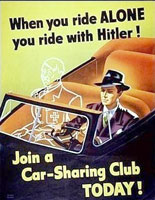 Sane and Rational Government? According to the "The Committee for Even Minimally Sane and Rational Government," Austin, Texas, is the largest city in the country that does not synchronize traffic signals; the goal is to make driving unpleasant so people will support more "public transportation." Environmental regulations may be backfiring. State environmental regulations designed to reduce air pollution and encourage the use of public transportation by keeping parking lots closed until after rush hour may be backfiring because people sit in idling vehicles waiting for the lots to open. The Mythical World of Transit-Oriented Development: In much of the literature regarding Transit-Oriented Development there is an explicit or implicit expectation that people will change their behavior to conform to the worldview of planners. … Steele Park was planned to discourage car ownership and use. The roads are narrow and parking is scarce. Public parking is only allowed on one side of each street in the development. The plan tried to encourage one-car families. "There is a direct relationship between personal mobility and freedom. No authoritarian leader really wants to see his people able to move about freely, associating with whom they please, with the inevitable exchange of ideas and information and the independence these freedoms bring. ... It is much easier to control people if they stay put or move about only on mass transit." |


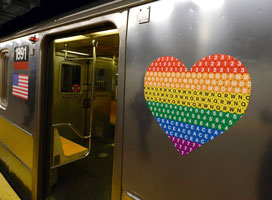
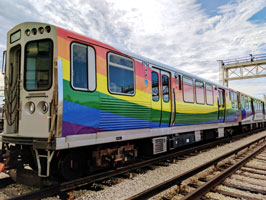
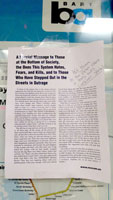

|
Document location https://akdart.com/enviro32.html Updated January 1, 2026. Entire contents Copyright 2026 by Andrew K. Dart |