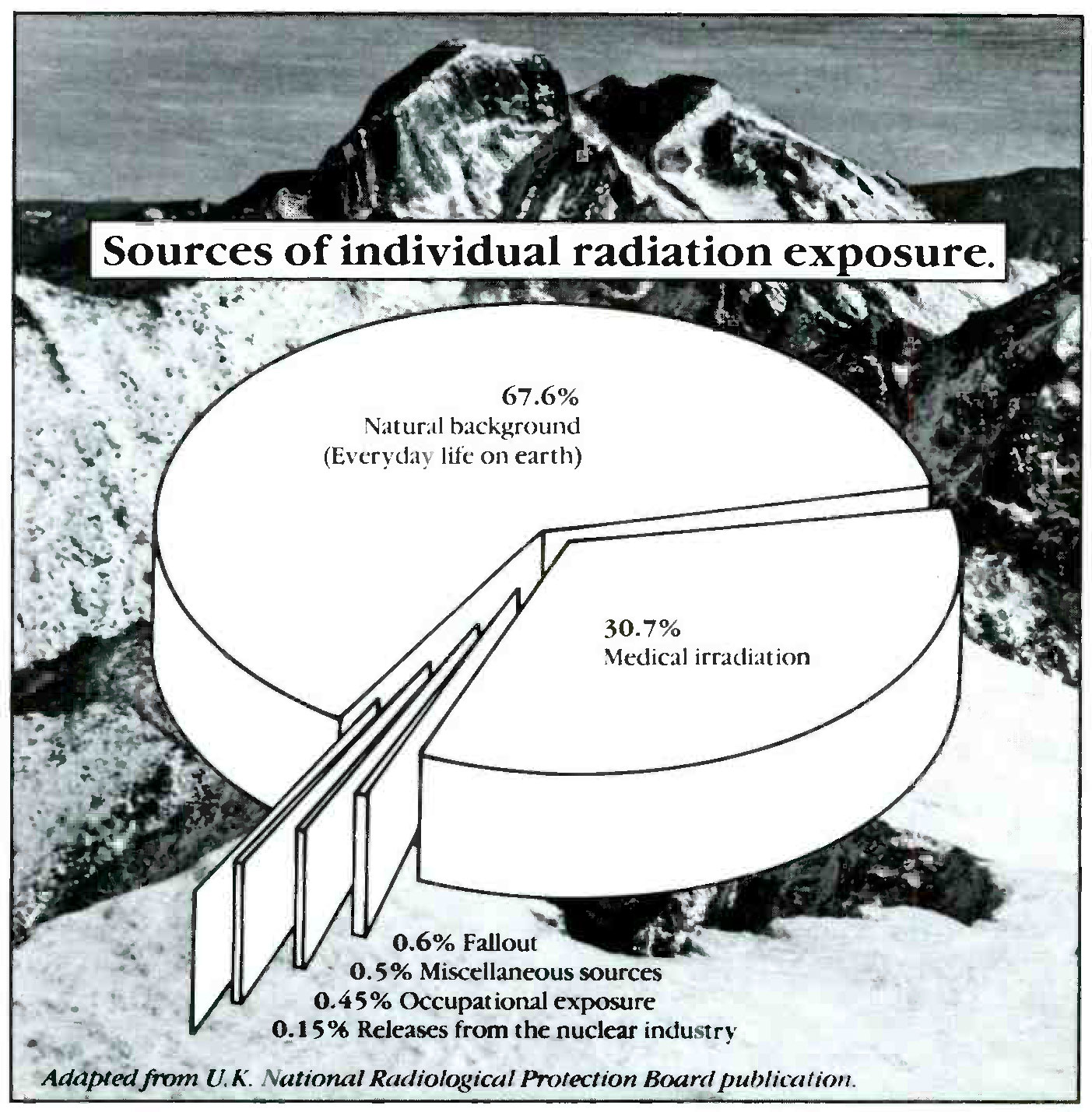
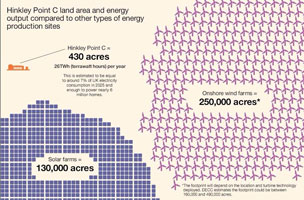
|
⚛ Nuclear energy: Belgium Embracing Nuclear Power, Abandoning 20 Year Phase Out Plans. Belgium has accepted reality and embraced nuclear power 20 years after passing phase-out legislation. The Belgian government intends to acquire all of the "nuclear operations in the country" from the French energy group Engie. "By doing so, the Belgian Government is taking responsibility for Belgium's long-term energy future, with the objective of building a financially and economically viable activity that supports security of supply, climate objectives, industrial resilience and socio-economic prosperity," Engie and the Belgian government said in a joint statement. [...] Belgium has seven nuclear reactors. The country has only two power plants generating electricity. The agreement would open the other five. I don't know if Belgium plans to build more reactors. Legislation in 2003 banned the country from building new reactors and placed a 40-year lifetime on the existing ones. Fermi Isn't Faltering, It's Imploding. Fermi Inc. might have a longer lifespan than Pets.com, but it may not be by much. On Friday, the company announced that Toby Neugebauer, the co-founder and CEO of the Amarillo-based power-for-AI startup, has "departed his role as Chief Executive Officer." In a terse 8-K filing, the company did not give any reasons for Neugebauer's departure, which came just 198 days after Fermi went public on the NASDAQ and London Stock Exchange. The splashy IPO valued Fermi at nearly $12.5 billion. The company claimed it would build 11 gigawatts of power capacity, including nuclear reactors, gas-fired plants, and other facilities, on a site outside Amarillo. [...] In the wake of the IPO, according to Nuclear Engineering International, Neugebauer's stake in Fermi was "worth more than $4.5 billion including shares held by his wife Melissa and his father, former Texas congressional representative Randy Neugebauer." Those glory days are long gone. On Friday, after the company announced Neugebauer's sudden departure, Fermi's shares dropped by about 30% in after-hours trading. The EU and the Nuclear Energy Transition. The energy transition in the U.S. is visibly taking shape. In Tennessee, a massive nuclear power project is emerging as a U.S.-Japan joint venture. Decision-makers in business and politics would do well to study closely what is happening in the U.S. Here, we find the blueprint for breaking out of the intellectual and ideological trap. Big developments are underway in Tennessee and Alabama. Over the next five years, the joint Japanese-American project will bring several so-called small modular reactors (SMRs) of the BWRX-300 type online. Almost one percent of U.S. electricity production — slightly more than three gigawatts — will be added to the existing energy mix by reactors designed by Hitachi and GE Vernova. A caveat for purists of market economics: this is a hybrid project. While the majority is privately financed, export support from Japan as well as offtake guarantees and credit facilities accounting for roughly one percent of the total volume come from the U.S. Energy Expert: Germany's Nuclear Phaseout Was A "500 Billion Euro Mistake". Prof. Fritz Vahrenholt looks at the high costs of green energy subsidies in Germany. In 2025, wind and solar operators received approximately €16.5 billion in government subsidies from the Climate and Transformation Fund. And due to fixed feed-in tariffs, investors end up benefitting twice: during oversupply (electricity prices near zero), the state pays the difference; during scarcity (high prices up to 40 ct/kWh), they pocket extra profits. Vahrenholt calls this redistribution "socially unjust", as it is financed by tenants and motorists (via CO2 pricing) while benefiting wealthy investors. And despite the recent global turmoil (the closure of the Strait of Hormuz), the German federal government is still stubbornly sticking to its ban of both nuclear energy and domestic shale gas production. Ther country is also moving forward with the coal phase-out. German Greens continue to sacrifice their industry to the weather gods. In 2011, Angela Merkel idiotically accelerated the German nuclear phase-out just a few months after her coalition passed legislation that would've slowed it down by twelve years. Because of an earthquake and a tsunami that happened 13,000 kilometers away in Japan, Merkel suddenly decided that Germany needed to abandon nuclear power as soon as possible, although the Federal Republic knows neither tsunamis nor earthquakes and not even the Japanese drew this drastic conclusion from the Fukushima disaster. Merkel's real motivations were, as always, tactical: She hoped to deny the surging Green Party a winning electoral issue in the Baden-Württemberg elections that year, and so we can call her move a twofold failure: The Greens won over 24% of the vote anyway, which was just enough to form a coalition with the Social Democrats and force the CDU into opposition. And today, citizens of a denuclearised Federal Republic must live with a declining economy and ongoing deindustrialisation, thanks in large part to having some of the highest electricity prices in continental Europe. Critics Blast 'Democrats In Charge' For Soaring Utility Costs After NY Nuclear Plant Closure. Utility costs are squeezing New Yorkers after officials decided to shut down a nuclear plant, and criticism of the move is mounting. Indian Point Energy Center had supplied 25 percent of electricity to people in New York City and Westchester County, but the plant was closed in 2021 after environmental activists opposed it, the New York Post reported Tuesday. Gov. Kathy Hochul (D) was former Gov. Andrew Cuomo's lieutenant governor when the plant was shut down on his watch. Now, critics say it was the wrong move, and former Republican Westchester County Executive Rob Astorino, who filed a lawsuit to keep the facility running, blamed Democratic leadership. Nuclear Regulatory Commission approves Bill Gates-backed nuclear reactor in Wyoming. he Nuclear Regulatory Commission voted unanimously Wednesday to grant Bill Gates-backed Terrapower a construction permit for a nuclear reactor in Wyoming. "This is a historic step forward for advanced nuclear energy in the United States and reflects our commitment to delivering timely, predictable decisions grounded in a rigorous and independent safety review," NRC Chairman Ho Nieh said in a statement. The approval is the first commercial reactor the NRC has approved for construction in nearly a decade. The Terrapower reactor uses a non-light water reactor design, and the approval is the first of that kind in 40 years. The Microreactor Race Is On. For the past half century, successive Presidential administrations and the Nuclear Regulatory Commission have thwarted the development of advanced reactor designs that might fulfill President Eisenhower's vision for the "peaceful uses of atomic energy." That all changed last May, when President Trump issued four executive orders aimed at reinvigorating the U.S. nuclear energy industry. The Trump orders addressed advance reactor technologies — from microreactors to small modular reactors all the way up to advanced tech versions of the water-cooled reactors that power every active U.S. nuclear power plant. [Advertisement] Trump also pledged to revamp the NRC to cut costs and timeframes for bringing new nuclear energy facilities — of all sizes — into production. This revolutionary move ended decades of bureaucratic overkill that choked off what could have long been a preeminent energy driver. Nine months later, multiple private companies are racing to become the first to bring their advanced design reactors to market, and several are already moving toward pilot plants in conjunction with governmental or academic institutions and funding. AI has already solved the energy crisis, but not in the way you think. AI requires two important things, among others. One is massive, almost incomprehensible monetary investments. [...] The second thing AI requires is related to the first. For those humongous data centers, they need humongous amounts of electricity. Incredible amounts. You may say that doesn't solve the electricity shortage. Rather, it makes the shortage even worse. But making a crisis worse is sometimes the way to solve it. You see, Big Tech has decided to go nuclear. Reasonable people have long known that the most effective way to generate energy is through nuclear power. Nuclear reactors produce no greenhouse gasses, uranium is relatively abundant, and the radioactive waste issue is manageable. France bets on nuclear power to phase out fossil fuels. France's government on Thursday presented an energy plan to use fewer imported fossil fuels, including by ramping up nuclear-fueled power production over the next decade. France wants to phase out fossil fuels by 2050, and is hoping consumers will switch from burning oil and gas to consuming more low-carbon electricity in order to do so. The plan for 2026 to 2035 foresees more use of the country's 57 nuclear power plants and the construction of six new ones, as well as more energy from offshore wind farms. But it aims to rely less on solar parks and land-based wind farms. The move is a reversal from a plan for 2019 to 2024, which had called for shutting down several of France's nuclear reactors. Prime Minister Sebastien Lecornu said the scheme was key to avoiding dependence on other countries for fossil fuels. "There is no scenario in which we can be dependent," he said on a visit to a hydroelectric dam in eastern France. Germany's Decline Is a Warning Canada Should Heed Now. Germany was postwar Europe's greatest economic success story. Today it is a cautionary tale. Once the continent's industrial engine, Germany has spent the past decade dismantling the foundations of its prosperity through energy and immigration policies driven more by ideology than evidence or good sense. [...] Energy has played a leading role in Germany's decline. Reliable, affordable power is the lifeblood of any advanced economy. In 2002, Germany's 11 nuclear power plants supplied more than one-quarter of its electricity, with coal providing most of the remainder and natural gas filling in when needed. "Renewable" energy played only a minor role. The country had a stable, economically efficient grid that supported one of the world's most productive industrial bases. That balance was abandoned. Driven by an ideological campaign against nuclear power, successive governments committed to replacing reliable baseload electricity with intermittent wind and solar. The goal shifted from reducing emissions to shutting down all nuclear plants, at any cost. Labour backbenchers revolt over Starmer's nuclear plans. Sir Keir Starmer's plan for a nuclear renaissance faces a rearguard action from Labour MPs and wildlife charities over claims it will be a "catastrophe" for nature. As many as 40 backbenchers are rallying against the Prime Minister's proposal to overhaul environmental regulations after an independent review said red tape was frustrating the construction of new power stations. The MPs and a coalition of environmental charities, including the Wildlife Trusts, the RSPB, the National Trust and the Woodland Trust, have accused ministers of scapegoating protected species such as bats and newts for planning failures. It comes ahead of a plan expected to be published by ministers this month, setting out how they will implement the review's recommendations and whether they will adopt them in full. Labour is also under pressure from an opposing group of pro-nuclear campaigners, businesses and think tanks who argue reform is "essential if we want to create jobs, tackle climate change, and cut energy bills". German Nuclear Power Phase Out [was] a "Huge Mistake" — Chancellor Merz. Here is Google's summary as of January 19, 2026. German Chancellor Friedrich Merz recently called Germany's nuclear power phase-out a "huge strategic mistake," stating it has led to insufficient energy capacity, inflated costs, and an overly expensive energy transition reliant on subsidies and fossil fuels, contrasting Germany's path with countries like France that leverage nuclear power for lower emissions. Merz's comments, made at a German Chamber of Commerce event in January 2026, reignited debate over energy security, highlighting increased reliance on coal and gas, and pushing Germany to become the world's most costly energy transformer. [...] The key quote from Chancellor Merz is: "The abandonment of nuclear energy was a serious strategic mistake. At least they had left the last nuclear power plants in Germany in operation three years ago, so that we would have the electricity generation capacity that we had at that time. We are now making the most expensive energy transition in the entire world. A reactor takes a long time to start up and a long time to stop. Germany Finally Admits Nuking Its Energy Sector For No Reason Was A Bad Idea. Germany's political leadership is finally conceding that shutting down the country's nuclear power plants was a costly mistake. German Chancellor Friedrich Merz admitted Wednesday that the country's nuclear phase-out was a "serious strategic mistake," telling business leaders that the country no longer has sufficient energy generation capacity. Speaking to the German Chamber of Industry and Commerce, Merz said Germany — which still aims to reach "net-zero" emissions by 2045 — is now paying the price of the decision through higher costs and heavy government intervention. "It was a serious strategic mistake to phase out nuclear energy ... we simply don't have enough energy generation capacity," Merz said, according to Brussels Signal. Does California Want To Be Part Of The Nuclear Renaissance? As the California Coastal Commission agreed this month to keep the state's last nuclear energy plant open for at least five more years, the Trump administration announced federal funding for the development of small modular nuclear reactors. The Diablo Canyon Power Plant in San Luis Obispo Power Plant, the only remaining nuclear energy facility in a state, was saved this month from an imminent death when the Coastal Commission voted to issue the permit the plant needs to obtain a federal license to operate for another 20 years. The twin-reactor site has been providing safe, clean and reliable electrical power for four decades. Nationally, the Tennessee Valley Authority and Holtec Government Services in Michigan were chosen to develop light-water small modular reactor projects. Each will receive up to $400 million in federal cost-shared funding. Champions of limited government will dispute the federal government's involvement rather than allowing the market to make that choice. They should. It's a legitimate gripe. Trump Media announces plans for world's largest power generation plant — but only red states should apply. Weeks after the Trump Media and Technology Group announced a merger with nuclear power company TAE Technologies, the new organization has unveiled plans for a fusion plant in the US — aiming to make it the biggest power generation site in the world. On Tuesday morning, the company unveiled criteria for selecting the building site of the new project. CEO Devin Nunes tells me they are accepting applications from state and local governments — much like Amazon HQ did — and will make a decision within weeks, with construction to begin later this year. And Nunes is clear about one thing: "We're only going to be building this in a red state." This would be the first of its kind commercial fusion electric plant in the US and would, Nunes, notes enable America to compete with nations like China that have access to almost unlimited energy. Ministers [are being] urged to back floating nuclear power barges. Ministers have been urged to support the rollout of nuclear-powered ships that could halve the time it takes to move freight across the oceans or provide mobile sources of electricity. Core Power, a British company that wants to build a fleet of ships equipped with nuclear reactors, called on the Government to play a "leading role" in upcoming multinational talks over how to deploy the technology safely. Members of the International Maritime Organization (IMO) — a United Nations agency — will gather in London this month to begin drafting new standards for how the vessels should operate. Nuclear-powered ships are seen as potential game-changers in commercial shipping because they would run at higher speeds than conventional boats, produce no carbon emissions and have no need for refuelling stops. Barges fitted with nuclear reactors could also be used as portable power stations to provide electricity to nearby ports, factories and other onshore facilities. The Editor says... Why Are Environmental Groups Attacking the Industry That Makes America's Clean Energy Future Possible? A new uranium boom emerging on the Colorado Plateau encompassing hundreds of potential new and revived mining sites throughout the Four Corners region has caught the attention of radical environmental groups. This is a region which, in the past, produced 100 million pounds of uranium from dozens of mines. [...] Environmental activists ignore the economic benefits of new and revived mining projects in rural Western communities. During 20th-century uranium booms, small towns and counties on the Colorado Plateau enjoyed great wealth. Large families were reared on a miner's wages. People prospered, schools and hospitals were built, jobs were abundant, economic stability and general well-being increased. New uranium, vanadium, and critical minerals mining has the potential to bring back the boom days. Tech Behemoth Gobbles Up Power Company In $5 Billion Deal To Juice Data Centers. Google's parent company, Alphabet, announced on Monday that it will acquire the data center and energy infrastructure company Intersect for $4.75 billion in cash and "the assumption of debt." Though Google already owns a majority stake in the company, the deal will further support the Big Tech company's build-out of artificial intelligence (AI) infrastructure while keeping Intersect's operations separate, according to Alphabet. As America's energy demand climbs while projected AI data center needs skyrocket, Big Tech has been searching for reliable electricity sources — with some companies looking to resurrect nuclear plants. California Keeps Diablo Canyon Nuclear Reactor Running 5 More Years. A few years ago, California was asking electric vehicle drivers not to charge their cars. The grid was weak, as energy consumption was high because of a summer heat wave (or as climate cultists like to refer to it, a "heat dome"). So, as presumptive 2028 candidate Gavin Newsom prepares for his campaign's official launch, there is some pre-planning to avoid the embarrassment of statewide brownouts or blackouts during his run. Such an event would give Newsom's adversaries both within and outside the Democratic Party a big target that would resonate with many Americans, who no longer believe the "climate crisis" narrative. At the time of the original report, there were plans to close the state's last remaining nuclear power plant: Diablo Canyon. Miraculously, the plant has had its life extended by a whopping 5 years. A Nuclear Resurgence, But Major Obstacles Remain. The first commercial nuclear plant started operation at Calder Hall in England in 1956. By 1970, reactors were in construction around the world. Many predicted that atomic energy would generate most of the world's power by 2000. In 1973, President Richard Nixon stated, "It is estimated that nuclear power will provide more than one-quarter of the country's electrical production by 1985, and over half by the year 2000." However, operational problems and environmental opposition would sway public opinion against atomic energy. Reactor failures at Three Mile Island in Pennsylvania in 1979, in Chernobyl, Ukraine in 1986, and at Fukushima, Japan in 2011 raised safety concerns. Rising costs from efforts to ensure reactor safety and disposal of nuclear waste limited new plant construction. The nuclear share of world electricity peaked in 1996 at 18%, dropping to about 9% in 2024. Artificial intelligence (AI) now drives a rising demand for electric power. The high-tech firms — Amazon, Google, Microsoft, Meta, and the newcomer OpenAI — are building data centers across the world. Since the start of 2024, the number of US data centers has increased more than 50%. The World's First Thorium Molten Salt Reactor. An experimental Chinese nuclear plant reportedly just crossed a historic threshold, successfully operating the world's first thorium-based molten salt reactor (TMSR). The Chinese Academy of Sciences' Shanghai Institute of Applied Physics has broken a major scientific barrier by successfully converting thorium to uranium in a historic first. The Hong Kong-based South China Morning Post reports that the breakthrough, which took place at an experimental reactor out in the Gobi Desert, is "poised to reshape the future of clean sustainable nuclear energy." The process works by using a "precise sequence of nuclear reactions" in which naturally occurring thorium-232 absorbs a neutron, becoming thorium-233. Through a decay process, that isotope breaks down into protactinium-233 and then finally into uranium-233, a potent form of nuclear fuel that can sustain chain reactions for nuclear fission. EU Approves €14 Billion Aid for Poland's First Nuclear Power Plant. Construction of Poland's first nuclear power plant is set to begin following the European Commission's approval of a €14.2 billion (60 billion PLN) state aid package. The project — located on the northern Baltic Sea coast — will feature three reactors with a total capacity of 3.75 gigawatts (GW) and is scheduled to start operating in the second half of the 2030s. Polish state-owned company Polskie Elektrownie Jądrowe (PEJ) will lead the construction, collaborating with U.S. firms Westinghouse, which provides the technology, and Bechtel as the main contractor. The European Commission confirmed that Poland meets European Union requirements, noting such measures as reducing the direct price support period from 60 to 40 years and requiring any excess profits to be shared with the state. The aid package will cover about 30% of the total project cost, with the remainder financed through loans from domestic and foreign financial institutions, fully guaranteed by the state. U.S. financing bodies, including the International Development Finance Corporation and the Export-Import Bank, have already pledged support. Nuclear-generated electricity overshadows government-subsidized wind and solar. In the 21st century, there is one thing that all countries and their governments, regardless of ideology, have in common: The standard of living in that country is directly a function of the availability of electricity. Without the availability of reliable, continuous, uninterruptible, abundant electricity to power factory machinery and keep homes, offices, hospitals, and schools warm and bright, that society will suffer in its productivity and its aspirations. In this country, the demand for electricity is expected to increase by 25% in the next 25 years. This increase is a function of the demands of an expanding economy and a growing population. And that 25% does not account for artificial intelligence or electric vehicle battery charging demands, which might add an additional 60% increase. If we weren't so scared of radiation we could have more nuclear power. For something invisible, radiation is oddly charismatic. Click goes the Geiger counter as you walk around Chernobyl. Click it goes in the abandoned classrooms of nearby Pripyat, where vines creep through windows and the open exercise books are dated April 25, 1986. Click click click it goes as you pass the Red Forest, named for the pine trees killed by massive contamination. Radiation here becomes a presence you can almost feel. When I visited in 2011, it was to see a place where it clicked a little slower. Teremzy, a village a few miles from the reactor, was evacuated in 1986. But several dozen residents remained. These samosely, or self-settlers, were near the end of their lives. They weren't dying of terrible cancers, though, but old age. How? "Vodka," said Ivan Kuzmich, pouring me a shot at 11am. "It protects from radiation." Others had a different take: the samosely were living proof we are too scared of radiation. Why Does The World Ignore Nuclear Power. There is lots of talk about nuclear power around the world today. However, except for China and maybe Russia, there is no action. Talk means nothing, but action means everything. Perhaps the reason for inaction is the massive waste of government funding for nuclear power promises. Private capital produces many times more production than government funding does. Maybe if the money were left in the hands of the people, some sense of urgency could be realized. Moreover, to secure monopolies for those who own them, massive government roadblocks are placed in the way of any competition that could disrupt the profits from these monopolies. Such is the case for government-subsidized wind and solar projects over the last two decades. Because of mismanagement and outright corporate theft, the sizzle has come off the idea of "just electricity" from renewables. Once private industry lost its government subsidies, wind and solar projects started shutting down. Trump Admin To Lend "Hundreds Of Billions" To Build Nuclear Power Plants. While the market is finally starting to grapple with the most unpleasant question of who will plug the funding gap needed to build out all the data centers required to make the AI dream a reality, a gap which Morgan Stanley recently calculated would be as large as $2.9 trillion in capex funding needs, of which at least $1 trillion will come in the form of debt (and mostly private debt)... [Chart] ... there is another, just as critical question: who will fund the energy buildout that powers these data centers? Recall, last December Morgan Stanley calculated that the US would need at least 36GW in new power to be brought online by 2028 to energize all the (yet to be built) data centers, a number which one year later is surely far higher. In Germany we have the highest electricity prices in Europe and we just blew up our largest-capacity nuclear plant on live television. Germany is presently deindustrialising, in large part because it has the most expensive energy in Europe. Our Economics Minister is begging the EU Commission to green-light more natural gas electricity generation. And we literally just blew up a power plant on live television. A weird clique of freaked out activists, sour schoolmarms and intellectually confused people are dragging Germany into the abyss, while our elected politicians stand around and make tepid suggestions. Our leading industrial city just voted for its own complete deindustrialisation in fifteen years. One in five municipal utilities in Germany hopes to decommission its entire natural gas network by 2045. We are headed straight for disaster. The truth is that the shrieking media personalities and activists leading the charge don't want to have good jobs or to bequeath our children a nation full of prospects. Sometimes it seems like they don't even want to heat their homes in winter. They hope to trade comfort and prosperity for self-denial, for the passing thrill of feeling that they're doing the right and the virtuous thing. Sometimes I fear they're going to keep doing this right up until the lights go out. Let's Face The Nuclear Elephant in the Room. There is lots of talk about nuclear power around the world today. However, except for China and, maybe, Russia, there is no action. Talk means nothing, but action means everything. Perhaps the reason for inaction is the massive waste of government funding for nuclear power promises. Private capital produces many times more production than government funding does. Maybe if the money was left in the hands of the people, some sense of urgency could be realized. Moreover, to secure monopolies for those who own them, massive government roadblocks are placed in the way of any competition that could disrupt the profits from these monopolies. It makes more sense to produce hydrogen with nuclear, not renewables. Hydrogen is often thought to be linchpin of a future 100% renewable economy. To make up for wind and solar's deal-breaking intermittency and to rid industry of energy-dense fossil fuels, the surplus cheap electricity that renewables produce during times of abundance would need to be channeled into electrolyzers that split water molecules into hydrogen and oxygen. The hydrogen could then be collected, stored, transported, and eventually combusted for on-demand energy. But is this scenario really the most cost-effective and environmentally-friendly option? Would it make more sense, for instance, to produce hydrogen from another carbon-free source — nuclear power? The future of nuclear power affects the future of freedom. The harnessing of electricity is perhaps the second-most-important factor in uplifting the human condition, second only to the establishment of representative government "for the people and by the people." America's founders birthed a republic that brought forth freedom and innovation unlike anything seen in the preceding 5,000 years of recorded human history. The invention of electricity put that innovation into overdrive, making it possible for Americans to extend their life expectancy from 54 to 79 years in just a century. For the sake of human freedom and prosperity, America must lead again — in nuclear power. Free enterprise in the United States nurtured our ability to lead the world in developing nuclear technology. However, over the last four decades, we have been ceding this leadership to other world powers. Most prominently, leadership has switched to China, especially in terms of the construction and operation of new nuclear reactors. Russia is the leader in exporting nuclear power technology to other countries. Iran Announces $25 Billion Nuclear Plant Deal with Russia. Iranian state media on Friday announced the regime in Tehran has signed a memorandum of understanding (MOU) with Russia's state nuclear corporation, Rosatom, to build four nuclear power plants in Iran. [Advertisement] The deal is valued at roughly $25 billion. [Advertisement] Russia's state-run Tass news agency said on Friday that the four nuclear power plants will all be part of one facility, the Hormoz Nuclear Power Plant in the southern Iranian province of Hormozgan. The company that manages the Hormoz plant said the first of the four nuclear power units to be constructed with Russian assistance will be commissioned by 2031. Russia plans 38 new nuclear reactors, meanwhile Germany goes 'green'. Russia has announced plans for a major buildout of its nuclear energy capacity. Yesterday, Alexey Likhachev, director general of the country's state atomic energy corporation Rosatom, said Russia aimed to add 38 new nuclear reactors to its existing fleet in the coming years. Likhachev was speaking at the general conference of the International Atomic Energy Association (IAEA) which is taking place in Vienna from yesterday to September 19. Two British nuclear plants [are being] handed one-year extensions. The Heysham 1 and Hartlepool nuclear power plants will run for a year more than initially expected as Britain increasingly looks to nuclear for its energy needs. EDF Energy, which is the majority owner and operator of the sites, said on Tuesday the plants are now expected to generate electricity until March 2028, securing more than 1,000 jobs for another year. The decision to extend the lives of Heysham 1 and Hartlepool, which are in Lancashire and Teesside, respectively, follows a series of positive graphite inspections over the past nine months, EDF said. It follows previous one-year extensions for all four of EDF's UK advanced gas-cooled reactor sites, which also include Heysham 2 and Torness, in December last year. Mark Hartley, managing director of EDF's nuclear operations business, said: 'Extending the life of these stations makes sense. Iconic Oak Ridge, TN, [has been] Chosen as [the] Site for Google's Small Modular Nuclear Reactor. During President Donald Trump's administration, support for nuclear energy gained steam, with an emphasis on advanced technologies like small modular reactors (SMRs). Seen as a way to secure U.S. energy independence and bolster domestic innovation, SMRs have received policy backing as part of the administration's strategy to revitalize the nuclear sector. The administration promoted SMRs as a cost-effective, flexible, and safer alternative to traditional large-scale nuclear plants, positioning them as key to expanding grid capacity. Specifically, Trump's "Ordering the Reform of the Nuclear Regulatory Commission" executive order, issued in May, calls for facilitating increased development of Gen III and Gen IV reactors, SMRs, and sets an energy capacity target for nuclear generation of 400 GW by 2050. SMRs are a particularly attractive energy option because of their scalability and siting flexibility, which aligns perfectly with the administration's push for practical, market-driven energy solutions. Swarm of Jellyfish Forces Shutdown of French Nuclear Power Plant. I am keeping a catalogue of all 2025's weird happenings, and it is already a lengthy one. Legal Insurrection readers may recall that a radioactive wasp nest was recently detected in an abandoned South Carolina nuclear material processing site active in the Cold War era. This weekend, four reactors at France's Gravelines nuclear power plant (one of the most extensive nuclear facilities in Europe) were temporarily shut down after a massive swarm of jellyfish clogged the plant's critical water intake systems. The Race Against China for Fusion Power: Whoever Controls It, Controls the Century. Fusion energy is not only cheap, clean and limitless, it is also the "engine" that will drive the enormous increases in artificial intelligence (AI) that will be the ultimate super-weapon of this century. AI requires power — enormous amounts of it — that only fusion energy can provide. If there were a formula for who will dominate the 21st century, it would be: Fusion Energy + AI = World Supremacy. Our nation, however, is now faced with a new and dangerous 21st century threat. China has been steamrolling ahead developing cheap, clean and limitless fusion energy to fuel the great new frontier of AI. Meanwhile, America appears stuck in the technology of soon-to-be-outdated fission energy. AI, as President Donald J. Trump has stated, is what will determine which nation is the superpower of the 21st century. The Trump administration cannot allow China to leave America in the dust for want of energy to power America's AI. In this century, there will be two types of nations: the ones that conquered fusion energy and those that wish they had. The economic imperative for nuclear power. In an increasingly electricity-hungry world, nuclear power stands out as a cornerstone for sustainable economic growth, particularly for developing economies like South Africa. This article examines the economic rationale behind the adoption of nuclear power for electricity, with a focus on the Pebble Bed Modular Reactor (PBMR) and Small Modular Reactor (SMR) technologies as catalysts for industrial and economic growth, providing a lifeline out of poverty and instability. Countries with fossil fuels should continue to utilize electricity generated from High-Efficiency Low Emissions (HELE) coal, oil, and gas power sources, in conjunction with nuclear power, to achieve a balanced output and maximize economic growth. Drawing on detailed economic research conducted over decades, we highlight why nuclear electricity is essential for economic stability, job creation, and global competitiveness. Atomic Abundance and Its Enemies. On a hot Monday morning last June, standing in front of the Niagara hydroelectric station in Upstate New York, Gov. Kathy Hochul spoke of the future. Once the industrial home of titans like General Electric, IBM, and Kodak, the bustling manufacturing basin of Upstate fell into decline in the 1970s when those titans chased lower wages offshore. "Hard-working families across Upstate," Hochul said, "were left wondering, what is our future?" Now Gov. Hochul wants to deliver exactly that — a future for Upstate New York — in the form of reindustrialization: advanced manufacturing for products like semiconductors. Such manufacturing facilities, though, "don't run on dreams — they need to be powered, they need a lot of electricity," she explained. Indeed, new manufacturing planned in the wake of Biden-era policies is increasing electricity demand across the country. Ed Miliband admits Sizewell C cost has almost doubled to £38 [billion]. Ed Miliband has admitted that Sizewell C will cost at least £38 [billion] to build as he gave final approval for the construction of the nuclear power station. The Energy Secretary took the final investment decision on the controversial power station on Tuesday. The site will take at least a decade to build. The Government confirmed the project will cost £38 [billion] in 2024 prices, or £39.3 [billion] once inflation since then is factored in. The total is almost double the £20 [billion] estimate given by the government and developers EDF in 2020. Sizewell C will be part-funded by a new levy on household electricity bills called the Regulated Asset Base. The aim is to pay the construction costs as they are incurred rather than borrow and then pay decades of interest. The Editor says... Asia's pivot toward nuclear energy. Gone are the days when nations suppressed nuclear ambitions because of irrational fears arising from the 2011 Fukushima disaster, whose main source of injury was the tsunami that triggered the plant's failures. A quiet but decisive pro-nuclear pivot is underway among some of the world's most populous and energy-hungry nations in Asia. Be it the growing popularity of South Korea's super-efficient and longer-lifespan APR1400 reactors at Shin Kori and Shin Hanul or the steady revival of nuclear plants in Japan, the pivot in Asia is unmistakable. China, the region's newest pacesetter, has 58 operational reactors and 28 under construction and anticipates increasing nuclear generating capacity by more than 80% by 2035. The Fusion Race Heats Up. Nobody is saying it, but the advent of artificial intelligence and machine learning may be springboarding the increased intensity of the competition for nuclear fusion — which many are now saying is far less than "30 years away." The burning question among the few who are fully aware of the stakes in this race is "Who will get there first?" coupled with "Does first matter more than best?" The greatest obstacle to fusion supplying the world with limitless electricity is learning how to maintain a balance between magnetic confinement and the severe heat (100 million degrees Celsius). Fusion produces cleaner energy than fission (its only byproducts are helium and other greenhouse gases — not radiation), and its fuels — deuterium and tritium — can easily be sourced from seawater and lithium. Scientists today are trying multiple ways to skin this cat. How to Jump-Start America's Nuclear Industry. For the first time in decades, the United States is taking serious steps to rebuild its nuclear energy capacity. Recent executive orders from the Trump administration outline an ambitious agenda, including reviving the domestic nuclear supply chain, modernizing the Nuclear Regulatory Commission (NRC), and expanding America's role in global nuclear exports. If the administration intends to compete internationally and meet America's domestic energy goals, though, it needs to go further. It must address the neglect, regulation-induced delays, and declining expertise that have crippled the nation's nuclear industry. The Trump administration advocates for nuclear power. While we have seen the acceptance and advancement of nuclear power explode in the United States just over the last year or so, the recent executive orders issued by President Trump have added a strong endorsement of nuclear power. Reading through these executive orders, it seems that there are clear commitments to remove the roadblocks that are slowing down progress in the name of safety. The primary roadblock over the last 50 years has been the Nuclear Regulatory Commission (NRC) with its 3,000 employees. In addition to the $1 billion allocated in the Federal budget, at least 80% of the NRC budget is funded by fees paid by applicants for licensure, which amount to $300 per hour. The tenor of the Order is to impel the NRC to establish procedures to ensure that new reactor applications are processed to completion in 18 months (or less) while renewal applications take 12 months (or less). Trump wants to boost U.S. energy with nuclear power surge. In May, Trump signed four executive orders related to nuclear power. One of the orders seeks to increase the amount of nuclear energy produced in the United States and incentivize individuals to choose nuclear engineering as their career. One of the orders looks to speed up the approval process for building civilian nuclear reactors, while another focuses on speeding up the government testing process for nuclear technologies. The last of the four orders seeks to make nuclear reactors a key energy source for national security sites such as military bases and artificial intelligence facilities. "I think the economics of the nuclear industry are more favorable than we've seen in decades," AEI's Coleman said. Sprawling data centers and artificial intelligence engines have created an increased demand for electricity, and other energy sources are hitting roadblocks in providing it, he said. German government shows cracks over nuclear energy. It was only a relatively petty dispute over the organization of an EU event in Brussels. And yet, revealed how differently Economy Minister Katherina Reiche — of the conservative Christian Democratic Union (CDU) — and Environment Minister Carsten Schneider — of the center-left Social Democratic Party (SPD) — think about renewable energy, climate protection and nuclear power. In mid-June, Reiche was looking for a way to spend the evening in Brussels after a long meeting with her EU counterparts. There were two options: a meeting with representatives from countries that want to continue to expand renewable energies, and a meeting with pro-nuclear states. The Editor says... Good Laugh For Today: New York State Says It Will Build A New Nuclear Power Plant. Yes, it was just four years ago, in April 2021, that New York completed the forced closure of the two perfectly functional Indian Point nuclear plants, with combined generating capacity of about 2 GW, for no other reason than relentless opposition from environmentalists and NIMBYs. And yet now the Governor is saying that the plan is to start over and build a new nuclear plant at some unspecified place. [...] Not meaning to be the grinch here, but let me lay out a few of the problems that I have with the approach to energy policy for New York as described by our Governor: Are we really talking about just one new nuclear plant with just one GW of generation capacity? That is barely a drop in the bucket compared to the immediate need, and doesn't even meaningfully address the problem of keeping the grid operating as we pursue a statutorily-mandated transition to mostly wind and solar generation. New York Breaks Ground on New Nuclear Power Plant. New York has announced plans to build the first major U.S. nuclear power plant in more than a decade and a half. The plans for the plant's construction were revealed by Governor Kathy Hochul (D-NY) during an interview with The Wall Street Journal on Monday [6/23/2025]. [...] "Why does it take a decade?" the New York Democrat asked regarding federal nuclear power regulations. "That's why no one is doing it; the barriers are too high." Notably, the United States has not constructed a new nuclear power facility in over 15 years, and only a total of five new nuclear reactors have been built since 1991. The lack of new construction means that the rate of nuclear power plant retirements has far outpaced new construction. The closure of nuclear power facilities across the United States has resulted in an increase in reliance on fossil fuels to meet increasing electrical power demands. This situation has been exacerbated in recent years by the explosion in artificial intelligence (AI) technology, which requires the use of power-intensive data centers. China to nearly double nuclear power capacity by 2040 in rapid build-up. China will nearly double its nuclear power capacity by 2040, making it by far the world's largest nuclear power generator, according to a new report by the China Nuclear Energy Association (CNEA). The country is set to build dozens of new reactors to raise its installed capacity to 200 gigawatts — more than double the US' current capacity — by the end of the next decade, the Chinese industry body said in the paper released on Monday. Beijing has embarked on one of the fastest buildouts of nuclear power facilities in history over recent years, as it strives to decarbonise the Chinese economy while also avoiding excessive dependence on weather-dependent green energy sources such as solar and wind. The Editor says... The Green Atom: Our most misunderstood power source. If you're an American under the age of about 50, then for most of your lifetime nuclear power has either been regarded as a menace, or as a joke. Either way, you're probably vaguely aware you're supposed to be scared of it. Why is that exactly? Well, for years, critics of nuclear energy warned that the technology was dangerous: that meltdowns could result in widespread deaths, radiation exposure, or even deadly explosions. Then, when crisis hit at places like Three Mile Island and Chernobyl and Fukushima, it seemed like those critics had been right all along. But were they? Three Mile Island is often referred to as the worst nuclear disaster in American history — but, as disasters go, it was pretty underwhelming. No one died. Or was injured. Or even had any adverse health effects. Locals' exposure to radiation was about 1/3 what you'd get on a cross-country flight. At Fukushima, the levels of radiation were so low that the United Nations reported that the mental health of those who had been evacuated was a bigger health concern than cancer. Chernobyl was a different story. It was a genuine disaster, and the radiation did lead to deaths — but the problem there wasn't about nuclear power itself. Officials in the Soviet Union knew the plant had dangerous design flaws but refused to fix them. Then they covered up the accident and delayed warning locals to evacuate. And it's worth noting: it took a situation that extreme to produce the only deaths from radiation in the entire history of commercial nuclear power. Winning: Trump Admin OKs Reopening of Utah Uranium Mine. American energy policy has come a long way in four months. Under the Biden administration's autopen, our energy policy was hamstrung; the administration was canceling oil and gas leases, pouring our money into "green" energy boondoggles, and gas prices were shooting up. Now, gas prices are heading back down, "drill, baby, drill" is the new slogan, and the president is an advocate for not only fossil fuels but nuclear power. In the latest news, the Trump administration has green-lit the reopening of a uranium mine in Utah. TVA submits nation's first construction permit for small nuclear reactor development. The Tennessee Valley Authority said it is the first utility in the United States to submit a construction permit application to the U.S. Nuclear Regulatory Commission for small modular reactor technology. The utility said this is the next step in bringing a small modular reactor to the Clinch River site near Oak Ridge. The application is for GE Vernova Hitachi Nuclear Energy's small modular reactor BWRX-300 technology. Why Europe came to regret its 'crippling' nuclear power shutdown. In the end, it took Denmark just minutes to scrap a ban on nuclear power that had stood for 40 years. The totemic change — rammed through in a parliamentary vote — passed with only a few murmurs from the country's MPs, two thirds of whom supported it. "It was so fast I thought I'd missed it," says Mark Nelson, an energy consultant who was invited to watch the vote on Thursday. "I was texting a parliamentarian, and I'm like, 'Was that it? Did it pass?'" The historic nature of the vote should be in no doubt. Denmark's ban has been in place since 1985 and was so draconian that it forbade the government from even considering atomic energy as an option. It is a sharp change for a country that has pioneered green energy in Europe. Around 60pc of Denmark's annual power needs are already met by wind farms and the country has set itself a target to reach net zero carbon emissions by 2045 — five years earlier than Britain. US Fast-Tracking Uranium Mine Permit to Meet 'Urgent Energy Demands'. The Department of the Interior (DOI) is expediting environmental permitting review of the Velvet-Wood mine in Utah amid a national energy emergency, the agency said in a May 12 statement. "If approved, the Velvet-Wood mine project in San Juan County, Utah, would produce uranium and vanadium," said the agency. Uranium is used as fuel in nuclear reactors and for the production of tritium, which is required for nuclear weapons, while vanadium is used in steel production and titanium aerospace alloys. "The project will undergo an accelerated environmental review by the Bureau of Land Management, with a completion timeline of 14 days. The expedited review is expected to significantly contribute to meeting urgent energy demands and addressing key threats to national energy security," the DOI said. California net-zero leaders want to shutter its only zero-emissions electricity-generating plant. Over the years, the so-called forward-thinking policymakers in California have achieved questionable results: California's high cost of electricity is already more than 80 percent higher than the national average for residential and commercial, more than 140 percent for commercial, and is projected to go even higher. California imports more electricity than any other US state, more than twice the amount of Virginia, the second-largest importer of electricity. California typically receives between one-fifth and one-third of its electricity supply from outside the state, mostly from out-of-state coal-fired power plants. California now has the second — highest rate of unemployment. Winning on Energy: Michigan's Palisades Nuclear Power Plant Set to Re-Start. The green energy advocates are always yapping about the need for carbon-free power, but they always want unreliable and intermittent, not to mention ugly and low energy-density sources, like wind and solar. But now, in Michigan, a facility is in the process of restarting that will actually give consumers what they want and what the greens want: reliable, high energy-density, carbon-free (well, mostly) electricity. How? The Palisades Nuclear Plant is in the process of resuming operations. When Nuclear Regulation Goes Awry. [Scroll down] While the event was still developing, Forbes Magazine later recorded that "Five days after a tsunami triggered meltdowns at Fukushima, Jaczko [then-chairman of the Nuclear Regulatory Commission] told Congress that he and his NRC colleagues thought water had drained out of a pool where used fuel was being cooled, which would have made a bad situation much worse." That sensational assertion was, of course, picked up in the media and added to the panic and drama. However, the nuclear industry had for years researched this possibility and found no scientific or engineering basis for it. The pools themselves are reinforced concrete structures with thick walls, solid foundations, and a stainless-steel lining. No pipes are allowed to penetrate the walls below the water line. The cooling water goes in and out from over the top, with mechanisms to prevent siphoning should a pipe break in the cooling system. Losing all 24 feet of cooling water and zirconium burning in air makes for an incredible scenario. But NRC Chairman Jaczko got his day in the media spotlight and provided the useful "narrative." Restrictive and Sometimes Ludicrous Regulations Are Stifling the Revolution in Nuclear Reactors. Once upon a time, nuclear power was seen as the future. Nuclear reactors were going to produce electricity so cheaply that it wasn't even going to be worth billing customers. The budding nuclear industry didn't take long to disabuse the public of that pipe dream. And then the Nuclear Regulatory Commission (NRC) happened. Like every other regulatory body in the history of human civilization, the NRC believed that more regulations made the public safer and justified its existence to Congress. The NRC has a unique means of funding. It gets 90% of its budget from assessing various fees it collects from the nuclear industry, including applications for licenses, permits, and inspections of nuclear facilities. It's not cheap to purchase a license to operate a nuclear reactor. Even a tiny reactor like the ones operated by the University of Utah and Texas A&M, whose two reactors produce about five watts of electricity, must pay a $144,000 fee yearly. Inside The Controversial Decision To Rid The UK Of Its Plutonium Stores. A 140-tonne store of plutonium has become the centre of an obscure but important Whitehall policy row over how to pursue nuclear power and treat national assets. The stockpile at Sellafield, Cumbria, is set to be permanently immobilised and entombed underground after ministers backed the findings of a review by the Nuclear Decommissioning Authority (NDA). Converting plutonium into a waste would involve baking it into a rock-like material, such as glass or ceramic, and wrapping that in steel and concrete to create solid blocks, which would then be buried in a reinforced bunker under the sea known as a geological disposition facility (GDF). Majority of Germans want return to nuclear power. A majority of Germans have said they were in favour of a return to nuclear power, two years after the last of its 17 nuclear power plants was switched off. Comparison website Verivox revealed the numbers on April 4 after what it said was a representative survey conducted by pollster Innofact in March 2025. According to the survey, 55 percent of Germans wanted the country to start producing nuclear power again while 36 percent rejected the proposition. Nine percent of the 1,007 respondents were undecided. Nuclear-generated electricity saves an electricity-starved world. Only a few wealthy countries have spent hundreds of billions of dollars subsidizing what they call "renewable energy" in the name of "carbon-free electricity" that is unreliable and weather dependent. Yet, despite picking our pockets through taxes and borrowing to support humongous subsidies for wind and solar, our direct costs are rising for electricity, our electric grid is becoming more failure-prone, and we still live with a monopolistic system called utilities of marketing electricity. There is nothing more critical to our quality of life than all the 6,000 products made from oil derivatives manufactured from raw crude oil and continuous and uninterruptible electricity. So, what good has all our tax money done for everyday citizens to ease their lives as those renewables only generate electricity but CANNOT make any products demanded by our materialistic society? Now's the Time to Buy a Nuke (Nuclear Power Plant, That Is). While a surge in orders for nuclear power plants is by no means certain, we are seeing definite signs. Even politicians are coming around and saying nice things about nuclear in public. Some big-money outfits like Microsoft and Google are predicting their internal electric demands will outstrip the grid's capacity to deliver and are proposing to build their own nukes. A potential nuclear buyer for a large conventional reactor is in a pretty good spot at the moment. Public opinion is coming around, and politicians seem to be loosening the existing regulatory roadblocks. Investors see the prospect of reasonably secure repayment and a fair profit. AI revolution: So big, Texas grid needs the equivalent of 30 Nuclear Reactors By 2030 to meet Power Demand. Here in Australia our top Blob Scientists tell us it will take 15 years to build one nuclear plant. But in Texas, which has two nuclear plants already, the AI revolution is beating down the door, and it's saying "Feed me 30 plants for breakfast " — or at least by 2030. It's like a different planet. There are already 340 datacentres in Texas which use 8GW of power, but new projects are so large, they are starting to ask for a whole gigawatt up front. And the sum total of requests for new electrical supply add up to 99 gigawatts — most of which have materialized in the last year. The new level of demand is so big, the grid managers are starting to worry that single new industrial loads are large enough to threaten the grid. We're talking of a seismic shift: The ERCOT grid peak load last summer was 86 gigawatts. The new peak demand by 2030 is expected to be 75% bigger. It may not all be nuclear, ERCOT did ask for "the equivalent" of 30 new nuclear plants. But it will be big and fast. The Editor says... The Left Is Lying about Climate Change. The main issue with the federal government's attempts to regulate the environment is that — as with all things in which the federal government — there is a large degree of corruption, inefficiency, and overall impracticality inherent to their approaches. [...] Concerning nuclear, when it comes to the Environmental Protection Agency's outright disdain for this type of energy, their anti-nuclear position doesn't make much sense either, even from an environmentalist standpoint. We have all been taught to be deathly afraid of nuclear energy because who wants another Chernobyl? Put plainly, the reality is that well-regulated nuclear plants are one of, if not the, cleanest and safest forms of energy that we have. Additionally, as a bonus, they are also far more efficient than your average green energy source. In fact, it takes 300 square miles of renewable energy sources (windmills and solar panels) to make the same amount of energy that only one square mile of nuclear plant makes. And the nuclear plant, I might add, does all of this without needing any of the rare earth metals that windmills and solar panels rely on. America Must, Can, And Should Renew Its Nuclear Energy Dominance. The loudly announced policy of the new Trump Administration is for the US to regain global "energy dominance." Most of us would first think, "drill Baby, drill," so that we can increase our exports of liquified natural gas (LNG). However, there is another energy source that the new administration should encourage, and that is nuclear power. But if the public thinks that means that American citizens working for American companies can now build a complete nuclear power plant either in the US or abroad, they should think again — we can't. Will future reactor sales go to Russia or China instead? Americans invented the nuclear reactor and, for decades following World War II, dominated the field globally. With that early national lead and with high global expectations, President Eisenhower offered to share the technology with any country that would forgo using it for nuclear weapons through his "Atoms for Peace" initiative. Many reactor designs were tried out across the globe, but most commercial reactors ended up being built on American light water-cooled designs (LWRs). Chris Wright Makes Unleashing Nuclear Power Priority for American Energy Abundance. President Donald Trump's Energy Secretary is making commercial nuclear power a priority for unleashing American energy abundance and innovation. Chris Wright listed his priorities earlier this week upon taking over the Energy Department and one of them is significantly expanding commercial nuclear power in the U.S. as newer technologies take hold. "The long-awaited American nuclear renaissance must launch during President Trump's administration. As global energy demand continues to grow, America must lead the commercialization of affordable and abundant nuclear energy. As such, the Department will work diligently and creatively to enable the rapid deployment and export of next-generation nuclear technology," reads an order Wright signed Wednesday. Considering Nuclear Energy's Benefits to Society. The Accelerating Deployment of Versatile, Advanced Nuclear for Clean Energy Act of 2024(ADVANCE Act), among other provisions, requires the Nuclear Regulatory Commission (NRC) to revise the NRC's mission statement and provide guidance to the staff on how to effectively perform the updated mission. The Office of General Counsel (OGC) provided the Commission an options paper in SECY-24-0083 (hereinafter SECY) on how to implement this requirement in the ADVANCE Act. There are significant oversights in the SECY, which failed to align with the Congressional directive in both word and spirit. Congress mandated that the NRC revise its mission statement to fully embrace its foundational legal authority to regulate the safe use of civilian nuclear energy to maximize the general welfare. However, the options and reasoning provided in the staff paper unintentionally underscore the very issues that Congress sought to remedy, illustrating a lack of alignment with the intended mission update. Communist China's 'Sputnik Moment': Do Not Let Communist China Dominate Nuclear Fusion's Clean Energy. US tech markets suffered a severe shock this week, when Communist China unveiled DeepSeek, an AI program founded in 2023 by Chinese hedge fund manager Liang Wenfeng that can sort through masses of some material effectively as well as comparable US programs, but for less money and with less-sophisticated computer chips. DeepSeek professes ignorance about Tiananmen Square — "Let's talk about something else," it emits — but is skilled at extrapolating whatever it has been fed. [...] The newest frontier appears to be a country's ability — through government or through government-private partnerships — to produce unlimited amounts of totally clean energy by nuclear fusion in donut-shaped reactors called tokamaks. China's "artificial sun" is already well on its way to developing unimaginable amounts of nuclear fusion energy that is clean, cheap and endless: [...] Nuclear-free Germany [is] forced to import expensive nuclear power as election looms. Germany is importing huge volumes of nuclear-generated electricity due to recent unfavorable weather for renewable energy production — placing the left-wing government's decision to shut down Germany's nuclear power plants firmly under the spotlight in the lead-up to next month's federal elections. Rather than producing its own clean nuclear energy, Berlin is importing electricity from France at a far higher cost this week as winter grips the nation with colder temperatures, overcast skies, and weak winds drastically reducing solar and wind power generation. "Friday [1/17/2025] is a very weak day. There will also be little wind on Saturday. Monday will be almost a total loss for wind energy. Tuesday will also be difficult. The high-pressure system is extremely stable," warned weather expert Karsen Brandt from Donnerwetter.de, as cited by Bild. Closure of four nuclear power stations is delayed over fears Labour's net-zero drive could cause electricity shortages and price rises. The closure of four of Britain's oldest nuclear power stations has been delayed over fears Labour's net zero drive could trigger electricity costs to surge and lead to blackouts. The owner of the ageing plants, France's EDF, has agreed to extend the lives of its reactors yet again to 'boost energy security and reduce dependence on imported gas'. The moves will see the Heysham 2 nuclear reactor in Lancashire and the Torness nuclear power station in East Lothian, Scotland, running for an additional two years to March 2030. It is the second life extension for the two plants, which both started operating in 1988 and were originally expected to run for 30 years. Report: Public Utility Commission Releases Plan Outlining Future of Nuclear Power in Texas. The Public Utility Commission of Texas has released its final report detailing recommendations for how the state can build an advanced, preeminent nuclear power industry. "Texas is the energy capital of the world, and we are ready to be No. 1 in advanced nuclear power," Gov. Greg Abbott stated about the Texas Advanced Nuclear Reactor Working Group's final report. "As we build an advanced nuclear industry in our great state, we will ensure Texas remains a leader in energy and strengthen the Texas grid to meet the demands of our growing state," Abbott continued. In the report, the group highlighted the many nuclear assets Texas currently has and explored some of the benefits that advanced nuclear power would bring to the state. Some of the benefits listed include enhanced energy security, improved grid reliability, and leading the nation in advanced nuclear power development. When Big Tech Needs Power, They Turn to Nuclear and Not 'Renewables'. The transnational elite keeps trying to force proles to use unreliable wind and solar power. But as their own power needs escalate, the "net zero" Big Tech companies that brag about their use of renewable power are turning to reliable nuclear power to ensure their data centers stay up. [Advertisement] Data centers draw an enormous amount of power already (who knew?), but now that AI systems are being rolled out the power needs are growing by a factor of 10. More than that, really, since that only accounts for the increase in power use for each query; as AI gets rolled out into more and more products the power needs will keep growing exponentially. For years the power draw of data centers has been an issue, driving Big Tech companies to switch away from Intel x86 chips to ones that sip less power, such as ARM chips. Facebook, Google, and Amazon have been designing their own chips for years to reduce power draw and decrease heat production, but the new chips that power AI (mainly from NVidea) are ramping up the power draw considerably. [Tweet] Solar Delusions. [Scroll down] If instead of subsidizing solar, we subsidize nuclear, the cost of reducing CO2 emissions would be much less — about $140 per metric ton. But the environmental lobby [does] not like nuclear, and their dislike of nuclear trumps their fear of climate change. Nuclear, unlike solar, can completely replace fossil fuel plants. It is super-reliable. Further, nuclear would be much cheaper if it weren't for the persistent attempts of the environmental lobby to ban it. If Germany just kept nuclear power, it could have saved $600 [billion] and cut emissions by 73%. Germany already had nuclear power in 2002, if they just kept it and didn't build all the wind and solar plants, they wouldn't have had to spend 697 Billion Euro on subsidies, and would have cut their emissions by 73% more. If ever there is a statistic that says there is something rotten in the State of Climate Panic, this is surely it. I mean, does CO2 matter or doesn't it? Do the Greens care at all, or even a bit? If there was a climate emergency and The Greens were worried about CO2, they might have protested that the EnergieWende was a reckless experiment. But if the Greens were tools for communists, foreign states or banker-investors, then they might keep choosing options that benefit other countries, help Bankers or just make Big Government bigger. Either the German Greens have utterly failed at the very task they set out to do, or they were really aiming at something else. More Hope for Nuclear. We all know that the only viable future solution for our growing energy needs (even without EVs and banning of other products that use "fossil" fuels) is nuclear. Solar and wind aren't going to cut it. Logical people have not only known that for decades, it is proven to us over and over again with solar fields being destroyed by hailstorms and other natural events, and wind turbine blades crashing to the ground or into the ocean. Both technologies also create a lot of waste even if they do survive a useful life. Turbine blades are too big to dispose of and/or recycle, and solar panels only last a few decades at best and contain toxic materials that would leach into ground if disposed of in landfills. The few remaining nuclear plants still operating in the U.S. currently provide about 19% of the energy we use. It's clean and reliable. However, nuclear hasn't been without its drawbacks. Yes, the disasters of Chernobyl, Three Mile Island, and Fukushima get all the headlines and stoke fear in the hearts of many, but that was old technology. America's oldest nuclear plants are in Upstate, and NY needs them. Twice a year, in June and December, 40 sirens scattered around northern Oswego County scream for three minutes to test a warning system that would alert residents if catastrophe struck the nuclear plants at Nine Mile Point. It's a periodic reminder of the unique character of nuclear power, where the stakes are high and vigilance is paramount. Security officers at the plants carry long guns. Employees wear radiation monitors. The spent uranium fuel stored on site must be kept safely away from humans for thousands of years. Oswego County long ago embraced its role as a nuclear powerhouse. A symbol of the atom lies at the center of the county seal. But a decision looms over the future of New York's nuclear power reactors that could have seismic implications for Oswego and New York state. How much longer will the nukes run? The three reactors in Oswego County, plus a smaller sister plant in Wayne County, are the only remaining nuclear plants in New York. They are key anchors in the electric grid, cranking out more than one-fifth of New York's electricity. The Editor says... The Fusion Energy Myth. Fusion energy is the darling of many people who are concerned about climate change. As a trained physicist, actually a partially trained (4 year) nuclear physicist, I was never a believer in nuclear fusion as a potential power source even before it was being touted and vastly financed as a climate changer. I knew how easy it was to produce nuclear power splitting heavy atoms, how utterly safe it was when intelligently installed, and how incredibly hard it was to cause fusion between hydrogen atoms despite being safer overall. Solar industry sees first projects put on ice as nuclear proposal sows doubt among investors. Political turbulence around the renewable energy debate is making some clean energy investors nervous. Despite reassurances from the federal government, the opposition's nuclear policy has sown some doubt over whether the renewable industry will continue to have Commonwealth policy support over the next several decades. One Australian solar manufacturing business said it had already seen an impact. Dr Methuen Morgan, head of solar farm installers Meralli Projects, said he had already seen an increase in hesitancy from investors. "They're concerned about which way a potential future government is going to go," he told the ABC. Battery Baloney, Hydrogen Hype, and Green Fairy Tales. Australia has abundant resources of coal and uranium — we mine and export these energy minerals. But Mr. Chris Bowen, our Minister for Blackouts, says we may not use our own coal and uranium to generate future electricity here. Someone needs to tell him that no country in the world relies solely on wind, solar, and pumped hydro. Germany tried but soon found they needed French nuclear, Scandinavian hydro, imported gas, and at least 20 coal-fired German power plants are being resurrected or extended past their closing dates to ensure Germans have enough energy to get through the winter. Australia is the only G20 country in which nuclear power is illegal (maybe no one has told green regulators that we have had a nuclear reactor at Lucas Heights in Sydney since 1958). Australia is prepared to lock navy personnel beside nuclear power plants in our new nuclear-powered submarines but our politicians forbid nuclear power stations in our wide-open countryside. "A Lot Of Shuttered Nuclear Power Plants Could Be Turned Back On", Fed Energy Official Says. The United States is about to experience a resurgence in nuclear energy. The federal government is expected to continue restarting shuttered nuclear power plants in the coming years to meet the increasing demand for clean, dependable energy essential for powering the economy of tommorrow. "There are a couple of nuclear power plants that we probably should, and can, turn back on," Jigar Shah, director of the US Energy Department's Loan Programs Office, told Bloomberg in an interview. In March, Shah's office approved a loan to Holtec International Corp. to reopen the Palisades nuclear plant in Michigan. This was a historical shift, and it was the first nuclear power plant to be reopened in the US, setting a precedent for atomic energy to make a triumphal comeback. The plant could begin producing power as early as the second half of 2025. German Greens lied to push nuclear power phase-out — media. Top-ranking German government officials from the Ministry of Economic Affairs intentionally falsified experts' reports to make it look like nuclear power was no longer viable in the country, Cicero magazine reported on Thursday. Citing internal documents and e-mails it obtained via a court order, the media outlet claims that long-time Green Party proponents of a nuclear phase-out in high positions swept reports under the rug, or altered them, if they ran counter to their ideological convictions. Following the disaster at Japan's Fukushima nuclear power plant in March 2011, Germany's parliament voted in favor of shutting down all similar facilities in the country. In April 2023, Germany's last three operational nuclear power plants were taken offline. Small nuclear reactors may be coming to Texas, boosted by interest from Gov. Abbott. Gov. Greg Abbott took the stage at the University of Texas at Austin last August to discuss building up an energy source in the state. Unlike the oil and gas industry that Abbott often promotes, this fuel could create reliable power without also pumping pollution into the air. Abbott was there to talk about nuclear power — not big reactors like the ones that already operate in Texas, but a new generation of smaller nuclear reactors that companies are pitching as both safe and less financially risky than large nuclear power plants because they cost less. Energy Department loans $1.5B to restart Michigan nuclear plant. The Department of Energy offered a $1.5 billion loan to restart a nuclear power plant in Michigan. The energy company Holtec International bought the decommissioned plant in 2022 and plans to restore it and resume operations by late 2025. If successful, it will be the first nuclear power plant to be successfully restarted in U.S. history. Org That Wants To Cut Carbon Emissions Sues To Close Zero-Emission Nuclear Power Plant. An environmentalist nonprofit that seeks to cut carbon emissions and promote clean energy is suing to stop the Biden administration from funding a zero-emission power plant. The Department of Energy (DOE) announced in January that it had approved a $1.1 billion credit payment to the Diablo Canyon Power Plant, a nuclear facility on the central California coast, to provide the plant with a path to avoid its planned shutdown in 2025. Though nuclear power plants produce negligible carbon emissions, Friends of the Earth (FOE), a group seeking to reduce carbon emissions, filed a lawsuit Tuesday seeking to block the DOE's funding, arguing that climate change could make the plant unsafe to operate due to flood risks and that earthquakes in the area could cause accidents. Democratic California Gov. Gavin Newsom had initially supported closing the plant, siding with environmental activists, the Associated Press reported. The governor, however, now backs the plant, reportedly seeking to avoid a repeat of the widespread blackouts that hit the state in August 2020. The Editor says... Even lefties now admit closing the Indian Point nuclear plant actually harmed the planet. Those on the environmental left cheering the Biden administration's electric-vehicle mandates or Gov. Hochul's offshore wind farms would be wise to heed a painful and embarrassing lesson New York is learning from its not-so-distant past. Not only do so-called "green" policies drive up consumer prices, decrease reliability and upend everyday life (say goodbye to wood-fired pizza ovens and gas-powered stoves), they often end up harming the environment they're supposed to be saving. The Editor says... Politicians should pin little hope on nuclear fusion. A new briefing from the Global Warming Policy Foundation argues that nuclear fusion is unlikely to be a decarbonisation saviour, at least not in the short-to-medium term. The author, retired nuclear researcher John Carr, explains that the technical hurdles to be overcome are still considerable: "There is a litany of technical difficulties, from degradation of materials due to radiation damage, to lack of tritium fuel supply. Progress towards a working reactor has been dismal, and the problems may be insuperable." And Dr Carr says that even if fusion reactors can be brought online, they are unlikely to deliver cheap electricity. "The costs of electricity from a fusion reactor are likely to exceed those from fission by a factor of ten or more. Fusion is simply not going to ride to politicians' rescue." Nuclear power generation [is] expected to reach record high worldwide, next year. Global nuclear power generation is set to reach an all-time high next year, according to the International Energy Agency. That will aid "efforts to cut carbon dioxide emissions," notes the Financial Times. Power generated by nuclear power plants is expected to rise by about 3 percent in both 2024 and 2025, and by an additional 1.5 percent in 2026, according to the IEA. By contrast nuclear power production fell in 2022 as nuclear power plants closed in Germany and some other places that have a phobia of nuclear power. Juice: Power, Politics, and the Grid, Part 4: "Nuclear Renaissance". We're back with part 4 of Robert Bryce's new energy documentary, which looks at the sudden and surprising revival of nuclear power, which was thought to be dead for good after Jane Fonda's fever dream came true with the Fukushima nuclear reactor explosion back in 2011. Yet Canada is on course to re-open a nuclear power plant it closed down a decade ago, and even the Biden Administration has just coughed up $1.5 billion to keep some U.S. nuclear plants open. [Video clip] 2024 Promises the Expansion of the Green Energy Scam. In 2011, Angela Merkel announced that Germany would shut down all 17 of its nuclear reactors. Last year, the last three were shuttered. In 1990 Germany generated 25% of its electricity from nuclear; now it's finally zero. And it shows. While harassing citizens to conserve energy, Germany has gone from a net exporter of energy to a net importer. In addition, in 2010, German GDP growth was ahead of every single nation in the EU and double the average. By 2022, it was half the EU average and, over the next six years, it's predicted to be dead last in the EU and behind only Belarus and war torn Russia and Ukraine on the continent. This is all in pursuit of the goal of cutting CO2 emissions 65% below the 1990 level by 2030. What You Did Not Hear About the Japanese Earthquake: Nuclear Bad News. This was rather a refreshing — and surprising — note to the truly awful earthquake and subsequent tsunami the Japanese mainland suffered this week. [Video clip] They are desperately trying to find survivors in the rubble of collapsed buildings and parking garages. [Video clip] For all of the incredible technology that goes into earthquake-proofing modern Japanese construction, a 7.6 on the Richter scale almost underfoot is a whale of a jolt for anything to absorb. It's a miracle anything was still standing. [...] The resiliency of the reactors Japan has in operation right now — a total of 12 out of 33 operable reactors available — is a testament to the retrofits and safety enhancements installed after the Fukushima disaster. Every one of Japan's 54 plants had been shut down when that happened, exposing numerous flaws and violations throughout the industry, and a pervasive lax operator attitude towards their nuclear power plant operations. Utilities have only been allowed to reopen the plants as they meet the stringent new safety upgrades. It's made for slow progress, but judging by this week, it looks like it's paying off. Nuclear fusion enters 'new era' after major breakthrough for near-limitless clean energy. Scientists have managed to repeatedly produce nuclear fusion ignition for the first time, marking a major milestone towards achieving near-limitless clean energy at scale. A team at the Lawrence Livermore National Laboratory (LLNL) in the US achieved fusion ignition last December, producing a net energy gain from a fusion reaction for the first ever time. The feat was hailed as a "moment of history" by physicists, which LLNL scientists have now repeated a further three times. The Seven Dirty Secrets of Solar Energy. Four headlines struck me, over my morning coffee, this week. They are headlines that I think will change forever our understanding of energy sources. [...] All four headlines are courtesy of the E.U.'s disastrous missteps in solar — and successes in nuclear. The disasters are the result of what I call "the seven dirty secrets of solar." Germany has led the way down this dark path, with a failed 32-year, quarter-of-a-trillion-dollar experiment, funded by taxpayers, which has left the country ranking among the worst polluters and highest electric bills in Europe, now also burning more brown coal for its grid than ever before, at 40% and climbing, with only 9% contributed by solar. Germany is fast losing its leading role in energy initiatives to the nuclear successes in France (70% nuclear) and Sweden (40% nuclear). A remote Air Force base in Alaska is getting its own nuclear reactor. On August 31, the Air Force announced that a California company called Oklo would design, construct, own, and operate a micro nuclear reactor at Eielson Air Force Base in Alaska. The contract will potentially run for 30 years, with the reactor intended to go online in 2027 and produce energy through the duration of the contract. Should the reactor prove successful, the hope is that it will allow other Air Force bases to rely on modular miniature reactors to augment their existing power supply, lessening reliance on civilian energy grids and increasing the resiliency of air bases. Located less than two degrees south of the Arctic Circle, Eielson may appear remote on maps centered on the continental United States, but its northern location allows it to loom over the Pacific Ocean. A full operational squadron of F-35A stealth jet fighters are based at Eielson, alongside KC-135 jet tankers that offer air refueling. Palisades nuclear power plant lookin' to become the first recommissioned nuke in U.S. history. Built back in the era of can-do/git-er-done, construction began on the Palisades plant (with its single combustion engineering pressurized water reactor) in March of 1967, and it was commissioned in December of 1971. Located on the shores of Lake Michigan in Covert, MI, the 50+ year-old Palisades facility has been shuttered since May of 2022, when the reactor ran out of fuel and Entergy sold it to a firm out of Florida called Holtec. [...] Palisades was purchased initially with plans tear the whole thing down — that's what Holtec does. Somewhere along the way, though, Holtec — encouraged by the help of Gov Gretchen Whitmer, the MI legislature, and available healthy nuclear subsidies — began to rethink the entire demolition idea. A year later — this June, in fact — Holtec first floated the idea of resurrecting the plant. Sweden to lift parliamentary ban on uranium mining. Sweden's Climate Minister Romina Pourmokhtari has announced plans to lift the country's ban on uranium mining and make way for greater nuclear energy capacity. The Swedish Parliament has shown majority support for a lift on the ban, according to Pourmokhtari. The government plans to build at least ten large reactors in the next 20 years to meet the demand for low-carbon energy. Swedish Prime Minister Ulf Kristersson told reporters in January that the government is "changing the legislation", which will increase nuclear investment in the country. Swedish ministers decided to phase out nuclear generation in 1980 and have historically taken an anti-nuclear stance. However, this policy was repealed in June 2010. Pourmokhtari is a public advocate of nuclear generation and says it should form a part of Sweden's future energy mix. The Anti-Nuclear Industry Is A $2.3B-Per-Year Racket. Earlier this month, Ken Braun of the Capital Research Center, reported that the anti-nuclear industry in the U.S. is spending some $2.3 billion per year. Braun identified more than 200 anti-nuclear NGOs. The list includes anti-industry behemoths like the Sierra Club ($151 million in revenue in 2021), League of Conservation Voters ($115 million), Environmental Defense Fund ($285 million), and Natural Resources Defense Council ($186 million) as well as smaller groups like Public Citizen ($8 million). Braun explains that his $2.3 billion figure is "a deliberately conservative estimate of the financial firepower of the American anti-nuclear movement. It includes only nonprofit groups with a known anti-nuclear position, and within that subset, only some of the anti-nuclear nonprofits. The real dollar figure is likely far higher." Braun's report exposes the political power and massive fundraising capacity of what I call the anti-industry industry, which consists of hundreds of NGOs, many of them funded by dark money, that are actively working to undermine the nuclear and hydrocarbon sectors in the United States. Diablo Canyon extension survives to glow another day. [California Governor] Newsom went from climate cultist hero to dirty dog overnight when he realized — for once — not cutting the state's energy throat was more important than not cutting his own. He said the [Diablo Canyon] plant, slated to close in 2025, should remain open until at least 2030. He also helped facilitate the panicked rush to get a Nuclear Regulatory Commission extension approved. The state had let their operating licenses expire in anticipation of shutting the facility down, and were shocked to find out the NRC wouldn't just let them pick up where they'd left it. They were going to have to reapply for everything. Time crunch was on. As I said in my post then, I figured lawsuits from environmentalists would be flying once they retrieved the pieces of their exploded heads, and I was correct. The Power Of Power Density. The shape and size of our energy systems are not being determined by political beliefs about climate change. Instead, those systems are ruled by the Iron Law of Power Density which says: the lower the power density, the greater the resource intensity. [...] The mineral intensity of offshore wind, including huge amounts of copper and zinc, is shocking: roughly 15,400 kilograms per megawatt of generation capacity. That is roughly 13 times more than the amount needed for natural gas-fired generation (1,148 kg) and six times more than what's needed for a coal plant (2,479 kg). The Iron Law of Power Density explains why Siemens Energy just reported a $2.4 billion loss on its wind business in the latest quarter. It explains why offshore wind projects here in the U.S. and in Europe, are being canceled left and right. It also explains why, all around the world, rural communities and landowners are fighting back against the landscape-blighting encroachment of massive wind and solar projects. The first US nuclear reactor built from scratch in decades enters commercial operation in Georgia. The first new U.S. nuclear reactor to be built from scratch in decades is sending electricity reliably to the grid, but the cost of the Georgia power plant could make it a dead end instead of a path to a carbon-free future. Georgia Power Co. announced Monday [7/31/2023] that Unit 3 at Plant Vogtle, southeast of Augusta, has completed testing and is now in commercial operation, seven years late and $17 billion over budget. How Germany's Green Energy Transition Led to Dependence on Imported, Fossil Fuel-Based Energy. Governments around the West are currently scrambling toward adopting more and more renewable, environmentally healthy energy sources — with the notable and regrettable exception of nuclear energy — and to set a path for a world of zero emissions in the coming decades. There is no doubt that the goal of reaching a greener and cleaner future is laudable and something conservatives and free marketeers should support. But the top-down, heavy-handed approach by governments is the wrong one and has already caused havoc. Let's look to Germany as an example. Europe's largest economy hastily implemented its Energiewende, that is, its transition to green energy, a little more than over a decade ago. It was done hastily since it was a sudden decision made by the country's then-chancellor, Angela Merkel, who irrationally decided after the 2011 Fukushima nuclear power plant disaster that it was time to get rid of nuclear. Thus, the Energiewende toward a cleaner future started by abandoning what is perhaps one of the best energy sources for getting us to that future. We Already Possess the Cure for Poverty and Climate Change. During the recent power outages and denial of interweb service, I took up reading a book I picked up a while back on a subject I have always had questions: The Case for Nukes: How We Can Beat Global Warming and Create a Free, Open, and Magnificent Future by Robert Zubrin (Polaris Books 2023). [...] Robert Zubrin, an American aerospace engineer of three decades tells the history of energy to set the stage for one of his core arguments, that humanity should use more energy. Over 700 million people languish in extreme poverty today and billions have not reached a standard of living equivalent to that of a developed country. In contrast, radical environmentalists urge people to use less energy, which they believe is necessary to avert climate and ecological apocalypse. Zubrin contends that slashing energy use would be so harmful as to be borderline genocidal, but he does recognizes that the environmental harms of fossil fuels are unsustainable. Thus he endorses nuclear energy, asserting that only atomic energy can lift all people out of poverty while conserving the environment. Italy Returns to Nuclear Sanity. Shouldn't We? The Italian parliament, demonstrating confidence in Prime Minister Giorgia Meloni, this week formally backed her plan to reintroduce nuclear power plants into Italy's energy mix, reversing the nation's 1987 moratorium on nuclear power. Meanwhile, energy-starved Germany is feeling the pinch from shuttering all of its 17 nuclear power plants. The U.S. has closed 11 nuclear reactors since 2013, with another eight of the 94 remaining reactors scheduled for decommissioning by 2025. Although Presidents Trump and Biden have favored bolstering the U.S. nuclear energy portfolio, America's bureaucrat-heavy regulatory jungle remains designed to drag out facility permitting and construction for decades. The sad truth is that the energy crisis is imminent — we don't have decades to play gotcha political games. Another truth is that wind and solar cannot fully power the U.S. grid. Sweden Shocks Europe: Abandons 'Unstable' Green Energy Agenda, Returns to Nuclear Power. Sweden just dealt a severe blow to the globalist climate agenda by scraping its green energy targets. In a statement announcing the new policy in the Swedish Parliament, Finance Minister Elisabeth Svantesson warned that the Scandinavian nation needs "a stable energy system." Svantesson said wind and solar power are too "unstable" to meet the nation's energy requirements. Instead, she said, the Swedish government is shifting back to nuclear power and has scrapped its goal of a "100 percent renewable energy" supply to meet the nation's energy requirement, as reported by Slay. Time to Go Nuclear. Director Oliver Stone has made and is exhibiting early showings of a film "Nuclear Now" (based on the book A Bright Future), about the benefits of and need for nuclear power. Stone is just one of a growing number of environmentalists who are accepting that if their desire is to transition the modern world to a clean, green, low carbon, and inexpensive baseload electrical grid, nuclear is the best option available today. Whether or not one accepts the myth of man-caused "climate change," we should all be in favor of increasingly clean power generation. In fact, western civilization has spent the past several decades making energy cleaner (while also keeping it relatively inexpensive) through innovation. The mass of environmentalists, who demand that we surrender our modern comforts, food security, industry, modes of transportation, etc, in order to bring about their green utopia, want to take us off of that track. How Finland Ended Up with Too Much Electricity. As the Western World drives mindlessly into the fantasy of a false green energy future, shortages are a common topic of discussion — blackouts in the frigid winter, brownouts in the heat of summer. You'd be right to ask. What "leader" pushes a plan that puts demand before supply? Finland, not known for its politically conservative nature (quite the opposite), was struggling with that problem. After Russia invaded Ukraine, available energy became a priority. You can't run anything these days without it, and we'll only need more. But it is a problem Finland has solved, at least for now, with Nuclear. Dr Patrick Moore : "We have no reason to be against nuclear energy other than prejudice & stupidity". In Part Two of the BizNews interview with Dr Patrick Moore, one of the co-founders of Greenpeace and the most prominent figures in the field of environmentalism, Moore makes a compelling case for nuclear energy. Moore shares why he was silenced on the topic of nuclear energy during his years at Greenpeace and provides excellent insight into both the misconceptions around the risks of nuclear energy and why nuclear energy is not inherently evil in any way. Moore argues that we should conserve the most precious fuels we have, which are fossil fuels, by replacing them with nuclear energy where feasible. A brilliant perspective on the world's current energy dilemma and the best way forward. [Video clip] Green hypocrisy: Germany shuts down its last 3 nuclear power plants only to end up buying nuclear-generated electricity from France. After closing its last three nuclear plants, Germany continues to heavily rely on French power generated from nuclear plants. In recent years, German system operators have very often instructed some large industrial consumers to reduce or completely stop their consumption during certain periods in order to guarantee system balance, nuclear energy expert Zsolt Hárfás told Hungarian newspaper Magyar Nemzet. Such circumstances arise because the European electricity system is short of capacity and has limited capabilities to import electricity at certain times. Germany, however, accepts electricity imports from France, mainly from its nuclear power plants. Hárfás added that two dozen scientists and Nobel Prize winners recently wrote an open letter to German Chancellor Olaf Scholz via Replanet, calling for the last three nuclear power plants to continue operating, citing the energy crisis, climate protection and the lack of Russian gas. They also pointed out to the chancellor that the three nuclear power plants produced a total of 32.7 TWh of climate-friendly electricity in 2022, enough to power a quarter of Germany's 10 million households. New Study: Nuclear Power Is Humanity's Greenest Energy Option. Germany idiotically shut down its last three nuclear power plants last month. Until 2011, the country obtained one-quarter of its electricity from 17 nuclear power plants. As a December 2022 study in Scientific Reports shows, turning off this carbon-free energy source is incredibly short-sighted for combatting climate change and protecting natural landscapes. The European researchers behind the new study do an in-depth analysis of how much land and sea area it would take to implement the Net Zero by 2050 roadmap devised by the International Energy Agency (IEA) in 2021. The IEA outlines an energy transition trajectory to cut global carbon dioxide emissions from burning fossil fuels to zero by 2050. The Net Zero goal is to keep the increase of global average temperature below the threshold of 1.5 degrees Celsius above the late 19th-century baseline. "This calls for nothing less than a complete transformation of how we produce, transport and consume energy," notes the IEA. The Editor says... Unreliable Green Energy Has the World Running Back to Coal and Nuclear. Tokyo's move away from nuclear energy was entirely because of the unwarranted fears surrounding the technology. However, once it was understood that Fukushima was more of a natural disaster than a fundamental technological failure, the country began to reverse its nuclear retrenchment and is now fully on track with an ambitious plan to use power reactors. Historically, much of Japan's electricity needs have been met by fossil fuels, especially coal. Then, in the late 2000s, like most developed economies of Europe and North America, Japan was confronted by pressures to reduce coal use to address a purported climate emergency. However, Japan now realizes that it can continue to use coal using state-of-art technology, which reduces pollution significantly. In its coverage of a new clean-coal plant backed by $384 million of public funds, Nikkei Asia reports that the country's initiatives are bearing fruit and providing much needed electricity. Smaller, cheaper, safer: The next generation of nuclear power, explained. Inside the Transient Reactor Test Facility, a towering, windowless gray block surrounded by barbed wire, researchers are about to embark on a mission to solve one of humanity's greatest problems with a tiny device. Next year, they will begin construction on the MARVEL reactor. MARVEL stands for Microreactor Applications Research Validation and EvaLuation. It's a first-of-a-kind nuclear power generator, cooled with liquid metal and producing 100 kilowatts of energy. By 2024, researchers expect MARVEL will be the zero-emissions engine of the world's first nuclear microgrid here at Idaho National Laboratory (INL). "Micro" and "tiny," of course, are relative. MARVEL stands 15 feet tall, weighs 2,000 pounds, and can fit in the trailer of a semi-truck. But compared to conventional nuclear power plants, which span acres, produce gigawatts of electricity to power whole states, and can take more than a decade to build, it's minuscule. France's struggle to deliver a second nuclear era. For 10 years, Gaetan Geoffray worked as a plasterer and painter, before learning metalwork at a company that made cranes. Arnaud Dupuy was a policeman. A third colleague at their factory in the depths of rural Burgundy used to be a baker. The factory is owned by Framatome, a subsidiary of state-controlled power utility EDF, and the trio are hoping to qualify for one of the most sought-after jobs in France, as nuclear-grade welders. If all goes well, they'll one day be allowed to work on the most intricate features of the steel parts assembled in the plant, where the all-important 24-metre-long casings protecting the core of atomic reactors are made. For now, that goal is at least three to four years off, so exacting are the demands in a field in which imperfect finishes can delay a project by months and cost millions, if not billions, of dollars. The Dawn of a U.S. Nuclear Renaissance. There are geopolitical and energy realities coming to fruition that nuclear can solve. After more than sixty years, Germany closed all its nuclear power plants (NPPs) with Isar-2, Emsland, and Neckarwestheim-2 officially disconnected from the grid. Germany lost approximately 5% of its power generation. The German government went against science, reason, and grid reliability. Green hydrogen is the process of using renewables (wind and solar) for electricity to produce hydrogen. It is still in its development phase. However, to generate the amount of electricity required to unlock hydrogen from water BloombergNEF estimates: "would take more electricity than the world generates today from all sources combined, and an investment of $11 trillion in production, storage, and transportation infrastructure." Do tell: German math on "no nukes" not adding up. There's not much good to be said about the end of nuclear power in Germany. And the further were get from the reactors going dark, the dimmer the idea and the rationale for it looks. Take what "electric" means to the average German today, for the most basic effect. [Tweet] German leaders, especially those in the Green movement like Economics Minister Robert Habeck, are tapdancing even more so than when I posted about it two weeks ago. Only then they were worried about their own political survival as a ruling party. Now, they're worried about German industrial collapse. [Tweet] The lights on are a "luxury item." When even your most committed German Greens and liberals are asking "What did we do to ourselves?" not three weeks after the last reactor shut down? [Tweet] Nuclear Power — The Most Misunderstood Source of Energy. Nuclear power might very well be the most misunderstood source of energy used to generate electricity. Fear generated from incidents in Chernobyl, Three Mile Island, and Fukushima, paired with the frightening fact that the concept of using nuclear fission to create electricity originated from the Manhattan Project, has given many people the image that nuclear power is not a pathway to finding a more sustainable form of generating electricity, but a channel that can only lead to destruction. While there is danger inherent in the use of nuclear power, there is some level of danger in almost all industries, something that is regulated by legislation and standardized practices. Palisades nuclear plant may land up to $300M in state funds for restart bid. Michigan leaders may be willing to put up as much as $300 million toward the unprecedented effort to restart a Michigan nuclear power plant. State officials may contribute millions in taxpayer dollars toward Holtec International's attempt to get its Palisades nuclear plant upgraded and fired back up to provide 800 megawatts of carbon-free, base load power as the energy sector transitions away from fossil fuels. If successful, it would be the first nuclear plant in the nation returned to generating power after being decommissioned. The plant was shuttered last year when its owner exited the nuclear energy generation business and sold the facility to Holtec. The new owner has now twice applied for federal dollars to help get the plant running again. Michigan could provide $300m to reopen nuclear power plant. Michigan could chip in as much $300 million to help restart the 800 MW Palisades nuclear power plant, which is currently being decommissioned. Holtec International bought the plant in 2022 and shuttered it with an eye toward decommissioning the facility under an agreement with the Nuclear Regulatory Commission. Holtec has applied for federal dollars to help get the plant running again. It hopes to tap a $6 billion fund at the Department of Energy earmarked to preserve the U.S. nuclear reactor fleet and associated jobs. Idioten! The Editor says... Reality Hits Renewable Energy, Nuclear Power Now in Favor. With renewable energy sources failing to deliver enough power to supply demand, evolving political narratives have altered plans for nuclear power plants in California and beyond. "Reality happened," Jacopo Buongiorno, director of the Center for Advanced Nuclear Energy Systems and professor of nuclear science and engineering at the Massachusetts Institute of Technology (MIT), told The Epoch Times. "The renewable energy sources that some were expecting to replace nuclear power failed to reliably supply enough power." While Germany — a forerunner in the global movement to cut carbon emissions — bids farewell to nuclear energy April 15 after decades of debate, California and other countries equally eager to reach their climate goals are taking an opposite approach, extending and expanding their reliance on this carbon-free energy source. Germany bids farewell to its last nuclear plants, eyes hydrogen future. For 35 years, the Emsland nuclear power plant in northwestern Germany has reliably provided millions of homes with electricity and many with well-paid jobs in what was once an agricultural backwater. Now, it and the country's two other remaining nuclear plants are being shut down. Germany long ago decided to phase out both fossil fuels and nuclear power over concerns that neither is a sustainable source of energy. The Editor says... Nuclear Power has Suddenly Been Branded Clean Energy. Mere days after the Federal Budget was released the Province of Ontario issued a Press Release announcing they are launching a Clean Energy Credit (CEC) Registry they reputed would not only "fund the construction of clean electricity projects" but would also "boost competitiveness and attract jobs". The Press Release went on to state: "Proceeds from the sale of CECs held by the IESO and Ontario Power Generation (OPG) will be directed to the government's Future Clean Electricity Fund. This new fund will help keep costs down for electricity ratepayers by supporting the development of new clean energy projects as the province builds out our grid to meet the demands of a growing population and economy, as well as the electrification of transportation and industry[."] From the above one would surmise they have discovered how to create a utopia as the release brags about the upcoming Stellantis — LGES battery plant as well as a recent announcement about Volkswagen's planned first overseas gigafactory. No mention is made as to how much "provincial or federal" taxpayer funds are being thrown at either factory. Why Britain has big plans to join the rush for small modular reactors. Sixty years ago, small nuclear power plants were the next big thing. [...] Now small reactors are all the rage again. This time they are being touted as powerful potential weapons in the fight against climate change. Governments around the world are investing billions of pounds to push ahead with new designs; private investors, including Bill Gates, the billionaire founder of Microsoft, are piling into what they believe will be a lucrative market. Britain is trying to secure its place in the rush. Jeremy Hunt, the chancellor, used last week's budget to announce a competition to select a design for a small modular reactor — an SMR — for use in the UK. The successful applicant or applicants will be chosen by the end of the year and will receive co-funding from the Treasury. The contest is part of what would be a substantial expansion of the UK's nuclear fleet. Delayed Reaction: Nuclear power mounts a comeback, but obstacles remain. For almost a decade, supporters of nuclear power have been predicting a comeback for the beleaguered technology. "In recent years, some eco-pragmatists and climate scientists have begun touting the advantages of zero-carbon nuclear energy," I wrote in City Journal in 2019. This movement of "pro-nuclear Greens," as energy analyst Robert Bryce once dubbed them, has grown considerably since then. Many environmental groups have dropped their opposition to the technology. Faced with rising oil prices, Japan returns to nuclear sanity. Japan is hellishly hot in the summer and frigidly cold in the winter. Air conditioning and heating are necessities for a comfortable, modern lifestyle. For decades, Japan offered those modern amenities to its citizens via nuclear power. However, after the 2011 earthquake, when the Fukushima nuclear plant lost its cooling systems, Japan shut down most of its nuclear reactors. Now, though, as energy costs soar thanks to the Ukraine War, Japan is turning its nuclear plants back on. This is good for its citizens and good for the environment. The Dawn of Nuclear Energy Abundance. Nuclear energy is in the ascendant. Nations across the globe, lured by the prospect of clean, secure, and reliable power, are announcing that they are extending the lives of their nuclear plants or planning to build new ones. [...] This momentum isn't a fad; it's a new beginning. By the end of this century, the world's electrical grids will be grounded in abundant nuclear energy, because it is the only source of reliable, emissions-free energy that minimizes environmental impacts, can be scaled to meet global demand, and is not geographically constrained. Areas without geologically specific reliable energy will be forced to adopt nuclear — or remain reliant on fossil fuels. Bureaucratic Red Tape Is Blocking a U.S. Nuclear Renaissance. The nuclear energy community was abuzz with news of a nuclear fusion breakthrough at the end of last year. Yet, while fusion innovation offers the promise of a bright future, there's a more pertinent issue facing the industry today: an antiquated regulatory environment that's stifling clean nuclear energy development. The Vogtle Electric Generating Plant in Georgia made headlines when its new Unit 3 began loading fuel in October of last year, but after a minor setback during pre-operational testing, Georgia Power was left with no choice but to file a license amendment for the plant through the Nuclear Regulatory Commission (NRC). A seemingly small problem — vibrations that require a pipe brace — is set to cost the company one million dollars per day, and it's estimated that relicensing will take at least a month. US nuclear enjoys revival as public and private funding pours in. The US nuclear industry has hailed 2022 as an "inflection point", with surging private investment and unprecedented government support breathing new life into a sector that fell from favour in recent decades. New federal legislation enacted in the past 18 months will pump about $40 [billion] into the sector over the coming decade, according to industry estimates, while roughly $5 [billion] in private funds has flowed into companies designing new types of reactor in the past year alone. "It's a really great investor environment — both publicly and privately," said Ryan Norman, analyst at energy think-tank Third Way. "There's federal recognition that nuclear energy technologies have a key role to play in the US energy future," he said. "No matter how you cut it, we're talking about billions of dollars being poured into these advanced reactor companies." Nuclear Power, Not Wind & Solar, Keeps The Lights and Heat On In France. European countries are facing acute energy shortages this winter after curtailing their own fossil fuel resources and going all-in on wind and solar power. European countries are putting together their playbooks on how shortages will be controlled. In France, up to 40 percent of its people will not be impacted by power outages due to the fact that they might be connected to a priority line. [...] The rolling blackouts could impact up to 60 percent of the French population as sensitive sites, such as hospitals, police stations, gendarmeries, and fire stations will not have their power turned off as well as some industrial sites. An area already hit will not be hit twice in a row and none of the more-than 3,800 high-risk patients who depend on at-home medical equipment will be impacted. France, however, banned short domestic flights, but the government is allowing elites to use their private jets. Global Energy Crisis Forces Japan To U-Turn On Its Nuclear Policy. Japan has announced a major U-turn in its energy policy after the Asian nation adopted a new policy promoting greater use of nuclear energy, effectively ending an 11-year prohibition and phase-out that was triggered by the Fukushima disaster. Under the new policy, Japan will maximize the use of existing nuclear reactors by restarting as many as possible, prolong the operating life of old reactors beyond their 60-year limit and also develop next-generation reactors to replace them. The proposed legislation marks a complete reversal of the nuclear safety measures the country adopted after a powerful tsunami hit caused three of its six reactors to suffer meltdowns. Fearing a public backlash, the Japanese government has desisted from building new reactors or replacing aging ones. The Nuclear Energy Ice Age Appears to Be Over. ice berg calveThe global scope and division of market segments for the international nuclear energy industry are becoming more clear. As nations seek to replace fossil fueled power plants with reliable 24x7 CO2 emission free sources, global interest in nuclear energy has made a major turnaround in the past two years. It has gone from being vilified over Fukushima that froze new efforts to a warming trend of investment commitments to major new projects. The nuclear ice age appears to be over. Unlike the brief "nuclear renaissance" of the first decade of this century, which disappeared in a cascade of falling naturel gas prices, this time the existential threat of global warming has convinced nations and their peoples that decarbonization in all its forms is here to stay. A Case for Nuclear As the Most Efficient Form of Clean Energy. In Sweden[,] an old oil-powered gas plant is being fired up more regularly after the Scandinavian nation decommissioned several nuclear reactors. California recently announced that it will ban the sale of new gasoline-powered cars in a little over a decade. Shortly thereafter, California asked residents to avoid charging electric vehicles due to electricity shortages. The Golden State is now reneging on its planned closure of the Diablo Canyon nuclear plant. Turns out shutting down a source of 8 percent of California's power wasn't a bright idea. Nuclear energy is the only way to transition off of fossil fuels while retaining our high quality of life. Belgium Permanently Shuts Down Nuclear Reactor Amid Power Crunch. The Belgian government is shutting down a major nuclear power plant amid a record power crunch and skyrocketing energy costs to "appease" Green parties who oppose nuclear power. [...] This is especially funny because elites are now coming around to the fact nuclear power has the lowest emissions of any power source and is nearly carbon neutral. While Europeans are being told to suffer high energy prices and the collapse of their industries to fight Russia and "climate change," Russians' gas is so cheap that people are burning it 24/7 on livestreams just for laughs. How the Fed will Strangle New Nukes. Of all power generation options, capital-intensive nuclear power is the most sensitive to interest rates. As interest in nuke plants picks up worldwide, will inflation-driven interest rate hikes strangle a new fleet in the birthing... again? Today, how many countries wish they had more nuclear power plants up and running? Although Germany was in the process of shutting its last remaining 3 reactors, even its Green Party was willing to relent, a little, for this winter. The departing Boris Johnson lambasted his UK government for not building more reactors — almost as if he had actually spent political capital on their advocacy during his term as a member of Parliament or as prime minister — and "committing" for 14 more. The Philippines' President Marcos Jr. is intent on restarting a mothballed reactor project from the time of Marcos Sr. The Biden Administration is traveling the planet selling (on low, convenient terms) American industry's newest products — "Small Modular Reactors" or SMRs — and the US Department of Energy is predicting up to 1,000 new reactors by 2050. France to restart all nuclear reactors by winter amid energy crunch. France's minister for energy transition said Friday that French electricity giant EDF has committed to restart all its nuclear reactors by this winter to help the country through the broad energy crisis aggravated by the war in Ukraine. Agnès Pannier-Runacher said the government is taking steps to "avoid restrictive measures" over energy use in the peak winter cold season, following a special government meeting over energy issues. France relies on nuclear energy for about 67% of its electricity — more than any other country — and on gas for about 7%. The U.S. also needs a sane policy for immigration, law enforcement, energy production, and election security. Not Even Keeping 1 Nuclear Plant Can Save California From Its Green Energy Nightmare. California has waged a decades-long war against sanity — and the laws of physics — in the name of saving the planet by dumping tons of intermittent renewables onto the grid. Well, after years of wrecking the grid and raising energy costs, sanity seems to have prevailed. California lawmakers last week approved legislation, backed by Gov. Gavin Newsom, to extend the operational life of its last remaining nuclear power plant, Diablo Canyon. The $1.4 billion decision may seem costly, but it's a steal compared to rolling blackouts. Democrats, environmentalists warm to nuclear power for quicker transition to a green energy future. Nuclear power, once shunned by many Democrats and environmentalists, is gaining acceptance among the party and activists as a clean alternative to fossil fuels amid soaring energy costs and a sluggish transition to renewables. Proponents argue that the carbon-free energy source is clean and affordable, can be generated around the clock and is already prevalent. Wind and solar power, meanwhile, are intermittent and hamstrung by limited battery storage capabilities. "There's been a slow progression, but sufficient modeling that has been done has convinced a lot of people in the environmental community, certainly around the importance of preserving the existing fleet," said Doug Vine, director of energy analysis at the nonpartisan Center for Climate and Energy Solutions. "There's a recognition of not wanting to backslide on emissions reductions." California governor signs bill to keep last reactors running. California Democratic Gov. Gavin Newsom signed legislation Friday intended to open the way for the state's last operating nuclear power plant to run an additional five years, a move that he said was needed to ward off possible blackouts as the state transitions to solar and other renewable sources. His endorsement came one day after the plan was approved in a lopsided vote in the state Assembly and Senate, and despite criticism from environmentalists that the plant was dangerous and should be shut down as scheduled by 2025. Newsom has no direct authority over the twin-domed plant, which sits on a bluff above the Pacific midway between Los Angeles and San Francisco. PG&E must obtain approval for a longer run from the U.S. Nuclear Regulatory Commission, which oversees plant safety, as well as a string of state agencies. Fossil fools: How Germany's fear of nuclear power put Putin in charge of Europe. On January 1st, 2000, a new leader of Russia ascended to power: Vladimir Putin. After his official inauguration that summer, Western leaders greeted him with open arms, hoping to leave Cold War attitudes in the 20th Century. British Prime Minister Tony Blair would call him a reformer, visit him in the Kremlin, and welcome him into number 10. President Bill Clinton stated that "no doors can be sealed shut to Russia" and would even float the prospect of welcoming Russia into the EU and NATO. Gerhard Schröder, then leader of Germany, would embrace Putin too, first politically, then personally and professionally. Elected in 1998 to lead a coalition with the Green Party, Schröder ran on the promise of phasing out nuclear power, a politically popular idea in Germany with a history of direct action and its own iconic tagline: "Atomkraft? Nein Danke." ("Nuclear Power? No Thank You.") Shut down the green agenda and go nuclear. What an awful mistake it was to discard nuclear power as a serious energy source. The green agenda is what the American left is banking on as yet another means to control Americans and degrade their lifestyles in furtherance of their imaginary socialist Utopia. It does not include nuclear energy. As of 2022, only 19% of America's power comes from nuclear reactors. That needs to change. America needs more, not less, nuclear energy. Many of our reactors will be decommissioned, and that should not happen unless they are structurally unsound. [...] Advanced modern European countries use significant nuclear energy, including Britain, Germany, and France, (at least until recently), with others building advanced nuclear reactors. Nuclear is cheap, and it's clean. Mega blackout imminent? France shuts down half its nuclear reactors. The energy exporter is going to have to access energy from abroad. But that can turn out to be more difficult than planned with the European energy crisis expanding. Is a mega blackout looming? Some 56 nuclear reactors at 18 locations normally supply France with electricity. But 18 of these reactors are already shut down. Long-term maintenance work is to be carried out. That had been planned for a long time, authorities said. But then France also had to shut down 12 more reactors last week. Damage caused by corrosion is said to be the reason for this. The supply in Europe's power grid seems all the more uncertain in winter. No power technology can replace or do the job of nuclear energy today, says Duke Energy CEO. There is no technology that can replace nuclear energy today, Lynn Good, CEO of Duke Energy, told CNBC's Jim Cramer at the Evolve Global Summit on Wednesday. Nuclear energy, which is produced from the splitting of uranium atoms in a process called fission, accounts for about 20% of America's electricity. Duke Energy, which operates out of Charlotte, North Carolina, is an American electric power and natural gas holding company, which distributes energy to 7.2 million customers. And in the Carolinas, 50% of that electricity comes from nuclear energy plants. "I do not have a technology that can replace that today," Good said. Nuclear energy does not produce greenhouse gas emissions, making it a leading source of clean energy, and a valuable resource in the transition to net zero — accounting for 56% of our nation's carbon-free electricity. Fossil Fuel. [Scroll down] France gets 90% of its electricity from nuclear power. We could, too. The question is, why don't we? What's stopping us from vigorously pursuing the only viable alternative to fossil fuel? The answer I think, is fear. Ironically, the same kind of fear that's got many people convinced the planet will end in nine years. The same kind of fear that leads to false narratives, inaction and hopelessness. The same kind of fear that makes people forget that the earth is still spinning, and we all share the same atmosphere. EU Parliament Declares Nuclear Power And Natural Gas As "Green" Energy. The leadership of the European Union (EU) declared that some gas and nuclear power are, in fact, Green energy, a move that will likely stir controversy in the U.S. Under a move labeled the EU Taxonomy, today's vote reclassified the energy sources as both green and sustainable. If Russia cuts off supply of enriched uranium to US power companies, America's nuclear energy reactors will close within a year. Former Department of Energy (DoE) Under Secretary Paul Dabbar and Columbia University energy researcher Matt Bowen have published a report warning that America's energy crisis could soon get a whole lot worse if Russia stops selling enriched uranium to nuclear power plants. If supplies get cut, they say, then many United States nuclear power generation facilities would be forced offline within a year. The result would be much less energy availability and sky-high prices even beyond current inflation figures. Nuclear power accounts for more than 20 percent of all U.S. electricity generation capacity, and nearly half of the country's 56 operational nuclear power plants use enriched uranium imported from Russia, Kazakhstan and Uzbekistan. Although Russia only mines about six percent of the world's uranium, it controls about 40 percent of the global uranium conversion market and 46 percent of total uranium enrichment capacity. The Editor says... Nuclear Power Plant Closes Amid Electric Power Shortage. The North American Electric Reliability Corporation (NERC) issued a report that blackouts are almost inevitable across the nation this summer. This report was issued in light of our electric grid's low generation capacity, and corresponded with the closure of the Palisades nuclear power plant in Michigan. The American Midwest in particular is at a high risk for rolling blackouts during the summer, as the region is generating around 3,200 less megawatts than during this time last year, while energy demand is estimated to be up 1.7%. This recipe for rolling blackouts is further exacerbated by the closure of Palisades, which produced 811 Megawatts of carbon-free energy. The shut down of nuclear power plants often leads to replacement by gas-fired energy plants, which given the ridiculous prices for gas and energy in general under Biden right now, is a sub-optimal solution. The Editor says... The energy in nuclear waste could power the U.S. for 100 years, but the technology was never commercialized. There is enough energy in the nuclear waste in the United States to power the entire country for 100 years, and doing so could help solve the thorny and politically fraught problem of managing spent nuclear waste. That's according to Jess C. Gehin, an associate laboratory director at Idaho National Laboratory, one of the government's premier energy research labs. The technology necessary to turn nuclear waste into energy is known as a nuclear fast reactor, and has existed for decades. It was proven out by a United States government research lab pilot plant that operated from the 1960s through the 1990s. For political and economic reasons, the technology has never been developed at commercial scale. Today, there's an increased urgency to address climate change by decarbonizing out energy grids, and nuclear power has become part of the clean energy zeitgeist. As a result, nuclear fast reactors are once again getting a serious look. Green Energy Chickens Coming Home to Roost. This year will graphically demonstrate the malign consequences of the misguided efforts to replace cheap, reliable fossil fuel energy with unreliable, inefficient "renewable" energy like wind and solar. Never in history has a civilization willfully embarked on destroying its material foundations, based solely on a hypothesis rather than scientifically established fact. [...] Here at home, warnings of electricity blackouts across the country this summer have not slowed down many states' increased efforts to shutter electrical plants powered by coal, natural gas, and nuclear fission. In New York, Governor Kathy Holchul has announced the state's commitment to enforcing a requirement that new power plants must achieve "zero on-site greenhouse gas emissions for new construction no later than 2027." This policy of wishful thinking follows New York's Climate Act of 2019, which requires that all power generation comes from "green" sources by 2040, including 70% from renewable energy by 2030. Elon Musk: 'We should not shut down nuclear power plants, we should reopen the ones that we've shut down'. Elon Musk did a broad interview that was published on IsraelUnwired.com's website by Phil Schneider. Elon Musk discussed during the interview the need for nuclear energy and re-opening any nuclear plants that have been shut down. [Video clip] Gov. Newsom: Maybe it was a mistake to shut down California's last nuclear plant. You may not remember it, especially if you don't live here in California, but the state had rolling blackouts back in 2020. The culprit was a heat wave which meant lots of people were using air conditioners to keep indoor temperatures under control. And as the sun went down and the state's solar power supplies dried up, there weren't enough back up supplies to replace it. After that debacle California regulators decided to let some existing natural gas power plants stay open a few extra years. But the state had already decided several years earlier to shut down the last remaining nuclear plants which would cease to operate when their current licenses expired rather than try to extend those licenses. Who's Afraid of Nuclear Waste? Do the dangers of nuclear waste outweigh the potential benefits of nuclear power? Let's start with the basics: Why would we even bother with an energy source that generates waste? Well, there's a pretty easy answer to that question: because every energy source generates waste. The reason we're so much more aware of nuclear waste is that ... well, we can see it right there in those concrete casks. It can be contained. All of our other fuel sources, by contrast, send their waste out into the environment. And here's the other thing: because nuclear power is so efficient, the amount of waste it generates compared to those other fuel sources is actually incredibly small. The Philippines Sees the (Nuclear) Light. The Philippines is a tropical country of 113 million, with beautiful beaches, dense rainforests, 11,000 islands, and a smiling, industrious, educated population. English is an official language, unifying its multitude of native languages and dialects, allowing its "overseas foreign workers" to return billions in remittances and savings annually to the country's economy. What it doesn't have is ample indigenous energy resources; high electricity prices have hurt it competitively against its Southeast Asian neighbors. What they also have is a roaring democracy — the Filipinos put the "party" back into "political parties." With elections coming up on May 9th, high electricity prices and unreliable service have become a campaign issue. The outgoing Dutarte Administration has been criticized by major presidential candidates for not doing enough about these high prices (presidents serve but a single 6 year term). A New Disaster is Unfolding in Chernobyl. Forty-five years ago, a combination of defective Soviet technology, poor planning, and an all-encompassing need to please the communist bureaucracy unleashed hundreds of tons of radioactive poison. The atomic explosion at Chernobyl admittedly killed hundreds of people and poisoned food and water supplies throughout much of Europe. A huge swath of the rolling wheatfields of Ukraine now left fallow and untenable are an unmistakable reminder of everything wrong with Soviet communism. But that is not the end of the nuclear nightmare. Putin's invasion of Ukraine has now unearthed radiation that will kill hundreds, if not thousands, of his soldiers. The problem is not a new radiation release from the entombed Chernobyl plant. Instead, it's the radiation lying in wait underground for the past 45 years, waiting to kill those who disturb it. Once Again, Environmentalists Are Sabotaging Climate Progress. New York City is among the most progressive and climate-conscious municipalities in the United States. It is legally obligated to bring its greenhouse emissions to 40 percent below their 2005 peak by the end of the decade. And yet over the past year, NYC has dramatically expanded its reliance on fossil fuels — thanks, in no small part, to the efforts of Empire State environmentalists. In 2019, when the city put its ambitious climate goals into law, the Indian Point nuclear power plant provided the bulk of its carbon-free electricity and 25 percent of its overall power. The plant was profitable and met the Nuclear Regulatory Commission's exacting safety standards. Nevertheless, environmental groups had been fighting to close it for decades, arguing that its proximity to both New York City and the Stamford-Peekskill fault line created an unacceptably high risk of a nuclear disaster. The catastrophe at Japan's Fukushima Daiichi nuclear power plant in 2011 bolstered their cause. In 2021, New York closed down Indian Point. At the time, the conservationist organization Riverkeeper argued that Indian Point's electricity could be fully replaced by renewables. What Happened To Nuclear Cruise Ships? With sleek, futuristic lines and shining red and white paint, the world's first nuclear passenger ship N/S Savannah was designed to stand out but what really set it apart was its powerplant — at the heart of the ship was a 74 megawatt pressurized water reactor, making Savannah the world's first nuclear-powered merchant ship. Launched in the summer of 1959, Savannah was built to prove that nuclear energy could safely power civilian merchant ships of the future, promising to make cargo and cruise ships more economical, reliable and faster. It would also allow ships to travel for years before needing to refuel, offering increased flexibility and operating time. As the first of its kind, it wasn't just a cruise ship... the N/S Savannah carried both passengers and cargo to demonstrate the safety and reliability of nuclear propulsion for all kinds of civilian uses. Nuclear power is the future — let's seize it. In the aftermath of Russia's invasion of Ukraine, many countries around the world have finally started to address their dependency on Russian gas. It's as if, almost overnight, politicians have woken up to the importance of energy security and resilience. That certainly seems to be the case for the British government. Russian imports may make up less than five per cent of the UK's energy supply, but this doesn't mean that we are protected from rising energy prices — the UK is too thoroughly enmeshed in the global energy market for that. Indeed, most of the UK's electricity is still produced by burning imported fossil fuels, mainly natural gas (42 percent in 2016), coal (nine per cent in 2016), and other fuels (3.1 percent in 2016). In response, the British government is now, in Boris Johnson's words, making 'a series of big new bets on nuclear power'. It wants the UK to generate 25 percent of its electricity from nuclear power by 2050. As a result, the government is already trying to speed up planned nuclear builds, including switching to a 'regulated asset base' (RAB) model to encourage long-term investors. Carbon-Free Nuclear Power. Carbon-free nuclear energy is an essential component of America's energy security and clean energy program of reducing carbon emissions in order to reduce global warming. Fossil fuels (coal, oil, natural gas) power 60% of the electricity produced in America, emitting 5,000,000 tons of carbon dioxide. Nuclear energy produces 20% of the electricity and emits 0 tons of carbon dioxide. Ninety-three nuclear reactors in fifty-six plants are located in twenty-eight states. The average age of the reactors is thirty-nine years. Currently, there are only two nuclear reactors under construction in America in Vogtle, Georgia. Twenty-three reactors are shut down or are in various stages of decommissioning: Illinois (9), Pennsylvania (8) and South Carolina (7) lead the nation in number of nuclear reactors. The Editor says... Why smaller is better when it comes to nuclear power. Mention "nuclear power" and attention almost immediately turns to safety. Despite huge advances in nuclear technology in recent decades, everyone still thinks about the accidents that occurred at older reactors like Chernobyl, Three Mile Island or Fukushima. Safety — and the politics surrounding it — remains the single biggest issue influencing the development of nuclear power around the world. Dozens of countries don't even have — or don't want — nuclear power. Some have nuclear but are phasing it out. Germany, for example, closed three of its six remaining nuclear plants on 31 December 2021, which together accounted for 6% of the country's electricity. The other three will shut down later this year, with much of the shortfall in the short term being made up by burning natural gas. Feds Move to Shut Down Nuclear Power in Florida. One of the lessons of the Russian invasion of Ukraine is that Europe never should have let itself become so dependent on Russian energy, which it did in part by letting leftists strangle its nuclear power industry. [...] Among the advantages of nuclear energy is that even liberals admit it has no impact on the supposedly problematic climate, as it generates no carbon dioxide. But environmentalists have a new angle. They claim that the Florida plant will become flooded because it was foretold by their prophet Al Gore that climate change will cause the seas to rise. [...] Biden's war on energy does not stop with fossil fuels. Nuclear energy is efficient; therefore, progressives oppose it. What leftist kooks did to New York by closing Indian Point (which was supplying 25% of NYC's power), Democrats plan to inflict throughout the country. In 3 states that have closed nuclear power plants, CO2 emissions are up. This isn't exactly a new story but today Politico notes that blue states that have recently shuttered nuclear power plants are now producing more CO2 emissions at a time when elected officials in those states keep talking about the need to battle climate change. [...] Last April, the NY Times warned that shutting down Indian Point plant in New York would lead to more use of fossil fuels. Even Vox has published a video arguing that shutting down the plant seemed not to be based on scientific concerns so much as irrational fear. And it's not just blue states in the US where this is happening. Germany is also shuttering its nuclear plants and relying more on natural gas and coal which won't be phased out of the German energy system until 2038. Possible Globs of Melted Nuclear Fuel Photographed Inside Damaged Fukushima Reactor. Images captured by a remotely operated probe appear to show mounds of melted nuclear fuel at the bottom of a Fukushima reactor core that experienced a meltdown 11 years ago. The robot, deployed by the Tokyo Electric Power Company (TEPCO), gathered these eerie images last week, as the Associated Press reports. The apparent mounds of melted nuclear fuel were detected in reactor No. 1, one of three Fukushima reactors that experienced meltdowns after a devastating tsunami in 2011. A TEPCO spokesperson told the AP that the piles were located at the bottom of containment vessels and also a structure directly beneath the core. The container is filled with cooling water, requiring a submersible robot. That these mounds are globs of melted fuel seems plausible, but the spokesperson said future probing will be required to make sure. France to cut carbon emissions, Russian energy influence with 14 nuclear reactors. France is planning to build up to 14 nuclear reactors in an attempt to shore up the country's aging nuclear fleet while also reducing the country's carbon emissions. And while the first reactors won't open for years, the announcement could serve to undercut Russia's attempts to keep Europe dependent on natural gas. President Emmanuel Macron announced the decision last week, saying that state-backed Électricité de France, also known as EDF, will build six new plants starting in 2028, with the option to build another eight by 2050. EDF estimates that six next-generation pressurized water reactors will cost around €50 billion ($57 billion). The first could be commissioned as early as 2035. The move is a sharp reversal of Macron's earlier pledge to close several reactors over the next decade or so. When the Left Hates Green Energy. Although progressives have advocated for renewables such as solar and wind power, they often oppose any increase in nuclear power, a carbon-neutral and readily accessible energy source. [...] Opponents of nuclear power argue that nuclear waste and safety concerns make nuclear a non-starter. Yet that argument doesn't withstand logical scrutiny: if the left truly believes that climate change will bring about Armageddon over the next decade, it would seem that nuclear power would be worth the risks to mitigate greenhouse gas emission. The reality is that the progressive movement's distaste for nuclear and natural gas is driven by something far simpler: their hatred of corporate greed. Editorials from publications such as The Hill, Bloomberg, and the Chicago Tribune have decried subsidies for nuclear energy, despite the fact that as of 2016, nuclear energy was subsidized significantly less ($365 million) at the federal level than renewables ($6.682 billion), coal ($1.26 billion) and natural gas ($773 million). European scientists announce 'major breakthrough' on nuclear fusion energy. Scientists at the U.K.-based JET laboratory announced they have achieved "record-breaking" results on a landmark nuclear fusion experiment. According to researchers at the Oxfordshire-based lab, the team successfully squeezed together two forms of hydrogen for a period of five seconds, allowing them to produce 59 megajoules, or 11 megawatts, of energy, more than double the record set in 1997. While the energy output itself is nothing to write home about — it's enough to boil roughly 60 kettles of water — scientists say it's a major validation of their design choices in crafting a fusion reactor, a bigger version of which is currently being built in France, and puts scientists one step closer to creating what would be an abundant supply of low-carbon, low-radiation energy. Hot stuff: Lab hits milestone on long road to fusion power. With 192 lasers and temperatures more than three times hotter than the center of the sun, scientists hit — at least for a fraction of a second — a key milestone on the long road toward nearly pollution-free fusion energy. Researchers at the National Ignition Facility at the Lawrence Livermore National Lab in California were able to spark a fusion reaction that briefly sustained itself — a major feat because fusion requires such high temperatures and pressures that it easily fizzles out. The ultimate goal, still years away, is to generate power the way the sun generates heat, by smooshing hydrogen atoms so close to each other that they combine into helium, which releases torrents of energy. California's Nuke Follies. Of all of the endless follies of California these days — I know, it's hard to enumerate all of them let alone put them in rank order — closing our last nuclear power plant at Diablo Canyon ranks perhaps at the top of the list. It provides more than 10 percent of California's electricity, and can run 24/7, unlike wind and solar power. As one of the last nuclear power plants built and brought online in the 1980s, it easily has another 40 years of potential service left in it, if not more. The perverse energy policy of California, which excludes nuclear along with any new dams from its legal definition and mandates for clean or "renewable" energy, virtually compelled the closure of Diablo Canyon, and the corporate socialists who run PG&E simply lied to the public that they can make up the shortfall with wind and solar power and magic batteries. In fact, they will make up electricity shortfalls in large part with natural gas and power imports from other states. Without nuclear energy, there is no large-scale decarbonization. While decarbonization is the umbrella under which all energy technologies will gather, the push for a carbon-free system and the introduction of massive amounts of generation that can't be scheduled to match demand patterns are two of the factors destroying the traditional underpinnings of utility planningMeanwhile, the lines between the sectors of the energy world increasingly are becoming blurred, as cars and trucks shift from petroleum to electricity and heating our homes, shops and offices becomes a job for electricity rather than fossil gas or oil. We will also need carbon-free energy for new or expanded purposes, like making potable water from the sea or moving water vast distances. We will need energy from new, carbon-free sources to make steel and concrete. Put these all together and we find ourselves at a crossroads with no road signs. At least the size of the problem is clear. Today, renewable energy provides only 12 percent of total energy use, about one-third of which may not be compatible with a zero-carbon economy due to its substantial carbon footprint: biofuels such as ethanol are processed with fossil energy, and wood is harvested in a way that releases carbon dioxide from the soil. Why Greta's Climate Panic Failed. The most influential climate activist in the world, with no runner-up in sight, is Greta Thunberg. [...] But the EU's decision to ratify gas and nuclear as green is a major blow to Thunberg and the climate-renewables lobby. [...] Just a few weeks ago it appeared that Europe was "transitioning to renewables." Why is it now embracing natural gas and nuclear? And why were Thunberg and the climate movement defeated in Europe, the place where they were presumed to be the strongest? Germany 'Dramatically Behind' its Emissions Target After Abandoning 'Dangerous' Nuclear Energy. Germany is now 'dramatically behind' its CO2 emissions target shortly after it abandoned half of its remaining nuclear plants, calling the tech 'dangerous'. Germany's Climate Minister, Robert Habeck has said that Germany is "dramatically behind" its emissions targets for 2030, just weeks after the country abandoned half of its remaining nuclear power plants. Habeck now says that the country has a "gigantic task" ahead should it still wish to achieve its goal of making itself climate neutral. The Editor says... Germany shuts down half of its 6 remaining nuclear plants. Germany on Friday is shutting down half of the six nuclear plants it still has in operation, a year before the country draws the final curtain on its decades-long use of atomic power. The decision to phase out nuclear power and shift from fossil fuels to renewable energy was first taken by the center-left government of Gerhard Schroeder in 2002. His successor, Angela Merkel, reversed her decision to extend the lifetime of Germany's nuclear plants in the wake of the 2011 Fukushima disaster in Japan and set 2022 as the final deadline for shutting them down. Shift to nuclear brightens Asian energy future. At a time when the global media narrative is dominated by fossil fuels and renewables, countries in Asia have been commissioning an increasing number of nuclear plants, contrary to many European countries and the U.S. With a string of new approvals in recent years, the future of energy security in Asia appears to be increasingly dependent on nuclear energy to bolster the already strong fossil fuel sector. Unlike renewables, nuclear plants do not occupy large swaths of land and do not stop working when there is no wind or sun. Nuclear Bans Tumble as Once-Skeptical States Seek Carbon Cuts. States that were once wary about nuclear power are now mulling policies to move forward with it as a way to decarbonize the electric grid, reach emissions-free energy goals, and preserve jobs in communities with aging and shuttering coal plants. While 13 states have bans or restrictions on nuclear power construction, some are repealing moritoria and seeking to advance nuclear energy pilot projects within their borders. Critics, however, say such efforts are misguided and amount to too little, too late to address climate change. In West Virginia, where coal has long reigned supreme, lawmakers plan to reconsider legislation to repeal the state's 25-year-old ban on construction of new nuclear power facilities. Key Facts about Spent Nuclear Fuel. Radioactive waste is a byproduct of the nuclear power cycle and is considered the tail-end of the process [...] . The waste from nuclear power generation is classified according to radioactivity as either low-level (LLW), intermediate-level (ILW) or high-level waste (HLW). Compared to other energy sources, only a small amount of waste is produced from nuclear power. According to estimates, the total waste from a reactor supplying one person's electricity needs for a year would be about the size of a brick. Only five grams of this is high-level waste (HLW) — the same weight as a sheet of paper. California needs to keep the Diablo Canyon nuclear plant open to meet its climate goals. The Diablo Canyon nuclear power plant is scheduled to close when its federal 40-year license expires in 2025 — marking the end of nuclear power generation in California. This schedule was set in a complex multi-stakeholder process approved by state regulators in 2018, and modifying it would be at least as complex. However, much has changed in the last few years, underscoring the need to revisit this decision — including rolling blackouts in California in 2020, global awareness of the need for greater ambition in reducing greenhouse gas emissions and a better understanding of the limitations of existing technology within a reliable and resilient system. Reconsidering the future of Diablo Canyon is now urgently needed in advancing the public good. NASA Seeks Ideas for a Nuclear Reactor on the Moon. If anyone has a good idea on how to put a nuclear fission power plant on the moon, the U.S. government wants to hear about it. NASA and the nation's top federal nuclear research lab on Friday [11/19/2021] put out a request for proposals for a fission surface power system. NASA is collaborating with the U.S. Department of Energy's Idaho National Laboratory to establish a sun-independent power source for missions to the moon by the end of the decade. "Providing a reliable, high-power system on the moon is a vital next step in human space exploration, and achieving it is within our grasp," Sebastian Corbisiero, the Fission Surface Power Project lead at the lab, said in a statement. The Editor says... Nuclear May Be The Ticket To A Carbon-Free Future. Why Do Environmentalists Hate It? Expanding U.S. nuclear power — an energy source that many environmentalists and lawmakers oppose — could be the most reliable way to achieve a carbon-free electricity grid, according to experts. Nuclear energy is considered a renewable energy source because it produces zero emissions through fission, the process of splitting uranium atoms, according to the Department of Energy. Currently, nuclear accounts for about 9% of total U.S. energy consumption, slightly less than all other renewable energy sources combined and coal, government data showed. "If there is meant to be a serious conversation about changing the way we generate electricity in the United States, particularly with a focus on carbon emissions, nuclear has to be a part of the conversation," American Institute for Economic Research senior faculty Ryan Yonk told the Daily Caller News Foundation. "Absent that, I don't see a way that we change electrical generation," he continued. Doug Casey on Why the Carbon Hysteria is a Huge Threat to Your Personal Freedom and Financial Wellbeing. [Scroll down] To sum it up in one word, it's insane. In two words, it's criminally insane. Before the Industrial Revolution, the overwhelmingly major fuel source was wood. After that, we went to coal, which was a big improvement in density of energy and economics. Then, we went to oil, another huge improvement in energy density and economics. These things happened not because of any government mandates but simply because they made both economic and technological sense. If the market had been left alone, the world would undoubtedly be running on nuclear. Nuclear is unquestionably the safest, cheapest, and cleanest type of mass power generation. This isn't the time to go into the numerous reasons that's true. But if nuclear had been left unregulated, we'd already be using small, self-contained, fifth-generation thorium reactors, generating power almost too cheap to meter. The world would already be running on truly clean green electricity. Instead, time, capital, and brainpower have been massively diverted to so-called "ecological" power sources — mainly wind and solar — strictly for ideological reasons. The powers that be want to transition the whole world to phony green energy, like it or not. Nuclear Energy Could Bridge The Energy Transition Gap. Small scale nuclear companies are picking up pace, following the example of bigger nuclear firms looking for their place in future of renewables, as nuclear power finally makes a comeback following years of criticism and fear of power stations. Two companies in Poland, KGHM and Synthos, are looking to get small-scale modular SMR nuclear reactors up and running in a bid to stake their claim to the future of Europe's nuclear power. To date, over 70 companies around the world are involved in SMR nuclear reactor projects, with the popularity of small-scale nuclear business quickly expanding. 5 questions for Arthur Turrell on fusion energy. Fusion energy has been the promise of physicists for decades, but is it finally arriving? As we face a warming climate and increasing energy needs, fusion power may hold the potential to deliver an abundant, clean energy future. On a recent episode of "Political Economy," Arthur Turrell discussed whether nuclear fusion will be powering our homes any time soon, what government can do to push this technology forward, and if renewables are making fusion obsolete before it can get off the ground. Arthur is Deputy Director at the Data Science Campus of the Office for National Statistics in the UK and the author of The Star Builders: Nuclear Fusion and the Race to Power the Planet. The Deep Optimism Manifesto. Nuclear power is future power. Nuclear is the dispatchable power the world needs. If we work on it, nuclear power plants will be built in a factory and shipped to markets around the world, along with enough fuel to power them for ten years. At the end of that time, send them back for refurbishing and refueling. This can last indefinitely with minimal waste. Markets will naturally "transition" from today's power sources to nuclear without any government mandates, carbon offsets, or subsidies. Cheap reliable power solves many, many problems. Through incompetence and corruption, Illinois may lose two nuke reactors and their power grid. The state of Illinois is facing a looming energy crisis almost entirely of its own making, but despite having options on the table to avert it, the state appears ready to simply let the situation continue to implode. Thanks to state policies intended to end all energy production using fossil fuels, energy producers are increasingly struggling to remain viable. This is particularly true of the state's nuclear power plants, run by energy company Commonwealth Edison, a subsidiary of Exelon. They have been unable to compete with the cheaper natural gas-fired plants in the state and are facing a potential bankruptcy situation. Governor J.B. Pritzker has proposed a plan to have the state provide significant subsidies to Exelon to keep the plants afloat, but the state legislature has remained focused on not passing any sort of energy bill that isn't based almost entirely on carbon reduction and renewable energy. The World's First Small Nuclear Reactor Is Now Under Construction. China National Nuclear Corporation (CNNC) launched on Tuesday [7/13/2021] the construction of the first onshore small nuclear reactor in the world, in its efforts to gain a leading position in the modular reactors market. Construction began on the demonstration project at the Changjiang Nuclear Power Plant in the Hainan province in southern China, local publication Global Times reports. The start of the construction for the 'Linglong One' small nuclear reactor comes four years later than initially planned, due to delays in regulatory clearances, Reuters notes. The small reactor was originally planned to see the start of the construction phase in 2017. A year earlier, the Linglong One small reactor had become the first to pass a safety review from the International Atomic Energy Agency (IAEA). Now is the Time to Get Serious About Nuclear Energy. While no other "carbon free" method of producing electricity comes even close to nuclear energy, climate change alarmists refuse to even consider the option. If you do an objective benefit-cost analysis of nuclear energy compared to the so-called "green energies" of solar and wind you learn that green energies have serious time and space limitations. For example, you learn that with solar and wind there is a disconnect between when they're produced and when they're consumed. Nighttime and cloudy days happen, and the wind does not always blow, but the need for electricity goes on. The only solution to those limitations is reliance on batteries. Batteries, of course, have their own problems. It takes at least an hour and usually eight hours to charge an electric vehicle's batteries. It takes only five minutes to fill your gas tank. Devin Nunes trying to rescue California from insanity. California is, as the old quip goes, "the land of fruits and nuts." But with Gavin Newsom facing a recall election, the plan to shut down the nuclear power plant that provides almost 10% of the state's electric power is obvious madness. [...] Of course, Nunes's plan will go only as far as Nancy Pelosi permits, and with her speakership hostage to the left-wing crazies of all stripes in the Democrat caucus, she will deep-six it. The greenies don't seem to care if people in the Central Valley die of heat exposure with no air-conditioning. They don't care if businesses shut down when electricity is not available. They are fanatics. They don't even care that nuclear power emits no CO2. But I do wonder how long Californians will put up with blackouts and staggering electricity bills. Nunes seeks to stop California from shuttering last nuclear plant amidst energy crisis. California's push for clean energy has already created hardship for consumers, from a 40% decade-long climb in electricity costs to rolling blackouts that loom as a threat every heat wave. Now the state is poised to exacerbate that crisis with plans to retire its last remaining, zero-carbon emissions nuclear plant in 2025. The planned closure of Diablo Canyon, approved by the state in 2018, will take offline another 2200 megawatts of electricity production — nearly 10% of the state's needs — with no ready replacement. As many as 3 million consumers could be impacted. Rep. Devin Nunes (R-Calif.), one of the senior members of the state's congressional delegation, told Just the News he is moving to stop the closure. If we want to fight the climate crisis, we must embrace nuclear power. On 30 April, the Indian Point nuclear power plant 30 miles north of New York City was shut down. For decades the facility provided the overwhelming majority of the city's carbon-free electricity as well as good union jobs for almost a thousand people. Federal regulators had deemed the plant perfectly safe. New York's governor, Andrew Cuomo, a key figure behind the move, said that the shuttering of Indian Point brought us "a big step closer to achieving our aggressive clean energy goals". It's hard to reconcile that optimism with the data that's recently come out. The first full month without the plant has seen a 46% increase in the average carbon intensity of statewide electric generation compared to when Indian Point was fully operational. New York replaced clean energy from Indian Point with fossil fuel sources like natural gas. It's a nightmare we should have seen coming. The Editor says... Another Facility Leak in China, This Time with the Threat of Radiation. The Taishan Nuclear Power Plant in Guangdong Province is right next to Macau, which is right across the Pearl River Delta from Hong Kong. The whole area is effectively one sprawling mega-city that houses an astounding 65 million people, which makes it a particularly terrible place to have any kind of nuclear accident or radiation leak. It will probably not surprise you to hear that the Chinese government insists everything is fine. "China's nuclear power plants have maintained a good operating record and no incidents affecting the environment or public health have occurred," Zhao Lijian, a spokesperson for the Ministry of Foreign Affairs, said during a press briefing on Tuesday [6/15/2021]. Japanese nuclear authorities, who know a thing or two about nuclear-power-plant accidents after Fukushima, are not quite so sanguine. "Under normal operating conditions it is true some gases like krypton and xenon will escape and be detected but in this case the concentrations are much higher, so something is happening," said Tatsujiro Suzuki, a former vice-chairman of the Japan Atomic Energy Commission. Bill Gates, Warren Buffett to Launch 'Game-Changing' Nuclear Power Plant in Wyoming. Wyoming Gov. Mark Gordon on June 2 announced that a next-generation nuclear power plant will be built at a soon-to-be-retired coal-fired plant in Wyoming in the next several years, with the project a joint initiative between Bill Gates's TerraPower and PacifiCorp, owned by Warren Buffett's Berkshire Hathaway. "Today's announcement really, truly is game-changing and monumental for Wyoming," Gordon said at a press conference at the state Capitol in Cheyenne. The project features a 345-megawatt sodium-cooled fast reactor with a molten salt-based energy storage system, which would produce enough power for roughly 250,000 homes. The storage technology is also able to boost output to 500 megawatts of power for about five and a half hours, which is equivalent to the energy needed to power around 400,000 homes, according to TerraPower. The Editor says... Wyoming's bet on small nuclear reactors could launch a new industry. If Bill Gates can successfully build an advanced nuclear reactor at a retiring coal plant in Wyoming, it will validate how a new breed of carbon-free nuclear power can play a meaningful role in the transition to cleaner energy. As developers of new reactors promise a smaller, cheaper, and safer alternative to financially struggling large nuclear plants, skeptics have questioned whether they can be counted on to fight a problem as urgent as climate change. The first of these reactors are not expected to be on the market until late this decade. But proponents say a new partnership announced this week by Gates's TerraPower, utility PacifiCorp, and Republican leaders in Wyoming shows that small nuclear reactors can serve a unique role by creating a credible alternative for coal plants and their workers in a way that wind and solar can't. Democrat Projectionists. I'm not the first person to note that whatever Democrats accuse their opponents of doing, it is they, in fact, who are doing it. If you are puzzled why the Biden Administration scotched the Keystone Pipeline but gave a thumbs up on the Russian Nord Stream 2 pipeline to Germany, perhaps this explanation will help. Under the banner of "green energy" to control emissions. Germany began shutting down the cleanest emitting power stations: nuclear. In 2000, nuclear had a 29.5 percent share of its power generation mix. In 2020 that share dropped to 11.4 percent and next year every one of its nuclear plants is scheduled to be shut down. Where will the lost energy generation come from? Russia. Do you think that this will place Germany increasingly at the mercy of Russia? I do, and it's not just Germany. How Nuclear Power Excels Renewables. In Chernobyl, when a Soviet reactor built on the cheap and lacking any built-in safety features melted down, just over fifty fatalities occurred. The Fukushima nuclear meltdown in Japan caused a single fatality as a result of Acute Radiation Syndrome (ARS), which would be the demonstratable casualty indicator in such a situation. On the other hand, the burning of coal causes 13,000 deaths a year in the United States and approximately 3,000,000 worldwide due to its particulate pollution, according to various health experts. What about all the resultant cancer fatalities due to those nuclear incidents? Those numbers are more difficult to ascertain, but according to the World Health Organization, there appears to have been only a slight discernible increase from any of those incidents. Other experts have suggested there might be as many as four thousand additional impending cancer deaths resulting from the Chernobyl meltdown. Those actual deaths and people living with possible future cancer are not insignificant, but the risks are far smaller than for those attendant upon coal. Statistics show that coal, not oil or natural gas, is the fuel whose consumption is being most rapidly increased worldwide. It is no coincidence that these facts are unknown by the general population. Get ready for blackouts after Cuomo foolishly killed the Indian Point plant. Thanks to Gov. Andrew Cuomo's anti-nuclear vendetta, Unit Three of the Indian Point Energy Center in Buchanan, NY, will permanently shut down this Friday, one year after its sister unit was forced to close. The premature shutdown of the 2,069-megawatt nuclear plant perfectly encapsulates the governor's green-energy madness. He has forced the closure of the highly reliable, low-cost and emissions-free source of 10 percent of the Empire State's electricity — and 25 percent of Gotham's power. In its place, he will — eventually — offer high-cost and intermittent offshore-wind power, as well as solar. Why? Well, back in January 2017 the governor claimed that Indian Point was just too dangerous to be allowed to operate. Then-Attorney General Eric Schneiderman also chimed in, claiming that "shutting down the Indian Point power plant is a major victory for the health and safety of millions of New Yorkers and will help kick-start the state's clean-energy future." Indian Point nuclear-reactor shutdown [is] a huge blow to New York's environment. By Tuesday, the pandemic had infected 295,000 New Yorkers and killed more than 17,000. Amid the horrific toll, it's appropriate to mourn the passing of one notable longtime New Yorker in particular: the Unit 2 reactor at the Indian Point Energy Center. The workhorse, Westchester-based nuclear-power generator, which could have run for several more decades, is scheduled to be unplugged Thursday. Cause of death: political expediency and exaggerated fears about accidents and radiation. Welcomed into the world just 10 months after the Arab Oil Embargo of 1973, Unit 2 was an industry giant, churning out huge amounts of reliable, carbon-free electricity from a tiny footprint. A modest sort, it rarely bragged, but the 1,028-megawatt Westinghouse machine delivered about 8,000 gigawatt-hours of electricity a year from a site on the Hudson River that covers less than a half square mile. Go Green, Go Nuclear. This Thursday, Earth Day, politicians and activists will shout more about "the climate crisis." I don't think it's a crisis. COVID-19, malaria, exploding debt, millions of poor children dying from diarrhea — those are genuine crises. But global warming may become a real problem, so it's particularly absurd that Earth Day's activists rarely mention the form of energy that could most quickly reduce greenhouse gases: nuclear power. When France converted to nuclear, it created the world's fastest reduction in carbon emissions. But in America, nuclear growth came to a near halt 40 years ago, after an accident at the Three Mile Island plant in Pennsylvania. The partial meltdown killed no one. It would probably have been forgotten had Hollywood not released a nuclear scare movie, "The China Syndrome," days before. Japan Decides to Dump One Million Tons of Radioactive Fukushima Water into the Pacific; IAEA Approves. We live in a bizarre world: one where the the Keystone XL pipeline must be shut in case of a hypothetical (and extremely unlikely) leak, but where Japan is allowed to dump over one million tons of radioactive water into the Pacific Ocean. Actually, it's either bizarre or simply exposing just how profoundly hypocritical, self-serving and corrupt the ESG/Green/Greta Thunberg theater truly is. Last week we wrote that ten years after the Fukushima disaster, Japan had finally come "clean", and admitted that it is "unavoidable" that it would have to dump radioactive Fukushima water in the Pacific Ocean. Fast forward to today when moments ago Kyodo confirmed what we already knew: the Japanese government decided to release treated radioactive water accumulating at the crippled Fukushima Daiichi nuclear power plant into the sea, having determined "it poses no safety concerns to humans or the environment" despite worries of local fishermen and neighboring countries. This Nuclear Reactor Just Made Fusion Viable by 2030. TAE Technologies, the world's largest private fusion company, has announced it will have a commercially viable nuclear fusion power plant by 2030, which puts it years — or even decades — ahead of other fusion technology companies. The California-based company has raised $880 million in funding for its hydrogen-boron reactor. This reactor isn't a traditional tokamak or stellarator; instead, it uses a confined particle acceleration mechanism that produces and confines plasma. All fusion technology has plasma, which mimics the extreme reactions that power all the stars — it's what we're emulating when we make fusion energy experiments. "Plasma is an oozy substance; the challenge of containing it is akin to holding Jell-O together using rubber bands," TAE says on its website. The real lessons of Fukushima. A decade has passed since the Great East Japan Earthquake, and the name Fukushima is etched into history. But few people know the truth of what happened. The phrase, "the lessons learned from Fukushima," is well-known. But how do people implement them, if they don't know what happened, or what lessons they should actually learn? It was after lunch on 11 March 2011 that a giant earthquake occurred 72 kilometers (45 miles) off the Oshika Peninsula in Japan. It registered 9.0 on the Richter Scale, making it the largest 'quake ever recorded in Japan. The undersea ground movement, over 30 km (18 miles) beneath the ocean's surface, lifted up a huge volume of water, like an immense moving hill. Meanwhile, the ground shockwave travelled toward the land at high speed. It struck Japan and shook the ground for six terrifying minutes. Nuclear Power Continues To Break Records In Safety And Generation. Energy Northwest in Richland, WA, which operates the only nuclear power plant in the region, the Columbia Generating Station, has earned the American Public Power Association's Safety Award of Excellence for safe operating practices in 2020. The agency earned first place in the category for utilities with 1 million to 3.9 million worker-hours. It is always surprising to hear the public and anti-nuke activists repeating the willfully ignorant ideology that nuclear is unsafe. It turns out to be the safest of all energy sources by any measure and in any study. At the same time, nuclear has the highest rate of electricity generation of any energy source, producing the amount of electricity it's suppose[d] to produce over 90% of the time even in years when they have outages for fuel replacement. Energy Northwest is usually over 95% capacity factor (cf = power produced over a year divided by the maximum power that could be produced). On the other hand, coal averages about 55%, natural gas about 60%, hydro about 44%, wind 35% and solar 25%. How and why a nuclear reactor shut down in Texas cold snap when energy was needed most. The shutdown of a nuclear reactor in Texas has contributed to the state's power shortage crisis caused by extreme cold weather. One of two reactors shut down at the South Texas Nuclear Power Station an hour southwest of Houston, knocking out about half of its 2,700 megawatts of generating capacity. The plant, which is one of the newer ones in the country, normally provides power to more than 2 million Texas homes. [...] Shutdowns related to weather are uncommon for nuclear plants, which are known for their ability to provide carbon-free power around the clock. But like other power plants in Texas of differing fuel types, the South Texas Nuclear Power Station was not built to protect against very cold weather. OPG successfully defuels second reactor on the Darlington Refurbishment. In 2016, after years of detailed planning and preparation, Ontario Power Generation's team of project partners, industry experts, energy professionals, and skilled tradespeople successfully shut down the first of four Darlington reactors scheduled for refurbishment over the next 10 years. Explore how this ambitious initiative took place, and how the Darlington Refurbishment Project continues to progress on time and on budget. Bellevue-based TerraPower gets $80 million federal grant to develop next-generation nuclear power plant. Bellevue-based TerraPower, chaired by Bill Gates, has received a $80 million federal Energy Department grant, the first installment of what is intended to be a seven-year effort to test, license and build its first advanced nuclear-reactor plant. Possible U.S. locations for the plant include a site near Richland, where Energy Northwest, which is collaborating with TerraPower, operates Washington's only commercial nuclear power plant, according to Energy Northwest officials. The TerraPower design calls for a 350-megawatt nuclear unit to be coupled with a molten salt energy storage system. Technology that will end the turgid climate debate. In a year that has brought us a pandemic, a steep economic recession, and widespread urban rioting, there hasn't been much to celebrate. But little noticed in the maelstrom of news events has been a technological development that could render the debate over global warming moot once and for all. Scientists have long sought a way to replicate the energy production process of the sun to generate power. The goal has remained elusive and was widely thought to be decades away. But scientists have published several research papers indicating that the creation of a functioning nuclear fusion reactor might just be feasible with current technology. [...] A nuclear fusion breakthrough would drive emissions much lower still, almost immediately, and could eventually bring man-made carbon [dioxide] emissions to zero. The Editor says... Will America's Return To Nuclear Power Kill The Dems' Green New Deal? Let's Hope So. While the media focus on the chaos in American cities and the COVID-19 shutdowns, you might have missed this good news on the energy front: The federal government just approved a new, smaller, safer nuclear power plant design, putting nuclear back on the nation's menu of energy choices. [...] As recently as the 1990s, we had 116 nuclear plants. Utilities, tired of the non-stop trouble of justifying a perpetual source of clean, CO2-free energy to radical green groups and burdened by enormous regulatory costs, have been decommissioning older plants. How nuclear power may become a reality for cities in Utah [and] 5 other states. Nuclear power providing energy for some cities in Utah and five other states in the West is inching closer to reality after federal regulators endorsed the design of a planned small modular reactor plant at Idaho National Laboratory. The U.S. Nuclear Regulatory Commission issued what is called a "Final Safety Evaluation Report," which means the technical review of the NuScale Power plant design is complete, and potential customers can now move ahead with the development of plants knowing that the safety aspects have been approved. Nuclear to Replace Wind and Solar. In the words of James Hansen, the scientist most responsible for promoting global warming, wind and solar are "grotesque" solutions for reducing CO2 emissions. Michael Shellenberger, a prominent activist, has the same opinion. Hansen and Shellenberger, as well as many other global warming activists, have come to the conclusion that nuclear energy is the only viable method of reducing CO2 emissions from the generation of electricity. Nuclear reactors don't emit CO2. Coal and natural gas do. Hydroelectric electricity does not emit CO2 either, but opportunities for expansion are limited. In the United States most of the good sites have already been developed. Why is today's Left so anti-science? [Scroll down] Then there's nuclear power. In France, 75% of the country's electricity is nuclear generated. Scientists agree that nuclear power is safer than coal, natural gas, wind or solar. And it generates zero greenhouse gas. But the left hates it. Because hating it apparently makes them feel good. Which brings me back to the question posed at the outset. I think the reason so many on the left are anti-science is because they don't look for solutions that work. They look for solutions that feel good to them. Nuclear 'Power Balls' May Make Meltdowns a Thing of the Past. The basic idea behind all nuclear power plants is the same: Convert the heat created by nuclear fission into electricity. There are several ways to do this, but in each case it involves a delicate balancing act between safety and efficiency. A nuclear reactor works best when the core is really hot, but if it gets too hot it will cause a meltdown and the environment will get poisoned and people may die and it will take billions of dollars to clean up the mess. [...] But a new generation of reactors coming online in the next few years aims to make these kinds of disasters a thing of the past. Not only will these reactors be smaller and more efficient than current nuclear power plants, but their designers claim they'll be virtually meltdown-proof. Their secret? Millions of submillimeter-size grains of uranium individually wrapped in protective shells. Reassessing radiation safety. The adoption of the so-called 'linear no-threshold assumption' (hereafter LNT), which is used to estimate cancer risks in the low-dose zone, was due to a series of difficult-to-comprehend errors, deceptions and purposeful scientific misconduct by a relatively small group of strategically placed scientific elites in the United States. These individuals included Nobel Prizewinners and other high achievers in the field of radiation genetics, who not only thought they were saving humanity from the harmful consequences of all things nuclear, but were equally concerned with ensuring that grant funding to support their research would never end. While their duplicitous actions have been hidden from view for 70 years, their story has unravelled in recent years in a series of painstaking investigations of newly uncovered scientific reports, personal letters, internal memos and other materials. Trump policy change could be game changer for small nuclear reactors. A new Trump administration policy enabling U.S. government financing for nuclear energy projects abroad could help accelerate the use of smaller reactors, a budding technology that supporters see as a lifeline for the struggling industry. "The U.S. will have a whole suite of technologies in different sizes available in the next couple of years, and that really changes the game in terms of this modernization of policy," said Rich Powell, executive director of ClearPath, a conservative clean energy group. The U.S. International Development Finance Corporation proposed this week to reverse an Obama-era ban that prevents it from funding civil nuclear projects overseas, a development first reported by the Washington Examiner. The Big Boy Fusion Reactor Takes a Big Boy Step. Engineers have installed the first and largest piece of the International Thermonuclear Experimental Reactor (ITER) fusion project in France. The gigantic assembly begins with this piece, the steel base, which weighs more than 1,200 tons. ITER has been in the works for 30 years. The experimental tokamak fusion reactor — a nuclear fusion plasma reactor where extremely hot, charged plasma spins and generates virtually limitless energy — is one of a handful of extremely costly "miniature suns" around the world. The tokamak is on track to switch on in 2025, and then the reactor will begin to heat up to temperatures hot enough to induce nuclear fusion. That will take years. So ... baby steps. Making this single part, which is 30 meters high and 30 meters wide, has taken 10 full years by itself. It's the base of the cryostat, which is the supercooling chamber that enables the rest of the reactor to function. Hydrogen-boron fusion could be a dream come true. In principle, the fusion reaction between nuclei of hydrogen and boron could provide a highly efficient, radioactivity-free form of nuclear energy with practically unlimited fuel reserves. The reaction produces no dangerous penetrating radiation and no radioactive waste, but only stable alpha particles, whose electrical charge even permits a direct conversion of fusion energy into electricity. These advantages have long been known, but until recently the physical conditions thought necessary for a hydrogen-boron reactor — including temperatures of billions of degrees Celsius — seemed far beyond anything one might expect to achieve in the foreseeable future. Recycled Nuclear Waste Will Power a New Reactor. Idaho National Laboratory sprawls across nearly 900 square miles in the southeastern corner of its namesake state. Home to America's first nuclear power plant, INL has served as the proving grounds for the future of nuclear energy technology for decades. Along the way, the lab has generated hundreds of tons of uranium waste that is no longer efficient at producing electricity. The spent fuel resides in temporary storage facilities while politicians duke it out over where to bury it. Most of this spent fuel will probably end up underground, although where and when are open questions. As it turns out, a lot of people aren't thrilled by the idea of having nuclear waste buried in their backyards. But at least some of the spent fuel may have a second chance at life feeding advanced nuclear reactors that will be smaller and safer than their predecessors. For the past year, scientists at INL have started recycling spent uranium to meet the fuel needs of a new generation of small commercial reactors. Radical hydrogen-boron reactor leapfrogs current nuclear fusion tech. "We are sidestepping all of the scientific challenges that have held fusion energy back for more than half a century," says the director of an Australian company that claims its hydrogen-boron fusion technology is already working a billion times better than expected. HB11 Energy is a spin-out company that originated at the University of New South Wales, and it announced today a swag of patents through Japan, China and the USA protecting its unique approach to fusion energy generation. Fusion, of course, is the long-awaited clean, safe theoretical solution to humanity's energy needs. It's how the Sun itself makes the vast amounts of energy that have powered life on our planet up until now. Where nuclear fission — the splitting of atoms to release energy — has proven incredibly powerful but insanely destructive when things go wrong, fusion promises reliable, safe, low cost, green energy generation with no chance of radioactive meltdown. Here's a Devastating, Little-Known Story About Bernie Sanders. Why Haven't His Rivals Exploited It? As someone who follows politics quite closely, I'm often fascinated when a potent piece of opposition research against a major candidate for office percolates below the radar for years, yet never quite breaks through. Have you ever heard of 'Sierra Blanca,' as it relates to Bernie Sanders? Neither had I. Neither had hardly any voters, I'd wager. [...] Bernie drew up an environmentally-controversial proposal to dump nuclear waste in a Latino community, then refused to meet with the people it impacted. Oh, and he managed to secure a little sweetheart deal to enrich his wife in the process. Funneling public and campaign money to his spouse (no stranger to financial scandal) has been something of a pastime for this socialist, who was a jobless deadbeat before becoming a career politician who is now a millionaire with three homes. This episode is problematic for Bernie on the subjects ranging from environment, to race, to his "man of the people" persona, to graft. You Should Know About This Chernobyl Fungus That Eats Radiation. Scientists have discovered that a longtime fungal resident of the Chernobyl complex could actually "eat" radiation. In an upcoming paper, scientists will share the results of growing the fungus on the International Space Station. Scientists have known about this fungus, and similar extremophile organisms that can thrive on radiation, since at least 2007. Don't like CO2? Advanced nuclear power is the answer. So you don't like CO2? What you need to know, then, is that there's no alternative to advanced nuclear power. Concern about the climate effects of man-caused CO2 emissions has prompted gigantic investments into so-called renewable energy sources: wind, solar, hydropower and biofuels. Meanwhile, in a huge mistake, nuclear energy — a reliable CO2-free power source producing 14% of the world's electricity — has been left far behind. Germany provides a bizarre example, albeit not the only one. Here the government's commitment to its so-called climate goals has been combined, paradoxically, with the decision to shut down the country's remaining nuclear power plants by 2022. Worried About Cutting CO2 Emissions? Then Nuclear is the Only Solution. Anyone gifted with our good friends logic and reason knows chaotically intermittent wind and solar can never work. Sunset and calm weather are both real things. Sensible Australians, facing a renewable energy inflicted power pricing and supply calamity have forced politicians to at least begin using the dreaded 'N' word in public: nuclear power generation is banned in Australia. That's right. 20 years ago, the country with the largest uranium reserves in the world placed a ban on nuclear power stations; unlike the 30 Countries around the Globe currently running 450 nuclear plants, Australia has never had the benefit of nuclear power, despite its abundant resources. The only G20 nation not to use nuclear power, it's not just an outlier, it's a joke. Is the Coronavirus Outbreak China's Chernobyl? To refresh our memories, it was in 1986 when the No. 4 nuclear reactor in the Chernobyl Nuclear Power Plant exploded and was burning as the solid fuel rods of Uranium melted down. The smoke and steam from the fire and firefighting spread across Northern Europe and the Russian steppes. The number of deaths attributed to this disaster could be as high as 100,000 but accepted estimates are closer to 27,000. It was the failure of the Soviet system in dealing with a coordinated response that shook the faith of the people. They began to question whether the Soviet government had abandoned the interests of the people in favor of propaganda. The conclusion was that it certainly was not the health and welfare of the people which was first and foremost in Soviet governmental policy. Russia's New Floating Nuclear Power Plant Begins Delivering Electricity To The Arctic. On September 14, we reported that the world's first ever floating nuclear power plant, the Akademik Lomonosov, reached the port city of Pevek in Russia's Chukotka after covering a distance of more than 4,700km from Murmansk. [...] And now, as The Barents Observer reports that at 11 am Moscow [Time] on December 19th, the "Akademik Lomonosov" delivered its first electricity to the grid in Pevek, Arctic Russia. How The U.S. Navy Remains The Masters Of Modular Nuclear Reactors. You might be aware of the 98 or so commercial nuclear power reactors that produce about 20% of our electricity. But there are another hundred nuclear reactors that power 86 submarines and aircraft carriers, producing electricity, heat and propulsion. [...] America's Nuclear Navy is one of the oldest and largest nuclear organizations in the world, and has the world's best safety record of any industry of any kind. In terms of work hazards apart from combat, it is safer to work on a U.S. nuclear submarine or aircraft carrier than it is to sit at a desk trading stocks. Thousands upon thousands of people, 22,000 people at any one time, have lived, worked, eaten and slept within a stone's throw of these nuclear reactors for 60 years with no adverse effects from radiation at all. Bitter Cold Stops Coal, While Nuclear Power Excels. [Scroll down] Through thick and thin, extreme hot or extreme cold, the nuclear plant never seems to stop producing over 9 billion kWhs of energy every year, enough to power Seattle. The same with all other nuclear plants in America. Whether it's coal, gas or renewables, cold weather seems to hurt them like grandpa with a bum knee. And it doesn't help that our aging energy infrastructure keeps getting a D+ from the American Society of Civil Engineers. Most generation systems suffer outages during extreme weather, but most of those involved fossil fuel systems. Coal stacks are frozen and diesel generators simply can't function in such low temperatures. Gas chokes up — its pipelines can't keep up with demand — and prices skyrocket. Potential Human Health Impacts Associated with Retirement of Nuclear Power Plants in Illinois. CATF's analysis finds significant health and associated economic impact from the loss of zero emission nuclear plants in Illinois. This leads to social, personal and economy-wide consequences for the citizens of Illinois and surrounding states that could be avoided if nuclear plants in Illinois continue to operate. Ohio's bizarre nuclear bailout brawl might be just getting started. Xenophobia. Harassment. Arrests. Lawsuits. The fight over nuclear bailouts has become the strangest and nastiest campaign in recent Ohio history — and it hasn't even made the 2020 ballot yet. Monday [10/21/2019] is the deadline for Ohioans Against Corporate Bailouts to submit 265,774 valid signatures from at least 44 counties to block a $1 billion bailout of two nuclear plants in northern Ohio. FirstEnergy Solutions, the bankrupt company that owns the two plants outside Cleveland and Toledo, and its allies have fought the referendum at every turn. A beginner's guide to the debate over nuclear power and climate change. "What's the deal with nuclear power?" is consistently the most common question I receive. So, for those joining this conversation concerned about climate change but uncertain of the correct take on nuclear, this post is an introduction. One thing I hope to convey is that "pro-nuclear" and "anti-nuclear" are not considered policy positions. They are identities, ways of signaling membership in a tribe. You sign up for one team and then scold the other team on social media (you will have lots of company). If you approach nuclear power as a policy question, on the merits, you will find that, like most things, it's complicated; there are multiple, overlapping issues involved, and the answers cannot be captured in a single binary. Keywords: fairy dust, moonbeams, snowflakes. Dan Brouillette: 'Impossible' to Reduce 'Carbon Emissions' Without 'Nuclear Energy'. A national energy strategy to reduce carbon dioxide emissions yielded from the burning of fossil fuels requires the use of nuclear energy, determined Deputy Secretary of Energy Dan Brouillette, offering his analysis in a Tuesday [9/17/2019] interview on SiriusXM [...] Those opposing the use of nuclear energy — or neglecting to highlight its value within a national energy policy — cannot be "serious" or "sincere" in their stated concerns to address carbon dioxide emissions, stated Brouillette. Climate experts want more nuclear power. Sanders and Warren pledged to eliminate it. I'm grateful that others had the time and patience to sort through that seven-hour "climate crisis" ratings debacle on CNN this week, because I certainly couldn't sit through it. One of the key moments, at least in terms of the nation's future energy policy, came from Elizabeth Warren when she decided to weigh in on America's nuclear energy capabilities. The consensus among virtually every expert in this field, including scientists who are concerned about carbon emissions and climate change, is that we need more nuclear power (actually, a lot more) not less. And yet there was Warren, vowing to shut down every reactor in the country as quickly as possible. Elizabeth Warren comes out against nuclear power. Elizabeth Warren said Wednesday [9/4/2019] she would oppose the building of new nuclear plants in America and work to phase out existing nuclear power from the energy mix. "In my administration, we won't be building new nuclear plants," Warren said at CNN's climate change town hall. "We will start weaning ourselves off nuclear and replace it with renewables," she added, saying that she would aim to do so by 2035. Emerging From Darkness: Britain's Mass Blackout Drives Push For Ever-Reliable Nuclear Power. Wind and solar obsessed South Australians set the benchmark for blackouts and mass load shedding. Now the UK and had its first taste of the kind of grid chaos inevitably delivered when you pin your hopes on the weather. The idea that a modern economy can power itself on sunshine and breezes is nonsense. Not so with ever-reliable nuclear power. There are around 450 nuclear reactors operating in 30 countries around the world, 15 countries are currently building another 60 reactors and their combined output accounts for over 11% of global electricity production — compared with total global output from wind which, to the nearest decimal point, is zero. And all without so much as a hiccup. Renewable Energy Hits the Wall. If the official definitions of renewable energy were logical, renewable energy would be defined as energy that does not emit CO2 and that is not using a resource in danger of running out anytime soon. But the definitions written into the laws of many states are not logical. Hydroelectric energy is mostly banned because the environmental movement hates dams. Nuclear is banned because a hysterical fear of nuclear energy was created by environmental groups. Both nuclear and hydro don't emit CO2. Hydro doesn't need fuel. Nuclear fuel is cheap and plentiful. Is There a Future for Nuclear Power in the United States? Some environmentalists consider nuclear power to be crucial to reducing carbon emissions; others continue to vehemently oppose nuclear power and believe that our energy must come solely from renewable sources. Asked whether they favor or oppose nuclear power, the public is split. Meanwhile, the nuclear power industry itself is in a parlous state for a variety of reasons. [...] Nevertheless, nuclear power provides valuable benefits. It is highly reliable and emissions-free. It provides generation diversity, which can reduce the adverse impacts of fuel price shocks. It does not require backup and storage, unlike wind and solar power generation. New designs for nuclear plants promise lower costs and improved safety. The Energy Solution That Should Make Everyone Happy. Nuclear radiation has been the target of a long running scare story. Yes, a big dose will make you sick or kill you. But the evidence is that small doses are harmless or beneficial. This is important because society will not accept nuclear power if it is terrified of nuclear radiation, even though the radiation emitted by nuclear power plants is microscopic. The argument for the danger of low-level radiation is demolished easily. You only need to observe that elephants are not suffering greatly from cancer, even though they have vastly more cells that are suspectable to radiation damage. There are scientific studies that back up the elephant story completely. Radiation fraud must be exposed. Paul Driessen wrote about Calabrese's work in November 2018 in his article "Fraudulent science behind radiation regulation." Now, further investigation has led to an even clearer trail of fraud behind the 1946 Nobel Prize for Physiology or Medicine. It was awarded to American geneticist Dr. Herman Muller for his claimed discovery that the smallest element of radiation could lead to the formation of cancer, allowing for no safe threshold of radiation. As a result, radiation medicine has been held back ever since. It has also contributed to unwarranted fear of nuclear energy. We Shouldn't Be Surprised Renewables Make Energy Expensive Since That's Always Been The Greens' Goal. Nuclear plants used to operate for just 50% of the year. Now, thanks to greater experience in operations and maintenance, they operate 93% of the year. Nuclear plants were expected to run for 40 years, but thanks to greater experience, they're expected to run for 80. And simple changes to equipment allowed the amount of power produced by existing nuclear plants in the US to increase the equivalent of adding eight full-sized reactors. By contrast, the output of solar panels declines one percent every year, for inherently physical reasons, and they as well as wind turbines are replaced roughly every two decades. What Separates Chernobyl from Three Mile Island and Fukushima. The partial meltdown and radiation leak at Three Mile Island in 1979 was serious — but the public was informed quickly, if not terribly clearly. Three Mile Island forever tainted the image of nuclear power in the United States; no new plants were opened for 30 years after the accident. The effects of the radiation leak were, thankfully, mild. [...] No one died at the plant or in the surrounding area from the radiation leak during the incident; for many years conservatives offered the dark joke, "more people died because of Ted Kennedy's car than because of Three Mile Island." But that is probably understating the effect of the disaster. Chernobyl: Devastating Indictment of Socialism, Not Trumpism. I can scarcely praise Chernobyl enough. Creator Craig Mazin's five-part miniseries, which just wrapped Monday night [6/3/2019], is a masterful suspense tale directed with nerve-shredding gusto by Johan Renck: a whodunnit looking backward in time as the characters try to figure out the cause of the 1986 catastrophe but also a mystery moving forward, as the specialists try to figure out how to save millions from dying. It's a terrifically stimulating lesson on the details of nuclear energy that artfully weaves in reams of expository and technical dialogue without ever disrupting the drama. A moral case for zero emission electricity for all. New energy pundits and soap box orators would have you believe, would shout at the top of their lungs, how dangerous nuclear reactors, nuclear fallout and the number of nuclear power plant accident caused deaths are. It's enough to scare anyone away from the mere thought of accepting nuclear energy as a way to help electricity deficient nations move up the economic ladder. I applaud their efforts. However, the opposite is actually true. German Failure on the Road to a Renewable Future. The vision of the fantastic new world of the future was born eight years ago, on March 11, 2011, the day an earthquake-triggered tsunami damaged the nuclear power plant in Fukushima, Japan. The disaster led Chancellor Angela Merkel and her cabinet to resolve to phase out nuclear power in Germany. It was an historic event and an historic decision. But the sweeping idea has become bogged down in the details of German reality. The so-called Energiewende, the shift away from nuclear in favor of renewables, the greatest political project undertaken here since Germany's reunification, is facing failure. In the eight years since Fukushima, none of Germany's leaders in Berlin have fully thrown themselves into the project, not least the chancellor. Lawmakers have introduced laws, decrees and guidelines, but there is nobody to coordinate the Energiewende, much less speed it up. And all of them are terrified of resistance from the voters, whenever a wind turbine needs to be erected or a new high-voltage transmission line needs to be laid out. The Editor says... California Liberals Can Beat Climate Change by Stopping Illegal Immigration. In the last 50 years, there have been three major nuclear disasters worldwide: Three Mile Island in Pennsylvania (0 dead), Chernobyl in the Union of Soviet Socialist Republics (49 dead), and Fukushima in Japan (1 dead). In the case of Fukushima, a 9.1-magnitude earthquake and tsunami killed 15,897 people. Only one person directly died as a result of reactor meltdown caused by a tsunami from the earthquake hitting the plant. The safety results of the nuclear industry, when looked at objectively, have been strong. Transformative Technology Needed? The idea that batteries will somehow make intermittent energy sources like wind and solar reliable is fanciful. There is, however, a newish technology close at hand that could solve any problems relating to power generation without — unlike wind and solar — emitting CO2, if you think that is important. That technology is nuclear energy. Only fracking and nuclear power can save planet Earth. When Rep. Alexandria Ocasio-Cortez, D-N.Y., rolled out her plans for her Green New Deal, there were several chuckle-worthy elements to it. Conservatives had quite a bit of fun with her "farting cows," her proposed abolition of air travel, and her guaranteed incomes for those "unwilling to work," among other things. But if you're not convinced by those gaffes that the proposal wasn't serious, there was a much more convincing proof buried in the text. For in the process of making all U.S. electrical generation carbon-neutral, the Green New Deal not only ruled out the creation of new nuclear generation capacity, but also called for dismantling the nuclear capacity that exists. Cory Booker goes nuclear. In a break with his Democratic opponents and the leftists dominating the debate in the House, Sen. Cory Booker of New Jersey is an unapologetic supporter of using nuclear energy to displace carbon fuels. [...] His pro-nuclear power stance runs contrary to other 2020 Democratic presidential candidates who are skeptical of nuclear energy. AOC Isn't Even a Good Environmentalist. The data from countries that have embraced nuclear power, such as France, compared to countries that have embraced the Greens' preferred alternative energy sources — wind and solar — indicate that the renewable sources are a non-starter. Fact is, neither wind nor solar power, regardless of taxpayer investment, will ever be able to meet America's energy needs or be completely environmentally safe. Nuclear energy, however, does help the environment and allow for Mankind to continue meeting its energy needs. Germany, for instance, has been championed by Greens around the world as the example par excellence for having become almost totally dependent on wind and solar energy. Yet, Germany's renewable-produced electricity is 12 times more carbon-heavy than France's, which relies on nuclear power. Become a Nuclear Safety Expert! You too can become a nuclear safety expert, and it should take you less than an hour. Becoming a nuclear safety expert does not require an advanced college degree. Further, you may learn aspects of nuclear safety that many, even some in the nuclear energy field, are unaware of. All you need to do is read the first three pages of this report.
Cost of US nuclear generation at ten-year low. Average total generating costs for nuclear energy in 2017 in the USA were at their lowest since 2008, according to a study released by the Nuclear Energy Institute (NEI). The report, Nuclear Costs in Context, found that in 2017 the average total generating cost — which includes capital, fuel and operating costs — for nuclear energy was $33.50 per megawatt-hour (MWh). This is 3.3% lower than in 2016 and more than 19% below 2012's peak. SCANA settles $2 billion lawsuit over VC Summer project's failure. SCANA Corp. has agreed to a $2 billion settlement with the S.C. customers it charged high electric rates for a failed nuclear plant construction project. And, in a new twist, the legal agreement turns over to SCE&G customers the $115 million golden parachutes that had been set aside for soon-to-be-ousted SCANA executives. Solar Power Too Cheap to Meter? Another Green Dream. [Scroll down] The nuclear industry has been plagued by its own "too cheap to meter" trope ever since 1954 when Lewis Strauss, the first chairman of the Atomic Energy Commission, originated that phrase in a lecture extolling the unbounded potential of fission energy. Nuclear did proceed to grow from under 1% of U.S. electricity in 1968 to 20% by 1988, where it's remained ever since. For all its manifold advantages, the inherently high capital costs of that technology remain the obvious challenge. Wind, Solar Are a Distraction. Let's Go Full Steam Ahead on Nuclear Power. It's repeated so often, that it's become conventional wisdom. To sustainably meet our energy needs, the world requires a balanced "energy mix" or an "all-of-the-above" strategy: a little solar power here, a little wind power there, and toss in some hydrothermal, geothermal, and natural gas for good measure. That's nonsense, argues a new paper in the journal Sustainability. Instead of treating our energy policy like salad toppings at a buffet, let's just go full steam ahead on the one thing that could meet all of the world's energy needs right now: Nuclear power. The lead author, Barry Brook, is a nuclear power advocate and makes a compelling case centered around three major arguments. Lockheed Martin Now Has a Patent For Its Potentially World Changing Fusion Reactor. Lockheed Martin has quietly obtained a patent associated with its design for a potentially revolutionary compact fusion reactor, or CFR. If this project has been progressing on schedule, the company could debut a prototype system that size of shipping container, but capable of powering a Nimitz-class aircraft carrier or 80,000 homes, sometime in the next year or so. The patent, for a portion of the confinement system, or embodiment, is dated Feb. 15, 2018. Why the Environmental Left Is Secretly Petrified by Truly Renewable Energy. On March 9, a team from MIT and Commonwealth Fusion Systems announced in the academic journal Nature that they are closer than ever to making nuclear fusion a reality. If successful, nuclear fusion would provide incredibly cheap, environmentally friendly energy to the world — and the researchers believe that the technology could be ready for a commercial rollout in as few as fifteen years. [...] If nuclear fusion is achieved, it will in relatively short order render much of the existing energy market useless. Many traditional power plants would close. Carbon dioxide emissions would be cut dramatically in countries with enough wealth to build nuclear fusion plants. Billions of people would have access to affordable energy that they never had before. This scenario might sound as though it's every environmentalist's paradise, but there's more to leftist environmentalism than obsessing about global warming. Why Is Asia Returning to Coal? Just a few short years ago, few would have dared to predict that coal could have a future in the energy policies of emerging and developed countries alike. Yet the fossil fuel is undergoing an unexpected renaissance in Asia, buoyed by technical breakthroughs and looming questions about squaring development with energy security. For Japan, coal has emerged as the best alternative to replacing its 54 nuclear reactors, which are deeply unpopular with the population and seen as symbols of devastation after the Fukushima Daiichi nuclear disaster six years ago. Mindful of the public mood, the government of Shinzo Abe has completely given up on the country's dream of nuclear self-sufficiency, and pulled the plug in December on the $8.5 billion experimental reactor project at Monju. On February 1, the government pledged to decommission all reactors and replace them with 45 new coal-fired power plants equipped with the latest clean coal technology. SCE&G workers face heckling, lose millions in savings after nuclear project fails. In the four months since SCE&G's announcement, the utility's linemen have been heckled from passing cars and seen plenty of middle fingers. The company's customer service specialists have fielded calls from customers asking about refunds for the $27 a month they are being billed for the unfinished reactors. [...] And if public scorn wasn't enough, the utility's plummeting stock price has cost its employees hundreds of millions of dollars, collectively. Why turning on the lights costs more in New Hampshire. Our state's Renewable Portfolio Standards (RPS) offers a case study in bad energy policies. [...] It's worth noting that nuclear power, which has zero carbon dioxide emissions once a plant is constructed, is not included in the list of acceptable alternative electricity sources. If the ultimate objective of RPS is to reduce harmful emissions, this makes no sense. The Seabrook Nuclear Power Plant accounted for 56 percent of our state's electricity generation last year. It can produce enough power to supply 1.2 million households; there are only 1.3 million people living in New Hampshire. Excluding nuclear energy takes an affordable, reliable source off the table. Five Myths About Nuclear Power. Popular discussions about nuclear power eventually get around to at least one of five objections: It's not safe; no one knows what to do about waste; it's too expensive; it leads to nuclear weapons proliferation; or there isn't enough uranium. All of these objections are baseless. Researchers Announce Nuclear Fusion Breakthrough. For years nuclear fusion was the stuff of sci-fi books and movies, but technology has brought it, like so many other things, closer to reality. So close, in fact, that there are plans to build the first nuclear fusion reactor by 2025 — a reactor that could yield a lot more energy than is fed into it and provide vast amounts of clean, sustainable energy. A Thorium-Salt Reactor Has Fired Up for the First Time in Four Decades. The road to cleaner, meltdown-proof nuclear power has taken a big step forward. Researchers at NRG, a Dutch nuclear materials firm, have begun the first tests of nuclear fission using thorium salts since experiments ended at Oak Ridge National Laboratory in the early 1970s. Thorium has several advantages over uranium, the fuel that powers most nuclear reactors in service today. First, it's much harder to weaponize. Second, as we pointed out last year in a long read on thorium-salt reactors, designs that call for using it in a liquid form are, essentially, self-regulating and fail-safe. Why the Greens Hate Nuclear Power. Let's stretch our imaginations for a moment and assume that the left is right that global warming will bring apocalyptic warming by the end of the century and that the only way to save the planet from extinction is to stop using fossil fuels right now. That will be a spectacular disruption to world economic prosperity, because cheap fossil fuels account for about two-thirds of all electric power generation and at least 80 percent of transportation fuel. But if we did stop using fossil fuels, what would make the most sense as a mass-scale substitute to coal, natural gas and oil? What could reduce carbon emissions while also keeping energy affordable and reliable? If you answered "wind and solar power," you flunk. Getting more coal and nuclear power on the grid should be a priority. Nearly 100 people are back to work in Pennsylvania, where the newly opened Corsa Coal Corporation's Acosta Mine in Somerset County, Pa. will produce 400,000 tons of coal annually for 15 years. President Trump vowed to end the war on coal and prioritize job growth, this mine opening shows he is already on his way to making this dream a reality. Trump praised the mine's opening in the Rose Garden while he announced the United States withdrawal from the Paris Climate Accord, the gesture was meant to highlight Trump's focus on returning jobs and stable energy to the nation over environmental policy. President Trump could not have selected a more pressing time to make this announcement, as weakening infrastructure in our nations power grid has halted economic growth and placed our entire country at greater risk for rolling blackouts. Pitting Wind and Solar Against Nuclear Power. Nuclear power isn't just the third-largest source of electricity in the US; it is by far our largest producer of zero-emission power: 3.5 times the output of wind in 2016 and 22 times solar. A large drop in nuclear power is simply not compatible with the desire to continue cutting US emissions. Environmental groups like EDF are reaching similar conclusions. Nuclear's scale is even more of a factor when it comes to considering what could replace it. For example, it takes the output of about 2,000 wind turbines of 2 megawatts (MW) each — roughly half of the 8,203 MW of new US wind installations last year — to equal the annual energy production of a single typical nuclear reactor. The War on Affordable Electricity. Safe, reliable, and affordable power is a crucial partof a strong and growing economy. The dependability and general affordability of electricity here in U.S. is a significant component of our historically robust economy. But recently, a vocal and active few here in New Mexico are part of a coordinated, nationwide effort to severely restrict our ability produce economical and reliable power. A new twist on fusion power could help bring limitless clean energy. In a world struggling to kick its addiction to fossil fuels and feed its growing appetite for energy, there's one technology in development that almost sounds too good to be true: nuclear fusion. If it works, fusion power offers vast amounts of clean energy with a near limitless fuel source and virtually zero carbon emissions. That's if it works. But there are teams of researchers around the world and billions of dollars being spent on making sure it does. New York's Indian Point nuclear plant to close by 2021. The aging Indian Point nuclear power plant just north of New York City will close within about four years under a deal with Gov. Andrew Cuomo, who has long argued it should be shuttered to protect the millions of people living nearby. New York will pay big for Cuomo's Indian Point shutdown. Gov. Cuomo just struck a deal to shutter the nuclear reactors at the Indian Point Energy Center by 2021. Cuomo has been agitating to close the plant for years. But his win is a loss for New Yorkers who need reliable and affordable electricity. The shutdown also contradicts Cuomo's push to cut the state's greenhouse-gas emissions. Other than that, it's a great deal. America Needs More Nuclear Power, Not Less. Since 2012, 13 nuclear plants have been shuttered or will be retired prematurely — and their energy production replaced almost entirely with fossil fuels. Natural gas is now fueling more than half of the electricity production in a number of big states, including California, Florida, Massachusetts and Texas. An unintended result is that we are becoming increasingly reliant on a single fuel that is a major source of carbon dioxide and methane emissions that pollute the atmosphere. As a result, greenhouse-gas emissions from electricity production are likely to increase in the years ahead, millions of households and businesses are paying more for electricity, and in some parts of the country electricity reliability is in jeopardy. In California, where two reactors have been shuttered and another two are scheduled to be shut down prematurely, people are being urged to use less electricity and to expect possible power shortages this summer. The Nuclear War Over Climate Change. If you're concerned about climate change, it would be perverse to fight a technology that can supply copious quantities of no-carbon energy 24 hours a day — right? Well, when it comes to nuclear power, lots of leading environmental activists are indulging in just such perversion. [...] Existing nuclear power plants are extraordinarily efficient, producing electricity at an average cost of $35.50 per megawatt-hour. (The average U.S. household consumes about 11 megawatt-hours in a year.) Due to low natural gas prices, wholesale electricity prices in the Northeast fell below $20 per megawatt-hour during some months in 2015. In addition, nuclear power generators must compete with electricity produced by highly subsidized renewable energy sources. Renewables are useless: The Evidence is Overwhelming. There is no evidence that renewables in their current form are a viable replacement for fossil fuels. But there is plenty of evidence that nuclear power delivers results. Nuclear power, the zero emission alternative to renewables, has been economically supplying 75% of France's power since the 1970s. Nuclear power works, and works well. France demonstrated by doing, that mass production and economies of scale makes nuclear power affordable. If the whole world copied what France did in the 1970s, by 2030 the world could cut billions of tons of CO2 emissions, without destroying the global economy. New York Nuclear Plant Restarts, Environmentalists Object. On June 16, 2016, the Indian Point Unit 2 nuclear reactor restarted, despite objections from environmentalists, after a routine planned maintenance shutdown. During the maintenance, inspectors had found a small number of bolts had degraded that fasten plates that direct cooling water. Two bolts had failed entirely. Degradation of these particular bolts was not unexpected; it's a well-known and well-studied issue that was first identified in European reactors. Indian Point replaced the bolts after finding no additional damage. [...] Anti-nuclear-energy groups had used the planned shutdown and the degraded bolts found during Indian Point's inspection to petition the Nuclear Regulatory Commission (NRC) to prevent Indian Point from restarting. NRC Low Energy. [Scroll down] That's the irony of the green energy movement. Even if the significant scientific hurdles can be overcome for things like solar and wind, the greens will scuttle the projects anyway. The same people banging their tom-toms over coal and oil are out blocking the so-called green alternatives. Nuclear, which has the most promise in terms of "clean" energy, has been stalled for generations now. Gen-IV reactors are extremely safe and productive. If not for the greens, we could have all our electric from nuclear, but that will never happen. No one reading this will live to see the day when America is getting the bulk of its electric from nuclear. Your children and grandchildren will not live to see it. The most optimistic estimate puts the window for the change to nuclear well past mid-century. Despite Solar and Wind, We Still Need Nuclear Power. If you are concerned about climate change, then you should take note of this: Over the last eight months, utilities from New York to Nebraska have announced plans to shutter six nuclear reactors by 2019. These closures will come on the heels of earlier ones — five reactors have been shuttered in the last three years alone. The latest closure announcement came earlier this month when Exelon Corp., the country's largest nuclear-energy producer, said it would close three reactors at two sites in Illinois by 2018. The six targeted reactors have been safely producing about 40 terawatt-hours of zero-carbon-emissions electricity per year (one terawatt-hour equals 1 billion kilowatt-hours). These reactors' output exceeds the amount of zero-carbon electricity produced annually by every solar energy installation in the nation. (Last year, American solar output totaled 38.6 terawatt-hours.) Even with solar installations growing at a rapid rate, we won't add enough solar capacity anytime soon to make up for the clean nuclear energy we are about to lose. Study Shows Why U.S. Nuclear Power Costs Are High: Standardized Design Is Key. [Scroll down] Jessica Lovering, director of energy at The Breakthrough Institute and one of the authors of the report, says one of the things other countries do differently than the United States is use a standardized design, which is important because producing large numbers of identical units is cheaper than producing one-off nuclear plants, each with individualized designs. "The French fleet of 58 reactors falls into four major designs, whereas the U.S. fleet of 100 reactors falls into 50-plus designs," Lovering said. "Regulatory designs spurred by the Three Mile Island accident caused delays and cost overruns, as new safety features were retrofitted into under-construction plants. [The] lack of standard designs exacerbated this problem; every plant had to meet the new safety regulations in a different way, as they were all different designs." The study's authors say other countries also build multiple reactors at a single site, spreading the overhead costs, such as costs for a control room, security, transmission, and emergency planning, across multiple power-generating units. "Many sites in the United States only have one reactor," Lovering said. "By contrast, Korea and China are building six to eight at each site. "Building the same reactor [repeatedly], in close pairs or quadruplets, also helps to keep costs down, as the workforce gains experience with the same design and benefits from using the same equipment." Renewed Interest In Nuclear Power. American nuclear energy plants contribute $60 billion annually to the U.S. gross domestic product, according to the Brattle report. Even while operating in a constrained regulatory environment for decades, the U.S. nuclear industry accounts for nearly 475,000 full-time jobs, and nuclear energy provides almost 20 percent of the nation's electricity. In addition, energy generated from nuclear plants "prevents 573 million tons of carbon dioxide emissions," the Brattle economists state. The report also notes nuclear power has a very small carbon footprint, a favorite metric touted by the Obama administration. For those concerned about carbon emissions, the generation of carbon-free electricity from nuclear power plants should be a high priority today, the authors say. For Sustainable Energy, Choose Nuclear. Energy based on nuclear fission has many of the same advantages and none of the disadvantages of solar and wind: it emits no carbon dioxide (CO2) and is practically inexhaustible. Nuclear does have special problems; but these are mostly based on irrational fears. A major problem for solar/wind is intermittency — while nuclear reactors operate best supplying reliable, steady base-load power. Intermittency can be partially overcome by providing costly "stand-by" power, at least partly from fossil fuels. But nuclear also has special problems (like the care and disposal of spent fuel) that raise its cost — and inevitably lead to more emission of CO2. Such special problems make any cost comparison with solar/wind rather difficult and also somewhat arbitrary. Energiewoopsie, Or, What Happens When You Dump Nuclear Power. The greens have been aflutter for years about Germany's energiewende, or "energy revolution," partly because it involves a lot of their sacred windmills and solar panels and partly because it's a revolution man, so dig it! Better put the patchouli-infused hemp robes away for the moment, because Germany is backpedalling fast. How Do You Fight Green Dogma? A week ago we came across the welcome news that some "blue chip" environmental groups were reportedly rethinking their staunch and increasingly irrational opposition to nuclear power. According to a Wall Street Journal article published last week, the Sierra Club and the Environmental Defense Fund were both undergoing internal debates about the eco-merits of nuclear power. But the Sierra Club's executive director, Michael Brune, wrote in to the WSJ to flatly deny that any such sober reflection was ongoing. More evidence that renewables alone don't cut it. If there was any rational scientific, engineering and economic logic underpinning Australia, it would be building best-of-breed nuclear power stations. It's tectonically stable, has huge amounts of uninhabited space to store waste and vast reserves of resources that it almost always ships offshore for other to do the value adding that comes from refining ores. 3 Ways Small Modular Reactors (SMRs) Overcome Existing Barriers to Nuclear. Last week, the Tennessee Valley Authority (TVA) submitted the first-ever permit application to the U.S. Nuclear Regulatory Commission (NRC) for a small modular nuclear reactor. The TVA's application comes as a huge milestone in the pathway of small modular reactors (often abbreviated SMRs) from the laboratory to the marketplace, and brings a glimmer of hope to the future of nuclear power in the United States. Germany spars with Belgium over ageing nuclear plants. Belgium on Wednesday [4/20/2016] rejected a request by Germany to shutter two ageing nuclear plants near their shared border, arguing the facilities met with the strictest safety standards. German Environment Minister Barbara Hendricks earlier on Wednesday requested that the 40-year-old Tihange 2 and Doel 3 reactors be turned off "until the resolution of outstanding security issues". In response, Belgium's official nuclear safety agency (AFCN) said the two plants "respond to the strictest possible safety requirements." Exelon Again Threatens to Close Nuclear Plant, Unless Taxpayers Subsidize Operations. Having failed to get cash-strapped Illinois to provide new state subsidies for three nuclear plants it claimed are losing money in 2015, Exelon, a utility with the largest fleet of nuclear plants in the United States, is once again seeking expanded taxpayer support from state legislators. Crain's Chicago Business news reports Exelon has informed Illinois Gov. Bruce Rauner (R) and Republican leaders in both chambers of Illinois' legislature it will close its Southern Illinois Clinton nuclear plant if it does not receive new financial support from the state in 2016. Why renewable energy is a worse option than nuclear. There is a strange belief in the new green religion that "renewable" always means "good". It doesn't. Slave labour is a form of renewable energy but is far from good. Wood is renewable but the burning of trees for firewood is causing environmental calamity in Africa. Solar and wind energy are both excellent for many applications such as solar water-heating, windmills on Karoo farms and the provision of small amounts of electricity in remote households, clinics and schools. But they are bad for generating grid electricity — bad for the environment and bad for the economy. The Western Cape provides a good demonstration of energy realities. About 30km north of Cape Town is Koeberg Nuclear Power Station; a further 30 km north is the Darling Wind Farm. A comparison of the two is instructive. Federal Control of Nuclear Waste Hamstrings Industry. The nuclear power industry in the United States has been held back by a dysfunctional, federally controlled, centrally planned system of nuclear waste management, say the authors of a new study by The Heritage Foundation. The report says the bipartisan Senate bill aimed at reforming nuclear waste management, The Nuclear Waste Administration Act, fails to address core issues plaguing the treatment of spent nuclear fuel. The Heritage Foundation study, titled "Fooled Again: The Nuclear Waste Administration Act Preserves Futile Status Quo," notes commercial nuclear plants provide 19 percent of the nation's electrical power without emitting any carbon dioxide. Bill McKibben and Nuclear Power Bill McKibben, a writer for The New Yorker, has emerged as the leader of the popular movement to get us to give up fossil fuels. He is the founder of 350.org, which is intent on returning the amount of carbon dioxide in the atmosphere to 350 parts per million (it just passed 400). [...] After McKibben gave his rousing speech to an enthusiastic audience, I was able to grab him for a moment in back of the little makeshift stage. I asked him about nuclear power. He admitted that nuclear was going to be necessary if we were ever to reduce the amount of carbon in the atmosphere. "Why don't you come out favorably in public for nuclear power, then?" I asked. He surveyed the hillside, almost half the people crusading against Vermont Yankee. "If I came out in favor of nuclear," he said, "it would split this movement in half." 5 Factual Errors In The NAACP's $5 Billion Demand For 'Climate Justice'. [#2] Nuclear reactors "spew" radiation. The radiation risks of nuclear power are massively overestimated, recent studies show. Nuclear reactors are remarkably safe, even in a worst case scenario. Worries about radiation from nuclear power plants have no "scientifically valid support," Carol S. Marcus, a professor of nuclear medicine at UCLA, told The Wall Street Journal. Other scientists have shown that radiation is far less dangerous than current regulations assume. California nuclear reactors face uncertain future. The issues in play at Diablo Canyon range from a long-running debate over the ability of structures to withstand earthquakes — one fault runs 650 yards from the reactors — to the possibility PG&E might be ordered by state regulators to spend billions to modify or replace the plant's cooling system, which sucks up 2.5 billions of gallons of ocean water a day and has been blamed for killing fish and other marine life. Costs of the Failure to Go Nuclear — Part 1. There is no such thing as an infinitely sustainable steady state for an economic process. To exist an economy must continually generate and implement scientific and technological progress. Without this progress an economy will become entropic, drawing down resource supplies and requiring an increasing physical cost to society to produce and provide the capital goods needed by society. Perhaps one of the clearest examples is the failure of the US economy to fully embrace the revolutionary transition to nuclear power. Electricity from New Wind is Four Times More Costly than Existing Nuclear. Today [6/30/2015], the Institute for Energy Research released a first-of-its-kind study calculating the levelized cost of electricity from existing generation sources. Our study shows that on average, electricity from new wind resources is nearly four times more expensive than from existing nuclear and nearly three times more expensive than from existing coal. These are dramatic increases in the cost of generating electricity. This means that the premature closures of existing plants will unavoidably increase electricity rates for American families. Nation's Largest Nuclear Power Plant Operator Seeks State Subsidies. The nation's largest nuclear power plant operator, Exelon Corp., is strong-arming state legislators in its home state of Illinois. The utility is unreasonably demanding "taxpayer bailouts," state subsidies, and new regulatory restrictions on its lower-cost electricity generating competitors. If these shrill ultimatums are not met, Exelon threatens to shutter three of its six nuclear power plants in Illinois Nuclear Energy vs. Wind and Solar. If you think you can run the country on wind and solar, more power to you. It's an attractive idea, but before you become married to it, you should cuddle up with a calculator and figure out exactly what the long-term relationship entails. An Open Letter to Environmentalists on Nuclear Energy. Although renewable energy sources like wind and solar will likely make increasing contributions to future energy production, these technology options face real-world problems of scalability, cost, material and land use, meaning that it is too risky to rely on them as the only alternatives to fossil fuels. Nuclear power — being by far the most compact and energy-dense of sources — could also make a major, and perhaps leading, contribution. Nuclear should be in the energy mix for biodiversity. Leading conservation scientists from around the world have called for a substantial role for nuclear power in future energy-generating scenarios in order to mitigate climate change and protect biodiversity. In an open letter to environmentalists with more than 60 signatories, the scientists ask the environmental community to "weigh up the pros and cons of different energy sources using objective evidence and pragmatic trade-offs, rather than simply relying on idealistic perceptions of what is 'green' ". Dems Pushing Through Nuclear Commission Nominee Who Recently Visited His First Nuke Energy Plant. Republicans on the Senate Environment and Public Works Committee remain annoyed that Democrats are pressing ahead with the appointment of Jeff Baran to the Nuclear Regulatory Commission without a confirmation hearing before the full panel. The nomination made it through the committee on Dec. 2. The 10 affirmative votes in Baran's favor came from Democrats. Republicans did not attend the session — all voted no by proxy. Renewable Energy Will Never Work, But Can Nuclear? Via the indispensable Watts Up With That? come two of the most interesting articles I have read in a very long time. The first is by two Google engineers who were charged with thinking creatively about how to replace fossil fuels with renewables. After four years, Google shut down the project. The engineers concluded that it simply couldn't be done: [...] Note that these engineers are not climate skeptics; they assume that the global warming theory is true. On that assumption, renewable energy simply can't make a significant difference. Nuclear Energy: The Once and Future Power Source. To say the nuclear industry has had highs and lows in the last 35 years is an understatement. The "atoms for peace" that were intended to wean Planet Earth off fossil fuels, make Western nations energy independent, and provide a clean environment all but screeched to a halt after the disasters at Three Mile Island in 1979 and Chernobyl in 1986. [...] In the United States, nearly all of the currently active nuclear power plants were built 40 years ago or more. We'd gone almost 30 years without seeing any new ones built. Now, five reactors are under construction, with one close to coming online, and many more are receiving licenses to operate for another 20 years. After four plant closures since 2013, the United States has 100 working reactors with clear support from the American public. Technology revolution in nuclear power could slash costs below coal. Scientists in Britain, France, Canada, the US, China and Japan have already designed better reactors based on molten salt technology that promise to slash costs by half or more, and may even undercut coal. They are much safer, and consume nuclear waste rather than creating more. What stands in the way is a fortress of vested interests. The World Nuclear Industry Status Report for 2014 found that 49 of the 66 reactors under construction — mostly in Asia — are plagued with delays, and are blowing through their budgets. EPA Forced To Retreat On Radiation Limits. [Jon] Utley documented how the Fukushima, Japan earthquake, tsunami, and subsequent nuclear power plant meltdown illustrated through adversity how safe nuclear power is. Unjustified radiation fears proved deadly in the aftermath of the 2011 earthquake and tsunami that shut down the Fukushima nuclear power facility. The earthquake and tsunami killed more than 15,000 people, but the nuclear power plant meltdown killed no one and did not cause a single serious illness. Tragically, however, 1,600 people died during a chaotic and unnecessary evacuation of the region in response to overhyped fears of nuclear radiation. Greens are the enemies of energy. Events such as the 1979 partial meltdown at Three Mile Island and the 1986 Chernobyl disaster raised understandable fears. The Greens began opposing nuclear energy claiming that radiation would kill millions in the event of a meltdown. This simply is not true. Unlike France that reprocesses spent nuclear fuel, President Carter's decision to not allow reprocessing proved to be very detrimental, requiring repositories for large quantities. To this day, one of the largest, Yucca Mountain Repository, authorized in 1987, is opposed by Greens. Even so, it was approved in 2002 by Congress, but the funding for its development was terminated by the Obama administration in 2011. Today there are only four new nuclear power plants under construction and, in time, all one hundred existing plants will likely be retired starting in the mid-2030s. Energy
Sources, Costs and Global Warming. Last month the Wall Street Journal (8/18/12) published a
breakdown of federal subsidies for electric power production, citing the U.S. Dept. of Energy and the
Institute for Energy Research as sources. Here is the comparison of subsidy costs per megawatt hour: Environmentalism 'has become a religion' says Gaia Theory's Godfather of Green. Environmentalism has become a "religion" — and "religions don't worry too much about facts" says scientist James Lovelock, father of the modern green movement. Interviewed in the Guardian on the day of the IPCC's latest report, Lovelock also praises nuclear power as "an extraordinary gift to humans" and dismisses criticisms of it as "propaganda". Kitty litter switch may have caused leak at New Mexico nuclear waste dump, report says. A mysterious radiation release that has indefinitely shuttered the federal government's only permanent nuclear waste dump may have been caused by a change in the type of kitty litter that is mixed with the toxic waste. To Balance Energy Demand, We Need Nuclear Power. Nationally, since 1995, the United States has built 342,000 megawatts of gas-fired power capacity, approximately 75% of all capacity additions. But coal and nuclear power account for only 6% of the total. Looking forward, at least 50,000 megawatts of gas capacity is expected to be added by 2020. But less than 10,000 megawatts of new coal and nuclear capacity is expected to be added by 2020, a negligible amount, because approximately 100,000 megawatts of generating capacity — much of it coal — will be retired this decade. Long-term energy fundamentals support continued reliance on and expansion of nuclear power. 'Mini-nukes' beat monster wind farms on every count. As the shambles of Britain's energy policy and soaring bills continues to make shock headlines, many in the south-west of England are staring in angry amazement at plans by foreign-owned firms to build two of the largest offshore wind farms in the world just off their coastlines. The German power company RWE hopes to spend £4 billion on its "Atlantic Array", covering 125 square miles of sea between Devon and South Wales with 240 vast 5 MW turbines, more than 600 ft high. No two nuclear power plants are alike.
I'll Take Sweden. [Scroll down] Sweden does indeed have the lowest rate of carbon emissions in Europe, 5.3 metric tons per capita as opposed to 6.1 in France, 8.1 in Austria, 10.5 in Norway and 17.2 in the United States. Why? Because Sweden gets 42 percent of its electricity from nuclear power. In Europe, this is second only to France's 75 percent. In a county the size of California and with a population smaller than North Carolina, Sweden has 10 operating reactors and two more held in reserve. Illinois, our most intensely nuclear state, has only 11 reactors with a 25 percent larger population. Entergy to Close Vermont's Only Nuclear Power Plant. Entergy Corp. (ETR) will permanently shut its Vermont Yankee nuclear power plant in 2014 after battling for years with state officials to keep the 41-year-old reactor in service. The decision to shut Vermont's only operating reactor was based on natural gas prices, the high cost of running the single-unit plant and "artificially low" power prices in the region, New Orleans-based Entergy said in a statement today. The Editor says... Nuclear Power's New Friends? Watch Al Gore's movie An Inconvenient Truth, and you'll hear not a word about nuclear, pro or con... but you will see a nuclear weapon being detonated in glorious color. The disdain is not at all subtle. But suddenly, some environmentalists are publicly embracing nuclear power. A new movie is out, Pandora's Promise, featuring five prominent people from the movement telling their stories about how they came to embrace nuclear power because it remains a workable alternative to fossil fuel use, at least for electric generation. Edison will close San Onofre nuclear plant. Southern California Edison announced Friday it would shut down the troubled San Onofre nuclear power plant. The move comes 17 months after the San Onofre plant was closed because of problems in steam generator systems. The plant powered about 1.4 million households in Southern California before the outage. Navajo Plans to Block Access for Uranium Transport. A uranium mining company seeking a mineral lease on state land in northwestern Arizona could have a hard time transporting the ore off-site because of the Navajo Nation's objections to an industry that left a legacy of death and disease among tribal members. BLS Green Jobs Report: Less Than Meets the Eye. [Scroll down] Since nuclear power generation emits no particulates or oxides of sulfur or nitrogen (or carbon dioxide) it should be considered a green energy source. However, no new plants have been both licensed and built in the past 30 years. Though two construction operations licenses have recently been issued, the green jobs noted above are associated with current power generation, so those jobs are clearly not the result of any green energy or green jobs programs. Plus, the Obama Administration has stalled and nearly killed Yucca Mountain without offering an alternative for nuclear waste disposal. Is it safe? Radioactive Japanese wave nears US. In the wake of the deadly tsunami that hit Japan in 2011 and severely damaged a nuclear reactor, Japanese officials say the levels of radiation are safe for everyone outside the reactor area itself. [...] "There should be no concern among Americans, of any age or location," Gilbert Ross, executive director of the American Council on Science and Health, told FoxNews.com. "If you want to list health concerns that Americans should worry about, start with the real killers — drunk driving and smoking," Ross said. Fukushima Radiation Proves Less Deadly Than Feared. Since the earthquake, a powerful movement gained momentum to halt Japan's use of nuclear energy, which provided 30 percent of the country's electricity. The last of 54 nuclear reactors was shut down in May 2012. Two facilities were restarted in June 2012; 52 remain shut. Japan has therefore had to increase its imports of natural gas, low-sulfur crude oil and fuel oil at a substantial economic and environmental cost. Seventy-five percent of the country's electricity now comes from fossil fuels. Accustomed to large trade surpluses, Japan, in 2012, had a record $78 billion trade deficit, thanks to increased energy imports and a drop in exports as Japanese goods became more expensive to produce. US Navy sailors seek £600m damages from owners of Fukushima nuclear power plant. Dozens of American sailors who assisted Japan during the 2011 nuclear disaster are suing the operators of Fukushima power plant for more than £612 million (US$1bn) in damages, claiming that they have become sick from radiation exposure. The sailors were on board the USS Ronald Reagan super-carrier when it was diverted to northeast Japan following the devastation of the March 11, 2011 earthquake which triggered a tsunami and subsequent nuclear disaster. As they helped rescue victims and evacuate disaster zones, the claimants allege that they drank, bathed and waded through water contaminated with radiation from the damaged nuclear power plant and were reportedly exposed to radioactive plumes. Navy Lieutenant: Power Plant Mission Ruined My Health. A historic earthquake and tsunami struck Japan, causing a nuclear power meltdown. The U.S. Navy rushed in to help, but are those sailors now paying the price? Nearly 100 believe that mission ruined their health. Vic Carter reports a Navy lieutenant from Maryland who can no longer walk is demanding someone take responsibility for what's happened. Last chance to protest before the EU snuffs out thorium energy in Europe. Just as China, Japan, India, Russia, Norway, and the US Academy of Sciences hone in on the tantalising prospect of safe, clean, and ultimately cheap energy from thorium nuclear reactors, the Europeans seem to be going in the opposite direction. The Future Of Energy Is Nuclear. [Scroll down] Then there's Leslie Dewan and Mark Massie, MIT Phd candidates and co-founders of TransAtomic Power, have a plan for a reactor design that if rolled out nationwide could have the potential to power the entire country for 100 years and run on our existing mountain of nuclear waste. [...] In fact those old fuel rods still contain 95% of their radioactive energy, meaning that by Dewan's calculations America's stockpile of nuke "waste" could power the whole country for 100 years. The Obama administration supports nuclear power — in India. Manufactured Doubt: The Campaign Against Nuclear Energy. Nuclear electricity is a CO2 free technology with a proven track record of deployment. For example, France generates 78% of its electrical power with nuclear plants. France has the lowest pre-tax cost of electricity in Europe at 4.75 eurocents per KWH and France is the world's largest exporter of electricity. There are large world reserves of uranium sufficient for hundreds of years, even without breeder technology. Additionally, thorium, another radioactive mineral is in even more plentiful supply. The Power Of Thorium. One of the best kept secrets regarding alternative energy sources is based on an element most people have never heard of — thorium. Nuclear's Dilemma: Few Jobs, Just Energy. Nuclear energy has one great weakness. It doesn't create many jobs. All it creates is lots of energy. And in the contest for which form of energy can employ the most people, that doesn't seem to count for much at all.Judge Scraps License for Colorado Uranium Mill. A state judge has struck down a license for a uranium mill issued by the Colorado Department of Public Health and Environment. In his much-anticipated ruling, Denver District Judge John McMullen said CDPHE did not allow adequate public comment before issuing a license to Energy Fuels, Inc. to operate the mill in rural Paradox Valley to process uranium for use in nuclear power plants. Rare Earth and Uranium Mining Potential in the States. Rare earth and uranium are crucial to modern life in the United States. Rare earths are necessary for a wide array of products from iPhones to advanced medical support to defense equipment. Uranium fuels 20 percent of our electricity. Fortunately, the United States has the capacity to expand domestic production of both rare earths and uranium, which could reinvigorate our economy, add jobs and increase revenues to suffering state budgets. A Tsunami of Exaggeration. One of the current obsessions is how much debris from the tsunami in Japan last year — some of it possibly radioactive!!! — will be washing ashore in North America. Usha Lee McFarling writes in the Los Angeles Times that we should all calm down.Recycling Nuclear Fuel 101. While a handful of American politicians are going around telling everyone that nuclear fuel recycling is a science that "isn't proven," the French, Japanese and British have been recycling for decades. Leaked Emails Show 'Grossly Overestimated' Environmental Report to Back Up Mining Ban. Republicans on the House Natural Resources Committee are demanding answers from Interior Secretary Ken Salazar about leaked emails showing that the administration lacked scientific justification for blocking uranium mining on one million acres of previously designated federal lands in Arizona. Welcome to the Renewable Energy Future: A Lesson From Germany. Blogger P. Gosselin credits this transformation of "Germany's once impeccably stable world-class power grid" with its "reckless and uncontrolled rush to renewable energies, wind and sun, all spurred on by a blind environmental movement and hysteria with respect to nuclear power." Nuclear renaissance? More like nuclear standstill. Modern nuclear power designs are safer, but that isn't enough to rekindle the long-sought nuclear renaissance. One year after the Fukushima nuclear disaster, nuclear power is either slogging ahead or at the end of the road, depending on which country you live in. How nuclear grows in the years ahead largely depends on whether new designs can demonstrate better safety and, more importantly, compete on price. Siemens puts cost of nuclear exit at 1.7 trillion euros. If Germany goes through with their foolish plan to phase out nuclear energy, this independent report concludes that it will cost them over two trillion dollars. Germany's Energy Supply Transformation Has Already Failed. A massive critique of Germany's failing energy policies by a PhD insider. Inhofe: Obama Trying to Take Credit for 5,800 Nuclear Jobs While Having Covert Anti-Nuclear Agenda. Senator James Inhofe (R-Okla.), Ranking Member of the Senate Committee on Environment and Public Works, said that by sending Energy Secretary Steven Chu to Georgia today [2/15/2012] to tout the construction of two new nuclear reactors, President Obama is trying to take credit for 5,800 nuclear jobs, even though his Administration has a record of actively opposing nuclear power, and his own Nuclear Regulatory Commission (NRC) Chairman, Greg Jaczko, opposed the license for these reactors. Renewable Green Nuclear Energy: Here, Now. In his recent State of the Union address, President Obama declared: "I will not walk away from clean energy[.] ... After all, innovation is what America has always been about[.] ... This country needs an all-out, all-of-the-above strategy that develops every available source of American energy — a strategy that's cleaner, cheaper, and full of new jobs." President Obama may not walk away from clean energy, but he has turned his back on an innovative American-made nuclear technology meeting all the above criteria and much more. The Simple Physics of Nuclear Safety: To create heat in a nuclear reactor, a U235 nucleus must absorb a slow neutron in order to split and give off heat. To make neutrons more effective for splitting the uranium nuclei, they must be slowed down from the high velocities with which they are emitted. This is done by a material we call a moderator, which will not absorb the neutrons but instead simply bumps them back into the uranium. It turns out that the hydrogen in water is a near-perfect moderator. Therefore, surrounding the fuel rods with water aids the reaction while simultaneously acting as a receiving reservoir for the heat, which will eventually create steam and turn a turbine to generate electricity. Nuclear Power Plants Withstand Virginia Earthquake. All 13 nuclear power plants in locations near the epicenter of the August 23 central Virginia earthquake safely withstood the strong tremors. Operators temporarily shut down only one plant in response to the 5.8 magnitude earthquake. Dominion Power shut down its North Anna reactors, located approximately 11 miles from the epicenter of the quake, for precautionary reasons in response to local power failures. There was no damage to the safety systems at the North Anna site or any other nuclear power plant sites, according to the Nuclear Regulatory Commission. Grand Canyon uranium put off-limits. Interior Secretary Kenneth L. Salazar placed a 20-year moratorium Monday [1/9/2012] on new uranium mining claims in the Grand Canyon region over the objections of Western Republicans, who insisted the ban would deliver an unnecessary blow to the Northern Arizona economy. ... Arizona Gov. Jan Brewer and other Republicans immediately denounced the order, saying that it would cripple economic activity and energy production despite evidence that yellowcake uranium had been mined safely in the region for years. Arizona Congressmen Fight Uranium Mining Ban. Members of Congress from Arizona are squaring off with the Obama administration over uranium mining near the Grand Canyon. Interior Secretary Ken Salazar has said he would like to impose a 20-year moratorium on new mining claims in 1.1 million acres of public forest land surrounding the Grand Canyon. Nuclear Agency Chief Slammed In Report. A report by a Republican lawmaker portrays a climate of fear and intimidation at the Nuclear Regulatory Commission, with staff and commissioners saying they are routinely rebuffed by a chairman who shuns debate and dissenting views. The imperial style of Gregory Jaczko has complicated policy-making, according to the report released Tuesday [12/13/2011], including efforts to improve U.S. nuclear safety in the wake of Japan's nuclear accident at Fukushima in March. Want To Be Carbon-Free? Bring On The Nukes. A new study provides a road map to a carbon-free future. Just one problem: Something has to produce the juice for all those electric cars, and it can't be just the sun and the wind. DOE Promotes Small Nuclear Reactors. Department of Energy officials are promoting small modular reactors (SMRs) as a way to reinvigorate U.S. nuclear technology. The federal government is likely to be the first domestic buyer of such technology, reducing the typical financing risk associated with anything nuclear. DOE and other agencies can then use the new reactors to help meet President Barack Obama's goal of cutting the federal government's greenhouse gas emissions by 28 percent over the next decade. A Nuclear Power Plant Cannot Produce a Nuclear Explosion. [Scroll down to page 18] Conventional power sources produce electricity by creating steam to power a turbine. The turbine is attached to a generator, which creates electricity. The heat that turns water into steam in most power plants is created by burning fossil fuel. In the United States the fuel is usually coal or natural gas. In some countries, such as Japan, oil is more frequently used. In a nuclear power plant, the heat that turns water into steam is generated by a nuclear reactor, where natural radiation from nuclear fuel creates heat. The heat produced in nuclear reactors also can be used for purposes other than generating electricity, such as propelling ships and submarines in our navy, giving them extensive range without refueling. More than 200 such ships have been built. Legal challenge to licensing of U.S. nuclear plants. A group of 25 anti-nuclear organizations will file legal challenges today [8/10/2011] that aim to slam the brakes on licensing actions at the nation's commercial nuclear plants, based on preliminary reviews of the disaster at Japan's Fukushima plant this year. Germany's Giant Green Reversal. Last spring the German Government made a monumental declaration with all the pomp and circumstance included: the country would phase out all its nuclear plants by 2022, shuttering 7 immediately in the wake of the Fukushima disaster and phasing out the rest of their 10 remaining plants as quickly as possible over the next ten years. It took only 3 months for reality to rear its ugly head. The Symptoms of Nuclear Hysteria. A partial meltdown at Japan's Fukushima Dai-ichi plant as a result of the largest recorded earthquake to hit Japan has set off a renewed bout of nuclear hysteria. Nuclear power is often held guilty until proven innocent. Cores Damaged at Three Reactors. Substantial damage to the fuel cores at two additional reactors of Japan's Fukushima Daiichi nuclear complex has taken place, operator Tokyo Electric Power Co. said Sunday [5/15/2011], further complicating the already daunting task of bringing them to a safe shutdown while avoiding the release of high levels of radioactivity. The revelation followed an acknowledgment on Thursday that a similar meltdown of the core took place at unit No. 1. Nuclear meltdown at Fukushima plant. One of the reactors at the crippled Fukushima Daiichi power plant did suffer a nuclear meltdown, Japanese officials admitted for the first time today [5/13/2011], describing a pool of molten fuel at the bottom of the reactor's containment vessel. The anti-nuclear lobby has misled us all. Over the last fortnight I've made a deeply troubling discovery. The anti-nuclear movement to which I once belonged has misled the world about the impacts of radiation on human health. The claims we have made are ungrounded in science, unsupportable when challenged, and wildly wrong. We have done other people, and ourselves, a terrible disservice. Nuclear Power and Dread Risk. [Scroll down] Let's review a few facts regarding nuclear energy. The biggest disaster in its remarkably safe history is the Chernobyl disaster, in which a shoddily built Soviet reactor of poor design — [it] didn't even have a containment dome! — and rotten maintenance experienced a core meltdown. During the whole affair, two dozen workers died of radiation poisoning. By comparison, the Fukushima plant disaster was not a problem of design. The plant actually withstood the massive quake — a far more massive quake than it was designed to withstand, and one bigger than Japan had had in perhaps a thousand years. What caused the coolant circulation failure was actually the tsunami that hit after the quake. So far, two workers have died from the partial core melts. And as of now, the amount of radioactive material released by the Fukushima reactors is at most one-tenth of that released at Chernobyl. Pass the Plutonium. For years we've lived with the impression that a nuclear meltdown is the equivalent of a nuclear bomb going off, killing thousands and leaving whole landscapes uninhabitable. Now we've had one and look what's happened. The fourth worst earthquake in history has failed to crack open the concrete containment and the difficulty arose only because the utility didn't have enough backup electricity on hand. Understanding Radiation: A primer on how radiation exposure is actually measured so that you can judge for yourself whether the figures coming from Fukushima are worrisome or not. Japan's Nuclear Lesson: U.S. Needs Yucca Mountain Project. An old, decrepit nuclear power plant in Japan, battered by earthquake and tsunami, burned and melted down, spewing radioactivity around the plant and panic across the world. Yet not one person died from radiation poisoning. Not one person anywhere. Thanks to the design and construction of the plant and the brave workers who battled to save it. Undeterred by this fact, American media went into Chicken Little mode. Nuclear power is the low-carbon future. Far from shaking faith in the nuclear industry, the Fukushima crisis should strengthen it. The plant was hit by one of the most powerful earthquakes ever recorded and then engulfed by a tsunami, yet the impact has been contained and not a single person has died from radiation exposure. A Glowing Report on Radiation. A $10 million Department of Energy study from 1991 examined 10 years of epidemiological research by the Johns Hopkins School of Public Health on 700,000 shipyard workers, some of whom had been exposed to 10 times more radiation than the others from their work on the ships' nuclear reactors. The workers exposed to excess radiation had a 24 percent lower death rate and a 25 percent lower cancer mortality than the non-irradiated workers. Going bananas over radiation. Many people fear radiation — sometimes the fear is irrational, based on the erroneous concept that we live radiation-free lives. I'll never forget the time I showed my Geiger counter to a neighbor who was shocked when it started clicking. She was horrified to learn that cosmic rays were in fact zipping right through her body right that very second. I didn't have the heart to tell her about neutrinos. But, along the same lines, this little factoid might drive some people "bananas" when they read it. But, it illustrates a fact of life: radiation is everywhere. A banana equivalent dose (BED) is a concept occasionally used by nuclear power proponents to place in scale the dangers of radiation by comparing exposures to the radiation generated by a common banana. Bananas are high in potassium, and naturally radioactive, due to the isotope potassium-40 they contain. One BED is the radiation exposure received by eating a single banana. The truth about Obama and nuclear power. We have established that Obama's war on coal hinges on the assumption that 100 new nuclear reactors will be built in the U.S. in the next few years. Without the power from those 100 new nuclear reactors, Obama's plan will cause the lights to go out. You cannot rule out half of our electricity supply and pretend otherwise. Now that that assumption is an even more obvious fiction, Obama's defenders are charging forth to say he does too support nuclear power. And they point to his recent statement that, "Nuclear energy is an important part of our own energy future." But that doesn't mean that he will promote any new reactors. It just means that he knows he can't shut down the existing fleet, additions to which have been stalled since 1978. The Nuke Scare. The rhetoric [the Greens and the media are] using is designed to make the disaster seem much worse than it is, to find someone to pin things on, and to shift public opinion in the direction of shutting down all nuclear plants no matter what the circumstances. Anybody who was around for Three Mile Island back in 1979 or Chernobyl in 1986 will recognize the cycle: first hysteria, then accusations, then more hysteria, then demands to return to the pre-modern era. Nuclear Overreactions: After a once-in-300-years earthquake, the Japanese have been keeping cool amid the chaos, organizing an enormous relief and rescue operation, and generally earning the world's admiration. We wish we could say the same for the reaction in the U.S., where the troubles at Japan's nuclear reactors have produced an overreaction about the risks of modern life and technology. Part of the problem is the lack of media proportion about the disaster itself. Nuclear power feeling new heat. It will be days or weeks before the full extent is known of the damage to several Japanese nuclear reactors from the magnitude 9.0 quake. ... The oldest reactor at Fukushima I, the plant with the most danger of melting down, is 41 years old. "Existing reactors are very safe," Spencer said. "But each generation of nuclear reactors is even safer." He said that, unlike earlier models, today's reactors include "passive safety mechanisms" that shut down automatically should problems arise. A Meltdown Of Fearmongers. If we drop oil exploration after Deepwater Horizon, coal mining after Chile and nuclear power after Fukushima, what's left? A world without nuclear power would not be risk-free or cleaner. A Little Energy is a Dangerous Thing. Nuclear power is as dead as offshore oil drilling was after the BP gulf leak. As dead as politicians want to make it. But you can't kill an idea, just pass it on to someone else. While the Washington Post wrings its black and white hands, China explores Thorium reactors. Thorium may not be the solution, but giving up certainly isn't. Another Three Mile Island. [John] McGaha and other experts tell NRO that Americans are unduly afraid of nuclear energy — in part because of the media's disproportionate, distorted reporting on rare nuclear accidents like Three Mile Island and the recent problems in Japan. McGaha says the most deadly consequence of Three Mile Island might have been how it delayed the advancement of nuclear technology in the U.S. Time to stop nuke hysteria. It's not bad enough that thousands of people may be dead from Japan's earthquake and devastating tsunami. No, the media is instead obsessing over a nuclear reactor that has killed no one and probably never will. Best Sources for Information On The Fukushima Nuclear Reactors: Due to the exceptionally poor reporting and sensationalize in the mainstream press, readers are warned to take press reports, even those from otherwise reputable newspapers with a grain of salt. Likewise, statements by politicians and commentators should not be viewed as necessarily being reliable. Miniscule Levels Of Radioisotopes Found in Japanese Food. As the situation at the Fukushima nuclear plants has begun to stabilize, a new threat to the economic recovery of Japan and the livelihood of Japanese farmers and exporters has begun to rear its ugly head. Reports are now surfacing of food testing positive for radioisotopes traced to the core venting at Fukushima. Scientists: Radiation in Japan food poses low risk. Health risks to Japanese from eating foods contaminated with elevated levels of radiation are fairly low, scientists say. The Japanese government has found radiation levels "significantly above" acceptable levels in milk, spinach and kakina, another leafy vegetable, produced near the damaged Fukushima Dai-ichi Nuclear Power Station, the International Atomic Energy Agency said Monday. Yet the government says the levels are still low enough that they pose no immediate threat to human health. Fukushima Nuclear Accident — a simple and accurate explanation. Along with reliable sources such as the IAEA and WNN updates, there is an incredible amount of misinformation and hyperbole flying around the internet and media right now about the Fukushima nuclear reactor situation. Just sit in the dark. For "progressives," few things are as virtuous as sacrifice. Especially if it's someone else doing the sacrificing. Thus, in the wake of Japan's nuclear crisis, you just know they'll be calling for less nuke power and greater energy-conservation efforts (preferably, by you). Shameful media panic very slowly begins to subside. The situation at the Fukushima Daiichi nuclear powerplant in Japan, badly damaged during the extremely severe earthquake and tsunami there a week ago, continues to stabilise. It is becoming more probable by the day that public health consequences will be zero and radiation health effects among workers at the site will be so minor as to be hard to measure. Nuclear experts are beginning to condemn the international hysteria which has followed the incident in increasingly blunt terms. Anti-Nuclear Press Puts Japanese Lives at Risk. Japan currently faces a real emergency. As a result of the earthquake and the ensuing tsunami, thousands of people are dead, and tens of thousands more are missing and may be trapped under rubble, severely injured, and in danger of death by thirst or suffocation. There are over 500,000 people without shelter, with a blizzard on the way, and even the as-yet unscathed could soon face death from epidemics caused by thousands of unburied corpses. At such a time, nothing could be more scandalous than the current campaign by much of the international press to spread panic over trivial emissions of radiological material from several disabled nuclear power stations. How To Spur A Nuclear Revival In U.S.. Several years ago, much was heard about a "nuclear renaissance" in America. After a nearly 30-year hiatus, the prospects of growing demand for electric power, likely caps on greenhouse gas emissions and sizable federal loan guarantees led the nation's utilities to express interest in building 28 new reactors. Going Nuclear. With the arrival of the Tea Party in Washington, a huge rift may be opening up over the future of nuclear power. On the one hand, the Tea Party and new Republicans are foursquare in favor of energy development. "Pass an All of the Above Energy Policy" was item No. 8 in the Contract from America. "This would include off-shore oil drilling, clean coal, nuclear, renewable, and everything else," says Ryan Hecker, the Houston attorney who organized the document. "The important thing is to develop domestic resources." Clean Energy: The Nuclear Solution. Nuclear technology was developed in the United States, but after many decades it only provides 20 percent of U.S. electricity, while coal provides nearly 50 percent. The nuclear number would be much larger except for the hysteria over Three Mile Island and Chernobyl. There are 104 operating commercial nuclear reactors in the United States, producing electricity 90 percent of the time. There are more than 440 commercial reactor plants, spread out over 31 countries, that supply 16 percent of the world's electricity. France generates approximately 80 percent of its electricity by nuclear. On the other hand... Nuclear Power In The Dock. There are all sorts of reasons why banks are saying "no" to nuclear. Two in particular, however, stand out. First, nuclear energy is not even remotely competitive in power markets with gas-fired or coal-fired electricity now or in the foreseeable future. Even the more optimistic projections of new nuclear power plant costs — such as those forwarded by MIT — find that nuclear's production costs over the lifetime of a new facility are about 30% above those for coal or natural gas-fired generators. ... Second, the risk of cost overruns and, thus, defaulted loans are higher than the politicians would have us believe. Clean Energy: The Nuclear Solution. The single greatest technological advance in recorded history was when we learned to make heat and electricity by converting mass to energy in nuclear reactors. This advance provided the safest, cleanest, and, except for hydropower, the most inexpensive and potentially most plentiful and useful energy in human history. But the environmentalist lobby doesn't like nuclear any more than it does coal-fired generation, mainly because it works! The alternatives they give are non-solutions. Cap-And-Trick: Contrary to Obama's assertions, our "addiction" to foreign oil no more caused the Deepwater Horizon oil spill than any addiction to nuclear energy caused the reactor accident at Three Mile Island. ... The irony is that if the incident at Three Mile Island had not similarly been exploited by environmentalists, we might not be so dependent on fossil fuels today. Regulatory barriers to the expansion of nuclear power ought to be removed. [Scroll down to page 25] Nuclear power is an important part of the nation's energy portfolio. Nuclear power plants generate approximately 20 percent of the electricity and 8.1 percent of all energy consumed in the U.S. There are 103 active nuclear power plants in the U.S. and an additional 339 plants worldwide. The U.S. has more nuclear power plants than any other nation, but some other nations rely more heavily on nuclear power than does the U.S. France, for example, relies on nuclear power for 78 percent of its electricity. France reaffirms its faith in future of nuclear power. It looks like an ordinary building site, but for the two massive, rounded concrete shells looming above the ocean, like dusty mushrooms. Here on the Normandy coast, France is building its newest nuclear reactor, the first in 10 years, costing $5.1 billion. But already, President Nicolas Sarkozy has announced that France will build another like it. U.S. on Sidelines of Global Nuclear Renaissance. [Scroll down to page 18] France already gets 80 percent of its power from nuclear and has the cheapest electricity in Europe, plus the second-lowest carbon emissions (behind Sweden, which derives half its electricity from nuclear power). France also sells $80 billion worth of electricity to the rest of Europe each year. A Future for Fusion? [Scroll down] Experimental fusion reactors release energy from light atoms by fusing their nuclei together to form heavier ones — as opposed to splitting atoms, the way today's commercial nuclear power stations do. Thus, fusion is a safer alternative to today's nuclear power plants, [Steven] Cowley says. The reaction only generates helium, an inert gas, as a byproduct. The walls that capture the heat of the reaction periodically need replacing, but they can be disposed of as low-level radioactive waste or recycled in fusion reactors, he says. Clean And Safe. More than 100 Americans have died in coal mines since 1984. Over that same period, not one American has died in a nuclear energy accident. In fact, no American has ever been killed in an atomic energy accident — and that includes any sailor in a Navy that makes extensive use of nuclear fission to power its fleet. The Economics of Nuclear Power: [Scroll down] In the case of Sweden, the low cost of nuclear and hydro power, and fairly smart regulation, made it possible to provide electricity to the industrial sector at perhaps the lowest price in the world. This being the case, nothing is more offbeat than hearing about the subsidies paid the nuclear sector. Cheap electricity meant the establishment of new enterprises, and just as important the expansion of existing firms. The tax income generated by these activities, and used for things like health care and education, more than compensated taxpayers (in the aggregate) for any subsidies that might have been dispensed by the government. An antithetical situation may prevail for wind and biofuels. Nuclear plants are the answer for energy shortage. For starters, producing nuclear-generated electricity is cheaper than any other major source of power. Granted, the cost of building new nuclear plants is high, but comparatively low nuclear fuel costs yield a significant savings over a plant's lifetime. According to the most recent data, the average cost of producing nuclear energy was 1.87 cents per kilowatt-hour, compared with 2.75 cents for coal, 8.09 cents for natural gas and 17.26 cents for petroleum. The Economics of Nuclear Power: New York State's denial of a renewal license for Entergy to continue operating the Indian Point nuclear power plant brings to light the obstacles impeding progress in the American nuclear industry. ...The non-competiveness of the U.S. market, hampered by layers of regulation, chokes progress and promise. Comparison of capital cost of nuclear and solar power. This paper compares the capital cost of three electricity generation technologies based on a simple analysis. The comparison is on the basis that the technologies can supply the National Electricity Market (NEM) demand without fossil fuel back up. ... The three technologies compared are: [1] Nuclear power; [2] Solar photo-voltaic with energy storage; and [3] Solar thermal with energy storage. It's Always "Earth Hour" in North Korea. [Electricity] is the difference between the Dark Age and the present age... but not for everyone. Much of Africa is in darkness. too. People who hate civilization and the humans who created it are welcome to live out in the wilderness or in some primitive backward country where they burn dung to cook their meals. If America doesn't start building more coal-fired plants, nuclear plants, and other generators of electricity, we too shall live in darkness when the sun goes down. Be warned, the present administration is doing everything possible to make that future happen. Nuclear energy must be part of the equation. Listen carefully in Washington, and almost everyone agrees that nuclear energy must be a part of our future domestic energy mix, and for good reason: Nuclear energy is the world's largest source of carbon-free energy, generating over 70 percent of our emission-free electricity here in the U.S. Nuclear energy is a clean, safe, reliable and domestic source of affordable energy that has created 15,000 new jobs in the last year. Power to the People. On a pound-for-pound basis, nuclear power is about a hundred million times as efficient as wind power. And isn't being "green" supposed to bring about the most efficient use of natural resources? Levelized Cost of New Electricity Generating Technologies. Analysis shows wind and solar power are ridiculously expensive, compared to natural gas, coal and nuclear power. Nuclear Power: Wave Of The Past Or Future? The U.S. may soon get its first nuclear reactor in more than 30 years. UniStar Nuclear Energy — a joint venture between Baltimore-based Constellation Energy and the EDF Group — has proposed a new reactor for southern Maryland capable of generating 1,600 megawatts and powering 1.3 million homes twenty-four hours a day. To put this in context, the largest wind power installation in the world, the Horse Hollow Wind Energy Center in Texas, generates 735 megawatts — but only when it's windy. Unscientific American. [Scroll down slowly] Then there's the business of uranium enrichment. Environmentalists love to argue that nuclear is actually more carbon-intensive because uranium enrichment requires such huge amount of electricity. This is true in one respect. The country's only operating uranium enrichment plant in Paducah, Kentucky requires 2,000 MW of electricity — supplied by two full-fledged coal plants. But the plant employs World War II gas-diffusion technology. The United States Enrichment Corporation's new laser enrichment plant in Ohio would consume only 5 percent as much electricity — except that the Obama Administration has mysteriously rejected its application for a $2 billion loan guarantee and work has been temporarily suspended. Al Gore says nuclear power has limited role. Markets should determine the role of nuclear power in the future, environmental campaigner and former US vice-president Al Gore says. But he says nuclear power will only play a limited role in providing for the world's power needs because of the immense cost of building reactors. The Economic Value of Clean Air Compliance at Nuclear Power Plants. Nuclear energy is a reliable, low-cost, emission-free energy source. Nuclear energy provides affordable electricity for consumers. Nuclear energy is also a source of reliable, low-cost electricity that attracts and supports business and industry, creating jobs. And, nuclear energy is emission-free. These facts represents real economic value for states and regions that have nuclear power plants. The nation's nuclear power plants provide emission-free electricity to one out of every five homes and businesses. Bill requires doubling nuke use. To satisfy House Democrats' low-cost solution to global warming, Americans would have to double their reliance on nuclear energy by 2030 — a target the nuclear industry says is unlikely and that many environmentalists and Democrats dislike. That is the conclusion of a new Energy Information Administration report that looked at the House Democrats' global warming bill. Bunker Mentality Won't Cut Energy Bills. Clearly, we're shooting ourselves in the foot by excluding viable options. Challenges of meeting federal air quality standards in Georgia mean new coal-fired power plants are mission impossible, as clean, cheap and efficient as they have become. Campaigns to add the cleanest and most efficient of energy, nuclear energy, still elicit apocalyptic predictions, despite a near squeaky-clean record in countries such as France, with nearly 80 percent of electricity from nuclear power, and Japan, where nuclear energy is about one-third of the electricity supply. Testimony on the Future of Nuclear Power: For too long the nuclear industry has been a victim of scare tactics and outrageously false propaganda. The truth about nuclear power is that it provides a viable and safe means for satisfying our growing need for electricity. Continuous concerns over critical energy shortages in this country are sparking a renewed interest in nuclear power on the part of Americans who do not want to be left in the dark. Nuclear Energy in the World Today: One metric ton of nuclear fuel produces the energy equivalent of two to three million tons of fossil fuel. A 1,000-megawatt electric (MWe) coal-fired power plant releases about 100 times as much radioactivity into the environment as a comparable nuclear plant, because radioactive material occurs naturally in coal and is emitted as a byproduct of coal-fired electricity generation. Nuclear Power Is the Safest Energy Source, Studies Show. Today's nuclear power technology, by any and every measure, provides the best safety performance and lowest risk of workplace accidents among all commonly utilized power sources. Nuclear power plants are not at risk from terrorist attacks: They do not offer exponential damage opportunities and they are the most fortified installations in the nation. Over Time, Nuclear Power Skeptic Becomes Advocate. Initially a skeptic about radiation and nuclear power, Gwyneth Cravens spent nearly a decade immersing herself in these subjects for her new book, Power to Save the World. After visiting mines, experimental reactor laboratories, power plants, and remote waste sites, she changed her views about nuclear energy. You name it, she investigated it. Top 10 reasons to blame Democrats for soaring gasoline prices: Even the French, who sometimes seem to lack the backbone to stand up for anything other than soft cheese, faced down their environmentalists over the need for nuclear power. France now generates 79% of its electricity from nuclear plants, mitigating the need for imported oil. The French have so much cheap energy that France has become the world's largest exporter of electric power. Strangling the Energy Baby: A pollution-free alternative for new electricity generation is, of course, nuclear fission. While the cost of natural gas and oil will remain volatile, between 1990 and 1999 the cost of nuclear fuel decreased 46 percent. The environmentalists, of course, have little to say about nuclear power plants that these days provide some twenty percent of our electricity needs. Nuclear Power is Making a Worldwide Comeback. According to the U.S. Energy Information Administration's "Annual Energy Outlook 2004," the demand for electricity in the United States will increase by 50 percent by 2025. At least 350,000 megawatts of new generating capacity — hundreds of new power plants — will be needed before then. Greenpeace is wrong — we must consider nuclear power. Until the past couple of years, the activists, with their zero-tolerance policy on nuclear energy, have succeeded in squelching any mention by the IPCC of using nuclear power to replace fossil fuels for electricity production. Burning fossil fuels for electricity accounts for 9.5 billion tonnes of global carbon dioxide emissions while nuclear power emits next to nothing. It has been apparent to many scientists and policymakers for years that this would be a logical path to follow. Support for Nuclear Power Is Growing. With natural gas prices rising rapidly and the price of crude oil hovering above $70 per gallon, nuclear power is emerging as an increasingly attractive source of energy to both the general public and some influential environmentalists. … According to [a March 2006] Gallup poll, fully 55 percent of Americans support expanding the use of nuclear energy. The embrace of nuclear power transcends political party affiliation, with 62 percent of Republicans and 51 percent of Democrats responding to the Gallup survey voicing their support for more nuclear energy. Dispelling the Myths About Nuclear Power. Nuclear energy is relatively clean, generating far less waste per unit of energy than any other major source and, based on the number of lives lost or people made ill, it is also far safer for human health. The benefits of nuclear energy are real, while the risks are mostly hypothetical. When decisions are made concerning future sources of electric power in the United States, facts, not fear, should be the basis for appraising the nuclear industry's place in the mix. Ten myths about nuclear power: The UK government is expected to announce tomorrow that it will give the green light to the building of new nuclear power stations in the UK — the first since the Sizewell 'B' station was completed in 1995. These are urgently needed to make up the shortfall in power supply as older nuclear stations are closed over the next few years. Yet the decision is bound to be controversial — not helped by widespread misinformation about nuclear power. Nuclear Energy and Environmental Preservation. Nuclear energy has perhaps the lowest impact on the environment — including air, land, water, and wildlife — of any energy source, because it does not emit harmful gases, isolates its waste from the environment, and requires less area to produce the same amount of electricity as other sources. Nuclear Power Wins Endorsement of Engineers. The 120,000-member American Society of Mechanical Engineers (ASME) recently endorsed nuclear power as a safe and efficient source for supplying America's growing energy needs. Nuclear Energy in the World Today (Part Two): It is now completely absurd that anti-capitalist, anti-industry, anti-development, and in fact anti-people socialists have poisoned the minds of so much of the world against the cheapest, most abundant, and safest form of energy on the planet. It is truly amazing what devious minds can achieve in a world so filled with terror-prone people. Myths About Nuclear Energy: Nuclear, coal, gas: they all have the power to destroy. But of these three, one has gotten a bad rap. While it is business as usual for coal and gas, the widespread perception persists that nuclear energy is fraught with unique and terrifying danger. Say "nuclear" out loud, and people tend to think of mushroom clouds, radiation, and nuclear winter. Despite these fears, nuclear energy is clean, reliable, and safe — more so, in fact, than the alternatives, as an examination of the myths about nuclear energy reveals. Get real, environmentalists. In this era of seemingly permanent higher energy prices, environmentalists' blanket anti-fossil fuel, anti-nuclear power dogma must go. … That there were no U.S. nuclear plants built in the past 30 years, while the rest of the world had been rapidly doing so, has little to do with science. It has everything to do with D.C. politics that align interest groups over issues that are not their core concern. Environmentalists oppose every form of energy production. Strangling the Energy Baby: Let's start by understanding there are now three hundred million Americans. More people increase the need for more electricity. America currently must generate 15.43 trillion kilowatts of electricity and is in immediate need of more. This is why, following every winter storm, the very first piece of news reported is how many people are without electricity. Nuclear power is cleaner and safer: report. A return flight from Sydney to London and back will bring the same level of radiation exposure as living next to a nuclear power plant for 50 years. Contrary to common fears around the use of nuclear power, the Switkowski report into nuclear power points to a series of environmental benefits coming from modern nuclear reactors. Lessons from Chernobyl: In the "ghost town" of Pripyat, the external gamma dose rate measured by a Polish team in 2001 was 0.9 mSv per year, the same as in Warsaw and five times lower than in Grand Central Station in New York. The incidence of all cancers appears to be lower than expected in a similar, nonirradiated population. ... Three of the original thirteen Russian plutonium-production reactors continued to operate at the end of 2000 because, without them, one quarter of a million people would be without adequate heat during the Siberian winter. The Enemies of Nuclear Power: Nuclear power provides a cheap alternative to fossil-fuel-based sources of electricity. With comparable capital and operating costs, and a mere fraction of the fuel costs, it can provide electricity at 50 to 80 percent of the price of traditional sources. It is extremely reliable, and is by far the cleanest of any viable energy source currently known. Coal Ash Is More Radioactive than Nuclear Waste. The waste produced by coal plants is actually more radioactive than that generated by their nuclear counterparts. In fact, fly ash — a by-product from burning coal for power — contains up to 100 times more radiation than nuclear waste. At issue is coal's content of uranium and thorium, both radioactive elements. They occur in such trace amounts in natural, or "whole," coal that they aren't a problem. But when coal is burned into fly ash, uranium and thorium are concentrated at up to 10 times their original levels. U.N. Revises Chernobyl Assessment. As of mid-2005, fewer than 50 deaths have been directly attributed to radiation from the Chernobyl nuclear power plant disaster, with almost all the deaths being among highly exposed rescue workers, according to a new United Nations report. Blue-Ribbon Government Panel Lauds Nuclear Energy. The panel noted nuclear power has played a major role in electric power supply in the United States for 30 years. The U.S. has 103 nuclear power plants, more than any other country in the world. Those plants have supplied 20 percent of the nation's power over the past three decades — even as the country's energy demands have grown, and despite the fact no new plants have been ordered or built since 1973. Dispelling the Myths About Nuclear Power. Nuclear energy is relatively clean, generating far less waste per unit of energy than any other major source and, based on the number of lives lost or people made ill, it is also far safer for human health. The benefits of nuclear energy are real, while the risks are mostly hypothetical. Nuclear Power Is Safest Energy Source, Studies Show. Today's nuclear power technology, by any and every measure, provides the best safety performance and lowest risk of workplace accidents among all commonly utilized power sources. Nuclear power plants are not at risk from terrorist attacks: They do not offer exponential damage opportunities and they are the most fortified installations in the nation. It is safe to say neither the general public nor government officials understand many or any of these facts. Their lack of understanding is primarily the result of an extremely successful fear campaign waged by anti-nuclear activists 30 years ago. In addition, the news media has inaccurately reported accidents and mishaps at nuclear power plants. The Importance of Nuclear Energy to U.S. Energy Security: Nuclear energy provides reliable, low-cost baseload electricity to satisfy the increasing electricity demands of a digital economy, as well as peak demands caused by extreme weather conditions in winter and summer. Nuclear energy is a stabilizing factor in deregulated electricity markets because it is not affected by the price volatility experienced by other major energy sources, such as oil and natural gas. Exorcising the Demons of Chernobyl: Why would an energy-craving nation (the U.S.) that also demands a pristine environment put the kibosh on a limitless form of power (nuclear energy) that produces no air pollution and no emissions environmentalists claim cause global warming? Twenty Years After Chernobyl. April 26 [2006] marks the 20th anniversary of the accident at the Chernobyl nuclear power plant. Anti-nuclear activists are still trying to turn Chernobyl into a bigger disaster than it really was. Wildlife Is Thriving in Chernobyl Nuclear Zone. Many species in the Chernobyl nuclear exclusion zone have higher population numbers than before the nuclear accident, according to a new study published in Current Biology. The higher population numbers contradict prior assertions that radiation fallout would negatively impact wildlife population numbers. The study's authors, led by Jim Smith of Portsmouth University in England, found no evidence of long-term radiation damage to the animals in Chernobyl. The wolf population in particular is seven times higher in the exclusion zone than in nearby nature reserves, and elk, roe deer, and red deer are also noticeably abundant. Defying radiation, elderly residents cling on in Chernobyl. Defying radioactive contamination and a government evacuation order, Yevgeny Markevich returned to his beloved Chernobyl shortly after it suffered the world's worst nuclear accident 30 years ago this week. The sturdy 78-year-old former teacher is among 158 people still living in the 30 kilometre (19 mile) exclusion zone around the Ukrainian nuclear power plant where reactor number four exploded on April 26, 1986. On the 30th Anniversary of Chernobyl, Here's What We Are Still Not Being Told. On the 30th anniversary of the world's worst nuclear catastrophe yet, a new report shows radioactive contamination from the 1986 explosion at Chernobyl in Ukraine still lingers in startlingly large amounts across the border in neighboring Belarus. In an exclusive report by the Associated Press, fresh milk from a Belarusian dairy farm contained a radioactive isotope, traceable to the Chernobyl disaster, at "levels 10 times higher than the nation's food safety limits" — thirty years after the accident occurred. Though the AP turned to a laboratory to test the milk, dairy farmer Nikolai Chubenok called the results "impossible." Inside the new effort to entomb Chernobyl's wreckage. In the aftermath of the world's worst nuclear disaster in Chernobyl in 1986, which resulted in radiation that ultimately reached as far as Japan and the US, the Soviet Union slapped together a massive sarcophagus of metal and concrete as hastily as possible to contain further fallout at the site of reactor 4. With no welded or bolted joints and a leaky roof that led to corrosion "hastening its demise," it was never seen as a permanent solution, reports Live Science. Construction began on its enormous replacement, the New Safe Confinement, in 2012. Now French consortium Novarka is using 224 hydraulic jacks to slowly slide the steel structure 1,070 feet to cover the ruins in Ukraine. Chernobyl Wasn't a Nuclear Disaster — It Was a Communist Disaster. The world's worst nuclear disaster began 40 years ago at 1:23 a.m. on April 26, 1986, when Unit 4 at the Chernobyl nuclear power generation facility experienced an explosion and meltdown. Ironically, the explosion was caused by a botched safety test. The point of the test had been to see what would happen if the power plant lost its main electrical supply: Could spinning turbines generate enough power to run the coolant pumps until emergency backup diesel generators could kick in? The experiment had failed three times previously, but never as catastrophically as it did that night. Before the meltdown, Soviet officials had bragged regularly about the safety of their nuclear power plants and disparaged those in the West. In 1983, state-sponsored news agency Novosti reported that Soviet scientists had estimated the probability of a nuclear accident involving a radioactive discharge at one in 1 million. In 1984, Minister of Power and Electrification Petr Neporozhny called the country's nuclear plants "totally safe." Stop Worrying About Chernobyl — It's The Russian Invasion That's Deadly. On Friday, Russian forces in Ukraine seized Europe's largest nuclear facility, the Zaporozhye Nuclear Power Plant (also Zaporizhzhia or Zaporiz'ka or Saporischschja), after their shelling set the Administration building and other outbuildings on fire. The State Nuclear Regulatory Inspectorate of Ukraine said technicians in the Zaporozhye facility, about 342 miles southeast of Kyiv, were still at work, and local authorities confirmed that the fire was extinguished around 6:20 a.m. local time. [...] Ukrainian officials immediately raised the possibility of another disaster echoing the deadly 1986 catastrophe at the Chernobyl nuclear plant in northern Ukraine Ukrainian President Volodymyr Zelensky warned in a video message that an explosion at the six-reactor, 5,700-megawatt Zaporozhye plant could spell the "end of Europe." Just a bit of hyperbole as this could not possibly happen, since Chernobyl itself didn't do that much damage and the reactors are about as different as they could be. Chernobyl was an RBMK dual-purpose weapons reactor with no containment structure, with graphite as its moderator, and operated with a positive void coefficient, the combination of which, together with human stupidity and hubris, cause the meltdown and explosion. It was designed to make a lot of plutonium for weapons, thus the graphite. The Environmentalist Crusade Against Progress and Technology Aims at Making Man's Life a Hell on Earth. [Scroll down] Environmentalists are also against energy generated by nuclear plants. They claim nuclear power is unsafe and a threat to our lives. But the fact is that there are over four hundred nuclear plants in operation around the world, which have been safely producing electricity for forty years. France, for example, gets over seventy five percent of its electricity from nuclear power. The famous incident in Chernobyl, used to discredit nuclear power, was the consequence of a disintegrating, corrupt and negligent Communist government. It did not reflect an intrinsic lack of safety in nuclear plants, but an intrinsic lack of safety in Communist rule. Texas Will Host the First New U.S. Nuclear Plants Since the 1970s. Not a single nuclear power plant has been commissioned in the United States since 1978, but that is about to change as General Electric and Hitachi have announced a joint venture to build two nuclear power plants in Texas. The Texas project, announced in June with plants scheduled to begin operations in 2014, is expected to be the first in a new wave of economical and emissions-free nuclear power plants.Poll Shows the Public Favors Nuclear Power 2-to-1. Twice as many Americans support nuclear power as oppose it, according to a new poll by Bloomberg and the Los Angeles Times. ... The poll continues a trend of ever-increasing public support for nuclear power as a clean, economical, and environmentally friendly power source. Global warming fears have swayed many former opponents to support nuclear power. Greens 'aid destruction of planet'. Environmental groups are setting back the fight against global warming with misguided and irrational objections to nuclear power, according to Britain's leading thinker about the future. … While the anti-nuclear campaign is well-intentioned, it fundamentally misunderstands the safety of the latest generation of reactors and threatens to hold back a technology that could be critical to the world's future, [James Martin] said. Democrat Group Calls for More Nuclear Power. Nuclear power offers a safe and economical way to meet anticipated growth in American energy demand, according to an October 2006 report by the Progressive Policy Institute, a policy arm of the Democratic Leadership Council (DLC). The report, "A Progressive Energy Platform," praises nuclear power as a key weapon against asserted global climate change and air quality concerns. "Nuclear power holds great potential to be an integral part of a diversified energy portfolio for America," the report states. "It produces no greenhouse gas emissions, so it can help clean up the air and combat climate change." Al-Mighty Preacher Running Out of Power. [Al Gore] knows as well as anyone that the only form of energy that has no effect whatever on greenhouse gases is nuclear energy. And yet here the Prophet of Doom was bizarrely tentative. ... Since many companies don't even bother to try to build nuclear plants because of community opposition, why would he not embark upon an educational effort to explain to the American people the environmental benefit to be gained from a major program to build nuclear power plants? Why? I'll tell you why. Nuclear power is an ancient bugbear for the environmentalist left, and Gore is now their leader and sovereign. Nuclear Power Plant Withstands Major Earthquake. In a real-world test of nuclear power plant safety, the world's largest nuclear power plant, at Kashiwazaki-Kariwa, Japan, took the brunt of a major earthquake on July 16, 2007 and passed the test admirably. Kentucky Bills Would End Moratorium on Nuclear Power Plant Construction. Though the idea is still controversial, many environmental groups are starting to believe nuclear power is a viable option for replacing or supplementing coal- and gas-powered energy plants. In a state like Kentucky, where 90 percent of electricity is generated from coal, environmental groups are especially receptive to nuclear power. Environmental Foolishness Has Made Nuclear Energy Radioactive. Nuclear power is the only available technology that is adequate, affordable, reliable, safe, and environmentally clean. If the nation wants to limit CO2 emissions, then it must turn to nuclear power. Though nuclear energy is expensive … those who criticize nuclear energy based solely on costs do not fully appreciate the broader context of energy policy, energy inflation, and rising construction costs in general. Shovel-Ready Nukes. Amazingly, with all the talk of shoveling money into infrastructure projects, no mention has been made of our energy needs, the jobs that can be created by expanding our energy infrastructure and the jobs that can be created with the additional energy provided. To be sure, vast sums are planned for alternative energy sources such as wind farms and solar plants, but like the current stimulus packages they will take too long to affect the economy in any significant way. Nuclear energy is a different matter. Productive stimulus: Fast-track nuclear power. The US is poised for a second wave of new nuke construction. The principal regulator, the Nuclear Regulatory Commission, has been requested to schedule reviews for over 30 new reactors. The first new application showed up September, 2007, for two units in Texas with 24 others already in the hopper. Orders for long-lead hardware have been placed but actual site construction must await the myriad of government permits required. Nuclear power is true 'green' energy. Even though the link between climate change and fossil fuel use is still debated, Americans want "greener" energy. The energy sources favored by carbon-footprint-sensitive celebrities, such as wind power and ethanol, have gained the most attention so far — and the most subsidies. But if we're serious about security and the environment, we should be embracing something else: Nuclear energy. The Best Nuclear Option: Imagine a nuclear industry that can power America for decades using its own radioactive garbage, burning up the parts of today's reactor wastes that are the hardest to dispose of. Add technology that takes nuclear chaff, uranium that was mined and processed but was mostly unusable, and converts it to still more fuel. Support for Nuclear Energy Inches Up to New High. A majority of Americans have been supportive of the use of nuclear energy in the United States in recent years, but this year's Gallup Environment Poll finds new high levels of support, with 59% favoring its use, including 27% who strongly favor it. Why won't Obama utter the words "nuclear power"? President Barack Obama has made energy a chief priority of his administration, routinely discussing plans to move us beyond sources that emit carbon dioxide. But for some reason, he won't mention nuclear power, which can provide enormous volumes of energy without any pollution or CO2 emissions. ... Commercial nuclear power aims to power cities and improve the lives of multitudes. Moreover, there has never been a fatality or serious injury associated with the generation of commercial nuclear power in this country, including the notorious accident at Three Mile Island in 1979. This is an original compilation, Copyright © 2026 by Andrew K. Dart Let's sit in the dark and freeze to death. We keep hearing about alternative energy. President Obama is calling for a Manhattan Project on alternative energy. We already had a Manhattan Project on alternative energy 65 years ago. We called it the Manhattan Project. Its research eventually led to the development of nuclear power plants. France gets 87 percent of its electricity from nuclear power. We stopped building nuclear power plants in the United States 30 years ago after a movie starring Jane Fonda and Jack Lemmon scared everyone, and there was a non-fatal accident at the Three Mile Island nuclear plant. The coming nuclear renaissance: According to a new Gallup poll, 59 percent of Americans favor nuclear energy — a new high — and 27 percent say they strongly favor it. The attitude is bipartisan, with majorities of both Republicans and Democrats supporting nuclear power. Thirty years after Three Mile Island. No one was killed because of Three Mile Island. No one was even harmed. France has been building nuclear power plants for almost fifty years. France now generates almost all its electrical power from these plants and it exports more electricity than any other nation on Earth. There was no reason why America could not have done much of what France did — nothing, except, for the sick pseudo-science of the Left. Remember Three Mile Island? Forget It. [Scroll down] Administration defenders are correct that increasing the costs of putting carbon in the atmosphere will inevitably favor the nuclear industry. Assuming this is true, one would hope that it won't be hindered and overburdened by other costs of over-regulation. Three Mile Island: What Went Wrong and Why Today's Reactors Are Safe. By the time operators discovered what was happening, superheated and partially radioactive steam built up in auxiliary tanks, which operators then moved to waste tanks through compressors and pipes. The compressors leaked. The steam leakage released a radiation dose equivalent to that of a chest X-ray scan, about one-third of the radiation humans absorb in one year from naturally occurring background radiation. No damage to any person, animal, or plant was ever found. Kentucky Moves to Repeal Nuclear Moratorium. The Kentucky Senate has approved a bill to end a moratorium on new nuclear power facilities in the state. Senate Bill 13 would repeal a law requiring a permanent federal storage facility become operational before any new nuclear power plants can be built. Nuclear Energy Renaissance While the U.S. commercial reactor business faded decades ago, the U.S. did not abandon the nuclear sector altogether. Instead of building new plants, the U.S. commercial nuclear industry turned to making its existing plants run more efficiently and safer. So while other countries may lead in new plant construction, America excels in operating them. Moreover, the United States remains a leader in researching and developing nuclear technologies. America's vast national laboratory system and private sector expertise provides the resources and a scientific foundation for the U.S. to again compete as a global leader in the commercial nuclear world. Why the U.S. Needs More Nuclear Power: Your typical city dweller doesn't know just how much coal and uranium he burns each year. On Lake Shore Drive in Chicago — where the numbers are fairly representative of urban America as a whole — the answer is (roughly): four tons and a few ounces. In round numbers, tons of coal generate about half of the typical city's electric power; ounces of uranium, about 17 percent; natural gas and hydro take care of the rest. New York is a bit different: an apartment dweller on the Upper West Side substitutes two tons of oil (or the equivalent in natural gas) for Chicago's four tons of coal. Nuclear Energy Becomes Pivotal in Climate Debate. Nuclear energy, once vilified by environmentalists and facing a dim future, has become a pivotal bargaining chip as Senate Democrats hunt for Republican votes to pass climate legislation. The industry's long-standing campaign to rebrand itself as green is gaining footing as part of the effort to curtail greenhouse gases. The Economic Value of Clean Air Compliance at Nuclear Power Plants. Nuclear energy is a reliable, low-cost, emission-free energy source. Nuclear energy provides affordable electricity for consumers. Nuclear energy is also a source of reliable, low-cost electricity that attracts and supports business and industry, creating jobs. And, nuclear energy is emission-free. These facts represents real economic value for states and regions that have nuclear power plants. The nation's nuclear power plants provide emission-free electricity to one out of every five homes and businesses. Vermont Senate Votes to Close Nuclear Plant. In an unusual state foray into nuclear regulation, the Vermont Senate voted 26 to 4 Wednesday to block operation of the Vermont Yankee nuclear plant after 2012, citing radioactive leaks, misstatements in testimony by plant officials and other problems. A few words about Uranium: Is Uranium Exhaustible? First, if one spends any amount of time looking into the claims of those who advocate for so called "renewable energy" one will quickly see that for many of the advocates for this expensive, and thus far essentially useless form of energy, are often less interested in replacing dangerous fossil fuels than they are in displacing nuclear energy. [...] Secondly, if nuclear energy is safe, clean, and infinitely or nearly infinitely sustainable, the rationale for constructing truly massive numbers of wind turbines collapses. As we have seen in parts 1 and 2, wind turbine construction involves digging up huge amounts of increasingly rare elements, as well as vast quantities of elements that are not yet rare but nonetheless involve significant environmental impacts to refine. Virginia Is Sitting on the Energy Mother Lode. Virginia is one of just four states that ban uranium mining. The ban was put in place in 1984, to calm fears that had been sparked by the partial meltdown of a nuclear reactor on Three Mile Island outside of Harrisburg, Pa. in 1979. ... [Henry Bowen and Walter Coles] are asking the state to determine whether mining uranium really is a hazard and, if not, to lift the ban. But they've run into a brick wall of environmental activists who raise the specter of nuclear contamination and who are determined to prevent scientific studies of the issue.Interior to halt uranium mining at Grand Canyon. Interior Secretary Ken Salazar will announce Monday that his department is temporarily barring the filing of new uranium mining claims on about 1 million acres near the Grand Canyon, an Obama administration official said. The land is being "segregated" for two years so that the department can study whether it should be permanently withdrawn from mining activity, said the official, who requested anonymity because he wasn't authorized to speak publicly on the matter. Uranium mining potential: What does uranium have in common with Arctic oil, offshore natural gas, coastal wind and cellulosic ethanol? They're all sources of energy that government bureaucrats have declared off-limits — needlessly. Just last month, Rep. Raul Grijalva, Arizona Democrat, declared an emergency situation to withdraw public lands adjacent to the Grand Canyon from uranium mining. A Tale of Two Reactors: A nuclear power plant is arguably the most extraordinary product of engineering and scientific know-how in the history of mankind. Once every 18 months or so, a truckload of metal is delivered to the nuclear plant. The metal is uranium, which has been processed to increase the proportion of the isotope known as Uranium-235. This fuel for the power plant is not dangerous and can be held in one's hands without risk. Only a few decades ago, its primary use was to impart an orange color to ceramics such as Fiestaware. When the metal is put in a precise geometric formation along with other materials and surrounded by water, it becomes a source of heat energy like man has never seen on this Earth. Let's Have Some Love for Nuclear Power. Because the public first became aware of nuclear energy through warfare, reactors have always been thought of as "silent bombs." But nuclear plants cannot explode. The fissionable isotope of uranium must be enriched to 90% to create a weapon. In a reactor it is only 3%. You could not blow up a nuclear reactor if you tried. How long will the world's uranium supplies last? If the Nuclear Energy Agency (NEA) has accurately estimated the planet's economically accessible uranium resources, reactors could run more than 200 years at current rates of consumption. Most of the 2.8 trillion kilowatt-hours of electricity generated worldwide from nuclear power every year is produced in light-water reactors (LWRs) using low-enriched uranium (LEU) fuel. About 10 metric tons of natural uranium go into producing a metric ton of LEU, which can then be used to generate about 400 million kilowatt-hours of electricity, so present-day reactors require about 70,000 metric tons of natural uranium a year. Piketon uranium facility's loan plan is a no-go. The Obama administration will not grant a $2 billion loan guarantee for a planned uranium-enrichment facility in Piketon, Ohio, causing the initiative to go into financial meltdown, the company and independent sources confirmed tonight [7/27/2009]. The U.S. Department of Energy's decision means "we are now forced to initiate steps to demobilize the project," said Elizabeth Stuckle, a spokeswoman for USEC. The Yucca Mountain storage facility: In reversal, Trump drops Yucca Mountain as nuclear waste site. The president's fiscal 2021 budget will not include funding for the licensing of Nevada's Yucca Mountain as a nuclear waste repository, a senior administration official confirmed to CQ Roll Call on Thursday [2/6/2020]. President Donald Trump tweeted earlier what appeared to be a rejection of the long-debated plans for the federal site about 100 miles northwest of Las Vegas, an abrupt reversal of his administration's policy. The New Premise for Nevada and the Yucca Mountain Project. [Scroll down] During the heyday of nuclear testing, ironically, the leadership of Nevada, including the Governor, the Clark County Commission, and the City of Las Vegas all signed endorsements for the spent nuclear fuel repository at Yucca Mountain. As the entertainment industry heated up in the 1980s and the work at the Nevada Test Site spun down, the attitude changed for unknown reasons. By 1987, the prospect of hosting the spent nuclear fuel in Nye County became an almost heretical protestation by candidates to boost their chances of election, supported by biased anti-nuclear media stories. Local nuclear scientists and engineers were horrified at this approach. Technically, this move seemed like economic suicide. Yucca Mountain became a household phrase and misinformation spread unfounded fear despite the great economic benefit possible. Court rules for US in fight over Nevada plutonium shipment. A federal appeals court on Tuesday [8/13/2019] ruled against Nevada in a battle with the U.S. government over its secret shipment of weapons-grade plutonium to a site near Las Vegas but the state's attorney general says the fight isn't over yet. Fact-Check: Nevada's Rep. Susie Lee Fearmongers Over Yucca Mountain. An absolutely excellent, must-read article by physicist Dr. Richard Muller explains the science behind nuclear waste disposal. We routinely say that nuclear waste needs to be secure for about 10,000 years. That's because, by then, most of the radioactivity has decayed away. Related topic: Nevada lawmakers push back on effort to revive nuclear waste site at Yucca Mountain. A bipartisan majority in the House of Representatives voted this week to revive the nuclear waste site at Nevada's Yucca Mountain, drawing fierce criticism from lawmakers in the Silver State. The bill, H.R. 3053, was approved by a 340-72 vote that just five Republicans opposed. It would direct the Energy Department to revive the licensing process for Yucca Mountain to be designated as the country's permanent site for nuclear waste that's currently spread out in storage facilities in 121 communities across 39 states. The Nuclear Waste Policy Act, enacted in 1982, established a national nuclear waste strategy and assigned responsibility to the Energy Department to dispose of nuclear waste. Here's what Congress is stuffing into its $1.3 trillion spending bill. [Scroll down] Yucca Mountain: The legislation blocks attempts by the Energy Department to restart a moribund nuclear storage program at the mountain in the Silver State. Former Senate majority leader Harry M. Reid (D-Nev.) was a fierce opponent of the measure. Sens. Dean Heller (R-Nev.) — the most embattled GOP incumbent up for reelection this year — and Catherine Cortez Masto (D-Nev.) proved that they, too, can stop a federal program that is widely unpopular in their state from starting again. Nuclear Regulatory Commission restarts Yucca Mountain licensing process. The nation's top nuclear energy regulator voted on Tuesday to proceed with the information-gathering stage of approving a license for the contentious nuclear waste storage site at Yucca Mountain in Nevada. The Nuclear Regulatory Commission voted 2-1 to begin actions related to the review of the Department of Energy's license to build the radioactive waste facility after the Obama administration attempted to scuttle the program entirely. Revive Yucca Mountain: Illinois has more nuclear waste than any other state, all of it in temporary storage. It has been 30 years since Congress designated Nevada's Yucca Mountain as the secure site for the nation's nuclear waste. Since then, taxpayers have coughed up $11 billion creating a repository 1,000 feet underground that would keep the radioactive refuse permanently sealed off. As yet, it's still empty. But that could finally change. Yucca Mountain is in a remote section of the Mojave Desert. But many people in Nevada didn't want the waste, no matter how safe or isolated the storage facility may be. It was the ultimate NIMBY project. One of those opponents, alas, was Harry Reid, who for 10 years was Senate Democratic leader and in a position to get his way. As president, Barack Obama gave Reid exactly what he wanted, closing down the entire effort. Chicago Paper Implores Trump To Solve Yucca Mountain Mess Left By Obama. The Chicago Tribune's editorial board implored President Donald Trump Tuesday [4/11/2017] to clean up the nuclear waste storage debacle left by former President Barack Obama. Obama helped former Senate Minority Leader Harry Reid to derail plans to store nuclear waste at Yucca Mountain, Nevada. Without Yucca, nuclear power plants don't have a permanent location to store spent fuel and left the federal government with $50 billion in legal liabilities. Perry, make Yucca Mountain great again. One of the Energy Department's few essential functions (which could easily be shifted to the Defense Department, by the way) is to safeguard and dispose of the nuclear waste produced by America's commercial nuclear power plants. Utility companies across America paid $21 billion to the Energy Department for this appropriate government service, which the Energy Department has completely failed to perform. Its failure, due to political sabotage, is both dangerous and expensive. The Yucca Mountain repository, in a deserted, uninhabitable section of Nevada, was supposed to begin taking in nuclear waste on New Year's Day 1998, so that the material would not have to be stored in communities across the nation. Nineteen years and countless scientific studies later, Yucca is just a $15 billion hole in the ground, thanks mostly to ferocious opposition from the retiring Senate Democratic leader, Harry Reid. Top 10 Facts About Yucca Mountain. [#2] In 1987, Congress directed DOE to focus its studies solely on the site. Over the next 20 years, DOE completed a 5-mile tunnel through the mountain in which to conduct its characterization studies. A second 2-mile "cross drift" tunnel was completed, along with numerous niches, alcoves and more than 180 boreholes in which various experiments and studies were performed — see this 2004 DOE video on some of the work that was carried out. By 2006, a Senate Environment and Public Works Committee report dubbed Yucca Mountain the "Most Studied Real Estate on the Planet." Yucca Mountain, politics versus facts!. Nevada's Yucca Mountain Nuclear Waste Repository, after 30 years of a passed Congressional law, $15+ billion spent for the science and engineering study and countless efforts by thousands of people remains empty. This national Repository is not built because of political maneuvering primarily of one, Senator Harry Reid. We know, for all practical purposes, that the science studies administrated to Yucca Mountain prove its public safety and operational functionality. In multiple surveys today, nearly 73% of the "people" are willing to have the study completed and nine of Nevada's 17 Counties, over 50% (the grassroots). The facts stated here are proof that Nevada's politics are in play for their game and NOT representative of Nevada's citizens. It is fine to claim, "Not in my backyard" but, don't portray that the science and engineering is unsafe with such overwhelming proof, it just discredits character and the state's political versus science position. Yucca Mountain Declared Safe for Nuclear Waste Storage. The Nuclear Regulatory Commission has determined it would be safe to operate a nuclear waste facility at Yucca Mountain in Nevada. The NRC completed the last two volumes of its five-volume safety evaluation in January. Even though the report found Yucca Mountain would be safe, NRC staff did not recommend construction begin on the repository because land and water issues remain to be resolved, and a supplement to the Department of Energy's Environmental Impact Statement is still incomplete. Obama refuses to follow the law on nuclear waste. Just months after announcing his candidacy for president of the United States, then-Sen. Barack Obama, D-Ill., wrote the Las Vegas Review-Journal in 2007 seeking to clarify his position on the Yucca Mountain nuclear waste storage project. "I want every Nevadan to know that I have always opposed using Yucca Mountain as a nuclear waste repository," he wrote. "States should not be unfairly burdened with waste from other states." Problem is, the 1987 amendments to the Nuclear Waste Policy Act directed the U.S. Department of Energy to pursue the Yucca Mountain project as the only nuclear waste-solution projection. Furthermore, the NWPA also directs the Nuclear Regulatory Commission to make a "final decision approving or disapproving" any application to store waste at Yucca Mountain within three years of its submission. Judicial Watch Announces List of Washington's "Ten Most Wanted Corrupt Politicians" for 2013. [President] Obama and [Senator Harry] Reid have long opposed a proposed nuclear waste dump in Yucca Mountain, Nevada, which has already cost U.S. taxpayers an astounding $15 billion, according to various federal audits. So, Obama simply instructed the Nuclear Regulatory Commission(NRC) to decline to conduct the statutorily mandated Yucca Mountain licensing process, essentially destroying the project. In mid-August, a federal appellate court ruled that Obama "is simply flouting the law." NRC seeks input on Yucca Mountain restart. The US Nuclear Regulatory Commission (NRC) has asked for views on how it should go about resuming the licensing process for the Yucca Mountain waste repository. The Department of Energy (DoE) submitted its application to build a permanent repository for the US nuclear industry's used fuel as well as military high-level wastes in 2008, but the NRC suspended work on the licence following a 2009 decision by the US administration to abandon the project and start afresh on developing a new strategy to deal with nuclear waste. The Editor says... Obama's Fall From Grace Sets A Scary Precedent For Future Presidents. The increasing lawlessness with which President Barack Obama has been acting in his second term is not going unnoticed. In fact, in a strong rebuke last week to the unilateral actions being taken by the Obama administration, a federal appeals court came down hard on the administration's Nuclear Regulatory Commission by ruling that delaying a decision on a proposed nuclear waste storage facility was in violation of federal law. Obama Flouts the Law. There was one bright spot this week when the U.S. Court of Appeals, in a case involving the disposal of nuclear waste at Yucca Mountain ruled that it was illegal for the Nuclear Regulatory Commission to disregard congressional mandates simply because the executive branch disagrees with what Congress has enacted. [...] While this strong rebuke is a promising development, a look at Obama's remedies going forward demonstrates how weak is the judicial tool to reign in executive lawlessness. For example, the government can seek a rehearing, a rehearing en banc (the entire court) or both, which would hold up compliance for several months. Why the law does not matter to Obama. Does this ruling bind this president from doing what he wants to do? Of course not. No one in America has both the power and the determination to hinder Obama from doing whatever he wants. Appeals Court: Obama Shutdown of Yucca Mountain Is Illegal. A federal appeals court ruled on Tuesday that the Nuclear Regulatory Commission (NRC) violated the law by allowing the Obama administration to shut down the Yucca Mountain nuclear waste site, according to the Associated Press. Appeals court: Obama violating law on nuke site. By a 2-1 vote, the U.S. Court of Appeals for the District of Columbia ordered the commission to complete the licensing process and approve or reject the Energy Department's application for a never-completed waste storage site at Nevada's Yucca Mountain. Problems With Authority. In re: Aiken County is another episode in the political soap opera about spent-fuel storage at Nevada's Yucca Mountain, an Energy Department project that requires the approval of the U.S. Nuclear Regulatory Commission. The Nuclear Waste Policy Act of 1983 requires that the NRC "shall consider" the license application for the repository and "shall issue a final decision approving or disapproving" it within three years of submission. Yucca has since been infamously stop-and-go amid opposition from the green lobby and not-in-my-backyard Nevadans and Californians. Mystery memos fuel battle between Nevada, DOE over nuclear waste. U.S. Energy Secretary Ernest Moniz plans to meet with Nevada's governor on Tuesday [8/13/2013] to discuss an escalating dispute between the state and the federal government over where to dump hundreds of canisters of radioactive waste, FoxNews.com has learned. Tensions have risen in recent weeks over who should be forced to keep the nuclear material. Boondoggling in Never-Never Land. Washington engineers waste. After pouring billions into a nuclear waste storage repository, the Obama administration has added its two cents: Start over. Energy Secretary Steven Chu issued his report Jan. 11, rubber-stamping the final recommendations of the Blue Ribbon Commission on America's Nuclear Future. This was not surprising since he selected the panel members and imposed restrictions on its purview. Most important was his order that the commission not examine the viability of the nuclear repository already constructed and virtually ready for use: Yucca Mountain. Obama tries to move past Yucca controversy, proposes new nuclear dump. Seeking to move past the Yucca Mountain controversy, the Obama administration on Friday [1/11/2013] disclosed it will ask Congress to approve a new national nuclear waste plan that would start with a pilot interim storage site by 2021. Remember Yucca? Lawmakers and policy planners must revive the search for safe ways to store used fuel rods from nuclear power reactors. The long-term solution favored by most experts, which we endorse, is to bury the material in geologically stable formations capable of preventing leakage far into the future. But no politically acceptable site has yet been found, and leaving the used fuel rods at each reactor — more than 62,000 metric tons had accumulated across the country by the end of 2009 — seems increasingly problematic. At least nine states have banned the construction of new reactors until a permanent storage site is found or progress toward finding one is made.Sins of commission on Yucca Mountain. Senate Majority Leader Harry Reid owes America $10 billion. That's the amount taxpayers have been forced to throw away in the Yucca Mountain nuclear waste storage facility, which sits unused because of the Nevada Democrat's opposition. Because that's a refund check we're never going to see, lawmakers should act promptly on a set of recommendations released Thursday [1/26/2012] to limit the damage, ensuring further billions set aside for nuclear waste are not misspent. Reid goes nuclear on waste storage. A Friday [9/9/2011] vote has left the fate of the Yucca Mountain nuclear waste repository hanging in the balance. The Nuclear Regulatory Commission (NRC) is deadlocked 2-2 over whether the Energy Department could withdraw the license application for Yucca Mountain. The commission's Atomic Safety and Licensing Board had decided it could not do so. At the same time, the NRC instructed the board to close the file on the application by Oct. 1, rendering the site inoperable. It's an apt symbol of the Obama administration's habit of backing hard-left "progressives" while thwarting real progress. Yucca Mountain still alive under GOP nuke plan. It's been 24 long years since Congress first designated the desert locale in southern Nevada as the best place to store the nation's nuclear waste. While opponents have gained the upper hand in trying to block the project in recent years — in 2009, Energy Secretary Steven Chu said that "Yucca Mountain as a repository is off the table" — a group of House Republicans is fighting back. They want to revive the site as part of a broader plan that calls for building 200 new nuclear plants by 2030. The people of Nevada don't object to the Yucca Mountain facility. Is Yucca Mountain a voter molehill? Polls consistently show that while most Nevadans oppose a Yucca nuclear storage site, they also don't consider it a top 10 or even top 25 issue. "Yucca Mountain has never had an impact on races here, but you would never know it from reading stories in the national media," said Las Vegas-based political consultant Ryan Erwin. The Nuclear Power Solution. Clearly, it is better to consolidate the nuclear waste we already have at one site than leave it scattered above ground at nuclear reactors across the country. Nuclear power deniers argue that we have no place to go with this dangerous but renewable waste, but we do. After 20 years of research and testing, Nevada's Yucca Mountain has proven to be a geologically stable facility capable of supporting its intended function of securing and storing spent nuclear reactor fuel. Spent pellets will be stored in sealed, retrievable casks that can be safely monitored to ensure they are sealed and no hazardous material escapes. Yucca Mountain Construction Involves Multiple Safeguards. We are a long way from storing nuclear waste at Yucca Mountain in Nevada, but when we do, the facilities will look much like the underground bunker in a James Bond film, where a nefarious villain hides out while plotting to blow up the world. The facilities will be that hidden, remote, and reinforced. Even the above-ground facilities will be impressive. The buildings on the surface outside the main tunnel entrance at Yucca Mountain will house the facilities needed to prepare radioactive materials for disposal. Some of these buildings will be the size of sports arenas — 400 feet long and several stories high. Buildings in which nuclear materials are processed will be designed to withstand major earthquakes, tornadoes, and acts of sabotage. The official Yucca Mountain web site: Office of Civilian Radioactive Waste Management. Yucca Mountain is the site of America's first planned repository for spent nuclear fuel rods and solidified high-level radioactive waste. The material would be stored in tunnels deep underground. A complex of buildings would receive, package, and prepare the material for disposal underground. Obama Budget Abandons Yucca Mountain. In a significant energy policy redirection, the Obama administration appears poised to pull the plug on funds for permanent nuclear waste storage at Yucca Mountain in Nevada. President Barack Obama's recently unveiled budget eliminates funding for the Yucca Mountain geologic repository, in spite of years of planning and almost $8 billion invested in the project. Yucca Mountain may be in limbo, but it is not the only option available for dealing with spent nuclear fuel. Not So Fast With Those Electric Cars. The administration recently killed the safest place on the planet to store what is erroneously called nuclear waste — at the nuclear repository that was being built at Yucca Mountain, Nev. This "waste" is in the form of spent fuel rods the French and others have safely stored and reprocessed. These rods still contain most of their original energy and reprocessing them makes nuclear power renewable as well as pollution-free. The French get 80% of their electricity from nukes, and nobody in Paris glows in the dark. They will have a place to plug in their electric cars, but right now we don't. The government is promoting solar and wind, which is fine if the sun is shining and the wind is blowing. Both have their own environmental drawbacks. Obama sounds death knell for nuclear power. Under the guise of cutting wasteful spending, President Obama is terminating support for the Yucca Mountain spent nuclear fuel repository in Nevada. While not unexpected, this development means that there will be no place to store nuclear waste, probably for decades, other than at temporary storage locations at each of the nation's nuclear power plants. Obama nukes nuclear storage. For more than two decades, the Congress, the president and the sprawling federal bureaucracy have worked to find a safe place to store the waste of nuclear reactors. Yucca Mountain, a remote formation in the deserts of Nevada, was the chosen site. Now President Obama, bowing to the demands of a fraction of anti-nuclear activists, has thrown 22 years of hard work up in the air. Penny-Wise And Megawatt Foolish. Among the Lilliputian cuts in the budget is the termination of the nuclear waste repository at Yucca Mountain, Nev. Thus, a "shovel ready" renewable resource that emits no greenhouse gases is shoved aside. Keep Yucca Mountain project alive. While President Barack Obama's newly proposed budget would finally allow Nevada to rid itself of a nuclear waste dump planned to be buried in tunnels deep under Yucca Mountain, it would leave Illinois with the shaft. Obama's decision to zero out the Nevada nuclear waste repository is a betrayal of his Illinois constituents, forcing nuclear power plants here to continue to "temporarily" store more than 7,000 tons of dangerous, radioactive waste — more than any other state — in cooling ponds near rivers and Lake Michigan. Death Knell For Nuclear Power? Killing the storage facility for the spent fuel rods produced by the nation's nuclear power industry has long been a dream of Senate Majority Leader Harry Reid and President Obama. Last week, the Senate granted their wish, voting to deny the resources needed to complete a review necessary for Yucca Mountain to open. "This is a major victory for Nevada," said Reid, who is up for re-election next year. Yucca Mountain Decision Ignores Science. Seldom in history has such a small piece of real estate been subjected to such thorough and comprehensive [study]. And yet the selection of this site has been mired in political controversy from the very beginning. What has been ignored in the controversy are the extensive scientific analyses conducted in support of a proposed repository, along with both national and international peer reviews. The site has been studied exhaustively for 30 years now, and as much as $10 billion has been expended in scientific research. S.C. gov, officials blast Obama on Yucca Mtn. decision. Gov. Mark Sanford, two U.S. congressman and other Republicans blasted President Barack Obama this morning for abandoning a plan to send highly radioactive nuclear waste to a disposal site in Nevada — a move they said will leave the Palmetto State holding tons of high-level nuclear waste. Barack's Bi-Polar Nuclear Policy: President Barack Obama recently took drastic steps forward to carry through on his campaign promise to close the Yucca Mountain nuclear waste facility before it ever opens for business. His Department of Energy (DOE) successfully petitioned judges hearing license requests for the dump site to cancel the hearings. The final step in Obama's effort to kill the project for good will be to completely withdraw the DOE application for Yucca Mountain. Broader fight needed over Yucca Mountain decision. It's a curious turn of events that has individuals leading the charge against this sudden shift in the nation's nuclear waste policy away from Yucca Mountain. The uproar from electrical ratepayers, taxpayers, the nuclear industry and local and state officials ought to be deafening. If the decision stands, it means pouring more than $3 billion of the ratepayers' money down a rat hole without any rational explanation. Obama's other energy disaster: [President Obama] triggered a less publicized environmental mess with costs that rival BP's deep-water oil spill. The difference is that taxpayers — not some energy company — will foot the bill. The legal costs alone could top $50 billion. And if Democratic Sen. Harry Reid of Nevada loses his tough re-election bid come November, then, to borrow a phrase from an Oval Office operative, it will be money down the toilet. This mess began last year when Obama cut off funding for a legally mandated nuclear-waste depository beneath Yucca Mountain, about 90 miles northwest of Las Vegas. The project has been opposed for years by Reid, who helped rally Nevada to Obama's side in 2008. The president obviously would like to help his ally. Administration Cannot Drop Bid for Nuclear Waste Dump in Nevada, Panel Finds. In a setback for the Obama administration, a panel of judges at the Nuclear Regulatory Commission ruled on Tuesday [6/29/2010] that the Energy Department could not withdraw its application to open a nuclear waste dump at Yucca Mountain in Nevada. Judges rule Obama can't close Yucca Mountain nuclear dump. Democratic Rep. John Spratt and Republican Rep. Joe Wilson don't agree on much, yet the South Carolina congressmen are cheering a new ruling that denied the bid by the U.S. Energy Department to withdraw its application for a nuclear waste repository at Yucca Mountain in Nevada. Lawmakers urge Energy Dept. to halt Yucca shutdown. Ninety-one lawmakers, mostly Republicans, are urging Energy Secretary Steven Chu to hold off on closing the Yucca Mountain nuclear waste repository in Nevada. Obama aborted the recovery. [Scroll down] We could reduce our dependence on energy produced by unfriendly countries and slash the carbon footprint of our power-production industry if we built 50 or so nuclear power plants. In the process, we could regain our past position as a global leader in the field while creating jobs for engineers, architects, those in construction trades and power-plant operators. This is not happening on President Obama's watch for many reasons, including the cancellation of the Yucca Mountain storage facility for spent nuclear fuel. The administration's Yucca Mountain cancellation was held unlawful earlier this summer by a panel of judges; we'll see whether the Obama regime will let respect for the law stand in the way of its plans. Reid's $10 billion tunnel to nowhere. The re-election of Senate Majority Leader Harry Reid was a blow to America's quest for cleaner energy. That's because the Nevada senator, in league with President Obama, can proceed with his campaign to short-circuit nuclear power. No one has played a more obstructionist role in stopping Nevada's Yucca Mountain nuclear-waste repository than the Silver State's senior senator. Mr. Reid's return to Capitol Hill is a victory for NIMBY (not in my backyard) Nevadans even though their backyard is primarily arid desolation unsuitable for human habitation. Yucca Mountain and Nuclear Waste Policy: A New Beginning? Senator Harry Reid's (D-NV) re-election campaign against Sharron Angle provides a historic new opportunity to establish a new Yucca Mountain policy that benefits Nevadans and the U.S. Unfortunately, the omnibus spending bill currently under consideration would de-fund the program. While Reid's staunch opposition to the project has brought it close to the point of termination, the end of Yucca would not benefit Nevada or the nation. Fukushima Makes the Case for Yucca Mountain. The greatest danger at Fukushima was and is the spent fuel stored at the reactor sites. So why are we doing the same thing when we have a safe place to store it? Yucca Mountain: did politics trump science? For more than 50 years, the debate has raged over where to store radioactive nuclear waste in this country. The solution was supposed to be at Yucca Mountain in Nevada. But the multi-billion storage project has been shelved. Congress expresses concern about Yucca Mountain closure. The Obama administration's decision to suspend the construction of the politically contentious Yucca Mountain nuclear depository may have been illegal, according to congressional investigators. Work on the project dates back to 1982 when Congress passed the Nuclear Waste Policy Act (NWPA), requiring the Department of Energy to establish a single permanent depository for the nation's spent nuclear fuel and waste derived from defense uses. Congress later amended the act in 1987 to designate Nevada's Yucca Mountain as the sole depository. A Chill Wind Off Yucca Mountain. Yucca Mountain is a rocky hatchet buried in the Earth, a hundred miles northwest of Las Vegas. It pops up in the news from time to time, because it was to be the site of a central nuclear waste repository. After many years of political warfare over this proposal, and a good $15 billion in federal spending, the Obama Administration scuttled the Yucca Mountain project. The House Energy and Commerce Committee has been investigating this decision, which the Government Accountability Office found to be based on "social and political opposition to a permanent repository, not technical issues." NRC chief in hot seat for scrapping work on Yucca Mountain dump. In the two years that Gregory Jaczko has led the nation's independent nuclear agency, his actions to delay, hide and kill work on a disputed dump for high-level radioactive waste have been called "bizarre," "unorthodox" and "illegal." Latest Obama 'Transparency' Shroud: Nuclear Regulatory Chief Jaczko. Jaczko, who worked as a science adviser to Senate Majority Leader Harry Reid before assuming the Nuclear Regulatory Commission (NRC) helm, has been working assiduously on one of his old boss's cherished causes: ending the Department of Energy's program for a nuclear waste repository at the Yucca Mountain in Nevada. Backed by President Obama, Jaczko issued a directive that stopped an NRC evaluation of the Yucca project. As a result of the lack of supporting data, work on the project was ordered to halt by Jaczko — in effect, doing the bidding of Reid and Obama. Attorneys General Join Forces to Call Into Account Illegal Obama Administration Violations. In 2009, Administration arbitrarily broke federal law and derailed the most studied energy project in American history when DOE announced intent to withdraw 8,000 page Yucca Mountain licensing application with prejudice; SC and Washington State filed suit, as a result, contesting the unconstitutional action; American people have paid more than $31 billion (including interest) through percentages of electric rate fees towards the project and taxpayers have footed an addition $200 million in legal feeds and over $2 billion in judgments against the DOE for breaking contracts associated with Yucca Mountain. D.C. Circuit Hears Case Challenging NRC Inaction on DOE's Yucca Application. A three-judge panel of the U.S. Court of Appeals for the District of Columbia heard oral arguments last week in a case that examines whether the Nuclear Regulatory Commission (NRC) should be required to continue the licensing process for the Yucca Mountain nuclear waste repository proposed for Nevada. The 1982 Nuclear Waste Policy Act (NWPA) and amendments to that federal law direct the Department of Energy (DOE) to consider Yucca Mountain as a primary site for the nation's first geologic repository. The law is still effective, plaintiffs — including the states of Washington and South Carolina — claimed last week. The NRC argued it could not resume licensing processes because it lacked funds. House Slaps Obama On Yucca Mountain, Nuclear Power. A green administration blocks the safe storage of nuclear waste and refuses even to acknowledge nuclear power has a future. But after the GOP House votes to open a safe site, the nuclear debate has been reopened. Yucca Mountain court case on hold. US appeal court judges have ruled that a case seeking a resumption of licensing work for a nuclear waste repository at Yucca Mountain will be put on hold, despite agreeing that the Nuclear Regulatory Commission (NRC) cannot legally give up work on the application. If GOP wins, Reid could lose nuclear waste fight. Senate Majority Leader Harry Reid's eight-year effort to keep a nuclear waste dump out of his home state of Nevada could soon become much more difficult. Since 2007, Reid has used his powerful Senate position to block the federal government from moving more than 70,000 tons of high-level radioactive waste and spent nuclear fuel to Yucca Mountain, a federally designated nuclear waste repository located about 100 miles northwest of Las Vegas. Senate to call Reid's bluff on closing Yucca nuke dump. Senate Minority Leader Harry Reid, who has kept Nevada's Yucca Mountain nuclear waste dump closed for business, is facing the first solid threat on his iron grip as the new GOP majority moves to finally open the facility. Sen. Lamar Alexander, the new Republican chairman of the subcommittee that oversees spending on the facility, said that he is working up a plan that could unlock the gates of Yucca and pour in waste mostly from power plants before there is a major disaster from overloaded temporary dumps at the plants. Low-level radiation and other concerns: The Nuclear Theory You Never Knew Was Nonsense. Steve Milloy, long-time editor and founder of JunkScience.com, announced an explosive exposé this month in an extended article. Government and private scientists in radiation safety have been attempting to cover up a pattern of misconduct and hijack the Health Physics Society, a professional organization of radiation safety experts and officials, to take down the society's series of twenty-two videos featuring Dr. Ed Calabrese, which exposes a longtime scam in radiation safety matters. The issue is Linear No Threshold Toxicology — LNT for short, also called the "one hit" theory of toxic radiation genetic mutation. These bad actors have also conspired to censor and silence Calabrese, a prominent toxicologist and the subject of the video series, who did the investigation that exposed the lies used to promote LNT during the '40s and '50s by the influential Hermann Muller, awarded the 1946 Nobel Prize in Physiology or Medicine for what Calabrese has demonstrated is a pack of lies, creating the LNT scam that is with us today. Milloy says: ["] [...] The LNT is used by regulatory agencies to set permitted exposure standards for radiation.["] Preliminary Data Suggests Low-Dose Radiation May Be Successful Treatment For Severe Covid-19. Human medical trials have begun on severely ill COVID-19 patients using low-doses of radiation. The first results on a very small group were published this week in a non-peer-reviewed journal that exists to get critical results out quickly to the scientific and medical community. The results were quite extraordinary. Researchers at Emory University Hospital, led by Dr. Mohammad Khan, Associate Professor of Radiation Oncology, treated five COVID-19 patients with severe pneumonia who were requiring supplemental oxygen and whose health was visibly deteriorating. Their mean age was 90 with a range from 64 to 94, four were female, four were African-American, and one was Caucasian. Even a 'Limited' Nuclear War Could Wreck Earth's Climate And Trigger Global Famine. Deadly tensions between India and Pakistan are boiling over in Kashmir, a disputed territory at the northern border of each country. A regional conflict is worrisome enough, but climate scientists warn that if either country launches just a portion of its nuclear weapons, the situation might escalate into a global environmental and humanitarian catastrophe. The Editor says... Nuclear accident in New Mexico ranks among the costliest in U.S. history. When a drum containing radioactive waste blew up in an underground nuclear dump in New Mexico two years ago, the Energy Department rushed to quell concerns in the Carlsbad desert community and quickly reported progress on resuming operations. The early federal statements gave no hint that the blast had caused massive long-term damage to the dump, a facility crucial to the nuclear weapons cleanup program that spans the nation, or that it would jeopardize the Energy Department's credibility in dealing with the tricky problem of radioactive waste. Fighting Junk Science. The theory Linear, No Threshold, abbreviated LNT, exerts a pervasive bad influence across many fields of public health. [...] The LNT approach is responsible for generalized hysteria concerning nuclear radiation. Since nuclear radiation and nuclear isotopes can cause cancer in high concentrations, using the LNT theory it can be calculated that tiny radiation levels will also cause cancer, even if the cancer cannot be detected apart from "naturally" caused cancers. Studies of atomic bomb survivors and studies of various other groups, as well as animals, exposed to radiation for various reasons, support the idea that much higher levels of radiation than currently allowed by government guidelines are harmless, or — get this — beneficial for health. Nuclear missile gets rear ended!. Have you ever seen a nuclear missile being transported in a convoy? Several helicopters in the air and federal marshals leading the way. The crazy thing is that the fed pulled over and was yelling and waving his hands that I can't record this video! And then a truck rear ended the nuke! Suburban St. Louis Feels Ground Burning Beneath Its Feet, Worries Missouri Nuclear Waste Dump Ready to Explode. Suburban St. Louis residents say it is time for President Obama to take responsibility for a nuclear waste mess left in their neighborhoods by the federal government before it's too late and the whole thing burns, or worse. They are clamoring for the EPA to stop studying a 200-degree Fahrenheit underground landfill fire that could be moving dangerously close to 50,000 tons of highly radiotoxic, uncontained nuclear waste from the World War II Manhattan Project in St. Louis County, Mo. The time for study, they say, is over. They want action. EPA Forced to Retreat on Radiation Limits. The U.S. Environmental Protection Agency is raising by a factor of 350 what it considers to be the threshold for safe radiation exposure, Jon Utley reported at Reason.com. The higher threshold belatedly rectifies overly restrictive standards that have cost thousands of lives and billions of dollars, Utley reported. EPA's Excessive Radiation Limits Are Costly, Unattainable, Unjustified. Unjustified radiation fears proved deadly in the aftermath of the 2011 earthquake and tsunami affecting Japan's Fukushima nuclear power facility. The earthquake and tsunami killed more than 15,000 people but the damage to the nuclear policy facility killed no one and did not cause a single serious illness. Tragically, 1,600 people died during a chaotic and unnecessary evacuation of the region in response to overhyped nuclear radiation fears. In the United States, similarly unjustified radiation restrictions are costing our economy billions of dollars and providing no public health benefits. The Top Ten Unfounded Health Scares of 2008. [#10] Granite countertops emit radiation: [I]t is growing more and more common for the media to highlight health scare stories with no scientific basis as a way of attracting attention in a crowded media market. [...] While granite countertops may contain traces of radioactive substances, such as uranium, the low level of radiation they may emit does not pose a health threat. Homeowners should not spend money on unnecessary tests or bother having their granite countertops replaced. The Panic Over Fukushima. Denver has particularly high natural radioactivity. It comes primarily from radioactive radon gas, emitted from tiny concentrations of uranium found in local granite. If you live there, you get, on average, an extra dose of .3 rem of radiation per year (on top of the .62 rem that the average American absorbs annually from various sources). A rem is the unit of measure used to gauge radiation damage to human tissue. The International Commission on Radiological Protection recommends evacuation of a locality whenever the excess radiation dose exceeds .1 rem per year. But that's one-third of what I call the "Denver dose." Applied strictly, the ICRP standard would seem to require the immediate evacuation of Denver.Some Facts About Radiation: God's good green earth was created out of the radioactive waste products of the great nuclear reactions that spawned the galaxies and the planets. Life arose out of, and adapted to, a much higher level of natural radiation than exists today. Nuclear radiation (ionizing radiation: alpha, beta and gamma radiation) is essential to Life; without it, organisms wither and die. Despite all the radioactive material we create, this radioactivity is nowhere near enough to keep up with the decay of the earth's natural radioactivity, which becomes inexorably smaller every day. Thus, most populations today are "under-dosed" and would benefit from more irradiation in the range of interest. The argument that humanity can only be harmed in some way by such radiation is simply untrue. There is no scientific basis for such a claim. Forbidden Science: Low Level Radiation and Cancer. Some things are hard to believe. What you've been told about low-level radiation by the people who are supposed to be responsible authorities is very wrong. The evidence that the official story is wrong is overwhelming. They know about the evidence. Yet because they have a vested interest in being wrong, they willfully keep being wrong. There is massive evidence that low levels of radiation rather than causing cancer, actually suppress cancer. The reason is, probably, that radiation in small or moderate quantities stimulates cellular repair mechanisms. This is not to negate the fact that large amounts of radiation can kill you or make you sick. This protective effect of low levels of radiation is called radiation hormesis. The case of radiation hormesis provides yet more evidence that the scientific establishment and the EPA are lacking in objectivity when their interests are at stake. Suppression of evidence on radiation effects by 1946 Nobel Laureate. University of Massachusetts Amherst environmental toxicologist Edward Calabrese, whose career research shows that low doses of some chemicals and radiation are benign or even helpful, says he has uncovered evidence that one of the fathers of radiation genetics, Nobel Prize winner Hermann Muller, knowingly lied when he claimed in 1946 that there is no safe level of radiation exposure. Radiation and Human Health: Scientists have studied the effects of radiation for more than 100 years and know how to detect, monitor and control even the smallest amounts. In fact, more is known about the health effects of radiation than most other physical or chemical agents. What's Lurking in Your Countertop? Allegations that granite countertops may emit dangerous levels of radon and radiation have been raised periodically over the past decade, mostly by makers and distributors of competing countertop materials. The Marble Institute of America has said such claims are "ludicrous" because although granite is known to contain uranium and other radioactive materials like thorium and potassium, the amounts in countertops are not enough to pose a health threat. Low-dose radiation fears are unfounded. A major aspect of the anti-nuclear policies that are espoused by our own government based on totally fraudulent fears. Our energy policy is based upon a half-century of deceit by U. S. advisory committees, such as the Biological Effects of Ionizing Radiation Committee and the National Council on Radiation Protection. Congress, EPA, and state officials use their advice to make policy, laws, and rules of operation. These committee members believe the myth that all ionizing radiation is harmful. It is not! They ignore abundant human and experimental animal data showing large and small doses of ionizing radiation (as most agents) produce opposite responses. Low-dose irradiation activates the immune system and has many health benefits. Some people go out of their way to enjoy Radon therapy. Does low-level radiation have health benefits? At a time when much of the world is worrying about radiation from Japan, a small community of naysayers is thinking just the opposite. They deliberately immerse themselves in radioactive gas day after day in old uranium mines in the belief that it's good for their health. Trillion-Dollar Radiation Mistake? No one disputes that exposures to very high levels of radiation can cause health problems — data indicate, for example, that the Japanese atomic bomb survivors experienced slightly higher rates of cancer over the 50-plus years that they've been studied so far — but it's not clear at all that more typical, low-level radiation exposures pose any risk at all. Radiation 'hazards' found at U.S. Capitol, Library of Congress buildings. Radiation levels up to 65 times higher than U.S. Environmental Protection Agency safety standards were measured at the U.S. Capitol building and Library of Congress, reports a new study published by JunkScience.com. The researchers measured gamma radiation dose rates in a Capitol building hallway and outside the Thomas Jefferson Building as high as 30 microrems per hour. Highly exposed individuals could receive anywhere from 60 millirems to 260 millirems of gamma radiation per year depending on the exposure scenario. … The measured radiation dose rate is up to 550 percent higher than the dose rate from a nuclear power plant; [and] about 13,000 times higher than the average annual radiation dose from worldwide nuclear energy production. Afraid-iation? In July 2005, a National Academy of Sciences research panel ominously announced that there is no safe exposure to radiation. While this may sound intuitively plausible, the panel ignored a host of facts, including that 82 percent of the average person's exposure to ionizing radiation is natural and unavoidable — coming at low levels from the universe and the ground — and that, other than slightly higher cancer rates among the Japanese atomic bomb survivors, there are no data to support the idea that typical exposures are dangerous. Malice in Obamaland. The [nuclear energy] industry has been hampered by reams of regulatory red tape demanded by environmentalists in the wake of the 1979 Three Mile Island incident, which effectively ended new plant construction. ... Mr. Obama's budget proposal also zeroed out funding for Nevada's Yucca Mountain nuclear waste repository, leaving America with no long-term solution for storing spent nuclear fuel. Without a storage solution, there is no way forward for nuclear power. Weighing these two contradictory moves, the president appears to be urging the industry onward along the familiar path to nowhere. Irradiated foods: Irradiated Foods. The safety of food irradiation has been studied more extensively than that of any other food preservation process. As is true of other food processes, irradiation can lead to chemical changes in food. Radiolytic products (compounds formed by radiation), are similar to compounds formed by heat treatment. None of these products, in the amounts found in irradiated foods, has been demonstrated to be toxic by any modern toxicological methods. Is It Time to Accept Food Irradiation? In the face of the country's worst outbreak of foodborne illness in more than 10 years, and after the devastating European E. coli epidemic this spring, interest in irradiation — a heat-free procedure that kills microorganisms in food through gamma, x-ray or electronic energy — continues to rise.Europe's Organic Food Scare. German Greens and their European Union acolytes have long fought scientific advances in food production and protection. After a spice manufacturer in Stuttgart employed the world's first commercial food irradiation in 1957, West Germany banned the practice in 1959 and has since allowed few exceptions. So it's no small scandal that the latest fatal E. coli outbreak has been linked to an organic German farm that shuns modern farming techniques. Is E. coli a serious problem? Yes. German E coli death toll hits 35. The death toll from a killer bug outbreak centred on Germany rose on Sunday [6/12/2011] to at least 35 as the government warned of more to come, despite the source having been identified and new infections falling. There's No Meat to Anti-Food Irradiation Claims. Irradiation is the only known method to eliminate completely a potentially deadly strain of E.coli bacteria in raw meat and can also significantly reduce levels of listeria, salmonella and campylobacter bacteria on raw products. Call me insensitive towards our bacterial brethren, but if it's them or us I say: "Kill 'em all!" Food Irradiation: A Healthy Secret. Irradiation of food, which is highly effective in killing harmful organisms, is relatively new and widely misunderstood, and it has been flagrantly misrepresented in the media. … Irradiation kills salmonella on poultry, trichina in pork, hazardous organisms in beef and seafood, and insects and larvae in food. It provides an alternative to certain chemicals and pesticides to reduce spoilage of fruits and vegetables after harvest. In addition, irradiation allows some fruits and vegetables to ripen more fully before harvest, thus enhancing flavor. Salads To Get New Dressing — Radiation. Consumers worried about salad safety may soon be able to buy fresh spinach and iceberg lettuce zapped with just enough radiation to kill E. coli and a few other germs. Irradiation: A Winning Recipe for Wholesome Beef. Irradiation uses gamma rays from either radioactive material or machines to kill bacteria and other organisms. Irradiated food is no more radioactive than your luggage is after it goes through the airport Food Safety Held Hostage: Why have people been allowed to sicken and die? Why has food gone needlessly to rot? The answer is a cautionary tale of what happens when technophobia and crackpot "consumer advocacy" reign over science. Each year, about 9,000 Americans die of food poisoning. Nobody knows exactly how many of these deaths can be prevented with irradiation. But it's safe to say that three of the biggest killers — campylobacter, salmonella and E.coli — are readily destroyed by irradiation. What is safe, what isn't? Although more than 50 years of scientific research has established food irradiation has little or no effect on flavor, and that it is safe and highly effective, the Food and Drug Administation's gradual approval of new irradiation applications has been opposed at every turn by antinuclear activists. Contrary to their claims, irradiated foods contain no byproducts unique to the process, and the process is hazardous neither to workers nor to environs of treatment plants. The safe spinach solution: Nuke it. Authorities have traced the contaminated spinach that has killed as many as three people and sickened at least 173 to a few counties in California's Salinas Valley, but let's don't stop the investigative work too soon. There's a lesson to be learned here, an important one about the dangers of superstitious, leftist twaddle, and the threat it poses to human life. So let's zero in on the anti-corporate, conspiracy-minded, Nader-formed group, Public Citizen, which never quits yelping about the public good while simultaneously betraying it, and let's focus on its opposition to irradiation as an extraordinary means of saving literally tens of thousands of lives lost to food-borne illness over the years. Irradiating Lettuce Will Save Kids' Lives. For years, our Center has been demanding irradiation for spinach, lettuce, and other high-risk produce — to kill the food-borne bacteria that present a last big preventable risk in our food supply. On August 22, the Food and Drug Administration granted our plea. FDA permission to irradiate produce is the biggest step forward in U.S. food safety since irradiation was approved for meat (read hamburger) in 1990. That followed dozens of needless "burger deaths" due to the rare-but-vicious E. coli O157 bacteria. Radon: The Facts About Home Radon. More than half of our natural background radiation exposure comes from radon, because it is a constituent of the air we breathe. If radon were as deadly as some would have us believe, mankind would have become extinct long ago. The radon isotope of interest is radon-222 (Rn-222), which has a half-life of about 3.8 days. Radon radioactive decay byproducts emit both alpha particles and gamma rays. While radon itself is exhaled from our lungs with the air we breathe, it is the radioactive decay byproducts which remain in the lungs and produce the radiation dose to lung tissue. In the low concentrations encountered in American homes, radon is not a cause of lung cancer, let alone "the second leading cause," as claimed by the U.S. Environmental Protection Agency (EPA). On the contrary, in this setting radon is actually protective against lung cancer. Any attempt to reduce the concentration in homes lowers that protective feature, and leads to a greater, not lesser, probability of developing lung cancer. Reassessing radiation safety. [Scroll down to page 15] Indoor radon: In 2013 the EU set a legally binding standard for airborne radon levels in all European Union buildings outside the workplace. Radon is a radioactive gas that seeps out of the ground and is concentrated inside buildings. It has been suggested that radon causes lung cancer at low levels, but such claims are hard to prove. Even at high concentrations, there is only a small increase in cancer risk, so extrapolations to low concentrations using the LNT model are scientifically controversial. Indeed, most cases of lung cancer in Finland involve radon exposures below levels at which the state would demand action. It is true, however, that radon — at least in higher exposure levels — does increase the risk of developing lung cancer among smokers — there appears to be an additive effect. However, efforts to lower radon levels in homes have made little difference to exposures, so reducing lung cancer risk is best addressed by smoking cessation. Time To Overthrow the Radonistas: Nobody questions that uranium miners breathing huge amounts of radon suffer extraordinary rates of lung cancer. But we also know that the body has multilayered defenses for throwing off minor assaults.Do You Need to Monitor Your Home for Radon Gas? I've never known or heard of anyone who came down with lung cancer due to radon gas. When non-smokers develop lung cancer, health authorities don't go running down to the deceased person's home to check for radon gas exposure. There is no Radon Link to Cancer. The radon scare, which peaked in 1988-1990, was generated by a U.S. Environmental Protection Agency (EPA) estimate that 8,000 to 43,000 Americans die from lung cancer each year from exposure in buildings to air polluted by radon. Several prominent scientists took issue with the EPA estimates. Anthony Nero, an expert on indoor air pollution and a scientist at the Lawrence Livermore Laboratory in California, reported, "Everything is exaggerated — from the number of homes at risk to the individual's risk from radon. I feel that, in this matter, the public has been led to worry about things of minor concern." The War on Radon: Few Join Up. The EPA has decided that radon is the number one environmental health risk in America: worse than pesticides and worse than hazardous waste. Judging from the panic caused by environmental scares such as Alar on apples and chemicals from hazardous waste sites, one might expect the nation's "number one risk" to incite near hysteria. Yet radon has failed to instill widespread fear in the public mind. Radon and the LNT Fallacy: The National Safety Council is a tax-exempt, nongovernmental agency, which describes itself as a consensus-builder. "We do not have the authority to legislate or regulate. However, we can influence public opinions, attitudes, and behavior" — and it does so with tax dollars. Its Environmental Health Center produces the Climate Change Update (heavily slanted toward global warming advocates) under a cooperative agreement with the EPA and does public outreach on air quality issues (such as radon) under an EPA grant. The Radon Scare: When Scientists Oppose Science. Once upon a time scientists, with few exceptions, could be relied upon to help staunch the never-ending flow of scares-of-the-week emanating from the media and advocacy groups. But more and more, they're becoming part of the problem. The pressure to publish a positive link between whatever's being scrutinized and disease has simply become too intense. EPA Refuses to Face the Facts on Radon Risks. The EPA's claim that radon levels in homes are carcinogenic, like so many of their assertions concerning carcinogenicity, are based on what's called a linear, no-threshold extrapolation. This theory says that because a substance […] causes tumors in lab animals at doses hundreds of thousands of times greater than the doses that humans could possibly absorb, that humans are nonetheless at risk of developing tumors from these chemicals. But radon may turn out to provide the best evidence that this assumption, beyond being scientifically unproven, is demonstrably false. Granite Countertops A Health Threat? If you have granite countertops in your home, you might consider testing them for the amounts of radon gas they give off, experts say, due to the potential that those amounts are above levels considered safe. But marble manufacturers say flat-out that, "Radiation in granite is not dangerous." New radon limits could cost Sweden billions. The WHO recommended on Monday [9/28/2009] that limits on the radioactive element radon in residential buildings should be cut from a current 1,000 to 100 becquerel per cubic metre (Bq/m3). ... The problem is that the change would cost the Swedish society more than 25 billion kronor ($3.6 billion) to decontaminate all of the residential property in Sweden which have a radon reading in excess of the new recommendation, according to Michael Ressner. Back to Environmental False Alarms Back to the Environmental Issues Page Jump over to the Global Warming Page Back to the Home page 
|